Previous Year Paper

RRB NTPC (UG) CBT-I Official Paper (Held On: 12 Aug, 2025 Shift 2) (Previous Year Paper)

Held in 2025

100 questions90 minutes
With answers
Free

Paper last updated:

Practise under exam conditions

Take this paper as a timed mock test. Review your answers after you submit.

Attempt timed test

Questions & answers

Read the paper at your pace. Open an explanation when you need it.

General Awareness (40 questions)

Question 1

Which country hosted the 6th BIMSTEC Summit in March 2025?

  1. AOption (a)

    Bangladesh

  2. BOption (b)

    India

  3. COption (c)

    Thailand

  4. DOption (d)

    Sri Lanka

View answer & explanation

Correct answer

Answer: (c)C.

Thailand

Why this answer is correct

The correct answer is Thailand.

Key Points

  • The 6th BIMSTEC Summit was held in March 2025, hosted by Thailand. BIMSTEC stands for the Bay of Bengal Initiative for Multi-Sectoral Technical and Economic Cooperation.
  • BIMSTEC is a regional organization comprising seven member states: Bangladesh, Bhutan, India, Nepal, Sri Lanka, Myanmar, and Thailand. It focuses on promoting regional cooperation among its members.
  • Thailand has played a significant role in BIMSTEC since its inception and continues to actively contribute to regional connectivity and economic partnerships. Hence, it hosted the summit in 2025.
  • The 6th Summit aimed to enhance cooperation across various sectors, including trade, investment, energy, and connectivity, which are vital for economic development in the region.
  • Thailand’s hosting of the summit demonstrated its commitment to regional progress and its role as a key player in fostering relationships among BIMSTEC countries.
  • Hence, the correct answer is Thailand.

Additional Information

  • BIMSTEC Overview:
  • Established in 1997, BIMSTEC aims to create an enabling environment for rapid economic development, regional integration, and sharing of technical knowledge among member states.
  • BIMSTEC covers diverse sectors such as trade, investment, energy, technology, transport, and tourism. It facilitates cooperation to address shared challenges like climate change, disaster management, and counter-terrorism.
  • Thailand’s Role in BIMSTEC:
  • Thailand is a founding member of BIMSTEC and has consistently advocated for stronger regional cooperation.
  • As a strategically located country in Southeast Asia, Thailand serves as a crucial link between South Asia and Southeast Asia.
  • Thailand has promoted initiatives to enhance connectivity in the region, including projects related to transport infrastructure and economic corridors.
  • Key Outcomes of the 6th BIMSTEC Summit:
  • Leaders reaffirmed their commitment to strengthening cooperation in areas like climate change, disaster management, and trade facilitation.
  • Agreements were signed to enhance connectivity, foster people-to-people exchanges, and boost economic ties among member nations.
  • Thailand proposed several initiatives, including developing digital connectivity frameworks and enhancing tourism within the region.

Important Points

  • About BIMSTEC Summits:
  • BIMSTEC summits are held periodically to review progress, set future agendas, and address challenges in achieving regional objectives.
  • The 5th BIMSTEC Summit was held in 2022 and hosted by Sri Lanka, focusing on post-pandemic recovery and economic revitalization.
  • Thailand’s Contributions to Regional Development:
  • Thailand has implemented policies to strengthen ties among BIMSTEC nations, including initiatives for maritime cooperation and energy security.
  • It has also promoted frameworks for economic integration, such as the BIMSTEC Free Trade Agreement.

Question 2

Which of the following is a water pollutant?

  1. AOption (a)

    Carbon dioxide

  2. BOption (b)

    Lead

  3. COption (c)

    Oxygen

  4. DOption (d)

    Nitrogen gas

View answer & explanation

Correct answer

Answer: (b)B.

Lead

Why this answer is correct

The correct answer is Lead.

Key Points

  • Lead is a toxic heavy metal that acts as a significant water pollutant. It can enter water bodies through industrial waste, mining activities, and improper disposal of lead-containing materials.
  • Lead contamination in water can cause severe health issues, including neurological damage, developmental delays in children, kidney damage, and reproductive issues. Hence, lead is considered a dangerous pollutant. This statement is correct.
  • Carbon dioxide, while being a greenhouse gas responsible for climate change, is not classified as a water pollutant in most contexts. It primarily affects the atmosphere rather than water bodies. This statement is incorrect.
  • Oxygen is essential for aquatic life and is naturally present in water. High oxygen levels promote a healthy ecosystem, while low levels (hypoxia) can harm aquatic life. However, oxygen itself is not considered a pollutant. This statement is incorrect.
  • Nitrogen gas is an inert gas and a natural component of the Earth's atmosphere. It does not pose a direct threat as a water pollutant. However, nitrogen compounds like nitrates and nitrites can lead to water pollution through processes like eutrophication. This statement is incorrect.
  • Hence, the correct answer is Lead.

Additional Information

  • Characteristics of Lead:
  • Lead is a heavy metal found in natural deposits and commonly used in industries like battery manufacturing, paint production, and plumbing.
  • It enters water systems through industrial discharge, mining operations, corroded pipes, and improper waste disposal.
  • Health Impacts of Lead Pollution:
  • Lead poisoning can lead to neurological disorders, especially in children, as their nervous systems are still developing.
  • Prolonged exposure can cause kidney damage, anemia, and high blood pressure.
  • Lead contamination is particularly harmful during pregnancy, as it can lead to miscarriages, premature births, and developmental problems in newborns.
  • Examples of Lead Pollution Incidents:
  • The Flint water crisis in the United States is a notable example where lead-contaminated water caused widespread health issues.
  • According to the World Health Organization (WHO), nearly 1 million deaths annually are attributed to lead exposure, highlighting its global impact.

Important Points

  • Measures to Prevent Lead Pollution:
  • Implement strict industrial waste disposal regulations to prevent lead from entering water systems.
  • Promote the use of lead-free materials in manufacturing and plumbing.
  • Regularly monitor water quality for heavy metal contamination, especially in areas near industrial zones.
  • Global Initiatives:
  • The United Nations supports programs to reduce lead exposure, particularly in developing countries.
  • The WHO provides guidelines to limit lead levels in drinking water to 10 µg/L for safe consumption.

Question 3

Who was called the 'Grand Old Man of India' and the first Indian to demand Swaraj?

  1. AOption (a)

    Surendranath Banerjee

  2. BOption (b)

    Gopal Krishna Gokhale

  3. COption (c)

    Bal Gangadhar Tilak

  4. DOption (d)

    Dadabhai Naoroji 

View answer & explanation

Correct answer

Answer: (d)D.

Dadabhai Naoroji 

Why this answer is correct

The correct answer is Dadabhai Naoroji.

Key Points

  • Dadabhai Naoroji was famously known as the 'Grand Old Man of India' due to his immense contribution to India's freedom struggle and his relentless advocacy for Indian rights.
  • He was the first Indian to demand Swaraj (self-rule) in the late 19th century, emphasizing the importance of self-governance for India under British rule.
  • Dadabhai Naoroji was one of the founding members of the Indian National Congress (INC), which played a pivotal role in India's independence movement.
  • He authored the famous economic critique, 'Poverty and Un-British Rule in India', where he explained the economic exploitation of India by the British, which led to the concept of the 'Drain of Wealth'.
  • Naoroji was the first Indian to be elected to the British Parliament in 1892 as a Liberal Party candidate, where he advocated for Indian interests.
  • His contributions to Indian politics and social reforms earned him respect and recognition as a stalwart in India's nationalist movement.

Additional Information

  • Role in Indian Nationalism:
  • Dadabhai Naoroji was instrumental in shaping the early nationalist movement in India. He laid the foundation for the demand for Swaraj (self-rule).
  • His work heavily influenced future leaders like Mahatma Gandhi and Jawaharlal Nehru.
  • Drain of Wealth Theory:
  • Naoroji's book, 'Poverty and Un-British Rule in India', focused on the economic exploitation of India, where he argued that Britain's policies drained India's resources for its own benefit.
  • He explained how the British extracted resources, suppressed local industries, and impoverished Indians, making his work a cornerstone of nationalist economic thought.
  • Role in British Parliament:
  • In 1892, Dadabhai Naoroji became the first Indian to be elected to the British Parliament, where he voiced concerns about India's economic exploitation and worked for legislative reforms benefiting Indians.
  • He advocated for Indian rights and was a key figure in bringing India's plight to the international stage.

Important Points

  • Surendranath Banerjee:
  • He was a prominent nationalist leader but was not referred to as the 'Grand Old Man of India'. He founded the Indian National Association, which later merged with the INC.
  • Gopal Krishna Gokhale:
  • Gokhale was a moderate leader in the INC and a mentor to Mahatma Gandhi, but he did not demand Swaraj as early as Dadabhai Naoroji.
  • Bal Gangadhar Tilak:
  • Tilak was known for his radical approach and demand for Swaraj later in the nationalist movement. He is famously associated with the slogan, "Swaraj is my birthright."

Question 4

The Queen's Stepwell in Gujarat, known officially as Rani-ki-Vav, is situated along the course of which river?

  1. AOption (a)

    Sabarmati 

  2. BOption (b)

    Tapi

  3. COption (c)

    Saraswati

  4. DOption (d)

    Narmada

View answer & explanation

Correct answer

Answer: (c)C.

Saraswati

Why this answer is correct

The correct answer is Saraswati River.

Key Points

  • Rani-ki-Vav, also known as the Queen's Stepwell, is located in the town of Patan, Gujarat, India.
  • It was constructed during the 11th century AD by Queen Udayamati, who was the wife of King Bhimdev I of the Solanki dynasty.
  • Rani-ki-Vav is situated along the course of the Saraswati River, which is a river of historical and mythological significance. Hence, this statement is correct.
  • The stepwell showcases intricate carvings, with over 500 sculptures representing themes from mythology, religion, and daily life.
  • It was designated as a UNESCO World Heritage Site in 2014 due to its historical, architectural, and cultural significance. Hence, statement 3 is the correct option.

Additional Information

  • Stepwells in India:
  • Stepwells are unique water architecture structures commonly found in India, especially in arid regions. They were built to store water and provide relief during dry seasons.
  • Stepwells also served as cool retreats, social gathering spaces, and places of worship. Examples of famous stepwells include Rani-ki-Vav, Chand Baori in Rajasthan, and Agrasen ki Baoli in Delhi.
  • Saraswati River:
  • The Saraswati River is a mythological river mentioned in ancient Hindu texts like the Rigveda. It is believed to have disappeared due to geological changes.
  • The river played a critical role in the development of the Indus Valley Civilization, as settlements flourished along its banks.
  • Today, the Saraswati River is largely a subject of archaeological and geological studies, with attempts to trace its ancient course.
  • UNESCO Recognition:
  • Rani-ki-Vav was recognized as a UNESCO World Heritage Site due to its architectural brilliance and cultural importance.
  • It represents the peak of stepwell architecture in India and showcases intricate craftsmanship and sculptures inspired by Hindu mythology.

Important Points

  • Rani-ki-Vav's Architectural Features:
  • The stepwell is seven stories deep and contains numerous sculptural panels depicting Hindu deities, apsaras, and themes of fertility.
  • Its design includes a well at the lowest level, which stored water sourced from the Saraswati River.
  • Historical Significance:
  • Rani-ki-Vav reflects the ingenuity of ancient Indian engineering and the cultural significance of water conservation.
  • It is a testament to the Solanki dynasty's contributions to art and architecture in Gujarat.

Question 5

After its 1971 electoral victory, Indira Gandhi’s government amended the Constitution to remove legal obstacles to abolishing which of the following privileges?

  1. AOption (a)

    Zamindari system

  2. BOption (b)

    Monopoly trade licenses

  3. COption (c)

    Privy purses of former princely rulers

  4. DOption (d)

    Separate electorates for minorities

View answer & explanation

Correct answer

Answer: (c)C.

Privy purses of former princely rulers

Why this answer is correct

The correct answer is Privy purses of former princely rulers.

Key Points

  • The privy purse system in India was a form of payment made to the rulers of princely states as part of their agreement to integrate their territories into the Union of India after Independence in 1947.
  • It was guaranteed under Article 291 of the Indian Constitution, which provided for the continuation of these payments.
  • By the early 1970s, the government led by Indira Gandhi felt that the continuation of privy purses was inconsistent with the spirit of democracy and equality. Hence, amendments were made to abolish them.Hence, statement is correct.
  • The 26th Amendment of the Indian Constitution was enacted in 1971, abolishing privy purses and the recognition of rulers as separate entities.
  • This move was seen as a step toward establishing a more egalitarian society and removing privileges that were deemed feudalistic. Hence, the statement is correct.
  • The abolition of privy purses was challenged in the Supreme Court of India, but the amendment was upheld, marking the end of this system.Hence, the statement is correct.
  • Hence, the correct answer is Privy purses of former princely rulers.

Additional Information

  • Privy Purses:
  • Privy purses were payments made to princely rulers to compensate them for surrendering their ruling powers and integrating their states into India after 1947.
  • These payments were viewed as a means to ensure peaceful integration and prevent resistance from rulers who had governed their territories for centuries.
  • The amounts varied from ruler to ruler, depending on the size and revenue of their former state.
  • 26th Constitutional Amendment:
  • The 26th Amendment was enacted in 1971 under the leadership of Prime Minister Indira Gandhi.
  • It abolished privy purses and derecognized the titles of princely rulers, effectively ending their privileges under the Constitution.
  • Impact of Abolition:
  • The abolition of privy purses was a landmark move toward establishing a more democratic and egalitarian society in India.
  • It eliminated the financial burden of these payments on the government and signaled the end of feudal privileges.

Important Points

  • Legal Challenges:
  • The abolition of privy purses faced opposition from former princely rulers who viewed it as a breach of their agreements with the Indian government.
  • The matter was taken to the Supreme Court, which upheld the abolition, ruling that it was constitutional and justified.
  • Significance:
  • The move was seen as a step toward greater equality, removing privileges that were inconsistent with democratic ideals.
  • It also marked a shift away from the remnants of monarchy and feudalism in modern India.

Question 6

Which two countries signed a historic peace treaty on 13 March 2025, ending nearly four decades of conflict over the Nagorno-Karabakh region? 

  1. AOption (a)

    Azerbaijan and Georgia

  2. BOption (b)

    Armenia and Turkey

  3. COption (c)

    Georgia and Russia

  4. DOption (d)

    Armenia and Azerbaijan

View answer & explanation

Correct answer

Answer: (d)D.

Armenia and Azerbaijan

Why this answer is correct

The correct answer is Armenia and Azerbaijan.

Key Points

  • Conflict Overview: The conflict between Armenia and Azerbaijan over the Nagorno-Karabakh region has lasted for nearly four decades. The region, internationally recognized as part of Azerbaijan, has been a source of tension due to its majority Armenian population.
  • The recent peace treaty signed on 13 March 2025 marks a historic milestone in resolving one of the most protracted disputes in the South Caucasus region. This statement is correct.
  • Background of the Dispute: The Nagorno-Karabakh conflict began in the late 1980s during the dissolution of the Soviet Union. Ethnic tensions between the majority Armenian population of Nagorno-Karabakh and Azerbaijan escalated into a full-scale war in the early 1990s.
  • Several ceasefires were brokered over the years, including the 1994 Bishkek Protocol, but none resulted in a lasting peace. The conflict reignited in 2020, leading to significant casualties and displacement. This statement is correct.
  • Historic Peace Treaty: The treaty signed on 13 March 2025 includes provisions for territorial integrity, peaceful coexistence, and mutual recognition between Armenia and Azerbaijan. International mediators played a crucial role in facilitating the agreement. Hence, the statement is correct.
  • Role of International Community: The treaty's success is attributed to diplomatic efforts led by organizations such as the United Nations, European Union, and the OSCE Minsk Group. These bodies have been involved in mediating peace talks for decades. Hence, the statement is correct.
  • Hence, the correct answer is Armenia and Azerbaijan.

Additional Information

  • Nagorno-Karabakh Region:
  • Location: The Nagorno-Karabakh region is a mountainous area located within the territory of Azerbaijan, but has a majority ethnic Armenian population.
  • Historical Context: The region has been a point of contention since the Soviet era, with disputes over its administration and ethnic composition.
  • 2020 Conflict and Ceasefire:
  • The 2020 Nagorno-Karabakh war resulted in thousands of deaths and significant territorial gains for Azerbaijan, aided by Turkey. A Russian-mediated ceasefire brought an end to hostilities.
  • Example: Azerbaijan regained control over several districts surrounding Nagorno-Karabakh, which were held by Armenian forces since the 1990s.
  • Role of Mediators:
  • The OSCE Minsk Group, co-chaired by Russia, France, and the United States, has been instrumental in facilitating negotiations and ceasefires.
  • The European Union and United Nations have also supported humanitarian efforts and peace-building measures in the region.
  • Example: The recent treaty signing involved active participation from these organizations to ensure a sustainable resolution.

Important Points

  • Key Provisions of the Peace Treaty:
  • Territorial Integrity: Azerbaijan's sovereignty over Nagorno-Karabakh is recognized, while provisions for the protection of ethnic Armenians in the region are included.
  • Peaceful Coexistence: Both nations have committed to fostering peaceful relations and avoiding further escalation.
  • Impact of the Treaty:
  • The treaty is expected to bring stability to the South Caucasus region and improve diplomatic relations between Armenia and Azerbaijan.
  • It also opens opportunities for economic collaboration and the rebuilding of war-torn areas.

Question 7

Which of the following statements about the Gram Sabha is correct?

  1. AOption (a)

    It consists only of elected members of the Gram Panchayat.

  2. BOption (b)

    It has authority to override the decisions of the Panchayat.

  3. COption (c)

    It meets only once every five years

  4. DOption (d)

    It comprises all adult voters in the Panchayat area; its role is defined by state law. 

View answer & explanation

Correct answer

Answer: (d)D.

It comprises all adult voters in the Panchayat area; its role is defined by state law. 

Why this answer is correct

The correct answer is It comprises all adult voters in the Panchayat area; its role is defined by state law..

Key Points

  • Gram Sabha: The Gram Sabha is the cornerstone of the Panchayati Raj system in India. It comprises all adult voters in the jurisdiction of a Gram Panchayat. This ensures that every eligible voter in the village has an equal say in decision-making processes.
  • Role and Authority: The role of the Gram Sabha is defined by state laws, as the Panchayati Raj system is governed by state-specific legislation under the ambit of the 73rd Constitutional Amendment Act, 1992. It can discuss and approve development plans, expenditure, and other matters concerning the village.
  • Statement 1: The statement that the Gram Sabha consists only of elected members of the Gram Panchayat is incorrect. The Gram Sabha is a broader body that includes all adult voters, not just elected members.
  • Statement 2: The statement claiming that the Gram Sabha has the authority to override the Panchayat's decisions is incorrect. While the Gram Sabha plays a critical role in decision-making, its powers are regulated by state legislation and do not necessarily include overriding Panchayat decisions.
  • Statement 3: The claim that the Gram Sabha meets only once every five years is incorrect. The Gram Sabha is required to meet at regular intervals, as determined by state laws, often multiple times a year.
  • Statement 4: The statement that the Gram Sabha comprises all adult voters in the Panchayat area and its role is defined by state law is correct. This aligns with the provisions of the Panchayati Raj system and the Constitution.
  • Hence, the correct answer is It comprises all adult voters in the Panchayat area; its role is defined by state law.

Additional Information

  • Gram Sabha's Constitutional Background:
  • 73rd Constitutional Amendment Act: This amendment in 1992 introduced the concept of Gram Sabha as part of the three-tier Panchayati Raj system in India. It emphasizes direct participation of people at the grassroots level.
  • Gram Sabha is mentioned under Article 243A of the Indian Constitution, which empowers state governments to define its functions.
  • Functions of Gram Sabha:
  • It acts as a deliberative body where policies and decisions related to the village's development and welfare are discussed.
  • The Gram Sabha approves the annual budget and plans of the Gram Panchayat.
  • The body discusses issues such as land management, social welfare, and development programs.
  • Importance of Gram Sabha:
  • It ensures transparency and accountability in governance at the village level.
  • It promotes participatory democracy by involving citizens directly in decision-making processes.
  • It acts as a check on the functioning of Gram Panchayat and ensures that decisions are made in the interest of the community.

Important Points

  • Key Legislative Provisions:
  • The functions and powers of the Gram Sabha are defined by state-specific Panchayati Raj Acts. These laws vary across states in India.
  • The Gram Sabha must meet at least twice a year to discuss and approve key matters, including social audits and development programs.
  • Historical Context:
  • 1992: The 73rd Amendment Act laid the foundation for the institutionalization of Gram Sabha, recognizing its importance in rural governance.
  • Article 243A: This article serves as the primary constitutional provision for Gram Sabha, ensuring its legal existence and mandate.

Question 8

The primary sector saw uneven regional development during 1947-91. Which region benefitted the most from the Green Revolution?

  1. AOption (a)

    Western India

  2. BOption (b)

    Eastern India

  3. COption (c)

    Northern India

  4. DOption (d)

    Southern India

View answer & explanation

Correct answer

Answer: (c)C.

Northern India

Why this answer is correct

The correct answer is Northern India.

Key Points

  • The Green Revolution was introduced in India during the 1960s to address the issue of food security and increase agricultural productivity.
  • It primarily benefitted regions with better irrigation facilities and fertile soil, making Northern India the most successful region in adopting and reaping its benefits.
  • States like Punjab, Haryana, and Western Uttar Pradesh saw a significant boost in agricultural production, particularly in crops like wheat and rice. Hence, Northern India benefitted the most from the Green Revolution.
  • Technological advancements such as the introduction of high-yield variety (HYV) seeds, chemical fertilizers, pesticides, and better irrigation systems contributed to the agricultural boom in Northern India.
  • The Green Revolution was concentrated in regions with access to irrigation, which was abundantly available in Northern India through canals and tubewells. This made Northern India the focal point of the Green Revolution.
  • Although other regions like Western, Eastern, and Southern India saw some benefits, they did not experience the same level of agricultural transformation as Northern India due to a lack of adequate irrigation and infrastructure.

Additional Information

  • Impact of Green Revolution:
  • The Green Revolution transformed India’s agricultural sector, making the country self-sufficient in food grains production.
  • It led to increased productivity, particularly in wheat and rice, and reduced dependence on imports.
  • Northern India became the granary of the country, producing surplus food grains to meet domestic and export demands.
  • Regional Factors:
  • Regions with better irrigation systems like Punjab, Haryana, and Uttar Pradesh benefitted the most due to their ability to implement advanced agricultural techniques.
  • Areas in Eastern and Southern India lagged behind because of inadequate irrigation, infrastructure, and less focus on Green Revolution technologies.
  • Technologies Introduced:
  • High-Yield Variety (HYV) seeds: Increased productivity and resistance to pests.
  • Fertilizers and pesticides: Improved crop health and yield.
  • Irrigation methods: Tubewells and canals ensured consistent water supply.

Important Points

  • Social and Economic Impact:
  • The Green Revolution contributed to economic growth in Northern India, creating employment opportunities and boosting incomes for farmers.
  • It reduced poverty and improved the standard of living for many rural households in Northern India.
  • Challenges:
  • Overdependence on irrigation led to water depletion in regions like Punjab and Haryana.
  • Excessive use of fertilizers and pesticides caused soil degradation and environmental pollution.

Question 9

Which of the following types of memory is volatile, meaning its contents are lost when the computer is turned off?

  1. AOption (a)

    ROM

  2. BOption (b)

    Hard Disk

  3. COption (c)

    Pen Drive

  4. DOption (d)

    RAM

View answer & explanation

Correct answer

Answer: (d)D.

RAM

Why this answer is correct

The correct answer is RAM.

Key Points

  • RAM (Random Access Memory) is a type of computer memory that is volatile. This means its contents are lost once the computer is turned off or restarted.
  • It is used to store data and instructions temporarily while the computer is running, allowing the CPU to access data quickly for processing. However, RAM does not retain data permanently.
  • In contrast to non-volatile memory like ROM or storage devices (e.g., hard disks or pen drives), RAM is designed for speed and efficiency. It provides fast read/write capabilities crucial for active processes. Hence, RAM is volatile.
  • ROM (Read-Only Memory): ROM is non-volatile and retains its contents even when the computer is switched off. It stores essential instructions for booting the system, making it different from RAM. Hence, ROM is incorrect.
  • Hard Disk: Hard disks are also non-volatile storage devices. They store data and files permanently, retaining information even when the computer is powered off. Hence, Hard Disk is incorrect.
  • Pen Drive: Pen drives are portable storage devices that are also non-volatile. They are used for transferring and storing data permanently. Hence, Pen Drive is incorrect.
  • Therefore, the correct answer is RAM.

Additional Information

  • RAM:
  • Functionality: RAM provides temporary storage for data that is actively being used or processed. It allows applications and processes to run efficiently by enabling quick access to data.
  • Types: There are primarily two types of RAM: Dynamic RAM (DRAM) and Static RAM (SRAM). DRAM is slower and cheaper, while SRAM is faster but more expensive.
  • Examples: DDR4, DDR3, and DDR5 are common types of RAM modules used in modern computers.
  • Characteristics: RAM is highly volatile, fast, and directly connected to the CPU for immediate access to data. It is used for temporary storage during active operations.
  • ROM:
  • Functionality: ROM stores permanent information that does not change, such as firmware or system boot instructions. It is non-volatile and retains data when the computer is powered off.
  • Usage: ROM is used for essential processes like starting the computer and loading the operating system.
  • Hard Disk:
  • Functionality: Hard disks are non-volatile storage devices used to store data, applications, and files permanently.
  • Types: HDD (Hard Disk Drive) and SSD (Solid State Drive) are examples, with SSDs being faster and more durable.
  • Pen Drive:
  • Functionality: A pen drive is a portable USB storage device used for transferring and storing data. It is non-volatile, making it suitable for long-term data storage.
  • Usage: Pen drives are commonly used for transferring files between computers and storing backups.

Important Points

  • Volatile vs Non-Volatile Memory:
  • Volatile Memory: This type of memory requires power to retain data. Examples include RAM.
  • Non-Volatile Memory: This type of memory does not require power to retain data. Examples include ROM, hard disks, and pen drives.
  • Applications of RAM:
  • Gaming: High-performance games require significant amounts of RAM for smooth gameplay.
  • Software Development: Complex software development tools rely on RAM for efficient operation.
  • Multitasking: RAM enables the simultaneous execution of multiple applications without performance degradation.

Question 10

What was the mascot name of Khelo India Youth Games 2025 held in Bihar in May 2025?

  1. AOption (a)

    Appu

  2. BOption (b)

    Nini

  3. COption (c)

    Dou Dou

  4. DOption (d)

    Gajsimha

View answer & explanation

Correct answer

Answer: (d)D.

Gajsimha

Why this answer is correct

The correct answer is Gajsimha.

Key Points

  • The Khelo India Youth Games (KIYG) 2025 are scheduled to be held in Bihar. This prestigious sporting event is part of the Government of India's initiative to encourage youth participation in sports and promote grassroots development.
  • The mascot for the Khelo India Youth Games 2025 was named "Gajsimha." This name symbolizes strength, agility, and the cultural heritage of the region.
  • The mascot, inspired by an elephant, reflects Bihar's deep-rooted connection with the majestic animal, which is also a significant part of Indian wildlife and culture.
  • "Gajsimha" represents a blend of power and leadership, qualities that are essential for athletes participating in competitive sports.
  • The use of such a mascot aims to inspire young athletes to pursue their dreams with determination and to promote sports as a medium of growth and self-discipline.
  • Hence, the correct answer is Gajsimha.

Additional Information

  • About Khelo India Youth Games:
  • Khelo India Youth Games is a flagship program initiated by the Ministry of Youth Affairs and Sports, Government of India, to develop a strong sporting culture in the country.
  • The event aims to identify and nurture talented athletes and provide them with a platform to showcase their abilities at a national level.
  • It covers a wide range of sports, including archery, athletics, boxing, wrestling, swimming, and hockey, among others.
  • Significance of Mascots:
  • Mascots serve as symbolic representations of the event, aiming to engage audiences, promote the event's theme, and leave a lasting impression.
  • Gajsimha, as the mascot for KIYG 2025, represents strength, cultural heritage, and resilience, core values associated with sports and youth empowerment.
  • Previous Mascots of Khelo India Events:
  • 2018: Vijay the Tiger for the inaugural games held in Delhi.
  • 2019: Jaya and Vijay, twin mascots for the Pune edition.
  • 2020: Tushar the Turtle, representing the event in Guwahati.

Important Points

  • About Bihar and Its Connection to Gajsimha:
  • Bihar has a rich cultural history, being the birthplace of Buddhism and having historical ties to ancient kingdoms like Magadha.
  • The elephant, symbolized by Gajsimha, is an integral part of Indian mythology and heritage, often associated with Lord Ganesha, who represents success and wisdom.
  • Impact of Khelo India Games:
  • The games have contributed significantly to identifying emerging talents and promoting India's presence on the international sports stage.
  • It has also led to the development of sports infrastructure in host states, including modern stadiums and training facilities.

Question 11

The first cross-country pipeline in Asia connected the Naharkatiya oilfield in Assam to which refinery?

  1. AOption (a)

    Mathura Refinery

  2. BOption (b)

    Haldia Refinery

  3. COption (c)

    Barauni Refinery

  4. DOption (d)

    Panipat Refinery 

View answer & explanation

Correct answer

Answer: (c)C.

Barauni Refinery

Why this answer is correct

The correct answer is Barauni Refinery.

Key Points

  • Location: The pipeline connects Assam, known for its vast oil reserves, to Bihar, where the refinery processes the crude oil.
  • Significance: This pipeline was crucial for ensuring efficient transportation of crude oil over long distances, reducing reliance on road and rail transport, which were less economical and time-consuming.
  • Barauni Refinery: Located in Bihar, it is one of the oldest refineries in India. This refinery processes crude oil to produce petroleum products, supporting industrial and domestic energy needs.

Additional Information

  • Naharkatiya Oilfield: The oilfield is operated by Oil India Limited (OIL), which is a major player in India's petroleum industry.
  • Barauni Refinery: It is operated by Indian Oil Corporation (IOC), one of India's largest oil companies.
  • Pipeline transportation is considered one of the most efficient methods for transporting crude oil and petroleum products over long distances.
  • Such pipelines ensure reduced transportation costs, minimized environmental risks, and improved efficiency in energy distribution.

Important Points

  • Other Major Refineries in India:
  • Haldia Refinery: Situated in West Bengal, it is operated by Indian Oil Corporation and was established in 1975.
  • India's growing energy demand has led to significant investments in refinery capacity and pipeline networks.
  • The government has launched initiatives like Pradhan Mantri Urja Ganga Project to expand pipeline infrastructure across the country.

Question 12

What was the name of stadium where India beat Bangladesh in South Asian Football Federation (SAFF) Under-19 Championship 2025?

  1. AOption (a)

    JRD Tata Sports Complex, Jamshedpur

  2. BOption (b)

    Yupia Outdoor Stadium, Arunachal Pradesh

  3. COption (c)

    Jawaharlal Nehru Stadium, Delhi

  4. DOption (d)

    Salt Lake Stadium, Kolkata

View answer & explanation

Correct answer

Answer: (b)B.

Yupia Outdoor Stadium, Arunachal Pradesh

Why this answer is correct

The correct answer is Yupia Outdoor Stadium, Arunachal Pradesh.

Key Points

  • Yupia Outdoor Stadium is located in Arunachal Pradesh. It is a prominent sports venue in the region and has hosted several local and regional-level sports events in the past.
  • The South Asian Football Federation (SAFF) Under-19 Championship 2025 match between India and Bangladesh took place in this stadium. India emerged victorious in this match.
  • The choice of this venue reflects the growing focus on promoting sports infrastructure and events in the northeastern states of India.
  • The victory in this match was a significant achievement for the Indian Under-19 football team, marking a milestone in regional football championships.
  • The stadium's features and facilities played a crucial role in hosting the event successfully, further promoting football in the region.
  • Hence, the correct answer is Yupia Outdoor Stadium, Arunachal Pradesh.

Additional Information

  • South Asian Football Federation (SAFF) Under-19 Championship:
  • The SAFF Under-19 Championship is a football competition organized by the South Asian Football Federation. It features teams from South Asian countries, including India, Bangladesh, Nepal, Bhutan, and others.
  • This championship provides a platform for young football talents to showcase their skills on an international stage.
  • The competition promotes regional cooperation and the development of football in South Asia.
  • Yupia Outdoor Stadium:
  • Location: Yupia Outdoor Stadium is situated in Yupia, Arunachal Pradesh, one of the northeastern states of India.
  • Facilities: The stadium features a well-maintained football ground and facilities suitable for hosting regional sports events.
  • Significance: Hosting the SAFF Under-19 Championship at this venue highlights the efforts to promote sports and tourism in Arunachal Pradesh.

Important Points

  • Promoting Sports in the Northeast:
  • The northeast region of India, including Arunachal Pradesh, has been receiving increased attention for the development of sports infrastructure and talent identification.
  • Hosting events like the SAFF Under-19 Championship in Yupia Outdoor Stadium is a step toward integrating the region into the national sports ecosystem.
  • Football Achievements:
  • India's win in the SAFF Under-19 Championship is a testament to the growing talent in Indian football, especially at the youth level.
  • It also highlights the importance of such tournaments in nurturing future stars for the national football team.

Question 13

If the temperature of air increases, what happens to the speed of sound and the minimum distance to hear an echo?

  1. AOption (a)

    Speed decreases, minimum distance increases

  2. BOption (b)

    Speed increases, minimum distance decreases

  3. COption (c)

    Speed increases, minimum distance increases 

  4. DOption (d)

    Speed decreases, minimum distance decreases

View answer & explanation

Correct answer

Answer: (c)C.

Speed increases, minimum distance increases 

Why this answer is correct

The correct answer is Speed increases, minimum distance increases.

Key Points

  • The speed of sound in air increases with an increase in temperature. This is because sound travels faster in warmer air due to the higher energy levels of molecules, which facilitates quicker propagation.
  • The formula for the speed of sound in air is given by: v = √(γRT/M), where:
  • γ: Ratio of specific heats (constant).
  • R: Universal gas constant.
  • T: Absolute temperature (Kelvin).
  • M: Molar mass of air.
  • As temperature (T) increases, the speed of sound (v) increases due to the direct proportionality between temperature and speed.
  • To hear an echo, the minimum distance required is calculated using the formula: d = v × t/2, where:
  • d: Minimum distance.
  • v: Speed of sound.
  • t: Time interval for echo perception (typically 0.1 seconds).
  • As the speed of sound increases with temperature, the minimum distance (d) to hear an echo also increases because distance is directly proportional to the speed.
  • Hence, both the speed of sound and the minimum distance to hear an echo increase as the temperature of air rises. This makes the statement correct.

Additional Information

  • Speed of sound in different mediums:
  • The speed of sound varies across different mediums. It is higher in solids, moderate in liquids, and lowest in gases due to the density and elasticity of the medium.
  • For example:
  • Air: Approximately 343 m/s at 20°C.
  • Water: Approximately 1482 m/s.
  • Steel: Approximately 5960 m/s.
  • Factors affecting the speed of sound:
  • Temperature: Higher temperature increases the speed of sound.
  • Density: Greater density typically reduces the speed of sound in gases.
  • Elasticity: Higher elasticity increases the speed of sound in solids.
  • Echo and its perception:
  • An echo occurs when sound waves reflect off a surface and return to the listener.
  • The human ear perceives an echo if the reflected sound arrives at least 0.1 seconds after the original sound. This time interval corresponds to a minimum distance of approximately 17.2 meters in air at 20°C.

Important Points

  • Temperature dependence: For every increase of 1°C, the speed of sound in air increases by approximately 0.6 m/s.
  • Practical examples of echoes:
  • Echoes are commonly experienced in large empty halls, mountains, and valleys.
  • Echo phenomena are used in applications such as SONAR (Sound Navigation and Ranging) to detect underwater objects.
  • Real-world applications:
  • Understanding the speed of sound helps in designing acoustics for auditoriums, theaters, and recording studios.
  • Echo-based technologies are utilized in marine navigation and medical imaging (e.g., ultrasound).

Question 14

The 25th Amendment curtailed the right to property by amending which Article of Indian Constitution?

  1. AOption (a)

    Article 33

  2. BOption (b)

    Article 12

  3. COption (c)

    Article 13

  4. DOption (d)

    Article 31

View answer & explanation

Correct answer

Answer: (d)D.

Article 31

Why this answer is correct

The correct answer is Article 31.

Key Points

  • Article 31 originally dealt with the right to property under Part III of the Indian Constitution, which enumerates Fundamental Rights.
  • The 25th Amendment Act, 1971 amended Article 31 to restrict the right to property and introduced changes to empower the state to acquire private property for public purposes.
  • The amendment added a new provision, Article 31C, which stated that laws made to implement certain Directive Principles of State Policy mentioned under Article 39(b) and (c) cannot be challenged on the grounds of violation of Fundamental Rights.
  • This amendment was aimed at ensuring that laws related to property acquisition for equitable distribution and public welfare were not hindered by claims of infringement of Fundamental Rights. Hence, Article 31 was amended by the 25th Amendment.
  • The amendment was part of efforts to align fundamental rights with Directive Principles, emphasizing social and economic justice. Hence, the correct answer is Article 31.

Additional Information

  • Article 31 and the Right to Property:
  • Article 31 initially provided protection against arbitrary deprivation of property and ensured compensation in cases where the government acquired private property.
  • However, the 44th Amendment Act, 1978 removed the right to property from the list of Fundamental Rights and placed it under Article 300A as a constitutional right.
  • Directive Principles of State Policy:
  • Article 39(b) and (c) emphasize the equitable distribution of resources and prevention of the concentration of wealth to ensure public welfare.
  • These provisions guided the amendments to Article 31, ensuring that property laws aimed at fulfilling socio-economic goals were not invalidated on the grounds of violating Fundamental Rights.
  • Significance of the 25th Amendment Act, 1971:
  • It strengthened the Directive Principles by ensuring that laws implementing Article 39(b) and (c) are protected from judicial review under Fundamental Rights.
  • It emphasized the importance of social and economic justice over individual property rights, reflecting a shift in constitutional priorities.

Important Points

  • Key Features of Article 31C:
  • Article 31C provided protection to laws aimed at implementing Directive Principles under Article 39(b) and (c) from being challenged for violating Fundamental Rights.
  • The judiciary upheld the validity of Article 31C in several cases, including the landmark Keshavananda Bharati vs. State of Kerala (1973), which introduced the concept of the basic structure of the Constitution.
  • Transformation of the Right to Property:
  • The removal of the right to property from Fundamental Rights reflects the shift towards prioritizing collective welfare over individual rights.
  • The introduction of Article 300A ensures that property rights are still protected but with limitations, emphasizing socio-economic justice.

Question 15

Which of the following is a Buddhist text containing stories related to the previous births of the Buddha?

  1. AOption (a)

    Panchatantra

  2. BOption (b)

    Jatakas

  3. COption (c)

    Arthashastra

  4. DOption (d)

    Manusmriti 

View answer & explanation

Correct answer

Answer: (b)B.

Jatakas

Why this answer is correct

The correct answer is Jatakas.

Key Points

  • Jatakas are a collection of stories in Buddhist literature that depict the previous births of Buddha. These stories are an integral part of Buddhist teachings and convey moral and philosophical lessons.
  • The tales in the Jatakas are written in the form of narratives and contain moral teachings, ethical principles, and guidelines for righteous living. They often illustrate virtues like compassion, generosity, and wisdom.
  • The stories are primarily in the form of prose and verse, making them accessible and relatable to the common people. Hence, the correct answer is Jatakas.
  • The Jataka tales are considered significant in Buddhist philosophy because they provide insights into the Buddha's journey toward enlightenment across his previous lives.
  • The tales are popular across various countries practicing Buddhism, such as India, Sri Lanka, Thailand, Myanmar, and Cambodia. These stories have been adapted into different art forms, including paintings, sculptures, and literature. Hence, Jatakas are a crucial text in Buddhist tradition.

Additional Information

  • Characteristics of Jatakas:
  • Jataka tales consist of over 550 stories that narrate the previous incarnations of the Buddha. In each story, Buddha is depicted in various forms, such as animals, kings, or common individuals.
  • The tales are compiled in the Khuddaka Nikaya, which is part of the Sutta Pitaka in Buddhist scriptures.
  • These stories serve as a moral compass for individuals and provide lessons on virtues such as compassion, honesty, and self-sacrifice.
  • Other options explained:
  • Panchatantra: It is a collection of ancient Indian animal fables written by Vishnu Sharma to teach political and moral wisdom. It is not a Buddhist text.
  • Arthashastra: Written by Kautilya (Chanakya), this text deals with statecraft, economics, and military strategy. It is also not related to Buddhism.
  • Manusmriti: This is an ancient Hindu text that discusses laws, ethics, and the duties of individuals within society. It is unrelated to Buddhist teachings.

Important Points

  • Historical Background:
  • The Jataka stories were composed between the 3rd century BCE and the 5th century CE. They are written in Pali, the canonical language of Theravada Buddhism.
  • The Jataka tales are believed to have originated from oral traditions and later compiled into written texts.
  • Examples of Jataka Tales:
  • The Monkey King: A tale of a self-sacrificing monkey king who saves his troop by sacrificing himself.
  • The Golden Deer: A story of the Buddha in the form of a golden deer, teaching the value of compassion and truth.
  • Significance:
  • The Jataka tales have influenced art, culture, and literature in Buddhist countries, including temple murals and storytelling traditions.
  • They serve as an educational tool to spread Buddhist values and are still widely read and cherished today.

Question 16

Which of the following best defines the strategy of Passive Resistance as advocated by Extremists?

  1. AOption (a)

    Boycott, Swadeshi and non-cooperation with rulers

  2. BOption (b)

    Assassination of British officers

  3. COption (c)

    Military training of Indian youth abroad

  4. DOption (d)

    Armed confrontation with colonial forces

View answer & explanation

Correct answer

Answer: (a)A.

Boycott, Swadeshi and non-cooperation with rulers

Why this answer is correct

The correct answer is Boycott, Swadeshi and non-cooperation with rulers.

Key Points

  • Passive Resistance was a strategy promoted by the Extremists during the Indian freedom struggle. It involved non-violent and peaceful methods to oppose British colonial rule.
  • The Extremists, led by leaders like Bal Gangadhar Tilak, Bipin Chandra Pal, and Lala Lajpat Rai, emphasized self-reliance and the use of indigenous methods to resist foreign rule.
  • Boycott Movement: The Extremists urged Indians to boycott British goods, schools, and services to cripple the colonial economy and administration. This was a peaceful and non-violent way of opposing British policies.
  • Swadeshi Movement: They promoted the use of Swadeshi goods (Indian-made products) and advocated for the establishment of indigenous industries to reduce dependence on British imports.
  • Non-Cooperation: The Extremists encouraged Indians to refuse cooperation with British authorities, including boycotting institutions, resigning from government jobs, and refusing to pay taxes. This was a key component of passive resistance.
  • The Extremists focused on building national consciousness and self-respect, urging Indians to embrace their identity and reject British domination. Hence, this statement is correct.
  • Other options, such as assassination of British officers, military training abroad, or armed confrontation, do not align with the principles of Passive Resistance and were not advocated by the Extremists. These statements are incorrect.

Additional Information

  • Boycott Movement:
  • The Boycott Movement was one of the earliest forms of protest against British goods and institutions. It was initiated during the Swadeshi Movement (1905–1908) after the Partition of Bengal.
  • The strategy aimed to reduce the economic benefits that the British derived from India and encourage Indians to support indigenous industries.
  • Swadeshi Movement:
  • The Swadeshi Movement was a part of Passive Resistance and focused on promoting Indian goods, industries, and self-reliance.
  • This movement inspired the establishment of Indian textile mills, banks, and educational institutions to counter British imports and services.
  • Non-Cooperation:
  • Non-cooperation was a peaceful method of resistance where Indians were encouraged to withdraw from British institutions, reject British titles and honors, and refuse to pay taxes.
  • Key Leaders of the Extremist Movement:
  • Bal Gangadhar Tilak: Known as the "Father of Indian Unrest," Tilak promoted Swaraj (self-rule) and used the slogan "Swaraj is my birthright, and I shall have it."
  • Bipin Chandra Pal: A strong proponent of Swadeshi and Boycott, he emphasized self-reliance and the need for national awakening.
  • Lala Lajpat Rai: Known as the "Lion of Punjab," he advocated for self-rule and encouraged Indians to embrace their cultural heritage.

Important Points

  • Key Concepts of Passive Resistance:
  • Non-violence: Passive Resistance was inherently non-violent and aimed at achieving political and social goals through peaceful methods.
  • Self-reliance: The movement sought to empower Indians by promoting indigenous industries, education, and self-governance.
  • Partition of Bengal (1905):
  • The Partition of Bengal was a major event that sparked the Swadeshi and Boycott Movements. It was seen as an attempt by the British to divide Indians along communal lines.
  • The Partition was eventually annulled in 1911, demonstrating the effectiveness of Passive Resistance.

Question 17

Which of the following natural regions is known for evergreen dense forests and high biodiversity?

  1. AOption (a)

    Equatorial region

  2. BOption (b)

    Tundra region

  3. COption (c)

    Steppe region

  4. DOption (d)

    Mediterranean region

View answer & explanation

Correct answer

Answer: (a)A.

Equatorial region

Why this answer is correct

The correct answer is Equatorial region.

Key Points

  • The Equatorial region is characterized by dense forests, commonly known as tropical rainforests, which are evergreen in nature.
  • This region experiences a hot and humid climate throughout the year, with average annual temperatures ranging between 25°C to 30°C.
  • It receives abundant rainfall, usually exceeding 2000 mm annually, distributed relatively evenly across the year.
  • The biodiversity in this region is unparalleled, hosting a variety of flora and fauna. Examples include mahogany trees, orchids, ferns, jaguars, sloths, and toucans.
  • Prominent areas belonging to the equatorial region include the Amazon Basin in South America, the Congo Basin in Africa, and parts of Southeast Asia, such as Indonesia and Malaysia.
  • These forests play a vital role in maintaining global oxygen levels and are often referred to as the "lungs of the Earth."
  • This region is crucial for regulating the Earth's carbon cycle and combating climate change due to its ability to absorb large amounts of carbon dioxide.
  • Hence, the correct answer is Equatorial region.

Additional Information

  • Features of Equatorial Region:
  • The region is located near the equator, between 0° and 10° latitude north and south.
  • It has a constant day length throughout the year, with approximately 12 hours of daylight daily.
  • The soil in this region, known as lateritic soil, is nutrient-poor due to heavy rainfall causing leaching, but it supports dense vegetation.
  • Examples of tropical rainforests include the Amazon Rainforest, the Congo Rainforest, and the rainforests of Borneo.
  • Biodiversity in Equatorial Forests:
  • Equatorial forests are home to 50% of the world’s species, including rare and endangered species.
  • The region contains numerous canopy layers, with unique ecosystems existing at each layer.
  • Key plant species include rubber trees, bamboo, and epiphytes.
  • Animal species include tigers, parrots, snakes, frogs, and monkeys.
  • Global Importance:
  • Equatorial forests act as a major carbon sink, absorbing large amounts of carbon dioxide and mitigating climate change.
  • They are crucial for global weather patterns due to their role in the hydrological cycle.
  • These forests are vital for medicinal resources, as many plant species are used in pharmaceuticals.

Important Points

  • Other Natural Regions:
  • Tundra Region: Characterized by extremely cold temperatures, sparse vegetation (like mosses and lichens), and a short growing season. Found in areas like Russia, Canada, and Greenland.
  • Steppe Region: Known for vast grasslands, moderate rainfall, and semi-arid conditions. Found in regions like Mongolia, Kazakhstan, and parts of Central Asia.
  • Mediterranean Region: Characterized by hot, dry summers and mild, wet winters. Found in areas like Southern Europe, California, and parts of Australia.

Question 18

A mixed economy involves both private and public ownership. What was a distinctive feature of India's mixed economy model?

  1. AOption (a)

    Public sector dominance in core industries 

  2. BOption (b)

    Absence of licensing

  3. COption (c)

    Full privatisation

  4. DOption (d)

    Focus on consumerism 

View answer & explanation

Correct answer

Answer: (a)A.

Public sector dominance in core industries 

Why this answer is correct

The correct answer is Public sector dominance in core industries.

Key Points

  • India's mixed economy model was characterized by a dominance of the public sector in key and core industries such as steel, mining, power, transport, and communication. This was done to ensure strategic control and development in sectors crucial for national growth.
  • The public sector was given precedence in these industries to ensure equitable distribution of resources, regulate monopoly tendencies, and foster socio-economic development across regions.
  • The Industrial Policy of 1948 and the subsequent Industrial Policy Resolution of 1956 explicitly laid out the framework for public sector dominance in industries that were considered vital to national interest. This makes Option 1 correct.
  • Options 2, 3, and 4 are incorrect as they do not align with India's mixed economy model. Licensing was introduced under the License Raj system, privatization was limited, and the focus was not on consumerism but balanced economic development and industrialization.
  • India's mixed economy aimed to combine the advantages of both socialism and capitalism, ensuring state control in strategic sectors while allowing private enterprises to operate in non-strategic sectors.

Additional Information

  • Industrial Policy of 1948:
  • This was the first industrial policy of independent India, highlighting the importance of public sector control in industries considered crucial for national security and development.
  • It categorized industries into three groups: industries exclusively managed by the state, industries that could be jointly managed by private and state entities, and industries left to private entrepreneurs.
  • Industrial Policy Resolution of 1956:
  • This resolution further emphasized the dominance of the public sector in core industries such as iron and steel, heavy machinery, and atomic energy.
  • It aimed at achieving a socialist pattern of society by promoting state ownership in key industries to reduce income inequalities and regional disparities.
  • License Raj System:
  • Under the License Raj system, introduced in the 1950s, the government strictly regulated private sector industries by requiring licenses for starting, expanding, and diversifying businesses.
  • This system was aimed at preventing monopolies, ensuring equitable distribution of resources, and promoting state control in strategic industries.
  • Privatization:
  • While privatization was not a significant feature of India's mixed economy during its early years, it gained momentum after the economic reforms of 1991, which marked a shift towards liberalization.
  • In the mixed economy model, private sector participation was encouraged in non-core sectors to complement public sector efforts.

Important Points

  • Key Characteristics of India's Mixed Economy:
  • The public sector was given a dominant role in strategic industries to ensure national security, equitable resource distribution, and socio-economic development.
  • The private sector was allowed to operate in non-strategic industries to foster entrepreneurship, innovation, and economic growth.
  • The government introduced various policies such as the Five-Year Plans to guide economic development and balance public-private sector contributions.
  • Examples of Public Sector Dominance:
  • The establishment of BHEL (Bharat Heavy Electricals Limited), SAIL (Steel Authority of India Limited), and ONGC (Oil and Natural Gas Corporation) demonstrated public sector dominance in core industries.
  • These industries were pivotal in achieving India's goals of self-reliance and economic sovereignty.

Question 19

What is the significance of DRDO's successful test of the Long-Range Anti-Ship Missile (LRAShM) in 2025?

  1. AOption (a)

    It replaced the need for aircraft carriers

  2. BOption (b)

    It enhances India's strategic deterrence capabilities

  3. COption (c)

    It was the first missile to use solar propulsion

  4. DOption (d)

    It marked India's first hypersonic missile test 

View answer & explanation

Correct answer

Answer: (b)B.

It enhances India's strategic deterrence capabilities

Why this answer is correct

The correct answer is It enhances India's strategic deterrence capabilities.

Key Points

  • The successful test of the Long-Range Anti-Ship Missile (LRAShM) by DRDO in 2025 significantly boosts India's strategic deterrence capabilities. This is critical for maintaining India’s maritime security and projecting power in the Indian Ocean region.
  • The LRAShM is designed to target enemy ships and other maritime assets from long distances, enabling India to safeguard its maritime borders effectively.
  • The development and successful testing of the missile demonstrate India's technological advancements in precision-guided weapon systems, a key factor in establishing a credible deterrence against adversaries. Hence, the correct answer is that it enhances India's strategic deterrence capabilities.
  • The other options do not align with the specific purpose of the LRAShM. For example, while aircraft carriers complement maritime security, the missile does not replace the need for aircraft carriers. Additionally, the missile does not employ solar propulsion, and it is not India’s first hypersonic missile. These statements are incorrect.

Additional Information

  • About LRAShM:
  • The Long-Range Anti-Ship Missile (LRAShM) is an advanced weapon designed for targeting enemy naval vessels and securing maritime territories.
  • The missile is equipped with high-precision guidance systems, enabling it to strike targets with exceptional accuracy over long distances.
  • It is capable of being launched from various platforms, including aircraft, ships, and submarines, providing flexibility in operational deployment.
  • Strategic Importance:
  • The successful development and testing of LRAShM bolster India's naval warfare capabilities, ensuring maritime dominance in the Indian Ocean region.
  • The missile enhances India’s ability to deter potential threats in strategically significant regions such as the Indian Ocean, South China Sea, and beyond.
  • The development of such systems aligns with India’s broader strategic objectives of safeguarding its territorial integrity and ensuring secure maritime trade routes.
  • Other Notable Missiles Developed by DRDO:
  • BrahMos: A supersonic cruise missile developed jointly by India and Russia, known for its speed and precision.
  • Agni Series: A range of ballistic missiles designed for various ranges, contributing to India’s nuclear deterrence capabilities.
  • Prithvi Missiles: Surface-to-surface short-range ballistic missiles, among the earliest missile developments by DRDO.

Important Points

  • Aircraft Carriers:
  • Aircraft carriers are essential for power projection and act as mobile naval airbases. While LRAShM strengthens India’s naval forces, it does not replace the strategic importance of aircraft carriers.
  • Hypersonic Missiles:
  • India has been working on hypersonic missile technology, such as the Hypersonic Technology Demonstrator Vehicle (HSTDV). However, the LRAShM is not a hypersonic missile.
  • Solar Propulsion:
  • Solar propulsion is primarily used in spacecraft and satellites. The LRAShM does not utilize solar propulsion and instead relies on conventional propulsion systems for its operations.

Question 20

What is baking soda chemically known as?

  1. AOption (a)

    Sodium carbonate

  2. BOption (b)

    Sodium bicarbonate 

  3. COption (c)

    Calcium carbonate

  4. DOption (d)

    Magnesium hydroxide

View answer & explanation

Correct answer

Answer: (b)B.

Sodium bicarbonate 

Why this answer is correct

The correct answer is Sodium bicarbonate.

Key Points

  • Baking soda is chemically known as Sodium bicarbonate (NaHCO3). It is a white crystalline powder that is commonly used in cooking, cleaning, and various industrial applications.
  • Sodium bicarbonate is a base and can react with acids to produce carbon dioxide gas, which is why it is often used as a leavening agent in baking. This reaction helps the dough rise by creating air bubbles. Hence, the correct answer is Sodium bicarbonate.
  • It is also used in medical applications, such as treating acid indigestion and heartburn, due to its ability to neutralize stomach acid.
  • Sodium bicarbonate has mild antiseptic properties and can be used as a cleaning agent for removing stains and odors. This further highlights its versatility and importance.
  • It is different from Sodium carbonate, which is a stronger base, and from other compounds like Calcium carbonate and Magnesium hydroxide. These options do not share the same chemical formula or properties as baking soda. Hence, option 2 is correct.

Additional Information

  • Sodium bicarbonate:
  • Its chemical formula is NaHCO3, and it is classified as a compound that contains sodium, hydrogen, carbon, and oxygen.
  • It is widely used in cooking as a leavening agent in baked goods like cakes, muffins, and bread. The carbon dioxide produced during its reaction with acid creates bubbles and gives a fluffy texture to the food.
  • Medical Uses: Sodium bicarbonate is used as an antacid to treat conditions like acid reflux and heartburn. It neutralizes excess stomach acid and provides relief.
  • Sodium carbonate:
  • Also known as washing soda, it is a much stronger base compared to sodium bicarbonate and is used in cleaning products and water softening.
  • It has the chemical formula Na2CO3, which is distinctly different from sodium bicarbonate.
  • Calcium carbonate:
  • Its chemical formula is CaCO3, and it is commonly found in chalk, limestone, and marble. It is used in various industries, including construction and agriculture.
  • Magnesium hydroxide:
  • Also known as milk of magnesia, its chemical formula is Mg(OH)2. It is mainly used as a laxative and antacid.

Important Points

  • Uses of Sodium bicarbonate:
  • In Cooking: As a leavening agent in baking.
  • In Cleaning: As a mild abrasive for cleaning surfaces and removing stains.
  • In Medicine: As an antacid to treat indigestion and heartburn.
  • Industrial Applications: Used in fire extinguishers, pH balancing, and chemical production.
  • Chemical Properties:
  • It reacts with acids to produce carbon dioxide gas, water, and a salt, which is why it is used as a leavening agent.
  • It decomposes upon heating to form sodium carbonate, water, and carbon dioxide.

Question 21

The vast network of railways that helped people meet their family and relatives was pioneered during the latter half of which of the following centuries in India?

  1. AOption (a)

    19th

  2. BOption (b)

    17th

  3. COption (c)

    20th

  4. DOption (d)

    18th

View answer & explanation

Correct answer

Answer: (a)A.

19th

Why this answer is correct

The correct answer is 19th century.

Key Points

  • The vast network of railways that connected people and helped them meet their families and relatives was pioneered in India during the latter half of the 19th century.
  • The introduction of railways in India was initiated by the British colonial government for administrative, economic, and strategic purposes. Hence, the correct option is the 19th century.
  • The first railway line in India was opened in 1853, connecting Bombay (Mumbai) to Thane. This marked the beginning of modern transportation in India.
  • Railways played a crucial role in the industrial and economic development of India during the 19th century, facilitating the transportation of goods, raw materials, and people over long distances.
  • The development of railways was aligned with the British Empire’s interest in ensuring smooth governance and quick access to resources across their territories in India.
  • By the end of the 19th century, India had a well-established railway network that connected major cities and towns, laying the foundation for the modern railway system.

Additional Information

  • Historical Development of Railways in India:
  • 1853: The first railway line was inaugurated, connecting Bombay (Mumbai) to Thane with a distance of 34 km.
  • The British government aimed to use railways for economic exploitation, administrative efficiency, and military purposes.
  • The railways also facilitated the transportation of raw materials like cotton, jute, and tea from India to Britain.
  • By the end of the 19th century, the railway network in India had expanded significantly, connecting major cities like Calcutta (Kolkata), Delhi, and Madras (Chennai).
  • Functions of Railways during the 19th Century:
  • The railways served as a crucial mode of transportation for goods and people, enabling trade and commerce.
  • It helped in integrating different regions of India, fostering social and cultural exchanges.
  • The introduction of railways also contributed to the urbanization of India by connecting rural areas to urban centers.
  • Global Significance:
  • The railway system in India was one of the largest in the world during the 19th century, showcasing the British Empire’s focus on infrastructure development in colonies.
  • It laid the groundwork for India’s modern transportation system, which continues to be a vital part of the country’s economy today.

Important Points

  • Significant Railway Milestones:
  • The railway system in India was developed largely with the investment and expertise of British engineers and companies.
  • By the end of the 19th century, India had more than 40,000 km of railways, making it one of the largest networks in the world.
  • The establishment of railways in India marked the beginning of modern infrastructure development and greatly influenced the country’s economy and society.

Question 22

The Harappans were first in Eurasia to grow ___. 

  1. AOption (a)

    Indigo

  2. BOption (b)

    Mustard Seeds 

  3. COption (c)

    Potato

  4. DOption (d)

    Cotton

View answer & explanation

Correct answer

Answer: (d)D.

Cotton

Why this answer is correct

The correct answer is Cotton.

Key Points

  • The Harappan Civilization, also known as the Indus Valley Civilization, flourished between 3300 BCE and 1300 BCE. It was one of the most advanced civilizations of its time.
  • The Harappans were known for their agricultural practices, which included the cultivation of several crops such as wheat, barley, and legumes.
  • Among these crops, the Harappans were the first civilization in Eurasia to grow cotton. This discovery is supported by archaeological evidence found at various Harappan sites, including Mohenjo-Daro and Harappa.
  • Cotton played a significant role in Harappan culture, as it was used to make textiles. This indicates their advanced knowledge of textile production and spinning techniques.
  • The cultivation of cotton by the Harappans highlights their contributions to global agriculture and textile production. Cotton remains one of the most widely grown and used crops worldwide today.
  • Other options such as Indigo, Mustard Seeds, and Potato were not cultivated by the Harappans during this time period. Indigo and potatoes were introduced much later in history.
  • Hence, the correct answer is Cotton.

Additional Information

  • Historical Context of the Harappan Civilization:
  • The Harappan Civilization, also known as the Indus Valley Civilization, was located primarily in the northwestern regions of the Indian subcontinent, including present-day Pakistan and northwest India.
  • The civilization is renowned for its urban planning, advanced drainage systems, and trade networks. Their cities like Mohenjo-Daro and Harappa were highly organized, with evidence of granaries and trade centers.
  • Cotton Cultivation and Usage:
  • Cotton cultivation during the Harappan period was revolutionary. They used cotton for creating textiles, which were probably traded with other civilizations such as Mesopotamia.
  • Archaeological findings, such as spindle whorls and cotton cloth remnants, suggest their advanced knowledge of spinning and weaving techniques.
  • Comparison of Other Crops:
  • Indigo: Indigo cultivation came much later, primarily during the colonial period, when it became a major export crop.
  • Mustard Seeds: While mustard seeds were grown in ancient India, they were not among the primary crops of the Harappan Civilization.
  • Potato: Potatoes are native to South America and were introduced to India only during the European colonial period.

Important Points

  • Significance of Harappan Agriculture:
  • The Harappans were among the earliest civilizations to practice agriculture on a large scale, contributing to their prosperity and trade networks.
  • Their agricultural techniques and crop choices laid the foundation for future agricultural practices in South Asia.
  • Legacy of Cotton:
  • Today, cotton is one of the most widely cultivated crops in the world, serving as a backbone for the textile industry.
  • India is one of the largest producers of cotton globally, reflecting the enduring legacy of Harappan agricultural practices.

Question 23

Which of the following options best describes the state of Indian industries under British rule?

  1. AOption (a)

    Promotion of indigenous entrepreneurship

  2. BOption (b)

    Rapid growth of modern manufacturing

  3. COption (c)

    Widespread industrialisation across rural India

  4. DOption (d)

    Systematic decline of traditional industries

View answer & explanation

Correct answer

Answer: (d)D.

Systematic decline of traditional industries

Why this answer is correct

The correct answer is Systematic decline of traditional industries.

Key Points

  • During the British colonial rule, Indian industries, especially traditional handicrafts and artisanal sectors, experienced a systematic decline. This was due to policies favoring British industrial products over indigenous goods.
  • The British introduced machine-made goods which were cheaper and of consistent quality, leading to the displacement of Indian handmade crafts in the market.
  • The implemented by the British rulers focused on turning India into a supplier of raw materials (like cotton and jute) for British industries and a market for finished goods produced in Britain. Hence, statement 4 is correct.
  • The lack of support for indigenous entrepreneurship meant that local industries struggled to compete with the influx of cheaper British goods and machine-made products.
  • British policies actively discouraged the development of modern manufacturing industries in India, resulting in minimal industrial growth during this period. Hence, statement 2 is incorrect.
  • The notion of widespread industrialization across rural India is also incorrect because industrialization under British rule was limited to select regions like Bengal, Bombay, and Madras for administrative and logistical convenience. Hence, statement 3 is incorrect.
  • Promotion of indigenous entrepreneurship was not a focus of British governance; rather, traditional industries were systematically replaced or marginalized. Hence, statement 1 is incorrect.
  • Hence, the correct answer is Systematic decline of traditional industries.

Additional Information

  • Impact of British Rule on Indian Industries:
  • The British economic policies transformed India into a colonial economy where the focus was on exporting raw materials like cotton, jute, and indigo to Britain and importing finished goods back.
  • The decline of traditional industries, such as textile weaving, pottery, and metalwork, was due to the competition from British machine-made goods and the introduction of tariffs that disadvantaged Indian producers.
  • Examples of Decline in Indian Industries:
  • The Indian textile industry, which was globally renowned for its fine craftsmanship (like Muslin from Bengal), suffered immensely due to the import of British textiles.
  • The artisanal sector, including carpet weaving, metal crafting, and pottery, saw reduced demand and widespread unemployment.
  • For instance, the Bengal famine of 1770 was partly a result of British policies that disrupted traditional agrarian and artisanal economies.
  • Limited Industrial Development:
  • Industrialization under British rule was restricted to urban centers, such as Bombay, Calcutta, and Madras, where industries like jute, cotton, and railways were developed.
  • The railway network, established during British rule, primarily served to transport raw materials from India to ports for export to Britain.
  • The Tea and Indigo industries were developed exclusively for export purposes, with profits benefiting British investors rather than Indian workers or entrepreneurs.

Important Points

  • Reasons for the Decline of Traditional Industries:
  • Introduction of machine-made goods from Britain, which were cheaper and of consistent quality, displaced handmade Indian products.
  • Policies like high import duties on Indian goods and free entry of British goods ensured a monopoly for British industries.
  • Consequences of Decline:
  • Widespread unemployment among traditional artisans and craftsmen.
  • Increased poverty and dependency on agriculture as the primary source of livelihood.
  • Loss of cultural heritage and skills associated with traditional crafts.

Question 24

In the 2024 Global Innovation Index, which country was ranked as the most innovative?

  1. AOption (a)

    United States

  2. BOption (b)

    Switzerland

  3. COption (c)

    Singapore

  4. DOption (d)

    Sweden

View answer & explanation

Correct answer

Answer: (b)B.

Switzerland

Why this answer is correct

The correct answer is Switzerland.

Key Points

  • Switzerland has consistently ranked as the most innovative country in the Global Innovation Index (GII), and it retained the top position in the 2024 GII as well.
  • The Global Innovation Index is published annually by the World Intellectual Property Organization (WIPO). It measures the innovation performance of countries based on various indicators.
  • Switzerland excels in areas such as knowledge creation, research and development (R&D), intellectual property filings, and high-tech manufacturing. These factors contribute significantly to its top ranking.
  • The country has a robust education system, world-class universities, and a strong focus on innovation-driven policies, making it a global leader in innovation.
  • Switzerland’s focus on fostering public-private partnerships and its ability to attract and retain highly skilled talent further bolster its innovation capabilities.
  • The rankings in the GII are based on pillars such as institutions, human capital, infrastructure, market sophistication, and business sophistication. Switzerland performs exceptionally well across all these indicators.

Additional Information

  • Switzerland’s Role in Global Innovation:
  • Switzerland has been ranked first in the GII for several consecutive years due to its high performance in the innovation ecosystem.
  • It has a thriving start-up ecosystem and is home to some of the world’s leading technology and pharmaceutical companies.
  • The country invests significantly in research and development, with one of the highest R&D expenditures as a percentage of GDP globally.
  • Switzerland’s innovation is supported by its strong intellectual property laws, which encourage businesses to invest in new technologies and ideas.
  • About the Global Innovation Index (GII):
  • The GII is an annual ranking published by the World Intellectual Property Organization (WIPO) in partnership with other institutions.
  • It evaluates innovation performance across countries and economies, considering factors such as infrastructure, knowledge creation, and business sophistication.
  • The index provides valuable insights for policymakers, businesses, and other stakeholders to assess and improve their innovation ecosystems.
  • Performance of Other Countries:
  • The United States is often ranked within the top five in the GII due to its strong research institutions, technology hubs, and innovative culture.
  • Singapore is recognized for its advanced infrastructure, robust education system, and policies fostering innovation.
  • Sweden consistently performs well in the GII rankings, being recognized for its research output and innovation-focused policies.

Important Points

  • Innovation Indicators:
  • The Global Innovation Index evaluates over 80 indicators, including research and development, infrastructure, institutional environment, and business sophistication.
  • These indicators highlight the areas where countries excel and where improvements are needed to foster innovation.
  • WIPO’s Role in Innovation:
  • The World Intellectual Property Organization (WIPO) promotes innovation and creativity through effective intellectual property management.
  • WIPO’s initiatives aim to create an environment where intellectual property is respected and innovation flourishes globally.

Question 25

As per the ‘India State of Forest Report 2023 (ISFR 2023), which Indian state has the largest forest cover (area-wise) in the country? 

  1. AOption (a)

    Arunachal Pradesh

  2. BOption (b)

    Madhya Pradesh 

  3. COption (c)

    Chhattisgarh

  4. DOption (d)

    Uttar Pradesh

View answer & explanation

Correct answer

Answer: (b)B.

Madhya Pradesh 

Why this answer is correct

The correct answer is Madhya Pradesh.

Key Points

  • Madhya Pradesh is the Indian state with the largest forest cover (area-wise) as per the India State of Forest Report 2023 (ISFR 2023).
  • The total forest cover in Madhya Pradesh is approximately 77,493 square kilometers, accounting for a significant portion of India's forest area.
  • The state’s dense forests contribute extensively to its rich biodiversity and natural resources. Hence, Madhya Pradesh has the largest forest cover area-wise.
  • The India State of Forest Report is published biennially by the Forest Survey of India and assesses the current state of India's forests, including their area, types, and quality.
  • Madhya Pradesh's forest cover plays a crucial role in maintaining ecological balance, supporting wildlife habitats, and providing resources for local communities. Hence, Madhya Pradesh is recognized as the state with the largest forest cover in India.

Additional Information

  • India State of Forest Report (ISFR):
  • The India State of Forest Report (ISFR) is published by the Forest Survey of India biennially to monitor the health and area of the country's forests.
  • The report includes data on forest area, tree cover, types of forests, carbon stock, and forest density. It is a critical tool for policymaking and environmental conservation.
  • Madhya Pradesh's Forests:
  • Madhya Pradesh is known as the "Heart of India" and boasts abundant forest reserves spread across various districts.
  • The state has diverse forest types including tropical moist deciduous, tropical dry deciduous, and mixed forests. These support a rich biodiversity.
  • Important reserves include Kanha National Park, Satpura Tiger Reserve, and Bandhavgarh National Park, which are prominent wildlife habitats.
  • Forest Cover in India:
  • India's forest cover is approximately 7,13,789 square kilometers, which is around 21.71% of the total geographical area of the country.
  • Apart from Madhya Pradesh, other states with significant forest cover include Arunachal Pradesh, Chhattisgarh, Odisha, and Maharashtra.

Important Points

  • Ecological Significance of Forests:
  • Forests act as carbon sinks, absorbing and storing carbon dioxide, which helps mitigate climate change.
  • They provide essential resources like timber, fuelwood, and medicinal plants, supporting local economies and communities.
  • Forests contribute to soil conservation, regulate water cycles, and maintain the ecological balance.
  • Government Initiatives for Forest Conservation:
  • The National Afforestation Programme aims to restore degraded forests and expand forest cover in India.
  • The Compensatory Afforestation Fund Management and Planning Authority (CAMPA) is a key scheme to promote afforestation and ensure ecological restoration.
  • India's commitment to increase forest and tree cover is part of its global climate goals under the Paris Agreement.
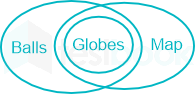
Question 26

Which of the following types of cases is NOT generally taken up by Lok Adalats in India?

  1. AOption (a)

    Murder trials

  2. BOption (b)

    Motor accident claims

  3. COption (c)

    Divorce settlements

  4. DOption (d)

    Utility bill disputes

View answer & explanation

Correct answer

Answer: (a)A.

Murder trials

Why this answer is correct

The correct answer is Murder trials.

Key Points

  • Lok Adalats, established under the Legal Services Authorities Act, 1987, are alternative dispute resolution mechanisms in India aimed at providing speedy justice and reducing the burden on courts.
  • These courts handle cases that are civil in nature and some compoundable criminal cases, which are not complex and can be resolved amicably.
  • Murder trials, being serious criminal cases, are not compoundable and require detailed investigation, legal proceedings, and strict adherence to procedural laws. Hence, murder trials are not taken up by Lok Adalats.
  • Motor accident claims, divorce settlements, and utility bill disputes are typically handled by Lok Adalats as they involve disputes that can be resolved through negotiation and mutual consent.
  • Cases like divorce settlements are resolved in Lok Adalats when both parties agree on terms, ensuring harmony and avoiding prolonged legal battles. These cases fall under the jurisdiction of Lok Adalats.
  • Utility bill disputes, often involving minor disagreements over electricity or water bills, can be resolved quickly in Lok Adalats, ensuring convenience for both parties. These cases are handled efficiently by Lok Adalats.
  • Hence, the correct answer is Murder trials.

Additional Information

  • Lok Adalats:
  • Lok Adalats are informal courts presided over by legal professionals or retired judges. They aim to deliver speedy justice and are often organized in rural areas to resolve disputes efficiently.
  • These courts handle cases such as civil disputes, family matters, labor disputes, and minor criminal offenses. They promote out-of-court settlements to reduce the burden on formal judicial systems.
  • Cases Handled by Lok Adalats:
  • Typical cases include motor accident claims, disputes over property, utility bill disagreements, and family disputes like divorce settlements with mutual consent.
  • Motor accident claims: These involve disputes over compensation due to road accidents and are resolved through negotiation.
  • Divorce settlements: Lok Adalats handle divorce cases where both parties agree to amicable terms, ensuring quicker resolution compared to family courts.
  • Utility bill disputes: These involve disagreements over electricity, water, or phone bills and are resolved through mutual understanding.
  • Cases Not Handled by Lok Adalats:
  • Murder trials and other serious criminal cases are not handled by Lok Adalats as they require detailed investigations, witnesses, and adherence to criminal law procedures.
  • Non-compoundable offenses: Cases like rape, murder, and terrorism, which involve serious penalties and procedural complexities, are excluded from Lok Adalats.

Important Points

  • Legal Framework:
  • Lok Adalats operate under the Legal Services Authorities Act, 1987, and their decisions are binding on the parties involved.
  • They cannot handle cases that require detailed evidence, witnesses, or complex legal arguments.
  • Advantages of Lok Adalats:
  • They are cost-effective, providing free legal services to the underprivileged.
  • Decisions are made quickly, reducing the backlog of cases in formal courts.

Question 27

What is the dimensional formula for mechanical energy that refers to the total energy of an object due to its position and motion?

  1. AOption (a)

    [ML2T-3]

  2. BOption (b)

    [M1L2]

  3. COption (c)

    [M2L2T-1]

  4. DOption (d)

    [M1L2T-2]

View answer & explanation

Correct answer

Answer: (d)D.

[M1L2T-2]

Why this answer is correct

The correct answer is [M1L2T-2].

Key Points

  • Mechanical energy is the sum of potential energy and kinetic energy of an object. It represents the energy possessed by an object due to its motion and position.
  • The dimensional formula is derived from the formula for energy. Energy is expressed as the ability of an object to do work, and work is calculated using the formula: Work = Force × Distance.
  • Force is given by mass × acceleration, which has the dimensional formula of [M][L][T⁻²]. Distance has the dimensional formula [L]. Multiplying these, the dimensional formula for work or energy becomes [M][L²][T⁻²].
  • The dimensional formula of [M1L2T-2] is thus the correct representation of mechanical energy, which includes both kinetic and potential energy.
  • The options provided in the question are as follows:
  • Option 1: [ML²T⁻³] - This is incorrect as the time dimension in this formula is not correct.
  • Option 2: [M¹L²] - This is incorrect as it does not include the time dimension, which is essential for energy.
  • Option 3: [M²L²T⁻¹] - This is incorrect as the mass and time dimensions are not accurate.
  • Option 4: [M¹L²T⁻²] - This is correct as it accurately represents the dimensional formula for mechanical energy.

Additional Information

  • Types of Mechanical Energy:
  • Kinetic Energy: The energy possessed by a body due to its motion. It is given by the formula: KE = ½mv², where m is the mass and v is the velocity.
  • Potential Energy: The energy possessed by a body due to its position or configuration. It is given by the formula: PE = mgh, where m is the mass, g is the acceleration due to gravity, and h is the height.
  • Dimensional Formula Analysis:
  • The dimensional formula represents the physical dimensions of a quantity in terms of base units, such as mass (M), length (L), and time (T).
  • For mechanical energy, combining the dimensions of force ([MLT⁻²]) and distance ([L]) gives the formula [ML²T⁻²].
  • Applications of Mechanical Energy:
  • Mechanical energy is utilized in various fields such as engineering, construction, and transportation.
  • Examples include machines, vehicles, power generation, and even natural phenomena like waterfalls.
  • It is also studied in physics to understand the principles of energy conservation and dynamics.

Important Points

  • Energy Conservation:
  • The law of conservation of energy states that energy can neither be created nor destroyed. It can only be transformed from one form to another.
  • Mechanical energy can be converted into other forms of energy, such as electrical energy, heat energy, etc.
  • Units of Energy:
  • SI Unit: The standard unit of energy is the joule (J).
  • Other Units: Energy is also measured in calories, kilowatt-hours (kWh), and electron volts (eV).

Question 28

According to a Times of India report from April 2025, there have been plans to locally manufacture which tetravalent dengue vaccine under the ‘Make‑in‑India’ initiative? 

  1. AOption (a)

    CYD‑TDCV

  2. BOption (b)

    Dengvaxia

  3. COption (c)

    TV003 / TV005

  4. DOption (d)

    QDENGA (TAK‑003)

View answer & explanation

Correct answer

Answer: (d)D.

QDENGA (TAK‑003)

Why this answer is correct

The correct answer is QDENGA (TAK‑003).

Key Points

  • QDENGA (TAK‑003) is a tetravalent dengue vaccine developed by Takeda Pharmaceuticals.
  • The vaccine has been designed to provide protection against all four serotypes of the dengue virus.
  • QDENGA has been approved in several countries and is considered effective in reducing the severity of dengue infections across different age groups. Hence, option 4 is correct.
  • The 'Make‑in‑India' initiative aims to promote local manufacturing in India, including the production of vaccines like QDENGA, which can help address public health challenges.
  • India has been actively exploring the production of vaccines locally to reduce dependency on imports and ensure accessibility to life-saving treatments. Hence, the statement about plans to manufacture the vaccine locally is correct.
  • The vaccine is particularly significant for tropical regions like India, where dengue fever is prevalent, and preventive measures are crucial to combating outbreaks.

Additional Information

  • About QDENGA (TAK‑003):
  • QDENGA is a live attenuated tetravalent vaccine designed to target all four serotypes of the dengue virus.
  • The vaccine has shown efficacy in clinical trials across various populations, including children and adults, making it suitable for endemic regions like India.
  • Takeda Pharmaceuticals, the manufacturer of QDENGA, has emphasized its potential to reduce the burden of dengue worldwide.
  • Dengue Fever and Vaccination:
  • Preventive measures like vaccination are crucial for managing outbreaks, especially in countries like India, where the disease is a public health concern.
  • The 'Make‑in‑India' program was launched by the Government of India in 2014 to encourage local manufacturing and reduce dependency on imports.
  • Local production of vaccines like QDENGA under this program can improve accessibility and affordability for Indian citizens.

Important Points

  • Comparison of Dengue Vaccines:
  • TV003/TV005: Developed by the National Institute of Health (NIH), showing promise in clinical trials, but not widely available yet.
  • Organizations like WHO and UNICEF advocate for vaccination campaigns and mosquito control measures.
  • <li data-end="" 5449""="" data-start="" 5264"="">Collaborations between governments and pharmaceutical companies aim to enhance vaccine accessibility.

Question 29

On 15 May 2025, the Supreme Court of India issued an immediate direction to the Centre to set up dedicated courts to deal with which cases?

  1. AOption (a)

    Serious offenses like murder 

  2. BOption (b)

    Constitutional interpretations 

  3. COption (c)

    Dowry harassment

  4. DOption (d)

    Child sexual abuse

View answer & explanation

Correct answer

Answer: (d)D.

Child sexual abuse

Why this answer is correct

The correct answer is Child sexual abuse.

Key Points

  • Child sexual abuse is a heinous crime involving exploitation or harm to minors for sexual purposes. It can include a wide range of offenses, including molestation, rape, and child pornography.
  • To combat this issue, the Supreme Court of India directed the establishment of dedicated courts to expedite justice for victims and ensure sensitive handling of cases.
  • This decision aligns with the provisions of the Protection of Children from Sexual Offences (POCSO) Act, 2012, which was enacted to safeguard children against sexual offenses and provide a child-friendly judicial process. Hence, the direction is significant in addressing these crimes.
  • The Supreme Court's directive aims to ensure timely justice and reduce the trauma for child victims during legal proceedings. Dedicated courts will also focus on creating a safe environment for children during trials.
  • The establishment of specialized courts also seeks to address the high pendency rate of child sexual abuse cases and ensure that perpetrators are brought to justice efficiently and effectively. Hence, the correct answer is Child sexual abuse.

Additional Information

  • Protection of Children from Sexual Offences (POCSO) Act, 2012:
  • This act is a comprehensive law enacted by the Indian Government to protect children (below the age of 18 years) from sexual assault, harassment, and pornography.
  • The act provides for a child-friendly judicial procedure, ensuring that the dignity and rights of the child are preserved during legal processes. It mandates the establishment of Special Courts for speedy trial of such offenses.
  • It prescribes stringent punishment for offenses, including imprisonment ranging from 20 years to life imprisonment, depending on the severity of the crime.
  • Role of the Supreme Court in Addressing Child Sexual Abuse:
  • The Supreme Court plays a pivotal role in directing the government to establish mechanisms for justice delivery in sensitive cases like child sexual abuse.
  • By mandating dedicated courts, the judiciary aims to ensure expedited justice and child-sensitive handling of cases.
  • The court has emphasized the need for proper infrastructure, training of judicial staff, and specialized training for judges to deal with such cases effectively.
  • Importance of Dedicated Courts:
  • Dedicated courts help reduce the trauma experienced by child victims during trials by providing a safe environment and ensuring swift justice.
  • They also address the issue of case backlog, ensuring speedy resolution and reducing the pendency of cases related to child sexual abuse.
  • Specialized courts and legal frameworks contribute to creating a society where children feel protected and empowered to report offenses without fear.

Important Points

  • Recent Developments:
  • In recent years, the Indian judiciary has taken proactive measures to address the issue of child sexual abuse. For instance, the Supreme Court has directed the government to ensure proper implementation of the POCSO Act.
  • The Ministry of Women and Child Development has also launched initiatives to spread awareness about child rights and the legal provisions available under the POCSO Act.
  • Challenges:
  • Despite the legal framework, challenges such as lack of awareness, social stigma, and delays in judicial processes persist, making it difficult for victims to seek justice.
  • Effective implementation of the Supreme Court’s directive requires adequate infrastructure, trained personnel, and public awareness campaigns to ensure the protection of child rights.

Question 30

What happens when you create a folder with the same name in the same location?

  1. AOption (a)

    It gives an error. 

  2. BOption (b)

    It replaces the old folder. 

  3. COption (c)

    It opens the original folder

  4. DOption (d)

    The system automatically renames it

View answer & explanation

Correct answer

Answer: (a)A.

It gives an error. 

Why this answer is correct

The correct answer is It gives an error.

Key Points

  • When you attempt to create a folder with the same name in the same location, most modern operating systems prevent the action to ensure data consistency and avoid duplication.
  • This action typically results in an error message, as duplicate folder names in the same directory could lead to confusion or overwrite issues.
  • The system displays an error stating that a folder with the same name already exists, and no new folder is created. Hence, the statement "It gives an error" is correct.
  • This behavior is designed to protect the integrity of file systems and minimize the risk of unintentional overwriting or losing important data.
  • Other options, such as replacing the folder, opening the original folder, or renaming automatically, do not align with how most operating systems handle this scenario. Hence, these options are incorrect.

Additional Information

  • Operating System Behavior:
  • Most operating systems, such as Windows, macOS, and Linux, follow strict file system rules that prevent duplicate folder names within the same directory.
  • These systems use unique identifiers for files and folders, ensuring that duplicate names don't conflict in the directory structure.
  • Error Messages:
  • When attempting to create a folder with an existing name, users encounter error messages such as "Folder already exists" or "Cannot create folder."
  • These messages serve as warnings, prompting users to choose a different name or location for their new folder.
  • Best Practices for Folder Creation:
  • To avoid errors, users should adopt naming conventions, such as appending dates, numbers, or descriptive terms to differentiate folders.
  • For example, instead of "Project," use names like "Project_2023" or "Project_Version2."

Important Points

  • System-Specific Features:
  • In some systems, such as Linux, folders can have similar names if the case differs (e.g., "Folder" and "folder"), as file systems like ext4 are case-sensitive.
  • However, in case-insensitive systems like Windows, this is not allowed, and an error will occur.
  • Folder Management Applications:
  • Some third-party tools or applications offer enhanced folder management features, such as automatic renaming or merging of duplicate folders.
  • Examples include WinMerge and Beyond Compare, which assist in managing and organizing files and folders efficiently.
  • Common Errors and Troubleshooting:
  • Users often face errors like "Access Denied" or "Insufficient Permissions" when trying to create folders in restricted locations.
  • To resolve these issues, ensure proper permissions or choose an accessible directory for folder creation.

Question 31

As per Deloitte, how much will AI in healthcare boost India’s GDP by 2025? 

  1. AOption (a)

    USD 35–40 billion

  2. BOption (b)

    USD 25–30 billion

  3. COption (c)

    USD 12–18 billion

  4. DOption (d)

    USD 45–50 billion

View answer & explanation

Correct answer

Answer: (b)B.

USD 25–30 billion

Why this answer is correct

The correct answer is USD 25–30 billion.

Key Points

  • According to a report by Deloitte, the adoption of Artificial Intelligence (AI) in the healthcare sector is expected to significantly contribute to India's GDP.
  • The report estimates that AI in healthcare will boost India's GDP by USD 25–30 billion by 2025.
  • This prediction highlights the transformative potential of AI in improving healthcare delivery, administrative processes, and overall economic productivity in the country. Hence, the correct option is USD 25–30 billion.
  • The adoption of AI in healthcare includes applications like predictive analytics, disease diagnosis, personalized treatment plans, and operational efficiency, which can lead to better outcomes and cost savings.
  • The usage of AI technologies is expected to contribute to the growth of the healthcare sector and indirectly impact other industries, thus promoting economic growth.

Additional Information

  • Artificial Intelligence in Healthcare:
  • AI technologies like machine learning (ML), natural language processing (NLP), and computer vision are being deployed in healthcare to enhance patient care and improve operational efficiency.
  • Applications include early disease detection, remote patient monitoring, telemedicine, drug discovery, and robotic surgeries.
  • AI can also aid in addressing challenges in healthcare like staff shortages, improving diagnostics, and optimizing treatment costs.
  • Impact on India’s Economy:
  • The integration of AI in healthcare will lead to higher efficiency, better accessibility, and improved outcomes, contributing to overall economic productivity.
  • Healthcare spending is one of the critical drivers for economic growth, and advancements in AI can help reduce costs while improving service delivery.
  • Boosting GDP by USD 25–30 billion by 2025 reflects the economic potential of technology-driven innovation in the healthcare domain.
  • Examples of AI in Healthcare:
  • IBM Watson Health: A platform that uses AI to assist in cancer diagnosis and treatment.
  • Google Health: AI algorithms used in medical imaging and electronic health records.
  • NITI Aayog in India: Advocates the use of AI in healthcare for improving accessibility in remote areas.

Important Points

  • Key Drivers for AI Adoption in Healthcare:
  • India faces challenges like low doctor-to-patient ratio, infrastructure gaps, and rising healthcare costs. AI can address these issues by improving efficiency.
  • Government initiatives: Programs like Ayushman Bharat aim to provide affordable healthcare, and AI can play a significant role in achieving this goal.
  • Economic Benefits:
  • Cost savings: AI can help reduce administrative and operational costs.
  • Job creation: AI in healthcare will also create new job opportunities in technology, data analysis, and medical research.

Question 32

Netaji Subhash Chandra Bose Dweep is a part of which island? 

  1. AOption (a)

    Majuli Island

  2. BOption (b)

    Rameswaram Island

  3. COption (c)

    Lakshadweep Islands

  4. DOption (d)

    Andaman Islands

View answer & explanation

Correct answer

Answer: (d)D.

Andaman Islands

Why this answer is correct

The correct answer is Andaman Islands.

Key Points

  • Netaji Subhash Chandra Bose Dweep is part of the Andaman Islands, which are located in the Bay of Bengal.
  • This island was earlier known as Ross Island. It was renamed as Netaji Subhash Chandra Bose Dweep in 2018 to honor the Indian freedom fighter Netaji Subhash Chandra Bose.
  • The Andaman Islands are a group of islands that belong to the Union Territory of Andaman and Nicobar Islands in India. Hence, the correct option is Andaman Islands.
  • Netaji Subhash Chandra Bose Dweep is a popular tourist destination. It is known for its rich history, serene natural beauty, and colonial-era ruins.
  • The island holds historical significance as it was once the headquarters of the British administration in the Andaman Islands.
  • The renaming of Ross Island to Netaji Subhash Chandra Bose Dweep was part of an effort to commemorate the contributions of Netaji during India’s fight for independence. Hence, the correct answer is Andaman Islands.

Additional Information

  • Andaman Islands:
  • The Andaman Islands are located in the southeastern part of the Bay of Bengal, closer to Myanmar and Thailand than mainland India.
  • The islands are known for their pristine beaches, dense tropical forests, and vibrant marine biodiversity.
  • The Andaman Islands are home to indigenous tribes such as the Great Andamanese, Onges, and Sentinelese.
  • Netaji Subhash Chandra Bose:
  • Netaji Subhash Chandra Bose was one of India's most prominent freedom fighters and the leader of the Indian National Army (INA).
  • He played a critical role in the Independence movement and attempted to liberate India from British rule through military campaigns.
  • He is remembered for his famous slogan, "Give me blood, and I will give you freedom."
  • Tourist Attractions in Netaji Subhash Chandra Bose Dweep:
  • Visitors can explore the British-era ruins, including administrative offices, churches, and residences.
  • The island offers picturesque views and is surrounded by clear waters ideal for snorkeling and scuba diving.
  • The light and sound show organized on the island narrates its colonial history and Netaji's contributions.

Important Points

  • Renaming of Islands:
  • In 2018, the Indian government renamed three islands in the Andaman archipelago:
  • Ross Island became Netaji Subhash Chandra Bose Dweep.
  • Neil Island was renamed Shaheed Dweep.
  • Havelock Island was renamed Swaraj Dweep.
  • Significance of the Renaming:
  • These renaming efforts aimed to honor the contributions of freedom fighters and instill a sense of national pride.
  • They also sought to remove colonial-era names and replace them with names that reflect India’s rich history and struggle for independence.

Question 33

Crafted using the lost-wax technique in Mohenjo-daro, a significant city of the Indus Valley Civilisation, the prehistoric Dancing Girl figurine is primarily made of which of the following materials?

  1. AOption (a)

    Stone

  2. BOption (b)

    Copper

  3. COption (c)

    Terracotta

  4. DOption (d)

    Bronze

View answer & explanation

Correct answer

Answer: (d)D.

Bronze

Why this answer is correct

The correct answer is Bronze.

Key Points

  • The Dancing Girl figurine is one of the most iconic artifacts from the Indus Valley Civilisation, which flourished around 2500 BCE.
  • It was crafted using the lost-wax technique, a sophisticated metal casting method. This technique demonstrates the advanced metallurgical skills of the people of the Indus Valley.
  • The figurine is made of Bronze, which was a widely used material during the Indus Valley period for creating tools, ornaments, and art pieces. Hence, the correct material is Bronze*.*
  • It depicts a young girl in a confident pose, with her right hand on her hip and her left hand holding an object. The figurine suggests a remarkable sense of realism and artistry.
  • The discovery of the Dancing Girl figurine provides evidence of the use of metallurgy and artistic expression in the Indus Valley Civilisation.

Additional Information

  • The Indus Valley Civilisation:
  • The Indus Valley Civilisation is one of the world's oldest urban civilisations, existing between 3300 BCE and 1300 BCE. Major cities include Harappa and Mohenjo-daro.
  • It is known for its advanced urban planning, drainage systems, metallurgy, and craftsmanship.
  • Lost-Wax Technique:
  • The lost-wax technique involves creating a wax model, covering it with clay or a similar material, and then heating it to melt the wax and create a mold for casting metal objects.
  • This method was used extensively in ancient civilizations for making intricate metal artifacts and sculptures.
  • Bronze Usage in Ancient Civilizations:
  • Bronze was a widely used metal during the Bronze Age. It was used for tools, weapons, ornaments, and artistic creations.
  • The people of the Indus Valley Civilisation were skilled metallurgists and used Bronze extensively for crafting objects like the Dancing Girl figurine.

Important Points

  • Discovery of the Dancing Girl Figurine:
  • The figurine was discovered in Mohenjo-daro, one of the largest cities of the Indus Valley Civilisation, by archaeologists in 1926.
  • It measures approximately 10.5 cm in height, showcasing the detailed artistry and craftsmanship of the era.
  • Significance of the Artifact:
  • The Dancing Girl figurine provides valuable insights into the social and cultural aspects of the Indus Valley Civilisation, indicating an appreciation for art and aesthetics.
  • It also highlights the advanced metallurgical capabilities of the civilisation, as Bronze casting requires significant skill.

Question 34

Which country won both the Men’s and Women’s titles at the Kabaddi World Cup 2025, held at Wolverhampton in England?

  1. AOption (a)

    Iran

  2. BOption (b)

    Pakistan

  3. COption (c)

    Bangladesh

  4. DOption (d)

    India

View answer & explanation

Correct answer

Answer: (d)D.

India

Why this answer is correct

The correct answer is India.

Key Points

  • Kabaddi World Cup 2025: The tournament was held in Wolverhampton, England, showcasing international teams competing for the prestigious title.
  • India's Dominance in Kabaddi: India has historically been a dominant force in Kabaddi, winning multiple World Cups in both Men's and Women's categories.
  • In the 2025 Kabaddi World Cup, India continued its legacy by clinching the titles in both Men's and Women's categories, defeating strong competitors like Iran and Pakistan. Hence, statement is correct.
  • Men’s Team Performance: India's Men's team showcased exceptional skills, teamwork, and strategies to emerge victorious against other world-class teams.
  • Women’s Team Success: The Women’s team also demonstrated outstanding performance, reaffirming India’s position as a powerhouse in Kabaddi.
  • Key Players: Indian players such as Pardeep Narwal, Pooja Thakur, and others played pivotal roles in securing the championship titles.
  • The victory solidified India’s reputation in international Kabaddi and contributed to the sport's growing popularity globally. Hence, the correct answer is India.

Additional Information

  • Kabaddi Overview:
  • Kabaddi is a traditional Indian sport that combines elements of tag and wrestling. It requires strength, agility, and strategic thinking.
  • The sport has gained international recognition, with countries like Iran, Pakistan, Bangladesh, Korea, and others actively participating in global tournaments.
  • India’s Achievements in Kabaddi:
  • India has won multiple Kabaddi World Cups since the inception of the tournament, including victories in both Men's and Women's categories.
  • Indian players are known for their exceptional skills, including raiding, tackling, and strategic defense.
  • Example: India won the inaugural Kabaddi World Cup and has consistently performed well in subsequent editions.
  • Kabaddi World Cup 2025:
  • The 2025 Kabaddi World Cup was organized in Wolverhampton, England, marking a significant event in the sport's international calendar.
  • Teams from various countries participated, showcasing the growing popularity of Kabaddi on a global scale.
  • India’s Victory: India’s teams defeated strong competitors such as Iran, Pakistan, and others to secure the titles.

Important Points

  • Key Factors in India’s Success:
  • India’s dominance in Kabaddi is attributed to its long-standing tradition of playing the sport and the presence of world-class players.
  • The sport is extensively promoted in India, with training academies, professional leagues, and government support contributing to player development.
  • Global Growth of Kabaddi:
  • Kabaddi is gaining popularity worldwide, with countries like Iran, Korea, and Bangladesh showing significant improvement in their performances.
  • The organization of the 2025 World Cup in England reflects the sport’s growing international appeal.

Question 35

Which is the first Indian state/UT to launch the nPROUD (New Programme for Removal of Unused Drugs) project?

  1. AOption (a)

    Delhi 

  2. BOption (b)

    Kerala

  3. COption (c)

    Maharashtra

  4. DOption (d)

    Telangana

View answer & explanation

Correct answer

Answer: (b)B.

Kerala

Why this answer is correct

The correct answer is Kerala.

Key Points

  • Kerala became the first Indian state/UT to launch the nPROUD (New Programme for Removal of Unused Drugs) project. This initiative was undertaken to tackle the issue of unused or expired drugs being improperly disposed of, leading to environmental and public health concerns.
  • The program aims to create a comprehensive system for the collection and safe disposal of unused or expired medications from households and institutions. It ensures that these drugs are not discarded irresponsibly or misused.
  • Environmental concerns are a primary focus of this initiative, as improperly disposed medications often contaminate water bodies and soil, causing harm to ecosystems.
  • The state government collaborated with various stakeholders, including healthcare professionals, pharmaceutical companies, and waste management bodies, to implement the program effectively.
  • The nPROUD project highlights Kerala's proactive approach in addressing public health and environmental challenges, setting an example for other states and UTs to follow.

Additional Information

  • Significance of the nPROUD Project:
  • Environmental Protection: Improper disposal of medicines often leads to contamination of water bodies and soil, disrupting ecosystems and causing bioaccumulation in aquatic life.
  • Public Health: Expired or unused medicines in households pose risks of accidental ingestion, misuse, or abuse, particularly among children and vulnerable populations.
  • Safe Disposal: The initiative promotes eco-friendly and safe disposal methods, reducing the potential risks associated with pharmaceuticals entering the waste stream.
  • Steps Taken Under the nPROUD Project:
  • Setting up of collection points at pharmacies, hospitals, and healthcare centers for easy disposal of unused drugs.
  • Awareness campaigns to educate the public about the importance of proper drug disposal and the harmful effects of improper practices.
  • Collaboration with pharmaceutical companies for reverse logistics and safe incineration of collected drugs.
  • Other Initiatives Addressing Drug Disposal:
  • Globally, countries like the United States and Canada have similar programs such as the Drug Take-Back Initiative to ensure safe and proper disposal of medications.
  • In India, this is one of the pioneering projects, and its success could lead to similar initiatives in other states and UTs.

Important Points

  • Why is Proper Disposal of Medicines Important?
  • Environmental Risks: Pharmaceuticals in water bodies can harm aquatic life and interfere with natural ecosystems.
  • Health Concerns: Accidental ingestion or misuse of expired drugs can lead to poisoning or adverse health effects.
  • Kerala's Role in Public Health and Environmental Protection:
  • Kerala has often been at the forefront of innovative health and environmental initiatives, such as the Haritha Keralam Mission, which focuses on sustainable development and waste management.
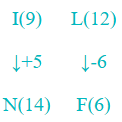
  • The nPROUD project complements Kerala's broader efforts to promote environmental sustainability and public health.

Question 36

Which of the following initiatives was launched by the National Commission for Women (NCW) on 22 May 2025 to promote AI literacy and digital safety among women, especially in rural and semi-urban areas?

  1. AOption (a)

    Yashoda AI: Your AI SAKHI 

  2. BOption (b)

    Tech Sakhi: Empowering Women

  3. COption (c)

    Digital Shakti: Women in Tech

  4. DOption (d)

    Cyber Sakhi: AI Awareness Program

View answer & explanation

Correct answer

Answer: (a)A.

Yashoda AI: Your AI SAKHI 

Why this answer is correct

The correct answer is Yashoda AI: Your AI SAKHI.

Key Points

  • The National Commission for Women (NCW) launched the initiative Yashoda AI: Your AI SAKHI on 22 May 2025. This program focuses on promoting AI literacy and ensuring digital safety for women, particularly those residing in rural and semi-urban areas.
  • Yashoda AI aims to empower women by educating them about Artificial Intelligence (AI), its applications, and potential impacts. This initiative also equips them with tools and knowledge to protect themselves in the digital space.
  • The program is designed to bridge the digital divide between urban and rural areas, ensuring that women in less privileged regions have access to technology and understand its benefits as well as risks.
  • The name "Sakhi" reflects the idea of creating a friendly and accessible digital companion for women, helping them navigate the increasingly tech-driven world.
  • This initiative aligns with the NCW’s broader objectives of empowering women, promoting gender equality, and ensuring their active participation in technological advancements.

Additional Information

  • National Commission for Women (NCW):
  • The National Commission for Women (NCW) is a statutory body established under the National Commission for Women Act, 1990. It aims to promote and protect the rights of women across India.
  • The NCW addresses issues related to women’s empowerment, safety, and equality, including initiatives to ensure their participation in technology and digital spaces.
  • Importance of AI Literacy for Women:
  • Artificial Intelligence (AI) is transforming various sectors, including healthcare, education, and employment. Women’s awareness of AI can help them access better opportunities and safeguard themselves against digital threats.
  • Programs like Yashoda AI are crucial in rural and semi-urban areas where technological awareness is relatively low, creating opportunities for women to leverage digital tools.
  • Comparison of Other Options:
  • Tech Sakhi: Empowering Women: This name suggests a support system for women in technology but lacks the specific emphasis on AI literacy and digital safety.
  • Digital Shakti: Women in Tech: While this name focuses on technology and women empowerment, it does not specify the role of AI or the rural outreach aspect.
  • Cyber Sakhi: AI Awareness Program: This name emphasizes AI awareness but does not highlight the broader goals of literacy, empowerment, and safety for women in rural areas.

Important Points

  • Key Features of Yashoda AI: Your AI SAKHI:
  • Target Audience: Women in rural and semi-urban areas, where access to technology and digital resources is limited.
  • Focus Areas: AI literacy, digital safety, and empowering women to utilize technology for personal and economic growth.
  • Implementation: Partnerships with local communities, organizations, and experts to facilitate workshops, training, and outreach programs.
  • Significance of the Initiative:
  • Promotes gender inclusivity in technology and addresses the digital divide in India.
  • Creates awareness about the opportunities and challenges posed by AI technologies.

Question 37

Harsabardhan Sahu who built a new record in the field of 49 kg (Clean and Jerk) Weightlifting category, at Khelo India Youth Games 2025 is from which state?

  1. AOption (a)

    Assam

  2. BOption (b)

    Bihar

  3. COption (c)

    Odisha

  4. DOption (d)

    Mizoram

View answer & explanation

Correct answer

Answer: (c)C.

Odisha

Why this answer is correct

The correct answer is Odisha.

Key Points

  • Harsabardhan Sahu is recognized for his exceptional performance in the 49 kg (Clean and Jerk) Weightlifting category at the Khelo India Youth Games 2025.
  • He set a new record in weightlifting, showcasing remarkable strength and dedication to the sport.
  • Odisha has emerged as a hub for sports talent in recent years, with significant investments in infrastructure and athlete development programs. Hence, the correct answer is Odisha.
  • The Khelo India Youth Games is a major initiative launched by the Government of India to promote sports among youth and identify potential talent for international competitions.
  • Harsabardhan's achievement has added to Odisha's growing reputation in sports, particularly weightlifting and athletics.

Additional Information

  • Odisha's Contribution to Sports:
  • Odisha has invested heavily in sports infrastructure, such as the establishment of world-class facilities like the Kalinga Stadium in Bhubaneswar.
  • The state has hosted significant sports events, including the Hockey World Cup, further solidifying its reputation as a sports-friendly region.
  • Weightlifting is one of the key sports supported by Odisha, with several athletes training in specialized sports academies.
  • Khelo India Youth Games:
  • The Khelo India Youth Games is a platform to nurture young talent and build a strong foundation for India's participation in global sporting events.
  • The program includes multiple disciplines, encouraging participation from across the country.
  • Harsabardhan Sahu's achievement is a testament to the success of this initiative in identifying and promoting talent from regions like Odisha.

Important Points

  • Key Features of Khelo India Youth Games:
  • The program focuses on grassroots development, encouraging participation from small towns and rural areas.
  • It provides funding, infrastructure, and coaching support to promising athletes.
  • Odisha's Sports Initiatives:
  • The state has partnered with organizations like Reliance Foundation and Sports Authority of India to enhance training facilities.
  • Odisha has been promoting various sports, including hockey, athletics, and weightlifting, through scholarships and talent identification programs.

Question 38

The typical landform seen in the Thar Desert is:

  1. AOption (a)

    sand dunes

  2. BOption (b)

    glacial moraines

  3. COption (c)

    river deltas

  4. DOption (d)

    alluvial plain

View answer & explanation

Correct answer

Answer: (a)A.

sand dunes

Why this answer is correct

The correct answer is sand dunes.

Key Points

  • The Thar Desert, located in northwestern India and parts of Pakistan, is characterized by its arid and sandy terrain. Sand dunes are the most prominent feature of the Thar Desert.
  • Sand dunes are formed due to the action of wind erosion, transportation, and deposition of sand particles. The wind moves the loose sand and deposits it in ridges or mounds, creating dunes.
  • The Thar Desert exhibits different types of sand dunes, such as crescent-shaped dunes (barchans), linear dunes, and parabolic dunes, shaped by wind patterns.
  • These dunes are dynamic in nature and can shift or change shape over time due to the wind's direction and intensity.
  • The presence of sand dunes in the Thar Desert contributes to its unique landscape, making it one of the most recognizable deserts in the world.
  • Hence, sand dunes are the typical landform seen in the Thar Desert.

Additional Information

  • Option-wise Explanation:
  • Glacial moraines: These are landforms created by glaciers, composed of debris such as rocks and sediment. They are found in regions with glacial activity, such as the Himalayas, and are not associated with deserts. Incorrect option.
  • River deltas: These landforms are created at the mouth of rivers where they meet a larger water body, depositing sediment. Examples include the Sundarbans Delta created by the Ganges and Brahmaputra rivers. This is not a feature of deserts. Incorrect option.
  • Alluvial plain: These plains are formed by the deposition of sediments by rivers over time, found in regions with extensive river networks, such as the Indo-Gangetic Plain. They are not characteristic of arid desert regions. Incorrect option.
  • Characteristics of Sand Dunes:
  • Formation: Sand dunes are formed through the process of aeolian (wind-driven) activity, where wind erodes loose sand and deposits it in mounds or ridges.
  • Types: Common types of dunes include barchans (crescent-shaped), linear dunes, and star dunes, which vary based on wind direction and intensity.
  • Location: Sand dunes are found in arid and semi-arid regions, including the Sahara Desert, the Kalahari Desert, and the Thar Desert.
  • Importance: Sand dunes act as natural barriers against wind erosion, protect vegetation, and are significant for ecological balance in desert regions.

Important Points

  • Facts about the Thar Desert:
  • The Thar Desert, also known as the Great Indian Desert, covers an area of approximately 200,000 square kilometers. It is one of the largest deserts in the world.
  • It spans Rajasthan, Gujarat, Punjab, and Haryana in India and extends into Pakistan.
  • The region receives less than 200 mm of rainfall annually, making it one of the driest areas in the world.
  • The Thar Desert is home to unique flora and fauna adapted to arid conditions, including species such as the Indian bustard and the desert fox.

Question 39

Which of the following is the main objective of the Right to Information Act?

  1. AOption (a)

    To ensure secrecy in public administration

  2. BOption (b)

    To provide private data to media houses

  3. COption (c)

    To promote transparency and accountability

  4. DOption (d)

    To prevent public access to government records

View answer & explanation

Correct answer

Answer: (c)C.

To promote transparency and accountability

Why this answer is correct

The correct answer is To promote transparency and accountability.

Key Points

  • The Right to Information (RTI) Act, enacted in 2005, is one of the most significant laws in India aimed at empowering citizens by providing them access to information held by public authorities.
  • The main objective of the RTI Act is to promote transparency and accountability in the functioning of the government and its institutions. This ensures that citizens can hold public authorities accountable for their actions and decisions. Hence, the correct option is valid.
  • It provides citizens with the right to request information from public authorities, which are obligated to reply within a stipulated timeframe. The RTI Act is instrumental in empowering citizens and combating corruption.
  • The Act covers various government bodies, including ministries, departments, and public sector undertakings. It aims to ensure openness in governance and decision-making processes. Thus, the RTI Act enhances public participation.
  • It also requires public authorities to digitally disclose certain key information proactively, reducing the need for citizens to file formal requests. This promotes efficiency and transparency.
  • Furthermore, the RTI Act has provisions for the appointment of Public Information Officers (PIOs) in each public authority to handle information requests effectively. This ensures the seamless functioning of the Act.

Additional Information

  • Features of the RTI Act:
  • The Act provides citizens the right to access information held by public authorities, ensuring transparency in governance.
  • It mandates that public authorities proactively disclose information to the public, reducing the need for formal requests.
  • The Act covers central, state, and local government bodies, public sector undertakings, and institutions substantially funded by the government.
  • Citizens can file requests for information with Public Information Officers (PIOs) designated by public authorities.
  • Impact of the RTI Act:
  • The RTI Act has been instrumental in reducing corruption and promoting accountability in public administration.
  • It empowers citizens to question the government and seek clarifications on policies and decisions.
  • It fosters active public participation in governance by ensuring that people are informed about the workings of the government.
  • Exemptions under the RTI Act:
  • Certain sensitive information, such as matters related to national security, foreign relations, and the privacy of individuals, is exempted from disclosure.
  • Information that could harm the sovereignty and integrity of India is not disclosed under the Act.

Important Points

  • Key Legal Framework:
  • The RTI Act came into force on October 12, 2005, replacing the earlier Freedom of Information Act, 2002.
  • It is applicable across India, except for the state of Jammu and Kashmir, which has its own RTI law.
  • Notable Cases:
  • Several landmark decisions have been made under the RTI Act, such as revealing details of the 2G spectrum case and the Commonwealth Games scam.
  • The Act has empowered citizens to demand transparency in areas like government expenditure, public schemes, and decision-making processes.

Question 40

Tariff reforms were central to the liberalisation of trade. What happened to import tariffs after 1991?

  1. AOption (a)

    It increased

  2. BOption (b)

    It gradually reduced

  3. COption (c)

    It remained unchanged

  4. DOption (d)

    It was replaced with import bans

View answer & explanation

Correct answer

Answer: (b)B.

It gradually reduced

Why this answer is correct

The correct answer is It gradually reduced.

Key Points

  • After 1991, India underwent significant economic reforms, including trade liberalization, which aimed to integrate the Indian economy into the global market.
  • One of the key aspects of trade liberalization was the reduction in import tariffs, which were previously very high and acted as barriers to international trade.
  • Import tariffs were gradually reduced post-1991 to encourage competition, improve efficiency, and attract foreign investments. Hence, statement is correct.
  • The reforms aimed to make Indian products more competitive globally by reducing the cost of imported goods and improving access to advanced technology and resources.
  • The World Trade Organization (WTO) norms also influenced tariff reduction, as India became a member in 1995 and committed to liberalizing its trade policies gradually.
  • By reducing tariffs, India aimed to transition from a protectionist economy to one that embraced globalization and international trade. Hence, the correct option is "It gradually reduced."

Additional Information

  • 1991 Economic Reforms:
  • The reforms initiated in 1991 included policies such as liberalization, privatization, and globalization (LPG).
  • These reforms aimed to address the balance of payments crisis, improve economic performance, and reduce fiscal deficits.
  • Tariff Reduction Process:
  • Before 1991, India's import tariffs were among the highest in the world, often exceeding 300% for certain goods.
  • Post-liberalization, the government reduced tariff rates in phases to increase trade openness.
  • Example: By the early 2000s, average tariff rates had dropped to around 20%, compared to over 80% in the early 1990s.
  • Impact of Tariff Reduction:
  • Lower tariffs encouraged foreign direct investment (FDI) and improved access to foreign goods and technology.
  • It also increased competition among domestic companies, leading to higher efficiency and quality improvement.
  • However, some sectors faced challenges due to increased competition, highlighting the need for supportive policies during the transition.

Important Points

  • Influence of International Institutions:
  • India became a member of the World Trade Organization (WTO) in 1995, committing to global trade rules and tariff reduction.
  • The IMF and World Bank played a significant role in shaping India’s economic policies during the reforms.
  • Comparison with Other Options:
  • Option 1 (It increased): Incorrect, as tariffs were reduced rather than increased post-1991.
  • Option 3 (It remained unchanged): Incorrect, as the government actively reduced tariffs during the reform process.
  • Option 4 (It was replaced with import bans): Incorrect, as the focus was on reducing barriers, not imposing bans.

Mathematics (30 questions)

Question 41

The population of a district is 328000, out of which 164000 are males. 24% of the population is literate. If 34% males are literate, then what percentage of females are literate?

  1. AOption (a)

    13%

  2. BOption (b)

    11%

  3. COption (c)

    17%

  4. DOption (d)

    14%

View answer & explanation

Correct answer

Answer: (d)D.

14%

Why this answer is correct

Shortcut Trick

Total population = 328000, and Male population = 164000.

Female population = 328000 − 164000 = 164000.

Since the number of males equals females, the ratio of their population is 1 : 1.

When quantities are equal, the overall literacy rate is the simple average of male and female literacy rates.

(34% + Female Literacy%) ÷ 2 = 24% ⇒ Female Literacy% = 48% − 34% = 14%.

∴ The correct answer is 14%.

Alternate Method

Given:

Total population = 328000

Number of males = 164000

Overall literacy rate = 24%

Male literacy rate = 34%

34% Male

x% Female

24% Overall

24−x

10

Ratio = 1 : 1 24 − x = 10 ⇒ x = 14%

Calculations:

⇒ Number of females = Total population − Number of males

⇒ Number of females = 328000 − 164000 = 164000

⇒ Total literate population = 24% of 328000

⇒ Total literates = (24 ÷ 100) × 328000 = 78720

⇒ Number of literate males = 34% of 164000

⇒ Literate males = (34 ÷ 100) × 164000 = 55760

⇒ Number of literate females = Total literates − Literate males

⇒ Literate females = 78720 − 55760 = 22960

⇒ Percentage of literate females = (Literate females ÷ Total females) × 100

⇒ Percentage = (22960 ÷ 164000) × 100 = 14%

∴ The correct answer is 14%.

Additional Information

Alligation Method

When two groups are mixed to form a whole, the ratio of their quantities is inversely proportional to the differences between their averages and the overall average. Q1 ÷ Q2 = (A2 − Aoverall) ÷ (Aoverall − A1).

Weighted Average

The combined average of multiple sub-groups is calculated using the formula: A = (N1A1 + N2A2) ÷ (N1 + N2), where N denotes the respective count and A denotes the specific average.

Percentages Concept

A percentage is a fraction out of 100. When calculating the percentage value of a sub-group, the denominator must strictly be the size of that specific sub-group, not the overall size.

Question 42

If the 6-digit number N75M52 is divisible by 11, then which of the options below can give a possible correct relation between M and N? 

  1. AOption (a)

    M = N

  2. BOption (b)

    M - N = 1

  3. COption (c)

    M + N = -1 

  4. DOption (d)

    M - N = 5 

View answer & explanation

Correct answer

Answer: (b)B.

M - N = 1

Why this answer is correct

Shortcut Trick

Divisibility by 11 requires the difference between the sum of alternate digits to be 0 or a multiple of 11.

Sum of odd-placed digits = N + 5 + 5 = N + 10.

Sum of even-placed digits = 7 + M + 2 = M + 9.

Difference = (N + 10) − (M + 9) = N − M + 1.

Equating the difference to 0 gives: N − M + 1 = 0 ⇒ M − N = 1.

∴ The correct answer is M − N = 1.

Alternate Method

Given:

The 6-digit number N75M52 is divisible by 11.

Formula Used:

A number is divisible by 11 if the difference of the sums of its alternate digits is 0 or a multiple of 11.

Calculations:

⇒ Sum of digits at odd positions (1st, 3rd, 5th from left) = N + 5 + 5 = N + 10

⇒ Sum of digits at even positions (2nd, 4th, 6th from left) = 7 + M + 2 = M + 9

⇒ Difference = (Sum of odd positions) − (Sum of even positions)

⇒ Difference = (N + 10) − (M + 9)

⇒ Difference = N − M + 1

⇒ For divisibility by 11, the difference must be 0, 11, −11, etc.

⇒ Case 1: Equating the difference to 0

⇒ N − M + 1 = 0 ⇒ M − N = 1

⇒ Case 2: Equating the difference to 11

⇒ N − M + 1 = 11 ⇒ N − M = 10 (Not possible as N and M must be single digits between 0 and 9)

⇒ Therefore, the only valid relation is M − N = 1.

∴ The correct answer is M − N = 1.

Additional Information

Divisibility Rule of 3 & 9

A number is divisible by 3 or 9 if the sum of its digits is exactly divisible by 3 or 9 respectively.

Divisibility Rule of 4 & 8

A number is divisible by 4 if its last two digits form a number divisible by 4. It is divisible by 8 if the last three digits form a number divisible by 8.

Divisibility Rule of 7

Double the last digit and subtract it from the remaining truncated number. If the result is 0 or divisible by 7, the original number is divisible by 7.

Question 43

A number, when decreased by 6%, gives 3760. The number is:

  1. AOption (a)

    2000

  2. BOption (b)

    4000

  3. COption (c)

    12000

  4. DOption (d)

    8000

View answer & explanation

Correct answer

Answer: (b)B.

4000

Why this answer is correct

Shortcut Trick

When a number is decreased by 6%, it becomes 94% of its original value.

⇒ 94% of the number = 3760

⇒ 1% of the number = 3760 ÷ 94 = 40

⇒ 100% of the number = 40 × 100 = 4000

∴ The correct answer is 4000.

Alternate Method

Original Number (100%)

Remaining: 94% = 3760 6%

Let the number be x

x − 6% of x = 3760

Given:

A number decreased by 6% is equal to 3760.

Calculations:

Let the original number be x.

⇒ x − (6% of x) = 3760

⇒ x − (6x / 100) = 3760

⇒ (100x − 6x) / 100 = 3760

⇒ 94x / 100 = 3760

⇒ x = (3760 × 100) / 94

⇒ x = 40 × 100

⇒ x = 4000

∴ The correct answer is 4000.

Additional Information

Percentage Increase / Decrease

When a value is increased by R%, the new value becomes (100 + R)% of the original. When it is decreased by R%, it becomes (100 − R)% of the original value.

Reverse Percentage Calculation

To find the original value before a percentage change, divide the final value by the multiplying factor. Original = Final Value ÷ (1 ± R/100).

Successive Percentage Change

If a number is successively changed by A% and B%, the net overall percentage change is calculated as: A + B + (A × B)/100.

Question 44

If the third proportional of 9 and 60 be x, then what is the value of x?

  1. AOption (a)

    398

  2. BOption (b)

    400

  3. COption (c)

    402

  4. DOption (d)

    401

View answer & explanation

Correct answer

Answer: (b)B.

400

Why this answer is correct

Shortcut Trick

The third proportional of two numbers a and b is calculated directly using the formula: x = b2 ÷ a

Given the numbers: a = 9, b = 60

x = (60 × 60) ÷ 9

x = 3600 ÷ 9 = 400

∴ The correct answer is 400.

Alternate Method

Given:

First number = 9

Second number = 60

Third proportional = x

Concept Used:

If three numbers are in continued proportion, then the ratio of the first to the second is equal to the ratio of the second to the third (a : b :: b : x).

Product of Extremes (9 × x) Product of Means (60 × 60)

9 60 60 x

: :: :

9 × x = 60 × 60 ⇒ x = 400

Calculations:

⇒ 9 : 60 :: 60 : x

⇒ 9 ÷ 60 = 60 ÷ x

⇒ 9 × x = 60 × 60

⇒ 9x = 3600

⇒ x = 3600 ÷ 9

⇒ x = 400

∴ The correct answer is 400.

Additional Information

Mean Proportional

The mean proportional between two quantities a and b is geometrically represented as √(a × b).

Fourth Proportional

If a : b :: c : d, then d is termed as the fourth proportional to a, b, and c. It is calculated using d = (b × c) ÷ a.

Continued Proportion

Three numbers a, b, and c are said to be in continued proportion if a : b = b : c. Here, b forms the mean proportional while c remains the third proportional.

Question 45

The product of two consecutive natural numbers is 552. The greater of the two numbers is: 

  1. AOption (a)

    24

  2. BOption (b)

    18

  3. COption (c)

    15

  4. DOption (d)

    27

View answer & explanation

Correct answer

Answer: (a)A.

24

Why this answer is correct

Shortcut Trick

The product of two consecutive numbers is slightly greater than the smaller number squared.

Find the closest integer to √552, which is approximately 23.49.

The consecutive natural numbers must be 23 and 24.

Checking the product: 23 × 24 = 552.

The greater of the two numbers is 24.

∴ The correct answer is 24.

Alternate Method

Given:

The product of two consecutive natural numbers = 552

Concept Used:

Let the two consecutive natural numbers be x and (x + 1).

Calculations:

⇒ x × (x + 1) = 552

⇒ x2 + x = 552

⇒ x2 + x − 552 = 0

⇒ x2 + 24x − 23x − 552 = 0

⇒ x(x + 24) − 23(x + 24) = 0

⇒ (x − 23)(x + 24) = 0

⇒ x = 23 or x = −24

⇒ Since x must be a natural number, x = 23.

⇒ The consecutive numbers are 23 and 24.

⇒ The greater number = x + 1 = 23 + 1 = 24.

∴ The correct answer is 24.

Additional Information

Quadratic Equation Roots

The roots of any standard quadratic equation ax2 + bx + c = 0 can be found by factorisation (splitting the middle term) or by using the formula x = (−b ± √(b2 − 4ac)) ÷ 2a.

Properties of Consecutive Numbers

The product of two consecutive integers n and (n + 1) is always an even number and perfectly matches the mathematical identity n2 + n.

Natural Numbers

Natural numbers represent the set of positive counting integers starting from 1 (1, 2, 3, ...), thereby excluding zero, fractions, and negative integers.

Question 46

Which of the following numbers divides 630605?

  1. AOption (a)

    3

  2. BOption (b)

    5

  3. COption (c)

    7

  4. DOption (d)

    14

View answer & explanation

Correct answer

Answer: (b)B.

5

Why this answer is correct

Shortcut Trick

Observe the unit digit of the given number 630605.

The unit digit is 5.

According to the divisibility rules, any number with a unit digit of 0 or 5 is completely divisible by 5.

∴ The correct answer is 5.

Alternate Method

Given:

The number to be divided is 630605.

Calculations:

Let us test the divisibility of 630605 by all the given options to confirm.

⇒ Divisibility by 3: Sum of the digits = 6 + 3 + 0 + 6 + 0 + 5 = 20.

⇒ Since 20 is not divisible by 3, the number is not divisible by 3.

⇒ Divisibility by 5: The unit digit of 630605 is 5. Any number ending with 5 is exactly divisible by 5.

⇒ Divisibility by 7: 630605 ÷ 7 = 90086 with a remainder of 3. Hence, it is not divisible by 7.

⇒ Divisibility by 14: An odd number (ending in 5) can never be divisible by an even number like 14.

⇒ Therefore, 630605 is only divisible by 5 among the given choices.

∴ The correct answer is 5.

Additional Information

Divisibility by 3 & 9

A number is divisible by 3 or 9 if the sum of all its digits is exactly divisible by 3 or 9, respectively.

Divisibility by 4 & 8

A number is divisible by 4 if its last two digits are divisible by 4. It is divisible by 8 if its last three digits are divisible by 8.

Divisibility by 7

Double the last digit and subtract it from the remaining truncated number. If the result is exactly divisible by 7, the original number is also divisible by 7.

Divisibility by 11

A number is divisible by 11 if the difference between the sum of digits at odd places and the sum of digits at even places is either 0 or a multiple of 11.

Question 47

What is the perimeter of an equilateral triangle with side 13 cm?

  1. AOption (a)

    52 cm

  2. BOption (b)

    39 cm

  3. COption (c)

    40 cm

  4. DOption (d)

    26 cm

View answer & explanation

Correct answer

Answer: (b)B.

39 cm

Why this answer is correct

Shortcut Trick

An equilateral triangle has 3 equal sides.

Perimeter = 3 × Side

Perimeter = 3 × 13 = 39 cm

∴ The correct answer is 39 cm.

Alternate Method

A B C 13 cm 13 cm 13 cm

Given:

Side of the equilateral triangle (a) = 13 cm

Formula Used:

Perimeter of an equilateral triangle = a + a + a = 3a

Calculation:

⇒ Perimeter = 3 × 13

⇒ Perimeter = 39 cm

∴ The correct answer is 39 cm.

Additional Information

Area of Equilateral Triangle

The area is calculated using the formula: Area = (√3 ÷ 4) × a2, where a is the side length.

Height of Equilateral Triangle

The altitude or height is given by: h = (√3 ÷ 2) × a.

Key Properties

All three sides are equal in length, and all three internal angles measure exactly 60°. The centroid, circumcenter, incenter, and orthocenter all coincide at the same central point.

Question 48

The LCM of 33 × 82 × 13, 32 × 132 × 16 and 83 × 132 × 162 is:

  1. AOption (a)

    33 × 83 × 132 × 162

  2. BOption (b)

    33 × 82 × 132 × 16

  3. COption (c)

    32 × 83 × 13 × 162

  4. DOption (d)

    32 × 82 × 132 × 163

View answer & explanation

Correct answer

Answer: (a)A.

33 × 83 × 132 × 162

Why this answer is correct

Shortcut Trick

Convert all given terms to prime bases to find the accurate LCM.

T1 = 3³ × 2⁶ × 13, T2 = 3² × 13² × 2⁴, T3 = 2⁹ × 13² × 2⁸ = 2¹⁷ × 13².

LCM = Product of highest powers of all prime factors = 2¹⁷ × 3³ × 13².

Checking Option 1: 3³ × 8³ × 13² × 16² = 3³ × 2⁹ × 13² × 2⁸ = 2¹⁷ × 3³ × 13².

∴ The correct answer is 3³ × 8³ × 13² × 16².

Alternate Method

Given:

First Expression = 3³ × 8² × 13

Second Expression = 3² × 13² × 16

Third Expression = 8³ × 13² × 16²

Formula Used:

The LCM of numbers in exponential form is the product of the highest powers of all prime factors present in the numbers.

Calculations:

⇒ Prime factorizing bases 8 and 16: 8 = 2³ and 16 = 2⁴

⇒ Rewrite First Expression: 3³ × (2³)² × 13 = 3³ × 2⁶ × 13¹

⇒ Rewrite Second Expression: 3² × 13² × 2⁴ = 3² × 2⁴ × 13²

⇒ Rewrite Third Expression: (2³)³ × 13² × (2⁴)² = 2⁹ × 13² × 2⁸ = 2¹⁷ × 13²

⇒ The unique prime factors are 2, 3, and 13.

⇒ Highest power of 2 = 2¹⁷

⇒ Highest power of 3 = 3³

⇒ Highest power of 13 = 13²

⇒ LCM = 2¹⁷ × 3³ × 13²

⇒ Now, check the given options to find the matching value.

⇒ Option 1: 3³ × 8³ × 13² × 16²

⇒ 3³ × (2³)³ × 13² × (2⁴)² = 3³ × 2⁹ × 13² × 2⁸ = 2¹⁷ × 3³ × 13²

⇒ This matches our calculated LCM exactly.

∴ The correct answer is 3³ × 8³ × 13² × 16².

Additional Information

HCF of Exponential Numbers

The HCF (Highest Common Factor) of numbers in exponential form is the product of the lowest powers of all common prime factors.

LCM of Fractions

The LCM of given fractions is calculated using the relation: (LCM of Numerators) ÷ (HCF of Denominators).

Product Rule of Indices

When multiplying expressions with the same base, their exponents are added together according to the formula am × an = am+n.

Question 49

The number 253118139 is divisible by which of the following?

  1. AOption (a)

    3

  2. BOption (b)

    12

  3. COption (c)

    5

  4. DOption (d)

    8

View answer & explanation

Correct answer

Answer: (a)A.

3

Why this answer is correct

Shortcut Trick

Sum of digits of 253118139 = 2 + 5 + 3 + 1 + 1 + 8 + 1 + 3 + 9 = 33.

Since 33 is a multiple of 3, the number is divisible by 3.

The number ends in an odd digit (9), so it cannot be divisible by even numbers like 8 or 12.

It does not end in 0 or 5, so it is not divisible by 5.

∴ The correct answer is 3.

Alternate Method

Given:

Number = 253118139

Method Used:

Check the divisibility rules for each given option.

Calculations:

⇒ Divisibility by 3: Sum of all digits = 2 + 5 + 3 + 1 + 1 + 8 + 1 + 3 + 9 = 33. Since 33 ÷ 3 = 11, the number is exactly divisible by 3.

⇒ Divisibility by 12: A number must be divisible by both 3 and 4 to be divisible by 12. The last two digits are 39, which is not divisible by 4. So, it is not divisible by 12.

⇒ Divisibility by 5: The last digit must be 0 or 5. Here, the last digit is 9, so it is not divisible by 5.

⇒ Divisibility by 8: The last three digits must be divisible by 8. 139 is an odd number and therefore not divisible by 8.

∴ The correct answer is 3.

Additional Information

Divisibility by 9

A number is divisible by 9 if the sum of its digits is a multiple of 9.

Divisibility by 11

A number is divisible by 11 if the difference between the sum of digits at odd places and the sum of digits at even places is either 0 or a multiple of 11.

Divisibility by 4 and 8

A number is divisible by 4 if the number formed by its last two digits is divisible by 4. It is divisible by 8 if the number formed by its last three digits is divisible by 8.

Divisibility by 6

A number is divisible by 6 if it satisfies the divisibility rules of both 2 (even last digit) and 3 (sum of digits divisible by 3).

Question 50

The average of first 169 even numbers is

  1. AOption (a)

    170

  2. BOption (b)

    171

  3. COption (c)

    169.5

  4. DOption (d)

    170.5

View answer & explanation

Correct answer

Answer: (a)A.

170

Why this answer is correct

Shortcut Trick

The direct formula for the average of the first n even numbers is (n + 1).

Here, the total number of terms, n = 169.

⇒ Average = 169 + 1

⇒ Average = 170

∴ The correct answer is 170.

Alternate Method

Given:

Number of terms (n) = 169

The sequence consists of the first 169 positive even numbers.

Average of an Arithmetic Progression

2 1st Term

170 Average

338 169th Term Average = (First Term + Last Term) ÷ 2

Formula Used:

⇒ Last term of the even number series = 2 × n

⇒ Average of an Arithmetic Progression = (First Term + Last Term) ÷ 2

Calculations:

⇒ First even number = 2

⇒ 169th even number = 169 × 2 = 338

⇒ Average = (2 + 338) ÷ 2

⇒ Average = 340 ÷ 2

⇒ Average = 170

∴ The correct answer is 170.

Additional Information

Average of First n Natural Numbers

The average of the first n natural numbers is given by the formula: (n + 1) ÷ 2.

Average of First n Odd Numbers

The average of the first n consecutive odd numbers is exactly equal to n.

Average of an Arithmetic Progression

For any uniform sequence that forms an arithmetic progression, the average is always the mean of its first and last terms: (First Term + Last Term) ÷ 2.

Average of Squares of First n Natural Numbers

The average of the squares of the first n natural numbers is: (n + 1)(2n + 1) ÷ 6.

Question 51

A shopkeeper offers the following three schemes. Which scheme has the maximum discount percent?

I. Two successive discounts of 15% and 20%.

II. Buy 4 get 2 free.

III. Buy 6 get 4 free

  1. AOption (a)

    III only

  2. BOption (b)

    I only

  3. COption (c)

    Both I and II 

  4. DOption (d)

    II only

View answer & explanation

Correct answer

Answer: (a)A.

III only

Why this answer is correct

Shortcut Trick

Scheme I: Effective discount = 15 + 20 − (15 × 20) ÷ 100 = 32%

Scheme II: Discount % = [Free ÷ (Paid + Free)] × 100 = (2 ÷ 6) × 100 = 33.33%

Scheme III: Discount % = [Free ÷ (Paid + Free)] × 100 = (4 ÷ 10) × 100 = 40%

Comparing the values, Scheme III offers the maximum discount of 40%.

∴ The correct answer is Scheme III.

Alternate Method

Given:

Three discount schemes are provided by a shopkeeper:

I. Two successive discounts of 15% and 20%.

II. Buy 4 get 2 free.

III. Buy 6 get 4 free.

Discount Percentage Comparison

Scheme I

32%

Scheme II

33.33%

Scheme III

40% (Maximum)

Calculations:

For Scheme I: Two successive discounts of 15% and 20%

⇒ Equivalent Discount = a + b − (a × b) ÷ 100

⇒ Equivalent Discount = 15 + 20 − (15 × 20) ÷ 100

⇒ Equivalent Discount = 35 − 300 ÷ 100

⇒ Equivalent Discount = 35 − 3 = 32%

For Scheme II: Buy 4 get 2 free

⇒ Total items = 4 (paid) + 2 (free) = 6

⇒ Discount % = (Free Items ÷ Total Items) × 100

⇒ Discount % = (2 ÷ 6) × 100 = 33.33%

For Scheme III: Buy 6 get 4 free

⇒ Total items = 6 (paid) + 4 (free) = 10

⇒ Discount % = (Free Items ÷ Total Items) × 100

⇒ Discount % = (4 ÷ 10) × 100 = 40%

⇒ Comparing all three schemes: 32%, 33.33%, and 40%.

⇒ The maximum discount is 40% which is provided by Scheme III.

∴ The correct answer is Scheme III.

Additional Information

Successive Discounts

When two or more discounts are given one after another on the marked price. The effective discount of two discounts a% and b% is calculated as [a + b − (a × b) ÷ 100]%.

Buy X Get Y Free Concept

In promotional offers, the free items represent the discount amount, and the total items (paid + free) represent the marked price base. The equivalent Discount % is calculated as [Free Items ÷ Total Items] × 100.

Marked Price vs Selling Price

Selling Price (SP) is the final amount paid by the customer after all discounts are applied to the Marked Price (MP). The formula is SP = MP × (100 − Discount %) ÷ 100.

Question 52

Daksh travels 200 km at 50 km/hr, the next 252 km at 42 km/hr and the next 204 km at 51 km/hr. What is his average speed (in km/hr) for the whole journey? (Round off your answer to two decimal places)

  1. AOption (a)

    53.31

  2. BOption (b)

    38.25

  3. COption (c)

    46.86

  4. DOption (d)

    53.45

View answer & explanation

Correct answer

Answer: (c)C.

46.86

Why this answer is correct

Shortcut Trick

Total distance = 200 + 252 + 204 = 656 km

Total time = (200 ÷ 50) + (252 ÷ 42) + (204 ÷ 51) = 4 + 6 + 4 = 14 hours

Average speed = Total distance ÷ Total time

Average speed = 656 ÷ 14 = 46.857... ≈ 46.86 km/hr

∴ The correct answer is 46.86 km/hr.

Alternate Method

Total Distance = 656 km

200 km 252 km 204 km

50 km/hr 42 km/hr 51 km/hr

t&sub1; = 4 hr t&sub2; = 6 hr t&sub3; = 4 hr

Given:

Distance d1 = 200 km, Speed s1 = 50 km/hr

Distance d2 = 252 km, Speed s2 = 42 km/hr

Distance d3 = 204 km, Speed s3 = 51 km/hr

Formulas Used:

Time = Distance ÷ Speed

Average Speed = Total Distance ÷ Total Time

Calculations:

⇒ Time taken for the first part (t1) = 200 ÷ 50 = 4 hours

⇒ Time taken for the second part (t2) = 252 ÷ 42 = 6 hours

⇒ Time taken for the third part (t3) = 204 ÷ 51 = 4 hours

⇒ Total Time = 4 + 6 + 4 = 14 hours

⇒ Total Distance = 200 + 252 + 204 = 656 km

⇒ Average Speed = 656 ÷ 14

⇒ Average Speed = 46.857... km/hr

⇒ Average Speed ≈ 46.86 km/hr (rounded off to two decimal places)

∴ The correct answer is 46.86 km/hr.

Additional Information

Average Speed for Two Equal Distances

If a person covers a certain distance at a speed of a km/hr and an equal distance at a speed of b km/hr, the average speed for the whole journey is given by: 2ab ÷ (a + b).

Average Speed for Three Equal Distances

If three equal distances are covered at speeds of a, b, and c respectively, the average speed is: 3abc ÷ (ab + bc + ca).

Relative Speed

When two bodies are moving in the same direction, their relative speed is the difference of their individual speeds (v1 − v2). When moving in opposite directions, it is the sum of their speeds (v1 + v2).

Question 53

Veer bought some sharpeners at the rate of ₹180/dozen. He sold them for ₹23 each. His profit percentage is ______% (rounded off to two decimal places). 

  1. AOption (a)

    51.33

  2. BOption (b)

    53.33

  3. COption (c)

    57.33

  4. DOption (d)

    55.33

View answer & explanation

Correct answer

Answer: (b)B.

53.33

Why this answer is correct

Shortcut Trick

Cost Price (CP) of 1 sharpener = 180 ÷ 12 = ₹15

Selling Price (SP) of 1 sharpener = ₹23

Profit = 23 − 15 = ₹8

Profit % = (8 ÷ 15) × 100 = 53.33%

∴ The correct answer is 53.33%.

Alternate Method

Given:

Cost Price of a dozen (12) sharpeners = ₹180

Selling Price of 1 sharpener = ₹23

Formula Used:

Profit = SP − CP

Profit % = (Profit ÷ CP) × 100

CP = ₹15

  • Profit = ₹8

Selling Price (SP) = ₹23

Profit = 53.33% of CP

Calculations:

⇒ CP of 1 sharpener = 180 ÷ 12 = ₹15

⇒ Profit = 23 − 15 = ₹8

⇒ Profit % = (8 ÷ 15) × 100

⇒ Profit % = (8 × 20) ÷ 3

⇒ Profit % = 160 ÷ 3 = 53.33%

∴ The correct answer is 53.33%.

Additional Information

Loss Percentage

If the selling price is less than the cost price, the loss % is calculated as: Loss % = [(CP − SP) ÷ CP] × 100.

Marked Price & Discount

Discount is always calculated on the Marked Price (MP). SP = MP − Discount. Discount % = (Discount ÷ MP) × 100.

Successive Percentage Changes

For two successive changes of a% and b%, the effective percentage change is given by: (a + b + ab ÷ 100)%.

Question 54

Pipe P can fill 23\frac{2}{3} part of a tank in 16 hours, and pipe Q can fill 56\frac{5}{6} part of the same tank in 20 hours. Both P and Q were kept open for 2 hours, then both were closed. Pipe R alone was then opened and it emptied the water in the tank in 8 hours. Pipes P, Q and R together can fill the empty tank in:

  1. AOption (a)

    8 hours

  2. BOption (b)

    16 hours

  3. COption (c)

    29 hours

  4. DOption (d)

    26 hours

View answer & explanation

Correct answer

Answer: (b)B.

16 hours

Why this answer is correct

Shortcut Trick

Time for full tank: P = 16 × 3/2 = 24 hrs, Q = 20 × 6/5 = 24 hrs.

Let Total Work = LCM(24, 24) = 24 units ⇒ Efficiency: P = 1, Q = 1.

Tank filled in 2 hrs = (1 + 1) × 2 = 4 units.

R empties 4 units in 8 hrs ⇒ R efficiency = −4 ÷ 8 = −0.5 units/hr.

Combined efficiency (P + Q + R) = 1 + 1 − 0.5 = 1.5 units/hr.

Time taken together = 24 ÷ 1.5 = 16 hours.

∴ The correct answer is 16 hours.

Alternate Method

Given:

⇒ Time taken by P to fill 2/3 part of the tank = 16 hours.

⇒ Time taken by P to fill the complete tank = 16 × 3/2 = 24 hours.

⇒ Time taken by Q to fill 5/6 part of the tank = 20 hours.

⇒ Time taken by Q to fill the complete tank = 20 × 6/5 = 24 hours.

Total Work and Efficiency:

PipeHoursTotal WorkEfficiency
P242424 ÷ 24 = 1
Q2424 ÷ 24 = 1

Calculations:

⇒ Total work done by P and Q in 2 hours = 2 × (1 + 1) = 4 units.

⇒ Both P and Q are closed, and these 4 units of water are emptied by pipe R in 8 hours.

⇒ Efficiency of emptying pipe R = Work ÷ Time = −4 ÷ 8 = −0.5 units/hr.

⇒ Combined efficiency of P, Q and R together = 1 + 1 − 0.5 = 1.5 units/hr.

⇒ Time taken by P, Q and R to fill the empty tank = Total Work ÷ Combined Efficiency.

⇒ Time taken = 24 ÷ 1.5 = 16 hours.

∴ The correct answer is 16 hours.

Additional Information

Pipes & Cisterns Concept

This concept operates identically to standard Time & Work. The total capacity of the tank is considered the total work (assumed as the LCM of all given times). However, unlike regular workers, emptying pipes drain the tank, which is represented mathematically as a negative efficiency.

Combined Efficiency Rule

When multiple pipes (both filling and emptying) are opened simultaneously, their net rate of filling or emptying is the direct algebraic sum of their individual efficiencies. A positive net efficiency means the tank is getting filled over time.

Total Work Formula

Total Time Taken = Total Capacity of Tank ÷ Net Combined Efficiency of all active pipes.

Question 55

Simplify x(9x − 8) + 7(x2 − 3) + 18.

  1. AOption (a)

    16x2 - 8x + 3

  2. BOption (b)

    -16x2​ - 8x + 3

  3. COption (c)

    -16x2​ - 8x - 3

  4. DOption (d)

    16x2​ - 8x - 3

View answer & explanation

Correct answer

Answer: (d)D.

16x2​ - 8x - 3

Why this answer is correct

Shortcut Trick

Directly expand the brackets and combine the coefficients of x2, x, and constant terms.

⇒ x(9x − 8) + 7(x2 − 3) + 18

⇒ (9 + 7)x2 − 8x + (−21 + 18)

⇒ 16x2 − 8x − 3

∴ The correct answer is 16x2 − 8x − 3.

Alternate Method

Given:

Expression: x(9x − 8) + 7(x2 − 3) + 18

Method Used:

Use the distributive property a(b − c) = ab − ac and group the like terms together to simplify the expression.

Calculations:

⇒ x(9x − 8) + 7(x2 − 3) + 18

Expanding the brackets by multiplying the outer terms with each term inside:

⇒ 9x2 − 8x + 7x2 − 21 + 18

Grouping the like terms together for addition/subtraction:

⇒ (9x2 + 7x2) − 8x + (18 − 21)

⇒ 16x2 − 8x − 3

∴ The correct answer is 16x2 − 8x − 3.

Additional Information

Distributive Property

It states that multiplying a sum or difference by a number is the same as multiplying each term individually and then combining them. Formula: a(b ± c) = ab ± ac.

Like Terms in Algebra

Terms that have the exact same variables raised to the identical powers are known as like terms. They can easily be simplified by adding or subtracting their respective numerical coefficients.

BODMAS Rule

The order of operations is Brackets, Orders (powers/roots), Division, Multiplication, Addition, and Subtraction. Opening up algebraic expressions by expanding brackets (multiplication) must be performed before doing any addition.

Question 56

M and N start a business. M invests ₹68,000 more than N for 4 months and N invests for 7 months. M's share is ₹856 more than that of N, out of a total profit of ₹6,848. Find the capital contributed by M.

  1. AOption (a)

    ₹1,22,400

  2. BOption (b)

    ₹1,22,000

  3. COption (c)

    ₹1,23,000

  4. DOption (d)

    ₹1,23,400

View answer & explanation

Correct answer

Answer: (a)A.

₹1,22,400

Why this answer is correct

Shortcut Trick

M's Profit = (6848 + 856) ÷ 2 = ₹3852, and N's Profit = (6848 − 856) ÷ 2 = ₹2996.

Profit ratio of M : N = 3852 : 2996 = 9 : 7.

We know, Capital Ratio = Profit Ratio ÷ Time Ratio.

Ratio of Capitals M : N = (9 ÷ 4) : (7 ÷ 7) = 9/4 : 1 = 9 : 4.

Difference in Capital ratio = 9 − 4 = 5 parts = ₹68,000 ⇒ 1 part = ₹13,600.

M's capital (9 parts) = 9 × 13,600 = ₹1,22,400.

∴ The correct answer is ₹1,22,400.

Alternate Method

Given:

Difference in Capital of M and N = ₹68,000

Time period of M = 4 months

Time period of N = 7 months

Total Profit = ₹6,848, M's share is ₹856 more than N.

Formula Used:

Profit = Capital × Time

Profit Ratio = (Capital1 × Time1) : (Capital2 × Time2)

Partner M Capital = x + 68,000 Time = 4 months Profit Ratio = 9

Partner N Capital = x Time = 7 months Profit Ratio = 7

Total Profit = ₹6,848 | Difference = ₹856

Calculation:

⇒ Total Profit = PM + PN = 6848

⇒ Difference in shares = PM − PN = 856

⇒ Adding both equations: 2 × PM = 7704 ⇒ PM = ₹3852

⇒ PN = 6848 − 3852 = ₹2996

⇒ Ratio of Profit (M : N) = 3852 : 2996 = 9 : 7

⇒ Let N's capital be x. Then M's capital is (x + 68000).

⇒ According to partnership rules, [CapitalM × TimeM] ÷ [CapitalN × TimeN] = PM ÷ PN

⇒ [(x + 68000) × 4] ÷ [x × 7] = 9 ÷ 7

⇒ 4x + 272000 = 9x

⇒ 5x = 272000

⇒ x = ₹54,400

⇒ M's capital = x + 68000 = 54400 + 68000 = ₹1,22,400

∴ The correct answer is ₹1,22,400.

Additional Information

Partnership Profit Rule

The profit earned by a partner is directly proportional to the product of their invested capital and the duration of the investment. (Profit Ratio = C1×T1 : C2×T2)

Working vs Sleeping Partner

A working partner manages the business operations and receives a fixed salary or commission from the total profit before the remaining profit is distributed according to the capital ratio.

Compound Partnership

If partners change their capital during the year (by adding or withdrawing), the investment is treated month-by-month and summed up as an equivalent total capital for one unit of time.

Question 57

A bus travelling at 66 km/hr completes a journey in 15 hours. What should be its speed to cover the same distance in 5 hours?

  1. AOption (a)

    202 km/hr

  2. BOption (b)

    203 km/hr

  3. COption (c)

    198 km/hr

  4. DOption (d)

    193 km/hr

View answer & explanation

Correct answer

Answer: (c)C.

198 km/hr

Why this answer is correct

Shortcut Trick

When the distance is constant, the speed is inversely proportional to the time taken.

S1 / S2 = T2 / T1

66 / S2 = 5 / 15

66 / S2 = 1 / 3

S2 = 66 × 3 = 198 km/hr

∴ The correct answer is 198 km/hr.

Alternate Method

Given:

Initial Speed (S1) = 66 km/hr

Initial Time (T1) = 15 hours

New Time (T2) = 5 hours

Formula Used:

Distance = Speed × Time

New Speed = Distance ÷ New Time

Distance = S1 × T1

S1 = 66 km/hr T1 = 15 hours

Same Distance = S2 × T2

S2 = ? T2 = 5 hours

Calculations:

⇒ Total Distance = 66 × 15

⇒ Total Distance = 990 km

⇒ New Speed required to cover 990 km in 5 hours = Total Distance ÷ New Time

⇒ New Speed = 990 ÷ 5

⇒ New Speed = 198 km/hr

∴ The correct answer is 198 km/hr.

Additional Information

Average Speed

Average speed is the total distance covered divided by the total time taken. If equal distances are covered at speeds S1 and S2, then Average Speed = (2 × S1 × S2) ÷ (S1 + S2).

Relative Speed

When two objects move in the same direction, their relative speed = |S1 − S2|. When they move in opposite directions, relative speed = S1 + S2.

Unit Conversion

To convert speed from km/hr to m/s, multiply by 5/18. To convert speed from m/s to km/hr, multiply by 18/5.

Question 58

The perimeter of a square is 76 m. Its area (in m2 ) is:

  1. AOption (a)

    372

  2. BOption (b)

    360

  3. COption (c)

    361

  4. DOption (d)

    336

View answer & explanation

Correct answer

Answer: (c)C.

361

Why this answer is correct

Shortcut Trick

Side of the square = Perimeter ÷ 4

⇒ Side = 76 ÷ 4 = 19 m

Area = (Side)2

⇒ Area = 19 × 19 = 361 m2

∴ The correct answer is 361 m2.

Alternate Method

Given:

Perimeter of the square (P) = 76 m

Formula Used:

Perimeter = 4 × a

Area = a2

a = 19 m a = 19 m a = 19 m a = 19 m P = 76 m Area = ?

Calculations:

⇒ 4 × a = 76

⇒ a = 76 ÷ 4

⇒ a = 19 m

⇒ Area = 19 × 19

⇒ Area = 361 m2

∴ The correct answer is 361 m2.

Additional Information

Diagonal of a Square

The diagonal of a square divides it into two congruent right-angled triangles. Length of diagonal (d) = a√2, where 'a' is the side length.

Area using Diagonal

If the length of the diagonal (d) is given, the area of the square can be directly calculated as Area = d2 ÷ 2.

Incircle and Circumcircle

For a square of side 'a', the radius of its inscribed circle is a ÷ 2, and the radius of its circumscribed circle is a ÷ √2.

Question 59

Evaluate: −12 − {−8 × (6 − 12) + 30 ÷ (−6)}

  1. AOption (a)

    -57

  2. BOption (b)

    -52

  3. COption (c)

    -55

  4. DOption (d)

    -58

View answer & explanation

Correct answer

Answer: (c)C.

-55

Why this answer is correct

Shortcut Trick

Applying the BODMAS rule directly to the expression:

⇒ −12 − {−8 × (6 − 12) + 30 ÷ (−6)}

⇒ −12 − {−8 × (−6) − 5}

⇒ −12 − {48 − 5}

⇒ −12 − 43 = −55

∴ The correct answer is −55.

Alternate Method

Given:

−12 − {−8 × (6 − 12) + 30 ÷ (−6)}

Concept Used:

BODMAS Rule: Brackets → Orders → Division → Multiplication → Addition → Subtraction

Calculation:

First, solve the terms inside the innermost bracket:

⇒ (6 − 12) = −6

Substitute this back into the expression:

⇒ −12 − {−8 × (−6) + 30 ÷ (−6)}

Next, perform multiplication and division inside the curly braces:

⇒ −8 × (−6) = 48

⇒ 30 ÷ (−6) = −5

Substitute these values back into the expression:

⇒ −12 − {48 + (−5)}

⇒ −12 − {43}

Finally, perform the outer subtraction:

⇒ −12 − 43 = −55

∴ The correct answer is −55.

Additional Information

BODMAS Rule

It defines the correct sequence for solving mathematical expressions: Brackets, Orders (powers/roots), Division, Multiplication, Addition, and Subtraction.

Rule of Signs for Multiplication & Division

Multiplying or dividing two negative numbers yields a positive result (− × − = +). A positive and a negative yields a negative result (+ × − = −).

Rule of Signs for Addition & Subtraction

When subtracting a positive number from a negative number, the result becomes more negative (e.g., −12 − 43 = −55). When subtracting a negative number, it turns into an addition.

Question 60

Find the simple interest (in ₹) if a sum of ₹400 is borrowed for 5.5 years at 12% per annum rate of interest.

  1. AOption (a)

    364

  2. BOption (b)

    264

  3. COption (c)

    314

  4. DOption (d)

    244

View answer & explanation

Correct answer

Answer: (b)B.

264

Why this answer is correct

Shortcut Trick

Effective Rate of Interest = Rate × Time

Effective Rate = 12% × 5.5 = 66%

Simple Interest = 66% of Principal

SI = 66% of 400 = 66 × 4 = 264

∴ The correct answer is ₹264.

Alternate Method

Given:

Principal (P) = ₹400

Rate (R) = 12% per annum

Time (T) = 5.5 years

Rate = 12% p.a. | Time = 5.5 years

P ₹400

SI ₹?

Interest accumulates linearly SI = (P × R × T) ÷ 100

Formula Used:

Simple Interest (SI) = (P × R × T) ÷ 100

Calculations:

⇒ SI = (400 × 12 × 5.5) ÷ 100

⇒ SI = 4 × 12 × 5.5

⇒ SI = 48 × 5.5

⇒ SI = 264

∴ The correct answer is ₹264.

Additional Information

Total Amount in Simple Interest

The total amount (A) received after time T is given by the formula: A = P + SI = P × (1 + RT ÷ 100).

Difference Between SI and CI (2 years)

For a principal P and rate R, the difference between Compound Interest and Simple Interest over exactly 2 years is calculated directly as: Difference = P × (R ÷ 100)2.

Rule of 72

A quick trick to estimate the number of years required to double your invested money at a given fixed annual interest rate is to divide 72 by the interest rate (R).

Question 61

A sum of money triples itself at a certain rate of compound interest in 11 years. In how many years will it amount to 27 times of itself?

  1. AOption (a)

    37 years

  2. BOption (b)

    26 years

  3. COption (c)

    33 years

  4. DOption (d)

    31 years

View answer & explanation

Correct answer

Answer: (c)C.

33 years

Why this answer is correct

Shortcut Trick

In Compound Interest, if a sum becomes x times in t years, it becomes xn times in n × t years.

Here, the sum becomes 3 times in 11 years.

We need the sum to become 27 times, which is exactly 33 times (so n = 3).

Required time = 3 × 11 = 33 years.

∴ The correct answer is 33 years.

Alternate Method

Given:

Principal (P) becomes 3 times of itself in 11 years at Compound Interest.

Formula Used:

A = P(1 + R ÷ 100)T

0 years 11 years 22 years 33 years

P 3P 9P 27P

× 3

× 3

× 3

Amount becomes 27 times in 33 years

Calculations:

Case 1: The sum triples in 11 years.

⇒ 3P = P(1 + R ÷ 100)11

⇒ (1 + R ÷ 100)11 = 3   ... (Equation 1)

Case 2: Let the sum become 27 times in 'T' years.

⇒ 27P = P(1 + R ÷ 100)T

⇒ (1 + R ÷ 100)T = 27

⇒ (1 + R ÷ 100)T = 33

Substituting the value of 3 from Equation 1 into the above expression:

⇒ (1 + R ÷ 100)T = [(1 + R ÷ 100)11]3

⇒ (1 + R ÷ 100)T = (1 + R ÷ 100)33

Comparing the powers on both sides:

⇒ T = 33 years.

∴ The correct answer is 33 years.

Additional Information

Constant Multiplying Factor in CI

In Compound Interest, the sum grows by a constant multiplying factor over equal intervals of time. If a sum becomes k times in t years, it will become k2 times in 2t years, and kn times in nt years.

Half-Yearly Compounding

If interest is compounded half-yearly, the rate of interest becomes half (R ÷ 2) and the time period is doubled (2T).

Simple vs Compound Interest

For the first compounding period, SI and CI are exactly the same. For subsequent periods, CI is always greater than SI because interest is calculated on accumulated interest as well.

Question 62

Rekha, Sanjay, and Poonam invest ₹1,320, ₹1,170, and ₹1,660, respectively, to start a business. If the profit at the end of the year is ₹1,010, then what is the share of Poonam in the profit?

  1. AOption (a)

    ₹407

  2. BOption (b)

    ₹405

  3. COption (c)

    ₹402

  4. DOption (d)

    ₹404

View answer & explanation

Correct answer

Answer: (d)D.

₹404

Why this answer is correct

Shortcut Trick

When the time period is equal, the profit ratio is directly proportional to the investment ratio.

Profit Ratio = 1320 : 1170 : 1660 = 132 : 117 : 166

Total parts = 132 + 117 + 166 = 415 parts

Poonam's profit share = (166 ÷ 415) × 1010 = ₹404

∴ The correct answer is ₹404.

Alternate Method

Given:

⇒ Investment of Rekha = ₹1320

⇒ Investment of Sanjay = ₹1170

⇒ Investment of Poonam = ₹1660

⇒ Total Profit = ₹1010

Formula Used:

⇒ Profit Ratio = Investment × Time

⇒ If the time period is identical, Profit Ratio = Investment Ratio

Investment and Profit Ratio

Rekha ₹1320 Ratio: 132

Sanjay ₹1170 Ratio: 117

Poonam ₹1660 Ratio: 166

Total Ratio = 132 + 117 + 166 = 415 parts Total Profit = ₹1010   →   Poonam's Share = (166 ÷ 415) × 1010

Calculations:

⇒ Ratio of their profit shares = 1320 : 1170 : 1660

⇒ Cancelling the common factor of 10, the Profit Ratio = 132 : 117 : 166

⇒ Sum of the profit ratios = 132 + 117 + 166 = 415

⇒ Poonam's share = (Poonam's ratio parts ÷ Total ratio parts) × Total Profit

⇒ Poonam's share = (166 ÷ 415) × 1010

⇒ Dividing both numerator and denominator by 5 gives: (166 ÷ 83) × 202

⇒ Since 166 ÷ 83 = 2, we get:

⇒ Poonam's share = 2 × 202 = ₹404

∴ The correct answer is ₹404.

Additional Information

Simple Partnership

When all partners invest their capitals for the exact same duration, the generated profit is distributed in the direct proportion of their respective invested amounts: P1 : P2 = C1 : C2.

Compound Partnership

When partners invest diverse amounts for varying time spans, the profit sharing ratio is evaluated as the product of the individual capital and its corresponding duration: P1 : P2 = (C1 × T1) : (C2 × T2).

Working/Active Partner

An active partner is compensated with a fixed salary or a specific percentage of the total profit for managing the business operations. The residual profit is then shared among all partners (including the active one) strictly aligned with their investment ratios.

Question 63

A shopkeeper lists the price of a fan at 60% above its cost price and offers a 15% discount on its list price. If he earns a profit of ₹117, then what is the list price (in ₹) of the fan?

  1. AOption (a)

    283

  2. BOption (b)

    470

  3. COption (c)

    398

  4. DOption (d)

    520

View answer & explanation

Correct answer

Answer: (d)D.

520

Why this answer is correct

Shortcut Trick

Net Profit % = Markup % − Discount % − (Markup % × Discount % ÷ 100)

Net Profit % = 60 − 15 − (60 × 15 ÷ 100) = 45 − 9 = 36%

36% of CP = Profit = ₹117

⇒ CP = 117 × 100 ÷ 36 = ₹325

⇒ List Price = 160% of CP = 325 × 1.6 = ₹520

∴ The correct answer is ₹520.

Alternate Method

Given:

Markup Percentage = 60%

Discount Percentage = 15%

Profit = ₹117

Formula Used:

Selling Price (SP) = Marked Price (MP) × (100 − Discount%) ÷ 100

Profit = SP − Cost Price (CP)

CP = 100x

SP = 136x

MP = 160x

Markup = +60%

Profit = ₹117

Discount = -15%

Calculations:

⇒ Let the Cost Price (CP) of the fan be 100x.

⇒ Marked Price (MP) = 100x + 60% of 100x = 160x

⇒ Discount = 15% of 160x = 24x

⇒ Selling Price (SP) = 160x − 24x = 136x

⇒ Profit = SP − CP = 136x − 100x = 36x

⇒ We are given the actual profit is ₹117.

⇒ 36x = 117

⇒ x = 117 ÷ 36 = 3.25

⇒ List Price (MP) = 160x = 160 × 3.25 = ₹520

∴ The correct answer is ₹520.

Additional Information

Effective Profit/Loss Percentage

When a markup and discount are given, Net Profit % = M − D − (M × D) ÷ 100, where M is Markup % and D is Discount %.

Marked Price (List Price)

It is the price listed or printed on an article. A shopkeeper calculates discounts exclusively on the Marked Price, while Profit or Loss is derived from the Cost Price.

Successive Discounts

If two successive discounts of a% and b% are given, Effective Discount = a + b − (a × b) ÷ 100.

Question 64

ABCD is a trapezium in which BC ∥ AD and AC = CD. If ∠ABC = 24° and ∠BAC = 112°, then what is the measure of ∠ACD (in degree)?

  1. AOption (a)

    99°

  2. BOption (b)

    90°

  3. COption (c)

    92°

  4. DOption (d)

    77°

View answer & explanation

Correct answer

Answer: (c)C.

92°

Why this answer is correct

Shortcut Trick

In ΔABC, third angle ∠ACB = 180° − (112° + 24°) = 44°.

Since BC ∥ AD, alternate interior angle ∠CAD = ∠ACB = 44°.

In isosceles ΔACD (AC = CD), base angles are equal ⇒ ∠CDA = ∠CAD = 44°.

Thus, the required angle ∠ACD = 180° − (44° + 44°) = 92°.

∴ The correct answer is 92°.

Alternate Method

A B C D

24° 112° 44° 44° 44° 92°

In Trapezium ABCD, ∠ACD = 92°

Given:

∠ABC = 24°, ∠BAC = 112°

BC ∥ AD

AC = CD

Formula Used:

Sum of all internal angles of a triangle = 180°

Alternate interior angles are equal when two parallel lines are intersected by a transversal.

Angles opposite to equal sides in a triangle are always equal.

Calculations:

In ΔABC, using the angle sum property:

⇒ ∠ABC + ∠BAC + ∠ACB = 180°

⇒ 24° + 112° + ∠ACB = 180°

⇒ 136° + ∠ACB = 180°

⇒ ∠ACB = 180° − 136° = 44°

Since BC ∥ AD and AC is the transversal line joining them:

⇒ ∠CAD = ∠ACB (Alternate interior angles property)

⇒ ∠CAD = 44°

In ΔACD, it is given that sides AC = CD:

⇒ ∠CDA = ∠CAD (Angles opposite to equal sides are equal)

⇒ ∠CDA = 44°

Now, applying the angle sum property in ΔACD:

⇒ ∠ACD + ∠CAD + ∠CDA = 180°

⇒ ∠ACD + 44° + 44° = 180°

⇒ ∠ACD + 88° = 180°

⇒ ∠ACD = 180° − 88° = 92°

∴ The correct answer is 92°.

Additional Information

Properties of Parallel Lines

When a transversal intersects two parallel lines, the alternate interior angles are strictly equal. This property seamlessly bridges geometric regions separated by transversals.

Isosceles Triangle Theorem

If two sides of a triangle are equal in dimension, the respective opposite interior angles bounding them are also equal. The converse remains universally true.

Angle Sum Property

Irrespective of the shape and type, the collective sum of all three internal angles inside a conventional planar triangle invariably amounts to exactly 180°.

Question 65

The average weight (in kg) of a family of five members whose weights are 40 kg, 49 kg, 56 kg, 74 kg and 35 kg is: 

  1. AOption (a)

    50.8

  2. BOption (b)

    49.8

  3. COption (c)

    52.8

  4. DOption (d)

    51.8

View answer & explanation

Correct answer

Answer: (a)A.

50.8

Why this answer is correct

Shortcut Trick

Let the assumed average weight be 50 kg.

Net deviation from assumed average = (−10) + (−1) + (+6) + (+24) + (−15) = +4 kg

Average deviation per member = +4 ÷ 5 = +0.8 kg

Actual average = Assumed average + Average deviation = 50 + 0.8 = 50.8 kg

∴ The correct answer is 50.8 kg.

Alternate Method

Given:

Weights of the family members = 40 kg, 49 kg, 56 kg, 74 kg, and 35 kg

Total number of members = 5

Formula Used:

Average = Sum of all observations ÷ Total number of observations

40

49

56

74

35

Avg = 50.8

Weights of 5 Members (in kg)

Calculations:

⇒ Sum of weights = 40 + 49 + 56 + 74 + 35

⇒ Sum of weights = 254 kg

⇒ Average weight = 254 ÷ 5

⇒ Average weight = 50.8 kg

∴ The correct answer is 50.8 kg.

Additional Information

Assumed Mean Method

It simplifies arithmetic calculations by picking an arbitrary middle value. Formula: Average = Assumed Mean + (Sum of Deviations ÷ Total Count).

Weighted Average

Used when calculating the combined average of groups with varying sizes. Formula: W.A = (N1A1 + N2A2) ÷ (N1 + N2).

Net Deviation Concept

The sum of deviations of all observations measured from their exact mathematical average is always strictly zero.

Question 66

Five times the present age of P exceeds the present age of Q by 29 years. After 8 years, five times Q’s age will be 17 years less than seven times P’s age at that time. What is the present age (in years) of Q?

  1. AOption (a)

    3

  2. BOption (b)

    5

  3. COption (c)

    6

  4. DOption (d)

    11

View answer & explanation

Correct answer

Answer: (d)D.

11

Why this answer is correct

Shortcut Trick

Test the given values to satisfy both conditions directly to save time.

Condition 1: 5P = Q + 29

Condition 2: 5(Q + 8) = 7(P + 8) − 17

Testing Q = 11: 5P = 11 + 29 = 40 ⇒ P = 8.

Testing Condition 2: 5(11 + 8) = 95 and 7(8 + 8) − 17 = 112 − 17 = 95 (Matches).

∴ The correct answer is 11 years.

Alternate Method

Given:

Five times P's present age exceeds Q's present age by 29 years.

After 8 years, five times Q's age will be 17 years less than seven times P's age.

Formula Used:

If current age is x, age after n years = x + n.

Present P's Age = P Q's Age = Q After 8 Years P's Age = P + 8 Q's Age = Q + 8

  • 8 yrs

Calculations:

⇒ Let P's present age be P and Q's present age be Q.

⇒ From the first condition: 5P − Q = 29

⇒ Q = 5P − 29     ... (Equation 1)

⇒ From the second condition: 5(Q + 8) = 7(P + 8) − 17

⇒ 5Q + 40 = 7P + 56 − 17

⇒ 5Q + 40 = 7P + 39

⇒ 7P − 5Q = 1     ... (Equation 2)

⇒ Substituting Equation 1 into Equation 2:

⇒ 7P − 5(5P − 29) = 1

⇒ 7P − 25P + 145 = 1

⇒ −18P = −144

⇒ P = 8

⇒ Substituting P = 8 in Equation 1:

⇒ Q = 5(8) − 29

⇒ Q = 40 − 29 = 11

∴ The correct answer is 11 years.

Additional Information

Constant Age Difference

The difference between the ages of two individuals always remains constant regardless of the time period (past, present, or future).

Present Age Reference

Always assume the present age as the base variable (e.g., x or y) to avoid confusion while framing equations for future (+ years) or past (− years) ages.

Linear Equations Application

Problems involving ages typically require translating the given conditions into a pair of linear equations in two variables, which can then be solved easily using substitution or elimination methods.

Question 67

Find the value of 47−8 ÷ 473 × 47−19

  1. AOption (a)

    47-30

  2. BOption (b)

    47-24

  3. COption (c)

    47-27

  4. DOption (d)

    47-37

View answer & explanation

Correct answer

Answer: (a)A.

47-30

Why this answer is correct

Shortcut Trick

According to the BODMAS rule, division is performed before multiplication.

Using exponent laws directly: am ÷ an × ap = am − n + p

Expression = 47−8 − 3 + (−19)

Expression = 47−11 − 19

Expression = 47−30

∴ The correct answer is 47−30.

Alternate Method

Given:

47−8 ÷ 473 × 47−19

Formula Used:

am ÷ an = am − n

am × an = am + n

Calculations:

Applying the BODMAS rule, we evaluate the division first:

⇒ (47−8 ÷ 473) × 47−19

⇒ 47−8 − 3 × 47−19

⇒ 47−11 × 47−19

Now, perform the multiplication using the product rule of exponents:

⇒ 47−11 + (−19)

⇒ 47−11 − 19

⇒ 47−30

∴ The correct answer is 47−30.

Additional Information

BODMAS Rule

It dictates the standard order of mathematical operations: Brackets, Orders (powers/roots), Division, Multiplication, Addition, and Subtraction. In the absence of brackets, division must be performed before multiplication.

Quotient Rule of Exponents

When dividing two exponential expressions with the exact same base, you subtract the exponent of the denominator from the exponent of the numerator: am ÷ an = am−n

Product Rule of Exponents

When multiplying two exponential expressions with the exact same base, you simply add their exponents together: am × an = am+n

Negative Exponent Rule

A negative exponent means taking the reciprocal of the base raised to the positive opposite of the given exponent: a−m = 1 ÷ am

Question 68

The marked price of an article is ₹800. It is sold at two successive discounts of 24% and 15%, respectively. Find the selling price of the article.

  1. AOption (a)

    ₹595.48

  2. BOption (b)

    ₹686.42

  3. COption (c)

    ₹516.80

  4. DOption (d)

    ₹625.78

View answer & explanation

Correct answer

Answer: (c)C.

₹516.80

Why this answer is correct

Shortcut Trick

Using the multiplying factor method for successive discounts:

SP = MP × (100 − 24)% × (100 − 15)%

SP = 800 × 76% × 85%

SP = 800 × (76 / 100) × (85 / 100) = 8 × 64.60 = 516.80

∴ The correct answer is ₹516.80.

Alternate Method

Given:

Marked Price (MP) = ₹800

Successive discounts = 24% and 15%

Formula Used:

Selling Price (SP) = MP × (1 − d1 / 100) × (1 − d2 / 100)

MP ₹800

− 24%

After 1st ₹608

− 15%

SP ₹516.80

Calculations:

⇒ First discount = 24% of 800 = (24 / 100) × 800 = 192

⇒ Price after 1st discount = 800 − 192 = ₹608

⇒ Second discount = 15% of 608 = (15 / 100) × 608 = 91.20

⇒ Final Selling Price (SP) = 608 − 91.20 = ₹516.80

∴ The correct answer is ₹516.80.

Additional Information

Equivalent Single Discount

For two successive discounts of a% and b%, the equivalent single discount is given by the formula: D = (a + b − ab / 100)%.

Relation Between CP and MP

When both profit and discount percentages are given, the ratio of Marked Price to Cost Price is: MP / CP = (100 + Profit%) / (100 − Discount%).

Successive Percentage Change

If an amount undergoes successive changes of x% and y%, the net percentage change is: Net % = (x + y + xy / 100)%. Negative values are used for discounts or decreases.

Question 69

Simplify: (cos4 A −sin4A + 1) cosec2 A

  1. AOption (a)

    tan2 A

  2. BOption (b)

    2 cot2 A

  3. COption (c)

    cot2 A

  4. DOption (d)

    2 tan2 A

View answer & explanation

Correct answer

Answer: (b)B.

2 cot2 A

Why this answer is correct

Shortcut Trick

Put A = 30° in the given expression.

⇒ (cos4 30° − sin4 30° + 1) cosec2 30°

⇒ ((√3/2)4 − (1/2)4 + 1) × 22

⇒ (9/16 − 1/16 + 1) × 4 = (8/16 + 1) × 4 = (3/2) × 4 = 6

Now check the options by putting A = 30°. Only 2 cot2 30° = 2 × (√3)2 = 6 satisfies this value.

∴ The correct answer is 2 cot2 A.

Alternate Method

Given:

(cos4 A − sin4 A + 1) cosec2 A

Formula Used:

a2 − b2 = (a − b)(a + b)

sin2 A + cos2 A = 1

Calculation:

⇒ First, we simplify the term (cos4 A − sin4 A) using the difference of squares formula:

⇒ cos4 A − sin4 A = (cos2 A − sin2 A)(cos2 A + sin2 A)

⇒ Since cos2 A + sin2 A = 1, the term simplifies to (cos2 A − sin2 A)

⇒ Substitute this back into the original expression:

⇒ (cos2 A − sin2 A + 1) cosec2 A

⇒ Using the identity 1 − sin2 A = cos2 A, we get:

⇒ (cos2 A + cos2 A) cosec2 A

⇒ (2 cos2 A) × cosec2 A

⇒ Since cosec2 A = 1 ÷ sin2 A:

⇒ (2 cos2 A) × (1 ÷ sin2 A)

⇒ 2 (cos2 A ÷ sin2 A)

⇒ 2 cot2 A

∴ The correct answer is 2 cot2 A.

Additional Information

Pythagorean Trigonometric Identities

sin2 θ + cos2 θ = 1, 1 + tan2 θ = sec2 θ, and 1 + cot2 θ = cosec2 θ.

Reciprocal Trigonometric Identities

cosec θ = 1 ÷ sin θ, sec θ = 1 ÷ cos θ, and cot θ = 1 ÷ tan θ.

Quotient Trigonometric Identities

tan θ = sin θ ÷ cos θ and cot θ = cos θ ÷ sin θ.

Question 70

Pipe A can fill a tank in 18 hours, pipe B can fill the same tank in 30 hours and pipe C can fill the same tank in 18 hours. The time taken by them to fill the same tank if they operate together is::

  1. AOption (a)

    11121311\frac{12}{13}

  2. BOption (b)

    212132\frac{12}{13}

  3. COption (c)

    612136\frac{12}{13}

  4. DOption (d)

    13121313\frac{12}{13}

View answer & explanation

Correct answer

Answer: (c)C.

612136\frac{12}{13}

Why this answer is correct

Shortcut Trick

Total Capacity = LCM(18, 30, 18) = 90 units.

Combined efficiency = (90 ÷ 18) + (90 ÷ 30) + (90 ÷ 18) = 5 + 3 + 5 = 13 units/hour.

Total time taken = Total Capacity ÷ Combined efficiency = 90 ÷ 13 = 612/13 hours.

∴ The correct answer is 612/13 hours.

Alternate Method

Given:

Pipe A fills the tank in 18 hours.

Pipe B fills the tank in 30 hours.

Pipe C fills the tank in 18 hours.

Formula Used:

Time = Total Work ÷ Total Efficiency

PipeHoursTotal WorkEfficiency
A18905
B303
C185

Calculations:

⇒ Total efficiency of A, B, and C = 5 + 3 + 5 = 13 units/hour.

⇒ Time taken to fill the tank = 90 ÷ 13

⇒ Time taken = 612/13 hours.

∴ The correct answer is 612/13 hours.

Additional Information

Pipes & Cisterns Work Logic

The logic for Pipes and Cisterns is identical to Time and Work. The total capacity of the cistern is considered as the total work (usually the LCM of the given individual times).

Leakage or Emptying Pipe

If a pipe empties the tank or there is a continuous leak, its efficiency is taken as negative (−) while calculating the combined efficiency.

Combined Rate Formula

If two pipes A and B fill a tank in x and y hours respectively, the time taken to fill the tank together is given directly by (x × y) ÷ (x + y).

General Intelligence and Reasoning (30 questions)

Question 71

In a certain code language, ‘FATE’ is coded as ‘3257’ and ‘AIDS’ is coded as ‘6142’. What is the code for ‘A’ in the given code language?

  1. AOption (a)

    6

  2. BOption (b)

    5

  3. COption (c)

    4

  4. DOption (d)

    2

View answer & explanation

Correct answer

Answer: (d)D.

2

Why this answer is correct

According to the question:

The code for ‘A’ in the given code language is 2.

Hence, "Option 4" is the correct answer.

Question 72

What should come in place of the question mark (?) in the given series based on the English alphabetical order?

YQT VNQ SKN PHK ?

  1. AOption (a)

    MEH

  2. BOption (b)

    MEG

  3. COption (c)

    MFG

  4. DOption (d)

    MFH

View answer & explanation

Correct answer

Answer: (a)A.

MEH

Why this answer is correct

The logic followed here is:

Hence, "Option 1" is the correct answer.

Question 73

What should come in place of the question mark (?) in the given series?

801 800 792 765 701 ?

  1. AOption (a)

    576

  2. BOption (b)

    676

  3. COption (c)

    656

  4. DOption (d)

    556

View answer & explanation

Correct answer

Answer: (a)A.

576

Why this answer is correct

The logic followed here is:

Hence, "Option 1" is the correct answer.

Question 74

What will come in the place of the question mark (?) in the following equation, if ‘+’ and ‘−’ are interchanged and ‘×’ and ‘÷’ are interchanged?

17 ÷ 5 − 25 + 42 × 7 = ?

  1. AOption (a)

    104

  2. BOption (b)

    106

  3. COption (c)

    105

  4. DOption (d)

    103

View answer & explanation

Correct answer

Answer: (a)A.

104

Why this answer is correct

Given: 17 ÷ 5 − 25 + 42 × 7 = ?

According to the question, after ‘+’ and ‘−’ are interchanged and ‘×’ and ‘÷’ are interchanged:

17 ÷ 5 − 25 + 42 × 7 = ? ⇒ 17 × 5 + 25 − 42 ÷ 7 = ?

⇒ 17 × 5 + 25 − 42 ÷ 7 = ?

⇒ 17 × 5 + 25 − 6 = ?

⇒ 85 + 25 − 6 = ?

⇒ 110 − 6 = ?

⇒ 104 = ?

Hence, "Option 1" is the correct answer.

Question 75

Based on the English alphabetical order, three of the following four letter-cluster pairs are alike in a certain way and thus form a group. Which letter-cluster pair DOES NOT belong to that group?

(Note: The odd one out is not based on the number of consonants/vowels or their position in the letter-cluster pair.)

  1. AOption (a)

    QU - VZ

  2. BOption (b)

    OS - TX

  3. COption (c)

    JL - MK

  4. DOption (d)

    EI - JN

View answer & explanation

Correct answer

Answer: (c)C.

JL - MK

Why this answer is correct

The logic followed here is:

Option 1) QU - VZ

Option 2) OS - TX

Option 3) JL - MK

​Option 4) EI - JN

Thus, out of all 'JL - MK' is the odd one out.

Hence, the correct answer is "Option 3".

Question 76

SACU is related to ZHJB in a certain way based on the English alphabetical order. In the same way, UCEW is related to BJLD. To which of the following is PXZR related, following the same logic?

  1. AOption (a)

    WEGY

  2. BOption (b)

    GWER

  3. COption (c)

    GTRE

  4. DOption (d)

    GERT

View answer & explanation

Correct answer

Answer: (a)A.

WEGY

Why this answer is correct

The logic followed here is:

SACU is related to ZHJB

And,

UCEW is related to BJLD

Similarly,

PXZR is related to

Hence, the correct answer is "Option 1".

Question 77

Manoj starts from point E and drives 4 km towards west. He then takes a left turn and drives 5 km. He takes a right turn and drives 2 km. He then takes a left turn and drives 2 km. He takes another left turn and drives 3 km. He again takes a left turn and drives 2 km. He takes a final right turn and drives 3 km to reach a point D. How far (shortest distance) and towards which direction should he drive in order to reach point E again? (All turns are 90-degree turns only unless otherwise specified.)

  1. AOption (a)

    4 km east 

  2. BOption (b)

    3 km east

  3. COption (c)

    5 km north

  4. DOption (d)

    3 km north

View answer & explanation

Correct answer

Answer: (c)C.

5 km north

Why this answer is correct

Given: Manoj starts from point E and drives 4 km towards west. He then takes a left turn and drives 5 km. He takes a right turn and drives 2 km. He then takes a left turn and drives 2 km. He takes another left turn and drives 3 km. He again takes a left turn and drives 2 km. He takes a final right turn and drives 3 km to reach a point D.

Thus, Manoj should drive 5 km in the north direction in order to reach point E again.

Hence, "Option 3" is the correct answer.

Question 78

Read the given statements and conclusions carefully. Assuming that the information given in the statements is true, even if it appears to be at variance with commonly known facts, decide which of the given conclusions logically follow(s) from the statements.

Statements:

All globes are ball.

All globes are map.

Conclusions:

(I): Some balls are map.

(II): All map are globe.

  1. AOption (a)

    Only conclusion (I) follows.

  2. BOption (b)

    Both conclusions (I) and (II) follow.

  3. COption (c)

    Neither conclusion (I) nor (II) follows.

  4. DOption (d)

    Only conclusion (II) follows. 

View answer & explanation

Correct answer

Answer: (a)A.

Only conclusion (I) follows.

Why this answer is correct

The least possible Venn diagram for the given statements is as shown below :

Conclusions:

(I) Some balls are map → Follow (As all globes are ball and all globes are map. As whole globes comes in both balls and map, therefore it is true)

(II) All map are globe → Does not follow (As all globes are map. So it is possible but not definite.)

∴ Here, Only conclusion (I) follows.​

Hence, the correct answer is "Option 1".

Question 79

Based on the English alphabetical order, three of the following four letter-cluster pairs are alike in a certain way and thus form a group. Which letter-cluster pair DOES NOT belong to that group?

(Note: The odd one out is not based on the number of consonants/vowels or their position in the letter-cluster.)

  1. AOption (a)

    MG - RA

  2. BOption (b)

    YE - DY

  3. COption (c)

    IL - NF

  4. DOption (d)

    FV - KO

View answer & explanation

Correct answer

Answer: (d)D.

FV - KO

Why this answer is correct

The logic followed here is:

Option 1) MG - RA

Option 2) YE - DY

Option 3) IL - NF

​Option 4) FV - KO

Thus, out of all 'FV - KO' is the odd one out.

Hence, the correct answer is "Option 4".

Question 80

In the following triad, each group of letters is related to the subsequent one following a certain logic. Select from the given options, the one which follows the same logic.

SONG - OSNG - GNOS

DAWN - ADWN - NWAD

  1. AOption (a)

    PLOG - LPOG - GOLP 

  2. BOption (b)

    ROLE - ORLE - OLER

  3. COption (c)

    EXIL - EIXL - LIXE

  4. DOption (d)

    OPEN - POEN - NPEO

View answer & explanation

Correct answer

Answer: (a)A.

PLOG - LPOG - GOLP 

Why this answer is correct

The logic followed here is:

SONG - OSNG - GNOS

And,

DAWN - ADWN - NWAD

Similarly,

PLOG - LPOG - GOLP 

Hence, the correct answer is "Option 1".

Question 81

What should come in place of the question mark (?) in the given series?

101 110 121 134 149 ?

  1. AOption (a)

    163

  2. BOption (b)

    159

  3. COption (c)

    156

  4. DOption (d)

    166

View answer & explanation

Correct answer

Answer: (d)D.

166

Why this answer is correct

The logic followed here is:

Hence, "Option 4" is the correct answer.

Question 82

If ‘+’ means ‘subtraction’, ‘−’ means ‘multiplication’, ‘×’ means ‘division’ and ‘÷’ means ‘addition’, then what will come in place of the question mark (?) in the following equation?

9 − 5 + 82 × 2 ÷ 17 = ?

  1. AOption (a)

    31

  2. BOption (b)

    27

  3. COption (c)

    21

  4. DOption (d)

    24

View answer & explanation

Correct answer

Answer: (c)C.

21

Why this answer is correct

Decoding signs:

Sign+-×÷
Stands For-×÷+

Given: 9 − 5 + 82 × 2 ÷ 17 = ?

9 − 5 + 82 × 2 ÷ 17 = ? ⇒ 9 × 5 - 82 ÷ 2 + 17 = ?

⇒ 9 × 5 - 82 ÷ 2 + 17 = ?

⇒ 9 × 5 - 41 + 17 = ?

⇒ 45 + 17 - 41 = ?

⇒ 62 - 41 = ?

⇒ 21 = ?

Hence, "Option 3" is the correct answer.

Question 83

Based on the English alphabetical order, three of the following four letter-cluster pairs are alike in a certain way and thus form a group. Which letter-cluster pair DOES NOT belong to that group?

(Note: The odd one out is not based on the number of consonants/vowels or their position in the letter-cluster.)

  1. AOption (a)

    JN-IK

  2. BOption (b)

    DH-CF

  3. COption (c)

    GK-FI

  4. DOption (d)

    QU-PS

View answer & explanation

Correct answer

Answer: (a)A.

JN-IK

Why this answer is correct

The logic followed here is:

Option 1) JN-IK

Option 2) DH-CF

Option 3) GK-FI

​Option 4) QU-PS

Thus, out of all 'JN-IK' is the odd one out.

Hence, the correct answer is "Option 1".

Question 84

Refer to the following number and symbol series and answer the question that follows. Counting to be done from left to right only.

(Left) < 7 5 9 @ ? 2 @ + 4 ? ? & 2 5 ? 1 % * (Right)

How many such symbols are there, each of which is immediately preceded by a number and also immediately followed by a number?

  1. AOption (a)

    Two

  2. BOption (b)

    One

  3. COption (c)

    Four

  4. DOption (d)

    Three

View answer & explanation

Correct answer

Answer: (a)A.

Two

Why this answer is correct

Given series: (Left) < 7 5 9 @ ? 2 @ + 4 ? ? & 2 5 ? 1 % * (Right)

According to the question:

Required condition: Number - Symbols - Number

(Left) < 7 5 9 @ ? 2 @ + $ 4 ? ? & 2 $ 5 ? 1 % * (Right)

Thus, there are two such symbols which are immediately preceded by a number and also immediately followed by a number.

Hence, "Option 1" is the correct answer.

Question 85

Read the given statements and conclusions carefully. Assuming that the information given in the statements is true, even if it appears to be at variance with commonly known facts, decide which of the given conclusions logically follow(s) from the statements.

Statements:

All sparrows are owls.

No sparrow is a parrot.

Conclusions:

(I): No owl is a parrot.

(II): No parrot is a sparrow.

  1. AOption (a)

    Neither conclusion (I) nor (II) follows.

  2. BOption (b)

    Both conclusions (I) and (II) follow.

  3. COption (c)

    Only conclusion (II) follows.

  4. DOption (d)

    Only conclusion (I) follows.

View answer & explanation

Correct answer

Answer: (c)C.

Only conclusion (II) follows.

Why this answer is correct

The least possible Venn diagram for the given statements is as shown below :

Conclusions:

(I) No owl is a parrot → Does not follow (As all sparrows are owls and no sparrow is a parrot. As no direct relation is given between owl and sparrow, therefore it is false)

(II) No parrot is a sparrow → Follow (As no sparrow is a parrot. As no sparrow can be parrot, therefore it is true.)

∴ Here, Only conclusion (II) follows.​

Hence, the correct answer is "Option 3".

Question 86

What should come in place of the question mark (?) in the given series based on the English alphabetical order?

QNK WTQ CZW IFC ?

  1. AOption (a)

    OIL

  2. BOption (b)

    LOI

  3. COption (c)

    OLI

  4. DOption (d)

    LIO

View answer & explanation

Correct answer

Answer: (c)C.

OLI

Why this answer is correct

The logic followed here is:

​

Hence, the correct answer is "Option 3".

Question 87

Each of the digits in the number 8731245 is arranged in ascending order from left to right. The position(s) of how many digits will remain unchanged as compared to that in the original number?

  1. AOption (a)

    One

  2. BOption (b)

    Three

  3. COption (c)

    Two

  4. DOption (d)

    None

View answer & explanation

Correct answer

Answer: (a)A.

One

Why this answer is correct

Given: 8731245

According to the question.

Given8731245
Arranged in ascending order1234578

So, one digit's position remain unchanged as compared to that in the original number.

Hence, "Option 1" is the correct answer.

Question 88

Varun ranked 34th from the top and 11th from the bottom in his class. How many students are there in his class? 

  1. AOption (a)

    42

  2. BOption (b)

    43

  3. COption (c)

    45

  4. DOption (d)

    44

View answer & explanation

Correct answer

Answer: (d)D.

44

Why this answer is correct

Given: Varun ranked 34th from the top and 11th from the bottom in his class.

Varun's Rank from Top = 34

Varun's Rank from Bottom = 11

Total Students = (Varun's Rank from Top) + (Varun's Rank from Bottom) - 1

Total Students = 34 + 11 - 1 = 44

Hence, "Option 4" is the correct answer.

Question 89

In a certain code language, ‘am with you’ is coded as ‘mp rk tp’ and ‘go with him’ is coded as ‘rk lo wt’. How is ‘with’ coded in the given language?

  1. AOption (a)

    rk

  2. BOption (b)

    lo

  3. COption (c)

    mp

  4. DOption (d)

    tp

View answer & explanation

Correct answer

Answer: (a)A.

rk

Why this answer is correct

According to the question:

Therefore, the code for 'with' is rk.

Hence, "Option 1" is the correct answer.

Question 90

Select the pair that follows the same pattern as that followed by the two pairs given below. Both pairs follow the same pattern.

HJS : JNV

ACJ : CGM

  1. AOption (a)

    LHS : NLW

  2. BOption (b)

    ORC : QVF

  3. COption (c)

    OPC : QSG

  4. DOption (d)

    WSK : YWM

View answer & explanation

Correct answer

Answer: (b)B.

ORC : QVF

Why this answer is correct

The logic followed here is:

HJS : JNV

And,

ACJ : CGM

Similarly,

ORC : QVF

Hence, the correct answer is "Option 2".

Question 91

What should come in place of the question mark (?) in the given series?

40 , 48 , 58 , 66 , 76 , ?

  1. AOption (a)

    85

  2. BOption (b)

    89

  3. COption (c)

    84

  4. DOption (d)

    86

View answer & explanation

Correct answer

Answer: (c)C.

84

Why this answer is correct

The logic followed here is:

Hence, "Option 3" is the correct answer.

Question 92

Seven people, I, J, K, L, M, N and O, are sitting in a row, facing north. Only three people sit between M and J. O sits to the immediate left of J. No one sits to the right of I. Only two people sit between I and O. N sits to the immediate right of L. How many people sit between K and N?

  1. AOption (a)

    Four

  2. BOption (b)

    Three

  3. COption (c)

    One

  4. DOption (d)

    Two

View answer & explanation

Correct answer

Answer: (d)D.

Two

Why this answer is correct

Given: Seven people, I, J, K, L, M, N and O, are sitting in a row, facing north.

1) No one sits to the right of I.

2) Only two people sit between I and O. 

3) O sits to the immediate left of J.

4) Only three people sit between M and J.

5) N sits to the immediate right of L.

After positioning all only one position is left which will be occupied by the only person left i.e. K.

Thus, two people sit between K and N.

Hence, "Option 4" is the correct answer.

Question 93

Piyush ranked 35th from the top and 18th from the bottom in his class. How many students are there in his class? 

  1. AOption (a)

    53

  2. BOption (b)

    52

  3. COption (c)

    54

  4. DOption (d)

    51

View answer & explanation

Correct answer

Answer: (b)B.

52

Why this answer is correct

Given: Piyush ranked 35th from the top and 18th from the bottom in his class. 

Piyush's Rank from Top = 35

Piyush's Rank from Bottom = 18

Total Students = (Piyush's Rank from Top) + (Piyush's Rank from Bottom) - 1

= 35 + 18 - 1 → 52

Hence, the correct answer is "Option 2".

Question 94

Select the set in which the numbers are related in the same way as are the numbers of the following sets.

(NOTE: Operations should be performed on the whole numbers, without breaking down the numbers into their constituent digits. E.g. 13 – Operations on 13 such as adding to/subtracting from/multiplying with 13 can be performed. Breaking down 13 into 1 and 3 and then performing mathematical operations on 1 and 3 is not allowed.)

(112, 104, 96)

(136, 128, 120)

  1. AOption (a)

    (129, 121, 116)

  2. BOption (b)

    (91, 83, 77)

  3. COption (c)

    (140, 134, 130)

  4. DOption (d)

    (154, 146, 138)

View answer & explanation

Correct answer

Answer: (d)D.

(154, 146, 138)

Why this answer is correct

The logic followed here is:

(112, 104, 96) 

→ 112 - 8 = 104

→ 104 - 8 = 96

And,

(136, 128, 120)

→ 136 - 8 = 128

→ 128 - 8 = 120

Similarly,

(154, 146, 138)

→ 154 - 8 = 146

→ 146 - 8 = 138

Hence, "Option 4" is the correct answer.

Question 95

Each of the digits in the number 81674293 is arranged in ascending order from left to right. Which of the following digits will be fourth from the left? 

  1. AOption (a)

    3

  2. BOption (b)

    6

  3. COption (c)

    4

  4. DOption (d)

    7

View answer & explanation

Correct answer

Answer: (c)C.

4

Why this answer is correct

Given: 81674293

According to the question.

Given81674293
Arranged in ascending order12346789

So, the digit that will be fourth from the left is → 4 

Hence, "Option 3" is the correct answer.

Question 96

Refer to the following number and symbol series and answer the question that follows. All numbers are single-digit numbers. Counting to be done from left to right only.

(Left) 5 # % 2 ^ @ 3 & 1 $ 7 Ω 5 % # 6 * 1 9 (Right)

How many symbols in the series are immediately preceded by a symbol and immediately followed by a number$?

  1. AOption (a)

    One

  2. BOption (b)

    None

  3. COption (c)

    Two

  4. DOption (d)

    Three

View answer & explanation

Correct answer

Answer: (d)D.

Three

Why this answer is correct

Given series: (Left) 5 # % 2 ^ @ 3 & 1 $ 7 Ω 5 % # 6 * 1 9 (Right)

According to the question:

Required condition: Symbol - Symbol - Number

(Left) 5 # % 2 ^ @ 3 & 1 $ 7 Ω 5 % # 6 * 1 9 (Right)

Thus, there are three such symbols which are immediately preceded by a symbol and immediately followed by a number.

Hence, "Option 4" is the correct answer.

Question 97

Mr. Into ranked 96th from the top and 31st from the bottom in his class. How many students are there in his class? 

  1. AOption (a)

    126

  2. BOption (b)

    128

  3. COption (c)

    123

  4. DOption (d)

    125

View answer & explanation

Correct answer

Answer: (a)A.

126

Why this answer is correct

Given:

Mr. Into's rank from the top = 96

Mr. Into's rank from the bottom = 31

So, Total students = Rank from top + Rank from bottom - 1.

So, Total students = 96 + 31 - 1 = 126

Hence, the correct answer is "Option 1".

Question 98

A is the father of H. H is the father of G. G is the son of E. F is the father of E. How is A related to F?

  1. AOption (a)

    Daughter's husband's father 

  2. BOption (b)

    Daughter's husband's brother

  3. COption (c)

    Husband's father

  4. DOption (d)

    Daughter's husband

View answer & explanation

Correct answer

Answer: (a)A.

Daughter's husband's father 

Why this answer is correct

Family Chart:

Given: 

A is the father of H

H is the father of G

G is the son of E

F is the father of E

So, A is daughter's husband's father of F.

Hence, the correct answer is "Option 1".

Question 99

A, B, C, D, E, F, and G are sitting around a circular table facing the centre. Only two people sit between A and G when counted from the right of A. Only two people sit between G and C. Only three people sit between A and F. E sits to the immediate left of D.

How many people sit between C and E when counted from the right of C?

  1. AOption (a)

    One

  2. BOption (b)

    Three

  3. COption (c)

    Four

  4. DOption (d)

    Two

View answer & explanation

Correct answer

Answer: (a)A.

One

Why this answer is correct

Given: A, B, C, D, E, F, and G are sitting around a circular table facing the center.

  1. Only two people sit between A and G when counted from the right of A.

  2. Only two people sit between G and C.

  1. Only three people sit between A and F.

  2. E sits to the immediate left of D.

After positioning all only one position is left which will be occupied by the only person left i.e. B.

Thus, one person sit between C and E when counted from the right of C.

Hence, the correct answer is "Option 1".

Question 100

Town Q is to the east of Town P. Town R is to the south of Town Q. Town S is to the east of Town R. Town T is to the south of Town S. Town U is to the east of Town T. What is the position of Town U with respect to Town Q?

  1. AOption (a)

    North-east

  2. BOption (b)

    North-west 

  3. COption (c)

    North

  4. DOption (d)

    South-east

View answer & explanation

Correct answer

Answer: (d)D.

South-east

Why this answer is correct

Given: 

Town Q is to the east of Town P.

Town R is to the south of Town Q.

Town S is to the east of Town R.

Town T is to the south of Town S.

Town U is to the east of Town T.

Q is at the top-left region.

U is diagonally down to the right of Q (toward the south-east).

So, Town U is to the South-East of Town Q.

Hence, the correct answer is "Option 4".

100 questions in the full paper