Previous Year Paper

RRB NTPC Graduate Level CBT-I Official Paper (Held On: 24 Jun, 2025 Shift 1) (Previous Year Paper)

Held in 2025

100 questions90 minutes
With answers
Free

Paper last updated:

Practise under exam conditions

Take this paper as a timed mock test. Review your answers after you submit.

Attempt timed test

Questions & answers

Read the paper at your pace. Open an explanation when you need it.

Question 1

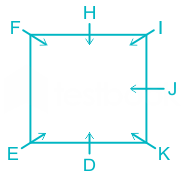
D, E, F, H, I, J and K are sitting around a square table facing the centre of the table. Only two people sit between E and J when counted from the right of E. Only two people sit between J and F. Only three people sit between E and I. D sits to the immediate left of K.

Who sits third to the left of H?

  1. AOption (a)

    I

  2. BOption (b)

    E

  3. COption (c)

    D

  4. DOption (d)

    K

View answer & explanation

Correct answer

Answer: (d)D.

K

Why this answer is correct

Given: D, E, F, H, I, J and K are sitting around a square table facing the centre of the table. 

1) Only two people sit between E and J when counted from the right of E.

2) Only two people sit between J and F.

3) Only three people sit between E and I.

4 ) D sits to the immediate left of K.

After positioning D and K only one position is left which will be occupied by the only person left i.e. H.

Thus, K sits third to the left of H.

Hence, "Option 4" is the correct answer.

Question 2

If x2+y2−16x+38y+425=0\mathrm{x^2 + y^2 − 16x + 38y + 425 = 0}, then the value of x2+y2\mathrm{x^2 + y^2} is:

  1. AOption (a)

    425

  2. BOption (b)

    432

  3. COption (c)

    422

  4. DOption (d)

    428

View answer & explanation

Correct answer

Answer: (a)A.

425

Why this answer is correct

Shortcut Trick

Rewrite the equation by completing the squares for both x and y terms.

x2 − 16x + 64 + y2 + 38y + 361 = 0 since 64 + 361 = 425.

This gives (x − 8)2 + (y + 19)2 = 0.

For real numbers, the sum of squares is zero only if x = 8 and y = −19.

Then x2 + y2 = 82 + (−19)2 = 64 + 361 = 425.

∴ The correct answer is 425.

Alternate Method

Given: x2 + y2 − 16x + 38y + 425 = 0

Formula Used: (a ± b)2 = a2 ± 2ab + b2

Calculations:

⇒ (x2 − 16x) + (y2 + 38y) + 425 = 0

⇒ (x2 − 2 × x × 8 + 82 − 64) + (y2 + 2 × y × 19 + 192 − 361) + 425 = 0

⇒ (x − 8)2 − 64 + (y + 19)2 − 361 + 425 = 0

⇒ (x − 8)2 + (y + 19)2 − 425 + 425 = 0

⇒ (x − 8)2 + (y + 19)2 = 0

⇒ For real variables, a sum of squares is 0 only if each square is 0: x − 8 = 0 and y + 19 = 0

⇒ x = 8 and y = −19

⇒ Required value: x2 + y2 = 82 + (−19)2

⇒ x2 + y2 = 64 + 361 = 425

∴ The correct answer is 425.

Additional Information

Sum of Squares Property

For any real numbers A, B, and C, if A2 + B2 + C2 + ... = 0, then A = 0, B = 0, C = 0, etc.

Perfect Square Trinomial

The expression x2 + kx becomes a perfect square by adding (k/2)2, resulting in (x + k/2)2.

Geometric Interpretation

The equation (x − h)2 + (y − k)2 = r2 represents a circle; if r = 0, it represents a single point (h, k).

Question 3

Public health services remained largely inaccessible to the masses during the colonial rule. What was India's approximate life expectancy at the time of independence?

  1. AOption (a)

    55-60 years

  2. BOption (b)

    30-32 years

  3. COption (c)

    60-65 years

  4. DOption (d)

    42-45 years

View answer & explanation

Correct answer

Answer: (b)B.

30-32 years

Why this answer is correct

The correct answer is 30-32 years.

Key Points

  • India’s life expectancy at the time of independence in 1947 was approximately 30-32 years.
  • The low life expectancy was attributed to widespread poverty, lack of healthcare facilities, and high prevalence of infectious diseases like malaria, cholera, and tuberculosis.
  • During the colonial era, public health services were highly inadequate, especially in rural areas, leading to high mortality rates.
  • Infant mortality and maternal mortality rates were also alarmingly high due to poor medical infrastructure and lack of proper nutrition.
  • Post-independence, significant improvements in healthcare and living standards contributed to a gradual increase in life expectancy.

Additional Information

  • Life Expectancy: It refers to the average number of years a person is expected to live, based on demographic factors like healthcare, sanitation, and nutrition.
  • Colonial Healthcare System: During British rule, healthcare was largely focused on protecting the colonial administration and urban elites, leaving the rural population underserved.
  • Post-Independence Initiatives: India introduced major public health programs such as the National Malaria Eradication Program (1953) and family planning initiatives to improve public health metrics.
  • Current Trends: As of 2023, India’s life expectancy has increased to approximately 69-70 years, reflecting advancements in healthcare and living conditions.
  • Global Comparison: In 1947, India’s life expectancy was among the lowest globally, but consistent efforts in healthcare have significantly improved its ranking over the decades.

Question 4

Which Schedule and Article contain the names and extent of states and union territories?

  1. AOption (a)

    First Schedule – Articles 1 and 2

  2. BOption (b)

    Second Schedule – Article 5

  3. COption (c)

    First Schedule – Articles 1 and 4

  4. DOption (d)

    Fourth Schedule – Article 80

View answer & explanation

Correct answer

Answer: (c)C.

First Schedule – Articles 1 and 4

Why this answer is correct

The correct answer is First Schedule – Articles 1 and 4.

Key Points

  • The First Schedule of the Indian Constitution contains the names and territorial extent of States and Union Territories.
  • It is referenced in Articles 1 and 4 of the Constitution.
  • Article 1 declares India as a "Union of States" and provides for the classification of its territories into states, union territories, and other areas.
  • Article 4 specifies the legislative process for changes in the names, boundaries, or formation of States and Union Territories, linking directly to the First Schedule.
  • The First Schedule is periodically updated to reflect changes in state boundaries or new additions (e.g., Telangana in 2014).

Additional Information

  • Article 1 of the Constitution:
  • Defines India as a "Union of States."
  • Describes the classification of territories into States, Union Territories, and other areas.
  • Article 4 of the Constitution:
  • Empowers Parliament to make laws for the admission or establishment of new States or altering the boundaries of existing States.
  • Such laws are not considered constitutional amendments under Article 368.
  • Significance of the First Schedule:
  • It provides the official names and territorial descriptions of all States and Union Territories.
  • It is amended whenever there are changes in state boundaries (e.g., creation of new States like Chhattisgarh, Uttarakhand, and Jharkhand in 2000).
  • Examples of Amendments:
  • The Andhra Pradesh Reorganization Act, 2014, led to the creation of Telangana, updating the First Schedule.
  • Jammu & Kashmir and Ladakh were added as Union Territories under the Jammu & Kashmir Reorganization Act, 2019.

Question 5

What should come in place of the question mark (?) in the given series based on the English alphabetical order?

LIP NKR PMT ROV ?

  1. AOption (a)

    TRX

  2. BOption (b)

    TQY

  3. COption (c)

    TQX

  4. DOption (d)

    TRY

View answer & explanation

Correct answer

Answer: (c)C.

TQX

Why this answer is correct

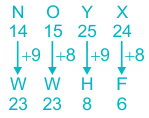
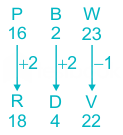
The logic followed here is:

​​

Hence, "Option 3" is the correct answer.

Question 6

Which type of legislative bills must be introduced in the Lok Sabha only after obtaining the prior approval of the President of India?

  1. AOption (a)

    Private Bills

  2. BOption (b)

    Ordinary Bills

  3. COption (c)

    Public Bills

  4. DOption (d)

    Money Bills

View answer & explanation

Correct answer

Answer: (d)D.

Money Bills

Why this answer is correct

The correct answer is option 4,

Key Points

  • Money Bills must be introduced in the Lok Sabha exclusively, as per Article 110 of the Indian Constitution.
  • The prior approval of the President of India is mandatory for the introduction of Money Bills in the Lok Sabha.
  • Money Bills include provisions related to taxation, borrowing of money, expenditure from the Consolidated Fund of India, and other financial matters.
  • The Speaker of the Lok Sabha holds the authority to certify whether a bill is a Money Bill or not.
  • The Rajya Sabha can only recommend amendments to Money Bills but cannot reject or amend them directly; the Lok Sabha has the final say.

Additional Information

  • Article 110: Defines Money Bills and specifies the matters it can include, such as imposition, abolition, or alteration of taxes, regulation of borrowing, and appropriation of funds.
  • Difference between Money Bills and Financial Bills: Financial Bills deal with broader financial matters but are not exclusively categorized under Article 110, requiring a different legislative process.
  • Role of the President: The President’s recommendation is essential for Money Bills because they involve financial implications for the government.
  • Speaker's Certification: The Speaker of the Lok Sabha’s certification is conclusive and cannot be questioned in any court of law.
  • Rajya Sabha's Role: The Rajya Sabha has limited authority over Money Bills and can only recommend changes within a 14-day window, which the Lok Sabha may accept or reject.

Question 7

Find roots of x2+(2a+3)x+(a2+3a)=0.\mathrm{x^2 + (2a + 3)x + (a^2 + 3a) = 0.}​

  1. AOption (a)

    x=2a,a+3\mathrm{x = 2a, a + 3}

  2. BOption (b)

    x=a,a+3\mathrm{x = a, a + 3}

  3. COption (c)

    x=−a,a+3\mathrm{x = −a, a + 3}

  4. DOption (d)

    x=−a,−a−3\mathrm{x = −a, −a −3}

View answer & explanation

Correct answer

Answer: (d)D.

x=−a,−a−3\mathrm{x = −a, −a −3}

Why this answer is correct

Shortcut Trick For a Quadratic Equation of the form x2 + (u + v)x + uv = 0, the roots are simply −u and −v. Compare this with the given equation: x2 + (2a + 3)x + (a2 + 3a) = 0. Rewrite the constant term: a2 + 3a = a(a + 3). Here, u = a and v = a + 3. Check the middle term: u + v = a + (a + 3) = 2a + 3, which matches the coefficient of x. The roots are −a and −(a + 3) ⇒ −a and −a − 3. ∴ The correct answer is {x = −a, −a − 3}.

Alternate Method Given: x2 + (2a + 3)x + (a2 + 3a) = 0 Method: Factorization of the Quadratic Equation by splitting the middle term. ⇒ x2 + (2a + 3)x + a(a + 3) = 0 ⇒ x2 + ax + (a + 3)x + a(a + 3) = 0 ⇒ x(x + a) + (a + 3)(x + a) = 0 ⇒ (x + a)(x + a + 3) = 0 ⇒ x + a = 0 or x + a + 3 = 0 ⇒ x = −a or x = −(a + 3) ⇒ x = −a or x = −a − 3 ∴ The correct answer is {x = −a, −a − 3}.

Additional Information Standard Form of Quadratic Equation A quadratic equation is expressed as ax2 + bx + c = 0, where a ≠ 0. Sum and Product of Roots For ax2 + bx + c = 0, the sum of roots is −b/a and the product of roots is c/a. Quadratic Formula Roots can be found using x = [−b ± √(b2 − 4ac)] / 2a. Nature of Roots The term D = b2 − 4ac is the Discriminant. If D > 0, roots are real and distinct; if D = 0, roots are real and equal.

Question 8

Which of the following letter-number clusters will replace the question mark (?) in the

given series to make it logically complete?

EFR7, HIU12, KLX17, NOA22, ?

  1. AOption (a)

    QRD27

  2. BOption (b)

    PRD27

  3. COption (c)

    QOD27

  4. DOption (d)

    QRI27

View answer & explanation

Correct answer

Answer: (a)A.

QRD27

Why this answer is correct

The logic followed here is:

​​


Hence, "Option 1" is the correct answer.

Question 9

A group of numbers and symbols is coded using letter codes as per the codes given below and the conditions that follow. Study the given codes and conditions and answer the question that follows.

Note: If none of the conditions apply, then codes for the respective number/symbol are to be followed directly as given in the table.

Number/Symbol18674#2@&
CodeYALBSDEZC

Conditions:

(i) If the first element is a symbol and the last a number, the codes for these two (the first and the last elements) are to be interchanged.

(ii) If the first element is an odd number and the last an even number, the first and last elements are to be coded as ©.

(iii) If both second and third elements are perfect squares, the third element is to be coded as the code for the second element.

What will be the code for the following group?

6 @ 2

  1. AOption (a)

    DZLE

  2. BOption (b)

    ELZD

  3. COption (c)

    ELDZ

  4. DOption (d)

    EZLD

View answer & explanation

Correct answer

Answer: (b)B.

ELZD

Why this answer is correct

Given Table:

Number/Symbol18674#2@&
CodeYALBSDEZC

According to the given condition:

Rule no.ConditionResult
(i)First element is a symbol and the last a numberCode for these two are to be interchanged
(ii)First element is an odd number and the last an even numberFirst and last elements are to be coded as ©
(iii)Both second and third elements are perfect squaresThird element is to be coded as the code for the second element

Given: # 6 @ 2

Here, (i) rule applies i.e. first element is a symbol and the last a number.

→ coded as E

6 → coded as L

@ → coded as Z

2 → coded as D

So, # 6 @ 2 → Coded as ELZD

Hence, "Option 2" is the correct answer.

Question 10

In this question, a group of number/symbol is coded using letter codes as per the codes given below and the conditions which follow. The correct combination of codes following the conditions is your answer.

Note: If none of the conditions apply, then codes for the respective number/symbol are to be followed directly as given in the table.

Number/Symbol@295$&3%#7+486
CodeACDJFEWQGPRBUS

Conditions:

(i) If the first element is a symbol and the last a number, the codes for these two (the first and the last elements) are to be interchanged.

(ii) If the first element is an odd number and the last an even number, the first and last elements are to be coded as ©.

(iii) If both second and third elements are perfect squares, the third element is to be

coded as the code for the second element.

What is @9#7 coded as$?

  1. AOption (a)

    PGDA

  2. BOption (b)

    ADGP

  3. COption (c)

    GPDA

  4. DOption (d)

    PDGA

View answer & explanation

Correct answer

Answer: (d)D.

PDGA

Why this answer is correct

Given Table:

Number/Symbol@295$&3%#7+486
CodeACDJFEWQGPRBUS

According to the given condition:

Rule no.ConditionResult
(i)First element is a symbol and the last a numberCode for these two are to be interchanged
(ii)First element is an odd number and the last an even numberFirst and last elements are to be coded as ©
(iii)Both second and third elements are perfect squaresThird element is to be coded as the code for the second element

Given: @9#7

Here, (i) rule applies i.e. first element is a symbol and the last a number.

@ → coded as P

9 → coded as D

# → coded as G

7 → coded as A

So, @9#7 → Coded as PDGA

Hence, "Option 4" is the correct answer$.

Question 11

Seven boxes D, E, F, G, I, J and K are kept one over the other but not necessarily in the same order. Only four boxes are kept between E and D. Only F is kept above E. Only two boxes are kept between J and K. G is kept immediately above I. K is not kept immediately above G. Which box is kept fourth from the top?

  1. AOption (a)

    K

  2. BOption (b)

    D

  3. COption (c)

    F

  4. DOption (d)

    G

View answer & explanation

Correct answer

Answer: (d)D.

G

Why this answer is correct

Given: Seven boxes D, E, F, G, I, J and K are kept one over the other but not necessarily in the same order. 

1) Only F is kept above E.

2) Only four boxes are kept between E and D.

Boxes
F
E
D

3) Only two boxes are kept between J and K.

4) G is kept immediately above I.

Boxes
F
E
J/K
G
I
J/K
D

5) K is not kept immediately above G.

Boxes
F
E
J
G
I
K
D

Thus, G box is kept fourth from the top.

Hence, "Option 4" is the correct answer.

Question 12

The simple interest (in ₹) on ₹2,200 at the rate of 7% per annum in 2 years is:

  1. AOption (a)

    ₹408

  2. BOption (b)

    ₹308

  3. COption (c)

    ₹358

  4. DOption (d)

    ₹258

View answer & explanation

Correct answer

Answer: (b)B.

₹308

Why this answer is correct

Shortcut Trick

Net Simple Interest percentage = Rate × Time

Effective Rate = 7% × 2 = 14%

Simple Interest = 14% of ₹2,200

SI = 14 × 22 = 308

∴ The correct answer is ₹308.

Alternate Method

Given:

Principal (P) = ₹2,200

Rate (R) = 7% per annum

Time (T) = 2 years

Formula Used:

Simple Interest (SI) = (P × R × T) ÷ 100

Calculations:

⇒ SI = (2200 × 7 × 2) ÷ 100

⇒ SI = 22 × 14

⇒ SI = ₹308

∴ The correct answer is ₹308.

Additional Information

Total Amount

The total sum of money payable at the end of the period is calculated as Amount = Principal + Simple Interest.

Compound Interest (CI)

Unlike SI, Compound Interest is calculated on the principal and also on the accumulated interest of previous periods. Formula: A = P(1 + r/100)n.

SI vs CI Relationship

For the first year, when interest is compounded annually, the Simple Interest is exactly equal to the Compound Interest.

Question 13

What price should Kunal mark on a pair of pants which costs him ₹3,300, so as to gain 33% after allowing a successive discount of 25% and 30%?

  1. AOption (a)

    ₹8,360

  2. BOption (b)

    ₹8,256

  3. COption (c)

    ₹8,310

  4. DOption (d)

    ₹8,290

View answer & explanation

Correct answer

Answer: (a)A.

₹8,360

Why this answer is correct

Shortcut Trick

Net Successive Discount = a + b − (a × b) ÷ 100 = 25 + 30 − (25 × 30) ÷ 100 = 55 − 7.5 = 47.5%.

Using the ratio formula: MP ÷ CP = (100 + Gain%) ÷ (100 − Discount%).

MP ÷ 3300 = (100 + 33) ÷ (100 − 47.5) = 133 ÷ 52.5.

MP = (133 × 3300) ÷ 52.5 = ₹8,360.

∴ The correct answer is ₹8,360.

Alternate Method

Given: Cost Price (CP) = ₹3,300, Gain% = 33%, Successive Discounts = 25% and 30%.

Formulas: SP = CP × (100 + Gain%) ÷ 100 | MP = SP × 100 ÷ (100 − D1%) × 100 ÷ (100 − D2%)

⇒ Step 1: Selling Price (SP) = 3300 × (133 ÷ 100) = 33 × 133 = ₹4,389.

⇒ Step 2: Let Marked Price be MP.

⇒ Step 3: MP × (75 ÷ 100) × (70 ÷ 100) = 4389.

⇒ Step 4: MP × (3 ÷ 4) × (7 ÷ 10) = 4389.

⇒ Step 5: MP = (4389 × 40) ÷ 21 = 209 × 40 = ₹8,360.

∴ The correct answer is ₹8,360.

Additional Information

Relation between CP and MP

The relationship between Cost Price and Marked Price is given by CP ÷ MP = (100 − D%) ÷ (100 + P%).

Successive Discounts

When two discounts d1 and d2 are given, the effective discount is single discount = (d1 + d2 − d1d2/100)%.

Question 14

Which of the following numbers is used to represent the ASCII value of the uppercase letter 'B'?

  1. AOption (a)

    90

  2. BOption (b)

    65

  3. COption (c)

    97

  4. DOption (d)

    66

View answer & explanation

Correct answer

Answer: (d)D.

66

Why this answer is correct

The correct answer is option 4,

The correct answer is 66.

Key Points

  • ASCII stands for American Standard Code for Information Interchange, a character encoding standard used in computers and electronic devices.
  • Each character in the ASCII table is assigned a unique numeric code ranging from 0 to 127, enabling efficient communication between devices.
  • The uppercase letter 'B' corresponds to the ASCII value 66.
  • In the ASCII table, uppercase letters are sequentially assigned values from 65 ('A') to 90 ('Z').
  • The ASCII value 66 is widely used in programming, data processing, and digital systems to represent the letter 'B'.

Additional Information

  • ASCII Table Categories:
  • ASCII codes are divided into control characters (0-31) and printable characters (32-127).
  • Printable characters include letters, digits, punctuation marks, and special symbols.
  • Control Characters:
  • Control characters, such as 10 (Line Feed) and 13 (Carriage Return), are used to control text formatting.
  • Extended ASCII:
  • Beyond the standard 0-127 range, extended ASCII includes codes from 128-255, primarily used for additional symbols and characters.
  • Application of ASCII:
  • Widely used in programming languages such as C, Python, and Java for handling text and characters.
  • Enables interoperability across devices and systems by standardizing character representation.

Question 15

The average weight of 5 students is 60 kg. After a new student joins the group, the average becomes 62 kg. What is the weight of the new student?

  1. AOption (a)

    62 kg

  2. BOption (b)

    68 kg

  3. COption (c)

    72 kg

  4. DOption (d)

    70 kg

View answer & explanation

Correct answer

Answer: (c)C.

72 kg

Why this answer is correct

Shortcut Trick

Initial average of 5 students = 60 kg

Increase in average after 1 new student = 62 − 60 = 2 kg

Total students now = 6

Weight of new student = Old Average + (Increase × New Total Students)

⇒ Weight = 60 + (2 × 6) = 60 + 12 = 72 kg

∴ The correct answer is 72 kg.

Alternate Method

Given:

Average weight of 5 students = 60 kg

Average weight of 6 students = 62 kg

Formula: Total Weight = Average × Number of Students

⇒ Total weight of 5 students = 5 × 60 = 300 kg

⇒ Total weight of 6 students (including new one) = 6 × 62 = 372 kg

⇒ Weight of the new student = Total weight of 6 students − Total weight of 5 students

⇒ Weight = 372 − 300 = 72 kg

∴ The correct answer is 72 kg.

Additional Information

Basic Average Formula

Average = Sum of all observations ÷ Number of observations.

Net Change in Average

If every value in a set is increased by 'k', the average also increases by 'k'.

Inclusion/Exclusion Rule

New Value = New Average + (Number of previous items × Change in Average).

Question 16

When did the citizenship provisions in the Constitution come into effect?

  1. AOption (a)

    January 26, 1950

  2. BOption (b)

    November 26, 1949

  3. COption (c)

    July 19, 1949

  4. DOption (d)

    August 15, 1947

View answer & explanation

Correct answer

Answer: (b)B.

November 26, 1949

Why this answer is correct

The correct answer is option 2,

Key Points

  • The citizenship provisions as outlined in Part II of the Indian Constitution came into effect on November 26, 1949, coinciding with the enforcement of the Constitution of India.
  • January 26, 1950, is celebrated as Republic Day in India, marking the transition of India into a sovereign democratic republic.
  • Article 5 to Article 11 in the Constitution of India specifically deals with citizenship provisions at the time of commencement of the Constitution.
  • The provision for citizenship was crucial for determining the legal status of individuals residing in India after independence and partition.
  • The Constitution provides for a single citizenship for the entire country, which means that all Indians are citizens of India irrespective of the state or territory they reside in.

Additional Information

  • Article 5: Defines citizenship for individuals domiciled in India at the commencement of the Constitution.
  • Article 6: Grants citizenship to individuals who migrated to India from Pakistan before July 19, 1948, under specific conditions.
  • Article 7: Provides citizenship for individuals who migrated to Pakistan but later returned to India under a permit for resettlement.
  • Article 9: States that individuals voluntarily acquiring citizenship of another country will cease to be Indian citizens.
  • Article 10: Empowers Parliament to regulate citizenship matters through legislation, leading to the enactment of the Citizenship Act, 1955.
  • Citizenship Act, 1955: This act defines provisions for acquiring, terminating, and determining Indian citizenship post-1950.

Question 17

Education remained largely inaccessible to the masses during colonial rule. What was India’s literacy rate around 1947?

  1. AOption (a)

    Close to 90%

  2. BOption (b)

    Below 20%

  3. COption (c)

    Around 50%

  4. DOption (d)

    Over 75%

View answer & explanation

Correct answer

Answer: (b)B.

Below 20%

Why this answer is correct

The correct answer is Below 20%.

Key Points

  • India's literacy rate at the time of independence in 1947 was estimated to be around 12%-18%, with significant gender and regional disparities.
  • During colonial rule, education policies primarily focused on producing a small, educated elite for administrative purposes, leaving the majority of the population uneducated.
  • Male literacy was significantly higher compared to female literacy, which was as low as 8% in many regions.
  • The lack of access to education for the masses was one of the major socio-economic challenges India faced post-independence.
  • Efforts to increase literacy began in earnest after independence, with initiatives like the National Literacy Mission and the Sarva Shiksha Abhiyan.

Additional Information

  • Colonial Education System:
  • The British introduced modern education in India primarily to serve colonial administrative needs.
  • English became the medium of instruction in higher education, while primary education received minimal attention.
  • The Wood's Dispatch of 1854 laid the foundation for a structured education system but failed to address mass literacy.
  • Post-Independence Literacy Programs:
  • The Indian government launched several initiatives like the National Policy on Education (1968) and the Sarva Shiksha Abhiyan (2001) to improve literacy.
  • Adult literacy programs such as the National Literacy Mission (1988) aimed at eradicating illiteracy among adults.
  • Current Literacy Trends:
  • India's literacy rate has significantly improved, reaching approximately 77.7% as per the 2021 National Statistical Office report.
  • Gender disparities in literacy have also reduced, although challenges remain in rural and marginalized communities.
  • Global Comparison:
  • India's literacy rate in 1947 was among the lowest globally, highlighting the need for systemic reforms.
  • Countries that achieved independence around the same time, such as South Korea, invested heavily in education, achieving near-universal literacy within decades.

Question 18

120\frac{1}{20} is what percentage of 140\frac{1}{40}

  1. AOption (a)

    215%

  2. BOption (b)

    200%

  3. COption (c)

    400%

  4. DOption (d)

    210%

View answer & explanation

Correct answer

Answer: (b)B.

200%

Why this answer is correct

Given:

Number 1 = 1/20

Number 2 = 1/40

Formula used:

Percentage = (Part ÷ Whole) × 100

Calculations:

⇒ (1/20) ÷ (1/40) × 100

⇒ (1/20) × (40/1) × 100

⇒ (40 ÷ 20) × 100

⇒ 2 × 100 = 200%

∴ Option 2 is the correct answer.

Question 19

The 2025 Pulitzer Prize in Memoir or Autobiography was awarded to which of the following?

  1. AOption (a)

    Stay True by Hua Hsu

  2. BOption (b)

    Heavy by Kiese Laymon

  3. COption (c)

    Feeding Ghosts by Tessa Hulls

  4. DOption (d)

    Spare by Prince Harry

View answer & explanation

Correct answer

Answer: (c)C.

Feeding Ghosts by Tessa Hulls

Why this answer is correct

The correct answer is option 3,

The correct answer is Feeding Ghosts by Tessa Hulls.

Key Points

  • Feeding Ghosts by Tessa Hulls is a memoir that explores themes of identity, heritage, and resilience through intergenerational storytelling.
  • The book delves into Hulls's personal experiences while tracing the legacy of her ancestors, particularly her grandmother's journey.
  • It has been widely acclaimed for its emotional depth, historical significance, and unique narrative style.
  • The Pulitzer Prize in Memoir or Autobiography recognizes outstanding literary works that contribute significantly to personal storytelling and human understanding.
  • Tessa Hulls's work stood out in 2025 due to its poignant exploration of cultural complexities and personal connections.

Additional Information

  • Pulitzer Prize:
  • An annual award for achievements in journalism, literature, and musical composition in the United States.
  • Established in 1917 by provisions in the will of Joseph Pulitzer, a newspaper publisher.
  • Administered by Columbia University, it is considered one of the highest honors in these fields.
  • The Pulitzer Prize in Memoir or Autobiography specifically recognizes works that offer profound insights into personal experiences.
  • Memoir vs. Autobiography:
  • A memoir focuses on specific memories or themes, while an autobiography covers the entire life story chronologically.
  • Memoirs often emphasize emotional truths and personal reflections over factual accuracy.
  • Autobiographies aim to present a comprehensive self-account, often with historical or social contexts.
  • Literary Significance:
  • Memoirs serve as a bridge between personal storytelling and universal themes, creating empathy and shared understanding.
  • They often tackle complex issues like identity, trauma, resilience, and relationships.
  • Authors of memoirs use literary techniques such as vivid imagery, metaphor, and narrative structure to engage readers.
  • Notable Pulitzer Winners in Memoir or Autobiography:
  • 2019: "The New Negro: The Life of Alain Locke" by Jeffrey C. Stewart (Biography category).
  • 2022: "Chasing Me to My Grave: An Artist's Memoir of the Jim Crow South" by Winfred Rembert as told to Erin I. Kelly.
  • 2023: "Stay True" by Hua Hsu, a deeply moving memoir exploring friendship and loss.

Question 20

In the MS PowerPoint 2019 interface, which of the following icons should you click to save changes to the current presentation quickly?

  1. AOption (a)

  2. BOption (b)

  3. COption (c)

  4. DOption (d)

View answer & explanation

Correct answer

Answer: (c)C.

Why this answer is correct

The correct answer is option 3,

Key Points

  • To save changes quickly in MS PowerPoint 2019, users must click the "Save" icon located in the Quick Access Toolbar, typically represented by a floppy disk symbol.
  • The Quick Access Toolbar is usually found at the top left corner of the interface and provides easy access to commonly used commands.
  • The save function ensures that any modifications to the current presentation are preserved without requiring further prompts or navigation.
  • Keyboard shortcut "Ctrl + S" can also be used as an alternative for saving changes quickly.
  • Regular saving is recommended to prevent data loss in case of unexpected system crashes or issues.

Additional Information

  • Quick Access Toolbar:
  • It is a customizable toolbar located above the ribbon in MS Office applications, including PowerPoint 2019.
  • Users can add or remove icons based on frequently used commands for better efficiency.
  • Save vs. Save As:
  • The "Save" option updates the current file with changes made, while "Save As" creates a new file or allows saving under a different name or format.
  • AutoSave Feature:
  • In PowerPoint 2019, the AutoSave feature automatically saves changes if the file is stored on OneDrive or SharePoint.
  • AutoSave reduces the risk of losing unsaved progress.
  • File Formats:
  • PowerPoint files are usually saved as .pptx, but other formats like .pdf, .ppsx (PowerPoint Show), or .mp4 (video) are also supported.

Question 21

Which of the following stupas marks the spot where Buddha gave his first sermon?

  1. AOption (a)

    Amravati stupa

  2. BOption (b)

    Mahabodhi stupa

  3. COption (c)

    Sanchi stupa

  4. DOption (d)

    Dhamek stupa

View answer & explanation

Correct answer

Answer: (d)D.

Dhamek stupa

Why this answer is correct

The correct answer is option 4,"

The correct answer is Dhamek Stupa.

Key Points

  • Dhamek Stupa is located in Sarnath, Uttar Pradesh, and is one of the most important Buddhist sites in India.
  • This stupa marks the location where Lord Buddha delivered his first sermon, known as the "Dhammacakkappavattana Sutta" or "Setting in Motion the Wheel of Dharma."
  • The original stupa was constructed by Emperor Ashoka in 249 BCE to commemorate Buddha's teachings.
  • Dhamek Stupa is a cylindrical structure measuring 28 meters in diameter and 43.6 meters in height, and is adorned with intricate carvings and inscriptions.
  • This site is part of the Sarnath Archaeological Complex, which also includes the Ashokan Pillar and the ruins of ancient monasteries.

Additional Information

  • Buddha's First Sermon:
  • The first sermon delivered by Buddha at Sarnath is called the ""Dhammacakkappavattana Sutta,"" meaning ""Setting in Motion the Wheel of Dharma.""
  • It laid out the Four Noble Truths and the Eightfold Path, which are central to Buddhist philosophy.
  • Emperor Ashoka and Buddhism:
  • Emperor Ashoka was instrumental in the spread of Buddhism across India and abroad.
  • He constructed numerous stupas and pillars, including the famous Ashokan Pillar at Sarnath, inscribed with edicts promoting Buddhist teachings.
  • Significance of Sarnath:
  • Sarnath is one of the four most important pilgrimage sites for Buddhists, alongside Lumbini, Bodh Gaya, and Kushinagar.
  • The site symbolizes the beginning of Buddha's teaching journey after attaining enlightenment.
  • Architectural Features of Dhamek Stupa:
  • The stupa features elaborate stone carvings, including floral motifs and inscriptions in Brahmi script.
  • These carvings reflect the artistic and cultural advancements of the Mauryan period.

"

Question 22

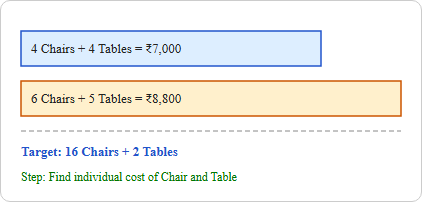
4 chairs and 4 tables cost ₹7,000 and 6 chairs and 5 tables cost ₹8,800. What is the cost of 16 chairs and 2 tables?

  1. AOption (a)

    ₹4,198

  2. BOption (b)

    ₹4,197

  3. COption (c)

    ₹4,200

  4. DOption (d)

    ₹4,195

View answer & explanation

Correct answer

Answer: (c)C.

₹4,200

Why this answer is correct

Shortcut Trick

From the first condition, 4 chairs + 4 tables = ₹7,000 ⇒ 1 chair + 1 table = ₹1,750.

Given 6 chairs + 5 tables = ₹8,800, we can write this as: 5(1 chair + 1 table) + 1 chair = ₹8,800.

Substituting the value: 5 × 1,750 + 1 chair = ₹8,800 ⇒ 8,750 + 1 chair = ₹8,800 ⇒ 1 chair = ₹50.

Then, 1 table = 1,750 − 50 = ₹1,700.

Cost of 16 chairs and 2 tables = 16 × 50 + 2 × 1,700 = 800 + 3,400 = ₹4,200.

∴ The correct answer is ₹4,200.

Alternate Method

Given:

Cost of 4 chairs (C) and 4 tables (T) = ₹7,000

Cost of 6 chairs and 5 tables = ₹8,800

Formula Used:

Method of Elimination for solving simultaneous linear equations.

Let the cost of one chair be C and one table be T.

⇒ 4C + 4T = 7,000 — (1)

⇒ 6C + 5T = 8,800 — (2)

Divide equation (1) by 4:

⇒ C + T = 1,750 — (3)

Multiply equation (3) by 5:

⇒ 5C + 5T = 8,750 — (4)

Subtract equation (4) from equation (2):

⇒ (6C + 5T) − (5C + 5T) = 8,800 − 8,750

⇒ C = 50

Substitute C = 50 in equation (3):

⇒ 50 + T = 1,750 ⇒ T = 1,700

Cost of 16 chairs and 2 tables:

⇒ 16 × 50 + 2 × 1,700

⇒ 800 + 3,400 = 4,200

∴ The correct answer is ₹4,200.

Additional Information

Elimination Method

A technique to solve a system of linear equations by adding or subtracting them to remove one variable.

Linear Equations in Two Variables

Equations of the form ax + by = c, where a, b, and c are constants and x, y are unknowns.

Substitution Method

Solving one equation for one variable and substituting that expression into the other equation.

Question 23

By using a suitable identity, simplify 10.1310.1^3.

  1. AOption (a)

    1003.301

  2. BOption (b)

    1030.3001

  3. COption (c)

    1030.323

  4. DOption (d)

    1030.301

View answer & explanation

Correct answer

Answer: (d)D.

1030.301

Why this answer is correct

Question:

By using a suitable identity, simplify 10.1310.1^3.

Given:

(10.1)3

Formula used:

(a + b)3 = a3 + b3 + 3a2b + 3ab2

Calculations:

⇒ (10 + 0.1)3

⇒ 103 + (0.1)3 + 3×102×0.1 + 3×10×(0.1)2

⇒ 1000 + 0.001 + 3×100×0.1 + 3×10×0.01

⇒ 1000 + 0.001 + 30 + 0.3

⇒ 1030.301

∴ (10.1)3 = 1030.301

Question 24

Which of the following letter-clusters should replace # and % so that the pattern and relationship followed between the letter-cluster pair on the left side of :: is the same as that on the right side of :: ?

: XTR :: LHF : %

  1. AOption (a)

    = DTX, % = FBZ

  2. BOption (b)

    = DZX, % = FBO

  3. COption (c)

    = DZX, % = FBZ

  4. DOption (d)

    = UZX, % = FBZ

View answer & explanation

Correct answer

Answer: (c)C.

= DZX, % = FBZ

Why this answer is correct

The logic followed here is:

Given: # : XTR :: LHF : %

Option 1) # = DTX, % = FBZ → DTX : XTR :: LHF : FBZ

Option 2) # = DZX, % = FBO → DZX : XTR :: LHF : FBO

​

Option 3) # = DZX, % = FBZ → DZX : XTR :: LHF : FBZ

Option 4) # = UZX, % = FBZ → UZX : XTR :: LHF : FBZ

Hence, "Option 3" is the correct answer.

Question 25

What amount will be disbursed from FY 2020-21 to FY 2025-26 under the Agriculture Infrastructure Fund established by the Central Government?

  1. AOption (a)

    ₹2 lakh crore

  2. BOption (b)

    ₹5 lakh crore

  3. COption (c)

    ₹10 lakh crore

  4. DOption (d)

    ₹1 lakh crore

View answer & explanation

Correct answer

Answer: (d)D.

₹1 lakh crore

Why this answer is correct

The correct answer is ₹1 lakh crore.

Key Points

  • The Agriculture Infrastructure Fund (AIF) was launched by the Government of India to provide medium to long-term debt financing for post-harvest management infrastructure and community farming assets.
  • The scheme will disburse ₹1 lakh crore from FY 2020-21 to FY 2025-26 for infrastructure development in the agriculture sector.
  • The loans under the AIF will be provided with 3% interest subvention and credit guarantee coverage for loans up to ₹2 crore.
  • The fund aims to improve farmer income by reducing post-harvest losses and enabling better storage, processing, and marketing of agricultural produce.
  • Eligible beneficiaries include farmer producer organizations (FPOs), self-help groups (SHGs), PACs, startups, and agri-entrepreneurs.

Additional Information

  • Purpose of the Agriculture Infrastructure Fund (AIF):
  • The fund is focused on building post-harvest management infrastructure like warehouses, cold storages, and processing units to reduce wastage and improve supply chain efficiency.
  • Additionally, it supports community farming assets such as custom hiring centers, primary processing units, and logistics facilities.
  • Implementation Framework:
  • The scheme is implemented by the Ministry of Agriculture and Farmers Welfare.
  • Funds are disbursed through lending institutions like scheduled commercial banks, cooperative banks, and regional rural banks (RRBs).
  • Credit Guarantee Fund Trust for Micro and Small Enterprises (CGTMSE):
  • Credit guarantees under the AIF are provided via CGTMSE, ensuring that small and medium-sized borrowers can access loans without collateral.
  • Key Objectives:
  • Reduce post-harvest losses, improve farmers' access to markets, and create employment opportunities in rural areas.
  • Enhance agricultural productivity and ensure better price realization for farmers.
  • Monitoring and Evaluation:
  • The scheme's progress is monitored using the dedicated AIF portal, which tracks disbursements, project implementation, and outcomes.
  • Beneficiaries can apply online through the portal for simplified and transparent processing.

Question 26

Which of the following cities hosted the inaugural Women's Hockey India League in 2025?

  1. AOption (a)

    Mumbai

  2. BOption (b)

    Ranchi

  3. COption (c)

    Chennai

  4. DOption (d)

    Bengaluru

View answer & explanation

Correct answer

Answer: (b)B.

Ranchi

Why this answer is correct

The correct answer is Ranchi.

Key Points

  • The inaugural Women's Hockey India League in 2025 was hosted in Ranchi, Jharkhand.
  • The city is known for its rich sports culture and has produced several prominent athletes, including cricketer MS Dhoni.
  • Ranchi has hosted various national and international sporting events due to its advanced sports infrastructure.
  • The event aimed to promote women's hockey in India and provide a platform for young talent to showcase their skills at the national level.
  • The initiative was part of Hockey India's efforts to popularize hockey across different regions of the country.

Additional Information

  • Hockey India League (HIL)
  • Hockey India League (HIL) is a professional field hockey league in India, organized by Hockey India.
  • It was established in 2013 with the aim of promoting hockey and offering players competitive opportunities.
  • The league has both men's and women's divisions, with teams representing different cities.
  • Importance of Women's Hockey in India
  • Women's hockey has gained significant recognition in recent years, with the Indian team performing well in international tournaments.
  • Events like the Women's Hockey India League help nurture young talent and inspire more women to take up the sport.
  • Ranchi's Contribution to Sports
  • Ranchi has been home to several sports facilities, including the Birsa Munda Hockey Stadium, which is one of the largest hockey stadiums in India.
  • The city has hosted numerous national and international sports events, promoting a strong sports culture in the region.
  • Promotion of Regional Talent
  • Hosting the league in cities like Ranchi ensures better outreach and encourages local athletes to pursue hockey professionally.
  • It also helps in identifying and nurturing talent from less urbanized regions of the country.

Question 27

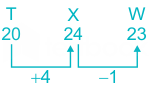
12 is related to 8 following a certain logic. Following the same logic, 56 is related to 52. To which of the following is 49 related, following the same logic?

(NOTE: Operations should be performed on the whole numbers, without breaking down the numbers into their constituent digits. E.g. 13 – Operations on 13 such as adding/subtracting/multiplying to 13 can be performed. Breaking down 13 into 1 and 3 and then performing mathematical operations on 1 and 3 is not allowed.)

  1. AOption (a)

    36

  2. BOption (b)

    50

  3. COption (c)

    40

  4. DOption (d)

    45

View answer & explanation

Correct answer

Answer: (d)D.

45

Why this answer is correct

The logic followed here is:

12 is related to 8 → 12 - 4 = 8​

And,

56 is related to 52 → 56 - 4 = 52

Similarly,

49 is related to → 49 - 4 = 45

Hence, "Option 4" is the correct answer.

Question 28

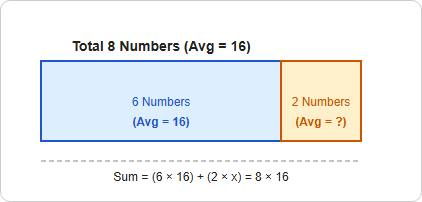
The average of 8 numbers is 16. The average of 6 of these numbers is 16. The average of the remaining two numbers is:

  1. AOption (a)

    18

  2. BOption (b)

    17

  3. COption (c)

    15

  4. DOption (d)

    16

View answer & explanation

Correct answer

Answer: (d)D.

16

Why this answer is correct

Shortcut Trick

If the average of a subset (6 numbers) is equal to the total average (16), then the remaining numbers must also have the same average to maintain the balance.

Total average = 16

Subset (6) average = 16 ⇒ Deviation = 0

Average of remaining 2 numbers = Total Average + (Net Deviation ÷ 2) = 16 + 0 = 16

∴ The correct answer is 16.

Alternate Method

Given:

Total numbers (ntotal) = 8

Average of 8 numbers (Atotal) = 16

Numbers in first group (n1) = 6

Average of 6 numbers (A1) = 16

Formula Used:

Sum = Average × Number of observations

Average of remaining = (Total Sum − Sum of known group) ÷ Remaining count

Calculations:

⇒ Total sum of 8 numbers = 8 × 16 = 128

⇒ Sum of the first 6 numbers = 6 × 16 = 96

⇒ Sum of the remaining two numbers = 128 − 96 = 32

⇒ Average of the remaining two numbers = 32 ÷ 2 = 16

∴ The correct answer is 16.

Additional Information

Weighted Average

The combined average of two groups is given by Acombined = (n1A1 + n2A2) ÷ (n1 + n2).

Net Deviation Rule

The sum of deviations of all observations from their arithmetic mean is always zero (Σ(xi − A) = 0).

Property of Constant Average

If a number equal to the average is added or removed from a data set, the average remains unchanged.

Question 29

B is the mother of A. C is the sister of A’s father D. E is the brother of C. How is B related to E?

  1. AOption (a)

    Mother

  2. BOption (b)

    Sister

  3. COption (c)

    Wife

  4. DOption (d)

    Brother’s wife

View answer & explanation

Correct answer

Answer: (d)D.

Brother’s wife

Why this answer is correct

Given:

  1. B is the mother of A.

  2. C is the sister of A’s father D. 


3) E is the brother of C. 

Thus, B is E's brother’s wife.

Hence, "Option 4" is the correct answer.

Question 30

What was the term for Anglo-Indian bureaucrats in the princely states?

  1. AOption (a)

    Jagirdars

  2. BOption (b)

    Non-Mulkis

  3. COption (c)

    Mulkis

  4. DOption (d)

    Zamindars

View answer & explanation

Correct answer

Answer: (b)B.

Non-Mulkis

Why this answer is correct

The correct answer is option 2,

The correct answer is Non-Mulkis.

Key Points

  • Non-Mulkis referred to Anglo-Indian or non-native officials who served as administrators in princely states during British rule.
  • They were often appointed to high-ranking positions in state administration due to their perceived loyalty and expertise.
  • The term "Non-Mulkis" literally translates to "outsiders" or "non-natives," distinguishing them from local officials (referred to as "Mulkis").
  • Non-Mulkis played a significant role in ensuring the implementation of British policies within princely states.
  • They were viewed with suspicion by native elites, as their appointment often undermined local governance and autonomy.

Additional Information

  • Mulkis
  • "Mulkis" referred to native officials or administrators of a region or princely state.
  • They were often seen as representatives of local interests and were trusted by the indigenous population.
  • Princely States
  • These were semi-autonomous regions ruled by local monarchs under the suzerainty of the British Crown.
  • There were around 565 princely states at the time of India's independence in 1947.
  • Anglo-Indians
  • The term "Anglo-Indians" referred to individuals of mixed Indian and European descent, often employed in various administrative capacities under British rule.
  • They held a unique social and administrative status in colonial India.
  • British Policy in Princely States
  • The British often intervened in the internal affairs of princely states to ensure compliance with their overarching colonial objectives.
  • Non-Mulkis were commonly used as intermediaries to enforce British policies while maintaining the facade of local governance.

Question 31

The surface area (in cm2\mathrm{cm^2}) of a sphere of radius 14 cm is: Take π=227\pi=\frac{22}7

  1. AOption (a)

    2465

  2. BOption (b)

    2464

  3. COption (c)

    2462

  4. DOption (d)

    2467

View answer & explanation

Correct answer

Answer: (b)B.

2464

Why this answer is correct

Shortcut Trick

Check for divisibility by 11 since the formula involves π (22/7).

Sum of odd places − Sum of even places for 2464: (2+6) − (4+4) = 0.

Since 0 is divisible by 11, 2464 is the likely answer.

Applying formula: 4 × (22/7) × 14 × 14 = 88 × 2 × 14 = 176 × 14 = 2464.

∴ The correct answer is 2464 cm2.

Alternate Method

Given:

Radius (r) = 14 cm

π = 22/7

Formula Used:

Surface Area of a Sphere = 4πr2

Calculations:

⇒ Surface Area = 4 × (22/7) × (14)2

⇒ Surface Area = 4 × (22/7) × 14 × 14

⇒ Surface Area = 4 × 22 × 2 × 14

⇒ Surface Area = 88 × 28

⇒ Surface Area = 2464 cm2

∴ The correct answer is 2464 cm2.

Additional Information

Volume of Sphere

The amount of 3D space occupied by a sphere is given by V = (4/3)πr3.

Hemisphere Properties

Curved Surface Area = 2πr2 and Total Surface Area = 3πr2.

Ratio of Area and Volume

If the radius is doubled, the Surface Area becomes 4 times (22) and the Volume becomes 8 times (23).

Question 32

Evaluate cos42°.cos18°−sin42°.sin18°.\mathrm{cos 42° .cos 18°- sin 42°.sin 18°.}

  1. AOption (a)

    13\frac{1}3

  2. BOption (b)

    11

  3. COption (c)

    12\frac{1}2

  4. DOption (d)

    14\frac{1}4

View answer & explanation

Correct answer

Answer: (c)C.

12\frac{1}2

Why this answer is correct

Shortcut Trick

The expression is in the form of cos A cos B − sin A sin B.

This is the standard expansion for cos(A + B).

Here, A = 42° and B = 18°.

Sum of angles = 42° + 18° = 60°.

Value = cos 60° = 1/2.

∴ The correct answer is 1/2.

Alternate Method

Given: cos 42° . cos 18° − sin 42° . sin 18°

Formula Used: cos⁡(A+B)=cos⁡Acos⁡B−sin⁡Asin⁡B\cos(A + B) = \cos A \cos B - \sin A \sin B

⇒ Let A = 42° and B = 18°

⇒ cos 42° . cos 18° − sin 42° . sin 18° = cos(42° + 18°)

⇒ cos(42° + 18°) = cos 60°

⇒ Since cos 60° = 1/2

⇒ Final value = 1/2

∴ The correct answer is 1/2.

Additional Information

Cosine Addition/Subtraction Formulae

cos(A + B) = cos A cos B − sin A sin B and cos(A − B) = cos A cos B + sin A sin B.

Sine Addition/Subtraction Formulae

sin(A + B) = sin A cos B + cos A sin B and sin(A − B) = sin A cos B − cos A sin B.

Standard Trigonometric Values

cos 0° = 1, cos 30° = √3/2, cos 45° = 1/√2, cos 60° = 1/2, cos 90° = 0.

Question 33

Akash sold an article at a loss of 17%. If he had bought the item at 5% less and had sold it for ₹310 more, then he would have gained 20%. Find the cost price (in ₹) of the article.

  1. AOption (a)

    1,000

  2. BOption (b)

    674

  3. COption (c)

    785

  4. DOption (d)

    1,215

View answer & explanation

Correct answer

Answer: (a)A.

1,000

Why this answer is correct

Shortcut Trick

Let Initial Cost Price (CP1) = 100 units.

Initial Selling Price (SP1) = 100 − 17 = 83 units.

New Cost Price (CP2) = 100 − 5% = 95 units.

New Selling Price (SP2) = 95 × (120 ÷ 100) = 114 units.

Difference in SP = 114 − 83 = 31 units ⇒ ₹310.

1 unit = ₹10 ∴ 100 units = 100 × 10 = ₹1,000.

∴ The correct answer is ₹1,000.

Alternate Method

Given → Initial Loss = 17%, Reduction in CP = 5%, Extra SP = ₹310, New Profit = 20%. Formulas: SP = CP × (100 ± P/L%) ÷ 100 | Profit = SP − CP.

⇒ Let original CP be x.

⇒ Original SP = 0.83x.

⇒ New CP = 0.95x.

⇒ New SP = 0.95x × 1.20 = 1.14x.

⇒ According to question: New SP − Original SP = 310.

⇒ 1.14x − 0.83x = 310 ⇒ 0.31x = 310 ⇒ x = 310 ÷ 0.31 = 1,000.

∴ The correct answer is ₹1,000.

Additional Information

Cost Price & Selling Price relationship

When there are multiple changes in CP and SP, always assume the base Cost Price as 100 to simplify percentage calculations.

Profit and Loss Percentage

Profit or loss is always calculated on the Cost Price unless specified otherwise. Profit% = (Profit ÷ CP) × 100.

Question 34

If 1 is added to each odd digit and 2 is subtracted from each even digit in the number 8315476, which of the following digits will be third from the right?

  1. AOption (a)

    4

  2. BOption (b)

    2

  3. COption (c)

    8

  4. DOption (d)

    6

View answer & explanation

Correct answer

Answer: (b)B.

2

Why this answer is correct

Given number: 8315476

According to the question, 

Given number8315476
Odd digit → (+1) Even digit → (-2)(-2)(+1)(+1)(+1)(-2)(+1)(-2)
New number6426284

The third digit from the right in the new number thus formed → 2

Hence, the correct answer is "Option 2".

Question 35

What should come in place of the question mark (?) in the given series?

4 7 13 24 42 ? 107

  1. AOption (a)

    69

  2. BOption (b)

    68

  3. COption (c)

    66

  4. DOption (d)

    67

View answer & explanation

Correct answer

Answer: (a)A.

69

Why this answer is correct

The logic followed here is:

Hence, "Option 1" is the correct answer.

Question 36

Evaluate : 178+46÷629\frac{1}{\frac{7}{8}+\frac{4}{6}}\div\frac{6}{29}

  1. AOption (a)

    31373\frac{1}{37}

  2. BOption (b)

    35373\frac{5}{37}

  3. COption (c)

    310373\frac{10}{37}

  4. DOption (d)

    313373\frac{13}{37}

View answer & explanation

Correct answer

Answer: (b)B.

35373\frac{5}{37}

Why this answer is correct

Given:

178+46÷629\frac{1}{\frac{7}{8}+\frac{4}{6}}\div\frac{6}{29}

Calculation:

178+46÷629\frac{1}{\frac{7}{8}+\frac{4}{6}}\div\frac{6}{29}

⇒ 178+23÷629\frac{1}{\frac{7}{8}+\frac{2}{3}}\div\frac{6}{29}

⇒ 121+1624÷629\frac{1}{\frac{21 + 16}{24}}\div\frac{6}{29}

⇒ 2437×296\frac{24}{37}\times\frac{29}{6}

⇒ 437×29\frac{4}{37}\times29

⇒ 11637\frac{116}{37}

⇒ 35373\frac{5}{37}

∴ Option 2 is the correct answer.

Question 37

YRUO is related to QJMG in a certain way based on the English alphabetical order. In the same way, SLOI is related to KDGA. To which of the given options is UNQK related, following the same logic?

  1. AOption (a)

    MFCI

  2. BOption (b)

    MFIC

  3. COption (c)

    MIFC

  4. DOption (d)

    MIOP

View answer & explanation

Correct answer

Answer: (b)B.

MFIC

Why this answer is correct

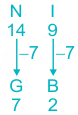
The logic followed here is:

YRUO is related to QJMG

And,

SLOI is related to KDGA

​Similarly,

UNQK is related to

Hence, "Option 2" is the correct answer.

Question 38

Which statement is true regarding a balanced diet?

  1. AOption (a)

    It consists mainly of carbohydrates for energy.

  2. BOption (b)

    It contains all nutrients in appropriate proportions.

  3. COption (c)

    It must exclude fats to prevent diseases.

  4. DOption (d)

    It includes only fruits and vegetables.

View answer & explanation

Correct answer

Answer: (b)B.

It contains all nutrients in appropriate proportions.

Why this answer is correct

The correct answer is option 2,

Key Points

  • A balanced diet contains all essential nutrients, including carbohydrates, proteins, fats, vitamins, and minerals, in appropriate proportions to support overall health and body functioning.
  • It emphasizes variety and moderation, ensuring no single food group is overconsumed or excluded.
  • Balanced diets include adequate portions of fruits, vegetables, whole grains, lean proteins, and healthy fats to meet dietary requirements.
  • Proper hydration is also an integral part of a balanced diet, contributing to optimal cellular and metabolic processes.
  • Following a balanced diet helps prevent nutrient deficiencies, supports the immune system, and reduces the risk of chronic diseases like diabetes, heart disease, and obesity.

Additional Information

  • Nutrients: Nutrients are substances required by the body for energy, growth, and maintenance. They are categorized into macronutrients (carbohydrates, proteins, fats) and micronutrients (vitamins, minerals).
  • Dietary Fiber: Found in fruits, vegetables, and whole grains, dietary fiber aids digestion, regulates blood sugar levels, and lowers cholesterol.
  • Healthy Fats: Sources of unsaturated fats like olive oil, nuts, and avocados are beneficial for heart health, while trans fats should be avoided.
  • Recommended Daily Allowances (RDA): RDA provides guidelines on the daily intake of nutrients required to maintain health and prevent deficiencies.
  • Role of Hydration: Water is essential for digestion, nutrient absorption, and temperature regulation. Drinking sufficient water daily is vital for health.

Question 39

Which of the following physiographic regions lies north of the Narmada River?

  1. AOption (a)

    Deccan Plateau

  2. BOption (b)

    Karnataka Plateau

  3. COption (c)

    Telangana Plateau

  4. DOption (d)

    Malwa Plateau

View answer & explanation

Correct answer

Answer: (d)D.

Malwa Plateau

Why this answer is correct

The correct answer is Malwa Plateau.

Key Points

  • The Malwa Plateau lies to the north of the Narmada River, extending over parts of Madhya Pradesh and Rajasthan.
  • It is bounded by the Aravalli range in the northwest and the Vindhya range in the south.
  • The plateau is characterized by black soil, which is highly suitable for cotton cultivation and other crops.
  • It forms a part of the Deccan Traps, created by extensive volcanic activity during the Cretaceous period.
  • The Malwa Plateau also serves as a transition zone between the northern plains and the Deccan Plateau.

Additional Information

  • Narmada River
  • The Narmada River flows westward and is one of the major rivers of peninsular India.
  • It forms the traditional boundary between North and South India.
  • The river originates from the Amarkantak Plateau in Madhya Pradesh.
  • The Narmada Valley is known for its rich biodiversity and fertile alluvial soils.
  • Deccan Plateau
  • The Deccan Plateau is a large plateau located south of the Narmada River.
  • It is bounded by the Western Ghats, Eastern Ghats, and the Satpura range.
  • This region is known for its basaltic rock formations due to ancient volcanic activity.
  • Vindhya Range
  • The Vindhya Range runs parallel to the Narmada River and acts as a natural barrier between North and South India.
  • It is not a continuous range but rather a series of discontinuous hills and ridges.
  • Physiographic Regions of India
  • India is divided into six physiographic regions: The Northern Mountains, Northern Plains, Peninsular Plateau, Indian Desert, Coastal Plains, and Islands.
  • The Malwa Plateau is a part of the Peninsular Plateau, which is the largest physiographic division of India.

Question 40

Consider a scenario where a user is interacting with a virtual reality (VR) environment. Which of the following input devices is least likely to be the primary means of navigation and interaction within this immersive environment?

  1. AOption (a)

    Handheld controllers with positional tracking

  2. BOption (b)

    Optical mouse connected to the computer

  3. COption (c)

    Head-mounted display with integrated motion tracking

  4. DOption (d)

    Haptic gloves providing tactile feedback

View answer & explanation

Correct answer

Answer: (b)B.

Optical mouse connected to the computer

Why this answer is correct

The correct answer is Optical mouse connected to the computer.

Key Points

  • An optical mouse is primarily designed for 2D navigation on flat surfaces, making it unsuitable for immersive 3D environments such as VR.
  • VR environments rely on devices that provide spatial tracking and interaction within a 3D space, such as handheld controllers or haptic gloves.
  • An optical mouse lacks the capability to track movements in a full 3D space, as it is confined to detecting surface motion in 2D.
  • Devices like head-mounted displays (HMDs) with motion tracking and handheld controllers are the preferred tools for VR navigation and interaction.
  • In contrast, an optical mouse is better suited for traditional desktop setups rather than immersive and dynamic environments like VR.

Additional Information

  • Handheld Controllers with Positional Tracking:
  • These are the most common input devices in VR, offering precise control and interactivity.
  • They use sensors to track movements in 3D space, enabling natural navigation and object manipulation.
  • Head-Mounted Displays (HMDs):
  • HMDs are worn on the head and provide an immersive visual experience by displaying stereoscopic 3D graphics.
  • Most HMDs include integrated motion tracking to adjust the view based on the user's head movements.
  • Haptic Gloves:
  • Haptic gloves are designed to provide tactile feedback, simulating the sense of touch in VR environments.
  • They allow users to interact with virtual objects in a more realistic and intuitive manner.
  • Limitations of Optical Mouse in VR:
  • An optical mouse is limited to surface-based 2D navigation and lacks 6 degrees of freedom (6DoF).
  • It cannot provide immersive or precise interactions required in VR applications.
  • Importance of 6 Degrees of Freedom (6DoF):
  • 6DoF refers to the ability to track movements in three axes: forward/backward, up/down, left/right, along with pitch, yaw, and roll.
  • Devices with 6DoF allow for a fully immersive experience, which is essential in VR environments.

Question 41

A pipe can fill a tank in 12 hours. Another pipe can empty the filled tank in 24 hours. If both the pipes are opened simultaneously, then the time (in hours) in which the tank will be two-third filled, is:

  1. AOption (a)

    32

  2. BOption (b)

    48

  3. COption (c)

    16

  4. DOption (d)

    64

View answer & explanation

Correct answer

Answer: (c)C.

16

Why this answer is correct

Shortcut Trick

Net efficiency = 1/12 − 1/24 = 1/24 units per hour.

Time for full tank = 24 hours.

Time for 2/3 filled = 24 × 2/3 = 16 hours.

∴ The correct answer is 16 hours.

Alternate Method

Given: Filling Pipe (A) = 12 hours, Emptying Pipe (B) = 24 hours.

PipeTime (Hours)Total Work (LCM)Efficiency
Pipe A (Inlet)1224 Units+2
Pipe B (Outlet)24−1

Calculations:

⇒ Combined Efficiency of (A + B) = 2 − 1 = 1 unit/hour.

⇒ Target Work = 2/3 of Total Work = 2/3 × 24 = 16 units.

⇒ Time taken = Target Work ÷ Combined Efficiency

⇒ Time taken = 16 ÷ 1 = 16 hours.

∴ The correct answer is 16 hours.

Additional Information

Net Work Done

When one pipe fills and another empties, net work per hour = 1/x − 1/y, where x is filling time and y is emptying time.

Efficiency Concept

Inlet pipes have positive efficiency while outlet (leakage) pipes have negative efficiency.

Fractional Work

To find time for a specific fraction of work, multiply the total time by that fraction.

Question 42

The mean proportional between 12+3(4)12 + 3\sqrt(4) and 16−4(4)16 - 4\sqrt(4) is:

  1. AOption (a)

    7

  2. BOption (b)

    19

  3. COption (c)

    12

  4. DOption (d)

    22

View answer & explanation

Correct answer

Answer: (c)C.

12

Why this answer is correct

Shortcut Trick

Simplify terms: 12 + 3√4 = 12 + 3 × 2 = 18.

Simplify terms: 16 − 4√4 = 16 − 4 × 2 = 8.

Mean Proportional = √(18 × 8) = √144 = 12.

∴ The correct answer is 12.

Alternate Method

Given: First value (a) = 12 + 3√4, Second value (b) = 16 − 4√4

Formula Used: Mean proportional of a and b = √(a × b)

⇒ a = 12 + 3(2) = 12 + 6 = 18

⇒ b = 16 − 4(2) = 16 − 8 = 8

⇒ Mean Proportional = √(18 × 8)

⇒ Mean Proportional = √144

⇒ Mean Proportional = 12

∴ The correct answer is 12.

Additional Information

Third Proportional

The third proportional of two numbers a and b is defined as c such that a : b = b : c, given by c = b2 / a.

Fourth Proportional

For three numbers a, b, and c, the fourth proportional d is such that a : b = c : d, calculated as d = (b × c) / a.

Continued Proportion

Three quantities a, b, c are in continued proportion if a/b = b/c, which implies b2 = ac.

Question 43

Which of the following can be considered as an immediate cause of the Sanyasi Rebellion?

  1. AOption (a)

    Implementation of the Chota Nagpur Tenancy Act of 1908

  2. BOption (b)

    Development of a broad sense of view of Indian Nationalism

  3. COption (c)

    British occupation of Madras region and their new land laws along with the atrocities of the landlords

  4. DOption (d)

    Restrictions imposed by the British upon pilgrims visiting holy places among both Hindus and Muslims

View answer & explanation

Correct answer

Answer: (d)D.

Restrictions imposed by the British upon pilgrims visiting holy places among both Hindus and Muslims

Why this answer is correct

The correct answer is option 4,Restrictions imposed by the British upon pilgrims visiting holy places among both Hindus and Muslims

Key Points

  • The Sanyasi Rebellion, which occurred during the late 18th century in Bengal, was primarily instigated by the restrictions imposed by the British on religious pilgrimages.
  • Both Hindu and Muslim pilgrims faced severe obstacles as British policies curtailed their movement to holy places, violating their religious practices.
  • These restrictions led to widespread resentment among the ascetics (Sanyasis) and Fakirs, who often traveled across regions for pilgrimage and sustenance.
  • Additionally, the British imposed stringent economic conditions, such as high land taxes and exploitation by landlords, exacerbating the grievances of the common people.
  • The rebellion was marked by armed resistance from both Sanyasis and Fakirs, showcasing their defiance against British colonial rule.

Additional Information

  • Sanyasi Rebellion:
  • The Sanyasi Rebellion occurred primarily in Bengal and Bihar during the late 18th century.
  • It involved Hindu ascetics (Sanyasis) and Muslim Fakirs who resisted British oppression.
  • The rebellion was inspired by both religious and socio-economic grievances against colonial policies.
  • Economic Exploitation:
  • The British imposed high taxes and exploitative land revenue systems that severely impacted farmers and the rural economy.
  • Landlords often worked in collaboration with the British, leading to atrocities against peasants.
  • Impact on Religious Practices:
  • The restrictions on pilgrimage were perceived as a direct attack on religious freedom by both Hindus and Muslims.
  • This led to unification among religious groups against the British, creating a sense of collective resistance.
  • Historical Significance:
  • The Sanyasi Rebellion is considered one of the early resistances against British colonial rule in India.
  • It highlighted the intersection of religious, economic, and social issues under colonial governance.

Question 44

’Top-khanah’ was the general name given to the military/artillery branch of which of the following?

  1. AOption (a)

    Vijayanagara Empire

  2. BOption (b)

    Ghurid Dynasty

  3. COption (c)

    Delhi Sultanate

  4. DOption (d)

    Mughal Dynasty

View answer & explanation

Correct answer

Answer: (d)D.

Mughal Dynasty

Why this answer is correct

The correct answer is Mughal Dynasty.

Key Points

  • The term 'Top-khanah' refers to the artillery branch of the Mughal military system, which played a crucial role in the empire's military campaigns.
  • The Mughal emperors, especially Babur and Akbar, emphasized the use of artillery in warfare, giving the dynasty a strategic advantage over their adversaries.
  • The Mughal artillery included cannons, mortars, and matchlocks, which were considered advanced military technology during their time.
  • 'Top-khanah' was not just a term for the artillery itself but also referred to the department responsible for manufacturing, storing, and maintaining these weapons.
  • The Mughal military system integrated artillery with their infantry and cavalry, marking a shift towards modern warfare in the Indian subcontinent.

Additional Information

  • Babur's Role in Artillery Development
  • The first significant use of artillery in India was by Babur in the First Battle of Panipat (1526), where his use of cannons helped defeat Ibrahim Lodi.
  • Babur employed Ottoman gunpowder technology, which was brought to India by his skilled artillerymen like Ustad Ali and Mustafa.
  • Akbar's Military Reforms
  • Emperor Akbar established a dedicated Top-khanah department to improve the organization and efficiency of the Mughal artillery.
  • Akbar's artillery innovations included the production of lightweight, mobile cannons to enhance battlefield maneuverability.
  • Artillery in Mughal Warfare
  • The Mughal artillery was categorized into heavy artillery (large cannons for sieges) and light artillery (smaller, more mobile guns for field battles).
  • It played a vital role in major Mughal campaigns such as the conquest of Gujarat, Bengal, and the Deccan.
  • Decline of Mughal Artillery
  • By the 18th century, the Mughal artillery's effectiveness declined due to a lack of innovation and maintenance.
  • European colonial powers like the British and French outpaced the Mughals with superior artillery technology.

Question 45

Who was elected as the Chair of the Asian Productivity Organization (APO) for the 2025 – 26 term during the 67th GBM?

  1. AOption (a)

    Dr. Indra Pradana Singawinata

  2. BOption (b)

    Jone Maritino Nemani

  3. COption (c)

    Agung Nur Rohmad

  4. DOption (d)

    Amardeep Singh Bhatia

View answer & explanation

Correct answer

Answer: (d)D.

Amardeep Singh Bhatia

Why this answer is correct

The correct answer is option 4,"

Key Points

  • Amardeep Singh Bhatia was elected as the Chair of the Asian Productivity Organization (APO) for the 2025–26 term during its 67th Governing Body Meeting (GBM).
  • The Asian Productivity Organization (APO) is an intergovernmental organization committed to enhancing productivity in the Asia-Pacific region.
  • The APO's Governing Body Meeting (GBM) is the highest decision-making body of the organization, comprising representatives from member countries.
  • India has been an active member of the APO and has contributed significantly to its initiatives, including hosting various workshops and training programs.
  • The Chair's role is instrumental in steering the strategic direction and implementation of productivity-related programs across member nations.

Additional Information

  • Asian Productivity Organization (APO):
  • Founded in 1961, the APO aims to promote socioeconomic development through productivity enhancement.
  • It has 21 member economies, including India, Japan, South Korea, and Singapore.
  • The APO's initiatives include research, training programs, and technical assistance to member countries.
  • India and APO:
  • India joined the APO in 1961 as a founding member.
  • India regularly hosts APO events, including workshops and seminars, focusing on productivity improvement.
  • The National Productivity Council (NPC) serves as India’s liaison office with the APO.
  • 67th Governing Body Meeting (GBM):
  • The GBM is an annual event where representatives of member countries discuss and decide on APO policies and programs.
  • The 67th GBM highlighted the importance of innovation, sustainability, and inclusive growth in productivity enhancement.
  • Elections for APO leadership roles, including the Chair, are conducted during this meeting.
  • Role of the Chair in APO:
  • The Chair oversees the implementation of APO policies and ensures alignment with member countries' goals.
  • It represents the APO globally and fosters collaboration among member economies.
  • The Chair also plays a key role in driving initiatives related to emerging productivity trends such as green productivity and digital transformation.

"

Question 46

The Sixth Schedule of the Indian Constitution deals with the administration of tribal areas in which region?

  1. AOption (a)

    North-East India

  2. BOption (b)

    Western Ghats

  3. COption (c)

    Andaman and Nicobar Islands

  4. DOption (d)

    Central India

View answer & explanation

Correct answer

Answer: (a)A.

North-East India

Why this answer is correct

The correct answer is option 1,

Key Points

  • The Sixth Schedule of the Indian Constitution provides for special administrative arrangements for tribal areas in the states of Assam, Meghalaya, Tripura, and Mizoram located in North-East India.
  • It establishes Autonomous District Councils (ADCs), which are empowered to manage local governance, resource management, and cultural preservation in tribal regions.
  • The ADCs under the Sixth Schedule have legislative, judicial, and executive powers to ensure tribal self-governance.
  • The Schedule aims to protect tribal identity and autonomy while ensuring their integration into India's political framework.
  • It allows tribal communities to enact laws on subjects like land, forests, and social customs, enabling the safeguarding of their unique heritage.

Additional Information

  • Tribal Areas in India
  • India recognizes tribal areas under the Fifth and Sixth Schedules of the Constitution.
  • Fifth Schedule deals with tribal areas outside the North-East, while Sixth Schedule applies exclusively to North-East India.
  • Autonomous District Councils (ADCs)
  • ADCs are constitutionally established bodies under the Sixth Schedule.
  • They have the authority to legislate on matters such as land use, resource management, and cultural practices.
  • The councils aim to preserve tribal autonomy and manage development activities in tribal areas.
  • Significance of Sixth Schedule
  • It ensures the preservation of tribal identity and culture.
  • Empowers tribal groups to govern themselves and manage their resources.
  • Balances autonomy with integration into the national governance framework.
  • States Covered Under Sixth Schedule
  • Currently, Assam, Meghalaya, Tripura, and Mizoram are included under the Sixth Schedule.
  • These states have multiple tribal communities with unique cultural and social practices.

Question 47

What is the approximate area covered by the Thar Desert in India?

  1. AOption (a)

    1,50,000 km2

  2. BOption (b)

    2,00,000 km2

  3. COption (c)

    1,70,000 km2

  4. DOption (d)

    1,00,000 km2

View answer & explanation

Correct answer

Answer: (c)C.

1,70,000 km2

Why this answer is correct

The correct answer is option 3,

Key Points

  • The Thar Desert, also known as the Great Indian Desert, covers approximately 1,70,000 km² in India.
  • It is primarily located in the state of Rajasthan, with smaller portions extending into Gujarat, Punjab, and Haryana.
  • The Thar Desert accounts for nearly 60% of the desert area in Rajasthan, making it one of the largest arid regions in India.
  • It is characterized by arid climate conditions, sandy soil, sparse vegetation, and significant temperature variations throughout the year.
  • The desert is home to unique flora and fauna adapted to extreme climate conditions, including camels, desert foxes, and thorny shrubs.

Additional Information

  • Origin of the Thar Desert: Geological studies suggest that the Thar Desert formed approximately 10,000 years ago due to climatic changes and tectonic activities.
  • Indira Gandhi Canal: The canal provides irrigation facilities and drinking water to parts of the desert, helping mitigate arid conditions in some areas.
  • Tourism: The Thar Desert is a popular tourist destination, offering attractions such as Jaisalmer Fort, camel safaris, and the annual Desert Festival.
  • Population and Economy: The region supports a population that relies on livestock rearing, agriculture (with irrigation), and handicrafts for livelihood.
  • Ecological Importance: Despite harsh conditions, the Thar Desert plays a crucial role in maintaining biodiversity and acts as a natural barrier against desertification spreading further eastward.

Question 48

Which of the following statements related to the One Nation One Subscription (ONOS) scheme launched in 2024 is/are correct?

Statement 1: The ONOS scheme aims to provide digital access to over 13,000 international journals for research institutions across India.

Statement 2: INFLIBNET(Information and Library Network) is responsible for managing financial transactions related to the subscription charges of these journals.

  1. AOption (a)

    Both 1 and 2

  2. BOption (b)

    Neither 1 nor 2

  3. COption (c)

    Only 1

  4. DOption (d)

    Only 2

View answer & explanation

Correct answer

Answer: (c)C.

Only 1

Why this answer is correct

The correct answer is option 3,

Key Points

  • The One Nation One Subscription (ONOS) scheme was launched in 2024 to provide universal digital access to academic resources for research institutions and universities across India.
  • Under ONOS, over 13,000 international journals and publications are made accessible to researchers, students, and faculties free of cost.
  • The scheme aims to reduce the financial burden on individual institutions by allowing centralized government negotiation for subscriptions.
  • The focus of ONOS is to ensure equitable access to global academic resources across both rural and urban institutions, fostering growth in research and development.
  • Statement 2 is incorrect as INFLIBNET is not responsible for financial transactions. Instead, it provides technical support for platform integration and resource access.

Additional Information

  • INFLIBNET (Information and Library Network Centre):
  • It is an autonomous Inter-University Centre under the University Grants Commission (UGC).
  • INFLIBNET facilitates access to scholarly content and supports the integration of library networks in India.
  • It developed platforms like Shodhganga and e-ShodhSindhu to promote open access and research collaboration.
  • Centralized Subscription Model:
  • This model ensures that the government negotiates subscriptions for academic resources on behalf of all institutions.
  • It eliminates redundancy and reduces costs for individual institutions.
  • Impact on Research Ecosystem:
  • ONOS is expected to boost India's research output by providing seamless access to global resources.
  • It aims to bridge the gap between institutions in rural and urban areas.
  • Global Academic Resources:
  • These include journals, databases, and conference proceedings that are crucial for academic research.
  • The ONOS initiative ensures access to resources from leading publishers and organizations worldwide.

Question 49

Based on the English alphabetical order, three of the following four letter-clusters are alike in a certain way and thus form a group. Which letter-cluster DOES NOT belong to that group?

(Note: The odd one out is not based on the number of consonants/vowels or their position in the letter-cluster.)

  1. AOption (a)

    IML

  2. BOption (b)

    PRS

  3. COption (c)

    UYX

  4. DOption (d)

    TXW

View answer & explanation

Correct answer

Answer: (b)B.

PRS

Why this answer is correct

The logic followed here is:

Option 1) IML

Option 2) PRS

​

Option 3) UYX

Option 4) TXW

Thus, out of all 'PRS' is the odd one out.

Hence, "Option 2" is the correct answer.

Question 50

DIOR is related to MQXZ in a certain way based on the English alphabetical order. In the same way, NOYX is related to WWHF. To which of the given options is OMZV related, following the same logic?

  1. AOption (a)

    XUID

  2. BOption (b)

    XUIO

  3. COption (c)

    XUDI

  4. DOption (d)

    XERT

View answer & explanation

Correct answer

Answer: (a)A.

XUID

Why this answer is correct

The logic followed here is:

DIOR is related to MQXZ

And,

NOYX is related to WWHF

​Similarly,

OMZV is related to

​

Hence, "Option 1" is the correct answer.

Question 51

Refer to the following number and symbol series and answer the question that follows. Counting to be done from left to right only.

(Note: All numbers are single digit numbers only.)

(Left) # 8 2 * 3 & % # £ 2 € 3 5 @ 3 5 * & % @ 3 € (Right)

How many such numbers are there, each of which is immediately preceded by a number and also immediately followed by a symbol?

  1. AOption (a)

    3

  2. BOption (b)

    5

  3. COption (c)

    2

  4. DOption (d)

    7

View answer & explanation

Correct answer

Answer: (a)A.

3

Why this answer is correct

Given series: (Left) # 8 2 * 3 & % # £ 2 € 3 5 @ 3 5 * & % @ 3 € (Right)

According to the question,

Required condition: Number - Number - Symbol

(Left) # **8 2 *** 3 & % # £ 2 € 3 5 @ **3 5 *** & % @ 3 € (Right)

Thus, there are three such numbers which are immediately preceded by a number and also immediately followed by a symbol.

Hence, "Option 1" is the correct answer.

Question 52

Which of the following has dimensional formula [M0L0T−2]\mathrm{[M^0 L^0 T^{−2}]}?

  1. AOption (a)

    Strain

  2. BOption (b)

    Angular velocity

  3. COption (c)

    Angular acceleration

  4. DOption (d)

    Frequency

View answer & explanation

Correct answer

Answer: (c)C.

Angular acceleration

Why this answer is correct

The correct answer is option 3,

Key Points

  • Angular acceleration has the dimensional formula M0L0T-2, indicating that it is independent of mass and length but inversely proportional to the square of time.

  • It is defined as the rate of change of angular velocity over time, mathematically expressed astα=dωdtUnknown node type: spanα=dωdtUnknown node type: spanα=dωdtUnknown node type: spanα=dωdtUnknown node type: spanα=dωdtUnknown node type: spanα=dωdtUnknown node type: spanα=dωdtUnknown node type: spanα=dωdtUnknown node type: spanα=dωdtUnknown node type: spanα=dωdtUnknown node type: span

                α = Δω / Δt.
    
  • The SI unit of angular acceleration is rad/sec2.

  • Angular acceleration is a vector quantity, having both magnitude and direction.

  • It plays a crucial role in rotational dynamics, helping to describe how quickly an object accelerates or decelerates in its rotational motion.

Additional Information

  • Strain:
  • Strain is a dimensionless quantity representing the deformation of a material relative to its original dimensions.
  • It is mathematically expressed as the ratio of change in length to the original length .
  • Angular velocity:
  • Angular velocity is defined as the rate at which an object rotates or revolves around a central point.
  • Its dimensional formula is M0L0T-1, and the SI unit is rad/sec.
  • Frequency:
  • Frequency refers to the number of occurrences of a repeating event per unit time.
  • Its dimensional formula is M0L0T-1, and the SI unit is Hz.
  • Rotational Dynamics:
  • Rotational dynamics deals with the motion of objects that rotate about a fixed axis.
  • Key parameters include angular displacement, angular velocity, angular acceleration, and torque.

Question 53

Which of the following statements regarding Exercise Desert Hunt 2025 is/are correct?

  1. The exercise was conducted by the Indian Air Force at an Air Force Station near Siachen Glacier.
  2. It involved Para (Special Forces) of the Indian Army, MARCOS of the Indian Navy, and Garud commandos of the Indian Air Force.
  3. The primary aim was to enhance joint operational capability in high-altitude mountain warfare.
  4. The exercise included combat free falls and hostage rescue operations.
  1. AOption (a)

    3 and 4 only

  2. BOption (b)

    1, 2 and 3 only

  3. COption (c)

    2 and 4 only

  4. DOption (d)

    2 only

View answer & explanation

Correct answer

Answer: (c)C.

2 and 4 only

Why this answer is correct

The correct answer is Option 3.

Key Points

  • Exercise Desert Hunt 2025 was conducted by Indian Air Force at Air Force Station Jodhpur from 24 to 28 February 2025.
  • It involved joint participation of Para (Special Forces) of the Indian Army, MARCOS of the Indian Navy, and Garud commandos of the Indian Air Force.
  • This high-intensity drill was aimed at enhancing interoperability, coordination and synergy among the three Special Forces units to ensure swift and effective response towards emerging security challenges.
  • The activities during the exercise included specialized operations such as combat free falls and hostage rescue missions.
  • The correct statements are 2 and 4 only, which align with the description of the exercise and its objectives.

Additional Information

  • Indian Armed Forces Special Operations Units:
  • Para (Special Forces) are elite units of the Indian Army specializing in unconventional warfare, counter-terrorism, and high-risk missions.
  • MARCOS (Marine Commandos) are the Indian Navy's special forces trained for maritime and amphibious operations.
  • Garud Commandos are the Indian Air Force's special operations unit designed for airfield defense, counter-terrorism, and rescue missions.
  • Siachen Glacier:
  • Known as the world’s highest battlefield, it is located in the eastern Karakoram range in the Himalayas.
  • The glacier is strategically significant and has been a site of military presence due to territorial disputes between India and Pakistan.
  • High-Altitude Warfare Training:
  • Specialized training is required to operate effectively in high-altitude regions due to challenges such as reduced oxygen levels and extreme weather conditions.
  • India has established facilities like the High Altitude Warfare School (HAWS) in Gulmarg for training personnel in these conditions.
  • Joint Military Exercises:
  • Such exercises aim to foster interoperability and coordination among different branches of the armed forces.
  • They simulate real-world scenarios to prepare personnel for joint operations in challenging environments.

Question 54

Who among the following established its factory in Petapuli on the North Coromandel Coast in 1606?

  1. AOption (a)

    Spanish East India Company

  2. BOption (b)

    Dutch East India Company

  3. COption (c)

    German East India Company

  4. DOption (d)

    Danish East India Company

View answer & explanation

Correct answer

Answer: (b)B.

Dutch East India Company

Why this answer is correct

The correct answer is Dutch East India Company.

Key Points

  • The Dutch East India Company, also known as the Vereenigde Oostindische Compagnie (VOC), was a powerful trading organization established in 1602.
  • The VOC established its factory in Petapuli on the North Coromandel Coast (present-day Tamil Nadu) in 1606 to facilitate its trade operations.
  • The factory was set up to strengthen Dutch control over the spice trade in India and the Southeast Asian region.
  • Petapuli was strategically important due to its proximity to significant trading ports and the availability of textiles and other commodities.
  • The Dutch East India Company played a crucial role in establishing a global trading network and competed fiercely with other European powers, such as the Portuguese, British, and French.

Additional Information

  • Vereenigde Oostindische Compagnie (VOC):
  • Founded in 1602, the VOC was the first multinational corporation in the world and issued the first publicly traded shares.
  • It was granted a monopoly on Dutch trade in Asia and had quasi-governmental powers, including the ability to wage war and negotiate treaties.
  • Coromandel Coast:
  • The Coromandel Coast, located along the southeastern coast of India, was a crucial hub for maritime trade during the colonial period.
  • The region was known for its production of fine textiles, which were in high demand in Europe and Southeast Asia.
  • Other European Powers in India:
  • The Portuguese were the first Europeans to establish trade links with India, followed by the Dutch, British, French, and others.
  • Each European power sought to dominate the lucrative spice, textile, and other trade markets in India.
  • Decline of the Dutch in India:
  • The Dutch influence in India waned by the 18th century due to increasing competition from the British East India Company.
  • By the late 18th century, the Dutch had largely shifted their focus to Southeast Asia, particularly Indonesia.

Question 55

The LCM of 44, 86 and another number, x, is 7568. Which of the following can be the value of x?

  1. AOption (a)

    176

  2. BOption (b)

    145

  3. COption (c)

    101

  4. DOption (d)

    165

View answer & explanation

Correct answer

Answer: (a)A.

176

Why this answer is correct

Shortcut Trick

Check divisibility of options: the LCM must be divisible by every number in the set.

Given LCM = 7568. Let us check the options for divisibility.

Option (1) 176: 7568 ÷ 176 = 43 (Divisible)

Option (2) 145: Ends in 5, but 7568 does not end in 0 or 5 (Not Divisible)

Option (3) 101: 7568 ÷ 101 ≈ 74.93 (Not Divisible)

Option (4) 165: 165 is a multiple of 5, but 7568 is not (Not Divisible)

∴ The correct answer is 176.

Alternate Method

Given: Numbers are 44, 86, and x. LCM = 7568.

Formula Used: Prime Factorization method for LCM.

⇒ Prime factorization of 44 = 22 × 11

⇒ Prime factorization of 86 = 2 × 43

⇒ Prime factorization of 7568 = 24 × 11 × 43 = 16 × 11 × 43

⇒ Since the LCM contains 24 (which is 16), and neither 44 nor 86 contains 24, the number x must contribute 24 to the LCM.

⇒ x must be a multiple of 16 (24).

⇒ Checking options for multiples of 16:

⇒ 176 = 16 × 11 (Multiple of 16)

⇒ 145, 101, 165 are not multiples of 16.

⇒ Also, 176 = 24 × 11, which fits the Prime Factorization of the LCM.

∴ The correct answer is 176.

Additional Information

LCM Definition

The Least Common Multiple (LCM) is the smallest positive integer that is divisible by each of the numbers in a given set.

LCM and HCF Relationship

For two numbers a and b, the product of the numbers is equal to the product of their HCF and LCM: a × b = HCF(a, b) × LCM(a, b).

Prime Factorization Method

To find LCM, take the highest power of each prime factor present in the prime factorization of the given numbers.

Question 56

In February 2025, who won the ‘CA in Public Service’ award from the Institute of Chartered Accountants of India?

  1. AOption (a)

    Ajay Bhushan Pandey

  2. BOption (b)

    Deepak Kumar Kedia

  3. COption (c)

    TV Narendran

  4. DOption (d)

    Sushil Kumar Modi

View answer & explanation

Correct answer

Answer: (b)B.

Deepak Kumar Kedia

Why this answer is correct

The correct answer is option 2,

Key Points

  • Deepak Kumar Kedia was honored with the prestigious 'CA in Public Service' award by the Institute of Chartered Accountants of India (ICAI) in February 2025.
  • This award recognizes Chartered Accountants who have made significant contributions to public service and nation-building.
  • Deepak Kumar Kedia, a Chartered Accountant by profession, has been instrumental in implementing policy frameworks and enhancing administrative governance.
  • ICAI annually presents awards to celebrate the achievements of Chartered Accountants in various fields, including industry, academics, and public service.
  • The recognition highlights the critical role of Chartered Accountants in shaping India's economic and social policies.

Additional Information

  • Institute of Chartered Accountants of India (ICAI)
  • ICAI is a statutory body established by the Chartered Accountants Act, 1949 under the Ministry of Corporate Affairs.
  • It is responsible for regulating the profession of Chartered Accountancy in India.
  • ICAI conducts CA examinations, issues certifications, and ensures adherence to professional standards and ethics.
  • It has a global presence and collaborates with international accounting bodies for knowledge exchange.
  • Role of Chartered Accountants in Public Service
  • Chartered Accountants contribute to the formulation and implementation of financial policies, tax reforms, and governance frameworks.
  • They help optimize resource allocation, ensure transparency, and mitigate risks in public administration.
  • CA professionals often assist governments in auditing public accounts, managing fiscal responsibilities, and enhancing accountability.
  • ICAI Awards
  • ICAI annually organizes awards to recognize the achievements of its members in various fields such as industry, academics, and public service.
  • The awards aim to foster excellence, innovation, and leadership among Chartered Accountants.
  • The categories include 'CA in Industry,' 'CA in Public Service,' and 'CA in Entrepreneurship,' among others.
  • Public Service and Nation-Building
  • Public service involves activities aimed at improving the lives of citizens through effective governance, infrastructure development, and welfare programs.
  • Professionals like Chartered Accountants play a crucial role in nation-building by ensuring efficient use of resources and financial integrity.
  • Recognition of such contributions serves as a motivation for other professionals to enter public service.

Question 57

There are two pumps to fill a tank with water. The first pump can fill the empty tank in 6 hours, while the second in 8 hours. If both the pumps are opened at the same time and kept open for 2 hours, the part of tank that will be filled up is:

  1. AOption (a)

    912\frac{9}{12}

  2. BOption (b)

    910\frac{9}{10}

  3. COption (c)

    712\frac{7}{12}

  4. DOption (d)

    710\frac{7}{10}

View answer & explanation

Correct answer

Answer: (c)C.

712\frac{7}{12}

Why this answer is correct

Shortcut Trick

Combined Efficiency per hour = 1/6 + 1/8 = (4 + 3)/24 = 7/24

Part filled in 2 hours = (7/24) × 2 = 7/12

∴ The correct answer is 7/12.

Alternate Method

Given:

Time taken by Pump 1 = 6 hours

Time taken by Pump 2 = 8 hours

Duration both pumps are open = 2 hours

Formula Used:

Total Work = LCM of individual times

Efficiency = Total Work ÷ Time

Part filled = (Total efficiency × Time) ÷ Total Work

PersonDaysTotal WorkEfficiency
Pump 16244
Pump 283

⇒ Total Efficiency of both pumps = 4 + 3 = 7 units/hour

⇒ Work done in 2 hours = 7 × 2 = 14 units

⇒ Part of tank filled = Work done ÷ Total Work

⇒ Part of tank filled = 14 ÷ 24 = 7/12

∴ The correct answer is 7/12.

Additional Information

Pipes & Cisterns Basics

Filling pipes have positive efficiency, while outlet/leakage pipes have negative efficiency.

Combined Work Formula

If two pipes fill a tank in x and y hours respectively, they together fill it in (x × y) ÷ (x + y) hours.

Remaining Part

If 7/12 of the tank is filled, the remaining part to be filled is 1 − 7/12 = 5/12.

Question 58

Which of the following cities hosted the European Political Community Summit in November 2024?

  1. AOption (a)

    Prague

  2. BOption (b)

    Brussels

  3. COption (c)

    Budapest

  4. DOption (d)

    Vienna

View answer & explanation

Correct answer

Answer: (c)C.

Budapest

Why this answer is correct

The correct answer is option 3,

The correct answer is Budapest.

Key Points

  • The European Political Community (EPC) Summit in November 2024 was hosted by Budapest, Hungary.
  • The EPC is a platform aimed at fostering political dialogue and cooperation among European countries, including non-EU members.
  • Budapest was chosen to underscore Hungary's geopolitical significance in Central Europe and its role in fostering regional cooperation.
  • This summit brought together leaders from over 40 countries to discuss pressing issues like energy security, climate change, and European stability.
  • The event marked significant strides towards deeper collaboration among European nations amidst global challenges.

Additional Information

  • European Political Community (EPC)
  • It is an intergovernmental forum launched in 2022 to strengthen political and strategic dialogue across Europe.
  • The EPC includes both EU and non-EU countries, highlighting its inclusive approach.
  • Its primary focus lies on addressing shared challenges like energy, security, and economic resilience.
  • Hungary's Role in Europe
  • Hungary is strategically located in Central Europe, making it a key player in regional connectivity and cooperation.
  • Budapest has historically hosted several high-profile international summits and forums.
  • Energy Security in Europe
  • Energy security was a major agenda point during the summit due to the ongoing energy crisis in Europe.
  • Efforts were made to discuss sustainable energy solutions and reduce dependency on external sources.
  • Climate Change Discussions
  • The summit also emphasized collaborative efforts to tackle climate change through innovation and global partnerships.
  • European nations aimed to implement greener policies and enhance carbon neutrality goals.

Question 59

By selling cloth at ₹344/m, a shopkeeper loses 57%. Find the rate (in ₹/m) at which it should be sold so as to earn a profit of 71%.

  1. AOption (a)

    1,367

  2. BOption (b)

    1,365

  3. COption (c)

    1,368

  4. DOption (d)

    1,366

View answer & explanation

Correct answer

Answer: (c)C.

1,368

Why this answer is correct

Shortcut Trick

Loss of 57% means SP1 is 43% of CP (100% − 57% = 43%).

Profit of 71% means SP2 is 171% of CP (100% + 71% = 171%).

Ratio of selling prices SP1 : SP2 = 43 : 171.

Given 43 units = ₹344, then 1 unit = 344 ÷ 43 = 8.

New selling price (171 units) = 171 × 8 = ₹1,368.

∴ The correct answer is ₹1,368/m.

Alternate Method

Given: SP1 = ₹344, Loss% = 57%, Target Profit% = 71%.

Formulas: CP = SP × 100 ÷ (100 − Loss%) | SP = CP × (100 + Profit%) ÷ 100.

⇒ Step 1: Find Cost Price (CP) = 344 × 100 ÷ (100 − 57) = 344 × 100 ÷ 43.

⇒ Step 2: CP = 8 × 100 = ₹800.

⇒ Step 3: Find New SP = 800 × (100 + 71) ÷ 100 = 800 × 171 ÷ 100.

⇒ Step 4: New SP = 8 × 171 = ₹1,368.

∴ The correct answer is ₹1,368/m.

Additional Information

Direct SP Formula

When CP is constant: SP2 = SP1 × (100 + Profit2%) ÷ (100 ± Profit/Loss1%).

Percentage Change

Calculating the multiplication factor (1.71 ÷ 0.43 = 4) can simplify multi-step profit/loss problems involving the same base Cost Price.

Question 60

A person drove at 77 km/hr for 3.5 hours, then increased his speed by 9 km/hr, and reached the destination in another hour. Find the average speed (in km/hr) of the person during the entire journey.

  1. AOption (a)

    77

  2. BOption (b)

    82

  3. COption (c)

    79

  4. DOption (d)

    75

View answer & explanation

Correct answer

Answer: (c)C.

79

Why this answer is correct

Shortcut Trick

Initial speed = 77 km/hr for 3.5 hours.

New speed = 77 + 9 = 86 km/hr for 1 hour.

Deviation method: Taking 77 as base average speed.

Net deviation = (86 − 77) × 1 hour = +9 km.

Average increase = 9 ÷ (3.5 + 1) = 9 ÷ 4.5 = 2 km/hr.

Final average speed = 77 + 2 = 79 km/hr.

∴ The correct answer is 79 km/hr.

Alternate Method

Given:

Speed 1 (S1) = 77 km/hr | Time 1 (T1) = 3.5 hours

Speed 2 (S2) = 77 + 9 = 86 km/hr | Time 2 (T2) = 1 hour

Formula Used:

Average Speed = Total Distance ÷ Total Time

Calculations:

⇒ Distance 1 = 77 × 3.5 = 269.5 km

⇒ Distance 2 = 86 × 1 = 86 km

⇒ Total Distance = 269.5 + 86 = 355.5 km

⇒ Total Time = 3.5 + 1 = 4.5 hours

⇒ Average Speed = 355.5 ÷ 4.5

⇒ Average Speed = 3555 ÷ 45 = 79 km/hr

∴ The correct answer is 79 km/hr.

Additional Information

Weighted Average Speed

When different speeds are maintained for different durations, Average Speed = (S1T1 + S2T2) ÷ (T1 + T2).

Equal Distance Formula

If two equal distances are covered at speeds S1 and S2, Average Speed = (2 × S1 × S2) ÷ (S1 + S2).

Relative Speed

Same direction speed = S1 − S2; Opposite direction speed = S1 + S2.

Question 61

F, G, H, K, L, and M live on six different floors of the same building. The lowermost floor in the building is numbered 1, the floor above it is numbered 2, and so on till the topmost floor, which is numbered 6. K lives on the topmost floor. Only three people live between K and G. F lives on a floor below G. L lives on an even numbered floor. H lives on an odd numbered floor but not on floor number 5.

How many people live between M and G?

  1. AOption (a)

    Four

  2. BOption (b)

    Two

  3. COption (c)

    Three

  4. DOption (d)

    One

View answer & explanation

Correct answer

Answer: (b)B.

Two

Why this answer is correct

Given: F, G, H, K, L, and M live on six different floors of the same building. The lowermost floor in the building is numbered 1, the floor above it is numbered 2, and so on till the topmost floor, which is numbered 6. 

1) K lives on the topmost floor. 

2) Only three people live between K and G. 

FloorPeople
6K
5
4
3
2G
1

3) F lives on a floor below G.

4) L lives on an even numbered floor. 

FloorPeople
6K
5
4L
3
2G
1F

5) H lives on an odd numbered floor but not on floor number 5.

After positioning H only one position is left which will be occupied by the only person left i.e. M.

FloorPeople
6K
5M
4L
3H
2G
1F

Thus, two people live between M and G.

Hence, "Option 2" is the correct answer.

Question 62

Seven boxes, G, H, I, J, O, P and Q, are kept one over the other but not necessarily in the same order. Only two boxes are kept between I and P. Only O is kept above Q. No box is kept below P. J is kept at some place below H but at some place above G. Which box is kept third above G?

  1. AOption (a)

    J

  2. BOption (b)

    Q

  3. COption (c)

    H

  4. DOption (d)

    O

View answer & explanation

Correct answer

Answer: (c)C.

H

Why this answer is correct

Given: Seven boxes, G, H, I, J, O, P and Q, are kept one over the other but not necessarily in the same order.

1) Only O is kept above Q.

2) No box is kept below P.

Boxes
O
Q
P

3) Only two boxes are kept between I and P.

4) J is kept at some place below H but at some place above G. 

Boxes
O
Q
H
I
J
G
P

Thus, H box is kept third above G.

Hence, "Option 3" is the correct answer.

Question 63

Based on the English alphabetical order, three of the following four letter-cluster pairs are alike in a certain way and thus form a group. Which letter-cluster pair DOES NOT belong to that group?

(Note: The odd one out is not based on the number of consonants/vowels or their position in the letter-cluster.)

  1. AOption (a)

    OJ – HC

  2. BOption (b)

    YT – RN

  3. COption (c)

    NI – GB

  4. DOption (d)

    KF – DY

View answer & explanation

Correct answer

Answer: (b)B.

YT – RN

Why this answer is correct

The logic followed here is:

Option 1) OJ – HC

Option 2) YT – RN

​

Option 3) NI – GB

Option 4) KF – DY

Thus, out of all 'YT – RN' is the odd one out.

Hence, "Option 2" is the correct answer.

Question 64

If 91 ÷ 13 × 32 - 18 × 14 ÷ 2 + 11 = z, then find value of z.

  1. AOption (a)

    −48-48

  2. BOption (b)

    −51-51

  3. COption (c)

    −52-52

  4. DOption (d)

    −49-49

View answer & explanation

Correct answer

Answer: (c)C.

−52-52

Why this answer is correct

Given:

91 ÷ 13 × 32 - 18 × 14 ÷ 2 + 11 = z

Formula Used:

Follow the BODMAS rule (Bracket, Order, Division, Multiplication, Addition, Subtraction).

Calculation:

91 ÷ 13 × 32 - 18 × 14 ÷ 2 + 11 = z

⇒ 91 ÷ 13 × 9 - 18 × 7 + 11 = z

⇒ 7 × 9 - 126 + 11 = z 

⇒ 63 - 126 + 11 = z

⇒ -63 + 11 = -52 = z

The value of z is -52.

Question 65

How many offices of the University Grants Commission are in Delhi?

  1. AOption (a)

    1

  2. BOption (b)

    3

  3. COption (c)

    2

  4. DOption (d)

    4

View answer & explanation

Correct answer

Answer: (c)C.

2

Why this answer is correct

The correct answer is 2.

Key Points

  • The University Grants Commission (UGC) has 2 offices in Delhi.
  • The main office of the UGC is located at Bahadur Shah Zafar Marg, New Delhi.
  • The other office, known as the South Campus office, is located in the Jawaharlal Nehru University (JNU) complex, New Delhi.
  • UGC is responsible for coordination, determination, and maintenance of standards of university education in India.
  • It is a statutory body established under the UGC Act, 1956, and operates under the Ministry of Education, Government of India.

Additional Information

  • University Grants Commission (UGC):
  • The UGC was established in 1956 and is headquartered in New Delhi.
  • It provides recognition to universities in India and disburses funds to such recognized universities and colleges.
  • It also ensures the maintenance of quality standards in higher education institutions.
  • Functions of UGC:
  • Promoting and coordinating university education.
  • Determining and maintaining standards of teaching, examination, and research.
  • Advising the Central and State governments on measures for the improvement of university education.
  • Importance of UGC:
  • Acts as a bridge between the government and higher education institutions.
  • Ensures that institutions meet quality standards in education and research.
  • Facilitates funding for development projects in universities and colleges.
  • Regional Offices of UGC:
  • UGC has regional offices across India, including in cities like Pune, Kolkata, Hyderabad, Bhopal, and Bengaluru, apart from its offices in Delhi.
  • These regional offices cater to the needs of universities and colleges in their respective regions.

Question 66

Reports of the Comptroller and Auditor General of India related to the accounts of a state shall be submitted to whom among the following?

  1. AOption (a)

    Prime Minister of India

  2. BOption (b)

    President of India

  3. COption (c)

    Chief Minister of the concerned state

  4. DOption (d)

    Governor of the concerned state

View answer & explanation

Correct answer

Answer: (d)D.

Governor of the concerned state

Why this answer is correct

The correct answer is option 4,"

 Key Points

  • The Comptroller and Auditor General (CAG) submits reports related to the accounts of a state to the Governor of the concerned state.
  • These reports include findings from audits of expenditure, revenue collection, and other financial matters of the state government.
  • Once the Governor receives the report, he/she is required to lay it before the State Legislature as per constitutional provisions.
  • This process ensures transparency and accountability in the financial administration of the state.
  • The authority of the CAG is derived from Article 151 of the Indian Constitution, which mandates such submissions.

 Additional Information

  • Comptroller and Auditor General of India (CAG)
  • The CAG is an independent authority established under Article 148 of the Indian Constitution.
  • It is responsible for auditing the accounts of the Union and State governments and public sector organizations.
  • The CAG ensures proper utilization of public funds and compliance with financial rules.
  • The CAG is considered the guardian of the public purse and plays a pivotal role in promoting good governance.
  • Article 151 of the Constitution
  • It mandates that the reports of the CAG related to Union accounts are submitted to the President of India, and those related to State accounts are submitted to the Governor of the concerned state.
  • The President or Governor is required to lay the CAG's reports before the respective legislatures.
  • This ensures financial oversight and legislative scrutiny of public expenditure.
  • Role of the State Legislature
  • The State Legislature examines the CAG reports to ensure accountability in government spending.
  • Legislators may raise questions or seek clarifications based on the findings highlighted in the report.
  • The Public Accounts Committee (PAC) of the legislature plays a key role in reviewing these reports.

"

Question 67

Who specifically paints the Pithora artworks?

  1. AOption (a)

    Potters

  2. BOption (b)

    Shepherds

  3. COption (c)

    Lakhara

  4. DOption (d)

    Farmers

View answer & explanation

Correct answer

Answer: (c)C.

Lakhara

Why this answer is correct

The correct answer is Lakhara.

Key Points

  • Pithora paintings are traditional wall paintings created by the Rathwa and Bhilala tribal communities in the Indian states of Gujarat and Madhya Pradesh.
  • The Lakhara are skilled artists specifically responsible for creating Pithora paintings, often commissioned by the tribal communities.
  • These paintings are considered sacred and are made to honor the deities and celebrate auspicious occasions, such as weddings and harvests.
  • The creation of Pithora art involves rituals and prayers, with the Lakhara artist playing a central role in invoking blessings from the gods.

Additional Information

  • Pithora Art Significance:
  • Pithora paintings are part of the cultural and religious identity of the Rathwa and Bhilala tribes.
  • They symbolize gratitude and devotion to Pithora Baba, the chief deity of the community.
  • Artistic Process:
  • The walls are prepared using a mixture of mud, cow dung, and white chalk before the painting begins.
  • Natural colors derived from flowers, leaves, and earth are used to create vibrant designs.
  • Motifs and Themes:
  • Common motifs include horses, humans, trees, and other elements of nature, which are depicted in a stylized manner.
  • The paintings often narrate stories of creation, mythology, and the tribe's connection with nature.
  • Role of the Lakhara:
  • The Lakhara not only paints but also adheres to the ritualistic aspects of the art, ensuring the spiritual essence is preserved.
  • They pass down their skills through generations, keeping this traditional art form alive.

Question 68

What will the following PowerShell command in Windows OS do?

Command: Remove-Item C:\Logs -Recurse -Force

  1. AOption (a)

    Delete only empty folders under C:\Logs

  2. BOption (b)

    Move the C:\Logs folder to the Recycle Bin

  3. COption (c)

    Only delete files, leave folders intact

  4. DOption (d)

    Delete all files and subfolders inside C:\Logs, including the folder itself

View answer & explanation

Correct answer

Answer: (d)D.

Delete all files and subfolders inside C:\Logs, including the folder itself

Why this answer is correct

The correct answer is Delete all files and subfolders inside C:\Logs, including the folder itself.

Key Points

  • The Remove-Item cmdlet is used in PowerShell to delete files, folders, and other items.
  • The -Recurse parameter ensures that the cmdlet deletes all items within a folder, including subfolders and their contents.
  • The -Force parameter overrides restrictions, such as read-only attributes, allowing the deletion of protected files and folders.
  • When executed, Remove-Item C:\Logs -Recurse -Force deletes the entire C:\Logs folder, including all files and subdirectories it contains.
  • This command permanently deletes the folder and its contents, bypassing the Recycle Bin unless recovery software is used.

Additional Information

  • PowerShell Command Syntax:
  • Remove-Item: Deletes specified items such as files, folders, and registry keys.
  • -Recurse: Deletes items recursively, including all subfolders and their contents.
  • -Force: Allows deletion of read-only, hidden, or system-protected items.
  • Precautions When Using Remove-Item:
  • Ensure you have backups of important data, as this command permanently deletes files.
  • Review the path carefully to avoid unintentional deletions.
  • Use the -WhatIf parameter to simulate the command and verify its actions before execution.
  • Alternative Commands for File Deletion:
  • Del: A simpler command for deleting files, but less versatile than Remove-Item.
  • rmdir: Removes directories, but does not support advanced parameters like -Recurse.
  • Recovering Deleted Files:
  • Files deleted using Remove-Item with the -Force parameter are not sent to the Recycle Bin.
  • Data recovery tools, such as Recuva or EaseUS Data Recovery, may be used to attempt recovery.

Question 69

Mr. HIJ starts from Point A and drives 21 km towards the south. He then takes a right turn, drives 19 km, turns right and drives 26 km. He then takes a right turn and drives 19 km, turns right and drives 2 km. He then takes a left turn and drives 4 km. He takes a final right turn, drives 3 km and stops at Point P. How far (shortest distance) and in which direction should he drive in order to reach Point A again? (All turns are 90-degree

turns only unless specified)

  1. AOption (a)

    6 km to the north

  2. BOption (b)

    4 km to the west

  3. COption (c)

    5 km to the south

  4. DOption (d)

    7 km to the east

View answer & explanation

Correct answer

Answer: (b)B.

4 km to the west

Why this answer is correct

Given:

Mr. HIJ starts from Point A and drives 21 km towards the south.

He then takes a right turn, drives 19 km, turns right and drives 26 km.

He then takes a right turn and drives 19 km, turns right and drives 2 km.

He then takes a left turn and drives 4 km.

He takes a final right turn, drives 3 km and stops at Point P.

Thus, Mr. HIJ should drive 4 km (19 km + 4 km - 19 km) in the west direction in order to reach Point A again.​

Hence, "Option 2" is the correct answer.

Question 70

Harshavardhana belonged to which ancient region?

  1. AOption (a)

    Thanesar

  2. BOption (b)

    Agra

  3. COption (c)

    Magadha

  4. DOption (d)

    Malwa

View answer & explanation

Correct answer

Answer: (a)A.

Thanesar

Why this answer is correct

The correct answer is option 1,

Key Points

  • Harshavardhana, also known as Harsha, was a prominent ruler of North India during the 7th century AD.
  • He belonged to the ancient region of Thanesar (present-day Kurukshetra district, Haryana).
  • Thanesar was the capital of his kingdom before he expanded his empire and moved his capital to Kannauj.
  • Harsha was part of the Vardhana dynasty, which ruled parts of northern India during his reign.
  • He is known for his military conquests, administrative reforms, and patronage of art and culture.

Additional Information

  • Thanesar:
  • Thanesar was an important religious and cultural center in ancient India, associated with Hindu mythology and the Mahabharata.
  • It served as a strategic location for Harsha to consolidate his empire before moving to Kannauj.
  • Harsha’s Achievements:
  • He united several regions of North India under his rule, including Punjab, Rajasthan, and parts of Uttar Pradesh.
  • Harsha held grand assemblies like the Kanauj assembly to promote religious harmony and cultural exchange.
  • Religious Patronage:
  • Harsha was initially a follower of Hinduism but later embraced Buddhism under the influence of Chinese traveler Xuanzang.
  • He supported various religious institutions and promoted Buddhist teachings across his empire.
  • Key Historical Sources:
  • The biography of Harsha, Harshacharita, was written by his court poet Banabhatta.
  • Xuanzang’s travel accounts also provide valuable information about Harsha’s reign and administration.

Question 71

Five solid cubes, each of volume 592704 cm3, are joined end to end to form a cuboid. What is the lateral surface area (in cm2) of the cuboid?

  1. AOption (a)

    84,672

  2. BOption (b)

    84,774

  3. COption (c)

    84,863

  4. DOption (d)

    84,898

View answer & explanation

Correct answer

Answer: (a)A.

84,672

Why this answer is correct

Shortcut Trick

Volume of one cube = 592,704 cm3 ⇒ Side (a) = √3(592,704) = 84 cm.

When 5 cubes are joined, the length (L) = 5a, breadth (B) = a, and height (H) = a.

Lateral Surface Area (LSA) of cuboid = 2(L + B) × H.

LSA = 2(5a + a) × a = 12a2 = 12 × 842 = 12 × 7056 = 84,672 cm2.

∴ The correct answer is 84,672 cm2.

Alternate Method

Given: Volume of each cube = 592,704 cm3. Number of cubes = 5.

Formula Used: Volume of cube = a3 | LSA of cuboid = 2(l + b)h

⇒ a3 = 592,704

⇒ a = 84 cm (Since 803 = 512,000 and 43 ends in 4)

⇒ Dimensions of cuboid: L = 5 × 84 = 420 cm, B = 84 cm, H = 84 cm.

⇒ Lateral Surface Area = 2 × (420 + 84) × 84

⇒ LSA = 2 × 504 × 84 = 1008 × 84

⇒ LSA = 84,672 cm2.

∴ The correct answer is 84,672 cm2.

Additional Information

Total Surface Area of Cuboid

The total area of all six faces is given by TSA = 2(lb + bh + hl).

Diagonal of a Cuboid

The longest rod that can be placed inside is D = √(l2 + b2 + h2).

Cube Properties

For a cube of side 'a', TSA = 6a2, LSA = 4a2, and Volume = a3.

Question 72

In this question, a group of number/symbol is coded using letter codes as per the codes given below and the conditions which follow. The correct combination of codes following the conditions is your answer.

Note: If none of the conditions apply, then codes for the respective number/symbol are to be followed directly as given in the table.

Number/Symbol96+@8&3*%5$47
CodeWCEJFADQGPRBU

Conditions:

(I) If the first element is a number and the last a symbol, the codes for these two (the first and the last elements) are to be interchanged.

(II) If the first element is an odd number and the last an even number, the first and last elements are to be coded as ©.

(III) If both second and third elements are perfect squares, the third element is to be coded as the code for the second element.

What is 843% coded as$?

  1. AOption (a)

    FBDG

  2. BOption (b)

    FDBG

  3. COption (c)

    BDGF

  4. DOption (d)

    GBDF

View answer & explanation

Correct answer

Answer: (d)D.

GBDF

Why this answer is correct

Given Table:

Number/Symbol96+@8&3*%5$47
CodeWCEJFADQGPRBU

According to the given condition:

Rule no.ConditionResult
(i)First element is a number and the last a symbolCode for these two are to be interchanged
(ii)First element is an odd number and the last an even numberFirst and last elements are to be coded as ©
(iii)Both second and third elements are perfect squaresThird element is to be coded as the code for the second element

Given: 843%

Here, (i) rule applies i.e. first element is a symbol and the last a number.

8 → coded as G

4 → coded as B

3 → coded as D

% → coded as F

So, 843% → Coded as GBDF

Hence, "Option 4" is the correct answer$.

Question 73

For a regular polygon, the sum of the interior angles is 200% more than the sum of its exterior angles. Each interior angle of the polygon measures x°. What is the value of x?

  1. AOption (a)

    145

  2. BOption (b)

    155

  3. COption (c)

    125

  4. DOption (d)

    135

View answer & explanation

Correct answer

Answer: (d)D.

135

Why this answer is correct

Shortcut Trick

Sum of interior angles = 3 × Sum of exterior angles (since 200% more means 100% + 200% = 300%).

(n − 2) × 180° = 3 × 360°

n − 2 = (3 × 360) ÷ 180 ⇒ n − 2 = 6 ⇒ n = 8 (Octagon).

Each exterior angle = 360° ÷ 8 = 45°.

Each interior angle (x) = 180° − 45° = 135°.

∴ The correct answer is 135°.

Alternate Method

Given:

Sum of interior angles = Sum of exterior angles + 200% of Sum of exterior angles.

Formula Used:

  1. Sum of interior angles of an n-sided polygon = (n − 2) × 180°
  2. Sum of exterior angles of any polygon = 360°
  3. Each interior angle of a regular polygon = (Sum of interior angles) ÷ n

Calculations:

⇒ Sum of exterior angles = 360°

⇒ Sum of interior angles = 360° + (200 ÷ 100) × 360°

⇒ Sum of interior angles = 360° + 720° = 1080°

⇒ (n − 2) × 180° = 1080°

⇒ n − 2 = 1080° ÷ 180°

⇒ n − 2 = 6

⇒ n = 8

⇒ Each interior angle (x) = 1080° ÷ 8

⇒ x = 135°

∴ The correct answer is 135°.

Additional Information

Interior and Exterior Angle Relation

For any vertex of a polygon, the interior angle and the exterior angle are supplementary, meaning their sum is always 180°.

Sum of Exterior Angles

The sum of the exterior angles of any convex polygon, regardless of the number of sides, is always 360°.

Number of Diagonals

The number of diagonals in a polygon with n sides is given by the formula: n(n − 3) ÷ 2.

Question 74

In 2024, India celebrated its first National Space Day. What event did this day commemorate?

  1. AOption (a)

    The successful landing of Chandrayaan-3 on the Moon

  2. BOption (b)

    The launch of India's first satellite, Aryabhata

  3. COption (c)

    The establishment of the Indian Space Research Organisation (ISRO)

  4. DOption (d)

    The launch of India's first manned space mission

View answer & explanation

Correct answer

Answer: (a)A.

The successful landing of Chandrayaan-3 on the Moon

Why this answer is correct

The correct answer is The successful landing of Chandrayaan-3 on the Moon.

Key Points

  • India celebrated its first National Space Day in 2024 to commemorate the historic landing of Chandrayaan-3 on the Moon.
  • Chandrayaan-3 successfully landed on the lunar surface on August 23, 2023, making India the first country to land a spacecraft near the Moon's south pole.
  • The mission was a significant milestone for the Indian Space Research Organisation (ISRO) and demonstrated India's growing capabilities in space exploration.
  • The achievement was celebrated globally, marking India as the fourth country to achieve a soft lunar landing after the United States, the Soviet Union, and China.
  • The Chandrayaan-3 mission involved the lander Vikram and rover Pragyan, which conducted scientific experiments near the Moon's south pole.

Additional Information

  • ISRO (Indian Space Research Organisation)
  • ISRO was established in 1969 and is India's national space agency headquartered in Bengaluru.
  • Its key missions include satellite development, lunar and planetary exploration, and advancing space technology.
  • ISRO's flagship programs include the Chandrayaan missions, Mars Orbiter Mission (Mangalyaan), and Gaganyaan (India's upcoming human spaceflight program).
  • ISRO's vision is to harness space technology for national development while pursuing space science research and planetary exploration.
  • Chandrayaan-3 Mission Details
  • Chandrayaan-3 was the third lunar mission by ISRO, launched on July 14, 2023, using the LVM-3 (Launch Vehicle Mark-3).
  • The mission focused on achieving a soft landing and deploying a rover for scientific experiments.
  • The rover Pragyan studied the Moon's surface, including mineral composition and thermal properties.
  • The south pole region of the Moon holds immense scientific interest due to the potential presence of water ice and unique geological features.
  • Lunar South Pole Exploration
  • The south pole of the Moon is a region of critical interest due to its permanently shadowed areas, which may contain water ice.
  • Water ice can be a vital resource for future lunar missions, supporting human habitation and serving as a potential source for rocket fuel.
  • The region also offers opportunities to study ancient geological formations and better understand the Moon's evolution.
  • Global Space Achievements
  • India joined an elite group of nations capable of soft lunar landings, alongside the United States, the Soviet Union, and China.
  • Chandrayaan-3's success has reinforced India's position as a leader in affordable and efficient space technology.
  • The mission is expected to inspire further advancements in lunar exploration and international collaboration.

Question 75

The income of a person increases by 15% annually. If the initial income is ₹70,000, calculate the income after 2 years.

  1. AOption (a)

    ₹92,575

  2. BOption (b)

    ₹92,175

  3. COption (c)

    ₹91,575

  4. DOption (d)

    ₹91,875

View answer & explanation

Correct answer

Answer: (a)A.

₹92,575

Why this answer is correct

Shortcut Trick

Net increase for 2 years = x + y + (xy/100)

Net increase = 15 + 15 + (15 × 15)/100 = 30 + 2.25 = 32.25%

Income after 2 years = 132.25% of ₹70,000

Income = 1.3225 × 70,000 = ₹92,575

∴ The correct answer is ₹92,575.

Alternate Method

Given:

Initial Income (P) = ₹70,000

Rate of increase (r) = 15%

Time (n) = 2 years

Formula Used:

Final Amount = P × (1 + r/100)n

₹70,000 Initial

+15%

₹80,500 After 1 Year

+15%

₹92,575 After 2 Years

Calculations:

⇒ Final Income = 70,000 × (1 + 15/100)2

⇒ Final Income = 70,000 × (115/100) × (115/100)

⇒ Final Income = 70,000 × 1.15 × 1.15

⇒ Final Income = 70,000 × 1.3225

⇒ Final Income = 92,575

∴ The correct answer is ₹92,575.

Additional Information

Successive Percentage Change

When a value is increased by x% and then y%, the net change is given by (x + y + xy/100)%.

Percentage to Fraction Conversion

15% increase corresponds to a multiplying factor of 1 + 15/100 = 23/20. For n years, the factor is (23/20)n.

Percentage Decrease

If the income decreases, the formula becomes P × (1 − r/100)n, where r is the rate of decrease.

Question 76

What should come in place of the question mark (?) in the given series?

223, 174, 132, 97, 69, ?

  1. AOption (a)

    64

  2. BOption (b)

    48

  3. COption (c)

    59

  4. DOption (d)

    53

View answer & explanation

Correct answer

Answer: (b)B.

48

Why this answer is correct

The logic followed here is:

Hence, "Option 2" is the correct answer.

Question 77

This question is based on the five, three-digit numbers given below.

(Left) 853 628 981 217 132 (Right)

(Example: 697 – First digit = 6, second digit = 9 and third digit = 7)

(Note: All operations to be done from left to right.)

What will be the resultant if the second digit of the highest number is added to the first digit of the lowest number?

  1. AOption (a)

    13

  2. BOption (b)

    9

  3. COption (c)

    11

  4. DOption (d)

    7

View answer & explanation

Correct answer

Answer: (b)B.

9

Why this answer is correct

Given: (Left) 853 628 981 217 132 (Right)

According to the question:

Given numbers853628981217132
Number are arranged in ascending order132217628853981

So,

Second digit of the highest number → 981 → 8

First digit of the lowest number → 132 → 1

Thus, if the second digit of the highest number is added to the first digit of the lowest number then the resultant will be → 8 + 1 → 9

Hence, the correct answer is "Option 2".

Question 78

X varies inversely as Y and Y varies inversely as Z. In a particular case X=12\mathrm{X = \frac{1}{2}} and  Z=174\mathrm{Z =\frac{1}{74}}. What will be the value of X when z = 7 ?

  1. AOption (a)

    259

  2. BOption (b)

    257

  3. COption (c)

    262

  4. DOption (d)

    260

View answer & explanation

Correct answer

Answer: (a)A.

259

Why this answer is correct

Given:

X ∝ 1/Y and Y ∝ 1/Z

⇒ X ∝ Z

X = kZ (where k is constant)

When X = 1/2, Z = 1/74

Formula used:

X = kZ

Calculations:

⇒ 1/2 = k × (1/74)

⇒ k = (1/2) ÷ (1/74)

⇒ k = 74/2 = 37

Now for Z = 7:

⇒ X = 37 × 7

⇒ X = 259

∴ The value of X when Z = 7 is 259.

Question 79

Who among the following was appointed as the Director General of the Directorate General of Civil Aviation (DGCA) in January 2025?

  1. AOption (a)

    Bhuvnesh Kumar

  2. BOption (b)

    Bahadur Singh Sagoo

  3. COption (c)

    Faiz Ahmed Kidwai

  4. DOption (d)

    Dr. V Narayanan

View answer & explanation

Correct answer

Answer: (c)C.

Faiz Ahmed Kidwai

Why this answer is correct

The correct answer is Faiz Ahmed Kidwai.

Key Points

  • Faiz Ahmed Kidwai was appointed as the Director General of the Directorate General of Civil Aviation (DGCA) in January 2025.
  • The Directorate General of Civil Aviation (DGCA) is the regulatory body in the field of civil aviation in India, responsible for ensuring safety and compliance.
  • Faiz Ahmed Kidwai is an IAS officer with significant administrative experience, making him a suitable choice for this crucial role.
  • The appointment of the DGCA chief is significant in ensuring the smooth functioning of civil aviation, especially in light of India’s growing aviation sector.
  • The role of the DGCA includes regulating air transport services, enforcing civil air regulations, and ensuring air safety standards.

Additional Information

  • Directorate General of Civil Aviation (DGCA)
  • It is an attached office of the Ministry of Civil Aviation of India.
  • The DGCA is responsible for the regulation of air transport services and enforcement of civil aviation regulations.
  • The organization ensures the safety of aircraft operations and oversees the certification of pilots, engineers, and other aviation personnel.
  • Headquartered in New Delhi, the DGCA plays a crucial role in the development of India's aviation sector.
  • Key Functions of DGCA
  • Regulation of air transport services and air safety standards.
  • Registration of civil aircraft and certification of aerodromes.
  • Investigation of aviation accidents and incidents.
  • Approval of aircraft maintenance programs and licensing of aviation personnel.
  • Growth of Indian Aviation Sector
  • India is one of the fastest-growing aviation markets globally.
  • Increased demand for air travel has led to the need for stricter regulations and efficient oversight.
  • DGCA's role is critical in ensuring safety and compliance in this rapidly expanding sector.
  • Challenges in Civil Aviation
  • Ensuring air safety amidst rising air traffic.
  • Regulating low-cost carriers and maintaining standards.
  • Addressing environmental concerns and sustainable aviation fuel usage.
  • Enhancing infrastructure and capacity at airports.

Question 80

What is the median of the following data?

46, 19, 87, 72, 80, 91, 82, 15, 53, 86, 26

  1. AOption (a)

    73

  2. BOption (b)

    72.5

  3. COption (c)

    71.5

  4. DOption (d)

    72

View answer & explanation

Correct answer

Answer: (d)D.

72

Why this answer is correct

Shortcut Trick

Arrange the given data in ascending order: 15, 19, 26, 46, 53, 72, 80, 82, 86, 87, 91.

Count the number of observations (n) = 11.

Since n is odd, the Median is the middle term.

Middle term = ((11 + 1) ÷ 2)th term = 6th term.

The 6th term in the sorted list is 72.

∴ The correct answer is 72.

Alternate Method

Given: Data = 46, 19, 87, 72, 80, 91, 82, 15, 53, 86, 26

Formula Used: For an odd number of observations (n), Median = ((n + 1) ÷ 2)th term.

⇒ Arrange data in ascending order: 15, 19, 26, 46, 53, 72, 80, 82, 86, 87, 91

⇒ Total number of observations (n) = 11

⇒ Median = ((11 + 1) ÷ 2)th observation

⇒ Median = 6th observation

⇒ Median = 72

∴ The correct answer is 72.

Additional Information

Median for Even Number of Observations

If the number of observations (n) is even, the Median is the average of the (n/2)th and (n/2 + 1)th terms.

Mean (Arithmetic Average)

The Mean is calculated by dividing the sum of all observations by the total number of observations: Mean = (Σx) ÷ n.

Mode

The Mode is the value that appears most frequently in a data set. A data set can have one mode, more than one mode, or no mode at all.

Question 81

In March 2025, India introduced anti-dumping duties on five products imported from which country?

  1. AOption (a)

    China

  2. BOption (b)

    Japan

  3. COption (c)

    The United States of America

  4. DOption (d)

    Bangladesh

View answer & explanation

Correct answer

Answer: (a)A.

China

Why this answer is correct

The correct answer is option 1,

The correct answer is China.

Key Points

  • Anti-dumping duties are imposed to protect domestic industries from unfair trade practices such as the dumping of cheap foreign goods at below-market prices.
  • India introduced anti-dumping duties on five products originating from China in March 2025, aiming to prevent harm to local manufacturers.
  • The targeted products included chemicals, steel products, and consumer goods, which were found to be sold below fair market value.
  • This action was taken following investigations by the Directorate General of Trade Remedies (DGTR) under the Ministry of Commerce and Industry.
  • The duties are compliant with WTO norms, ensuring fair trade while safeguarding India's economic interests.

Additional Information

  • Anti-Dumping Duty:
  • It is a protectionist tariff imposed by a government on imports that are priced below their normal value in the exporting country.
  • Aims to safeguard domestic industries from predatory pricing practices by foreign exporters.
  • Dumping can lead to market distortions and long-term damage to domestic production capabilities.
  • World Trade Organization (WTO) Guidelines:
  • Anti-dumping measures must comply with WTO’s Anti-Dumping Agreement.
  • Governments must conduct investigations to prove dumping and its impact on domestic industries.
  • WTO allows countries to impose duties only to the extent necessary to counteract harm caused by dumping.
  • Directorate General of Trade Remedies (DGTR):
  • It is India's apex authority for investigating unfair trade practices such as dumping and subsidies.
  • DGTR operates under the Ministry of Commerce and Industry.
  • It recommends anti-dumping duties and countervailing measures based on its investigations.
  • Impact of Anti-Dumping Duties:
  • Protects domestic industries from unfair competition.
  • Encourages fair pricing and trade practices globally.
  • May lead to increased prices for consumers but is aimed at ensuring long-term economic stability.

Question 82

The Dedicated Freight Corridor Corporation of India Limited (DFCCIL) was established as a Special Purpose Vehicle (SPV) under which of the following Acts?

  1. AOption (a)

    Infrastructure Development Act, 2002

  2. BOption (b)

    Companies Act, 2013

  3. COption (c)

    Indian Railways Act, 1989

  4. DOption (d)

    Companies Act, 1956

View answer & explanation

Correct answer

Answer: (d)D.

Companies Act, 1956

Why this answer is correct

The correct answer is Companies Act, 1956.

Key Points

  • The Dedicated Freight Corridor Corporation of India Limited (DFCCIL) was established in October 2006 as a Special Purpose Vehicle (SPV).
  • It was created under the Companies Act, 1956, to develop, mobilize resources, and operate dedicated freight corridors in India.
  • DFCCIL operates under the administrative control of the Ministry of Railways, Government of India.
  • The primary objective of DFCCIL is to decongest India’s railway network and improve freight transportation efficiency.
  • It is responsible for planning and executing the construction of Eastern and Western Dedicated Freight Corridors, among other freight projects.

Additional Information

  • Dedicated Freight Corridor (DFC)
  • A Dedicated Freight Corridor is a high-capacity rail network exclusively for freight transportation.
  • India’s Eastern DFC spans from Ludhiana in Punjab to Dankuni in West Bengal, while the Western DFC runs from Dadri in Uttar Pradesh to Jawaharlal Nehru Port in Maharashtra.
  • These corridors aim to reduce logistics costs, promote economic growth, and enhance supply chain efficiency.
  • Companies Act, 1956
  • It was a comprehensive legislation governing the registration, regulation, and dissolution of companies in India.
  • The Act focused on ensuring accountability, transparency, and fair practices in corporate governance.
  • The Companies Act, 1956, has since been replaced by the Companies Act, 2013, but many organizations like DFCCIL were initially incorporated under the 1956 Act.
  • SPV (Special Purpose Vehicle)
  • An SPV is a legal entity created for a specific purpose, such as infrastructure development.
  • It allows separate financial and operational management for distinct projects.
  • DFCCIL was set up as an SPV to facilitate better management of freight corridor projects.
  • Ministry of Railways
  • The Ministry of Railways oversees India’s railway network, including freight corridors.
  • It works towards modernizing rail infrastructure and enhancing operational efficiency.

Question 83

Which two numbers should be interchanged to make the following equation correct?

(Note: The entire number should be interchanged and not individual digits of a given number.)

4 × (56 − 20) + (28 ÷ 7) × 5 − 17 = 55

  1. AOption (a)

    4 and 5

  2. BOption (b)

    56 and 28

  3. COption (c)

    4 and 7

  4. DOption (d)

    20 and 17

View answer & explanation

Correct answer

Answer: (b)B.

56 and 28

Why this answer is correct

Given: 4 × (56 − 20) + (28 ÷ 7) × 5 − 17 = 55

According to the question, after interchanging the numbers:

Option 1) 4 and 5

4 × (56 − 20) + (28 ÷ 7) × 5 − 17 = 55 ⇒ 5 × (56 − 20) + (28 ÷ 7) × 4 − 17 = 55

⇒ 5 × (56 − 20) + (28 ÷ 7) × 4 − 17 = 55

⇒ 5 × 36 + 4 × 4 − 17 = 55

⇒ 180 + 16 − 17 = 55

⇒ 196 − 17 = 55

⇒ 179 ≠ 55 (LHS ≠ RHS)

Option 2) 56 and 28

4 × (56 − 20) + (28 ÷ 7) × 5 − 17 = 55 ⇒ 4 × (28 − 20) + (56 ÷ 7) × 5 − 17 = 55

⇒ 4 × (28 − 20) + (56 ÷ 7) × 5 − 17 = 55

⇒ 4 × 8 + 8 × 5 − 17 = 55

⇒ 32 + 40 − 17 = 55

⇒ 72 − 17 = 55

⇒ 55 = 55 (LHS = RHS)

Option 3) 4 and 7

4 × (56 − 20) + (28 ÷ 7) × 5 − 17 = 55 ⇒ 7 × (56 − 20) + (28 ÷ 4) × 5 − 17 = 55

⇒ 7 × (56 − 20) + (28 ÷ 4) × 5 − 17 = 55

⇒ 7 × 36 + 7 × 5 − 17 = 55

⇒ 252 + 35 − 17 = 55

⇒ 287 − 17 = 55

⇒ 260 ≠ 55 (LHS ≠ RHS)

Option 4) 20 and 17

4 × (56 − 20) + (28 ÷ 7) × 5 − 17 = 55 ⇒ 4 × (56 − 17) + (28 ÷ 7) × 5 − 20 = 55

⇒ 4 × (56 − 17) + (28 ÷ 7) × 5 − 20 = 55

⇒ 4 × 39 + 4 × 5 − 20 = 55

⇒ 156 + 20 − 20 = 55

⇒ 176 − 20 = 55

⇒ 156 ≠ 55 (LHS ≠ RHS)

Hence, "Option 2" is the correct answer.

Question 84

Which region in India is the least populated due to physical barriers and limited accessibility?

  1. AOption (a)

    Ganga Basin

  2. BOption (b)

    Eastern Rajasthan

  3. COption (c)

    Coastal Andhra Pradesh

  4. DOption (d)

    Northern Himalayas (Ladakh region)

View answer & explanation

Correct answer

Answer: (d)D.

Northern Himalayas (Ladakh region)

Why this answer is correct

The correct answer is Northern Himalayas (Ladakh region).

Key Points

  • The Northern Himalayas, including the Ladakh region, is one of the least populated regions in India due to its extreme climatic conditions, with temperatures often falling below freezing for most of the year.
  • The region is characterized by rugged terrain, high-altitude deserts, and limited arable land, which makes agriculture and settlement challenging.
  • Accessibility to the Ladakh region is severely restricted due to its remote location and poor infrastructure, with roads often blocked during winter months.
  • Despite its scenic beauty and cultural significance, the lack of basic amenities such as water, healthcare, and education deters large-scale habitation.
  • According to the 2011 Census of India, the population density of Ladakh is among the lowest in the country, with fewer than 5 people per square kilometer.

Additional Information

  • Geographical Challenges of Ladakh:
  • Ladakh lies at an altitude of over 3,000 meters, resulting in low oxygen levels and harsh living conditions.
  • It is part of a cold desert ecosystem with minimal precipitation, further limiting agricultural activities.
  • Strategic Importance:
  • Ladakh holds strategic importance for India due to its proximity to international borders with China and Pakistan.
  • The region is also home to important military installations to safeguard national security.
  • Tourism in Ladakh:
  • Ladakh is a popular tourist destination, known for attractions such as Pangong Lake, Nubra Valley, and Leh Palace.
  • Tourism has become a significant source of income for the local population, but it is seasonal and dependent on accessibility.
  • Efforts for Development:
  • The government is investing in infrastructure projects, such as the Zojila Tunnel, to improve connectivity.
  • Various schemes are being introduced to enhance the livelihood of local communities and promote sustainable development in the region.

Question 85

Seven people, A, B, C, D, Q, R and S are sitting in a row, facing north. Only three people sit between A and B. R sits to the immediate left of B. No one sits to the right of D. Only two people sit between D and R. C sits to the immediate right of S. How many people sit between Q and C?

  1. AOption (a)

    Four

  2. BOption (b)

    Three

  3. COption (c)

    One

  4. DOption (d)

    Two

View answer & explanation

Correct answer

Answer: (d)D.

Two

Why this answer is correct

Given: Seven people, A, B, C, D, Q, R and S are sitting in a row, facing north. 

1) No one sits to the right of D. 

2) Only two people sit between D and R. 

3) R sits to the immediate left of B.

4) Only three people sit between A and B.

5) C sits to the immediate right of S. 

After positioning C and S only one position is left which will be occupied by the only person left i.e. Q.

Thus, two people sit between Q and C.

Hence, "Option 4" is the correct answer.

Question 86

Which of the following is NOT a thermometric property?

  1. AOption (a)

    Colour of a substance

  2. BOption (b)

    Pressure of a gas

  3. COption (c)

    Length of a metal rod

  4. DOption (d)

    Electrical resistance

View answer & explanation

Correct answer

Answer: (a)A.

Colour of a substance

Why this answer is correct

The correct answer is Colour of a substance.

Key Points

  • A thermometric property is any physical property that changes measurably with temperature and can be used for temperature measurement.
  • Colour of a substance is not considered a thermometric property as it does not have a predictable or consistent relationship with temperature for accurate measurement.
  • Examples of thermometric properties include pressure, volume, length, electrical resistance, and thermal expansion, which are commonly used in various thermometers.
  • Properties such as pressure and electrical resistance are widely applied in devices like gas thermometers and resistance temperature detectors (RTDs).
  • Colour changes with temperature (e.g., in some materials) are not precise enough to serve as a reliable thermometric property in practical applications.

Additional Information

  • Thermometric Properties:
  • These are physical properties of matter that change in a predictable and measurable way with temperature.
  • Examples include thermal expansion (length or volume), pressure of a gas, and electrical resistance.
  • These properties are utilized in designing instruments like thermometers and pyrometers.
  • Common Thermometers:
  • Mercury-in-glass thermometers use the expansion of mercury as a thermometric property.
  • Resistance thermometers (RTDs) use the change in electrical resistance of a conductor.
  • Gas thermometers rely on the pressure of a fixed volume of gas as the thermometric property.
  • Why Colour is Not a Thermometric Property:
  • While some materials change colour with temperature (e.g., thermochromic materials), the change is not consistent or linear across all substances.
  • Colour changes are not easily quantifiable in a manner suitable for precise temperature measurement.
  • Applications of Thermometric Properties:
  • Thermometric properties are used in both scientific and industrial settings for accurate temperature monitoring and control.
  • Examples include clinical thermometers, industrial sensors, and meteorological equipment.

Question 87

Read the given statements and conclusions carefully. Assuming that the information given in the statements is true, even if it appears to be at variance with commonly known facts, decide which of the given conclusion(s) logically follow(s) from the statements.

Statements:

All animals are deer.

All animals are bears.

All animals are cows.

Conclusions:

(I) All deer are cows.

(II) Some cows are bears.

  1. AOption (a)

    Neither conclusion (I) nor (II) follows.

  2. BOption (b)

    Only conclusion (I) follows.

  3. COption (c)

    Only conclusion (II) follows.

  4. DOption (d)

    Both conclusions (I) and (II) follow.

View answer & explanation

Correct answer

Answer: (c)C.

Only conclusion (II) follows.

Why this answer is correct

The least possible Venn diagram for the given statements is as shown below :

Conclusions:

(I) All deer are cows → Does not follow (As all animals are deer and all animals are cows. So it is possible but not definite.)

(II) Some cows are bears → Follow (As all animals are bears and all animals are cows. As whole animals comes in both cows and bears, therefore it is true.)

∴ Here, Only conclusion (II) follows.​

Hence, the correct answer is "Option 3".

Question 88

3 What is the mode of the data given below? [Give your answer correct to 2 decimal places.]

Age in years10-2020-3030-4040-5050-6060-7070-80
No. of patients29352510183417
  1. AOption (a)

    39.44

  2. BOption (b)

    6.56

  3. COption (c)

    23.75

  4. DOption (d)

    22.58

View answer & explanation

Correct answer

Answer: (c)C.

23.75

Why this answer is correct

Shortcut Trick

Identify the class with the highest frequency: 20-30 has the maximum frequency of 35.

Use the grouped mode formula: Mode = L + [(f1 − f0) ÷ (2f1 − f0 − f2)] × h

Substitute L = 20, f1 = 35, f0 = 29, f2 = 25, h = 10.

Mode = 20 + [(35 − 29) ÷ (70 − 54)] × 10 = 20 + 3.75 = 23.75 years.

∴ The correct answer is 23.75 years.

Alternate Method

Given:

Frequency distribution of ages of patients.

Maximum frequency is 35, which corresponds to the class interval 20-30.

Formula Used:

Mode of grouped data is given by:

Mode = L + [ (f1 − f0) ÷ (2f1 − f0 − f2) ] × h

Where:

L = Lower limit of the modal class

f1 = Frequency of the modal class

f0 = Frequency of the class preceding the modal class

f2 = Frequency of the class succeeding the modal class

h = Width of the class interval

Calculations:

From the given data, the modal class is 20-30 because it has the highest frequency of 35.

⇒ L = 20

⇒ f1 = 35

⇒ f0 = 29

⇒ f2 = 25

⇒ h = 30 − 20 = 10

Substituting these values into the formula:

⇒ Mode = 20 + [ (35 − 29) ÷ (2 × 35 − 29 − 25) ] × 10

⇒ Mode = 20 + [ 6 ÷ (70 − 54) ] × 10

⇒ Mode = 20 + [ 6 ÷ 16 ] × 10

⇒ Mode = 20 + 0.375 × 10

⇒ Mode = 20 + 3.75

⇒ Mode = 23.75 years

Option Analysis:

⇒ Option (1) 39.44 is incorrect because the mode must lie within the modal class interval of 20-30.

⇒ Option (2) 6.56 is incorrect as it lies completely outside the range of the given data classes.

⇒ Option (4) 22.58 is incorrect due to calculation errors in the frequency differences.

∴ The correct answer is 23.75 years.

Additional Information

Empirical Relationship between Mean, Median, and Mode

For a moderately skewed distribution, the relationship is given by: Mode = 3 × Median − 2 × Mean.

Median of Grouped Data

Median = L + [ (N/2 − CF) ÷ f ] × h, where L is the lower limit of the median class, CF is the cumulative frequency of the preceding class, f is the frequency of the median class, and h is the class width.

Mean of Grouped Data (Direct Method)

Mean = Σ(fi × xi) ÷ Σfi, where xi is the class mark (midpoint) of each class interval and fi is the corresponding frequency.

Question 89

If the fourth proportion to P, 4 and 3 is 6, then find the value of P.

  1. AOption (a)

    3

  2. BOption (b)

    4

  3. COption (c)

    2

  4. DOption (d)

    5

View answer & explanation

Correct answer

Answer: (c)C.

2

Why this answer is correct

Shortcut Trick

For four numbers to be in proportion, the product of extremes equals the product of means.

P × 6 = 4 × 3

6P = 12 ⇒ P = 2

∴ The correct answer is 2.

Alternate Method

Given:

The numbers are P, 4, 3, and the fourth proportion is 6.

Formula Used:

If a, b, c, and d are in proportion (a : b :: c : d), then:

a ÷ b = c ÷ d ⇒ a × d = b × c

Calculations:

⇒ P ÷ 4 = 3 ÷ 6

⇒ P × 6 = 4 × 3

⇒ 6P = 12

⇒ P = 12 ÷ 6

⇒ P = 2

∴ The correct answer is 2.

Additional Information

Fourth Proportion

If three numbers a, b, and c are given, then the fourth proportion d is calculated as d = (b × c) ÷ a.

Third Proportion

If two numbers a and b are in continued proportion (a : b :: b : c), then the third proportion c is calculated as c = b2 ÷ a.

Mean Proportion

The mean proportion between two numbers a and b is given by x = √(a × b).

Question 90

Select the pair which follows the same pattern as that followed by the two set of pairs given below. Both pairs follow the same pattern.

PBW : RDV

NDS : PFR

  1. AOption (a)

    LSO : NUN

  2. BOption (b)

    PWR : RZQ

  3. COption (c)

    UIK : WKL

  4. DOption (d)

    JMM : LON

View answer & explanation

Correct answer

Answer: (a)A.

LSO : NUN

Why this answer is correct

The logic followed here is:

PBW : RDV

And,

NDS : PFR

​Similarly,

Option 1) LSO : NUN

​

​

Hence, "Option 1" is the correct answer.

Question 91

When the difference between compound interest, compounded annually, and simple interest for three years is ₹152 at 4% interest per annum, the principal is ₹_____.

  1. AOption (a)

    31,250

  2. BOption (b)

    31,670

  3. COption (c)

    32,450

  4. DOption (d)

    30,675

View answer & explanation

Correct answer

Answer: (a)A.

31,250

Why this answer is correct

Shortcut Trick

For a period of 3 years, the difference between CI and SI is given by the formula:

Difference (D) = P × (R/100)2 × (3 + R/100)

152 = P × (4/100)2 × (3 + 4/100)

152 = P × (1/625) × (76/25)

P = (152 × 625 × 25) ÷ 76 = 2 × 15625 = 31250

∴ The correct answer is ₹31,250.

Alternate Method

Given: Time (T) = 3 years, Rate (R) = 4% per annum, Difference (D) = ₹152

Formula Used: D3 = P × (R/100)2 × (300 + R)/100

⇒ 152 = P × (4/100)2 × (300 + 4)/100

⇒ 152 = P × (1/25)2 × (304/100)

⇒ 152 = P × (1/625) × (304/100)

⇒ P = (152 × 625 × 100) ÷ 304

⇒ P = (1 × 625 × 100) ÷ 2

⇒ P = 62500 ÷ 2

⇒ P = 31250

∴ The correct answer is ₹31,250.

Additional Information

Difference for 2 years

The difference between CI and SI for 2 years is calculated using D = P × (R/100)2.

Compound Interest Formula

The formula for Amount is A = P(1 + R/100)n, where n is the number of years.

Simple Interest Formula

Simple Interest is calculated as SI = (P × R × T) ÷ 100.

Question 92

Which option correctly explains the fundamental difference between input and output devices in a computer system?

  1. AOption (a)

    Input devices enable users to send data into the system, while output devices communicate processed information back to the user.

  2. BOption (b)

    Input devices run pre-loaded instructions from memory, whereas output devices collect environmental data.

  3. COption (c)

    Input devices change user inputs into digital format, while output devices permanently save system data.

  4. DOption (d)

    Input devices directly interact with the CPU, while output devices work independently without CPU involvement.

View answer & explanation

Correct answer

Answer: (a)A.

Input devices enable users to send data into the system, while output devices communicate processed information back to the user.

Why this answer is correct

The correct answer is option 1","

 Key Points

  • Input devices are hardware components used to send raw data or user commands into a computer system for processing. Examples include keyboards, mice, and microphones.
  • Output devices are hardware components that display, project, or otherwise communicate the processed information from the computer to the user. Examples include monitors, printers, and speakers.
  • Input devices serve as a bridge to collect data from the user or environment, while output devices deliver the results of data processing back to the user.
  • Keyboards and scanners are input devices that convert analog or physical user input into digital signals, whereas output devices like monitors display digital information in a human-readable format.

 Additional Information

  • Input Devices:
  • Examples: Keyboard, mouse, scanner, joystick, microphone.
  • Purpose: Collect raw data or commands from the user and send them to the CPU for processing.
  • They often use interfaces like USB, Bluetooth, or wireless connections to connect to the system.
  • Output Devices:
  • Examples: Monitor, printer, speakers, projectors, headphones.
  • Purpose: Convert processed digital data into a human-perceivable form, such as images, sound, or text.
  • Output devices often rely on graphic processing units (GPUs) or audio processors for rendering data.
  • Input/Output (I/O) Devices:
  • Some devices, like touchscreens, function as both input and output devices.
  • These devices can display information (output) and allow user interaction (input) simultaneously.
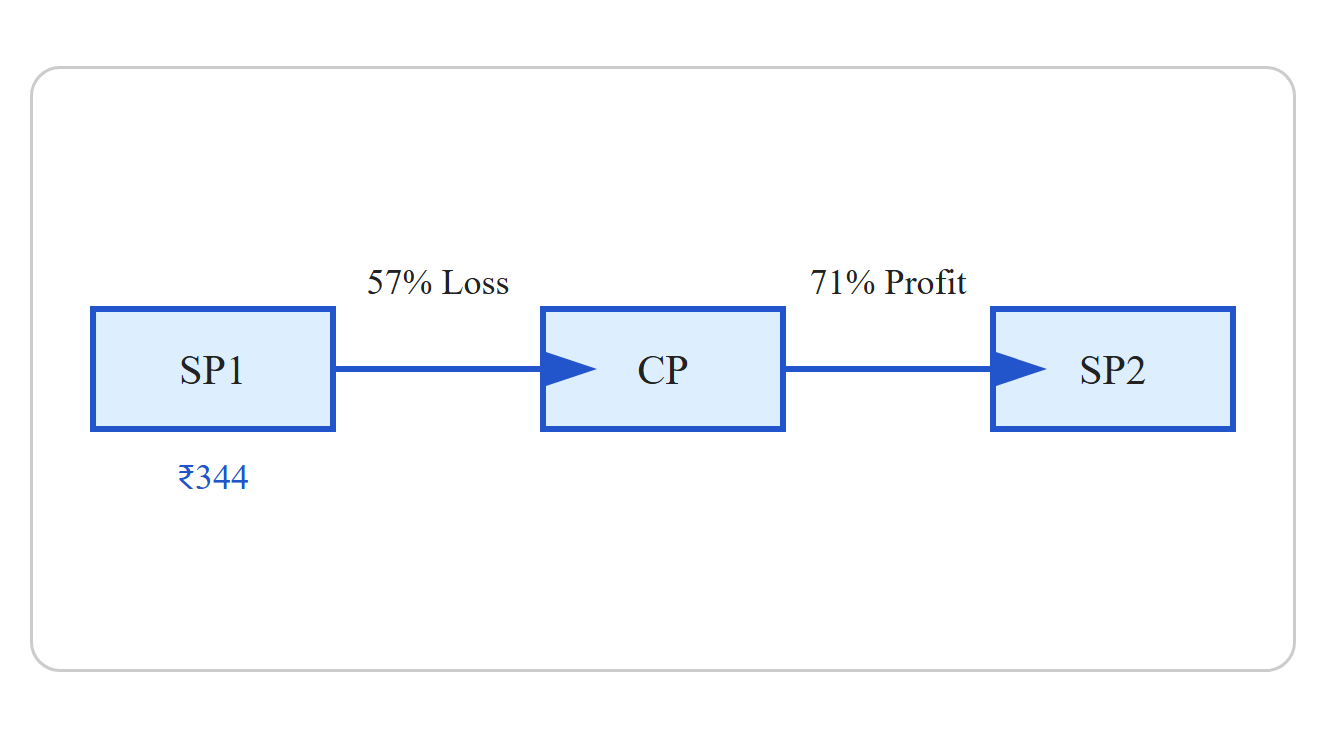
  • Communication Between Devices:
  • Input devices send signals to the CPU for processing, while output devices receive processed data from the CPU.
  • The entire process is managed through buses, drivers, and system software.

"

Question 93

Each of the digits in the number 1673459 is arranged in ascending order from left to right. The position(s) of how many digits will remain unchanged as compared to that in the original number?

  1. AOption (a)

    Two

  2. BOption (b)

    None

  3. COption (c)

    One

  4. DOption (d)

    Three

View answer & explanation

Correct answer

Answer: (a)A.

Two

Why this answer is correct

Given number: 1673459

According to the question, 

Given number1673459
Arranged in ascending order1345679

The digits that will remain unchanged as compared to that in the original number → 1  and 9 = Two

Hence, the correct answer is "Option 1".

Question 94

How many villages in India have completed the computerisation of land records as of March 2025, according to the Department of Land Resources?

  1. AOption (a)

    6.25 lakh

  2. BOption (b)

    6 lakh

  3. COption (c)

    7.5 lakh

  4. DOption (d)

    5.5 lakh

View answer & explanation

Correct answer

Answer: (a)A.

6.25 lakh

Why this answer is correct

The correct answer is 6.25 lakh.

Key Points

  • As of March 2025, the Department of Land Resources reported that 6.25 lakh villages in India have completed the computerisation of land records.
  • This initiative is part of the Digital India Land Records Modernization Programme (DILRMP), which aims to enhance transparency and reduce disputes in land ownership.
  • The computerisation process involves digitising land records, integrating textual and spatial data, and ensuring easy access to land-related information for citizens.
  • The programme plays a pivotal role in reducing corruption and ensuring efficient land management by creating a unified digital database.
  • India's progress in this domain contributes to achieving the United Nations Sustainable Development Goal (SDG) 16, which focuses on promoting peace, justice, and strong institutions.

Additional Information

  • Digital India Land Records Modernization Programme (DILRMP):
  • Launched in 2008, it was revamped under the Digital India initiative in 2016.
  • Aims to computerise land records, enhance transparency, and reduce litigation over land disputes.
  • The programme involves three key components: computerisation of land records, survey/resurvey of lands, and integration of land records with revenue courts.
  • Benefits of Computerised Land Records:
  • Improved transparency in land transactions and ownership.
  • Reduced fraud and corruption in land dealings.
  • Easy access to land records for citizens, enabling quicker grievance redressal.
  • Challenges in Land Records Modernisation:
  • Legacy issues with inaccurate and incomplete records.
  • Lack of uniformity across states in land record maintenance systems.
  • Limited digital literacy in rural areas to access digital records.
  • Global Practices:
  • Countries like Estonia and Sweden have implemented advanced land record systems with blockchain technology to ensure transparency and security.
  • India's efforts under DILRMP aim to replicate such success stories with contextual modifications.

Question 95

If 2 is added to each odd digit and 1 is subtracted from each even digit in the number 7156423, then how many digits will appear more than once in the new number thus formed?

  1. AOption (a)

    One

  2. BOption (b)

    None

  3. COption (c)

    Two

  4. DOption (d)

    Three

View answer & explanation

Correct answer

Answer: (c)C.

Two

Why this answer is correct

Given number: 7156423

According to the question, 

Given number7156423
Odd digit → (+2) Even digit → (-1)(+2)(+2)(+2)(-1)(-1)(-1)(+2)
New number9375315

The digits that appeared more than once in the new number thus formed → 3  and 5 = Two

Hence, the correct answer is "Option 3".

Question 96

Anish starts from Point A and drives 3 km towards the East. He then takes a right turn, drives 5 km, turns right and drives 2 km. He then takes a left turn and drives 4 km. He then takes a right turn and drives 7 km. He takes a final right turn, drives 9 km and stops at Point P. How far (shortest distance) and towards which direction should he drive in order to reach Point A again? (All turns are 90 degrees turns only unless specified.)

  1. AOption (a)

    3 km to the West

  2. BOption (b)

    6 km to the West

  3. COption (c)

    5 km to the East

  4. DOption (d)

    6 km to the East

View answer & explanation

Correct answer

Answer: (d)D.

6 km to the East

Why this answer is correct

Given:

Anish starts from Point A and drives 3 km towards the East.

He then takes a right turn, drives 5 km, turns right and drives 2 km.

He then takes a left turn and drives 4 km.

He then takes a right turn and drives 7 km.

He takes a final right turn, drives 9 km and stops at Point P. 

Thus, Anish should drive 6 km (2 km + 7 km - 3 km) in the east direction in order to reach Point A again.​

Hence, "Option 4" is the correct answer.

Question 97

Refer to the following number and symbol series and answer the question that follows. Counting to be done from left to right only.

(Note: All numbers are single digit numbers only.)

(Left) € & % 6 2 1 € 9 4 5 @ £ $ 4 5 4 & & # 7 £ 7 (Right)

How many such symbols are there, each of which is immediately preceded by a number and also immediately followed by a symbol$?

  1. AOption (a)

    5

  2. BOption (b)

    3

  3. COption (c)

    4

  4. DOption (d)

    2

View answer & explanation

Correct answer

Answer: (d)D.

2

Why this answer is correct

Given series: (Left) € & % 6 2 1 € 9 4 5 @ £ $ 4 5 4 & & # 7 £ 7 (Right)

According to the question,

Required condition: Number - Symbol - Symbol

(Left) € & % 6 2 1 € 9 4 5 @ £ $ 4 5 4 & & # 7 £ 7 (Right)

Thus, there are two such symbols which are immediately preceded by a number and also immediately followed by a symbol.

Hence, "Option 4" is the correct answer.

Question 98

Rati travels from City A to City B. If Rati drives her car at 1/3 of her normal speed, then she reaches City B 50 minutes late. Find the time (in minutes) that Rati would take to travel from City A to City B if she drove at her normal speed.

  1. AOption (a)

    26

  2. BOption (b)

    25

  3. COption (c)

    34

  4. DOption (d)

    35

View answer & explanation

Correct answer

Answer: (b)B.

25

Why this answer is correct

Shortcut Trick

When distance is constant, Speed is inversely proportional to Time.

Speed ratio = 3 : 1 → Time ratio = 1 : 3.

Difference in time ratio = 3 − 1 = 2 units → 50 minutes.

1 unit = 25 minutes.

∴ The correct answer is 25 minutes.

Alternate Method

Given: Reduced speed = 1/3 of normal speed, Time delay = 50 minutes.

Formula Used: Time = Distance ÷ Speed (Time ∝ 1/Speed when distance is constant).

⇒ Let normal speed be S and normal time be T.

⇒ New speed = S/3, so New time = 3T.

⇒ 3T − T = 50 minutes.

⇒ 2T = 50 minutes.

⇒ T = 50 ÷ 2 = 25 minutes.

∴ The correct answer is 25 minutes.

Additional Information

Inverse Proportion Rule

If speed becomes a/b of original speed, the new time becomes b/a of original time, provided distance remains the same.

Average Speed

For two equal distances covered at speeds x and y, Average Speed = 2xy ÷ (x + y).

Relative Speed

In the same direction, speed is subtracted (u − v). In opposite directions, speed is added (u + v).

Question 99

In January 2025, who chaired the high-level review meeting on ISRO’s upcoming missions for 2025?

  1. AOption (a)

    Pawan Kumar Goenka

  2. BOption (b)

    Dr. S Somnath

  3. COption (c)

    Dr. V Narayanan

  4. DOption (d)

    Dr. Jitendra Singh

View answer & explanation

Correct answer

Answer: (d)D.

Dr. Jitendra Singh

Why this answer is correct

The correct answer is Dr. Jitendra Singh.

Key Points

  • Dr. Jitendra Singh, the Union Minister of State (Independent Charge) for Science and Technology, chaired the high-level review meeting in January 2025.
  • The meeting focused on the progress and preparations of ISRO's upcoming missions, including advancements in space exploration and satellite launches.
  • Dr. Jitendra Singh has been instrumental in overseeing India's space program and fostering international collaborations in the space sector.
  • The review included discussions on ISRO's manned space mission "Gaganyaan" and other significant projects scheduled for 2025.
  • The meeting highlighted the commitment of the Indian government to strengthen its position as a global leader in space technology.

Additional Information

  • Indian Space Research Organisation (ISRO)
  • ISRO is the national space agency of India, under the Department of Space, Government of India.
  • Founded in 1969, ISRO has spearheaded India’s advancements in space technology and applications.
  • It has successfully launched numerous satellites for communication, earth observation, and navigation.
  • Gaganyaan Mission
  • Gaganyaan is India’s first human spaceflight mission, aiming to send astronauts to low Earth orbit.
  • It is a highly ambitious project designed to demonstrate India’s technological capability in manned space exploration.
  • The mission includes uncrewed test flights before the final manned mission scheduled for 2025.
  • Space Policy and International Collaborations
  • The Indian government, through ISRO, has strengthened collaborations with international space agencies like NASA, ESA, and JAXA.
  • These partnerships focus on joint missions, satellite launches, and research in space science.
  • Future Missions
  • Upcoming missions for 2025 include Chandrayaan-4, Aditya-L1 (solar mission), and a series of satellite launches for defense, agriculture, and communication.
  • ISRO is also working on reusable launch vehicles and deep space exploration programs.

Question 100

The area of a quadrilateral ABCD is 324 cm². The lengths of the perpendiculars from the vertices B and D to the diagonal AC are 12 cm and 15 cm, respectively. Determine the length (in cm) of the diagonal AC.

  1. AOption (a)

    24

  2. BOption (b)

    27

  3. COption (c)

    19

  4. DOption (d)

    28

View answer & explanation

Correct answer

Answer: (a)A.

24

Why this answer is correct

Shortcut Trick

Area of a quadrilateral = (1/2) × Diagonal × (Sum of perpendiculars from opposite vertices)

Let the diagonal be AC, and the perpendiculars be h1 and h2.

Area = (1/2) × AC × (h1 + h2)

⇒ 324 = (1/2) × AC × (12 + 15)

⇒ AC = (324 × 2) ÷ 27 = 24 cm

∴ The correct answer is 24 cm.

Alternate Method

Given:

Area of quadrilateral ABCD = 324 cm2

Length of perpendicular from B to AC (h1) = 12 cm

Length of perpendicular from D to AC (h2) = 15 cm

Formula Used:

Area of quadrilateral ABCD = Area of ΔABC + Area of ΔADC

Area of a triangle = (1/2) × Base × Height

Calculations:

The diagonal AC divides the quadrilateral ABCD into two triangles, ΔABC and ΔADC.

⇒ Area of quadrilateral ABCD = Area of ΔABC + Area of ΔADC

⇒ Area of quadrilateral ABCD = ((1/2) × AC × BP1) + ((1/2) × AC × DP2)

⇒ 324 = ((1/2) × AC × 12) + ((1/2) × AC × 15)

⇒ 324 = (1/2) × AC × (12 + 15)

⇒ 324 = (1/2) × AC × 27

⇒ 324 = 13.5 × AC

⇒ AC = 324 ÷ 13.5

⇒ AC = 24 cm

Option Analysis:

Let's verify the options by calculating the area they would yield:

• Option (1) 24 cm: Area = (1/2) × 24 × 27 = 324 cm2. This matches the given area exactly, so it is the correct option.

• Option (2) 27 cm: Area = (1/2) × 27 × 27 = 364.5 cm2 ≠ 324 cm2, so this is incorrect.

• Option (3) 19 cm: Area = (1/2) × 19 × 27 = 256.5 cm2 ≠ 324 cm2, so this is incorrect.

• Option (4) 28 cm: Area = (1/2) × 28 × 27 = 378 cm2 ≠ 324 cm2, so this is incorrect.

∴ The correct answer is 24 cm.

Additional Information

Area of a General Quadrilateral

The area of any quadrilateral with a diagonal d and perpendicular offsets h1 and h2 from the opposite vertices is given by Area = (1/2) × d × (h1 + h2).

Area of a Cyclic Quadrilateral (Brahmagupta's Formula)

For a cyclic quadrilateral with sides a, b, c, and d, the area is given by √((s − a)(s − b)(s − c)(s − d)), where s is the semi-perimeter: s = (a + b + c + d) ÷ 2.

Area of a Rhombus

The area of a rhombus with diagonals d1 and d2 is given by Area = (1/2) × d1 × d2, since the diagonals bisect each other at right angles.

100 questions in the full paper