Previous Year Paper

RRB Group D Previous Year Paper (Held on: 26 Aug 2022 Shift 2)

Held in 2022

100 questions90 minutes
With answers
Free

Paper last updated:

Practise under exam conditions

Take this paper as a timed mock test. Review your answers after you submit.

Attempt timed test

Questions & answers

Read the paper at your pace. Open an explanation when you need it.

CBT (100 questions)

Question 1

Answer the question based on the following number and symbol series.

(Left) 4 5 & 20 % 7 2 4 @ 6 11 & 2 8 25 # 3 5 6 & • 9 (Right)

How many such numbers are there in the above series, each of which is immediately preceded by a symbol, and also immediately followed by a symbol?

  1. AOption (a)

    3

  2. BOption (b)

    2

  3. COption (c)

    1

  4. DOption (d)

    0

View answer & explanation

Correct answer

Answer: (c)C.

1

Why this answer is correct

Given terms: (Left) 4 5 & 20 % 7 2 4 @ 6 11 & 2 8 25 # 3 5 6 & • 9 (Right)

Here,

We need to find the numbers in the series that are immediately preceded by a symbol and also immediately followed by a symbol.

Required pattern: Symbol - Numbers - Symbol 

Let's analyze the series step-by-step:

​(Left) 4 5 & 20 % 7 2 4 @ 6 11 & 2 8 25 # 3 5 6 & • 9 (Right)

So, there is only one such number in the series.

Hence, the correct answer is "Option 3".

Question 2

Match the following.

EventsYear
1.Simon Commission visits Indiaa.1919
2.Cripps Mission visits Indiab.1928
3.Jallianwala Bagh Massacrec.1942
4.Chauri Chaura incidentd.1922
  1. AOption (a)

    1 - b, 2 - a, 3 - c, 4 - d

  2. BOption (b)

    1 - d, 2 - c, 3 - a, 4 - b

  3. COption (c)

    1 - b, 2 - c, 3 - a, 4 - d

  4. DOption (d)

    1 - a, 2 - b, 3 - c, 4 - d

View answer & explanation

Correct answer

Answer: (c)C.

1 - b, 2 - c, 3 - a, 4 - d

Why this answer is correct

The correct answer is 1 - b, 2 - c, 3 - a, 4 - d

Key Points

  • Simon Commission visits India: This event took place in the year 1928.
  • Cripps Mission visits India: This event occurred in the year 1942.
  • Jallianwala Bagh Massacre: This tragic event happened in the year 1919.
  • Chauri Chaura incident: This incident took place in the year 1922.
  • Therefore, the correct matching is:

1 - b (1928)

2 - c (1942)

3 - a (1919)

4 - d (1922).

Additional Information

  • Simon Commission: A group of British Members of Parliament that came to India to study constitutional reform.
  • Cripps Mission: A British initiative in World War II to secure Indian cooperation and support for the war effort.
  • Jallianwala Bagh Massacre: A massacre in which British troops fired on a large crowd of unarmed Indians in Amritsar, Punjab.
  • Chauri Chaura incident: A violent protest by Indian villagers against police, which led to the suspension of the non-cooperation movement by Mahatma Gandhi.

Question 3

All of the following statements regarding excretion in plants are correct except one. Identify the wrong statement.

  1. AOption (a)

    Plants emit waste products in very small quantities.

  2. BOption (b)

    Plants excrete waste products, but at a very slow rate.

  3. COption (c)

    Plants have several specialized organs for the elimination of their waste products.

  4. DOption (d)

    Excretion refers to the removal of waste products from the body.

View answer & explanation

Correct answer

Answer: (c)C.

Plants have several specialized organs for the elimination of their waste products.

Why this answer is correct

The correct answer is Plants have several specialized organs for the elimination of their waste products

Key Points

  • Plants emit waste products in very small quantities.
  • Plants excrete waste products, but at a very slow rate.
  • Excretion refers to the removal of waste products from the body.
  • Plants do not have several specialized organs for the elimination of their waste products, unlike animals.
  • Plants often deal with waste products through processes like diffusion, storage in vacuoles, and shedding of leaves, bark, or fruits.

Additional Information

  • Unlike animals, plants do not have a complex excretory system.
  • Wastes in plants can also be stored in old tissues and organs that are eventually shed.
  • Some waste products are excreted through the roots into the soil.
  • Oxygen, a by-product of photosynthesis, is released through stomata.
  • Plants may also convert some waste products into non-toxic substances.

Question 4

The following pie chart provides information regarding the production of rice (in %) in five states A to E in India. Study the chart, and answer the question asked.

The production of rice in state C is what percent less than the production of rice in state B?

  1. AOption (a)

    32%

  2. BOption (b)

    35%

  3. COption (c)

    28%

  4. DOption (d)

    40%

View answer & explanation

Correct answer

Answer: (c)C.

28%

Why this answer is correct

Given:

A pie chart provides information regarding the production of rice (in %) in five states A to E in India/

Formula used:

Required percent= B - C / B × 100

Calculation:

Required percent= 25 - 18 / 25 × 100

⇒ 7 × 4

⇒ 28%

∴ The correct answer is 28%.

Question 5

In April 2022, NITI Aayog and UNICEF India signed a Statement of Intent on SDGs focusing on which issue?

  1. AOption (a)

    Health

  2. BOption (b)

    Education

  3. COption (c)

    Children

  4. DOption (d)

    Youth

View answer & explanation

Correct answer

Answer: (c)C.

Children

Why this answer is correct

The correct answer is Children

Key Points

  • In April 2022, NITI Aayog and UNICEF India signed a Statement of Intent on SDGs with a focus on children.
  • This collaboration aims to accelerate progress on the Sustainable Development Goals (SDGs) related to children’s welfare and rights.
  • Focus areas include health, nutrition, education, and protection of children.
  • The initiative seeks to ensure that no child is left behind and that every child has the opportunity to thrive and develop to their full potential.

Additional Information

  • The Sustainable Development Goals (SDGs) are a collection of 17 global goals set by the United Nations General Assembly in 2015 for the year 2030.
  • They cover a broad range of social, economic, and environmental development issues.
  • UNICEF (United Nations International Children's Emergency Fund) is a UN agency responsible for providing humanitarian and developmental aid to children worldwide.
  • NITI Aayog (National Institution for Transforming India) is a policy think tank of the Government of India, established to achieve sustainable development goals through cooperative federalism.

Question 6

As part of the policy to promote para badminton, India's first para badminton academy has been launched in which city in January 2022?

  1. AOption (a)

    Lucknow

  2. BOption (b)

    Raipur

  3. COption (c)

    Bhopal

  4. DOption (d)

    Nagpur

View answer & explanation

Correct answer

Answer: (a)A.

Lucknow

Why this answer is correct

The correct answer is Lucknow

Key Points

  • India's first para badminton academy has been launched in Lucknow in January 2022.
  • The academy aims to provide world-class training facilities to para badminton players in India.
  • This initiative is part of the policy to promote para badminton and support athletes in achieving excellence in the sport.
  • The academy will also serve as a hub for nurturing young talent and preparing them for national and international competitions.
  • Para badminton has been gaining popularity and recognition, and this academy is a significant step towards the development of the sport in India.

Additional Information

  • Para badminton is governed by the Badminton World Federation (BWF) and has been included in the Paralympic Games since Tokyo 2020.
  • India has a strong contingent of para badminton players who have performed exceptionally well in various international tournaments.
  • The establishment of such academies will further strengthen India's position in para badminton on the global stage.
  • Support from the government and private sector is crucial for the success and sustainability of such initiatives.
  • Training facilities, coaching, and infrastructure are key components that will be provided by the para badminton academy in Lucknow.

Question 7

Which river system originates from the Bastar hills of Madhya Pradesh?

  1. AOption (a)

    Mahanadi River System

  2. BOption (b)

    Krishna River System

  3. COption (c)

    Kaveri River System

  4. DOption (d)

    Tapti River System

View answer & explanation

Correct answer

Answer: (a)A.

Mahanadi River System

Why this answer is correct

The correct answer is Mahanadi River System

Key Points

  • The Mahanadi River System originates from the Bastar hills of Madhya Pradesh.
  • The river flows through the states of Chhattisgarh and Odisha before emptying into the Bay of Bengal.
  • The Mahanadi is known for its fertile plains and is a major source of irrigation in the region.
  • It plays a crucial role in the agriculture and economy of the regions it flows through.

Additional Information

  • The Mahanadi River is approximately 858 kilometers long.
  • It is one of the major rivers in the peninsular region of India.
  • The river basin is known for its rich mineral resources and is home to several important industrial towns.
  • The Hirakud Dam, one of the longest dams in the world, is built across the Mahanadi River.
  • The river has numerous tributaries including the Seonath, Jonk, and Hasdeo rivers.

Question 8

Which of the following is a protein digesting enzyme produced in the stomach?

  1. AOption (a)

    Maltase

  2. BOption (b)

    HCI

  3. COption (c)

    Pepsin

  4. DOption (d)

    Enterokinase

View answer & explanation

Correct answer

Answer: (c)C.

Pepsin

Why this answer is correct

The correct answer is Pepsin

Key Points

  • Pepsin is a protein-digesting enzyme produced in the stomach.
  • It is secreted by the gastric glands in an inactive form called pepsinogen, which is then activated by the acidic environment of the stomach.
  • The primary function of pepsin is to break down proteins into smaller peptides, which can then be further digested in the small intestine.
  • This enzyme is crucial for the digestive process, allowing for the efficient absorption of nutrients.

Additional Information

  • Maltase is an enzyme that breaks down maltose into glucose, and is not involved in protein digestion.
  • HCl (Hydrochloric Acid) is produced in the stomach and creates an acidic environment but is not an enzyme.
  • Enterokinase is an enzyme produced in the small intestine that activates trypsinogen to trypsin, aiding in protein digestion in the small intestine.
  • Pepsin works best in the highly acidic environment of the stomach, which is maintained by the secretion of hydrochloric acid.

Question 9

Which two signs in the given equation should be interchanged to make the equation balanced?

[{(102 + 42) - (4 × 3)} ÷ (2 - 4)] × 3 = 36

  1. AOption (a)

    ÷, +

  2. BOption (b)

    -, +

  3. COption (c)

    +, ×

  4. DOption (d)

    ÷, ×

View answer & explanation

Correct answer

Answer: (b)B.

-, +

Why this answer is correct

Given: [{(102 + 42) - (4 × 3)} ÷ (2 - 4)] × 3 = 36

So, after interchanging the signs,

Option 1) ÷, +

[{(102 + 42) - (4 × 3)} ÷ (2 - 4)] × 3 = 36 ⇒ [{(102 ÷ 42) - (4 × 3)} + (2 - 4)] × 3 = 36

[{(102 ÷ 42) - (4 × 3)} + (2 - 4)] × 3 = 36

[{2.42 - 12} - 2] × 3 = 36

[{2.42 - 12} - 2] × 3 = 36

[-9.57 - 2] × 3 = 36

-11.57 × 3 = 36

-34.71 ≠ 36 (LHS ≠ RHS)

Option 2) -, +

[{(102 + 42) - (4 × 3)} ÷ (2 - 4)] × 3 = 36 ⇒ [{(102 - 42) + (4 × 3)} ÷ (2 + 4)] × 3 = 36

[{(102 - 42) + (4 × 3)} ÷ (2 + 4)] × 3 = 36

[{60 + 12} ÷ 6] × 3 = 36

[72 ÷ 6] × 3 = 36

12 × 3 = 36

36 = 36 (LHS = RHS)

Option 3) +, ×

[{(102 + 42) - (4 × 3)} ÷ (2 - 4)] × 3 = 36 ⇒ [{(102 × 42) - (4 + 3)} ÷ (2 - 4)] + 3 = 36

[{(102 × 42) - (4 + 3)} ÷ (2 - 4)] + 3 = 36

[{4284 - 7} ÷ (-2)] + 3 = 36

[4277 ÷ (-2)] + 3 = 36

-2138.5 + 3 = 36

-2135.5 ≠ 36 (LHS ≠ RHS)

Option 4) ÷, × 

[{(102 + 42) - (4 × 3)} ÷ (2 - 4)] × 3 = 36 ⇒ [{(102 + 42) - (4 ÷ 3)} × (2 - 4)] ÷ 3 = 36

[{(102 + 42) - (4 ÷ 3)} × (2 - 4)] ÷ 3 = 36

[{144 - 1.33} × (-2)] ÷ 3 = 36

[142.67 × (-2)] ÷ 3 = 36

-285.34 ÷ 3 = 36

-95.11 ≠ 36 (LHS ≠ RHS)

Hence, "Option 2" is the correct answer.

Question 10

Two resistances A and B of 12 Ω and 24 Ω respectively are connected in series with a 6 V battery. The total heat dissipated in the resistors in 1 second will be ________.

  1. AOption (a)

    1.0 J

  2. BOption (b)

    0.30 J

  3. COption (c)

    0.15 J

  4. DOption (d)

    4.5 J

View answer & explanation

Correct answer

Answer: (a)A.

1.0 J

Why this answer is correct

The correct answer is 1.0 J

Key Points

  • Two resistances A and B of 12 Ω and 24 Ω respectively are connected in series.
  • The total resistance in the circuit is R = RA + RB = 12 Ω + 24 Ω = 36 Ω.
  • The voltage of the battery is 6 V.
  • The current in the circuit is given by I = V / R = 6 V / 36 Ω = 1/6 A.
  • The heat dissipated in the resistors in 1 second can be calculated using the formula H = I2 R t.
  • Substituting the values, we get H = (1/6 A)2 * 36 Ω * 1 s = 1/36 * 36 = 1 J.

Additional Information

  • The formula H = I2 R t is derived from Joule's law of heating, which states that the heat produced in a resistor is proportional to the square of the current, the resistance, and the time for which the current flows.
  • In a series circuit, the current is the same through all components, but the voltage drop across each component depends on its resistance.
  • The total voltage of the battery is divided among the resistors in proportion to their resistances.
  • This principle is useful in understanding how energy is distributed in electrical circuits.

Question 11

In the 'In Vitro Fertilization (IVF)' method, babies are born by which of the following processes?

  1. AOption (a)

    Internal fertilization of sperm and egg and external development of embryo

  2. BOption (b)

    Development of the fetus inside a test tube

  3. COption (c)

    Development of a fetus from a single parent

  4. DOption (d)

    External fertilization of sperm and egg

View answer & explanation

Correct answer

Answer: (d)D.

External fertilization of sperm and egg

Why this answer is correct

The correct answer is External fertilization of sperm and egg

Key Points

  • In the 'In Vitro Fertilization (IVF)' method, babies are born by external fertilization of sperm and egg.
  • IVF is a process of fertilization where an egg is combined with sperm outside the body, in vitro ("in glass").
  • The process involves monitoring and stimulating a woman's ovulatory process, removing an ovum or ova (egg or eggs) from her ovaries, and letting sperm fertilize them in a laboratory environment.
  • The fertilized egg (zygote) undergoes embryo culture for 2–6 days and is then transferred to the same or another woman's uterus, with the intention of establishing a successful pregnancy.

Additional Information

  • IVF is a major treatment for infertility when other methods of assisted reproductive technology have failed.
  • The success rate of IVF varies and depends on various factors, including maternal age, cause of infertility, and the quality of the embryo.
  • IVF can also be used to prevent genetic problems and assist with the conception of a child.
  • IVF has led to the birth of millions of babies worldwide since its inception.

Question 12

Which of the following optical phenomena can explain the flattening of the Sun's disc at sunrise and sunset?

  1. AOption (a)

    Scattering of light

  2. BOption (b)

    Atmospheric refraction

  3. COption (c)

    Total internal reflection

  4. DOption (d)

    Dispersion of light

View answer & explanation

Correct answer

Answer: (b)B.

Atmospheric refraction

Why this answer is correct

The correct answer is Atmospheric refraction

Key Points

  • Atmospheric refraction is responsible for the flattening of the Sun's disc at sunrise and sunset.
  • This phenomenon occurs because the light from the Sun passes through the Earth's atmosphere, which causes the light rays to bend due to the change in the medium's density.
  • As a result, the Sun's image appears distorted and flattened when it is near the horizon.
  • Atmospheric refraction also causes other phenomena such as the apparent shift in the position of stars and the twinkling of stars.

Additional Information

  • Scattering of light is responsible for the blue color of the sky and the red color of the sunset but does not explain the flattening of the Sun's disc.
  • Total internal reflection occurs when light is completely reflected within a medium, such as in optical fibers, and is not relevant to the flattening of the Sun's disc.
  • Dispersion of light refers to the splitting of light into its constituent colors as it passes through a prism, which is not related to the flattening of the Sun's disc.
  • The atmosphere plays a crucial role in various optical phenomena due to its varying density and composition.

Question 13

Each of the six persons P, Q, R, S, T and U has different height. P is the tallest person. R is taller than only one other person. S is taller than U. U is taller than R. Exactly three persons have height between T and Q, while T is taller than Q. Who is the shortest among all the six persons?

  1. AOption (a)

    T

  2. BOption (b)

    Q

  3. COption (c)

    S

  4. DOption (d)

    U

View answer & explanation

Correct answer

Answer: (b)B.

Q

Why this answer is correct

Given: Six people P, Q, R, S, T, and U are comparing their heights.

No two people are of the same height.

  1. P is the tallest person.

  2. R is taller than only one other person.

P > __ > __ > __ > R > __

  1. U is taller than R.

  2. S is taller than U.

P > __ > S > U > R > __

  1. Exactly three persons have height between T and Q, while T is taller than Q.

P > T > S > U > R > Q

So, 'Q' is the shortest person.

Hence, the correct answer is "Option 2".

Question 14

Which of the following organisms is included among the organisms found in Pachmarhi Biosphere Reserve?

  1. AOption (a)

    Sambar

  2. BOption (b)

    Chinkara

  3. COption (c)

    Musk deer

  4. DOption (d)

    Barasingha

View answer & explanation

Correct answer

Answer: (b)B.

Chinkara

Why this answer is correct

The correct answer is Chinkara

Key Points

  • Chinkara is included among the organisms found in Pachmarhi Biosphere Reserve.
  • The Pachmarhi Biosphere Reserve is located in the Satpura Range of Madhya Pradesh, India.
  • It encompasses three wildlife conservation units: the Bori Sanctuary, the Pachmarhi Sanctuary, and the Satpura National Park.
  • The reserve is known for its rich biodiversity, including various species of flora and fauna.

Additional Information

  • The Pachmarhi Biosphere Reserve was established in 1999 and is recognized by UNESCO.
  • It covers an area of approximately 4,926.28 square kilometers.
  • The reserve is home to several endangered species, including the Indian giant squirrel, flying squirrel, and Indian leopard.
  • It also includes a variety of medicinal plants and other important vegetation.
  • The region is a popular destination for ecotourism and offers opportunities for wildlife observation, trekking, and exploring natural caves.

Question 15

If a substance accepts oxygen during the reaction, it is called ________.

  1. AOption (a)

    Disbanded

  2. BOption (b)

    Oxidized

  3. COption (c)

    Neutralized

  4. DOption (d)

    Reduced

View answer & explanation

Correct answer

Answer: (b)B.

Oxidized

Why this answer is correct

The correct answer is Oxidized

Key Points

  • A substance that accepts oxygen during a reaction is said to be oxidized.
  • Oxidation involves the gain of oxygen or loss of hydrogen in a chemical reaction.
  • This process is a part of redox reactions where one substance is oxidized and another is reduced.
  • Oxidation can also be defined as the loss of electrons from a molecule, atom, or ion.
  • Common examples of oxidation include the rusting of iron and the burning of fuels.

Additional Information

  • The term oxidation was originally used to describe reactions in which an element combines with oxygen.
  • In modern terms, oxidation is a broader concept and includes any reaction where an atom, ion, or molecule loses electrons.
  • Reduction is the opposite process, where a substance gains electrons or loses oxygen.
  • Oxidation and reduction reactions are always coupled; when one substance is oxidized, another is reduced.
  • These reactions are fundamental to various biological and industrial processes, including cellular respiration and metal extraction.

Question 16

Which of the following is not a feature of Mendeleev's periodic classification?

  1. AOption (a)

    True position of isotopes.

  2. BOption (b)

    He organized the elements based on both physical and chemical properties.

  3. COption (c)

    He was able to predict the properties of some missing elements that were later discovered.

  4. DOption (d)

    He arranged the elements in a tabular form in the form of groups and periods.

View answer & explanation

Correct answer

Answer: (a)A.

True position of isotopes.

Why this answer is correct

The correct answer is True position of isotopes.

Key Points

  • True position of isotopes was not addressed in Mendeleev's periodic classification. Isotopes, which are atoms of the same element with different atomic masses, posed a challenge for his table.
  • Mendeleev organized the elements based on both their physical and chemical properties, leading to a more comprehensive understanding of the elements.
  • He also predicted the properties of some missing elements that were later discovered, which validated his periodic table.
  • The elements were arranged in a tabular form comprising groups and periods, which helped in identifying periodic trends.

Additional Information

  • Mendeleev's periodic table was a significant step towards the modern periodic table, though it had some limitations such as the placement of isotopes.
  • His work laid the foundation for the periodic law, which states that the properties of elements are a periodic function of their atomic masses.
  • Later developments in atomic theory and the discovery of protons, neutrons, and electrons led to the modern periodic table, which arranges elements by atomic number.

Question 17

If in the following equation the positions of '+' and '-' are interchanged, and also the positions of '×' and '÷' are interchanged, then what value will come in place of question mark (?) in the equation?

49 - 4 ÷ 120 × 8 + 100 = ?

  1. AOption (a)

    3

  2. BOption (b)

    12

  3. COption (c)

    6

  4. DOption (d)

    9

View answer & explanation

Correct answer

Answer: (d)D.

9

Why this answer is correct

According to BODMAS

49 - 4 ÷ 120 × 8 + 100 = ?

Interchanging the signs -

⇒ 49 + 4 x 120 ÷ 8 - 100 = ?

⇒ 49 + 4 x 15 - 100 = x

⇒ 49 + 60 - 100 = x

⇒ 109 - 100 = 9

So, 9 will come in place of question mark.

Hence the correct answer is "Option 4".

Question 18

When lead nitrate is heated, lead oxide, oxygen gas and a brown mysterious gas are formed. What is that mysterious gas?

  1. AOption (a)

    carbon monoxide

  2. BOption (b)

    nitrogen dioxide

  3. COption (c)

    carbon dioxide

  4. DOption (d)

    nitrous oxide

View answer & explanation

Correct answer

Answer: (b)B.

nitrogen dioxide

Why this answer is correct

The correct answer is nitrogen dioxide

Key Points

  • Nitrogen dioxide (NO2) is the mysterious brown gas formed when lead nitrate is heated.
  • The chemical reaction involved is:

  2Pb(NO3)2 (s) → 2PbO (s) + 4NO2 (g) + O2 (g)

  • Lead nitrate decomposes to form lead oxide, nitrogen dioxide, and oxygen gas upon heating.
  • Nitrogen dioxide is a toxic gas and is characterized by its brown color.

Additional Information

  • Lead nitrate is a chemical compound with the formula Pb(NO3)2.
  • It is commonly used in the manufacture of matches and explosives, and in the dyeing and printing of textiles.
  • Decomposition of lead nitrate is an example of a thermal decomposition reaction.
  • Safety precautions should be taken when heating lead nitrate due to the release of toxic gases.

Question 19

If 4 + 4n+5 = 260, then find the value of 5n+3.

  1. AOption (a)

    16

  2. BOption (b)

    49

  3. COption (c)

    25

  4. DOption (d)

    36

View answer & explanation

Correct answer

Answer: (c)C.

25

Why this answer is correct

Given:

4 + 4n+5 = 260

Formula used:

Simplify the equation to find the value of n.

Calculations:

4 + 4n+5 = 260

⇒ 4n+5 = 260 - 4

⇒ 4n+5 = 256

⇒ 4n+5 = 44

⇒ n + 5 = 4

⇒ n = -1

Now, find the value of 5n+3:

5n+3 = 5-1+3

⇒ 52 = 25

∴ The value of 50n+3 is 25.

Question 20

If A is an acute angle, and tan2A + secA = 11, then find the value of cotA.

  1. AOption (a)

    122\frac{1}{2 \sqrt{2}}

  2. BOption (b)

    127\frac{1}{2 \sqrt{7}}

  3. COption (c)

    125\frac{1}{2 \sqrt{5}}

  4. DOption (d)

    123\frac{1}{2 \sqrt{3}}

View answer & explanation

Correct answer

Answer: (a)A.

122\frac{1}{2 \sqrt{2}}

Why this answer is correct

Shortcut Trick

Replace tan2A with sec2A − 1 in the equation: sec2A + secA − 12 = 0.

Solving the quadratic equation, we get (secA + 4)(secA − 3) = 0.

Since A is an acute angle, secA must be positive ∴ secA = 3.

Using secA = 3 (Hypotenuse/Base), Base = 1 and Hypotenuse = 3, then Perpendicular = √(32 − 12) = √8 = 2√2.

cotA = Base / Perpendicular = 1 / 2√2.

∴ The correct answer is 1/2√2.

Alternate Method

Given: tan2A + secA = 11, where A is an acute angle.

Formula Used: sec2A − tan2A = 1 ⇒ tan2A = sec2A − 1 and cotA = 1/tanA.

⇒ (sec2A − 1) + secA = 11

⇒ sec2A + secA − 12 = 0

⇒ sec2A + 4secA − 3secA − 12 = 0

⇒ secA(secA + 4) − 3(secA + 4) = 0

⇒ (secA + 4)(secA − 3) = 0

⇒ secA = 3 (Since secA = −4 is not possible for an acute angle A)

⇒ cosA = 1/secA = 1/3

⇒ sinA = √(1 − cos2A) = √(1 − 1/9) = √(8/9) = 2√2 / 3

⇒ cotA = cosA / sinA = (1/3) / (2√2 / 3) = 1/2√2

∴ The correct answer is 1/2√2.

Additional Information

Trigonometric Identities

Standard Pythagorean identities: sin2θ + cos2θ = 1, 1 + tan2θ = sec2θ, and 1 + cot2θ = cosec2θ.

Reciprocal Relations

Fundamental ratios: secθ = 1/cosθ, cosecθ = 1/sinθ, and cotθ = 1/tanθ.

Acute Angle Constraints

For 0° < A < 90°, all basic trigonometric ratios (sin, cos, tan, etc.) are positive.

Question 21

Ram's present age is 6 years less than Bhim's age. After 3 years, Bhim's age will be twice that of Ram. Find Ram's age.

  1. AOption (a)

    5 years

  2. BOption (b)

    4 years

  3. COption (c)

    6 years

  4. DOption (d)

    3 years

View answer & explanation

Correct answer

Answer: (d)D.

3 years

Why this answer is correct

Shortcut Trick

Age difference between Ram and Bhim is 6 years (always constant).

After 3 years, Bhim : Ram ratio = 2 : 1.

Difference in ratio parts = 2 − 1 = 1 unit.

1 unit = 6 years ⇒ Ram's age after 3 years = 1 × 6 = 6 years.

Present age of Ram = 6 − 3 = 3 years.

∴ The correct answer is 3 years.

Alternate Method

Given:

Let Ram's present age be x years.

Bhim's present age = (x + 6) years.

After 3 years:

Ram's age = x + 3

Bhim's age = (x + 6) + 3 = x + 9

According to the question:

⇒ (x + 9) = 2 × (x + 3)

⇒ x + 9 = 2x + 6

⇒ 2x − x = 9 − 6

⇒ x = 3

∴ The correct answer is 3 years.

Additional Information

Constant Age Difference

The difference between the ages of two people remains constant regardless of the number of years passed or gone by.

Ratio Method for Ages

If the ratio of ages changes over time, equate the difference in ratio units to the actual constant age difference to solve quickly.

Linear Equations in Ages

Always define the variable for the present age to avoid confusion when calculating past or future conditions.

Question 22

A, B, C, D, E and F are each allotted different days of the same week starting from Monday and ending on Saturday for their respective lectures. There is no lecture on Sunday. B, being the senior-most person, is allotted Saturday. D, being the second senior-most person, is allotted Friday. C, the junior-most person, is allotted Monday. Exactly three persons deliver their lectures before E. If F's lecture is scheduled for the day immediately following the lecture of the most junior person, which day remains for F to deliver their lecture?

  1. AOption (a)

    Monday

  2. BOption (b)

    Wednesday

  3. COption (c)

    Thursday

  4. DOption (d)

    Tuesday

View answer & explanation

Correct answer

Answer: (d)D.

Tuesday

Why this answer is correct

Given: A, B, C, D, E and F are each allotted different days of the same week starting from Monday and ending on Saturday.

  1. There is no lecture on Sunday.

  2. B, being the senior-most person, is allotted Saturday.

  3. D, being the second senior-most person, is allotted Friday.

DayPersons
Monday
Tuesday
Wednesday
Thursday
FridayD
SaturdayB


  1. C, the junior-most person, is allotted Monday.

  2. Exactly three persons deliver their lectures before E

DayPersons
MondayC
Tuesday
Wednesday
ThursdayE
FridayD
SaturdayB


6)  The number of days left for F to deliver his lecture if his lecture scheduled next day of the junior-most person. C is the junior most person and F will deliver the lecture immediately after C.

  1. So, F will deliver his lecture on Tuesday.
DayPersons
MondayC
TuesdayF
WednesdayA
ThursdayE
FridayD
SaturdayB


Hence the correct answer is "Option 4".

Question 23

If the Least Common Multiple (LCM) of 27 and n is 54, and Greatest Common Factor (HCF) is 9, then find the value of n.

  1. AOption (a)

    36

  2. BOption (b)

    54

  3. COption (c)

    24

  4. DOption (d)

    18

View answer & explanation

Correct answer

Answer: (d)D.

18

Why this answer is correct

Shortcut Trick

Product of two numbers = LCM × HCF

27 × n = 54 × 9

n = (54 × 9) ÷ 27

n = 2 × 9 = 18

∴ The correct answer is 18.

Alternate Method

Given: First number = 27, LCM = 54, HCF = 9

Formula Used: Product of two numbers = LCM × HCF

⇒ 27 × n = 54 × 9

⇒ n = (54 × 9) ÷ 27

⇒ n = 486 ÷ 27

⇒ n = 18

∴ The correct answer is 18.

Additional Information

HCF of Prime Numbers

The HCF of any two prime numbers is always 1.

LCM of Co-prime Numbers

The LCM of two co-prime numbers is simply their product.

Relation for Three Numbers

Note that LCM(a,b,c) × HCF(a,b,c) is NOT necessarily equal to a × b × c.

Question 24

Which of the following group of organisms obtains nutrition from other plants and organisms without killing them?

  1. AOption (a)

    Lice, Tapeworm, Leech, Dodder

  2. BOption (b)

    Amarbel, Orchid, Yeast, Mushroom

  3. COption (c)

    Gnat, Leech, Dodder, Orchid

  4. DOption (d)

    Tapeworm, Lion, Yeast, Louse

View answer & explanation

Correct answer

Answer: (a)A.

Lice, Tapeworm, Leech, Dodder

Why this answer is correct

The correct answer is Lice, Tapeworm, Leech, Dodder

Key Points

  • Lice, Tapeworm, Leech, Dodder are examples of organisms that obtain nutrition from other plants and organisms without killing them.
  • These organisms are known as parasites, and they rely on a host for their nutrients.
  • Unlike predators, parasites do not typically kill their host but may cause harm or discomfort over time.
  • Parasites have evolved various mechanisms to attach to and derive nutrients from their hosts.
  • For example, lice feed on the blood of mammals, tapeworms live in the intestines of animals, leeches attach to the skin and also feed on blood, and dodder plants wrap around other plants to extract nutrients.

Additional Information

  • Parasites can be ectoparasites (living on the surface of the host) or endoparasites (living inside the host).
  • They often have specialized adaptations to their parasitic lifestyle, such as hooks, suckers, or specialized mouthparts.
  • While they do not kill their host outright, parasites can significantly impact the host's health by draining nutrients, causing disease, or weakening the host's immune system.
  • Control and management of parasitic infestations are important in both agriculture and medicine to prevent the negative impacts on plants, animals, and humans.

Question 25

Who has the distinction of being the highest wicket-taker in the history of ICC Women's World Cup during the 2022 World Cup?

  1. AOption (a)

    Meghna Singh

  2. BOption (b)

    Renuka Singh

  3. COption (c)

    Poonam yadav

  4. DOption (d)

    Jhulan Goswami

View answer & explanation

Correct answer

Answer: (d)D.

Jhulan Goswami

Why this answer is correct

The correct answer is Jhulan Goswami

Key Points

  • Jhulan Goswami holds the record for being the highest wicket-taker in the history of the ICC Women's World Cup as of the 2022 tournament.
  • She is a prominent Indian cricketer known for her fast bowling and has been a key player for the Indian women's cricket team.
  • Jhulan Goswami has been a part of multiple World Cup campaigns and has consistently performed at the highest level, earning her this distinguished record.
  • Her achievement highlights her significant contribution to women's cricket and her status as one of the greatest bowlers in the history of the sport.

Additional Information

  • Jhulan Goswami made her debut for the Indian women's cricket team in 2002 and has since become a leading figure in women's cricket globally.
  • She has received numerous awards and accolades, including the ICC Women's Player of the Year in 2007.
  • In addition to her World Cup achievements, she has also been a part of several other international tournaments, contributing significantly to the team's success.
  • Jhulan Goswami's dedication and performance have inspired many young girls to take up cricket and pursue their dreams in sports.

Question 26

A wire of length L and cross-sectional area A has a resistance of 0.5 Ω. A wire of same length (L) and cross-sectional area 2A, made of the same material will have a resistance of ________.

  1. AOption (a)

    0.5 Ω 

  2. BOption (b)

    0.25 Ω

  3. COption (c)

    4.0 Ω

  4. DOption (d)

    1.0 Ω

View answer & explanation

Correct answer

Answer: (b)B.

0.25 Ω

Why this answer is correct

The correct answer is 0.25 Ω.

Key Points

  • Resistance (R) of a wire is inversely proportional to its cross-sectional area (A) as per the formula R = ρ(L/A), where ρ is the resistivity of the material, and L is the length of the wire.
  • Given that the cross-sectional area of the second wire is doubled (2A), the resistance will be halved compared to the original wire's resistance.
  • The resistance of the original wire is 0.5 Ω. Since the second wire has a cross-sectional area of 2A, its resistance will be 0.5 Ω / 2 = 0.25 Ω.
  • The material and length of the wire remain unchanged, which ensures that resistivity (ρ) and length (L) remain constant.
  • Hence, the correct resistance of the second wire is 0.25 Ω.

Additional Information

  • Resistance: It is the property of a material to oppose the flow of electric current, measured in ohms (Ω).
  • Resistivity (ρ): A material-specific constant that determines how strongly a material resists current flow. It is expressed in ohm-meters (Ω·m).
  • Formula for Resistance: The resistance of a wire is calculated using the formula R = ρ(L/A), where:
  • R = Resistance in ohms.
  • ρ = Resistivity of the material.
  • L = Length of the wire.
  • A = Cross-sectional area of the wire.
  • Effect of Cross-sectional Area: Increasing the cross-sectional area of a wire decreases its resistance, as resistance is inversely proportional to area.
  • Applications: Understanding the relationship between resistance, length, and cross-sectional area is crucial in designing efficient electrical circuits, wires, and cables.

Question 27

An item marked at ₹275 is sold at a discount of 5%. The seller still makes a profit of 4.5%. How much did he pay for it?

  1. AOption (a)

    ₹200

  2. BOption (b)

    ₹250

  3. COption (c)

    ₹125

  4. DOption (d)

    ₹225

View answer & explanation

Correct answer

Answer: (b)B.

₹250

Why this answer is correct

Shortcut Trick

Use the direct relationship between Cost Price (CP) and Marked Price (MP).

CP ÷ MP = (100 − Discount%) ÷ (100 + Profit%)

CP ÷ 275 = (100 − 5) ÷ (100 + 4.5) = 95 ÷ 104.5

CP = (95 × 275) ÷ 104.5 = 26125 ÷ 104.5 = 250

∴ The correct answer is ₹250.

Alternate Method

Given: Marked Price (MP) = ₹275, Discount = 5%, Profit = 4.5%. Formulas: SP = MP × (100 − D%) ÷ 100 | CP = SP × 100 ÷ (100 + P%)

⇒ Step 1: Calculate Selling Price (SP) from MP.

⇒ SP = 275 × (100 − 5) ÷ 100 = 275 × 0.95 = ₹261.25

⇒ Step 2: Calculate Cost Price (CP) using SP and Profit%.

⇒ CP = (261.25 × 100) ÷ (100 + 4.5) = 26125 ÷ 104.5

⇒ CP = ₹250

∴ The correct answer is ₹250.

Additional Information

Marked Price and Discount

Discount is always calculated on the Marked Price (MP). SP = MP − Discount.

Profit and Cost Price

Profit is always calculated on the Cost Price (CP). SP = CP + Profit.

Question 28

If (2x + 7y) ∶ (4x - 3y) ∶∶ 8 ∶ 3, then find the value of x ∶ y.

  1. AOption (a)

    11 ∶ 13

  2. BOption (b)

    45 ∶ 26

  3. COption (c)

    20 ∶ 19

  4. DOption (d)

    26 ∶ 45

View answer & explanation

Correct answer

Answer: (b)B.

45 ∶ 26

Why this answer is correct

Shortcut Trick

Using the Product of Extremes = Product of Means property for proportions.

⇒ 3 × (2x + 7y) = 8 × (4x − 3y)

⇒ 6x + 21y = 32x − 24y

⇒ 21y + 24y = 32x − 6x

⇒ 45y = 26x → x/y = 45/26

∴ The correct answer is 45 ∶ 26.

Alternate Method

Given: (2x + 7y) ∶ (4x − 3y) = 8 ∶ 3

Formula Used: a/b = c/d ⇒ ad = bc

⇒ (2x + 7y) / (4x − 3y) = 8 / 3

⇒ 3(2x + 7y) = 8(4x − 3y)

⇒ 6x + 21y = 32x − 24y

⇒ 21y + 24y = 32x − 6x

⇒ 45y = 26x

⇒ x / y = 45 / 26

∴ The correct answer is 45 ∶ 26.

Additional Information

Proportion Rule

If four quantities a, b, c, d are in proportion (a ∶ b ∶∶ c ∶ d), then a × d = b × c.

Componendo and Dividendo

If a/b = c/d, then (a + b) / (a − b) = (c + d) / (c − d). This can be used to solve complex ratios.

Duplicate and Triplicate Ratios

Duplicate ratio of a ∶ b is a2 ∶ b2, and triplicate ratio is a3 ∶ b3.

Question 29

The Rig Veda is the holiest of the four Vedas, consisting of 10 chapters (called mandalas) of _______ suktas of 10,600 verses.

  1. AOption (a)

    1,028

  2. BOption (b)

    1,210

  3. COption (c)

    1,128

  4. DOption (d)

    1,230

View answer & explanation

Correct answer

Answer: (a)A.

1,028

Why this answer is correct

The correct answer is 1028 suktas

Key Points

  • 1028 suktas are present in the Rig Veda.
  • The Rig Veda is the holiest of the four Vedas, consisting of 10 chapters (called mandalas).
  • It contains a total of 10,600 verses.
  • The Rig Veda is one of the oldest known scriptures in the world and forms the foundation of Vedic literature.
  • The suktas are hymns dedicated to various deities and natural forces.

Additional Information

  • The Rig Veda is divided into ten books, known as Mandalas.
  • These hymns were composed by various seers (rishis) and were passed down orally through generations before being written down.
  • The Rig Veda is written in an early form of Sanskrit and is a crucial source of information on early Indo-Aryan civilization.
  • It includes hymns that are used in various rituals and ceremonies in Hinduism.
  • The Rig Veda, along with the other three Vedas (Yajur Veda, Sama Veda, and Atharva Veda), forms the core of Vedic literature.
  • Its hymns cover a wide range of topics, including cosmology, theology, philosophy, and mythology.

Question 30

Who among the following first proposed the formation of a Constituent Assembly for India?

  1. AOption (a)

    M.N.Roy

  2. BOption (b)

    KM Munshi

  3. COption (c)

    BN Rao

  4. DOption (d)

    Sachchidanand Sinha

View answer & explanation

Correct answer

Answer: (a)A.

M.N.Roy

Why this answer is correct

The correct answer is M.N. Roy

Key Points

  • M.N. Roy was the first to propose the idea of a Constituent Assembly for India in 1934.
  • This proposal was later taken up by the Indian National Congress and other political parties.
  • The Constituent Assembly was formed to draft the Constitution of India.
  • It was constituted in 1946 and the Constitution was adopted on 26th November 1949, coming into effect on 26th January 1950.

Additional Information

  • The Constituent Assembly was composed of members from various backgrounds, including lawyers, academics, politicians, and social activists.
  • Dr. B.R. Ambedkar was appointed as the Chairman of the Drafting Committee of the Constituent Assembly.
  • The Assembly held 11 sessions over a period of 2 years, 11 months, and 18 days before the Constitution was finalized.
  • The Constitution of India is the longest written constitution of any sovereign country in the world.
  • It lays down the framework defining fundamental political principles, establishes the structure, procedures, powers, and duties of government institutions, and sets out fundamental rights, directive principles, and the duties of citizens.

Question 31

Select the set in which the given numbers have the same relationship as the numbers in the following sets.

(Note: Operations should be performed on whole numbers without splitting the numbers into their constituent digits. For example, operations on 13, such as addition/deletion/multiplying etc. should be performed on 13 only. Splitting 13 into 1 and 3 and then performing mathematical operations on 1 and 3 is not allowed.)

(3, 8, 1)

(8, 48, 4)

  1. AOption (a)

    (5, 10, 4)

  2. BOption (b)

    (8, 50, 2)

  3. COption (c)

    (7, 42, 3)

  4. DOption (d)

    (8, 55, 3)

View answer & explanation

Correct answer

Answer: (d)D.

(8, 55, 3)

Why this answer is correct

The logic followed here is:

Logic: (1st number)2 - (3rd number)2 = 2nd number.

Now,

For, (3, 8, 1)

⇒ (32) - (12) = 9 - 1 = 8.

For, (8, 48, 4)

⇒ (82) - (42) = 64 - 16 = 48.

Similarly, for Option 4: (8, 55, 3)

⇒ (82) - (32) = 64 - 9 = 55

Hence, the correct answer is "Option 4".

Question 32

x2 – 2x + 3 = 0 is a _________.

  1. AOption (a)

    Quadratic equation

  2. BOption (b)

    Quadratic polynomial

  3. COption (c)

    Cubic Equations

  4. DOption (d)

    Cubic polynomials

View answer & explanation

Correct answer

Answer: (a)A.

Quadratic equation

Why this answer is correct

Shortcut Trick

Identify the highest power (degree) of the variable x in the given expression.

Degree = 2, which corresponds to the term Quadratic.

The presence of an equality sign (=) identifies the expression as an equation.

Combining these, the expression is a Quadratic equation.

∴ The correct answer is Quadratic equation.

Alternate Method

Given: x2 − 2x + 3 = 0

Method: Classification by degree and equality.

⇒ An algebraic expression is called a polynomial if it consists of variables and coefficients.

⇒ The degree of a polynomial is the highest power of its variable. In x2 − 2x + 3, the degree is 2.

⇒ A polynomial of degree 2 is specifically called a quadratic polynomial.

⇒ When a polynomial is equated to a value (in this case, zero), the entire statement is called an equation.

⇒ Since the degree is 2 and there is an equality sign, x2 − 2x + 3 = 0 is a Quadratic equation.

∴ The correct answer is Quadratic equation.

Additional Information

Quadratic Polynomial

A quadratic polynomial is an expression of the form ax2 + bx + c, where a ≠ 0, and it does not contain an equality sign.

Cubic Equation

A cubic equation is an equation of the form ax3 + bx2 + cx + d = 0, where the highest power of the variable is 3.

Linear Equation

An equation of the form ax + b = 0, where the degree of the variable is 1, is known as a linear equation.

Standard Form

The standard form of a quadratic equation is ax2 + bx + c = 0, where a, b, and c are real numbers and a ≠ 0.

Question 33

Find the quadratic equation whose roots are equal to the product and sum of the roots of the quadratic equation 2x2 + 4x - 1 = 0.

  1. AOption (a)

    2x2 + 5x + 2 = 0

  2. BOption (b)

    -x2 + 5x + 1 = 0

  3. COption (c)

    2x2 - x + 5 = 0

  4. DOption (d)

    x2 + 2x + 5 = 0

View answer & explanation

Correct answer

Answer: (a)A.

2x2 + 5x + 2 = 0

Why this answer is correct

Shortcut Trick

For the equation 2x2 + 4x − 1 = 0, find sum S1 = −4/2 = −2 and product P1 = −1/2.

The new roots are −2 and −1/2.

New Sum (S2) = −2 + (−1/2) = −5/2 and New Product (P2) = (−2) × (−1/2) = 1.

Required Equation: x2 − (S2)x + P2 = 0 ⇒ x2 − (−5/2)x + 1 = 0.

Multiplying by 2, we get 2x2 + 5x + 2 = 0.

∴ The correct answer is 2x2 + 5x + 2 = 0.

Alternate Method

Given: Quadratic equation 2x2 + 4x − 1 = 0.

Formula Used:

  1. For ax2 + bx + c = 0, Sum (α+β) = −b/a and Product (αβ) = c/a.
  2. Form of equation: x2 − (Sum of roots)x + (Product of roots) = 0.

Calculations:

⇒ Let α and β be the roots of 2x2 + 4x − 1 = 0.

⇒ Sum of roots (α + β) = −4/2 = −2.

⇒ Product of roots (αβ) = −1/2.

⇒ Let the roots of the new equation be p and q.

⇒ According to the question, p = (α + β) = −2 and q = (αβ) = −1/2.

⇒ Sum of new roots (p + q) = −2 + (−1/2) = −5/2.

⇒ Product of new roots (pq) = (−2) × (−1/2) = 1.

⇒ The required quadratic equation is x2 − (p + q)x + pq = 0.

⇒ x2 − (−5/2)x + 1 = 0

⇒ x2 + (5/2)x + 1 = 0

⇒ 2x2 + 5x + 2 = 0

∴ The correct answer is 2x2 + 5x + 2 = 0.

Additional Information

Relationship between Roots and Coefficients

For any quadratic equation ax2 + bx + c = 0, the Sum of roots is −b/a and the Product of roots is c/a.

Discriminant and Nature of Roots

The term D = b2 − 4ac determines the nature: if D > 0, roots are real and distinct; if D = 0, roots are real and equal; if D < 0, roots are imaginary.

Quadratic Formula

The roots can be directly found using the formula x = [−b ± √(b2 − 4ac)] / 2a.

Question 34

In which year the Consumer Protection Bill was passed by both the Houses of the Parliament, and received the assent of the President?

  1. AOption (a)

    1982

  2. BOption (b)

    1984

  3. COption (c)

    1986

  4. DOption (d)

    1980

View answer & explanation

Correct answer

Answer: (c)C.

1986

Why this answer is correct

The correct answer is 1986

Key Points

  • The Consumer Protection Bill was passed by both the Houses of the Parliament in the year 1986.
  • It received the assent of the President in the same year, marking a significant step towards safeguarding consumer rights in India.
  • The Act seeks to provide better protection of the interests of consumers and makes provisions for the establishment of consumer councils and other authorities for the settlement of consumers' disputes.

Additional Information

  • The Consumer Protection Act, 1986 is one of the most comprehensive legislations to protect the rights of consumers in India.
  • It aims to provide a simple and quick solution to consumer grievances.
  • The Act also mandates the establishment of Consumer Protection Councils at the central, state, and district levels to promote and protect the rights of consumers.
  • Some of the consumer rights recognized under the Act include the right to be protected against marketing of goods and services which are hazardous to life and property, the right to be informed about the quality, quantity, potency, purity, standard, and price of goods or services, and the right to seek redressal against unfair or restrictive trade practices.

Question 35

The magnitude of the magnetic field produced inside a solenoid with n turns and current flowing is proportional to ________.

  1. AOption (a)

    nl

  2. BOption (b)

    nl2

  3. COption (c)

    n2l2

  4. DOption (d)

    n2l

View answer & explanation

Correct answer

Answer: (a)A.

nl

Why this answer is correct

The correct answer is nl

Key Points

  • The magnetic field inside a solenoid is given by the formula B = μ₀ * n * I, where B is the magnetic field, μ₀ is the permeability of free space, n is the number of turns per unit length, and I is the current.
  • Since the magnetic field B is directly proportional to the number of turns per unit length (n) and the current (I), it can be concluded that the magnetic field is proportional to nl.
  • Thus, the magnitude of the magnetic field produced inside a solenoid is proportional to nl.

Additional Information

  • A solenoid is a coil of wire that is used to create a magnetic field when an electric current passes through it.
  • The strength of the magnetic field inside a solenoid is uniform and parallel to the axis of the solenoid.
  • The magnetic field outside the solenoid is weak and spreads out in all directions.
  • The solenoid can be used in various applications such as electromagnets, inductors, and transformers.
  • The direction of the magnetic field can be determined using the right-hand rule.

Question 36

If one-third of a number is 4 less than that number itself, then find that number.

  1. AOption (a)

    3

  2. BOption (b)

    5

  3. COption (c)

    4

  4. DOption (d)

    6

View answer & explanation

Correct answer

Answer: (d)D.

6

Why this answer is correct

Given:

If one-third of a number is 4 less than that number itself, then find that number.

Formula used:

Let the number be x.

According to the question:

x3=x−4\frac{x}{3} = x - 4

Calculations:

x3=x−4\frac{x}{3} = x - 4

⇒ x3−x=−4\frac{x}{3} - x = -4

⇒ x−3x3=−4\frac{x - 3x}{3} = -4

⇒ −2x3=−4\frac{-2x}{3} = -4

⇒ −2x=−4×3-2x = -4 \times 3

⇒ −2x=−12-2x = -12

⇒ −12−2=x\frac{-12}{-2} = x

⇒ x = 6

∴ The correct answer is option (4).

Question 37

Which of the following festivals is also called 'Rural Olympics'?

  1. AOption (a)

    Kila Raipur Sports Festival

  2. BOption (b)

    Pushkar Fair

  3. COption (c)

    Onam Festival

  4. DOption (d)

    Dree Festival

View answer & explanation

Correct answer

Answer: (a)A.

Kila Raipur Sports Festival

Why this answer is correct

The correct answer is Kila Raipur Sports Festival

Key Points

  • Kila Raipur Sports Festival is popularly known as the 'Rural Olympics' of India.
  • This festival is held annually in the Kila Raipur village, near Ludhiana in Punjab.
  • It features a variety of traditional rural sports such as bullock cart races, tug of war, and kabaddi, among others.
  • The event attracts participants and spectators from all over the country and showcases the rich cultural heritage and athletic prowess of rural India.
  • Started in 1933, the festival has grown over the years and includes modern sports as well.

Additional Information

  • Pushkar Fair is one of the largest cattle fairs in India, held in Pushkar, Rajasthan.
  • Onam Festival is a major annual event in Kerala, celebrating the harvest season.
  • Dree Festival is a harvest festival celebrated by the Apatani tribe in Arunachal Pradesh.
  • These festivals, while significant, are distinct in their cultural contexts and do not share the same focus on rural sports as the Kila Raipur Sports Festival.

Question 38

Three statements are given followed by two conclusions I and II. Consider the statements as true even if they seem to be at variance with commonly known facts and then decide which of the conclusions logically follow from the statements.

Statements :

No computer is remote.

Some televisions are machines.

All machines are computers.

Conclusions :

I. No remote is machine.

II. Some computers are televisions.

  1. AOption (a)

    Both conclusions I and II follow.

  2. BOption (b)

    Only conclusion II follows.

  3. COption (c)

    Either conclusion I or II follows.

  4. DOption (d)

    Only conclusion I follows.

View answer & explanation

Correct answer

Answer: (a)A.

Both conclusions I and II follow.

Why this answer is correct

The least possible Venn diagram is

Conclusions :

I. No remote is machine - TRUE (no remote is computer and the part of machine that is in computer is also not remote so the statement follows).

II. Some computers are televisions - TRUE (As it can be clearly seen from the image some computer are tv follows)

So, both option 1 and 2 are correct.

Hence, the correct answer is "Option 1"

Question 39

A 1.0 cm tall object is placed at a distance of 12 cm on the principal axis of a convex lens of focal length 8 cm. The height of the image formed will be _______.

  1. AOption (a)

    1 cm

  2. BOption (b)

    3.0 cm

  3. COption (c)

    2.0 cm

  4. DOption (d)

    1.5 cm

View answer & explanation

Correct answer

Answer: (c)C.

2.0 cm

Why this answer is correct

The correct answer is 2.0 cm

Key Points

  • An object of height 1.0 cm is placed at a distance of 12 cm from a convex lens with a focal length of 8 cm.
  • The lens formula is given by 1/f = 1/v - 1/u, where f is the focal length, v is the image distance, and u is the object distance.
  • Using the lens formula:
  • 1/8 = 1/v - 1/(-12)
  • 1/8 = 1/v + 1/12
  • 1/v = 1/8 - 1/12
  • 1/v = (3 - 2)/24
  • 1/v = 1/24
  • v = 24 cm
  • The magnification (m) is given by m = v/u and it also equals h'/h, where h is the object height and h' is the image height.
  • So, m = 24/(-12) = -2
  • Therefore, h' = m * h = -2 * 1.0 cm = -2.0 cm
  • The negative sign indicates that the image is inverted.
  • Thus, the height of the image formed is 2.0 cm.

Additional Information

  • Convex lenses are also known as converging lenses because they converge light rays that pass through them.
  • The image formed by a convex lens can be real or virtual depending on the object's position relative to the focal point.
  • In this case, since the object is placed beyond the focal length, the image formed is real and inverted.
  • This principle is used in various optical instruments like cameras, magnifying glasses, and corrective lenses.

Question 40

In which of the following years Indian Oil Corporation was established?

  1. AOption (a)

    1959

  2. BOption (b)

    1995

  3. COption (c)

    1965

  4. DOption (d)

    1963

View answer & explanation

Correct answer

Answer: (a)A.

1959

Why this answer is correct

The correct answer is 1959

Key Points

  • Indian Oil Corporation was established in the year 1959.
  • It is one of the largest commercial enterprises in India and a leading public sector company.
  • Indian Oil Corporation operates in the field of refining, pipeline transportation, and marketing of petroleum products.
  • It also has a significant presence in the exploration and production of crude oil and gas, petrochemicals, and alternative energy sources.
  • The company plays a crucial role in ensuring the energy security of India.

Additional Information

  • Indian Oil Corporation is headquartered in New Delhi, India.
  • It is the largest commercial oil company in the country, with a significant share of the petroleum products market.
  • The company has been instrumental in the growth of India's energy sector and has contributed significantly to the nation's economy.
  • Indian Oil Corporation's R&D center is one of the leading research institutions in the field of oil and gas in Asia.
  • The company has also ventured into renewable energy sources such as wind, solar, and biofuels to diversify its energy portfolio.

Question 41

Shanmukh starts from a bank and walks 90 m towards south. Then she turns right, and walks 110 m. Then she turns right, and walks 90 m. Finally she turns right again, and walks 220 m. In which direction is she now relative to the bank? (All the turns are 90 degree turns only)

  1. AOption (a)

    North 

  2. BOption (b)

    South

  3. COption (c)

    East

  4. DOption (d)

    West

View answer & explanation

Correct answer

Answer: (c)C.

East

Why this answer is correct

Given:

Shanmukh starts from a bank and walks 90 m towards south.

Then she turns right, and walks 110 m.

Then she turns right, and walks 90 m.

Finally she turns right again, and walks 220 m.

So, Shanmukh is facing towards the East direction relative to bank.

Hence the correct answer is "Option 3".

Question 42

All 40 students of a class are standing in a straight line facing north. Ashok is 21st from the right end, while Ali is 15th from the left end. How many students are standing between Ashok and Ali?

  1. AOption (a)

    Four

  2. BOption (b)

    Three 

  3. COption (c)

    Two

  4. DOption (d)

    One

View answer & explanation

Correct answer

Answer: (a)A.

Four

Why this answer is correct

Given: 40 students

Ashok is 21st from the right end

 Ali is 15th from the left end

So, students between Ashok and Ali = 40 - 21 - 15 = 4

So, there are '4' students between Ashok and Ali

Hence, the correct answer is "Option 1".

Question 43

In which three cities of India were the High Courts first established?

  1. AOption (a)

    Calcutta, Bombay and Madras

  2. BOption (b)

    Calcutta, Bombay and Delhi

  3. COption (c)

    Calcutta, Delhi and Madras

  4. DOption (d)

    Delhi, Madras and Bombay

View answer & explanation

Correct answer

Answer: (a)A.

Calcutta, Bombay and Madras

Why this answer is correct

The correct answer is Calcutta, Bombay and Madras

Key Points

  • Calcutta, Bombay and Madras were the first three cities in India where the High Courts were established.
  • These High Courts were established by the Indian High Courts Act of 1861.
  • The Calcutta High Court was the first to be established on July 1, 1862.
  • The Bombay High Court and the Madras High Court were established shortly thereafter on August 14, 1862, and August 15, 1862, respectively.
  • The establishment of these High Courts marked the beginning of the modern judicial system in India.

Additional Information

  • The Indian High Courts Act of 1861 was enacted by the British Parliament to create High Courts in the three Presidency towns of Calcutta, Bombay, and Madras.
  • These High Courts replaced the Supreme Courts at Calcutta, Bombay, and Madras, which were functioning earlier.
  • The High Courts were vested with extensive civil and criminal jurisdiction.
  • They also had the power of superintendence over all subordinate courts within their jurisdiction.
  • The High Courts played a crucial role in the development of law and justice in India during the British period and continue to do so in independent India.

Question 44

In a trapezoidal field PQRS, PQ || RS, PQ = 12 m, RS = 22 m, the distance between PQ and RS is 14m. Two crops are to be sown in equal areas. Find the area available for each crop.

  1. AOption (a)

    119 m2

  2. BOption (b)

    213 m2

  3. COption (c)

    238 m2

  4. DOption (d)

    190 m2

View answer & explanation

Correct answer

Answer: (a)A.

119 m2

Why this answer is correct

Shortcut Trick

Total area of trapezoidal field = 1/2 × (Sum of parallel sides) × (Distance between them)

Total Area = 1/2 × (12 + 22) × 14 = 34 × 7 = 238 m2

Since the field is divided into two equal areas for two crops:

Area for each crop = Total Area ÷ 2 = 238 ÷ 2 = 119 m2

∴ The correct answer is 119 m2.

Alternate Method

Given: Parallel sides PQ = 12 m and RS = 22 m. Height (h) = 14 m.

Formula: Area of Trapezium = 1/2 × (a + b) × h

⇒ Total area of PQRS = 1/2 × (12 + 22) × 14

⇒ Total area = 1/2 × 34 × 14

⇒ Total area = 17 × 14 = 238 m2

⇒ Area available for each crop = 238 ÷ 2

⇒ Area for each crop = 119 m2

∴ The correct answer is 119 m2.

Additional Information

Properties of a Trapezium

A quadrilateral with at least one pair of parallel sides. The non-parallel sides are called legs.

Isosceles Trapezium

A trapezium where non-parallel sides are equal in length and base angles are equal.

Median of a Trapezium

The segment connecting midpoints of legs; Length = 1/2 × (sum of parallel sides).

Question 45

How many central universities have been selected to implement the Dr. Ambedkar Centre of Excellence (DACE) scheme launched on 22 April 2022?

  1. AOption (a)

    17

  2. BOption (b)

    12

  3. COption (c)

    4

  4. DOption (d)

    31

View answer & explanation

Correct answer

Answer: (d)D.

31

Why this answer is correct

The correct answer is 31 central universities

Key Points

  • 31 central universities have been selected to implement the Dr. Ambedkar Centre of Excellence (DACE) scheme.
  • The scheme was launched on 22 April 2022 with the aim of providing specialized coaching for Scheduled Caste students to help them succeed in competitive examinations.
  • The DACE scheme is part of the government's efforts to promote educational opportunities and social inclusion for marginalized communities.
  • Each selected central university will establish a Dr. Ambedkar Centre of Excellence to provide coaching and support to the students.
  • This initiative reflects the government's commitment to enhancing the educational prospects and career opportunities for Scheduled Caste students.

Additional Information

  • The DACE scheme is named after Dr. B.R. Ambedkar, a key architect of the Indian Constitution and a champion of social justice and equality.
  • Dr. Ambedkar's vision of an inclusive society is reflected in the objectives of the DACE scheme, which seeks to empower and uplift students from Scheduled Caste communities.
  • The scheme will provide resources such as study materials, coaching classes, and mentorship to help students prepare for competitive exams.
  • The implementation of the DACE scheme is expected to have a significant impact on the educational and professional outcomes of Scheduled Caste students across India.

Question 46

If a sum of ₹9,375 is invested at 8% annual compound interest rate calculated on a half-yearly compounded basis, find the amount received after one year.

  1. AOption (a)

    ₹ 10,140

  2. BOption (b)

    ₹ 10,220

  3. COption (c)

    ₹ 10,300

  4. DOption (d)

    ₹ 10,430

View answer & explanation

Correct answer

Answer: (a)A.

₹ 10,140

Why this answer is correct

Shortcut Trick

For half-yearly compounding, the effective rate becomes 4% (8% ÷ 2) for 2 periods.

Net effective rate for 2 periods = 4 + 4 + (4 × 4) ÷ 100 = 8.16%.

Interest = 8.16% of 9375 = 765.

Amount = 9375 + 765 = 10140.

∴ The correct answer is ₹ 10,140.

Alternate Method

Given:

Principal (P) = ₹ 9,375

Annual Rate (R) = 8%

Time (T) = 1 year

Formula Used:

Amount (A) = P(1 + r/100)n, where r is the half-yearly rate and n is the number of half-years.

Calculation:

⇒ Half-yearly Rate (r) = 8% ÷ 2 = 4%

⇒ Number of periods (n) = 1 × 2 = 2

⇒ A = 9375 × (1 + 4/100)2

⇒ A = 9375 × (1 + 1/25)2

⇒ A = 9375 × (26/25) × (26/25)

⇒ A = 9375 × (676 / 625)

⇒ A = 15 × 676

⇒ A = 10140

∴ The correct answer is ₹ 10,140.

Additional Information

Compounding Frequency Rule

When interest is compounded half-yearly, the rate is halved (R/2) and the time is doubled (2T).

Net Effective Rate Formula

For two successive cycles of x%, the net percentage change is x + x + (x × x)/100.

Compound Interest vs Simple Interest

The difference between CI and SI for 2 periods (or 1 year compounded half-yearly) is P × (r/100)2.

Question 47

In a certain code language, 'SUJLAM' is written as 'TTKKBL', and 'CHOKY' is written as 'DGPJZ'. How will 'CURDX' be written in the same code language?

  1. AOption (a)

    TDPCY

  2. BOption (b)

    TDSYC

  3. COption (c)

    DTSCY

  4. DOption (d)

    TDPSC

View answer & explanation

Correct answer

Answer: (c)C.

DTSCY

Why this answer is correct

The logic followed here is:

For 'SUJLAM' is coded as 'TTKKBL'

For 'CHOKY' is coded as 'DGPJZ'

Similarly 'CURDX' is coded as 'DTSCY' 

Hence, the correct answer is "Option 3".

Question 48

Study the given number series, and answer the question asked.

2, 6, _, 8, 2, _, 7, 5, _, 4, 7, 2, _, 3, 6, 9, 2, 2, _, 6

Which of the following sets of numbers when sequentially placed in the blank spaces of the above series will logically complete the series?

  1. AOption (a)

    4, 2, 3, 3, 8

  2. BOption (b)

    4, 2, 2, 3, 8

  3. COption (c)

    7, 5, 2, 2, 6

  4. DOption (d)

    8, 5, 3, 2, 6

View answer & explanation

Correct answer

Answer: (c)C.

7, 5, 2, 2, 6

Why this answer is correct

The logic followed here is:

So, '75226' completes the missing terms of the series.

Hence, the correct answer is "Option 3".

Question 49

A thief saw a policeman from a distance of 150 m. The thief immediately started running at a speed of 13 km/h and the policeman chased him at a speed of 14 km/h. Find the distance between them after 6 minutes of running.

  1. AOption (a)

    100 m

  2. BOption (b)

    125 m

  3. COption (c)

    50 m

  4. DOption (d)

    75 m

View answer & explanation

Correct answer

Answer: (c)C.

50 m

Why this answer is correct

Shortcut Trick

Relative speed = 14 − 13 = 1 km/h

Distance covered in 6 min = 1 km/h × (6/60) h = 0.1 km = 100 m

Remaining distance = Initial distance − Distance covered

Remaining distance = 150 − 100 = 50 m

∴ The correct answer is 50 m.

Alternate Method

Given:

Initial distance = 150 m

Speed of Policeman = 14 km/h

Speed of Thief = 13 km/h

Time = 6 minutes

Formula Used:

Relative speed (same direction) = Speed1 − Speed2

Distance = Speed × Time

Calculations:

⇒ Relative speed = 14 − 13 = 1 km/h

⇒ Convert km/h to m/min: 1 × (1000/60) = 50/3 m/min

⇒ Distance covered in 6 min = (50/3) × 6

⇒ Distance covered = 100 m

⇒ Distance between them = Initial distance − Distance covered

⇒ Distance between them = 150 − 100 = 50 m

∴ The correct answer is 50 m.

Additional Information

Relative Speed

When two objects move in the same direction, relative speed is the difference of their speeds (S1 − S2). In opposite directions, it is the sum (S1 + S2).

Unit Conversion

To convert km/h to m/s, multiply by 5/18. To convert m/s to km/h, multiply by 18/5.

Catching Time

Time taken to catch = Initial distance ÷ Relative speed. The thief is caught when the distance covered by the policeman equals (Initial distance + Distance covered by thief).

Question 50

According to data from the Centre for Monitoring Indian Economy (CMIE), India's average monthly female employment in 2021 was _______ higher than in 2020.

  1. AOption (a)

    5.2%

  2. BOption (b)

    4.9%

  3. COption (c)

    6%

  4. DOption (d)

    5%

View answer & explanation

Correct answer

Answer: (b)B.

4.9%

Why this answer is correct

The correct answer is 0.049

Key Points

  • India's average monthly female employment in 2021 was 0.049 higher than in 2020, according to data from the Centre for Monitoring Indian Economy (CMIE).
  • The CMIE provides comprehensive data on various economic indicators, including employment statistics, which are crucial for understanding labor market dynamics.
  • Female employment data is a critical indicator of gender participation in the workforce and helps in assessing economic growth and development.
  • Understanding changes in female employment can aid in policy formulation aimed at improving gender equality in the labor market.

Additional Information

  • The Centre for Monitoring Indian Economy (CMIE) is a leading business information company.
  • CMIE produces economic and business databases and develops specialized analytical tools to deliver these to its customers for decision making and for research.
  • Its data is widely used by policy makers, researchers, and businesses to make informed decisions.
  • Tracking employment trends is essential for understanding the economic impact of policies and for planning future initiatives.

Question 51

Select the number that will come in place of question mark (?) in the following series.

11, 44, 85, 129, 181, 236, ?

  1. AOption (a)

    279

  2. BOption (b)

    289

  3. COption (c)

    299

  4. DOption (d)

    297

View answer & explanation

Correct answer

Answer: (c)C.

299

Why this answer is correct

The logic followed here is:

So, the missing number of the given series is '299'

Hence, the correct answer is "Option 3".

Question 52

What angle will the hour hand make in 18 minutes?

  1. AOption (a)

    9°

  2. BOption (b)

    10.5°

  3. COption (c)

    7.5°

  4. DOption (d)

    12°

View answer & explanation

Correct answer

Answer: (a)A.

9°

Why this answer is correct

Given time: 00:18

The hour hand moves 0.5° per minute.

Therefore, in 18 minutes, the hour hand moves:

Angle = 18 × 0.5° = 9°

Hence, the correct answer is "Option 1".

Question 53

Which of the following is not an acid-base indicator?

  1. AOption (a)

    Methyl Orange

  2. BOption (b)

    Starch Paper

  3. COption (c)

    Litmus

  4. DOption (d)

    Phenolphthalein

View answer & explanation

Correct answer

Answer: (b)B.

Starch Paper

Why this answer is correct

The correct answer is Starch Paper

Key Points

  • Starch Paper is not an acid-base indicator.
  • Acid-base indicators are substances that change color in response to changes in pH, helping to determine the acidity or alkalinity of a solution.
  • Methyl Orange, Litmus, and Phenolphthalein are common acid-base indicators used in various chemical analyses.
  • Starch Paper is typically used to detect the presence of iodine, not for measuring pH levels.

Additional Information

  • Methyl Orange changes color from red to yellow over a pH range of 3.1 to 4.4.
  • Litmus turns red in acidic conditions and blue in alkaline conditions, with a pH range of about 4.5 to 8.3.
  • Phenolphthalein is colorless in acidic to neutral solutions and turns pink in basic solutions, with a pH range of 8.2 to 10.
  • These indicators are essential tools in titrations and other laboratory experiments to determine the pH of different solutions.

Question 54

Mohan's age is 150% of Rohan's age. Sohan's age is 250% of Rohan's age. If the sum of the ages of these three persons is 60 years, then find Rohan's age.

  1. AOption (a)

    15 Years

  2. BOption (b)

    12 Years

  3. COption (c)

    14 Years

  4. DOption (d)

    13 Years

View answer & explanation

Correct answer

Answer: (b)B.

12 Years

Why this answer is correct

Shortcut Trick

Ratio of ages Mohan : Rohan : Sohan = 150 : 100 : 250

Simplified ratio = 3 : 2 : 5

Total ratio units = 3 + 2 + 5 = 10 units

10 units = 60 years ⇒ 1 unit = 6 years

Rohan's age = 2 units = 2 × 6 = 12 years

∴ The correct answer is 12 Years.

Alternate Method

Let Rohan's age be x years.

Mohan's age = 150% of x = 1.5x

Sohan's age = 250% of x = 2.5x

According to the question:

⇒ 1.5x + x + 2.5x = 60

⇒ 5x = 60

⇒ x = 60 ÷ 5

⇒ x = 12

∴ The correct answer is 12 Years.

Additional Information

Percentage to Ratio Conversion

To simplify age problems, convert percentages to ratios by dividing by common factors. For example, 150%:100%:250% simplifies to 3:2:5.

Sum of Ratios

Individual value = (Individual ratio ÷ Sum of ratios) × Total value. Here, Rohan = (2 ÷ 10) × 60 = 12.

Base Value Selection

Always assume the person to whom others are compared (Rohan in this case) as 100% or 1 unit to simplify calculations.

Question 55

Shahnaz leaves her house and walks 500 m towards west. From there she turns left, and walks 250 m. Then she turns left, and walks 750 m. Then she again turns left, and walks 250 m. Now in which direction and how far is she from her house? (All the turns are 90 degree turns only)

  1. AOption (a)

    West, 250 m

  2. BOption (b)

    East, 250 m

  3. COption (c)

    North, 250 m

  4. DOption (d)

    West, 500 m

View answer & explanation

Correct answer

Answer: (b)B.

East, 250 m

Why this answer is correct

Given:

Shahnaz leaves her house and walks 500 m towards west.

From there she turns left, and walks 250 m.

Then she turns left, and walks 750 m.

Then she again turns left, and walks 250 m.

So, now she is 250 m east from her house.

Hence, the correct answer is "Option 2".

Question 56

Which elements were named by Mendeleev by adding the word 'eka' before the name of their predecessor elements in the same group?

  1. AOption (a)

    Nitrogen, Phosphorous and Arsenic

  2. BOption (b)

    Boron, aluminum and gallium

  3. COption (c)

    carbon, silicon, germanium

  4. DOption (d)

    Scandium, Gallium and Germanium

View answer & explanation

Correct answer

Answer: (d)D.

Scandium, Gallium and Germanium

Why this answer is correct

The correct answer is Scandium, Gallium and Germanium

Key Points

  • Mendeleev used the prefix 'eka' to name elements that were yet to be discovered, predicting their properties based on their position in his periodic table.
  • Scandium, Gallium, and Germanium were predicted as eka-boron, eka-aluminum, and eka-silicon respectively.
  • These predictions were based on the properties of the elements above them in the periodic table.
  • The term 'eka' is derived from the Sanskrit word for 'one', indicating the element is one place down in the group.
  • Mendeleev's predictions were remarkably accurate, and these elements were discovered later, validating his periodic table.

Additional Information

  • Dmitri Mendeleev is known as the father of the periodic table.
  • He arranged the elements in his periodic table in order of increasing atomic mass.
  • Mendeleev's periodic table also left gaps for elements that were not yet discovered, predicting their properties.
  • The discovery of elements like Scandium, Gallium, and Germanium provided strong evidence for the validity of Mendeleev's periodic table.
  • The modern periodic table is arranged by increasing atomic number, but it retains the structure that Mendeleev developed.

Question 57

Select the option that has the same relationship with the fifth number as the second number has with the first number, and the fourth number has with the third number.

34 ∶ 51 ∶∶ 28 ∶ 42 ∶∶ 46 ∶ ?

  1. AOption (a)

    69

  2. BOption (b)

    53

  3. COption (c)

    35

  4. DOption (d)

    26

View answer & explanation

Correct answer

Answer: (a)A.

69

Why this answer is correct

The logic followed here is:

Logic: 1st number × 1.5 = 2nd number.

Now,

For, 34 : 51

⇒ 34 × 1.5 = 51.

For, 28 : 42

⇒ 28 × 1.5 = 42.

Similarly, for 46 ∶ ?

⇒ 46 × 1.5 = 69.

Hence, the correct answer is "Option 1".

Question 58

Select the option that has the same relationship with the fifth letter cluster as the second letter cluster has with the first letter cluster, and the fourth letter cluster has with the third letter cluster.

CLEAR : ENGCT :: MIGHT : OKIJV :: TRUCK : ?

  1. AOption (a)

    VTWEM

  2. BOption (b)

    USVDL

  3. COption (c)

    UTVEL

  4. DOption (d)

    VSWDM

View answer & explanation

Correct answer

Answer: (a)A.

VTWEM

Why this answer is correct

The logic followed here is:

For, CLEAR : ENGCT

For,  MIGHT : OKIJV

Similarly for TRUCK : VTWEM

Hence, the correct answer is "Option 1".

Question 59

If the median and mode of a particular data set are 12 and 15 respectively, then using an empirical relation, find the value of the mean of the same data set.

  1. AOption (a)

    10

  2. BOption (b)

    11

  3. COption (c)

    12

  4. DOption (d)

    10.5

View answer & explanation

Correct answer

Answer: (d)D.

10.5

Why this answer is correct

Shortcut Trick For any moderately skewed distribution, the Empirical Formula is: Mean = (3 × Median − Mode) ÷ 2 Given: Median = 12 and Mode = 15 Mean = (3 × 12 − 15) ÷ 2 Mean = (36 − 15) ÷ 2 = 21 ÷ 2 = 10.5 ∴ The correct answer is 10.5.

Alternate Method Given: Median of the data set = 12 Mode of the data set = 15 Formula Used: Empirical relationship between Mean, Median, and Mode: Mode = 3 × Median − 2 × Mean

Calculations: ⇒ 15 = 3 × 12 − 2 × Mean ⇒ 15 = 36 − 2 × Mean ⇒ 2 × Mean = 36 − 15 ⇒ 2 × Mean = 21 ⇒ Mean = 21 ÷ 2 ⇒ Mean = 10.5 ∴ The correct answer is 10.5.

Additional Information Empirical Relation for Symmetric Distribution In a perfectly symmetrical distribution, the values of Mean, Median, and Mode are all equal (Mean = Median = Mode). Positively Skewed Distribution In a positively skewed distribution (tail on the right), the relation is generally Mean > Median > Mode. Negatively Skewed Distribution In a negatively skewed distribution (tail on the left), the relation is generally Mean < Median < Mode.

Question 60

A ray of light is incident at point M of a convex mirror (pole P) of radius of curvature 20 cm. It reflects back along the same path and appears to come from its centre of curvature C. Following the new Cartesian sign convention, PC = ______.

  1. AOption (a)

    -10cm

  2. BOption (b)

    10cm

  3. COption (c)

    -20 cm

  4. DOption (d)

    20 cm

View answer & explanation

Correct answer

Answer: (d)D.

20 cm

Why this answer is correct

The correct answer is 20 cm

Key Points

  • The radius of curvature (R) of the convex mirror is given as 20 cm.
  • According to the new Cartesian sign convention, the radius of curvature (R) is positive for a convex mirror.
  • The distance from the pole (P) to the center of curvature (C) is equal to the radius of curvature (R).
  • Therefore, PC = +20 cm.

Additional Information

  • The new Cartesian sign convention states that distances measured in the direction of the incident light are taken as positive.
  • For a convex mirror, the center of curvature (C) is located behind the mirror, making the radius of curvature positive.
  • This convention helps in simplifying the calculations and understanding the behavior of light in reflection and refraction.

Question 61

Two resistances A and B of 10 Ω and 20 Ω respectively are connected in parallel with a 6 V battery. The total energy supplied to the circuit by the battery in 1 second will be _______.

  1. AOption (a)

    1.2 J

  2. BOption (b)

    3.6 J

  3. COption (c)

    5.4 J

  4. DOption (d)

    1.8 J

View answer & explanation

Correct answer

Answer: (c)C.

5.4 J

Why this answer is correct

The correct answer is 5.4 J

Key Points

  • Step 1: Calculate the equivalent resistance for the parallel connection
  • The formula for the equivalent resistance for resistances in parallel is: 1Req=1RA+1RB\frac{1}{R_eq}=\frac{1}{R_A}+\frac{1}{R_B}
  • Given that, RA=10ΩR_A = 10 Ω and RB=20ΩR_B = 20 Ω: 1Req=110+120=220+120=320\frac{1}{R_eq} = \frac{1}{10} + \frac{1}{20} = \frac{2}{20} + \frac{1}{20} = \frac{3}{20}
  • So, Req=203Ω≈6.67ΩR_eq = \frac{20}{3} Ω ≈ 6.67 Ω
  • Step 2: Calculate the total current using Ohm's Law
  • Ohm's law states that: I=VRI = \frac{V}{R}
  • Where V=6VV = 6 V (battery voltage) andReq=6.67Ω R_eq = 6.67 Ω: I=66.67≈0.9AI = \frac{6}{6.67} ≈ 0.9 A
  • Step 3: Calculate the total power
  • The power P supplied to the circuit can be calculated using the formula: P=V×I P = V × I
  • Substitute the values V=6V V = 6 V and I=0.9AI = 0.9 A: P=6×0.9=5.4WP = 6 × 0.9 = 5.4 W
  • Step 4: Calculate the energy supplied in 1 second
  • Energy is given by the formula: E = P × t, Where t = 1 second
  • E=5.4×1=5.4JE = 5.4 × 1 = 5.4 J
  • The total energy supplied to the circuit by the battery in 1 second is 5.4 J.

Additional Information

  • Energy in an electrical circuit is given by the product of power and time.
  • Power is the rate at which energy is transferred or converted and is given by the product of voltage and current.
  • When resistances are connected in parallel, the total resistance is always less than the smallest individual resistance.
  • In a parallel circuit, the voltage across each resistance is the same.

Question 62

Some of the functions performed by a particular animal tissue are mentioned below:

a. It fills the spaces inside the organs

b. It supports the internal organs

c. It helps in repairing tissues

Identify this tissue from the options given below.

  1. AOption (a)

    Adipose tissue

  2. BOption (b)

    Epithelial Tissue

  3. COption (c)

    Muscular tissue

  4. DOption (d)

    Areolar tissue

View answer & explanation

Correct answer

Answer: (d)D.

Areolar tissue

Why this answer is correct

The correct answer is Areolar tissue

Key Points

  • Areolar tissue is a type of connective tissue that is widely distributed throughout the body.
  • It fills the spaces inside the organs, providing support and structure to internal organs, and helps in repairing tissues.
  • Areolar tissue is characterized by a loose arrangement of fibers and cells in a semi-fluid ground substance, making it flexible and resilient.
  • This tissue plays a crucial role in the healing process by providing a scaffold for new tissue formation and facilitating the transport of nutrients and waste products.

Additional Information

  • Adipose tissue is another type of connective tissue, but it primarily stores fat and provides insulation and cushioning to the body.
  • Epithelial tissue forms the lining of internal and external surfaces of the body, including skin and the lining of the digestive tract.
  • Muscular tissue is responsible for movement and is classified into three types: skeletal, cardiac, and smooth muscle tissue.
  • Connective tissues, including areolar tissue, are essential for maintaining the structural integrity and function of various organs and tissues in the body.

Question 63

P, Q, R, S, T and U each have exam on different days of the week starting from Monday and ending on Saturday of the same week. R has exam on Tuesday. Only one student has exam between P and R. Q has exam on the day immediately after P. None of them has exam before U, and S has exam on the day immediately after R. T has exam on which day?

  1. AOption (a)

    Friday

  2. BOption (b)

    Wednesday

  3. COption (c)

    Thursday

  4. DOption (d)

    Saturday

View answer & explanation

Correct answer

Answer: (d)D.

Saturday

Why this answer is correct

Given: P, Q, R, S, T and U having exams from Monday to Saturday of the same week.

  1. R has exam on Tuesday.

  2. Only one student has exam between P and R.

  3. Q has exam on the day immediately after P.

DaysPersons
Monday
TuesdayR
Wednesday
ThursdayP
FridayQ
Saturday
  1. None of them has exam before U, and

  2. S has exam on the day immediately after R

DaysPersons
MondayU
TuesdayR
WednesdayS
ThursdayP
FridayQ
SaturdayT

So, T has the exam on Saturday.

Hence, the correct answer is "Option 4".

Question 64

What type of vegetation is found in North-Eastern India, parts of Western Ghats, Andaman and Nicobar, Upper Assam, lower slopes of Eastern Himalayas, Odisha, foothills of Himalayas, Bhabar and Terai regions?

  1. AOption (a)

    Subtropical montane forests

  2. BOption (b)

    Tropical evergreen forest

  3. COption (c)

    Dry deciduous forests

  4. DOption (d)

    Tropical moist deciduous forest

View answer & explanation

Correct answer

Answer: (b)B.

Tropical evergreen forest

Why this answer is correct

The correct answer is Tropical evergreen forest

Key Points

  • Tropical evergreen forest is found in North-Eastern India, parts of Western Ghats, Andaman and Nicobar, Upper Assam, lower slopes of Eastern Himalayas, Odisha, foothills of Himalayas, Bhabar and Terai regions.
  • These forests are characterized by dense, multi-layered vegetation that remains green throughout the year.
  • They receive heavy rainfall, usually more than 200 cm annually, and have a warm and humid climate.
  • The biodiversity in these forests is extremely rich, with a wide variety of trees, plants, and animal species.
  • Common tree species include rosewood, mahogany, aini, ebony, and shisham.

Additional Information

  • Tropical evergreen forests play a crucial role in maintaining ecological balance and supporting the livelihoods of many indigenous communities.
  • They are also important for the global carbon cycle as they act as significant carbon sinks.
  • Conservation of these forests is vital to protect their biodiversity and to mitigate the impacts of climate change.
  • Various conservation efforts, including the establishment of national parks and wildlife sanctuaries, are in place to protect these forests.

Question 65

Express 0.432‾0.4 \overline{32}  in the form of p/q, where p and q are integers, and q ≠ 0.

  1. AOption (a)

    465173\frac{465}{173}

  2. BOption (b)

    173465\frac{173}{465}

  3. COption (c)

    214495\frac{214}{495}

  4. DOption (d)

    495214\frac{495}{214}

View answer & explanation

Correct answer

Answer: (c)C.

214495\frac{214}{495}

Why this answer is correct

Shortcut Trick

To convert a Mixed Recurring Decimal like 0.43232... to a fraction:

Numerator = (Complete number without bar) − (Non-repeating part) = 432 − 4 = 428

Denominator = Put 9 for each repeating digit (3, 2) and 0 for each non-repeating digit (4) = 990

Fraction = 428/990 = 214/495

∴ The correct answer is (214)/(495).

Alternate Method

Given: Decimal value x = 0.4323232...

Formula Used: Algebraic manipulation by shifting decimals to eliminate repeating parts.

⇒ Let x = 0.4323232... — (Eq 1)

⇒ Multiplying (Eq 1) by 10: 10x = 4.323232... — (Eq 2)

⇒ Multiplying (Eq 1) by 1000: 1000x = 432.323232... — (Eq 3)

⇒ Subtracting (Eq 2) from (Eq 3):

⇒ 1000x − 10x = 432.3232... − 4.3232...

⇒ 990x = 428

⇒ x = 428/990

⇒ Simplifying by dividing both by 2: x = 214/495

Therefore, the fraction in p/q form is 214/495, which corresponds to Option (3).

∴ The correct answer is (214)/(495).

Additional Information

Pure Recurring Decimal

A decimal in which all the figures after the decimal point are repeated. Example: 0.333... = 1/3.

Mixed Recurring Decimal

A decimal in which some digits are not repeated and some are repeated. Example: 0.1222... = (12−1)/90 = 11/90.

Denominator Rule

The number of 9s is equal to the number of repeating digits, and the number of 0s is equal to the number of non-repeating digits after the decimal point.

Question 66

A concave mirror is made from a portion of the surface of a sphere of radius 16.0 cm. Its principal focus will be at a distance of _______ from its pole.

  1. AOption (a)

    16.0 cm

  2. BOption (b)

    8.0 cm

  3. COption (c)

    32.0 cm

  4. DOption (d)

    4.0 cm

View answer & explanation

Correct answer

Answer: (b)B.

8.0 cm

Why this answer is correct

The correct answer is 8.0 cm

Key Points

  • The principal focus of a concave mirror is located at a distance equal to half the radius of curvature from its pole.
  • Given the radius of curvature (R) of the concave mirror is 16.0 cm.
  • The formula to find the focal length (f) of a concave mirror is F= R/2.
  • Substituting the given value: f= 16/2= 8cm.
  • Thus, the principal focus will be at a distance of 8.0 cm from its pole.

Additional Information

  • A concave mirror, also known as a converging mirror, can form real and virtual images depending on the position of the object relative to the mirror's focus and center of curvature.
  • Concave mirrors are commonly used in applications such as telescopes, shaving mirrors, and headlamps due to their ability to focus light.
  • The principal axis is the line passing through the center of curvature and the pole of the mirror.
  • The point where the principal axis meets the mirror surface is called the pole (P) of the mirror.
  • The center of curvature (C) is the center of the sphere from which the mirror is a part, and it lies on the principal axis.

Question 67

Who among the following is elected in the Municipal Corporation?

  1. AOption (a)

    Councillor

  2. BOption (b)

    Security staff

  3. COption (c)

    Administrative staff

  4. DOption (d)

    Commissioner

View answer & explanation

Correct answer

Answer: (a)A.

Councillor

Why this answer is correct

The correct answer is Councillor

Key Points

  • Councillor is the elected representative in the Municipal Corporation.
  • The Municipal Corporation is the local governing body of a city or town, responsible for civic administration and infrastructure.
  • Councillors are elected by the residents of the municipal area through municipal elections.
  • The role of a councillor includes representing the interests of their constituents, making policy decisions, and overseeing the delivery of local services.
  • Other roles in the Municipal Corporation such as Security staff, Administrative staff, and Commissioner are appointed positions, not elected.

Additional Information

  • The Municipal Corporation is governed by the Municipal Act or the respective state legislation that outlines its powers, functions, and responsibilities.
  • The head of the Municipal Corporation is usually the Mayor, who may be elected directly by the public or by the elected councillors.
  • Councillors play a crucial role in local governance, ensuring that the needs and concerns of the community are addressed.
  • Municipal elections are typically held every five years, and the number of councillors varies depending on the size and population of the municipal area.
  • The Municipal Corporation is responsible for services such as water supply, waste management, public health, and urban planning.

Question 68

What is the name of India's first polycentric prosthetic knee developed by IIT - Madras?

  1. AOption (a)

    Svatantr

  2. BOption (b)

    Kadam

  3. COption (c)

    Atma Nirbhar

  4. DOption (d)

    Pehal

View answer & explanation

Correct answer

Answer: (b)B.

Kadam

Why this answer is correct

The correct answer is Kadam

Key Points

  • Kadam is the name of India's first polycentric prosthetic knee developed by IIT - Madras.
  • This innovative prosthetic knee is designed to provide better mobility and comfort to amputees.
  • IIT - Madras has been at the forefront of technological advancements and this development marks a significant achievement in the field of prosthetics.
  • The polycentric design allows for a more natural gait and improved stability for the user.
  • The initiative is part of the institute's ongoing efforts to create affordable and high-quality healthcare solutions.

Additional Information

  • IIT - Madras is one of the premier engineering institutions in India, known for its cutting-edge research and innovation.
  • The institute has various initiatives aimed at improving the quality of life through technological solutions.
  • Prosthetic technology has seen significant advancements in recent years, focusing on enhancing the functionality and comfort of artificial limbs.
  • Collaborations between academic institutions and healthcare providers are essential in developing solutions that are both innovative and practical.
  • Such developments highlight the importance of research and development in addressing the needs of differently-abled individuals.

Question 69

If 5 × 7 – [23 – {35 – (20 – x)}] = 42, then find the value of x.

  1. AOption (a)

    15

  2. BOption (b)

    -15

  3. COption (c)

    17

  4. DOption (d)

    -17

View answer & explanation

Correct answer

Answer: (a)A.

15

Why this answer is correct

Given:

5 × 7 – [23 – {35 – (20 – x)}] = 42

Formula used:

Basic arithmetic operations and solving for x.

Calculation:

5 × 7 – [23 – {35 – (20 – x)}] = 42

⇒ 35 – [23 – {35 – (20 – x)}] = 42

⇒ 35 – [23 – {35 – 20 + x}] = 42

⇒ 35 – [23 – (15 + x)] = 42

⇒ 35 – [23 – 15 – x] = 42

⇒ 35 – [8 – x] = 42

⇒ 35 – 8 + x = 42

⇒ 27 + x = 42

⇒ x = 42 – 27

⇒ x = 15

∴ The correct answer is option 1.

Question 70

If x −1x-\frac{1}{x} = 8, Then find the value of x3 −1x3-\frac{1}{x^3}.

  1. AOption (a)

    541 

  2. BOption (b)

    489

  3. COption (c)

    536

  4. DOption (d)

    425

View answer & explanation

Correct answer

Answer: (c)C.

536

Why this answer is correct

Shortcut Trick

For an algebraic equation of the form x − 1/x = k, the value of x3 − 1/x3 is calculated as k3 + 3k.

Given: k = 8

Calculation: 83 + 3(8)

⇒ 512 + 24 = 536

∴ The correct answer is 536.

Alternate Method

Given: x − 1/x = 8

Formula Used: (a − b)3 = a3 − b3 − 3ab(a − b)

⇒ x − 1/x = 8

⇒ Cubing both sides: (x − 1/x)3 = 83

⇒ x3 − (1/x)3 − 3 × x × (1/x) × (x − 1/x) = 512

⇒ x3 − 1/x3 − 3 × 1 × (8) = 512

⇒ x3 − 1/x3 − 24 = 512

⇒ x3 − 1/x3 = 512 + 24

⇒ x3 − 1/x3 = 536

∴ The correct answer is 536.

Additional Information

Sum of Cubes Identity

If x + 1/x = k, then the value of x3 + 1/x3 = k3 − 3k.

Square Identity (Subtraction)

If x − 1/x = k, then x2 + 1/x2 = k2 + 2.

Square Identity (Addition)

If x + 1/x = k, then x2 + 1/x2 = k2 − 2.

Question 71

Select the number that will come in place of question mark (?) in the following series.

25, 29, 23, 25, 21, ?, 19, 17

  1. AOption (a)

    31

  2. BOption (b)

    19

  3. COption (c)

    21

  4. DOption (d)

    27

View answer & explanation

Correct answer

Answer: (c)C.

21

Why this answer is correct

The logic followed here is:

So,  21 is the missing number of the given series

Hence, the correct answer is "Option 3".

Question 72

Which compound can be considered as a dehydration reagent?

  1. AOption (a)

    Ethanol

  2. BOption (b)

    Concentrated sulfuric acid

  3. COption (c)

    Ethanoic acid

  4. DOption (d)

    Ethene

View answer & explanation

Correct answer

Answer: (b)B.

Concentrated sulfuric acid

Why this answer is correct

The correct answer is Concentrated sulfuric acid

Key Points

  • Concentrated sulfuric acid is commonly used as a dehydration reagent in chemical reactions.
  • It effectively removes water (H2O) from compounds, facilitating various organic reactions.
  • In the presence of concentrated sulfuric acid, alcohols can be dehydrated to form alkenes, which is a typical example of its use.
  • Other options listed, such as ethanol, ethanoic acid, and ethene, do not function as dehydration reagents.

Additional Information

  • Sulfuric acid (H2SO4) is a strong acid known for its dehydrating properties.
  • It is widely used in industrial processes, including the production of fertilizers, chemicals, and in petroleum refining.
  • In the laboratory, concentrated sulfuric acid is also used in the synthesis of esters, and in the preparation of dyes and explosives.
  • Due to its highly corrosive nature, concentrated sulfuric acid must be handled with care, using appropriate safety measures.

Question 73

The ratio of least common multiple (LCM) and greatest common factor (HCF) of two numbers is 3 : 1, and the product of those numbers is 432. Find the value of least common multiple (LCM) and greatest common factor (HCF) respectively.

  1. AOption (a)

    36 and 12

  2. BOption (b)

    24 and 18

  3. COption (c)

    72 and 24

  4. DOption (d)

    54 and 8

View answer & explanation

Correct answer

Answer: (a)A.

36 and 12

Why this answer is correct

Shortcut Trick

Ratio of LCM : HCF = 3 : 1

We know, LCM × HCF = Product of numbers = 432

Let LCM = 3x and HCF = x

3x × x = 432 ⇒ 3x2 = 432 ⇒ x2 = 144 ⇒ x = 12

LCM = 3 × 12 = 36 and HCF = 12

∴ The correct answer is 36 and 12.

Alternate Method

Given:

Ratio of LCM to HCF = 3 : 1

Product of numbers = 432

Formula Used:

LCM × HCF = Product of two numbers

Calculations:

⇒ Let HCF be x. Then LCM = 3x.

⇒ 3x × x = 432

⇒ 3x2 = 432

⇒ x2 = 432 ÷ 3

⇒ x2 = 144

⇒ x = √144 = 12

⇒ HCF = 12

⇒ LCM = 3 × 12 = 36

∴ The correct answer is 36 and 12.

Additional Information

Fundamental Property of HCF and LCM

For any two positive integers a and b, HCF(a, b) × LCM(a, b) = a × b.

HCF as a Factor

The HCF of any set of numbers is always a factor of their LCM. In this case, 12 is a factor of 36.

Co-prime Numbers

If the HCF of two numbers is 1, the numbers are called co-prime, and their LCM is simply their product.

Question 74

What is the value of investment multiplier when MPC = MPS?

  1. AOption (a)

    2 

  2. BOption (b)

    10

  3. COption (c)

    Infinite

  4. DOption (d)

    1

View answer & explanation

Correct answer

Answer: (a)A.

2 

Why this answer is correct

The correct answer is 1

Key Points

  • The investment multiplier is calculated using the formula 1 / (1 - MPC).
  • When MPC (Marginal Propensity to Consume) equals MPS (Marginal Propensity to Save), the sum of MPC and MPS is 1.
  • Given that MPC + MPS = 1, if MPC = MPS, then MPC = 0.5 and MPS = 0.5.
  • Therefore, the investment multiplier = 1 / (1 - 0.5) = 1 / 0.5 = 2.

Additional Information

  • The Marginal Propensity to Consume (MPC) is the proportion of additional income that is spent on consumption.
  • The Marginal Propensity to Save (MPS) is the proportion of additional income that is saved.
  • The sum of MPC and MPS always equals 1.
  • The investment multiplier effect explains how an initial change in spending leads to a larger change in overall economic activity.

Question 75

X spends 16% of his income on travel, 40% on groceries and 14% on family medical expenses every month. He is left with a sum of ₹ 9,630. Find his annual income.

  1. AOption (a)

    ₹ 2,85,200

  2. BOption (b)

    ₹ 32,100

  3. COption (c)

    ₹ 23,767

  4. DOption (d)

    ₹ 3,85,200

View answer & explanation

Correct answer

Answer: (d)D.

₹ 3,85,200

Why this answer is correct

Shortcut Trick

Total percentage spent = 16% + 40% + 14% = 70%

Savings % = 100% − 70% = 30%

30% of monthly income = ₹ 9,630

Annual income = (9,630 ÷ 30) × 100 × 12

Annual income = 321 × 100 × 12 = ₹ 3,85,200

∴ The correct answer is ₹ 3,85,200.

Alternate Method

Given:

Spending on Travel = 16%

Spending on Groceries = 40%

Spending on Medical = 14%

Monthly Savings = ₹ 9,630

⇒ Total Monthly Expenditure = 16% + 40% + 14% = 70%

⇒ Monthly Savings % = 100% − 70% = 30%

⇒ Let monthly income be I.

⇒ 30% of I = 9,630

⇒ I = (9,630 × 100) ÷ 30 = 32,100

⇒ Annual Income = Monthly Income × 12

⇒ Annual Income = 32,100 × 12 = 3,85,200

∴ The correct answer is ₹ 3,85,200.

Additional Information

Percentage Change

Percentage change = (Change / Original Value) × 100. Always ensure the base value is correct before calculation.

Successive Percentage

If spending is mentioned as percentage of remaining income, use the formula: Final = Initial × (1 − r1/100) × (1 − r2/100).

Annual vs Monthly

Always check if the question asks for monthly or annual figures. Annual = Monthly × 12.

Question 76

In triangles ABC and PQR, AB = AC, ∠C = ∠P and ∠B = ∠Q. Then the two triangles ________.

  1. AOption (a)

    are isosceles and congruent.

  2. BOption (b)

    are neither congruent, nor isosceles.

  3. COption (c)

    are congruent but not isosceles.

  4. DOption (d)

    are isosceles but not congruent.

View answer & explanation

Correct answer

Answer: (d)D.

are isosceles but not congruent.

Why this answer is correct

Shortcut Trick

In ΔABC, since AB = AC, we have ∠B = ∠C (base angles of an isosceles triangle are equal).

Given that ∠C = ∠P and ∠B = ∠Q, it directly follows that ∠P = ∠Q.

Thus, in ΔPQR, the sides opposite to these equal angles must be equal, so QR = PR, making ΔPQR also an isosceles triangle.

Since only the angles of the two triangles are equal, they are similar but not necessarily congruent due to potentially different side lengths.

∴ The correct answer is isosceles but not congruent.

Alternate Method

Given:

In ΔABC, AB = AC

∠C = ∠P

∠B = ∠Q

Formula/Property Used:

  1. In an isosceles triangle, angles opposite to equal sides are equal.
  2. In a triangle, sides opposite to equal angles are equal.
  3. Two triangles are congruent if their corresponding sides and angles are equal.

Calculations:

In ΔABC:

⇒ Since AB = AC, the angles opposite to these sides must be equal.

⇒ ∠C = ∠B — (i)

Since two sides are equal, ΔABC is an isosceles triangle.

We are given the following angle relations:

⇒ ∠C = ∠P — (ii)

⇒ ∠B = ∠Q — (iii)

Substituting (i) into (ii) and (iii):

⇒ Since ∠C = ∠B, it directly implies that ∠P = ∠Q.

In ΔPQR:

⇒ Since ∠P = ∠Q, the sides opposite to these angles must be equal.

⇒ QR = PR

Since two sides are equal, ΔPQR is also an isosceles triangle.

Now, let us analyze the congruency of the two triangles:

⇒ For two triangles to be congruent, their corresponding sides must be equal in length.

⇒ Here, we only know that the corresponding angles are equal (∠A = ∠R, ∠B = ∠Q, and ∠C = ∠P).

⇒ This satisfies the AAA similarity criterion, meaning the triangles are similar, but not necessarily congruent as their sizes can differ.

⇒ Therefore, the two triangles are isosceles but not congruent.

∴ The correct answer is isosceles but not congruent.

Additional Information

Isosceles Triangle Properties

An isosceles triangle has at least two equal sides and two equal angles opposite those sides.

AAA Similarity Criterion

If corresponding angles of two triangles are equal, the triangles are similar, meaning their sides are proportional but not necessarily equal.

Criteria for Congruence

Triangles are congruent only if they satisfy criteria like SSS, SAS, ASA, AAS, or RHS, which require at least one side length comparison.
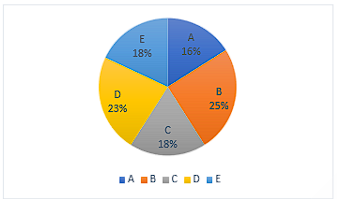
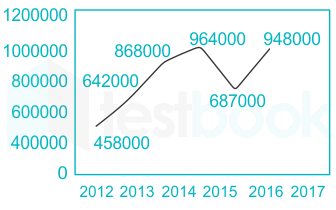
Question 77

Select the alphanumeric group that will come in place of the question mark (?) in the given series and complete the series logically.

Series: D5A, F9C, H13E, J17G, ?

  1. AOption (a)

    L25J

  2. BOption (b)

    L21I

  3. COption (c)

    J25L

  4. DOption (d)

    I21L

View answer & explanation

Correct answer

Answer: (b)B.

L21I

Why this answer is correct

The logic followed here is:

So, 'L21I' will replace the question mark of the series.

Hence, the correct answer is "Option 2".

Question 78

Which anti-Covid scheme was launched by the Haryana government on 24 March 2021?

  1. AOption (a)

    Zero Covid Project

  2. BOption (b)

    Ramban Project

  3. COption (c)

    Sanjeevani Project

  4. DOption (d)

    Covid Free Haryana Project

View answer & explanation

Correct answer

Answer: (c)C.

Sanjeevani Project

Why this answer is correct

The correct answer is Sanjeevani Project

Key Points

  • The Haryana government launched the Sanjeevani Project on 24 March 2021.
  • This project is an anti-Covid scheme aimed at combating the spread of Covid-19 and providing necessary healthcare support.
  • The project includes various measures such as vaccination drives, public awareness campaigns, and the provision of medical facilities.
  • The initiative reflects the state's commitment to ensuring the health and safety of its citizens amid the pandemic.

Additional Information

  • The Haryana government has been proactive in implementing various schemes and projects to tackle the Covid-19 pandemic effectively.
  • Along with the Sanjeevani Project, other initiatives include the establishment of isolation centers, distribution of free masks and sanitizers, and financial support to affected families.
  • Vaccination drives have been a crucial part of the state's strategy to achieve herd immunity and curb the spread of the virus.
  • Public awareness campaigns have been conducted to educate the citizens about the importance of following Covid-appropriate behavior.
  • The government has also collaborated with various organizations and stakeholders to ensure the success of these initiatives.

Question 79

For a given data, the difference between the mean and mode is 72. Using the empirical relation between mean, median and mode, find the difference between its mean and median.

  1. AOption (a)

    24

  2. BOption (b)

    32

  3. COption (c)

    28

  4. DOption (d)

    26

View answer & explanation

Correct answer

Answer: (a)A.

24

Why this answer is correct

Shortcut Trick The empirical relationship is: Mean − Mode = 3 × (Mean − Median). Given: Mean − Mode = 72. Substitute the value in the formula: 72 = 3 × (Mean − Median). Mean − Median = 72 ÷ 3 = 24. ∴ The correct answer is 24.

Alternate Method Given: Difference between Mean and Mode (Mean − Mode) = 72 Formula Used: Empirical formula: Mode = 3 × Median − 2 × Mean

Calculations: ⇒ Mode = 3 × Median − 2 × Mean ⇒ Subtracting 'Mean' from both sides to manipulate the equation: ⇒ Mean − Mode = Mean − (3 × Median − 2 × Mean) ⇒ Mean − Mode = Mean − 3 × Median + 2 × Mean ⇒ Mean − Mode = 3 × Mean − 3 × Median ⇒ Mean − Mode = 3 × (Mean − Median) ⇒ 72 = 3 × (Mean − Median) ⇒ Mean − Median = 72 ÷ 3 ⇒ Mean − Median = 24 ∴ The correct answer is 24.

Additional Information Empirical Formula For a moderately skewed distribution, the relationship is Mode = 3 Median − 2 Mean. This is also written as (Mean − Mode) = 3(Mean − Median). Symmetric Distribution In a perfectly symmetrical distribution (like the Normal Distribution), the Mean, Median, and Mode are all equal (Mean = Median = Mode). Skewed Distribution In a positively skewed distribution, Mean > Median > Mode. In a negatively skewed distribution, Mode > Median > Mean.

Question 80

Find the area of ​​plastic sheet required to make a box of length 5 cm, breadth 10 cm and height 15 cm.

  1. AOption (a)

    550 cm2

  2. BOption (b)

    650 cm2

  3. COption (c)

    600 cm2

  4. DOption (d)

    500 cm2

View answer & explanation

Correct answer

Answer: (a)A.

550 cm2

Why this answer is correct

Shortcut Trick

Required Area of Plastic Sheet = Total Surface Area of the cuboid.

Total Surface Area = 2 × (lb + bh + hl)

Area = 2 × (5 × 10 + 10 × 15 + 15 × 5)

Area = 2 × (50 + 150 + 75) = 2 × 275 = 550 cm2.

∴ The correct answer is 550 cm2.

Alternate Method

Given:

Length (l) = 5 cm

Breadth (b) = 10 cm

Height (h) = 15 cm

Formula Used:

Total Surface Area (TSA) of a Cuboid = 2(lb + bh + hl)

Calculations:

⇒ Area = 2 × (5 × 10 + 10 × 15 + 15 × 5)

⇒ Area = 2 × (50 + 150 + 75)

⇒ Area = 2 × 275

⇒ Area = 550 cm2

∴ The correct answer is 550 cm2.

Additional Information

Lateral Surface Area of Cuboid

The area of the four vertical faces (excluding top and bottom) is given by 2h(l + b).

Volume of Cuboid

The total space occupied by the box is calculated as Volume = l × b × h.

Diagonal of Cuboid

The length of the longest rod that can fit inside the box is √(l2 + b2 + h2).

Question 81

The following line graph shows the production of wheat (in tonnes) in India from 2012 to 2017. Study the graph, and answer the question asked.

In the year 2018, if the production of wheat decreases by 10% as compared to the previous year, then what will be the difference in the productions (in tonnes) of wheat in the year 2018 and the year 2015?

  1. AOption (a)

    1,15,800

  2. BOption (b)

    1,10,800

  3. COption (c)

    1,10,820

  4. DOption (d)

    1,15,820

View answer & explanation

Correct answer

Answer: (b)B.

1,10,800

Why this answer is correct

Given:

Wheat production in 2017 = 9,48,000 tonnes

Wheat production in 2015 = 9,64,000 tonnes

Percentage decrease in wheat production in 2018 = 10%

Formula used:

Production in 2018 = Production in 2017 × (1 - Decrease percentage)

Difference in production = Production in 2018 - Production in 2015

Calculations:

Production in 2018 = 9,48,000 × (1 - 10/100)

⇒ Production in 2018 = 9,48,000 × 0.9

⇒ Production in 2018 = 8,53,200 tonnes

Difference in production = 9,64,000 - 8,53,200

⇒ Difference in production = 1,10,800 tonnes

∴ The correct answer is option (2) 1,10,800.

Question 82

A square table was surrounded by eight chairs, four of them were at the corners of the table while four others were exactly in the middle of the sides of the table. Six clerks D, E, F, G, H and I were seated around this square table facing the centre of the table. The chairs at two corners of the table were vacant. E and I were seated at the corners diagonally opposite to each other. H was second to the left of G. D was second to the right of F. G was seated right and immediate next to E. Who among the following was facing H?

  1. AOption (a)

    Empty chair

  2. BOption (b)

    I

  3. COption (c)

    D

  4. DOption (d)

    F

View answer & explanation

Correct answer

Answer: (d)D.

F

Why this answer is correct

Given:A square table was surrounded by eight chairs, Six clerks D, E, F, G, H and I were seated around this square table facing the centre of the table.

  1. The chairs at two corners of the table were vacant.

  2. E and I were seated at the corners diagonally opposite to each other.

  3. H was second to the left of G.

  4. D was second to the right of F.

  5. G was seated right and immediate next to E. 

So. F will be facing H.

Hence the correct answer is "Option 4".

Question 83

Which of the following methods can be used to increase the magnitude of the induced potential difference produced in a coil due to a change in magnetic field?

(i) Increasing the number of turns in the coil

(ii) Increasing the strength of the magnetic field

(iii) Increasing the resistance of the coil wire

  1. AOption (a)

    Only (ii)

  2. BOption (b)

    Only (i)

  3. COption (c)

    (i) and (iii) both

  4. DOption (d)

    (i) and (ii) both

View answer & explanation

Correct answer

Answer: (d)D.

(i) and (ii) both

Why this answer is correct

The correct answer is (i) and (ii) both

Key Points

  • Increasing the number of turns in the coil (i) and increasing the strength of the magnetic field (ii) are both effective methods for increasing the magnitude of the induced potential difference in a coil.
  • According to Faraday's Law of Electromagnetic Induction, the induced potential difference in a coil is directly proportional to the rate of change of magnetic flux through the coil, the number of turns in the coil, and the strength of the magnetic field.
  • Increasing the number of turns (i) increases the total magnetic flux linkage, thus increasing the induced potential difference.
  • Increasing the strength of the magnetic field (ii) increases the rate of change of magnetic flux, thereby increasing the induced potential difference.
  • However, increasing the resistance of the coil wire (iii) does not directly affect the induced potential difference; it affects the current flow instead.

Additional Information

  • Faraday's Law of Electromagnetic Induction states that the induced electromotive force (EMF) in any closed circuit is equal to the negative of the time rate of change of the magnetic flux through the circuit.
  • The formula for induced EMF is given by: EMF = -N (dΦ/dt), where N is the number of turns in the coil and Φ is the magnetic flux.
  • Increasing the number of turns (N) or the rate of change of magnetic flux (dΦ/dt) will increase the induced EMF.
  • This principle is widely used in the design of electrical transformers, generators, and inductors.

Question 84

What percent more than the cost price should a shopkeeper keep the marked price of his goods so that after giving a discount of 8% on the marked price, he still gets a profit of 15%?

  1. AOption (a)

    40%

  2. BOption (b)

    25%

  3. COption (c)

    30%

  4. DOption (d)

    27%

View answer & explanation

Correct answer

Answer: (b)B.

25%

Why this answer is correct

Shortcut Trick

The relation between Marked Price (MP) and Cost Price (CP) is given by the ratio: MP/CP = (100 + Profit%)/(100 − Discount%).

MP/CP = (100 + 15)/(100 − 8) = 115/92.

Simplifying the ratio by dividing by 23: MP/CP = 5/4.

Markup = MP − CP = 5 − 4 = 1 unit.

Markup percentage = (Markup/CP) × 100 = (1/4) × 100 = 25%.

∴ The correct answer is 25%.

Alternate Method

Given: Discount = 8%, Profit = 15%. Formulas: SP = CP × (100 + P%)/100 | SP = MP × (100 − D%)/100.

⇒ Let Cost Price (CP) be 100.

⇒ Selling Price (SP) = 100 + 15% of 100 = 115.

⇒ Since Discount is 8%, SP = 92% of MP ⇒ 115 = MP × 92/100.

⇒ MP = (115 × 100) / 92 = 125.

⇒ Markup Amount = MP − CP = 125 − 100 = 25.

⇒ Markup Percentage = (25/100) × 100 = 25%.

∴ The correct answer is 25%.

Additional Information

Marked Price & Markup

Marked Price is the price printed on the label. Markup Percentage = [(MP − CP)/CP] × 100.

Relationship Formula

The formula MP × (100 − D%) = CP × (100 + P%) is highly effective for problems involving both discount and profit.

Question 85

A decision is given followed by two statements I and II. Study the given information carefully, and choose the correct option.

Decision :

The management of telecom company D has decided to postpone their hiring process for the next 2 months.

Statements :

I. Company D has just signed the biggest project of the country, which is expected to start in a few weeks, and they will need a huge workforce to complete it on time.

II. Due to the change in management, the attrition rate in company D has increased by 12%.

  1. AOption (a)

    Statement I does not support the decision, and Statement II is a neutral statement.

  2. BOption (b)

    Both statements I and II do not support the conclusion.

  3. COption (c)

    Both statements I and II support the decision.

  4. DOption (d)

    Statement I is a neutral statement, and Statement II supports the decision.

View answer & explanation

Correct answer

Answer: (b)B.

Both statements I and II do not support the conclusion.

Why this answer is correct

Given,

Statement:

The management of telecom company D has decided to postpone their hiring process for the next 2 months.

Statements:

I. Company D has just signed the biggest project of the country, which is expected to start in a few weeks, and they will need a huge workforce to complete it on time.

II. Due to the change in management, the attrition rate in company D has increased by 12%.

Analysis:

Statement I suggests that the company will soon need a large workforce, which contradicts the decision to postpone hiring. Therefore, Statement I does not support the decision.

Statement II mentions an increase in the attrition rate due to a change in management. However, it does not directly relate to the decision to postpone hiring, making it a neutral statement.

So,

The correct answer is Option 2.

Question 86

Which chromosome complement will be present in half of the gametes produced by a human male?

  1. AOption (a)

    22 + XY 

  2. BOption (b)

    22 + XX 

  3. COption (c)

    22 + X

  4. DOption (d)

    23 + X

View answer & explanation

Correct answer

Answer: (c)C.

22 + X

Why this answer is correct

The correct answer is 22 + X

Key Points

  • 22 + X chromosome complement will be present in half of the gametes produced by a human male.
  • Human males have one X and one Y chromosome in addition to 22 pairs of autosomes.
  • During meiosis, the sex chromosomes segregate so that each gamete receives either an X or a Y chromosome.
  • This results in two types of sperm: one type with 22 autosomes and an X chromosome (22 + X) and the other type with 22 autosomes and a Y chromosome (22 + Y).
  • Thus, half of the gametes will carry the 22 + X chromosome complement.

Additional Information

  • Meiosis is a type of cell division that reduces the chromosome number by half, resulting in the production of gametes (sperm and egg cells).
  • In humans, meiosis occurs in the testes for males and ovaries for females.
  • Each gamete produced by meiosis contains 23 chromosomes, which is half the number of chromosomes found in somatic cells.
  • Fertilization restores the diploid number of chromosomes (46) when a sperm and an egg combine.
  • Understanding the chromosome complement is crucial for studying genetic inheritance and disorders.

Question 87

Which of the following options represents the nearest approximate value that will come in place of question mark (?) in the following equation?

(530\sqrt{530} + 85 ÷ 24 × 4 - 255\sqrt{255} ) ÷ 3 = ?

  1. AOption (a)

    15

  2. BOption (b)

    7

  3. COption (c)

    1

  4. DOption (d)

    4

View answer & explanation

Correct answer

Answer: (b)B.

7

Why this answer is correct

Given:

(530+85÷24×4−255)3\dfrac{(\sqrt{530} + 85 ÷ 24 × 4 - \sqrt{255})}{3} = ?

Formula used:

Basic arithmetic operations

Calculation:

530≈23\sqrt{530} \approx 23

255≈16\sqrt{255} \approx 16

(23+85÷24×4−16)3\dfrac{(23 + 85 ÷ 24 × 4 - 16)}{3}

⇒ (23+14.16−16)3\dfrac{(23 + 14.16 - 16)}{3}

⇒ (21.16)3\dfrac{(21.16)}{3}

⇒ 7.05

∴ The correct answer is option (2).

Question 88

Which of the following options represents the correct order of energy flow in an ecosystem?

  1. AOption (a)

    Top Carnivores → Producers → Herbivores → Sunlight

  2. BOption (b)

    Carnivorous ←  Herbivores  ← Producer ← Sunlight

  3. COption (c)

    Top Carnivores ← Producers ← Vegetarians ← Sunlight

  4. DOption (d)

    Carnivores → Herbivores → Producers → Sunlight

View answer & explanation

Correct answer

Answer: (b)B.

Carnivorous ←  Herbivores  ← Producer ← Sunlight

Why this answer is correct

The correct answer is Carnivorous ← Herbivores ← Producer ← Sunlight

Key Points

  • Option 2 correctly represents the order of energy flow in an ecosystem.
  • Energy flow in an ecosystem typically follows the sequence: Sunlight → Producers → Herbivores → Carnivores.
  • In this sequence:
  • Sunlight is the primary source of energy.
  • Producers (plants) convert sunlight into chemical energy through photosynthesis.
  • Herbivores (vegetarians) consume producers to obtain energy.
  • Carnivores consume herbivores to obtain energy.
  • This flow of energy is crucial for maintaining the balance of the ecosystem.

Additional Information

  • The energy flow in an ecosystem is unidirectional, meaning it flows in one direction only, from the sun to higher trophic levels.
  • This flow of energy is governed by the laws of thermodynamics, particularly the second law, which states that energy transfer leads to a loss of usable energy, typically in the form of heat.
  • The efficiency of energy transfer between trophic levels is generally low, with only about 10% of the energy being passed on to the next level.
  • This inefficiency limits the number of trophic levels in an ecosystem, as energy diminishes with each transfer.

Question 89

Study the given diagram carefully and answer the question. The numbers in different sections indicate the number of units.

How many total such Argo industries are there that are either food processing industries or cold storages?

  1. AOption (a)

    11

  2. BOption (b)

    7

  3. COption (c)

    3

  4. DOption (d)

    10

View answer & explanation

Correct answer

Answer: (d)D.

10

Why this answer is correct

According to the venn diagram

The shaded area shows the number of Agro industries that are either food processing industries or cold storages

So, the total number of food processing industries or cold storages are = 7 + 3 = 10

Hence the correct answer is "Option 4".

Question 90

In a parallelogram ABCD, the length of the line joining the midpoints of AD and AC is 2 units. If the perimeter of the parallelogram is 20 units, find the length of AB.

  1. AOption (a)

    6 units

  2. BOption (b)

    5 units

  3. COption (c)

    4 units

  4. DOption (d)

    8 units

View answer & explanation

Correct answer

Answer: (c)C.

4 units

Why this answer is correct

Shortcut Trick

In ΔACD, the line joining midpoints of AD and AC is half of CD (Mid-point Theorem).

Length of line = CD ÷ 2 ⇒ 2 = CD ÷ 2 ⇒ CD = 4 units.

Opposite sides of a parallelogram are equal: AB = CD = 4 units.

∴ The correct answer is 4 units.

Alternate Method

Given: Midpoint line segment = 2 units, Perimeter = 20 units.

Formula Used: Mid-point Theorem in a triangle; Perimeter of parallelogram = 2(AB + BC).

In ΔADC, let M be the midpoint of AD and N be the midpoint of AC.

⇒ By Mid-point Theorem, MN = 1/2 × CD

⇒ 2 = 1/2 × CD

⇒ CD = 4 units

In a parallelogram, opposite sides are equal: AB = CD and BC = AD.

⇒ AB = 4 units

⇒ Perimeter = 2(AB + BC) = 20

⇒ 2(4 + BC) = 20 ⇒ 4 + BC = 10 ⇒ BC = 6 units.

∴ The correct answer is 4 units.

Additional Information

Mid-point Theorem

The line segment joining the midpoints of two sides of a triangle is parallel to the third side and half of its length.

Parallelogram Properties

Opposite sides are equal and parallel. Diagonals bisect each other but are not necessarily equal.

Perimeter of Quadrilaterals

For a parallelogram with sides a and b, Perimeter = 2(a + b). For a rhombus, Perimeter = 4a.

Question 91

Consider the statements given below, and choose the correct answer.

Statement - I : The chemical formula of bleaching powder is CaOCl2.

Statement - II : Bleaching powder reacts with dilute acids to produce chlorine.

  1. AOption (a)

    Both statements are false.

  2. BOption (b)

    Both statements are true.

  3. COption (c)

    Statement – ​​I is true, and Statement – ​​II is false.

  4. DOption (d)

    Statement – ​​II is true, and Statement – ​​I is false.

View answer & explanation

Correct answer

Answer: (b)B.

Both statements are true.

Why this answer is correct

The correct answer is Both statements are true

Key Points

  • Both statements are true.
  • The chemical formula of bleaching powder is indeed CaOCl2.
  • Bleaching powder reacts with dilute acids to produce chlorine gas (Cl2).
  • The reaction of bleaching powder with dilute acids is a common method to produce chlorine gas in laboratories.
  • These properties make bleaching powder useful in various applications such as disinfecting drinking water, bleaching fabrics, and in the chemical industry.

Additional Information

  • Bleaching powder, also known as calcium hypochlorite, is a white powder commonly used for water treatment and as a bleaching agent.
  • Its chemical formula indicates it contains calcium, oxygen, and chlorine atoms.
  • When it reacts with dilute acids, the chlorine gas produced can be used for various disinfection processes.
  • Bleaching powder is widely used in sanitation and public health due to its effectiveness in killing bacteria and other pathogens.

Question 92

The Indian Languages ​​Institute is located in _______.

  1. AOption (a)

    Hyderabad

  2. BOption (b)

    New Delhi

  3. COption (c)

    Mysore

  4. DOption (d)

    Kolkata

View answer & explanation

Correct answer

Answer: (c)C.

Mysore

Why this answer is correct

The correct answer is Mysore

Key Points

  • The Indian Languages Institute is located in Mysore.
  • Mysore is known for its rich cultural heritage and historical significance in the state of Karnataka, India.
  • The institute focuses on the research and development of Indian languages, promoting linguistic diversity and preservation.
  • It plays a crucial role in advancing the study and understanding of various Indian languages and dialects.

Additional Information

  • Mysore, officially known as Mysuru, is the third most populous city in Karnataka.
  • The city served as the capital of the Kingdom of Mysore for nearly six centuries, from 1399 until 1956.
  • Mysore is famous for its palaces, including the Mysore Palace, and for the festivities that take place during the Dasara festival when the city receives a large number of tourists from around the world.
  • The city is also a hub for education and research, with several notable institutions located there, including the University of Mysore and the Central Food Technological Research Institute (CFTRI).
  • The Indian Languages Institute in Mysore contributes significantly to the academic and cultural landscape of the city.

Question 93

Answer the question based on the given three letter letter clusters.

(Left) TED, LAY, HOC, CET, RGE (Right)

How many letters are there in the English alphabetical order between the second letter of the first letter cluster from the right and the second letter of the first letter cluster from the left?

  1. AOption (a)

    0

  2. BOption (b)

    1

  3. COption (c)

    2

  4. DOption (d)

    3

View answer & explanation

Correct answer

Answer: (b)B.

1

Why this answer is correct

Given: (left) TED, LAY, HOC, CET, RGE (right)

The second letter of the first letter cluster from the right is: G (RGE)

And, 

The second letter of the first letter cluster from the left is: E (TED)

So, the number of letters in the English alphabetical order between 'G' and 'E' is:

→ G (7th letter) - E (5th letter) - 1 = 1.

The correct answer is "Option 2".

Question 94

Study the given diagram carefully, and answer the question asked. The numbers given in different parts represent the number of persons.

Boys

Athletes

College Students

How many boys are there who are college students and athletes as well?

  1. AOption (a)

    9

  2. BOption (b)

    10

  3. COption (c)

    6

  4. DOption (d)

    12

View answer & explanation

Correct answer

Answer: (a)A.

9

Why this answer is correct

According to the Venn diagram:

The shaded area shows the total number of boys who are college students as well as athletes

So, the total number of boys who are athletes and college students are '9'

Hence the correct answer is "Option 1".

Question 95

Below are given a statement followed by four conclusions in the options. Identify which of the given conclusions is true based on the given statements?

Statement : B > D > H < T = P < A

  1. AOption (a)

    T = A

  2. BOption (b)

    T > D

  3. COption (c)

    B > H

  4. DOption (d)

    B < T

View answer & explanation

Correct answer

Answer: (c)C.

B > H

Why this answer is correct

Given Statement: B > D > H < T = P < A

Now,

Conclusions:

Option 1: T = A → False (T = P < A It gives T < A)

Option 2: T > D → False (D > H < T No relation can be established between T and D)

Option 3: B > H → True (B > D > H It gives B > H)

Option 4: B < T → False (B > D > H < T No relation can be established between B and T)

Hence, the correct answer is "Option 3".

Question 96

Eight persons - A, B, C, D, E, F, G and H, are sitting in a straight line facing north. H is third from the left end. A is sitting immediately to the right of H. There are only three persons between A and D. G is second to the left of D, and F and C are sitting immediately next to G. There are only four persons between E and C. How many persons are there between B and F?

  1. AOption (a)

    Two

  2. BOption (b)

    Three

  3. COption (c)

    One

  4. DOption (d)

    Four

View answer & explanation

Correct answer

Answer: (b)B.

Three

Why this answer is correct

Given: Eight persons - A, B, C, D, E, F, G and H, are sitting in a straight line facing north.

  1. H is third from the left end.

  2. A is sitting immediately to the right of H.

  3. There are only three persons between A and D.

  4. G is second to the left of D, and F and C are sitting immediately next to G.

  5. There are only four persons between E and C

So, three persons are there between B and F

Hence, the correct answer is "Option 2".

Question 97

In the given balanced chemical reaction, what will be the values ​​of x, y, and z respectively?

xS8 + yC → zCS2

  1. AOption (a)

    1, 4, 4

  2. BOption (b)

    2, 3, 6

  3. COption (c)

    1, 3, 5

  4. DOption (d)

    2, 6, 3

View answer & explanation

Correct answer

Answer: (a)A.

1, 4, 4

Why this answer is correct

The correct answer is x = 1, y = 4, z = 4

Key Points

  • In the balanced chemical equation, the values of x, y, and z are 1, 4, and 4 respectively.
  • The balanced chemical equation for the reaction between sulfur (S8) and carbon (C) to form carbon disulfide (CS2) is 1S8 + 4C → 4CS2.
  • Balancing chemical equations ensures the law of conservation of mass is followed, meaning the number of atoms of each element is the same on both sides of the equation.
  • In this reaction, 8 sulfur atoms from S8 react with 4 carbon atoms to produce 4 molecules of CS2, each containing 1 carbon and 2 sulfur atoms.

Additional Information

  • Balancing chemical equations is a fundamental skill in chemistry that involves making sure the number of atoms for each element is equal on both sides of the equation.
  • It is essential for understanding stoichiometry, which is the calculation of reactants and products in chemical reactions.
  • The coefficients (numbers in front of molecules) indicate the proportions of each substance involved in the reaction.
  • Properly balanced equations are crucial for laboratory work, industrial processes, and understanding chemical reactions in nature.
  • In this case, balancing helps to ensure that the reaction between sulfur and carbon is correctly represented, which is important for predicting the amount of CS2 produced.

Question 98

In a certain code language, 'MODEST' is written as 'QSHZNO' and 'OPTION' is written as 'STXDJI'. How will 'MEDIUM' be written in the same code language?

  1. AOption (a)

    QIHMYQ

  2. BOption (b)

    QDIHHP

  3. COption (c)

    QHIYMQ

  4. DOption (d)

    QIHDPH

View answer & explanation

Correct answer

Answer: (d)D.

QIHDPH

Why this answer is correct

The logic followed here is:

For 'MODEST' is coded as 'QSHZNO' 


For 'OPTION' is coded as 'STXDJI'

Similarly for, 'MEDIUM' is coded as 'QIHDPH'

Hence the correct answer is "Option 4".

Question 99

Which of the following Fundamental Rights is included in Article 16 of the Indian Constitution?

  1. AOption (a)

    Abolition of untouchability

  2. BOption (b)

    Equality of opportunity in public employment

  3. COption (c)

    End of titles

  4. DOption (d)

    Equality before law

View answer & explanation

Correct answer

Answer: (b)B.

Equality of opportunity in public employment

Why this answer is correct

The correct answer is Equality of opportunity in public employment

Key Points

  • Equality of opportunity in public employment is enshrined in Article 16 of the Indian Constitution.
  • Article 16 ensures that there shall be equality of opportunity for all citizens in matters relating to employment or appointment to any office under the State.
  • It prohibits discrimination on grounds of religion, race, caste, sex, descent, place of birth, residence, or any of them in respect of any employment or office under the State.
  • The aim of Article 16 is to provide a level playing field for all citizens and to ensure that public employment is accessible to all without any form of discrimination.

Additional Information

  • Article 16 is part of the Fundamental Rights enshrined in Part III of the Indian Constitution.
  • Fundamental Rights are a group of rights that have been recognized by the Supreme Court as requiring a high degree of protection from government encroachment.
  • These rights are guaranteed to all Indian citizens, and some of them are available to foreigners as well.
  • Fundamental Rights are enforceable by the courts, subject to certain restrictions.
  • The Constitution of India was adopted by the Constituent Assembly on 26th November 1949 and came into effect on 26th January 1950.
  • It lays down the framework defining fundamental political principles, establishes the structure, procedures, powers, and duties of government institutions, and sets out fundamental rights, directive principles, and the duties of citizens.

Question 100

Devendra can complete a piece of work in 20 days, while Ishwar can complete the same work in 25 days. If they start with Devendra and work in turns, skipping one day each, then how many days will it take to complete the work?

  1. AOption (a)

    2445\frac{4}{5} days

  2. BOption (b)

    2215\frac{1}{5} days

  3. COption (c)

    2325\frac{2}{5} days

  4. DOption (d)

    2535\frac{3}{5} days

View answer & explanation

Correct answer

Answer: (b)B.

2215\frac{1}{5} days

Why this answer is correct

Shortcut Trick

Total work (LCM of 20, 25) = 100 units.

Efficiency: Devendra = 5, Ishwar = 4. Combined (2 days) = 9 units.

In 11 cycles (22 days), work done = 11 × 9 = 99 units. Remaining = 1 unit.

On 23rd day, Devendra does 1/5 of the work.

∴ The correct answer is 22 1/5 days.

Alternate Method

PersonDaysTotal WorkEfficiency
Devendra201005
Ishwar254

Given: They work on alternate days starting with Devendra.

⇒ Day 1 (Devendra): 5 units

⇒ Day 2 (Ishwar): 4 units

⇒ Total work in 2 days = 5 + 4 = 9 units

⇒ Work done in 11 such cycles (22 days) = 9 × 11 = 99 units

⇒ Remaining work = 100 − 99 = 1 unit

⇒ Time taken by Devendra for remaining work = 1 ÷ 5 = 1/5 days

⇒ Total time = 22 + 1/5 = 22 1/5 days

∴ The correct answer is 22 1/5 days.

Additional Information

Alternate Day Concept

When people work on alternate days, calculate the total work done in one complete cycle (usually 2 days) and then find the number of full cycles required.

Time and Efficiency

Efficiency is inversely proportional to the time taken. Total Work = Efficiency × Time.

LCM Method

The Least Common Multiple (LCM) of the individual days is taken as the total work to simplify calculations into integers.

100 questions in the full paper

RRB Group D Previous Year Paper (Held on: 26 Aug 2022 Shift 2) — Questions with Answers | YourMockTest