Previous Year Paper

RRB Group D Previous Year Paper (Held on: 18 Aug 2022 Shift 2)

Held in 2022

100 questions90 minutes
With answers
Free

Paper last updated:

Practise under exam conditions

Take this paper as a timed mock test. Review your answers after you submit.

Attempt timed test

Questions & answers

Read the paper at your pace. Open an explanation when you need it.

CBT (100 questions)

Question 1

What will come in place of the question mark (?) in the following equation, if '+' and '-' are interchanged and also '×' and '÷' are interchanged?

8 - 13 + 18 ÷ 9 × 3 = ?

  1. AOption (a)

    -33

  2. BOption (b)

    33

  3. COption (c)

    32

  4. DOption (d)

    -32

View answer & explanation

Correct answer

Answer: (a)A.

-33

Why this answer is correct

BODMAS Table:


Given Equation: 8 - 13 + 18 ÷ 9 × 3 = ?

While interchanging + and - and ×\times and ÷\div in the given equation and solving using BODMAS Rule:

→ 8 + 13 - 18 × 9 ÷ 3 = ?

→ 8 + 13 - 18 × 3 = ?

→ 8 + 13 - 54

→ 21 - 54 = - 33.

Hence, the correct answer is "Option 1".

Question 2

Mendeleev's Periodic Law states that:

  1. AOption (a)

    the properties of elements are the periodic function of their atomic masses

  2. BOption (b)

    the properties of elements are the periodic function of their atomic numbers

  3. COption (c)

    the properties of elements are the periodic function of their colour

  4. DOption (d)

    the properties of elements are the periodic function of their magnetic properties

View answer & explanation

Correct answer

Answer: (a)A.

the properties of elements are the periodic function of their atomic masses

Why this answer is correct

The correct answer is option 1) ​the properties of elements are the periodic function of their atomic masses

This law was proposed by Russian chemist Dmitri Mendeleev in the late 19th century and is a fundamental principle in the development of the periodic table of elements.

Key Points

  • Mendeleev arranged the known chemical elements into a table based on their atomic masses and observed that elements with similar properties recurred at regular intervals.
  • This periodic arrangement eventually led to the modern periodic table, which is organized based on the atomic number of elements (the number of protons in an atom's nucleus) rather than atomic mass.
  • Mendeleev's work laid the foundation for our understanding of the periodic table and the organization of the chemical elements.
  • Mendeleev grouped elements with similar chemical properties into vertical columns or groups.
  • Mendeleev's table did not include noble gases since they were not discovered yet. These elements were later incorporated into the modern periodic table after their discovery.
  • Mendeleev's table was based on atomic masses, but the modern periodic table is organized by atomic number (the number of protons in an element's nucleus) instead.

Additional InformationModern Periodic Table:-

Atomic NumberThe modern periodic table is organized by increasing atomic number. Elements are arranged in order of their atomic numbers from left to right and top to bottom.
PeriodsThe rows in the periodic table are called "periods." There are seven periods in total, each corresponding to a new energy level or electron shell. Elements in the same period have the same number of electron shells.
GroupsThe columns in the periodic table are called "groups" or "families." There are 18 groups in total. Elements in the same group have similar chemical properties because they have the same number of valence electrons.
Transition MetalsThe transition metals are located in the center of the periodic table and include elements from groups 3 to 12. They often have variable oxidation states and exhibit a wide range of chemical properties.
Noble GasesThe noble gases are found in Group 18, on the far right of the periodic table. They are known for their stability and lack of reactivity.
Lanthanides and ActinidesThese two series of elements are placed below the main body of the periodic table. The lanthanides are the rare earth elements, and the actinides include the radioactive elements such as uranium and thorium.
MetalloidsMetalloids are elements that exhibit properties of both metals and nonmetals. They are typically found along the "staircase" that separates metals from nonmetals on the periodic table.
BlocksThe periodic table is often divided into four main blocks: s-block, p-block, d-block, and f-block. These blocks represent the electron subshells being filled in each element.
Periodic TrendsThe modern periodic table helps illustrate various periodic trends such as atomic radius, ionization energy, and electronegativity. These trends are crucial for understanding the behavior of elements.
Chemical SymbolsEach element is represented by a one- or two-letter chemical symbol, such as H for hydrogen, O for oxygen, and Fe for iron.
Color CodingThe modern periodic table is often color-coded to distinguish between different categories of elements, such as metals, nonmetals, and metalloids.
Electronegativity and ReactivityElements on the left side of the periodic table are generally more metallic and tend to lose electrons in chemical reactions, while elements on the right side are more nonmetallic and tend to gain electrons. The reactivity of elements tends to increase as you move down a group and from right to left within a period.


The modern periodic table is a powerful tool for organizing and understanding the properties of chemical elements. It provides a framework for predicting the behavior of elements and their compounds, making it an essential resource for chemists and scientists.

Question 3

To connect a number of resistors in parallel can be considered equivalent to:

  1. AOption (a)

    increasing cross sectional area of the conductor

  2. BOption (b)

    decreasing cross sectional area of the conductor

  3. COption (c)

    increasing length of the conductor

  4. DOption (d)

    increasing resistance of the conductor

View answer & explanation

Correct answer

Answer: (a)A.

increasing cross sectional area of the conductor

Why this answer is correct

The correct answer is option 1 ) increasing cross-sectional area of the conductor

In a parallel arrangement of resistors, each resistor has its own separate path for current flow, which is analogous to increasing the cross-sectional area of the conductor. This reduces the overall resistance and allows more current to flow through the circuit, similar to what would happen if you used a larger conductor with greater cross-sectional area.

Key Points

  • In a series combination, total resistance is the sum of the individual resistances, and the conductor's cross-sectional area doesn't directly impact the total resistance.
  • In a parallel combination, the total resistance depends on the sum of the reciprocals of the individual resistances, and the conductor's cross-sectional area can indirectly affect the total resistance by influencing the resistance of the conductor itself, which may be relevant in practical applications.
  • Larger cross-sectional areas lead to lower resistance and higher current capacity.
  • While smaller cross-sectional areas result in higher resistance and lower current capacity.

Important Points 

The cross-sectional area of a conductor can significantly affect the current passing through it.

This relationship is described by Ohm's Law, which states that the current (I) flowing through a conductor is directly proportional to the cross-sectional area (A) of the conductor and inversely proportional to the resistance (R) of the conductor:

I ∝ AR\frac{A}{R}

 To find the total resistance (Rtotal) in a series circuit, you simply add up the individual resistances:


Rtotal = R1 + R2 + R3 + ...

In Parallel combination, the reciprocal of the total resistance (1/Rtotal) is equal to the sum of the reciprocals of the individual resistances:


1R=1R1+1R2+1R3+...\frac{1}R = \frac{1}{R1} + \frac{1}{R2} +\frac{1}{R3} + ...

Additional Information

Resistivity (ρ, rho) is an intrinsic property of a material that quantifies its ability to resist the flow of electric current. It is specific to the material and is measured in ohm-meters (Ω·m).


Resistivity is a key factor in determining the resistance of a conductor. The resistance of a conductor (R) can be calculated using the formula: R=ρLAR = ρ\frac{ L} { A} where ρ is the resistivity, L is the length of the conductor, and A is the cross-sectional area.

Question 4

In a certain code language, TRIP is written as WULS and SOME is written as VRPH. How will CLAN be written in the same language?

  1. AOption (a)

    FOEQ

  2. BOption (b)

    FODQ

  3. COption (c)

    FODR

  4. DOption (d)

    FPDQ

View answer & explanation

Correct answer

Answer: (b)B.

FODQ

Why this answer is correct

The position and positional values of English alphabets is given below:

For, TRIP is written as WULS.

For, SOME is written as VRPH.

For, CLAN: 

Hence, CLAN will be written as FODQ.

Hence, the correct answer is "Option 2".

Question 5

The fraction equivalent to 0.474747... is:

  1. AOption (a)

    279\frac{27}{9}

  2. BOption (b)

    1127\frac{11}{27}

  3. COption (c)

    4799\frac{47}{99}

  4. DOption (d)

    27100\frac{27}{100}

View answer & explanation

Correct answer

Answer: (c)C.

4799\frac{47}{99}

Why this answer is correct

Given:

The fraction equivalent to 0.474747... is:

Formula Used:

Let x = 0.474747...

Then 100x = 47.474747...

Subtracting these two equations:

100x - x = 47.474747... - 0.474747...

Calculation:

100x - x = 47.474747... - 0.474747...

⇒ 99x = 47

x = 47/99

∴ The correct answer is 47/99 (3).

Question 6

The formation of water from hydrogen and oxygen is an example of ________.

  1. AOption (a)

    combination reaction

  2. BOption (b)

    oxidation and reduction

  3. COption (c)

    decomposition reaction

  4. DOption (d)

    displacement reaction

View answer & explanation

Correct answer

Answer: (a)A.

combination reaction

Why this answer is correct

The correct answer is option 1) combination reaction

2H2 + O2 → 2H2O

In a combination reaction, two or more substances combine to form a single product. In the case of the formation of water (H2O), hydrogen gas (H2) and oxygen gas (O2) combine to produce water.

Key Points

  • The formation of water is a combustion reaction, specifically known as the combustion of hydrogen.
  • It is an exothermic reaction, meaning it releases energy in the form of heat and light.
  • The stoichiometry of the reaction indicates that a 2:1 ratio of hydrogen to oxygen is required to form water.
  • Hydrogen and oxygen combustion to produce water has industrial applications, including in rocket propulsion, fuel cells, and in some chemical reactions and industrial processes that require high-temperature heat sources.

Important Points step-by-step process of how water is formed from hydrogen and oxygen

1PreparationYou need to start with a supply of hydrogen gas (H2) and oxygen gas (O2). These gases can be obtained by various methods, such as electrolysis of water or from other sources.
2Combining the Gases:The gases are mixed in the correct stoichiometric ratio, which is 2 moles of hydrogen gas (H2) for every 1 mole of oxygen gas (O2). This is crucial for the reaction to proceed efficiently.
3Ignition or ActivationTo initiate the reaction, you typically need to provide some form of activation energy. This can be achieved by providing a spark or a source of heat to start the combustion. In the absence of an ignition source, the reaction might not begin.
4Formation of Water Vapor (H2O)Once the reaction is initiated, hydrogen molecules (H2) and oxygen molecules (O2) break apart, and the individual hydrogen and oxygen atoms recombine to form water molecules (H2O). This reaction is highly exothermic and releases a significant amount of energy in the form of heat and light. The balanced chemical equation for this process is: 2H2 + O2 → 2H2O
5Release of EnergyThe energy released during this reaction is responsible for the high temperature and the production of a hot flame. This energy is harnessed for various practical applications, such as in rocket propulsion, fuel cells, and combustion engines.
6Cooling and CondensationAs the hot water vapor rises, it begins to cool and condense in the surrounding air. This process is responsible for the formation of water droplets or steam, depending on the temperature and pressure conditions.
7CollectionThe water droplets or steam can be collected or harnessed for various purposes, depending on the specific application. In some cases, water vapor can be condensed and collected as liquid water.
8End ResultThe end result of this process is the formation of water (H2O) from the combination of hydrogen (H2) and oxygen (O2) in the presence of an ignition source. This reaction is known as the combustion of hydrogen.


Additional Information There are typically 5 main types of chemical reactions discussed in introductory chemistry:

1Combination Reaction (Synthesis)Combination Reaction (Synthesis): In this type of reaction, two or more substances combine to form a single product. For example, the formation of water from hydrogen and oxygen: 2H2 + O2 → 2H2O
2Decomposition ReactionIn a decomposition reaction, a single compound breaks down into two or more simpler substances. An example is the decomposition of hydrogen peroxide: 2H2O2 → 2H2O + O2
3Single Replacement Reaction (Displacement)In single replacement reactions, one element replaces another element in a compound. For instance, the displacement of hydrogen by zinc in hydrochloric acid: Zn + 2HCl → ZnCl2 + H2
4Double Replacement Reaction (Metathesis)Double replacement reactions involve the exchange of ions between two compounds, resulting in the formation of two new compounds. For example, the reaction between silver nitrate and sodium chloride: AgNO3 + NaCl → AgCl + NaNO3
5Neutralization ReactionThis is a special type of double replacement reaction where an acid reacts with a base to form water and a salt. An example is the neutralization of hydrochloric acid and sodium hydroxide: HCl + NaOH → H2O + NaCl

Question 7

____________ is represented by the root apex's constantly dividing cells.

  1. AOption (a)

    Meristematic growth

  2. BOption (b)

    Maturation

  3. COption (c)

    Increase hormonal level

  4. DOption (d)

    Germination

View answer & explanation

Correct answer

Answer: (a)A.

Meristematic growth

Why this answer is correct

The correct answer is Option- 1

Explanation - 

  • The growth of plants occurs only in a particular specific region of the plant. This is because of the dividing tissue, known as Meristematic tissue.
  • The cells of the meristematic tissue divide actively to form specialized structures such as buds of leaves and flowers, tips of roots and shoots, etc.
  • These cells help to increase the length and girth of the plant. The meristematic tissues heal the wounds of an injured plant.

Characteristics of Meristematic Tissue - 

  • It has the quality of self-renewal as every time the cell divides, one cell remains just like the parent cell and the others form specialized structures.
  • vacuolesIt has very few small vacuole.
  • These are living and thin-walled.
  • The protoplasm of the cell is very dense.
  • They have single large and prominent nucleus.
<br>

Types of meristematic Tissue - 

Depending on the region where they are present , meristematic tissue is classified as - Apical, Intercalary, and Lateral Meristematic tissue.

Apical MeristemLateral MeristemIntercalary Meristem
- Present at the tips of the roots and shoots and help in the increase in the height of the plants.- Present in the stems and roots on the lateral side.- Present within the leaves and internodes at the intercalary position.
- Various cell divisions facilitate the growth of the cells in the roots and shoots. and help in cellular enlargement.- It increases the thickness of the plant. - Vascular cambium and cork cambium are the 2 lateral meristems.- These help to increase the length of the internode. It is in a neighborhood with grass, monocots, and pines.
<br>

Depending on the function Meristematic tissue is of 3 types - Protoderm, Procambium, and Ground Meristem.

ProtodermProcambiumGround Meristem
- It is the outer plant tissue and forms the epidermis.- It is the innermost tissue and leads in the rise to the xylem and phloem.- The cells are large with thick walls.
- It protects the plants from any mechanical shocks.- It helps in the transport of water and nutrients to different parts of the plant.- It forms the cortex, pericycle, and pith.

Other Plant Tissues - 

Question 8

Which team won the Santosh Trophy 2021 - 22, the 75th edition of the Football tournament?

  1. AOption (a)

    Karnataka

  2. BOption (b)

    Kerala

  3. COption (c)

    West Bengal

  4. DOption (d)

    Meghalaya

View answer & explanation

Correct answer

Answer: (b)B.

Kerala

Why this answer is correct

The correct answer is Kerala

Key Points

  • Kerala won the Santosh Trophy 2021-22, marking the 75th edition of the tournament.
  • The Santosh Trophy is a prestigious football tournament in India, organized by the All India Football Federation (AIFF).
  • The final match saw Kerala triumph over West Bengal, securing their victory.
  • This win adds to Kerala's illustrious history in the tournament, showcasing their strong football culture and talent.

Additional Information

  • The Santosh Trophy was started in 1941 and is named after the late Maharaja Sir Manmatha Nath Roy Chowdhary of Santosh.
  • The tournament is an annual competition in Indian football and is contested by states and government institutions.
  • West Bengal has historically been one of the most successful teams in the Santosh Trophy, with numerous titles to their name.
  • The competition provides a platform for players from different states to showcase their talent and potentially get selected for the national team.

Question 9

Safflower, shisham, khair, arjun and mulberry are the main trees of which vegetation?

  1. AOption (a)

    Tropical Evergreen Forests

  2. BOption (b)

    Mangrove Forests

  3. COption (c)

    Tropical Deciduous Forests

  4. DOption (d)

    Montane Forests

View answer & explanation

Correct answer

Answer: (c)C.

Tropical Deciduous Forests

Why this answer is correct

The correct answer is Tropical Deciduous Forests

Key Points

  • Safflower, shisham, khair, arjun, and mulberry are the main trees found in Tropical Deciduous Forests.
  • Tropical Deciduous Forests are also known as Monsoon Forests and are characterized by trees that shed their leaves seasonally.
  • These forests are found in regions with a distinct dry season and receive moderate rainfall.
  • They are important for timber and other forest products and support a diverse range of wildlife.
  • These forests are primarily found in parts of India, Southeast Asia, and Central America.

Additional Information

  • Tropical Evergreen Forests are dense, multi-layered, and found in regions with heavy rainfall.
  • Mangrove Forests are found in coastal areas and are known for their salt-tolerant trees.
  • Montane Forests are located in mountainous regions and have varied types of vegetation depending on altitude.
  • The forest cover in India is monitored and managed by the Forest Survey of India.
  • Conservation of forests is crucial for maintaining ecological balance and biodiversity.

Question 10

A class of 30 students appeared in a test. The average score of 12 students is 80, and that of the rest is 75. What is the average score of the class?

  1. AOption (a)

    56

  2. BOption (b)

    67

  3. COption (c)

    87

  4. DOption (d)

    77

View answer & explanation

Correct answer

Answer: (d)D.

77

Why this answer is correct

Shortcut Trick

Ratio of student groups = 12 : 18 ⇒ 2 : 3.

Using weighted average method:

Combined Average = [(2 × 80) + (3 × 75)] ÷ (2 + 3)

Combined Average = (160 + 225) ÷ 5 = 385 ÷ 5 = 77.

∴ The correct answer is 77.

Alternate Method

Given:

Total students in class = 30

Number of students in first group (n1) = 12; Average score (A1) = 80

Number of students in second group (n2) = 30 − 12 = 18; Average score (A2) = 75

Formula Used:

Average Score = (Total Sum of Scores) ÷ (Total Number of Students)

Calculations:

⇒ Total score of 12 students = 12 × 80 = 960

⇒ Total score of remaining 18 students = 18 × 75 = 1350

⇒ Total score of the entire class = 960 + 1350 = 2310

⇒ Average score of the class = 2310 ÷ 30

⇒ Average score = 77

∴ The correct answer is 77.

Additional Information

Combined Average Formula

When two groups with averages A1 and A2 are mixed, the combined average is (n1A1 + n2A2) ÷ (n1 + n2).

Deviation Method

Assume a temporary average (A). Net Average = A + (∑ Deviations ÷ Total Count). This simplifies large multiplications.

Weighted Average Property

The combined average always lies between the lowest and highest individual averages (75 < 77 < 80).

Question 11

Which of the following reactions represents symbolic combination reaction? 

  1. AOption (a)

    XY → X + Y

  2. BOption (b)

    A + B → C

  3. COption (c)

    AB + CD → AC + BD

  4. DOption (d)

    PQ + R → PR + Q

View answer & explanation

Correct answer

Answer: (b)B.

A + B → C

Why this answer is correct

The correct answer is Option - 2.

Key PointsCombination Reaction- 

  • A direct combination reaction is a reaction where two or more elements or compounds combine to form a single compound.
  • Such reactions are represented by equations of the following form: A + B → C.
  • In combination reactions, there is no limitation in the number of reactants that can participate in the reaction. Also, the reaction is generally exothermic because, during a combination reaction, a new bond is formed between the reactant molecules that lead to the release of heat.
  • For example,
  • The formation of the salt barium fluoride by the combination of barium metal and fluorine gas is a highly exothermic reaction.
  • Ba (s)  +  F2 (g)  → BaF2 (s)

Types of  Combination Reactions

There are 3 ways in which a combination reaction can take place.

  • Combination of two or more elements-.
  • Carbon and oxygen combine to form Carbon Dioxide gas
  • C (g) +  O2 (g)  →  CO2 (g)
  • Combination of two or more compounds -
  • The formation of calcium hydroxide (slaked lime) by the reaction of calcium oxide (quick lime) and water.
  • CaO (s)  + H2O(l)  → Ca(OH)2 (s)
  • Combination of compound with element -
  • Formation of Carbon Dioxide gas from the compound carbon monoxide and the element oxygen is an example of this type of combination reaction
  • 2 CO(g) + O2 (g)  → 2 CO2 (g)​

Additional Information

Some other types of Reaction - 

Type of chemical reactionExplanationGeneral representation
Decomposition reactionThe opposite of a combination reaction – a complex molecule breaks down to make simpler ones.AB → A + B
Precipitation reactionTwo solutions of soluble salts are mixed resulting in an insoluble solid (precipitate) forming.A + Soluble salt B  → Precipitate + soluble salt C
Displacement reactionOne element takes place with another element in the compound.A + BC → AC + B

Question 12

In a certain code language, 'LEFT' is written as 'VGFN' and 'DESK’ is written as ‘MTFF'. How will 'HELP' be written in that language?

  1. AOption (a)

    SMFJ

  2. BOption (b)

    RMFJ

  3. COption (c)

    QMFJ

  4. DOption (d)

    RNFJ

View answer & explanation

Correct answer

Answer: (b)B.

RMFJ

Why this answer is correct

The position and its positional value of English alphabet is given below:

For, LEFT is written as VGFN

For, DESK is written as MTFF

Similarly, for HELP:

Here, HELP will be written as RMFJ.

Hence, the correct answer is "Option 2".

Question 13

Read the given statement and conclusions carefully. Assuming that the information given in the statements is true, decide which of the given conclusions logically follow(s) from the statement.

Statement:

Cyclone Sepa is expected to make landfall by 3 p.m. today on the Balasore coast. Rough seas, heavy rain and strong winds are expected to lash Balasore from 11 a.m. onwards. Power supply in Balasore is likely to be affected from 2 p.m. to 9 p.m.

Conclusions:

I. There could be power cuts in Balasore after 3 p.m. today.

II. It would be unsafe for fishermen to venture out into the sea today, till the cyclone passes.

  1. AOption (a)

    Only conclusion I follows

  2. BOption (b)

    Both conclusions I and II follow

  3. COption (c)

    Only conclusion II follows

  4. DOption (d)

    Neither conclusion I nor II follows

View answer & explanation

Correct answer

Answer: (b)B.

Both conclusions I and II follow

Why this answer is correct

Given Statement:

Cyclone Sepa is expected to make landfall by 3 p.m. today on the Balasore coast. Rough seas, heavy rain and strong winds are expected to lash Balasore from 11 a.m. onwards. Power supply in Balasore is likely to be affected from 2 p.m. to 9 p.m.

Conclusions:

I. There could be power cuts in Balasore after 3 p.m. today → True (Because it is given in the statement that power supply in Balasore is likely to be affected from 2 p.m. to 9 p.m. Since Cyclone Sepa is expected to make landfall by 3 p.m., it is reasonable to conclude that there could be power cuts in Balasore after 3 p.m. due to the cyclone.)

II. It would be unsafe for fishermen to venture out into the sea today, till the cyclone passes → True (According to given statement, rough seas, heavy rain, and strong winds are expected to lash Balasore from 11 a.m. onwards due to Cyclone Sepa. These conditions indicate dangerous weather for fishermen, making it unsafe to venture out into the sea until the cyclone passes.)

So, both conclusion I and II follows.

Hence, the correct answer is "Option 2".

Question 14

Study the given letter, symbol series and answer the question that follows.

L @ S O J ^ B U # W R < E M @ N U # B * H ! A & L E W % H & G A * S A # L D

How many consonants are immediately preceded by a symbol and immediately followed by a vowel?

  1. AOption (a)

    5

  2. BOption (b)

    3

  3. COption (c)

    4

  4. DOption (d)

    6

View answer & explanation

Correct answer

Answer: (d)D.

6

Why this answer is correct

Given: L @ S O J ^ B U # W R < E M @ N U # B * H ! A & L E W % H & G A * S A # L D

Consonants are immediately preceded by a symbol and immediately followed by a vowel.

So, the pattern needed is: Symbol - Consonants - Vowel

Now,

So, there are 'Six' pairs i.e. '@ S O', '^ B U', '@ N U', '& L E', '& G A', and '* S A'.

Hence, the correct answer is "Option 4".

Question 15

An optical device Y has positive focal length. Y is: 

  1. AOption (a)

    either a concave lens or a concave mirror

  2. BOption (b)

    either a convex lens or a convex mirror

  3. COption (c)

    either a convex lens or a concave mirror

  4. DOption (d)

    either concave lens or a convex mirror

View answer & explanation

Correct answer

Answer: (b)B.

either a convex lens or a convex mirror

Why this answer is correct

The correct answer is Option - (2)

Key Points

  • Lens: Convex Lens (Converging Lens) has a positive focal length. It converges parallel rays of light to a real focal point on the opposite side of the lens.
  • Mirror: Convex Mirror (Diverging Mirror) has a positive focal length. It diverges parallel rays of light, making them appear to come from a virtual focal point behind the mirror.

Additional Information The Sign of focal length depends on the direction of focus.

 Explanation - 

  • Positive focal length gives us an idea about the position of the focus point i.e. positive focal length means the focus point and object are on the different sides and the object is in front of the mirror or lens whereas the focus point is behind the lens or mirror. In the positive focal length,
  • Or, the focus point is on the opposite side of the mirror or lens.
  • Similarly,
  • A negative focal length means both the focus point and object are on the same side and in front of the lens or mirror.
  • As we know the numbers lying on the right side/up side are positive and the numbers lying on the left side/downside are negative on a number line.
  • The same concept applies here also.


<br>

Formula to calculate focal length in the mirror - 

1F=1v+1u\frac{1}{F}=\frac{1}{v}+\frac{1}{u}

Difference between lens and mirror - 

Basis of comparisonMirrorLense
MeaningMirror implies a glass surface with a silver polishThe lens is a surface of glass or plastic, bounded by one plane or one curved or both curved surfaces.
NaturePlane or curvedUsually curved with one side or both sides.
Working principleLaw of ReflectionLaw of Refraction
Equation1F=1U+1V\frac{1}{F}=\frac{1}{U}+\frac{1}{V}1F=1V−1U\frac{1}{F}=\frac{1}{V}-\frac{1}{U}

Question 16

Which Article deals with protection of life and personal liberty?

  1. AOption (a)

    Article 31

  2. BOption (b)

    Article 12

  3. COption (c)

    Article 22

  4. DOption (d)

    Article 21

View answer & explanation

Correct answer

Answer: (d)D.

Article 21

Why this answer is correct

The correct answer is Article 21

Key Points

  • Article 21 of the Constitution of India deals with the protection of life and personal liberty.
  • It states that "No person shall be deprived of his life or personal liberty except according to procedure established by law."
  • Article 21 is considered one of the most important articles in the Indian Constitution as it guarantees the fundamental right to life and personal liberty.
  • This article has been interpreted by the Supreme Court of India to include various derivative rights such as the right to privacy, the right to a healthy environment, and the right to live with dignity.
  • It acts as a safeguard against the arbitrary actions of the state and ensures that any deprivation of life or personal liberty must follow a fair, just, and reasonable procedure.

Additional Information

  • Article 21 has been expansively interpreted by the judiciary to cover a wide range of rights, making it one of the most dynamic provisions in the Constitution.
  • It has been judicially expanded to include the right to shelter, the right to livelihood, the right to health, and the right to education, among others.
  • The protection under Article 21 is available to both citizens and non-citizens of India.
  • It is part of the fundamental rights enshrined in Part III of the Constitution, which are enforceable by the courts, ensuring that any violation can be challenged in the judiciary.
  • Article 21 has played a crucial role in the development of constitutional jurisprudence in India, particularly in the realm of human rights.

Question 17

Which of the following events takes place during diastole in the human heart?

  1. AOption (a)

    Blood leaves the ventricle

  2. BOption (b)

    Blood enters the aorta

  3. COption (c)

    Blood enters the ventricle

  4. DOption (d)

    Blood enters the lungs

View answer & explanation

Correct answer

Answer: (c)C.

Blood enters the ventricle

Why this answer is correct

The correct answer is blood enters the ventricle.

Key Points

  • During diastole, the heart muscle relaxes and allows the chambers to fill with blood.
  • Option 3 is correct because blood enters the ventricles during diastole.
  • Diastole is a crucial phase of the cardiac cycle that ensures the heart is adequately filled with blood before the next contraction.
  • This phase helps maintain proper circulation and ensures that oxygenated blood is efficiently delivered to various parts of the body.

Additional Information

  • The heart undergoes two main phases: systole (contraction) and diastole (relaxation).
  • During systole, the ventricles contract to pump blood out of the heart.
  • Blood enters the aorta and pulmonary arteries during systole, not diastole.
  • Proper functioning of the diastolic phase is essential for maintaining cardiac efficiency and overall cardiovascular health.
  • Any disruption in the diastolic phase can lead to inadequate filling of the heart and subsequent circulatory problems.

Question 18

The diagonal and one side of a rectangular plot are 65 m and 63 m, respectively. What is the perimeter of the rectangular plot?

  1. AOption (a)

    196 m

  2. BOption (b)

    256 m

  3. COption (c)

    225 m

  4. DOption (d)

    158 m

View answer & explanation

Correct answer

Answer: (d)D.

158 m

Why this answer is correct

Shortcut Trick

Using Pythagorean Triplet (16, 63, 65):

If Diagonal = 65 and Side 1 = 63, then Side 2 = √(652 − 632) = √((65+63)(65−63)) = √(128 × 2) = √256 = 16 m.

Perimeter = 2 × (Length + Breadth) = 2 × (63 + 16) = 2 × 79 = 158 m.

∴ The correct answer is 158 m.

Alternate Method

Given:

Diagonal (d) = 65 m

One side (length, l) = 63 m

Formula Used:

Diagonal of rectangle = √(l2 + b2)

Perimeter of rectangle = 2(l + b)

Calculations:

⇒ d2 = l2 + b2

⇒ 652 = 632 + b2

⇒ b2 = 4225 − 3969

⇒ b2 = 256

⇒ b = √256 = 16 m

⇒ Perimeter = 2(63 + 16)

⇒ Perimeter = 2(79)

⇒ Perimeter = 158 m

∴ The correct answer is 158 m.

Additional Information

Area of Rectangle

The total space occupied by the rectangle, calculated as Area = length × breadth.

Pythagorean Theorem

In any right-angled triangle, the square of the hypotenuse (diagonal) equals the sum of squares of the other two sides: a2 + b2 = c2.

Properties of Rectangles

Opposite sides are equal and parallel, and each interior angle is 90°. Diagonals bisect each other and are equal in length.

Question 19

Calcium sulphate dihydrate is the chemical name of: 

  1. AOption (a)

    washing soda

  2. BOption (b)

    gypsum

  3. COption (c)

    baking powder

  4. DOption (d)

    plaster of Paris

View answer & explanation

Correct answer

Answer: (b)B.

gypsum

Why this answer is correct

The correct answer is gypsum.

Key Points

  • Gypsum is the chemical name for calcium sulphate dihydrate.
  • It is a naturally occurring mineral used in various industries such as construction, agriculture, and food production.
  • In construction, gypsum is used to make plaster, drywall, and other building materials due to its fire-resistant properties.
  • In agriculture, gypsum is used to improve soil structure and reduce soil compaction, enhancing water infiltration and root growth.
  • In the food industry, gypsum is used as a coagulant in products like tofu and as a calcium supplement.

Additional Information

  • Washing soda is sodium carbonate (Na₂CO₃) and is used in laundry detergents and cleaning agents.
  • Baking powder is a mixture of baking soda (sodium bicarbonate) and an acid, used as a leavening agent in baking.
  • Plaster of Paris is a quick-setting gypsum plaster consisting of a fine white powder (calcium sulfate hemihydrate) that hardens when moistened and allowed to dry.
  • Gypsum is a versatile material with a wide range of applications, making it an important mineral in various sectors.

Question 20

If AB = x + 3, BC = 2x and AC = 4x - 5, then for what value of 'x' does B lie on AC?

  1. AOption (a)

    2

  2. BOption (b)

    3

  3. COption (c)

    5

  4. DOption (d)

    8

View answer & explanation

Correct answer

Answer: (d)D.

8

Why this answer is correct

Shortcut Trick

For point B to lie on the segment AC, the points must be collinear such that AB + BC = AC.

Substitute the given expressions: (x + 3) + 2x = 4x − 5

Combine like terms: 3x + 3 = 4x − 5

Solve for x: 4x − 3x = 3 + 5 ⇒ x = 8

∴ The correct answer is 8.

Alternate Method

Given: AB = x + 3, BC = 2x, AC = 4x − 5

Formula Used: Segment Addition Postulate: If point B lies on the segment AC, then the sum of the lengths of the smaller segments equals the total length: AB + BC = AC.

⇒ AB + BC = AC

⇒ (x + 3) + 2x = 4x − 5

⇒ 3x + 3 = 4x − 5

⇒ 4x − 3x = 3 + 5

⇒ x = 8

∴ The correct answer is 8.

Additional Information

Collinearity of Points

Three points are collinear if they lie on the same straight line. For points A, B, and C, if B is between A and C, then AB + BC = AC.

Triangle Inequality Theorem

For any three points to form a triangle, the sum of any two sides must be strictly greater than the third side. If the sum equals the third side, the points are collinear and no triangle can be formed.

Question 21

The diagram of the human excretory system is given below. Select the option that correctly shows the functions of parts 'a' and 'b'.

  1. AOption (a)

    a - Formation of urine, b - Collection of urine

  2. BOption (b)

    a - Formation of urine, b - Carrying urine for storage

  3. COption (c)

    a - Formation of urine, b - Throwing urine outside the body

  4. DOption (d)

    a - Collection of urine, b - Formation of urine

View answer & explanation

Correct answer

Answer: (b)B.

a - Formation of urine, b - Carrying urine for storage

Why this answer is correct

The correct answer is a - Formation of urine, b - Carrying urine for storage.

Key Points

  • Part 'a' of the human excretory system is responsible for the formation of urine.
  • Part 'b' of the human excretory system is responsible for carrying urine for storage.
  • The correct association of functions with parts 'a' and 'b' is crucial for understanding how the excretory system works.
  • The kidneys (part 'a') filter blood to form urine, while the ureters (part 'b') transport the urine to the bladder for storage.

Additional Information

  • The human excretory system comprises kidneys, ureters, bladder, and urethra.
  • The kidneys filter waste products from the blood to produce urine.
  • The ureters are tubes that carry urine from the kidneys to the bladder.
  • The bladder stores urine until it is excreted from the body through the urethra.
  • Proper functioning of each part is essential for maintaining the body's internal environment and preventing the buildup of harmful substances.

Question 22

The Panchayati Raj Institutions DO NOT exist in which of the following states as on June 2022?

  1. AOption (a)

    Manipur

  2. BOption (b)

    Tripura

  3. COption (c)

    Nagaland

  4. DOption (d)

    Arunachal Pradesh

View answer & explanation

Correct answer

Answer: (c)C.

Nagaland

Why this answer is correct

The correct answer is Nagaland.

Key Points

  • Nagaland does not have Panchayati Raj Institutions as on June 2022.
  • Panchayati Raj Institutions are a system of rural local self-government in India, enacted by the 73rd Constitutional Amendment Act of 1992.
  • They aim to build democracy at the grassroots level and were introduced to ensure local self-governance.
  • While most states in India have implemented Panchayati Raj Institutions, some states like Nagaland have not adopted this system due to their unique administrative and local governance structures.

Additional Information

  • The 73rd Constitutional Amendment Act was passed in 1992 and came into effect on 24th April 1993, marking a significant step towards decentralization of power.
  • It mandates the establishment of Panchayats at the village, intermediate, and district levels in states and Union Territories.
  • The act also provides for the reservation of seats for Scheduled Castes, Scheduled Tribes, and women, ensuring inclusive participation in local governance.
  • Despite the general implementation of Panchayati Raj Institutions, certain regions with special administrative structures, such as Nagaland, have not adopted this system.
  • Nagaland follows a unique village governance system based on traditional customs and practices of its indigenous communities.

Question 23

The rate of increase in ex-ante consumption due to a unit increment in income is called _________.

  1. AOption (a)

    marginal propensity to consume

  2. BOption (b)

    average propensity to save

  3. COption (c)

    average propensity to consume

  4. DOption (d)

    marginal propensity to save

View answer & explanation

Correct answer

Answer: (a)A.

marginal propensity to consume

Why this answer is correct

The correct answer is marginal propensity to consume

Key Points

  • The rate of increase in ex-ante consumption due to a unit increment in income is called the marginal propensity to consume.
  • The marginal propensity to consume (MPC) is a measure used in economics to quantify the change in consumption that results from a change in income.
  • It is calculated by dividing the change in consumption by the change in income.
  • An MPC of 1 means that all additional income is spent, while an MPC of 0 means that all additional income is saved.
  • Understanding MPC is crucial for policymakers to predict the impact of fiscal policies on consumption and savings behavior.

Additional Information

  • The concept of MPC is part of Keynesian economics, which was introduced by John Maynard Keynes.
  • Keynesian economics suggests that during periods of economic downturns, increased government spending can help to stimulate demand and pull the economy out of recession.
  • MPC is a fundamental concept in the formulation of fiscal policy, particularly in the context of economic stimulus measures.
  • For instance, a higher MPC indicates that a fiscal stimulus (such as tax cuts or direct payments) will likely result in a larger increase in aggregate demand.

Question 24

As of January 2022, which country has become the world's top exporter of cucumber?

  1. AOption (a)

    India

  2. BOption (b)

    America

  3. COption (c)

    Canada

  4. DOption (d)

    China

View answer & explanation

Correct answer

Answer: (a)A.

India

Why this answer is correct

The correct answer is India

Key Points

  • As of January 2022, India has become the world's top exporter of cucumbers.
  • India has surpassed other major cucumber exporting countries in terms of volume and value.
  • The country's favorable climate and advanced agricultural practices have contributed to this achievement.
  • Indian cucumbers are exported to numerous countries around the globe, meeting international quality standards.

Additional Information

  • India's agricultural sector is a significant contributor to its economy, with various fruits and vegetables being exported worldwide.
  • The country has implemented several initiatives to boost agricultural productivity and export potential.
  • Technological advancements and government policies have played a crucial role in enhancing the quality and quantity of agricultural produce in India.
  • India's diverse climate allows for the cultivation of a wide range of crops, making it a key player in the global agricultural market.

Question 25

Magnification produced by a lens is equal to:

  1. AOption (a)

    u/v

  2. BOption (b)

    -v/u

  3. COption (c)

    v/u

  4. DOption (d)

    -u/v

View answer & explanation

Correct answer

Answer: (c)C.

v/u

Why this answer is correct

The correct answer is v/u

Key Points

  • The magnification (m) produced by a lens is given by the formula m = v/u, where v is the image distance and u is the object distance.
  • If the image is formed on the same side as the object (virtual image), v will be negative, and if the image is formed on the opposite side (real image), v will be positive.
  • The magnification can also indicate the nature of the image: if |m| > 1, the image is magnified; if |m| < 1, the image is diminished; and if |m| = 1, the image is the same size as the object.

Additional Information

  • For a convex lens, when the object is placed beyond the focal point, the image formed is real and inverted, and the magnification is positive.
  • For a concave lens, the image formed is always virtual, upright, and diminished, and the magnification is negative.
  • The lens formula, which relates the object distance (u), image distance (v), and focal length (f) of the lens, is given by 1/f = 1/v - 1/u.
  • Understanding the sign conventions is crucial for correctly applying these formulas in lens problems.

Question 26

How many such pairs of letters are there in the word 'CAPITAL (in both forward and backward directions) each of which have as many letters between them in the word as there are in the English alphabetical order?

  1. AOption (a)

    3

  2. BOption (b)

    4

  3. COption (c)

    1

  4. DOption (d)

    2

View answer & explanation

Correct answer

Answer: (d)D.

2

Why this answer is correct

Given word: CAPITAL

Now, the pairs between the letters in both(forward and backward) directions are:

Here, '2' pairs are there which have as many letters between them in the word as there are in the English alphabetical order.

Hence, the correct answer is "Option 4".

Question 27

Select the option that is related to the fifth letter-cluster in the same way as the second letter-cluster is related to the first letter-cluster and the fourth letter-cluster is related to the third letter-cluster.

SMILE ∶ ELIMS ∶∶ MASTE ∶ ETSAM ∶∶ STARV ∶ ?

  1. AOption (a)

    VRATS

  2. BOption (b)

    VTARS

  3. COption (c)

    VRTAS

  4. DOption (d)

    SRVAT

View answer & explanation

Correct answer

Answer: (a)A.

VRATS

Why this answer is correct

The logic followed here is:

For, SMILE ∶ ELIMS

For, MASTE ∶ ETSAM

Similarly, for STARV ∶ ? 

Hence, the correct answer is "Option 1".

Question 28

Select the correct group of scientists who are the recipients of the Shanti Swarup Bhatnagar Prize for Science and Technology, 2021.

  1. AOption (a)

    Dr. Subimal Ghosh, Dr. Neena Gupta and Dr. Dhiraj Kumar

  2. BOption (b)

    Dr. Vatsasla Thirumalai, Dr. Abhijit Mukharjee and Dr. Subi Jacob George

  3. COption (c)

    Dr. Bushra Ateeq, Dr. Ritesh Agarwal and Dr. Surajit Dhara

  4. DOption (d)

    Dr. Amit Singh, Dr. Kanishka Biswas and Dr. Anish Ghosh

View answer & explanation

Correct answer

Answer: (d)D.

Dr. Amit Singh, Dr. Kanishka Biswas and Dr. Anish Ghosh

Why this answer is correct

The correct answer is Dr. Amit Singh, Dr. Kanishka Biswas and Dr. Anish Ghosh.

Key Points

  • Dr. Amit Singh, Dr. Kanishka Biswas, and Dr. Anish Ghosh are the recipients of the Shanti Swarup Bhatnagar Prize for Science and Technology, 2021.
  • The prize is awarded annually by the Council of Scientific and Industrial Research (CSIR) for notable and outstanding research in the field of science and technology.
  • The Shanti Swarup Bhatnagar Prize is one of the most prestigious multidisciplinary science awards in India.

Additional Information

  • Dr. Amit Singh is recognized for his contributions in the field of medical sciences.
  • Dr. Kanishka Biswas is honored for his work in chemical sciences.
  • Dr. Anish Ghosh is acknowledged for his achievements in mathematical sciences.
  • The Shanti Swarup Bhatnagar Prize was first awarded in 1958.
  • The award is named after the founder Director of the Council of Scientific and Industrial Research (CSIR), Dr. Shanti Swarup Bhatnagar.

Question 29

Q started from a point and walked towards the south for 42 m, then from there he turned right and walked 2 m, then he turned right again and walked 30 m, and then turned left and walked 10 m. In which direction is Q facing now?

(All turns are 90 degree turns only)

  1. AOption (a)

    North

  2. BOption (b)

    West

  3. COption (c)

    East

  4. DOption (d)

    South

View answer & explanation

Correct answer

Answer: (b)B.

West

Why this answer is correct

Given:

Q started from a point and walked towards the south for 42 m,

then he turned right and walked 2 m,

then he turned right again and walked 30 m,

and then turned left and walked 10 m.

So, Q is facing in 'West' direction.

Hence, the correct answer is "Option 2".

Question 30

A vendor sold 25 laptops at a profit of 12% and 15 laptops at a profit of 20%. If he had sold all the 40 laptops at a profit of 18%, his profit would have increased by Rs.  30,000. What is the cost price of each laptop, if the cost price of all the 40 laptops is the same?

  1. AOption (a)

    Rs. 28.000

  2. BOption (b)

    Rs. 25,000

  3. COption (c)

    Rs. 26,000

  4. DOption (d)

    Rs. 27,000

View answer & explanation

Correct answer

Answer: (b)B.

Rs. 25,000

Why this answer is correct

Shortcut Trick

Let the Cost Price (CP) of each laptop be 100 units.

Total profit in Case 1 = (25 × 12) + (15 × 20) = 300 + 300 = 600 units.

Total profit in Case 2 = 40 × 18 = 720 units.

Difference in profit = 720 − 600 = 120 units.

Given, 120 units = Rs. 30,000 ⇒ 1 unit = 250.

CP of each laptop = 100 units = 100 × 250 = Rs. 25,000.

∴ The correct answer is Rs. 25,000.

Alternate Method

Given: Total laptops = 40. First part = 25 laptops at 12% profit. Second part = 15 laptops at 20% profit. Combined scenario = 40 laptops at 18% profit. Profit increase = Rs. 30,000.

Formula: Total Profit = (n1 × P1% + n2 × P2%) × CP

Let the CP of one laptop be x.

⇒ Initial Profit = (25 × 0.12x) + (15 × 0.20x) = 3x + 3x = 6x.

⇒ New Profit = 40 × 0.18x = 7.2x.

⇒ Difference = 7.2x − 6x = 1.2x.

⇒ 1.2x = 30,000.

⇒ x = 30,000 ÷ 1.2 = 25,000.

∴ The correct answer is Rs. 25,000.

Additional Information

Weighted Average Profit

The overall profit percentage on multiple items can be calculated using (n1p1 + n2p2) ÷ (n1 + n2).

Profit and CP Relationship

Profit amount is directly proportional to the CP when the profit percentage is constant. If profit increases by Rs. Y, then CP × Profit% change = Y.

Question 31

The table given below shows the record of the number of students who got selected in the entrance exam of M.Phil. in a particular central university from five different states of India over the years. Study the table and answer the question.

StatesKashmirBiharMPPunjabDelhi
Years
2017300440250350280
2018400400280400320
2019450350240260260
2020500380400320400
2021430420540280350

The number of students who got selected in 2020 from Bihar was approximately what percentage of the total number of students who got selected from Delhi for all the years together?

  1. AOption (a)

    15.0%

  2. BOption (b)

    20.5%

  3. COption (c)

    23.6%

  4. DOption (d)

    15.5%

View answer & explanation

Correct answer

Answer: (c)C.

23.6%

Why this answer is correct

Given:

The number of students who got selected in 2020 from Bihar = 380

Total number of students who got selected from Delhi for all the years together:

2017: 280

2018: 320

2019: 260

2020: 400

2021: 350

Formula Used:

Percentage = (Part/Whole) × 100

Calculation:

Total number of students selected from Delhi over the years = 280 + 320 + 260 + 400 + 350

⇒ 280 + 320 + 260 + 400 + 350 = 1610

Percentage of students selected in 2020 from Bihar to total students selected from Delhi:

Percentage = (380 / 1610) × 100

⇒ Percentage = 0.236 × 100

⇒ Percentage ≈ 23.6%

∴ The correct answer is 23.6% (3).

Question 32

Which of the following is the greatest number that divides 72 and 119 and leaves 3 and 4 as respective remainders?

  1. AOption (a)

    23

  2. BOption (b)

    21

  3. COption (c)

    19

  4. DOption (d)

    17

View answer & explanation

Correct answer

Answer: (a)A.

23

Why this answer is correct

Shortcut Trick

Subtract the remainders from the given numbers: (72 − 3) = 69 and (119 − 4) = 115.

Find the HCF of 69 and 115.

69 = 3 × 23 and 115 = 5 × 23.

Common factor is 23.

∴ The correct answer is 23.

Alternate Method

Given: Numbers are 72 and 119; remainders are 3 and 4.

Formula: Required Number = HCF[(Number1 − Remainder1), (Number2 − Remainder2)]

⇒ First number = 72 − 3 = 69

⇒ Second number = 119 − 4 = 115

⇒ Prime factorization of 69 = 31 × 231

⇒ Prime factorization of 115 = 51 × 231

⇒ HCF(69, 115) = 23

∴ The correct answer is 23.

Additional Information

HCF with different remainders

To find the greatest number that divides x, y, z leaving remainders a, b, c, find HCF of (x−a), (y−b), and (z−c).

HCF with same remainder

If the remainder R is the same but unknown, the required number is the HCF of |x−y|, |y−z|, and |z−x|.

LCM applications

To find the least number divisible by x, y, z leaving a remainder R in each case, calculate LCM(x, y, z) + R.

Question 33

A statement is given, followed by four conclusions given in the options. Find out which conclusion is true based on the given statement.

Statement: K = U = R > N > E > G < W

  1. AOption (a)

    G < R

  2. BOption (b)

    W < N

  3. COption (c)

    K = N

  4. DOption (d)

    K < N

View answer & explanation

Correct answer

Answer: (a)A.

G < R

Why this answer is correct

Given statement: K = U = R > N > E > G < W

Now, checking options one by one:

Option 1) G < R → True (As R > N > E > G, it gives G < R)

Option 2) W < N → False (As N > E > G < W, it gives no definite relation between W and N, so it can be possible but not definitely true.)

Option 3) K = N → False (As K = U = R > N, it gives K > N)

Option 4) K < N → False (As K = U = R > N, it gives K > N)

Hence, the correct answer is "Option 1".

Question 34

Who is the Controller General of Accounts (CGA) as on 15th June 2022?

  1. AOption (a)

    Girraj Prasad Gupta

  2. BOption (b)

    Sonali Singh

  3. COption (c)

    Deepak Das

  4. DOption (d)

    Soma Roy

View answer & explanation

Correct answer

Answer: (b)B.

Sonali Singh

Why this answer is correct

The correct answer is Sonali Singh

Key Points

  • Sonali Singh was appointed as the Controller General of Accounts (CGA) on 15th June 2022.
  • The Controller General of Accounts (CGA) is the principal advisor on accounting matters to the Government of India and is responsible for establishing and maintaining a technically sound management accounting system.
  • The CGA is also responsible for the preparation and submission of the accounts of the Union Government, including the Union Finance Accounts and the Appropriation Accounts.
  • Sonali Singh has held various key positions in the Indian Civil Accounts Service (ICAS) and has been instrumental in implementing several reforms in government accounting and financial management.

Additional Information

  • The Controller General of Accounts (CGA) is a position under the Department of Expenditure, Ministry of Finance, Government of India.
  • The CGA plays a crucial role in managing the Consolidated Fund of India, the Contingency Fund of India, and the Public Account of India.
  • The office of CGA was created in 1976, and it has since been pivotal in enhancing transparency and accountability in government financial operations.
  • The CGA also oversees the implementation of the Government Financial Management System (GFMS), which aims to improve the efficiency and effectiveness of government financial management.
  • The CGA's office is responsible for the maintenance of accounts of the central government and provides financial advice to various ministries and departments.

Question 35

In which of the following years was The Indian Official Language Act passed?

  1. AOption (a)

    1973

  2. BOption (b)

    1953

  3. COption (c)

    1936

  4. DOption (d)

    1963

View answer & explanation

Correct answer

Answer: (d)D.

1963

Why this answer is correct

The correct answer is 1963

Key Points

  • The Indian Official Language Act was passed in 1963.
  • The Act provides for the continued use of English, in addition to Hindi, for official purposes of the Union and for the transaction of business in Parliament.
  • This was enacted to address the concerns of non-Hindi speaking states regarding the exclusive use of Hindi for official purposes.
  • The Act is a crucial part of India's linguistic policy and ensures linguistic diversity is respected in official matters.
  • The Act has been amended several times to extend the use of English for official purposes.

Additional Information

  • The Constitution of India, adopted on 26th November 1949 and effective from 26th January 1950, includes provisions for the official languages of India.
  • Article 343 of the Constitution declares Hindi in the Devanagari script as the official language of the Union.
  • The Constitution also provides for the use of English for official purposes for a period of 15 years from the date of commencement of the Constitution, after which Parliament could decide on its continued use.
  • The Indian Official Language Act of 1963 was a result of the constitutional provision and the need to accommodate linguistic diversity in India.

Question 36

What is the angle traced by the hour hand in 18 minutes?

  1. AOption (a)

    7°

  2. BOption (b)

    8°

  3. COption (c)

    12°

  4. DOption (d)

    9°

View answer & explanation

Correct answer

Answer: (d)D.

9°

Why this answer is correct

he angle forms for Hour Hand:-

12 hours = 360° 

1 hours = 30° 

1 minute = 0.5° 

The angle traced by an hour hand in 1 minute is: 0.5° 

Thus, the angle traced by an hour hand in 18 minutes is 18 × 0.5

⇒ 9.0°  = 9° 

Hence, the correct answer is "9°".

Question 37

If each interior angle of a regular polygon is 135°, then the number of sides that polygon has is:

  1. AOption (a)

    8

  2. BOption (b)

    15

  3. COption (c)

    12

  4. DOption (d)

    10

View answer & explanation

Correct answer

Answer: (a)A.

8

Why this answer is correct

Shortcut Trick

For any regular polygon, the sum of an interior angle and its corresponding exterior angle is always 180°.

Exterior Angle = 180° − 135° = 45°

The sum of all exterior angles of any polygon is always 360°.

Number of sides (n) = 360° ÷ Exterior Angle

⇒ n = 360° ÷ 45° = 8

∴ The correct answer is 8.

Alternate Method

Given: Each interior angle of a regular polygon = 135°

Formula Used:

The measure of each interior angle of a regular polygon with n sides is given by: [(n − 2) × 180°] ÷ n

Calculations:

⇒ 135° = [(n − 2) × 180°] ÷ n

⇒ 135n = (n − 2) × 180

⇒ 135n = 180n − 360

⇒ 180n − 135n = 360

⇒ 45n = 360

⇒ n = 360 ÷ 45

⇒ n = 8

∴ The correct answer is 8.

Additional Information

Sum of Exterior Angles

For any convex polygon, the sum of all exterior angles is always exactly 360°, regardless of the number of sides.

Sum of Interior Angles

The sum of all interior angles of a polygon with n sides is calculated using the formula: (n − 2) × 180°.

Exterior Angle of a Regular Polygon

In a regular polygon, each exterior angle is equal and is given by 360° ÷ n, where n is the number of sides.

Relationship between Angles

At every vertex of a polygon, Interior Angle + Exterior Angle = 180° because they form a linear pair.

Question 38

A metallic wire having resistivity ρ is cut into four equal parts. The resistivity of each part is:

  1. AOption (a)

    ρ

  2. BOption (b)

    4 ρ

  3. COption (c)

    ρ/2

  4. DOption (d)

    ρ/4

View answer & explanation

Correct answer

Answer: (a)A.

ρ

Why this answer is correct

The correct answer is ρ

Key Points

  • The resistivity (ρ) of a material is an intrinsic property and does not change when the material is cut into smaller parts.
  • When a metallic wire with resistivity ρ is cut into four equal parts, each part retains the same resistivity of ρ.
  • Resistivity is independent of the dimensions of the material, such as length or cross-sectional area.
  • Resistivity is dependent on the material's nature and temperature, not on its size or shape.

Additional Information

  • Resistivity (ρ) is a measure of how strongly a material opposes the flow of electric current.
  • The formula for resistivity is ρ = R * (A / L), where R is the resistance, A is the cross-sectional area, and L is the length of the material.
  • When a wire is cut into smaller parts, the length (L) and cross-sectional area (A) may change, but the intrinsic property ρ remains the same.
  • This concept is crucial in understanding electrical properties of materials and is widely used in designing and analyzing electrical circuits.

Question 39

Which of the following was the first city planned by Mughal Empire?

  1. AOption (a)

    Delhi

  2. BOption (b)

    Agra

  3. COption (c)

    Islamabad

  4. DOption (d)

    Fatehpur Sikri

View answer & explanation

Correct answer

Answer: (d)D.

Fatehpur Sikri

Why this answer is correct

The correct answer is Fatehpur Sikri

Key Points

  • Fatehpur Sikri was the first planned city of the Mughal Empire.
  • It was founded by Emperor Akbar in the year 1571.
  • Fatehpur Sikri served as the capital of the Mughal Empire from 1571 to 1585.
  • The city is known for its architectural brilliance and houses several important buildings, including the Buland Darwaza, Jama Masjid, and Panch Mahal.
  • Fatehpur Sikri was abandoned in 1585 due to water scarcity and other logistical challenges.

Additional Information

  • The Mughal Empire was known for its administrative efficiency and architectural innovations.
  • Akbar, one of the greatest Mughal emperors, was known for his policy of religious tolerance and efforts to create a unified Indian empire.
  • Fatehpur Sikri is a UNESCO World Heritage Site and a popular tourist destination today.
  • The city is a fine example of Akbar's architectural vision and his interest in blending different cultural influences.

Question 40

Who is the Chief Election Commissioner of India as on March 2022?

  1. AOption (a)

    KK Menon

  2. BOption (b)

    Sushil Chandra

  3. COption (c)

    Rajiv Kumar

  4. DOption (d)

    Anup Chandra Pandey

View answer & explanation

Correct answer

Answer: (b)B.

Sushil Chandra

Why this answer is correct

The correct answer is Sushil Chandra

Key Points

  • Sushil Chandra was appointed as the Chief Election Commissioner of India on April 13, 2021.
  • He succeeded Sunil Arora as the Chief Election Commissioner.
  • Prior to his appointment as Chief Election Commissioner, Sushil Chandra served as the Election Commissioner of India since February 2019.
  • He has played a significant role in overseeing the conduct of elections and ensuring the integrity and transparency of the electoral process in India.
  • The Chief Election Commissioner is responsible for administering election processes in India at both the national and state levels.

Additional Information

  • The Election Commission of India is an autonomous constitutional authority responsible for administering election processes in India at both the national and state levels.
  • The body administers elections to the Lok Sabha, Rajya Sabha, and State Legislative Assemblies in India, as well as the offices of the President and Vice President in the country.
  • The Election Commission operates under the authority of Article 324 of the Constitution of India.
  • The Chief Election Commissioner and the Election Commissioners are appointed by the President of India.
  • The Election Commission has the power to supervise, direct, and control the entire process of conducting elections to Parliament and Legislature of every State and to the offices of President and Vice-President of India.
  • The Election Commission ensures that elections are conducted in a free, fair, and transparent manner.

Question 41

The first and second members, respectively, of the ketone homologous series are:

  1. AOption (a)

    propanone, butanone

  2. BOption (b)

    methanone, ethanone

  3. COption (c)

    ethanone, propanone

  4. DOption (d)

    butanone, propanone

View answer & explanation

Correct answer

Answer: (a)A.

propanone, butanone

Why this answer is correct

The correct answer is propanone, butanone.

Key Points

  • The first and second members of the ketone homologous series are propanone and butanone, respectively.
  • A homologous series is a group of organic compounds that have a similar general formula, show a gradual change in physical properties, and have similar chemical properties.
  • In the case of ketones, the simplest ketone is propanone (commonly known as acetone), followed by butanone (commonly known as methyl ethyl ketone).
  • Ketones are characterized by the presence of a carbonyl group (C=O) bonded to two carbon atoms.

Additional Information

  • The general formula for ketones is CnH2nO.
  • Ketones are widely used as solvents and in the production of various chemicals.
  • The naming of ketones follows the IUPAC nomenclature, where the suffix "-one" is added to the parent alkane chain.
  • Propanone (acetone) is a common solvent used in nail polish remover and as a cleaning agent.
  • Butanone (methyl ethyl ketone) is used as a solvent in the production of plastics, textiles, and other chemicals.

Question 42

Which of the following options is the closest approximate value which will come in place of question mark (?) in the following equation?

26.52 × 3.89 - 7.79 × 2 + 27.39 = ?

  1. AOption (a)

    136

  2. BOption (b)

    181

  3. COption (c)

    119

  4. DOption (d)

    82

View answer & explanation

Correct answer

Answer: (c)C.

119

Why this answer is correct

Given:

We need to find the approximate value which will come in place of question mark (?) in the following equation:

26.52 × 3.89 - 7.79 × 2 + 27.39 = ?

Formula Used:

Basic arithmetic operations: multiplication and addition/subtraction.

Calculation:

⇒ 26.52 × 3.89 - 7.79 × 2 + 27.39

⇒ 27 × 4 - 8 × 2 + 27

⇒  108 - 16 + 27

⇒  108 + 11

⇒  119


∴ The correct answer is 119 (3).

Question 43

A man buys 15 identical articles for a total of Rs. 15. If he sells each of them for Rs. 1.23, then his profit percentage is:

  1. AOption (a)

    23%

  2. BOption (b)

    8%

  3. COption (c)

    50%

  4. DOption (d)

    32%

View answer & explanation

Correct answer

Answer: (a)A.

23%

Why this answer is correct

Shortcut Trick

Find the Cost Price (CP) of a single article: 15 ÷ 15 = Rs. 1.

The Selling Price (SP) of a single article is given as Rs. 1.23.

Since CP is 1, the Profit is 1.23 − 1 = 0.23.

Profit% = (Profit ÷ CP) × 100 = (0.23 ÷ 1) × 100 = 23%.

∴ The correct answer is 23%.

Alternate Method

Given: Total CP = Rs. 15, Total Articles = 15, SP per article = Rs. 1.23.

Formulas: CP per unit = Total CP ÷ Quantity | Profit = SP − CP | Profit% = (Profit ÷ CP) × 100

⇒ Cost Price (CP) of 15 articles = Rs. 15

⇒ Cost Price (CP) of 1 article = 15 ÷ 15 = Rs. 1

⇒ Selling Price (SP) of 1 article = Rs. 1.23

⇒ Profit = SP − CP = 1.23 − 1 = Rs. 0.23

⇒ Profit Percentage = (0.23 ÷ 1) × 100 = 23%

∴ The correct answer is 23%.

Additional Information

Profit and Loss Calculation

Profit occurs when Selling Price (SP) is greater than Cost Price (CP). It is always calculated on the CP unless stated otherwise.

Unitary Method

When solving for multiple identical items, it is often simpler to calculate the price per unit to find the percentage change quickly.

Question 44

Which of the following established by Raja Rammohan Roy was a precursor in socio-religious reforms in Bengal?

  1. AOption (a)

    Prarthana Samaj

  2. BOption (b)

    Arya Samaj

  3. COption (c)

    Atmiya Sabha

  4. DOption (d)

    Dharma Sabha

View answer & explanation

Correct answer

Answer: (c)C.

Atmiya Sabha

Why this answer is correct

The correct answer is Atmiya Sabha

Key Points

  • Atmiya Sabha was established by Raja Rammohan Roy in 1815.
  • It was a precursor to socio-religious reforms in Bengal, aiming at promoting free thinking, rationality, and social reform.
  • The Sabha played a significant role in the abolition of practices like Sati and child marriage, and in promoting women's rights.
  • Raja Rammohan Roy is often regarded as the "Father of the Indian Renaissance" due to his efforts in modernizing Indian society.

Additional Information

  • Prarthana Samaj was founded later in 1867 by Dr. Atmaram Pandurang in Bombay.
  • Arya Samaj was founded by Swami Dayananda Saraswati in 1875.
  • Dharma Sabha was established by Radhakanta Deb in 1830 as a conservative Hindu organization opposing Roy's reforms.
  • Raja Rammohan Roy also founded the Brahmo Samaj in 1828, which furthered his reformist agenda.

Question 45

Find the roots of 6x−2x−1−1x−2=0\rm \frac{6}{x}-\frac{2}{x-1}-\frac{1}{x-2}=0.

  1. AOption (a)

    45 and 3\rm\frac{4}{5} \ and \ 3

  2. BOption (b)

    43 and 32\rm\frac{4}{3} \ and \ \frac{3}{2}

  3. COption (c)

    45 and 32\rm\frac{4}{5} \ and \ \frac{3}{2}

  4. DOption (d)

    43 and 3\rm\frac{4}{3} \ and \ 3

View answer & explanation

Correct answer

Answer: (d)D.

43 and 3\rm\frac{4}{3} \ and \ 3

Why this answer is correct

Shortcut Trick

For equations involving fractions, the fastest method is Option Substitution.

Test x = 3: 6/3 − 2/(3−1) − 1/(3−2) = 2 − 1 − 1 = 0. Since 0 = 0, 3 is a correct root.

Test x = 4/3: 6/(4/3) − 2/(4/3−1) − 1/(4/3−2) = 18/4 − 2/(1/3) − 1/(−2/3) = 4.5 − 6 + 1.5 = 0. Correct.

Only the values in the selected option satisfy the original equation.

∴ The correct answer is 4/3 and 3.

Alternate Method

Given: 6/x − 2/(x−1) − 1/(x−2) = 0

Formula Used: LCM of Denominators and Quadratic Factorization.

⇒ 6/x = 2/(x−1) + 1/(x−2)

⇒ 6/x = [2(x−2) + 1(x−1)] / [(x−1)(x−2)]

⇒ 6/x = [2x − 4 + x − 1] / [x2 − 3x + 2]

⇒ 6/x = (3x − 5) / (x2 − 3x + 2)

⇒ 6(x2 − 3x + 2) = x(3x − 5)

⇒ 6x2 − 18x + 12 = 3x2 − 5x

⇒ 3x2 − 13x + 12 = 0

⇒ 3x2 − 9x − 4x + 12 = 0

⇒ 3x(x − 3) − 4(x − 3) = 0

⇒ (3x − 4)(x − 3) = 0

⇒ 3x − 4 = 0 or x − 3 = 0

⇒ x = 4/3 or x = 3

∴ The correct answer is 4/3 and 3.

Additional Information

Nature of Roots

For a quadratic equation ax2 + bx + c = 0, the discriminant D = b2 − 4ac determines the nature. If D > 0, roots are real and distinct.

Relationship between Roots and Coefficients

The Sum of Roots is given by −b/a and the Product of Roots is given by c/a.

Quadratic Formula

If factorization is difficult, use the formula x = [−b ± √(b2 − 4ac)] / 2a to find the roots.

Question 46

Which of the following was the guest nation at the Hyderabad Literary Festival 2022?

  1. AOption (a)

    China

  2. BOption (b)

    Canada

  3. COption (c)

    United Kingdom

  4. DOption (d)

    Australia

View answer & explanation

Correct answer

Answer: (c)C.

United Kingdom

Why this answer is correct

The correct answer is United Kingdom

Key Points

  • The guest nation at the Hyderabad Literary Festival 2022 was the United Kingdom.
  • The festival is an annual event that celebrates literature, arts, and culture, attracting participants and speakers from around the world.
  • The presence of the United Kingdom as the guest nation highlights the cultural and literary ties between India and the UK.
  • The event featured various sessions, workshops, and performances showcasing the literary and cultural heritage of the United Kingdom.

Additional Information

  • The Hyderabad Literary Festival (HLF) is held annually in Hyderabad, India, and is a major cultural event in the region.
  • The festival features a diverse range of activities including panel discussions, readings, workshops, cultural performances, and art exhibitions.
  • HLF aims to promote literature and the arts, providing a platform for writers, artists, and intellectuals to engage with the public and with each other.
  • Each year, the festival invites a guest nation to showcase its literary and cultural contributions.
  • The festival also includes sessions in multiple languages, reflecting the linguistic diversity of India.

Question 47

Based on the given statement, two conclusions are drawn. Find out which conclusion is true based on the statement.

Statement: B ≥ M > G, G ≥ Y = L

Conclusions:

  1. B > Y
  2. M = L
  1. AOption (a)

    Only conclusion 1 is true

  2. BOption (b)

    Only conclusion 2 is true

  3. COption (c)

    Both conclusions 1 and 2 are true

  4. DOption (d)

    Neither conclusion 1 nor 2 is true

View answer & explanation

Correct answer

Answer: (a)A.

Only conclusion 1 is true

Why this answer is correct

Given Statements: B ≥ M > G, G ≥ Y = L

On combining, we get:

B ≥ M > G ≥ Y = L

Conclusions:

  1. B > Y → True (As B ≥ M > G ≥ Y, it gives B > Y)
  2. M = L → False (As M > G ≥ Y = L, it gives M > L)

So, only conclusion I follows.

Hence, the correct answer is "Option 1".

Question 48

The country's first commercial-scale biomass-based hydrogen plant is coming up in which district of Madhya Pradesh?

  1. AOption (a)

    Khandwa

  2. BOption (b)

    Agar Malwa

  3. COption (c)

    Betul

  4. DOption (d)

    Anuppur

View answer & explanation

Correct answer

Answer: (a)A.

Khandwa

Why this answer is correct

The correct answer is Khandwa.

Key Points

  • The country's first commercial-scale biomass-based hydrogen plant is coming up in Khandwa district of Madhya Pradesh.
  • This plant marks a significant step towards sustainable energy solutions and the utilization of biomass resources in India.
  • Biomass-based hydrogen production offers a cleaner alternative compared to fossil fuels, contributing to the reduction of carbon emissions.
  • The plant is expected to boost the local economy by creating jobs and promoting the use of agricultural residues and other biomass materials.

Additional Information

  • Hydrogen is considered a key element in the transition to sustainable energy systems, with applications in various sectors including transportation, industry, and power generation.
  • India's National Hydrogen Mission aims to make the country a global hub for the production and export of green hydrogen.
  • The government is providing incentives and support for the development of hydrogen infrastructure and technology.
  • Biomass-based hydrogen production aligns with India's goals of increasing renewable energy capacity and reducing reliance on imported fuels.

Question 49

About 85% of the Indian population of colonial India depended on which of the following sector of the economy? 

  1. AOption (a)

    Hospitality and real estate

  2. BOption (b)

    Handicraft industries

  3. COption (c)

    Transport

  4. DOption (d)

    Agriculture

View answer & explanation

Correct answer

Answer: (d)D.

Agriculture

Why this answer is correct

The correct answer is Agriculture

Key Points

  • Agriculture was the primary sector on which about 85% of the Indian population depended during colonial India.
  • The agrarian economy was the backbone of colonial India, with a vast majority of the population engaged in farming and related activities.
  • Colonial policies heavily influenced agricultural practices, with a focus on cash crops like cotton, jute, and indigo for export purposes.
  • This reliance on agriculture made the population vulnerable to famines and economic fluctuations.

Additional Information

  • The Permanent Settlement of 1793 by the British was a significant land revenue system that impacted agriculture.
  • It led to the creation of a new class of landlords (Zamindars) who collected revenue from the peasants.
  • This system often led to exploitation and distress among the peasantry, as the Zamindars focused on revenue extraction rather than agricultural development.
  • Post-independence, land reforms and the Green Revolution were initiated to improve agricultural productivity and the socio-economic conditions of farmers.

Question 50

Two wires A and B are made of same material and have the same length but different cross-sectional areas. If the resistance of wire A is 9 times the resistance of wire B, the ratio of the radius of wire A to that of wire B is:

  1. AOption (a)

    3 ∶ 1

  2. BOption (b)

    1 ∶ 9

  3. COption (c)

    1 ∶ 3

  4. DOption (d)

    9 ∶ 1

View answer & explanation

Correct answer

Answer: (c)C.

1 ∶ 3

Why this answer is correct

The correct answer is 1 ∶ 3

Key Points

  • 1 ∶ 3 is the ratio of the radius of wire A to that of wire B.
  • Since the wires A and B are made of the same material and have the same length, their resistances depend solely on their cross-sectional areas.
  • The resistance of a wire is given by the formula , where is the resistivity, is the length, and is the cross-sectional area.
  • If the resistance of wire A is 9 times the resistance of wire B, then .
  • Given , we have , meaning the cross-sectional area of wire B is 9 times that of wire A.
  • Since the cross-sectional area of a wire is proportional to the square of its radius (i.e., ), we have .
  • Taking the square root of both sides, , hence the ratio .
  • Therefore, the ratio of the radius of wire A to that of wire B is 1 ∶ 3.

Additional Information

  • The resistance of a wire is inversely proportional to its cross-sectional area.
  • For wires of the same material and length, a wire with a larger cross-sectional area will have a lower resistance.
  • The concept of resistance and its dependence on material, length, and cross-sectional area is fundamental in understanding electrical circuits and materials science.

Question 51

Which of the following pairs of numbers are co-primes?

  1. AOption (a)

    34 and 35

  2. BOption (b)

    12 and 18

  3. COption (c)

    7 and 14

  4. DOption (d)

    17 and 170

View answer & explanation

Correct answer

Answer: (a)A.

34 and 35

Why this answer is correct

Shortcut Trick

Two consecutive natural numbers are always co-primes.

Here, 34 and 35 are consecutive numbers.

Hence, their HCF is 1.

∴ The correct answer is 34 and 35.

Alternate Method

Given: Pairs of numbers (34, 35), (12, 18), (7, 14), (17, 170).

Definition: Co-prime numbers are pairs of numbers that have only 1 as their common factor (HCF = 1).

Checking options:

⇒ Option 1: 34 and 35. Factors(34)={1,2,17,34}, Factors(35)={1,5,7,35}. HCF = 1.

⇒ Option 2: 12 and 18. Both divisible by 2, 3, 6. HCF = 6.

⇒ Option 3: 7 and 14. 14 = 7 × 2. HCF = 7.

⇒ Option 4: 17 and 170. 170 = 17 × 10. HCF = 17.

∴ The correct answer is 34 and 35.

Additional Information

Co-prime Property

Any two prime numbers are always co-prime to each other as their only common factor is 1.

Consecutive Numbers

Two consecutive integers n and n+1 are always co-prime because HCF(n, n+1) = 1.

Relationship with LCM

For two co-prime numbers a and b, their Least Common Multiple (LCM) is always equal to their product (a × b).

Question 52

If x2 + 2x + 9 = (x - 2)(x - 3), then the resultant equation is:

  1. AOption (a)

    a cubic equation

  2. BOption (b)

    a cubic polynomial

  3. COption (c)

    a quadratic equation

  4. DOption (d)

    not a quadratic equation

View answer & explanation

Correct answer

Answer: (d)D.

not a quadratic equation

Why this answer is correct

Shortcut Trick

Compare the highest power of the variable on both sides of the equation.

LHS has the term x2 and RHS expansion (x − 2)(x − 3) also has x2.

Since the coefficients of x2 on both sides are equal (both are 1), they will cancel out.

Once the x2 term is eliminated, the equation becomes linear (degree 1).

∴ The correct answer is not a quadratic equation.

Alternate Method

Given: x2 + 2x + 9 = (x − 2)(x − 3)

Method: Algebraic Expansion and Simplification

⇒ x2 + 2x + 9 = x(x − 3) − 2(x − 3)

⇒ x2 + 2x + 9 = x2 − 3x − 2x + 6

⇒ x2 + 2x + 9 = x2 − 5x + 6

⇒ x2 − x2 + 2x + 5x + 9 − 6 = 0

⇒ 7x + 3 = 0

In the resulting equation 7x + 3 = 0, the degree (highest power of x) is 1.

A quadratic equation must be of the form ax2 + bx + c = 0 where a ≠ 0.

Since the term containing x2 is absent, the equation is not a quadratic equation.

∴ The correct answer is not a quadratic equation.

Additional Information

Quadratic Equation Definition

An algebraic equation of the second degree in x, written in the standard form ax2 + bx + c = 0, where a ≠ 0.

Linear Equation Definition

An equation of the first degree, such as ax + b = 0, where the variable has a maximum power of 1.

Polynomial Degree

The degree is the value of the greatest exponent of any expression within the polynomial. For example, a cubic equation has a degree of 3.

Identity vs Equation

If both sides of an equation are identical for all values of x, it is an identity. If they are equal only for specific values, it is an equation.

Question 53

What is the assistance to be given to the elderly, per person per month, after the age of 60 years, under the 'Jiyo Parsi' Scheme with effect from 22 October 2021?

  1. AOption (a)

    Rs. 20,000

  2. BOption (b)

    Rs. 15,000

  3. COption (c)

    Rs. 10,000

  4. DOption (d)

    Rs. 25,000

View answer & explanation

Correct answer

Answer: (c)C.

Rs. 10,000

Why this answer is correct

The correct answer is Rs. 10,000

Key Points

  • Under the 'Jiyo Parsi' Scheme, the assistance provided to the elderly, per person per month, after the age of 60 years, with effect from 22 October 2021, is Rs. 10,000.
  • The 'Jiyo Parsi' Scheme aims to reverse the decline in the Parsi population by adopting a scientific protocol and structured interventions.
  • This scheme includes financial assistance and medical interventions to support Parsi couples in having children.
  • The scheme also provides support to elderly Parsis to ensure their well-being and quality of life.

Additional Information

  • The 'Jiyo Parsi' Scheme is an initiative of the Ministry of Minority Affairs, Government of India.
  • The scheme was launched in 2013 to address the declining population of the Parsi community in India.
  • It includes components such as advocacy, health interventions, and financial support to encourage Parsi families to have more children.
  • The scheme has been successful in increasing the number of Parsi births and providing necessary support to the elderly in the community.
  • The financial assistance for the elderly under the scheme helps in managing their healthcare and living expenses, ensuring they lead a dignified life.

Question 54

A magnet, when moved near a coil, produces an induced current. Which of the following method(s) can be used to increase the magnitude of the induced current?

(i) Increasing the number of turns in the coil

(ii) Increasing the speed of the magnet

(iii) Increasing the resistivity of the wire of the coil

  1. AOption (a)

    Only (i)

  2. BOption (b)

    Only (iii)

  3. COption (c)

    Both (ii) and (iii)

  4. DOption (d)

    Both (i) and (ii)

View answer & explanation

Correct answer

Answer: (d)D.

Both (i) and (ii)

Why this answer is correct

The correct answer is Both (i) and (ii).

Key Points

  • According to Faraday's Law of Electromagnetic Induction, the magnitude of the induced electromotive force (emf) in a coil is directly proportional to the rate of change of the magnetic flux through the coil.
  • This can be expressed as: Emf = -N (dΦ/dt), where N is the number of turns in the coil, and dΦ/dt is the rate of change of magnetic flux.
  • Thus, increasing the number of turns in the coil (statement (i)) will directly increase the magnitude of the induced emf, and hence the induced current, assuming the resistance of the coil remains constant.
  • Increasing the speed of the magnet (statement (ii)) will increase the rate of change of magnetic flux (dΦ/dt), which will also increase the magnitude of the induced emf and the induced current.
  • However, increasing the resistivity of the wire of the coil (statement (iii)) will increase the resistance of the coil, which according to Ohm's Law (V = IR) will decrease the current for a given emf. Therefore, this method will not increase the magnitude of the induced current.
  • Hence, the correct methods to increase the magnitude of the induced current are both (i) and (ii).

Question 55

Three of the following statements pertaining to non-biodegradable plastics indicate their implications on animals, plants and our surrounding. Choose the odd one out.

  1. AOption (a)

    Plastic bags are durable carry bags

  2. BOption (b)

    Choke the drains

  3. COption (c)

    Reduce the fertility of the soil

  4. DOption (d)

    Can prove fatal when eaten by animals

View answer & explanation

Correct answer

Answer: (a)A.

Plastic bags are durable carry bags

Why this answer is correct

The correct answer is Plastic bags are durable carry bags

Key Points

  • Plastic bags are durable carry bags is the odd one out as it does not indicate any negative implications on animals, plants, or our surroundings.
  • Choking the drains is a significant environmental issue caused by non-biodegradable plastics, leading to waterlogging and sanitation problems.
  • Reducing the fertility of the soil is an adverse effect of plastic waste, as it can hinder water absorption and root growth.
  • Proving fatal when eaten by animals highlights the severe threat plastics pose to wildlife, often leading to death due to ingestion.

Additional Information

  • Non-biodegradable plastics are a major environmental concern as they do not decompose naturally and persist in the environment for hundreds of years.
  • Efforts are being made globally to reduce plastic usage, promote recycling, and develop biodegradable alternatives to mitigate these issues.
  • Public awareness and government regulations play a crucial role in addressing the environmental impacts of plastic pollution.

Question 56

Three statements are followed by three conclusions numbered I, II and III. You have to consider these statements to be true, even if they seem to be at variance with commonly known facts, and decide which of the given conclusions logically follow/s from the given statements.

Statements:

All toys are plastics.

All plastics are disposables.

Some toys are fibres.

Conclusions:

(I) Some fibres are plastics.

(II) Some disposables are fibres.

(III) No fibre is a disposable.

  1. AOption (a)

    Only conclusions I and II follow

  2. BOption (b)

    Only conclusions II and III follow

  3. COption (c)

    Either conclusion I or conclusion III follows

  4. DOption (d)

    None of the conclusions follow

View answer & explanation

Correct answer

Answer: (a)A.

Only conclusions I and II follow

Why this answer is correct

Given Statements:

All toys are plastics.

All plastics are disposables.

Some toys are fibres.

The least possible Venn diagram for the given statement is:

Conclusions:

(I) Some fibres are plastics → True (Because it is given that some toys are fibres and all toys are plastics, which means the part which is common in toys and fibres is also plastics.)

(II) Some disposables are fibres → True (Because it is given that some toys are fibres, all toys are plastics, and all plastics are disposables which means the part that is common in toys, fibers, and plastics is also disposables.)

(III) No fibre is a disposable → False (Because it is given that some toys are fibres, all toys are plastics, and all plastics are disposables that means there is definitely some part of fibre which is disposable)

So, only conclusion I and II follows.

Hence, the correct answer is "Option 1".

Question 57

How many seconds will a boy take to run one complete round around a square field of side 38 metres, if he runs at a speed of 6 km/h?

  1. AOption (a)

    50.1

  2. BOption (b)

    91.2

  3. COption (c)

    61.2

  4. DOption (d)

    71.2

View answer & explanation

Correct answer

Answer: (b)B.

91.2

Why this answer is correct

Shortcut Trick

Total distance = Perimeter of square = 4 × 38 = 152 m.

Speed in m/s = 6 × (5/18) = 5/3 m/s.

Time = Distance ÷ Speed = 152 ÷ (5/3) = 152 × 3 ÷ 5.

Time = 456 ÷ 5 = 91.2 seconds.

∴ The correct answer is 91.2 seconds.

Alternate Method

Given:

Side of the square field (a) = 38 m

Speed of the boy = 6 km/h

Formula Used:

Perimeter of square = 4 × side

Time = Distance ÷ Speed

1 km/h = 5/18 m/s

Calculations:

⇒ Total Distance = 4 × 38 m = 152 m

⇒ Speed in m/s = 6 × (5/18) m/s = 5/3 m/s

⇒ Time = 152 ÷ (5/3)

⇒ Time = 152 × 3 ÷ 5

⇒ Time = 456 ÷ 5 = 91.2 seconds

∴ The correct answer is 91.2 seconds.

Additional Information

Unit Conversion

To convert km/h to m/s, multiply by 5/18. To convert m/s to km/h, multiply by 18/5.

Square Properties

Perimeter = 4 × Side; Area = Side2; Diagonal = Side × √2.

Time, Speed, Distance Relation

Distance = Speed × Time. Ensure all units are consistent (e.g., all in meters and seconds) before calculation.

Question 58

Two pipes X and Y can fill a cistern in 21 hours and 24 hours, respectively. The pipes are opened simultaneously and it is found that due to a leakage in the bottom it takes 48 minutes more to fill the cistern. When the cistern is full, in how much time will the leak empty it if no pipe is open during that time?

  1. AOption (a)

    168 hours

  2. BOption (b)

    120 hours

  3. COption (c)

    130 hours

  4. DOption (d)

    144 hours

View answer & explanation

Correct answer

Answer: (a)A.

168 hours

Why this answer is correct

Shortcut Trick

Combined time of X and Y = (21 × 24) ÷ (21 + 24) = 504 ÷ 45 = 11.2 hours.

Actual time with leakage = 11.2 hours + 48 minutes (0.8 hr) = 12 hours.

Work done by leak in 12 hours = Work done by pipes in 0.8 hours.

Leak efficiency × 12 = (1/11.2) × 0.8 ⇒ Leak efficiency = 0.8 ÷ (11.2 × 12) = 1/168.

∴ The correct answer is 168 hr.

Alternate Method

PipeHoursTotal WorkEfficiency
X211688
Y247

⇒ Total Efficiency of (X + Y) = 8 + 7 = 15 units/hr.

⇒ Standard time to fill = 168 ÷ 15 = 11.2 hours.

⇒ 11.2 hours = 11 hours 12 minutes.

⇒ Actual time taken due to leakage = 11 hr 12 min + 48 min = 12 hours.

⇒ Net efficiency with leakage (X + Y − L) = 168 ÷ 12 = 14 units/hr.

⇒ Efficiency of Leakage (L) = (X + Y) − (X + Y − L) = 15 − 14 = 1 unit/hr.

⇒ Time taken by leak to empty = Total Work ÷ Efficiency = 168 ÷ 1 = 168 hours.

∴ The correct answer is 168 hr.

Additional Information

Pipes & Cisterns Rule

If a pipe fills a tank in x hours and another empties it in y hours, the net work done in 1 hour = (1/x − 1/y).

Leakage Concept

A leak acts as an outlet pipe with negative efficiency. Time to fill increases when a leak is present.

Efficiency vs Time

Efficiency is inversely proportional to the time taken to complete a specific amount of work.

Question 59

L, K, J, H, G, F, D and S live on eight different floors of the same building. The lowermost floor in the building is numbered 1, the floor above it, number 2 and so on till the topmost floor is numbered 8. L lives exactly one floor above K and exactly one floor below G. Only K lives between H and L, whereas H lives exactly one floor above J. Only D lives between S and J. F lives on the 8th floor, while S lives on the 1st floor.

On which floor does K live?

  1. AOption (a)

    5th

  2. BOption (b)

    3rd

  3. COption (c)

    7th

  4. DOption (d)

    4th

View answer & explanation

Correct answer

Answer: (a)A.

5th

Why this answer is correct

Given: L, K, J, H, G, F, D and S live on eight different floors of the same building.

1. F lives on the 8th floor, while S lives on the 1st floor. 2. Only D lives between S and J.

FloorPersons
8F
7
6
5
4
3J
2D
1S

3. Only K lives between H and L, whereas H lives exactly one floor above J.

FloorPersons
8F
7
6L
5K
4H
3J
2D
1S

4. L lives exactly one floor above K and exactly one floor below G.

FloorPersons
8F
7G
6L
5K
4H
3J
2D
1S

So, K lives on 'Fifth' floor.

Hence, the correct answer is "Option 1".

Question 60

A certain number of people are sitting in a row, facing the north. Only 7 persons sit between F and U. F is at one of the extreme ends of the row. Only 9 persons sit between H and U. Only 12 persons sit between E and H. E is at the extreme right end. H is at the 19th position from the extreme left end. H is 14th from the extreme right end. If no other person is sitting in the row, what is the total number of persons seated?

  1. AOption (a)

    33

  2. BOption (b)

    34

  3. COption (c)

    32

  4. DOption (d)

    31

View answer & explanation

Correct answer

Answer: (c)C.

32

Why this answer is correct

Given: A certain number of people are sitting in a row, facing the north.

1. H is at the 19th position from the extreme left end. 2. H is 14th from the extreme right end.

3. Only 12 persons sit between E and H. 4. E is at the extreme right end. 5. F is at one of the extreme ends of the row.

6. Only 7 persons sit between F and U.  7. Only 9 persons sit between H and U.

So, '32' persons are sitting in a row.

Hence, the correct answer is "Option 3".

Question 61

Find the mode of the data 2, 2, 3, 5, 15, 15, 15, 20, 21, 23, 25, 15, 23, 25.

  1. AOption (a)

    25

  2. BOption (b)

    23

  3. COption (c)

    21

  4. DOption (d)

    15

View answer & explanation

Correct answer

Answer: (d)D.

15

Why this answer is correct

Given:

Data: 2, 2, 3, 5, 15, 15, 15, 20, 21, 23, 25, 15, 23, 25.

Formula Used:

The mode of a set of numbers is the number that appears most frequently.

Calculation:

Frequency of each number:

2: 2 times

3: 1 time

5: 1 time

15: 4 times

20: 1 time

21: 1 time

23: 2 times

25: 2 times

The number 15 appears most frequently (4 times).

∴ The correct answer is 15 (4).

Question 62

P, Q, R, S and T are sitting in a straight row, facing north. Neither Q nor S sit at the exact central position of the row. R is adjacent to S, while P and T are sitting at the extreme ends of the row. Who is sitting at the exact central position of the row?

  1. AOption (a)

    Q

  2. BOption (b)

    R

  3. COption (c)

    S

  4. DOption (d)

    T

View answer & explanation

Correct answer

Answer: (b)B.

R

Why this answer is correct

Given: P, Q, R, S, and T are sitting in a straight row, facing north.

1) P and T are sitting at the extreme ends of the row.

2) Neither Q nor S sit at the exact central position of the row.

3) R is adjacent to S

Here, in both the cases the position of 'R' is same.

So, 'R' is sitting at the exact central position of the row.

Hence, the correct answer is "Option 2".

Question 63

Three statements are given, followed by two conclusions numbered I and II. Assuming the statements to be true, even if they seem to be at variance with commonly known facts, decide which of the conclusions logically follow(s) from the statements.

Statements:

  1. Some avalanches are precipitations.
  2. Some cataclysms are avalanches.
  3. All avalanches are storms.

Conclusions:

I. Some storms are cataclysms.

II. No precipitation is storms.

  1. AOption (a)

    Only conclusion I follows

  2. BOption (b)

    Only conclusion II follows

  3. COption (c)

    Both conclusions I and II follow

  4. DOption (d)

    Neither conclusion I nor II follows

View answer & explanation

Correct answer

Answer: (a)A.

Only conclusion I follows

Why this answer is correct

Given Statements:

  1. Some avalanches are precipitations.
  2. Some cataclysms are avalanches.
  3. All avalanches are storms.

The least possible Venn diagram for the given statement is:

Conclusions:

I. Some storms are cataclysms → True (Because it is given that some cataclysms are avalanches and all avalanches are storms which means there is definitely some part of storms that is cataclysms.)

II. No precipitation is storms → False (Because it is given that some avalanches are precipitations and all avalanches are storms which means definitely some precipitation are storm.)

So, only conclusion I follows.

Hence, the correct answer is "Option 1".

Question 64

Which of the following is NOT a part of the 5 R's needed to be followed for sustainable development? 

  1. AOption (a)

    Refuse

  2. BOption (b)

    Regeneration

  3. COption (c)

    Repurpose

  4. DOption (d)

    Recycle

View answer & explanation

Correct answer

Answer: (b)B.

Regeneration

Why this answer is correct

The correct answer is Regeneration.

Key Points

  • Regeneration is NOT a part of the 5 R's needed to be followed for sustainable development.
  • The 5 R's stand for Refuse, Reduce, Reuse, Repurpose, and Recycle.
  • Each of these practices helps in minimizing waste and promoting a more sustainable lifestyle.

Additional Information

  • Refuse: Avoid using or buying products that produce waste.
  • Reduce: Minimize the amount of waste you produce.
  • Reuse: Use items more than once before discarding them.
  • Repurpose: Find new uses for items that would otherwise be thrown away.
  • Recycle: Process items to make them into new products.
  • These principles are crucial for reducing the environmental impact and conserving natural resources.

Question 65

The Asiatic lion population largely resides in the protected park area of ___________.

  1. AOption (a)

    Bhitarkanika National Park

  2. BOption (b)

    Gir National Park

  3. COption (c)

    Anamudi Shola National Park

  4. DOption (d)

    Balphakram National Park

View answer & explanation

Correct answer

Answer: (b)B.

Gir National Park

Why this answer is correct

The correct answer is Gir National Park

Key Points

  • The Asiatic lion population largely resides in the protected park area of Gir National Park.
  • Gir National Park is located in the state of Gujarat, India.
  • The park is the only natural habitat of the Asiatic lions and is crucial for their conservation.
  • Efforts have been made to protect these lions from poaching and habitat loss, resulting in a stable population.
  • The park also hosts a variety of other wildlife including leopards, deer, and numerous bird species.

Additional Information

  • Gir National Park was established in 1965 and covers an area of approximately 1,412 square kilometers.
  • The park is also known as the Sasan-Gir and is a major tourist attraction in Gujarat.
  • Conservation programs in Gir National Park include habitat management, prey base augmentation, and community involvement in conservation efforts.
  • The Forest Department of Gujarat conducts regular census operations to monitor the lion population and health.
  • Visitors to the park can experience guided safaris to see the Asiatic lions in their natural habitat.

Question 66

Two angles are complementary. The larger angle is 6° less than thrice the measure of the smaller angle. What is the measure of the larger angle?

  1. AOption (a)

    54°

  2. BOption (b)

    63°

  3. COption (c)

    57°

  4. DOption (d)

    66°

View answer & explanation

Correct answer

Answer: (d)D.

66°

Why this answer is correct

Shortcut Trick

Let the smaller angle be x. The larger angle is 3x − 6°.

Since the angles are complementary, their sum is 90°.

Go through the options for the larger angle (L):

If L = 66°, then the smaller angle is 90° − 66° = 24°.

Check the condition: 3 × 24° − 6° = 72° − 6° = 66°, which perfectly matches.

∴ The correct answer is 66°.

Alternate Method

Given:

Two angles are complementary.

The larger angle is 6° less than thrice the smaller angle.

Formula Used:

Sum of complementary angles = 90°

Calculations:

Let the smaller angle be x.

Then, the larger angle = 3x − 6°

⇒ x + (3x − 6°) = 90°

⇒ 4x − 6° = 90°

⇒ 4x = 96°

⇒ x = 24°

Now, find the measure of the larger angle:

⇒ Larger angle = 3 × 24° − 6°

⇒ Larger angle = 72° − 6°

⇒ Larger angle = 66°

Let's explain why other options are incorrect:

⇒ Option (1) 54°: If the larger angle is 54°, the smaller angle is 90° − 54° = 36°. Thrice the smaller angle minus 6° is 3 × 36° − 6° = 102°, which is not equal to 54°.

⇒ Option (2) 63°: If the larger angle is 63°, the smaller angle is 90° − 63° = 27°. Thrice the smaller angle minus 6° is 3 × 27° − 6° = 75°, which is not equal to 63°.

⇒ Option (3) 57°: If the larger angle is 57°, the smaller angle is 90° − 57° = 33°. Thrice the smaller angle minus 6° is 3 × 33° − 6° = 93°, which is not equal to 57°.

∴ The correct answer is 66°.

Additional Information

Complementary Angles

Two angles are complementary if the sum of their measures is exactly 90°. If one angle is θ, its complement is 90° − θ.

Supplementary Angles

Two angles are supplementary if the sum of their measures is exactly 180°. If one angle is θ, its supplement is 180° − θ.

Conjugate Angles

Two angles are conjugate (or explementary) if their sum is exactly 360°.
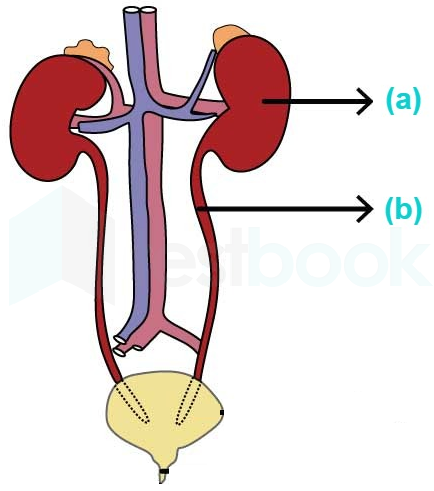
Question 67

If 3x – 2y = 10 and xy = 11, the value of 27x3 - 8y3 is __________

  1. AOption (a)

    2569

  2. BOption (b)

    3336

  3. COption (c)

    2980

  4. DOption (d)

    3170

View answer & explanation

Correct answer

Answer: (c)C.

2980

Why this answer is correct

Shortcut Trick

Apply the identity: a3 − b3 = (a − b)3 + 3ab(a − b)

Here, a = 3x and b = 2y, so (a − b) = 10 and 3ab = 3(3x)(2y) = 18xy.

Substitute values: 103 + 18(11)(10) = 1000 + 1980 = 2980.

∴ The correct answer is 2980.

Alternate Method

Given: 3x − 2y = 10 and xy = 11

Using the algebraic identity for cubes:

(a − b)3 = a3 − b3 − 3ab(a − b)

Let a = 3x and b = 2y.

⇒ (3x − 2y)3 = (3x)3 − (2y)3 − 3(3x)(2y)(3x − 2y)

⇒ (3x − 2y)3 = 27x3 − 8y3 − 18xy(3x − 2y)

Substitute the given values into the equation:

⇒ (10)3 = 27x3 − 8y3 − 18 × 11 × 10

⇒ 1000 = 27x3 − 8y3 − 1980

⇒ 27x3 − 8y3 = 1000 + 1980

⇒ 27x3 − 8y3 = 2980

∴ The correct answer is 2980.

Additional Information

Cube of a Sum

The identity for the cube of a sum is (a + b)3 = a3 + b3 + 3ab(a + b).

Difference of Two Cubes

The expression a3 − b3 can also be factored as (a − b)(a2 + ab + b2).

Sum of Two Cubes

The expression a3 + b3 can be factored as (a + b)(a2 − ab + b2).

Question 68

Study the given diagram carefully and answer the question. The numbers in different sections indicate the number of persons.

How many such females are there who are also tax-payers but NOT doctors?

  1. AOption (a)

    18

  2. BOption (b)

    40

  3. COption (c)

    15

  4. DOption (d)

    33

View answer & explanation

Correct answer

Answer: (c)C.

15

Why this answer is correct

According to the given Venn diagram:

The shaded area shows the "females who are tax-payers but NOT doctors".

So, the total number of females who are tax-payers but NOT doctors' = 15

Hence, the correct answer is "Option 3".

Question 69

Which of the following numbers will replace the question mark (?) in the given series?

13, 21, 33, 54, 91,?

  1. AOption (a)

    183

  2. BOption (b)

    162

  3. COption (c)

    175

  4. DOption (d)

    153

View answer & explanation

Correct answer

Answer: (d)D.

153

Why this answer is correct

The logic followed here is:

Logic: The series follows the pattern of double difference.

Difference of square of consecutive numbers 2, 3, 4, 5.

So, '153' will complete the given series.

Hence, the correct answer is "153"

Question 70

The following chart shows the numbers of cars sold by a company at its six branches named A, B, C, D, E and F. Study the chart and answer the question.

For how many branches was the sale of the cars above the average sale for all six branches?

  1. AOption (a)

    Four

  2. BOption (b)

    Three

  3. COption (c)

    Five

  4. DOption (d)

    Two

View answer & explanation

Correct answer

Answer: (a)A.

Four

Why this answer is correct

Given:

The chart shows the number of cars sold by a company at its six branches named A, B, C, D, E, and F.

Formula Used:

Average sale for all six branches = (Sum of cars sold at all branches) / (Number of branches)

Calculation:

Let the number of cars sold at branches A, B, C, D, E, and F be 50, 60, 70, 80, 90, and 100 respectively.

Sum of cars sold at all branches = 850 + 725 + 650 + 555 + 700 + 410

⇒ Sum = 3890

Number of branches = 6

Average sale for all six branches = 3890 / 6 ≈ 648

⇒ Average sale = 648

Branches with sales above the average (648) are A, B, C  and E..

∴ The correct answer is Four (1).

Question 71

A spherical mirror forms an erect and diminished image. Identify the correct statement(s) about the spherical mirror.

(A) The mirror is concave.

(B) The mirror forms a virtual image.

(C) The mirror has positive focal length.

  1. AOption (a)

    Only B

  2. BOption (b)

    Both A and B

  3. COption (c)

    Only A

  4. DOption (d)

    Both B and C

View answer & explanation

Correct answer

Answer: (d)D.

Both B and C

Why this answer is correct

The correct answer is Both B and C.

Key Points Spherical Mirror Characteristics:

  • Convex Mirror: A convex mirror always forms a virtual, erect, and diminished image, regardless of the position of the object. It has a positive focal length.
  • Concave Mirror: A concave mirror can form real and inverted images as well as virtual and erect images, depending on the position of the object. However, it forms a virtual, erect, and magnified image when the object is between the focal point and the mirror.
  • Given that the mirror forms an erect and diminished image, it must be a convex mirror since concave mirrors do not produce diminished erect images.
  • Convex mirrors always form virtual images that are diminished and erect.
  • Convex mirrors have a positive focal length.
  • Hence, based on the above points:
  • Statement B is correct because the mirror forms a virtual image.
  • Statement C is correct because the mirror has a positive focal length.

Therefore, the correct statements are B and C, making Option 4 the correct answer.

Question 72

Which of the following alphanumeric clusters will replace the question mark (?) in the series to make it logically complete?

BE 2, GJ 3, LO 5, QT 7, ?

  1. AOption (a)

    VY 6

  2. BOption (b)

    VY11

  3. COption (c)

    WX 6

  4. DOption (d)

    WX 7

View answer & explanation

Correct answer

Answer: (b)B.

VY11

Why this answer is correct

Given: BE 2, GJ 3, LO 5, QT 7, ?

The logic followed here is:

So, 'VY11' will replace the question mark in the given series.

Hence, the correct answer is "Option 2".

Question 73

In how many years will a sum of ₹10,000 become ₹13,310 at 10% compound interest per annum, compounded annually?

  1. AOption (a)

    4

  2. BOption (b)

    3

  3. COption (c)

    2

  4. DOption (d)

    5

View answer & explanation

Correct answer

Answer: (b)B.

3

Why this answer is correct

Shortcut Trick

Rate = 10% = 1/10 → Ratio of Amount to Principal for 1 year = 11 : 10

Given Principal (P) = ₹10,000 and Amount (A) = ₹13,310

Ratio of A / P = 13,310 / 10,000 = 1331 / 1000 = (11 / 10)3

Comparing the powers: (11 / 10)n = (11 / 10)3 ⇒ n = 3 years

∴ The correct answer is 3 years.

Alternate Method

Given:

Principal (P) = ₹10,000

Amount (A) = ₹13,310

Rate of Interest (R) = 10% per annum

Formula Used:

A = P × (1 + R/100)n

Calculations:

⇒ 13,310 = 10,000 × (1 + 10/100)n

⇒ 13,310 / 10,000 = (110 / 100)n

⇒ 1331 / 1000 = (11 / 10)n

⇒ (11 / 10)3 = (11 / 10)n

⇒ n = 3

∴ The correct answer is 3 years.

Additional Information

Compound Interest Formula

The formula for Compound Interest is CI = A − P, where A = P(1 + R/100)n.

Half-Yearly Compounding

When compounded half-yearly, the Rate is halved (R/2) and the Time is doubled (2n).

Rule of 72

A quick way to estimate when your money will double: divide 72 by the annual interest rate.

2

Question 74

As per NITI Aayog National Multidimensional Poverty Index – 2021, which state is the poorest? 

  1. AOption (a)

    Jharkhand

  2. BOption (b)

    Chhattisgarh

  3. COption (c)

    Bihar

  4. DOption (d)

    Himachal Pradesh

View answer & explanation

Correct answer

Answer: (c)C.

Bihar

Why this answer is correct

The correct answer is Bihar

Key Points

  • Bihar is identified as the poorest state according to the NITI Aayog National Multidimensional Poverty Index – 2021.
  • The Multidimensional Poverty Index (MPI) takes into account various factors such as health, education, and standard of living to measure poverty beyond income levels.
  • Bihar has the highest percentage of its population living in multidimensional poverty, making it the poorest state as per the 2021 index.
  • Other states with significant levels of poverty include Jharkhand and Uttar Pradesh, but Bihar leads the list.

Additional Information

  • NITI Aayog is a policy think tank of the Government of India, established with the aim to achieve sustainable development goals and to enhance cooperative federalism by fostering the involvement of State Governments in the economic policy-making process.
  • The National Multidimensional Poverty Index is part of the global effort to measure poverty in a more comprehensive manner, reflecting the multiple deprivations that people face in their daily lives.
  • The index is aligned with the global MPI developed by the United Nations Development Programme (UNDP) and the Oxford Poverty and Human Development Initiative (OPHI).
  • The aim of the MPI is to provide a more nuanced understanding of poverty and to guide policy interventions for poverty alleviation.

Question 75

The magnetic field produced due to a circular coil carrying a current having six turns will be how many times that of the field produced due to a single circular loop carrying the same current?

  1. AOption (a)

    2 times

  2. BOption (b)

    4 times

  3. COption (c)

    8 times

  4. DOption (d)

    6 times

View answer & explanation

Correct answer

Answer: (d)D.

6 times

Why this answer is correct

The correct answer is 6 times

Key Points

  • 6 times is the factor by which the magnetic field produced by a circular coil with six turns is greater than that produced by a single circular loop carrying the same current.
  • The magnetic field strength (B) produced by a circular coil is directly proportional to the number of turns (N) in the coil.
  • Hence, if a coil has 6 turns, the magnetic field strength will be 6 times that of a single loop.
  • This relationship is given by the formula B = (μ₀ * N * I) / (2 * R), where μ₀ is the permeability of free space, N is the number of turns, I is the current, and R is the radius of the coil.

Additional Information

  • The relationship between the number of turns and the magnetic field strength is linear; doubling the number of turns doubles the magnetic field strength.
  • This principle is utilized in electromagnets and inductors where multiple turns of wire are used to produce stronger magnetic fields.
  • Understanding this principle is crucial in designing electrical devices that rely on magnetic fields.
  • Factors such as the coil's radius and the current flowing through it also affect the magnetic field strength but were held constant in this scenario.

Question 76

Which of the following options is the closest approximate value which will come in place of question mark (?) in the following equation?

48.9 × 3.95 - 2.97 + 17.86 = ?

  1. AOption (a)

    125

  2. BOption (b)

    140

  3. COption (c)

    211

  4. DOption (d)

    250

View answer & explanation

Correct answer

Answer: (c)C.

211

Why this answer is correct

Given:

48.9 × 3.95 - 2.97 + 17.86 = ?

Formula Used:

To find the value of ?, perform the operations in the given equation step by step.

First, multiply 48.9 and 3.95.

Then, subtract 2.97 from the result.

Finally, add 17.86 to the result.

Calculation:

48.9 × 3.95

⇒ 48.9 × 3.95 = 193.155

193.155 - 2.97

⇒ 193.155 - 2.97 = 190.185

190.185 + 17.86

⇒ 190.185 + 17.86 = 208.045

∴ The correct answer is 211 (3).

Question 77

The area (in square units) of the triangle formed by the vertices (0, 2), (2, 3) and (3, 1) is:

  1. AOption (a)

    2.5

  2. BOption (b)

    3.5

  3. COption (c)

    5.5

  4. DOption (d)

    4.4

View answer & explanation

Correct answer

Answer: (a)A.

2.5

Why this answer is correct

Shortcut Trick

Shift vertex (0, 2) to the origin (0, 0) by subtracting (0, 2) from all vertices.

New coordinates: (0, 0), (2, 1), and (3, −1).

Area = 1/2 |x1y2 − x2y1| = 1/2 |(2 × −1) − (3 × 1)|

Area = 1/2 |−2 − 3| = 1/2 |−5| = 2.5 square units.

∴ The correct answer is 2.5 square units.

Alternate Method

Given: Vertices of the triangle are A(0, 2), B(2, 3), and C(3, 1).

Formula Used: Area of a triangle with vertices (x1, y1), (x2, y2), and (x3, y3) is:

Area = 1/2 |x1(y2 − y3) + x2(y3 − y1) + x3(y1 − y2)|

Calculations:

⇒ x1 = 0, y1 = 2

⇒ x2 = 2, y2 = 3

⇒ x3 = 3, y3 = 1

⇒ Area = 1/2 |0(3 − 1) + 2(1 − 2) + 3(2 − 3)|

⇒ Area = 1/2 |0(2) + 2(−1) + 3(−1)|

⇒ Area = 1/2 |0 − 2 − 3|

⇒ Area = 1/2 |−5|

⇒ Area = 2.5 square units.

∴ The correct answer is 2.5 square units.

Question 78

Vikas took a bus from a bus stop. The bus travelled 50 m towards the west. Then, it took a right turn and travelled 70 m. Then, it took a left turn and travelled 15 m. Then, it took a left turn and travelled 30 m. Then, it took a left turn and travelled 35 m. Then, it took a right turn and travelled 10 m. Finally, it took a left turn and travelled 30 m to reach the school. How far and in which direction is the bus stop from the school ? (All turns are 90 degree turns only)

  1. AOption (a)

    30 m, South

  2. BOption (b)

    30 m, North

  3. COption (c)

    40 m, South

  4. DOption (d)

    40 m, East

View answer & explanation

Correct answer

Answer: (a)A.

30 m, South

Why this answer is correct

Given:

The bus travelled 50 m towards the west.

Then, it took a right turn and travelled 70 m.

Then, it took a left turn and travelled 15 m.

Then, it took a left turn and travelled 30 m.

Then, it took a left turn and travelled 35 m.

Then, it took a right turn and travelled 10 m.

Finally, it took a left turn and travelled 30 m to reach the school.

So, the bus stop is 30 m from school and in the south direction from school.

Hence, the correct answer is "Option 1".

Question 79

If 10% of 24% of x is 240, then x = ?

  1. AOption (a)

    100

  2. BOption (b)

    100000

  3. COption (c)

    1000

  4. DOption (d)

    10000

View answer & explanation

Correct answer

Answer: (d)D.

10000

Why this answer is correct

Given:

10% of 24% of x is 240.

Formula Used:

10% of 24% of x = 240

This can be written as: 0.10×0.24×x=240 0.10 \times 0.24 \times x = 240

Calculation:

0.10×0.24×x=240 0.10 \times 0.24 \times x = 240

⇒ 0.024×x=240 0.024 \times x = 240

Dividing both sides by 0.024:

⇒ x=2400.024 x = \frac{240}{0.024}

⇒ x=10000 x = 10000

∴ The correct answer is 10000 (4).

Question 80

If sec 4A = cosec (3A - 50°), where 4A and 3A are acute angles, find the value of A + 75. 

  1. AOption (a)

    67°

  2. BOption (b)

    95°

  3. COption (c)

    78°

  4. DOption (d)

    105°

View answer & explanation

Correct answer

Answer: (b)B.

95°

Why this answer is correct

Shortcut Trick

If sec θ1 = cosec θ2, then the sum of angles is 90°.

⇒ 4A + 3A − 50° = 90°

⇒ 7A = 140° → A = 20°

⇒ Target value = A + 75 = 20 + 75 = 95°.

∴ The correct answer is 95°.

Alternate Method

Given: sec 4A = cosec (3A − 50°)

Formula Used: sec θ = cosec (90° − θ)

⇒ cosec (90° − 4A) = cosec (3A − 50°)

⇒ 90° − 4A = 3A − 50°

⇒ 90° + 50° = 3A + 4A

⇒ 140° = 7A

⇒ A = 20°

⇒ Required value = A + 75 = 20 + 75 = 95°

∴ The correct answer is 95°.

Additional Information

Complementary Angle Identities

For any angle θ, sin θ = cos(90° − θ), tan θ = cot(90° − θ), and sec θ = cosec(90° − θ).

Acute Angle Condition

An acute angle is an angle measuring less than 90°. In trigonometric equations involving complementary ratios, the sum of the angles is equated to 90°.

Question 81

What is the angle traced by the hour hand in 23 minutes?

  1. AOption (a)

    12.5°

  2. BOption (b)

    13°

  3. COption (c)

    11.5°

  4. DOption (d)

    12°

View answer & explanation

Correct answer

Answer: (c)C.

11.5°

Why this answer is correct

Given time: 23 minutes

Formula used: Angle traced by hour hand per minute = 36012×60=0.5\frac{360}{12 \times 60} = 0.5 degrees

Therefore,

Angle traced by hour hand in 23 minutes = 23 × 0.5

= 11.5°

Hence, the correct answer is "Option 3".

Question 82

Oral contraceptive pills work by stopping ________.

  1. AOption (a)

    ovulation

  2. BOption (b)

    ovulation and implantation

  3. COption (c)

    ovulation and fertilisation

  4. DOption (d)

    fertilisation and implantation

View answer & explanation

Correct answer

Answer: (c)C.

ovulation and fertilisation

Why this answer is correct

The correct answer is ovulation and fertilisation

Key Points

  • Oral contraceptive pills primarily work by preventing ovulation and fertilisation.
  • They contain hormones that inhibit the body's natural cyclical hormones to prevent pregnancy.
  • By stopping ovulation, the pills ensure that no egg is released for fertilisation.
  • Additionally, these pills thicken the cervical mucus, making it difficult for sperm to travel and reach any egg that might be released.
  • They also alter the lining of the uterus, which may prevent implantation of a fertilised egg.

Additional Information

  • Oral contraceptive pills are among the most effective forms of birth control when taken correctly.
  • They need to be taken daily at the same time to maintain their effectiveness.
  • Besides preventing pregnancy, these pills can also regulate menstrual cycles and reduce menstrual cramps.
  • It is important to consult with a healthcare provider to choose the most suitable contraceptive method.
  • There are different types of oral contraceptive pills, including combination pills (which contain both estrogen and progestin) and progestin-only pills.

Question 83

Identify the FALSE statement.

  1. AOption (a)

    Hydrotropism is the tendency to grow in moist areas, i.e., the movement of roots towards high humidity.

  2. BOption (b)

    The sunflower is a phototrophic plant.

  3. COption (c)

    Geotropism is demonstrated by the downward migration of roots.

  4. DOption (d)

    The growth of pollen tubes towards ovules is an example of geotropism

View answer & explanation

Correct answer

Answer: (d)D.

The growth of pollen tubes towards ovules is an example of geotropism

Why this answer is correct

The correct answer is the growth of pollen tubes towards ovules is an example of geotropism.

Key Points

  • Hydrotropism is the tendency of plants to grow towards moisture, typically seen in root movements towards areas of high humidity.
  • The sunflower is known for its phototropic behavior, meaning it grows towards light.
  • Geotropism refers to the growth of plants in response to gravity, such as roots growing downwards.
  • The growth of pollen tubes towards ovules is actually an example of chemotropism, not geotropism.

Additional Information

  • Phototropism is the growth of an organism in response to a light stimulus.
  • Hydrotropism and geotropism are important mechanisms that help plants optimize their growth conditions.
  • Understanding these tropisms is crucial for agricultural practices and improving crop yields.

Question 84

Which of the following is the most electropositive element?

  1. AOption (a)

    Cs

  2. BOption (b)

    Mg

  3. COption (c)

    Ca

  4. DOption (d)

    Na

View answer & explanation

Correct answer

Answer: (a)A.

Cs

Why this answer is correct

The correct answer is Cs

Key Points

  • Cs (Cesium) is the most electropositive element.
  • Electropositivity refers to the ability of an element to donate electrons and form positive ions (cations).
  • Cesium is located in Group 1 of the periodic table, which consists of alkali metals known for their high electropositivity.
  • Among the alkali metals, cesium has the lowest ionization energy, making it the most electropositive element.
  • Other elements listed like Mg (Magnesium), Ca (Calcium), and Na (Sodium) are also electropositive but not as much as cesium.

Additional Information

  • Electropositivity decreases across a period from left to right and increases down a group in the periodic table.
  • Alkali metals are highly electropositive due to their single electron in the outermost shell, which they can easily lose to form a cation.
  • Cesium's position at the bottom of Group 1 accounts for its high electropositivity.
  • This property of cesium makes it highly reactive, especially with water, where it reacts explosively.

Question 85

Which of the following medicinal plants is the best remedy to treat blood pressure?

  1. AOption (a)

    Navmallika

  2. BOption (b)

    Rajnigandha

  3. COption (c)

    Alukam

  4. DOption (d)

    Sarpagandha

View answer & explanation

Correct answer

Answer: (d)D.

Sarpagandha

Why this answer is correct

The correct answer is Sarpagandha.

Key Points

  • Sarpagandha (Option 4) is known for its efficacy in treating high blood pressure.
  • The plant contains alkaloids, including reserpine, which have been found to have a calming effect on the nervous system and help lower blood pressure.
  • It has been used in traditional Ayurvedic medicine for centuries to manage hypertension and related conditions.
  • Sarpagandha is also recognized for its sedative properties, making it useful in treating anxiety and insomnia, which can be associated with high blood pressure.

Additional Information

  • Navmallika (Option 1) and Rajnigandha (Option 2) are primarily known for their aromatic properties and are used in perfumery and decoration, not in treating blood pressure.
  • Alukam (Option 3) does not have a widely recognized medicinal use in the context of treating blood pressure.
  • It is always advisable to consult with a healthcare provider before using any medicinal plants for treatment purposes.

Question 86

G, H, I, J, K and L live on six different floors of the same building. The lowermost floor in the building is numbered 6, the floor above it is numbered 5, and so on till the topmost floor is numbered 1.

J lives on an even numbered floor. G and K each live on an odd numbered floor. I lives on floor number 2. H lives on an odd numbered floor, immediately above L and immediately below I. G does not live on the topmost floor. Who lives on the lowermost floor?

  1. AOption (a)

    J

  2. BOption (b)

    K

  3. COption (c)

    G

  4. DOption (d)

    L

View answer & explanation

Correct answer

Answer: (a)A.

J

Why this answer is correct

Given: G, H, I, J, K, and L live on six different floors of the same building.

1. I lives on floor number 2.

FloorPersons
1
2I
3
4
5
6

2. H lives on an odd-numbered floor, immediately above L and immediately below I.

FloorPersons
1
2I
3H
4L
5
6

3. G and K each live on an odd-numbered floor. 4. G does not live on the topmost floor.

FloorPersons
1K
2I
3H
4L
5G
6

5. J lives on an even-numbered floor.

FloorPersons
1K
2I
3H
4L
5G
6J

So, 'J' lives on the lowermost floor.

Hence, the correct answer is "Option 1".

Question 87

Select the option that is related to the fifth number in the same way as the second number is related to the first number and the fourth number is related to the third number.

3 ∶ 12 ∶∶ 25 ∶ 78 ∶∶ 21 ∶ ?

  1. AOption (a)

    66

  2. BOption (b)

    63

  3. COption (c)

    48

  4. DOption (d)

    42

View answer & explanation

Correct answer

Answer: (a)A.

66

Why this answer is correct

Given: 3 ∶ 12 ∶∶ 25 ∶ 78 ∶∶ 21 ∶ ? 

The logic followed here is: 'Second number = First number × 3 + 3'

3 ∶ 12 → 3 × 3 = 9 + 3 = 12

25 : 78 → 25 × 3 = 75 + 3 = 78

Similarly,

21 ∶ ? → 21 × 3 = 63 + 3 = 66

Hence, the correct answer is "Option 1".

Question 88

Caustic soda is generally NOT used in the ___________.

  1. AOption (a)

    detergent industry

  2. BOption (b)

    fabric industry

  3. COption (c)

    paper and pulp industry

  4. DOption (d)

    manufacture of ammonia

View answer & explanation

Correct answer

Answer: (d)D.

manufacture of ammonia

Why this answer is correct

The correct answer is manufacture of ammonia

Key Points

  • Caustic soda is widely used in various industries such as the detergent industry, fabric industry, and paper and pulp industry.
  • It is a crucial chemical in the manufacturing process of detergents, textiles, and paper products, serving as a strong alkaline substance in these applications.
  • However, caustic soda is generally not used in the manufacture of ammonia. Ammonia production typically involves the Haber process, which uses nitrogen and hydrogen as raw materials.
  • In the context of industrial applications, caustic soda's properties make it suitable for processes requiring strong alkali, but it does not play a significant role in ammonia synthesis.

Additional Information

  • Caustic soda, also known as sodium hydroxide (NaOH), is a highly caustic metallic base and alkali salt.
  • It is used in a variety of applications including the manufacture of soaps, rayon, paper, explosives, dyes, and petroleum products.
  • The chemical is also employed in water treatment, food processing, and as a drain cleaner.
  • While it has extensive industrial uses, its role is limited to specific chemical processes where its strong alkaline properties are required.
  • In contrast, the manufacture of ammonia primarily involves the catalytic reaction of nitrogen and hydrogen gases under high pressure and temperature, a process in which caustic soda is not typically involved.

Question 89

A and B invest Rs. 42,000 and Rs. 56,000 respectively, in a business. At the end of the year they make a profit of Rs. 87,220. Find B's share in the profit.

  1. AOption (a)

    Rs. 47,240

  2. BOption (b)

    Rs. 48,480

  3. COption (c)

    Rs. 49,840

  4. DOption (d)

    Rs. 45,620

View answer & explanation

Correct answer

Answer: (c)C.

Rs. 49,840

Why this answer is correct

Shortcut Trick

Investment Ratio A : B = 42,000 : 56,000 = 3 : 4

Since time is constant, Profit Ratio = Investment Ratio = 3 : 4

Total units = 3 + 4 = 7 units

7 units = Rs. 87,220 ⇒ 1 unit = Rs. 12,460

B's share = 4 units = 4 × 12,460 = Rs. 49,840

∴ The correct answer is Rs. 49,840.

Alternate Method

Given: Investment of A = Rs. 42,000, Investment of B = Rs. 56,000, Total Profit = Rs. 87,220.

Formula Used: Profit Ratio = (Capital1 × Time1) : (Capital2 × Time2)

⇒ Time for both A and B = 1 year

⇒ Profit Ratio A : B = (42,000 × 1) : (56,000 × 1)

⇒ Ratio A : B = 42 : 56 = 3 : 4

⇒ Sum of ratio parts = 3 + 4 = 7

⇒ B's share = (4 ÷ 7) × 87,220

⇒ B's share = 4 × 12,460

⇒ B's share = Rs. 49,840

∴ The correct answer is Rs. 49,840.

Additional Information

Basic Partnership

When partners invest for the same duration, the profit is divided strictly in the ratio of their capitals.

Compound Partnership

When investment periods differ, profit ratio = (C1 × T1) : (C2 × T2), where C is capital and T is time.

Total Profit Division

Individual Share = (Individual Ratio Part ÷ Total Ratio Parts) × Total Profit.

Question 90

Select the set in which the numbers are related in the same way as are the numbers of the following sets.

(NOTE : Operations should be performed on the whole numbers, without breaking down the numbers into its constituent digits. E.g. 13 - Operations on 13 such as adding /deleting /multiplying etc. to 13 can be performed. Breaking down 13 into 1 and 3 and then performing mathematical operations on 1 and 3 is not allowed)

(12, 51, 5)

(5, 36, 7)

  1. AOption (a)

    (19, 44, 3)

  2. BOption (b)

    (11, 51, 6)

  3. COption (c)

    (14, 120, 16)

  4. DOption (d)

    (13, 10, 7)

View answer & explanation

Correct answer

Answer: (b)B.

(11, 51, 6)

Why this answer is correct

The logic followed here is:

(First Number + Third Number) × 3 = Second Number.

(12 , 51, 5)

⇒ (12 + 5) × 3 

⇒ 17 × 3 = 51

(5 , 36 , 7)

⇒ (5 + 7) × 3 

⇒ 12 × 3 = 36.

Now checking the options,

Option 1: (19 , 44 , 3)

⇒ (19 + 3) × 3

⇒ 22 × 3 = 66

⇒ 66 ≠ 44.

Option 2: (11 , 51 , 6) 

⇒ (11 + 6) × 3

⇒ 17 × 3 = 51.

Option 3: (14 , 120 , 16)

⇒ (14 + 16) × 3

⇒ 30 × 3 = 90.

Option 4: (13 , 10 , 7)

⇒ (13 + 7) × 3

⇒ 20 × 3 = 60.

Hence, the correct answer is "Option 2".

Question 91

The apparent position of a star keeps on changing slightly because: 

  1. AOption (a)

    the physical conditions of the atmosphere are stationary

  2. BOption (b)

    the atmosphere scatters star light

  3. COption (c)

    the atmosphere consists of a mixture of gases

  4. DOption (d)

    the physical conditions of the atmosphere keep changing

View answer & explanation

Correct answer

Answer: (d)D.

the physical conditions of the atmosphere keep changing

Why this answer is correct

The correct answer is the physical conditions of the atmosphere keep changing

Key Points

  • The apparent position of a star keeps on changing slightly because the physical conditions of the atmosphere keep changing.
  • This phenomenon is known as stellar scintillation or twinkling.
  • As the light from the star passes through different layers of the Earth's atmosphere, which have varying temperatures and densities, it gets refracted multiple times.
  • This continuous refraction causes the star's apparent position to shift slightly, creating the twinkling effect observed from the Earth.

Additional Information

  • The Earth's atmosphere is composed of layers, each with different temperatures, pressures, and compositions, which affect the path of light.
  • Factors such as wind, temperature gradients, and varying air pressures contribute to the dynamic nature of the atmosphere.
  • Stellar scintillation is more pronounced for stars closer to the horizon due to the longer path length through the atmosphere.
  • Planets, which appear as disks rather than points of light, are less affected by this phenomenon and thus twinkle less than stars.

Question 92

Study the given letter series and answer the question that follows.

K I O X J E T R U L E B A C K J M N

How many such vowels are there each of which is immediately followed by atleast two consonants appearing together in the above series?

  1. AOption (a)

    2

  2. BOption (b)

    4

  3. COption (c)

    1

  4. DOption (d)

    3

View answer & explanation

Correct answer

Answer: (d)D.

3

Why this answer is correct

Given Series: K I O X J E T R U L E B A C K J M N

Vowels in the English Alphabet is**: A, E, I, O, U**

Now, There are 3 vowels in the given series which are immediately followed by at least 2 consonants: K I (O X J) (E T R) U L E B (A C K) J M N

⇒ O X J, E T R, A C K

Hence, the correct answer is "Option 4".

Question 93

Find the smallest number by which 6300 must be multiplied to make it a perfect square.

  1. AOption (a)

    6

  2. BOption (b)

    12

  3. COption (c)

    7

  4. DOption (d)

    15

View answer & explanation

Correct answer

Answer: (c)C.

7

Why this answer is correct

Shortcut Trick

Perform Prime Factorization of 6300: 6300 = 63 × 100 = (7 × 9) × 102.

In power form: 6300 = 71 × 32 × 22 × 52.

To make it a perfect square, all exponents must be even.

The power of 7 is 1 (odd), so we must multiply by 71.

∴ The correct answer is 7.

Alternate Method

Given: Number = 6300

Concept: A number is a perfect square if every prime factor in its factorization occurs an even number of times (in pairs).

⇒ Prime factorization of 6300:

⇒ 6300 = 2 × 3150

⇒ 6300 = 2 × 2 × 1575

⇒ 6300 = 2 × 2 × 3 × 525

⇒ 6300 = 2 × 2 × 3 × 3 × 175

⇒ 6300 = 2 × 2 × 3 × 3 × 5 × 35

⇒ 6300 = 2 × 2 × 3 × 3 × 5 × 5 × 7

⇒ 6300 = 22 × 32 × 52 × 71

⇒ To make the power of 7 even, we need to multiply by 7.

⇒ New number = 6300 × 7 = 44100 = (210)2.

∴ The correct answer is 7.

Additional Information

Perfect Square Condition

A natural number is a perfect square if all prime factors in its prime factorization have even exponents.

Division Rule

The smallest number to multiply to make a perfect square is the same as the smallest number to divide to make it a perfect square.

Ending Digits

A perfect square never ends in the digits 2, 3, 7, or 8.

Question 94

The sum of ages of P and Q is 15 years more than the sum of ages of Q and R. How many years younger is R as compared to P?

  1. AOption (a)

    19

  2. BOption (b)

    15

  3. COption (c)

    13

  4. DOption (d)

    12

View answer & explanation

Correct answer

Answer: (b)B.

15

Why this answer is correct

Shortcut Trick

Difference between (P + Q) and (Q + R) is given as 15 years.

(P + Q) − (Q + R) = 15

P + Q − Q − R = 15

P − R = 15

∴ The correct answer is 15 years.

Alternate Method

Given:

Sum of ages of P and Q = (P + Q)

Sum of ages of Q and R = (Q + R)

Calculations:

⇒ (P + Q) = (Q + R) + 15

⇒ P + Q = Q + R + 15

⇒ P − R = Q − Q + 15

⇒ P − R = 15

∴ The correct answer is 15 years.

Additional Information

Age Difference Invariance

The difference between the ages of two individuals remains constant regardless of the number of years that pass.

Linear Equations in Ages

When comparing sums of ages, common variables on both sides of the equation cancel out, simplifying the relative difference.

Question 95

All the compounds of which of the following sets belongs to the same homologous series?

  1. AOption (a)

    C3H8, C4H10, C5H12

  2. BOption (b)

    C6H10, C6H12, C6H14

  3. COption (c)

    C4H8, C5H8, C6H10

  4. DOption (d)

    C2H6, C2H4, C2H2

View answer & explanation

Correct answer

Answer: (a)A.

C3H8, C4H10, C5H12

Why this answer is correct

The correct answer is option 1.

Key Points

  • Option 1 (C3H8, C4H10, C5H12) are all alkanes, which belong to the same homologous series.
  • A homologous series is a group of organic compounds that have a similar general formula, possess similar chemical properties, and show a gradation in physical properties.
  • Alkanes follow the general formula CnH2n+2, where n is the number of carbon atoms.
  • In this series, with each subsequent compound, one CH2 unit is added to the previous compound.

Additional Information

  • Option 2 includes C6H10, C6H12, C6H14, which are not in the same homologous series as they have different general formulas (alkenes, cycloalkanes, and alkanes respectively).
  • Option 3 includes C4H8, C5H8, C6H10, which do not belong to the same homologous series either.
  • Option 4 includes C2H6, C2H4, C2H2, which are alkanes, alkenes, and alkynes respectively and thus do not belong to the same homologous series.

Question 96

The smallest natural number that must be added to 1212 to make it a perfect square is:

  1. AOption (a)

    18

  2. BOption (b)

    27

  3. COption (c)

    13

  4. DOption (d)

    24

View answer & explanation

Correct answer

Answer: (c)C.

13

Why this answer is correct

Shortcut Trick

Estimate the square root of 1212: Since 302 = 900 and 402 = 1600, it lies between 30 and 40.

Check squares near 35: 342 = 1156 and 352 = 1225.

As 1212 > 1156, the next perfect square is 1225.

Number to be added = 1225 − 1212 = 13.

∴ The correct answer is 13.

Alternate Method

Given: Natural number = 1212

To find the smallest number to add, calculate the square root of 1212 using the long division method or approximation:

⇒ √1212 ≈ 34.81

⇒ The next higher whole number is 35.

⇒ The perfect square of 35 = 35 × 35 = 1225.

⇒ Smallest number to be added = 1225 − 1212

⇒ Required number = 13

∴ The correct answer is 13.

Additional Information

Perfect Square Properties

A natural number is a perfect square if its square root is also a natural number. Perfect squares never end with the digits 2, 3, 7, or 8.

Square of Numbers ending in 5

To find the square of a number ending in 5 (like 35), multiply the first digit (3) by its successor (4) and append 25. Example: 3 × 4 = 12, so 352 = 1225.

Difference between Consecutive Squares

The difference between the squares of two consecutive natural numbers n and (n+1) is always (n + 1)2 − n2 = 2n + 1.

Question 97

Which of the following numbers will replace the question mark (?) in the given series?

2, 14, 70, 210, ?

  1. AOption (a)

    210

  2. BOption (b)

    280

  3. COption (c)

    410

  4. DOption (d)

    630

View answer & explanation

Correct answer

Answer: (a)A.

210

Why this answer is correct

The logic followed here is:

So, '210' will complete the series.

Hence, the correct answer is "Option 1".

Question 98

Which Indian Badminton Player won a silver medal in the All England Badminton Championships 2022 in Birmingham? 

  1. AOption (a)

    Kidambi Srikanth

  2. BOption (b)

    Lakshya Sen

  3. COption (c)

    PV Sindhu

  4. DOption (d)

    Saina Nehwal

View answer & explanation

Correct answer

Answer: (b)B.

Lakshya Sen

Why this answer is correct

The correct answer is Lakshya Sen

Key Points

  • Lakshya Sen won a silver medal in the All England Badminton Championships 2022 held in Birmingham.
  • This achievement marked a significant milestone in his career, showcasing his talent on an international stage.
  • The All England Badminton Championships is one of the oldest and most prestigious badminton tournaments in the world.
  • Lakshya Sen's performance in the tournament has been lauded by many and has boosted his ranking in international badminton.

Additional Information

  • Kidambi Srikanth and PV Sindhu are also prominent Indian badminton players with numerous accolades to their names.
  • Saina Nehwal was the first Indian woman to achieve the world number one ranking in badminton.
  • India has been producing world-class badminton players who have excelled in various international tournaments.
  • The success of these players has inspired many young athletes in India to pursue badminton professionally.

Question 99

If a + b = 56 and (a - b)2 = 496, find the value of product of a and b.

  1. AOption (a)

    460

  2. BOption (b)

    660

  3. COption (c)

    760

  4. DOption (d)

    560

View answer & explanation

Correct answer

Answer: (b)B.

660

Why this answer is correct

Shortcut Trick

Use the direct algebraic identity linking sum, difference, and product: 4ab = (a + b)2 − (a − b)2

Substitute the given values: 4ab = (56)2 − 496

Calculate the squares: 4ab = 3136 − 496 = 2640

Find the product of a and b: ab = 2640 ÷ 4 = 660

∴ The correct answer is 660.

Alternate Method

Given:

The sum of two numbers a + b = 56

The square of the difference (a − b)2 = 496

Formula Used:

(a + b)2 = a2 + b2 + 2ab

(a − b)2 = a2 + b2 − 2ab

Calculations:

⇒ (a + b)2 = (56)2 = 3136

⇒ a2 + b2 + 2ab = 3136 ... (Equation 1)

⇒ a2 + b2 − 2ab = 496 ... (Equation 2)

⇒ Subtracting Equation 2 from Equation 1:

⇒ (a2 + b2 + 2ab) − (a2 + b2 − 2ab) = 3136 − 496

⇒ 2ab + 2ab = 2640

⇒ 4ab = 2640

⇒ ab = 2640 ÷ 4

⇒ ab = 660

∴ The correct answer is 660.

Additional Information

Algebraic Identity for Sum of Squares

(a + b)2 + (a − b)2 = 2(a2 + b2). This helps in finding the sum of individual squares.

Difference of Squares

a2 − b2 = (a + b)(a − b). This is used when the sum and simple difference are provided.

Finding individual values

To find a and b, first find (a − b) by taking √496, then solve the linear equations for a and b.

Question 100

How many autosomes will be present in a sexually reproducing organism with the chromosome number 2n = 18?

  1. AOption (a)

    17

  2. BOption (b)

    16

  3. COption (c)

    18

  4. DOption (d)

    15

View answer & explanation

Correct answer

Answer: (b)B.

16

Why this answer is correct

The correct answer is 16.

Key Points

  • A sexually reproducing organism with a chromosome number of 2n = 18 has a total of 18 chromosomes.
  • Among these 18 chromosomes, 2 are sex chromosomes (one pair), and the remaining 16 are autosomes.
  • Autosomes are chromosomes that are not involved in determining the sex of an organism.

Additional Information

  • In sexually reproducing organisms, chromosomes are typically found in pairs, one inherited from each parent.
  • Sex chromosomes determine the biological sex of the organism, while autosomes carry the bulk of the genetic information.
  • In humans, for example, there are 22 pairs of autosomes and 1 pair of sex chromosomes, making a total of 46 chromosomes (2n = 46).
  • Understanding the distinction between autosomes and sex chromosomes is crucial in genetics and biology.

100 questions in the full paper