Previous Year Paper

RRB Group D Official Paper (Held On: 17 Dec, 2025 Shift 1) (Previous Year Paper)

Held in 2025

100 questions90 minutes
With answers
Free

Paper last updated:

Practise under exam conditions

Take this paper as a timed mock test. Review your answers after you submit.

Attempt timed test

Questions & answers

Read the paper at your pace. Open an explanation when you need it.

General Science (25 questions)

Question 1

When acid reacts with a metal carbonate, it forms:

  1. AOption (a)

    a base and water as products

  2. BOption (b)

    salt and hydrogen gas only

  3. COption (c)

    gas and solid precipitate only

  4. DOption (d)

    salt, carbon dioxide, and water

View answer & explanation

Correct answer

Answer: (d)D.

salt, carbon dioxide, and water

Why this answer is correct

The correct answer is salt, carbon dioxide, and water.

Key Points

  • When an acid reacts with a metal carbonate, the chemical reaction consistently produces three distinct products: a salt, carbon dioxide gas, and water.
  • The general chemical word equation for this interaction is: Acid + Metal Carbonate → Salt + Water + Carbon Dioxide.
  • The formation of carbon dioxide is a characteristic feature of this reaction, usually manifesting as rapid effervescence or bubbling when the acid makes contact with the carbonate.
  • The specific salt produced depends on the metal present in the carbonate and the anion of the acid used; for instance, Hydrochloric Acid reacting with Calcium Carbonate produces Calcium Chloride. Hence, statement 4 is correct.
  • A base and water are typically products of a reaction between an acid and a metal oxide or hydroxide (neutralization), not a carbonate. Hence, statement 1 is incorrect.
  • Hydrogen gas is released when an acid reacts with a metal, but not when it reacts with a metal carbonate. Hence, statement 2 is incorrect.
  • While a gas is produced, the other products (salt and water) are usually in aqueous or liquid states, not necessarily a solid precipitate in all cases. Hence, statement 3 is incorrect.

Additional Information

  • Chemical Identification of CO2: The carbon dioxide gas produced in this reaction can be identified using the lime water test. When the gas is passed through lime water (calcium hydroxide), it turns milky due to the formation of insoluble calcium carbonate.
  • Metal Hydrogen Carbonates: Also known as bicarbonates, these compounds react with acids in the exact same manner as carbonates, yielding a salt, water, and carbon dioxide. An example is the reaction of Sodium Bicarbonate (Baking Soda) with citric acid or vinegar.
  • Salt Formation: If Sulfuric Acid is used, the resulting salt will be a sulfate. If Nitric Acid is used, the salt will be a nitrate. The metal component comes directly from the metal carbonate reactant.
  • Nature of Carbonates: Metal carbonates are considered basic in nature. Therefore, their reaction with acids is technically a form of neutralization, though the presence of the carbonate group (CO3) leads to the additional byproduct of carbon dioxide.
  • Real-world Examples: This chemical principle is used in fire extinguishers (where acid and carbonate react to release CO2 to smother flames) and is also the reason why acid rain causes the erosion of statues and buildings made of limestone or marble, which are forms of calcium carbonate.

Important Points

  • Equation for Calcium Carbonate: A standard laboratory example is 2HCl + CaCO3 → CaCl2 + H2O + CO2. This reaction involves Hydrochloric Acid and Calcium Carbonate (found in eggshells and chalk).
  • Effervescence: The term effervescence refers to the escape of gas from an aqueous solution and the foaming or fizzing that results from that release.
  • Limestone Weathering: In nature, when rainwater (which is slightly acidic due to dissolved CO2) reacts over long periods with limestone rocks, it leads to the formation of caves and sinkholes through this specific chemical breakdown.
Question 2

Which of the following statements is INCORRECT for mass number?

  1. AOption (a)

    The number of nucleons is same as mass number.

  2. BOption (b)

    Mass number is equal to the sum of number of neutrons and number of protons.

  3. COption (c)

    Isobars have same mass number.

  4. DOption (d)

    Protium and deuterium have same the mass number.

View answer & explanation

Correct answer

Answer: (d)D.

Protium and deuterium have same the mass number.

Why this answer is correct

The correct answer is Protium and deuterium have same the mass number..

Key Points

  • The Mass Number (represented by the symbol A) is defined as the total number of protons and neutrons present in the nucleus of an atom. These particles located in the nucleus are collectively known as nucleons.
  • Since the total number of nucleons (protons + neutrons) determines the mass number, the statement that the number of nucleons is the same as the mass number is scientifically accurate. Hence, statement 1 is correct.
  • The mathematical relationship for an atom is Mass Number (A) = Atomic Number (Z) + Number of Neutrons (n). This confirms that the mass number is indeed the sum of protons and neutrons. Hence, statement 2 is correct.
  • Isobars are atoms of different chemical elements that have the same mass number but different atomic numbers. Because they share the same total count of nucleons, they occupy different positions in the Periodic Table but have identical mass values. Hence, statement 3 is correct.
  • Protium and Deuterium are isotopes of Hydrogen. Protium (1H1) has a mass number of 1 (1 proton, 0 neutrons), while Deuterium (1H2) has a mass number of 2 (1 proton, 1 neutron). Therefore, they do not have the same mass number. Hence, statement 4 is incorrect.
  • Hence, the correct answer is Protium and deuterium have same the mass number.

Additional Information

  • Isotopes:
  • These are atoms of the same element that possess the same Atomic Number (Z) but different Mass Numbers (A).
  • This difference arises because they have a different number of neutrons in their nuclei. For example, Carbon-12 and Carbon-14 are isotopes of carbon.
  • Atomic Number (Z):
  • The Atomic Number refers specifically to the number of protons in the nucleus of an atom.
  • In a neutral atom, the number of protons is equal to the number of electrons. This number defines the identity of the element.
  • Isotones:
  • These are atoms of different elements that have the same number of neutrons but different mass numbers and atomic numbers.
  • An example includes Boron-12 and Carbon-13, both of which contain 7 neutrons.
  • Isotopes of Hydrogen:
  • Hydrogen is unique as its isotopes have specific names: Protium (mass 1), Deuterium (mass 2, also called heavy hydrogen), and Tritium (mass 3, which is radioactive).
  • While they share the same chemical properties due to having the same number of electrons, their physical properties differ due to the varying mass.

Important Points

  • Notation of Elements: In scientific notation, the mass number (A) is written as a superscript on the left side of the element symbol, and the atomic number (Z) is written as a subscript.
  • Mass of Subatomic Particles: The mass of an electron is approximately 1/1840 times the mass of a proton, which is why the mass number only accounts for protons and neutrons.
  • Applications of Deuterium: Deuterium is widely used in nuclear reactors as a moderator in the form of heavy water (D2O) to slow down fast-moving neutrons.
  • Tritium: It is the rarest isotope of hydrogen, with a nucleus containing 1 proton and 2 neutrons, making it unstable and subject to beta decay.

Question 3

The dense structure inside the nucleus that produces ribosomes is called the _____.

  1. AOption (a)

    centrosome

  2. BOption (b)

    nucleolus

  3. COption (c)

    lysosome

  4. DOption (d)

    mitochondria

View answer & explanation

Correct answer

Answer: (b)B.

nucleolus

Why this answer is correct

The correct answer is nucleolus.

Key Points

  • The nucleolus is a distinct, dense, and spherical structure located inside the nucleus of eukaryotic cells. It is not surrounded by a membrane, which allows it to exist as a concentrated region of chromatin, RNA, and proteins.
  • Its primary and most crucial function is the biosynthesis of ribosomal RNA (rRNA). It serves as the site where rRNA is transcribed and processed from DNA templates.
  • The nucleolus is responsible for the assembly of ribosomal subunits. These subunits are formed by combining rRNA with specific proteins that are imported from the cytoplasm.
  • Once assembled, these large and small ribosomal subunits exit the nucleus through nuclear pores to reach the cytoplasm, where they unite to carry out protein synthesis.
  • The size and number of nucleoli within a nucleus can vary depending on the metabolic activity of the cell; cells that require high levels of protein production typically have larger or multiple nucleoli.
  • During the process of cell division (specifically in mitosis), the nucleolus undergoes a cycle of disassembly and reassembly, usually disappearing during prophase and reappearing during telophase.

Additional Information

  • Centrosome:
  • The centrosome is an organelle found primarily in animal cells that serves as the main microtubule-organizing center (MTOC).
  • It consists of two centrioles arranged at right angles to each other. During cell division, it facilitates the organization of spindle fibers, which are essential for the proper separation of chromosomes.
  • Lysosome:
  • Known as the "suicidal bags" of the cell, lysosomes are membrane-bound vesicles containing hydrolytic enzymes.
  • Their function is to digest macromolecules, old organelles, and foreign substances like bacteria. They play a vital role in cellular waste management and autophagy.
  • Mitochondria:
  • Often referred to as the "powerhouse of the cell," mitochondria are double-membrane bound organelles.
  • They are the site of aerobic respiration and the production of ATP (Adenosine Triphosphate), which is the primary energy currency of the cell. They also contain their own mitochondrial DNA and ribosomes.
  • Nucleus:
  • The nucleus acts as the control center of the eukaryotic cell. It houses the cell's genetic material (DNA) in the form of chromosomes or chromatin.
  • The nuclear envelope, a double membrane, protects the DNA and regulates the exchange of materials between the nucleus and the cytoplasm through nuclear pores.

Question 4

Why is conservation of petroleum important?

  1. AOption (a)

    Petroleum is a non-renewable resource.

  2. BOption (b)

    Petroleum is a renewable resource.

  3. COption (c)

    Petroleum is abundant in nature.

  4. DOption (d)

    Petroleum does not affect the environment adversely.

View answer & explanation

Correct answer

Answer: (a)A.

Petroleum is a non-renewable resource.

Why this answer is correct

The correct answer is Petroleum is a non-renewable resource.

Key Points

  • Petroleum, also known as crude oil, is a naturally occurring liquid found beneath the Earth's surface. It is classified as a fossil fuel because it is formed from the remains of ancient marine organisms.
  • Conservation is critical because petroleum is a non-renewable resource. This means that once it is consumed, it cannot be replaced or replenished within a human timeframe, as its formation process takes millions of years. Hence, statement 1 is correct.
  • Unlike renewable resources like solar or wind energy, which are inexhaustible, the global supply of petroleum is finite. The rate at which humanity extracts and uses it far exceeds the geological rate of its creation. Hence, statement 2 is incorrect.
  • While petroleum reserves are found in various parts of the world, they are not abundant in an infinite sense; they are depletable assets that are being rapidly exhausted. Hence, statement 3 is incorrect.
  • The extraction, refining, and combustion of petroleum have significant negative impacts on the environment, including air pollution, oil spills, and the release of greenhouse gases. Hence, statement 4 is incorrect.

Additional Information

  • Formation Process: Petroleum is formed through the decomposition of organic matter (mostly zooplankton and algae) buried under layers of sedimentary rock. Over millions of years, high pressure and heat transform this matter into liquid hydrocarbons.
  • Economic Value: Often referred to as "Black Gold," petroleum is the backbone of the modern global economy. It is the primary source of energy for transportation and acts as a vital raw material for the petrochemical industry.
  • Environmental Consequences: Burning petroleum-based fuels like gasoline and diesel releases carbon dioxide (CO2), a major contributor to global warming and climate change. It also produces pollutants like sulfur dioxide and nitrogen oxides.
  • Global Distribution: The largest proven reserves of petroleum are concentrated in regions such as the Middle East (e.g., Saudi Arabia, Iran, Iraq), Venezuela, Russia, and the United States.

Important Points

  • Refining: Crude oil is processed in refineries through a method called fractional distillation. This process separates the oil into various products like petrol, kerosene, lubricating oil, paraffin wax, and asphalt.
  • Conservation Methods: Reducing petroleum dependency involves shifting to electric vehicles (EVs), improving public transportation, and increasing the use of biofuels or renewable energy sources.
  • Sustainable Development: Conserving fossil fuels aligns with the principles of sustainable development, which aims to meet the needs of the present without compromising the ability of future generations to meet their own needs.
  • By-products: Beyond fuel, petroleum is used to manufacture plastics, synthetic rubbers, chemical fertilizers, pesticides, and even some pharmaceuticals.

Question 5

Which of the following birth control methods can cause hormonal imbalance, and probably health issues?

  1. AOption (a)

    Tubectomy

  2. BOption (b)

    Oral contraceptive pills

  3. COption (c)

    Condoms

  4. DOption (d)

    Copper-T

View answer & explanation

Correct answer

Answer: (b)B.

Oral contraceptive pills

Why this answer is correct

The correct answer is Oral contraceptive pills.

Key Points

  • Oral contraceptive pills are a popular method of birth control used by females, which involves the oral administration of small doses of either progestogens or progestogen-estrogen combinations.
  • These pills function by inhibiting ovulation and implantation, and they also alter the quality of cervical mucus to prevent or retard the entry of sperms into the uterus.
  • Because they introduce exogenous hormones into the female body to override the natural menstrual cycle, they can lead to a significant hormonal imbalance.
  • Common health issues or side effects associated with these pills include nausea, abdominal pain, breakthrough bleeding, irregular menstrual cycles, breast tenderness, and weight gain. Hence, the correct answer is Oral contraceptive pills.
  • Other methods like condoms or Copper-T do not primarily function by altering the systemic hormonal levels of the user, making oral pills the most likely cause of such imbalances.

Additional Information

  • Tubectomy:
  • It is a surgical method (also known as sterilization) performed on females to prevent pregnancy permanently.
  • In this procedure, a small part of the fallopian tube is removed or tied up through a small incision in the abdomen or through the vagina.
  • This blocks gamete transport and prevents conception without affecting the hormonal balance or the production of estrogen and progesterone.
  • Condoms:
  • These are barrier methods made of thin rubber or latex sheath used to cover the penis in the male or the vagina and cervix in the female.
  • They prevent the physical meeting of the sperm and the ovum.
  • A major advantage of using condoms (such as the popular brand Nirodh) is that they protect the user from Sexually Transmitted Infections (STIs) and AIDS.
  • Copper-T (CuT):
  • It is a type of Intrauterine Device (IUD) that is inserted by doctors or expert nurses in the uterus through the vagina.
  • The CuT releases copper ions which suppress sperm motility and the fertilising capacity of sperms.
  • While it is an effective contraceptive, it is a non-hormonal IUD (unlike LNG-20 or Progestasert), meaning it does not cause hormonal imbalances.
  • Saheli:
  • It is a unique oral contraceptive for females developed by the Central Drug Research Institute (CDRI) in Lucknow, India.
  • It is a non-steroidal preparation and is taken as a 'once-a-week' pill.
  • It has high contraceptive value with very few side effects compared to traditional steroidal hormonal pills.

Important Points

  • Classification of Contraceptives: Contraceptive methods are broadly grouped into Natural/Traditional, Barrier, IUDs, Oral Contraceptives, Injectables, Implants, and Surgical Methods.
  • Medical Supervision: It is important to note that the selection of a suitable contraceptive method should always be done in consultation with qualified medical professionals to minimize health risks.
  • Emergency Contraceptives: Administration of progestogens or progestogen-estrogen combinations within 72 hours of coitus is used as an emergency contraceptive to avoid possible pregnancy due to rape or casual unprotected intercourse.

Question 6

For a distinct echo to be heard, the minimum time interval between the original sound and the reflected sound should be approximately ___________.

  1. AOption (a)

    0.1 s

  2. BOption (b)

    1 s

  3. COption (c)

    0.5 s

  4. DOption (d)

    0.01 s

View answer & explanation

Correct answer

Answer: (a)A.

0.1 s

Why this answer is correct

The correct answer is 0.1 s.

Key Points

  • An echo is the phenomenon where a sound is heard again after it is reflected back from a hard surface like a wall, mountain, or cliff.
  • To hear a distinct echo, the sensation of the original sound must have faded from the human brain. The persistence of hearing for a human ear is approximately 0.1 seconds.
  • This means that the time interval between the original sound and the reflected sound must be at least 0.1 s for the human brain to distinguish them as two separate sounds.
  • If the reflected sound arrives in less than 0.1 s, the two sounds merge, and we hear a prolonged sound rather than a distinct echo.
  • The total distance covered by the sound (from the source to the obstacle and back) must be such that the time taken is 0.1 s or more. At a standard speed of sound in air (approx. 344 m/s at 22°C), this total distance is 34.4 meters.

Additional Information

  • Calculation of Minimum Distance:
  • The minimum distance required to hear an echo can be calculated using the formula: Distance = (Speed × Time) / 2.
  • Using the standard speed of 344 m/s and the minimum time of 0.1 s, the distance is (344 × 0.1) / 2 = 17.2 meters.
  • Therefore, to hear a clear echo, the obstacle must be at least 17.2 meters away from the source of the sound.
  • Reverberation:
  • When sound is reflected multiple times in a closed space (like a large hall), the reflections persist and blur the original sound; this is known as reverberation.
  • Unlike an echo, which is a single distinct reflection, reverberation is the persistence of sound due to repeated reflections arriving in less than 0.1 s.
  • Factors Affecting Speed of Sound:
  • The speed of sound varies with the temperature of the medium. For every 1 degree Celsius rise in temperature, the speed of sound increases by approximately 0.6 m/s.
  • As the speed of sound increases with temperature, the minimum distance required to hear an echo also increases on a hot day.

Important Points

  • Nature of Surfaces: Echoes are best heard when the reflecting surface is large, hard, and distant. Soft surfaces like curtains or carpets absorb sound and prevent echoes.
  • Applications of Reflection: The principle of sound reflection and echo is used in SONAR (Sound Navigation and Ranging) to measure the depth of the sea and in Ultrasound imaging for medical diagnostics.
  • Speed in Media: Sound travels fastest in solids, followed by liquids, and slowest in gases. In water, the speed of sound is roughly 1500 m/s, which would significantly increase the minimum distance needed for an echo compared to air.

Question 7

If the power of accommodation of a normal human eye is maximum, which of the following is correct for the ciliary muscles?

  1. AOption (a)

    Partially relaxed

  2. BOption (b)

    Partially contracted

  3. COption (c)

    Fully contracted

  4. DOption (d)

    Fully relaxed

View answer & explanation

Correct answer

Answer: (c)C.

Fully contracted

Why this answer is correct

p data-end="57" data-start="0">The correct answer is Fully contracted.


Key Points

  • The power of accommodation of the eye refers to the ability of the eye lens to adjust its focal length to see objects clearly at various distances. This process is primarily controlled by the ciliary muscles.
  • When the eye is focusing on a near object, the ciliary muscles must contract. This contraction reduces the tension on the suspensory ligaments, allowing the lens to become thicker and more convex.
  • To achieve maximum power of accommodation, the eye is focusing on its near point. At this stage, the ciliary muscles are fully contracted to provide the maximum possible curvature to the lens.
  • As the curvature of the eye lens increases, its focal length decreases, thereby increasing the converging power of the eye to focus the diverging rays from near objects onto the retina.
  • Hence, the correct answer is Fully contracted.

Additional Information

  • Near Point and Far Point:
  • For a normal human eye, the near point (the minimum distance at which an object can be seen distinctly without strain) is 25 cm. At this distance, the accommodation is at its maximum.
  • The far point of a normal eye is at infinity. To view distant objects, the ciliary muscles are fully relaxed, making the lens thin and increasing the focal length.
  • Components of Accommodation:
  • Ciliary Muscles: Circular smooth muscles in the ciliary body of the eye that change the shape of the lens.
  • Suspensory Ligaments (Zonules of Zinn): Fibers that connect the ciliary body with the lens. When the muscles contract, these ligaments loosen.
  • Crystalline Lens: A transparent, biconvex structure that provides the secondary refractive power needed for fine-tuning the focus.
  • Optical Physics of the Eye:
  • The refractive power (P) of the lens is inversely proportional to its focal length (f), denoted by the formula P = 1/f.
  • To focus on near objects, a higher power is required, which necessitates a shorter focal length achieved through increased convexity.

Important Points

  • Presbyopia:
  • With aging, the ciliary muscles weaken and the flexibility of the eye lens decreases. This leads to a reduction in the power of accommodation, a condition known as Presbyopia.
  • People with this condition often require bifocal lenses or convex reading glasses to assist with near vision.
  • Summary of Muscle States:
  • Distant Vision: Ciliary muscles relax, lens becomes flat/thin, focal length is maximum, power is minimum.
  • Near Vision: Ciliary muscles contract, lens becomes round/thick, focal length is minimum, power is maximum.

Question 8

Which of the following are the covering or protective tissues in the animal body?

  1. AOption (a)

    Sclerenchyma tissues

  2. BOption (b)

    Epithelial tissues

  3. COption (c)

    Nervous tissues

  4. DOption (d)

    Parenchyma tissues

View answer & explanation

Correct answer

Answer: (b)B.

Epithelial tissues

Why this answer is correct

The correct answer is Epithelial tissues.

Key Points

  • Epithelial tissues are the covering or protective tissues in the animal body. They cover most organs and cavities within the body and form a barrier to keep different body systems separate. Hence, the statement regarding Epithelial tissues is correct.
  • These tissues are tightly packed and form a continuous sheet with almost no intercellular spaces between the cells. Any material entering or leaving the body must cross at least one layer of epithelium.
  • Sclerenchyma tissues are permanent plant tissues that make the plant hard and stiff. They consist of dead cells with thick walls due to lignin deposition. Hence, the statement regarding Sclerenchyma tissues is incorrect as it is a plant tissue.
  • Nervous tissues are specialized for conduction of electrochemical impulses and are found in the brain, spinal cord, and nerves. While they are animal tissues, their primary function is communication and control, not covering. Hence, the statement regarding Nervous tissues is incorrect.
  • Parenchyma tissues are the most common simple permanent tissues in plants, consisting of relatively unspecialized living cells with thin cell walls. Hence, the statement regarding Parenchyma tissues is incorrect as it is a plant tissue.

Additional Information

  • Types of Epithelial Tissues:
  • Simple Squamous Epithelium: These are extremely thin and flat and form a delicate lining. They are found in the esophagus and the lining of the mouth.
  • Stratified Squamous Epithelium: Skin epithelial cells are arranged in many layers to prevent wear and tear; since they are arranged in a pattern of layers, the epithelium is called stratified.
  • Columnar Epithelium: Found where absorption and secretion occur, such as in the inner lining of the intestine. These tall epithelial cells facilitate movement across the epithelial barrier.
  • Cuboidal Epithelium: These cube-shaped cells form the lining of kidney tubules and ducts of salivary glands, providing mechanical support.
  • Glandular Epithelium: Sometimes a portion of the epithelial tissue folds inward, and a multicellular gland is formed. This is used for secreting substances at the epithelial surface.
  • Plant Tissues Comparison:
  • Parenchyma cells are usually isodiametric and serve functions like photosynthesis (chlorenchyma) and buoyancy in aquatic plants (aerenchyma).
  • Sclerenchyma provides strength to the plant parts; it is found in stems, around vascular bundles, and in the hard covering of seeds and nuts (like the coconut husk).

Important Points

  • All epithelium is usually separated from the underlying tissue by an extracellular fibrous basement membrane.
  • The permeability of the cells of various epithelia plays a vital role in regulating the exchange of materials between the body and the external environment, as well as between different parts of the body.
  • In the respiratory tract, the columnar epithelial tissue also has cilia, which are hair-like projections on the outer surfaces of epithelial cells. These cilia can move, and their movement pushes the mucus forward to clear it. This type of epithelium is ciliated columnar epithelium.

Question 9

In Rutherford's model of an atom, which of the following particles are double charged on helium ions?

  1. AOption (a)

    Delta particles

  2. BOption (b)

    Gamma particles

  3. COption (c)

    Beta particles

  4. DOption (d)

    Alpha particles

View answer & explanation

Correct answer

Answer: (d)D.

Alpha particles

Why this answer is correct

The correct answer is Alpha particles.

Key Points

  • Alpha particles are identified as doubly charged helium ions because they consist of two protons and two neutrons, effectively making them a helium nucleus (He²⁺) without any electrons.
  • In 1911, the physicist Ernest Rutherford utilized these particles in his landmark scattering experiment to investigate the internal structure of the atom.
  • Because an alpha particle has a mass of approximately 4 atomic mass units (u) and a positive charge of +2, it was an ideal probe for interacting with the dense parts of the atom.
  • The experiment involved bombarding a very thin gold foil with high-energy alpha particles and observing their deflection patterns using a zinc sulfide screen.
  • Rutherford's observation that most particles passed through the foil while a few were deflected at large angles proved that the positive charge was not distributed but concentrated in a tiny nucleus.

Additional Information

  • Beta particles: These are high-speed electrons (beta-minus) or positrons (beta-plus) emitted during radioactive decay. They carry a single negative or positive charge and have much less mass than alpha particles.
  • Gamma particles (Gamma rays): These are high-energy electromagnetic radiations (photons) that have zero mass and zero electric charge. They possess the highest penetrating power among the three types of radiation.
  • Delta particles: In physics, these usually refer to secondary electrons with enough energy to escape an atom and cause further ionization in a medium when hit by a primary ionizing particle.
  • Rutherford's Atomic Model: Often referred to as the planetary model, it proposed that electrons revolve around a small, dense, positively charged nucleus in specific paths, similar to how planets orbit the sun.

Important Points

  • Ionizing Power: Due to their double positive charge and relatively large mass, alpha particles have a very high ionizing power compared to beta and gamma radiation.
  • Penetration Depth: Alpha particles have the lowest penetrating power; they can be stopped by a simple sheet of paper or even the human skin, although they are dangerous if ingested or inhaled.
  • Velocity: In radioactive emissions, alpha particles typically move at speeds ranging from 1.4 × 10⁷ m/s to 2.1 × 10⁷ m/s, which is about 5% of the speed of light.
  • Discovery of the Nucleus: Rutherford's Alpha-scattering experiment led to the conclusion that the nucleus occupies a volume about 10⁻¹⁵ times the total volume of the atom, meaning the atom is mostly empty space.
  • Charge Magnitude: The absolute charge of an alpha particle is +3.202 × 10⁻¹⁹ Coulombs, which is exactly twice the elementary charge of a proton.

Question 10

Which of the following statements about olfactory indicators is correct?

  1. AOption (a)

    Onion and vanilla both lose their smell in acidic conditions.

  2. BOption (b)

    In basic solutions, vanilla essence retains its original sweet smell.

  3. COption (c)

    In basic solutions, the smell of onion extract remains unchanged.

  4. DOption (d)

    In acidic solutions, onion extract retains its characteristic smell.

View answer & explanation

Correct answer

Answer: (d)D.

In acidic solutions, onion extract retains its characteristic smell.

Why this answer is correct

The correct answer is In acidic solutions, onion extract retains its characteristic smell.

Key Points

  • Olfactory indicators are substances whose odour or smell changes depending on whether they are mixed with an acidic or a basic solution.
  • Onion extract is a common olfactory indicator. When it is treated with an acid (like dilute Hydrochloric acid), its characteristic pungent smell does not go away and remains detectable. Hence, statement 4 is correct.
  • In contrast, when onion extract is treated with a base (like Sodium Hydroxide), its characteristic smell disappears or cannot be detected. Hence, statement 3 is incorrect.
  • Vanilla essence also acts as an olfactory indicator; it retains its sweet smell in acidic conditions but loses it completely in basic solutions. Hence, statement 2 is incorrect.
  • Both onion and vanilla do not lose their smell in acidic conditions; they only lose their smell when exposed to alkaline or basic substances. Hence, statement 1 is incorrect.
  • Hence, the correct answer is In acidic solutions, onion extract retains its characteristic smell.

Additional Information

  • Types of Indicators:
  • Natural Indicators: These are obtained from natural sources like plants. Examples include Litmus (extracted from Lichens), Turmeric, and Red Cabbage extract. Turmeric stays yellow in acid but turns reddish-brown in base.
  • Synthetic Indicators: These are man-made chemical substances. Phenolphthalein remains colorless in acidic solutions but turns pink in basic solutions. Methyl orange turns red in acid and yellow in base.
  • Olfactory Indicators: These are particularly useful in chemistry laboratories for visually impaired students, as they can identify the nature of a substance by smell rather than color change.
  • Clove Oil: It is another prominent olfactory indicator. Like onion and vanilla, the smell of clove oil can be detected in the presence of an acid, but it vanishes when mixed with a base.
  • Practical Application: To test if a substance is a base using an olfactory indicator, one can rub onion juice on a strip of cloth and then add the test solution. If the smell of the onion disappears, the solution is basic in nature.

Important Points

  • Acids: These are substances that produce Hydrogen ions (H+) in aqueous solutions. They have a sour taste and turn blue litmus red.
  • Bases: These are substances that produce Hydroxide ions (OH-) in aqueous solutions. They have a bitter taste, a soapy feel, and turn red litmus blue.
  • Neutralization: When an acid and a base react, they produce salt and water. This reaction often eliminates the indicator changes associated with the individual pH levels.
  • The pH scale ranges from 0 to 14, where 7 is neutral, values less than 7 are acidic, and values greater than 7 are basic.

Question 11

Which of the following is NOT responsible for the transmission of HIV-infection?

  1. AOption (a)

    Sexual contact with infected person

  2. BOption (b)

    Hugging of infected person

  3. COption (c)

    Transfusion of contaminated blood

  4. DOption (d)

    Sharing infected needles

View answer & explanation

Correct answer

Answer: (b)B.

Hugging of infected person

Why this answer is correct

The correct answer is Hugging of infected person.

Key Points

  • HIV (Human Immunodeficiency Virus) is a virus that attacks the body's immune system. It is transmitted through specific bodily fluids such as blood, semen, vaginal fluids, and breast milk.
  • Hugging is considered a form of casual contact. The virus cannot survive for long outside the human body and is not transmitted through skin-to-skin contact that does not involve the exchange of the aforementioned fluids. Hence, hugging is NOT responsible for the transmission of HIV.
  • Sexual contact with an infected person is one of the most common modes of HIV transmission. It involves the exchange of sexual fluids through mucous membranes. Hence, statement 1 is a method of transmission.
  • Transfusion of contaminated blood or blood products is a highly efficient way of transmitting the virus directly into the bloodstream. However, in modern medical facilities, blood is rigorously screened for HIV-1 and HIV-2 antibodies. Hence, statement 3 is a method of transmission.
  • Sharing infected needles or syringes, particularly among intravenous drug users, provides a direct route for the virus to enter the body through contaminated blood remaining in the needle. Hence, statement 4 is a method of transmission.

Additional Information

  • Mechanism of Infection: HIV targets and destroys CD4 cells (also known as T-helper cells), which are a type of white blood cell crucial for the immune response. As the CD4 count drops, the person becomes more susceptible to opportunistic infections and certain types of cancer.
  • AIDS (Acquired Immunodeficiency Syndrome): This is the most advanced stage of HIV infection. A person is diagnosed with AIDS when their CD4 cell count falls below 200 cells/mm3 or when they develop specific clinical conditions associated with severe immune deficiency.
  • Non-Transmission Myths: It is scientifically established that HIV is NOT spread through mosquito bites, ticks, or other insects. It is also not spread through saliva, tears, sweat, sharing toilet seats, drinking fountains, or swimming pools.
  • Diagnostic Testing: The primary method for detecting HIV is the ELISA (Enzyme-Linked Immunosorbent Assay) test, which identifies antibodies. If a person tests positive, a confirmatory test like the Western Blot or a Nucleic Acid Test (NAT) is performed to ensure accuracy.
  • Treatment (ART): There is currently no cure for HIV, but it can be managed with Antiretroviral Therapy (ART). ART involves taking a combination of medicines every day that prevent the virus from multiplying, effectively reducing the viral load to undetectable levels.

Important Points

  • Prevention Strategies: Methods to prevent HIV include the use of condoms, Pre-Exposure Prophylaxis (PrEP) for high-risk individuals, and Post-Exposure Prophylaxis (PEP) if taken within 72 hours of possible exposure.
  • Mother-to-Child Transmission: HIV can be passed from a mother to her child during pregnancy, childbirth, or breastfeeding. However, with proper ART, the risk of transmission can be reduced to less than 1%.
  • Global Impact: Since the start of the epidemic in the early 1980s, millions of people have been infected. Organizations like UNAIDS and the World Health Organization (WHO) work globally to provide education, funding, and healthcare to combat the spread of the virus.

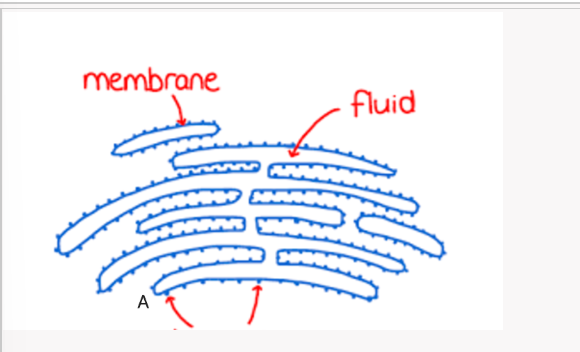
Question 12

<br> <br> <br>

What is the primary function of the structure 'A' attached to the rough endoplasmic reticulum in the given diagram?

  1. AOption (a)

    Digestion of food particles

  2. BOption (b)

    Storing genetic material

  3. COption (c)

    Production of fat molecules

  4. DOption (d)

    Manufacturing proteins

View answer & explanation

Correct answer

Answer: (d)D.

Manufacturing proteins

Why this answer is correct

The correct answer is Manufacturing proteins.

Key Points

  • Structure 'A' in the diagram represents ribosomes, which are the fundamental cellular organelles responsible for protein synthesis.
  • Ribosomes are often found attached to the Rough Endoplasmic Reticulum (RER), giving it a distinctive "rough" or granular appearance under an electron microscope.
  • The primary role of these attached ribosomes is to translate messenger RNA (mRNA) into polypeptide chains, which then enter the lumen of the RER for proper folding and processing. Hence, the option regarding manufacturing proteins is correct.
  • These proteins produced on the RER are typically destined for secretion out of the cell, incorporation into the plasma membrane, or for use within lysosomes.
  • Ribosomes function by linking amino acids together in a specific order dictated by the genetic code, a process known as translation.

Additional Information

  • Endoplasmic Reticulum (ER):
  • The ER is a continuous membrane system that forms a series of flattened sacs within the cytoplasm of eukaryotic cells.
  • It is divided into two types: Rough ER (studded with ribosomes) and Smooth ER (lacking ribosomes).
  • The Smooth Endoplasmic Reticulum (SER) is primarily involved in the production of fat molecules (lipids), steroids, and the detoxification of metabolic byproducts.
  • Nucleus:
  • The nucleus is the "control center" of the cell and is responsible for storing genetic material in the form of DNA (Deoxyribonucleic acid).
  • It coordinates cell activities like growth, intermediary metabolism, and reproduction (cell division).
  • Lysosomes:
  • These are membrane-bound organelles containing digestive enzymes (hydrolases) responsible for the digestion of food particles, damaged organelles, and foreign substances like bacteria.
  • They are often referred to as the "suicide bags" of the cell because they can digest the cell itself if it becomes damaged or dies.

Important Points

  • Discovery: Ribosomes were first identified in the mid-1950s by George Emil Palade, who used electron microscopy to observe them as dense particles or granules.
  • Structure: A ribosome is composed of two subunits—the large subunit and the small subunit—which come together during the process of protein manufacturing.
  • Composition: They are chemically composed of ribosomal RNA (rRNA) and dozens of distinct proteins.
  • Location: While many are attached to the Rough ER, "free" ribosomes also exist in the cytosol, where they synthesize proteins that function within the cytoplasm itself.

Question 13

Which of the following is a saturated hydrocarbon?

  1. AOption (a)

    Butyne

  2. BOption (b)

    Ethene

  3. COption (c)

    Ethyne

  4. DOption (d)

    Propane

View answer & explanation

Correct answer

Answer: (d)D.

Propane

Why this answer is correct

The correct answer is Propane.

Key Points

  • Saturated hydrocarbons are organic compounds where the carbon atoms are connected to each other only by single bonds. These are also known as alkanes.
  • Propane is an alkane with the chemical formula C3H8. Since it contains only single covalent bonds between its three carbon atoms, it is classified as a saturated hydrocarbon. Hence, this option is correct.
  • Ethene (C2H4) belongs to the group of alkenes, which are unsaturated hydrocarbons containing at least one double bond between carbon atoms. Hence, this option is incorrect.
  • Ethyne (C2H2) and Butyne (C4H6) belong to the group of alkynes. These are unsaturated hydrocarbons containing at least one triple bond between carbon atoms. Hence, these options are incorrect.
  • The general formula for saturated hydrocarbons (alkanes) is CnH2n+2, where n represents the number of carbon atoms in the molecule.

Additional Information

  • Classification of Hydrocarbons:
  • Alkanes: These are saturated compounds with the general formula CnH2n+2. Common examples include Methane (CH4), Ethane (C2H6), and Butane (C4H10). They are primarily used as fuels (e.g., LPG consists mostly of propane and butane).
  • Alkenes: These are unsaturated compounds featuring at least one double bond with the formula CnH2n. Ethene is the simplest alkene, often used in the production of plastics like polyethylene.
  • Alkynes: These are unsaturated compounds featuring at least one triple bond with the formula CnH2n-2. Ethyne, commonly known as acetylene, is used in welding torches.
  • Chemical Reactivity:
  • Saturated hydrocarbons are relatively unreactive under normal conditions and are often referred to as paraffins (meaning "little affinity"). They undergo substitution reactions.
  • Unsaturated hydrocarbons are more chemically reactive because of the presence of double or triple bonds, which can easily break to form new bonds in addition reactions.
  • Structure and Hybridization:
  • In alkanes (saturated), carbon atoms are sp3 hybridized, leading to a tetrahedral geometry.
  • In alkenes, the double-bonded carbons are sp2 hybridized, while in alkynes, the triple-bonded carbons are sp hybridized.

Important Points

  • Nomenclature Prefixes: The names of hydrocarbons are based on the number of carbon atoms: 1 (meth-), 2 (eth-), 3 (prop-), 4 (but-), 5 (pent-), etc.
  • Physical State: The first four alkanes (C1 to C4) are gases at room temperature, while those with 5 to 17 carbons are liquids, and those with 18 or more carbons are solids.
  • Combustion: All hydrocarbons burn in the presence of oxygen to produce carbon dioxide, water, and heat energy, making them excellent energy sources.

Question 14

Which of the following conditions will increase the rate of evaporation of a liquid?

  1. AOption (a)

    Increase in humidity

  2. BOption (b)

    Decrease in temperature

  3. COption (c)

    Increase in wind speed

  4. DOption (d)

    Decrease in surface area

View answer & explanation

Correct answer

Answer: (c)C.

Increase in wind speed

Why this answer is correct

The correct answer is Increase in wind speed.

Key Points

  • Evaporation is a surface phenomenon where liquid changes into vapor at any temperature below its boiling point.
  • Increase in wind speed: With an increase in wind speed, the particles of water vapor move away with the wind. This decreases the amount of water vapor in the surrounding atmosphere, thereby increasing the rate of evaporation. Hence, statement 3 is correct.
  • Humidity: Humidity is the amount of water vapor present in the air. The air around us cannot hold more than a definite amount of water vapor at a given temperature. If the amount of water in the air is already high (high humidity), the rate of evaporation decreases. Hence, statement 1 is incorrect.
  • Temperature: With an increase in temperature, more particles get enough kinetic energy to go into the vapor state. Therefore, a decrease in temperature leads to a slower rate of evaporation. Hence, statement 2 is incorrect.
  • Surface Area: Since evaporation is a surface phenomenon, if the surface area is increased, the rate of evaporation increases. For example, while putting clothes for drying up, we spread them out. A decrease in surface area will reduce the rate. Hence, statement 4 is incorrect.

Additional Information

  • Mechanism of Evaporation:
  • In a liquid, a small fraction of particles at the surface, having higher kinetic energy, is able to break away from the forces of attraction of other particles and gets converted into vapor.
  • Unlike boiling, which is a bulk phenomenon occurring at a specific boiling point (e.g., 100 degrees Celsius for water at 1 atmospheric pressure), evaporation occurs at all temperatures.
  • Evaporation Causes Cooling:
  • The particles of liquid absorb energy from the surrounding to regain the energy lost during evaporation. This absorption of energy from the surroundings makes the surroundings cold.
  • Example 1: During summer, people sprinkle water on the roof or open ground because the large latent heat of vaporization of water helps to cool the hot surface.
  • Example 2: We wear cotton clothes in summer because cotton, being a good absorber of water, helps in absorbing sweat and exposing it to the atmosphere for easy evaporation, which cools our body.
  • Latent Heat of Vaporization:
  • This is the heat energy required to change 1 kg of a liquid to gas at atmospheric pressure at its boiling point.
  • During evaporation, the liquid takes this latent heat from the surroundings, resulting in the cooling effect.

Important Points

  • Intermolecular Forces: The rate of evaporation also depends on the nature of the liquid. Liquids with weaker intermolecular forces (like alcohol or petrol) evaporate much faster than liquids with stronger forces (like water or glycerin) at the same temperature.
  • Pressure: The rate of evaporation is inversely proportional to the atmospheric pressure. When the pressure is low, it is easier for molecules to escape into the air.
  • Practical Application: Desert coolers work better on a hot dry day because the high temperature and low humidity increase the rate of evaporation of water, resulting in better cooling.

Question 15

The symbol of a battery is:

  1. AOption (a)

    one long and one short line

  2. BOption (b)

    a circle with a dot

  3. COption (c)

    a combination of multiple long and short lines

  4. DOption (d)

    a rectangle with arrows

View answer & explanation

Correct answer

Answer: (c)C.

a combination of multiple long and short lines

Why this answer is correct

The correct answer is a combination of multiple long and short lines.

Key Points

  • An electric battery is defined as a device consisting of two or more electric cells connected together to serve as a source of electrical energy.
  • In an electric circuit diagram, the symbol for a battery is represented by a series of alternating long and short parallel lines, reflecting that it is composed of multiple cells connected in a sequence. Hence, statement 3 is correct.
  • The longer vertical line in the symbol represents the positive terminal, while the shorter, thicker vertical line represents the negative terminal of the cell.
  • To form a functional battery, the positive terminal of one cell is typically connected to the negative terminal of the next cell; this arrangement is known as a series connection.
  • Batteries are essential for providing the electromotive force (EMF) or voltage required to drive an electric current through a closed circuit.

Additional Information

  • Electric Cell:
  • A single electric cell is a device that converts chemical energy into electrical energy.
  • The symbol for a single cell consists of only one long and one short line. Hence, statement 1 describes a cell, not a battery.
  • Types of Batteries:
  • Primary Batteries: These are non-rechargeable units, such as the alkaline batteries used in wall clocks and TV remotes.
  • Secondary Batteries: These are rechargeable units, such as the Lithium-ion (Li-ion) batteries found in smartphones or Lead-acid batteries used in automobiles.
  • Historical Context:
  • The first true battery was invented by the Italian physicist Alessandro Volta in the year 1800, known as the Voltaic Pile.
  • The unit of electric potential, the Volt (V), is named in his honor.
  • Voltage Addition:
  • When cells are connected in series, their individual voltages are added together. For example, connecting four 1.5V cells in series results in a 6V battery.

Important Points

  • Circuit Symbols of Other Components:
  • Option 2 (A circle with a dot): This symbol is often used to represent a plug key or a switch in the closed (on) position. If the dot is absent, it represents an open switch.
  • Option 4 (A rectangle with arrows): A rectangle usually represents a resistor or a generic load. If arrows are pointing towards it, it may represent a Light Dependent Resistor (LDR), and if arrows point away, it represents a Light Emitting Diode (LED). Hence, statement 4 is incorrect for a battery.
  • Safety and Polarity:
  • It is crucial to observe polarity when joining cells; connecting the positive terminal of one cell to the positive terminal of another (in a simple series circuit) will result in the voltages opposing each other, and the device will not function.

Question 16

The commercial unit of electric energy is kilowatt hour (kW h). Which of the following is the correct value of 1kWh?

  1. AOption (a)

    1.9×10⁶ 1.9 \times 106 Joule

  2. BOption (b)

    3.6×10⁶ 3.6 \times 106 Joule

  3. COption (c)

    1.6×10⁶ 1.6 \times 106 Joule

  4. DOption (d)

    3.0×10⁶ 3.0 \times 106 Joule

View answer & explanation

Correct answer

Answer: (b)B.

3.6×10⁶ 3.6 \times 106 Joule

Why this answer is correct

The correct answer is 3.6 x 10^6 Joule.

Key Points

  • The kilowatt-hour (kWh) is the commercial unit of electrical energy. It is commonly used by electricity providers to bill consumers for the total amount of energy consumed over a period.
  • To find the value of 1 kWh in Joules, we use the relationship Energy = Power x Time. Here, the power is 1 kilowatt and the time is 1 hour.
  • 1 kilowatt (kW) is equal to 1000 Watts. Since 1 Watt is defined as 1 Joule per second (J/s), 1000 Watts is equivalent to 1000 Joules per second.
  • 1 hour consists of 60 minutes, and each minute has 60 seconds. Therefore, 1 hour equals 3600 seconds (60 x 60).
  • The calculation for conversion is: 1 kWh = 1000 J/s x 3600 s, which results in 3,600,000 Joules. In scientific notation, this is expressed as 3.6 x 10^6 Joules. Hence, the value of 1 kWh is 3.6 x 10^6 Joules.

Additional Information

  • Electrical Energy: This refers to the energy derived from electric potential energy or kinetic energy. The SI unit of energy is the Joule (J), named after the English physicist James Prescott Joule in the 19th century.
  • Power: It is defined as the rate at which work is done or energy is transferred. The SI unit of power is the Watt (W), named after James Watt. 1 Watt is equal to 1 Joule per second.
  • Need for Commercial Units: Because the Joule is a very small unit of energy, it is inconvenient for expressing large quantities of energy used in homes, industries, and commercial establishments. For these purposes, the larger unit kilowatt-hour is used.
  • Measuring Consumption: Household electricity meters measure energy in "units". In this context, 1 unit of electricity is exactly equal to 1 kilowatt-hour.

Important Points

  • 1 Joule: It is the work done when a force of one Newton displaces an object by one meter in the direction of the force. It is also the energy dissipated as heat when an electric current of one Ampere passes through a resistance of one Ohm for one second.
  • History of the Unit: The term Board of Trade (B.O.T.) unit was formerly used in the United Kingdom as a synonym for kilowatt-hour. This was the standard for electrical billing starting in the year 1882.
  • Conversions: While 1 kWh is 3.6 x 10^6 Joules, other related units include the calorie (approx 4.184 Joules) and the British Thermal Unit (BTU) (approx 1055 Joules).
  • Efficiency: Understanding kWh helps in calculating the efficiency of electrical appliances by determining how many Joules of energy they consume to perform a specific amount of work.

Question 17

Which of the following is true about the mass of an object?

  1. AOption (a)

    It depends on gravity.

  2. BOption (b)

    It stays the same no matter where the object is.

  3. COption (c)

    It increases at pole.

  4. DOption (d)

    It changes from place to place.

View answer & explanation

Correct answer

Answer: (b)B.

It stays the same no matter where the object is.

Why this answer is correct

The correct answer is It stays the same no matter where the object is.

Key Points

  • Mass is a fundamental property of matter that represents the total amount of matter or atoms contained within an object.
  • Statement 1: It depends on gravity. This statement is incorrect. Mass is independent of gravitational pull. It is weight that depends on the acceleration due to gravity (g).
  • Statement 2: It stays the same no matter where the object is. This statement is correct because mass is an intrinsic property. Whether the object is on Earth, the Moon, or in outer space, the quantity of matter it contains does not change. Hence, statement 2 is correct.
  • Statement 3: It increases at pole. This statement is incorrect. While the weight of an object increases at the Earth's poles because the Earth is not a perfect sphere and the gravitational force is stronger there, the mass remains constant.
  • Statement 4: It changes from place to place. This statement is incorrect. This is a characteristic of weight, which varies depending on the altitude, latitude, or the celestial body the object is placed upon.
  • Mass is a scalar quantity, meaning it only has magnitude and no direction. It can never be zero for a physical object.

Additional Information

  • Measurement Units:
  • The SI unit of mass is the kilogram (kg).
  • Other common units include grams (g), milligrams (mg), and tonnes (1,000 kg).
  • Relationship with Weight:
  • Weight is the force exerted by gravity on an object. It is calculated using the formula W = m × g, where m is mass and g is acceleration due to gravity (approximately 9.8 m/s² on Earth).
  • Since g varies at different locations, weight changes, but mass (m) remains the same.
  • Inertia:
  • Mass is often described as a measure of inertia. Inertia is the tendency of an object to resist changes in its state of motion.
  • An object with a larger mass has greater inertia, making it harder to start moving, stop, or change its direction.
  • Measuring Instruments:
  • Mass is typically measured using a beam balance or a physical balance, which compares an unknown mass against standard masses.
  • Weight is measured using a spring balance, which measures the force of gravity pulling on the object.

Important Points

  • Conservation of Mass: In classical physics and chemical reactions, the Law of Conservation of Mass states that mass can neither be created nor destroyed; it only changes forms.
  • Difference on the Moon: The gravity on the Moon is only 1/6th of that on Earth. If an object has a mass of 60 kg, it will still have a mass of 60 kg on the Moon, but its weight will drop from 588 N (on Earth) to approximately 98 N.
  • Atomic Mass: On a microscopic scale, the mass of an atom is measured in Atomic Mass Units (amu), defined as 1/12th of the mass of a carbon-12 atom.
  • Relativistic Mass: According to Einstein's Theory of Relativity, as an object approaches the speed of light, its relativistic mass increases, though its rest mass remains unchanged.

Question 18

The phenomenon of dispersion of light was first explained by ________.

  1. AOption (a)

    Isaac Newton

  2. BOption (b)

    Christiaan Huygens

  3. COption (c)

    James Clerk Maxwell

  4. DOption (d)

    Albert Einstein

View answer & explanation

Correct answer

Answer: (a)A.

Isaac Newton

Why this answer is correct

The correct answer is Isaac Newton.

Key Points

  • The phenomenon of dispersion of light was first explained by the English physicist and mathematician Sir Isaac Newton in the year 1666.
  • Through his landmark experiments with glass prisms, Newton demonstrated that white light is not a single entity but is actually composed of a spectrum of different colors.
  • He observed that when a narrow beam of sunlight passes through a triangular glass prism, it splits into a band of seven colors, commonly known as VIBGYOR (Violet, Indigo, Blue, Green, Yellow, Orange, and Red).
  • Newton concluded that different colors of light bend through different angles with respect to the incident beam as they pass through the prism. Violet light undergoes the maximum deviation, while red light undergoes the minimum deviation.
  • To confirm that the prism was not adding color to the light, he placed a second identical prism in an inverted position with respect to the first one, which allowed the separated colors to recombine into white light.

Additional Information

  • Dispersion: This is defined as the splitting of a composite beam of light into its constituent colors when it passes through a transparent medium like a prism or a water droplet.
  • Refractive Index and Wavelength: The cause of dispersion is that the Refractive Index of a material varies for different wavelengths. Since each color has a specific wavelength, they travel at different speeds within the medium, leading to different degrees of refraction.
  • Christiaan Huygens: A Dutch scientist who proposed the Wave Theory of Light in 1678. He suggested that light travels in the form of longitudinal waves through a hypothetical medium called "ether."
  • James Clerk Maxwell: A Scottish scientist who developed the theory of Electromagnetism in the 1860s. He mathematically proved that light is an electromagnetic wave that can travel through a vacuum.
  • Albert Einstein: A German-born physicist who explained the Photoelectric Effect in 1905, for which he received the Nobel Prize in Physics in 1921. He introduced the concept of photons, establishing the particle nature of light.

Important Points

  • Natural Dispersion: A rainbow is a prime example of dispersion of sunlight caused by water droplets in the atmosphere. This process involves refraction, dispersion, and Total Internal Reflection (TIR).
  • Visible Spectrum: The range of wavelengths visible to the human eye is approximately 400 nm to 700 nm. Violet has the shortest wavelength and highest frequency, while red has the longest wavelength and lowest frequency.
  • Newton's Opticks: Isaac Newton published his detailed findings on light and color in his famous book titled "Opticks" in 1704, which laid the foundation for modern physical optics.

Question 19

Read the following statements carefully and select the INCORRECT one.

  1. AOption (a)

    Medulla oblongata controls reflex actions like pulling hand away from a hot object.

  2. BOption (b)

    Cerebellum helps in maintaining body posture and balance.

  3. COption (c)

    Cerebrum is the largest part of the human brain and is responsible for thinking and voluntary actions.

  4. DOption (d)

    Spinal cord acts as a relay between the brain and the rest of the body and also controls reflex actions.

View answer & explanation

Correct answer

Answer: (a)A.

Medulla oblongata controls reflex actions like pulling hand away from a hot object.

Why this answer is correct

The correct answer is Medulla oblongata controls reflex actions like pulling hand away from a hot object..

Key Points

  • The Medulla oblongata is a part of the hindbrain responsible for controlling involuntary actions such as breathing, heart rate, blood pressure, and digestion. However, sudden reflex actions involving the limbs, such as pulling a hand away from a hot object, are primarily coordinated by the spinal cord to ensure a rapid response without immediate brain processing. Hence, statement 1 is incorrect.
  • The Cerebellum, often referred to as the "little brain," is located at the back of the skull. Its primary function is to coordinate precision, fine motor skills, and maintain body posture and equilibrium. It ensures that movements are smooth and balanced. Hence, statement 2 is correct.
  • The Cerebrum is the largest part of the human brain, making up about 80% of its weight. It is divided into two cerebral hemispheres and is the seat of intelligence, memory, reasoning, and the control of voluntary actions like walking or speech. Hence, statement 3 is correct.
  • The Spinal cord serves as the main communication link between the brain and the peripheral nervous system. It acts as a relay station for sensory and motor impulses and is the integration center for spinal reflexes, which occur instantly to protect the body from harm. Hence, statement 4 is correct.
  • Hence, the incorrect statement is Medulla oblongata controls reflex actions like pulling hand away from a hot object.

Additional Information

  • The Human Brain:
  • The brain is protected by the cranium (skull) and surrounded by three layers of membranes called meninges. It is divided into three main regions: the Forebrain, Midbrain, and Hindbrain.
  • The Forebrain includes the Cerebrum, Thalamus, and Hypothalamus. The Hypothalamus is crucial for thermoregulation, hunger, and thirst.
  • The Midbrain connects the forebrain to the hindbrain and controls visual and auditory reflexes.
  • The Hindbrain consists of the Cerebellum, Pons, and Medulla Oblongata. The Pons acts as a bridge between various parts of the brain and helps regulate respiration.
  • Reflex Action and Reflex Arc:
  • A Reflex action is an extremely quick, automatic response to a stimulus.
  • The path taken by nerve impulses in a reflex action is called a Reflex Arc. It involves a receptor, sensory neuron, spinal cord (interneuron), motor neuron, and effector organ (muscle or gland).
  • By bypassing the conscious brain (cerebrum) during the initial response, the body saves milliseconds, which can be critical in preventing tissue damage.

Important Points

  • Brainstem: The Midbrain, Pons, and Medulla oblongata collectively form the brainstem, which connects the brain to the spinal cord and handles vital life-support functions.
  • Weight and Composition: An average adult human brain weighs approximately 1.3 to 1.4 kg and contains nearly 86 billion neurons.
  • Voluntary vs Involuntary: Voluntary actions are under conscious control (e.g., writing with a pen), while Involuntary actions occur without conscious thought (e.g., the beating of the heart or the peristaltic movement of the gut).
  • Medulla's Specific Functions: Apart from vital centers, the Medulla also contains centers for swallowing, coughing, sneezing, and vomiting.

Question 20

Which of the following is true about action and reaction forces according to Newton’s third law?

  1. AOption (a)

    They act in the same direction on the same object

  2. BOption (b)

    They act on the same object at different times

  3. COption (c)

    They act on two different objects at the same time

  4. DOption (d)

    They cancel each other out because they act on one object

View answer & explanation

Correct answer

Answer: (c)C.

They act on two different objects at the same time

Why this answer is correct

The correct answer is They act on two different objects at the same time.

Key Points

  • Newton’s Third Law of Motion states that for every action, there is an equal and opposite reaction. This law describes the nature of forces between interacting objects.
  • Action and reaction forces always occur in pairs. A single, isolated force cannot exist in nature.
  • A fundamental characteristic of these force pairs is that they act on two different objects. If object A exerts a force on object B, then object B simultaneously exerts a force back on object A. Hence, statement 3 is correct.
  • The forces act in exactly opposite directions. Statement 1 claims they act in the same direction, which contradicts the law. Hence, statement 1 is incorrect.
  • These forces are simultaneous, meaning they exist at the exact same moment. There is no time delay between the action and its reaction. Hence, statement 2 is incorrect.
  • Since action and reaction forces act on different bodies, they never cancel each other out. For forces to cancel and result in equilibrium, they must act on the same object. Hence, statement 4 is incorrect.
  • Hence, the correct answer is They act on two different objects at the same time.

Additional Information

  • Origins of the Law: Sir Isaac Newton formulated this law, along with his other two laws of motion, in his monumental work Philosophiae Naturalis Principia Mathematica, published in 1687.
  • Mathematical Expression: If F12 represents the force exerted by object 1 on object 2, and F21 represents the force exerted by object 2 on object 1, then the law is expressed as F12 = -F21. The negative sign indicates the opposite direction.
  • Common Examples:
  • Swimming: A swimmer pushes the water backward (action), and the water pushes the swimmer forward (reaction).
  • Bird Flight: A bird's wings push the air downward and backward, while the air pushes the bird upward and forward.
  • Rocketry: In a rocket engine, hot exhaust gases are expelled downward, and as a reaction, the gases exert an upward thrust on the rocket.
  • Nature of Interaction: The action-reaction pair must be of the same type. For instance, if the action is a magnetic force, the reaction is also a magnetic force; if the action is gravity, the reaction is also gravity.

Important Points

  • Mass and Acceleration: While the magnitude of the action and reaction forces is always equal, the resulting acceleration on each object can be very different. According to Newton's Second Law (F = ma), the object with less mass will experience a much greater acceleration. A classic example is a gun recoiling; the bullet and gun feel the same force, but the bullet moves faster due to its small mass.
  • System Analysis: When defining a physical system, if both interacting objects are included within the system boundaries, the action and reaction forces are considered internal forces and their vector sum is zero. However, if the system includes only one object, only one force from the pair is considered an external force acting on that system.
  • Interaction Requirement: Newton's Third Law highlights that force is not something an object "has," but rather a description of an interaction between two entities.

Question 21

During electrolytic refining, which substance(s) get(s) collected at the cathode?

  1. AOption (a)

    Organic matter left from ores

  2. BOption (b)

    Insoluble impurities and gases

  3. COption (c)

    The same metal with new bonds

  4. DOption (d)

    Pure form of the impure metal

View answer & explanation

Correct answer

Answer: (d)D.

Pure form of the impure metal

Why this answer is correct

The correct answer is Pure form of the impure metal.

Key Points

  • Electrolytic refining is the process of purifying impure metals using electricity. It is widely used for metals like Copper (Cu), Zinc (Zn), Tin (Sn), Nickel (Ni), Silver (Ag), and Gold (Au).
  • In this electrochemical setup, a thick slab of the impure metal is made the Anode (the positive electrode), while a thin strip of pure metal is made the Cathode (the negative electrode).
  • When an electric current is passed through the electrolyte (a water-soluble salt of the same metal), metal atoms from the anode lose electrons and enter the solution as positive ions (oxidation).
  • These metal ions then migrate toward the Cathode, where they gain electrons and are reduced to form pure metal atoms, which deposit on the cathode surface. Hence, the statement that pure form of the impure metal gets collected at the cathode is correct.
  • The organic matter and other volatile substances are typically removed during the roasting or smelting phases, not at the cathode during electrolysis. Hence, option 1 is incorrect.
  • The insoluble impurities do not reach the cathode; instead, they settle down under the anode as anode mud. Hence, option 2 is incorrect.
  • While the metal atoms form metallic bonds in the new crystal lattice, the most accurate description is the deposition of the pure form of the metal. Hence, option 3 is less accurate than option 4.

Additional Information

  • The Electrolyte: The solution used must contain ions of the metal being refined. For example, in copper refining, the electrolyte is usually a mixture of Copper Sulfate (CuSO4) and Sulfuric Acid (H2SO4).
  • Anode Mud: This contains insoluble impurities like Antimony, Selenium, Tellurium, Silver, Gold, and Platinum. These are often recovered as valuable by-products, helping to cover the cost of the refining process.
  • Oxidation at Anode: The reaction at the positive electrode involves the metal (M) losing n electrons: M → Mn+ + ne−.
  • Reduction at Cathode: The reaction at the negative electrode involves the metal ions receiving electrons: Mn+ + ne− → M (pure).
  • Soluble Impurities: Impurities that are more electropositive than the metal being refined remain in the electrolyte solution as ions and do not deposit on the cathode.

Important Points

  • Purity Level: Electrolytic refining is highly efficient and can produce metals with a purity of 99.9% to 99.99%. This high level of purity is critical for electrical wires to ensure maximum conductivity and minimum resistance.
  • Voltage Control: The voltage applied must be carefully regulated so that only the desired metal ions are reduced at the cathode, preventing other impurity ions from depositing.
  • Industrial Application: In the case of Aluminum, a similar but distinct electrolytic process called the Hall-Héroult process is used for extraction, though refining of other metals specifically follows the anode-cathode deposition principle described above.
  • Mass Transfer: During the process, the Anode gradually dissolves and becomes thinner, while the Cathode grows thicker due to the continuous accumulation of the pure metal.

Question 22

A person does 600 J of work in 3 minutes. What is the average power?

  1. AOption (a)

    330 W

  2. BOption (b)

    3.33 W

  3. COption (c)

    200 W

  4. DOption (d)

    20 W

View answer & explanation

Correct answer

Answer: (b)B.

3.33 W

Why this answer is correct

The correct answer is 3.33 W.

Key Points

  • Power is defined as the rate of doing work or the rate at which energy is transferred or converted.
  • The mathematical formula for calculating power is Power (P) = Work Done (W) / Time Taken (t).
  • In this specific problem, the Work done is 600 Joules (J) and the Time taken is 3 minutes.
  • To find the power in the standard unit of Watts (W), the time must be converted from minutes to seconds. Since 1 minute = 60 seconds, then 3 minutes = 180 seconds.
  • Applying the values to the formula: Power = 600 J / 180 s. This simplifies to 60 / 18, which equals 3.333... Watts. Hence, the correct answer is 3.33 W.

Additional Information

  • Watt (W): It is the SI unit of power. One Watt is defined as the consumption of one Joule of energy per second. It is named after James Watt, an 18th-century Scottish inventor who significantly improved the steam engine.
  • Joule (J): This is the SI unit of work and energy. One Joule is the amount of work done when a force of one Newton is applied over a distance of one meter.
  • Scalar Quantity: Power is a scalar quantity because it only has magnitude and no specific direction, unlike velocity or force.
  • Units of Time: In physics calculations involving Standard International (SI) units, time is almost always measured in seconds to maintain consistency with Watts and Joules.
  • Common Conversions: While the Watt is the standard unit, power is also often measured in Kilowatts (kW), where 1 kW = 1,000 W, or Horsepower (hp), where 1 hp is approximately 746 W.

Important Points

  • Average vs. Instantaneous Power: Average power (calculated in this question) is the total work divided by the total time. Instantaneous power is the power measured at a specific, infinitesimal moment in time.
  • Relation to Force: Power can also be calculated if the force and velocity are known, using the formula Power = Force x Velocity (P = F x v).
  • Electrical Power: In the context of electricity, power is the product of Voltage (V) and Current (I), represented as P = V x I.
  • Dimensional Formula: The dimensional representation of power is [ML2T-3], derived from work [ML2T-2] divided by time [T].
  • Energy Consumption: Power is used to determine energy consumption over time; for instance, Energy = Power x Time. This is why electricity bills are often measured in kilowatt-hours (kWh).

Question 23

Which of the following acid-base indicators is colourless in acidic medium and pink in basic medium?

  1. AOption (a)

    Litmus

  2. BOption (b)

    Phenolphthalein

  3. COption (c)

    Methyl orange

  4. DOption (d)

    Bromothymol blue

View answer & explanation

Correct answer

Answer: (b)B.

Phenolphthalein

Why this answer is correct

The correct answer is Phenolphthalein.

Key Points

  • Phenolphthalein is a synthetic chemical compound often used as an acid-base indicator in laboratories.
  • In an acidic medium, phenolphthalein remains completely colourless. It also remains colourless in neutral solutions.
  • When the solution becomes basic (alkaline), phenolphthalein molecules undergo a structural change, resulting in a vibrant pink or magenta colour.
  • The pH transition range for phenolphthalein is typically between 8.2 and 10.0. Below pH 8.2, it is colourless, and above pH 10.0, it is pink.
  • It is widely utilized in analytical chemistry, particularly during titrations involving a strong base and a weak acid, to accurately identify the end point of the reaction.

Additional Information

  • Litmus:
  • It is a natural indicator extracted from Lichens.
  • In an acidic medium, litmus paper or solution turns red, while in a basic medium, it turns blue.
  • A neutral litmus solution is purple in colour.
  • Methyl Orange:
  • This is a synthetic indicator used for titrations involving strong acids.
  • It exhibits a red colour in acidic solutions (below pH 3.1) and a yellow colour in basic or neutral solutions (above pH 4.4).
  • In the transition range, it appears orange.
  • Bromothymol Blue:
  • It is a chemical indicator for weak acids and bases. It appears yellow in acidic conditions, green in neutral conditions, and blue in basic conditions.
  • Its pKa is approximately 7.1, making it useful for reactions occurring near neutral pH.
  • Natural Indicators:
  • Turmeric: Remains yellow in acid but turns reddish-brown in a base.
  • China Rose (Hibiscus): Turns dark pink (magenta) in acidic solutions and green in basic solutions.
  • Olfactory Indicators: These are substances like onion, vanilla essence, and clove oil whose odour changes depending on whether they are mixed with an acid or a base.

Question 24

What does the area under a velocity-time graph represent for motion along a straight line?

  1. AOption (a)

    The total distance between two points

  2. BOption (b)

    The total displacement of the object

  3. COption (c)

    The final velocity of the object

  4. DOption (d)

    The change in acceleration

View answer & explanation

Correct answer

Answer: (b)B.

The total displacement of the object

Why this answer is correct

The correct answer is The total displacement of the object.

Key Points

  • The area under a velocity-time (v-t) graph for an object moving in a straight line represents the total displacement of the object during a given time interval.
  • In a velocity-time graph, the velocity is plotted on the y-axis and time is plotted on the x-axis. Since displacement is defined as the product of velocity and time (s = v × t), the geometric area formed between the plot and the time axis signifies the change in position.
  • Because velocity is a vector quantity, the area can be positive (above the time axis) or negative (below the time axis). The algebraic sum of these areas gives the net displacement. Hence, option 2 is correct.
  • For uniform motion (constant velocity), the graph is a horizontal straight line, and the area under it forms a rectangle, the area of which is length × breadth (velocity × time).
  • For uniformly accelerated motion, the graph is a sloping straight line, and the area can be calculated using the formulas for a triangle or a trapezoid to find the displacement.

Additional Information

  • Slope of the Graph:
  • The slope or gradient of a velocity-time graph represents the acceleration of the object.
  • A positive slope indicates positive acceleration (speeding up), while a negative slope indicates retardation or deceleration (slowing down).
  • Distance vs. Displacement:
  • While the area represents displacement (considering the sign), the total distance is calculated by taking the magnitude of all areas and adding them together, regardless of whether they are above or below the time axis.
  • Kinematic Equations:
  • The second equation of motion, s = ut + ½at², can be derived by calculating the area under the velocity-time graph for an object with initial velocity (u) and constant acceleration (a).
  • Units and Dimensions:
  • The unit of area in this context is derived from the product of the units on the axes: (meters/second) × seconds = meters (m). This confirms that the resulting quantity is a length or displacement.

Important Points

  • Zero Acceleration: When the velocity-time graph is a straight line parallel to the time axis, the acceleration is 0, and the object is in uniform motion.
  • Acceleration-Time Graph: The area under an acceleration-time (a-t) graph represents the change in velocity of the object, not the displacement.
  • Position-Time Graph: In a position-time (s-t) graph, the slope represents the velocity, but the area under the curve does not have a standard physical significance in basic mechanics.
  • Instantaneous Velocity: At any specific point on the v-t graph, the y-coordinate gives the instantaneous velocity of the object at that particular second or minute.

Question 25

Which of the following characteristics of pea was a dominant trait, used by Mendel in his experiments?

  1. AOption (a)

    Tall Plants

  2. BOption (b)

    Wrinkled Seeds

  3. COption (c)

    Dwarf Plants

  4. DOption (d)

    Green Seeds

View answer & explanation

Correct answer

Answer: (a)A.

Tall Plants

Why this answer is correct

The correct answer is Tall Plants.

Key Points

  • Gregor Johann Mendel, known as the Father of Genetics, conducted his historic experiments on the Garden Pea (Pisum sativum) for seven years between 1856 and 1863.
  • He selected seven pairs of contrasting traits to study the inheritance patterns in living organisms.
  • Stem Height: Mendel observed that Tall height is the dominant trait, while Dwarf height is the recessive trait. Hence, statement 1 is correct and statement 3 is incorrect.
  • Seed Shape: The dominant trait is Round, whereas the Wrinkled shape is recessive. Hence, statement 2 is incorrect.
  • Seed Color: In pea plants, Yellow seeds are dominant and Green seeds are recessive. Hence, statement 4 is incorrect.
  • Pod Color: Interestingly, for pods, Green is the dominant trait and Yellow is the recessive trait, which is the opposite of the seed color dominance.
  • Flower Color and Position: The Violet flower color is dominant over White, and the Axial position of flowers is dominant over the Terminal position.

Additional Information

  • Reasons for choosing Pea Plants:
  • The Pisum sativum plant is bisexual and naturally undergoes self-pollination, making it easy to produce pure-breeding lines.
  • It has a short life cycle, allowing for the study of multiple generations in a short time, and produces a large number of offspring (seeds).
  • The plant exhibits distinct and easily detectable contrasting traits, which were crucial for Mendel’s statistical analysis.
  • Mendel’s Laws of Inheritance:
  • Law of Dominance: In a heterozygous individual (Tt), the dominant allele (T) expresses itself, masking the effect of the recessive allele (t).
  • Law of Segregation: During gamete formation, the two alleles for a trait segregate so that each gamete receives only one allele.
  • Law of Independent Assortment: Different traits are inherited independently of each other, provided the genes are on different chromosomes.
  • Ratios in Genetics:
  • In a Monohybrid cross (studying one trait like height), the phenotypic ratio in the F2 generation is 3:1 (3 Tall : 1 Dwarf), and the genotypic ratio is 1:2:1 (1 TT : 2 Tt : 1 tt).
  • In a Dihybrid cross (studying two traits), the phenotypic ratio is 9:3:3:1.

Important Points

  • Dominant vs. Recessive: A dominant trait is one that appears in the F1 generation after crossing two pure-breeding parents of contrasting traits. A recessive trait is one that remains latent in the F1 generation but reappears in the F2 generation.
  • Alleles: These are alternative forms of a gene (e.g., T and t). If both alleles are the same, the organism is homozygous (TT or tt); if they are different, it is heterozygous (Tt).
  • Phenotype and Genotype: Phenotype refers to the observable physical characteristics (e.g., Tall), while Genotype refers to the genetic makeup (e.g., Tt).

Mathematics (25 questions)

Question 26

The LCM of two numbers is 84. The numbers are in the ratio 4 : 3. Find the sum of the numbers.3129

  1. AOption (a)

    24

  2. BOption (b)

    32

  3. COption (c)

    56

  4. DOption (d)

    49

View answer & explanation

Correct answer

Answer: (d)D.

49

Why this answer is correct

Shortcut Trick

Ratio of numbers = 4 : 3

LCM of ratio parts = 4 × 3 = 12 units

Given 12 units = 84 ⇒ 1 unit (HCF) = 7

Sum of numbers = (4 + 3) × 7 = 7 × 7 = 49

∴ The correct answer is 49.

Alternate Method

Given:LCM = 84, Ratio = 4 : 3

Formula Used: LCM = HCF × Product of ratio parts (for coprime ratios)

⇒ Let the numbers be 4x and 3x (where x is the HCF).

⇒ LCM of 4x and 3x = 12x

⇒ 12x = 84

⇒ x = 84 ÷ 12 = 7

⇒ First number = 4 × 7 = 28

⇒ Second number = 3 × 7 = 21

⇒ Sum = 28 + 21 = 49

∴ The correct answer is 49.

Additional Information

Fundamental Property of Two Numbers

For any two numbers A and B, Product of numbers (A × B) = HCF(A, B) × LCM(A, B).

Ratio and LCM Relation

If two numbers are in the ratio a : b (where a and b are coprime), then LCM = a × b × HCF.

HCF of Fractions

HCF of fractions = (HCF of Numerators) ÷ (LCM of Denominators).

Question 27

120 is what percentage of 1060? \frac{1}{20} \text{ is what percentage of } \frac{10}{60} ?

  1. AOption (a)

    40%

  2. BOption (b)

    45%

  3. COption (c)

    30%

  4. DOption (d)

    60%

View answer & explanation

Correct answer

Answer: (c)C.

30%

Why this answer is correct

Shortcut Trick

Required percentage = (First value ÷ Second value) × 100

⇒ (1/20 ÷ 10/60) × 100

⇒ (1/20 × 60/10) × 100

⇒ (3/10) × 100 = 30%

∴ The correct answer is 30%.

Alternate Method

Given: First fraction = 1/20, Second fraction = 10/60.

Formula Used: Percentage = (Part/Whole) × 100

Calculation:

⇒ Let 1/20 be x% of 10/60.

⇒ 1/20 = (x/100) × (10/60)

⇒ 1/20 = (x/100) × (1/6)

⇒ 1/20 = x/600

⇒ x = 600/20

⇒ x = 30

∴ The correct answer is 30%.

Additional Information

Fraction to Percentage

To convert any fraction a/b into a percentage, multiply it by 100 and add the % symbol.

Percentage Change

Percentage change = (Difference / Original Value) × 100.

Reciprocal Percentages

Common values: 1/2 = 50%, 1/4 = 25%, 1/5 = 20%, 1/10 = 10%, 1/20 = 5%.

Question 28

If 646 bananas were distributed among three monkeys in the ratio 16:19:14\frac{1}{6}: \frac{1}{9} : \frac{1}{4} how many bananas did the first monkey get?

  1. AOption (a)

    234

  2. BOption (b)

    204

  3. COption (c)

    214

  4. DOption (d)

    174

View answer & explanation

Correct answer

Answer: (b)B.

204

Why this answer is correct

Shortcut Trick

Convert fractional ratio to integer ratio by multiplying with LCM of 6, 9, and 4 (LCM = 36).

Ratio = (1/6 × 36) : (1/9 × 36) : (1/4 × 36) = 6 : 4 : 9.

Total units = 6 + 4 + 9 = 19 units.

19 units = 646 ⇒ 1 unit = 34.

First monkey (6 units) = 6 × 34 = 204.

∴ The correct answer is 204 bananas.

Alternate Method

Given: Total bananas = 646, Ratio = 1/6 : 1/9 : 1/4

⇒ Simplified Ratio = 1/6 : 1/9 : 1/4

⇒ Multiply by 36: (36/6) : (36/9) : (36/4) = 6 : 4 : 9

⇒ Sum of ratio terms = 6 + 4 + 9 = 19

⇒ Share of first monkey = (6/19) × 646

⇒ Share = 6 × 34 = 204

∴ The correct answer is 204 bananas.

Additional Information

Ratio Simplification

To convert a fractional ratio a/b : c/d to an integer ratio, multiply both terms by the Least Common Multiple (LCM) of the denominators b and d.

Proportional Division

If a quantity X is divided in the ratio a:b:c, the share of the first part is calculated as [a / (a + b + c)] × X.

Question 29

Mahi would need twice as much time as Neha and Asha combined, while Asha would require three times as much time as Neha and Mahi combined to complete a certain task. If all three friends work together, they can finish the task in 20 days. How many days would Neha take to complete the same task on her own?

  1. AOption (a)

    48 days

  2. BOption (b)

    42 days

  3. COption (c)

    24 days

  4. DOption (d)

    36 days

View answer & explanation

Correct answer

Answer: (a)A.

48 days

Why this answer is correct

Shortcut Trick

Efficiency ratio for Mahi : (Neha + Asha) = 1 : 2 ⇒ Mahi = 1/3 of total.

Efficiency ratio for Asha : (Neha + Mahi) = 1 : 3 ⇒ Asha = 1/4 of total.

Neha efficiency = 1 − (1/3 + 1/4) = 1 − 7/12 = 5/12 of total.

Total time × Total Efficiency = Neha time × Neha efficiency ⇒ 20 × 1 = Days × 5/12.

Days = 20 × 12/5 = 4 × 12 = 48 days.

∴ The correct answer is 48 days.

Alternate Method

PersonDaysTotal WorkEfficiency
Mahi + Neha + Asha2024012

Given: Time taken by Mahi = 2 × (Neha + Asha)

⇒ Efficiency ratio (Mahi) : (Neha + Asha) = 1 : 2

⇒ Mahi efficiency = (1/3) × 12 = 4 units/day

Given: Time taken by Asha = 3 × (Neha + Mahi)

⇒ Efficiency ratio (Asha) : (Neha + Mahi) = 1 : 3

⇒ Asha efficiency = (1/4) × 12 = 3 units/day

Calculations:

⇒ Neha efficiency = Total efficiency − Mahi efficiency − Asha efficiency

⇒ Neha efficiency = 12 − 4 − 3 = 5 units/day

⇒ Days taken by Neha = Total Work ÷ Neha efficiency

⇒ Days = 240 ÷ 5 = 48 days

∴ The correct answer is 48 days.

Additional Information

Efficiency and Time Relation

Efficiency is inversely proportional to the time taken to complete a task. If time ratio is a:b, then efficiency ratio is b:a.

Total Work Formula

Total Work = Efficiency × Time. For multiple people, Total Work = (Sum of individual efficiencies) × Combined Time.

Ratio Balancing

When comparing partial groups to a whole, ensure the sum of ratios (parts) matches the total efficiency common to all equations.

Question 30

A dealer purchased a dryer for ₹92,000. He allows a discount of 77% on its marked price and still gains 83%. Find the marked price of the dryer.

  1. AOption (a)

    ₹7,32,000

  2. BOption (b)

    ₹7,31,917

  3. COption (c)

    ₹7,31,919

  4. DOption (d)

    ₹7,31,858

View answer & explanation

Correct answer

Answer: (a)A.

₹7,32,000

Why this answer is correct

Shortcut Trick

Ratio of Marked Price (MP) to Cost Price (CP) is given by: MP : CP = (100 + Gain%) : (100 − Discount%).

MP : CP = (100 + 83) : (100 − 77) = 183 : 23.

Given CP = 23 units = ₹92,000.

Multiplier = 92,000 ÷ 23 = 4,000.

MP = 183 × 4,000 = ₹7,32,000.

∴ The correct answer is ₹7,32,000.

Alternate Method

Given → CP = ₹92,000, Discount = 77%, Gain = 83%. Formulas: SP = CP × (100 + Gain%) ÷ 100 | MP = SP × 100 ÷ (100 − Discount%).

⇒ Calculate Selling Price (SP): SP = 92,000 × (100 + 83) ÷ 100 = 92,000 × 1.83. ⇒ SP = ₹1,68,360. ⇒ Since Discount = 77%, SP is 23% of MP: 0.23 × MP = 1,68,360. ⇒ MP = 1,68,360 ÷ 0.23 = ₹7,32,000.

∴ The correct answer is ₹7,32,000.

Additional Information

Relationship between MP and CP

The direct ratio MP/CP = (100 + Profit%)/(100 − Discount%) is the most efficient way to solve problems involving both discount and profit on the same article.

Marked Price and Discount

Discount is always calculated on the Marked Price. SP = MP − Discount. If no discount is offered, MP becomes the SP.

Question 31

One pipe can fill a tank in 8 minutes, while another pipe can empty the completely filled tank in 40 minutes. If both the pipes are opened together when the tank is empty, how many minutes will it take to fill one-half of the tank?

  1. AOption (a)

    5

  2. BOption (b)

    10

  3. COption (c)

    11

  4. DOption (d)

    6

View answer & explanation

Correct answer

Answer: (a)A.

5

Why this answer is correct

Shortcut Trick

Net filling efficiency = 1/8 − 1/40 = (5 − 1)/40 = 4/40 = 1/10 per minute.

Time to fill full tank = 10 minutes.

Time to fill one-half of the tank = 10 ÷ 2 = 5 minutes.

∴ The correct answer is 5 minutes.

Alternate Method

Given: Filling pipe time = 8 min, Emptying pipe time = 40 min.

Formula Used: Total Work = LCM of time; Efficiency = Work ÷ Time.

Pipe TypeTime (min)Total Capacity (LCM)Efficiency
Inlet Pipe840 units+5
Outlet Pipe40−1

⇒ Combined efficiency = 5 − 1 = 4 units/min

⇒ One-half tank capacity = 40 ÷ 2 = 20 units

⇒ Time required = 20 ÷ 4 = 5 minutes

∴ The correct answer is 5 minutes.

Additional Information

Net Work Done

When one pipe fills (rate x) and another empties (rate y), the net rate is (1/x − 1/y) per unit time.

Pipes and Cisterns Logic

Inlet pipes have positive efficiency, while outlet (leakage) pipes have negative efficiency.

Partial Filling

If only a fraction k of the tank needs to be filled, the time taken is k × (Total Capacity ÷ Net Efficiency).

Question 32

The area of a triangle is 84 cm². If the altitude corresponding to its base is two-thirds of the base length, find the length of the base.

  1. AOption (a)

    57 cm 5\sqrt{7} \text{ cm}

  2. BOption (b)

    47 cm 4\sqrt{7} \text{ cm}

  3. COption (c)

    63 cm 6\sqrt{3} \text{ cm}

  4. DOption (d)

    67 cm 6\sqrt{7} \text{ cm}

View answer & explanation

Correct answer

Answer: (d)D.

67 cm 6\sqrt{7} \text{ cm}

Why this answer is correct

Shortcut Trick

Let the Base be b. Then the Altitude (h) = (2/3)b.

Area = 1/2 × Base × Altitude ⇒ 84 = 1/2 × b × (2/3)b.

84 = 1/3 × b2 ⇒ b2 = 252.

b = √252 = √(36 × 7) = 6√7 cm.

∴ The correct answer is 6√7 cm.

Alternate Method

Given:

⇒ Area of the triangle = 84 cm2

⇒ Altitude (h) = 2/3 of Base (b)

Formula Used:

⇒ Area of a triangle = 1/2 × Base × Altitude

Calculations:

⇒ Area = 1/2 × b × h

⇒ 84 = 1/2 × b × (2/3)b

⇒ 84 = (1/3) × b2

⇒ b2 = 84 × 3

⇒ b2 = 252

⇒ b = √252

⇒ b = √(36 × 7)

⇒ b = 6√7 cm

∴ The correct answer is 6√7 cm.

Additional Information

Heron's Formula

For a triangle with sides a, b, and c, Area = √[s(s−a)(s−b)(s−c)], where s (semi-perimeter) = (a + b + c) / 2.

Equilateral Triangle Area

The area of an equilateral triangle with side 'a' is given by (√3 / 4) × a2.

Right-Angled Triangle

Area = 1/2 × Product of the two sides containing the right angle.

Question 33

If the mean proportional of X and 125 is 25, then find the value of X.5773

  1. AOption (a)

    7

  2. BOption (b)

    8

  3. COption (c)

    4

  4. DOption (d)

    5

View answer & explanation

Correct answer

Answer: (d)D.

5

Why this answer is correct

Shortcut Trick

Mean proportional of X and 125 is 25.

By property: X × 125 = 252

⇒ X × 125 = 625

⇒ X = 625 ÷ 125 = 5

∴ The correct answer is 5.

Alternate Method

Given: First term = X, Third term = 125, Mean Proportional = 25.

Formula Used: If b is the mean proportional between a and c, then b = √(a × c) or b2 = a × c.

Calculations:

⇒ 25 = √(X × 125)

Squaring both sides:

⇒ 252 = X × 125

⇒ 625 = X × 125

⇒ X = 625 ÷ 125

⇒ X = 5

∴ The correct answer is 5.

Additional Information

Mean Proportional

The mean proportional between two numbers a and b is the square root of their product, expressed as x = √(ab).

Third Proportional

If a:b :: b:c, then c is called the third proportional to a and b, calculated as c = b2 ÷ a.

Fourth Proportional

In the proportion a:b :: c:d, d is the fourth proportional, where d = (b × c) ÷ a.

Question 34

The arithmetic mean of the observations 29, 90, 50, 26, 36, 77, 86, 33 and 41 is:

  1. AOption (a)

    52

  2. BOption (b)

    60

  3. COption (c)

    65

  4. DOption (d)

    50

View answer & explanation

Correct answer

Answer: (a)A.

52

Why this answer is correct

Shortcut Trick

Assume a base mean of 50 and calculate the deviations: −21, +40, 0, −24, −14, +27, +36, −17, −9.

Net deviation ∑d = (−21 − 24 − 14 − 17 − 9) + (40 + 27 + 36) = −85 + 103 = +18.

Correction in mean = Net deviation ÷ Count = 18 ÷ 9 = +2.

Actual Mean = Base + Correction = 50 + 2 = 52.

∴ The correct answer is 52.

Alternate Method

Given: Observations = 29, 90, 50, 26, 36, 77, 86, 33, 41

Formula Used: Arithmetic Mean = Sum of all observations ÷ Total number of observations

⇒ Total number of observations (n) = 9

⇒ Sum = 29 + 90 + 50 + 26 + 36 + 77 + 86 + 33 + 41

⇒ Sum = 468

⇒ Mean = 468 ÷ 9

⇒ Mean = 52

∴ The correct answer is 52.

Additional Information

Properties of Arithmetic Mean

The sum of the deviations of all observations from their arithmetic mean is always zero (∑(xi − x̄) = 0).

Combined Mean Formula

If two groups have sizes n1, n2 and means x̄1, x̄2, their combined mean is (n1x̄1 + n2x̄2) ÷ (n1 + n2).

Effect of Operations

If every observation is increased, decreased, multiplied, or divided by a constant 'k', the mean also changes by the same constant.

Question 35

The sum of the present ages of A and B is 42 years. After 6 years, A will be twice as old as B. Find B's present age.

  1. AOption (a)

    15 years

  2. BOption (b)

    12 years

  3. COption (c)

    10 years

  4. DOption (d)

    14 year

View answer & explanation

Correct answer

Answer: (b)B.

12 years

Why this answer is correct

Shortcut Trick

Sum of ages after 6 years = 42 + (2 × 6) = 54 years.

Ratio of A : B after 6 years = 2 : 1.

Total units (2 + 1) = 3 units → 54 years.

1 unit (B's age after 6 years) = 54 ÷ 3 = 18 years.

B's present age = 18 − 6 = 12 years.

∴ The correct answer is 12 years.

Alternate Method

Given: Sum of A and B = 42 years. After 6 years, A = 2 × B.

Formula Used: Linear equation in one variable.

Let B's present age be x years.

⇒ A's present age = 42 − x

⇒ After 6 years, A's age = (42 − x) + 6 = 48 − x

⇒ After 6 years, B's age = x + 6

⇒ According to question: 48 − x = 2 × (x + 6)

⇒ 48 − x = 2x + 12

⇒ 3x = 48 − 12

⇒ 3x = 36

⇒ x = 12

∴ The correct answer is 12 years.

Additional Information

Age Ratio Property

When adding years to a sum of ages, multiply the number of years by the number of people: Total Sumfuture = Sumpresent + (n × years).

Constant Difference

The difference between the ages of two people always remains constant, regardless of the number of years passed.

Question 36

A man is walking at a speed of 12 km/hr. After every kilometre of walk, he takes a rest for 7 minutes. How much time (in minutes) will he take to cover a distance of 6 km?

  1. AOption (a)

    54

  2. BOption (b)

    72

  3. COption (c)

    65

  4. DOption (d)

    42

View answer & explanation

Correct answer

Answer: (c)C.

65

Why this answer is correct

Shortcut Trick

Walking time = (Distance ÷ Speed) × 60 = (6 ÷ 12) × 60 = 30 minutes.

Rest stops = Distance − 1 = 6 − 1 = 5 stops (No rest after the last km).

Rest time = 5 × 7 = 35 minutes.

Total time = 30 + 35 = 65 minutes.

∴ The correct answer is 65 minutes.

Alternate Method

Given: Speed = 12 km/hr, Distance = 6 km, Rest duration = 7 mins after every 1 km.

Formula Used: Time = Distance ÷ Speed; Total Time = Walking Time + Resting Time.

⇒ Walking time = (6 ÷ 12) hours

⇒ Walking time in minutes = 0.5 × 60 = 30 minutes

⇒ Number of rest intervals = (6 ÷ 1) − 1 = 5

⇒ Total rest duration = 5 × 7 = 35 minutes

⇒ Total time taken = 30 + 35 = 65 minutes

∴ The correct answer is 65 minutes.

Additional Information

Rest Stops Calculation

In problems involving stops, if a person stops every n km, the number of stops is (Total Distance ÷ n), but if the division is exact, subtract 1 because the last stop is at the destination.

Average Speed with Stoppages

Average speed including stoppages = Total Distance ÷ (Walking Time + Stopping Time). Stoppage time per hour = (Fast Speed − Slow Speed) ÷ Fast Speed.

Question 37

P is any point inside the rectangle ABCD. If PA = 100 cm, PB = 76 cm, and PC = 85 cm, then the length PD (in cm) is equal to:

  1. AOption (a)

    107

  2. BOption (b)

    112

  3. COption (c)

    104

  4. DOption (d)

    103

View answer & explanation

Correct answer

Answer: (a)A.

107

Why this answer is correct

Shortcut Trick

For any point P inside a rectangle ABCD, the British Flag Theorem states:

PA2 + PC2 = PB2 + PD2

⇒ 1002 + 852 = 762 + PD2

⇒ 10000 + 7225 = 5776 + PD2

⇒ 17225 − 5776 = PD2 ⇒ PD2 = 11449

⇒ PD = √11449 = 107 cm

∴ The correct answer is 107 cm.

Alternate Method

Given:

PA = 100 cm, PB = 76 cm, PC = 85 cm

Formula Used:

In a rectangle ABCD, if P is any point in its plane, then PA2 + PC2 = PB2 + PD2.

A B C D P 100 cm 76 cm

Question 38

If 20% of a number is added to 84, then the result is the same number. 75% of the same number is:

  1. AOption (a)

    98.75

  2. BOption (b)

    88.75

  3. COption (c)

    108.75

  4. DOption (d)

    78.75

View answer & explanation

Correct answer

Answer: (d)D.

78.75

Why this answer is correct

Shortcut Trick

The total number always represents 100%.

Since adding 20% to 84 gives the full 100%, the value 84 must represent 80% of the number.

We need to find 75% of the same number.

Required Value = (84 ÷ 80) × 75 = 1.05 × 75 = 78.75

∴ The correct answer is 78.75.

Alternate Method

Given:

20% of a number + 84 = The same number

Formula Used:

Total Number = 100%

20% Added Value = 84 (80% part) Total Number (100%) = 105

Calculations:

⇒ Let the number be x.

⇒ 20% of x + 84 = x

⇒ 84 = x − 20% of x

⇒ 84 = 100% of x − 20% of x

⇒ 84 = 80% of x

⇒ x = (84 × 100) ÷ 80

⇒ x = 8400 ÷ 80 = 105

⇒ Now, we need to find 75% of the same number (x).

⇒ 75% of 105 = (75 ÷ 100) × 105

⇒ 75% of 105 = 0.75 × 105 = 78.75

∴ The correct answer is 78.75.

Additional Information

Percentage Base Rule

In any percentage calculation, the original or total quantity is always considered as the 100% base value.

Percentage to Fraction Conversion

To simplify percentage calculations, convert them into fractions by dividing the percentage value by 100 (e.g., 75% = 75 ÷ 100 = 3/4).

Percentage Change

Percentage change is calculated using the formula: ((Final Value − Initial Value) ÷ Initial Value) × 100.

Question 39

A cricketer has an average of 97 runs over 6 innings. If he scores 231 runs in the 7th inning, by how many runs (rounded off to the nearest whole number) does his average score increase?

  1. AOption (a)

    11

  2. BOption (b)

    25

  3. COption (c)

    19

  4. DOption (d)

    17

View answer & explanation

Correct answer

Answer: (c)C.

19

Why this answer is correct

Shortcut Trick Increase in average = (New score − Old average) ÷ Total innings Increase = (231 − 97) ÷ 7 Increase = 134 ÷ 7 ≈ 19.14 Rounding to the nearest whole number, the increase is 19. ∴ The correct answer is 19 runs. Alternate Method Given: Average for 6 innings = 97 Runs in 7th inning = 231

Formula Used: Average = Total runs ÷ Number of innings Calculations: ⇒ Total runs in 6 innings = 97 × 6 = 582 ⇒ Total runs in 7 innings = 582 + 231 = 813 ⇒ New average = 813 ÷ 7 ≈ 116.14 ⇒ Increase in average = 116.14 − 97 = 19.14 ⇒ Rounded to nearest whole number = 19 ∴ The correct answer is 19 runs. Additional Information Basic Average Formula The average (Arithmetic Mean) is calculated by dividing the sum of all observations by the total number of observations. Net Change in Average When a new value is added, the new average increases if the new value > old average, and decreases if new value < old average. Deviation Method Change in average = Total deviation ÷ New total count. This avoids large multiplications during exams.

Question 40

Find the value of (2.99)2.

  1. AOption (a)

    8.9041

  2. BOption (b)

    8.8401

  3. COption (c)

    8.9104

  4. DOption (d)

    8.9401

View answer & explanation

Correct answer

Answer: (d)D.

8.9401

Why this answer is correct

Shortcut Trick

To find the Square of 2.99, use the Algebraic Identity (a − b)2 = a2 − 2ab + b2.

Let a = 3 and b = 0.01.

(3 − 0.01)2 = 32 − (2 × 3 × 0.01) + (0.01)2

= 9 − 0.06 + 0.0001 = 8.9401.

Comparing with the given choices, this matches Option 4.

∴ The correct answer is 8.9401.

Alternate Method

Given: Find the value of (2.99)2.

Formula Used: Direct multiplication of decimal numbers.

⇒ (2.99)2 = 2.99 × 2.99

⇒ 2.99 = 299/100

⇒ (299/100) × (299/100)

⇒ (299 × 299) / (100 × 100)

⇒ 89401 / 10000

⇒ 8.9401

This result is represented by Option 4.

∴ The correct answer is 8.9401.

Additional Information

Square of a Number (a + b)2

Another useful identity is (a + b)2 = a2 + 2ab + b2, which helps in calculating squares of numbers slightly above a base.

Decimal Multiplication Rule

When multiplying two decimals, the number of decimal places in the product is the sum of the decimal places in the numbers being multiplied.

Difference of Squares

The identity a2 − b2 = (a − b)(a + b) is helpful for mental math and fast simplification of products.

Question 41

Simplify the algebraic expression.

<br>

a2(a+2)–3a(a2–3)–5a(a+5) a^2(a + 2) – 3a (a^2 – 3) – 5a (a + 5)

  1. AOption (a)

    −2a3−3a2−16a -2a^3 - 3a^2 - 16a

  2. BOption (b)

    −2a3−a2−16a -2a3 - a2 - 16a

  3. COption (c)

    2a3−3a2−16 2a3 - 3a2 - 16

  4. DOption (d)

    a3−3a2−16a a3 - 3a2 - 16a

View answer & explanation

Correct answer

Answer: (a)A.

−2a3−3a2−16a -2a^3 - 3a^2 - 16a

Why this answer is correct

Shortcut Trick

Expand brackets mentally by distributing the coefficients: a3 + 2a2, −3a3 + 9a, and −5a2 − 25a.

Combine cubic terms: (1 − 3)a3 = −2a3.

Combine square terms: (2 − 5)a2 = −3a2.

Combine linear terms: (9 − 25)a = −16a.

∴ The correct answer is −2a3 − 3a2 − 16a.

Alternate Method

Given Expression: a2(a + 2) − 3a(a2 − 3) − 5a(a + 5)

Formula Used: Distributive Property of multiplication over addition/subtraction: x(y + z) = xy + xz.

Step-by-step Calculation:

⇒ a2(a) + a2(2) − [3a(a2) − 3a(3)] − [5a(a) + 5a(5)]

⇒ (a3 + 2a2) − (3a3 − 9a) − (5a2 + 25a)

⇒ a3 + 2a2 − 3a3 + 9a − 5a2 − 25a

⇒ (a3 − 3a3) + (2a2 − 5a2) + (9a − 25a)

⇒ −2a3 − 3a2 − 16a

∴ The correct answer is −2a3 − 3a2 − 16a.

Additional Information

Like Terms

Terms having the same variable raised to the same power are called like terms. Only like terms can be added or subtracted.

BODMAS in Algebra

Always simplify the brackets first using the distributive law before performing addition or subtraction across terms.

Exponent Rules

When multiplying terms with the same base, add their exponents: am × an = am+n.

Question 42

Two banks, A and B, offered loans at 3.5% and 7% per annum, respectively. Akshay borrowed an amount of ₹4,60,000 from each bank. Find the positive difference (in ₹) between the amounts of simple interest paid to the two banks by Akshay after 4 years.

  1. AOption (a)

    64,400

  2. BOption (b)

    65,900

  3. COption (c)

    65,400

  4. DOption (d)

    63,900

View answer & explanation

Correct answer

Answer: (a)A.

64,400

Why this answer is correct

Shortcut Trick

Difference in annual Interest Rate = 7% − 3.5% = 3.5%

Total Interest % difference for 4 years = 3.5% × 4 = 14%

Required Difference = 14% of ₹4,60,000

⇒ 0.14 × 4,60,000 = ₹64,400

∴ The correct answer is ₹64,400.

Alternate Method

Given: Principal (P) = ₹4,60,000, Time (T) = 4 years, Rates = 3.5% and 7%

Formula Used: Simple Interest (SI) = (P × R × T) / 100

⇒ SI paid to Bank A = (4,60,000 × 3.5 × 4) / 100

⇒ SIA = 4,600 × 14 = ₹64,400

⇒ SI paid to Bank B = (4,60,000 × 7 × 4) / 100

⇒ SIB = 4,600 × 28 = ₹1,28,800

⇒ Positive Difference = SIB − SIA = 1,28,800 − 64,400

⇒ Difference = ₹64,400

∴ The correct answer is ₹64,400.

Additional Information

Simple Interest Difference Rule

When Principal and Time are constant, the difference in SI is given by: ΔSI = P × (R2 − R1) × T / 100.

Total Amount Formula

The total amount (A) to be repaid is the sum of the Principal and the Simple Interest: A = P + SI.

Effect of Rate on Interest

Simple Interest is directly proportional to the Rate. Doubling the rate while keeping P and T constant will double the interest earned.

Question 43

Nishi travels to a shopping mall at 33 km/hr and returns at 57 km/hr. What is her average speed (in km/hr) for the entire journey?

  1. AOption (a)

    41.8

  2. BOption (b)

    34.8

  3. COption (c)

    39.1

  4. DOption (d)

    32.8

View answer & explanation

Correct answer

Answer: (a)A.

41.8

Why this answer is correct

Shortcut Trick

For equal distances, use the Harmonic Mean formula for average speed.

Average Speed = (2 × x × y) ÷ (x + y)

Average Speed = (2 × 33 × 57) ÷ (33 + 57) = 3762 ÷ 90

Average Speed = 41.8 km/hr

∴ The correct answer is 41.8 km/hr.

Alternate Method

Given:

Speed during onward journey (x) = 33 km/hr

Speed during return journey (y) = 57 km/hr

Formula Used:

Average Speed = Total Distance ÷ Total Time

Let the distance between home and mall be D km.

⇒ Total Distance = D + D = 2D

⇒ Time 1 = D ÷ 33

⇒ Time 2 = D ÷ 57

⇒ Average Speed = 2D ÷ (D/33 + D/57)

⇒ Average Speed = 2 ÷ ((57 + 33) / (33 × 57))

⇒ Average Speed = (2 × 33 × 57) ÷ 90

⇒ Average Speed = 3762 ÷ 90 = 41.8 km/hr

∴ The correct answer is 41.8 km/hr.

Additional Information

Average Speed (Different Distances)

When distances are not equal, use Total Distance (d1 + d2 + ...) ÷ Total Time (t1 + t2 + ...).

Relative Speed

Same direction: Srelative = S1 − S2. Opposite direction: Srelative = S1 + S2.

Unit Conversion

To convert km/hr to m/s, multiply by 5/18. To convert m/s to km/hr, multiply by 18/5.

Question 44

From the top of a lighthouse of height 279 m, the angle of depression of a ship is 60° . Find the distance (in meters) between the ship and the foot of the lighthouse.

  1. AOption (a)

    903 90\sqrt{3}

  2. BOption (b)

    893 89\sqrt{3}

  3. COption (c)

    933 93\sqrt{3}

  4. DOption (d)

    923 92\sqrt{3}

View answer & explanation

Correct answer

Answer: (c)C.

933 93\sqrt{3}

Why this answer is correct

Shortcut Trick

In a 30°-60°-90° triangle, the side opposite to 60° is √3 times the side opposite to 30°.

Given: Side opposite to 60° (Height) = 279 m.

Distance (Side opposite to 30°) = 279 ÷ √3 = (93 × 3) ÷ √3 = 93√3 m.

∴ The correct answer is 93√3 m.

Alternate Method

Given:

Height of lighthouse (h) = 279 m

Angle of depression = 60° ⇒ Angle of elevation from ship = 60°

Formula Used:

tan(θ) = Perpendicular ÷ Base

Calculations:

⇒ tan(60°) = Height ÷ Distance

⇒ √3 = 279 ÷ Distance

⇒ Distance = 279 ÷ √3

⇒ Distance = (93 × 3) ÷ √3

⇒ Distance = 93√3 m

∴ The correct answer is 93√3 m.

Additional Information

Angle of Depression and Elevation

The angle of depression from an observer to an object is numerically equal to the angle of elevation from the object to the observer due to alternate interior angles.

Standard Trigonometric Ratios

For height and distance problems: tan 30° = 1/√3, tan 45° = 1, and tan 60° = √3.

30-60-90 Triangle Ratio

The ratio of sides opposite to 30°, 60°, and 90° is always 1 : √3 : 2 respectively.

Question 45

The income of Raman is ₹61,500. He saves 17% of his income. If his income increases by 38% and expenditure increases by 20%, then his savings will:

  1. AOption (a)

    increase by ₹13,156

  2. BOption (b)

    decrease by ₹13,165

  3. COption (c)

    increase by ₹13,161

  4. DOption (d)

    decrease by ₹13,159

View answer & explanation

Correct answer

Answer: (c)C.

increase by ₹13,161

Why this answer is correct

Shortcut Trick

Base Income = 100, Savings = 17, Expenditure = 83

Increase in Income = 38% × 100 = 38

Increase in Expenditure = 20% × 83 = 16.6

Increase in Savings (Units) = 38 − 16.6 = 21.4

Actual Increase = (61,500 ÷ 100) × 21.4 = 615 × 21.4 = ₹13,161

∴ The correct answer is increase by ₹13,161.

Alternate Method

Given:

Initial Income = ₹61,500

Initial Savings = 17% of 61,500

Initial Expenditure = 83% of 61,500

⇒ Initial Savings = 61,500 × (17 ÷ 100) = ₹10,455

⇒ Initial Expenditure = 61,500 − 10,455 = ₹51,045

⇒ New Income = 61,500 × 1.38 = ₹84,870

⇒ New Expenditure = 51,045 × 1.20 = ₹61,254

⇒ New Savings = 84,870 − 61,254 = ₹23,616

⇒ Change in Savings = 23,616 − 10,455 = ₹13,161

∴ The correct answer is increase by ₹13,161.

Additional Information

Income-Expenditure Relation

The basic formula is Income = Expenditure + Savings. Any change in two components directly affects the third.

Percentage Change

To find the new value after an x% increase, multiply the original value by (1 + x/100).

Alligation in Income-Exp

Percentage change in Income is the weighted average of percentage changes in Expenditure and Savings based on their initial ratio.

Question 46

A man buys magazines in bulk for ₹20 each. He sells them for ₹23 each. Find the profit percentage.

  1. AOption (a)

    14%

  2. BOption (b)

    12%

  3. COption (c)

    15%

  4. DOption (d)

    10%

View answer & explanation

Correct answer

Answer: (c)C.

15%

Why this answer is correct

Shortcut Trick

Profit per magazine = Selling Price − Cost Price = 23 − 20 = 3.

Profit percentage = (Profit ÷ Cost Price) × 100.

Profit % = (3 ÷ 20) × 100 = 3 × 5 = 15%.

∴ The correct answer is 15%.

Alternate Method

Given:

Cost Price (CP) of magazine = ₹20

Selling Price (SP) of magazine = ₹23

Formula: Profit% = [(SP − CP) ÷ CP] × 100

⇒ Profit = 23 − 20 = 3

⇒ Profit % = (3 ÷ 20) × 100

⇒ Profit % = 0.15 × 100 = 15%

∴ The correct answer is 15%.

Additional Information

Profit and Loss Calculation

Profit occurs when Selling Price (SP) is greater than Cost Price (CP). Profit = SP − CP.

Percentage Basis

Profit or loss percentage is always calculated on the Cost Price (CP) unless stated otherwise in the problem.

Question 47

Three-fourth of a number exceeds its two-fifth by 63. What is the number?

  1. AOption (a)

    163

  2. BOption (b)

    252

  3. COption (c)

    180

  4. DOption (d)

    126

View answer & explanation

Correct answer

Answer: (c)C.

180

Why this answer is correct

Shortcut Trick

Assume the number is the LCM of denominators (4 and 5) = 20 units.

Three-fourth of 20 = 15 units.

Two-fifth of 20 = 8 units.

Difference (15 − 8) = 7 units → 63.

1 unit = 9 ∴ 20 units = 20 × 9 = 180.

∴ The correct answer is 180.

Alternate Method

Given: Difference between 3/4 and 2/5 of a number is 63.

Formula: Let the number be 'x'.

⇒ (3/4)x − (2/5)x = 63

⇒ [(15 − 8) / 20]x = 63

⇒ (7 / 20)x = 63

⇒ x = (63 × 20) / 7

⇒ x = 9 × 20

⇒ x = 180

∴ The correct answer is 180.

Additional Information

Fraction to Percentage

To solve quickly, convert fractions to percentages: 3/4 = 75% and 2/5 = 40%. The difference 35% of x = 63.

LCM Method for Fractions

Always assume the total quantity as the LCM of denominators to avoid decimal or fractional calculations during steps.

Algebraic Translation

The word 'exceeds' translates to a subtraction equation (Larger Value − Smaller Value = Difference).

Question 48

The vertices of a triangle are A(4,−6), B(3,−2) and C(5,2). Find the area of the triangle formed by these points.

  1. AOption (a)

    5 sq. units

  2. BOption (b)

    8 sq. units

  3. COption (c)

    10 sq. units

  4. DOption (d)

    6 sq. units

View answer & explanation

Correct answer

Answer: (d)D.

6 sq. units

Why this answer is correct

Shortcut Trick

Shift vertex B(3, −2) to the origin (0, 0) by subtracting (3, −2) from all vertices.

New coordinates: A'(1, −4), B'(0, 0), and C'(2, 4).

Area of triangle = 1/2 |x1y2 − x2y1|

Area = 1/2 |(1 × 4) − (2 × −4)| = 1/2 |4 + 8| = 6 sq. units.

∴ The correct answer is 6 sq. units.

Alternate Method

Given: Vertices of the triangle are A(4, −6), B(3, −2), and C(5, 2).

Formula Used: Area = 1/2 |x1(y2 − y3) + x2(y3 − y1) + x3(y1 − y2)|

⇒ Area = 1/2 |4(−2 − 2) + 3(2 − (−6)) + 5(−6 − (−2))|

⇒ Area = 1/2 |4(−4) + 3(2 + 6) + 5(−6 + 2)|

⇒ Area = 1/2 |−16 + 3(8) + 5(−4)|

⇒ Area = 1/2 |−16 + 24 − 20|

⇒ Area = 1/2 |−12|

⇒ Area = 6 sq. units.

∴ The correct answer is 6 sq. units.

Additional Information

Collinearity of Points

Three points are collinear if the area of the triangle formed by them is zero.

Centroid of a Triangle

The centroid G(x, y) of a triangle with vertices (x1, y1), (x2, y2), and (x3, y3) is calculated as ((x1+x2+x3)/3, (y1+y2+y3)/3).

Distance Formula

The distance between two points (x1, y1) and (x2, y2) is given by √((x2 − x1)2 + (y2 − y1)2).

Question 49

Simplify: (75−108+6075)2 \text{Simplify: } (\sqrt{75} - \sqrt{108} + \sqrt{6075})^2

  1. AOption (a)

    132 132

  2. BOption (b)

    5808 5808

  3. COption (c)

    58083 5808\sqrt{3}

  4. DOption (d)

    19363 1936\sqrt{3}

View answer & explanation

Correct answer

Answer: (b)B.

5808 5808

Why this answer is correct

Shortcut Trick

Factor out perfect squares to express all terms as multiples of √3.

√75 = 5√3, √108 = 6√3, √6075 = 45√3

Expression = (5√3 − 6√3 + 45√3)2

Sum inside bracket = 44√3

Square the sum = (44√3)2 = 1936 × 3 = 5808

∴ The correct answer is 5808.

Alternate Method

Given:

(√75 − √108 + √6075)2

Calculations:

⇒ Simplifying each surd independently:

⇒ √75 = √(25 × 3) = 5√3

⇒ √108 = √(36 × 3) = 6√3

⇒ √6075 = √(2025 × 3) = 45√3

⇒ Substituting the simplified surds back into the expression:

⇒ (5√3 − 6√3 + 45√3)2

⇒ Grouping the terms together:

⇒ [(5 − 6 + 45)√3]2

⇒ [44√3]2

⇒ Squaring both parts inside the bracket:

⇒ 442 × (√3)2

⇒ 1936 × 3 = 5808

∴ The correct answer is 5808.

Additional Information

Properties of Surds

The multiplication property √(a × b) = √a × √b helps extract perfect squares to simplify complex roots easily.

Perfect Squares

Memorising squares of numbers up to 50 is extremely useful. For example, knowing 452 = 2025 instantly identifies √6075 as 45√3.

BODMAS / PEMDAS Rule

Always simplify the operations inside the Brackets first before applying the exponent (power of 2) to the overall expression.

Question 50

A dealer marks his goods at 29% above the cost price and allows a discount of 7% on the marked price. What is his gain or loss percentage?

  1. AOption (a)

    19.1% loss

  2. BOption (b)

    23.89% gain

  3. COption (c)

    19.97% gain

  4. DOption (d)

    22.67% gain

View answer & explanation

Correct answer

Answer: (c)C.

19.97% gain

Why this answer is correct

Shortcut Trick

Net percentage change formula: Net % = a + b + (a × b) ÷ 100

Here, markup a = +29% and discount b = −7%.

Net Gain% = 29 − 7 + (29 × (−7)) ÷ 100

Net Gain% = 22 − 203 ÷ 100 = 22 − 2.03

Net Gain% = 19.97%.

∴ The correct answer is 19.97% gain.

Alternate Method

Given: Markup = 29% above CP, Discount = 7% on MP. Formulas: MP = CP × (100 + Markup%) ÷ 100 | SP = MP × (100 − Discount%) ÷ 100 | Profit% = (SP − CP) ÷ CP × 100.

⇒ Let Cost Price (CP) = 100 units.

⇒ Marked Price (MP) = 100 + 29% of 100 = 129 units.

⇒ Selling Price (SP) = 129 − 7% of 129 = 129 − (7 × 1.29) = 129 − 9.03 = 119.97 units.

⇒ Gain = SP − CP = 119.97 − 100 = 19.97 units.

⇒ Gain % = (19.97 ÷ 100) × 100 = 19.97%.

∴ The correct answer is 19.97% gain.

Additional Information

Relationship between CP, MP, and Discount

The ratio of Marked Price to Cost Price can be expressed as: MP ÷ CP = (100 + Profit%) ÷ (100 − Discount%).

Successive Percentage Change

When a value is increased by x% and then decreased by y%, the net effect is x − y − (xy ÷ 100)%. If the result is positive, it is a gain; if negative, it is a loss.

General Intelligence & Reasoning (30 questions)

Question 51

GMUZ is related to EJSW in a certain way based on the English alphabetical order. In the same way, YAMN is related to WXKK. To which of the given options is SRGE related, following the same logic?

  1. AOption (a)

    QOEB

  2. BOption (b)

    QMKI

  3. COption (c)

    QOER

  4. DOption (d)

    QBNJ

View answer & explanation

Correct answer

Answer: (a)A.

QOEB

Why this answer is correct

The logic followed here is:

For, GMUZ → EJSW

For, YAMN → WXKK

Now, apply the same to SRGE:

So, SRGE → QOEB

Hence, the correct answer is Option 1.

Question 52

If 2 is added to each odd digit and 2 is subtracted from each even digit in the number 178673, then what will be the sum of largest and smallest digits in the new number thus formed?

  1. AOption (a)

    10

  2. BOption (b)

    11

  3. COption (c)

    12

  4. DOption (d)

    13

View answer & explanation

Correct answer

Answer: (c)C.

12

Why this answer is correct

The logic followed here is:

Given number: 178673

Logic:

Add 2 to each odd digit

Subtract 2 from each even digit

Original number: 1 7 8 6 7 3

DigitTypeOperationNew Digit
1Odd1 + 23
7Odd7 + 29
8Even8 − 26
6Even6 − 24
7Odd7 + 29
3Odd3 + 25

New number: 3 9 6 4 9 5

Largest digit in the new number = 9

Smallest digit in the new number = 3

Sum = 9 + 3 = 12

Hence, the correct answer is Option 3.

Question 53

Which of the following letter-number clusters will replace the question mark (?) in the given series to make it logically complete?

<br>

FEL221, NMT202, VUB183, DCJ164, ?

  1. AOption (a)

    LUR145

  2. BOption (b)

    MKR145

  3. COption (c)

    LKR145

  4. DOption (d)

    LKS145

View answer & explanation

Correct answer

Answer: (c)C.

LKR145

Why this answer is correct

The logic followed here is:

So, 'LKR145' will replace the question mark in the given series.

Hence, the correct answer is "Option 3"

Question 54

F, G, H, I, M, N and O are sitting around a circular table, facing the centre of the table. Only two people sit between I and O, when counted from the left of O. G sits third to the left of N. H sits to the immediate right of N. H sits second to the left of I. F is not an immediate neighbour of G. Who sits third to the right of M?

  1. AOption (a)

    F

  2. BOption (b)

    N

  3. COption (c)

    O

  4. DOption (d)

    H

View answer & explanation

Correct answer

Answer: (d)D.

H

Why this answer is correct

Given: F, G, H, I, M, N and O sit around a circular table facing the centre.

Only two people sit between I and O when counted from the left of O.

G sits third to the left of N.

H sits to the immediate right of N.

H sits second to the left of I.

F is not an immediate neighbour of G.

So, H sits third to the right of M.

Hence, the correct answer is "Option 4".

Question 55

In a certain code language,

A + B means ‘A is the sister of B’,

A @ B means ‘A is the brother of B’,

A - B means ‘A is the wife of B’,

and A # B means ‘A is the father of B’.

<br>

How is O related to V if ‘O - P # T + G @ V’?

  1. AOption (a)

    Daughter

  2. BOption (b)

    Wife

  3. COption (c)

    Sister

  4. DOption (d)

    Mother

View answer & explanation

Correct answer

Answer: (d)D.

Mother

Why this answer is correct

Family Chart:

Decoding the Symbols:

Symbol →+@-#
Meaning →SisterBrotherWifeFather

Given: O - P # T + G @ V

It means: O is the wife of P, P is the father of T, T is the sister of G, and G is the brother of V.

So, O is the wife of P and mother in the family chain leading to V.

Hence, the correct answer is Option 4.

Question 56

Refer to the following number and symbol series and answer the question that follows. Counting to be done from left to right only. All numbers are single-digit numbers.

<br>

(Left) * + 9 \ / ? > @ 5 5 / ? / 9 * 1 ? # + 6 # (Right)

<br>

How many such symbols are there, each of which is immediately preceded by a number and also immediately followed by a number?

  1. AOption (a)

    Three

  2. BOption (b)

    None

  3. COption (c)

    One

  4. DOption (d)

    Two

View answer & explanation

Correct answer

Answer: (c)C.

One

Why this answer is correct

Given: (Left) * + 9 \ / ? > @ 5 5 / ? / 9 * 1 ? # + 6 # (Right)

Now,

Symbols, which are immediately preceded by a number and also immediately followed by a number.

So, Needed pattern is: Number - Symbol - Number

(Left) * + 9 \ / ? > @ 5 5 / ? / 9 * 1 ? # + 6 # (Right)

So, total valid symbols = 1

Hence, the correct answer is Option 3.

Question 57

RY 17 is related to VW 3 in a certain way. In the same way, IK 11 is related to MI −3. To which of the following is PI 16 related, following the same logic?

  1. AOption (a)

    NJ 7

  2. BOption (b)

    TG 2

  3. COption (c)

    RT 5

  4. DOption (d)

    BT 3

View answer & explanation

Correct answer

Answer: (b)B.

TG 2

Why this answer is correct

The logic followed here is:

For, RY 17 → VW 3

For, IK 11 → MI −3

Now, apply the same to PI 16:

So, PI 16 → TG 2

Hence, the correct answer is Option 2.

Question 58

Mr. Akai starts from Point A and drives 18 km towards south. He then takes a right turn, drives 25 km, turns right and drives 9 km. He then takes a right turn and drives 11 km. He then takes a right turn, drives 5 km, turns left and drives 4 km. He takes a final left turn, drives 14 km and stops at Point P. How far (shortest distance) and towards which direction should he drive in order to reach Point A again? (All turns are 90-degree turns only, unless specified.)

  1. AOption (a)

    10 km to the east

  2. BOption (b)

    10 km to the west

  3. COption (c)

    10 km to the south

  4. DOption (d)

    9 km to the west

View answer & explanation

Correct answer

Answer: (a)A.

10 km to the east

Why this answer is correct

The logic followed here is:

Given:

Mr. Akai starts at Point A

18 km South 

25 km West 

9 km North 

11 km East 

5 km South 

4 km East

14 km North 

So, To return from P to A: Move 10 km East

Hence, the correct answer is Option 2.

Question 59

Six people, A, B, C, D, E and F are sitting in a row, facing north. Only two people sit to the right of C. A sits second to the left of D. B sits to the immediate right of F. E sits second to the left of C. How many people sit between D and B?

  1. AOption (a)

    2

  2. BOption (b)

    1

  3. COption (c)

    3

  4. DOption (d)

    4

View answer & explanation

Correct answer

Answer: (a)A.

2

Why this answer is correct

Given: Six people A, B, C, D, E and F are sitting in a row facing north.

Only two people sit to the right of C.

E sits second to the left of C.

A sits second to the left of D.

B sits to the immediate right of F.

So, there are 2 people between D and B.

Hence, the correct answer is "Option 1".

Question 60

If ‘A’ stands for ‘÷’ , ‘B’ stands for ‘x’, ‘C’ stands for ‘+’ and ‘D’ stands for ‘-‘ , what will come in place of the question mark ‘?’ in the following equation?

<br>

56 A 8 C 2 B 7 D 6 = ?

  1. AOption (a)

    16

  2. BOption (b)

    15

  3. COption (c)

    13

  4. DOption (d)

    14

View answer & explanation

Correct answer

Answer: (b)B.

15

Why this answer is correct

BODMAS Table: 

Decoding the given information:

AlphabetABCD
Meaning÷×+−
<br>

Now, replacing the sign from left to right using BODMAS Rule, we get:

⇒ 56 ÷ 8 + 2 × 7 − 6 = ?

⇒ 7 + 14 − 6 = ?

⇒ 21 − 6 = ?

⇒ 15

Hence, the correct option is "Option 2".

Question 61

Gaurav starts from Point A and drives 11 km towards the South. He then takes a left turn, drives 7 km, then turns left and drives 14 km. He then takes a left turn and drives 11 km. He takes a final left turn, drives 3 km, and stops at Point P. How far (shortest distance) and towards which direction should he drive in order to reach Point A again? (All turns are 90-degree turns only, unless specified.)

  1. AOption (a)

    5 km to the east

  2. BOption (b)

    4 km to the east

  3. COption (c)

    5 km to the west

  4. DOption (d)

    4 km to the west

View answer & explanation

Correct answer

Answer: (b)B.

4 km to the east

Why this answer is correct

The logic followed here is:

Given:

Gaurav starts at Point A

11 km South

7 km West (left from South)

14 km North

11 km East

3 km South

So, To return from P to A: Move 4 km East

Hence, the correct answer is Option 2.

Question 62

In the following triads, each group of letters is related to the subsequent one following a certain logic. Select from the given options, the one which follows the same logic.

<br>

DEAR - EADR - RAED

SOME - OMSE - EMOS

  1. AOption (a)

    JUTE - UJTE - EUTJ

  2. BOption (b)

    ZONE - ZNOE - ENOZ

  3. COption (c)

    RACE - ACRE - ACER

  4. DOption (d)

    WARD - ARWD - DRAW

View answer & explanation

Correct answer

Answer: (d)D.

WARD - ARWD - DRAW

Why this answer is correct

The logic followed here is:

Logic: The letters of the word are rearranged in a fixed cyclic pattern:

1st form → 2nd form → 3rd form (consistent rearrangement of positions)

For, DEAR → EADR → RAED

For, SOME → OMSE → EMOS

Now, check the options:

Option 1) JUTE → UJTE → EUTJ

Option 2) ZONE → ZNOE → ENOZ

Option 3) RACE → ACRE → ACER

Option 4) WARD → ARWD → DRAW

Hence, the correct answer is Option 4.

Question 63

Select the set in which the numbers are related in the same way as are the numbers of the following sets.

(NOTE: Operations should be performed on the whole numbers, without breaking down the numbers into their constituent digits. E.g. 13 – Operations on 13 such as adding to/subtracting from/multiplying with 13 can be performed. Breaking down 13 into 1 and 3 and then performing mathematical operations on 1 and 3 is not allowed.)

<br>

(16,262,7) (16, 262, 7)

(40,1612,13) (40, 1612, 13)

  1. AOption (a)

    (8, 72, 4)

  2. BOption (b)

    (7, 74, 21)

  3. COption (c)

    (36, 1318, 18)

  4. DOption (d)

    (4, 38, 23)

View answer & explanation

Correct answer

Answer: (d)D.

(4, 38, 23)

Why this answer is correct

The logic followed here is:

Logic: Second Number = (First Number × First Number) + (Third Number − 1).

For, (16, 262, 7)

⇒ 16 × 16 = 256

⇒ 256 + (7 − 1) = 256 + 6 = 262

For, (40, 1612, 13)

⇒ 40 × 40 = 1600

⇒ 1600 + (13 − 1) = 1600 + 12 = 1612

Now, checking the options using the same pattern:

Option 1) (8, 72, 4)

⇒ 8 × 8 = 64

⇒ 64 + (4 − 1) = 64 + 3 = 67 ≠ 72

Option 2) (7, 74, 21)

⇒ 7 × 7 = 49

⇒ 49 + (21 − 1) = 49 + 20 = 69 ≠ 74

Option 3) (36, 1318, 18)

⇒ 36 × 36 = 1296

⇒ 1296 + (18 − 1) = 1296 + 17 = 1313 ≠ 1318

Option 4) (4, 38, 23)

⇒ 4 × 4 = 16

⇒ 16 + (23 − 1) = 16 + 22 = 38

Hence, the correct answer is Option 4.

Question 64

Read the given statement(s) and conclusions carefully. Assuming that the information given in the statement(s) is true, even if it appears to be at variance with commonly known facts, decide which of the given conclusions logically follow(s) from the statement(s).

<br>

Statements:

All samosas are patties.

All samosas are burgers.

<br>

Conclusions:

(I) Some patties are burgers.

(II) All burgers are samosas.

  1. AOption (a)

    Neither conclusion (I) nor (II) follows.

  2. BOption (b)

    Only conclusion (I) follows.

  3. COption (c)

    Both conclusions (I) and (II) follow.

  4. DOption (d)

    Only conclusion (II) follows.

View answer & explanation

Correct answer

Answer: (b)B.

Only conclusion (I) follows.

Why this answer is correct

Given Statements:

Statements:

All samosas are patties.

All samosas are burgers.

The least possible Venn diagram for the given statement is:

<br> <br>

Conclusions:

(I) Some patties are burgers - True(because All samosas are patties and  all samosas are burgers it implies that the part of samosa which is burger is patties also.

(II) All burgers are samosas - False( because All samosas are burgers is given so it can be possible only).

Thus, Only conclusion (I) follows.


Hence, the correct answer is Option 2.

Question 65

Refer to the following number series and answer the question that follows (all numbers are single-digit numbers only). Counting to be done from left to right only.

<br>

(Left) 4 7 1 8 3 5 4 2 9 9 3 3 1 2 8 6 7 4 4 6 6 2 1 8 1 9 3 (Right)

<br>

How many such even numbers are there, each of which is immediately preceded by an odd number and also immediately followed by an odd number?

  1. AOption (a)

    Three

  2. BOption (b)

    Five

  3. COption (c)

    Four

  4. DOption (d)

    Two

View answer & explanation

Correct answer

Answer: (d)D.

Two

Why this answer is correct

Given: (Left) 4 7 1 8 3 5 4 2 9 9 3 3 1 2 8 6 7 4 4 6 6 2 1 8 1 9 3 (Right)

Now,

Even numbers, which are immediately preceded by an odd number and also immediately followed by an odd number.

So, Needed pattern is: Odd - Even - Odd

(Left) 4 7 1 8 3 5 4 2 9 9 3 3 1 2 8 6 7 4 4 6 6 2 1 8 1 9 3 (Right)

So, total valid even numbers = 2

Hence, the correct answer is Option 4.

Question 66

If + means −, − means ×, × means ÷ and ÷ means +, then what will come in place of the question mark (?) in the following equation?

<br>

25−16÷79+189×3=? 25 − 16 ÷ 79 + 189 × 3 = ?

  1. AOption (a)

    462

  2. BOption (b)

    469

  3. COption (c)

    416

  4. DOption (d)

    458

View answer & explanation

Correct answer

Answer: (c)C.

416

Why this answer is correct

BODMAS Table: 

Decoding the given information:

Alphabet+−×÷
Meaning−+÷×
<br>

Now, replacing the sign from left to right using BODMAS Rule, we get:

⇒ 25 × 16 + 79 − 189 ÷ 3 = ?

⇒ 400 + 79 − 63 = ?

⇒ 479 − 63 = ?

⇒ 416

Hence, the correct option is "Option 3".

Question 67

Refer to the given series and answer the question that follows. All numbers are single-digit numbers. Counting to be done from left to right.

<br>

(Left) 3 7 1 9 4 6 2 5 8 3 7 5 9 4 6 2 5 8 3 7 1 9 8 6 2 (Right).

<br>

How many such odd digits are there, each of which is immediately preceded by an odd digit and also immediately followed by an even digit?

  1. AOption (a)

    Four

  2. BOption (b)

    Three

  3. COption (c)

    Five

  4. DOption (d)

    Two

View answer & explanation

Correct answer

Answer: (b)B.

Three

Why this answer is correct

Given: (Left) 3 7 1 9 4 6 2 5 8 3 7 5 9 4 6 2 5 8 3 7 1 9 8 6 2 (Right)

Now,

Odd digits, which are immediately preceded by an odd digit and also immediately followed by an even digit.

So, Needed pattern is: Odd - Odd - Even

(Left) 3 7 1 9 4 6 2 5 8 3 7 5 9 4 6 2 5 8 3 7 1 9 8 6 2 (Right)

So, total valid odd digits = 3

Hence, the correct answer is Option 2.

Question 68

Based on the English alphabetical order, three of the following four letter-clusters are alike in a certain way and thus form a group. Which letter-cluster DOES NOT belong to that group?

(Note: The odd one out is not based on the number of consonants/vowels or their position in the letter-cluster.)

  1. AOption (a)

    NSL

  2. BOption (b)

    HMF

  3. COption (c)

    PUN

  4. DOption (d)

    RWO

View answer & explanation

Correct answer

Answer: (d)D.

RWO

Why this answer is correct

The logic followed here is based on the alphabetical position pattern:

Option 1: NSL

Option 2: HMF

Option 3: PUN

Option 4: RWO

Thus, RWO does not follow the pattern.

Hence, the odd one out is Option 4.

Question 69

In a certain code language, ‘books are treasures’ is coded as ‘ab hi pq’ and ‘treasures read gems’ is coded as ‘st hi xy’. How is ‘treasures’ coded in that language?

  1. AOption (a)

    pq

  2. BOption (b)

    st

  3. COption (c)

    xy

  4. DOption (d)

    hi

View answer & explanation

Correct answer

Answer: (d)D.

hi

Why this answer is correct

Given:

‘books are treasures’ is coded as ‘ab hi pq’

‘treasures read gems’ is coded as ‘st hi xy’

So, treasures = hi

Hence, the correct answer is Option 4.

Question 70

M, N, O, P, W, X and Y are sitting around a circular table facing the centre of the table.

Only two people sit between P and O when counted from the left of O. W sits third to the left of N. Y sits to the immediate right of N. Y sits second to the left of P. X is not an immediate neighbour of W. Who sits third to the right of M?

  1. AOption (a)

    W

  2. BOption (b)

    O

  3. COption (c)

    Y

  4. DOption (d)

    N

View answer & explanation

Correct answer

Answer: (c)C.

Y

Why this answer is correct

Given: M, N, O, P, W, X and Y sit around a circular table facing the centre.

Only two people sit between P and O when counted from the left of O.

W sits third to the left of N.

Y sits to the immediate right of N.

Y sits second to the left of P.

X is not an immediate neighbour of W.

So, Y sits third to the right of M.

Hence, the correct answer is "Option 3".

Question 71

What should come in place of the question mark (?) in the given series?

<br>

812813810815808817? 812 \quad 813 \quad 810 \quad 815 \quad 808 \quad 817 \quad ?

  1. AOption (a)

    820

  2. BOption (b)

    806

  3. COption (c)

    805

  4. DOption (d)

    819

View answer & explanation

Correct answer

Answer: (b)B.

806

Why this answer is correct

The logic followed here is:

thus, "806" will replace the question mark in the given series.

Hence, the correct option is "Option 2".

Question 72

What should come in place of the question mark (?) in the given series based on the English alphabetical order?

<br>

ULO SJM QHK OFI ?

  1. AOption (a)

    MCG

  2. BOption (b)

    MDH

  3. COption (c)

    MDG

  4. DOption (d)

    MCH

View answer & explanation

Correct answer

Answer: (c)C.

MDG

Why this answer is correct

The logic followed here is:

So, 'MDG' will replace the question mark in the given series.

Hence, the correct answer is "Option 3"

Question 73

In a row of 31 people facing north, Jack is 7th from the right end. If Ronald sits 5th to the left of Jack, what is Ronald’s position from the left end of the row?

  1. AOption (a)

    21st

  2. BOption (b)

    22nd

  3. COption (c)

    20th

  4. DOption (d)

    19th

View answer & explanation

Correct answer

Answer: (c)C.

20th

Why this answer is correct

Given:

Jack is 7th from the right in a row of 31 people. Ronald sits 5th to the left of Jack.

Jack’s position from right = 7

Ronald is 5th to the left of Jack → Ronald’s position from right = 7 + 5 = 12

Total number of people = 31

Ronald’s position from left = 31 − 12 + 1 = 20

Hence, the correct answer is Option 3.

Question 74

What should come in place of the question mark (?) in the given series?

<br>

19, 22, 28, 37, 49, ?

  1. AOption (a)

    65

  2. BOption (b)

    63

  3. COption (c)

    64

  4. DOption (d)

    66

View answer & explanation

Correct answer

Answer: (c)C.

64

Why this answer is correct

The logic followed here is:

thus, "64" will replace the question mark in the given series.

Hence, the correct option is "Option 3".

Question 75

Seven boxes, B, C, D, I, J, K and L, are kept one over the other but not necessarily in the same order. Only C is kept below I. Only four boxes are kept between C and J. Only L is kept between J and D. B is kept at one of the positions above J. How many boxes are kept between K and C?

  1. AOption (a)

    Two

  2. BOption (b)

    Four

  3. COption (c)

    One

  4. DOption (d)

    Three

View answer & explanation

Correct answer

Answer: (c)C.

One

Why this answer is correct

Given: Seven boxes B, C, D, I, J, K and L are kept one over the other but not necessarily in the same order.

Only C is kept below I.

Only four boxes are kept between C and J.

Only L is kept between J and D.

B is kept at one of the positions above J.

PositionBox
7 (Top)B
6J
5L
4D
3K
2I
1 (Bottom)C

Between K and C → I

Hence, the correct answer is Option 3.

Question 76

Refer to the following series and answer the question (all numbers are single-digit numbers only). Counting to be done from Left to Right only.

<br>

(Left) 5 8 3 6 9 4 2 7 5 1 3 4 (Right)

<br>

How many such even numbers are there, which are immediately followed by an odd number?

  1. AOption (a)

    One

  2. BOption (b)

    Two

  3. COption (c)

    More than three

  4. DOption (d)

    Three

View answer & explanation

Correct answer

Answer: (d)D.

Three

Why this answer is correct

Given: (Left) 5 8 3 6 9 4 2 7 5 1 3 4 (Right)

Now,

Even numbers, which are immediately followed by an odd number.

So, Needed pattern is: Even - Odd

(Left) 5 8 3 6 9 4 2 7 5 1 3 4 (Right)

So, total valid even numbers = 3

Hence, the correct answer is Option 4.

Question 77

What should come in place of the question mark (?) in the given series?

<br>

777 767 762 752 747 ?

  1. AOption (a)

    738

  2. BOption (b)

    736

  3. COption (c)

    739

  4. DOption (d)

    737

View answer & explanation

Correct answer

Answer: (d)D.

737

Why this answer is correct

The logic followed here is:

thus, "737" will replace the question mark in the given series.

Hence, the correct option is "Option 4".

Question 78

In a certain code language, ‘she takes photos’ is coded as ‘rp bs eg’ and ‘photos are beautiful’ is coded as ‘zs vx bs’. How is ‘photos' coded in that language?

  1. AOption (a)

    eg

  2. BOption (b)

    rp

  3. COption (c)

    bs

  4. DOption (d)

    vx

View answer & explanation

Correct answer

Answer: (c)C.

bs

Why this answer is correct

Given:

‘she takes photos’ is coded as ‘rp bs eg’

‘photos are beautiful’ is coded as ‘zs vx bs’

So, photos = bs

Hence, the correct answer is Option 3.

Question 79

Read the given statements and conclusions carefully. Assuming that the information given in the statements is true, even if it appears to be at variance with commonly known facts, decide which of the given conclusions logically follow(s) from the statements.

<br>

Statements:

All cars are buses.

All buses are planes.

No car is a train.

<br>

Conclusions:

(I) No bus is a train.

(II) No plane is a train.

  1. AOption (a)

    Only statement I follows

  2. BOption (b)

    Only statement II follows

  3. COption (c)

    Both statements I and II follow

  4. DOption (d)

    Neither statement I nor II follows

View answer & explanation

Correct answer

Answer: (d)D.

Neither statement I nor II follows

Why this answer is correct

Given Statements:

All cars are buses.

All buses are planes.

No car is a train.

The least possible Venn diagram for the given statement is:

Conclusions:

I. No bus is a train → Does not follow (The statements only say that no car is a train. It is possible that some buses other than cars are trains.)

II. No plane is a train → Does not follow (The statements do not provide any direct relation between planes and trains. Therefore, some planes may be trains.)

So, neither conclusion I nor conclusion II follows.

Hence, the correct answer is Option 4.

Question 80

Based on the English alphabetical order, three of the following four letter-clusters are alike in a certain way and thus form a group. Which letter-cluster DOES NOT belong to that group?

(Note: The odd one out is not based on the number of consonants/vowels or their position in the letter-cluster.)

  1. AOption (a)

    WYZ

  2. BOption (b)

    IJL

  3. COption (c)

    STV

  4. DOption (d)

    HIK

View answer & explanation

Correct answer

Answer: (a)A.

WYZ

Why this answer is correct

The logic followed here is based on the alphabetical position pattern:

Option 1: WYZ

Option 2: IJL

Option 3: STV

Option 4: HIK

Thus, WYZ does not follow the pattern.

Hence, the odd one out is Option 1.

General Awareness and Current Affairs (20 questions)

Question 81

Bold Kurukshetra 2025 is a bilateral military exercise conducted between India and which other nation?

  1. AOption (a)

    Russia

  2. BOption (b)

    China

  3. COption (c)

    Singapore

  4. DOption (d)

    United Kingdom

View answer & explanation

Correct answer

Answer: (c)C.

Singapore

Why this answer is correct

The correct answer is Singapore.

Key Points

  • Bold Kurukshetra is a significant bilateral military exercise conducted between the Indian Army and the Singapore Army.
  • The exercise specifically focuses on mechanized warfare, joint tactical maneuvers, and enhancing the interoperability between the two land forces.
  • The first edition of Exercise Bold Kurukshetra was conducted in 2005, marking a long-standing commitment to regional security and military cooperation.
  • The 13th edition of this exercise was held in March 2023 at the Jodhpur Military Station in Rajasthan, India, where both armies engaged in computer wargaming and live firing drills.
  • The 2025 iteration continues the tradition of strengthening the defense cooperation framework, allowing both nations to share best practices and combat experience in a modern battlefield environment.

Additional Information

  • SIMBEX (Singapore-India Maritime Bilateral Exercise):
  • This is the premier naval exercise between India and Singapore, which began in 1994.
  • It is the longest-running uninterrupted maritime exercise India conducts with any other country, emphasizing maritime security and anti-submarine warfare.
  • Exercise Agni Warrior:
  • This is another bilateral exercise involving the Singapore Army and the Indian Army, primarily focused on artillery operations and firepower coordination.
  • The 12th edition of Agni Warrior concluded in November 2022 at Devlali, Maharashtra.
  • Joint Military Training (JMT):
  • The Republic of Singapore Air Force (RSAF) and the Indian Air Force (IAF) conduct Joint Military Training at Kalaikunda Air Force Station in West Bengal.
  • This collaboration is part of the Bilateral Agreement for the conduct of joint training and exercises signed between the two defense ministries.
  • Strategic Partnership:
  • India and Singapore elevated their relationship to a Comprehensive Strategic Partnership in September 2024 during the visit of Prime Minister Narendra Modi.
  • The Defence Cooperation Agreement (DCA), originally signed in 2003 and updated in 2015, provides the legal and structural basis for these extensive military engagements.

Question 82

Who among the following Indian athletes set a new national record in the men's 5,000 m event at Boston University in 2025?

  1. AOption (a)

    Gulveer Singh

  2. BOption (b)

    Jinson Johnson

  3. COption (c)

    Murali Sreeshankar

  4. DOption (d)

    Avinash Sable

View answer & explanation

Correct answer

Answer: (a)A.

Gulveer Singh

Why this answer is correct

The correct answer is Gulveer Singh.

Key Points

  • Indian long-distance runner Gulveer Singh set a new national record in the men’s 5,000 m event in January 2025.
  • He achieved this feat at the John Thomas Terrier Classic meet held at Boston University, USA.
  • Gulveer Singh clocked a time of 13 minutes and 11.82 seconds, significantly improving upon the previous record. Hence, statement 1 is correct.
  • The previous national record was also held by Gulveer Singh himself, which was 13:18.92, set at the Tenman Track Series in California in March 2024.
  • Before Gulveer's recent dominance, the 5,000 m national record was held by Avinash Sable (13:19.30).
  • Gulveer Singh is a prominent athlete from Uttar Pradesh and has been a consistent performer in the 5,000 m and 10,000 m categories at the international level.

Additional Information

  • Avinash Sable:
  • He is India's premier long-distance runner, primarily known for the 3,000 m steeplechase.
  • He holds the national record in the 3,000 m steeplechase with a time of 8:09.91.
  • Sable won the silver medal at the 2022 Commonwealth Games and a gold medal at the 2022 Asian Games (held in 2023).
  • Jinson Johnson:
  • He is a specialist in middle-distance running, specifically the 800 m and 1,500 m events.
  • He holds the national record in the 1,500 m with a time of 3:35.24, set in 2019.
  • Johnson won the gold medal in the 1,500 m at the 2018 Asian Games in Jakarta.
  • Murali Sreeshankar:
  • He is a premier Indian long jumper rather than a track runner.
  • He holds the national record in long jump with a mark of 8.41 meters, achieved in 2023.
  • He won the silver medal at the 2022 Commonwealth Games in Birmingham.
  • Gulveer Singh's Career Highlights:
  • Apart from the 5,000 m, he is an expert in the 10,000 m event.
  • He won the bronze medal in the 10,000 m race at the 2022 Asian Games in Hangzhou.
  • He represents the Indian Army and trains under specialized distance coaches to compete in elite international circuits like those in the United States.

Important Points

  • Venue Significance: The Boston University track is renowned for being one of the fastest indoor tracks in the world, making it a preferred location for athletes looking to set personal bests and national records.
  • The 5,000 m Event: It is a standard Olympic and World Athletics track event. The distance covers 12.5 laps of a standard 400-meter outdoor track, but in indoor meets like the one at Boston, it involves 25 laps of a 200-meter track.
  • Year 2025 Record: Gulveer Singh's timing of 13:11.82 is a major milestone for Indian athletics, bringing the national standard closer to global elite timings (the current world record is 12:35.36).

Question 83

Who received the Padma Bhushan in 2025 for his contributions to the field of Arts from Maharashtra?

  1. AOption (a)

    Nandamuri Balakrishna

  2. BOption (b)

    Shekhar Kapur

  3. COption (c)

    S Ajith Kumar

  4. DOption (d)

    Pankaj Patel

View answer & explanation

Correct answer

Answer: (b)B.

Shekhar Kapur

Why this answer is correct

The correct answer is Shekhar Kapur.

Key Points

  • Shekhar Kapur has been honored with the Padma Bhushan in 2025 for his exceptional contribution to the field of Art.
  • He is a distinguished film director, actor, and producer representing the state of Maharashtra.
  • Kapur gained international recognition for directing the 1998 film Elizabeth, which received seven Academy Award nominations.
  • In India, he is celebrated for iconic films such as Masoom (1983), the sci-fi cult classic Mr. India (1987), and the biographical film Bandit Queen (1994).
  • The Padma Bhushan is the third-highest civilian award in the Republic of India, preceded by the Bharat Ratna and the Padma Vibhushan.
  • The award recognizes distinguished service of a high order to the nation in any field.

Additional Information

  • Nandamuri Balakrishna:
  • He is a legendary Telugu actor and politician.
  • While he was also conferred with the Padma Bhushan in 2025 for his contributions to Art, he represents the state of Andhra Pradesh, not Maharashtra.
  • He has appeared in over 100 films and is the son of the former Chief Minister of Andhra Pradesh, N.T. Rama Rao.
  • Pankaj Patel:
  • He is the Chairman of Zydus Lifesciences, a major Indian pharmaceutical company.
  • He received the Padma Bhushan in 2025 under the category of Trade and Industry.
  • His contribution is associated with the state of Gujarat.
  • S Ajith Kumar:
  • Commonly known as Ajith, he is a leading actor in the Tamil film industry.
  • He was awarded the Padma Shri (the fourth-highest civilian award) in 2025 for his work in Art.
  • He represents the state of Tamil Nadu.

Important Points

  • The Padma Awards were instituted in the year 1954 and are announced every year on the occasion of Republic Day (January 25th).
  • The awards are given in three categories: Padma Vibhushan (for exceptional and distinguished service), Padma Bhushan (distinguished service of high order), and Padma Shri (distinguished service in any field).
  • The Padma Awards Committee, constituted by the Prime Minister every year, makes the recommendations for these honors. The committee is headed by the Cabinet Secretary.
  • The awards are formally presented by the President of India during the months of March or April at Rashtrapati Bhavan.
  • The total number of awards given in a year (excluding posthumous awards and those given to NRIs/OCIs/Foreigners) should not exceed 120.

Question 84

Which city saw disbursement of ₹6.79 crore scholarship to over 11,000 minority students by July 2025?

  1. AOption (a)

    Patna

  2. BOption (b)

    Pryagraj

  3. COption (c)

    Gandhinagar

  4. DOption (d)

    Bhopal

View answer & explanation

Correct answer

Answer: (b)B.

Pryagraj

Why this answer is correct

The correct answer is Prayagraj.

Key Points

  • The city of Prayagraj (historically known as Allahabad) recorded a significant disbursement of scholarships amounting to ₹6.79 crore to support minority students by July 2025.
  • A total of 11,123 students belonging to various minority communities—including Muslims, Sikhs, Christians, Buddhists, Jains, and Parsis—benefited from this financial assistance program.
  • The scholarship distribution was overseen by the Minority Welfare Department of Uttar Pradesh, ensuring that the funds were allocated to eligible candidates across different educational institutions in the district.
  • The disbursement covers both Pre-matric (classes 9 and 10) and Post-matric (beyond class 10, including graduation and professional courses) categories to promote higher education among marginalized sections.
  • This initiative is part of the state's broader effort to increase literacy rates and provide social security to economically weaker sections of the minority population.

Additional Information

  • Scholarship Mechanisms in Uttar Pradesh:
  • The Uttar Pradesh government utilizes a dedicated Scholarship and Fee Reimbursement Online System to manage applications, verification, and fund transfers.
  • Funds are disbursed via Direct Benefit Transfer (DBT), which ensures that the scholarship amount is credited directly to the Aadhaar-linked bank accounts of the students, minimizing delays and eliminating intermediaries.
  • Eligibility Criteria:
  • For Post-matric scholarships, the annual family income limit is generally capped at ₹2 lakh for all categories, while for Pre-matric, it is often structured around ₹1 lakh per annum to target the most needy students.
  • Students must maintain a minimum attendance of 75% and provide valid income certificates and domicile certificates to qualify for the scheme in Prayagraj.
  • National Scholarship Portal (NSP):
  • While the state handles specific regional funds, many students also apply through the National Scholarship Portal, a digital platform by the Government of India that streamlines various central and state schemes.
  • The Ministry of Minority Affairs plays a crucial role in framing the guidelines that districts like Prayagraj follow for the implementation of these welfare programs.
  • Significance of the 2025 Disbursement:
  • The timely release of ₹6.79 crore by July 2025 is intended to help students cover their admission fees and academic expenses at the beginning of the new academic session, preventing potential dropouts due to financial constraints.

Important Points

  • Institutional Role: Educational institutions in Prayagraj, including Allahabad University and various degree colleges, are responsible for the primary verification of student data on the digital portal.
  • Verification Process: The District Minority Welfare Office conducts a multi-level verification process involving the PFMS (Public Financial Management System) to validate the bank account details of the 11,000+ beneficiaries.
  • Budgetary Allocation: The Uttar Pradesh Budget for the 2024-2025 fiscal year saw an increased focus on social welfare, which reflects in the high volume of scholarship disbursement seen in major hubs like Prayagraj.

Question 85

Which of the following organisations partnered with Vivifi Finance in December 2024 to provide loans to gig workers?

  1. AOption (a)

    National Payments Corporation of India (NPCI)

  2. BOption (b)

    Reserve Bank Innovation Hub (RBIH)

  3. COption (c)

    Small Industries Development Bank of India (SIDBI)

  4. DOption (d)

    Indian Banks’ Association (IBA)

View answer & explanation

Correct answer

Answer: (b)B.

Reserve Bank Innovation Hub (RBIH)

Why this answer is correct

The correct answer is Reserve Bank Innovation Hub (RBIH).

Key Points

  • In December 2024, Vivifi India Finance, a leading fintech NBFC (Non-Banking Financial Company), announced a strategic partnership with the Reserve Bank Innovation Hub (RBIH).
  • The primary objective of this partnership is to enable frictionless credit access for gig workers across India, who are often excluded from traditional banking systems.
  • This collaboration focuses on utilizing innovative technology and alternative data to evaluate the creditworthiness of gig employees, such as delivery partners and freelance professionals, who may not have a formal CIBIL score.
  • Vivifi will leverage its flagship digital platform, FlexPay, to offer customized credit lines and personal loans, ensuring that financial inclusion reaches the grassroots level of the unorganized sector.
  • The initiative is part of a larger effort to bridge the credit gap in India's rapidly growing gig economy, which relies heavily on digital platforms for employment.

Additional Information

  • Reserve Bank Innovation Hub (RBIH):
  • It is a wholly-owned subsidiary of the Reserve Bank of India (RBI), established to promote innovation in the financial sector through research and collaboration.
  • The hub is headquartered in Bengaluru, Karnataka, and was officially inaugurated in March 2022.
  • Its mission includes developing digital public infrastructure and fostering technological advancements like the Unified Lending Interface (ULI).
  • Vivifi India Finance:
  • Based in Hyderabad, Telangana, Vivifi is an AI-driven fintech firm founded by Manikanth Challa.
  • The company focuses on providing credit-on-demand to under-served populations, particularly those in the low-to-middle income brackets.
  • Gig Economy Context:
  • According to a NITI Aayog report, India's gig workforce is expected to grow to nearly 2.35 crore by the year 2029-30.
  • Most gig workers are engaged in platform-based work (e.g., Swiggy, Zomato, Uber) and face challenges such as irregular income and lack of social security benefits.
  • Partnerships like the one between Vivifi and RBIH are critical for providing emergency liquidity and working capital to this segment of the Indian labor force.

Important Points

  • Financial Inclusion Goals: The Reserve Bank of India has consistently emphasized the need for last-mile connectivity in credit delivery. The RBIH acts as an intermediary to help fintechs align their products with national regulatory standards.
  • Digital Credit Delivery: The partnership utilizes digital KYC and automated underwriting to ensure that gig workers can receive funds in their bank accounts almost instantly, reflecting the shift toward a paperless economy.
  • Credit Gap Data: It is estimated that a significant portion of the 500 million strong workforce in India lacks access to institutional credit, making such B2B2C (Business to Business to Consumer) partnerships vital for economic growth.

Question 86

Which of the following foreign banks became the first to list a bond on National Stock Exchange – International Exchange (NSE IX) at GIFT City in June 2025?

  1. AOption (a)

    HSBC Bank

  2. BOption (b)

    DBS Bank

  3. COption (c)

    DFCC Bank

  4. DOption (d)

    Barclays Bank

View answer & explanation

Correct answer

Answer: (c)C.

DFCC Bank

Why this answer is correct

The correct answer is DFCC Bank.

Key Points

  • DFCC Bank PLC, a premier commercial bank based in Sri Lanka, achieved a historic milestone by becoming the first foreign bank to list a bond on the National Stock Exchange International Exchange (NSE IX).
  • The listing took place in June 2025 at the GIFT City (Gujarat International Finance Tec-City) in Gandhinagar, Gujarat.
  • This event marks a significant evolution for the International Financial Services Centre (IFSC) in India, positioning it as a competitive destination for international debt issuance and capital raising.
  • The bond issuance allows DFCC Bank to tap into a diverse pool of global investors who trade on the NSE IX platform, facilitating greater liquidity and capital for the bank’s international operations.
  • By choosing NSE IX, the bank benefits from a world-class regulatory environment and the strategic geographical advantage of the Indian market.

Additional Information

  • NSE IX (NSE International Exchange):
  • It is a subsidiary of the National Stock Exchange of India (NSE) and is located in the GIFT IFSC.
  • Launched to facilitate offshore trading in various segments, including index derivatives, stock derivatives, currency derivatives, and debt securities.
  • It operates for 22 hours a day, allowing investors from different time zones across Europe, Asia, and the Americas to trade seamlessly.
  • GIFT City (Gujarat International Finance Tec-City):
  • It is India’s first operational smart city and International Financial Services Centre (IFSC).
  • Located in Gandhinagar, it serves as a global hub for financial services and technology, rivaling hubs like Singapore and Dubai.
  • It offers a multi-service SEZ (Special Economic Zone) status with significant tax incentives, such as a 10-year tax holiday and exemptions from GST for services provided to the IFSC.

Important Points

  • IFSCA (International Financial Services Centres Authority):
  • The IFSCA is the unified regulator for the development and regulation of financial products and institutions in IFSCs in India.
  • Established in April 2020 under the IFSCA Act, 2019, it provides a single-window clearance system to streamline operations for foreign entities like DFCC Bank.
  • Significance of Foreign Listings:
  • Foreign bank listings, such as the one by DFCC Bank in 2025, enhance the depth and credibility of the Indian international exchange.
  • It promotes the "Make in India" initiative in the financial sector by encouraging global entities to utilize Indian infrastructure for global fundraising.
  • Such listings contribute to the internationalization of the Rupee and help India integrate more deeply with the global financial system.

Question 87

According to the report by the International Energy Agency (IEA) released in June 2025, which country is the third-largest contributor to global power generation growth over the past five years?

  1. AOption (a)

    China

  2. BOption (b)

    India

  3. COption (c)

    Russia

  4. DOption (d)

    United States of America

View answer & explanation

Correct answer

Answer: (b)B.

India

Why this answer is correct

The correct answer is India.

Key Points

  • According to the International Energy Agency (IEA) report released in June 2025, India has solidified its position as the third-largest contributor to global power generation growth over the past five years.
  • The report highlights that India’s electricity demand has been rising at a robust rate of approximately 7% to 8% annually, driven by rapid industrialization, urbanization, and the government's push for universal electrification.
  • While China continues to lead the global charts as the largest contributor, followed by the United States of America, India's pace of capacity addition in the power sector has outpaced many developed economies.
  • A significant portion of India's contribution to power growth comes from Renewable Energy sources, particularly Solar PV and Wind Energy, as the country transitions away from a heavy reliance on fossil fuels.
  • The IEA analysis suggests that India’s strategic investments in grid infrastructure and energy storage have been pivotal in managing this high growth trajectory. Hence, the correct answer is India.

Additional Information

  • International Energy Agency (IEA):
  • The IEA is an autonomous intergovernmental organization established in 1974 in Paris, France, following the 1973 oil crisis.
  • It provides policy recommendations, analysis, and data on the entire global energy sector, including renewables, oil, gas, and electricity.
  • India became an Associate Member of the IEA in March 2017, reflecting its growing importance in global energy governance.
  • Global Power Trends:
  • The top two contributors, China and the USA, maintain their lead due to massive industrial bases and extensive technological deployments in clean energy.
  • The shift toward decarbonization is a common theme in the 2025 report, with global investment in clean energy reaching record levels.
  • India's Energy Mix:
  • As of 2025, India has made significant strides toward its goal of achieving 500 GW of non-fossil fuel capacity by 2030.
  • The Ministry of Power and the Ministry of New and Renewable Energy (MNRE) are the primary bodies overseeing this expansion in India.

Important Points

  • Climate Commitments: At COP26 in Glasgow, India announced a five-part pledge (Panchamrit), including reaching Net Zero emissions by the year 2070.
  • Government Schemes: Initiatives like PM-KUSUM (Pradhan Mantri Kisan Urja Suraksha evam Utthaan Mahabhiyan) and the National Green Hydrogen Mission (launched in 2023) are critical drivers of power generation growth.
  • Economic Impact: The power sector growth is directly linked to India's ambition of becoming a USD 5 trillion economy, as reliable electricity is a prerequisite for manufacturing growth under the Make in India initiative.
  • Energy Access: The Saubhagya scheme (Pradhan Mantri Sahaj Bijli Har Ghar Yojana), launched in October 2017, played a foundational role in increasing the consumer base for the power sector.

Question 88

Which team emerged victorious, defeating Nepal 54-36, to claim the inaugural men’s Kho-Kho World Cup title in New Delhi on 19 January 2025?

  1. AOption (a)

    Pakistan

  2. BOption (b)

    Bangladesh

  3. COption (c)

    Nepal

  4. DOption (d)

    India

View answer & explanation

Correct answer

Answer: (d)D.

India

Why this answer is correct

The correct answer is India.

Key Points

  • The Indian men’s team etched their name in history by becoming the winners of the inaugural Kho-Kho World Cup. The final match took place on 19 January 2025 at the Indira Gandhi (IGI) Indoor Stadium in New Delhi.
  • In a high-intensity final, India secured a convincing victory over Nepal with a scoreline of 54-36. The Indian side dominated both innings to ensure the gold medal in the first-ever global edition of this indigenous sport.
  • The tournament was organized by the Kho-Kho Federation of India (KKFI) in collaboration with the International Kho-Kho Federation, marking a significant milestone in taking the traditional sport to a global audience.
  • The men’s team performance was characterized by exceptional speed and defensive tactics, which proved too much for the Nepalese side, who finished as the runners-up with the silver medal.
  • This victory completed a historic "double" for the host nation, as India also secured the title in the women’s category on the same day, asserting their global dominance in the sport.

Additional Information

  • Women’s Final Success: Parallel to the men's success, the Indian women's team also defeated Nepal in their respective final with a score of 33-22 to claim the first-ever women's Kho-Kho World Cup title.
  • Global Participation: The inaugural World Cup saw participation from approximately 24 nations across different continents, including countries like England, South Africa, Poland, and Malaysia, showcasing the growing international footprint of the game.
  • Historical Context: Kho-Kho is an ancient Indian sport that originated in Maharashtra. It was traditionally played on "raths" or chariots and was known as Rathera in ancient times.
  • Tournament Significance: The successful hosting of the 2025 World Cup is seen as a major step toward Kho-Kho's potential inclusion in the Asian Games and eventually the Olympic Games.
  • Prize Pool: The government and federation announced significant rewards for the winning teams to promote the athletes, with the Ministry of Youth Affairs and Sports actively supporting the professionalization of the league and international matches.

Important Points

  • Venue: The Indira Gandhi Indoor Stadium in New Delhi is one of the largest indoor facilities in India and has previously hosted major events like the 1982 Asian Games and 2010 Commonwealth Games.
  • Key Figures: The Kho-Kho Federation of India (KKFI) President, Sudhanshu Mittal, played a pivotal role in the conceptualization and execution of this World Cup.
  • Growth of the Sport: The introduction of the Ultimate Kho-Kho (UKK) league in India prior to the World Cup helped in scouting talent and increasing the commercial viability of the sport, leading to better preparation for international standards.
  • Rule Standardization: For the World Cup, the International Kho-Kho Federation standardized the rules to ensure fair play among the diverse participating nations, focusing on mat-based surfaces rather than traditional mud courts.

Question 89

Who was the first Indian to win two IPL final Player of the Match awards in 2017and 2025?

  1. AOption (a)

    Virat Kohli

  2. BOption (b)

    Jasprit Bumrah

  3. COption (c)

    Rohit Sharma

  4. DOption (d)

    Krunal Pandya

View answer & explanation

Correct answer

Answer: (d)D.

Krunal Pandya

Why this answer is correct

The correct answer is Krunal Pandya.

Key Points

  • Krunal Pandya achieved the distinction of being the first Indian cricketer to win two Player of the Match awards in the Indian Premier League (IPL) finals, specifically in 2017 and 2025.
  • In the 2017 IPL Final, playing for Mumbai Indians against Rising Pune Supergiant, he scored a crucial 47 runs off 38 balls. This performance was instrumental in helping his team secure a narrow 1-run victory to lift the trophy. Hence, the mention of his first award in 2017 is correct.
  • As per the records provided, his second Player of the Match award in an IPL final came in the year 2025, solidifying his reputation as a "big-match" player who excels under pressure. Hence, the mention of his second award in 2025 is correct.
  • While several legendary Indian players have participated in multiple finals, Krunal Pandya is the first to be recognized as the most impactful player on the field in two separate championship-deciding matches.
  • Other players like Rohit Sharma and Jasprit Bumrah have also won Player of the Match awards in finals (2015 and 2019 respectively), but they did not achieve the specific double mentioned in the question. Hence, statements regarding other options being the first to do so in 2017 and 2025 are incorrect.

Additional Information

  • Krunal Pandya's Profile:
  • Born on March 24, 1991, in Ahmedabad, Gujarat, he is an all-rounder who bats left-handed and bowls slow left-arm orthodox.
  • He made his IPL debut in 2016 for Mumbai Indians and was a core part of their squad for several years before moving to Lucknow Super Giants.
  • In domestic cricket, he represents Baroda and has served as their captain in various formats.
  • The Indian Premier League (IPL):
  • The IPL is a professional men's T20 cricket league, contested by ten teams based out of ten Indian cities.
  • It was established by the Board of Control for Cricket in India (BCCI) in 2007, with the inaugural season taking place in 2008.
  • The Player of the Match award in the final is one of the most prestigious individual honors in the tournament, often determining the legacy of the player in high-stakes environments.
  • Comparative Context of Options:
  • Virat Kohli: Holds the record for the most runs in IPL history but has not won a Player of the Match award in an IPL final as of the specified dates.
  • Rohit Sharma: One of the most successful captains in IPL history with 5 titles as captain of Mumbai Indians; he won the Player of the Match in the 2015 final.
  • Jasprit Bumrah: Widely regarded as one of the best Indian bowlers, he earned the Player of the Match award in the 2019 final for his spell of 2/14.

Important Points

  • International Career: Krunal Pandya made his international debut for India in November 2018 in a T20I against the West Indies. He also holds the record for the fastest fifty by a debutant in One Day Internationals (ODI), achieving it in 26 balls against England in 2021.
  • Family Connection: He is the elder brother of Hardik Pandya, another prominent Indian all-rounder and IPL captain, making them one of the most famous sibling pairs in world cricket.
  • Impact Performance: His 2017 final performance is often cited as a turning point in his career, where he rescued Mumbai Indians from a precarious 79/7 to a defendable total.

Question 90

What treaty was signed on 17 January 2025, in Moscow to deepen cooperation across military, energy, and tech sectors?

  1. AOption (a)

    Russia‑EU Comprehensive Strategic Partnership Treaty

  2. BOption (b)

    Russia‑China Strategic Partnership

  3. COption (c)

    Iran‑Russia Comprehensive Strategic Partnership Treaty

  4. DOption (d)

    Russia‑India Space Agreement

View answer & explanation

Correct answer

Answer: (c)C.

Iran‑Russia Comprehensive Strategic Partnership Treaty

Why this answer is correct

The correct answer is Iran‑Russia Comprehensive Strategic Partnership Treaty.

Key Points

  • The Iran-Russia Comprehensive Strategic Partnership Treaty was officially signed on January 17, 2025, during a high-profile summit held in Moscow.
  • The landmark agreement was signed by Russian President Vladimir Putin and Iranian President Masoud Pezeshkian, marking a historic shift in bilateral relations toward a formal alliance-like structure.
  • The treaty is designed to deepen cooperation across several critical sectors, including military-technical collaboration, nuclear energy, aerospace technology, and financial systems.
  • It serves as a comprehensive framework that replaces the previous 20-year agreement signed in 2001, reflecting the evolved geopolitical realities and the increased synergy between the two nations. Hence, the correct answer is Option 3.
  • The treaty includes specific provisions for mutual defense assistance and security cooperation, aimed at countering regional and global instability. Hence, statement 3 is correct.

Additional Information

  • Geopolitical Context: The signing of this treaty comes at a time when both Russia and Iran are facing extensive economic sanctions from Western powers. This partnership aims to create a "sanction-proof" economic block.
  • Energy and Infrastructure: A significant portion of the treaty focuses on the International North-South Transport Corridor (INSTC), which connects St. Petersburg to Mumbai via Iran, providing a faster and cheaper trade route compared to the Suez Canal.
  • Military Cooperation: The agreement formalizes the exchange of military technology. This includes the potential procurement of Su-35 fighter jets and S-400 missile defense systems by Iran, and the joint production of unmanned aerial vehicles (UAVs).
  • Financial Integration: To bypass the SWIFT payment network, the treaty facilitates the linking of Russia's Mir and Iran's Shetab payment systems, allowing for seamless financial transactions in local currencies like the Rouble and Rial.
  • Multilateral Alignment: Both nations have strengthened their ties through platforms like BRICS (which Iran joined in January 2024) and the Shanghai Cooperation Organization (SCO), where they advocate for a multipolar world order.

Important Points

  • Strategic Depth: The treaty is not merely a trade deal but a long-term 20-year roadmap that covers cultural, educational, and scientific exchanges, ensuring a multi-generational bond between Moscow and Tehran.
  • Technology Transfer: Russia has committed to assisting Iran with advanced satellite technology and peaceful nuclear energy projects, expanding upon the work already done at the Bushehr Nuclear Power Plant.
  • Regional Stability: The two countries have expressed a shared interest in the stability of Central Asia, Caucasus, and the Middle East, specifically collaborating on counter-terrorism efforts and reconstruction in Syria.
  • Historical Significance: This 2025 Treaty is viewed by analysts as the most significant diplomatic document between the two states since the 1943 Tehran Conference, signifying a definitive "Pivot to the East" for both capitals.

Question 91

Which central scheme reduces budget allocations drastically for minority education scholarships in 2025‑26?

  1. AOption (a)

    Pre‑Matric

  2. BOption (b)

    PM‑Viraasat

  3. COption (c)

    Naya Savera

  4. DOption (d)

    USTTAD

View answer & explanation

Correct answer

Answer: (a)A.

Pre‑Matric

Why this answer is correct

The correct answer is Pre-Matric.

Key Points

  • The Pre-Matric Scholarship Scheme for minorities, administered by the Ministry of Minority Affairs, has witnessed a significant shift in policy and budget allocation in recent years, including the projections for 2024-25 and 2025-26.
  • Initially, the scholarship was available for students from Class 1 to 10, but the government restricted the scope to only Class 9 and 10 starting from the academic year 2022-23.
  • The primary reason cited for this drastic reduction in coverage and budget is the Right to Education (RTE) Act, 2009, which already mandates the government to provide free and compulsory elementary education (classes 1 to 8) to all children. Hence, statement 1 is correct.
  • The budgetary allocation for minority scholarships has seen a downward trend as the government moves towards an "integrated" scheme model, often prioritizing skill development over direct scholarship transfers for younger students.
  • This reduction impacts students belonging to six notified minority communities: Muslims, Christians, Sikhs, Buddhists, Jains, and Parsis.

Additional Information

  • PM-Viraasat (PM VIKAS):
  • The Pradhan Mantri Virasat Ka Samvardhan is an umbrella scheme that has subsumed five previous schemes: Seekho aur Kamao, USTTAD, Hamari Dharohar, Nai Roshni, and Nai Manzil.
  • It focuses on improving the livelihoods of minorities, particularly artisan communities, through skill development, education, and entrepreneurship. Hence, statement 2 is incorrect in the context of scholarship cuts.
  • Naya Savera Scheme:
  • This was the Free Coaching and Allied Scheme designed to assist students from minority communities in preparing for competitive examinations for recruitment to Group A, B, and C services.
  • The Ministry of Minority Affairs discontinued this scheme in 2023, citing overlap with other coaching initiatives and a shift in policy focus. Hence, statement 3 is incorrect.
  • USTTAD Scheme:
  • Upgrading the Skills and Training in Traditional Arts/Crafts for Development (USTTAD) was launched in 2015 to preserve the traditional heritage of minority communities.
  • It aims at capacity building and updating the skills of traditional artisans and craftsmen. It is now part of the PM-Viraasat integrated framework. Hence, statement 4 is incorrect.
  • Post-Matric Scholarship:
  • Unlike the Pre-Matric scholarship, the Post-Matric Scholarship continues to support students from Class 11 to Ph.D. levels, though its allocation has also faced scrutiny during recent Union Budgets.
  • The eligibility for these scholarships generally requires a family income not exceeding Rs. 2 lakh per annum and a minimum of 50% marks in the previous final examination.

Important Points

  • The total budget for the Ministry of Minority Affairs has seen fluctuations, with a notable decrease from Rs 5,020.50 crore in 2022-23 to significantly lower estimates in subsequent years like 2023-24 and 2024-25.
  • The discontinuation of the Maulana Azad National Fellowship (MANF) in 2022 was another major change that affected minority students pursuing M.Phil. and Ph.D. research.
  • The Sachal (Mobile) Healthcare and Cyber Gram initiatives are other peripheral programs that have seen reorganization under the current administrative roadmap to streamline Central Sector Schemes.

Question 92

In June 2025, which company was licensed to produce the Expandable Mobile Shelter for armed forces?

  1. AOption (a)

    Bharat Forge

  2. BOption (b)

    Metaltech Motor Bodies Pvt Ltd

  3. COption (c)

    Goma Engineering Pvt Ltd

  4. DOption (d)

    Bharat Electronics Ltd

View answer & explanation

Correct answer

Answer: (d)D.

Bharat Electronics Ltd

Why this answer is correct

The correct answer is Bharat Electronics Ltd.

Key Points

  • In June 2025, the Defence Research and Development Organisation (DRDO) entered into a Licensing Agreement for Transfer of Technology (ToT) with Bharat Electronics Ltd (BEL) for the production of Expandable Mobile Shelters (EMS).
  • The Expandable Mobile Shelter is a specialized modular unit designed and developed by the Research & Development Establishment (Engineers) [R&DE(E)], a premier laboratory of DRDO based in Pune.
  • This technology transfer aims to enhance the logistical capabilities of the Indian Armed Forces by providing rapidly deployable and versatile infrastructure for field operations.
  • The EMS provides a secure and comfortable environment for command posts, medical facilities, and communication centers, particularly in harsh or remote terrains.
  • The initiative is part of the "Aatmanirbhar Bharat" vision, promoting indigenous manufacturing and reducing reliance on imported defense infrastructure components.

Additional Information

  • Bharat Electronics Ltd (BEL):
  • BEL is a Navratna Public Sector Undertaking (PSU) under the Ministry of Defence, Government of India.
  • It was established in 1954 and is headquartered in Bengaluru, Karnataka.
  • The company specializes in manufacturing advanced electronic products for the ground-based, naval, and aerospace segments of the Indian Defence Services.
  • Technical Features of EMS:
  • The shelter is designed to be transportable via standard high-mobility trucks and can be expanded to nearly three times its original size once deployed at the site.
  • It is built to withstand extreme weather conditions, with operational capabilities ranging from temperatures of -40°C to +55°C.
  • It features EMI/EMC shielding to protect sensitive electronic and communication equipment from electromagnetic interference.

Important Points

  • The Expandable Mobile Shelter is constructed using lightweight aluminum alloys and sandwich panels, ensuring high structural integrity and thermal insulation.
  • The ToT agreement ensures that Bharat Electronics Ltd will handle the mass production, quality control, and life-cycle support for these units for the Indian Army, Navy, and Air Force.
  • Other companies mentioned in the options, such as Bharat Forge and Metaltech Motor Bodies, also collaborate with DRDO on various defence platforms, but specifically for this June 2025 EMS license, BEL was the primary recipient.
  • The EMS technology is critical for Network Centric Warfare, as it allows for the mobile housing of complex radar systems and satellite communication terminals.

Question 93

As of June 2025, the International Big Cat Alliance (IBCA), based in New Delhi, focuses on protecting how many species?

  1. AOption (a)

    Seven

  2. BOption (b)

    Six

  3. COption (c)

    Five

  4. DOption (d)

    Eight

View answer & explanation

Correct answer

Answer: (a)A.

Seven

Why this answer is correct

The correct answer is Seven.

Key Points

  • The International Big Cat Alliance (IBCA) is a global initiative launched to focus on the protection and conservation of seven major big cat species: Tiger, Lion, Leopard, Snow Leopard, Cheetah, Jaguar, and Puma.
  • The alliance was officially launched by the Prime Minister of India, Narendra Modi, on April 9, 2023, during the commemoration of 50 years of Project Tiger held in Mysuru, Karnataka.
  • The Union Cabinet of India, in February 2024, approved the establishment of the IBCA with its headquarters based in New Delhi, India.
  • The primary objective of the alliance is to establish a common platform for 96 big cat range countries and other stakeholders to share technical expertise, conservation practices, and financial resources.
  • The IBCA aims to secure the future of these big cats and their habitats, which are critical for maintaining biodiversity and ecological balance globally.

Additional Information

  • Funding and Support: The Government of India has committed a one-time budgetary support of Rs. 150 crore (approximately $18 million) for a duration of five years, spanning from 2023-24 to 2027-28.
  • Governance Structure: The IBCA is structured with a General Assembly (the supreme body), a Council, and a Secretariat. The Secretariat, located in India, manages day-to-day operations and coordinates with member nations.
  • Global Scope: While India is home to five of the seven big cats (all except Jaguar and Puma), the alliance extends its reach to South America for the Jaguar and Puma, and Africa and Asia for the others.
  • Conservation Strategies: The alliance focuses on advocacy, capacity building, eco-tourism, and scientific research to mitigate threats like poaching, habitat loss, and illegal wildlife trade.
  • Strategic Importance: By leading the IBCA, India positions itself as a global leader in wildlife conservation, leveraging the success of Project Tiger (launched in 1973) and Project Lion.

Important Points

  • The Seven Species:
  • Tiger (Panthera tigris): Found primarily in Asia; India hosts more than 75% of the global wild population.
  • Lion (Panthera leo): The Asiatic Lion is found only in the Gir Forest of Gujarat, India.
  • Leopard (Panthera pardus): Widely distributed across Africa and Asia.
  • Snow Leopard (Panthera uncia): Found in the high-altitude mountain ranges of Central and South Asia.
  • Cheetah (Acinonyx jubatus): Recently reintroduced to India (Kuno National Park) from Namibia and South Africa in 2022-2023.
  • Jaguar (Panthera onca): The largest cat in the Americas, primarily found in the Amazon rainforest.
  • Puma (Puma concolor): Also known as the mountain lion, found across the Americas.
  • Knowledge Sharing: The IBCA intends to create a centralized database or knowledge portal to disseminate best practices in wildlife management and community-based conservation models.

Question 94

In September 2025, which state government approved an Environmental, Social and Governance (ESG) policy to attract environment-friendly and low-polluting industries?

  1. AOption (a)

    Andhra Pradesh

  2. BOption (b)

    Haryana

  3. COption (c)

    Gujarat

  4. DOption (d)

    Kerala

View answer & explanation

Correct answer

Answer: (d)D.

Kerala

Why this answer is correct

The correct answer is Kerala.

Key Points

  • The Kerala Government approved a pioneering Environmental, Social, and Governance (ESG) policy in September 2025 to foster a sustainable industrial ecosystem.
  • The main objective of this policy is to attract environment-friendly and low-polluting industries by providing a structured framework for responsible investment.
  • This initiative aims to position Kerala as a global hub for sustainable manufacturing and ethical business practices, aligning with international standards.
  • Under this policy, the state intends to offer various incentives and fast-track clearances to enterprises that demonstrate high compliance with ESG criteria.
  • The policy is expected to benefit sectors such as Information Technology (IT), Biotechnology, Renewable Energy, and Value-added Agriculture, which have a lower ecological footprint.

Additional Information

  • ESG Framework:
  • Environmental (E): Focuses on how a company performs as a steward of nature, including carbon emissions, waste management, and resource depletion.
  • Social (S): Examines how it manages relationships with employees, suppliers, customers, and the communities where it operates.
  • Governance (G): Deals with a company’s leadership, executive pay, audits, internal controls, and shareholder rights.
  • Kerala’s Industrial Vision:
  • The state has been actively promoting Private Industrial Parks and Campus Industrial Parks to boost employment while maintaining its strict ecological standards.
  • Kerala consistently ranks as a top performer in the SDG India Index published by NITI Aayog, reflecting its commitment to Sustainable Development Goals.
  • The Department of Industries and Commerce is the nodal agency responsible for implementing these reforms to improve the Ease of Doing Business (EoDB).
  • Global Context:
  • Modern investors and multinational corporations increasingly use ESG scores to evaluate the long-term viability and risk profile of their investments.
  • By adopting an ESG-centric policy, Kerala joins an elite group of sub-national entities globally that prioritize climate-resilient growth over traditional industrial expansion.

Important Points

  • The policy encourages the transition toward a Circular Economy, where recycling and resource efficiency are integrated into the core manufacturing process.
  • It emphasizes Carbon Neutrality, supporting Kerala's target to become a net-zero carbon emission state by 2050.
  • Special focus is given to the Social aspect of the policy, ensuring labor welfare, gender equality, and inclusive growth within the industrial sector.
  • Enterprises that adopt clean energy sources like Solar or Wind power are likely to receive additional state-sponsored subsidies under the new ESG guidelines.

Question 95

In June 2025, the Government of India announced to set up a Centre of Excellence to mitigate human wildlife conflict under which ministry?

  1. AOption (a)

    Ministry of Law and Justice

  2. BOption (b)

    Ministry of Rural Development

  3. COption (c)

    Ministry of Environment, Forest and Climate Change

  4. DOption (d)

    Ministry of Home Affairs

View answer & explanation

Correct answer

Answer: (c)C.

Ministry of Environment, Forest and Climate Change

Why this answer is correct

The correct answer is Ministry of Environment, Forest and Climate Change.

Key Points

  • In June 2025, the Government of India, through the Ministry of Environment, Forest and Climate Change (MoEFCC), announced the establishment of a dedicated Centre of Excellence (CoE) specifically focused on mitigating Human-Wildlife Conflict (HWC).
  • The primary objective of this center is to serve as a centralized hub for research, data analysis, and the development of technological solutions to reduce negative interactions between humans and wild animals like elephants, tigers, and leopards.
  • The initiative is part of a broader strategy to ensure coexistence by utilizing evidence-based policy-making and modern scientific interventions. Hence, the statement regarding the ministry's role is correct.
  • The Centre of Excellence is expected to work in close collaboration with premier institutions such as the Wildlife Institute of India (WII) to standardize protocols for conflict management across different States and Union Territories.
  • This announcement highlights the government's commitment to wildlife conservation while simultaneously protecting the livelihoods and safety of local communities living near Protected Areas (PAs).

Additional Information

  • Ministry of Environment, Forest and Climate Change (MoEFCC):
  • This is the nodal agency in the administrative structure of the Central Government for the planning, promotion, coordination, and overseeing the implementation of India's environmental and forestry policies.
  • The ministry is responsible for the implementation of various acts, including the Environment Protection Act (1986) and the Forest Conservation Act (1980).
  • The current leadership focus is on balancing industrial development with ecological sustainability through initiatives like Mission LiFE (Lifestyle for Environment).
  • Human-Wildlife Conflict (HWC) in India:
  • HWC refers to the negative interactions between humans and wildlife, leading to crop raiding, livestock predation, property damage, and sometimes loss of human or animal life.
  • Data indicates that elephant-human conflict remains one of the most pressing issues, with hundreds of fatalities reported annually in states like Odisha, West Bengal, and Assam.
  • The government has previously issued National HWC Management Guidelines to provide a framework for field practitioners to handle such situations effectively.
  • Technological Interventions:
  • The new CoE will prioritize the deployment of Artificial Intelligence (AI), drones, and Early Warning Systems (EWS) to track animal movements and alert villagers in real-time.
  • Geo-fencing and satellite telemetry are also being used to monitor "problem animals" that frequently venture into human settlements.

Important Points

  • Legal Framework: All wildlife-related activities and conflict mitigation strategies are governed by the Wildlife (Protection) Act, 1972, which was significantly amended in 2022 to streamline the protection of endangered species and manage CITES (Convention on International Trade in Endangered Species) regulations.
  • Compensation and Ex-gratia: The MoEFCC provides financial assistance to states for ex-gratia payments to victims of wildlife attacks. In 2024-25, there were proposals to further increase the compensation amounts to reduce public hostility toward conservation efforts.
  • Project Tiger and Project Elephant: These flagship programs have been merged under a single administrative head (Project Tiger and Elephant Division) to optimize resources and address habitat fragmentation, which is a major driver of conflict.
  • National Board for Wildlife (NBWL): It is a statutory board constituted under the Wildlife Protection Act, chaired by the Prime Minister, and plays a crucial role in approving projects within or around National Parks and Sanctuaries.

Question 96

What was the primary technical issue that caused a delay of the Axiom-4 mission on 10 June 2025?

  1. AOption (a)

    Liquid oxygen leak

  2. BOption (b)

    Communication failure

  3. COption (c)

    Engine overheating

  4. DOption (d)

    Solar panel malfunction

View answer & explanation

Correct answer

Answer: (a)A.

Liquid oxygen leak

Why this answer is correct

The correct answer is Liquid oxygen leak.

Key Points

  • The Axiom-4 mission, which is a commercial crewed mission to the International Space Station (ISS), experienced a significant delay on 10 June 2025.
  • The primary technical issue identified by ground controllers was a liquid oxygen (LOX) leak detected during the propellant loading sequence of the Falcon 9 rocket.
  • Engineers observed anomalous pressure readings in the second-stage oxidizer tank, leading to an immediate scrub of the launch attempt to ensure the safety of the crew. Hence, the primary technical issue was a liquid oxygen leak.
  • This mission is part of a partnership between Axiom Space and SpaceX, aimed at expanding commercial access to low Earth orbit.
  • The Axiom-4 crew includes international astronauts, highlighting the growing global participation in private space exploration.

Additional Information

  • Axiom Space:
  • Based in Houston, Texas, it is a private aerospace company that manages missions to the ISS and is currently developing Axiom Station, the world's first commercial space station.
  • The company was founded in 2016 by Michael Suffredini and Kam Ghaffarian.
  • Liquid Oxygen (LOX):
  • LOX serves as the oxidizer for the rocket engines, such as the Merlin 1D engines used on the SpaceX Falcon 9.
  • It is stored at cryogenic temperatures, specifically below -183 degrees Celsius, to maintain its liquid state.
  • Leaks in oxygen lines are critical because oxygen is highly reactive and essential for combustion; any breach can lead to mission failure or explosion.
  • International Space Station (ISS):
  • A collaborative project involving NASA (USA), Roscosmos (Russia), JAXA (Japan), ESA (Europe), and CSA (Canada).
  • It orbits the Earth at an altitude of approximately 400 kilometers and serves as a microgravity research laboratory.

Important Points

  • Launch Scrub Procedures: A "scrub" is the termination of a launch countdown due to technical malfunctions, unfavorable weather, or safety concerns. On 10 June 2025, the leak was identified within the T-minus 2 hours window.
  • Axiom-4 Crew Diversity: The mission gained attention for including astronauts from various national space agencies, including a significant partnership with the Indian Space Research Organisation (ISRO) for the inclusion of an Indian Gaganyaatri.
  • Safety Protocols: Private spaceflight adheres to the stringent safety standards set by NASA’s Commercial Crew Program, ensuring that any hardware anomaly results in a delay rather than risking the crew's lives.
  • Propellant Loading: Modern rockets use "super-cooled" propellants to increase density, which allows for more fuel to be packed into the tanks, but this increases the stress on seals and valves, making them prone to leaks.

Question 97

The Mukhya Mantrir Jiban Anuprerana Scheme of Assam offers _______.

  1. AOption (a)

    Loan repayable over 5 years

  2. BOption (b)

    Fellowship with monthly stipend

  3. COption (c)

    Monthly scholarship

  4. DOption (d)

    One-time grant

View answer & explanation

Correct answer

Answer: (d)D.

One-time grant

Why this answer is correct

The correct answer is One-time grant.

Key Points

  • The Mukhya Mantrir Jiban Anuprerana Scheme (MMJAS) is a significant healthcare welfare initiative launched by the Government of Assam through its Health and Family Welfare Department.
  • The primary objective of this scheme is to provide immediate financial relief to individuals from low-income backgrounds who are diagnosed with critical or life-threatening diseases.
  • Under the provisions of this scheme, the assistance is provided as a one-time grant. This lump sum amount is meant to help the patient cover the high costs of specialized medical treatments, surgeries, or prolonged clinical care. Hence, option 4 is correct.
  • Unlike recurring pension schemes or educational stipends, this scheme does not offer a monthly scholarship or a fellowship with a monthly stipend, as its focus is on clinical emergency and specialized intervention. Hence, statements 2 and 3 are incorrect.
  • The scheme is designed as a direct financial aid program and not a credit facility; therefore, it does not involve a loan repayable over 5 years. Hence, statement 1 is incorrect.

Additional Information

  • Eligibility Criteria:
  • The applicant must be a permanent resident of Assam.
  • The scheme targets the Below Poverty Line (BPL) population and low-income families whose annual household income does not exceed Rs. 2.5 lakh (this limit may vary based on specific government revisions).
  • Diseases Covered:
  • The one-time grant is typically sanctioned for high-cost treatments related to Cancer, Kidney (Renal) failure, Heart ailments (Cardio-vascular diseases), Neurological disorders, and Thalassemia.
  • Funds are also allocated for patients requiring Bone Marrow Transplants or major Organ Transplants.
  • Quantum of Assistance:
  • The financial aid provided as a one-time grant usually amounts to Rs. 50,000 or more per beneficiary, depending on the severity of the medical condition and the recommendation of the State Level Selection Committee.
  • Complementary Schemes in Assam:
  • Atal Amrit Abhiyan (AAA): A health insurance scheme in Assam that provides coverage up to Rs. 2 lakh per year for critical illnesses.
  • Ayushman Bharat - PMJAY: A central government scheme providing a cover of Rs. 5 lakh per family per year, which works in tandem with state schemes to ensure Universal Health Coverage in the state.
  • Application Process:
  • Beneficiaries need to submit their medical reports, Income Certificate, and Residential Proof to the Joint Director of Health Services in their respective districts or the Director of Health Services (DHS) in Guwahati to avail of the one-time grant.

Question 98

The Bilderberg Conference from 12–15 June 2025 took place in _________.

  1. AOption (a)

    Copenhagen

  2. BOption (b)

    Oslo

  3. COption (c)

    Stockholm

  4. DOption (d)

    Helsinki

View answer & explanation

Correct answer

Answer: (c)C.

Stockholm

Why this answer is correct

The correct answer is Stockholm.

Key Points

  • The Bilderberg Conference for the year 2025 is scheduled to take place from 12 June to 15 June 2025.
  • The meeting is hosted in Stockholm, the capital city of Sweden. This location is chosen to provide a secure and private environment for international dialogue.
  • This annual event is a private conference established to foster discussion between Europe and North America. It typically gathers 120 to 150 of the world's most influential individuals.
  • Participants include political leaders, experts from industry, finance, academia, and the media. The 2025 session continues the tradition of addressing critical global issues in an informal setting.
  • The agenda for such meetings usually covers broad themes like geopolitical shifts, the global economic system, technological advancements, and international security.

Additional Information

  • Historical Background:
  • The first conference was held in May 1954 at the Hotel de Bilderberg in Oosterbeek, Netherlands.
  • It was initiated by Prince Bernhard of the Netherlands and Polish politician Józef Retinger to promote Atlanticism and prevent another world war.
  • The Chatham House Rule:
  • The conference is famous for its strict privacy, operating under the Chatham House Rule.
  • This means that while participants are free to use the information received, they cannot reveal the identity or the affiliation of the speakers or any other participant.
  • Governance and Funding:
  • The conference is organized by a Steering Committee composed of members from different countries, typically serving four-year terms.
  • There is no permanent staff, and the annual meeting is funded through private contributions; participants generally cover their own travel and accommodation expenses.
  • Selection of Participants:
  • Attendees are invited by the Steering Committee and participate as individuals rather than in an official capacity (e.g., as a Government Minister or CEO).
  • The diversity of the group is intended to represent a wide range of viewpoints and expertise from the North Atlantic community.

Important Points

  • No Official Output: Unlike the G7 or G20 summits, the Bilderberg Conference does not result in a final communique, no resolutions are proposed, and no votes are taken.
  • Global Influence: Because the attendees include high-ranking EU officials, heads of state, and leaders of multinational corporations, the discussions are often seen as influential in shaping long-term global policy trends.
  • Host Country Tradition: Sweden has a long history of hosting significant international diplomatic events. By hosting the 2025 conference in Stockholm, the country reinforces its status as a key hub for Nordic and European affairs.
  • Transparency vs. Privacy: While the group publishes a list of participants and a broad list of topics discussed shortly before each meeting, the actual contents of the debates remain confidential to encourage candor and openness.

Question 99

In September 2025, which region was declared as India’s first cold desert biosphere reserve under the United Nations Educational, Scientific and Cultural Organization (UNESCO) programme?

  1. AOption (a)

    Nubra Valley

  2. BOption (b)

    Spiti Valley

  3. COption (c)

    Ladakh Valley

  4. DOption (d)

    Satluj Valley

View answer & explanation

Correct answer

Answer: (b)B.

Spiti Valley

Why this answer is correct

The correct answer is Spiti Valley.

Key Points

  • The Cold Desert Biosphere Reserve, centered around the Spiti Valley in Himachal Pradesh, was recognized under the UNESCO programme in September 2025 to enhance global conservation of high-altitude ecosystems.
  • This biosphere reserve spans across a vast area of approximately 7,770 square kilometers within the Lahaul and Spiti district, representing the Trans-Himalayan biogeographic zone.
  • The core area of this reserve includes the Pin Valley National Park, while the buffer and transition zones encompass the Kibber Wildlife Sanctuary, Sarchu, and Chandertal.
  • The primary objective of the UNESCO designation is to protect the unique biodiversity of the region, specifically focusing on the Snow Leopard, which is the flagship species of the area.
  • The Spiti Valley region is characterized by extreme climatic conditions, featuring sub-zero temperatures for most of the year and very low annual rainfall, making it a true cold desert.

Additional Information

  • UNESCO Man and the Biosphere (MAB) Programme:
  • Launched in 1971, the MAB programme is an intergovernmental scientific initiative that aims to establish a scientific basis for the improvement of relationships between people and their environments.
  • Biosphere reserves under this program are sites for testing interdisciplinary approaches to understanding and managing changes and interactions between social and ecological systems.
  • Biosphere Reserves in India:
  • India currently has 18 notified Biosphere Reserves, with several of them included in the World Network of Biosphere Reserves (WNBR).
  • The Nilgiri Biosphere Reserve was the first to be established in India in the year 1986.
  • These reserves are managed under the Biosphere Reserve Scheme, which is a Centrally Sponsored Scheme implemented by the Ministry of Environment, Forest and Climate Change (MoEFCC).
  • Geographical Features of Cold Deserts:
  • In India, cold deserts are primarily found in the Union Territory of Ladakh and the Spiti region of Himachal Pradesh.
  • They are located in the rain shadow area of the Himalayas, which prevents the entry of monsoon clouds, leading to arid conditions.

Important Points

  • Flora and Fauna: The region is home to rare and endangered wildlife such as the Tibetan Gazelle, Himalayan Ibex, Tibetan Wolf, and Woolly Hare. The vegetation is sparse and consists mainly of medicinal plants and alpine scrub.
  • Cultural Heritage: Spiti Valley is often referred to as "Little Tibet" due to its rich Buddhist culture. It houses ancient monasteries like Tabo (founded in 996 AD) and Ki Monastery, which are significant centers for Buddhist learning.
  • Administrative Status: While the Cold Desert Biosphere Reserve was initially designated by the Government of India in 2009, its inclusion under the UNESCO framework in 2025 marks a major milestone for international funding and research opportunities.
  • Location Details: The reserve is situated at an altitude ranging from 3,000 to 6,000 meters above sea level, making it one of the highest biosphere reserves in the world.

Question 100

Who won the men’s race at the 2025 Paris Marathon?

  1. AOption (a)

    Bénard Biwott

  2. BOption (b)

    Sila Kiptoo

  3. COption (c)

    Ibrahim Hassan

  4. DOption (d)

    Eliud Kipchoge

View answer & explanation

Correct answer

Answer: (a)A.

Bénard Biwott

Why this answer is correct

The correct answer is Bénard Biwott.

Key Points

  • Bénard Biwott, a prominent long-distance runner from Kenya, emerged as the winner of the men’s elite race at the 2025 Paris Marathon.
  • The event took place on April 13, 2025, where Biwott managed to outpace a highly competitive field of international athletes to claim the title.
  • He crossed the finish line with a remarkable time of 2:05:44, securing his victory after pulling away from the lead group in the final stages of the 42.195-kilometer course.
  • The podium was rounded out by fellow Kenyan athlete Sila Kiptoo, who took the second position, and Ibrahim Hassan from Djibouti, who finished in third place. Hence, option 1 is correct.
  • This victory marks a significant milestone in Bénard Biwott’s career, solidifying his reputation in the world of major city marathons.

Additional Information

  • Paris Marathon (Schneider Electric Marathon de Paris):
  • The Paris Marathon is one of the world's most popular distance running events, held annually through the streets of Paris, France.
  • The course begins on the Champs-Élysées and passes by several iconic landmarks, including the Place de la Concorde, the Louvre, and the Eiffel Tower, before finishing near Porte Dauphine.
  • It is classified as a World Athletics Elite Label Road Race, attracting tens of thousands of participants from over 140 countries each year.
  • Kenyan Dominance in Athletics:
  • Kenya has a long-standing history of producing world-class marathon runners. Athletes like Eliud Kipchoge and the late Kelvin Kiptum have set global benchmarks in this discipline.
  • The victory of Bénard Biwott in 2025 continues the trend of East African dominance in the Paris event, where Kenyan and Ethiopian runners frequently occupy the top spots.
  • Race Logistics and Participation:
  • The 2025 edition saw over 50,000 runners registered for the event, highlighting its status as a major fixture in the global sporting calendar.
  • The marathon serves not only as a platform for elite professional athletes but also as a massive mass-participation event for amateur runners aiming to complete the 26.2-mile distance.

100 questions in the full paper