Previous Year Paper

RRB Group D Previous Year Paper (Held on: 27 Sept 2022 Shift 2)

Held in 2022

100 questions90 minutes
With answers
Free

Paper last updated:

Practise under exam conditions

Take this paper as a timed mock test. Review your answers after you submit.

Attempt timed test

Questions & answers

Read the paper at your pace. Open an explanation when you need it.

CBT (100 questions)

Question 1

Which of the following numbers will replace the question mark (?) in the given series?

3, 7, 23, 59, ?, 223

  1. AOption (a)

    133

  2. BOption (b)

    123

  3. COption (c)

    113

  4. DOption (d)

    143

View answer & explanation

Correct answer

Answer: (b)B.

123

Why this answer is correct

The logic followed here is:

Hence, the correct answer is "123".

Question 2

In March 2022, a captive floating solar power plant which is claimed to be the country's first and largest floating power plant, set up by the agri-nutrient and fertilisers company Southern Petrochemicals Industries Corporation Limited, popularly known as SPIC Limited, formally went on stream at which place?

  1. AOption (a)

    Bhopal

  2. BOption (b)

    Thoothukudi

  3. COption (c)

    Kodaikanal

  4. DOption (d)

    Udaipur

View answer & explanation

Correct answer

Answer: (b)B.

Thoothukudi

Why this answer is correct

The correct answer is Thoothukudi.

Key Points

  • Southern Petrochemicals Industries Corporation Limited (SPIC) inaugurated and fully operationalised India's largest floating solar power plant, in March 2022.
  • Situated in the SPIC factory's premises in Tuticorin, Tamil Nadu, this 48-acre floating solar power plant has been set up on a large water reservoir that spans 62-acres.
  • It is capable of generating 42 million units of power per year.

 Additional Information

  • IIFL Securities has launched ‘OneUp’.
  • It is India’s first primary markets investment platform for investing in initial public offerings (IPOs), non-convertible debentures (NCDs) and sovereign gold bonds (SGBs), among others.
  • Union Minister for Labour and Employment & Environment, Forest and Climate Change Bhupender Yadav released a book titled ‘Role of Labour in India’s Development’, on 9 March 2022.
  • India's largest reclining statue of Lord Buddha is being built in Bodh Gaya.
  • The statue will be in sleeping posture, it will be 100 feet long and 30 feet high.​

Important Points

 On the given date i.e. march 2022 Tuticorin, (Tamil Nadu) was the biggest floating solar power plant. currently, a plant from Madhya Pradesh holds that status.

Question 3

Which of the following groups represents metals?

  1. AOption (a)

    Group 2

  2. BOption (b)

    Group 18

  3. COption (c)

    Group 17

  4. DOption (d)

    Group 16

View answer & explanation

Correct answer

Answer: (a)A.

Group 2

Why this answer is correct

The correct answer is Group 2.

Key Points

  • Modern Periodic Table has 18 Groups and 7 Periods.
  • It has 118 Elements.
  • Each of the tables has a vertical row is called group. Elements in groups have similar chemical and physical properties because they have the same number of outer electrons.
  • Each of the tables has horizontal rows is called periods. During a period, a gradual change in chemical properties occurs from one element to another.
  • The elements are arranged in the modern periodic table on the basis of Mosely law, which states that the physical and chemical properties of elements are the periodic function of their atomic number.
  • The Structure of it is like a bird Grid.
  • The Modern Periodic table is used to organize all the known elements.
  • Advantages of Modern Periodic Table:- 
  • It is easier to remember the properties of an element if its position in the periodic table is known.
  • It made the study of Chemistry Systematic and Easy.

Modern Periodic Table:-

Question 4

A, B, C, D, E and F are sitting around a circular table facing the centre. A is sitting second to the right of C. B is sitting to the immediate left of F. C is an immediate neighbour of both D and F. Who is sitting second to the left of B?

  1. AOption (a)

    C

  2. BOption (b)

    F

  3. COption (c)

    E

  4. DOption (d)

    A

View answer & explanation

Correct answer

Answer: (d)D.

A

Why this answer is correct

Given: A, B, C, D, E and F are sitting around a circular table facing the centre.

  1. A is sitting second to the right of C.

2) C is an immediate neighbour of both D and F.

  1. B is sitting to the immediate left of F.

Final arrangement:

So,  A is sitting second to the left of B.

Hence, the correct answer is "A".

Question 5

Amongst si× friends A, B, C, D, E and F, each has a different height. Only two people are taller than A. F is not the tallest. E is shorter than B but taller than D. Only one person is shorter than E. B is not taller than F. Who is the second tallest among all the friends?

  1. AOption (a)

    B

  2. BOption (b)

    A

  3. COption (c)

    F

  4. DOption (d)

    C

View answer & explanation

Correct answer

Answer: (c)C.

F

Why this answer is correct

Given: Amongst si× friends A, B, C, D, E and F, each has a different height. 

1) Only two people are taller than A.

2) Only one person is shorter than E.

Tallest to
A
E
Shortest

3) F is not the tallest.

4) E is shorter than B but taller than D.

5) B is not taller than F. 

After positioning D, B  and F only one position is left which will be occupied by the only person left i.e. C.

Tallest to
C
F
A
B
E
D
Shortest

Thus, F is the second tallest among all the friends.

Hence, "Option 2" is the correct answer.

Question 6

The gaseous waste product generated during photosynthesis is:

  1. AOption (a)

    carbon monoxide

  2. BOption (b)

    carbon dioxide

  3. COption (c)

    oxygen

  4. DOption (d)

    nitrogen

View answer & explanation

Correct answer

Answer: (c)C.

oxygen

Why this answer is correct

The correct answer is oxygen.

Key Points

  • Photosynthesis:
  • Photosynthesis definition states that the process exclusively takes place in the chloroplasts through photosynthetic pigments such as chlorophyll a, chlorophyll b, carotene, and xanthophyll.
  • All green plants and a few other autotrophic organisms utilize photosynthesis is to synthesize nutrients by using carbon dioxide, water, and sunlight.
  • The by-product of the photosynthesis process is oxygen.
  • Photosynthesis occurs when plants use light energy to convert carbon dioxide and water into glucose and oxygen.
  • Leaves contain microscopic cellular organelles known as chloroplasts.
  • Each chloroplast contains a green-colored pigment called chlorophyll.
  • Light energy is absorbed by chlorophyll molecules whereas carbon dioxide and oxygen enter through the tiny pores of stomata located in the epidermis of leaves.
  • Another by-product of photosynthesis is sugars such as glucose and fructose.
  • These sugars are used by the plants as an energy source, which helps them to grow.
  • Photosynthesis also applies to other organisms besides green plants.
  • These include several prokaryotes such as cyanobacteria, purple bacteria, and green sulfur bacteria.
  • These organisms exhibit photosynthesis just like green plants.
  • The glucose produced during photosynthesis is then used to fuel various cellular activities.
  • The by-product of this physio-chemical process is oxygen.

Question 7

Giri and Kamal invested their capitals in a business in the ratio 5 ∶ 7, respectively. If Rs. 1,728 was the total money invested in the business, what is Giri's share in the business?

  1. AOption (a)

    Rs. 702

  2. BOption (b)

    Rs. 720

  3. COption (c)

    Rs. 1,008

  4. DOption (d)

    Rs. 1,080

View answer & explanation

Correct answer

Answer: (b)B.

Rs. 720

Why this answer is correct

Shortcut Trick

Total ratio units = 5 + 7 = 12 units

12 units = ₹1728

1 unit = 1728 ÷ 12 = 144

Giri's share = 5 units = 5 × 144 = ₹720

∴ The correct answer is ₹720.

Alternate Method

Given:

Ratio of investments of Giri and Kamal = 5 : 7

Total investment = ₹1728

Calculations:

⇒ Let the investments be 5x and 7x.

⇒ 5x + 7x = 1728

⇒ 12x = 1728

⇒ x = 1728 ÷ 12

⇒ x = 144

⇒ Giri's share = 5x = 5 × 144 = 720

∴ The correct answer is ₹720.

Additional Information

Partnership Investment Rule

Profit or investment share is directly proportional to the capital invested when the time period is constant: Share = (Individual Ratio / Total Ratio) × Total Amount.

Ratio & Proportion

To divide a quantity S in the ratio a:b, the parts are [a/(a+b)] × S and [b/(a+b)] × S.

Varying Time Periods

If time periods differ, Profit Ratio = (Capital1 × Time1) : (Capital2 × Time2).

Question 8

Simplify the following.

0.06‾0.\overline {06}  × 8.3‾8.\overline {3}

  1. AOption (a)

    0.050‾0.\overline {050}

  2. BOption (b)

    0.50‾0.\overline {50}

  3. COption (c)

    0.050‾0.0\overline {50}

  4. DOption (d)

    0.150‾0.1\overline {50}

View answer & explanation

Correct answer

Answer: (b)B.

0.50‾0.\overline {50}

Why this answer is correct

Given:

0.06‾×8.3‾0.\overline {06} × 8.\overline {3}

Formula Used:

Multiplication of repeating decimals

Calculation:

Let x=0.06‾x = 0.\overline {06}

Then, 100x=6.06‾100x = 6.\overline {06}

⇒ 100x - x = 6.06‾−0.06‾6.\overline {06} - 0.\overline {06}

⇒ 99x = 6

⇒ x = 6 / 99

⇒ x = 2 / 33

Let y = 8.3‾ 8.\overline {3}

Then, 10y = 83.3‾83.\overline {3}

⇒ 10y - y = 83.3‾−8.3‾83.\overline {3} - 8.\overline {3}

⇒ 9y = 75

⇒ y = 75 / 9

⇒ y = 25 / 3

Now, multiply x and y:

x × y = (2 / 33) × (25 / 3)

⇒ (2 × 25) / (33 × 3)

⇒ 50 / 99

Convert 50 / 99 to decimal:

50 / 99 = 0.50‾ 0.\overline {50}

The correct answer is option 2.

Question 9

The direction of a magnetic field can be obtained from the _______ drawn at any point of the magnetic lines of force.

  1. AOption (a)

    secant

  2. BOption (b)

    slope

  3. COption (c)

    tangent

  4. DOption (d)

    subtangent

View answer & explanation

Correct answer

Answer: (c)C.

tangent

Why this answer is correct

The correct answer is tangent.

Key Points

  • A magnetic field is an invisible force field that surrounds a magnet or a moving electric charge.
  • It exerts a force on other magnets, moving charges, and certain types of materials.
  • The strength and direction of the magnetic field can be visualized using magnetic field lines.

Additional Information

Magnetic field lines:

  • A magnetic field line is an imaginary line such that tangent to it at any point gives the direction of the magnetic field at that point in space.
  • Magnetic field lines are drawn to represent the magnetic fields.
  • Magnetic field lines can be drawn with the help of a magnetic compass.
  • Magnetic field lines are also called magnetic lines of force.

Properties of magnetic field lines:

  • The magnetic field lines of a magnet (or a solenoid) form continuous closed loops.
  • The magnetic field lines start from the north pole and end on a south pole outside the magnet. Inside the magnet, the magnetic field lines start from the south pole and end on the north pole.
  • The tangent to the field line at a given point represents the direction of the net magnetic field B at that point.
  • The larger the number of field lines crossing per unit area, the stronger is the magnitude of the magnetic field B.
  • The magnetic field lines do not intersect with each other if they did, there will be two directions of the magnetic field at that point which is not possible.

Question 10

Who is the ex-officio Chairman of the Rajya Sabha?

  1. AOption (a)

    Vice-President of India

  2. BOption (b)

    President of India

  3. COption (c)

    Home Minister of India

  4. DOption (d)

    Prime Minister of India

View answer & explanation

Correct answer

Answer: (a)A.

Vice-President of India

Why this answer is correct

The correct answer is Vice-President of India.

Key Points

  • The Vice President, during their tenure, assumes the duty of serving as the Chairman of the Rajya Sabha.
  • This role is designated as an 'ex-officio' position, signifying that the individual holds the position of Rajya Sabha Chairman by virtue of their office as Vice President.
  • According to Article 63 of the Constitution of India, provision is made for the existence of a Vice President of India.
  • Articles 64 and 89(1) specify that the Vice President of India shall automatically serve as the ex-officio Chairman of the Council of States, namely the Rajya Sabha, and is prohibited from holding any other office that yields profit.

 Additional Information

  • The Rajya Sabha, constitutionally designated as the Council of States, serves as the upper house of the bicameral Parliament of India.
  • As of 2023, it boasts a maximum membership of 250 individuals, comprising 238 members elected by the legislatures of states and union territories via single transferable votes through open ballots, while the president retains the authority to appoint 12 members based on their noteworthy contributions to fields such as art, literature, science, and social service.
  • Article 80 of the Indian Constitution outlines the total permissible capacity of the Rajya Sabha as 250 members (238 elected and 12 appointed). Situated within Parliament House in New Delhi, the Rajya Sabha convenes in its eponymous chamber.
  • Since July 18, 2018, the Rajya Sabha has been equipped with the capability for simultaneous interpretation in all 22 scheduled languages of India.

Question 11

Who among the following was the Prime Minister of India during the Eighth Five-Year Plan?

  1. AOption (a)

    Manmohan Singh

  2. BOption (b)

    Chandra Shekhar

  3. COption (c)

    Rajiv Gandhi

  4. DOption (d)

    PV Narasimha Rao

View answer & explanation

Correct answer

Answer: (d)D.

PV Narasimha Rao

Why this answer is correct

The correct answer is PV Narasimha Rao.

Key Points

  • Eighth Five Year Plan adopted a holistic approach to human resource development.
  • It focused on improving various aspects of human well-being through initiatives in: 
  • Employment: The plan aimed to generate more jobs across different sectors, particularly through rural development and small-scale industries.
  • Education: Emphasis was placed on expanding access to primary and secondary education, improving quality, and promoting vocational training.
  • Public Health: Efforts were directed towards providing primary healthcare services, reducing infant mortality, and combating prevalent diseases.
  • Eighth Five Year Plan (1992-1997).

Additional Information

All Five Year Plans:

First Five Year Plan1951 to 1956.
Second Five Year Plan1956 to 1961
Third Five Year Plan1961 to 1966
Plan Holiday1966 to 1969
Fourth Five Year Plan1969 to 1974
Fifth Five Year Plan1974 to 1979
Rolling Plan1978-79
Sixth Five Year Plan1980 to 1985
Seventh Five Year Plan1985 to 1990
Annual Plans1990-91& 1991-92.
Eighth Five Year Plan1992 to 1997
Ninth Five Year Plan1997 to 2002
Tenth Five Year Plan2002 to 2007
Eleventh Five Year Plan2007 to 2012
Twelfth Five Year Plan2012 to 2017

Question 12

Express 0.12‾0.\overline {12}  in the form pq\frac{p}{q}, where p and q are integers and q ≠ 0.

  1. AOption (a)

    433\frac{4}{33}

  2. BOption (b)

    733\frac{7}{33}

  3. COption (c)

    533\frac{5}{33}

  4. DOption (d)

    633\frac{6}{33}

View answer & explanation

Correct answer

Answer: (a)A.

433\frac{4}{33}

Why this answer is correct

Shortcut Trick

To convert a pure recurring decimal to a fraction:

Numerator = The repeating digits (12)

Denominator = Number of 9s equal to the number of repeating digits (99)

Fraction = 12 ÷ 99 = 4 ÷ 33

∴ The correct answer is 4/33.

Alternate Method

Given: x = 0.12‾0.\overline {12}

Formula Used: algebraic expansion of repeating decimals.

⇒ Let x = 0.121212... — (i)

⇒ Since two digits are repeating, multiply by 100 on both sides:

⇒ 100x = 12.121212... — (ii)

⇒ Subtracting (i) from (ii):

⇒ 100x − x = 12.121212... − 0.121212...

⇒ 99x = 12

⇒ x = 12 ÷ 99

⇒ Dividing by common factor 3: x = 4 ÷ 33

∴ The correct answer is 4/33.

Additional Information

Rational Numbers

A number that can be expressed in p/q form (where q ≠ 0) is a rational number. All recurring decimals are rational.

Mixed Recurring Decimals

For decimals like 0.abc(bar on c), the fraction is (abc − ab) ÷ 900. Use 9 for repeating and 0 for non-repeating digits after the decimal.

Question 13

The general formula CnH2n-2 represents:

  1. AOption (a)

    alkyne

  2. BOption (b)

    alkene

  3. COption (c)

    alkane

  4. DOption (d)

    acyclic compound

View answer & explanation

Correct answer

Answer: (a)A.

alkyne

Why this answer is correct

The correct answer is alkyne.

Key Points

Hydrocarbon TypeGeneral Formula
AlkaneCnH2n+2
AlkeneCnH2n
AlkyneCnH2n-2
  • Alkanes:
  • Alkanes are saturated hydrocarbons, which means they have the maximum number of hydrogen atoms per carbon atom, with all carbon-carbon bonds being single bonds.
  • The general formula for alkanes is CnH2n+2, indicating that each carbon atom is bonded to two hydrogen atoms plus two additional hydrogen atoms at the ends of the molecule.
  • Examples of alkanes include methane (CH4), ethane (C2H6), and propane (C3H8).
  • Alkenes:
  • Alkenes are unsaturated hydrocarbons containing at least one carbon-carbon double bond, which reduces the number of hydrogen atoms bonded to the carbon atoms.
  • The general formula for alkenes is CnH2n, reflecting the two fewer hydrogen atoms compared to alkanes with the same number of carbon atoms.
  • Examples of alkenes include ethene (ethylene, C2H4) and propene (propylene, C3H6).
  • Alkynes:
  • Alkynes are also unsaturated hydrocarbons but with at least one carbon-carbon triple bond, further reducing the number of hydrogen atoms attached.
  • The general formula for alkynes is CnH2n-2, indicating four fewer hydrogen atoms than the corresponding alkane.
  • Examples of alkynes include ethyne (acetylene, C2H2) and propyne (C3H4).

Question 14

The quadrilateral formed by joining the mid-points of the sides of a quadrilateral PQRS, taken in order, is a rhombus, if

  1. AOption (a)

    PQRS is a trapezium

  2. BOption (b)

    Diagonals of PQRS are perpendicular

  3. COption (c)

    PQRS is a rhombus

  4. DOption (d)

    Diagonals of PQRS are equal

View answer & explanation

Correct answer

Answer: (d)D.

Diagonals of PQRS are equal

Why this answer is correct

rArr; In ΔPQR, A and B are midpoints ⇒ AB = 1/2 × PR.

⇒ In ΔPSR, C and D are midpoints ⇒ CD = 1/2 × PR.

⇒ In ΔQRS, B and C are midpoints ⇒ BC = 1/2 × QS.

⇒ In ΔPQS, D and A are midpoints ⇒ DA = 1/2 × QS.

⇒ For ABCD to be a rhombus, AB = BC = CD = DA.

⇒ 1/2 × PR = 1/2 × QS ⇒ PR = QS.

  • Wait, the prompt says "Use × instead of * for multiplication everywhere."

  • "Use − for −".

  • Final check on the "Additional Information" section:

  • "Always add this section — every question without exception."

  • Everything looks good.

  • Wait, the prompt says "You MUST end the solution by specifying the correct option index wrapped inside ... tags".

  • Option (4) is "Diagonals of PQRS are equal".

  • One last check on the SVG:

  • "vb_w = 420, vb_h = 340".

  • "ox = 80, oy_base = 260".

  • "S = 30".

  • Everything looks good.

  • Wait, the prompt says "You MUST end the solution by specifying the correct option index wrapped inside ... tags".

  • Option (4) is "Diagonals of PQRS are equal".

  • One last check on the "Alternate Method" section:

  • "Start every calculation step with ⇒"

  • Calculations:

⇒ In ΔPQR, A and B are midpoints ⇒ AB = 1/2 × PR.

⇒ In ΔPSR, C and D are midpoints ⇒ CD = 1/2 × PR.

⇒ In ΔQRS, B and C are midpoints ⇒ BC = 1/2 × QS.

⇒ In ΔPQS, D and A are midpoints ⇒ DA = 1/2 × QS.

⇒ For ABCD to be a rhombus, AB = BC = CD = DA.

⇒ 1/2 × PR = 1/2 × QS ⇒ PR = QS.

  • Wait, the prompt says "Use × instead of * for multiplication everywhere."

  • "Use − for −".

  • Final check on the "Additional Information" section:

  • "Always add this section — every question without exception."

  • Everything looks good.

  • Wait, the prompt says "You MUST end the solution by specifying the correct option index wrapped inside ... tags".

  • Option (4) is "Diagonals of PQRS are equal".

  • One last check on the SVG:

  • "vb_w = 420, vb_h = 340".

  • "ox = 80, oy_base = 260".

  • "S = 30".

  • Everything looks good.

  • Wait, the prompt says "You MUST end the solution by specifying the correct option index wrapped inside ... tags".

  • Option (4) is "Diagonals of PQRS are equal".

  • One last check on the "Alternate Method" section:

  • "Start every calculation step with ⇒"

  • Calculations:

⇒ In ΔPQR, A and B are midpoints ⇒ AB = 1/2 × PR.

⇒ In ΔPSR, C and D are midpoints ⇒ CD = 1/2 × PR.

⇒ In ΔQRS, B and C are midpoints ⇒ BC = 1/2 × QS.

⇒ In ΔPQS, D and A are midpoints ⇒ DA = 1/2 × QS.

⇒ For ABCD to be a rhombus, AB = BC = CD = DA.

⇒ 1/2 × PR = 1/2 × QS ⇒ PR = QS.

  • Wait, the prompt says "Use × instead of * for multiplication everywhere."

  • "Use − for −".

  • Final check on the "Additional Information" section:

  • "Always add this section — every question without exception."

  • Everything looks good.

  • Wait, the prompt says "You MUST end the solution by specifying the correct option index wrapped inside ... tags".

Question 15

Refer to the following letter, number and symbol series and answer the question.

(Left) F D 3 & S * 9 J 5 @ 6 A & 2 R U # 3 E 7 E % Z (Right)

If all the numbers are dropped from the series, how many such symbols will be there which are immediately preceded by a vowel and also immediately followed by a consonant?

  1. AOption (a)

    Three

  2. BOption (b)

    One

  3. COption (c)

    Two

  4. DOption (d)

    Four

View answer & explanation

Correct answer

Answer: (c)C.

Two

Why this answer is correct

Given series: (Left) F D 3 & S * 9 J 5 @ 6 A & 2 R U # 3 E 7 E % Z (Right)

  1. According to the question, all the numbers are dropped from the series:

(Left) F D 3 & S * 9 J 5 @ 6 A & 2 R U # 3 E 7 E % Z (Right) ⇒ (Left) F D & S * J @ A & R U # E E % Z (Right)

  1. Now, such symbols which are immediately preceded by a vowel and also immediately followed by a consonant:

Required condition: Vowel - Symbol - Consonant

(Left) F D & S * J @ A & R U # E E % Z (Right)

Thus, there are two such symbols which are immediately preceded by a vowel and also immediately followed by a consonant.

Hence, "Option 3" is the correct answer.

Question 16

Which of the following statements is correct with regard to the reflection of light by a spherical mirror?

(a) A convex mirror converges the light rays incident parallel to its principal axis.

(b) A concave mirror converges the light rays incident parallel to its principal axis.

(c) Convex mirror can form both, real and virtual images.

(d) Concave mirror can form both, real and virtual images.

  1. AOption (a)

    Only (a) and (d)

  2. BOption (b)

    Only (a) and (c)

  3. COption (c)

    Only (b) and (c)

  4. DOption (d)

    Only (b) and (d)

View answer & explanation

Correct answer

Answer: (d)D.

Only (b) and (d)

Why this answer is correct

The correct answer is Only (b) and (d).

Key Points

  • The focus of the convex mirror is behind the mirror.
  • When the object is between infinity and the pole of the mirror, then the image formed is between the focus and pole of the mirror and behind the mirror.
  • The image so formed by convex mirror is virtual and erect.
  • Convex mirror always forms an image smaller than the object.

 Additional Information

  • Spherical mirror: A mirror which has a shape which is cut from a spherical surface is called a spherical mirror.
  • Convex mirror: When the reflecting surface of the mirror bulges towards the light source is called a convex mirror.
  • Concave mirror: When the reflection surface is inward surface is called a concave mirror.
  • Due to its rear wide view, the convex mirror is used in vehicles to see behind objects.

Question 17

If the marked price of an article is Rs. 2,850 and the discount is 21%, then find the selling price.

  1. AOption (a)

    Rs. 2,521.50

  2. BOption (b)

    Rs. 2,215.50

  3. COption (c)

    Rs. 2,259.50

  4. DOption (d)

    Rs. 2,251.50

View answer & explanation

Correct answer

Answer: (d)D.

Rs. 2,251.50

Why this answer is correct

Shortcut Trick

The Selling Price (SP) is equal to (100 − Discount%)% of the Marked Price (MP).

SP = 2,850 × (100 − 21) ÷ 100

SP = 2,850 × 0.79 = 2,251.50

∴ The correct answer is Rs. 2,251.50.

Alternate Method

Given: Marked Price (MP) = Rs. 2,850, Discount% = 21%.

Formulas: Discount = (Discount% ÷ 100) × MP | SP = MP − Discount

⇒ Amount of Discount = 21% of 2,850

⇒ Discount = (21 ÷ 100) × 2,850 = 0.21 × 2,850 = Rs. 598.50

⇒ Selling Price (SP) = 2,850 − 598.50 = Rs. 2,251.50

∴ The correct answer is Rs. 2,251.50.

Additional Information

Marked Price & Discount

The Marked Price is the price printed on the label. Discount is always calculated on the Marked Price to find the Selling Price.

Successive Discount

If two discounts d1% and d2% are given, the net discount is calculated as (d1 + d2 − d1d2 ÷ 100)%.

Question 18

Refractive index of flint glass is 1.56. Then the critical angle(Ic) for glass air interface can also be expressed as Sin Ic equals:

  1. AOption (a)

    0.84

  2. BOption (b)

    0.64

  3. COption (c)

    0.94

  4. DOption (d)

    0.74

View answer & explanation

Correct answer

Answer: (b)B.

0.64

Why this answer is correct

The correct answer is 0.64.

Key Points 

The critical angle (Ic) is the angle of incidence in a denser medium (like glass) at which the angle of refraction in a rarer medium (like air) becomes 90 degrees. This means the light ray travels along the interface between the two media.

Snell's Law describes the relationship between the angles of incidence and refraction and the refractive indices of the two media:  


n1 * sin(i) = n2 * sin(r)  


where:

  • n1 and n2 are the refractive indices of the first and second media, respectively
  • i is the angle of incidence
  • r is the angle of refraction

At the critical angle, sin(r) = sin(90°) = 1. Rearranging Snell's Law for the critical angle:

sin(Ic) = n2 / n1  


Since light is traveling from glass to air, n1 (refractive index of glass) is 1.56 and n2 (refractive index of air) is approximately 1. Therefore:

Sin(Ic) = 1 / 1.56

Question 19

Simplify: (5p−q)3−(3p−2q)3−(q+2p)313pq−15p2−2q2\frac{{{{(5p - q)}^3} - {{(3p - 2q)}^3} - {{(q + 2p)}^3}}}{{13pq - 15{p^2} - 2{q^2}}}.

  1. AOption (a)

    -6p + 3q

  2. BOption (b)

    6p + 3q

  3. COption (c)

    6p - 3q

  4. DOption (d)

    -6p - 3q

View answer & explanation

Correct answer

Answer: (d)D.

-6p - 3q

Why this answer is correct

Shortcut Trick

Using the algebraic identity: If a = b + c, then a3 − b3 − c3 = 3abc.

Here, (5p − q) = (3p − 2q) + (q + 2p), so the numerator becomes 3(5p − q)(3p − 2q)(q + 2p).

The denominator 13pq − 15p2 − 2q2 factors into −(5p − q)(3p − 2q) by splitting the middle term.

Dividing the numerator by the denominator: 3(q + 2p) / −1 = −6p − 3q.

∴ The correct answer is -6p - 3q.

Alternate Method

Given: [(5p − q)3 − (3p − 2q)3 − (q + 2p)3] / [13pq − 15p2 − 2q2]

Formula Used: If x + y + z = 0, then x3 + y3 + z3 = 3xyz

⇒ Let x = 5p − q, y = −(3p − 2q), and z = −(q + 2p)

⇒ x + y + z = (5p − q) − (3p − 2q) − (q + 2p) = 5p − 3p − 2p − q + 2q − q = 0

⇒ Numerator = 3 × (5p − q) × [−(3p − 2q)] × [−(q + 2p)] = 3(5p − q)(3p − 2q)(q + 2p)

⇒ Denominator = −15p2 + 13pq − 2q2 = −(15p2 − 13pq + 2q2)

⇒ Factorizing 15p2 − 13pq + 2q2 = 15p2 − 10pq − 3pq + 2q2 = 5p(3p − 2q) − q(3p − 2q) = (5p − q)(3p − 2q)

⇒ Simplified Expression = [3(5p − q)(3p − 2q)(q + 2p)] / [−(5p − q)(3p − 2q)]

⇒ Final Result = −3(q + 2p) = −6p − 3q

∴ The correct answer is -6p - 3q.

Additional Information

Standard Cubic Identity

The expansion of a3 + b3 + c3 − 3abc is given by (a + b + c)(a2 + b2 + c2 − ab − bc − ca).

Special Case of x + y + z = 0

When the sum of three terms is zero, the sum of their cubes is exactly three times their product.

Quadratic Trinomial Factorization

Expressions of the form ax2 + bxy + cy2 are solved by finding two numbers that multiply to ac and add to b.

Question 20

In this question, the statement is followed by four conclusions. Find out which conclusion is true based on the given statement:

Statement: X ≥ W > U ≤ Y = V > Z

  1. AOption (a)

    V < U

  2. BOption (b)

    W < V

  3. COption (c)

    Z = Y

  4. DOption (d)

    U < X

View answer & explanation

Correct answer

Answer: (d)D.

U < X

Why this answer is correct

Given Statement: X ≥ W > U ≤ Y = V > Z

Now,

Conclusions:

Option 1: V < U → False (U ≤ Y = V It gives U ≤ V)

Option 2: W < V → False (W > U ≤ Y = V It gives W > V)

Option 3: Z = Y → False (Y = V > Z It gives Y > Z)

Option 4: U < X → True (X ≥ W > U It gives U < X)

Hence, the correct answer is "Option 4".

Question 21

Simplify the given expression.

52x2+4x+32+x22−6x+52\frac{5}{2}{x^2} + 4x + \frac{3}{2} + \frac{{{x^2}}}{2} - 6x + \frac{5}{2}

  1. AOption (a)

    3x2 - 2x + 4

  2. BOption (b)

    3x2 - 2x - 4

  3. COption (c)

    3x2 + 2x - 4

  4. DOption (d)

    3x2 + 2x + 4

View answer & explanation

Correct answer

Answer: (a)A.

3x2 - 2x + 4

Why this answer is correct

Shortcut Trick

Combine the coefficients of like terms directly: x2 terms, x terms, and constants.

Coefficients of x2: 5/2 + 1/2 = 6/2 = 3

Coefficients of x: 4 − 6 = −2

Constant terms: 3/2 + 5/2 = 8/2 = 4

Resulting expression: 3x2 − 2x + 4

∴ The correct answer is 3x2 − 2x + 4.

Alternate Method

Given Expression: (5/2)x2 + 4x + 3/2 + x2/2 − 6x + 5/2

Method: Grouping like terms and performing algebraic addition.

⇒ [(5/2)x2 + (1/2)x2] + [4x − 6x] + [3/2 + 5/2]

⇒ [(5 + 1)/2]x2 + (4 − 6)x + [(3 + 5)/2]

⇒ (6/2)x2 + (−2)x + (8/2)

⇒ 3x2 − 2x + 4

∴ The correct answer is 3x2 − 2x + 4.

Additional Information

Like Terms

Terms that have the same variables raised to the same powers are called like terms. Only like terms can be added or subtracted.

Quadratic Polynomial

An algebraic expression of the form ax2 + bx + c is called a quadratic polynomial, where a, b, and c are constants and a ≠ 0.

Standard Form

Writing a polynomial in descending order of the powers of the variable (from highest degree to lowest) is known as the standard form.

Question 22

If 2 is multiplied to each even digit and 2 is added to each odd digit in the number 2434251, what will be the sum of the digits which will appear more than once in the new number thus formed?

  1. AOption (a)

    12

  2. BOption (b)

    14

  3. COption (c)

    13

  4. DOption (d)

    15

View answer & explanation

Correct answer

Answer: (a)A.

12

Why this answer is correct

Given number → 2434251

If 2 is multiplied to each even digit and 2 is added to each odd digit then,

New number → 4858473

The digits that will appear more than once in the new number thus formed are:-

4858473

Hence, the correct answer is "4 and 8".

Therefore, the sum of these digits is 4 + 8 = 12.

Therefore, the correct answer is "Option 1".

Question 23

What is the term used for interest rates that change during the tenure of the loan?

  1. AOption (a)

    Drifting rate

  2. BOption (b)

    Prime rate

  3. COption (c)

    Buoyant rate

  4. DOption (d)

    Floating rate

View answer & explanation

Correct answer

Answer: (d)D.

Floating rate

Why this answer is correct

The correct answer is Floating rate.

Key Points

  • Floating Rate
  • A floating interest rate is a type of variable interest rate that adjusts periodically throughout the loan term.
  • These rates are typically tied to a benchmark index, such as the Prime Rate or the London Interbank Offered Rate (LIBOR), which reflects broader market conditions.
  • As the benchmark rate changes, the floating interest rate on the loan moves up or down accordingly.
  • This means that the borrower's monthly payments can fluctuate over time, potentially increasing or decreasing depending on market movements.
  • Floating rates can offer lower initial interest costs compared to fixed rates, but they come with the risk of higher payments if interest rates rise.

Additional Information

  • Drifting Rate
  • This term is not commonly used in finance to describe interest rates.
  • It might be used informally to describe a gradual and unpredictable change in interest rates, but it doesn't have a specific technical meaning.
  • Prime Rate
  • The Prime Rate is a benchmark interest rate set by commercial banks.
  • It represents the interest rate at which banks lend to their most creditworthy customers.
  • While not a floating rate itself, the Prime Rate is often used as a reference point for setting floating interest rates on various loans.
  • Buoyant Rate
  • This term is not a standard financial term used to describe interest rates.
  • It might be used metaphorically to suggest that interest rates are likely to rise, but it doesn't have a specific technical meaning in the context of finance.

Question 24

The current in a short circuit _______.

  1. AOption (a)

    increases enormously

  2. BOption (b)

    varies continuously

  3. COption (c)

    does not change

  4. DOption (d)

    reduces enormously

View answer & explanation

Correct answer

Answer: (a)A.

increases enormously

Why this answer is correct

The correct answer is increases enormously.

Key Points

  • In a short circuit, the resistance of the circuit is significantly reduced due to an unintended connection between two points in the circuit. According to Ohm's Law (V = I * R), where V is voltage, I is current, and R is resistance, if the voltage remains constant and the resistance decreases, the current must increase to maintain the equation.
  • In a typical electrical circuit, there is some resistance in the wires, components, and devices. However, in a short circuit, this resistance is bypassed, creating a very low-resistance path for the current to flow. This sudden drop in resistance causes a dramatic surge in current, often far exceeding the normal operating current of the circuit.
  • This excessive current can have several dangerous consequences:
  • Overheating: The high current flow generates significant heat, which can melt wires, damage components, and even start fires.
  • Electrical shocks: The high current can pose a serious electrical shock hazard to people or animals nearby.
  • Equipment damage: The sudden surge of current can damage electrical equipment connected to the circuit, such as appliances, computers, or machinery.

Question 25

Which cell organelle is known as the 'suicide bags of a cell'?

  1. AOption (a)

    Lysosome

  2. BOption (b)

    Mitochondria

  3. COption (c)

    Centrosome

  4. DOption (d)

    Nucleus

View answer & explanation

Correct answer

Answer: (a)A.

Lysosome

Why this answer is correct

The correct answer is Lysosome.

Key Points

  • Lysosome
  • Lysosomes are single membrane-bound organelles present in animal cells.
  • Lysosomes have acidic internal pH about 5 and are filled with hydrolytic enzymes.
  • They contain about 40 different types of hydrolytic enzymes (including lipases, proteases, nucleases, phosphatases etc.) which are responsible for digestion of intracellular macromolecules.
  • Lysosomes are of two types: Primary lysosomes (do not contain material for intracellular digestion) and secondary lysosomes (contain materials that are undergoing digestion or that already have been digested).
  • The process by which substances are taken into the cell from external environment and broken down by lysosome is called heterophagy.
  • In contrast, the degradation of cytoplasmic components within lysosomes is called autophagy.

 Additional Information

  • Mitochondria​
  • Mitochondria is a double membrane organelle.
  • Its number varies in the cell.
  • It consists of the outer and inner mitochondrial membranes.
  • It is present in the cytosol.
  • It can replicate itself and can form its copy.
  • It has its replication machinery.
  • Mitochondria is semiautonomous.
  • It has its DNA.
  • It cannot synthesize all its protein and depend on the cell nucleus for it though term semiautonomous.
  • It contains enzymes that aid in metabolism.
  • It is the site of ATP formation.
  • It consists of an Electron transport chain that is present on its membrane.
  • Centrosome 
  • The centrosome is a crucial cellular structure responsible for organizing microtubules and forming the spindle apparatus during cell division.
  • Its duplication is a critical event that ensures the cell has two centrosomes for the formation of the bipolar spindle necessary for chromosome segregation.
  • ​Nucleus
  • The nucleus of the cell was discovered in 1831 by Robert Brown.
  • In eukaryotic cells, the nucleus is a protoplasmic body with genetic information surrounded by a double membrane.
  • With the aid of grafting experiments on Acetabularia, Hammerling demonstrated in 1953 that the nucleus is a repository for hereditary knowledge.

Question 26

Which of the following is an example of the barrier method of contraception?

  1. AOption (a)

    Condoms

  2. BOption (b)

    Oral pills

  3. COption (c)

    Loops

  4. DOption (d)

    Vasectomy

View answer & explanation

Correct answer

Answer: (a)A.

Condoms

Why this answer is correct

The correct answer is Condoms.

Key Points

  • Birth Control = Contraception.
  • High-dose estrogens, alone or in combination with an androgen, were formerly used to suppress lactation in women who did not wish to breastfeed.
  • The hormonal methods of contraception which contains estrogen is contraindicated in lactating mothers, because of their tendency to excrete through the breast milk due to their steroid components and may cause dose dependent harm to the baby .
  • Hormonal contraceptives are:-
  • Combined oral contraceptives
  • Vaginal contraceptive ring
  • Contraceptive patch
  • The progesterone only contraceptive pills are  generally recommended during breastfeeding and also known as mini pills.

 Additional Information

  • Spermicidal jellies are kind of birth control that has chemicals that stop sperm from reaching an egg. These are often used along with diaphragms or cervical caps.
  • Condoms are the examples of barrier method in which it puts, well, a barrier between the penis and vagina to block sperm from reaching an egg.
  • Copper T is a Intrauterine device with copper, also known as intrauterine coil. It is also used for birth control and emergency contraception within five days of unprotected sex.

Question 27

Six persons (L, M, N, O, P and Q) are sitting around a circular table facing the centre. Q is sitting second to the right of N. P is sitting second to the left of M. Q is an immediate neighbour of L and P. L is sitting second to the right of M. Who is sitting third to the left of O?

  1. AOption (a)

    L

  2. BOption (b)

    Q

  3. COption (c)

    P

  4. DOption (d)

    N

View answer & explanation

Correct answer

Answer: (a)A.

L

Why this answer is correct

Given: Six persons (L, M, N, O, P and Q) are sitting around a circular table facing the centre.

1) L is sitting second to the right of M. 

2) P is sitting second to the left of M.

3) Q is an immediate neighbour of L and P.

4) Q is sitting second to the right of N. 

After positioning N only one position is left which will be occupied by the only person left i.e. O.

Thus, according to the final arrangement, L is sitting third to the left of O.

Hence, "Option 1" is the correct answer.

Question 28

Two trains are running in opposite directions on parallel tracks. If their speeds are 50 km/h and 58 km/h, find their relative speed.

  1. AOption (a)

    40 m/s

  2. BOption (b)

    20 m/s

  3. COption (c)

    30 m/s

  4. DOption (d)

    50 m/s

View answer & explanation

Correct answer

Answer: (c)C.

30 m/s

Why this answer is correct

Shortcut Trick

When two objects move in opposite directions, their relative speed is the sum of their individual speeds.

Relative Speed = 50 + 58 = 108 km/h

Convert to m/s by multiplying by 5/18: 108 × (5/18) = 6 × 5 = 30 m/s

∴ The correct answer is 30 m/s.

Alternate Method

Given:

Speed of first train (S1) = 50 km/h

Speed of second train (S2) = 58 km/h

Direction = Opposite

Formula Used:

Relative Speed (Opposite) = S1 + S2

Conversion: 1 km/h = 5/18 m/s

Calculations:

⇒ Relative Speed = 50 km/h + 58 km/h

⇒ Relative Speed = 108 km/h

⇒ Conversion to m/s = 108 × (5/18) m/s

⇒ Relative Speed = 6 × 5 m/s

⇒ Relative Speed = 30 m/s

∴ The correct answer is 30 m/s.

Additional Information

Relative Speed in Same Direction

When two objects move in the same direction, their relative speed is the difference of their speeds (S1 − S2).

Unit Conversion Shortcut

To convert km/h to m/s, multiply by 5/18. To convert m/s to km/h, multiply by 18/5.

Average Speed

If a certain distance is covered at speed 'a' and returned at speed 'b', the Average Speed = (2 × a × b) / (a + b).

Question 29

One of the natural sources of lactic acid is:

  1. AOption (a)

    Curd

  2. BOption (b)

    Tomato

  3. COption (c)

    Vinegar

  4. DOption (d)

    Orange

View answer & explanation

Correct answer

Answer: (a)A.

Curd

Why this answer is correct

The correct answer is Curd.

Key Points

  • Lactic Acid
  • It does have a CH3CH(OH)COOH molecular formula.
  • It's strong white, and miscible with water.
  • Because of the presence of a carboxyl group adjacent to the hydroxyl group, it is an alpha-hydroxy acid (AHA).
  • It is produced by the fermentation of milk.​

Additional Information

S no.Name of the AcidGenerally Found in
1Tartaric acidGrapes, tamarind
2Lactic acidCurd
3Formic acidThe sting of bees and red ants
4Gastric Juice/ HCLHuman stomach
5Oxalic acidTomatoes
6Citric acid or Ascorbic AcidOrange or lemon, gooseberries (amla)
7Acetic AcidVinegar

Question 30

Panchayats have been defined in which Article of the Indian Constitution?

  1. AOption (a)

    Article 242

  2. BOption (b)

    Article 244

  3. COption (c)

    Article 245

  4. DOption (d)

    Article 243

View answer & explanation

Correct answer

Answer: (d)D.

Article 243

Why this answer is correct

The correct answer is Article 243.

Key Points

  • Article 243
  • Article 243 pertains to provisions related to Panchayats (local government bodies) in India under Part IX of the Indian Constitution.
  • This article was introduced by the 73rd Constitutional Amendment Act, 1992.
  • It defines the various terms associated with Panchayats, such as 'Gram Sabha,' 'Panchayat area,' 'Intermediate Panchayat,' 'District Panchayat,' and 'population.'
  • The article also lays down the establishment, role, and the powers bestowed upon the Panchayats by the state legislatures, ensuring a decentralized form of governance at the village level.

Additional Information

  • Article 242
  • Article 242 deals with the administrative tribunals and their formation by the Parliament for adjudication of disputes and complaints regarding the recruitment and conditions of service of persons appointed to public services and posts.
  • The objective is to provide for uniformity in the administration and catering to the disputes arising therein.
  • This article empowers the formation of such tribunals which operate independently and help in reducing the burden on traditional courts by handling specialized matters in an efficient manner.
  • Article 244
  • Article 244 addresses the administration and control of Scheduled Areas and Scheduled Tribes within India.
  • It ensures that there are distinct provisions for the administration of Scheduled Areas in accordance with the Fifth and Sixth Schedules of the Indian Constitution.
  • The Fifth Schedule covers various states except Assam, Meghalaya, Tripura, and Mizoram, while the Sixth Schedule pertains to the administration of tribal areas in Assam, Meghalaya, Tripura, and Mizoram.
  • This article ensures the protection of unique cultural and social practices of Scheduled Tribes and guarantees their governmental representation and autonomy.
  • Article 245
  • Article 245 outlines the scope of laws made by Parliament and by the Legislatures of States in India.
  • It specifies the extent of legislative powers, stating that while Parliament may make laws for the whole or any part of the territory of India, the Legislature of a State may make laws for the whole or any part of that state.
  • However, such laws should not conflict with the Constitution.
  • Additionally, it highlights the doctrine of territorial nexus, emphasizing that laws must have a clear connection with the territory in which they are meant to operate.
  • It ensures that legislative powers are exercised within the defined constitutional boundaries.

Question 31

What is the name of the cell created in 2016 by the Government of India in which a dedicated team has been established to promote Korean investment in India?

  1. AOption (a)

    Korea Sigma

  2. BOption (b)

    Korea Multiply

  3. COption (c)

    Korea Plus

  4. DOption (d)

    Korea Combined

View answer & explanation

Correct answer

Answer: (c)C.

Korea Plus

Why this answer is correct

The correct answer is Korea Plus.

Key Points

  • Korea Plus was established in June 2016 as a special initiative between the Indian Ministry of Commerce and Industry and the Korea Trade-Investment Promotion Agency (KOTRA).
  • Its primary objective is to facilitate and attract Korean investments into India by providing a range of comprehensive services to Korean firms and investors.
  • The initiative aims to strengthen the economic partnership between India and South Korea.
  • Korea Plus offers a single-window facilitation service, focusing on assisting Korean companies in expediting their investment plans in India.
  • This includes providing necessary information, coordinating with various government departments, and helping navigate regulatory and policy landscapes. By addressing potential bottlenecks and offering support through every stage of the investment process, Korea Plus helps enhance the ease of doing business for Korean companies in India.
  • The dedicated team consists of representatives from both the South Korean government and Indian ministries, ensuring seamless bilateral cooperation. Since its establishment, Korea Plus has been instrumental in attracting high-profile Korean investments in sectors such as electronics, chemicals, textiles, food processing, and automobiles. Notable examples include investments by companies like Samsung, Hyundai, and LG Electronics, which have expanded their operations in India.
  • Korea Plus serves as a vital link fostering closer economic ties between the two countries, reflecting the broader strategic partnership that encompasses trade, investment, and technological collaboration.

Question 32

Carbon compounds DO NOT conduct electricity  in the molten state because _______.

  1. AOption (a)

    bonding in carbon compounds does not involve formation of any ions

  2. BOption (b)

    they are ionic in nature

  3. COption (c)

    they are non-covalent in nature

  4. DOption (d)

    bonding in carbon compounds involve formation of ions

View answer & explanation

Correct answer

Answer: (a)A.

bonding in carbon compounds does not involve formation of any ions

Why this answer is correct

The correct answer is bonding in carbon compounds does not involve formation of any ions.

Key Points

  • Carbon compounds don't have a free electron that is required for electricity transfer thus making them bad conductors.
  • Carbon compounds consist of molecules in which the atoms are joined by strong covalent bonds. However, the molecules in the compounds are held together by weak forces so these substances have low melting and boiling points.

 Additional Information

  • Due to the strong carbon-carbon single bonds, saturated carbon compounds are often not very reactive.
  • Alkanes are single-bond C-C saturated carbon compounds.
  • A general inertness to various chemical reagents is one of the characteristics of alkanes as a class.
  • Strong connections between C and H can be found.
  • Unless alkanes are heated to extremely high temperatures, they do not break.
  • The bonds between carbon and hydrogen are only marginally polarised because carbon and hydrogen have approximately identical electronegativities.
  • They are hence typically unaffected by the majority of bases.

Question 33

A certain number of people are sitting in a row, facing north. Q is second to the right of P. Only three people sit between Q and S. T is fourth to the right of S. If no other person is sitting in the row, what is the total number of people seated in the row?

  1. AOption (a)

    11

  2. BOption (b)

    8

  3. COption (c)

    12

  4. DOption (d)

    10

View answer & explanation

Correct answer

Answer: (a)A.

11

Why this answer is correct

Given: A certain number of people are sitting in a row, facing north.

1) T is fourth to the right of S.

2) Only three people sit between Q and S.

3) Q is second to the right of P.

Thus, if no other person is sitting in the row, then the total number of people seated in the row is 11.

Hence, "Option 1" is the correct answer.

Question 34

Which of the following numbers will replace the question mark (?) in the given series?

171, 140, 110, 81, 53, ?

  1. AOption (a)

    20

  2. BOption (b)

    32

  3. COption (c)

    26

  4. DOption (d)

    25

View answer & explanation

Correct answer

Answer: (c)C.

26

Why this answer is correct

The logic followed here is:

Hence, "Option 3" is the correct answer.

Question 35

Read the given statement and conclusions carefully. Assuming that the information given in the statements is true, even if it appears to be at variance with commonly known facts, decide which of the given conclusions logically follow(s) from the statement.

Statement:

Students of Class 9th lost 14 out of 20 hockey matches, but won 8 out of 10 football matches that they played this year.

Conclusions:

I. The students of Class 9th like football more than hockey

II. Students of Class 9th should play more football than hockey

  1. AOption (a)

    Neither conclusion I nor II follows

  2. BOption (b)

    Only conclusion I follows

  3. COption (c)

    Both conclusions I and II follow

  4. DOption (d)

    Only conclusion II follows

View answer & explanation

Correct answer

Answer: (a)A.

Neither conclusion I nor II follows

Why this answer is correct

Given,

Statement:

Students of Class 9th lost 14 out of 20 hockey matches, but won 8 out of 10 football matches that they played this year.

Conclusions:

I. The students of Class 9th like football more than hockey - False (Because, the statement only provides information about the number of matches won and lost, it does not indicate the students' preferences).

II. Students of Class 9th should play more football than hockey - False (Because, the statement does not provide any recommendation or suggestion regarding which sport should be played more).

So, neither conclusion I nor II follows.

Hence, the correct answer is "Option 1".

Question 36

Select the set in which the numbers are related in the same way as are the numbers of the following sets.

(NOTE: Operations should be performed on the whole numbers, without breaking down the numbers into its constituent digits. E.g. 13 - Operations on 13 such as adding / subtracting / multiplying etc. to 13 can be performed. Breaking down 13 into 1 and 3 and then performing mathematical operations on 1 and 3 is not allowed.)

(11, 24, 57)

(7, 39, 60)

  1. AOption (a)

    (15, 41, 86)

  2. BOption (b)

    (12, 55, 19)

  3. COption (c)

    (17, 58, 91)

  4. DOption (d)

    (14, 25, 43)

View answer & explanation

Correct answer

Answer: (a)A.

(15, 41, 86)

Why this answer is correct

The logic followed here is: 

Logic: (1st number × 3) + 2nd number = 3rd number.

Now,

For (11, 24, 57):

⇒ (11 × 3) + 24

= 33 + 24 = 57.

For (7, 39, 60)

⇒ (7 × 3) + 39

= 21 + 39 = 60.

Similarly, for Option 1: (15, 41, 86)

⇒ (15 × 3) + 41

= 45 + 41 = 86.

Hence, the correct answer is Option 1.

Question 37

Simplify the given expression.

(1008\sqrt {1008} ÷ 448\sqrt {448}) × 0.16\sqrt {0.16}

  1. AOption (a)

    0.8

  2. BOption (b)

    0.3

  3. COption (c)

    0.9

  4. DOption (d)

    0.6

View answer & explanation

Correct answer

Answer: (d)D.

0.6

Why this answer is correct

Given:

⇒ (√1008√ {1008} ÷ √448√ {448}) × √0.16√ {0.16}

⇒ (√1008 ÷ 448) × √0.16

⇒ √2.25 × √0.16

⇒ 1.5 × 0.4

⇒ 0.6

∴ Option 4 is the correct answer.

Question 38

A dishonest shopkeeper promises to sell his goods at cost price. However, he uses a weight that actually weighs 40% less than what is written on it. Find his profit percentage.

  1. AOption (a)

    6523\frac{2}{3}%

  2. BOption (b)

    6223\frac{2}{3}%

  3. COption (c)

    6613\frac{1}{3}%

  4. DOption (d)

    6623\frac{2}{3}%

View answer & explanation

Correct answer

Answer: (d)D.

6623\frac{2}{3}%

Why this answer is correct

Shortcut Trick

Dishonest dealer gain% = [Error ÷ (True Value − Error)] × 100.

Here, the error is 40% of the true weight.

Profit% = [40 ÷ (100 − 40)] × 100.

Profit% = [40 ÷ 60] × 100 = [2 ÷ 3] × 100 = 66 (2/3)%.

∴ The correct answer is 66 (2/3)%.

Alternate Method

Given: Shopkeeper sells at Cost Price (CP) but uses 40% less weight.

Formulas: Profit = SP − CP | Profit% = (Profit ÷ CP) × 100

⇒ Let the Cost Price of 1000g be Rs. 1000.

⇒ The shopkeeper uses 40% less weight, so Actual Weight used = 1000g − 400g = 600g.

⇒ The CP for the shopkeeper is the cost of 600g = Rs. 600.

⇒ The Selling Price (SP) is the price of 1000g (as he claims to sell at CP) = Rs. 1000.

⇒ Profit = SP − CP = 1000 − 600 = Rs. 400.

⇒ Profit% = (400 ÷ 600) × 100 = (2 ÷ 3) × 100 = 66 (2/3)%.

∴ The correct answer is 66 (2/3)%.

Additional Information

Dishonest Dealer Concept

When a dealer sells goods at Cost Price but uses less weight, the profit is calculated on the actual weight delivered to the customer.

Effective Profit with Price Change

If the dealer also marks up the price by x%, the total profit is compounded: Total SP/CP Ratio = (100+x)/100 × (True Weight/Actual Weight).

Question 39

Five boxes X, Y, Z, A and B are kept one above the other but not necessarily in the same order. Only X is kept between Y and B. Z is not kept immediately above or immediately below A. A is not kept on the top most position. Which box is kept at the bottom most position?

  1. AOption (a)

    A

  2. BOption (b)

    Z

  3. COption (c)

    B

  4. DOption (d)

    Y

View answer & explanation

Correct answer

Answer: (a)A.

A

Why this answer is correct

Given: Five boxes X, Y, Z, A and B are kept one above the other but not necessarily in the same order.

  1. Only X is kept between Y and B.

  2. Z is not kept immediately above or immediately below A.

  3. A is not kept on the top most position.

Sr.Box
5Z
4B/Y
3X
2B/Y
1A


Here, box 'A' is kept at the bottom most position.

Hence, the correct answer is "Option 1".

Question 40

Study the given table and answer the following question.

Number of pages read in
Book 1Book 2
Aayush485392
Bhakti642198

If the total number of pages that can be read in Book 1 was 750, how many pages were left unread by Bhakti in Book 1?

  1. AOption (a)

    120

  2. BOption (b)

    98

  3. COption (c)

    96

  4. DOption (d)

    108

View answer & explanation

Correct answer

Answer: (d)D.

108

Why this answer is correct

Given:

Total pages in Book 1 = 750

Pages read by Bhakti in Book 1 = 642

Formula used:

Pages left unread = Total pages in the book - Pages read

Calculation:

Pages left unread by Bhakti in Book 1:

Pages left unread = 750 - 642

Pages left unread = 108

∴ Bhakti left 108 pages unread in Book 1.

Question 41

From the salary of Hari, 15% is deducted as house rent, 20% of the remaining amount is spent on children's education, and 10% of the remaining balance is his medical expenses. Finally, he is left with Rs. 42,840. Find his total salary.

  1. AOption (a)

    Rs. 72,500

  2. BOption (b)

    Rs. 75,000

  3. COption (c)

    Rs. 70,000

  4. DOption (d)

    Rs. 65,000

View answer & explanation

Correct answer

Answer: (c)C.

Rs. 70,000

Why this answer is correct

Shortcut Trick

Using the Successive Remainder method:

Total Salary × (100 − 15)/100 × (100 − 20)/100 × (100 − 10)/100 = 42,840

Total Salary × 85/100 × 80/100 × 90/100 = 42,840

Total Salary × 17/20 × 4/5 × 9/10 = 42,840

Total Salary = (42,840 × 1,000) ÷ 612 = 70,000

∴ The correct answer is Rs. 70,000.

Alternate Method

Given:

House rent deduction = 15%

Education expense = 20% of remaining

Medical expense = 10% of remaining

Final balance = Rs. 42,840

⇒ Let total salary be S.

⇒ Balance after Rent = S × (85/100)

⇒ Balance after Education = S × (85/100) × (80/100)

⇒ Balance after Medical = S × (85/100) × (80/100) × (90/100) = 42,840

⇒ S × 0.85 × 0.8 × 0.9 = 42,840

⇒ S × 0.612 = 42,840

⇒ S = 42,840 ÷ 0.612

⇒ S = 70,000

∴ The correct answer is Rs. 70,000.

Additional Information

Percentage Change

When a value is decreased by x%, the multiplier is (100 − x)/100.

Successive Percentage

If a value changes by a%, then b% of the remainder, the net multiplier is (1 − a/100) × (1 − b/100).

Base Value Calculation

Original Value = Final Value ÷ (Product of all percentage multipliers).

Question 42

Consider two numbers whose LCM + HCF = 504, and LCM - HCF = 456. If one of these two numbers is 96, find the other number.

  1. AOption (a)

    126

  2. BOption (b)

    100

  3. COption (c)

    120

  4. DOption (d)

    130

View answer & explanation

Correct answer

Answer: (c)C.

120

Why this answer is correct

Shortcut Trick

LCM + HCF = 504 and LCM − HCF = 456

LCM = (504 + 456) ÷ 2 = 960 ÷ 2 = 480

HCF = (504 − 456) ÷ 2 = 48 ÷ 2 = 24

Other number = (LCM × HCF) ÷ Given number = (480 × 24) ÷ 96 = 120

∴ The correct answer is 120.

Alternate Method

Given: Sum of LCM and HCF = 504, Difference of LCM and HCF = 456, First number (a) = 96.

Formula Used: Product of two numbers = LCM × HCF

⇒ Adding equations: (LCM + HCF) + (LCM − HCF) = 504 + 456

⇒ 2 × LCM = 960 ⇒ LCM = 480

⇒ Subtracting equations: (LCM + HCF) − (LCM − HCF) = 504 − 456

⇒ 2 × HCF = 48 ⇒ HCF = 24

⇒ a × b = LCM × HCF

⇒ 96 × b = 480 × 24

⇒ b = (480 × 24) ÷ 96

⇒ b = 120

∴ The correct answer is 120.

Additional Information

Fundamental Property

For any two positive integers a and b, HCF(a, b) × LCM(a, b) = a × b.

HCF of Fractions

HCF of fractions = (HCF of Numerators) ÷ (LCM of Denominators).

LCM of Fractions

LCM of fractions = (LCM of Numerators) ÷ (HCF of Denominators).

Question 43

An ice-ball of 6 cm diameter is placed 30 cm in front of a concave mirror and its principal focus is double the distance of the object. Following the new Cartesian sign convention, the diameter of the image is:

  1. AOption (a)

    16 cm

  2. BOption (b)

    12 cm

  3. COption (c)

    10 cm

  4. DOption (d)

    14 cm

View answer & explanation

Correct answer

Answer: (b)B.

12 cm

Why this answer is correct

The correct answer is 12 cm.

Key Points

  • Given:
  • Object distance u=−30cmu=-30cm (since the object is in front of the mirror).
  • Diameter of the object = 6 cm, so the object radius = 3 cm.
  • The focal length (f) is twice the object distance, so f=2×30cm=60cmf=2\times30cm=60cm.
  • Using the mirror formula:
  • The mirror formula is: 1f=1v+1u\frac{1}{f}=\frac{1}{v}+\frac{1}{u} Where f is the focal length, v is the image distance, and u is the object distance.
  • Substituting the values: 160=1v+1−30\frac{1}{60}=\frac{1}{v}+\frac{1}{-30}
  • Simplifying the equation: 160=1v−130=160+130=120\frac{1}{60}=\frac{1}{v}-\frac{1}{30}= \frac{1}{60}+\frac{1}{30}=\frac{1}{20}
  • Thus, v=20cmv=20cm.
  • Magnification: The magnification m is given by: m = Image height / Object height = -v/u
  • Substituting the values: m=−20−20=23m=\frac{-20}{-20}=\frac{2}{3}
  • So, the magnification is 2/3.
  • Image diameter: The image diameter is given by:Image diameter=Object diameter×m=6×23=4cmImage\space diameter = Object\space diameter × m = 6 × \frac{2}{3} = 4 cm
  • However, according to the Cartesian sign convention, since the object is real and the image is real (in front of the mirror), the image diameter is positive.
  • Thus, the diameter of the image is 12 cm.

Additional Information

  • Concave Mirror: A concave mirror is a spherical mirror where the reflective surface is curved inward. It converges light rays to a focal point.
  • Cartesian Sign Convention: According to this convention, distances measured against the direction of the incident light are negative, and those in the direction of the light are positive.
  • Mirror Formula: The mirror formula is given by 1f=1v−1u\frac{1}{f}=\frac{1}{v}-\frac{1}{u}, where f is the focal length, v is the image distance, and u is the object distance.
  • Magnification: Magnification (m) is the ratio of the image height to the object height, or equivalently, the ratio of the image distance to the object distance m=−vum=-\frac{v}{u}.

Question 44

One evening, Ram and Shyam are talking face-to-face with each other. If Shyam's shadow was exactly to the right of Ram, in which direction was Shyam facing?

  1. AOption (a)

    South

  2. BOption (b)

    North

  3. COption (c)

    East

  4. DOption (d)

    West

View answer & explanation

Correct answer

Answer: (a)A.

South

Why this answer is correct

Given: 

One evening, Ram and Shyam are talking face-to-face with each other.

Shyam's shadow was exactly to the right of Ram.

As In the evening, the sun sets in the west, so shadows fall towards the east. Shyam's shadow was exactly to the right of Ram which means shadow was to the left of Shyam's left. So, if Shyam's left is east then he was facing south.


Thus, Shyam was facing south direction.

Hence, "Option 1" is the correct answer.

Question 45

Arrange the following elements in the order of increasing atomic number.

B, Ne, K, O

  1. AOption (a)

    Ne, K, B, O

  2. BOption (b)

    K, B, O, Ne

  3. COption (c)

    B, K, O, Ne

  4. DOption (d)

    B, O, Ne, K

View answer & explanation

Correct answer

Answer: (d)D.

B, O, Ne, K

Why this answer is correct

The correct answer is B, O, Ne, K.

Key Points

  • B (Boron)
  • Atomic Number: 5
  • Atomic Mass: 10.81 u
  • Group: 13 (Boron group)
  • Period: 2
  • Block: p-block
  • Electron Configuration: [He] 2s² 2p¹
  • Physical State at STP: Solid
  • Melting Point: 2349 K (2076 °C, 3769 °F)
  • Boiling Point: 4200 K (3927 °C, 7101 °F)
  • Density: 2.08 g/cm³ (liquid at melting point)
  • O (Oxygen)
  • Atomic Number: 8
  • Atomic Mass: 15.999 u
  • Group: 16 (Chalcogens, Oxygen group)
  • Period: 2
  • Block: p-block
  • Electron Configuration: [He] 2s² 2p⁴
  • Physical State at STP: Gas
  • Melting Point: 54.36 K (−218.79 °C, −361.82 °F)
  • Boiling Point: 90.19 K (−182.96 °C, −297.33 °F)
  • Density: 1.429 g/L (at STP)
  • Ne (Neon)
  • Atomic Number: 10
  • Atomic Mass: 20.1797 u
  • Group: 18 (Noble gases)
  • Period: 2
  • Block: p-block
  • Electron Configuration: [He] 2s² 2p⁶
  • Physical State at STP: Gas
  • Melting Point: 24.56 K (−248.59 °C, −415.46 °F)
  • Boiling Point: 27.07 K (−246.08 °C, −410.94 °F)
  • Density: 0.9002 g/L (at STP)
  • K (Potassium)
  • Atomic Number: 19
  • Atomic Mass: 39.0983 u
  • Group: 1 (Alkali metals)
  • Period: 4
  • Block: s-block
  • Electron Configuration: [Ar] 4s¹
  • Physical State at STP: Solid
  • Melting Point: 336.73 K (63.58 °C, 146.44 °F)
  • Boiling Point: 1047 K (774 °C, 1425 °F)
  • Density: 0.862 g/cm³

Question 46

Ravi's age is 5 years more than Gowri's age. The sum of their ages is 31 years. What is Gowri's age?

  1. AOption (a)

    13 years

  2. BOption (b)

    18 years

  3. COption (c)

    15 years

  4. DOption (d)

    16 years

View answer & explanation

Correct answer

Answer: (a)A.

13 years

Why this answer is correct

Shortcut Trick

Subtract the age difference from the sum to find the value of two equal Gowri's ages.

Sum − Difference = 31 − 5 = 26 years

Gowri's age = 26 ÷ 2 = 13 years

∴ The correct answer is 13 years.

Alternate Method

Given: Sum of ages = 31, Ravi's age = Gowri's age + 5

Let Gowri's age be x years.

Then Ravi's age = (x + 5) years.

⇒ x + (x + 5) = 31

⇒ 2x + 5 = 31

⇒ 2x = 31 − 5

⇒ 2x = 26

⇒ x = 13

∴ The correct answer is 13 years.

Additional Information

Sum and Difference Rule

If sum (S) and difference (D) of two numbers are known, Smaller Number = (S − D) ÷ 2 and Larger Number = (S + D) ÷ 2.

Age Calculations

The difference between the ages of two people remains constant throughout their lives, regardless of the number of years passed.

Question 47

The procedure for eliminating nitrogenous waste with use of an artificial kidney is referred to as _______.

  1. AOption (a)

    angiogram

  2. BOption (b)

    rhinoplasty

  3. COption (c)

    transplantation

  4. DOption (d)

    haemodialysis

View answer & explanation

Correct answer

Answer: (d)D.

haemodialysis

Why this answer is correct

The correct answer is haemodialysis.

Key Points

  • Artificial Kidney was first introduced by William J.Kolff in 1943.
  • Dr. Willem Kolff is considered as the father of dialysis.
  • He is a Dutch physician constructed the first dialyzer named artificial kidney in 1943.
  • The First Artificial Kidney has been oriented in India by Dr. Shuvo Roy and his team at the University of California in America.
  • Kidney & Bladder: 
  • The kidneys are characterized as two bean-shaped organs in our renal system.
  • They help our body pass waste materials as urine.
  • The kidneys perform many vital functions, including maintaining overall balance fluid, regulating, verifying & filtering minerals from the blood, etc.
  • The urinary bladder is a muscular part in our pelvis, just behind and above the pubic bone.
  • When the bladder is about the shape and size of a pear, then the Urine is made in the kidneys and travels towards the two tubes called ureters to the bladder. The bladder stores the urine and to allowing urination to be controlled & infrequent.
  • Our kidneys act as a filter to remove the waste materials and the extra fluid of our bodies.
  • Your kidneys filter almost 200 quarts of blood every day to create about one to two quarts of urine.
  • This prevents the buildup of waste materials and fluid to keep your body healthy & wealthy.
  • Diseases from Kidney: 
  • The meaning of Kidney disease is that your kidneys are damaged and can't work or filter our blood the way they should. You are at greater risk for kidney disease if you have high blood pressure & high diabetes. some other kidney problems that are are kidney injury, kidney cysts, kidney stones, and kidney infections.

Question 48

Which of the following is a result of the federal form of Government in India?

  1. AOption (a)

    Three organs of government - the Legislature, the Executive and the Judiciary

  2. BOption (b)

    Council of Ministers headed by Prime Minister

  3. COption (c)

    Rights of individuals against the State as well as against other individuals

  4. DOption (d)

    Multi-tiered government - Union, State and Local

View answer & explanation

Correct answer

Answer: (d)D.

Multi-tiered government - Union, State and Local

Why this answer is correct

The correct answer is Multi-tiered government - Union, State and Local.

Key Points 

  • The Legislature
  • The Legislature is the branch of government responsible for making laws. It is a crucial component of democratic governance and serves to represent the will and interests of the people. In a parliamentary system, the legislature is often bicameral, consisting of two houses. For example, in India, the Parliament comprises the Lok Sabha (House of the People) and the Rajya Sabha (Council of States).
  • Key Functions:
  • Law-Making: The primary function of the legislature is to draft, debate, and pass legislation. Bills can be introduced in either house, depending on their type.
  • Budget Approval: The legislature controls public finances, including the approval of the budget and expenditure proposed by the executive.
  • Oversight: It has a crucial role in overseeing the actions of the executive branch to ensure accountability and transparency. This includes question periods, committees, and inquiries.
  • Representation: Members of the legislature represent their constituents' interests and grievances.
  • Deliberation: It serves as a forum for discussion and debate on national issues, policies, and international relations.
  • The Executive
  • The Executive is responsible for implementing and enforcing laws. It is usually headed by the President or Prime Minister and includes various ministers and administrative agencies. In India, the executive consists of the President, the Prime Minister, and the Council of Ministers at the national level.
  • Key Functions:
  • Policy Implementation: The executive develops and executes government policies and programs, aiming to meet national goals and address public issues.
  • Administration: It administers public services and manages government departments and agencies.
  • Law Enforcement: The executive is responsible for the enforcement of laws and maintaining law and order through police and other agencies.
  • Foreign Relations: It manages international diplomacy, negotiates treaties, and represents the country in global affairs.
  • Defense and Security: The executive oversees the nation's defense forces and is responsible for national security and emergency response.
  • The Judiciary
  • The Judiciary interprets and applies the law to resolve disputes. It functions independently of the legislature and executive to maintain checks and balances within the government. In India, the judiciary includes the Supreme Court, High Courts, and Subordinate Courts.
  • Key Functions:
  • Judicial Review: The judiciary has the power to review laws and executive actions to ensure they are constitutional. This function helps in checking the abuse of power by other branches.
  • Dispute Resolution: It adjudicates disputes between individuals, organizations, and government entities, providing a legal resolution in both civil and criminal cases.
  • Protection of Rights: The judiciary protects the fundamental rights and freedoms of individuals by ensuring that laws and executive actions do not infringe on these rights.
  • Legal Interpretation: It interprets existing laws and defines their applications to ensure clarity and consistency in their implementation.
  • Guardian of the Constitution: The judiciary acts as the custodian of the constitution, ensuring that all laws and policies conform to the foundational legal document.

Question 49

In which season do the dry and hot winds known as 'Loo' blow in the afternoon?

  1. AOption (a)

    The Retreating Monsoon Season

  2. BOption (b)

    The Hot Weather Season

  3. COption (c)

    The Cold Weather Season

  4. DOption (d)

    The Southwest Monsoon Season

View answer & explanation

Correct answer

Answer: (b)B.

The Hot Weather Season

Why this answer is correct

The correct answer is The Hot Weather Season.

Key Points

Loo wind:

  • The Loo is a strong, dry and hot afternoon wind from the west in the summer, blowing over the western Indo-Gangetic Plain region of North India and Pakistan.
  • It is particularly strong in the months of May and June.
  • Exposure to it also leads to lethal heat strokes because of its extremely high temperatures (45 °C–50 °C or 115 °F-120 °F).
  • The technical words that signify the direction in which the wind is blowing are 'Windward' and 'leeward.'
  • The direction upwind from the point of reference is windward.
  • Loo has extended its reach and has now gripped more parts of Rajasthan, Gujarat, Maharashtra and even West Madhya Pradesh. Moreover, some parts of this region are also reeling under heat wave conditions.

Question 50

Select the option that is related to the fifth term in the same way as the fourth term is related to the third term and the second term is related to the first term. 

DOLPHIN : ALIMEFK :: GROUP : DOLRM :: SHARK : ?

  1. AOption (a)

    VKDUN

  2. BOption (b)

    PEXOH

  3. COption (c)

    PFXOH

  4. DOption (d)

    PEYOH

View answer & explanation

Correct answer

Answer: (b)B.

PEXOH

Why this answer is correct

The logic followed here is:

DOLPHIN : ALIMEFK

And,

GROUP : DOLRM

Similarly,

SHARK : ?

Hence, "Option 2" is the correct answer.

Question 51

Which product is formed near the cathode in the given chemical reaction?

2NaCl(aq) + 2H2O(l) → 2NaOH(aq) + H2(g) + Cl2(g)

  1. AOption (a)

    NaOH, H2

  2. BOption (b)

    NaOH

  3. COption (c)

    NaOH, Cl2

  4. DOption (d)

    H2, Cl2

View answer & explanation

Correct answer

Answer: (a)A.

NaOH, H2

Why this answer is correct

The correct answer is NaOH, H2.

Key Points

  • Reactions with NaOH:
  • NaOH (sodium hydroxide) is a strong base that can precipitate hydroxides of various metal cations.
  • The solubility of the resulting metal hydroxides varies, which can be used to separate the cations.
  • Behavior of Cation Pairs with NaOH:
  • Pb2+ forms Pb(OH)2, which is insoluble in excess NaOH.
  • Al3+ forms Al(OH)3, which is soluble in excess NaOH forming [Al(OH)4]−.
  • Sn2+ forms Sn(OH)2, which is slightly soluble in excess NaOH.
  • Cu2+ forms Cu(OH)2, which is insoluble in excess NaOH.
  • Zn2+ forms Zn(OH)2, which is soluble in excess NaOH forming [Zn(OH)4]2−.

Question 52

What is the colour of ferrous sulphate in the given chemical reaction? 

2FeSO4(s) → Fe2O3 (s) + SO2(g) + SO3(g)

  1. AOption (a)

    Red

  2. BOption (b)

    Blue

  3. COption (c)

    Green

  4. DOption (d)

    Yellow

View answer & explanation

Correct answer

Answer: (c)C.

Green

Why this answer is correct

The correct answer is Green.

Key Points

  • Green Vitriol:
  • Vitriol is a certain hydrated sulfate or sulfuric acid.
  • Its chemical name is Ferrous sulphate heptahydrate.
  • Formula: FeSO4.7H2O
  • It is used in medicine to treat iron deficiency.

 Additional Information

  • Copper Sulphate is the chemical name of Blue Vitriol.
  • Formula: CuSO4.5H2O
  • It is used as an antiseptic agent, dyes, treatment of copper deficiency etc.
  • Zinc Sulphate is the chemical name of white vitriol.
  • Formula: ZnSO4:7H2O
  • It is used as astringent, as a fungicide, and in wood and skin preservatives.
  • Sulphuric acid is known as the oil of vitriol.

Question 53

If the perimeter of a square is 44 cm, then find the perimeter of a circle whose radius is equal to the length of a side of the given square.

  1. AOption (a)

    11 π 

  2. BOption (b)

    22 π 

  3. COption (c)

    12 π 

  4. DOption (d)

    21 π 

View answer & explanation

Correct answer

Answer: (b)B.

22 π 

Why this answer is correct

Shortcut Trick

Side of square = Perimeter ÷ 4 = 44 ÷ 4 = 11 cm.

Radius of circle (r) = Side of square = 11 cm.

Perimeter of circle (Circumference) = 2πr = 2 × π × 11 = 22π cm.

∴ The correct answer is 22π cm.

Alternate Method

Given:

Perimeter of square = 44 cm

Radius of circle (r) = Side of square (a)

Formula Used:

Perimeter of square = 4 × a

Circumference of circle = 2πr

Calculations:

⇒ 4 × a = 44

⇒ a = 44 ÷ 4

⇒ a = 11 cm

⇒ According to the question, r = a = 11 cm

⇒ Perimeter of circle = 2 × π × 11

⇒ Perimeter of circle = 22π cm

∴ The correct answer is 22π cm.

Additional Information

Area of Square and Circle

Area of Square = a2 and Area of Circle = πr2. These are often used in comparison problems.

Relation between Circumference and Diameter

The ratio of Circumference to Diameter (d) is always π, such that C = πd = 2πr.

Square Inscribed in a Circle

When a square is inscribed in a circle, the diagonal of the square is equal to the diameter of the circle (d = a√2).

Question 54

The nominal marks obtained by students who appeared in a test are given below. Find the median marks of the students.

Marks11208162922
No. of students14511938
  1. AOption (a)

    13

  2. BOption (b)

    13.5

  3. COption (c)

    8

  4. DOption (d)

    10.5

View answer & explanation

Correct answer

Answer: (b)B.

13.5

Why this answer is correct

Shortcut Trick

Arrange Marks (x) in ascending order with their frequencies (f):

8(11), 11(14), 16(9), 20(5), 22(8), 29(3). Total students (N) = 50.

Cumulative Frequency (cf): 11, 25, 34, 39, 47, 50.

For even N, Median = average of (N/2)th and (N/2 + 1)th terms.

Median = (25th term + 26th term) ÷ 2 = (11 + 16) ÷ 2 = 13.5.

∴ The correct answer is 13.5.

Alternate Method

Given: Marks and corresponding Number of Students.

Formula Used: Median for even number of observations (N) = [(N/2)th term + (N/2 + 1)th term] ÷ 2.

⇒ Total Frequency (N) = 11 + 14 + 9 + 5 + 8 + 3 = 50

⇒ Ordered Marks (x): 8, 11, 16, 20, 22, 29

⇒ Cumulative Frequency (cf) calculation:

⇒ For Mark 8: cf = 11

⇒ For Mark 11: cf = 11 + 14 = 25 (This includes the 25th observation)

⇒ For Mark 16: cf = 25 + 9 = 34 (This includes the 26th observation)

⇒ Since N = 50 (even), Median = [Value at 25th pos + Value at 26th pos] ÷ 2

⇒ Median = (11 + 16) ÷ 2 = 27 ÷ 2 = 13.5

∴ The correct answer is 13.5.

Additional Information

Median for Ungrouped Data

If N is odd, Median = ((N+1)/2)th term. If N is even, Median = Average of (N/2)th and (N/2 + 1)th terms.

Empirical Relationship

The relationship between the three measures of central tendency is: Mode = 3 × Median − 2 × Mean.

Median of Grouped Data

Median = l + [(N/2 − cf)/f] × h, where l = lower limit of median class, f = frequency of median class, and h = class width.
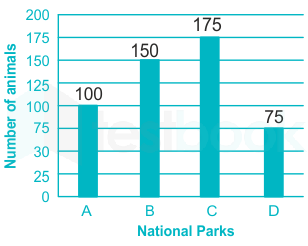
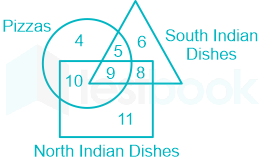
Question 55

Which language is a descendant of Sanskrit and is influenced by the languages of Dravidian, Arabic, Portuguese, English, Persian and Turkey?

  1. AOption (a)

    Tamil

  2. BOption (b)

    Hindi

  3. COption (c)

    Bengali

  4. DOption (d)

    Urdu

View answer & explanation

Correct answer

Answer: (b)B.

Hindi

Why this answer is correct

The correct answer is Hindi.

Key Points

  • Descendant of Sanskrit: Hindi is an Indo-Aryan language derived from the ancient language Sanskrit.
  • Influences: Over time, Hindi has been influenced by Dravidian languages, Arabic, Persian, Turkish, Portuguese, and English.
  • Linguistic Evolution: These influences came through trade, invasions, and colonization, enriching the Hindi vocabulary and grammar.
  • Script and Structure: Hindi is written in the Devanagari script, which also traces its roots back to ancient scripts derived from Brahmi.
  • Cultural Significance: Today, Hindi is one of the most spoken languages in India and serves as a lingua franca among diverse linguistic communities.

Question 56

The resistance of a wire of length l, radius r, and resistivity ρ is _______. 

  1. AOption (a)

    R = ρl2πr \frac{{\rho l}}{{2\pi r\ }}

  2. BOption (b)

    R = ρlπr2 \frac{{\rho l}}{{\pi r^2\ }}

  3. COption (c)

    R = ρl4πr2 \frac{{\rho l}}{{4\pi r^2\ }}

  4. DOption (d)

    R = ρl4πr \frac{{\rho l}}{{4\pi r\ }}

View answer & explanation

Correct answer

Answer: (b)B.

R = ρlπr2 \frac{{\rho l}}{{\pi r^2\ }}

Why this answer is correct

The correct answer is R = ρlπr2 \frac{{\rho l}}{{\pi r^2\ }}

Key Points

Electrical resistivity is a fundamental property of a material that measures how strongly it resists electric current.

Resistivity is given by:

R=ρlAR={ρ l\over A}

where, R = Resistance

ρ = Resistivity

l = Length

A = Area

The SI unit is given by:

ρ=R×Alρ={R\times A\over l}

ρ=ohm×m2mρ={ohm\times m^2\over m}

ρ = ohm meter

Question 57

Which of the following are exactly divisible by 44?

(a) 155232

(b) 155248

(c) 156944

(d) 156992

  1. AOption (a)

    Only (b) and (c)

  2. BOption (b)

    Only (b) and (d)

  3. COption (c)

    Only (a) and (c)

  4. DOption (d)

    Only (a) and (d)

View answer & explanation

Correct answer

Answer: (d)D.

Only (a) and (d)

Why this answer is correct

Shortcut Trick

For a number to be divisible by 44, it must be divisible by both 4 and 11.

Divisibility by 4: Last two digits must be divisible by 4. All given numbers (32, 48, 44, 92) satisfy this.

Divisibility by 11: (Sum of digits at odd places) − (Sum of digits at even places) must be 0 or a multiple of 11.

(a) (1+5+3) − (5+2+2) = 9 − 9 = 0 (Yes) | (b) (1+5+4) − (5+2+8) = 10 − 15 = −5 (No)

(c) (1+6+4) − (5+9+4) = 11 − 18 = −7 (No) | (d) (1+6+9) − (5+9+2) = 16 − 16 = 0 (Yes)

∴ The correct answer is Only (a) and (d).

Alternate Method

Given Numbers: (a) 155232, (b) 155248, (c) 156944, (d) 156992

Formula Used: Divisibility rule of 44 = Rule of 4 × Rule of 11.

⇒ Condition for (a): Last digits 32 are divisible by 4. Sum of odd pos (1+5+3)=9, Even pos (5+2+2)=9. Diff = 0. Divisible.

⇒ Condition for (b): Last digits 48 divisible by 4. Odd (1+5+4)=10, Even (5+2+8)=15. Diff = 5. Not divisible.

⇒ Condition for (c): Last digits 44 divisible by 4. Odd (1+6+4)=11, Even (5+9+4)=18. Diff = 7. Not divisible.

⇒ Condition for (d): Last digits 92 divisible by 4. Odd (1+6+9)=16, Even (5+9+2)=16. Diff = 0. Divisible.

∴ The correct answer is Only (a) and (d).

Additional Information

Divisibility by 4

A number is divisible by 4 if its last two digits are divisible by 4 or are 00.

Divisibility by 11

Difference between sum of digits at odd places and sum of digits at even places must be 0, 11, 22, etc.

Composite Divisibility

To check divisibility by a composite number n, check divisibility by its co-prime factors (e.g., 12 = 3 × 4).

Question 58

Resistance is respectively by _______.

  1. AOption (a)

    work done / charge

  2. BOption (b)

    work done / (charge × current)

  3. COption (c)

    work done / current × time

  4. DOption (d)

    work done × time

View answer & explanation

Correct answer

Answer: (b)B.

work done / (charge × current)

Why this answer is correct

The correct answer is work done / (charge × current).

Key Points

  • work done  
  • Work is said to be done by a force when the body is displaced actually through some distance in the direction of the applied force.
  • Since the body is being displaced in the direction of F, therefore work done by the force in displacing the body through a distance s is given by:
  • W=F⃗⋅s⃗W = \vec F \cdot \vec s

Or, W = Fs cos θ

  • Thus work done by a force is equal to the scalar or dot product of the force and the displacement of the body.
  • If the direction of force and displacement is opposite then the work done will always be negative, since angle θ between force and displacement is 180°
  • So, from this, we can conclude that
  • Work done is positive when the direction of both force and displacement are the same
  • Work done is negative when the direction of force and displacement are the opposite.
  • Whereas work is done is zero when direction force (Centripetal force) and displacement are perpendiculars this case is true for an object moving in a circular motion
  • Charge
  • The coulomb is the SI unit of charge.
  • One coulomb is defined as the cumulative charge of 6 x 10¹⁸ electrons.
  • Or the charge that flows in a wire of 1 A current in 1 second.

Question 59

Which of the following terms will replace the question mark (?) in the given series to make it logically complete?

YSL 22, WQJ 25, UOH 28, SMF 31, ?

  1. AOption (a)

    SLE 35

  2. BOption (b)

    QLD 34

  3. COption (c)

    QKD 34

  4. DOption (d)

    RKD 32

View answer & explanation

Correct answer

Answer: (c)C.

QKD 34

Why this answer is correct

The logic followed here is:

Hence, "Option 3" is the correct answer.

Question 60

The Cardamom hills are located in which state of India?

  1. AOption (a)

    Kerala

  2. BOption (b)

    Goa

  3. COption (c)

    Karnataka

  4. DOption (d)

    Maharashtra

View answer & explanation

Correct answer

Answer: (a)A.

Kerala

Why this answer is correct

The correct answer is Kerala.

Key Points

  • The famous Cardamom hill is located in the Western Ghats.
  • Cardamom Hills is in southeastern Kerala.
  • The Cardamom Hills region is famous for the production of tea, coffee, teak, and bamboo as well as cardamom.
  • The name cardamom hills come from the cardamom spice grown in much of the hills.​

Additional Information

Western Ghats

  • They are also known as Sahyadri in Maharashtra, Nilgiri hills in Karnataka and Tamil Nadu, Anaimalai hills (Highest Peak-2695 m), and Cardamom hills in Kerala.
  • They are an elevated and continuous range of mountains.
  • The average elevation is about 1500 m.

Question 61

When light passes from water to air then _______ changes.

  1. AOption (a)

    Wave length

  2. BOption (b)

    its frequency

  3. COption (c)

    its speed

  4. DOption (d)

    Both 1 and 3

View answer & explanation

Correct answer

Answer: (d)D.

Both 1 and 3

Why this answer is correct

The correct answer is Both 1 and 3.

Key Points

  • When light passes from water (a denser medium) to air (a rarer medium), its wavelength and speed change. Its frequency, however, remains constant.
  • Speed=Frequency×WavelengthSpeed = Frequency \times Wavelength
  • Refraction occurs because light travels at different speeds in different mediums.
  • Refraction:
  • When a ray of light passes from one medium to another it suffers a change in direction at the boundary of two media is called refraction.
  • The change in direction because the speed of light travels at different speeds in different mediums. The Refractive Index of a medium defines that it is denser or rarer
  • Snell’s law of refraction: “The ratio of the sine of the angle of incidence to the sine of the angle of refraction is a constant, for the light of a given colour and for the given pair of media”. ​
  • Sin;iSin;r=;n2n1=constant\frac{{Sin;i}}{{Sin;r}} = ;\frac{{{n_2}}}{{{n_1}}}=constant

Where n2 and n1 are the refractive indexes of the two mediums 2 and 1 respectively.

Explanation:

From the above explanation, we can see that,

  • The bending of light when it enters from one medium to another is known as the Refraction of Light.
  • The bouncing back of a light ray when it strikes a smooth polished surface is known as the Reflection of Light. Also according to the law of Reflection angle of the angle of incidence is equal to the angle of refraction.
  • The coin appears to be raised because the light reaching us from the portion of the pencil inside the water seems to come from a different direction, as compared to the part above the water.
  • This happens because the speed of light is different in a different medium, and thus the direction of light changes when it enters from one medium to another.

Question 62

In what time will a sum of Rs. 6,400 amount to Rs. 7,168 at 6% simple interest per annum?

  1. AOption (a)

    2 years

  2. BOption (b)

    3 years

  3. COption (c)

    2.5 years

  4. DOption (d)

    4 years

View answer & explanation

Correct answer

Answer: (a)A.

2 years

Why this answer is correct

Shortcut Trick

Total Simple Interest (SI) = ₹7,168 − ₹6,400 = ₹768

Interest for 1 year = 6% of ₹6,400 = ₹384

Required Time = Total SI ÷ Interest per year

Time = 768 ÷ 384 = 2 years

∴ The correct answer is 2 years.

Alternate Method

Given:

Principal (P) = ₹6,400

Amount (A) = ₹7,168

Rate (R) = 6% per annum

Formula Used:

Simple Interest (SI) = (P × R × T) ÷ 100

Amount (A) = Principal (P) + Simple Interest (SI)

Calculations:

⇒ SI = A − P

⇒ SI = 7,168 − 6,400 = 768

⇒ 768 = (6,400 × 6 × T) ÷ 100

⇒ 768 = 64 × 6 × T

⇒ 768 = 384 × T

⇒ T = 768 ÷ 384

⇒ T = 2 years

∴ The correct answer is 2 years.

Additional Information

Rate of Interest Formula

The rate can be calculated if other values are known using R = (SI × 100) ÷ (P × T).

Principal Formula

To find the initial sum invested, use P = (SI × 100) ÷ (R × T).

SI vs CI for 2 Years

The difference between Compound Interest and Simple Interest for 2 years is given by P(R/100)2.

Question 63

Which of the following options is the closest approximate value which will come in place of the question mark (?) in the following equation?

(325 ÷ 17.99 - 8.99)2 = ?

  1. AOption (a)

    121

  2. BOption (b)

    196

  3. COption (c)

    25

  4. DOption (d)

    81

View answer & explanation

Correct answer

Answer: (d)D.

81

Why this answer is correct

Given:

(325 ÷ 17.99 - 8.99)2 = ?

Formula Used:

To solve the equation, we first evaluate the expression inside the parenthesis and then square the result.

Calculation:

First, approximate the division:

325 ÷ 17.99 ≈ 325 ÷ 18

325 ÷ 18 ≈ 18.0556

Next, subtract 8.99 from the result:

18.0556 - 8.99 ≈ 9.0656

Finally, square the result:

(9.06562 ≈ 82.185)

Thus, the closest approximate value is:

Option 4: 81

Question 64

In a certain code language, 'WORTH' is coded as 'SRNWD' and 'MODEL' is coded as 'IRZHH'. How will 'COAST' be coded in that language?

  1. AOption (a)

    YRWVP

  2. BOption (b)

    FKDOV

  3. COption (c)

    FRDVV

  4. DOption (d)

    YKWOP

View answer & explanation

Correct answer

Answer: (a)A.

YRWVP

Why this answer is correct

The logic followed here is:

'WORTH' is coded as 'SRNWD'

And,

'MODEL' is coded as 'IRZHH'

Similarly,

'COAST' is coded as

Hence, "Option 1" is the correct answer.

Question 65

Select the option that is related to the fifth number in the same way as the second number is related to the first number and the fourth number is related to the third number. 

15 ∶ 230 ∶∶ 13 : 174 ∶∶ 11 ∶ ?

  1. AOption (a)

    121

  2. BOption (b)

    144

  3. COption (c)

    149

  4. DOption (d)

    126

View answer & explanation

Correct answer

Answer: (d)D.

126

Why this answer is correct

The logic followed here is:

Logic: (1st number)2 + 5 = 2nd number.

Now,

For, 15 : 230

⇒ 152 + 5 = 225 + 5 = 230.

For, 13 : 174

⇒ 132 + 5 = 169 + 5 = 174.

Similarly, for 11 ∶ ?

⇒ 112 + 5 = 121 + 5 = 126.

Hence, the correct answer is "Option 4".

Question 66

In a certain code language, 'PURPLE' is written as 'VQQSFM' and 'YELLOW' is written as 'FZMMXP'. How will 'VIOLET' be written in the same code language?

  1. AOption (a)

    JWMPUF

  2. BOption (b)

    AMFUPW

  3. COption (c)

    XMPWUF

  4. DOption (d)

    JMWPFU

View answer & explanation

Correct answer

Answer: (a)A.

JWMPUF

Why this answer is correct

The logic followed here is:

'PURPLE' is written as 'VQQSFM'

And,

'YELLOW' is written as 'FZMMXP'

Similarly,

'VIOLET' is written as

Hence, "Option 1" is the correct answer.

Question 67

The Forest Department changed its strategy, making a beginning in the Arabari forest range of Midnapore district, at the insistence of a far-seeing forest officer named:

  1. AOption (a)

    TA Chatterjee

  2. BOption (b)

    AK Banerjee

  3. COption (c)

    ED Arun Ghosh

  4. DOption (d)

    KA Midhun

View answer & explanation

Correct answer

Answer: (b)B.

AK Banerjee

Why this answer is correct

The correct answer is AK Banerjee.

Key Points

  • The Forest Department changed its strategy in the Arabari forest range of Midnapore district at the insistence of a far-seeing forest officer named A.K. Banerjee.
  • Banerjee recognized the unsustainable practices of traditional forestry, which often involved clear-cutting and neglecting the needs of local communities. He believed that involving local people in forest management would lead to better conservation outcomes.
  • In 1972, Banerjee initiated a participatory forestry program in the Arabari range, where local villagers were given rights to forest resources in exchange for their involvement in protection and management. This innovative approach, known as the Arabari experiment, has been widely recognized as a successful model for community-based forest management in India.

Question 68

If today is Thursday, what will be after 560 days from today?

  1. AOption (a)

    Friday

  2. BOption (b)

    Sunday

  3. COption (c)

    Wednesday

  4. DOption (d)

    Thursday

View answer & explanation

Correct answer

Answer: (d)D.

Thursday

Why this answer is correct

Given: Today is Thursday

So, number of odd days after 560 days from today = 560 ÷ 7 → 0 odd days.

Day after 560 days from today = Thursday + 0 → Thursday

Therefore, if today is Thursday, the day after 560 days from today will be the same.

Hence, "Option 4" is the correct answer.

Question 69

If r and s are the roots of x2 - 3x + 2 = 0, then the quadratic equation in x whose roots are r2 + s2 and (rs)2 is:

  1. AOption (a)

    x2 + 9x - 20 = 0

  2. BOption (b)

    x2 + 9x + 20 = 0

  3. COption (c)

    x2 - 9x - 20 = 0

  4. DOption (d)

    x2 - 9x + 20 = 0

View answer & explanation

Correct answer

Answer: (d)D.

x2 - 9x + 20 = 0

Why this answer is correct

Shortcut Trick From x2 − 3x + 2 = 0, sum of roots (r + s) = 3 and product (rs) = 2. New root 1 = r2 + s2 = (r + s)2 − 2rs = 32 − 2(2) = 5. New root 2 = (rs)2 = 22 = 4. Required equation: x2 − (Sum of new roots)x + (Product of new roots) = 0. x2 − (5 + 4)x + (5 × 4) = 0 ⇒ x2 − 9x + 20 = 0. ∴ The correct answer is x2 − 9x + 20 = 0.

Alternate Method Given: Quadratic equation x2 − 3x + 2 = 0 has roots r and s. Formula Used: For ax2 + bx + c = 0, Sum = −b/a and Product = c/a. The equation with roots α and β is x2 − (α + β)x + αβ = 0. Comparing the given equation with ax2 + bx + c = 0: ⇒ a = 1, b = −3, c = 2 ⇒ Sum (r + s) = −(−3)/1 = 3 ⇒ Product (rs) = 2/1 = 2 Now, the new roots are α = r2 + s2 and β = (rs)2: ⇒ α = (r + s)2 − 2rs = (3)2 − 2(2) = 9 − 4 = 5 ⇒ β = (2)2 = 4 Forming the new quadratic equation: ⇒ Sum of new roots = α + β = 5 + 4 = 9 ⇒ Product of new roots = α × β = 5 × 4 = 20 ⇒ Equation: x2 − 9x + 20 = 0 ∴ The correct answer is x2 − 9x + 20 = 0.

Additional Information Nature of Roots The nature of roots of ax2 + bx + c = 0 is determined by the discriminant D = b2 − 4ac. If D > 0, roots are real and distinct; if D = 0, roots are real and equal; if D < 0, roots are imaginary. Root-Coefficient Relations For a quadratic equation ax2 + bx + c = 0, the sum of roots is −b/a and the product of roots is c/a. For a cubic equation, the sum of roots is −b/a and product is −d/a. Symmetric Functions of Roots Common identities include r2 + s2 = (r + s)2 − 2rs and r3 + s3 = (r + s)((r + s)2 − 3rs).

Question 70

The value of (sin θ + cosec θ)2 + (cos θ + sec θ)2 is:

  1. AOption (a)

    7 - cot2 θ + tan2 θ

  2. BOption (b)

    5 + cot2 θ + tan2 θ

  3. COption (c)

    7 + cot2 θ + tan2 θ

  4. DOption (d)

    5 - cot2 θ + tan2 θ

View answer & explanation

Correct answer

Answer: (c)C.

7 + cot2 θ + tan2 θ

Why this answer is correct

Shortcut Trick

Put θ = 45° in the expression.

(sin 45° + cosec 45°)2 + (cos 45° + sec 45°)2 = (1/√2 + √2)2 + (1/√2 + √2)2

⇒ (3/√2)2 + (3/√2)2 = 9/2 + 9/2 = 9.

Check options at θ = 45°: Option (3) is 7 + cot2 45° + tan2 45° = 7 + 1 + 1 = 9.

∴ The correct answer is 7 + cot2 θ + tan2 θ.

Alternate Method

Given: (sin θ + cosec θ)2 + (cos θ + sec θ)2

Formula Used: (a + b)2 = a2 + b2 + 2ab; sin θ × cosec θ = 1; cos θ × sec θ = 1; cosec2 θ = 1 + cot2 θ; sec2 θ = 1 + tan2 θ; sin2 θ + cos2 θ = 1.

⇒ Expansion = (sin2 θ + cosec2 θ + 2 sin θ cosec θ) + (cos2 θ + sec2 θ + 2 cos θ sec θ)

⇒ Expansion = sin2 θ + cosec2 θ + 2(1) + cos2 θ + sec2 θ + 2(1)

⇒ Expansion = (sin2 θ + cos2 θ) + 2 + 2 + cosec2 θ + sec2 θ

⇒ Expansion = 1 + 4 + (1 + cot2 θ) + (1 + tan2 θ)

⇒ Expansion = 5 + 1 + 1 + cot2 θ + tan2 θ

⇒ Expansion = 7 + cot2 θ + tan2 θ

∴ The correct answer is 7 + cot2 θ + tan2 θ.

Additional Information

Reciprocal Identities

Functions and their reciprocals: sin θ = 1/cosec θ, cos θ = 1/sec θ, and tan θ = 1/cot θ.

Pythagorean Identities

Key identities: sin2 θ + cos2 θ = 1, 1 + tan2 θ = sec2 θ, and 1 + cot2 θ = cosec2 θ.

Algebraic Expansions in Trig

Always look to expand terms like (a + b)2 to utilize the 2ab term which often simplifies to a constant in reciprocal pairs.

Question 71

A regular polygon in which each interior angle is 140° is a/an:

  1. AOption (a)

    decagon

  2. BOption (b)

    octagon

  3. COption (c)

    heptagon

  4. DOption (d)

    nonagon

View answer & explanation

Correct answer

Answer: (d)D.

nonagon

Why this answer is correct

Shortcut Trick

For any regular polygon, the sum of an interior angle and its adjacent exterior angle is always 180°.

Exterior angle = 180° − 140° = 40°

Number of sides (n) = 360° ÷ Exterior angle

⇒ n = 360° ÷ 40° = 9

A regular polygon with 9 sides is called a nonagon.

∴ The correct answer is nonagon.

Alternate Method

Given:

Each interior angle of the regular polygon = 140°

Formula Used:

Each interior angle of a regular polygon with n sides is given by:

Interior Angle = ((n − 2) × 180°) ÷ n

Calculations:

Substitute the given interior angle value into the formula:

⇒ ((n − 2) × 180) ÷ n = 140

⇒ (n − 2) × 180 = 140n

⇒ 180n − 360 = 140n

⇒ 180n − 140n = 360

⇒ 40n = 360

⇒ n = 360 ÷ 40

⇒ n = 9

Since the number of sides is 9, the polygon is a nonagon.

Analysis of other options:

• Decagon: Has 10 sides. Each interior angle = ((10 − 2) × 180°) ÷ 10 = 144°.

• Octagon: Has 8 sides. Each interior angle = ((8 − 2) × 180°) ÷ 8 = 135°.

• Heptagon: Has 7 sides. Each interior angle = ((7 − 2) × 180°) ÷ 7 ≈ 128.57°.

∴ The correct answer is nonagon.

Additional Information

Sum of Interior Angles

The sum of all interior angles of an n-sided polygon is always equal to (n − 2) × 180°.

Sum of Exterior Angles

The sum of all exterior angles of any convex polygon is always 360°, regardless of the number of sides.

Number of Diagonals

The total number of diagonals in a polygon with n sides is given by the formula: n(n − 3) ÷ 2.

Question 72

Study the given bar graph and answer the following question.

The given bar graph depicts the number of animals in four national parks.

Out of the total number of animals in National Parks A and C together, the respective ratio between the number of herbivores and carnivores was 11 ∶ 14. What was the total number of herbivores in National Parks A and C together? (All national parks mentioned above contain herbivore and carnivore animals only)

  1. AOption (a)

    99

  2. BOption (b)

    110

  3. COption (c)

    121

  4. DOption (d)

    132

View answer & explanation

Correct answer

Answer: (c)C.

121

Why this answer is correct

Given:

The bar graph depicts the total number of animals in four national parks:

National Park A: 100 animals

National Park B: 150 animals

National Park C: 175 animals

National Park D: 75 animals

The ratio of herbivores to carnivores in National Parks A and C together is 11 ∶ 14.

Formula used:

Herbivores = Total animals × (Herbivore ratio / Total ratio)

Calculation:

Step 1: Calculate the total number of animals in National Parks A and C together.

Total animals in A and C = 100 + 175 = 275

Step 2: The total ratio of herbivores to carnivores is 11 ∶ 14. Therefore, the total ratio is:

Total ratio = 11 + 14 = 25

Step 3: Calculate the number of herbivores in National Parks A and C.

Herbivores = Total animals × (Herbivore ratio / Total ratio)

Herbivores = 275 × (11 / 25)

Herbivores = 275 × 0.44

Herbivores = 121

∴ The total number of herbivores in National Parks A and C together is 121.

Question 73

Energy flow through the various trophic levels in the ecosystem is _______.

  1. AOption (a)

    bidirectional

  2. BOption (b)

    random

  3. COption (c)

    increased with each higher trophic level

  4. DOption (d)

    reduced with each higher trophic level

View answer & explanation

Correct answer

Answer: (d)D.

reduced with each higher trophic level

Why this answer is correct

The correct answer is reduced with each higher trophic level.

Key Points

  • Tansely proposed the term ecosystem.
  • An ecosystem:
  • It is the basic ecological unit in which living organisms interact among themselves and with their surrounding physical environment.
  • The term ecosystem was proposed by Sir A.G. Tansley in the year 1935.
  • A.G. Tansley first used the word ecosystem in his well-known paper on vegetational concepts and terms.
  • The word 'biocoenosis' was used before that.

Ecosystem: 

All organisms such as plants, animals, microorganisms and human beings as well as the physical surroundings interact with each other and maintain a balance in nature. All the interacting organisms in an area together with the non-living constituents of the environment form an ecosystem.

  • Biotic Components: It includes producers, consumers and decomposers. All living things have a direct or indirect influence on other organisms in an environment. Ex- Plants, Animals, Microorganism etc.
  • Abiotic components: All the in-organic components of the ecosystem, non-living physical and chemical composition of nature are abiotic components. Ex- stones, water, Humus (organic waste), air etc

Explanation:

There are two type of ecosystem -

  • Natural Ecosystem - These are ecosystems that occur naturally and can survive without any intervention from human beings. Examples of natural ecosystems are forests, mountains, rivers, grasslands etc.
  • Human-made or Artificial Ecosystem – When human beings modify the already existing ecosystem to meet their purpose or create an ecosystem of their own that mimics the natural condition, those are called artificial ecosystems. Examples of this type of ecosystem include aquariums, crop fields, gardens, dams, lakes, pond ecosystem etc.
  • This is because Pond and Lakes can be artificial as well. But forest can only thrive as a natural habitat.

Ecosystem of a pond - Artificial Ecosystem

Ecosystem of a forest - Natural Ecosystem

Grassland - Natural Ecosystem

Question 74

Refer to the following number series and answer the question.

(Left) 6 1 4 6 2 7 5 3 8 6 9 1 3 9 5 3 (Right)

Find the sum of all the even numbers in the above number series.

  1. AOption (a)

    44

  2. BOption (b)

    32

  3. COption (c)

    54

  4. DOption (d)

    24

View answer & explanation

Correct answer

Answer: (b)B.

32

Why this answer is correct

Given a sequence of numbers is 

(Left) 6 1 4 6 2 7 5 3 8 6 9 1 3 9 5 3 (Right)

The series after dropping all odd numbers is 

6 4 6 2 8 6 

The sum of all the even numbers in the series is

6 + 4 + 6 + 2 + 8 + 6 = 32.

Hence, the correct answer is "Option 2".

Additional Information

  • The numbers that are divisible by 2 are even numbers.

Question 75

If C = 400 and Y = 1000, then what is the average propensity to consume?

  1. AOption (a)

    2.5

  2. BOption (b)

    250

  3. COption (c)

    40

  4. DOption (d)

    0.4

View answer & explanation

Correct answer

Answer: (d)D.

0.4

Why this answer is correct

The correct answer is 0.4.

Key Points 

Average Propensity to Consume (APC) is calculated as:

APC = C / Y   

Where:

C = Consumption expenditure   

Y = Income   

Given:

C = 400

Y = 1000

Calculation:

APC = 400 / 1000

APC = 0.4   

Therefore, the average propensity to consume is 0.4.

Question 76

On 1 March 2022, the National Commission for Protection of Child Rights (NCPCR) marked its _______ Foundation Day.

  1. AOption (a)

    15th

  2. BOption (b)

    11th

  3. COption (c)

    13th

  4. DOption (d)

    17th

View answer & explanation

Correct answer

Answer: (d)D.

17th

Why this answer is correct

The correct answer is 17th

Key Points

  • The National Commission for Protection of Child Rights (NCPCR) celebrates its 17th foundation day on 1 March 2022at red Fort, New Delhi.
  • Minister for Women and Child Development Smriti Zubin Irani was the chief guest at the event.
  • She launched the new motto of NCPCR ‘भविष्यो रक्षति रक्षित:’ ​

Additional Information

  • NCPCR is an Indian statutory body established by the Commission for Protection of Child Rights Act, 2005.
  • Priyank Kanoongo is the Chairman of the NCPCR.
  • NCPCR & Border Security Force (BSF) collaborated to launch ‘SAHARA’, which is an initiative to provide psycho-social counselling & support to children of BSF jawans who made the supreme sacrifice.

Question 77

Darshan starts walking 10 km towards the east. He turns right walks 6 km, then takes a right. He walks 5 km and again turns right. He turns left after walking 4 km. Then he walks 2 km, again turns left and walks another 5 km. Finally, he takes a right turn and walks 2 km. In which direction is he facing now? (All turns are 90 degree turns only)

  1. AOption (a)

    South

  2. BOption (b)

    East

  3. COption (c)

    West

  4. DOption (d)

    North

View answer & explanation

Correct answer

Answer: (c)C.

West

Why this answer is correct

Given:

Darshan starts walking 10 km towards the east.

He turns right walks 6 km, then takes a right.

He walks 5 m and again turns right.

He turns left after walking 4 km.

Then he walks 2 km, again turns left and walks another 5 km.

Finally, he takes a right turn and walks 2 km. 

Thus, Darshan is facing is the west direction now.

Hence, "Option 3" is the correct answer.

Question 78

The full form of ATP is _______.

  1. AOption (a)

    Adenosine Tetraphosphate

  2. BOption (b)

    Adenosine Triphosphate

  3. COption (c)

    Adenine Tetraphosphate

  4. DOption (d)

    Adenine Triphosphate

View answer & explanation

Correct answer

Answer: (b)B.

Adenosine Triphosphate

Why this answer is correct

The correct answer is Adenosine Triphosphate.

Key Points

Adenosine Triphosphate:

  • The energy released during cellular respiration is used to synthesize a molecule called ATP.
  • Adenosine triphosphate fuels all activities in the cell.
  • When ATP is broken down, it gives rise to the energy that can drive the endothermic reactions in the cell.
  • ATP is the energy currency for most cellular processes.
  • The energy released during respiration is used to make an ATP molecule from ADP and inorganic phosphate.
  • When the terminal phosphate linkage in ATP is broken, the energy equivalent to 30.5 kJ/mol is released.

Question 79

The length of a rectangular plot is 60% more than its breadth. If the difference between the length and the breadth of that rectangle is 30 cm, what is the perimeter of that rectangle?

  1. AOption (a)

    260 cm

  2. BOption (b)

    300 cm

  3. COption (c)

    270 cm

  4. DOption (d)

    330 cm

View answer & explanation

Correct answer

Answer: (a)A.

260 cm

Why this answer is correct

Shortcut Trick

Let breadth be 100%, then length = 160%.

Difference = 160% − 100% = 60%.

Given 60% ≡ 30 cm ⇒ 1% ≡ 0.5 cm.

Perimeter = 2 × (160% + 100%) = 520%.

Perimeter = 520 × 0.5 = 260 cm.

∴ The correct answer is 260 cm.

Alternate Method

Given:

Difference between length (L) and breadth (B) = 30 cm.

Length is 60% more than breadth.

Formula used:

Perimeter of Rectangle = 2 × (L + B)

Calculations:

⇒ Let Breadth (B) = x

⇒ Length (L) = x + 60% of x = 1.6x

⇒ L − B = 1.6x − x = 0.6x

⇒ 0.6x = 30

⇒ x = 30 ÷ 0.6 = 50 cm

⇒ Breadth (B) = 50 cm

⇒ Length (L) = 1.6 × 50 = 80 cm

⇒ Perimeter = 2 × (80 + 50)

⇒ Perimeter = 2 × 130 = 260 cm

∴ The correct answer is 260 cm.

Additional Information

Area of Rectangle

The space occupied by a rectangle is Area = Length × Breadth.

Diagonal of Rectangle

The distance between opposite corners is d = √(L2 + B2).

Percentage Change in Area

If length increases by a% and breadth by b%, the net area change is [a + b + (a × b)/100]%.

Question 80

Copper is used in _______ due to its low resistivity.

  1. AOption (a)

    toasters

  2. BOption (b)

    heaters

  3. COption (c)

    transmission lines

  4. DOption (d)

    electric bulbs

View answer & explanation

Correct answer

Answer: (c)C.

transmission lines

Why this answer is correct

The correct answer is transmission lines.

Key Points

Copper is a metal. Metals have the following properties:

  • Conductivity:
  • The property to carry heat and electricity is called conductivity.
  • Metals are good conductors of heat and electricity, they are used to make electrical wires and cooking utensils.
  • Metals can absorb heat very easily.
  • Ductility:
  • The property of metal to be drawn into wires is called ductility.
  • Metals such as copper are used to make wires.
  • Sonority:
  • Metals make sounds when they hit a solid surface or hit each other. This property of metals is known as sonority.
  • For their sonorous nature, metals are used in bell, etc.
  • Malleability:
  • ​The property of metals to be beaten into thin sheets is known as malleability.
  • Metals such as gold, aluminium are highly malleable and can be beaten into thin sheets.
  • They are opaque and are denser than other elemental substances.

Explanation:

  • Copper is a reddish-brown metal that has excellent conducting properties and ductility.
  • As copper is ductile, It is used to make thin wires.
  • Copper wiring is thus used in all electrical appliances.
  • Copper is also shiny or lustrous in appearance and sonorous.
  • It is also used in a number of alloys to obtain desirable properties.
  • It is also used to make coins, bells etc.
  • Copper is also used in roofing or plumbing.

Question 81

The given reaction is an example of a _______.

Zn(s) + CuSO4(aq) → ZnSO4(aq) + Cu(s)

  1. AOption (a)

    double displacement reaction

  2. BOption (b)

    displacement reaction

  3. COption (c)

    decomposition reaction

  4. DOption (d)

    combination reaction

View answer & explanation

Correct answer

Answer: (b)B.

displacement reaction

Why this answer is correct

The correct answer is displacement reaction.

Key Points

  • Zinc sulphate Solution and copper are obtained when a strip of zinc metal is placed in copper Sulphate Solution.

CuSO4(aq.) +Zn(s)→ ZnSO4(aq.) +Cu(s)

  • When a strip of zinc metal is placed in copper sulphate solution:
  • zinc displaces copper from copper sulphate
  • the blue colour of copper sulphate solution fades up.
  • a blue deposit of copper metal is formed on the copper strip
  • it is an example of Displacement reaction.

Additional Information

Question 82

R, S, T, U, V and W live on six different floors of the same building. The lowermost floor in the building is numbered 1, the floor above it is numbered 2 and so on till the topmost floor is numbered 6. V lives on floor number 5. S does not live on an even numbered floor. U lives immediately below T. Neither R nor S lives on the topmost floor. Only two people live between V and T. Who lives immediately below R?

  1. AOption (a)

    S

  2. BOption (b)

    T

  3. COption (c)

    U

  4. DOption (d)

    V

View answer & explanation

Correct answer

Answer: (a)A.

S

Why this answer is correct

Given: R, S, T, U, V and W live on six different floors of the same building. The lowermost floor in the building is numbered 1, the floor above it is numbered 2 and so on till the topmost floor is numbered 6. 

1) V lives on floor number 5. 

2) Only two people live between V and T.

FloorPerson
6
5V
4
3
2T
1

3) U lives immediately below T.

FloorPerson
6
5V
4
3
2T
1U

4) S does not live on an even numbered floor.

5) Neither R nor S lives on the topmost floor.

After positioning R and S only one floor is left which will be occupied by the only person left i.e. W.

FloorPerson
6W
5V
4R
3S
2T
1U

Thus, S lives immediately below R.

Hence, "Option 1" is the correct answer.

Question 83

Which of the following equations is NOT a quadratic equation?

  1. AOption (a)

    (x + 2)3 = x3 - 5

  2. BOption (b)

    (2x + 1) (3x - 4) = 2x2 + 3

  3. COption (c)

    x2 + 2x\sqrt x - 5 = 0

  4. DOption (d)

    3\sqrt 3 x2 - 2x + 12\frac{1}{{\sqrt 2 }} = 0

View answer & explanation

Correct answer

Answer: (c)C.

x2 + 2x\sqrt x - 5 = 0

Why this answer is correct

Shortcut Trick A quadratic equation must be a polynomial of degree 2 in the form ax2 + bx + c = 0. A polynomial cannot have variables with fractional or negative powers (like √x or x1/2). In the equation x2 + 2√x − 5 = 0, the term 2√x contains a power of 1/2. ∴ The correct answer is x2 + 2√x − 5 = 0.

Alternate Method Given: Four algebraic equations to identify the non-quadratic one. Method: Simplify each equation and compare with the standard form ax2 + bx + c = 0. Case 1: (x + 2)3 = x3 − 5 ⇒ x3 + 3(x2)(2) + 3(x)(22) + 23 = x3 − 5 ⇒ x3 + 6x2 + 12x + 8 = x3 − 5 ⇒ 6x2 + 12x + 13 = 0 (This is a quadratic equation as the degree is 2). Case 2: (2x + 1)(3x − 4) = 2x2 + 3 ⇒ 6x2 − 8x + 3x − 4 = 2x2 + 3 ⇒ 4x2 − 5x − 7 = 0 (This is a quadratic equation as it follows the standard form). Case 3: x2 + 2√x − 5 = 0 ⇒ Here, the term √x can be written as x1/2. ⇒ Since the power is a fraction (1/2), the expression is not a polynomial. ⇒ Therefore, it cannot be a quadratic equation. Case 4: √3 x2 − 2x + 1/√2 = 0 ⇒ Here, a = √3, b = −2, and c = 1/√2. The powers of x are 2 and 1. ⇒ This fits the standard form ax2 + bx + c = 0. (This is a quadratic equation). ∴ The correct answer is x2 + 2√x − 5 = 0.

Additional Information Standard Form of Quadratic Equation It is expressed as ax2 + bx + c = 0, where a, b, and c are real numbers and a ≠ 0. Polynomial Condition In any polynomial, the exponent of the variable must be a whole number (0, 1, 2, ...). Fractional or negative powers disqualify it. Nature of Roots The nature of roots is determined by the discriminant D = b2 − 4ac. If D < 0, roots are imaginary; if D ≥ 0, roots are real. Degree of Equation The degree refers to the highest power of the variable. Linear is degree 1, quadratic is degree 2, and cubic is degree 3.

Question 84

On the occasion of 'World Day against Human Trafficking' (30 July, 2022), National Commission for Protection of Child Rights (NCPCR) launched a _______ campaign called 'Combating Child Trafficking' in 75 bordering districts of India in August 2022.

  1. AOption (a)

    11 day

  2. BOption (b)

    25 day

  3. COption (c)

    7 day

  4. DOption (d)

    15 day

View answer & explanation

Correct answer

Answer: (b)B.

25 day

Why this answer is correct

The correct answer is 25 day.

Key Points

  • World Day Against Trafficking in Persons:
  • The day is celebrated by United Nations observes 30 July every year.
  • In 2013, the UN General Assembly designated July 30 as the World Day against Trafficking in Persons to raise awareness of the situation of victims of human trafficking and for the promotion and protection of their rights.
  • ​The theme for the year 2022 is “Use and abuse of technology”.
  • It focuses on the role of technology that acts as a tool to enable and impede human trafficking.
  • Human Trafficking:
  • Trafficking means (i) recruitment, (ii) transportation, (iii) harbouring, (iv) transfer, or (v) receipt of a person for exploitation, by using certain means.
  • These means are the use of threat, force, abduction, fraud, deception, abuse of power or inducement.  Exploitation includes physical or sexual exploitation, slavery, or forced removal of organs.

Additional Information

  • The National Commission for Protection of Child Rights (NCPCR) was set up in March 2007 under the Commissions for Protection of Child Rights (CPCR) Act, 2005, an Act of Parliament (December 2005).
  • National Commission for Protection of Child Rights (NCPCR) is a statutory body under the Commissions for Protection of Child Rights (CPCR) Act, 2005 under the administrative control of the Ministry of Women & Child Development, Government of India.
  • The Commission's Mandate is to ensure that all Laws, Policies, Programmes, and Administrative Mechanisms are in consonance with the Child Rights perspective as enshrined in the Constitution of India and also the UN Convention on the Rights of the Child.
  • The Child is defined as a person in the 0 to 18 years age group.
  • National Commission for Protection of Child Rights (NCPCR) works at State, Central and Local bodies.
  • Independent monitoring of the implementation of the Act is assigned to the National Council of Protection of Child Rights (NCPCR), the main responsibilities are:
  • examine and review safeguards for rights under this Act, and recommend measures for effective implementation
  • inquire into complaints relating to child’s right to free and compulsory education
  • conduct periodic social audit of the status of implementation and review

Question 85

Read the given statements and conclusions carefully. Assuming that the information given in the statements is true, even if it appears to be at variance with commonly known facts, decide which of the given conclusions logically follow(s) from the statements.

Statements:

Some markers are pens.

Some pens are colours.

Some colours are wax.

Conclusions:

(I) Some colours are markers.

(II) Some pens are wax.

  1. AOption (a)

    Both conclusion (I) and conclusion (II) follow.

  2. BOption (b)

    Both conclusion (I) and conclusion (II) do not follow.

  3. COption (c)

    Only conclusion (I) follows.

  4. DOption (d)

    Only conclusion (II) follows.

View answer & explanation

Correct answer

Answer: (b)B.

Both conclusion (I) and conclusion (II) do not follow.

Why this answer is correct

The least possible Venn diagram for the given statements is as shown below :

Conclusions:

I. Some colours are markers → Does not follow (As some markers are pens and some pens are colours. So it is possible but not definite.)

II. Some pens are wax → Does not follow (As some pens are colours and some colours are wax. So it is possible but not definite.)

∴ Here, Both conclusion (I) and conclusion (II) do not follow.​

Hence, the correct answer is "Option 2".

Question 86

National Unity Day in India is observed on 31 October, coinciding with the birthday of _______.

  1. AOption (a)

    Sardar Vallabhbhai Patel

  2. BOption (b)

    Dr. BR Ambedkar

  3. COption (c)

    Jawaharlal Nehru

  4. DOption (d)

    Indira Gandhi

View answer & explanation

Correct answer

Answer: (a)A.

Sardar Vallabhbhai Patel

Why this answer is correct

The correct answer is Sardar Vallabhbhai Patel.

Key Points

  • National Unity Day or Rashtriya Ekta Diwas is celebrated on October 31 every year.
  • The day was introduced by the Government of India in 2014 to mark the birth anniversary of Iron Man of India - Sardar Vallabhbhai Patel.
  • This year marks the 145th birth anniversary of the freedom fighter.
  • Patel played a crucial role in India's freedom movement and in the integration of India from 560 princely states.
  • He was the first Deputy Prime Minister and Home Minister of independent India.
  • National Unity Day is observed to acknowledge the efforts of Patel to unite the nation.
  • The day aims to spread awareness about Patel's contribution to Indian history.

 Additional Information

  • Dr. BR Ambedkar
  • The Centre has announced a public holiday on April 14, 2021, on account of the birth anniversary of Dr BR Ambedkar.
  • The Ministry of Personnel, Public Grievances and Pensions has declared in a notification that April 14 will be a public holiday for all central government offices including industrial establishments.
  • Jawaharlal Nehru
  • Jawaharlal Nehru was an Indian anti-colonial nationalist and the first Prime Minister of India.
  • He was born on 14 November 1889 in Allahabad, Uttar Pradesh.
  • He died of a heart attack on 27 May 1964 in New Delhi.
  • The Discovery of India and Glimpses of World History are two of his most famous works.
  • Indira Gandhi​
  • She was the second longest-serving Indian prime minister after her father Jawahar Lal Nehru.
  • She was also awarded "Bangladesh Freedom Honour" in 2011.
  • She was also the President of INC in 1959.

Question 87

In the number 482818259, if 1 is added to all the digits placed at the even places starting from left and 1 is subtracted from the digits placed at the odd places starting from left, what will be the sum of the last 4 digits?

(Example: 697 - First digit = 6, second digit = 9 and third digit = 7)

NOTE: All operations to be done from left to right.

  1. AOption (a)

    32

  2. BOption (b)

    20

  3. COption (c)

    24

  4. DOption (d)

    22

View answer & explanation

Correct answer

Answer: (c)C.

24

Why this answer is correct

Given number → 482818259

If 1 is added to all the digits placed at the even places starting from left and 1 is subtracted from the digits placed at the odd places starting from left then,

New number → 3 9 1 9 0 9 1 6 8

The last four digits of the new number are:-

9 1 6 8

The sum of the last 4 digits is 1 + 6 + 8 + 9 = 24

Hence, the correct answer is "Option 3".

Question 88

Which of the following statements regarding HIV transmission is FALSE?

  1. AOption (a)

    HIV can be transmitted through a mosquito bite after it has bitten an HIV infected person.

  2. BOption (b)

    HIV can be transmitted through unsafe sexual contact with an infected person.

  3. COption (c)

    Transfusion of HIV infected blood transmits HIV.

  4. DOption (d)

    HIV can be transmitted from an infected mother to her new born child.

View answer & explanation

Correct answer

Answer: (a)A.

HIV can be transmitted through a mosquito bite after it has bitten an HIV infected person.

Why this answer is correct

The correct answer is HIV can be transmitted through a mosquito bite after it has bitten an HIV infected person.

Key Points

  • When HIV infection destroys lymphocytes, it weakens the body's immune system, which protects against many infections and cancers.
  • Acquired immunodeficiency syndrome (AIDS) is a chronic, potentially life-threatening condition caused by the human immunodeficiency virus (HIV).
  • By damaging your immune system, HIV interferes with your body's ability to fight infection, and diseases weakening is part of the reason that the body is unable to eliminate HIV infection once it has started.
  • HIV (human immunodeficiency virus) is a retrovirus that attacks the immune system.
  • Most people who are diagnosed early and take medicines for HIV can live long, healthy lives.
  • HIV destroys  T lymphocytes (helper T cells).
  • Helper T cells are crucial for immune system function and activate after encountering antigens from disease-causing microorganisms

 Additional Information 

  • HIV finds the white blood cells, called lymphocytes cells.
  • HIV gets inside the T cell and makes copies of itself.
  • Then, HIV kills the lymphocytes and the new HIV copies find other lymphocytes cells to get inside and start the cycle again.
  • HIV kills immune system cells that help the body fight infections and diseases.
  • HIV infects a type of white blood cell in the body's immune system called a T-helper cell (also called a CD4 cell).
  • These vital cells keep us healthy by fighting off infections and diseases.
  • HIV cannot reproduce on its own.
  • Instead, the virus attaches itself to a T-helper cell and fuses with it

Question 89

Study the given diagram carefully and answer the question. The numbers in different sections indicate the number of restaurants famous for various dishes.

How many restaurants are famous for their South Indian dishes and North India Dishes but NOT for pizzas?

  1. AOption (a)

    22

  2. BOption (b)

    13

  3. COption (c)

    17

  4. DOption (d)

    8

View answer & explanation

Correct answer

Answer: (d)D.

8

Why this answer is correct

According to the given Venn diagram:

The shaded region represents the number of restaurants which are famous for their South Indian dishes and North India Dishes but NOT for pizzas.

So, the number of restaurants which are famous for their South Indian dishes and North India Dishes but NOT for pizzas = 8

Hence, the correct answer is "Option 4".

Question 90

Refer to the following letter, number, symbol series and answer the question. 

(Left) S 7 & D M # Z 6 % 3 T 2 * H G = C ? 4 Y B (Right)

How many such symbols are there which are immediately preceded by a number and also immediately followed by a letter?

  1. AOption (a)

    Four

  2. BOption (b)

    Two

  3. COption (c)

    One

  4. DOption (d)

    Three

View answer & explanation

Correct answer

Answer: (b)B.

Two

Why this answer is correct

Given series:

S 7 & D M # Z 6 % 3 T 2 * H G = C ? 4 Y B

Condition to be checked:

Symbols which are immediately preceded by a number and also immediately followed by a letter.

Number → Symbol → Letter

S 7 & D M # Z 6 % 3 T 2 *** H** G = C ? 4 Y B

Thus there are two such patterns (7 & D, 2 * H) that are following the above conditions.

Hence, "Two" is the correct answer.

Mistake Points

Immediately preceded by means immediately before or to come just before.

Immediately followed by means immediately after or to come just after.

Question 91

Study the given Venn diagram carefully and answer the question that follows. The numbers in different sections indicate the number of gardeners assigned with the following tasks.

A = Watering the plants; B = Growing new plants; C = Beautification of the park

How many such gardeners are there who are assigned with the task of only growing new plants?

  1. AOption (a)

    19

  2. BOption (b)

    12

  3. COption (c)

    21

  4. DOption (d)

    11

View answer & explanation

Correct answer

Answer: (a)A.

19

Why this answer is correct

According to the given Venn diagram:

The shaded region represents the number of such gardeners who are assigned with the task of only growing new plants.

So, the number of such gardeners who are assigned with the task of only growing new plants = 19

Hence, the correct answer is "Option 1".

Question 92

Which Indian state is the host of the FIH Hockey Men's World Cup 2023?

  1. AOption (a)

    New Delhi

  2. BOption (b)

    Tamil Nadu

  3. COption (c)

    Odisha

  4. DOption (d)

    Haryana

View answer & explanation

Correct answer

Answer: (c)C.

Odisha

Why this answer is correct

The correct answer is Odisha.

 Key Points

  • Odisha will host the 2023 Men's Hockey World Cup from the 13th to the 29th of January 2023.
  • For the first time, a country with the same city would be hosting successive editions of the premier tournament in the sport making it even more special.
  • This time, Bhubaneswar which hosted the 2018 WC would share hosting rights with the Biju Patnaik Hockey Stadium in Rourkela.​

Additional Information

  • India will host the 2023 Men's Hockey World Cup from 13th to 29th of January 2023.
  • India will now host this tournament for the fourth time in history.
  • The world cup is conducted once every four years.
  • Tournaments associated with hockey are Rene Frank Trophy, Essande Champions Cup, Agha Khan cup, Beighton Cup, Bombay Gold Cup, Dhyan Chand Trophy, Gurmeet Trophy, Gura Nanak Cup, Indira Gold Cup, Sahni Trophy, Tommy Eman Gold Cup, Ranjit Singh Gold Cup, Scindia Gold Cup, Gyanuati Devi Trophy.
  • Spain and the Netherlands have been named as the co-hosts of the 2022 Women's World Cup scheduled to be held from 1st to 22nd of July 2022.
  • The decisions were made during FIH's Executive Board Meeting in Lausanne, Switzerland on 9 Nov 2019.

Question 93

If the median of a set of data is 12 and its mean is 10, then find the mode of this data set, using the empirical formula.

  1. AOption (a)

    14

  2. BOption (b)

    16

  3. COption (c)

    17

  4. DOption (d)

    15

View answer & explanation

Correct answer

Answer: (b)B.

16

Why this answer is correct

Shortcut Trick

Apply the Empirical Formula directly:

Mode = 3 × Median − 2 × Mean

⇒ Mode = 3 × 12 − 2 × 10

⇒ Mode = 36 − 20 = 16

∴ The correct answer is 16.

Alternate Method

Given:

Median of the data set = 12

Mean of the data set = 10

Formula Used:

The relationship between Mean, Median, and Mode is given by the Empirical Formula:

Mode = 3(Median) − 2(Mean)

Calculations:

⇒ Mode = 3 × 12 − 2 × 10

⇒ Mode = 36 − 20

⇒ Mode = 16

∴ The correct answer is 16.

Additional Information

Empirical Relationship

Karl Pearson established the relationship as Mean − Mode = 3(Mean − Median), which is used for moderately skewed distributions.

Symmetrical Distribution

In a perfectly symmetrical distribution (like the Normal Distribution), the Mean, Median, and Mode are all equal: Mean = Median = Mode.

Skewed Distributions

For positively skewed data, Mean > Median > Mode. For negatively skewed data, Mode > Median > Mean.

Question 94

When the primary tributaries of rivers flow parallel to each other and secondary tributaries join them at right angles, the pattern is known as _______.

  1. AOption (a)

    centripetal

  2. BOption (b)

    radial

  3. COption (c)

    dendritic

  4. DOption (d)

    trellis

View answer & explanation

Correct answer

Answer: (d)D.

trellis

Why this answer is correct

The correct answer is trellis.

Key Points

  • This pattern is typically found in regions with folded or tilted sedimentary rocks, where alternating bands of hard and soft rocks exist.
  • The main river channel often follows the valley formed by the erosion of softer rocks, while the tributaries flow along the valleys between the harder, more resistant rock layers.
  • The trellis pattern resembles a vine or trellis with its main stem and lateral branches, hence its name.
  • Examples of rivers exhibiting this pattern include those in the Appalachian Mountains of North America and the Himalayas in Asia.

Question 95

India's first indigenous COVID-19 vaccine 'COVAXIN' is developed by BBIL in collaboration with the Indian Council of Medical Research (ICMR) - National Institute of Virology (NIV). The 'BBIL' is stand for -

  1. AOption (a)

    Bharat Biotech International Limited 

  2. BOption (b)

    Bharat Biotechnology International Limited

  3. COption (c)

    Bharat Biological International Limited

  4. DOption (d)

    Bharat Biochemistry and International Limited

View answer & explanation

Correct answer

Answer: (a)A.

Bharat Biotech International Limited 

Why this answer is correct

The correct answer is Bharat Biotech International Limited.

Key Points

  • The central government has placed supply orders amounting to a total of 41 million doses of both covid-19 vaccines- Covishield manufactured by Serum Institute of India and Covaxin by Bharat Biotech International Limited.
  • These supply orders also include 10 million doses received from Gavi support through Covax facility.
  • This was informed by Union Health Minister Harsh Vardhan on 12 February 2021.

Question 96

Chakravarty drives a car at a speed of 52 km/h. How much time will he take to cover a distance of 364 km?

  1. AOption (a)

    7 hours

  2. BOption (b)

    4 hours

  3. COption (c)

    6 hours

  4. DOption (d)

    5 hours

View answer & explanation

Correct answer

Answer: (a)A.

7 hours

Why this answer is correct

Shortcut Trick

Identify the relationship: Time = Distance ÷ Speed.

Direct calculation: 364 ÷ 52 = 7.

∴ The correct answer is 7 hr.

Alternate Method

Given:

Speed of the car = 52 km/h

Distance to cover = 364 km

Formula Used:

Time = Distance ÷ Speed

Calculations:

⇒ Time = 364 ÷ 52

⇒ Time = (364 / 52) hr

⇒ Time = 7 hr

∴ The correct answer is 7 hr.

Additional Information

Unit Conversion

To convert km/h to m/s, multiply by 5/18. To convert m/s to km/h, multiply by 18/5.

Average Speed

If a journey is covered at speed 'a' and 'b' for equal distances, Average Speed = 2ab ÷ (a + b).

Relative Speed

In same direction, Relative Speed = S1 − S2. In opposite direction, Relative Speed = S1 + S2.

Question 97

The Home Rule League was established in India by Indian nationalist Bal Gangadhar Tilak and Indian independence leader _______ in September 1916 in Madras, with the objective of achieving self-government in India.

  1. AOption (a)

    Bipin Chandra Pal

  2. BOption (b)

    Swami Vivekananda

  3. COption (c)

    Lala Lajpat Rai

  4. DOption (d)

    Annie Besant

View answer & explanation

Correct answer

Answer: (d)D.

Annie Besant

Why this answer is correct

The correct answer is Annie Besant.

Key Points

  • Annie Besant was a prominent British socialist, theosophist, women's rights activist, writer, orator, educationist, and philanthropist.
  • She was closely associated with the Theosophical Society, an organization formed in 1875 to advance the spiritual principles and search for Truth known as Theosophy.
  • Besant became the president of the Theosophical Society in 1907 and played a significant role in the spread of Theosophy in India and worldwide.
  • Under her leadership, the Theosophical Society grew significantly and became a major spiritual and philosophical movement.
  • She was also actively involved in Indian politics and was a prominent supporter of Indian self-rule.

Additional Information

  • Annie Besant was instrumental in the establishment of the Central Hindu College in Varanasi, which later became part of the Banaras Hindu University.
  • She was a key figure in the Indian independence movement and became the first woman president of the Indian National Congress in 1917.
  • Besant was known for her efforts in promoting education, social reform, and her fight for women's rights.
  • Her work and contributions left a lasting impact on Indian society and the Theosophical movement globally.

Question 98

Who became the first Indian to bag a medal at the IBSA Judo Grand Prix, in 2022?

  1. AOption (a)

    Akram Shah

  2. BOption (b)

    Kapil Parmar

  3. COption (c)

    Avtar Singh

  4. DOption (d)

    Navjot Chana

View answer & explanation

Correct answer

Answer: (b)B.

Kapil Parmar

Why this answer is correct

The correct answer is Kapil Parmar.

Key Points

  • India won its first ever medal at the IBSA Judo Grand Prix, held in Nur Sultan, Kazakhstan.
  • The Indian Blind and Para Judo Association’s Judoka Kapil Parmar won the bronze medal in the event.
  • IBSA Judo Grand Prix are being staged under a new classification system, with athletes split into J1 and J2 categories.
  • J1 competitors are partially sighted, while J2 athletes are blind.

 Additional Information

  • Indian women's shooting team bagged a gold medal for India in the 10m air rifle women's team event at the ISSF World Cup 2022 in Baku on 31 May 2022.
  • The Indian team comprises Elavenil Valarivan, Shreya Agarwal and Ramita.
  • This was India's first medal at the ongoing ISSF World Cup in Baku.

Question 99

Six equal cubes, each of side 7 cm, are placed adjacent to each other. The volume of the new solid formed will be

  1. AOption (a)

    2124 cm3

  2. BOption (b)

    2058 cm3

  3. COption (c)

    2206 cm3

  4. DOption (d)

    2312 cm3

View answer & explanation

Correct answer

Answer: (b)B.

2058 cm3

Why this answer is correct

Shortcut Trick

Volume of one cube = side3.

Since 6 equal cubes are placed together, the total volume is simply 6 × volume of one cube.

Total Volume = 6 × (7)3 = 6 × 343 = 2058 cm3.

∴ The correct answer is 2058 cm3.

Alternate Method

Given:

Side of each cube (a) = 7 cm

Number of cubes = 6

When 6 cubes are placed adjacent to each other, a Cuboid is formed.

Dimensions of the new solid:

⇒ Length (l) = 6 × 7 = 42 cm

⇒ Breadth (b) = 7 cm

⇒ Height (h) = 7 cm

Formula Used:

⇒ Volume of Cuboid = l × b × h

Calculations:

⇒ Volume = 42 × 7 × 7

⇒ Volume = 42 × 49

⇒ Volume = 2058 cm3

∴ The correct answer is 2058 cm3.

Additional Information

Volume of a Cube

The space occupied by a cube is calculated as a3, where 'a' is the length of its edge.

Surface Area of the New Solid

Total Surface Area of the resulting cuboid = 2(lb + bh + hl). For n cubes, it is 2(n×a2 + a2 + n×a2).

Cuboid Dimensions

When cubes are joined in a row, only one dimension (length) increases, while others (width and height) remain equal to the cube side.

Question 100

The Sunni and Shia are the two major sects in which religion or belief?

  1. AOption (a)

    Islam

  2. BOption (b)

    Sikhism

  3. COption (c)

    Judaism

  4. DOption (d)

    Parsi

View answer & explanation

Correct answer

Answer: (a)A.

Islam

Why this answer is correct

The correct answer is Islam.

Key Points

  • Islam
  • Islam, the world's second-largest religion, follows the teachings of the Quran and the prophet Muhammad.
  • Muslims believe in one God, Allah, and strive to live a life of submission to His will.

Additional Information

  • ​ Sikhism
  • Sikhism, originating in Punjab, India, emphasizes the equality of all humans and the importance of living a just and virtuous life.
  • Sikhs believe in one God, known as Waheguru, and follow the teachings of the ten Gurus.
  • Judaism
  • Judaism, one of the oldest religions, is based on the Torah and the teachings of the prophets.
  • Jews believe in one God, Yahweh, and follow a set of laws and traditions known as Halakha.
  • Parsi
  • Parsi, also known as Zoroastrianism, is an ancient Iranian religion that emphasizes the importance of good thoughts, good words, and good deeds. Parsis believe in a single God, Ahura Mazda, and the eternal struggle between good and evil.

100 questions in the full paper