Official Paper

NEET 2025 Official Paper (Held On: 04 May, 2025) (Previous Year Paper)

180 questions · 180 minutes · with answers · free

Physics (45 questions)

1

Consider a water tank shown in the figure. It has one wall at x = L and can be taken to be very wide in the z direction. When filled with a liquid of surface tension S and density ρ, the liquid surface makes angle θ₀ (θ₀ << 1) with the x-axis at x = L. If y(x) is the height of the surface then the equation for y(x) is:

<br>

(take θ(x) = sin θ(x) = tan θ(x) =(\frac{dy}{dx}, ) g is the acceleration due to gravity)

  1. ((a))

    (\frac{d^2 y}{dx^2} = \frac{\rho g}{S} x )

  2. ((b))

    (\frac{d^2 y}{dx^2} = \frac{\rho g}{S} y )

  3. ((c))

    (\frac{d^2 y}{dx^2} = \sqrt{\frac{\rho g}{S}})

  4. ((d))

    (\frac{dy}{dx} = \sqrt{\frac{\rho g}{S}} x)

Show Answer
Answer: ((b))

(\frac{d^2 y}{dx^2} = \frac{\rho g}{S} y )

Correct option is: (2) d2y/dx2 = (ρg / S) y

Explanation:

Curvature = 1 / ROC = |d2y/dx2| / (1 + (dy/dx)2)3/2 ≈ |d2y/dx2| / (1 + 0)3/2 = d2y/dx2

(dy/dx) ≈ tan θ ≈ 0 (small angle approximation)

Change in pressure, ΔP = S × curvature

ΔP = S × d2y/dx2

Also, ΔP = ρgy

⇒ ρgy = S × d2y/dx2

⇒ d2y/dx2 = (ρg / S) y

2

A microscope has an objective of focal length 2 cm, eyepiece of focal length 4 cm and the tube length of 40 cm. If the distance of distinct vision of eye is 25 cm, the magnification in the microscope is 

  1. ((a))

    100

  2. ((b))

    125

  3. ((c))

    150

  4. ((d))

    250

Show Answer
Answer: ((a))

100

3

An electron (mass 9 × 10⁻³¹ kg and charge 1.6 × 10⁻¹⁹ C) moving with speed c/100 (c = speed of light) is injected into a magnetic field (\vec{B} ) of magnitude 9 × 10⁻⁴ T perpendicular to its direction of motion. We wish to apply an uniform electric (\vec{E} ) together with the magnetic field so that the electron does not deflect from its path. Then (speed of light c = 3 × 10⁸ ms⁻¹)
  1. ((a))

    (\vec{E} ) is perpendicular to (\vec{B} ) and

    its magnitude is 27 × 10⁴ V m⁻¹

  2. ((b))

    (\vec{E} ) is perpendicular to (\vec{B} ) and

    its magnitude is 27 × 10² V m⁻¹

  3. ((c))

    (\vec{E} ) is parallel to (\vec{B} ) and

    its magnitude is 27 × 10² V m⁻¹

  4. ((d))

    (\vec{E} ) is parallel to (\vec{B} ) and

    its magnitude is 27 × 10⁴ V m⁻¹

Show Answer
Answer: ((b))

(\vec{E} ) is perpendicular to (\vec{B} ) and

its magnitude is 27 × 10² V m⁻¹

Calculation:

The magnetic force on a moving charge is given by:

Fmagnetic = q(v × B)

The electric force is given by:

Felectric = qE

For no deflection, the forces must balance:

Felectric = Fmagnetic

qE = qv × B

Therefore, E = v× B which means E should be perpendicular to both v and B.

Now, the velocity (v) of the electron is:

v = c / 100 = (3 × 10⁸) / 100 = 3 × 10⁶ m/s

Substitute the values for B and v:

E = (3 × 106) × (9 × 10-4) = 27 × 102 V/m

Conclusion: The electric field (E) is perpendicular to the magnetic field (B) and its magnitude is 27 × 102 V/m.

4

There are two inclined surfaces of equal length (L) and same angle of inclination 45° with the horizontal. One of them is rough and the other is perfectly smooth. A given body takes 2 times as much time to slide down on rough surface than on the smooth surface. The coefficient of kinetic friction (μₖ) between the object and the rough surface is close to:

  1. ((a))

    0.25 

  2. ((b))

    0.40 

  3. ((c))

    0.5

  4. ((d))

    0.75 

Show Answer
Answer: ((d))

0.75 

Correct option is : (4) 0.75

The equation for the rough and smooth surfaces is given by:

trough = 2tsmooth

Also, asmooth = g sin θ

The time taken is related as:

t ∝ 1/√a ⇒ tsmooth ∝ 1/√asmooth

arough ∝ g sin θ - μk g cos θ

We have:

trough / tsmooth = 2

Substitute the values for acceleration:

g sin θ / (g sin θ - μk g cos θ) = 2

⇒ (sin θ) / (sin θ - μk cos θ) = 4 ⇒ 1 / √2 = μk × 1 / √2

⇒1  - μk = 1 / 4

⇒ μk = 3 / 4 = 0.75

5

The kinetic energies of two similar cars A and B are 100 J and 225 J respectively. On applying breaks, car A stops after 1000 m and car B stops after 1500 m. If Fₐ and Fb are the forces applied by the breaks on cars A and B, respectively, then the ratio Fₐ/Fb is:

  1. ((a))

    (\frac{3}{2} )

  2. ((b))

    (\frac{2}{3} )

  3. ((c))

    (\frac{1}{3} )

  4. ((d))

    (\frac{1}{2} )

Show Answer
Answer: ((b))

(\frac{2}{3} )

Correct option is : (2) 2/3

From work energy theorm

W . D = ΔKE

⇒ F . S = ΔKE

⇒ (ΔKE)A / (ΔKE)B = - FA SA / FB SB

⇒ (-100) / (225) = - FA(1000) / FB(1500)

FA / FB = 2 / 3

6

The current passing through the battery in the given circuit is:

<br>
  1. ((a))

    2.0 A 

  2. ((b))

    0.5 A

  3. ((c))

    2.5 A

  4. ((d))

    1.5 A 

Show Answer
Answer: ((b))

0.5 A

Calculation:

The loop ABCDEF will be similar to balance wheatstone bridge as 

5/3 = 2.5/1.5

Thus the circuit will be:

Thus the equivalent circuit will be 

The total resistance is R = 8/3 +1/3 +1.5 + 5.5 = 10 Ω  

The total current will be 

I = V/ R = 5 / 10 = 1/2 A.

7

A bob of heavy mass m is suspended by a light string of length l. The bob is given a horizontal velocity v₀ as shown in figure. If the string gets slack at some point P making an angle θ from the horizontal, the ratio of the speed v of the bob at point P to its initial speed v₀ is:

  1. ((a))

    ( \left( \sin \theta \right)^{\frac{1}{2}} )

  2. ((b))

    (\left( \frac{1}{2 + 3 \sin \theta} \right)^{\frac{1}{2}} )

  3. ((c))

    (\left( \frac{\cos \theta}{2 + 3 \sin \theta} \right)^{\frac{1}{2}} )

  4. ((d))

    (\left( \frac{\sin \theta}{2 + 3 \sin \theta} \right)^{\frac{1}{2}} )

Show Answer
Answer: ((d))

(\left( \frac{\sin \theta}{2 + 3 \sin \theta} \right)^{\frac{1}{2}} )

Correct option is: (4) (\left( \frac{\sin \theta}{2 + 3 \sin \theta} \right)^{\frac{1}{2}} )

At Point P, mg sin θ = m v2 / l ... (1)

By conservation of mechanical energy at point P ∈ Q

(1/2) mv02 = (1/2) mv2 + mg (I + I sin θ)

⇒ v02 / 2 = v2 / 2  + gl(1 + sin θ)

Put gl = v2 / l sin θ using (1)

v02 / 2 = v2 / 2 + (v2 / sin θ)(1 + sin θ)

v02 / 2 = (3v2/2) + (v2 / sin θ)

⇒v / v = (sin θ /(2 + 3 sin θ))1/2

8

The output (Y) of the given logic implementation is similar to the output of an/a _______ gate.

  1. ((a))

    AND 

  2. ((b))

    NAND

  3. ((c))

    OR 

  4. ((d))

    NOR

Show Answer
Answer: ((d))

NOR

Calculation:

Thus the output Y will be 

(Y = \overline{A+B} \times \overline{A\cdot B}\ Y= (\overline A \cdot \overline B)( \overline A+ \overline B)\ Y = \overline A \cdot \overline B \cdot\overline A +\overline B\cdot \overline A \cdot \overline B \Y = \overline A \cdot \overline B = \overline{A+B})

The correct option is 4) NOR gate.

9

The electric field in a plane electromagnetic wave is given by

Ez = 60 cos (5x + 1.5 × 10⁹ 𝜃) V/m.

Then expression for the corresponding magnetic field is (here subscripts denote the direction of the field):

  1. ((a))

    Bᵧ = 2 × 10⁻⁷ cos (5x + 1.5 × 10⁹𝜃) T

  2. ((b))

    Bₓ = 2 × 10⁻⁷ cos (5x + 1.5 × 10⁹𝜃) T

  3. ((c))

    B𝓏 = 60cos (5x + 1.5 × 10⁹𝜃) T

  4. ((d))

    B𝓏 = 60sin (5x + 1.5 × 10⁹𝜃) T

Show Answer
Answer: ((a))

Bᵧ = 2 × 10⁻⁷ cos (5x + 1.5 × 10⁹𝜃) T

Correct option is: (1) By = 2 × 10⁻⁷ cos(5x + 1.5 × 10⁹t) T


In electromagnetic waves, E and B are in the same phase and B0 = E0/c ; their planes are perpendicular to each other.


∴ By = (60 / c) cos(5x + 1.5 × 10⁹t) T


= (60 / 3 × 10⁸) cos(5x + 1.5 × 10⁹t) T

10

A ball of mass 0.5 kg is dropped from a height of 40 m.The ball hits the ground and rises to a height of 10 m.The impulse imparted to the ball during its collision with the ground is (Take g = 9.8 m/s²)

  1. ((a))

    21 Ns

  2. ((b))

    7 Ns

  3. ((c))

    0

  4. ((d))

    84 Ns

Show Answer
Answer: ((a))

21 Ns

Correct option is: (1) 21 NS

v₁ = √(2gh₁)

= √(2 × 9.8 × 40)

= √784 = 28 m/s

v₂ = √(2gh₂) = √(2 × 9.8 × 10)

= √196 = 14 m/s

Impulse = Δp = m(vf − vi) = m(v₂ − (−v₁))

= (1/2)(14 − (−28))

= 21 NS

11

AB is a part of an electrical circuit (see figure). The potential difference “Vₐ – Vᵦ”, at the instant when current i = 2 A and is increasing at a rate of 1 amp/second is:

  1. ((a))

    5 volt 

  2. ((b))

    6 volt 

  3. ((c))

    9 volt 

  4. ((d))

    10 volt 

Show Answer
Answer: ((d))

10 volt 

Calculaton:

Given, I = 2 A and di/dt = +1 A/s


VA − L (di/dt) − 5 − i × 2 = VB


⇒ VA − 1 × 1 − 5 − 2 × 2 = VB


⇒ VA − VB = 10 volt

12

A 2 amp current is flowing through two different small circular copper coils having radii ratio 1:2. The ratio of their respective magnetic moments will be

  1. ((a))

    1:4 

  2. ((b))

    1:2

  3. ((c))

    2:1

  4. ((d))

    4:1 

Show Answer
Answer: ((a))

1:4 

Correct option is: (1) 1 : 4

Magnetic moment of current carrying circular loop = IA

M = IA

M ∝ A   [I - same]

M1 / M2 = A1 / A2 = (πr12) / (πr22) = (1/2)2 = 1 / 4

13

In a certain camera, a combination of four similar thin convex lenses are arranged axially in contact.

Then the power of the combination and the total magnification in comparison to the power (p) and magnification (m) for each lens will be, respectively–

  1. ((a))

    4p and 4m

  2. ((b))

    p⁴ and 4m

  3. ((c))

    4p and m⁴

  4. ((d))

    p⁴ and m⁴

Show Answer
Answer: ((c))

4p and m⁴

Calculation:

For series combination of lens:

peff = p1 + p2 + p3 + p4 = 4p

meff = m1 × m2 × m3 × m4 = m4

14

An oxygen cylinder of volume 30 litre has 18.20 moles of oxygen. After some oxygen is withdrawn from the cylinder, its gauge pressure drops to 11 atmospheric pressure at temperature 27°C. The mass of the oxygen withdrawn from the cylinder is nearly equal to:

[Given, R = (R = \frac{100}{12} ) J mol⁻¹ K⁻¹, and molecular mass of O₂ = 32, 1 atm pressure = 1.01 × 10⁵ N/m²]

  1. ((a))

    0.125 kg

  2. ((b))

    0.144 kg

  3. ((c))

    0.116 kg

  4. ((d))

    0.156 kg

Show Answer
Answer: ((c))

0.116 kg

Correct option is: (3) 0.116 kg

Number of moles left

n = PV / RT = (12 × 1.01 × 105 N/m2 × 30 × 10−3 m3) / ((100/12) × 300)

n = (12 × 1.01 × 12) / 10 = 14.54 moles

Moles removed = 18.2 − 14.54

= 3.656 moles

Mass removed = 3.656 × 32 = 116.99 g = 0.116 kg

15

In some appropriate units, time (t) and position (x) relation of a moving particle is given by t = x² + x.

The acceleration of the particle is:

  1. ((a))

    (-\frac{2}{(x+2)^3} )

  2. ((b))

    (-\frac{2}{(2x+1)^3})

  3. ((c))

    (+\frac{2}{(x+1)^3})

  4. ((d))

    (+\frac{2}{2x+1})

Show Answer
Answer: ((b))

(-\frac{2}{(2x+1)^3})

Correct option is: (2) −2 / (2x + 1)3

t = x2 + x

We have

dt/dx = 2x + 1

⇒ v = dx/dt = 1 / (2x + 1)

⇒ dv/dx = −2 / (2x + 1)2

⇒ a = v × dv/dx = [1 / (2x + 1)] × [−2 / (2x + 1)2]

= −2 / (2x + 1)3

16

To an AC power supply of 220 V at 50 Hz, a resistor of 20 Ω, a capacitor of reactance 25 Ω and an inductor of reactance 45 Ω are connected in series. The corresponding current in the circuit and the phase angle between the current and the voltage is, respectively:

  1. ((a))

    7.8 A and 30°

  2. ((b))

    7.8 A and 45°

  3. ((c))

    15.6 A and 30°

  4. ((d))

    15.6 A and 45°

Show Answer
Answer: ((b))

7.8 A and 45°

Correct option is: (2) 7.8 A and 45°

XL = 45 W, XC = 25 W, R = 20 W

⇒ I = 220 / √((XL − XC)2 + R2) = 220 / √((45 − 25)2 + 202)

⇒ = 220 / (2√2) = 11 / √2 = 7.779 A

⇒ tan φ = (XL − XC) / R = (45 − 25) / 20 = 1

⇒ φ = 45°

17

The Sun rotates around its centre once in 27 days. What will be the period of revolution if the Sun were to expand to twice its present radius without any external influence? Assume the Sun to be a sphere of uniform density.

  1. ((a))

    100 days

  2. ((b))

    105 days

  3. ((c))

    115 days

  4. ((d))

    108 days

Show Answer
Answer: ((d))

108 days

Correct option is: (4) 108 days

Assuming the Sun to be a solid sphere, I = (2/5) m R2

Using conservation of angular momentum, I'ω' = Iω

⇒ (2/5) m (2R)2 × (2π / T') = (2/5) m R2 × (2π / T)

⇒ T' = 4T = 4 × 27 = 108 days

18

A model for quantized motion of an electron in a uniform magnetic field B states that the flux passing through the orbit of the electron is n(h/e) where n is an integer, h is Planck's constant and e is the magnitude of the electron's charge. According to the model, the magnetic moment of an electron in its lowest energy state will be (m is the mass of the electron)

  1. ((a))

    (\frac{he}{\pi m})

  2. ((b))

    (\frac{he}{2\pi m})

  3. ((c))

    (\frac{heB}{\pi m})

  4. ((d))

    (\frac{heB}{2\pi m})

Show Answer
Answer: ((b))

(\frac{he}{2\pi m})

Correct option is: (2) h / 2πm

Magnetic moment

M = IA = I (πr2)

M = (ev / 2π) × (πr2)         ...(1)

Given B (πr2) = n (h / e)

⇒ r2 = h / (Bπe)         ...(2)    (∵ n = 1)

And when charge is moving in external magnetic field

Then r = mv / qB

⇒ v / r = eB / m         ...(3)    (∵ q = e)

Put value from equation (2) and (3) in equation (1)

M = (ev / 2π) × (πr2)

M = (e / 2π) × (eB / m) × π × (h / Bπe)  = eh / 2πm

19

Three identical heat conducting rods are connected in series as shown in the figure. The rods on the sides have thermal conductivity 2K while that in the middle has thermal conductivity K. The left end of the combination is maintained at temperature 3T and the right end at T. The rods are thermally insulated from outside. In steady state, temperature at the left junction is T₁ and that at the right junction is T₂. The ratio T₁/T₂ is:

  1. ((a))

    (\frac{3}{2})

  2. ((b))

    (\frac{4}{3} )

  3. ((c))

    (\frac{5}{3})

  4. ((d))

    (\frac{5}{4})

Show Answer
Answer: ((c))

(\frac{5}{3})

Correct option is: (3) 5 / 3

In series, Req = R1 + R2 + R3

= 1 / (2KA) + 1 / (KA) + 1 / (2KA)

= 4 / (2KA)

Req = 2 / (KA)

In series rate of heat flow is same

(3T − T1) / R1 = (3T − T) / Req

((3T − T1) KA) / 1 = (2T) KA / 2

⇒ 6T − 2T1 = T

⇒ T1 = 5T / 2         ...(1)

Now, equate heat flow rate in 3rd section and total section

(T2 − T) / R3 = (3T − T) / Req

((T2 − T)(2KA)) / 1 = (2T KA) / 2

⇒ 2T2 − 2T = T

⇒ T2 = 3T / 2         ...(2)

By equation (1) and (2)

T1 / T2 = (5T / 2) / (3T / 2) = 5 / 3

20

The plates of a parallel plate capacitor are separated by d. Two slabs of different dielectric constant K and K2 with thickness (\frac{3}{8}d) and (\frac{d}{2}), respectively are inserted in the capacitor. Due to this, the capacitance becomes two times larger than when there is nothing between the plates.

If K1 = 1.25 K2, the value of K1 is:

  1. ((a))

    2.66

  2. ((b))

    2.33

  3. ((c))

    1.60

  4. ((d))

    1.33

Show Answer
Answer: ((a))

2.66

Calculation:

Ceq = (ε0 A) / (t1/K1 + t2/K2 + t3/K3)

Here C0 = ε0 A / d,   t1 = 3d / 8,   t2 = d / 2,   t3 = d / 8

K1 = K1,   K2 = K1 / 1.25,   K3 = 1

Given Ceq = 2C0

⇒ 2C0 = ε0 A / ( (3d / 8K1) + (d × 1.25 / 2K1) + (d / 8) )

⇒ 2ε0 A / d = ε0 A / ( (3d / 8K1) + (d / 2K1) + (d / 8) )

⇒ 2 = 1 / ( (3 / 8K1) + (5 / 8K1) + (1 / 8) )

⇒ K1 = 8 / 3 = 2.66

21

Two cities X and Y are connected by a regular bus service with a bus leaving in either direction every T min. A girl is driving a scooty with a speed of 60 km/h in the direction X to Y and notices that a bus goes past her every 30 minutes in the direction of her motion, and every 10 minutes in the opposite direction. Choose the correct option for the period T of the bus service and the speed (assumed constant) of the buses.

  1. ((a))

    9 min, 40 km/h

  2. ((b))

    25 min, 100 km/h

  3. ((c))

    10 min, 90 km/h

  4. ((d))

    15 min, 120 km/h

Show Answer
Answer: ((d))

15 min, 120 km/h

Correct option is: (4) 15 min, 120 km/h

City XCity Y

t1 = 30 min = 1/2 hr

t2 = 10 min = 1/6 hr

VB = speed of bus

Vg = speed of scooty (girl)

d = (VB − Vg) × t1 = (VB + Vg) × t2

⇒ (VB − 60) × 1/2 = (VB + 60) × 1/6

⇒ 3VB − 180 = VB + 60

⇒ 2VB = 240 = 120 km/h

Distance = (VB − VS) × t1

D = (120 − 60) × 1/2 = 30 km

t = d / VB = 30 / 120 = 1/4 hr = 15 min

22

A uniform rod of mass 20 kg and length 5 m leans against a smooth vertical wall making an angle of 60° with it. The other end rests on a rough horizontal floor. The friction force that the floor exerts on the rod is:

(Take g=10 m/s2)

  1. ((a))

    100 N

  2. ((b))

    (100\sqrt{3}~\text{N})

  3. ((c))

    200 N

  4. ((d))

    (200\sqrt{3}~\text{N})

Show Answer
Answer: ((b))

(100\sqrt{3}~\text{N})

Calculation:

For translational equilibrium

N1 = Mg

N2 = f

For rotational equilibrium

Torque about A, MgL/2 cosθ = N2L sinθ

(Mg/2) cotθ = N2 = f

(Mg/2) cot 30° = f

(Mg/2) √3 = N2

100√3 = f

23

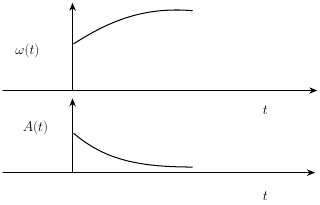
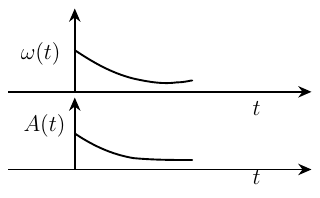
In an oscillating spring mass system, a spring is connected to a box filled with sand. As the box oscillates, sand leaks slowly out of the box vertically so that the average frequency ω(t) and average amplitude A(t) of the system change with time t. Which one of the following options schematically depicts these changes correctly?

  1. ((a))

  2. ((b))

  3. ((c))

  4. ((d))

Show Answer
Answer: ((b))

Explanation:

At any point of time, time period is given by

T = 2π √(m / k)

Here m is decreasing, so time period T will be decreasing

Since ω = 2π / T

Hence as mass leaks, ω will increase

Now, at any instant

mg = kx0

So, equilibrium length x0 = mg / k, where m is decreasing

So, equilibrium length will decrease.

So, amplitude also go on decreasing.

24

A balloon is made of a material of surface tension S and its inflation outlet (from where gas is filled in it) has small area A. It is filled with a gas of density ρ and takes a spherical shape of radius R. When the gas is allowed to flow freely out of it, its radius r changes from R to 0 (zero) in time T. If the speed v(r) of gas coming out of the balloon depends on r as r*a* and T ∝ Sα Aβ ργ Rδ

  1. ((a))

    (a = \frac{1}{2}, \alpha = \frac{1}{2}, \beta = -1, \gamma = +1, \delta = \frac{3}{2})

  2. ((b))

    (a = -\frac{1}{2}, \alpha = -\frac{1}{2}, \beta = -1, \gamma = -\frac{1}{2}, \delta = \frac{5}{2})

  3. ((c))

    (a = -\frac{1}{2}, \alpha = -\frac{1}{2}, \beta = -1, \gamma = \frac{1}{2}, \delta = \frac{7}{2})

  4. ((d))

    (a = \frac{1}{2}, \alpha = \frac{1}{2}, \beta = -\frac{1}{2}, \gamma = \frac{1}{2}, \delta = \frac{7}{2})

Show Answer
Answer: ((c))

(a = -\frac{1}{2}, \alpha = -\frac{1}{2}, \beta = -1, \gamma = \frac{1}{2}, \delta = \frac{7}{2})

Calculation:

T ∝ Sa Aβ ργ Rδ

M0 L0 T1 = K (M T−2)α (L2)β (M L−3)γ Lδ

M0 L0 T1 = K [Mα+γ L2β−3γ+δ T−2α]

On comparing

−2α = 1         

⇒ α = −1/2

α + γ = 0         

⇒ γ = 1/2

2β − 3γ + δ = 0

2β − 3(1/2) + δ = 0

By hit and trial 

Put β = −1

2(−1) − 3/2 + δ = 0     ⇒ δ = 7/2

Correct option is: (3) a = −1/2, α = −1/2, β = −1, γ = 1/2, δ = 7/2

25

Consider the diameter of a spherical object being measured with the help of a Vernier callipers. Suppose its 10 Vernier Scale Divisions (V.S.D.) are equal to its 9 Main Scale Divisions (M.S.D.). The least division in the M.S. is 0.1 cm and the zero of V.S. is at x = 0.1 cm when the jaws of Vernier callipers are closed.

If the main scale reading for the diameter is M = 5 cm and the number of coinciding vernier division is 8, the measured diameter after zero error correction is:

  1. ((a))

    5.18 cm

  2. ((b))

    5.08 cm

  3. ((c))

    4.98 cm

  4. ((d))

    5.00 cm

Show Answer
Answer: ((c))

4.98 cm

Calculation:

Least count = 1 MSD − 1 VSD

1 MSD − (9 / 10) MSD

= (1 / 10) MSD

= (1 / 10) × 0.1 cm = 0.01 cm

Zero error = +0.1 cm

Main scale reading = 5 cm

Vernier scale reading = 8 × 0.01 = 0.08 cm

Final measurement of diameter

= 5 + 0.08 − 0.1 = 4.98 cm

Correct option is: (3) 4.98 cm

26

A parallel plate capacitor made of circular plates is being charged such that the surface charge density on its plates is increasing at a constant rate with time. The magnetic field arising due to displacement current is:

  1. ((a))

    zero at all places

  2. ((b))

    constant between the plates and zero outside the plates

  3. ((c))

    non-zero everywhere with maximum at the imaginary cylindrical surface connecting peripheries of the plates

  4. ((d))

    zero between the plates and non-zero outside

Show Answer
Answer: ((c))

non-zero everywhere with maximum at the imaginary cylindrical surface connecting peripheries of the plates

Correct option is : (3) Non-zero everywhere with maximum at the imaginary cylindrical surface connecting peripheries of the plates

Let the surface charge density be σ = q / A

Given dq/dt = constant

⇒ d/dt (q / A) = constant ⇒ (1 / A) × dq/dt = constant

It means displacement current is constant.

This system will act like a cylindrical wire.

The graph of magnetic field (B) vs radius (r) is:

27

An unpolarized light beam travelling in air is incident on a medium of refractive index 1.73 at Brewster’s angle. Then:

  1. ((a))

    reflected light is completely polarized and the angle of reflection is close to 60°

  2. ((b))

    reflected light is partially polarized and the angle of reflection is close to 30°

  3. ((c))

    both reflected and transmitted light are perfectly polarized with angles of reflection and refraction close to 60° and 30°, respectively

  4. ((d))

    transmitted light is completely polarized with angle of refraction close to 30°

Show Answer
Answer: ((a))

reflected light is completely polarized and the angle of reflection is close to 60°

Correct option is : (1) Reflected light is completely polarized and the angle of reflection is close to 60°

Using Brewster's law

μ = tan θp

⇒ 1.73 = tan θp

⇒ √3 = tan θp

⇒ θp = 60°

28

Two identical charged conducting spheres A and B have their centres separated by a certain distance. Charge on each sphere is q and the force of repulsion between them is F. A third identical uncharged conducting sphere is brought in contact with sphere A first and then with B and finally removed from both. New force of repulsion between spheres A and B (Radii of A and B are negligible compared to the distance of separation so that for calculating force between them they can be considered as point charges) is best given as:

  1. ((a))

    (\frac{3F}{5} )

  2. ((b))

    (\frac{2F}{3})

  3. ((c))

    (\frac{F}{2} )

  4. ((d))

    (\frac{3F}{8})

Show Answer
Answer: ((d))

(\frac{3F}{8})

Calculation:

Let the charge on each sphere A and B be q and the separation be d.

Therefore, the force between spheres A and B is:

F = (1 / (4πɛ₀)) × (q² / d²) ... (1)

When spheres A and C are touched and then separated, charge on each will be:

(q + 0) / 2 = q / 2

Spheres A and C after touching

Now sphere B is touched with sphere C. Charge on each will be:

(q + q/2) / 2 = (3q) / 4

Spheres B and C after touching

Now the force between sphere A and sphere B will be:

Spheres A and B final configuration

F' = (1 / (4πɛ₀)) × (q/2 × 3q/4) / d²

= (3/8) × (1 / (4πɛ₀)) × (q² / d²)

⇒ F' = (3/8) × F

29

A container has two chambers of volumes V1 = 2 litres and V2 = 3 litres separated by a partition made of a thermal insulator. The chambers contain n1 = 5 moles and n2 = 4 moles of ideal gas at pressures p1 = 1 atm and p2 = 2 atm, respectively. When the partition is removed, the mixture attains an equilibrium pressure of:

  1. ((a))

    1.3 atm

  2. ((b))

    1.6 atm

  3. ((c))

    1.4 atm

  4. ((d))

    1.8 atm

Show Answer
Answer: ((b))

1.6 atm

Correct option is: (2) 1.6 atm

Before partition

after partition removed

P1V1 + P2V2 = P(V1 + V2)

⇒ 1 × 2 + 2 × 3 = P × (2 + 3)

⇒ 8 / 5 = P

⇒ P = 1.6 atm

30

A particle of mass m is moving around the origin under the influence of a constant force F that pulls it toward the origin. If the Bohr model is applied to describe its motion, the radius r of the nth orbit and the particle’s speed v in that orbit depend on n as:

  1. ((a))

    (r \propto n^{1/3} ; \quad v \propto n^{1/3})

  2. ((b))

    (r \propto n^{1/3} ; \quad v \propto n^{2/3})

  3. ((c))

    (r \propto n^{2/3} ; \quad v \propto n^{1/3})

  4. ((d))

    (r \propto n^{4/3} ; \quad v \propto n^{-1/3})

Show Answer
Answer: ((c))

(r \propto n^{2/3} ; \quad v \propto n^{1/3})

Correct option is: (3) r ∝ n2/3, v ∝ n1/3

Given, force is constant

F = mv2 / r

⇒ v2 / r = constant

⇒ r ∝ v2      ...(1)

L = mvr = nh / 2π      ...(2)

On solving equation (1) and equation (2):

v ∝ n1/3 and r ∝ n2/3

31

The radius of Martian orbit around the Sun is about 4 times the radius of the orbit of Mercury. The Martian year is 687 Earth days. Then which of the following is the length of 1 year on Mercury?

  1. ((a))

    88 earth days

  2. ((b))

    225 earth days

  3. ((c))

    172 earth days

  4. ((d))

    124 earth days

Show Answer
Answer: ((a))

88 earth days

Calculation:

The radius of Mars' orbit around the Sun, R′ = 4R, where R is the radius of Mercury's orbit.

The Martian year T′ = 687 Earth days.

First, apply Kepler's Third Law to find the ratio of the orbital periods:

(T′ / T)² = (R′ / R)³ = (4R / R)³ = 4³ = 64

From this, we can solve for the ratio of the periods:

T′ / T = 8

This means that Mars takes 8 times longer to orbit the Sun compared to Mercury. Therefore, the length of one year on Mercury is:

T = T′ / 8 = 687 / 8 ≈ 85.88 days

Hence, one year on Mercury is approximately 86 Earth days. The nearest option is 88 days.

32

A body weight 48 N on the surface of the earth. The gravitational force experienced by the body due to the earth at a height equal to one-third the radius of the earth from its surface is:

  1. ((a))

    16 N

  2. ((b))

    27 N

  3. ((c))

    32 N

  4. ((d))

    36 N

Show Answer
Answer: ((b))

27 N

Calculation:

Given,

Weight on Earth’s surface = 48 N

Height from surface = (1/3) R

Total distance from Earth’s center = R + (1/3)R = (4/3)R

The gravitational force at height h is given by,

(F = F_0 \left( \frac{R}{R + h} \right)^2)

(F = 48 \left( \frac{R}{\frac{4}{3}R} \right)^2 = 48 \left( \frac{3}{4} \right)^2 = 48 \times \frac{9}{16} = 27\ N)

∴ The gravitational force at that height is 27 N.

33

A wire of resistance R is cut into 8 equal pieces. From these pieces two equivalent resistances are made by adding four of these together in parallel. Then these two sets are added in series. The net effective resistance of the combination is:

  1. ((a))

    (\frac{R}{64} )

  2. ((b))

    (\frac{R}{32})

  3. ((c))

    (\frac{R}{16} )

  4. ((d))

    (\frac{R}{8})

Show Answer
Answer: ((c))

(\frac{R}{16} )

Correct option is: (3) R / 16

After being cut into 8 equal pieces,

⇒ Resistance of each piece = R′ = R / 8

Each set has 4 pieces in parallel combination

1 / R'' = 8 / R + 8 / R + 8 / R + 8 / R 

⇒ Resistance of each set = R″ = R / 32

Both sets are connected in series

∴ Req = R″ + R″ = 2 × (R / 32) = R / 16

34

What is the De-Broglie wavelength of an electron orbiting in the n = 2 state of a hydrogen atom?

(Given: Bohr radius = 0.052 nm)

  1. ((a))

    0.067 nm

  2. ((b))

    0.67 nm

  3. ((c))

    1.67 nm

  4. ((d))

    2.67 nm

Show Answer
Answer: ((b))

0.67 nm

Correct option is: (2) 0.67 nm

Given n = 2, Z = 1

2πr = nλ

2π × (0.052 × n2 / Z) = nλ

On solving, λ = 0.67 nm

35

An electric dipole with dipole moment 5 × 10⁻⁶ C·m is aligned with the direction of a uniform electric field of magnitude 4 × 10⁵ N/C. The dipole is then rotated through an angle of 60° with respect to the electric field. What is the change in the potential energy of the dipole?

  1. ((a))

    0.8 J

  2. ((b))

    1.0 J

  3. ((c))

    1.2 J

  4. ((d))

    1.5 J

Show Answer
Answer: ((b))

1.0 J

Correct option is: (2) 1.0 J

Given:

p = 5 × 10⁻⁶ C·m

E = 4 × 10⁵ N/C

θi = 0°,   θf = 60°

ΔU = Uf - Ui

= -pE cos θf - ( -pE cos θi )

= pE (cos θi - cos θf)

= 5 × 10-6 × 4 × 105 × (1 - 1/2) = 1 J

36

A constant voltage of 50 V is maintained between the points A and B of the circuit shown in the figure. The current through the branch CD of the circuit is:

  1. ((a))

    1.5 A

  2. ((b))

    2.0 A

  3. ((c))

    2.5 A

  4. ((d))

    3.0 A

Show Answer
Answer: ((b))

2.0 A

Correct option is: (2) 2.0 A

RAB = (1Ω // 3Ω) in series with (2Ω // 4Ω)

⇒ (1 × 3) / (1 + 3) + (2 × 4) / (2 + 4)

= 3 / 4 + 8 / 6 = (9 + 16) / 12 = 25 / 12 Ω

Now total current through the cell

I = 50 / (25 / 12) = 24 A

I = (3 / 4) × 24 = 18 A, I = (1 / 4) × 24 = 6 A

I = (4 / 6) × 24 = 16 A, I = (2 / 6) × 24 = 8 A

Using junction rule at C,

ICD = 18 − 16 = 2 A (from C to D)

37

A photon and an electron (mass m) have the same energy E. What is the ratio (λphoton / λelectron) of their de Broglie wavelengths? (c is the speed of light)

  1. ((a))

    ( \sqrt{\frac{E}{2m}} )

  2. ((b))

    (\quad c\sqrt{2mE} )

  3. ((c))

    (c\sqrt{\frac{2m}{E}})

  4. ((d))

    (\frac{1}{c} \sqrt{\frac{E}{2m}} )

Show Answer
Answer: ((c))

(c\sqrt{\frac{2m}{E}})

Calculation:

The de-Brogile wavelength is given by: λ = h / √(2mE)

For electron: λe = h / √(2mE)

For photon: E = pc ⇒ λPh = hc / E

⇒ λe / λPh = (h / √(2mE)) × (E / hc) = √(E / 2m) × (1 / c)

⇒  λPh / λe = (c\sqrt{\frac{2m}{E}})

The correct option is 3).

38

Which of the following options represent the variation of photoelectric current with property of light shown on the x-axis?

  1. ((a))

    A only

  2. ((b))

    A and C

  3. ((c))

    A and D

  4. ((d))

    B and D

Show Answer
Answer: ((a))

A only

Correct option is: (1)

Photoelectric current vs Intensity graph

Photoelectric current is directly proportional to the intensity of light.

According to Einstein’s photoelectric equation, when light of sufficient frequency falls on a metal surface, it causes the emission of photoelectrons. The kinetic energy of the emitted electrons depends on the frequency of light, while the number of emitted electrons (and hence the photoelectric current) is directly proportional to the intensity of incident light.

This is because higher intensity means more photons striking the surface per second, leading to more electrons being emitted, which increases the current linearly as shown in the graph.

39

A sphere of radius R is cut from a larger solid sphere or radius 2R as shown in the figure. The ratio of the moment of inertia of the smaller sphere to that of the rest part of the sphere about the Y-axis is: 

  1. ((a))

    (\frac{7}{8})

  2. ((b))

    (\frac{7}{40})

  3. ((c))

    (\frac{7}{57})

  4. ((d))

    (\frac{7}{64})

Show Answer
Answer: ((c))

(\frac{7}{57})

Correct option is: (3) 7 / 57

For a larger solid sphere about diameter Y-axis:

Iwhole = (2 / 5) × M × (2R)² = (8 / 5) × M × R²

Density of sphere is uniform:

M / Vwhole = Msmaller / Vsmaller

M / ((4/3)π(2R)³) = M′ / ((4/3)πR³)

⇒ M′ = M / 8

Using parallel axis theorem for smaller sphere:

I′ = Icm + M′ × R² = (2 / 5) × (M / 8) × R² + (M / 8) × R² = (7 / 40) × M × R²

Ratio:

Ratio = Ismaller / Iremaining = I′ / (Iwhole − I′)

= ((7 / 40) × M × R²) / (((8 / 5) − (7 / 40)) × M × R²)

= 7 / 57

40

A full wave rectifier circuit with diodes (D₁) and (D₂) is shown in the figure. If input supply voltage Vin = 220sin (100πt) volt, then at t = 15 m sec

  1. ((a))

    D₁ is forward biased, D₂ is reverse biased

  2. ((b))

    D₁ is reverse biased, D₂ is forward biased

  3. ((c))

    D₁ and D₂ both are forward biased

  4. ((d))

    D₁ and D₂ both are reverse biased

Show Answer
Answer: ((b))

D₁ is reverse biased, D₂ is forward biased

Correct option is: (2) D1 is reverse biased, D2 is forward biased

Vin = 220 × sin(100πt) volt

Given: t = 15 ms = 0.015 s

ω = 100π

2π / T = 100π

⇒ T = 1 / 50 s

⇒ T = 0.02 s

Now, t = (3T / 4)

i.e., the signal is in the negative half cycle.

So now the negative half cycle is fed to the circuit, making D1 reverse biased and D2 forward biased.

41

Two gases A and B are filled at the same pressure in separate cylinders with movable pistons of radius rA and rB, respectively. On supplying an equal amount of heat to both the systems reversibly under constant pressure, the pistons of gas A and B are displaced by 16 cm and 9 cm, respectively. If the change in their internal energy is the same, then the ratio rA / rB is equal to:

  1. ((a))

    (\frac{4}{3})

  2. ((b))

    (\frac{3}{4})

  3. ((c))

    ( \frac{2}{\sqrt{3}})

  4. ((d))

    (\frac{\sqrt{3}}{2})

Show Answer
Answer: ((b))

(\frac{3}{4})

Correct option is: (2) 3 / 4

Using the First Law of Thermodynamics:

ΔQ = ΔU + PΔV

ΔQ is the same

ΔU is also the same

⇒ WA = WB

⇒ (PΔV)A = (PΔV)B

P is also the same

⇒ AAdA = ABdB

πrA2dA = πrB2dB

rA / rB = √(dB / dA) = √(9 / 16)

= 3 / 4

42

A physical quantity P is related to four observations a, b, c and d as follows:

P = a³b² / c√d

The percentage errors of measurement in a, b, c and d are 1%, 3%, 2%, and 4% respectively. The percentage error in the quantity P is:

  1. ((a))

    10% 

  2. ((b))

    2% 

  3. ((c))

    13% 

  4. ((d))

    15% 

Show Answer
Answer: ((c))

13% 

Calculation:

Given: P = a³ × b² × c−1/2 × d−1

Taking logarithm on both sides:

ln P = 3 ln a + 2 ln b − (1/2) ln c − ln d

Now, taking error on both sides:

|ΔP / P| = 3 × |Δa / a| + 2 × |Δb / b| + (1/2) × |Δc / c| + |Δd / d|

⇒ Percentage error in P

= 3(1%) + 2(3%) + (1/2)(4%) + 2%

= (3 + 6 + 2 + 2)%

= 13%

43

The intensity of transmitted light when a polaroid sheet, placed between two crossed polarization at 22.5° from the polarization axis of one of the polaroids, is (I₀ is the intensity or polarised light after passing through the first polaroid):

  1. ((a))

    (\frac{I_0}{2})

  2. ((b))

    (\frac{I_0}{4})

  3. ((c))

    (\frac{I_0}{8})

  4. ((d))

    (\frac{I_0}{16})

Show Answer
Answer: ((c))

(\frac{I_0}{8})

Calculation:

When light passes through a polaroid at an angle θ from the original polarization direction, the transmitted intensity is given by:

I = I0 × cos²θ

Since there are two polaroids with one in between at 22.5°, the intensity after the first polaroid becomes I0.

After the second polaroid (placed at 22.5° to the first):

I1 = I0 × cos²(22.5°)

After the third polaroid (crossed with the first, i.e., 90° apart, and thus 67.5° from the middle one):

I2 = I1 × cos²(67.5°)

So final intensity = I0 × cos²(22.5°) × cos²(67.5°)

cos(22.5°) ≈ 0.924, cos²(22.5°) ≈ 0.853

cos(67.5°) ≈ 0.383, cos²(67.5°) ≈ 0.146

Final intensity ≈ I0 × 0.853 × 0.146 ≈ I0 × 0.124 ≈ I0 / 8

Correct option: Option 3 (I0 / 8)

44

Two identical point masses P and Q, suspended from two separate massless springs of spring constants k₁ and k₂ respectively, oscillate vertically. If their maximum speeds are the same, the ratio (AQ / AP) of the amplitude AQ of mass Q to the amplitude AP of mass P is:

  1. ((a))

    (\frac{k_2}{k_1})

  2. ((b))

    (\frac{k_1}{k_2})

  3. ((c))

    (\sqrt{\frac{k_2}{k_1}})

  4. ((d))

    (\sqrt{\frac{k_1}{k_2}})

Show Answer
Answer: ((d))

(\sqrt{\frac{k_1}{k_2}})

Calculation:

Maximum speed in simple harmonic motion is given by:

vmax = A × ω

Since the masses are identical, angular frequency ω is given by:

ω = √(k / m)

Let AP and AQ be amplitudes and ω1 and ω2 be angular frequencies of P and Q respectively.

Given: vmax(P) = vmax(Q)

⇒ AP × ω1 = AQ × ω2

⇒ AQ / AP = ω1 / ω2

⇒ AQ / AP = √(k1) / √(k2)

⇒ AQ / AP = √(k1 / k2)

Therefore, the correct answer is Option 4: √(k1 / k2)

45

A pipe open at both ends has a fundamental frequency f in air. The pipe is now dipped vertically in a water drum to half of its length. The fundamental frequency of the air column is now equal to: 

  1. ((a))

    (\frac{f}{2})

  2. ((b))

    f

  3. ((c))

    (\frac{3f}{2})

  4. ((d))

    2f

Show Answer
Answer: ((b))

f

Calculation:

For a pipe of length L open at both ends, the fundamental frequency (f) in air is given by the equation:

f = v/λ = (v / 2L)

⇒ λ =2L

Now, when the pipe is dipped vertically in water and half of it is submerged, the length of the air column is halved. 

⇒ L' = L/2 

⇒ λ' =4L' = 2L 

Hence, f' = v / λ' = v / 2L = f 

Correct Answer: Option 2 - f

Chemistry (45 questions)

46

The ratio of the wavelengths of the light absorbed by a Hydrogen atom when it undergoes n = 2 → n = 3 and n = 4 → n = 6 transitions, respectively, is

  1. ((a))

    (\frac{1}{36})

  2. ((b))

    (\frac{1}{16})

  3. ((c))

    (\frac{1}{9} )

  4. ((d))

    (\frac{1}{4})

Show Answer
Answer: ((d))

(\frac{1}{4})

CONCEPT:

Energy Levels and Wavelengths in Hydrogen Atom

  • Hydrogen atom transitions occur when an electron moves between quantized energy levels.
  • The energy difference between levels is given by the formula:

E = -13.6 × (1/n2final - 1/n2initial) eV

  • The wavelength of the light absorbed or emitted during a transition is related to the energy difference:

λ = hc/E

Where h is Planck's constant, c is the speed of light, and E is the energy difference.

EXPLANATION:

  • For the transition n = 2 → n = 3:
  • Energy difference:

E1 = -13.6 × (1/32 - 1/22)

E1 = -13.6 × (1/9 - 1/4) = -13.6 × (-5/36) = 13.6 × 5/36

  • Corresponding wavelength:

λ1 = hc/E1

λ1 is inversely proportional to E1.

  • For the transition n = 4 → n = 6:
  • Energy difference:

E2 = -13.6 × (1/62 - 1/42)

E2 = -13.6 × (1/36 - 1/16) = -13.6 × (-5/144) = 13.6 × 5/144

  • Corresponding wavelength:

λ2 = hc/E2

λ2 is inversely proportional to E2.

  • Ratio of wavelengths:
  • λ12 = E2/E1
  • E1 = 13.6 × 5/36, E2 = 13.6 × 5/144
  • λ12 = (5/144) / (5/36) = 36/144 = 1/4

Therefore, the ratio of the wavelengths is 1/4.

47

Which of the following statements are true?

A. Unlike Ga that has a very high melting point, Cs has a very low melting point.

B. On Pauling scale, the electronegativity values of N and Cl are same.

C. Ar, K⁺, Cl⁻, Ca²⁺ and S²⁻ are all isoelectronic species.

D. The correct order of the first ionization enthalpies of Na, Mg, Al, and Si is Si > Al > Mg > Na.

E. The atomic radius of Cs is greater than that of Li and Rb.

Choose the correct answer from the options given below:

  1. ((a))

    A, B and E only

  2. ((b))

    C and E only

  3. ((c))

    C and D only

  4. ((d))

    A, C and E only

Show Answer
Answer: ((b))

C and E only

CONCEPT:

Properties of Elements and Periodic Trends

  • Melting Point:
  • The melting point of elements generally varies based on their metallic bonding and atomic structure.
  • Cesium (Cs) has a very low melting point compared to Gallium (Ga), which has one of the highest among the group 13 elements.
  • Electronegativity:
  • Electronegativity is the ability of an atom to attract electrons in a chemical bond.
  • On the Pauling scale, nitrogen (N) has an electronegativity of 3.0, while chlorine (Cl) has an electronegativity of 3.16.
  • Isoelectronic Species:
  • Isoelectronic species are atoms, ions, or molecules with the same number of electrons.
  • For example, Ar, K⁺, Cl⁻, Ca²⁺, and S²⁻ all have 18 electrons, making them isoelectronic.
  • Ionization Enthalpy:
  • Ionization enthalpy is the energy required to remove an electron from a gaseous atom in its ground state.
  • The correct order of first ionization enthalpies for Na, Mg, Al, and Si is: Si > Al > Mg > Na, due to increasing nuclear charge and electron configuration stability.
  • Atomic Radius:
  • The atomic radius increases down a group and decreases across a period.
  • Cesium (Cs) has a larger atomic radius than both lithium (Li) and rubidium (Rb) due to its position in the periodic table.

EXPLANATION:

  • Statement A: "Unlike Ga that has a very high melting point, Cs has a very low melting point."
  • This statement is False. Gallium (Ga) has a relatively high melting point, while Cesium (Cs) has an almost equal melting point.

  • Statement B: "On Pauling scale, the electronegativity values of N and Cl are same."
  • This statement is incorrect. Nitrogen (N) has an electronegativity of 3.04, and Chlorine (Cl) has an electronegativity of 3.16 on the Pauling scale, so they have different electronegativities.
  • Statement C: "K⁺, Cl⁻, Ca²⁺ and S²⁻ are all isoelectronic species."
  • This statement is true. All these ions (K⁺, Cl⁻, Ca²⁺, and S²⁻) have the same number of electrons (18 electrons), making them isoelectronic species.
  • Statement D: "The correct order of the first ionization enthalpies of Na, Mg, Al, and Si is Si > Al > Mg > Na."
  • This statement is incorrect. The correct order of ionization enthalpies is Si > Al > Mg > Na. Magnesium (Mg) has a higher ionization enthalpy than Aluminum (Al), and Sodium (Na) has the lowest ionization enthalpy due to its larger atomic size and lower nuclear charge compared to others.
  • Statement E: "The atomic radius of Cs is greater than that of Li and Rb."
  • This statement is correct. While Cesium (Cs) has a larger atomic radius than Lithium (Li), it is also larger than Rubidium (Rb). The atomic radius increases as you move down a group in the periodic table, so Li < Na < K < Rb < Cs..

Therefore, the correct answer is: Option 2) C and E only.

48

Match List-I with List-II


List-I (Ion)List-II
(Group Number in Cation Analysis)
A. Co²⁺I. Group-I
B. Mg²⁺II. Group-III
C. Pb²⁺III. Group-IV
D. Al³⁺IV. Group-VI

Choose the correct answer from the options given below:

  1. ((a))

    A-III, B-IV, C-II, D-I

  2. ((b))

    A-III, B-IV, C-I, D-II

  3. ((c))

    A-III, B-II, C-IV, D-I

  4. ((d))

    A-III, B-II, C-I, D-IV

Show Answer
Answer: ((b))

A-III, B-IV, C-I, D-II

CONCEPT:

Group Analysis of Cations

  • The classification of cations into different groups is based on their solubility and behavior in qualitative analysis.
  • Group I cations form insoluble chlorides when treated with dilute hydrochloric acid.
  • Group II cations form insoluble sulfides when treated with hydrogen sulfide in an acidic medium.
  • Group III cations form insoluble hydroxides when treated with ammonium hydroxide.
  • Group IV cations form insoluble phosphates when treated with ammonium molybdate in an acidic medium.
  • Group V cations do not form precipitates under normal conditions and are analyzed last.

Match the Group with their respective Cations and Group Reagents.

GroupCationsGroup Reagent
Group zeroNH4+None
Group-IPb2+Dilute HCl
Group-IIPb2+, Cu2+, As3+H2S gas in presence of dil. HCl
Group-IIIAl3+, Fe3+NH4OH in presence of NH4Cl
Group-IVCo2+, Ni2+, Mn2+, Zn2+H2S in presence of NH4OH
Group-VBa2+, Sr2+, Ca2+(NH4)2CO3 in presence of NH4OH
Group-VIMg2+None


EXPLANATION:

  • Co2+ (Cobalt ion): This ion is typically classified as Group-IV in cation analysis because it forms hydroxides when treated with ammonium hydroxide.
  • Mg2+ (Magnesium ion): This ion belongs to Group-VI as it forms sulfides in the presence of hydrogen sulfide in an acidic medium.
  • Pb2+ (Lead ion): This ion is usually classified as Group-I because it forms phosphates when treated with ammonium molybdate in an acidic medium.
  • Al3+ (Aluminum ion): This ion is classified as Group-III because it forms insoluble chlorides in the presence of dilute hydrochloric acid.

Therefore, the correct answer is A-III, B-IV, C-I, D-II

49

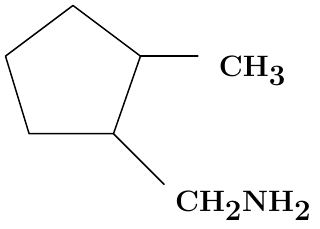
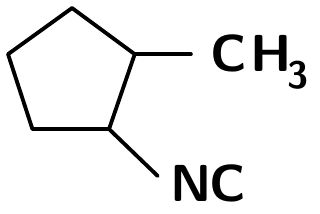
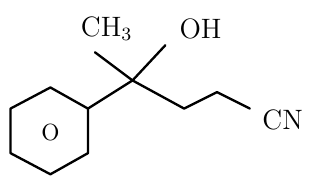
Predict the major product 'P' in the following sequence of reactions-

  1. ((a))

  2. ((b))

  3. ((c))

  4. ((d))

Show Answer
Answer: ((a))

CONCEPT:

Free Radical Substitution and Nucleophilic Substitution

  • Step 1 (i) HBr and benzoyl peroxide: This is a free radical halogenation reaction. Benzoyl peroxide initiates the formation of free radicals, which then react with HBr to produce an alkyl bromide (methyl bromide in this case).
  • Step 2 (ii) KCN: The alkyl bromide formed in step 1 undergoes nucleophilic substitution by the cyanide ion (CN-) to form a nitrile (CN) group attached to the carbon chain.
  • Step 3 (iii) Na(Hg)/C₂H₅OH: The nitrile group is reduced to a primary amine (-NH2) by sodium amalgam in the presence of ethanol, completing the reaction pathway.

EXPLANATION:

  • In the first step, free radicals generated by benzoyl peroxide lead to the formation of a methyl bromide intermediate from CH₃ (methyl group) and HBr.
  • In the second step, the cyanide ion (CN-) attacks the methyl bromide, displacing the bromine atom and forming a nitrile group (-CN) on the carbon chain.
  • In the third step, sodium amalgam (Na(Hg)) in ethanol reduces the nitrile group (-CN) to a primary amine (-NH2), resulting in the final product, a primary amine.

Therefore, the major product 'P' is Option 1.

50

Energy and radius of first Bohr orbit of He⁺ and Li²⁺ are [Given RH = 2.18×10⁻¹⁸ J, a₀ = 52.9 pm]

  1. ((a))

    Eₙ(Li²⁺) = -19.62 × 10⁻¹⁸ J;

    rₙ(Li²⁺) = 17.6 pm

    Eₙ(He⁺) = -8.72 × 10⁻¹⁸ J;

    rₙ(He⁺) = 26.4 pm

  2. ((b))

    Eₙ(Li²⁺) = -8.72 × 10⁻¹⁸ J;

    rₙ(Li²⁺) = 26.4 pm

    Eₙ(He⁺) = -19.62 × 10⁻¹⁸ J;

    rₙ(He⁺) = 17.6 pm

  3. ((c))

    Eₙ(Li²⁺) = -19.62 × 10⁻¹⁶ J;

    rₙ(Li²⁺) = 17.6 pm

    Eₙ(He⁺) = -8.72 × 10⁻¹⁶ J;

    rₙ(He⁺) = 26.4 pm

  4. ((d))

    Eₙ(Li²⁺) = -8.72 × 10⁻¹⁶ J;

    rₙ(Li²⁺) = 17.6 pm

    Eₙ(He⁺) = -19.62 × 10⁻¹⁶ J;

    rₙ(He⁺) = 17.6 pm

Show Answer
Answer: ((a))

Eₙ(Li²⁺) = -19.62 × 10⁻¹⁸ J;

rₙ(Li²⁺) = 17.6 pm

Eₙ(He⁺) = -8.72 × 10⁻¹⁸ J;

rₙ(He⁺) = 26.4 pm

CONCEPT:

Energy and Radius of First Bohr Orbit

  • The energy of an electron in the nth orbit of a hydrogen-like ion is given by the formula:

En = - (Z2 × RH) / n2

where Z is the atomic number, RH is the Rydberg constant (2.18 × 10⁻¹⁸ J), and n is the principal quantum number.

  • The radius of the nth orbit of a hydrogen-like ion is given by:

rn = (n2 × a0) / Z

where a0 is the Bohr radius (52.9 pm), Z is the atomic number, and n is the principal quantum number.

EXPLANATION:

  • For He+ (Z = 2) and Li2+ (Z = 3), we calculate the energy and radius for the first orbit (n = 1).
  • Energy for He+:
  • En(He+) = - (Z2 × RH) / n2
  • = - (22 × 2.18 × 10-18) / 12
  • = - 8.72 × 10⁻¹⁸ J
  • Radius for He+:
  • rn(He+) = (n2 × a0) / Z
  • = (12 × 52.9) / 2
  • = 26.4 pm
  • Energy for Li2+:
  • En(Li2+) = - (Z2 × RH) / n2
  • = - (32 × 2.18 × 10-18) / 12
  • = - 19.62 × 10⁻¹⁸ J
  • Radius for Li2+:
  • rn(Li2+) = (n2 × a0) / Z
  • = (12 × 52.9) / 3
  • = 17.6 pm

CONCLUSION:

​En(Li2+) = -19.62 × 10⁻¹⁸ J and rn(Li2+) = 17.6 pm & En(He+) = -8.72 × 10⁻¹⁸ J and rn(He+) = 26.4 pm

Therefore, the correct answer is Option 1.

51

Which of the following are paramagnetic?

A. [NiCl₄]²⁻

B. Ni(CO)₄

C. [Ni(CN)₄]²⁻

D. [Ni(H₂O)₆]²⁺

E. Ni(PPh₃)₄

Choose the correct answer from the options given below:

  1. ((a))

    A and C only

  2. ((b))

    B and E only

  3. ((c))

    A and D only

  4. ((d))

    A, D and E only

Show Answer
Answer: ((c))

A and D only

CONCEPT:

Paramagnetism

  • A substance is considered paramagnetic if it has unpaired electrons in its electronic configuration. The presence of unpaired electrons leads to a net magnetic moment.
  • If all the electrons are paired, the substance is diamagnetic and does not exhibit paramagnetism.
  • The electronic configuration and ligand field strength play a major role in determining whether a compound is paramagnetic or diamagnetic.
  • In the case of transition metal complexes, the ligand's field strength determines whether the d-electrons will pair up (low-spin) or remain unpaired (high-spin).

EXPLANATION:

ComplexElectronic ConfigurationMagnetic Behavior
[NiCl₄]²⁻Nickel (Ni) in +2 state: 3d84s0Paramagnetic (due to weak field ligand Cl⁻ and two unpaired electrons)
Ni(CO)₄Nickel (Ni) in 0 state: 3d84s2Diamagnetic (due to strong field ligand CO causing pairing of electrons)
[Ni(CN)₄]²⁻Nickel (Ni) in +2 state: 3d8Diamagnetic (due to strong field ligand CN⁻ causing pairing of electrons)
[Ni(H₂O)₆]²⁺Nickel (Ni) in +2 state: 3d8Paramagnetic (due to weak field ligand H₂O and two unpaired electrons)
Ni(PPh₃)₄Nickel (Ni) in 0 state: 3d84s2Diamagnetic (due to strong field ligand PPh₃ causing pairing of electrons)

​So, the correct answer is [NiCl₄]²⁻ and [Ni(H₂O)₆]²⁺ are paramagnetic.

52

Given below are two statements:

Statement I: Like nitrogen that can form ammonia, arsenic can form arsine.

Statement II: Antimony cannot form antimony pentoxide.

In the light of the above statements, choose the most appropriate answer from the options given below:

  1. ((a))

    Both Statement I and Statement II are correct.

  2. ((b))

    Both Statement I and Statement II are incorrect. 

  3. ((c))

    Statement I is correct but Statement II is incorrect. 

  4. ((d))

    Statement I is incorrect but Statement II is correct.

Show Answer
Answer: ((c))

Statement I is correct but Statement II is incorrect. 

CONCEPT:

Behavior of Nitrogen, Arsenic, and Antimony in Compound Formation

  • Elements like nitrogen, arsenic, and antimony belong to group 15 (pnictogens) of the periodic table and exhibit similar chemical properties due to their valence electron configuration.
  • Nitrogen can form ammonia (NH3) due to its ability to combine with hydrogen. Similarly, arsenic can form arsine (AsH3), showcasing analogous behavior.
  • Antimony (Sb), another group 15 element, can form antimony pentoxide (Sb2O5) under suitable conditions, as it exhibits oxidation states of +3 and +5.

EXPLANATION:

  • Statement I: "Like nitrogen that can form ammonia, arsenic can form arsine."
  • This statement is correct because arsenic, like nitrogen, can react with hydrogen to form arsine (AsH3). This is due to arsenic's chemical similarity to nitrogen as both belong to the same group in the periodic table.
  • Statement II: "Antimony cannot form antimony pentoxide."
  • This statement is incorrect because antimony can form antimony pentoxide (Sb2O5) when it exhibits its +5 oxidation state. This is consistent with the behavior of group 15 elements.
  • Therefore, Statement I is correct, but Statement II is incorrect.

Correct Answer: Option 3) Statement I is correct but Statement II is incorrect.

53

Which among the following electronic configurations belong to main group elements?

A. [Ne]3s¹

B. [Ar]3d³ 4s²

C. [Kr]4d¹⁰5s²5p⁵

D. [Ar]3d¹⁰4s¹

E. [Rn]5f06d27s2

Choose the correct answer from the options given below:

  1. ((a))

    B and E only  

  2. ((b))

    A and C only 

  3. ((c))

    D and E only

  4. ((d))

    A, C and D only 

Show Answer
Answer: ((b))

A and C only 

CONCEPT:

Main Group Elements

  • The main group elements are the elements in groups 1, 2, and 13–18 of the periodic table.
  • These elements have their valence electrons in the s or p orbitals.
  • They include alkali metals, alkaline earth metals, and elements from the boron, carbon, nitrogen, oxygen, halogen, and noble gas groups.
  • Transition metals and inner transition metals (lanthanides and actinides) are not considered main group elements because their valence electrons are in the d or f orbitals.

EXPLANATION:

  • Analyze the given electronic configurations to determine whether they belong to main group elements:
  • A. [Ne]3s1: This corresponds to sodium (Na), which is in Group 1. It is a main group element.
  • B. [Ar]3d34s2: This corresponds to vanadium (V), which is a transition metal (Group 5). It is not a main group element.
  • C. [Kr]4d105s25p5: This corresponds to iodine (I), which is in Group 17. It is a main group element.
  • D. [Ar]3d104s1: This corresponds to copper (Cu), which is a transition metal (Group 11). It is not a main group element.
  • E. [Rn]5f06d27s2: This corresponds to thorium (Th), which is an actinide and not a main group element.

So, only A and C belong to main group elements.

54

Dalton's Atomic theory could not explain which of the following? 

  1. ((a))

    Law of conservation of mass

  2. ((b))

    Law of constant proportion 

  3. ((c))

    Law of multiple proportion

  4. ((d))

    Law of gaseous volume 

Show Answer
Answer: ((d))

Law of gaseous volume 

CONCEPT:

Dalton's Atomic Theory and Its Limitations

  • Dalton's Atomic Theory proposed that:
  • All matter is made up of tiny, indivisible particles called atoms.
  • Atoms of the same element are identical in mass and properties.
  • Atoms of different elements combine in fixed ratios to form compounds (Law of Constant Proportion).
  • Atoms are neither created nor destroyed in chemical reactions (Law of Conservation of Mass).
  • Limitations:
  • While Dalton's theory could explain many laws like the Law of Conservation of Mass and the Law of Constant Proportion, it failed to explain the Law of Gaseous Volume.
  • The Law of Gaseous Volume, proposed by Gay-Lussac, states that gases react in simple whole-number ratios by volume under the same conditions of temperature and pressure. This requires understanding molecular structures, which Dalton's theory did not address.

EXPLANATION:

  • The Law of Gaseous Volume involves the concept of molecules and their behavior in the gaseous state. For example:
  • When hydrogen gas reacts with oxygen gas to form water vapor:

2H2(g) + O2(g) → 2H2O(g)

  • The volume ratio of hydrogen, oxygen, and water vapor is 2:1:2 under the same conditions.
  • Dalton's Atomic Theory assumed atoms as indivisible and did not account for the existence of molecules or the behavior of gases in terms of volume. Thus, it could not explain Gay-Lussac's Law of Gaseous Volume.

Therefore, Dalton's Atomic Theory could not explain the Law of Gaseous Volume.

55

Consider the following compounds:

KO₂, H₂O₂ and H₂SO₄

The oxidation states of the underlined elements in them are, respectively,

  1. ((a))

    +1, −1, and +6

  2. ((b))

    +2, –2, and +6 

  3. ((c))

    +1, –2, and +4 

  4. ((d))

    +4, –4, and +6 

Show Answer
Answer: ((a))

+1, −1, and +6

CONCEPT:

Oxidation State

  • The oxidation state (or oxidation number) of an element in a compound is the charge it would have if all bonds were ionic.
  • Rules for determining oxidation states:
  • The oxidation state of an element in its standard form is 0 (e.g., O₂, H₂).
  • For monoatomic ions, the oxidation state is the same as the ion charge.
  • Oxygen usually has an oxidation state of -2, except in peroxides where it is -1 and in superoxides where it is -½.
  • Hydrogen usually has an oxidation state of +1 when bonded to non-metals and -1 when bonded to metals.
  • The sum of oxidation states in a neutral compound is 0, while in polyatomic ions it equals the ion charge.

EXPLANATION:

  • In KO₂ (potassium superoxide):
  • Potassium (K) has an oxidation state of +1.
  • Oxygen in superoxide has an oxidation state of -½.
  • In H₂O₂ (hydrogen peroxide):
  • Hydrogen (H) has an oxidation state of +1.
  • Oxygen in peroxide has an oxidation state of -1.
  • In H₂SO₄ (sulfuric acid):
  • Hydrogen (H) has an oxidation state of +1.
  • Oxygen has an oxidation state of -2.
  • To balance the molecule:

2(+1) + x + 4(-2) = 0

​x = +6

Therefore, sulfur (S) has an oxidation state of +6.

Therefore, the oxidation states of the underlined elements in KO₂, H₂O₂, and H₂SO₄ are respectively +1, -1, and +6.

56

If the half-life (t₁/₂) for a first order reaction is 1 minute, then the time required for 99.9% completion of the reaction is close to:

  1. ((a))

    2 minutes 

  2. ((b))

    4 minutes 

  3. ((c))

    5 minutes 

  4. ((d))

    10 minutes 

Show Answer
Answer: ((d))

10 minutes 

CONCEPT:

First Order Reaction and Half-Life

  • For a first-order reaction, the relationship between the time required for a certain fraction of the reaction to complete and its half-life is given by:

t = (2.303 / k) x log(1 / (1 - fraction completed))

  • The half-life (t₁/₂) for a first-order reaction is related to the rate constant k by the formula:

t₁/₂ = 0.693 / k

  • Using the above equations, the time required for 99.9% completion of the reaction (fraction completed = 0.999) can be calculated.

EXPLANATION:

  • From the formula for half-life:

t₁/₂ = 0.693 / k

  • k = 0.693 / t₁/₂
  • k = 0.693 / 1
  • k = 0.693 min⁻¹
  • The time required for 99.9% completion can be calculated using the formula:

t = (2.303 / k) x log(1 / (1 - fraction completed))

  • t = (2.303 / 0.693) x log(1 / (1 - 0.999))
  • t = (2.303 / 0.693) x log(1 / 0.001)
  • t = (2.303 / 0.693) x log(1000)
  • t = (2.303 / 0.693) x 3
  • t ≈ 10 minutes

Therefore, the time required for 99.9% completion of the reaction is approximately 10 minutes.

57

The correct order of the wavelength of light absorbed by the following complexes is,

A. [Co(NH₃)₆]³⁺

B. [Co(CN)₆]³⁻

C. [Cu(H₂O)₄]²⁺

D. [Ti(H₂O)₆]³⁺

Choose the correct answer from the options below:

  1. ((a))

    B < D < A < C

  2. ((b))

    B < A < D < C

  3. ((c))

    C < D < A < B

  4. ((d))

    C < A < D < B

Show Answer
Answer: ((b))

B < A < D < C

CONCEPT:

Wavelength of Light Absorbed by Complexes

  • The wavelength of light absorbed by a complex depends on the energy gap (Δo, crystal field splitting) between the d-orbitals in the central metal ion.
  • This energy gap is influenced by the nature of the ligands and their position in the spectrochemical series.
  • Strong field ligands (e.g., CN⁻) cause a larger splitting of d-orbitals (higher Δo), leading to the absorption of light with shorter wavelengths (higher energy).
  • Weak field ligands (e.g., H₂O) cause smaller splitting of d-orbitals (lower Δo), leading to the absorption of light with longer wavelengths (lower energy).

EXPLANATION:

  • In the given complexes:
  • [Co(NH₃)₆]³⁺: NH₃ is a moderate field ligand and causes moderate splitting of d-orbitals.
  • [Co(CN)₆]³⁻: CN⁻ is a strong field ligand and causes large splitting of d-orbitals, resulting in absorption of shorter wavelengths.
  • [Cu(H₂O)₄]²⁺: H₂O is a weak field ligand and causes small splitting of d-orbitals, resulting in absorption of longer wavelengths.
  • [Ti(H₂O)₆]³⁺: H₂O is also a weak field ligand, but the metal ion Ti³⁺ has a smaller splitting than Cu²⁺.
  • Comparing the strength of the ligands and the splitting:
  • [Co(CN)₆]³⁻ absorbs the shortest wavelength due to CN⁻ (strong field ligand).
  • [Co(NH₃)₆]³⁺ absorbs a shorter wavelength than [Ti(H₂O)₆]³⁺ due to NH₃ (moderate field ligand).
  • [Cu(H₂O)₄]²⁺ absorbs the longest wavelength due to H₂O (weak field ligand) and Cu²⁺ having a higher splitting than Ti³⁺.

So, the correct order is B < A < D < C.

58

Which one of the following compounds can exist as cis-trans isomers?

  1. ((a))

    Pent-1-ene

  2. ((b))

    2-Methylhex-2-ene

  3. ((c))

    1,1-Dimethylcyclopropane

  4. ((d))

    1,2-Dimethylcyclohexane

Show Answer
Answer: ((d))

1,2-Dimethylcyclohexane

CONCEPT:

Cis-Trans Isomerism

  • Cis-trans isomerism (or geometric isomerism) occurs when a molecule has restricted rotation, typically due to the presence of a double bond or a ring structure, and two distinct groups are attached to the atoms involved in the restricted rotation.
  • For cis-trans isomerism to exist:
  • In alkenes: The carbon atoms in the double bond must each have two different groups attached to them.
  • In cyclic compounds: The ring restricts rotation, and two substituents attached to different carbons in the ring can be oriented on the same side (cis) or opposite sides (trans).

EXPLANATION:

  • Pent-1-ene:
  • Pent-1-ene has a terminal double bond (C1=C2), and one of the carbons in the double bond (C1) has two identical hydrogen atoms. Therefore, it cannot exhibit cis-trans isomerism.

  • 2-Methylhex-2-ene:
  • The double bond in 2-methylhex-2-ene (C2=C3) has two same groups attached to both C2. Therefore, it can not exhibit cis-trans isomerism.

  • 1,1-Dimethylcyclopropane:
  • In 1,1-dimethylcyclopropane, both methyl groups are attached to the same carbon atom in the ring. Since the substituents are not on different carbons, cis-trans isomerism is not possible.

  • 1,2-Dimethylcyclohexane:
  • In 1,2-dimethylcyclohexane, the methyl groups are attached to different carbons in the ring, and the ring restricts rotation. Therefore, it can exhibit cis-trans isomerism.

**Therefore, the compounds that can exhibit cis-trans isomerism is **1,2-Dimethylcyclohexane

59

Phosphoric acid ionizes in three steps with their ionization constant values Ka1, Ka2 and Ka3 respectively, while K is the overall ionization constant. Which of the following statements are true?

A. log K = log Kₐ₁ + log Kₐ₂ + log Kₐ₃

B. H₃PO₄ is stronger acid than H₂PO₄⁻ and HPO₄²⁻.

C. Kₐ₁ > Kₐ₂ > Kₐ₃

D. Ka= (Ka3+Ka2)/2 ​​

Choose the correct answer from the options below:

  1. ((a))

    A and B only

  2. ((b))

    A and C only

  3. ((c))

    B, C and D only

  4. ((d))

    A, B and C only

Show Answer
Answer: ((d))

A, B and C only

CONCEPT:

Phosphoric Acid Ionization and Acid Strength

  • Phosphoric acid (H3PO4) ionizes in three steps, leading to the formation of H2PO4-, HPO42-, and PO43- respectively.
  • Each ionization step has an associated ionization constant, denoted as Kₐ₁, Kₐ₂, and Kₐ₃.
  • The overall ionization constant (K) is the product of the individual ionization constants: K = Kₐ₁ × Kₐ₂ × Kₐ₃.
  • The logarithm of the overall ionization constant is the sum of the logarithms of the individual constants: log K = log Kₐ₁ + log Kₐ₂ + log Kₐ₃.
  • The strength of an acid decreases as it ionizes further (i.e., H₃PO₄ is stronger than H₂PO₄-, which is stronger than HPO₄2-).

EXPLANATION:

  • Statement A: log K = log Kₐ₁ + log Kₐ₂ + log Kₐ₃ is correct because the overall ionization constant is the product of the individual ionization constants, and the logarithm of a product is the sum of the logarithms of the individual factors.
  • Statement B: H₃PO₄ is stronger than H₂PO₄- and HPO₄2- is correct because the acid strength decreases with successive ionizations. The first ionization constant (Kₐ₁) is the largest, making H₃PO₄ the strongest acid among its ionized forms.
  • Statement C: Kₐ₁ > Kₐ₂ > Kₐ₃ is correct because the ionization constants decrease sequentially as the molecule loses protons, reflecting decreasing acid strength with each step.
  • Statement D: K = (Kₐ₁ + Kₐ₂)/2 is incorrect because the overall ionization constant is the product of Kₐ₁, Kₐ₂, and Kₐ₃, not an average of the first two constants.

Therefore, the correct answer is A, B, and C only.

60

Which one of the following reactions does NOT give benzene as the product?

  1. ((a))

  2. ((b))

  3. ((c))

  4. ((d))

Show Answer
Answer: ((d))

CONCEPT:

Reactions Producing Benzene

  • Benzene is typically produced through reactions such as decarboxylation of aromatic acids, cracking of hydrocarbons, or dehydrohalogenation reactions. These reactions are capable of removing functional groups and producing benzene as the product.

EXPLANATION:

  • Let's break down each reaction to determine whether it produces benzene or not:
  • Reaction 1: C6H5COONa (Sodium Benzoate) + NaOH (Soda Lime) → C6H6 (Benzene)
  • This is a decarboxylation reaction known as the "Decarboxylation of Sodium Benzoate," which produces benzene as the product.
  • When sodium benzoate reacts with soda lime (a mixture of NaOH and CaO), the carboxyl group is removed, and benzene is formed.
  • Heating of carboxylic acid with soda lime results in:A. dehydrationB.  dehydrogenationC. decarboxylationD. addition of ${{{O}}_2}$

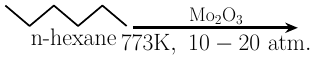
  • Reaction 2: C6H12 (n-hexane) → Benzene (via MoO3 at 773 K, 10–20 atm)
  • This reaction does produce benzene. The catalytic cracking of n-hexane under high pressure and temperature typically results in cyclisation and followed by aromatisation.

Alkanes -2: Chemical Reactions

  • Reaction 3: CH≡CH (Ethyne or Acetylene) → Benzene (via red-hot Iron Tube at 873 K)
  • This reaction is known as the "Pyrolysis of Acetylene." When acetylene is passed through a red-hot iron tube, it undergoes cyclotrimerization to form benzene as the product.

passing through a red hot iron tube ...

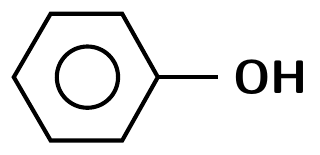
  • Reaction 4: C6H5N2+Cl- (Benzenediazonium Chloride) → Phenol (via H2O warm)
  • This reaction involves the reduction of the benzenediazonium ion to form benzene via water as the reducing agent. This reaction also produces Phenol.
  • when benzene diazonium chloride reacts ...

Conclusion: The correct answer is Option 4.

61

If the molar conductivity (Λₘ) of a 0.050 mol L⁻¹ solution of a monobasic weak acid is 90 S cm² mol⁻¹, its extent (degree) of dissociation will be

[Assume Λ+⁰ = 349.6 S cm² mol⁻¹ and Λ-⁰ = 50.4 S cm² mol⁻¹]

  1. ((a))

    0.115

  2. ((b))

    0.125

  3. ((c))

    0.225

  4. ((d))

    0.215

Show Answer
Answer: ((c))

0.225

CONCEPT:

Molar Conductivity (Λm) and Degree of Dissociation (α)

  • Molar conductivity (Λm) of an electrolyte is the conductivity of a solution containing one mole of electrolyte, divided by the molar concentration.
  • For a weak electrolyte, the molar conductivity at any concentration (Λm) is related to the molar conductivity at infinite dilution (Λm0) by the degree of dissociation (α).
  • The degree of dissociation (α) is calculated using the formula:

α = Λm / Λm0

  • For a monobasic weak acid, the molar conductivity at infinite dilution is given by:

Λm0 = Λ+0 + Λ-0

EXPLANATION:

  • Calculate Λm0:
  • Λm0 = Λ+0 + Λ-0
  • = 349.6 S cm2 mol-1 + 50.4 S cm2 mol-1
  • = 400 S cm2 mol-1
  • Calculate α:
  • α = Λm / Λm0
  • = 90 S cm2 mol-1 / 400 S cm2 mol-1
  • = 0.225

Therefore, the degree of dissociation (α) is 0.225, and the correct answer is Option 3.

62

Given below are two statements:

Statement I: A hypothetical diatomic molecule with bond order zero is quite stable.

Statement II: As bond order increases, the bond length increases.

In the light of the above statements, choose the most appropriate answer from the options given below:

  1. ((a))

    Both Statement I and Statement II are true

  2. ((b))

    Both Statement I and Statement II are false

  3. ((c))

    Statement I is true but Statement II is false

  4. ((d))

    Statement I is False but Statement II is true

Show Answer
Answer: ((b))

Both Statement I and Statement II are false

CONCEPT:

Bond Order and Bond Stability

  • Bond Order is defined as the number of chemical bonds between a pair of atoms. It can be determined using Molecular Orbital Theory (MOT).
  • A bond order of zero means that there are equal numbers of bonding and antibonding electrons, resulting in no net bond formation.
  • A molecule with a bond order of zero is considered unstable and cannot exist under normal conditions.

Bond Order and Bond Length

  • Bond order is inversely related to bond length. As bond order increases, the bond strength increases, and the bond length decreases.
  • Higher bond order indicates stronger bonds, which are shorter in length.

EXPLANATION:

  • Statement I: "A hypothetical diatomic molecule with bond order zero is quite stable." This statement is false. A bond order of zero implies no bond formation, and the molecule would not exist as a stable entity.
  • Statement II: "As bond order increases, the bond length increases." This statement is also false. As bond order increases, bond strength increases, and bond length decreases.

Therefore, the correct answer is: Option 2: Both Statement I and Statement II are false.

63

Out of the following complex compounds, which of the compound will be having the minimum conductance in solution?

  1. ((a))

    [Co(NH₃)₃Cl₃]

  2. ((b))

    [Co(NH₃)₄Cl₂]Cl

  3. ((c))

    [Co(NH₃)₆]Cl₃

  4. ((d))

    [Co(NH₃)₅Cl]Cl

Show Answer
Answer: ((a))

[Co(NH₃)₃Cl₃]

CONCEPT:

Conductance of Ionic Compounds in Solution

  • The conductance of a compound in solution depends on the number of ions produced upon dissociation.
  • More the number of ions, higher the conductance.
  • Complex compounds can dissociate into different numbers of ions depending on their structure and coordination sphere.

EXPLANATION:

  • [Co(NH₃)₃Cl₃]: This is a neutral complex where all three chlorides are coordinated to cobalt. It does not dissociate into ions. Hence, conductance is minimum.
  • [Co(NH₃)₄Cl₂]Cl: This is a 1:2 electrolyte. It dissociates as:

[Co(NH₃)₄Cl₂]Cl → [Co(NH₃)₄Cl2]+ + Cl-

Producing 2 ions in solution.

  • [Co(NH₃)₆]Cl₃: This is a 1:3 electrolyte. It dissociates as:

[Co(NH₃)₆]Cl₃ → [Co(NH₃)₆]3+ + 3Cl-

Producing 4 ions in solution.

  • [Co(NH₃)₅Cl]Cl: This is a 1:2 electrolyte. It dissociates as:

[Co(NH₃)₅Cl]Cl → [Co(NH₃)₅Cl]+ + Cl-

Producing 2 ions in solution.

So, [Co(NH₃)₃Cl₃] produces no ions in solution and will have the minimum conductance.

Therefore, the compound with minimum conductance in solution is [Co(NH₃)₃Cl₃].

64

Match the List-I with List-II.


List-I (Ion)List-II (Geometry)
A. XeO₃I. sp³d; linear
B. XeF₂II. sp³; pyramidal
C. XeOF₄III. sp³d³; distorted octahedral
D. XeF₆IV. sp³d²; square pyramidal

Choose the correct answer from the options given below:

  1. ((a))

    A-II, B-I, C-IV, D-III

  2. ((b))

    A-II, B-I, C-III, D-IV

  3. ((c))

    A-IV, B-II, C-III, D-I

  4. ((d))

    A-IV, B-II, C-I, D-III

Show Answer
Answer: ((a))

A-II, B-I, C-IV, D-III

CONCEPT:

Geometry of Xenon Compounds Based on Hybridization

  • The geometry of xenon compounds can be predicted based on the hybridization of the central xenon atom and the presence of lone pairs.
  • The Valence Shell Electron Pair Repulsion (VSEPR) theory is used to determine the arrangement of bonds and lone pairs around the central atom.
  • The hybridization and molecular geometry of xenon compounds are as follows:
  • sp3 hybridization: Tetrahedral electronic geometry; molecular geometry depends on lone pairs.
  • sp3d hybridization: Trigonal bipyramidal electronic geometry; molecular geometry depends on lone pairs.
  • sp3d2 hybridization: Octahedral electronic geometry; molecular geometry depends on lone pairs.
  • sp3d3 hybridization: Pentagonal bipyramidal electronic geometry.

EXPLANATION:

  • A. XeO₃: Xenon is sp3 hybridized with one lone pair and three bonded oxygen atoms. This results in a pyramidal geometry.

Draw the structure of XeF2 and XeO3 . Write their shapes and hybridi

  • B. XeF₂: Xenon is sp3d hybridized with three lone pairs and two bonded fluorine atoms. This results in a linear geometry.

Hybridization of XeF2 (Xenon Difluoride ...

  • C. XeOF₄: Xenon is sp3d2 hybridized with one lone pair and five bonded atoms (four fluorine and one oxygen). This results in a square pyramidal geometry.

Draw the structure for – XeOF4 - Brainly.in

  • D. XeF₆: Xenon is sp3d3 hybridized with one lone pair and six bonded fluorine atoms. This results in a distorted octahedral geometry.

Hybridization of XeF6 (Xenon ...

  • Match the compounds with their geometries:
  • A. XeO₃: II (sp3; pyramidal)
  • B. XeF₂: I (sp3d; linear)
  • C. XeOF₄: IV (sp3d2; square pyramidal)
  • D. XeF₆: III (sp3d3; distorted octahedral)

Therefore, the correct answer is: A-II, B-I, C-IV, D-III.

65

C(s) + 2H₂(g) → CH₄(g); ΔH = −74.8 kJ mol⁻¹

Which of the following diagrams gives an accurate representation of the above reaction?

[R → reactants; P → products]

  1. ((a))

  2. ((b))

  3. ((c))

  4. ((d))

Show Answer
Answer: ((a))

CONCEPT:

Enthalpy Change (ΔH) and Energy Diagram

  • The enthalpy change (ΔH) of a reaction represents the difference in energy between the products and reactants.
  • When ΔH is negative, the reaction is exothermic, meaning energy is released and the products have lower energy than the reactants.
  • Energy diagrams for exothermic reactions show the reactants starting at a higher energy level and the products at a lower energy level, with an energy "drop" between them.

EXPLANATION:

  • In the given reaction:

C(s) + 2H2(g) → CH4(g); ΔH = -74.8 kJ mol-1

  • ΔH is negative, indicating that the reaction is exothermic.
  • In an energy diagram for this reaction:
  • The reactants (C and H2) start at a higher energy level.
  • The products (CH4) are at a lower energy level, showing that energy is released during the reaction.
  • The difference in energy between the reactants and products corresponds to the magnitude of ΔH (74.8 kJ mol-1).

Therefore, the correct energy diagram will show the reactants at a higher energy level than the products, with an energy drop of 74.8 kJ mol-1.

66

Match the List-I with List-II.


List-I (Example)List-II (Type of Solution)
A. HumidityI. Solid in solid
B. AlloysII. Liquid in gas
C. AmalgamsIII. Solid in gas
D. SmokeIV. Liquid in solid

Choose the correct answer from the options given below:

  1. ((a))

    A-II, B-IV, C-I, D-III

  2. ((b))

    A-II, B-I, C-IV, D-III

  3. ((c))

    A-III, B-I, C-IV, D-II

  4. ((d))

    A-III, B-II, C-I, D-IV

Show Answer
Answer: ((b))

A-II, B-I, C-IV, D-III

CONCEPT:

Types of Solutions

  • Solutions can exist in different phases, and they are classified based on the solute and solvent phases.
  • Examples include:
  • Solid in solid (e.g., alloys)
  • Liquid in gas (e.g., humidity)
  • Solid in gas (e.g., smoke)
  • Liquid in solid (e.g., amalgams)

EXPLANATION:

  • A. Humidity: Humidity refers to water vapor (liquid) dispersed in air (gas). This is an example of a liquid in gas solution. (A-II)
  • B. Alloys: Alloys are homogeneous mixtures of metals or a metal and a non-metal in solid form. This is an example of a solid in solid solution. (B-I)
  • C. Amalgams: Amalgams are alloys that consist of a metal (solid) dissolved in mercury (liquid). This is an example of a liquid in solid solution. (C-IV)
  • D. Smoke: Smoke consists of tiny solid particles dispersed in a gas. This is an example of a solid in gas solution. (D-III)

Therefore, the correct option is 2) A-II, B-I, C-IV, D-III.

67

The correct order of decreasing basic strength of the given amines is:

  1. ((a))

    N-methylaniline > benzenamine > ethanamine > N-ethylethanamine

  2. ((b))

    N-ethylethanamine > ethanamine > benzenamine > N-methylaniline

  3. ((c))

    N-ethylethanamine > ethanamine > N-methylaniline > benzenamine

  4. ((d))

    benzenamine > ethanamine > N-methylaniline > N-ethylethanamine

Show Answer
Answer: ((c))

N-ethylethanamine > ethanamine > N-methylaniline > benzenamine

CONCEPT:

Basic Strength of Amines

  • The basic strength of amines depends on the availability of the lone pair of electrons on the nitrogen atom for protonation.
  • Electron-donating groups (EDGs) increase the availability of the lone pair, thereby increasing basicity, while electron-withdrawing groups (EWGs) decrease basicity.
  • For aromatic amines, resonance effects reduce the availability of the lone pair on nitrogen, making them less basic compared to aliphatic amines.
  • For aliphatic amines, steric hindrance and the inductive effect of alkyl groups also affect the basic strength.

EXPLANATION:

Lower is the value of pKb, higher is the basicity.

Also, aliphatic amines are stronger bases than aromatic amines.

pKb : Benzenamine > N-Methylaniline > Ethanamine > N-Ethylethanamine

Basic strength : N-Ethylethanamine > Ethanamine > N-Methylaniline > Benzenamine

  • N-methylaniline: The nitrogen is part of an aromatic ring, and the lone pair of electrons on nitrogen is delocalized into the ring through resonance, reducing its availability for protonation. This makes it less basic.

N-ethylethanamine

  • Benzenamine: Similar to N-methylaniline, its lone pair is delocalized into the aromatic ring, making it less basic than aliphatic amines.

Anilines: Learn Meaning, Structure, Properties, Reactions & Uses

  • Ethanamine: This is a simple aliphatic amine where the lone pair on nitrogen is readily available for protonation. It is more basic than aromatic amines.
  • N-ethylethanamine: This is a secondary aliphatic amine, and the presence of two alkyl groups provides a stronger inductive effect, increasing the availability of the lone pair. It is the most basic among the given compounds.

ethene;N-ethylethanamine | C6H15N | CID ...

The correct order of decreasing basic strength is N-ethylethanamine > ethanamine > N-methylaniline > benzenamine

68

Among the following, choose the ones with equal number of atoms.  

A. 212 g of Na₂CO₃ (s) [molar mass = 106 g]

B. 248 g of Na₂O (s) [molar mass = 62 g]

C. 240 g of NaOH (s) [molar mass = 40 g]

D. 12 g of H₂(g) [molar mass = 2 g]

E. 220 g of CO₂(g) [molar mass = 44 g]

Choose the correct answer from the options given below:

  1. ((a))

    A, B, and C only

  2. ((b))

    A, B, and D only 

  3. ((c))

    B, C, and D only 

  4. ((d))

    B, D, and E only 

Show Answer
Answer: ((b))

A, B, and D only 

CONCEPT:

Equal Number of Atoms

  • The number of atoms in a given sample depends on the number of moles of molecules present, as well as the number of atoms in each molecule.
  • The number of moles can be calculated using the formula:

Moles = Mass / Molar Mass

  • Once the moles are determined, the number of molecules can be calculated using Avogadro's number:

Number of molecules = Moles × 6.022 × 10²³

  • To calculate the total number of atoms, multiply the number of molecules by the number of atoms in the molecular formula.

EXPLANATION:

  • For each option, calculate the number of moles and the total number of atoms:
  • A. 212 g of Na₂CO₃:
  • Moles = 212 / 106 = 2 moles
  • Na₂CO₃ contains 6 atoms per molecule (2 Na, 1 C, 3 O).
  • Total atoms = 2 × 6 × 6.022 × 1023 = 72.264 × 10²³ atoms
  • B. 248 g of Na₂O:
  • Moles = 248 / 62 = 4 moles
  • Na₂O contains 3 atoms per molecule (2 Na, 1 O).
  • Total atoms = 4 × 3 × 6.022 × 1023 = 72.264 × 10²³ atoms
  • C. 240 g of NaOH:
  • Moles = 240 / 40 = 6 moles
  • NaOH contains 3 atoms per molecule (1 Na, 1 O, 1 H).
  • Total atoms = 6 × 3 × 6.022 × 1023 = 108.396 × 10²³ atoms
  • D. 12 g of H₂:
  • Moles = 12 / 2 = 6 moles
  • H₂ contains 2 atoms per molecule (2 H).
  • Total atoms = 6 × 2 × 6.022 × 1023 = 72.264 × 10²³ atoms
  • E. 220 g of CO₂:
  • Moles = 220 / 44 = 5 moles
  • CO₂ contains 3 atoms per molecule (1 C, 2 O).
  • Total atoms = 5 × 3 × 6.022 × 1023 = 90.33 × 10²³ atoms
  • Comparing the total atoms A, B, and D have equal total atoms (72.264 × 10²³).

Therefore, the correct answer is Option 2: A, B, and D only.

69

Match the List-I with List-II.

List-I (Name of Vitamin)List-II (Deficiency disease)
A. Vitamin B₁₂I. Cheilosis
B. Vitamin DII. Convulsions
C. Vitamin B₂III. Rickets
D. Vitamin B₆IV. Pernicious anaemia

Choose the correct answer from the options given below:

  1. ((a))

    A-I, B-III, C-II, D-IV

  2. ((b))

    A-IV, B-III, C-I, D-II

  3. ((c))

    A-II, B-III, C-I, D-IV

  4. ((d))

    A-IV, B-III, C-II, D-I

Show Answer
Answer: ((b))

A-IV, B-III, C-I, D-II

CONCEPT:

Vitamin Deficiency Diseases

  • Vitamins are essential micronutrients required for various physiological functions in the body.
  • A deficiency of specific vitamins can lead to various diseases associated with impaired bodily functions.
  • Key vitamins and their associated deficiency diseases:
  • Vitamin B₁₂: Deficiency causes Pernicious Anaemia, which leads to a reduction in red blood cell production.
  • Vitamin D: Deficiency leads to Rickets, causing weakened and soft bones in children.
  • Vitamin B₂: Deficiency results in Cheilosis, characterized by cracked lips and sores at the corners of the mouth.
  • Vitamin B₆: Deficiency can cause Convulsions due to its role in neurotransmitter synthesis.

EXPLANATION:

  • Matching the vitamins from List-I with their associated deficiency diseases in List-II:
  • A. Vitamin B₁₂: Pernicious Anaemia (IV)
  • B. Vitamin D: Rickets (III)
  • C. Vitamin B₂: Cheilosis (I)
  • D. Vitamin B₆: Convulsions (II)

Therefore, the correct answer is Option 2: A-IV, B-III, C-I, D-II.

70

The correct order of decreasing acidity of the following aliphatic acids is:

  1. ((a))

    (CH₃)3CCOOH > (CH₃)₂CHCOOH > CH₃COOH > HCOOH

  2. ((b))

    CH₃COOH > (CH₃)₂CHCOOH > (CH₃)3CCOOH > HCOOH

  3. ((c))

    HCOOH > CH₃COOH > (CH₃)₂CHCOOH > (CH₃)3CCOOH

  4. ((d))

    HCOOH > (CH₃)3CCOOH > (CH₃)₂CHCOOH > CH₃COOH

Show Answer
Answer: ((c))

HCOOH > CH₃COOH > (CH₃)₂CHCOOH > (CH₃)3CCOOH

CONCEPT:

Acidity of Aliphatic Carboxylic Acids

  • The acidity of carboxylic acids is influenced by the nature of the substituents attached to the carbon chain.
  • Electron-withdrawing groups increase acidity by stabilizing the conjugate base (carboxylate ion), while electron-donating groups decrease acidity by destabilizing the conjugate base.
  • Formic acid (HCOOH) is the most acidic among simple aliphatic carboxylic acids because it has no alkyl groups, which are electron-donating by nature.
  • As the size of the alkyl group increases, the electron-donating inductive effect (-I effect) becomes stronger, making the acid weaker.

EXPLANATION:

  • HCOOH (formic acid): No alkyl group, highest acidity.
  • CH₃COOH (acetic acid): One methyl group (-CH₃), moderately acidic. (+I)
  • (CH₃)₂CHCOOH (isobutyric acid): Two methyl groups attached to the same carbon, further decreases acidity. ( two +I)
  • (CH₃)₃CCOOH (pivalic acid): Three methyl groups attached to the same carbon, lowest acidity due to strong electron-donating effect. (three +I)
  • The correct order of decreasing acidity is:

HCOOH > CH₃COOH > (CH₃)₂CHCOOH > (CH₃)₃CCOOH

Therefore, the correct answer is Option 3: HCOOH > CH₃COOH > (CH₃)₂CHCOOH > (CH₃)₃CCOOH.

71

Given below are two statements:

Statement I: Ferromagnetism is considered as an extreme form of paramagnetism.

Statement II: The number of unpaired electrons in a Cr2⁺ ion (Z = 24) is the same as that of a Nd³⁺ ion (Z = 60).

In the light of the above statements, choose the correct answer from the options given below:

  1. ((a))

    Both Statement I and Statement II are true 

  2. ((b))

    Both Statement I and Statement II are false 

  3. ((c))

    Statement I is true but Statement II is false

  4. ((d))

    Statement I is false but Statement II is true

Show Answer
Answer: ((c))

Statement I is true but Statement II is false

CONCEPT:

Ferromagnetism and Electronic Configuration

  • Ferromagnetism: It is a property of materials like iron, cobalt, and nickel, where magnetic moments of individual atoms align spontaneously in the same direction even in the absence of an external magnetic field. It is an extreme form of paramagnetism because the alignment of magnetic moments is much stronger and ordered in ferromagnetic substances compared to paramagnetic ones.
  • Electronic Configuration of Ions:
  • For Cr2+ (Z = 24), the electronic configuration can be derived as:
  • Neutral Cr: [Ar] 3d5 4s1
  • After losing 2 electrons: Cr2+ = [Ar] 3d4
  • Number of unpaired electrons in 3d4 = 4
  • For Nd3+ (Z = 60), the electronic configuration is:
  • Neutral Nd: [Xe] 4f4 6s2
  • After losing 3 electrons: Nd3+ = [Xe] 4f3
  • Number of unpaired electrons in 4f3 = 3

EXPLANATION:

  • Statement I: "Ferromagnetism is considered as an extreme form of paramagnetism."
  • This statement is true because ferromagnetic materials exhibit a stronger and more ordered alignment of magnetic moments compared to paramagnetic materials. Ferromagnetism can be considered as an extreme or special case of paramagnetism.
  • Statement II: "The number of unpaired electrons in a Cr2+ ion (Z = 24) is the same as that of a Nd3+ ion (Z = 60)."
  • This statement is false because:
  • Cr2+ has 4 unpaired electrons (from its 3d4 configuration).
  • Nd3+ has 3 unpaired electrons (from its 4f3 configuration).

Hence, the number of unpaired electrons is not the same for Cr2+ and Nd3+.

Therefore, the correct answer is: Statement I is true but Statement II is false.

72

Match the List-I with List-II.

List-I (Mixture)List-II (Method of Separation)
A. CHCl₃ + C₆H₅NH₂I. Distillation under reduced pressure
B. Crude oil in petroleum industryII. Steam distillation
C. Glycerol from spent-lyeIII. Fractional distillation
D. Aniline-waterIV. Simple distillation

Choose the correct answer from the options given below:

  1. ((a))

    A-IV, B-III, C-I, D-II

  2. ((b))

    A-IV, B-III, C-II, D-I 

  3. ((c))

    A-III, B-IV, C-I, D-II 

  4. ((d))

    A-III, B-IV, C-II, D-I 

Show Answer
Answer: ((a))

A-IV, B-III, C-I, D-II

CONCEPT:

Separation of Mixtures

  • Different mixtures require specific methods of separation based on their physical and chemical properties.
  • Some common methods of separation include:
  • Simple Distillation: Used for separating liquids with significantly different boiling points.
  • Fractional Distillation: Used for separating mixtures of liquids with closer boiling points.
  • Distillation Under Reduced Pressure: Used for separating heat-sensitive liquids that may decompose at high temperatures.
  • Steam Distillation: Used for separating substances that are volatile in steam from non-volatile impurities.

EXPLANATION:

  • A. CHCl₃ + C₆H₅NH₂: These are heat-sensitive liquids. Therefore, Distillation under reduced pressure is used.
  • B. Crude oil in petroleum industry: Crude oil is a complex mixture of hydrocarbons that have close boiling points. Therefore, Fractional Distillation is used.
  • C. Glycerol from spent-lye: Glycerol is separated using Simple Distillation.
  • D. Aniline-water: Aniline and water are separated using Steam Distillation as aniline is volatile in steam.
  • A - I (Distillation under reduced pressure)
  • B - III (Fractional Distillation)
  • C - IV (Simple Distillation)
  • D - II (Steam Distillation)

Therefore, the correct answer is A-I, B-III, C-IV, D-II.

73

For the reaction A(g) ⇌ 2B(g), the backward reaction rate constant is higher than the forward reaction rate constant by a factor of 2500, at 1000 K.

[Given: R = 0.0831 L atm mol⁻¹ K⁻¹]

Kₚ for the reaction at 1000 K is

  1. ((a))

    83.1

  2. ((b))

    2.077 × 10⁵

  3. ((c))

    0.033

  4. ((d))

    0.021

Show Answer
Answer: ((c))

0.033

CONCEPT:

Relation Between KC and KP

  • The equilibrium constant Kp is related to Kc by the equation:

Kp = KC (RT)Δng

  • Where:
  • KC is the equilibrium constant in terms of concentration.
  • R is the gas constant (0.0831 L atm mol-1 K-1).
  • T is the temperature in Kelvin (1000 K in this case).
  • Δng is the change in the number of moles of gas (products - reactants).
  • For the given reaction, the backward rate constant is 2500 times the forward rate constant, and we are asked to calculate Kp at 1000 K.

EXPLANATION:

  • The relationship between the rate constants for the forward and backward reactions is:

(KC = \frac{k{\text{f}}}{k{\text{b}}})

Given that the backward rate constant is 2500 times the forward rate constant, we have:

(KC = \frac{k{\text{f}}}{2500 k{\text{f}}} = \frac{1}{2500})

  • Next, we use the equation to find Kp :

Kp = KC (RT)Δng

Given that Δng = 1 (because there is a change in the number of moles from 1 mole of reactants to 2 moles of products), we substitute the known values:

(Kp = \frac{1}{2500} (0.0831 × 1000)^1)

  • Solving the equation:

(Kp = \frac{1}{2500} \times 83.1 = 0.033)

Therefore, the correct value of Kp is 0.033.

74

Given below are two statements:

Statement I: Benzenediazonium salt is prepared by the reaction of aniline with nitrous acid at 273–278 K. It decomposes easily in the dry state.

Statement II: Insertion of iodine into the benzene ring is difficult and hence iodobenzene is prepared through the reaction of benzenediazonium salt with KI.

In the light of the above statements, choose the most appropriate answer from the options given below:

  1. ((a))

    Both Statement I and Statement II are correct 

  2. ((b))

    Both Statement I and Statement II are incorrect 

  3. ((c))

    Statement I is correct but Statement II is incorrect

  4. ((d))

    Statement I is incorrect but Statement II is correct 

Show Answer
Answer: ((a))

Both Statement I and Statement II are correct 

CONCEPT:

Benzenediazonium Salt and Iodobenzene Preparation

  • Benzenediazonium salt is an important intermediate in organic synthesis, prepared by reacting aniline with nitrous acid under cold conditions (273–278 K).
  • Benzenediazonium salts are unstable in the dry state and decompose easily, releasing nitrogen gas.
  • Direct iodination of benzene is difficult due to the low reactivity of iodine, but iodobenzene can be synthesized by reacting benzenediazonium salt with potassium iodide (KI), leveraging the high reactivity of the diazonium group.

EXPLANATION:

Amines - Practically Study Material

  • Statement I:
  • Benzenediazonium salt is indeed prepared by the reaction of aniline with nitrous acid at 273–278 K.
  • It is unstable in the dry state, decomposing readily due to the release of nitrogen gas.
  • Hence, Statement I is correct.

Why is it important to keep the diazonium salt intermediate cold? (a) at  elevated temperatures, diazonium salts will start to oxidize the water  solvent (b) diazonium salts will decompose to produce nitrogen

  • Statement II:
  • Iodine insertion directly into the benzene ring is challenging due to iodine's low reactivity.
  • Iodobenzene can be efficiently prepared via the reaction of benzenediazonium salt with KI, as the diazonium group facilitates substitution with iodine.
  • Hence, Statement II is correct.

benzene diazonium chloride ...

Therefore, both Statement I and Statement II are correct.

75

How many products (including stereoisomers) are expected from monochlorination of the following compound?

  1. ((a))

    2

  2. ((b))

    3

  3. ((c))

    5

  4. ((d))

    6

Show Answer
Answer: ((d))

6

CONCEPT:

Free Radical Chlorination and Stereoisomerism

  • In free radical halogenation reactions, such as chlorination (Cl2/hv), chlorine atoms replace a hydrogen atom on a carbon chain, leading to the formation of different products.
  • The reaction proceeds via a radical mechanism, where a chlorine molecule (Cl2) undergoes homolytic cleavage under the influence of light (hv), producing two chlorine radicals.
  • The chlorine radical then reacts with a hydrogen atom on the carbon chain, resulting in the substitution of a hydrogen atom with a chlorine atom, forming a product and a new carbon-centered radical.
  • For this type of reaction, stereoisomerism can occur if a chiral center is created, meaning two enantiomers (R and S) may form for each substitution site that creates a chiral center.

EXPLANATION:

  • In the given compound:

CH₃-CH₂-CH₂-CH₃ (butane)

The monochlorination can occur at different positions along the carbon chain, specifically at the 2nd and 3rd carbon atoms, where the chlorine atom can replace a hydrogen atom.

  • When chlorine atoms are substituted at the 2nd and 3rd carbons, they create chiral centers at those positions, leading to the formation of two stereoisomers (R and S forms) for each of these sites.
  • The possible products include:
  • Chlorination at the 2nd carbon creates a chiral center, leading to 2 stereoisomers (R and S forms).
  • Chlorination at the 3rd carbon also creates a chiral center, leading to 2 stereoisomers (R and S forms).
  • Chlorination at the 1st and 4th carbons does not create chiral centers and leads to only one product each.
  • Thus, the total number of products formed from monochlorination, including stereoisomers, is 6: 2 from the 2nd carbon, 2 from the 3rd carbon, and 1 each from the 1st and 4th positions.

Therefore, the correct answer is Option (4) 6.

76

Among the given compounds I–III, the correct order of bond dissociation energy of C–H bond marked with * is:

  1. ((a))

    II > I > III

  2. ((b))

    I > II > III 

  3. ((c))

    III > II > I 

  4. ((d))

    II > III > I 

Show Answer
Answer: ((a))

II > I > III

CONCEPT:

Effect of Hybridization on Bond Dissociation Energy (BDE)

  • The bond dissociation energy (BDE) for C-H bonds depends significantly on the hybridization of the carbon atom involved in the bond:
  • sp³ hybridized carbon: The C-H bond in alkyl groups (sp³) has a relatively higher bond dissociation energy. The electron density around the carbon is more spread out due to the tetrahedral arrangement of the bonds.
  • sp² hybridized carbon: The C-H bond in alkenes or aromatic compounds (sp²) has a lower bond dissociation energy. This is because sp² carbon has more s-character, which pulls the electron density closer to the nucleus, weakening the C-H bond.
  • sp hybridized carbon: The C-H bond in alkynes (sp) has an even lower bond dissociation energy due to the high s-character in the sp hybridization, which leads to a stronger bond between the carbon and hydrogen, but lower C-H bond dissociation energy compared to sp² carbon.
  • In this problem, the bond dissociation energy varies based on the hybridization of the carbon atoms to which the hydrogen atoms are bonded.

EXPLANATION:

  • I: Benzyl group (sp² carbon attached to the aromatic ring) s-character is 33%
  • II: sp carbon attached to a CC Triple bond) s-character  is 50%
  • III: Alkane (sp³ carbon) s-character  is 25%

Bond Strength (\propto ) % s-character 

  • The bond dissociation energy follows the trend:
  • sp² (Benzyl) < sp  < sp³ (Alkane)

Therefore, the correct order of C-H bond dissociation energy is II > I > III.

77

Which one of the following compounds does not decolourize bromine water?

  1. ((a))

  2. ((b))

  3. ((c))

  4. ((d))

Show Answer
Answer: ((a))

CONCEPT:

Reaction of Bromine Water with Compounds

  • Bromine water is commonly used to test for unsaturation in organic compounds. Unsaturated compounds like alkenes and alkynes decolorize bromine water by reacting with it to form dibromides or addition products.
  • However, compounds that are either saturated or have functional groups that do not undergo addition reactions with bromine will not decolorize bromine water.
  • In this question, we are looking for a compound that does not react with bromine water and hence does not decolorize it.

EXPLANATION:

  • Option 1: Cyclohexane (C6H12): Cyclohexane is a saturated hydrocarbon (alkane). Alkanes do not undergo addition reactions with bromine water because they do not have double or triple bonds. Therefore, it will not decolorize bromine water.
  • Option 2: Phenol (C6H5OH): Phenol has a hydroxyl group attached to an aromatic ring. While phenol does not have double bonds like alkenes or alkynes, the hydroxyl group can act as an electron-donating group, but phenol can still decolorize bromine water by reacting with it, especially under certain conditions (e.g., electrophilic substitution).

  • Option 3: Styrene (C6H5CH=CH2): Styrene contains a C=C double bond (alkene), which can easily react with bromine water, decolorizing it by undergoing an addition reaction to form a dibromide.

  • Option 4: Aniline (C6H5NH2): Aniline has an amine group (-NH2), which is electron-donating, and can participate in reactions with bromine, leading to the decolorization of bromine water by forming substitution products like brominated aniline.

Therefore, the compound that does not decolorize bromine water is Cyclohexane (Option 1), as it is a saturated alkane and does not have any reactive sites like double bonds or groups that could react with bromine.

Thus, the correct answer is Option (1): Cyclohexane.

78

The major product of the following reaction is: 

  1. ((a))

  2. ((b))

  3. ((c))

  4. ((d))

Show Answer
Answer: ((b))

CONCEPT:

Grignard Reagent Reaction with Nitriles

  • Grignard reagents, such as CH3MgBr, are highly nucleophilic and typically react with electrophilic carbonyl compounds such as aldehydes, ketones, and nitriles.
  • When a Grignard reagent like CH3MgBr reacts with a nitrile group (-C≡N), it adds to the carbon atom of the nitrile, leading to the formation of an imine intermediate.
  • Upon subsequent treatment with water (H2O), the imine intermediate undergoes hydrolysis, resulting in the formation of an amide. In this case, further reduction or reaction with excess Grignard reagent can give a ketone or alcohol, depending on the conditions.

EXPLANATION:​

The Grignard reagent CH3MgBr reacts with the nitrile group in the compound (benzenecarbonitrile), leading to the formation of an intermediate imine, which is then hydrolyzed to yield an alcohol.


The reaction leads to the following:

  • The product formed is 2-phenylethanol (Option 2), where the nitrile group (-C≡N) has been reduced and hydrolyzed to form an alcohol (OH) group attached to the 2nd carbon of the ethyl side chain, with a methyl group attached to the benzene ring.

Therefore, the correct answer is CH3OH attached to the benzene ring with a CN group at the 2-position.

79

Which of the following aqueous solution will exhibit highest boiling point?

  1. ((a))

    0.01 M Urea

  2. ((b))

    0.01 M KNO₃

  3. ((c))

    0.01 M Na₂SO₄

  4. ((d))

    0.015 M C₆H₁₂O₆

Show Answer
Answer: ((c))

0.01 M Na₂SO₄

CONCEPT:

Elevation in Boiling Point

  • The boiling point of a solution increases when a non-volatile solute is added to it. This phenomenon is known as elevation in boiling point.
  • The elevation in boiling point (ΔTb) is directly proportional to the molality of the solution and the van 't Hoff factor (i), given by:

ΔTb = i × Kb × m

  • Here:
  • i = Van 't Hoff factor (number of particles the solute dissociates into).
  • Kb = Boiling point elevation constant.
  • m = Molality of the solution.

EXPLANATION:

  • Van 't Hoff factors for the given solutes:
  • Urea (0.01 M): Does not dissociate, i = 1.
  • KNO₃ (0.01 M): Dissociates into K⁺ and NO₃⁻, i = 2.
  • Na₂SO₄ (0.01 M): Dissociates into 2 Na⁺ and SO₄²⁻, i = 3.
  • C₆H₁₂O₆ (0.015 M): Does not dissociate, i = 1.
  • Based on the formula ΔTb = i × Kb × m:
  • Higher i leads to a greater elevation in boiling point.
  • Na₂SO₄ (i = 3) will exhibit the highest boiling point among the solutions.

Therefore, the solution with 0.01 M Na₂SO₄ will exhibit the highest boiling point.

80

Match List-I with List-II.

List-IList-II
A. Haber processI. Fe catalyst
B. Wacker oxidationII. PdCl₂
C. Wilkinson catalystIII. [(PPh₃)₃RhCl]
D. Ziegler catalystIV. TiCl₄ with Al(CH₃)₃

Choose the correct answer from the options given below:

  1. ((a))

    A-I, B-II, C-IV, D-III

  2. ((b))

    A-II, B-III, C-I, D-IV

  3. ((c))

    A-I, B-II, C-III, D-IV 

  4. ((d))

    A-I, B-IV, C-III, D-II 

Show Answer
Answer: ((c))

A-I, B-II, C-III, D-IV 

CONCEPT:

Catalysts and their Applications

  • A catalyst is a substance that speeds up a chemical reaction without being consumed in the process.
  • Different reactions require specific catalysts to enhance the rate of reaction or achieve desired selectivity.

EXPLANATION:

  • In the given problem, we need to match the catalysts in List-I with their corresponding reactions or components in List-II:
  • A. Haber Process: This is the industrial process to synthesize ammonia (NH₃) from nitrogen (N₂) and hydrogen (H₂). The catalyst used is iron (Fe). Hence, A matches with I.
  • B. Wacker Oxidation: This process involves the oxidation of alkenes (e.g., ethylene) to aldehydes or ketones using palladium chloride (PdCl₂) as the catalyst. Hence, B matches with II.
  • C. Wilkinson Catalyst: This is a homogeneous catalyst [(PPh₃)₃RhCl] used for hydrogenation reactions in organic chemistry. Hence, C matches with III.
  • D. Ziegler Catalyst: This catalyst (a combination of TiCl₄ and Al(CH₃)₃) is used for polymerization of alkenes to produce polyethylene. Hence, D matches with IV.

Correct Answer: Option 3) A-I, B-II, C-III, D-IV

81

5 moles of liquid X and 10 moles of liquid Y make a solution having a vapour pressure of 70 torr. The vapour pressures of pure X and Y are 63 torr and 78 torr respectively. Which of the following is true regarding the described solution?

  1. ((a))

    The solution shows positive deviation.

  2. ((b))

    The solution shows negative deviation.

  3. ((c))

    The solution is ideal.

  4. ((d))

    The solution has volume greater than the sum of individual volumes.

Show Answer
Answer: ((b))

The solution shows negative deviation.

CONCEPT:

Vapour Pressure and Deviations from Raoult's Law

  • Raoult's Law states that the partial vapour pressure of a component in a solution is proportional to its mole fraction and the vapour pressure of the pure component.
  • The total vapour pressure of an ideal solution can be calculated using:

Ptotal = xXPoX + xYPoY

  • Where xX and xY are the mole fractions of components X and Y.
  • PoX and PoY are the vapour pressures of pure components X and Y respectively.
  • If the actual total vapour pressure deviates from the ideal total vapour pressure:
  • Positive deviation occurs when the actual vapour pressure is higher than expected (weaker intermolecular forces).
  • Negative deviation occurs when the actual vapour pressure is lower than expected (stronger intermolecular forces).

EXPLANATION:

  • Mole fractions:
  • Total moles = 5 + 10 = 15
  • xX = 5/15 = 1/3, xY = 10/15 = 2/3
  • Ideal total vapour pressure (using Raoult's Law):
  • Pideal = xXPoX + xYPoY
  • = (1/3)(63) + (2/3)(78)
  • = 21 + 52
  • = 73 torr
  • Actual total vapour pressure = 70 torr
  • Ideal total vapour pressure = 73 torr

Since the actual pressure is lower than the ideal pressure, the solution exhibits a negative deviation from Raoult's Law.

Therefore, the solution shows negative deviation.

82

Sugar ‘X’

A. is found in honey.

B. is a keto sugar.

C. exists in α and β – anomeric forms.

D. is laevorotatory.

‘X’ is:

  1. ((a))

    D-Glucose 

  2. ((b))

    D-Fructose 

  3. ((c))

    Maltose 

  4. ((d))

    Sucrose

Show Answer
Answer: ((b))

D-Fructose 

CONCEPT:

Sugar 'X' Properties and Identification

  • Sugars are classified based on their chemical structure, optical activity, and functional groups.

  • Anomers (α- and &beta-) are forms of sugars that differ in the configuration at the anomeric carbon.

  • Keto sugars contain a ketone group, whereas aldo sugars contain an aldehyde group.

EXPLANATION::

Difference between Glucose and Fructose: Learn Key Differences

  • A: Sugar 'X' is found in honey. This points to fructose, which is a major sugar in honey.
  • B: Sugar 'X' is a keto sugar. Fructose has a ketone functional group, confirming it is a keto sugar.
  • C: Sugar 'X' exists in α and β anomeric forms. Fructose exhibits these forms due to the configuration at its anomeric carbon.

  • D: Sugar 'X' is laevorotatory. Fructose is known to rotate plane-polarized light to the left, making it laevorotatory.
  • Thus, the sugar 'X' is D-Fructose.

Therefore, the correct answer is  D-Fructose.

83

Identify the suitable reagent for the following conversion. 

  1. ((a))

    (i) LiAlH₄, (ii) H⁺/H₂O

  2. ((b))

    (i) AlH(iBu)₂, (ii) H₂O

  3. ((c))

    (i) NaBH₄, (ii) H⁺/H₂O

  4. ((d))

    (i) H₂/Pd-BaSO₄

Show Answer
Answer: ((b))

(i) AlH(iBu)₂, (ii) H₂O

CONCEPT:

Reduction of Esters to Aldehydes using DIBAL-H

  • DIBAL-H (Diisobutylaluminum hydride, AlH(iBu)2) is a selective reducing agent that reduces esters to aldehydes without further reducing the aldehyde to an alcohol.
  • In the reaction with esters, DIBAL-H (AlH(iBu)2) reduces the ester (R-C=O-OR') to the aldehyde (R-C=O-H), stopping the reduction at the aldehyde stage.
  • This reaction is followed by hydrolysis with water (H2O) to work up the reaction and form the aldehyde.

EXPLANATION:

  • For the given reaction:

R-C=O-OR' + DIBAL-H → R-C=O-H + ROH

  • In this case, DIBAL-H selectively reduces the ester (R-C=O-OR') to an aldehyde (R-C=O-H) and the alcohol group (ROH) is released.
  • The correct reagent for the conversion is Option 2 (AlH(iBu)2, H2O). DIBAL-H reduces the ester to the aldehyde, and water (H2O) is used to hydrolyze the intermediate to the final aldehyde product.

Why not the other options:

  • Option 1: LiAlH4 (Lithium aluminium hydride) followed by H2O:
  • LiAlH4 is a strong reducing agent that reduces esters to alcohols rather than aldehydes. It would not stop at the aldehyde stage, which makes it unsuitable for this transformation.
  • Option 3: NaBH4 (Sodium borohydride) followed by H2O:
  • NaBH4 is a milder reducing agent than LiAlH4 and typically reduces aldehydes and ketones to alcohols, but it is not reactive enough to reduce esters to aldehydes.
  • Option 4: H2/Pd-BaSO4 (Hydrogen and palladium on barium sulfate):
  • This is a catalytic hydrogenation method, typically used to reduce alkenes or aromatic compounds. It will reduce aldehydes to alcohols, so it would not be selective enough to stop at the aldehyde stage when reducing esters.

Therefore, the correct answer is AlH(iBu)2, H2O, which reduces the ester to an aldehyde selectively.

84

Given below are two statement: one is labelled as

Assertion (A) and the other is labelled as Reason (R):

Assertion (A):

undergoes SN2 reaction faster than

.

Reason (R): Iodine is a better leaving group because of its large size.

In the light of the above statements, choose the correct answer from the options given below:

  1. ((a))

    Both A and R are true and R is the correct explanation of A.

  2. ((b))

    Both A and R are true but R is not the correct explanation of A.

  3. ((c))

    A is true but R is false.

  4. ((d))

    A is false but R is true.

Show Answer
Answer: ((a))

Both A and R are true and R is the correct explanation of A.

CONCEPT:

SN2 Reaction and Leaving Group

  • SN2 (Substitution Nucleophilic Bimolecular) reaction is a single-step reaction where the nucleophile attacks the substrate and the leaving group departs simultaneously.
  • The rate of SN2 reaction depends on factors such as steric hindrance, the strength of the nucleophile, and the nature of the leaving group.
  • A good leaving group facilitates the reaction. A good leaving group is one that can stabilize the negative charge after leaving the substrate.
  • In halides, the leaving group ability increases with size due to better stabilization of the negative charge. Thus, Iodine (I-) is a better leaving group than Bromine (Br-).

EXPLANATION:

  • Assertion (A): "undergoes SN2 reaction faster than ." This statement is true because iodine is a better leaving group compared to bromine due to its larger size and ability to stabilize the negative charge more effectively.
  • Reason (R): "Iodine is a better leaving group because of its large size." This statement is true and correctly explains the assertion.

In SN2 reactions, the leaving group plays a crucial role in determining the reaction rate. Since iodine is a better leaving group than bromine, the substrate with iodine will undergo the SN2 reaction faster.

Therefore, the correct answer is Both A and R are true and R is the correct explanation of A.

85

The standard heat of formation, in kcal/mol of Ba²⁺ is: [Given: standard heat of formation of SO₄²⁻ ion (aq) = –216 kcal/mol, standard heat of crystallization of BaSO₄(s) = –4.5 kcal/mol, standard heat of formation of BaSO₄(s) = –349 kcal/mol]

  1. ((a))

    –128.5 

  2. ((b))

    –133.0 

  3. ((c))

    +133.0 

  4. ((d))

    +220.5 

Show Answer
Answer: ((a))

–128.5 

CONCEPT:

Standard Heat of Formation

  • The standard heat of formation of a substance is the amount of heat absorbed or evolved when one mole of the substance is formed from its constituent elements in their standard states under standard conditions (usually 298 K and 1 atm).
  • The standard heat of formation of ions in aqueous solution can be calculated using thermodynamic data such as heats of crystallization and formation of compounds containing these ions.

EXPLANATION:

Standard heat of formation of BaSO₄(s) = Standard heat of formation of Ba²⁺ (aq) + Standard heat of formation of SO₄²⁻ (aq) + Standard heat of crystallization of BaSO₄(s)

  • Rearranging the equation:

Standard heat of formation of Ba²⁺ (aq) = Standard heat of formation of BaSO₄(s) – Standard heat of formation of SO₄²⁻ (aq) – Standard heat of crystallization of BaSO₄(s)

  • Substituting the values:
  • Standard heat of formation of Ba²⁺ (aq) = –349 kcal/mol – (–216 kcal/mol) – (–4.5 kcal/mol)
  • = –349 + 216 + 4.5
  • = –128.5 kcal/mol

Therefore, the standard heat of formation of Ba²⁺ (aq) is –128.5 kcal/mol.

86

Total number of possible isomers (both structural as well as stereoisomers) of cyclic ethers of molecular formula C₄H₈O is:

  1. ((a))

    6

  2. ((b))

    8

  3. ((c))

    10

  4. ((d))

    11

Show Answer
Answer: ((c))

10

CONCEPT:

Cyclic Ethers and Isomerism

  • Cyclic ethers are organic compounds that contain an oxygen atom within a ring structure.
  • Isomers of cyclic ethers can include both structural isomers (different connectivity of atoms) and stereoisomers (same connectivity but different spatial arrangement).
  • For a given molecular formula, isomer count depends on the number of possible ring sizes, substitution patterns, and stereoisomeric configurations.

EXPLANATION:


  • Possible structures include:
  • Four-membered rings (oxetanes) with different substitution patterns.
  • Three-membered rings (epoxides) with different substitution patterns.
  • Considering stereoisomerism:
  • Epoxides can have cis and trans stereoisomers due to the planar nature of the three-membered ring.
  • Oxetanes with different substitutions can also exhibit stereoisomerism.
  • Upon counting all possible structural and stereoisomers:
  • Three-membered ring (epoxides): 6 isomers (including stereoisomers).
  • Four-membered ring (oxetanes): 4 isomers (including stereoisomers).
  • Total number of isomers = 6 (epoxides) + 4 (oxetanes) = 10.

Therefore, the total number of possible isomers (both structural and stereoisomers) of cyclic ethers with the molecular formula C₄H₈O is 10.

87

Identify the correct orders against the property mentioned

A. H₂O > NH₃ > CHCl₃ – dipole moment

B. XeF₄ > XeO₃ > XeF₂ – number of lone pairs on central atom

C. O–H > C–H > N–O – bond length

D. N₂ > O₂ > H₂ – bond enthalpy

Choose the correct answer from the options given below:

  1. ((a))

    A, D only 

  2. ((b))

    B, D only 

  3. ((c))

    A, C only 

  4. ((d))

    B, C only

Show Answer
Answer: ((a))

A, D only 

CONCEPT:

Dipole Moment, Lone Pairs, Bond Length, and Bond Enthalpy

  • Dipole Moment: The dipole moment depends on the electronegativity difference between bonded atoms and the molecular geometry.
  • Lone Pairs on the Central Atom: The number of lone pairs can be determined using the molecular structure and valence electrons of the central atom.
  • Bond Length: Bond length is inversely proportional to bond strength and directly related to the size of the atoms involved in the bond.
  • Bond Enthalpy: Bond enthalpy is the energy required to break a bond. Triple bonds are stronger than double bonds, which are stronger than single bonds.

EXPLANATION:

  • H₂O > NH₃ > CHCl₃ – Dipole Moment
  • H₂O has the highest dipole moment due to its bent shape and high electronegativity difference.
  • NH₃ has a lower dipole moment than H₂O, as it is pyramidal and less polar.
  • CHCl₃ has the lowest dipole moment because its geometry partially cancels out dipoles.
  • This order is correct.
  • XeF₄ > XeO₃ > XeF₂ – Number of Lone Pairs on Central Atom
  • XeF₄: Xenon has 4 bonds and 2 lone pairs.
  • XeO₃: Xenon has 3 bonds and 1 lone pair.
  • XeF₂: Xenon has 2 bonds and 3 lone pairs.
  • The correct order of lone pairs is XeF₂ > XeF₄ > XeO₃, so this option is incorrect.
  • O–H > C–H > N–O – Bond Length
  • O–H has the shortest bond length due to high bond strength and small atomic size.
  • C–H is longer than O–H but shorter than N–O.
  • N–O has the longest bond length due to weaker bond strength and larger atomic size.
  • This order is correct.
  • N₂ > O₂ > H₂ – Bond Enthalpy
  • N₂ has the highest bond enthalpy due to the strong triple bond.
  • O₂ has a lower bond enthalpy than N₂ due to its double bond.
  • H₂ has the lowest bond enthalpy due to its single bond.
  • This order is correct.

Therefore, the correct answer is A, D only.

88

Higher yield of NO in

N₂(g) + O₂ → 2NO(g) can be obtained at

[ΔH of the reaction = +180.7 kJ mol⁻¹]

A. higher temperature

B. lower temperature

C. higher concentration of N₂

D. higher concentration of O₂

Choose the correct answer from the options given below:

  1. ((a))

    A, D only

  2. ((b))

    B, C only

  3. ((c))

    B, C, D only

  4. ((d))

    A, C, D only

Show Answer
Answer: ((d))

A, C, D only

CONCEPT:

Effect of Temperature and Concentration on Chemical Equilibrium

  • The given reaction is:

N₂(g) + O₂(g) → 2NO(g)

  • This reaction is endothermic because ΔH = +180.7 kJ mol⁻¹.
  • According to Le Chatelier's Principle:
  • For an endothermic reaction (ΔH > 0), increasing the temperature shifts the equilibrium toward the products (higher yield of NO).
  • Increasing the concentration of reactants (N₂ and O₂) also shifts the equilibrium toward the products, increasing the yield of NO.

EXPLANATION:

  • Higher temperature: Since the reaction is endothermic, increasing the temperature supplies more energy to drive the reaction forward.
  • Higher concentration of N₂: Adding more N₂ shifts the equilibrium toward the products.
  • Higher concentration of O₂: Adding more O₂ also shifts the equilibrium toward the products.

Therefore, the correct answer is A, C, D only.

89

If the rate constant of a reaction is 0.03 s⁻¹, how much time does it take for 7.2 mol L⁻¹ concentration of the reactant to get reduced to 0.9 mol L⁻¹?

(Given: log 2 = 0.301)

  1. ((a))

    69.3 s

  2. ((b))

    23.1 s 

  3. ((c))

    210 s

  4. ((d))

    21.0 s 

Show Answer
Answer: ((a))

69.3 s

CONCEPT:

First-Order Kinetics and Time Calculation

ln([A]t / [A]0) = -kt

  • The rate constant (k) for a first-order reaction is related to the time taken for a reactant to decrease to a specific concentration using the integrated first-order rate equation:
  • Where:
  • [A]t is the concentration of the reactant at time t.
  • [A]0 is the initial concentration of the reactant.
  • k is the rate constant.
  • t is the time.
  • Rearranging the equation to solve for time (t):

t = - (1 / k) × ln([A]t / [A]0)

EXPLANATION:

Substitute the values into the formula:

t = - (1 / 0.03) × ln(0.9 / 7.2)​

  • Take the natural logarithm (ln):

ln(0.125) = -2.079

  • Substitute into the equation:

t = - (1 / 0.03) × (-2.079)

  • Simplify:

t = (1 / 0.03) × 2.079

t = 69.3 s

Therefore, the time taken for the concentration to reduce from 7.2 mol L⁻¹ to 0.9 mol L⁻¹ is 69.3 seconds.

90

Which one of the following reactions does NOT belong to “Lassaigne’s test”?

  1. ((a))

    Na+C+ N

    NaCN

  2. ((b))

    2Na+ S

    Na2S

  3. ((c))

    Na+X

    NaX

  4. ((d))

    2CuO+C

    2Cu+CO2

Show Answer
Answer: ((d))

2CuO+C

2Cu+CO2

CONCEPT:

Lassaigne’s Test

  • Lassaigne’s test is a qualitative test used to detect the presence of elements such as nitrogen (N), sulfur (S), and halogens (X) in an organic compound.
  • In this test, the organic compound is fused with sodium metal, converting these elements into their respective sodium salts (e.g., NaCN, Na2S, NaX), which can be detected by characteristic reactions.
  • The test involves heating the mixture to allow the reaction of sodium with the element present in the organic compound.
  • Nitrogen, sulphur, and halogens present in organic compounds are detected by Lassaigne’s test. Here, a small piece of Na metal is heated in a fusion tube with the organic compound. The principle is that, in doing so, Na converts all the elements present into ionic form.

Na + C + N → NaCN

2Na + S → Na2S

Na + X → NaX ( X= Cl, Br, or I)

The formed ionic salts are extracted from the fused mass by boiling it with distilled water. This is called sodium fusion extract.

EXPLANATION:

  • Na + C + N → NaCN: This reaction forms sodium cyanide, used to detect nitrogen in the compound. This belongs to Lassaigne’s test.
  • 2Na + S → Na2S: This forms sodium sulfide, used to detect sulfur. This also belongs to Lassaigne’s test.
  • Na + X → NaX: This forms sodium halide, used to detect halogens like Cl, Br, and I. This belongs to Lassaigne’s test.
  • 2CuO + C → 2Cu + CO2: This reaction involves the reduction of copper oxide by carbon and is unrelated to Lassaigne’s test for detecting N, S, or halogens.

Therefore, the reaction that does NOT belong to Lassaigne’s test is  2CuO + C → 2Cu + CO2

Biology (90 questions)

91

The complex II of mitochondrial electron transport chain is also known as

  1. ((a))

    Cytochrome bc₁

  2. ((b))

    Succinate dehydrogenase

  3. ((c))

    Cytochrome c oxidase

  4. ((d))

    NADH dehydrogenase

Show Answer
Answer: ((b))

Succinate dehydrogenase

The correct answer is Succinate dehydrogenase

Concept:

  • The mitochondrial electron transport chain (ETC) is a series of protein complexes and other molecules that transfer electrons derived from nutrients to oxygen, producing ATP through oxidative phosphorylation.
  • Complex II of the ETC is also known as Succinate dehydrogenase. It plays a dual role in both the ETC and the citric acid cycle.
  • Unlike other ETC complexes, Complex II does not pump protons across the mitochondrial membrane. Instead, it directly transfers electrons to ubiquinone (coenzyme Q).

Explanation:

  • Complex I (NADH dehydrogenase): This complex transfers electrons from NADH to ubiquinone (coenzyme Q), creating ubiquinol and pumping protons into the intermembrane space.
  • Complex II (succinate dehydrogenase): This complex oxidizes FADH2 to FAD and transfers electrons to ubiquinone, which is then reduced to ubiquinol.
  • Complex III (cytochrome bc1 complex): This complex transfers electrons from reduced ubiquinone (ubiquinol) to cytochrome c, coupled with the translocation of protons across the membrane.
  • Complex IV (cytochrome c oxidase): This complex transfers electrons from cytochrome c to oxygen, reducing it to water and helping to pump protons across the membrane.


Fig. ETS.

92

Polymerase chain reaction (PCR) amplifies DNA following the equation.

  1. ((a))

    N2

  2. ((b))

    2n

  3. ((c))

    2n + 1

  4. ((d))

    2N²

Show Answer
Answer: ((b))

2n

The correct answer is 2n

Explanation:

  • The polymerase chain reaction (PCR) is a widely used molecular biology technique for amplifying specific DNA sequences exponentially.
  • It involves repeated cycles of denaturation, annealing, and extension to double the amount of DNA with each cycle.
  • The amplification follows the equation 2n, where n is the number of cycles performed. Each cycle doubles the amount of DNA present, leading to exponential growth.

Key Points about PCR:

  • Denaturation: This is the first step of PCR. The reaction mixture is heated to around 94-98°C for 20-30 seconds, causing the double-stranded DNA to melt and separate into two single strands.
  • Primer Annealing: The temperature is lowered to 50-65°C for 20-40 seconds to allow the primers to bind (anneal) to their complementary sequences on the single-stranded DNA template.
  • Extension: The temperature is raised to around 72°C, the optimal temperature for Taq polymerase. This enzyme synthesizes a new DNA strand by adding nucleotides to the primer in a sequence-specific manner.
  • Each cycle doubles the amount of DNA, leading to exponential amplification according to the formula 2ⁿ.
  • PCR is used in various applications, including genetic testing, forensic analysis, and detecting pathogens.

93

What are the potential drawbacks in adoption of the IVF method?

A. High fatality risk to mother

B. Expensive instruments and reagents

C. Husband/wife necessary for being donors

D. Less adoption of orphans

E. Not available in India

F. Possibility that the early embryo does not survive

Choose the correct answer from the options given below:

  1. ((a))

    B, D, F only

  2. ((b))

    A, C, D, F only

  3. ((c))

    A, B, C, D only

  4. ((d))

    A, B, C, E, F only

Show Answer
Answer: ((a))

B, D, F only

The correct answer is B, D, F only

Explanation:

IVF (In Vitro Fertilization) is a medical procedure in which an egg is fertilized by sperm outside the body and then implanted into the uterus. It is a widely accepted method for treating infertility in couples who are unable to conceive naturally.

  • Expensive instruments and reagents (Option B): IVF is a costly procedure, requiring specialized equipment, reagents, and trained professionals. The high cost can make it inaccessible to many couples.
  • Less adoption of orphans (Option D): The availability of IVF as a solution to infertility might reduce the willingness of couples to adopt orphaned children, as they prefer biological offspring.
  • Possibility that the early embryo does not survive (Option F): There is a risk that the embryo created during IVF may not survive or fail to implant in the uterus, leading to emotional distress and additional financial costs.

Other options:

  • High fatality risk to mother (Option A): IVF does not pose a high fatality risk to the mother. While there may be mild to moderate side effects, life-threatening risks are rare and are usually associated with pre-existing health conditions.
  • Husband/wife necessary for being donors (Option C): This statement is inaccurate. Donor eggs or sperm can be used in IVF procedures, meaning that a husband or wife is not always required to be the donor.
  • Not available in India (Option E): This is incorrect as IVF is widely available in India, with numerous clinics providing the procedure across the country.
94

What is the name of the blood vessel that carries deoxygenated blood from the body to the heart in a frog?

  1. ((a))

    Aorta

  2. ((b))

    Pulmonary artery

  3. ((c))

    Pulmonary vein

  4. ((d))

    Vena cava

Show Answer
Answer: ((d))

Vena cava

The correct answer is Vena cava

Concept:

  • Frogs have a three-chambered heart consisting of two atria and one ventricle. Their circulatory system is a double circulation system, meaning blood flows through the heart twice before completing a full circuit.
  • Deoxygenated blood from the body is returned to the heart through the vena cava, which is the main vein responsible for transporting this blood.
  • The vena cava carries deoxygenated blood from the various tissues and organs to the right atrium of the frog's heart.

Explanation:

  • The vascular system of frog is well-developed closed type.
  • Frogs have a lymphatic system also. The blood vascular system involves heart, blood vessels and blood.
  • The lymphatic system consists of lymph, lymph channels and lymph nodes.
  • The heart is a muscular structure situated in the upper part of the body cavity.
  • It has three chambers, two atria and one ventricle and is covered by a membrane called pericardium.
  • A triangular structure called sinus venosus joins the right atrium.
  • It receives blood through the major veins called vena cava.
95

Which one of the following statements refers to Reductionist Biology?

  1. ((a))

    Physico-chemical approach to study and understand living organisms.

  2. ((b))

    Physiological approach to study and understand, living organisms.

  3. ((c))

    Chemical approach to study and understand living organisms.

  4. ((d))

    Behavioural approach to study and understand living organisms.

Show Answer
Answer: ((a))

Physico-chemical approach to study and understand living organisms.

The correct answer is Physico-chemical approach to study and understand living organisms.

Explanation:

  • Reductionist Biology is an approach in biology that seeks to understand complex biological systems by breaking them down into their simpler constituent parts. It involves studying the physical and chemical processes underlying the functioning of living organisms.
  • This physico-chemical approach to study and understand living organisms is called ‘Reductionist Biology’.  The concepts and techniques of physics and chemistry are applied to understand biology.
  • For example, the structure of DNA, the role of enzymes in metabolic pathways, and the biophysical properties of cell membranes are all studied using this approach.
96

Given below are two statements:

Statement I: In the RNA world, RNA is considered the first genetic material evolved to carry out essential life processes. RNA acts as a genetic material and also as a catalyst for some important biochemical reactions in living systems. Being reactive, RNA is unstable.

Statement II: DNA evolved from RNA and is a more stable genetic material. Its double helical strands being complementary, resist changes by evolving repairing mechanism.

In the light of the above statements, choose the most appropriate answer from the options given below:

  1. ((a))

    Both statement I and statement II are correct

  2. ((b))

    Both statement I and statement II are incorrect

  3. ((c))

    Statement I is correct but statement II is incorrect

  4. ((d))

    Statement I is incorrect but statement II is correct

Show Answer
Answer: ((a))

Both statement I and statement II are correct

The correct answer is Both statement I and statement II are correct

Concept:

  • The RNA world hypothesis suggests that RNA was the first genetic material to evolve and play a central role in carrying out essential life processes. This hypothesis is supported by the fact that RNA can act as both a genetic material and a catalyst for biochemical reactions, unlike DNA and proteins.
  • RNA's ability to store genetic information and catalyze reactions (as ribozymes) makes it a versatile molecule essential for the origin of life. However, RNA is chemically more reactive and less stable than DNA, making it prone to degradation.
  • Essential life processes such as metabolism, translation, splicing, etc are evolved around RNA. RNA used to act as a genetic material as well as a catalyst (there are some important biochemical reactions in living systems that are catalysed by RNA catalysts and not by protein enzymes).
  • Over time, DNA evolved as a more stable genetic material. Its double-helical structure, with complementary strands, provides better resistance to mutations. Additionally, DNA has evolved repair mechanisms to maintain its integrity, ensuring stability over generations.

Explanation:

  • Statement I: The statement accurately describes RNA as the first genetic material in the RNA world. Its dual role as a genetic material and a catalytic molecule is well-documented, but its instability due to high reactivity is a limitation. This makes the statement correct.
  • Statement II: DNA evolved as a more stable alternative to RNA. Its double-helical complementary strands and repair mechanisms make it less prone to changes or mutations. This stability is a key factor in its role as the primary genetic material in most living organisms today. This makes the statement correct.
97

Epiphytes that are growing on a mango branch is an example of which of the following?

  1. ((a))

    Commensalism

  2. ((b))

    Mutualism

  3. ((c))

    Predation

  4. ((d))

    Amensalism

Show Answer
Answer: ((a))

Commensalism

The correct answer is Commensalism

Concept:

  • Commensalism is a type of ecological interaction where one species benefits, and the other species neither benefits nor is harmed.
  • In this interaction, the species that benefits is referred to as the "commensal," while the unaffected species is the "host."
  • Epiphytes are plants that grow on other plants (such as trees) for physical support but do not extract nutrients or cause harm to the host plant.
  • In the given example, epiphytes growing on a mango branch represent commensalism because the epiphytes benefit from the support provided by the mango tree, while the mango tree remains unaffected.
  • Barnacles growing on a whale; the barnacles get a place to live and access to food, while the whale is unaffected is another example of Commensalism.

Table: Popular Interactions

InteractionSpecies XSpecies Y
Mutualism++
Commensalism+0
Predation+-
Parasitism+-
Amensalism0-
Competition--

Note:

  • '+' : Beneficial
  • '-' : Detrimental (Harmful)
  • '0' : Neutral (Neither benefitted nor harmed)

Explanation of Other Options:

  • Mutualism:
  • In mutualism, both species involved in the interaction benefit from each other.
  • For example, pollination is a mutualistic relationship where bees collect nectar (food) from flowers and, in return, help the plant with pollination.
  • Predation:
  • Predation involves one species (the predator) hunting, killing, and consuming another species (the prey).
  • For instance, a lion hunting a deer is an example of predation.
  • Amensalism:
  • Amensalism is an interaction where one species is harmed, and the other species remains unaffected.
  • For example, the secretion of chemicals by certain fungi that inhibit the growth of nearby plants is an example of amensalism.
98

From the statements given below choose the correct option:

A. The eukaryotic ribosomes are 80S and prokaryotic ribosomes are 70S.

B. Each ribosome has two sub-units.

C. The two sub-units of 80S ribosome are 60S and 40S while that of 70S are 50S and 30S.

D. The two sub-units of 80S ribosome are 60S and 20S and that of 70S are 50S and 20S.

E. The two sub-units of 80S are 60S and 30S and that of 70S are 50S and 30S

  1. ((a))

    A, B, C are true

  2. ((b))

    A, B, D are true

  3. ((c))

    A, B, E are true

  4. ((d))

    B, D, E are true

Show Answer
Answer: ((a))

A, B, C are true

The correct answer is A, B, C are true

Concept:

  • Ribosomes are the molecular machines in cells that synthesize proteins. They are made up of ribosomal RNA (rRNA) and proteins.
  • Prokaryotic ribosomes, found in bacteria and archaea, are 70S ribosomes, which are composed of two subunits: the 50S (large subunit) and the 30S (small subunit).
  • Eukaryotic ribosomes, found in plants, animals, fungi, and protists, are 80S ribosomes, which are composed of two subunits: the 60S (large subunit) and the 40S (small subunit).
  • The size of ribosomes is measured in Svedberg units (S), which indicate their sedimentation rate during centrifugation.

Explanation:

  • Statement A: "The eukaryotic ribosomes are 80S and prokaryotic ribosomes are 70S" is correct.
  • In eukaryotic cells, ribosomes have a sedimentation rate of 80S (indicating their size and density), while in prokaryotic cells, ribosomes are smaller with a sedimentation rate of 70S.
  • Statement B: "Each ribosome has two sub-units" is correct.
  • Both prokaryotic and eukaryotic ribosomes consist of two subunits: a larger subunit and a smaller subunit.
  • Statement C: "The two sub-units of 80S ribosome are 60S and 40S while that of 70S are 50S and 30S" is correct.
  • The eukaryotic 80S ribosome is composed of a larger 60S subunit and a smaller 40S subunit.
  • The prokaryotic 70S ribosome consists of a larger 50S subunit and a smaller 30S subunit.
  • Statement D: "The two sub-units of 80S ribosome are 60S and 20S and that of 70S are 50S and 20S" is incorrect.
  • This statement incorrectly mentions the smaller subunit as 20S, which is not accurate for either eukaryotic or prokaryotic ribosomes.
  • Statement E: "The two sub-units of 80S are 60S and 30S and that of 70S are 50S and 30S" is incorrect.
  • This statement incorrectly mentions the smaller subunit of the 80S ribosome as 30S instead of 40S.
99

Which one of the following is an example of ex-situ conservation?

  1. ((a))

    National Park

  2. ((b))

    Wildlife Sanctuary

  3. ((c))

    Zoos and botanical gardens

  4. ((d))

    Protected areas

Show Answer
Answer: ((c))

Zoos and botanical gardens

The correct answer is Zoos and botanical gardens

Concept:

  • Conservation of biodiversity can be broadly classified into two methods: in-situ conservation and ex-situ conservation.
  • In-situ conservation: It refers to the conservation of ecosystems and natural habitats, along with the maintenance and recovery of viable populations of species in their natural surroundings. It includes protected areas such as Biosphere reserves, national parks, wildlife sanctuaries where ecosystems and species are conserved in their natural
  • Ex-situ conservation: It involves the conservation of components of biological diversity outside their natural habitats. It is often used for species that are at high risk of extinction in the wild. Examples include zoos, botanical gardens, wildlife safari and seed banks.

Explanation:

  • Zoos and botanical gardens: These are examples of ex-situ conservation. They involve the preservation of species outside their natural habitats. Here, animals and plants are provided with a controlled environment that mimics their natural surroundings as much as possible. These facilities play a crucial role in breeding programs, research, public education, and reintroducing species into the wild when conditions permit.
  • Zoos: Focus on preserving and breeding animal species.
  • Botanical gardens: Aim to conserve diverse plant species, including rare and endangered ones.
100

Given below are two statements:

Statement I: The primary source of energy in an ecosystem is solar energy.

Statement II: The rate of production of organic matter during photosynthesis in an ecosystem is called net primary productivity (NPP).

In the light of the above statements, choose the most appropriate answer from the options given below:

  1. ((a))

    Both statement I and statement II are correct

  2. ((b))

    Both statement I and statement II are incorrect

  3. ((c))

    Statement I is correct but statement II is incorrect

  4. ((d))

    Statement I is incorrect but statement II is correct

Show Answer
Answer: ((c))

Statement I is correct but statement II is incorrect

The correct answer is Statement I is correct but Statement II is incorrect

Concept:

  • An ecosystem consists of all the living organisms in an area, interacting with each other and with their non-living environments, which include sunlight, soil, air, and water.
  • The primary source of energy in most ecosystems is solar energy, which is captured by autotrophs (producers) like plants, algae, and cyanobacteria through the process of photosynthesis.
  • During photosynthesis, producers convert solar energy into chemical energy in the form of organic compounds, which form the basis of the food web.
  • The rate of production of organic matter by producers during photosynthesis is referred to as gross primary productivity (GPP). However, a portion of this energy is used by producers for their own metabolism and respiration.
  • The energy remaining after accounting for this respiration is called net primary productivity (NPP), which represents the energy available to consumers in the ecosystem.

Explanation:

  • Statement I: The primary source of energy in an ecosystem is solar energy.
  • This statement is correct. Solar energy is the primary source of energy for most ecosystems. Producers (like plants) capture this energy and convert it into chemical energy through photosynthesis.
  • Statement II: The rate of production of organic matter during photosynthesis in an ecosystem is called net primary productivity (NPP).
  • This statement is incorrect. The rate of production of organic matter during photosynthesis is termed gross primary productivity (GPP), not NPP.
  • Net primary productivity (NPP) is the energy remaining after subtracting the energy used by producers for their own respiration from the gross primary productivity.
  • Mathematically, NPP = GPP - Respiration (R).
101

Match List-I with List-II.

List-IList-II
A. EmphysemaI. Rapid spasms in muscle due to low Ca++ in body fluid
B. Angina PectorisII. Damaged alveolar walls and decreased respiratory surface
C. GlomerulonephritisIII. Acute chest pain when not enough oxygen is reaching to heart muscle
D. TetanyIV. Inflammation of glomeruli of kidney

Choose the correct answer from the options given below:

  1. ((a))

    A-III, B-I, C-IV, D-II

  2. ((b))

    A-III, B-I, C-II, D-IV

  3. ((c))

    A-II, B-IV, C-III, D-I

  4. ((d))

    A-II, B-III, C-IV, D-I

Show Answer
Answer: ((d))

A-II, B-III, C-IV, D-I

The correct answer is A-II, B-III, C-IV, D-I

Explanation:

  • Emphysema (A-II):
  • Emphysema is a chronic respiratory disease where there is damage to the alveolar walls. This results in larger but fewer alveoli, reducing the surface area for gas exchange, causing shortness of breath. One of the major causes of cigarette smoking.
  • **Angina Pectoris (B-III):**​
  • A symptom of acute chest pain appears when no enough oxygen is reaching the heart muscle.
  • Angina can occur in men and women of any age but it is more common among the middle-aged and elderly. It occurs due to conditions that affect the blood flow.
  • Glomerulonephritis (C-IV):
  • Glomerulonephritis is the inflammation of the glomeruli in the kidneys, which are responsible for filtering blood.
  • This condition can result from infections, immune disorders, or other systemic conditions. It often leads to proteinuria (protein in urine), hematuria (blood in urine), and reduced kidney function.
  • Tetany (D-I):
  • Tetany is a condition characterized by rapid, involuntary muscle spasms.
  • It is caused by low levels of calcium ions (Ca++) in body fluids, which affect muscle and nerve function.
102

Given below are two statement: One is labelled as Assertion (A) and the other is labelled as Reason (R).

Assertion (A): Both wind and water pollinated flowers are not very colourful and do not produce nectar.

Reason (R): The flowers produce enormous amount of pollen grains in wind and water pollinated flowers.

In the light of the above statements, choose the correct answer from the options given below:

  1. ((a))

    Both A and R are true and R is the correct explanation of A.

  2. ((b))

    Both A and R are true but R is NOT  the correct explanation of A.

  3. ((c))

    A is true but R is false.

  4. ((d))

    A is false but R is true.

Show Answer
Answer: ((b))

Both A and R are true but R is NOT  the correct explanation of A.

The correct answer is Both A and R are true and R is NOT the correct explanation of A.

Concept:

  • Wind and water pollination are abiotic modes of pollination where pollen grains are transferred without the involvement of animals or insects. Wind and water serve as agents for transferring pollen from one flower to another.
  • Flowers pollinated by wind and water usually have specific adaptations to suit these modes of pollination. They are generally not colourful and do not produce nectar as they do not need to attract pollinators like insects or animals.

Characteristics of Wind Pollination:

  • Light and Non-Sticky Pollen Grains: Necessary for easy transportation by wind currents.
  • Well-Exposed Stamens: To ensure pollen is easily dispersed into the wind.
  • Large, Often-Feathery Stigmas: To maximize the capture of airborne pollen grains.
  • Single Ovule in Each Ovary.
  • Numerous Flowers Packed into an Inflorescence: Example is the corn cob with its tassels.
  • Wind pollination is common among grasses.

Characteristics of Water Pollination:

  • Pollen grains in many such species are long, ribbon like and they are carried passively inside the water; some of them reach the stigma and achieve pollination.
  • Pollen grains are protected from wetting by a mucilaginous covering.
  • Rarity in Flowering Plants: Limited to about 30 genera, mostly monocotyledons.
  • The regular mode of transport for male gametes in lower plant groups like algae, bryophytes, and pteridophytes.
  • Dependency on Water for Fertilization: Limits distribution of some bryophytes and pteridophytes.

Explanation:

  • Assertion (A): The statement that both wind and water pollinated flowers are not very colourful and do not produce nectar is true. This is because these flowers do not rely on attracting pollinators through visual or olfactory cues like colours or scents. Instead, they depend on the abiotic agents (wind or water) for pollination.
  • Reason (R): The statement that these flowers produce enormous amounts of pollen grains is also true. This is an adaptation to compensate for the inefficiency of abiotic pollination modes, as a significant portion of pollen may be lost or fail to reach the target flower.

While it is true that wind and water-pollinated flowers are generally not very colorful and do not produce nectar (as they don't need to attract animal pollinators), the statement that flowers produce enormous amounts of pollen grains helps explain the strategies these plants use to ensure successful pollination. However, it doesn't directly explain why they are not very colorful and do not produce nectar.

103

Which of the following is an example of non–distilled alcoholic beverage produced by yeast?

  1. ((a))

    Whisky

  2. ((b))

    Brandy

  3. ((c))

    Beer

  4. ((d))

    Rum

Show Answer
Answer: ((c))

Beer

The correct answer is Beer

Explanation:

  • Alcoholic beverages are classified into two main categories: distilled and non-distilled beverages.
  • Depending on the type of raw material used for fermentation and the type of processing (with or without distillation) different types of alcoholic drinks are obtained.
  • Wine and beer are produced without distillation whereas whisky, brandy and rum are produced by distillation of the fermented broth.
  • Distillation is a crucial process in the production of certain types of alcoholic beverages such as whisky, brandy, and rum. Distillation helps to separate alcohol from the fermented broth, increasing its concentration.
  • Non-distilled alcoholic beverages are produced through fermentation, a process in which yeast converts sugars into alcohol and carbon dioxide.
  • Beer is an example of a non-distilled alcoholic beverage, as it is produced by the fermentation of malted barley and other grains using yeast.
104

Given below are two statements:

Statement I: In a floral formula ⊕ stands for zygomorphic nature of the flower, and (\underline{G}) stands for inferior ovary.

Statement II: In a floral formula ⊕ stands for actinomorphic nature of the flower and (\underline{G}) stands for superior ovary.

In the light of the above statements, choose the most appropriate answer from the options given below:

  1. ((a))

    Both statement I and statement II are correct  

  2. ((b))

    Both statement I and statement II are incorrect

  3. ((c))

    Statement I is correct but statement II is incorrect

  4. ((d))

    Statement I is incorrect but statement II is correct

Show Answer
Answer: ((d))

Statement I is incorrect but statement II is correct

The correct answer is Statement I is incorrect but Statement II is correct

Explanation:

  • A floral formula is a symbolic representation of the structure of a flower using specific symbols and abbreviations to denote its various characteristics.
  • It provides information about the symmetry of the flower, the number and arrangement of floral organs, and the position of the ovary.
  • Key symbols used in a floral formula include:
  • : Represents actinomorphic (radially symmetrical) flowers.
  • %: Represents zygomorphic (bilaterally symmetrical) flowers.
  • ​​(\overline{G}): Represents an inferior ovary (the ovary is below other floral parts).
  • (\underline{G}): Represents a superior ovary (the ovary is above other floral parts).

Therefore, Statement I is incorrect but Statement II is correct

105

Streptokinase produced by bacterium Streptococcus is used for

  1. ((a))

    Curd production  

  2. ((b))

    Ethanol production

  3. ((c))

    Liver disease treatment

  4. ((d))

    Removing clots from blood vessels

Show Answer
Answer: ((d))

Removing clots from blood vessels

The correct answer is Removing clots from blood vessels

Explanation:

Streptokinase produced by the bacterium Streptococcus and modified by genetic engineering is used as a ‘clot buster’ for removing clots from the blood vessels of patients who have undergone myocardial infarction leading to heart attack.

  • Streptokinase is used to remove the blood clots that are formed in the blood vessels i.e acts like a clot buster.
  • It is mainly used for people who have undergone myocardial infarction leading to heart attack.
  • This helps in restoring the blood flow to the affected tissue.

Other Options:

  • Curd production: Curd production involves the activity of lactic acid bacteria like Lactobacillus. The fermentation of lactose into lactic acid by these bacteria gives curd its texture and tangy taste.
  • Ethanol production: Ethanol is produced by the fermentation of sugars by yeast, particularly Saccharomyces cerevisiae.
  • Liver disease treatment: This is incorrect. Streptokinase is not used for treating liver diseases. Treatments for liver conditions typically include medications like antivirals, immunosuppressants, or lifestyle changes, depending on the condition (e.g., hepatitis, cirrhosis).
106

Which chromosome in the human genome has the highest number of genes? 

  1. ((a))

    Chromosome X  

  2. ((b))

    Chromosome Y

  3. ((c))

    Chromosome 1

  4. ((d))

    Chromosome 10

Show Answer
Answer: ((c))

Chromosome 1

The correct answer is Chromosome 1.

Explanation:

  • Humans have 23 pairs of chromosomes (46 total), with 22 pairs being autosomes and 1 pair of sex chromosomes (X and Y).
  • Chromosomes carry genes, which are the functional units of heredity made up of DNA. Each chromosome contains a unique set of genes that determine various biological functions.
  • Chromosome 1 is the largest human chromosome and contains the highest number of genes compared to other chromosomes in the human genome.
  • Chromosome 1 is the largest of all human chromosomes and contains approximately 2968 genes, making it the chromosome with the highest number of genes.
  • Chromosome Y has the fewest 231 genes.
107

Which of the following statement is correct about location of the male frog copulatory pad? 

  1. ((a))

    First and Second digit of fore limb 

  2. ((b))

    First digit of hind limb

  3. ((c))

    Second digit of fore limb

  4. ((d))

    First digit of the fore limb 

Show Answer
Answer: ((d))

First digit of the fore limb 

The correct answer is First digit of fore limb.

Explanation**:**

  • Frogs exhibit sexual dimorphism.
  • Male frogs can be distinguished by the presence of sound producing vocal sacs and also a copulatory pad on the first digit of the fore limbs which are absent in female frogs.
  • Female frogs do not have a specialized first digit on their forelimbs for this purpose; it is specifically a feature of male frogs.
  • The copulatory pad in male frogs helps in securing the male to the female during the process of amplexus (mating)
108

Which one of the following phytohormones promotes nutrient mobilization which helps in the delay of leaf senescence in plants? 

  1. ((a))

    Ethylene

  2. ((b))

    Abscisic acid 

  3. ((c))

    Gibberellin 

  4. ((d))

    Cytokinin

Show Answer
Answer: ((d))

Cytokinin

The correct answer is Cytokinin

Concept:

  • Phytohormones are chemical substances produced in plants that regulate various physiological processes. Key phytohormones include auxins, cytokinins, gibberellins, ethylene, and abscisic acid.
  • Cytokinins are plant hormones primarily involved in promoting cell division (cytokinesis) in roots and shoots.
  • Cytokinins help overcome the apical dominance. They promote nutrient mobilisation which helps in the delay of leaf senescence.
  • Natural cytokinins are synthesised in regions where rapid cell division occurs, for example, root apices, developing shoot buds, young fruits etc.
  • It helps to produce new leaves, chloroplasts in leaves, lateral shoot growth and adventitious shoot formation.

Other Options:

  • Ethylene: Ethylene is a gaseous plant hormone primarily involved in promoting fruit ripening and leaf abscission (shedding). It accelerates leaf senescence rather than delaying it.
  • Abscisic Acid: Abscisic acid (ABA) is known as the "stress hormone" in plants. It plays a role in stomatal closure, seed dormancy, and stress responses. ABA generally induces senescence rather than delaying it.
  • Gibberellin: Gibberellins are involved in promoting stem elongation, seed germination, and flowering.
109

While trying to find out the characteristic of a newly found animal, a researcher did the histology of adult animal and observed a cavity with presence of mesodermal tissue towards the body wall but no mesodermal tissue was observed towards the alimentary canal. What could be the possible coelome of that animal?

  1. ((a))

    Acoelomate  

  2. ((b))

    Pseudocoelomate  

  3. ((c))

    Schizocoelomate 

  4. ((d))

    Spongocoelomate 

Show Answer
Answer: ((b))

Pseudocoelomate  

The correct answer is Pseudocoelomate

Concept:

  • Animals can be classified based on the type of body cavity or coelom they possess. The coelom is a fluid-filled cavity between the body wall and the internal organs, providing space for organ development and function.
  • There are three main types of coeloms found in animals: acoelomates, pseudocoelomates, and coelomates (schizocoelomates or enterocoelomates).
  • In pseudocoelomates, the body cavity is present but it is not lined entirely by mesodermal tissue. Mesodermal tissue is observed only towards the body wall, and not towards the alimentary canal.

Explanation:

  • Pseudocoelomate: Based on the researcher’s observation of the cavity lined with mesodermal tissue towards the body wall but not towards the alimentary canal, the animal has a pseudocoelom. In pseudocoelomates, the coelom is derived from the blastocoel rather than being completely surrounded by mesoderm. Examples include roundworms (nematodes).

Other Options:

  • Acoelomate: Acoelomates lack a body cavity entirely. Their mesoderm fills the space between the body wall and the alimentary canal. Examples include flatworms (Platyhelminthes).
  • Schizocoelomate: Schizocoelomates have a true coelom that is formed by the splitting of mesodermal tissue during embryonic development. The coelom is completely lined by mesodermal tissue. Examples include annelids, mollusks, and arthropods.
  • Spongocoelomate: Spongocoel refers to the central cavity found in sponges, which is not a true coelom.
110

Match List-I with List-II. 

List-IList-II
A. HeadI. Enzymes
B. Middle pieceII. Sperm motility
C. AcrosomeIII. Energy
D. TailIV. Genetic material

Choose the correct answer from the options given below:

  1. ((a))

    A-IV, B-III, C-I, D-II 

  2. ((b))

    A-IV, B-III, C-II, D-I

  3. ((c))

    A-III, B-IV, C-II, D-I

  4. ((d))

    A-III, B-II, C-I, D-IV 

Show Answer
Answer: ((a))

A-IV, B-III, C-I, D-II 

The correct answer is A-IV, B-III, C-I, D-II

Explanation:

The structure of a sperm cell is divided into four main components: the head, middle piece, acrosome, and tail. ​

  • A. Head - IV (Genetic material): The head of the sperm contains the nucleus, which houses the genetic material (DNA). This is the information that will combine with the genetic material of the egg cell during fertilization to form a zygote.
  • B. Middle piece - III (Energy): The middle piece contains mitochondria, which produce energy in the form of ATP. This energy is crucial for the movement of the sperm tail, enabling motility.
  • C. Acrosome - I (Enzymes): The acrosome is a cap-like structure covering the head of the sperm. It contains enzymes that help the sperm penetrate the outer layers of the egg during fertilization.
  • D. Tail - II (Sperm motility): The tail of the sperm is responsible for its motility. It propels the sperm forward, allowing it to swim through the female reproductive tract to reach the egg.

Free Vector | Sperm cell structure

111

Given below are the stages in the life cycle of pteridophytes. Arrange the following stages in the correct sequence.

A. Prothallus stage

B. Meiosis in spore mother cells

C. Fertilisation

D. Formation of archegonia and antheridia in gametophyte.

E. Transfer of antherozoids to the archegonia in presence of water.

Choose the correct answer from the options given below:

  1. ((a))

    B, A, D, E, C 

  2. ((b))

    B, A, E, C, D

  3. ((c))

    D, E, C, A, B

  4. ((d))

    E, D, C, B, A

Show Answer
Answer: ((a))

B, A, D, E, C 

The correct answer is B, A, D, E, C

Concept:

  • Pteridophytes are a group of vascular plants that reproduce via spores and do not produce seeds or flowers. Their life cycle follows an alternation of generations, involving a diploid sporophytic generation and a haploid gametophytic generation.
  • The life cycle of pteridophytes includes several key stages: spore formation through meiosis, germination of spores into a gametophyte (prothallus), development of sex organs (archegonia and antheridia), fertilization, and the formation of a new sporophyte.

Explanation:

  • Step B: Meiosis in spore mother cells: The life cycle begins with meiosis in the spore mother cells of the sporophyte, resulting in the production of haploid spores. This marks the transition from the diploid sporophytic phase to the haploid gametophytic phase.
  • Step A: Prothallus stage: The haploid spores germinate to form a small, heart-shaped structure called the prothallus (gametophyte). This is the gametophytic stage in the life cycle.
  • Step D: Formation of archegonia and antheridia in gametophyte: The prothallus develops specialized structures—archegonia (female sex organs) and antheridia (male sex organs)—which produce eggs and antherozoids (male gametes), respectively.
  • Step E: Transfer of antherozoids to the archegonia in presence of water: Water plays a crucial role in the transfer of antherozoids to the archegonia, allowing fertilization to occur. This step requires a moist environment for the motile sperm to reach the egg.
  • Step C: Fertilization: Fertilization occurs within the archegonium, resulting in the formation of a diploid zygote. The zygote develops into a new sporophyte, completing the life cycle.
112

Cardiac activities of the heart are regulated by:

A. Nodal tissue

B. A special neural centre in the medulla oblongata

C. Adrenal medullary hormones

D. Adrenal cortical hormones

Choose the correct answer from the options given below:

  1. ((a))

    A, B and C Only. 

  2. ((b))

    A, B, C and D  

  3. ((c))

    A, C and D Only 

  4. ((d))

    A, B and D Only

Show Answer
Answer: ((a))

A, B and C Only. 

The correct answer is A, B, and C only

Concept:

  • The cardiac activities of the heart are tightly regulated by intrinsic and extrinsic mechanisms.
  • The intrinsic mechanism includes the nodal tissue, which generates and propagates electrical impulses within the heart, while the extrinsic mechanism involves the nervous system and hormones that modulate the heart's activity.
  • Normal activities of the heart are regulated intrinsically, i.e., autoregulated by specialised muscles (nodal tissue), hence the heart is called myogenic.
  • A special neural centre in the medulla oblangata can moderate the cardiac function through autonomic nervous system (ANS).
  • Neural signals through the sympathetic nerves (part of ANS) can increase the rate of heart beat, the strength of ventricular contraction and thereby the cardiac output.
  • On the other hand, parasympathetic neural signals (another component of ANS) decrease the rate of heart beat, speed of conduction of action potential and thereby the cardiac output.
  • Adrenal medullary hormones can also increase the cardiac output.

Explanation:

  • A. Nodal tissue: The heart has specialized nodal tissues, such as the sinoatrial (SA) node and atrioventricular (AV) node, which generate and conduct electrical impulses. The SA node is known as the natural pacemaker of the heart, initiating rhythmic contractions. This is a critical intrinsic mechanism for regulating heart activity.
  • B. A special neural center in the medulla oblongata: The medulla oblongata in the brainstem contains the cardiovascular center that regulates heart rate and blood pressure. This center has two components: the cardiac accelerator center (sympathetic stimulation increases heart rate) and the cardiac inhibitory center (parasympathetic stimulation decreases heart rate). This represents the extrinsic neural regulation of the heart.
  • C. Adrenal medullary hormones: Hormones such as adrenaline and noradrenaline secreted by the adrenal medulla play a vital role in increasing heart rate and the force of cardiac contractions during stress or emergencies, part of the "fight or flight" response.

Other options:

  • D. Adrenal cortical hormones: These hormones, such as cortisol and aldosterone, are involved in long-term stress responses and electrolyte balance, but they do not play a direct role in the immediate regulation of cardiac activities. Therefore, this option is incorrect.
113

Which of following organisms cannot fix nitrogen?

A. Azotobacter

B. Oscillatoria

C. Anabaena

D. Volvox

E. Nostoc

Choose the correct answer from the options given below:

  1. ((a))

    A only

  2. ((b))

    D only

  3. ((c))

    B only 

  4. ((d))

    E only 

Show Answer
Answer: ((b))

D only

The correct answer is D only

Concept:

  • Nitrogen fixation is the process by which atmospheric nitrogen (N2) is converted into a form that plants can absorb and utilize, such as ammonia (NH3).
  • This process is carried out by certain microorganisms, including free-living and symbiotic bacteria, as well as some cyanobacteria. These organisms possess an enzyme called nitrogenase, which catalyzes the nitrogen fixation process.
  • Not all organisms have the ability to fix nitrogen. Some organisms, despite being photosynthetic or aquatic, lack the enzyme nitrogenase and therefore cannot participate in nitrogen fixation.

Explanation:

  • Bacteria can fix atmospheric nitrogen while free-living in the soil (examples Azospirillum and Azotobacter), thus enriching the nitrogen content of the soil.
  • Cyanobacteria are autotrophic microbes widely distributed in aquatic and terrestrial environments many of which can fix atmospheric nitrogen, e.g. Anabaena, Nostoc, Oscillatoria, etc.
  • Volvox (Option D): Volvox is a green algae that forms colonies and is photosynthetic. It does not have the enzyme nitrogenase and lacks the capability to fix atmospheric nitrogen.Volvox depends on already available forms of nitrogen in its environment for its nutritional needs.
114

Given below are two statements:

Statement I: Transfer RNAs and ribosomal RNA do not interact with mRNA.

Statement II: RNA interference (RNAi) takes place in all eukaryotic organisms as a method of cellular defence.

In the light of the above statements, choose the most appropriate answer from the options given below:

  1. ((a))

    Both statement I and statement II are correct

  2. ((b))

    Both statement I and statement II are incorrect

  3. ((c))

    Statement I is correct but statement II is incorrect

  4. ((d))

    Statement I is incorrect but statement II is correct

Show Answer
Answer: ((d))

Statement I is incorrect but statement II is correct

The correct answer is Statement I is incorrect but Statement II is correct

Concept:

  • Transfer RNAs (tRNAs) and ribosomal RNAs (rRNAs) are crucial components of the process of translation in protein synthesis. They interact with messenger RNA (mRNA) to decode genetic information and assemble polypeptides.
  • RNA interference (RNAi) is a biological process in which RNA molecules inhibit gene expression or translation by neutralizing targeted mRNA molecules. It is a widely conserved mechanism in eukaryotic organisms used as a form of cellular defense against viruses and for regulating gene expression.

Explanation:

  • Statement I: "Transfer RNAs and ribosomal RNA do not interact with mRNA" is incorrect:
  • tRNA: During protein synthesis, tRNAs interact with mRNA by recognizing specific codons on the mRNA via their anticodon regions. This interaction ensures the correct amino acids are added to the growing polypeptide chain.
  • rRNA: Ribosomal RNA is a structural and functional component of ribosomes. It plays a critical role in catalyzing peptide bond formation and in aligning the mRNA during translation. Without rRNA, the interaction between mRNA and ribosomes would not occur.
  • Statement II: "RNA interference (RNAi) takes place in all eukaryotic organisms as a method of cellular defense" is correct:
  • RNAi is a conserved mechanism found across eukaryotic organisms, including plants, animals, and fungi.
  • It plays a role in defending cells against viral infections by degrading viral RNA and in regulating the expression of endogenous genes by silencing specific mRNAs.
  • RNAi is mediated by small RNA molecules such as siRNA (small interfering RNA) and miRNA (microRNA), which guide RNA-induced silencing complexes (RISC) to target mRNA for degradation or translational repression.
115

<br>

In the above represented plasmid an alien piece of DNA is inserted at EcoRI site. Which of the following strategies will be chosen to select the recombinant colonies?

  1. ((a))

    Using ampicillin & tetracyclin containing medium plate. 

  2. ((b))

    Blue color colonies will be selected.  

  3. ((c))

    White color colonies will be selected.  

  4. ((d))

    Blue color colonies grown on ampicillin plates can be selected. 

Show Answer
Answer: ((c))

White color colonies will be selected.  

The correct answer is White color colonies will be selected.

Concept:

  • Plasmids are circular double-stranded DNA molecules used in molecular biology for genetic engineering and cloning purposes. They often carry selectable marker genes, such as antibiotic resistance genes, and restriction sites for insertion of foreign DNA.
  • When a foreign DNA fragment is inserted into a plasmid at a specific restriction enzyme site (e.g., EcoRI site), the plasmid becomes recombinant.
  • A common method for identifying recombinant plasmids is by using a process called blue-white screening, which is based on the disruption of the lacZ gene encoding β-galactosidase.

Explanation:

White color colonies will be selected:

  • In blue-white screening, the lacZ gene in the plasmid is disrupted when a foreign DNA fragment is inserted at the EcoRI site.
  • The disruption prevents the production of β-galactosidase, an enzyme responsible for converting X-gal (an artificial substrate) into a blue-colored product.
  • As a result, colonies with recombinant plasmids appear white, while non-recombinant colonies (where lacZ is intact) appear blue. Selecting white colonies ensures that recombinant plasmids containing the alien DNA are identified.

Why Other Options Are Incorrect:

  • Using ampicillin & tetracycline containing medium plate: While antibiotic selection (e.g., ampicillin resistance) is often used to ensure the presence of plasmids in transformed bacteria, this method does not distinguish between recombinant and non-recombinant plasmids. It only selects bacteria that contain the plasmid.
  • Blue color colonies will be selected: Blue colonies indicate non-recombinant plasmids where the lacZ gene is intact and functional. These colonies do not contain the inserted alien DNA and are not the desired recombinants.
  • Blue color colonies grown on ampicillin plates can be selected: Blue colonies represent non-recombinant plasmids. Additionally, while ampicillin selects for plasmid-containing bacteria, it does not distinguish between recombinant and non-recombinant colonies.
116

Which of the following genetically engineered organisms was used by Eli Lilly to prepare human insulin? 

  1. ((a))

    Bacterium

  2. ((b))

    Yeast

  3. ((c))

    Virus

  4. ((d))

    Phage

Show Answer
Answer: ((a))

Bacterium

The correct answer is Bacterium

Explanation:

  • Human insulin, which is used to treat diabetes, is now commonly produced using genetic engineering techniques. This process involves inserting the human insulin gene into a suitable organism, which then produces insulin identical to that produced in the human body.
  • Eli Lilly, a pharmaceutical company, was one of the pioneers in using genetically engineered organisms to manufacture human insulin. This marked a revolutionary advancement in biotechnology and medicine.
  • The genetically engineered organism used for this purpose by Eli Lilly was the bacterium Escherichia coli (E. coli).
  • E. coli, a common bacterium, was genetically modified to produce human insulin. Scientists introduced the human insulin gene into E. coli cells using recombinant DNA technology.
  • The modified bacteria then synthesized insulin, which was harvested, purified, and used for medical purposes.
  • This method replaced the earlier practice of extracting insulin from the pancreases of pigs or cows, which had limitations such as allergic reactions and a limited supply.
  • Using bacteria like E. coli for insulin production is cost-effective, scalable, and ensures the production of insulin that is identical to human insulin.

Other Options:

  • Yeast (Incorrect): While yeast cells, such as Saccharomyces cerevisiae, are also used in genetic engineering, they were not the organism initially used by Eli Lilly for insulin production. Yeast is sometimes used in modern biotechnology for producing proteins, but E. coli was the first organism used for this purpose in insulin production.
  • Virus (Incorrect): Viruses are used in genetic engineering for purposes such as gene therapy or as vectors to deliver genetic material into cells. However, viruses are not suitable for producing large quantities of insulin due to their biology and replication mechanisms.
  • Phage (Incorrect): Phages, or bacteriophages, are viruses that infect bacteria. They are often used in genetic research and as tools in biotechnology. They were not used by Eli Lilly for insulin production.
117

Name the class of enzyme that usually catalyze the following reaction:

S – G + S# → S + S# – G

Where, G – a group other than hydrogen

             S – a substrate

             S# – another substrate

  1. ((a))

    Hydrolase  

  2. ((b))

    Lyase  

  3. ((c))

    Transferase 

  4. ((d))

    Ligase 

Show Answer
Answer: ((c))

Transferase 

The correct answer is Transferase

Explanation:

Enzymes are divided into 6 classes each with 4-13 subclasses and named accordingly by a four-digit number.

  • Transferases: Enzymes catalysing a transfer of a group, G (other than hydrogen) between a pair of substrate S and S’

S - G + S' → S + S' - G

  • Hydrolases: Enzymes catalysing hydrolysis of ester, ether, peptide, glycosidic, C-C, C-halide or P-N bonds.
  • Oxidoreductases/dehydrogenases: Enzymes which catalyse oxidoreduction between two substrates S and S’.
  • Lyases: Enzymes that catalyse removal of groups from substrates by mechanisms other than hydrolysis leaving double bonds.
  • Isomerases: Includes all enzymes catalysing inter-conversion of optical, geometric or positional isomers.
  • Ligases: Enzymes catalysing the linking together of 2 compounds, e.g., enzymes which catalyse joining of C-O, C-S, C-N, P-O etc. bonds
118

Find the statement that is NOT correct with regard to the structure of monocot stem.  

  1. ((a))

    Hypodermis is parenchymatous.

  2. ((b))

    Vascular bundles are scattered. 

  3. ((c))

    Vascular bundles are conjoint and closed.  

  4. ((d))

    Phloem parenchyma is absent.  

Show Answer
Answer: ((a))

Hypodermis is parenchymatous.

The correct answer is Hypodermis is parenchymatous.

Explanation:

  • The monocot stem has a sclerenchymatous hypodermis, a large number of scattered vascular bundles, each surrounded by a sclerenchymatous bundle sheath, and a large, conspicuous parenchymatous ground tissue
  • Vascular bundles are conjoint and closed.
  • Peripheral vascular bundles are generally smaller than the centrally located ones.
  • The phloem parenchyma is absent, and water-containing cavities are present within the vascular bundles.
119

The correct sequence of events in the life cycle of bryophytes is

A. Fusion of antherozoid with egg.

B. Attachment of gametophyte to substratum.

C. Reduction division to produce haploid spores.

D. Formation of sporophyte.

E. Release of antherozoids into water.

Choose the correct answer from the option given below:

  1. ((a))

    D, E, A, C, B

  2. ((b))

    B, E, A, C, D 

  3. ((c))

    B, E, A, D, C

  4. ((d))

    D, E, A, B, C

Show Answer
Answer: ((c))

B, E, A, D, C

The correct answer is 3) B, E, A, D, C

Concept:

  • Bryophytes are non-vascular plants that include mosses, liverworts, and hornworts. They exhibit a distinct alternation of generations between the haploid gametophyte and diploid sporophyte stages.
  • The dominant stage in the life cycle of bryophytes is the gametophyte, which is haploid and independent. The sporophyte is dependent on the gametophyte for nutrition.
  • The life cycle involves the production of gametes, fertilization, sporophyte development, spore formation via reduction division (meiosis), and subsequent germination of haploid spores to form new gametophytes.

Explanation:

  • Step 1 (B - Attachment of gametophyte to substratum): The life cycle begins with the haploid gametophyte, which attaches itself to the substratum, such as soil or rocks, via rhizoids. The gametophyte is photosynthetic and forms the primary plant body.
  • Step 2 (E - Release of antherozoids into water): Male gametophytes produce biflagellate antherozoids (sperm cells) in the antheridia, which are released into water. Bryophytes depend on water for fertilization.
  • Step 3 (A - Fusion of antherozoid with egg): Antherozoids swim through water to reach the archegonia (female reproductive structures), where fertilization occurs. The fusion of antherozoid and egg forms a diploid zygote.
  • Step 4 (D - Formation of sporophyte): The zygote develops into a diploid sporophyte, which remains attached to and nutritionally dependent on the gametophyte. The sporophyte consists of a foot, seta, and capsule.
  • Step 5 (C - Reduction division to produce haploid spores): Inside the capsule of the sporophyte, meiosis (reduction division) occurs, leading to the production of haploid spores. These spores are released and germinate to form new gametophytes, completing the life cycle.
120

Which are correct:

A. Computed tomography and magnetic resonance imaging detect cancers of internal organs.

B. Chemotherapeutics drugs are used to kill non cancerous cells.

C. (\alpha )-interferon activate the cancer patients’ immune system and helps in destroying the tumour.

D. Chemotherapeutic drugs are biological response modifiers.

E. In the case of leukaemia blood cells counts are decreased.

Choose the correct answer from the option given below:

  1. ((a))

    B and D only

  2. ((b))

    D and E only 

  3. ((c))

    C and D only

  4. ((d))

    A and C only 

Show Answer
Answer: ((d))

A and C only 

The correct answer is A and C only

Explanation:

  • Computed tomography (CT) and magnetic resonance imaging (MRI) detect cancers of internal organs (A): CT and MRI are advanced imaging technologies used to visualize internal structures of the body. They are highly effective in detecting tumors and abnormalities within internal organs.
  • α-interferon activates the cancer patients’ immune system and helps in destroying the tumor (C): α-interferon is a type of cytokine that boosts the immune system, enabling it to better target and destroy cancer cells.

Incorrect statements:

  • Chemotherapeutic drugs are used to kill non-cancerous cells): Incorrect because chemotherapeutic drugs are designed to target and kill rapidly dividing cancer cells, although they can sometimes affect non-cancerous cells as well.
  • Chemotherapeutic drugs are biological response modifiers: Incorrect because biological response modifiers are different types of therapies like α-interferon, used to enhance the body's immune response, not chemotherapeutic drugs.
  • In the case of leukemia, blood cell counts are decreased: Incorrect because in leukemia, there is generally an abnormal increase in white blood cell counts, not a decrease.
121

Match List-I with List-II.

List-IList-II
A. CentromereI. Mitochondrion
B. CiliumII. Cell division
C. CristaeIII. Cell movement
D. Cell membraneIV. Phospholipid Bilayer

Choose the correct answer from the options given below:

  1. ((a))

    A-I, B-II, C-III, D-IV

  2. ((b))

    A-II, B-I, C-IV, D-III 

  3. ((c))

    A-IV, B-II, C-III, D-I

  4. ((d))

    A-II, B-III, C-I, D-IV

Show Answer
Answer: ((d))

A-II, B-III, C-I, D-IV

The correct answer is A-II, B-III, C-I, D-IV

Explanation:

  • Centromere (A-II): The centromere is a region of the chromosome where the microtubules of the spindle attach during cell division, specifically during mitosis and meiosis.
  • Cilium (B-III): Cilia are hair-like structures on the surface of the cell, primarily involved in cell movement. They can move fluid over the cell surface or contribute to locomotion of the cell itself.
  • Cristae (C-I): Cristae are the folds of the inner mitochondrial membrane, and they increase the surface area for chemical reactions to occur, including those involved in the synthesis of ATP during cellular respiration.
  • Cell membrane (D-IV): The cell membrane is a phospholipid bilayer that provides a barrier which separates the interior of the cell from the outside environment while regulating the passage of materials into and out of the cell.
122

Match List-I with List-II.

List-IList-II
A. Chlorophyll aI. Yellow-green
B. Chlorophyll bII. Yellow
C. XanthophyllsIII. Blue-green
D. CarotenoidsIV. Yellow to Yellow-orange

Choose the option with all correct matches.

  1. ((a))

    A-III, B-IV, C-II, D-I 

  2. ((b))

    A-III, B-I, C-II, D-IV

  3. ((c))

    A-I, B-II, C-IV, D-III

  4. ((d))

    A-I, B-IV, C-III, D-II

Show Answer
Answer: ((b))

A-III, B-I, C-II, D-IV

The correct answer is A-III, B-I, C-II, D-IV

Explanation:

  • Chlorophyll a (A): Chlorophyll a is the primary photosynthetic pigment in plants and appears bright or blue-green in chromatograms
  • Chlorophyll b (B): Chlorophyll b is an accessory pigment to chlorophyll a and typically absorbs light in the blue and red part of the spectrum, appearing yellow-green.
  • Xanthophyll (C): Xanthophylls are a class of oxygen-containing carotenoid pigments. They generally appear yellow in colour.
  • Carotenoid (D): Carotenoids are pigments that range from red to yellow-orange. They specifically appear yellow to yellow-orange in chromatograms.
123

Find the correct statements:

A. In human pregnancy, the major organ systems are formed at the end of 12 weeks.

B. In human pregnancy the major organ systems are formed at the end of 8 weeks.

C. In human pregnancy heart is formed after one month of gestation.

D. In human pregnancy, limbs and digits develop by the end of second month.

E. In human pregnancy the appearance of hair usually observed in the fifth month.

Choose the correct answer from the options given below:

  1. ((a))

    A and E Only 

  2. ((b))

    B and C Only

  3. ((c))

    B, C, D and E Only

  4. ((d))

    A, C, D and E Only

Show Answer
Answer: ((d))

A, C, D and E Only

The correct answer is A**, C, D and E Only**

Concept:

  • Human pregnancy is a complex process divided into three trimesters, each contributing significantly to the development of the fetus. By the end of the embryonic phase (around 8 weeks), major organ systems begin to form.
  • First month: In the first month, the heart begins to form and function.
  • The first sign of growing foetus may be noticed by listening to the heart sound carefully through the stethoscope.
  • Second month: By the end of the second month, the foetus develops limbs and digits.
  • Third month end: By the end of the third month, the major organ systems. For example, the limbs and external genital organs are well-developed.
  • Fifth month: The first movements of the foetus and appearance of hair on the head are usually observed during the fifth month.
  • Sixth month: By the end of the sixth month, the eyelids separate and the eyes begin to open and, the body is covered with fine

Explanation:

  • Statement A: "In human pregnancy, the major organ systems are formed at the end of 12 weeks" is correct. By 12 weeks, the major organ systems are developed.
  • Statement B: "In human pregnancy the major organ systems are formed at the end of 8 weeks" is incorrect. During the embryonic phase (first 8 weeks), the major organ systems begin to form and not developed.
  • Statement C: "In human pregnancy heart is formed after one month of gestation" is correct. The heart is one of the first organs to form, and its development starts early. By the end of the fourth week, the primitive heart tube begins to beat and pump blood, establishing early circulation.
  • Statement D: "In human pregnancy, limbs and digits develop by the end of the second month" is correct. Limb buds appear during the fourth week, and by the end of the second month (8 weeks), digits begin to form as part of the embryonic development process.
  • Statement E: "In human pregnancy the appearance of hair usually observed in the fifth month" is correct. Hair follicles start to develop by the fifth month of gestation, and fine hair called lanugo covers the fetus's skin to protect it.
124

In the seeds of cereals, the outer covering of endosperm separates the embryo by a protein-rich layer called: 

  1. ((a))

    Coleoptile

  2. ((b))

    Coleorhiza

  3. ((c))

    Integument 

  4. ((d))

    Aleurone layer 

Show Answer
Answer: ((d))

Aleurone layer 

The correct answer is Aleurone layer

Explanation:

Aleurone layer:

  • The aleurone layer is a single layer of specialized cells found at the interface of the endosperm and the seed coat.
  • The outer covering of the endosperm separates the embryo by a proteinous layer called the aleurone layer.
  • It is rich in proteins and plays a crucial role during seed germination by secreting enzymes such as amylase and protease.
  • These enzymes break down starch and proteins stored in the endosperm into simpler compounds, which are then utilized by the growing embryo.
  • The aleurone layer also contributes to the seed's nutritional value in cereal grains.

Incorrect Options:

  • Coleoptile: This is a protective sheath that covers the emerging shoot or plumule of monocot seeds during germination.
  • Coleorhiza: The coleorhiza is a protective covering that encloses the emerging radicle (root) in monocot seeds.
  • Integument: The integument is the protective outer layer of the ovule that eventually develops into the seed coat.
125

Which of the following diagrams is correct with regard to the proximal (P) and distal (D) tubule of the Nephron. 

  1. ((a))

  2. ((b))

  3. ((c))

  4. ((d))

Show Answer
Answer: ((b))

The correct answer is Option 2 

Explanation:

  • The nephron is the structural and functional unit of the kidney. It is responsible for filtering blood, reabsorbing essential nutrients, and excreting waste as urine.
  • The nephron consists of various parts:
  • Bowman's capsule
  • Proximal tubule
  • Loop of Henle
  • Distal tubule.
  • Collecting duct.
  • The proximal tubule (P) is closer to Bowman's capsule and is primarily involved in reabsorbing water, ions, glucose, and amino acids.
  • The distal tubule (D) is farther along the nephron and plays a role in the selective reabsorption of ions and water, influenced by hormones like aldosterone and ADH (antidiuretic hormone).

PCT is lined by simple cuboidal brush border epithelium which increases the surface area for reabsorption.

  • Nearly all of the essential nutrients, and 70-80 per cent of electrolytes and water are reabsorbed by this segment.
  • PCT also helps to maintain the pH and ionic balance of the body fluids by selective secretion of hydrogen ions and ammonia into the filtrate and by absorption of HCO3 from it.

Distal Convoluted Tubule (DCT): Conditional reabsorption of Na+ and water takes place in this segment. DCT is also capable of reabsorption of HCO3 and selective secretion of hydrogen and potassium ions and NH3 to maintain the pH and sodium-potassium balance in blood.

126

Identify the part of a bio-reactor which is used as a foam braker from the given figure.  

  1. ((a))

    A

  2. ((b))

    B

  3. ((c))

    D

  4. ((d))

    C

Show Answer
Answer: ((d))

C

The correct answer is C

Explanation:

  • A bioreactor is a vessel or device in which biological reactions and processes are carried out under controlled conditions to produce biological products.
  • A bioreactor provides the optimal conditions for achieving the desired product by providing optimum growth conditions (temperature, pH, substrate, salts, vitamins, oxygen).
  • Foaming is a common issue in bioreactors, particularly in processes where gas sparging is employed. Foam formation can hinder the efficient operation of the bioreactor and may affect the quality of the product.
  • Foam breaker: The foam breaker (identified as 'C' in the figure) is designed to disrupt and dissipate foam generated during the bioreactor operation. It ensures smooth processing by preventing foam overflow and maintaining the integrity of the biological processes.
  • Foam breakers can be mechanical devices, such as rotating blades, or chemical agents that reduce surface tension and eliminate foam.

127

Given below are two statements:

One is labelled as Assertion (A) and the other is labelled as Reason (R).

Assertion (A): A typical unfertilized, angiosperm embryo sac at maturity is 8 nucleate and 7-celled.

Reason(R): The egg apparatus has 2 polar nuclei. In the light of the above statements, choose the correct answer from the options given below:

  1. ((a))

    Both A and R are true and R is the correct explanation of A.

  2. ((b))

    Both A and R are true but R is NOT the correct explanation of A. 

  3. ((c))

    A is true but R is false.

  4. ((d))

    A is false but R is true. 

Show Answer
Answer: ((c))

A is true but R is false.

The correct answer is A is true but R is false.

Concept:

  • In angiosperms, the process of megasporogenesis leads to the formation of an embryo sac. The embryo sac is the female gametophyte and plays a critical role in sexual reproduction in flowering plants.
  • The mature embryo sac in a typical angiosperm is known as the Polygonum type and consists of 8 nuclei arranged into 7 cells. This structure includes synergids, an egg cell, polar nuclei, and antipodal cells.
  • Antipodal cells - There are 3 of these uninucleate cells present at the chalazal end that degenerate after fertilization.
  • Central cell - It is centrally located covering most of the embryo sac and contains 2 polar nuclei.
  • Egg cell - It is the female gamete that undergoes fusion with a male gamete.
  • Synergid cells - There are 2 synergid cells at the micropylar end with the filiform apparatus at their base.

Explanation:

Assertion (A): A typical unfertilized angiosperm embryo sac at maturity is 8-nucleate and 7-celled.

  • This statement is correct. The mature embryo sac contains the following:
  • 3 antipodal cells at the chalazal end.
  • 2 synergids and 1 egg cell at the micropylar end, collectively called the egg apparatus.
  • 2 polar nuclei in the central cell.
  • Although there are 8 nuclei in total, the polar nuclei remain in a single central cell, making the structure 7-celled.

Reason (R): The egg apparatus has 2 polar nuclei.

  • This statement is incorrect. The egg apparatus consists of the egg cell and 2 synergids, located at the micropylar end of the embryo sac.
  • In contrast, the 2 polar nuclei are located in the central cell of the embryo sac and are not part of the egg apparatus.
128

A specialized membranous structure in a prokaryotic cell which helps in cell wall formation, DNA replication and respiration is: 

  1. ((a))

    Mesosome 

  2. ((b))

    Chromatophores 

  3. ((c))

    Cristae 

  4. ((d))

    Endoplasmic Reticulum 

Show Answer
Answer: ((a))

Mesosome 

The correct answer is Mesosome

Explanation:

  • Mesosome is an infolding of the plasma membrane found in prokaryotic cells, especially in bacteria.
  • Mesosomes are invaginations of the plasma membrane.
  • These extensions are in the form of vesicles, tubules and lamellae. They help in cell wall formation, DNA replication and distribution to daughter cells.
  • They also help in respiration, secretion processes, to increase the surface area of the plasma membrane and enzymatic content.

Other Options:

  • Chromatophores: These are membranous structures found in photosynthetic prokaryotes like cyanobacteria. Their primary role is in photosynthesis.
  • Cristae: Cristae are folds of the inner mitochondrial membrane found in eukaryotic cells. They are involved in oxidative phosphorylation and ATP production.
  • Endoplasmic Reticulum: The endoplasmic reticulum is an organelle exclusive to eukaryotic cells and is involved in protein and lipid synthesis. Prokaryotic cells do not have this organelle.
129

Which of the following are the post-transcriptional events in an eukaryotic cell?

A. Transport of pre-mRNA to cytoplasm prior to splicing.

B. Removal of introns and joining of exons.

C. Addition of methyl group at 5’ end of hnRNA.

D. Addition of adenine residues at 3’ end of hnRNA.

E. Base pairing of two complementary RNAs.

Choose the correct answer from the options given below:

  1. ((a))

    A, B, C only

  2. ((b))

    B, C, D only

  3. ((c))

    B, C, E only

  4. ((d))

    C, D, E only 

Show Answer
Answer: ((b))

B, C, D only

The correct answer is B, C, D only

Concept:

  • Post-transcriptional events refer to processes that occur after the transcription of DNA into RNA in eukaryotic cells. These events are important for converting the primary RNA transcript (hnRNA or pre-mRNA) into a functional and mature mRNA that can be translated into proteins.
  • These processes include modifications to the RNA molecule to ensure its stability, proper functioning, and transport to the cytoplasm for translation.

Explanation:

Option B: Removal of introns and joining of exons:

  • This process is known as RNA splicing, where non-coding sequences (introns) are removed and coding sequences (exons) are joined together.
  • Splicing is essential for producing a continuous coding sequence that can be translated into a functional protein.

Option C: Addition of methyl group at 5’ end of hnRNA:

  • This modification is known as 5’ capping. A methylated guanine nucleotide is added to the 5’ end of the hnRNA.
  • The 5’ cap protects the RNA from enzymatic degradation and aids in ribosome binding during translation.

Option D: Addition of adenine residues at 3’ end of hnRNA:

  • This process is called polyadenylation, where a poly(A) tail (a sequence of adenine residues) is added to the 3’ end of the hnRNA.
  • The poly(A) tail enhances RNA stability and facilitates its export from the nucleus to the cytoplasm.

Fig: Process of Transcription in Eukaryotes

Other options:

Option A: Transport of pre-mRNA to cytoplasm prior to splicing:

  • This is incorrect because splicing occurs in the nucleus, and only mature mRNA (after splicing) is transported to the cytoplasm.

Option E: Base pairing of two complementary RNAs:

  • This is not a post-transcriptional event in eukaryotic cells. Base pairing of complementary RNAs occurs in processes like RNA interference (RNAi) or double-stranded RNA formation in viral replication.
130

What is the pattern of inheritance for polygenic trait?  

  1. ((a))

    Mendelian inheritance pattern

  2. ((b))

    Non-mendelian inheritance pattern 

  3. ((c))

    Autosomal dominant pattern

  4. ((d))

    X-linked recessive inheritance pattern  

Show Answer
Answer: ((b))

Non-mendelian inheritance pattern 

The correct answer is Non-Mendelian inheritance pattern

Explanation:

  • Polygenic traits are traits controlled by multiple genes, often located on different chromosomes. These genes collectively contribute to the phenotype, and their effects are additive.
  • Unlike single-gene traits studied by Mendel, polygenic traits do not follow simple dominant-recessive inheritance. Instead, they exhibit a Non-Mendelian inheritance pattern.
  • Examples of polygenic traits include skin color, height, eye color, and weight in humans. These traits show a continuous range of variation rather than discrete categories.
  • Environmental factors also play a significant role in the expression of polygenic traits.
  • Polygenic traits are inherited in a manner that does not conform to Mendel’s laws of inheritance. The phenotypes result from the interaction of multiple genes, each with a small, cumulative effect.

Other Options:

  • Mendelian inheritance pattern: This applies to single-gene traits where one gene determines the phenotype, with clear dominant and recessive alleles. Polygenic traits do not follow this pattern, as they are influenced by multiple genes and exhibit a range of phenotypes.
  • Autosomal dominant pattern: In this inheritance pattern, a single copy of a dominant allele on an autosome is sufficient to express the trait.
  • X-linked recessive inheritance pattern: This pattern refers to traits caused by recessive alleles on the X chromosome. These traits are often seen more in males due to their single X chromosome.
131

Which one of the following enzymes contains ‘Haem’ as the prosthetic group? 

  1. ((a))

    RuBisCo 

  2. ((b))

    Carbonic anhydrase  

  3. ((c))

    Succinate dehydrogenase 

  4. ((d))

    Catalase  

Show Answer
Answer: ((d))

Catalase  

The correct answer is Catalase

Concept:

Cofactors are non-protein chemical compounds or metallic ions that are required for an enzyme's biological activity to occur. Cofactors can be broadly categorized into three main types:-

  • Prosthetic Groups: Tightly bound, integral to the enzyme (Haem, FAD, Biotin).
  • Coenzymes: Loosely bound, temporary carriers (NAD+, Coenzyme A, TPP).
  • Metal Ions: Can be loosely or tightly bound, involved in structural and catalytic roles (Zinc, Magnesium, Iron).

Explanation:

Catalase:

  • Catalase is an enzyme that contains haem as its prosthetic group.
  • It plays a critical role in protecting cells from oxidative damage by decomposing hydrogen peroxide (H2O2).
  • The haem group in catalase contains iron, which is essential for the enzyme's catalytic activity.
  • The reaction catalyzed by catalase is:

2H2O2 → 2H2O + O2

  • This enzyme is highly efficient and critical for maintaining cellular health in aerobic organisms.

Other Options:

RuBisCo:

  • RuBisCo (Ribulose-1,5-bisphosphate carboxylase-oxygenase) is a key enzyme involved in the Calvin cycle of photosynthesis.
  • It catalyzes the fixation of carbon dioxide (CO₂) into organic compounds in plants.
  • It does not contain haem; instead, it is a protein enzyme with no metalloprotein or haem group association.

Carbonic anhydrase:

  • This enzyme catalyzes the reversible conversion of carbon dioxide (CO2) and water (H2O) into carbonic acid (H2CO3), which then dissociates into bicarbonate (HCO3⁻) and protons (H⁺).
  • It contains zinc (Zn2+) as a cofactor

Succinate dehydrogenase:

  • This enzyme is part of the citric acid cycle (Krebs cycle) and the electron transport chain in mitochondria.
  • It facilitates the oxidation of succinate to fumarate and contains iron-sulfur clusters and FAD (flavin adenine dinucleotide) as cofactors.
132

Each of the following characteristics represent a Kingdom proposed by Whittaker. Arrange the following in increasing order of complexity of body organization.

A. Multicellular heterotrophs with cell wall made of chitin.

B. Heterotrophs with tissue/organ/organ system level of body organization.

C. Prokaryotes with cell wall made of polysaccharides and amino acids.

D. Eukaryotic autotrophs with tissue/organ level of body organization.

E. Eukaryotes with cellular body organization.  

Choose the correct answer from the options given below:

  1. ((a))

    A, C, E, B, D 

  2. ((b))

    C, E, A, D, B

  3. ((c))

    A, C, E, D, B

  4. ((d))

    C, E, A, B, D 

Show Answer
Answer: ((b))

C, E, A, D, B

The correct answer is C, E, A, D, B

Concept:

  • R.H. Whittaker proposed the five-kingdom classification system in 1969.
  • This system classifies all living organisms into five kingdoms: Monera, Protista, Fungi, Plantae, and Animalia.

Characteristics of 5 Kingdom classification:-

CharactersMoneraProtistaFungiPlantaeAnimalia
Type of CellProkaryoticEukaryoticEukaryoticEukaryoticEukaryotic
Cell wallPresent (polysaccharide)Found in somePresent (chitin)Present (cellulose)Absent
Nuclear MembraneAbsentPresentPresentPresentPresent
Body OrganisationUnicellularUnicellularMulticellularMulticellularMulticellular
Mode of NutritionAutotrophicAutotrophic and HeterotrophicHeterotrophicAutotrophicHeterotrophic


Explanation:

  • Prokaryotes with cell wall made of polysaccharides and amino acids (C): This represents Kingdom Monera, which consists of prokaryotic organisms like bacteria. They have the simplest organization without any true nucleus or membrane-bound organelles.
  • Eukaryotes with cellular body organization (E): This represents Kingdom Protista, which includes unicellular eukaryotes like amoeba and paramecium. They have a more complex cellular structure compared to Monera, but lack specialized tissue organization.
  • Multicellular heterotrophs with cell wall made of chitin (A): This represents Kingdom Fungi. Fungi include mainly multicellular organisms (like molds and mushrooms) with more complex structures than Protista, characterized by having a cell wall made of chitin.
  • Eukaryotic autotrophs with tissue/organ level of body organization (D): This represents Kingdom Plantae, which includes multicellular plants. These organisms have specialized tissues and organs such as roots, stems, and leaves, leading to higher complexity.
  • Heterotrophs with tissue/organ/organ system level of body organization (B): This represents Kingdom Animalia. Animals have the highest level of body organization with specialized organs and organ systems, making them the most complex in the hierarchy.

Therefore, the arrangement of the given characteristics in increasing order of complexity of body organization is: C, E, A, D, B.

133

Who is known as the father of Ecology in India?  

  1. ((a))

    S. R. Kashyap 

  2. ((b))

    Ramdeo Misra 

  3. ((c))

    Ram Udar

  4. ((d))

    Birbal Sahni 

Show Answer
Answer: ((b))

Ramdeo Misra 

The correct answer is Ramdeo Misra 

Explanation:

  • Ramdeo Misra is revered as the Father of Ecology in India. Born on 26 August 1908, Ramdeo Misra obtained Ph.D in Ecology (1937) under Prof. W. H. Pearsall, FRS, from Leeds University in UK.
  • He established teaching and research in ecology at the Department of Botany of the Banaras Hindu University, Varanasi.
  • His research laid the foundations for understanding of tropical communities and their succession, environmental responses of plant populations and productivity and nutrient cycling in tropical forest and grassland ecosystems.
  • Due to his efforts, the Government of India established the National Committee for Environmental Planning and Coordination (1972) which, in later years, paved the way for the establishment of the Ministry of Environment and Forests (1984).

Other Options:

  • S. R. Kashyap - Known for his work in bryology (study of mosses).
  • Ram Udar - His contributions are mainly in the field of plant sciences.
  • Birbal Sahni - A renowned paleobotanist known for his research on the fossils of the Indian subcontinent.
134

Match List-I with List-II.

List-IList-II
A. Alfred Hershey and Martha ChaseI. Streptococcus Pneumoniae
B. EuchromatinII. Densely packed and dark-stained
C. Frederick GriffithIII. Loosely packed and light-stained
D. HeterochromatinIV. DNA as genetic material confirmation

Choose the correct answer from the options given below:

  1. ((a))

    A-II, B-IV, C-I, D-III 

  2. ((b))

    A-IV, B-II, C-I, D-III 

  3. ((c))

    A-IV, B-III, C-I, D-II 

  4. ((d))

    A-III, B-II, C-IV, D-I

Show Answer
Answer: ((c))

A-IV, B-III, C-I, D-II 

The correct answer is A-IV, B-III, C-I, D-II

Explanation:

  • A. Alfred Hershey and Martha Chase - IV. DNA as genetic material confirmation: Hershey and Chase conducted the famous "blender experiment" which confirmed that DNA, and not protein, is the genetic material in bacteriophages. 
  • The unequivocal proof that DNA is the genetic material came from the experiments of Alfred Hershey and Martha Chase (1952).
  • They worked with viruses that infect bacteria called bacteriophages.
  • The experiment used the T2 bacteriophage, a type of virus that infects bacteria. The bacteriophage consists of a protein coat and DNA.
  • B. Euchromatin - III. Loosely packed and light-stained: Euchromatin is a form of chromatin that is loosely packed and appears light under a microscope, allowing active gene transcription.
  • C. Frederick Griffith - I. Streptococcus Pneumoniae: Griffith's experiments involved Streptococcus pneumoniae bacteria, leading to the discovery of the phenomenon of transformation.
  • The "Transforming Principle" is a term used to describe the substance responsible for transformation in bacteria, which was first identified by Frederick Griffith in 1928.
  • Griffith's experiments involved two strains of the bacterium Streptococcus pneumoniae, a virulent smooth strain (S) and a non-virulent rough strain (R).
  • D. Heterochromatin - II. Densely packed and dark-stained: Heterochromatin is tightly packed chromatin that appears dark under a microscope and is generally transcriptionally inactive.
135

Neoplastic characteristics of cells refers to:

A. A mass of proliferating cell

B. Rapid growth of cells

C. Invasion and damage to the surrounding tissue

D. Those confined to original location

Choose the correct answer from the options given below:

  1. ((a))

    A, B only 

  2. ((b))

    A, B, C only 

  3. ((c))

    A, B, D only

  4. ((d))

    B, C, D only 

Show Answer
Answer: ((b))

A, B, C only 

The correct answer is A, B, C only

Concept:

  • Cancerous cells just continue to divide giving rise to masses of cells called tumors.
  • Tumors are of two types: benign and malignant.
  • Benign tumors normally remain confined to their original location and do not spread to other parts of the body and cause little damage.
  • The malignant tumors are a mass of proliferating cells called neoplastic or tumor cells.

Explanation:

  • Neoplastic characteristics of cells refer to the properties of cells that are involved in the formation of neoplasms or tumors.
  • Neoplastic or tumor cells grow very rapidly, invading and damaging the surrounding normal tissues. As these cells actively divide and grow they also starve the normal cells by competing for vital nutrients.
  • Cells sloughed from such tumors reach distant sites through blood, and wherever they get lodged in the body, they start a new tumor there.
  • A. A mass of proliferating cells: Neoplastic cells form abnormal masses due to their unregulated growth and proliferation.
  • B. Rapid growth of cells: Neoplastic cells exhibit rapid and uncontrolled growth, which is one of the hallmarks of cancer.
  • C. Invasion and damage to the surrounding tissue: Neoplastic cells often have the ability to invade and damage surrounding tissues, leading to metastasis.
  • D. Those confined to original location: This characteristic refers to benign tumors, which are not usually invasive and remain localized. However, this is not a defining characteristic of all neoplastic cells, particularly malignant ones.
136

Given below are two statements:

Statement I: The DNA fragments extracted from gel electrophoresis can be used in construction of recombinant DNA.

Statement II: Smaller size DNA fragments are observed near anode while larger fragments are found near the wells in an agarose gel.

In the light of the above statements, choose the most appropriate answer from the options given below:

  1. ((a))

    Both statement I and statement II are correct 

  2. ((b))

    Both statement I and statement II are incorrect 

  3. ((c))

    Statement I is correct but statement II is incorrect  

  4. ((d))

    Statement I is incorrect but statement II is correct  

Show Answer
Answer: ((a))

Both statement I and statement II are correct 

The correct answer is Both statement I and statement II are correct 

Concept:

  • Gel Electrophoresis is a technique used to separate DNA fragments based on their size by applying an electric field to a gel matrix.
  • The well-known principles of gel electrophoresis include the movement of negatively charged DNA fragments towards the positive electrode (anode) and the smaller DNA fragments migrate faster than larger ones.
  • The agarose gel is loaded with DNA samples in wells, and an electric field is applied, with the wells placed near the cathode (negative side) and the anode (positive side) at the opposite end.
  • DNA fragments are negatively charged due to their phosphate backbone and move towards the positive end (anode) when the electric field is applied.
  • Smaller DNA fragments move faster and further through the gel matrix and hence are observed closer to the anode.
  • Larger DNA fragments move more slowly and therefore do not travel as far; they are found near the wells where they were initially loaded

Explanation:

  • Statement I: The DNA fragments extracted from gel electrophoresis can be used in construction of recombinant DNA: This statement is correct. DNA fragments separated by gel electrophoresis can be extracted and purified for use in creating recombinant DNA, as they provide the necessary fragments for ligation into vectors.
  • Statement II: Smaller size DNA fragments are observed near anode while larger fragments are found near the wells in an agarose gel: This statement is correct. In gel electrophoresis, smaller DNA fragments migrate further away from the wells towards the anode, whereas larger fragments travel a shorter distance and thus remain closer to the wells. DNA fragments are negatively charged molecules they can be separated by forcing them to move towards the anode under an electric field through a medium/matrix.
137

Match List I with List II.

List IList II
A. AdenosineI. Nitrogen base
B. Adenylic acidII. Nucleotide
C. AdenineIII. Nucleoside
D. AlanineIV. Amino acid

Choose the option with all correct matches.

  1. ((a))

    A-III, B-IV, C-II, D-I  

  2. ((b))

    A-III, B-II, C-IV, D-I  

  3. ((c))

    A-III, B-II, C-I, D-IV  

  4. ((d))

    A-II, B-III, C-I, D-IV

Show Answer
Answer: ((c))

A-III, B-II, C-I, D-IV  

The correct answer is A-III, B-II, C-I, D-IV

Concept:

  • Nucleoside is a compound formed by the union of a nitrogen base with a pentose sugar. It is a component of nucleotide.
  • Each nucleotide is composed of three smaller units; a nitrogen base, a pentose sugar and a phosphate group

Explanation:

  • A. Adenosine - III. Nucleoside: Adenosine is composed of adenine attached to a ribose sugar, making it a nucleoside.
  • B. Adenylic acid - II. Nucleotide: Adenylic acid, also known as adenosine monophosphate (AMP), consists of three components: adenine (a nitrogenous base), ribose (a sugar), and a phosphate group.

  • C. Adenine - I. Nitrogen base: Adenine is one of the nitrogenous bases found in DNA and RNA.

What are the nitrogenous bases of DNA and RNA? - Quora

  • D. Alanine - IV. Amino acid: Alanine is an amino acid used in the biosynthesis of proteins.
138

Consider the following:

A. The reductive division for the human female gametogenesis starts earlier than that of the male gametogenesis.

B. The gap between the first meiotic division and the second meiotic division is much shorter for males compared to females.

C. The first polar body is associated with the formation of the primary oocyte.

D. Luteinizing Hormone (LH) surge leads to disintegration of the endometrium and onset of menstrual bleeding.

Choose the correct answer from the options given below:

  1. ((a))

    A and B are true

  2. ((b))

    A and C are true

  3. ((c))

    B and D are true

  4. ((d))

    B and C are true 

Show Answer
Answer: ((a))

A and B are true

The correct answer is A and B

Concept:

  • Gametogenesis is the process of forming mature reproductive cells, or gametes, in both males and females.
  • Female gametogenesis, or oogenesis, starts early in fetal development and involves extended periods of meiotic arrest.
  • Male gametogenesis, or spermatogenesis, begins at puberty and proceeds continuously throughout a male's reproductive lifespan.

Fig: Spermatogenesis and Oogenesis

Explanation:

  • A. The reductive division for the human female gametogenesis starts earlier than that of the male gametogenesis: This statement is correct. In females, oogenesis starts during fetal development, with primary oocytes entering the first meiotic division and undergoing arrest in prophase I until puberty. Meanwhile, spermatogenesis in males starts at puberty.
  • B. The gap between the first meiotic division and the second meiotic division is much shorter for males compared to females: This statement is correct. In males, once spermatogenesis begins, it proceeds rapidly through both meiotic divisions without long delays. In females, after the first meiotic division (which completes at ovulation), the second meiotic division is only completed upon fertilization, leading to a prolonged gap.
  • C. The first polar body is associated with the formation of the primary oocyte: This statement is incorrect. The first polar body is produced during the first meiotic division of the primary oocyte, not during its initial formation.
  • D. Luteinizing Hormone (LH) surge leads to disintegration of the endometrium and onset of menstrual bleeding: This statement is incorrect. The LH surge triggers ovulation and the formation of the corpus luteum. Menstrual bleeding is caused by the fall in progesterone and estrogen levels, which happens when the corpus luteum degenerates if pregnancy does not occur.
139

All living members of the class Cyclostomata are: 

  1. ((a))

    Free living

  2. ((b))

    Endoparasite

  3. ((c))

    Symbiotic 

  4. ((d))

    Ectoparasite 

Show Answer
Answer: ((d))

Ectoparasite 

The correct answer is Ectoparasite 

Explanation:

Cyclostomata is a class under the phylum Chordata which being the highest phylum has bilateral symmetry.This group includes jawless fish like hagfish and lampreys. They exhibit bilateral symmetry, not radial symmetry.

Characteristics of Cyclostomata:

  • All living members of the class Cyclostomata are ectoparasites on some fishes.
  • They have an elongated body bearing 6-15 pairs of gill slits for respiration.
  • Cyclostomes have a sucking and circular mouth without jaws
  • Their body is devoid of scales and paired fins.
  • Cranium and vertebral column are cartilaginous.
  • Circulation is of closed type.
  • Cyclostomes are marine but migrate for spawning to fresh water.
  • After spawning, within a few days, they die. Their larvae, after metamorphosis, return to the ocean.
  • Examples: Petromyzon (Lamprey) and Myxine (Hagfish).
140

Given below are two statements : one is labelled as Assertion (A) and the other is labelled as Reason (R).

Assertion (A): The primary function of the Golgi apparatus is to package the materials made by the endoplasmic reticulum and deliver it to intracellular targets and outside the cell.

Reason (R): Vesicles containing materials made by the endoplasmic reticulum fuse with the cis face of the Golgi apparatus, and they are modified and released from the trans face of the Golgi apparatus.

In the light of the above statements, choose the correct answer from the options given below:

  1. ((a))

    Both A and R are true and R is the correct explanation of A

  2. ((b))

    Both A and R are true but R is not the correct explanation of A 

  3. ((c))

    A is true but R is false

  4. ((d))

    A is false but R is true

Show Answer
Answer: ((a))

Both A and R are true and R is the correct explanation of A

The correct answer is Both A and R are true and R is the correct explanation of A

Explanation:

  • The Golgi apparatus is an essential component of the cellular endomembrane system responsible for modifying, sorting, and packaging proteins and lipids for secretion or delivery to other organelles.
  • The endoplasmic reticulum (ER) is involved in the synthesis of proteins (rough ER) and lipids (smooth ER).
  • The Golgi apparatus receives materials from the ER, processes them, and then directs them to their appropriate destinations within or outside the cell.

Assertion (A): The primary function of the Golgi apparatus is to package the materials made by the endoplasmic reticulum and deliver it to intracellular targets and outside the cell:

  • This statement is true. The Golgi apparatus processes and packages proteins and lipids synthesized in the ER and sends them to various destinations.
  • The golgi apparatus principally performs the function of packaging materials, to be delivered either to the intra-cellular targets or secreted outside the cell.

Reason (R): Vesicles containing materials made by the endoplasmic reticulum fuse with the cis face of the Golgi apparatus, and they are modified and released from the trans face of the Golgi apparatus:

  • This statement is true and provides the correct explanation for the Assertion.
  • The Golgi apparatus has a cis face (receiving side) and a trans face (shipping side).
  • Vesicles from the ER fuse with the cis face, and the materials within these vesicles are modified, sorted, and packaged as they move through the Golgi to be released from the trans face.
  • That's why Golgi apparatus remains in close association with the endoplasmic reticlum.

Therefore, both A and R are true, and R correctly explains A, making the correct answer option 1).

141

Match List I with List II. 

List IList II
A. ScutellumI. Persistent nucellus
B. Non-albuminousII. Cotyledon of seed
C. EpiblastIII. Groundnut
D. PerispermIV. Rudimentary cotyledon

Choose the option with all correct matches.

  1. ((a))

    A-II, B-III, C-IV, D-I 

  2. ((b))

    A-IV, B-III, C-II, D-I 

  3. ((c))

    A-IV, B-III, C-I, D-II  

  4. ((d))

    A-II, B-IV, C-III, D-I 

Show Answer
Answer: ((a))

A-II, B-III, C-IV, D-I 

The correct answer is A-II, B-III, C-IV, D-I 

Explanation:

  • A) Scutellum: The scutellum is a specialized cotyledon found in monocot seeds, such as those of grasses. It is part of the monocotyledonous embryo and assists in the absorption of nutrients from the endosperm during seed germination.
  • B) Non-albuminous seeds: Non-endospermous seeds (also known as non-albuminous seeds) do not contain endosperm at maturity because it is absorbed by the developing embryo. Non- albuminous seeds have no residual endosperm as it is completely consumed during embryo development. Examples include groundnut,bean, gram, and pea seeds.
  • C) Epiblast: Epiblast refers to a structure in some monocot seeds, such as grasses. It is a rudimentary or vestigial structure. The epiblast in seeds is typically a small, scale-like outgrowth that does not develop into a significant part of the plant but may assist in some way during germination or early seedling development
  • D) Persiperm: In some seeds such as black pepper and beet, remnants of nucellus are also persistent. This residual, persistent nucellus is the perisperm.


Fig: L.S. of an embryo of grass

142

Given below are two statements : one is labelled as Assertion (A) and the other is labelled as Reason (R).

Assertion (A): All vertebrates are chordates but all chordates are not vertebrate.

Reason (R): The members of subphylum vertebrata possess notochord, during the embryonic period, the notochord is replaced by a cartilaginous or bony vertebral column in adults.

In the light of the above statements, choose the correct answer from the options given below:

  1. ((a))

    Both A and R are true and R is the correct explanation of A

  2. ((b))

    Both A and R are true but R is not the correct explanation of A

  3. ((c))

    A is true but R is false  

  4. ((d))

    A is false but R is true 

Show Answer
Answer: ((a))

Both A and R are true and R is the correct explanation of A

The correct answer is Both A and R are true, and R is the correct explanation of A

Concept:

  • Chordates are animals that possess, at some stage of their life cycle, a notochord, a dorsal nerve cord, pharyngeal slits, an endostyle, and a post-anal tail.
  • The notochord is a flexible rod that provides support in all embryonic and some adult chordate animals.
  • In vertebrates, the notochord is present during embryonic development but is later replaced by the vertebral column (spine) as the main structural support.

Phylum Chordata: An Overview, Classes, Characteristics, Examples

Explanation:

  • Assertion (A): The statement "All vertebrates are chordates but all chordates are not vertebrates" is true. This is because vertebrates form a subgroup within the larger group of chordates.
  • Reason (R): The statement "The members of subphylum Vertebrata possess a notochord, during the embryonic period, the notochord is replaced by a cartilaginous or bony vertebral column in adults" is also true. Vertebrates initially develop a notochord in their embryonic stage which is later replaced by a vertebral column made of cartilage or bone.

 The Reason (R) correctly explains the Assertion (A) because it details a key characteristic that distinguishes vertebrates from other chordates – the replacement of the notochord by a vertebral column.

143

Identify the statement that is NOT correct.  

  1. ((a))

    Each antibody has two light and two heavy chains.  

  2. ((b))

    The heavy and light chains are held together by disulfide bonds.  

  3. ((c))

    Antigen binding site is located at C-terminal region of antibody molecules.  

  4. ((d))

    Constant region of heavy and light chains are located at C-terminus of antibody molecules. 

Show Answer
Answer: ((c))

Antigen binding site is located at C-terminal region of antibody molecules.  

The correct answer is Antigen binding site is located at C-terminal region of antibody molecules

Concept:

  • Antibodies also known as immunoglobulins, antibodies are Y-shaped proteins produced by B cells and used by the immune system to identify and neutralize pathogens like bacteria and viruses.
  • Each antibody molecule consists of two identical heavy chains and two identical light chains, forming a symmetrical structure.
  • Heavy and light chains are connected by disulfide bonds, which provide stability to the antibody structure.
  • The antigen binding site is not located at the C-terminal region; it is located at the N-terminal region of the antibody molecule, where the variable regions of the heavy and light chains come together to form the antigen-binding site.
  • The constant regions of the heavy and light chains are found at the C-terminal ends of the antibody molecule and determine the class or isotype of the antibody.

Fig: Structure of an antibody molecule

Explanation:

  • Option 1: "Each antibody has two light and two heavy chains" is correct. Each antibody molecule comprises two identical heavy chains and two identical light chains.
  • Option 2: "The heavy and light chains are held together by disulfide bonds" is correct. Disulfide bonds between the chains provide structural integrity to the antibody molecule.
  • Option 3: "Antigen binding site is located at C-terminal region of antibody molecules" is incorrect. The antigen binding site is located at the N-terminal region where the variable regions are present.
  • Option 4: "Constant region of heavy and light chains are located at C-terminus of antibody molecules" is correct. The constant regions are situated at the C-terminal ends and are involved in effector functions of antibodies.
144

Silencing of specific mRNA is possible via RNAi because of -

  1. ((a))

    Complementary dsRNA  

  2. ((b))

    Inhibitory ssRNA 

  3. ((c))

    Complementary tRNA 

  4. ((d))

    Non-complementary ssRNA 

Show Answer
Answer: ((a))

Complementary dsRNA  

The correct answer is Complementary dsRNA  

Explanation:

  • Several nematodes parasitize a wide variety of plants and animals including human beings. A nematode Meloidegyne incognitia infects the roots of tobacco plants and causes a great reduction in yield.
  • A novel strategy was adopted to prevent this infestation which was based on the process of RNA interference (RNAi).
  • RNAi takes place in all eukaryotic organisms as a method of cellular defense.
  • This method involves the silencing of a specific mRNA due to a complementary dsRNA molecule that binds to and prevents translation of the mRNA (silencing).
  • The source of this complementary RNA could be from an infection by viruses having RNA genomes or mobile genetic elements (transposons) that replicate via an RNA intermediate.
145

Genes R and Y follow independent assortment. If RRYY produce round yellow seeds and rryy produce wrinkled green seeds, what will be the phenotypic ratio of the F2 generation?  

  1. ((a))

    Phenotypic ratio - 1 : 2 : 1

  2. ((b))

    Phenotypic ratio - 3 : 1  

  3. ((c))

    Phenotypic ratio - 9 : 3 : 3 : 1

  4. ((d))

    Phenotypic ratio - 9 : 7 

Show Answer
Answer: ((c))

Phenotypic ratio - 9 : 3 : 3 : 1

The correct answer is Phenotypic ratio - 9 : 3 : 3 : 1

Concept:

Mendel proposed some laws to explain his understanding of inheritance. Today, these are called the Principles or Laws of Inheritance.

  1. ​Law of Dominance -  It is used to explain the expression of only the dominant character in a monohybrid cross in the F1 generation and the expression of both dominant and recessive in the F2 generation.
  2. Law of segregation -  ​It states that the alleles do not show any blending. During gamete formation, the alleles segregate and pass equally and both the characters are recovered as such in the F2 generation.
  3. Law of Independent Assortment - It states that during gamete formation, one pair of traits segregates from another pair of traits independently.

Explanation:

In pea plants:

  • The round seed (R) is dominant over the wrinkled seed (r)
  • The yellow color (Y) seed is dominant over the green color seed (y)

The cross is in the following,

Parents:RRYY (Round and Yellow)rryy(Wrinkled and green)
Gametes:RYry

F1:                                                  RrYy (Round and yellow)

Selfing of F1:     RrYy (Round and yellow)   X   RrYy (Round and yellow)

Gametes:                          RY, Ry, rY, ry      X     RY, Ry, rY, ry

The phenotypic ratio produced is 9: 3: 3: 1.

  • 9 - Round yellow
  • 3 - Round green
  • 3 - Wrinkled yellow
  • 1 - Wrinkled green

Therefore, in F2 generation two new combination of seeds Round yellow and wrinkled green seeds would be produced that differ from the parent type.

146

Histones are enriched with -

  1. ((a))

    Lysine & Arginine

  2. ((b))

    Leucine & Lysine  

  3. ((c))

    Phenylalanine & Leucine  

  4. ((d))

    Phenylalanine & Arginine 

Show Answer
Answer: ((a))

Lysine & Arginine

The correct answer is Lysine & Arginine

Expanation:

  • The nucleosome is the basic structural unit of chromatin in eukaryotic cells. It plays a critical role in the packaging of DNA into a compact, dense shape, which allows for efficient storage and regulation of genetic information.
  • A nucleosome consists of a segment of DNA wound around a core of histone proteins.
  • Histones are rich in the basic amino acid residues lysine and arginine. Both the amino acid residues carry positive charges in their side chains.
  • Histones are organised to form a unit of eight molecules called histone octamer.
  • The histone core around which DNA is wrapped is composed of eight histone molecules: two each of histone proteins H2A, H2B, H3, and H4.
  • The negatively charged DNA is wrapped around the positively charged histone octamer to form a structure called nucleosome
  • A typical nucleosome contains 200 bp of DNA helix.
147

The first menstruation is called:

  1. ((a))

    Menopause  

  2. ((b))

    Menarche 

  3. ((c))

    Diapause  

  4. ((d))

    Ovulation

Show Answer
Answer: ((b))

Menarche 

The correct answer is Menarche 

Explanation: 

  • The reproductive cycle in the female primates (e.g. monkeys, apes and human beings) is called menstrual cycle.
  • The first menstruation begins at puberty and is called menarche.
  • In human females, menstruation is repeated at an average interval of about 28/29 days, and the cycle of events starting from one menstruation till the next one is called the menstrual cycle.
  • Menarche usually occurs between the ages of 9 and 15, though the average age is around 12 or 13. Various factors can influence the timing of menarche, including genetics, nutritional status, overall health, and environmental factors.

Other Options:

  • Menopause: Menopause is the stage in a woman’s life when menstrual periods permanently stop, and she is no longer able to conceive naturally. This typically occurs between the ages of 45 and 55, with the average age being around 51. Menopause is diagnosed after a woman has gone 12 consecutive months without a menstrual period. This stage marks the end of the reproductive years and is associated with a decrease in the production of hormones such as estrogen and progesterone by the ovaries.
  • Diapause: Diapause refers to a period of suspended or delayed development in insects, some invertebrates, and certain fish or plants that allows them to survive unfavorable environmental conditions.
  • Ovulation: Ovulation is the process in the menstrual cycle where a mature egg is released from one of the ovaries. Typically, this occurs around the midpoint of the menstrual cycle, about 14 days before the start of the next menstrual period in a typical 28-day cycle. After its release, the egg travels down the fallopian tube, where it may be fertilized by sperm. If fertilization does not occur, the egg disintegrates, and the menstrual period follows as the uterine lining sheds.
148

Match List - I with List - II.

List - IList - II
A. HeartI. Erythropoietin
B. KidneyII. Aldosterone
C. Gastro-intestinal tractsIII. Atrial natriuretic Factor
D. Adrenal CortexIV. Secretin

Choose the correct answer from the options given below:

  1. ((a))

    A-II, B-I, C-III, D-IV 

  2. ((b))

    A-IV, B-III, C-II, D-I 

  3. ((c))

    A-I, B-III, C-IV, D-II 

  4. ((d))

    A-III, B-I, C-IV, D-II 

Show Answer
Answer: ((d))

A-III, B-I, C-IV, D-II 

The correct answer is A-III, B-I, C-IV, D-II

Explanation:

A. Heart - III. Atrial Natriuretic Factor (ANF):

  • The atrial wall of our heart secretes a very important peptide hormone called atrial natriuretic factor (ANF), which decreases blood pressure.
  • When blood pressure is increased, ANF is secreted which causes dilation of the blood vessels. This reduces the blood pressure.
  • ANF helps regulate blood pressure and fluid balance by promoting sodium excretion and reducing water reabsorption in the kidneys.
  • This hormone counteracts the effects of aldosterone and reduces blood volume, thereby lowering blood pressure.

B. Kidney - I. Erythropoietin:

  • The juxtaglomerular cells of kidney produce a peptide hormone called erythropoietin which stimulates erythropoiesis (formation of RBC).

C. Gastro-intestinal Tract - IV. Secretin:

  • Endocrine cells present in different parts of the gastro-intestinal tract secrete four major peptide hormones, namely gastrin, secretin, cholecystokinin (CCK) and gastric inhibitory peptide (GIP).
  • Secretin acts on the exocrine pancreas and stimulates secretion of water and bicarbonate ions.

D. Adrenal Cortex - II. Aldosterone:

  • The adrenal cortex produces aldosterone, a steroid hormone that is part of the mineralocorticoid group.
  • Aldosterone regulates sodium and potassium levels in the body by increasing sodium reabsorption and potassium excretion in the kidneys.
  • This hormone is crucial for maintaining blood pressure and electrolyte balance.
149

The protein portion of an enzyme is called: 

  1. ((a))

    Cofactor  

  2. ((b))

    Coenzyme  

  3. ((c))

    Apoenzyme 

  4. ((d))

    Prosthetic group 

Show Answer
Answer: ((c))

Apoenzyme 

The correct answer is Apoenzyme

Explanation:

  • Enzymes are biological catalysts that speed up chemical reactions in living organisms without being consumed in the process.
  • Enzymes are composed of two main parts: the protein portion and the non-protein portion.
  • The protein portion of an enzyme is called an Apoenzyme, and it is inactive by itself.
  • The non-protein part, which can either be a cofactor or coenzyme, binds to the apoenzyme to form an active enzyme known as a holoenzyme.

Holoenzyme = Apoenzyme + Coenzyme

Additional InformationCofactors are non-protein chemical compounds or metallic ions that are required for an enzyme's biological activity to occur. Cofactors can be broadly categorized into three main types:-

  • Prosthetic Groups: Tightly bound, integral to the enzyme (Haem, FAD, Biotin).
  • Coenzymes: Loosely bound, temporary carriers (NAD+, Coenzyme A, TPP).
  • Metal Ions: Can be loosely or tightly bound, involved in structural and catalytic roles (Zinc, Magnesium, Iron).
  • The protein portion of an enzyme, without its cofactor, is called an apoenzyme. It is inactive until the cofactor binds to it.
150

Which of the following is the unit of productivity of an Ecosystem?  

  1. ((a))

    gm–2

  2. ((b))

    KCal m–2  

  3. ((c))

    KCal m–3  

  4. ((d))

    (KCal m–2)yr–1

Show Answer
Answer: ((d))

(KCal m–2)yr–1

The correct answer is (KCal m–2)yr–1 

Explanation:

Productivity

  • The amount of biomass or organic matter produced per unit area over a time period by plants, by the process of photosynthesis is called primary production.
  • It is expressed in units of weight (g per m2) or energy (Kcal per m2).
  • The rate of biomass production is called productivity and it is expressed as g m-2 yr-1 or (Kcal m-2) yr-1.

Primary productivity is further divided into two categories:

  • Gross Primary Productivity (GPP): ​The rate of production of organic matter during photosynthesis is called gross primary productivity. A large amount of GPP is lost by plants during respiration.
  • Net Primary Productivity (NPP): ​It is defined as the difference between gross primary productivity and the respiration losses (R) by plants.
  • NPP = GPP - R;
  • It is the measure of net available biomass for heterotrophs (herbivores and decomposers).
  • Since net primary productivity is obtained after subtracting respiration losses from gross primary productivity; it is always less than gross primary productivity.
151

Sweet potato and potato represent a certain type of evolution. Select the correct combination of terms to explain the evolution. 

  1. ((a))

    Analogy, convergent  

  2. ((b))

    Homology, divergent 

  3. ((c))

    Homology, convergent

  4. ((d))

    Analogy, divergent 

Show Answer
Answer: ((a))

Analogy, convergent  

The correct answer is Analogy, convergent

Concept:

  • Evolution refers to the process through which organisms change over time as a result of changes in heritable physical or behavioral traits.
  • Two key evolutionary concepts involved in comparing structures in organisms are homology and analogy.
  • Homologous structures are defined as the organs of different animals having similar structures but differ in their functions. Homology indicates common ancestry. Homology is based on divergent evolution Examples
  • Forelimbs of man, cheetah, whale, and bat
  • Thorns and Tendrils of Bougainvillea and Cucurbita
  • Vertebrate heart or brain
  • Analogous structures are defined as the organs of different animals having different structures but performing the same functions. Analogy is based on convergent evolution. Examples:
  • Wings of insects and birds.
  • Sweet potatoes (root modification) and potatoes (stem modification)
  • Eye of octopus and of mammals
  • Flippers of Penguins and Dolphins

Explanation:

  • Sweet potato and potato are examples of analogous structures. Despite having a similar function (storage of food), they arose from different origins. The sweet potato is a modified root, whereas the potato is a modified stem.
152

With the help of given pedigree, find out the probability for the birth of a child having no disease and being a carrier (has the disease mutation in one allele of the gene) in F3 generation. 

  1. ((a))

    1/4 

  2. ((b))

    1/2

  3. ((c))

    1/8

  4. ((d))

    Zero 

Show Answer
Answer: ((a))

1/4 

The correct answer is 1/4

Explanation:

  • A pedigree chart is a diagram that shows the occurrence and appearance of phenotypes of a particular gene or organism and its ancestors, often used to determine inheritance patterns.
  • Carriers are individuals who have one recessive allele (disease mutation) and one normal allele. They do not show symptoms of the disease but can pass the mutation to their offspring.

X-linked Recessive Mutation:

  • Typically, X-linked recessive traits are more common in males because they only have one X chromosome.
  • Affected males pass the trait to all their daughters, who are carriers, and to none of their sons.
  • Carrier females (having one normal and one affected X chromosome) can pass the trait to both sons and daughters.

Thus, the correct answer is 1/4 (XXc)

153

Given below are two statements : one is labelled as Assertion (A) and the other is labelled as Reason (R).

Assertion (A): Cells of the tapetum possess dense cytoplasm and generally have more than one nucleus.

Reason (R): Presence of more than one nucleus in the tapetum increases the efficiency of nourishing the developing microspore mother cells.

In the light of the above statements, choose the most appropriate answer from the options given below:

  1. ((a))

    Both A and R are true and R is the correct explanation of A

  2. ((b))

    Both A and R are true but R is not the correct explanation of A

  3. ((c))

    A is true but R is false

  4. ((d))

    A is false but R is true

Show Answer
Answer: ((a))

Both A and R are true and R is the correct explanation of A

The correct answer is Both A and R are true and R is the correct explanation of A

Concept:

Structure of microsporangium:

  • In a transverse section, a typical microsporangium appears near circular in outline.
  • It is generally surrounded by four wall layers the epidermis, endothecium, middle layers and the tapetum.
  • The outer three wall layers perform the function of protection and help in dehiscence of anther to release the pollen.
  • The innermost wall layer is the tapetum. It nourishes the developing pollen grains.
  • Cells of the tapetum possess dense cytoplasm and generally have more than one nucleus.

Explanation:

Assertion (A): "Cells of the tapetum possess dense cytoplasm and generally have more than one nucleus" is true.

  • The tapetal cells have dense cytoplasm and are often multinucleate, which is a characteristic feature of these cells to support their high metabolic activity.

Reason (R): "Presence of more than one nucleus in the tapetum increases the efficiency of nourishing the developing microspore mother cells" is also true.

  • The multinucleate nature of tapetal cells enhances their ability to produce and secrete substances required for the nourishment of developing microspores.

The Reason (R) directly explains why the Assertion (A) is true

154

How many meiotic and mitotic divisions need to occur for the development of a mature female gametophyte from the megaspore mother cell in an angiosperm plant?  

  1. ((a))

    2 Meiosis and 3 Mitosis 

  2. ((b))

    1 Meiosis and 2 Mitosis  

  3. ((c))

    1 Meiosis and 3 Mitosis  

  4. ((d))

    No Meiosis and 2 Mitosis 

Show Answer
Answer: ((c))

1 Meiosis and 3 Mitosis  

The correct answer is 1 Meiosis and 3 Mitosis

Concept:

  • In angiosperms, female gametophyte development begins with the differentiation of the megaspore mother cell (MMC) within the ovule. The MMC undergoes meiosis to produce a linear tetrad of haploid megaspores.
  • Out of the four megaspores formed, typically only one survives, while the other three degenerate. This surviving megaspore develops into the mature female gametophyte (embryo sac) through a series of mitotic divisions.
  • The mature female gametophyte (embryo sac) contains seven cells arranged in three groups: one egg cell, two synergids, three antipodal cells, and a central cell with two polar nuclei.

Explanation:

  • Step 1: Meiosis - The megaspore mother cell undergoes a single meiotic division to produce four haploid megaspores. Out of these, only one remains functional, and the other three degenerate.
  • Step 2: Mitosis - The functional megaspore undergoes three rounds of mitotic divisions, resulting in eight nuclei within a single cell. These nuclei are then arranged into seven cells, forming the mature female gametophyte (embryo sac).

Thus, the process involves one meiosis followed by three mitotic divisions.

155

Which of the following is an example of a zygomorphic flower?

  1. ((a))

    Petunia 

  2. ((b))

    Datura

  3. ((c))

    Pea 

  4. ((d))

    Chilli 

Show Answer
Answer: ((c))

Pea 

The correct answer is Pea

Explanation:

  • Flowers can be classified based on their symmetry into two main types: actinomorphic and zygomorphic flowers.
  • Actinomorphic flowers: These flowers are radially symmetrical, meaning they can be divided into equal halves along multiple planes. Examples include mustard, chilli, and datura.
  • Zygomorphic flowers: These flowers are bilaterally symmetrical, meaning they can only be divided into equal halves along one particular plane. Examples include pea, gulmohar, cassia and bean.
  • A flower is asymmetric (irregular) if it cannot be divided into two similar halves by any vertical plane passing through the centre, as in canna.

156

After maturation, in primary lymphoid organs, the lymphocytes migrate for interaction with antigens to secondary lymphoid organ(s)/tissue(s) like:

A. thymus

B. bone marrow

C. spleen

D. lymph nodes

E. Peyer's patches

Choose the correct answer from the options given below:

  1. ((a))

    B, C, D only

  2. ((b))

    A, B, C only 

  3. ((c))

    E, A, B only

  4. ((d))

    C, D, E only 

Show Answer
Answer: ((d))

C, D, E only 

The correct answer is C, D, E only

Concept:

  • Lymphoid organs are the organs where the origin and/or maturation and proliferation of lymphocytes occur.
  • The primary lymphoid organs are bone marrow and thymus, where immature lymphocytes differentiate into antigen-sensitive lymphocytes.
  • After maturation, the lymphocytes migrate to secondary lymphoid organs like the spleen, lymph nodes, tonsils, Peyer’s patches of small intestine, and appendix.
  • The secondary lymphoid organs provide the sites for interaction of lymphocytes with the antigen, which then proliferate to become effector cells.

Explanation:

  • Spleen (C): The spleen filters blood and is a site where lymphocytes interact with blood-borne antigens. It plays a crucial role in immune responses to pathogens circulating in the bloodstream.
  • Lymph Nodes (D): Lymph nodes are distributed throughout the body and filter lymph. They trap antigens from lymphatic fluid and allow interaction between lymphocytes and antigens, activating adaptive immune responses.
  • Peyer’s Patches (E): Peyer’s patches are specialized mucosa-associated lymphoid tissues in the small intestine. They monitor intestinal contents for antigens and are essential for immune responses in the gut-associated lymphoid tissue (GALT).

Incorrect Options:

  • Thymus (A): The thymus is a primary lymphoid organ responsible for the maturation of T cells.
  • Bone Marrow (B): The bone marrow is another primary lymphoid organ responsible for the development and maturation of B cells.
157

Given below are two statements:

Statement I: Fig fruit is a non-vegetarian fruit as it has enclosed fig wasps in it.

Statement II: Fig wasp and fig tree exhibit mutual relationship as fig wasp completes its life cycle in fig fruit and fig fruit gets pollinated by fig wasp.

In the light of the above statements, choose the most appropriate answer from the options given below:

  1. ((a))

    Both statement I and statement II are correct 

  2. ((b))

    Both statement I and statement II are incorrect  

  3. ((c))

    Statement I is correct but statement II is incorrect 

  4. ((d))

    Statement I is incorrect but statement II is correct  

Show Answer
Answer: ((b))

Both statement I and statement II are incorrect  

The correct answer is Both Statement I and Statement II are incorrect 

Concept:

  • Fig trees (genus Ficus) and fig wasps exhibit a fascinating mutualistic relationship that has evolved over millions of years. This relationship is a classic example of co-evolution.
  • The fig fruit is technically a syconium, which is an enclosed structure containing numerous tiny flowers inside. Fig wasps play a crucial role in pollinating these flowers.
  • Fig wasps enter the syconium to lay their eggs, and in the process, they help pollinate the fig flowers. The fig tree provides a habitat for the wasps to complete their life cycle, while the wasps ensure the tree's reproduction through pollination.
  • The presence of wasp remnants inside the fig fruit does not make it non-vegetarian, as the remnants are naturally decomposed and absorbed into the fruit during its development.

Explanation:

Statement I: "Fig fruit is a non-vegetarian fruit as it has enclosed fig wasps in it" is incorrect because:

  • Fig fruits are considered vegetarian as they are plant-based, and any wasp remnants are naturally decomposed during fruit development.
  • The presence of wasps is part of a natural ecological process and does not change the classification of the fruit as vegetarian.

Statement II: "Fig wasp and fig tree exhibit a mutual relationship as fig wasp completes its life cycle in fig fruit and fig fruit gets pollinated by fig wasp" is incorrect because:

  • A part of the life cycle of the wasp is completed in fig fruit. (not complete)
  • Fig wasps lay their eggs inside the fig fruit, and their larvae develop there.
  • Fig species can be pollinated only by its ‘partner’ wasp species and no other species.
  • The female wasp uses the fruit not only as an oviposition (egg-laying) site but uses the developing seeds within the fruit for nourishing its larvae.
  • The wasp pollinates the fig inflorescence while searching for suitable egg-laying sites.
  • In return for the favour of pollination, the fig offers the wasp some of its developing seeds, as food for the developing wasp larvae.
158

What is the main function of the spindle fibers during mitosis? 

  1. ((a))

    To separate the chromosomes  

  2. ((b))

    To synthesize new DNA

  3. ((c))

    To repair damaged DNA 

  4. ((d))

    To regulate cell growth 

Show Answer
Answer: ((a))

To separate the chromosomes  

The correct answer is To separate the chromosomes

Explanation:

  • Mitosis is the process of cell division in eukaryotic cells that results in two genetically identical daughter cells. This process is crucial for growth, repair, and asexual reproduction in multicellular organisms.
  • Spindle fibers are protein structures formed during cell division. They originate from the centrosomes (or spindle pole bodies in some organisms) and play a critical role in ensuring the chromosomes are properly aligned and separated.
  • The spindle fibers attach to the centromeres of the chromosomes through structures called kinetochores. This attachment is essential for the correct segregation of chromosomes during mitosis.
  • During metaphase, spindle fibers align the chromosomes along the metaphase plate (the center of the cell). This ensures that each daughter cell will receive an identical set of chromosomes.
  • In anaphase, spindle fibers pull the sister chromatids apart by shortening, ensuring that one copy of each chromosome moves to opposite poles of the cell. This separation is important for maintaining the correct chromosome number in daughter cells.
159

Which one of the following is the characteristic feature of gymnosperms? 

  1. ((a))

    Seeds are enclosed in fruits.  

  2. ((b))

    Seeds are naked.  

  3. ((c))

    Seeds are absent

  4. ((d))

    Gymnosperms have flowers for reproduction.

Show Answer
Answer: ((b))

Seeds are naked.  

The correct answer is Seeds are naked

Explanation:

  • Gymnosperms are a group of seed-producing plants that include conifers, cycads, Ginkgo, and gnetophytes.
  • The term "gymnosperm" comes from Greek words meaning "naked seed"
  • The gymnosperms are plants in which the ovules are not enclosed by any ovary wall and remain exposed, both before and after fertilisation.
  • The seeds that develop post-fertilisation, are not covered, i.e., are naked.
  • Gymnosperms are vascular plants, meaning they have specialized tissues for transporting water and nutrients.
  • They are predominantly woody trees and shrubs and are adapted to survive in various climatic conditions.

Other Options

  • Seeds are enclosed in fruits: This statement refers to angiosperms, which are flowering plants. In angiosperms, seeds develop inside fruits formed from the ovary after fertilization.
  • Seeds are absent: Gymnosperms are seed-producing plants.Plants without seeds are typically non-vascular plants like mosses or vascular plants like ferns, which reproduce via spores.
  • Gymnosperms have flowers for reproduction: Flowers are a characteristic feature of angiosperms, not gymnosperms.
160

Consider the following statements regarding function of adrenal medullary hormones:

A. It causes pupilary constriction

B. It is a hyperglycemic hormone

C. It causes piloerection

D. It increases strength of heart contraction

Choose the correct answer from the options given below:

  1. ((a))

    C and D Only 

  2. ((b))

    B, C and D Only

  3. ((c))

    A, C and D Only  

  4. ((d))

    D Only 

Show Answer
Answer: ((b))

B, C and D Only

The correct answer is B, C, and D Only

Concept:

  • The adrenal medulla is the inner part of the adrenal gland and plays a key role in the body's response to stress by secreting hormones such as adrenaline (epinephrine) and noradrenaline (norepinephrine). These are commonly called as catecholamines.
  • These hormones are referred to as "fight-or-flight" hormones because they prepare the body to respond to stressful or emergency situations.
  • These hormones increase alertness, pupilary dilation, piloerection (raising of hairs), sweating etc.
  • Both hormones increase the heartbeat, the strength of heart contraction and the rate of respiration.
  • Catecholamines also stimulate the breakdown of glycogen resulting in an increased concentration of glucose in blood. In addition, they also stimulate the breakdown of lipids and proteins.

Explanation:

  • A. It causes pupillary constriction: This statement is incorrect. Adrenal medullary hormones cause pupillary dilation (mydriasis) to allow more light into the eyes and enhance vision during stressful situations. Pupillary constriction (miosis) is associated with the parasympathetic response, not the sympathetic response mediated by the adrenal medulla.
  • B. It is a hyperglycemic hormone: Adrenal medullary hormones, particularly adrenaline, increase blood glucose levels by stimulating glycogenolysis (breakdown of glycogen into glucose) in the liver. This ensures that the body has an immediate supply of energy during stressful situations. Hence, this statement is correct.
  • C. It causes piloerection: Piloerection, or the "goosebumps" phenomenon, is caused by the contraction of arrector pili muscles in response to adrenaline. This is part of the fight-or-flight response. Hence, this statement is correct.
  • D. It increases the strength of heart contraction: Adrenaline and noradrenaline stimulate beta-adrenergic receptors in the heart, leading to increased heart rate and stronger heart contractions. This ensures better blood circulation during stress or emergency. Hence, this statement is correct.
161

Why can’t insulin be given orally to diabetic patients? 

  1. ((a))

    Human body will elicit strong immune response 

  2. ((b))

    It will be digested in Gastro-Intestinal (GI) tract 

  3. ((c))

    Because of structural variation 

  4. ((d))

    Its bioavailability will be increased

Show Answer
Answer: ((b))

It will be digested in Gastro-Intestinal (GI) tract 

The correct answer is It will be digested in the Gastro-Intestinal (GI) tract

Concept:

  • Insulin is a peptide hormone produced by the pancreas and is crucial for regulating blood sugar levels in the body. It cannot be administered orally because of its structural composition, which makes it vulnerable to enzymatic degradation in the gastrointestinal (GI) tract.
  • Insulin is commonly administered through subcutaneous injections to bypass the GI tract and directly enter the bloodstream for effective action.

Explanation:

  • Insulin is a protein-based molecule, and like other proteins consumed in food, it is broken down into amino acids by digestive enzymes in the stomach and intestines.
  • This enzymatic breakdown prevents insulin from retaining its functional structure and biological activity, rendering it ineffective if taken orally.
  • Since oral delivery is not feasible, insulin is typically given via injections (subcutaneous, intravenous, or intramuscular).
  • Research is ongoing for alternative delivery methods, such as inhalable insulin, transdermal patches, and oral formulations with protective coatings or encapsulations.

Other Options:

  • Human body will elicit a strong immune response:
  • The human immune system does not typically produce a strong immune response to insulin, especially if it is human recombinant insulin, which mimics the natural hormone produced in the body. Immune responses are more relevant in cases of non-human insulin or impurities in synthetic formulations, which are rare in modern medicine.
  • Because of structural variation:
  • Insulin’s structure is not a limiting factor for its administration. Its molecular structure is well-suited for interaction with insulin receptors, and it performs its function effectively once in the bloodstream.
  • Its bioavailability will be increased:
  • This statement is incorrect because oral administration of insulin would result in extremely low bioavailability due to enzymatic breakdown in the GI tract. Bioavailability refers to the proportion of a drug that enters circulation and can have an active effect. Oral insulin delivery significantly reduces this proportion.
162

Match List-I with List-II. 

List-IList-II
A. PteridophyteI. Salvia
B. BryophyteII. Ginkgo
C. AngiospermIII. Polytrichum
D. GymnospermIV. Salvinia

Choose the option with all correct matches.

  1. ((a))

    A-III, B-IV, C-II, D-I

  2. ((b))

    A-IV, B-III, C-I, D-II

  3. ((c))

    A-III, B-IV, C-I, D-II 

  4. ((d))

    A-IV, B-III, C-II, D-I

Show Answer
Answer: ((b))

A-IV, B-III, C-I, D-II

The correct answer is A-IV, B-III, C-I, D-II

Explanation:

  • Pteridophytes (A-IV):
  • Pteridophytes are vascular plants that reproduce via spores and do not produce seeds or flowers.
  • An example of a pteridophyte is Salvinia, a water fern commonly found in aquatic habitats.
  • Bryophytes (B-III):
  • Bryophytes are non-vascular plants that thrive in moist environments and reproduce via spores.
  • Polytrichum, a genus of mosses, is a well-known example of bryophytes.
  • Angiosperms (C-I):
  • Angiosperms are flowering plants that produce seeds enclosed in fruits. They represent the most advanced and diverse group of plants.
  • Salvia, a genus of flowering plants, is a representative example of angiosperms.
  • Gymnosperms (D-II):
  • Gymnosperms are seed-producing plants that do not produce flowers or fruits. Their seeds are "naked" or exposed.
  • Ginkgo, often referred to as a "living fossil," is a classic example of gymnosperms.
163

Who proposed that the genetic code for amino acids should be made up of three nucleotides?

  1. ((a))

    George Gamow 

  2. ((b))

    Francis Crick

  3. ((c))

    Jacque Monod 

  4. ((d))

    Franklin Stahl 

Show Answer
Answer: ((a))

George Gamow 

The correct answer is George Gamow

Explanation:

  • The genetic code refers to the set of rules by which information encoded in DNA or RNA is translated into proteins, the functional molecules in cells.
  • Proteins are composed of amino acids, and the sequence of amino acids is determined by the sequence of nucleotides in the genetic material.
  • The concept of the genetic code being made up of three nucleotides, known as codons, was first proposed by George Gamow, a physicist.

George Gamow:

  • George Gamow proposed the idea of the triplet code in 1954. He theorized that a combination of three nucleotides could encode one amino acid.
  • He argued that there are only 4 bases and if they have to code for 20 amino acids, the code should constitute a combination of bases.
  • He suggested that in order to code for all 20 amino acids, the code should be made up of three nucleotides. This was a very bold proposition, because a permutation combination of 43 (4 × 4 × 4) would generate 64 codons; generating many more codons than required.

Other Options:

  • Francis Crick: James Watson and Francis Crick are credited with discovering the double helix structure of DNA in 1953.
  • Jacques Monod: Jacques Monod was a molecular biologist known for his work on gene regulation, particularly the lac operon in bacteria.
  • Franklin Stahl: Franklin Stahl is known for his work on DNA replication, specifically the Meselson-Stahl experiment that demonstrated the semi-conservative mechanism of DNA replication.
164

Match List-I with List-II. 

List-IList-II
A. The Evil QuartetI. Cryopreservation
B. Ex situ conservationII. Alien species invasion
C. Lantana camaraIII. Causes of biodiversity losses
D. DodoIV. Extinction

Choose the option with all correct matches.

  1. ((a))

    A-III, B-II, C-I, D-IV 

  2. ((b))

    A-III, B-I, C-II, D-IV 

  3. ((c))

    A-III, B-IV, C-II, D-I 

  4. ((d))

    A-III, B-II, C-IV, D-I 

Show Answer
Answer: ((b))

A-III, B-I, C-II, D-IV 

The correct answer is A-III, B-I, C-II, D-IV

Explanation:

  • A. The Evil Quartet - III. Causes of biodiversity losses:
  • The "Evil Quartet" refers to four major causes of biodiversity loss: habitat destruction, overexploitation, invasive species, and co-extinctions.
  • These factors collectively threaten the survival of various species and ecosystems globally.
  • B. Ex situ conservation - I. Cryopreservation:
  • Ex situ conservation involves conserving biodiversity outside their natural habitats, such as in seed banks, botanical gardens, or through cryopreservation.
  • Cryopreservation is a technique used for freezing and storing genetic material (like seeds or embryos) at very low temperatures for future use.
  • C. Lantana camara - II. Alien species invasion:
  • Lantana camara is an invasive alien species that disrupts native ecosystems by competing with native flora and causing ecological imbalances.
  • Alien species invasions are a major contributor to biodiversity loss and ecosystem degradation.
  • The environmental damage caused and threat posed to our native species by invasive weed species like carrot grass (Parthenium), Lantana and water hyacinth (Eicchornia).
  • D. Dodo - IV. Extinction:
  • The Dodo is an example of a species that has gone extinct due to human activities such as hunting and habitat destruction.
  • Extinction is the complete loss of a species, often driven by factors like overexploitation, invasive species, and habitat destruction.
165

Which of the following hormones released from the pituitary is actually synthesized in the hypothalamus? 

  1. ((a))

    Luteinizing hormone (LH) 

  2. ((b))

    Anti-diuretic hormone (ADH)

  3. ((c))

    Follicle-stimulating hormone (FSH) 

  4. ((d))

    Adenocorticotrophic hormone (ACTH)

Show Answer
Answer: ((b))

Anti-diuretic hormone (ADH)

The correct answer is Anti-diuretic hormone (ADH)

Concept:

  • The hypothalamus and the pituitary gland work closely together as part of the endocrine system to regulate numerous bodily functions, including growth, metabolism, and water balance.
  • The pituitary gland is divided anatomically into an adenohypophysis and a neurohypophysis.
  • Neurohypophysis (pars nervosa) also known as posterior pituitary, stores and releases two hormones called oxytocin and vasopressin, which are synthesised by the hypothalamus and are transported axonally to the neurohypophysis.

Explanation:

  • Anti-diuretic hormone (ADH) is a hormone produced by the hypothalamus and stored in the pituitary gland.
  • Vasopressin acts mainly at the kidney and stimulates resorption of water and electrolytes by the distal tubules and thereby reduces loss of water through urine (diuresis). Hence, it is also called as anti- diuretic hormone (ADH).
  • An impairment affecting synthesis or release of ADH results in a diminished ability of the kidney to conserve water leading to water loss and dehydration. This condition is known as Diabetes Insipidus.

Other Options

Luteinizing hormone (LH):

  • LH is synthesized and secreted by the anterior pituitary gland.
  • It plays a key role in regulating the reproductive system, including ovulation in females and testosterone production in males.

Follicle-stimulating hormone (FSH):

  • FSH is also synthesized and secreted by the anterior pituitary gland.
  • It is involved in the regulation of reproductive processes, such as the maturation of ovarian follicles in females and spermatogenesis in males.

Adrenocorticotrophic hormone (ACTH):

  • ACTH is synthesized and secreted by the anterior pituitary gland.
  • It stimulates the adrenal cortex to produce glucocorticoids, such as cortisol, which are vital for stress response and metabolism.
166

Role of the water vascular system in Echinoderms is:

A. Respiration and Locomotion

B. Excretion and Locomotion

C. Capture and transport of food

D. Digestion and Respiration

E. Digestion and Excretion

Choose the correct answer from the options given below:

  1. ((a))

    A and B Only

  2. ((b))

    A and C Only

  3. ((c))

    B and C Only 

  4. ((d))

    B, D and E Only

Show Answer
Answer: ((b))

A and C Only

The correct answer is A and C Only

Concept:

  • Echinoderms have an endoskeleton of calcareous ossicles and, hence, the name Echinodermata (Spiny bodied)
  • All are marine with organ-system level of organisation.
  • The adult echinoderms are radially symmetrical but larvae are bilaterally symmetrical.
  • They are triploblastic and coelomate animals.
  • Digestive system is complete with mouth on the lower (ventral) side and anus on the upper (dorsal) side.
  • The most distinctive feature of echinoderms is the presence of water vascular system which helps in locomotion, capture and transport of food and respiration.
  • An excretory system is absent. Sexes are separate.
  • Reproduction is sexual. Fertilisation is usually external.
  • Development is indirect with free-swimming larva.
  • Examples: Asterias (Star fish), Echinus (Sea urchin), Antedon (Sea lily), Cucumaria (Sea cucumber) and Ophiura (Brittle star).

Explanation:

  • Role of the Water Vascular System:
  • Respiration: The water vascular system facilitates gaseous exchange by circulating water through structures like tube feet and dermal branchiae, allowing oxygen uptake and carbon dioxide release.
  • Locomotion: The tube feet, powered by the water vascular system, create suction to help the organism move and adhere to surfaces. This is critical for activities like crawling and climbing in their marine environment.
  • Capture and Transport of Food: In some echinoderms, the water vascular system aids in handling food. For example, the tube feet help starfish pry open bivalve shells or pass food particles toward the mouth
167

Which of the following type of immunity is present at the time of birth and is a non-specific type of defence in the human body?

  1. ((a))

    Acquired Immunity 

  2. ((b))

    Innate Immunity 

  3. ((c))

    Cell-mediated Immunity

  4. ((d))

    Humoral Immunity 

Show Answer
Answer: ((b))

Innate Immunity 

The correct answer is Innate Immunity

Explanation:

  • Immunity refers to the ability of the body to resist harmful microorganisms or toxins and protect against diseases.
  • There are two main types of immunity in the human body: innate immunity and acquired immunity.
  • Innate immunity is present from birth and provides non-specific defense mechanisms against pathogens.
  • Acquired immunity develops during an individual's lifetime and is specific to particular pathogens.
  • Innate immunity is the body's first line of defense against infections and is present at the time of birth.
  • It does not target specific pathogens; instead, it provides a general defense against all harmful microorganisms.
  • Components:
  • Physical barriers such as skin and mucous membranes prevent the entry of pathogens.
  • Physiological barriers include acid in the stomach, saliva in the mouth, tears from eyes–all prevent microbial growth.
  • Cellular components such as certain types of leukocytes (WBC) of our body like polymorpho-nuclear leukocytes (PMNL-neutrophils) and monocytes and natural killer (type of lymphocytes) in the blood as well as macrophages in tissues can phagocytose and destroy microbes.
  • Cytokine barriers: Virus-infected cells secrete proteins called interferons which protect non-infected cells from further viral infection.

Other Options:

  • Acquired Immunity:
  • This type of immunity develops after exposure to specific pathogens.
  • It involves the production of antibodies and memory cells, making it pathogen-specific.
  • It is characterised by memory.
  • Cell-Mediated Immunity:
  • This is a type of acquired immunity where T-cells (a type of white blood cell) play a central role in defending against intracellular pathogens, such as viruses and some bacteria.
  • Humoral Immunity:
  • This is another type of acquired immunity where B-cells produce antibodies to target specific pathogens. Like cell-mediated immunity, it is specific and develops after exposure to pathogens
168

In bryophytes, the gemmae help in which one of the following? 

  1. ((a))

    Sexual reproduction

  2. ((b))

    Asexual reproduction

  3. ((c))

    Nutrient absorption 

  4. ((d))

    Gaseous exchange

Show Answer
Answer: ((b))

Asexual reproduction

The correct answer is Asexual reproduction

Explanation:

  • Bryophytes are a group of non-vascular plants that include mosses, liverworts, and hornworts. They are characterized by their simple structure and life cycle, which involves alternation of generations.
  • In bryophytes, gemmae are small, multicellular structures that serve as a means of vegetative (asexual) reproduction.
  • Asexual reproduction in Marchantia (Liverwort) takes place by fragmentation of thalli, or by the formation of specialized structures called gemmae (sing. Gemma).
  • In Marchantia, the plant body consists of a dorsiventrally flattened, prostrate and dichotomously branched thallus.
  • The thalli are conspicuous, apex of each thallus is notched.
  • Along the mid-rib are present characteristic, prominent goblet or cup-shaped structures, the gemma cups, with smooth, dentate or frilled margins.
  • These cups enclose asexual reproductive bodies called gemma.
  • Gemmae are green, multicellular, asexual buds, which develop in small receptacles called gemma cups located on thalli.
  • The gemmae become detached from the parent body and germinate to form new individuals.

Fig: A liverwort – Marchantia (a) Female thallus (b) Male thallus

169

In frog, the Renal portal system is a special venous connection that acts to link :

  1. ((a))

    Liver and intestine 

  2. ((b))

    Liver and kidney

  3. ((c))

    Kidney and intestine 

  4. ((d))

    Kidney and lower part of body

Show Answer
Answer: ((d))

Kidney and lower part of body

The correct answer is Kidney and lower part of the body.

Explanation:

  • Special venous connection between liver and intestine as well as the kidney and lower parts of the body are present in frogs. The former is called the hepatic portal system and the latter is called renal portal system.
  • The circulatory system in frogs consists of a heart, blood vessels, and blood. It includes different types of blood vessels such as arteries, veins, and capillaries.
  • Hepatic Portal System: This system involves a network of veins that carry blood from the digestive organs and spleen to the liver. This allows the liver to process and detoxify substances absorbed from the digestive tract before they enter the general circulation.
  • Renal Portal System: This system consists of veins that carry blood from the lower part of the body, particularly the hind limbs, to the kidneys. This allows the kidneys to filter out waste products and excess substances from the blood before it returns to the heart.
170

Given below are two statements:

Statement I: In ecosystem, there is unidirectional flow of energy of sun from producers to consumers.

Statement II: Ecosystems are exempted from 2nd law of thermodynamics.

In the light of the above statements, choose the most appropriate answer from the options given below:

  1. ((a))

    Both Statement I and Statement II are correct 

  2. ((b))

    Both Statement I and Statement II are incorrect

  3. ((c))

    Statement I is correct but Statement II is incorrect 

  4. ((d))

    Statement I is incorrect but Statement II is correct 

Show Answer
Answer: ((c))

Statement I is correct but Statement II is incorrect 

The correct answer is Statement I is correct but Statement II is incorrect

Concept:

  • An ecosystem is a functional unit of nature where living organisms interact with each other and their physical environment to form a self-sustaining system.
  • The functional aspects of an ecosystem refer to the processes and interactions that maintain the ecosystem's structure and dynamics. These processes include energy flow, decomposition, and nutrient cycling, which are critical for the functioning and sustainability of ecosystems.
  • The flow of energy in an ecosystem is unidirectional, starting from the sun to producers (plants), then to consumers (animals), and finally to decomposers (fungi and bacteria).
  • The Second Law of Thermodynamics states that energy transformations are never 100% efficient, and some energy is always lost as heat during these processes. Ecosystems are not exempt from this law and adhere to it.

Explanation:

Statement I (Correct):

  • Energy flow in an ecosystem is unidirectional. It originates from the sun, is captured by producers (plants) during photosynthesis, and then moves to consumers (herbivores, carnivores, and omnivores) and decomposers.
  • Producers convert solar energy into chemical energy (e.g., glucose), which is then transferred to consumers when they eat plants or other consumers. Decomposers break down dead matter, releasing nutrients back into the environment but do not reverse the flow of energy.
  • This unidirectional flow ensures energy is consistently passed through trophic levels but is never recycled back to the sun, adhering to the principle of energy flow in ecosystems.

Statement II (Incorrect):

  • The Second Law of Thermodynamics applies to ecosystems. This law states that energy transformations lead to an increase in entropy (disorder), and some energy is always lost as heat during these processes.
  • Ecosystems are not exempt from the Second Law of thermodynamics. They need a constant supply of energy to synthesise the molecules they require, to counteract the universal tendency toward increasing disorderliness.
  • For example, when energy moves through trophic levels, a significant portion is lost as heat during respiration or metabolic activities. Only about 10% of the energy is transferred to the next trophic level, following the "10% law."
171

Which of the following statements about RuBisCO is true? 

  1. ((a))

    It is active only in the dark

  2. ((b))

    It has higher affinity for oxygen than carbon dioxide

  3. ((c))

    It is an enzyme involved in the photolysis of water. 

  4. ((d))

    It catalyzes the carboxylation of RuBP. 

Show Answer
Answer: ((d))

It catalyzes the carboxylation of RuBP. 

The correct answer is It catalyzes the carboxylation of RuBP.

Concept:

  • RuBisCO (Ribulose-1,5-bisphosphate carboxylase/oxygenase) is the most abundant enzyme in the world (Do
  • It plays a critical role in the process of photosynthesis by catalyzing the first major step of carbon fixation, where atmospheric carbon dioxide is converted into organic compounds.
  • RuBisCO facilitates the reaction between ribulose-1,5-bisphosphate (RuBP), a 5-carbon compound, and carbon dioxide, leading to the formation of two molecules of 3-phosphoglycerate (3-PGA).

Explanation:

It catalyzes the carboxylation of RuBP:

  • RuBisCO catalyzes the carboxylation (adding CO2) of ribulose-1,5-bisphosphate (RuBP), which is the initial and crucial step in the Calvin cycle of photosynthesis.
  • This reaction produces two molecules of 3-phosphoglycerate (3-PGA), which are then further processed in the Calvin cycle to form glucose and other carbohydrates that are essential for plant growth and energy storage.

Other Options:

 It is active only in the dark:

  • This statement is incorrect because RuBisCO is active during the light phase of photosynthesis.
  • Although RuBisCO itself does not directly depend on light, its activity is regulated by factors influenced by light, such as the presence of ATP and NADPH, which are generated during the light-dependent reactions of photosynthesis.

It has higher affinity for oxygen than carbon dioxide:

  • RuBisCO can bind both oxygen and carbon dioxide, it has a higher affinity for carbon dioxide under normal physiological conditions.

It is an enzyme involved in the photolysis of water:

  • This statement is incorrect because RuBisCO is not involved in the photolysis of water. Photolysis of water occurs during the light-dependent reactions of photosynthesis and is catalyzed by the oxygen-evolving complex (OEC) in photosystem II, not RuBisCO.
172

Which of the following enzyme(s) are NOT essential for gene cloning?

A. Restriction enzymes

B. DNA ligase

C. DNA mutase

D. DNA recombinase

E. DNA polymerase

Choose the correct answer from the options given below :

  1. ((a))

    C and D only

  2. ((b))

    A and B only

  3. ((c))

    D and E only 

  4. ((d))

    B and C only 

Show Answer
Answer: ((a))

C and D only

The correct answer is C and D only

Explanation:

  • Gene cloning is a method used to create identical copies of a specific gene or DNA segment. It involves isolating a desired gene, inserting it into a vector, and introducing it into a host organism to amplify and express the gene.
  • Enzymes play a crucial role in the various steps of gene cloning. However, not all enzymes are essential for the process.
  • The most commonly used enzymes in gene cloning are restriction enzymes, DNA ligase, and DNA polymerase.
  • Restriction enzymes: These are essential enzymes for gene cloning. They recognize specific DNA sequences and cut the DNA at or near these sites, producing fragments that can be inserted into vectors.
  • DNA ligase: This enzyme is critical for gene cloning. It joins the DNA fragments (e.g., the insert DNA and the vector) by forming phosphodiester bonds, making a stable recombinant DNA molecule.
  • DNA polymerase: DNA polymerase is sometimes used in gene cloning for amplifying DNA through techniques like PCR (Polymerase Chain Reaction) or for filling in DNA overhangs after restriction digestion.
  • DNA mutase: This enzyme is not essential for gene cloning. DNA mutase is involved in introducing mutations into DNA, which is not a requirement for cloning
  • DNA recombinase: While recombinases facilitate site-specific recombination and have applications in advanced genetic engineering (e.g., CRISPR or recombineering), they are not essential for basic gene cloning processes.
173

Read the following statements on plant growth and development.

A. Parthenocarpy can be induced by auxins.

B. Plant growth regulators can be involved in promotion as well as inhibition of growth.

C. Dedifferentiation is a pre-requisite for re differentiation.

D. Abscisic acid is a plant growth promoter.

E. Apical dominance promotes the growth of lateral buds.

Choose the option with all correct statements.

  1. ((a))

    A, B, C only 

  2. ((b))

    A, C, E only

  3. ((c))

    A, D, E only

  4. ((d))

    B, D, E only 

Show Answer
Answer: ((a))

A, B, C only 

The correct answer is 1) A, B, C only

Concept:

  • Plant growth and development are regulated by various plant growth regulators (PGRs) such as auxins, gibberellins, cytokinins, abscisic acid, and ethylene. These regulators can either promote or inhibit plant growth depending on their type and concentration.
  • Processes like parthenocarpy, dedifferentiation, and redifferentiation are fundamental aspects of plant development.
  • Understanding the roles of PGRs and the processes involved in plant growth is critical to solving the given question.

Explanation:

  • A. Parthenocarpy can be induced by auxins: Parthenocarpy is the development of fruit without fertilization, leading to seedless fruits. Auxins, along with gibberellins, can artificially induce parthenocarpy by mimicking the hormonal changes that occur after fertilization. This statement is correct.
  • B. Plant growth regulators can be involved in promotion as well as inhibition of growth: Plant growth regulators such as auxins, gibberellins, and cytokinins promote growth, while others like abscisic acid and ethylene can inhibit growth. Thus, PGRs can have dual roles depending on the physiological context. This statement is correct.
  • C. Dedifferentiation is a pre-requisite for redifferentiation: Dedifferentiation refers to the process where mature cells regain the ability to divide and form callus tissue. These dedifferentiated cells can then undergo redifferentiation to develop into specific tissues or organs. This is an essential step in plant tissue culture. This statement is correct.

Incorrect Statements:

  • D. Abscisic acid is a plant growth promoter: This statement is incorrect. Abscisic acid (ABA) is primarily a growth inhibitor. It plays a significant role in stress responses such as closing stomata during water stress and inducing dormancy in seeds and buds. It is not a growth promoter.
  • E. Apical dominance promotes the growth of lateral buds: This statement is incorrect. Apical dominance refers to the suppression of lateral bud growth due to the activity of the apical bud, which produces auxins. This phenomenon inhibits the growth of lateral buds rather than promoting it.

Summary:

  • The correct statements are A, B, and C, which are included in option 1.
  • Statements D and E are incorrect because abscisic acid is a growth inhibitor, and apical dominance suppresses rather than promotes lateral bud growth.
174

Which factor is important for termination of transcription? 

  1. ((a))

     α (alpha)

  2. ((b))

    σ (sigma)

  3. ((c))

     ρ (rho)

  4. ((d))

     γ (gamma)

Show Answer
Answer: ((c))

 ρ (rho)

The correct answer is ρ (Rho)

Explanation:

  • Transcription is the process by which a DNA sequence is copied into RNA. It is carried out by RNA polymerase and includes three main stages: initiation, elongation, and termination.
  • Initiation: In this stage, RNA polymerase binds to the promoter region of the DNA, forming a transcription initiation complex. In prokaryotes, this process often involves the transient association of a sigma factor (σ) with the RNA polymerase core enzyme, which helps in recognizing and binding to the promoter sequence.
  • Elongation: Once the initiation complex is formed, RNA polymerase begins moving along the DNA template, synthesizing RNA in the 5' to 3' direction. During elongation, RNA polymerase does not require the transient association of initiation or termination factors. It simply catalyzes the addition of ribonucleotides to the growing RNA chain based on the complementary base pairing with the DNA template.
  • Termination: In the termination stage, RNA polymerase recognizes specific sequences in the DNA template that signal the end of the gene or transcription unit. In prokaryotes, termination often involves the transient association of a termination factor (ρ) with the RNA polymerase complex, leading to the release of the newly synthesized RNA molecule and dissociation of RNA polymerase from the DNA template.

Other Options:

  • α (Alpha): Alpha subunits are part of the core RNA polymerase enzyme complex and are involved in the assembly and stability of RNA polymerase. They play a role in initiating transcription but are not involved in termination.
  • σ (Sigma): Sigma factors are essential for the initiation of transcription. They help RNA polymerase recognize and bind to specific promoter sequences but dissociate from RNA polymerase after initiation. Sigma factors are not involved in transcription termination.
  • γ (Gamma): Gamma is not a factor associated with transcription in prokaryotes.
175

Frogs respire in water by skin and buccal cavity and on land by skin, buccal cavity and lungs. Choose the correct answer from the following : 

  1. ((a))

    The statement is true for water but false for land 

  2. ((b))

    The statement is true for both the environment

  3. ((c))

    The statement is false for water but true for land 

  4. ((d))

    The statement is false for both the environment

Show Answer
Answer: ((c))

The statement is false for water but true for land 

The correct answer is The statement is false for water but true for land 

Concept:

  • Frogs are amphibians, meaning they live both in water and on land. To adapt to these two distinct environments, frogs have evolved specialized respiratory mechanisms.
  • Respiration refers to the process through which organisms exchange gases with their environment, primarily oxygen and carbon dioxide.
  • Frogs use different organs for respiration depending on whether they are in water or on land. These organs include skin, buccal cavity (mouth cavity), and lungs.

Explanation:

  • In water: Skin acts as aquatic respiratory organ (cutaneous respiration). Dissolved oxygen in the water is exchanged through the skin by diffusion.
  • On land: The buccal cavity, skin and lungs act as the respiratory organs. The respiration by lungs is called pulmonary respiration. The lungs are a pair of elongated, pink coloured sac-like structures present in the upper part of the trunk region (thorax). Air enters through the nostrils into the buccal cavity and then to lungs.
  • During aestivation and hibernation gaseous exchange takes place through skin.
176

Twins are born to a family that lives next door to you. The twins are a boy and a girl. Which of the following must be true? 

  1. ((a))

    They are monozygotic twins. 

  2. ((b))

    They are fraternal twins.

  3. ((c))

    They were conceived through in vitro fertilization. 

  4. ((d))

    They have 75% identical genetic content.

Show Answer
Answer: ((b))

They are fraternal twins.

The correct answer is They are fraternal twins.

Concept:

  • Twins are classified into two main types: monozygotic (identical) and dizygotic (fraternal).
  • Monozygotic twins develop from a single fertilized egg that splits into two embryos, leading to identical genetic material. These twins are always of the same sex.
  • Dizygotic or fraternal twins occur when two separate eggs are fertilized by two different sperm cells. As a result, they share approximately 50% of their genetic material, similar to regular siblings, and can be of the same or different sexes.

Explanation:

  • They are monozygotic twins: This is incorrect because monozygotic twins are genetically identical and always of the same sex.
  • They are fraternal twins: This is correct. Fraternal twins are the result of two separate eggs being fertilized by two different sperm cells. They can be of different sexes, as in this case, where the twins are a boy and a girl.
  • They were conceived through in vitro fertilization: This is incorrect. While in vitro fertilization (IVF) can increase the likelihood of twins, there is no indication in the question that IVF was involved. Twins can occur naturally as well.
  • They have 75% identical genetic content: This is incorrect. Fraternal twins share 50% of their genetic material, the same as any other siblings.
177

Which of the following microbes is NOT involved in the preparation of household products?

A. Aspergillus niger

B. Lactobacillus

C. Trichoderma polysporum

D. Saccharomyces cerevisiae

E. Propionibacterium sharmanii

Choose the correct answer from the options given below:

  1. ((a))

    A and B only 

  2. ((b))

    A and C only

  3. ((c))

    C and D only 

  4. ((d))

    C and E only 

Show Answer
Answer: ((b))

A and C only

The correct answer is A and C only

Explanation:

  • Household products such as bread, curd, alcoholic beverages, and other fermented items are often prepared using specific microbes. These microbes play a vital role in enhancing the quality, flavor, and nutritional value of these products.
  • Some microbes are industrially used for other purposes, such as the production of antibiotics or enzymes, but they are not involved in the preparation of common household products.
  • A) Aspergillus niger: This fungus is commonly used for the industrial production of citric acid and enzymes but is not involved in the preparation of household products.
  • B) Lactobacillus: This bacterium is involved in the preparation of household products like curd and yogurt. It helps in the fermentation of milk, converting lactose into lactic acid.
  • C) Trichoderma polysporum: This fungus is used industrially for the production of cyclosporin, an immunosuppressive drug. It is not involved in the preparation of household products.
  • D) Saccharomyces cerevisiae: Commonly known as baker's yeast, this microbe is widely used in the preparation of bread and alcoholic beverages like beer and wine. It plays a crucial role in fermentation, producing carbon dioxide and ethanol.
  • E) Propionibacterium shermanii: The large holes in ‘Swiss cheese’ are due to the production of a large amount of CO2 by a bacterium named Propionibacterium sharmanii.
178

Match List-I with List-II. 

List-IList-II
A. ProgesteroneI. Pars intermedia
B. RelaxinII. Ovary
C. Melanocyte stimulating hormoneIII. Adrenal Medulla
D. CatecholaminesIV. Corpus luteum

Choose the correct answer from the options given below:

  1. ((a))

    A-IV, B-II, C-I, D-III 

  2. ((b))

    A-IV, B-II, C-III, D-I 

  3. ((c))

    A-II, B-IV, C-I, D-III 

  4. ((d))

    A-III, B-II, C-IV, D-I 

Show Answer
Answer: ((a))

A-IV, B-II, C-I, D-III 

The correct answer is A-IV, B-II, C-I, D-III

Explanation:

A. Progesterone - IV (Corpus luteum):

  • Progesterone is a steroid hormone primarily produced by the corpus luteum in the ovaries.
  • It plays a critical role in regulating the menstrual cycle and maintaining pregnancy by preparing the uterine lining for implantation of the fertilized egg.
  • During pregnancy, the placenta also produces progesterone to support fetal development.

B. Relaxin - II (Ovary):

  • Relaxin is a hormone secreted mainly by the ovary, specifically by the corpus luteum, during pregnancy.
  • It helps relax the ligaments in the pelvis and softens the cervix to prepare for childbirth.
  • It also plays a role in inhibiting uterine contractions during early pregnancy.

C. Melanocyte-Stimulating Hormone (MSH) - I (Pars intermedia):

  • MSH is produced by the pars intermedia of the pituitary gland (a part of the intermediate lobe of the pituitary).
  • It regulates the production and release of melanin in the skin, which affects pigmentation.

D. Catecholamines - III (Adrenal Medulla):

  • Catecholamines such as adrenaline (epinephrine) and noradrenaline (norepinephrine) are produced by the adrenal medulla.
  • These hormones are part of the body's response to stress ("fight-or-flight" response), increasing heart rate, blood pressure, and glucose levels.
  • Catecholamines also stimulate the breakdown of glycogen resulting in an increased concentration of glucose in blood. In addition, they also stimulate the breakdown of lipids and proteins.
179

The blue and white selectable markers have been developed which differentiate recombinant colonies from non-recombinant colonies on the basis of their ability to produce colour in the presence of a chromogenic substrate.

Given below are two statements about this method:

Statement I: The blue coloured colonies have DNA insert in the plasmid and they are identified as recombinant colonies.

Statement II: The colonies without blue colour have DNA insert in the plasmid and are identified as recombinant colonies.

In the light of the above statements, choose the most appropriate answer from the options given below:

  1. ((a))

    Both Statement I and Statement II are correct

  2. ((b))

    Both Statement I and Statement II are incorrect

  3. ((c))

    Statement I is correct but Statement II is incorrect

  4. ((d))

    Statement I is incorrect but Statement II is correct

Show Answer
Answer: ((d))

Statement I is incorrect but Statement II is correct

The correct answer is Statement I is incorrect but Statement II is correct

Concept:

  • The differentiation between recombinant and non-recombinant colonies using blue-white screening is a widely used method in molecular biology.
  • It is based on the insertional inactivation of the lacZ gene, which encodes the enzyme β-galactosidase.
  • In this method, a chromogenic substrate such as X-gal is used. The β-galactosidase enzyme cleaves X-gal, producing a blue-colored product.
  • Recombinant colonies are identified by the insertion of foreign DNA into the multiple cloning site of the plasmid, which disrupts the lacZ gene and prevents the production of β-galactosidase, resulting in white colonies.
  • Non-recombinant colonies retain an intact lacZ gene and produce β-galactosidase, leading to blue-colored colonies.

Explanation:

Statement I: "The blue-colored colonies have DNA insert in the plasmid and they are identified as recombinant colonies."

  • This statement is incorrect because the blue-colored colonies represent non-recombinant colonies.
  • These colonies have an intact lacZ gene, which produces β-galactosidase, resulting in the cleavage of X-gal and the formation of blue color.
  • No DNA insert is present in these colonies, and thus they are not recombinant.

Statement II: "The colonies without blue color have DNA insert in the plasmid and are identified as recombinant colonies."

  • This statement is correct because the absence of blue color (white colonies) indicates the disruption of the lacZ gene by the insertion of foreign DNA.
  • The lack of β-galactosidase activity results in no cleavage of X-gal, and thus no blue color is produced.
  • These colonies are recombinant as they contain the inserted DNA fragment in the plasmid.
180

 Which one of the following equations represents the Verhulst-Pearl Logistic Growth of population?

  1. ((a))

    (\dfrac{dN}{dt} = r\left(\dfrac{K-N}{K}\right))

  2. ((b))

    (\dfrac{dN}{dt} = rN\left(\dfrac{K-N}{K}\right))

  3. ((c))

    (\dfrac{dN}{dt} = rN\left(\dfrac{N-K}{N}\right))

  4. ((d))

    (\dfrac{dN}{dt} = N\left(\dfrac{r-K}{K}\right))

Show Answer
Answer: ((b))

(\dfrac{dN}{dt} = rN\left(\dfrac{K-N}{K}\right))

The correct answer is (\dfrac{dN}{dt} = rN\left(\dfrac{K-N}{K}\right))dN/dt=rN(K−N)K[Math Processing Error]dN/dt=rN(K−N)KdN/dt=rN(K−N)KdN/dt=rN(K−N)KdN/dt=rN(K−N)KdN/dt=rN(K−N)KdN/dt=rN(K−N)K

Explanation:

Verhulst-Pearl logistic growth, also simply known as logistic growth, is a model of population growth that describes how a population grows more slowly as it approaches its carrying capacity. 

A population growing in a habitat with limited resources show initially a lag phase, followed by phases of acceleration and deceleration and finally an asymptote, when the population density reaches the carrying capacity.

A plot of N in relation to time (t) results in a sigmoid curve. This type of population growth is called Verhulst-Pearl Logistic Growth.

  • Ideally if the resources in a habitat are unlimited, the population shows exponential growth pattern.
  • But resources are not available to any species population in unlimited amount. Thus, the species compete for the available resources to survive.
  • This competition for the limited resources restricts the exponential or unlimited growth of any population.
  • Any given habitat can only provide resources to support a maximum possible number, beyond which it further growth of population is not possible. This is known as the carrying capacity (K) for a particular species in a habitat.

Logistic growth is represented as: ({dN \over dt} = rN({K-N\over K}))

where,

  • N = Population Density at time t
  • K = Carrying Capacity,
  • (r ) = Intrinsic rate of natural increase
  • (dN \over dt) = Rate of change of population density.
  • 'r' value denotes the difference between the per capita birth and death (b-d).
  • The environmental resistance is represented in the equation as (({K-N\over K})).

Attempt this paper under real exam conditions

Timed interface, section switching, instant scoring, and question-by-question analytics — free.

Start Timed Attempt