Previous Year Paper

NDA General Ability Test 14 Nov 2021 Official Paper (Previous Year Paper)

Held in 2021

150 questions150 minutes
With answers
Free

Paper last updated:

Practise under exam conditions

Take this paper as a timed mock test. Review your answers after you submit.

Attempt timed test

Questions & answers

Read the paper at your pace. Open an explanation when you need it.

General Ability Test (150 questions)

Question 1

Some parts of the sentence have an error and some parts are correct. Find out which part of the sentence has an error. If a sentence is free from error, choose 'No error' as the answer.

Nursery classes (a) /  for the children (b) /  starts on April every year. (c) No error (d)

  1. AOption (a)

    (a)

  2. BOption (b)

    (b)

  3. COption (c)

    (c)

  4. DOption (d)

    (d)

View answer & explanation

Correct answer

Answer: (c)C.

(c)

Why this answer is correct

The correct answer is- 'c.'

Key Points 

  • In the given sentence the verb 'starts' is incorrectly used.
  • As the subject (Nursery classes) is a plural noun, the verb should also agree with the subject.
  • Thus we should use the plural verb 'start' in place of 'starts.'
  • Also, the preposition 'on' should be replaced with 'in.' 'In' is used for months, years, centuries and long periods.
  • Example: He should come back home in January.
  • So option 3 is the correct answer.

And the correct sentence is: Nursery classes for the children start in April every year.

Additional Information 

  • Let's understand more about the subject-verb agreement:
  • The verb in an either/or, or neither/nor sentence agrees with the noun or pronoun closest to it.
  • Examples:
  • Neither the plates nor the serving bowl goes on that shelf.
  • Neither the serving bowl nor the plates go on that shelf.
  • As a general rule, use a plural verb with two or more subjects when they are connected by and.
  • Example: A car and a bike are my means of transportation.

Question 2

Some parts of the sentence have an error and some parts are correct. Find out which part of the sentence has an error. If a sentence is free from error, choose 'No error' as the answer.

The pollution level is very (a) / high in our city, and (b) /  becomes a health hazard. (c) / No error (d).

  1. AOption (a)

    (a)

  2. BOption (b)

    (b)

  3. COption (c)

    (c)

  4. DOption (d)

    (d)

View answer & explanation

Correct answer

Answer: (c)C.

(c)

Why this answer is correct

The correct answer is- 'c.'

Key Points

  • In the given sentence the verb 'becomes' is incorrectly used.
  • As the pollution level is already high, so it is an existing health hazard for the city. So we should use 'has/have become a health hazard'
  • As the subject is a singular noun (the pollution level) so we will use a singular verb (has become).
  • To make the sentence grammatically correct replace the verb 'becomes' with 'has become'.
  • So option 3 is the correct answer.

And the correct sentence is: The pollution level is very high in our city, and has become a health hazard.

Confusion Points  

  • Many students doubt about the comma (,) used before the coordinating conjunction 'and' so let's learn more about the coordinating conjunction.
  • Coordinating conjunction joins two elements that have equal syntactic importance and grammatical rank. They are able to join two independent clauses, two phrases, two adjectives, two verbs or two nouns. There are seven coordinating conjunctions, they are - for, and, nor, but, or, yet, and so. The easiest way to remember these conjunctions is with an acronym called FANBOYS.
  • When the coordinating conjunction connects two independent clauses, a comma has to be used before that conjunction.
  • Example: I wanted to go shopping, but my friend wants to go to a movie.
  • When coordinating conjunction is joining two phrases or words, a comma is not used before the conjunction.
  • Example: I like to ride bikes and swim.

Question 3

Some parts of the sentence have an error and some parts are correct. Find out which part of the sentence has an error. If a sentence is free from error, choose 'No error' as the answer.

India is a country of linguistic (a) /  and cultural diversity with (b) / multiple ethnic and social groups. (c) / No error (d).

  1. AOption (a)

    (a)

  2. BOption (b)

    (b)

  3. COption (c)

    (c)

  4. DOption (d)

    (d)

View answer & explanation

Correct answer

Answer: (d)D.

(d)

Why this answer is correct

The correct answer is- 'd.'

Key Points 

  • The given sentence is grammatically correct and error-free.
  • As the singular subject (India) is followed by a singular verb (is), hence it follows the subject-verb agreement.
  • Thus there is no error in any part of the sentence and it is free from error.
  • So option 4 is the correct answer.

And the correct sentence is: India is a country of linguistic and cultural diversity with multiple ethnic and social groups.

Additional Information 

  • Let's learn more about the subject-verb agreement:
  • The verb in an either/or, or neither/nor sentence agrees with the noun or pronoun closest to it.
  • Examples:
  • Neither the plates nor the serving bowl goes on that shelf.
  • Neither the serving bowl nor the plates go on that shelf.
  • As a general rule, use a plural verb with two or more subjects when they are connected by and.
  • Example: A car and a bike are my means of transportation.
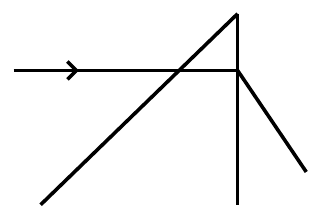
 Confusion Points

  • ​In such questions, most of the students mark 'linguistic' as an incorrect part. So let's learn more about it:
  • Linguistic - It is an adjective and it means related to language.
  • Example: I'm particularly interested in the linguistic development of young children.
  • Linguistics - It is a noun and it means the scientific study of the structure and development of language.
  • Example: She is studying Linguistics at Oxford.

Question 4

Some parts of the sentence have an error and some parts are correct. Find out which part of the sentence has an error. If a sentence is free from error, choose 'No error' as the answer.

Why does the lapse rate (a) /  effect the tendency (b) / of air to rise? (c) / No error (d)

  1. AOption (a)

    (a)

  2. BOption (b)

    (b)

  3. COption (c)

    (c)

  4. DOption (d)

    (d)

View answer & explanation

Correct answer

Answer: (b)B.

(b)

Why this answer is correct

The correct answer is- 'b.'

Key Points  

  • In the given sentence the noun 'effect' is incorrectly used.
  • As we know, after the subject (the lapse rate) we need a verb and not a noun.
  • Thus to make the sentence correct replace the noun 'effect' with the verb 'affect.'
  • So option 2 is the correct answer.

And the correct sentence is: Why does the lapse rate affect the tendency of air to rise?

Additional Information 

  • Let's understand the difference between 'affect' and 'effect':
  • Affect - Affect is a verb and it means to influence or to produce a change in something.
  • Example: The tornado affected citizens within forty miles of radius.
  • Effect - Effect is a noun and it means the result of a change.
  • Example: The effect of the tornado was devastating.​​

Question 5

Some parts of the sentence have an error and some parts are correct. Find out which part of the sentence has an error. If a sentence is free from error, choose 'No error' as the answer.

The thorax is the upper part (a) / of your body from the neck down (b) / to the bottom of the ribs and diaphragm. (c) No error (d)

  1. AOption (a)

    (a)

  2. BOption (b)

    (b)

  3. COption (c)

    (c)

  4. DOption (d)

    (d)

View answer & explanation

Correct answer

Answer: (c)C.

(c)

Why this answer is correct

The correct answer is- 'c.'

Key Points   

  • In the given sentence an article 'the' is missing.
  • An article should be used before the name of our body parts. An article is missing before the noun 'diaphragm.'
  • Thus to make the sentence correct place the article 'the' before 'diaphragm' as the ribs and the diaphragm are two different parts of our body.
  • So option 3 is the correct answer.

And the correct sentence is: The thorax is the upper part of your body from the neck down to the bottom of the ribs and the diaphragm.

Additional Information  

  • Let's understand more about the use of the article 'the':
  • We use a single article before nouns joined by 'and' to show that both the nouns refer to the same person or thing.
  • Example:
  • The teacher and coach of that team is missing from the school. (Here teacher and coach refers to the same person)
  • The teacher and the coach of that team are missing from the school. (Here teacher and coach refers to two different persons)

Question 6

Some parts of the sentence have an error and some parts are correct. Find out which part of the sentence has an error. If a sentence is free from error, choose 'No error' as the answer.

The practical uses of astrology (a) /  have seldom been seriously (b) / studied outside India. (c) / No error (d)

  1. AOption (a)

    (a)

  2. BOption (b)

    (b)

  3. COption (c)

    (c)

  4. DOption (d)

    (d)

View answer & explanation

Correct answer

Answer: (d)D.

(d)

Why this answer is correct

The correct answer is- 'd.'

Key Points 

  • The given sentence is grammatically correct and error-free.
  • The sentence is in the passive voice, thus the use of the verb 'have + been + verb 3rd form' (have been studied) is correct.
  • The plural subject (The practical uses) is followed by a plural verb (have), hence it follows the subject-verb agreement.
  • So option 4 is the correct answer.

And the correct sentence is: The practical uses of astrology have seldom been seriously studied outside India.

Additional Information  

  • Let's understand the meaning and uses of the adverb seldom:

  • The meaning of the adverb 'seldom' is almost never.

  • Example: Now that we have a baby, we seldom get the chance to go to the cinema.

  • If there is no auxiliary verb or be verb seldom usually goes in front of the main verb.

  • Example: He seldom laughed.

  • Seldom goes after the be verb and the auxiliary verb and in front of the main verb.

  • Example: 

  • ​She was seldom late for work.

  • These birds are seldom seen.

  • If there is more than one auxiliary verb, seldom goes after the first one.

  • Example: I have seldom been asked such difficult questions.

Question 7

Some parts of the sentence have an error and some parts are correct. Find out which part of the sentence has an error. If a sentence is free from error, choose 'No error' as the answer.

She collectedsome armful of medicines and
(a)(b)
poured them down the drain.No error
(c)(d)
  1. AOption (a)

    (a)

  2. BOption (b)

    (b)

  3. COption (c)

    (c)

  4. DOption (d)

    (d)

View answer & explanation

Correct answer

Answer: (b)B.

(b)

Why this answer is correct

The correct answer is Option 2.


Key Points

  • The primary issue in the sentence is the the phrase "some armful of medicines."
  • Singular countable nouns typically require an article (like "a" or "an").
  • The correct phrase should be "an armful of medicines," ensuring grammatical correctness and clarity.
  • Thus, the error is located in part B of the sentence.

Therefore, the correct answer is B.


Correct Sentence: "She collected an armful of medicines and poured them down the drain."


Additional Information

  • A: "She collected," – This part of the sentence is grammatically correct and does not require any changes.
  • C: "and poured them down the drain." – This part of the sentence is grammatically correct and does not require any changes.
  • D: "No error" – This would be the correct option if there were no mistakes in the sentence, but there is an error in part B.

Question 8

Some parts of the sentence have an error and some parts are correct. Find out which part of the sentence has an error. If a sentence is free from error, choose 'No error' as the answer.

In many countries, the United Nations (a) / or other internationally organised (b) / peacekeeping forces are trying to keep the peace. (c) / No error (d)

  1. AOption (a)

    (a)

  2. BOption (b)

    (b)

  3. COption (c)

    (c)

  4. DOption (d)

    (d)

View answer & explanation

Correct answer

Answer: (b)B.

(b)

Why this answer is correct

The correct answer is- 'b.'

Key Points  

  • In the given sentence the conjunction 'or' is incorrectly used.
  • As the sentence suggests, both the United Nations and other forces are trying to keep the peace.
  • If we use 'or' then it means either United Nations or other forces are trying to keep the peace, hence this is not correct.
  • Thus to make the sentence correct replace the conjunction 'or' with 'and'.
  • So option 2 is the correct answer.

 And the correct sentence is: In many countries, the United Nations and other internationally organised peacekeeping forces are trying to keep the peace.

Additional Information 

  • Let's understand more about the subject-verb agreement:
  • The verb in an or, either/or, or neither/nor sentence agrees with the noun or pronoun closest to it.
  • Examples:
  • Neither the plates nor the serving bowl goes on that shelf.
  • Neither the serving bowl nor the plates go on that shelf.
  • A plural verb is used with two or more subjects when they are connected by and.
  • Example: A car and a bike are my means of transportation.
  • But note these examples: 
  • Breaking and entering is against the law.
  • The bed and breakfast was charming. (Because in these sentences, breaking and entering and bed and breakfast are compound nouns.)​

Question 9

Some parts of the sentence have an error and some parts are correct. Find out which part of the sentence has an error. If a sentence is free from error, choose 'No error' as the answer.

Early cities rely on food and water (a) / from the surrounding countryside, (b) / but today cities often depend on distant sources. (c) /  No error (d)

  1. AOption (a)

    (a)

  2. BOption (b)

    (b)

  3. COption (c)

    (c)

  4. DOption (d)

    (d)

View answer & explanation

Correct answer

Answer: (a)A.

(a)

Why this answer is correct

The correct answer is- 'a.'

Key Points  

  • In the given sentence the verb 'rely' is incorrectly used.
  • As the sentence mentions a thing of the past (early cities), thus part participle form of the verb 'rely' should be used in the sentence.
  • Thus to make the sentence grammatically correct replace 'rely on' with 'relied on.'
  • So option 1 is the correct answer.

And the correct sentence is: Early cities relied on food and water from the surrounding countryside, but today cities often depend on distant sources.

Additional Information 

  • Let's learn the meaning of the verb 'rely on':
  • The word rely on is a phrasal verb and it means to need a particular thing or the help and support of someone or something in order to continue, to work correctly, or succeed.
  • Example: I rely on you for good advice.

Question 10

Some parts of the sentence have an error and some parts are correct. Find out which part of the sentence has an error. If a sentence is free from error, choose 'No error' as the answer.

Climate change, whether it is (a) / natural or human-induced, (b) / is stressful for the people. (c) / No error (d)

  1. AOption (a)

    (a)

  2. BOption (b)

    (b)

  3. COption (c)

    (c)

  4. DOption (d)

    (d)

View answer & explanation

Correct answer

Answer: (c)C.

(c)

Why this answer is correct

The correct answer is- 'c.'

Key Points  

  • In the given sentence the article 'the' is incorrectly used.
  • As the noun (people) is not specified in this sentence. The use of the article 'the' before people is incorrect.
  • Thus to make the sentence correct remove the article 'the.'
  • So option 3 is the correct answer.

And the correct sentence is: Climate change, whether it is natural or human-induced, is stressful for people.

Additional Information 

  • Let's understand the use of the definite article 'the':
  • The definite article 'the' is used before singular and plural nouns when the noun is specific or particular. The shows that the noun is definite, that it refers to a particular person, thing or group. For example:
  • I was happy to see the policeman who saved my cat. (Here, we're talking about a particular policeman. It is the one who saved the cat.)
  • Do not use the before:
  • ​names of most countries/territories: Italy, Mexico, Bolivia; however, the Netherlands, the Dominican Republic, the Philippines, the United States
  • names of cities, towns, or states: Seoul, Manitoba, Miami
  • names of streets: Washington Blvd., Main St.
  • names of lakes and bays: Lake Titicaca, Lake Erie except with a group of lakes like the Great Lakes
  • names of mountains: Mount Everest, Mount Fuji except with ranges of mountains like the Andes or the Rockies or unusual names like the Matterhorn
  • names of continents: Asia, Europe
  • names of islands: Easter Island, Maui, Key West except with island chains like the Aleutians, the Hebrides, or the Canary Islands

Question 11

Directions

Given below are some idioms/phrases followed by four alternative meanings to each. Choose the response (a), (b), (c) or (d) which is the most appropriate meaning, and mark your response accordingly.

Once-over

  1. AOption (a)

    To do something quickly

  2. BOption (b)

    To do something elaborately

  3. COption (c)

    To do something perforce

  4. DOption (d)

    To do something for others

View answer & explanation

Correct answer

Answer: (a)A.

To do something quickly

Why this answer is correct

The correct answer is- 'To do something quickly'

Key Points

  • let's look at the meaning of the given idiom
  • Once-over​: To look at and examine something or someone quickly.(किसी चीज या किसी व्यक्ति को जल्दी से देखना और जांचना।)
  • Example: The security guards gave me the once-over, but they didn't ask me for any identification.

**​​​

From the above lines, we can say that Once-over is the correct meaning of the given idiom.

Question 12

Directions

Given below are some idioms/phrases followed by four alternative meanings to each. Choose the response (a), (b), (c) or (d) which is the most appropriate meaning, and mark your response accordingly.

A bag of bones

  1. AOption (a)

    An extremely fat person

  2. BOption (b)

    An extremely thin person

  3. COption (c)

    A wealthy person

  4. DOption (d)

    A healthy person

View answer & explanation

Correct answer

Answer: (b)B.

An extremely thin person

Why this answer is correct

The correct answer is- 'An extremely thin person'

Key Points 

  • let's look at the meaning of the given idiom
  • A bag of bones: A very thin person or animal.(बहुत पतला व्यक्ति या जानवर।)
  • Example: I can't believe how thin he is. He's just a bag of bones.

From the above lines, we can say that An extremely thin person is the correct meaning of the given idiom.

Question 13

Directions

Given below are some idioms/phrases followed by four alternative meanings to each. Choose the response (a), (b), (c) or (d) which is the most appropriate meaning, and mark your response accordingly.

Muddy the waters

  1. AOption (a)

    To spread dirt around 

  2. BOption (b)

    To make a situation easy

  3. COption (c)

    To make one’s life happy

  4. DOption (d)

    To make the situation complicated

View answer & explanation

Correct answer

Answer: (d)D.

To make the situation complicated

Why this answer is correct

The correct answer is- 'To make the situation complicated'

Key Points 

  • let's look at the meaning of the given idiom
  • Muddy the waters: Make an issue or situation more confused or complicated.(किसी मुद्दे या स्थिति को अधिक भ्रमित या जटिल बनाना।)
  • Example: The conflation of two distinct hypotheses has merely served to muddy the waters.

                                     His suggestions just muddied the waters further, rather than helping the situation.

​​

​From the above lines, we can say that Muddy the waters is the correct meaning of the given idiom.

Question 14

Directions

Given below are some idioms/phrases followed by four alternative meanings to each. Choose the response (a), (b), (c) or (d) which is the most appropriate meaning, and mark your response accordingly.

To level with

  1. AOption (a)

    To be honest

  2. BOption (b)

    To be on a plain

  3. COption (c)

    To cheat someone

  4. DOption (d)

    To take revenge

View answer & explanation

Correct answer

Answer: (a)A.

To be honest

Why this answer is correct

The correct answer is- 'To be honest'

Key Points 

  • let's look at the meaning of the given idiom
  • To level with: To speak honestly to someone.(किसी से ईमानदारी से बात करना।)
  • Example: He never leveled with his parents about the accident.​

                                     I'm going to level with you, OK?

​​​From the above lines, we can say that To be honest is the correct meaning of the given idiom.

Question 15

Directions

Given below are some idioms/phrases followed by four alternative meanings to each. Choose the response (a), (b), (c) or (d) which is the most appropriate meaning, and mark your response accordingly.

Show your hand

  1. AOption (a)

    To tell people about the past

  2. BOption (b)

    To tell people about the future

  3. COption (c)

    To tell people about them

  4. DOption (d)

    To tell people about your plans

View answer & explanation

Correct answer

Answer: (d)D.

To tell people about your plans

Why this answer is correct

The correct answer is- 'To tell people about your plans'

Key Points 

  • let's look at the meaning of the given idiom
  • Show your hand: To allow people to know about intentions that you had previously kept secret.(लोगों को उन इरादों के बारे में जानने की अनुमति देने के लिए जिन्हें आपने पहले गुप्त रखा था।)
  • Example: In negotiations, never show your hand too early.​

                                      Keep the names of the team secret - don't show your hand until the day of the game.​

​​

​From the above lines, we can say that To tell people about your plans is the correct meaning of the given idiom.

Question 16

Direction: Choose the response, whichever is the most appropriate expression and mark your response in your answer sheet accordingly.

To pull up

  1. AOption (a)

    To lift heavy weights

  2. BOption (b)

    To check oneself

  3. COption (c)

    To shorten the distance

  4. DOption (d)

    Too short of destination

View answer & explanation

Correct answer

Answer: (b)B.

To check oneself

Why this answer is correct

The correct answer is- 'To check oneself​'

Key Points

  • let's look at the meaning of the given idiom
  • To pull up: To check oneself.(अपने आप को जाँचने के लिए।)
  • Example: The jockey tried to pull up the apparently injured horse.

**​​​From the above lines, we can say that To check oneself  is the correct meaning of the given idiom.

Question 17

Direction: Choose the response, whichever is the most appropriate expression and mark your response in your answer sheet accordingly.

Be out of action

  1. AOption (a)

    To get punishment

  2. BOption (b)

    To get reward

  3. COption (c)

    To become dysfunctional

  4. DOption (d)

    To become superactive

View answer & explanation

Correct answer

Answer: (c)C.

To become dysfunctional

Why this answer is correct

The correct answer is- 'To become dysfunctional'

Key Points 

  • let's look at the meaning of the given idiom
  • Be out of action: Temporarily unable to work or function.(अस्थायी रूप से काम करने या कार्य करने में असमर्थ।)
  • Example: A heart attack put him out of action.

From the above lines, we can say that To become dysfunctional is the correct meaning of the given idiom.

Question 18

Direction: Choose the response, whichever is the most appropriate expression and mark your response in your answer sheet accordingly.

Learning from the school of hard knocks

  1. AOption (a)

    Learning things from experience

  2. BOption (b)

    Learning things from others

  3. COption (c)

    Learning things from environment

  4. DOption (d)

    Learning things through difficult experiences

View answer & explanation

Correct answer

Answer: (d)D.

Learning things through difficult experiences

Why this answer is correct

The correct answer is- 'Learning things through difficult experiences'

Key Points 

  • let's look at the meaning of the given idiom
  • Learning from the school of hard knocks: If you learn something in the school of hard knocks, you learn it as a result of difficult or unpleasant experiences.(यदि आप हार्ड नॉक के स्कूल में कुछ सीखते हैं, तो आप इसे कठिन या अप्रिय अनुभवों के परिणामस्वरूप सीखते हैं।)
  • Example: A self-made man, he never went to college but came up through the school of hard knocks. ​

​From the above lines, we can say that Learning things through difficult experiences is the correct meaning of the given idiom.

Question 19

Direction: Choose the response, whichever is the most appropriate expression and mark your response in your answer sheet accordingly.

Raise some hackles

  1. AOption (a)

    To annoy

  2. BOption (b)

    To make someone happy

  3. COption (c)

    To do a great task

  4. DOption (d)

    To sit idle

View answer & explanation

Correct answer

Answer: (a)A.

To annoy

Why this answer is correct

The correct answer is- 'To annoy'

Key Points 

  • let's look at the meaning of the given idiom
  • Raise some hackles: Cause someone or some people to be upset.(किसी को या कुछ लोगों को परेशान करने का कारण।)
  • Example: The court ruling is sure to raise some hackles.

​​​From the above lines, we can say that To annoy is the correct meaning of the given idiom.

Question 20

Direction: Choose the response, whichever is the most appropriate expression and mark your response in your answer sheet accordingly.

A man of letters

  1. AOption (a)

    An excellent artist

  2. BOption (b)

    A scholar in literature

  3. COption (c)

    An outstanding sportsman

  4. DOption (d)

    A known novelist

View answer & explanation

Correct answer

Answer: (b)B.

A scholar in literature

Why this answer is correct

The correct answer is- 'A scholar in literature'

Key Points 

  • let's look at the meaning of the given idiom
  • A man of letters: A scholar in literature or A man of letters is someone who is an expert in the arts and literature, and often a writer too.(साहित्य का विद्वान या विद्वान वह होता है जो कला और साहित्य का विशेषज्ञ होता है, और अक्सर एक लेखक भी होता है।)
  • Example: He wished to fashion for himself a career as a man of letters                 .

​

​From the above lines, we can say that A scholar in literature is the correct meaning of the given idiom.

Question 21

The following items consist of a sentence, the parts of which have been jumbled. These parts have been labelled P, Q, R and S. Given below each sentence are four sequences namely (a), (b), (c) and (d). You are required to re-arrange the jumbled parts of the sentence and mark your response accordingly.

symbolic of peace, and prosperity (P) / the Gupta Empire in India is (Q) / represented through numismatic archaeological (R) / and literary evidence of multiple kinds (S)

The Correct sequence should be:

  1. AOption (a)

    QPRS

  2. BOption (b)

    QSRP

  3. COption (c)

    PSQR

  4. DOption (d)

    RSQP

View answer & explanation

Correct answer

Answer: (a)A.

QPRS

Why this answer is correct

The correct answer is- 'QPRS.' 

Key Points

  • By reading the question, it is clear that Q will come first as we need a subject (The Gupta Empire) to start our sentence.
  • P will follow next, as we need an object (symbolic) after the verb 'is.'
  • Part R and S form a pair joined by the coordinate conjunction 'and,' joining two nouns of equal degree.
  • In this way, 'QPRS' will form a grammatically correct sentence.
  • Thus option 1 is the correct answer.

The correct sentence is: The Gupta Empire in India is symbolic of peace, and prosperity represented through numismatic archaeological and literary evidence of multiple kinds. 

Important Points 

  • Some tips to solve the jumbled sentences:
  • Inspecting the theme and the construction of a sentence gives you an overview of the jumbled sentences and can help you identify the nouns, pronouns, subjects and all other parts of sentences.
  • Read all the options thoroughly. While the first and second one looks obvious it might so happen that the construction might be completely different as given in the last option.
  • Look for the Opening words like a noun.
  • Try relating the words given like yet, but, when, then, they, anyway, etc. This will give you a clearer idea of how the sentences can be rearranged.
  • Once you think you are done with arranging the statements correctly, re-read the entire sentence to ensure that it is logically and grammatically correct.

Question 22

The following items consist of a sentence, the parts of which have been jumbled. These parts have been labelled P, Q, R and S. Given below each sentence are four sequences namely (a), (b), (c) and (d). You are required to re-arrange the jumbled parts of the sentence and mark your response accordingly.

the transportation system so that it (P) / and not just the affluent section of society (Q) / provides mobility to everyone (R) /  there are many ways to restructure (S)

The Correct sequence should be:

  1. AOption (a)

    PQRS

  2. BOption (b)

    RQPS

  3. COption (c)

    SPRQ

  4. DOption (d)

    QRPS

View answer & explanation

Correct answer

Answer: (c)C.

SPRQ

Why this answer is correct

The correct answer is- 'SPRQ.' 

Key Points

  • By reading the question, it is clear that 'S' will come first as we need a subject (ways) to start our sentence.
  • Part P will come next, as we need an object (transportation system).
  • R will follow P, as the verb (provides) will follow the pronoun (it).
  • In this way, 'SPRQ' will form a grammatically correct sentence.
  • Thus option 3 is the correct answer.

The correct sentence is: There are many ways to restructure the transportation system so that it provides mobility to everyone and not just the affluent section of society. 

Important Points  

  • Some tips to solve the jumbled sentences:
  • Inspecting the theme and the construction of a sentence gives you an overview of the jumbled sentences and can help you identify the nouns, pronouns, subjects and all other parts of sentences.
  • Read all the options thoroughly. While the first and second one looks obvious it might so happen that the construction might be completely different as given in the last option.
  • Look for the Opening words like a noun.
  • Try relating the words given like yet, but, when, then, they, anyway, etc. This will give you a clearer idea of how the sentences can be rearranged.
  • Once you think you are done with arranging the statements correctly, re-read the entire sentence to ensure that it is logically and grammatically correct.

Question 23

The following items consist of a sentence, the parts of which have been jumbled. These parts have been labelled P, Q, R and S. Given below each sentence are four sequences namely (a), (b), (c) and (d). You are required to re-arrange the jumbled parts of the sentence and mark your response accordingly.

and accurately displays spatial (P) / relationships between landforms and water bodies (Q) / the globe shows Earth’s spherical shape (R) / and comparative distance between locations (S)

The Correct sequence should be:

  1. AOption (a)

    PQRS

  2. BOption (b)

    RPQS

  3. COption (c)

    SPQR

  4. DOption (d)

    QRPS

View answer & explanation

Correct answer

Answer: (b)B.

RPQS

Why this answer is correct

The correct answer is- 'RPQS.' 

Key Points

  • By reading the question, it is clear that 'R' will come first as we need a subject (The globe) to start our sentence.
  • Part P will come next, as the verb (displays) agrees to the subject (globe).
  • Q will follow P, as after the adjective (spatial) we need a noun (relationships).
  • In this way, 'RPQS' will form a grammatically correct sentence.
  • Thus option 2 is the correct answer.

The correct sentence is: The globe shows Earth’s spherical shape and accurately displays spatial relationships between landforms and water bodies and comparative distance between locations. 

Important Points  

  • Some tips to solve the jumbled sentences:
  • Inspecting the theme and the construction of a sentence gives you an overview of the jumbled sentences and can help you identify the nouns, pronouns, subjects and all other parts of sentences.
  • Read all the options thoroughly. While the first and second one looks obvious it might so happen that the construction might be completely different as given in the last option.
  • Look for the Opening words like a noun.
  • Try relating the words given like yet, but, when, then, they, anyway, etc. This will give you a clearer idea of how the sentences can be rearranged.
  • Once you think you are done with arranging the statements correctly, re-read the entire sentence to ensure that it is logically and grammatically correct.

Question 24

The following items consist of a sentence, the parts of which have been jumbled. These parts have been labelled P, Q, R and S. Given below each sentence are four sequences namely (a), (b), (c) and (d). You are required to re-arrange the jumbled parts of the sentence and mark your response accordingly.

the function of the capillaries (P) /  and other material to all the cells in (Q) / is to take nutrients, oxygen (R) /  the body and to take away their waste material (S)

The Correct sequence should be:

  1. AOption (a)

    PRQS

  2. BOption (b)

    RPQS

  3. COption (c)

    SPQR

  4. DOption (d)

    QRPS

View answer & explanation

Correct answer

Answer: (a)A.

PRQS

Why this answer is correct

The correct answer is- 'PRQS.' 

Key Points

  • By reading the question, it is clear that 'P' will come first as we need a subject (The function) to start our sentence.
  • R will follow next, as after the singular subject (The function) we need a singular verb (is).
  • Q will come next as it joins the noun (other material) with the conjunction 'and', and completes its meaning.
  • The only option that remains is S, thus it will come last.
  • In this way, 'PRQS' will form a grammatically correct sentence.
  • Thus option 1 is the correct answer.

The correct sentence is: The function of the capillaries is to take nutrients, oxygen and other material to all the cells in the body and to take away their waste material. 

Important Points  

  • Some tips to solve the jumbled sentences:
  • Inspecting the theme and the construction of a sentence gives you an overview of the jumbled sentences and can help you identify the nouns, pronouns, subjects and all other parts of sentences.
  • Read all the options thoroughly. While the first and second one looks obvious it might so happen that the construction might be completely different as given in the last option.
  • Look for the Opening words like a noun.
  • Try relating the words given like yet, but, when, then, they, anyway, etc. This will give you a clearer idea of how the sentences can be rearranged.
  • Once you think you are done with arranging the statements correctly, re-read the entire sentence to ensure that it is logically and grammatically correct.

Question 25

The following items consist of a sentence, the parts of which have been jumbled. These parts have been labelled P, Q, R and S. Given below each sentence are four sequences namely (a), (b), (c) and (d). You are required to re-arrange the jumbled parts of the sentence and mark your response accordingly.

like mine (P) /  even to someone (Q) / with a tin ear (R) / her singing sounded pretty melodious (S)

The Correct sequence should be:

  1. AOption (a)

    PRQS

  2. BOption (b)

    RPQS

  3. COption (c)

    SQRP

  4. DOption (d)

    QRPS

View answer & explanation

Correct answer

Answer: (c)C.

SQRP

Why this answer is correct

The correct answer is- 'SQRP.' 

Key Points

  • By reading the question, it is clear that 'S' will come first as we need a subject (singing) to start our sentence.
  • Q will be the next part as it shows to whom the singing sounded melodious.
  • R will be the next part as it further states that it sounded melodious to someone with a tin ear.
  • P is the last part.
  • In this way, 'SQRP' will form a grammatically correct sentence.
  • Thus option 3 is the correct answer.

The correct sentence is:  Her singing sounded pretty melodious even to someone with a tin ear like mine.

 Important Points   

  • Some tips to solve the jumbled sentences:
  • Inspecting the theme and the construction of a sentence gives you an overview of the jumbled sentences and can help you identify the nouns, pronouns, subjects and all other parts of sentences.
  • Read all the options thoroughly. While the first and second one looks obvious it might so happen that the construction might be completely different as given in the last option.
  • Look for the Opening words like a noun.
  • Try relating the words given like yet, but, when, then, they, anyway, etc. This will give you a clearer idea of how the sentences can be rearranged.
  • Once you think you are done with arranging the statements correctly, re-read the entire sentence to ensure that it is logically and grammatically correct.

Question 26

The following items consist of a sentence, the parts of which have been jumbled. These parts have been labelled P, Q, R and S. Given below each sentence are four sequences namely (a), (b), (c) and (d). You are required to re-arrange the jumbled parts of the sentence and mark your response accordingly.

the sorry state of affairs in the modern factories (P) / the Government of India (Q) / under the British was pro-capitalist (R) / though it took some half-hearted steps to mitigate (S)

The Correct sequence should be:

  1. AOption (a)

    PRQS

  2. BOption (b)

    QRSP

  3. COption (c)

    SPQR

  4. DOption (d)

    QPSR

View answer & explanation

Correct answer

Answer: (b)B.

QRSP

Why this answer is correct

The correct answer is- 'QRSP.' 

Key Points 

  • By reading the question, it is clear that 'Q' will come first as we need a subject (The Government of India) to start our sentence.
  • R will follow next, as the preposition (under) shows the relationship between the nouns India and British.
  • P will follow S, as we need an object (the sorry state) to take the action of the verb (mitigate).
  • In this way, 'QRSP' will form a grammatically correct sentence.
  • Thus option 2 is the correct answer.

The correct sentence is: The Government of India under the British was pro-capitalist though it took some half-hearted steps to mitigate the sorry state of affairs in the modern factories. 

Important Points  

  • Some tips to solve the jumbled sentences:
  • Inspecting the theme and the construction of a sentence gives you an overview of the jumbled sentences and can help you identify the nouns, pronouns, subjects and all other parts of sentences.
  • Read all the options thoroughly. While the first and second one looks obvious it might so happen that the construction might be completely different as given in the last option.
  • Look for the Opening words like a noun.
  • Try relating the words given like yet, but, when, then, they, anyway, etc. This will give you a clearer idea of how the sentences can be rearranged.
  • Once you think you are done with arranging the statements correctly, re-read the entire sentence to ensure that it is logically and grammatically correct.

Question 27

The following items consist of a sentence, the parts of which have been jumbled. These parts have been labelled P, Q, R and S. Given below each sentence are four sequences namely (a), (b), (c) and (d). You are required to re-arrange the jumbled parts of the sentence and mark your response accordingly.

of extreme poverty among its people (P) / economic policies was the prevalence (Q) / a major characteristic of British rule in India (R) / and the net result of British (S)

The Correct sequence should be:

  1. AOption (a)

    PRQS

  2. BOption (b)

    QRSP

  3. COption (c)

    RSQP

  4. DOption (d)

    QPSR

View answer & explanation

Correct answer

Answer: (c)C.

RSQP

Why this answer is correct

The correct answer is- 'RSQP.' 

Key Points

  • By reading the question, it is clear that 'R' will come first as we need a subject (characteristic) to start our sentence.
  • S will follow R, as the sentence talks about the British rule and its economic policies.
  • Part Q will follow next, as after the subject (characteristic) we need a verb (was).
  • Now the only option that remains is P, thus it will come last.
  • In this way, 'RSQP' will form a grammatically correct sentence.
  • Thus option 3 is the correct answer.

The correct sentence is: A major characteristic of British rule in India and the net result of British economic policies was the prevalence of extreme poverty among its people. 

Important Points   

  • Some tips to solve the jumbled sentences:
  • Inspecting the theme and the construction of a sentence gives you an overview of the jumbled sentences and can help you identify the nouns, pronouns, subjects and all other parts of sentences.
  • Read all the options thoroughly. While the first and second one looks obvious it might so happen that the construction might be completely different as given in the last option.
  • Look for the Opening words like a noun.
  • Try relating the words given like yet, but, when, then, they, anyway, etc. This will give you a clearer idea of how the sentences can be rearranged.
  • Once you think you are done with arranging the statements correctly, re-read the entire sentence to ensure that it is logically and grammatically correct.

Question 28

The following items consist of a sentence, the parts of which have been jumbled. These parts have been labelled P, Q, R and S. Given below each sentence are four sequences namely (a), (b), (c) and (d). You are required to re-arrange the jumbled parts of the sentence and mark your response accordingly.

you can’t judge (P) / very intelligent, but (Q) / a book by its cover (R) / he doesn’t look (S)

The Correct sequence should be:

  1. AOption (a)

    SQPR

  2. BOption (b)

    QRSP

  3. COption (c)

    RSQP

  4. DOption (d)

    QPSR

View answer & explanation

Correct answer

Answer: (a)A.

SQPR

Why this answer is correct

The correct answer is- 'SQPR.' 

Key Points

  • By reading the question, it is clear that 'S' will come first as we need a subject (he) to start our sentence.
  • Q will follow next, as we need an object (intelligent) after the verb (look).
  • Part Q will follow P, as they together form an idiom 'you can't judge a book by its cover.'
  • In this way, 'SQPR' will form a grammatically correct sentence.
  • Thus option 1 is the correct answer.

The correct sentence is: He doesn’t look very intelligent, but you can’t judge a book by its cover. 

Important Points   

  • Some tips to solve the jumbled sentences:
  • Inspecting the theme and the construction of a sentence gives you an overview of the jumbled sentences and can help you identify the nouns, pronouns, subjects and all other parts of sentences.
  • Read all the options thoroughly. While the first and second one looks obvious it might so happen that the construction might be completely different as given in the last option.
  • Look for the Opening words like a noun.
  • Try relating the words given like yet, but, when, then, they, anyway, etc. This will give you a clearer idea of how the sentences can be rearranged.
  • Once you think you are done with arranging the statements correctly, re-read the entire sentence to ensure that it is logically and grammatically correct.

Question 29

The following items consist of a sentence, the parts of which have been jumbled. These parts have been labelled P, Q, R and S. Given below each sentence are four sequences namely (a), (b), (c) and (d). You are required to re-arrange the jumbled parts of the sentence and mark your response accordingly.

membership and partisanship as well as (P) / can be found in the decline in party (Q) / evidence of a crisis in party politics (R) / in the rise of antiparty groups and movements (S)

The Correct sequence should be:

  1. AOption (a)

    RQPS

  2. BOption (b)

    QRSP

  3. COption (c)

    RSQP

  4. DOption (d)

    QPSR

View answer & explanation

Correct answer

Answer: (a)A.

RQPS

Why this answer is correct

The correct answer is- 'RQPS.' 

Key Points

  • By reading the question, it is clear that 'R' will come first as we need a subject (evidence) to start our sentence.
  • Q will follow next as we need a verb (found) after the noun (evidence).
  • Part S will follow P, as the conjunction (as well as) joins the noun party membership and antiparty groups.
  • In this way, 'RQPS' will form a grammatically correct sentence.
  • Thus option 1 is the correct answer.

The correct sentence is: Evidence of a crisis in party politics can be found in the decline in party membership and partisanship as well as in the rise of antiparty groups and movements. 

Important Points   

  • Some tips to solve the jumbled sentences:
  • Inspecting the theme and the construction of a sentence gives you an overview of the jumbled sentences and can help you identify the nouns, pronouns, subjects and all other parts of sentences.
  • Read all the options thoroughly. While the first and second one looks obvious it might so happen that the construction might be completely different as given in the last option.
  • Look for the Opening words like a noun.
  • Try relating the words given like yet, but, when, then, they, anyway, etc. This will give you a clearer idea of how the sentences can be rearranged.
  • Once you think you are done with arranging the statements correctly, re-read the entire sentence to ensure that it is logically and grammatically correct.

Question 30

The following items consist of a sentence, the parts of which have been jumbled. These parts have been labelled P, Q, R and S. Given below each sentence are four sequences namely (a), (b), (c) and (d). You are required to re-arrange the jumbled parts of the sentence and mark your response accordingly.

government, market and voluntary organisations (P) / mixture of contributions from (Q) / the provision of public goods (R) / and services can be regarded as a complex (S)

The Correct sequence should be:

  1. AOption (a)

    RQPS

  2. BOption (b)

    QRSP

  3. COption (c)

    RSQP

  4. DOption (d)

    QPSR

View answer & explanation

Correct answer

Answer: (c)C.

RSQP

Why this answer is correct

The correct answer is- 'RSQP.' 

Key Points

  • By reading the question, it is clear that 'R' will come first as we need a subject (provision) to start our sentence.
  • S will follow next, as after the subject (provision) we need a verb (regarded).
  • P will follow Q, as the preposition (from) shows the relationship between contribution and government, market and voluntary organisations.
  • In this way, 'RSQP' will form a grammatically correct sentence.
  • Thus option 3 is the correct answer.

The correct sentence is: The provision of public goods and services can be regarded as a complex mixture of contributions from government, market and voluntary organisations. 

Important Points   

  • Some tips to solve the jumbled sentences:
  • Inspecting the theme and the construction of a sentence gives you an overview of the jumbled sentences and can help you identify the nouns, pronouns, subjects and all other parts of sentences.
  • Read all the options thoroughly. While the first and second one looks obvious it might so happen that the construction might be completely different as given in the last option.
  • Look for the Opening words like a noun.
  • Try relating the words given like yet, but, when, then, they, anyway, etc. This will give you a clearer idea of how the sentences can be rearranged.
  • Once you think you are done with arranging the statements correctly, re-read the entire sentence to ensure that it is logically and grammatically correct.

Question 31

Item in this consists of a sentence with an underlined word followed by four words, (a), (b), (c), and (d). Select the option that is nearest in meaning to the underlined word and mark your response in your Answer Sheet accordingly.

He is essentially a lowbrow person.

  1. AOption (a)

    coarse

  2. BOption (b)

    proud

  3. COption (c)

    passionate

  4. DOption (d)

    pathetic

View answer & explanation

Correct answer

Answer: (a)A.

coarse

Why this answer is correct

The correct answer is- 'Coarse'

Key Points 


  • let's look at the meaning of the given word and the correct answer.
  • Lowbrow(adjective): Not complicated or demanding much intelligence to be understood. (जटिल नहीं है या समझने के लिए बहुत अधिक बुद्धिमत्ता की आवश्यकता नहीं है।)
  • ​Example: He regards the sort of books I read as very lowbrow.​
  • Coarse(): Rough and not smooth or soft, or not in very small pieces. (खुरदरा और चिकना या मुलायम नहीं, या बहुत छोटे टुकड़ों में नहीं।)
  • Example: Linen is a coarse-grained fabric.

Hence, the word Coarse is the most appropriate word similar to Lowbrow.

Additional Information 

  • Let's explore the meaning of other options:
  • Proud(): Feeling pleasure and satisfaction because you or people connected with you have done or got something good.(खुशी और संतुष्टि महसूस करना क्योंकि आपने या आपसे जुड़े लोगों ने कुछ अच्छा किया है या किया है।)
  • Example: You must be very proud of your son.​​​
  • Passionate(): Having very strong feelings or emotions. (बहुत मजबूत भावनाएँ या भावनाएँ होना।)
  • Example: ​The child's mother made a passionate plea for help.
  • Pathetic(): Causing feelings of sadness, sympathy, or sometimes lack of respect, especially because a person or an animal is suffering. (उदासी, सहानुभूति, या कभी-कभी सम्मान की कमी की भावना पैदा करना, खासकर क्योंकि कोई व्यक्ति या जानवर पीड़ित है।)
  • Example: The refugees were a pathetic sight - starving, frightened and cold.

Question 32

Item in this consists of a sentence with an underlined word followed by four words, (a), (b), (c), and (d). Select the option that is nearest in meaning to the underlined word and mark your response in your Answer Sheet accordingly.

His nostalgia is deep.

  1. AOption (a)

    excitement

  2. BOption (b)

    longing

  3. COption (c)

    happiness

  4. DOption (d)

    ability

View answer & explanation

Correct answer

Answer: (b)B.

longing

Why this answer is correct

The correct answer is- 'Longing'

Key Points 

  • let's look at the meaning of the given word and the correct answer.
  • Nostalgia(noun): A feeling of pleasure and also slight sadness when you think about things that happened in the past. (जब आप अतीत में हुई चीजों के बारे में सोचते हैं तो खुशी की अनुभूति होती है और थोड़ी सी उदासी भी।)
  • ​Example: Some people feel nostalgia for their schooldays.
  • Longing(noun):  A feeling of wanting something or someone very much. (किसी चीज या किसी को बहुत ज्यादा चाहने की भावना।)
  • Example: He gazed at her, his eyes full of longing.

Hence, the word Longing is the most appropriate word similar to Nostalgia.

Additional Information 

  • Let's explore the meaning of other options:
  • Excitement(noun): A feeling of being excited, or an exciting event.(उत्साहित होने की भावना, या एक रोमांचक घटना।)
  • Example: ​​ Robin's heart was pounding with excitement.
  • Happiness(): The feeling of being happy. (खुश होने की भावना।)
  • Example: ​It was only later in life that she found happiness and peace of mind.
  • Ability(noun): The physical or mental power or skill needed to do something. (कुछ करने के लिए आवश्यक शारीरिक या मानसिक शक्ति या कौशल।)
  • Example: There's no doubting her ability.

Question 33

Item in this consists of a sentence with an underlined word followed by four words, (a), (b), (c), and (d). Select the option that is nearest in meaning to the underlined word and mark your response in your Answer Sheet accordingly.

His truancy is detrimental.

  1. AOption (a)

    loyalty

  2. BOption (b)

    integrity

  3. COption (c)

    honesty

  4. DOption (d)

    absenteeism

View answer & explanation

Correct answer

Answer: (d)D.

absenteeism

Why this answer is correct

The correct answer is- 'Absenteeism'

Key Points     

  • let's look at the meaning of the given word and the correct answer.
  • Truancy(noun): The problem or situation of children being absent from school regularly without permission. (बच्चों के बिना अनुमति के नियमित रूप से स्कूल से अनुपस्थित रहने की समस्या या स्थिति।)
  • ​Example: Truanting was a serious problem in a fifth of the schools surveyed.
  • Absenteeism(noun): A situation in which people are not at school or work when they should be. (ऐसी स्थिति जिसमें लोग स्कूल या काम पर नहीं होते हैं जब उन्हें होना चाहिए।)
  • Example: The high rate of absenteeism is costing the company a lot of money.

Hence, the word Absenteeism is the most appropriate word similar to Truancy.

Additional Information 

  • Let's explore the meaning of other options:
  • Loyalty(noun): The quality of being loyal.(वफादार होने का गुण।)
  • Example: ​​His loyalty was never in question.
  • Integrity(noun): The quality of being honest and having strong moral principles that you refuse to change. (ईमानदार होने और मजबूत नैतिक सिद्धांत रखने का गुण जिसे आप बदलने से इनकार करते हैं।)
  • Example: ​No one doubted that the president was a man of the highest integrity.
  • Honesty(noun): The quality of being honest. (ईमानदार होने का गुण।)
  • Example: I appreciate your honesty.

Question 34

Item in this consists of a sentence with an underlined word followed by four words, (a), (b), (c), and (d). Select the option that is nearest in meaning to the underlined word and mark your response in your Answer Sheet accordingly.

He is a maleficent person.

  1. AOption (a)

    generous

  2. BOption (b)

    cunning

  3. COption (c)

    criminal

  4. DOption (d)

    friendly

View answer & explanation

Correct answer

Answer: (c)C.

criminal

Why this answer is correct

The correct answer is  'criminal'.

Key Points 

  • let's look at the meaning of the given word and the correct answer.
  • Maleficent(adjective): Bad or harmful. (बुरा या हानिकारक।)
  • ​Example: He denied any maleficent intent.
  • Criminal: of an action or situation) deplorable and shocking (बहुत बुरा या नैतिक रूप से गलत).
  • Example: ​Since the New Year police have received several reports of burglaries and criminal damage

Hence, the word Criminal is the most appropriate word similar to Maleficent.

Additional Information

  • Let's explore the meaning of other options:
  • Generous(adjective): Willing to give money, help, kindness, etc., especially more than is usual or expected.(पैसा, मदद, दया, आदि देने के लिए तै��ार, विशेष रूप से सामान्य या अपेक्षा से अधिक।)
  • Example: ​​It was generous of you to lend me the money.
  • Cunning(adjective): Skillful in planning and ready to deceive people in order to get what you want.(योजना बनाने में कुशल और आप जो चाहते हैं उसे पाने के लिए लोगों को धोखा देने के लिए तैयार हैं।)
  • Example: A cunning scheme.
  • Friendly(): Behaving in a pleasant, kind way towards someone. (किसी के प्रति सुखद, दयालु व्यवहार करना।)
  • Example: I'm on friendly terms with my daughter's teacher.

Question 35

Item in this consists of a sentence with an underlined word followed by four words, (a), (b), (c), and (d). Select the option that is nearest in meaning to the underlined word and mark your response in your Answer Sheet accordingly.

His solemnity is celebrated.

  1. AOption (a)

    greed

  2. BOption (b)

    desire

  3. COption (c)

    trust

  4. DOption (d)

    dignity

View answer & explanation

Correct answer

Answer: (d)D.

dignity

Why this answer is correct

The correct answer is- 'Dignity'

Key Points 

  • let's look at the meaning of the given word and the correct answer.
  • Solemnity(adjective): Serious and without any humour. (गंभीर और बिना किसी हास्य के।)
  • ​Example: Everyone looked very solemn.
  • Dignity(noun): Calm, serious, and controlled behaviour that makes people respect you. (शांत, गंभीर और नियंत्रित व्यवहार जिससे लोग आपका सम्मान करें।)
  • Example: He is a man of dignity and calm determination.

Hence, the word Dignity is the most appropriate word similar to Solemnity.

Additional Information 

  • Let's explore the meaning of other options:
  • Greed(noun): A strong desire to continually get more of something, esp. money.(लगातार कुछ पाने की तीव्र इच्छा, विशेष रूप से। पैसे।)
  • Example: He was motivated by pure greed.​​
  • Desire(verb): To want something, especially strongly. (कुछ चाहते हैं, विशेष रूप से दृढ़ता से।)
  • Example: ​I certainly have no desire to have children.
  • Trust(verb): To believe that someone is good and honest and will not harm you, or that something is safe and reliable.(यह विश्वास करने के लिए कि कोई अच्छा और ईमानदार है और आपको नुकसान नहीं पहुंचाएगा, या यह कि कुछ सुरक्षित और विश्वसनीय है।)
  • Example: My sister warned me not to trust him.

Question 36

Item in this consists of a sentence with an underlined word followed by four words, (a), (b), (c), and (d). Select the option that is nearest in meaning to the underlined word and mark your response in your Answer Sheet accordingly.

His bounty is limitless.

  1. AOption (a)

    benevolence

  2. BOption (b)

    gallantry

  3. COption (c)

    nepotism

  4. DOption (d)

    chivalry

View answer & explanation

Correct answer

Answer: (a)A.

benevolence

Why this answer is correct

The correct answer is- 'Benevolence'

Key Points 

  • let's look at the meaning of the given word and the correct answer.
  • Bounty(noun): Great kindness or willingness to give. (महान दया या देने की इच्छा।)
  • ​Example: The charity is totally dependent on the Church's bounty.
  • Benevolence(noun): the quality of being kind and helpful. (दया और गुण का गुण।)
  • Example: His sunny, calm tone suggested a man of deep benevolence.

Hence, the word Benevolence is the most appropriate word similar to Bounty.

Additional Information 

  • Let's explore the meaning of other options:
  • Gallantry(noun): The quality of being brave when something is difficult or dangerous.(कुछ मुश्किल या खतरनाक होने पर बहादुर होने का गुण।)
  • Example: He had gained a popular reputation for his gallantry towards women.​​​
  • Nepotism(noun): The act of using your power or influence to get good jobs or unfair advantages for members of your own family. (अपने परिवार के सदस्यों के लिए अच्छी नौकरी या अनुचित लाभ पाने के लिए अपनी शक्ति या प्रभाव का उपयोग करने का कार्य।)
  • Example: ​He was guilty of nepotism and corruption.
  • Chivalry(noun): The system of behaviour followed by knights in the medieval period of history, that put a high value on honour, kindness, and courage. (इतिहास के मध्ययुगीन काल में शूरवीरों द्वारा अपनाई जाने वाली व्यवहार की प्रणाली, जो सम्मान, दया और साहस पर एक उच्च मूल्य रखती है।)
  • Example: The age of chivalry.

Question 37

Item in this consists of a sentence with an underlined word followed by four words, (a), (b), (c), and (d). Select the option that is nearest in meaning to the underlined word and mark your response in your Answer Sheet accordingly.

The Holocaust was experienced by millions.

  1. AOption (a)

    celebration

  2. BOption (b)

    destruction

  3. COption (c)

    construction

  4. DOption (d)

    beautiful

View answer & explanation

Correct answer

Answer: (b)B.

destruction

Why this answer is correct

The correct answer is- 'Destruction'

Key Points 


  • let's look at the meaning of the given word and the correct answer.
  • Holocaust(noun): A very large amount of destruction, especially by fire or heat, or the killing of very large numbers of people. (विनाश की एक बहुत बड़ी मात्रा, विशेष रूप से आग या गर्मी से, या बहुत बड़ी संख्या में लोगों की हत्या।)
  • ​Example: A nuclear holocaust would leave few survivors.
  • Destruction(noun): The act of destroying something, or the fact of being destroyed. (किसी चीज को नष्ट करने की क्रिया, या नष्ट होने का तथ्य।)
  • Example: Many people are very concerned about the destruction of the rainforests.

Hence, the word Destruction is the most appropriate word similar to Holocaust.

Additional Information 

  • Let's explore the meaning of other options:
  • Celebration(noun): A special social event, such as a party, when you celebrate something.(एक विशेष सामाजिक कार्यक्रम, जैसे कोई पार्टी, जब आप कुछ मनाते हैं।)
  • Example: ​​There were lively New Year celebrations all over town.
  • Construction(): The work of building or making something, especially buildings, bridges, etc. (कुछ बनाने या बनाने का कार्य, विशेषकर भवन, पुल आदि।)
  • Example: She works in the construction industry. ​
  • Beautiful(adjective): having an attractive quality that gives pleasure to those who experience it or think about it. ()
  • Example: I thought she was the most beautiful woman I’d ever seen.

Question 38

Item in this consists of a sentence with an underlined word followed by four words, (a), (b), (c), and (d). Select the option that is nearest in meaning to the underlined word and mark your response in your Answer Sheet accordingly.

His aversion is known to all.

  1. AOption (a)

    hospitality

  2. BOption (b)

    hostility

  3. COption (c)

    humility

  4. DOption (d)

    humbleness

View answer & explanation

Correct answer

Answer: (b)B.

hostility

Why this answer is correct

The correct answer is- 'Hostility'

Key Points  

  • let's look at the meaning of the given word and the correct answer.
  • Aversion(noun): A feeling of strong dislike or of not wishing to do something. (मजबूत नापसंदगी या कुछ करने की इच्छा न रखने की भावना।)
  • ​Example: I felt an instant aversion to his parents.
  • Hostility(adjective): Unfriendly and not liking something. (अमित्र और कुछ पसंद नहीं करना।)
  • Example: The president had a hostile reception in Ohio this morning.

Hence, the word Hostility is the most appropriate word similar to Aversion.

Additional Information 

  • Let's explore the meaning of other options:
  • Hospitality(): The act of being friendly and welcoming to guests and visitors.(मेहमानों और आगंतुकों के अनुकूल और स्वागत करने का कार्य।)
  • Example: The local people showed me great hospitality.
  • Humility(noun): The quality of not being proud because you are aware of your bad qualities.(गर्व न करने का गुण क्योंकि आप अपने बुरे गुणों से अवगत हैं।)
  • Example: ​He doesn't have the humility to admit when he's wrong.
  • Humbleness(noun): The good quality of not being proud or not believing that you are important. (गर्व न करने का अच्छा गुण या यह विश्वास न करना कि आप महत्वपूर्ण हैं।)
  • Example: He did not want his picture to be displayed, which showed his humbleness.

Question 39

Item in this consists of a sentence with an underlined word followed by four words, (a), (b), (c), and (d). Select the option that is nearest in meaning to the underlined word and mark your response in your Answer Sheet accordingly.

To be able to decipher something is wonderful.

  1. AOption (a)

    decode

  2. BOption (b)

    encode

  3. COption (c)

    simulate

  4. DOption (d)

    animate

View answer & explanation

Correct answer

Answer: (a)A.

decode

Why this answer is correct

The correct answer is- 'Decode'

Key Points 

  • let's look at the meaning of the given word and the correct answer.
  • Decipher(verb): To discover the meaning of something written badly or in a difficult or hidden way. (बुरी तरह से या मुश्किल या छिपे हुए तरीके से लिखी गई किसी चीज का अर्थ खोजना।)
  • ​Example: Can you decipher the writing on this envelope?​
  • Decode(verb): To discover the meaning of information given in a secret or complicated way. (गुप्त या जटिल तरीके से दी गई जानकारी का अर्थ खोजने के लिए।)
  • Example: Decoding the paintings is not difficult once you know what the component parts symbolize.

Hence, the word Decode is the most appropriate word similar to Decipher.

Additional Information 

  • Let's explore the meaning of other options:
  • Encode(verb):To change something into a system for sending messages secretly, or to represent complicated information in a simple or short way.(गुप्त रूप से संदेश भेजने के लिए सिस्टम में कुछ बदलने के लिए, या जटिल जानकारी को सरल या संक्षिप्त तरीके से प्रस्तुत करने के लिए।)
  • Example: ​Many satellite broadcasts are encoded so that they can only be received by people who have paid to see them.​​
  • Simulate(verb): To do or make something that looks real but is not real. (ऐसा कुछ करना या बनाना जो वास्तविक दिखता है लेकिन वास्तविक नहीं है।)
  • Example: ​In cheap furniture, plastic is often used to simulate wood.
  • Animate(verb): To make someone seem more happy or active. (किसी को अधिक खुश या सक्रिय दिखने के लिए।)
  • Example: A sparkle in his eyes animated his face whenever he smiled.

Question 40

Item in this consists of a sentence with an underlined word followed by four words, (a), (b), (c), and (d). Select the option that is nearest in meaning to the underlined word and mark your response in your Answer Sheet accordingly.

It is the opportune time to think about investment in the real estate sector.

  1. AOption (a)

    honorary

  2. BOption (b)

    appropriate

  3. COption (c)

    difficult

  4. DOption (d)

    unsuitable

View answer & explanation

Correct answer

Answer: (b)B.

appropriate

Why this answer is correct

The correct answer is- 'Appropriate'

Key Points 

  • let's look at the meaning of the given word and the correct answer.
  • Opportune(adjective): Happening at a time that is likely to produce success or is convenient. (ऐसे समय में हो रहा है जिससे सफलता मिलने की संभावना हो या जो सुविधाजनक हो।)
  • ​Example: This seems to be an opportune moment for reviving our development plan.​
  • Appropriate(adjective): Suitable or right for a particular situation or occasion.(किसी विशेष स्थिति या अवसर के लिए उपयुक्त या सही।)
  • Example: Appropriate footwear for the country​​.

Hence, the word Honorary is the most appropriate word similar to opportune.

Additional Information 

  • Let's explore the meaning of other options:
  • Difficult(adjective): Needing skill or effort. (कौशल या प्रयास की आवश्यकता है।)
  • Example: It will be very difficult to prove that they are guilty.​
  • Unsuitable(adjective): Not acceptable or right for someone or something; not suitable. (किसी या किसी चीज़ के लिए स्वीकार्य या सही नहीं; उपयुक्त नहीं।)
  • Example: The software blocks material that is unsuitable for children.
  • ​Honorary(adjective): Given as an honour to someone who has not done a course of study. (किसी ऐसे व्यक्ति को सम्मान के रूप में दिया जाता है जिसने अध्ययन का कोर्स नहीं किया है।)
  • Example: She received an honorary doctorate from Exeter University in recognition of her work for the homeless.

Question 41

Item in this section consists of a sentence with an underlined word followed by four words, (a), (b), (c), and (d). Select the option that is opposite in meaning to the underlined word and mark your response in your Answer Sheet accordingly.

His opinion is lopsided.

  1. AOption (a)

    partial

  2. BOption (b)

    crooked

  3. COption (c)

    unequal

  4. DOption (d)

    balanced

View answer & explanation

Correct answer

Answer: (d)D.

balanced

Why this answer is correct

The correct answer is- 'Balanced'

Key Points  

  • let's look at the meaning of the given word and the correct answer.
  • Lopsided(adjective): With one side bigger, higher, etc. than the other; not equally balanced. (एक तरफ दूसरे से बड़ा, ऊंचा, आदि; समान रूप से संतुलित नहीं।)
  • ​Example: The Yankees won by the lopsided score of 17 to 2.​
  • Balanced(adjective): Giving all sides equal attention and consideration. (सभी पक्षों को समान ध्यान और विचार देना।)
  • Example: The news program prided itself on its balanced reporting.

Hence, the word Balanced is the most appropriate word opposite to Lopsided.

Additional Information 

  • Let's explore the meaning of other options:
  • Partial(adjective): Not complete.(पूरा नहीं।)
  • Example: The general has ordered a partial withdrawal of troops from the area.​​
  • Crooked(adjective): Not forming a straight line, or having many bends. (एक सीधी रेखा नहीं बनाना, या कई झुकना नहीं।)
  • Example: ​You have to drive slowly on these crooked country roads.
  • Unequal(adjective): Different in size, level, amount, etc. (आकार, स्तर, राशि आदि में भिन्न।)
  • Example: The slices were unequal in size.

Question 42

Item in this section consists of a sentence with an underlined word followed by four words, (a), (b), (c), and (d). Select the option that is opposite in meaning to the underlined word and mark your response in your Answer Sheet accordingly.

His work is praiseworthy.

  1. AOption (a)

    admirable

  2. BOption (b)

    condemnable

  3. COption (c)

    commendable

  4. DOption (d)

    creditable

View answer & explanation

Correct answer

Answer: (b)B.

condemnable

Why this answer is correct

The correct answer is- 'condemnable'

Key Points 

  • let's look at the meaning of the given word and the correct answer.
  • Praiseworthy(adjective): Deserving praise. (प्रशंसा के पात्र।)
  • ​Example: His actions during the crisis were truly praiseworthy.
  • Condemnable(adjective):  Bringing or deserving severe rebuke or censure. (गंभीर फटकार या निंदा करना या लाना।)
  • Example: He said the root cellar was a condemnable hazard is what.

Hence, the word Condemnable is the most appropriate word opposite to Praiseworthy.

Additional Information 

  • Let's explore the meaning of other options:
  • Admirable(adjective): Deserving respect or approval.(सम्मान या अनुमोदन के योग्य।)
  • Example:​ I think you showed admirable tact/restraint/self-control in your answer.
  • Commendable(adjective): Deserving praise. (प्रशंसा के पात्र।)
  • Example: ​It is commendable that the author draws on qualitative and quantitative measures throughout these chapters.
  • Creditable(adjective): Deserving praise, trust, or respect. (प्रशंसा, विश्वास या सम्मान के योग्य।)
  • Example: Our team came in a creditable third in the competition.

Question 43

Item in this section consists of a sentence with an underlined word followed by four words, (a), (b), (c), and (d). Select the option that is opposite in meaning to the underlined word and mark your response in your Answer Sheet accordingly.

His deeds had retrograde results.

  1. AOption (a)

    progressive

  2. BOption (b)

    negative

  3. COption (c)

    retreating

  4. DOption (d)

    reverse

View answer & explanation

Correct answer

Answer: (a)A.

progressive

Why this answer is correct

The correct answer is- 'Progressive'

Key Points 

  • let's look at the meaning of the given word and the correct answer.
  • Retrograde(adjective): Returning to older and worse conditions, methods, ideas, etc. (पुरानी और बदतर परिस्थितियों, विधियों, विचारों आदि की ओर लौटना।)
  • ​Example: He said it would be a retrograde step to remove single parent benefits.
  • Progressive(adjective): Developing or happening gradually. (धीरे-धीरे विकसित या हो रहा है।)
  • Example: There's been a progressive decline in the standard of living over the past few years.

Hence, the word Progressive is the most appropriate word opposite to Retrograde.

Additional Information 

  • Let's explore the meaning of other options:
  • Negative(adjective): Bad or harmful.(बुरा या हानिकारक।)
  • Example: The warm winter has had a very negative effect/impact on the ski industry.​ ​​
  • Retreating(verb): To go away from a place or person in order to escape from fighting or danger. (लड़ाई या खतरे से बचने के लिए किसी स्थान या व्यक्ति से दूर जाना।)
  • Example: Attacks by enemy aircraft forced the tanks to retreat.​
  • Reverse(verb): To change the direction, order, position, result, etc. of something to its opposite. (किसी चीज की दिशा, क्रम, स्थिति, परिणाम आदि को उसके विपरीत में बदलना।)
  • Example: The new manager hoped to reverse the decline in the company's fortunes.

Question 44

Item in this section consists of a sentence with an underlined word followed by four words, (a), (b), (c), and (d). Select the option that is opposite in meaning to the underlined word and mark your response in your Answer Sheet accordingly.

He always offers palatable solutions.

  1. AOption (a)

    acceptable

  2. BOption (b)

    agreeable

  3. COption (c)

    unacceptable

  4. DOption (d)

    pleasant

View answer & explanation

Correct answer

Answer: (c)C.

unacceptable

Why this answer is correct

The correct answer is- 'Unacceptable'

Key Points let's look at the meaning of the given word and the correct answer.

  • Palatable(adjective): Acceptable. (स्वीकार्य।)
  • ​Example: I'm afraid the members won't find all these changes very palatable.
  • Unacceptable(adjective): Too bad to be accepted, approved of, or allowed to continue. (स्वीकार किए जाने, स्वीकृत या जारी रखने की अनुमति देने के लिए बहुत बुरा है।)
  • Example: The teachers' union has described the latest pay offer as unacceptable.​ 

Hence, the word Unacceptable is the most appropriate word opposite to Palatable.

Additional Information 

  • Let's explore the meaning of other options:
  • Acceptable(adjective): Satisfactory and able to be agreed to or approved of.(संतोषजनक और सहमत या अनुमोदित होने में सक्षम।)
  • Example: *Clearly we need to come to an arrangement that is acceptable to both parties.*​​
  • Agreeable(adjective): Pleasant or pleasing. (सुखद या मनभावन।)
  • Example: ​We spent a most agreeable evening by the river.
  • Pleasant(adjective): Enjoyable, attractive, friendly, or easy to like. (सुखद, आकर्षक, मिलनसार, या पसंद करने में आसान।)
  • Example: Harold did his best to be pleasant to the old man.

Question 45

Item in this section consists of a sentence with an underlined word followed by four words, (a), (b), (c), and (d). Select the option that is opposite in meaning to the underlined word and mark your response in your Answer Sheet accordingly.

His views on the subject are microscopic.

  1. AOption (a)

    broad-based

  2. BOption (b)

    minute

  3. COption (c)

    precise

  4. DOption (d)

    fine

View answer & explanation

Correct answer

Answer: (a)A.

broad-based

Why this answer is correct

The correct answer is- 'Broad-based'

Key Points 

  • let's look at the meaning of the given word and the correct answer.
  • Microscopic(adjective): Very small and only able to be seen with a microscope. (बहुत छोटा और केवल सूक्ष्मदर्शी से देखा जा सकता है।)
  • ​Example: When observers finished reading the biopsies, gross and microscopic results were compared.
  • Broad-based(adjective):  Wide-ranging; general. (व्यापक; आम।)
  • Example: we expect to see broad-based support.

Hence, the word Broad-based is the most appropriate word opposite to Microscopic.

Additional Information

  • Let's explore the meaning of other options:
  • Minute(noun): Used in spoken English to mean a very short time.(बहुत कम समय के लिए बोली जाने वाली अंग्रेजी में उपयोग किया जाता है।)
  • Example: ​Just a minute - I'll be with you when I've finished this.​
  • Precise(adjective): Exact and accurate in form, time, detail, or description. (रूप, समय, विवरण या विवरण में सटीक और सटीक।)
  • Example: ​The precise recipe is a closely guarded secret.
  • Fine(adjective): Very thin or in very small pieces or drops. (बहुत पतले या बहुत छोटे टुकड़ों या बूंदों में।)
  • Example: The baby's head was covered in fine blond hair.

Question 46

Item in this section consists of a sentence with an underlined word followed by four words, (a), (b), (c), and (d). Select the option that is opposite in meaning to the underlined word and mark your response in your Answer Sheet accordingly.

He is always obdurate in his behaviour towards other people.

  1. AOption (a)

    flexible

  2. BOption (b)

    callous

  3. COption (c)

    insensible

  4. DOption (d)

    obnoxious

View answer & explanation

Correct answer

Answer: (a)A.

flexible

Why this answer is correct

The correct answer is- 'Flexible'

Key Points 

  • let's look at the meaning of the given word and the correct answer.
  • Obdurate(adjective): Extremely determined to act in a particular way and not to change despite what anyone else says. (एक विशेष तरीके से कार्य करने के लिए अत्यधिक दृढ़ संकल्प और किसी और के कहने के बावजूद बदलने के लिए नहीं।)
  • ​Example: The president remains obdurate on immigration.
  • Flexible(): Able to change or be changed easily according to the situation. (स्थिति के अनुसार आसानी से बदलने या बदलने में सक्षम।)
  • Example: My schedule is flexible - I could arrange to meet with you any day next week.​ 

Hence, the word Flexible is the most appropriate word opposite to Obdurate.

Additional Information 

  • Let's explore the meaning of other options:
  • Callous(): Unkind, cruel, and without sympathy or feeling for other people.(निर्दयी, क्रूर, और अन्य लोगों के लिए सहानुभूति या भावना के बिना।)
  • Example: It might sound callous, but I don't care if he's homeless. He's not living with me! ​​
  • Insensible(adjective): To not care about something or be unwilling to react to it. (किसी चीज की परवाह न करना या उस पर प्रतिक्रिया करने को तैयार न होना।)
  • Example: ​We found her lying on the floor, drunk and insensible.
  • Obnoxious(adjective): Very unpleasant or rude. (बहुत अप्रिय या अशिष्ट।)
  • Example: Some of his colleagues say that he's loud and obnoxious.

Question 47

Item in this section consists of a sentence with an underlined word followed by four words, (a), (b), (c), and (d). Select the option that is opposite in meaning to the underlined word and mark your response in your Answer Sheet accordingly.

Mohan always had profound respect for Sohan.

  1. AOption (a)

    deep

  2. BOption (b)

     extreme

  3. COption (c)

    sincere

  4. DOption (d)

    superficial

View answer & explanation

Correct answer

Answer: (d)D.

superficial

Why this answer is correct

The correct answer is- 'Superficial'

Key Points 


  • let's look at the meaning of the given word and the correct answer.
  • Profound(adjective): Felt or experienced very strongly or in an extreme way.(बहुत दृढ़ता से या अत्यधिक तरीके से महसूस या अनुभव किया।)
  • ​Example: His mother's death when he was aged six had a very profound effect on him.
  • Superficial(adjective): Never thinking about things that are serious or important. (कभी भी उन चीजों के बारे में न सोचें जो गंभीर या महत्वपूर्ण हों।)
  • Example: He's fun to be with, but he's very superficial.

Hence, the word Superficial is the most appropriate word opposite to Profound.

Additional Information 

  • Let's explore the meaning of other options:
  • Deep(adjective): Very strongly felt or experienced and usually lasting a long time.(बहुत दृढ़ता से महसूस या अनुभव किया और आमतौर पर लंबे समय तक चलने वाला।)
  • Example: Their son has been a deep disappointment to them.​ ​​
  • Extreme(adjective): Very large in amount or degree. (मात्रा या डिग्री में बहुत बड़ा।)
  • Example: ​He has rather extreme views.
  • Sincere(adjective): Not pretending or lying; honest. (दिखावा या झूठ नहीं; ईमानदार।)
  • Example: He seems so sincere.

Question 48

Item in this section consists of a sentence with an underlined word followed by four words, (a), (b), (c), and (d). Select the option that is opposite in meaning to the underlined word and mark your response in your Answer Sheet accordingly.

We were living in turbulent times.

  1. AOption (a)

    destructive

  2. BOption (b)

    unstable

  3. COption (c)

    calm

  4. DOption (d)

    stormy

View answer & explanation

Correct answer

Answer: (c)C.

calm

Why this answer is correct

The correct answer is- 'Calm'

Key Points 

  • let's look at the meaning of the given word and the correct answer.
  • Turbulent(adjective): Involving a lot of sudden changes, arguments, or violence. (बहुत सारे अचानक परिवर्तन, तर्क या हिंसा शामिल है।)
  • ​Example: This has been a turbulent week for the administration.​
  • Calm(adjective): peaceful, quiet, and without worry. (शांतिपूर्ण, शांत और बिना किसी चिंता के।)
  • Example: He has a very calm manner.

Hence, the word calm is the most appropriate word opposite to Turbulent .

Additional Information 

  • Let's explore the meaning of other options:
  • Destructive(adjective): Causing, or able to cause, damage.(कारण, या कारण, क्षति करने में सक्षम।)
  • Example: ​​Lack of trust is very destructive in a relationship.
  • Unstable(adjective): Not solid and firm and therefore not strong, safe, or likely to last. (ठोस और दृढ़ नहीं और इसलिए मजबूत, सुरक्षित या लंबे समय तक चलने की संभावना नहीं है।)
  • Example: ​That chair looks unstable to me.
  • Stormy(adjective): With strong wind, heavy rain, and often thunder and lightning. (तेज हवा, भारी बारिश, और अक्सर गरज और बिजली के साथ।)
  • Example: The sky was dark and stormy.

Question 49

Item in this section consists of a sentence with an underlined word followed by four words, (a), (b), (c), and (d). Select the option that is opposite in meaning to the underlined word and mark your response in your Answer Sheet accordingly.

Amit is a dogmatic person.

  1. AOption (a)

    assertive

  2. BOption (b)

    amenable

  3. COption (c)

    bold

  4. DOption (d)

    rigid

View answer & explanation

Correct answer

Answer: (b)B.

amenable

Why this answer is correct

The correct answer is- 'Amenable'

Key Points 

  • let's look at the meaning of the given word and the correct answer.
  • Dogmatic(adjective): If you are dogmatic, you are certain that you are right and that everyone else is wrong. (यदि आप हठधर्मी हैं, तो आप निश्चित हैं कि आप सही हैं और बाकी सभी गलत हैं।)
  • ​Example: Meanwhile, dogmatic positions on whether perceived color is a property of physical objects or of the observer's nervous system are unreasonable.​
  • Amenable(adjective): Willing to accept or be influenced by a suggestion. (किसी सुझाव को स्वीकार करने या प्रभावित होने के लिए तैयार।)
  • Example: She might be more amenable to the idea if you explained how much money it would save.

Hence, the word Amenable is the most appropriate word opposite to Dogmatic.

Additional Information 

  • Let's explore the meaning of other options:
  • Assertive(): Someone who is assertive behaves confidently and is not frightened to say what they want or believe.(कोई व्यक्ति जो मुखर है वह आत्मविश्वास से व्यवहार करता है और यह कहने से नहीं डरता कि वे क्या चाहते हैं या विश्वास करते हैं।)
  • Example: ​If you really want the promotion, you'll have to be more assertive.​
  • Bold(): Not frightened of danger. (खतरे से नहीं डरते।)
  • Example: ​She was a bold and fearless climber.
  • Rigid(): Stiff or fixed; not able to be bent or moved. (कठोर या स्थिर; मुड़ने या हिलाने में सक्षम नहीं।)
  • Example: A rigid steel and concrete structure.

Question 50

Item in this section consists of a sentence with an underlined word followed by four words, (a), (b), (c), and (d). Select the option that is opposite in meaning to the underlined word and mark your response in your Answer Sheet accordingly.

Sachin is very fickle in his behaviour.

  1. AOption (a)

    stable

  2. BOption (b)

    capricious

  3. COption (c)

    mercurial

  4. DOption (d)

    vacillating

View answer & explanation

Correct answer

Answer: (a)A.

stable

Why this answer is correct

The correct answer is- 'Stable'

Key Points 


  • let's look at the meaning of the given word and the correct answer.
  • Fickle(adjective): Likely to change your opinion or your feelings suddenly and without a good reason. (आपकी राय या आपकी भावनाओं को अचानक और बिना किसी अच्छे कारण के बदलने की संभावना है।)
  • ​Example: The world of popular music is notoriously fickle.​
  • Stable(adjective): Firmly fixed or not likely to move or change. (मजबूती से स्थिर या हिलने या बदलने की संभावना नहीं है।)
  • Example: If the foundations of the house aren't stable, collapse is possible.

Hence, the word Stable is the most appropriate word opposite to Fickle.

Additional Information 

  • Let's explore the meaning of other options:
  • Capricious(adjective): Changing mood or behaviour suddenly and unexpectedly.(अचानक और अप्रत्याशित रूप से मूड या व्यवहार बदलना।)
  • Example: He was a cruel and capricious tyrant.​​
  • Mercurial(adjective): Changing suddenly and often. (अचानक और अक्सर बदलना।)
  • Example: ​She was entertaining but unpredictable, with mercurial mood swings.
  • Vacillating(verb): To be uncertain what to do, or to change often between two opinions. (अनिश्चित होना कि क्या करना है, या दो मतों के बीच अक्सर बदलना।)
  • Example: Her mood vacillated between hope and despair.

Question 51

Which one from among the following planets is largest in size ?

  1. AOption (a)

    Earth

  2. BOption (b)

    Venus

  3. COption (c)

    Mars

  4. DOption (d)

    Mercury

View answer & explanation

Correct answer

Answer: (a)A.

Earth

Why this answer is correct

The correct answer is Earth.

Key Points

  • Planets according to size
  • Mercury
  • It is the smallest planet in our Solar System since Pluto was demoted to a dwarf planet.
  • It has a diameter of 4,879 km, and a surface area of 17.48 x 10⁷ km2, which is only about 11% of Earth’s surface area.
  • Its volume is even smaller in comparison at 6.083 x 10¹⁰ km3, which is only 5.4% of the volume of Earth.
  • Venus
  • It is similar in size to Earth, which earned it the title of Earth’s twin.
  • It has a diameter of 12,100 km and a surface area of 4.6 x 10⁸ km2.
  • These measurements are 95% and 90% of Earth’s diameter and surface area respectively.
  • With a volume of 9.38 x 10¹¹ km3, Venus’ volume is 86% of  Earth’s.
  • Earth
  • It has a diameter of 12,742 km and a surface area of 5.1 x 10⁸ km2.
  • Its volume of 1.08 x 10¹² km3 gives the planet the largest volume of any of the terrestrial planets.
  • Mars
  • It is also a small planet, the second smallest in our Solar System.
  • Mars’ diameter is 6,792 km, only about 53% of Earth’s diameter.
  • At only 28% of Earth’s surface area, Mars has a very small surface area of 1.45 x 10⁸ km2. Mars’ volume of 1.63 x 10¹¹ km3 is only 15% of Earth’s volume.
  • Therefore, In the given option Earth is is the largest planet. Hence, Option 1 is correct.
  • Planet according to size.

Additional Information

Jupiter- It is the largest planet in our Solar System. It has a diameter of 143,000 km, which is more than 11 times the size of Earth’s diameter. - The numbers only get larger from there. Jupiter has a surface area of 6.22 x 10¹⁰ km2. - That is 122 times greater than Earth’s surface area. Jupiter’s volume of 1.43 x 10¹⁵ km3 is an incredible number. We can fit 1321 piles of earth inside Jupiter.
Saturn- Saturn is the second-largest planet in our Solar System. - It has a diameter of 120,536 km across the equator and a surface area of 4.27 x 10¹⁰ km2. With a volume of 8.27 x 10¹⁴ km3, Saturn can hold 764 Earths inside.
Uranus- Uranus has a diameter of 51,118 km and a surface area of 8.1 x 10⁹ km2. - Although Uranus is much smaller than Jupiter, it is still large. - With a volume of 6.83 x 10¹³ km3, you could fit 63 piles of earth inside the gas giant.
Neptune- Neptune is slightly smaller than Uranus but still very large. - The planet has a diameter of 49,500 km. - We can fit 57.7 Earths inside Neptune, which has a volume of 6.25 x10¹³ km3. - Neptune has a surface area of 7.64 x 10⁹ km2, which is 15 times Earth’s surface area.

Question 52

Match List I with List-II and select the correct answer using the code given below the lists :

List I (Place)List II (Feature)
1. Mumbai(a) Queen of the Arabian Sea
2. Visakhapatnam(b) Biggest port of India
3. Chennai(c) Landlocked harbor
4. Kochi(d) Oldest port on the Eastern Coast
  1. AOption (a)

    1 - b, 2 - d, 3 - c, 4 - a

  2. BOption (b)

    1 - b, 2 - c, 3 - d, 4 - a

  3. COption (c)

    1 - a, 2 - c, 3 - d, 4 - b

  4. DOption (d)

    1 - a, 2 - d, 3 - c, 4 - b

View answer & explanation

Correct answer

Answer: (b)B.

1 - b, 2 - c, 3 - d, 4 - a

Why this answer is correct

The correct answer is 1 - b, 2 - c, 3 - d, 4 - a.

Key Points

PortsFeature
1. Mumbai(a) Biggest port of India
2. Visakhapatnam(b) Landlocked harbor
3. Chennai(c) Oldest port on the Eastern Coast
4. Kochi(d) Queen of the Arabian Sea
  • Hence, Option 2 is correct.

Additional Information

  • Mumbai Port
  • It is India's largest port by size and shipping traffic.
  • Located in west Mumbai on the western coast of India, the Mumbai Port is situated in a natural harbor.
  • The water reaches depths of 10-12 meters, allowing easy docking and passage for large cargo ships.
  • Kochi
  • It is known as Queen of the Arabian Sea".
  • It was an important spice trading center on the west coast of India from the 14th century onward and maintained a trade network with Arab merchants from the pre-Islamic era.
  • The Kingdom of Cochin became a protectorate of the Portuguese in 1503.
  • Vishakhapatnam harbor
  • It is located in Andhra Pradesh is an example of a landlocked harbor.
  • Chennai
  • It is the oldest port on the eastern coast.

Question 53

Which one of the following is a crater lake in India ?

  1. AOption (a)

    Lonar lake

  2. BOption (b)

    Sambhar Lake

  3. COption (c)

    Chilika Lake

  4. DOption (d)

    Vembanad Lake

View answer & explanation

Correct answer

Answer: (a)A.

Lonar lake

Why this answer is correct

The correct answer is Lonar lake.

Key Points

  • Lonar Lake
  • It is also known as Lonar crater, is a notified National Geo-heritage Monument, saline (pH of 10.5), Soda Lake, located at Lonar in Buldhana district, Maharashtra. Hence, Option 1 is correct.
  • It was created by an asteroid collision with earth impact during the Pleistocene Epoch.
  • It is one of the four known, hyper-velocity, impact craters in basaltic rock anywhere on Earth.
  • It sits inside the Deccan Plateau—a massive plain of volcanic basalt rock created by eruptions some 65 million years ago.

Additional Information

Type of LakeFormationExample
Tectonic LakeDue to fractures and faults in the earth's crust.Pangong Tso Lake of Ladakh
Crater Lake- Formed when craters and calderas fill with water. - The crater is basically a circular depression formed on the land due to volcanic eruptions and activities.Lonar Lake of Maharashtra
Glacial LakeThese lakes are formed due to Glacial erosion.Gangabal Lake of  Kashmir
Landslide LakeFormed by landslides and rock-fallsGohna Lake of Garhwal

Question 54

Fine-grained bed of ephemeral lake in a desert is also known as

  1. AOption (a)

    Playa

  2. BOption (b)

    Oasis

  3. COption (c)

    Drumlin

  4. DOption (d)

    Natural levee

View answer & explanation

Correct answer

Answer: (a)A.

Playa

Why this answer is correct

The correct answer is Playa.

Key Points

  • Playa
  • It is also called pan, flat, or dry lake, flat-bottom depression found in interior desert basins and adjacent to coasts within arid and semiarid regions, periodically covered by water that slowly filtrates into the groundwater system or evaporates into the atmosphere, causing the deposition of salt, sand, and mud along the bottom and around the edges of the depression.
  • It is defined as the flat-floored bottom of an undrained desert basin that becomes at times a shallow lake.
  • They are the most kind of flattest known landforms.
  • It occupies the flat central basins of desert plains.
  • They require a drainage system from the place where evaporation takes place.
  • When it floods, a la playa lake forms where fine-grained sediment and salts concentrate. Hence, Option 1 is correct.
  • It is the process of inundation that develops and maintains the near-perfect flatness so characteristic of these arid-region landforms.

Additional Information

  • An oasis
  • It is a place in a desert where water comes up to the surface from deep underground.
  • Drumlins
  • ​They are smooth oval-shaped ridge-like features composed mainly of glacial till with some masses of gravel and sand.
  • Natural levees
  • It is embankments formed naturally after a river floods and recedes.

Question 55

Which one of the following factors does not affect the distribution of groundwater ?

  1. AOption (a)

    Amount of precipitation

  2. BOption (b)

    Rate of evaporation

  3. COption (c)

    Ability of the ground surface to allow water to infiltrate into the groundwater system

  4. DOption (d)

    Distance from the sea

View answer & explanation

Correct answer

Answer: (d)D.

Distance from the sea

Why this answer is correct

The correct answer is Distance from the sea.

Key Points

  • Factors affecting Groundwater
  • Precipitation 
  • The greatest factor controlling infiltration is the amount and characteristics (intensity, duration, etc.) of precipitation that falls as rain or snow.
  • Precipitation that infiltrates into the ground often seeps into streambeds over an extended period, thus a stream will often continue to flow when it hasn't rained for a long time and where there is no direct runoff from recent precipitation.
  • Infiltration
  • It is defined as the flow of water from aboveground into the subsurface.
  • More generally, a quantitative understanding of this process is vital to our ability to relate surface and subsurface processes in describing the hydrologic cycle.
  • Infiltration rate may be defined as the meters per unit time of water entering into the soil regardless of the types or values of forces or gradients.
  • Baseflow 
  • To varying degrees, the water in streams has a sustained flow, even during periods of lack of rain. Much of this "base flow" in streams comes from groundwater seeping into the bed and banks of the stream.
  • Soil characteristics
  • ​Some soils, such as clays, absorb less water at a slower rate than sandy soils. Soils absorbing less water result in more runoff overland into streams.
  • Soil saturation
  • ​Like a wet sponge, soil already saturated from previous rainfall can't absorb much more ... thus more rainfall will become surface runoff.
  • Land cover
  • ​Some land covers have a great impact on infiltration and rainfall runoff.
  • Vegetation can slow the movement of runoff, allowing more time for it to seep into the ground.
  • Impervious surfaces, such as parking lots, roads, and developments, act as a "fast lane" for rainfall - right into storm drains that drain directly into streams.
  • Agriculture and the tillage of land also change the infiltration patterns of a landscape. Water that, in natural conditions, infiltrated directly into soil now runs off into streams.
  • The slope of the land
  • ​Water falling on steeply-sloped land runs off more quickly and infiltrates less than water falling on flat land.
  • Evapotranspiration:
  • Some infiltration stays near the land surface, which is where plants put down their roots.
  • Plants need this shallow groundwater to grow, and, by the process of evapotranspiration, water is moved back into the atmosphere.
  • ​Therefore, Distance from the sea is not a direct factor affecting the distribution of groundwater. Hence, Option 4 is correct.

Question 56

The Constitution (35 Amendment) Act of 1974 is related to which one of the following States?

  1. AOption (a)

    Mizoram

  2. BOption (b)

    Sikkim

  3. COption (c)

    Nagaland

  4. DOption (d)

    Arunchachal Pradesh

View answer & explanation

Correct answer

Answer: (b)B.

Sikkim

Why this answer is correct

The correct answer is Sikkim.

Key Points

  • 35th Amendment Act, 1974
  • The status of Sikkim as a protectorate state was terminated and Sikkim was given the status of ‘Associate State’ of India.
  • The state of Sikkim was given an associate status in the Indian Constitution in the year 1974. Hence, Option 2 is correct.

Mistake Point

  • In the year 1975, 36th Constitutional Amendment was passed making Sikkim a full-fledged state in India.
  • The State of Sikkim joined as the 22nd state in Indian Union.

 Additional Information

  • Sikkim
  • It is a state in northeast India, bordered by Bhutan, Tibet, and Nepal.
  • It is part of the Himalayas, the area has a dramatic landscape that includes India’s highest mountain, 8,586m Kangchenjunga.
  • It is also home to glaciers, alpine meadows, and thousands of varieties of wildflowers.
  • Steep paths lead to hilltop Buddhist monasteries such as Pemayangtse, which dates to the early 1700s.

Question 57

Which one of the following best describes the electoral system of India ?

  1. AOption (a)

    First-Past-the-Post System

  2. BOption (b)

    Proportional Representation

  3. COption (c)

    Mixed System

  4. DOption (d)

    General Ticket

View answer & explanation

Correct answer

Answer: (a)A.

First-Past-the-Post System

Why this answer is correct

The correct answer is First-Past-the-Post System.

Key Points

  • The first-past-the-post (FPTP) system
  • It is also known as the simple majority system. In this voting method, the candidate with the highest number of votes in a constituency is declared the winner.
  • This system is used in India's direct elections to the Lok Sabha and State Legislative Assemblies.
  • While FPTP is relatively simple, it does not always allow for a truly representative mandate, as the candidate could win despite securing less than half the votes in a contest.
  • In 2014, the National Democratic Alliance led by the Bharatiya Janata Party won 336 seats with only 38.5% of the popular vote.
  • Also, smaller parties representing specific groups have a lower chance of being elected in FPTP.
  • In India, all key representatives except the President, Vice President, Members of Rajya Sabha, and Members of the state legislative council are elected via the first-past-the-post (FPTP) system**.**
  • It is the main electoral system of India. Hence, Option 1 is correct.

Additional Information

  • Mixed System
  • ​It is when the electoral system uses both a majoritarian formula and a proportional formula.
  • The electoral system used for legislating elections (for the House of Representatives) in the United States is. Single Member District Plurality.
  • Proportional Representation
  • This refers to an electoral system in which the distribution of seats corresponds closely with the proportion of the total votes cast for each party.
  • This is a more complicated but representative system than the first-past-the-post (FPTP) system, which is used in India.

Question 58

Which one of the following is a non-justiciable right ?

  1. AOption (a)

    Right to adequate livelihood

  2. BOption (b)

    Right against exploitation

  3. COption (c)

    Right of accused

  4. DOption (d)

    Right to life and personal liberty

View answer & explanation

Correct answer

Answer: (a)A.

Right to adequate livelihood

Why this answer is correct

The correct answer is Right to adequate livelihood.

Key Points

  • Non-justiciable right
  • Rights that cannot be challenged in a court of law or cannot come under Judicial review in terms of their violation are called non-justiciable rights.
  • In other words, all rights beyond the scope of fundamental rights ( article 15 to 35 part 3) are non-justiciable rights.
  • Unlike fundamental rights, the non-justiciable rights cannot be challenged in a Court but still, they are necessary for the smooth functioning of a government. It brings social order and helps to create a welfare state.
  • The right to adequate livelihood comes under article 39 of DPSP. Therefore, It is Non Justiciable right. Hence, Option 1 is correct.

Additional Information

  • Right against exploitation
  • Article 23 of the Indian Constitution prohibits human trafficking and begar (forced labour without payment) to protect the millions of underprivileged and deprived people of the country. The right is available to citizens of India as well as to non-citizens.
  • Right of accused
  • Article 22(2) of the Constitution provides rights of accused in CrPC, that he/she must be produced before a Judicial Magistrate within 24 hours of arrest.
  • Right to life and personal liberty
  • Article 21 of this part states that “No person shall be deprived of his life or personal liberty except according to the procedure established by law”, and this is known as the Right to Life and Personal Liberty.

Question 59

Which one of the following is not a writ?

  1. AOption (a)

    Mandamus

  2. BOption (b)

    Habeas Corpus

  3. COption (c)

    Certiorari

  4. DOption (d)

    Severability

View answer & explanation

Correct answer

Answer: (d)D.

Severability

Why this answer is correct

The correct answer is Severability.

Key Points

  • Writs
  • Article 32 confers the right to remedies for the enforcement of the fundamental rights of an aggrieved citizen.
  • Under this, the Supreme Court shall have the power to issue directions or orders or writs for the enforcement of any of the fundamental rights.
  • The writs issued may include habeas corpus, mandamus, prohibition, certiorari, and quo-warranto. Hence, Option 4 is correct.
  • High Court under Article 226 can also issue writs.
  • The Parliament (under Article 32) can empower any other court to issue these writs.

Important Points

Type of WritMeaning of the wordPurpose of issue
Habeas CorpusYou may have the bodyTo release a person who has been detained unlawfully whether in prison or private custody.
MandamusWe CommandTo secure the performance of public duties by a lower court, tribunal, or public authority.
CertiorariTo be certifiedTo quash the order already passed by an inferior court, tribunal, or quasi-judicial authority.
ProhibitionTo ProhibitTo prohibit an inferior court from continuing the proceedings in a particular case where it has no jurisdiction to try.
Quo WarrantoWhat is your authority?To restrain a person from holding a public office to which he is not entitled.


Additional Information

  • Severability
  • It is a provision in a piece of legislation or a contract that allows the remainder of the legislation's or contract's terms to remain effective, even if one or more of its other terms or provisions are found to be unenforceable or illegal.

Question 60

Which one of the following is not a part of Fundamental Rights ?

  1. AOption (a)

    Right to education

  2. BOption (b)

    Right to establish educational institutions by minorities

  3. COption (c)

    Right to be conferred with titles

  4. DOption (d)

    Right against untouchability

View answer & explanation

Correct answer

Answer: (c)C.

Right to be conferred with titles

Why this answer is correct

The correct answer is the Right to be conferred with titles.

Key Points

  • Article 18 of the Indian constitution talks about the Abolition of titles: Hence, Option 3 is not part of Fundamental Rights.
  • No title, not being a military or academic distinction, shall be conferred by the State.
  • No citizen of India shall accept any title from any foreign State.
  • No person who is not a citizen of India shall, while he holds any office of profit or trust under the State, accept without the consent of the President any title from any foreign State.
  • No person holding any office of profit or trust under the State shall, without the consent of the President, accept any present, emolument, or office of any kind from or under any foreign State.

Important Points

  • The Fundamental Rights
  • It is enshrined in Part III of the Constitution (Articles 12-35).
  • Part III of the Constitution is described as the Magna Carta of India.
  • The Constitution of India provides for six Fundamental Rights:
  • Right to equality (Articles 14–18)
  • Right to freedom (Articles 19–22)
  • Right against exploitation (Articles 23–24)
  • Right to freedom of religion (Articles 25–28)
  • Cultural and educational rights (Articles 29–30)
  • Right to constitutional remedies (Article 32)
  • Originally the constitution also included the Right to property (Article 31). However, it was deleted from the list of Fundamental Rights by the 44th Amendment Act, 1978.
  • It is made a legal right under Article 300-A in Part XII of the Constitution.

Question 61

Which one of the following is not a function of the Constitution of India ?

  1. AOption (a)

    To ensure participation of good people in politics

  2. BOption (b)

    To guarantee a set of rights to citizens

  3. COption (c)

    To define the power of the different organs of government

  4. DOption (d)

    To create conditions for a just society

View answer & explanation

Correct answer

Answer: (a)A.

To ensure participation of good people in politics

Why this answer is correct

The correct answer is To ensure the participation of good people in politics.

Key Points

  • Constitution
  • It is the supreme law according to which the form of Government, the various organs of the Government and their functions, their power and mutual relations as well as the rights and duties of citizens are fixed.
  • Functions of the constitution are:
  • The constitution should provide a set of basic rules that allows the people to live together with trust and coordination.
  • It should specify how the government will be constituted, and who will have the power to make the decision for a particular scenario, and so on.
  • It expresses the aspirations of the people to create a good society.
  • it gave birth to how the government will be formed and who will have the power to make which decisions.
  • It limits the power of the government and tells us what the rights of citizens are.
  • It expresses the people's desire to create a good society.
  • It established a national government composed of legislative, executive, and judicial departments, and established a mechanism of checks and balances among these three departments.
  • It distributes power between the federal government and the states.
  • Therefore, ensuring the participation of good people in politics is not a function of the constitution. Hence, Option 1 is correct.

Question 62

Which one of the following statements about biodiversity is not correct ?

  1. AOption (a)

    The term ‘biodiversity’ was coined by Walter G. Rosen in 1986.

  2. BOption (b)

    The term ‘biodiversity hotspots’ was coined by Norman Myers in 1988.

  3. COption (c)

    The regions having richest biodiversity are called ‘biodiversity hotspots’.

  4. DOption (d)

    More than 100 hotspots of biodiversity are identified in the world.

View answer & explanation

Correct answer

Answer: (d)D.

More than 100 hotspots of biodiversity are identified in the world.

Why this answer is correct

The correct answer is More than 100 hotspots of biodiversity are identified in the world.

Key Points

Biodiversity

  • It refers to the variety and variability of life on Earth. Biodiversity is typically a measure of variation at the genetic, species, and ecosystem levels.
  • It deals with biological and geographical units such as genes, chromosomes, species, families, and biogeographic religions
  • It is an additional sum of genetic, taxonomic, and ecosystem diversity.
  • It is a measure of species richness i.e  The number of groups of genetically or functionally related individuals.
  • It can be defined as a community of all the living organisms on the earth and the diversity among them from all the ecosystems.
  • It is thus the variability between the species, within the species, and between the ecosystem.
  • The term biodiversity was coined by Walter G. Rosen in the year 1986. Hence, Statement 1 is correct.
  • Biodiversity Hotspots
  • The concept of biodiversity hotspots was developed by Norman Myers in 1988 when he identified that the tropical forest losing its plants species as well as habitat. Hence, Statement 2 is correct.
  • It is a biogeographic region with significant levels of biodiversity that is threatened by human habitation. Hence, Statement 3 is correct.
  • Conservation International was a pioneer in defining and promoting the concept of hotspots.
  • In 1989, just one year after scientist Norman Myers wrote the paper that introduced the hotspots concept.
  • Many of the biodiversity hotspots exceed the two criteria. For example, both the Sundaland Hotspot in Southeast Asia and the Tropical Andes Hotspot in South America has about 15,000 endemic plant species.
  • The loss of vegetation in some hotspots has reached a startling 95
  • Around the world, 36 areas qualify as hotspots. They represent just 4% of Earth’s land surface, but they support more than half of the world’s plant species as endemics — i.e., species found no place else — and nearly 43% of bird, mammal, reptile, and amphibian species as endemics. Hence, Statement 4 is not correct.

​​​​​

Question 63

The Earth’s atmosphere is mainly heated by which one of the following ?

  1. AOption (a)

    Short wave solar radiation

  2. BOption (b)

    Reflected solar radiation

  3. COption (c)

    Long wave terrestrial radiation

  4. DOption (d)

    Scattered solar radiation

View answer & explanation

Correct answer

Answer: (c)C.

Long wave terrestrial radiation

Why this answer is correct

The correct answer is Long wave terrestrial radiation.

Key Points

  • Terrestrial Radiation
  • The insolation received by the earth is in the form of shortwaves.
  • The earth after being heated itself becomes a radiating body and it radiates energy to the atmosphere in the long waveform.
  • This energy heats the atmosphere from below.
  • This process is known as terrestrial radiation.
  • The longwave radiation is absorbed by atmospheric gases particularly by carbon dioxide and other greenhouse gases.
  • Thus, the atmosphere is indirectly heated by the earth’s radiation.
  • The atmosphere in turn radiates and transmits heat to the space.
  • Finally, the amount of heat received from the sun is returned to space, thereby maintaining a constant temperature at the earth’s surface and in the atmosphere.
  • The earth does not heat up due to the short wave radiation it gets from the sun.
  • The Earth gets heated due to the greenhouse effect.
  • In the greenhouse effect, greenhouse gases absorb the terrestrial radiation and re-radiate the heat into the atmosphere thereby keeping it warm.
  • ​Therefore, the atmosphere is mainly heated by long-wave terrestrial radiation. Hence, Option 3 is correct.
  • ​

Additional Information

  • The earth’s surface receives most of its energy in short wavelengths.
  • The energy received by the earth is known as incoming solar radiation which in short is termed insolation.
  • The atmosphere is largely transparent to short-wave solar radiation.
  • The incoming solar radiation passes through the atmosphere before striking the earth’s surface.

Question 64

Which one of the following is the correct sequence of layers as we move from the Earth’s surface upwards?

  1. AOption (a)

    Troposphere, Stratosphere, Thermosphere, Mesosphere

  2. BOption (b)

    Troposphere, Stratosphere, Mesosphere, Thermosphere

  3. COption (c)

    Thermosphere, Mesosphere, Stratosphere, Troposphere

  4. DOption (d)

    Stratosphere, Mesosphere, Troposphere, Thermospher

View answer & explanation

Correct answer

Answer: (b)B.

Troposphere, Stratosphere, Mesosphere, Thermosphere

Why this answer is correct

The correct answer is Troposphere, Stratosphere, Mesosphere, Thermosphere.

Key Points

  • Layers of Atmosphere
  • The Earth's atmosphere has a series of layers, each with its unique characteristics.
  • Going away from the ground level, these levels are called the troposphere, the stratosphere, the mesosphere, the thermosphere, and the exosphere. Hence, Option 2 is correct.
  • The exosphere eventually slips away into the realm of interplanetary space.
  • The troposphere:
  • It is the lowest layer of our atmosphere.
  • Starting at ground level, it stretches up to around 10 km above sea level.
  • The stratosphere:
  • ​ It stretches from the tip of the troposphere to about 50 km above the earth.
  • The notorious coating of ozone is contained inside the stratosphere.
  • The mesosphere
  • It reaches up to a height of around 85 km above our earth.
  • A very unusual layer of air above the mesosphere is called the thermosphere.
  • High-energy X-rays and UV radiation from the Sun are absorbed in the thermosphere, raising the temperature to hundreds or even thousands of degrees.
  • The exosphere:
  • It is the top layer of the Earth's atmosphere.
  • It begins at an altitude of about 500 km and goes up to about 10,000 km.
  • The ionosphere:
  • ​It is the ionized component of the Earth's upper atmosphere, at an altitude of about 48 km to 965 km an area that covers the thermosphere and portions of the mesosphere and the exosphere.

Question 65

Which one of the following is not a soil forming factor ?

  1. AOption (a)

    Parent material

  2. BOption (b)

    Topography

  3. COption (c)

    Climate

  4. DOption (d)

    Human habitation

View answer & explanation

Correct answer

Answer: (d)D.

Human habitation

Why this answer is correct

The correct answer is Human habitation.

Key Points

  • Soil:
  • It is the mixture of rock debris and organic materials which develop on the earth’s surface.
  • Components of the soil are mineral particles, humus, water, and air.
  • The actual amount of each of these depends upon the type of soil.
  • Some soils are deficient in one or more of these, while there are some others that have varied combinations.
  • Formation of soil:
  • Soil forms layers or horizons, roughly parallel to the earth’s surface, in response to five soil-forming factors.
  • The whole soil, from the surface to its lowest depths, develops naturally as a result of these five factors.
  • The five factors are: 1) parent material, 2) relief or topography, 3) organisms (including humans), 4) climate, and 5) time. Therefore, Human habitation is not a direct factor for soil making. Hence, Option 4 is correct.
  • If a single parent material is exposed to different climates then a different soil individual will form.
  • If any one of the five factors is changed but the remaining four factors remain the same, new soil will form. This process is called “soil genesis”.
  • The major factors affecting the formation of soil are:
  • Parent Rock: Determines color, texture, chemical properties  mineral, content, permeability
  • Climate: Temperature, Rainfall influence the rate of weathering and humus
  • Relief: Altitude and slope, determine the accumulation of soil
  • Organic matter (Flora, Fauna, and Micro-organism): Affect the rate of humus formation
  • Time: Determines thickness of soil profile

Question 66

Which one of the following best describes the Lithosphere ?

  1. AOption (a)

    Upper and lower mantle

  2. BOption (b)

    Crust and core

  3. COption (c)

    Crust and upper mantle

  4. DOption (d)

    Lower mantle and core

View answer & explanation

Correct answer

Answer: (c)C.

Crust and upper mantle

Why this answer is correct

The correct answer is Crust and Upper mantle.

Key Points

  • Lithosphere
  • It is the outer solid part of the earth, including the crust and uppermost mantle.
  • It is about 100 km thick, although its thickness is age-dependent.
  • The lithosphere, that is the rigid outer part of the earth with thickness varying between 10-200 km.
  • It includes the crust and the upper part of the mantle. Hence option 3 is correct.
  • The lithosphere is broken into tectonic plates (lithospheric plates), and therefore the movement of these tectonic plates causes large-scale changes within the earth’s geological structure (folding, faulting).
  • The source of heat that drives plate tectonics is that the primordial heat leftover from the planet’s formation also because of the decay of uranium, thorium, and potassium in Earth’s crust and mantle.​

Additional Information 

  • | Crust | - It is the outermost solid part of the earth, normally about 8-40 kms thick. - It is brittle in nature. Nearly 1% of the earth’s volume and 5% of earth’s mass are made of the crust. - The thickness of the crust under the oceanic and continental areas are different. - Oceanic crust is thinner (about 5kms) as compared to the continental crust (about 30kms). | | --- | --- | | Mantle | - The portion of the interior beyond the crust is called the mantle. - The discontinuity between the crust and mantle is called the Mohorovich Discontinuity or Moho discontinuity. - The mantle is about 2900kms in thickness. - Nearly 84% of the earth’s volume and 67% of the earth’s mass is occupied by the mantle. - The major constituent elements of the mantle are Silicon and Magnesium and hence it is also termed as SIMA. | | Core | - It is the innermost layer surrounding the earth’s center. - The core is separated from the mantle by Guttenberg’s Discontinuity. - It is composed mainly of iron (Fe) and nickel (Ni) and hence it is also called NIFE. - The core constitutes nearly 15% of the earth’s volume and 32.5% of the earth’s mass. |

Question 67

Which one of the following countries has the maximum time difference from Greenwich Mean Time (GMT) ?

  1. AOption (a)

    India

  2. BOption (b)

    Nepal

  3. COption (c)

    Sri Lanka

  4. DOption (d)

    Bhutan

View answer & explanation

Correct answer

Answer: (d)D.

Bhutan

Why this answer is correct

The correct answer is Bhutan.

Key Points

Greenwich Mean Time

  • It is the time displayed by the Shepherd Gate Clock at the Royal Observatory in Greenwich, London. When the sun is at its highest point exactly above the Prime Meridian, it is noon at Greenwich.
  • It is not affected by Daylight Saving Time (DST) clock changes.
  • The Greenwich Meridian (Prime Meridian or Longitude Zero degrees) is the reference point for every Time Zone in the world.
  • Every 15° longitude represents one hour's difference in time: (24 x 15 = 360, the degrees of a circle).
  • You can work out the time at every location on earth if you know how many degrees it is east or west of Greenwich.
  • Greenwich Mean Time of Bhutan is 6 hours and 0 minutes ahead. Hence, Option 4 is correct.

Additional Information

  • The Indian Government has accep­ted the meridian of 82.5° east for the standard time which is 5 hours 30 mins, ahead of Greenwich Mean Time.
  • Greenwich Mean Time of Nepal is 5 hours and 45 minutes ahead.
  • Greenwich Mean Time of Srilanka is the same as India is 5 hours and 30 minutes ahead.

Question 68

Which one of the following is not a feature of the Constitution of India ?

  1. AOption (a)

    It provides a set of basic rules.

  2. BOption (b)

    It specifies the power. of the Government.

  3. COption (c)

    It is the supreme law of the land.

  4. DOption (d)

    It specifies the supremacy of the judiciary.

View answer & explanation

Correct answer

Answer: (d)D.

It specifies the supremacy of the judiciary.

Why this answer is correct

The correct answer is It specifies the supremacy of the judiciary. 

Key Points

  • Constitution of India
  • It is the supreme law according to which the form of Government, the various organs of the Government and their functions, their power and mutual relations as well as the rights and duties of citizens are fixed.
  • ​The Constitution of India became effective on 26 January 1950.
  • B. R. Ambedkar was the chairman of the drafting committee.
  • Major Features of Indian Constitution
  • It lays down the fundamental political code, structure, procedures, powers, and duties of government institutions.
  • Also, it sets out fundamental rights, directive principles, and the duties of citizens.
  • It is the supreme law of India.
  • It provides a set of basic rules.
  • The Indian Constitution does not specify the supremacy of the judiciary. Indian constitution talks about the supremacy of the Indian Constitution. Hence, Option 4 is not correct.

Additional Information

  • Other basic features of the Indian Constitution are: 
  • Rigidity and flexibility
  • The parliamentary system of government
  • The federal system with a unitary bias
  • Fundamental rights and fundamental duties
  • Directive principles of state policy
  • Secularism
  • Independent judiciary
  • Single citizenship
  • Bicameral legislatures
  • Emergency powers
  • Special provisions for minorities.

Question 69

Which one of the following statements about the Attorney General of India is not correct ?

  1. AOption (a)

    He has the right of audience only in the Supreme Court of India.

  2. BOption (b)

    He shall receive such remuneration as the President may determine.

  3. COption (c)

    He shall be qualified to be appointed as a Judge of the Supreme Court.

  4. DOption (d)

    He shall give advice to the Government of India on all legal matters.

View answer & explanation

Correct answer

Answer: (a)A.

He has the right of audience only in the Supreme Court of India.

Why this answer is correct

The correct answer is He has the right of audience only in the Supreme Court of India.

Key Points

  • The Attorney General (AG) of India
  • S/he is a part of the Union Executive.
  • It is the highest law officer in the country.
  • Article 76 of the Constitution provides for the office of AG of India.
  • AG is appointed by the President on the advice of the government.
  • S/he must be a person who is qualified to be appointed a judge of the Supreme Court, i.e. must be a citizen of India and must have been a judge of some high court for five years or an advocate of some high court for ten years or an eminent jurist, in the opinion of the President. Hence, Statement 3 is correct.
  • The term of the Office is not fixed by the Constitution.
  • Procedures and grounds for the removal of AG are not stated in the Constitution. S/he holds office during the pleasure of the President (may be removed by the President at any time).
  • The remuneration of the Attorney General of India is not fixed by the Constitution.
  • He receives such remuneration as the President may determine. Hence, Statement 2 is correct.

Additional Information

  • Duties and Functions of Attorney General of India:
  • To advise the Government of India (GoI) upon such legal matters, which are referred to her/him by the President. Hence, Statement 4 is correct.
  • To perform such other duties of a legal character that are assigned to her/him by the President.
  • To appear on behalf of the government of India in all cases in the Supreme Court or any case in any High Court in which the GOI is concerned. Hence, Statement 1 is not correct.
  • To represent the GoI in any reference made by the President to the Supreme Court under Article 143 (Power of the President to consult the Supreme Court) of the Constitution.
  • To discharge the functions conferred on her/him by the Constitution or any other law.
  • S/he has the right to speak and to take part in the proceedings of both the Houses of Parliament or their joint sitting and any committee of the Parliament of which s/he may be named a member but without a right to vote.
  • S/he enjoys all the privileges and immunities that are available to a member of Parliament.
  • S/he does not fall in the category of government servants. S/he is not debarred from private legal practice.
  • However, s/he should not advise or hold a brief against the GoI.

Question 70

Who among the following described the Directive Principles of State Policy as the novel feature of the Constitution of India ?

  1. AOption (a)

    Jawaharlal Nehru

  2. BOption (b)

    Rajendra Prasad

  3. COption (c)

    S. N. Mukherjee

  4. DOption (d)

    B. R. Ambedkar

View answer & explanation

Correct answer

Answer: (d)D.

B. R. Ambedkar

Why this answer is correct

The correct answer is B. R. Ambedkar.

Key Points

  • Directive Principles of State Policy (DPSP)
  • It is enumerated in Part IV of the Constitution from Articles 36 to 51.
  • The framers of the Constitution borrowed this idea from the Irish Constitution of 1937, which had copied it from the Spanish Constitution.
  • DPSPs build a vast social, economic and political program for a welfare state.
  • DPSPs are different from the Fundamental Rights by their nature which means they (DPSP) are not enforceable by the courts.
  • Various Views about DPSP
  • Dr. B R Ambedkar
  • ​He mentioned these principles as 'Novel Features’ of our Constitution.
  • He described these principles as ‘novel features’ of the Indian Constitution. Hence, Option 4 is correct.
  • The Directive Principles along with the Fundamental Rights contain the philosophy of the Constitution and are the soul of the Constitution.
  • Granville Austin
  • He thought of these principles as those which would help further the goals of social exclusion and revolution.
  • These principles act as signposts indicating what has been achieved and what still has to be achieved; they provide criteria to judge the performance of the rulers; they help induce the governments to work for the welfare of the people.
  • K. C. Wheare
  • It is a manifesto of aims and aspirations.
  • K.T. Shah
  • He said it is a cheque payable by the bank concerned at its convenience.
  • Srinivasan
  • He held the view that these principles combine rather incongruously the modem with the old, and provisions suggested by reason and science with provision based purely on sentiment and prejudice.
  • B.N. Rau
  • He was the advisor of the Constituent Assembly had said that these principles are ‘moral precepts for the authorities of the state” and that “they have an educative value’.

Question 71

Which of the following statements about the Indian Councils Act of 1861 is/are correct?

  1. It enlarged the Governor General’s Council for the purpose of making laws.
  2. The Governor General was not authorised to increase the number of members.

Select the correct answer using the code given below :

  1. AOption (a)

    1 only

  2. BOption (b)

    2 only

  3. COption (c)

    Both 1 and 2

  4. DOption (d)

    Neither 1 nor 2

View answer & explanation

Correct answer

Answer: (a)A.

1 only

Why this answer is correct

The correct answer is 1 only.

Key Points 

  • Indian Councils Act 1861
  • It transformed the viceroy’s Executive Council into a miniature cabinet run on the portfolio system.
  • Each of the five ordinary members was placed in charge of a distinct department of Calcutta’s government home, revenue, military, finance, and law.
  • The portfolio system was introduced by Lord Canning.
  • In this system, each member was assigned a portfolio of a particular department.
  • The Governor-General’s Council was enlarged for legislative purposes. Hence, Statement 1 is correct.
  • Now, there were to be between 6 and 12 additional members (nominated by the Governor-General). Therefore, the Governor-General was authorized to increase the number of members. Hence, Statement 2 is not correct.
  • There were appointed for a period of 2 years. Out of these, at least half of the additional members were to be non-official (British or Indian).
  • Their functions were confined to legislative measures.
  • Lord Canning nominated three Indians to the Council in 1862 namely, the Raja of Benares, the Maharaja of Patiala, and Sir Dinkar Rao.
  • Any bill related to public revenue or debt, military, religion, or foreign affairs could not be passed without the Governor-General’s assent.
  • The Viceroy had the power to overrule the council if necessary.
  • The Governor-General also had the power to promulgate ordinances without the council’s concurrence during emergencies.
  • The Secretary of State for India in Britain could also dissolve any act passed by the Governor-General’s Council.
  • This Act restored the legislative powers of the Governor-in-Councils of the Presidencies of Madras and Bombay (which was taken away by the Charter Act of 1833).

Question 72

Which one of the following statements about Tattvabodhini Patrika is correct ?

  1. AOption (a)

    It promoted a systematic study of India’s past in the Bengali language.

  2. BOption (b)

    It promoted a systematic study of India’s past through Sanskrit sources.

  3. COption (c)

    It promoted a systematic study of India’s past through Persian sources.

  4. DOption (d)

    It promoted a systematic study of India’s past through Western sources.

View answer & explanation

Correct answer

Answer: (a)A.

It promoted a systematic study of India’s past in the Bengali language.

Why this answer is correct

The correct answer is It promoted a systematic study of India’s past in the Bengali language.

Key Points

  • Tattwabodhini Patrika
  • It was the organ of Tattwabodhini Sabha.
  • The journal was first published on 16th August 1843 from Calcutta to propagate the Brahmo faith and to enable regular contact among members of  Tattwabodhini Sabha.
  • Akshoy Kumar Dutta was the first editor, and Debendranath Tagore was charged with its overall supervision.
  • The best-known prose writers of the 19th century- Iswar Chandra Vidyasagar, Rajnarayan Basu, Debendranath Tagore- contributed regularly to the journal, spawning a new epoch in the Bangla language and literature.
  • In 1839, Debendranath Tagore founded the Tatvabodhini Sabha to propagate Rammohun Roy‘s ideas.
  • The Tatvabodhini Sabha and its organ the Tatvabodhini Patrika promoted a systematic study of India‘s past in the Bengali language. Hence, Option 1 is correct.
  • It also helped to spread a rational outlook among the intellectuals of Bengal.
  • All its contributors and patrons were reformists.
  • Tattwabodhini Patrika played a key role in the propagation of Brahmoism in Eastern Bengal.
  • Tattwabodhini Patrika was published upto 1932. After Akshoy Kumar Dutta it was edited at different times by Nabin Chandra Banerjee, Satyendranath Tagore, Ayodhya Nath Pakrashi, Hemchandra Vidyaratna, Dwijendranath Tagore, Rabindranath Tagore, and Kshitindranath Tagore.

Question 73

In which one of the following years did the British demarcate a large area of land as Damin-i-koh for settling the Santhals ?

  1. AOption (a)

    1810

  2. BOption (b)

    1793

  3. COption (c)

    1885

  4. DOption (d)

    1832

View answer & explanation

Correct answer

Answer: (d)D.

1832

Why this answer is correct

The correct answer is 1832.

Key Points

  • Damin-i Koh 
  • Damin-i Koh in the Rajmahal area was a large area of land demarcated and declared to be the land of the Santhals.
  • Damin-i Koh is in the area of Sahebganj, Pakur, and Godda districts in the Jharkhand.
  • British persuaded the local tribe of Rajmahal Hills i.e. Santhals to live in the foothills of Rajmahal by giving land to them.
  • It is a Persian term that means ‘skirts of the hills’.
  • ​There was a stipulation in the certificate of land grants given by the British that the minimum of 1 by 10 of the total area had to be cleared and had to be cultivated within the first 10 years.
  • By 1832 a large area of land was demarcated as Damin-i-Koh. Hence, Option 4 is correct.
  • This was declared to be the land of the Santhals.
  • They were to live within it, practice plow agriculture, and become settled peasants.
  • The land grant to the Santhals stipulated that at least one-tenth of the area was to be cleared and cultivated within the first ten years.
  • Enclosed with boundary pillars, it was separated from both the world of the settled agriculturists of the plains and the Paharis of the hills.
  • After the demarcation of Damin-i-Koh, Santhal settlements expanded rapidly.
  • From 40 Santhal villages in the area in 1838, as many as 1,473 villages had come up by 1851.
  • Over the same period, the Santhal population increased from a mere 3,000 to over 82,000.

Question 74

The Tropic of Cancer does not pass through which one of the following States?

  1. AOption (a)

    Manipur

  2. BOption (b)

    West Bengal

  3. COption (c)

    Gujarat

  4. DOption (d)

    Jharkhand

View answer & explanation

Correct answer

Answer: (a)A.

Manipur

Why this answer is correct

The correct answer is Manipur.

Key Points

  • The Tropic of Cancer
  • It is passed through the Eight Indian States of India.
  • It includes Gujarat, Rajasthan, Madhya Pradesh, Chhattisgarh, Jharkhand, West Bengal, Tripura, and Mizoram.
  • It is an imaginary line that is at an angle of 231/2 degrees.
  • It is present above the Equator. At this place, the midday sun rays are vertical on 21 June.
  • It is also referred to as Northern Tropic.01-Feb-2020
  • It is North of the equator.
  • it almost passes through the middle of India.
  • Tropic of Cancer passes through the 17 countries and India is one of them.
  • It crosses two times of Mahi River.

Question 75

Which of the following pairs of crop and product is/are correctly matched ?

  1. Food crop : Ragi
  2. Cash crop : Jute
  3. Plantation crop : Coconut

Select the correct answer using the code given below :

  1. AOption (a)

    1 only

  2. BOption (b)

    2 and 3 only

  3. COption (c)

    1, 2 and 3

  4. DOption (d)

    3 only

View answer & explanation

Correct answer

Answer: (c)C.

1, 2 and 3

Why this answer is correct

The correct answer is 1, 2, and 3.

Key Points

  • Major crops of India
  • The agricultural crop year in India is from July to June.
  • The Indian cropping season is classified into two main seasons-(i) Kharif and (ii) Rabi based on the monsoon.
  • The Kharif cropping season is from July –October during the southwest monsoon and the Rabi cropping season is from October-March (winter).
  • The crops grown between March and June are summer crops.
  • Rabi crops are sown in winter from October to December and harvested in summer from April to June.
  • Ragi
  • It is mentioned in India by the ancient Sanskrit writers who refer to it as ‘Rajika’.
  • Commonly called Ragi in India, this millet is a staple food for the rural folk of south India.
  • Ragi dosa, ragi roti, ragi balls, biscuits, crisps, and bread are common preparations made in Southern states.
  • In India, Karnataka and Tamilnadu are the major Ragi growing states, besides Andhra Pradesh, Maharastra, Uttar Pradesh, and Bihar.
  • In India, there are two species of Finger millet, viz., Wild species, Eleusine indica, and cultivated species, Eleusine coracana.
  • Whole grains are usually ground and sued to make porridges, puddings, cakes, and pancakes.

Additional Information 

  • | Types of Crops | Description | Major Crops | | --- | --- | --- | | Foodgrains | Crops that are used for human consumption | Rice, Wheat, Maize, Millets, Pulses, and Oilseeds | | Commercial Crops | Crops that are grown for sale either in raw form or in semi-processed form | Cotton, Jute, Sugarcane, Tobacco, and Oilseeds | | Plantation Crops | Crops which are grown on Plantations covering large estates | Tea, Coffee, Coconut, and Rubber | | Horticulture | Sections of agriculture in which Fruits and Vegetables are grown | Fruits and Vegetables |

  • Hence, Option 3 is correct.

Question 76

Which one of the following coalfields is not located in Jharkhand?

  1. AOption (a)

    Jharia

  2. BOption (b)

    Ramgarh

  3. COption (c)

    Deogarh

  4. DOption (d)

    Umaria

View answer & explanation

Correct answer

Answer: (d)D.

Umaria

Why this answer is correct

The correct answer is Umaria.

Key Points

  • Coal Mines in India
  • Coal is a combustible black or brownish-black sedimentary rock with a high amount of carbon and hydrocarbons.
  • It is classified as a nonrenewable energy source because it takes millions of years to form. Coal contains the energy stored by plants that lived hundreds of millions of years ago in swampy forests.
  • It is also called black gold.
  • It contains carbon, volatile matter, moisture, and ash
  • The first coal mine in India is Raniganj, It was started during the East India Company i.e. in the year 1774.
  • Umaria
  • Umaria district is located to the North East of Madhya Pradesh. Hence, Option 4 is correct.
  • The district has extensive forests. About 42% of the total area is covered by forests only.
  • The District is rich in minerals.
  • The most important mineral found in the district is coal and as a result, 8 mines are being operated by South Eastern Coalfield Limited in the district.
  • | Coal Mine | States | Features/Prominence | | --- | --- | --- | | Jharia, Dhanbad, Bokaro,   Jayanti, Godda, Giridih (Karbhari Coal Field), Ramgarh, Karanpura, Daltonganj, Deogarh | Jharkhand | - Dhanbad – One of the oldest in Jharkhand and the richest coalfields of India. It is the storehouse of the best metallurgical coal i.e coking coal. - Giridih (Karbhari Coal Field) gives the finest coking coal in India for metallurgical purposes. | | Raniganj Coalfield,  Dalingkot (Darjeeling) Birbhum, Chinakuri | West Bengal | - Darjeeling and Jalpaiguri are the chief producing districts. | | Korba, Bishrampur, Sonhat, Jhilmil, Hasdo-Arand | Chhattisgarh | | | Singrauli, Sohagpur,  Johila, Umaria, Satpura coalfield | Madhya Pradesh | - Singrauli is the largest coalfield of MP. Gondwana Coalfields. |

Question 77

Which one of the following is the longest parallel of latitude ?

  1. AOption (a)

    Tropic of Cancer

  2. BOption (b)

    Tropic of Capricorn

  3. COption (c)

    Arctic Circle

  4. DOption (d)

    Equator

View answer & explanation

Correct answer

Answer: (d)D.

Equator

Why this answer is correct

The correct answer is the Equator.

Key Point

  • The Equator
  • It is the longest possible latitude.
  • It is centered at the latitude of 0 degrees which means that it is centered at the circumference of the earth.
  • The Equator is the largest parallel on the globe.
  • As the sphere is in the shape of the earth, this is the reason why the equator is the longest parallel of latitude.
  • The latitude of a place on the earth’s surface is its distance north or south of the equator.
  • It is measured along the meridian of that place at an angle from the center of the earth.
  • Lines joining places with the same latitudes are called parallels.
  • The line drawn midway between the North Pole and the South Pole that is 0°Latitude is called the equator.
  • It is the largest circle and divides the globe into two equal halves, It is also called a great circle.

Additional Information

  • The Tropic of Cancer
  • It is located 23.5 degrees north of the Equator.
  • States through which Tropic of cancer pass: Gujarat, Rajasthan, Madhya Pradesh, Chhattisgarh, Jharkhand, West Bengal, Tripura, and Mizoram.
  • Tropic of Capricorn
  • It is located at 23° S in the Southern Hemisphere.
  • It passes through Argentina, Australia, Botswana, Brazil, Chile, Madagascar, Mozambique, Namibia, and Paraguay.
  • The latitude of the North Pole is 90 degrees N, and the latitude of the South Pole is 90 degrees S.
  • The Arctic Circle is a parallel of latitude on the Earth at approximately 66.5 degrees north from the equator.
  • The Antarctic Circle is a parallel of latitude on the Earth at approximately 66.5 degrees south of the equator.

Question 78

The periodic rise and fall of ocean water in response to gravitational forces is called

  1. AOption (a)

    Current

  2. BOption (b)

    Waves

  3. COption (c)

    Tides

  4. DOption (d)

    Tsunami

View answer & explanation

Correct answer

Answer: (c)C.

Tides

Why this answer is correct

The correct answer is Tides.

Key Points

  • Tide
  • The periodic short-term rise and fall in the sea level are known as Tide. Hence, Option 4 is correct.
  • It is produced due to the gravitational interaction of the earth, sun, and moon. Since the moon is closer to the earth, it has a pronounced influence on the tides. The rotation of the earth also aids the tides.
  • The moon’s gravitational pull to a great extent and a lesser extent the sun’s gravitational pull, are the major causes for the occurrence of tides.
  • Another factor is a centrifugal force that acts opposite to the gravitational pull of the earth.
  • Tides occur due to a balance between all these forces.
  • Tides are the rise and fall of sea levels around the world.
  • There are two high tides and two low tides each day.

Additional Information 

  • | Current | - It is the continuous, predictable, directional movement of seawater driven by gravity, wind (Coriolis Effect), and water density. | | --- | --- | | Waves | - It is essentially the movement of water molecules within the ocean and is restricted to the surface layers of our oceans and seas. | | Tsunami | - It is a long, high sea wave, produced by a disturbance, such as a volcanic eruption, submarine earthquake, or coastal landslide. |

Question 79

Which of the following statements about the first Indian Factory Act passed in 1881 is/are correct ?

  1. The Act dealt primarily with the problem of child labour.
  2. The Act laid down that children between 7 years and 12 years of age would not work for more than 9 hours a day.

Select the correct answer using the code given below :

  1. AOption (a)

    1 only

  2. BOption (b)

    2 only

  3. COption (c)

    Both 1 and 2

  4. DOption (d)

    Neither 1 nor 2

View answer & explanation

Correct answer

Answer: (c)C.

Both 1 and 2

Why this answer is correct

The correct answer is Both 1 and 2.

Key Points

  • The first Indian Factory Act 
  • It was passed in 1881.
  • The first Factories Act was adopted in 1881 during Lord Ripon.
  • A Factory Commission was appointed in 1885.
  • The 1881 Act aimed to improve the working conditions of labor.
  • The Act primarily dealt with the problem of child labor. Hence, Statement 1 is correct.
  • It laid down that children below 7 could not work in factories, while children between 7 and 12 would not work for more than 9 hours a day. Hence, Statement 2 is correct.
  • Children would also get four holidays in a month. The Act also provided for the proper fencing off of dangerous machinery.
  • The second Indian Factories Act was passed in 1891. It provided a weekly holiday for all workers.
  • The Factory Act 1881 did not provide for equal pay for equal work for men and women. Whereas, the second Factory Act, 1891 fixed working hours for women at 11 hours per day.

Question 80

Which of the following statements about Mahatma Gandhi's anti-untouchability campaign is/are correct?

  1. The All India Harijan Sevak Sangh was founded for this purpose.
  2. The campaign was to root out untouchability since it did not enjoy the anti-sanction of the Hindu shastras.

Select the correct answer using the code given below :

  1. AOption (a)

    1 only

  2. BOption (b)

    2 only

  3. COption (c)

    Both 1 and 2

  4. DOption (d)

    Neither 1 nor 2

View answer & explanation

Correct answer

Answer: (a)A.

1 only

Why this answer is correct

The correct answer is 1 only.

Key Points

Mahatma Gandhi

  • He is also known in India as the father of the nation.
  • He was born on 2nd October 1869 in the Porbandar region of Gujarat.
  • He was born and raised in a Hindu merchant caste family and was trained in law in London.
  • In 1932, Gandhi founded the Harijan Sevak Sanghas as part of his efforts to eradicate the concept of ‘untouchability from India’s caste system. Hence, Statement 1 is correct.
  • He put his close friend, the pioneering industrialist Ghanshyam Das Birla, in charge of the organization.
  • The group’s efforts have helped the depressed classes to access public places such as temples, schools, roads, and water resources that were previously available only to those of privilege.
  • Gandhi believed that standing at the heart of the inherited Hindu tradition, including its caste system, it was possible to overcome untouchability.
  • He firmly believed that ultimately the removal of untouchability depended on the change of heart of millions of caste Hindus.
  • Gandhi had insisted that untouchability was sanctioned by the Shastras and thus part and parcel of Hindu dharma. Hence, Statement 2 is not correct.

Question 81

The founders of the Paramhansa Mandali founded in Maharashtra believed in which one of the following ?

  1. AOption (a)

    Social distancing along caste lines

  2. BOption (b)

    Glorification of caste system

  3. COption (c)

    Forbidding widow remarriage

  4. DOption (d)

    One God and in breaking caste rules

View answer & explanation

Correct answer

Answer: (d)D.

One God and in breaking caste rules

Why this answer is correct

The correct answer is One God and in breaking caste rules.

Key Points

  • Paramhans Madali 
  • It was started by Durgaram Mehtaji, Dadoba Pandurang, and a group of his friends.
  • Its founders believed in one God and were primarily interested in breaking caste rules. Hence, Option 4 is correct.
  • At its meetings, members took food cooked by low caste people.
  • They also believed in education for women, widow remarriage.
  • It was based on seven principles of Dadoba:
  • God alone should be worshipped
  • Real religion is based on love and moral conduct
  • spiritual religion is one
  • Every individual should have freedom of thought
  • Our actions and speech should be proper
  • Mankind is one caste
  • The right kind of knowledge should be given to all

Question 82

Which one of the following statements about the ishtahars issued during the Revolt of 1857 is correct?

  1. AOption (a)

    They glorified the Muslim rule in India.

  2. BOption (b)

    They glorified the co-existence of different communities under the Mughal Empire.

  3. COption (c)

    They glorified the message of Islam.

  4. DOption (d)

    They glorified the role of Queen Victoria.

View answer & explanation

Correct answer

Answer: (b)B.

They glorified the co-existence of different communities under the Mughal Empire.

Why this answer is correct

The correct answer is They glorified the co-existence of different communities under the Mughal Empire.

Key Points

  • The Rebel proclamations in 1857 repeatedly appealed to all sections of the population irrespective of their caste and creed.
  • During the course of the revolt, many proclamations and notifications were issued by the rebels.
  • Many of these proclamations were issued by Muslim princes or in their names but they took care of the sentiments of every community of the area. Hence, Option 2 is correct.
  • Famous proclamations were the Delhi proclamation and Azamgarh proclamations.
  • This revolt was poorly organized and planned by the Rajas, Nawabs, and Taluqdars which was the greatest weakness of the Revolt of 1857.
  • Rumours and prophecies played a huge role in inciting the sentiments of the masses against the Britishers.
  • Britishers found it very difficult to suppress the revolt due to the huge participation of the masses alongside rebels in the Awadh area.

Additional Information

  • Revolt of 1857:
  • It occurred during the reign of Governor-General Lord Canning.
  • Causes of Revolt of 1857:
  • Heavy taxation
  • The ruin of the Indian Industry
  • Policies like Subsidiary Alliance and the Doctrine of Lapse
  • Enfield Rifle
  • Centers of Revolt and their leaders:
  • | Places of Revolt of 1857 | Leader | | --- | --- | | Lucknow | Begum Hazrat Mahal | | Delhi | Bahadur Shah Jafar, Bakht Khan | | Jhansi | Rani Lakshmi Bai | | Gwalior | Tatya Tope | | Allahabad | Liyakat Ali | | Jagdishpur | Kuwar Singh | | Bareilly | Khan Bahadur |

Question 83

During the Industrial Revolution, who among the following designed the ‘flying shuttle loom’ ?

  1. AOption (a)

    Samuel Crompton

  2. BOption (b)

    Edmund Cartwright

  3. COption (c)

    John Kay

  4. DOption (d)

    Richard Arkwright

View answer & explanation

Correct answer

Answer: (c)C.

John Kay

Why this answer is correct

The correct answer is John Kay.

Key Points

  • Flying shuttle loom
  • It is was a mechanical device that was used for weaving and it was moved with the help of ropes and pulleys.
  • A significant innovation of the Industrial Revolution was the “Flying shuttle”, invented by John Kay in 1733. Hence, Option 3 is correct.
  • it was a crucial step towards automatic weaving.
  • In 1733, he developed a wheeled shuttle, which was later known as a flying shuttle, that helped improve the weaving efficiency and reduced labor needs as it could be operated with only one operator.
  • Before the 1700s, throughout the world, the cloth and most fabrics were handwoven where the weaver had to pass the roll of yarn from one hand to another in a way to complete the cycle of the weaving process.
  • John Kay's shuttle consisted of a box that could be knocked back and forth from one side of the loom to another saving time and energy for weavers.
  • The textile industry benefited the most from this invention.
  • Kay sold his patent to French manufacturers and allowed the French mechanization in textile production.

Question 84

Match List I with List II and select the correct answer using the code given below the lists :

List I (Dam)List II (State)
1. Hirakund(a) Gujarat
2. Panchet(b) Bihar
3. Kosi(c) Odisha
4. Ukai(d) Jharkhand
  1. AOption (a)

    1 - c, 2 - d, 3 - b, 4 - a

  2. BOption (b)

    1 - c, 2 - b, 3 - d, 4 - a

  3. COption (c)

    1 - a, 2 - b, 3 - d, 4 - c

  4. DOption (d)

    1 - a, 2 - d, 3 - b, 4 - c

View answer & explanation

Correct answer

Answer: (a)A.

1 - c, 2 - d, 3 - b, 4 - a

Why this answer is correct

The correct answer is 1 - c, 2 - d, 3 - b, 4 - a.

Key Points

  • Hirakud Dam
  • It is built across the Mahanadi River, close to Sambalpur city in Odisha in India.
  • It is a composite structure of the earth, concrete, and masonry. It is the longest major earthen dam in India.
  • It is one of the first major multipurpose river valley projects that started after India's independence and began operations in 1957.
  • With successful irrigation provided by the dam, Sambalpur is called the rice bowl of Odisha.
  • Panchet dam
  • It is built across the Damodar River in Dhanbad District’s Panchet area in Jharkhand.
  • Inaugurated in 1959, Panchet dam is the fourth of the 4 multi-purpose dams that fall under the first phase of Damodar Valley Corporation.
  • Koshi High Dam,
  • It is a multipurpose project proposed to be constructed on the Saptakoshi River of Nepal.
  • The project is primarily aimed to control floods in southeast Nepal and northern Bihar of India and to generate hydropower.
  • The Ukai dam
  • It is the largest multipurpose project so far completed in Gujarat state.
  • The Ukai dam is located across Tapi River near Ukai village of Fort-Songadh taluka in Surat district.
  • Its catchment is located between longitudes 73°32'25" to 78°36'30"E and latitudes 20°5'0" to 22°52'30" N.
  • Hence, Option 1 is correct.

Question 85

Which one of the following features is the result of erosion and deposition work of a river ?

  1. AOption (a)

    Pothole

  2. BOption (b)

    Oxbow lake

  3. COption (c)

    Levee

  4. DOption (d)

    Rapid

View answer & explanation

Correct answer

Answer: (b)B.

Oxbow lake

Why this answer is correct

The correct answer is Oxbow lake.

Key Points

  • Oxbow lake
  • When the river enters the plains, it twists and turns to form large bends known as meanders.
  • In due course of time, the meander loops start to cut off the river and form cut off lakes, known as the ox-bow lakes.
  • A meandering river across a floodplain forms cut-offs that later develop into ox-bow lakes.
  • Sometimes, because of intensive erosion action, the outer curve of a meander gets accentuated to such an extent that the inner ends of the loop come close enough to get disconnected from the main channel and exist as independent water bodies called oxbow lakes.
  • These water bodies are converted into swamps in due course of time.
  • In the Indo-Gangetic plains, southwards shifting of Ganga has left many oxbow lakes to the north of the present course of the Ganga.

Additional Information

  • A pothole
  • It is a circular or cylindrical hole in the riverbed which is produced by the force of water and abrasion.
  • A pothole is formed when a circular current of water carrying small pebbles and sediment begins to wear away a rock surface.
  • The force of water and the sediment it carries is greater than the resistance of the rock. Once the process has begun, it continues and the rock in that location continues to erode.
  • A levee
  • It is a natural or artificial wall that blocks water from going where we don't want it to go.
  • Rapids
  • It is the areas of shallow, fast-flowing water in a stream. Rapids tend to form in younger streams, with water flow that is straighter and faster than in older streams.

Question 86

Which one of the following is not a feature of agriculture in India?

  1. AOption (a)

    Subsistence agriculture

  2. BOption (b)

    Pressure of population on agriculture

  3. COption (c)

    Dependence upon Monsoon

  4. DOption (d)

    Predominance of cash crops

View answer & explanation

Correct answer

Answer: (d)D.

Predominance of cash crops

Why this answer is correct

The correct answer is the Predominance of cash crops.

Key Points

Features of Indian Agriculture

  • Subsistence agriculture:
  • The farmer owns a small piece of land, grows crops with the help of his family members, and consumes almost the entire farm produce with little surplus to sell in the market.
  • This type of agriculture has been practiced in India for the last several hundreds of years and still prevails despite the large-scale changes in agricultural practices after Independence.
  • The pressure of population on agriculture:
  • The population in India is increasing at a rapid pace and exerts heavy pressure on agriculture.
  • Agriculture has to employ a large section of the workforce and has to feed the teeming millions.
  • While looking into the present need for food grains, we require an additional 12-15 million hectares of land to cope with the increasing demands by 2010 A.D. Moreover, there is a rising trend in urbanization.
  • Dependent upon Monsoon:
  • Indian agriculture is mainly dependent upon monsoon which is uncertain, unreliable, and irregular.
  • Despite the large-scale expansion of irrigation facilities since Independence, only one-third of the cropped area is provided by perennial irrigation and the remaining two-thirds of the cropped area has to bear the brunt of the vagaries of the monsoons.
  • The predominance of food crops: 
  • Since Indian agriculture has to feed a large population, the production of food crops is the priority of the farmers almost everywhere in the country. Hence, Option 4 is correct.
  • More than two-thirds of the total cropped area is devoted to the cultivation of food crops.
  • However, with the change in cropping pattern, the relative share of food crops came down from 76.7 percent in 1950-51 to 58.8 percent in 2002-03.

Question 87

Which one of the following is not a specified Sub-Mission of the National Livestock Mission?

  1. AOption (a)

    Livestock development

  2. BOption (b)

    Pig development in north-western region

  3. COption (c)

    Fodder and feed development

  4. DOption (d)

    Skill development, technology transfer and extension

View answer & explanation

Correct answer

Answer: (b)B.

Pig development in north-western region

Why this answer is correct

The correct answer is Pig development in the north-western region.

Key Points

  • National Livestock Mission (NLM)
  • It was launched in the 2014-15 financial year and seeks to ensure quantitative and qualitative improvement in livestock production systems and capacity building of all stakeholders.
  • The scheme is being implemented as a sub-scheme of White Revolution - Rashtriya Pashudhan Vikas Yojana from April 2019.
  • The mission is organized into the following four Sub - Missions:
  • Sub -Mission on Livestock Development.
  • Sub - Mission on Pig Development in North-Eastern Region. Hence, Option 2 is correct.
  • Sub - Mission on Feed and Fodder Development.
  • Sub -Mission on Skill Development, Technology Transfer, and Extension.

Additional Information

  • Animal Husbandry in India:
  • A large number of farmers depend upon animal husbandry for their livelihood. It supports the livelihood of almost 55% of the rural population.
  • As per the Economic Survey-2021, the contribution of Livestock in total agriculture and allied sector Gross Value Added (at Constant Prices) has increased from 24.32% (2014-15) to 28.63% (2018-19).
  • India is the highest livestock owner in the world.
  • As per the 20th Livestock Census, the total Livestock population is 535.78 million in the country showing an increase of 4.6% over Livestock Census-2012.

Question 88

Who among the following wrote the famous text ‘A Discourse on Political Economy’?

  1. AOption (a)

    Montesquieu

  2. BOption (b)

    voltaire

  3. COption (c)

    Rousseau

  4. DOption (d)

    Adam Smith

View answer & explanation

Correct answer

Answer: (c)C.

Rousseau

Why this answer is correct

The correct answer is Rousseau.

Key Points

  • Jean-Jacques Rousseau
  • He was a French political theorist and philosopher.
  • He is regarded to be very influential because of his impact on the leaders of the French Revolution and the Age of Enlightenment.
  • One of his most notable works is his theory surrounding inequality, as put forth in his book Discourse on Inequality.
  • This book is a criticism of the modern world and provides insights into how society could have evolved.
  • Through the course of this article, we shall seek to understand Rousseau’s thoughts on inequality.
  • A Discourse on Political Economy
  • It was written by Jean-Jacques Rousseau. Hence, Option 3 is correct.
  • A revolutionary and controversial work, this book is a classic of political theory and a key source of democratic ideals.
  • Rousseau's concepts of "the general will" as a way for individuals' self-interest to unite for a common good, and the individual's submission to government by contract, stand at the heart of democracy. A must-read book for all who care about the foundations of liberty.

Additional Information

  • | Spirit of laws | Montesquieu | | --- | --- | | The satirical novel Candide | Voltaire | | An Inquiry into the Nature and Causes of the Wealth of Nations | Adam Smith |

Question 89

Which of the following statements about the resolution adopted in the Karachi session of the Indian National Congress with regard to fundamental rights and economic policy is/are correct?

  1. It was opposed by Ambalal Sarabhai.
  2. Its 20 points included demands for civil liberties and adult suffrage.

Select the correct answer using the code given below :

  1. AOption (a)

    1 only

  2. BOption (b)

    2 only

  3. COption (c)

    Both 1 and 2

  4. DOption (d)

    Neither 1 nor 2

View answer & explanation

Correct answer

Answer: (b)B.

2 only

Why this answer is correct

The correct answer is 2 only.

Key Points

  • The Karachi Resolution
  • It was passed by the Indian National Congress at its Karachi session in the year 1931.
  • Sardar Vallabhbhai Patel was the president of the session.
  • The resolutions on Fundamental Rights and National Economic Policy were passed in that session.
  • Elections on the basis of Universal Adult Franchise and Basic civil rights of freedom of speech, Freedom of Press, Freedom of assembly, Freedom of association were included in the 20 points put forward in the resolution. Hence, Statement 2 is correct.
  • Ambalal Sarabhai, a leading mill owner was a friend of Gandhiji.
  • Gandhiji persuaded the mill owners and the workers to agree to arbitration by tribunals.
  • They offered a 20% bonus and threatened to dismiss those who did not accept it.
  • The breach of agreement was treated by Gandhiji very seriously, he advised the workers to go on strike.
  • The strike began and Gandhiji addressed the workers every day on the banks of the Sabarmati river.
  • Ambalal Sarabhai's sister, Anasuya Behn, was one of the main lieutenants of Gandhiji in his struggle.
  • After some days, the workers began the sign of weariness.
  • In this situation, Gandhiji decided to go on fast to strengthen their resolve.
  • Fast, however, had the effect of putting pressure on the mill owners and they decided the whole issue to a tribunal.
  • The strike was withdrawn and the tribunal later awarded a 35% increase the workers had demanded.
  • Therefore, Karachi Session was not opposed by Ambalal Sarabhai. Hence, Option 1 is not correct.

Question 90

Which of the following statements about the Law Commission headed by Lord Macaulay is/are correct ?

  1. It attempted to codify the laws.
  2. It was opposed to uniform system of Courts.

Select the correct answer using the code given below :

  1. AOption (a)

    1 only

  2. BOption (b)

    2 only

  3. COption (c)

    Both 1 and 2

  4. DOption (d)

    Neither 1 nor 2

View answer & explanation

Correct answer

Answer: (a)A.

1 only

Why this answer is correct

The correct answer is 1 only.

Key Points

  • First Law Commission
  • In pursuance of the authority conferred by Sec 53 of the Charter of 1833, the first Law Commission was appointed in India in 1834.
  • The commission consisted of Lord Macaulay, as chairman, and 4 members namely, C.H. Cameron, J.M. MacLeod, G.W. Anderson, and F. Millet.
  • The first 3 members represented Madras, Bombay, and Calcutta respectively.
  • Accordingly, the commission was assigned the following tasks:
    1. Codification of penal law. Hence, Statement 1 is correct.
    1. The law is applicable to non-Hindus and non-Muslims in respect of their various rights.  Hence, Statement 2 is incorrect as it supported the idea of the uniform system of courts.
    1. Codification of civil and criminal procedural law etc, etc.

Additional Information

  • Third and Fourth Report of second law commission
  • In these two reports, the commission submitted a plan for the amalgamation of the Supreme Court and Sadar courts and a uniform civil code of civil and criminal procedure applicable both to the High Court's to be formed by that amalgamation.

Question 91

Dingko Singh, an Asian Games gold medallist, who died recently, was associated with which one of the following games ?

  1. AOption (a)

    Swiming

  2. BOption (b)

    Boxing

  3. COption (c)

    Archery

  4. DOption (d)

    Gymnastics

View answer & explanation

Correct answer

Answer: (b)B.

Boxing

Why this answer is correct

The correct answer is Boxing.

Key Points

  • Dingko Singh
  • He was an Indian boxer who won the gold medal at the 1998 Asian Games in Bangkok. Hence, Option 2 is correct.
  • He was from the North-eastern Indian state of Manipur.
  • He was awarded the Padma Shri by the Government of India in 2013.
  • He was 47.
  • Dingko won the Asian Games gold in 1998 and was bestowed the Arjuna award the same year.
  • Dingko, who was employed with Navy, had taken to coaching after hanging up his gloves.

Additional Information

  • Asian Games
  • It is also known as Asiad.
  • It is a multi-sport event held every four years among athletes from all over Asia.
  • The first Asian Games were held in India in 1951.
  • The most recent one was held in Palembang and Jakarta, Indonesia from 18 August-2 September 2018.
  • The next games will be held from 10 to 25 September 2022 in China.

Question 92

Who among the following is the lone Indian Cricketer included in the ICC Hall of Fame special inductions to mark the inaugural ICC World Test Championship Final?

  1. AOption (a)

    Dilip Vengsarkar

  2. BOption (b)

    Ravi Shastri

  3. COption (c)

    Mohinder Amarnath

  4. DOption (d)

    Vinoo Mankad

View answer & explanation

Correct answer

Answer: (d)D.

Vinoo Mankad

Why this answer is correct

The correct answer is ​Vinoo Mankad.

Key Points

  • Vinoo Mankad
  • He is the lone Indian Cricketer included in the ICC Hall of Fame special inductions to mark the inaugural ICC World Test Championship Final. Hence, Option 4 is correct.
  • The BCCI commemorated Vinoo Mankads contribution to Indian cricket, naming the domestic Under-19 One-day tournament as the Vinoo Mankad Trophy.
  • He marks the first addition from India, joining English cricketer Ted Dexter as the player whose most noteworthy contributions were from 1946 to 1970.
  • Mankad played 44 Tests, accumulated 2,109 runs at 31.47, took 162 wickets at 32.32, and was an opening batsman and slow left-arm orthodox bowler.
  • Mankad became the seventh Indian cricketer to be inducted into the Hall of Fame after Sachin Tendulkar, Sunil Gavaskar, Rahul Dravid, Kapil Dev, Anil Kumble and Bishan Singh Bedi.

 Additional Information

  • ICC Hall of Fame
  • On 2 January 2009 the ICC Cricket Hall of Fame was launched.
  • It was launched in partnership with the Federation of International Cricketers Associations (FICA).
  • It was part of the ICC's centenary year celebrations.
  • The ICC Cricket Hall of Fame recognises the achievements of the legends of the game from cricket's long and illustrious history.

Question 93

Which one of the following nations is not a permanent member of G7?

  1. AOption (a)

    India

  2. BOption (b)

    Canada

  3. COption (c)

    France

  4. DOption (d)

    Italy

View answer & explanation

Correct answer

Answer: (a)A.

India

Why this answer is correct

The correct answer is India.

Key Points

  • Group of Seven (G7)
  • It is an intergovernmental organization that was formed in 1975.
  • The bloc meets annually to discuss issues of common interest like global economic governance, international security, and energy policy.
  • The G7 countries are the UK, Canada, France, Germany, Italy, Japan, and the US.
  • All the G7 countries and India are a part of the G20.
  • The G7 does not have a formal constitution or a fixed headquarters. The decisions taken by leaders during annual summits are non-binding.
  • Therefore, India is not a permanent member of the G7. Hence, Option 1 is correct.
  • ​

Question 94

Operation Olivia, an initiative to protect Olive Ridley turtles, is undertaken by

  1. AOption (a)

    Indian Navy

  2. BOption (b)

    Indian Coast Guard

  3. COption (c)

    Ministry of Environment, Forest and Climate Change

  4. DOption (d)

    Ministry of Earth Sciences

View answer & explanation

Correct answer

Answer: (b)B.

Indian Coast Guard

Why this answer is correct

The correct answer is the Indian Coast Guard.

Key Points

  • Operation Olivia
  • The Coast Guard of India has launched an operation named "Operation Olivia" to protect the Olive Ridley turtles of the Odisha coast, which are endangered. Hence, Option 2 is correct.
  • Every year, the Indian Coast Guard’s “Operation Olivia”, initiated in the early 1980s.
  • It aims to protect Ridley turtles as they congregate along the coast of the Odisha coast for breeding and nesting from November to December.
  • It also seizes unlawful trawling activities.
  • From November till May, round-the-clock surveillance is conducted utilizing the assets of Coast Guard like fast patrol vessels, air cushion vessels, interceptor craft, and Dornier aircraft to enforce the laws near the rookeries.
  • The Coast Guard devoted 225 ship days and 388 aircraft hours from November 2020 to May 2021 to protect 3.49 lakh turtles that laid eggs along the coast of Odisha.
  • ​

Question 95

Who among the following is the winner of the French Open 2021 Men’s Singles Final?

  1. AOption (a)

    Novak Djokovic

  2. BOption (b)

    Rafael Nadal

  3. COption (c)

    Stefanos Tsitsipas

  4. DOption (d)

    Daniil Medvedev

View answer & explanation

Correct answer

Answer: (a)A.

Novak Djokovic

Why this answer is correct

The correct answer is Novak Djokovic.

Key Points

  • Novak Djokovic 
  • He defeated Stefanos Tsitsipas to lift the French Open title for the second time in his career.
  • Djokovic, with his 19th Grand Slam title, has closed in on Roger Federer and Rafael Nadal on the all-time Grand Slam titles list. Both the players have won 20 Grand Slams each. Hence, Option 1 is correct.
  • Djokovic has also become the first man in the Open Era to complete the career Grand Slam twice.
  • He has won the Australian Open nine times, Wimbledon five times, and the US Open three times.
  • He has become the first man in 52 years, after Rod Laver, to win all the four Grand Slams twice.
  • Overall, he is the third male tennis player to achieve this unique feat. The third is Roy Emerson.

Additional Information

  • Winners of French Open Tennis Tournament 2021
  • Men’s Singles: Novak Djokovic (Serbia)
  • Women’s Singles: Barbora Krejčíková (Czech Republic)
  • Men’s Doubles: Pierre-Hugues Herbert (France) and Nicolas Mahut (France)
  • Women’s Doubles: Barbora Krejčíková (Czech Republic) and Kateřina Siniaková (Czech Republic)
  • Mixed Doubles: Desirae Krawczyk (United States) and Joe Salisbury (United Kingdom).

Question 96

Economist Rebeca Grynspan, who recently became the first woman to be appointed as the head of the United Nations Conference on Trade and Development (UNCTAD), hails from

  1. AOption (a)

    Germany

  2. BOption (b)

    Poland

  3. COption (c)

    Costa Rica

  4. DOption (d)

    Mexico

View answer & explanation

Correct answer

Answer: (c)C.

Costa Rica

Why this answer is correct

The correct answer is Costa Rica.

Key Points

  • Rebecca Grynspan
  • The U.N. General Assembly has approved the appointment of Costa Rican economist Rebecca Grynspan, as the Secretary-General of the United Nations Conference on Trade and Development (UNCTAD). Hence, Option 3 is correct.
  • She will serve a four-year term of office.
  • She is the first woman and Central American to head UNCTAD.
  • Rebecca Grynspan was nominated as Secretary-General by UN Secretary-General Antonio Guterres.
  • Grynspan would replace Isabelle Durant, who is serving as acting Secretary-General since 15 February 2021.
  • Prior to this, Grynspan served as UNDP’s regional director for Latin America and the Caribbean and second vice president of Costa Rica from 1994 to 1998.

Additional Information

  • UNCTAD:
  • It is a Geneva-based U.N. agency to promote trade, investment, and development opportunities of developing countries and assist them in their efforts to integrate into the world economy on an equitable basis.
  • Its Headquarters: Geneva, Switzerland.
  • It was founded on 30 December 1964.

Question 97

‘Belt and Road Initiative’ is a foreign policy initiative of

  1. AOption (a)

    China

  2. BOption (b)

    United States of America

  3. COption (c)

    Canada

  4. DOption (d)

    Japan

View answer & explanation

Correct answer

Answer: (a)A.

China

Why this answer is correct

The correct answer is China.

Key Points

  • Belt and Road Initiative (BRI)
  • It is a foreign policy initiative of China. Hence, Option 1 is correct.
  • It is also known as One Belt One Road or OBOR and is a global infrastructure development strategy adopted by the Chinese government in 2013 to invest in nearly 70 countries and international organizations. In the ancient period, China and much of East Asia were connected to the other regions of the world through Silk Road which got its name from China’s main export item – Silk.
  • Now, China is looking to rebuild the ancient route through the BRI initiative.
  • It is a development strategy to build a trade, investment, and infrastructure network connecting three continents – Asia, Africa, and Europe along the ancient trade routes.
  • China is spending around $1 trillion to revive and renew the overland and maritime trade links through the construction of modern ports which are linked to high-speed road and rail corridors.
  • The initiative is open to all countries as well as international and regional organizations for cooperation. -$

Question 98

Which one of the following is the theme of the International Day of Yoga 2021 ?

  1. AOption (a)

    Yoga at home and yoga with family

  2. BOption (b)

    Yoga for climate action

  3. COption (c)

    Yoga for well-being

  4. DOption (d)

    Yoga for peace

View answer & explanation

Correct answer

Answer: (c)C.

Yoga for well-being

Why this answer is correct

The correct answer is Yoga for well-being.

Key Points

  • International Day of Yoga 2021 
  • This year’s theme is Yoga for wellness. Hence, Option 3 is correct.
  • The extensive drive (Yoga at 75 cultural heritage) has been titled “Yoga, An Indian Heritage”, and is part of India’s Azadi ka Amrit Mahotsav campaign.
  • Some places in the list of 75 sites are the Agra Fort in Uttar Pradesh, Shanti Stupa in Ladakh, Ellora Caves in Maharashtra, and Nalanda in Bihar, Rajiv Lochan Temple, Raipur, Sabarmati Ashram in Gujarat, and Akhnoor Fort in Jammu.
  • The Prime Minister announced the M-Yoga App which will help in achieving ‘One World One Health’.
  • The app is a work of collaboration between the World Health Organisation (WHO) and the Ministry of Ayurveda, Yoga & Naturopathy, Unani, Siddha, and Homoeopathy (Ministry of AYUSH), Government of India.
  • In the M-Yoga App, there will be yoga training videos and audio sessions in different languages for people across the world which will play a ‘great role’ in expanding yoga across the globe.
  • The app is currently available in English, Hindi, and French. It will be available in other UN languages in the upcoming months.

Question 99

Kenneth Kaunda, who died recently at the age of 97, was the former president of

  1. AOption (a)

    Brazil

  2. BOption (b)

    Mexico

  3. COption (c)

    Zambia

  4. DOption (d)

    South Sudan

View answer & explanation

Correct answer

Answer: (c)C.

Zambia

Why this answer is correct

The correct answer is Zambia.

Key Points

  • Kenneth Kaunda
  • Zambia’s founding president Mr. Kenneth Kaunda passed away recently at the age of 97. Hence, Option 3 is correct.
  • Kenneth Kaunda, who died recently at the age of 97, was the former President of Zambia. He was the first President of Zambia from 1964 to 1991.
  • He was at the forefront of the struggle for independence from British rule.
  • Zambia, in southern Africa, is a landlocked country of rugged terrain and diverse wildlife, with many parks and safari areas.
  • The Government of Zambia has declared 21 days of mourning for the former President.
  • Kaunda headed Zambia as a President from its independence in 1964 till 1991, after which he turned into activism against HIV/AIDS in Africa.

Question 100

The maiden Indian Navy - European Union Naval Force (IN-EUNAVFOR) Exercise (2021) was conducted in

  1. AOption (a)

    Gulf of Mannar

  2. BOption (b)

    Gulf of Aden

  3. COption (c)

    Gulf of Khambhat

  4. DOption (d)

    Gulf of Aqaba

View answer & explanation

Correct answer

Answer: (b)B.

Gulf of Aden

Why this answer is correct

The correct answer is the Gulf of Aden.

Key Points

  • IN-EUNAVFOR Exercise 2021
  • The maiden Indian Navy - European Union Naval Force (IN-EUNAVFOR) Exercise is being conducted in the Gulf Of Aden. Hence, Option 2 is correct.
  • Along with the Indian Navy, other naval forces are from Italy, Spain, and France.
  • The naval exercise included advanced air defense and anti-submarine exercises, tactical maneuvers, Search & Rescue, and other maritime security operations.
  • To enhance and hone their war-fighting skills and their ability as an integrated force to promote peace, security, and stability in the maritime domain.
  • EUNAVFOR and the Indian Navy converge on multiple issues including counter-piracy operations and protection of vessels deployed under the charter of the World Food Programme (UN WFP).
  • The two navies also have regular interaction through SHADE (Shared Awareness and Deconfliction) meetings held annually in Bahrain.
  • SHADE is an international operational counter-piracy platform, convened in Bahrain.
  • It aimed to encourage partners for sharing information, assess the evolution of trends, best practices, and de-conflict operations amongst counter-piracy actors in the Gulf of Aden, the Gulf of Oman, and the Western Indian Ocean.
  • It also underscores the shared values in ensuring freedom of seas and commitment to an open, inclusive, and rules-based international order.
  • Concurrently, a virtual “Information sharing Exercise” is also being conducted between the Indian Navy Information Fusion Centre – Indian Ocean Region and Maritime Security Centre-Horn of Africa, an integral part of EUNAVFOR.

Question 101

The pH value of Milk of Magnesia is approximately

  1. AOption (a)

    zero

  2. BOption (b)

    7

  3. COption (c)

    10

  4. DOption (d)

    14

View answer & explanation

Correct answer

Answer: (c)C.

10

Why this answer is correct

Explanation:

Milk of Magnesia is the magnesium compound which acts as an antacid.

  • The term milk of magnesia was first used by English pharmacist Charles Henry Phillips in 1872.
  • Milk of Magnesia is basic in nature.
  • The pH value of the Milk of Magnesia is 10.5.

The scale used to express the acidic or alkaline nature of a substance based on the concentration of hydrogen ions in its solution is called a pH scale.

  • pH scale was discovered by Soren Sorensen.
  • The pH value of the acids are less than 7 (0 to 7)
  • Acid substances usually produce a sour taste.
  • The pH value of the Bases are greater than 7 (7 to 14)
  • Base substances usually produce a bitter taste.
  • The pH value of the neutral substance is equal to 7.
  • The pH value of the pure water is 7.
  • The pH value of the blood is close to 7.4.

Question 102

Which one of the following compounds is used in ‘black and white’ photography ?

  1. AOption (a)

    AgF

  2. BOption (b)

    AgBr

  3. COption (c)

    AgCO2

  4. DOption (d)

    Ag2SO4

View answer & explanation

Correct answer

Answer: (b)B.

AgBr

Why this answer is correct

Explanation:

Silver Bromide is used in black and white photography.

2 AgBr + hν (light) → 2Ag (s) + Br2

  • A photographic film is coated with silver bromide. when light falls on the surface, the exposed part of the film is darkened from which photograph is developed. That’s why it is used in photography.
  • When we take a picture, the camera lens projects a small but accurate image on the surface of this light-sensitive layer, and the silver bromide is decomposed more or less, depending on the intensity of the light received in various points of the image.
  • Silver bromide (AgBr), a soft, pale-yellow, water-insoluble salt well known (along with other silver halides) for its unusual sensitivity to light.

Question 103

What is the number of water molecules present in a Ferrous Sulphate crystal ?

  1. AOption (a)

    1

  2. BOption (b)

    3

  3. COption (c)

    5

  4. DOption (d)

    7

View answer & explanation

Correct answer

Answer: (d)D.

7

Why this answer is correct

Key Points

  • The chemical formula of ferrous sulphate crystal is FeSO4.7H2O.
  • The common name of ferrous sulphate is Green vitriol
  • It is a yellow-brown or greenish crystalline solid.
  • The colour of crystalline FeSO4 .7H2O is light green. This light green colour changes to reddish-brown or brown colour upon heating.
  • It is heptahydrate salt.

Question 104

What is the colour of the precipitate obtained by passing CO2 gas through lime water ?

  1. AOption (a)

    Green

  2. BOption (b)

    Blue

  3. COption (c)

    White

  4. DOption (d)

    Brown

View answer & explanation

Correct answer

Answer: (c)C.

White

Why this answer is correct

The correct answer is White.

Key Points

  • When carbon dioxide gas is passed through or over limewater, it turns milky due to the formation of calcium carbonate.
  • Carbon dioxide reacts with limewater (a solution of calcium hydroxide, Ca(OH) 2), to form a white precipitate (appears milky) of calcium carbonate, CaCO3.
  • In the chemical reaction it can be shown as :


Ca(OH)2Lime water (aq) + CO2 (g)Carbon Dioxide ⟶ CaCO3 (g)Calcium Carbonate\rm \underset{Lime\ water}{Ca (OH)_2} \ (aq) \ + \ \underset{Carbon \ Dioxide}{CO_2 \ (g) }\ \longrightarrow \ \underset{Calcium \ Carbonate}{CaCO_3 \ (g)}

  • So, When carbon dioxide is passed through lime water turns milky.

Question 105

Which one of the following pairs of elements is liquid at room temperature and at normal pressure ?

  1. AOption (a)

    Gallium and Bromine

  2. BOption (b)

    Mercury and Bromine

  3. COption (c)

    Gallium and Mercury

  4. DOption (d)

    Gallium and Caesium

View answer & explanation

Correct answer

Answer: (b)B.

Mercury and Bromine

Why this answer is correct

Explanation:

Bromine and mercury are the two elements that remain liquid at room temperature and standard pressure.

Key Points

  • Mercury has an atomic number 80 and its symbol is Hg while bromine has an atomic number 35 and its symbol is Br. Bromine is a reddish-brown liquid while mercury is a shiny silvery metal.
  • Mercury is commonly known as Quick Silver.
  • Mercury has an electronic configuration in which the bonds between its atoms are much weaker as compared to other metals so it remains liquid at room temperature.
  • Mercury occurs in deposits throughout the world mostly as cinnabar (mercuric sulfide). The red pigment vermilion is obtained by grinding natural cinnabar or synthetic mercuric sulfide.
  • Mercury is used in thermometers, float valves, mercury switches, mercury relays, fluorescent lamps, barometers, manometers, and sphygmomanometers.
  • A heavy, silvery d-block element, mercury is the only metallic element that is liquid at standard conditions for temperature and pressure; the only other element that is liquid under these conditions is the halogen bromine, though metals such as caesium, gallium, and rubidium melt just above room temperature.
  • Bromine has a boiling point just above the normal room temperature and its intermolecular forces are strong enough so that it does not vaporize.
  • Thus it also remains liquid. Bromine is a chemical element with the symbol Br and atomic number 35.
  • It is the third-lightest halogen and is a fuming red-brown liquid at room temperature that evaporates readily to form a similarly coloured vapour.
  • Its properties are intermediate between those of chlorine and iodine.
  • Bromine is used in many areas such as agricultural chemicals, dyestuffs, insecticides, pharmaceuticals, and chemical intermediates.
  • Some uses are being phased out for environmental reasons, but new uses continue to be found. Bromine compounds can be used as flame retardants.

Question 106

Which one of the following methods can be used to separate anthracene from a mixture of salt and anthracene ?

  1. AOption (a)

    Distillation

  2. BOption (b)

    Sublimation

  3. COption (c)

    Evaporation

  4. DOption (d)

    Chromatography

View answer & explanation

Correct answer

Answer: (b)B.

Sublimation

Why this answer is correct

The correct option is option (2) Sublimation.

Key Points

  • Anthracene is a solid polycyclic aromatic hydrocarbon of formula C14H10, it consists of 3 fused benzene rings.
  • It is a component of coal tar. It is used in the production of the red dye alizarin and other dyes.
  • Anthracene is colorless but exhibits a blue fluorescence under ultraviolet radiation.
  • Formula- C14H10
  • Boiling point- 340 °C
  • Density- 1.25 g/cm³
  • Classifications- Polycyclic aromatic hydrocarbon
  • To separate anthracene from a mixture of salt and anthracene, sublimation can be used.

Sublimation:

  • The conversion of a solid directly into vapour on heating, and of vapour into a solid on cooling, is known as sublimation.
  • Ammonium chloride, iodine, camphor, naphthalene, and anthracene undergo sublimation.

Distillation: 

  • Distillation is a process involving the conversion of a liquid into a vapour that is subsequently condensed back to liquid form.
  • Distillation is used to separate liquids from nonvolatile solids.
  • The separation of two or more liquids having different Boiling Points, as in the separation of gasoline, kerosene, and lubricating oil from crude oil.

Evaporation:

  • Evaporation is the process by which water changes from a liquid to a gas or vapor. Evaporation is the primary pathway that water moves from the liquid state back into the water cycle as atmospheric water vapor.
  • The oceans, seas, lakes, and rivers provide nearly 90 percent of the moisture in the atmosphere via evaporation, with the remaining 10 percent being contributed by plant transpiration.

Chromatography:

  • It is a technique for the separation and purification of organic compounds which is applicable to those mixtures, components of which have different absorption capacities.
  • This method was invented by Tswett.
  • It is used for those solutes that dissolve in the same solvent.
  • It is used:
  1. to separate colors in the dye
  2. to separate pigments from natural colors
  3. drugs from the blood
  4. colored components of black ink.

Question 107

Shoots of plant show upward movement and it can be designated to be

  1. AOption (a)

    Negatively phototropic

  2. BOption (b)

    Positively chemotropic

  3. COption (c)

    Positively hydrotropic

  4. DOption (d)

    Negatively geotropic

View answer & explanation

Correct answer

Answer: (d)D.

Negatively geotropic

Why this answer is correct

When a plant shows growth movement in response to a stimulus, it is referred to as tropism. Depending upon the direction of the stimulus, plants can show either positive or negative tropism.

Positive Tropism: When the movement is towards the direction of stimuli, it is referred to as positive tropism.

Negative Tropism: When the movement it is away from the stimuli, it is termed as negative tropism.

Tropism Types include:

Geotropism: 

  • It is a type of tropism where plants show growth in response to gravity.
  • Stems/Shoots of a plant show upward movement, which is termed as negative geotropism.
  • Roots shows positive geotropism by growing downwards.


This can be explained with the help of the following diagram:

Additional InformationPhototropism: Plants grow towards or away from the light, the type of tropism in the response to light is called phototropism. In general, the stems usually show positive phototropism, while roots show negative phototropism.

Chemotropism: When plants grow in response to certain chemicals, this type of response is known as chemotropism.

Hydrotropism: The movement or the growth of a plant in relation to the stimulus of water is called hydrotropic movements and the equivalent response to the stimulus of water is called hydrotropism.

Question 108

Which one of the following statements about the process of photosynthesis is correct?

  1. AOption (a)

    Chemical energy is converted into light energy.

  2. BOption (b)

    Carbon dioxide is oxidized to form carbohydrate.

  3. COption (c)

    Water molecule splits into hydrogen and oxygen.

  4. DOption (d)

    Light energy is directly used to split water.

View answer & explanation

Correct answer

Answer: (d)D.

Light energy is directly used to split water.

Why this answer is correct

Explanation:

  • Photosynthesis is the conversion of solar energy into chemical energy by plants, algae, and some bacteria.
  • Light energy moves electrons from water (H2O) to carbon dioxide (CO2) to generate carbohydrates during photosynthesis.
  • ​The CO2 is "reduced," or receives electrons, while the water is "oxidized," or loses electrons, during this process.
  • Light reactions or the ‘Photochemical’ phase include light absorption, water splitting, oxygen release, and the formation of high-energy chemical intermediates, ATP and NADPH.
  • Splitting of Water:
  • During photosynthesis, ​water is split into 2H+, [O], and electrons.
  • This creates oxygen, one of the net products of photosynthesis.
  • At the end of the process, oxygen and carbohydrates are generated.
  • By absorbing the carbon dioxide emitted by all breathing organisms and reintroducing oxygen to the atmosphere, photosynthesis acts as a counterbalance to respiration.

6CO2(Carbon dioxide)+6H2O(Water)→ChlorophyllSunlightC6H12O6(Carbohydrates)+6O2(Oxygen)\rm \underset{(Carbon\ dioxide)}{6CO_2} + \underset{(Water)}{6H_2 O} \xrightarrow[Chlorophyll]{Sunlight} \underset{(Carbohydrates)}{C_6H_{12}O_6} + \underset{(Oxygen)}{6O_2}

Question 109

How are evergreen plants with woody stems having naked seed classified ?

  1. AOption (a)

    Angiosperms

  2. BOption (b)

    Monocotyledons

  3. COption (c)

    Pteridophytes

  4. DOption (d)

    Gymnosperms

View answer & explanation

Correct answer

Answer: (d)D.

Gymnosperms

Why this answer is correct

Key Points

  • Gymnosperms
  • Gymnosperms seeds are called as naked seeds.
  • Coniferous forests have cones instead of seeds and are called gymnosperms.
  • Pines, spruces, firs, and ginkgos are some examples of gymnosperms.

Additional Information

  • Angiosperms
  • Angiosperms are those whose seeds are covered inside the fruit.
  • The angiosperms plants contain ovary within the flowers and fruits.
  • Apple and brinjal are some examples of angiosperms.
  • Monocotyledons
  • M onocotyledons, commonly referred to as monocots, are grass and grass-like flowering plants, the seeds of which typically contain only one embryonic leaf, or cotyledon.
  • The monocotyledons include about 60,000 species.
  • Monocotyledons have almost always been recognized as a group, but with various taxonomic ranks and under several different names.
  • Pteridophytes
  • Pteridophytes are known as the Vascular cryptogams because they are the first non-seeded plants to have a vascular system present.
  • These are also called as opening face of vascular plants.

Question 110

Which one of the following tissues is known as basic packing tissue and found in xylem and phloem ?

  1. AOption (a)

    Collenchyma

  2. BOption (b)

    Parenchyma

  3. COption (c)

    Sclerenchyma

  4. DOption (d)

    Vessels

View answer & explanation

Correct answer

Answer: (b)B.

Parenchyma

Why this answer is correct

Key Points

  • Parenchyma: 
  • Parenchyma cells occurs in xylem and phloem of 'vascular bundles'.
  • These are living polygonal cells with a big central vacuole & intercellular spaces amidst them.
  • Parenchymatous cells are responsible to create ground pith & tissue.
  • It comprising of chloroplasts and that's why it is termed as chlorenchyma & it helps in photosynthesis.
  • Parenchyma which comprises of The big air voids is called aerenchyma. 'Buoyancy' is the main purpose of aerenchyma.
  • Some of these cells perform as storage chambers for starch in fruits & vegetables.

Additional Information

  • Collenchyma:
  • Collenchyma is a supporting tissue characteristic of the growing organs of many herbaceous and woody plants, and it is also found in stems and leaves of mature herbaceous plants, including those that are only slightly modified by secondary growth.
  • Sclerenchyma:
  • It is a simple permanent plant tissue.
  • It provides mechanical stiffness and strength to the plants.
  • It is composed of dead cells i.e non-living cells.

Question 111

Girth of stem of a plant increases due to division of cells in

  1. AOption (a)

    apical meristem only.

  2. BOption (b)

    lateral meristem only.

  3. COption (c)

    apical and intercalary meristem.

  4. DOption (d)

    both apical and lateral meristem.

View answer & explanation

Correct answer

Answer: (b)B.

lateral meristem only.

Why this answer is correct

Key Points

  • If a dividing tissue helps to increase the girth of the stem or root, then it's called Lateral meristem (cambium).
  • If meristem is at the base of the leaves or internodes (on either side of the node) on twigs then it's called Intercalary meristem.

Important Points

Types of meristemDescription
Lateral meristem
The girth of the stem and roots increases due to lateral meristem. It is present on both sides of stem and roots.
Intercalary meristem
It is present in some plants and located near the nodes. It helps in the growth of leaves and internodes.
Apical meristemIt is present at the growing tips stems and roots and increases the length of stems and roots.

Question 112

Different varieties of the same gene are called

  1. AOption (a)

    Genotypes

  2. BOption (b)

    Sib pairs

  3. COption (c)

    Alleles

  4. DOption (d)

    Isomers

View answer & explanation

Correct answer

Answer: (c)C.

Alleles

Why this answer is correct

The correct answer is Alleles.

Key Points

  • Different varieties of the same gene are called Alleles.
  • Genotypes:
  • The genotype of an organism is the complete set of genetic material.
  • Sib pairs:
  • Sib pair linkage analysis of a dichotomous trait is a popular method for narrowing the search for genes that influence complex diseases.
  • Isomers:
  • Isomers are compounds that contains the same number of atoms, i.e., they have exactly the same empirical formula, but they differ from each other by the way in which the atoms are arranged.

Important Points 

  • Alleles are different versions of genes and are either dominant or recessive, depending upon what traits they are associated with.
  • If an allele is dominant, then it will express traits even in the presence of one copy of an allele.
  • If an allele is recessive, then it will express traits only when two copies of an allele are present.

Question 113

Which one of the following viruses used to be responsible for highly infectious disease Smallpox ?

  1. AOption (a)

    Adenoivirus

  2. BOption (b)

    Variola virus

  3. COption (c)

    Aichi virus

  4. DOption (d)

    Coxsackie virus

View answer & explanation

Correct answer

Answer: (b)B.

Variola virus

Why this answer is correct

Key Points

  • Explanation:
  • Smallpox is a disease caused by a poxvirus (also called variola) that is transmitted from person to person that causes high fever, characteristic rash, and may kill about one-third of those infected.
  • Smallpox is the only disease that has been completely wiped out throughout the world.

Important Points 

  • Smallpox was an infectious disease caused by one of two virus variants, Variola major and Variola minor.
  • The last naturally occurring case was diagnosed in October 1977, and the World Health Organization (WHO) certified the global eradication of the disease in 1980.
  • The risk of death following contracting the disease was about 30%, with higher rates among babies.
  • Often those who survived had extensive scarring of their skin, and some were left blind.

Question 114

Buoyancy is a/an

  1. AOption (a)

    Upward pressure

  2. BOption (b)

    Downward pressure

  3. COption (c)

    Downward force

  4. DOption (d)

    Upward force

View answer & explanation

Correct answer

Answer: (d)D.

Upward force

Why this answer is correct

CONCEPT:

Archimedes principle:

  • Any object which is submerged in a fluid is acted upon by an upward force whose magnitude is equal to the weight of the fluid displaced.
  • The upward force applied to the object is called buoyant force.
  • If the mass of the object is m then mg is the weight (W) of the object. The weight of any object always acts in the downward direction.

Following factors affect buoyant force:

  1. The density of the fluid.
  2. The volume of the fluid displaced.
  3. The local acceleration due to gravity.

EXPLANATION:

  • When the object is submerged in water then the buoyancy force (Fb) acts on the object in the upward direction. Therefore option 4 is correct.​

Additional Information

Applications of Buoyancy: 

It is due to buoyancy that human swimmers, fish, ships, and icebergs stay afloat. Some applications of buoyancy are given in the points below.

  • Submarine: Buoyancy makes it possible for swimmers, fishers, ships, and icebergs to stay afloat.
  • Hot Air Balloon
  • The atmosphere is filled with air that exerts a buoyant force on any object.
  • A hot air balloon rises and floats due to the buoyant force.
  • It descends when the balloon’s weight is higher than the buoyant force.
  • It becomes stationary when the weight equals the buoyant force.
  • Ship
  • A ship floats on the surface of the sea because the volume of water displaced by the ship is enough to have a weight equal to the weight of the ship.
  • A ship is constructed in a way so that the shape is hollow, to make the overall density of the ship lesser than the seawater.
  • Therefore, the buoyant force acting on the ship is large enough to support its weight.
  • Fish
  • A certain group of fishes uses Archimedes’ principle to go up and down the water.
  • To go up to the surface, the fish will fill its swim bladder (air sacs) with gases.
  • The gases diffuse from their own body to the bladder and thus making the body lighter.
  • This enables the fish to go up.

Question 115

Weight and mass of an object are defined with Newton’s laws of motion. Which among the following is true ?

  1. AOption (a)

    Weight is a constant of proportionality.

  2. BOption (b)

    Mass is a constant of proportionality.

  3. COption (c)

    Mass is not a constant of proportionality.

  4. DOption (d)

    Weight is a universal constant.

View answer & explanation

Correct answer

Answer: (b)B.

Mass is a constant of proportionality.

Why this answer is correct

CONCEPT:

MassWeight
Mass is a fundamental measure of the amount of matter in the object.The weight of an object is the force of gravity acting on the object.
It is measured in Kilograms and grams.It is measured in Newtons.
The mass of an object does not vary or change depending upon the location.The weight of an object changes based on its location. The gravitational force changes with location, and so does the weight.
The mass of an object can never be zero.Weight can be zero. For example, in space, with no gravity acting on objects, the weight becomes zero.
Mass is not related to gravity, centrifugal force, etc and these forces have no effect whatsoever on the mass of the object.The weight of any given object can go up or down depending on the amount of gravity acting on it. More gravity - the heavier the object. Less gravity - the lighter the object.

EXPLANATION:

  • From the above, it is clear that the mass of an object does not vary or change depending upon the location whereas the weight of an object changes based on its location. Therefore option 2 is correct.

Question 116

Fundamental laws of physics require

  1. AOption (a)

    conservation of energy and non-conservation of charge.

  2. BOption (b)

    conservation of charge and non-conservation of linear momentum.

  3. COption (c)

    conservation of charge and non-conservation of energy.

  4. DOption (d)

    conservation of energy, momentum and charge.

View answer & explanation

Correct answer

Answer: (d)D.

conservation of energy, momentum and charge.

Why this answer is correct

Concept:

  • Fundamental Laws of Physics explore nature and make us understand natural phenomena in a mathematical format.
  • Any physical phenomenon is governed by different forces.
  • Several quantities may change with time. Some special physical quantities, however, remain constant in time.
  • These facts unify physics. For example, conservation of energy can be explained in form of conservation of mechanical energy that is the sum of potential and kinetic energy.
  • It can also be expressed as Kirchoff's Loop law or the Lenz Law of electromagnetic induction.

Explanation:

  • Momentum is conserved when there is no external force applied. This is a result of Newton's law of motion.
  • The net charge remains conserved when the transfer of charge takes place. Kirchoff's current law is based on this.
  • The conservation of energy by conservative forces like Gravitation as well as electrostatic explains many things across nature.
  • Such conservations somehow give the foundation of the theory of electromagnetic induction that leads to AC Current that light ups the whole world.
  • conservation of energy, momentum and charge explain nature and hence are requirement of Fundamental laws of physics.

Question 117

Work is said to be one Joule when a force of

  1. AOption (a)

    4 N moves an object by 25 cm.

  2. BOption (b)

    2 N moves an object by 1 m.

  3. COption (c)

    1 N moves an object by 1 cm.

  4. DOption (d)

    1 N moves an object by 50 cm.

View answer & explanation

Correct answer

Answer: (a)A.

4 N moves an object by 25 cm.

Why this answer is correct

CONCEPT:

  • Work is said to be done by a force when the body is displaced actually through some distance in the direction of the applied force.
  • Since the body is being displaced in the direction of F, therefore work done by the force in displacing the body through a distance s is given by

W=F⃗⋅s⃗W = \vec F \cdot \vec s

W = Fs cos θ

Where θ = angle between force direction of motion

  • Thus work done by a force is equal to the scalar or dot product of the force and the displacement of the body.
  • SI unit of work is Joule (J).

EXPLANATION:

  • Work done can be calculated as,

⇒ W = F × s 

  • Work done is said to be 1 joule, when a force of one newton actually moves a body through a distance of one meter in the direction of applied force.
  • According to option 1, force is 4 N and displacement is 25 cm.

⇒ W = 4 × 25 × 10-2 

⇒ W = 1 Joule

Additional Information

  • Some quantities whose unit are joule
Name of UnitSymbolRelation to SI unit
JouleJ1 J = 1 N.m = 1 Watt.sec
Kilowatt-hourkW.h= 3.6 × 10⁶ J
Kilocaloriekcal= 4184 J
Newton-metreN-m1 Joule 

Question 118

A uniform motion of a car along a circular path experiences

  1. AOption (a)

    a change in speed due to a change in its direction of motion.

  2. BOption (b)

    a change in velocity due to a change in its direction of motion.

  3. COption (c)

    a change in momentum due to no change in its direction of motion.

  4. DOption (d)

    a constant momentum due to a change in its direction of motion.

View answer & explanation

Correct answer

Answer: (b)B.

a change in velocity due to a change in its direction of motion.

Why this answer is correct

CONCEPT:

  • Uniform circular motion: The circular motion in which the speed of the particle does not change or remains constant is called uniform circular motion.

  • In this motion, the speed and the kinetic energy of the particle remain constant.​

  • When a body is moving in a circle, the direction of motion or speed changes at every point.

  • At point A, the direction of the velocity is in the upward direction.

  • At point B, the direction of the velocity is in the leftward direction,

  • At point C, the direction of the velocity is in the downward direction.

  • So the direction of velocity is changing at every point.

  • The velocity of the body comes to the initial direction after one complete circle.

​EXPLANATION:

  • Given that a body is moving in a uniform circular motion.
  • So when a body is moving in a uniform circular motion, it means it is moving with a constant speed, and its direction changes.
  • Option 1: Uniform circular motion means the object is moving with constant speed (magnitude only).
  • Option 2: The velocity is a vector quantity. It has both magnitude and direction.
  • The direction of motion is changing continuously, so velocity is not constant. Therefore option 2 is correct.

Question 119

Three equal resistors are connected in parallel configuration in a closed electrical circuit. Then the total resistance in the circuit becomes

  1. AOption (a)

    one-third of the individual resistance.

  2. BOption (b)

    two-third of the individual resistance.

  3. COption (c)

    equal to the individual resistance.

  4. DOption (d)

    three times of the individual resistance.

View answer & explanation

Correct answer

Answer: (a)A.

one-third of the individual resistance.

Why this answer is correct

CONCEPT:

  • Resistance: The obstruction offered to the flow of current is known as the resistance. It is denoted by R.
  • When two or more resistances are connected one after another such that the same current flows through them then it is called resistances in series.
  • The equivalent resistance in series combination is will be

⇒ Rser = R1 + R2 + R3

  • When the terminals of two or more resistances are connected at the same two points and the potential difference across them is equal then it is called resistances in parallel.


  • The net resistance/equivalent resistance(R) of resistances in parallel is given by:

⇒1R=1R1+1R2⇒ \frac{1}{R} = \frac{1}{{{R_1}}} + \frac{1}{{{R_2}}}

EXPLANATION:

Given that,

R1 = R2 = R3 = R

  • When the resistor is connected in parallel, then the equivalent resistance is

⇒1Rpara=1R1+1R2+1R2=1R+1R+1R=3R⇒ \frac{1}{{{R_{para}}}} = \frac{1}{{{R_1}}} + \frac{1}{{{R_2}}} + \frac{1}{{{R_2}}} = \frac{1}{R} + \frac{1}{R} + \frac{1}{R} = \frac{3}{R}

⇒  Rpara = R/3 

  • Therefore, the total resistance in the circuit becomes one-third of the individual resistance.

Question 120

Rutherford’s alpha-particle (α) scattering experiment was responsible for the discovery of which one of the following?

  1. AOption (a)

    Electron

  2. BOption (b)

    Proton

  3. COption (c)

    Atomic Nucleus

  4. DOption (d)

    Neutron

View answer & explanation

Correct answer

Answer: (c)C.

Atomic Nucleus

Why this answer is correct

CONCEPT:

Rutherford’s Model of the Atom:

  • He bombarded the beam of alpha particles on a very thin gold foil.
  • While bombarding he observes the number of scattering of particles –
  • Most of the particles passed either un-deviated or with a very small deviation.
  • Some deviated by large angles
  • 1 out of 8000 was deflected by more than 90°
  • The conclusion to this deflection:
  • Most of the space of an atom is empty.
  • At the center of an atom having a tiny positively charged particle called a nucleus.
  • The center nucleus has all the mass of an atom.
  • The amount of positive charge at the nucleus is equal to the total amount of negative charges on all the electrons of the atom.
  • All the electrons revolve around the nucleus and coulomb force provides the centripetal force.

​

EXPLANATION:

  • After the α -particles scattering experiment, the following conclusions were made by Rutherford as regard as atomic structure:
  • Most of the mass (at least 99.95%) and all of the charge of an atom concentrated in a very small region is called the atomic nucleus. Therefore option 3 is correct.
  • The nucleus consists of proton and neutron, in which proton was first discovered by Rutherford but neutrons were later discovered by James Chadwick in 1932.
  • In an atom, there is maximum empty space and the electrons revolve around the nucleus in the same way as the planets revolve around the sun and the number of protons and electrons inside an atom are equal under normal conditions (non-ionized).

Question 121

What is the maximum number of electrons in the M-Shell ?

  1. AOption (a)

    6

  2. BOption (b)

    8

  3. COption (c)

    18

  4. DOption (d)

    32

View answer & explanation

Correct answer

Answer: (c)C.

18

Why this answer is correct

Key Points

  • Concept:
  • The distribution of electrons into different orbits of an atom was suggested by Bohr and Bury. The orbits or shells are represented by the letters K, L, M, N,… or the numbers, n = 1, 2, 3, 4.
  • The following rules are followed for writing the number of electrons in different energy levels or shells:
  • The maximum number of electrons present in a shell is given by the formula 2n2, where ‘n’ is the orbit number or energy level index.
  • Calculation:
  • Given:
  • Shell given = M, orbit number = 3.
  • The maximum number of electrons present in a shell is given by the formula 2n2.
  • Therefore, 2 × 32 = 18

Question 122

Chlorine occurs in nature in two isotopic forms of masses 35 u and 37 u in the ratio of 3 ∶ 1 respectively. What is the average atomic mass of the Chlorine atom ?

  1. AOption (a)

    36.1 u

  2. BOption (b)

    35.5 u

  3. COption (c)

    36.5 u

  4. DOption (d)

    35.1 u

View answer & explanation

Correct answer

Answer: (b)B.

35.5 u

Why this answer is correct

Key Points

  • Explanation:
  • The average atomic mass is the weighted average of the atomic masses of the naturally occurring isotopes of an element.
  • To find the average atomic mass of an atom, we take into account all of the isotopes that exist and the percentage of each type.
  • Average atomic mass = (Mass of isotope × Relative abundance).
  • The isotopes of chlorine, found in nature are in the ratio 3 : 1.
  • Calculation:
  • Given:
  • Isotopic forms of masses 35 u and 37 u
  • The average atomic mass of chlorine

M=(35×75100)+(37×25100)M=(35 \times \frac{75}{100})+(37 \times \frac{25}{100})

M=1054+374M=\frac{105}{4}+\frac{37}{4}

M=1424M=\frac{142}{4}

M = 35.5 u 

The average atomic mass of chlorine is equal to 35.5 u.​

Question 123

Which one of the following elements’ isotopes is used in the treatment of cancer ?

  1. AOption (a)

    Iodine

  2. BOption (b)

    Sodium

  3. COption (c)

    Cobalt

  4. DOption (d)

    Uranium

View answer & explanation

Correct answer

Answer: (c)C.

Cobalt

Why this answer is correct

The correct answer is Cobalt - 60. 

Key Points

  • Cobalt - 60 radioisotopes are used in the treatment of blood cancer [leukemia].
  • Cobalt - 60:
  • Cobalt-60 (60Co) is an artificial radioactive isotope of cobalt with a half-life of 5.2713 years.
  • It is generated artificially in nuclear reactors.
  • Intentional industrial production depends on neutron activation of bulk samples of the monoisotopic and mononuclidic cobalt isotope 59 Co.
  • Measurable quantities are also generated as a by-product of typical nuclear power plant operation and may be detected externally when leaks occur.
  • In the hindmost case (in the absence of added cobalt) the incidental generator 60Co is largely the result of multiple stages of neutron activation of iron isotopes in the reactor's steel structures via the creation of its 59 Co precursor.
  • The easiest case of the latter would result from the activation of 58Fe.
  • 60Co pass off beta decay to the stable isotope nickel-60 (60Ni).
  • The activated nickel nucleus emits two gamma rays with energies of 1.17 and 1.33 MeV.

Question 124

To protect steel and iron from rusting, a thin layer of which one of the following metals is applied ?

  1. AOption (a)

    Magnesium

  2. BOption (b)

    Zinc

  3. COption (c)

    Aluminium

  4. DOption (d)

    Lead

View answer & explanation

Correct answer

Answer: (b)B.

Zinc

Why this answer is correct

The correct answer is Zinc.

Key Points 

  • Galvanisation is a method of protecting steel and iron from rusting by coating them with a thin layer of Zinc.
  • The galvanizing process consists of three steps
  • Surface preparation
  • Fuxing
  • Galvanizing

Additional Information 

  • Galvanization
  • Galvanization is the process of applying a protective layer of zinc to a metal.
  • It is a very common method of preventing the rusting of iron.
  • This can be done by dipping the metal to be protected in hot, molten zinc or by the process of electroplating.
  • The protection of iron and steel from corrosion by coating with molten zinc.
  • The zinc coating protects from the atmosphere the part’s surface, avoiding corrosion and weathering.
  • Material is loaded onto jigs before being immersed in molten zinc at about 450 degrees until the working temperature is the same as zinc.
  • During this process, the molten zinc reacts to a series of zinc/iron alloys with the steel surface.
  • Galvanization helps extend the life of steel parts by forming a membrane between the metal and the air, preventing the accumulation of iron oxide on the steel layer.
  • Galvanization also offers superior corrosion resistance to environmentally exposed parts.

Question 125

Cinnabar is an ore of which one of the following?

  1. AOption (a)

    Copper

  2. BOption (b)

    Zinc

  3. COption (c)

    Mercury

  4. DOption (d)

    Manganese

View answer & explanation

Correct answer

Answer: (c)C.

Mercury

Why this answer is correct

Key Points

  • Explanation:
  • Ore is natural rock or sediment that contains one or more valuable minerals, typically containing metals, that can be mined, treated and sold at a profit.
  • Cinnabar is the bright scarlet to a brick-red form of Mercury(II) sulfide (HgS).
  • It is the most common source of ore for refining elemental mercury (Hg)
  • It is the historic source for the brilliant red or scarlet pigment termed vermilion and associated red mercury pigments.

Hence we can conclude that Cinnabar is an ore of Hg.

Additional Information 

MetalsOres
Mercury (Hg)Cinnabar
Lead (Pb)Galena
Tin (Sn)Cassiterite
Antimony (Sb)Stibnite
Zinc (Zn)Calamine
Arsenic (As)Arsenopyrite

Question 126

Imagine a current-carrying straight conductor with magnetic field of lines in anti-clockwise direction. Then the direction of current is determined by

  1. AOption (a)

    the Right-Hand Thumb rule and it would be in the downward direction.

  2. BOption (b)

    the Left-Hand Thumb rule and it would be in the downward direction.

  3. COption (c)

    the Right-Hand Thumb rule and it would be in the upward direction.

  4. DOption (d)

    the Left-Hand Thumb rule and it would be in the upward direction.

View answer & explanation

Correct answer

Answer: (c)C.

the Right-Hand Thumb rule and it would be in the upward direction.

Why this answer is correct

CONCEPT:

Right-hand thumb rule:

  • If we hold the current-carrying conductor in the right hand, the thumb points in the current direction, then the fingers encircled the wire in the direction of the magnetic field.

EXPLANATION:

  • ​From the above, it is clear that the direction of current can be determined by the Right-hand thumb rule, and since the direction of the magnetic field is in the anti-clockwise direction, so if we place our right hand such that curl of our figure is in the direction of the magnetic field i.e., in an anti-clockwise direction, then our thumb will point out in the upward direction.

Additional Information

Maxwell's corkscrew rule:

  • Imagine a right-handed corkscrew lying with its axis coinciding with the current-carrying wire.
  • It is now rotated such that it advances in the direction of the current, then the direction in which the screw rotates gives the direction of the magnetic field.

Question 127

The device used to produce electric current is known as

  1. AOption (a)

    motor

  2. BOption (b)

    generator

  3. COption (c)

    ammeter

  4. DOption (d)

    galvanometer

View answer & explanation

Correct answer

Answer: (b)B.

generator

Why this answer is correct

CONCEPT:

  • AC Generators: A machine that converts mechanical energy into electrical energy is AC generators.
  • This electrical energy is in the form of an alternating current of the sinusoidal output waveform.
  • This mechanical energy is generally supplied by gas turbines, steam turbines, and combustion engines.
  • AC generators work on the principle of Faraday’s law which explains electromagnetic induction.
  • This can either be achieved by rotating the magnetic field that contains the stationary conductor or by rotating a conducting coil in a static magnetic field.
  • So it is preferred to keep the coil stationary because it is easier to draw induced alternating current from a stationary armature coil than a rotating coil.

EXPLANATION**:**

  • The device in which electrical energy is converted into mechanical energy is called an electric motor.
  • AC generator works on the principle of Faraday's Law.
  • AC generators convert mechanical energy into electrical energy.
  • The generated energy is in the form of a sinusoidal waveform (alternating current). Therefore option 2 is correct.
  • An ammeter is an instrument that is used to measure the current flowing through the circuit.
  • It has low resistance, ideally zero.
  • By connecting ammeter in series, it allows all of the circuit current to pass through it and hence measure it.
  • Galvanometer: An electro-mechanical instrument used for indicating and detecting electric current.
  • A galvanometer works as an actuator.
  • It produces a rotary deflection, in response to electric current flowing through the coil in a constant magnetic field.

Question 128

Myopia is a defect in human vision where an image of a

  1. AOption (a)

    nearby object is focused beyond the retina.

  2. BOption (b)

    nearby object is focused before the retina.

  3. COption (c)

    distant object is focused before the retina.

  4. DOption (d)

    distant object is focused beyond the retina.

View answer & explanation

Correct answer

Answer: (c)C.

distant object is focused before the retina.

Why this answer is correct

CONCEPT :

  • Myopia: It is a common defect found in the eyes, in which the person can see the near object clearly but unable to see the far object.
  • Myopia is also known as Nearsightedness.
  • Myopia of the eye can be corrected by using Concave Lens.

EXPLANATION:

  • Myopia occurs when the length of the eyeball gets increased, relative to the focusing power of the cornea and lens of the eye.
  • In a myopic eye, the image of a far object is formed in front of the retina but not at the retina itself.
  • A concave lens is used to correct this defect by working as a diverging lens causes light rays to diverge before they strike the lens of the eye so that the image is formed on the retina. Hence, cause a person can see the far object clearly.

Important Points

Defects of VisionDetailsCorrections
Hypermetropia or FarsightednessThe human eye can see distant objects clearly but cannot see nearby objects clearly.Convex Lens
PresbyopiaIn this defect, both near and far objects are not clearly visible. It is an old age disease and it is due to the losing power of accommodation.Bifocal lenses
AstigmatismIn this defect, the eye cannot see horizontal and vertical lines clearly, simultaneously. It is due to the imperfect spherical nature of the eye lens.Cylindrical lens

Question 129

Tyndall effect is a phenomenon of

  1. AOption (a)

    scattering of light by the colloidal particles.

  2. BOption (b)

    refraction of light by the colloidal particles.

  3. COption (c)

    dispersion of light by dust particles.

  4. DOption (d)

    refraction of light by dust particles.

View answer & explanation

Correct answer

Answer: (a)A.

scattering of light by the colloidal particles.

Why this answer is correct

CONCEPT:

  • Tyndall effect: It is also known as Tyndall scattering. The scattering of light by particles in a colloid or else particles in a very fine suspension is called Tyndall effect.
  • Under this effect, the longer wavelength light is more transmitted while the shorter wavelength light is more reflected.
  • Scattering of light: The phenomenon in which the light ray is redirected in all other directions on passing through particles of dimensions comparable to the wavelength of the light used is called scattering of light.

EXPLANATION:

  • According to above diagram, the Tyndall effect is due to the scattering of light by colloidal particles. Hence option 1 is correct.

Important Points

  • Tyndall scattering occurs when the dimensions of the particles that are causing the scattering are larger than the wavelength of the scattered radiation.
  • This effect is used to determine whether a mixture is a true solution or a colloid.
  • Milk, starch solution, and emulsions show Tyndall effect whereas sugar solution doesn’t show Tyndall effect.

Question 130

Twinkling of stars is primarily due to the atmospheric

  1. AOption (a)

    refraction

  2. BOption (b)

    reflection

  3. COption (c)

    polarization

  4. DOption (d)

    dispersion

View answer & explanation

Correct answer

Answer: (a)A.

refraction

Why this answer is correct

CONCEPT:

  • Refraction: The phenomena by which a ray of light bends its path when it travels from one transparent medium to another is called refraction of light.
  • The bending happens because the speed of light varies in different mediums.
  • Refractive index: The ratio of the speed of light in the air by the speed of light in the medium is called the refractive index. More will be the ratio of refractive index between two mediums more will be the bending of light.
  • Atmospheric Refraction: The different layers of the atmosphere have a different refractive index. The ray of light coming from some outer space changes continuously bends its path while passing through different atmospheric layers.

EXPLANATION:

  • The atmosphere of the earth is made of different layers.
  • It is affected by winds, varying temperatures, and different densities as well.
  • When light from a distant source (a star) passes through our turbulent (moving air) atmosphere, it undergoes refraction many times.
  • When we finally perceive this light from a star, it appears to be twinkling.
  • This is because some of the light rays reach us directly and some bends away from and toward us. It happens so fast that it gives a twinkling effect.​

Important Points

  • This twinkling effect does not happen for sun or moon because these are very close to the earth and appear big.
  • Stars are very far and appear to us as point size. So, the twinkling effect is visible.

Question 131

Cornea in human eye

  1. AOption (a)

    is a light sensitive screen.

  2. BOption (b)

    is a muscular diaphragm.

  3. COption (c)

    contains blood vessels.

  4. DOption (d)

    is composed of proteins and cells.

View answer & explanation

Correct answer

Answer: (d)D.

is composed of proteins and cells.

Why this answer is correct

CONCEPT: 

  • The pupil is a hole through which light enters into our eye.
  • It controls the amount of light entering the eye.
  • Iris is a muscle in our eye that controls the size of the pupil. It dilates and contracts because of which size of the pupil varies.
  • So we can say Iris controls the size of the pupil.
  • Cornea: The front most and transparent covering of the eye is called Cornea.
  • Light enters the human eye through the cornea.
  • The cornea is composed of proteins and cells.
  • It does not contain blood vessels, unlike most of the tissues in the human body.
  • Aqueous Humor: The clear watery and transparent fluid that circulates in the front part of the eye is called Aqueous Humor.
  • Aqueous humor is a fluid or transparent window that keeps constant pressure within the eye and further nourishes the cornea and lens.

Note ->

  • Retina is light sensitive screen
  • Cornea is a clear outer layer at the front of the eye
  • Since it is not a muscular in nature it is just a thin membrane of proteins and cell

​

EXPLANATION: 

  • The human eye consists of a thin membrane in the front portion through which light enters and is composed of proteins and cells. It is called the cornea. So option 4 is correct.

Additional Information

  • Different parts of the eyes and their functions are shown in the table:
Name of the PartCharacteristicsFunction
CorneaThe transparent spherical membrane covering the front part of the eyeLight enters the eye through this membrane; Most of the refraction happens here
Eye Lenstransparent, biconvex structure in the eyeprovides finer adjustment required to focus objects on the retina
IrisThe dark muscular diaphragm between the cornea and the lenscontrols the size of the pupil
PupilAn opening between the iris through which light enters the eyeregulates the amount of light entering the eye
Ciliary MusclesAttached to the eye lens
hold the lens in position and modify the curvature of the lens.
Retinathe light-sensitive surface of an eye on which the image is formedgenerate signals which are transmitted to the brain through optical nerves
Optic NerveAttached to retinatransmits visual information from the retina to the brain

Question 132

Power of a lens of focal length 25 cm is

  1. AOption (a)

    +2.5 Diopter

  2. BOption (b)

    +3 Diopter

  3. COption (c)

    +4 Diopter

  4. DOption (d)

    +5 Diopter

View answer & explanation

Correct answer

Answer: (c)C.

+4 Diopter

Why this answer is correct

CONCEPT:

  • Power of Lens: The inverse of the focal length is known as the power of the lens.
  • It shows the bending strength for the light ray of the lens.
  • The unit of power of a lens is Dioptre when the focal length of the lens is taken in meter (m).

P=1f,(m)=100f,(cm)P = \frac{1}{f,(m)}=\frac{100}{f,(cm)}

where P is the power of the lens and f is the focal length of the lens.

  • Concave lens: It is a diverging lens that diverges the parallel beam of light.
  • It can also gather light from all directions and project it as a parallel beam.
  • The focal length of the concave lens is negative.
  • It has a virtual focus from the diverging rays of light that seem to converge.
  • Convex lens: The lens whose refracting surface is upside is called a convex lens.
  • The convex lens is also called a converging lens.
  • The focal length of a convex lens is positive.

CALCULATION:

Given -focal length = + 25 cm

  • The power of a lens is given by

⇒P=100f,(cm)=10025,cm=+4,D\Rightarrow P = \frac{100}{f,(cm)}= \frac{100}{25,cm}= +4, D

Question 133

What is the total number of chambers in the stomach of domestic animals like cattle, buffalo, goat and sheep ?

  1. AOption (a)

    Four

  2. BOption (b)

    Two

  3. COption (c)

    One

  4. DOption (d)

    Three

View answer & explanation

Correct answer

Answer: (a)A.

Four

Why this answer is correct

The correct answer is Four.

Key Points

  • Generally, the four-chambered rumen is found in Cattle, Sheep, Deer, Goat. Except for Camel Which has three-chambered rumen.

Important Points

  • Rumen: In this feed is subjected to microbial fermentation. In ruminants, this enlarged part is the biggest compartment in their four-chambered stomach. The temperature of the rumen is 38-40 degrees C. This is ideal for the growth of micro-organisms and they flourish as they are grown in an incubator.
  • Reticulum: It is a smaller sac partially separated from the rumen. This organ has a thick well-resembling honeycomb. The contents of rumen and reticulum mix freely. The reticulum is connected to the omasum, the third compartment of the stomach through an opening on the right side of the reticulum.
  • Omasum: This organ has many layers of muscular leaves giving it the resemblance to a book. After fermentation, the ingest passes through the reticule-omasal orifice into the omasum. With the help of muscular leaves having horny papillae, the ingesta is squeezed out. Water and fatty acid so squeeze out are absorbed.
  • Abomasum: It is the true stomach in the ruminant. From this organ onwards the digestion taking place in ruminants is similar to that of non-ruminants.

Question 134

Intestinal bacteria are main source of which one of the following vitamins ?

  1. AOption (a)

    Vitamin E

  2. BOption (b)

    Vitamin C

  3. COption (c)

    Vitamin B12

  4. DOption (d)

    Vitamin A

View answer & explanation

Correct answer

Answer: (c)C.

Vitamin B12

Why this answer is correct

Key Points

  • Vitamin B12 is a vitamin that is produced by bacteria in the colon of the human body.
  • Vitamin B12 is produced by the bacteria in the small intestine.
  • In addition to vitamin B12, vitamin K is also produced by gut bacteria.

Additional Information

VitaminsNameDeficiency Diseases
Vitamin ARetinolNight blindness
Vitamin B1ThiamineBeriberi
Vitamin B2RiboflavinAriboflavinosis
Vitamin B3NiacinPellagra
Vitamin B5Pantothenic acidParesthesia
Vitamin B6PyridoxineAnemia
Vitamin B7BiotinDermatitis
Vitamin B9Folic acidMegaloblastic anemia
Vitamin B12CyanocobalaminPernicious Anemia
Vitamin CAscorbic acidScurvy
Vitamin DCholecalciferolRickets
Vitamin ETocopherolsHemolytic anemia
Vitamin KPhylloquinoneBleeding diathesis

Question 135

Which one of the following hormones is responsible for the development of female sexual characters ?

  1. AOption (a)

    Prolactin

  2. BOption (b)

    Estrogen

  3. COption (c)

    Oxytocin

  4. DOption (d)

    Progesterone

View answer & explanation

Correct answer

Answer: (b)B.

Estrogen

Why this answer is correct

Key Points

  • Estrogen:
  • Estrogen (American English) or oestrogen (British English) is the primary female sex hormone as well as a medication.
  • It is responsible for the development and regulation of the female reproductive system and secondary sex characteristics.

Important Points

  • Prolactin:
  • Prolactin hormone is produced by Anterior lobe of the pituitary gland.
  • It helps women who are breastfeeding produce milk.
  • Oxytocin:
  • Oxytocin acts on the smooth muscles of our body and stimulates their contraction.
  • In females, it stimulates a vigorous contraction of the uterus at the time of childbirth, and milk ejection from the mammary gland. For this reason, it is also called the birth hormone.
  • Progesterone:
  • It is an endogenous steroid and progestogen sex hormone involved in the menstrual cycle, pregnancy, and embryogenesis of humans and other species.
  • It belongs to a group of steroid hormones called progestogens and is the major progestogen in the body.

Question 136

Spherical mirror formula relating an object distance ‘u’, image distance ‘v’ and focal length of mirror ‘f’ may be applied to a plane mirror when

  1. AOption (a)

    focal length goes to infinity.

  2. BOption (b)

    focal length goes to zero.

  3. COption (c)

    image distance goes to zero.

  4. DOption (d)

    image distance goes to infinity.

View answer & explanation

Correct answer

Answer: (a)A.

focal length goes to infinity.

Why this answer is correct

CONCEPT:

  • Mirror Formula: The following formula is known as the mirror formula, which provided a relationship between focal length (f), image distance (v), and objects distant (u) as shown below

⇒1f=1v+1u\Rightarrow \frac{1}{f} = \frac{1}{v} + \frac{1}{u}

​EXPLANATION:

  • Plane Mirror is a part of the infinitely large spherical mirror:

  • Since the plane mirror is a part of an infinitely large spherical mirror, therefore the radius of curvature and focal length of the plane mirror is Infinity.

  • Spherical mirror formula relating an object distance ‘u’, image distance ‘v’ and focal length of mirror ‘f’ may be applied to a plane mirror when focal length goes to infinity. Therefore option 1 is correct.

Additional Information

Sign convention in mirrors

  • All distances are measured from the pole of the mirror.
  • The distance measured from the pole (p) to the left side of the mirror is taken as negative.
  • The distance measured from the pole (p) to the right side of the mirror is taken as positive.
  • The heights measured upwards and perpendicular to the principal axis of the mirror is taken as positive.
  • The heights measured downwards and perpendicular to the principal axis of the mirror is taken as negative.

Question 137

Nuclear energy is generated by

  1. AOption (a)

    nuclear fission and its expression was proposed by Einstein.

  2. BOption (b)

    nuclear fission and its expression was proposed by Rutherford.

  3. COption (c)

    nuclear fusion and its expression was proposed by Bohr.

  4. DOption (d)

    nuclear fusion and its expression was proposed by Heisenberg.

View answer & explanation

Correct answer

Answer: (a)A.

nuclear fission and its expression was proposed by Einstein.

Why this answer is correct

CONCEPT**:**

  • Nuclear energy: It is the energy in the nucleus of an atom.
  • Nuclear energy is generated by nuclear fusion and nuclear fission reactions.
  • Nuclear fission: When a big nucleus is split into two or more small nuclei, known as nuclear fission.
  • Nuclear fusion: When two or more small nuclei combine to form a big and different nucleus is called nuclear fusion.
  • In both of the above reactions, energy is released. This energy is known as nuclear energy.
  • In the nuclear fusion reaction, the energy released is very high as compared to nuclear fission.

EXPLANATION**:**

  • From the above, it is clear that Nuclear energy is generated by nuclear fusion and nuclear fission reactions.
  • Einstein's mass-energy equivalence is widely used to understand nuclear fission and fusion reaction by using the famous equation E = mc2.
  • It has been revealed that a large amount of energy is liberated during nuclear fission and fusion reaction.

Question 138

Reverberation is a phenomenon associated with a

  1. AOption (a)

    multiple refraction of sound.

  2. BOption (b)

    multiple reflection of sound.

  3. COption (c)

    single refraction of sound.

  4. DOption (d)

    single reflection of sound.

View answer & explanation

Correct answer

Answer: (b)B.

multiple reflection of sound.

Why this answer is correct

CONCEPT:

Reverberation:

  • This persistence of sound in a closed enclosure, due to continuous reflections at the walls or the floor or the ceiling of the enclosure, even after the source has stopped producing sound is known as 'reverberation'.

EXPLANATION:

  • From the above, it is clear that the persistence of sound in a closed enclosure, due to multiple reflections at the walls or the floor or the ceiling of the enclosure, even after the source has stopped producing sound is known as 'reverberation'. Therefore option 2 is correct.

Important Points

  • To reduce reverberation, the roof and walls of the auditorium are generally covered with sound-absorbent materials like compressed fibreboard, rough plaster, or draperies.
  • The seat materials are also selected based on their sound-absorbing properties.

Additional Information

  • If we shout or clap near a suitable reflecting object such as a tall building or a mountain, we will hear the same sound again a little later. This sound which we hear is called an echo.

Question 139

Which among the following is true for propagation of sound waves?

  1. AOption (a)

    Sound can travel in vacuum and it is a transverse wave in air.

  2. BOption (b)

    Sound cannot travel in vacuum and it is a longitudinal wave in air.

  3. COption (c)

    Sound can travel in vacuum and it is a longitudinal wave in air.

  4. DOption (d)

    Sound cannot travel in vacuum and it is a transverse wave in air.

View answer & explanation

Correct answer

Answer: (b)B.

Sound cannot travel in vacuum and it is a longitudinal wave in air.

Why this answer is correct

CONCEPT:

Mechanical waves:

  • The oscillation of matter which is responsible for the transfer of energy through a medium is called a mechanical wave.
  • The mechanical wave always needs a medium to travel.
  • It can’t travel through a vacuum.
  • The wave which propagates in a solid, liquid, or gaseous medium is called an elastic wave.

There are two types of mechanical waves:

Transverse wavesLongitudinal wave
- The wave in which the movement of the particles is at right angles to the motion of the energy is called a transverse wave.- The wave in which the movement of the particles is parallel to the motion of the energy is called a longitudinal wave.
- Light is an example of a transverse wave.- A sound wave is an example of a longitudinal wave.

EXPLANATION:

  • A sound wave is an example of an elastic wave and longitudinal wave and due to the elastic wave nature of the sound wave, it can’t travel in a vacuum. So option 2 is correct.

Question 140

A tennis ball is thrown in the vertically upward direction and the ball attains a maximum height of 20 m. The ball was thrown approximately with an upward velocity of

  1. AOption (a)

    8 m/s

  2. BOption (b)

    12 m/s

  3. COption (c)

    16 m/s

  4. DOption (d)

    20 m/s

View answer & explanation

Correct answer

Answer: (d)D.

20 m/s

Why this answer is correct

The correct answer is option 4) i.e. 20 m/s

CONCEPT:

Kinematic equations of motion:

  • These equations define the relationship between initial velocity u, final velocity v, time t, and displacement s of an object with respect to its motion in uniform acceleration a.
  • Following are the three kinematic equations for uniformly accelerated motion:

⇒ v = u + at

⇒ s = ut + 0.5at2

⇒ v2 - u2 = 2as

CALCULATION:

Given: Height, s = 20 m

  • Since the ball attains a maximum height, therefore the final velocity v = 0 m/s
  • The ball was thrown approximately with an upward velocity of

⇒ v2 - u2 = 2as

⇒ 02 - u2 = -2 × 10 × 20

⇒ u2 = 400

⇒ u = 20 m/s

Question 141

An object of mass 2000 g possesses 100 J kinetic energy. The object must be moving with a speed of

  1. AOption (a)

    10.0 m/s

  2. BOption (b)

    11.1 m/s

  3. COption (c)

    11.2 m/s

  4. DOption (d)

    12.1 m/s

View answer & explanation

Correct answer

Answer: (a)A.

10.0 m/s

Why this answer is correct

CONCEPT:

Kinetic energy

  • The energy possessed by a body due to the virtue of its motion is called kinetic energy.

⇒KE=12mv2⇒ KE=\frac{1}{2}mv^{2}

Where KE = kinetic energy, m = mass and v = velocity

CALCULATION:

Given: Mass of the object (m) = 2000 g = 2 Kg,  and Kinetic energy (KE) = 100 J

  • The kinetic energy of the body is

⇒100=12×2×v2⇒ 100=\frac{1}{2}\times 2\times v^{2}

  • The object must be moving at a speed of

⇒v2=100×22=100\Rightarrow v^2=\frac{100 \times 2}{2}= 100

v = 10 m/s

The correct option is 1.

Question 142

Which one of the following ions is not iso-electronic with F- ?

  1. AOption (a)

    O2-

  2. BOption (b)

    Na+

  3. COption (c)

    Ne

  4. DOption (d)

    N-

View answer & explanation

Correct answer

Answer: (d)D.

N-

Why this answer is correct

Key Points

  • Isoelectronic refers to two atoms, ions, or molecules that have the same electronic structure and the same number of valence electrons.
  • N- has 2+5 = 7 electrons.
  • F- has 9+1 = 10 electrons thus N- is not iso-electronic with F- .

Important Points

  • Atoms or ions with the same electronic configurations are said to be isoelectronic to each other or to have the same isoelectronicity.
  • For example, the following three ions N3-, O2-, F- have 10 electrons.  Thus these ions have the same electronic configuration.
  • N3- has 7+3 = 10 electrons
  • O2- has 8+2= 10 electrons
  • F- has 9+1 = 10 electrons
  • Ne has 2+8 = 10 electrons
  • Na+ has 2+8 = 10 electrons

Question 143

What is the total number of covalent bonds in methanol ?

  1. AOption (a)

    3

  2. BOption (b)

    4

  3. COption (c)

    5

  4. DOption (d)

    6

View answer & explanation

Correct answer

Answer: (c)C.

5

Why this answer is correct

Explanation:                         

  • Methanol:
  • Methyl alcohol (or) methanol has the chemical formula, CH3OH.
  • The oxygen in the -OH group is attached to carbon through a sigma bond.
  • The bond is formed by the overlap of sp3 hybridized orbital of carbon with sp3 hybridized orbital of oxygen.
  • The bond angle at the oxygen is slightly less than tetrahedral geometry due to lone pair repulsion.
  • The structure of methanol is as follows:

⇒ methanol

Important Points

  • Dimer of methanol:
  • The dimer of methanol is formed by the formation of a hydrogen bond between 2 monomers.
  • H-bond binds the two methanol molecules together.
  • The bond is formed by the overlap of oxygen atom having lone pair of an electron with the oxygen atom of an adjacent molecule.

Hence, The dimer molecule of methanol is as follows:

   (or) 

So carbon is attached to 3 H and 1 OH with 4 covalent bonds. O and H in OH are bonded with 1 covalent bond.

So there are total 5 covalent bonds

Question 144

Which one of the following is the chemical formula of Plaster of Paris ?

  1. AOption (a)

    CaSO4.12\frac{1}{2}H2O

  2. BOption (b)

    CaSO4.2 H2O

  3. COption (c)

    CaSO4.5 H2O

  4. DOption (d)

    CaSO4.4 H2O

View answer & explanation

Correct answer

Answer: (a)A.

CaSO4.12\frac{1}{2}H2O

Why this answer is correct

Explanation:

  • Plaster of Paris (POP) is a quick-setting gypsum plaster consisting of a fine white powder (calcium sulfate hemihydrate), which hardens when moistened and allowed to dry.
  • It is also known as the Plaster of Paris because for the preparation of POP, the abundant gypsum was first found near the capital city of France i.e. Paris.
  • The chemical formula of the Plaster of Paris is CaSO4.12\frac{1}{2} H2O.
  • Application of Plaster of Paris is as follows
  1. It is used as a building material as a protective coating on walls and ceilings.
  2. It is used as a moulding and vesting agent for decorative elements.
  3. It is also used for aesthetic touch to the construction elements.
  4. It is also used as plaster in orthopaedics and as a filling material by dentists, etc.

Mistake Points 

  • Gypsum is an ore of Calcium (Ca). The chemical formula of Gypsum is CaSO4. 2H2O.
  • Gypsum is mainly used as a fertilizer, as the main constituent in plaster, chalk, etc.
  • The plaster of Paris on mixing with water produces gypsum.
  • Calcium Sulphate Hemihydrate (CaSO4·1/2 H2O) on hydration leads to the crystallization of gypsum calcium sulphate dihydrate (CaSO4·2H2O).

Question 145

The unit of the ratio between thrust and impulse is same as that of

  1. AOption (a)

    frequency

  2. BOption (b)

    speed

  3. COption (c)

    wavelength

  4. DOption (d)

    acceleration

View answer & explanation

Correct answer

Answer: (a)A.

frequency

Why this answer is correct

CONCEPT:

  • Thrust: The force acting perpendicular to the surface of the object is called thrust.
  • When any object is put into the water then the object will replace the water the same as it’s volume and the cause of which there is a force acting upwards, to balance this weight is called the thrust force.
  • Thrust is a kind of pull force, which is applied by the medium on the object.
  • It is a type of force so the SI unit of thrust is Newton (N).
  • The dimensional formula of Thrust is [ MLT-2]
  • The effect of thrust is more on the smaller surface area than the thrust acting on a larger surface area.

Thrust Force (FT) = Pressure (P) × Area (A)

  • Impulse:
  • When a large force acts for a very small time, it causes a change in momentum. This is called Impulse.
  • Impulse(J) = Force x time duration = Change in momentum.
  • Dimension = MLT-1.
  • The dimension of Impulse is the same as momentum.

EXPLANATION:

  • The dimensional formula of Thrust is [ MLT-2] and the Dimension of Impulse is MLT-1.
  • The unit of the ratio between thrust and impulse is

⇒ThrustImpulse=MLT−2MLT−1=T−1\Rightarrow \frac{Thrust}{Impulse} = \frac{MLT^{-2}}{MLT^{-1}}= T^{-1}

  • T-1 is the unit of frequency. Therefore option 1 is correct.

Question 146

Which one of the following figures correctly shows the path of a ray of light through a glass prism:?

  1. AOption (a)

  2. BOption (b)

  3. COption (c)

  4. DOption (d)

View answer & explanation

Correct answer

Answer: (a)A.

Why this answer is correct

CONCEPT**:**

  • Refraction through a prism: It is the bending of light when it goes from one medium to another.
  • When a ray of light passes through a glass prism, refraction of light occurs both, when it enters the prism as well as when it leaves the prism.
  • Prism: It is a wedge-shaped transparent body that causes incident light to be separated by color upon exiting.
  • Since "white" light is really a superposition of different wavelengths, the prism, therefore, has the effect of angularly separating the incident light by color.

Formula:

⇒ Angle of prism (A) = r1 + r2

where r1 = Angle of refraction at phase one, r2 = Angle of refraction at phase two. 

EXPLANATION:

  • When a ray of light passes through a prism, it undergoes refraction two times.
  • The first time when a ray of light passes from rarer to the denser medium of glass, it bends towards normal which is towards the base of the prism.
  • The second time the ray of light passed from denser to rarer medium, i.e., glass to air,  and it bends away from the normal, i.e., towards the base of the prism and it is happening only in the first case. Therefore option 1 is correct.

Question 147

When a light beam falls on a triangular glass prism, a band of colours is obtained. Which one of the following statements is correct in this regard ?

  1. AOption (a)

    Red light bends the most, as the refractive index of glass for red light is greatest.

  2. BOption (b)

    Red light bends the most, as the refractive index of glass for red light is lowest.

  3. COption (c)

    Violet light bends the most, as the refractive index of glass for violet light is greatest.

  4. DOption (d)

    Violet light bends the most, as the refractive index of glass for violet light is lowest.

View answer & explanation

Correct answer

Answer: (c)C.

Violet light bends the most, as the refractive index of glass for violet light is greatest.

Why this answer is correct

CONCEPT:

  • The splitting of a composite beam of light into its constituent colours is called dispersion of light.
  • The dispersion of white light occurs because the colours of white light travel at different speeds through the glass prism.
  • The dispersion was discovered by Sir Issac Newton.
  • Newton discovered that light is made up of seven different colours.

EXPLANATION:

  • As we know that, the refractive index is defined as the ratio of the speed of light in a vacuum to the medium i.e.,

Refractive;index;(μ)=;;Speed;of;light;in;vaccum(C)Speed;of;light;in;a;medium(v){\rm{Refractive;index;}}\left( \mu \right) = {\rm{;;}}\frac{{Speed;of;light;in;vaccum\left( C \right)}}{{Speed;of;light;in;a;medium\left( v \right)}}

  • According to Cauchy's formula, the refractive index (μ) of a material depends on the wavelength (λ) of light falling on it as

⇒μ=A+Bλ2+Cλ3+−−−\Rightarrow μ = A + \frac{B}{{{\lambda ^2}}} + \frac{C}{{{\lambda ^3}}} + - - -

Where A, B, C....... are constants.

  • From the above relation, it is clear that the refractive index is inversely proportional to the wavelength of the light used. i.e., the red colour has the least refractive index and the violet colour has the maximum refractive index.
  • As the refractive index (μ) of the prism is different for different colours, therefore the speed of light will be different for different colors thus, they deviate through different angles on passing through the prism. Hence, they are seen as separate.
  • As we know, the bending of light is inversely proportional to the wavelength of the light.

⇒Bending;α;1Wavelength\Rightarrow Bending;\alpha ;\frac{1}{{Wavelength}}

  • As the wavelength of red colour is more than that of violet colour (λv≪< λr).
  • Violet colour has suffered the maximum deviation and the red colour has suffered the minimum deviation.
  • Therefore the maximum deviation is suffered by the colour of the least wavelength and the minimum deviation is suffered by a wavelength of the highest wavelength.

Question 148

The image of an object formed by a plane mirror is

  1. AOption (a)

    erect, real and larger.

  2. BOption (b)

    erect, virtual and same size.

  3. COption (c)

    inverted, virtual and same size.

  4. DOption (d)

    inverted, real and smaller.

View answer & explanation

Correct answer

Answer: (b)B.

erect, virtual and same size.

Why this answer is correct

CONCEPT:

  • Plane Mirror: A plane mirror is a mirror with a flat (planar) reflective surface.

The characteristics of an image formed in a plane mirror:

  • The image formed by the plane mirror is virtual and erect i.e. image cannot be projected or focused on a screen.

  • The distance of the image ‘behind’ the mirror is the same as the distance of the object in front of the mirror.

  • The size of the image formed is the same as the size of the object.

  • The image is laterally inverted, i.e. left hand appears to be the right hand when seen from the plane mirror.

  • If the object moves towards (or away from) the mirror at a certain rate, the image also moves towards (or away from) the mirror at the same rate.

EXPLANATION:

  • From the above discussion, we can say that the image formed by a plane mirror is always erect, virtual, and the same size. So option 2 is correct.

Question 149

Which one of the following is not a conservative force ?

  1. AOption (a)

    Frictional force

  2. BOption (b)

    Electric force

  3. COption (c)

    Gravitational force

  4. DOption (d)

    Spring force

View answer & explanation

Correct answer

Answer: (a)A.

Frictional force

Why this answer is correct

CONCEPT:

  • Conservative force: A force is conservative if the work done by the force in displacing an object from one point to another point is independent of the path followed by the object and depends only on the endpoints.
  • Electrostatic forces, gravitational forces, elastic forces, magnetic forces, etc and are examples of a conservative force.
  • Non-conservative forces: A force is said to be non-conservative if work done by or against the force in moving a body from one position to another, depends on the path followed between these two positions.
  • Example:  Frictional force, Viscous force, Airdrag, etc.

EXPLANATION:

  • If a body is moved from position A to another position B on a rough table, work done against frictional force shall depend on the length of the path between A and B and not only on position A and B.
  • Therefore, in non-conservative force work done by or against the force in moving a body from one position to another, depends on the path followed between these two positions. Therefore option 1 is correct

Question 150

A negative work is done when an applied force F and the corresponding displacement S are

  1. AOption (a)

    perpendicular to each other.

  2. BOption (b)

    parallel to each other.

  3. COption (c)

    anti-parallel to each other.

  4. DOption (d)

    equal in magnitude.

View answer & explanation

Correct answer

Answer: (c)C.

anti-parallel to each other.

Why this answer is correct

CONCEPT:

  • Work done by a force: Work is said to be done by a force on a body when there is a displacement of the body due to that force.
  • The magnitude of work done is given as:

W = F.S.Cosθ

where, W = Magnitude of work done by the force(F) in joule, F = Magnitude of force, in newton, SCosθ  = Component of the Displacement in the direction of the force, in meter

  • Positive and negative work: When the force and the displacement are in the same direction, work done is positive.
  • When the force and displacement are in opposite direction, work done is negative.
  • Zero work done: Work done is zero if force and displacement are perpendicular to each other or if the displacement of the body is zero.

EXPLANATION**:**

We know that the work done by a force on a body is given as,

⇒W=Fx×cosθ⇒ W=Fx\times cosθ     -----(1)

  • By equation 1 we can say that the work done will be negative when the value of cosθ is negative and it only possible when force (F) and the corresponding displacement S are anti-parallel to each other i.e., θ = 180°

⇒ W = Fx cos 180° = - Fx    [∵ cos 180° = -1]

Additional Information 

  • If the force and displacement are in the same direction, the work done is positive.
  • If force and displacement are perpendicular to each other, the work done is zero.
  • A constant work done happens when neither the magnitude nor the direction of either force or displacement is changing.

150 questions in the full paper