Official Paper

SBI PO Prelims Memory Based Paper (Held On: 1 August 2026 Shift 1) (Previous Year Paper)

100 questions · 60 minutes · with answers · free

English Language (40 questions)

1

Direction: The given sentence is divided into four parts: A, B, C, and D. Choose the part that contains an error as your answer. If the sentence is error-free, mark E i.e. No error as your answer.

Neither of the athletes (A) have completed (B) their registration forms (C) for the marathon  yet. (D) No error (E)

  1. ((a))

    A

  2. ((b))

    C

  3. ((c))

    B

  4. ((d))

    D

  5. ((e))

    E

Show Answer
Answer: ((c))

B

The correct answer is Option 3.


Key Points

  • The primary issue in the sentence lies in part B.
  • The subject of the sentence, "Neither of the athletes," is singular. Therefore, the verb should be singular as well.
  • The use of the plural verb "have" is incorrect. It should be replaced with the singular verb "has."
  • The correct sentence should read: "Neither of the athletes has completed their registration forms for the marathon yet."

Therefore, the error is located in part B of the sentence.


Correct Sentence: "Neither of the athletes has completed their registration forms for the marathon yet."


Additional Information

  • A: "Neither of the athletes" – This part of the sentence is correct as it properly introduces the subject, which is singular.
  • C: "their registration forms" – This part of the sentence is correct and does not require any changes.
  • D: "for the marathon yet." – This part of the sentence is grammatically correct and does not require any changes.
2

Direction: The given sentence is divided into four parts: A, B, C, and D. Choose the part that contains an error as your answer. If the sentence is error-free, mark E i.e. No error as your answer.

She insisted (A) on to pay (B) the bill despite (C) our repeated objections to her generosity. (D) No error (E)

  1. ((a))

    B

  2. ((b))

    A

  3. ((c))

    C

  4. ((d))

    E

  5. ((e))

    D

Show Answer
Answer: ((a))

B

The correct answer is Option 1.


Key Points

  • The error in the sentence is in Part B, where the phrase "on to pay" is incorrect.
  • The correct phrase should be "on paying" instead of "on to pay."
  • Using "on" is typically followed by a gerund (verb + -ing), not "to + verb."
  • Thus, the error is located in Part B of the sentence.

Therefore, the correct answer is B.


Correct Sentence: "She insisted on paying the bill despite our repeated objections to her generosity."


Additional Information

  • A: "She insisted" – This part of the sentence is grammatically correct and does not require any changes.
  • C: "despite our repeated objections" – This part of the sentence is grammatically correct and does not require any changes.
  • D: "to her generosity" – This part of the sentence is grammatically correct and does not require any changes.
3

Direction: The given sentence is divided into four parts: A, B, C, and D. Choose the part that contains an error as your answer. If the sentence is error-free, mark E i.e. No error as your answer.

She neither (A) attended the meeting (B) nor she (C) sent her apologies for her absence. (D) No error (E)

  1. ((a))

    C

  2. ((b))

    E

  3. ((c))

    D

  4. ((d))

    A

  5. ((e))

    B

Show Answer
Answer: ((a))

C

The correct answer is Option 1.


Key Points

  • The error lies in part C of the sentence.
  • The phrase "nor she" is grammatically incorrect.
  • The correct construction is "nor did she" because "did" is required to form a proper negative parallel structure.
  • Thus, the error is in part C.

Therefore, the correct answer is Option 1 (C).


Correct Sentence: "She neither attended the meeting nor did she send her apologies for her absence."


Additional Information

  • A: "She neither" – This part is grammatically correct and does not require any changes.
  • B: "attended the meeting" – This part is grammatically correct and does not require any changes.
  • D: "sent her apologies for her absence" – This part is grammatically correct and does not require any changes.
4

Direction: The given sentence is divided into four parts: A, B, C, and D. Choose the part that contains an error as your answer. If the sentence is error-free, mark E i.e. No error as your answer.

Little of (A) the students (B) understood the complex (C) concepts presented  in the lecture. (D) No error (E)

  1. ((a))

    A

  2. ((b))

    B

  3. ((c))

    C

  4. ((d))

    D

  5. ((e))

    E

Show Answer
Answer: ((a))

A

The correct answer is Option 1.


Key Points

  • The error lies in part A of the sentence, where "Little of" is incorrect usage.
  • The term "Little of" should be replaced with "Few of" as "few" is used for countable nouns like "students."
  • The correct phrase should be "Few of the students understood the complex concepts..." to ensure proper grammar and meaning.
  • Thus, the error is located in part A of the sentence.

Therefore, the correct answer is A.


Correct Sentence: "Few of the students understood the complex concepts presented in the lecture."


Additional Information

  • B: "the students" – This part of the sentence is grammatically correct and does not require any changes.
  • C: "understood the complex" – This part of the sentence is grammatically correct and does not require any changes.
  • D: "concepts presented in the lecture." – This part of the sentence is grammatically correct and does not require any changes.
5

Direction: The given sentence is divided into four parts: A, B, C, and D. Choose the part that contains an error as your answer. If the sentence is error-free, mark E i.e. No error as your answer.

The results (A) had been announced (B) by the principal (C) before the guests arrives.(D) No error (E)

  1. ((a))

    A

  2. ((b))

    B

  3. ((c))

    C

  4. ((d))

    D

  5. ((e))

    E

Show Answer
Answer: ((d))

D

The correct answer is '4'.


Key Points

  • The verb "arrived" is the simple past tense form of the verb "arrive."
  • The sentence refers to two actions that occurred in the past. The results were announced before the guests arrived, so the simple past tense "arrived" is required for the later past action.
  • The phrase "had been announced" is in the past perfect tense and correctly indicates the action that happened first.

Therefore, the correct answer is Option 4.


Complete Sentence: "The results had been announced by the principal before the guests arrived."


Additional Information

  • Part A: "The results" is grammatically correct as the subject of the sentence.
  • Part B: "had been announced" is correctly used in the past perfect passive voice to show that the announcement occurred before another past event.
  • Part C: "by the principal" is grammatically correct and identifies the person who announced the results.
  • Part D: "arrives" is incorrect because the sentence is describing a past event. It should be changed to "arrived."
6

Directions: In the following sentence, four words given in bold are marked as A, B, C, and D, which are possible pairs to be interchanged. Choose the pair(s) of words that need to be interchanged to make the sentence grammatically correct and meaningful. If no interchange is required, mark option 5 i.e., "No interchange required" as your answer.

The scholar presented logical (A) arguments supported by verified (B) data to strengthen credible (C) research and authentic (D) conclusions.

  1. ((a))

    A-B

  2. ((b))

    B-C

  3. ((c))

    C-D

  4. ((d))

    A-D

  5. ((e))

    No interchange required

Show Answer
Answer: ((b))

B-C

The correct answer is option 2.

Key Points

The scholar presented logical (A) arguments supported by verified (B) data to strengthen credible (C) research and authentic (D) conclusions.

  • In the given sentence, the words marked as B (verified) and C (credible) need to be interchanged to make the sentence grammatically correct and meaningful.
  • After the interchange:
  • The scholar presented logical (A) arguments supported by credible (B) data to strengthen verified (C) research and authentic (D) conclusions.

Therefore, the correct pair of interchange is B-C, and the correct answer is option 2.

Additional Information

Let's understand the meanings of the marked words:

  • Logical - characterized by clear reasoning (तार्किक)
  • Verified - confirmed as accurate or true (सत्यापित)
  • Credible - able to be believed; convincing (विश्वसनीय)
  • Authentic - genuine; real (प्रामाणिक)
7

Directions: In the following sentence, four words given in bold are marked as A, B, C, and D, which are possible pairs to be interchanged. Choose the pair(s) of words that need to be interchanged to make the sentence grammatically correct and meaningful. If no interchange is required, mark option 5 i.e., "No interchange required" as your answer.

The athlete maintained international (A) training routines to enhance physical (B) endurance and achieve remarkable (C) performance during rigorous (D) competitions.

  1. ((a))

    A-D

  2. ((b))

    B-C

  3. ((c))

    C-D

  4. ((d))

    A-B

  5. ((e))

    No interchange required

Show Answer
Answer: ((a))

A-D

The correct answer is option 1.

Key Points

The pair of words that need to be interchanged are A-D.

  • Explanation:
  • The sentence as given: "The athlete maintained international (A) training routines to enhance physical endurance (B) and achieve remarkable performance (C) during rigorous (D) competitions."
  • The word international (A) should be swapped with rigorous (D) to make the sentence meaningful.
  • Correct Sentence: "The athlete maintained rigorous (D) training routines to enhance physical endurance (B) and achieve remarkable performance (C) during international (A) competitions."

Therefore, the correct answer is option 1: A-D.

Additional Information

Understanding the words:

  • Rigorous - extremely thorough, exhaustive, or accurate (कठोर)
  • International - relating to or involving two or more countries (अंतर्राष्ट्रीय)
  • Endurance - the ability to sustain prolonged physical or mental effort (धैर्य)
  • Performance - the execution or accomplishment of work, acts, feats, etc. (प्रदर्शन)
8

Directions: In the following sentence, four words given in bold are marked as A, B, C, and D, which are possible pairs to be interchanged. Choose the pair(s) of words that need to be interchanged to make the sentence grammatically correct and meaningful. If no interchange is required, mark option 5 i.e., "No interchange required" as your answer.

The journalist wrote a compelling (A) article exposing foundation (B) officials and highlighting transparent (C) governance as the corrupt (D) of democracy.

  1. ((a))

    A-B

  2. ((b))

    B-D

  3. ((c))

    B-C

  4. ((d))

    C-D

  5. ((e))

    No interchange required

Show Answer
Answer: ((b))

B-D

The correct answer is option 2.

Key Points

Explanation:

  • The sentence given is: The journalist wrote a compelling (A) article exposing foundation (B) officials and highlighting transparent (C) governance as the corrupt (D) of democracy.
  • When analyzing the sentence, it becomes clear that the word foundation (B) and corrupt (D) are misplaced.
  • The correct sentence should read: The journalist wrote a compelling (A) article exposing corrupt (D) officials and highlighting transparent (C) governance as the foundation (B) of democracy.
  • Thus, the words B and D need to be interchanged to make the sentence grammatically correct and meaningful.
  • Therefore, the correct answer is Option 2.


Additional Information

Definitions of the key words:

  • Compelling: Evoking interest, attention, or admiration in a powerful way.
  • Foundation: An underlying basis or principle.
  • Transparent: Easy to perceive or detect; clear and understandable.
  • Corrupt: Dishonest or morally depraved.
9

Direction: Evaluate the following word, accompanied by three sentences containing it. Determine the sentence(s) that accurately convey the meaning of the given word.

Put Down

A. The veterinarian had to put down the injured animal to end its suffering.

B. She managed to put down an entire pizza all by herself.

C. During the meeting, he tried to put down his colleague's ideas to make himself look better.

  1. ((a))

    Only A

  2. ((b))

    Both A & B

  3. ((c))

    Only C

  4. ((d))

    Both A & C

  5. ((e))

    All A, B & C

Show Answer
Answer: ((e))

All A, B & C

The correct answer is option 5.

Key Points

  • To answer this question, let's first understand the meaning of the word given in the question:
  • Put Down: can mean to euthanize an animal, to consume food or drink in large quantities, or to belittle someone or their ideas. (मिटाना, बहुत मात्रा में खाना या पीना, नीचा दिखाना)
  • Now, let's examine the given sentences:
  • Sentence A: The veterinarian had to put down the injured animal to end its suffering.
  • This sentence correctly uses the phrase "put down" in the context of euthanising an animal to relieve its suffering.
  • Sentence B: She managed to put down an entire pizza all by herself.
  • This sentence correctly uses the phrase "put down" as it means to consume a large quantity of food.
  • Sentence C: During the meeting, he tried to put down his colleague's ideas to make himself look better.
  • This sentence correctly uses the phrase "put down" in the context of belittling or criticizing someone's ideas to elevate oneself.
  • So, all three sentences A, B, and C correctly use the phrase "put down" to illustrate different relevant contexts.

Therefore, the correct answer is "All A, B & C."

10

Directions: Find out the most effective word from the given options to fill the blanks of the following question.

  1. Saddam has failed miserably in his attempts to fully _______ the people of Iraq.
  2. Good pet owners are unwilling to _______ their dogs by placing them in cages.
  1. ((a))

    Emancipate

  2. ((b))

    Liberate

  3. ((c))

    Subjugate

  4. ((d))

    Release

  5. ((e))

    Manumit

Show Answer
Answer: ((c))

Subjugate

The correct answer is 'Subjugate.'

Key Points

  • Subjugate means to gain control over somebody or something.​
  • In the first sentence, filling the blank with 'subjugate' would imply failing to control the people of Iraq by Saddam.
  • In the second sentence, filling the blank with 'subjugate' would imply not wanting to control pets by placing them in cages.
  • Therefore, the most appropriate word to be filled in the blank is 'subjugate'.

Hence, the correct answer is option 3.

Complete Sentences:

  1. Saddam has failed miserably in his attempts to fully subjugate the people of Iraq.
  2. Good pet owners are unwilling to subjugate their dogs by placing them in cages.

Additional Information

  • Let us explore the other options:
  • Emancipate means to free someone from slavery.
  • Liberate means to set someone free from imprisonment, slavery, or oppression.
  • Release means to allow or enable to escape from confinement; set free.
  • Manumit means to release from slavery; set free.
11

Directions: Find out the most effective word from the given options to fill the blanks of the following question.

  1. She did not finish the novel because the story’s plot was _______ and uninspiring.
  2. When the comedian finished his _______ performance, most of the audience was yawning.
  1. ((a))

    Reprise

  2. ((b))

    Trite

  3. ((c))

    Comely

  4. ((d))

    Devious

  5. ((e))

    Servile

Show Answer
Answer: ((b))

Trite

The correct answer is 'Trite.'

Key Points

  • Trite means unoriginal and lacking in importance or dull.​
  • In the first sentence, filling the blank with 'trite' would imply that the plot of the story was dull or boring.
  • In the second sentence, filling the blank with 'trite' would imply that the dull or boring performance resulted in feeling sleepy.
  • Therefore, the most appropriate word to be filled in the blank is 'trite'.

Hence, the correct answer is option 2.

Complete Sentences:

  1. She did not finish the novel because the story’s plot was trite and uninspiring*.*
  2. When the comedian finished his trite performance, most of the audience was yawning.

Additional Information

  • Let us explore the other options:
  • Reprise means a repeated passage in music.
  • Comely means pleasant to look at; attractive.
  • Devious means clever but not honest or direct.
  • Servile means having or showing an excessive willingness to serve or please others.
12

Directions: Find out the most effective word from the given options to fill the blanks of the following question.

  1. When you drive drunk, you show a _______ disregard for the safety of others.
  2. After the basketball player committed a _______ foul, he was kicked out of the game.
  1. ((a))

    Fragrance

  2. ((b))

    Garnish

  3. ((c))

    Flagrant

  4. ((d))

    Resilience

  5. ((e))

    Aghast

Show Answer
Answer: ((c))

Flagrant

The correct answer is 'Flagrant.'

Key Points

  • Flagrant means noticeably bad or obviously offensive.​
  • In the first sentence, filling the blank with 'flagrant' would imply that drink and drive is an obvious offense disregarding the safety of others.
  • In the second sentence, filling the blank with 'flagrant' would imply that a player was dismissed due to a noticeably bad foul or behavior.
  • Therefore, the most appropriate word to be filled in the blank is 'flagrant'.

Hence, the correct answer is option 3.

Complete Sentences:

  1. When you drive drunk, you show a flagrant disregard for the safety of others.
  2. After the basketball player committed a flagrant foul, he was kicked out of the game.

Additional Information

  • Let us explore the other options:
  • Fragrance means a pleasant smell.
  • Garnish means to decorate or embellish something.
  • Resilience means the capacity to recover quickly from difficulties; toughness.
  • Aghast means filled with horror or shock.
13

Directions: Find out the most effective word from the given options to fill the blanks of the following question.

  1. People are happy just to visit and get her _______ hospitality.
  2. She is so happy to get _______ birthday presents from her friends.
  1. ((a))

    Mean

  2. ((b))

    Costive

  3. ((c))

    Frugal

  4. ((d))

    Envious

  5. ((e))

    Munificent

Show Answer
Answer: ((e))

Munificent

The correct answer is 'Munificent.'

Key Points

  • Munificent means very generous.​
  • In the first sentence, filling the blank with 'munificent' would imply a friendly and kind reception.
  • In the second sentence, filling the blank with 'munificent' would imply getting very generous birthday gifts.
  • Therefore, the most appropriate word to be filled in the blank is 'munificent'.

Hence, the correct answer is option 5.

Complete Sentences:

  1. People are happy just to visit and get her munificent hospitality.
  2. She is so happy to get munificent birthday presents from her friends.

Additional Information

  • Let us explore the other options:
  • Mean means (used about people or their behaviour) unkind.
  • Costive means slow or reluctant in speech or action; unforthcoming.
  • Frugal means small, simple and not cost very much.
  • Envious means wanting something that somebody else has.

Directions: Read the given passage carefully to answer the following questions. Each question will have five alternatives as its answer. Choose the correct option as your answer.

Nestled along the banks of the Thames, the Elizabeth Queen Museum in London recently unveiled a grand exhibition curated by acclaimed documentary photographer Elena Vance. The showcase delves into the golden era of maritime engineering, shipmaking, and goods transport that defined Elizabethan history. Through high-resolution prints and framed archives, Vance highlights the industrious engineers whose work in London’s shipyards anchored Britain’s early trade dominance. The exhibition offers visitors a rare glance into _________ artefacts, ranging from formidable 16th-century warships to the meticulously restored attire of merchant sailors who navigated dangerous international waters.

What makes Vance's collection particularly striking is how she contrasts the technological precision of ship designs with the daily reality of those aboard. In one featured series, macro photographs expose the rugged, weather-resistant fabrics of sailors' garments, clothing specifically crafted to mimic the durability of the oak hulls built by London’s master carpenters. Beyond structural innovations, the exhibition explores the covert side of maritime trade. A prominent panel details an infamous 16th-century conspiracy involving merchant vessels secretly transporting military contraband disguised as commercial goods, illustrating how naval transport was intertwined with state espionage and trade wars. The long-term economic consequence of this burgeoning ship-making apparatus was profound. It built the foundational logistics infrastructure for global supply chains and established London as an unrivalled centre of international maritime commerce, leaving a legacy that still influences modern naval engineering.

14

According to the passage, which of the following was not a focus of Elena Vance's exhibition at the Elizabeth Queen Museum?

  1. ((a))

    The golden era of maritime engineering

  2. ((b))

    The economic consequence of ship-making

  3. ((c))

    The restoration of attire of merchant sailors

  4. ((d))

    Master carpenters building oak hulls

  5. ((e))

    Innovations in aviation

Show Answer
Answer: ((e))

Innovations in aviation

The correct answer is Option 5.


Key Points

  • The exhibition highlighted the golden era of maritime engineering, emphasizing various aspects of ship-making and maritime trade.
  • The focus was on the economic consequence of ship-making, including its contributions to global trade infrastructure.
  • The restoration of the attire of merchant sailors was indeed a part of the exhibition.
  • Details about master carpenters building oak hulls were featured to demonstrate the craftsmanship of the era.

Therefore, the exhibition did not focus on innovations in aviation.


Key Highlights: The exhibition concentrated solely on maritime history, engineering, and maritime trade during the Elizabethan era, with no mention of aviation innovations.


Additional Information

  • Option 1: The golden era of maritime engineering was a central theme of the exhibition.
  • Option 2: The economic consequences of ship-making were explored in depth.
  • Option 3: Detailed restoration of merchants' attire was included in the exhibition.
  • Option 4: Master carpenters' craftsmanship in building oak hulls was highlighted.
15

According to the passage, how did Vance’s collection contrast the technological precision of ship designs?

  1. ((a))

    By discussing the aesthetic beauty of maritime architecture

  2. ((b))

    By exploring the daily reality of those aboard the ships

  3. ((c))

    By analyzing the economic impact of maritime trade

  4. ((d))

    By showcasing contemporary ship models

  5. ((e))

    By highlighting environmental hazards faced by sailors

Show Answer
Answer: ((b))

By exploring the daily reality of those aboard the ships

The correct answer is Option 2.


Key Points

  • The passage specifically mentions that Vance's collection contrasted the technological precision of ship designs with the daily reality of those aboard.
  • This included using macro photographs to expose the rugged, weather-resistant fabrics of sailors' garments, illustrating the harsh conditions faced by sailors.
  • This focus on the daily reality of life aboard ships showed a different perspective beyond just technological advancements.

Therefore, the correct answer is Option 2.


Key Highlights: The primary feature of Vance's collection was to provide a contrast by depicting the real-life experiences of sailors, thereby highlighting the practical implications of technological advances in ship design.


Additional Information

  • Option 1: The aesthetic beauty of maritime architecture was not mentioned as a focus in contrasting technological precision.
  • Option 3: The economic impact of maritime trade was discussed but was not the main contrast point mentioned in the passage.
  • Option 4: Showcasing contemporary ship models was not part of the contrast in Vance's exhibition.
  • Option 5: Environmental hazards faced by sailors were not discussed in the context of contrasting ship design precision.
16

Which of the following is NOT mentioned in the passage as part of the exhibition on maritime engineering?

  1. ((a))

    High-resolution prints

  2. ((b))

    Framed archives

  3. ((c))

    Analysis of current maritime trade

  4. ((d))

    Macro photographs of sailors' garments

  5. ((e))

    Panels detailing historical conspiracies

Show Answer
Answer: ((c))

Analysis of current maritime trade

The correct answer is Option 3.


Key Points

  • The passage mentions that the exhibition included high-resolution prints and framed archives.
  • It also highlighted macro photographs of sailors' garments.
  • Additionally, the exhibition had panels detailing historical conspiracies related to maritime trade.
  • There is no mention of an analysis of current maritime trade being part of the exhibition.

Therefore, the correct answer is Option 3.


Key Highlights: The focus of the exhibition was primarily on historical maritime engineering and related aspects, not on contemporary maritime trade analysis.


Additional Information

  • Option 1: High-resolution prints were mentioned as part of the exhibition.
  • Option 2: Framed archives were included in the exhibition's showcases.
  • Option 4: Macro photographs of sailors' garments were a notable feature of the exhibition.
  • Option 5: Panels detailing historical conspiracies were part of the exhibition's focus on covert maritime trade.
17

Which of the following sentences can be inferred from the passage?

A) The Elizabeth Queen Museum's exhibition primarily focuses on the artistic aspects of maritime history.

B) The passage suggests that shipmaking played a crucial role in establishing London's maritime commerce dominance.

C) Vance's collection highlights the use of aviation technology in Elizabethan trade.

  1. ((a))

    Only A

  2. ((b))

    Only B

  3. ((c))

    Both A and B

  4. ((d))

    Both B and C

  5. ((e))

    All A, B, and C

Show Answer
Answer: ((b))

Only B

The correct answer is 'Option 2'.


Key Points

  • A) The Elizabeth Queen Museum's exhibition primarily focuses on the artistic aspects of maritime history.
  • This cannot be inferred from the passage. The passage focuses on maritime engineering, shipmaking, and goods transport, not on the artistic aspects.
  • B) The passage suggests that shipmaking played a crucial role in establishing London's maritime commerce dominance.
  • This can be inferred from the passage. The passage mentions that the shipyards anchored Britain’s early trade dominance and established London as an unrivalled centre of international maritime commerce.
  • C) Vance's collection highlights the use of aviation technology in Elizabethan trade.
  • This cannot be inferred from the passage. There is no mention of aviation technology in the collection or the passage.

Therefore, the correct answer is Only B.


Additional Information

  • Only A: Incorrect because A cannot be inferred from the passage.
  • Both A and B: Incorrect because A cannot be inferred from the passage.
  • Both B and C: Incorrect because C cannot be inferred from the passage.
  • All A, B, and C: Incorrect because both A and C cannot be inferred from the passage.
18

What will fit in the blank taken from the passage: "The exhibition offers visitors a rare glance into _________ artefacts, ranging from formidable 16th-century warships to the meticulously restored attire of merchant sailors who navigated dangerous international waters."

  1. ((a))

    preserved

  2. ((b))

    discovered

  3. ((c))

    hidden

  4. ((d))

    replicated

  5. ((e))

    duplicated

Show Answer
Answer: ((a))

preserved

The correct answer is 'preserved'.


Key Points

  • The word "preserved" means maintained in its original or existing state.
  • The exhibition offers visitors a chance to see artefacts that have been kept intact from the past.
  • The other options: "discovered," "hidden," "replicated," and "duplicated" do not fit the context as appropriately.

​Therefore, the correct answer is 'Option 1'.

Complete Sentence: The exhibition offers visitors a rare glance into preserved artefacts, ranging from formidable 16th-century warships to the meticulously restored attire of merchant sailors who navigated dangerous international waters.

Additional Information

  • Discovered (खोजा गया): means found unexpectedly or during a search.
  • Hidden (छिपा हुआ): means concealed or not visible.
  • Replicated (अनुकृत): means copied or reproduced to be exactly like the original.
  • Duplicated (प्रतिलिपि): means made an exact copy of something.
19

According to the passage, which of the following statements is correct?

A) Vance’s collection includes macro photographs of sailors' garments replicating the durability of oak hulls.

B) The panels detailing historical conspiracies suggest state espionage was not involved in maritime trade.

C) The foundation for global logistics infrastructure established by early shipmaking has no contemporary relevance.

  1. ((a))

    Only A

  2. ((b))

    Only B

  3. ((c))

    Only C

  4. ((d))

    A and B

  5. ((e))

    B and C

Show Answer
Answer: ((a))

Only A

The correct answer is Option 1.


Key Points

  • Statement A: Vance’s collection includes macro photographs of sailors' garments replicating the durability of oak hulls.
  • This statement is correct as it accurately reflects the context provided in the passage.
  • Statement B: The panels detailing historical conspiracies suggest state espionage was not involved in maritime trade.
  • This statement is incorrect as the passage clearly indicates the involvement of state espionage in maritime trade.
  • Statement C: The foundation for global logistics infrastructure established by early shipmaking has no contemporary relevance.
  • This statement is incorrect as the passage states that the legacy of early shipmaking influences modern naval engineering.

Therefore, the correct answer is: ‘Only A’.

Directions: Read the given passage carefully to answer the following questions. Each question will have five alternatives as its answer. Choose the correct option as your answer.

Nestled along the banks of the Thames, the Elizabeth Queen Museum in London recently unveiled a grand exhibition curated by acclaimed documentary photographer Elena Vance. The showcase delves into the golden era of maritime engineering, shipmaking, and goods transport that defined Elizabethan history. Through high-resolution prints and framed archives, Vance highlights the industrious engineers whose work in London’s shipyards anchored Britain’s early trade dominance. The exhibition offers visitors a rare glance into _________ artefacts, ranging from formidable 16th-century warships to the meticulously restored attire of merchant sailors who navigated dangerous international waters.

What makes Vance's collection particularly striking is how she contrasts the technological precision of ship designs with the daily reality of those aboard. In one featured series, macro photographs expose the rugged, weather-resistant fabrics of sailors' garments, clothing specifically crafted to mimic the durability of the oak hulls built by London’s master carpenters. Beyond structural innovations, the exhibition explores the covert side of maritime trade. A prominent panel details an infamous 16th-century conspiracy involving merchant vessels secretly transporting military contraband disguised as commercial goods, illustrating how naval transport was intertwined with state espionage and trade wars. The long-term economic consequence of this burgeoning ship-making apparatus was profound. It built the foundational logistics infrastructure for global supply chains and established London as an unrivalled centre of international maritime commerce, leaving a legacy that still influences modern naval engineering.

20

According to the passage, which of the following statements is incorrect?

A) The Elizabeth Queen Museum in London recently unveiled an exhibition curated by documentary photographer Elena Vance.

B) Vance’s collection features macro photographs showing the durability of merchants’ clothing.

C) The exhibition focuses solely on the artistic aspects of maritime engineering.

  1. ((a))

    Only A

  2. ((b))

    Only B

  3. ((c))

    Only C

  4. ((d))

    A and B

  5. ((e))

    B and C

Show Answer
Answer: ((e))

B and C

The correct answer is Option 5.


Key Points

  • Statement A: The Elizabeth Queen Museum in London recently unveiled an exhibition curated by documentary photographer Elena Vance.
  • This statement is correct as it accurately reflects the information given in the passage.
  • Statement B: Vance’s collection features macro photographs showing the durability of merchants’ clothing.
  • This statement is incorrect as the passage mentions macro photographs of sailors' garments, not merchants' clothing.
  • Statement C: The exhibition focuses solely on the artistic aspects of maritime engineering.
  • This statement is incorrect as the passage indicates the exhibition also explores the covert side of maritime trade, including espionage and trade wars, beyond just the artistic aspects.

Therefore, the correct answer is: ‘B and C’.

21

Which of the following words is closest in meaning to "mimic" as used in the passage?

  1. ((a))

    replicate

  2. ((b))

    inspire

  3. ((c))

    degrade

  4. ((d))

    overwhelm

  5. ((e))

    confront

Show Answer
Answer: ((a))

replicate

The correct answer is: Option 1 i.e., replicate.

Key Points

  • The word "replicate" means to make an exact copy or reproduce something. (नकल करना)
  • Example: The scientist was able to replicate the experiment with the same results.
  • "Mimic" means to imitate closely, especially in order to replicate the appearance or behavior of something or someone. (नकल करना)
  • Example: The robot is designed to mimic human movements.

Therefore, the correct answer is- replicate.

Additional Information

Here are the other options explained along with their Hindi meanings and example sentences:

  • Inspire (प्रेरित करना): To fill someone with the urge or ability to do or feel something.
  • Example: His story will inspire others to achieve greatness.
  • Degrade (अपमानित करना): To treat or regard with contempt or disrespect.
  • Example: Pollutants degrade the quality of the water.
  • Overwhelm (अभिभूत करना): To bury or drown beneath a huge mass.
  • Example: They were overwhelmed by the flood of support from friends.
  • Confront (सामना करना): To face up to and deal with a problem or difficult situation.
  • Example: She had to confront her fear of flying.
22

Which of the following words is closest in meaning to "conspiracy" as used in the passage?

  1. ((a))

    scheme

  2. ((b))

    accident

  3. ((c))

    event

  4. ((d))

    detail

  5. ((e))

    fact

Show Answer
Answer: ((a))

scheme

The correct answer is: Option 1 i.e., scheme.

Key Points

  • The word "conspiracy" means a secret plan by a group to do something unlawful or harmful. (षड्यंत्र)
  • Example: The police uncovered a conspiracy to smuggle drugs into the country.
  • "Scheme" refers to a secret or underhanded plan; a plot. (षड्यंत्र)
  • Example: They devised a scheme to defraud the investors.

Therefore, the correct answer is- scheme.

Additional Information

Here are the other options explained along with their Hindi meanings and example sentences:

  • Accident (दुर्घटना): An unfortunate incident that happens unexpectedly and unintentionally, typically resulting in damage or injury.
  • Example: He was injured in a car accident.
  • Event (घटना): An occurrence, especially one of some importance.
  • Example: The wedding was a grand event attended by hundreds of guests.
  • Detail (विवरण): An individual feature, fact, or item.
  • Example: He gave a detailed account of what happened.
  • Fact (तथ्य): A thing that is known or proved to be true.
  • Example: It is a fact that the earth revolves around the sun.
23

Which of the following words is opposite in meaning to "striking" as used in the passage?

  1. ((a))

    remarkable

  2. ((b))

    inconspicuous

  3. ((c))

    spectacular

  4. ((d))

    impressive

  5. ((e))

    stunning

Show Answer
Answer: ((b))

inconspicuous

The correct answer is: Option 2 i.e., inconspicuous.

Key Points

  • The word "striking" means attracting attention by being unusual, extreme, or prominent; very noticeable. (ध्यान देने योग्य)
  • Example: Her striking red dress caught everyone's eye at the party.
  • "Inconspicuous" means not clearly visible or attracting attention; not conspicuous. (अस्पष्ट)
  • Example: He tried to remain as inconspicuous as possible in the crowded room.

Therefore, the correct answer is- inconspicuous.

Additional Information

Here are the other options explained along with their Hindi meanings and example sentences:

  • Remarkable (उल्लेखनीय): Worthy of attention; striking.
  • Example: She made a remarkable recovery after the surgery.
  • Spectacular (शानदार): Beautiful in a dramatic and eye-catching way.
  • Example: The fireworks show was truly spectacular.
  • Impressive (प्रभावशाली): Evoking admiration through size, quality, or skill.
  • Example: The palace's architecture was very impressive.
  • Stunning (चकित कर देने वाला): Extremely impressive or attractive.
  • Example: She looked stunning in her wedding dress.
24

Directions: Select the phrase from the options below that should replace the underlined phrase in the sentence to make it grammatically and contextually correct. If the sentence is already correct, select 'No correction required' as your answer.

We will visit museum, go to the zoo, and eat lunch at the cafe tomorrow.

  1. ((a))

    visiting museum

  2. ((b))

    visit museums

  3. ((c))

    visit the museum

  4. ((d))

    visited the museum

  5. ((e))

    no correction required

Show Answer
Answer: ((c))

visit the museum

The correct answer is 'Option 3.'

Key Points

  • The correct phrase is 'visit the museum.'
  • "Visit" is the base verb form used to talk about future actions.
  • "The" is the definite article and specifies a particular museum.
  • Hence, the correct answer is 'visit the museum.'

The correct sentence after phrase replacement would be: 'We will visit the museum, go to the zoo, and eat lunch at the cafe tomorrow.'

Additional Information

  • Visiting museum: This is the present participle form which is used for ongoing actions, not planned future events.
  • Visit museum: This is missing the definite article "the" which is needed to specify a particular museum.
  • Visited the museum: This is the past participle form which describes an action completed in the past.
25

Directions: Select the phrase from the options below that should replace the underlined phrase in the sentence to make it grammatically and contextually correct. If the sentence is already correct, select 'No correction required' as your answer.

Suresh worries endlessly about his daughter's future as she was so weak in studies.

  1. ((a))

    worry endless

  2. ((b))

    worries endless

  3. ((c))

    worried endlessly

  4. ((d))

    worried endless

  5. ((e))

    No correction required

Show Answer
Answer: ((c))

worried endlessly

The correct answer is: 'Option 3'.

Key Points

  • The given phrase is: 'worries endlessly'.
  • The given sentence is in 'Past Indefinite Tense'. So, Past form of verb should be used.
  • So, replacing 'worries endlessly' with 'worried endlessly' make the sentence correct.
  • Therefore, the correct answer is: 'worried endlessly'.

Correct sentence: Suresh worried endlessly about his daughter's future as she was so weak in studies.

Additional Information

  • 'worry endless' is not correct here.
  • 'worries endless' is not correct here.
  • 'worried endless' is not appropriate here.
26

Directions: Select the phrase from the options below that should replace the underlined phrase in the sentence to make it grammatically and contextually correct. If the sentence is already correct, select 'No correction required' as your answer.

Sometimes taking the most basic ingredients and using the simple for cooking technique can produce a marvellous taste.

  1. ((a))

    simplest of cooking techniques

  2. ((b))

    simple for cooking technique

  3. ((c))

    simplest of cooking technique

  4. ((d))

    simplest for cooking techniques

  5. ((e))

    No correction required

Show Answer
Answer: ((a))

simplest of cooking techniques

The correct answer is "Option 1".

Key Points

  • The correct phrase to be substituted in the above sentence is "simplest of cooking techniques".
  • In the given sentence, there is a lack of parallelism in the structure of the phrases "taking the most basic ingredients" and "using the simple for cooking technique."
  • So, "simplest of cooking techniques," presents the correct usage of superlative form and parallelism in the sentence.
  • Hence, "simplest" of cooking techniques" is the correct phrase to be substituted.

Therefore, the correct answer is "Option 1".

Correct Sentence: "Sometimes taking the most basic ingredients and using the simplest of cooking techniques can produce a marvellous taste."

Additional Information

  • The usage of "for" and "of" in a sentence:
  • "For" is often used to indicate the purpose or goal of an action.
  • ExampleShe studied hard for her exams.
  • "Of" is often used to indicate possession or belonging.
  • ExampleA cup of coffee.
27

Directions: Given below are five scattered segments of a sentence. Indicate the correct sequence that correctly assembles the segments and makes a coherent sentence.

<br>

A. has been linked to decreasing attention spans

B. Constant exposure to short-form video content

C. on social media platforms

D. and reduced cognitive patience

E. among children and adolescents.

  1. ((a))

    CBADE

  2. ((b))

    EDCBA

  3. ((c))

    BCADE

  4. ((d))

    ADBCE

  5. ((e))

    DEBAC

Show Answer
Answer: ((c))

BCADE

The correct answer is Option (3) i.e. BCADE

Key Points

  • The sentence begins with the subject "Constant exposure to short-form video content" which is correctly indicated by part (B).
  • Following the subject, "has been linked to decreasing attention spans" (BA) continues the logical sequence, explaining the effect of the exposure.
  • The next part, "on social media platforms" adds context to where the exposure occurs, indicated by (C).
  • Ending with "and reduced cognitive patience among children and adolescents" (DE) completes the sentence by highlighting the broader impact of this exposure.

Therefore, the correct answer is BCADE.

Additional Information

  • Option 1 (CBADE): This option starts with "on social media platforms has been linked to decreasing attention spans constant exposure," which disrupts the logical flow of the sentence.
  • Option 2 (EDCBA): This option starts with "among children and adolescents on social media platforms constant exposure," which results in a grammatically incorrect and incoherent sentence.
  • Option 4 (ADBCE): This option starts with "and reduced cognitive patience constant exposure," which causes a fragmented and illogical sentence structure.
  • Option 5 (DEBAC): This option starts with "among children and adolescents and reduced cognitive patience constant exposure," which creates an incoherent sentence without proper context.
28

Directions: Given below are five scattered segments of a sentence. Indicate the correct sequence that correctly assembles the segments and makes a coherent sentence.

<br>

A. ensuring a reliable supply of electricity

B. is essential for accommodating the intermittent nature

C. during periods of peak demand

D. of renewable energy sources like wind and solar

E. Upgrading national transmission grids

  1. ((a))

    EBDAC

  2. ((b))

    BEDAC

  3. ((c))

    DCEBA

  4. ((d))

    ACDEB

  5. ((e))

    CDEAB

Show Answer
Answer: ((a))

EBDAC

The correct answer is Option (1) i.e. EBDAC

Key Points

  • The sentence begins with the subject "Upgrading national transmission grids," which is correctly indicated by part (E).
  • Following the subject, "is essential for accommodating the intermittent nature" (EB) logically continues the sequence, highlighting the importance of upgrading grids.
  • The next part, "of renewable energy sources like wind and solar," indicated by (D), explains what intermittent nature refers to.
  • Ending with "ensuring a reliable supply of electricity during periods of peak demand" (AC) completes the sentence by focusing on the end goal of upgrading grids.

Therefore, the correct answer is EBDAC.

Additional Information

  • Option 2 (BEDAC): This sequence incorrectly places "is essential for accommodating the intermittent nature" before the subject, leading to a fragmented sentence.
  • Option 3 (DCEBA): This option starts with "of renewable energy sources," which breaks the flow of the sentence and creates confusion about the subject.
  • Option 4 (ACDEB): This sequence starts with "ensuring a reliable supply of electricity," but it lacks the context provided by the subject at the beginning.
  • Option 5 (CDEAB): This sequence starts with "during periods of peak demand," which creates a disjointed sentence structure without proper context.
29

Directions: Given below are five scattered segments of a sentence. Indicate the correct sequence that correctly assembles the segments and makes a coherent sentence.

<br>

A. breaking down into microplastics

B. enter the world's oceans annually

C. and pose severe risks to human health

D. Millions of tons of plastic waste

E. that contaminate marine food webs

  1. ((a))

    DBAEC

  2. ((b))

    BDAEC

  3. ((c))

    EDCBA

  4. ((d))

    ABECD

  5. ((e))

    CDEBA

Show Answer
Answer: ((a))

DBAEC

The correct answer is Option (1) i.e. DBAEC

Key Points

  • The sentence begins with the subject "Millions of tons of plastic waste," which is correctly indicated by part (D).
  • Following the subject, "enter the world's oceans annually" (DB) continues the logical sequence, making it clear what happens to the plastic waste.
  • The next part, "breaking down into microplastics" (A), explains the consequence of the plastic waste entering the oceans.
  • Ending with "that contaminate marine food webs and pose severe risks to human health" (EC) completes the sentence by elaborating the harmful effects.

Therefore, the correct sequence is DBAEC.

Additional Information

  • Option 2 (BDAEC): This option starts with "enter the world's oceans annually Millions of tons of plastic waste," which makes the sentence grammatically incorrect as it disrupts the logical subject-verb relationship.
  • Option 3 (EDCBA): This option begins with "that contaminate marine food webs," which removes the context of the plastic waste entering the oceans, leading to a fragmented sentence.
  • Option 4 (ABECD): This option starts with "breaking down into microplastics," which disrupts the logical flow of the sentence by skipping the introduction of the subject.
  • Option 5 (CDEBA): This option starts with "pose severe risks to human health," which makes the sentence incomplete and confusing without introducing the subject first.

Directions: In the following passage, some words have been deleted. Select the most appropriate option to fill in each blank.

The threat of a catastrophic impact from a Near-Earth Object is no longer relegated to the domain of science fiction. While the vast majority of space debris burns up harmlessly in the atmosphere, larger celestial bodies possess enough kinetic energy to cause widespread planetary devastation. Astronomers utilize sophisticated optical surveys to continuously scan the heavens, attempting to (A) ________ subtle trajectories that might intersect with Earth's orbit. Identifying these bodies decades in advance provides humanity with a narrow window to execute deflection maneuvers, such as kinetic impactors or gravity tractors. However, the composition of these objects is far from uniform; some are dense iron-nickel structures, while others are mere loose agglomerations held together by tenuous gravitational forces. This physical variability can severely (B) ________ deflection efforts, as a kinetic impact onto a porous body might absorb the shock rather than alter its path. Furthermore, calculating an accurate orbital path is complicated by non-gravitational phenomena like the Yarkovsky effect, where thermal radiation unevenly emitted from a rotating asteroid causes a subtle but continuous (C) ________ in its trajectory over time. To address these uncertainties, space agencies have begun sending reconnaissance missions to gather (D) ________ physical data directly from target asteroids. Despite these technological advancements, funding constraints and geopolitical rivalries often (E) ________ international cooperation on planetary defense initiatives. Until a globally unified early-warning protocol is codified, our ability to respond to an impending cosmic collision remains dangerously (F) ________.

30

Which of the following is the most appropriate option to fill in the blank labelled as (F)?

  1. ((a))

    precarious

  2. ((b))

    formidable

  3. ((c))

    circumspect

  4. ((d))

    invulnerable

  5. ((e))

    decisive

Show Answer
Answer: ((a))

precarious

The correct answer is 'precarious'.


Key Points

  • The final sentence emphasizes that in the absence of a codified, globally unified early-warning protocol, humanity's defense capability is unsafe, uncertain, and vulnerable.
  • The adjective filling blank (F) must modify "our ability to respond" following the adverb "dangerously," indicating an insecure or unstable state.
  • "Precarious" means dependent on chance, uncertain, or dangerously insecure, fitting perfectly in the context of a dangerous and unreliable response system.
  • Other options ("formidable", "circumspect", "invulnerable", "decisive") carry positive or neutral meanings that do not pair logically with the negative modifier "dangerously."

Therefore, the correct answer is 'Option 1'.


Complete Passage: The threat of a catastrophic impact from a Near-Earth Object is no longer relegated to the domain of science fiction. While the vast majority of space debris burns up harmlessly in the atmosphere, larger celestial bodies possess enough kinetic energy to cause widespread planetary devastation. Astronomers utilize sophisticated optical surveys to continuously scan the heavens, attempting to (A) extrapolate subtle trajectories that might intersect with Earth's orbit. Identifying these bodies decades in advance provides humanity with a narrow window to execute deflection maneuvers, such as kinetic impactors or gravity tractors. However, the composition of these objects is far from uniform; some are dense iron-nickel structures, while others are mere loose agglomerations held together by tenuous gravitational forces. This physical variability can severely (B) stymie deflection efforts, as a kinetic impact onto a porous body might absorb the shock rather than alter its path. Furthermore, calculating an accurate orbital path is complicated by non-gravitational phenomena like the Yarkovsky effect, where thermal radiation unevenly emitted from a rotating asteroid causes a subtle but continuous (C) drift in its trajectory over time. To address these uncertainties, space agencies have begun sending reconnaissance missions to gather (D) granular physical data directly from target asteroids. Despite these technological advancements, funding constraints and geopolitical rivalries often (E) fracture international cooperation on planetary defense initiatives. Until a globally unified early-warning protocol is codified, our ability to respond to an impending cosmic collision remains dangerously (F) precarious.


Additional Information

  • Formidable (दुर्जय/विकराल): Inspiring fear or respect through being impressively large or powerful, which contradicts the vulnerability described.
  • Circumspect (सावधान/चौकन्ना): Wary and unwilling to take risks, which applies to human behavior rather than an overall capability state.
  • Invulnerable (अभेद्य): Impossible to harm or damage, which is the exact opposite of being dangerously exposed.
  • Decisive (निर्णायक): Settling an issue or producing a definite result, which does not fit an uncertain capability.
31

Which of the following is the most appropriate option to fill in the blank labelled as (E)?

  1. ((a))

    catalyze

  2. ((b))

    bolster

  3. ((c))

    galvanize

  4. ((d))

    fracture

  5. ((e))

    harmonize

Show Answer
Answer: ((d))

fracture

The correct answer is 'fracture'.


Key Points

  • The sentence explains that funding constraints and geopolitical rivalries undermine or break apart international cooperation efforts regarding planetary defense.
  • The verb filling blank (E) must describe an action that weakens, breaks, or disrupts unity and cooperation.
  • "Fracture" means to break, split, or disrupt, which accurately describes how geopolitical rivalries and funding problems split or disrupt international cooperation.
  • Other options ("catalyze", "bolster", "galvanize", "harmonize") represent positive actions that promote or strengthen cooperation, contradicting the negative influences mentioned (constraints and rivalries).

Therefore, the correct answer is 'Option 4'.


Complete Passage: The threat of a catastrophic impact from a Near-Earth Object is no longer relegated to the domain of science fiction. While the vast majority of space debris burns up harmlessly in the atmosphere, larger celestial bodies possess enough kinetic energy to cause widespread planetary devastation. Astronomers utilize sophisticated optical surveys to continuously scan the heavens, attempting to (A) extrapolate subtle trajectories that might intersect with Earth's orbit. Identifying these bodies decades in advance provides humanity with a narrow window to execute deflection maneuvers, such as kinetic impactors or gravity tractors. However, the composition of these objects is far from uniform; some are dense iron-nickel structures, while others are mere loose agglomerations held together by tenuous gravitational forces. This physical variability can severely (B) stymie deflection efforts, as a kinetic impact onto a porous body might absorb the shock rather than alter its path. Furthermore, calculating an accurate orbital path is complicated by non-gravitational phenomena like the Yarkovsky effect, where thermal radiation unevenly emitted from a rotating asteroid causes a subtle but continuous (C) drift in its trajectory over time. To address these uncertainties, space agencies have begun sending reconnaissance missions to gather (D) granular physical data directly from target asteroids. Despite these technological advancements, funding constraints and geopolitical rivalries often (E) fracture international cooperation on planetary defense initiatives. Until a globally unified early-warning protocol is codified, our ability to respond to an impending cosmic collision remains dangerously (F) ________.


Additional Information

  • Catalyze (उत्प्रेरित करना): Means to cause an action or process to begin or accelerate, which does not fit negative friction like rivalries.
  • Bolster (मजबूत करना): Means to support or strengthen, which contradicts the negative impact of geopolitical rivalries.
  • Galvanize (प्रेरित करना): Means to shock or excite someone into taking action, which is inconsistent with disruptive factors.
  • Harmonize (सामंजस्य स्थापित करना): Means to bring into agreement or harmony, which is opposite to what rivalries cause.
32

Which of the following is the most appropriate option to fill in the blank labelled as (D)?

  1. ((a))

    granular

  2. ((b))

    superficial

  3. ((c))

    derivative

  4. ((d))

    ambiguous

  5. ((e))

    spurious

Show Answer
Answer: ((a))

granular

The correct answer is 'granular'.


Key Points

  • The passage context explains that space agencies send reconnaissance missions directly to asteroids to resolve physical uncertainties, which requires highly detailed, specific, and fine-grained information.
  • The adjective filling blank (D) must describe precise, detailed, or fine-point data.
  • "Granular" means characterized by a high level of detailed or finely divided information, which perfectly fits collecting precise physical data directly from target asteroids.
  • Other options ("superficial", "derivative", "ambiguous", "spurious") express negative or unsuitable qualities like falsity, vagueness, or surface-level depth, which contradict the purpose of complex space missions.

Therefore, the correct answer is 'Option 1'.


Complete Passage: The threat of a catastrophic impact from a Near-Earth Object is no longer relegated to the domain of science fiction. While the vast majority of space debris burns up harmlessly in the atmosphere, larger celestial bodies possess enough kinetic energy to cause widespread planetary devastation. Astronomers utilize sophisticated optical surveys to continuously scan the heavens, attempting to (A) extrapolate subtle trajectories that might intersect with Earth's orbit. Identifying these bodies decades in advance provides humanity with a narrow window to execute deflection maneuvers, such as kinetic impactors or gravity tractors. However, the composition of these objects is far from uniform; some are dense iron-nickel structures, while others are mere loose agglomerations held together by tenuous gravitational forces. This physical variability can severely (B) stymie deflection efforts, as a kinetic impact onto a porous body might absorb the shock rather than alter its path. Furthermore, calculating an accurate orbital path is complicated by non-gravitational phenomena like the Yarkovsky effect, where thermal radiation unevenly emitted from a rotating asteroid causes a subtle but continuous (C) drift in its trajectory over time. To address these uncertainties, space agencies have begun sending reconnaissance missions to gather (D) granular physical data directly from target asteroids. Despite these technological advancements, funding constraints and geopolitical rivalries often (E) ________ international cooperation on planetary defense initiatives. Until a globally unified early-warning protocol is codified, our ability to respond to an impending cosmic collision remains dangerously (F) ________.


Additional Information

  • Superficial (सतही): Existing or occurring at or on the surface, lacking depth or detail, which is inadequate for addressing orbital uncertainties.
  • Derivative (व्युत्पन्न): Something that is based on or derived from another source rather than primary/direct data.
  • Ambiguous (अस्पष्ट): Open to more than one interpretation or double meaning, which would increase uncertainty rather than resolve it.
  • Spurious (नकली/झूठा): Not being what it purports to be; false or fake, which is completely incorrect in a scientific context.
33

Which of the following is the most appropriate option to fill in the blank labelled as (C)?

  1. ((a))

    equilibrium

  2. ((b))

    drift

  3. ((c))

    stabilization

  4. ((d))

    stagnation

  5. ((e))

    convergence

Show Answer
Answer: ((b))

drift

The correct answer is 'drift'.


Key Points

  • The sentence explains how the Yarkovsky effect (uneven thermal radiation emission) alters an asteroid's path gradually over time.
  • The noun filling blank (C) must mean a continuous, gradual shift or deviation from an intended or calculated path.
  • "Drift" refers to a slow, gradual movement or deviation from a course, which perfectly describes the subtle, ongoing change in an asteroid's trajectory.
  • Other options ("equilibrium", "stabilization", "stagnation", "convergence") imply balance, steadying, or stopping movement, which directly contradicts a force that complicates trajectory calculations by causing continual movement.

Therefore, the correct answer is 'Option 2'.


Complete Passage: The threat of a catastrophic impact from a Near-Earth Object is no longer relegated to the domain of science fiction. While the vast majority of space debris burns up harmlessly in the atmosphere, larger celestial bodies possess enough kinetic energy to cause widespread planetary devastation. Astronomers utilize sophisticated optical surveys to continuously scan the heavens, attempting to (A) extrapolate subtle trajectories that might intersect with Earth's orbit. Identifying these bodies decades in advance provides humanity with a narrow window to execute deflection maneuvers, such as kinetic impactors or gravity tractors. However, the composition of these objects is far from uniform; some are dense iron-nickel structures, while others are mere loose agglomerations held together by tenuous gravitational forces. This physical variability can severely (B) stymie deflection efforts, as a kinetic impact onto a porous body might absorb the shock rather than alter its path. Furthermore, calculating an accurate orbital path is complicated by non-gravitational phenomena like the Yarkovsky effect, where thermal radiation unevenly emitted from a rotating asteroid causes a subtle but continuous (C) drift in its trajectory over time. To address these uncertainties, space agencies have begun sending reconnaissance missions to gather (D) ________ physical data directly from target asteroids. Despite these technological advancements, funding constraints and geopolitical rivalries often (E) ________ international cooperation on planetary defense initiatives. Until a globally unified early-warning protocol is codified, our ability to respond to an impending cosmic collision remains dangerously (F) ________.


Additional Information

  • Equilibrium (संतुलन): A state of balance between opposing forces, which does not fit the context of changing trajectories.
  • Stabilization (स्थिरीकरण): The process of making something physically steady, which contradicts the unpredictable shift caused by the thermal effect.
  • Stagnation (निष्क्रीयता/रुकावट): A state of remaining still or not developing, whereas the asteroid continues to move and shift dynamically.
  • Convergence (अभिसरण): The process of coming together from different directions, which does not convey gradual deviation.
34

Which of the following is the most appropriate option to fill in the blank labelled as (B)?

  1. ((a))

    facilitate

  2. ((b))

    validate

  3. ((c))

    expedite

  4. ((d))

    consolidate

  5. ((e))

    stymie

Show Answer
Answer: ((e))

stymie

The correct answer is 'stymie'.


Key Points

  • The passage describes how the physical variability and porous composition of celestial bodies can hinder, block, or complicate planetary deflection attempts.
  • The verb filling blank (B) must mean to impede, obstruct, or hinder progress.
  • "Stymie" means to prevent or hinder the progress of an effort or plan, which perfectly aligns with how a porous body absorbing shock can hinder deflection maneuvers.
  • Other options ("facilitate", "validate", "expedite", "consolidate") express positive or neutral actions that contradict the negative effect described in the sentence.

Therefore, the correct answer is 'Option 5'.


Complete Passage: The threat of a catastrophic impact from a Near-Earth Object is no longer relegated to the domain of science fiction. While the vast majority of space debris burns up harmlessly in the atmosphere, larger celestial bodies possess enough kinetic energy to cause widespread planetary devastation. Astronomers utilize sophisticated optical surveys to continuously scan the heavens, attempting to (A) extrapolate subtle trajectories that might intersect with Earth's orbit. Identifying these bodies decades in advance provides humanity with a narrow window to execute deflection maneuvers, such as kinetic impactors or gravity tractors. However, the composition of these objects is far from uniform; some are dense iron-nickel structures, while others are mere loose agglomerations held together by tenuous gravitational forces. This physical variability can severely (B) stymie deflection efforts, as a kinetic impact onto a porous body might absorb the shock rather than alter its path. Furthermore, calculating an accurate orbital path is complicated by non-gravitational phenomena like the Yarkovsky effect, where thermal radiation unevenly emitted from a rotating asteroid causes a subtle but continuous (C) ________ in its trajectory over time. To address these uncertainties, space agencies have begun sending reconnaissance missions to gather (D) ________ physical data directly from target asteroids. Despite these technological advancements, funding constraints and geopolitical rivalries often (E) ________ international cooperation on planetary defense initiatives. Until a globally unified early-warning protocol is codified, our ability to respond to an impending cosmic collision remains dangerously (F) ________.


Additional Information

  • Facilitate (सुगम बनाना): Means to make an action or process easy or easier, which is opposite to the intended meaning.
  • Validate (पुष्टि करना): Means to check or prove the validity or accuracy of something, which does not fit the context of obstructing efforts.
  • Expedite (शीघ्रता करना): Means to make an action or process happen more quickly, which contradicts the idea of deflection being hindered.
  • Consolidate (मजबूत करना): Means to make something physically stronger or more solid, which does not fit the context of hindering deflection attempts.
35

Which of the following is the most appropriate option to fill in the blank labelled as (A)?

  1. ((a))

    obfuscate

  2. ((b))

    eradicate

  3. ((c))

    extrapolate

  4. ((d))

    authenticate

  5. ((e))

    fabricate

Show Answer
Answer: ((c))

extrapolate

The correct answer is 'extrapolate'.


Key Points

  • The passage context discusses astronomers using optical surveys to project, predict, or calculate future orbital trajectories of Near-Earth Objects based on observed data.
  • The verb filling blank (A) must mean to estimate or infer future trends/paths from known observation points.
  • "Extrapolate" means to project, extend, or infer known data into unknown or future areas, which perfectly fits predicting celestial trajectories that might intersect with Earth.
  • Other options ("obfuscate", "eradicate", "authenticate", "fabricate") do not fit the scientific context of projecting orbital paths.

Therefore, the correct answer is 'Option 3'.


Complete Passage: The threat of a catastrophic impact from a Near-Earth Object is no longer relegated to the domain of science fiction. While the vast majority of space debris burns up harmlessly in the atmosphere, larger celestial bodies possess enough kinetic energy to cause widespread planetary devastation. Astronomers utilize sophisticated optical surveys to continuously scan the heavens, attempting to (A) extrapolate subtle trajectories that might intersect with Earth's orbit. Identifying these bodies decades in advance provides humanity with a narrow window to execute deflection maneuvers, such as kinetic impactors or gravity tractors. However, the composition of these objects is far from uniform; some are dense iron-nickel structures, while others are mere loose agglomerations held together by tenuous gravitational forces. This physical variability can severely (B) ________ deflection efforts, as a kinetic impact onto a porous body might absorb the shock rather than alter its path. Furthermore, calculating an accurate orbital path is complicated by non-gravitational phenomena like the Yarkovsky effect, where thermal radiation unevenly emitted from a rotating asteroid causes a subtle but continuous (C) ________ in its trajectory over time. To address these uncertainties, space agencies have begun sending reconnaissance missions to gather (D) ________ physical data directly from target asteroids. Despite these technological advancements, funding constraints and geopolitical rivalries often (E) ________ international cooperation on planetary defense initiatives. Until a globally unified early-warning protocol is codified, our ability to respond to an impending cosmic collision remains dangerously (F) ________.


Additional Information

  • Obfuscate (अस्पष्ट करना): Means to render obscure, unclear, or unintelligible, which is opposite to what astronomers aim to do.
  • Eradicate (जड़ से मिटाना): Means to destroy completely or put an end to, which cannot apply to trajectory paths.
  • Authenticate (प्रमाणित करना): Means to prove or show something to be true or genuine, which does not convey the concept of scientific projection.
  • Fabricate (मनगढ़ंत बनाना): Means to invent or construct falsely, which is inappropriate for actual scientific monitoring.

Below are six sentences (A–F) that need to be arranged to form a coherent paragraph. Sentence D is fixed as the fourth sentence. Rearrange the remaining sentences in the correct sequence and answer the questions that follow.

A. Stricter visa policies and rising living costs have chilled the desire of many Indian students to study abroad.

B. Consequently, nations like the UK and Australia are seeing a noticeable dip in incoming enrollment numbers.

C. Major global universities are now setting up branch campuses directly inside India to reach this market.

D. Domestic students can now access top-tier foreign degrees without the burden of high overseas living costs.

E. This shift in student mobility has unexpectedly created a major opportunity for India's higher education sector.

F. As a result, India is rapidly transforming from a major exporter of students into an emerging hub for international education.

36

Which of the following is the SIXTH (LAST) sentence after rearrangement?

  1. ((a))

    B

  2. ((b))

    C

  3. ((c))

    A

  4. ((d))

    E

  5. ((e))

    F

Show Answer
Answer: ((e))

F

The correct answer is Option 5.


Key Points

  • To identify the sixth (last) sentence, we analyze the overall flow and conclusion of the paragraph:
  • Sentence A (1st): Opens the narrative by establishing the primary cause—stricter visas and increased costs cooling the interest of Indian students in studying overseas.
  • "Stricter visa policies and rising living costs have chilled the desire of many Indian students to study abroad."
  • Sentence B (2nd): Uses "Consequently" to highlight the immediate effect on destination countries like the UK and Australia.
  • "Consequently, nations like the UK and Australia are seeing a noticeable dip in incoming enrollment numbers."
  • Sentence E (3rd): Connects "This shift in student mobility" to an emerging opportunity within India's higher education sector.
  • "This shift in student mobility has unexpectedly created a major opportunity for India's higher education sector."
  • Sentence D (4th - Fixed): Elaborates on how local students gain access to top foreign degrees without incurring overseas living costs.
  • "Domestic students can now access top-tier foreign degrees without the burden of high overseas living costs."
  • Sentence C (5th): Details the strategic response of global universities opening branch campuses in India to tap into this domestic demand.
  • "Major global universities are now setting up branch campuses directly inside India to reach this market."
  • Sentence F is the SIXTH (LAST) sentence: Serves as the ultimate concluding statement, using "As a result" to capture the macroscopic transformation of India into an international education hub.
  • "As a result, India is rapidly transforming from a major exporter of students into an emerging hub for international education."
  • The complete sequence is A - B - E - D - C - F, making F the SIXTH (LAST) sentence.


Coherent paragraph after rearrangement:

"Stricter visa policies and rising living costs have chilled the desire of many Indian students to study abroad. Consequently, nations like the UK and Australia are seeing a noticeable dip in incoming enrollment numbers. This shift in student mobility has unexpectedly created a major opportunity for India's higher education sector. Domestic students can now access top-tier foreign degrees without the burden of high overseas living costs. Major global universities are now setting up branch campuses directly inside India to reach this market. As a result, India is rapidly transforming from a major exporter of students into an emerging hub for international education."

37

Which of the following is the FIFTH sentence after rearrangement?

  1. ((a))

    B

  2. ((b))

    C

  3. ((c))

    A

  4. ((d))

    E

  5. ((e))

    F

Show Answer
Answer: ((b))

C

The correct answer is Option 2.


Key Points

  • To identify the fifth sentence, we follow the logical progression leading past the fixed fourth sentence:
  • Sentence A (1st): Opens the topic by outlining the problem—rising costs and visa strictness discouraging Indian students from going abroad.
  • "Stricter visa policies and rising living costs have chilled the desire of many Indian students to study abroad."
  • Sentence B (2nd): Uses "Consequently" to state the direct drop in international enrollments for countries like the UK and Australia.
  • "Consequently, nations like the UK and Australia are seeing a noticeable dip in incoming enrollment numbers."
  • Sentence E (3rd): Identifies "This shift in student mobility" as an advantageous opening for the Indian domestic higher education market.
  • "This shift in student mobility has unexpectedly created a major opportunity for India's higher education sector."
  • Sentence D (4th - Fixed): Highlights the primary benefit to local students—accessing foreign degrees without incurring living expenses overseas.
  • "Domestic students can now access top-tier foreign degrees without the burden of high overseas living costs."
  • Sentence C is the FIFTH sentence: Explains the specific measure foreign institutions are taking ("setting up branch campuses directly inside India") to capture "this market" referenced in previous statements.
  • "Major global universities are now setting up branch campuses directly inside India to reach this market."
  • Sentence F (6th): Summarizes the broad consequence of these steps, concluding that India is shifting into an international education hub.
  • "As a result, India is rapidly transforming from a major exporter of students into an emerging hub for international education."
  • The complete sequence is A - B - E - D - C - F, making C the FIFTH sentence.


Coherent paragraph after rearrangement:

"Stricter visa policies and rising living costs have chilled the desire of many Indian students to study abroad. Consequently, nations like the UK and Australia are seeing a noticeable dip in incoming enrollment numbers. This shift in student mobility has unexpectedly created a major opportunity for India's higher education sector. Domestic students can now access top-tier foreign degrees without the burden of high overseas living costs. Major global universities are now setting up branch campuses directly inside India to reach this market. As a result, India is rapidly transforming from a major exporter of students into an emerging hub for international education."

38

Which of the following is the THIRD sentence after rearrangement?

  1. ((a))

    B

  2. ((b))

    C

  3. ((c))

    A

  4. ((d))

    E

  5. ((e))

    F

Show Answer
Answer: ((d))

E

The correct answer is Option 4.


Key Points

  • To identify the third sentence, we track the logical flow up to the fixed fourth sentence:
  • Sentence A (1st): Serves as the opening statement by introducing the initial factor—stricter visa policies and high living costs deterring Indian students from studying overseas.
  • "Stricter visa policies and rising living costs have chilled the desire of many Indian students to study abroad."
  • Sentence B (2nd): Uses the connector "Consequently" to state the immediate outcome of sentence A on foreign universities.
  • "Consequently, nations like the UK and Australia are seeing a noticeable dip in incoming enrollment numbers."
  • Sentence E is the THIRD sentence: Uses "This shift in student mobility" to refer back to the enrollment drop described in sentence B and introduces the new opportunity it creates for India's higher education market.
  • "This shift in student mobility has unexpectedly created a major opportunity for India's higher education sector."
  • Sentence D (4th - Fixed): Expands on the opportunity mentioned in E by explaining how local students benefit.
  • "Domestic students can now access top-tier foreign degrees without the burden of high overseas living costs."
  • Sentence C (5th): Describes the action global institutions are taking to address this demand in India.
  • "Major global universities are now setting up branch campuses directly inside India to reach this market."
  • Sentence F (6th): Concludes with the final outcome of India turning into an international education hub.
  • "As a result, India is rapidly transforming from a major exporter of students into an emerging hub for international education."
  • The complete sequence is A - B - E - D - C - F, making E the THIRD sentence.


Coherent paragraph after rearrangement:

"Stricter visa policies and rising living costs have chilled the desire of many Indian students to study abroad. Consequently, nations like the UK and Australia are seeing a noticeable dip in incoming enrollment numbers. This shift in student mobility has unexpectedly created a major opportunity for India's higher education sector. Domestic students can now access top-tier foreign degrees without the burden of high overseas living costs. Major global universities are now setting up branch campuses directly inside India to reach this market. As a result, India is rapidly transforming from a major exporter of students into an emerging hub for international education."

39

Which of the following is the SECOND sentence after rearrangement?

  1. ((a))

    B

  2. ((b))

    C

  3. ((c))

    A

  4. ((d))

    E

  5. ((e))

    F

Show Answer
Answer: ((a))

B

The correct answer is Option 1.


Key Points

  • To find the second sentence, we trace the logical connections leading up to and past the fixed fourth sentence:
  • Sentence A (1st): Serves as the opening sentence by introducing the initial cause—stricter visas and high living expenses deterring Indian students from going abroad.
  • "Stricter visa policies and rising living costs have chilled the desire of many Indian students to study abroad."
  • Sentence B is the SECOND sentence: Follows sentence A directly using the connector "Consequently" to explain the direct outcome on destination countries (UK and Australia).
  • "Consequently, nations like the UK and Australia are seeing a noticeable dip in incoming enrollment numbers."
  • Sentence E (3rd): Identifies this decline ("This shift in student mobility") as a significant opportunity for the domestic higher education market in India.
  • "This shift in student mobility has unexpectedly created a major opportunity for India's higher education sector."
  • Sentence D (4th - Fixed): Details how Indian students gain from this situation by obtaining international qualifications locally without overseas costs.
  • "Domestic students can now access top-tier foreign degrees without the burden of high overseas living costs."
  • Sentence C (5th): Demonstrates how international universities are acting on this demand by opening branch campuses in India.
  • "Major global universities are now setting up branch campuses directly inside India to reach this market."
  • Sentence F (6th): Summarizes the overall transition of India into a destination hub for foreign higher education.
  • "As a result, India is rapidly transforming from a major exporter of students into an emerging hub for international education."
  • The complete sequence is A - B - E - D - C - F, making B the SECOND sentence.


Coherent paragraph after rearrangement:

"Stricter visa policies and rising living costs have chilled the desire of many Indian students to study abroad. Consequently, nations like the UK and Australia are seeing a noticeable dip in incoming enrollment numbers. This shift in student mobility has unexpectedly created a major opportunity for India's higher education sector. Domestic students can now access top-tier foreign degrees without the burden of high overseas living costs. Major global universities are now setting up branch campuses directly inside India to reach this market. As a result, India is rapidly transforming from a major exporter of students into an emerging hub for international education."

40

Which of the following is the FIRST sentence after rearrangement?

  1. ((a))

    B

  2. ((b))

    C

  3. ((c))

    A

  4. ((d))

    E

  5. ((e))

    F

Show Answer
Answer: ((c))

A

The correct answer is Option 3.


Key Points

  • To identify the first sentence, we analyze the logical progression and connection between the statements:
  • Sentence A is the FIRST sentence: It introduces the primary cause or problem—how stricter visa rules and rising expenses are deterring Indian students from studying abroad. This serves as an independent starting point.
  • "Stricter visa policies and rising living costs have chilled the desire of many Indian students to study abroad."
  • Sentence B (2nd): Uses the transition word "Consequently" to state the direct impact of Sentence A on major destination countries.
  • "Consequently, nations like the UK and Australia are seeing a noticeable dip in incoming enrollment numbers."
  • Sentence E (3rd): Identifies "This shift in student mobility" (referring to the dip mentioned in B) as a new opportunity for India's domestic education sector.
  • "This shift in student mobility has unexpectedly created a major opportunity for India's higher education sector."
  • Sentence D (4th - Fixed): Connects smoothly to E by explaining how students benefit directly from foreign university options within the country.
  • "Domestic students can now access top-tier foreign degrees without the burden of high overseas living costs."
  • Sentence C (5th): Explains how foreign institutions are responding to this demand by establishing branch campuses in India.
  • "Major global universities are now setting up branch campuses directly inside India to reach this market."
  • Sentence F (6th): Concludes the paragraph with "As a result", highlighting the overarching transformation of India into an international education hub.
  • "As a result, India is rapidly transforming from a major exporter of students into an emerging hub for international education."
  • The complete sequence is A - B - E - D - C - F, making A the FIRST sentence.


Coherent paragraph after rearrangement:

"Stricter visa policies and rising living costs have chilled the desire of many Indian students to study abroad. Consequently, nations like the UK and Australia are seeing a noticeable dip in incoming enrollment numbers. This shift in student mobility has unexpectedly created a major opportunity for India's higher education sector. Domestic students can now access top-tier foreign degrees without the burden of high overseas living costs. Major global universities are now setting up branch campuses directly inside India to reach this market. As a result, India is rapidly transforming from a major exporter of students into an emerging hub for international education."

Quantitative Aptitude (30 questions)

Direction: The bar graph shows the difference between the number of Purses and Suitcases manufactured by three companies (A, B, and C), while the table shows the ratio of (Purse + Suitcase) : Suitcase for each company. Study the information carefully and answer the questions based on it.

Difference between the number of Purses and Suitcases manufactured by three companies

Table

Company(Purse + Suitcase) : Suitcase
A8 : 5
B9 : 5
C11 : 8
41

If the number of Purses manufactured by Company C is doubled, then the ratio of the total number of Purses manufactured by all three companies to the total number of Suitcases manufactured by all three companies becomes:

  1. ((a))

    47:54

  2. ((b))

    50:63

  3. ((c))

    47:63

  4. ((d))

    23:31

  5. ((e))

    25:36

Show Answer
Answer: ((c))

47:63

Common Solution:

Given:

CompanyDifference (Purse − Suitcase)(Purse + Suitcase) : Suitcase
A1808 : 5
B2409 : 5
C15011 : 8

Company A

Given,

P − S = 180

(P + S) : S = 8 : 5

⇒ P + S = (8/5)S

⇒ P = (8/5 − 1)S = (3/5)S

Now,

P – S = (3/5)S – S = (−2/5)S

Since the difference between the two quantities is 180,

S − P = 180

⇒ (2/5)S = 180

⇒ S = 180 × (5/2) = 450

P = (3/5) × 450 = 270

Company B

Given,

P − S = 240

(P + S) : S = 9 : 5

⇒ P + S = (9/5)S

⇒ P = (9/5 − 1)S = (4/5)S

Now,

S – P = S − (4/5)S = (1/5)S

Since the difference is 240,

⇒ (1/5)S = 240

⇒ S = 240 × 5 = 1,200

P = (4/5) × 1,200 = 960

Company C

Given,

P − S = 150

(P + S) : S = 11 : 8

⇒ P + S = (11/8)S

⇒ P = (11/8 − 1)S = (3/8)S

Now,

S – P = S − (3/8)S = (5/8)S

Since the difference is 150,

⇒ (5/8)S = 150

⇒ S = 150 × (8/5) = 240

P = (3/8) × 240 = 90

Final Table

CompanyPursesSuitcases
A270450
B9601,200
C90240
Total1,3201,890


⇒ Total Purses = 270 + 960 + 90 = 1,320

⇒ Total Suitcases = 450 + 1,200 + 240 = 1,890

Solution

Given:

Company C Purses = 90

Formula:

Ratio = First Quantity : Second Quantity

Calculation:

⇒ New Purses of Company C = 90 × 2 = 180

⇒ New total Purses = 270 + 960 + 180 = 1,410

⇒ Required ratio = 1,410 : 1,890 = 47 : 63

∴ Answer = 47 : 63

42

The total number of Suitcases manufactured by Companies A and C together is what percent of the total number of Purses manufactured by all three companies?

  1. ((a))

    45.5%

  2. ((b))

    50%

  3. ((c))

    52.3%

  4. ((d))

    55%

  5. ((e))

    60%

Show Answer
Answer: ((c))

52.3%

Common Solution:

Given:

CompanyDifference (Purse − Suitcase)(Purse + Suitcase) : Suitcase
A1808 : 5
B2409 : 5
C15011 : 8

Company A

Given,

P − S = 180

(P + S) : S = 8 : 5

⇒ P + S = (8/5)S

⇒ P = (8/5 − 1)S = (3/5)S

Now,

P – S = (3/5)S – S = (−2/5)S

Since the difference between the two quantities is 180,

S − P = 180

⇒ (2/5)S = 180

⇒ S = 180 × (5/2) = 450

P = (3/5) × 450 = 270

Company B

Given,

P − S = 240

(P + S) : S = 9 : 5

⇒ P + S = (9/5)S

⇒ P = (9/5 − 1)S = (4/5)S

Now,

S – P = S − (4/5)S = (1/5)S

Since the difference is 240,

⇒ (1/5)S = 240

⇒ S = 240 × 5 = 1,200

P = (4/5) × 1,200

= 960

Company C

Given,

P − S = 150

(P + S) : S = 11 : 8

⇒ P + S = (11/8)S

⇒ P = (11/8 − 1)S = (3/8)S

Now,

S – P = S − (3/8)S = (5/8)S

Since the difference is 150,

⇒ (5/8)S = 150

⇒ S = 150 × (8/5) = 240

P = (3/8) × 240 = 90

Final Table

CompanyPursesSuitcases
A270450
B9601,200
C90240
Total1,3201,890


⇒ Suitcases manufactured by Companies A and C = 450 + 240 = 690

⇒ Total Purses manufactured by all companies = 270 + 960 + 90 = 1,320

Solution

Given:

Suitcases (A & C) = 690

Total Purses = 1,320

Formula:

Percentage = (Required Value ÷ Total Value) × 100

Calculation:

⇒ Percentage = (690 ÷ 1,320) × 100 = 52.27% ≈ 52.3%

∴ Answer = 52.3%

43

What is the ratio of the total number of Purses manufactured by Companies A and B together to the total number of Suitcases manufactured by Companies B and C together?

  1. ((a))

    41:48

  2. ((b))

    43:48

  3. ((c))

    5:6

  4. ((d))

    7:8

  5. ((e))

    13:15

Show Answer
Answer: ((a))

41:48

Common Solution:

Given:

CompanyDifference (Purse − Suitcase)(Purse + Suitcase) : Suitcase
A1808 : 5
B2409 : 5
C15011 : 8

Company A

Given,

P − S = 180

(P + S) : S = 8 : 5

⇒ P + S = (8/5)S

⇒ P = (8/5 − 1)S = (3/5)S

Now,

P – S = (3/5)S – S = (−2/5)S

Since the difference between the two quantities is 180,

S − P = 180

⇒ (2/5)S = 180

⇒ S = 180 × (5/2) = 450

P = (3/5) × 450 = 270

Company B

Given,

P − S = 240

(P + S) : S = 9 : 5

⇒ P + S = (9/5)S

⇒ P = (9/5 − 1)S = (4/5)S

Now,

S – P = S − (4/5)S = (1/5)S

Since the difference is 240,

⇒ (1/5)S = 240

⇒ S = 240 × 5 = 1,200

P = (4/5) × 1,200 = 960

Company C

Given,

P − S = 150

(P + S) : S = 11 : 8

⇒ P + S = (11/8)S

⇒ P = (11/8 − 1)S = (3/8)S

Now,

S – P = S − (3/8)S = (5/8)S

Since the difference is 150,

⇒ (5/8)S = 150

⇒ S = 150 × (8/5) = 240

P = (3/8) × 240 = 90

Final Table

CompanyPursesSuitcases
A270450
B9601,200
C90240
Total1,3201,890


⇒ Purses manufactured by Companies A and B = 270 + 960 = 1,230

⇒ Suitcases manufactured by Companies B and C = 1,200 + 240 = 1,440

Solution

Given:

Purses (A & B) = 1,230

Suitcases (B & C) = 1,440

Formula:

Ratio = First Quantity : Second Quantity

Calculation:

⇒ Required ratio = 1,230 : 1,440 = 41 : 48

∴ Answer = 41 : 48

44

The number of Purses manufactured by Company B is what percent more than the combined number of Purses manufactured by Companies A and C?

  1. ((a))

    120%

  2. ((b))

    130%

  3. ((c))

    133 1/3%

  4. ((d))

    166 2/3%

  5. ((e))

    175%

Show Answer
Answer: ((d))

166 2/3%

Common Solution:

Given:

CompanyDifference (Purse − Suitcase)(Purse + Suitcase) : Suitcase
A1808 : 5
B2409 : 5
C15011 : 8

Company A

Given,

P − S = 180

(P + S) : S = 8 : 5

⇒ P + S = (8/5)S

⇒ P = (8/5 − 1)S = (3/5)S

Now,

P – S = (3/5)S – S = (−2/5)S

Since the difference between the two quantities is 180,

S − P = 180

⇒ (2/5)S = 180

⇒ S = 180 × (5/2) = 450

P = (3/5) × 450 = 270

Company B

Given,

P − S = 240

(P + S) : S = 9 : 5

⇒ P + S = (9/5)S

⇒ P = (9/5 − 1)S = (4/5)S

Now,

S – P = S − (4/5)S = (1/5)S

Since the difference is 240,

⇒ (1/5)S = 240

⇒ S = 240 × 5 = 1,200

P = (4/5) × 1,200 = 960

Company C

Given,

P − S = 150

(P + S) : S = 11 : 8

⇒ P + S = (11/8)S

⇒ P = (11/8 − 1)S = (3/8)S

Now,

S – P = S − (3/8)S = (5/8)S

Since the difference is 150,

⇒ (5/8)S = 150

⇒ S = 150 × (8/5) = 240

P = (3/8) × 240 = 90

Final Table

CompanyPursesSuitcases
A270450
B9601,200
C90240
Total1,3201,890


⇒ Purses manufactured by Companies A and C = 270 + 90 = 360

⇒ Purses manufactured by Company B = 960

Solution

Given:

Company B = 960

Companies A and C = 360

Formula:

Percentage = (Difference ÷ Original Value) × 100

Calculation:

⇒ Difference = 960 – 360 = 600

⇒ Percentage = (600 ÷ 360) × 100 = 166⅔%

∴ Answer = 166(2/3)%

45

If the number of Purses manufactured by Company B increases by 25%, then by how many does the new number of Purses exceed the number of Suitcases manufactured by the same company?

  1. ((a))

    0

  2. ((b))

    120

  3. ((c))

    180

  4. ((d))

    240

  5. ((e))

    300

Show Answer
Answer: ((a))

0

Common Solution:

Given:

CompanyDifference (Purse − Suitcase)(Purse + Suitcase) : Suitcase
A1808 : 5
B2409 : 5
C15011 : 8

Company A

Given,

P − S = 180

(P + S) : S = 8 : 5

⇒ P + S = (8/5)S

⇒ P = (8/5 − 1)S = (3/5)S

Now,

P – S = (3/5)S – S = (−2/5)S

Since the difference between the two quantities is 180,

S − P = 180

⇒ (2/5)S = 180

⇒ S = 180 × (5/2) = 450

P = (3/5) × 450 = 270

Company B

Given,

P − S = 240

(P + S) : S = 9 : 5

⇒ P + S = (9/5)S

⇒ P = (9/5 − 1)S = (4/5)S

Now,

S – P = S − (4/5)S = (1/5)S

Since the difference is 240,

⇒ (1/5)S = 240

⇒ S = 240 × 5 = 1,200

P = (4/5) × 1,200

= 960

Company C

Given,

P − S = 150

(P + S) : S = 11 : 8

⇒ P + S = (11/8)S

⇒ P = (11/8 − 1)S = (3/8)S

Now,

S – P = S − (3/8)S = (5/8)S

Since the difference is 150,

⇒ (5/8)S = 150

⇒ S = 150 × (8/5) = 240

P = (3/8) × 240 = 90

Final Table

CompanyPursesSuitcases
A270450
B9601,200
C90240
Total1,3201,890


⇒ Purses manufactured by Company B = 960

⇒ Suitcases manufactured by Company B = 1,200

Solution

Given:

Purses = 960

Increase = 25%

Suitcases = 1,200

Formula:

Increase = (Percentage ÷ 100) × Original Value

Calculation:

⇒ Increase = (25 ÷ 100) × 960 = 240

⇒ New Purses = 960 + 240 = 1,200

⇒ Difference = 1,200 − 1,200 = 0

∴ Answer = 0

46

The average number of Purses manufactured by Companies A, B, and C is approximately what percent of the average number of Suitcases manufactured by these three companies?

  1. ((a))

    65%

  2. ((b))

    68%

  3. ((c))

    70%

  4. ((d))

    72%

  5. ((e))

    75%

Show Answer
Answer: ((c))

70%

Common Solution:

Given:

CompanyDifference (Purse − Suitcase)(Purse + Suitcase) : Suitcase
A1808 : 5
B2409 : 5
C15011 : 8

Company A

Given,

P − S = 180

(P + S) : S = 8 : 5

⇒ P + S = (8/5)S

⇒ P = (8/5 − 1)S

= (3/5)S

Now,

P – S = (3/5)S – S = (−2/5)S

Since the difference between the two quantities is 180,

S − P = 180

⇒ (2/5)S = 180

⇒ S = 180 × (5/2) = 450

P = (3/5) × 450 = 270

Company B

Given,

P − S = 240

(P + S) : S = 9 : 5

⇒ P + S = (9/5)S

⇒ P = (9/5 − 1)S = (4/5)S

Now,

S – P = S − (4/5)S = (1/5)S

Since the difference is 240,

⇒ (1/5)S = 240

⇒ S = 240 × 5 = 1,200

P = (4/5) × 1,200 = 960

Company C

Given,

P − S = 150

(P + S) : S = 11 : 8

⇒ P + S = (11/8)S

⇒ P = (11/8 − 1)S = (3/8)S

Now,

S – P = S − (3/8)S = (5/8)S

Since the difference is 150,

⇒ (5/8)S = 150

⇒ S = 150 × (8/5) = 240

P = (3/8) × 240 = 90

Final Table

CompanyPursesSuitcases
A270450
B9601,200
C90240
Total1,3201,890


⇒ Total Purses = 270 + 960 + 90 = 1,320

⇒ Average Purses = 1,320 ÷ 3 = 440

⇒ Total Suitcases = 450 + 1,200 + 240 = 1,890

⇒ Average Suitcases = 1,890 ÷ 3 = 630

Solution

Given:

Average Purses = 440

Average Suitcases = 630

Formula:

Percentage = (Required Value ÷ Total Value) × 100

Calculation:

⇒ Percentage

= (440 ÷ 630) × 100 = 69.84% ≈ 70%

∴ Answer = 70%

47

The perimeter of a rectangle is 56 cm and its area is 180 cm². If the side of an equilateral triangle is equal to the difference between the length and breadth of the rectangle, then find the area of the equilateral triangle.

  1. ((a))

    12√3 cm²

  2. ((b))

    16√3 cm²

  3. ((c))

    20√3 cm²

  4. ((d))

    18√3 cm²

  5. ((e))

    14√3 cm²

Show Answer
Answer: ((b))

16√3 cm²

Shortcut Trick

Perimeter = 56 ⇒ l + b = 28  |  Area = lb = 180

(l − b)2 = (l + b)2 − 4lb = 784 − 720 = 64 ⇒ l − b = 8

Side of equilateral triangle = 8 cm

Area = √3/4 × 82 = √3/4 × 64 = 16√3 cm2

∴ The correct answer is 16√3 cm2.

Alternate Method

Given:

Perimeter of rectangle = 56 cm ⇒ 2(l + b) = 56 ⇒ l + b = 28

Area of rectangle = lb = 180 cm2

Side of equilateral triangle = l − b

Formula used:

(l − b)2 = (l + b)2 − 4lb

Area of equilateral triangle = √3/4 × a2 where a = side

Calculations:

Step 1: Find l + b and lb

⇒ 2(l + b) = 56 ⇒ l + b = 28

⇒ lb = 180

Step 2: Find l − b using identity

⇒ (l − b)2 = (l + b)2 − 4lb

⇒ (l − b)2 = 282 − 4 × 180

⇒ (l − b)2 = 784 − 720 = 64

⇒ l − b = √64 = 8 cm

Step 3: Find l and b (for verification)

⇒ l + b = 28 and l − b = 8

⇒ 2l = 36 ⇒ l = 18 cm

⇒ b = 28 − 18 = 10 cm

⇒ Verification: lb = 18 × 10 = 180 

Step 4: Find area of equilateral triangle

⇒ Side a = l − b = 8 cm

⇒ Area = √3/4 × a2

⇒ Area = √3/4 × 82

⇒ Area = √3/4 × 64

⇒ Area = 16√3 cm2

⇒ Area ≈ 16 × 1.732 = 27.71 cm2

∴ The correct answer is 16√3 cm2.

Additional Information

Key Identity: (l − b)2 = (l + b)2 − 4lb

This identity is the fastest way to find l − b when sum and product are known — no need to solve a quadratic. Similarly (l + b)2 = (l − b)2 + 4lb. In rectangle problems: always extract l+b from perimeter and lb from area first, then use this identity to find l−b directly.

Equilateral Triangle — All Formulas

For equilateral triangle with side a: Area = √3/4 × a2 | Height = √3/2 × a | Perimeter = 3a | Inradius = a/(2√3) | Circumradius = a/√3. For a = 8: Area = 16√3 ≈ 27.71 cm2 | Height = 4√3 ≈ 6.93 cm.

Rectangle — Diagonal Formula

Diagonal of rectangle d = √(l2 + b2). Note: l2 + b2 =

48

In an election between two candidates, 20% of the total voters did not cast their votes. Out of the total votes casted, 10% votes were declared invalid. The winning candidate got 60% of the valid votes and won by 11,520 votes. Find the total number of voters on the voting list.

  1. ((a))

    60000

  2. ((b))

    65000

  3. ((c))

    70000

  4. ((d))

    75000

  5. ((e))

    80000

Show Answer
Answer: ((e))

80000

Shortcut Trick

Let total voters = 100

Votes cast = 80 | Valid votes = 80 × 90% = 72

Winner = 60% of 72 = 43.2 | Loser = 40% of 72 = 28.8

Margin = 43.2 − 28.8 = 14.4 units ≡ 11520 votes

Total voters = (11520 ÷ 14.4) × 100 = 80000

∴ The correct answer is 80,000 voters.

Alternate Method

Given:

Total voters on list = N (to find)

Voters who did NOT vote = 20% of N

Votes cast = 80% of N

Invalid votes = 10% of votes cast

Valid votes = 90% of votes cast = 90% of 80% of N = 72% of N

Winner got = 60% of valid votes

Loser got = 40% of valid votes

Winning margin = 11,520 votes

Formula used:

Valid votes = 80% × 90% × N = 0.72N

Winning margin = (60% − 40%) of valid votes = 20% of valid votes

N = Margin ÷ (20% of 72% of N) × N

Total Voters = N (100%) Voting List Votes Cast = 80% of N = 0.80N Not Voted 20% Valid Votes = 72% of N = 0.72N Invalid 8% Winner 60% = 43.2% of N Loser 40% = 28.8% of N Margin = 20% of 72% of N = 14.4% of N = 11520

Calculations:

Let total voters = N

⇒ Votes cast = 80% of N = 0.80N

⇒ Valid votes = 90% of votes cast = 90% of 0.80N = 0.72N

⇒ Winner votes = 60% of valid = 60% of 0.72N = 0.432N

⇒ Loser votes = 40% of valid = 40% of 0.72N = 0.288N

⇒ Winning margin = Winner − Loser = 0.432N − 0.288N = 0.144N

⇒ 0.144N = 11520

⇒ N = 11520 ÷ 0.144

⇒ N = 11520 × 1000 ÷ 144

⇒ N = 11520000 ÷ 144

⇒ N = 80,000

Verification:

⇒ Votes cast = 80% of 80000 = 64000

⇒ Valid votes = 90% of 64000 = 57600

⇒ Winner = 60% of 57600 = 34560

⇒ Loser = 40% of 57600 = 23040

⇒ Margin = 34560 − 23040 = 11520 

∴ The correct answer is 80,000 voters.

Additional Information

Election Problem — Quick Margin Formula

Winning margin = (Winner% − Loser%) of valid votes = (60% − 40%) = 20% of valid votes. Since valid votes = 72% of N: margin = 20% of 72% of N = 14.4% of N. Setting 14.4% of N = 11520 gives N directly. This chain percentage method is the fastest approach for election problems.

Chain Percentage — Successive Application

When percentages are applied one after another: 80% of 90% of N = 0.80 × 0.90 × N = 0.72N. Always multiply the decimal factors together first before applying to N. Chain: 100% → 80% (voted) → 72% (valid) → 43.2% (winner) → 28.8% (loser) → 14.4% (margin).

Working with 100 as Base — Assumption Method

Assume total = 100. Compute all values numerically: valid = 72, winner = 43.2, loser = 28.8, margin = 14.4. Then scale: actual margin/assumed margin = actual total/assumed total ⇒ N = 11520/14.4 × 100 = 80000. This avoids algebra entirely and works for all percentage-chain problems.

Vote Share vs Winning Margin

If winner gets p% of valid votes: loser gets (100−p)%. Margin = (2p − 100)% of valid votes. Here p = 60%: margin = (120−100)% = 20% of valid votes. If winner gets 55%: margin = 10% of valid votes. If winner gets 75%: margin = 50% of valid votes — these ratios are useful for quick mental calculation.

Code
49

A shopkeeper marks up an article by 25% above the Cost Price and allows a 12% discount on the Marked Price. What is the overall profit percentage earned by the shopkeeper?

  1. ((a))

    8%

  2. ((b))

    10%

  3. ((c))

    12%

  4. ((d))

    14%

  5. ((e))

    16%

Show Answer
Answer: ((b))

10%

Shortcut Trick

Net effect = (1 + 25/100) × (1 − 12/100) × 100 − 100

= 1.25 × 0.88 × 100 − 100

= 110 − 100 = 10%

∴ The correct answer is 10% profit.

Alternate Method

Given:

Mark up = 25% above CP

Discount = 12% on Marked Price (MP)

Find: Overall profit %

Formula used:

MP = CP × (100 + markup%) ÷ 100

SP = MP × (100 − discount%) ÷ 100

Profit % = (SP − CP) ÷ CP × 100

Direct formula: Profit % = (1 + m/100)(1 − d/100) × 100 − 100

where m = markup% and d = discount%

CP ₹100 +25% markup MP ₹125 −12% discount SP ₹110 Overall Profit = 110 − 100 = ₹10 = 10% base final SP disc=₹15 Profit = 10%

Calculations:

Let CP = ₹100

⇒ MP = CP + 25% of CP = 100 + 25 = ₹125

⇒ Discount = 12% of MP = 12% of 125 = ₹15

⇒ SP = MP − Discount = 125 − 15 = ₹110

⇒ Profit = SP − CP = 110 − 100 = ₹10

⇒ Profit % = (10 ÷ 100) × 100 = 10%

Using direct formula:

⇒ Profit % = (1 + 25/100) × (1 − 12/100) × 100 − 100

⇒ = (125/100) × (88/100) × 100 − 100

⇒ = (125 × 88) ÷ 100 − 100

⇒ = 11000 ÷ 100 − 100

⇒ = 110 − 100 = 10%

∴ The correct answer is 10% profit.

Additional Information

Direct Formula — Profit% with Markup and Discount

Profit % = (1 + m/100)(1 − d/100) × 100 − 100 where m = markup% and d = discount%. If result is positive ⇒ profit | negative ⇒ loss. Breakeven condition: m/100 × d/100 = (m − d)/100 ⇒ md = 100(m−d). For m=25, d=12: 25×12=300 ≠ 100(13)=1300 ⇒ profit exists.

When Does Profit = Loss = 0 (Breakeven)?

SP = CP when (1+m/100)(1−d/100) = 1. This gives d = 100m/(100+m). For m=25%: breakeven discount = 100×25/125 = 20%. So if discount is exactly 20% on 25% markup ⇒ no profit no loss. Any discount below 20% gives profit | above 20% gives loss.

Successive Percentage Change Shortcut

Net % change for two successive changes a% and b%: net = a + b + ab/100. Here a = +25 (markup) and b = −12 (discount): net = 25 − 12 + (25 × −12)/100 = 13 − 3 = 10%. This is the fastest mental math shortcut — no need to compute MP and SP separately.

Markup vs Profit — Key Difference

Markup is always calculated on CP | Discount is always calculated on MP | Profit/Loss is always calculated on CP. Markup % ≠ Profit % when discount is given. Here markup = 25% but profit = only 10% after 12% discount. Always trace CP → MP → SP to avoid confusion between markup and profit.

Code
50

500 ml of mixture 'A' containing milk and water in the ratio 7:3 is mixed with another mixture 'B' containing 100 ml of milk and some quantity of water. If the ratio of milk to water in the final mixture is 5:2 respectively, then find the ratio of the quantity of milk to water in mixture 'B'.

  1. ((a))

    10:3

  2. ((b))

    20:7

  3. ((c))

    13:4

  4. ((d))

    16:5

  5. ((e))

    27:10

Show Answer
Answer: ((a))

10:3

Shortcut Trick

Mixture A (500 ml): Milk = 7/10 × 500 = 350 ml | Water = 150 ml

Mixture B: Milk = 100 ml | Water = w ml

Final mixture: Milk = 350 + 100 = 450 ml | Water = 150 + w ml

Ratio 5:2 ⇒ 450/(150 + w) = 5/2 ⇒ 900 = 750 + 5w ⇒ w = 30 ml

Mixture B ratio = 100 : 30 = 10 : 3

∴ The correct answer is Milk : Water in B = 10 : 3.

Alternate Method

Given:

Mixture A = 500 ml | Milk : Water = 7 : 3

Mixture B = 100 ml milk + w ml water (unknown)

Final mixture ratio = Milk : Water = 5 : 2

Formula used:

Milk in A = 7/(7+3) × 500 = 350 ml

Water in A = 3/(7+3) × 500 = 150 ml

Final Milk / Final Water = 5/2

Mixture A 500 ml | 7:3 Milk = 350 ml Water = 150 ml + Mixture B (100 + w) ml Milk = 100 ml Water = w ml = Final Mix 5 : 2 M=450 W=180 450 / (150 + w) = 5/2 ⇒ 900 = 750 + 5w ⇒ w = 30 ml Total water in final = 150 + 30 = 180 ml ✓  |  Check: 450/180 = 5/2 ✓ Mixture B: Milk = 100 ml | Water = 30 ml Milk : Water in B = 100 : 30 = 10 : 3

Calculations:

Step 1: Find milk and water in Mixture A

⇒ Milk in A = 7/(7+3) × 500 = 7/10 × 500 = 350 ml

⇒ Water in A = 3/10 × 500 = 150 ml

Step 2: Set up final mixture

⇒ Total Milk = 350 + 100 = 450 ml

⇒ Total Water = 150 + w ml

Step 3: Apply final ratio condition

⇒ Milk / Water = 5/2

⇒ 450 / (150 + w) = 5/2

⇒ 2 × 450 = 5 × (150 + w)

⇒ 900 = 750 + 5w

⇒ 5w = 900 − 750 = 150

⇒ w = 30 ml

Step 4: Find ratio in Mixture B

⇒ Milk in B = 100 ml | Water in B = 30 ml

⇒ Milk : Water = 100 : 30 = 10 : 3

Verification:

⇒ Final milk = 450 | Final water = 150 + 30 = 180

⇒ 450 : 180 = 5 : 2 

∴ The correct answer is Milk : Water in Mixture B = 10 : 3.

Additional Information

Alligation Method — When to Use

Alligation is used when two mixtures of known concentrations are mixed to get a target concentration. Cross-multiply: (Cfinal − CB) : (CA − Cfinal) gives ratio of quantities. Here since quantity of B is unknown but its milk is fixed, the direct equation method is faster than alligation.

Replacement Method in Mixtures

When x litres of a mixture is replaced with pure milk repeatedly n times: Final milk concentration = (1 − x/V)n where V = total volume. After 1 replacement: milk fraction changes. After n replacements use the power formula. This is different from mixing two separate mixtures.

Mixing Three Mixtures

For three mixtures A, B, C: Final milk = milkA + milkB + milkC | Final water = waterA + waterB + waterC. Always find individual components first then add. Never directly add the ratios — always convert ratio to actual quantities using total volume.

Common Mistake — Ratio vs Quantity

Ratios cannot be added directly: 7:3 + 5:2 ≠ 12:5. Always convert to actual quantities first. Milk in A = 350 (not 7) | Water in A = 150 (not 3). Only after finding actual ml of each component can you add and find the final ratio. This is the most common error in mixture problems.

Code
51

'A' started a business with investment of Rs. 40,000. After 8 months, 'B' joined the business with investment of Rs. 60,000. After further 16 months, 'C' joined the business with investment of Rs. 20,000. At the end of 40 months, if profit share of 'A' is Rs. 25,000, then find the profit share of 'B'.

  1. ((a))

    Rs. 36,000

  2. ((b))

    Rs. 30,000

  3. ((c))

    Rs. 28,000

  4. ((d))

    Rs. 16,000

  5. ((e))

    Rs. 24,000

Show Answer
Answer: ((b))

Rs. 30,000

Shortcut Trick

A: 40000 × 40 = 16,00,000 | B: 60000 × 32 = 19,20,000 | C: 20000 × 16 = 3,20,000

Ratio = 16 : 19.2 : 3.2 = 160 : 192 : 32 = 5 : 6 : 1

A's share = 5 parts = ₹25,000 ⇒ 1 part = ₹5,000

B's share = 6 parts = 6 × 5000 = ₹30,000

∴ The correct answer is B's profit share = ₹30,000.

Alternate Method

Given:

A invested ₹40,000 from month 1 ⇒ duration = 40 months

B joined after 8 months ⇒ duration = 40 − 8 = 32 months | Investment = ₹60,000

C joined after 8 + 16 = 24 months ⇒ duration = 40 − 24 = 16 months | Investment = ₹20,000

A's profit share = ₹25,000

Find: B's profit share

Formula used:

Profit ratio = Capital × Time

Each partner's share = (Their ratio part ÷ Total ratio parts) × Total Profit

Calculations:

Step 1: Find duration of each partner

⇒ A invests from month 0 to month 40 ⇒ duration = 40 months

⇒ B joins at month 8, exits at month 40 ⇒ duration = 40 − 8 = 32 months

⇒ C joins at month 8 + 16 = month 24, exits at month 40 ⇒ duration = 40 − 24 = 16 months

Step 2: Calculate Capital × Time for each

⇒ A = 40,000 × 40 = 16,00,000

⇒ B = 60,000 × 32 = 19,20,000

⇒ C = 20,000 × 16 = 3,20,000

Step 3: Find profit ratio

⇒ A : B : C = 16,00,000 : 19,20,000 : 3,20,000

⇒ Divide by 3,20,000: = 5 : 6 : 1

Step 4: Find profit shares

⇒ Total parts = 5 + 6 + 1 = 12

⇒ A's share = 5 parts = ₹25,000

⇒ 1 part = 25,000 ÷ 5 = ₹5,000

⇒ B's share = 6 parts = 6 × 5,000 = ₹30,000

⇒ C's share = 1 part = 1 × 5,000 = ₹5,000

Verification:

⇒ Total profit = 25,000 + 30,000 + 5,000 = ₹60,000

⇒ A : B : C = 25,000 : 30,000 : 5,000 = 5 : 6 : 1 

∴ The correct answer is B's profit share = ₹30,000.

Additional Information

Partnership — Joining Mid-Way Rule

When partners join at different times always calculate duration from the month they joined to the end of the business period. Duration of A = total period | Duration of B = total − months after start B joined | Duration of C = total − months after start C joined. Never use the gap between partners as duration.

Sleeping Partner vs Active Partner

A sleeping (silent) partner only invests money — no active role. An active (working) partner gets a salary or commission from total profit first before dividing remainder in Capital × Time ratio. If the problem states one partner manages the business, deduct their salary from total profit first then split remaining profit.

Finding Total Profit from One Partner's Share

If one partner's share and ratio part are known: 1 part = known share ÷ that partner's ratio part. Total profit = 1 part × total ratio parts. Here: 1 part = 25000/5 = 5000 | Total = 5000 × 12 = ₹60,000. This unitary method avoids setting up equations and is the fastest approach.

Withdrawal of Capital Mid-Way

If a partner withdraws or adds capital during the period, split their investment into two parts: before and after the change. Example: A invests ₹10,000 for 6 months then adds ₹5,000 more for remaining 6 months ⇒ A's effective capital = 10,000×6 + 15,000×6 = 60,000 + 90,000 = 1,50,000. Use this as Capital × Time for A.
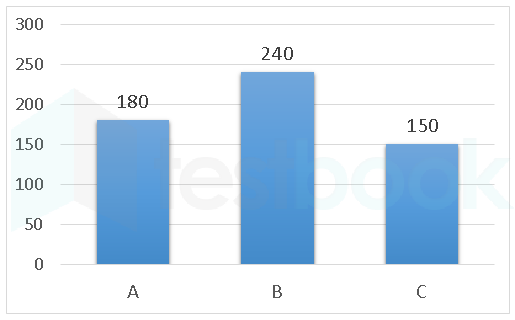
Code
52

I) x2/13 + 30x/13 + 17 = 0

II) 72/y2 + 27/y + 1 = 0

  1. ((a))

    x > y 

  2. ((b))

    x ≤ y  

  3. ((c))

    x ≥ y  

  4. ((d))

    x < y  

  5. ((e))

    x = y or relationship between x and y can't be established 

Show Answer
Answer: ((e))

x = y or relationship between x and y can't be established 

Calculation:

Equation I: (x²/13) + (30x/13) + 17 = 0

x² + 13x + 17x + 221 = 0

(x² + 13x) + (17x + 221) = 0

x(x + 13) + 17(x + 13) = 0

(x + 13)(x + 17) = 0

⇒ x = -13 or -17

Equation II: (72/y²) + (27/y) + 1 = 0

⇒ 72 + 27y + y² = 0

y² + 24y + 3y + 72 = 0

(y² + 24y) + (3y + 72) = 0

y(y + 24) + 3(y + 24) = 0

(y + 24)(y + 3) = 0

⇒ Y = -24 or -3

Now compare values:

X values: -13, -17

Y values: -24, -3

Comparing each X with each Y:

-13 > -24 but -13 < -3

-17 > -24 but -17 < -3

⇒ Relationship is inconsistent.

Thus, the correct answer is x = y or relationship between x and y can't be established

53

I ) 15x² + 155x + 50 = 0

II) 24y² + 104y + 96 = 0

  1. ((a))

    x > y 

  2. ((b))

    x ≤ y  

  3. ((c))

    x ≥ y  

  4. ((d))

    x < y 

  5. ((e))

    x = y or relationship between x and y can't be established

Show Answer
Answer: ((e))

x = y or relationship between x and y can't be established

Calculation:

Equation I:

15x² + 155x + 50 = 0

15x² + 150x + 5x + 50 = 0

15x(x + 10) + 5(x + 10) = 0

Roots:

x = −5/15 = −1/3, x = −10

Equation II: 

24y² + 104y + 96 = 0   

6y2 + 26y + 24 = 0 

6y2 + 18y + 8y + 24 = 0

6y(y + 3) + 8(y + 3) = 0

Roots:

y = −8/6 = −4/3, y = −3

Now compare each x with each y:

x = −10 < both y = −4/3 and y = -3

x = -1/3 > both y = -4/3 and y = -3

Thus, the correct answer is x = y or relationship between x and y can't be establishedu

54

In the given question, two equations numbered l and II are given. Solve both the equations and mark the appropriate answer.

I. x2 – 44x + 448 = 0

II. y2 – 28y + 195 = 0

  1. ((a))

    x > y

  2. ((b))

    x < y

  3. ((c))

    x ≥ y

  4. ((d))

    x ≤ y

  5. ((e))

    x = y or the relationship between x and y cannot be established.

Show Answer
Answer: ((a))

x > y

Calculation:

From I,

x2 – 44x + 448 = 0

⇒ x2 – 28x – 16x + 448 = 0

⇒ x(x – 28) – 16(x – 28) = 0

⇒ (x – 16)(x – 28) = 0

Taking, 

⇒ x – 16 = 0 or x – 28 = 0

⇒ x = 16 or x = 28


From II,

y2 – 28y + 195 = 0 

⇒ y2 – 15y – 13y + 195 = 0

⇒ y(y – 15) – 13(y – 15) = 0

⇒ (y – 15) (y – 13) = 0

Taking,

⇒ y – 15 = 0 or y – 13 = 0

⇒ y = 15 or y = 13

Comparison between x and y (via Tabulation)

Value of xValue of yRelation
1615x > y
1613x > y
2815x > y
2813x > y
<br>

∴ x > y is the correct option

Direction: The table below shows the total number of students (Girls + Boys) and the percentage of Girls in five different schools—A, B, C, D, and E. Study the table carefully and answer the questions based on it.

SchoolTotal Students (Girls + Boys)Girls (%)
A1,20045%
B1,50052%
C1,80040%
D1,60065%
E90060%
55

If the number of boys in School E becomes equal to the number of boys in School B by admitting additional boys only, then by what percentage will the total strength of School E increase?

  1. ((a))

    32%

  2. ((b))

    35%

  3. ((c))

    36%

  4. ((d))

    40%

  5. ((e))

    42%

Show Answer
Answer: ((d))

40%

Common Solution:

Given:

SchoolTotal StudentsGirls (%)
A1,20045%
B1,50052%
C1,80040%
D1,60065%
E90060%

Calculation:

School A

Total Students = 1,200

Girls = 45% of 1,200 = (45/100) × 1,200 = 540

Boys = 1,200 – 540 = 660

School B

Total Students = 1,500

Girls = 52% of 1,500 = (52/100) × 1,500 = 780

Boys = 1,500 – 780 = 720

School C

Total Students = 1,800

Girls = 40% of 1,800 = (40/100) × 1,800 = 720

Boys = 1,800 – 720 = 1,080

School D

Total Students = 1,600

Girls = 65% of 1,600 = (65/100) × 1,600 = 1,040

Boys = 1,600 − 1,040 = 560

School E

Total Students = 900

Girls = 60% of 900 = (60/100) × 900 = 540

Boys = 900 – 540 = 360

Final Table

SchoolTotal StudentsGirlsBoys
A1,200540660
B1,500780720
C1,8007201,080
D1,6001,040560
E900540360
Total7,0003,6203,380

⇒ Additional boys required = 720 – 360 = 360

Solution

Given:

Additional boys = 360

Original strength = 900

Formula:

Percentage Increase = (Increase ÷ Original Total) × 100

Calculation:

⇒ Percentage increase = (360 ÷ 900) × 100 = 40%

∴ Answer = 40%

56

If the number of girls in School A increases by 20% while the number of boys remains unchanged, then what will be the new total number of students in School A?

  1. ((a))

    1260

  2. ((b))

    1290

  3. ((c))

    1308

  4. ((d))

    1320

  5. ((e))

    1350

Show Answer
Answer: ((c))

1308

Common Solution:

Given:

SchoolTotal StudentsGirls (%)
A1,20045%
B1,50052%
C1,80040%
D1,60065%
E90060%

Calculation:

School A

Total Students = 1,200

Girls = 45% of 1,200 = (45/100) × 1,200 = 540

Boys = 1,200 – 540 = 660

School B

Total Students = 1,500

Girls = 52% of 1,500 = (52/100) × 1,500 = 780

Boys = 1,500 – 780 = 720

School C

Total Students = 1,800

Girls = 40% of 1,800 = (40/100) × 1,800 = 720

Boys = 1,800 – 720 = 1,080

School D

Total Students = 1,600

Girls = 65% of 1,600 = (65/100) × 1,600 = 1,040

Boys = 1,600 − 1,040 = 560

School E

Total Students = 900

Girls = 60% of 900 = (60/100) × 900 = 540

Boys = 900 – 540 = 360

Final Table

SchoolTotal StudentsGirlsBoys
A1,200540660
B1,500780720
C1,8007201,080
D1,6001,040560
E900540360
Total7,0003,6203,380

⇒ Girls in School A = 540

⇒ Boys in School A = 660

Solution

Given:

Girls = 540

Increase = 20%

Boys = 660

Formula:

Increase = (20/100) × Girls

Calculation:

⇒ Increase = (20/100) × 540 = 108

⇒ New girls = 540 + 108 = 648

⇒ New total students = 648 + 660 = 1,308

∴ Answer = 1,308

57

The total number of students in Schools B and D together exceeds the total number of students in Schools A and E together by approximately what percent?

  1. ((a))

    40%

  2. ((b))

    48%

  3. ((c))

    52%

  4. ((d))

    55%

  5. ((e))

    60%

Show Answer
Answer: ((b))

48%

Common Solution:

Given:

SchoolTotal StudentsGirls (%)
A1,20045%
B1,50052%
C1,80040%
D1,60065%
E90060%

Calculation:

School A

Total Students = 1,200

Girls = 45% of 1,200 = (45/100) × 1,200 = 540

Boys = 1,200 – 540 = 660

School B

Total Students = 1,500

Girls = 52% of 1,500 = (52/100) × 1,500 = 780

Boys = 1,500 – 780 = 720

School C

Total Students = 1,800

Girls = 40% of 1,800 = (40/100) × 1,800 = 720

Boys = 1,800 – 720 = 1,080

School D

Total Students = 1,600

Girls = 65% of 1,600 = (65/100) × 1,600 = 1,040

Boys = 1,600 − 1,040 = 560

School E

Total Students = 900

Girls = 60% of 900 = (60/100) × 900 = 540

Boys = 900 – 540 = 360

Final Table

SchoolTotal StudentsGirlsBoys
A1,200540660
B1,500780720
C1,8007201,080
D1,6001,040560
E900540360
Total7,0003,6203,380

⇒ Students in Schools B and D = 1,500 + 1,600 = 3,100

⇒ Students in Schools A and E = 1,200 + 900 = 2,100

Solution

Given:

Students in B and D = 3,100

Students in A and E = 2,100

Formula:

Percentage = (Difference ÷ Original Value) × 100

Calculation:

⇒ Difference = 3,100 − 2,100 = 1,000

⇒ Percentage = (1,000 ÷ 2,100) × 100 = 47.62% ≈ 48%

∴ Answer = 48%

58

If the students of Schools A and E are combined to form a new school, then the percentage of girls in the newly formed school is:

  1. ((a))

    46%

  2. ((b))

    48%

  3. ((c))

    50%

  4. ((d))

    55.5%

  5. ((e))

    51.4%

Show Answer
Answer: ((e))

51.4%

Common Solution:

Given:

SchoolTotal StudentsGirls (%)
A1,20045%
B1,50052%
C1,80040%
D1,60065%
E90060%

Calculation:

School A

Total Students = 1,200

Girls = 45% of 1,200 = (45/100) × 1,200 = 540

Boys = 1,200 – 540 = 660

School B

Total Students = 1,500

Girls = 52% of 1,500 = (52/100) × 1,500 = 780

Boys = 1,500 – 780 = 720

School C

Total Students = 1,800

Girls = 40% of 1,800 = (40/100) × 1,800 = 720

Boys = 1,800 – 720 = 1,080

School D

Total Students = 1,600

Girls = 65% of 1,600 = (65/100) × 1,600 = 1,040

Boys = 1,600 − 1,040 = 560

School E

Total Students = 900

Girls = 60% of 900 = (60/100) × 900 = 540

Boys = 900 – 540 = 360

Final Table

SchoolTotal StudentsGirlsBoys
A1,200540660
B1,500780720
C1,8007201,080
D1,6001,040560
E900540360
Total7,0003,6203,380

Solution

Given:

⇒ Total students = 1,200 + 900 = 2,100

⇒ Total girls = 540 + 540 = 1,080

Formula:

Percentage = (Girls ÷ Total Students) × 100

Calculation:

⇒ Percentage = (1,080 ÷ 2,100) × 100 = 51.43% ≈ 51.4%

∴ Answer = 51.4%

59

The number of girls in School D is approximately what percent of the total number of boys in Schools A and E together?

  1. ((a))

    102%

  2. ((b))

    108%

  3. ((c))

    95%

  4. ((d))

    85%

  5. ((e))

    88%

Show Answer
Answer: ((a))

102%

Common Solution:

Given:

SchoolTotal StudentsGirls (%)
A1,20045%
B1,50052%
C1,80040%
D1,60065%
E90060%

Calculation:

School A

Total Students = 1,200

Girls = 45% of 1,200 = (45/100) × 1,200 = 540

Boys = 1,200 – 540 = 660

School B

Total Students = 1,500

Girls = 52% of 1,500 = (52/100) × 1,500 = 780

Boys = 1,500 – 780 = 720

School C

Total Students = 1,800

Girls = 40% of 1,800 = (40/100) × 1,800 = 720

Boys = 1,800 – 720 = 1,080

School D

Total Students = 1,600

Girls = 65% of 1,600 = (65/100) × 1,600 = 1,040

Boys = 1,600 − 1,040 = 560

School E

Total Students = 900

Girls = 60% of 900 = (60/100) × 900 = 540

Boys = 900 – 540 = 360

Final Table

SchoolTotal StudentsGirlsBoys
A1,200540660
B1,500780720
C1,8007201,080
D1,6001,040560
E900540360
Total7,0003,6203,380

Given:

Girls in School D = 1,040

Boys in Schools A and E = 660 + 360 = 1,020

Formula:

Percentage = (Required Value ÷ Total Value) × 100

Calculation:

⇒ Percentage = (1,040 ÷ 1,020) × 100 = 101.96% ≈ 102%

∴ Answer = 102%

60

The ratio of the age of Riya after 6 years to the age of Karan after 4 years is 2:3 respectively and the present age of Karan is 10 years more than the present age of Riya. Find the present age of Neha, whose present age is the average of the present ages of Karan and Riya.

  1. ((a))

    13 years

  2. ((b))

    14 years

  3. ((c))

    15 years

  4. ((d))

    16 years

  5. ((e))

    17 years

Show Answer
Answer: ((c))

15 years

Shortcut Trick

(R + 6)/(K + 4) = 2/3 ⇒ 3R + 18 = 2K + 8 ⇒ 3R − 2K = −10  ...(1)

K = R + 10 ⇒ K − R = 10  ...(2)

Sub (2) in (1): 3R − 2(R+10) = −10 ⇒ R − 20 = −10 ⇒ R = 10

K = 10 + 10 = 20  |  Neha = (10 + 20)/2 = 15 years

∴ The correct answer is Neha's present age = 15 years.

Alternate Method

Given:

(Riya's age after 6 years) : (Karan's age after 4 years) = 2 : 3

Karan's present age = Riya's present age + 10

Neha's present age = Average of Karan and Riya's present ages

Formula used:

Let Riya's present age = R | Karan's present age = K

(R + 6)/(K + 4) = 2/3

K − R = 10

Neha = (R + K) ÷ 2

Riya Now = 10 +6 yrs After 6 = 16 Karan Now = 20 +4 yrs After 4 = 24 Verify Ratio 16 : 24 = 2 : 3 ✓ K−R=10 ✓ Neha = (Riya + Karan) ÷ 2 = (10 + 20) ÷ 2 = 30 ÷ 2 = 15 years Average of 10 and 20 = 15 Riya = 10 yrs  |  Karan = 20 yrs  |  Neha = 15 yrs

Calculations:

Let Riya's present age = R years | Karan's present age = K years

Step 1: Frame equations

⇒ Equation 1: (R + 6)/(K + 4) = 2/3

⇒ 3(R + 6) = 2(K + 4)

⇒ 3R + 18 = 2K + 8

⇒ 3R − 2K = −10   ...(1)

⇒ Equation 2: K − R = 10 ⇒ K = R + 10   ...(2)

Step 2: Substitute (2) in (1)

⇒ 3R − 2(R + 10) = −10

⇒ 3R − 2R − 20 = −10

⇒ R = −10 + 20 = 10 years

Step 3: Find Karan's age

⇒ K = R + 10 = 10 + 10 = 20 years

Step 4: Verify ratio

⇒ Riya after 6 years = 10 + 6 = 16

⇒ Karan after 4 years = 20 + 4 = 24

⇒ 16 : 24 = 2 : 3 

Step 5: Find Neha's age

⇒ Neha = (R + K) ÷ 2 = (10 + 20) ÷ 2 = 30 ÷ 2 = 15 years

∴ The correct answer is Neha's present age = 15 years.

Additional Information

Age Problems — Key Relationships

Present age = x | Age after n years = x + n | Age n years ago = x − n. The difference between two people's ages always remains constant regardless of the year. So if K − R = 10 now, it was 10 years ago and will be 10 years later too. Use this to cross-check equations.

Ratio of Future Ages — Common Question Type

If (A+m)/(B+n) = p/q then cross-multiply: q(A+m) = p(B+n). Always cross-multiply first to clear the fraction before simplifying. Combine with the age-difference or sum equation to get two equations in two unknowns. Substitution is the fastest method when the difference is directly given.

Average Age — Quick Formula

Average age of a group = Sum of all ages ÷ Number of people. If average age increases by k years after t years, it means no one left or joined — every person aged t years so average also increases by t. If a new member joins: new average = (old sum + new age) ÷ (old count + 1). Here Neha = average of just two people = (10+20)/2 = 15.

Ratio of Past Ages

If present ages are R=10 and K=20: Ratio now = 1:2. Ratio 5 years ago = 5:15 = 1:3. Ratio 5 years later = 15:25 = 3:5. As time increases, the ratio of two people's ages always approaches 1:1. Past ratios have larger differences | Future ratios converge. This property helps verify answers in age problems.

61

The average age of Dinesh, his wife, their daughter, and their son is 27. Dinesh was 36 when his daughter was born, and he's two years older than his wife. His wife was 36 when his son was born. What is the average age of Dinesh's daughter and son today?

  1. ((a))

    12

  2. ((b))

    10

  3. ((c))

    11

  4. ((d))

    9

  5. ((e))

    8

Show Answer
Answer: ((d))

9

Shortcut Trick

Total age of 4 members = 27 × 4 = 108.

Let Son's age = s. Then Wife's age = s + 36, Dinesh's age = s + 38, and Daughter's age = (s + 38) − 36 = s + 2.

Sum: s + (s + 36) + (s + 38) + (s + 2) = 108 ⇒ 4s + 76 = 108 ⇒ 4s = 32 ⇒ s = 8.

Daughter's age = 8 + 2 = 10. Average = (8 + 10) ÷ 2 = 9.

∴ The correct answer is 9 years.

Alternate Method

Given: Average age = 27 | Members = 4 | Dinesh = Wife + 2 | Dinesh = Daughter + 36 | Wife = Son + 36.

Formula: Average = Sum of observations ÷ Number of observations.

⇒ Total Sum = 27 × 4 = 108

⇒ Let Son's age = x

⇒ Wife's age = x + 36

⇒ Dinesh's age = (x + 36) + 2 = x + 38

⇒ Daughter's age = Dinesh − 36 = (x + 38) − 36 = x + 2

⇒ x + (x + 36) + (x + 38) + (x + 2) = 108

⇒ 4x + 76 = 108 ⇒ 4x = 32 ⇒ x = 8

⇒ Daughter's age = 8 + 2 = 10 years; Son's age = 8 years

⇒ Average of children = (10 + 8) ÷ 2 = 9

∴ The correct answer is 9 years.

Additional Information

Weighted Average

When groups have different sizes, use (n1x1 + n2x2) ÷ (n1 + n2) to find the combined average.

Age Gap Property

The difference between the ages of two people remains constant throughout their lives, regardless of the years passed.

62

The speed of boat in still water is 50% more than the upstream speed of boat. The Boat took 18 hours in total to cover 120 km each in upstream and in downstream. Find the distance covered by the boat in downstream in 6 hours.

  1. ((a))

    96 km

  2. ((b))

    108 km

  3. ((c))

    120 km

  4. ((d))

    132 km

  5. ((e))

    144 km

Show Answer
Answer: ((c))

120 km

Shortcut Trick

Let Upstream speed (U) = 2x. Then Still water speed (V) = 3x (50% more).

Stream speed (S) = V − U = 3x − 2x = x. Downstream speed (D) = V + S = 3x + x = 4x.

Time ratio (Up : Down) = Speed ratio inverse = 4x : 2x = 2 : 1.

Total time 18 hours divided in 2 : 1 ⇒ Upstream time = 12 hrs, Downstream time = 6 hrs.

Distance covered downstream in 6 hours is given as 120 km in the problem context.

∴ The correct answer is 120 km.

Alternate Method

Given: Still water speed (V) = 1.5 × Upstream speed (U). Total distance = 120 km each way. Total time = 18 hrs.

Formula: Speed = Distance ÷ Time | V = (D + U) ÷ 2

⇒ Let U = 2k, then V = 3k.

⇒ Stream speed S = V − U = 3k − 2k = k.

⇒ Downstream speed D = V + S = 3k + k = 4k.

⇒ Total Time = (120 ÷ 2k) + (120 ÷ 4k) = 18

⇒ (60 ÷ k) + (30 ÷ k) = 18 ⇒ 90 ÷ k = 18 ⇒ k = 5.

⇒ Downstream speed = 4 × 5 = 20 kmph.

⇒ Distance in 6 hours = 20 × 6 = 120 km.

∴ The correct answer is 120 km.

Additional Information

Downstream and Upstream Speed

Downstream speed = Speed of boat (V) + Speed of stream (S). Upstream speed = Speed of boat (V) − Speed of stream (S).

Speed of Boat in Still Water

Speed in still water (V) is the average of Downstream (D) and Upstream (U) speeds: V = (D + U) ÷ 2.

Speed of Stream

Speed of the stream (S) is half the difference between Downstream and Upstream speeds: S = (D − U) ÷ 2.

Direction: Read the passage carefully and answer the following questions:

A sports academy organized an inter-house championship in three games—Squash, Chess, and Tennis. A total of 2,160 students participated in these three games. The number of participants in Squash and Chess was in the ratio 7 : 5. The number of participants in Tennis was 20% less than the combined participants in Squash and Chess. Out of the total participants in Squash, the ratio of boys to girls was 4 : 3. In Chess, the number of girls was 50% more than the number of boys. In Tennis, 35% of the participants were girls. Based on the above information, answer the following questions.

63

If 25% of the boys participating in Chess are transferred to Squash, then by how many does the number of boys in Squash exceed the number of boys in Chess?

  1. ((a))

    200

  2. ((b))

    250

  3. ((c))

    300

  4. ((d))

    350

  5. ((e))

    400

Show Answer
Answer: ((c))

300

Common Calculation

Given:

GameBoys
Squash400
Chess200

Formula:

Transferred Boys = (Percentage ÷ 100) × Original Boys

Calculation:

⇒ Boys in Chess = 200

⇒ Boys in Squash = 400

Solution

Given:

25% of Chess boys are transferred to Squash.

Formula:

Difference = Boys in Squash − Boys in Chess

Calculation:

⇒ Boys transferred = (25 ÷ 100) × 200 = 50

⇒ New boys in Chess = 200 – 50 = 150

⇒ New boys in Squash = 400 + 50 = 450

⇒ Required difference = 450 – 150 = 300

∴ Answer = 300

64

If 60 girls from Chess are shifted to Squash, then the ratio of girls in Squash to girls in Chess becomes:

  1. ((a))

    6:5

  2. ((b))

    5:4

  3. ((c))

    3:2

  4. ((d))

    4:3

  5. ((e))

    7:5

Show Answer
Answer: ((c))

3:2

Common Calculation

Given:

GameGirls
Squash300
Chess300

Formula:

New Value = Original Value ± Shifted Students

Calculation:

⇒ Girls in Squash = 300

⇒ Girls in Chess = 300

Solution

Given:

60 girls are shifted from Chess to Squash.

Formula:

Ratio = First Quantity : Second Quantity

Calculation:

⇒ New girls in Squash = 300 + 60 = 360

⇒ New girls in Chess = 300 – 60 = 240

⇒ Required ratio = 360 : 240 = 3 : 2

∴ Answer = 3 : 2

65

If 96 boys from Tennis are shifted to Chess, then what will be the new ratio of boys in Chess to boys in Tennis?

  1. ((a))

    37:66

  2. ((b))

    19:33

  3. ((c))

    11:18

  4. ((d))

    13:22

  5. ((e))

    25:42

Show Answer
Answer: ((a))

37:66

Common Calculation

Given:

GameBoys
Chess200
Tennis624

Formula:

New Value = Original Value ± Shifted Students

Calculation:

⇒ Boys in Chess = 200

⇒ Boys in Tennis = 624

Solution

Given:

96 boys are shifted from Tennis to Chess.

Formula:

Ratio = First Quantity : Second Quantity

Calculation:

⇒ New boys in Chess = 200 + 96 = 296

⇒ New boys in Tennis = 624 – 96 = 528

⇒ Required ratio = 296 : 528 = 37 : 66

∴ Answer = 37 : 66

66

If 84 girls from Tennis are shifted to Squash, then what will be the new ratio of girls in Squash to girls in Tennis?

  1. ((a))

    8:7

  2. ((b))

    9:7

  3. ((c))

    32:21

  4. ((d))

    3:2

  5. ((e))

    5:3

Show Answer
Answer: ((c))

32:21

Common Calculation

Given:

GameGirls
Squash300
Tennis336

Formula:

New Value = Original Value ± Shifted Students

Calculation:

⇒ Girls in Squash = 300

⇒ Girls in Tennis = 336

Solution

Given:

84 girls are shifted from Tennis to Squash.

Formula:

Ratio = First Quantity : Second Quantity

Calculation:

⇒ New girls in Squash = 300 + 84 = 384

⇒ New girls in Tennis = 336 – 84 = 252

⇒ Required ratio = 384 : 252 = 32 : 21

∴ Answer = 32 : 21

67

The total number of girls participating in Squash and Chess together is what percent less than the total number of boys participating in these two games together?

  1. ((a))

    10%

  2. ((b))

    0%

  3. ((c))

    4%

  4. ((d))

    7%

  5. ((e))

    5%

Show Answer
Answer: ((b))

0%

Common Calculation

Given:

Total participants = 2,160

Squash : Chess = 7 : 5

Tennis = 20% less than (Squash + Chess)

In Squash, Boys : Girls = 4 : 3

In Chess, Girls = 50% more than Boys

In Tennis, Girls = 35% of participants

Formula:

Participants in Tennis = 80% of (Squash + Chess)

Calculation:

⇒ Let the participants in Squash and Chess together be = x

⇒ Participants in Tennis = (4/5)x

⇒ According to the question,

x + (4/5)x = 2,160

⇒ (9/5)x = 2,160

⇒ x = 2,160 × (5/9) = 1,200

⇒ Participants in Tennis = 2,160 − 1,200 = 960

⇒ Total parts in Squash : Chess = 7 + 5 = 12

⇒ Squash = (7/12) × 1,200 = 700

⇒ Chess = (5/12) × 1,200 = 500

⇒ Boys in Squash = (4/7) × 700 = 400

⇒ Girls in Squash = (3/7) × 700 = 300

⇒ Girls : Boys in Chess = 3 : 2

⇒ Girls in Chess = (3/5) × 500 = 300

⇒ Boys in Chess = (2/5) × 500 = 200

⇒ Girls in Tennis = (35/100) × 960 = 336

⇒ Boys in Tennis = 960 – 336 = 624

Solution

Given:

Girls in Squash and Chess = 600

Boys in Squash and Chess = 600

Formula:

Percentage less = ((Difference) ÷ Original Value) × 100

Calculation:

⇒ Girls in Squash and Chess = 300 + 300 = 600

⇒ Boys in Squash and Chess = 400 + 200 = 600

⇒ Percentage less = ((600 − 600) ÷ 600) × 100 = 0%

∴ Answer = 0%

68

A copper wire is bent to form a square, consisting of an area of 1764 cm2. Now the same wire bent into the form of a circle. Find the total area enclosed by the circle. (approximate value)

  1. ((a))

    2142 cm2

  2. ((b))

    2245 cm2

  3. ((c))

    2346 cm2

  4. ((d))

    2250 cm2

  5. ((e))

    None of these

Show Answer
Answer: ((b))

2245 cm2

Given:

The area formed in the square = 1764 cm2

Formula Used:

For square,

The area of square = (side)2

The perimeter of a square = 4 × (side)

For circle,

The perimeter of the circle = 2πr

The area of a circle = π × r2

Where, r = radius of the circle

Calculation:

The side of the square = √(1764) = 42 cm

The length of the wire is the same in both cases,

So, the length of the wire = perimeter of the square = 4 × 42 = 168 cm

Let, the radius of the circle = R cm

According to the question,

2 × π × R = 168

⇒ R = 294/11

Now, the area of the circle is

π × R2

⇒  (22/7) × (294/11) × (294/11)

⇒ 24696/11 = 2245.09 ≈ 2245 cm2

∴ The correct answer is option 2

69

Kamal decided to invest his amount in a ratio of 3 ∶ 5 in two schemes A and B at a rate of simple interest of 14% and 12% for 4 years and 3 years respectively. If he gets Rs. 12,000 more interest from scheme B than scheme A, find the amount he invested in scheme A.

  1. ((a))

    Rs. 5 lakh

  2. ((b))

    Rs. 4 lakh

  3. ((c))

    Rs. 3 lakh

  4. ((d))

    Rs. 2 lakh

  5. ((e))

    Rs. 1 lakh

Show Answer
Answer: ((c))

Rs. 3 lakh

Given:

The ratio of the division of sum = 3 ∶ 5

Rate of interest on two schemes A and B respectively = 14% and 12%

Time for which it was invested in A and B respectively= 4, 3 years

The difference in The amount obtained from scheme B and A = Rs. 12,000

Formula used:

SI = PNR/100

P – Principal, N – Number of terms, R – Rate of interest

Calculation:

As the ratio of the sum is 3 ∶ 5, The amount will be 3x and 5x.

The amount obtained on scheme A = 3x × 4 × 14/100

The amount obtained on scheme A = 168x/100

The amount obtained on scheme B = 5x × 3 × 12/100

The amount obtained on scheme B = 180x/100

Difference in The amount obtained from scheme B and A, Rs. 12,000 = 180x/100 – 168x/100

⇒ 12x/100 = 12,000

⇒ x = Rs. 1,00,000

The amount he invested in scheme A, 3x = 3 × 1,00,000

The amount he invested in scheme A = 3,00,000

The amount invested in scheme A is Rs. 3 lakhs.

70

A can do the 1/3 rd of the work in 8 days , B can do the 1/2 of the work in 18 days and C can do the 1/ 2 th of the work in 9 days. If A and B worked for 3 and 4 days respectively. Find the remaining work completed by C in how many days.

  1. ((a))

    18 (1/2) days

  2. ((b))

    14 (1/2) days

  3. ((c))

    13 (3/4) days

  4. ((d))

    15 (1/4) days

  5. ((e))

    16 (3/4) days

Show Answer
Answer: ((c))

13 (3/4) days

Solution:

Time taken by A to complete the work = 8 ×  3 = 24 days

Time taken by B to complete the work = 18 × 2 = 36 days

Time taken by C to complete the work = 2 ×  9 = 18 days

Total work = L C M of (24, 36, 18) = 72

Efficiency of A = 72/24 = 3

Efficiency of B = 72/36 = 2

Efficiency of C = 72/18 = 4

If A and B worked for 3 and 4 days respectively = (3 ×  3 + 4 ×  2) = 17 parts completed 

Remaining work completed by C = (72 - 17)/4 = 55/4 = 13 (3/4) days.

Reasoning Ability (30 questions)

Directions: Study the following information carefully and answer the given below.

Seven persons- A, B, C, D, E, F and G have an interview on seven different months of the same year viz. March, April, May, June, July, August and September and each of them likes different fruits viz. Apple, Mango, Banana, Grapes, Orange, Kiwi and Litchi. All the information is not necessarily in the same order.

Only two persons have an interview between E and the one who likes Orange who has an interview in the month having less than 31 days. The one who likes Kiwi has an interview immediately before E. The number of persons having an interview before the one who likes Kiwi is one more than after G. B has interview three months before F and immediately after the one who likes Apple. Neither B nor G likes Litchi. A has an interview immediately before the one who likes Litchi. Neither A nor D likes Kiwi. The one who likes Grapes has an interview immediately after the one who likes Banana.

71

G likes which of the following fruit?

  1. ((a))

    Banana

  2. ((b))

    Kiwi

  3. ((c))

    Grapes

  4. ((d))

    Mango

  5. ((e))

    Apple

Show Answer
Answer: ((c))

Grapes

Given: Seven persons- A, B, C, D, E, F and G have an interview on seven different months of the same year viz. March, April, May, June, July, August and September and each of them likes different fruits viz. Apple, Mango, Banana, Grapes, Orange, Kiwi and Litchi. All the information is not necessarily in the same order.

  1. Only two persons have an interview between E and the one who likes Orange who has an interview in the month having less than 31 days. 
  2. The one who likes Kiwi has an interview immediately before E. 

Here, there are three cases, i.e. Case 1, Case 2 and Case 3.

Case 1Case 2Case 3
MonthPersonFruitPersonFruitPersonFruit
March
AprilOrange
MayKiwi
JuneKiwiOrangeE
JulyE
AugustKiwi
SeptemberEOrange


  1. The number of persons having an interview before the one who likes Kiwi is one more than after G. 
  2. B has interview three months before F and immediately after the one who likes Apple. 

Case 1 is eliminated because no space for G.

Case 2Case 3
MonthPersonFruitPersonFruit
MarchAppleApple
AprilBB
MayGKiwi
JuneOrangeE
JulyFF
AugustKiwiG
SeptemberEOrange


  1. Neither B nor G likes Litchi. 
  2. A has an interview immediately before the one who likes Litchi. 
  3. Neither A nor D likes Kiwi. 
  4. The one who likes Grapes has an interview immediately after the one who likes Banana.

Case 3 gets eliminated because A likes Kiwi. So, the final arrangement:

MonthPersonFruit
MarchDApple
AprilBBanana
MayGGrapes
JuneAOrange
JulyFLitchi
AugustCKiwi
SeptemberEMango


G likes Grapes.

Hence, the correct answer is ‘Grapes’.

72

Who among the following person has an interview in September?

  1. ((a))

    The one who has an interview two months after G

  2. ((b))

    C

  3. ((c))

    The one who has an interview immediately after D

  4. ((d))

    D

  5. ((e))

    The one who likes Mango

Show Answer
Answer: ((e))

The one who likes Mango

Given: Seven persons- A, B, C, D, E, F and G have an interview on seven different months of the same year viz. March, April, May, June, July, August and September and each of them likes different fruits viz. Apple, Mango, Banana, Grapes, Orange, Kiwi and Litchi. All the information is not necessarily in the same order.

  1. Only two persons have an interview between E and the one who likes Orange who has an interview in the month having less than 31 days. 
  2. The one who likes Kiwi has an interview immediately before E. 

Here, there are three cases, i.e. Case 1, Case 2 and Case 3.

Case 1Case 2Case 3
MonthPersonFruitPersonFruitPersonFruit
March
AprilOrange
MayKiwi
JuneKiwiOrangeE
JulyE
AugustKiwi
SeptemberEOrange


  1. The number of persons having an interview before the one who likes Kiwi is one more than after G. 
  2. B has interview three months before F and immediately after the one who likes Apple. 

Case 1 is eliminated because no space for G.

Case 2Case 3
MonthPersonFruitPersonFruit
MarchAppleApple
AprilBB
MayGKiwi
JuneOrangeE
JulyFF
AugustKiwiG
SeptemberEOrange


  1. Neither B nor G likes Litchi. 
  2. A has an interview immediately before the one who likes Litchi. 
  3. Neither A nor D likes Kiwi. 
  4. The one who likes Grapes has an interview immediately after the one who likes Banana.

Case 3 gets eliminated because A likes Kiwi. So, the final arrangement:

MonthPersonFruit
MarchDApple
AprilBBanana
MayGGrapes
JuneAOrange
JulyFLitchi
AugustCKiwi
SeptemberEMango


The one who likes Mango has an interview in September.

Hence, the correct answer is ‘The one who like Mango’.

73

How many persons have an interview between the one who likes Apple and E?

  1. ((a))

    One

  2. ((b))

    Two

  3. ((c))

    Three

  4. ((d))

    More than three

  5. ((e))

    None

Show Answer
Answer: ((d))

More than three

Given: Seven persons- A, B, C, D, E, F and G have an interview on seven different months of the same year viz. March, April, May, June, July, August and September and each of them likes different fruits viz. Apple, Mango, Banana, Grapes, Orange, Kiwi and Litchi. All the information is not necessarily in the same order.

  1. Only two persons have an interview between E and the one who likes Orange who has an interview in the month having less than 31 days. 
  2. The one who likes Kiwi has an interview immediately before E. 

Here, there are three cases, i.e. Case 1, Case 2 and Case 3.

Case 1Case 2Case 3
MonthPersonFruitPersonFruitPersonFruit
March
AprilOrange
MayKiwi
JuneKiwiOrangeE
JulyE
AugustKiwi
SeptemberEOrange


  1. The number of persons having an interview before the one who likes Kiwi is one more than after G. 
  2. B has interview three months before F and immediately after the one who likes Apple. 

Case 1 is eliminated because no space for G.

Case 2Case 3
MonthPersonFruitPersonFruit
MarchAppleApple
AprilBB
MayGKiwi
JuneOrangeE
JulyFF
AugustKiwiG
SeptemberEOrange


  1. Neither B nor G likes Litchi. 
  2. A has an interview immediately before the one who likes Litchi. 
  3. Neither A nor D likes Kiwi. 
  4. The one who likes Grapes has an interview immediately after the one who likes Banana.

Case 3 gets eliminated because A likes Kiwi. So, the final arrangement:

MonthPersonFruit
MarchDApple
AprilBBanana
MayGGrapes
JuneAOrange
JulyFLitchi
AugustCKiwi
SeptemberEMango


More than three persons have an interview between the one who likes Apple and E.


Hence, the correct answer is ‘More than three’.

74

In which of the following month does C has his interview?

  1. ((a))

    August

  2. ((b))

    May

  3. ((c))

    July

  4. ((d))

    April

  5. ((e))

    March

Show Answer
Answer: ((a))

August

Given: Seven persons- A, B, C, D, E, F and G have an interview on seven different months of the same year viz. March, April, May, June, July, August and September and each of them likes different fruits viz. Apple, Mango, Banana, Grapes, Orange, Kiwi and Litchi. All the information is not necessarily in the same order.

  1. Only two persons have an interview between E and the one who likes Orange who has an interview in the month having less than 31 days. 
  2. The one who likes Kiwi has an interview immediately before E. 

Here, there are three cases, i.e. Case 1, Case 2 and Case 3.

Case 1Case 2Case 3
MonthPersonFruitPersonFruitPersonFruit
March
AprilOrange
MayKiwi
JuneKiwiOrangeE
JulyE
AugustKiwi
SeptemberEOrange


  1. The number of persons having an interview before the one who likes Kiwi is one more than after G. 
  2. B has interview three months before F and immediately after the one who likes Apple. 

Case 1 is eliminated because no space for G.

Case 2Case 3
MonthPersonFruitPersonFruit
MarchAppleApple
AprilBB
MayGKiwi
JuneOrangeE
JulyFF
AugustKiwiG
SeptemberEOrange


  1. Neither B nor G likes Litchi. 
  2. A has an interview immediately before the one who likes Litchi. 
  3. Neither A nor D likes Kiwi. 
  4. The one who likes Grapes has an interview immediately after the one who likes Banana.

Case 3 gets eliminated because A likes Kiwi. So, the final arrangement:

MonthPersonFruit
MarchDApple
AprilBBanana
MayGGrapes
JuneAOrange
JulyFLitchi
AugustCKiwi
SeptemberEMango


C has his interview in August.

Hence, the correct answer is ‘August’.

75

If D is related to Banana and F is related to Kiwi in a certain way, then who among the following person is related to Litchi?

  1. ((a))

     The one who has an interview in May

  2. ((b))

    The one who has an interview immediately after G

  3. ((c))

    E

  4. ((d))

    The one who likes Apple

  5. ((e))

    None of these

Show Answer
Answer: ((b))

The one who has an interview immediately after G

Given: Seven persons- A, B, C, D, E, F and G have an interview on seven different months of the same year viz. March, April, May, June, July, August and September and each of them likes different fruits viz. Apple, Mango, Banana, Grapes, Orange, Kiwi and Litchi. All the information is not necessarily in the same order.

  1. Only two persons have an interview between E and the one who likes Orange who has an interview in the month having less than 31 days. 
  2. The one who likes Kiwi has an interview immediately before E. 

Here, there are three cases, i.e. Case 1, Case 2 and Case 3.

Case 1Case 2Case 3
MonthPersonFruitPersonFruitPersonFruit
March
AprilOrange
MayKiwi
JuneKiwiOrangeE
JulyE
AugustKiwi
SeptemberEOrange


  1. The number of persons having an interview before the one who likes Kiwi is one more than after G. 
  2. B has interview three months before F and immediately after the one who likes Apple. 

Case 1 is eliminated because no space for G.

Case 2Case 3
MonthPersonFruitPersonFruit
MarchAppleApple
AprilBB
MayGKiwi
JuneOrangeE
JulyFF
AugustKiwiG
SeptemberEOrange


  1. Neither B nor G likes Litchi. 
  2. A has an interview immediately before the one who likes Litchi. 
  3. Neither A nor D likes Kiwi. 
  4. The one who likes Grapes has an interview immediately after the one who likes Banana.

Case 3 gets eliminated because A likes Kiwi. So, the final arrangement:

MonthPersonFruit
MarchDApple
AprilBBanana
MayGGrapes
JuneAOrange
JulyFLitchi
AugustCKiwi
SeptemberEMango


If D is related to Banana and F is related to Kiwi in a certain way, then the one who has an interview immediately after G is related to Litchi.


Hence, the correct answer is ‘The one who has an interview immediately after G’.

Directions: Study the following information to answer the given questions:

Seven persons namely P, Q, R, S, T, U, and V not in the same order in an organization working as an AM (Assistant Manager), MG (Manager), DGM (Deputy General Manager), GM (General Manager), CGM (Chief General Manager), ED (Executive Director) and CEO (Chief Executive Officer), and like different fishes namely Salmon, Tuna, Cod, Trout, Catfish, Tilapia and Snapper not in the same order.

NOTE: Position of their post as given in the direction is considered as from top to bottom of their experience. CEO is a most experienced person then ED is a second most experienced person so on and Assistant manager is least experienced.

R is junior to only two persons. S does not like Cod. The Person who likes Trout is junior to T but not the junior most. The Person who likes Tilapia is senior to ED. The Person who likes Cod is senior to U but junior to T. T is junior to CGM but senior to V. U is junior to V and likes Catfish. Q is senior to T but not senior most. CGM does not like Snapper. V is junior to P but not junior to S. CGM is senior to one who likes Tuna.

76

Who among the following is just senior to the one who likes Tuna?

  1. ((a))

    The one who is a GM

  2. ((b))

    R

  3. ((c))

    V

  4. ((d))

    The one who is an MG

  5. ((e))

    None of these

Show Answer
Answer: ((b))

R

Given: Seven persons- P, Q, R, S, T, U, and V join an organization in different posts- CEO, ED, CGM, GM, DGM, MG, and AM. They like different fishes - Salmon, Tuna, Cod, Trout, Catfish, Tilapia, and Snapper but not necessarily in the same order.

  1. R is junior to only two persons.
  2. The Person who likes Tilapia is senior to ED.
  3. T is junior to CGM but senior to V.
  4. U is junior to V and likes Catfish.

Here, there are three cases, i.e. Case 1, Case 2 and Case 3.

DesignationsCase 1Case 2Case 3
PersonsFishPersonFishPersonFish
CEOTilapiaTilapiaTilapia
ED
CGMRRR
GMTTT
DGMVV
MGUCatfishV
AMUCatfishUCatfish


  1. Q is senior to T but not senior-most.
  2. V is junior to P but not junior to S.
  3. The Person who likes Cod is senior to U but junior to T.
  4. The Person who likes Trout is junior to T but not the junior most.
DesignationsCase 1Case 2Case 3
PersonsFishPersonFishPersonFish
CEOPTilapiaPTilapiaPTilapia
EDQQQ
CGMRRR
GMTTT
DGMVCodVCodSTrout
MGSTroutUCatfishVCod
AMUCatfishSUCatfish


  1. S does not like Cod.
  2. CGM is senior to one who likes Tuna.
  3. CGM does not like Snapper.

Case 2 gets eliminated because the person who likes Trout cannot be placed (positions junior to T are already occupied by Cod and Catfish). Case 3 gets eliminated because V becomes junior to S, which violates the given condition that V is not junior to S.

DesignationsPersonsFish
CEOPTilapia
EDQSnapper
CGMRSalmon
GMTTuna
DGMVCod
MGSTrout
AMUCatfish


R is just senior to the one who likes Tuna.

Hence, the correct answer is ‘R’.

77

The one who is Executive Director likes which of the following Fish?

  1. ((a))

    Salmon 

  2. ((b))

    Catfish

  3. ((c))

    Cod

  4. ((d))

    Snapper

  5. ((e))

    None of these

Show Answer
Answer: ((d))

Snapper

Given: Seven persons- P, Q, R, S, T, U, and V join an organization in different posts- CEO, ED, CGM, GM, DGM, MG, and AM. They like different fishes - Salmon, Tuna, Cod, Trout, Catfish, Tilapia, and Snapper but not necessarily in the same order.

  1. R is junior to only two persons.
  2. The Person who likes Tilapia is senior to ED.
  3. T is junior to CGM but senior to V.
  4. U is junior to V and likes Catfish.

Here, there are three cases, i.e. Case 1, Case 2 and Case 3.

DesignationsCase 1Case 2Case 3
PersonsFishPersonFishPersonFish
CEOTilapiaTilapiaTilapia
ED
CGMRRR
GMTTT
DGMVV
MGUCatfishV
AMUCatfishUCatfish


  1. Q is senior to T but not senior-most.
  2. V is junior to P but not junior to S.
  3. The Person who likes Cod is senior to U but junior to T.
  4. The Person who likes Trout is junior to T but not the junior most.
DesignationsCase 1Case 2Case 3
PersonsFishPersonFishPersonFish
CEOPTilapiaPTilapiaPTilapia
EDQQQ
CGMRRR
GMTTT
DGMVCodVCodSTrout
MGSTroutUCatfishVCod
AMUCatfishSUCatfish


  1. S does not like Cod.
  2. CGM is senior to one who likes Tuna.
  3. CGM does not like Snapper.

Case 2 gets eliminated because the person who likes Trout cannot be placed (positions junior to T are already occupied by Cod and Catfish). Case 3 gets eliminated because V becomes junior to S, which violates the given condition that V is not junior to S.

DesignationsPersonsFish
CEOPTilapia
EDQSnapper
CGMRSalmon
GMTTuna
DGMVCod
MGSTrout
AMUCatfish


The one who is Executive Director likes Snapper.

Hence, the correct answer is ‘Sanpper’.

78

If Q related to GM in the same way as T related to MG. Which of the following is P related to, following the same pattern?

  1. ((a))

    CGM

  2. ((b))

    DGM

  3. ((c))

    AM

  4. ((d))

    CEO

  5. ((e))

    None of these

Show Answer
Answer: ((a))

CGM

Given: Seven persons- P, Q, R, S, T, U, and V join an organization in different posts- CEO, ED, CGM, GM, DGM, MG, and AM. They like different fishes - Salmon, Tuna, Cod, Trout, Catfish, Tilapia, and Snapper but not necessarily in the same order.

  1. R is junior to only two persons.
  2. The Person who likes Tilapia is senior to ED.
  3. T is junior to CGM but senior to V.
  4. U is junior to V and likes Catfish.

Here, there are three cases, i.e. Case 1, Case 2 and Case 3.

DesignationsCase 1Case 2Case 3
PersonsFishPersonFishPersonFish
CEOTilapiaTilapiaTilapia
ED
CGMRRR
GMTTT
DGMVV
MGUCatfishV
AMUCatfishUCatfish


  1. Q is senior to T but not senior-most.
  2. V is junior to P but not junior to S.
  3. The Person who likes Cod is senior to U but junior to T.
  4. The Person who likes Trout is junior to T but not the junior most.
DesignationsCase 1Case 2Case 3
PersonsFishPersonFishPersonFish
CEOPTilapiaPTilapiaPTilapia
EDQQQ
CGMRRR
GMTTT
DGMVCodVCodSTrout
MGSTroutUCatfishVCod
AMUCatfishSUCatfish


  1. S does not like Cod.
  2. CGM is senior to one who likes Tuna.
  3. CGM does not like Snapper.

Case 2 gets eliminated because the person who likes Trout cannot be placed (positions junior to T are already occupied by Cod and Catfish). Case 3 gets eliminated because V becomes junior to S, which violates the given condition that V is not junior to S.

DesignationsPersonsFish
CEOPTilapia
EDQSnapper
CGMRSalmon
GMTTuna
DGMVCod
MGSTrout
AMUCatfish


If Q related to GM in the same way as T related to MG. Similarly, P related to CGM.

Hence, the correct answer is ‘CGM’.

79

How many persons work between R and CEO?

  1. ((a))

    As many persons are junior to T

  2. ((b))

    Five

  3. ((c))

    As many persons work between Q and V

  4. ((d))

    One

  5. ((e))

    None of these

Show Answer
Answer: ((d))

One

Given: Seven persons- P, Q, R, S, T, U, and V join an organization in different posts- CEO, ED, CGM, GM, DGM, MG, and AM. They like different fishes - Salmon, Tuna, Cod, Trout, Catfish, Tilapia, and Snapper but not necessarily in the same order.

  1. R is junior to only two persons.
  2. The Person who likes Tilapia is senior to ED.
  3. T is junior to CGM but senior to V.
  4. U is junior to V and likes Catfish.

Here, there are three cases, i.e. Case 1, Case 2 and Case 3.

DesignationsCase 1Case 2Case 3
PersonsFishPersonFishPersonFish
CEOTilapiaTilapiaTilapia
ED
CGMRRR
GMTTT
DGMVV
MGUCatfishV
AMUCatfishUCatfish


  1. Q is senior to T but not senior-most.
  2. V is junior to P but not junior to S.
  3. The Person who likes Cod is senior to U but junior to T.
  4. The Person who likes Trout is junior to T but not the junior most.
DesignationsCase 1Case 2Case 3
PersonsFishPersonFishPersonFish
CEOPTilapiaPTilapiaPTilapia
EDQQQ
CGMRRR
GMTTT
DGMVCodVCodSTrout
MGSTroutUCatfishVCod
AMUCatfishSUCatfish


  1. S does not like Cod.
  2. CGM is senior to one who likes Tuna.
  3. CGM does not like Snapper.

Case 2 gets eliminated because the person who likes Trout cannot be placed (positions junior to T are already occupied by Cod and Catfish). Case 3 gets eliminated because V becomes junior to S, which violates the given condition that V is not junior to S.

DesignationsPersonsFish
CEOPTilapia
EDQSnapper
CGMRSalmon
GMTTuna
DGMVCod
MGSTrout
AMUCatfish


One person works between R and CEO.

Hence, the correct answer is ‘One’.

80

In which of the following post does T work?

  1. ((a))

    CEO

  2. ((b))

    GM

  3. ((c))

    AM

  4. ((d))

    ED

  5. ((e))

    None of these

Show Answer
Answer: ((b))

GM

Given: Seven persons- P, Q, R, S, T, U, and V join an organization in different posts- CEO, ED, CGM, GM, DGM, MG, and AM. They like different fishes - Salmon, Tuna, Cod, Trout, Catfish, Tilapia, and Snapper but not necessarily in the same order.

  1. R is junior to only two persons.
  2. The Person who likes Tilapia is senior to ED.
  3. T is junior to CGM but senior to V.
  4. U is junior to V and likes Catfish.

Here, there are three cases, i.e. Case 1, Case 2 and Case 3.

DesignationsCase 1Case 2Case 3
PersonsFishPersonFishPersonFish
CEOTilapiaTilapiaTilapia
ED
CGMRRR
GMTTT
DGMVV
MGUCatfishV
AMUCatfishUCatfish


  1. Q is senior to T but not senior-most.
  2. V is junior to P but not junior to S.
  3. The Person who likes Cod is senior to U but junior to T.
  4. The Person who likes Trout is junior to T but not the junior most.
DesignationsCase 1Case 2Case 3
PersonsFishPersonFishPersonFish
CEOPTilapiaPTilapiaPTilapia
EDQQQ
CGMRRR
GMTTT
DGMVCodVCodSTrout
MGSTroutUCatfishVCod
AMUCatfishSUCatfish


  1. S does not like Cod.
  2. CGM is senior to one who likes Tuna.
  3. CGM does not like Snapper.

Case 2 gets eliminated because the person who likes Trout cannot be placed (positions junior to T are already occupied by Cod and Catfish). Case 3 gets eliminated because V becomes junior to S, which violates the given condition that V is not junior to S.

DesignationsPersonsFish
CEOPTilapia
EDQSnapper
CGMRSalmon
GMTTuna
DGMVCod
MGSTrout
AMUCatfish


T works as GM.

<br>

Hence, the correct answer is ‘GM’.

81

If it is possible to make only one four-letter meaningful word with the first, second, fourth, and eighth letter of the word ‘CONDENSER’, which could be the second letter of the word from the right end? If more than one such word can be formed, give ‘X’ as the answer. If no such word can be formed, give ‘Z’ as your answer.

  1. ((a))

    O

  2. ((b))

    D

  3. ((c))

    X

  4. ((d))

    N

  5. ((e))

    Z

Show Answer
Answer: ((b))

D

Given word: CONDENSER

First, second, fourth, and eighth letter are C, O, D, E.

There is only one word that can be formed using these letters i.e. CODE.

Hence, the correct answer is D.

Coed  is not a word.

Direction: Study the following information carefully and answer the given questions.

Eight women W1, W2, W3, W4, W5, W6, W7 and W8 are sitting around a circular table. Some are facing towards the center while others are facing outside the center. Not more than two people sitting adjacent to each other are facing the same direction. W3 sits third to the left of W4. Two people sit between W3 and W5. W2 and W6 are facing each other. W1 sits immediate right of W6. Immediate neighbors of W4 are facing the same direction. W7 sits second to the right of W1. W7 faces the same direction as W1.

82

Who among the following sits second to the right of the one who sits immediately left of W7?

  1. ((a))

    W2

  2. ((b))

    W5

  3. ((c))

    W8

  4. ((d))

    W1

  5. ((e))

    W6

Show Answer
Answer: ((e))

W6

  1. W3 sits third to the left of W4.

  2. Two people sit between W3 and W5.

  3. W2 and W6 are facing each other. 

  1. W1 sits immediately right of W6.

  1. Immediate neighbors of W4 are facing the same direction. (This eliminates case 1)

  2. W7 sits second to the right of W1. W7 faces the same direction as W1.

W3 sits immediately to the left of W7 and W6 sits second to the right of W3. 

Hence, W6 sits second to the right of the one who sits on the immediate left of W7.

83

What is true regarding W8 according to the given arrangement?

  1. ((a))

    W8 is facing outside the centre

  2. ((b))

    W8 is an immediate neighbor of W6.

  3. ((c))

    W2 sits second to the right of W8

  4. ((d))

    W8 sits opposite to W3

  5. ((e))

    All are true statements

Show Answer
Answer: ((d))

W8 sits opposite to W3

  1. W3 sits third to the left of W4.

  2. Two people sit between W3 and W5.

  3. W2 and W6 are facing each other. 

  1. W1 sits immediately right of W6.

  1. Immediate neighbors of W4 are facing the same direction. (This eliminates case 1)

  2. W7 sits second to the right of W1. W7 faces the same direction as W1.

Hence, only statement 4) is true regarding W8.

84

How many women are facing outside the centre?

  1. ((a))

    Two

  2. ((b))

    Three

  3. ((c))

    Four

  4. ((d))

    Five

  5. ((e))

    Six

Show Answer
Answer: ((b))

Three

  1. W3 sits third to the left of W4.

  2. Two people sit between W3 and W5.

  3. W2 and W6 are facing each other. 

  1. W1 sits immediately right of W6.

  1. Immediate neighbors of W4 are facing the same direction. (This eliminates case 1)

  2. W7 sits second to the right of W1. W7 faces the same direction as W1.

Hence, three women's are facing outside the centre.

85

Who among the following sits third to the right of W3?

  1. ((a))

    W5

  2. ((b))

    W6

  3. ((c))

    W4

  4. ((d))

    W7

  5. ((e))

    W1

Show Answer
Answer: ((c))

W4

  1. W3 sits third to the left of W4.

  2. Two people sit between W3 and W5.

  3. W2 and W6 are facing each other. 

  1. W1 sits immediately right of W6.

  1. Immediate neighbors of W4 are facing the same direction. (This eliminates case 1)

  2. W7 sits second to the right of W1. W7 faces the same direction as W1.

Hence, W4 sits third to the right of W3.

86

Who among the following sits opposite to W4?

  1. ((a))

    W1

  2. ((b))

    W7

  3. ((c))

    W3

  4. ((d))

    W5

  5. ((e))

    W8

Show Answer
Answer: ((b))

W7

  1. W3 sits third to the left of W4.

  2. Two people sit between W3 and W5.

  3. W2 and W6 are facing each other. 

  1. W1 sits immediately right of W6.

  1. Immediate neighbors of W4 are facing the same direction. (This eliminates case 1)

  2. W7 sits second to the right of W1. W7 faces the same direction as W1.

Hence, W7 sits opposite to W4.

Directions: Read the following information carefully and answer the questions that follow:

Six people Gh, Gp, Gk, Gm, Gj and Gt are of six different ages. The ages of all of them are prime number but less than 14. The number of people older than Gm is the same as the number of persons younger than Gh. Gk’s age is less than 9. Gm is neither the oldest nor the youngest among all of them but older than Gj. Gj is five years older than Gp’s age.

87

Who among them is oldest?

  1. ((a))

    Gm

  2. ((b))

    Gh

  3. ((c))

    Gk

  4. ((d))

    Gt

  5. ((e))

    Gp

Show Answer
Answer: ((d))

Gt

Six person: Gh, Gp, Gk, Gm, Gj and Gt

Ages : Prime numbers less than 14: 13, 11, 7, 5, 3 and 2

i) The ages of all of them are prime number but less than 14.

_ (13) > _ (11) > _ (7) > _ (5) > _ (3) > _ (2)

iii) Gj is five years older than Gp’s age

_ (13) > _ (11) > Gj (7) > _ (5) > _ (3) > Gp (2)

iv) Gm is neither the oldest nor the youngest among all of them but older than Gj.

_ (13) > Gm (11) > Gj (7) > _ (5) > _ (3) > Gp (2)

v) Number of people older than Gm is the same as the number of persons younger than Gh.

_ (13) > Gm (11) > Gj (7) > _ (5) > Gh (3) > Gp (2)

vi) Gk’s age is less than than 9.

Gt (13) > Gm (11) > Gj (7) > Gk (5) > Gh (3) > Gp (2)

Hence, “Gt” is oldest among all of them.

88

How many persons are older than Gk?

  1. ((a))

    Two

  2. ((b))

    Four

  3. ((c))

    Three

  4. ((d))

    One

  5. ((e))

    Zero

Show Answer
Answer: ((c))

Three

Six person: Gh, Gp, Gk, Gm, Gj and Gt

Ages : Prime numbers less than 14: 13, 11, 7, 5, 3 and 2

i) The ages of all of them are prime number but less than 14.

_ (13) > _ (11) > _ (7) > _ (5) > _ (3) > _ (2)

iii) Gj is five years older than Gp’s age

_ (13) > _ (11) > Gj (7) > _ (5) > _ (3) > Gp (2)

iv) Gm is neither the oldest nor the youngest among all of them but older than Gj.

_ (13) > Gm (11) > Gj (7) > _ (5) > _ (3) > Gp (2)

v) Number of people older than Gm is the same as the number of persons younger than Gh.

_ (13) > Gm (11) > Gj (7) > _ (5) > Gh (3) > Gp (2)

vi) Gk’s age is less than than 9.

Gt (13) > Gm (11) > Gj (7) > Gk (5) > Gh (3) > Gp (2)

Hence, three persons are older than Gk.

89

What will be the possible age of Gf, if Gf’s age is greater than Gj’s age but less than Gm’s age?

  1. ((a))

    4

  2. ((b))

    6

  3. ((c))

    10

  4. ((d))

    12

  5. ((e))

    None of the above

Show Answer
Answer: ((c))

10

Six person: Gh, Gp, Gk, Gm, Gj and Gt

Ages : Prime numbers less than 14: 13, 11, 7, 5, 3 and 2

i) The ages of all of them are prime number but less than 14.

_ (13) > _ (11) > _ (7) > _ (5) > _ (3) > _ (2)

iii) Gj is five years older than Gp’s age

_ (13) > _ (11) > Gj (7) > _ (5) > _ (3) > Gp (2)

iv) Gm is neither the oldest nor the youngest among all of them but older than Gj.

_ (13) > Gm (11) > Gj (7) > _ (5) > _ (3) > Gp (2)

v) Number of people older than Gm is the same as the number of persons younger than Gh.

_ (13) > Gm (11) > Gj (7) > _ (5) > Gh (3) > Gp (2)

vi) Gk’s age is less than than 9.

Gt (13) > Gm (11) > Gj (7) > Gk (5) > Gh (3) > Gp (2)

According to the question, Gf’s age is greater than Gj’s age but less than Gm’s age.

So, Gf’s age can be either 10 or 9 or 8.

Hence, “10” is the correct answer.

90

How many such pairs of letters are there in the word 'DICTIONARY', each of which has as many letters between them in the word (both forward and backward direction) as they have between them in the English Alphabet?

  1. ((a))

    One

  2. ((b))

    Two

  3. ((c))

    Three

  4. ((d))

    Four

  5. ((e))

    None

Show Answer
Answer: ((c))

Three

Three pairs are there in the word 'DICTIONARY', each of which has as many letters between them in the word (both forward and backward direction) as they have between them in the English Alphabet.

Mistake Points In this type of question we have to count from A to Z, reverse counting Z to A is not considered. Therefore Y- A is not the correct pair

Directions: Read the following information carefully and answer the questions given below:

Eight persons M, N, O, P, Q, R, S and T are living in a four storey buildings such that ground floor is numbered as 1, above it is floor 2 then top floor is numbered as 4. Each of the floor has 2 flats in it as flat – 1 and flat – 2. Flat – 1 of floor – 2 is immediately above flat – 1 of floor – 1 and immediately below flat – 1 of floor – 3 and so on. In the same way flat – 2 of the floor – 2 is immediately above flat – 2 of floor – 1 and immediately below flat – 2 of floor – 3 and so on. Flat – 1 is in west of flat – 2. Two floors are there between M and T. One floor is there between S and O, who doesn’t live on the even numbered floor. Q lives on floor number 3. P lives in west of N. M lives above T, both lives in the same flat. R doesn’t live in the west of any flat. Number of persons live between M and Q is same as people live between R and S. S and O both live in flat -2.

91

Who among the following live in the flat - 2 of the first floor?

  1. ((a))

    N

  2. ((b))

    P

  3. ((c))

    T

  4. ((d))

    O

  5. ((e))

    R

Show Answer
Answer: ((d))

O

Eight persons: M, N, O, P, Q, R, S and T.

Each floor has 2 flats, flat – 1 and flat – 2 where, flat – 1 is in west of the flat – 2.

  1. Two persons live between M and T.
  2. M lives above T, both lives in the same flat.

On combining these two sentences, we have two possible cases:

Case 1
FloorFlat 1Flat 2
4M
3
2
1T


Case 2
FloorFlat 1Flat 2
4M
3
2
1T
  1. One person live between S and O, who doesn’t live on the even numbered floor.

From this sentence, we have four possible cases:

Case 1a
FloorFlat 1Flat 2
4M
3S
2
1TO


Case 1b
FloorFlat 1Flat 2
4M
3O
2
1TS


Case 2a
FloorFlat 1Flat 2
4M
3S
2
1OT


Case 2b
FloorFlat 1Flat 2
4M
3O
2
1ST
  1. Q lives on floor number 3. 5. P lives in west of N.
Case 1a
FloorFlat 1Flat 2
4M
3QS
2PN
1TO


Case 1b
FloorFlat 1Flat 2
4M
3QO
2PN
1TS


Case 2a
FloorFlat 1Flat 2
4M
3SQ
2PN
1OT


Case 2b
FloorFlat 1Flat 2
4M
3OQ
2PN
1ST
  1. R doesn’t live in the west of any flat.
  2. Number of persons live between M and Q is same as people live between R and S.

On combining these two sentences, our Case 1b, Case 2a, and Case 2b.

In Case 1b, no person is living between M and Q, but two person will live between R and S, so this case is eliminated.

In Case 2a, R will live in west of M, which is not possible.

In Case 2b, R will live in west of M, which is not possible.

Case 1a
FloorFlat 1Flat 2
4MR
3QS
2PN
1TO

The final arrangement:

FloorFlat 1Flat 2
4MR
3QS
2PN
1TO

Hence, O lives in the flat - 2 of the first floor.

92

Who among the following lives with S on the same floor?

  1. ((a))

    O

  2. ((b))

    N

  3. ((c))

    Q

  4. ((d))

    M

  5. ((e))

    R

Show Answer
Answer: ((c))

Q

Eight persons: M, N, O, P, Q, R, S and T.

Each floor has 2 flats, flat – 1 and flat – 2 where, flat – 1 is in west of the flat – 2.

  1. Two persons live between M and T.
  2. M lives above T, both lives in the same flat.

On combining these two sentences, we have two possible cases:

Case 1
FloorFlat 1Flat 2
4M
3
2
1T


Case 2
FloorFlat 1Flat 2
4M
3
2
1T
  1. One person live between S and O, who doesn’t live on the even numbered floor.

From this sentence, we have four possible cases:

Case 1a
FloorFlat 1Flat 2
4M
3S
2
1TO


Case 1b
FloorFlat 1Flat 2
4M
3O
2
1TS


Case 2a
FloorFlat 1Flat 2
4M
3S
2
1OT


Case 2b
FloorFlat 1Flat 2
4M
3O
2
1ST
  1. Q lives on floor number 3. 5. P lives in west of N.
Case 1a
FloorFlat 1Flat 2
4M
3QS
2PN
1TO


Case 1b
FloorFlat 1Flat 2
4M
3QO
2PN
1TS


Case 2a
FloorFlat 1Flat 2
4M
3SQ
2PN
1OT


Case 2b
FloorFlat 1Flat 2
4M
3OQ
2PN
1ST
  1. R doesn’t live in the west of any flat.
  2. Number of persons live between M and Q is same as people live between R and S.

On combining these two sentences, our Case 1b, Case 2a, and Case 2b.

In Case 1b, no person is living between M and Q, but two person will live between R and S, so this case is eliminated.

In Case 2a, R will live in west of M, which is not possible.

In Case 2b, R will live in west of M, which is not possible.

Case 1a
FloorFlat 1Flat 2
4MR
3QS
2PN
1TO

The final arrangement:

FloorFlat 1Flat 2
4MR
3QS
2PN
1TO

Hence, Q lives with S in the same floor.

93

On which of the floor R lives?

  1. ((a))

    Flat - 2 of floor 3

  2. ((b))

    Flat - 1 of floor 2

  3. ((c))

    Flat - 2 of floor 1

  4. ((d))

    Flat - 2 of floor 4

  5. ((e))

    Flat - 1 of floor 4

Show Answer
Answer: ((d))

Flat - 2 of floor 4

Eight persons: M, N, O, P, Q, R, S and T.

Each floor has 2 flats, flat – 1 and flat – 2 where, flat – 1 is in west of the flat – 2.

  1. Two persons live between M and T.
  2. M lives above T, both lives in the same flat.

On combining these two sentences, we have two possible cases:

Case 1
FloorFlat 1Flat 2
4M
3
2
1T


Case 2
FloorFlat 1Flat 2
4M
3
2
1T
  1. One person live between S and O, who doesn’t live on the even numbered floor.

From this sentence, we have four possible cases:

Case 1a
FloorFlat 1Flat 2
4M
3S
2
1TO


Case 1b
FloorFlat 1Flat 2
4M
3O
2
1TS


Case 2a
FloorFlat 1Flat 2
4M
3S
2
1OT


Case 2b
FloorFlat 1Flat 2
4M
3O
2
1ST
  1. Q lives on floor number 3. 5. P lives in west of N.
Case 1a
FloorFlat 1Flat 2
4M
3QS
2PN
1TO


Case 1b
FloorFlat 1Flat 2
4M
3QO
2PN
1TS


Case 2a
FloorFlat 1Flat 2
4M
3SQ
2PN
1OT


Case 2b
FloorFlat 1Flat 2
4M
3OQ
2PN
1ST
  1. R doesn’t live in the west of any flat.
  2. Number of persons live between M and Q is same as people live between R and S.

On combining these two sentences, our Case 1b, Case 2a, and Case 2b.

In Case 1b, no person is living between M and Q, but two person will live between R and S, so this case is eliminated.

In Case 2a, R will live in west of M, which is not possible.

In Case 2b, R will live in west of M, which is not possible.

Case 1a
FloorFlat 1Flat 2
4MR
3QS
2PN
1TO

The final arrangement:

FloorFlat 1Flat 2
4MR
3QS
2PN
1TO

Hence, R lives on the flat - 2 of the floor 4.

94

Four of the five are alike in a certain way so form a group. Which of the following does not belong to the group?

  1. ((a))

    R

  2. ((b))

    S

  3. ((c))

    Q

  4. ((d))

    N

  5. ((e))

    O

Show Answer
Answer: ((c))

Q

Eight persons: M, N, O, P, Q, R, S and T.

Each floor has 2 flats, flat – 1 and flat – 2 where, flat – 1 is in west of the flat – 2.

  1. Two persons live between M and T.
  2. M lives above T, both lives in the same flat.

On combining these two sentences, we have two possible cases:

Case 1
FloorFlat 1Flat 2
4M
3
2
1T


Case 2
FloorFlat 1Flat 2
4M
3
2
1T
  1. One person live between S and O, who doesn’t live on the even numbered floor.

From this sentence, we have four possible cases:

Case 1a
FloorFlat 1Flat 2
4M
3S
2
1TO


Case 1b
FloorFlat 1Flat 2
4M
3O
2
1TS


Case 2a
FloorFlat 1Flat 2
4M
3S
2
1OT


Case 2b
FloorFlat 1Flat 2
4M
3O
2
1ST
  1. Q lives on floor number 3. 5. P lives in west of N.
Case 1a
FloorFlat 1Flat 2
4M
3QS
2PN
1TO


Case 1b
FloorFlat 1Flat 2
4M
3QO
2PN
1TS


Case 2a
FloorFlat 1Flat 2
4M
3SQ
2PN
1OT


Case 2b
FloorFlat 1Flat 2
4M
3OQ
2PN
1ST
  1. R doesn’t live in the west of any flat.
  2. Number of persons live between M and Q is same as people live between R and S.

On combining these two sentences, our Case 1b, Case 2a, and Case 2b.

In Case 1b, no person is living between M and Q, but two person will live between R and S, so this case is eliminated.

In Case 2a, R will live in west of M, which is not possible.

In Case 2b, R will live in west of M, which is not possible.

Case 1a
FloorFlat 1Flat 2
4MR
3QS
2PN
1TO

The final arrangement:

FloorFlat 1Flat 2
4MR
3QS
2PN
1TO

Except, Q all the persons live in the flat - 2 of the floors.

Hence, Q does not belong to the group.

95

Who among the following lives immediately above O?

  1. ((a))

    M

  2. ((b))

    R

  3. ((c))

    P

  4. ((d))

    S

  5. ((e))

    N

Show Answer
Answer: ((e))

N

Eight persons: M, N, O, P, Q, R, S and T.

Each floor has 2 flats, flat – 1 and flat – 2 where, flat – 1 is in west of the flat – 2.

  1. Two persons live between M and T.
  2. M lives above T, both lives in the same flat.

On combining these two sentences, we have two possible cases:

Case 1
FloorFlat 1Flat 2
4M
3
2
1T


Case 2
FloorFlat 1Flat 2
4M
3
2
1T
  1. One person live between S and O, who doesn’t live on the even numbered floor.

From this sentence, we have four possible cases:

Case 1a
FloorFlat 1Flat 2
4M
3S
2
1TO


Case 1b
FloorFlat 1Flat 2
4M
3O
2
1TS


Case 2a
FloorFlat 1Flat 2
4M
3S
2
1OT


Case 2b
FloorFlat 1Flat 2
4M
3O
2
1ST
  1. Q lives on floor number 3. 5. P lives in west of N.
Case 1a
FloorFlat 1Flat 2
4M
3QS
2PN
1TO


Case 1b
FloorFlat 1Flat 2
4M
3QO
2PN
1TS


Case 2a
FloorFlat 1Flat 2
4M
3SQ
2PN
1OT


Case 2b
FloorFlat 1Flat 2
4M
3OQ
2PN
1ST
  1. R doesn’t live in the west of any flat.
  2. Number of persons live between M and Q is same as people live between R and S.

On combining these two sentences, our Case 1b, Case 2a, and Case 2b.

In Case 1b, no person is living between M and Q, but two person will live between R and S, so this case is eliminated.

In Case 2a, R will live in west of M, which is not possible.

In Case 2b, R will live in west of M, which is not possible.

Case 1a
FloorFlat 1Flat 2
4MR
3QS
2PN
1TO

The final arrangement:

FloorFlat 1Flat 2
4MR
3QS
2PN
1TO

Hence, N lives immediately above O.

Directions: study the following information carefully and answer the questions below 

Eleven persons —A, B, C, D, E, F, G, H, I, J and K—work in three different cities: Delhi, Mumbai and Chennai. At least three but not more than four persons work in each city.  All the information is not necessarily in the same order.

B does not work in the same city as A, who works in Delhi. B and C work together in the same city. D does not work in Delhi. E, F, and G work together in the same city. A and H work in the same city, but I do not work in the same city as H. J neither works with C nor with F. K neither works in Mumbai nor works in the same city as F. The number of persons who work in the Chennai is one less than the number of persons who work in the Mumbai. D neither works in Chennai nor works with C.

96

Who among the following people works in Delhi?

  1. ((a))

    D

  2. ((b))

    F

  3. ((c))

    C

  4. ((d))

    The one who works with H

  5. ((e))

    The one who works with B

Show Answer
Answer: ((d))

The one who works with H

Given: Eleven persons —A, B, C, D, E, F, G, H, I, J and K—work in three different cities: Delhi, Mumbai and Chennai. At least three but not more than four persons work in each city. 

  1. B does not work in the same city as A, who works in Delhi. 
  2. B and C work together in the same city. 
  3. D does not work in Delhi. 

Here, there are two cases, i.e. Case 1 and Case 2.

Case 1Case 2
DelhiMumbaiChennaiDelhiMumbaiChennai
ABD/AD/B
CC
DD/


  1. E, F, and G work together in the same city. 
  2. A and H work in the same city, but I do not work in the same city as H. 
  3. J neither works with C nor with F. 
Case 1Case 2
DelhiMumbaiChennaiDelhiMumbaiChennai
ABD/IAD/IB
HCEHEC
JD/IFJFD/I
GG


  1. K neither works in Mumbai nor works in the same city as F. 
  2. The number of persons who work in Chennai is one less than the number of persons who work in Mumbai. 
  3. D neither works in Chennai nor works with C.

Case 1 gets eliminated because D works in Chennai. So, the final arrangement:

DelhiMumbaiChennai
ADB
HEC
JFI
KG


The one who works with H works in Delhi.

Hence, the correct answer is ‘The one who works with H’.

97

Four of the following five are alike in a certain way based on the given arrangement and thus form a group. Which one of the following persons does not belong to the group?

  1. ((a))

    A

  2. ((b))

    H

  3. ((c))

    B

  4. ((d))

    J

  5. ((e))

    K

Show Answer
Answer: ((c))

B

Given: Eleven persons —A, B, C, D, E, F, G, H, I, J and K—work in three different cities: Delhi, Mumbai and Chennai. At least three but not more than four persons work in each city. 

  1. B does not work in the same city as A, who works in Delhi. 
  2. B and C work together in the same city. 
  3. D does not work in Delhi. 

Here, there are two cases, i.e. Case 1 and Case 2.

Case 1Case 2
DelhiMumbaiChennaiDelhiMumbaiChennai
ABD/AD/B
CC
DD/


  1. E, F, and G work together in the same city. 
  2. A and H work in the same city, but I do not work in the same city as H. 
  3. J neither works with C nor with F. 
Case 1Case 2
DelhiMumbaiChennaiDelhiMumbaiChennai
ABD/IAD/IB
HCEHEC
JD/IFJFD/I
GG


  1. K neither works in Mumbai nor works in the same city as F. 
  2. The number of persons who work in Chennai is one less than the number of persons who work in Mumbai. 
  3. D neither works in Chennai nor works with C.

Case 1 gets eliminated because D works in Chennai. So, the final arrangement:

DelhiMumbaiChennai
ADB
HEC
JFI
KG


In all the other options, all the other persons work in the same city except option C.


Hence, the correct answer is ‘B’.

98

Which of the following statement(s) is/are TRUE?

  1. ((a))

     D and E works in the same city

  2. ((b))

    J works in the Mumbai 

  3. ((c))

    Only three persons work in Delhi 

  4. ((d))

    Three persons are working in the Mumbai 

  5. ((e))

    K and F are working in the same city

Show Answer
Answer: ((a))

 D and E works in the same city

Given: Eleven persons —A, B, C, D, E, F, G, H, I, J and K—work in three different cities: Delhi, Mumbai and Chennai. At least three but not more than four persons work in each city. 

  1. B does not work in the same city as A, who works in Delhi. 
  2. B and C work together in the same city. 
  3. D does not work in Delhi. 

Here, there are two cases, i.e. Case 1 and Case 2.

Case 1Case 2
DelhiMumbaiChennaiDelhiMumbaiChennai
ABD/AD/B
CC
DD/


  1. E, F, and G work together in the same city. 
  2. A and H work in the same city, but I do not work in the same city as H. 
  3. J neither works with C nor with F. 
Case 1Case 2
DelhiMumbaiChennaiDelhiMumbaiChennai
ABD/IAD/IB
HCEHEC
JD/IFJFD/I
GG


  1. K neither works in Mumbai nor works in the same city as F. 
  2. The number of persons who work in Chennai is one less than the number of persons who work in Mumbai. 
  3. D neither works in Chennai nor works with C.

Case 1 gets eliminated because D works in Chennai. So, the final arrangement:

DelhiMumbaiChennai
ADB
HEC
JFI
KG


True statement: D and E works in the same city.

Hence, the correct answer is ‘D and E work in the same city’.

99

Who among the following people works with C?

  1. ((a))

    B

  2. ((b))

    I

  3. ((c))

    The one who works with J

  4. ((d))

    All of the above

  5. ((e))

    Both 1 and 2

Show Answer
Answer: ((e))

Both 1 and 2

Given: Eleven persons —A, B, C, D, E, F, G, H, I, J and K—work in three different cities: Delhi, Mumbai and Chennai. At least three but not more than four persons work in each city. 

  1. B does not work in the same city as A, who works in Delhi. 
  2. B and C work together in the same city. 
  3. D does not work in Delhi. 

Here, there are two cases, i.e. Case 1 and Case 2.

Case 1Case 2
DelhiMumbaiChennaiDelhiMumbaiChennai
ABD/AD/B
CC
DD/


  1. E, F, and G work together in the same city. 
  2. A and H work in the same city, but I do not work in the same city as H. 
  3. J neither works with C nor with F. 
Case 1Case 2
DelhiMumbaiChennaiDelhiMumbaiChennai
ABD/IAD/IB
HCEHEC
JD/IFJFD/I
GG


  1. K neither works in Mumbai nor works in the same city as F. 
  2. The number of persons who work in Chennai is one less than the number of persons who work in Mumbai. 
  3. D neither works in Chennai nor works with C.

Case 1 gets eliminated because D works in Chennai. So, the final arrangement:

DelhiMumbaiChennai
ADB
HEC
JFI
KG


B and I work with C.


Hence, the correct answer is ‘Both 1 and 2’.

100

Who among the following people works in Chennai?

  1. ((a))

    A

  2. ((b))

    C

  3. ((c))

    J

  4. ((d))

    K

  5. ((e))

    H

Show Answer
Answer: ((b))

C

Given: Eleven persons —A, B, C, D, E, F, G, H, I, J and K—work in three different cities: Delhi, Mumbai and Chennai. At least three but not more than four persons work in each city. 

  1. B does not work in the same city as A, who works in Delhi. 
  2. B and C work together in the same city. 
  3. D does not work in Delhi. 

Here, there are two cases, i.e. Case 1 and Case 2.

Case 1Case 2
DelhiMumbaiChennaiDelhiMumbaiChennai
ABD/AD/B
CC
DD/


  1. E, F, and G work together in the same city. 
  2. A and H work in the same city, but I do not work in the same city as H. 
  3. J neither works with C nor with F. 
Case 1Case 2
DelhiMumbaiChennaiDelhiMumbaiChennai
ABD/IAD/IB
HCEHEC
JD/IFJFD/I
GG


  1. K neither works in Mumbai nor works in the same city as F. 
  2. The number of persons who work in Chennai is one less than the number of persons who work in Mumbai. 
  3. D neither works in Chennai nor works with C.

Case 1 gets eliminated because D works in Chennai. So, the final arrangement:

DelhiMumbaiChennai
ADB
HEC
JFI
KG


C works in Chennai.

Hence, the correct answer is ‘C’.

Attempt this paper under real exam conditions

Timed interface, section switching, instant scoring, and question-by-question analytics — free.

Start Timed Attempt