Previous Year Paper

IBPS PO Prelims Memory Based Paper (Held On: 30 September 2023 Shift 1) (Previous Year Paper)

Held in 2023

100 questions60 minutes
With answers
Free

Paper last updated:

Practise under exam conditions

Take this paper as a timed mock test. Review your answers after you submit.

Attempt timed test

Questions & answers

Read the paper at your pace. Open an explanation when you need it.

English Language (30 questions)

Read the given passage and answer the questions that follow.

It is not too late. It never will be. Whatever you may have read over the past year — as extreme weather brought a global heatwave and unprecedented wildfires burned through 1.6 million California acres and newspaper headlines declared, “Climate Change Is Here” — global warming is not binary. It is not a matter of “yes” or “no”. Instead, it is a problem that gets worse over time the longer we produce greenhouse gas and can be made better if we choose to stop. Which means that no matter how hot it gets, no matter how fully climate change transforms the planet and the way we live on it, it will always be the case that the next decade could contain more warming, and more suffering, or less warming and less suffering. Just how much is up to us, and always will be.

A century and a half after the greenhouse effect was first identified, and a few decades since climate denial and misinformation began muddying our sense of what scientists do know, we are left with a set of predictions that can appear falsifiable — about global temperatures and sea-level rise and even hurricane frequency and wildfire volume. And there are, it is true, feedback loops in the climate system that we do not yet perfectly understand and dynamic processes that remain mysterious. But to the extent that we live today under clouds of uncertainty about the future of climate change, those clouds are, overwhelmingly, not projections of collective ignorance about the natural world but blindness about the human one, and they can be dispersed by human action. The question of how bad things will get is not, actually, a test of the science; it is a bet on human activity. How much will we do to forestall disaster and how quickly?

These are the disconcerting, contradictory lessons of global warming, which counsels both human humility and human grandiosity, each drawn from the same perception of peril. There’s a name for those who hold the fate of the world in their hands, as we do — gods. But for the moment, at least, many of us seem inclined to run from that responsibility rather than embrace it. Or even admit that we see it, though it sits in front of us as plainly as a steering wheel. That climate change is all-enveloping means that it targets us all and that we must all share in the responsibility so we do not all share in the suffering — at least not share in so suffocatingly much of it.

Since I first began writing about climate a few years ago, I’ve been asked often whether I see any reason for optimism. The thing is, I am optimistic. But optimism is always a matter of perspective, and mine is this: No one wants to believe disaster is coming, but those who look, do. At about two degrees Celsius of warming, just one degree north of where we are today, some of the planet’s ice sheets are expected to begin their collapse, eventually bringing, over centuries, perhaps as much as 50 feet of sea-level rise. In the meantime, major cities in the equatorial band of the planet will become unlivable.

Question 1

Which of the following words is the most opposite in meaning to the word ‘disconcerting ‘?

  1. AOption (a)

    Perturbing

  2. BOption (b)

    Soothing

  3. COption (c)

    Efficacious

  4. DOption (d)

    Tenacious

  5. EOption (e)

    Fastidious

View answer & explanation

Correct answer

Answer: (b)B.

Soothing

Why this answer is correct

The correct answer is option 2), i.e., Soothing.​

Explanation 

The meaning of both words are:

Disconcerting: causing one to feel unsettled. Soothing: assuasive or calming.

Additional Information

The meanings of other words:

  • Perturbing: make (someone) anxious or unsettled.
  • Efficacious: (of something inanimate or abstract) successful in producing a desired or intended result; effective.
  • Tenacious: tending to keep a firm hold of something; clinging or adhering closely.
  • Fastidious: very attentive to and concerned about accuracy and detail.

​As you can see, of all the options, 'Assuasive' is the most opposite in meaning to the world 'Disconcerting'.

Question 2

What does the author mean by 'climate denial'?

  1. AOption (a)

    The fact that the climate is denying people their rights to go outside in the Sun.

  2. BOption (b)

    It is a law that forbids big companies from using products that lead to the emission of greenhouse gases into the atmosphere.

  3. COption (c)

    The claim that climate change is happening and that climate scientists are not lying and their data is not fake.

  4. DOption (d)

    The rejection of the proposition that climate change caused by human activity is occurring.

  5. EOption (e)

    None of these.

View answer & explanation

Correct answer

Answer: (d)D.

The rejection of the proposition that climate change caused by human activity is occurring.

Why this answer is correct

The correct answer is option 4), i.e., The rejection of the proposition that climate change caused by human activity is occurring.

Explanation 

  • Climate change denial is denial, dismissal, or unwarranted doubt that contradicts the scientific agreement on climate change, including the extent to which it is caused by humans, its effects on nature and human society.
  • Option 3 is the opposite of what 'climate denial' means. 'Climate denial' is the claim that climate change is not happening and that climate scientists are lying and their data is fake.
  • Option 1 and option 2 do not make sense here.

Thus, option 4) is the correct answer.

Question 3

What does the author mean when he says global warming counsels human humility?

  1. AOption (a)

    Global warming makes us forget our achievements, and challenges us to do our best to deal with climate change.

  2. BOption (b)

    Global warming makes us realise that if we wish to survive on this planet, we need to be considerate and keep track of the activities that may be harmful to the environment.

  3. COption (c)

    Global warming shows us how significant we are in the grand scheme of things.

  4. DOption (d)

    Global warming makes us realise that we are completely powerless when it comes to dealing with the nature's wrath. 

  5. EOption (e)

    None of these

View answer & explanation

Correct answer

Answer: (b)B.

Global warming makes us realise that if we wish to survive on this planet, we need to be considerate and keep track of the activities that may be harmful to the environment.

Why this answer is correct

The correct answer is option 2), i.e., Global warming makes us realise that if we wish to survive on this planet, we need to be considerate and keep track of the activities that may be harmful to the environment.

Explanation  Global warming counsels human humility as its presence shows that we cannot just do whatever we want. We need to be watchful of what we do. We cannot just go on polluting the environment with greenhouse gases and expect that they will not have any adverse effect.

Question 4

What could be the title of the passage?

  1. AOption (a)

    The Evolution of Ideal Global Climate Policy

  2. BOption (b)

    Global Hunger and Climate Change

  3. COption (c)

    Climate Denial

  4. DOption (d)

    Pessimism Regarding Cimate Change

  5. EOption (e)

    None of the above

View answer & explanation

Correct answer

Answer: (d)D.

Pessimism Regarding Cimate Change

Why this answer is correct

The correct answer is option 4), i.e., Pessimism Regarding Climate Change.

Explanation 

  • The author is listing the reasons why we must take responsibility for climate change.
  • He is also quoting facts such as wildfires in California, hurricanes frequency, the collapse of ice sheets, etc.
  • The line 'no matter how hot it gets, no matter how fully climate change transforms the planet and the way we live on it, it will always be the case that the next decade could contain more warming' shows the author's pessimism (and rightly so) regarding climate change.

Question 5

Which of the following words is the most opposite in meaning to the word ‘unprecedented‘?

  1. AOption (a)

    Incendiary

  2. BOption (b)

    Egregious

  3. COption (c)

    Extraordinary

  4. DOption (d)

    Intransigent

  5. EOption (e)

    Conventional

View answer & explanation

Correct answer

Answer: (e)E.

Conventional

Why this answer is correct

The correct answer is option 5), i.e., Conventional.​

Explanation 

The meanings of both words are:

Unprecedented: never done or known before. Conventional: based on or following what is generally done or believed.

Additional Information

The meanings of other words:

  • Incendiary: (of a device or attack) designed to cause fires.
  • Egregious: outstandingly bad; shocking.
  • Extraordinary: very unusual or remarkable. Intransigent: unwilling or refusing to change one's views or to agree about something.

As you can see, of all the options, 'Conventional' is the most opposite in meaning to the word 'Unprecedented'.

Question 6

Which of the following is TRUE according to the given passage?

  1. AOption (a)

    The predictions regarding the global temperature, sea-level, hurricane frequency and wildfire volume are false.

  2. BOption (b)

    The clouds of uncertainty regarding climate change show our collective ignorance towards the natural world.

  3. COption (c)

    The writer is being optimistic that the danger of climate change can be averted even if we do not act expeditiously.

  4. DOption (d)

    The fact that scientists know little about climate change is muddying our sense and leading to climate denial. 

  5. EOption (e)

    The problem of global warming gets worse over time, the longer we produce greenhouse gas, and no matter how hot it gets, the next decade could be even warmer.

View answer & explanation

Correct answer

Answer: (e)E.

The problem of global warming gets worse over time, the longer we produce greenhouse gas, and no matter how hot it gets, the next decade could be even warmer.

Why this answer is correct

The correct answer is option 5), i.e., The problem of global warming gets worse over time, the longer we produce greenhouse gas, and no matter how hot it gets, the next decade could be even warmer.


Explanation 

  • It is mentioned in the passage that global warming is a problem that gets worse over time, the longer we produce greenhouse gas. It is also mentioned that no matter how hot it gets, the next decade 'could contain more warming'.
  • The predictions regarding the global temperature, sea-level, hurricane frequency and wildfire volume can appear false, but they are not false.
  • The clouds of uncertainty regarding climate change do not show our collective ignorance, however, they show us our blindness towards the human world.
  • ​The scientists know a great deal about climate change, although there is still a lot to learn as there are mechanisms related to the climate system that are not yet fully understood.

Read the given passage and answer the questions that follow.

It is not too late. It never will be. Whatever you may have read over the past year — as extreme weather brought a global heatwave and unprecedented wildfires burned through 1.6 million California acres and newspaper headlines declared, “Climate Change Is Here” — global warming is not binary. It is not a matter of “yes” or “no”. Instead, it is a problem that gets worse over time the longer we produce greenhouse gas and can be made better if we choose to stop. Which means that no matter how hot it gets, no matter how fully climate change transforms the planet and the way we live on it, it will always be the case that the next decade could contain more warming, and more suffering, or less warming and less suffering. Just how much is up to us, and always will be.

A century and a half after the greenhouse effect was first identified, and a few decades since climate denial and misinformation began muddying our sense of what scientists do know, we are left with a set of predictions that can appear falsifiable — about global temperatures and sea-level rise and even hurricane frequency and wildfire volume. And there are, it is true, feedback loops in the climate system that we do not yet perfectly understand and dynamic processes that remain mysterious. But to the extent that we live today under clouds of uncertainty about the future of climate change, those clouds are, overwhelmingly, not projections of collective ignorance about the natural world but blindness about the human one, and they can be dispersed by human action. The question of how bad things will get is not, actually, a test of science; it is a bet on human activity. How much will we do to forestall disaster and how quickly?

These are the disconcerting, contradictory lessons of global warming, which counsels both human humility and human grandiosity, each drawn from the same perception of peril. There’s a name for those who hold the fate of the world in their hands, as we do — gods. But for the moment, at least, many of us seem inclined to run from that responsibility rather than embrace it. Or even admit that we see it, though it sits in front of us as plainly as a steering wheel. That climate change is all-enveloping means that it targets us all and that we must all share in the responsibility so we do not all share in the suffering — at least not share in so suffocatingly much of it.

Since I first began writing about climate a few years ago, I’ve been asked often whether I see any reason for optimism. The thing is, I am optimistic. But optimism is always a matter of perspective, and mine is this: No one wants to believe disaster is coming, but those who look, do. At about two degrees Celsius of warming, just one degree north of where we are today, some of the planet’s ice sheets are expected to begin their collapse, eventually bringing, over centuries, perhaps as much as 50 feet of sea-level rise. In the meantime, major cities in the equatorial band of the planet will become unlivable.

Question 7

Why should all of us worry about climate change according to the passage?

  1. AOption (a)

    It is expected that if the temperature increases just two degree more, some of the planet's ice sheets will collapse, which will consequently raise the sea level.

  2. BOption (b)

    Wildfires have burned through a huge area in California.

  3. COption (c)

    Cities in the equatorial band of the planet will be engulfed in water and become uninhabitable.

  4. DOption (d)

    Climate change concerns all of us and will affect all of us. 

  5. EOption (e)

    All of the above.

View answer & explanation

Correct answer

Answer: (e)E.

All of the above.

Why this answer is correct

The correct answer is option 5), i.e., All of the above.

Explanation 

  • ​It is explicitly mentioned in the passage that if the temperature increases just 'one degree north of where we are today', some of the planet's ice sheets are expected to begin their collapse, which will raise the sea level by as much as 50 feet.
  • Again, it is given in the passage that wildfires have burned through 1.6 million acres of land in California.
  • The last line mentions how major cities in the equatorial band of the planet will become unlivable, and it is implied (as already given in the last line) that it will be due to the rise in sea level resulting from the collapse of ice sheets.
  • The author has mentioned that climate change is 'all-enveloping means that it targets us all.'

Question 8

What is the tone of the passage?

  1. AOption (a)

    Acerbic

  2. BOption (b)

    Speculative

  3. COption (c)

    Introspective

  4. DOption (d)

    Cautionary

  5. EOption (e)

    Optimistic

View answer & explanation

Correct answer

Answer: (d)D.

Cautionary

Why this answer is correct

The correct answer is option 4), i.e., Cautionary.

Explanation  The author is quoting examples (like wildfires and the assertion that major cities will become unlivable) that seem to be serving as a warning. He is also letting us know that the problems of climate change affect us all. Moreover, he is also appealing to us that 'we must share in the responsibility, so we do not share in the suffering.'

Additional Information

  • Cautionary - serving as a warning.
  • Acerbic - sharply or bitingly critical, sarcastic, or ironic in temper, mood, or tone.
  • Speculative -  involving, based on, or constituting intellectual speculation; theoretical rather than practical.
  • Introspective - this is the tone when the author is indulging in self-examination, and reflecting upon one’s actions and feelings
  • Optimistic - hopeful and confident about the future.

Question 9

In the following question, a sentence is given with four words marked as (A), (B), (C) and (D). These words may or may not be placed in their correct order. Four options with different arrangements of these words have been provided. Mark the option with the correct arrangement as the answer. If no rearrangement is required, mark option (5) as your answer. 

Thousands (A) and thousands of women (B) were switchboard phones  (C) before direct dial operators**(D)** were in use.

  1. AOption (a)

    B-D

  2. BOption (b)

    B-A

  3. COption (c)

    B-C

  4. DOption (d)

    C-D

  5. EOption (e)

    No rearrangement

View answer & explanation

Correct answer

Answer: (d)D.

C-D

Why this answer is correct

The correct answer is C-D.

Key Points

  • Let us look at the given sentence in the following manner -

____ (A) and thousands of ____ (B) were switchboard ____ (C) before direct dial ____ (D) were in use.

  • To understand which word belongs in which blank we need to know its meaning as enlisted below -


WordMeaning
Thousandsan unspecified large number.
womenthe female gender
phonesa telephone
operatorsa person who operates equipment or a machine.


  • From the above meanings it is clear that
  • operators refer to the mentioned women.
  • So, C and D should be interchanged to make the sentence correct.

Therefore the correct sentence is - Thousands and thousands of women were switchboard operators before direct dial phones were in use.

Question 10

In the following question, a sentence is given with four words marked as (A), (B), (C) and (D). These words may or may not be placed in their correct order. Four options with different arrangements of these words have been provided. Mark the option with the correct arrangement as the answer. If no rearrangement is required, mark option (5) as your answer. 

For some (A) years the industry was restarted (B), but was  abandoned**(C)** on a small (D) scale in 1903.

  1. AOption (a)

    A-B

  2. BOption (b)

    C-D

  3. COption (c)

    B-C

  4. DOption (d)

    A-C

  5. EOption (e)

    No rearrangement

View answer & explanation

Correct answer

Answer: (c)C.

B-C

Why this answer is correct

The correct answer is B-C.

Key Points

  • Let us look at the given sentence in the following manner -

For ____ (A) years the industry was ____ (B), but was ____ (C) on a ____ (D) scale in 1903.

  • To understand which word belongs in which blank we need to know its meaning as enlisted below -


WordMeaning
somean unspecified amount or number of.
restartedstart again.
abandonedleave (a place or vehicle) empty or uninhabited, without intending to return.
smallof a size that is less than normal or usual.


  • From the above meanings it is clear that
  • but was  abandoned on a small scale in 1903. is incorrect in meaning. Nothing can be 'abandoned' on a small scale.
  • 'abandoned' is best interchanged with restarted to make the sentence correct.

Therefore the correct sentence is - For some years the industry was abandoned, but was restarted on a small scale in 1903.​

Question 11

In the following question, a sentence is given with four words marked as (A), (B), (C) and (D). These words may or may not be placed in their correct order. Four options with different arrangements of these words have been provided. Mark the option with the correct arrangement as the answer. If no rearrangement is required, mark option (5) as your answer. 

After  entertainment (A) the army (B), he restarted his leaving (C) career on the west coast with movie (D) and television roles.

  1. AOption (a)

    A-B

  2. BOption (b)

    B-C

  3. COption (c)

    C-D

  4. DOption (d)

    A-C

  5. EOption (e)

    No rearrangement

View answer & explanation

Correct answer

Answer: (d)D.

A-C

Why this answer is correct

The correct answer is A-C.

Key Points

  • Let us look at the given sentence in the following manner -

After ____ (A) the ____ (B), he restarted his ____ (C) career on the west coast with ____ (D) and television roles.

  • To understand which word belongs in which blank we need to know its meaning as enlisted below-


WordMeaning
entertainmentan event, performance, or activity designed to entertain others.
armyan organized military force equipped for fighting on land.
leavingdepart from permanently.
moviea cinema film.


  • From the above meanings it is clear that
  • After  entertainment  maybe a correct phrase but it does not fit the context of the sentence.
  • he restarted his leaving career  is an incorrect phrase.
  • So, A and C should be interchanged to make the sentence correct.

Therefore the correct sentence is - After leaving the army, he restarted his entertainment career on the west coast with movie and television roles.

Hint

  • To maintain continuity the indefinite pronoun 'someone' should be followed by another indefinite pronoun.
  • Hence, anyone should come after someone.

Question 12

In the following question, a sentence is given with four words marked as (A), (B), (C) and (D). These words may or may not be placed in their correct order. Four options with different arrangements of these words have been provided. Mark the option with the correct arrangement as the answer. If no rearrangement is required, mark option (5) as your answer. 

He continued (A) to have fragile (B) over the incident, renewing (C) our concerns over his nightmares (D) mental wellbeing.

  1. AOption (a)

    C-D

  2. BOption (b)

    B-D

  3. COption (c)

    A-B

  4. DOption (d)

    C-B

  5. EOption (e)

    No rearrangement

View answer & explanation

Correct answer

Answer: (b)B.

B-D

Why this answer is correct

The correct answer is B-D.

Key Points

  • Let us look at the given sentence in the following manner -

He ____ (A) to have ____ (B) over the incident, ____ (C) our concerns over his ____ (D) mental wellbeing.

  • To understand which word belongs in which blank we need to know its meaning as enlisted below -


WordMeaning
continuedpersist in an activity or process.
fragile(of a person) not strong or sturdy; delicate and vulnerable.
renewingresume (an activity) after an interruption.
nightmaresplural of nightmare  which means a frightening or unpleasant dream.


  • From the above meanings it is clear that
  • to have fragile  is an incorrect phrase.
  • his nightmares mental wellbeing is also incorrect.
  • So, B and D should be interchanged to make the sentence correct.

Therefore the correct sentence is - He continued to have nightmares over the incident, renewing our concerns over his fragile mental wellbeing.

Hint

  • Although the question is based on vocabulary knowledge, grammatical rules can be applied to solve it.
  • 'fragile'  is an adjective while 'nightmares' is a noun.
  • Hence, fragile is best suited to describe the phrase 'mental wellbeing'.

Question 13

In the following question, a sentence is given with four words marked as (A), (B), (C), and (D). These words may or may not be placed in their correct order. Four options with different arrangements of these words have been provided. Mark the option with the correct arrangement as the answer. If no rearrangement is required, mark option (5) as your answer. 

The horrible (A) done to half her face caused damage (B) scarring that left her features lopsided (C) and her skin knotted (D).

  1. AOption (a)

    A-B

  2. BOption (b)

    B-C

  3. COption (c)

    A-D

  4. DOption (d)

    C-A

  5. EOption (e)

    No rearrangement

View answer & explanation

Correct answer

Answer: (a)A.

A-B

Why this answer is correct

The correct answer is A-B.

Key Points

  • Let us look at the given sentence in the following manner -

The ____ (A) done to half her face caused ____ (B) scarring that left her features ____ (C) and her skin ____ (D).

  • To understand which word belongs in which blank we need to know its meaning as enlisted below -


WordMeaning
horriblecausing or likely to cause horror; shocking.
damagephysical harm that impairs the value, usefulness, or normal function of something.
lopsidedwith one side lower or smaller than the other.
knotted(of a muscle) tense and hard.


  • From the above meanings it is clear that
  • The horrible (A) done to half her face caused damage (B) scarring is incorrect
  • So, A and B should be interchanged to make the sentence correct.

Therefore the correct sentence is - The damage done to half her face caused horrible scarring that left her features lopsided and her skin knotted.

Hint

  • Although the question is based on vocabulary knowledge, grammatical rules can be applied to solve it.
  • 'horrible'  is an adjective and is best suited to describe the gerund 'scarring'.

Rearrange the following six sentences/ group of sentences (A), (B), (C), (D), (E) and (F)  in the proper sequence to form a meaningful paragraph; then answer the questions given below them

A. Think of one factor that has made a great difference in the evolution of mankind.

B. Education therefore plays a crucial role in people’s capacity to contribute to the process of nation building. 

C. We know that the labour skill of an educated person is more than that of an uneducated person.

D. Hence the former is able to generate more income than the latter and his contribution to economic growth is, consequently, more.

E. Perhaps it is man’s capacity to store and transmit knowledge which he has been doing through conversation, through songs and through elaborate lectures.

F. But man soon found out that we need a good deal of training and skill to do things efficiently.

Question 14

Which of the following should be the FIRST sentence after rearrangement?

  1. AOption (a)

    A

  2. BOption (b)

    B

  3. COption (c)

    C

  4. DOption (d)

    D

  5. EOption (e)

    E

View answer & explanation

Correct answer

Answer: (a)A.

A

Why this answer is correct

The correct answer is option 1 i.e. A

Key Points

  • ‘A’ is the only sentence which can be used as the opening sentence as the use of words "Hence, But Therefore etc." in other sentences points that they must be used in between other sentences. So, A is the first statement.
  • ‘E’ is in direct contrast to ‘A’ as it tries to answer what’s asked in ‘A’. So, E is the second statement.
  • ‘F’ is next as it supplements the information given in ‘E’ i.e. even though we have knowledge and capacity to store we need training to be efficient. So, F is the third statement.
  • ‘C’ and ‘D’ are linked and must be used together in that order. C introduces two aspects educated and uneducated and D says what they can do. So, C is the fourth statement and D is the fifth statement.
  • ‘B’ is the ideal choice for closing the passage as it provides a conclusion of what’s discussed earlier. So, B is the last statement.

The correct order A-E-F-C-D-B.

Thus the first sentence is A.

Question 15

Which of the following should be the SECOND sentence after rearrangement?

  1. AOption (a)

    A

  2. BOption (b)

    B

  3. COption (c)

    C

  4. DOption (d)

    D

  5. EOption (e)

    E

View answer & explanation

Correct answer

Answer: (e)E.

E

Why this answer is correct

The correct answer is option 5 i.e. E

Key Points

  • ‘A’ is the only sentence which can be used as the opening sentence as the use of words "Hence, But Therefore etc." in other sentences points that they must be used in between other sentences. So, A is the first statement.
  • ‘E’ is in direct contrast to ‘A’ as it tries to answer what’s asked in ‘A’. So, E is the second statement.
  • ‘F’ is next as it supplements the information given in ‘E’ i.e. even though we have knowledge and capacity to store we need training to be efficient. So, F is the third statement.
  • ‘C’ and ‘D’ are linked and must be used together in that order. C introduces two aspects educated and uneducated and D says what they can do. So, C is the fourth statement and D is the fifth statement.
  • ‘B’ is the ideal choice for closing the passage as it provides a conclusion of what’s discussed earlier. So, B is the last statement.

The correct order A-E-F-C-D-B.

Thus the second sentence is E.

Question 16

Which of the following should be the FOURTH sentence after rearrangement?

  1. AOption (a)

    B

  2. BOption (b)

    D

  3. COption (c)

    C

  4. DOption (d)

    E

  5. EOption (e)

    F

View answer & explanation

Correct answer

Answer: (c)C.

C

Why this answer is correct

The correct answer is option 3 i.e. C

Key Points

  • ‘A’ is the only sentence which can be used as the opening sentence as the use of words "Hence, But Therefore etc." in other sentences points that they must be used in between other sentences. So, A is the first statement.
  • ‘E’ is in direct contrast to ‘A’ as it tries to answer what’s asked in ‘A’. So, E is the second statement.
  • ‘F’ is next as it supplements the information given in ‘E’ i.e. even though we have knowledge and capacity to store we need training to be efficient. So, F is the third statement.
  • ‘C’ and ‘D’ are linked and must be used together in that order. C introduces two aspects educated and uneducated and D says what they can do. So, C is the fourth statement and D is the fifth statement.
  • ‘B’ is the ideal choice for closing the passage as it provides a conclusion of what’s discussed earlier. So, B is the last statement.

The correct order A-E-F-C-D-B.

Thus the fourth sentence is C.

Question 17

Which of the following should be the FIFTH sentence after rearrangement?

  1. AOption (a)

    E

  2. BOption (b)

    B

  3. COption (c)

    C

  4. DOption (d)

    F

  5. EOption (e)

    D

View answer & explanation

Correct answer

Answer: (e)E.

D

Why this answer is correct

The correct answer is option 5 i.e. D

Key Points

  • ‘A’ is the only sentence which can be used as the opening sentence as the use of words "Hence, But Therefore etc." in other sentences points that they must be used in between other sentences. So, A is the first statement.
  • ‘E’ is in direct contrast to ‘A’ as it tries to answer what’s asked in ‘A’. So, E is the second statement.
  • ‘F’ is next as it supplements the information given in ‘E’ i.e. even though we have knowledge and capacity to store we need training to be efficient. So, F is the third statement.
  • ‘C’ and ‘D’ are linked and must be used together in that order. C introduces two aspects educated and uneducated and D says what they can do. So, C is the fourth statement and D is the fifth statement.
  • ‘B’ is the ideal choice for closing the passage as it provides a conclusion of what’s discussed earlier. So, B is the last statement.

The correct order A-E-F-C-D-B.

Thus the fifth sentence is D.

Question 18

Which of the following should be the LAST sentence after rearrangement?

  1. AOption (a)

    C

  2. BOption (b)

    A

  3. COption (c)

    E

  4. DOption (d)

    F

  5. EOption (e)

    B

View answer & explanation

Correct answer

Answer: (e)E.

B

Why this answer is correct

The correct answer is option 5 i.e. B

Key Points

  • ‘A’ is the only sentence which can be used as the opening sentence as the use of words "Hence, But Therefore etc." in other sentences points that they must be used in between other sentences. So, A is the first statement.
  • ‘E’ is in direct contrast to ‘A’ as it tries to answer what’s asked in ‘A’. So, E is the second statement.
  • ‘F’ is next as it supplements the information given in ‘E’ i.e. even though we have knowledge and capacity to store we need training to be efficient. So, F is the third statement.
  • ‘C’ and ‘D’ are linked and must be used together in that order. C introduces two aspects educated and uneducated and D says what they can do. So, C is the fourth statement and D is the fifth statement.
  • ‘B’ is the ideal choice for closing the passage as it provides a conclusion of what’s discussed earlier. So, B is the last statement.

The correct order A-E-F-C-D-B.

Question 19

Select the most appropriate sentence with respect to grammar and usage.

  1. AOption (a)

    Today the dominant form of economic organization at the world level is based about market-oriented mixed economies.

  2. BOption (b)

    Market socialism is the form of market economy where the means of production are socially owned.

  3. COption (c)

    Mexico have been called the 'birthplace' and 'burial ground' of the Green Revolution.

  4. DOption (d)

    In 1961, India was on the brink of mass famine.

  5. EOption (e)

    None of these

View answer & explanation

Correct answer

Answer: (d)D.

In 1961, India was on the brink of mass famine.

Why this answer is correct

The correct answer is In 1961, India was on the brink of mass famine.

Key Points

  • The sentence 'In 1961, India was on the brink of mass famine.' is grammatically correct.
  • The preposition 'in' is appropriate because we use it before 'years'.
  • A past event is mentioned here. That is why simple past tense is used.
  • The preposition 'on' which is used to express the position of something above something else is also appropriately used here.
  • The definite article 'the' is also correct as something specific is mentioned here.
  • Hence, the sentence is grammatically correct.
  • The corrected form of the other sentences are:
  • | Option | Grammatical mistake | Corrected sentence | | --- | --- | --- | | 1. | The preposition 'about' should be replaced with 'on'. | Today the dominant form of economic organization at the world level is based on market-oriented mixed economies. | | 2. | The definite article 'the' should be replaced with 'a'. | Market socialism is a form of market economy where the means of production are socially owned. | | 3. | The word 'have' should be replaced with the word 'has'. | Mexico has been called the 'birthplace' and 'burial ground' of the Green Revolution. |


  • Therefore, option 4) is the correct answer.

Additional Information

  • Brink: edge

Question 20

Select the most appropriate sentence with respect to grammar and usage.

  1. AOption (a)

    Brazil's vast inland Cerrado region was regarding as unfit for farming before the 1960s because the soil was too acidic.

  2. BOption (b)

    The effects to the Green Revolution on global food security are difficult to assess.

  3. COption (c)

    The spread of Green Revolution agriculture affected both agricultural biodiversity and wild biodiversity.

  4. DOption (d)

    Acutely health problems may occur in workers that handle pesticides.

  5. EOption (e)

    None of these

View answer & explanation

Correct answer

Answer: (c)C.

The spread of Green Revolution agriculture affected both agricultural biodiversity and wild biodiversity.

Why this answer is correct

The correct answer is The spread of Green Revolution agriculture affected both agricultural biodiversity and wild biodiversity.

Key Points

  • The sentence 'The spread of Green Revolution agriculture affected both agricultural biodiversity and wild biodiversity.'
  • In this given sentence a past action is mentioned. That is why, simple past tense is used here.
  • The words 'agricultural' and 'wild' are appropriately to qualify the word 'biodiversity' because these are adjectives.
  • Hence, this sentence is grammatically correct.
  • The corrected forms of the other sentences are:
  • | Option | Grammatical system | Corrected sentence | | --- | --- | --- | | 1. | The verb 'regarding' should be replaced with verb 'regarded'. | Brazil's vast inland Cerrado region was regarded as unfit for farming before the 1960s because the soil was too acidic. | | 2. | The preposition 'to' should be replaced with 'of'. | The effects of the Green Revolution on global food security are difficult to assess. | | 4. | The adverb 'acutely' should be replaced with the adjective 'acute'. | Acute health problems may occur in workers that handle pesticides. |


  • Therefore, option 3) is the answer.

Additional Information

  • Acute: severe

Question 21

Select the most appropriate sentence with respect to grammar and usage.

  1. AOption (a)

    Infiltration is the process by which water enters the soil.

  2. BOption (b)

    Evaporation was an important part of the water cycle.

  3. COption (c)

    The upper phase of the river Ganges begun at the confluence of the Bhagirathi and Alkananda rivers.

  4. DOption (d)

    First European traveller to mention the Ganges was the Greek envoy Megasthenes.

  5. EOption (e)

    None of these

View answer & explanation

Correct answer

Answer: (a)A.

Infiltration is the process by which water enters the soil.

Why this answer is correct

The correct answer is Infiltration is the process by which water enters the soil.

Key Points

The sentence 'Infiltration is the process by which water enters the soil.' is grammatically correct.

  • The word 'Infiltration' is a singular noun that is why the singular verb (is) is used here.
  • The definite article 'the' is appropriate before the noun 'process' and the word 'soil'.
  • The word 'water' is an uncountable noun and it is treated as a singular noun that is why 's' is used at the end of the verb 'enter'.
  • Hence, this sentence is grammatically correct.

The corrected form of the other sentences are:

OptionGrammatical mistakeCorrected sentence
2.The auxiliary verb 'was' should be replaced with 'is'.Evaporation is an important part of the water cycle.
3.The verb 'begun' should be replaced with 'begins'.The upper phase of the river Ganges begins at the confluence of the Bhagirathi and Alkananda rivers.
4.The definite article 'the' should be used before the word 'first'.The first European traveller to mention the Ganges was the Greek envoy Megasthenes.


Therefore, option 1) is the answer.

Additional Information

  • Confluence: joining or meeting
  • Envoy: a messenger or representative

Question 22

Select the most appropriate sentence with respect to grammar and usage.

  1. AOption (a)

    Geographers attempt to understand the Earth terms of physical and spatial relationships.

  2. BOption (b)

    Psychologists seek an understanding of the emergent properties of brains.

  3. COption (c)

    The purpose of archaeology is to learn more about past societies and the develop of the human race.

  4. DOption (d)

    Regional survey is the attempt to systematically locate previous unknown sites in a region.

  5. EOption (e)

    None of these

View answer & explanation

Correct answer

Answer: (b)B.

Psychologists seek an understanding of the emergent properties of brains.

Why this answer is correct

The correct answer is Psychologists seek an understanding of the emergent properties of brains.

Key Points

  • The sentence 'Psychologists seek an understanding of the emergent properties of brains.' is grammatically correct.
  • The article 'an' should be used before the word 'understanding' as the word begins with a 'vowel' sound.
  • The word 'emergent' is an adjective and it is appropriately used to qualify the noun 'properties'.
  • The preposition 'of' is also correct.
  • The definite article 'the' is used before the word 'emergent' because something specific is mentioned in this sentence.
  • Hence, the sentence is grammatically correct.
  • The corrected form of the other given sentences are:
  • | Options | Grammatical mistake | Corrected sentence | | --- | --- | --- | | 1. | The preposition 'in' should be added before the word 'terms'. | Geographers attempt to understand the Earth in terms of physical and spatial relationships. | | 3. | The verb 'develop' should be replaced with the noun form 'development'. | The purpose of archaeology is to learn more about past societies and the development of the human race. | | 4. | The adjective 'previous' should be replaced with the adverb 'previously'. | Regional survey is the attempt to systematically locate previously unknown sites in a region. |


  • Therefore, the correct answer is option 2).

Additional Information

  • Spatial: relating to space
  • Emergent: coming out

Question 23

Select the most appropriate sentence with respect to grammar and usage.

  1. AOption (a)

    Indian enterprises will continue to invest in digital transform to take advantage of the new market opportunities.

  2. BOption (b)

    The restriction of inter-city and intra-city movement of non-essentials is expect to put additional pressure on existing logistics infrastructure.

  3. COption (c)

    During Covid, India became the second-largest manufacturer of PPE kits in the world.

  4. DOption (d)

    Banking is an integral part of economy.

  5. EOption (e)

    None of these

View answer & explanation

Correct answer

Answer: (c)C.

During Covid, India became the second-largest manufacturer of PPE kits in the world.

Why this answer is correct

The correct answer is During Covid, India became the second-largest manufacturer of PPE kits in the world.

Key Points

  • The sentence 'During Covid, India became the second-largest manufacturer of PPE kits in the world.' is grammatically correct.
  • A past event is mentioned in the sentence, hence simple past tense is used here.
  • The preposition 'during' means 'though out or in the course of'. Hence, it is appropriately used in this sentence.
  • The definite article 'the' is appropriately used before the adjective 'second-largest' and also with the word 'world'.
  • Hence, the sentence is grammatically correct.
  • The corrected form of the other sentences are:
  • | Option | Grammatical mistake | Corrected sentence | | --- | --- | --- | | 1. | The word 'transform' should be replaced with the noun 'transformation'. | Indian enterprises will continue to invest in digital transformation to take advantage of the new market opportunities. | | 2. | The verb 'expect' should be replaced with its past participle' form, i.e. 'expected'. | The restriction of inter-city and intra-city movement of non-essentials is expected to put additional pressure on existing logistics infrastructure. | | 4. | The definite article 'the' should be used before the word 'economy'. | Banking is an integral part of the economy. |


  • Therefore, option 3) is the answer.

Additional Information

  • Integral: essential or fundamental

Question 24

Directions

The question below has two blanks, each blank indicating that something has been omitted. Choose the set of words for each blank that best fit the meaning of the sentence as a whole.

The thieves knew how to _______ the shopkeeper’s _______ so they could steal the items.

  1. AOption (a)

    abstract, solace

  2. BOption (b)

    concern, amuse

  3. COption (c)

    neglect, harass

  4. DOption (d)

    divert, attention

  5. EOption (e)

    ritual, aggravate

View answer & explanation

Correct answer

Answer: (d)D.

divert, attention

Why this answer is correct

The correct answer is 'divert, attention.'

Key Points

  • The given sentence is talking about the thieves stealing items from a shop.
  • ​Let us explore the words in the given options:
  • 'Divert' means to draw the attention of someone from something.
  • 'Attention' means notice taken of someone or something.
<br>

Conclusion: The thieves had to draw the attention of the shopkeeper to steal the items from the shop.

Hence, the correct answer is option 4.

Complete Sentence: The thieves knew how to divert the shopkeeper’s attention so they could steal the items.

Additional Information

  • The meaning of other options:
  • 'Abstract' means existing only as an idea, not as a physical thing.
  • 'Solace' means comfort or consolation in a time of distress or sadness.
  • 'Concern' means a cause of anxiety or worry.
  • 'Amuse' means to make somebody laugh or smile.
  • 'Neglect' means to give too little or no attention or care to somebody or something.
  • 'Harass' means to annoy or worry somebody by doing unpleasant things to him or her, especially over a long time.
  • 'Ritual' means an action, ceremony, or process which is always done the same way.
  • 'Aggravate' means to make something worse or more serious.

Question 25

Directions

The question below has two blanks, each blank indicating that something has been omitted. Choose the set of words for each blank that best fit the meaning of the sentence as a whole.

Teenagers go through a phase in their life where their _______ words seem to get them in _______.

  1. AOption (a)

    fettle, adept

  2. BOption (b)

    salvation, ripe

  3. COption (c)

    exposure, evolved

  4. DOption (d)

    abide, gracious

  5. EOption (e)

    rude, trouble

View answer & explanation

Correct answer

Answer: (e)E.

rude, trouble

Why this answer is correct

The correct answer is 'rude, trouble.'

Key Points

  • The given sentence is talking about the life of teenagers.
  • ​Let us explore the words in the given options:
  • 'Rude' means offensively impolite or bad-mannered.
  • 'Trouble' means difficulty or problems.
<br>

Conclusion: The use of offensive or bad words often drags teenagers into trouble.

Hence, the correct answer is option 5.

Complete Sentence: Teenagers go through a phase in their life where their rude words seem to get them in trouble.

Additional Information

  • The meaning of other options:
  • 'Fettle' means a state of being or fitness.
  • 'Adept' means very skilled or proficient at something.
  • 'Salvation' means a thing or person that rescues somebody/something from danger, disaster, etc.
  • 'Ripe' means ready for something or in a suitable state for something.
  • 'Exposure' means the act of making something public; the thing that is made public.
  • 'Evolved' means to develop or to make something develop gradually, from a simple to a more advanced form.
  • 'Abide' means accept or act in accordance with a rule, decision, or recommendation.
  • 'Gracious' means courteous, kind, and pleasant, especially towards someone.

Question 26

Directions

The question below has two blanks, each blank indicating that something has been omitted. Choose the set of words for each blank that best fit the meaning of the sentence as a whole.

She _______ her case with _______ passion.

  1. AOption (a)

    argued, considerable

  2. BOption (b)

    trivial, deterred

  3. COption (c)

    minute, enticed

  4. DOption (d)

    meagre, denied

  5. EOption (e)

    nominal, refuted

View answer & explanation

Correct answer

Answer: (a)A.

argued, considerable

Why this answer is correct

The correct answer is 'argued, ​considerable.'

Key Points

  • The given sentence is talking about something related to the passion of the author towards her case.
  • ​Let us explore the words in the given options:
  • 'Argued' means to give reasons that support your opinion about something.
  • 'Considerable' means great in amount or size.
<br>

Conclusion: The author has given reasons that support the case with great passion.

Hence, the correct answer is option 1.

Complete Sentence: She argued her case with considerable passion.

Additional Information

  • The meaning of other options:
  • 'Trivial' means of little value or importance.
  • 'Deterred' means discouraging someone from doing something by instilling doubt or fear of the consequences.
  • 'Minute' means a very short time.
  • 'Enticed' means attract or tempt by offering pleasure or advantage.
  • 'Meagre' means lacking in quantity or quality.
  • 'Denied' means to refuse to admit or accept something.
  • 'Nominal' means very small; much less than normal.
  • 'Refuted' means to say that a claim is unfair and not true.

Question 27

Directions

The question below has two blanks, each blank indicating that something has been omitted. Choose the set of words for each blank that best fit the meaning of the sentence as a whole.

Alcoholics often _______ from periods of _______.

  1. AOption (a)

    prohibit, obligation

  2. BOption (b)

    suffer, oblivion

  3. COption (c)

    forbid, awareness

  4. DOption (d)

    permit, cognizance

  5. EOption (e)

    hinder, memory

View answer & explanation

Correct answer

Answer: (b)B.

suffer, oblivion

Why this answer is correct

The correct answer is 'suffer, oblivion.'

Key Points

  • The given sentence is talking about something related to alcoholics.
  • ​Let us explore the words in the given options:
  • 'Suffer' means to experience something unpleasant, for example, pain, sadness, difficulty, etc.
  • 'Oblivion' means the state of being unaware or unconscious of what is happening around one.
<br>

Conclusion: Alcoholics often get unconscious after drinking alcohol.

Hence, the correct answer is option 2.

Complete Sentence: Alcoholics often suffer from periods of oblivion.

Additional Information

  • The meaning of other options:
  • 'Prohibit' means to say that something is not allowed by law; to forbid.
  • 'Obligation' means the state of having to do something because it is a law or duty, or because you have promised.
  • 'Forbid' means to not allow something.
  • 'Awareness' means knowledge, consciousness, or interest.
  • 'Permit' means to allow somebody to do something or to allow something to happen.
  • 'Cognizance' means detailed knowledge about or understanding of something.
  • 'Hinder' means to make it more difficult for somebody or something to do something.
  • 'Memory' means a person’s ability to remember things.

Question 28

Given below is a sentence that may or may not be grammatically viable, choose the most suitable alternative that reflects the grammatically correct sentence.  

The CBI officer look into all the evidence. The case was closed years ago. The jury was hung and could not reach a verdict.

  1. AOption (a)

    Looked into

  2. BOption (b)

    Look into

  3. COption (c)

    Looks into

  4. DOption (d)

    was looked into

  5. EOption (e)

    Looking into

View answer & explanation

Correct answer

Answer: (a)A.

Looked into

Why this answer is correct

The correct answer is Option 1)i.e. Looked into.

<br>

Key Points

  • The sense of the sentence on a whole is such that it is speaking about an event that has occurred in the past 'years ago.'
  • Option 1 ‘looked’ is the correct answer because the given statement is in the past tense and the entire statement must be in the same tense.✔️
  • Option 2 is incorrect because ‘look’ is in the simple present tense.❌
  • Option 3 is incorrect because ‘looks’ is in the present perfect tense.❌
  • Option 4 is incorrect because the given sentence is in the active voice and ‘was looked’ cannot be used in the active voice sentence.❌
  • Option 5 is incorrect because the ‘looking’ is in the present continuous.❌
<br>

📌Correct sentence: The CBI officer came looked into all the evidence. The case was closed years ago. The jury was hung and could not reach a verdict.✔️

<br>

Additional Information

  • An action verb expresses an activity that a person or thing can do.
  • Example: Gita eats ice cream.
  • ‘eating’ is something Gita can do
  • A stative verb expresses a state rather than an action. A stative verb typically relates to a state of being, a thought, or an emotion.
  • Example: He believes in fairies.
  • A transitive verb is one that acts on something (i.e it has a direct object)
  • Example:  The postman will give Alex the letter.
  • here, the direct object is the ‘letter’.

Question 29

Given below is a sentence that may or may not be grammatically viable, choose the most suitable alternative that reflects the grammatically correct sentence.  

Did daddy tell you how little to spend on groceries?, the markets are fluctuating widely. So we need to have a proper amount.

  1. AOption (a)

    how Little 

  2. BOption (b)

    how more 

  3. COption (c)

    how much

  4. DOption (d)

    A little

  5. EOption (e)

    how many

View answer & explanation

Correct answer

Answer: (c)C.

how much

Why this answer is correct

The correct answer is Option 3)i.e. How much.

Key Points

  • In the given sentence, a question has been raised regarding the subject 'Daddy' instructions regarding spending. The quantity of 'spend' is the main part of this sentence.
  • ‘More’ is a comparative term for quantity or extent that is used with reference to a previous quantity or against an established reference. It is used with uncountable nouns. So, option 2 is incorrect.❌
  • Example: Tokyo is more populous than Beijing.
  • ‘Little’ is used with uncountable nouns means small in size, degree or amount.
  • ‘Little’ is considered semi-negative because it gives almost negative meaning. Hence, option 1 is incorrect.❌
  • Example:  Alex had directed the little he said to her only.
  • ‘A little’ is used with singular uncountable nouns mean some but less amount. It has a positive connotation. So, option 4 is incorrect.❌
  • Example: I'll be fine after we rest for a little bit.
  • ‘Much’ indicates the quantity or amount of a noun. We use ‘much’ only with uncountable nouns.
  • In a negative sentence, “not much” means “little” or “a small amount of” an uncountable noun. The noun is in the singular form. Hence, option 3 is correct. ✔️
  • Also in the given sentence, we can see that at the end 'proper amount' is mentioned, this means that we are focusing on the quantity being spent.
  • Example: You may talk as much as you like.
  • ‘Many’ indicates the quantity or amount of a noun. We use ‘many’ only for the countable nouns. The noun is in the plural form. Hence, option 5 is incorrect.❌
  • Example: There are many animals at the zoo.

📌Correct answer: Did daddy tell you how much to spend on groceries? the markets are fluctuating widely. So we need to have a proper amount.✔️

Additional Information 

  • Quantifiers are determiners** that indicate how much or how little of the noun is being discussed. They include words such as all, few, many, much, little, a little etc.**
  • A determiner is a word that introduces a noun. It always comes before a noun, not after or any other adjectives used to describe the noun.
  • There are four different types of determiners: articles, demonstrative, quantifiers and possessives.

Question 30

Given below is a sentence that may or may not be grammatically viable, choose the most suitable alternative that reflects the grammatically correct sentence. If the sentence does not require any correction, choose option 5. 'none of the above.'  

He used to be playing football professionally but he had to quit because of an injury. It is a tragedy as he was a good player.

  1. AOption (a)

    used to be playing

  2. BOption (b)

    to be played

  3. COption (c)

    used to play

  4. DOption (d)

    to plays

  5. EOption (e)

    None of the above

View answer & explanation

Correct answer

Answer: (c)C.

used to play

Why this answer is correct

The correct answer is Option 3)i.e. used to play.

Key Points

  • Upon reading the given sentence we see that:
  • The sentence talks about the matter in which the committee is involved.
  • ‘used to’ is present before the blank which indicated that the action was done in past.
  • ‘used to’ is always followed by an infinitive if it talks about a past event.
  • Here,‘ to play ’ is the infinitive of ‘play’.
  • The correct phrase is 'to play.'✔️

📌Correct sentence: He used to play football professionally but he had to quit because of an injury.✔️

Additional Information 

  • Let us look at the use of other words:
  • Playing is the continuous tense of the verb ‘play’. It is also the gerund and participle of the verb.
  • Played is the past participle of the verb ‘play’.
  • Had played is used for past perfect tense.
  • Has played is used for present perfect tense.

Quantitative Aptitude (35 questions)

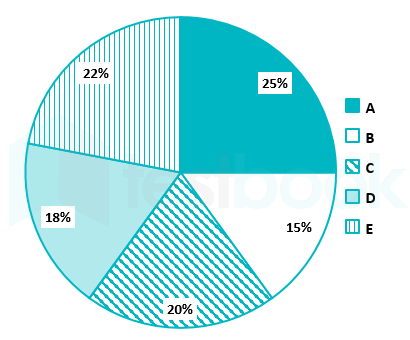
Directions: The following direction shows the percentage distribution of number of (Male + Female) studying in five different colleges and the second pie chart shows the percentage distribution of the number of males studying in five different colleges A, B, C, D and E.


Total number of students (Male + Female) = 2500


Total number of male students = 1200


Question 31

Find the ratio between the number of male students studying in A and B to the number of female students studying in A and B.

  1. AOption (a)

    43: 78

  2. BOption (b)

    31: 57

  3. COption (c)

    59: 78

  4. DOption (d)

    48: 57

  5. EOption (e)

    38: 43

View answer & explanation

Correct answer

Answer: (d)D.

48: 57

Why this answer is correct

General solution:


College A:

Number students studying in college  = 2500 ×  (18/100) = 450

Number of male students studying = 1200 ×  (25/100) = 300

Number of female students studying = (450 - 300) = 150


College B:

Number students studying in college  = 2500 ×  (24/100) = 600

Number of male students studying = 1200 ×  (15/100) = 180

Number of female students studying = (600 - 180) = 420


College C:

Number students studying in college  = 2500 ×  (15/100) = 375

Number of male students studying = 1200 ×  (20/100) = 240

Number of female students studying = (375 - 240) = 135


College D:

Number students studying in college  = 2500 ×  (23/100) = 575

Number of male students studying = 1200 ×  (18/100) = 216

Number of female students studying = (575 - 216) = 359


College E:

Number students studying in college  = 2500 ×  (20/100) = 500

Number of male students studying = 1200 ×  (22/100) = 264

Number of female students studying = (500 - 264) = 236


CollegesNumber of male studentsNumber of female students
A300150
B180420
C240135
D216359
E264236


Solution:

Number of male students studying in A = 300

Number of male students studying in B = 180

Number of female students studying in A = 150

Number of female students studying B = 420

Required ratio = (300 + 180): (150+ 420) = (480 : 570) = 48: 57

Question 32

In college A, ages of 1/4th of total males is more than 30 years and ages of 3/5th of total females is less than 30 years. Find the difference between number of males who are less than or equal to 30 yrs and the number of females who are more than or equal to 30 years in college A.

  1. AOption (a)

    200

  2. BOption (b)

    110

  3. COption (c)

    165

  4. DOption (d)

    160

  5. EOption (e)

    230

View answer & explanation

Correct answer

Answer: (c)C.

165

Why this answer is correct

General solution:


College A:

Number students studying in college  = 2500 ×  (18/100) = 450

Number of male students studying = 1200 ×  (25/100) = 300

Number of female students studying = (450 - 300) = 150


College B:

Number students studying in college  = 2500 ×  (24/100) = 600

Number of male students studying = 1200 ×  (15/100) = 180

Number of female students studying = (600 - 180) = 420


College C:

Number students studying in college  = 2500 ×  (15/100) = 375

Number of male students studying = 1200 ×  (20/100) = 240

Number of female students studying = (375 - 240) = 135


College D:

Number students studying in college  = 2500 ×  (23/100) = 575

Number of male students studying = 1200 ×  (18/100) = 216

Number of female students studying = (575 - 216) = 359


College E:

Number students studying in college  = 2500 ×  (20/100) = 500

Number of male students studying = 1200 ×  (22/100) = 264

Number of female students studying = (500 - 264) = 236


CollegesNumber of male studentsNumber of female students
A300150
B180420
C240135
D216359
E264236


Solution:

Number of males more than 30 years from college A = 300 × 1/4 = 75

Number of males less than 30 years from college A = (300 - 75) = 225

Number of females less than 30 years from college A = 3/5 ×  150 = 90

Number of females more than 30 years = (150 - 90) = 60

Required difference = 225 - 60 = 165

Question 33

Out of the total number of females in college A, the number of females who are from cities is 40% of the total female students in that college and rest are from villages. Find the sum of number of females in college A who are from villages and total number of females who are in college D.

  1. AOption (a)

    379

  2. BOption (b)

    346

  3. COption (c)

    449

  4. DOption (d)

    426

  5. EOption (e)

    422

View answer & explanation

Correct answer

Answer: (c)C.

449

Why this answer is correct

General solution:


College A:

Number students studying in college  = 2500 ×  (18/100) = 450

Number of male students studying = 1200 ×  (25/100) = 300

Number of female students studying = (450 - 300) = 150


College B:

Number students studying in college  = 2500 ×  (24/100) = 600

Number of male students studying = 1200 ×  (15/100) = 180

Number of female students studying = (600 - 180) = 420


College C:

Number students studying in college  = 2500 ×  (15/100) = 375

Number of male students studying = 1200 ×  (20/100) = 240

Number of female students studying = (375 - 240) = 135


College D:

Number students studying in college  = 2500 ×  (23/100) = 575

Number of male students studying = 1200 ×  (18/100) = 216

Number of female students studying = (575 - 216) = 359


College E:

Number students studying in college  = 2500 ×  (20/100) = 500

Number of male students studying = 1200 ×  (22/100) = 264

Number of female students studying = (500 - 264) = 236


CollegesNumber of male studentsNumber of female students
A300150
B180420
C240135
D216359
E264236


Solution:

Total females in college A = 150

Number of females from college A from cities = 150 ×  40/100 = 60

Number of females from college A from village = (150 - 60) = 90

Number of females from college D = 359

Required total = (359 + 90) = 449

Question 34

If 2/5th of the female students in college C and 1/2 of the female students in college E are participating in a sports competition and 2/3rd of the total students in college C and 3/5th of the total students in college E are participating in the sports competition, find number of males participating in sports competition from C and E.

  1. AOption (a)

    324

  2. BOption (b)

    378

  3. COption (c)

    346

  4. DOption (d)

    392

  5. EOption (e)

    356

View answer & explanation

Correct answer

Answer: (b)B.

378

Why this answer is correct

General solution:


College A:

Number students studying in college  = 2500 ×  (18/100) = 450

Number of male students studying = 1200 ×  (25/100) = 300

Number of female students studying = (450 - 300) = 150


College B:

Number students studying in college  = 2500 ×  (24/100) = 600

Number of male students studying = 1200 ×  (15/100) = 180

Number of female students studying = (600 - 180) = 420


College C:

Number students studying in college  = 2500 ×  (15/100) = 375

Number of male students studying = 1200 ×  (20/100) = 240

Number of female students studying = (375 - 240) = 135


College D:

Number students studying in college  = 2500 ×  (23/100) = 575

Number of male students studying = 1200 ×  (18/100) = 216

Number of female students studying = (575 - 216) = 359


College E:

Number students studying in college  = 2500 ×  (20/100) = 500

Number of male students studying = 1200 ×  (22/100) = 264

Number of female students studying = (500 - 264) = 236


CollegesNumber of male studentsNumber of female students
A300150
B180420
C240135
D216359
E264236


Solution:


Number of female students in college C participating in sports competition = 2/5 ×  135 = 54

Number of female students in college E participating in sports competition =236 ×  1/2 = 118

Total number of students participating in sports from college C = 375 ×  2/3 = 250

Total number of students participating in sports from college E = 500 ×  3/5 = 300

Number of male participating in sports from college C = 250 - 54 = 196

Number of male participating in sports from college E = 300 - 118 = 182

Total number of males participating in sports competition from C and E = (196 + 182) = 378

Question 35

Out of the total female students in college B, the number of female who are doing post graduation in Evening shift is equal to the average of the number of male students in college D and E. The rest of the female students are doing post graduation in the morning shift. Find the difference between the number of females who are doing post graduation in morning shift from college B and the number of female students in college A.

  1. AOption (a)

    40

  2. BOption (b)

    90

  3. COption (c)

    30

  4. DOption (d)

    10

  5. EOption (e)

    80

View answer & explanation

Correct answer

Answer: (c)C.

30

Why this answer is correct

General solution:


College A:

Number students studying in college  = 2500 ×  (18/100) = 450

Number of male students studying = 1200 ×  (25/100) = 300

Number of female students studying = (450 - 300) = 150


College B:

Number students studying in college  = 2500 ×  (24/100) = 600

Number of male students studying = 1200 ×  (15/100) = 180

Number of female students studying = (600 - 180) = 420


College C:

Number students studying in college  = 2500 ×  (15/100) = 375

Number of male students studying = 1200 ×  (20/100) = 240

Number of female students studying = (375 - 240) = 135


College D:

Number students studying in college  = 2500 ×  (23/100) = 575

Number of male students studying = 1200 ×  (18/100) = 216

Number of female students studying = (575 - 216) = 359


College E:

Number students studying in college  = 2500 ×  (20/100) = 500

Number of male students studying = 1200 ×  (22/100) = 264

Number of female students studying = (500 - 264) = 236


CollegesNumber of male studentsNumber of female students
A300150
B180420
C240135
D216359
E264236


Solution:

Total number of female in college B = 420

Number of female doing Post graduate evening shift in college B = (216 + 264)/2 = 240

Number of female doing Post graduate Morning shift in college B = (420 - 240) = 180

Number of female students in college A = 150

Required difference = (180 - 150) = 30

Question 36

There are two candidates participated in an election. It was found that 25% of votes were invalid. One who won the election got 70% of total valid votes, if the total number of votes are 84000. Find the number of valid votes that the other candidate got.

  1. AOption (a)

    17500

  2. BOption (b)

    18500

  3. COption (c)

    17800

  4. DOption (d)

    18900

  5. EOption (e)

    None of these 

View answer & explanation

Correct answer

Answer: (d)D.

18900

Why this answer is correct

Shortcut Trick

Total Votes = 84000

Valid Votes = 75% of 84000 = 63000

Winner got 70% of Valid Votes → Other candidate got 30% of Valid Votes.

Other Candidate Votes = 30% of 63000 = 18900.

∴ The correct answer is 18900.

Alternate Method

Given:

Total number of votes = 84000

Invalid votes = 25%

Winner's share = 70% of valid votes

Calculations:

⇒ Valid votes = Total votes − 25% of Total votes

⇒ Valid votes = 84000 × (75/100) = 63000

⇒ Since the winner got 70% of valid votes, the other candidate got (100 − 70) = 30% of valid votes.

⇒ Other candidate's votes = 30% of 63000

⇒ Other candidate's votes = (30/100) × 63000 = 18900

∴ The correct answer is 18900.

Additional Information

Election Based Percentages

In election problems, always distinguish between total votes, votes cast, and valid votes. The winning margin is usually calculated on valid votes.

Successive Percentage

The calculation can be combined as: Final Value = Total × (Valid % / 100) × (Candidate % / 100).

Question 37

Sunita can finish a project in 21 days and Sarita can finish the same project in 15 days. Sarita worked for 10 days and left the job. How many days would it take Sunita to finish the remaining work alone?

  1. AOption (a)

    10 days

  2. BOption (b)

    7 days

  3. COption (c)

    12 days

  4. DOption (d)

    11 days

  5. EOption (e)

    8 days

View answer & explanation

Correct answer

Answer: (b)B.

7 days

Why this answer is correct

Shortcut Trick

Total Work (LCM of 21 and 15) = 105 units.

Efficiency of Sunita = 105 ÷ 21 = 5 units/day.

Efficiency of Sarita = 105 ÷ 15 = 7 units/day.

Work done by Sarita in 10 days = 7 × 10 = 70 units.

Remaining work = 105 − 70 = 35 units.

Time taken by Sunita = 35 ÷ 5 = 7 days.

∴ The correct answer is 7 days.

Alternate Method

PersonDaysTotal WorkEfficiency
Sunita211055
Sarita157

Given:

Time taken by Sunita = 21 days

Time taken by Sarita = 15 days

Calculations:

⇒ Total work = LCM(21, 15) = 105 units

⇒ 1 day work of Sarita = 105 ÷ 15 = 7 units

⇒ Work completed by Sarita in 10 days = 7 × 10 = 70 units

⇒ Remaining work = 105 − 70 = 35 units

⇒ 1 day work of Sunita = 105 ÷ 21 = 5 units

⇒ Time taken by Sunita to complete remaining work = 35 ÷ 5 = 7 days

∴ The correct answer is 7 days.

Additional Information

Work and Efficiency Relation

Total Work = Efficiency × Time. Efficiency is inversely proportional to the time taken to complete the work.

Remaining Work Formula

Time for remaining work = (Total Work − Work already done) ÷ Efficiency of the person completing it.

LCM Method

Assuming Total Work as the Least Common Multiple (LCM) of the given number of days simplifies calculations by avoiding fractions.

Question 38

What should come in the place of (?) in the given series?

244, 100, 269, 73, 298, (?)

  1. AOption (a)

    38

  2. BOption (b)

    56

  3. COption (c)

    65

  4. DOption (d)

    42

  5. EOption (e)

    50

View answer & explanation

Correct answer

Answer: (d)D.

42

Why this answer is correct

Given series:

244, 100, 269, 73, 298, (?)

The logic followed here is:

⇒ 244 - (12)2 = 100

⇒ 100 + (13)2 = 269

⇒ 269 - (14)2 = 73

⇒ 73 + (15)2 = 298

⇒ 298 - (16)2 = 42

Hence, 42 will come in the place of (?).

Question 39

What should come in the place of (?) in the given series?

121, 130, 119, 132, (?), 134

  1. AOption (a)

    120

  2. BOption (b)

    115

  3. COption (c)

    116

  4. DOption (d)

    117

  5. EOption (e)

    118

View answer & explanation

Correct answer

Answer: (d)D.

117

Why this answer is correct

Given Series:

121, 130, 119, 132, (?), 134

The logic followed here is as follows:

⇒ 121 + 9 = 130

⇒ 130 - 11 = 119

⇒ 119 + 13 = 132

⇒ 132 - 15 = 117

⇒ 117 + 17 = 134

Hence, 117 will come in the place of (?).

Question 40

What should come in place of the question mark '?' in the following number series?

2, 3, 5, 9, 17, (?), 65

  1. AOption (a)

    30

  2. BOption (b)

    28

  3. COption (c)

    35

  4. DOption (d)

    33

  5. EOption (e)

    32

View answer & explanation

Correct answer

Answer: (d)D.

33

Why this answer is correct

Given Series:

2, 3, 5, 9, 17, (?), 65

The logic followed here is as follows:

⇒ 2 + 1 = 3

⇒ 3 + 2 = 5

⇒ 5 + 4 = 9

⇒ 9 + 8 = 17

⇒ 17 + 16 = 33

⇒ 33 + 32 = 65

Hence, 33 will come in the place of (?).

Question 41

What should come in place of (?) in the given series?

17, 37, 77, 137, 217, (?)

  1. AOption (a)

    347

  2. BOption (b)

    357

  3. COption (c)

    327

  4. DOption (d)

    317

  5. EOption (e)

    307

View answer & explanation

Correct answer

Answer: (d)D.

317

Why this answer is correct

The series follows the following pattern

 ⇒ 17 + 20 = 37

 ⇒ 37 + 40 = 77

 ⇒ 77 + 60 = 137

 ⇒ 137 + 80 = 217

 ⇒ 217 + 100 = 317 

Hence, the correct answer is 317.

Question 42

What should come in the place of (?) in the given series?

2000, 200, 40, 12, 4.8, ?

  1. AOption (a)

    2.2

  2. BOption (b)

    1.8

  3. COption (c)

    1.6

  4. DOption (d)

    1.2

  5. EOption (e)

    2.4

View answer & explanation

Correct answer

Answer: (e)E.

2.4

Why this answer is correct

Solution :

The series follows the following pattern :

⇒2000 × 0.1 = 200

⇒200 × 0.2 = 40

⇒40 × 0.3 = 12

⇒12 × 0.4 = 4.8

⇒4.8 × 0.5 = 2.4

⇒ The next term in the series will be 2.4.

Hence, 2.4 is the correct answer.

Question 43

A sum when invested at certain rate of simple interest for 3 years gives interest equals to 3/4th of the sum. Find the amount received when Rs. 1500 is invested at the same rate for 2 years at compound interest, compounded annually.

  1. AOption (a)

    Rs. 2343.75

  2. BOption (b)

    Rs. 3245.15

  3. COption (c)

    Rs. 2509.52

  4. DOption (d)

    Rs. 3015.08

  5. EOption (e)

    Rs. 2287.65

View answer & explanation

Correct answer

Answer: (a)A.

Rs. 2343.75

Why this answer is correct

Shortcut Trick

Simple Interest rate: 3/4 of sum in 3 years → 1/4 of sum per year → 25% per annum.

For Compound Interest at 25% for 2 years, the Multiplying Factor is (1.25)2 = 1.5625.

Amount = 1500 × 1.5625 = 2343.75.

∴ The correct answer is Rs. 2343.75.

Alternate Method

Given: Time (T1) = 3 years, SI = 3/4 × P1, P2 = Rs. 1500, T2 = 2 years.

Formula Used: SI = (P × R × T)/100; Amount (CI) = P(1 + R/100)n

⇒ 3/4 × P = (P × R × 3)/100

⇒ 1/4 = R/100

⇒ Rate (R) = 25%

⇒ Amount = 1500 × (1 + 25/100)2

⇒ Amount = 1500 × (5/4) × (5/4)

⇒ Amount = 1500 × 25/16

⇒ Amount = 37500 / 16 = 2343.75

∴ The correct answer is Rs. 2343.75.

Additional Information

Compound Interest Formula

The total amount A is calculated as A = P(1 + r/n)nt, where n is the number of times interest is compounded per year.

Effective Rate for 2 Years

For a rate R, the effective CI rate for 2 years is R + R + (R×R)/100. For 25%, it is 25 + 25 + 6.25 = 56.25%.

SI vs CI Difference

Difference between CI and SI for 2 years is P(R/100)2.

Question 44

Mixture P of lime juice and water contains 45% lime juice and rest water. x ml of lime juice and 2x ml of water is added to mixture P such that ratio of lime juice to water in the resultant mixture becomes 15:23. Find the ratio of the initial quantity of mixture P to x.

  1. AOption (a)

    5:7

  2. BOption (b)

    6:11

  3. COption (c)

    3:7

  4. DOption (d)

    11:7

  5. EOption (e)

    10:3

View answer & explanation

Correct answer

Answer: (e)E.

10:3

Why this answer is correct

Shortcut Trick

Let the initial mixture P be 100 units.

Initial Lime Juice = 45 units, Water = 55 units.

Ratio: (45 + x) / (55 + 2x) = 15 / 23

Cross-multiplying: 23(45 + x) = 15(55 + 2x) → 1035 + 23x = 825 + 30x → 7x = 210 → x = 30.

Ratio of P to x = 100 : 30 = 10 : 3.

∴ The correct answer is 10:3.

Alternate Method

Given:

Initial Lime Juice in P = 45%

Initial Water in P = 100% − 45% = 55%

Added Lime Juice = x, Added Water = 2x

Final Ratio = 15 : 23

Calculations:

Let the total initial quantity of Mixture P be Q.

⇒ Lime Juice in P = 0.45Q

⇒ Water in P = 0.55Q

⇒ (0.45Q + x) / (0.55Q + 2x) = 15 / 23

⇒ 23 × (0.45Q + x) = 15 × (0.55Q + 2x)

⇒ 10.35Q + 23x = 8.25Q + 30x

⇒ 10.35Q − 8.25Q = 30x − 23x

⇒ 2.1Q = 7x

⇒ Q / x = 7 / 2.1 = 70 / 21 = 10 / 3

∴ The correct answer is 10:3.

Additional Information

Mixture and Alligation

When two ingredients are mixed, the ratio of quantities is inversely proportional to the difference between their individual concentrations and the mean concentration.

Ratio and Proportion

If a/b = c/d, then by cross-multiplication ad = bc. This property is vital for solving linear equations involving ratios.

Percentage to Ratio Conversion

A concentration of 45% can be written as the fraction 45/100 or the ratio 9:11 (9 parts juice to 11 parts water).

Directions: The below table shows the average number of males and females , difference between males and females, total number of boys and girls having chocolates and number of boys having chocolates in five different schools.


SchoolsAverage Number of boys and girlsDifference between number of boys and girlsTotal number of boys and girls having chocolateNumber of boys having chocolate
A27550250150
B37550300200
C375150400150
D47550350200
E22550300100


Note:

i) If in only school B, the number of boys is less than the number of girls in the same school.

Question 45

Total number of chocolate having students in school E is how much percent more than the total number of girls present in the school E.

  1. AOption (a)

    45%

  2. BOption (b)

    50%

  3. COption (c)

    75%

  4. DOption (d)

    60%

  5. EOption (e)

    40%

View answer & explanation

Correct answer

Answer: (b)B.

50%

Why this answer is correct

General Solution:


School A:

Total number of boys and girls in school A = 275 ×  2 = 550

Difference between Number of boys and girls is 50

B + G = 550

B - G = 50

2B = 600

B = 300

Number of boys in school = 300

Number of girls in school = 550 - 300 = 250

Number of boys and girls having chocolate = 150

Number of girls having chocolate = 250 - 150 = 100


School B:

Total number of boys and girls in school B = 375 ×  2 = 750

Difference between Number of boys and girls is 50

G + B = 750

G - B = 50

2G = 800

G = 400

Number of girls in school = 400

Number of boys in school = 750 - 400 = 350

Number of boys and girls having chocolate = 200

Number of girls having chocolate = 300 - 200 = 100


School C:

Total number of boys and girls in school C = 375 ×  2 = 750

Difference between Number of boys and girls is 150

B + G = 750

B - G = 150

2B = 900

B = 450

Number of boys in school = 450

Number of girls in school = 750 - 450 = 300

Number of boys and girls having chocolate = 150

Number of girls having chocolate = 400 - 150 = 250


School D:

Total number of boys and girls in school D = 475 ×  2 = 950

Difference between Number of boys and girls is 50

B + G = 950

B - G = 50

2B = 1000

B = 500

Number of boys in school = 500

Number of girls in school = 950 - 500 = 450

Number of boys and girls having chocolate = 350

Number of girls having chocolate = 350 - 200 = 150


School E:

Total number of boys and girls in school E = 225 ×  2 = 450

Difference between Number of boys and girls is 50

B + G = 450

B - G = 50

2B = 500

B = 250

Number of boys in school = 250

Number of girls in school = 450 - 250 = 200

Number of boys and girls having chocolate = 100

Number of girls having chocolate = 300 - 100 = 200


SchoolsBoys in schoolGirls in schoolBoys having chocolateGirls having chocolate
A300250150100
B350400200100
C450300150250
D500450200150
E250200100200


Solution:

Number of chocolate having students in school E = (200 + 100) = 300

Number of girls in school E = 200

Required percentage = (300 - 200)/200 ×  100 = 50%

Question 46

If the number of boys and girls in school D is increased by 40% and 20% respectively. Find the difference between the chocolate required to all boys and girls in school D.

  1. AOption (a)

    170

  2. BOption (b)

    140

  3. COption (c)

    110

  4. DOption (d)

    130

  5. EOption (e)

    150

View answer & explanation

Correct answer

Answer: (c)C.

110

Why this answer is correct

General Solution:


School A:

Total number of boys and girls in school A = 275 ×  2 = 550

Difference between Number of boys and girls is 50

B + G = 550

B - G = 50

2B = 600

B = 300

Number of boys in school = 300

Number of girls in school = 550 - 300 = 250

Number of boys and girls having chocolate = 150

Number of girls having chocolate = 250 - 150 = 100


School B:

Total number of boys and girls in school B = 375 ×  2 = 750

Difference between Number of boys and girls is 50

G + B = 750

G - B = 50

2G = 800

G = 400

Number of girls in school = 400

Number of boys in school = 750 - 400 = 350

Number of boys and girls having chocolate = 200

Number of girls having chocolate = 300 - 200 = 100


School C:

Total number of boys and girls in school C = 375 ×  2 = 750

Difference between Number of boys and girls is 150

B + G = 750

B - G = 150

2B = 900

B = 450

Number of boys in school = 450

Number of girls in school = 750 - 450 = 300

Number of boys and girls having chocolate = 150

Number of girls having chocolate = 400 - 150 = 250


School D:

Total number of boys and girls in school D = 475 ×  2 = 950

Difference between Number of boys and girls is 50

B + G = 950

B - G = 50

2B = 1000

B = 500

Number of boys in school = 500

Number of girls in school = 950 - 500 = 450

Number of boys and girls having chocolate = 350

Number of girls having chocolate = 350 - 200 = 150


School E:

Total number of boys and girls in school E = 225 ×  2 = 450

Difference between Number of boys and girls is 50

B + G = 450

B - G = 50

2B = 500

B = 250

Number of boys in school = 250

Number of girls in school = 450 - 250 = 200

Number of boys and girls having chocolate = 100

Number of girls having chocolate = 300 - 100 = 200


SchoolsBoys in schoolGirls in schoolBoys having chocolateGirls having chocolate
A300250150100
B350400200100
C450300150250
D500450200150
E250200100200


Solution:

Number of boys in school D = 500 ×  140/100 = 700

Number of girls in school D = 450 ×  120/100 = 540

Number of chocolate required to boys = 700 - 200 = 500

Number of chocolate required to girls = 540 - 150 = 390

Required difference = (500 - 390) = 110

Question 47

If new 200 chocolates are distributed to boys and girls according to the ratio present in the school C. Find the total number of boys having chocolates in School C at present.

  1. AOption (a)

    340

  2. BOption (b)

    330

  3. COption (c)

    270

  4. DOption (d)

    310

  5. EOption (e)

    290

View answer & explanation

Correct answer

Answer: (c)C.

270

Why this answer is correct

General Solution:


School A:

Total number of boys and girls in school A = 275 ×  2 = 550

Difference between Number of boys and girls is 50

B + G = 550

B - G = 50

2B = 600

B = 300

Number of boys in school = 300

Number of girls in school = 550 - 300 = 250

Number of boys and girls having chocolate = 150

Number of girls having chocolate = 250 - 150 = 100


School B:

Total number of boys and girls in school B = 375 ×  2 = 750

Difference between Number of boys and girls is 50

G + B = 750

G - B = 50

2G = 800

G = 400

Number of girls in school = 400

Number of boys in school = 750 - 400 = 350

Number of boys and girls having chocolate = 200

Number of girls having chocolate = 300 - 200 = 100


School C:

Total number of boys and girls in school C = 375 ×  2 = 750

Difference between Number of boys and girls is 150

B + G = 750

B - G = 150

2B = 900

B = 450

Number of boys in school = 450

Number of girls in school = 750 - 450 = 300

Number of boys and girls having chocolate = 150

Number of girls having chocolate = 400 - 150 = 250


School D:

Total number of boys and girls in school D = 475 ×  2 = 950

Difference between Number of boys and girls is 50

B + G = 950

B - G = 50

2B = 1000

B = 500

Number of boys in school = 500

Number of girls in school = 950 - 500 = 450

Number of boys and girls having chocolate = 350

Number of girls having chocolate = 350 - 200 = 150


School E:

Total number of boys and girls in school E = 225 ×  2 = 450

Difference between Number of boys and girls is 50

B + G = 450

B - G = 50

2B = 500

B = 250

Number of boys in school = 250

Number of girls in school = 450 - 250 = 200

Number of boys and girls having chocolate = 100

Number of girls having chocolate = 300 - 100 = 200


SchoolsBoys in schoolGirls in schoolBoys having chocolateGirls having chocolate
A300250150100
B350400200100
C450300150250
D500450200150
E250200100200


Solution:

Ratio of number of boys to girls present in school C = 450: 300 = 3:2

Number of chocolate distributed to boys = 200/5 ×  3 = 120

Number of chocolate distributed to girls = (200 - 120) = 80

Number of boys having chocolate at present is (150 + 120) = 270

Question 48

Find the ratio between the number of boys having chocolate in school B and C to the number of girls having chocolate in school D and E.

  1. AOption (a)

    2: 1

  2. BOption (b)

    1: 3

  3. COption (c)

    1: 1

  4. DOption (d)

    2: 3

  5. EOption (e)

    3: 2

View answer & explanation

Correct answer

Answer: (c)C.

1: 1

Why this answer is correct

General Solution:


School A:

Total number of boys and girls in school A = 275 ×  2 = 550

Difference between Number of boys and girls is 50

B + G = 550

B - G = 50

2B = 600

B = 300

Number of boys in school = 300

Number of girls in school = 550 - 300 = 250

Number of boys and girls having chocolate = 150

Number of girls having chocolate = 250 - 150 = 100


School B:

Total number of boys and girls in school B = 375 ×  2 = 750

Difference between Number of boys and girls is 50

G + B = 750

G - B = 50

2G = 800

G = 400

Number of girls in school = 400

Number of boys in school = 750 - 400 = 350

Number of boys and girls having chocolate = 200

Number of girls having chocolate = 300 - 200 = 100


School C:

Total number of boys and girls in school C = 375 ×  2 = 750

Difference between Number of boys and girls is 150

B + G = 750

B - G = 150

2B = 900

B = 450

Number of boys in school = 450

Number of girls in school = 750 - 450 = 300

Number of boys and girls having chocolate = 150

Number of girls having chocolate = 400 - 150 = 250


School D:

Total number of boys and girls in school D = 475 ×  2 = 950

Difference between Number of boys and girls is 50

B + G = 950

B - G = 50

2B = 1000

B = 500

Number of boys in school = 500

Number of girls in school = 950 - 500 = 450

Number of boys and girls having chocolate = 350

Number of girls having chocolate = 350 - 200 = 150


School E:

Total number of boys and girls in school E = 225 ×  2 = 450

Difference between Number of boys and girls is 50

B + G = 450

B - G = 50

2B = 500

B = 250

Number of boys in school = 250

Number of girls in school = 450 - 250 = 200

Number of boys and girls having chocolate = 100

Number of girls having chocolate = 300 - 100 = 200


SchoolsBoys in schoolGirls in schoolBoys having chocolateGirls having chocolate
A300250150100
B350400200100
C450300150250
D500450200150
E250200100200


Solution:

Number of boys having chocolate from school B = 200

Number of boys having chocolate from school C = 150

Number of girls having chocolate from school D = 150

Number of girls having chocolate from school E = 200

Required ratio = 350: 350 = 1: 1

Question 49

If the number of boys having chocolate in school A is increased by 20% and the number of girls having chocolate in school A is increased by 25%. Find the difference between the number of boys and girls not having chocolate in school A.

  1. AOption (a)

    20

  2. BOption (b)

    5

  3. COption (c)

    10

  4. DOption (d)

    15

  5. EOption (e)

    25

View answer & explanation

Correct answer

Answer: (b)B.

5

Why this answer is correct

General Solution:


School A:

Total number of boys and girls in school A = 275 ×  2 = 550

Difference between Number of boys and girls is 50

B + G = 550

B - G = 50

2B = 600

B = 300

Number of boys in school = 300

Number of girls in school = 550 - 300 = 250

Number of boys and girls having chocolate = 150

Number of girls having chocolate = 250 - 150 = 100


School B:

Total number of boys and girls in school B = 375 ×  2 = 750

Difference between Number of boys and girls is 50

G + B = 750

G - B = 50

2G = 800

G = 400

Number of girls in school = 400

Number of boys in school = 750 - 400 = 350

Number of boys and girls having chocolate = 200

Number of girls having chocolate = 300 - 200 = 100


School C:

Total number of boys and girls in school C = 375 ×  2 = 750

Difference between Number of boys and girls is 150

B + G = 750

B - G = 150

2B = 900

B = 450

Number of boys in school = 450

Number of girls in school = 750 - 450 = 300

Number of boys and girls having chocolate = 150

Number of girls having chocolate = 400 - 150 = 250


School D:

Total number of boys and girls in school D = 475 ×  2 = 950

Difference between Number of boys and girls is 50

B + G = 950

B - G = 50

2B = 1000

B = 500

Number of boys in school = 500

Number of girls in school = 950 - 500 = 450

Number of boys and girls having chocolate = 350

Number of girls having chocolate = 350 - 200 = 150


School E:

Total number of boys and girls in school E = 225 ×  2 = 450

Difference between Number of boys and girls is 50

B + G = 450

B - G = 50

2B = 500

B = 250

Number of boys in school = 250

Number of girls in school = 450 - 250 = 200

Number of boys and girls having chocolate = 100

Number of girls having chocolate = 300 - 100 = 200


SchoolsBoys in schoolGirls in schoolBoys having chocolateGirls having chocolate
A300250150100
B350400200100
C450300150250
D500450200150
E250200100200


Solution:

Number of boys having chocolate in school A = 150 ×  120/100 = 180

Number of girls having chocolate in school A= 100 ×  125/100 = 125

Number of boys not having chocolate in school A = (300 - 180) = 120

Number of girls not having chocolate in school A = (250 - 125) = 125

Required difference = (125 - 120) = 5
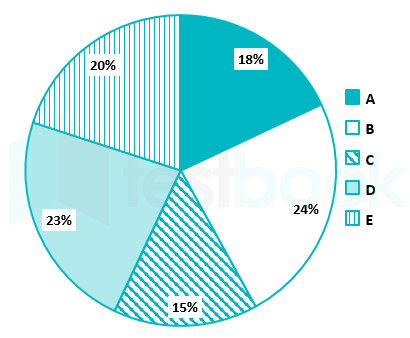
Question 50

The cost price of 8 apples is equal to the selling price of 5 apples and cost price of 13 oranges is equal to selling price of 10 oranges, If the ratio of cost price of 1 apple to 1 orange is 5 : 2, Find the net profit percent on the sale of 8 apples and 10 oranges.

  1. AOption (a)

    55%

  2. BOption (b)

    40%

  3. COption (c)

    50%

  4. DOption (d)

    45%

  5. EOption (e)

    None  of these

View answer & explanation

Correct answer

Answer: (c)C.

50%

Why this answer is correct

Shortcut Trick

Ratio of CP of 1 apple to 1 orange = 5 : 2. Let CP of 1 apple = 5 and 1 orange = 2.

Total CP of 8 apples and 10 oranges = (8 × 5) + (10 × 2) = 40 + 20 = 60.

Profit on 8 apples: CP of 8 = SP of 5 ⇒ SP of 8 = (8 ÷ 5) × CP of 8 = 1.6 × 40 = 64.

Profit on 10 oranges: CP of 13 = SP of 10 ⇒ SP of 10 = CP of 13 = 13 × 2 = 26.

Total SP = 64 + 26 = 90. Profit % = [(90 − 60) ÷ 60] × 100 = 50%.

∴ The correct answer is 50%.

Alternate Method

Given → 8 CPa = 5 SPa, 13 CPo = 10 SPo, CPa : CPo = 5 : 2. Formulas: Profit = SP − CP | Profit % = (Profit ÷ CP) × 100.

⇒ Let CP of 1 apple = 5x and CP of 1 orange = 2x. ⇒ Total CP of 8 apples and 10 oranges = 8(5x) + 10(2x) = 40x + 20x = 60x. ⇒ For apples: 5 SPa = 8 CPa ⇒ SP of 5 apples = 8(5x) = 40x ⇒ SP of 1 apple = 8x. ⇒ SP of 8 apples = 8 × 8x = 64x. ⇒ For oranges: 10 SPo = 13 CPo ⇒ SP of 10 oranges = 13(2x) = 26x. ⇒ Total SP = 64x + 26x = 90x. ⇒ Net Profit % = [(90x − 60x) ÷ 60x] × 100 = (30 ÷ 60) × 100 = 50%.

∴ The correct answer is 50%.

Additional Information

Profit and Loss on Multiple Articles

When handling different items, find the total cost price and total selling price separately before calculating the overall profit percentage.

Ratio of CP and SP

If n CP = m SP, then the ratio of CP/SP = m/n. This allows for quick calculation of individual item profits.

Question 51

Average of four numbers is 14. Out of four numbers, first number is two times of second number, second number is three times of third number, third number is one-fourth of fourth number. Find the fourth number.

  1. AOption (a)

    12

  2. BOption (b)

    13

  3. COption (c)

    16

  4. DOption (d)

    17

  5. EOption (e)

    18

View answer & explanation

Correct answer

Answer: (c)C.

16

Why this answer is correct

Shortcut Trick

Assume third number = 1 unit.

Second number = 3 units, First number = 6 units, Fourth number = 4 units.

Total units = 6 + 3 + 1 + 4 = 14 units.

Sum of numbers = 14 × 4 = 56.

14 units = 56 ⇒ 1 unit = 4.

Fourth number = 4 units = 4 × 4 = 16.

∴ The correct answer is 16.

Alternate Method

Given: Average of 4 numbers = 14. Relations between numbers are provided.

Formula: Sum = Average × Count of numbers.

⇒ Let the third number be x.

⇒ Second number = 3x.

⇒ First number = 2 × 3x = 6x.

⇒ Third number = (1/4) × Fourth number ⇒ Fourth number = 4x.

⇒ Average = (6x + 3x + x + 4x) ÷ 4 = 14.

⇒ 14x ÷ 4 = 14.

⇒ 14x = 56.

⇒ x = 4.

⇒ Fourth number = 4x = 4 × 4 = 16.

∴ The correct answer is 16.

Additional Information

Average Concept

Average is the sum of observations divided by the total number of observations. Formula: Sum = Average × Number of terms.

Ratio and Proportion

When multiple variables are related linearly, always assume the most central or smallest variable as a single unit (x) to simplify calculations.

Question 52

In the given question, two equations numbered l and II are given. Solve both the equations and mark the appropriate answer.

I. x2 + 5x – 104 = 0

II. y2 + 30y + 224 = 0

  1. AOption (a)

    x > y

  2. BOption (b)

    x < y

  3. COption (c)

    x ≥ y

  4. DOption (d)

    x ≤ y

  5. EOption (e)

    x = y or relationship between x and y cannot be established.

View answer & explanation

Correct answer

Answer: (a)A.

x > y

Why this answer is correct

I. x2 + 5x – 104 = 0

⇒ x2 + 13x – 8x – 104 = 0

⇒ x(x + 13) – 8(x + 13) = 0

⇒ (x + 13) (x – 8) = 0

⇒ x = –13, 8


II. y2 + 30y + 224 = 0

⇒ y2 + 16y + 14y + 224 = 0

⇒ y(y + 16) + 14(y + 16) = 0

⇒ (y + 16) (y + 14) = 0

⇒ y = –16, –14


Value of xValue of yRelation
–13–16x > y
–13–14x > y
8–16x > y
8–14x > y


∴ x > y

Question 53

In the given question, two equations numbered l and II are given. Solve both the equations and mark the appropriate answer.

I. 2x2 + 5x – 3 = 0

II. 2y2 – 5y + 2 = 0

  1. AOption (a)

    x > y

  2. BOption (b)

    x < y

  3. COption (c)

    x ≥ y

  4. DOption (d)

    x ≤ y

  5. EOption (e)

    x = y or relationship between y and y cannot be established.

View answer & explanation

Correct answer

Answer: (d)D.

x ≤ y

Why this answer is correct

I. 2x2 + 5x – 3 = 0

⇒ 2x2 + 6x – x – 3 = 0

⇒ 2x (x + 3) – 1 (x + 3) = 0

⇒ (2x – 1) (x + 3) = 0,

⇒ x = 1/2, – 3


II. 2y2 – 5y + 2 = 0

⇒ 2y2 – 4y – y + 2 = 0

⇒ 2y (y – 2) – 1 (y – 2) = 0

⇒ (2y – 1) (y – 2) = 0

⇒ y = 1/2, 2

Value of xValue of yRelation
1/21/2x = y
1/22x < y
– 31/2x < y
– 32x < y


Hence, x ≤ y

Question 54

In the given question, two equations numbered l and II are given. Solve both the equations and mark the appropriate answer.

I. x2 – 38x + 360 = 0

II. y2 + 10y + 24 = 0

  1. AOption (a)

    x > y

  2. BOption (b)

    x < y

  3. COption (c)

    x ≥ y

  4. DOption (d)

    x ≤ y

  5. EOption (e)

    x = y or relationship between x and y cannot be established.

View answer & explanation

Correct answer

Answer: (a)A.

x > y

Why this answer is correct

I. x2 – 38x + 360 = 0

⇒ x2– 20x – 18x + 360 = 0

⇒ (x – 18) (x – 20) = 0

⇒ x = 18, 20

II. y2+ 10y + 24 = 0

⇒ y2 + 6y + 4y + 2 = 0

⇒ (y + 4) (y + 6) = 0

⇒ y = –4, –6


Value of xValue of yRelation
18–4x > y
18–6x > y
20–4x > y
20–6x > y

Hence, x > y.

Question 55

In the given question, two equations numbered l and II are given. Solve both the equations and mark the appropriate answer.

I. x2 – 20x + 99 = 0

II. y2 – 9y + 20 = 0

  1. AOption (a)

    x > y

  2. BOption (b)

    x < y

  3. COption (c)

    x ≥ y

  4. DOption (d)

    x ≤ y

  5. EOption (e)

    x = y or relationship between x and y cannot be established.

View answer & explanation

Correct answer

Answer: (a)A.

x > y

Why this answer is correct

I. x2 – 20x + 99 = 0

⇒ x2 – 11x – 9x + 99 = 0

⇒ x (x – 11) – 9 (x – 11) = 0

⇒ (x – 11) (x – 9) = 0

⇒ x = 11, 9


II. y2 – 9y + 20 = 0

⇒ y2 – 5y – 4y + 20 = 0

⇒ y (y – 5) – 4 (y – 5) = 0

⇒ (y – 5) (y – 4) = 0

⇒ y = 5, 4


Value of xValue of yRelation
115x > y
114x > y
95x > y
94x > y


Hence x > y

Question 56

In the given question, two equations numbered l and II are given. Solve both the equations and mark the appropriate answer.

I. 6x2 – 17x + 5 = 0

II. 10y2 + 3y – 1 = 0

  1. AOption (a)

    x > y

  2. BOption (b)

    x < y

  3. COption (c)

    x ≥ y

  4. DOption (d)

    x ≤ y

  5. EOption (e)

    x = y or relationship between x and y cannot be established.

View answer & explanation

Correct answer

Answer: (a)A.

x > y

Why this answer is correct

I. 6x2 – 17x + 5 = 0

⇒ 6x2 – 15x – 2x + 5 = 0

⇒ 3x (2x – 5) – 1 (2x – 5) = 0

⇒ (2x – 5) (3x – 1) = 0

⇒ x = 5/2, 1/3


II. 10y2 + 3y – 1 = 0

⇒ 10y2 + 5y – 2y – 1 = 0

⇒ 5y (2y + 1) – 1 (2y + 1) = 0

⇒ (2y + 1) (5y – 1) = 0

⇒ y = -1/2, 1/5

Comparison between x and y (via Tabulation):

Value of xValue of yRelation
5/2-1/2x > y
5/21/5x > y
1/3-1/2x > y
1/31/5x > y


∴  x > y

Directions: Read the below information and answer the following questions.

The total number of Sarees sold in Shop A is 530. The number of Cotton Sarees sold in Shop C is 20% more than the number of Cotton Sarees sold in Shop A. The number of SilkSarees sold in Shop C is 55 less than the number of Cotton Sarees sold in Shop B. The number of Silk Sarees sold in Shop B is 20 more than the number of Cotton Sarees sold in Shop C. The number of Cotton Sarees sold in Shop A is 30 more than the number of Silk Sarees sold in Shop C. Total number of Cotton Sarees sold in all three shops is 825.

Note: Total number of Sarees sold = Number of Cotton Sarees sold + Number of Silk Sarees sold.

Question 57

Find the difference between the number of Silk and Cotton Sarees sold in all three shops.

  1. AOption (a)

    10

  2. BOption (b)

    7

  3. COption (c)

    8

  4. DOption (d)

    5

  5. EOption (e)

    9

View answer & explanation

Correct answer

Answer: (d)D.

5

Why this answer is correct

General Solution:

The number of Cotton Sarees sold in Shop A = 5x

The number of Silk Sarees sold in Shop A = 530 – 5x

The number of Cotton Sarees sold in Shop C = 6x

The number of Cotton Sarees sold in Shop B = y

The number of Silk Sarees sold in Shop C = y – 55

The number of Silk Sarees sold in Shop B = 6x + 20

The number of Cotton Sarees sold in Shop A is 30 more than the number of Silk Sarees sold

in Shop C

5x = 30 + y – 55

y = 5x + 25 ----------- (1)

The total number of Cotton Sarees sold in all three shops is 825

5x + y + 6x = 825

5x + 5x + 25 + 6x = 825

16x = 800

x = 50

Substitute x = 50 in equation (1)

y = 5 ×  50 + 25

y = 275

Solution:

Total number of Silk Sarees sold = (280 + 320 + 220) = 820

Total number of Cotton Sarees sold = (250 + 275 + 300) = 825

Required difference = (825 – 820) = 5

Question 58

If the number of Cotton and Silk Sarees sold in Shop A is increased by 30% and 25% respectively, then find the total number of Sarees sold in Shop A.

  1. AOption (a)

    525

  2. BOption (b)

    675

  3. COption (c)

    575

  4. DOption (d)

    475

  5. EOption (e)

    355

View answer & explanation

Correct answer

Answer: (b)B.

675

Why this answer is correct

General Solution:

The number of Cotton Sarees sold in Shop A = 5x

The number of Silk Sarees sold in Shop A = 530 – 5x

The number of Cotton Sarees sold in Shop C = 6x

The number of Cotton Sarees sold in Shop B = y

The number of Silk Sarees sold in Shop C = y – 55

The number of Silk Sarees sold in Shop B = 6x + 20

The number of Cotton Sarees sold in Shop A is 30 more than the number of Silk Sarees sold

in Shop C

5x = 30 + y – 55

y = 5x + 25 ----------- (1)

The total number of Cotton Sarees sold in all three shops is 825

5x + y + 6x = 825

5x + 5x + 25 + 6x = 825

16x = 800

x = 50

Substitute x = 50 in equation (1)

y = 5 ×  50 + 25

y = 275

Solution:

Number of Cotton Sarees sold in Shop A = 250 ×  (130/100) = 325

Number of Silk Sarees sold in Shop A = 280 ×  (125/100) = 350

Required sum = 325 + 350 = 675

Question 59

The sum of the number of Silk Sarees sold in Shop B and C is how much percentage more than the number of Cotton Sarees sold in Shop C.

  1. AOption (a)

    90%

  2. BOption (b)

    50%

  3. COption (c)

    75%

  4. DOption (d)

    80%

  5. EOption (e)

    70%

View answer & explanation

Correct answer

Answer: (d)D.

80%

Why this answer is correct

General Solution:

The number of Cotton Sarees sold in Shop A = 5x

The number of Silk Sarees sold in Shop A = 530 – 5x

The number of Cotton Sarees sold in Shop C = 6x

The number of Cotton Sarees sold in Shop B = y

The number of Silk Sarees sold in Shop C = y – 55

The number of Silk Sarees sold in Shop B = 6x + 20

The number of Cotton Sarees sold in Shop A is 30 more than the number of Silk Sarees sold

in Shop C

5x = 30 + y – 55

y = 5x + 25 ----------- (1)

The total number of Cotton Sarees sold in all three shops is 825

5x + y + 6x = 825

5x + 5x + 25 + 6x = 825

16x = 800

x = 50

Substitute x = 50 in equation (1)

y = 5 ×  50 + 25

y = 275

Solution:

The sum of the number of Silk Sarees sold in Shop B and C = 320 + 220 = 540

The number of Cotton Sarees sold in Shop C = 300

Required percentage = [(540 – 300)/300] ×  100

= [240/300] ×  100

= 80%

Question 60

A cylindrical bucket filled with sand is empty out on the ground, then a conical heap of height 24 cm of sand is formed. If the height of cylindrical bucket is 32 cm and it has 18 cm base radius, then find the area covered on the ground by sand.

  1. AOption (a)

    3072.14 cm2

  2. BOption (b)

    500.14 cm2

  3. COption (c)

    1296.14 cm2

  4. DOption (d)

    4073.14 cm2

  5. EOption (e)

    None of these

View answer & explanation

Correct answer

Answer: (d)D.

4073.14 cm2

Why this answer is correct

Shortcut Trick

Volume of Cylindrical Bucket = Volume of Conical Heap.

π × rc2 × hc = (1/3) × π × rh2 × hh

182 × 32 = (1/3) × rh2 × 24

rh2 = (324 × 32 × 3) / 24 = 1296

Area covered = πrh2 = (22/7) × 1296 ≈ 4073.14 cm2.

∴ The correct answer is 4073.14 cm2.

Alternate Method

Given: Radius of Cylindrical Bucket (r) = 18 cm, Height (h) = 32 cm. Height of Conical Heap (H) = 24 cm.

Formula Used: Volume of Cylinder = πr2h; Volume of Cone = (1/3)πR2H; Area of base = πR2.

⇒ Volume of sand = π × (18)2 × 32

⇒ Volume of conical heap = (1/3) × π × R2 × 24

⇒ (1/3) × π × R2 × 24 = π × 324 × 32

⇒ 8 × R2 = 324 × 32

⇒ R2 = 324 × 4 = 1296 cm2

⇒ Area covered on ground = Area of circular base of cone = πR2

⇒ Area = (22/7) × 1296 = 28512 / 7 ≈ 4073.1428...

∴ The correct answer is 4073.14 cm2.

Additional Information

Volume Invariance

When a 3D object is reshaped or its contents are poured out to form a new shape, the Total Volume remains constant.

Cone Geometry

The area covered by a conical heap on a flat surface is the area of its Circular Base, calculated as A = πr2.

Slant Height of Cone

Slant height l = √(R2 + H2), which is used for calculating the Curved Surface Area (πRl).

Question 61

The addition of the length of two trains A and B is 410 m. The ratio of the speed of train A and train B is 4 : 7. The ratio between time to cross an electric pole by train A and train B is 5 : 3. Then, find the difference (in m) between the length of train B and train A?

  1. AOption (a)

    8

  2. BOption (b)

    10

  3. COption (c)

    12

  4. DOption (d)

    15

  5. EOption (e)

    None of these

View answer & explanation

Correct answer

Answer: (b)B.

10

Why this answer is correct

Shortcut Trick

Ratio of Lengths = (Ratio of Speed) × (Ratio of Time)

LA : LB = (4 × 5) : (7 × 3) = 20 : 21

Total units = 20 + 21 = 41 units → 410 m

Difference = 21 − 20 = 1 unit → (410 ÷ 41) × 1 = 10 m

∴ The correct answer is 10 m.

Alternate Method

Given: Sum of lengths (LA + LB) = 410 m; Ratio of speeds (SA : SB) = 4 : 7; Ratio of time (TA : TB) = 5 : 3.

Formula: Length of train = Speed × Time (to cross a pole)

⇒ Let SA = 4x, SB = 7x and TA = 5y, TB = 3y

⇒ LA = 4x × 5y = 20xy

⇒ LB = 7x × 3y = 21xy

⇒ LA + LB = 20xy + 21xy = 41xy

⇒ 41xy = 410 ⇒ xy = 10

⇒ Difference = LB − LA = 21xy − 20xy = xy

⇒ Difference = 10 m

∴ The correct answer is 10 m.

Additional Information

Relative Speed

When two trains move in the opposite direction, relative speed = S1 + S2. In the same direction, relative speed = |S1 − S2|.

Crossing Objects

To cross a pole/man, distance = length of train. To cross a platform/bridge, distance = length of train + length of platform.

Unit Conversion

To convert kmph to m/s, multiply by 5/18. To convert m/s to kmph, multiply by 18/5.

Question 62

The ratio of speed of boat in still water to the speed of stream is 5 : 2. It takes 4 hour more to travel 42 km upstream than to travel same distance downstream. Find the speed of boat in still water.

  1. AOption (a)

    12 km/hr

  2. BOption (b)

    10 km/hr

  3. COption (c)

    15 km/hr

  4. DOption (d)

    20 km/hr

  5. EOption (e)

    17 km/hr

View answer & explanation

Correct answer

Answer: (b)B.

10 km/hr

Why this answer is correct

Shortcut Trick

Ratio of Speed of Boat (u) to Speed of Stream (v) = 5 : 2

Downstream speed (D) = 5 + 2 = 7 units; Upstream speed (U) = 5 − 2 = 3 units

Time difference = 42/3x − 42/7x = 4 ⇒ 14/x − 6/x = 4 ⇒ 8/x = 4 ⇒ x = 2

Speed of boat in still water = 5 × 2 = 10 km/hr

∴ The correct answer is 10 km/hr.

Alternate Method

Given: Ratio u : v = 5 : 2. Distance (D) = 42 km. Time difference = 4 hours.

Formula Used: Time = Distance ÷ Speed; Downstream Speed = u + v; Upstream Speed = u − v.

⇒ Let Speed of boat = 5x and Speed of stream = 2x

⇒ Upstream Speed = 3x; Downstream Speed = 7x

⇒ Time Upstream − Time Downstream = 4 hours

⇒ 42/3x − 42/7x = 4

⇒ 14/x − 6/x = 4

⇒ 8/x = 4 ⇒ x = 2

⇒ Speed of boat = 5 × 2 = 10 km/hr

∴ The correct answer is 10 km/hr.

Additional Information

Speed in Still Water

It is the average of downstream and upstream speeds: u = (D + U) / 2.

Speed of Current

It is half the difference between downstream and upstream speeds: v = (D − U) / 2.

Relative Speed in Streams

When moving downstream, speeds add up; when moving upstream, the stream speed is subtracted from the boat speed.

Question 63

Rinku, Puneet and Sweety have balls in the ratio 7 : 6 : 9. If Sweety give 15 balls to Rinku then the ratio of number of balls Rinku, Puneet and Sweety have 5 : 3 : 3 respectively. Find the initial number of balls that Rinku has.

  1. AOption (a)

    50

  2. BOption (b)

    30

  3. COption (c)

    35

  4. DOption (d)

    40

  5. EOption (e)

    None of these

View answer & explanation

Correct answer

Answer: (c)C.

35

Why this answer is correct

Shortcut Trick

Initial Ratio R : P : S = 7 : 6 : 9 (Total parts = 22)

Final Ratio R : P : S = 5 : 3 : 3 (Multiply by 2 to equate Puneet's balls) → 10 : 6 : 6 (Total parts = 22)

Change in Sweety's balls = 9 − 6 = 3 units | Change in Rinku's balls = 10 − 7 = 3 units

3 units = 15 balls ⇒ 1 unit = 5 balls

Initial Rinku's balls = 7 units = 7 × 5 = 35 balls.

∴ The correct answer is 35 balls.

Alternate Method

Given: Initial ratio of balls with Rinku, Puneet and Sweety = 7 : 6 : 9.

Formula: Ratio = Value ÷ Common Factor (x)

⇒ Let balls be 7x, 6x, and 9x.

⇒ According to question: (7x + 15) / 6x / (9x − 15) = 5 / 3 / 3

⇒ Comparing Puneet and Sweety: 6x / (9x − 15) = 3 / 3

⇒ 6x = 9x − 15

⇒ 3x = 15 ⇒ x = 5

⇒ Initial balls with Rinku = 7x = 7 × 5 = 35.

∴ The correct answer is 35 balls.

Additional Information

Ratio Constancy Principle

When items are transferred between two people in a group, the total sum of items in the group remains constant. Always equate the total parts of ratios to simplify calculations.

Compound Ratio

If two ratios are a : b and c : d, then the compound ratio is (a × c) : (b × d).

Question 64

A's mother's present age is 6 times the present age of A. Sum of the ages of A's mother and father, after 5 years is 80 years, A's father is 10 years elder than A's mother. Find the present age of A?

  1. AOption (a)

     15

  2. BOption (b)

     5

  3. COption (c)

     9

  4. DOption (d)

     20

  5. EOption (e)

     8

View answer & explanation

Correct answer

Answer: (b)B.

 5

Why this answer is correct

Shortcut Trick

Let A's present age be 1 unit.

Mother's present age = 6 units.

Sum of Mother and Father after 5 years = 80 years → Present sum = 80 − 10 = 70 years.

Since Father is 10 years older, 2 × Mother + 10 = 70 ⇒ Mother = 30 years.

6 units = 30 years ⇒ 1 unit = 5 years.

∴ The correct answer is 5 years.

Alternate Method

Given:

Let A's present age = x

Mother's age (M) = 6x

Father's age (F) = M + 10 = 6x + 10

Calculations:

⇒ Sum of ages of Mother and Father after 5 years = (M + 5) + (F + 5) = 80

⇒ M + F + 10 = 80

⇒ M + F = 70

⇒ 6x + (6x + 10) = 70

⇒ 12x + 10 = 70

⇒ 12x = 60

⇒ x = 5

∴ The correct answer is 5 years.

Additional Information

Age Sum Property

If the sum of ages of 'n' people after 't' years is S, their present sum is S − (n × t).

Ratio Method for Ages

The difference between the ages of two persons remains constant at all points in time.

Base Change in Ages

Always define all members in terms of a single variable (usually the youngest person) to simplify linear equations.

Question 65

If A and B are involved in a business with the condition that if there is a profit at the end of the year, then both will divide the profit in equal ratio, and if there is a loss, then A will have to bear double the loss from B. If there is a loss of Rs 3000 at the end of the year. Find the share of A.

  1. AOption (a)

    Rs. 1500

  2. BOption (b)

    Rs. 2500

  3. COption (c)

    Rs. 2000

  4. DOption (d)

    Rs. 1750

  5. EOption (e)

    None of these

View answer & explanation

Correct answer

Answer: (c)C.

Rs. 2000

Why this answer is correct

Shortcut Trick

Total Loss = Rs. 3000.

Ratio of loss shared by A and B is 2 : 1.

Total units of loss = 2 + 1 = 3 units.

3 units = Rs. 3000 ⇒ 1 unit = Rs. 1000.

Share of A = 2 units = 2 × 1000 = Rs. 2000.

∴ The correct answer is Rs. 2000.

Alternate Method

Given → Total Loss = Rs. 3000, Ratio of Loss (A:B) = 2:1. Formulas: Share of X = (Ratio of X ÷ Sum of Ratios) × Total Value.

⇒ Let the loss shared by B be x. ⇒ Then, the loss shared by A = 2x. ⇒ Total Loss = 2x + x = 3x. ⇒ 3x = 3000 ⇒ x = 1000. ⇒ Share of A = 2x = 2 × 1000 = Rs. 2000.

∴ The correct answer is Rs. 2000.

Additional Information

Partnership Ratios

In a partnership, profit or loss is generally divided in the ratio of Investment × Time unless a specific condition is mentioned.

Conditional Profit Sharing

Agreements can specify different ratios for Profit and Loss as per the contract between partners.

Reasoning Ability (35 questions)

Direction: Read the following information carefully and answer the given questions.

Nine persons are sitting in a row facing north. A sits immediately right of one who sits fourth from the one of the extreme end. Three people sit between A and G. B sits immediately left of G. The number of persons sitting to the right of F is the same as the number of persons sitting to the left of C. The persons between H and C are two less than the persons sitting between E and F. B is the only neighbor of D. One of the person in the row is J.

Question 66

How many persons are sitting to the right of J?

  1. AOption (a)

    Seven

  2. BOption (b)

    Five

  3. COption (c)

    Two

  4. DOption (d)

    Six

  5. EOption (e)

    One

View answer & explanation

Correct answer

Answer: (e)E.

One

Why this answer is correct

Nine persons are sitting in a row facing north.

1) A sits immediately right of one who sits fourth from the one of the extreme end. Three people sit between A and G. B sits immediately left of G.

2) D is the only neighbor of B. The number of persons sitting to the right of F is the same as the number of persons sitting to the left of C. 

In Case 2, B has two neighbors which contradicts the condition that D is the only neighbor of B. So, Case 2 is eliminated.

3) The persons between H and C are two less than the persons sitting between E and F. 

The given condition is not satisfied in Case 1(a). So, Case 1 is eliminated. Zero persons are sitting between H and C which is two less than the number of persons(two) sitting between E and F.

  1. Peson J will be placed in the remaining position.

The final arrangement is:


Hence, One person is sitting to the right of J.

Question 67

Who is sitting second to the right of the person who is sitting immediate left of H?

  1. AOption (a)

    the one who is sitting immediate right of B.

  2. BOption (b)

    F

  3. COption (c)

    the one who is sitting immediate left of D.

  4. DOption (d)

    G

  5. EOption (e)

    C

View answer & explanation

Correct answer

Answer: (b)B.

F

Why this answer is correct

Nine persons are sitting in a row facing north.

1) A sits immediately right of one who sits fourth from the one of the extreme end. Three people sit between A and G. B sits immediately left of G.

2) D is the only neighbor of B. The number of persons sitting to the right of F is the same as the number of persons sitting to the left of C. 

In Case 2, B has two neighbors which contradicts the condition that D is the only neighbor of B. So, Case 2 is eliminated.

3) The persons between H and C are two less than the persons sitting between E and F. 

The given condition is not satisfied in Case 1(a). So, Case 1 is eliminated. Zero persons are sitting between H and C which is two less than the number of persons(two) sitting between E and F.

  1. Peson J will be placed in the remaining position.

The final arrangement is:


Hence, F sits second to the right of the person who is sitting immediate left of H.

Question 68

Which of the following statement is true?

  1. AOption (a)

    G is sitting immediately left of B.

  2. BOption (b)

    Two persons are sitting between F and J.

  3. COption (c)

    D is sitting at one of the extreme ends.

  4. DOption (d)

    A is sitting third to the right of H.

  5. EOption (e)

    A is sitting third to the right of E.

View answer & explanation

Correct answer

Answer: (c)C.

D is sitting at one of the extreme ends.

Why this answer is correct

Nine persons are sitting in a row facing north.

1) A sits immediately right of one who sits fourth from the one of the extreme end. Three people sit between A and G. B sits immediately left of G.

2) D is the only neighbor of B. The number of persons sitting to the right of F is the same as the number of persons sitting to the left of C. 

In Case 2, B has two neighbors which contradicts the condition that D is the only neighbor of B. So, Case 2 is eliminated.

3) The persons between H and C are two less than the persons sitting between E and F. 

The given condition is not satisfied in Case 1(a). So, Case 1 is eliminated. Zero persons are sitting between H and C which is two less than the number of persons(two) sitting between E and F.

  1. Peson J will be placed in the remaining position.

The final arrangement is:


Hence, D is sitting at one of the extreme ends is true statement.

Question 69

How many persons are sitting between G and A?

  1. AOption (a)

    One

  2. BOption (b)

    Three

  3. COption (c)

    Five

  4. DOption (d)

    Seven

  5. EOption (e)

    Two

View answer & explanation

Correct answer

Answer: (b)B.

Three

Why this answer is correct

Nine persons are sitting in a row facing north.

1) A sits immediately right of one who sits fourth from the one of the extreme end. Three people sit between A and G. B sits immediately left of G.

2) D is the only neighbor of B. The number of persons sitting to the right of F is the same as the number of persons sitting to the left of C. 

In Case 2, B has two neighbors which contradicts the condition that D is the only neighbor of B. So, Case 2 is eliminated.

3) The persons between H and C are two less than the persons sitting between E and F. 

The given condition is not satisfied in Case 1(a). So, Case 1 is eliminated. Zero persons are sitting between H and C which is two less than the number of persons(two) sitting between E and F.

  1. Peson J will be placed in the remaining position.

The final arrangement is:

Hence, Three persons are sitting between G and A.

Question 70

Who is sitting in the middle of the row?

  1. AOption (a)

    B

  2. BOption (b)

    C

  3. COption (c)

    E

  4. DOption (d)

    H

  5. EOption (e)

    D

View answer & explanation

Correct answer

Answer: (d)D.

H

Why this answer is correct

Nine persons are sitting in a row facing north.

1) A sits immediately right of one who sits fourth from the one of the extreme end. Three people sit between A and G. B sits immediately left of G.

2) D is the only neighbor of B. The number of persons sitting to the right of F is the same as the number of persons sitting to the left of C. 

In Case 2, B has two neighbors which contradicts the condition that D is the only neighbor of B. So, Case 2 is eliminated.

3) The persons between H and C are two less than the persons sitting between E and F. 

The given condition is not satisfied in Case 1(a). So, Case 1 is eliminated. Zero persons are sitting between H and C which is two less than the number of persons(two) sitting between E and F.

  1. Peson J will be placed in the remaining position.

The final arrangement is:

Hence, H sits in the middle of the row.

Directions: In each question three statements followed by two conclusions numbered I and II have been given. You have to take the given statement to be true even if they seem to be at variance with commonly known facts and then decide which of the given conclusions logically follows from the given statements. Give answer.

Question 71

Statements :

Only a few pencils are papers.

Only a few pens are inks.

Only a few inks are papers.


Conclusions :

Some inks are pencils.

No inks are pencils.

  1. AOption (a)

    If either conclusion I or II follows.

  2. BOption (b)

    If both conclusions I and II follow.

  3. COption (c)

    If only conclusion II follows.

  4. DOption (d)

    If only conclusion I follows.

  5. EOption (e)

    If neither conclusion I nor II follows.

View answer & explanation

Correct answer

Answer: (a)A.

If either conclusion I or II follows.

Why this answer is correct

The least possible venn diagram is:

Conclusions-


1- Some inks are pencils- False (as it is a possibility but nothing is definite about it).

2- No inks are pencils- False (as it is a possibility but nothing is definite about it).


Here conclusion I and II are complementary pairs.


Therefore either conclusion I or Conclusion II is true.

Question 72

Statements :

Only a few cars are trucks.

Only a few jeeps are buses.

Only a few buses are trucks.


Conclusions : 

Some trucks are not jeeps.

All trucks are jeeps.

  1. AOption (a)

    If both conclusions I and II follow.

  2. BOption (b)

    If only conclusion I follows.

  3. COption (c)

    If only conclusion II follows.

  4. DOption (d)

    If either conclusion I or II follows.

  5. EOption (e)

    If neither conclusion I nor II follows.

View answer & explanation

Correct answer

Answer: (d)D.

If either conclusion I or II follows.

Why this answer is correct

The least possible venn diagram is:

Conclusions-


1- Some trucks are not jeeps- False (as it is a possibility but nothing is definite about it).

2- All trucks are jeeps- False (as it is a possibility but nothing is definite about it).


Here conclusion I and II are complementary pairs.


Therefore either conclusion I or Conclusion II is true.

Question 73

Statements :

Only a few bottles are jugs.

Only a few pans are jugs.

Only a few jugs are mugs.


Conclusions :

No pans are mugs.

Some mugs are pans.

  1. AOption (a)

    If neither conclusion I nor II follows.

  2. BOption (b)

    If only conclusion II follows.

  3. COption (c)

    If both conclusions I and II follow.

  4. DOption (d)

    If only conclusion I follows.

  5. EOption (e)

    If either conclusion I or II follows.

View answer & explanation

Correct answer

Answer: (e)E.

If either conclusion I or II follows.

Why this answer is correct

The least possible venn diagram is:

Conclusions-


1- No pans are mugs- False (as it is a possibility but nothing is definite about it).

2- Some mugs are pans- False (as it is a possibility but nothing is definite about it).


Here conclusion I and II are complementary pairs.


Therefore either conclusion I or Conclusion II is true.

Direction: Read the following information carefully and answer the given question.

Six persons Dev, Tom, Jak, Esha, Amu, and Hari live in six different flats in a three-storey building. They like different Metals (Brass, Gold, Tin, Silver, Copper, and Bronze). The bottommost floor is 1 and the floor above is 2 and so on. There are two types of flats on each floor, Flat X and Flat Y such that Flat X is to the west of Flat Y. Floor 1 of Flat X is immediately below Floor 2 of Flat X, and so on. Similarly, Flat Y follows. The dimensions of each of the flats are the same.

Note: If a person lives immediately above the other person, then the flat type of both is the same. 

Hari is living two floors above the floor of the person who likes Tin in the same type of flat. Dev lives northeast of Amu. Esha lives to the southwest of Hari. The person who likes gold lives immediately above the one who likes brass metal in the same type of flat. The person who likes Copper lives to the northwest of the person who likes Bronze metal. Jak does not live on the same floor as the person who likes Silver.

Question 74

What is the position of Jak to the one who likes Gold metal?

  1. AOption (a)

    immediately above

  2. BOption (b)

    Immediately below

  3. COption (c)

    Two floor above

  4. DOption (d)

    North-west

  5. EOption (e)

    South-East

View answer & explanation

Correct answer

Answer: (e)E.

South-East

Why this answer is correct

Persons: Dev, Tom, Jak, Esha, Amu, and Hari

Metals: Brass, Gold, Tin, Silver, Copper, and Bronze 

Flat: Flat X and Flat Y 

Floors: 1,2, and 3.

1) Hari is living two floors above the floor of the person who likes Tin in the same type of flat. Esha lives to the southwest of Hari.

Case 1Case 2
Flat XFlat YFlat XFlat Y
FloorPersonMetalPersonMetalPersonMetalPersonMetal
3HariHari
2Esha
1TinEshaTin


2) Dev lives northeast of Amu. In Case 2, Dev cannot be placed in the northeast of Amu.

Flat XFlat Y
FloorPersonMetalPersonMetal
3Hari
2EshaDev
1AmuTin


3) The person who likes Copper lives to the northwest of the person who likes Bronze metal.

Flat XFlat Y
FloorPersonMetalPersonMetal
3CopperHari
2EshaDevBronze
1AmuTin


4) The person who likes gold lives immediately above the one who likes brass metal in the same type of flat. Only Silver remains to be placed among the given metals. Place Silver at the remaining place.

Flat XFlat Y
FloorPersonMetalPersonMetal
3CopperHariSilver
2EshaGoldDevBronze
1AmuBrassTin


5) Jak does not live on the same floor as the person who likes Silver. Tom will be placed on Floor 3 of Flat X as that is the only vacant place remaining.

The final arrangement is:

Flat XFlat Y
FloorPersonMetalPersonMetal
3TomCopperHariSilver
2EshaGoldDevBronze
1AmuBrassJakTin


Hence, Jak lives in the South-East position to the one who likes Gold metal

Question 75

On which of the floor does the person who likes Silver lives?

  1. AOption (a)

    Floor 1

  2. BOption (b)

    Floor 2

  3. COption (c)

    Either Floor 1 or Floor 2

  4. DOption (d)

    Floor 3

  5. EOption (e)

    Either Floor 2 or Floor 3

View answer & explanation

Correct answer

Answer: (d)D.

Floor 3

Why this answer is correct

Persons: Dev, Tom, Jak, Esha, Amu, and Hari

Metals: Brass, Gold, Tin, Silver, Copper, and Bronze 

Flat: Flat X and Flat Y 

Floors: 1,2, and 3.

1) Hari is living two floors above the floor of the person who likes Tin in the same type of flat. Esha lives to the southwest of Hari.

Case 1Case 2
Flat XFlat YFlat XFlat Y
FloorPersonMetalPersonMetalPersonMetalPersonMetal
3HariHari
2Esha
1TinEshaTin


2) Dev lives northeast of Amu. In Case 2, Dev cannot be placed in the northeast of Amu.

Flat XFlat Y
FloorPersonMetalPersonMetal
3Hari
2EshaDev
1AmuTin


3) The person who likes Copper lives to the northwest of the person who likes Bronze metal.

Flat XFlat Y
FloorPersonMetalPersonMetal
3CopperHari
2EshaDevBronze
1AmuTin


4) The person who likes gold lives immediately above the one who likes brass metal in the same type of flat. Only Silver remains to be placed among the given metals. Place Silver at the remaining place.

Flat XFlat Y
FloorPersonMetalPersonMetal
3CopperHariSilver
2EshaGoldDevBronze
1AmuBrassTin


5) Jak does not live on the same floor as the person who likes Silver. Tom will be placed on Floor 3 of Flat X as that is the only vacant place remaining.

The final arrangement is:

Flat XFlat Y
FloorPersonMetalPersonMetal
3TomCopperHariSilver
2EshaGoldDevBronze
1AmuBrassJakTin


Hence, Hari (the person who likes Silver) lives on Floor 3.

Question 76

Who among the following lives in the Flat X on the first floor?

  1. AOption (a)

    the person who likes Brass metal

  2. BOption (b)

    Jak

  3. COption (c)

    Tom

  4. DOption (d)

    the person who likes Tin metal.

  5. EOption (e)

    Hari

View answer & explanation

Correct answer

Answer: (a)A.

the person who likes Brass metal

Why this answer is correct

Persons: Dev, Tom, Jak, Esha, Amu, and Hari

Metals: Brass, Gold, Tin, Silver, Copper, and Bronze 

Flat: Flat X and Flat Y 

Floors: 1,2, and 3.

1) Hari is living two floors above the floor of the person who likes Tin in the same type of flat. Esha lives to the southwest of Hari.

Case 1Case 2
Flat XFlat YFlat XFlat Y
FloorPersonMetalPersonMetalPersonMetalPersonMetal
3HariHari
2Esha
1TinEshaTin


2) Dev lives northeast of Amu. In Case 2, Dev cannot be placed in the northeast of Amu.

Flat XFlat Y
FloorPersonMetalPersonMetal
3Hari
2EshaDev
1AmuTin


3) The person who likes Copper lives to the northwest of the person who likes Bronze metal.

Flat XFlat Y
FloorPersonMetalPersonMetal
3CopperHari
2EshaDevBronze
1AmuTin


4) The person who likes gold lives immediately above the one who likes brass metal in the same type of flat. Only Silver remains to be placed among the given metals. Place Silver at the remaining place.

Flat XFlat Y
FloorPersonMetalPersonMetal
3CopperHariSilver
2EshaGoldDevBronze
1AmuBrassTin


5) Jak does not live on the same floor as the person who likes Silver. Tom will be placed on Floor 3 of Flat X as that is the only vacant place remaining.

The final arrangement is:

Flat XFlat Y
FloorPersonMetalPersonMetal
3TomCopperHariSilver
2EshaGoldDevBronze
1AmuBrassJakTin


Hence, Amu(the person who likes Brass metal) lives in the Flat X on the first floor.

Question 77

Which of the following combination is true?

  1. AOption (a)

    Tom-Silver

  2. BOption (b)

    Jak-Bronze

  3. COption (c)

    Dev- Tin

  4. DOption (d)

    Amu-Copper

  5. EOption (e)

    Esha-Gold

View answer & explanation

Correct answer

Answer: (e)E.

Esha-Gold

Why this answer is correct

Persons: Dev, Tom, Jak, Esha, Amu, and Hari

Metals: Brass, Gold, Tin, Silver, Copper, and Bronze 

Flat: Flat X and Flat Y 

Floors: 1,2, and 3.

1) Hari is living two floors above the floor of the person who likes Tin in the same type of flat. Esha lives to the southwest of Hari.

Case 1Case 2
Flat XFlat YFlat XFlat Y
FloorPersonMetalPersonMetalPersonMetalPersonMetal
3HariHari
2Esha
1TinEshaTin


2) Dev lives northeast of Amu. In Case 2, Dev cannot be placed in the northeast of Amu.

Flat XFlat Y
FloorPersonMetalPersonMetal
3Hari
2EshaDev
1AmuTin


3) The person who likes Copper lives to the northwest of the person who likes Bronze metal.

Flat XFlat Y
FloorPersonMetalPersonMetal
3CopperHari
2EshaDevBronze
1AmuTin


4) The person who likes gold lives immediately above the one who likes brass metal in the same type of flat. Only Silver remains to be placed among the given metals. Place Silver at the remaining place.

Flat XFlat Y
FloorPersonMetalPersonMetal
3CopperHariSilver
2EshaGoldDevBronze
1AmuBrassTin


5) Jak does not live on the same floor as the person who likes Silver. Tom will be placed on Floor 3 of Flat X as that is the only vacant place remaining.

The final arrangement is:

Flat XFlat Y
FloorPersonMetalPersonMetal
3TomCopperHariSilver
2EshaGoldDevBronze
1AmuBrassJakTin


The Combination indicates the metal a person likes. Esha likes Gold is only correct as per the logic. Hence, Esha-Gold is the correct combination.

Question 78

Who lives immediately below Hari in the same type of flat?

  1. AOption (a)

    Tom

  2. BOption (b)

    Amu

  3. COption (c)

    Dev

  4. DOption (d)

    Jak

  5. EOption (e)

    Esha

View answer & explanation

Correct answer

Answer: (c)C.

Dev

Why this answer is correct

Persons: Dev, Tom, Jak, Esha, Amu, and Hari

Metals: Brass, Gold, Tin, Silver, Copper, and Bronze 

Flat: Flat X and Flat Y 

Floors: 1,2, and 3.

1) Hari is living two floors above the floor of the person who likes Tin in the same type of flat. Esha lives to the southwest of Hari.

Case 1Case 2
Flat XFlat YFlat XFlat Y
FloorPersonMetalPersonMetalPersonMetalPersonMetal
3HariHari
2Esha
1TinEshaTin


2) Dev lives northeast of Amu. In Case 2, Dev cannot be placed in the northeast of Amu.

Flat XFlat Y
FloorPersonMetalPersonMetal
3Hari
2EshaDev
1AmuTin


3) The person who likes Copper lives to the northwest of the person who likes Bronze metal.

Flat XFlat Y
FloorPersonMetalPersonMetal
3CopperHari
2EshaDevBronze
1AmuTin


4) The person who likes gold lives immediately above the one who likes brass metal in the same type of flat. Only Silver remains to be placed among the given metals. Place Silver at the remaining place.

Flat XFlat Y
FloorPersonMetalPersonMetal
3CopperHariSilver
2EshaGoldDevBronze
1AmuBrassTin


5) Jak does not live on the same floor as the person who likes Silver. Tom will be placed on Floor 3 of Flat X as that is the only vacant place remaining.

The final arrangement is:

Flat XFlat Y
FloorPersonMetalPersonMetal
3TomCopperHariSilver
2EshaGoldDevBronze
1AmuBrassJakTin


Hence, Dev lives immediately below Hari in the same type of flat.

Question 79

Direction: Study the following information carefully and answer the question below.

If in the word "GRATEFUL" all the consonants are arranged in English alphabetical order followed by all vowels in English alphabetical order then, which of the following will be the third letter from the left end?

  1. AOption (a)

    L

  2. BOption (b)

    R

  3. COption (c)

    F

  4. DOption (d)

    A

  5. EOption (e)

    G

View answer & explanation

Correct answer

Answer: (a)A.

L

Why this answer is correct

Given word: GRATEFUL

All the consonants are arranged in English alphabetical order followed by all vowels in English alphabetical order then;

Given WordGRATEFUL
After shiftingFGLRTAEU


New Word: FGLRTAEU

So, the third letter from the left end is L.

Hence, the answer is L.

Question 80

How many such pairs of letters are there in the word "EFFICIENCY" each of which has as many letters between them in the word as in the English alphabet? (in both forward and backward directions).

  1. AOption (a)

    One 

  2. BOption (b)

    Two

  3. COption (c)

    Three

  4. DOption (d)

    Four

  5. EOption (e)

    More than four

View answer & explanation

Correct answer

Answer: (e)E.

More than four

Why this answer is correct

only Five pairs forming are EF, FI, CE, CF, CE 

Hence, there are more than four pairs of letters.

Direction: Read the following information carefully and answer the given questions.

Eight persons Uma, Joe, Raj, Drake, Nick, Lin, Punit, and Hary are sitting around a square table but not in the same order. Four of them are sitting at the corners of the table and facing toward the center while the other four are sitting at the middle of the table and facing away from the center.

Lin is sitting second to the right of Uma. Raj sits at the immediate right of Nick, who does not sit in the middle of the table. Two persons are sitting between Hary and Raj. Punit is sitting immediately left of Hary. Joe is not facing away from the center. Uma is not an immediate neighbor of Drake.

Question 81

Who among the following sits second to the left of the one who sits third to the right of Uma?

  1. AOption (a)

    Drake

  2. BOption (b)

    Raj

  3. COption (c)

    Punit

  4. DOption (d)

    Joe

  5. EOption (e)

    Nick

View answer & explanation

Correct answer

Answer: (a)A.

Drake

Why this answer is correct

Person: Uma, Joe, Raj, Drake, Nick, Lin, Punit, and Hary

Four of them are sitting at the corners facing toward the center of the table while the other four are sitting at the middle facing away from the table.

1)  Raj sits at the immediate right of Nick, who does not sit in the middle of the table. Two persons are sitting between Hary and Raj.

2) Punit is sitting immediately left of Hary. Lin is sitting second to the right of Uma. 

3) Joe is not facing away from the center. Uma is not an immediate neighbor of Drake. In Case 2, Joe cannot be placed as the people at vacant places are facing away from the center. So, Case 2 is eliminated.

The final arrangement is:


Hence, Drake sits second to the left of the one who sits third to the right of Uma.

Question 82

Who among the following faces Nick?

  1. AOption (a)

    Drake

  2. BOption (b)

    Lin

  3. COption (c)

    Hary

  4. DOption (d)

    Punit

  5. EOption (e)

    Joe

View answer & explanation

Correct answer

Answer: (c)C.

Hary

Why this answer is correct

Person: Uma, Joe, Raj, Drake, Nick, Lin, Punit, and Hary

Four of them are sitting at the corners facing toward the center of the table while the other four are sitting at the middle facing away from the table.

1)  Raj sits at the immediate right of Nick, who does not sit in the middle of the table. Two persons are sitting between Hary and Raj.

2) Punit is sitting immediately left of Hary. Lin is sitting second to the right of Uma. 

3) Joe is not facing away from the center. Uma is not an immediate neighbor of Drake. In Case 2, Joe cannot be placed as the people at vacant places are facing away from the center. So, Case 2 is eliminated.

The final arrangement is:


Hence, Hary faces Nick.

Question 83

Four of the following among five belong to a group find the one that does not belongs to the group.

  1. AOption (a)

    Joe

  2. BOption (b)

    Drake

  3. COption (c)

    Nick

  4. DOption (d)

    Hary

  5. EOption (e)

    Lin

View answer & explanation

Correct answer

Answer: (e)E.

Lin

Why this answer is correct

Person: Uma, Joe, Raj, Drake, Nick, Lin, Punit, and Hary

Four of them are sitting at the corners facing toward the center of the table while the other four are sitting at the middle facing away from the table.

1)  Raj sits at the immediate right of Nick, who does not sit in the middle of the table. Two persons are sitting between Hary and Raj.

2) Punit is sitting immediately left of Hary. Lin is sitting second to the right of Uma. 

3) Joe is not facing away from the center. Uma is not an immediate neighbor of Drake. In Case 2, Joe cannot be placed as the people at vacant places are facing away from the center. So, Case 2 is eliminated.

The final arrangement is:


All the person except Lin are sitting at the corners of the table. Hence, Lin does not belongs to the group.

Question 84

Who among the following sits third to left of Hary?

  1. AOption (a)

    the one who is sitting immediately left of Joe.

  2. BOption (b)

    Drake

  3. COption (c)

    Uma

  4. DOption (d)

    the one who is sitting immediate right of Nick.

  5. EOption (e)

    Punit

View answer & explanation

Correct answer

Answer: (d)D.

the one who is sitting immediate right of Nick.

Why this answer is correct

Person: Uma, Joe, Raj, Drake, Nick, Lin, Punit, and Hary

Four of them are sitting at the corners facing toward the center of the table while the other four are sitting at the middle facing away from the table.

1)  Raj sits at the immediate right of Nick, who does not sit in the middle of the table. Two persons are sitting between Hary and Raj.

2) Punit is sitting immediately left of Hary. Lin is sitting second to the right of Uma. 

3) Joe is not facing away from the center. Uma is not an immediate neighbor of Drake. In Case 2, Joe cannot be placed as the people at vacant places are facing away from the center. So, Case 2 is eliminated.

The final arrangement is:


Hence, Raj (the one who is sitting immediate right of Nick) sits third to the left of Hary.

Question 85

How many persons are sitting between Nick and Joe (when counted from the left of Joe)?

  1. AOption (a)

    Two

  2. BOption (b)

    Five

  3. COption (c)

    Three

  4. DOption (d)

    Four

  5. EOption (e)

    One

View answer & explanation

Correct answer

Answer: (b)B.

Five

Why this answer is correct

Person: Uma, Joe, Raj, Drake, Nick, Lin, Punit, and Hary

Four of them are sitting at the corners facing toward the center of the table while the other four are sitting at the middle facing away from the table.

1)  Raj sits at the immediate right of Nick, who does not sit in the middle of the table. Two persons are sitting between Hary and Raj.

2) Punit is sitting immediately left of Hary. Lin is sitting second to the right of Uma. 

3) Joe is not facing away from the center. Uma is not an immediate neighbor of Drake. In Case 2, Joe cannot be placed as the people at vacant places are facing away from the center. So, Case 2 is eliminated.

The final arrangement is:


Hence, Five persons are sitting between Nick and Joe.​​

Direction: Read the following information carefully and answer the given questions.

Six friends Praveen, Geetu, Nitin, Amit, Manisha, and Kiran have different weights. The average weight of Praveen and Amit is equal to that of Nitin. Praveen has more weight than Nitin. Kiran has more weight than Geetu and Manisha but not the highest. At least two persons' weight is more than Geetu's. Nitin's weight is less than Geetu's but more than Manisha's. Manisha's weight is not the least. The lowest weight is fifty-two kilograms and the highest weight is Seventy kilograms.

Question 86

What is the difference in the weight of Nitin and Praveen?

  1. AOption (a)

    Ten

  2. BOption (b)

    Eighteen

  3. COption (c)

    Five

  4. DOption (d)

    Seven

  5. EOption (e)

    Nine

View answer & explanation

Correct answer

Answer: (e)E.

Nine

Why this answer is correct

Six friends Praveen, Geetu, Nitin, Amit, Manisha, and Kiran have different weights. 

1) Kiran has more weight than Geetu and Manisha but not the highest. At least two persons' weight is more than Geetu's. Nitin's weight is less than Geetu's but more than Manisha's. 

__ > Kiran > Geetu > Nitin > Manisha> __

  1. The average weight of Praveen and Amit is equal to that of Nitin. Praveen has more weight than Nitin.

Weight of Nitin = (Weight of Praveen + Weight of Amit) / 2

This implies that Nitin's weight lies between the weight of Praveen and Amit.(Praveen > Nitin > Amit)

Praveen > Kiran > Geetu > Nitin > Manisha> Amit

3) The lowest weight is fifty-two and the highest weight is Seventy.

Praveen(70) > Kiran > Geetu > Nitin > Manisha> Amit(52)

4) Nitin's weight is the average of Praveen's weight and Amit's weight. So, weight of Nitin = (70 + 52) / 2 = 61.

The final arrangement is:

Praveen (70) > Kiran > Geetu > Nitin (61) > Manisha> Amit (52)

Hence, the difference in the age of Nitin and Praveen is nine years.

Question 87

Which of the following statements is true?

I. Nitin weight is highest.

II. Geetu's weight is more than Manisha's.

III. Kiran weight is more than Praveen and Amit.

  1. AOption (a)

    Only I

  2. BOption (b)

    Only II

  3. COption (c)

    Only III

  4. DOption (d)

    Only I and II 

  5. EOption (e)

    Only II and III

View answer & explanation

Correct answer

Answer: (b)B.

Only II

Why this answer is correct

Six friends Praveen, Geetu, Nitin, Amit, Manisha, and Kiran have different weights. 

1) Kiran has more weight than Geetu and Manisha but not the highest. At least two persons' weight is more than Geetu's. Nitin's weight is less than Geetu's but more than Manisha's. 

__ > Kiran > Geetu > Nitin > Manisha> __

  1. The average weight of Praveen and Amit is equal to that of Nitin. Praveen has more weight than Nitin.

Weight of Nitin = (Weight of Praveen + Weight of Amit) / 2

This implies that Nitin's weight lies between the weight of Praveen and Amit.(Praveen > Nitin > Amit)

Praveen > Kiran > Geetu > Nitin > Manisha> Amit

3) The lowest weight is fifty-two and the highest weight is Seventy.

Praveen(70) > Kiran > Geetu > Nitin > Manisha> Amit(52)

4) Nitin's weight is the average of Praveen's weight and Amit's weight. So, weight of Nitin = (70 + 52) / 2 = 61.

The final arrangement is:

Praveen (70) > Kiran > Geetu > Nitin (61) > Manisha> Amit (52)

Nitin weight is not the highest. Also, Kiran weight is more than Amit's but less than Praveen's. So, statements I and III are not true. Hence, Only II (Geetu's weight is more than Manisha's.) is true.

Question 88

What could be the weight of Manisha?

  1. AOption (a)

    51

  2. BOption (b)

    67

  3. COption (c)

    62

  4. DOption (d)

    55 

  5. EOption (e)

    69

View answer & explanation

Correct answer

Answer: (d)D.

55 

Why this answer is correct

Six friends Praveen, Geetu, Nitin, Amit, Manisha, and Kiran have different weights. 

1) Kiran has more weight than Geetu and Manisha but not the highest. At least two persons' weight is more than Geetu's. Nitin's weight is less than Geetu's but more than Manisha's. 

__ > Kiran > Geetu > Nitin > Manisha> __

  1. The average weight of Praveen and Amit is equal to that of Nitin. Praveen has more weight than Nitin.

Weight of Nitin = (Weight of Praveen + Weight of Amit) / 2

This implies that Nitin's weight lies between the weight of Praveen and Amit.(Praveen > Nitin > Amit)

Praveen > Kiran > Geetu > Nitin > Manisha> Amit

3) The lowest weight is fifty-two and the highest weight is Seventy.

Praveen(70) > Kiran > Geetu > Nitin > Manisha> Amit(52)

4) Nitin's weight is the average of Praveen's weight and Amit's weight. So, weight of Nitin = (70 + 52) / 2 = 61.

The final arrangement is:

Praveen (70) > Kiran > Geetu > Nitin (61) > Manisha> Amit (52)

The weight of Nitin is 61 and the weight of Amit is 52. So, the weight of Manisha would lie between 61 to 52. Hence, the weight of Manisha could be 55.

Direction: Read the following information carefully and answer the given questions.

Five people Pam, Andy, Farah, Manu, and Neha were born in five different years 1940, 1953, 1966, 1976, and 1996 but not necessarily in the same order. Each person is born in different cities Mumbai, Bhopal, Noida, Kolkata, and Chennai. Their age is calculated from the year 2020.

Andy was born ten years before Neha. The person who was born in Noida was born immediately before the one who was born in Kolkata. Pam who was born in Bhopal was neither born in 1940 nor 1953. Andy was not born in Kolkata. Manu's age is not divisible by two. The person born in Mumbai is born in a leap year. Farah is not born in Mumbai.

Question 89

Which of the person is born in leap year?

  1. AOption (a)

    Andy

  2. BOption (b)

    Manu

  3. COption (c)

    Farah and Pam

  4. DOption (d)

    Pam, Neha and Farah

  5. EOption (e)

    Pam

View answer & explanation

Correct answer

Answer: (d)D.

Pam, Neha and Farah

Why this answer is correct

People: Pam, Andy, Farah, Manu, and Neha

Years:1940, 1953, 1966, 1976, and 1996.

Cities: Mumbai, Bhopal, Noida, Kolkata, and Chennai.

Base year: 2020

1) Andy was born ten years before Neha. Pam who was born in Bhopal was neither born in 1940 nor 1953.

YearAgePersonCity
194080
195367
196654Andy
197644Neha
199624PamBhopal


2) The person who was born in Noida was born immediately before the one who was born in Kolkata. Andy was not born in Kolkata.

Case 1Case 2
YearAgePersonCityPersonCity
194080Noida
195367Kolkata
196654AndyAndyNoida
197644NehaNehaKolkata
199624PamBhopalPamBhopal


3) Manu's age is not divisible by two. The person born in Mumbai is born in a leap year. 

Note: To calculate leap year divide the year by 4. If the year is divisible by 4(zero remainder) then it is a leap year otherwise a normal year.

Case 1Case 2
YearAgePersonCityPersonCity
194080NoidaMumbai
195367ManuKolkataManu
196654AndyAndyNoida
197644NehaMumbaiNehaKolkata
199624PamBhopalPamBhopal


4) Farah is not born in Mumbai.

The final arrangement is:

YearAgePersonCity
194080FarahNoida
195367ManuKolkata
196654AndyChennai
197644NehaMumbai
199624PamBhopal


Hence, Pam, Neha and Farah are born in leap year.

Question 90

What is the sum of the age of the person who is born in Noida and the one who is born in 1976?

  1. AOption (a)

    100

  2. BOption (b)

    112

  3. COption (c)

    120

  4. DOption (d)

    132

  5. EOption (e)

    124

View answer & explanation

Correct answer

Answer: (e)E.

124

Why this answer is correct

People: Pam, Andy, Farah, Manu, and Neha

Years:1940, 1953, 1966, 1976, and 1996.

Cities: Mumbai, Bhopal, Noida, Kolkata, and Chennai.

Base year: 2020

1) Andy was born ten years before Neha. Pam who was born in Bhopal was neither born in 1940 nor 1953.

YearAgePersonCity
194080
195367
196654Andy
197644Neha
199624PamBhopal


2) The person who was born in Noida was born immediately before the one who was born in Kolkata. Andy was not born in Kolkata.

Case 1Case 2
YearAgePersonCityPersonCity
194080Noida
195367Kolkata
196654AndyAndyNoida
197644NehaNehaKolkata
199624PamBhopalPamBhopal


3) Manu's age is not divisible by two. The person born in Mumbai is born in a leap year.

Note: To calculate leap year divide the year by 4. If the year is divisible by 4(zero remainder) then it is a leap year otherwise a normal year.

Case 1Case 2
YearAgePersonCityPersonCity
194080NoidaMumbai
195367ManuKolkataManu
196654AndyAndyNoida
197644NehaMumbaiNehaKolkata
199624PamBhopalPamBhopal


4) Farah is not born in Mumbai.

The final arrangement is:

YearAgePersonCity
194080FarahNoida
195367ManuKolkata
196654AndyChennai
197644NehaMumbai
199624PamBhopal


Hence, the sum of the age of Farah( who is born in Noida) and the one who is born in 1976 is 124 years.

Question 91

Whose age is a Prime number?

  1. AOption (a)

    Farah

  2. BOption (b)

    Andy

  3. COption (c)

    The one who was born in Kolkata.

  4. DOption (d)

    Neha

  5. EOption (e)

    The one who was born immediately after Manu.

View answer & explanation

Correct answer

Answer: (c)C.

The one who was born in Kolkata.

Why this answer is correct

People: Pam, Andy, Farah, Manu, and Neha

Years:1940, 1953, 1966, 1976, and 1996.

Cities: Mumbai, Bhopal, Noida, Kolkata, and Chennai.

Base year: 2020

1) Andy was born ten years before Neha. Pam who was born in Bhopal was neither born in 1940 nor 1953.

YearAgePersonCity
194080
195367
196654Andy
197644Neha
199624PamBhopal


2) The person who was born in Noida was born immediately before the one who was born in Kolkata. Andy was not born in Kolkata.

Case 1Case 2
YearAgePersonCityPersonCity
194080Noida
195367Kolkata
196654AndyAndyNoida
197644NehaNehaKolkata
199624PamBhopalPamBhopal


3) Manu's age is not divisible by two. The person born in Mumbai is born in a leap year.

Note: To calculate leap year divide the year by 4. If the year is divisible by 4(zero remainder) then it is a leap year otherwise a normal year.

Case 1Case 2
YearAgePersonCityPersonCity
194080NoidaMumbai
195367ManuKolkataManu
196654AndyAndyNoida
197644NehaMumbaiNehaKolkata
199624PamBhopalPamBhopal


4) Farah is not born in Mumbai.

The final arrangement is:

YearAgePersonCity
194080FarahNoida
195367ManuKolkata
196654AndyChennai
197644NehaMumbai
199624PamBhopal


Hence, Manu( the one who was born in Kolkata) age is a prime number( 67 years old).

Question 92

How many persons are born between the one who is born in Bhopal and Kolkata?

  1. AOption (a)

    Two

  2. BOption (b)

    One

  3. COption (c)

    Four

  4. DOption (d)

    Either one or three

  5. EOption (e)

    Three

View answer & explanation

Correct answer

Answer: (a)A.

Two

Why this answer is correct

People: Pam, Andy, Farah, Manu, and Neha

Years:1940, 1953, 1966, 1976, and 1996.

Cities: Mumbai, Bhopal, Noida, Kolkata, and Chennai.

Base year: 2020

1) Andy was born ten years before Neha. Pam who was born in Bhopal was neither born in 1940 nor 1953.

YearAgePersonCity
194080
195367
196654Andy
197644Neha
199624PamBhopal


2) The person who was born in Noida was born immediately before the one who was born in Kolkata. Andy was not born in Kolkata.

Case 1Case 2
YearAgePersonCityPersonCity
194080Noida
195367Kolkata
196654AndyAndyNoida
197644NehaNehaKolkata
199624PamBhopalPamBhopal


3) Manu's age is not divisible by two. The person born in Mumbai is born in a leap year.

Note: To calculate leap year divide the year by 4. If the year is divisible by 4(zero remainder) then it is a leap year otherwise a normal year.

Case 1Case 2
YearAgePersonCityPersonCity
194080NoidaMumbai
195367ManuKolkataManu
196654AndyAndyNoida
197644NehaMumbaiNehaKolkata
199624PamBhopalPamBhopal


4) Farah is not born in Mumbai.

The final arrangement is:

YearAgePersonCity
194080FarahNoida
195367ManuKolkata
196654AndyChennai
197644NehaMumbai
199624PamBhopal


Hence, Two persons are born between the one who is born in Bhopal and Kolkata.

Question 93

Who was born in the year 1966?

  1. AOption (a)

    The person who is born in Kolkata

  2. BOption (b)

    Andy

  3. COption (c)

    the person who is born in Bhopal

  4. DOption (d)

    Farah

  5. EOption (e)

    Pam

View answer & explanation

Correct answer

Answer: (b)B.

Andy

Why this answer is correct

People: Pam, Andy, Farah, Manu, and Neha

**Years:**1940, 1953, 1966, 1976, and 1996.

Cities: Mumbai, Bhopal, Noida, Kolkata, and Chennai.

Base year: 2020

1) Andy was born ten years before Neha. Pam who was born in Bhopal was neither born in 1940 nor 1953.

YearAgePersonCity
194080
195367
196654Andy
197644Neha
199624PamBhopal


2) The person who was born in Noida was born immediately before the one who was born in Kolkata. Andy was not born in Kolkata.

Case 1Case 2
YearAgePersonCityPersonCity
194080Noida
195367Kolkata
196654AndyAndyNoida
197644NehaNehaKolkata
199624PamBhopalPamBhopal


3) Manu's age is not divisible by two. The person born in Mumbai is born in a leap year.

Note: To calculate leap year divide the year by 4. If the year is divisible by 4(zero remainder) then it is a leap year otherwise a normal year.

Case 1Case 2
YearAgePersonCityPersonCity
194080NoidaMumbai
195367ManuKolkataManu
196654AndyAndyNoida
197644NehaMumbaiNehaKolkata
199624PamBhopalPamBhopal


4) Farah is not born in Mumbai.

The final arrangement is:

YearAgePersonCity
194080FarahNoida
195367ManuKolkata
196654AndyChennai
197644NehaMumbai
199624PamBhopal


Hence, Andy was born in the year 1966.

Question 94

If it is possible to make only 3-letter English word with the 5th, 8th and 11th letters of the word 'BURKINAFASO', which of the following will be the first letter from the left end of that word? If no such word can be made give 'P' as the answer and if more than one such word can be made give 'H' as the answer.

  1. AOption (a)

    P

  2. BOption (b)

    H

  3. COption (c)

    I

  4. DOption (d)

    O

  5. EOption (e)

    F

View answer & explanation

Correct answer

Answer: (a)A.

P

Why this answer is correct

Given word: BURKINAFASO

5th, 8th and 11th letters of the word BURKINAFASO are: I, F and O

Combining and un-jumbling the letters we do not get any word

Hence, the answer is P.

Question 95

Directions

In the following question assuming the given statements to be true, find which of the conclusion among given conclusions is/are definitely true and then give your answers accordingly.

Statement: A > P < N = Z > R ≤ O ≥ H = M < D > I ≥ K 

Conclusions:

I. Z > H

II. A < O

  1. AOption (a)

    Only conclusion I follows

  2. BOption (b)

    Only conclusion II follows

  3. COption (c)

    Either conclsion I or II follows

  4. DOption (d)

    Neither conclusion I nor II follows

  5. EOption (e)

    Both conclusion I and II follows

View answer & explanation

Correct answer

Answer: (d)D.

Neither conclusion I nor II follows

Why this answer is correct

Given statement:  A > P < N = Z > R ≤ O ≥ H = M < D > I ≥ K 

Conclusions:

I. Z > H → False (Z > R ≤ O ≥ H, as relation between Z and H cannot be determined)

II. A < O → False ( A > P < N = Z > R ≤ O, as relation between A and O cannot be determined)

Hence, Neither conclusion I nor II follows.

Question 96

Directions

In the following question assuming the given statements to be true, Find which of the conclusion among the given conclusions is/are definitely true and then give your answers accordingly.

Statement: B > C ≥ D = E; F > E; C < H

Conclusion:

I. D > H

II. E ≥ C

  1. AOption (a)

    Both I and II follow

  2. BOption (b)

    Only I follow

  3. COption (c)

    Either I or II follow

  4. DOption (d)

    Only II follow

  5. EOption (e)

    Neither I nor II follow

View answer & explanation

Correct answer

Answer: (e)E.

Neither I nor II follow

Why this answer is correct

Given statement: B > C ≥ D = E; F > E; C < H

On combining: B > C ≥ D = E < F; C < H

Conclusion:

I. D > H → False (H > C ≥ D → H > D, The given conclusion is false)

II. E ≥ C → False (C ≥ D = E → C ≥ E, The given conclusion is false)

Hence, Neither I nor II follow.

Question 97

Direction: In the following question assuming the given statements to be true, find which of the conclusion among given conclusions is/are definitely true and then give your answers accordingly.

Statement: M > P ≥ O = G ≥ S > V > U

Conclusions: 

I. P > V

II. V < M

  1. AOption (a)

    Only I follow

  2. BOption (b)

    Only II follow

  3. COption (c)

    Both I and II follow

  4. DOption (d)

    Either I or II follows

  5. EOption (e)

    Neither I nor II follows

View answer & explanation

Correct answer

Answer: (c)C.

Both I and II follow

Why this answer is correct

Given Statement: M > P ≥ O = G ≥ S > V > U

Conclusions: 

I. P > V → True (As P ≥ O = G ≥ S > V → P > V. So, it is true).

II. V < M → True (As M > P ≥ O = G ≥ S > V → V < M. So, it is true). 

Hence, Both I and II follow.

Direction: Read the following information carefully and answer the given questions.

There are seven members P, A, N, S, K, Y, and D in a family. S is the granddaughter of Y who is married to K. D is the only son of A and A is the brother of P. P is the sister-in-law of N and N is the mother of S. K is the grandfather of D.

Question 98

Which of the following statement is definitely true?

  1. AOption (a)

    Y is the sister of N

  2. BOption (b)

    P is the son of K

  3. COption (c)

    D and A are siblings

  4. DOption (d)

    S is the sister of D

  5. EOption (e)

    N is the sister of A.

View answer & explanation

Correct answer

Answer: (d)D.

S is the sister of D

Why this answer is correct

We follow the given symbols to illustrate the relations:

1) D is the only son of A and A is the brother of P. P is the sister-in-law of N and N is the mother of S.

2) K is the grandfather of D. S is the granddaughter of Y who is married to K.

The final arrangement is:

Hence, S is the sister of D is the true statement.

Question 99

How many men are there in the family?

  1. AOption (a)

    Four

  2. BOption (b)

    Two

  3. COption (c)

    Six

  4. DOption (d)

    Five

  5. EOption (e)

    Three

View answer & explanation

Correct answer

Answer: (e)E.

Three

Why this answer is correct

We follow the given symbols to illustrate the relations:

1) D is the only son of A and A is the brother of P. P is the sister-in-law of N and N is the mother of S.

2) K is the grandfather of D. S is the granddaughter of Y who is married to K.

The final arrangement is:

Hence, Three men are there in the family.

Question 100

How is A related to S?

  1. AOption (a)

    Son

  2. BOption (b)

    Daughter

  3. COption (c)

    Mother-in-law

  4. DOption (d)

    Father

  5. EOption (e)

    Father-in-law

View answer & explanation

Correct answer

Answer: (d)D.

Father

Why this answer is correct

We follow the given symbols to illustrate the relations:

1) D is the only son of A and A is the brother of P. P is the sister-in-law of N and N is the mother of S.

2) K is the grandfather of D. S is the granddaughter of Y who is married to K.

The final arrangement is:


Hence, A is the father of S.

100 questions in the full paper