Previous Year Paper

DSSSB TGT Social Studies Female 9 Oct 2021 (Shift 1) (Previous Year Paper)

Held in 2021

200 questions120 minutes
With answers
Free

Paper last updated:

Practise under exam conditions

Take this paper as a timed mock test. Review your answers after you submit.

Attempt timed test

Questions & answers

Read the paper at your pace. Open an explanation when you need it.

General Ability (20 questions)

Question 1

In the following question below are given some statements followed by some conclusions based on those statements. Taking the given statements to be true even if they seem to be at variance from commonly known facts. Read all the conclusions and then decide which of the given conclusion logically follows the given statements.

Statements:

I. All P are Q.

II. Some Q are T.

III. No Q is R.

Conclusions:

I. No P is R.

II. Some T are not R.

III. Some P are T.

  1. AOption (a)

    Both conclusion I and II follows

  2. BOption (b)

    Both conclusion II and III follows

  3. COption (c)

    All conclusion follows

  4. DOption (d)

    Both conclusion I and III follows

View answer & explanation

Correct answer

Answer: (a)A.

Both conclusion I and II follows

Why this answer is correct

Statements:

I. All P are Q.

II. Some Q are T.

III. No Q is R.

Conclusions:

I. No P is R →\rightarrow Follows (There is no relationship between P and R.)

II. Some T are not R →\rightarrow Follows (There is no relationship between T and R. Because No Q is R.)

III. Some P are T  →\rightarrow  Does not Follow (There is no relationship between P and T. Because No Q is R. Because There is also a possibility that some P are not T.)

Hence, Both conclusion I and II follows.

Question 2

In a certain code language, 'I love books' is written as '+ % ', 'Books give knowledge' is written as '÷ ₹ +', 'Love give none' is written as ' ! ÷'. What is the code for 'I knowledge none' in that code language?

  1. AOption (a)

    % ₹ ÷

  2. BOption (b)
    • ₹ !
  3. COption (c)

    ! % ₹

  4. DOption (d)

    % ! +

View answer & explanation

Correct answer

Answer: (c)C.

! % ₹

Why this answer is correct

The code for each word is shown below:

  • The code for 'I knowledge none' - ! % ₹


Hence, ‘! % ₹’ is the correct answer.

Question 3

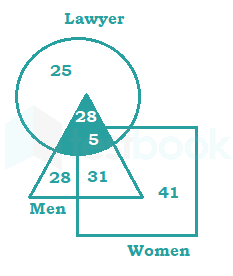
How many lawyers are man?

  1. AOption (a)

    33

  2. BOption (b)

    92

  3. COption (c)

    28

  4. DOption (d)

    58

View answer & explanation

Correct answer

Answer: (a)A.

33

Why this answer is correct

The shaded part represents lawyers are man.

The number representing lawyers are man = 28 + 5 = 33

Hence, ‘33’ is the correct answer.

Question 4

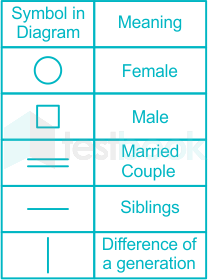
If 'A + B' means 'A is father of B', 'A * B' means 'A is the mother of B', 'A B′means′AisthebrotherofB′and′A@B′means′AisthesisterofB′,theninthegivenexpressionP@Q+D B' means 'A is the brother of B' and 'A @ B' means 'A is the sister of B', then in the given expression P @ Q + D B, how is P related to B? 

  1. AOption (a)

    Mother

  2. BOption (b)

    Aunt

  3. COption (c)

    Sister

  4. DOption (d)

    Daughter

View answer & explanation

Correct answer

Answer: (b)B.

Aunt

Why this answer is correct


Given:

CodeMeaning
A + BA is father of B
A * BA is the mother of B
A $ BA is the brother of B
A @ BA is the sister of B


Given: P @ Q + D $ B

1) P @ Q                   

P @ Q’ means 'P is the sister of Q''..

2) Q + D

'Q + D' means 'Q is father of D'.

3) D $ B

'D $ B' means  'A is the brother of B'.

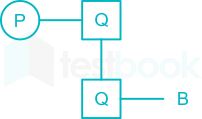
Preparing the family tree based on the above condition- 

 so, P is aunt of B.

Hence, 'Option 2' is the correct answer.

Question 5

A cube is coloured yellow on all of its faces. It is cut into 125 smaller cubes of equal size.

Which of the following statements are correct?

I. There are 36 small cubes which have only two yellow coloured faces.

II. There are 27 small cubes which do not have any yellow coloured face.

III. There are 63 small cubes which have exactly one yellow coloured face.

  1. AOption (a)

    I, II and III

  2. BOption (b)

    II and III

  3. COption (c)

    I and II

  4. DOption (d)

    I and III

View answer & explanation

Correct answer

Answer: (c)C.

I and II

Why this answer is correct

Given:

A cube is cut into 125 equal cubes and all the faces are painted yellow.

Formula/ concept used:

The cube is cut into 125 small cubes. Here, n = 5

Number of cubes will have three faces painted = number of corners in cube

Number of cubes will have two faces painted = (n - 2) × number of edges 

Number of cubes will have one faces painted = (n - 2)2  × 6 

Number of cubes will have no faces painted = (n - 2)3

Calculation:

Number of cubes will have three faces painted = 8 (because 8 corners)

Number of cubes will have two faces painted  = (5 - 2) × 12 = 36 

Number of cubes will have one faces painted = (5 - 2)2  × 6 = 54  

Number of cubes will have no faces painted = (5 - 2)3  = 27

Hence, I and  II are true.

Question 6

Arrange the given words in the sequence in which they occur in the dictionary.

  1. Satisfy
  2. Scream
  3. Scissors
  4. Science
  5. Screw
  1. AOption (a)

    13452

  2. BOption (b)

    14325

  3. COption (c)

    14352

  4. DOption (d)

    13425

View answer & explanation

Correct answer

Answer: (b)B.

14325

Why this answer is correct

According to the sequence in the dictionary:

1. Satisfy 

4. Science 

3. Scissors 

2. Scream 

5. Screw.

Hence, the correct answer is "14325".

Question 7

In the following question below are given some statements followed by some conclusions based on those statements. Taking the given statements to be true even if they seem to be at variance from commonly known facts. Read all the conclusions and then decide which of the given conclusion logically follows the given statements.

Statements:

I. Some N are V.

II. All N are B.

Conclusions:

I. All V are B.

II. Some B are N.

  1. AOption (a)

    Only conclusion I follows

  2. BOption (b)

    Both conclusion I and II follows

  3. COption (c)

    Only conclusion II follows

  4. DOption (d)

    Neither conclusion follows

View answer & explanation

Correct answer

Answer: (c)C.

Only conclusion II follows

Why this answer is correct

Statements:

I. Some N are V.

II. All N are B.

Venn diagram:

Conclusions:

I. All N are B.→ Does not follow → From the given statements 'Some N are V.' & 'All N are B.' which means only some N are B can be possible, therefore,  the conclusion does not follow.

II. Some B are N→ Follow → Since 'All N are B.' we can say that some B are N also possible  so the conclusion follows.

So, "Only conclusion II follows".

Question 8

If 'A' means '+', 'B' means '-', 'C' means '×' and 'D' means '÷', then which of the following equation is not correct? 

  1. AOption (a)

    8 B 2 D 8 C 4 = 7

  2. BOption (b)

    6 A 9 B 18 C 3 A 30 = 9

  3. COption (c)

    16 A 8 B 24 C 32 D 64 = 12

  4. DOption (d)

    18 C 18 B 18 D 18 A 18 = 341

View answer & explanation

Correct answer

Answer: (b)B.

6 A 9 B 18 C 3 A 30 = 9

Why this answer is correct

Decoding the information, 

SignABCD
Means+-x÷


After replacing the signs from left to right and using the BODMAS rule,

option 1: 8 B 2 D 8 C 4 = 7

= 8  -  2 ÷ 8 x 4 = 7

= 8  -  2 ÷ 8 x 4 = 7

= 8  -  2 ÷ 2 = 7

= 8  -  1 = 7

so, equation is correct.

option 2: 6 A 9 B 18 C 3 A 30 = 9

= 6 + 9 - 18 x 3 + 30 = 9

= 6 + 9 - 6 + 30 = 9

= 15 - 6 + 30 = 9

= 9 + 30 = 9

= 39 ≠ 9

so, equation is not correct.

option 3: 16 A 8 B 24 C 32 D 64 = 12

= 16 + 8 - 24 x 32 ÷ 64 = 12

= 16 + 8 - 24 x 0.5 = 12

= 16 + 8 - 12 = 12

= 24 - 12 = 12

= 12

so, equation is correct.

option 4: 18 C 18 B 18 D 18 A 18 = 341

= 18 x 18 - 18 ÷ 18 + 18 = 341

= 18 x 18 - 1 + 18 = 341

= 324 + 1 + 18 = 341

= 325 + 18 = 341

= 341 = 341

so, equation is correct.

Hence, “Option 2” is the correct answer.

Question 9

A series is given with one term wrong. Select that wrong term from the given alternatives.

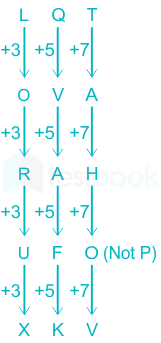
LQT, OVA, RAH, UFP, XKV

  1. AOption (a)

    UFP

  2. BOption (b)

    RAH

  3. COption (c)

    XKV

  4. DOption (d)

    OVA

View answer & explanation

Correct answer

Answer: (a)A.

UFP

Why this answer is correct

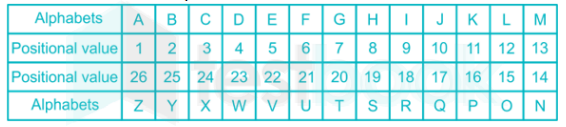
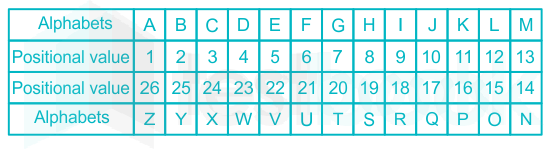
The logic followed here is:


So, the wrong term is UFP.

Hence, the correct answer is 'Option (1)'.

Question 10

In the following question, select the number which can be placed at the sign of question mark (?) from the given alternatives.

49144256
6481121
56108?
  1. AOption (a)

    198

  2. BOption (b)

    176

  3. COption (c)

    154

  4. DOption (d)

    201

View answer & explanation

Correct answer

Answer: (b)B.

176

Why this answer is correct

The logic followed here is:

Firstnumber{\sqrt{First number}} x Secondnumber{\sqrt{Second number}} = Third number

Column 1 : 

= 49{\sqrt{49}} x 64{\sqrt{64}}

= 7 x 8

= 56

Column 2 : 

14481108

= 144{\sqrt{144}} x 81{\sqrt{81}}

= 12 x 9

= 108

Column 3 :

256121?

= 256{\sqrt{256}} x 121{\sqrt{121}}

= 16 x 11

= 176

Hence, the correct answer is "176".

Question 11

In the following question, a group of letters is given. The letters of each group are related with the letters of the same group by some Logic/Rule/Relation. From the given alternatives, select a group of letters which follows the same Logic/Rule/Relation.

(CN, YH, UB)

  1. AOption (a)

    (DW, ZQ, VK)

  2. BOption (b)

    (PF, LZ, FT)

  3. COption (c)

    (EX, AR, XL)

  4. DOption (d)

    (LQ, HK, DF)

View answer & explanation

Correct answer

Answer: (a)A.

(DW, ZQ, VK)

Why this answer is correct

![Solved] Which letter will be 15th to the left of 7th from the left e](https://storage.googleapis.com/yourmocktest-papers/papers/latex/fallback/cf7e3ee0123fd1e31878ed12e67fbb13bf5a41852be7b1dafc48a587766df1e5.png)

The logic follows here is: 


Now checking every option one by one,

Option 1: (DW, ZQ, VK)

The logic follows here so option is correct.

Option 2: (PF, LZ, FT)

Option 3: (EX, AR, XL)

Option 4: (LQ, HK, DF)


Here, the logic apply only on option 1.

Hence, the correct answer is 'Option 1'.

Question 12

Which figure is similar to the given figures?

  1. AOption (a)

  2. BOption (b)

  3. COption (c)

  4. DOption (d)

View answer & explanation

Correct answer

Answer: (d)D.

Why this answer is correct

The Logic follows here is:

The Number of sides in each Polygon = The number of arrows in it, and all the arrows are facing in the upward direction in the given question.

So, the image in the  option 4 is similar to the given images.

Hence, the correct answer is "option 4".

Question 13

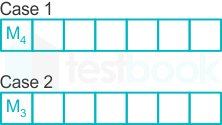
A team of seven members is to be selected among ten members M1, M2, M3, M4, M5, M6, M7, M8, M9 and M10. M4 and M8 cannot be selected together. M3 and M5 cannot be selected together. M1 and M9 have to be selected together. M6 and M7 have to be selected together. M2 cannot be selected with M5 or M8.

Which of the following members can be selected?

  1. AOption (a)

    M1, M2, M3, M4, M6, M7, M9

  2. BOption (b)

    M1, M3, M4, M5, M6, M7, M10

  3. COption (c)

    M1, M2, M3, M4, M6, M7, M10

  4. DOption (d)

    M1, M2, M4, M5, M6, M7, M9

View answer & explanation

Correct answer

Answer: (a)A.

M1, M2, M3, M4, M6, M7, M9

Why this answer is correct

Given:

A team of seven members is to be selected among ten members M1, M2, M3, M4, M5, M6, M7, M8, M9 and M10.

Solution: 

(1)  M4 and M8 cannot be selected together. 

(2) M3 and M5 cannot be selected together.


(3) M1 and M9 have to be selected together.

(4) M6 and M7 have to be selected together. 

(5)  M2 cannot be selected with M5 or M8. 

  • It is possible Only in Case 1.

(6) arrange them in ascending order.

Hence, 'option 1' is the correct answer.

Question 14

In the following question, select the related letters from the given alternatives.

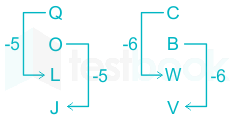
QC ∶ OB ∶ LW ∶ ?

  1. AOption (a)

    JV

  2. BOption (b)

    JX

  3. COption (c)

    KV

  4. DOption (d)

    KX

View answer & explanation

Correct answer

Answer: (a)A.

JV

Why this answer is correct

![Solved] Which letter will be 15th to the left of 7th from the left e](https://storage.googleapis.com/yourmocktest-papers/papers/latex/fallback/cf7e3ee0123fd1e31878ed12e67fbb13bf5a41852be7b1dafc48a587766df1e5.png)

The logic followed here is:

So, the correct answer is 'JV'.

Question 15

Raman and Karan start walking in opposite direction. Raman walks 10 km and Karan walks 15 km. Raman turns to the left and walks 6 km. Karan also turns to the left and walks 6 km. Raman turns to the left and walks 8 km. Karan also turn to the left and walks 12 km. How far is Karan now from Raman? 

  1. AOption (a)

    13 km

  2. BOption (b)

    12 km

  3. COption (c)

    17 km

  4. DOption (d)

    5 km

View answer & explanation

Correct answer

Answer: (a)A.

13 km

Why this answer is correct

Drawing the figure according to given information, 

  • Raman walks 10 km and Karan walks 15 km.
  • Raman turns to the left and walks 6 km.
  • Karan also turns to the left and walks 6 km.
  • Raman turns to the left and walks 8 km.
  • Karan also turn to the left and walks 12 km

As per Pythagoras Theorem,

a2 + b2 = c2

where,

a = side of right triangle, 

b = side of right triangle,

c = hypotenuse

Therefore, c2 = 122 + 52

c2 = 144 + 25

c2 = 169

c = 13

so, Karan is 13 km far now from Raman.

Hence, 'Option 1' is the correct answer.

Question 16

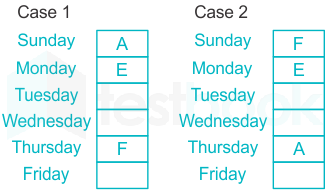
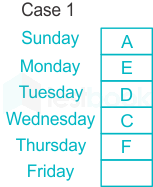
Six persons A, B, C, D, E and F work on six different days of a same week from Sunday to Friday (not necessarily in the same order). Three persons work between A and F. Two persons work between B and D. E works on Monday. C works after D, but before F.

Which of the following statement is correct?

I. B works on Friday.

II. C works on Wednesday.

  1. AOption (a)

    Neither I nor II

  2. BOption (b)

    Only II

  3. COption (c)

    Both I and II

  4. DOption (d)

    Only I

View answer & explanation

Correct answer

Answer: (c)C.

Both I and II

Why this answer is correct

Given:

Six persons A, B, C, D, E and F work on six different days of a same week from Sunday to Friday (not necessarily in the same order).

Solution:

(1) E works on Monday. 

(2) Three persons work between A and F.

(3) C works after D, but before F.

  • It is possible only in case 1.

(4) Two persons work between B and D.

So here,

I. B works on Friday.

II. C works on Wednesday. 

Hence, 'Both I and II' are the correct answer.

Question 17

Based on the given venn diagram, which of the following statement is correct?

I. The number of girls which are only cars is 43.

II. The total number of books is 99.

  1. AOption (a)

    Only II

  2. BOption (b)

    Only I

  3. COption (c)

    Both I and II

  4. DOption (d)

    Neither I nor II

View answer & explanation

Correct answer

Answer: (c)C.

Both I and II

Why this answer is correct

The shaded part represents girls which are only cars.


l The number representing girls which are only cars = 43

ll The total number of books  = 21 + 33 + 45 = 99

Hence, ‘Both I and II’ is the correct answer.

Question 18

A cuboid having dimension 2 cm × 6 cm × 8 cm is cut into small cubes of size 2 cm. How many small cubes will be obtained?

  1. AOption (a)

    24

  2. BOption (b)

    8

  3. COption (c)

    12

  4. DOption (d)

    48

View answer & explanation

Correct answer

Answer: (c)C.

12

Why this answer is correct

Given:

Dimensions of cuboid = 2 cm × 6 cm × 8 cm

Formula used:

Volume of cuboid = l × b × h

Volume of cube = (side)3

Total number of small cubes = Volume:of:cuboidVolume:of:cubeVolume:of:cuboid\over Volume :of:cube

Calculation:

Volume of cuboid = 2 × 6 × 8 = 96

Volume of cube = 23 = 8

Total number of small cubes = 968=12{96\over8 } = 12

Hence, '12' is the correct answer.

Question 19

In the following question, select the odd word from the given alternatives. 

  1. AOption (a)

    Pyramid

  2. BOption (b)

    Cube

  3. COption (c)

    Sphere

  4. DOption (d)

    Rhombus

View answer & explanation

Correct answer

Answer: (d)D.

Rhombus

Why this answer is correct

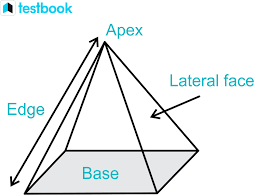
Pyramid :

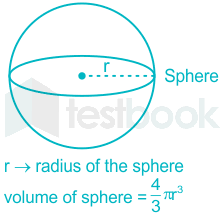
Cube:

Sphere:

Rhombus:

Here, Rhombus is the odd one out, as all of the others are solid 3D figures (width, height and depth), while a rhombus is a 2D figure (width and height only).

Hence, 'option 4' is the correct answer.

Question 20

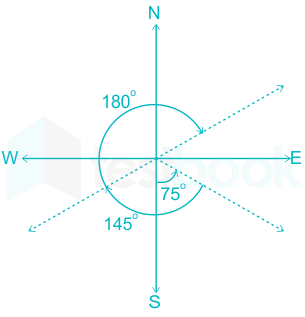
A boy is facing towards south. He rotates 75 degree in the anti-clockwise direction. He rotates 145 degree in the clockwise direction. He rotates 180 degree in the clockwise direction. He rotates 270 degree in the anti-clockwise direction. He rotates 135 degree in the anti-clockwise direction. He rotates 45 degree in the clockwise direction. Finally, he rotates 190 degree in the clockwise direction. In which direction is he facing now? 

  1. AOption (a)

    North - East

  2. BOption (b)

    North - West

  3. COption (c)

    South - West

  4. DOption (d)

    South - East

View answer & explanation

Correct answer

Answer: (c)C.

South - West

Why this answer is correct

Given,

A boy is facing towards south. He rotates 75 degree in the anti-clockwise direction. So, we get,

Now, he rotates 145 degree in the clockwise direction. So, we get,

Now, he rotates 180 degree in the clockwise direction. So, we get,

Now, he rotates 270 degree in the anti-clockwise direction. So, we get,

Now, he rotates 135 degree in anti-clockwise direction. So, we get,

Now, he rotates 45 degree in clockwise direction. So, we get,

Now, he rotates 190 degree in the clockwise direction. So, we get finally,

So, the boy is facing South-West.

General Awareness (20 questions)

Question 21

Which of the following pair of Festival - State is correct?

I. Saga Dawa - Assam

II. Bumchu - Sikkim

  1. AOption (a)

    Neither I nor II

  2. BOption (b)

    Only I

  3. COption (c)

    Both I and II

  4. DOption (d)

    Only II

View answer & explanation

Correct answer

Answer: (d)D.

Only II

Why this answer is correct

The correct answer is Only II.

Key Points

  • The Bumchu festival is celebrated at Tashiding Monastery, West Sikkim on the 15th day of the first month of the Lunar calendar corresponding to the month of February/March.
  • The opening of the vessel containing the holy water is the major highlight of the festival.
  • This festival is dedicated to Ganesh and Hanuman.​
  • The literal meaning of Bumchu is a "sacred pot".
  • Bumchu is a Buddhist festival that is celebrated at Tashiding Monastery in Sikkim.
  • Each year, the vessel is opened to verify the level of water in it.
  • It follows that if the water level is higher or lower then it signifies ill fortune such as droughts, diseases and natural calamities.

Additional Information

  • Saga Dawa festival
  • Saga means “the fourth” and Dawa refers to “month” in Tibetan.
  • This festival is celebrated for whole month and is one of the most significant festivals celebrated in Tibet.
  • The fifteenth day of the month is very special as Sakyamuni was born, attained Nirvana (enlightenment), stepped into Parinirvana (death).
  • The main activities involve going to temples, raising a tall prayer pole called the Tarboche Prayer Flagpole, and lighting a lot of butter lamps for the occasion.

Question 22

Which of the following statement is correct?

I. Khadar soil is more fertile than the bangar soil.

II. Entire northen plains are made of alluvial soil.

  1. AOption (a)

    Only II

  2. BOption (b)

    Only I

  3. COption (c)

    Neither I nor II

  4. DOption (d)

    Both I and II

View answer & explanation

Correct answer

Answer: (d)D.

Both I and II

Why this answer is correct

The correct answer is Both I and II.

Key Points

  • Khadar soil is richer than Bangar as it gets renewed by new layers of soil each year during storm floods.
  • Khadar soils also have lower concentrations of kankar nodules and a high concentration of finer particles hence it is also considered to be more fertile than Bangar soils.
  • Alluvial soil is the most widely spread and important soil. In fact, the entire northern plains are made of alluvial soil.
  • These have been deposited bv three important Himalayan river systems- **the Indus, the Ganga and the Brahmaputra.**​

​

Additional Information

  • Alluvial soil
  • It is exist in  the Indo-Gangetic floodplain.
  • It is called khadar and is extremely fertile and uniform in texture.
  • Conversely, the old alluvium on the slightly elevated terraces, termed bhangar.
  • It  carries patches of alkaline efflorescences, called usar, rendering some areas infertile.

Question 23

Which of the following statement is correct?

I. Vardhamana Mahavira left home at the age of 30.

II. The Buddha attained enlightment at Bodh Gaya.

  1. AOption (a)

    Only I

  2. BOption (b)

    Neither I nor II

  3. COption (c)

    Both I and II

  4. DOption (d)

    Only II

View answer & explanation

Correct answer

Answer: (c)C.

Both I and II

Why this answer is correct

The correct answer is Both I and II.

Key Points

  • Mahavira abandoned all worldly possessions at the age of about 30 and left home in pursuit of spiritual awakening, becoming an ascetic.
  • Mahavira practiced intense meditation and severe austerities for twelve and a half years, after which he attained Kevala Jnana (omniscience).
  • Bodh Gaya is understood to be the site of the enlightenment, or “great awakening” (Sanskrit, mahabodhi), of Siddhartha Gautama, the Buddha.
  • It was here that Siddhartha Gautama sat in meditation under the Bodhi tree, having renounced his princely life to wander and practice asceticism.

Additional Information

  • Mahavira
  • He is also known as Vardhaman, was the 24th tirthankara of Jainism.
  • He was the spiritual successor of the 23rd tirthankara Parshvanatha.
  • Mahavira did not believe in any God.
  • He considered it less important than the Jina (the conqueror). He opined that man himself creates his destiny.
  • Siddhartha Gautama
  • It was the first person to reach this state of enlightenment and was, and is still today, known as the Buddha.
  • Buddhists do not believe in any kind of deity or god.
  • Although there are supernatural figures who can help or hinder people on the path towards enlightenment.
  • Siddhartha Gautama, the founder of Buddhism who later became known as “the Buddha,”

Question 24

Which of the following countries does not share land boundary with India?  

  1. AOption (a)

    Afghanistan

  2. BOption (b)

    Srilanka

  3. COption (c)

    China

  4. DOption (d)

    Myanmar

View answer & explanation

Correct answer

Answer: (b)B.

Srilanka

Why this answer is correct

The correct answer is Srilanka.

Key Points

  • Sri Lanka does not share land boundary with India.
  • Sri Lanka is an island nation south of India in the Indian Ocean.
  • The Island was formerly known as Ceylon.
  • Sri Lanka shares maritime borders with Maldives and India.
  • India and Sri Lanka held maritime boundary agreements in 1974 and 1976 that defined the international maritime boundary between the two states.

 Additional Information 

  • Durand Line
  • It is the Boundary between Afghanistan and India.
  • The Durand Line was established in the year of  1893 as the international border between India and the  Afghanistan by Mortimer Durand.
  • He is the British diplomat of the Indian Civil Service.
  • The McMahon Line 
  • India shares 3488 km of border with China .
  • It  runs along the states of Jammu and Kashmir, Himachal Pradesh, Sikkim, Uttarakhand and Arunachal Pradesh.
  • Indo- Bhutan border
  • Myanmar shares a long land border of over 1600 Km with India.
  • Arunachal Pradesh, Nagaland, Manipur and Mizoram states share their borders with Myanmar

Question 25

Carolina Araujo has become first non-Indian to win Ramanujan prize for young Mathematcians. She belongs to which country? 

  1. AOption (a)

    France

  2. BOption (b)

    Brazil

  3. COption (c)

    Australia

  4. DOption (d)

    Canada

View answer & explanation

Correct answer

Answer: (b)B.

Brazil

Why this answer is correct

The correct answer is Brazil.

Key Points

  • Dr. Carolina Araujo has been awarded for her outstanding work in algebraic geometry.
  • She is a Brazilian mathematician who specializes in algebraic geometry, including foliations, birational geometry, and fano varieties.
  • She is the Vice President of the Committee for Women in Mathematics at the International Mathematical Union.
  • The work area of Carolina focuses on birational geometry which aims at classifying and describing the structure of the algebraic varieties.

Additional Information

  • Ramanujan prize
  • The prize is awarded annually to a researcher from a developing country funded by the Department of Science and Technology in association with ICTP(International Centre for Theoretical Physics), and the International Mathematical Union (IMU).
  • The candidates for Young Mathematics should be less than 45 years of age.
  • The candidates must also be conducting outstanding research in a developing country.Srinivasa Ramanujan was an Indian mathematician.
  • Ramanujan made great contributions in number theory, continued fractions, and infinite series, despite not having any formal education in math.
  • He was a self-taught mathematician.

Question 26

In which part of Indian constitution, details of citizenship are mentioned?

  1. AOption (a)

    III

  2. BOption (b)

    II

  3. COption (c)

    IV

  4. DOption (d)

    I

View answer & explanation

Correct answer

Answer: (b)B.

II

Why this answer is correct

The correct answer is II.

Key Points

  • Part-II, Article-5 to Article-11, contains provisions related to citizenship in India.
  • Article-11 of constitution authorizes parliament to make any provision with respect to acquisition and termination of citizenship and all other matters related to it.
  • Based on this parliament passed citizenship (acquisition and termination) act, 1955.

Additional Information

  • Part III of the Constitution
  • It deal with Fundamental Rights.
  • These are: Right to equality, including equality before law, prohibition of discrimination on grounds of religion, race, caste, sex or place of birth, and equality of opportunity in matters of employment.
  • Part IV of the Constitution of India
  • It says that the State shall, within the limits of its economic capacity and development.
  • It make effective provision for securing the right to work, to education and to public assistance in cases of unemployment, old age, sickness and disablement, and in other cases of undeserved caste.

Question 27

Which of the following statement is correct?

I. The magnetic field inside a long straight solenoid carrying current is same at all the points.

II. The magnetic field of a solenoid carrying a current is similar to that of bar magnet.

  1. AOption (a)

    Both I and II

  2. BOption (b)

    Only I

  3. COption (c)

    Neither I nor II

  4. DOption (d)

    Only II

View answer & explanation

Correct answer

Answer: (a)A.

Both I and II

Why this answer is correct

The correct answer is Both I and II.

Key Points

  • The magnetic field inside a long straight solenoid-carrying current is the same at all points.
  • It is because the magnetic field in the solenoid is constant because the lines are completely parallel to each other.
  • A solenoid is a long coil of circular loops of insulated copper wire.
  • Magnetic field lines are produced around the solenoid when a current is allowed to flow through it.
  • The magnetic field produced by it is similar to the magnetic field of a bar magnet.

Additional Information

  • ​ An electric field line
  • It is defined as an imaginary line or curve drawn through a region of empty space.
  • so that its tangent at any point is in the direction of the electric field vector at that point.
  • Solenoid
  • Field lines produced by a solenoid with that produced by a bar magnet.
  • we observe that they are very much identical. Thus, a solenoid acts as a bar magnet when current is passed through it.

Question 28

Who has won the French Open 2021 women's singles title? 

  1. AOption (a)

    Sofia Kenin

  2. BOption (b)

    Barbora Krejcikova

  3. COption (c)

    Anastasia Pavlyuchenkova

  4. DOption (d)

    Alice Mertens

View answer & explanation

Correct answer

Answer: (b)B.

Barbora Krejcikova

Why this answer is correct

The correct answer is Barbora Krejcikova.

Key Points

  • Barbora Krejcikova  is a Czech professional tennis player.
  • She has a career-high singles ranking of world No. 2, achieved on 28 February 2022, and on 22 October 2018, she became world No. 1 in doubles.
  • Winners across 15 events depart Paris triumphant, from Novak Djokovic to Barbora Krejcikova.
  • World No. 1 Novak Djokovic recovers from two sets down to beat fifth seed Stefanos Tsitsipas and became the first man in the Open Era to win all four Grand Slam titles at least twice.​​
  • Krejcikova started her 2023 season at 2023 Adelaide International 2.
  • Having struggled with a left wrist injury since Fort Worth.
  • she lost in the second round to Daria Kasatkina. She won her first tournament of the season at the 2023 Dubai Tennis Championships defeating five seeds in a row and four top-10 players

Additional Information 

  • Sofia Kenin:
  • ​She was the 2020 WTA Player of the Year.
  • an award she earned by winning the 2020 Australian Open and finishing runner-up at the 2020 French Open**.**
  • Anastasia Sergeyevna:
  • ​Anastasia Sergeyevna "Nastia" Pavlyuchenkova is a Russian professional tennis player.
  • A junior prodigy, Pavlyuchenkova won three Grand Slam titles and became the junior world No. 1, in January 2006, at the age of 14
  • Elise Mertens:

Elise Mertens is a Belgian professional tennis player. She is a former world No. 1 in doubles.

Mertens is a three-time Grand Slam champion in doubles

.It ishaving won the 2019 US Open and 2021 Australian Open partnering Aryna Sabalenka, and the 2021 Wimbledon Championships

Question 29

Which of the following is a type of reed instrument? 

  1. AOption (a)

    Alingya

  2. BOption (b)

    Shehnai

  3. COption (c)

    Veena

  4. DOption (d)

    Table

View answer & explanation

Correct answer

Answer: (b)B.

Shehnai

Why this answer is correct

The correct answer is Shehnai.

Key Points

  • A reed is a thin strip of material that vibrates to produce a sound on a musical instrument.
  • Reeds are used in many wind instruments.
  • Some of the most common are shehnai, clarinet, saxophone, oboe, and bassoon.
  • In flutes, the airstream is directed against a sharp edgeButin reeds, the air column in the tube is caused to vibrate between beating parts of a multiple reed or between a beating single reed and a mouthpiece.​

Additional Information

  • **Alingya **drums have the animal hide fixed to a wooden round frame and are embraced or held close to the body with one hand while the other hand is used for playing on the instrument.
  • The veena, also spelled vina, comprises various  instruments from the Indian subcontinent.
  • Tabla is the most famous percussion instrument of North India.

Question 30

Harshacharit a was written by ________.

  1. AOption (a)

    Kalidas

  2. BOption (b)

    Banabhatta

  3. COption (c)

    Jayadev

  4. DOption (d)

    Ashvaghosha

View answer & explanation

Correct answer

Answer: (b)B.

Banabhatta

Why this answer is correct

The correct answer is Banabhatta.

Key Points

  • The Harshacharita (Sanskrit: हर्षचरित, Harṣacarita) (The deeds of Harsha), is the biography of Indian emperor Harsha by Banabhatta,.
  • He is also known as Bana.
  • He was a Sanskrit writer of seventh-century CE India.
  • He was the Asthana Kavi, meaning Court Poet, of Harsha.

Additional Information

  • Kalidasa:
  • ​He has become the archetype for Sanskrit literary composition.
  • In drama, his Abhijnanashakuntala is the most famous and is usually judged the best Indian literary effort of any period.
  • Jaydev  is most known for his epic poem Gita Govinda which concentrates on Krishna's love with the gopi, Radha, in a rite of spring.
  • Ashvaghosha, philosopher and poet who is considered India's greatest poet before Kalidasa (5th century) and the father of Sanskrit drama; he popularized the style of Sanskrit poetry known as kavya.

Question 31

As on 15th July 2021, who is the vice-chairman of Niti Aayog?

  1. AOption (a)

    Dr. V.K. Paul

  2. BOption (b)

    Dr. VK Saraswat

  3. COption (c)

    Dr. Rajiv Kumar

  4. DOption (d)

    Rao Inderjit Singh

View answer & explanation

Correct answer

Answer: (c)C.

Dr. Rajiv Kumar

Why this answer is correct

The correct answer is Dr. Rajiv Kumar.

Key Points

  • The Planning Commission which has a legacy of 65 years has been replaced by the NITI Aayog.
  • The utility and significance of the Planning Commission had been questioned for a longer period.
  • The replacement seems to be more relevant and responsive to the present economic needs and scenario in the country.
  • Dr. Rajiv Kumar (September 2017 – present) is the current Vice Chairman of the NITI Aayog.

Additional Information

  • Vinod Kumar Paul is an Indian pediatrician and physician scientist currently serving as Member, NITI Aayog.
  • Vijay Kumar Saraswat is an Indian scientist who formerly served as the Director General of the Defence Research and Development Organisation and the Chief Scientific Advisor to the Indian Minister of Defence.
  • Raja Rao Inderjit Singh Yadav is an Scion of erstwhile state of Rewari Indian politician and a Minister of State in the Government of India.

Question 32

How many players are there in each team of polo? 

  1. AOption (a)

    4

  2. BOption (b)

    11

  3. COption (c)

    8

  4. DOption (d)

    7

View answer & explanation

Correct answer

Answer: (a)A.

4

Why this answer is correct

The correct answer is 4.

Key Points

  • A polo team is comprised of four players.
  • The object of the game is to move the polo ball down the field, hitting the ball through the goal posts to score.
  • The teams then change direction after each goal to compensate for field and wind conditions.
  • Polo is a ball game played on horseback, a traditional field sport and one of the world's oldest known team sports.
  • The game is played by two opposing teams with the objective of scoring using a long-handled wooden mallet to hit a small hard ball through the opposing team's goal.

Additional Information

  • Polo was first played in England by the 10th Hussars in 1869.
  • The British are credited with spreading polo worldwide in the late 19th century and the early 20th century at the height of its empire.
  • Military officers imported the game to Britain in the 1860s.

Question 33

A market that has a small number of large firms is called an _________.

  1. AOption (a)

    Monopolistic competition

  2. BOption (b)

    Monopoly

  3. COption (c)

    Monopsony

  4. DOption (d)

    Oligopoly

View answer & explanation

Correct answer

Answer: (d)D.

Oligopoly

Why this answer is correct

The correct answer is Oligopoly.

Key Points

  • Oligopoly is a market structure with a small number of firms, none of which can keep the others from having a significant influence.
  • A monopoly is one firm, the duopoly is two firms and oligopoly is two or more firms.
  • There is no precise upper limit to the number of firms in an oligopoly, but the number must be low enough that the actions of one firm significantly influence the others.
  • Throughout history, there have been oligopolies in many different industries, including steel manufacturing, oil, railroads, tire manufacturing, grocery store chains, and wireless carriers.
  • Raised barriers to entry, price-making power, non-price competition, the interdependence of firms, and product differentiation are all oligopoly characteristics.

Additional Information

  • Monopolistic competition exists when many companies offer competing products or services that are similar, but not perfect, substitutes.
  • Monopsony: In economics, a monopsony is a market structure in which a single buyer substantially controls the market as the major purchaser of goods and services offered by many would-be sellers.
  • A monopoly is a market structure where a single seller or producer assumes a dominant position in an industry or a sector.

Question 34

Which of the following is correct regarding CPI?

I. It includes the prices of imported goods.

II. The weights differ according to the production level of each good in CPI.

  1. AOption (a)

    Only I

  2. BOption (b)

    Neither I nor II

  3. COption (c)

    Only II

  4. DOption (d)

    Both I and II

View answer & explanation

Correct answer

Answer: (a)A.

Only I

Why this answer is correct

The correct answer is Only I.

Key Points

  • CPI measures changes in the price level of a weighted average market basket of consumer goods and services purchased by households.
  • Households also consume imported goods.
  • The Bureau of Labor Statistics samples 80,000 prices monthly to calculate the CPI, weighing the index for each product or service in proportion to its share of recent consumer spending to calculate the overall change in prices.
  • The annual change in the CPI was 6.4% for the 12-month period ending January 2023. This was a 0.5% increase from the previous month.

Additional Information

  • The CPI measures the rate of inflation, which is one of the greatest threats to a healthy economy.
  • Inflation eats away at your standard of living if your income doesn't keep pace with rising prices—your cost of living increases over time.
  • A high inflation rate can hurt the economy.

Question 35

Prarthana Samaj was established in __________.

  1. AOption (a)

    1888

  2. BOption (b)

    1867

  3. COption (c)

    1864

  4. DOption (d)

    1882

View answer & explanation

Correct answer

Answer: (b)B.

1867

Why this answer is correct

The correct answer is 1867.

Key Points

  • The Prarthana Samaj was founded in 1867.
  • It was founded by Atmaram Pandurang.
  • Prarthana Samaj played a very important role in the Maharashtra renaissance.
  • It focused on religious and social reform in Maharashtra.
  • The mouthpiece called 'Subodh-Patrika' was run by the Prarthana Samaj.
  • Veeresalingam Pantulu was the Telugu reformer who encouraged the Prarthana Samaj in South India.

Additional Information

  • The two main planks of the Samaj were worship and social reforms.

(I) Ranade was a revivalist, who pointed that most of the prevailing evil customs ran counter to the practices observed in earlier times.

(II) Ranade also launched a Purity Movement comprising anti-dancing and temperance agitation, admission of converts from other faiths and reduction in extravagant marriage expenses.

Question 36

By which Amendment Act the Fundamental Duties of citizen are included in Indian constitution? 

  1. AOption (a)

    56th Amendment Act

  2. BOption (b)

    78th Amendment Act

  3. COption (c)

    42nd Amendment Act

  4. DOption (d)

    73rd Amendment Act

View answer & explanation

Correct answer

Answer: (c)C.

42nd Amendment Act

Why this answer is correct

The correct answer is 42nd Amendment Act.

Key Points

  • 42nd Constitutional Amendment Act added the Fundamental duties in the constitution.
  • 42nd Constitutional Amendment Act came in 1976 and it added 10 Fundamental duties in the constitution.
  • The Fundamental Duties were recommended by the Swaran Singh committee in the year 1976.
  • The 42nd amendment act is also known as the “Mini-Constitution” because of the enormous number of amendments it has made to the Indian Constitution.
  • It attempted to alter the basic structure of the Indian Constitution.
  • The 42nd Amendment Act 1976 is a contentious constitutional amendment because it attempted to limit Supreme Court's and the High Court's power while curtailing several other socio-political rights.
  • It also tried to transfer more power to the central government.

Additional Information

  • 56th Amendment Act of the Indian Constitution-

According to an Indian government proposal, the areas included in the Union territory of Goa, Daman, and Diu's .Goa District would become the State of  Goa. The areas included in the Daman and Diu districts would become the new Union territory of Daman and Diu.

  • 78th amendment of the constitution

​  It is about the inclusion of land laws of certain states in the ninth schedule of the Indian constitution in order to escape from being sued in the court of law.

  • (73rd Amendment) Act

  It was passed in 1992 and it came into effect on 24 April 1993. The Act empowered state governments to take the necessary steps that would lead to the formalisation of the gram panchayats and help them operate as units of self-governance.

Question 37

Which of the following diseases does not spread through the air? 

  1. AOption (a)

    Cholera

  2. BOption (b)

    Tuberculosis

  3. COption (c)

    Pneumonia

  4. DOption (d)

    Common cold

View answer & explanation

Correct answer

Answer: (a)A.

Cholera

Why this answer is correct

The correct answer is Cholera.

Key Points

  • Cholera spreads through water.
  • The bacterium that causes cholera spreads from one person to another if the water has been contaminated by the faeces of an infected person.
  • It is commonly encountered in poor countries or calamity and war-torn areas.
  • Cholera is a bacterial disease usually spread through contaminated water.
  • Cholera causes severe diarrhea and dehydration.
  • Left untreated, cholera can be fatal within hours, even in previously healthy people.

Additional Information

  • Tuberculosis
  • ​ It is spread through the air from one person to another.
  • TB germs are passed through the air when someone who is sick with TB disease of the lungs or throat coughs, speaks, laughs, sings, or sneezes.
  • Pneumonia
  • It is contagious, meaning it spreads from person to person.
  • Pneumonia is mostly spread when people infected cough, sneeze or talk, sending respiratory droplets into the air.
  • Common Cold
  • A cold virus enters your body through your mouth, eyes or nose.
  • The virus can spread through droplets in the air when someone who is sick coughs, sneezes or talks.

Question 38

Which country is the largest producer of Jute in the world? 

  1. AOption (a)

    Brazil

  2. BOption (b)

    China

  3. COption (c)

    United states of America

  4. DOption (d)

    India

View answer & explanation

Correct answer

Answer: (d)D.

India

Why this answer is correct

The correct answer is India.

Key Points

  • The leading world jute production countries are India, Bangladesh, China, and Thailand.
  • India is the world's largest producer of raw jute and iute goods.
  • It is contributing to over 50 percent and 40 percent respectively of global production.
  • For the successful cultivation of jute temperature 25o C and relative humidity of 70 % to 90 % are favorable.
  • West Bengal in India is the largest producer of Jute in India followed Bihar, Assam, Orissa, Andhra Pradesh, Tripura, and Meghalaya.

Additional Information

  • The suitable climate for growing jute is a warm and wet climate.
  • It is offered by the monsoon climate during the fall season, immediately followed by summer.
  • Temperatures ranging to more than25 °C and relative humidity of 70%–90% are favorable for successful cultivation.
  • Jute fibers accounted for 37 billion Indian rupees in the Indian economy in fiscal year 2020.
  • This variety of fibers made up nearly five percent of the sector that year.

Question 39

In June 2021, which of the following ministry has launched 'Namaste Yoga' mobile app? 

  1. AOption (a)

    Ministry of civil aviation

  2. BOption (b)

    Ministry of Health and Family welfare

  3. COption (c)

    Ministry of AYUSH

  4. DOption (d)

    Ministry of women and child development

View answer & explanation

Correct answer

Answer: (c)C.

Ministry of AYUSH

Why this answer is correct

The correct answer is Ministry of AYUSH.

Key Points

  • 'Namaste Yoga', a mobile application was launched on 11 June 2021 in the curtain-raiser event for the 7 th International Day of Yoga.
  • The event was organised by the Ministry of Ayush in association with the Morarji Desai National Institute of Yoga.
  • The app aims to raise awareness about yoga and make it accessible to the larger community.
  • The Ministry of Ayush was formed on the 9 th of November 2014 with a vision of reviving the profound knowledge of our ancient systems of medicine and ensuring the optimal development and propagation of the Ayush systems of healthcare.
  • AYUSH is an acronym for Ayurveda, Yoga and Naturopathy, Unani, Siddha and Homeopathy.

Additional Information

  • Ministry of Civil Aviation:
  • Ministry of civil aviation in India is the nodal ministry responsible for the formulation of national policies and programmes for the development and regulation of civil aviation.
  • Ministry of Health and Family welfare:
  • ​The Ministry of Health and Family Welfare is an Indian government ministry charged with health policy in India. It is also responsible for all government programs relating to family planning in India.
  • Ministry of women and child development
  • ​​The Ministry of Women and Child Development, a branch of the Government of India, is an apex body for formulation and administration of the rules and regulations and laws relating to women and child development in India.

Question 40

Which of the following is correct sequence of reactivity of metals? 

  1. AOption (a)

    Zn > Pb > Cu > Ag

  2. BOption (b)

    Zn > Pb > Ag > Cu

  3. COption (c)

    Cu > Zn > Pb > Ag

  4. DOption (d)

    Zn > Cu > Pb > Ag

View answer & explanation

Correct answer

Answer: (a)A.

Zn > Pb > Cu > Ag

Why this answer is correct

The correct answer is Zn>Pb>Cu>Ag.

Key Points

  • A series in which metals are arranged in the decreasing order of their reactivity is called reactivity series.
  • The reactivity of metal depends upon their ability to form a cation.
  • So, metal has a more electropositive nature and also more reactivity..
  • In the periodic table, moving from left to right the reactivity of the element decreases, and moving from top to bottom reactivity increases.

Additional Information

  • The reactivity series of metals depends on the reactivity of metals which is dependent on the atomic radius, nuclear charge, sublevel electrons arrangement and shielding effect.
  • Metals tend to readily lose electrons and form cations.
  • Most of them react with atmospheric oxygen to form metal oxides. However, different metals have different reactivities towards oxygen (unreactive metals such as gold and platinum do not readily form oxides when exposed to air).

Arithmetic Ability (20 questions)

Question 41

Diameter of a circle is 70 cm. What is the area of this circle? 

  1. AOption (a)

    6450 cm2

  2. BOption (b)

    1540 cm2

  3. COption (c)

    7700 cm2

  4. DOption (d)

    3850 cm2

View answer & explanation

Correct answer

Answer: (d)D.

3850 cm2

Why this answer is correct

Given:

The diameter of a circle is 70 cm.

Concept:

The area of a circle with a radius r unit is πr2\pi r^2 square unit.

Diameter = 2[Radius]

Solution:

The diameter is given as 70 cm.

Radius = 35 cm

The area of the circle with a radius 35 cm will be,

πr2=227×35×35=110×35=3850 cm2 \pi r^2 = \frac{22}{7} \times 35 \times35=110 \times 35=3850 \ cm^2

Hence, option 4 is correct.

Question 42

A bus moves at the speed of 68 km/hr after repairing and moves at the speed of 34 km/hr before repairing. It covers a distance of K km in 8 hours after repairing. How much time will it take to cover a distance of K/4 km before repairing? 

  1. AOption (a)

    6 hours

  2. BOption (b)

    4 hours

  3. COption (c)

    5 hours

  4. DOption (d)

    8 hours

View answer & explanation

Correct answer

Answer: (b)B.

4 hours

Why this answer is correct

Shortcut Trick

Time = Distance ÷ Speed

Required Time = (K ÷ 4) ÷ Speedbefore = K ÷ (4 × 34)

We know K = Speedafter × Timeafter = 68 × 8 = 544

Required Time = 544 ÷ 136

Required Time = 4

∴ The correct answer is 4 hours.

Alternate Method

Given:

Speed of the bus after repairing = 68 km/hr

Time taken after repairing = 8 hours

Speed of the bus before repairing = 34 km/hr

Formula Used:

Distance = Speed × Time

Time = Distance ÷ Speed

After Repair: Distance = K Speed = 68 km/hr | Time = 8 hours

Distance = K/4 Speed = 34 km/hr | Time = ?

Calculations:

⇒ Distance covered after repairing (K) = Speed × Time

⇒ K = 68 × 8 = 544 km

⇒ Distance to be covered before repairing = K ÷ 4

⇒ Distance before repairing = 544 ÷ 4 = 136 km

⇒ Time taken before repairing = Distance ÷ Speed

⇒ Time taken = 136 ÷ 34

⇒ Time taken = 4 hours

∴ The correct answer is 4 hours.

Additional Information

Proportionality in Speed and Distance

When distance is constant, Speed is inversely proportional to Time (S ∝ 1 ÷ T). When time is constant, Distance is directly proportional to Speed (D ∝ S).

Average Speed

Average Speed = Total Distance ÷ Total Time. If equal distances are covered at speeds S1 and S2, Average Speed = (2 × S1 × S2) ÷ (S1 + S2).

Relative Speed

For two bodies moving in opposite directions, Relative Speed = S1 + S2. For bodies moving in the same direction, Relative Speed = S1 − S2.

Question 43

If 37 is subtracted from 38 percent of a number, then the result is 153. What is the value of the number? 

  1. AOption (a)

    550

  2. BOption (b)

    450

  3. COption (c)

    500

  4. DOption (d)

    400

View answer & explanation

Correct answer

Answer: (c)C.

500

Why this answer is correct

Given:

If 37 is subtracted from 38 percent of a number, then the result is 153.

Solution:

As per the question, 

Let us assume the number is X.

38% of X will be 38100×X\frac{38}{100}\times X

37 is subtracted from 38% of X, 

38100×X−37=153\frac{38}{100}\times X-37=153

38100×X=153+37=190\frac{38}{100}\times X=153+37=190

X=500 X=500

Hence, option 3 is correct.

Question 44

The table given below shows the number of workers in six different companies for 3 years.

CompanyYear
Y1Y2Y3
A90120.300
B15030420
C140200600
D270400520
E180550340
F50600190

Which of the following statement is correct?

I. The average number workers in company A for three years is 170.

II. The sum of number of workers in company D for all three years is 1290.

  1. AOption (a)

    Neither I nor II

  2. BOption (b)

    Only II

  3. COption (c)

    Only I

  4. DOption (d)

    Both I and II

View answer & explanation

Correct answer

Answer: (c)C.

Only I

Why this answer is correct

Given:

The table given below shows the number of workers in six different companies for 3 years.

CompanyYear
Y1Y2Y3
A90120.300
B15030420
C140200600
D270400520
E180550340
F50600190


Concept:

The average of any given data is Sum of the dataNumber of the data\frac{\text {Sum of the data}}{\text {Number of the data}}

Solution:

As per the statement - I

The average number of workers in company A for three years is 170.

The number of workers in Y1, Y2, and Y3 is 90, 120, and 300 respectively.

The average of the workers will be,

 Sum of the dataNumber of the data=90+120+3003=5103=170\frac{\text {Sum of the data}}{\text {Number of the data}}= \frac{90+120+300}{3}=\frac{510}{3}=170

Statement - I is correct.

As per statement - II

The sum of the number of workers in company D for all three years is 1290.

The number of workers in Y1, Y2, and Y3 is 270, 400, and 520 respectively.

The sum of the workers will be 270 + 400 + 520 = 1190

Statement - II is incorrect.

Hence, option 3 is correct.

Question 45

The bar graph given below shows the number of boys and girls in five different states.

What is the ratio of the number of boys and girls in state N?

  1. AOption (a)

    6 ∶ 13

  2. BOption (b)

    5 ∶ 9

  3. COption (c)

    7 ∶ 5

  4. DOption (d)

    5 ∶ 7

View answer & explanation

Correct answer

Answer: (d)D.

5 ∶ 7

Why this answer is correct

Given:

The bar graph given below shows the number of boys and girls in five different states.

Concept:

The ratio of X and Y is X : Y or XY\frac{X}{Y}

Solution:

As per the data given in the graph.

The number of boys and girls in state N is 500 and 700 respectively.

The ratio of the number of boys and girls in state N will 500 : 700 = 5 : 7

Hence, option 4 is correct.

Question 46

What is the value of 

(0.81×4.846.25×0.0064×0.09)12 \left(\frac{0.81\times 4.84}{6.25\times 0.0064\times0.09} \right)^{\frac{1}{2}}

  1. AOption (a)

    36

  2. BOption (b)

    33

  3. COption (c)

    40

  4. DOption (d)

    30

View answer & explanation

Correct answer

Answer: (b)B.

33

Why this answer is correct

Shortcut Trick

Take the square root of each decimal term directly:

⇒ Numerator roots: √0.81 = 0.9, √4.84 = 2.2

⇒ Denominator roots: √6.25 = 2.5, √0.0064 = 0.08, √0.09 = 0.3

⇒ Expression = (0.9 × 2.2) ÷ (2.5 × 0.08 × 0.3)

⇒ Expression = 1.98 ÷ 0.06 = 33

∴ The correct answer is 33.

Alternate Method

Given:

[(0.81 × 4.84) ÷ (6.25 × 0.0064 × 0.09)]1/2

Calculation:

⇒ The total number of decimal places in the numerator is 2 + 2 = 4.

⇒ The total number of decimal places in the denominator is 2 + 4 + 2 = 8.

⇒ Multiply the numerator and the denominator by 108 to remove decimals.

⇒ Numerator = 81 × 484 × 10000

⇒ Denominator = 625 × 64 × 9

⇒ Expression = [(81 × 484 × 10000) ÷ (625 × 64 × 9)]1/2

⇒ Applying the square root to each term:

⇒ = (√81 × √484 × √10000) ÷ (√625 × √64 × √9)

⇒ = (9 × 22 × 100) ÷ (25 × 8 × 3)

⇒ = (198 × 100) ÷ 600

⇒ = 19800 ÷ 600

⇒ = 33

∴ The correct answer is 33.

Additional Information

BODMAS Rule

BODMAS stands for Brackets, Orders (powers and roots), Division, Multiplication, Addition, and Subtraction. It dictates the correct order of operations to solve any mathematical expression.

Indices and Roots Rules

When taking the root of a product or fraction, the root can be distributed over multiplication and division: √(a × b) = √a × √b and √(a ÷ b) = √a ÷ √b.

Decimal Shift Rule

To convert decimals to integers in a fraction, count the maximum decimal places in the numerator or denominator and multiply both by 10n, where n is that maximum number.

Question 47

The line chart given below shows the production of trucks by two companies in six different years.

Which of the following statement is correct?

I. The ratio of the production of trucks by company L in year Y1 to the production of trucks by company M in year Y3 is 1 ∶ 8.

II. The number of trucks produced by company L in year Y6 is 25 percent of the number of trucks produced by company M in year Y1.

  1. AOption (a)

    Both I and II

  2. BOption (b)

    Only I

  3. COption (c)

    Only II

  4. DOption (d)

    Neither I nor II

View answer & explanation

Correct answer

Answer: (b)B.

Only I

Why this answer is correct

Given:

The line chart given below shows the production of trucks by two companies in six different years.

Concept:

The ratio of the value X to the value Y is XY or X:Y\frac{X}{Y} \ or \ X:Y

The value of a% of a number N is a100×N\frac{a}{100} \times N

Solution:

As per the data provided above,

Statement - I,

The ratio of the production of trucks by company L in year Y1 to the production of trucks by company M in year Y3 is 1 ∶ 8.

The production of trucks by company L in year Y1 is 10.

The production of trucks by company M in year Y3 is 80.

The ratio will 10 : 80 = 1 : 8

Therefore, statement - I is correct.

Statement - II,

The number of trucks produced by company L in year Y6 is 25 percent of the number of trucks produced by company M in year Y1.

The number of trucks produced by company L in year Y6 is 50.

The number of trucks produced by company M in year Y1 is 20.

50 is greater than 20.

Since a larger value can be more than 100% of a smaller value.

Therefore, statement - II is incorrect.

Hence, option 2 is correct.

Question 48

Which of the following statement is correct?

I. Length of a rectangle is 10 cm more than the double of its breadth. If length is 40 cm, then area of the rectangle is 800 cm2.

II. Side of a rhombus is 20 cm. If length of one of its diagonal is 32 cm, then area of rhombus is 384 cm2.

  1. AOption (a)

    Only I

  2. BOption (b)

    Only II

  3. COption (c)

    Neither I nor II

  4. DOption (d)

    Both I and II

View answer & explanation

Correct answer

Answer: (b)B.

Only II

Why this answer is correct

Given:

I. Length of a rectangle is 10 cm more than double its breadth. If the length is 40 cm, then the area of the rectangle is 800 cm2.

II. Side of a rhombus is 20 cm. If the length of one of its diagonals is 32 cm, then the area of the rhombus is 384 cm2. 

Concept:

The area of a rectangle with length L and breadth B is [L x B] square units.

The area of a rhombus with diagonals as D1 and D2 is 12×D1×D2\frac{1}{2}\times D_1\times D_2 square units.

The diagonals of a rhombus bisect each other perpendicularly.

Also,

[side of rhombus]2=[D12]2+[D22]2[side \ of \ rhombus]^2={[\frac{D_1}{2}]}^2 + {[\frac{D_2}{2}]}^2

Solution:

As per the data given above,

Case 1,

The length of a rectangle is 10 cm more than double its breadth. If the length is 40 cm, then the area of the rectangle is 800 cm2.

L = 2B + 10

40 = 2B + 10

B = 15 cm

Area = L x B = 40 x 15 = 600 cm2.

Therefore, Case 1 is incorrect.

Case 2,

Side of a rhombus is 20 cm. If the length of one of its diagonals is 32 cm, then the area of the rhombus is 384 cm2. 

Side of a rhombus = 20 cm

Diagonal D1 = 32 cm

Let the other diagonal be D2.

Since,

[side of rhombus]2=[D12]2+[D22]2[side \ of \ rhombus]^2={[\frac{D_1}{2}]}^2 + {[\frac{D_2}{2}]}^2

[20]2=[322]2+[D22]2[20]^2={[\frac{32}{2}]}^2 + {[\frac{D_2}{2}]}^2

[D22]2=400−256=144{[\frac{D_2}{2}]}^2=400-256=144

[D22]=12 D2=24 cm{[\frac{D_2}{2}]}=12\ D_2=24 \ cm

Area of the rhombus,

 12×D1×D2=12×32×24=384 cm2\frac{1}{2}\times D_1\times D_2=\frac{1}{2}\times 32\times 24=384 \ cm^2

Therefore, Only II is correct.

Question 49

2 men or 3 boys can complete a work in 96 days. 6 men and 7 boys will complete the same work in how many days? 

  1. AOption (a)

    27 days

  2. BOption (b)

    18 days

  3. COption (c)

    36 days

  4. DOption (d)

    21 days

View answer & explanation

Correct answer

Answer: (b)B.

18 days

Why this answer is correct

Given:

2 men or 3 boys can complete a work in 96 days.

Concept:

If a human completes a work in N days, then work done by the human in one day will be 1N\frac{1}{N}

The time required to complete work with an efficiency of 1N\frac{1}{N} per day will be 11/N=N\frac{1}{1/N}=N days.

Solution:

As per the question,

2 men or 3 boys can complete a work in 96 days.

The work done by 2 men in a day = 196\frac{1}{96}

The work done by 1 man in a day = 1/962=1192\frac{1/96}{2}=\frac{1}{192}

The work done by 6 men in a day = 6×1192=1326 \times\frac{1}{192}=\frac{1}{32}

The work done by 3 boys in a day = 196\frac{1}{96}

The work done by 1 boy in a day = 1/963=1288\frac{1/96}{3}=\frac{1}{288}

The work done by 7 boys in a day = 7×1288=72887 \times\frac{1}{288}=\frac{7}{288}

Now,

The work done by 6 men and 7 boys together in a day,

  132+7288=118\frac{1}{32}+\frac{7}{288}=\frac{1}{18}

The total time required by 6 men and 7 boys together to finish the work is as follows,

11/18=18\frac{1}{1/18}=18

Hence, option 2 is correct.

Question 50

The simple interest received on a sum is 16/25 of the sum. The number of years is equal to the annual rate of interest. What is the annual rate of interest? 

  1. AOption (a)

    8 percent

  2. BOption (b)

    12.5 percent

  3. COption (c)

    9 percent

  4. DOption (d)

    10 percent

View answer & explanation

Correct answer

Answer: (a)A.

8 percent

Why this answer is correct

Given:

The simple interest received on a sum is 16/25 of the sum. The number of years is equal to the annual rate of interest.

Concept:

The simple interest I on a sum of P for a period of T years at a rate of R% annually is as follows,

I=P×R×T100 I=\frac{P \times R \times T}{100}

Solution:

According to the question,

The simple interest received on a sum is 16/25 of the sum.

I=1625P I=\frac{16}{25}P

The number of years is equal to the annual rate of interest.

T = R

Since,

The simple interest I on a sum of P for a period of T years at a rate of R% annually is as follows,

I=P×R×T100I=\frac{P \times R \times T}{100}

1625P=P×R×R100\frac{16}{25}P=\frac{P \times R \times R}{100}

1625=R2100 \frac{16}{25}=\frac{R^2}{100}

R = 8%

Hence, option 1 is correct.

Question 51

A train is travelling at the speed of 36 km/hr. How much time will the train take to cover a distance of 7/10 of a kilometer? 

  1. AOption (a)

    70 seconds

  2. BOption (b)

    110 seconds

  3. COption (c)

    50 seconds

  4. DOption (d)

    90 seconds

View answer & explanation

Correct answer

Answer: (a)A.

70 seconds

Why this answer is correct

Shortcut Trick

Speed = 36 × 5/18 = 10 m/s

Distance = 7/10 km = 700 m

Time = 700 / 10 = 70 seconds

∴ The correct answer is 70 seconds.

Alternate Method

Given:

Speed of the train = 36 km/hr

Distance to cover = 7/10 km

Formula Used:

Time = Distance ÷ Speed

1 km/hr = 5/18 m/s

Point A Point B

Distance = 7/10 km = 700 m

Speed = 36 km/hr Time = 700 / 10 = 70 s

Calculations:

⇒ Distance in meters = 7/10 × 1000 = 700 m

⇒ Speed in m/s = 36 × (5/18)

⇒ Speed = 2 × 5 = 10 m/s

⇒ Time taken = Distance ÷ Speed

⇒ Time = 700 ÷ 10

⇒ Time = 70 seconds

∴ The correct answer is 70 seconds.

Additional Information

Unit Conversion

To convert km/hr to m/s, multiply by 5/18. To convert m/s to km/hr, multiply by 18/5.

Average Speed

Average Speed = Total Distance ÷ Total Time. If a journey is split into two equal distances with speeds x and y, Average Speed = 2xy/(x + y).

Relative Speed

For objects moving in the same direction, relative speed = s1 − s2. For opposite directions, relative speed = s1 + s2.

Question 52

A boy added all natural numbers from 1 to 10, however he added one number twice due to which the sum became 57. What is that number which he added twice?

  1. AOption (a)

    2

  2. BOption (b)

    3

  3. COption (c)

    1

  4. DOption (d)

    4

View answer & explanation

Correct answer

Answer: (a)A.

2

Why this answer is correct

Given:

A boy added all natural numbers from 1 to 10, however, he added one number twice due to which the sum became 57.

Concept:

The sum of the first n natural numbers is n(n+1)2\frac{n(n+1)}{2}

Solution:

As per the question,

A boy added all natural numbers from 1 to 10 which means the sum of the first 10 natural numbers.

So, the sum is supposed to be,

n(n+1)2=10×112=55\frac{n(n+1)}{2}=\frac{10\times 11}{2}=55

Since, he added one number twice due to which the sum became 57.

Extra value = 57 - 55 = 2

Therefore, the boy has added the number 2 twice.

Question 53

What will be the remainder when the largest three digit number is divided by 11? 

  1. AOption (a)

    1

  2. BOption (b)

    8

  3. COption (c)

    0

  4. DOption (d)

    9

View answer & explanation

Correct answer

Answer: (d)D.

9

Why this answer is correct

Given:

The largest three-digit number is divided by 11.

Concept:

Euclid's division lemma states that,

Dividend = Divisor x Quotient + Remainder

Solution:

As per the question,

The largest three-digit number is divided by 11.

The largest three-digit number is 999.

999 when divided by 11 will give 90 as the Quotient and 9 as the Remainder.

Hence, option 4 is correct.

Question 54

What is the sum of the squares of first 15 natural numbers?

  1. AOption (a)

    1240

  2. BOption (b)

    1640

  3. COption (c)

    1440

  4. DOption (d)

    1340

View answer & explanation

Correct answer

Answer: (a)A.

1240

Why this answer is correct

Given:

The squares of the first 15 natural numbers.

Concept:

The sum of the squares of the first n natural numbers is n(n+1)(2n+1)6\frac{n(n+1)(2n+1)}{6}

Solution:

As per the question,

We have the squares of the first 15 natural numbers.

The sum of the squares of the first 15 natural numbers is as follows,

 n(n+1)(2n+1)6=15(15+1)(2×15+1)6\frac{n(n+1)(2n+1)}{6}=\frac{15(15+1)(2\times 15+1)}{6}

15(16)(31)6=1240\frac{15(16)(31)}{6}=1240

Question 55

Marked price of book is Rs. 5000. If it is sold for Rs. 2900, then what is the discount percentage?

  1. AOption (a)

    48 percent

  2. BOption (b)

    56 percent

  3. COption (c)

    42 percent

  4. DOption (d)

    58 percent

View answer & explanation

Correct answer

Answer: (c)C.

42 percent

Why this answer is correct

Given:

The marked price of the book is Rs. 5000 and it is sold for Rs. 2900.

Concept:

Discount = Marked Price - Selling Price

Discount % = DiscountMarked Price×100\frac{Discount}{Marked \ Price}\times 100

Solution:

As per the question,

The marked price of the book is Rs. 5000 and it is sold for Rs. 2900.

Discount = Marked Price - Selling Price

Discount = 5000 - 2900 = 2100

Discount % = DiscountMarked Price×100\frac{Discount}{Marked \ Price}\times 100

Discount % = 21005000×100\frac{2100}{5000}\times 100

Discount % = 42%

Question 56

The ratio of selling price to the cost price is 11 ∶ 12. What is the loss percentage?

  1. AOption (a)

    7.28 percent

  2. BOption (b)

    12.5 percent

  3. COption (c)

    8.33 percent

  4. DOption (d)

    9.09 percent

View answer & explanation

Correct answer

Answer: (c)C.

8.33 percent

Why this answer is correct

Given:

The ratio of the selling price to the cost price is 11 ∶ 12.

Concept:

Loss = Cost Price - Selling Price

Loss % = LossCost Price×100\frac{Loss}{Cost \ Price}\times 100

Solution:

As per the question,

The ratio of the selling price to the cost price is 11 ∶ 12.

Let the selling price and the cost price be 11x and 12x respectively.

Loss = Cost Price - Selling Price

Loss = 12x - 11x = x

Loss % = LossCost Price×100\frac{Loss}{Cost \ Price}\times 100

Loss % = x12x×100\frac{x}{12x}\times 100

Loss % = 8.33%

Question 57

In what ratio sugar of Rs. 25 per kg should be mixed with sugar of Rs. 35 per kg so that the mixture is worth Rs. 28 per kg? 

  1. AOption (a)

    7 ∶ 4

  2. BOption (b)

    6 ∶ 5

  3. COption (c)

    2 ∶ 3

  4. DOption (d)

    7 ∶ 3

View answer & explanation

Correct answer

Answer: (d)D.

7 ∶ 3

Why this answer is correct

Given:

The sugar of Rs. 25 per kg mixed with the sugar of Rs. 35 per kg.

Concept:

From the formula for allegations,

Quantity of higher priceQuantity of lesser price=Higher price - Average priceAverage price - Lesser price\frac{\text {Quantity of higher price}}{\text {Quantity of lesser price}}= \frac{\text {Higher price - Average price}}{\text {Average price - Lesser price}}

Solution:

As per the question,

The sugar of Rs. 25 per kg mixed with the sugar of Rs. 35 per kg.

The mixture is worth Rs. 28 per kg i.e., the average price is Rs. 28.

Now,

The ratio of sugar of Rs. 25 per kg should be mixed with sugar of Rs. 35 per kg so that the mixture is worth Rs. 28 per kg will be,

Quantity of higher priceQuantity of lesser price=Higher price - Average priceAverage price - Lesser price\frac{\text {Quantity of higher price}}{\text {Quantity of lesser price}}= \frac{\text {Higher price - Average price}}{\text {Average price - Lesser price}}

Quantity of lesser priceQuantity of higher price=35-2828-25=73\frac{\text {Quantity of lesser price}}{\text {Quantity of higher price}}= \frac{\text {35-28}}{\text {28-25}}=\frac{7}{3}

The required ratio is 7 : 3.

Question 58

What is the value of 25 percent of 480 + 20 percent of 240?

  1. AOption (a)

    168

  2. BOption (b)

    170

  3. COption (c)

    172

  4. DOption (d)

    166

View answer & explanation

Correct answer

Answer: (a)A.

168

Why this answer is correct

Given:

25 percent of 480 + 20 percent of 240.

Concept:

The value of a % of a number X is a100×X\frac{a}{100}\times X

Solution:

The data given in the question is as follows,

25 percent of 480 + 20 percent of 240

25 percent of 480 = 25100×480=120\frac{25}{100}\times 480 = 120

20 percent of 240 = 20100×240=48\frac{20}{100}\times 240 = 48

The value of 25 percent of 480 + 20 percent of 240 = 120 + 48 = 168

Hence, option 1 is correct.

Question 59

What is the value of 62 + 82 + 102 + 122 - 142 - 112

  1. AOption (a)

    36

  2. BOption (b)

    25

  3. COption (c)

    27

  4. DOption (d)

    20

View answer & explanation

Correct answer

Answer: (c)C.

27

Why this answer is correct

Given:

The sum of the square of some numbers is 62 + 82 + 102 + 122 - 142 - 112 

Concept:

The square of a number is the product of the number by itself.

Solution:

As per the question,

The sum of the square of some numbers is 62 + 82 + 102 + 122 - 142 - 112 

36 + 64 + 100 + 144 - 196 - 121 = 344 - 317 = 27

Question 60

If x ∶ y = 2 ∶ 3 and y ∶ z = 2 ∶ 1, then what is the value of x ∶ y ∶ z?

  1. AOption (a)

    4 ∶ 8 ∶ 3

  2. BOption (b)

    2 ∶ 3 ∶ 1

  3. COption (c)

    4 ∶ 6 ∶ 3

  4. DOption (d)

    6 ∶ 4 ∶ 3

View answer & explanation

Correct answer

Answer: (c)C.

4 ∶ 6 ∶ 3

Why this answer is correct

Given:

x ∶ y = 2 ∶ 3 and y ∶ z = 2 ∶ 1

Concept:

An equivalent fraction is a fraction that is evaluated by multiplying the numerator and denominator of a given fraction with the same number.

Solution:

The ratio given in the question is as follows,

 x ∶ y = 2 ∶ 3

xy=23=46\frac{x}{y}=\frac{2}{3}=\frac{4}{6}

x : y = 4 : 6      [Using equivalent fraction]

 y ∶ z = 2 ∶ 1

yz=21=63\frac{y}{z}=\frac{2}{1}=\frac{6}{3}

y : z = 6 : 3      [Using equivalent fraction]

Now,

x : y

     y : z

4 : 6

     6 : 3

4 : 6 : 3

The value of x ∶ y ∶ z = 4 : 6 : 3

General English (20 questions)

Question 61

In the following question, out of the given four alternatives, select the alternative which best expresses the meaning of the Idiom/Phrase.

To set by the ears

  1. AOption (a)

    To be serious

  2. BOption (b)

    Not withstanding

  3. COption (c)

    In great difficulties

  4. DOption (d)

    To cause commotion

View answer & explanation

Correct answer

Answer: (d)D.

To cause commotion

Why this answer is correct

The correct answer is "To cause commotion"

Key Points

  • Let's understand the meaning of the given idiom with examples.
  • To set by the ears" is an idiomatic expression that means to cause a conflict or argument between two or more people or groups. It can also refer to a situation where people are already in conflict, or to cause commotion.
  • For example,
  • "The new policy set the employees by the ears and caused a lot of tension in the office."
  • "When the two rival gangs met, it set them by the ears and a fight broke out."
  • "The announcement of the merger set the shareholders by the ears, with some opposing it and others supporting it."

Correct answer: To cause commotion.

Question 62

Find the part of the given sentence that has an error in it. If there is no error, choose 'No error'.

The report card revealed that enough not has been (1)/ done yet to reverse the ecological damage (2)/from years of misdirected water management (3)/. No error

  1. AOption (a)

    2

  2. BOption (b)

    3

  3. COption (c)

    4

  4. DOption (d)

    1

View answer & explanation

Correct answer

Answer: (d)D.

1

Why this answer is correct

The correct answer is "1''.

Key Points

  • The error is in part (1) of the sentence.
  • The phrase "enough not has been" is grammatically incorrect; the correct order should be "not enough has been."
  • "Enough" is an adverb modifying the verb "has been done." Generally, adverbs come before the main verb they modify.
  • The phrase "not enough" indicates an insufficient amount or quantity.

Correct sentence:  "The report card revealed that not enough has been done yet to reverse the ecological damage from years of misdirected water management."

Question 63

Select the most appropriate option to substitute the underlined segment in the given sentence. If no substitution is required, select 'No improvement' as your answer.

Me and My friends went for shopping.

  1. AOption (a)

    My friends and I

  2. BOption (b)

    No improvement

  3. COption (c)

    I and my friends

  4. DOption (d)

    My friends and me

View answer & explanation

Correct answer

Answer: (a)A.

My friends and I

Why this answer is correct

The correct answer is "My friends and I"

Key Points 

  • The phrase "Me and My friends" is incorrect because it should be in the subject form "I" and the object form "my friends". The correct version would be "My friends and I"
  • Option 1 is correct because it correctly uses the subject form "I" and the object form "my friends"
  • Option 2 is incorrect because there is an error in the original sentence that needs to be corrected.
  • Option 3 is incorrect because it is same as the incorrect version in the original sentence.
  • Option 4 is incorrect because the word "I" should come first
  • It is a common mistake to use "Me and My friends" instead of "My friends and I" when the subject of the sentence is "I" and "my friends" is the object of the sentence. This is because "I" is an object pronoun and "me" is a subject pronoun, so people often get confused.

Correct sentence: My friends and I went for shopping

Question 64

A sentence has been given with a blank to be filled with an appropriate word. Choose the correct alternative.

May be you are ______ fragile for this work.

  1. AOption (a)

    some

  2. BOption (b)

    few

  3. COption (c)

    too

  4. DOption (d)

    very

View answer & explanation

Correct answer

Answer: (c)C.

too

Why this answer is correct

The correct answer is 'too"

Key Points 

  • The sentence is saying that the person being spoken to might not be physically strong enough for the work. "Too" means "excessively" or "more than necessary" and fits in the blank in the sentence, suggesting that the person may not be strong enough for the work.
  • Option 1 "some" is incorrect because it doesn't convey the idea of the person not being strong enough.
  • Option 2 "few" is incorrect because it is not appropriate in this context as it doesn't convey the idea of the person not being strong enough.
  • Option 3 "too" is correct because it conveys the idea that the person is not strong enough for the work
  • Option 4 "very" is incorrect because it doesn't convey the idea of the person not being strong enough.
  • It is important to note that, "too" is used to indicate that something is more than necessary, whereas "very" is used to indicate that something is intense or extreme.

Correct sentence: May be you are too fragile for this work.

Question 65

Find the part of the given sentence that has an error in it. If there is no error, choose 'No error'.

Having reviewed dozen of (1)/professional trainings, I find this (2)/ messaging somewhat understandable (3)/.No error (4)

  1. AOption (a)

    3

  2. BOption (b)

    2

  3. COption (c)

    1

  4. DOption (d)

    4

View answer & explanation

Correct answer

Answer: (c)C.

1

Why this answer is correct

The correct answer is "1"

Key Points 

  • The error in the sentence is in the first part of the sentence "Having reviewed dozen of" it should be "Having reviewed dozens of" because "dozen" means 12 and it doesn't match with the context of the sentence.
  • The correct version would be "Having reviewed dozens of professional trainings, I find this messaging somewhat confusing."
  • First part is incorrect because "dozen" should be "dozens"
  • It is important to note that the word "dozens" means a large number, whereas "dozen" means 12.

Correct sentence; Having reviewed dozens of professional trainings, I find this messaging somewhat understandable.

Question 66

Select the most appropriate option to substitute the underlined segment in the given sentence. If no substitution is required, select 'No improvement' as your answer.

His tragedy is that he rarely finds a butterfly.

  1. AOption (a)

    that

  2. BOption (b)

    is this

  3. COption (c)

    No improvement

  4. DOption (d)

    was this

View answer & explanation

Correct answer

Answer: (c)C.

No improvement

Why this answer is correct

The correct answer is "No improvement"

Key Points 

  • The correct answer is: "C) No improvement"
  • The phrase "is that" is correct, it is used to express the reason or cause of something.
  • The original sentence, "His tragedy is that he rarely finds a butterfly," is grammatically correct and effectively conveys the intended meaning.
  • There is no need to make any changes or substitutions in this case.

Correct sentence: His tragedy is that he rarely finds a butterfly.

Question 67

Choose the word that is opposite in meaning to the given word.

Abrogate

  1. AOption (a)

    Establish

  2. BOption (b)

    Forsake

  3. COption (c)

    Stupidity

  4. DOption (d)

    Retile

View answer & explanation

Correct answer

Answer: (a)A.

Establish

Why this answer is correct

The correct answer is "Establish"

Key Points

  • Let's understand the meaning of the given words with examples>
  • Abrogate: To officially cancel or abolish a law or agreement(अभिनिषेध करना).
  • Example: The government decided to abrogate the treaty with the neighboring country.
  • Establish: To set up or create something permanently, such as an institution or organization(स्थापित करना).
  • Example: The company established a new branch in the city.
  • Stupidity: The quality or state of being stupid; lack of intelligence or common sense(मूर्खता).
  • Example: The stupidity of his decision cost him his job.
  • Retile: To replace old tiles with new tiles.
  • Example: The kitchen needs to be retiled before it can be used again.
  • Forsake: To renounce or give up something or someone, such as a possession or a person(त्यागना).
  • Example: He decided to forsake his career in law to become an artist.
  • Thus, as per the above explanation, the word that is opposite in meaning to the given word is "Establish"

Correct answer: Establish

Question 68

Rearrange the parts of the sentence in the correct order.

P: kings on the old city's outskirts

Q: most of the parks and gardens of the

R: modern central city are on

S: land that formerly was reserved for the

  1. AOption (a)

    QRSP

  2. BOption (b)

    PSRQ

  3. COption (c)

    RQPS

  4. DOption (d)

    QSPR

View answer & explanation

Correct answer

Answer: (a)A.

QRSP

Why this answer is correct

The correct answer is "QSRP"

Key Points

  • Q: "Most of the parks and gardens of the" - This phrase sets the stage for the rest of the sentence by establishing that the focus is on the parks and gardens in the city.
  • R: "modern central city are on" - This phrase continues the thought begun in Q, and establishes that the parks and gardens are located in the modern central city. It also implies that the parks and gardens are a significant feature of the modern central city.
  • S: "land that formerly was reserved for the" - This phrase provides background information on the land that the parks and gardens now occupy. It tells us that the land was previously reserved for something or someone.
  • P: "kings on the old city's outskirts" - This phrase completes the thought begun in S and gives us a clear idea of what the land was originally reserved for: the kings on the old city's outskirts. It also helps to set the scene of the old city's outskirts in contrast to the modern central city where the parks and gardens are located now.
  • Thus, the correct order is "QRSP"

Correct arrangement: Most of the parks and gardens of the modern central city are on land that formerly was reserved for the kings on the old city's outskirts.

Question 69

In the given question, four words are given out of which one word is correctly spelt.

Choose the correctly spelt word.

  1. AOption (a)

    Fulfil

  2. BOption (b)

    Foolfil

  3. COption (c)

    Fullfil

  4. DOption (d)

    Fulfel

View answer & explanation

Correct answer

Answer: (a)A.

Fulfil

Why this answer is correct

The correct answer is "fulfil"

Key Points

  • "Fulfil" is a verb that means to carry out or complete an obligation or promise, to achieve a goal or objective, or to satisfy a need or desire. It can also mean to bring something to completion or to make something happen.
  • It is important to note that "fulfil" is a British English spelling and "fulfill" is a American English spelling, both are considered correct.

Correct answer: fulfil

Question 70

A sentence has been given with a blank to be filled with an appropriate word. Choose the correct alternative.

There are a few people in our lives who leave _______ marks.

  1. AOption (a)

    indirect

  2. BOption (b)

    indelible

  3. COption (c)

    illegal

  4. DOption (d)

    inedible

View answer & explanation

Correct answer

Answer: (b)B.

indelible

Why this answer is correct

The correct answer is "indelible"

Key Points

  • In the above question we have to choose the correct word to fill in the blanks.
  • The correct answer is: "2) Indelible"
  • The sentence is talking about people who leave marks that cannot be removed or erased. "Indelible" means "impossible to remove or forget" which fits in the blank in the sentence, suggesting that the marks that people leave are permanent and unforgettable.
  • Option 1"indirect" is incorrect because it doesn't convey the idea of the marks that people leave are permanent and unforgettable.
  • Option 2"indelible" is correct because it conveys the idea that the marks that people leave are permanent and unforgettable.
  • Option 3"illegal" is incorrect because it doesn't convey the idea of the marks that people leave are permanent and unforgettable.
  • Option 4 "inedible" is incorrect because it doesn't convey the idea of the marks that people leave are permanent and unforgettable.
  • It is important to note that "indelible" means "impossible to remove or forget" and it is often used to describe something that is permanent or unforgettable.

Correct sentence: There are a few people in our lives who leave indelible marks.

Question 71

Choose the word that can substitute the given sentence.

A journey over water in a vessel

  1. AOption (a)

    Voyage

  2. BOption (b)

    Sojourn

  3. COption (c)

    Elegy

  4. DOption (d)

    Safari

View answer & explanation

Correct answer

Answer: (a)A.

Voyage

Why this answer is correct

The correct answer is "Voyage".

Key Points

  • The word that can substitute the given sentence is "Voyage"
  • Let's understand the meaning of the given words
  • Voyage: A long journey, especially by sea or in space.
  • Example: The ship's voyage took three months to cross the Atlantic.
  • Sojourn: A temporary stay in a place, a short period of time spent in a place.
  • Example: He made a sojourn in the city before continuing his journey.
  • Elegy: A poem or song written in memory of someone who has died, especially one that expresses sorrow or mourning.
  • Example: He wrote an elegy for his late wife.
  • Safari: A journey or expedition, especially in Africa, for hunting, exploration, or scientific research.
  • Example: The family went on safari to see the wildlife in the savanna.
  • It is important to note that "voyage" is a long journey, "sojourn" is a short stay, "elegy" is a poem or song written to mourn someone who passed away, and "safari" usually refers to a journey or expedition in Africa for hunting, exploration or scientific research.
  • Correct answer: Voyage

Question 72

Rearrange the parts of the sentence in correct order.

P: moist shady locations

Q: and are commonly found in

R: world except in salt water

S: Mosses are distributed throughout the

  1. AOption (a)

    SRQP

  2. BOption (b)

    PSRQ

  3. COption (c)

    QRSP

  4. DOption (d)

    SRPQ

View answer & explanation

Correct answer

Answer: (a)A.

SRQP

Why this answer is correct

The correct answer is "SRQP"

Key Points 

  • S: "Mosses are distributed throughout the" - This phrase sets the stage for the rest of the sentence by establishing that the focus is on the distribution of mosses.
  • R: "world except in salt water." - This phrase continues the thought begun in S, and establishes that mosses are found throughout the world with the exception of salt water environments. It also provides a general overview of the scope of mosses distribution
  • Q: "and are commonly found in" - This phrase adds more information to the previous sentence and it specifies that mosses are commonly found in some specific places
  • P: "moist shady locations." - This phrase completes the thought begun in Q and gives us a clear idea of what kind of places mosses are commonly found in, which are moist and shady locations, it also help to understand the preference of mosses.
  • Thus, the correct order is "SRQP"

Correct arrangement: Mosses are distributed throughout the world except in salt water and are commonly found in moist shady locations.

Question 73

In the following question, out of the given four alternatives, select the alternative which best expresses the meaning of the Idiom/Phrase.

To cut one's coat according to one's cloth

  1. AOption (a)

    Money that is spent quickly

  2. BOption (b)

    To make a fortune

  3. COption (c)

    To live within one's means

  4. DOption (d)

    To maintain one's position

View answer & explanation

Correct answer

Answer: (c)C.

To live within one's means

Why this answer is correct

The correct answer is "To live within one's means"

Key Points 

  • To cut one's coat according to one's cloth" is an idiomatic expression that means to live within one's means, to plan and budget according to one's financial resources or to be realistic about what one can afford.
  • For example,
  • "In order to save money, he decided to cut his coat according to his cloth and live on a tight budget."
  • "She knew she couldn't afford a luxury car, so she cut her coat according to her cloth and bought a used one."
  • "When planning the wedding, they decided to cut their coat according to their cloth and have a small, intimate ceremony."
  • It is important to note that the idiomatic expression comes from the literal meaning of cutting a coat according to the size of the cloth you have, and it means to be practical and not to waste resources.

Correct answer: "To live within one's means"

Question 74

Choose the word that means the same as the given word.

Disgruntled

  1. AOption (a)

    Doleful

  2. BOption (b)

    Upright

  3. COption (c)

    Grunted

  4. DOption (d)

    Tyrant

View answer & explanation

Correct answer

Answer: (a)A.

Doleful

Why this answer is correct

The correct answer is 'Doleful"

Key Points

  • Let's understand the meaning of the given words with examples.
  • Disgruntled: Unhappy or dissatisfied with a situation, especially with one's job or employer(असंतुष्ट).
  • Example: The employees were disgruntled with the new management policies.
  • Doleful: Expressing sorrow or melancholy; dismal or gloomy(उदास).
  • Example: The funeral had a doleful atmosphere.
  • Upright: Standing or positioned vertically; morally or ethically correct(ईमानदार).
  • Example: The painting was upright on the wall.
  • Grunted: To make a low, guttural sound, typically to express dissatisfaction or annoyance(घुरघुराया).
  • Example: The pig grunted as it ate its food.
  • Tyrant: A ruler who governs with absolute power and uses it unjustly or cruelly(तानाशाह).
  • Example: The dictator was a tyrant who oppressed the people.
  • It is important to note that "disgruntled" and "doleful" are usually used to describe people, while "upright" is used to describe things, "grunted" is used to describe an action, and "tyrant" is used to describing a person.
  • Thus, as per the above explanation the word that means the same as the given word is "Doleful"

Correct answer: Doleful

Question 75

In the given question, four words are given out of which one word is correctly spelt. Choose the correctly spelt word.

  1. AOption (a)

    Ocesion

  2. BOption (b)

    Occassion

  3. COption (c)

    Occasion

  4. DOption (d)

    Ocassion

View answer & explanation

Correct answer

Answer: (c)C.

Occasion

Why this answer is correct

The correct answer is "Occasion"

Key Points

  • Occasion" is a noun that refers to a specific event or time that is marked by a particular activity or celebration. It can also refer to a time when something is appropriate or necessary to do.
  • Examples:
  • The wedding was a special occasion that brought together family and friends.
  • The company's anniversary was an occasion for a big celebration.
  • He took the occasion to express his gratitude for the support he received.
  • It was an occasion for her to wear her new dress.
  • The meeting was an occasion to discuss important issues related to the project.
  • It is important to note that "occasion" is spelled with two "c" and one "s" and it is often confused with "ocassion" which is a misspelling.

Correct spelling: Occasion

Read the following information carefully and answer the given questions.

In developed countries, road traffic death rates have decreased since the 1960s because of successful interventions such as seat belt safety laws, enforcement of speed limits, warnings about the dangers of mixing alcohol consumption with driving, and safer design and use of roads and vehicles. For example, road traffic fatalities declined by 27 percent in the United States and by 63 percent in Canada from 1975 to 1988. But traffic fatalities increased in developing countries during the same period-by 44 percent in Malaysia and 43 percent in China, for instance.

More than one-half of all road traffic deaths globally occur among people ages 15 to 44- their most productive earning years. Moreover, the disability burden for this age group accounts for 60 percent of all DALYS lost because of road traffic accidents. The costs and consequences of these losses are significant. Three-quarters of all poor families who lost a member to road traffic death reported a decrease in their standard of living, and 61 percent reported they had to borrow money to cover expenses following their loss. The World Bank estimates that road traffic injuries cost 1 percent to 2 percent of the gross national product (GNP) of developing countries, or twice the total amount of development aid received worldwide by developing countries.

As in developed countries, driver impairment is an important component of road traffic accidents in developing countries. Driving at excess speeds, while under the influence of alcohol or drugs, while sleepy or tired, when visibility is compromised, or without protective gear for all vehicle occupants are major factors in crashes, deaths, and serious injuries. In general, pedestrians, cyclists, and moped and motorcycle riders are the most vulnerable road users as well as the heaviest users of roads in poor countries. Most people who use public transportation, bicycles, or mopeds and motorcycles or who habitually walk are poor, illuminating the higher risk borne by those from less privileged. In Asia, for instance, motorized two- and three-wheelers (such as motorized rickshaws) will make up the anticipated growth in numbers of motor vehicles.

Question 76

Based on Passage: View directions & passage

Which of the following is NOT an important component of road traffic accidents in developing countries?

  1. AOption (a)

    Driving at excess speeds

  2. BOption (b)

    Driving without any protective gear

  3. COption (c)

    Driving two-wheeler with more than 2 people

  4. DOption (d)

    Driver impairment

View answer & explanation

Correct answer

Answer: (c)C.

Driving two-wheeler with more than 2 people

Why this answer is correct

The correct answer is "Driving two-wheeler with more than 2 people"

Key Points

  • Refer to the line: As in developed countries, driver impairment is an important component of road traffic accidents in developing countries. Driving at excess speeds, while under the influence of alcohol or drugs, while sleepy or tired, when visibility is compromised, or without protective gear for all vehicle occupants are major factors in crashes, deaths, and serious injuries.
  • Driving two-wheeler with more than 2 people is not an important component of road traffic accident in developing countries.

Correct answer: Driving two-wheeler with more than 2 people.

Question 77

Based on Passage: View directions & passage

According to the given passage, which statement is definitely true? 

  1. AOption (a)

    Road traffic fatalities declined by 27 percent in the United States and by 63 percent in Canada in 1975.

  2. BOption (b)

    More than one-half of all road traffic deaths globally occur among people at the age of their productive years.

  3. COption (c)

    It's not mandatory that people who are riding bicycle or walking on road are poor.

  4. DOption (d)

    As per the estimate of World Bank road traffic injuries cost 1 percent to 2 percent of the gross Domestic product of developing countries

View answer & explanation

Correct answer

Answer: (b)B.

More than one-half of all road traffic deaths globally occur among people at the age of their productive years.

Why this answer is correct

The correct answer is "​More than one-half of all road traffic deaths globally occur among people at the age of their productive years."

Key Points

  • Refer to the line: More than one-half of all road traffic deaths globally occur among people ages 15 to 44- their most productive earning years.
  • The passage suggests "More than one-half of all road traffic deaths globally occur among people at the age of  their productive years."
  • Thus, the correct answer is "More than one-half of all road traffic deaths globally occur among people at the age of  their productive years".

Correct answer: More than one-half of all road traffic deaths globally occur among people at the age of  their productive years

Question 78

Based on Passage: View directions & passage

What is the antonym of the word 'disability'? 

  1. AOption (a)

    Faulty

  2. BOption (b)

    Deficiency

  3. COption (c)

    Stability

  4. DOption (d)

    Capable

View answer & explanation

Correct answer

Answer: (d)D.

Capable

Why this answer is correct

The correct answer is "Capable"

Key Points

  • Let's understand the meaning of the given words with examples.
  • Disability refers to a physical or mental condition that limits a person's ability to perform certain tasks or activities.
  • For example, a person with a disability might have difficulty walking or might be blind.
  • Faulty refers to something that has a defect or is not working properly.
  • For example, a faulty car engine might not start or a faulty light bulb might not turn on.
  • Deficiency refers to a lack or shortage of something needed or desirable.
  • For example, a deficiency in vitamin D can lead to weak bones, or a deficiency in funding can limit a program's ability to operate.
  • Stability refers to the state of being steady or not likely to change or fail.
  • For example, a stable economy is one that is not likely to experience sudden downturns or recessions, or a stable structure is one that is not likely to collapse or fall apart.
  • Capable refers to having the ability or skill to do something.
  • For example, a capable cook is someone who is skilled in preparing food or a capable employee is someone who is skilled in their job and able to complete tasks effectively.
  • Thus, as per the above explanation the antonym of "disability" is "Capable".

Correct answer: Capable

Question 79

Based on Passage: View directions & passage

Which of the following words is NOT the synonym of 'enforcement'? 

  1. AOption (a)

    Abandon

  2. BOption (b)

    Imposition

  3. COption (c)

    Compelling

  4. DOption (d)

    Implement

View answer & explanation

Correct answer

Answer: (a)A.

Abandon

Why this answer is correct

The correct answer is "Abandon"

Key Points Let's understand the meaning of the given words with examples.

  • Enforcement refers to the act of making sure that rules or laws are obeyed.
  • For example, traffic enforcement refers to the actions taken by police to ensure that drivers follow traffic laws or environmental enforcement refers to actions taken by government agencies to ensure that companies comply with laws protecting the environment.
  • Abandon refers to the act of leaving something or someone behind, or giving up on something.
  • For example, a person might abandon a job or a relationship, or a company might abandon a project.
  • Imposition refers to the act of imposing something, such as a rule or a tax, on someone.
  • For example, the imposition of a curfew, or the imposition of tariffs on imported goods.
  • Compelling refers to something that is very interesting or attractive and makes you want to do or believe something.
  • For example, a compelling argument is one that is difficult to refute, or a compelling story is one that is hard to put down.
  • Implement refers to the act of putting a plan, policy, or system into action.
  • For example, a company might implement a new software system to improve efficiency, or a government might implement a new policy to address a social issue.
  • Thus, as per the above explanation the correct answer is "Abandon"

Correct answer: Abandon

Question 80

Based on Passage: View directions & passage

What can be the suitable title for the given passage? 

  1. AOption (a)

    Reasons for growing death numbers globally

  2. BOption (b)

    Road-traffic accidents

  3. COption (c)

    Difference between the safety rules of developed and developing countries

  4. DOption (d)

    Road Traffic Accidents Increase Dramatically Worldwide

View answer & explanation

Correct answer

Answer: (d)D.

Road Traffic Accidents Increase Dramatically Worldwide

Why this answer is correct

  • The correct answer is "Road Traffic Accidents Increase Dramatically Worldwide".

Key Points 

    1. Road Traffic Accidents Increase Dramatically Worldwide
  • This title is suitable because the passage focuses on the increase in road traffic accidents globally, particularly in developing countries, compared to the decrease in developed countries. The passage also discusses the consequences of road traffic accidents, such as the loss of productivity and the financial burden on families, as well as the factors that contribute to accidents, such as driver impairment.

Correct answer: Road Traffic Accidents Increase Dramatically Worldwide

General Hindi (20 questions)

Question 81

दिए गए वाक्य में उपयुक्त विराम चिह्न का चयन कीजिए।

अपने साहस पराक्रम और शौर्य के लिए राजा विक्रम मशहूर थे

  1. AOption (a)
    • I
  2. BOption (b)

    ... ^

  3. COption (c)

    o ?

  4. DOption (d)

    , I

View answer & explanation

Correct answer

Answer: (d)D.

, I

Why this answer is correct

दिए गए वाक्य में उपयुक्त , I  विराम चिह्न है।

अतः वाक्य होगा - अपने साहस, पराक्रम और शौर्य के लिए राजा विक्रम मशहूर थे।

Key Points

  • पूर्ण विराम-(।)- लिखते वक़्त वाक्य ख़त्म होने के बाद पूर्ण विराम लगाते है।
  • अल्प विराम-(,)- वाक्य के बीच में विराम उत्पन्न करने वाले विराम चिन्ह को अल्प विराम कहते हैं।
  • वाक्य में दो या दो से ज़्यादा समान पद वाले शब्दों में अल्प विराम का प्रयोग किया जाता है ।

Additional Information

  • विराम का अर्थ “रुकना” है। लिखित भाषा में प्रयोग किए जाने वाले लिखित चिन्हों को विराम चिन्ह कहते है।
  • लेखक के भाव बोध को सुबोध और सरल बनाने के लिए विराम चिह्नों की आवश्यकता होती है।

विराम चिन्ह के प्रकार -

विराम चिन्ह के नामविराम- चिन्ह
पूर्ण विराम(।)
अर्द्ध विराम(;)
अल्प विराम(,)
उप विराम(:)
प्रश्नवाचक चिन्ह(?)
योजक चिन्ह(–)
कोष्ठक चिन्ह()
अवतरण या उदहारणचिन्ह( “…” )
लाघव चिन्ह/ संक्षेपसूचक(०)
निर्देशक चिह्न[ — ]
विवरण चिन्ह( :- )
विस्मरण चिन्ह या त्रुटिपूरक चिन्ह/हंसपद(^)
विस्मयादिबोदक चिह्न[ ! ]

Question 82

दिए गए वाक्य में क्रिया ज्ञात कीजिए।

माँ नौकर से भोजन बनवाती है।

  1. AOption (a)

    प्रेरणार्थक

  2. BOption (b)

    सकर्मक

  3. COption (c)

    पूर्वकालिक

  4. DOption (d)

    अकर्मक

View answer & explanation

Correct answer

Answer: (a)A.

प्रेरणार्थक

Why this answer is correct

दिए गए वाक्य में "प्रेरणार्थक" क्रिया है। 

Key Points

  • उपर्युक्त वाक्य में माँ प्रेरणा देने वाली कर्ता हैं, नौकर को प्रेरित किया जा रहा है।
  • अतः  वाक्य में कर्ता स्वयं कार्य न करके किसी दूसरे को कार्य करने की प्रेरणा दे रहा है,
  • और दूसरे से कार्य करवा रहा है। यहाँ  प्रेरणार्थक क्रिया है।
  • जब कर्ता किसी कार्य को स्वयं न करके किसी दूसरे को कार्य करने की प्रेरणा दे ,
  • तो उस क्रिया को प्रेरणार्थक क्रिया कहते हैं।

Important Points

  • पूर्वकालिक क्रिया - जिस वाक्य में मुख्य क्रिया से पहले यदि कोई क्रिया हो जाए, तो वह पूर्वकालिक क्रिया कहलाती हैं।
  • जैसे- राखी ने घर पहुँचकर फोन किया।

Additional Information

  • जिस शब्द के द्वारा किसी कार्य के करने या होने का बोध होता है उसे क्रिया कहा जाता है।
  • संस्कृत में क्रिया रूप को धातु कहते हैं। हिंदी में इन धातुओं के साथ ‘ना’ लगता है।

क्रिया के सामान्यतः दो भेद हैं-

सकर्मक क्रिया- वें क्रियाएं जिनका प्रभाव वाक्य में प्रयुक्त कर्ता पर न पड़ कर कर्म पर पड़ता है। अर्थात वाक्य में क्रिया के साथ कर्म का होना सकर्मक क्रिया कहलाता है। जैसे-  सीता खाना बना रही है, रमेश बाजार जा रहा है, सुरेश पानी पी रहा है आदि ।
अकर्मक क्रिया- वें क्रियाएं जिनके साथ कर्म ना प्रयुक्त होता हो तथा क्रिया का प्रभाव में प्रयुक्त कर्ता पर पड़ता हो, उसे अकर्मक क्रिया कहते हैं। जैसे-  रीता रोती है, सीता खाती है, राम बैठा है आदि।

Question 83

दिए गए शब्द का पर्यायवाची शब्द ज्ञात कीजिए।

चतुर

  1. AOption (a)

    कमनीय

  2. BOption (b)

    निपुण

  3. COption (c)

    सारंग

  4. DOption (d)

    मृगांक

View answer & explanation

Correct answer

Answer: (b)B.

निपुण

Why this answer is correct

दिए गए विकल्पों में से चतुर शब्द का पर्यायवाची शब्द "निपु��" होगा। 

Key Points

  • चतुर शब्द के अन्य पर्यायवाची शब्द - छलिया, पटु, होशियार, चालबाज, फुरतीला, दक्ष, प्रवीण, चालाक।

अन्य विकल्प - 

  • कमनीय के पर्यायवाची शब्द- सुन्दर, कलित, ललाम, मनोहर, सुहावना, चित्ताकर्षक , रमणीक, उत्कृष्ट।
  • सारंग के पर्यायवाची शब्द - नदी, तनूजा, सरित, शौवालिनी, स्रोतस्विनी, तरंगिणी, दरिया, निर्झरिणी।
  • मृगांक के पर्यायवाची शब्द-  चंद्रमा, चाँद, हिमांशु, विधु, तारापति, शशि, कलाधर , निशाकर राकापति।

Important Points

  • **चतुर का अर्थ -**अपना मतलब निकालनेवाला।
  • कमनीय का अर्थ - कामना करने योग्य।
  • सारंग का अर्थ - रंगीन, सुंदर, सुहावना।
  • मृगांक का अर्थ - चंद्रमा।

Additional Information

  • समान अर्थ प्रदान करने वाले शब्द पर्यायवाची शब्द अथवा समानार्थक शब्द कहलाते हैं।

कुछ पर्यायवाची शब्द - 

  • अतिथि- मेहमान ,पाहुन ,आगंतुक, अभ्यागत।
  • ईर्ष्या-  स्पर्धा, मत्सर, डाह‌, जलन, कुढ़न।
  • औषधि- दवा, दवाई, भेषज।
  • खेल- क्रीड़ा, केलि, तमाशा, करतब।
  • घी- हव्य, अमृतसार, क्षीरसार, आज्य।
  • छाछ- गोरस, मठा, दधि स्वेद, मट्ठा।
  • दूध- पय, क्षीर, गोरस, दुग्ध स्तन्य।
  • जहर- हलाहल, विष, गरल, कालकूट, गर।

Question 84

दिए गए वाक्य में रेखांकित भाग का सर्वनाम ज्ञात कीजिए।

यह बहुत मेहनती लड़का हैं।

  1. AOption (a)

    निजवाचक सर्वनाम

  2. BOption (b)

    पुरूषवाचक सर्वनाम

  3. COption (c)

    निश्चयवाचक सर्वनाम

  4. DOption (d)

    अनिश्चयवाचक सर्वनाम

View answer & explanation

Correct answer

Answer: (c)C.

निश्चयवाचक सर्वनाम

Why this answer is correct

दिए गए वाक्य में रेखांकित भाग का "निश्चयवाचक सर्वनाम" है। 

Key Points

  • यहाँ पर "यह" सर्वनाम निश्चयवाचक सर्वनाम होगा।
  • वाक्य में किसी व्यक्ति का बोध  हो रहा है।
  • जिस सर्वनाम में पास या दूर किसी व्यक्ति या वस्तु की ओर संकेत का बोध हो,
  • वह निश्चयवाचक सर्वनाम कहलाता है।

Important Pointsहिंदी के मूल सर्वनाम 11 होते है - 

  • मैं, तू, आप, यह, वह, सो, जो, कोई, कुछ, कौन, क्या।

Additional Information

  • संज्ञा के स्थान पर आने वाले शब्दों को सर्वनाम कहते हैं।
  • जैसे - तुम, हम, आप, उसका, आदि I

सर्वनाम के 6 भेद होते हैं- 

पुरुषवाचक सर्वनाम -  मैं, तुम,वह, वे ।
निश्चयवाचक (संकेतवाचक) सर्वनाम  -    यह,वह,उसे ।
अनिश्चयवाचक सर्वनाम  - कोई, कुछ ।
संबंधवाचक सर्वनाम  - जो,सो,जिसे ।
प्रश्नवाचक सर्वनाम  -कौन, क्या ।
निजवाचक सर्वनाम  -  स्वयं, अपने आप।

Question 85

दिए गए शब्द युग्म का सही शब्द युग्म ज्ञात कीजिए।

करण : कर्ण

  1. AOption (a)

    आग : किसान

  2. BOption (b)

    चमक : चाँदनी

  3. COption (c)

    कूड़ा : केकड़ा

  4. DOption (d)

    इन्द्रियाँ : कान

View answer & explanation

Correct answer

Answer: (d)D.

इन्द्रियाँ : कान

Why this answer is correct

दिए गए शब्द युग्म का सही शब्द युग्म  "इन्द्रियाँ : कान"  है। 

Key Points

  • करण शब्द  अर्थ - इन्द्रियाँ
  • कर्ण शब्द  अर्थ  - कान

अन्य विकल्प - 

  • कृशानु – आग
  • कृषाण – किसान
  • करकट – कूड़ा
  • कर्कट – केंकड़ा
  • कान्ति - चमक, चाँदनी

Additional Information

  • हिंदी व्याकरण में अनेक प्रकार के ऐसे शब्द होते हैं जिन का उच्चारण एक समान होता है।
  • परंतु उनके अर्थ अलग-अलग होते हैं। तो इसे युग्म शब्द कहते हैं।

शब्द युग्म के उदाहरण-

  • अंस -अंश
  • अवलम्ब -अविलम्ब
  • धूरा-धुरा
  • अध्ययन-अध्यापन
  • अभिराम-अविराम
  • आस्तिक-आस्तीक

Question 86

दिए गए वाक्य का काल ज्ञात कीजिए।

बच्चे खेलने जायेगें।

  1. AOption (a)

    संभाव्य भविष्य काल

  2. BOption (b)

    सामान्य भविष्य काल

  3. COption (c)

    हेतु हेतु भविष्य काल

  4. DOption (d)

    अपूर्ण भविष्य काल

View answer & explanation

Correct answer

Answer: (b)B.

सामान्य भविष्य काल

Why this answer is correct

बच्चे खेलने जायेगें। 

दिए गए वाक्य में "सामान्य भविष्य काल" है।

Key Points

  • वाक्य में क्रिया भविष्य में सामान्य रूप से काम के होने की सूचना दे रही हैं।
  • जिन शब्दों के अंत में ए गा, ए गी, ए गे आदि आते हैं उन्हें सामान्य भविष्य काल कहते हैं।
  • इससे क्रिया के भविष्य में होने का पता चलता है।
  • क्रिया के जिस रूप से क्रिया के सामान्य रूप का भविष्य में होने का पता चले उसे सामान्य भविष्य काल कहते हैं।

Important Points 

संभाव्य भविष्य काल- क्रिया के जिस रूप से आगे कार्य होने या करने की संभावना का पता चले, उसे संभाव्य भविष्य काल कहते हैं। इसमें क्रियाओं का निश्चित पता नहीं चलता। इसमें भविष्य में किसी कार्य के होने की संभवना होती है। जैसे- शायद चोर पकड़ा जाए।
हेतु हेतु भविष्य काल- क्रिया के जिस रूप से एक कार्य का पूरा होना दूसरी आने वाले समय की क्रिया पर निर्भर हो, उसे हेतुहेतुमद्भविष्य भविष्य काल कहते है। इसमें एक क्रिया का होना दूसरी क्रिया पर निर्भर होता है। जैसे - यदि छुट्टियाँ होंगी तो मैं आगरा जाउँगा।

Additional Information

  • काल का अर्थ होता है – समय, क्रिया के जिस रूप से कार्य करने या होने के समय का ज्ञान होता है उसे ‘काल’ कहते है।

काल के तीन भेद हैं -

वर्तमान काल - क्रिया के जिस रूप से वर्तमान में चल रहे समय का बोध होता है, उसे वर्तमान काल कहते है। वर्तमान कल की पहचान के लिए वाक्य के अन्त में 'ता, ती, ते, है, हैं' आदि आते है। जैसे - प्रियंका स्कूल जाती हैं।
भूतकाल - क्रिया के जिस रूप से बीते हुए समय का बोध होता है, उसे भूतकाल कहते है। भूतकाल को पहचानने के लिए वाक्य के अन्त में 'था, थे, थी' आदि आते हैं। जैसे- वह खा चुका था।
भविष्यत काल - भविष्य में होनेवाली क्रिया को भविष्यतकाल की क्रिया कहते है। भविष्यत काल की पहचान के लिए वाक्य के अन्त में 'गा, गी, गे' आदि आते है। जैसे- वह कल घर जाएगा।

Question 87

निम्नलिखित वाक्यों में से संयुक्त वाक्य ज्ञात कीजिए।  

  1. AOption (a)

    वह परिश्रमी है क्योंकि ईमानदार भी है।

  2. BOption (b)

    जो परिश्रमी होता है वह ईमानदार भी होता है।

  3. COption (c)

    यदि वह परिश्रमी है तो ईमानदार भी है।

  4. DOption (d)

    वह परिश्रमी और ईमानदार है।

View answer & explanation

Correct answer

Answer: (d)D.

वह परिश्रमी और ईमानदार है।

Why this answer is correct

दिए गए विकल्पों में से संयुक्त वाक्य है-  वह परिश्रमी और ईमानदार है।

Key Points

  • दो सरल वाक्य और से जुड़ें हुए है अतः यह संयुक्त वाक्य है।
  • जिन वाक्यों में दो या दो से अधिक सरल वाक्य योजकों (और, एवं, तथा, या, अथवा, इसलिए, अतः,
  • फिर भी, तो, नहीं तो, किन्तु, परन्तु, लेकिन, पर आदि) से जुड़े हों, उन्हें संयुक्त वाक्य कहते है।

अन्य विकल्प- 

  • वह परिश्रमी है क्योंकि ईमानदार भी है।- मिश्र वाक्य
  • यदि वह परिश्रमी है तो ईमानदार भी है।- मिश्र वाक्य

Additional Information

  • दो या दो से अधिक पदों के सार्थक समूह को, जिसका पूरा पूरा अर्थ निकलता है, वाक्य कहते हैं।

रचना की दृष्टि से वाक्य तीन प्रकार के होते हैं- 

वाक्यपरिभाषाउदाहरण
सरल वाक्यसरल वाक्य वह जिसमें एक ही क्रिया होती है और एक उद्देश्य होता है और एक विधेय। इनमें एक-एक उद्देश्य अर्थात् कर्ता और विधेय अर्थात् क्रिया होती है। इसीलिए इन्हें सरल वाक्य कहा जाता है।- बादल बरसता है।
मिश्र वाक्यमिश्र वाक्य उसे कहते जिसमें एक सरल वाक्य के अतिरिक्त उसके अधीन कोई अन्य अंग वाक्य हो।- वह कौन-सा भारतीय है जिसने महात्मा गाँधी का नाम न सुना हो।
संयुक्त वाक्यजिन वाक्यों में दो या दो से अधिक सरल वाक्य योजकों (और, एवं, तथा, या, अथवा, इसलिए, अतः,
फिर भी, तो, नहीं तो, किन्तु, परन्तु, लेकिन, पर आदि) से जुड़े हों, उन्हें संयुक्त वाक्य कहते है।
- वह सुबह गया और शाम को लौट आया।

Question 88

निम्नलिखित वाक्यों में से मिश्र वाक्य ज्ञात कीजिए।

  1. AOption (a)

    मुकेश मेरे पास आया इसलिए मैं कर्नाटक चला गया।

  2. BOption (b)

    मुकेश मेरे पास आएगा तो मैं कर्नाटक चला जाऊँगा।

  3. COption (c)

    यदि मुकेश मेरे पास आता तो मैं कर्नाटक चला जाता।

  4. DOption (d)

    मुकेश मेरे पास आते ही मैं कर्नाटक चला जाऊँगा।

View answer & explanation

Correct answer

Answer: (c)C.

यदि मुकेश मेरे पास आता तो मैं कर्नाटक चला जाता।

Why this answer is correct

निम्नलिखित वाक्यों में से मिश्र वाक्य है - यदि मुकेश मेरे पास आता तो मैं कर्नाटक चला जाता।  

Key Points

  • इस वाक्य में "यदि मुकेश मेरे पास आता" मुख्य वाक्य है।
  • दूसरा अंग वाक्य है जो मुख्य वाक्य पर आश्रित है।
  • अतः यह मिश्र वाक्य होगा।
  • मिश्र वाक्य उसे कहते जिसमें एक सरल वाक्य के अतिरिक्त उसके अधीन कोई अन्य अंग वाक्य हो।

अन्य विकल्प - 

  • मुकेश मेरे पास आया इसलिए मैं कर्नाटक चला गया -  संयुक्त वाक्���
  • मुकेश मेरे पास आते ही मैं कर्नाटक चला जाऊँगा -  सरल वाक्य
  • मुकेश मेरे पास आएगा तो मैं कर्नाटक चला जाऊँगा। -  सरल वाक्य

Additional Information

  • दो या दो से अधिक पदों के सार्थक समूह को, जिसका पूरा पूरा अर्थ निकलता है, वाक्य कहते हैं।

रचना की दृष्टि से वाक्य तीन प्रकार के होते हैं-

वाक्यपरिभाषाउदाहरण
सरल वाक्यसरल वाक्य वह जिसमें एक ही क्रिया होती है और एक उद्देश्य होता है और एक विधेय। इनमें एक-एक उद्देश्य अर्थात् कर्ता और विधेय अर्थात् क्रिया होती है। इसीलिए इन्हें सरल वाक्य कहा जाता है।बादल बरसता है।
मिश्र वाक्यमिश्र वाक्य उसे कहते जिसमें एक सरल वाक्य के अतिरिक्त उसके अधीन कोई अन्य अंग वाक्य हो।वह कौन-सा भारतीय है जिसने महात्मा गाँधी का नाम न सुना हो।
संयुक्त वाक्यजिन वाक्यों में दो या दो से अधिक सरल वाक्य योजकों (और, एवं, तथा, या, अथवा, इसलिए, अतः, फिर भी, तो, नहीं तो, किन्तु, परन्तु, लेकिन, पर आदि) से जुड़े हों, उन्हें संयुक्त वाक्य कहते है।वह सुबह गया और शाम को लौट आया।

Question 89

निम्नलिखित वाक्यांश के लिए उचित शब्द का चयन कीजिए।

आकाश में उड़ने वाला

  1. AOption (a)

    थलचर

  2. BOption (b)

    गोचर

  3. COption (c)

    नभचर

  4. DOption (d)

    खेचर

View answer & explanation

Correct answer

Answer: (c)C.

नभचर

Why this answer is correct

आकाश में उड़ने वाला  वाक्यांश के लिए उचित शब्द "नभचर" होगा। 

Key Pointsअन्य विकल्प -

  • थलचर- जो प्राणी जमीन पर रहता हो।
  • गोचर- जिसका ज्ञान इन्द्रियों द्वारा हो सके/ जो इन्द्रियों के ज्ञान में हो।
  • खेचर- जो आकाश में चलता है।

Additional Information

  • जब किसी वाक्य में प्रयुक्त या स्वतन्त्र किसी वाक्यांश के लिए किसी एक शब्द का प्रयोग किया जाता है,
  • जो उस वाक्यांश के अर्थ को पूरी तरह सिद्ध करता हो तो उसे वाक्यांश के लिए एक शब्द  कहते हैं।

वाक्यांश के लिए एक शब्द के उदाहरण- 

  • जिस पुस्तक में आठ अध्याय हो  - अष्टाध्यायी
  • कम बोलनेवाला- मितभाषी
  • दूसरे के पीछे चलने वाला- अनुचर
  • जहां सिक्कों की ढलाई होती है - टकसाल
  • सावधान करने के लिए दिया गया संकेत - चेतावनी
  • दूसरे के हाथ में गया हुआ- हस्तांतरित

Question 90

दिए गए शब्दों का सही तत्सम - तद्भव ज्ञात कीजिए। 

  1. AOption (a)

    कंटफल - कटहल

  2. BOption (b)

    उद्गलन - उगना

  3. COption (c)

    श्यालमल - सखी

  4. DOption (d)

    कल्य - काल

View answer & explanation

Correct answer

Answer: (a)A.

कंटफल - कटहल

Why this answer is correct

दिए गए विकल्पों में से  सही तत्सम - तद्भव  शब्द "कंटफल- कटहल" है। 

Key Pointsअन्य विकल्प -

तत्समतद्भव
उद्गलनउगलना
साक्षीसाखी
कल्यकल
श्यामलसाँवला

Additional Informationतत्सम शब्द- 

  • ऐसे शब्द जिनकी उत्पत्ति संस्कृत भाषा में हुई ओर वे हिन्दी भाषा में बिना,
  • किसी परिवर्तन के प्रयोग में आने लगे, ऐसे शब्द तत्सम शब्द कहलाते हैं।

जैसे -

  • पुष्प,पुस्तक, पृथ्वी, क्षेत्र, कार्य, मृत्यु, कवि, माता आदि।

तद्भव शब्द- 

  • ऐसे शब्द जो संस्कृत भाषा से उत्पन्न होते हैं,
  • लेकिन वो रूप बदलकर हिन्दी में आ गए हों, ऐसे शब्द तद्भव शब्द कहलाते हैं।

जैसे-

  • दुग्ध —-> दूध
  • अग्नि —-> आग
  • कार्य —> काम
  • कर्पूर —> कपूर

Question 91

दिए गए वाक्य में उपयुक्त विराम चिह्न का चयन कीजिए।

राम श्याम अनीता और रोहन बाजार जा रहे हैं

  1. AOption (a)

    ,,?

  2. BOption (b)

    ;;।

  3. COption (c)

    ,;!

  4. DOption (d)

    ,,।

View answer & explanation

Correct answer

Answer: (d)D.

,,।

Why this answer is correct

दिए गए वाक्य में ,,।  उपयुक्त विराम चिह्न होगा। 

अतः वाक्य होगा - राम, श्याम, अनीता और रोहन बाजार जा रहे हैं। 

Key Points

  • इस वाक्य में पूर्ण विराम व अल्प विराम का प्रयोग हुआ है।
  • पूर्ण विराम-(।) - लिखते वक़्त वाक्य ख़त्म होने के बाद पूर्ण विराम लगाते है।
  • अल्प विराम-(,)- अल्प विराम का अर्थ है- न्यून ठहराव।
  • वाक्य में जहाँ बहुत ही कम ठहराव होता है, वहाँ अल्प विराम का प्रयोग होता है।
  • कई शब्द, वाक्यांश या वाक्य एक साथ आते हैं,
  • जहाँ एक तरह के कई शब्द, वाक्यांश या वाक्य एक साथ आते हैं, तो उनके बीच अल्प विराम का प्रयोग होता है।

Additional Information

  • विराम का अर्थ “रुकना” है। लिखित भाषा में प्रयोग किए जाने वाले लिखित चिन्हों को विराम चिन्ह कहते है।
  • लेखक के भाव बोध को सुबोध और सरल बनाने के लिए विराम चिह्नों की आवश्यकता होती है।

विराम चिन्ह के प्रकार -

विराम चिन्ह का नामविराम चिन्ह
पूर्ण विराम(।)
अर्द्ध विराम(;)
अल्प विराम(,)
उप विराम(:)
प्रश्नवाचक चिन्ह(?)
योजक चिन्ह(–)
कोष्ठक चिन्ह()
अवतरण या उदहारणचिन्ह( “…” )
विस्मयादिबोदक चिह्न[ ! ]
लाघव चिन्ह/ संक्षेपसूचक(०)
निर्देशक चिह्न[ — ]
विवरण चिन्ह( :- )
विस्मरण चिन्ह या त्रुटिपूरक चिन्ह/हंसपद(^)

Question 92

दिए गए शब्द का विलोम शब्द ज्ञात कीजिए।

अनुग्रह

  1. AOption (a)

    ससीम

  2. BOption (b)

    विग्रह

  3. COption (c)

    निवार्य

  4. DOption (d)

    आग्रह

View answer & explanation

Correct answer

Answer: (b)B.

विग्रह

Why this answer is correct

दिए गए विकल्पों में से अनुग्रह शब्द का विलोम शब्द "विग्रह" होगा। 

Key Points

  • अनुग्रह का मतलब होता है, कृपा तथा इसका विपरीत होता है, विग्रह जिसका अर्थ है, झगड़ा,विवादया अत्याचार।

अन्य विकल्प-

शब्दविलोम शब्द
ससीमनिसीम
निवार्यअनिवार्य
आग्रहदुराग्रह

Important Points

  • ससीम का अर्थ - सीमित।
  • निसीम का अर्थ - सीमारहित, असीमित।
  • निवार्य का अर्थ - हटाए जाने योग्य।
  • अनिवार्य का अर्थ - अटल।
  • आग्रह का अर्थ - अनुरोध, निवेदन, किसी बात पर अड़े रहना
  • दुराग्रह का अर्थ - अनुचित ज़िद, हठ,  किसी गलत बात के लिये आग्रह करना।

Additional Information

  • जो शब्द किसी दूसरे शब्द का उल्टा अर्थ बताते हैं,
  • उन्हें विलोम शब्द या विपरीतार्थक शब्द या विरुद्धार्थी शब्द कहते है।
  • जैसे- हार- जीत, आय- व्यय, आजादी- गुलामी, नवीन- प्राचीन आदि।

Question 93

निम्नलिखित प्रश्न में, दिए गए चार विकल्पों में से, उस विकल्प का चयन करें जो दिए गए मुहावरे के अर्थ को सर्वश्रेष्ठ रूप से व्यक्त करता है।

ओठ बिचकाना

  1. AOption (a)

    प्रेमपूर्वक स्वागत करना

  2. BOption (b)

    खतरे का काम करना

  3. COption (c)

    घृणा प्रकट करना

  4. DOption (d)

    क्रोध को और बढ़ाना

View answer & explanation

Correct answer

Answer: (c)C.

घृणा प्रकट करना

Why this answer is correct

दिए गए विकल्पों में से ओठ बिचकाना मुहावरे का अर्थ है - घृणा प्रकट करना।

वाक्य प्रयोग - न जाने क्यों मुझे देखते ही अनु ओठ बिचकाने लगती है।

Key Pointsअन्य विकल्प - 

मुहावरेअर्थवाक्य प्रयोग
आँखें बिछानाप्रेमपूर्वक स्वागत करनाशिवम हमेशा मेहमानों के सत्कार में आंखें बिछा देता है
अंगारे से खेलनाखतरे का काम करनासीमा पर सिपाही अंगारों से खेलते है
‌‌‌आग में घी डालनाक्रोध को और बढ़ानाहर परिवार में एक व्यक्ति अवश्य होता है जो आग में घी डालने का काम करता है

Additional Information

  • ‘मुहावरा’ शब्द अरबी भाषा का है जिसका अर्थ है ‘अभ्यास होना’ या आदी होना’।
  • इस प्रकार मुहावरा शब्द अपने–आप में स्वयं मुहावरा है,
  • क्योंकि यह अपने सामान्य अर्थ को छोड़कर असामान्य अर्थ प्रकट करता है।

जैसे  - 

मुहावरा - आँख का तारा, आँख की पुतली
अर्थ- बहुत प्यारा
वाक्य प्रयोग-  यह बच्चा मेरी आँखों का तारा है।
मुहावरा- खून ठण्डा होना
अर्थ- उत्साह से रहित होना या भयभीत होना
वाक्य प्रयोग-  आतंकवादियों को देखकर मेरा तो खून ठण्डा पड़ गया।
मुहावरा- गढ़ फतह करना
अर्थ -कठिन काम करना
वाक्य प्रयोग -आई.पी.एस पास करके दीक्षा ने सचमुच गढ़ फतह कर लिया।

Question 94

निम्नलिखित वाक्यों में से मिश्र वाक्य ज्ञात कीजिए।  

  1. AOption (a)

    विज्ञान गोष्ठी हुई और अनेक वक्ता बोले।

  2. BOption (b)

    विज्ञान गोष्ठी में अनेक वक्ता बोले।

  3. COption (c)

    विज्ञान गोष्ठी होने पर अनेक वक्ता बोले।

  4. DOption (d)

    विज्ञान गोष्ठी हुई, जिसमें अनेक वक्ता बोले।

View answer & explanation

Correct answer

Answer: (d)D.

विज्ञान गोष्ठी हुई, जिसमें अनेक वक्ता बोले।

Why this answer is correct

निम्नलिखित वाक्यों में से मिश्र वाक्य है - विज्ञान गोष्ठी हुई, जिसमें अनेक वक्ता बोले।

Key Points

  • इस वाक्य में "विज्ञान गोष्ठी हुई"  मुख्य वाक्य है, दूसरा अंग वाक्य है जो मुख्य वाक्य पर आश्रित है।
  • मिश्र वाक्य उसे कहते जिसमें एक सरल वाक्य के अतिरिक्त उसके अधीन कोई अन्य अंग वाक्य हो।

अन्य विकल्प - 

  • विज्ञान गोष्ठी में अनेक वक्ता बोले  - सरल वाक्य
  • विज्ञान गोष्ठी हुई और अनेक वक्ता बोले-  संयुक्त वाक्य
  • विज्ञान गोष्ठी होने पर अनेक वक्ता बोले - संयुक्त वाक्य

Additional Informationरचना की दृष्टि से वाक्य तीन प्रकार के होते हैं - 

वाक्यपरिभाषाउदाहरण
सरल वाक्यसरल वाक्य वह जिसमें एक ही क्रिया होती है और एक उद्देश्य होता है और एक विधेय। इनमें एक-एक उद्देश्य अर्थात् कर्ता और विधेय अर्थात् क्रिया होती है। इसीलिए इन्हें सरल वाक्य कहा जाता है।- बादल बरसता है।
मिश्र वाक्यमिश्र वाक्य उसे कहते जिसमें एक सरल वाक्य के अतिरिक्त उसके अधीन कोई अन्य अंग वाक्य हो।- वह कौन-सा भारतीय है जिसने महात्मा गाँधी का नाम न सुना हो।
संयुक्त वाक्यदो अथवा दो से अधिक साधारण वाक्य जब ‘पर, किन्तु, और, या’इत्यादि से जुड़े होते हैं, तो वे संयुक्त वाक्य कहलाते हैं।- कृष्ण बाँसुरी बजाते थे और राधा नाचती थी।

Question 95

निम्नलिखित प्रश्न में, दिए गए चार विकल्पों में से, उस विकल्प का चयन करें जो दिए गए मुहावरे के अर्थ को सर्वश्रेष्ठ रूप से व्यक्त करता है।

झण्डे - तले आना

  1. AOption (a)

    झण्डा फहराना

  2. BOption (b)

    फर्ज अदा करना

  3. COption (c)

    युद्ध में किसी का पक्ष लेना

  4. DOption (d)

    देशभक्ति प्रकट करना

View answer & explanation

Correct answer

Answer: (c)C.

युद्ध में किसी का पक्ष लेना

Why this answer is correct

दिए गए विकल्पों में से "झण्डे - तले आना"  मुहावरे का अर्थ "युद्ध में किसी का पक्ष लेना" होगा। 

Key Points

मुहावराझण्डे-तले आना
अर्थयुद्ध में किसी का पक्ष लेना
वाक्य प्रयोगअमेरिका आतंकवाद के खिलाफ भारत के झण्डे तले आ ही गया।

Additional Information

  • ‘मुहावरा’ शब्द अरबी भाषा का है जिसका अर्थ है ‘अभ्यास होना’ या आदी होना’।
  • इस प्रकार मुहावरा शब्द अपने–आप में स्वयं मुहावरा है,
  • क्योंकि यह अपने सामान्य अर्थ को छोड़कर असामान्य अर्थ प्रकट करता है।

मुहावरे -

मुहावरेअर्थवाक्य प्रयोग
खून का प्यासाजानी दुश्मन होनाउसकी क्या बात कर रहे हो, वह तो मेरे खून का प्यासा हो गया है।
गढ़ फतह करनाकठिन काम करनाआई.पी.एस पास करके दीक्षा ने सचमुच गढ़ फतह कर लिया।
दिल बाग-बाग होनाअत्यधिक हर्ष होनावर्षों बाद बेटा घर आया तो माता-पिता का दिल बाग-बाग हो गया।
घोड़े बेचकर सोनाबेफिक्र होनाबेटी तो ब्याह दी। अब क्या, घोड़े बेचकर सोओ।
गड़े मुर्दे उखाड़नादबी हुई बात फिर से उभारनाजो हुआ सो हुआ, अब गड़े मुर्दे उखाड़ने से क्या लाभ।

एक गद्यांश दिया गया है। गद्यांश के आधार पर पाँच प्रश्न दिए गए हैं। गद्यांश को ध्यानपूर्वक पढ़ें तथा प्रत्येक प्रश्न में चार विकल्पों में से सही विकल्प चुने।

25 सितंबर 2014 को प्रधानमंत्री नरेन्द्र मोदी के द्वारा आरंभ किया गया मेक इन इंडिया एक महत्वाकांक्षी अभियान है। इस अभियान की शुरुआत का उद्देश्य भारत को वैश्विक उत्पादन केन्द्र का एक स्थान बनाना है। इंडिया एक क्रांतिकारी विचार है जिसने निवेश एवं नवाचार को बढ़ावा देने, बौद्धिक संपदा की रक्षा करने और देश में विश्व स्तरीय विनिर्माण बुनियादी ढांचे का निर्माण करने के लिए प्रमुख नई पहलों की शुरूआत की है। इस अभियान का मुख्य लक्ष्य भारत को आर्थिक वैश्विक पहचान दिलाना है। भारत में निवेश करने के लिये (राष्ट्रीय और अंतरराष्ट्रीय) पूरे विश्व से मुख्य व्यापारिक निवेशकों को बुलाने के लिये ये एक पहल थी। एक वैश्विक व्यापारिक केन्द्र में देश को बदलने के लिये इस राष्ट्रीय कार्यक्रम को डिज़ाईन किया गया है क्योंकि इसके पास स्थानीय और विदेशी कंपनियों के लिये आकर्षक प्रस्ताव है। इस अभियान का उद्देश्य भारतीय अर्थव्यवस्था को सेवा संचालित विकास मॉडल से श्रम- गहन विनिर्माण-संचालित विकास तक नवीनीकृत करना है। इन अभियान का प्रतीक एक शेर है जिसके पास बहुत सारे मशीनी पहिये हैं। इन पहियों के सहारे चलता यह शेर दृढ़ता और बुद्धिमत्ता को प्रदर्शित करता है। व्यापार के क्षेत्र में वैश्विक स्तर पर अपनी पहचान बनाने का यह सर्वोत्तम अभियान है। एक वैश्विक व्यापारिक केन्द्र में देश को बदलने के लिये इस राष्ट्रीय कार्यक्रम को डिज़ाइन किया गया है इस योजना से देश के युवाओं को काफी लाभ हुआ है और इनकी स्थिति को सुधारने के लिये लगभग 25 क्षेत्रों में कौशल को बढ़ाने के साथ ही इसमें बड़ी संख्या में मूल्यवान हुआ है।

Question 96

Based on Passage: View directions & passage

इस अभियान का प्रतीक चिन्ह क्या हैं? 

  1. AOption (a)

    पहिये

  2. BOption (b)

    डिजाईन

  3. COption (c)

    युवा

  4. DOption (d)

    शेर

View answer & explanation

Correct answer

Answer: (d)D.

शेर

Why this answer is correct

इस अभियान का प्रतीक चिन्ह हैं- शेर

  • गद्यांश के अनुसार-
  • इस अभियान का उद्देश्य भारतीय अर्थव्यवस्था को सेवा संचालित विकास मॉडल से श्रम- गहन विनिर्माण-संचालित विकास तक नवीनीकृत करना है।
  • इन अभियान का प्रतीक एक शेर है जिसके पास बहुत सारे मशीनी पहिये हैं। इन पहियों के सहारे चलता यह शेर दृढ़ता और बुद्धिमत्ता को प्रदर्शित करता है।

Key Points

  • शेर- वनराज, सिंह, केसरी, केहरी, पंचमुख, पशुराज, सिंह, मृगराज।

 Additional Informationपहिया-

  • धुरी पर घूमनेवाली गाड़ी, यान आदि का मुख्य आधार जिसके घूमने से गाड़ी आगे बढ़ती है, चक्का।

डिजाइन-

  • प्रारूप, बनावट।

युवा:-

  • युवक, यंग, जवान, तरुण, नवीन।

Question 97

Based on Passage: View directions & passage

उपर्युक्त गद्यांश का उपयुक्त शीर्षक क्या होगा?  

  1. AOption (a)

    क्रांतिकारी विचार

  2. BOption (b)

    श्रम - गहन

  3. COption (c)

    व्यापार

  4. DOption (d)

    मेक इन इंडिया

View answer & explanation

Correct answer

Answer: (d)D.

मेक इन इंडिया

Why this answer is correct

उपर्युक्त गद्यांश का उपयुक्त शीर्षक होगा- मेक इन इंडिया

  • गद्यांश के अनुसार-
  • ​भारत को आर्थिक वैश्विक पहचान दिलाना तथा ज्यादा से ज्यादा स्वदेशी वस्तुओं के निर्माण (मेक इन इंडिया) पर जोर दिया गया है।

Key Points

  • मेक इन इंडिया- भारत में निर्माण

Additional Informationक्रांतिकारी-

  • किसी प्रकार का कोई बड़ा परिवर्तन चाहने वाला

व्यापार-

  • पेशा, काम-धंधा, रोज़गार।

Question 98

Based on Passage: View directions & passage

इस योजना से किसको अधिक लाभ हुआ है? 

  1. AOption (a)

    युवा

  2. BOption (b)

    बच्चों

  3. COption (c)

    वृद्ध

  4. DOption (d)

    महिलाओं

View answer & explanation

Correct answer

Answer: (a)A.

युवा

Why this answer is correct

इस योजना से युवा को अधिक लाभ हुआ है।

  • गद्यांश के अनुसार-
  • ​एक वैश्विक व्यापारिक केन्द्र में देश को बदलने के लिये इस राष्ट्रीय कार्यक्रम को डिज़ाइन किया गया है
  • इस योजना से देश के युवाओं को काफी लाभ हुआ है और इन की स्थिति को सुधारने के लिये लगभग 25 क्षेत्रों में

                     कौशल को बढ़ाने के साथ ही इसमें बड़ी संख्या में मूल्यवान हुआ है।

Key Points

  • युवा- युवक, यंग, जवान, तरुण, नवीन।

Additional Informationबच्चा-

  • शिशु, वत्स, बालक, पुत्र, संतान, लड़का, बेटा।

वृद्ध-

  • बूढ़ा, बुड्ढा, बुजुर्ग, जईफ, वयोवृद्ध।

महिला-

  • स्त्री, ललना, नारी, कामिनी, रमणी, वनिता, कांता।

Question 99

Based on Passage: View directions & passage

इस अभियान का मुख्य लक्ष्य क्या है? 

  1. AOption (a)

    डिजाईन करने

  2. BOption (b)

    आर्थिक विकास

  3. COption (c)

    निवेश करना

  4. DOption (d)

    कौशल को कम करना

View answer & explanation

Correct answer

Answer: (b)B.

आर्थिक विकास

Why this answer is correct

इस अभियान का मुख्य लक्ष्य आर्थिक विकास है।

  • गद्यांश के अनुसार-
  • ​इस अभियान का मुख्य लक्ष्य भारत को आर्थिक वैश्विक पहचान दिलाना है।
  • भारत में निवेश करने के लिये (राष्ट्रीय और अंतरराष्ट्रीय) पूरे विश्व से मुख्य व्यापारिक निवेशकों को बुलाने के लिये ये एक पहल थी।
  • एक वैश्विक व्यापारिक केन्द्र में देश को बदलने के लिये इस राष्ट्रीय कार्यक्रम को डिज़ाईन किया गया है
  • क्योंकि इसके पास स्थानीय और विदेशी कंपनियों के लिये आकर्षक प्रस्ताव है।

Key Points

  • आर्थिक- अर्थ संबंधी, रुपये-पैसे का।

Additional Informationडिजाइन-

  • प्रारूप, बनावट।

निवेश-

  • कंपनी आदि में लाभ हेतु रक़म लगाना।

कौशल-

  • निपुणता, कार्य दक्षता

Question 100

Based on Passage: View directions & passage

यह अभियान कब आरंभ किया गया था? 

  1. AOption (a)

    25 सितम्बर 2014

  2. BOption (b)

    23 अक्टूबर 2016

  3. COption (c)

    23 नवम्बर 2015

  4. DOption (d)

    25 दिसम्बर 2014

View answer & explanation

Correct answer

Answer: (a)A.

25 सितम्बर 2014

Why this answer is correct

यह अभियान 25 सितम्बर 2014 आरंभ किया गया था।

  • गद्यांश के अनुसार-
  • ​25 सितंबर 2014 को प्रधानमंत्री नरेन्द्र मोदी के द्वारा आरंभ किया गया मेक इन इंडिया एक महत्वकांक्षी अभियान है।
  • इस अभियान की शुरुआत का उद्देश्य भारत को वैश्विक उत्पादन केन्द्र का एक स्थान बनाना है।

Key Pointsमहत्वकांक्षी-

  • बड़ा बनने की इच्छा रखने वाला, उच्चाभिलाषी, उच्चाकांक्षी।

वैश्विक-

  • विश्व संबंधी या विश्वव्यापी।

Discipline 1 (20 questions)

Question 101

The Declaration of rights of working and exploited people was adopted in which year in Russia? 

  1. AOption (a)

    1920

  2. BOption (b)

    1914

  3. COption (c)

    1916

  4. DOption (d)

    1918

View answer & explanation

Correct answer

Answer: (d)D.

1918

Why this answer is correct

The correct option is 1918.

Important Points

Declaration of the Rights of the Working and Exploited People

  • January 1918 the All-Russian Central Executive Committee adopted the Declaration of Rights of Working and Exploited People - the constitutional act of the Soviet Republic to legislate the achievements of the October revolution and proclaimed the basic principles and objectives of the socialist state.
  • The Declaration draft was written by V. I. Lenin.

The Declaration consisted of four sections.

  • The first section defined the policy framework of the Soviet socialist state. Russia was proclaimed a republic of Soviets, which owned all the power in the center and locally. The Soviet Republic was established on the basis of a free union of free nations, as a federation of Soviet national republics.
  • The second section defined the major task of the socialist state - the building of socialism; declared was the abolition of private ownership of land, the introduction of workers' control, the nationalization of banks. The compulsory labor conscription was administered and the creation of the Red Army was proclaimed.
  • The third section established the basic principles of foreign policy: the struggle for peace, the abolition of secret treaties of tsarist and Provisional governments, the cancellation of foreign loans obtained by them. It also approved the proclamation of Finland's independence by the Soviet of People's Commissars, declaration of freedom of self-determination of Armenia.
  • The fourth section declared the removal of the exploiting classes from participation in the governing of the Soviet state, workers, and peasants of every nation were given the opportunity to take an independent decision about participation in the federal government and other Soviet federal institutions. On Lenin's proposal, the Declaration was fully incorporated as the first section of the Constitution of the RSFSR, adopted July 10, 1918, at the V All-Russian Congress of Soviets.

Question 102

The ___ Pact of 1932 was a pact between Mahatma Gandhi and B.R Ambedkar. 

  1. AOption (a)

    Calcutta

  2. BOption (b)

    Madras 

  3. COption (c)

    Poona 

  4. DOption (d)

    Delhi 

View answer & explanation

Correct answer

Answer: (c)C.

Poona 

Why this answer is correct

The correct option is Poona.

Important Points

  • Dr B.R. Ambedkar, who organised the dalits into the Depressed Classes Association in 1930, clashed with Mahatma Gandhi at the second Round Table Conference by demanding separate electorates for dalits.
  • When the British government conceded Ambedkar’s demand, Gandhiji began a fast unto death.
  • He believed that separate electorates for dalits would slow down the process of their integration into society.
  • Ambedkar ultimately accepted Gandhiji’s position and the result was the Poona Pact of September 1932.
  • It gave the Depressed Classes (later to be known as the Scheduled Castes) reserved seats in provincial and central legislative councils, but they were to be voted in by the general electorate.
  • The dalit movement, however, continued to be apprehensive of the Congressled national movement.

Question 103

The German states took a major step toward an expansion of commerce and manufacturing when they formed the Zollvereiana ___, in 1834.

  1. AOption (a)

    trade union 

  2. BOption (b)

    customs union 

  3. COption (c)

    merchants union 

  4. DOption (d)

    medical union 

View answer & explanation

Correct answer

Answer: (b)B.

customs union 

Why this answer is correct

The correct option is a customs union.

Important Points

  • In 1834, a customs union or Zollverein was formed at the initiative of Prussia and joined by most of the German states.
  • The union abolished tariff barriers and reduced the number of currencies from over thirty to two.
  • The creation of a network of railways further stimulated mobility, harnessing economic interests to national unification.
  • A wave of economic nationalism strengthened the wider nationalist sentiments growing at the time.

Additional Information

  • Economists began to think in terms of the national economy.
  • They talked of how the nation could develop and what economic measures could help forge this nation together.
  • Friedrich List, Professor of Economics at the University of Tübingen in Germany, wrote in 1834: ‘The aim of the Zollverein is to bind the Germans economically into a nation.
  • It will strengthen the nation materially as much by protecting its interests externally as by stimulating its internal productivity.
  • It ought to awaken and raise national sentiment through a fusion of individual and provincial interests.
  • The German people have realized that a free economic system is the only means to engender national feeling.’

Question 104

The first Soviet in Russia came into existence in which year? 

  1. AOption (a)

    1905 

  2. BOption (b)

    1913

  3. COption (c)

    1909

  4. DOption (d)

    1917

View answer & explanation

Correct answer

Answer: (a)A.

1905 

Why this answer is correct

The correct answer is 1905.

Key Points

Soviets were political organizations and governmental bodies of the late Russian Empire, primarily associated with the Russian revolution.

  • It gave name to the later states of Soviet Russia and the Soviet Union.
  • "Soviet" is derived from a Russian word meaning council, or assembly.
  • According to the historiography of the Soviet Union, the first worker's council (soviet) was formed in May 1905 in Ivanovo (north-east of Moscow) during the 1905 Russian Revolution.
  • The soviet first appeared during the St. Petersburg disorders of 1905 when representatives of striking workers acting under socialist leadership formed the Soviet of Worker's Deputies to coordinate revolutionary activities.

 Thus, we can say that the first Soviet in Russia came into existence in the year 1905.

Question 105

The 1905 Revolution was also known as_____ for the 1917 Revolution. 

  1. AOption (a)

    first prototype 

  2. BOption (b)

    semifinal 

  3. COption (c)

    dress rehearsal 

  4. DOption (d)

    fertile ground 

View answer & explanation

Correct answer

Answer: (c)C.

dress rehearsal 

Why this answer is correct

The correct answer is the dress rehearsal.

Key Points

  • The Russian Revolution of 1905 was a dress rehearsal of the October Revolution of 1917.
  • The 1905 revolution provided an opportunity to the working classes to organize strikes and built their organizations called Soviet.
  • The 1905 Revolution was instrumental in convincing Tsar Nicholas II to attempt the transformation of the Russian government from an autocracy into a constitutional monarchy.
  • It was a wave of mass political and social unrest that spread through vast areas of the Russian Empire, some of which were directed at the government.
  • Vladimir Lenin called the 1905 Revolution "The Great Dress Rehearsal", without which the "victory of the October Revolution in 1917 would have been impossible".

 Thus, we can say that the 1905 Revolution was also known as a dress rehearsal for the 1917 Revolution.

Question 106

Which of the following statements best describes ‘Russification'? 

I. Elimination of the languages and pieces of literature and culture of the other countries.

ll. Encroachment of their neighbouring countries.

  1. AOption (a)

    Neither I nor II

  2. BOption (b)

    Only II

  3. COption (c)

    Both I and II

  4. DOption (d)

    Only I

View answer & explanation

Correct answer

Answer: (d)D.

Only I

Why this answer is correct

The correct answer is Only I.

Key Points

The term Russification refers to the policies designed to spread Russian culture and language among non-Russian.

  • It is best described as the elimination of the languages and pieces of literature and culture of the other countries.
  • The era of russification is generally considered to have begun with St. Petersburg's crushing of the 1863 "January Inseccurection".
  • Under Alexander III, Russification took a new turn. He believed that all cultures and nationalities within the empire should be wiped out and that all the people within the empire should become 'Great Russians'.
  • The victims of Russification were those who were of non-Russian nationality but lived within the empire.

 Thus, we can say that 'Russification' meant the elimination of the languages and pieces of literature and culture of the other countries.

Question 107

A resolution boycotting the Simon Commission was passed at the 1927 ____ Congress session.

  1. AOption (a)

    Kanpur  

  2. BOption (b)

    Lucknow

  3. COption (c)

    Lahore

  4. DOption (d)

    Madras

View answer & explanation

Correct answer

Answer: (d)D.

Madras

Why this answer is correct

The correct answer is Madras.

Key Points

  • The Indian Statutory commission also known as the Simon Commission was a group of seven members of Parliament under the chairmanship of Sir John Simon.
  • Simon commission was adopted in November 1927 by the British Conservative government under Stanley Baldwin to report on the working of the Indian Constitution established by the Government of India Act of 1919.
  • Its composition met with a storm of criticism in India because Indians were excluded.
  • At the annual session of Congress in Madras in December 1927, a resolution was passed which advocated the boycott of the Simon Commission "at every stage and in every form".

 Thus, we can say that a resolution boycotting the Simon Commission was passed at the 1927 Madras Congress session.

Question 108

Who proposed the Communal Awards in 1932? 

  1. AOption (a)

    John Simon 

  2. BOption (b)

    Munroe Wilson 

  3. COption (c)

    Ramsay MacDonald  

  4. DOption (d)

    Lord Curzon 

View answer & explanation

Correct answer

Answer: (c)C.

Ramsay MacDonald  

Why this answer is correct

The correct option is Ramsay MacDonald.

Important Points

  • The Communal Award and Poona Pact had occurred in 1932.
  • The Prime Minister of Britain Ramsay MacDonald, announced the Communal Award in August 1932 to pursue the British policy of divide and rule.
  • The Communal Award recognized the depressed classes as minorities and provided them separate electorates.
  • Earlier the British had already given separate electorates to Muslims, Christians and Sikhs.

Question 109

When did Anti-Rowlatt Satyagraha begin under Mahatma Gandhi's leadership? 

  1. AOption (a)

    1921

  2. BOption (b)

    1919

  3. COption (c)

    1920

  4. DOption (d)

    1918

View answer & explanation

Correct answer

Answer: (b)B.

1919

Why this answer is correct

The correct option is 1919.

Important Points

Anti-Rowlatt Act

  • M. K Gandhi started a campaign against the Rowlatt bill and set up Satyagraha Sabha on 24th February AD 1919 in Bombay.
  • During this agitation, M.K Gandhi gave a famous quote “It is my firm belief that we shall obtain salvation only through suffering and not by reforms dropping on us from the English they use brute, we soul force”.

Additional Information

The Rowlatt Satyagraha 

  • In 1919, Gandhiji gave a call for satyagraha against the Rowlatt Act that the British had just passed.
  • The Act curbed fundamental rights such as the freedom of expression and strengthened police powers.
  • Mahatma Gandhi, Mohammad Ali Jinnah, and others felt that the government had no right to restrict people’s basic freedoms.
  • They criticized the Act as “devilish” and tyrannical. Gandhiji asked the Indian people to observe 6 April 1919 as a day of non-violent opposition to this Act, as a day of “humiliation and prayer” and hartal (strike).
  • Satyagraha Sabhas were set up to launch the movement.
  • The Rowlatt Satyagraha turned out to be the first all-India struggle against the British government although it was largely restricted to cities.
  • In April 1919 there were a number of demonstrations and hartals in the country and the government used brutal measures to suppress them.
  • The Jallianwala Bagh atrocities, inflicted by General Dyer in Amritsar on Baisakhi day (13 April), were a part of this repression.
  • On learning about the massacre, Rabindranath Tagore expressed the pain and anger of the country by renouncing his knighthood.

Question 110

The Champaran Satyagraha was related to the cultivation of which crop?

  1. AOption (a)

    Indigo

  2. BOption (b)

    Maize

  3. COption (c)

    Cotton

  4. DOption (d)

    Rice

View answer & explanation

Correct answer

Answer: (a)A.

Indigo

Why this answer is correct

The correct option is Indigo.

Important Points

 At the annual Congress, held in Lucknow in December 1916, he was approached by a **peasant from Champaran in Bihar, who told him about the harsh treatment of peasants by British indigo planters.**​

  • Most of the arable land in the Champaran district was divided into large estates owned by Englishmen and worked by Indian tenants.
  • The chief commercial crop was indigo.
  • The landlords compelled all tenants to plant three twentieths or 15 percent of their holdings with indigo and surrender the entire indigo harvest as rent. This was done by a long-term contract.
  • Presently, the landlords learned that Germany had developed synthetic indigo.
  • They, thereupon, obtained agreements from the sharecroppers to pay them compensation for being released from the 15 percent arrangement.
  • The sharecropping arrangement was irksome to the peasants, and many signed willingly.
  • Those who resisted engaged lawyers; the landlords hired thugs. Meanwhile, the information about synthetic indigo reached the illiterate peasants who had signed, and they wanted their money back.

Thus, it is clear that the Champaran Satyagraha was related to the cultivation of the Indigo crop.

Additional Information

  • Mahatma Gandhi was to spend much of 1917 in Champaran, seeking to obtain for the peasant's security of tenure as well as the freedom to cultivate the crops of their choice.
  • The following year, 1918, Gandhiji was involved in two campaigns in his home state of Gujarat.
  • First, he intervened in a labor dispute in Ahmedabad, demanding better working conditions for the textile mill workers.
  • Then he joined peasants in Kheda in asking the state for the remission of taxes following the failure of their harvest

Question 111

When was Jhansi annexed by the British Empire?

  1. AOption (a)

    1851

  2. BOption (b)

    1852

  3. COption (c)

    1853

  4. DOption (d)

    1854

View answer & explanation

Correct answer

Answer: (c)C.

1853

Why this answer is correct

The correct answer is 1853.

Key Points

  • Jhansi was an independent princely state ruled by the Maratha Newalkar dynasty under the suzerainty of British India from 1804 to 1853 when the Britishers took over the state under the terms of the Doctrine of Lapse.
  • Before that, Jhansi was under the Peshwas from 1728 to 1804.
  • Jhansi fell to the Marathas in 1732 and was acquired by the British in 1853.
  • A massacre of British officers and civilians occurred at Jhansi during the Indian Mutiny (1857-58).
  • In 1886, Jhansi came under British rule in exchange for the British execution of Gwalior.

 Thus, we can say that Jhansi was annexed by the British empire in 1853.

Additional Information

  • According to the Doctrine of Lapse, any Indian state under the suzerainty of East India Company would have its princely status abolished if the ruler was either "manifestly incompetent or died without a male heir".

Question 112

Which finance minister of France demonstrated that Jacques Necker's calculations of royal finances were far-fetched?

  1. AOption (a)

    Charles Alexander de Calonne

  2. BOption (b)

    Charles Brienne

  3. COption (c)

    Anne Turgot

  4. DOption (d)

    Chevalier Lamarck

View answer & explanation

Correct answer

Answer: (a)A.

Charles Alexander de Calonne

Why this answer is correct

The correct answer is Charles Alexander de Calonne.

Key Points

  • Charles Alexander de Calonne was a French statesman whose efforts to reform the structure of his nation's finance and administration precipitated the governmental crisis that led to the French Revolution of 1789.
  • His financial genius and court connections led to his appointment as controller of finance of France in November 1783.
  • Realizing that the Parliament of Paris would never agree to reform, Calonne handpicked an Assembly of Notables in 1787 to approve new taxes.
  • When they refused, Calonne's reputation plummeted and he was forced to leave the country.
  • He demonstrated that Jacques Necker's calculations of royal finances were far-fetched.
  • The French finance and statesman Jacques Necker served Louis XVI as director-general of finances. His efforts to reform French institutions prior to 1789 and to compromise with the Estates General after the start of the Revolution failed.

 Thus, we can say that Charles Alexander de Calonne demonstrated that Jacques necker's calculations of royal finances were far-fetched.

Question 113

When did the third estate overwhelmingly approved a motion that declared them as National Assembly by Sieyes? 

  1. AOption (a)

    20 June 1788 

  2. BOption (b)

    17 June 1789 

  3. COption (c)

    19 June 1789 

  4. DOption (d)

    17 June 1788  

View answer & explanation

Correct answer

Answer: (b)B.

17 June 1789 

Why this answer is correct

The correct answer is 17 June 1789.

Key Points

  • Emmanuel Joseph Sieyes was a churchman and constitutional theorist whose concept of popular sovereignty guided the National Assembly in its struggle against the monarchy and nobility during the opening months of the French Revolution.
  • Sieyes immense popularity ensured his election as a representative of the Third Estate to the States-General, which convened on May 5, 1789.
  • On Sieyes motion, the delegates from the Third Estate proclaimed themselves a National Assembly empowered to legislate for the French people.
  • National Assembly was the assembly of the people not of the estate.
  • King Louis XVI refused to recognise the legitimacy of the Assembly on June 23, but Sieyes helped persuade his colleagues to stand firm in the face of the royal challenge.

 Thus, we can say that the third estate overwhelmingly approved a motion that declared them as National Assembly by Sieyes on 17 June 1789.

Question 114

Which among the following were the first stages of the French revolution? 

I. Convoking Estates General

II. Storming of Bastille 

III. Accession of Louis XVI

  1. AOption (a)

    II and III

  2. BOption (b)

    I and III

  3. COption (c)

    Only I

  4. DOption (d)

    I and II

View answer & explanation

Correct answer

Answer: (d)D.

I and II

Why this answer is correct

The correct answer is I and II.

Key Points

  • The Estates-General of 1789 was a general assembly representing the French estates of the realm summoned by Louis XVI to propose solutions to France's financial problems.
  • Louis XVI convoked the Estates-General for May 1789.
  • On July 14, 1789, a state prison on the east side of Paris known as Bastille was attacked by an angry and aggressive mob.
  • The prison had become a symbol of the monarchy's dictatorial rule, and the event became one of the defining moments in the Revolution that followed.

 Thus, we can say that the first stages of the French Revolution were convoking Estates General and Storming of Bastille.

Additional Information

  • Louis XVI succeeded to the throne of France on May 10, 1774, which was before the French Revolution had begun.

Question 115

In which year, Vladimir lvanovich Voronkov Lenin was converted to Marxism? 

  1. AOption (a)

    1888

  2. BOption (b)

    1889

  3. COption (c)

    1887

  4. DOption (d)

    1886

View answer & explanation

Correct answer

Answer: (b)B.

1889

Why this answer is correct

The correct answer is 1889.

Key Points

  • Vladimir Lenin (1870-1924) was a Russian communist revolutionary and head of the Bolshevik party who rose to prominence during the Russian Revolution of 1917.
  • In 1889, Lenin declared himself a Marxist.
  • Marxism is a social, political and economic philosophy named after Karl Marx.
  • It examines the effect of capitalism on labour, productivity and economic development and argues for a worker revolution to overturn capitalism in favour of communism.
  • As a Marxist, he developed a variant of the communist ideology known as Leninism.
  • Leninism is a political ideology that proposes the establishment of the dictatorship of the Proletariat led by a revolutionary vanguard party.

 Thus, we can say that Vladimir Ivanovich Voronkov Lenin was converted to Marxism in 1889.

Question 116

The Vernacular Press Act act was passed in______ and was directed only against Indian language newspapers. 

  1. AOption (a)

    1902

  2. BOption (b)

    1894

  3. COption (c)

    1885

  4. DOption (d)

    1878

View answer & explanation

Correct answer

Answer: (d)D.

1878

Why this answer is correct

The correct option 1878.

Important Points

  1. After the revolt of 1857, the attitude to freedom of the press changed.
  2. Enraged Englishmen demanded a clampdown on the ‘native’ press.
  3. As vernacular newspapers became assertively nationalist, the colonial government began debating measures of stringent control.
  4. In 1878, the Vernacular Press Act was passed, modeled on the Irish Press Laws.
  • It provided the government with extensive rights to censor reports and editorials in the vernacular press.
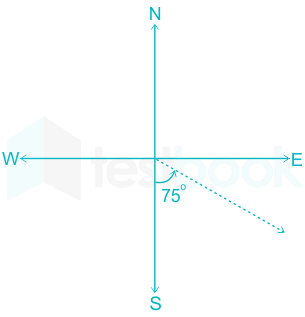
  • From now on the government kept regular track of the vernacular newspapers published in different provinces.
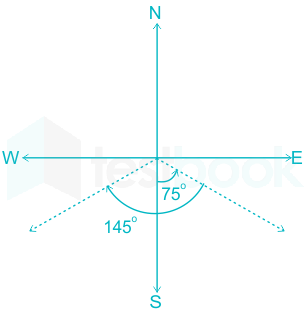
  • When a report was judged as seditious, the newspaper was warned, and if the warning was ignored, the press was liable to be seized and the printing machinery confiscated.

Additional Information

  • The dissatisfaction with British rule intensified in the 1870s and 1880s.
  • The Arms Act was passed in 1878, disallowing Indians from possessing arms. In the same year the Vernacular Press Act was also enacted in an effort to silence those who were critical of the government.
  • The Act allowed the government to confiscate the assets of newspapers including their printing presses if the newspapers published anything that was found “objectionable”.
  • In 1883, there was a furor over the attempt by the government to introduce the Ilbert Bill.
  • The bill provided for the trial of British or European persons by Indians, and sought equality between British and Indian judges in the country.
  • But when white opposition forced the government to withdraw the bill, Indians were enraged.
  • The event highlighted the racial attitudes of the British in India.

Question 117

Who was the wife of the king Louis XVI? 

  1. AOption (a)

    Marie Prescott 

  2. BOption (b)

    Marie Antoinette 

  3. COption (c)

    Maria Theresa 

  4. DOption (d)

    Mary of Scots 

View answer & explanation

Correct answer

Answer: (b)B.

Marie Antoinette 

Why this answer is correct

The correct option is Marie Antoinette.

Important Points

  • In 1774, Louis XVI of the Bourbon family of kings ascended the throne of France.
  • He was 20 years old and married to the Austrian princess Marie Antoinette.
  • The 11th daughter of Holy Roman Emperor Francis I and Maria Theresa, Marie-Antoinette was just 14 years old when she was married to the dauphin Louis, grandson of France’s King Louis XV, on May 16, 1770.
  • The stigma of being a representative of Austria when a connection with Vienna was unpopular in France remained with her throughout her life. She was also unfortunate that the timid, uninspiring Louis proved to be an inattentive husband.

Question 118

Who was crowned as the “King of Awadh” by the rebels of 1857? 

  1. AOption (a)

    Birjis Qadr

  2. BOption (b)

    Shah Alam 

  3. COption (c)

    Wajid Ali Shah

  4. DOption (d)

    Bahadur Shah 

View answer & explanation

Correct answer

Answer: (a)A.

Birjis Qadr

Why this answer is correct

The correct answer is Birjis Qadr.

Key Points

  • Awadh was annexed by the Britishers in 1856.
  • This angered Indians and was a cause of the Indian Mutiny (1857-58), the largest Indian rebellion against British rule.
  • The rebels of 1857 crowned Birjis Qadr as the "King of Awadh".
  • Birjis Qadr (20 august 1845- 14 August 1893) was the Nawab of Awadh from 1857 until 1858.
  • Following the outbreak of the Indian Mutiny, Qadr's mother appointed him monarch of the state in 1857 and she became his regent.

 Thus, we can say that Birjis Qadr was crowned as the "King of Awadh" by rebels of 1857.

Additional Information

  • Indian Mutiny, also known as the Sepoy Mutiny or First war of independence, began in Meerut by Indian troops in the service of the British East India Company.

Question 119

In_____, the French king agreed to double the number of representatives of the third estate but declined to give all members an individual vote. 

  1. AOption (a)

    April 1788 

  2. BOption (b)

    March 1789 

  3. COption (c)

    July 1788 

  4. DOption (d)

    December 1788 

View answer & explanation

Correct answer

Answer: (d)D.

December 1788 

Why this answer is correct

The correct answer is December 1788.

Key Points

  • Before the revolution, french society was divided into three orders:
  • The first estate i.e., the Clergy
  • The second estate i.e., the Nobility
  • The third estate who were the commoners
  • The Third estate in French history was one of the three orders into which were divided in the pre-Revolutionary Estates-General.
  • Summoned by King Louis XVI, the Estates-General of 1789 ended when the Third Estate formed the National assembly.
  • In 1788, Louis XVI agreed to double the number of representatives of the Third Estate.
  • However, all the members of the Third estate were not given an individual vote.

 Thus, we can say that in December 1788, the French king agreed to double the number of representatives of the third estate but declined to give all members an individual vote.

Question 120

Which of the following statements is NOT correct regarding the Second Five Year Plan of India? 

I. It began in 1963.

II. It focused on rapid industrialization.

III. It was developed by P.C. Mahala Nobis.

  1. AOption (a)

    II and III

  2. BOption (b)

    Only I

  3. COption (c)

    I and III

  4. DOption (d)

    Only II

View answer & explanation

Correct answer

Answer: (b)B.

Only I

Why this answer is correct

The correct answer is Only I.

Key Points

  • The Second Five Year Plan of India was set on the path of industrialization.
  • P.C. Mahalanobis was the moving spirit behind it. He gave the highest priority to strengthening the industrial base of the economy.
  • The Second Five Year Plan was made for the duration of 1956 to 1961, under the leadership of Jawaharlal Nehru.
  • Objectives of the Second Five Year Plan were:
  • A sizeable increase in national income so as to raise the level of living.
  • The rapid industrialization of the country with particular emphasis on the development of basic and key industries.
  • A large expansion of employment opportunities by developing labour-intensive projects and small scale industries.
  • Reduction in inequalities of income and distribution.
  • To attain an annual growth rate of 5%.
  • However, the plan was criticized by many experts and as a result, India faced a payment crisis in the year 1957.

 Thus, we can say that the Second Five Year Plan did not begin in the year 1963 but in 1956.

Discipline 2 (20 questions)

Question 121

According to E. Suess's layering system of the earth, ‘Sima’ layer is located ____.

I. below the SIAL layer.

II. above the NIFE layer

  1. AOption (a)

    Both I and II

  2. BOption (b)

    Only II

  3. COption (c)

    Only I

  4. DOption (d)

    Neither I nor II

View answer & explanation

Correct answer

Answer: (a)A.

Both I and II

Why this answer is correct

The correct answer is Both I and II.

Key Points

  • According to E. Suess, the Earth's layers can be broadly divided into 3 types on the basis of chemical composition:
  • SIAL- It is located below the crust.
  • SIMA- It is located below the sialic layer and above the NIFE layer.
  • NIFE- It is located below the SIMA layer.
  • The SIAL is made up of two words i.e., Si and Al which means Silica and Aluminium.
  • The SIMA is constituted by the basalt material. It is composed of two words Si and Ma, whereby Si stands for Silica and Mg stands for Magnesium.
  • The NIFE is composed of two dominant minerals i.e., Nickel (Ni) and Ferrium (Fe).

 Thus, we can say that according to E. Suess's layering system of the earth, 'SIMA' is located below the SIAL layer and above the NIFE layer.

Question 122

Which of the following pressure belts is called ‘doldrum'?

I. Equatorial low-pressure belt

II. Polar high-pressure belt

  1. AOption (a)

    Both I and II 

  2. BOption (b)

    Only II

  3. COption (c)

    Neither I nor II 

  4. DOption (d)

    Only I

View answer & explanation

Correct answer

Answer: (d)D.

Only I

Why this answer is correct

The correct answer is an Equatorial low-pressure belt.

Key Points

  • The equatorial low-pressure belt lies between 5° North and 5° South.
  • Equatorial low-pressure belt is called 'Doldrums' because of the extremely calm air movements.
  • The position of the belt varies with the apparent movement of the Sun.
  • This belt happens to be the zone of convergence of trade winds from two hemispheres from subtropical high-pressure belts.
  • This belt is also known as the Inter-Tropical Convergence Zone (ITCZ).

 Thus, we can say that the Equatorial low-pressure belt is called 'Doldrum'.

Additional Information

  • Polar high-pressure belts lie around the poles between 80° North and 90° South latitudes.

Question 123

In which year did the World War II started? 

  1. AOption (a)

    1938

  2. BOption (b)

    1939

  3. COption (c)

    1941

  4. DOption (d)

    1940

View answer & explanation

Correct answer

Answer: (b)B.

1939

Why this answer is correct

The correct answer is 1939.

Key Points

  • World War II was a global war that lasted from 1939 to 1945.
  • It involved the vast majority of the world's countries- including all of the great powers- forming two opposing military alliances: the Allies and the Axis powers.
  • World War II was one of the great watersheds of 20th-century geopolitical history.
  • It resulted in
  • the extension of the Soviet Union's power to nations of eastern Europe,
  • enabled a communist movement to eventually achieve power in China, and
  • marked the decisive shift of power in the world away from the states of western Europe and toward the United States and the Soviet Union.
  • Allies included the United Kingdom, the United States, the Soviet Union, and China.
  • Axis powers included Nazi Germany, Italy, and Japan.

 Thus, we can say that World War II started in 1939.

Question 124

Atmospheric pressure is depicated on maps by imaginary line known as ____.

  1. AOption (a)

    Isohaline

  2. BOption (b)

    Isotherms

  3. COption (c)

    Isohyets

  4. DOption (d)

    Isobar

View answer & explanation

Correct answer

Answer: (d)D.

Isobar

Why this answer is correct

The correct answer is Isobar.

Key Points

  • A line drawn on a weather map connecting points of equal pressure is called an Isobar.
  • Isobar is a line representing equal atmospheric pressure.
  • The isobaric pattern on a constant height surface is useful in weather forecasting because of the close association between pressure and weather.
  • If isobars are closed together, they show windy or stormy conditions, if they are spread apart, they show calmer weather conditions.

 Thus, we can say that Atmospheric pressure is depicted on maps by an imaginary line known as Isobar.

Additional Information

  • Isohaline is an imaginary line on a map that connects all points of the ocean with same salinity.
  • Isotherm is a line drawn on a map or chart joining points with the same temperature.
  • Isohyet is a line on a map or chart connecting areas of equal rainfall.

Question 125

Which of the following pairs of ‘Theories of mountain building - Geologist’ is correct?

I. Geosynclinal orogen theory — Kober

ll. Thermal contraction theory - Jeffreys

III. Radioactivity theory - Joly

  1. AOption (a)

    I, II and III

  2. BOption (b)

    II and III

  3. COption (c)

    I and II

  4. DOption (d)

    Only I

View answer & explanation

Correct answer

Answer: (a)A.

I, II and III

Why this answer is correct

The correct answer is I, II and III.

Key Points

  • German geologist Kober wrote the Geosynclinal Orogen Theory.
  • According to Kober, there were mobile zones of water in the places of present-day mountains. He called mobile zones of water geosynclines or orogen ( the place of mountain-building).
  • These mobile zones of geosynclines were surrounded by rigid masses which were termed by Kober as kratogen.
  • H. Jeffreys has presented a detailed discussion of his thermal contraction theory in his famous book, The Earth: Its origin history and physical constitution.
  • According to Jeffreys' calculations, there has been no change in temperature in the interior of the earth i.e., in the zone from the centre of the Earth to about 700 km below the Earth's surface.
  • J. Joly put out his theory of thermal cycles or Radioactivity Theory in 1925 in his book 'The Surface History of the Earth'.
  • His theory was simple and was based on the latest scientific facts available at that time. The continents composed of sial (granite) rest on the heavier sima (basalt).
  • An important basis of this theory is the radioactivity of rocks, in comparison to sima, rocks of sial are richer in radio-active minerals.

 Thus, we can say that the Geosynclinal orogen theory was written by Kober, Jeffreys wrote the Thermal contraction theory and the Radioactivity theory was proposed by Joly.

Question 126

A form of solid precipitation consisting of large pellets or spheres of ice balls is known as ____. 

  1. AOption (a)

    Hail

  2. BOption (b)

    Sleet

  3. COption (c)

    Drizzle

  4. DOption (d)

    Frost

View answer & explanation

Correct answer

Answer: (a)A.

Hail

Why this answer is correct

The correct answer is Hail.

Key Points

  • Precipitation is any type of water that forms in the earth's atmosphere and then drops onto the surface of the Earth.
  • The most common type of precipitation is rain, snow and hail.
  • Hail forms in cold storm clouds when very cold water droplets freeze, or turn solid, as soon as they touch things like dust or dirt.
  • Hail is formed when drops of water freeze together in the cold upper regions of thunderstorm clouds. These chunks of ice are called hailstones.
  • Most hailstones measure between 5 millimetres and 15 centimetres in diameter.

 thus, we can say that hail is a form of solid precipitation consisting of large pellets or spheres of ice balls.

Additional Information

  • Rain that falls from clouds but freezes before it reaches the ground is known as sleet or ice pellets.
  • Drizzle is light precipitation consisting of liquid water drops smaller than those of rain.
  • Frost is a thin layer of ice on a solid surface that forms from water vapour.

Question 127

Which of the following is NOT a major plate of the lithosphere?

  1. AOption (a)

    African plate 

  2. BOption (b)

    Arabian plate 

  3. COption (c)

    Pacific plate 

  4. DOption (d)

     Eurasian plate 

View answer & explanation

Correct answer

Answer: (b)B.

Arabian plate 

Why this answer is correct

The correct answer is Arabian plate.

Key Points

  • The lithosphere is the outer solid part of the Earth,
  • It includes the brittle upper portion of the mantle and the crust, the planet's outermost layers.
  • The lithosphere is divided into huge slabs called tectonic plates.
  • Tectonic plates are sometimes divided into three categories: major (primary) plates, minor (secondary) plates and microplates (tertiary plates).
  • The lithosphere is divided into seven major plates. These are:
  • Antarctic plate
  • North American plate
  • South American plate
  • Pacific plate
  • India-Australia-new Zealand plate
  • African plate
  • Eurasian plate
  • A few minor plates are:
  • Arabian plate
  • Somali plate
  • Caribbean plate
  • Burma plate

 Thus, we can say that the Arabian plate is not one of the major plates of the lithosphere.

Confusion Points

  • The arabian plate is a minor plate of lithosphere not major.

Question 128

Which ‘Big Three’ countries conducted the Paris Peace Conference? 

  1. AOption (a)

    Germany, Japan and Britain

  2. BOption (b)

    USA, Japan and Britain 

  3. COption (c)

    USA, Russia and Germany 

  4. DOption (d)

    Russia, UK and Germany 

View answer & explanation

Correct answer

Answer: (b)B.

USA, Japan and Britain 

Why this answer is correct

The correct answer is USA, Japan and Britain.

Key Points

  • The Paris Peace Conference was the formal meeting in 1919 and 1920 of the victorious Allies after the end of the World War I to set peace terms for the defeated Central Powers.
  • Formally opened on January 18, 1919, the Paris Peace Conference was the International meeting that established the terms of peace after World War I.
  • The 'Big Three' countries - the USA, France and Britain conducted the conference.
  • Peacemaking occurred in several stages, with the Council of Four, also known as the "Big Four" - Prime Ministers Lloyd George of Great Britain, Georges Clemenceau of France, Victoria Orlando of Italy and U.S. President Woodrow Wilson.
  • They acted as the primary decision-makers for the first six months, and their foreign ministers and ambassadors oversaw the remainder of the conference.
  • It resulted in five treaties that rearranged the maps of Europe and parts of Asia, Africa and the Pacific Islands, and also imposed financial penalties.

Thus, we can say that the "Big Three' countries that conducted the Paris Peace Conference were the USA, Japan and Britain.

Question 129

In the context of Colonial Disputes in Europe, which of the following statements is correct?

I. Africa and Asia create the major Collision between European powers.

II. Austria and Hungary are the major European powers who fought for the colonies.

  1. AOption (a)

    Only I

  2. BOption (b)

    Only II

  3. COption (c)

    Neither I nor II 

  4. DOption (d)

    Both I and Il 

View answer & explanation

Correct answer

Answer: (a)A.

Only I

Why this answer is correct

The correct answer is Only I.

Key Points

  • Between 1945 and 1960, three dozen new states in Asia and Africa achieved autonomy or outright independence from their European colonial rulers.
  • Asia and Africa create a major collision between European powers.
  • In the mid to late 19th century, the European powers colonized much of Africa and Southeast Asia.
  • During the decades of imperialism, the industrializing powers of Europe viewed the African and Asian continents as reservoirs of raw material, labour, and territory for future settlement.
  • During World War II Japan drove the European powers out of Asia.
  • The newly independent nations that emerged in the 1950s and the 1960s became an important factor in changing the balance of power within the United Nations.

Thus, we can say that the context of Colonial Disputes in Europe, Africa and Asia create a major collision between European powers.

Question 130

Which of the following pairs of term - used in country is correct?  

I. Duce - Leader in Italy

II. Fuhrer - Leader in Germany

  1. AOption (a)

    Both I and II

  2. BOption (b)

    Only I

  3. COption (c)

    Only II

  4. DOption (d)

    Neither I nor II

View answer & explanation

Correct answer

Answer: (a)A.

Both I and II

Why this answer is correct

The correct answer is both I and II.

Key Points

  • Duce is an Italian title, derived from the Latin word "dux" meaning 'leader'.
  • National Fascist Party leader Benito Mussolini was called II Duce (The Leader)  by Fascists.
  • The title 'Duce' was used outside its traditional sense in some of the publications praising Garibaldi during the Italian unification in 1860.
  • Fuhrer is a german word meaning "leader" or "guide".
  • As a political title, it is associated with the Nazi dictator Adolf Hitler.
  • Nazi Germany cultivated the Fuhrerprinzip ('leader principle"), and Hitler was generally known as just der fuhrer ("the leader").

 Thus, we can say that the terms 'Duce' and 'Fuhrer' are used for leaders in Italy and Germany respectively.

Question 131

Which of the following sedimentary rocks is formed organically? 

  1. AOption (a)

    Loess

  2. BOption (b)

    Limestone

  3. COption (c)

    Shale

  4. DOption (d)

    Gypsum

View answer & explanation

Correct answer

Answer: (b)B.

Limestone

Why this answer is correct

The correct answer is Limestone.

Key Points

  • Organic sedimentary rocks form from the accumulation and lithification of organic debris, such as leaves, roots, and other plant or animal material.
  • Examples of organic sedimentary rocks include limestone and coal.
  • Limestone is a sedimentary rock composed principally of calcium carbonate (calcite) or the double carbonate of calcium and magnesium (dolomite).
  • It is commonly composed of tiny fossils, shell fragments and other fossiled debris.
  • Limestone is a carbonate rock of organic origin formed from the skeletal remains of marine organisms.
  • Limestone is usually grey, but it can also be white, yellow or brown.

 Thus, we can say that Limestone is formed organically.

Question 132

If incoming short-wave solar radiation is 100 per cent, then the heat budget of the atmosphere comprises ____ of solar radiation. 

  1. AOption (a)

    61 percent 

  2. BOption (b)

    34 percent

  3. COption (c)

    20 percent

  4. DOption (d)

    48 percent

View answer & explanation

Correct answer

Answer: (d)D.

48 percent

Why this answer is correct

The correct answer is 48 percent.

Key Points

  • Consider the insolation received at the top of the atmosphere is 100 per cent.
  • While passing through the atmosphere some amount of energy is reflected, scattered and absorbed. Only the remaining part reaches the Earth's surface.
  • Roughly 35 units are reflected back to space even before reaching the Earth's surface.
  • Of these 27 units are reflected back from the top of the clouds and 2 units from the snow and ice-covered areas of the Earth.
  • The reflected amount of radiation is called the albedo of the earth.
  • The remaining 65 units are absorbed, 14 units within the atmosphere and 51 units by the earth's surface.
  • The earth radiates back 51 units in the form of terrestrial radiation.
  • Of these, 17 units are radiated to space directly and the remaining 34 units are absorbed by the atmosphere.
  • 48 units absorbed by the atmosphere are also radiated back into space.
  • Thus, the total radiation returning from the earth and the atmosphere is respectively 17+48=65 per cent which balances the total of 65 units received from the sun.
  • This is termed the heat budget or heat balance of the Earth.

Thus, we can say that if incoming short-wave solar radiation is 100 per cent, then the heat budget of the atmosphere comprises 48 per cent of solar radiation.

Question 133

According to the fascist, which of the following pair of term - meaning is NOT correct?

I. Plutocratic-Having their colonies 

II. Proletarians-Not having colonies

  1. AOption (a)

    Neither I nor II

  2. BOption (b)

    Only II

  3. COption (c)

    Both I and II

  4. DOption (d)

    Only I

View answer & explanation

Correct answer

Answer: (a)A.

Neither I nor II

Why this answer is correct

The correct answer is neither I nor II.

Key Points

  • Fascism is a political ideology and mass movement that dominated many parts of central, southern, and eastern Europe between 1919 and 1945.
  • It exalts the nation and often race above the individual and stands for a centralized autocratic government headed by a dictatorial leader, severe economic and social regimentation, and forcible suppression of opposition.
  • In the political jargon and propaganda of Fascist Italy, Nazi Germany and the Communist International, Western democratic states were referred to as plutocracies, with the implication being that a small number of extremely wealthy individuals were controlling the countries and holding them to ransom.
  • Plutocratic meant having their colonies.
  • A proletariat is the social class of wage earners, those members of a society whose only possession of significant economic value is their labour-power.
  • A member of such a class is called a proletarian.
  • Proletarians do not have colonies.

 Thus, we can say that the Plutocratic have colonies while proletarians do not.

Question 134

The means of production that is owned by a few individuals are also known as ____.

  1. AOption (a)

    capitalist 

  2. BOption (b)

    feudalist 

  3. COption (c)

    fascist 

  4. DOption (d)

    socialist 

View answer & explanation

Correct answer

Answer: (a)A.

capitalist 

Why this answer is correct

The correct answer is Capitalist.

Key Points

  • A Capitalist is a person who supports and propagates Capitalism.
  • Capitalism is an economic philosophy in which private individuals or businesses own capital goods.
  • It is based on the private ownership and control of the means of production and their operation for profit.
  • The essential feature of capitalism is the motive to make a profit.
  • A nation's economy is described as capitalist if it is based on private ownership and profit.

 Thus, we can say that the means of production that is owned by a few individuals are known as capitalist.

Additional Information

  • A feudalist is a person who believes in Feudalism, which was a political and economic system of Europe from the 9th to 15th century.
  • It is based on the holding of all land in fief or fee and the resulting relation of lord to vassal and characterized by homage, legal and military service of tenants, and forfeiture.
  • A fascist is a person who supports and propagates Fascism.
  • Fascism is a political philosophy, movement, or regime that exalts a nation and often race above the individual and that stands for a centralized autocratic government headed by a dictatorial leader, severe economic and social regimentation, and forcible suppression of opposition.
  • A Socialist is someone who supports and propagates socialism, which is an ideology or system based on the collective, public ownership and control of the resources by the government.

Question 135

Who was the first socialist to believe that the general well-being is incomplete without including women? 

  1. AOption (a)

    David Dale 

  2. BOption (b)

    William Thompson 

  3. COption (c)

    Charles Fourier

  4. DOption (d)

    Matti Kurikka

View answer & explanation

Correct answer

Answer: (c)C.

Charles Fourier

Why this answer is correct

The correct answer is Charles Fourier.

Key Points

  • Charles Fourier was a French socialist who advocated a reconstruction of society based on communal associations of producers known as phalanges.
  • His system came to be known as Fourierism.
  • Charles Fourier was the founder of a feminist tradition within french socialism.
  • He was the first socialist to believe that general well-being is incomplete without including women.
  • His condemnations of injustices of contemporary society incorporated a critique of the subjection of women, and in the ideal world of harmony which he envisaged the 'liberty' of women would be guaranteed.
  • Fourier is credited to have originated the word 'Feminism' in 1837.

 Thus, we can say that Charles Fourier was the first socialist to believe that general well-being is incomplete without including women.

Question 136

Asteroids are found between the orbits of ____.

  1. AOption (a)

    Mars and Jupiter 

  2. BOption (b)

    Venus and Earth 

  3. COption (c)

    Mercury and Mars 

  4. DOption (d)

    Jupiter and Neptune 

View answer & explanation

Correct answer

Answer: (a)A.

Mars and Jupiter 

Why this answer is correct

The correct answer is Mars and Jupiter.

Key Points

  • Asteroids are rocky, airless remnants left over from the early formation of our solar system about 4.6 billion years ago.
  • Asteroids are sometimes called minor planets.
  • Most asteroids are found orbiting the Sun between Mars and Jupiter within the main asteroid belt.
  • The asteroid belt is a torus-shaped region in the Solar System located between the orbits of the planets Jupiter and Mars.
  • Asteroids range in size from Vesta- the largest at about 53o kilometers in diameter - to bodies that are less than 10 meters across.

 Thus, we can say that asteroids are found between the orbits of Mars and Jupiter.

Question 137

The Brundtland Report is the output of which commission? 

  1. AOption (a)

    IFAD 

  2. BOption (b)

    CAO

  3. COption (c)

    WCED

  4. DOption (d)

    WHO

View answer & explanation

Correct answer

Answer: (c)C.

WCED

Why this answer is correct

The correct answer is WCED.

Key Points

  • Brundtland Report also called Our Common Future, was released in 1987.
  • It was released by the World Commission on Environment and Development (WCED) that introduced the concept of Sustainable Development.
  • The WCED explored the causes of environmental degradation, attempted to understand the interconnections between social equity, economic growth, and environmental problems, and developed policy solutions that integrated all three areas.
  • The Brundtland Commission was a sub-organization of the United Nations (UN) that aimed to unite countries in pursuit of sustainable development.
  • The Brundtland Commission officially dissolved in 1987 after releasing Our Common Future, also known as the Brundtland Report.

 Thus, we can say that the Brundtland Report is the output of the World Commission on Environment and Development (WCED).

Question 138

Which of the following is NOT a capitalist philosopher? 

  1. AOption (a)

    Adam Smith 

  2. BOption (b)

    Jeremy Bentham 

  3. COption (c)

    Karl Marx 

  4. DOption (d)

    John Locke 

View answer & explanation

Correct answer

Answer: (c)C.

Karl Marx 

Why this answer is correct

The correct answer is Karl Marx.

Key Points

  • Karl Marx was a German philosopher, a critic of political economy, economist, and a social revolutionary.
  • He published The Communist Manifesto and Das Kapital. These writings formed the basis of the body of thought and belief known as Marxism.
  • Marxism is a body of doctrine developed by Karl Marx. It examines the effect of capitalism on labour, productivity, and economic development and argues for a worker revolution to overturn capitalism in favor of communism.
  • Capitalism is an economic system in which private individuals or businesses own capital goods, and demand and supply freely set prices in markets in a way that can serve the best interests of society.
  • A few capitalist philosophers are:
  • Adam Smith
  • David Ricardo
  • Jeremy Bentham
  • John Locke
  • John Stuart Mill

 Thus, we can say that Karl Marx is not a capitalist philosopher.

Additional Information

  • Adam Smith is considered the first theorist of Capitalism.

Question 139

In which year, the League of Nations appointed temporary Mixed Commission? 

  1. AOption (a)

    1918

  2. BOption (b)

    1916

  3. COption (c)

    1922

  4. DOption (d)

    1920

View answer & explanation

Correct answer

Answer: (d)D.

1920

Why this answer is correct

The correct answer is 1920.

Key Points

  • League of Nations was an organization established on January 10, 1920, for international cooperation, at the initiative of the victorious Allied powers at the end of World War I.
  • It was the first worldwide intergovernmental organization whose principal mission was to maintain world peace.
  • The League of Nations appointed Temporary Mixed Commission in the year 1920.
  • The Temporary Mixed Commission on Armaments was a committee of eminent figures formed by the League of Nations to consider the problem of international disarmament in its widest aspects and to suggest potential initiatives, plans and solutions.

 Thus, we can say that the League of Nations appointed Temporary Mixed Commission in 1920.

Question 140

Tides which are caused when the sun, the earth and the moon meet in the position of quadrature are called ____.

  1. AOption (a)

    Nadir tides  

  2. BOption (b)

    Bore tide

  3. COption (c)

    Spring tides 

  4. DOption (d)

    Neap tides 

View answer & explanation

Correct answer

Answer: (d)D.

Neap tides 

Why this answer is correct

The correct answer is Neap tides.

Key Points

Tides are the daily changes in the level of ocean water at any given place.

  • The main factor that causes tides is the gravitational pull of the Moon and the Sun.
  • A neap tide is a tide of minimal range occurring near the time when the Moon and the Sun are in quadrature.
  • This condition is geometrically defined as the time at which the line from the Earth to the Moon is at right angles to the line from the Earth to the Sun.
  • Neap tide occurs during the first and third quarter moon when the moon appears '"half full".
  • They occur exactly halfway between the Spring tides when the Moon is at first or last quarter.
  • This happens because the Moon's high tide occurs in the same place as the Sun's low tide and the Moon's low tide is added to by the Sun's high tide.

 Thus, we can say that the tides which are caused when the Sun, the Earth and the Moon meet in the position of quadrature are called Neap tides.

Discipline 3 (20 questions)

Question 141

Which of the following is the correct expression of Effective Literacy Rate? 

  1. AOption (a)

    (Number of illiterate persons aged 7 and above × 100) / Population aged 7 and above 

  2. BOption (b)

    (Number of illiterate persons aged 7 and above × 100) / Total population

  3. COption (c)

    (Number of Literate persons aged 7 and above × 100) / Population aged 7 and above

  4. DOption (d)

    (Number of Literate persons aged 7 and above × 100) / Total population

View answer & explanation

Correct answer

Answer: (c)C.

(Number of Literate persons aged 7 and above × 100) / Population aged 7 and above

Why this answer is correct

The correct answer is (Number of Literate persons aged 7 and above × 100) / Population aged 7 and above.

Key Points

  • The Literacy rate is defined by the percentage of the population of a given age group that can read and write.
  • Literacy rate also called the Effective Literacy rate is the total percentage of the population of an area at a particular time aged seven years or above who can read and write with understanding.
  • Effective Literacy Rate is calculated by dividing the number of literate persons aged 7 and above by the population aged 7 and above, multiplied by 100.
  • The top three states in terms of Literacy Rates in 2020 were:
  • Kerala- 96.2%
  • Delhi- 88.7%
  • Uttrakhand- 87.6%

 Thus, we can say that the correct expression of effective Literacy Rate is (Number of Literate persons aged 7 and above × 100) / Population aged 7 and above.

Question 142

Which of the following socio-economic factors does NOT act as a determinant for uneven distribution of population?  

  1. AOption (a)

    Urbanisation

  2. BOption (b)

    Agricultural practices 

  3. COption (c)

    Available of mineral resources

  4. DOption (d)

    Political decision

View answer & explanation

Correct answer

Answer: (b)B.

Agricultural practices 

Why this answer is correct

The correct answer is Agricultural practices.

Key Points

  • The main factors responsible for the unequal distribution of the world population are as follows:
  • Urbanization
  • Availability of mineral resources
  • Political decisions
  • Migration of Population
  • Educational factors
  • For changes in the world's population, political factors are also responsible. If the people feel that their expectations are not fulfilled by the government, then they leave the country and settle in another.
  • Availability of mineral resources is also a determinant as every nation possesses some type of mineral wealth.
  • The regions of mineral wealth become a major source of industrialization and employment of a country. At such places, the density of population is high due to the centralization of industries.
  • The migration of population from the villages to the cities also causes uneven distribution of population. This is known as Urbanization.

 Thus, we can say that the socio-economic factor that does not act as a determinant for uneven distribution of population is agricultural practices.

Question 143

The Western Ghats range starts from which state of India? 

  1. AOption (a)

    Gujarat 

  2. BOption (b)

    Maharashtra 

  3. COption (c)

    Kerala

  4. DOption (d)

    Goa

View answer & explanation

Correct answer

Answer: (a)A.

Gujarat 

Why this answer is correct

The correct answer is Gujarat.

Key Points

  • The Western Ghats is a mountain range that covers an area of 160,000 km2 in a stretch of 1,600 km parallel to the western coast of the Indian peninsula.
  • Western Ghats range starts from Gujarat and goes through states of Karnataka, Goa, Maharashtra, Kerala and Tamil Nadu.
  • The Western Ghats lie parallel to the western coast. They are continuous and can be crossed through passes only.
  • The Western Ghats cause orographic rain by facing the rain-bearing moist wind to rise along the western slopes of the Ghats.
  • The height of the Western ghats progressively increases from north to south.
  • The highest peaks include the Anai Mudi and the Doda Betta.

 Thus, we can say that the Western Ghats starts from the state of Gujarat.

Question 144

Which of the following statements is correct regarding the rubber crop?

I. It requires moist and humid climate with rainfall of more than 200 cm.

II. It requires temperature below 20 degree C.

  1. AOption (a)

    Only I

  2. BOption (b)

    Neither I nor II

  3. COption (c)

    Both I and II

  4. DOption (d)

    Only II

View answer & explanation

Correct answer

Answer: (a)A.

Only I

Why this answer is correct

Rubber is a tropical tree crop produced primarily for the manufacture of latex for industrial use.

Important Points

  • Rubber plant requires 200cm or more rainfall, with little or no dry season
  • A constant high temperature is needed;
  • The soil does not have to be particularly rich, but they do have to be deep and well-drained.

Additional Information Rubber plants need a high temperature. A region with a temperature of 20 degrees C or less is not favorable for rubber plants.

Hence, Only 200 cm of rainfall with a moist and humid climate as a requirement for rubber plants is the correct statement.

Question 145

The Luni river originates from which state of India?

  1. AOption (a)

    Andhra Pradesh 

  2. BOption (b)

    Gujarat 

  3. COption (c)

    Rajasthan 

  4. DOption (d)

    Uttar Pradesh 

View answer & explanation

Correct answer

Answer: (c)C.

Rajasthan 

Why this answer is correct

The correct option is Rajasthan.

Important Points

 Luni is the largest river system of Rajasthan, west of Aravali.

  • It originates near Pushkar in two branches, i.e. the Saraswati and the Sabarmati, which join with each other at Govindgarh.
  • From here, the river comes out of Aravali and is known as Luni.
  • It flows towards the west till Telwara and then takes a southwest direction to join the Rann of Kuchchh.
  • The entire river system is ephemeral.

Additional Information

  • The Indian desert lies towards the western margins of the Aravali Hills.
  • It is an undulating sandy plain covered with sand dunes.
  • This region receives very low rainfall below 150 mm per year.
  • It has arid climate with low vegetation cover.
  • Streams appear during the rainy season.
  • Soon after they disappear into the sand as they do not have enough water to reach the sea.
  • Luni is the only large river in this region.

Question 146

The leading producer of iron and steel in the world is ____.

  1. AOption (a)

    India

  2. BOption (b)

    Brazil

  3. COption (c)

    Australia

  4. DOption (d)

    China

View answer & explanation

Correct answer

Answer: (d)D.

China

Why this answer is correct

The correct option is China.

The countries in which iron and steel industry is located are Germany, USA, China, Japan and Russia. 

China

  • In the 1950s China and India produced almost the same quantity of steel. Today, China is the largest producer of steel. China is also the world’s largest consumer of steel.
  • China surpassed all goals and reached a staggering 808.4 million metric tons of crude steel in 2016.
  • China exports 106.6 million metric tons and witnessed an unimaginable growth of 364% since 2009. South Korea, Vietnam, and Philippines are the largest buyers of Chinese steel.
  • The overhang of production capacity has also made China hold 50% share of global steel production. China’s growth in the steel sector is set to grow further due to politico-economic factors coupled with domestic development, and also its increasing geo-political influence on the South China Sea.

​

Additional Information List of the 10 biggest steel-producing countries in 2017:

  1. China: 831,728,000 tonnes
  2. Japan: 104,661,000 tonnes
  3. India: 101,455,000 tonnes
  4. United States: 81,612,000 tonnes
  5. Russia: 71,491,000 tonnes
  6. South Korea: 71,030,000 tonnes
  7. Germany: 43,297,000 tonnes
  8. Turkey: 37,524,000 tonnes
  9. Brazil: 34,365,000 tonnes
  10. Italy: 24,068,000 tonnes

India:

  • In 2004, India was the largest exporter of steel which accounted for 2.25 per cent of the global steel trade.
  • Chotanagpur plateau region has the maximum concentration of iron and steel industries. It is largely, because of the relative advantages this region has for the development of this industry.
  • As per lead economists in reputed columns, India is set to overtake Japan to become the second largest producer of crude steel in the world. After reaching 95 million metric tons at the end of 2016, the world’s fourth-largest economy produced 101 million metric tons in February 2017, quickly increasing by 11%.
  • India, the 14th largest exporter of crude steel, supplied 10 million metric tons of steel to global buyers. India had a meteoric 75% growth in exports as per a few estimations. Other estimations go as far as 101% to 142%. Imports, however, have fallen by nearly 25%.

Brazil:

  • Brazil’s economic crisis has sharply reduced its crude steel output by nearly three million metric tons, standing currently at 30.2 million metric tons in 2016.
  • According to a renowned national steel association in Brazil, since 2014 the South American nation’s steel industry has closed 83 functioning units, axed more than 40,000 jobs, and delayed investments worth USD 3.2 billion.
  • As per the association, the nation reduced its crude steel output by almost 9.2%. This has affected allied sectors, including Automotive.
  • Brazil’s steel export has fallen down 2% to 13.4 million metric tons.

Question 147

The Red Data list maintained by the IUCN includes which of the following categories?

I. Vulnerable species 

II. Near threatened species

  1. AOption (a)

    Only II

  2. BOption (b)

    Both I and II

  3. COption (c)

    Only I

  4. DOption (d)

    Neither I nor II

View answer & explanation

Correct answer

Answer: (b)B.

Both I and II

Why this answer is correct

The correct option is Both I and II.

Important Points

Red Data Book is the sourcebook that keeps a record of all the endangered animals and plants.

  • Red Data Book is maintained internationally by an organization.
  • India also maintains Red Data Book for plants and animals found in India.
  • Red Data Book contains a record of endangered species. Animals whose numbers are diminishing to a level that they might face extinction are known as endangered animals.
  • It divides species into nine categories
  • ​Not Evaluated
  • Data Deficient
  • Least Concern
  • Near Threatened
  • Vulnerable
  • Endangered
  • Critically Endangered
  • Extinct in the Wild and Extinct.

Question 148

Which of the following is a cumulative atmospheric disaster?

I. Flood

II. Drought 

III. Tornado

  1. AOption (a)

    I, II and III

  2. BOption (b)

    I and II

  3. COption (c)

    Only III

  4. DOption (d)

    Only II

View answer & explanation

Correct answer

Answer: (b)B.

I and II

Why this answer is correct

The correct answer is Both I and II

Important Points​II. Drought

Drought is a cumulative atmospheric disaster that occurs over an extended period of time due to a prolonged deficiency in precipitation. It leads to a shortage of water resources, affecting agriculture, ecosystems, and human populations. Droughts can have severe and long-lasting impacts on the affected regions, and they develop gradually over weeks, months, or even years.

 Flood is also a cumulative atnospheric disaster.Floods are more often associated with heavy rainfall, rapid snowmelt, or other factors that cause a sudden influx of water, leading to inundation of land areas.

 III. Tornado is not typically considered cumulative atmospheric disasters.  Tornadoes are intense, localized, and rapidly-developing wind events that form under specific atmospheric conditions and are not cumulative in nature.

Additional Information A weather system with low pressure is called Tornado and does not cause due to the cumulative causality.

Hence Flood and Drought are considered cumulative atmospheric disasters.

Question 149

Which of the following pairs of 'Industrial region - Country' is correct?

I. Great Lakes Region - USA

II. Loraine Region — France

III. Kanto Region — South Korea

  1. AOption (a)

    I and IIi

  2. BOption (b)

    I and II

  3. COption (c)

    I, II and III

  4. DOption (d)

    Only III

View answer & explanation

Correct answer

Answer: (b)B.

I and II

Why this answer is correct

Each country has its industrially rich belt that benefits its domestic purposes and sometimes the abundance, if exported to adjoining countries gets them foreign currencies. 

Important Points

  • Great Lakes Region in USA: 
  • On the Great Lakes, tourism and leisure are important sectors.
  • On the Great Lakes, a few modest cruise ships, including a few of sailing ships, operate.
  • Sport fishing, commercial fishing, and Native American fishing together account for a $4 billion annual business in the United States.
  • Lorraine in France: 
  • Glass and crystal, food and beverage goods, faience (earthenware), paper, and furniture are among them.
  • Lorraine has benefited from industrial conversion by attracting new sectors such as mechanical engineering, electronics and electrical equipment manufacture, and, most notably, the automobile assembly and components business.

Additional InformationKanto in Japan:

  • Agriculture, fishery, manufacturing industries, information technology, electronic industry, heavy industry (chemical, iron and steel, equipment), light industry (food and beverages, plastics, ceramics) are long-standing businesses.
  • New energy-related businesses, energy-saving-related industries, and environment/recycling-related industries are all growing industries.

Hence, the industry-country pair I) Great Lakes Region- the U.S.A. and II) Lorraine-France are correct.$

Question 150

Post disaster the first job of a rescuer is to ____.

  1. AOption (a)

    set camps nearby

  2. BOption (b)

    assess the area

  3. COption (c)

    check the working conditions

  4. DOption (d)

    call the nodal ministry

View answer & explanation

Correct answer

Answer: (b)B.

assess the area

Why this answer is correct

The correct option is to assess the area.

Important Points

The first job of a rescuer is to assess the area so as to save time, which would help ineffective response.

  • It is very important for a rescuer to collect information on the extent of damage, approach to the damaged area, particulars of the damage, and understand if any further damage is likely to occur.

 Additional InformationThe local leaders or the people residing in that particular locality provide all this information. Follow three key principles during the survey:

  1. Look: See physically the incidents and make a thorough visual inspection.
  2. Listen: Listen to all the sources of information - from the community, Government records and media reports.
  3. Feel: Feel convinced regarding the fact, the gravity of the dangers and our own capacity to respond.

Question 151

Which of the following is the world's longest highway tunnel above 10000 feet?

  1. AOption (a)

    Mount Ovit tunnel, Turkey 

  2. BOption (b)

    Atal tunnel, India 

  3. COption (c)

    Saint Gotthard, Switzerland  

  4. DOption (d)

    Z Morh Tunnel

View answer & explanation

Correct answer

Answer: (b)B.

Atal tunnel, India 

Why this answer is correct

The correct answer is Atal tunnel, India 

Key Points 

  • The World’s longest Highway tunnel - Atal Tunnel (9.02 Km) has been built by Border Road Organisation.
  • The Atal Tunnel has been built under the Rohtang Pass in the eastern Pir Panjal Range of the Himalayas.
  • It is on the Leh-Manali Highway.
  • The tunnel is the second-longest road tunnel in India.
  • The length of the tunnel is  9.02 km.
  • It has reduced the distance between Keylong and Manali by about 60 km.
  • The Atal tunnel is at 3,100 meters elevation.

Question 152

Which of the following serves as the headquarters of the Eastern railway zone in India? 

  1. AOption (a)

    Kolkata 

  2. BOption (b)

    Bhubaneshwar 

  3. COption (c)

    Bilaspur

  4. DOption (d)

    Gorakhpur 

View answer & explanation

Correct answer

Answer: (a)A.

Kolkata 

Why this answer is correct

The correct option is Kolkata.

 Important Points

Indian Railways is geographically organized into zones.

  • Indian Railway is a reputed and one of the largest organizations in India. It is spread throughout the country.
  • So, to ensure smooth functioning and manage the organization effectively, it has been divided into zones that are further divided into divisions.
  • Each division has its own divisional headquarter. As of now, there are 18 railway zones and 70 divisions in India.
  • The head of each division is the Divisional Railway Manager (DRM) who reports to the General Manager (GM) of the railway zone.
  • The headquarters of the eastern Railway is located at Fairley Place in Kolkata, West Bengal.
  • The four main divisions are HOWRAH, SEALDAH, ASANSOL, MALDA.
  • Other Divisions: Chittaranjan, Kolkata Metro.

Additional Information

  • The list of railway zones in India is as follows:
  1. Central Railway
  2. East Central Railway
  3. East Coast Railway
  4. Eastern Railway
  5. Konkan Railway
  6. North Central Railway
  7. North Eastern Railway
  8. North Western Railway
  9. Northeast Frontier Railway
  10. Northern Railway
  11. South Central Railway
  12. South East Central Railway
  13. South Eastern Railway
  14. South Western Railway
  15. Southern Railway
  16. West Central Railway
  17. Western Railway
  18. Southern Coast Railway
  • North Zone is the largest Railway Zone of Indian Railways.
  • There are three types of rail lines in India: Broad Gauge; Meter Gauge; and Narrow Gauge.
  • Each zone is further classified into Divisions geographically. Divisions are the basic unit of operation. Division is headed by a Divisional Railway Manager who is in the rank of an HoD. At present there 68 Divisions in Indian Railways.
  • A Railway Division is the smallest administrative Unit of Railways.

Question 153

Which of the following pass is situated in Ladakh ? 

  1. AOption (a)

    Dihang pass 

  2. BOption (b)

    Bomdi La pass 

  3. COption (c)

    Niti pass 

  4. DOption (d)

    Thang La pass 

View answer & explanation

Correct answer

Answer: (d)D.

Thang La pass 

Why this answer is correct

The correct answer is - Thang La pass.

Note: The question in the original exam was "Which of the following pass is situated in Himanchal Pradesh?" But due to discrepancy in the options the question was dropped for all. That is why we have exchanged Himanchal Pradesh with Ladakh  for the correctness of the question

Important Points

  • Taglang La or Tanglang La, elevation 5,328 meters (17,480 ft), is a high-altitude mountain pass in the Indian union territory of Ladakh.
  • As of September 2018, the Leh–Manali Highway leading south from Upshi to Tanglang La is paved, with the exception of a very short (approximately 500 m) unpaved section just north of the pass.
  • The pass itself is paved.
  • On ascending the pass from the Moore plains the road is well paved with occasional streams crossing.
  • The elevation in meters, which is taken from a local sign, is in agreement with SRTM data.
  • The sign claims 17,582 ft, which would be 5,358 m, and claims to be the world’s second-highest motorable pass.
  • The claim is no longer accurate, however, and it is actually the 12th highest motorable pass.

Additional InformationBomdi La pass: The Bomdi-La pass connects Arunachal Pradesh with Lhasa, the capital city of Tibet. It is located in the east of Bhutan.

Dihang pass: It is located in the Northeastern states of Arunachal Pradesh. This pass connects Arunachal Pradesh with Myanmar (Mandalay). At an elevation of more than 4000 m, it provides passage.

Niti pass: This pass joins Uttarakhand with Tibet. This also remains snow-covered during the winter season.

Question 154

In which of the following demographic transition stages, both fertility and mortality rates are high? 

  1. AOption (a)

    Stage 3 

  2. BOption (b)

    Stage 4

  3. COption (c)

    Stage 5

  4. DOption (d)

    Stage 1

View answer & explanation

Correct answer

Answer: (d)D.

Stage 1

Why this answer is correct

Over-time changes in the population composition due to changes in fertility and mortality rate are known as the demographic transition.

Important Points

Demographic transition is a model used to represent the movement of high birth and death rates to low birth and death rates as a country develops from a pre-industrial to an industrialized economic system. 

  • Stage 1:  High Stationery: Birth and death rates are high and erratic, and population growth is modest.
  • Stage 2: Early Expanding Stage: a high birth rate, a low mortality rate, and a fast population growth rate
  • Stage 3: Later Expanding Stage: Declining birth and mortality rates, as well as a decline in the rate of population increase.
  • Stage 4: Low Stationary Stage: Population growth is moderate due to low birth and mortality rates.

![Solved] Till which year was India in the first stage of demographic](https://storage.googleapis.com/yourmocktest-papers/papers/latex/fallback/6afc8a0f11cc06b6f6d14eb849f65925e96c39812ea6207a7b3347d5a8a10685.png)

Hence, Stage 1 of demographic transition is the stage in which both fertility and mortality rates are high.

Question 155

Which of the following is a kharif crop? 

  1. AOption (a)

    Rice

  2. BOption (b)

    Gram

  3. COption (c)

    Barley

  4. DOption (d)

    Wheat

View answer & explanation

Correct answer

Answer: (a)A.

Rice

Why this answer is correct

The correct option is Rice.

Important Points

  • Various types of food and fiber crops, vegetables and fruits, spices and condiments, etc. constitute some of the important crops grown in the country.
  • Major crops grown in India are rice, wheat, millets, pulses, tea, coffee, sugarcane, oilseeds, cotton, and jute, etc.
  • India has three cropping seasons- Rabi, Kharif, and Zaid.
  • Rice:
  1. It is the staple food crop of a majority of the people in India.
  2. Our country is the second-largest producer of rice in the world after China.
  3. It is a Kharif crop that requires high temperature, (above 25°C) and high humidity with annual rainfall above 100 cm.
  4. In the areas of less rainfall, it grows with the help of irrigation. Rice is grown in the plains of north and north-eastern India, coastal areas, and the deltaic regions.
  5. Development of a dense network of canal irrigation and tube wells has made it possible to grow rice in areas of less rainfall such as Punjab, Haryana, and western Uttar Pradesh, and parts of Rajasthan.

Additional Information

  • Kharif
  • Kharif crops are grown with the onset of monsoon in different parts of the country and these are harvested in September-October.
  • Important crops grown during this season are paddy, maize, jowar, bajra, tur (arhar), moong, urad, cotton, jute, groundnut, and soyabean.
  • Some of the most important rice-growing regions are Assam, West Bengal, coastal regions of Odisha, Andhra Pradesh, Telangana, Tamil Nadu, Kerala, and Maharashtra, particularly the (Konkan coast) along with Uttar Pradesh and Bihar.
  • Recently, paddy has also become an important crop of Punjab and Haryana.
  • In states like Assam, West Bengal, and Odisha, three crops of paddy are grown in a year. These are Aus, Aman, and Boro.
  • Rabi
  • Rabi crops are sown in winter from October to December and harvested in summer from April to June.
  • Some of the important rabi crops are wheat, barley, peas, gram, and mustard.
  • Though these crops are grown in large parts of India, states from the north and north-western parts such as Punjab, Haryana, Himachal Pradesh, Jammu, and Kashmir, Uttarakhand, and Uttar Pradesh are important for the production of wheat and other rabi crops.
  • Availability of precipitation during winter months due to the western temperate cyclones helps in the success of these crops. However, the success of the green revolution in Punjab, Haryana, western Uttar Pradesh, and parts of Rajasthan has also been an important factor in the growth of the above-mentioned rabi crops.
  • Zaid
  • In between the rabi and the Kharif seasons, there is a short season during the summer months known as the Zaid season.
  • Some of the crops produced during ‘zaid’ are watermelon, muskmelon, cucumber, vegetables, and fodder crops.
  • Sugarcane takes almost a year to grow.

Question 156

Which of the following technological factors influence the agriculture of any region?

I. High yielding varieties

II. Chemical fertilisers

  1. AOption (a)

    only I

  2. BOption (b)

    Neither I nor II

  3. COption (c)

    Only II

  4. DOption (d)

    Both I and II

View answer & explanation

Correct answer

Answer: (d)D.

Both I and II

Why this answer is correct

During the Green Revolution, many agricultural innovations were introduced to maximize agricultural produce. 

Important Points In any region the following factors influence agriculture:

High Yielding Varieties (HYV)-  

  • High Producing Variety Seeds (HYV seeds) have a high yielding potential and are resistant to insects and illnesses.
  • These seeds are of higher grade and are a superior choice for plentiful and healthy crop output.

Chemical Fertilizers- 

  • Fertilizers are chemicals that are applied to crops in order to boost their yield.
  • The fertilizers include nitrogen, potassium, and phosphorus, which are all vital minerals for plants.
  • They improve the soil's water retention capacity while also increasing its fertility.

Hence, both HYV seeds and Chemical fertilizers affect the agriculture of any region.

Question 157

In which of the following regions of India, laterite soil is found?

I. Western Ghats

II. Hills of Assam

  1. AOption (a)

    Only II

  2. BOption (b)

    Only I

  3. COption (c)

    Neither I nor II

  4. DOption (d)

    Both I and II

View answer & explanation

Correct answer

Answer: (d)D.

Both I and II

Why this answer is correct

The correct option is Both I and II.

Important Points

Laterite Soil:

  • Laterite has been derived from the Latin word ‘Later’ which means brick.
  • The laterite soils develop in areas with high temperatures and high rainfall. These are the result of intense leaching due to tropical rains.
  • With rain, lime and silica are leached away, and soils rich in iron oxide and aluminum compounds are left behind.
  • Humus content of the soil is removed fast by bacteria that thrive well in high temperatures.
  • These soils are poor in organic matter, nitrogen, phosphate, and calcium, while iron oxide and potash are in excess. Hence, laterites are not suitable for cultivation; however, the application of manures and fertilizers are required for making the soils fertile for cultivation.
  • Red laterite soils in Tamil Nadu, Andhra Pradesh, and Kerala are more suitable for tree crops like a cashew nuts.
  • Laterite soils are widely cut as bricks for use in house construction.
  • These soils have mainly developed in the higher areas of the Peninsular plateau.
  • The laterite soils are commonly found in Karnataka, Kerala, Tamil Nadu, Madhya Pradesh, and the hilly areas of Odisha and Assam.

Classification of Indian soils - General Test Preparation for CUET - CUET  Commerce PDF Download

Western Ghats:

  • The Western Ghats extend from the Satpura Range in the north, stretching from Gujarat to Tamil Nadu. It traverses south through the states of Maharashtra, Goa, Karnataka and Kerala.

Question 158

The Nag Tibba peak is situated in which Himalayan range? 

  1. AOption (a)

    Trans Himalaya 

  2. BOption (b)

    Greater Himalaya 

  3. COption (c)

    Outer Himalaya 

  4. DOption (d)

    Lesser Himalaya 

View answer & explanation

Correct answer

Answer: (d)D.

Lesser Himalaya 

Why this answer is correct

The correct option is Lesser Himalaya.

Important Points

The mountains of India play a key role in forming the ecosystem of the country.

  • Nag Tibba is the highest peak in the lesser Himalayan region of Uttarakhand.
  • Mountains: Nag Tibba
  • Range: Garhwal Himalaya
  • Location:  Uttarakhand, India
  • Elevation: 3,022 m (9,915 ft)
  • Coordinates: 30° 35' 11? N, 78° 9' 4? E
  • Geography: Nag Tibba is the highest peak in the lesser Himalayan region of Uttarakhand.
  • The folds of the Great Himalayas are asymmetrical in nature.
  • The core of this part of the Himalayas is composed of granite.
  • It is perennially snowing bound, and a number of glaciers descend from this range.
  • The range lying to the south of the Himadri forms the most rugged mountain system and is known as Himachal or lesser Himalaya.
  • The ranges are mainly composed of highly compressed and altered rocks.
  • The altitude varies between 3,700 and 4,500 meters and the average width is of 50 Km.
  • While the Pir Panjal range forms the longest and the most important range, the Dhaula Dhar and the Mahabharat ranges are also prominent ones.
  • This range consists of the famous valley of Kashmir, the Kangra, and the Kullu Valley in Himachal Pradesh. This region is well-known for its hill stations.

Additional Information 

Question 159

Which among the following mountain ranges has the height above 7000 meters? 

I. Kamet

II. Nanda Devi

III. Kedarnath

  1. AOption (a)

    II and III

  2. BOption (b)

    Only III

  3. COption (c)

    I and II

  4. DOption (d)

    I, II and III

View answer & explanation

Correct answer

Answer: (c)C.

I and II

Why this answer is correct

Mountains are formed out of vertical orogenic forces. 

Important PointsThe following mountain and their adjacent height:

  • Uttarakhand's Kamet Peak stands at 7756 meters. Mount Kamet, after Nanda Devi, is the highest point in the Garhwal district.
  • It is held in the Indian state of Uttarakhand, which is frequently referred to as the "Place of the Gods."
  • Nanda Devi, at 7816 meters, is India's second-highest peak, after Kangchenjunga, and the country's tallest mountain wholly inside its borders (Kangchenjunga is on the border of India and Nepal). It is the world's 23rd tallest summit.

 Additional Information

  • Kedarnath has a height of 6940 m.

Hence, Kamet and Nanda Devi are both above 7000 m.

Question 160

Which type of roof is appropriate for reducing wind force on the roof during a cyclone? 

  1. AOption (a)

    Shed roof 

  2. BOption (b)

    Pyramidal roof 

  3. COption (c)

    Gable roof 

  4. DOption (d)

    Flat roof 

View answer & explanation

Correct answer

Answer: (b)B.

Pyramidal roof 

Why this answer is correct

Cyclones have great speed and acceleration until they hit the coast where they steadily lose out on their speed facing resistance from buildings and vegetation. On its way it uproots everything. 

Important PointsSome roofs provide more strength compared to others:

Pyramidal roofs-

  • Pyramids are made of Triangles. Triangles, in construction, are considered the strongest shape.
  • A pyramid roof is a sort of hip roof with four triangle-shaped sides that all slope downhill.
  • The pyramid roof is particularly sturdy due to its unique design, especially against the wind because the area of attack is so tiny.​

Additional Information

**Shed roof-**The shed roof has a single slope that, depending on the design, can be varied in steepness.

Gable roof- A gable is a roof with a triangle end-shaped form. To complement the home's outside, its triangle end is built of siding or stone. A gable roof can have one or many gables, but they almost always have two sloping sides that form a triangle-shaped ridge.

Flat roof- In contrast to the many varieties of slanted roofs, a flat roof is practically level. The pitch of a roof is the angle at which it slopes, and flat roofs have a pitch of up to 10 degrees. Flat roofs are an old design that allows the roof area to be used as a living space or a living roof in dry conditions.

Hence, Pyramidal roofs is appropriate for reducing wind force during a cyclone.

Discipline 4 (20 questions)

Question 161

Which of the following statements is NOT correct regarding the planning commission of India? 

  1. AOption (a)

    It was responsible for the 5-year plans 

  2. BOption (b)

    It was a statutory body 

  3. COption (c)

    |t was an extra-constitutional agency 

  4. DOption (d)

    It worked as an advisory body 

View answer & explanation

Correct answer

Answer: (b)B.

It was a statutory body 

Why this answer is correct

The Planning Commission was a government of India organisation that, among other things, developed India's Five-Year Plans.

Important Points

  • Statutory bodies are also significant bodies.
  • An Act of Parliament establishes them.
  • As statutes are laws enacted by Parliament or the legislature, they are referred to as statutory.
  • These bodies are known as statutory bodies because they obtain their authority from statutes or laws enacted by Parliament.

 Additional Information

  • The Planning Commission  was responsible for the 5 Year Plans
  • It was an extra-constitutional agency.
  • It worked as an advisory body.
  • Prime Minister Narendra Modi stated his desire to disband the Planning Commission in his first Independence Day speech in 2014. It has now been superseded by the NITI Aayog, a new organisation.

Hence, Planning Commission was a statutory body is an incorrect statement.

Question 162

Which of the following characteristic features of tsunami waves is NOT correct? 

  1. AOption (a)

    Tsunamis can travel up rivers and streams that lead to the ocean. 

  2. BOption (b)

    All low-lying coastal areas can be struck by tsunamis. 

  3. COption (c)

    The maximum speed with which a tsunami can move on coastal plain is 20 km per hour

  4. DOption (d)

    Tsunami can occur at any time of day or night

View answer & explanation

Correct answer

Answer: (c)C.

The maximum speed with which a tsunami can move on coastal plain is 20 km per hour

Why this answer is correct

A tsunami is a succession of waves triggered by earthquakes or volcanic eruptions under the sea.

 Important Points

  • Tsunami waves may be hundreds of miles long yet just a few feet tall and move at the speed of a jet plane, up to 500 miles per hour, out to sea
  • A tsunami may travel at 20 km per hour near Coast but it is not the maximum speed.
  • The maximum range is much higher, depending on the depth of the ocean near the coastline.

Additional Information Other features of a Tsunami are:

  • Tsunamis can travel up rivers and streams that lead to the Ocean.
  • All low-lying coastal areas can be struck by tsunamis.
  • Tsunamis can occur at any time of day and night.

Hence, 'the maximum speed with which a tsunami can move on the coastal plain is 20 km per hour is not a correct statement.

Question 163

Government bonds with no coupon payments are called ____.

  1. AOption (a)

    Floating rate bonds 

  2. BOption (b)

    Capital indexed bonds 

  3. COption (c)

    Fixed rate bonds 

  4. DOption (d)

    Zero coupon bonds 

View answer & explanation

Correct answer

Answer: (d)D.

Zero coupon bonds 

Why this answer is correct

A government-issued bond promises to return borrowed funds at a preset rate of interest over a certain period of time.

Important Points

  • A zero-coupon bond is a type of financial product that pays no interest.
  • Zero-coupon bonds are sold at a steep discount and pay out the entire face value (par) at maturity.
  • The return on a zero-coupon bond is calculated as the difference between the purchase price and the par value.​

Additional Information

  • Floating rate bonds, often called floating rate notes, are a form of bond with a floating interest rate.
  • Capital indexed bonds provide security against inflation. As a result, such bonds are a smart way to protect against inflation risk.
  • Fixed-rate bonds or securities give investors guaranteed and timely interest or coupon payments over the course of their investment and at the time of maturity.

Hence, a Government bond with no coupon payments is called a Zero-Coupon bond.

Question 164

Which of the following is not a part of Union list in the Indian Constitution?

  1. AOption (a)

    United Nations Organisation 

  2. BOption (b)

    Naval, military and air force works 

  3. COption (c)

    Post Office Savings Bank 

  4. DOption (d)

    Markets and fairs 

View answer & explanation

Correct answer

Answer: (d)D.

Markets and fairs 

Why this answer is correct

The correct option is Markets and fairs.

Important Points

  • The Constitution originally provided for a two-tier system of government, the Union Government or what we call the Central Government, representing the Union of India and the State governments.
  • Later, the third tier of federalism was added in the form of Panchayats and Municipalities. As in any federation, these different tiers enjoy separate jurisdiction.
  • The Constitution clearly provided a three-fold distribution of legislative powers between the Union Government and the State Governments.
  • These are:
  1. Union List- Union Legislature alone can make laws on these matters.
  2. State List- Normally only the State Legislature can make laws on these matters.
  3. Concurrent List- Both Union and State Legislature alone can make laws on these matters.
  • Union List includes subjects of national importance such as defense of the country, foreign affairs, banking, communications, and currency. They are included in this list because we need a uniform policy on these matters throughout the country. The Union Government alone can make laws relating to the subjects mentioned in the Union List.

Additional Information

Subjects under each list:


Question 165

Which type of unemployment is present in an urban area? 

I. Educated unemployment

II. Industrial unemployment

  1. AOption (a)

    Only I

  2. BOption (b)

    Only II

  3. COption (c)

    Neither I nor Il

  4. DOption (d)

    Both I and II

View answer & explanation

Correct answer

Answer: (d)D.

Both I and II

Why this answer is correct

In comparison to the surrounding regions, an urban area has a larger population density and more extensive human elements.

Important Points

Features of the population in an Urban Area:

  • The density of the population is high.
  • The gap between rich and poor is evident
  • People engage in non-agricultural occupations.
  • There are more job opportunities for skilled and unskilled labor and higher studies or specialized courses for higher-paying jobs.
  • The standard of living and cost of living both are high.
  • Only when there is an educated population existing and not just literate, it is only then possible to have any educated unemployed at all.
  • The presence of the industry in urban areas and not in rural areas makes industrial unemployment a peculiarity of Urban areas only.

Hence, both educated unemployment and Industrial unemployment are present in an urban area.

Question 166

There is one ____ in each state who is the overall in-charge of conducting the elections in the state.

  1. AOption (a)

    Chief executive officer 

  2. BOption (b)

    presiding officer 

  3. COption (c)

    returning officer 

  4. DOption (d)

    chief electoral officer 

View answer & explanation

Correct answer

Answer: (d)D.

chief electoral officer 

Why this answer is correct

The Chief Election Commission of India is responsible for conducting free and fair elections in India and the commissioner is chosen by the President. At the State level, the State Chief Election Commissioner is appointed by the Governor. 

Important PointsState Election Commissioners operate independently of the Election Commission of India and each has its own zone of influence. The State Election Commission has the following responsibilities:

  • The State government must designate a State Election Commissioner, who would be in charge of holding elections for Panchayati Raj institutions.
  • Electoral Rolls Preparation
  • Dates for Nominations will be set.
  • Election Notice to the Public.
  • Candidates for Election are nominated.
  • The list of contestants will be made public.
  • Fixing the Time for the Poll
  • Adjournment of the Poll in the Event of an Emergency
  • Vote counting​

Additional Information

  • The Chief Executive Officer: of a city is The Mayor.
  • The Presiding Officer: The Polling Station is overseen by the Presiding Officer. The Presiding Officer is in charge of all Polling Officers.
  • The Returning Officer: The polling, counting, and decision-making authority of the returning officer is statutory, and the election commission has no jurisdiction to override him or her.

Hence, there is one State Election Commissioner in each state who is overall in charge of conducting the elections in the state.

Question 167

Which of the following states of India has a bi-cameral house? 

  1. AOption (a)

    Sikkim 

  2. BOption (b)

    Karnataka  

  3. COption (c)

    Goa

  4. DOption (d)

    Manipur

View answer & explanation

Correct answer

Answer: (b)B.

Karnataka  

Why this answer is correct

Bicameralism is the presence of two houses, chambers or branches in one Legislative body. Theoretically speaking, it functions on the principle of Separation of powers and checks and balances. 

Important Points

  • Every state has the power under the Constitution to establish or dissolve a Legislative Council, which determines whether it will have a unicameral or bicameral legislature.
  • The Lower house is called Legislative Assembly or Vidhan Sabha and the Upper house is called Legislative Council or Vidhan Parishad.
  • The state legislative assembly must approve a resolution requesting the formation or repeal of the council, according to Article 169 of the Indian Constitution.
  • The Parliament can then pass it as a law, just like an ordinary bill. It does not need a constitutional amendment.
  • Karnataka is split into 225 Assembly seats, with 224 members currently serving in the state Legislative Assembly.
  • The Legislative Council was extended to 75 members in 1986 by a resolution voted by the Legislative Assembly and ratified by the Indian Parliament.

Additional Information

  • Sikkim, Goa and Manipur all with comparatively less population have unicameral state legislature.

Hence Karnataka has a bicameral house.

Question 168

Which of the following are the functions of urban local governments? 

I. Maintenance of health institutions

II. Maintenance of markets

III. Public vaccination

IV. Water supply

  1. AOption (a)

    I, II and III

  2. BOption (b)

    II, III and IV

  3. COption (c)

    I, III and IV

  4. DOption (d)

    I, II and IV

View answer & explanation

Correct answer

Answer: (d)D.

I, II and IV

Why this answer is correct

The governing of an urban area by the people through their elected representatives is referred to as urban local government. The 74th Constitutional Amendment Act of 1992 gave local governments constitutional standing. 

Important Points

The state governments have entrusted Urban Local Government with a comprehensive list of responsibilities. These are some of the functions of Urban Local Bodies:

  • Public health,
  • Water Supply
  • Market maintenance
  • Welfare
  • Public safety
  • Public infrastructure and development works
  • Regulatory functions​

Additional Information

  • The Ministry of Health is responsible for the Immunization of people and therefore, Public Vaccination.

​Hence, Public Health, Water Supply and Market maintenance are all functions of Urban Local Government.

Question 169

The broad objectives of monetary policy in India have been ____.

I. To maintain a reasonable degree of price stability

II. To ensure adequate expansion in credit to assist the growth

  1. AOption (a)

    Only I

  2. BOption (b)

    Both I and II

  3. COption (c)

    Only II

  4. DOption (d)

    Neither I nor II

View answer & explanation

Correct answer

Answer: (b)B.

Both I and II

Why this answer is correct

The monetary authority of a country implements monetary policy by controlling either the interest rate due on very short-term borrowing or the money supply. The Reserve Bank of India is in charge of monetary policy in India. 

Important Points

  • The Monetary Policy of India is formulated and executed by the Reserve Bank of India to achieve specific objectives.
  • It refers to that policy by which the central bank of the country controls
  • the supply of money, and
  • cost of money or the rate of interest, with a view to achieving particular objectives.
  • In order to maintain price stability and build faith in the currency,  policymakers frequently target inflation or interest rates by controlling either the interest rate due to very short-term borrowing or the money supply.
  • The main aim of the monetary policy of the Reserve Bank was to control the money supply in such a manner as to expand it to meet the needs of economic growth and at the same time contract it to curb inflation.
  • In other words, a monetary policy is aimed at expanding and contracting money supply according to the needs of the economy.

Hence, the objectives of monetary policy are to maintain price stability and ensure expansion in credit to assist the growth of the economy.

Question 170

____ used to act as the chairman of the planning commission of India before it was dissolved in 2014. 

  1. AOption (a)

    Vice-President 

  2. BOption (b)

    Union Minister of Home Affairs

  3. COption (c)

    Prime Minister 

  4. DOption (d)

    President 

View answer & explanation

Correct answer

Answer: (c)C.

Prime Minister 

Why this answer is correct

Although it is no longer operational (having been superseded by the NITI Aayog), the Planning Commission was an integral part of India's policymaking and governance.

Important Points

  • In March 1950, the Government of India passed a resolution establishing the Planning Commission.
  • The Planning Commission of India was a government institution that, among other things, created India's Five-Year Plans.
  • The planning commission was tasked with ensuring that everyone had the opportunity to work in the community's service.
  • The Planning Commission was directly responsible to India's Prime Minister.
  • It was founded on March 15, 1950, under the chairmanship of Prime Minister Jawaharlal Nehru.
  • The Planning Commission was established by the Central/Union Government and was not established under the Constitution or legislation.​

Additional Information

  • Vice-President, Union Minister of Home Affairs and President- none of them was part of the Planning Commission.
  • Some Central ministers could be Part-time members.
  • Finance Minister and Planning Minister could be Ex-officio members.

​Hence Prime Minister used to act as the chairman of the planning commission of India before it was dissolved in 2014.

Question 171

Which of the following parties have a support base and areas of activities confined primarily to the state of Maharashtra? 

  1. AOption (a)

    Aam Aadmi Party 

  2. BOption (b)

    Shiv Sena 

  3. COption (c)

    Rashtriya Janata Dal 

  4. DOption (d)

    Shiromani Akali Dal 

View answer & explanation

Correct answer

Answer: (b)B.

Shiv Sena 

Why this answer is correct

India has a political system that advocates for liberal democracy and elects its government by universal adult suffrage. It observes a multi-party system. The political parties can be strictly categorised as National or Regional/State Party depending on their area of concern and popularity.

 Important Points

  • A political party must meet at least one of the following requirements in order to become a state party:
  • For every 25 seats (or portion thereof) assigned to that State, a party must win at least one Lok Sabha seat. Or,
  • A party must win a minimum of 3% of the total number of seats in the Legislative Assembly, or three seats. Or,
  • In a given election, the party must receive at least 6% of the total vote, as well as one Lok Sabha and two Assembly seats. Or,
  • Even if a party does not win any seats in the State's Lok Sabha or Legislative Assembly in a general election, it can still be recognised as a State Party if it receives 8% or more of the total valid votes cast in the State.
  • ​Based on the above criteria Shiv Sena is a State Party of Maharashtra, currently as the ruling party.

Additional Information

The State Party and their area of dominance are given below:

  • Aam Admi Party: Delhi
  • Rashtriya Janata Dal: Bihar
  • Shiromani Akali Dal: Punjab

​Hence Shiv Sena is a State Party that hails from Maharashtra.

Question 172

In Indian history, the stagnant population growth was seen in which phase? 

  1. AOption (a)

    1901-1921 

  2. BOption (b)

    1920-1940

  3. COption (c)

    1921-1951

  4. DOption (d)

    1940-1961

View answer & explanation

Correct answer

Answer: (a)A.

1901-1921 

Why this answer is correct

Population growth has essentially two components: a) Natural growth which is influenced by birth and death b) Induced growth which is the movement of people inward and outward of an area. 

Important PointsThere is four stages of population growth in India:

  • 1901 to 1921 is a period of stagnant growth; the birth rate and death rate were equally high.
  • 1921 to 1951 is a period of steady growth; mortality rate reduced from the general improvement in health facilities and sanitation.
  • 1951 to 1981 is a period of population explosion; the birth rate was much higher than the mortality rate.
  • 1981 onward the population has shown high growth rate which was slowing down gradually.

"According to National Family Health Survey–5 data, India’s total fertility rate in 2019-21 was 2 compared with 2.2 five years ago in the previous survey. The total fertility rate graph has been steadily declining, borne out by the fact that in 1998-99, it was 3.2."

Hence Indian History has seen stagnant population growth from 1901 to 1921.

Question 173

The given statements state the differences between economic development and economic growth. Which of the following statement is correct? 

I. Economic growth is single-dimensional whereas economic development is multi-dimensional.

II. Economic growth is measurable, but economic development cannot be precisely measured.

  1. AOption (a)

    Only I

  2. BOption (b)

    Only II

  3. COption (c)

     Neither I nor II

  4. DOption (d)

    Both I and II

View answer & explanation

Correct answer

Answer: (d)D.

Both I and II

Why this answer is correct

People often confuse and interchangeably use the terms economic growth and development because both sound synonymous. However, growth and development mean different things.

Important PointsThe differences between Growth and development are:

  • Economic growth is single-dimensional whereas economic development is multi-dimensional.
  • Economic growth is measurable, but economic development cannot be precisely measured.
  • Growth shows quantitative changes in the form of national and per capita income while development is qualitative and is shown through composition and distribution of national income.
  • Economic growth faces discontinuous, spontaneous changes while development sees Continuous, steady, planned changes.
  • Focus on economic growth by a government is a solution for the developed countries. For developing countries, the focus should be on economic development.
  • Growth includes only monetary and profit-oriented factors while development focuses on the health index, human resource development index and other forms of non-monetary factors.
  • Growth is a prerequisite to economic development.

​Hence both statements I (single-dimensional and multi-dimensional) and II (measurable and non-measurable) are correct differences between Economic growth and development.

Question 174

Which of the following statement is correct regarding the theory of federalism? 

I. Federalism stresses on the institutionalisation of diversities and facilitate socio-political cooperation.

ll. Federal constitution recognises special cultural rights of the people, especially minorities. 

Ill. Federalism limits power to specific groups.

  1. AOption (a)

    I and II

  2. BOption (b)

    II and III

  3. COption (c)

    I, II and III

  4. DOption (d)

    I and III

View answer & explanation

Correct answer

Answer: (c)C.

I, II and III

Why this answer is correct

Federalism is the philosophy or practice of distributing powers between member entities and common institutions based on federal principles.

Important Points

The origin theory of federalism explains the circumstances favorable to the establishment of a federal system, and which thereby seeks to define federalism in terms of the circumstantial factors and forces.

The origin theory can be sustained by three categories of definitions such as:

  • the sociological theory,
  • the multiple-factor theory
  • the political theory

The features of Federalism as per the theory of federalism:

  • Federalism emphasizes the legitimization of differences in culture and encourages socio-political understanding.
  • The federal constitution guarantees special cultural rights to the people, especially minorities: linguistic, regional, caste-based, racial, or religious.
  • Federalism limits power to specific groups.

​Therefore, statements I, II, and III are correct regarding the theory of federalism.

Question 175

With reference to the purpose they serve, tariffs imposed on a commodity can be classified as ____.

I. Protective tariff

II. Revenue tariff

  1. AOption (a)

    Both I and II

  2. BOption (b)

    Only I

  3. COption (c)

    Neither I nor II

  4. DOption (d)

    Only II

View answer & explanation

Correct answer

Answer: (a)A.

Both I and II

Why this answer is correct

A tariff is a levy placed on products and services imported from another nation by one country.

Important Points

Depending on purposes served tariffs imposed on a commodity are classified as:

  • Protective Tariff: 
  • Tariffs that are established to protect a domestic industry are known as protective tariffs.
  • They want imported items to cost more than identical domestically produced ones, leading sales of domestically created goods to increase, so helping local business.
  • Revenue Tariff: 
  • A revenue tariff is a tax rate that is imposed on company revenues in order to gain direct income.
  • The impact of a revenue tariff on price levels is significant. Governments must seek revenue from a variety of sources because they require vast sums of money to achieve their objectives.

​Hence in reference to purposes served by tariffs imposed on commodity they are categorised as Protective tariff and Revenue tariff.

Question 176

Which of the following is not an example of tertiary sector? 

  1. AOption (a)

    Storage

  2. BOption (b)

    Manufacturing

  3. COption (c)

    Banking

  4. DOption (d)

    Communication

View answer & explanation

Correct answer

Answer: (b)B.

Manufacturing

Why this answer is correct

The correct option is Manufacturing.

Important Points

  • Activities under the tertiary sector, by themselves, do not produce a good but they are an aid or support for the production process.
  • For example, goods that are produced in the primary or secondary sector would need to be transported by trucks or trains and then sold in wholesale and retail shops.
  • At times, it may be necessary to store these in godowns.
  • We also may need to talk to others over the telephone or send letters (communication) or borrow money from banks (banking) to help production and trade.
  • Transport, storage, communication, banking, trade are some examples of tertiary activities.
  • Since these activities generate services rather than goods, the tertiary sector is also called the service sector.
  • Service sector also includes some essential services that may not directly help in the production of goods.
  • For example, we require teachers, doctors, and those who provide personal services such as washermen, barbers, cobblers, lawyers, and people to do administrative and accounting works.
  • In recent times, certain new services based on information technology such as internet cafes, ATM booths, call centers, software companies, etc have become important.

Additional Information An economy is best understood when we study its components or sectors. Sectoral classification can be done on the basis of several criteria. People are engaged in various economic activities. Some of these are activities producing goods. Some others are producing services.

  • When we produce a good by exploiting natural resources, it is an activity of the primary sector. 
  • This is because it forms the base for all other products that we subsequently make.
  • Since most of the natural products we get are from agriculture, dairy, fishing, forestry, this sector is also called agriculture and related sector.
  • The secondary sector covers activities in which natural products are changed into other forms through ways of manufacturing that we associate with industrial activity.
  • It is the next step after primary. The product is not produced by nature but has to be made and therefore some process of manufacturing is essential.
  • This could be in a factory, a workshop or at home.
  • For example, using cotton fibre from the plant, we spin yarn and weave cloth.
  • Using sugarcane as a raw material, we make sugar or gur.
  • We convert earth into bricks and use bricks to make houses and buildings.
  • Since this sector gradually became associated with the different kinds of industries that came up, it is also called as industrial sector.

Question 177

The Reserve Bank of India publishes figures for how many measures of money supply?

  1. AOption (a)

    Three

  2. BOption (b)

    Four

  3. COption (c)

    Five

  4. DOption (d)

    Two

View answer & explanation

Correct answer

Answer: (b)B.

Four

Why this answer is correct

The correct option is Four.

Important Points

  • Supply of Money In a modern economy, money comprises cash and bank deposits.
  • Depending on what types of bank deposits are being included, there are many measures of money.
  • These are created by a system comprising two types of institutions: the central bank of the economy and the commercial banking system.
  • Money supply, like money demand, is a stock variable.
  • The total stock of money in circulation among the public at a particular point in time is called money supply.
  • RBI publishes figures for four alternative measures of money supply, viz. M1, M2, M3, and M4.
  • They are defined as follows:
  • M1 = CU + DD
  • M2 = M1 + Savings deposits with Post Office savings banks
  • M3 = M1 + Net time deposits of commercial banks
  • M4 = M3 + Total deposits with Post Office savings organizations (excluding National Savings Certificates)
  • Where CU is currency (notes plus coins) held by the public and DD is net demand deposits held by commercial banks. The word ‘net’ implies that only deposits of the public held by the banks are to be included in the money supply.
  • The interbank deposits, which a commercial bank holds in other commercial banks, are not to be regarded as part of the money supply.
  • M1 and M2 are known as narrow money.
  • M3 and M4 are known as broad money. These measures are in decreasing the order of liquidity.
  • M1 is the most liquid and easiest for transactions whereas M4 is the least liquid of all. M3 is the most commonly used measure of the money supply. It is also known as aggregate monetary resources.

Question 178

Which of the following statements is not correct regarding the election system in India? 

I. Elections to the Lok-Sabha are carried out using a proportional representation system. 

Il. The maximum age prescribed for a voter is 60 years 

III. There is no ban on independent candidates for contesting the election.

  1. AOption (a)

    I and II

  2. BOption (b)

    I, II and III

  3. COption (c)

    II and III

  4. DOption (d)

    I and III

View answer & explanation

Correct answer

Answer: (a)A.

I and II

Why this answer is correct

The correct answer is I and II.

Key Points

  • In the Proportional Representation (PR) system, a party gets the same proportion of seats as its proportion of votes.
  • In India, the PR system is adopted on a limited scale for indirect elections.
  • The Constitution prescribes a third and complex variation of the PR system for the election of President, Vice President, and for the election to Rajya Sabha and Vidhan Parishads.
  • India adopted the FTPT system i.e., First Past the Post System, in which every constituency elects one representative.
  • In India, any adult over the age of 18 years has the right to vote which goes on for his/her lifetime.
  • Therefore, there is no maximum age for a voter.
  • There is no ban on independent candidates for contesting the elections.

 Thus, we can say that the elections to the Lok Sabha are carried out using the FTPT system and there is no maximum age prescribed for a voter.

Question 179

In the context of economics, which of the following statements is correct regarding a debt instrument ‘bond’? 

I. Bonds can only be used by the sovereign government.

II. Floating-rate bonds are securities which do not have a fixed coupon rate. 

III. Owners of bonds are debt holders.

  1. AOption (a)

    Only III

  2. BOption (b)

    I and II

  3. COption (c)

    II and III

  4. DOption (d)

    Only I

View answer & explanation

Correct answer

Answer: (c)C.

II and III

Why this answer is correct

The correct answer is II and III.

Key Points

  • Debt instruments are assets that require a fixed payment to the holder, usually with the interest.
  • Examples of debt instruments include bonds and mortgages.
  • Bonds are units of corporate debt issued by companies and securitized as tradeable assets.
  • A bond is referred to as a fixed-income instrument since they traditionally have a fixed interest rate (coupon) to debtholders.
  • Owners of bonds are debt holders.
  • Floating rate bonds are securities that do not have a fixed coupon rate.

 Thus, we can say that in the context of economics, owners of bonds are debt holders and floating rate bonds are securities that do not have a fixed coupon rate.

Additional Information

  • Coupon Rate is the rate of interest the bond issuer will pay on the face value of the bond, expressed as a percentage.
  • Floating-interest bonds incur coupon rates which re subject to market fluctuations and elastic within their tenure.

Question 180

Which of the following statements are correct regarding the Communist Party of India (CPI)? 

I. It was founded in 1930.

II. It is inspired by Marxism.

III. In 1957 election, the CPI became the first communist party in the world to win election in a parliamentary democracy.

  1. AOption (a)

    I and II

  2. BOption (b)

    I, II and III

  3. COption (c)

    I and III

  4. DOption (d)

    II and III

View answer & explanation

Correct answer

Answer: (d)D.

II and III

Why this answer is correct

The correct answer is II and III.

Key Points

  • The Communist Party of India (CPI) was formed in 1925.
  • The party believes in Marxism-Leninism, secularism and democracy.
  • It accepts democracy as a means of promoting the interests of the working class, farmers and the poor.
  • In the 1957 election, it became the first communist party in the world to win an election in a parliamentary democracy.
  • It is present in the states of Kerala, West Bengal, Punjab, Tamil Nadu and Andhra Pradesh.
  • CPI is opposed to the forces of successionism and communalism.

 Thus, we can say that CPI became the first communist party in the world to win an election in a parliamentary democracy and is inspired by the philosophy of Marxism.

Confusion Points

  • The Communist Party of India (CPI) was formed in 1925, not in 1930.

Discipline 5 (10 questions)

Question 181

According to the Indian constitution, no person shall be eligible for appointment as Governor unless he has completed the age of ____ years.

  1. AOption (a)

    35

  2. BOption (b)

    40

  3. COption (c)

    50

  4. DOption (d)

    45

View answer & explanation

Correct answer

Answer: (a)A.

35

Why this answer is correct

The correct option is 35.

Important Points

Article 157: Qualifications for appointment as Governor: 

  • No person shall be eligible for appointment as Governor unless he is a citizen of India and has completed the age of thirty-five years.

Additional Information

When the Constitution of India was written, India already had some experience of running the parliamentary system under the Acts of 1919 and 1935.

  • This experience had shown that in the parliamentary system, the executive can be effectively controlled by the representatives of the people.
  • According to this system, there is a President who is the formal Head of the state of India and the Prime Minister and the Council of Ministers, which run the government at the national level.
  • At the State level, the executive comprises the Governor and the Chief Minister, and the Council of Ministers.
  • A Governor of the State appointed by the President (on the advice of the central government).
  • Though the Chief Minister, like the Prime Minister, is the leader of the majority party in the Assembly, the Governor has more discretionary powers.
  • However, the main principles of the parliamentary system operate at the State level too.

Question 182

Which of the following statements are correct regarding direct democracy? 

I. It wipes out the distinction between the government and the governed and the state and civil society. 

II. It ensures greater legitimacy as people are more likely to follow decisions which are taken by them only.

  1. AOption (a)

    Both I and II

  2. BOption (b)

    Only II

  3. COption (c)

    Neither I and II

  4. DOption (d)

    Only I

View answer & explanation

Correct answer

Answer: (a)A.

Both I and II

Why this answer is correct

The correct answer is Both I and II.

Key Points

  • Direct democracy is a form of direct participation of citizens in democratic decision making, in contrast to indirect or representative democracy.
  • It is also called pure democracy.
  • The term is also used for the practice of electing representatives in a direct vote rather than indirectly through an electing body.
  • It demands a great level of accountability on the part of the government.
  • It ensures a greater degree of openness and transparency between the people and their government.
  • It wipes out the distinction between the government and the governed and the state and civil society.
  • It ensures greater legitimacy as people are more likely to follow decisions that are taken by them only.
  • It leads to greater cooperation by citizens as people are more likely to happily comply with the laws they create themselves.

 Thus, we can say that direct democracy wipes out the distinction between the government and the governed and the state and civil society and ensures greater legitimacy.

Question 183

Which constitutional amendment act of Indian Constitution added ‘right to education’ as a fundamental right? 

  1. AOption (a)

    22

  2. BOption (b)

    86

  3. COption (c)

    75

  4. DOption (d)

    74

View answer & explanation

Correct answer

Answer: (b)B.

86

Why this answer is correct

The correct option is 86.

Important Points

  • On December 12, 2002, the president of India assented to the Constitution (Eighty-sixth Amendment) Act, 2002, which makes education a “Fundamental Right” for those between the ages of six and fourteen.
  • A new article 21A was added which made the right to education a fundamental right for children between 6-14 years.
  • Changes in Article 45 of the Directive Principle of State Policies were made.​

Additional Information

  • ​22nd Amendment of the Constitution of India empowered Parliament to enact a law for constituting an autonomous State within the State of Assam, and also to provide the autonomous State with Legislature or a Council of Ministers or both with such powers and functions as may be defined by that law.
  • ​74th Constitutional Amendment act mandated the setting up and devolution of powers to Urban local bodies (ULBs) or city governments as the lowest unit of governance in cities and towns.
  • 75th Constitutional Amendment act (1994) provides for setting up of State-level Rent Tribunals to exclude the jurisdiction of all courts, except that of the Supreme Court, under Article 136 of the Constitution.

Question 184

Special provisions related to ____ are mentioned in the article 371J of the Indian constitution. 

  1. AOption (a)

    Sikkim

  2. BOption (b)

    Andhra Pradesh 

  3. COption (c)

    Nagaland

  4. DOption (d)

    Karnataka

View answer & explanation

Correct answer

Answer: (d)D.

Karnataka

Why this answer is correct

The correct answer is Karnataka.

Key Points

  • Part XXI (Articles 369-392) of the Indian Constitution contains Temporary, Transitional and Special provisions.
  • Article 371J contains special provisions related to Karnataka.
  • Article 371J of the constitution seeks to empower the Governor of Karnataka to take steps to develop the Hyderabad-Karnataka region.
  • This region includes the districts of Gulbarga, Bidar, Raichur, Koppal, Yadgir and Bellary.
  • It provides special responsibility of the Governor of Karnataka for-
  • establishment of a separate development board for the Hyderabad-Karnataka region with the provision that a report on the working of the board will be placed each year before the State Legislative Assembly;
  • equitable allocation of funds for development expenditure over the said region, subject to the requirements of the State as a whole; and
  • equitable opportunities and facilities for the people belonging to the said region, in the matters of public employment, education and vocational training, subject to the requirements of the State as a whole.

 Thus, we can say that Special provisions related to Karnataka are mentioned in Article 371J of the Indian Constitution.

Question 185

The 240 year-old monarchy in Nepal was abolished in ____.

  1. AOption (a)

    2008

  2. BOption (b)

    2001

  3. COption (c)

    1999

  4. DOption (d)

    1995

View answer & explanation

Correct answer

Answer: (a)A.

2008

Why this answer is correct

The correct option is 2008.

Important Points

  • On 24 April 2006, the last day of the ultimatum, the king was forced to concede all three demands.
  • The SPA chose Girija Prasad Koirala as the new Prime Minister of the interim government.
  • The restored parliament met and passed laws taking away most of the powers of the king. The SPA and the Maoists came to an understanding about how the new Constituent Assembly was going to be elected.
  • In 2008, the monarchy was abolished and Nepal became a federal democratic republic.
  • In 2015, it adopted a new constitution. The struggle of the Nepali people is a source of inspiration to democrats all over the world.

Additional Information

  • All the major political parties in the parliament formed a Seven Party Alliance (SPA) and called for a four-day strike in Kathmandu, the country’s capital.
  • This protest soon turned into an indefinite strike in which MAOIST insurgents and various other organizations joined hands.
  • People defied curfew and took to the streets.
  • The security forces found themselves unable to take on more than a lakh people who gathered almost every day to demand the restoration of democracy.
  • The number of protesters reached between three and five lakhs on 21 April and they served an ultimatum to the king.
  • The leaders of the movement rejected the half-hearted concessions made by the king.
  • They stuck to their demands for restoration of parliament, power to an all-party government, and a new constituent assembly.

Question 186

The Nepalese movement for democracy arose with the specific objective of reversing the king's orders that led to suspension of democracy. Which movement of India is a good example of this kind of movement? 

  1. AOption (a)

    Chipkoo Movement 

  2. BOption (b)

    Save Silent Valley movement 

  3. COption (c)

    Narmada Bachao Andolan

  4. DOption (d)

    Anti-corruption Movement 

View answer & explanation

Correct answer

Answer: (c)C.

Narmada Bachao Andolan

Why this answer is correct

The correct answer is Narmada Bachao Andolan.

Key Points

  • The Nepalese movement arose with the specific objective of reversing the king's orders that led to the suspension of democracy.
  • In India, Narmada Bachao Andolan is a good example of such a kind of movement.
  • The movement began with the specific issue of the people displaced by the creation of the Sardar Sarovar dam on the Narmada river.
  • Its objective was to stop the dam from being constructed.
  • However, it became a widespread movement that questioned all big dams and their model of development.
  • In movement groups, most of the movements are issue-specific that seek to achieve a single objective within a limited time frame.
  • While others are more general or generic that seek to achieve a broad goal in the very long term.

 Thus, we can say that Narmada Bachao Andolan was a movement with a specific objective.

Question 187

The Chairman and other members of Joint Public Service Commission in India are appointed by the ____.

  1. AOption (a)

    Attorney General of India 

  2. BOption (b)

    Finance minister of India 

  3. COption (c)

    President of India 

  4. DOption (d)

    Prime Minister of India 

View answer & explanation

Correct answer

Answer: (c)C.

President of India 

Why this answer is correct

The correct answer is the President of India.

Key Points

  • The President is the first citizen of India and the executive head of the state.
  • The President appoints the following:
  • Chairman and other members of the Joint Public Service Commission
  • Prime Minister and other ministers
  • Chief election Commissioner
  • Chief Justice of India and other judges
  • The Comptroller and Auditor General
  • The Attorney General
  • All international treaties and agreements are made in the name of the President.
  • The President is the supreme commander of the defence forces of India.

Thus, we can say that the President of India appoints the Chairman and other members of the Joint Public Service Commission.

Question 188

Which of the following statements is correct regarding the elections of the members of Legislative Assemblies? 

I. Members of the Legislative Assemblies are directly elected by the people 

II. Members of the Legislative Assemblies are elected by the electoral college

  1. AOption (a)

    Both I and II

  2. BOption (b)

    Only II

  3. COption (c)

    Neither I nor II

  4. DOption (d)

    Only I

View answer & explanation

Correct answer

Answer: (d)D.

Only I

Why this answer is correct

The correct answer is Only I.

Key Points

  • An MLA (Member of Legislative Assembly) is a representative elected by the voters of an electoral district or constituency to the legislature of State government.
  • Members of the Legislative Assemblies (MLAs) are directly elected by the people.
  • They then become the Members of the Legislative assembly and also form the government.
  • Every state in India has a Legislative Assembly.
  • The functions of the assembly include:
  • introduction of bills;
  • selection of ministers including Chief Minister;
  • consideration of reports of constitutional bodies.

 Thus, we can say that Members of Legislative Assemblies (MLAs) are elected directly by the people.

Confusion Points

  • The President of India is elected by the electoral college consisting of the elected members of both the houses of parliament and that of state legislative assemblies (including Delhi and Puducherry).

Question 189

The elections which are held much before the schedule are called as ____.

  1. AOption (a)

    referendum

  2. BOption (b)

    mid-term elections

  3. COption (c)

    plebiscite 

  4. DOption (d)

    executive elections 

View answer & explanation

Correct answer

Answer: (b)B.

mid-term elections

Why this answer is correct

The correct option is mid-term elections.

  • A Mid-Term Election is an election that is held when a State Legislative Assembly or the Lok Sabha is dissolved before the completion of its normal five year term.

Additional Information

  • A Referendum is 'a direct vote in which the people are asked to either accept or reject a particular proposal.
  • Plebiscite- A direct vote by which all the people of a region are asked to accept or reject a proposal.
  • The executive is the part of government that enforces law, and has responsibility for the governance of a state. 
  • The President is elected by members of an electoral college consisting of elected members of both Houses of Parliament and Legislative Assemblies of the states in accordance with the system of proportional representation, by means of single transferable vote.

Question 190

Validation of certain act and regulations is provided by which schedule of the Indian constitution?

  1. AOption (a)

    Sixth

  2. BOption (b)

    Eighth

  3. COption (c)

    Seventh

  4. DOption (d)

    Ninth

View answer & explanation

Correct answer

Answer: (d)D.

Ninth

Why this answer is correct

The correct answer is Ninth.

Key Points

  • There are twelve schedules in the Indian Constitution.
  • The Ninth Schedule of the constitution deals with the validation of certain Acts and Regulations.
  • It provides validation from being challenged and invalidated on grounds of contravention of any fundamental right.
  • This schedule was added by the 1st amendment (1951) to protect the laws included in it from judicial scrutiny on the ground of violation of fundamental rights.
  • However, in 2007, the Supreme Court ruled that the laws included in this schedule after April 24, 1973, are now open to judicial review.

 Thus, we can say that the Validation of certain acts and regulations is provided in the Ninth Schedule of the Indian Constitution.

Additional Information

  • The Indian Constitution guarantees six fundamental rights:
  • ​Right to Equality
  • Right to Freedom
  • Right against exploitation
  • Right to freedom of religion
  • Cultural and Educational rights
  • Right to Constitutional remedies

Teaching Methodology (10 questions)

Question 191

Which of the following are the types of Gender Discrimination? 

I. Direct

II. Indirect

  1. AOption (a)

    Both I and II

  2. BOption (b)

    Only II

  3. COption (c)

    Only I

  4. DOption (d)

    Neither I nor II

View answer & explanation

Correct answer

Answer: (a)A.

Both I and II

Why this answer is correct

The correct answer is Both I and II.

Key Points

  • Gender discrimination is any action that specifically denies opportunities, privileges or rewards to a person because of gender.
  • There are four main types of gender discrimination:
  • Direct discrimination
  • Indirect discrimination
  • Harassment
  • Victimisation
  • Direct discrimination happens when because of your sex, someone treats you worse than someone of the opposite sex who is in a similar situation.
  • Indirect discrimination happens when an organisation has a particular policy or way of working that applies in the same way to both sexes but which puts you at a disadvantage because of your gender.

 Thus, we can say that the types of Gender discrimination are Direct and Indirect discrimination.

Question 192

How to make an article from waste material?

I. Gather the discarded items from your surroundings that are as interesting and different as possible

II. Frame an idea from the discarded item chosen by you

III. Collect the required tools to execute your idea such as fevicol, scissors, sellotape etc.

  1. AOption (a)

    II and III

  2. BOption (b)

    I and II

  3. COption (c)

    I, II and III

  4. DOption (d)

    Only III

View answer & explanation

Correct answer

Answer: (c)C.

I, II and III

Why this answer is correct

Recycling and reusing valuable waste material can result in the development of fantastic and usable products. Rather than putting these waste materials into landfills, various innovative and creative ideas can be put together to bring something new and useful.

Key Points

  • Reusing waste material or trash is an amazing experience. A little bit of imagination, creativity, skill and ability to see objects not as they are, but what they can become, can be a memorable and rewarding experience. It also cuts down on the budget. Such exploration can bring unexpected results.
  • Craft materials available can be Plastic jars and bottles, Empty cans, Empty cardboard boxes and cartons, Old toothbrushes, Different plastic caps of old bottles, Magazines and newspapers, Old cloth and torn clothes, Strings, threads, beads, golden ribbon (gota), sutli, bindi, cotton, Bangles, tiles, switches, Straws, pipes, ice-cream tubs and spoons, Bulbs, tube lights, wires, etc.,  Coconut shells, pistachio shells, walnut shells, etc.
  • To make waste material following steps needs to be taken for the creative and amazing material from the waste to give wins to your imagination.
  • Gather the discarded items from your surroundings that are as interesting and different as possible.
  • Frame an idea from the discarded item chosen by you.
  • Collect the required tools to execute your idea. E.g. Fevicol, scissors, cutter, cello tape, stapler, etc.
  • Mother nature is a bag full of materials. We can find shells, barks, twigs, leaves, pebbles, feathers, seeds, sand in nature which if explored can produce amazing art pieces of work. No training on the technicalities of using these materials is required. When students are given a little supportive guidance they understand and apply innovatively to achieve the desired objective.

Thus, it can be concluded that the given steps are required to make productive material from the waste material.

Question 193

Shambavi is using ‘Discussion method’ in the teaching of social science class. The topic she is teaching in the class is ‘Gender Discrimination’. On which of the following key points she can ask students to collect information by giving them reasonably good time? 

I. Gender discrimination in the historic times

II. Gender discrimination at home, in school, in the society

III. Ways of overcoming gender discrimination

  1. AOption (a)

    Only I

  2. BOption (b)

    II and III

  3. COption (c)

    I, II and III

  4. DOption (d)

    I and II

View answer & explanation

Correct answer

Answer: (c)C.

I, II and III

Why this answer is correct

The discussion method is one of the important methods in teaching social sciences that allows for every student to express her/his thoughts in the process of learning. It is an orderly process of making collective decisions, which helps in cultivating democratic values. It seeks agreement, but if it is not reached, it has the value of clarifying and sharpening the nature of the agreement.

Key Points

There is a need to have a good deal of planning, both by the teacher and the students, to conduct the discussion. There are three stages – planning and preparation, the conduct of discussion and evaluation.

  • Planning and Preparation: This is the pre-discussion stage which can go on in the form of discussion. First the group, as a whole, will have to identify the problems or issues. The selected issue must be identified by the students and they must have sufficient knowledge about that issue. The group will identify the questions to be answered under the issue. They may be written on the board sequentially. Give enough time to collect information. Fix a date and time for discussion.
  • Identify a few issues which are prevailing in society and are related to the syllabus. They must also be of interest to the students. List them on the blackboard. Gender Discrimination, Garbage clearance, Felling of trees, Water scarcity etc. are some examples of the discussion.
  • In the given problem Shambhavi has chosen Gender Discrimination as the topic and the following key points can be taken into the account. First Identify the key points. Write them on the blackboard. And ask students to collect information on those points by giving them a reasonably good time. Meaning, Gender discrimination in historic times, Gender discrimination at home, in the school and in society, Reasons for gender discrimination, Ways of overcoming gender discrimination, Constitutional provisions.
  • Conduct of discussion: The teacher plays a crucial role in the conduct of the discussion. The seating arrangement should facilitate face-to-face talk and participation of all students. It should be thinking together and to be dominated by a few students. The teacher has to create a free, relaxed and informal climate in the class allowing every student to participate. However, discipline has to be maintained. When one student is expressing his/her views, other students should listen to him/her. The discussion must be geared to the realization of objectives.
  • Evaluation: This is a must. At the end of the discussion, the teacher has to find out to what extent the discussion has been successful in arriving at decision. It is also necessary to understand to what extent the objectives of the discussion have been achieved.
  • Conduct of Discussion: Make convenient seating arrangements for the students. You occupy a place from where you are visible to every student. Write the key points to be taken up for discussion on the blackboard. Initiate the discussion and allow all students to speak without discouraging anybody. Ask the students to write the important points on the blackboard/notebook.
  • Evaluation: During this stage sum up the ideas expressed in the class. Arrive at ways to overcome gender discrimination. All the members may also reflect on the conduct of the discussion and find ways of reducing negative remarks in the next discussion.

Thus it is clear that I, II and III are correct.

Question 194

Which of the following are the causes of Cognitive Disabilities?

I. Metabolism and nutrition

II. Infections and Intoxication

III. Psychiatric Disorders

  1. AOption (a)

    I and II

  2. BOption (b)

    I and III

  3. COption (c)

    II and III

  4. DOption (d)

    I, II and III

View answer & explanation

Correct answer

Answer: (d)D.

I, II and III

Why this answer is correct

Cognitive Disability is a term used when a person has certain limitations in mental functioning and in skills such as communicating, taking care of him or herself, and social skills. These limitations will cause a child to learn and develop more slowly than a typical child. Children with mental retardation may take longer to learn to speak, walk and take care of their personal needs such as dressing or eating. They are likely to have trouble learning in school. They will learn, but it will take them longer. 

Key PointsSome of the important and known causes of cognitive disabilities can be:

  • Chromosomal abnormality (such as Down Syndrome)
  • Psychiatric Disorders
  • Trauma and physical agents
  • Metabolism and Nutrition
  • Gross Brain Disease
  • Infection and Intoxication

Thus, from the above-mentioned points, it can be concluded that all the given are the causes of cognitive disabilities.

Question 195

Which of the following statement is not correct? 

  1. AOption (a)

    Quantitative data cannot be generalised. 

  2. BOption (b)

    Quantitative data can be observed and measured exactly. 

  3. COption (c)

    Qualitative data explains ‘How’ and ‘Why’. 

  4. DOption (d)

    Qualitative data deals with descriptions. 

View answer & explanation

Correct answer

Answer: (a)A.

Quantitative data cannot be generalised. 

Why this answer is correct

The data collected from various sources through the use of different tools and techniques generally consist of numerical figures, ratings, narrations, responses to open-ended questions comprising a questionnaire or an interview schedule, quotations, field notes etc. In educational research usually, the use of two types of data are recognised. These are qualitative data and quantitative data. 

Key PointsQualitative data:

  • Qualitative data are verbal or other symbolic materials.
  • The detailed descriptions of observed behaviours, people, situations and events, are some examples of qualitative data.
  • These data are gathered by a variety of methods and techniques such as (i) observation; (ii) interviews; (iii) questionnaires, opinion and inventories; and (iv) recorded data from newspapers and other documents maintained by educational institutions, courts, clinics, government and non-government agencies etc.
  • These data are narrations and indicate what people have said in their own words about their experiences and interactions in natural settings.
  • The data gathered through observation may consist of patterns of action and verbal and non-verbal interaction between members of the group in their natural settings and are qualitative in nature.

Quantitative data:

  • Quantitative data are obtained by using various tools and tests based on the scale of measurement: nominal, ordinal, interval or ratio. In educational research, we generally come across nominal, ordinal or interval scales of measurement. It can be measured and observed exactly.
  • Quantitative data can be generalised.
  • The experiences of people are fitted into standard responses to which numerical values are attached.
  • These data are close-ended and hardly provide depth and detail which is possible only in the case of qualitative data. It means Quantitative data do not deal with descriptions.

Thus, from the above mentioned points it can be concluded that ,"Quantitative Data can not be generalised" is the incorrect statement.

Question 196

At upper primary stage, in social science emphasis is given on which of the following issues? 

I. Poverty 

II. Child labour 

III. Casteism 

IV. Environmental pollution

  1. AOption (a)

    I, Il, Ill and IV 

  2. BOption (b)

    I, II and III

  3. COption (c)

    II, III and IV

  4. DOption (d)

    II and IV

View answer & explanation

Correct answer

Answer: (a)A.

I, Il, Ill and IV 

Why this answer is correct

Key Points

  • At the upper primary stage, the subject areas of the social sciences—drawing their content from history, geography, political science, and economics—will be introduced. The child may be introduced simultaneously to contemporary issues and problems.
  • Emphasis needs to be given to issues like poverty, illiteracy, child and bonded labour, class, caste, gender, and environment. Geography and Economics may together help in developing a proper perspective related to issues concerning the environment, resources and development at different levels, from local to global. Similarly, History will be taught emphasising the concepts of plurality. The child will be introduced to the formation and functioning of governments at the local, state, and central levels, and the democratic processes of participation.

Thus, it can be concluded that, at the upper primary stage, in social science emphasis must be given to all the mentioned options.

Question 197

____ is not concerned with placement of children with disabilities in the regular school.

I. Integrated education

II. Inclusive education

  1. AOption (a)

    Only II

  2. BOption (b)

    Only I

  3. COption (c)

    Neither I nor II

  4. DOption (d)

    Both I and II

View answer & explanation

Correct answer

Answer: (c)C.

Neither I nor II

Why this answer is correct

Education is the core of equality and empowerment. Though the right to education and to equality of educational opportunities is guaranteed by the Constitution of India, it is disturbing to find that more than half of the population of children and youth with disability are denied these rights and do not receive adequate schooling in an appropriate environment. Education is important for all, for children with a disability getting a good education can be a matter of survival.

Key Points

  • Integrated education emphasises the placement of children with disability in mainstream schools. The major thrust is on attendance. The school system remains rigid and as a result, very few children with disability are able to cope with the demands of such a rigid system. This is a system that does not accept many of our children with a disability on the basis of not being prepared enough. In other words, in integrated education, the child is seen as a problem and not the system. S/he is considered to be different from others and if s/he cannot learn it is her/his problem. Hence, integrated education is based on the medical model of disability and views a child with a disability with clinical blinders needing remedy.
  • Inclusive education, on the other hand, is all about effective learning by all children including children with disability. It is based on the social model of disability and considers that if the child is not learning then the system needs to be blamed. Inclusive education emphasises quality of education and not mere placement in education. Integrated education can be a stepping stone for inclusive education.

Thus it is clear that neither I nor II is not concerned with the placement of children with disabilities in the regular school.

Question 198

Which of the following combination of Teaching Learning Material - Category of Teaching Learning Material is not correct? 

  1. AOption (a)

    Educational Tours - Experiential Aids 

  2. BOption (b)

    Micro-Projectors - Non-Projected Aids 

  3. COption (c)

    Bulletin Board - Non-Projected Aids 

  4. DOption (d)

    Globes - Non-Projected Aids 

View answer & explanation

Correct answer

Answer: (b)B.

Micro-Projectors - Non-Projected Aids 

Why this answer is correct

Any object or material that is used to facilitate learning and teaching can be considered as teaching-learning material (TLM). In other words, any material suitable for use in teaching is invariably a learning material.

Key Points

  • We are familiar with materials specifically prepared for teaching and learning particular subjects or topics. Maps, charts, pictures, models, toys, marbles, coloured sticks, flashcards, number and alphabet cards are examples of some of the most common prepared TLMs known and used by teachers. Standard items like maps, globes, charts, scales, measuring tapes are usually purchased from the market.
  • TLMs is based on the audio and visual effects produced by the materials. Accordingly, there are three types of TLMs: Audio, Visual and Audio-Visual.
  • Audio aids The materials or devices which call upon the auditory senses and thus help the individuals to learn through listening e.g. Radio broadcasts, Cassette and CD player.
  • Visual aids: The aids which call upon the visual senses and thus help the learners to learn through viewing. The important and under this head are Blackboard, Charts, Pictures, Graphs, Models, Film strips, Slides etc.
  • Audio-Visual Aids: The devices which require the auditory as well as visual senses and help the students to learn through listening as well as viewing. Examples of such aids are television, films and computer-assisted instruction.
  • Still another way of categorizing TLMs is based on projected, non- projected or experiential.
  • Projected aids: Movies, epidiascope, the magic lantern, micro-projectors and projection with the overhead projectors, LCD projector are examples of projected aids.
  • Non-Projected aids: Chalkboard, felt board, bulletin board, photographs, posters, maps, charts, globes, specimens, and textbook illustrations, come under non-projected aids.
  • Experiential Aids: Field trips, educational tours, visiting important institutions and industries, observing experiments, demonstrations and natural phenomena are a few examples of experiential aids

 Thus, it can be concluded that micro-projectors - non-projected aids is not teaching-learning material - category of teaching-learning material.

Question 199

Which element is involved in Language Proficiency? 

I. Fluency 

II. Accuracy

  1. AOption (a)

    Both I and II

  2. BOption (b)

    Only II

  3. COption (c)

    Only I

  4. DOption (d)

    Neither I nor II

View answer & explanation

Correct answer

Answer: (a)A.

Both I and II

Why this answer is correct

Language proficiency is a measurement of how well an individual has mastered a language. Proficiency is measured in terms of receptive and expressive language skills, syntax, vocabulary, semantics, and other areas that demonstrate language abilities. 

Key Points

  • Fluency in language learning is the ability to use the spoken or written form of the language to communicate effectively. While fluency does require a reasonable knowledge of vocabulary and grammar, the language produced does not need to be flawless as long as you are able to be clearly understood. At the fluent level, a speaker will have fluid speech as opposed to halting use. Generally, a person who is fluent in a foreign language will show mastery in the following areas:
  • Read: the ability to read and understand texts written in the language.
  • Write: the ability to formulate written texts in the language.
  • Comprehend: the ability to follow and understand speech in the language.
  • Speak: the ability to produce speech in the language and be understood by its speakers.
  • Accuracy refers to how to correct learners' use of the language system is, including their use of grammar, pronunciation and grammar. In other words, accuracy is the correct use of tenses, verb forms, collocations and colloquialisms, among other things.

Thus, it can be concluded that fluency and accuracy are involved in language proficiency.

Question 200

Which of the following devices are used for improving the power of thinking in school? 

I. Curriculum development

II. Evaluation and Diagnosis

  1. AOption (a)

    Only I

  2. BOption (b)

    Only II

  3. COption (c)

    Neither I nor II

  4. DOption (d)

    Both I and II

View answer & explanation

Correct answer

Answer: (d)D.

Both I and II

Why this answer is correct

Intellectual or mental development is possible by improving the power of thinking. For improving the thinking process, the teacher should try to understand his students and the devices for better understanding. Teaching and instructions are planned and organized for improving the power of thinking. The following are the devices used for improving the power of thinking.

Key Points

  • Objectives of teaching and instructions
  • Curriculum development
  • Models of Teaching
  • Preparing textbooks and instructional material
  • Methods of teaching and techniques of teaching
  • Evaluation and diagnosis
  • Remedial Teaching and instruction

Hence**, all the devices can be used for improving the power of thinking.**

200 questions in the full paper