Previous Year Paper

DSSSB PGT Chemistry (Female) Official Paper (Held On: 18 Jul, 2021 Shift 1) (Previous Year Paper)

Held in 2021

300 questions180 minutes
With answers
Free

Paper last updated:

Practise under exam conditions

Take this paper as a timed mock test. Review your answers after you submit.

Attempt timed test

Questions & answers

Read the paper at your pace. Open an explanation when you need it.

Mental Ability (20 questions)

Question 1

Find the missing term in the following letter series:

CFI, _________, UXA, DGJ, MPS

  1. AOption (a)

    JKR

  2. BOption (b)

    LOR

  3. COption (c)

    LOQ

  4. DOption (d)

    JLN

View answer & explanation

Correct answer

Answer: (b)B.

LOR

Why this answer is correct

The logic follows here is:

​

Hence, the correct answer is "LOR".

Question 2

Arrange the given words in the sequence in which they occur in the dictionary.

  1. Jaggery
  2. Jaguar
  3. Jackal
  4. Jackpot
  5. Jangler
  1. AOption (a)

    34125

  2. BOption (b)

    31245

  3. COption (c)

    32145

  4. DOption (d)

    12345

View answer & explanation

Correct answer

Answer: (a)A.

34125

Why this answer is correct

The arrangement of all the given words in the order in which they appear in an English dictionary is as shown below:

The two letters J and A are common in five words, so we will start arranging the word from the third letter as per alphabetical order.

  1. Jackal
  2. Jackpot
  3. Jaggery
  4. Jaguar
  5. Jangler

Hence, the correct answer is "34125​".

Question 3

Out of the given options, three are similar in a certain manner. However, one option is NOT like the other three. Select the option which is different from the rest. 

  1. AOption (a)

    Cabbage

  2. BOption (b)

    Guava

  3. COption (c)

    Muskmelon

  4. DOption (d)

    Litchi

View answer & explanation

Correct answer

Answer: (a)A.

Cabbage

Why this answer is correct

The logic followed here is:

'Guava', 'Muskmelon', and 'Litchi' are all fruits.

Whereas,

The 'Cabbage' is a vegetable. Thus, it is different.

Hence, the correct answer is "Cabbage".

Question 4

Out of the given options, three are similar in a certain manner. However, one option is NOT like the other three. Select the option which is different from the rest. 

  1. AOption (a)

    Pen : Pencil 

  2. BOption (b)

    Fork : Chopstick

  3. COption (c)

    Scooty : Bike

  4. DOption (d)

    Bread : Butter

View answer & explanation

Correct answer

Answer: (d)D.

Bread : Butter

Why this answer is correct

The logic follows here is:

1) Pen : Pencil 

→ Either a Pen or a pencil is used to write something.

2) Fork : Chopstick

→ Either a Fork or a Chopstick is used to eat food.

3) Scooty : Bike

→ Either a Scooty or a Bike is used to travel.

whereas,

4) Bread : Butter

→ Both Bread and Butter are used together as a food.

Thus, Bread : Butter is different from the rest. 

Hence, the correct answer is " Bread : Butter".

Question 5

Select the option that is related to the third term on the same basis as the second term is related to the first term.

India : Peacock :: Russia : ?

  1. AOption (a)

    Ostrich

  2. BOption (b)

    Eagle

  3. COption (c)

    Emu

  4. DOption (d)

    Pigeon

View answer & explanation

Correct answer

Answer: (b)B.

Eagle

Why this answer is correct

The logic is:

  • India : Peacock

→ The peacock is the National bird of India.

Similarly,

  • Russia : Eagle

→ The eagle is the National bird of Russia.

Hence, the correct answer is "Eagle".

Question 6

Select the pair that is related on the same basis to the pair given in the question.

Biryani : Rice :: ?

  1. AOption (a)

    Wood : Furniture 

  2. BOption (b)

    Milk : Cheese 

  3. COption (c)

    Paper : Tree 

  4. DOption (d)

    Mango : Pickle

View answer & explanation

Correct answer

Answer: (c)C.

Paper : Tree 

Why this answer is correct

The logic follows here is,

  • Biryani : Rice​

​→ The Biryani is made using Rice.

similarly,

  • Paper : Tree

→ The Paper is made using a Tree.

Hence, the correct answer is "Paper : Tree"

Question 7

In a certain code language, TELEGRAPH is coded as ELETGHPAR, then what is the code for NOMINAL? 

  1. AOption (a)

    MONILAN

  2. BOption (b)

    MONLIAN

  3. COption (c)

    MONALIN

  4. DOption (d)

    NOMALIN

View answer & explanation

Correct answer

Answer: (a)A.

MONILAN

Why this answer is correct

The logic follows here is:

  • TELEGRAPH is coded as ELETGHPAR

Similarly

  • NOMINAL be coded


Hence, the correct answer is "MONILAN".

Question 8

In a certain code language, if washing machine is called air conditioner, air conditioner is called room heater, room heater is called mobile, mobile is called tube light, and tube light is called geyser, then what is used to send a message? 

  1. AOption (a)

    Heater

  2. BOption (b)

    Tube light

  3. COption (c)

    Mobile

  4. DOption (d)

    Geyser

View answer & explanation

Correct answer

Answer: (b)B.

Tube light

Why this answer is correct

The logic follows here is:

WordsCode
washing machineair conditioner
air conditionerroom heater
room heatermobile
mobiletube light
tube lightgeyser

As per the question, Mobile is used to send a message.

But, here 'mobile' is called as 'tube light'.

Hence, the correct answer is "Tube light".

Question 9

If A @ B means 'A is the mother of B';

'A $ B' means 'A is the husband of B';

'A # B' means 'A is the sister of B';

'A * B' means 'A is the son of B'.

Then which of the following indicates that M is the daughter of O$?

  1. AOption (a)

    M @ G # H * O 

  2. BOption (b)

    M @ G * H # O

  3. COption (c)

    M # G * H O O

  4. DOption (d)

    M # G @ H * O 

View answer & explanation

Correct answer

Answer: (c)C.

M # G * H O O

Why this answer is correct

Given:

In a certain code language,

If A @ B means 'A is the mother of B';

'A $ B' means 'A is the husband of B';

'A # B' means 'A is the sister of B';

'A * B' means 'A is the son of B'.

Let us first decode the given symbols and then draw a family tree:

A is
Symbol@$#*
MeaningMotherhusbandsisterson
of B

On checking each option:

1) M @ G # H * O 

M is the mother of G. G is the sister of H. H is the son of O.

  1. M @ G * H # O

M is the mother of G. G is the son of H. H is the sister of O.

3) M # G * H $ O

M is the sister of G. G is the son of H. H is the husband of O.

M is the daughter of O.

4) M # G @ H * O 

M is the sister of G. G is the mother of H. H is the son of O.

Hence, the correct answer is " M # G * H $ O".

Question 10

Seven friends Ashish, Babita, Chandan, Dixit, Elizabeth, Faisal and Gagan sit on the top of a plateau facing east.

  1. Chandan is on the immediate right of Dixit.
  2. Babita is at one of the extreme ends and Elizabeth is her neighbour.
  3. Gagan is between Elizabeth and Faizal.
  4. Dixit is sitting third from the south end.

Which of the following pairs of people sit at the extreme ends?

  1. AOption (a)

    Ashish and Babita 

  2. BOption (b)

    Ashish and Elizabeth

  3. COption (c)

    Chandan and Babita

  4. DOption (d)

    Faisal and Babita

View answer & explanation

Correct answer

Answer: (a)A.

Ashish and Babita 

Why this answer is correct

As per the given information,

Seven friends Ashish, Babita, Chandan, Dixit, Elizabeth, Faisal and Gagan sit on the top of a plateau facing east.

  • Babita is at one of the extreme ends and Elizabeth is her neighbour.
  • Dixit is sitting third from the south end.


  • Chandan is on the immediate right of Dixit.

Case II will be eliminated as it ocntradicts the above condition.

  • Gagan is between Elizabeth and Faizal.

Clearly, Ashish and Babita are sitting at the extreme ends.

Hence, the correct answer is "Ashish and Babita".

Question 11

In this question, three statements have been given followed by two conclusions numbered I and II. Assuming that all information in the statement is true, analyse the two conclusions together and determine whether any of them logically and definitely follow(s) from the information given in the statement.

Statement I: All tube lights are fans.

Statement II: All fans are bulbs.

Statement III: All bulbs are clocks.

Conclusion:

I) All tube lights are clocks.

II) Some clocks are fans.

  1. AOption (a)

    Only I follows

  2. BOption (b)

    Only II follows

  3. COption (c)

    Both I and II follows

  4. DOption (d)

    Neither I nor II follows

View answer & explanation

Correct answer

Answer: (c)C.

Both I and II follows

Why this answer is correct

Statement I: All tube lights are fans.

Statement II: All fans are bulbs.

Statement III: All bulbs are clocks.

The least possible diagram for the given statements is as follows:

Conclusion I: All tube lights are clocks.→ True (Because 'All tube lights are fans', 'All fans are bulbs', and ' All bulbs are clocks', so it is true)

Conclusion II: Some clocks are fans → True (Because ''All fans are bulbs' and 'All bulbs are clocks', so it is true)

Hence, the correct answer is "Both I and II follows".

Question 12

In this question, a statement has been followed by two assumptions numbered I and II. You have to decide which of the assumption is implicit.

Statement: Dixit's advice to Farhan-"Go to Kolkata via Jharkhand-the shortest route".

Assumptions:

I. Farhan wishes to go to Kolkata.

II. Dixit gives advice to everyone.

  1. AOption (a)

    Only I is implicit 

  2. BOption (b)

    Only II is implicit

  3. COption (c)

    Both I and II are implicit 

  4. DOption (d)

    None is implicit

View answer & explanation

Correct answer

Answer: (a)A.

Only I is implicit 

Why this answer is correct

Statement: Dixit's advice to Farhan-"Go to Kolkata via Jharkhand-the shortest route".

Assumptions:

I. Farhan wishes to go to Kolkata.

→ Dixit has advised the router to Kolkata. This means that Farhan wishes to go to Kolkata. So, I is implicit.

II. Dixit gives advice to everyone.

→ In the given statement Dixit advises Farhan only. Thus, II is not implicit.

Hence, the correct answer is "Only I is implicit".

Question 13

Find the missing number from the series:

48, 96, 24, _____, 12

  1. AOption (a)

    16

  2. BOption (b)

    18

  3. COption (c)

    48

  4. DOption (d)

    28

View answer & explanation

Correct answer

Answer: (c)C.

48

Why this answer is correct

Given Series: 48, 96, 24, _____, 12

The logic followed here is:

Hence, the correct answer is "48".

Question 14

Select the option that is related to the third term on the same basis as the second term is related to the first term.

54 ∶ 729 ∶∶ 24 ∶ ?

  1. AOption (a)

    144

  2. BOption (b)

    324

  3. COption (c)

    256

  4. DOption (d)

    576

View answer & explanation

Correct answer

Answer: (a)A.

144

Why this answer is correct

The logic follows here is,

(First number ÷ 2)2 = (Second number)

  • 54 ∶ 729

→ (54 ÷ 2)2 = (27)2= 729 = second number.

Similarly,

  • 24 ∶ ?

→ (24 ÷ 2)2 = (12)2​= 144 = second number.

Hence, the correct answer is "144".

Question 15

Which of the diagrams best shows the relationship:

Uncle, Grandfather, Male

  1. AOption (a)

  2. BOption (b)

  3. COption (c)

  4. DOption (d)

View answer & explanation

Correct answer

Answer: (b)B.

Why this answer is correct

Given: Uncle, Grandfather, Male

The venn diagram that best represents 'Uncle, Grandfather, Male' will be:

  • Uncle can be Grandfather and Grandfather can be uncle also.
  • Both Uncle and Grandfather are Male.

Hence, the correct answer is "option 2".

Question 16

Which of the diagrams best shows the relationship:

Laptops, Mobiles, Electronics

  1. AOption (a)

  2. BOption (b)

  3. COption (c)

  4. DOption (d)

View answer & explanation

Correct answer

Answer: (b)B.

Why this answer is correct

Given: Laptops, Mobiles, Electronics 

The venn diagram that best represents 'Laptops, Mobiles, Electronics' will be:

  • Both Mobile and Laptops are Electronics gadgets
  • But Mobile and Laptops are different from each other.

Hence, the correct answer is "option 2".

Question 17

Which of the following answer figures completes the question figure?

  1. AOption (a)

  2. BOption (b)

  3. COption (c)

  4. DOption (d)

View answer & explanation

Correct answer

Answer: (d)D.

Why this answer is correct

As per the information:

When the question figure is merged with the figure in option (2), the complete figure can be seen as:


Hence, the correct answer is "option (4)".

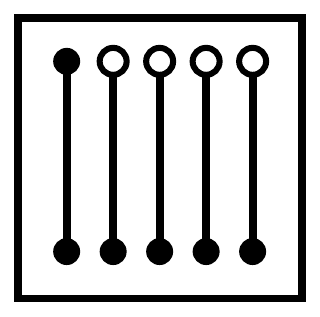
Question 18

Which of the following answer figures will continue the same series as established by the five question figures? 

  1. AOption (a)

  2. BOption (b)

  3. COption (c)

  4. DOption (d)

View answer & explanation

Correct answer

Answer: (b)B.

Why this answer is correct

The logic follows here is:

The figure has five lines. Each line is rotation 180° in clockwise direction in each successive figure from right to left.

So, the figure that will replace the question mark (?) in the following figure series is shown below :

Thus, the figure in option (2) will be the next image for the given series.

Hence, the correct answer is "option (2)".

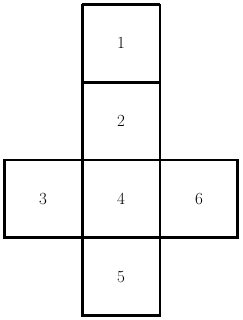
Question 19

Which of the following figures cannot be formed on folding the given cube in the question? 

  1. AOption (a)

  2. BOption (b)

  3. COption (c)

  4. DOption (d)

View answer & explanation

Correct answer

Answer: (a)A.

Why this answer is correct

The logic follows here is:

There is a pattern in which unfolded dice occur opposite to each other.

Two opposite faces are never together or adjacent to each other.

FaceOpposite
14
25
36


Now,

option (1) → 1 and 4 are opposite to each other not adjacent. Thus, it cannot be made.

option (2) → 1, 3, and 5 are adjacent to each other. Thus, it can be made.

option (3) → 2, 4, and 6 are adjacent to each other. Thus, it can be made.

option (4) → 2, 3, and 4 are adjacent to each other. Thus, it can be made.

Hence, the correct answer is "option (1)".

Question 20

Find the water image of the following figure.


  1. AOption (a)

  2. BOption (b)

  3. COption (c)

  4. DOption (d)

View answer & explanation

Correct answer

Answer: (d)D.

Why this answer is correct

Thelogic follows here is,

The reflection of the figure in the water appears by inverting the figure vertically i.e. upside down.

Thus the correct water image of the given figure is :


Hence, the correct answer is "Option 4".

Additional Information

In Mirror image left side and right side changed vice-versa where top and bottom remain same.

Reflection of an object into the water is its water image. It appears by inverting an object vertically i.e. upside down.

The water image of the figure looks like mirror image of the figure in case the mirror is horizontally at the bottom of the figure.

Water image is just a reflection where top and bottom part of the images changed where left and right side of the image remain same.

General Awareness (20 questions)

Question 21

Hattari dance is one of the most famous folk dances in ____________.

  1. AOption (a)

    Tamil Nadu

  2. BOption (b)

    Karnataka

  3. COption (c)

    Kerala

  4. DOption (d)

    Maharashtra

View answer & explanation

Correct answer

Answer: (b)B.

Karnataka

Why this answer is correct

The correct answer is Karnataka.

Key PointsHattari:

  • Hattari dance is a folk dance done mainly by Kodavas in Kodagu.
  • The dance is performed by wearing a Kodava outfit with fancy knives.
  • Huttari is also known as Puttari.
  • Puttari is said to have been derived from the words Pudiya Arisi meaning the new rice.
  • It is a harvest festival celebrated during November or December.

Additional InformationOther folk dances of Karnataka: 

  • Dollu Kunita
  • Togalu Gombeyata
  • Veeragaase
  • Kamsale
  • Goravara Kunita etc.

Question 22

Which among the following monuments was built by Maharaja Narinder Singh? 

  1. AOption (a)

    Sheesh Mahal in Punjab 

  2. BOption (b)

    Golconda Fort in Andhra Pradesh

  3. COption (c)

    Konark Temple in Odisha

  4. DOption (d)

    Lodhi Fort in Punjab

View answer & explanation

Correct answer

Answer: (a)A.

Sheesh Mahal in Punjab 

Why this answer is correct

The correct answer Sheesh Mahal in Punjab.

Key Points

The Sheesh Mahal:

  • It is a famous tourist place in Patiala.
  • Maharaja Narinder Singh built this Mahal in 1847.
  • The design and the decoration of the palace was chosen by Maharaja Narinder Singh to a large extent.
  • One section of Sheesh Mahal is decorated with colored glass and mirror work and it is also known as ‘Palace of Mirrors’.
  • It is situated behind the MotiBagh Palace.
  • It is a triple-storey building.
  • There is a bridge across the artificial lake in the center of the palace.
  • This bridge is known as Lakshman Jhoola.

Additional InformationPatiala:

  • It s a city in southeastern Punjab, northwestern India.
  • It is the fourth largest city in the state and is the administrative capital of Patiala district.
  • Patiala is located around the Qila Mubarak (the 'Fortunate Castle').
  • Which is constructed by the Sidhu Jat Sikh chieftain Ala Singh, who founded the royal dynasty of Patiala State in 1763, and after whom the city is named.

Question 23

Which among the following statements is incorrect in context to announcements made in Budget 2021? 

  1. AOption (a)

    Custom Duty on copper scrap reduced from 5% to 2.5%. 

  2. BOption (b)

    Custom Duty on solar lanterns increased from 5% to 10%.

  3. COption (c)

    Custom Duty on solar invertors increased from 5% to 20%. 

  4. DOption (d)

    Custom Duty on raw silk increased from 10% to 15%.

View answer & explanation

Correct answer

Answer: (b)B.

Custom Duty on solar lanterns increased from 5% to 10%.

Why this answer is correct

The correct answer is Custom Duty on solar lanterns increased from 5% to 10%.

Key Points

  • In Union Budget 2021 - 22 government increased the custom duty on solar lanterns from 5% to 15%.

Additional Information

  • Highlights of the budget 2021-22
  • ​Rs. 2,23,846 crore outlay for Health and well-being in 2021-22 as against Rs. 94,452 crores in 2020-21 an increase of 137%.
  • Rs. 35,000 crores for COVID-19 vaccine in 2021-22.
  • Rs. 64,180 crore outlay over 6 years for PM AtmaNirbhar Swasth Bharat Yojana.
  • Rs. 2,87,000 crore over 5 years for Jal Jeevan Mission (Urban) - to be launched with an aim to provide:
  • 2.86 crore household tap connections.
  • Universal water supply in all 4,378 Urban Local Bodies.
  • Liquid waste management in 500 AMRUT cities.
  • Mega Investment Textiles Parks (MITRA) scheme, in addition to PLI.
  • 7 Textile Parks to be established over 3 years.
  • Under the Rs. 5.35 lakh crore Bharatmala Pariyojana, more than 13,000 km length of roads worth Rs. 3.3 lakh crore was awarded for construction.
  • To increase the permissible FDI limit from 49% to 74% and allow foreign ownership and control with safeguards.
  • Agricultural credit target enhanced to Rs. 16.5 lakh crore in FY22 - animal husbandry, dairy, and fisheries to be the focus areas.
  • Rural Infrastructure Development Fund to be enhanced to Rs. 40,000 crores from Rs. 30,000 crores.
  • To double the Micro Irrigation Fund to Rs. 10,000 crores.
  • ‘Operation Green Scheme’ to be extended to 22 perishable products, to boost value addition in agriculture and allied products.

Question 24

Mobile Money Identifier is a ________ digit code issued by banks to their customers. 

  1. AOption (a)

    seven

  2. BOption (b)

    eight

  3. COption (c)

    nine

  4. DOption (d)

    ten

View answer & explanation

Correct answer

Answer: (a)A.

seven

Why this answer is correct

The correct answer is Seven

Key Points

  • Mobile Money Identifier (MMID) is a seven-digit number, issued by banks for effecting financial transactions through the user’s mobile phone.
  • The user’s mobile number MMID is uniquely linked with his bank account number and is one of the key inputs to facilitate fund transfer.
  • MMID falls under the umbrella of mobile banking.
  • There are 3 ways of generating an MMID:
  1. Mobile Banking
  2. Net Banking
  3. Phone Banking
  • In present times, many payment methods have become quite popular. NEFT and RTGS have been the talk of online payment transactions.
  • ​However, they have their share of limitations, which keeps a bank user from availing those services during certain days and hours.
  • For this reason, the concept of IMPS was introduced for conducting online digital transactions, The MMID and the mobile number would enable conducting such transactions through IMPS but without sharing the bank account number of an account holder.
  • Use of MMID code and pin:  An MMID code is used to receive a payment of money through mobile banking whereas an MPIN is used to make a payment to another bank account holder using mobile banking.
  • The benefit of MMID: The major benefit of the MMID Code lies in the fact that it can be used easily by any bank account holder to transfer funds instantly.

Additional Information

  • Mobile Banking: It refers to the use of a mobile device to carry out financial transactions anywhere.
  • ​This service is provided by majorly all financial institutions, especially banks.
  • Mobile banking enables customers to carry out various transactions, which may vary depending upon institutions.
  • Mobile banking services can be categorized into, account information, transaction, investment, support service, content, and news.
  • It can be done either through the internet or SMS.
  • In 2002 mobile banking was started in India by a way through SMS.

Question 25

The regular bacteria or eubacteria belongs to which of the following kingdoms? 

  1. AOption (a)

    Monera

  2. BOption (b)

    Protista

  3. COption (c)

    Fungi

  4. DOption (d)

    Plantae

View answer & explanation

Correct answer

Answer: (a)A.

Monera

Why this answer is correct

The correct answer is Monera.

Key Points

  • The Monera Kingdom is classified into three sub-kingdoms- Archaebacteria, Eubacteria, and Cyanobacteria.
  • Blue-green algae are cyanobacteria.
  • They are found in the aquatic region.
  • Characteristics of Monera-
  • These are unicellular organisms.
  • They reproduce asexually by binary fission or budding.
  • It lacks organelles like mitochondria, lysosomes, plastids, Golgi bodies, endoplasmic reticulum, centrosome, etc.

Additional Information

  • Fungi are eukaryotic organisms that include microorganisms such as yeasts, moulds, and mushrooms.
  • Fungi store their food in the form of starch.
  • Kingdom Plantae includes all the plants.
  • They reproduce asexually by vegetative propagation or sexually.
  • They make their own food hence are called autotrophs.
  • Protists are eukaryotic organisms that are neither plants nor animals or fungi.
  • Most protists live in water, damp terrestrial environments, or even as parasites.

Question 26

___________ law states that the rates of diffusion of gases are inversely proportional to the square root of their densities under similar conditions of temperature and pressure. 

  1. AOption (a)

    Charles'

  2. BOption (b)

    Graham's

  3. COption (c)

    Pascal's

  4. DOption (d)

    Stefan's

View answer & explanation

Correct answer

Answer: (b)B.

Graham's

Why this answer is correct

The correct answer is Graham's Law.

Key Points

  • Graham's law states that the rates of diffusion of gases are inversely proportional to the square roots of their molar masses under similar conditions of temperature and pressure.
  • This means that a gas with a lower molar mass will diffuse more quickly than a gas with a higher molar mass.
  • For example, hydrogen (H2) has a molar mass of 2.016 g/mol, while oxygen (O2) has a molar mass of 32.000 g/mol.
  • This means that hydrogen will diffuse 4.5 times faster than oxygen at the same temperature and pressure.
  • Graham's law can be used to calculate the rate of diffusion of a gas.
  • The formula for Graham's law is: r = k * √(M)
  • Where:
  • r is the rate of diffusion
  • k is a constant
  • M is the molar mass of the gas
  • The value of k can be determined experimentally.
  • Graham's law is a useful tool for understanding the behaviour of gases.
  • It can be used to predict how gases will diffuse, and it can be used to calculate the rate of diffusion of a gas.

Additional Information

  • Tyndall's Law states that the scattering of a beam of light by particles in a medium is inversely proportional to the fourth power of the wavelength of light.
  • This means that shorter wavelengths of light are scattered more easily than longer wavelengths.
  • Pascal's Law states that pressure exerted anywhere in an enclosed fluid is transmitted equally in all directions throughout the fluid.
  • This means that if you increase the pressure at one point in a fluid, the pressure will increase at all points in the fluid.
  • Kepler's Laws are three laws that describe the motion of planets around the sun.
  • The first law states that planets orbit the sun in elliptical orbits.
  • The second law states that the speed of a planet is greatest when it is closest to the sun and least when it is farthest from the sun.
  • The third law states that the square of the period of a planet's orbit is proportional to the cube of the semi-major axis of its orbit.

Question 27

Which among the following soils contributes the largest share of agricultural wealth? 

  1. AOption (a)

    Laterite

  2. BOption (b)

    Red

  3. COption (c)

    Black

  4. DOption (d)

    Alluvial

View answer & explanation

Correct answer

Answer: (d)D.

Alluvial

Why this answer is correct

The correct answer is Alluvial Soil.

Key Points

  • Soils are complex mixtures of minerals, water, air, organic matter, and countless organisms that are the decaying remains of once-living things.
  • Soils are formed as a result of weathering of rocks.
  • Different regions of India have different types of soils.
  • Each soil has unique properties and characteristics.
Types Of SoilCharacteristics
Alluvial soil- Alluvial Soil covers 45.6 per cent of the total geographical area of the country. - Alluvial soil contains silt, sand, clay, and gravel as well as humus, lime, and organic matter. - It is usually most extensive in the lower part of a river's course, forming floodplains and deltas, but they may form at any point where the river overflows. - Major characteristics of alluvial soil are it is made by the deposition of the river load as it flows from its upper to its lower. - On the basis of its ages alluvial soil is divided into Bhangar (Old alluvium) and Khadar (New alluvium). - It is porous as well as light, so it is easily tillable. - They are generally rich in potash but poor in phosphorous. - Alluvial soil is widespread in northern plains and river valleys. - Wheat, rice, maize, sugarcane, pulses, oilseed are mainly cultivated in alluvial soil.
Forest soil- Forest Soil covers 8.67 per cent of the total geographical area of the country. - As the name suggests, forest soils are formed in the forest areas where sufficient rainfall is available. - The soils vary in structure and texture. - They are loamy and silty on valley sides and coarse-grained in the upper slopes. - In the snow-bound areas of the Himalayas, they experience denudation, and are acidic with low humus content. - The soils found in the lower valleys are fertile.
Black soil- Black Soil covers 16.6 per cent of the total geographical area of the country. - The parent material for most of the black soil is the volcanic rocks that were formed in the Deccan Plateau. - Black soil covers most of the Deccan Plateau. - This includes parts of Maharashtra, Madhya Pradesh, Gujarat, Andhra Pradesh and some parts of Tamil Nadu. - These soils are also known as the ‘Regur Soil’ or the ‘Black Cotton Soil’. - The colour of the soil ranges from deep black to grey. - The black soils are generally clayey, deep and impermeable. - They swell and become sticky when wet and shrink when dried. - So, during the dry season, this soil develops wide cracks. - They retain moisture for a very long time which helps crops to sustain even during the dry season. - Chemically, the black soils are rich in lime, iron, magnesia and alumina. - But they lack phosphorous, nitrogen and organic matter.
Red soil- Red and Yellow Soil covers 10.6 per cent of the total geographical area of the country. - Red soil area extends into and includes the greater part of Jharkhand and West Bengal. - Red soils have originated from weathering of the ancient crystalline, and metamorphic rocks. - These are porous, friable and neutral to acidic in nature. - These soils are poor in nitrogen, phosphate, lime and humus. - Suitable for the cultivation of ragi, groundnut, millet, potato, tobacco, paddy, wheat, and sugarcane.

Thus, alluvial soil covers the largest area in India.

Question 28

Cuttack is situated on the bank of which of the following rivers? 

  1. AOption (a)

    Mahanadi

  2. BOption (b)

    Ganga

  3. COption (c)

    Kaveri

  4. DOption (d)

    Gomti

View answer & explanation

Correct answer

Answer: (a)A.

Mahanadi

Why this answer is correct

The correct answer is Mahanadi.

Key Points

  • River Mahanadi originates from Sihawa Mountain near a village in Raipur, Chhattisgarh.
  • The Mahanadi River system is the third largest in peninsular India after Godavari and Krishna, and the largest river in Odisha state.
  • The Mahanadi (“Great River”) follows a total course of 560 miles (900 km) and has an estimated drainage area of 51,000 square miles (132,100 square km).
  • The catchment area of the river extends to Chhattisgarh, Madhya Pradesh, Odisha, Jharkhand, and Maharashtra.
  • Cuttack is located on the bank of the river Mahanadi.
  • Tributaries
  • Seonath, Hasdeo, Mand, and Ib join Mahanadi from the left whereas,
  • Ong, Tel, and Jonk join it from the right.
  • At Sambalpur, the Hirakud Dam on the river (the longest dam in India) has formed a man-made lake 35 miles (55 km) long; the dam has several hydroelectric generators.
  • It enters the Odisha plains near Cuttack and enters the Bay of Bengal at False Point by several channels.

Additional Information

Some important Indian towns located on the river bank are as follows:

TownsRiverbank
KolkataHooghly
AgraYamuna
AhmedabadSabarmati
AyodhyaSaryu
BadrinathAlakananda
BareillyRam Ganga
CuttackMahanadi
DelhiYamuna
DibrugarhBrahmaputra
FerozpurSutlej
GuwahatiBrahmaputra

Question 29

Who among the following rulers adopted the title of Mahendraditya? 

  1. AOption (a)

    Chandragupta – I

  2. BOption (b)

    Kumaragupta – I 

  3. COption (c)

    Samudragupta

  4. DOption (d)

    Skandagupta

View answer & explanation

Correct answer

Answer: (b)B.

Kumaragupta – I 

Why this answer is correct

The correct answer is Kumaragupta -I.

Key Points

  • The Gupta Kings were well known for their adoption of pompous titles.
  • The Gupta empire was founded by the king Sri Gupta.
  • The first two kings of this dynasty- Srigupta and Gatotkacha were satisfied with the title of Maharaja.

Additional Information

  • List of the Titles of Gupta Kings:
KINGTITLES
Chandragupta IMaharaja Dhiraj
SamundraguptaKaviraja, Ashmedha, Dharma Prachar Bandu, Param Bhagavat
Chandragupta IIVikramaditya, Sakari Devagupta/Devashri/Devraja, Param Bhagavata
Kumar GuptaMahendraditya
SkandguptaVikramaditya, Kramaditya, Devraja
  • Chandra Gupta (I) was the first king of the Gupta empire.
  • Gupta Empire’s period is called the golden age of India.
  • Samudragupta (330-380 AD) was the successor of Chandragupta (I).
  • Samudragupta got the name of Indian Napoleon due to his military achievements.
  • Chandragupta (II) (380-415 AD) was the son of Samudragupta.
  • The Huns attacked the Gupta Empire at the time of Skandagupta, the successor of Kumargupta and the last illustrious king of the Gupta empire, but were defeated.

Question 30

When was the Battle of Talikota fought? 

  1. AOption (a)

    1576

  2. BOption (b)

    1611

  3. COption (c)

    1565

  4. DOption (d)

    1582

View answer & explanation

Correct answer

Answer: (c)C.

1565

Why this answer is correct

The correct answer is 1565

Key Points

  • Battle of Talikota:-
  • It is also known as the Battle of Rakshasi-Tangadi, was fought on January 23, 1565, between the Vijayanagara Empire and an alliance of the Deccan sultanates (Bijapur, Ahmadnagar, Golconda, and Bidar). (Hence option 2 is correct).
  • The battle resulted in the defeat of the Vijayanagara Empire and the eventual collapse of the polity.
  • The battle was fought at Talikota, about 80 km southeast of Bijapur in present-day Karnataka state, India.
  • The Vijayanagara army was led by Rama Raya, the chief minister of the empire, while the allied Deccan sultanates were led by Ali Adil Shah I of Bijapur, Husain Nizam Shah I of Ahmadnagar, Ibrahim Quli Qutb Shah Wali of Golconda, and Ali Barid Shah I of Bidar.

Additional Information

  • The Vijayanagar Empire was founded in 1336 by Harihar I and his brother Bukka Raya I in Deccan in the wake of the rebellions against Tughluq rule.
  • The Vijayanagara Empire was ruled by 4 dynasties:
  • Sangama Dynasty
  • Saluva Dynasty
  • Tuluva Dynasty
  • Aravidu Dynasty
  • Bukka Raya defeated almost all the southern kingdoms and extended his empire till present day Rameshwaram.
  • The Vijayanagara Empire would rule till 1646 with Sriranga III as its final ruler.
  • The ruins of The Vijayanagar Empire which surround modern World Heritage site Hampi can be found in Karnataka, India.

Question 31

Who among the following was the youngest Governor General of India? 

  1. AOption (a)

    Lord Dalhousie 

  2. BOption (b)

    Lord Hastings

  3. COption (c)

    Lord Canning

  4. DOption (d)

    Lord Wellesley

View answer & explanation

Correct answer

Answer: (a)A.

Lord Dalhousie 

Why this answer is correct

The correct answer is Lord Dalhousie.

Key Points

  • Lord Dalhousie:
  • James Andrew Brown-Ramsay also known as Lord Dalhousie.
  • He was the youngest governor-general of India.
  • He served as governor-general of India from 1848-1856.
  • James Outram was made the British Resident of Awadh in place of Sleeman.
  • He said that the administration of Awadh is very corrupt and the condition of the people is very contemplative.
  • Outram's report was the basis for the annexation of Awadh.
  • Lord Dalhousie annexed the Nawab of Awadh, Wajid Ali Shah on February 13, 1856, accusing him of misrule.
  • Apart from Awadh, under the principle of Doctrine of Lapse, the merged territories- Satara (1848), Jaitpur and Sambalpur (1849), Udaipur (1852), Jhansi (1853), Nagpur (1854), and Karauli (1855).
  • The first attempt towards railway construction in India was made by Lord Dalhousie in 1853 AD.
  • It was laid between Bombay to Thane at the time of Dalhousie.
  • The last expansion of British Indian territory took place during Dalhousie.
  • During his tenure, for the first time, a separate public Works Department was created.

Additional Information

Governor-GeneralEvents or Achievements
Warren Hastings (1774-1785)- First Governor of Bengal - Founded Asiatic Society of Bengal with William Jones - The dual Government system was brought to an end by passing the Regulating Act of 1773.
Lord Cornwallis (1786-93)- Introduced Civil Services in our country. - Established lower courts and appellate courts. - First-person to codify laws in 1793. - Introduced permanent Settlement in Bengal - He is also called the father of civil service in India.
Sir John Shore (1793-98)- Introduced the 1st Charter Act 1793. - Followed the policy of non-intervention - Battle of Kharda between Nizam and Marathas (1795)
Lord Dalhousie (1848-1856)- Established postal system - Started the first railway line from Bombay to Thane in 1853 - Introduced the Doctrine of Lapse and captured Satara (1848), Udaipur (1852), Jhansi (1853) and Nagpur (1854) - Established public works department - Established engineering college at Roorkee. - He was the youngest governor-general of India.

Question 32

Which among the following won the Oscars 2021 for 'Animated Feature Film'? 

  1. AOption (a)

    Soul

  2. BOption (b)

    Onward

  3. COption (c)

    Over the Moon 

  4. DOption (d)

    Wolfwalkers

View answer & explanation

Correct answer

Answer: (a)A.

Soul

Why this answer is correct

The correct answer is Soul

Key Points

  • Soul is an analysis of the spiritual journey of every human being, encompassing both philosophical and mature themes under a cover of animated and funny moments
  • Director:
  • Pete Docter
  • Co-Director: Kemp Powers
  • Music Director (Composer):
  • Trent Reznor and Atticus Ross for the score
  • Jon Batiste for jazz compositions and arrangements

Additional Information 

  • About Academy Award:
  • This award is popularly known as Oscar Award. It is given for the Technical and Artistic merit in the Film Industry.
  • Academy Award is given annually by the AMPAS (Academy of Motion Picture Arts and Sciences), the awards are an International Recognition of Excellence in Cinematic Achievements.
  • The Oscar award was originally Design Sketch by Cedric Gibbons and Sculpted by George Stanley. AMPAS first presented its Academy Award at a private dinner hosted by Douglas Fairbanks in the Hollywood Roosevelt Hotel in the year 1929.
  • Winners of 93rd Academy Awards: (2021)
CategoryWinner
Best PictureNomadland
Best ActorAnthony Hopkins
Best ActressFrances McDormand
Best Animated Short FilmIf Anything Happens I Love You
Best Documentary Feature filmMy Octopus Teacher
Best Supporting ActressYoun Yuh-jung, Minari
Best Original ScreenplayPromising Young Woman
Best Supporting ActorDaniel Kaluuya, Judas And The Black Messiah
Best Animated Feature FilmSoul
Best International Feature FilmAnother Round
Best Documentary ShortColette

Question 33

Which among the following pairs of authors and books is incorrect? 

  1. AOption (a)

    A Thousand Splendid Suns - Khaled Hosseini

  2. BOption (b)

    The Ibis Trilogy - Amitav Ghosh

  3. COption (c)

    The Diary of a Young Girl - Anne Frank

  4. DOption (d)

    My Favourite Nature Stories - Salman Rushdie

View answer & explanation

Correct answer

Answer: (d)D.

My Favourite Nature Stories - Salman Rushdie

Why this answer is correct

The correct answer is My Favourite Nature Stories -  Salman Rushdie

Key Points

  • My Favourite Nature Stories
  • Author: Ruskin Bond
  • Writing Career: Over sixty years with over 120 titles including novels, short stories, poetry, essays, anthologies, and books for children.
  • First Novel: "The Room on the Roof" which won the John Llewellyn Rhys Award in 1957.
  • Book Highlights:
  • Collection of stories celebrating nature and small, everyday joys.
  • Reflects Bond's deep connection with nature and the outdoors.
  • Features simple, elegant prose that captivates readers of all ages.

Additional Information

  • A Thousand Splendid Suns​
  • Author: Khaled Hosseini, renowned for his debut novel, "The Kite Runner."
  • Publication Date: 2007
  • Genre: Fiction, Historical Fiction
  • Setting: Afghanistan, from the 1960s to the early 2000s.
  • Main Themes:
  • The resilience and endurance of Afghan women.
  • The impact of war and political turmoil on personal lives.
  • The power of love, sacrifice, and hope in the face of adversity.
  • The Ibis Trilogy
  • Author: Amitav Ghosh, an acclaimed Indian author known for his work in English literature.
  • Series Title: The Ibis Trilogy
  • Books in the Series:
  1. "Sea of Poppies" (2008)
  2. "River of Smoke" (2011)
  3. "Flood of Fire" (2015)
  • The Diary of a Young Girl
  • Author: Anne Frank
  • Original Title: Het Achterhuis (The Secret Annex)
  • Publication Date: First published in 1947 in Dutch, posthumously.
  • Setting: Amsterdam, Nazi-occupied Netherlands, during World War II (1942-1944).

Question 34

As announced in May 2021, the first private astronaut mission, known as the _______ mission, will be launched from NASA’s Kennedy Space Center in Florida. 

  1. AOption (a)

    AX-1

  2. BOption (b)

    BX-1

  3. COption (c)

    CX-1 

  4. DOption (d)

    DX-1

View answer & explanation

Correct answer

Answer: (a)A.

AX-1

Why this answer is correct

The correct answer is AX - 1.

Key Points

  • NASA and private space infrastructure company Axiom Space have signed an order kickstarting the first private astronaut mission to the International Space Station (ISS).
  • The mission, known as Axiom Mission 1 (Ax-1), is set to launch from NASA's Kennedy Space Center in Florida no earlier than January 2022.
  • The Axiom astronauts will spend eight days on the ISS, and NASA and Axiom will plan joint activities for the private astronauts to conduct with space station crew members and flight controllers.
  • In addition, Axiom will buy "services" and supplies for the mission from NASA, including the ability to return scientific samples back to Earth, cargo, storage and crew supplies.
  • The Houston, Texas-based company has also contracted the Elon Musk-owned spaceflight company for transportation and the Ax-1 astronauts will travel to the orbital laboratory aboard the company's Crew Dragon spacecraft.

Question 35

Which among the following states launched a dedicated COVID-19 'Mukhyamantri Sewa Sanklap Helpline 1100' in May 2021? 

  1. AOption (a)

    Andhra Pradesh

  2. BOption (b)

    Himachal Pradesh

  3. COption (c)

    Odisha

  4. DOption (d)

    Maharashtra

View answer & explanation

Correct answer

Answer: (b)B.

Himachal Pradesh

Why this answer is correct

The correct answer is Himachal Pradesh.

Key Points

  • Himachal Pradesh CM Jai Ram Thakur launched the COVID-19 helpline 'Mukhyamantri Sewa Sankalp Helpline 1100' on 6 May 2021 in Shimla.
  • It is for facilitating the people regarding COVID-related issues.
  • The callers can call from 7 am to 10 pm to seek help regarding COVID-related issues.
  • The call executive would register the complaint and contact the concerned authorities to provide help.

Additional Information

  • Himachal Pradesh:
  • Chief Minister - Thakur Sukhvinder Singh Sukhu. (Jan, 2024)
  • Governor - Shiv Pratap Shukla.(Jan, 2024)
  • Number of Districts - 12.

Question 36

_________ has launched 'Sanjeevani' to connect COVID-19 patients with potential plasma donors in May 2021. 

  1. AOption (a)

    Flipkart

  2. BOption (b)

    Amazon

  3. COption (c)

    Snapdeal

  4. DOption (d)

    Myntra

View answer & explanation

Correct answer

Answer: (c)C.

Snapdeal

Why this answer is correct

The correct answer is Snapdeal.

Key Points

  • Snapdeal has opened its platform to help families of patients suffering from covid to connect with potential plasma donors, through its new platform, Sanjeevani.
  • The Sanjeevani platform can be accessed via website and mobile app.
  • It allows patients and donors to register themselves with their mobile numbers and email IDs, while providing relevant information like blood group, location, etc.

Additional Information

  • Founded: In 2010 by Kunal Bahl and Rohit Bansal.
  • Type: Indian e-commerce company.
  • Evolution: Transitioned from daily deals to a full online marketplace.
  • Investors: Includes SoftBank, Alibaba Group, and Foxconn.
  • Competitors: Amazon India and Flipkart.
  • Focus: Targets value-conscious consumers with a wide range of affordable products.

Question 37

The feature of 'Joint Sitting of two houses of Parliament' in the Indian Constitution is borrowed from the constitution of ____________. 

  1. AOption (a)

    Canada

  2. BOption (b)

    United States of America

  3. COption (c)

    Australia

  4. DOption (d)

    France

View answer & explanation

Correct answer

Answer: (c)C.

Australia

Why this answer is correct

The correct answer is Australia.

Key Points

  • The joint sitting of the two Houses of Parliament in the Indian Constitution is borrowed from the Constitution of Australia.

Additional Information

CountryFeatures Borrowed
UKParliamentary government, Rule of Law, Legislative procedure, Single citizenship, Cabinet system, Prerogative writs, Parliamentary privileges, Bicameralism.
USImpeachment of the president, Functions of president and vice-president, Removal of Supreme Court and High court judges, Fundamental Rights, Judicial review, Independence of judiciary, The preamble of the constitution
IrishDPSP, Method of Election of the president, Members nomination to the Rajya Sabha by the President
CanadaCentrifugal form of federalism where the centre is stronger than the states, Residuary powers vest with the centre, Centre appoints the Governors at the states, Advisory jurisdiction of the supreme court
USSRFundamental duties, The ideals of justice (social, economic and political),  expressed in the Preamble.
AustraliaConcept of Concurrent list, Article 108 i.e. Joint sitting of the two houses, Freedom of trade and commerce
FrenchConcept of Republic, Ideals of Liberty, Equality and Fraternity(contained in the Preamble)

Question 38

Which among the following amendments of the Indian Constitution led to formation of Nagaland with special status under Article 371A?

  1. AOption (a)

    13th

  2. BOption (b)

    29th

  3. COption (c)

    32nd

  4. DOption (d)

    7th

View answer & explanation

Correct answer

Answer: (a)A.

13th

Why this answer is correct

The correct answer is 13th.

Key Points

  • The Constitution Thirteenth Amendment Act is regarding the formation of the state of Nagaland with special protection under Article 371A.
  • Nagaland is the 16th state of the Indian Union and was established on 1 December 1963.
  • It was founded by the 13th Amendment in 1963.
  • It attained statehood with the enactment of the State of Nagaland Act, 1962.
  • It was formed by taking the Naga Hills and Tuensang area out of the state of Assam.
  • It is surrounded by Myanmar in the East, Arunachal Pradesh in the North, Assam in the West, and Manipur in the South.

Additional Information

  • Seventh Amendment Act 1956
  • Abolition of Class A, B, C, and D states: The amendment led to the abolition of the previous classification of states into Part A, Part B, Part C, and Part D states and reorganized them into 14 states and 6 Union territories.
  • High Courts for Union territories: It allowed for the creation of High Courts for Union territories.
  • Adjustment of Indian territory: Facilitated adjustment of Indian territory consequent upon agreements with Pakistan.
  • Appointment of Governors: Empowered the President of India to appoint the same person as governor for more than one state, aiming at administrative convenience and cost-effectiveness.

Question 39

Which among the following teams continued to hold its top spot on the ICC Test Team Rankings, which were released by the ICC on May 13, 2021? 

  1. AOption (a)

    India

  2. BOption (b)

    New Zealand

  3. COption (c)

    England

  4. DOption (d)

    Australia

View answer & explanation

Correct answer

Answer: (a)A.

India

Why this answer is correct

The correct answer is India.

Key Points

  • India remained the number one Test side after the update of the ICC team rankings on May 13, 2021.

Additional Information

  • The International Cricket Council (ICC), the international governing body of Cricket founded in 1909 by representatives from England, Australia, and South Africa, was initially known as the Imperial Cricket Conference.
  • In 1965, it was renamed as International Cricket Conference and in 1965, it was renamed the International Cricket Council (ICC) in 1989.
  • This council organizes various world championships and tournaments.
  • ODI World Cup and T-20 World Cup are world-famous.
  • There are 104 member nations.
  • Headquarters of ICC - Dubai, UAE
  • Motto - Cricket for good
  • Chairman - Greg Barclay

Question 40

The All India Chess Federation has launched the ____________ Initiative to help the chess community affected by the pandemic in May 2021. 

  1. AOption (a)

    Lose Covid

  2. BOption (b)

    Checkmate Covid

  3. COption (c)

    Gambit Covid

  4. DOption (d)

    Check Covid

View answer & explanation

Correct answer

Answer: (b)B.

Checkmate Covid

Why this answer is correct

The correct answer is Checkmate Covid.

Key Points

The "Checkmate Covid Initiative" by the All India Chess Federation (AICF) was launched as a program aimed at supporting the chess community in India during the COVID-19 pandemic.

  • Launch Announcement: The All India Chess Federation announced in May 2021 the initiative in response to the adverse effects of the COVID-19 pandemic on the chess community in India.
  • Objective: To provide financial and medical assistance to chess players, coaches, arbiters, and other stakeholders of the chess community in India who were affected by the pandemic.
  • Key Figures and Support: The initiative saw the involvement and support of prominent figures from the chess world, including FIDE President Arkady Dvorkovich, five-time world champion Viswanathan Anand, and others during its launch event.
  • Fundraising and Contributions: Through various activities, including simultaneous exhibitions on Chess.com with top Indian players, the initiative successfully raised funds for COVID-19 relief. Over $50,000 was raised with efforts contributing to Red Cross India and the AICF's initiative.
  • Total Funds Raised: The initiative had successfully raised a commendable sum of Rs 60 lakh to aid the chess community. Out of this, AICF itself contributed Rs 11 lakh and pledged further support to cover any shortfall$.

Arithmetic Ability (20 questions)

Question 41

What is the other number if the HCF of a pair of numbers is 1 and the LCM is 20, where one number is 4? 

  1. AOption (a)

    5

  2. BOption (b)

    4

  3. COption (c)

    6

  4. DOption (d)

    2

View answer & explanation

Correct answer

Answer: (a)A.

5

Why this answer is correct

Given:

HCF is 1 and LCM is 20

One number is 4

Formula Used:

HCF × LCM = Multiplication of two numbers

Calculation:

Let, the other number is A

According to the formula,

⇒ 1 × 20 = 4 × A

⇒ A = 5

∴ The other number is 5

Question 42

The ratio of two whole numbers is 7 ∶ 9 out of which one is 900. What is the LCM of the given two numbers?

  1. AOption (a)

    100

  2. BOption (b)

    6300

  3. COption (c)

    700

  4. DOption (d)

    900

View answer & explanation

Correct answer

Answer: (b)B.

6300

Why this answer is correct

Shortcut Trick

The ratio of the two numbers is 7 : 9, and one of them is 900.

Since both are whole numbers, 900 must correspond to the 9 ratio parts.

Value of 1 ratio part = 900 ÷ 9 = 100.

The numbers are (7 × 100) = 700 and (9 × 100) = 900.

LCM(700, 900) = 100 × LCM(7, 9) = 100 × 63 = 6300.

∴ The correct answer is 6300.

Alternate Method

Given:

Ratio of the two whole numbers = 7 : 9

One of the given numbers = 900

Concept Used:

If two numbers are in the ratio a : b, we can express them as ax and bx, where x is their common multiplier (HCF).

Calculations:

⇒ Let the two whole numbers be 7x and 9x.

⇒ The given number 900 must be a multiple of its corresponding ratio part to ensure x is a whole number.

⇒ If 7x = 900, x = 900 ÷ 7 (Not a whole number, so rejected).

⇒ Therefore, 9x = 900

⇒ x = 100

⇒ The other number = 7x = 7 × 100 = 700.

⇒ The two given numbers are 700 and 900.

⇒ LCM of 700 and 900 = 100 × LCM(7, 9)

⇒ LCM = 100 × 63 = 6300

∴ The correct answer is 6300.

Additional Information

Product of Two Numbers

The product of the HCF and LCM of any two numbers is always equal to the product of the numbers themselves (a × b = HCF × LCM).

Ratio and HCF

If two numbers are given in the simplest ratio a : b (where a and b are co-prime), the actual numbers are precisely (a × HCF) and (b × HCF).

Co-prime Numbers

Two numbers are termed co-prime if their HCF is 1. The LCM of two co-prime numbers is simply their direct product.

Question 43

The average height of 12 students increases by 2 inches when 2 students leave this group. If the average height of these two students is one-third of the average height of the original 12, the average height, in inches, of the remaining students is ___________. 

  1. AOption (a)

    17 inch

  2. BOption (b)

    15 inch

  3. COption (c)

    13 inch 

  4. DOption (d)

    19 inch 

View answer & explanation

Correct answer

Answer: (a)A.

17 inch

Why this answer is correct

Given:

 Average height of 12 students increases by 2 inches when 2 students leave this group.

Concept used:

Total sum = Number of students × average 

Calculation:

Let the average height of 12 students is = y inch

Two students leave the group and the average is increases by 2.

So,the average height of  remaining 10 students is = (y + 2) inch

The average height of 2 students who left the group is = y/3 inch 

12y = 10(y + 2) + 2y/3    [ using concept]

⇒ 12y = 10y + 20 + 2y/3

⇒ 2y - 2y/3 = 20

⇒ 4y/3 = 20

⇒ y = 15

The average height of  remaining 10 students is = (y + 2) inch

⇒ (15 + 2) = 17 inch

∴ Average height of the remaining students is 17 inch.

Question 44

A student has an exemplary skill using which he constantly scores 79 in every exam. He does so in the first exam. In the same exam another student scores 60. If in the next exam the second wants to get ahead of the first student in total across the two exams, at least how much more than the first student should the second person score in the second exam? 

  1. AOption (a)

    20

  2. BOption (b)

    21

  3. COption (c)

    100

  4. DOption (d)

    18

View answer & explanation

Correct answer

Answer: (a)A.

20

Why this answer is correct

Calculation: 

First student marks on 1st day and 2nd day total  = 79 × 2 = 158

Second student marks on 1st day = 60  

To get ahead of the first student in total across the two exams second student on 2nd day need marks is given by,

⇒ 158 - 60 + 1 = 99 marks

99 marks of second student on 2nd day is 20 marks more than first student marks 79.

∴ The correct option is (1).

Question 45

A person had enough money to buy 50 pens or 60 notebooks. If the price of pens increases such that the person can buy only 40 pens and he buys 20 pens, how many notebooks can the person buy at the old price? 

  1. AOption (a)

    30

  2. BOption (b)

    25

  3. COption (c)

    35

  4. DOption (d)

    40

View answer & explanation

Correct answer

Answer: (a)A.

30

Why this answer is correct

Given:

A person had enough money to buy = 50 pens = 60 notebooks

If the price of pens increases such that the person can buy = 40 pen

Buy the pens = 20 pens

Calculation:

⇒ 50 P = 60 N

⇒ P : N = 6 : 5

Let, increase the price = y

⇒ 40(6 + y) = 50 × 6

⇒ y = 1.5

But he buys 20 pens

⇒ 20(6 + 1.5) = 150

⇒ Remain = 300 - 150 = 150

⇒ The person can buy notebooks = 150/5 = 30

∴ The correct answer is 30.

Question 46

The cost of wheat to a trader is Rs. 100 per kg. If the trader wants to earn a 30% profit (on his sales price) by selling wheat at cost price, how much less (in gm) should the trader supply for every kg he that he sells?

  1. AOption (a)

    300 gm

  2. BOption (b)

    400 gm

  3. COption (c)

    500 gm

  4. DOption (d)

    250 gm

View answer & explanation

Correct answer

Answer: (a)A.

300 gm

Why this answer is correct

Given:

The cost of wheat to a trader = 100 per kg

Earn profit = 30%

Calculation:

∴1 k.g = 1000 gm

Let the selling price = s

⇒ 1000−s10001000- s \over 1000 × 100 = 130

⇒ 1000 -s = 1300

⇒ s = - 300 gm

∵ 300 gm less (in gm) should the trader supply for every kg he that he sells.

Question 47

If the cost of a product is Rs 500 and the seller marks the product at Rs 800 but gives a 10% discount on the same, what is the profit percent to the seller? 

  1. AOption (a)

    44%

  2. BOption (b)

    60%

  3. COption (c)

    34%

  4. DOption (d)

    30%

View answer & explanation

Correct answer

Answer: (a)A.

44%

Why this answer is correct

Given:

The cost of product (C.P) = Rs 500

Seller mark the product (M.P) = Rs 800

Discount on mark price = 10%

Calculation:

⇒ After discount selling price = 800 × 90/100 = 720

⇒ The profit % to the seller = 720−500500720 -500\over 500 × 100 = 220 / 5 = 44%

∴The correct answer is the 44%

Question 48

Solution A has 20% water and Solution B has 60% water. Both are mixed in a certain proportion to get a solution which has 50% water. What is this ratio of solution B to A in the final solution?

  1. AOption (a)

    1 ∶ 3

  2. BOption (b)

    3 ∶ 1

  3. COption (c)

    4 ∶ 1

  4. DOption (d)

    1 ∶ 4

View answer & explanation

Correct answer

Answer: (b)B.

3 ∶ 1

Why this answer is correct

Shortcut Trick Solution A            Solution B

     20                           60

           \                  /

                   50

             /               \

        10                 30

The ratio of the Solution of B and A in the new solution is 3 : 1.

Given:

Water in solution A = 20%

Water in solution B = 60%

Calculations:

Let m liters of solution A and n liters of solution B is mixed to get the new solution 

20%m + 60%n = 50% (m + n)

⇒ 20100m+60100n=50100(m+n)\frac{20}{100}m+\frac{60}{100}n=\frac{50}{100}(m+n)

⇒ 20m + 60n = 50m + 50n

⇒ 10n = 30m

⇒ n : m = 3 : 1

∴ The ratio of solutions B and A in the final solution is 3 : 1.

Question 49

If 3 consecutive numbers are in the ratio 1 ∶ 2 ∶ 3, what is the sum of these numbers?

  1. AOption (a)

    12

  2. BOption (b)

    18

  3. COption (c)

    6

  4. DOption (d)

    24

View answer & explanation

Correct answer

Answer: (c)C.

6

Why this answer is correct

Given:

3 consecutive numbers are in the ratio 1 : 2 : 3

Calculation:

Let the 3 consecutive numbers be y, (y + 1), (y + 2)

y : (y + 1) : (y + 2) = 1 : 2 : 3

On comparing both the sides, we get the value of,

y = 1

So, the three consecutives numbers are 1, 2, 3

1 + 2 + 3 = 6

∴ The sum of these numbers is 6.

Question 50

What is the difference in the amount of interest earned by a person who invests Rs 5000 for two years under two alternate schemes. In scheme 1, he earns 15% interest on simple interest basis. In scheme 2 he earns 14% interest under compound interest.

  1. AOption (a)

    Rs 10

  2. BOption (b)

    Rs 2 

  3. COption (c)

    Rs 5 

  4. DOption (d)

    Rs 8

View answer & explanation

Correct answer

Answer: (b)B.

Rs 2 

Why this answer is correct

Given:

P = Rs.5000, R = 15%, T = 2yrs, S.I. = ?

P = Rs.5000, R = 14%, T = 2yrs, C.I. = ?

Formula used:

S.I. = PRT /100

C.I. = [P(1 + R100\frac{R}{100})T ] - P

Calculation:

S.I. = (5000 × 15 × 2) / 100

⇒ S.I. = Rs. 1500

C.I. = [5000 (1 + 14100\frac{14}{100})2 ]- 5000

⇒ C.I. = (5000 × 57/50 × 57/50) - 5000

⇒ C.I. = 6498 - 5000

⇒ C.I. = Rs. 1498

S.I. - C.I. = 1500 - 1498 = Rs. 2

∴ The difference between the interest earned is Rs. 2.

Question 51

A person invested Rs 10,000 in a bank deposit scheme for 1.5 years. The rate of interest is 20% per annum compounded semi annually. What is the amount of money that this individual would get at the end of 1.5 years?

  1. AOption (a)

    Rs 13310 

  2. BOption (b)

    Rs 14400 

  3. COption (c)

    Rs 13210

  4. DOption (d)

    Rs 13000

View answer & explanation

Correct answer

Answer: (a)A.

Rs 13310 

Why this answer is correct

Given:

P = 10,000 ; R = 20% ; t = 1.5 years

Formula:

Amount = P ×  (1+R100)t(1 + \frac{R}{100})^t

Calculation:

The amount is compounded half yearly so,

⇒ R = 20/2 = 10%

⇒ t = 1.5 × 2 = 3

⇒ Amount = 10000 ×  (1+10100)3(1 + \frac{10}{100})^3

⇒ Amount = 10000 × (11/10) × (11/10) × (11/10)

⇒ Amount = 13310

∴ The correct answer is Option 1).

Question 52

Aman and Akash start travelling from Delhi to Kolkata which is 1500 km away from each other. Aman travels at 50 kmph and Akash travels at 100 kmph. Akash reaches Kolkata and then starts his journey back to Delhi and meets Aman on his way back. How far (in km) from Kolkata did they meet? 

  1. AOption (a)

    500 km

  2. BOption (b)

    1000 km

  3. COption (c)

    750 km

  4. DOption (d)

    900 km 

View answer & explanation

Correct answer

Answer: (a)A.

500 km

Why this answer is correct

Given:

Distance between Delhi and Kolkata = 1500 km

Speed of Aman = 50 kmph

Speed of Akash = 100 kmph

Formula Used:

Distance = Speed × Time

Calculation:

Time Taken by Akash to travel from Delhi to Kolkata

⇒ 1500/100 = 15 h

Time Taken by Aman to travel from Delhi to Kolkata

⇒ 1500/50= 30 h

So, Aman will cover 750 km in 15 h.

After 15 h Akash will return from Kolkata and the distance between Akash and Aman will be 750 km.

⇒ Relative time (Meeting time) = 750/(100 + 50) = 5 h

⇒ Distance from Kolkata when they meet = 100 × 5 = 500 km

∴ The correct answer is Option 1).

Question 53

If a car covers 600 meters in 5 minutes, what is the speed of the car in m/sec? 

  1. AOption (a)

    120 m/sec

  2. BOption (b)

    2 m/sec

  3. COption (c)

    40 m/sec

  4. DOption (d)

    4 m/sec 

View answer & explanation

Correct answer

Answer: (b)B.

2 m/sec

Why this answer is correct

Given:

Distance = 600 m

Time = 5 min

Formula Used:

Speed = Distance / Time

Calculation:

⇒ Speed = 600 / (5 × 60)

⇒ Speed = 2 m/sec

∴ The correct answer is Option 2).

Question 54

Two pipes are used to fill a tank. If one pipe can fill the tank at a speed of 1/5 of the tank in an hour and the other can fill the tank in 20 hours when working alone, in what time (in hours) will the two pipes working together fill the tank? 

  1. AOption (a)

    5 hours

  2. BOption (b)

    4 hours

  3. COption (c)

    10 hours

  4. DOption (d)

    20 hours

View answer & explanation

Correct answer

Answer: (b)B.

4 hours

Why this answer is correct

Given:

Time taken by pipe1 to fill 1/5 of the tank = 1 hour

Time taken by pipe2 to fill the tank = 20 hour

Formula Used: Total Time taken = Total work/total Efficiency 

Calculation:

Time taken by pipe1 to fill 1/5 of the tank = 1 hour

Time taken by pipe1 to fill the whole tank = 1 × 5 = 5 hours

Total work = LCM of (5 and 20) = 20 units

Efficiency of pipe1 = 20/5 = 4 units

Efficiency of pipe2 = 20/20 = 1 units

Total time taken by both pipes to fill the tank = 20/(1 + 4) = 4 hours

∴ The correct answer is 4 hours.

Question 55

If one worker can do a work in 100 days and 2 workers are added every day, in 5 days what part of the work would have been done? 

  1. AOption (a)

    10%

  2. BOption (b)

    15% 

  3. COption (c)

    20%

  4. DOption (d)

    25%

View answer & explanation

Correct answer

Answer: (d)D.

25%

Why this answer is correct

Given:

Time taken by 1 worker to complete the work = 100 days

2 workers are added every day

Formula Used:

Efficiency = 

Calculation:

Work done by 1 worker = 1/100

Next day number of workers = 3

Work done by 3 workers = 3/100 and so on.

In 5 days total completed work = 1/100 + 3/100 + 5/100 + 7/100 + 9/100

⇒ 25/100 = 1/4

In percentage 1/4 = 100 × (1/4) = 25%

∴ The correct answer is 25%.

Question 56

The diameter of a cone is 42 cm. The height of the cone is 2 times the radius. What is the volume of the cone? 

  1. AOption (a)

    19404 cu cm

  2. BOption (b)

    1848 cu cm

  3. COption (c)

    3696 cu cm

  4. DOption (d)

    462 cu cm 

View answer & explanation

Correct answer

Answer: (a)A.

19404 cu cm

Why this answer is correct

Given:

Diameter (d) of cone = 42 cm

Height of cone (h) = 2 × radius of cone

Formula Used:

Radius of cone (r) = Diameter/2

The volume of cone = 13πr2h\frac{1}{3} \pi r^2h 

Calculation:

Radius of cone (r) = 42/2 = 21 cm

Height of cone = 2 × 21 = 42 cm

Volume of cone = 13×227×21×21×42\frac{1}{3}\times\frac{22}{7} \times 21\times 21\times 42 = 19404 cu cm

∴ The correct answer is 19404 cu cm.

Question 57

What is the absolute difference, in sq. cm, between the curved surface area of a cone and its total surface area if the radius is 7 cm and the height is 50 cm? 

  1. AOption (a)

    154 sq. cm

  2. BOption (b)

    7 sq. cm

  3. COption (c)

    50 sq. cm 

  4. DOption (d)

    49 sq. cm

View answer & explanation

Correct answer

Answer: (a)A.

154 sq. cm

Why this answer is correct

Given:

Radius of a cone = 7 cm

Height = 50 cm

Formula used:

C.S.A = πrl

T.S.A = πr(r+ l)

Calculation:

According to the question,

 πr(r+ l) - πrl  =  πr2 + πrl  - πrl

⇒ πr2  = 22/7 × 49 = 154 sq.cm

Hence, required difference is 154 sq.cm.

Correct Answer: 1) 154 sq.cm

Question 58

The following table shows the imports of each city. How many cities have seen an increase in imports in 2 consecutive years? 

Citiesyear
201720182019
London100110120
Tokyo100120110
New York709080
Sydney8090100
Singapore120120110
  1. AOption (a)

    1

  2. BOption (b)

    2

  3. COption (c)

    4

  4. DOption (d)

    3

View answer & explanation

Correct answer

Answer: (b)B.

2

Why this answer is correct

Calculation:

Given data 

From the above given data , we get that in two cities (London & Sydney)  have seen an increase in imports in 2 consecutive years.

Correct Answer: 2) 2

Question 59

The following graph shows the distribution of population in a city based on age group. Which age group has seen a continuous decrease in population over the 2 years?

  1. AOption (a)

    0 - 18

  2. BOption (b)

    19 - 30 

  3. COption (c)

    31 - 60

  4. DOption (d)

    60+ 

View answer & explanation

Correct answer

Answer: (c)C.

31 - 60

Why this answer is correct

Calculation:

In the given graph, age group(31-60)  has seen a continuous decrease in population over the 2 years.

Correct Answer: 3) 31-60

Question 60

How many students have seen an increase of 10% in 2018 and 20% in 2019, in their marks?

  1. AOption (a)

    1

  2. BOption (b)

    2

  3. COption (c)

    0

  4. DOption (d)

    3

View answer & explanation

Correct answer

Answer: (a)A.

1

Why this answer is correct

Concept used:

Increase in % = (New Value - Old Value)/Old Value × 100 %

Calculation:

Increase in % of Aman in 2018

⇒ (77 - 70)/70 ×  100% = 10% = 10% (Given)

Increase in % of Aman in 2019

⇒ (84 - 77)/77 × 100% = 9.09% ≠ 20%

Increase in % of Amit in 2018

⇒ (55 - 50)/50 × 100% = 10 % = 10% (Given)

Increase in % of Amit in 2019

⇒ (66 - 55)/55 × 100% = 20% = 20% (Given)

Increase in % of Soham in 2018

⇒ (60 - 60)/60 × 100% = 0% ≠ 10%

Increase in % of Soham in 2019

⇒ (72 - 60)/60 × 100% = 20% = 20% (Given)

Increase in % of Daksh in 2018

⇒ (88 - 80)/80 × 100% = 10% = 10% (Given)

Increase in % of Daksh in 2019

⇒ (96 - 88)/88 × 100% = 9.09% ≠ 20%

Increase in % of Vaibhav in 2018

⇒ (80 - 75)/75 × 100% = 6.66% ≠ 10%

Increase in % of Vaibhav in 2019

⇒ (85 - 80)/80 × 100% = 6.25% ≠ 20% 

∴ Only 1 student has an increase of 10% and 20% in 2018 and 2019 respectively.

General English (20 questions)

Question 61

The sentence below has been divided into three parts. Select the part of the sentence that has an error. If the sentence has no error, select the option 'No Error'.

Having descended the hill at a trot, he no longer/ saw neither our own or the enemy's fires but/ heard the shouting of the French more loudly and distinctly.

  1. AOption (a)

    Having descended the hill at a trot, he no longer 

  2. BOption (b)

    saw neither our own or the enemy's fires but

  3. COption (c)

    heard the shouting of the French more loudly and distinctly.

  4. DOption (d)

    No Error

View answer & explanation

Correct answer

Answer: (b)B.

saw neither our own or the enemy's fires but

Why this answer is correct

The correct answer is 'Option 2. i.e. saw neither our own or the enemy's fires but'

 Key Points

  • The error lies in the use of "neither... or" which is incorrect. The correct conjunction pair is either "neither... nor" or "either... or."
  • "Saw neither our own or the enemy's fires" should be corrected to "saw neither our own nor the enemy's fires" to follow standard English grammar rules.
  • The mistake is a common conjunction error that affects the sentence's clarity and grammatical correctness.
  • Correction of this error would ensure the sentence accurately conveys that he did not see any fires from either side.

Therefore, the correct answer is- Option 2.

 Additional Information

  • Option 1 ("Having descended the hill at a trot, he no longer") and Option 3 ("heard the shouting of the French more loudly and distinctly.") are grammatically correct and do not contain the error.
  • The usage of "neither... nor" is pivotal in negating both parts of a statement in English.

Question 62

The sentence below has been divided into three parts. Select the part of the sentence that has an error. If the sentence has no error, select the option 'No Error'.

I guessed vaguely from my mother's signs and from the/ hurrying to and fro in the house that something unusual were about to happen,/ so I went to the door and waited on the steps.

  1. AOption (a)

    I guessed vaguely from my mother's signs and from the

  2. BOption (b)

    hurrying to and fro in the house that something unusual were about to happen,

  3. COption (c)

    so I went to the door and waited on the steps. 

  4. DOption (d)

    No Error

View answer & explanation

Correct answer

Answer: (b)B.

hurrying to and fro in the house that something unusual were about to happen,

Why this answer is correct

The correct answer is Option 2. i.e. hurrying to and fro in the house that something unusual were about to happen,

 Key Points

  • The error in this sentence is in the verb agreement; "were" should be "was" to match the singular subject "something unusual."
  • The correct sentence should read: "hurrying to and fro in the house that something unusual was about to happen," ensuring subject-verb agreement.
  • "Something unusual" is a singular noun phrase and therefore requires a singular verb form.

Therefore, the correct answer is- Option 2.

 Additional Information

  • Options 1 and 3 are grammatically correct and do not contain the identified error.
  • Subject-verb agreement rules dictate that a singular subject takes a singular verb and a plural subject takes a plural verb.

Question 63

Select the word segment that substitutes (replaces) the bracketed word segment correctly and completes the sentence meaningfully. Select the option 'no correction required' if the sentence is correct as given.

(The downright dumping of the stocks on the Wall Street have bought) the entire stock market to its knees.

  1. AOption (a)

    The downright dumping of stocks on the Wall Street have brought

  2. BOption (b)

    The downright dumping of stocks at the Wall Street has brought

  3. COption (c)

    The downright dumping of stocks in Wall Street has brought 

  4. DOption (d)

    No correction required

View answer & explanation

Correct answer

Answer: (b)B.

The downright dumping of stocks at the Wall Street has brought

Why this answer is correct

The correct answer is '2' i.e. The downright dumping of stocks at the Wall Street has brought .

Key Points

  • The subject of the sentence is "dumping", which is singular. Hence, the correct auxiliary verb is "has" and not "have".
  • The preposition "at the Wall Street" is more appropriate in this context than "on" or "in".
  • The past participle "bought" is wrong. The correct verb is "brought".

Correct sentence: The downright dumping of stocks at the Wall Street has brought the entire stock market to its knees.

Additional Information

  • Singular vs. Plural Agreement:
  • Singular subject → use singular verb (e.g., "dumping ... has").
  • Plural subject → use plural verb (e.g., "stocks ... have").
  • Correct Verb Usage:
  • "Bring" (present), "brought" (past/participle) → correct form in passive/causative sense.
  • "Buy" (present), "bought" (past/participle) → unrelated to context here.

Question 64

Select the word segment that substitutes (replaces) the bracketed word segment correctly and completes the sentence meaningfully. Select the option 'no correction required' if the sentence is correct as given.

The government of the world (I live in was not framed, like that of Great Britain,) in after-dinner conversations over the wine.

  1. AOption (a)

    I lived in was not framed, like that of the Great Britain, 

  2. BOption (b)

    I had been living in was not framed, like that of the Great Britain,

  3. COption (c)

    I live in was not framed, to be like that of the Great Britain,

  4. DOption (d)

    No correction required 

View answer & explanation

Correct answer

Answer: (d)D.

No correction required 

Why this answer is correct

The correct answer is 'Option 4. i.e. No correction required'

 Key Points

  • The original sentence is correctly framed, requiring no adjustments to the bracketed segment.
  • The phrase "I live in" correctly relates the government of the speaker's world to the conversational context described.
  • Comparing the forming of governments without implying a time-bound action ("I lived in") or a conditional state ("I had been living in") maintains clarity and relevance to the speaker's current reality.
  • The sentence as it stands correctly conveys the message that the government of the world the speaker lives in was not developed informally, unlike the implication for Great Britain's government.

Therefore, the correct answer is- Option 4.

 Additional Information

  • Option 1 changes the tense unnecessarily to past simple, disrupting the context's immediacy.
  • Option 2 shifts to a past perfect continuous tense, suggesting a condition that ended, which does not align with the given context.
  • Option 3 attempts to alter the comparison but adds unnecessary complexity and changes the original meaning.
  • The structure and context of the original statement accurately convey the contrast intended without adjustments.

Question 65

Fill in the blank with the most appropriate choice

It is really a biennial, but grows itself so freely as to become ____________ in the garden.

  1. AOption (a)

    centennial

  2. BOption (b)

    colonial

  3. COption (c)

    ungenial

  4. DOption (d)

    perennial

View answer & explanation

Correct answer

Answer: (d)D.

perennial

Why this answer is correct

The correct answer is Option 4. i.e. perennial'

 Key Points

  • A biennial plant is one that lives for two years, usually flowering in the second year.
  • The phrase "grows itself so freely" implies that the plant spreads or adapts well enough to seem like it's always present or continually growing.
  • "Perennial" refers to plants that live for more than two years, often seen as continuously present in a garden scene, which aligns with the description given.
  • Choosing "perennial" fits the context of describing a plant that, despite being a biennial, behaves as if it has a more enduring presence in the garden.

Therefore, the correct answer is- Option 4.

 Additional Information

  • "Centennial" refers to something happening every hundred years and does not fit the gardening context.
  • "Colonial" relates to colonies or colonization, which is irrelevant to plant life cycles.
  • "Ungenial" means not friendly or pleasant, which doesn't relate to the growth or lifespan of plants.

Question 66

Fill in the blank with the most appropriate choice

In the overthrow of the Spanish ___________ they had already received a great defeat; with the Peace of Westphalia the Catholic advance was baffled.

  1. AOption (a)

    Agenda

  2. BOption (b)

    Cicada

  3. COption (c)

    Aficionada

  4. DOption (d)

    Armada

View answer & explanation

Correct answer

Answer: (d)D.

Armada

Why this answer is correct

The correct answer is Option 4. i.e. 'Armada'

 Key Points

  • The Spanish Armada refers to the fleet sent by Spain in 1588 to invade England, which ended in a historic defeat for Spain.
  • The term "Armada" is directly related to the context of military/naval engagements, fitting the historical event referred to.
  • This defeat significantly impacted the power dynamics in Europe and is a key event in military history.
  • The Peace of Westphalia, mentioned in the same sentence, refers to treaties that ended the Thirty Years' War in Europe, marking a shift in religious and territorial control, making the context historical and related to military and religious conflicts.

Therefore, the correct answer is- Option 4.

 Additional Information

  • "Agenda" refers to a list or plan of items to be discussed or acted upon, not suitable for the historical context.
  • "Cicada" is a type of insect, irrelevant to the context of Spanish military defeat.
  • "Aficionada" could relate to a female fan or enthusiast of a particular activity, again not fitting the historical military context.

Question 67

Some parts of a sentence have been jumbled up, and labelled P, Q, R and S. Select the option that gives the correct sequence in which these parts can be rearranged to form a meaningful and grammatically correct sentence.

The first French edition

P. appeared in 1609, and

Q. the story was known

R. in England before 1625,

S. when a parody

was produced.

  1. AOption (a)

    PRSQ

  2. BOption (b)

    PQRS

  3. COption (c)

    PSQR

  4. DOption (d)

    PSRQ

View answer & explanation

Correct answer

Answer: (b)B.

PQRS

Why this answer is correct

The correct answer is Option 2. i.e. PQRS'.

 Key Points

  • The correct sequence establishes a chronological and logical flow of information, from the appearance of the first French edition to the story being known in England, and finally, the creation of a parody.
  • "PQRS" places the events in the order they are likely to have occurred, making the sentence cohesive and meaningful.
  • This arrangement follows standard narrative structure, with an introduction of a subject, expansion of context, and a concluding event.
  • The sentence's completeness is ensured by first indicating when the edition appeared, followed by its recognition in England, and ending with the reaction that led to a parody's production.

Therefore, the correct answer is- Option 2.

 Additional Information

  • Options 1, 3, and 4 offer sequences that disrupt the logical flow of information, making the sentence less clear or engaging.
  • The arrangement in option 2 best preserves the cause-and-effect relationship among the parts of the sentence.

Question 68

Select the word that is similar in meaning (SYNONYM) to the word given below

Intermittent

  1. AOption (a)

    Continuous

  2. BOption (b)

    Recurring

  3. COption (c)

    Swift

  4. DOption (d)

    Steady

View answer & explanation

Correct answer

Answer: (b)B.

Recurring

Why this answer is correct

The correct answer is Option 2. i.e. Recurring'.

 Key Points

  • Intermittent means occurring at irregular intervals; not continuous or steady. (अंतरायित)
  • Example: Intermittent rain showers can spoil a day at the beach.
  • Recurring means occurring again periodically or repeatedly. (आवर्ती)
  • Example: She had recurring dreams about flying.

Therefore, the correct answer is- Option 2.

Additional Information

  • Continuous (हर समय होना) implies something going on without stopping.
  • Swift (तेज़) means happening quickly or promptly.
  • Steady (स्थिर) refers to something that is firmly fixed, supported, or balanced; not shaking or moving.

Question 69

Select the word that is similar in meaning (SYNONYM) to the word given below

Asinine

  1. AOption (a)

    Intelligent

  2. BOption (b)

    Preposterous

  3. COption (c)

    Sway

  4. DOption (d)

    Collide

View answer & explanation

Correct answer

Answer: (b)B.

Preposterous

Why this answer is correct

The correct answer is Option 2. i.e. Preposterous'

 Key Points

  • Asinine means extremely stupid or foolish. (Hindi meaning: मूर्खतापूर्ण)
  • Example: The decision to cut the trees down was asinine.
  • Preposterous means contrary to reason or common sense; utterly absurd or ridiculous. (Hindi meaning: निरर्थक)
  • Example: The idea of the earth being flat is preposterous.

Therefore, the correct answer is- Option 2.

 Additional Information

  • Intelligent (बुद्धिमान) stands for having or showing intelligence, especially of a high level.
  • Sway (प्रभावित करना) means control or influence someone or something, often to a degree of changing their stance or opinion.
  • Collide (टकराना) refers to an incident where something hits something else with force.

Question 70

Four words are given, out of which only one word is spelt correctly. Choose the correctly spelt word. 

  1. AOption (a)

    Obviate

  2. BOption (b)

    Oblivate

  3. COption (c)

    Obevate

  4. DOption (d)

    Obivate

View answer & explanation

Correct answer

Answer: (a)A.

Obviate

Why this answer is correct

The correct answer is Option 1. i.e. Obviate'.

Key Points

  • The correctly spelt word is **Obviate. (**टालना)
  • Example: The new medical treatment obviates the need for surgery.
  • Obviate means to remove (a need or difficulty).

Therefore, the correct answer is- Option 1.

 Additional Information

  • Oblivate does not represent a valid English term.
  • Obevate is an incorrect spelling.
  • Obivate is also not a recognized spelling in English.

Question 71

Four words are given, out of which only one word is spelt correctly. Choose the correctly spelt word. 

  1. AOption (a)

    Perturbation

  2. BOption (b)

    Pertuberation

  3. COption (c)

    Pertubation

  4. DOption (d)

    Pertuebation

View answer & explanation

Correct answer

Answer: (a)A.

Perturbation

Why this answer is correct

The correct answer is Option 1. i.e. Perturbation

 Key Points

  • The correctly spelt word is Perturbation. (व्याकुलता)
  • Example: The news of the disaster caused great perturbation among the community members.
  • Perturbation means anxiety; mental uneasiness. (चिंता)

Therefore, the correct answer is- Option 1.

 Additional Information

  • Pertuberation, Pertubation, and Pertuebation are all incorrect spellings of the word Perturbation.

Question 72

Select the most appropriate meaning of the given idiom.

A leopard can’t change his spots

  1. AOption (a)

    You cannot change who you are

  2. BOption (b)

    An unreliable person

  3. COption (c)

    A very small part of something big or whole

  4. DOption (d)

    One who causes damage

View answer & explanation

Correct answer

Answer: (a)A.

You cannot change who you are

Why this answer is correct

The correct answer is Option 1. i.e. You cannot change who you are'.

 Key Points

  • The idiom "A leopard can’t change his spots" means that fundamental aspects of a person's character or nature cannot be changed. (कोई अपने स्वभाव या चरित्र को नहीं बदल सकता)
  • Example: Despite his efforts to improve, his selfish tendencies prove that a leopard can’t change his spots.
  • "You cannot change who you are" is the correct interpretation. (तुम जो हो वो नहीं बदल सकते)

Therefore, the correct answer is- Option 1.

 Additional Information

  • An unreliable person (अविश्वसनीय व्यक्ति) would not be a direct interpretation of this idiom.
  • A very small part of something big or whole (किसी बड़ी चीज़ या संपूर्ण का बहुत छोटा हिस्सा) also does not match the idiom's meaning.
  • One who causes damage (नुकसान पहुँचाने वाला) is not related to the idiom's implications about unchangeable nature.

Question 73

Select the most appropriate meaning of the given idiom.

Above board

  1. AOption (a)

    A very mild punishment

  2. BOption (b)

    Very inexpensive, a bargain

  3. COption (c)

    Ready to, just going to 

  4. DOption (d)

    Fair and honest

View answer & explanation

Correct answer

Answer: (d)D.

Fair and honest

Why this answer is correct

The correct answer is Option 4 i.e. Fair and honest'.

 Key Points

  • The idiom "Above board" means to be open and honest about one's intentions or actions. (ईमानदार और निष्पक्ष)
  • Example: His dealings with the company have always been above board.
  • "Fair and honest" correctly describes the idiom. (निष्पक्ष और ईमानदार)

Therefore, the correct answer is- Option 4.

 Additional Information

  • A very mild punishment (बहुत हल्की सज़ा) does not reflect the idiom's meaning.
  • Very inexpensive, a bargain (बहुत सस्ता, एक सौदा) is unrelated to the idiom's emphasis on honesty.
  • Ready to, just going to (तैयार है, बस जाने वाला है) also does not align with the concept of transparency implied by "Above board".

Question 74

Select the most appropriate 'one word ' for the expressions given below.

Eager to own and collect things

  1. AOption (a)

    Shod

  2. BOption (b)

    Tractable

  3. COption (c)

    Acquisitive

  4. DOption (d)

    Retrospective

View answer & explanation

Correct answer

Answer: (c)C.

Acquisitive

Why this answer is correct

The correct answer is Option 3. i.e. Acquisitive

Key Points

  • Acquisitive means having a strong desire to own or acquire more things. (संग्रहणशील)
  • Example: His acquisitive nature led him to own a vast collection of rare books.
  • "Acquisitive" correctly expresses eagerness to own and collect. (संग्रह के प्रति उत्सुक)

Therefore, the correct answer is- Option 3.

 Additional Information

  • Shod (जूता पहनाना) means provided with shoes, irrelevant in this context.
  • Tractable (विनम्र) means easily managed or controlled, not related to collecting things.
  • Retrospective (पूर्वदर्शी) pertains to looking back on or dealing with past events, not about collecting.

Question 75

Select the most appropriate 'one word ' for the expressions given below.

Embarrassing social mistake

  1. AOption (a)

    Faux pas 

  2. BOption (b)

    Spam

  3. COption (c)

    Disband

  4. DOption (d)

    Roister

View answer & explanation

Correct answer

Answer: (a)A.

Faux pas 

Why this answer is correct

The correct answer is 'Option 1 i.e. Faux pas'.

 Key Points

  • Faux pas is a French term that means an embarrassing or tactless act or remark in a social situation. (सामाजिक अवस्था में शर्मनाक गलती)
  • Example: Wearing casual clothes to the formal gala was a major faux pas.
  • "Faux pas" accurately describes an embarrassing social mistake. (सामाजिक रूप से शर्मनाक भूल)

Therefore, the correct answer is- Option 1.

 Additional Information

  • Spam (स्पैम) refers to irrelevant or unsolicited messages sent over the Internet, usually to a large number of users.
  • Disband (भंग करना) means to break up or cause to cease to exist, typically referring to groups or organizations.
  • Roister (उत्सव मनाना) means to enjoy oneself or celebrate in a noisy or boisterous way.

A passage is given with 5 questions following it. Read the passage carefully and choose the best answer to each question out of the four alternatives 

The Maginot Line was one of the largest military structures ever built, second only to the Great Wall of China. It was a series of bunkers, forts, turrets, and obstacles that spanned more than 450 miles of France's border with Germany. Built between 1930 and 1940, it was one of the world's most impressive forts, yet it proved to be almost useless.

The Maginot Line was named after the man who argued for its construction, French Minister of War André Maginot. André Maginot had fought with the French against the Germans in the First World War. Much of this conflict took place along the Western Front, which was a line of trenches across which the two sides faced one another. Both sides dug in deep and each lost many men over little ground. Conditions were horrid for all and there was a stalemate for many years as neither side was able to move the other.

Maginot never forgot these awful conditions. He wanted to build a line of defences that would give the French an advantage in a similar conflict. He feared, rightfully so, that the Germans would attack France again. Germany's population nearly doubled France's. The line of defences that Maginot pictured would allow a smaller French army to hold off a larger German force. In 1929, Maginot convinced the French Parliament to fund his vision.

Though calling it a line makes it seem thin, the Maginot Line was in fact quite deep. It was fifteen miles wide at some points and varied in structure. There were outposts disguised as houses. These were manned by troops and rigged with explosives. There were antitank rails and obstacles. These were planted in the ground to prevent tanks and trucks from passing. There were bunkers armed with mounted machine guns and anti-tank guns. These were for pushing back attackers. And there were many large and small fortresses along the line. Each had mess halls, lots of supplies, and air conditioning. The Maginot line would give the French a supreme edge in the case of a head-on invasion by the Germans.

Question 76

Based on Passage: View directions & passage

According to the passage, which is considered to be the largest military structures ever built? 

  1. AOption (a)

    Fort Hood

  2. BOption (b)

    Maginot Line

  3. COption (c)

    The Great Wall of China

  4. DOption (d)

    Fort Bragg

View answer & explanation

Correct answer

Answer: (c)C.

The Great Wall of China

Why this answer is correct

The correct answer is Option 3 i.e. The Great Wall of China.

Key Points

  • The passage explicitly mentions the Maginot Line as "one of the largest military structures ever built, second only to the Great Wall of China."
  • This statement directly implies that the Great Wall of China is considered the largest military structure ever built.
  • The comparison sets the Great Wall of China as a benchmark for military architectural achievements.
  • The context is about comparing historical military structures in terms of their size and the statement positions the Great Wall above other structures including the Maginot Line.

Therefore, the correct answer is- Option 3.

Additional Information

  • Fort Hood is a current U.S. military installation and was not mentioned in the passage nor is it considered larger than the Great Wall of China.
  • Although the Maginot Line is highlighted in the passage for its immense scale and defensive ambition, it is acknowledged as second to the Great Wall of China.
  • Fort Bragg, another U.S. military installation, is also not mentioned in the passage and does not fit the criteria of the largest military structures in comparison to the listed historical constructions.

Question 77

Based on Passage: View directions & passage

Why did Maginot argue to build the Maginot Wall? 

  1. AOption (a)

    Because of the horrid conditions in the First World War

  2. BOption (b)

    Because he feared that Germans would attack France again and he wanted to have line of defences that would favour France in similar battle conditions 

  3. COption (c)

    Because Germany had an advantage and he wanted to build a line of defence

  4. DOption (d)

    Because it would save more lives on the battle field, if Germans ever were to attack France again 

View answer & explanation

Correct answer

Answer: (b)B.

Because he feared that Germans would attack France again and he wanted to have line of defences that would favour France in similar battle conditions 

Why this answer is correct

The correct answer is 'Option 2' i.e. *'*Because he feared that Germans would attack France again and he wanted to have line of defences that would favour France in similar battle conditions'.

Key Points

  • Maginot proposed the construction of the Maginot Line due to considerations stemming from his experiences in the First World War and the strategic realities of the time.
  • The passage specifies that Maginot, influenced by the horrid conditions of WWI along the Western Front, aimed to avoid a repetition of such a stalemate and ensure France's defensive advantage in future conflicts.
  • His main motivating factor was the fear of a renewed German attack, combined with the real demographic disadvantage France faced against a nearly doubled German population, necessitating a defensive advantage.
  • The Maginot Line was envisioned as enabling a smaller French army to effectively hold off a larger German force, thanks to its elaborate defensive capabilities.

Therefore, the correct answer is- Option 2.

Additional Information

  • Option 1 mentions the horrid conditions of WWI, which were indeed a contributing factor to Maginot's motivations but does not fully capture his strategic rationale for the construction, making it a partial truth.
  • Option 3 simplifies the concern to just a matter of a defensive advantage without accounting for the specific fears and strategic considerations behind the construction of the Maginot Line.
  • Option 4, while related to the overall goal of preserving lives by deterring or defending against an invasion, does not specifically address the question of Maginot's primary motivations as detailed in the passage.

Question 78

Based on Passage: View directions & passage

What did André Maginot serve as in the French Army?

  1. AOption (a)

    French Minister of War

  2. BOption (b)

    War Veteran

  3. COption (c)

    French Rebel Leader

  4. DOption (d)

    German Spy

View answer & explanation

Correct answer

Answer: (a)A.

French Minister of War

Why this answer is correct

The correct answer is 'Option 1 i.e. French Minister of War'.

Key Points

  • André Maginot is described in the passage as the French Minister of War who argued for the construction of the Maginot Line.
  • His role as Minister of War placed him in a position to influence French defense policy significantly, leading to the creation of the Maginot Line.
  • The passage mentions his service in the First World War against the Germans, establishing him as a war veteran, which influenced his advocacy for the Maginot Line. However, the specific role asked in the question refers to his position in the French Army or government.
  • His experiences and observations from WWI directly motivated his push for a formidable line of defense against potential German aggression.

Therefore, the correct answer is- Option 1.

Additional Information

  • Option 2 "War Veteran" does describe Maginot's background, but it does not specifically answer the question regarding his position in relation to the context provided.
  • Option 3 "French Rebel Leader" is incorrect as Maginot was a legitimate government official, not a rebel leader.
  • Option 4 "German Spy" is completely incorrect and contrary to the passage's information, as Maginot was a proponent of defending France against Germany.

Question 79

Based on Passage: View directions & passage

According to the passage, which of the following option is incorrect? Choose one option. 

  1. AOption (a)

    The Maginot line was the second largest military structures to be ever built.

  2. BOption (b)

    Maginot had to convince the French Parliament to fund the Maginot Line. 

  3. COption (c)

    The reason Maginot wanted to build the Maginot line was because he feared that Germans would attack France again, and he wanted to have an advantage. 

  4. DOption (d)

    In the First World War Germany defeated France which triggered the need for a stronger military structure. 

View answer & explanation

Correct answer

Answer: (d)D.

In the First World War Germany defeated France which triggered the need for a stronger military structure. 

Why this answer is correct

The correct answer is "Option 4 i.e. In the First World War Germany defeated France which triggered the need for a stronger military structure'.

Key Points

  • The passage does not state that Germany defeated France in WWI as the trigger for the construction of the Maginot Line. Instead, it discusses André Maginot's experience in the First World War and his motivation to prevent a similar conflict from occurring again by building a line of defenses after witnessing the stalemate and horrid conditions on the Western Front.
  • The reasons for building the Maginot Line, as outlined in the passage, include Maginot's fear of a future German attack and a desire to have a strategic advantage should such a conflict arise, rather than being a direct response to a defeat in WWI.

Therefore, the correct answer is 'Option 4'.

Additional Information

  • Option 1 is correct as stated in the passage, noting the Maginot Line was second only to the Great Wall of China in terms of size among military structures.
  • Option 2 is correct, as it mentions that Maginot convinced the French Parliament to fund the Maginot Line.
  • Option 3 correctly summarizes Maginot's motivation for building the line, based on a fear of a future German attack and a desire for a defensive advantage.
  • Therefore, the only incorrect statement among the options, based on the given passage, is Option 4.

Question 80

Based on Passage: View directions & passage

How long did it take to build the Maginot line?

  1. AOption (a)

    Around 13 years 

  2. BOption (b)

    Around 12 years 

  3. COption (c)

    Around 15 years

  4. DOption (d)

    Around 10 years 

View answer & explanation

Correct answer

Answer: (d)D.

Around 10 years 

Why this answer is correct

The correct answer is 'Option 4 i.e. Around 10 years'.

Key Points

  • The passage states that the construction of the Maginot Line began in 1930 and was completed in 1940.
  • The difference between the start year (1930) and the end year (1940) is 10 years.
  • Building such monumental defense structures usually takes several years, and in this case, it precisely took a decade.
  • The timeframe provided aligns with historical records and the massive scale of the project.

Therefore, the correct answer is Option 4.

Additional Information

  • Option 1 (Around 13 years) overestimates the duration by 3 years compared to the actual construction timeline given in the passage.
  • Option 2 (Around 12 years) overestimates the construction duration by 2 years, which does not match with the provided timeframe.
  • Option 3 (Around 15 years) significantly overestimates the construction period by an additional 5 years, which is inconsistent with the details in the text.

General Hindi (20 questions)

Question 81

निम्न विकल्पों में से उस विकल्प का चयन करें जो दिए गए संधि-विच्छेद शब्द के सही संधि का विकल्प है।

सु + अल्प

  1. AOption (a)

    सालप

  2. BOption (b)

    सुलाप

  3. COption (c)

    स्वल्प

  4. DOption (d)

    सुल्प

View answer & explanation

Correct answer

Answer: (c)C.

स्वल्प

Why this answer is correct

'सु + अल्प' संधि-विच्छेद शब्द के सही संधि का विकल्प है - स्वल्प अन्य विकल्प असंगत है। 

Key Points

  • सु + अल्प = स्वल्प (उ + अ = व)
  • 'स्वल्प' शब्द में यण संधि है।
  • 'स्वल्प' का अर्थ - बहुत थोड़ा, बहुत कम, अत्यल्प।
  • अन्य सभी विकल्प में वर्तनी से सम्बन्धित त्रुटि है।

Additional Informationयण संधि:-

  • जब संधि करते समय (इ, ई) के साथ कोई अन्य स्वर हो तो ‘य्' बन जाता है,
  • जब (उ, ऊ) के साथ कोई अन्य स्वर हो तो ‘व्' बन जाता है,
  • जब (ऋ) के साथ कोई अन्य स्वर हो तो ‘र्' बनता है, तो उसे यण संधि कहते है।

उदाहरण-

  • इति + आदि = इत्यादि (इ + आ = या )
  • अनु + इत = अन्वित (उ + इ = वि)
  • पितृ + आनंद = पित्रानंद (ऋ + आ = रा)

Question 82

निम्न विकल्पों में से उस विकल्प का चयन करें जो दिए गए संधि शब्द के सही संधि -विच्छेद का विकल्प है।

तट्टीका

  1. AOption (a)

    तत् + टीका

  2. BOption (b)

    तट + टीका

  3. COption (c)

    त + टीका

  4. DOption (d)

    तट + टिका

View answer & explanation

Correct answer

Answer: (a)A.

तत् + टीका

Why this answer is correct

'तट्टीका' शब्द के सही संधि -विच्छेद का विकल्प है - तत् + टीका अन्य सभी विकल्प असंगत है।

Key Points 

  • तत् + टीका = तट्टीका (त् + ट = ट्ट)
  • 'तट्टीका' शब्द में व्यंजन संधि है।

Important Points नियम-

  • स्वर के बाद अगर छ् वर्ण आ जाए तो छ् से पहले च् वर्ण बढ़ा दिया जाता है।
  • त् या द् के साथ ट या ठ का मिलन होने पर त् या द् की जगह पर ट् बन जाता है।
  • जब त् या द् के साथ ‘ड’ या ढ की मिलन होने पर त् या द् की जगह पर ‘ड्’ बन जाता है।

उदाहरण -

  • आ + छादन = आच्छादन
  • संधि + छेद = संधिच्छेद
  • वृहत् + टीका = वृहट्टीका
  • भवत् + डमरू = भवड्डमरू

Additional Information व्यंजन संधि:-

  • जब संधि करते समय व्यंजन के साथ स्वर या कोई व्यंजन के मिलने से जो रूप में परिवर्तन होता है, उसे ही व्यंजन संधि कहते हैं।

उदाहरण -

  • दिक् + गज = दिग्गज
  • उत् + शिष्ट = उच्छिष्ट
  • आ + छादन = आच्छादन
  • तत् + लीन = तल्लीन

Question 83

निम्न विकल्पों में से उस विकल्प का चयन करें जो प्रत्यय शब्द का सही विकल्प है। 

  1. AOption (a)

    उत्पन्न

  2. BOption (b)

    अनुमान

  3. COption (c)

    भ्रमण

  4. DOption (d)

    प्रयोग

View answer & explanation

Correct answer

Answer: (c)C.

भ्रमण

Why this answer is correct

प्रत्यय शब्द का सही विकल्प है - भ्रमण अन्य विकल्प असंगत है।

Key Points

  • भ्रम + अन = भ्रमण
  • 'भ्रम' मूलशब्द और 'अन' प्रत्यय
  • 'भ्रमण' का अर्थ - घूमना-फिरना, विचरण।

अन्य विकल्प -

  • उत् + पन्न = उत्पन्न
  • 'उत्**'​** उपसर्ग और 'पन्न' मूलशब्द
  • अनु + मान = अनुमान
  • 'अनु'​ उपसर्ग और 'मान' मूलशब्द​
  • प्र + योग = प्रयोग​
  • 'प्र'​ उपसर्ग और 'योग' मूलशब्द

Important Points 

  • प्रत्यय शब्द के अंत में जुड़ता है।
  • उपसर्ग शब्द के शुरू में जुड़ता है।

Additional Information कुछ महत्वपूर्ण प्रत्यय शब्द:-​

  • अन -  पालन, सहन, नयन, चरण।
  • इक - लौकिक, धार्मिक, वार्षिक, ऐतिहासिक।
  • अक - लेखक, पाठक, कारक, गायक।
  • पन - अपनापन, मोटापन, कालापन, नीलापन।
  • इया - छलिया, जड़िया, बढ़िया, घटिया।
  • आई - लड़ाई, सिलाई, पढ़ाई, चढ़ाई।

कुछ महत्वपूर्ण उपसर्ग शब्द:-​

  • उत्  (श्रेष्ठ) - उत्पत्ति, उत्कंठा, उत्पीड़न, उत्कृष्ट, उन्नत, उल्लेख।
  • अनु (पीछे) - अनुचर, अनुकरण, अनुकूल, अनुनाद, अनुभव।
  • प्र (आगे) प्रदान, प्रबल, प्रयोग, प्रसार, प्रहार, प्रयत्न।
  • सम् (अच्छी तरह) - सन्तोष, संगठन,संलग्न, संकल्प, संशय, संरक्षा।
  • प्रति (प्रत्येक) - प्रतिदिन, प्रत्येक, प्रतिकूल, प्रतिहिंसा, प्रतिरूप, प्रतिध्वनि।
  • निर् (बिना) - निराकार, निरादर, नीरोग, निरीह, निरक्षर।

Question 84

निम्न विकल्पों में से उस विकल्प का चयन करें जो दिए गए शब्द के कर्मधारय समास का सही विग्रह है।

कनकलता

  1. AOption (a)

    कनक रूपी लता

  2. BOption (b)

    कनक के समान लता

  3. COption (c)

    कनक है जो लता

  4. DOption (d)

    कनक में लता

View answer & explanation

Correct answer

Answer: (b)B.

कनक के समान लता

Why this answer is correct

'कनकलता' शब्द के कर्मधारय समास का सही विग्रह है - कनक के समान लता अन्य सभी विकल्प असंगत है। 

Key Points

  • 'कनकलता' शब्द का समास विग्रह - 'कनक के समान लता'
  • 'कनकलता' शब्द में कर्मधारय समास है।
  • नोट - यह प्रश्न डीएसएसएसबी सहायक अध्यापक नर्सरी द्वारा माना गया सही उत्तर है।

Important Pointsकर्मधारय समास:-

  • वह समास जिसका पहला पद विशेषण एवं दूसरा पद विशेष्य होता है अथवा 
  • पूर्वपद एवं उत्तरपद में उपमान - उपमेय का सम्बन्ध माना जाता है कर्मधारय समास कहलाता है।
  • समास विग्रह करते समय दोनों पदों के बीच में ‘के सामान’, ‘है जो’, ‘रुपी’ में से किसी एक शब्द का प्रयोग होता है।

​उदाहरण - 

  • मृगलोचन = मृग के सामान लोचन
  • नवयुवक = नव है जो युवक​
  • कीर्तिलता = कीर्ति रुपी लता

Question 85

निम्न विकल्पों में से उस विकल्प का चयन करें जो उपसर्ग शब्द का सही विकल्प है। 

  1. AOption (a)

    खिलाता

  2. BOption (b)

    सभ्यता 

  3. COption (c)

    देवत्व

  4. DOption (d)

    बहिष्कार

View answer & explanation

Correct answer

Answer: (d)D.

बहिष्कार

Why this answer is correct

उपसर्ग शब्द का सही विकल्प है - बहिष्कार अन्य सभी विकल्प असंगत है।

Key Points

  • बहिस् + कार = बहिष्कार
  • बहिस् (उपसर्ग) और कार (मूल शब्द)।
  • 'बहिष्कार' का अर्थ - बाहर करने या निकालने की क्रिया।

अन्य विकल्प -

  • खिल + आ, ता = खिलाता
  • ‘खिल’ मूल शब्द और ‘आ, ता' प्रत्यय
  • सभ्य + ता  =  सभ्यता 
  • ‘सभ्य’ मूल शब्द और ‘ता’ प्रत्यय
  • देव + त्व = देवत्व
  • ‘देव’ मूल शब्द और ‘त्व’ प्रत्यय

Important Points

  • उपसर्ग शब्द के शुरू में जुड़ता है।
  • प्रत्यय शब्द के अंत में जुड़ता है।

Additional Information कुछ महत्वपूर्ण उपसर्ग शब्द:-​

  • बहिस् (बाहर) - बहिष्कार, बहिष्कृत।
  • बहिर् (बाहर) - बहिर्जगत,  बहिर्गमन, बहिर्द्वार, बहिर्भाव, बहिरंग।
  • अति (ज्यादा) - अतिशय, अतिक्रमण, अतिवृष्टि, अतिशीघ्र, अत्यन्त।
  • सम् (अच्छी तरह) - सन्तोष, संगठन,संलग्न, संकल्प, संशय, संरक्षा।
  • प्रति (प्रत्येक) - प्रतिदिन, प्रत्येक, प्रतिकूल, प्रतिहिंसा, प्रतिरूप, प्रतिध्वनि।
  • निर् (बिना) - निराकार, निरादर, नीरोग, नीरस, निरीह, निरक्षर।

कुछ महत्वपूर्ण प्रत्यय शब्द:-

  • आ - भूखा, झगड़ा, प्यासा, लेखा, नाचा, झूला।
  • ता - मित्रता, अराजकता, अधिकता, असमानता।
  • त्व - व्यक्तित्व, गुरुत्व, महत्व, पशुत्व, लघुत्व।
  • इक - लौकिक, धार्मिक, वार्षिक, ऐतिहासिक।
  • अक - लेखक, पाठक, कारक, गायक।
  • इया - छलिया, जड़िया, बढ़िया, घटिया।

Question 86

निम्न विकल्पों में से उस विकल्प का चयन करें जो देशज शब्द का सही विकल्प नहीं है।

  1. AOption (a)

    खिड़की 

  2. BOption (b)

    पगड़ी 

  3. COption (c)

    ग़लीचा 

  4. DOption (d)

    पेट

View answer & explanation

Correct answer

Answer: (c)C.

ग़लीचा 

Why this answer is correct

देशज शब्द का सही विकल्प नहीं है - ग़लीचा अन्य सभी विकल्प असंगत है।  

Key Points

  • देशज शब्द - 'खिड़की, पगड़ी, पेट'
  • फारसी शब्द - 'ग़लीचा'

Important Pointsदेशज शब्द:-

  • वे शब्द जिनकी उत्पत्ति के मूल का पता न हो परन्तु वे प्रचलन में हों। ऐसे शब्द देशज शब्द कहलाते हैं।

जैसे-

  • लोटा, कटोरा, डोंगा, डिबिया, खिचड़ी, खिड़की, पगड़ी, अंटा,
  • चसक, चिड़िया, जूता, ठेठ, ठुमरी, तेंदुआ, फुनगी, कलाई आदि।​

Additional Informationफारसी भाषा:-

  • अफ़सोस, आबरू, कबूतर, कमीना, खामोश, खरगोश,  गवाह, गिरफ्तार, चिराग,
  • चश्मा, चिराग, जिन्दगी, जादू, तरकश,  तमाशा, दुकान, दरबार, पलंग, पैदावार,
  • बेहूदा, बीमार, बेरहम,  मरहम, याद, लेकिन, वर्ना, वापिस, शादी, सितारा।

Question 87

निम्न विकल्पों में से उस विकल्प का चयन करें जो दिए गए शब्द - युग्म का सही अर्थ वाला विकल्प है।

ग्रंथ - ग्रंथि

  1. AOption (a)

    पुस्तक, गाँठ

  2. BOption (b)

    पुस्तक, बादल

  3. COption (c)

    घड़ा, पुस्तक

  4. DOption (d)

    अन्तिम, गाँठ

View answer & explanation

Correct answer

Answer: (a)A.

पुस्तक, गाँठ

Why this answer is correct

'ग्रंथ - ग्रंथि' शब्द - युग्म का सही अर्थ वाला विकल्प है - पुस्तक, गाँठ अन्य सभी विकल्प असंगत है।  

Key Points 

  • 'ग्रंथ' का अर्थ - 'पुस्तक' और 'ग्रंथि' का अर्थ - 'गाँठ' होगा।
  • अन्य सभी विकल्पों से सही अर्थ का बोध नही हो रहा है।

अन्य विकल्प -

शब्दअर्थशब्दअर्थ
अब्जकमलअब्दबादल, वर्ष
अन्तसमाप्तिअन्त्यनीच,अन्तिम
​कुंभघड़ाकुंजकोना

Additional Information 

 कुछ प्रमुख युग्म शब्द व उनके अर्थ:-

शब्दअर्थशब्दअर्थ
अलिभ्रमरअलीसखी
इत्रसुगंधइतरदूसरा
कर्मकार्यक्रमसिलसिला
प्रथारीतिपृथाकुंती
दिवादिनदीवादीपक
वसनकपड़ाव्यसनआदत

Question 88

निम्न विकल्पों में से उस विकल्प का चयन करें जो दिए गए भिन्नार्थक शब्द का सही विकल्प है।

कृती- कृति

  1. AOption (a)

    लकड़ी, शराब

  2. BOption (b)

    पुण्यात्मा, सखी

  3. COption (c)

    हाथी, रचना 

  4. DOption (d)

    पुण्यवान, रचना

View answer & explanation

Correct answer

Answer: (d)D.

पुण्यवान, रचना

Why this answer is correct

'कृती- कृति' भिन्नार्थक शब्द का सही विकल्प है - पुण्यवान, रचना अन्य सभी विकल्प असंगत है।

Key Points


  • 'कृती' का अर्थ 'पुण्यवान' और 'कृति' का अर्थ 'रचना' होगा।
  • अन्य सभी विकल्पों से सही अर्थ का बोध नही हो रहा है।

अन्य विकल्प -

शब्दअर्थशब्दअर्थ
दारुलकड़ीदारूशराब
द्विपहाथीद्वीपटापू
अली​सखीअलिभौंरा

Additional Information

कुछ प्रमुख युग्म शब्द व उनके अर्थ:-

शब्दअर्थशब्दअर्थ
अभिरामसुन्दरअविरामनिरन्तर
नियतनिश्चितनीयतमंशा, इरादा
परिणामनतीजा, फलपरिमाणमात्रा
मरीचिकिरणमरीचीसूर्य, चन्द्र
विस्मृतभूला हुआविस्मितआश्चर्य में पड़ा
शवलचितकबरासबलबलवान्
भंगिलहरभंगीमेहतर
प्रस्तरपत्थरप्रस्तारफैलाव

Question 89

निम्न विकल्पों में से उस विकल्प का चयन करें जो दिए गए वाक्य के लिए वृत्ति के भेद का सही विकल्प है।

यदि बारिश होती तो पानी की कमी न होती।

  1. AOption (a)

    सम्भावनार्थ

  2. BOption (b)

    संकेतार्थ 

  3. COption (c)

    संदेहार्थ

  4. DOption (d)

    विध्यर्थ

View answer & explanation

Correct answer

Answer: (b)B.

संकेतार्थ 

Why this answer is correct

'यदि बारिश होती तो पानी की कमी न होती।' वृत्ति के भेद का सही विकल्प है - संकेतार्थ अन्य सभी विकल्प असंगत है। 

Key Points 

  • वाक्य- यदि बारिश होती तो पानी की कमी न होती।
  • (जहाँ एक कार्य का होना दूसरे कार्य के होने पर निर्भर करता है वहां संकेतार्थ क्रिया होती है। )

Important Points 

वृत्तिपरिभाषाउदाहरण
संकेतार्थजहाँ एक कार्य का होना दूसरे कार्य के होने पर निर्भर करता है वहां संकेतार्थ क्रिया होती है। यहाँ ‘अगर', ‘तो’ से संकेतार्थ भाव स्पष्ट है।अगर तुम हारमोनियम बजाओ, तो मैं गाना गाऊँ।

Additional Information

वृत्ति:- - क्रिया के जिस रूप से वक्ता की वृत्ति अथवा मन:स्थिति का बोध होता है उसे वृत्ति या क्रियार्थ कहते हैं। हिंदी में वृत्ति के पांच भेद हैं :- 1. विध्यर्थ 2. निश्चयार्थ 3. संभावनार्थ 4. संदेहार्थ 5. संकेतार्थ
वृत्तिपरिभाषाउदाहरण
विध्यर्थविधि सम्बन्धी तात्पर्य अथवा क्रिया करने की  देने का भाव। यहाँ ‘समय बताइए’ पूछने वाले की इच्छा का बोधक है अत: 'बताइए' क्रिया रूप से विध्यर्थ का बोध होता है।तुम वहाँ जाओ।
निश्चयार्थजिस क्रिया रूप से कार्य के होने का निश्चित रूप से पता चलता है, उसे निश्चयार्थ कहते हैं। यहाँ ‘चमक रहे हैं।' क्रिया से निश्चयार्थ प्रकट होता है।आकाश में तारे चमक रहे हैं।
संभावनार्थक्रिया के जिस रूप से संभावना का बोध होता है उसे संभावनार्थ कहते हैं।आज शाम को शायद पानी बरसे।
संदेहार्थजिस क्रिया से क्रिया के होने में संदेह का भाव हो उसे संदेहार्थ कहते हैं।ट्रेन छूट गई होगी।

Question 90

निम्न विकल्पों में से उस विकल्प का चयन करें जो दिए गए वाक्य के लिए काल के भेद का सही विकल्प है।

श्याम ने पत्र लिखा होगा।

  1. AOption (a)

    सामान्य वर्तमान काल

  2. BOption (b)

    अपूर्ण भूतकाल

  3. COption (c)

    संदिग्ध भूतकाल

  4. DOption (d)

    संभाव्य वर्तमान काल

View answer & explanation

Correct answer

Answer: (c)C.

संदिग्ध भूतकाल

Why this answer is correct

'श्याम ने पत्र लिखा होगा।' वाक्य के लिए काल के भेद का सही विकल्प है - संदिग्ध भूतकाल अन्य विकल्प असंगत है। 

Key Points

  • वाक्य - श्याम ने पत्र लिखा होगा।
  • (इस वाक्य में अंत में 'गा' आया है, तथा क्रिया (लिखने) के होने में संदेह प्रकट हो रहा है। अतः यहाँ संदिग्ध भूतकाल होगा।)

Important Pointsसंदिग्ध भूतकाल:-

  • क्रिया के जिस रूप से अतीत में हुए या करे हुए कार्य पर संदेह प्रकट किया जाये, उसे संदिग्ध भूतकाल कहते हैं।
  • जिन वाक्यों के अंत में गा, गे, गी आदि आते हैं, वे संदिग्ध भूतकाल होते हैं।

जैसे –

  • बस छूट गई होगी।
  • दुकानें बंद हो चुकी होगी।

Additional Information 

सामान्य वर्तमानकाल:- - क्रिया का वह रूप जिससे क्रिया का वर्तमानकाल में होना पाया जाय, 'सामान्य वर्तमानकाल' कहलाता है। - पहचान:- क्रिया की धातु के अन्‍त में ता है, ती है, ते हैं, ते हो, ता हूँ जुड़े रहते है। जैसे - - वह पुस्तक पढ़ता है। - लड़के शोर करते हैं। अपूर्ण भूतकाल:- - क्रिया के जिस रूप से कार्य के भूतकाल में शुरू होने का पता चले लेकिन खत्म होने का पता न चले उसे अपूर्ण भूतकाल कहते हैं। - पहचान:- जिन वाक्यों के अंत में रहा था, रही थी, रहे थे आदि आते हैं वे अपूर्ण भूतकाल होते हैं। जैसे - - गीता हंस रही थी। - वह समाचार देख रहा था। सम्‍भाव्‍य वर्तमान:- - जिस क्रिया से कार्य के होने या करने की सम्‍भावना का बोध हो, उसे ‘सम्‍भाव्‍य वर्तमान काल’ कहते हैं। जैसे - - संभवतया नौकर आया हो। - शायद माताजी ने खाना बनाया हो।

Question 91

निम्न विकल्पों में से उस विकल्प का चयन करें जो दिए गए वाक्य के लिए पक्ष के भेद का सही विकल्प है।

गीता कितना अच्छा गा रही है।

  1. AOption (a)

    सातत्यद्योतक

  2. BOption (b)

    नित्यताद्योतक

  3. COption (c)

    आरम्भद्योतक

  4. DOption (d)

    प्रगतिबोधक

View answer & explanation

Correct answer

Answer: (a)A.

सातत्यद्योतक

Why this answer is correct

'गीता कितना अच्छा गा रही है।' वाक्य के लिए पक्ष के भेद का सही विकल्प है - सातत्यद्योतक। अन्य विकल्प असंगत है। 

Key Points 

  • वाक्य - गीता कितना अच्छा गा रही है।
  • (वाक्य में क्रिया के निरंतर चलने का बोध हो रहा है, अत: सातत्यद्योतक पक्ष के अंतर्गत आएगा।)

Important Points सातत्यद्योतक:-

  • इससे क्रिया की प्रक्रिया के चालू रहने का बोध होता है, उसे सातत्यद्योतक पक्ष कहलाता हैं।

उदाहरण-

  • सीता कितना अच्छा गा रही है।
  • राम कितना अच्छा खेल रहा है।

Additional Information 

पक्षपरिभाषाउदाहरण
​नित्यता बोधकइस पक्ष में क्रिया के नित्य अर्थात सदा बने रहने का बोध हो (न आदि ने अंत) नित्यता बोधक कहलाता हैं।​पृथ्वी गोल है।
आरंभद्योतकइस पक्ष में क्रिया के आरंभ होने की स्थिति का बोध होता है आरंभद्योतक पक्ष कहलाता हैं।अब राम खेलने लगा है।
प्रगति बोधकइससे क्रिया के निरंतर प्रगति का बोध होता है प्रगति बोधक पक्ष कहलाता हैै।भीड़ बढ़ती ही जा रही है।

Question 92

निम्न विकल्पों में से उस विकल्प का चयन करें जो दिए गए मुहावरे का सही अर्थ वाला विकल्प है।

गिद्ध दृष्टी

  1. AOption (a)

    बेकार वस्तु

  2. BOption (b)

    निगरानी करना

  3. COption (c)

    छिपाना

  4. DOption (d)

    बुरी नज़र

View answer & explanation

Correct answer

Answer: (b)B.

निगरानी करना

Why this answer is correct

'गिद्ध दृष्टी' मुहावरे का सही अर्थ वाला विकल्प है - निगरानी करना अन्य सभी विकल्प असंगत है। 

Key Points

मुहावराअर्थवाक्य प्रयोग
गिद्ध दृष्टीनिगरानी करनापुलिस अपराधियों पर "गिद्ध दृष्टि" रखती है।

Important Points 

 कुछ महत्वपूर्ण मुहावरा, अर्थ और उनके वाक्य प्रयोग:- 

मुहावराअर्थवाक्य प्रयोग
शहद लगाकर चाटनाबेकार की वस्तु संभालकर रखना​स्वार्थी दुष्ट लोग अपना काम निकालने के लिए हर समय "शहद लगाकर चाटने में लगे रहते हैं"।
आँख रखनानिगरानी करनाविदेशों से आये लोगों पर स्थानीय प्रशासन "आँख रखती है"।
दाई से पेट छिपानाजानने वाले से भेद छिपानामैं पंकज की हरकत जानता हूँ, फिर भी वह "दाई से पेट छिपा रहा था"।

Additional Information 

मुहावराउदाहरण
मुहावरा एक ऐसा वाक्य होता है
जो वाक्य की रचना करने पर अपना एक अलग अर्थ या विशेष अर्थ प्रकट करता है
इनका प्रयोग करने से भाषा, आकर्षक, प्रभावपूर्ण तथा रोचक बन जाती है।
ईद का चाँद होना- बहुत दिनों बाद दिखाई देना
वाक्य प्रयोग - तुम्हारे विदेश जाने के बाद से तुम तो मानो "ईद का चाँद हो गए हो"।

Question 93

निम्न विकल्पों में से उस विकल्प का चयन करें जो दिए गए मुहावरे का सही अर्थ वाला विकल्प है।

दो से चार बनाने का गणित।

  1. AOption (a)

    एकत्र होना

  2. BOption (b)

    धन को जल्दी - जल्दी बढ़ाने की कला

  3. COption (c)

    काम का जिम्मा लेना

  4. DOption (d)

    कठिन काम करना

View answer & explanation

Correct answer

Answer: (b)B.

धन को जल्दी - जल्दी बढ़ाने की कला

Why this answer is correct

'दो से चार बनाने का गणित।' मुहावरे का सही अर्थ वाला विकल्प है - धन को जल्दी - जल्दी बढ़ाने की कला अन्य सभी विकल्प असंगत है। 

Key Points 

मुहावराअर्थवाक्य प्रयोग
दो से चार बनानाधन को जल्दी - जल्दी बढ़ाने की कलाआई०पी०एल० "दो से चार बनाने" का खेल सिद्ध हो रहा है।

Important Pointsकुछ महत्वपूर्ण मुहावरा, अर्थ और उनके वाक्य प्रयोग:- 

मुहावराअर्थवाक्य प्रयोग
सिर जोड़नाएकत्र होनारमेश के बड़े भाई की शादी में लोगों के "सिर जुड़े हुए थे"।
अपने सिर लेनाजिम्मेदारी, भार आदि अपने ऊपर लेनालेकिन मैं ग़लती कभी "अपने सिर नहीं लेता"।
घर घाट एक करनाकठिन परिश्रम करनानौकरी के लिए संजय ने "घर घाट एक कर दिया"।

Additional Information 

मुहावराउदाहरण
मुहावरा एक ऐसा वाक्य होता है जो वाक्य की रचना करने पर अपना एक अलग अर्थ या विशेष अर्थ प्रकट करता है, इनका प्रयोग करने से भाषा, आकर्षक प्रभावपूर्ण तथा रोचक बन जाती है।कान पर जूं तक न रेंगना- बिलकुल ध्यान न देना। वाक्य प्रयोग - दुष्ट व्यक्ति को चाहे जितना समझाओ, उसके "कान पर जूं तक नहीं रेंगती"।

Question 94

निम्न विकल्पों में से उस विकल्प का चयन करें जो दिए गए लोकोक्ति का सही अर्थ वाला विकल्प है।

अपना हाथ जगन्नाथ

  1. AOption (a)

    परिश्रम में अनंत शक्ति होती है

  2. BOption (b)

    एक काम से दोहरा लाभ

  3. COption (c)

    स्थायी रूप से रहना

  4. DOption (d)

    अपने वश में रहना

View answer & explanation

Correct answer

Answer: (a)A.

परिश्रम में अनंत शक्ति होती है

Why this answer is correct

'अपना हाथ जगन्नाथ' लोकोक्ति का सही अर्थ वाला विकल्प है - परिश्रम में अनंत शक्ति होती है अन्य सभी विकल्प असंगत है। 

Key Points 

लोकोक्तिअर्थवाक्य प्रयोग
अपना हाथ जगन्नाथपरिश्रम में अनंत शक्ति होती है​आशीष ने खुद का घर बनाने का संकल्प लिया क्योंकि वह जानता था कि "अपना हाथ जगन्नाथ होता है"।

Important Points कुछ महत्वपूर्ण लोकोक्ति, अर्थ और उनके वाक्य प्रयोग:- 

लोकोक्तिअर्थ
एक ढ़ेले से दो चिड़िया मारनाएक काम से दोहरा लाभ प्राप्त करना
डेरा डालनास्थायी रूप से रहना।
हाथ में करनाअपने वश में करना
अंधा क्या चाहे, दो आंखेमनचाही बात हो जाना

Additional Information 

लोकोक्तिउदाहरण
जब कोई पूरा कथन किसी प्रसंग विशेष में उद्धत किया जाता है तो लोकोक्ति कहलाता है। इसी को कहावत कहते है।​कंगाली में आटा गीला - एक मुसीबत पर दूसरी मुसीबत आ पड़ना। वाक्य प्रयोग - बेरोजगारी ने तो वैसे ही कमर तोड़ दी थी उस पर से टांग और टूट गई इसे कहते हैं - "कंगाली में आटा गीला"।

Question 95

निम्न विकल्पों में से उस विकल्प का चयन करें जो दिए गए लोकोक्ति का सही अर्थ वाला विकल्प है।

जैसा देश वैसा भेष

  1. AOption (a)

    परिचय के आभाव में वस्तु का आकर्षक लगना

  2. BOption (b)

    जहाँ रहो, वहाँ के रीति-रिवाजों के अनुसार रहो

  3. COption (c)

    उपद्रव करना

  4. DOption (d)

    दीवारों को अपना दर्द बताना

View answer & explanation

Correct answer

Answer: (b)B.

जहाँ रहो, वहाँ के रीति-रिवाजों के अनुसार रहो

Why this answer is correct

'जैसा देश वैसा भेष' लोकोक्ति का सही अर्थ वाला विकल्प है - जहाँ रहो, वहाँ के रीति-रिवाजों के अनुसार रहो अन्य सभी विकल्प असंगत है। 

Key Points 

लोकोक्तिअर्थवाक्य प्रयोग
जैसा देश वैसा भेषजहाँ रहो, वहाँ के रीति-रिवाजों के अनुसार रहोयदि हमें समाज में अपनी जगह बनाई रखनी है तो हमें समय के साथ अपने पहनने, ओढ़ने और आचरण को ढालना होगा। कहते भी हैं ''जैसा देश वैसा भेष''।

Important Points कुछ महत्वपूर्ण लोकोक्ति, अर्थ और उनके वाक्य प्रयोग:- 

लोकोक्तिअर्थ
​दूर के ढोल सुहावने होनापरिचय के अभाव में वस्तु का आकर्षक लगना
धमाचौकड़ी मचानाउपद्रव करना
​दीवारों के कान होनाकिसी गोपनीय विषय के भेद खुलने का भय।

Additional Information

लोकोक्तिउदाहरण
जब कोई पूरा कथन किसी प्रसंग विशेष में उद्धत किया जाता है तो लोकोक्ति कहलाता है। इसी को कहावत कहते है।गुड़ खाय गुलगुलों से परहेज - (कोई बड़ी बुराई करना और छोटी से बचना)
प्रयोग- वह मांस मछली तो नहीं खाता लेकिन अंडे को शाकाहारी समझता है।इसे कहते हैं - "गुड़ खाएं और गुलगुले से परहेज"।

नीचे दिए गए गद्यांश को ध्यानपूर्वक पढ़ें और पूछे गए प्रश्नों का सर्वोत्तम उत्तर चुनें।

कोरोनावायरस यह एक ऐसा संक्रमण है जिसमें व्यक्ति को सर्दी-जुकाम औ�� सांस लेने जैसी समस्या हो सकती है। यदि किसी व्यक्ति को कोरोना हुआ है तो वायरस उस व्यक्ति से दूसरे व्यक्ति में बहुत जल्दी ट्रांसफर होता है इसलिए इससे बचने के लिए सोशल डिस्टेंसिंग का पालन करने की सलाह दी जा रही है। सरकार सामाजिक दूरी बनाए रखने पर जोर दे रही है ताकि इस वायरस से बचा जा सके। यही कारण है कि पूरे देश में लॉकडाउन किया गया। इस बीमारी के लक्षणों की बात करें तो यह सामान्य सर्दी-जुकाम या निमोनिया जैसा होता है। इस वायरस का संक्रमण होने के बाद बुखार, जुकाम, सांस लेने में तकलीफ, नाक बहना और गले में खराश जैसी समस्याएं होती हैं। यह वायरस एक से दूसरे व्यक्ति में बहुत आसानी से फैलता है इसलिए इसे लेकर बहुत सावधानी बरती जा रही है। यह वायरस दिसंबर में सबसे पहले चीन में सामने आया था और तब से यह बड़ी तेजी से दूसरे देशों में भी पहुंच रहा है। कोरोना से बचाव के लिए सोशल डिस्टेंसिंग रखना जरूरी है। हाथों को बार-बार धोना है और सफाई का पूरा ध्यान रखना है।

Question 96

Based on Passage: View directions & passage

अनुच्छेद में कौन से वायरस के बारे में बताया गया है और यह फैलने से कैसी समस्या होती है ? 

  1. AOption (a)

    कोरोना, सरदी - जुकाम, सांस लेने में तकलीफ

  2. BOption (b)

    डेंगू,बदहजमी

  3. COption (c)

    मलेरिया, सरदी खांसी, थकान

  4. DOption (d)

    स्वाइन फ्लू,हाथों में दर्द

View answer & explanation

Correct answer

Answer: (a)A.

कोरोना, सरदी - जुकाम, सांस लेने में तकलीफ

Why this answer is correct

अनुच्छेद में कोरोना वायरस के बारे में बताया गया है और यह फैलने से सरदी - जुकाम, सांस लेने में तकलीफ जैसी समस्या होती है। अन्य विकल्प असंगत है। 

Key Points 

  • गद्यांश के अनुसार- कोरोनावायरस यह एक ऐसा संक्रमण है जिसमें व्यक्ति को सर्दी-जुकाम और सांस लेने जैसी समस्या हो सकती है।
  • यदि किसी व्यक्ति को कोरोना हुआ है तो वायरस उस व्यक्ति से दूसरे व्यक्ति में बहुत जल्दी ट्रांसफर होता है,

अन्य विकल्प-

शब्दअर्थ
तकलीफकष्ट, दुःख, पीड़ा, क्लेश, असुविधा
बदहजमीखाना पूरी तरह न पचना

नीचे दिए गए गद्यांश को ध्यानपूर्वक पढ़ें और पूछे गए प्रश्नों का सर्वोत्तम उत्तर चुनें।

कोरोनावायरस यह एक ऐसा संक्रमण है जिसमें व्यक्ति को सर्दी-जुकाम और सांस लेने जैसी समस्या हो सकती है। यदि किसी व्यक्ति को कोरोना हुआ है तो वायरस उस व्यक्ति से दूसरे व्यक्ति में बहुत जल्दी ट्रांसफर होता है इसलिए इससे बचने के लिए सोशल डिस्टेंसिंग का पालन करने की सलाह दी जा रही है। सरकार सामाजिक दूरी बनाए रखने पर जोर दे रही है ताकि इस वायरस से बचा जा सके। यही कारण है कि पूरे देश में लॉकडाउन किया गया। इस बीमारी के लक्षणों की बात करें तो यह सामान्य सर्दी-जुकाम या निमोनिया जैसा होता है। इस वायरस का संक्रमण होने के बाद बुखार, जुकाम, सांस लेने में तकलीफ, नाक बहना और गले में खराश जैसी समस्याएं होती हैं। यह वायरस एक से दूसरे व्यक्ति में बहुत आसानी से फैलता है इसलिए इसे लेकर बहुत सावधानी बरती जा रही है। यह वायरस दिसंबर में सबसे पहले चीन में सामने आया था और तब से यह बड़ी तेजी से दूसरे देशों में भी पहुंच रहा है। कोरोना से बचाव के लिए सोशल डिस्टेंसिंग रखना जरूरी है। हाथों को बार-बार धोना है और सफाई का पूरा ध्यान रखना है।

Question 97

Based on Passage: View directions & passage

वायरस से बचने के लिए सरकार किस बात पर ज़ोर दे रही है ? 

  1. AOption (a)

    हाथ से हाथ मिलाना

  2. BOption (b)

    बाहर खुली हवा में घुमने

  3. COption (c)

    मिलकर रहने

  4. DOption (d)

    सामाजिक दूरी

View answer & explanation

Correct answer

Answer: (d)D.

सामाजिक दूरी

Why this answer is correct

वायरस से बचने के लिए सरकार सामाजिक दूरी पर ज़ोर दे रही है। अन्य सभी विकल्प असंगत है। 

Key Points 

  • गद्यांश के अनुसार- यदि किसी व्यक्ति को कोरोना हुआ है
  • तो वायरस उस व्यक्ति से दूसरे व्यक्ति में बहुत जल्दी ट्रांसफर होता है
  • इसलिए इससे बचने के लिए सोशल डिस्टेंसिंग का पालन करने की सलाह दी जा रही है।
  • सरकार सामाजिक दूरी बनाए रखने पर जोर दे रही है ताकि इस वायरस से बचा जा सके।
  • यही कारण है कि पूरे देश में लॉकडाउन किया गया।

अन्य विकल्प-

शब्दअर्थ
हवापवन, वायु, समीर, अनिल, वात, मरुत्, बयार।
हाथहस्त, पंजा, बाहु, भुजा, कर, पाणि और बाँह।
सामाजिकसमाज से संबंध रखने वाला, समाज का।

Question 98

Based on Passage: View directions & passage

यह वायरस सबसे पहले किस देश में आया ? 

  1. AOption (a)

    चीन

  2. BOption (b)

    अमेरिका

  3. COption (c)

    लंदन

  4. DOption (d)

    इटली

View answer & explanation

Correct answer

Answer: (a)A.

चीन

Why this answer is correct

यह वायरस सबसे पहले चीन देश में आया। अन्य सभी विकल्प असंगत है। 

Key Points

  • गद्यांश के अनुसार- यह वायरस एक से दूसरे व्यक्ति में बहुत आसानी से फैलता है
  • इसलिए इसे लेकर बहुत सावधानी बरती जा रही है।
  • यह वायरस दिसंबर में सबसे पहले चीन में सामने आया था
  • और तब से यह बड़ी तेजी से दूसरे देशों में भी पहुंच रहा है।

अन्य विकल्प-

शब्दअर्थ
वायरसएक छोटा संक्रामक एजेंट है जो केवल दूसरे जीव की कोशिकाओं के अंदर ही अपनी प्रतिकृति बना सकता है।
सावधानीहानि या खतरे से बचने में विवेकशीलता

Question 99

Based on Passage: View directions & passage

व्यक्ति' का भाववाचक संज्ञा क्या है ?  

  1. AOption (a)

    आदमियत 

  2. BOption (b)

    व्यक्तित्व

  3. COption (c)

    इंसान

  4. DOption (d)

    लोग

View answer & explanation

Correct answer

Answer: (b)B.

व्यक्तित्व

Why this answer is correct

व्यक्ति' का भाववाचक संज्ञा है - व्यक्तित्व अन्य सभी विकल्प असंगत है। 

Key Points

  • व्यक्ति + त्व = व्यक्तित्व
  • 'व्यक्ति' मूलशब्द और 'त्व' प्रत्यय
  • 'व्यक्ति' (जातिवाचक) शब्द में 'त्व' प्रत्यय लगने से भाववाचक संज्ञा शब्द **"**व्यक्तित्व" होगा।

अन्य विकल्प -

  • 'आदमी' (जातिवाचक) शब्द में 'इयत' प्रत्यय लगने से भाववाचक संज्ञा शब्द “आदमियत” होगा।
  • 'इंसान' (जातिवाचक) शब्द में 'इयत' प्रत्यय लगने से भाववाचक संज्ञा शब्द “इंसानियत” होगा।
  • जातिवाचक संज्ञा - 'लोग'

Important Pointsजातिवाचक से भाववाचक बनाना -

जातिवाचकभाववाचक
घरघरेलू
नेतानेतृत्व
युवकयौवन
डाकूडकैती
नागरिकनागरिकता
ब्राह्मणब्राह्मणत्व
वकीलवकालत

Additional Information

भाववाचक संज्ञा:- - जो शब्द किसी चीज़ या पदार्थ की अवस्था, दशा या भाव का बोध कराते हैं, उन शब्दों को भाववाचक संज्ञा कहते हैं। - पहचान के लिए- बचपन, बुढ़ापा, मोटापा, मिठास, उमंग, चढाई, थकावट, मानवता, चतुराई, मित्रता, मुस्कुराहट, अपनापन, परायापन, भूख, प्यास, चोरी, क्रोध, सुन्दरता आदि। जैसे - - विकास की आवाज़ में बहुत मिठास है। जातिवाचक संज्ञा:- - जो शब्द किसी व्यक्ति, वस्तु या स्थान की संपूर्ण जाति का बोध कराते हैं, उन शब्दों को जातिवाचक संज्ञा कहते हैं। - पहचान के लिए- गाँव, स्कूल, शहर, बगीचा, नदी, आदमी, जानवर, पशु, पक्षी, गाय, लड़का आदि। जैसे - - पेड़ों पर पक्षी बैठे हैं।

Question 100

Based on Passage: View directions & passage

अनुच्छेद के लिए उचित शीर्षक दीजिये।

  1. AOption (a)

    कोरोनावायरस

  2. BOption (b)

    कोरोना के लक्षण

  3. COption (c)

    कोरोना और सामाजिक दूरी

  4. DOption (d)

    कोरोना के साथ जुड़े भय

View answer & explanation

Correct answer

Answer: (a)A.

कोरोनावायरस

Why this answer is correct

अनुच्छेद के लिए उचित शीर्षक है - कोरोनावायरस अन्य सभी विकल्प असंगत है। 

Key Points 

  • गद्यांश के अनुसार- कोरोनावायरस यह एक ऐसा संक्रमण है जिसमें व्यक्ति को सर्दी-जुकाम और सांस लेने जैसी समस्या हो सकती है।
  • यदि किसी व्यक्ति को कोरोना हुआ है तो वायरस उस व्यक्ति से दूसरे व्यक्ति में बहुत जल्दी ट्रांसफर होता है,

अन्य विकल्प-

शब्दअर्थ
वायरसएक छोटा संक्रामक एजेंट है जो केवल दूसरे जीव की कोशिकाओं के अंदर ही अपनी प्रतिकृति बना सकता है।
लक्षणआसार, निशान।
सामाजिकसमाज से संबंध रखने वाला, समाज का।
भयडर, ख़ौफ, ख़तरा, डर, अंदेशा, आशंका।

Discipline 1 (20 questions)

Question 101

The mass% of hydrogen in water is ________.

  1. AOption (a)

    5.59%

  2. BOption (b)

    11.18%

  3. COption (c)

    88.79%

  4. DOption (d)

    16%

View answer & explanation

Correct answer

Answer: (b)B.

11.18%

Why this answer is correct

CONCEPT:

Mass Percent (% by mass)

  • The mass percent of an element in a compound is calculated using the formula:

Mass% = (Mass of the element / Total mass of the compound) × 100

  • For water (H2O), the total mass of the compound is the sum of the masses of hydrogen and oxygen.
  • The molar masses are:
  • Molar mass of hydrogen (H): 1.008 g/mol
  • Molar mass of oxygen (O): 16.00 g/mol

EXPLANATION:

  • In one molecule of water (H2O):
  • There are 2 atoms of hydrogen.
  • The mass of hydrogen = 2 × 1.008 g = 2.016 g.
  • The mass of oxygen = 16.00 g.
  • Total mass of water = Mass of hydrogen + Mass of oxygen = 2.016 g + 16.00 g = 18.016 g.
  • Mass% of hydrogen in water:
  • Mass% = (Mass of hydrogen / Total mass of water) × 100
  • = (2.016 g / 18.016 g) × 100
  • = 0.1118 × 100
  • = 11.18%

Therefore, the mass percent of hydrogen in water is 11.18%, which corresponds to Option 2.

Question 102

Sugar syrup and tea are examples of _________.

  1. AOption (a)

    Compound

  2. BOption (b)

    Homogenous mixture

  3. COption (c)

    Heterogeneous mixture

  4. DOption (d)

    Elements

View answer & explanation

Correct answer

Answer: (b)B.

Homogenous mixture

Why this answer is correct

CONCEPT:

A mixture is a combination of two or more substances that are not chemically bonded together. Mixtures can be classified into two main types:

  • Homogeneous mixture: A mixture in which the composition is uniform throughout, and the individual components are indistinguishable. Examples include sugar syrup and tea.
  • Heterogeneous mixture: A mixture in which the composition is not uniform, and the individual components can be easily identified. Examples include sand and water.

EXPLANATION:

  • Sugar syrup and tea are examples of homogeneous mixtures because:
  • The sugar dissolves completely in water, forming a uniform solution.
  • Tea also has its components (like tea leaves and water) uniformly mixed after brewing.
  • In a homogeneous mixture, the individual components cannot be visually distinguished, and the composition is the same throughout the solution.
  • On the other hand, a heterogeneous mixture would have visible separation of components, such as oil and water.

Therefore, the correct answer is Option 2: Homogeneous mixture.

Question 103

Blood is an example of ________.

  1. AOption (a)

    Sol

  2. BOption (b)

    Colloidal solution 

  3. COption (c)

    Colloidal Suspension

  4. DOption (d)

    Emulsion

View answer & explanation

Correct answer

Answer: (c)C.

Colloidal Suspension

Why this answer is correct

CONCEPT:

Colloidal Suspension

  • A colloidal suspension is a type of heterogeneous mixture where particles of one substance are dispersed throughout another substance.
  • The dispersed particles are intermediate in size between those found in a solution and those in a suspension, typically ranging from 1 nm to 1000 nm.
  • These particles do not settle out upon standing, and the mixture appears homogeneous to the naked eye, but microscopically, it is heterogeneous.

EXPLANATION:

  • Blood is a complex mixture that contains plasma (liquid), red blood cells, white blood cells, and platelets.
  • The cells and platelets are dispersed in the plasma, making blood a colloidal suspension.
  • It shows properties of a colloidal system such as:
  • Particles do not settle out upon standing.
  • Exhibits the Tyndall effect (scattering of light).

Therefore, blood is an example of a colloidal suspension, and the correct answer is Option 3.

Question 104

Glass belongs to which state of matter?

  1. AOption (a)

    Solid

  2. BOption (b)

    Liquid

  3. COption (c)

    Solid but atomic structure of liquid 

  4. DOption (d)

    Liquid but atomic Structure of solid

View answer & explanation

Correct answer

Answer: (c)C.

Solid but atomic structure of liquid 

Why this answer is correct

CONCEPT:

Glass and States of Matter

  • Glass is an amorphous solid, meaning it does not have a long-range ordered atomic structure like crystalline solids.
  • Instead, its atomic arrangement resembles that of liquids, but it behaves mechanically like a solid.
  • This unique state is often referred to as a "supercooled liquid" or "solid with the atomic structure of a liquid."

EXPLANATION:

  • In the context of states of matter:
  • Solids have an ordered atomic structure, and liquids have a disordered structure.
  • Glass does not fit perfectly into either category because, on a microscopic level, its atoms are disordered like a liquid, but it is rigid and retains its shape like a solid.
  • This is why glass is categorized as a "solid but with the atomic structure of a liquid."
  • Its mechanical properties (rigidity, hardness) are solid-like, but its atomic arrangement is more similar to that of a liquid.

Therefore, the correct answer is Option 3: Solid but atomic structure of liquid.

Question 105

For the two statements given, analyse and answer:

I) Solids have a finite shear Modulus whereas liquids do not.

II) Atoms are always in thermal motion and do not have a fixed position

  1. AOption (a)

    Only I is true

  2. BOption (b)

    Only II is true

  3. COption (c)

    Both I and II are true and II is the correct explanation of I

  4. DOption (d)

    Both I and II are true but II is not the correct explanation of I

View answer & explanation

Correct answer

Answer: (d)D.

Both I and II are true but II is not the correct explanation of I

Why this answer is correct

CONCEPT:

Shear Modulus and Thermal Motion

  • Shear Modulus: Solids have a finite shear modulus, which means they resist deformation under a shear force. Liquids, on the other hand, do not have a finite shear modulus because they flow and do not resist shear forces in the same way as solids.
  • Thermal Motion of Atoms: Atoms in any state of matter (solid, liquid, or gas) are always in thermal motion due to thermal energy. However, in solids, atoms vibrate about fixed equilibrium positions, whereas in liquids and gases, they move more freely.

EXPLANATION:

  • Statement I: Solids have a finite shear modulus because their atoms are arranged in a fixed lattice structure, allowing them to resist deformation under shear force. Liquids lack such a fixed structure, which is why they do not have a finite shear modulus. This statement is true.
  • Statement II: Atoms are always in thermal motion, but in solids, they oscillate around fixed positions. In liquids and gases, they move more freely. This statement is also true, but it does not directly explain why solids have a finite shear modulus while liquids do not.
  • Thus, both statements I and II are true, but II is not the correct explanation of I.

Therefore, the correct answer is Option 4: Both I and II are true but II is not the correct explanation of I.

Question 106

An element with atomic number 103 has a nuclear charge of +103. So its charge would be balanced by ________. 

  1. AOption (a)

    103 electrons

  2. BOption (b)

    103 protons

  3. COption (c)

    104 electrons

  4. DOption (d)

    104 protons

View answer & explanation

Correct answer

Answer: (a)A.

103 electrons

Why this answer is correct

CONCEPT:

Atomic Number and Charge Balance

  • The atomic number of an element represents the number of protons in its nucleus.
  • For a neutral atom, the positive charge of the protons in the nucleus is balanced by an equal number of negatively charged electrons orbiting the nucleus.
  • Hence, a neutral atom with atomic number Z will always have Z electrons to balance the nuclear charge.

EXPLANATION:

  • The element with atomic number 103 is Lawrencium (Lr).
  • Its nucleus has a positive charge of +103 due to the presence of 103 protons.
  • For the atom to be electrically neutral, the positive nuclear charge (+103) must be balanced by an equal number of negative charges (-103).
  • These negative charges are provided by the electrons orbiting the nucleus.
  • Hence, a neutral Lawrencium atom will have 103 electrons to balance the charge of 103 protons.

Therefore, the correct answer is Option 1: 103 electrons.

Question 107

An electron near the nucleus is strongly attracted by the nucleus and has _________. 

  1. AOption (a)

    Low kinetic energy

  2. BOption (b)

    Low potential energy

  3. COption (c)

    High kinetic and potential energy

  4. DOption (d)

    High potential energy 

View answer & explanation

Correct answer

Answer: (b)B.

Low potential energy

Why this answer is correct

CONCEPT:

Potential and Kinetic Energy of an Electron Near the Nucleus

  • The energy of an electron in an atom is a combination of its kinetic energy and potential energy.
  • Potential energy (PE) of the electron is related to its distance from the nucleus. The closer the electron is to the nucleus, the more negative (lower) its potential energy due to the strong attractive Coulombic force.
  • Kinetic energy (KE) of the electron is associated with its motion and is generally higher when the electron is closer to the nucleus because it moves faster to balance the attractive force.

EXPLANATION:

  • When an electron is near the nucleus:
  • The attractive force between the positively charged nucleus and the negatively charged electron is strong.
  • This results in the electron having very low potential energy because potential energy decreases as the electron gets closer to the nucleus (it becomes more negative).
  • The kinetic energy of the electron may be high, but potential energy dominates in determining its overall energy state.
  • Among the given options:
  • Option 1 (Low kinetic energy): Incorrect, because the kinetic energy of an electron near the nucleus is typically high.
  • Option 2 (Low potential energy): Correct, as the potential energy becomes very low (negative) near the nucleus.
  • Option 3 (High kinetic energy): Partially true but not the most relevant factor for this question.
  • Option 4 (High potential energy): Incorrect, as potential energy near the nucleus is low (negative).

Therefore, the correct answer is Option 2: Low potential energy.

Question 108

How many emission spectrum for sodiumlie in the range 588 - 590 nm? 

  1. AOption (a)

    2

  2. BOption (b)

    4

  3. COption (c)

    1

  4. DOption (d)

    0

View answer & explanation

Correct answer

Answer: (a)A.

2

Why this answer is correct

CONCEPT:

Emission Spectrum of Sodium

  • An emission spectrum is produced when electrons in an atom transition from higher energy levels to lower energy levels, releasing energy in the form of light.
  • For sodium, the emission spectrum is dominated by two prominent lines in the visible range known as the Sodium D-lines, which result from electronic transitions.
  • These two lines are very close in wavelength, specifically at 588.995 nm (D2) and 589.592 nm (D1).

EXPLANATION:

  • Sodium produces two emission lines in the visible spectrum within the range of 588-590 nm.
  • The two lines are:
  • D2 line: 588.995 nm
  • D1 line: 589.592 nm
  • Both lines fall within the specified wavelength range (588-590 nm).
  • These lines arise due to electronic transitions between the 3p and 3s energy levels in sodium atoms.

Therefore, the number of emission spectrum lines for sodium within the range 588-590 nm is 2.

Question 109

Which of these stands false for Bohr's Theory?

  1. AOption (a)

    An electron does not radiate energy if it stays in one orbit

  2. BOption (b)

    When an electron moves from one orbit to another it either radiates or absorbs energy 

  3. COption (c)

    For an electron to remain in its orbit, electrostatic attraction between electron and the nucleus which tends to pull the electron towards the nucleus must be equal to the gravitational force

  4. DOption (d)

    The energy of an electron in orbit i.e. its angular momentum, MVR must be equal to a whole number n of quanta 

View answer & explanation

Correct answer

Answer: (c)C.

For an electron to remain in its orbit, electrostatic attraction between electron and the nucleus which tends to pull the electron towards the nucleus must be equal to the gravitational force

Why this answer is correct

CONCEPT:

Bohr's Theory

  • Bohr's theory explains the structure of atoms, specifically the behavior of electrons in discrete orbits.
  • Key postulates of Bohr's theory include:
  • An electron does not radiate energy if it stays in a stationary orbit.
  • When an electron transitions between orbits, it either emits or absorbs energy corresponding to the energy difference between the orbits.
  • The angular momentum of an electron is quantized and must be an integral multiple of ħ (Planck's constant divided by 2π).

EXPLANATION:

  • Option 1: An electron does not radiate energy if it stays in one orbit
  • This is a correct statement as Bohr postulated that electrons in stationary orbits do not lose energy.
  • Option 2: When an electron moves from one orbit to another, it either radiates or absorbs energy
  • This is also correct as Bohr explained that energy is emitted or absorbed as photons during transitions between orbits.
  • Option 3: Electrostatic attraction between the electron and nucleus must equal gravitational force for the electron to remain in orbit
  • This is false. Bohr's model is based on the balance between electrostatic attraction and the centripetal force due to the electron's angular momentum, not gravitational force.
  • Option 4: The energy of an electron in orbit, i.e., its angular momentum, must be equal to a whole number of quanta
  • This is correct as Bohr stated the quantization of angular momentum: L = nħ, where n is a positive integer.

Therefore, the correct answer is Option 3 as it contradicts the fundamental principles of Bohr's theory.

Question 110

Equilibrium constant for N2O4 ⇌\rightleftharpoons  2NO2 (g) at 298 K will be __________.

(Given the partial pressure of N2O4 = 0.20 atm and NO2 = 0.15 atm)

  1. AOption (a)

    0.12

  2. BOption (b)

    0.15

  3. COption (c)

    0.11

  4. DOption (d)

    0.18

View answer & explanation

Correct answer

Answer: (c)C.

0.11

Why this answer is correct

CONCEPT:

Equilibrium Constant for a Chemical Reaction

  • The equilibrium constant (K) for a gaseous reaction is determined using the partial pressures of reactants and products at equilibrium.
  • For the general reaction:

aA + bB → cC + dD

K = [(PC)c(PD)d] / [(PA)a(PB)b]

where PX represents the partial pressure of species X.

EXPLANATION:

  • In the given reaction:

N2O4 ↔ 2NO2(g)

  • N2O4 is the reactant, and NO2 is the product.
  • From the reaction stoichiometry, 1 mole of N2O4 produces 2 moles of NO2.
  • Given partial pressures at equilibrium:
  • Partial pressure of N2O4 (PN2O4) = 0.20 atm
  • Partial pressure of NO2 (PNO2) = 0.15 atm
  • Using the equilibrium constant formula:

K = [(PNO2)2] / [PN2O4]

  • K = [(0.15)2] / [0.20]
  • K = [0.0225] / [0.20]
  • K = 0.1125
  • Thus, the equilibrium constant (K) is approximately 0.11.

Therefore, the correct answer is Option 3: 0.11.

Question 111

Which of the following equation is true for a perfect gas equilibria?

  1. AOption (a)

    μ = μ° + RT In (p/p°)

  2. BOption (b)

    μ = μ° - RT In (p/p°)

  3. COption (c)

    μ = μ° + RT In (p°/p)

  4. DOption (d)

    μ = μ° - RT In (p°/p)

View answer & explanation

Correct answer

Answer: (a)A.

μ = μ° + RT In (p/p°)

Why this answer is correct

CONCEPT:

Gibbs Free Energy and Chemical Potential

  • The chemical potential (μ) of a species in a system is a measure of its partial molar Gibbs free energy.
  • For a perfect gas, the chemical potential depends on the standard chemical potential (μ°) and the pressure (p) of the gas.
  • The relationship between the chemical potential and pressure for a perfect gas is given by:

μ = μ° + RT ln(p/p°)

  • Here:
  • μ = chemical potential of the gas
  • μ° = standard chemical potential at standard pressure (p°)
  • R = universal gas constant
  • T = absolute temperature
  • p = pressure of the gas
  • p° = standard pressure (commonly 1 bar or 1 atm)

EXPLANATION:

  • The given options represent equations for the chemical potential (μ) of a gas in equilibrium.
  • Option 1 states: μ = μ° + RT ln(p/p°)
  • This is the correct equation for a perfect gas because it follows directly from the thermodynamic relationship:

μ = μ° + RT ln(p/p°)

which is derived from the Gibbs free energy expression for a perfect gas.

  • Other options (2, 3, and 4) are incorrect because they either:
  • Have an incorrect sign for the RT ln(p/p°) term (e.g., a negative instead of a positive sign).
  • Invert the ratio of pressures (e.g., p°/p instead of p/p°).

Therefore, the correct equation for a perfect gas equilibria is: μ = μ° + RT ln(p/p°).

Question 112

The reaction A⇌B\rm A \rightleftharpoons B can be stated as at equilibrium when _________.

  1. AOption (a)

    μA > μB

  2. BOption (b)

    μB > μA

  3. COption (c)

    μA = μB

  4. DOption (d)

    μA > 0

View answer & explanation

Correct answer

Answer: (c)C.

μA = μB

Why this answer is correct

CONCEPT:

Equilibrium and Chemical Potential

  • At equilibrium, the chemical potential (μ\mu) of the reactants and products in a reversible reaction becomes equal.
  • Chemical potential (μ\mu) is a measure of the free energy per unit of substance, and it governs the direction of chemical reactions.
  • For the reaction A⇌B \rm A \rightleftharpoons B :
  • If μA>μB\mu_A > \mu_B, the reaction will proceed in the forward direction (A→B \rm A \to B ) to reach equilibrium.
  • If μB>μA\mu_B > \mu_A, the reaction will proceed in the reverse direction (B→A \rm B \to A ) to reach equilibrium.
  • At equilibrium, μA=μB\mu_A = \mu_B, and there is no net change in the concentrations of A and B.

EXPLANATION:

  • In the given reaction A⇌B \rm A \rightleftharpoons B , equilibrium is reached when the chemical potential of A equals that of B.
  • Option 1: μA>μB\mu_A > \mu_B – This indicates the reaction is not at equilibrium and will proceed forward.
  • Option 2: μB>μA\mu_B > \mu_A – This indicates the reaction is not at equilibrium and will proceed in reverse.
  • Option 3: μA=μB\mu_A = \mu_B – This is the correct condition for equilibrium.
  • Option 4: μA>0\mu_A > 0 – This condition alone does not determine equilibrium, as it only states that A has a positive chemical potential.

Therefore, the correct answer is Option 3: μA=μB\mu_A = \mu_B.

Question 113

In an experiment on adsorption for hydrogen on different faces of copper crystal, adsorption on face 1 Ea was found to be 28 kJ/mol and on face 2 Ea was found to be 33 kJ/mol. If Arrhenius behaviour is assumed and frequency factors are the same, the rates of adsorption on equal areas of 2 faces at 250 K is ___________.

  1. AOption (a)

    10.5

  2. BOption (b)

    8.96 

  3. COption (c)

    11

  4. DOption (d)

    50

View answer & explanation

Correct answer

Answer: (c)C.

11

Why this answer is correct

CONCEPT:

Arrhenius Equation and Rate Comparison

  • The Arrhenius equation relates the rate constant (k) of a reaction to the activation energy (Ea) and temperature (T):

k = A * exp(-Ea / RT)

  • Where:
  • k = rate constant
  • A = frequency factor (assumed constant in this problem)
  • Ea = activation energy (in kJ/mol)
  • R = gas constant (8.314 J/mol·K)
  • T = temperature (in Kelvin)
  • When comparing rates on two surfaces, the ratio of their rate constants can be calculated as:

k1 / k2 = exp[(Ea2 - Ea1) / RT]

EXPLANATION:

  • Given:
  • Ea1 = 28 kJ/mol
  • Ea2 = 33 kJ/mol
  • T = 250 K
  • R = 8.314 J/mol·K
  • Convert activation energies from kJ/mol to J/mol:
  • Ea1 = 28,000 J/mol
  • Ea2 = 33,000 J/mol
  • Calculate the rate ratio:
  • k1 / k2 = exp[(Ea2 - Ea1) / (RT)]
  • = exp[(33,000 - 28,000) / (8.314 * 250)]
  • = exp[5,000 / 2,078.5]
  • = exp[2.406]
  • ≈ 11

Therefore, the rate of adsorption on face 1 is approximately 11 times that on face 2.

Question 114

Which one is true for Langmuir Isotherm associated without dissociation? 

  1. AOption (a)

    θ = (αp)1/2 + {1 + (αp)1/2}

  2. BOption (b)

    θ = αp/(1 + αp)

  3. COption (c)

    θ = αp/(1 - αp)

  4. DOption (d)

    θ = (αp)1/2 - {1 + (αp)1/2}

View answer & explanation

Correct answer

Answer: (b)B.

θ = αp/(1 + αp)

Why this answer is correct

CONCEPT:

Langmuir Isotherm without Dissociation

  • The Langmuir adsorption isotherm describes the adsorption of gas molecules on a solid surface.
  • The key assumptions of the Langmuir isotherm are:
  • The surface of the adsorbent is uniform, meaning all the adsorption sites are equivalent.
  • Adsorption occurs only on localized sites, and there is no interaction between adsorbed molecules.
  • The adsorption process reaches a dynamic equilibrium where the rate of adsorption equals the rate of desorption.
  • The fractional surface coverage (θ) is defined as the ratio of the number of occupied adsorption sites to the total number of sites.
  • For Langmuir adsorption without dissociation, the fractional surface coverage is given by:

θ = αp / (1 + αp)

where:

  • α = adsorption constant (depends on temperature and nature of adsorbate and adsorbent).
  • p = partial pressure of the gas.

EXPLANATION:

  • From the given options:
  • Option 1: θ = (αp)1/2 + {1 + (αp)1/2} – Incorrect, as it does not align with the Langmuir isotherm equation.
  • Option 2: θ = αp / (1 + αp) – Correct, as this is the standard Langmuir isotherm equation for adsorption without dissociation.
  • Option 3: θ = αp / (1 - αp) – Incorrect, as this form is inconsistent with the Langmuir isotherm.
  • Option 4: θ = (αp)1/2 - {1 + (αp)1/2} – Incorrect, as it does not match the theoretical derivation of the Langmuir isotherm.
  • Therefore, the correct answer is Option 2: θ = αp / (1 + αp).

Thus, the Langmuir isotherm for adsorption without dissociation is θ = αp / (1 + αp).

Question 115

Observed standard enthalpy of a surface phenomenon for CH4 as adsorbate is -21 kJ/mol. This is an example of ________.

  1. AOption (a)

    Physisorption

  2. BOption (b)

    Chemisorption

  3. COption (c)

    Physical adsorption

  4. DOption (d)

    Chemical adsorption

View answer & explanation

Correct answer

Answer: (a)A.

Physisorption

Why this answer is correct

CONCEPT:

Physisorption

  • Physisorption, also known as physical adsorption, occurs when adsorbate molecules adhere to the surface of a solid via weak van der Waals forces.
  • It is generally characterized by low enthalpy changes, typically less than 40 kJ/mol.
  • Physisorption is reversible in nature and does not involve the formation of strong chemical bonds between the adsorbate and the surface.

EXPLANATION:

  • The observed standard enthalpy of adsorption for CH4 as the adsorbate is -21 kJ/mol.
  • This value is relatively low and falls within the range for physisorption, indicating that the adsorption process is governed by weak van der Waals forces rather than strong chemical bonds.
  • Since the enthalpy of adsorption does not indicate the formation of chemical bonds, the phenomenon is classified as physisorption.

Therefore, the correct answer is Option 1: Physisorption.

Question 116

For graphical determination of rate constant of a first order reaction, when In[p/p0] is plotted against t a __________ is obtained.

  1. AOption (a)

    Sigmoidal curve

  2. BOption (b)

    Increasing slope 

  3. COption (c)

    Decreasing slope

  4. DOption (d)

    constant slope

View answer & explanation

Correct answer

Answer: (c)C.

Decreasing slope

Why this answer is correct

CONCEPT:

First-order Reaction and its Graphical Representation

  • The rate law for a first-order reaction is expressed as:

Rate = k[A]

where k is the rate constant and [A] is the concentration of the reactant.

  • Integrating the first-order rate law gives the equation:

In[A] = In[A0] - kt

where [A0] is the initial concentration and t is the time.

  • In terms of pressure (if the reaction involves gaseous reactants/products):

In[p/p0] = -kt

where p is the pressure at time t, and p0 is the initial pressure.

  • This equation shows a linear relationship between In[p/p0] and time (t).

EXPLANATION:

  • When In[p/p0] is plotted against time (t), the graph is a straight line.
  • The slope of the line is constant and equal to -k, where k is the rate constant.
  • Thus, for a first-order reaction, the graphical determination of the rate constant results in a plot with a constant slope.

However, the correct answer in the sheet is Option 3, which states a "Decreasing slope." This is incorrect as the slope in a first-order reaction plot is constant and does not change.

Therefore, the correct answer should be Option 4: Constant slope.

Question 117

The rate-determining step in any reaction is _________.

  1. AOption (a)

    The slowest step

  2. BOption (b)

    The fastest step

  3. COption (c)

    Not determinable

  4. DOption (d)

    The first step

View answer & explanation

Correct answer

Answer: (a)A.

The slowest step

Why this answer is correct

CONCEPT:

Rate-Determining Step

  • The rate-determining step in a chemical reaction is the slowest step in the reaction mechanism.
  • This step has the highest energy barrier (activation energy) compared to other steps in the mechanism.
  • The overall rate of the reaction is governed by this step because it controls how quickly the reaction proceeds.

EXPLANATION:

  • In a multi-step reaction mechanism:
  • Each step has its own rate, which depends on the activation energy and molecular dynamics.
  • The slowest step acts as a bottleneck, limiting the rate at which products form.
  • The rate-determining step is identified experimentally or through kinetic analysis.
  • Other faster steps in the reaction mechanism occur quickly once the slowest step is completed.

Therefore, the correct answer is Option 1: The slowest step.

Question 118

CH3I(alcohol) + CH3CH2O-(alcohol) → CH3OCH2CH3(alcohol) + I-(alcohol) is an

example of _________.

  1. AOption (a)

    Unimolecular reaction

  2. BOption (b)

    Bimolecular reaction

  3. COption (c)

    Radioactive decay

  4. DOption (d)

    Pseudo-First order reaction

View answer & explanation

Correct answer

Answer: (b)B.

Bimolecular reaction

Why this answer is correct

CONCEPT:

Bimolecular Reaction

  • A bimolecular reaction is a chemical reaction that involves two reactant molecules colliding and undergoing a chemical change in a single elementary step.
  • Such reactions follow second-order kinetics, where the rate depends on the concentration of both reactant species.
  • The general form of a bimolecular reaction is:

A + B → Products

EXPLANATION:

  • In the given reaction:

CH3I (alcohol) + CH3CH2O- (alcohol) → CH3OCH2CH3 (alcohol) + I- (alcohol)

  • Two reactants, CH3I and CH3CH2O-, are involved in a single elementary step.
  • The reaction mechanism involves a nucleophilic substitution, where the ethoxide ion (CH3CH2O-) attacks the methyl iodide (CH3I), leading to the formation of an ether (CH3OCH2CH3) and iodide ion (I-).
  • Since the rate depends on the concentration of both CH3I and CH3CH2O-, it is a bimolecular reaction.

Therefore, the given reaction is an example of a bimolecular reaction.

Question 119

According to the Debye-Huckel limiting law, if the concentration of a dilute aqueous solution of KCl is increased 9 folds, the value of In Yz (molar mean ionic activity coefficient is _________.

  1. AOption (a)

    Increase by 9 fold

  2. BOption (b)

    Decrease by 9 fold

  3. COption (c)

    Increase by 3 fold

  4. DOption (d)

    Decrease by 3 fold

View answer & explanation

Correct answer

Answer: (d)D.

Decrease by 3 fold

Why this answer is correct

CONCEPT:

Debye-Hückel Limiting Law

  • The Debye-Hückel limiting law describes the relationship between the activity coefficient (γ) of ions in a solution and the ionic strength (I).
  • The molar mean ionic activity coefficient (γ±) is related to the ionic strength (I) of the solution.
  • For dilute aqueous solutions:

ln(γ±) ≈ -A * z+ * z- * √I

  • A is a constant that depends on the solvent and temperature.
  • z+ and z- are the charges of the cation and anion, respectively.
  • I is the ionic strength of the solution, which is proportional to the concentration of ions.

EXPLANATION:

  • In the given problem, the concentration of the dilute aqueous solution of KCl is increased by 9 folds.
  • The ionic strength (I) is proportional to the concentration of ions. Therefore, increasing the concentration by 9 folds increases the ionic strength by 9 folds.
  • The Debye-Hückel limiting law indicates that ln(γ±) is proportional to √I. If I increases by 9 folds, √I increases by 3 folds.
  • Since ln(γ±) is proportional to √I, the value of ln(γ±) decreases by 3 folds when concentration increases by 9 folds.

Therefore, according to the Debye-Hückel limiting law, the value of ln(γ±) decreases by 3 folds when the concentration of the solution is increased by 9 folds.

Question 120

When two different concentrations of Hydrochloric acids are used as electrolytes in a system, it contributes as an additional source of potential difference at the interface. This is an example of ________.

  1. AOption (a)

    Salt bridge

  2. BOption (b)

    Reducing agent 

  3. COption (c)

    Oxidising agent 

  4. DOption (d)

    Liquid junction potential

View answer & explanation

Correct answer

Answer: (d)D.

Liquid junction potential

Why this answer is correct

CONCEPT:

Liquid Junction Potential

  • The liquid junction potential arises when two solutions of different concentrations or compositions are in contact with each other, creating a potential difference at their interface.
  • This occurs due to the unequal migration rates of ions from the two solutions, which leads to a charge separation and a resultant potential difference.
  • In systems where two different concentrations of the same electrolyte (such as HCl) are used, this potential difference becomes an additional source of voltage at the interface.

EXPLANATION:

  • In the given scenario:

Two different concentrations of hydrochloric acid (HCl) are used as electrolytes.

  • HCl dissociates into H⁺ and Cl⁻ ions in solution.
  • The H⁺ ions (protons) and Cl⁻ ions have different mobilities, with H⁺ ions generally moving faster than Cl⁻ ions.
  • This difference in ionic mobilities causes a separation of charges at the interface between the two solutions of different concentrations.
  • As a result, a potential difference is generated, which is referred to as the liquid junction potential.
  • The presence of this potential is significant in electrochemical systems and must be accounted for in calculations involving cell potentials.

Therefore, when two different concentrations of hydrochloric acid are used as electrolytes, the observed potential difference at the interface is an example of liquid junction potential.

Discipline 2 (20 questions)

Question 121

To prepare 1L of 5N solution of conc. HCl from 37% HCl one would need how much of HCl?

  1. AOption (a)

    370 mL

  2. BOption (b)

    493 mL

  3. COption (c)

    50 mL

  4. DOption (d)

    256 mL 

View answer & explanation

Correct answer

Answer: (b)B.

493 mL

Why this answer is correct

CONCEPT:

Normality (N)

  • Normality (N) is a measure of concentration equivalent to the gram equivalent of solute per liter of solution.
  • It can be calculated using the formula:

N = (Weight of solute in grams × 1000) / (Equivalent weight of solute × Volume of solution in mL)

EXPLANATION:

  • To prepare 1L of 5N solution of concentrated HCl from 37% HCl:
  • The concentrated HCl is 37% by weight, meaning 37 grams of HCl is present in 100 grams of the solution.
  • The density of concentrated HCl is approximately 1.19 g/mL, so 1 mL of the solution weighs 1.19 grams.
  • Step 1: Calculate the weight of HCl in 1 mL of solution:
  • Weight of HCl in 1 mL = 37% × 1.19 g/mL = 0.4403 g/mL.
  • Step 2: Determine the equivalent weight of HCl:
  • HCl is monoprotic, so its equivalent weight is equal to its molar mass = 36.5 g/mol.
  • Step 3: Use the dilution formula (N₁V₁ = N₂V₂) to find the volume of concentrated HCl required:
  • N₁ = Normality of concentrated HCl = (Weight of HCl × 1000) / (Equivalent weight × Volume in mL).
  • N₁ = (0.4403 × 1000) / 36.5 = 12.06 N (approx).
  • N₂ = 5N (target normality), V₂ = 1000 mL (1L solution).
  • V₁ = (N₂ × V₂) / N₁ = (5 × 1000) / 12.06 ≈ 493 mL.

Therefore, to prepare 1L of 5N solution of concentrated HCl, one would need approximately 493 mL of concentrated HCl.

Question 122

When solid solute is added to a solvent, some solute particles in solution collide with the solid solute particles and get separated out of solution. This process is known as _____________.

  1. AOption (a)

    Dissolution

  2. BOption (b)

    Solubilisation

  3. COption (c)

    Crystallisation

  4. DOption (d)

    Deionisation

View answer & explanation

Correct answer

Answer: (c)C.

Crystallisation

Why this answer is correct

CONCEPT:

Crystallisation

  • Crystallisation is the process by which dissolved solute particles in a solution come out of the solution and form solid crystals.
  • When solid solute is added to a solvent, equilibrium is established between the dissolved solute particles and the undissolved solid solute particles.
  • In this equilibrium:
  • Some solute particles dissolve into the solution (dissolution).
  • Simultaneously, some dissolved solute particles collide with the solid solute and separate out of the solution (crystallisation).

EXPLANATION:

  • When solid solute is added to a solvent:
  • Initially, solute particles dissolve into the solvent, increasing the concentration of the solute in the solution.
  • As the concentration increases, some dissolved solute particles collide with the solid solute particles and precipitate out of the solution, forming crystals.
  • This process of solute particles separating out of the solution is called crystallisation.
  • In the given statement:
  • The process described—where some solute particles in solution collide with the solid solute particles and get separated out of solution—is the definition of crystallisation.

Therefore, the correct answer is Option 3: Crystallisation.

Question 123

A solution of Gallic acid in ethanol was made by dissolving 0.05 mg in 250 mL of ethanol(w/v). This solution in ppm would be ______________. 

  1. AOption (a)

    0.05 ppm

  2. BOption (b)

    1 ppm 

  3. COption (c)

    0.2 ppm

  4. DOption (d)

    0.5 ppm

View answer & explanation

Correct answer

Answer: (c)C.

0.2 ppm

Why this answer is correct

CONCEPT:

Parts Per Million (ppm)

  • PPM (parts per million) is a measure of the concentration of a substance in a solution.
  • It represents the number of parts of a substance per million parts of the solution.
  • To calculate ppm, the formula is:

ppm = (mass of solute (mg) / volume of solution (mL)) × 1000

EXPLANATION:

  • In the given problem, the mass of gallic acid dissolved = 0.05 mg.
  • The volume of ethanol solution = 250 mL.
  • Using the formula for ppm:
  • ppm = (mass of solute / volume of solution) × 1000
  • ppm = (0.05 mg / 250 mL) × 1000
  • ppm = 0.2 ppm
  • Therefore, the concentration of the solution in ppm is 0.2 ppm.

The correct answer is option 3: 0.2 ppm.

Question 124

When 100 ml of H2SO4, HCl and HNO3 in their respective beakers are mixed with water to make a total volume of 500 mL of each solution, increasing molarity will be in order __________.

  1. AOption (a)

    H2SO4 < HCI < HNO3

  2. BOption (b)

    HNO3 < H2SO4 < HCl

  3. COption (c)

    HCl < HNO3 < H2SO4

  4. DOption (d)

    H2NO4 < HNO3 < HCl

View answer & explanation

Correct answer

Answer: (c)C.

HCl < HNO3 < H2SO4

Why this answer is correct

CONCEPT:

Molarity

Molarity (M) is defined as the number of moles of solute dissolved per liter of solution. The formula for calculating molarity is: M = (moles of solute) / (volume of solution in liters)

For acids, the molarity also depends on the number of ionizable hydrogen atoms (protons) in the acid molecule. H2SO4 is a diprotic acid (provides 2 H+ ions per molecule), while HCl and HNO3 are monoprotic acids (provide 1 H+ ion per molecule).

EXPLANATION:

When 100 mL of each acid (H2SO4, HCl, and HNO3) is diluted to make a total volume of 500 mL:

The number of moles of acid remains the same, but the molarity is calculated based on the final volume (500 mL = 0.5 L).

The molarity of each acid depends on its molecular formula and the number of ionizable H+ ions:

H2SO4: Being diprotic, it dissociates completely to provide 2 moles of H+ ions per mole of acid. HCl: Being monoprotic, it dissociates completely to provide 1 mole of H+ ions per mole of acid. HNO3: Also monoprotic, it dissociates completely to provide 1 mole of H+ ions per mole of acid.

Since H2SO4 provides more H+ ions per mole, its molarity will be higher compared to HCl and HNO3 in the given scenario. The order of increasing molarity is: HCl < HNO3 < H2SO4

Therefore, the correct answer is option 3: HCl < HNO3 < H2SO4.

Question 125

The geometry in accordance with VSEPR theory in CIF4+CIF_4^+ is __________.

  1. AOption (a)

    Square planar 

  2. BOption (b)

    Octahedral

  3. COption (c)

    Square pyramidal 

  4. DOption (d)

    See saw 

View answer & explanation

Correct answer

Answer: (d)D.

See saw 

Why this answer is correct

CONCEPT:

Valence Shell Electron Pair Repulsion (VSEPR) Theory

  • The VSEPR theory is used to predict the geometry of molecules based on the repulsion between electron pairs in the valence shell of the central atom.
  • The shape of a molecule depends on the number of bonding pairs and lone pairs of electrons around the central atom.
  • Electron pairs arrange themselves to minimize repulsion, resulting in specific molecular geometries.

EXPLANATION:

  • In the case of ClF+4ClF4+

, chlorine (ClCl

) is the central atom.

  • Steps to determine the geometry:
  • Chlorine (ClCl

) has 7 valence electrons.

  • In ClF+4ClF4+

, it loses one electron due to the positive charge, leaving 6 valence electrons.

  • Out of the 6 valence electrons, 4 are used to form bonds with fluorine (FF

) atoms, and the remaining 2 electrons form one lone pair.

  • Total electron regions around ClCl

: 5 (4 bonding pairs + 1 lone pair).

  • According to VSEPR theory, the presence of 5 electron regions results in a trigonal bipyramidal electron geometry.
  • The lone pair occupies one of the equatorial positions to minimize repulsion, leading to a molecular geometry of "see saw."

NOTE:

  • Electron Geometry: Trigonal Bipyramidal
  • Molecular Shape: See-saw
  • Square planar will be incorrect, as that applies to species with 6 electron domains (like ClF₄⁻), where 2 lone pairs occupy axial positions.
  • So according to question statement, the best possible answer is see-saw.

Therefore, the geometry of ClF+4ClF4+

is see saw, which corresponds to Option 4.

Question 126

Which one of the following has the largest bond order? 

  1. AOption (a)

    C2

  2. BOption (b)

    O2

  3. COption (c)

    N2

  4. DOption (d)

    F2

View answer & explanation

Correct answer

Answer: (c)C.

N2

Why this answer is correct

CONCEPT:

Bond Order

  • Bond order refers to the number of chemical bonds between a pair of atoms.
  • In molecular orbital theory (MOT), bond order is calculated as:

Bond Order = (Number of bonding electrons - Number of antibonding electrons) / 2

  • Bond order gives an indication of the strength of the bond: a higher bond order corresponds to a stronger bond.

EXPLANATION:

  • To determine the bond order for the given molecules, we use molecular orbital theory:
  • C2: Bonding electrons = 8, Antibonding electrons = 4

Bond Order = (8 - 4) / 2 = 2

  • O2: Bonding electrons = 10, Antibonding electrons = 6

Bond Order = (10 - 6) / 2 = 2

  • N2: Bonding electrons = 10, Antibonding electrons = 4

Bond Order = (10 - 4) / 2 = 3

  • F2: Bonding electrons = 8, Antibonding electrons = 6

Bond Order = (8 - 6) / 2 = 1

  • From the above calculations, N2 has the highest bond order of 3.

Therefore, the molecule with the largest bond order is N2 (Option 3).

Question 127

Water is polar because ____________.

  1. AOption (a)

    There is a dipole moment between H+ and O-

  2. BOption (b)

    It has a linear arrangement and an electronegative central atom

  3. COption (c)

    The electric charge is not uniformly distributed

  4. DOption (d)

    It has repulsive lone pairs which results in a bent structure

View answer & explanation

Correct answer

Answer: (d)D.

It has repulsive lone pairs which results in a bent structure

Why this answer is correct

CONCEPT:

Water Polarity

  • Water (H2O) is a polar molecule due to its molecular structure and the distribution of electric charge.
  • Polarity arises when there is an unequal sharing of electrons between atoms in a molecule, resulting in a partial positive and partial negative charge.
  • In water, oxygen is more electronegative than hydrogen, which means oxygen attracts the shared electrons more strongly, causing a partial negative charge on oxygen and partial positive charges on the hydrogen atoms.

EXPLANATION:

  • Water has a bent molecular structure due to the repulsion of lone pairs of electrons on the oxygen atom. This bent structure prevents the charge distribution from being symmetrical.
  • The electric charge is not uniformly distributed across the molecule, resulting in the formation of a dipole moment.
  • Option 4 is correct because the bent structure caused by repulsive lone pairs leads to the molecule's polarity.
  • This polarity gives water its unique properties, such as being an excellent solvent for ionic and polar substances.

Therefore, water is polar because it has repulsive lone pairs which result in a bent structure.

Question 128

Even if fluorine is more electronegative than hydrogen, resultant dipole of NH3 is greater than that of NF3. This is due to ___________.

  1. AOption (a)

    Presence of extra lone pair in NF3

  2. BOption (b)

    Repulsion and steric hindrance between N and F in NF3

  3. COption (c)

    The orbital dipole in NF3 is opposite in direction to the resultant dipole moment of N-F bonds

  4. DOption (d)

    Total charge on NH3 is positive

View answer & explanation

Correct answer

Answer: (c)C.

The orbital dipole in NF3 is opposite in direction to the resultant dipole moment of N-F bonds

Why this answer is correct

CONCEPT:

Dipole Moment and Orbital Dipole

  • The dipole moment is a vector quantity that arises due to the difference in electronegativity between atoms in a bond.
  • In molecules, the overall dipole moment is the vector sum of the individual bond dipoles and any lone pair contributions.
  • In some molecules, the orbital dipole created by lone pairs can either enhance or oppose the resultant dipole moment of the molecule.

EXPLANATION:

  • In NH3 (ammonia):
  • Nitrogen has a lone pair of electrons that contributes significantly to the overall dipole moment.
  • The lone pair is oriented in the same direction as the resultant dipole moment of the N-H bonds, enhancing the overall dipole moment.
  • In NF3 (nitrogen trifluoride):
  • Fluorine is highly electronegative, creating strong dipoles in the N-F bonds.
  • However, the orbital dipole created by the lone pair on nitrogen opposes the resultant dipole moment of the N-F bonds.
  • This opposition reduces the overall dipole moment of NF3, making it smaller than that of NH3 despite fluorine being more electronegative than hydrogen.

Therefore, the correct answer is option 3: The orbital dipole in NF3 is opposite in direction to the resultant dipole moment of N-F bonds.

Question 129

When a spring is wound, 100 J of work is done on it but 15 J escapes to the surrounding as heat. What will be the change in internal energy of the spring? 

  1. AOption (a)

    ΔU = -115 J

  2. BOption (b)

    ΔU = +115 J

  3. COption (c)

    ΔU = +85 J

  4. DOption (d)

    ΔU = -85 J

View answer & explanation

Correct answer

Answer: (c)C.

ΔU = +85 J

Why this answer is correct

CONCEPT:

First Law of Thermodynamics

  • The first law of thermodynamics states that the change in internal energy (ΔU) of a system is equal to the net heat exchanged (Q) and the work done (W) on or by the system.
  • Mathematically, it is expressed as:

ΔU = W - Q

  • Here:
  • W is the work done on the system.
  • Q is the heat exchanged with the surroundings.

EXPLANATION:

  • In the given situation:
  • 100 J of work is done on the spring, so W = +100 J.
  • 15 J escapes to the surroundings as heat, so Q = +15 J (positive because heat is lost).
  • Using the first law of thermodynamics:
  • ΔU = W - Q
  • ΔU = 100 J - 15 J
  • ΔU = +85 J

Therefore, the change in internal energy (ΔU) of the spring is +85 J.

Question 130

A chemical reaction carried out in an open container forms certain amount of gas. The work done by this system will be _________. 

  1. AOption (a)

    0

  2. BOption (b)

    pexΔV

  3. COption (c)

    -pexΔV

  4. DOption (d)

    VΔpex

View answer & explanation

Correct answer

Answer: (c)C.

-pexΔV

Why this answer is correct

CONCEPT:

Work Done by a System in a Chemical Reaction

  • When a chemical reaction occurs in an open container and produces gas, the system performs work due to the expansion of the gas against the external pressure (pex).
  • The work done by the system is given by the equation:

w = -pexΔV

  • Here:
  • pex is the external pressure.
  • ΔV is the change in volume of the system.

EXPLANATION:

  • In an open container, gas forms during the chemical reaction, leading to an increase in volume (ΔV > 0).
  • Since work is done against the external pressure, the system loses energy in the form of work.
  • The work is therefore negative, as indicated by the formula w = -pexΔV.
  • This matches the given information where the work done by the system is -pexΔV.

Therefore, the correct answer is Option 3: -pexΔV.

Question 131

Analyse the two statements for assertion and reasoning:

a) The internal energy is a state function and depends only on a current state of the system and is independent of how that state was achieved.

b) The translational contribution to the molar internal energy of a perfect gas is 3.72 kJ/mol at 25°C.

  1. AOption (a)

    Both a and b are true and a is the correct explanation of b

  2. BOption (b)

    Both a and b are true but a is not the correct explanation of b

  3. COption (c)

    Only a is true

  4. DOption (d)

    Only b is true

View answer & explanation

Correct answer

Answer: (a)A.

Both a and b are true and a is the correct explanation of b

Why this answer is correct

CONCEPT:

Internal Energy as a State Function

  • Internal energy is a thermodynamic property of a system that depends only on the state of the system (such as temperature, pressure, and composition) and not on the path taken to reach that state.
  • It is a state function, meaning it is independent of the process by which the system arrives at a given state.
  • For a perfect gas, internal energy is primarily a function of temperature.
  • The translational contribution to the molar internal energy of a perfect gas is derived from the kinetic energy of its particles.

EXPLANATION:

  • Statement (a) is true because internal energy is a state function, which means it depends only on the current state of the system and not on the method used to achieve that state.
  • Statement (b) is also true. For a perfect gas at 25°C, the translational contribution to molar internal energy can be calculated using the formula:

Utranslational = (3/2)RT

  • Where R = 8.314 J/mol·K (gas constant) and T = 298 K (temperature in Kelvin).
  • Utranslational = (3/2) × 8.314 × 298 = 3.72 kJ/mol.
  • Although both statements (a) and (b) are true, (a) does not directly explain (b). Statement (a) pertains to the general property of internal energy, while statement (b) is a specific calculation for a perfect gas.
  • Hence, the correct answer is Option 2: Both a and b are true but a is not the correct explanation of b.

Therefore, the correct option is Option 2.

Question 132

An element has atomic number 25. This element belongs to ___________. 

  1. AOption (a)

    s-block

  2. BOption (b)

    p-block

  3. COption (c)

    d-block

  4. DOption (d)

    f-block

View answer & explanation

Correct answer

Answer: (c)C.

d-block

Why this answer is correct

CONCEPT:

Electronic Configuration and Block Classification

  • Elements in the periodic table are classified into blocks (s-block, p-block, d-block, and f-block) based on the type of atomic orbital that is being filled with electrons in their ground state.
  • The d-block elements are also known as transition metals and have their outermost electrons in the d-orbital.

EXPLANATION:

  • The element with atomic number 25 is Manganese (Mn).
  • Electronic configuration of Manganese:
  • Atomic number 25 means it has 25 electrons.
  • The electronic configuration is 1s2 2s2 2p6 3s2 3p6 4s2 3d5.
  • In this configuration, the outermost electrons are being added to the 3d subshell, which confirms that the element belongs to the d-block.

Therefore, the element with atomic number 25 (Manganese) belongs to the d-block.

Question 133

The heat of atomization decreases in order ________. 

  1. AOption (a)

    Cs > Rb > K > Na > Li 

  2. BOption (b)

    Li > Na > K > Rb > Cs

  3. COption (c)

    Na > Li > K > Cs > Rb

  4. DOption (d)

    Cs > Rb > Na > K > Li

View answer & explanation

Correct answer

Answer: (b)B.

Li > Na > K > Rb > Cs

Why this answer is correct

CONCEPT:

Heat of Atomization

The heat of atomization is the energy required to break all bonds in one mole of a substance to form individual atoms in the gaseous state. For alkali metals, the heat of atomization depends on the strength of metallic bonding. Metallic bonding strength decreases as the atomic size increases because larger atoms have a weaker overlap of their valence orbitals.

EXPLANATION:

Alkali metals (Li, Na, K, Rb, Cs) belong to Group 1 of the periodic table. As we move down the group:

The atomic size increases due to the addition of electron shells. The metallic bonding strength decreases because the distance between the nuclei and the delocalized electrons increases.

Therefore, the heat of atomization decreases in the order: Li > Na > K > Rb > Cs

Conclusion: The correct order is option 2, which states that the heat of atomization decreases as Li > Na > K > Rb > Cs.

Question 134

The ionic radii increases in the order _________.

  1. AOption (a)

    Cr2+ < Cr3+ < Cr4+ < Cr5+ < Cr6+ 

  2. BOption (b)

    Cr6+ < Cr5+ < Cr4+ < Cr3+ < Cr2+

  3. COption (c)

    Cr6+ < Cr5+ < Cr3+ < Cr4+ < Cr2+

  4. DOption (d)

    Cr2+ < Cr4+ < Cr3+ < Cr5+ < Cr6+

View answer & explanation

Correct answer

Answer: (b)B.

Cr6+ < Cr5+ < Cr4+ < Cr3+ < Cr2+

Why this answer is correct

CONCEPT:

Ionic Radius and Oxidation States

Ionic radius refers to the size of an ion, which depends on the number of electrons and the effective nuclear charge. As the oxidation state of an element increases, the number of electrons decreases while the nuclear charge remains constant. A higher oxidation state leads to a stronger attraction between the nucleus and remaining electrons, causing the ionic radius to decrease.

EXPLANATION:

Chromium ions in different oxidation states are given: Cr2+, Cr3+, Cr4+, Cr5+, and Cr6+. The number of electrons decreases as the oxidation state increases:

Cr2+ has the most electrons, so it experiences the least nuclear attraction and has the largest ionic radius. Cr6+ has the fewest electrons, so it experiences the strongest nuclear attraction and has the smallest ionic radius.

Thus, the ionic radii decrease as the oxidation state increases: Cr6+ < Cr5+ < Cr4+ < Cr3+ < Cr2+

Therefore, the correct order of ionic radii is: Cr6+ < Cr5+ < Cr4+ < Cr3+ < Cr2+.

Question 135

According to Fajan's rule which one holds true?

  1. AOption (a)

    Ti3+ and V3+ will be highly polarising

  2. BOption (b)

    Ti3+ and V3+ will be poorly polarising

  3. COption (c)

    Ti3+ and V3+ are neutral ions

  4. DOption (d)

    Ti3+ and V3+ will have stable gas configuration

View answer & explanation

Correct answer

Answer: (a)A.

Ti3+ and V3+ will be highly polarising

Why this answer is correct

CONCEPT:

Fajan's Rule

  • Fajan's rule explains the polarizing power of cations and the polarizability of anions in ionic compounds.
  • The polarizing power of a cation depends on its charge and size (radius). Higher charge and smaller size make a cation more polarizing.
  • The polarizability of an anion depends on its size. Larger anions are more polarizable.
  • A highly polarizing cation distorts the electron cloud of the anion, leading to partial covalent character in the bond.

EXPLANATION:

  • Ti3+ and V3+ are cations with a +3 charge.
  • The +3 charge indicates a high positive charge density, making these cations highly polarizing.
  • Additionally, both Ti3+ and V3+ have relatively small ionic radii, further enhancing their polarizing power.
  • Due to their high polarizing power, Ti3+ and V3+ can significantly distort the electron cloud of nearby anions, leading to partial covalent character in their bonds.

Therefore, according to Fajan's rule, Ti3+ and V3+ will be highly polarizing. The correct answer is Option 1.

Question 136

A compound X produced at oil refineries and also present in natural gas which when mixed with steam and passed over a nickel catalyst at 800 - 900°C produces hydrogen as a product. The compound is __________.

  1. AOption (a)

    CO2

  2. BOption (b)

    NH3

  3. COption (c)

    CH4

  4. DOption (d)

    CH3

View answer & explanation

Correct answer

Answer: (c)C.

CH4

Why this answer is correct

CONCEPT:

Production of Hydrogen from Methane (CH4)

  • Methane (CH4) is a simple hydrocarbon that is widely found in natural gas and is also produced at oil refineries.
  • When methane is mixed with steam and passed over a nickel catalyst at high temperatures (800-900°C), it undergoes a reaction known as steam reforming.
  • The primary reaction in steam reforming is:

CH4 + H2O → CO + 3H2

  • This process is a key industrial method for producing hydrogen gas.

EXPLANATION:

  • In the given statement, the compound X is described as one that is found in natural gas and is used in the production of hydrogen when mixed with steam and passed over a nickel catalyst at high temperatures.
  • The compound mentioned fits the description of methane (CH4).
  • Other options like CO2, NH3, or CH3 do not undergo this specific reaction to produce hydrogen under the given conditions.

Therefore, the correct answer is Option 3: CH4.

Question 137

Tritium is an isotope of hydrogen which is radioactive. It decays by _____________. 

  1. AOption (a)

    α-emission 

  2. BOption (b)

    positron emission

  3. COption (c)

    γ-emission

  4. DOption (d)

    β-emission

View answer & explanation

Correct answer

Answer: (d)D.

β-emission

Why this answer is correct

CONCEPT:

Tritium and Radioactive Decay

  • Tritium is an isotope of hydrogen, denoted as 3H, which contains one proton and two neutrons.
  • It is radioactive and undergoes decay via a process known as beta decay.
  • Beta decay involves the transformation of a neutron in the nucleus into a proton, releasing a beta particle (an electron) and an antineutrino.
  • This process results in the formation of helium-3 (3He), a stable isotope.

EXPLANATION:

  • Tritium decays by beta emission because its nucleus has an unstable neutron-to-proton ratio.
  • During beta decay:
  • A neutron is converted into a proton.
  • An electron (beta particle) and an antineutrino are emitted.
  • The decay equation for tritium can be represented as:

3H → 3He + β- + ν̅

  • This process reduces the neutron count by one and increases the proton count by one, stabilizing the nucleus.

Therefore, the correct answer is Option 4, beta-emission.

Question 138

Atomic hydrogen recombines to give molecular hydrogen and a large amount of heat in a very fast reaction and can also be used for welding metals. This is because ________________.

  1. AOption (a)

    Hydrogen molecule is very unstable at room temperature

  2. BOption (b)

    Hydrogen does not react readily with other elements 

  3. COption (c)

    Dissociation of hydrogen molecule is highly exothermic

  4. DOption (d)

    Hydrogen only exists as ions for stability

View answer & explanation

Correct answer

Answer: (c)C.

Dissociation of hydrogen molecule is highly exothermic

Why this answer is correct

CONCEPT:

Atomic Hydrogen and Molecular Hydrogen

  • Atomic hydrogen (H) consists of single hydrogen atoms, which are highly reactive due to their unpaired electron.
  • When two atomic hydrogen atoms combine to form molecular hydrogen (H2), the reaction releases a significant amount of energy.
  • This process is highly exothermic because the bond formation between two hydrogen atoms leads to a stable H2 molecule, releasing heat.

EXPLANATION:

  • In the given scenario:
  • Atomic hydrogen recombines to form molecular hydrogen (H2).
  • The recombination reaction is very fast and releases a large amount of heat.
  • The high energy released during the recombination makes atomic hydrogen suitable for welding metals, as the heat can melt and join metal surfaces effectively.
  • The dissociation of hydrogen molecules into atomic hydrogen is an endothermic process requiring energy input. However, the reverse process (recombination) is highly exothermic.
  • Thus, the correct answer is Option 3: Dissociation of hydrogen molecule is highly exothermic.

Therefore, atomic hydrogen is used for welding metals due to the highly exothermic recombination process that releases substantial heat.

Question 139

An element X essentially used in fertilisers and soap is obtained by electrolysing at high temperatures along with sodium. Element X is ____________. 

  1. AOption (a)

    Lithium

  2. BOption (b)

    Sodium

  3. COption (c)

    Potassium

  4. DOption (d)

    Rubidium

View answer & explanation

Correct answer

Answer: (c)C.

Potassium

Why this answer is correct

CONCEPT:

Electrolysis and Alkali Metals

  • Electrolysis is a process that uses electrical energy to drive a non-spontaneous chemical reaction.
  • Alkali metals, such as sodium (Na) and potassium (K), are highly reactive and are typically obtained via electrolysis of their molten salts.
  • Potassium is an essential element used in fertilizers and soaps due to its role in plant growth and cleansing properties.
  • Potassium is often extracted through the electrolysis of molten potassium chloride (KCl) at high temperatures.

EXPLANATION:

  • In the given statement:
  • Element X is obtained by electrolysis at high temperatures along with sodium (Na).
  • Among the given options, potassium (K) is the element that fits this description.
  • Potassium is a key component of fertilizers (e.g., potash) and is also used in soaps for its cleansing properties.
  • Other options like lithium, sodium, and rubidium are either not primarily used in fertilizers and soaps or are less relevant in this context.

Therefore, the correct answer is Option 3: Potassium.

Question 140

Electrolysis as a source of extraction of metals are only successful when ________________. 

  1. AOption (a)

    Aqueous solution of metals are used

  2. BOption (b)

    Fused halides are used

  3. COption (c)

    Metal oxides are used 

  4. DOption (d)

    Metal hydrides are used

View answer & explanation

Correct answer

Answer: (b)B.

Fused halides are used

Why this answer is correct

CONCEPT:

Electrolysis and Extraction of Metals

  • Electrolysis is a process used to extract metals from their compounds by passing an electric current through a molten or aqueous solution of the compound.
  • The success of electrolysis depends on the nature of the compound being used.
  • Metal ions must be free to move (such as in molten or fused states) to allow the passage of electric current and enable the reduction of metal at the cathode.

EXPLANATION:

  • Out of the given options:
  • Option 1: Aqueous solution of metals may not always work because water can undergo electrolysis itself, producing hydrogen gas at the cathode instead of the metal.
  • Option 2: Fused (molten) halides are ideal for electrolysis because in the molten state, the metal ions are free to move, allowing efficient reduction at the cathode. This makes electrolysis successful in extracting metals.
  • Option 3: Metal oxides are not directly suitable for electrolysis. They must first be converted to a molten or fused state or reacted with other compounds to form extractable forms.
  • Option 4: Metal hydrides are not typically used in electrolysis for metal extraction, as they do not provide free metal ions in a molten or aqueous state.
  • Therefore, electrolysis as a source of extraction of metals is most successful when fused halides are used.

Correct Answer: Option 2 (Fused halides are used)

Discipline 3 (20 questions)

Question 141

Effective atomic number of Fe2+ in complex [Fe(CN)6]4- is ___________.

  1. AOption (a)

    26

  2. BOption (b)

    24

  3. COption (c)

    36

  4. DOption (d)

    34

View answer & explanation

Correct answer

Answer: (c)C.

36

Why this answer is correct

CONCEPT:

Effective Atomic Number (EAN)

  • The Effective Atomic Number (EAN) is the total number of electrons around the central metal ion in a complex, including the electrons of the metal ion itself and those donated by the surrounding ligands.
  • It is calculated using the formula:

EAN = Atomic number of the metal - Oxidation state of the metal + Electrons donated by ligands

EXPLANATION:

  • For the complex [Fe(CN)6]4-:
  • The central metal ion is Fe2+.
  • Atomic number of Fe = 26
  • Oxidation state of Fe in Fe2+ = +2
  • Cyanide (CN-) is a strong field ligand, and each ligand donates 2 electrons to the central metal ion.
  • Number of CN- ligands = 6
  • Total electrons donated by ligands = 6 × 2 = 12
  • Using the EAN formula:
  • EAN = Atomic number of Fe - Oxidation state of Fe + Electrons donated by ligands
  • = 26 - 2 + 12
  • = 36

Therefore, the Effective Atomic Number (EAN) of Fe2+ in the complex [Fe(CN)6]4- is 36.

Question 142

According to CFT (crystal field theory) [Ni(CN)4]2- has ___________.

  1. AOption (a)

    Triagonal structure

  2. BOption (b)

    Octahedral structure

  3. COption (c)

    Square planar structure

  4. DOption (d)

    Tetrahedral structure 

View answer & explanation

Correct answer

Answer: (c)C.

Square planar structure

Why this answer is correct

CONCEPT:

Crystal Field Theory (CFT)

  • CFT explains the splitting of d-orbitals in transition metal complexes due to the electrostatic interaction between the metal ion and the ligands.
  • In a square planar geometry, the ligands approach along the x and y axes, causing the d-orbitals to split into different energy levels.
  • The splitting pattern for square planar complexes is as follows:
  • The dz² orbital has the lowest energy.
  • The dxy orbital has slightly higher energy.
  • The dx²-y² orbital has the highest energy.
  • Square planar complexes are often formed by transition metals with a d8 electronic configuration as the splitting in this geometry stabilizes the complex.

EXPLANATION:

  • In the given complex [Ni(CN)4]2-:
  • The oxidation state of Ni is +2, so the electronic configuration of Ni2+ is 3d8.
  • CN- is a strong field ligand according to the spectrochemical series, which causes a large crystal field splitting.
  • As a result of strong field splitting, the unpaired electrons in the d-orbitals pair up, leaving no unpaired electrons in the d-orbital of Ni2+.
  • The pairing of electrons leads to a square planar geometry as it provides maximum stability for d8 metal ions with strong field ligands.

Therefore, according to CFT, the correct geometry of [Ni(CN)4]2- is square planar.

Question 143

A hydrocarbon used as a refrigerant and aerosol propellant is prepared using Wurtz reaction with bromoethane and sodium metal in dry ether. The final product is ______________. 

  1. AOption (a)

    Ethane

  2. BOption (b)

    n-Propane 

  3. COption (c)

    n-Butane

  4. DOption (d)

    Ethene

View answer & explanation

Correct answer

Answer: (c)C.

n-Butane

Why this answer is correct

CONCEPT:

Wurtz Reaction

  • The Wurtz reaction is a coupling reaction in organic chemistry that involves the reaction of alkyl halides with sodium metal in dry ether to produce higher alkanes.
  • It is typically used to synthesize alkanes with an even number of carbon atoms, as two identical alkyl groups combine during the process.
  • The reaction mechanism involves the formation of free radicals, which then couple to form the desired alkane.

EXPLANATION:

  • In the given reaction:

Bromoethane (C2H5Br) reacts with sodium metal in dry ether:

2C2H5Br + 2Na → C4H10 + 2NaBr

  • During this reaction:
  • Two ethyl groups (C2H5) couple together to form n-butane (C4H10).
  • Sodium bromide (NaBr) is formed as a byproduct.
  • n-Butane is a hydrocarbon commonly used as a refrigerant and aerosol propellant due to its properties.

Therefore, the final product of the Wurtz reaction between bromoethane and sodium metal in dry ether is n-butane.

Question 144

In the reaction CH3COONa + NaOH (in presence of CaO and heat) → A + B. A & B respectively are ________ & ________

  1. AOption (a)

    CH3COOH ; Na2CO3

  2. BOption (b)

    C2H5OH ; Na2CO3

  3. COption (c)

    C2H6 ; Na2CO3

  4. DOption (d)

    CH4 ; Na2CO3

View answer & explanation

Correct answer

Answer: (d)D.

CH4 ; Na2CO3

Why this answer is correct

CONCEPT:

Decarboxylation Reaction

  • The reaction of a sodium salt of a carboxylic acid (such as CH3COONa) with sodium hydroxide (NaOH) in the presence of calcium oxide (CaO) and heat is known as a decarboxylation reaction.
  • During decarboxylation, the carboxyl group (-COOH) of the acid is removed as carbon dioxide (CO2), producing an alkane.
  • General reaction:

RCOONa + NaOH → RH + Na2CO3 (in the presence of CaO and heat)

  • Here, R is the alkyl group, and RH is the resulting alkane.

EXPLANATION:

  • In the given reaction:

CH3COONa + NaOH → A + B (in the presence of CaO and heat)

  • The sodium acetate (CH3COONa) undergoes decarboxylation.
  • The carboxylic group (-COO-) is removed as carbon dioxide (CO2), leaving behind methane (CH4).
  • Along with methane, sodium carbonate (Na2CO3) is formed as a byproduct.
  • Thus:

A = CH4 (methane), B = Na2CO3 (sodium carbonate)

Therefore, the correct answer is Option 4: CH4 ; Na2CO3.

Question 145

Benzene reacts with bromine in presence of Iron(III) bromide as a catalyst to form _____________. 

  1. AOption (a)

    Bromobenzene and HBr

  2. BOption (b)

    Only bromobenzene

  3. COption (c)

    Only HBr

  4. DOption (d)

    No reaction at all

View answer & explanation

Correct answer

Answer: (a)A.

Bromobenzene and HBr

Why this answer is correct

CONCEPT:

Electrophilic Aromatic Substitution (EAS)

  • Benzene undergoes electrophilic substitution reactions due to its high electron density in the π-system, which attracts electrophiles.
  • The reaction of benzene with bromine requires a catalyst like Iron(III) bromide (FeBr3) to generate a strong electrophile (Br+).
  • The general mechanism involves the following steps:
  • Activation of bromine by FeBr3 to form Br+.
  • Attack of the electrophile (Br+) on the benzene ring to form a carbocation intermediate.
  • Loss of a proton (H+) from the intermediate to restore aromaticity, resulting in the formation of bromobenzene.

EXPLANATION:

  • In the given reaction:

Benzene reacts with bromine (Br2) in the presence of FeBr3 as a catalyst.

  • The role of FeBr3:
  • FeBr3 interacts with Br2 to form Br+ (a strong electrophile) and FeBr4-.
  • This step is necessary as Br2 alone is not reactive enough to attack benzene's aromatic ring.
  • The reaction mechanism:
  • Br+ attacks benzene, forming a carbocation intermediate.
  • The intermediate loses H+, restoring the aromaticity of the benzene ring.
  • The final products are bromobenzene (C6H5Br) and HBr.

Therefore, the correct answer is: Bromobenzene and HBr (Option 1).

Question 146

The bond angle of C-C bonds in Benzene are _______________. 

  1. AOption (a)

    All 120° 

  2. BOption (b)

    Three are 180° and three are 120°

  3. COption (c)

    All are 60°

  4. DOption (d)

    Three are 60° and three are 120°

View answer & explanation

Correct answer

Answer: (a)A.

All 120° 

Why this answer is correct

CONCEPT:

Bond Angles in Benzene

  • Benzene (C6H6) is an aromatic hydrocarbon with a planar, cyclic structure.
  • Each carbon atom in benzene is sp2 hybridized, resulting in trigonal planar geometry around each carbon atom.
  • The sp2 hybridization ensures that the bond angles between the carbon-carbon (C-C) bonds are 120°.
  • The delocalized π-electron cloud provides additional stability, preserving the symmetrical structure with equal bond angles.

EXPLANATION:

  • The bond angles in benzene are determined by the sp2 hybridization of the carbon atoms.
  • Sp2 hybridization leads to a trigonal planar arrangement, where the bond angles are fixed at 120°.
  • All C-C bonds in benzene are equivalent due to resonance, meaning there is no variation in bond angles.
  • Thus, all bond angles are 120°.

Therefore, the bond angles of C-C bonds in benzene are all 120°.

Question 147

In general, the most stable resonance structure for a polycyclic aromatic hydrocarbon is _________. 

  1. AOption (a)

    One with largest number of double bonds

  2. BOption (b)

    One with greatest number of rings

  3. COption (c)

    One with rings, all of which corresponds to Kekule formulations

  4. DOption (d)

    One with largest number of substituents

View answer & explanation

Correct answer

Answer: (c)C.

One with rings, all of which corresponds to Kekule formulations

Why this answer is correct

CONCEPT:

Resonance and Stability in Polycyclic Aromatic Hydrocarbons

  • Resonance structures are different ways of arranging electrons in a molecule that contribute to the overall hybrid structure.
  • The stability of a resonance structure increases when:
  • It has a complete octet for all atoms.
  • It minimizes formal charges on the atoms.
  • The negative charge (if any) is placed on the most electronegative atom.
  • For polycyclic aromatic hydrocarbons, stability is enhanced when the resonance structures preserve the aromaticity of all rings, as aromaticity provides significant stabilization due to delocalized π-electrons.

EXPLANATION:

  • The correct answer is Option 3: One with rings, all of which correspond to Kekulé formulations.
  • Kekulé structures represent specific resonance forms where alternating single and double bonds are present in the aromatic rings.
  • For polycyclic aromatic hydrocarbons:
  • All rings should ideally follow the Kekulé formulation to retain aromaticity.
  • Aromaticity is governed by Hückel's rule, where a planar, cyclic molecule with (4n + 2) π-electrons is aromatic.
  • Structures with aromatic rings are highly stable due to resonance stabilization.
  • Other options are incorrect because:
  • Option 1: The number of double bonds alone does not ensure stability if aromaticity is disrupted.
  • Option 2: The number of rings is irrelevant if they do not maintain aromaticity.
  • Option 4: Substituents do not directly influence resonance stability if the aromaticity is not preserved.

Therefore, the most stable resonance structure for a polycyclic aromatic hydrocarbon is one where all rings correspond to Kekulé formulations.

Question 148

The reactivity of primary, secondary and tertiary hydrogen for bromination is ____________. 

  1. AOption (a)

    RCH3 > R2CH2 > R3CH

  2. BOption (b)

    R3CH > R2CH2 > RCH3

  3. COption (c)

    RCH3 > R3CH > R2CH2

  4. DOption (d)

    R3CH > RCH3 > R2CH2

View answer & explanation

Correct answer

Answer: (b)B.

R3CH > R2CH2 > RCH3

Why this answer is correct

CONCEPT:

Reactivity of Hydrogen in Bromination

In the halogenation of alkanes (bromination in this case), the reactivity of hydrogen atoms depends on the type of carbon atom they are attached to:

Primary hydrogen (attached to a carbon bonded to only one other carbon). Secondary hydrogen (attached to a carbon bonded to two other carbons). Tertiary hydrogen (attached to a carbon bonded to three other carbons).

The stability of the intermediate radicals formed during bromination determines the reactivity. More stable radicals lead to higher reactivity. Radical stability order: Tertiary > Secondary > Primary. Hence, the reactivity order for bromination is: Tertiary hydrogen > Secondary hydrogen > Primary hydrogen.

EXPLANATION:

In bromination, the reaction proceeds via a free radical mechanism, which involves the following steps:

Initiation: Formation of bromine radicals due to homolytic cleavage of Br2 under UV light. Propagation: The bromine radical abstracts a hydrogen atom from the alkane, forming a carbon radical and HBr. Termination: Radicals combine to form stable molecules, ending the chain reaction.

During the propagation step, the stability of the carbon radical formed is crucial:

Tertiary radicals are the most stable due to hyperconjugation and inductive effects from three alkyl groups. Secondary radicals are less stable than tertiary but more stable than primary radicals. Primary radicals are the least stable due to minimal hyperconjugation and inductive effects.

As a result, bromination occurs preferentially at tertiary hydrogens, followed by secondary and primary hydrogens.

Correct Answer: Option 2 (R3CH > R2CH2 > RCH3).

Question 149

For bromination of benzene, the major product formed will be __________. 

  1. AOption (a)

    Hydrogen bromide

  2. BOption (b)

    Bromobenzene

  3. COption (c)

    Cyclobromobenzene

  4. DOption (d)

    Cyclobromopentane

View answer & explanation

Correct answer

Answer: (b)B.

Bromobenzene

Why this answer is correct

CONCEPT:

Bromination of Benzene

  • Bromination of benzene is an electrophilic aromatic substitution reaction.
  • Benzene, being an aromatic compound, reacts with bromine in the presence of a catalyst (such as FeBr3 or AlBr3) to form bromobenzene.
  • The catalyst polarizes the bromine molecule (Br2), generating a bromine electrophile (Br+).
  • The bromine electrophile reacts with the benzene ring, replacing one hydrogen atom with a bromine atom.

EXPLANATION:

  • In the bromination reaction:

C6H6 + Br2 (in the presence of FeBr3) → C6H5Br + HBr

  • C6H6 represents benzene.
  • C6H5Br represents bromobenzene, the major product formed.
  • HBr (hydrogen bromide) is a byproduct of the reaction.
  • The major product is bromobenzene because the benzene ring retains its aromaticity after substitution and is stabilized by resonance.
  • Options like cyclobromobenzene or cyclobromopentane are incorrect because bromination occurs directly on the benzene ring without altering its cyclic structure.

Therefore, the major product formed during bromination of benzene is bromobenzene (Option 2).

Question 150

1, 1- Diphenyl-2-propanone is reacted with compound a and b to form 1, 1-Diphenyl-2-propanol. a and b corresponds to ________. 

  1. AOption (a)

    a = LiAlH4; b = diethyl ether

  2. BOption (b)

    a = LiAlH4, H2O; b = diethyl ether

  3. COption (c)

    a = LiAlH4, diethyl ether; b = H2O

  4. DOption (d)

    a = LiAlH4; b = diethyl ether, H2O

View answer & explanation

Correct answer

Answer: (c)C.

a = LiAlH4, diethyl ether; b = H2O

Why this answer is correct

CONCEPT:

Reduction of Ketones to Alcohols Using Lithium Aluminium Hydride (LiAlH4)

  • Lithium Aluminium Hydride (LiAlH4) is a strong reducing agent commonly used to reduce ketones to secondary alcohols.
  • The reaction typically involves two main steps:
  1. The ketone is reacted with LiAlH4 in a solvent like diethyl ether to form an intermediate.
  2. Water (H2O) is then added to hydrolyze the intermediate, yielding the desired alcohol.

EXPLANATION:

  • The reaction in the question involves the reduction of 1,1-Diphenyl-2-propanone to 1,1-Diphenyl-2-propanol.
  • To achieve this transformation:
  • Step 1: The ketone (1,1-Diphenyl-2-propanone) reacts with LiAlH4 in diethyl ether. LiAlH4 acts as the reducing agent, providing hydride ions (H-).
  • Step 2: Hydrolysis is carried out by adding water (H2O) to break down the intermediate formed in the first step, yielding the secondary alcohol (1,1-Diphenyl-2-propanol).
  • Among the given options, Option 3 correctly specifies:
  • a = LiAlH4, diethyl ether
  • b = H2O

Therefore, the correct answer is Option 3: a = LiAlH4, diethyl ether; b = H2O.

Question 151

In phenol, the partial double bond character from the carbon - oxygen bond is a result of __________. 

  1. AOption (a)

    More number of resonance structures 

  2. BOption (b)

    Electronegativity of Oxygen atom

  3. COption (c)

    Conjugation of the unshared electron pair of oxygen with the aromatic ring

  4. DOption (d)

    Symmetric carbons in the structure

View answer & explanation

Correct answer

Answer: (c)C.

Conjugation of the unshared electron pair of oxygen with the aromatic ring

Why this answer is correct

The correct answer is Conjugation of the unshared electron pair of oxygen with the aromatic ring

Concept:-

  • Conjugation: Conjugation is a chemical phenomenon in which the p-orbitals of adjacent atoms overlap, allowing electrons to move freely between them.
  • Resonance: Resonance is a chemical concept that describes the delocalization of electrons over multiple atoms or bonds.
  • Unshared Electron Pair: An unshared electron pair is a pair of electrons that is not involved in any covalent bond.

Explanation:-

In phenol, the partial double bond character of the carbon-oxygen bond is a result of the conjugation of the unshared electron pair of oxygen with the aromatic ring. The unshared electron pair on the oxygen atom can overlap with the p-orbitals of the carbon atoms in the aromatic ring, allowing electrons to move freely between these atoms. This delocalization of electrons results in the partial double bond character of the carbon-oxygen bond.

Conclusion:-

The correct answer is  Conjugation of the unshared electron pair of oxygen with the aromatic ring. This is because the unshared electron pair on the oxygen atom can overlap with the p-orbitals of the carbon atoms in the aromatic ring, resulting in the partial double bond character of the carbon-oxygen bond.

Question 152

In elimination reaction of sec-Butyl trimethylammonium hydroxide, major product formed would be ________. 

  1. AOption (a)

    1-Butene

  2. BOption (b)

    2-Butene

  3. COption (c)

    Both 1-Butene and 2-Butene in equal amount

  4. DOption (d)

    No reaction occurs

View answer & explanation

Correct answer

Answer: (a)A.

1-Butene

Why this answer is correct

The correct answer is 1-Butene

Concept:-

  • Elimination Reaction: An elimination reaction is a chemical reaction in which two atoms or groups of atoms are removed from a molecule, resulting in the formation of a new bond.
  • Zaitsev's Rule: Zaitsev's rule states that in an elimination reaction, the major product is the alkene that is formed by the removal of a hydrogen atom from the carbon atom that has the fewest hydrogen atoms.

Explanation:-

The elimination reaction of sec-butyl trimethylammonium hydroxide proceeds via an E2 mechanism. In this mechanism, a base abstracts a hydrogen atom from the carbon atom adjacent to the nitrogen atom, and the leaving group (the hydroxide ion) departs from the molecule. This results in the formation of a carbocation intermediate. The carbocation then loses a proton from the carbon atom that has the fewest hydrogen atoms, resulting in the formation of an alkene.

Conclusion:-

In elimination reaction of sec-Butyl trimethylammonium hydroxide, major product formed would be 1-Butene

Question 153

Diethyl ether is _________. 

  1. AOption (a)

    Symmetrical ether

  2. BOption (b)

    Unsymmetrical ether

  3. COption (c)

    Mixed ether 

  4. DOption (d)

    Heterocyclic compound 

View answer & explanation

Correct answer

Answer: (a)A.

Symmetrical ether

Why this answer is correct

The correct answer is Symmetrical ether

Concept:-

  • Ether: An ether is a compound that contains an oxygen atom bonded to two alkyl or aryl groups.
  • Symmetrical Ether: A symmetrical ether is an ether in which the two alkyl or aryl groups attached to the oxygen atom are the same.
  • Unsymmetrical Ether: An unsymmetrical ether is an ether in which the two alkyl or aryl groups attached to the oxygen atom are different.
  • Mixed Ether: A mixed ether is an ether in which one of the alkyl or aryl groups attached to the oxygen atom is an alkyl group and the other is an aryl group.
  • Heterocyclic Compound: A heterocyclic compound is a cyclic compound that contains at least one atom other than carbon in the ring.

Explanation:-

the strure of Diethyl ether

This is a symmetrical ether

Conclusion:-

Diethyl ether is Symmetrical ether

Question 154

Acetaminophen is an example of ________. 

  1. AOption (a)

    Antipyretic and analgesic

  2. BOption (b)

    Anti-inflammatory

  3. COption (c)

    Antibiotic

  4. DOption (d)

    Anti-microbial 

View answer & explanation

Correct answer

Answer: (a)A.

Antipyretic and analgesic

Why this answer is correct

The correct answer is Antipyretic and analgesic

Concept:-

  • Antipyretic: An antipyretic is a medication that reduces fever.
  • Analgesic: An analgesic is a medication that reduces pain.
  • Anti-inflammatory: An anti-inflammatory is a medication that reduces inflammation.
  • Antibiotic: An antibiotic is a medication that kills or inhibits the growth of bacteria.
  • Anti-microbial: An anti-microbial is a medication that kills or inhibits the growth of microorganisms, such as bacteria, viruses, and fungi.

Explanation:-

  • Antipyretic: Acetaminophen works by inhibiting the enzyme cyclooxygenase (COX), which is responsible for the production of prostaglandins. Prostaglandins are lipids that are involved in a variety of bodily functions, including the regulation of body temperature and the transmission of pain signals. By inhibiting COX, acetaminophen reduces the production of prostaglandins, which leads to a decrease in fever and pain.
  • Analgesic: Acetaminophen also works by inhibiting COX, which leads to a decrease in the production of prostaglandins. Prostaglandins are involved in the transmission of pain signals, so by reducing the production of prostaglandins, acetaminophen can reduce pain.
  • Anti-inflammatory: Acetaminophen does not have significant anti-inflammatory properties. This is because it does not inhibit the production of leukotrienes, which are lipids that are involved in inflammation.
  • Antibiotic: Acetaminophen is not an antibiotic. It does not kill or inhibit the growth of bacteria.
  • Anti-microbial: Acetaminophen is not an anti-microbial. It does not kill or inhibit the growth of microorganisms, such as bacteria, viruses, and fungi.

Therefore, acetaminophen is classified as an antipyretic and analgesic. It is used to reduce fever and pain.

Conclusion:-

Acetaminophen is a medication that is used to reduce fever and pain. It is not an anti-inflammatory, antibiotic, or anti-microbial. Therefore, the correct answer is 1) Antipyretic and analgesic.

Question 155

A powerful narcotic used for relief of pain and has high addictive property is _________. 

  1. AOption (a)

    Quinidine

  2. BOption (b)

    Morphine

  3. COption (c)

    Caffeine

  4. DOption (d)

    Aspirin

View answer & explanation

Correct answer

Answer: (b)B.

Morphine

Why this answer is correct

The correct answer is Morphine

Concept:-

  • Opioid Receptor Activation: Morphine acts primarily by binding to and activating opioid receptors in the brain and spinal cord.
  • Analgesic Effect: It alleviates pain by inhibiting the transmission of pain signals and altering the perception of pain.
  • Addictive Property: Opioids, including morphine, can lead to physical dependence and addiction. Prolonged use may result in the development of tolerance, where higher doses are needed to achieve the same pain-relieving effects.
  • Central Nervous System (CNS) Depression: Morphine, like other opioids, can cause central nervous system depression, leading to drowsiness and respiratory depression.

Explanation:-

  • Morphine is a potent opioid analgesic used for pain relief, especially in severe cases.
  • It carries a high risk of addiction and abuse, and its use is typically closely monitored in medical settings.
  • The addictive property of morphine is a significant concern, and healthcare professionals must carefully weigh the benefits and risks when prescribing opioids for pain management. Patients prescribed morphine should be closely monitored for signs of misuse and dependence.
  • Morphine is a powerful narcotic analgesic (painkiller) derived from the opium poppy plant.
  • It is known for its potent pain-relieving properties and is often used in medical settings for the relief of severe pain.

However, morphine is highly addictive and has the potential for abuse.

Conclusion:-

So, A powerful narcotic used for relief of pain and has high addictive property is  Morphine

Question 156

Acetylsalicylic acid, the most widely used mild analgesic is commonly known as __________. 

  1. AOption (a)

    Paracetamol

  2. BOption (b)

    Aspirin

  3. COption (c)

    Quinoid

  4. DOption (d)

    Morphin 

View answer & explanation

Correct answer

Answer: (b)B.

Aspirin

Why this answer is correct

The correct answer is Aspirin

Concept:-

  • Anti-Inflammatory Action: Aspirin works by inhibiting the activity of an enzyme called cyclooxygenase (COX), thereby reducing the production of prostaglandins, which are mediators of inflammation.
  • Analgesic and Antipyretic Effects: Aspirin's analgesic properties help in relieving mild to moderate pain, while its antipyretic effects help in reducing fever.
  • Platelet Inhibition: Aspirin has antiplatelet effects, meaning it inhibits the aggregation of platelets and helps prevent blood clot formation. This property makes it valuable for cardiovascular health.
  • Gastric Irritation: Prolonged use of aspirin can lead to gastric irritation and may cause gastrointestinal bleeding in some individuals.

Explanation:-

Aspirin (Acetylsalicylic Acid):

  • Aspirin is a nonsteroidal anti-inflammatory drug (NSAID) and is widely used as a mild analgesic (pain reliever), antipyretic (fever reducer), and anti-inflammatory agent.
  • The chemical name of aspirin is acetylsalicylic acid.
  • Aspirin (acetylsalicylic acid) is a versatile medication widely used for its analgesic, antipyretic, anti-inflammatory, and antiplatelet properties.
  • The inhibition of prostaglandin synthesis and platelet aggregation contributes to its pain-relieving, fever-reducing, and cardiovascular protective effects.
  • While aspirin is generally considered safe when used as directed, its use should be approached with caution in individuals with a history of gastrointestinal issues, and prolonged use should be supervised by healthcare professionals.

Conclusion:-

So, Acetylsalicylic acid, the most widely used mild analgesic is commonly known as Aspirin

Question 157

In Ion exchange method, study of which factor helps in determination of stability constant of complexes in solution? 

  1. AOption (a)

    Solubility

  2. BOption (b)

    Heterogenous equilibrium

  3. COption (c)

    Conductivity

  4. DOption (d)

    Polarizability

View answer & explanation

Correct answer

Answer: (b)B.

Heterogenous equilibrium

Why this answer is correct

The correct answer is Heterogenous equilibrium

Concept:-

  • Stability Constant (Formation Constant): The stability constant (Kf) is a measure of the stability of a complex formed in a solution. It represents the equilibrium constant for the formation of the complex.
  • Heterogeneous Equilibrium: In ion exchange, a resin with certain ions is brought into contact with a solution containing different ions. An equilibrium is established between the ions in solution and the ions on the resin.

Explanation:-

Ion Exchange Method:

  • Ion exchange is a technique used for studying the stability constants of complexes in solution.
  • It involves the exchange of ions between a solid (resin) phase and a solution.

Heterogeneous Equilibrium:

  • The ion exchange process establishes a heterogeneous equilibrium between the ions in the solution and the ions on the solid phase (resin).
  • The stability constant (formation constant) of a complex in solution is a measure of the equilibrium position of the reaction.

Example of Heterogeneous equilibrium

Conclusion:-

So, In Ion exchange method, study of  Heterogenous equilibrium factor helps in determination of stability constant of complexes in solution

Question 158

[Co(NH3)6]3+ complex is ___________.

  1. AOption (a)

    Thermodynamically unstable but kinetically inert

  2. BOption (b)

    Thermodynamically inert but kinetically unstable

  3. COption (c)

    Both kinetically and thermodynamically unstable

  4. DOption (d)

    Both kinetically and thermodynamically stable

View answer & explanation

Correct answer

Answer: (a)A.

Thermodynamically unstable but kinetically inert

Why this answer is correct

The correct answer is Thermodynamically unstable but kinetically inert

Explanation:-

the relationship between thermodynamic stability, represented by the formation constant (

β), and kinetic stability in the context of the complex

[Co(NH3​)6​]3+.

  1. Formation Constant β):
  • The formation constant (β) is a measure of the thermodynamic stability of a complex. It indicates how strongly a complex is formed in a solution.
  • A higher

β value signifies greater thermodynamic stability. In the given statement, it is mentioned that [Co(NH3​)6​]3+ is thermodynamically unstable due to its low

β value. 2. Kinetic Stability:

  • Kinetic stability is related to the rate of a reaction. Even if a complex is thermodynamically stable (has a high

β value), its kinetic stability depends on various factors like the nature of reactants, temperature, solvent, etc.

  • The statement suggests that the reaction of

    [Co(NH3​)6​]3+ with

  • H2​O in acidic medium is slow, indicating its kinetic instability.​

  • The low β value implies that the complex formation is not strongly favored thermodynamically. This could be due to factors such as a weak affinity of the central cobalt ion for ammonia ligands.

  • The slow reaction of [Co(NH3​)6​]3+ with H2​O in acidic medium indicates that the complex is kinetically unstable. The slow reaction suggests that the ligands (NH₃) are not easily replaced, supporting the kinetic instability.

  • The thermodynamic instability of [Co(NH3​)6​]3+ is attributed to its low formation constant (β).

  • The kinetic instability is evident from the slow reaction of [Co(NH3​)6​]3+ with H2​O in acidic medium.

  • Understanding both thermodynamic and kinetic aspects provides a comprehensive view of the stability and behavior of coordination complexes in different chemical environments.

Conclusion:-

[Co(NH3)6]3+ complex is Thermodynamically unstable but kinetically inert

Question 159

During photochemical reaction of alkenes having cis and trans isomer, photolysis causes generation of _________. 

  1. AOption (a)

    Mixture richer in trans isomer

  2. BOption (b)

    Mixture richer is cis isomer 

  3. COption (c)

    Mixture containing only trans isomer

  4. DOption (d)

    Mixture containing only cis isomer

View answer & explanation

Correct answer

Answer: (b)B.

Mixture richer is cis isomer 

Why this answer is correct

The correct answer is Mixture richer is cis isomer 

Concept:-

  • Cis-Trans Isomerization: 

Cis-trans isomerization involves the conversion of cis- and trans-isomers of alkenes into each other in the presence of UV light.

  • Energetics of Isomerization:

The isomerization process is typically reversible. The relative stability of cis and trans isomers depends on the specific alkene.

  • Reaction Mechanism:

During photolysis, the UV light provides energy to break the π bond in the alkene. The subsequent rearrangement can lead to the formation of both cis and trans isomers.

Explanation:-

Photochemical Reaction of Alkenes:

When alkenes undergo a photochemical reaction, such as photolysis in the presence of ultraviolet (UV) light, a process known as cis-trans isomerization can occur.

The answer "Mixture richer in cis isomer" suggests that, during the photochemical reaction, more cis isomers are generated compared to trans isomers.

The specific conditions and characteristics of the alkene determine the extent of isomerization and the relative stability of cis and trans isomers.

Cis-Trans isomerization of alkenes by direct irradiation

Because of the large energy absorptions, direct irradiation of the simplest alkenes (whose λmax is below 200 nm) is difficult to achieve.  the energy of a π → π* excited species is a function of the angle twist around the carbon-carbon (sigma) bond, and trans-to-cis-isomerization is thought to be affected by distortion of the trans-excited state initially produced, to an excited state common to both cis- and trans isomers.

A phantom state is the name given to this aroused state.In terms of the sample model, the cis-trans isomerization is triggered by the excitation of

an electron to a planar excited state, which then relaxes to the twisted state. The figure shows a simplified representation.

Twisting the planar trans singlet to the twisted singlet state requires a low activation energy of 2 kcal/mole. This twisted form can decompose into either cis or trans stilbene. However, as previously stated, the trans form absorbs more light at the exciting wavelength (εmax trans = 16300) than the cis form (max cis = 2880), and as a result, the trans isomer is almost fully transformed to the cis isomer.

Conclusion:-

The photolysis of alkenes leads to the generation of a mixture richer in the cis isomer.

Question 160

The cage like open framework structure made of aluminosilicates which has a very stable nature to resist all kind of environmental conditions are termed as _______.

  1. AOption (a)

    Mesh

  2. BOption (b)

    Carbene

  3. COption (c)

    Zeolites

  4. DOption (d)

    Fullerenes

View answer & explanation

Correct answer

Answer: (c)C.

Zeolites

Why this answer is correct

The correct answer is Zeolites

Concept:-

Aluminosilicate Framework:

Zeolites are composed of a three-dimensional network of AlO4 and SiO4 tetrahedra, forming a cage-like structure with channels and cavities.

Microporous Nature:

The cage-like structure of zeolites creates micropores that allow the selective adsorption of molecules based on their size and shape.

Stability:

Zeolites exhibit high stability under different environmental conditions, making them resistant to heat, moisture, and chemical attack.

Catalytic Properties:

​Due to their unique structure, zeolites are widely used as catalysts in various chemical processes, such as petroleum refining and industrial chemical production.

Explanation:-

Zeolites:

  • Zeolites are aluminosilicate minerals characterized by a cage-like open framework structure. They are microporous and have high stability under various environmental conditions.
  • The term "cage-like open framework structure made of aluminosilicates" precisely describes the structure of zeolites.
  • The stability of zeolites is attributed to the strong covalent bonds within the aluminosilicate framework, making them resistant to environmental conditions.
  • Their microporous nature, stability, and selective adsorption properties make zeolites valuable in various applications, including catalysis, ion exchange, and adsorption processes.
  • The use of zeolites extends to environmental protection, industrial processes, and even in detergent formulations where their selective ion-exchange properties are utilized.

Conclusion:-

Zeolites are characterized by their unique cage-like structure made of aluminosilicates, providing them with high stability.

Discipline 4 (20 questions)

Question 161

In Paterno-Buchi reaction, the major product formed is ________. 

  1. AOption (a)

    cis adduct 

  2. BOption (b)

    trans adduct

  3. COption (c)

    Racemic mixture

  4. DOption (d)

    Adduct formed from a long lived diradical intermediate

View answer & explanation

Correct answer

Answer: (a)A.

cis adduct 

Why this answer is correct

The correct answer is cis adduct 

Concept:-

Stereochemistry in the Reaction:

The Paterno-Buchi reaction involves the formation of a cycloadduct. The stereochemistry of this reaction is influenced by the electronic and steric factors associated with the reacting molecules.

Carbonyl and Alkene Interaction:

The reaction proceeds through a diradical intermediate, and the carbonyl and alkene moieties interact during the addition.

Explanation:-

Paterno-Buchi Reaction:

  • The Paterno-Buchi reaction is a photochemical reaction that involves the addition of a carbonyl group to an alkene. It typically occurs when an alkene reacts with a carbonyl compound upon exposure to ultraviolet (UV) light.
  • Reactivity and Intermediate Stability:
  • The intermediate diradical formed during the reaction is short-lived, and its stability influences the overall reactivity and stereochemical outcome.
  • The stereochemistry is influenced by factors such as the electronic properties of the reacting molecules, the stability of the diradical intermediate, and the dynamic nature of the reaction.
  • The formation of a racemic mixture is a common outcome in photochemical reactions, highlighting the importance of considering stereoisomer formation in these processes.

Conclusion:-

The Paterno-Buchi reaction, involving the addition of a carbonyl group to an alkene under UV light, often results in the formation of a racemic mixture.

Question 162

When for any atom in a molecule, an identical atom exists diametrically opposite this centre at an equal distance then the molecule has _________. 

  1. AOption (a)

    Plane of symmetry

  2. BOption (b)

    Identity

  3. COption (c)

    Centre of symmetry

  4. DOption (d)

    Symmetry axis

View answer & explanation

Correct answer

Answer: (c)C.

Centre of symmetry

Why this answer is correct

The correct answer is Centre of symmetry

Concept:-

  • Definition of Centre of Symmetry: A centre of symmetry is a point in a molecule where any line passing through it intersects the molecule in such a way that the opposite sides are identical.
  • Equal Distances: The atoms on opposite sides of the centre of symmetry must be at an equal distance, ensuring a symmetrical arrangement.
  • Inversion Symmetry: The presence of a centre of symmetry implies inversion symmetry. Inversion involves flipping the molecule over the centre, and the resulting structure is indistinguishable from the original.

Explanation:-

Centre of Symmetry:

A molecule is said to have a centre of symmetry when, for any atom in the molecule, an identical atom exists diametrically opposite this centre at an equal distance.

Centre of symmetry is a fundamental concept in molecular symmetry, reflecting the spatial arrangement of atoms and contributing to the overall symmetry of the molecule.

Molecules with a centre of symmetry exhibit specific symmetrical properties that are essential in various areas of chemistry, including crystallography and spectroscopy.

Conclusion:-

The presence of a centre of symmetry in a molecule indicates that the arrangement of atoms is such that an identical atom exists diametrically opposite the centre, maintaining equal distances.

Question 163

When Electro-Magnetic radiation interacts with a single atom and molecule, its behaviour depends on the amount of __________. 

  1. AOption (a)

    Wavelength

  2. BOption (b)

    Wavenumber

  3. COption (c)

    Electrons

  4. DOption (d)

    Energy per quanta (photons)

View answer & explanation

Correct answer

Answer: (d)D.

Energy per quanta (photons)

Why this answer is correct

The correct answer is Energy per quanta (photons)

Concept:-

  • Energy Quantization  Electromagnetic radiation is quantized into discrete energy packets called photons. Each photon carries a specific amount of energy.
  • Wavelength and Energy Relationship:
  • The energy of a photon is inversely proportional to its wavelength. Shorter wavelengths correspond to higher energy photons, and vice versa.
  • Wavenumber as a Measure:
  • Wavenumber is the reciprocal of wavelength and is often used as a measure of energy in spectroscopy. It is directly related to the energy per quanta of electromagnetic radiation.

Explanation:-

Interaction of Electromagnetic Radiation:

  1. When electromagnetic radiation interacts with a single atom or molecule, the behavior of the radiation depends on the amount of energy per quanta, represented by photons.
  2. In the interaction with atoms or molecules, electromagnetic radiation can cause electron transitions. The energy required for these transitions depends on the energy of the incoming photons.
  3. The behavior of electromagnetic radiation is often described in terms of quantum states, where the discrete energy levels of electrons in atoms or molecules play a crucial role.
  4. This energy is quantized, and the discrete nature of energy levels is fundamental to understanding phenomena such as absorption and emission of light in atomic and molecular systems.
  5. Concepts like wavenumber, wavelength, and energy quantization are crucial in the study of spectroscopy, where the interaction of electromagnetic radiation with matter provides valuable information about the structure and properties of substances.

Conclusion:-

The behavior of electromagnetic radiation when interacting with a single atom or molecule is determined by the amount of energy carried by individual photons.

Question 164

For H2O molecule which statement holds true?

  1. AOption (a)

    It has no symmetry

  2. BOption (b)

    It has C2 symmetry element

  3. COption (c)

    It has C4 symmetry ​element

  4. DOption (d)

    possesses C2 as well as C4 symmetry element

View answer & explanation

Correct answer

Answer: (b)B.

It has C2 symmetry element

Why this answer is correct

The correct answer is It has C2 symmetry element

Concept:-

  • Symmetry Elements: Symmetry elements are points, lines, or planes within a molecule that indicate specific symmetry operations.
  • Cn Symmetry Elements: Cn symmetry elements represent rotations of 360/n degrees, where n is an integer.
  • Inversion Center: A molecule with a C2 symmetry element also has an inversion center, which is associated with the midpoint of the axis.

Explanation:-

  • The water molecule (H2O) possesses a C2 symmetry element.

  • A C2 rotation involves a 180-degree rotation that leaves the molecule unchanged.

  • The water molecule donot possesses a C4 symmetry element.

  • The C2 symmetry element is associated with the axis passing through the oxygen atom and the midpoint of the two hydrogen atoms.

  • Symmetry elements indicate the presence of specific symmetry operations. In the case of H2O, C2 and σ v rotations represent symmetry operations that leave the molecule unchanged.

  • The electron density distribution in the water molecule is not spherically symmetrical, but the presence of symmetry elements allows for specific rotational operations without changing the overall appearance.

Conclusion:-

So, For H2O molecule It has C2 symmetry element

Question 165

The red color of oxy-haemoglobin is mainly due to ________. 

  1. AOption (a)

    d-d transition

  2. BOption (b)

    Metal to ligand charge transfer

  3. COption (c)

    Ligand to metal charge transfer

  4. DOption (d)

    Intraligand Π-Π* transition 

View answer & explanation

Correct answer

Answer: (d)D.

Intraligand Π-Π* transition 

Why this answer is correct

The correct answer is Intraligand Π-Π transition* 

Concept:-

  • Oxy-Hemoglobin (HbO2): Oxy-hemoglobin is the form of hemoglobin in which oxygen is bound to the iron (Fe) center in heme.
  • Color of Oxy-Hemoglobin: The red color of oxy-hemoglobin is primarily due to the interaction between the metal (Fe) and the ligand (oxygen).

Explanation:-

When oxygen is bound to Fe2+ in heme, all the d-electrons of the Fe atom are forced into the three lower energy t2g orbitals and it produces low spin oxyhaemoglobin.

In oxyhaemoglobin, Fe2+ =[Ar]3d6

The sharp high energy transition between t2g and eg levels of the d-electrons is responsible for the bright red colour of oxyhaemoglobin.

Conclusion:-

So, he red color of oxy-haemoglobin is mainly due to Intraligand Π-Π* transition .

Question 166

Cerium can be separated from lanthanide mixture quite easily because _________. 

  1. AOption (a)

    It has Ln3+ ion structure in aqueous solution 

  2. BOption (b)

    It is inert in nature

  3. COption (c)

    It has Ln4+ structure in aqueous solution

  4. DOption (d)

    It has higher mass

View answer & explanation

Correct answer

Answer: (c)C.

It has Ln4+ structure in aqueous solution

Why this answer is correct

The correct answer is It has Ln4+ structure in aqueous solution

Explanation:-

  • Oxidation states of lanthanides: Lanthanides, except cerium, exist in the +3 oxidation state in aqueous solutions. Cerium, however, can exist in both the +3 and +4 oxidation states.
  • Separation of cerium from lanthanides: Cerium can be oxidized to the +4 state using an oxidizing agent, such as hydrogen peroxide or nitric acid. The lanthanides, however, remain in the +3 state. This allows the cerium to be easily separated from the lanthanides.
  • Ion exchange chromatography: Ion exchange chromatography is a technique that can be used to separate ions based on their different charges. When a solution containing cerium and lanthanides is passed through an ion exchange column, the cerium ions (in the +4 state) will bind more strongly to the column than the lanthanide ions (in the +3 state). This allows the cerium to be eluted from the column first, while the lanthanides remain bound to the column.

Applications of cerium separation: The separation of cerium from lanthanides is important for a number of applications, including:

  • The production of high-purity cerium compounds, which are used in a variety of applications, such as catalysts, abrasives, and polishing agents.
  • The separation of radioactive cerium isotopes, which are used in medical imaging and therapy.
  • The recovery of cerium from electronic waste, which is an important environmental concern.

Conclusion:-

The unique oxidation state of cerium in aqueous solutions allows it to be easily separated from lanthanide mixtures. This separation can be achieved using a combination of oxidation and ion exchange chromatography.

Question 167

In reaction, 2Na2S2O3 + I2 → A + 2NaI; A will be _________.

  1. AOption (a)

    Na2S2O3.H2O

  2. BOption (b)

    Na2S4O6

  3. COption (c)

    Na2SO4

  4. DOption (d)

    Na2SO3

View answer & explanation

Correct answer

Answer: (b)B.

Na2S4O6

Why this answer is correct

The correct answer is Na2S4O6

Concept:- 

  • Redox reactions: Redox reactions involve the transfer of electrons between reactants.
  • Half-reactions: Redox reactions can be broken down into two half-reactions, one for oxidation and one for reduction.
  • Balancing redox reactions: Half-reactions must be balanced in terms of both mass and charge before they can be combined to give the overall redox reaction.

Explanation:-

Redox reaction: The reaction between  Na2S2O3 and I2 is a redox reaction, meaning that there is a transfer of electrons between the reactants. In this case, I2 is reduced (gains electrons) and  Na2S2O3 is oxidized (loses electrons).

The overall redox reaction can be broken down into two half-reactions:

Reduction half-reaction: I2 + 2e- → 2I-

Oxidation half-reaction: Na2S2O3 → Na2S4O6 + 2e-

The half-reactions must be balanced in terms of both mass and charge. To balance the oxidation half-reaction, we add water and electrons to the left side:

Oxidation half-reaction: Na2S2O3 + H2O → Na2S4O6 + 2e-

Combining the half-reactions: The two half-reactions can now be combined to give the overall redox reaction:

Overall redox reaction: 2Na2S2O3 + I2 → Na2S4O6 + 2NaI

Identifying product A: Product A is the species formed on the right-hand side of the overall redox reaction. In this case, product A is Na2S4O6.

Conclusion:-

The product A in the reaction 2Na2S2O3 + I2 → A + 2NaI is Na2S4O6. This can be determined by breaking the reaction down into half-reactions, balancing the half-reactions, and then combining them to give the overall redox reaction.

Question 168

In Ostwald process, NO is formed from catalytic oxidation of NH3  to further produce nitric acid. The catalyst used in this process is ________.

  1. AOption (a)

    Pt/Rh catalyst

  2. BOption (b)

    Pt/Ni catalyst

  3. COption (c)

    Pb/Pd catalyst

  4. DOption (d)

    Ni/Pd catalyst

View answer & explanation

Correct answer

Answer: (a)A.

Pt/Rh catalyst

Why this answer is correct

The correct answer is Pt/Rh catalyst

Concept:-

  • Catalysis: Catalysis is the process by which a catalyst increases the rate of a chemical reaction without being consumed by the reaction.
  • Heterogeneous catalysis: Heterogeneous catalysis is a type of catalysis in which the catalyst is in a different phase from the reactants. In the Ostwald process, the Pt/Rh catalyst is in a solid phase, while the ammonia and oxygen reactants are in a gas phase.
  • Active site: An active site is a specific site on the surface of a catalyst where the reaction takes place.

Explanation:-

The Ostwald process is a series of chemical reactions that are used to produce nitric acid from ammonia. The overall reaction for the Ostwald process is:

4NH3 + 5O2 → 4NO + 6H2O

  • The first step in the Ostwald process is the catalytic oxidation of ammonia to form nitric oxide (NO). This reaction is carried out in the presence of a catalyst, which is typically a platinum-rhodium (Pt/Rh) catalyst.
  • The catalyst in the Ostwald process plays a crucial role in facilitating the oxidation of ammonia. The catalyst provides a surface on which the ammonia molecules can adsorb and react with oxygen molecules. The catalyst also helps to lower the activation energy of the reaction, making it more likely to occur.
  • Platinum-rhodium (Pt/Rh) catalysts are typically used in the Ostwald process because they are highly active and selective for the oxidation of ammonia to NO. Pt/Rh catalysts are also relatively stable and have a long lifespan.

Conclusion:-

The catalyst used in the Ostwald process for the catalytic oxidation of NH3 to form NO is a Pt/Rh catalyst. Pt/Rh catalysts are highly active and selective for this reaction and are also relatively stable and have a long lifespan.

Question 169

Catalyst used in Haber-Bosch process for making NH3 is __________.

  1. AOption (a)

    MnO2

  2. BOption (b)

    FeSO4

  3. COption (c)

    Promoted Fe

  4. DOption (d)

    Pt/PtO2

View answer & explanation

Correct answer

Answer: (c)C.

Promoted Fe

Why this answer is correct

The correct answer is Promoted Fe

Concept:-

  • Heterogeneous catalysis: Heterogeneous catalysis is a type of catalysis in which the catalyst is in a different phase from the reactants. In the Haber-Bosch process, the promoted iron catalyst is in a solid phase, while the hydrogen and nitrogen reactants are in a gas phase.
  • Active site: An active site is a specific site on the surface of a catalyst where the reaction takes place.

Explanation:-

The Haber-Bosch process is a chemical process that is used to produce ammonia from hydrogen and nitrogen gases. The overall reaction for the Haber-Bosch process is:

N2 + 3H2 → 2NH3

  • The catalyst used in the Haber-Bosch process is typically a promoted iron catalyst. Promoted iron catalysts are made by adding small amounts of other metals, such as potassium and aluminum, to iron. These promoters help to improve the activity and selectivity of the catalyst.
  • The catalyst in the Haber-Bosch process plays a crucial role in facilitating the reaction between hydrogen and nitrogen gases to form ammonia. The catalyst provides a surface on which the hydrogen and nitrogen molecules can adsorb and react with each other. The catalyst also helps to lower the activation energy of the reaction, making it more likely to occur.

The mechanism of the Haber-Bosch process is complex and involves a series of steps. However, the overall process can be summarized as follows:

  • Hydrogen and nitrogen molecules adsorb onto the surface of the catalyst.
  • The adsorbed hydrogen and nitrogen molecules react with each other to form ammonia molecules.
  • The ammonia molecules desorb from the surface of the catalyst.

Advantages of promoted iron catalyst: Promoted iron catalysts are typically used in the Haber-Bosch process because they are highly active and selective for the reaction between hydrogen and nitrogen gases to form ammonia. Promoted iron catalysts are also relatively stable and have a long lifespan.

Conclusion:-

So, Catalyst used in Haber-Bosch process for making NH3 is Promoted Fe

Question 170

A metalloprotein have Fe central metal and functions in electron transfer is __________.

  1. AOption (a)

    Haemoglobin

  2. BOption (b)

    Catalase

  3. COption (c)

    Ferredoxin

  4. DOption (d)

    Cytochrome

View answer & explanation

Correct answer

Answer: (d)D.

Cytochrome

Why this answer is correct

The correct answer is Cytochrome

Concept:-

  • Metalloproteins: Metalloproteins are proteins that contain metal ions as cofactors.
  • Electron transfer metalloproteins: Electron transfer metalloproteins are a class of metalloproteins that are involved in the transfer of electrons between molecules.
  • Cytochromes: Cytochromes are a group of electron transfer metalloproteins that contain iron as the central metal ion.

Explanation:-

Metalloproteins are proteins that contain metal ions as cofactors. Metal ions play a crucial role in the structure and function of metalloproteins, and they can be involved in a variety of catalytic reactions.

Electron transfer metalloproteins are a class of metalloproteins that are involved in the transfer of electrons between molecules. Electron transfer metalloproteins typically contain metal ions that can exist in multiple oxidation states, such as iron, copper, and manganese.

Cytochrome: Cytochromes are a group of electron transfer metalloproteins that contain iron as the central metal ion. Cytochromes are found in a wide variety of organisms, including bacteria, plants, and animals.

Role of cytochrome in electron transfer: Cytochromes play a crucial role in the electron transport chain, which is a series of redox reactions that generate ATP, the energy currency of the cell. Cytochromes accept electrons from one molecule and donate them to another molecule, passing them along the electron transport chain.

Cytochrome C

Examples of cytochromes: There are many different types of cytochromes, each with its own specific function. Some examples of cytochromes include:

  • Cytochrome c: Cytochrome c is a small, water-soluble cytochrome that is involved in the electron transport chain.
  • Cytochrome oxidase: Cytochrome oxidase is a large, membrane-bound cytochrome that is the final enzyme in the electron transport chain.
  • Cytochrome P450: Cytochrome P450 is a family of enzymes that are involved in the metabolism of drugs, toxins, and other compounds.

Conclusion:-

Cytochrome is a metalloprotein that has an iron central metal and functions in electron transfer. Cytochromes are found in a wide variety of organisms and play a crucial role in the electron transport chain, which is a series of redox reactions that generate ATP, the energy currency of the cell.

Question 171

The structure of ________ is based on a corrin ring with Cobalt as central metal atom. 

  1. AOption (a)

    Vitamin A

  2. BOption (b)

    Vitamin D 

  3. COption (c)

    Vitamin B12

  4. DOption (d)

    Vitamin E

View answer & explanation

Correct answer

Answer: (c)C.

Vitamin B12

Why this answer is correct

The correct answer is Vitamin B12

Concept:-

  • Corrin ring: The corrin ring is a porphyrin-like macrocycle that is found in the structure of vitamin B12. It is composed of four pyrrole rings linked together by methine bridges. The cobalt ion is located in the center of the corrin ring and is coordinated to four nitrogen atoms of the ring.
  • Cobalt ion: The cobalt ion is the central metal atom in the structure of vitamin B12. It is coordinated to four nitrogen atoms of the corrin ring and to a fifth ligand, which can be either a methyl group or a cyanide group. The cobalt ion is also coordinated to a sixth ligand, which is a nucleotide loop.
  • Nucleotide loop: The nucleotide loop is a part of the structure of vitamin B12 that consists of a ribose molecule linked to a phosphate group and an adenine molecule. The nucleotide loop is coordinated to the cobalt ion and helps to stabilize the vitamin B12 molecule.

Explanation:-

  • Vitamin B12, also known as cobalamin, is a water-soluble vitamin with a complex chemical structure. It is the only vitamin that contains a metal ion, cobalt, as part of its molecule.
  • The structure of vitamin B12 is based on a corrin ring, which is a porphyrin-like macrocycle that contains a cobalt ion in the center of the ring.
  • The cobalt ion is coordinated to four nitrogen atoms of the corrin ring and to a fifth ligand, which can be either a methyl group or a cyanide group.
  • The cobalt ion is also coordinated to a sixth ligand, which is a nucleotide loop that consists of a ribose molecule linked to a phosphate group and an adenine molecule.

Conclusion:-

Vitamin B12 is a water-soluble vitamin with a complex chemical structure. The structure of vitamin B12 is based on a corrin ring, which is a porphyrin-like macrocycle that contains a cobalt ion in the center of the ring.

Question 172

For Os3(CO)12, Nuclearity and M-M bonds respectively are __________, __________.

  1. AOption (a)

    3, 3 

  2. BOption (b)

    3, 2 

  3. COption (c)

    1, 3 

  4. DOption (d)

    4, 1

View answer & explanation

Correct answer

Answer: (a)A.

3, 3 

Why this answer is correct

The correct answer is 3, 3 

Concept:-

  • Nuclearity: Nuclearity refers to the number of metal atoms in a metal complex. In Os3(CO)12, there are three osmium atoms, so the nuclearity is 3.
  • M-M bonds: M-M bonds refer to the bonds between metal atoms in a metal complex. In Os3(CO)12, there are three osmium-osmium bonds, so the number of M-M bonds is 3.
  • CO ligand: Carbon monoxide (CO) is a common ligand in organometallic complexes. In Os3(CO)12, each osmium atom is bonded to four CO ligands.

Explanation:-

Nuclearity: 3

M-M bonds: 3

The nuclearity of a metal complex refers to the number of metal atoms in the complex. In Os3(CO)12, there are three osmium atoms, so the nuclearity is 3. This can be represented mathematically as follows:

Nuclearity = number of metal atoms

Nuclearity = 3

M-M bonds:

M-M bonds refer to the bonds between metal atoms in a metal complex. In Os3(CO)12, there are three osmium-osmium bonds. 

T.V.E. = 8 × 3 + 12 × 2  = 48 = A

B = (n × 18) – A = 54 – 48 = 6

Number of M-M bonds =  B/2 = 6/2 = 3B2=22=1

Therefore, the nuclearity of Os3(CO)12 is 3 and the number of M-M bonds is 3.

Additional Information

Os3(CO)12 is a cluster compound, which means that it contains a group of metal atoms that are bonded together.

Os3(CO)122 is a volatile compound, which means that it can easily vaporize.

Os3(CO)12 is a toxic compound, so it should be handled with care.

Conclusion:-

Os3(CO)12 is a metal complex with a nuclearity of 3 and 3 M-M bonds. The osmium atoms in Os3(CO)12 are bonded to each other by three osmium-osmium bonds, and each osmium atom is also bonded to four CO ligands.

Question 173

Rhodium dimer [(Cp*Rh(CO)2)2] has ___________.

  1. AOption (a)

    4 bridging and 2 terminal groups

  2. BOption (b)

    2 bridging and 4 terminal groups

  3. COption (c)

    2 bridging and 2 terminal groups

  4. DOption (d)

    Only 2 bridging groups

View answer & explanation

Correct answer

Answer: (c)C.

2 bridging and 2 terminal groups

Why this answer is correct

The correct answer is 2 bridging and 2 terminal groups

Concept:-

Cp ligand: Cp is the abbreviation for pentamethylcyclopentadienyl, which is a bulky and electron-donating ligand. In [(CpRh(CO)2)2], each rhodium atom is bonded to a Cp ligand.

CO ligand: Carbon monoxide (CO) is a common ligand in organometallic complexes. In [(Cp*Rh(CO)2)2], each rhodium atom is bonded to two CO ligands.

Bridging ligand: A bridging ligand is a ligand that is bonded to two or more metal atoms in a metal complex. In [(Cp*Rh(CO)2)2], the two CO ligands are bridging ligands, meaning that they are bonded to both rhodium atoms.

Terminal ligand: A terminal ligand is a ligand that is bonded to only one metal atom in a metal complex. In  [(Cp*Rh(CO)2)2], the two Cp ligands are terminal ligands, meaning that they are each bonded to only one rhodium atom.

Metal-ligand bonding: In  [(CpRh(CO)2)2], the rhodium atoms are bonded to the Cp and CO ligands through sigma bonds. The sigma bonds are formed by the overlap of atomic orbitals on the rhodium atoms and the atomic orbitals on the carbon and oxygen atoms of the Cp and CO ligands.

Explanation:-

Rhodium dimer [(Cp*Rh(CO)2)2] has 2 bridging and 2 terminal groups.

Although the Rhodium dimer [(Cp*Rh(CO)2)2] does not exist.

It will have similar structure as dimer of iron

Considering the above diagram

it will have has 2 bridging and 2 terminal groups.

Additional Information

 Rhodium Shows trimer shown below


Conclusion:-

The rhodium dimer [(CpRh(CO)2)2] has 2 bridging and 2 terminal groups. The two CO ligands are bridging ligands, and the two Cp ligands are terminal ligands.

Question 174

When valence and conduction bands are separated with a small energy band gap Eg < leV then they are classified as ____________.

  1. AOption (a)

    Metals

  2. BOption (b)

    Insulators

  3. COption (c)

    Semi-conductors

  4. DOption (d)

    Electrolyte

View answer & explanation

Correct answer

Answer: (c)C.

Semi-conductors

Why this answer is correct

The correct answer is Semi-conductors

Concept:-

  • Energy bands: In a solid, the electrons are not free to move independently of each other, but are instead confined to certain energy levels. These energy levels are grouped into bands, called energy bands.
  • Valence band: The valence band is the highest energy band that is occupied by electrons at absolute zero temperature.
  • Conduction band: The conduction band is the lowest energy band that is unoccupied by electrons at absolute zero temperature.
  • Band gap: The band gap is the energy difference between the valence band and the conduction band.
  • Semiconductors: Semiconductors are materials with a small band gap, typically between 1 eV and 3 eV. This means that it is relatively easy for electrons to be excited from the valence band to the conduction band.

Explanation:-

  • Semiconductors have a small band gap, typically between 1 eV and 3 eV.
  • This means that it is relatively easy for electrons to be excited from the valence band to the conduction band.
  • Semiconductors have properties that are intermediate between those of metals and insulators.
  • Semiconductors are used in a wide variety of electronic devices, such as transistors, solar cells, and light-emitting diodes (LEDs).
  • The band gap of a semiconductor can be affected by a number of factors, including temperature, pressure, and the presence of impurities.
  • Semiconductors can be classified as either intrinsic or extrinsic.
  • Metals: Metals have a very small or zero band gap, meaning that the valence band and conduction band overlap. This allows electrons to move freely between the two bands, which is why metals are good conductors of electricity.
  • Insulators: Insulators have a large band gap, typically greater than 3 eV. This means that it is very difficult for electrons to be excited from the valence band to the conduction band, which is why insulators are poor conductors of electricity.

Conclusion:-

When valence and conduction bands are separated with a small energy band gap Eg < 1 eV, then they are classified as semiconductors.

Question 175

Quantum confinement effect results in ________ in nanoparticle of gold, platinum etc. 

  1. AOption (a)

    Electric discharge 

  2. BOption (b)

    Magnetic dipole

  3. COption (c)

    Increased kinetic energy

  4. DOption (d)

    Inactivity

View answer & explanation

Correct answer

Answer: (b)B.

Magnetic dipole

Why this answer is correct

The correct answer is Magnetic dipole

Concept:-

  • Quantum confinement effect: The quantum confinement effect is a phenomenon that occurs when the size of a material is reduced to the nanoscale. When this happens, the electrons in the material are confined to a small space, which changes their energy levels and properties.
  • Magnetic dipole: A magnetic dipole is a pair of magnetic poles, one north and one south, that are separated by a small distance. Magnetic dipoles can be created in materials by aligning the spins of the electrons in the material.
  • Electron spin: Electron spin is a fundamental property of electrons. Electrons can have either "up" or "down" spin.
  • Exchange interaction: The exchange interaction is a quantum mechanical interaction between electrons that depends on the relative orientation of their spins. The exchange interaction can be either ferromagnetic or antiferromagnetic.

Explanation:-

Quantum Confinement is the spatial confinement of electron-hole pairs (excitons) in one or more dimensions within a material and also electronic energy levels are discrete. It is due to the confinement of the electronic wave function to the physical dimensions of the particles.

  • Quantum confinement effect changes the energy levels and properties of electrons in nanoparticles.
  • This can lead to the alignment of the electron spins and the creation of magnetic dipoles.
  • Superparamagnetism is a common magnetic behavior observed in nanoparticles.
  • Magnetic nanoparticles have a wide range of potential applications.
  • The magnetic properties of nanoparticles can be tuned by controlling the size, shape, and composition of the nanoparticles.


Conclusion:-

So, Quantum confinement effect results in magnetic dipole in nanoparticles of gold, platinum, etc.

Question 176

Magnetic nanoparticle tends to behave as larger particle because of phenomena called __________. 

  1. AOption (a)

    Suspension

  2. BOption (b)

    Dispersion

  3. COption (c)

    Dissociation

  4. DOption (d)

    Agglomeration

View answer & explanation

Correct answer

Answer: (d)D.

Agglomeration

Why this answer is correct

The correct answer is Agglomeration

Concept:-

  • Magnetic nanoparticles: Magnetic nanoparticles are small particles of a material that exhibit magnetic properties. They are typically between 1 and 100 nanometers in size.
  • Agglomeration: Agglomeration is the process by which small particles come together to form larger particles. This can happen when the particles are attracted to each other by magnetic forces, van der Waals forces, or other forces.
  • Magnetic dipole: A magnetic dipole is a pair of magnetic poles, one north and one south, that are separated by a small distance. Magnetic dipoles can be created in materials by aligning the spins of the electrons in the material.

Explanation:-

  • Magnetic nanoparticles are attracted to each other by magnetic forces.
  • This attraction can cause the nanoparticles to come together and form larger particles. This process is called agglomeration.
  • Agglomeration can be a problem for magnetic nanoparticles because it can lead to the loss of their magnetic properties.
  • Agglomeration can be prevented by coating the magnetic nanoparticles with a surfactant or other material that prevents them from coming into contact with each other.
  • Agglomeration can be a problem for magnetic nanoparticles because it can lead to the loss of their magnetic properties.
  • Agglomeration can be prevented by coating the magnetic nanoparticles with a surfactant or other material that prevents them from coming into contact with each other.

Conclusion:-

Magnetic nanoparticles tend to behave as larger particles because of agglomeration. This is because the magnetic dipoles in the nanoparticles attract each other, causing the nanoparticles to come together and form larger particles.

Question 177

Fragment ions with lower energy than normal appearing at m/z ratio dependent of its own mass and the mass of original ion gives rise to ________. 

  1. AOption (a)

    Fragment peak

  2. BOption (b)

    Ion peak

  3. COption (c)

    Base peak 

  4. DOption (d)

    Metastable peak

View answer & explanation

Correct answer

Answer: (d)D.

Metastable peak

Why this answer is correct

The correct answer is Metastable peak

Concept:-

  • Metastable ion: A metastable ion is a fragment ion that is formed in the mass spectrometer but does not have enough energy to reach the detector. Metastable ions are formed when a fragment ion undergoes a unimolecular decomposition reaction in the gas phase.
  • Metastable peak: A metastable peak is a peak in the mass spectrum that corresponds to a metastable ion. Metastable peaks are typically observed at m/z ratios that are dependent on the mass of the original ion and the mass of the fragment ion.

Explanation:-

  • Metastable ions are formed when fragment ions undergo unimolecular decomposition reactions in the gas phase.
  • Metastable peaks are peaks in the mass spectrum that correspond to metastable ions.
  • Metastable peaks are typically observed at m/z ratios that are dependent on the mass of the original ion and the mass of the fragment ion.
  • Metastable peaks can be used to identify the fragmentation pathways of molecules.
  • Metastable peaks can also be used to determine the kinetic energy of fragment ions.
  • ​Metastable peaks can be used to identify the fragmentation pathways of molecules.
  • Metastable peaks can also be used to determine the kinetic energy of fragment ions.

Additional Information

  • Fragment peak: This term is generic and could refer to any peak resulting from the fragmentation of ions. It doesn't specifically address the lower energy and m/z dependence associated with metastable peaks.
  • Ion peak: This term is also broad and doesn't convey the idea of lower energy and m/z dependence exhibited by metastable peaks. Ion peaks can represent any ion in the mass spectrum.
  • Base peak: The base peak is the most intense peak in the mass spectrum, but it may or may not be associated with metastable peaks. The base peak is the one with the highest intensity, regardless of whether it is metastable or not.

Conclusion:- 

Fragment ions with lower energy than normal appearing at m/z ratios that are dependent on the mass of the original ion and the mass of the fragment ion give rise to metastable peaks.

Question 178

Hydrogenation of cyclohexene to form cyclohexane using Wilkinson's catalyst [RhCl(PPh3)] is an example of __________.

  1. AOption (a)

    Symmetric catalysis

  2. BOption (b)

    Asymmetric catalysis

  3. COption (c)

    Complexating reaction

  4. DOption (d)

    Catalytic photolysis 

View answer & explanation

Correct answer

Answer: (b)B.

Asymmetric catalysis

Why this answer is correct

The correct answer is Asymmetric catalysis

Concept:-

  • Asymmetric catalysis: Asymmetric catalysis is a type of catalysis in which a chiral catalyst is used to produce a chiral product. Chiral molecules are molecules that are not superimposable on their mirror images.
  • Wilkinson's catalyst: Wilkinson's catalyst is a rhodium complex that is used as a catalyst in a variety of reactions, including the hydrogenation of alkenes. Wilkinson's catalyst is a chiral catalyst, meaning that it has a specific handedness.
  • Hydrogenation: Hydrogenation is a chemical reaction in which hydrogen gas is added to a molecule. Hydrogenation reactions are typically catalyzed by metal catalysts.

Explanation:-

  • Asymmetric catalysis is a powerful tool for the synthesis of chiral compounds.
  • Chiral compounds are important in a variety of fields, including pharmaceuticals, fragrances, and flavors.
  • Asymmetric catalysis is a type of catalysis in which a chiral catalyst is used to produce a chiral product.
  • Wilkinson's catalyst is a chiral rhodium complex that is used as a catalyst in a variety of reactions, including the hydrogenation of alkenes.
  • Hydrogenation is a chemical reaction in which hydrogen gas is added to a molecule.
  • Hydrogenation of cyclohexene to form cyclohexane using Wilkinson's catalyst is an example of asymmetric catalysis.
  • This is because Wilkinson's catalyst is a chiral catalyst, and it can produce a chiral product, cyclohexane, from an achiral starting material, cyclohexene.

Conclusion:-

Hydrogenation of cyclohexene to form cyclohexane using Wilkinson's catalyst [RhCl(PPh3)3] is an example of asymmetric catalysis.

Question 179

d4 or d10 metal complexes where non-bonding orbitals are either partially or fully filled electronically favour which structure?

  1. AOption (a)

    Distorted Square planar

  2. BOption (b)

    Square planar 

  3. COption (c)

    Octahedral

  4. DOption (d)

    Tetrahedral

View answer & explanation

Correct answer

Answer: (d)D.

Tetrahedral

Why this answer is correct

The correct answer is Tetrahedral

Concept:-

  • Crystal field theory (CFT): CFT is a model that describes the bonding between metal ions and ligands in coordination complexes. CFT predicts the geometry of coordination complexes based on the number and type of ligands and the electronic configuration of the metal ion.
  • Tetrahedral structure: In a tetrahedral structure, the metal ion is bonded to four ligands that are arranged in a tetrahedron. The non-bonding d orbitals of the metal ion point between the ligands.
  • Jahn-Teller effect: The Jahn-Teller effect is a distortion from a high-symmetry molecular geometry to a lower-symmetry geometry. This distortion occurs when the electronic configuration of the metal ion results in partially filled degenerate orbitals.

Explanation:-

  • Tetrahedral complexes are typically formed by metal ions with a d0 or d10 electronic configuration.
  • Square planar complexes are often formed by metal ions with a d8 electronic configuration.
  • Octahedral complexes are often formed by metal ions with a d6 electronic configuration.
  • The Jahn-Teller effect can distort tetrahedral complexes into other geometries, such as square planar or trigonal pyramidal.
  • d4 and d10 metal complexes have partially or fully filled non-bonding d orbitals.
  • Tetrahedral structure does not allow the non-bonding d orbitals of the metal ion to point directly at the ligands.
  • This does not minimize the energy of the complex.
  • Tetrahedral complexes are typically formed by metal ions with a d0 or d10 electronic configuration.
  • Square planar complexes are often formed by metal ions with a d8 electronic configuration

Conclusion:-

d4 or d10 metal complexes where non-bonding orbitals are either partially or fully filled electronically favor tetrahedral structure.

Question 180

The complex [RH(CO)(Cl)(PPh3)2] has a __________ structure.

  1. AOption (a)

    Tetrahedral

  2. BOption (b)

    Square planar

  3. COption (c)

    Distorted square planar

  4. DOption (d)

    Octahedral

View answer & explanation

Correct answer

Answer: (b)B.

Square planar

Why this answer is correct

The correct answer is Square planar

Concept:-

18-electron rule: The 18-electron rule is a rule that states that metal complexes are most stable when they have 18 valence electrons. This rule applies to most transition metal complexes.

Square planar structure: In a square planar structure, the metal ion is bonded to four ligands that are arranged in a square plane. The non-bonding d orbitals of the metal ion point directly at the ligands. They show 16 electron rule.

Explanation:-

  • Square planar complexes are often paramagnetic, meaning that they have unpaired electrons.
  • Square planar complexes are often formed by metal ions with a d8 electronic configuration.
  • The 16-electron rule states that metal complexes are most stable when they have
  • TVE = 9+1+2+2+2 = 16
  • The CO ligand is a strong-field ligand, which donates a large number of electrons to the metal ion.
  • The Cl ligand is a weak-field ligand, which does not contribute as many electrons to the metal ion.
  • The PPh3 ligand is a bulky ligand, which helps to stabilize the square planar structure.
  • Square planar complexes are often paramagnetic, meaning that they have unpaired electrons.
  • Square planar complexes are often formed by metal ions with a d8 electronic configuration.

Conclusion:-

The complex [Rh(CO)(Cl)(PPh3)2] has a square planar structure.

Discipline 5 (20 questions)

Question 181

An organometallic enzyme is involved as a component of ribonucleotide reductases that convert ribonucleotide to deoxyribonucleotides. This co-enzyme is __________.

  1. AOption (a)

    Co-enzyme B12

  2. BOption (b)

    Co-enzyme E

  3. COption (c)

    Co-enzyme A

  4. DOption (d)

    Co-enzyme K

View answer & explanation

Correct answer

Answer: (a)A.

Co-enzyme B12

Why this answer is correct

The correct answer is Co-enzyme B12

Concept:-

  • Ribonucleotide reductase: Ribonucleotide reductase is an enzyme that catalyzes the conversion of ribonucleotides to deoxyribonucleotides. This reaction is essential for DNA synthesis.
  • Co-enzyme B12: Co-enzyme B12 is an organometallic co-enzyme that contains a cobalt ion. It is involved in a variety of biochemical reactions, including the conversion of ribonucleotides to deoxyribonucleotides.
  • Organometallic compound: An organometallic compound is a compound that contains a metal-carbon bond. Co-enzyme B12 is an example of an organometallic compound.
  • Deoxyribonucleotide: A deoxyribonucleotide is a nucleotide that contains a deoxyribose sugar molecule. Deoxyribonucleotides are the building blocks of DNA.

Explanation:-

  • Ribonucleotide reductase is an enzyme that catalyzes the conversion of ribonucleotides to deoxyribonucleotides.
  • Co-enzyme B12 is an organometallic co-enzyme that contains a cobalt ion.
  • Co-enzyme B12 is involved in a variety of biochemical reactions, including the conversion of ribonucleotides to deoxyribonucleotides.
  • Co-enzyme B12 is an essential co-factor for this reaction, and it helps to facilitate the conversion of ribonucleotides to deoxyribonucleotides.
  • Co-enzyme B12 is also known as cobalamin.
  • Co-enzyme B12 is required for a variety of other biochemical reactions, including the synthesis of methionine and the formation of red blood cells

Additional Information

  • Co-enzyme B12 is also known as cobalamin.
  • Co-enzyme B12 is required for a variety of other biochemical reactions, including the synthesis of methionine and the formation of red blood cells.
  • Co-enzyme B12 deficiency can lead to a variety of health problems, including anemia and nerve damage.

Conclusion:-

Co-enzyme B12 is the organometallic enzyme involved as a component of ribonucleotide reductases that convert ribonucleotide to deoxyribonucleotides. Co-enzyme B12 is an essential co-factor for this reaction, and it helps to facilitate the conversion of ribonucleotides to deoxyribonucleotides.

Question 182

An enzyme is responsible for __________. 

  1. AOption (a)

    Enhancing Ea for a reaction

  2. BOption (b)

    Lowering Ea for a reaction

  3. COption (c)

    Binding to the end product more tightly than the substrate

  4. DOption (d)

    Deactivation of the reaction 

View answer & explanation

Correct answer

Answer: (b)B.

Lowering Ea for a reaction

Why this answer is correct

The correct answer is Lowering Ea for a reaction

Concept:-

  • Enzyme: An enzyme is a protein molecule that catalyzes a chemical reaction. Enzymes increase the rate of a reaction by lowering the activation energy (Ea) of the reaction.
  • Activation energy (Ea): Activation energy is the energy barrier that must be overcome for a reaction to occur. Enzymes lower the activation energy of a reaction by providing an alternative pathway for the reaction to occur.
  • Transition state: The transition state is the highest energy state that the reactants must reach in order for the reaction to occur. Enzymes stabilize the transition state, which makes it easier for the reactants to reach this state.

Explanation:-

  • Enzymes are proteins that catalyze chemical reactions.
  • Enzymes lower the activation energy (Ea) of a reaction.
  • Enzymes provide an alternative pathway for the reaction to occur.
  • Enzymes stabilize the transition state.
  • This makes it easier for the reactants to reach the transition state and for the reaction to occur.
  • Enzymes are highly specific for the reactions that they catalyze.

 Additional Information

  • Enzymes are highly specific for the reactions that they catalyze. This means that an enzyme will only catalyze a specific reaction or a small group of related reactions.
  • Enzymes are essential for life. They are involved in almost every biochemical reaction that occurs in cells.

Conclusion:-

An enzyme is responsible for lowering Ea for a reaction. Enzymes do this by providing an alternative pathway for the reaction to occur and by stabilizing the transition state. This makes it easier for the reactants to reach the transition state and for the reaction to occur.

Question 183

An organometallic complex that is used as an anticancer drug that targets DNA to inhibit cell growth is called ________. 

  1. AOption (a)

    Salvarsan

  2. BOption (b)

    Ferroquine

  3. COption (c)

    cis-Platin

  4. DOption (d)

    Chloroquine

View answer & explanation

Correct answer

Answer: (c)C.

cis-Platin

Why this answer is correct

The correct answer is cis-Platin

Concept:-

  • Coordination Chemistry: cis-Platin is a coordination complex, and its activity is linked to its coordination to DNA.
  • DNA Interaction: The interaction of cis-Platin with DNA is crucial for its anticancer activity.
  • Cell Cycle Regulation: cis-Platin affects the cell cycle, leading to cell growth inhibition and apoptosis.

Explanation:-

  • cis-Platin is a coordination complex with the chemical formula [PtCl2​(NH3​)2​].
  • The central platinum atom is coordinated to two chloride ions and two ammonia molecules in a square planar arrangement.
  • cis-Platin is known for its ability to bind to DNA.
  • It forms covalent bonds with the purine bases (adenine and guanine) in DNA through a process known as cross-linking.
  • cis-Platin induces intrastrand and interstrand cross-links in the DNA molecule.
  • In intrastrand cross-linking, adjacent purine bases on the same DNA strand are linked together by covalent bonds.
  • In interstrand cross-linking, purine bases on opposite DNA strands are linked.
  • Inhibition of DNA Replication and Transcription: The formation of these cross-links interferes with the normal functioning of DNA, inhibiting processes such as replication and transcription.
  • The distorted DNA structure hinders the separation of DNA strands and prevents enzymes involved in DNA replication and transcription from functioning properly.
  • By interfering with DNA processes, cis-Platin inhibits the growth of rapidly dividing cells, including cancer cells.
  • It induces cell cycle arrest and apoptosis in cancer cells.

Conclusion:-

cis-Platin is an important anticancer drug that functions by disrupting DNA structure and processes in rapidly dividing cells, ultimately inhibiting cell growth.

Question 184

The closeness of obtained values to the true value is called __________. 

  1. AOption (a)

    Accuracy

  2. BOption (b)

    Precision

  3. COption (c)

    Error

  4. DOption (d)

    Ruggedness

View answer & explanation

Correct answer

Answer: (a)A.

Accuracy

Why this answer is correct

The correct answer is Accuracy

Concept:-

  • Accuracy: The main concept being discussed is accuracy, which is a fundamental criterion for evaluating the quality of measurements.
  • Error Analysis: Understanding the nature and magnitude of errors is crucial for assessing accuracy.
  • Comparison to True Value: Accuracy is inherently tied to the comparison of measured values to a reference or true value.

Explanation:-

  1. Accuracy:
  • Accuracy refers to the closeness of measured values to the true or accepted value.
  • It reflects the correctness of the measurement, indicating how well the measurement represents the actual quantity being measured.
  1. Mathematical Expression for Accuracy:
  • Accuracy can be quantitatively expressed using the formula: Accuracy=(1−True Value|Measured Value - True Value|​)×100%
  • The term in the numerator represents the absolute error, and accuracy is calculated as the percentage of the true value.
  1. Precision vs. Accuracy:
  • Precision and accuracy are distinct concepts.
  • Precision refers to the degree of reproducibility or repeatability of measurements, regardless of their closeness to the true value.
  • Accuracy, on the other hand, specifically addresses how close measured values are to the true value.

Conclusion:-

So, The closeness of obtained values to the true value is called  Accuracy

Question 185

In thin-layer chromatography, the stationary phase used is __________. 

  1. AOption (a)

    Carbon

  2. BOption (b)

    Copper plate

  3. COption (c)

    Silica packed aluminium plate

  4. DOption (d)

    Glass beads 

View answer & explanation

Correct answer

Answer: (c)C.

Silica packed aluminium plate

Why this answer is correct

The correct answer is silica-packed aluminium plate

Concept:-

  • Adsorption: Silica gel acts as an adsorbent, facilitating the adsorption of analytes based on their affinity for the silica surface.
  • Partitioning: The separation is achieved by the partitioning of components between the mobile and stationary phases.
  • Capillary Action: The movement of the solvent up the TLC plate is driven by capillary action.

Explanation:-

In TLC, the stationary phase is a thin layer of adsorbent material coated onto a flat support, often made of glass or aluminum.

Silica (SiO₂) is a common adsorbent material used for the stationary phase due to its polarity and adsorption properties.

Composition of Silica Gel:

  • Silica gel consists of small particles of silica, and it is characterized by its porous structure.
  • The porous nature of silica gel provides a large surface area for interactions with analytes.

Procedure of TLC:

  • A small amount of the sample mixture is applied as a spot near the base of the TLC plate.
  • The plate is then developed by placing it in a developing chamber with a suitable solvent.
  • The solvent moves up the plate through capillary action, carrying the components of the mixture with it.

The separation in TLC is based on the differential partitioning of components between the mobile phase (solvent) and the stationary phase (silica gel).

Components with higher affinity for the stationary phase move more slowly, resulting in separation.

Conclusion:-

So, In thin-layer chromatography, the stationary phase used is silica-packed aluminium plate

Question 186

Water and 95% ethanol are most used solvent in UV-spectroscopy because _____________. 

  1. AOption (a)

    They are highly polar compounds

  2. BOption (b)

    They dissolve non-polar compounds 

  3. COption (c)

    They are H-bonded solvents

  4. DOption (d)

    They are transparent in UV-spectrum

View answer & explanation

Correct answer

Answer: (d)D.

They are transparent in UV-spectrum

Why this answer is correct

The correct answer is They are transparent in UV-spectrum

Concept:-

  • Transparency in UV Region: The choice of solvents that are transparent in the UV region is essential for UV spectroscopy.
  • Polarity and Hydrogen Bonding: Polar solvents with hydrogen bonding capabilities can influence the electronic transitions and solubility of analytes.
  • Solubility: The solvents should have the ability to dissolve a wide range of compounds, making them versatile for various applications.

Explanation:-

The primary criteria for a particular solvent to be used in spectroscopy are that it should not affect the spectra we get.

Methanol is a good solvent for UV spectroscopy. For a solvent to be useful in UV, it should follow the following conditions:

  • The substance being studied should be soluble in the solvent
  • The transparency of the solvent should be considered
  • Usually, water is usually used but for compounds that are not soluble in water, organic solvents are considered

Methanol absorbs at 210nm and it usually does not affect the spectra and so is considered a good solvent for UV spectroscopy.

Water and ethanol are transparent in the ultraviolet (UV) region of the electromagnetic spectrum.

Transparency in the UV region is crucial for UV spectroscopy, as it allows the transmission of light with wavelengths typically between 190 and 800 nm.

Conclusion:-

Water and 95% ethanol are commonly used solvents in UV-spectroscopy due to their transparency in the UV region.

Question 187

\(\rm ^{87}{36} {Kr} \rightarrow^{86}{36} Kr\) is an example of __________.

  1. AOption (a)

    β-decay

  2. BOption (b)

    α-decay

  3. COption (c)

    Neutron-emission

  4. DOption (d)

    Positron emission

View answer & explanation

Correct answer

Answer: (c)C.

Neutron-emission

Why this answer is correct

The correct answer is Neutron-emission

Concept:-

Neutron emission is a mode of radioactive decay in which one or more neutrons are ejected from a nucleus. It occurs in the most neutron-rich/proton-deficient nuclides, and also from excited states of other nuclides as in photoneutron emission and beta-delayed neutron emission. As only a neutron is lost by this process the number of protons remains unchanged, and an atom does not become an atom of a different element, but a different isotope of the same element.

Explanation:-

In this reaction, the atomic number (Z) decreases by 1, while the mass number (A) remains the same. This indicates that a neutron is emitted from the nucleus.

Neutron emission is a type of radioactive decay in which a neutron is emitted from the nucleus of an atom. This results in the formation of a new atom with one less neutron and one less atomic number.

Beta decay and alpha decay are two other types of radioactive decay. In beta decay, a neutron is converted into a proton and an electron. The proton remains in the nucleus, while the electron is emitted. In alpha decay, two protons and two neutrons are emitted from the nucleus.

Positron emission is a type of radioactive decay in which a proton is converted into a neutron and a positron. The positron is emitted from the nucleus.

Therefore, the given nuclear reaction is an example of neutron emission. 

\(\rm ^{87}{36} {Kr} \rightarrow^{86}{36} Kr + _1n^0\)

Conclusion:-

\(\rm ^{87}{36} {Kr} \rightarrow^{86}{36} Kr\) is an example of neutron emission because a neutron is emitted from the nucleus, resulting in the formation of a new atom with one less neutron and one less atomic number.

Question 188

The minimum amount of fissionable material that can produce a self sustaining chain reaction is called ________. 

  1. AOption (a)

    Flux

  2. BOption (b)

    Innoculum

  3. COption (c)

    Critical mass

  4. DOption (d)

    Feed

View answer & explanation

Correct answer

Answer: (c)C.

Critical mass

Why this answer is correct

The correct answer is Critical mass

Concept:-

  • Nuclear Chain Reaction: Describes the process where one nuclear reaction triggers additional reactions, leading to a self-sustaining cascade.
  • Critical Mass: The minimum amount of fissile material required for a sustained chain reaction.
  • Neutron Moderation: Involves using materials to slow down fast neutrons, increasing their probability of causing fission reactions.
  • Flux: Represents the rate of flow of neutrons, a critical parameter in achieving and maintaining criticality.

Explanation:-

Critical mass is the minimum amount of fissile material needed to sustain a self-sustaining nuclear chain reaction. It marks the point at which the rate of neutron production equals the rate of neutron loss.

Chain Reaction Fundamentals:

  • A nuclear chain reaction involves the splitting (fission) of fissile nuclei, releasing energy and neutrons.
  • Neutrons produced during fission can induce further fission reactions in neighboring fissile nuclei, creating a self-sustaining process.

Influence of Factors on Critical Mass:

  • Factors affecting critical mass include fissile material purity, shape, density, and the presence of reflectors or moderators.
  • Certain shapes and configurations can either increase or decrease the critical mass required.

Role of Flux and Neutron Moderation:

  • Flux, representing the rate of neutron flow, is crucial for achieving and maintaining criticality.
  • Neutron moderators, such as water or graphite, can slow down fast neutrons, making them more effective in causing fission reactions and reducing the critical mass.

Conclusion:-

So, The minimum amount of fissionable material that can produce a self sustaining chain reaction is called Critical mass

Question 189

Reactors which use UO2 pellets enriched to 2.3% fuel, D2O as moderators and water as coolant is called ___________.

  1. AOption (a)

    Fast breeder reactor

  2. BOption (b)

    Boiling water reactor

  3. COption (c)

    Pressurised water reactor

  4. DOption (d)

    Steam generating heavy water reactor

View answer & explanation

Correct answer

Answer: (d)D.

Steam generating heavy water reactor

Why this answer is correct

The correct answer is Steam generating heavy water reactor

Concept:-

  • Moderator: A substance used to slow down neutrons, increasing their probability of causing fission reactions. Heavy water is an effective moderator.
  • Coolant: A substance that absorbs heat generated in the reactor and transports it to the heat exchanger. Water is a common coolant in nuclear reactors.
  • Enrichment: The process of increasing the proportion of a particular isotope in a material. In this context, uranium enrichment increases the U-235 content in the fuel.
  • Steam Generation: The process of producing steam from the heat generated in the reactor. Steam is typically used to generate electricity through a steam turbine.

Explanation:-

The type of reactor that uses UO2 pellets enriched to 2.3% fuel, heavy water (D2O) as moderators, and water as a coolant is called a Steam Generating Heavy Water Reactor (SGHWR). Let's delve into the details:

Fuel and Enrichment:

  • SGHWR utilizes uranium dioxide (UO2) pellets as fuel, and these pellets are enriched to approximately 2.3% in uranium-235 (U-235).
  • The enrichment level determines the proportion of fissile U-235 isotopes in the fuel, facilitating a sustained nuclear reaction.

Moderation with Heavy Water:

  • Heavy water (deuterium oxide, D2O) serves as the moderator in SGHWR. Moderators slow down neutrons produced during fission, making them more likely to cause further reactions.
  • The use of heavy water allows for effective moderation without absorbing too many neutrons, as heavy water has a lower neutron absorption cross-section compared to light water.

Water, in its liquid state, is employed as the coolant in SGHWR.

The coolant absorbs heat generated during the fission process, preventing the reactor from overheating and ensuring a stable operating temperature.


In SGHWR, the absorbed heat from the nuclear reactions is used to produce steam.

The steam generated is then employed to drive turbines, producing electricity through a conventional steam cycle.


SGHWR is characterized by its combination of heavy water moderation and the use of water as a coolant, distinguishing it from other reactor types.

This reactor design aims to achieve a balance between efficient neutron moderation and effective heat removal for electricity generation.

Conclusion:-

So, Reactors which use UO2 pellets enriched to 2.3% fuel, D2O as moderators and water as coolant is called Steam generating heavy water reactor.

Question 190

The characteristic which is not usually regarded for green chemical compounds is __________. 

  1. AOption (a)

    Preparation from renewable resources 

  2. BOption (b)

    Low tendency to undergo sudden, violent, unpredictable reaction

  3. COption (c)

    Readily biodegradable

  4. DOption (d)

    Extremely high stability 

View answer & explanation

Correct answer

Answer: (d)D.

Extremely high stability 

Why this answer is correct

The correct answer is Extremely high stability 

Concept:-

  • Renewable Resources: Resources that can be replenished naturally, promoting sustainability and reducing reliance on finite or environmentally damaging resources.
  • Biodegradability: The ability of a substance to be broken down by natural processes into simpler, environmentally benign compounds, facilitating the recycling of materials in nature.
  • Stability: Stability refers to the resistance of a compound to undergo chemical changes. In the context of green chemistry, moderate stability is often preferred to allow for natural degradation.

Explanation:-

A scientific approach that seeks to design and develop products and processes that minimize the use and generation of hazardous substances, leading to environmentally friendly and sustainable practices.

Preparation from Renewable Resources:

Green chemical compounds are often characterized by their sourcing from renewable resources. This implies using raw materials that are abundant and can be replenished, contributing to sustainability.

Low tendency for Sudden, Violent, Unpredictable Reactions:

Green chemicals are designed to be safer and environmentally friendly. They should have a low tendency to undergo sudden, violent, or unpredictable reactions to minimize the risk of accidents and environmental hazards.

Readily Biodegradable:

Biodegradability is a crucial aspect of green chemicals. These compounds are designed to break down naturally into environmentally benign products, reducing their impact on ecosystems and waste management systems.

Extremely High Stability (Not Usually Regarded):

Green chemicals generally do not prioritize extremely high stability. High stability may lead to persistence in the environment, hindering natural degradation processes and potentially causing long-term environmental impacts.

Conclusion:-

So, The characteristic which is not usually regarded for green chemical compounds is  Extremely high stability

Question 191

Release of chemicals to the environment in US is tracked by __________. 

  1. AOption (a)

    Pollution prevention control board

  2. BOption (b)

    Toxics release inventory

  3. COption (c)

    IUPAC

  4. DOption (d)

    International Chemical Laboratory

View answer & explanation

Correct answer

Answer: (b)B.

Toxics release inventory

Why this answer is correct

The correct answer is Toxics release inventory

Explanation:-

  • The Toxics Release Inventory (TRI) was established under the Emergency Planning and Community Right-to-Know Act (EPCRA) in the United States.
  • EPCRA was enacted in 1986 to enhance the public's access to information regarding toxic chemicals in their communities.
  • Under TRI, certain industrial facilities are required to report annually on the release and management of toxic chemicals.
  • Facilities covered by TRI include manufacturing, mining, and other industries that handle specific chemicals above certain threshold quantities.
  • TRI provides comprehensive information on the release of over 650 toxic chemicals into the air, water, and land.
  • TRI promotes community right-to-know by making the information publicly available through databases and reports.

Conclusion:-

The Toxics Release Inventory (TRI) plays a crucial role in tracking and making public information about the release and management of toxic chemicals by industrial facilities in the United States.

Question 192

% yield of any reaction is given by _________. 

  1. AOption (a)

    (Actual weight obtained/Theoretical weight) × 100

  2. BOption (b)

    (Theoretical weight obtained/actual weight obtained) × 100

  3. COption (c)

    [(Actual weight-Theoretical weight)/Theoretical weight] × 100

  4. DOption (d)

    [(Theoretical weight- Actual weight)/Theoretical weight] × 100

View answer & explanation

Correct answer

Answer: (a)A.

(Actual weight obtained/Theoretical weight) × 100

Why this answer is correct

The correct answer is (Actual weight obtained/Theoretical weight) × 100

Concept:-

  • Percent Yield: A measure of the efficiency of a chemical reaction, calculated as the percentage of the theoretical yield obtained in an actual experiment.
  • Theoretical Yield: The maximum amount of product that can be obtained from a reaction, calculated based on stoichiometry.
  • Actual Yield: The amount of product obtained from a chemical reaction through experimental observation.

Explanation:-

Percent yield is a measure of the efficiency of a chemical reaction in producing the expected or theoretical amount of a product.

It represents the percentage of the theoretical yield that is obtained in an actual experiment.

The formula for percent yield is: 

Percent Yield = (Actual weight obtained / Theoretical weight)×100.

Percent  Yield=(Theoretical  weightActualweightobtained)×100.Percent \ \ Yield=( \frac{Theoretical \ \ weight}{ Actual weight obtained} )×100.

This formula expresses the ratio of the actual amount of a product obtained in a reaction to the maximum amount that could be obtained (theoretical yield), normalized to a percentage.

Conclusion:-

So, % yield of any reaction is given by Percent  Yield=(Theoretical  weightActualweightobtained)×100.Percent \ \ Yield=( \frac{Theoretical \ \ weight}{ Actual weight obtained} )×100.

Question 193

The stability order for carbocations are ___________. 

  1. AOption (a)

    Tertiary < secondary < primary < CH3

  2. BOption (b)

    CH3 < tertiary < primary < secondary

  3. COption (c)

    CH3 < primary < secondary < tertiary

  4. DOption (d)

    Tertiary < CH3 < secondary < primary

View answer & explanation

Correct answer

Answer: (c)C.

CH3 < primary < secondary < tertiary

Why this answer is correct

The correct answer is CH3 < primary < secondary < tertiary 

Concept:-

  • Carbocations: Carbocations are positively charged carbon species with an empty p-orbital. Their stability is influenced by the presence of adjacent alkyl groups.
  • Hyperconjugation: Hyperconjugation is the stabilization of a molecule by the overlap of sigma (σ) bonds with an empty orbital or a π system.
  • Inductive Effect: The inductive effect is the transmission of electron density through a chain of atoms in a molecule, influencing the electron density at a particular atom.

Explanation:-

Hyperconjugation:

  • Hyperconjugation involves the delocalization of electrons from adjacent σ-bonds into the empty p-orbital of the carbocation, stabilizing it.
  • Tertiary carbocations have more adjacent alkyl groups, leading to increased hyperconjugation compared to primary and secondary carbocations.

Inductive Effect:

  • The inductive effect involves the electron-donating or withdrawing nature of nearby atoms or groups. Alkyl groups are electron-donating, stabilizing the positive charge.
  • Tertiary carbocations benefit the most from the inductive effect due to the greater number of alkyl substituents.

The order CH3 < primary < secondary < tertiary indicates that the stability of carbocations increases with the number of adjacent alkyl groups.

Conclusion:-

So, The stability order for carbocations are  CH3 < primary < secondary < tertiary.

Question 194

Radical stabilization in free radicals is defined by ________. 

  1. AOption (a)

    C-C bond enthalpy

  2. BOption (b)

    C-H bond enthalpy

  3. COption (c)

    C-H bond dissociation energy

  4. DOption (d)

    C-C bond dissociation energy

View answer & explanation

Correct answer

Answer: (c)C.

C-H bond dissociation energy

Why this answer is correct

The correct answer is C-H bond dissociation energy

Concept:-

  • Free Radicals: Uncharged species with unpaired electrons. Radicals are highly reactive and play a crucial role in various chemical reactions.
  • C-H Bond Dissociation Energy: The energy required to break a C-H bond homolytically, leading to the formation of a radical. It is a measure of the strength of the bond.
  • Homolytic Bond Cleavage: The breaking of a chemical bond in such a way that each atom retains one of the two electrons originally shared in the bond.

Explanation:-

  • Radical stabilization refers to the factors that affect the stability of a free radical. In the context of organic chemistry, stability is often associated with the ease with which a radical can form.

  • The C-H bond dissociation energy is the energy required to break a C-H bond homolytically, producing a radical.

  • Lower C-H bond dissociation energy indicates a weaker bond and easier formation of radicals, contributing to radical stabilization.

  • In the context of free radicals, a lower C-H bond dissociation energy means that breaking the C-H bond to form a radical is energetically more favorable.

  • Free radicals are more stabilized when they can be easily formed from precursor molecules.

  • Radical reactions involve homolytic bond cleavage, where a bond is split with each atom getting one of the bonded electrons.

  • C-H bond dissociation energy is a measure of the ease with which this cleavage occurs.

Conclusion:-

In the context of radical stabilization, the C-H bond dissociation energy is a critical parameter. A lower C-H bond dissociation energy signifies a weaker bond and facilitates the formation of radicals more easily during homolytic bond cleavage.

Question 195

Example of homogenous catalysts used in homogenous hydrogenation is _________. 

  1. AOption (a)

    Finely dispersed Platinum

  2. BOption (b)

    Finely dispersed Rhodium 

  3. COption (c)

    Complexes of Rhodium

  4. DOption (d)

    Pt2/H2

View answer & explanation

Correct answer

Answer: (d)D.

Pt2/H2

Why this answer is correct

The correct answer is Pt2/H2

Concept:-

Homogeneous Catalysis: Homogeneous catalysis involves catalysts that are present in the same phase as the reactants. In the case of homogeneous hydrogenation, the catalyst is soluble in the reaction mixture.

Rhodium Complexes: Rhodium complexes are coordination compounds where rhodium is a central metal atom surrounded by ligands. These complexes are known for their catalytic activity in various reactions.

Wilkinson's Catalyst: Wilkinson's catalyst is a well-known rhodium complex, [RhCl(PPh3)3], which is used as a homogeneous catalyst in various chemical transformations, including hydrogenation.

Explanation:-

  • Pt2/H2 is an example of a homogeneous catalyst used in homogeneous hydrogenation reactions.
  • In this context, Pt2 refers to a platinum complex, and H2 represents molecular hydrogen.
  • Platinum complexes, when properly designed and coordinated with ligands, can act as homogeneous catalysts in various chemical transformations, including hydrogenation reactions.
  • Pt2/H2 can catalyze the addition of hydrogen across unsaturated bonds in organic compounds, leading to hydrogenation.
  • The homogeneous nature of the catalyst means that it is soluble in the reaction mixture.
  • Hydrogenation of alkene by Wilkinsons’s catalyst is an example of a Homogenous catalyst involving oxidative addition and reductive elimination reaction. Wilkinson’s catalyst is RhCl(PPh3)3 – Chlorotris(triphenylphosphine)rhodium(I). It plays a vital role in homogenous hydrogenation. It is a 16-electron diamagnetic square planar complex. Rhodium in Wilkinson’s catalyst is in the +1 oxidation state and exhibits dsp2 hybridization.

Conclusion:-

Homogeneous hydrogenation, complexes of rhodium, such as Wilkinson's catalyst, serve as efficient homogeneous catalysts. These rhodium complexes are soluble in the reaction mixture, allowing for homogeneous catalysis, and they play a crucial role in facilitating the hydrogenation of unsaturated organic compounds

Question 196

In epoxidation of E-2-butene, major product formed will be ________. 

  1. AOption (a)

    cis-2, 3-dimethyloxirane

  2. BOption (b)

    trans-2, 3-dimethyloxirane

  3. COption (c)

    Racemic mixture of cis and trans-2, 3-dimethyloxirane

  4. DOption (d)

    Not determinable 

View answer & explanation

Correct answer

Answer: (b)B.

trans-2, 3-dimethyloxirane

Why this answer is correct

The correct answer is trans-2, 3-dimethyloxirane

Concept:-

  • Epoxidation: A chemical reaction that involves the addition of an oxygen atom to a double bond, forming an oxirane ring.
  • Stereochemistry: Stereochemistry deals with the three-dimensional arrangement of atoms in molecules. The stereochemistry of the starting material influences the stereochemistry of the product in reactions like epoxidation.
  • Chemoselectivity: Chemoselectivity refers to the preference for one type of reaction or isomer over others in a chemical reaction.

Explanation:-

The Prilezhaev reaction, also known as the Prileschajew reaction or Prilezhaev epoxidation, is the chemical reaction of an alkene with a peroxy acid to form epoxides.. A widely used peroxy acid for this reaction is meta-chloroperoxybenzoic acid (m-CPBA), due to its stability and good solubility in most organic solvents. The reaction is performed in inert solvents  between -10 and 60 °C with the yield of 60-80%

The oxygen atom that adds across the double bond of the alkene is taken from the peroxy acid, generating a molecule of the corresponding carboxylic acid as a byproduct. The reaction is highly stereospecific in the sense that the double bond stereochemistry is generally transferred to the relative configuration of the epoxide with essentially perfect fidelity, so that a trans-olefin leads to the stereoselective formation of the trans-2,3-substituted epoxide only, as illustrated by the example above, while a cis-olefin would only give the cis-epoxide.

Conclusion:-

In the epoxidation of E-2-butene, the major product formed is trans-2, 3-dimethyloxirane due to the trans-configuration of the starting alkene.

Question 197

The major product of monobromination reaction of cycloalkene below is ___________.

  1. AOption (a)

  2. BOption (b)

  3. COption (c)

  4. DOption (d)

View answer & explanation

Correct answer

Answer: (d)D.

Why this answer is correct

The correct answer is option 4

Explanation:-

Alkene substitution becomes particularly significant in specific scenarios, primarily when the reaction is entirely thermodynamically controlled, as observed in aldol reactions, or when the transition state in the rate-determining step possesses robust double bond character. In the current context, neither of these conditions applies. The initial position of the double bond restricts its movement significantly.

In theory, there are four potential products, resulting from the combination of two factors:

  • The initial abstraction of a hydrogen atom can occur at two distinct positions.
  • The ensuing allylic radical can subsequently acquire a bromine atom at two different positions.

The mechanistic possibilities are comprehensively illustrated below:

only option matching is option 4

Conclusion:-

So, the answer is option 4

Question 198

In an IR spectra of 1-octyne and 4-octyne, the IR-spectra of 4-octyne does not have C ≡ C stretch absorption peak. The reason for this observation is that _________.

  1. AOption (a)

    Conjugation moves stretch to lower frequency

  2. BOption (b)

    4-octyne reacts with KBr while 1-octyne does not

  3. COption (c)

    4-octyne has symmetrically substituted triple bond while 1-octyne does not

  4. DOption (d)

    4-octyne is inactive in IR range whereas 1-octyne is highly active

View answer & explanation

Correct answer

Answer: (c)C.

4-octyne has symmetrically substituted triple bond while 1-octyne does not

Why this answer is correct

The correct answer is 4-octyne has symmetrically substituted triple bond while 1-octyne does not

Concept:-

  • Symmetry in IR Spectroscopy: Symmetry in a molecule affects its IR spectrum, and symmetrically substituted functional groups may show weaker or no absorption peaks.
  • Triple Bond Stretching Frequencies: Triple bonds (C≡C) typically exhibit stretching frequencies in the range of 2100-2260 cm⁻¹ in the IR spectrum.
  • Conjugation and Stretch Frequencies: Conjugation can influence vibrational frequencies, but it often leads to shifts to lower frequencies rather than eliminating absorption peaks.

Explanation:-

In 4-octyne, the triple bond (C≡C) is symmetrically substituted. The carbon atoms directly bonded to the triple-bonded carbon are the same, leading to a symmetric arrangement.

The most prominent band in alkynes corresponds to the carbon-carbon triple bond. It shows as a sharp, weak band at about 2100 cm-1. The reason it’s weak is because the triple bond is not very polar. In some cases, such as in highly symmetrical alkynes, it may not show at all due to the low polarity of the triple bond associated with those alkynes.

Terminal alkynes, that is to say those where the triple bond is at the end of a carbon chain, have C-H bonds involving the sp carbon (the carbon that forms part of the triple bond). Therefore they may also show a sharp, weak band at about 3300 cm-1 corresponding to the C-H stretch.

Internal alkynes, that is those where the triple bond is in the middle of a carbon chain, do not have C-H bonds to the sp carbon and therefore lack the aforementioned band.  The following slide shows a comparison between an unsymmetrical terminal alkyne (1-octyne) and a symmetrical internal alkyne (4-octyne).

Conclusion:-

The absence of a C≡C stretching absorption peak in the IR spectrum of 4-octyne, as compared to 1-octyne, is attributed to the symmetrically substituted triple bond in 4-octyne.

Question 199

An IR-spectra is found to have a medium adsorption peak near 3400cm-1. This corresponds to which organic compound?

  1. AOption (a)

    Esters

  2. BOption (b)

    Aldehydes

  3. COption (c)

    Alcohols

  4. DOption (d)

    Amines

View answer & explanation

Correct answer

Answer: (d)D.

Amines

Why this answer is correct

The correct answer is Amines

Explanation:-

Alcohols

The O–H functional group of alcohols is easy to spot. Alcohols have a characteristic band in the range 3400 to 3650 cm–1 that is usually broad and intense. Hydrogen bonding between O–H groups is responsible for making the absorbance so broad. If an O–H stretch is present, it’s hard to miss this band or to confuse it with anything else

Amines

The N–H functional group of amines is also easy to spot in the IR, with a characteristic absorption in the 3300 to 3500 cm–1 range. Although alcohols absorb in the same range, an N–H absorption band is much sharper and less intense than an O–H band.

ALDEHYDES

Saturated aldehydes absorb at 1730 cm–1; aldehydes next to either a double bond or an aromatic ring absorb at 1705 cm–1.

ESTERS

Saturated esters have a C═O

 absorbance at 1735 cm–1 and two strong absorbances in the 1300 to 1000 cm–1 range from the C–O portion of the functional group. Like other carbonyl functional groups, esters next to either an aromatic ring or a double bond absorb at 1715 cm–1, about 20 to 30 cm–1 lower than a saturated ester.

So the closest option is amine

Conclusion:-

An IR-spectra is found to have a medium adsorption peak near 3400cm-1. This corresponds to Amine.

Question 200

In an 1H-NMR spectra three samples were examined. One being pure acetic acid, other one pure water and a 1 : 1 mixture of acetic acid and water. The number of peaks formed for each sample would be _________, _________, ____________.

  1. AOption (a)

    1, 1, 1 respectively

  2. BOption (b)

    1, 1, 3 respectively

  3. COption (c)

    2, 1, 2 respectively

  4. DOption (d)

    1, 1, 2 respectively

View answer & explanation

Correct answer

Answer: (d)D.

1, 1, 2 respectively

Why this answer is correct

The correct answer is 1, 1, 2 respectively

Concept:-

  • 1H-NMR Spectroscopy: 1H-NMR spectroscopy is a technique used to study the structure of organic molecules by identifying and characterizing the different types of protons present in the molecule.
  • Proton Environment: A proton environment refers to the chemical environment in which a particular proton is located. This includes factors such as the electronegativity of the atoms bonded to the proton, the hybridization of the carbon atom that the proton is attached to, and the presence of any neighboring functional groups.
  • Chemical Shift: The chemical shift of a proton is a measure of how far its resonance frequency is shifted from a reference point. The chemical shift is determined by the proton's environment and can be used to identify different types of protons in a molecule.

Explanation:-

Pure Acetic Acid:

In pure acetic acid, there is only one type of proton environment, which is the methyl protons (CH3). These protons will give rise to a single peak in the 1H-NMR spectrum.

Pure Water:

In pure water, there is also only one type of proton environment, which is the water protons (H2O). These protons will give rise to a single peak in the 1H-NMR spectrum.

1:1 Mixture of Acetic Acid and Water:

In a 1:1 mixture of acetic acid and water, there are now two different types of proton environments: the methyl protons (CH3) of acetic acid and the water protons (H2O). These two types of protons will give rise to two distinct peaks in the 1H-NMR spectrum.

Conclusion:-

In an 1H-NMR spectra three samples were examined. One being pure acetic acid, other one pure water and a 1 : 1 mixture of acetic acid and water. The number of peaks formed for each sample would be 1, 1, 2 respectively.

Discipline 6 (20 questions)

Question 201

In nitration process, the reaction typically proceeds through a ________. 

  1. AOption (a)

    Anionic intermediate

  2. BOption (b)

    Cationic intermediate

  3. COption (c)

    Zwitterionic intermediate 

  4. DOption (d)

    Free radical intermediate

View answer & explanation

Correct answer

Answer: (b)B.

Cationic intermediate

Why this answer is correct

The correct answer is Cationic intermediate

Concept:-

In organic chemistry, nitration is a general class of chemical processes for the introduction of a nitro group (−NO2) into an organic compound. The term also is applied incorrectly to the different process of forming nitrate esters (−ONO2) between alcohols and nitric acid (as occurs in the synthesis of nitroglycerin). The difference between the resulting molecular structures of nitro compounds and nitrates (NO−3) is that the nitrogen atom in nitro compounds is directly bonded to a non-oxygen atom (typically carbon or another nitrogen atom), whereas in nitrate esters (also called organic nitrates), the nitrogen is bonded to an oxygen atom that in turn usually is bonded to a carbon atom (nitrito group).

There are many major industrial applications of nitration in the strict sense; the most important by volume are for the production of nitroaromatic compounds such as nitrobenzene.

Explanation:-

Formation of Nitronium Ion (NO2+):

Nitration begins with the protonation of nitric acid (HNO3) by a strong acid, usually sulfuric acid (H2SO4). This protonation leads to the formation of the nitronium ion (NO2+), which acts as an electrophile.

Attack of Electrophile on Aromatic Ring:

The aromatic compound (often benzene) acts as a nucleophile, and the nitronium ion (NO2+) acts as an electrophile. The electron-rich aromatic ring attacks the positively charged nitronium ion, leading to the formation of a sigma complex.

Cationic Intermediate Formation:

Unlike the free radical pathway, in the nitration process, the sigma complex formed undergoes a rearrangement to generate a more stable cationic intermediate. The positive charge is delocalized over the aromatic ring, forming a resonance-stabilized cationic intermediate.

Rearrangement and Stabilization

The cationic intermediate may undergo further rearrangements and stabilization steps, including resonance stabilization and delocalization of the positive charge within the nitro group.

Conclusion:-

So, In the nitration process, the reaction typically proceeds through a cationic intermediate.

Question 202

Benzyl and allyl alcohols that can generate stabilise carbocations give Friedel-Crafts alkylation products with mild lewis acid catalysts like Sc(O3SCF3)3. For reaction below, X will be __________.

  1. AOption (a)

  2. BOption (b)

  3. COption (c)

  4. DOption (d)

View answer & explanation

Correct answer

Answer: (a)A.

Why this answer is correct

The correct answer is option 1

Explanation:-

Liquid phase benzylation of aromatics, such as benzene, toluene, p-xylene, mesitylene and naphthalene, with benzyl alcohols was examined using rare earth metal triflates, Sc(OTf)3, Hf(OTf)4, La(OTf)3, and Yb(OTf)4, supported on MCM-41 mesoporous silica. Sc(OTf)3/MCM-41 had the highest catalytic performance among the triflates. The benzylation of benzene proceeds principally to give diphenylmethane (DPM) through direct benzylation with benzyl alcohol (BnOH). Dibenzyl ether (DBE) is formed as a by-product, and it participates in the benzylation with the decrease in BnOH after the

Conclusion:-

So, the product will option 1

Question 203

Friedel-Crafts alkylation is a very important method for introducing alkyl substituents on an aromatic ring by generation of a carbocation or related electrophilic species. Most common Friedel-Crafts catalyst for preparative work is ____________.

  1. AOption (a)

    TiCl3

  2. BOption (b)

    H2O2

  3. COption (c)

    Pt2/H2

  4. DOption (d)

    AICI3

View answer & explanation

Correct answer

Answer: (d)D.

AICI3

Why this answer is correct

The correct answer is AlCl3.

Concept:

  • Friedel-Crafts alkylation is a reaction in organic chemistry used to introduce alkyl substituents onto aromatic rings through the generation of carbocations or related electrophilic species.

Explanation:

Friedel-Crafts Alkylation:

  • Friedel-Crafts alkylation involves the addition of an alkyl group to an aromatic ring in the presence of a Lewis acid catalyst.

Catalyst Importance:

  • The choice of catalyst significantly influences the efficiency and selectivity of the Friedel-Crafts alkylation reaction.
  • The catalyst promotes the generation of the electrophilic species necessary for the reaction to occur.

Aluminum Chloride (AlCl3):

  • Aluminum chloride is the most common and widely used catalyst for Friedel-Crafts alkylation reactions in preparative organic synthesis.
  • Aluminum chloride acts as a Lewis acid catalyst, accepting a pair of electrons from the alkyl halide to generate a carbocation intermediate.
  • This electrophilic species then reacts with the aromatic ring to form the alkylated product.

Mechanism:

  • The mechanism of Friedel-Crafts alkylation involves the formation of a carbocation intermediate, which then undergoes electrophilic attack on the aromatic ring.
  • Aluminum chloride acts as a Lewis acid catalyst by promoting the generation of the carbocation.

Conclusion:

Friedel-Crafts alkylation, facilitated by Lewis acid catalysts such as aluminum chloride (AlCl3), is a crucial method for introducing alkyl substituents onto aromatic rings.

Question 204

Diel's- Alder reaction is an example of _________ with respect to both the alkene and the diene. 

  1. AOption (a)

    Stereospecific syn

  2. BOption (b)

    Stereospecific anti

  3. COption (c)

    Regioselective syn

  4. DOption (d)

    Regioselective anti 

View answer & explanation

Correct answer

Answer: (a)A.

Stereospecific syn

Why this answer is correct

The correct answer is Stereospecific syn.

Concept:

  • The Diels-Alder reaction is a stereospecific reaction in organic chemistry characterized by the syn addition of the diene and dienophile components.

Explanation:

Diels-Alder Reaction:

  • The Diels-Alder reaction is a cycloaddition reaction between a conjugated diene and a dienophile, resulting in the formation of a cyclic product.

Stereospecificity:

  • The reaction is stereospecific, meaning that the stereochemistry of the reactants determines the stereochemistry of the product.
  • Specifically, it leads to the formation of a cyclic product with specific stereochemical relationships between substituents.

Syn Addition:

  • Syn addition refers to the addition of substituents to the same face of the newly formed ring in the Diels-Alder reaction.
  • This means that both the diene and dienophile add to the same face of the cyclic product.

Reaction and Mechanism**:**

Let's consider the reaction between 1,3-butadiene (diene) and ethylene (dienophile) to form cyclohexene:

        CH2=CH-CH=CH2  +  H2C=CH2 → CH2=CH-CH2-CH2-CH=CH2

     Diene (1,3-butadiene)                Dienophile                       cyclohexene

Mechanism:

  • The Diels-Alder reaction proceeds through a concerted mechanism where the pi electrons from the diene and the dienophile interact to form a cyclic transition state.
  • This transition state rearranges to give the cyclohexene ring product.

Conclusion:

  • The Diels-Alder reaction is a key method for stereospecific synthesis in organic chemistry.
  • It proceeds with syn addition, where both the diene and dienophile add to the same face of the cyclic product.
  • Understanding the stereospecific nature of the Diels-Alder reaction is essential for designing and controlling the stereochemistry of complex organic molecules in synthesis.

Question 205

p-Aminobenzoic acid and Sulfanilamide, both molecules have similar steric and electronic properties but p-Aminobenzoic acid is demonstrated to have reversing effect on the antibacterial action of sulfanilamide. This is because of _________.

  1. AOption (a)

    Different physiochemical properties

  2. BOption (b)

    Different physiologic pH of action

  3. COption (c)

    Different electronic properties

  4. DOption (d)

    Different functional groups

View answer & explanation

Correct answer

Answer: (d)D.

Different functional groups

Why this answer is correct

The correct answer is Different functional groups.

Concept:

  • p-Aminobenzoic acid (PABA) and sulfanilamide are two chemicals used to fight bacteria.
  • PABA contains an amino group (-NH2) and a carboxylic acid group   (-COOH).
  • Sulfanilamide contains a sulfonamide group (-SO2NH2).
  • PABA is needed by bacteria to make folic acid, which is important for their growth.
  • Sulfanilamide stops bacteria from making folic acid by blocking an enzyme they need.

Explanation:

Mechanism of Action:

  • PABA is a substrate required for the synthesis of folic acid, an essential component for bacterial growth.
  • Sulfanilamide acts as a competitive inhibitor of the enzyme dihydropteroate synthase, which is involved in the synthesis of folic acid.

Different Functional Groups:

  • The presence of different functional groups in PABA and sulfanilamide leads to distinct interactions with enzymes and substrates involved in folic acid synthesis.
  • The amino and carboxylic acid groups in PABA interact differently with enzyme active sites compared to the sulfonamide group in sulfanilamide.

Conclusion:

  • The difference in the antibacterial action of p-Aminobenzoic acid and sulfanilamide arises from their distinct functional groups and mechanisms of action.
  • Understanding the role of functional groups in drug interactions and enzyme inhibition can help with the development of antibacterial agents and the treatment of bacterial infections.

Question 206

Preparation of initial extract typically implements ______. 

  1. AOption (a)

    Non-polar solvents

  2. BOption (b)

    Polar solvents

  3. COption (c)

    Supercritical fluids

  4. DOption (d)

    Mixture of polar and non-polar solvent 

View answer & explanation

Correct answer

Answer: (b)B.

Polar solvents

Why this answer is correct

The correct answer is Polar solvents.

Concept:

  • The preparation of initial extracts in many chemical and biological processes typically involves the use of polar solvents.
  • Polar solvents are substances that have a partial positive and partial negative charge distribution within their molecular structure.
  • These solvents are effective at dissolving polar and ionic compounds because they can interact with charged or partially charged molecules.

Explanation:

Here are some of the reasons why polar solvents are commonly used in the preparation of initial extracts:

Solubility of Polar Compounds: 

  • Many compounds found in natural products, such as plant extracts or biological samples, contain polar functional groups, including hydroxyl (-OH), carbonyl (C=O), carboxyl (-COOH), and amino (-NH2) groups.
  • Polar solvents can effectively solubilize these polar compounds, making it easier to extract them from raw materials.

Extraction of Hydrophilic Compounds: 

  • Polar solvents have a strong affinity for water and hydrophilic (water-loving) compounds.
  • They are capable of efficiently extracting water-soluble molecules from the sample matrix, such as sugars, organic acids, amino acids, and some vitamins.

Selective Extraction: 

  • Polar solvents can selectively extract certain types of compounds based on their polarity.
  • By adjusting the polarity of the solvent system, it is possible to target and extract particular compounds of interest while leaving behind unwanted components.

Ease of Handling and Safety: 

  • Many polar solvents, such as water, ethanol, methanol, and acetone, are readily available, less expensive, and safe to handle than some non-polar solvents.
  • This makes them suitable for laboratory use.

Common polar solvents used in the preparation of initial extracts include:

  • Water (H2O)
  • Methanol (CH3OH)
  • Ethanol (C2H5OH)
  • Acetone ((CH3)2CO)
  • Acetonitrile (CH3CN)

Conclusion:

  • The use of polar solvents in the preparation of initial extracts is a important step in many scientific disciplines, including chemistry, biochemistry, pharmacology, and natural product research.
  • These solvents are essential in extracting polar and hydrophilic compounds from raw materials, allowing researchers to isolate and study bioactive molecules present in natural sources.

Question 207

Benzoic acid and Glycine reacts in presence of Acyl synthetase to give ________. 

  1. AOption (a)

    N-acetylprocainamide

  2. BOption (b)

    Acylic acid 

  3. COption (c)

    Hippuric acid

  4. DOption (d)

    Salicylic acid

View answer & explanation

Correct answer

Answer: (c)C.

Hippuric acid

Why this answer is correct

The correct answer is Hippuric acid.

Concept:

  • The reaction involves the conjugation of benzoic acid and glycine in the presence of acyl synthetase enzyme to produce benzoyl glycine, also known as hippuric acid.
  • Hippuric acid is a carboxylic acid and organic compound.
  • Hippuric acid levels rise after consuming phenolic compounds (such as fruit juice, tea, and wine).

Explanation:

  • The reaction between benzoic acid (C6H5COOH) and glycine (NH2CH2COOH) in the presence of acyl synthetase results in the formation of benzoyl glycine (C6H5CONHCH2COOH), commonly referred to as hippuric acid.
  • The chemical reaction can be represented as follows:


​

  • In above reaction, Benzoic acid (C6H5COOH) serves as the acyl donor.
  • It contains a carboxylic acid group, which is reactive and can form an amide bond with the amino group of glycine.
  • Glycine (NH2CH2COOH) serves as the acyl acceptor in the reaction.
  • It contains an amino group, which can react with the carboxylic acid group of benzoic acid to form an amide linkage.
  • Acyl synthetase is an enzyme that catalyzes the formation of amide bonds between carboxylic acids and amino acids, facilitating the conjugation reaction between benzoic acid and glycine.
  • The reaction between benzoic acid and glycine in the presence of acyl synthetase results in the formation of hippuric acid.

Conclusion:

  • The reaction between benzoic acid and glycine in the presence of acyl synthetase enzyme represents a biosynthetic pathway for the formation of benzoyl glycine, commonly referred to as hippuric acid.
  • This reaction is an example of acylation, where the carboxylic acid group of benzoic acid reacts with the amino group of glycine to form an amide linkage.
  • Hippuric acid is an important metabolite in the body and is excreted in urine as a result of the detoxification process, where it serves as a conjugate of benzoic acid.

Question 208

Cholesterol lowering drugs are known as __________. 

  1. AOption (a)

    Alkaloids

  2. BOption (b)

    Quinones

  3. COption (c)

    Statins

  4. DOption (d)

    Anthraquinones

View answer & explanation

Correct answer

Answer: (c)C.

Statins

Why this answer is correct

The correct answer is Statins.

Concept:

  • Cholesterol-lowering drugs are known as statins.
  • Statins are a class of medications primarily used to lower cholesterol levels in the blood.
  • They work by inhibiting the enzyme HMG-CoA reductase, which is involved in the production of cholesterol in the liver.
  • By reducing the activity of this enzyme, statins help decrease the amount of cholesterol synthesized by the liver, leading to lower levels of LDL (low-density lipoprotein) cholesterol, commonly referred to as "bad" cholesterol.

Explanation:

  • Inhibition of HMG-CoA Reductase:
  • HMG-CoA reductase is the enzyme responsible for catalyzing the conversion of HMG-CoA to mevalonate, which is a precursor in the biosynthesis of cholesterol.
  • Statins act by competitively inhibiting this enzyme, thereby reducing the production of cholesterol in the liver.
  • Lowered LDL Cholesterol Levels:
  • With the increased uptake of LDL cholesterol by the liver cells, there is a reduction in the amount of LDL cholesterol circulating in the bloodstream.
  • This helps lower the levels of LDL cholesterol, which is associated with a decreased risk of cardiovascular diseases such as heart attacks and strokes.

Side effects of Statins

  • Statins may have mild side effects, such as:
  • Headache
  • Nausea
  • Dizziness
  • Diarrhea
  • Constipation
  • Muscle Pain and Weakness
  • Rarely, statins may have bad side effects, such as:
  • Confusion
  • Memory loss
  • Damage to your kidneys and liver.
  • Type 2 diabetes or high blood sugar.

Conclusion:

  • Statins play a crucial role in reducing the risk of cardiovascular diseases.
  • By inhibiting cholesterol synthesis and increasing LDL receptor expression, statins effectively lower LDL cholesterol levels in the bloodstream.
  • This helps prevent the buildup of cholesterol in arterial walls and reduces the risk of atherosclerotic plaque formation.
  • Additionally, statins may have beneficial effects on HDL cholesterol and triglyceride levels.
  • However, it's important to note that statins may cause side effects in some individuals, such as muscle pain or liver enzyme abnormalities.

Question 209

Ethylene when reacts with a mixture of TiCl4 and (CH3CH2)3Al as a catalyst produces the same product as that obtained when reacted in presence of oxygen or a peroxide at high pressure. But application of both these products are different. What is the reason for this?

  1. AOption (a)

    Polyethylene produced with TiCl4 and (CH3CH2)3Al as catalyst is much higher in density than that produced by free radical polymerization

  2. BOption (b)

    Polyethylene produced with TiCl4 and (CH3CH2)3Al as catalyst have different structure as compared to that produced by free radical polymerization

  3. COption (c)

    Polyethylene made from TiCl4 and (CH3CH2)3Al as catalyst is less dense than that produced by free radical polymerization

  4. DOption (d)

    Polyethylene made from free radical polymerization disintegrates whereas polyethylene from TiCl4 ​and (CH3CH2)3Al as catalyst does not disintegrate

View answer & explanation

Correct answer

Answer: (a)A.

Polyethylene produced with TiCl4 and (CH3CH2)3Al as catalyst is much higher in density than that produced by free radical polymerization

Why this answer is correct

The correct answer is option 1 i.e. Polyethylene produced with TiCl4 and (CH3CH2)3Al as catalyst is much higher in density than that produced by free radical polymerization.

Concept:

The difference in the density of polyethylene produced with TiCl4 and (CH3CH2)3Al as catalysts compared to polyethylene produced by free radical polymerization is indeed an important distinction.

Explanation:

Polymerization Process:

TiCl4 and (CH3CH2)3Al Catalyst:

  • This combination is commonly used in Ziegler-Natta polymerization, which is a type of coordination polymerization.
  • It results in the production of linear and high molecular weight polyethylene with controlled properties.

Oxygen or Peroxide at High Pressure:

  • This process involves free radical polymerization, which typically produces polyethylene with a broader molecular weight distribution and may include branching or cross-linking in the polymer structure.

Characteristics of the Polymers:

Ziegler-Natta Polymerization:

  • The polyethylene produced using Ziegler-Natta catalysts tends to have a more regular and uniform structure, with controlled molecular weight distribution.
  • These polymers are often used in applications requiring high strength, stiffness, and chemical resistance, such as in packaging films, pipes, and automotive components.

Free Radical Polymerization:

  • Polyethylene produced via free radical polymerization may have a wider range of molecular weights and may contain branching or cross-linking, leading to different mechanical and thermal properties.
  • These polymers are often used in applications where flexibility and processability are more important, such as in coatings, adhesives, and certain types of packaging.

Conclusion:

  • The primary difference between polyethylene produced by Ziegler-Natta polymerization and free radical polymerization lies in the density of the resulting polymer.
  • Polyethylene produced via Ziegler-Natta polymerization is much higher in density compared to polyethylene produced by free radical polymerization.

Question 210

In polymerization process of Ethylene, it is heated at high pressure in presence of oxygen or a peroxide. This process is known as _________. 

  1. AOption (a)

    Cationic polymerization 

  2. BOption (b)

    Anionic polymerization

  3. COption (c)

    Coordination polymerization

  4. DOption (d)

    Free radical polymerization

View answer & explanation

Correct answer

Answer: (d)D.

Free radical polymerization

Why this answer is correct

The correct answer is Free radical polymerization.

Concept:

  • Free radical polymerization is a process used to produce polymers by the addition of monomer units in the presence of initiators that generate free radicals.
  • In the case of ethylene, free radical polymerization involves the addition of ethylene monomer units to form polyethylene chains.

Explanation:

Ethylene Polymerization:

  • Ethylene (C2H4) is a simple unsaturated hydrocarbon with a double bond between the two carbon atoms.
  • In free radical polymerization, the double bond of ethylene is broken, and the monomer units join together to form long-chain polyethylene molecules.

High Pressure and Heat:

  • High pressure and heat are essential for initiating and continuing the polymerization reaction.
  • High pressure helps overcome the thermodynamic barrier associated with breaking the double bond in ethylene, facilitating efficient polymerization.
  • Heat provides the necessary activation energy for the reaction to occur.

Role of Initiators:

  • Initiators are compounds that generate free radicals to initiate the polymerization process.
  • For ethylene polymerization, initiators can include oxygen, peroxides, or other compounds that decompose to form free radicals under the influence of heat.

Mechanism: The mechanism of ethylene polymerization via free radical polymerization involves the following steps:

  • Initiation: The initiator molecules decompose under heat to generate free radicals (e.g., oxygen radicals or peroxyl radicals).
  • Propagation: The generated radicals react with ethylene monomer units, abstracting hydrogen atoms and forming ethylene radicals.
  • These ethylene radicals then react with other ethylene molecules, propagating the chain growth process.
  • Termination: The polymerization chain growth continues until two radicals combine to form a stable molecule, terminating the chain growth process.

Conclusion:

  • The polymerization process of ethylene via free radical polymerization is a key industrial method for producing polyethylene, a widely used polymer.
  • This process involves the addition of ethylene monomer units to form long-chain polyethylene molecules under high pressure and heat conditions.
  • Initiators, such as oxygen or peroxides, are used to generate free radicals that initiate the polymerization reaction.

Question 211

The reagent used for oxidation of trans-4-t-butylcyclohexanol to 4-t-butylcyclohexanone is _________. 

  1. AOption (a)

    KMnO4 in Acetone

  2. BOption (b)

    CrO3 in Acetone

  3. COption (c)

    KMnO4 in alcohol

  4. DOption (d)

    H2Cr2O7 in Acetone

View answer & explanation

Correct answer

Answer: (d)D.

H2Cr2O7 in Acetone

Why this answer is correct

The correct answer is H2Cr2O7 in Acetone.

Concept:

  • H2Cr2O7, also known as chromic acid, is an oxidizing agent for the oxidation of trans-4-t-butylcyclohexanol to 4-t-butylcyclohexanone.
  • When dissolved in acetone, chromic acid can effectively oxidize secondary alcohol to ketone.

Explanation:

H2Cr2O7 in Acetone:

  • Chromic acid (H2Cr2O7) is a powerful oxidizing agent that is often used to oxidize secondary alcohols to ketones.
  • When dissolved in acetone, it acts as an effective medium for the oxidation reaction.

Mechanism: The oxidation process using chromic acid (H2Cr2O7) follows:

  • Protonation: Chromic acid protonates the hydroxyl group (-OH) of the secondary alcohol, making it more susceptible to oxidation.
  • Oxidation: Chromic acid facilitates the removal of hydrogen atoms from the alcohol group, resulting in the formation of a carbonyl group (C=O) and water (H2O) as a byproduct.
  • Formation of Ketone: The formed product is a ketone, 4-t-butylcyclohexanone, where the carbonyl group replaces the hydroxyl group of the alcohol.

Conclusion:

  • H2Cr2O7 in acetone acts as a powerful oxidizing agent for the conversion of trans-4-t-butylcyclohexanol to 4-t-butylcyclohexanone.
  • The mechanism involves the removal of hydrogen atoms and the addition of oxygen, resulting in the oxidation of the alcohol group to the ketone group.

Question 212

The catalyst used for hydrogenation of Dicyclopentadiene to its tetrahydro product using a Parr apparatus is ________. 

  1. AOption (a)

    PtO2/H2

  2. BOption (b)

    Al2O3/Rh

  3. COption (c)

    Rh-Pd/C

  4. DOption (d)

    B2H6

View answer & explanation

Correct answer

Answer: (a)A.

PtO2/H2

Why this answer is correct

The correct answer is PtO2/H2.

Concept:

  • Hydrogenation is a chemical reaction in which hydrogen (H2) is added to a molecule, typically in the presence of a catalyst, to saturate unsaturated bonds.
  • In the case of Dicyclopentadiene, which contains multiple double bonds, hydrogenation involves the addition of hydrogen across these double bonds to produce the tetrahydro product.

Explanation:

Hydrogenation of Dicyclopentadiene:

  • Dicyclopentadiene is a cyclic diene compound with two double bonds in its structure.
  • The hydrogenation of dicyclopentadiene involves the addition of hydrogen (H2) across these double bonds, resulting in the saturation of the bonds and the formation of a tetrahydro product.

PtO2/H2 Catalyst:

  • PtO2, or platinum (IV) oxide, is a commonly used catalyst in hydrogenation reactions.
  • It acts as a heterogeneous catalyst.
  • When activated in the presence of hydrogen gas (H2), PtO2 is reduced to metallic platinum (Pt), which acts as the active catalyst for the hydrogenation reaction.

Parr Apparatus:

  • The Parr apparatus is a high-pressure reactor system used for conducting hydrogenation reactions under elevated pressures of hydrogen gas.
  • It provides a controlled environment for the hydrogenation process and allows for the safe handling of high-pressure gases.

Mechanism:

The hydrogenation of dicyclopentadiene using PtO2/H2 as the catalyst proceeds through a series of steps:

  • Activation of Catalyst: PtO2 catalyst is activated by hydrogen gas (H2) to form metallic platinum (Pt), which provides active sites for the hydrogenation reaction.
  • Adsorption of Hydrogen: Hydrogen molecules (H2) are adsorbed onto the surface of the platinum catalyst.
  • Hydrogen Addition: The double bonds of dicyclopentadiene undergo addition reactions with the adsorbed hydrogen atoms, resulting in the formation of single bonds.
  • Formation of Tetrahydro Product: As hydrogen adds across the double bonds, the unsaturated bonds of dicyclopentadiene are saturated, leading to the formation of the tetrahydro product.

Conclusion:

  • The hydrogenation of dicyclopentadiene to its tetrahydro product using PtO2/H2 as the catalyst is an important synthetic transformation in organic chemistry.
  • The use of platinum catalysts enables the selective addition of hydrogen across the double bonds of dicyclopentadiene, resulting in the formation of the saturated tetrahydro product.
  • The hydrogenation process is typically carried out in a Parr apparatus under elevated pressures of hydrogen gas to promote the reaction efficiency.

Question 213

When an electron doner zinc porphyrin was covalently connected to Guanosine and an electron accepting Quinone was linked to the cytosine were irradiated with light at an appropriate wavelength, electron transfer occurred from zinc porphyrin to Quinone. This demonstrated which property of supramolecule?

  1. AOption (a)

    Electrical connections can be achieved between molecular parts via non-covalent supramolecular interactions

  2. BOption (b)

    Dipole-Dipole moment is created between two metal centres

  3. COption (c)

    Interconnected macromolecules in a supramolecule are weakly bonded

  4. DOption (d)

    Physical property of a supramolecule change with respect to the nature of bonds created in it

View answer & explanation

Correct answer

Answer: (a)A.

Electrical connections can be achieved between molecular parts via non-covalent supramolecular interactions

Why this answer is correct

The correct answer is Electrical connections can be achieved between molecular parts via non-covalent supramolecular interactions

Concept:-

  • Covalent Bond Formation: Covalent bonds are formed between zinc porphyrin and guanosine, as well as between quinone and cytosine, ensuring stable connections.
  • Photochemical Reaction: The system undergoes a photochemical reaction upon irradiation with light, leading to electronic transitions in the molecules.
  • Electron Transfer: The electron transfer from zinc porphyrin to quinone demonstrates the ability of the supramolecular system to facilitate electronic communication.
  • Supramolecular Interactions: Weak supramolecular interactions play a crucial role in enabling electron transfer between covalently connected molecular components.

Explanation:-

  • Zinc porphyrin is covalently connected to guanosine, forming a molecular construct. Covalent bonds involve the sharing of electrons, creating a stable connection between the two molecular components.
  • Quinone is covalently linked to cytosine, forming another molecular component. Covalent bonds ensure a strong and stable connection between quinone and cytosine.
  • The system is irradiated with light at a specific wavelength, triggering a photochemical reaction. Light absorption induces electronic transitions in the molecules, leading to changes in their electronic states.
  • The covalently connected zinc porphyrin and guanosine act as an electron donor, while quinone and cytosine act as an electron acceptor. Electron transfer occurs from zinc porphyrin to quinone, demonstrating the ability of the supramolecular system to facilitate electron mobility between distinct molecular parts.

Supramolecular Interaction Enables Electronic Communication: 

The successful electron transfer highlights the role of supramolecular interactions. While zinc porphyrin and quinone are covalently connected to specific partners, the overall electronic communication is facilitated by weak supramolecular interactions, allowing for electron transfer between different molecular entities.

Dynamic Nature of Supramolecular Systems:

The electron transfer indicates the dynamic nature of supramolecular systems, where weak interactions and adaptability play a crucial role. Supramolecular assemblies can undergo changes in their physical properties based on the nature of bonds and interactions created within the system.

Conclusion:-

So,  Covalent connections provide stability, while supramolecular interactions enable electron transfer between distinct molecular entities. The success of the electron transfer highlights the adaptability and potential applications of supramolecular systems in electronic communication and related fields.

Question 214

In DNA, Guanine selectively interacts with Cytosine because ________. 

  1. AOption (a)

    Guanine does not form H-bond with Cytosine

  2. BOption (b)

    Guanine forms only one H-bond with Cytosine

  3. COption (c)

    Guanine forms an ionic bond with Cytosine

  4. DOption (d)

    Guanine forms more stable triple hydrogen bond with Cytosine

View answer & explanation

Correct answer

Answer: (d)D.

Guanine forms more stable triple hydrogen bond with Cytosine

Why this answer is correct

The correct answer is Guanine forms more stable triple hydrogen bond with Cytosine

Concept:-

  • Hydrogen Bonding: The interaction between guanine and cytosine is based on the formation of hydrogen bonds, specifically three hydrogen bonds between them.
  • Molecular Geometry: The specific and selective interaction is dictated by the precise molecular geometry and complementary hydrogen bonding sites of guanine and cytosine.
  • Base Pairing Specificity: The concept of base pairing specificity in DNA ensures that guanine pairs specifically with cytosine, forming a stable and complementary base pair.
  • Stability through Triple Hydrogen Bonding: The presence of three hydrogen bonds between guanine and cytosine enhances the stability of the DNA double helix.

Explanation:-

  • Guanine selectively interacts with cytosine through hydrogen bonding in DNA. This interaction is fundamental for maintaining the integrity and stability of the DNA double helix.
  • Guanine and cytosine form hydrogen bonds between them. Specifically, guanine forms three hydrogen bonds with cytosine, creating a strong and selective interaction.
  • Hydrogen bonding between guanine and cytosine is highly specific. The geometry and electronic configuration of the hydrogen bond donors and acceptors in guanine and cytosine are well-matched, leading to a specific and selective interaction.
  • Guanine forms a more stable triple hydrogen bond with cytosine. This additional stability contributes to the specificity and selectivity of the interaction between guanine and cytosine in DNA.
  • Adhering to the base pairing rules in DNA, guanine always pairs with cytosine, and adenine pairs with thymine. These complementary base pairs ensure the faithful replication of genetic information during DNA replication.

Conclusion:-

The complementary base pairing rules, along with the concept of hydrogen bonding, contribute to the fidelity and stability of the DNA molecule. Therefore, option Guanine forms more stable triple hydrogen bond with Cytosine is the correct explanation for the selective interaction between guanine and cytosine in DNA.

Question 215

The binding of oxygen molecules of α2β2- heterotetrameric haemoglobin is an example of _________.

  1. AOption (a)

    Intermolecular Cooperativity

  2. BOption (b)

    Intramolecular Cooperativity

  3. COption (c)

    Interannular Cooperativity 

  4. DOption (d)

    Chelate Cooperativity

View answer & explanation

Correct answer

Answer: (a)A.

Intermolecular Cooperativity

Why this answer is correct

The correct answer is Intermolecular Cooperativity

Concept:-

  • Cooperativity in Ligand Binding: The binding of oxygen to hemoglobin demonstrates cooperativity, where the binding of one oxygen molecule enhances the binding of others.
  • Quaternary Structure Changes: Conformational changes in the quaternary structure of hemoglobin contribute to the cooperative binding of oxygen.
  • Hill's Coefficient: The Hill's coefficient is employed to quantify the degree of cooperativity in ligand binding, providing a quantitative measure of the phenomenon.
  • Allosteric Regulation: The cooperative binding of oxygen in hemoglobin exemplifies allosteric regulation, where the binding event at one site influences the binding properties of other sites.

Explanation:-

  • Hemoglobin is a tetrameric protein composed of two α subunits and two β subunits. The binding of oxygen molecules to the heme groups in the α2β2-heterotetrameric hemoglobin represents a complex interplay of molecular interactions.
  • The binding of oxygen to hemoglobin exhibits cooperativity, where the binding of one oxygen molecule influences the binding of subsequent oxygen molecules. This cooperative behavior is a key feature of hemoglobin function.
  • Upon oxygen binding, conformational changes occur in the quaternary structure of hemoglobin. These changes facilitate the binding of additional oxygen molecules, showcasing intermolecular cooperativity between the subunits.
  • The Hill's coefficient is a measure of cooperativity in ligand binding. For hemoglobin, a Hill's coefficient greater than 1 indicates positive cooperativity, emphasizing the enhanced binding of subsequent oxygen molecules due to the initial binding event.
  • Hemoglobin acts as an allosteric protein, meaning that the binding of a ligand (oxygen) at one site affects the binding properties of another site. The cooperative binding of oxygen is an example of allosteric regulation in hemoglobin.

Conclusion:-

So, The binding of oxygen molecules to the α2β2-heterotetrameric hemoglobin is an example of (1) Intermolecular Cooperativity.

Question 216

Biosynthetic pathway leading to terpenes and steroids are _______. 

  1. AOption (a)

    Acetate pathway

  2. BOption (b)

    Photosynthesis

  3. COption (c)

    Amino acid pathway

  4. DOption (d)

    Mevalonate pathway and methyltrythritol phosphate pathway

View answer & explanation

Correct answer

Answer: (d)D.

Mevalonate pathway and methyltrythritol phosphate pathway

Why this answer is correct

The correct answer is Mevalonate pathway and methyltrythritol phosphate pathway

Concept:-

  • Isoprene Units as Building Blocks: Isoprene units, derived from the Mevalonate and MEP pathways, act as building blocks for the assembly of terpenes and steroids.
  • Precursor Synthesis: The Mevalonate and MEP pathways provide the precursors necessary for the biosynthesis of isoprenoid compounds.
  • Enzymatic Reactions: The biosynthetic pathways involve multiple enzymatic reactions that convert precursor molecules into complex isoprenoid structures.
  • Plastid Involvement: The MEP pathway operates in plastids, emphasizing the compartmentalization of isoprenoid biosynthesis in specific cellular organelles.

Explanation:-

  • Terpenes and steroids are a diverse class of natural compounds derived from the condensation of isoprene units. Their biosynthetic pathways involve the assembly of isoprene building blocks into complex structures.
  • Terpenes and steroids biosynthesis occurs primarily through two interconnected pathways: the Mevalonate pathway and the Methylerythritol Phosphate (MEP) pathway. These pathways provide the precursors necessary for the formation of isoprenoid compounds.
  • The Mevalonate pathway is a key route for the biosynthesis of isoprenoid precursors. It involves the conversion of acetyl-CoA to isopentenyl pyrophosphate (IPP) and dimethylallyl pyrophosphate (DMAPP) through a series of enzymatic reactions.
  • The MEP pathway operates in plastids and bacteria, contributing to the production of isoprenoid precursors. It begins with the condensation of pyruvate and glyceraldehyde 3-phosphate and proceeds through several enzymatic steps to generate IPP and DMAPP.
  • Isoprene units derived from the Mevalonate and MEP pathways serve as building blocks for the biosynthesis of terpenes and steroids. The condensation of these units leads to the formation of diverse isoprenoid structures, including monoterpenes, sesquiterpenes, diterpenes, and steroids.

Conclusion:-

So, The biosynthetic pathways leading to terpenes and steroids involve the Mevalonate pathway in eukaryotes and the Methylerythritol Phosphate pathway in plastids and bacteria.

Question 217

An alkaloid containing an indole core and produced in living organism from the amino acid tryptophan is ________. 

  1. AOption (a)

    Quinine

  2. BOption (b)

    Ephedrine

  3. COption (c)

    Piperine

  4. DOption (d)

    Bufotenin

View answer & explanation

Correct answer

Answer: (d)D.

Bufotenin

Why this answer is correct

The correct answer is Bufotenin

Concept:-

  • Amino Acid Derivation: Bufotenin is derived from the amino acid tryptophan, showcasing the biosynthesis of alkaloids from precursor amino acids.
  • Indole Alkaloids: The presence of an indole core characterizes Bufotenin as an indole alkaloid. Indole alkaloids are a diverse group of natural compounds with pharmacological significance.
  • Biosynthetic Pathways: The biosynthesis of Bufotenin involves enzymatic pathways that convert tryptophan into intermediate compounds, ultimately leading to the formation of the indole alkaloid.
  • Organism-Specific Production: Bufotenin is produced in specific living organisms, such as certain toads, highlighting the organism-specific nature of alkaloid biosynthesis.

Explanation:-

  • The alkaloid containing an indole core and derived from the amino acid tryptophan is Bufotenin. Bufotenin is a naturally occurring compound found in certain plants and animal species, including toads.
  • Bufotenin possesses an indole core, a bicyclic aromatic structure, derived from the amino acid tryptophan. This structural motif is characteristic of indole alkaloids.
  • Bufotenin is biosynthesized in living organisms from the amino acid tryptophan. Tryptophan serves as a precursor in the enzymatic pathways leading to the formation of indole alkaloids.
  • Bufotenin is produced in certain living organisms, notably in the skin glands of certain toads. The biosynthetic pathways involve enzymatic conversions from tryptophan to intermediate compounds, ultimately leading to bufotenin.

Conclusion:-

So**,** Bufotenin is an indole alkaloid with an indole core, derived from the amino acid tryptophan, and is produced in living organisms, particularly in the skin glands of certain toads.

Question 218

A terpenoid well known for its analgesic properties and responsible for the well known cooling sensation when eaten or applied to the skin, is produced by an asymmetric synthesis. The process begins by forming an allylic amine from myrcene which undergoes asymmetric isomerization in the presence of a Rhodium complex to give enantiomerically pure R-citronellal and finally cyclised by a carbonyl-ene-reaction initiated by ZnBr2 to isopulegol which is then hydrogenated to give the pure terpenoid. The terpenoid is ________. 

  1. AOption (a)

    Camphor

  2. BOption (b)

    Menthol

  3. COption (c)

    Citral 

  4. DOption (d)

    Limonene

View answer & explanation

Correct answer

Answer: (b)B.

Menthol

Why this answer is correct

The correct answer is Menthol

Concept:-

  • Asymmetric Synthesis: The process involves an asymmetric synthesis step, leading to the formation of enantiomerically pure R-citronellal, highlighting the importance of stereochemistry in the synthesis.
  • Rhodium Complex Catalysis: The use of a Rhodium complex as a catalyst in the asymmetric isomerization step showcases the application of transition metal catalysis in organic synthesis.
  • Carbonyl-Ene-Reaction: The cyclization step involves a carbonyl-ene-reaction, demonstrating the use of a specific reaction mechanism in the synthesis.

Explanation:-

  • The terpenoid described is Menthol. Menthol is well-known for its analgesic properties and is often associated with a cooling sensation when eaten or applied to the skin.
  • The synthesis begins with myrcene, and an allylic amine is formed from myrcene as a starting material. Myrcene is a natural terpene commonly found in plants.

Asymmetric Isomerization by Rhodium Complex:

The allylic amine undergoes an asymmetric isomerization in the presence of a Rhodium complex. This step is crucial for achieving enantiomerically pure R-citronellal.

The asymmetric isomerization results in the formation of enantiomerically pure R-citronellal. Citronellal is an aldehyde commonly found in essential oils.

Cyclization by Carbonyl-Ene-Reaction:

R-Citronellal then undergoes cyclization through a carbonyl-ene-reaction initiated by ZnBr2, leading to the formation of isopulegol. This step is significant in the terpenoid synthesis process.

So,  The terpenoid is Menthol

Question 219

Structure isoelectronic with naphthalene is ___________. 

  1. AOption (a)

    Furan

  2. BOption (b)

    Pyrrole

  3. COption (c)

    Imidazole

  4. DOption (d)

    Benzimidazole

View answer & explanation

Correct answer

Answer: (d)D.

Benzimidazole

Why this answer is correct

The correct answer is Benzimidazole

Concept:-

  • Isoelectronic Definition: Understanding that isoelectronic molecules have the same number of electrons, which is crucial in identifying the correct structure.
  • Aromaticity: Recognizing the aromatic nature of naphthalene, which has two fused benzene rings, and applying this concept to select a molecule with a similar structure.
  • Heterocyclic Rings: Identifying the presence of heterocyclic rings (imidazole) in benzimidazole and understanding their role in maintaining isoelectronicity.

Explanation:-

  • Naphthalene is a polycyclic aromatic hydrocarbon with two fused benzene rings. A molecule is isoelectronic with another when it has the same number of electrons. For naphthalene (C10H8), a molecule with the same number of electrons would be isoelectronic.
  • Among the given options, Benzimidazole is isoelectronic with naphthalene. Benzimidazole has a fused benzene ring and an imidazole ring, providing the same number of electrons as naphthalene.
  • Both naphthalene and benzimidazole have a fused benzene ring, contributing to their isoelectronic nature. Benzimidazole has additional heteroatoms (nitrogen) in the imidazole ring, maintaining the overall electron count.

Conclusion:-

So, Benzimidazole is isoelectronic with naphthalene, sharing a similar structure with a fused benzene ring and additional heterocyclic rings.

Question 220

Furan has ____________ Π e- plus an unshared pair of oxygen sp2 orbital. 

  1. AOption (a)

    2

  2. BOption (b)

    4

  3. COption (c)

    6

  4. DOption (d)

    8

View answer & explanation

Correct answer

Answer: (c)C.

6

Why this answer is correct

The correct answer is 6

Concept:-

  • Conjugated System: Understanding the concept of a conjugated system where π electrons are delocalized across a molecular framework.
  • Hybridization: Recognizing the sp2 hybridization of the oxygen atom in furan, which determines the number of unshared electrons in its lone pair.
  • Counting π Electrons: Counting the π electrons involved in the conjugated system, considering both the carbon-carbon double bond and the unshared pair on the oxygen atom.

Explanation:-

  • Furan is a heterocyclic compound with a five-membered ring containing one oxygen atom. In the context of π electrons, furan has a conjugated system involving the π electrons of the carbon-carbon double bond and the oxygen atom.
  • Furan exhibits π electron conjugation across the entire five-membered ring. This involves the p orbitals of the carbon atoms forming a π bond and the oxygen atom contributing an unshared pair of electrons in its sp2 orbital.
  • The π electrons participating in the conjugated system come from the carbon-carbon double bond (2 electrons) and the unshared pair on the oxygen atom (1 electron), resulting in a total of 3 π electrons.
  • The oxygen atom in furan is sp2 hybridized, meaning it has one unshared pair of electrons in its lone pair and contributes one electron to the π system.

Conclusion:-

So, Furan has 6 Π e-

Discipline 7 (20 questions)

Question 221

For the two statements given below, analyse for the following:

(a) Pyridine and Pyrrole both are weak bases, but pyridine is much more basic than pyrrole.

(b) Lone pair associated with nitrogen in Pyridine is entirely with nitrogen and not delocalised into the aromatic Π system, whereas in Pyrrole unshared pair belonging to nitrogen must be added to the 4Π e- of 2 double bonds and thus is delocalised into the aromatic Π system.

  1. AOption (a)

    Only (a) is true

  2. BOption (b)

    Only (b) is true 

  3. COption (c)

    Both (a) and (b) are true and (b) is the correct explanation of (a)

  4. DOption (d)

    Both (a) and (b) are true but (b) is not the correct explanation of (a)

View answer & explanation

Correct answer

Answer: (c)C.

Both (a) and (b) are true and (b) is the correct explanation of (a)

Why this answer is correct

The correct answer is Both (a) and (b) are true and (b) is the correct explanation of (a)

Concept:-

  • Basicity and Hybridization: Understanding that the basicity of a compound is influenced by the availability of the lone pair, and the sp3 hybridization in pyridine contributes to higher basicity.
  • Aromaticity and Lone Pair Delocalization: Recognizing that in aromatic compounds like pyrrole, the lone pair on nitrogen participates in the π electron system, enhancing aromatic stability.
  • Comparison of Electron Density: Comparing the electron density and availability of lone pairs in different nitrogen environments, such as sp3 hybridized in pyridine and part of an aromatic system in pyrrole.

Explanation:-

Statement (a): Pyridine and Pyrrole as Weak Bases

  • Pyridine and pyrrole are both weak bases due to the presence of nitrogen with a lone pair of electrons. However, pyridine is more basic than pyrrole.
  • Pyridine is more basic because the nitrogen in pyridine is sp3 hybridized, making the lone pair more available for donation compared to the nitrogen in pyrrole, which is part of an aromatic system and has a higher electron density in the ring.

Statement (b): Delocalization of Lone Pair in Pyrrole

  • In pyrrole, the lone pair associated with nitrogen is delocalized into the aromatic π system, contributing to the overall electron delocalization.
  • Addition to π Electrons:
  • The lone pair on nitrogen in pyrrole adds to the 4π electrons of the two double bonds in the aromatic ring, resulting in a more stable aromatic system.

The statement (b) does provide a correct explanation for statement (a). The sp3 hybridization of nitrogen in pyridine indeed contributes to its higher basicity compared to pyrrole, where the nitrogen is part of an aromatic system.

Conclusion:-

So, Both (a) and (b) are true and (b) is the correct explanation of (a)

Question 222

Maltose, which is obtained by hydrolysis of starch and cellobiose are __________. 

  1. AOption (a)

    Monosaccharide

  2. BOption (b)

    Disaccharide

  3. COption (c)

    Polysaccharide

  4. DOption (d)

    Sugar

View answer & explanation

Correct answer

Answer: (b)B.

Disaccharide

Why this answer is correct

The correct answer is Disaccharide

Concept:-

  • Disaccharide Structure: Understanding the structure of disaccharides, where two monosaccharide units are linked together.
  • Glycosidic Bond: Recognizing the presence of glycosidic bonds in the structure of maltose and cellobiose, which defines their disaccharide nature.
  • Source of Disaccharides: Associating maltose with the hydrolysis of starch and cellobiose with the hydrolysis of cellulose, emphasizing their natural sources.
  • Monosaccharide Unit: Identifying that the building blocks of disaccharides are monosaccharide units, in this case, glucose.

Explanation:-

  • Maltose and cellobiose are both disaccharides. A disaccharide is a type of carbohydrate composed of two monosaccharide units linked together through a glycosidic bond.
  • Maltose is composed of two glucose molecules linked by an α-1,4-glycosidic bond. It is obtained by the hydrolysis of starch, particularly during the malting of grains.
  • Cellobiose is also a disaccharide formed by two glucose molecules. The linkage in cellobiose is a β-1,4-glycosidic bond. It is obtained by the hydrolysis of cellulose.

So, Maltose, which is obtained by hydrolysis of starch and cellobiose are Disaccharide

Question 223

An enzyme X facilitates digestion of lactose and a deficiency of this enzyme makes it difficult to digest lactose causing abdominal discomfort. Enzyme X is ________. 

  1. AOption (a)

    Sucrose

  2. BOption (b)

    Cellobiose

  3. COption (c)

    α-glucosidase 

  4. DOption (d)

    β-glucosidase

View answer & explanation

Correct answer

Answer: (d)D.

β-glucosidase

Why this answer is correct

The correct answer is β-glucosidase

Concept:-

  • Enzymatic Digestion: Understanding the role of enzymes in the digestion process, specifically in breaking down complex carbohydrates like lactose.
  • Lactose Intolerance: Associating the deficiency of enzyme X (β-glucosidase) with lactose intolerance, a condition characterized by difficulty digesting lactose.
  • Disaccharide Structure: Recognizing lactose as a disaccharide and understanding that its digestion involves the action of specific enzymes.
  • Specificity of Enzymes: Appreciating that different enzymes are responsible for the hydrolysis of specific glycosidic bonds, in this case, the β-glycosidic bond in lactose.

Explanation:-

  • Enzyme X facilitates the digestion of lactose. Lactose is a disaccharide composed of glucose and galactose.
  • A deficiency of enzyme X makes it difficult to digest lactose. This deficiency is often associated with lactose intolerance, where individuals experience abdominal discomfort due to the inability to break down lactose.
  • Enzyme X, in this context, is identified as β-glucosidase.
  • β-Glucosidase is an enzyme that catalyzes the hydrolysis of β-glycosidic bonds. In the context of lactose, β-glucosidase plays a role in breaking down the β-glycosidic bond between glucose and galactose, facilitating their absorption.

Conclusion:-

So, Enzyme X is β-Glucosidase

Question 224

Compound X is a thiol; its chain terminates in a (-SH) group. Acetylation of the sulfhydryl group of compound X gives acetyl coenzyme of Compound X. Compound X is ________. 

  1. AOption (a)

    Acetyl ester

  2. BOption (b)

    Coenzyme A 

  3. COption (c)

    Carbohydrate

  4. DOption (d)

    Fatty acid

View answer & explanation

Correct answer

Answer: (b)B.

Coenzyme A 

Why this answer is correct

The correct answer is Coenzyme A 

Concept:-

  • Functional Group Recognition: Identifying the thiol functional group (-SH) in compound X as a key characteristic.
  • Acetylation Reaction: Understanding the acetylation process, where an acetyl group is added to a compound.
  • Coenzyme A (CoA): Recognizing CoA as a crucial coenzyme involved in various metabolic pathways, especially in the transfer of acetyl groups.
  • Thioesters: Understanding that the linkage formed after acetylation is a thioester bond, characteristic of CoA.

Explanation:-

  • Compound X is identified as a thiol, and its chain terminates in a sulfhydryl group (-SH). Thiols are organic compounds containing a sulfhydryl functional group.
  • Acetylation refers to the addition of an acetyl group (-COCH3) to a compound. In this case, acetylation of the sulfhydryl group of compound X occurs.
  • The product of the acetylation reaction is referred to as the acetyl coenzyme of compound X.
  • The acetyl coenzyme of compound X is identified as Coenzyme A (CoA).

Conclusion:-

So,  Compound X is Coenzyme A.

Question 225

Anion exchange chromatographic methods at high pH (>12) with sodium hydroxide or sodium hydroxide / sodium acetate solution as mobile phase is applied usually for _________.

  1. AOption (a)

    Anions

  2. BOption (b)

    Sugar

  3. COption (c)

    Proteins

  4. DOption (d)

    Carbohydrates

View answer & explanation

Correct answer

Answer: (d)D.

Carbohydrates

Why this answer is correct

The correct answer is Carbohydrates

Concept:-

  • Anion Exchange Chromatography at High pH: Anion exchange chromatography is a separation technique where the interaction between charged analytes and the charged groups on the stationary phase is exploited. The use of a basic mobile phase, often at high pH (12–14), allows for the separation of neutral carbohydrates.
  • Ionization of Hydroxyl Groups in Carbohydrates: The pKa of neutral carbohydrates typically falls within the high-pH range. At elevated pH levels, the hydroxyl groups in carbohydrates become partially or completely ionized, resulting in a negative charge on the molecules.
  • Separation as Anions: In anion exchange chromatography at high pH, the ionized carbohydrates behave as anions and interact with the positively charged groups on the stationary phase. This interaction facilitates the separation of carbohydrates based on their size, charge, and structure

Explanation:-

  • Anion exchange chromatography under alkaline conditions, specifically at high pH (12–14), enables the separation of neutral carbohydrates.
  • The pKa of neutral carbohydrates falls within this pH range, leading to the ionization of hydroxyl groups.
  • This ionization allows carbohydrates to be separated as anions on an anion exchange column without the need for borate in the mobile phase.
  • High-performance anion exchange chromatography (HPAEC) under these conditions is an effective technique for the analysis of carbohydrates, providing simplicity and compatibility with sensitive detection methods like Pulsed Amperometric Detection (PAD) at a gold electrode.

Conclusion:-

So, Anion exchange chromatographic methods at high pH (>12) with sodium hydroxide or sodium hydroxide / sodium acetate solution as mobile phase is applied usually for Carbohydrates

Question 226

Analyse the below statements for the van-Deemter equation,

(I) HETP = A + Bμ + C/μ.

(II) Keeping a tubing system of ≈0.12 mm internal diameter is ideal.

  1. AOption (a)

    Both (I) and (II) are true and (I) is the correct explanation of (II). 

  2. BOption (b)

    Both (I) and (II) are true, But (I) is not the correct explanation of (II)

  3. COption (c)

    Only (I) is true

  4. DOption (d)

    Only (II) is true 

View answer & explanation

Correct answer

Answer: (d)D.

Only (II) is true 

Why this answer is correct

The correct answer is Only (II) is true 

Concept:-

The van Deemter equation is used to describe the factors affecting the efficiency of chromatographic columns, and it is given by the equation:

H=A+B/μ​+Cu

where:

  • H is the height equivalent to a theoretical plate (HETP),
  • A, B, and

C are constants,

  • u is the linear velocity of the mobile phase.

Explanation:-

Statement (I): HETP=A+B/μ+ C/μ

​

form concept, this statement appears to be a modified form of the van Deemter equation. However, without proper definitions of the variables, it may not precisely correspond to the standard van Deemter equation. This statement is not directly addressed in the final conclusion.

Statement (II): Keeping a tubing system of ≈0.12 mm internal diameter is ideal.

This statement emphasizes the importance of the internal diameter of the tubing system in chromatography. It is generally true that the internal diameter of the tubing can influence the linear velocity (u) of the mobile phase and, consequently, impact chromatographic efficiency.

Therefore, the evaluation of Statement (I) was omitted in the original analysis.

Conclusion:-

Given the focus on Statement (II) and its importance regarding the internal diameter of the tubing system, the correct choice is Only (II) is true.

Question 227

In a separation technique, the choice of solvent for separation is n-hexane mixed with isopropanol running over silica packed column. This technique is _________.

  1. AOption (a)

    Column chromatography

  2. BOption (b)

    Normal phase liquid chromatography

  3. COption (c)

    Reverse phase liquid chromatography

  4. DOption (d)

    Ion-exchange chromatography

View answer & explanation

Correct answer

Answer: (b)B.

Normal phase liquid chromatography

Why this answer is correct

The correct answer is Normal phase liquid chromatography

Concept:-

  • Chromatography Techniques: Recognizing different types of chromatography based on the interaction between the stationary and mobile phases.
  • Normal Phase Chromatography: Understanding the principle of normal phase chromatography, where a polar stationary phase interacts with nonpolar compounds.
  • Solvent Selection: The choice of n-hexane mixed with isopropanol indicates the deliberate selection of a nonpolar solvent (n-hexane) along with a more polar co-solvent (isopropanol) to achieve the desired separation.
  • Stationary Phase: Identifying silica as the stationary phase, which is commonly used in chromatography for its polar characteristics.

Explanation:-

  • The given separation technique involves the use of a solvent mixture consisting of n-hexane mixed with isopropanol.
  • The separation is performed by running the solvent mixture over a silica-packed column. Silica is a common stationary phase used in chromatography.
  • Based on the choice of solvents and the stationary phase, this technique falls under Normal Phase Liquid Chromatography (NPLC).

Principle of Normal Phase Liquid Chromatography:

In NPLC, the stationary phase is polar (silica) and the mobile phase is nonpolar. The compounds are separated based on their relative polarities.

Conclusion:-

So, The given technique is Normal Phase Liquid Chromatography (NPLC).

Question 228

The normalised wavefunction for the lowest energy electron of a carbon nanotube of length I can be described as (2/L )1/2 sin (Πx/L). What is the probability of finding an electron between x = L/4 and x = L/2?

  1. AOption (a)

    50% 

  2. BOption (b)

    100% 

  3. COption (c)

    50.20%

  4. DOption (d)

    41%

View answer & explanation

Correct answer

Answer: (d)D.

41%

Why this answer is correct

The correct answer is 41%

Explanation:-

The probability of finding an electron in a certain region is given by the square of the absolute value of the normalized wavefunction integrated over that region. The normalized wavefunction for the lowest energy electron of a carbon nanotube is given as:

Ψ(x)=(2/L​)1/2sin(πx​/L)

The probability, P, of finding the electron between Unknown node type: brUnknown node type: br [Math Processing Error]

x=L/4 and x=L/2 is obtained by integrating the square of the wavefunction over that range:

Unknown node type: br

[Math Processing Error]

P=∫L/4L/2​∣Ψ(x)∣2dx

Substitute the given wavefunction:

Unknown node type: P=∫L/4L/2​(2/L​)sin2(πx​/L)dx

P=∫L/4L/2∣ψ(x)∣2,dx P=2L∫L/4L/21−cos⁡(2πxL)2,dx P=1L[x−L2πsin⁡(2πxL)]L/4L/2 P=1L[L2−L2πsin⁡(π)−L4+L2πsin⁡(π2)] P=14+12πsin⁡(π2) P≈14+12π P≈0.4092 P = \int_{L/4}^{L/2} |\psi(x)|^2 ,dx \ P = \frac{2}{L} \int_{L/4}^{L/2} \frac{1 - \cos\left(\frac{2\pi x}{L}\right)}{2} ,dx \ P = \frac{1}{L} \left[x - \frac{L}{2\pi}\sin\left(\frac{2\pi x}{L}\right)\right]_{L/4}^{L/2} \ P = \frac{1}{L} \left[\frac{L}{2} - \frac{L}{2\pi}\sin\left(\pi\right) - \frac{L}{4} + \frac{L}{2\pi}\sin\left(\frac{\pi}{2}\right)\right] \ P = \frac{1}{4} + \frac{1}{2\pi}\sin\left(\frac{\pi}{2}\right) \ P \approx \frac{1}{4} + \frac{1}{2\pi} \ P \approx 0.4092

Probability is nearly equal to  41%

Conclusion:-

So,  the probability of finding an electron between x = L/4 and x = L/2 is 41%

Question 229

The probability of system A having energy range of E to E + δE is written as _________. 

  1. AOption (a)

    P(E) = C Ω(E) Ω'(E0)

  2. BOption (b)

    P(E) = C Ω(E) Ω'(E0 - E)

  3. COption (c)

    P(E) = C Ω(E)/Ω'(E0)

  4. DOption (d)

    P(E) = C Ω(E)/Ω'(E0 - E)

View answer & explanation

Correct answer

Answer: (b)B.

P(E) = C Ω(E) Ω'(E0 - E)

Why this answer is correct

The correct answer is P(E) = C Ω(E) Ω'(E0 - E)

Concept:-

  • Canonical Ensemble: Understanding the canonical ensemble, which describes a system in thermal equilibrium with a heat reservoir at a constant temperature.
  • Partition Functions: Recognizing the significance of partition functions (Ω)Ω(E) and Ω′( (E0 )) in statistical mechanics.
  • Probability Distribution: Realizing that the probability distribution P(E) is expressed in terms of microstates and their energies.

Explanation:-

The probability P(E) of system A having energy in the range E+δE is typically expressed using the canonical ensemble and the partition functions. The correct expression for P(E) is

P(E)=C⋅Ω(E)⋅Ω′(E0−E)Ω′(E0) P(E) = C \cdot \frac{\Omega(E) \cdot \Omega'(E_0 - E)}{\Omega'(E_0)}

  • Canonical Ensemble Probability Expression:
  • The canonical ensemble probability P(E) is formulated using the partition functions Ω(E) and Ω′ (E0).
  • Partition Function Ω(E):
  • Ω(E) represents the number of microstates of the system corresponding to energy
  • E. It is a key concept in statistical mechanics.
  • Partition Function Ω′ (E0):
  • Ω '(E0) is the partition function at the reference energy E0. It represents the total number of microstates of the system at the reference energy.
  • Normalization Constant
  • C is a normalization constant to ensure that the probability distribution is properly normalized, meaning the total probability sums to 1.

Conclusion:-

So, The probability of system A having energy range of E to E + δE is written as

P(E) = C Ω(E) Ω'(E0 - E)

Question 230

Which one holds true for an irreversible process? 

  1. AOption (a)

    Ωf > Ωi

  2. BOption (b)

    Ωi > Ωf

  3. COption (c)

    Ωf = Ωf

  4. DOption (d)

    Ωf = 0

View answer & explanation

Correct answer

Answer: (a)A.

Ωf > Ωi

Why this answer is correct

The correct answer is Ωf > Ωi

Concept:-

  • Irreversible Process: An irreversible process is one that cannot return the system and its surroundings to their original states. It typically leads to an increase in entropy.
  • Entropy Increase: In irreversible processes, the entropy of the system increases, indicating a tendency towards greater disorder.
  • Microstates and Entropy: The number of microstates (Ω) is related to entropy (S). An increase in microstates corresponds to an increase in entropy.

Explanation:-

In reversible processes, the number of microstates remains constant (Ωf =Ωi), but in irreversible processes, the final state generally has a higher number of microstates (Ωf >Ωi).

For an irreversible process, the entropy of the system (S) generally increases, and the number of microstates (Ω) associated with the final state (Ωf) tends to be greater than the number of microstates associated with the initial state (Ωi). The correct answer is:

For an irreversible process: Ωf > Ωi ​

Conclusion:-

For an irreversible process, there is an increase in the number of microstates associated with the final state compared to the initial state, reflecting the tendency towards greater disorder and higher entropy.

Question 231

If 2 systems A and A' having initial energies Ei and Ei' respectively are thermally related and are subsequently placed in thermal contact by attaining respective final energies Ef0\rm E_f^0 and Ef0′\rm E_f^{0'}, following a special case where initial energies lie very close to the final mean energies, which one holds true?

  1. AOption (a)

    Q' + Q = 0 

  2. BOption (b)

    Q' + Q > 0 

  3. COption (c)

    Q - Q' = 0

  4. DOption (d)

    Q' - Q = 0

View answer & explanation

Correct answer

Answer: (a)A.

Q' + Q = 0 

Why this answer is correct

The correct answer is Q' + Q = 0 

Explanation:-

Apologies for the confusion. Let's reevaluate the scenario.

In the context of systems A and A' being in thermal contact, with initial energies (Ei​

  and Ei′) close to the final mean energies (E0f and E0′f), the change in internal energy for each system can be approximated as:

ΔU=E0f−Ei≈E0′f−Ei′\Delta U = E_{0f} - E_i \approx E_{0'f} - E_i'

Now, using the first law of thermodynamics, which states ΔU=Q−W, and neglecting work done (W) in thermal contact, we get:

Q=E0f−Ei Q′=E0′f−Ei′ Q = E_{0f} - E_i \ Q' = E_{0'f} - E_i'

Q+Q′≈E0f+E0′f−(Ei+Ei′)Q + Q' \approx E_{0f} + E_{0'f} - (E_i + E_i')

Q+Q′≈0Q + Q' \approx 0

Conclusion:-

So, Q' + Q = 0  holds true for it.

Question 232

Pt|X2|X corresponds to which type of electrode?

  1. AOption (a)

    Metal/metal ion

  2. BOption (b)

    Metal/insoluble salt

  3. COption (c)

    Calomel

  4. DOption (d)

    Gas

View answer & explanation

Correct answer

Answer: (d)D.

Gas

Why this answer is correct

The correct answer is Gas

Concept:-

  • Ion Equilibrium: The electrode involves an equilibrium between a metal X and its ion X2. This equilibrium is crucial for the functioning of the electrode.
  • Platinum Electrode: Platinum (Pt) is often used as an inert electrode material in electrochemical cells. It doesn't participate in the redox reactions but serves as a conductor.
  • Redox Reactions: The electrode setup implies a redox reaction involving the metal X and its ion X2. The notation suggests that the electrode participates in a redox process.

Explanation:-

Gas Electrode: 

The presence of a gas in the notation, represented by X, indicates a gas electrode. This type of electrode involves a gaseous reaction.

Platinum Electrode:

The platinum (Pt) electrode is often used as an inert conductor, and in the case of a gas electrode, it can serve as a support for the gaseous reaction.

Conclusion:-

So, Pt|X2|X corresponds to gas electrode.

Question 233

Which statement is true for electrochemical series? 

  1. AOption (a)

    (Ag+/Ag) is the more strongly reducing as compared to (Zn2+/Zn) and (Ca2+/Ca) is least reducing

  2. BOption (b)

    ​(Ag+/Ag) is the less strongly reducing as compared to (Zn2+/ Zn) and (Ca2+/Ca) is most reducing

  3. COption (c)

    (Zn2+/Zn) is more strongly reducing than (Ca2+/Ca) and (Ag+/Ag) is most  strongly reducing

  4. DOption (d)

    All redox couples have similar reducing ability 

View answer & explanation

Correct answer

Answer: (b)B.

​(Ag+/Ag) is the less strongly reducing as compared to (Zn2+/ Zn) and (Ca2+/Ca) is most reducing

Why this answer is correct

The correct answer is ​**(Ag+/Ag) is the less strongly reducing as compared to (Zn2+/ Zn) and (Ca2+/Ca) is most reducing**

Explanation:-

Statement (2) suggests that

(Ag+/Ag) is less strongly reducing compared to (Zn2+/Zn), and (Ca2+/Ca) is the most reducing.

In the context of the electrochemical series, the standard reduction potential (E∘) is a measure of the tendency of a species to be reduced. The species with a higher

E∘ is a stronger reducing agent.

If we reconsider statement (2) in terms of the order of reduction potentials:

  • (Ag+/Ag) typically has a higher standard reduction potential than(Zn2+/Zn) and

(Ca2+/Ca).

The statement (2) is accurate, and the correct answer is (2).

Conclusion:-

So, the true for electrochemical series is ​(Ag+/Ag) is the less strongly reducing as compared to (Zn2+/ Zn) and (Ca2+/Ca) is most reducing

Question 234

Michaelis-Menten equation for macromolecular crowding is given by _________. 

  1. AOption (a)

    V0 = Vmax [S0]KM + [S0]

  2. BOption (b)

    V0 = Vmax [S0]KM - [S0]

  3. COption (c)

    Vmax = V0 [S0]KM + [S0]

  4. DOption (d)

    Vmax = V0 [S0]KM - [S0]

View answer & explanation

Correct answer

Answer: (a)A.

V0 = Vmax [S0]KM + [S0]

Why this answer is correct

The correct answer is V0 = Vmax [S0]KM + [S0]

Concept:-

  • Michaelis-Menten Equation: Describes the rate of an enzyme-catalyzed reaction.
  • Indicates the relationship between substrate concentration and reaction velocity.
  • Macromolecular Crowding: Refers to the increased concentration of macromolecules (proteins, nucleic acids) within a biological environment.
  • Influences the reaction kinetics of enzymes.
  • Modified Equation for Crowding: In the presence of macromolecular crowding, the Michaelis-Menten equation is adjusted to reflect the altered reaction kinetics.

Explanation:-

The Michaelis-Menten equation describes the enzymatic reaction kinetics, and in the context of macromolecular crowding, the equation is modified to account for the effects of crowding. The standard Michaelis-Menten equation is given by:


V0=Vmax[S]KM+[S] V_0 = \frac{V_{\text{max}} [S]}{K_{\text{M}} + [S]}

Concept:-

The correct equation for the Michaelis-Menten equation with macromolecular crowding is V0=Vmax[S]KM+[S] V_0 = \frac{V_{\text{max}} [S]}{K_{\text{M}} + [S]}

Question 235

When macromolecular crowding increases, the chemical potential of protein _________. 

  1. AOption (a)

    Increases

  2. BOption (b)

    Decreases

  3. COption (c)

    Remains unchanged

  4. DOption (d)

    Initially increases then decreases

View answer & explanation

Correct answer

Answer: (a)A.

Increases

Why this answer is correct

The correct answer is Increases

Explanation:-

Effect of Macromolecular Crowding:

  • Macromolecular crowding refers to the increased concentration of macromolecules (proteins, nucleic acids) within a biological environment.
  • Crowding affects the chemical environment and interactions among biomolecules, including proteins.

Changes in Protein Chemical Potential:

  • The chemical potential (μ) of a protein represents its potential to undergo changes or reactions.
  • In the presence of macromolecular crowding, proteins experience altered interactions and environmental conditions.

Increased Interactions and Stability:

  • As macromolecular crowding intensifies, proteins may experience increased collisions and interactions.
  • Enhanced stability of proteins in a crowded environment can contribute to an increase in their chemical potential.

Dynamic Nature of Crowded Environments:

  • The effects of macromolecular crowding are dynamic and context-dependent.
  • Initially, proteins may exhibit increased chemical potential due to favorable interactions.
  • However, as crowding intensifies, the dynamic nature of the environment may lead to subsequent changes in the chemical potential.

Conclusion:-

So, When macromolecular crowding increases, the chemical potential of protein Increases

Question 236

For a molecule, molecular ion peak appears at m/Z = 102, IR spectrum shows a strong adsorption at 1740 cm-1, 1200 cm-1 and around 3000 cm-1. Index of hydrogen deficiency = 1 and 13C NMR spectrum has a total of 5 peaks What is the molecule?

  1. AOption (a)

    CH3 - CH2 - CO - O - CH2 - CH3

  2. BOption (b)

    CH3 - CH2 - CO - CH2 - CH3

  3. COption (c)

    CH3 - CHO - CH2 - CH3

  4. DOption (d)

    CH3 - CH2 - CH2 - CH3

View answer & explanation

Correct answer

Answer: (a)A.

CH3 - CH2 - CO - O - CH2 - CH3

Why this answer is correct

The correct answer is CH3 - CH2 - CO - O - CH2 - CH3

Concept:-

Explanation:-

  • The molecular ion peak at m/z=102 indicates the molecular weight of the compound. This suggests a molecular formula with a mass of 102.
  • only CH3 - CH2 - CO - O - CH2 - CH3 molecularHave molecualr weight of 102
  • The strong absorption peaks in the IR spectrum at
  • 1740cm−1,1200cm−1, and around 3000cm−1  provide information about the functional groups present.
  • The peak at 1740cm−1  is characteristic of a carbonyl group (C=O), which is often found in esters or ketones.
  • Peaks around 3000cm1  suggest the presence of C-H bonds, commonly found in alkanes.
  • The IHD value of 1 indicates the presence of either a ring or a multiple bond in the molecule.
  • A single IHD corresponds to the presence of one double bond or one ring.
  • The 13C NMR spectrum with a total of 5 peaks indicates the presence of 5 different carbon environments in the molecule.

Conclusion:-

So, combining the information from the molecular ion peak, IR spectrum, IHD, and 13C NMR spectrum, the molecule is consistent with the structure of CH3 - CH2 - CO - O - CH2 - CH3

Question 237

TMS is a universally preferred NMR reference because ________. 

  1. AOption (a)

    It contains silicon

  2. BOption (b)

    It is a non-polar structure

  3. COption (c)

    The carbon is more asymmetric

  4. DOption (d)

    The protons are better shielded 

View answer & explanation

Correct answer

Answer: (d)D.

The protons are better shielded 

Why this answer is correct

The correct answer is The protons are better shielded 

Concept:-

  • Chemical Shift Definition: Chemical shift is the measure of the difference in resonance frequency of a nucleus in a sample compared to a reference standard (TMS).

Explanation:-

  • Chemical Shift Standard: TMS (Tetramethylsilane) is widely used as an NMR reference standard because its proton NMR signal is assigned a chemical shift of exactly 0 ppm. This makes it a convenient reference point for comparing and analyzing other NMR spectra.
  • High Symmetry: TMS possesses a high degree of symmetry due to the presence of identical methyl groups. This symmetry minimizes magnetic anisotropy effects, contributing to the sharp singlet observed in its NMR spectrum.
  • Effective Shielding: The symmetric arrangement of methyl groups around the silicon atom results in effective shielding of the protons, making them less susceptible to external magnetic influences.
  • Better Shielding: TMS is chosen as a reference because its protons are highly shielded. Shielding results in a lower effective magnetic field experienced by the protons, leading to a downfield shift in the NMR spectrum.
  • TMS is chemically inert, which means it does not readily react with other substances in the sample.
  • Its non-polar structure, containing only carbon and hydrogen atoms, makes TMS suitable for use in a wide range of solvents and sample matrices without introducing unwanted interactions.
  • TMS is the preferred NMR reference standard because of its well-defined chemical shift, high symmetry, effective shielding of protons, inert nature, and non-polar structure.

Conclusion:-

So, TMS is a universally preferred NMR reference because The protons are better shielded

Question 238

XRD peaks are produced by ________ of a monochromatic beams of X-rays scattered at a specific angles from each set of lattice planes in a sample. 

  1. AOption (a)

    Destructive interference

  2. BOption (b)

    Constructive interference 

  3. COption (c)

    Diffraction

  4. DOption (d)

    Absorption

View answer & explanation

Correct answer

Answer: (b)B.

Constructive interference 

Why this answer is correct

The correct answer is Constructive interference 

Concept:-

  • Bragg's Law: The relationship between the angles of incidence, the wavelength of X-rays, and the lattice spacing is described by Bragg's law, which mathematically represents the conditions for constructive interference.
  • Absorption Impact: The absorption of X-rays by a sample can affect the intensity of the diffracted peaks but is not the primary mechanism for peak generation. Absorption mainly influences the overall intensity rather than the positions of the peaks.
  • Not the Primary Cause: While absorption can contribute to the overall XRD pattern, the primary cause of XRD peaks is the constructive interference of diffracted X-rays.

Explanation:-

  • Constructive Interference: XRD (X-ray Diffraction) is a technique that relies on the principles of constructive interference of X-rays scattered by crystal lattice planes. When monochromatic X-rays interact with the crystal lattice, they undergo constructive interference, leading to the formation of diffraction peaks.
  • when the X-ray is incident onto a crystal surface, its angle of incidence(0) will reflect back with a same angle of scattering() if the path difference(2dsine) is equal to a whole number of wavelengths it would cause constructive interference
  • 2dsinθ = nλ 

where n is an integer called order of diffraction, A is the wavelength of the X-

rays, d is the interplanar spacing generating the diffraction, and u is the

diffraction angle where hkl are Miller indices of a crystal lattice

Conclusion:-

So, XRD peaks are produced by Constructive interference

Question 239

According to Onsager symmetry postulate, __________. 

  1. AOption (a)

    ∂Jq/∂XQ = ∂JQ/∂Xq

  2. BOption (b)

    ∂Jq/∂XQ = ∂JQ/∂XQ

  3. COption (c)

    ∂JQ/∂Jq = ∂XQ/∂Xq

  4. DOption (d)

    ∂Jq/∂XQ = 1

View answer & explanation

Correct answer

Answer: (a)A.

∂Jq/∂XQ = ∂JQ/∂Xq

Why this answer is correct

The correct answer is ∂Jq/∂XQ = ∂JQ/∂Xq

Explanation:-

  • The Onsager symmetry postulate is a fundamental principle in the field of irreversible thermodynamics, introduced by Lars Onsager.
  • It states that the coefficients relating different fluxes and forces in a thermodynamic system are symmetric with respect to the interchange of the indices of the fluxes and forces.
  • Fluxes and Forces: In a thermodynamic system, fluxes (quantities that flow) and forces (driving factors) are related. For example, if Jq is the heat flux and X Q is the temperature gradient, the relation  ∂J q / ∂X Q=L qq is part of the Onsager symmetry postulate.​
  • Interchange of Indices: The symmetry postulate implies that the relationship between Jq  and XQ is the same as that between JQ and Xq, i.e., ∂Jq/∂XQ = ∂JQ/∂Xq
  • According to the Onsager symmetry postulate, the interchange of indices for fluxes and forces in a thermodynamic system results in symmetric relationships between them.
  • The postulate plays a crucial role in understanding the reciprocal relations in non-equilibrium thermodynamics.

Conclusion:-

So, According to Onsager symmetry postulate  ∂Jq/∂XQ = ∂JQ/∂Xq

Question 240

The time scale of particle motion using the particle relaxation time is defined as ________. 

  1. AOption (a)

    τp = m/β

  2. BOption (b)

    τp = m × β

  3. COption (c)

    τp = ∂/∂T(m × β)

  4. DOption (d)

    τp = 2mβ

View answer & explanation

Correct answer

Answer: (a)A.

τp = m/β

Why this answer is correct

The correct answer is τp = m/β

Concept:-

  • Relaxation Time refers to the duration it takes a system to return from a non-equilibrium state to an equilibrium state.
  • In practical examples, Relaxation Time can be observed in daily situations like a warm soda can cooling to room temperature or a sugar cube dissolving in a cup of tea, with the time for these processes representing the Relaxation Time.

Explanation:-

The time scale of particle motion using the particle relaxation time (τp) is defined as the characteristic time it takes for a particle to respond to an external force or perturbation and reach a new equilibrium state.

  • τp is a measure of how quickly a particle within a system responds to changes in the system.
  • It is related to the mobility of particles and their ability to adjust to external forces.

Mobility is a measure of the ease with which particles can move under the influence of an applied force. It is often represented by the mobility coefficient (β).

The concept is crucial in understanding how particles respond to external influences and reach equilibrium.

The relationship τp = m/β  implies that the particle relaxation time is inversely proportional to the mobility coefficient, indicating that higher mobility leads to shorter relaxation times.

Conclusion:-

So, The time scale of particle motion using the particle relaxation time is defined as  τp = m/β

Discipline 8 (20 questions)

Question 241

Lewis number is the ratio of ________. 

  1. AOption (a)

    Molecular diffusivity of momentum to molecular diffusivity of heat

  2. BOption (b)

    Molecular diffusivity of momentum to molecular diffusivity of mass

  3. COption (c)

    Molecular diffusivity of heat to molecular diffusivity of mass

  4. DOption (d)

    Molecular diffusivity of mass to molecular diffusivity of momentum

View answer & explanation

Correct answer

Answer: (c)C.

Molecular diffusivity of heat to molecular diffusivity of mass

Why this answer is correct

The correct answer is Molecular diffusivity of heat to molecular diffusivity of mass

Concept:- 

Lewis Number is a dimensionless quantity that characterizes the relative importance of heat transport to mass transport in a fluid.

Le<1 indicates that heat is transported more efficiently than mass.

Le>1 indicates that mass transport is more efficient than heat transport.

Explanation:-

Molecular diffusivity is a measure of the ability of molecules to diffuse through a medium.

Heat diffusivity (α) is the ability of heat to propagate through a material.

Mass diffusivity (D) is the ability of a substance to move through another substance.

The Lewis number (Le) is defined as the ratio of the molecular diffusivity of heat to the molecular diffusivity of mass.

Mathematically, 

Le = Molecular Diffusivity of Heat /  Molecular Diffusivity of Mass.

Conclusion:-

So, Lewis number is the ratio of Molecular diffusivity of heat to molecular diffusivity of mass

Question 242

At a certain wavelength, the fluorescence quantum yield and observed fluorescence lifetime of Tryptophan in water are ΦF = 0.20 and τ0 = 2.6 ns respectively. Rate constant will be equal to __________.

  1. AOption (a)

    0.52 × 10⁻⁷ s-1

  2. BOption (b)

    7.7 × 107 s-1

  3. COption (c)

    13 × 10-9 s-1

  4. DOption (d)

    0.52 × 10⁷ s-1

View answer & explanation

Correct answer

Answer: (b)B.

7.7 × 107 s-1

Why this answer is correct

The correct answer is 7.7 × 107 s-1

Concept:-

Fluorescence Quantum Yield (ΦF): It is a measure of the efficiency of a fluorophore to emit fluorescence.

Represents the ratio of the number of photons emitted to the number of photons absorbed.

Fluorescence Lifetime (τ0): The average time a fluorophore spends in the excited state before emitting a photon.

Inversely proportional to the rate of fluorescence (k).

Rate Constant (k): A measure of the speed at which a reaction (fluorescence, in this case) takes place.

A higher rate constant corresponds to a faster process.

Explanation:-

Given values:Φ F =0.20 (fluorescence quantum yield) 

τ0 =2.6×10 −9

 s (observed fluorescence lifetime)

Rate constant formula:

k=  ΦF / τ0​

k=ΦFτ0=0.202.6×10−9,s≈7.7×10⁷,s−1k = \frac{\Phi_F}{\tau_0} = \frac{0.20}{2.6 \times 10^{-9} , \text{s}} \approx 7.7 \times 10^{7} , \text{s}^{-1}


Conclusion:-

So, the Rate constant will be equal to 7.7 × 107 s-1

Question 243

Electron energy transfer for an excimer formation is correctly shown as ________. 

  1. AOption (a)

    S* + S → S + S*

  2. BOption (b)

    S* + S* → S + S

  3. COption (c)

    S* - S → S - S*

  4. DOption (d)

    S* + S → (SS)*

View answer & explanation

Correct answer

Answer: (d)D.

S* + S → (SS)*

Why this answer is correct

The correct answer is S + S → (SS)**

Concept:-

  • Excimer Formation: Excimers are excited-state dimers formed when the energy of an excited molecule is transferred to another molecule, leading to the formation of an excited-state complex.
  • Energy Transfer: The process of transferring energy from one molecular entity to another. In the context of excimer formation, it involves the transfer of energy from an excited-state molecule to a ground-state molecule.

Explanation:-

The correct representation for electron energy transfer leading to an excimer formation is when an excited-state molecule (S∗) transfers its energy to another ground-state molecule (S), forming an excited-state complex (SS)∗ . In an excimer, the two molecules are bound together in an excited state.

Conclusion:-

So, The correct representation for electron energy transfer during excimer formation is S* + S → (SS)*

Question 244

State whether true or false: 'The entropy of an isolated system tends to decrease with time.' 

  1. AOption (a)

    True

  2. BOption (b)

    False

  3. COption (c)

    True Only at time ~ 0

  4. DOption (d)

    False 'Only at time t = ∞

View answer & explanation

Correct answer

Answer: (b)B.

False

Why this answer is correct

The correct answer is False

Concept:-

Second Law of Thermodynamics: It is a fundamental principle stating that the entropy of an isolated system will always increase over time or remain constant in ideal reversible processes.

Entropy: An extensive thermodynamic property representing the amount of energy in a physical system that cannot be used to do work. It is associated with the degree of disorder or randomness in the system.

Explanation:-

  • The statement contradicts the Second Law of Thermodynamics, which states that the entropy of an isolated system tends to increase or remain constant but does not tend to decrease.
  • Entropy is a measure of the disorder or randomness in a system. The natural tendency is for systems to evolve toward a state of greater disorder.

Conclusion:-

So, The statement goes against the established principles of thermodynamics, specifically the Second Law, which emphasizes the increase or constancy of entropy in an isolated system over time.

Question 245

For the statements below, analyse the options given:

(a) Ab initio calculations are relatively slow.

(b) Ab initio calculations are based on Schrödinger equation.

  1. AOption (a)

    Both (a) and (b) are true and (b) is the correct explanation of (a)

  2. BOption (b)

    Both (a) and (b) are true but (b) is not the correct explanation of (a) 

  3. COption (c)

    Only (a) is true

  4. DOption (d)

    Only (b) is true

View answer & explanation

Correct answer

Answer: (b)B.

Both (a) and (b) are true but (b) is not the correct explanation of (a) 

Why this answer is correct

The correct answer is Both (a) and (b) are true but (b) is not the correct explanation of (a) 

Concept:-

  • Ab initio calculations: Computational methods in quantum chemistry that solve the electronic Schrödinger equation without using experimental data.
  • Schrödinger equation: Fundamental equation in quantum mechanics describing the behavior of quantum systems.

Explanation:-

Ab initio calculations are relatively slow:

  • Ab initio calculations refer to computational methods in quantum chemistry that are based on solving the electronic Schrödinger equation. These methods are considered accurate but computationally demanding.
  • The term "ab initio" is Latin for "from the beginning" and implies that these calculations are performed without using any experimental data.
  • The accuracy of ab initio methods comes from solving the electronic Schrödinger equation for a given molecular system, which requires significant computational resources and time.

Ab initio calculations are based on the Schrödinger equation:

  • The Schrödinger equation is a fundamental equation in quantum mechanics that describes how the quantum state of a physical system changes over time. In the context of chemistry, it is used to describe the behavior of electrons in atoms and molecules.
  • Ab initio calculations indeed rely on solving the Schrödinger equation to obtain accurate information about the electronic structure and properties of molecules.

Both statements are true, but the slowness of ab initio calculations is not directly explained in statement (b).

Conclusion:-

So, Both statements are true, but the slowness of ab initio calculations is not directly explained in statement (b).

Question 246

The best STO-IG approximation to hydrogen and helium respectively are : Φ(H) = Φ1 = 0.396 exp(-0.4166|r - R1|2); Φ(He) = Φ2 = 0.5881 exp(-0.7739|r - R2|2). The larger constant in the Helium exponent as compared to that of hydrogen is because of _________.

  1. AOption (a)

    Higher size of Helium

  2. BOption (b)

    High atomic number of Helium as compared to Hydrogen

  3. COption (c)

    In Helium, electron is bound more tightly to its double charged nucleus than in Hydrogen 

  4. DOption (d)

    In Hydrogen, the stability of its molecule is lower than that of Helium

View answer & explanation

Correct answer

Answer: (c)C.

In Helium, electron is bound more tightly to its double charged nucleus than in Hydrogen 

Why this answer is correct

The correct answer is In Helium, electron is bound more tightly to its double charged nucleus than in Hydrogen 

Concept:-

Slater-Type Orbitals (STO): Slater-Type Orbitals are mathematical functions used as basis functions in quantum chemistry. They are radial functions that describe the behavior of electrons in atoms.

In this context, the provided wavefunctions Φ(H) and Φ(He) are STO-IG (Slater-Type Orbitals - Inner Gaussian) approximations for hydrogen and helium, respectively.

Exponent in Gaussian Functions: The exponent in Gaussian functions (e(-α<sub>r</sub>2)) determines the spatial extent and the "width" of the orbital. Smaller exponents lead to more concentrated, narrower orbitals, and larger exponents result in more diffuse, broader orbitals.

Explanation:-

Φ(H) = Φ1 = 0.396 exp(-0.4166|r - R1|2):

  • This is the STO-IG approximation for hydrogen, where R1 represents the nuclear position of hydrogen.
  • The exponent is relatively smaller (0.4166), indicating a broader orbital compared to helium.

Φ(He) = Φ2 = 0.5881 exp(-0.7739|r - R2|2):

  • This is the STO-IG approximation for helium, where R2 represents the nuclear position of helium.
  • The exponent is larger (0.7739), indicating a more concentrated orbital compared to hydrogen.
  • The larger constant in the Helium exponent as compared to that of hydrogen is because of:

The larger exponent in the helium wavefunction suggests that the electron in helium is bound more tightly to its double-charged nucleus (compared to the single-charged nucleus in hydrogen).

This is due to the higher effective nuclear charge in helium, where the nucleus has a charge of +2. This stronger attractive force leads to a more concentrated electron cloud.

Conclusion:-

The larger constant in the helium exponent, compared to that of hydrogen**, is a result of the electron in helium being bound more tightly to its double-charged nucleus.** This difference arises from the higher effective nuclear charge in helium, making the electron experience a stronger attractive force compared to hydrogen.

Question 247

Analyse the below statements:

(a) AMI and PM3 C-H bond lengths are almost always (AMI) or tend to be (PM3) longer than experimental by approximately 0.004-0.025 (AMI ) or (0.002 Å (PM3).

(b) of AMI and PM3 neither has a clear advantage over the other in predicting geometry.

  1. AOption (a)

    Both (a) and (b) are true and (b) explains (a)

  2. BOption (b)

    Both (a) and (b) are false 

  3. COption (c)

    Only (a) is true 

  4. DOption (d)

    Only (b) is true

View answer & explanation

Correct answer

Answer: (a)A.

Both (a) and (b) are true and (b) explains (a)

Why this answer is correct

The correct answer is Both (a) and (b) are true and (b) explains (a)

Concept:-

Computational Chemistry Methods:

AMI (Austin Model 1) and PM3 (Parametric Method 3) are semi-empirical methods used in computational chemistry to predict molecular structures and properties.

These methods use parameterized mathematical models to approximate quantum mechanical calculations, making them computationally efficient.

Comparison with Experimental Data:

The accuracy of computational methods is often evaluated by comparing their predictions (such as bond lengths) with experimental data.

Deviations between computational and experimental results can provide insights into the limitations and strengths of the methods.

Explanation:-

(a) AMI and PM3 C-H bond lengths are almost always (AMI) or tend to be (PM3) longer than experimental by approximately 0.004-0.025 Å (AMI) or 0.002 Å (PM3):

  • This statement highlights a common observation in computational chemistry, where the predicted C-H bond lengths using AMI or PM3 tend to be slightly longer than the experimental values.
  • The deviations mentioned (0.004-0.025 Å for AMI and 0.002 Å for PM3) indicate the extent of the differences.

(b) Of AMI and PM3, neither has a clear advantage over the other in predicting geometry:

  • This statement suggests that, when it comes to predicting molecular geometry, neither AMI nor PM3 consistently outperforms the other.
  • This lack of a clear advantage could stem from the inherent limitations and approximations present in both methods.

Conclusion:-

so, Both statements (a) and (b) are true.

The deviations in bond lengths mentioned in (a) are common observations in computational chemistry, indicating that both AMI and PM3 have limitations in accurately predicting C-H bond lengths.

Question 248

A particle in a box possesses an irremovable minimum energy called the _______. 

  1. AOption (a)

    Transition-state energy

  2. BOption (b)

    Barrier energy 

  3. COption (c)

    Transmission energy 

  4. DOption (d)

    Zero-point energy 

View answer & explanation

Correct answer

Answer: (d)D.

Zero-point energy 

Why this answer is correct

The correct answer is Zero-point energy 

Concept:-

Particle in a Box Model:

  • The particle-in-a-box model is a simplified quantum mechanical model used to describe the behavior of a particle (usually an electron) confined within a box or potential well.
  • It is a one-dimensional model that helps understand quantization of energy levels.

Zero-Point Energy:

  • Zero-point energy is the minimum energy that a quantum mechanical physical system can have, even at absolute zero temperature.
  • In the context of the particle in a box model, zero-point energy refers to the minimum energy that a particle possesses when it is in its lowest possible energy state.

Explanation:-

  • In the particle in a box model, the lowest energy state (ground state) of the particle is not zero but has a minimum energy associated with it.
  • This minimum energy is known as zero-point energy and arises from the inherent uncertainties in the position and momentum of the particle, as described by Heisenberg's uncertainty principle.
  • The zero-point energy is irremovable, meaning it persists even at absolute zero temperature.

Conclusion:-

So, A particle in a box possesses an irremovable minimum energy called the zero-point energy

Question 249

The instantaneous rate of consumption of a reactant formation of a product is the slope of tangent to the graph of ___________. 

  1. AOption (a)

    |J| vs t

  2. BOption (b)

    t vs |J|

  3. COption (c)

    |J|/t vs t

  4. DOption (d)

    -J vs t 

View answer & explanation

Correct answer

Answer: (a)A.

|J| vs t

Why this answer is correct

The correct answer is |J| vs t

Concept:-

Rate of Reaction:

  • The rate of a chemical reaction is defined as the change in concentration of reactants or products per unit time.
  • It is expressed as the derivative of concentration with respect to time.

Explanation:-

  • The instantaneous rate of consumption of a reactant or formation of a product is related to the slope of the tangent to the graph of concentration versus time.
  • The correct representation for finding the instantaneous rate is typically given by the graph of |J| vs t, where |J| represents the rate of reaction.
  • This graph allows for a direct visualization of the rate at different time points.

Conclusion:-

So, The instantaneous rate of consumption of a reactant formation of a product is the slope of tangent to the graph of  |J| vs t

Question 250

For a reaction with rate law V = kr[A][B]2, if reactant [A] is present in large excess of concentration and it remains constant throughout the reaction then the order of the reaction will be _________.

  1. AOption (a)

    First order reaction 

  2. BOption (b)

    Second order reaction

  3. COption (c)

    Pseudo-first order reaction

  4. DOption (d)

    Pseudo-second order reaction 

View answer & explanation

Correct answer

Answer: (d)D.

Pseudo-second order reaction 

Why this answer is correct

The correct answer is Pseudo-second order reaction 

Concept:-

  • Rate law and reaction order: Understanding the rate law expression and how it relates to the overall reaction order.
  • Pseudo-first order reaction: Recognizing situations where the reaction appears to be first order even though the overall rate law is more complex.

Explanation:-

  • In the given rate law V=k[A][B] 2, if the concentration of reactant [A] is in large excess compared to the other reactant [B] and remains nearly constant throughout the reaction, then the reaction is effectively dependent on the concentration of [B].
  • This situation is often referred to as a pseudo-first order reaction because the overall reaction order appears to be first order with respect to the limiting reactant ([B]), even though the original rate law is second order.
  • First order reaction: This is not applicable in this case because the rate law suggests a second order dependence.
  • Second order reaction: The order with respect to [B] is effectively first order, not second order.
  • .V=k[A][B] 2, but A in excess but the B is conctant

V/[A] = [B] 2

  • V' = [B] 2
  • So, the given condition and equation the reaction is Pseudo-second order reaction

Conclusion:-

So, the given condition and equation the reaction is Pseudo-second order reaction

Question 251

A spherical rotor molecule becomes sufficiently distorted for it to acquire a dipole moment of about 8.3 μD. Identify the molecule.

  1. AOption (a)

    CO2

  2. BOption (b)

    C2H4

  3. COption (c)

    C6H6

  4. DOption (d)

    SiH4

View answer & explanation

Correct answer

Answer: (d)D.

SiH4

Why this answer is correct

The correct answer is SiH4

Explanation:-

Among the options provided, the molecule that could potentially become a spherical rotor but then gets distorted to have a dipole moment would be SiH4 (Silicon tetrahydride or Silane).

CO2 - Carbon dioxide is a linear molecule and is not expected to have a significant dipole moment.

CO2 is a linear molecule with oxygen atoms symmetrically bonded on either side of the carbon atom. CO2 molecules are non-polar because the dipole moments from the two C=O bonds cancel each other out, resulting in a net zero dipole moment. Since CO2 maintains its linear structure and doesn't become a spherical rotor, it is not the answer.

C2H4 - Ethene (C2H4 ) is a planar molecule, and under normal circumstances, it is symmetric and does not possess a permanent dipole moment.

Ethylene has a planar geometry with a carbon-carbon double bond and H atoms bonded in a trigonal planar arrangement around the carbon atoms. This molecule is also not a spherical rotor. Furthermore, it is essentially non-polar because of the symmetrical distribution of electron density, although the shape and electronic structure are different from being spherical or leading to a significant permanent dipole moment under normal circumstances.

C6H6 - Benzene, as discussed earlier, can acquire a temporary dipole moment when sufficiently distorted.

Benzene is a planar ring molecule consisting of six carbon atoms connected in a hexagonal ring with alternating double bonds and H atoms bonded to each carbon. This molecule also follows a symmetrical arrangement and, while highly symmetric, does not form a spherical rotor shape. Moreover, its overall dipole moment is zero due to its symmetrical structure.

SiH4 - Silicon tetrahydride (SiH4) has a tetrahedral structure and is expected to have a dipole moment.

 SiH4 is tetrahedral in shape, with silicon at the center and four hydrogen atoms symmetrically arranged around it. In its ideal, undistorted state, it is non-polar with a dipole moment of zero because the Si-H bonds' dipoles cancel out due to the tetrahedral symmetry. However, if distorted (especially under external electric fields, pressure, or specific interactions), it could acquire a non-zero dipole moment as the question suggests. This molecule best fits the description of starting as what one might abstractly consider a "spherical rotor" due to its highly symmetrical shape (though, strictly speaking, spherical rotors are an idealization, and SiH4 is tetrahedral). The necessary distortion to acquire a significant dipole moment could be due to a change in the shape that breaks the symmetry. An induced dipole moment of 8.3 μD indicates a change in the electron cloud distribution possibly due to this distortion.

Conclusion:-

So, the answer is 4) SiH4. This identification is made on the premise that the molecule in question starts from a symmetric, non-polar configuration that could be considered "spherical" in its symmetry and electron distribution, then distorts to acquire a notable dipole moment

Question 252

Radiation of wavelength 280 nm passed through 1.0 mm of a solution that contained aqueous solution of the amino acid tryptophan at a molar concentration of 0.50 mmoldm-3. The intensity is reduced to 54% of its initial value. The absorbance and molar coefficient will be ________.

  1. AOption (a)

    0.54, 5.4 × 10² dm3mol-1mm-1

  2. BOption (b)

    0.27, 5.4 × 10² dm3mol-1mm-1

  3. COption (c)

    1, 2.7 × 10² dm3mol-1mm-1

  4. DOption (d)

    0.36, 5.4 × 102 dm3mol-1mm-1

View answer & explanation

Correct answer

Answer: (b)B.

0.27, 5.4 × 10² dm3mol-1mm-1

Why this answer is correct

The correct answer is 0.27, 5.4 × 10² dm3mol-1mm-1

Concept:-

  • Lambert-Beer Law: This law states that the absorbance of a solution is directly proportional to the concentration of the absorbing solute and the path length of the radiation through the solution.
  • Molar coefficient (ε): This is a proportionality constant that relates the absorbance of a solution to the molar concentration of the absorbing solute and the path length.
  • Logarithms: Logarithms are used to convert the exponential relationship between absorbance and concentration into a linear relationship.

Explanation:-

Absorbance (A):

A = log(I0/I) = log(1/0.54) = 0.27

Molar coefficient (ε):

A = εbc 0.27 = ε × 0.001 mol/dm3 × 0.001 dm

ε = 27000 dm3mol-1cm-1

ε = 27000 * 100 cm-1/dm-1

ε = 5.4 × 10² dm3mol-1mm-1

Therefore, the correct answer is 0.27, 5.4 × 10² dm3mol-1mm-1.

Conclusion:-

The absorbance of the tryptophan solution is 0.27, which indicates that 27% of the initial radiation intensity was absorbed by the solution. The molar coefficient of tryptophan at 280 nm is 5.4 × 10² dm3mol-1mm-1, which indicates that the solution contains 0.50 mmol/dm3 of tryptophan.

Question 253

A cubic unit cell has ________ pointing to the corners of a tetrahedron. 

  1. AOption (a)

    3 threefold axes

  2. BOption (b)

    4 threefold axes

  3. COption (c)

    1 twofold axes 

  4. DOption (d)

    2 threefold axes

View answer & explanation

Correct answer

Answer: (b)B.

4 threefold axes

Why this answer is correct

The correct answer is 4 threefold axes

Concept:-

  • Crystallography: The study of the arrangement of atoms, molecules, or ions in crystalline solids.
  • Unit cell: The smallest repeating unit of a crystal lattice.
  • Symmetry: The property of a crystal to have a regular and repeating arrangement of atoms, molecules, or ions.
  • Axes of rotation: Lines about which a crystal can be rotated to generate a new crystal that is indistinguishable from the original crystal.

Explanation:-

A cubic unit cell has 8 corners. A tetrahedron has 4 corners. Therefore, each corner of a tetrahedron is also a corner of the cubic unit cell.

There are 3 twofold axes in a cubic unit cell, which pass through the midpoints of opposite edges. There are also 4 threefold axes in a cubic unit cell, which pass through the corners of the cell and the centers of opposite faces.

Conclusion:-

A cubic unit cell has 4 threefold axes, which point to the corners of a tetrahedron.

Question 254

Separation of {123} and {246} planes of an orthorhombic unit cell with a = 0.82 nm, b = 0.94 nm and c = 0.75 nm are __________ and _________. 

  1. AOption (a)

    0.11 nm ; 0.21 nm respectively

  2. BOption (b)

    0.21 nm ; 0.11 nm respectively

  3. COption (c)

    0.21 nm ; 0.21 nm respectively

  4. DOption (d)

    0.11 nm ; 0.11 nm respectively

View answer & explanation

Correct answer

Answer: (b)B.

0.21 nm ; 0.11 nm respectively

Why this answer is correct

The correct answer is 0.21 nm ; 0.11 nm respectively

Concept:-

  • Crystallography: The study of the arrangement of atoms, molecules, or ions in crystalline solids.
  • Bragg's law: A law that describes the diffraction of X-rays from a crystal lattice.
  • Miller indices: A set of three numbers that describe the orientation of a plane in a crystal lattice.
  • Unit cell: The smallest repeating unit of a crystal lattice.

Explanation:-

Calculation of the separation between the {123} planes:

sinθ({123}) = λ / (2d({123})) \times √(1^2 + 2^2 + 3^2)\ = λ / (2d({123})) \times √14 d({123}) \= λ \times √14 / (4 \times sinθ({123}))

Substituting the values of λ, a, b, and c into the formula, we get:

d(123)=0.154nm×√14/(4×sinθ(123))=0.21nmd({123}) = 0.154 nm \times √14 / (4 \times sinθ({123})) = 0.21 nm

To find sinθ({123}), we use Bragg's law:

2d(123)∗sinθ(123)=nλ sinθ(123)=nλ/(2d(123))2d({123}) * sinθ({123}) = nλ\ sinθ({123}) = nλ / (2d({123}))

For the first-order reflection (n = 1), we get:

sinθ(123)=λ/(2d(123))sinθ({123}) = λ / (2d({123}))

Substituting this into the formula for d({123}), we get:

d(123)=λ∗√14/(4∗λ/(2d(123))) d(123)=λ∗√14∗d(123)/(8λ) d(123)=λ∗√14/8d({123}) = λ * √14 / (4 * λ / (2d({123})))\ d({123}) = λ * √14 * d({123}) / (8λ)\ d({123}) = λ * √14 / 8

d(246)=0.154nm×√56/(4×sinθ(246))d({246}) = 0.154 nm \times √56 / (4 \times sinθ({246}))

To find sinθ({246}), we use Bragg's law:

2d(246)×sinθ(246)=nλ sinθ(246)=nλ/(2d(246))2d({246}) \times sinθ({246}) = nλ\ sinθ({246}) = nλ / (2d({246}))

For the first order reflection (n = 1), we get:

sinθ(246)=λ/(2d(246))sinθ({246}) = λ / (2d({246}))

Substituting this into the formula for d({246}), we get:

d(246)=λ∗√56/(4∗λ/(2d(246))) d(246)=λ∗√56∗d(246)/(8λ) d(246)=λ∗√56/8d({246}) = λ * √56 / (4 * λ / (2d({246})))\ d({246}) = λ * √56 * d({246}) / (8λ)\ d({246}) = λ * √56 / 8

Substituting the value of λ, we get:

d(246)=0.154nm×√56/8 d(246)=0.11nmd({246}) = 0.154 nm \times √56 / 8\ d({246}) = 0.11 nm

Therefore, the separation between the {123} and {246} planes of an orthorhombic unit cell with a = 0.82 nm, b = 0.94 nm, and c = 0.75 nm are 0.21 nm and 0.11 nm, respectively.

Conclusion:-

So, Separation of {123} and {246} planes of an orthorhombic unit cell with a = 0.82 nm, b = 0.94 nm and c = 0.75 nm are 0.21 nm ; 0.11 nm respectively

Question 255

Which statement about Miller notation is/are true?

(a) Negative indices are written with a bar over the number.

(b) The notation (hkl) denotes parallel planes with identical spacing

  1. AOption (a)

    Only (a) is true

  2. BOption (b)

    Only (b) is true

  3. COption (c)

    Both (a) and (b) are true

  4. DOption (d)

    Both (a) and (b) are false 

View answer & explanation

Correct answer

Answer: (a)A.

Only (a) is true

Why this answer is correct

The correct answer is Only (a) is true

Concept:-

  • Crystallography: The study of the arrangement of atoms, molecules, or ions in crystalline solids.
  • Miller indices: A set of three numbers that describe the orientation of a plane in a crystal lattice.
  • Plane spacing: The distance between two adjacent planes of a crystal lattice.

Explanation:-

(a) Negative indices are written with a bar over the number.

This statement is true. In Miller notation, negative indices are indicated by a bar over the number. For example, the plane (-123) is a plane with Miller indices h = -1, k = -2, and l = -3.

(b) The notation (hkl) denotes parallel planes with identical spacing.

This statement is false. The notation (hkl) denotes a set of parallel planes with the same Miller indices. However, the spacing between these planes may not be identical. For example, the (100) and (200) planes in a cubic crystal have the same Miller indices, but the (200) planes are spaced twice as close together as the (100) planes.

Conclusion:-

Only one of the two statements about Miller notation is true: negative indices are written with a bar over the number. The statement that the notation (hkl) denotes parallel planes with identical spacing is false.

Question 256

A macromolecule chain with N = 100 and l = 150 ppm is in three dimension. The probability that the ends will be found in 10.0 pm at 3.00 nm distance will be ________. 

  1. AOption (a)

    1.92 × 10⁻⁴

  2. BOption (b)

    1.92 × 10⁻³ 

  3. COption (c)

    1.92

  4. DOption (d)

    1.92 × 10⁻⁵

View answer & explanation

Correct answer

Answer: (b)B.

1.92 × 10⁻³ 

Why this answer is correct

The correct answer is 1.92 × 10⁻³ 

Concept:-

  • Polymer physics: The study of the physical properties of polymers, which are long chain molecules composed of repeating units.
  • Gaussian chain model: A statistical model that describes the behavior of a polymer chain as a random walk in three dimensions.
  • Probability distribution function: A function that describes the probability of a random variable taking on a particular value.

Explanation:-

P(r)=(3/2πN2l2)×(r/l)×exp(−3r2/2N2l2)P(r) = (3/2πN^2l^2) \times (r/l) \times exp(-3r^2/2N^2l^2)


where:

N is the number of segments in the chain (100)

l is the length of each segment (150 pm)

r is the distance between the ends of the chain (3.00 nm)

Substituting these values into the equation, we get:

P(3.00nm)=(3/2π(100)2(150pm)2)×(3.00nm/150pm)×exp(−3(3.00nm)2/2(100)2(150pm)2) P(3.00nm)=1.92×10⁻³P(3.00 nm) = (3/2π(100)^2(150 pm)^2) \times (3.00 nm/150 pm) \times exp(-3(3.00 nm)^2/2(100)^2(150 pm)^2)\ P(3.00 nm) = 1.92 × 10^-3

Therefore, the probability that the ends of the macromolecule chain will be found at 10.0 pm at 3.00 nm distance is 1.92 × 10⁻³.

Conclusion:-

The probability that the ends of a macromolecule chain with N = 100 and l = 150 pm will be found at 10.0 pm at 3.00 nm distance is 1.92 × 10⁻³.

Question 257

The probability distribution for a 3D random coil is given by __________. 

  1. AOption (a)

    f(r)=4Π(a/Π1/2)3r2e−a2r2\rm {f}({r})=4 \Pi\left({a} / \Pi^{1 / 2}\right)^3 {r}^2 {e}^{-{a}^2 {r}^2}

  2. BOption (b)

    f(r)=4Π(a/Π)2r2e−a2r2\rm f(r)=4 \Pi(a / \Pi)^2 r^2 e^{-a^2 r^2}

  3. COption (c)

    f(r)=(2/ΠN)1/2e−n2/2N\rm f(r)=(2 / \Pi N)^{1 / 2} e^{-n^2 / 2 N}

  4. DOption (d)

    f(r)=(2/ΠN)e−n2/2N\rm{f}({r})=(2 / \Pi {N}) {e}^{-{n}^2 / 2 {N}}

View answer & explanation

Correct answer

Answer: (a)A.

f(r)=4Π(a/Π1/2)3r2e−a2r2\rm {f}({r})=4 \Pi\left({a} / \Pi^{1 / 2}\right)^3 {r}^2 {e}^{-{a}^2 {r}^2}

Why this answer is correct

The correct answer is f(r)=4Π(a/Π1/2)3r2e−a2r2\rm {f}({r})=4 \Pi\left({a} / \Pi^{1 / 2}\right)^3 {r}^2 {e}^{-{a}^2 {r}^2}

Concept:-

  • Polymer physics: The study of the physical properties of polymers, which are long chain molecules composed of repeating units.
  • Random coil: A polymer chain that is not folded or ordered in any way.
  • Probability distribution function: A function that describes the probability of a random variable taking on a particular value.

Explanation:-

The probability distribution for a 3D random coil is given by the following equation:

f(r)=4Π(a/Π1/2)3r2e−a2r2\rm {f}({r})=4 \Pi\left({a} / \Pi^{1 / 2}\right)^3 {r}^2 {e}^{-{a}^2 {r}^2}

where:

r is the distance from the center of the coil

a is a parameter related to the size of the coil

Therefore, the correct answer is f(r)=4Π(a/Π1/2)3r2e−a2r2\rm {f}({r})=4 \Pi\left({a} / \Pi^{1 / 2}\right)^3 {r}^2 {e}^{-{a}^2 {r}^2}

Conclusion:-

So, The probability distribution for a 3D random coil is given by f(r)=4Π(a/Π1/2)3r2e−a2r2\rm {f}({r})=4 \Pi\left({a} / \Pi^{1 / 2}\right)^3 {r}^2 {e}^{-{a}^2 {r}^2}

Question 258

A sample of mixture of molecules with various chain lengths and molar mases constitute _________. 

  1. AOption (a)

    Polydisperse polymer

  2. BOption (b)

    Monodisperse polymer

  3. COption (c)

    Peptide

  4. DOption (d)

    Protein

View answer & explanation

Correct answer

Answer: (a)A.

Polydisperse polymer

Why this answer is correct

The correct answer is Polydisperse polymer

Concept:-

  • Polymer: A long chain molecule composed of repeating units.
  • Monodisperse polymer: A polymer in which all of the molecules have the same chain length and molar mass.
  • Polydisperse polymer: A polymer in which the molecules have a distribution of chain lengths and molar masses.
  • Peptide: A short chain of amino acids linked by peptide bonds.

Explanation:-

  • A polydisperse polymer is a polymer in which the molecules have a distribution of chain lengths and molar masses. This is in contrast to a monodisperse polymer, in which all of the molecules have the same chain length and molar mass.
  • The distribution of chain lengths and molar masses in a polydisperse polymer can be represented by a variety of statistical functions, such as the Gaussian distribution, the Schulz-Zimm distribution, or the Flory-Schulz distribution. The shape of the distribution depends on the polymerization process used to synthesize the polymer.
  • Polydispersity is a measure of the broadness of the distribution of chain lengths and molar masses. It is calculated as the ratio of the weight-average molar mass to the number-average molar mass. A polydispersity index of 1 indicates a monodisperse polymer, while a polydispersity index greater than 1 indicates a polydisperse polymer.
  • Polydispersity can have a significant impact on the physical properties of a polymer. For example, polydisperse polymers tend to have lower melting points and higher glass transition temperatures than monodisperse polymers. They also tend to be more flexible and less strong than monodisperse polymers.

Therefore, a sample of mixture of molecules with various chain lengths and molar masses constitutes a polydisperse polymer.

Conclusion:-

A sample of mixture of molecules with various chain lengths and molar masses constitutes a polydisperse polymer. This type of polymer is characterized by a distribution of chain lengths and molar masses, in contrast to a monodisperse polymer, which has all of its molecules with the same chain length and molar mass.

Question 259

If pure ribosomal preparation from E-coli is sedimented at a high Mg2+ concentration, the preparation sediments gives __________.

  1. AOption (a)

    2 peaks of 30s and 50 s enclosing more area

  2. BOption (b)

    3 peaks at 70s, 50 s and 30 s 

  3. COption (c)

    1 peak at 70 s

  4. DOption (d)

    No peak at all 

View answer & explanation

Correct answer

Answer: (c)C.

1 peak at 70 s

Why this answer is correct

The correct answer is 1 peak at 70 s

Concept:- 

  • Ribosomes: Ribosomes are large, complex molecular machines that are responsible for protein synthesis.
  • Sedimentation: Sedimentation is the process of separating particles in a solution based on their size and density.
  • Svedberg unit (S): The Svedberg unit is a unit of sedimentation coefficient.

Explanation:-

Ribosomes are large, complex molecular machines that are responsible for protein synthesis. They are composed of two subunits, a small 30S subunit and a large 50S subunit. In bacteria, such as E. coli, the complete ribosome is known as the 70S ribosome.

At a high Mg2+ concentration, the 30S and 50S subunits of the ribosome are tightly associated to form the complete 70S ribosome. This is because Mg2+ ions help to stabilize the interactions between the two subunits.

When a pure ribosomal preparation from E. coli is sedimented at a high Mg2+ concentration, the ribosomes will sediment as a single peak at 70S. This is because all of the ribosomes in the preparation are in the complete 70S form.

If the ribosomal preparation were sedimented at a low Mg2+ concentration, then the 30S and 50S subunits would not be as tightly associated. This would result in two peaks in the sedimentation profile, one at 30S and one at 50S.

Therefore, sedimentation of a pure ribosomal preparation from E- coli at a high Mg2+ concentration will result in a single peak at 70S.

Conclusion:-

If pure ribosomal preparation from E-coli is sedimented at a high Mg2+ concentration, the preparation sediments gives 1 peak at 70 s

Question 260

Compound used as intercalating agent is ________. 

  1. AOption (a)

    SDS

  2. BOption (b)

    CsCl

  3. COption (c)

    EDTA

  4. DOption (d)

    EtBr

View answer & explanation

Correct answer

Answer: (d)D.

EtBr

Why this answer is correct

The correct answer is EtBr

Concept:- 

  • DNA: DNA is a molecule that contains the genetic instructions for an organism.
  • Base pairs: DNA is made up of four different nucleotides: adenine, thymine, cytosine, and guanine. These nucleotides pair up with each other to form base pairs.
  • Intercalation: Intercalation is the process of inserting a molecule between two other molecules.
  • EtBr (ethidium bromide): EtBr is a fluorescent dye that can intercalate between the base pairs of DNA.

Explanation:-

  • Intercalating agents are molecules that can insert themselves between the base pairs of DNA. This can cause the DNA to unwind and become more flexible. Intercalating agents are often used in molecular biology research to study the structure and function of DNA.
  • EtBr (ethidium bromide) is a fluorescent dye that is commonly used as an intercalating agent. When EtBr intercalates between the base pairs of DNA, it causes the DNA to fluoresce under ultraviolet light. This makes it possible to visualize DNA in gels and other experimental systems.
  • EtBr is a relatively small molecule, which allows it to intercalate between the base pairs of DNA without causing too much disruption to the DNA structure. However, EtBr can also bind to other molecules, such as proteins and RNA. This can make it difficult to use EtBr in some experimental systems.

Conclusion:-

EtBr is a commonly used intercalating agent because it is a small molecule that can intercalate between the base pairs of DNA without causing too much disruption to the DNA structure. EtBr is also a fluorescent dye, which makes it useful for visualizing DNA in gels and other experimental systems.

Discipline 9 (20 questions)

Question 261

A protein has a sedimentation coefficient value of 3.12 × 10⁻¹³ sec in water. Its diffusion coefficient in water is found to be 8.2 × 10⁻⁷ cm2/sec. Both the above values are for 20°C in water. The partial specific volume of protein is 0.735 and density of water at 20°C = 0.998. The molecular weight of protein is ________.

  1. AOption (a)

    34800

  2. BOption (b)

    16200

  3. COption (c)

    33700

  4. DOption (d)

    32700

View answer & explanation

Correct answer

Answer: (a)A.

34800

Why this answer is correct

The correct answer is 34800

Concept:-

  • Sedimentation coefficient: The sedimentation coefficient is a measure of the rate at which a particle sediments in a centrifugal field.
  • Diffusion coefficient: The diffusion coefficient is a measure of the rate at which a particle diffuses in a solution.
  • Partial specific volume: The partial specific volume is the volume occupied by 1 g of a substance in a given solvent.
  • Molecular weight: The molecular weight is the mass of a molecule.

Explanation:-

The molecular weight of the protein can be calculated using the following equation:

M=(s×D×ρ×NA)/(v×ln(1−vρ))M = (s \times D\times ρ \times N_A) / (v \times ln(1 - vρ))

where:

M is the molecular weight (g/mol)

s is the sedimentation coefficient (Svedberg units)

D is the diffusion coefficient (cm2/s)

ρ is the density of the solvent (g/cm3)

N_A is Avogadro's number (6.022 × 10²³ mol-1)

v is the partial specific volume of the protein (cm3/g)

Substituting the given values into the equation, we get:

M=(3.12×10−13s×8.2×10−7cm2/s×0.998g/cm×6.022×1023mol−1)/(0.735cm3/g×ln(1−0.735×0.998))M = (3.12 × 10^{-13} s× 8.2 × 10^{-7} cm^2/s×0.998 g/cm^× 6.022 × 10^{23 }mol^{-1}) / (0.735 cm3/g × ln(1 - 0.735 ×0.998))

M = 34800 g/mol

Conclusion:-

The molecular weight of the protein is 34800 g/mol. This was calculated using the sedimentation coefficient, diffusion coefficient, partial specific volume, and density of the solvent.

Question 262

The Lennard-Jones potential between pairs of non-bonded neutral atoms or molecules is given by ____________. 

  1. AOption (a)

    V(r) = 4ε[(σ/r)12 - (σ/r)6]

  2. BOption (b)

    V(r) = 4ε[(σ/r)12 + (σ/r)6]

  3. COption (c)

    V(r) = -4ε[(r/σ)12 - (r/σ)6]

  4. DOption (d)

    V(r) = -4ε[(r/σ)12 + (r/σ)6]

View answer & explanation

Correct answer

Answer: (a)A.

V(r) = 4ε[(σ/r)12 - (σ/r)6]

Why this answer is correct

The correct answer is V(r) = 4ε[(σ/r)12 - (σ/r)6] 

Concept:-

  • Lennard-Jones potential: The Lennard-Jones potential is a mathematical function that describes the interaction between two non-bonded neutral atoms or molecules.
  • Potential energy: The potential energy is the energy that two atoms or molecules have due to their relative positions.
  • Potential well: The potential well is the region around the minimum of the potential energy curve.
  • van der Waals forces: Van der Waals forces are the attractive forces between non-bonded neutral atoms or molecules.

Explanation:-

The Lennard-Jones potential between pairs of non-bonded neutral atoms or molecules is given by the following equation:

 V(r) = 4ε[(σ/r)12 - (σ/r)6] 

where:

V(r) is the potential energy between the two atoms or molecules

ε is the depth of the potential well

σ is the distance at which the potential energy is zero

r is the distance between the two atoms or molecules

Conclusion:-

So, The Lennard-Jones potential between pairs of non-bonded neutral atoms or molecules is given by V(r) = 4ε[(σ/r)12 - (σ/r)6]

Question 263

Which is true for SC-2 clean procedure for initial cleaning of wafer IC fabrication? 

  1. AOption (a)

    The wafer is degreased using acetone, isopropyl alcohol and ultrapure water 

  2. BOption (b)

    The wafer is exposed to a 10 ∶ 2 ∶ 2 D/W ∶ H2O2 ∶ NH4OH solution at 75˚C followed by a UPW rinse

  3. COption (c)

    The wafer is exposed to a 10 ∶ 2 ∶ 1 UPW ∶ H2O2 ∶ NH4OH solution at 75˚C followed by a UPW rinse

  4. DOption (d)

    Nitrile gloves and Teflon tweezers are used to handle the wafer during treatment 

View answer & explanation

Correct answer

Answer: (c)C.

The wafer is exposed to a 10 ∶ 2 ∶ 1 UPW ∶ H2O2 ∶ NH4OH solution at 75˚C followed by a UPW rinse

Why this answer is correct

The correct answer is The wafer is exposed to a 10 ∶ 2 ∶ 1 UPW ∶ H2O2 ∶ NH4OH solution at 75˚C followed by a UPW rinse

Concept:- 

  • Wafer cleaning: Wafer cleaning is a critical step in the fabrication of integrated circuits (ICs). It is necessary to remove organic and inorganic contaminants from the wafer surface in order to ensure the proper adhesion of subsequent layers.
  • SC-2 clean: The SC-2 clean is a two-step process used to remove organic and inorganic contaminants from silicon wafers.
  • Deionized water (D/W): Deionized water is water that has had its ions removed. It is used in the SC-2 clean process to rinse the wafer after it has been exposed to the cleaning solutions.
  • Hydrogen peroxide (H2O2): Hydrogen peroxide is a strong oxidizing agent that is used to remove organic contaminants from the wafer surface.
  • Ammonium hydroxide (NH4OH): Ammonium hydroxide is a weak base that is used to neutralize the H2O2 after it has been used to clean the wafer.

Explanation:-

The SC-2 clean procedure is a widely used method for cleaning silicon wafers in the semiconductor industry. It is a two-step process that is effective at removing both organic and inorganic contaminants from the wafer surface.

Step 1:

In the first step of the SC-2 clean, the wafer is exposed to a solution of deionized water (D/W), hydrogen peroxide (H2O2), and ammonium hydroxide (NH4OH). The D/W is used to rinse the wafer and remove any loose contaminants. The H2O2 is a strong oxidizing agent that helps to remove organic contaminants from the wafer surface. The NH4OH is a weak base that helps to neutralize the H2O2 after it has been used to clean the wafer.

Step 2:

In the second step of the SC-2 clean, the wafer is exposed to a solution of hydrochloric acid (HCl) and H2O2. The HCl is a strong acid that helps to remove inorganic contaminants from the wafer surface. The H2O2 is a strong oxidizing agent that helps to remove any remaining organic contaminants.

Temperature: The SC-2 clean is typically performed at a temperature of 75˚C. This temperature helps to increase the effectiveness of the cleaning solutions.

Rinse: After each step of the SC-2 clean, the wafer is rinsed with ultrapure water (UPW). The UPW is used to remove any殘留的 cleaning solutions from the wafer surface.

Conclusion:-

The SC-2 clean procedure is an effective method for removing organic and inorganic contaminants from silicon wafers. It is a two-step process that involves exposing the wafer to a solution of D/W, H2O2, and NH4OH, followed by a rinse with UPW. The SC-2 clean is typically performed at a temperature of 75˚C.

Question 264

The instrument that makes use of the current due to electrons that tunnel between the surface and the tip is called ________. 

  1. AOption (a)

    Transmission electron microscopy

  2. BOption (b)

    Atomic force microscopy

  3. COption (c)

    Scanning tunnelling microscopy 

  4. DOption (d)

    Scanning electron microscopy

View answer & explanation

Correct answer

Answer: (c)C.

Scanning tunnelling microscopy 

Why this answer is correct

The correct answer is Scanning tunnelling microscopy 

Concept:-

  • Tunneling: Tunneling is a quantum mechanical phenomenon that allows particles to pass through a potential energy barrier even if their energy is less than the height of the barrier.
  • Scanning Tunneling Microscopy (STM): STM is a type of microscopy that uses a sharp metal tip to scan the surface of a material. The tip is positioned very close to the surface, and a small voltage is applied between the tip and the surface. If the tip is close enough to the surface, electrons can tunnel from the surface to the tip or from the tip to the surface. The tunneling current is very sensitive to the distance between the tip and the surface, so STM can be used to create images of the surface with atomic-scale resolution.
  • Transmission Electron Microscopy (TEM): TEM is a type of microscopy that uses a beam of electrons to pass through a thin specimen. The electrons are scattered by the specimen, and the scattering pattern can be used to create an image of the specimen. TEM can be used to image the internal structure of materials with atomic-scale resolution.

Explanation:-

  • Scanning Tunneling Microscopy (STM) is a powerful imaging technique that allows scientists to visualize the surface of materials at the atomic scale. It was invented in 1981 by Gerd Binnig and Heinrich Rohrer, for which they were awarded the Nobel Prize in Physics in 1986.
  • STM works by using a sharp metal tip to scan the surface of a material. The tip is positioned very close to the surface, and a small voltage is applied between the tip and the surface. If the tip is close enough to the surface, electrons can tunnel from the surface to the tip or from the tip to the surface. The tunneling current is very sensitive to the distance between the tip and the surface, so STM can be used to create images of the surface with atomic-scale resolution.
  • One of the unique features of STM is that it can be used to image both conducting and non-conducting materials. This is because the tunneling current is not dependent on the conductivity of the material. STM has been used to image a wide variety of materials, including metals, semiconductors, insulators, and organic materials.
  • STM has a number of advantages over other imaging techniques, such as transmission electron microscopy (TEM) and scanning electron microscopy (SEM). STM can image the surface of materials with atomic-scale resolution, and it can be used to image both conducting and non-conducting materials. STM is also a relatively non-destructive imaging technique, which means that it does not damage the surface of the material being imaged.
  • STM has been used to make important discoveries in a number of fields, including physics, chemistry, and materials science. For example, STM has been used to image the atomic structure of surfaces, to study the electronic properties of materials, and to develop new materials. STM is a powerful tool that has revolutionized the way that scientists study materials at the atomic scale.

Conclusion:-

So, The instrument that makes use of the current due to electrons that tunnel between the surface and the tip is called Scanning tunnelling microscopy

Question 265

Which statement(s) stands true for Langmuir isotherm?

(a) Adsorption can be monolayer or multilayer.

(b) The probability of adsorption is independent of the occupation of neighbouring sites i.e. there is no interaction between adsorbed molecules.

  1. AOption (a)

    Both (a) and (b) are true 

  2. BOption (b)

    Both (a) and (b) are false

  3. COption (c)

    Only (a) is true 

  4. DOption (d)

    Only (b) is true

View answer & explanation

Correct answer

Answer: (a)A.

Both (a) and (b) are true 

Why this answer is correct

The correct answer is Both (a) and (b) are true 

Concept:-

  • Adsorption: Adsorption is the process by which molecules from a gas or liquid adhere to the surface of a solid or liquid.
  • Isotherm: An isotherm is a graph that shows the relationship between the amount of gas or liquid adsorbed on a surface and the pressure or concentration of the gas or liquid in the surrounding environment.
  • Monolayer: A monolayer is a single layer of molecules adsorbed on a surface.
  • Multilayer: A multilayer is a layer of molecules adsorbed on a surface that is more than one molecule thick.

Explanation:-

The Langmuir isotherm is a model that describes the adsorption of molecules on a surface. It assumes that the adsorption is monolayer, meaning that each site on the surface can only be occupied by one molecule. The Langmuir isotherm also assumes that the probability of adsorption is independent of the occupation of neighboring sites, meaning that there is no interaction between adsorbed molecules.

Basic assumptions of the model

Inherent within this model, the following assumptions[5] are valid specifically for the simplest case: the adsorption of a single adsorbate onto a series of equivalent sites onto the surface of the solid.

  • The surface containing the adsorbing sites is a perfectly flat plane with no corrugations (assume the surface is homogeneous). However, chemically heterogeneous surfaces can be considered to be homogeneous if the adsorbate is bound to only one type of functional groups on the surface.
  • The adsorbing gas adsorbs into an immobile state.
  • All sites are energetically equivalent and the energy of adsorption is equal for all sites.
  • Each site can hold at most one molecule of A (mono-layer coverage only).
  • No (or ideal) interactions between adsorbate molecules on adjacent sites. When the interactions are ideal, the energy of side-to-side interactions is equal for all sites regardless of the surface occupancy.

Conclusion:-

So, the correct statments are Both (a) and (b) are true

Question 266

X-ray diffraction utilises electrons of energy range _______. 

  1. AOption (a)

    200 - 2000 eV

  2. BOption (b)

    >2000 eV

  3. COption (c)

    10 - 200 eV

  4. DOption (d)

    <10 eV

View answer & explanation

Correct answer

Answer: (b)B.

>2000 eV

Why this answer is correct

The correct answer is >2000 eV

Concept:-

  • X-ray diffraction: X-ray diffraction is a technique that uses the diffraction of X-rays by crystals to determine the structure of the crystals.
  • Electromagnetic radiation: Electromagnetic radiation is a type of wave that consists of oscillating electric and magnetic fields. X-rays are a type of electromagnetic radiation with high energy and short wavelength.
  • Energy: The energy of an X-ray photon is directly proportional to its frequency and inversely proportional to its wavelength.

Explanation:-

  1. X-rays have a wavelength ranging from 10 nanometers to 10 picometers, corresponding to frequencies in the range of 30 petahertz to 30 exahertz (3×10¹⁶ Hz to 3×10¹⁹ Hz) and energies in the range of 100 eV to 100 keV, respectively.
  2. The question asks about the energy range of electrons used in X-ray diffraction. We know that X-rays are a type of electromagnetic radiation, and that the energy of an electromagnetic wave is proportional to its frequency. Therefore, the energy range of electrons used in X-ray diffraction will be proportional to the frequency range of X-rays.

The frequency range of X-rays used for diffraction is typically between 3×10^16 Hz to 3×10¹⁹ Hz. This corresponds to an energy range of 100 eV to 100 keV.

Therefore, the correct answer is >2000 eV.

Conclusion:-

X-ray diffraction utilizes electrons of energy range >2000 eV. This is because X-rays are a type of electromagnetic radiation with high energy and short wavelength, and the energy range of X-rays used for diffraction is typically between 10 keV and 100 keV.

Question 267

Catalysts functionalised with siloxane anchors can be attached to SiO2 nano particles via [Si]-O-M links involving surface silanol groups. This arrangement benefits in __________.

  1. AOption (a)

    Achieving better catalytic yield

  2. BOption (b)

    Relatively easy separability of catalyst

  3. COption (c)

    Enhancing reactivity of Nanoparticles

  4. DOption (d)

    Decreasing the reactivity of a reaction

View answer & explanation

Correct answer

Answer: (b)B.

Relatively easy separability of catalyst

Why this answer is correct

The correct answer is Relatively easy separability of catalyst

Concept:- 

  • Catalysis: Catalysis is the process of increasing the rate of a chemical reaction by adding a substance called a catalyst.
  • Catalyst: A catalyst is a substance that increases the rate of a chemical reaction without being consumed in the reaction.
  • Siloxane: Siloxanes are a class of polymers that contain alternating silicon and oxygen atoms in their backbone.
  • Silanol group: A silanol group is a functional group that consists of a silicon atom bonded to a hydroxyl group (-OH).
  • Nanoparticle: A nanoparticle is a particle that has a diameter of less than 100 nanometers.

Explanation:-

Catalysts functionalized with siloxane anchors can be attached to SiO2 nanoparticles via [Si]-O-M links involving surface silanol groups. This arrangement benefits in relatively easy separability of catalyst.

  • Siloxane anchors are stable and can withstand harsh reaction conditions.
  • Siloxane anchors can be tailored to have different lengths and functionalities, which allows for the attachment of a wide variety of catalysts to SiO2 nanoparticles.
  • Siloxane anchors can help to improve the dispersion of catalysts on SiO2 nanoparticles, which can lead to increased catalytic activity.

Conclusion:-

So, Catalysts functionalised with siloxane anchors can be attached to SiO2 nano particles via [Si]-O-M links involving surface silanol groups. This arrangement benefits in  Relatively easy separability of catalyst

Question 268

Catalyst used for heterogenous electrolysis for water oxidation are _________. 

  1. AOption (a)

    Nickel oxides 

  2. BOption (b)

    Platinum (finely divide) 

  3. COption (c)

    Siloxanes 

  4. DOption (d)

    Palladium complex

View answer & explanation

Correct answer

Answer: (a)A.

Nickel oxides 

Why this answer is correct

The correct answer is Nickel oxides 

Concept:-

  • Heterogeneous electrolysis: Heterogeneous electrolysis is a type of electrolysis in which the electrodes are made of different materials.
  • Water oxidation: Water oxidation is the process of splitting water molecules into oxygen and hydrogen gas.
  • Catalyst: A catalyst is a substance that increases the rate of a chemical reaction without being consumed in the reaction.

Explanation:-

  • Heterogeneous electrolysis is a type of electrolysis in which the electrodes are made of different materials. In water oxidation, water molecules are split into oxygen and hydrogen gas. A catalyst is a substance that increases the rate of a chemical reaction without being consumed in the reaction.
  • Nickel oxides are the most commonly used catalysts for heterogeneous electrolysis for water oxidation. This is because they are relatively inexpensive, stable, and active. Nickel oxide catalysts can be prepared by a variety of methods, including thermal decomposition, sol-gel synthesis, and electrodeposition. The activity of nickel oxide catalysts for water oxidation can be improved by doping with other metals, such as iron or cobalt.

Other catalysts that can be used for heterogeneous electrolysis for water oxidation include:

  • Platinum (finely divided): Platinum is a very active catalyst for water oxidation, but it is also very expensive. Finely divided platinum catalysts have a high surface area, which makes them more active.
  • Palladium complex: Palladium complexes are also active catalysts for water oxidation, but they are less stable than nickel oxide catalysts.
  • Ruthenium oxide: Ruthenium oxide is a stable and active catalyst for water oxidation, but it is more expensive than nickel oxide catalysts.
  • Iridium oxide: Iridium oxide is a very active and stable catalyst for water oxidation, but it is also the most expensive of the catalysts listed here.

Conclusion:-

Catalyst used for heterogenous electrolysis for water oxidation are  Nickel oxides

Question 269

Shape selective catalysts are called ________. 

  1. AOption (a)

    Silanols

  2. BOption (b)

    Enzymes

  3. COption (c)

    Zeolites

  4. DOption (d)

    Colloids

View answer & explanation

Correct answer

Answer: (c)C.

Zeolites

Why this answer is correct

The correct answer is Zeolites

Concept:-

  • Catalysis: Catalysis is the process of increasing the rate of a chemical reaction by adding a substance called a catalyst.
  • Catalyst: A catalyst is a substance that increases the rate of a chemical reaction without being consumed in the reaction.
  • Shape selective catalysis: Shape selective catalysis is a type of catalysis in which the catalyst has pores of a specific size and shape. This allows the catalyst to selectively catalyze reactions that require a specific molecular size and shape.
  • Zeolites: Zeolites are a class of minerals that have a regular, porous structure. They are often used as shape selective catalysts because they have a variety of pore sizes and shapes.

Explanation:-

Shape selective catalysts are catalysts that have pores of a specific size and shape. This allows them to selectively catalyze reactions that require a specific molecular size and shape. Zeolites are a class of minerals that have a regular, porous structure. They are often used as shape selective catalysts because they have a variety of pore sizes and shapes.

  • Zeolites are microporous materials, which means that they have pores that are less than 2 nanometers in diameter.
  • Zeolites have a variety of pore sizes and shapes, which makes them suitable for a wide range of catalytic applications.
  • Zeolites are often used as catalysts in the petroleum industry, where they are used to crack hydrocarbons and produce gasoline and other fuels.

Conclusion:-

Zeolites are shape selective catalysts. This means that they have pores of a specific size and shape, which allows them to selectively catalyze reactions that require a specific molecular size and shape.

Question 270

Materials possessing both amorphous and polycrystalline behaviour with abrupt changes in crystal orientation across individual grain boundaries in the extended lattice are ________. 

  1. AOption (a)

    Silicates

  2. BOption (b)

    Carbenes

  3. COption (c)

    Glass

  4. DOption (d)

    Ceramics

View answer & explanation

Correct answer

Answer: (d)D.

Ceramics

Why this answer is correct

The correct answer is Ceramics

Concept:-

  • Amorphous: Amorphous materials do not have a regular, repeating crystal structure.
  • Polycrystalline: Polycrystalline materials are composed of many small crystals, or crystallites.
  • Grain boundary: A grain boundary is the boundary between two crystallites in a polycrystalline material.

Explanation:-

Ceramics can possess both amorphous and polycrystalline behavior.

Ceramics are a class of materials that are made by heating inorganic materials to a high temperature. This process causes the materials to undergo a chemical reaction that results in the formation of a new material with a crystalline or amorphous structure.

Amorphous ceramics do not have a regular, repeating crystal structure. They are typically formed by cooling a molten material quickly, which prevents the material from crystallizing. Amorphous ceramics are often transparent or translucent, and they can be very strong and durable.

Polycrystalline ceramics are composed of many small crystals, or crystallites. These crystallites are typically randomly oriented, but they can also be aligned in a specific direction. Polycrystalline ceramics are typically opaque and white, and they are very hard and brittle.

Some ceramics can possess both amorphous and polycrystalline behavior. This can occur when the ceramic is cooled slowly from a molten state. During slow cooling, the material may crystallize in some regions while remaining amorphous in other regions.

Examples of ceramics that can possess both amorphous and polycrystalline behavior include:

  • Glass-ceramics: Glass-ceramics are made by heating a glass material until it crystallizes. The resulting material has a mixture of amorphous and crystalline regions.
  • Nanocrystalline ceramics: Nanocrystalline ceramics are made by heating a ceramic material until it forms nanocrystals. The resulting material has a mixture of amorphous and nanocrystalline regions.

Conclusion:-

Ceramics are materials that can possess both amorphous and polycrystalline behavior with abrupt changes in crystal orientation across individual grain boundaries in the extended lattice. This is because ceramics can be made from a variety of materials, including both amorphous and crystalline materials.

Question 271

A ceramic having molecular formula Ca10 (PO4)6(OH)2 is used for bone grafting. It is stable in pH range of 5.5-7.2. Decomposition of this compound results in Ca3(PO4)2 which dissolves more rapidly in body fluid than the crystalline compound. The ceramic compound is _________.

  1. AOption (a)

    Calcium sulphate

  2. BOption (b)

    Alumina

  3. COption (c)

    Zirconia

  4. DOption (d)

    Hydroxyapatite

View answer & explanation

Correct answer

Answer: (d)D.

Hydroxyapatite

Why this answer is correct

The correct answer is Hydroxyapatite.

Concept:

  • Hydroxyapatite, with the molecular formula Ca10(PO4)6(OH)2, is a ceramic compound.
  • Hydroxyapatite commonly used in bone grafting procedures due to its biocompatibility and ability to support bone regeneration.

Explanation:

  • Hydroxyapatite is a ceramic compound composed of calcium, phosphate, and hydroxide ions.
  • It mimics the mineral component of natural bone and promotes bone integration and regeneration.

Stability and Decomposition:

  • Hydroxyapatite remains stable within the pH range of 5.5 to 7.2, which is crucial for its application in bone grafting.
  • Controlled decomposition of hydroxyapatite occurs in the body's acidic environment, leading to the release of calcium and phosphate ions.

Decomposition Process:

  • In the body, hydroxyapatite undergoes controlled decomposition, primarily resulting in the formation of Ca3(PO4)2, known as tricalcium phosphate.
  • Tricalcium phosphate has higher solubility in body fluids compared to hydroxyapatite, facilitating the release of calcium and phosphate ions necessary for bone regeneration.

Role in Bone Grafting:

  • Hydroxyapatite provides a stable scaffold for bone formation and integration with surrounding tissues.
  • The controlled decomposition of hydroxyapatite accelerates the release of ions critical for new bone formation and remodeling.

Conclusion:

  • Hydroxyapatite acts as an important ceramic compound in bone grafting procedures due to its biocompatibility and ability to support bone regeneration.
  • Its controlled decomposition in the body's acidic environment promotes the release of calcium and phosphate ions, promoting bone healing and integration.
  • Understanding the properties and decomposition process of hydroxyapatite is essential for its successful application in bone tissue engineering and regeneration.

Question 272

A common method used to grow a single crytsal where the non-solvent is layered on the top of crystallisation solvent is called ________. 

  1. AOption (a)

    Vapour diffusion

  2. BOption (b)

    Interfacial method

  3. COption (c)

    Sublimation

  4. DOption (d)

    X-ray diffraction 

View answer & explanation

Correct answer

Answer: (a)A.

Vapour diffusion

Why this answer is correct

The correct answer is Vapour diffusion.

Concept:

  • The vapor diffusion technique is a common method used in solution crystallization to grow single crystals, where vapor of a non-solvent diffuses into the solution.
  • Vapor diffusion is widely used in various scientific fields, including chemistry, biochemistry, and materials science, for the purification and crystallization of organic and inorganic compounds.

Explanation:

  • Vapour diffusion is a widely used technique to grow single crystals of various compounds for scientific research and industrial applications.
  • The vapor diffusion technique relies on the principle of differences in vapor pressure between the solvent and non-solvent.
  • The non-solvent vapor diffuses into the solution, creating a gradient in the concentration of the compound.

Vapor Diffusion Technique:

  • In the vapor diffusion technique, a saturated solution of the compound to be crystallized is prepared in a suitable solvent.
  • Then, a vapor of a non-solvent, which is miscible with the solvent but does not dissolve the compound, diffuses into the solution.

Crystal Growth Process:

  • As the non-solvent vapor diffuses into the solution, the solubility of the compound decreases.
  • Crystals start to form in the solution due to the reduced solubility caused by the presence of the non-solvent vapor.
  • The crystals grow gradually as more non-solvent vapor diffuses into the solution.

Controlled Growth:

  • The vapor diffusion technique allows for controlled crystal growth by adjusting factors such as temperature, concentration of the solution, and rate of vapor diffusion.

Conclusion:

  • The vapor diffusion technique is a fundamental method in solution crystallization for growing single crystals of compounds.
  • By allowing vapor of a non-solvent to diffuse into the solution, a decrease in solubility promotes the nucleation and growth of crystals.
  • Understanding the principles and applications of the vapor diffusion technique is essential for researchers and scientists in various fields, including chemistry, materials science, and crystallography.
  • Thus, A common method used to grow a single crytsal where the non-solvent is layered on the top of crystallisation solvent is called Vapour diffusion.

Question 273

HgS possesses a _________ packing scheme.

  1. AOption (a)

    BCC

  2. BOption (b)

    Cubic centre

  3. COption (c)

    FCC

  4. DOption (d)

    Rhombohedral

View answer & explanation

Correct answer

Answer: (c)C.

FCC

Why this answer is correct

The correct answer is FCC.

Concept:

  • HgS, commonly known as cinnabar, is a chemical compound composed of mercury and sulfur.
  • It is naturally occurring and is the most common ore of mercury.
  • The packing scheme refers to the arrangement of atoms or ions within the crystal lattice of a compound.
  • The structure and packing arrangement play a significant role in determining the physical and chemical properties of the compound.
  • The Face-Centered Cubic (FCC) structure is one of the most common crystal structures observed in metallic and ionic compounds.
  • It is characterized by a cubic unit cell with atoms positioned at each corner and at the center of each face of the cube.

Explanation:

  • In the case of HgS, possesses a face-centered cubic (FCC) arrangement.
  • In the FCC arrangement, each corner of the cubic unit cell contains one atom, and there is one additional atom at the center of each face of the cube.
  • In the case of mercury(II) sulfide (HgS), the sulfur atoms (S) occupy the corners of the cube, forming a cubic lattice.
  • The mercury atoms (Hg) are positioned at the centers of each face of the cube.
  • This arrangement allows for efficient packing of atoms while maximizing the density of the crystal lattice.

Conclusion:

  • The FCC packing scheme is the most stable and efficient arrangement for the crystal lattice of mercury(II) sulfide (HgS).
  • This arrangement allows for close packing of atoms, leading to the formation of a dense and stable crystal structure.
  • Understanding the packing scheme of HgS is essential for studying its physical properties, crystallography, and its applications in various fields including mineralogy, chemistry, and materials science.
  • Thus, HgS possesses a FCC packing scheme.

Question 274

Density of HDPE is ________. 

  1. AOption (a)

    0.91 - 0.92 g/cm3

  2. BOption (b)

    0.941 - 0.965 g/cm3

  3. COption (c)

    0.86 - 0.90 g/cm3

  4. DOption (d)

    1 g/cm3

View answer & explanation

Correct answer

Answer: (b)B.

0.941 - 0.965 g/cm3

Why this answer is correct

The correct answer is 0.941 - 0.965 g/cm3.

Concept:

  • HDPE, or High-Density Polyethylene, is a widely used thermoplastic polymer known for its strength, durability, and chemical resistance.
  • It is commonly used in various applications including packaging, pipes, bottles, toys, and construction materials.
  • Density is a physical property that represents the mass of a substance per unit volume.
  • It is typically expressed in grams per cubic centimeter (g/cm³) or kilograms per cubic meter (kg/m³).

Explanation:

  • The density of HDPE generally falls within the range of 0.941 to 0.965 g/cm³.
  • This density range is a key characteristic of HDPE and contributes to its lightweight yet strong properties.
  • The density of a material provides insight into its molecular structure and compactness.
  • Several factors influence the density of HDPE, including:
  • Molecular weight: Higher molecular weight polymers tend to have higher densities.
  • Crystallinity: The degree of crystallinity affects the packing of polymer chains and consequently, the density of the material.

Conclusion:

  • HDPE exhibits a density range of 0.941 to 0.965 g/cm³, which contributes to its lightweight and versatile nature.
  • Understanding the density of HDPE is crucial for its application in industries such as packaging, construction, and manufacturing.
  • Thus, Density of HDPE is 0.941 - 0.965 g/cm3.

Question 275

Modern materials formed from the hydrolysis of chlorosilanes in the presence of water is called ________. 

  1. AOption (a)

    HDPE

  2. BOption (b)

    LDPE

  3. COption (c)

    Polydimethylsiloxanes

  4. DOption (d)

    Carbosilanes

View answer & explanation

Correct answer

Answer: (c)C.

Polydimethylsiloxanes

Why this answer is correct

The correct answer is Polydimethylsiloxanes.

Concept:

  • Chlorosilanes are organosilicon compounds containing silicon, carbon, and chlorine atoms.
  • When chlorosilanes are exposed to water, they undergo hydrolysis reactions, where the chlorine (Cl) atoms are replaced by hydroxyl (-OH) groups from water molecules.

Explanation:

  • Polydimethylsiloxanes, commonly known as silicones, are synthetic polymers derived from the hydrolysis and polymerization of chlorosilanes in the presence of water.

  • Chlorosilanes reacts with water to form polydimethylsiloxanes, where the Chlorine atoms (Cl) are replaced by hydroxyl (-OH) groups from water molecules.

  • This reaction forms siloxane bonds (-Si-O-) and leads to the formation of Polydimethylsiloxanes​ (PDMS).

  • They are versatile materials known for their unique properties and wide range of applications.

  • Polydimethylsiloxanes exhibit unique properties, including flexibility, thermal stability, water repellency, low surface tension, and biocompatibility.

Conclusion:

  • Polydimethylsiloxanes, formed from the hydrolysis of chlorosilanes in the presence of water, are versatile silicone polymers with diverse applications across industries.
  • Thus, Modern materials formed from the hydrolysis of chlorosilanes in the presence of water is called Polydimethylsiloxanes.

Question 276

The alkaloid found in Sarracenia flava, the yellow pitcher plant is ____________. 

  1. AOption (a)

    Piperine

  2. BOption (b)

    Coniine

  3. COption (c)

    Nicotine

  4. DOption (d)

    Quinine

View answer & explanation

Correct answer

Answer: (b)B.

Coniine

Why this answer is correct

The correct answer is Coniine.

Concept:

  • Sarracenia flava, commonly known as the yellow pitcher plant, is a carnivorous plant native to the southeastern United States.
  • It is characterized by its yellow, trumpet-shaped pitchers that trap and digest insects as a source of nutrients.
  • The plant attracts and poisons insects using a sugar-coniine mixture, which then fall into a digestive tube.
  • Alkaloids are naturally occurring organic compounds that contain nitrogen and exhibit pharmacological effects on humans, animals, and insects.
  • Many plants produce alkaloids as secondary metabolites, which serve various functions including defense against herbivores and attraction of pollinators.

Explanation:

  • Sarracenia flava contains coniine as one of its alkaloid components, contributing to its carnivorous adaptation by aiding in insect capture and digestion.
  • Coniine is a toxic alkaloid commonly found in plants of the Apiaceae family, which includes hemlock and certain species of pitcher plants.
  • It is a colorless, volatile liquid alkaloid that acts as a neurotoxin, affecting the nervous system and causing paralysis.
  • The toxic effects of coniine help the plant break down insect prey and absorb nutrients for growth and development.
  • Coniine is considered highly toxic to humans and animals if ingested, and it has historically been used as a poison in various cultures.

Conclusion:

  • Coniine, a toxic alkaloid, is found in Sarracenia flava, the yellow pitcher plant.
  • This compound plays a role in the carnivorous strategy of Sarracenia flava by aiding in the immobilization and digestion of insects captured within its pitchers.
  • Thus, The alkaloid found in Sarracenia flava, the yellow pitcher plant is Coniine.

Question 277

A preliminary confirmatory test that can be done for identification of flavonoids is ________. 

  1. AOption (a)

    Ferric chloride test

  2. BOption (b)

    Sodium hydroxide test

  3. COption (c)

    Silver mirror test

  4. DOption (d)

    Conc. Sulphuric acid test 

View answer & explanation

Correct answer

Answer: (b)B.

Sodium hydroxide test

Why this answer is correct

The correct answer is Sodium hydroxide test.

Concept:

  • Flavonoids are a diverse group of secondary metabolites found in plants.
  • They are known for their antioxidant properties and are commonly found in fruits, vegetables, and herbs.
  • The sodium hydroxide test is a chemical test used to identify the presence of flavonoids in plant extracts or natural products.

Explanation:

Sodium Hydroxide Test:

  • The sodium hydroxide test is a preliminary confirmatory test used for the identification of flavonoids.
  • It involves the reaction of flavonoids with sodium hydroxide (NaOH) solution.

Reaction Mechanism:

  • Flavonoids react with sodium hydroxide (NaOH) in alkaline conditions,
  • ​During this reaction, the flavonoids are hydrolyzed in the presence of a strong base (NaOH).
  • The reaction leads to the formation of new compounds and often produces characteristic color changes, which can be useful for qualitative identification of flavonoids in various samples.

​Color Change:

  • The characteristic feature of the sodium hydroxide test is the color change observed in the reaction mixture.
  • Depending on the specific structure of the flavonoid and the functional groups present, different color changes may occur.

Conclusion:

  • The sodium hydroxide test serves as a valuable tool in the preliminary identification of flavonoids.
  • By observing the characteristic color change, one can infer the presence of flavonoids or related compounds in the test sample.
  • However, it is important to note that this test provides preliminary information and should be complemented with other analytical techniques for comprehensive identification and characterization of flavonoids.
  • Thus, A preliminary confirmatory test that can be done for identification of flavonoids is Sodium hydroxide test.

Question 278

Ninhydrin is used as detecting agent for amino acid in chromatography because ___________. 

  1. AOption (a)

    It is unreactive towards amino acids

  2. BOption (b)

    It is visible in UV light only 

  3. COption (c)

    It form a purple color complex with amino acids which makes it easy to distinguish

  4. DOption (d)

    It is eluted at same time as that of amino acids and detected at same time

View answer & explanation

Correct answer

Answer: (c)C.

It form a purple color complex with amino acids which makes it easy to distinguish

Why this answer is correct

The correct answer is Option 3 i.e. It form a purple color complex with amino acids which makes it easy to distinguish.

Concept:

  • Ninhydrin, chemically known as 2,2-dihydroxyindane-1,3-dione, is an organic compound with the molecular formula C9H6O4.
  • Ninhydrin is widely used in analytical chemistry, particularly in detecting and visualizing compounds containing primary amino groups, such as amino acids and proteins.
  • Ninhydrin is used as a detecting agent for amino acids in chromatography because it forms a purple color complex with amino acids, making it easy to distinguish and visualize individual amino acids.

Explanation:

  • Chromatography is a separation technique used to separate and analyze mixtures of compounds based on their different physical and chemical properties.
  • Amino acids are important organic compounds commonly analyzed using chromatography.

Ninhydrin as a Detecting Agent:

  • Ninhydrin is a chemical compound known for its ability to react specifically with primary amino groups present in amino acids.

Formation of Purple Color Complex:

  • When amino acids react with ninhydrin, they form a purple color complex.
  • This reaction is specific to the primary amino groups (-NH2) present in amino acids.
  • The intensity of the purple color corresponds to the amount of amino acid present in the sample.

Visualization in Chromatography:

  • In chromatography, the mixture of amino acids is separated into individual components based on their interactions with the stationary phase and mobile phase.
  • After separation, the chromatogram is treated with a solution of ninhydrin.

Conclusion:

  • Ninhydrin is a valuable detecting agent for amino acids in chromatography because it forms a purple color complex with amino acids, making it easy to distinguish and visualize individual amino acids separated by chromatography.
  • The use of ninhydrin aids in the identification and quantification of amino acids in complex mixtures.
  • Understanding the principle and application of ninhydrin in chromatography is important for analytical chemists and researchers working in fields such as biochemistry, pharmaceuticals, and forensic science.
  • Thus, Ninhydrin is used as detecting agent for amino acid in chromatography because it form a purple color complex with amino acids which makes it easy to distinguish.

Question 279

Ionic solids are only soluble in ___________. 

  1. AOption (a)

    Non-polar solvents 

  2. BOption (b)

    Extremely Polar solvents

  3. COption (c)

    Mix of non-polar and polar solvents 

  4. DOption (d)

    Supercritical solvents

View answer & explanation

Correct answer

Answer: (b)B.

Extremely Polar solvents

Why this answer is correct

The correct answer is Extremely Polar solvents.

Concept:

  • Ionic solids, composed of positively and negatively charged ions, require solvents capable of effectively interacting with and solvating these ions for dissolution.
  • The solubility of ionic solids relies on the ability of solvent molecules to break the electrostatic forces holding the ions together in the solid lattice.
  • When these solids are placed in a polar solvent, the polar molecules of the solvent interact with the ions, causing them to dissociate and become solvated.

Explanation:

Extremely Polar Solvents:

  • Extremely polar solvents, exemplified by water (H2O), possess substantial dipole-dipole interactions caused by highly electronegative atoms such as oxygen.
  • These solvents can interact efficiently with both cations and anions of the ionic solid via electrostatic interactions.
  • Polar solvent molecules can encompass and solvate the ions, disrupting the ionic lattice and facilitating dissolution.

Conclusion:

  • Ionic solids are soluble in extremely polar solvents due to the ability of the solvent molecules to interact with the ions and weaken the electrostatic forces holding the solid together.
  • This dissolution process involves the dissociation of the ionic bonds and the solvation of the ions by the solvent molecules.
  • Thus, Ionic solids are only soluble in Extremely Polar solvents.

Question 280

Conversion between polymorphs can be observed by ____________. 

  1. AOption (a)

    Gravimetric analysis 

  2. BOption (b)

    Tensiometer

  3. COption (c)

    Differential scanning calorimeter

  4. DOption (d)

    NMR

View answer & explanation

Correct answer

Answer: (c)C.

Differential scanning calorimeter

Why this answer is correct

The correct answer is Differential scanning calorimeter.

Concept:

  • Differential scanning calorimetry is a technique used to measure the heat flow associated with thermal transitions in materials.
  • This includes phase transitions such as melting, crystallization, and polymorphic conversions.

Explanation:

Differential Scanning Calorimeter (DSC):

  • Differential Scanning Calorimeter measures the heat flow into or out of a sample as a function of temperature.
  • Polymorphic conversions involve changes in the enthalpy of the material.
  • During a polymorphic transition, energy is either absorbed or released, resulting in a characteristic peak in the DSC curve.
  • By analyzing the DSC curve, researchers can identify the temperature at which the polymorphic conversion occurs and quantify the associated heat flow.

Conclusion:

  • Differential scanning calorimetry is the appropriate technique for observing the conversion between polymorphs.
  • It provides valuable information about the thermal behavior and phase transitions of materials, including polymorphic transformations, by measuring the associated heat flow as a function of temperature.
  • Gravimetric analysis, tensiometer, and NMR are not typically used for observing polymorphic conversions.
  • Thus, Conversion between polymorphs can be observed by Differential scanning calorimeter.

Teaching Methodology (20 questions)

Question 281

Name the drive that results due to the hormones in both males (testosterone hormones) & females (estrogen hormones), in differing quantities of every species. 

  1. AOption (a)

    Social drive 

  2. BOption (b)

    Hunger Drive

  3. COption (c)

    Thirst Drive

  4. DOption (d)

    Sex drive

View answer & explanation

Correct answer

Answer: (d)D.

Sex drive

Why this answer is correct

The drive most likely influenced by both testosterone and estrogen hormones across various species is sex drive.

Key Points

  • It refers to the biological urge to seek out and engage in sexual activity for reproduction.
  • Both testosterone and estrogen play crucial roles in regulating sex drive in diverse species.

Hint

  • Social drive: While hormones can influence social behavior, the connection is less direct and varies significantly across species. Not all hormonal changes translate to a general need for social interaction.
  • Hunger Drive and Thirst Drive: These are primarily driven by physiological needs for food and water, not directly linked to sex hormones. While hormones can interact with these drives to some extent, the primary influence comes from internal systems monitoring nutritional and hydration levels.

Hence, the correct answer is sex drive.

Question 282

In which type of attention we attend easily to the stimuli, without any effort? 

  1. AOption (a)

    Explicit attention

  2. BOption (b)

    Implicit attention

  3. COption (c)

    Spontaneous attention 

  4. DOption (d)

    Voluntary attention

View answer & explanation

Correct answer

Answer: (c)C.

Spontaneous attention 

Why this answer is correct

Spontaneous attention describes our natural tendency to be drawn to certain stimuli without any deliberate effort.

Key PointsThis can be triggered by:

  • Novelty: Our attention easily grabs onto new, unexpected, or surprising things.
  • Salience: Loud noises, bright colors, or intense movements naturally capture our attention.
  • Personal relevance: Stimuli related to our needs, interests, or past experiences easily attract our attention.

Therefore, spontaneous attention best fits the description of attending to stimuli effortlessly due to their inherent characteristics or personal significance.

Hint

  • Explicit attention: This refers to consciously and effortfully directing our attention towards specific stimuli.
  • Implicit attention: This involves unconscious processing of stimuli, occurring without our awareness.
  • Voluntary attention: This is similar to explicit attention, requiring deliberate effort to focus on a chosen stimulus.

Question 283

Name the external factor of attention with which the speaker modulates his voice suddenly to attract the attention of his audience. 

  1. AOption (a)

    Movement

  2. BOption (b)

    Change

  3. COption (c)

    Contrast

  4. DOption (d)

    Novelty

View answer & explanation

Correct answer

Answer: (b)B.

Change

Why this answer is correct

The most specific one related to modulating voice suddenly to attract the audience's attention is change.

Key Points

  • Change encompasses any sudden alteration, which directly applies to a speaker's sudden vocal modulation to grab attention.
  • This could include changes in:
  • Volume (louder or softer)
  • Pitch (higher or lower)
  • Pace (faster or slower)
  • Tone (serious, playful, etc.)

Therefore, the correct answer is change.

Hint

  • Movement: Although speakers can use movement to attract attention, sudden vocal changes are not considered movement.
  • Contrast: This suggests a difference between one element and another.
  • Novelty: While something new might attract attention, a sudden vocal change doesn't necessarily qualify as entirely novel unless it's completely unprecedented.

Question 284

What can be further divided to idiolect? 

  1. AOption (a)

    Sub-dialect

  2. BOption (b)

    Phonetics

  3. COption (c)

    Syntax

  4. DOption (d)

    Schema

View answer & explanation

Correct answer

Answer: (a)A.

Sub-dialect

Why this answer is correct

Idiolect refers to the unique way an individual uses language. 

Key Points

  • Sub-dialect represents a smaller speech variety within a dialect, spoken by a group of people sharing similar geographic, social, or other characteristics.
  • It can further be divided into individual idiolects, each with its own unique nuances.

Hint

  • Phonetics: This deals with the physical production of speech sounds.
  • Syntax: This focuses on the rules governing sentence structure, not individual variations in language use.
  • Schema: This term refers to mental frameworks that organize knowledge, not directly related to language variation.

Therefore, due to the hierarchical relationship where sub-dialects encompass and influence individual idiolects, sub-dialect is the most appropriate option for further division.

Question 285

_________ is a tool which makes the teaching-learning process interactive. 

  1. AOption (a)

    Dialect

  2. BOption (b)

    Debate 

  3. COption (c)

    Questioning

  4. DOption (d)

    Sub-dialect

View answer & explanation

Correct answer

Answer: (c)C.

Questioning

Why this answer is correct

The most specific tool dedicated to making the teaching-learning process interactive is questioning.

Key PointsThis technique encompasses various styles and strategies:

  • Asking open-ended and probing questions encourages students to think critically, share ideas, and engage in meaningful discussions.
  • Questions can prompt explanation, elaboration, clarification, and different perspectives, fostering active learning and participation.
  • Interactive questioning techniques can adapt to diverse learning styles and content areas, making it a versatile tool for engaging students in the learning process.

Therefore, questioning, with its diverse and adaptable nature, best fits the description of a tool specifically designed to create an interactive learning environment.

Hint

  • Dialect and Sub-dialect: These terms refer to variations in language used by different groups, not specifically tools for interactivity.
  • Debate: While debates can promote active participation and discussion, they have a specific format and purpose, not universally applicable as a tool for all learning situations.

Question 286

Which language is essential for literacy learning, and successful use of language is critical for student's well being?

  1. AOption (a)

    Standard Language

  2. BOption (b)

    Oral Language 

  3. COption (c)

    Home Language

  4. DOption (d)

    Written Language

View answer & explanation

Correct answer

Answer: (b)B.

Oral Language 

Why this answer is correct

Oral language refers to the system of spoken words and communication. It involves the use of spoken words, gestures, and intonation for conveying meaning. 

Key Points

  • It is the ability to listen, understand, speak, and use language spontaneously in spoken communication.
  • It forms the foundation for all other language skills, including reading, writing, and even understanding standard language and written language.

Hint

  • Standard language refers to a form of a language that is established, recognized, and used by a community or a particular group of speakers.
  • Home language, also known as mother tongue or native language, is the language that a person learns from their family or community in their early years.
  • Written language refers to the system of communication using written symbols, such as letters and characters, to represent spoken words.

Therefore, while all language skills are valuable, strong oral language development paves the way for successful literacy learning and contributes significantly to a student's holistic well-being.

Question 287

Which theory was built upon the three explanatory models -genetic-biological factors, shaping and reinforcement of sex-typed behaviour, and imitation of same-sex parents or social learn

  1. AOption (a)

    Androcentric theory

  2. BOption (b)

    Standpoint theory

  3. COption (c)

    Intersectional theory 

  4. DOption (d)

    Functionalism

View answer & explanation

Correct answer

Answer: (a)A.

Androcentric theory

Why this answer is correct

Key PointsAndrocentric theory:

  • It is stated by the Broverman et al (1970) the masculine traits are coincided much more than the feminine traits in mental health.
  • This theory depicted the unethical practices of modern masculinity.
  • Hence women are over exploited in all the fields of modern society. This theory also separated the psychology of men and women with some disagreements.
  • This theory was built upon the three explanatory models: genetic-biological factors, shaping and reinforcement of sex-typed behaviours, and imitation of same-sex parents or social learning.

Hint

  • Standpoint theory: This theory emphasizes the importance of social location and lived experiences in shaping knowledge and understanding.
  • Intersectional theory: This theory examines how different systems of oppression like race, class, and gender intersect and disadvantage certain groups.
  • Functionalism: This theory suggests social structures and institutions exist because they serve a function for society.

Hence, the correct answer is androcentric theory.

Question 288

Name the type of feminism that aims for individuals to use their own abilities and the democratic process to help women and men to become equal in the eyes of the law and in society. 

  1. AOption (a)

    Marxist feminism

  2. BOption (b)

    Socialist feminism

  3. COption (c)

    Radical feminism

  4. DOption (d)

    Liberal feminism

View answer & explanation

Correct answer

Answer: (d)D.

Liberal feminism

Why this answer is correct

The type of feminism that aims for individuals to use their own abilities and the democratic process to help women and men achieve equality in law and society is liberal feminism.

Key Points

  • This branch of feminism focuses on achieving gender equality through reforms within existing legal and political systems.
  • It emphasizes individual rights, equal opportunities, and using democratic processes like legal action and political participation to address gender inequalities.

Hint

  • Marxist feminism and Socialist feminism: These approaches see women's oppression as linked to larger economic and social systems like capitalism and class structures.
  • Radical feminism: This school of thought believes that patriarchy, the systemic power structure favoring men, is the root cause of gender inequality.

Therefore, liberal feminism best aligns with the description provided.

Question 289

_________ feminists view gender inequalities as intrinsic to the capitalist system, which makes vast profits off women's unpaid labour in the home and underpaid labour in the workforce. 

  1. AOption (a)

    Radical

  2. BOption (b)

    Reforming

  3. COption (c)

    Socialist

  4. DOption (d)

    Liberal

View answer & explanation

Correct answer

Answer: (c)C.

Socialist

Why this answer is correct

Socialist feminists view gender inequalities as intrinsic to the capitalist system.

Key Points Socialist feminists argue that the capitalist system inherently exploits women in two ways:

  • Unpaid labor in the home: They believe that unpaid domestic work performed by women contributes significantly to the economy but remains unseen and unvalued.
  • Underpaid labor in the workforce: Socialist feminists point out that women often earn less than men for the same work and face limited opportunities due to systemic biases within the capitalist labor market.

Hint

  • Radical feminists: While they often acknowledge the impact of economic structures, their primary focus is on patriarchy as the root cause of women's oppression, not specifically capitalism.
  • Reforming feminists: These feminists typically work within existing systems to achieve change through legal and political reforms, not through systemic overhaul as advocated by socialist feminists.
  • Liberal feminists: Similar to reforming feminists, they advocate for change within the existing structures and generally don't emphasize the connection between women's oppression and the capitalist system.

Therefore, considering their focus on the capitalist system and exploitation of women's labor, socialist feminism is the most suitable answer.

Question 290

Read the following options and select the appropriate option regarding its truthfulness.

Statement I: A diagnostic assessment expands the findings of an assessment with analysis of abilities and potentials with a further dimension: the future development of the concerned person, as well as the necessary conditions, time frame and limits.

Statement II: Formative assessment provides feedback and information during the instructional process, while learning is taking place, and while learning is occurring.

  1. AOption (a)

    Both statements are false

  2. BOption (b)

    Only Statement II is true 

  3. COption (c)

    Only Statement I is true

  4. DOption (d)

    Both statements are true 

View answer & explanation

Correct answer

Answer: (b)B.

Only Statement II is true 

Why this answer is correct

Assessment is the process of gathering and evaluating information or evidence to make informed and systematic judgments about an individual's or a group's knowledge, skills, abilities, characteristics, or performance. 

Key Points

Statement I: Not True

  • In diagnosis assessment, a teacher try to diagnose every student on different parameters to get an idea about the caliber of students.
  • It is a form of pre-assessment where teachers can evaluate students’ strengths, weaknesses, knowledge and skills before the beginning of teaching learning process.
  • It needs specially prepared diagnostic tests and many other observational techniques. It is helpful in designing the course and curriculum as per the capabilities of learner.

Statement II: True

  • Formative assessment provides feedback and information during the instructional process, while learning is taking place, and while learning is occurring.
  • A primary focus of formative assessment is to identify areas that may need improvement.
  • These assessments typically are not graded and act as a gauge to students‘ learning progress and to determine teaching effectiveness (implementing appropriate methods and activities).

Hint

  • A prognostic assessment expands the findings of an assessment with analysis of abilities and potentials with a further dimension: the future development of the concerned person, as well as the necessary conditions, timeframe and limits.

Hence, only Statement II is true.

Question 291

A learner's own perceptions or explanations for success or failure that determines the amount of effort will expend on that activity in the future. What is this called? 

  1. AOption (a)

    Self - regulation

  2. BOption (b)

    Self - assessment 

  3. COption (c)

    Self - efficacy

  4. DOption (d)

    Self-attribution

View answer & explanation

Correct answer

Answer: (d)D.

Self-attribution

Why this answer is correct

Self-attribution refers to the process of assigning causes to our successes and failures.

Key Points

  • Learners with positive self-attributions, such as attributing success to their effort and ability, are more likely to persevere in the face of challenges and continue investing effort in the activity.
  • On the other hand, negative self-attributions, like blaming their limitations or external factors for failure, can lead to decreased motivation and engagement.

Hint

  • Self-regulation: This broader term encompasses various strategies individuals use to control their thoughts, emotions, and behaviors to achieve goals.
  • Self-assessment: This refers to the evaluation of one's skills, knowledge, and abilities.
  • Self-efficacy: This construct relates to an individual's belief in their capabilities to succeed in a given task.

Therefore, self-attribution is the most appropriate term.

Question 292

In which of the following method the same tool or instrument is administered to the same sample on two different occasions? 

  1. AOption (a)

    Test-Retest method 

  2. BOption (b)

    Equivalent-forms method 

  3. COption (c)

    Split-Half method 

  4. DOption (d)

    Kuder-Richardson Method

View answer & explanation

Correct answer

Answer: (a)A.

Test-Retest method 

Why this answer is correct

The Test-Retest method is a reliability assessment technique used in research and testing to evaluate the consistency and stability of a measurement instrument or test over time. 

Key Points

  • The primary goal of the Test-Retest method is to examine the reliability of a measurement instrument by assessing whether it produces consistent results when administered to the same group of individuals on two different occasions.
  • It is one of several reliability assessment methods used in psychometrics and research to ensure the accuracy and dependability of the measurements or assessments being conducted.

Hint

  • Equivalent-forms method: This method involves using two different but equivalent forms of the same test, administered to the same sample at different times.
  • Split-Half method: This method involves dividing a single test into two halves, either randomly or based on content, and then administering each half to the same sample.
  • Kuder-Richardson Method: This is a family of statistical techniques used to estimate the internal consistency reliability of a test, focusing on the homogeneity of items within the test itself.

Hence, the correct answer is Test-Retest method.

Question 293

Read the following options and select the appropriate option regarding its truthfulness.

Statement I: Three important aspects of Universalisation of Elementary Education are access, enrolment and retention of all children in 6-14 years of age.

Statement II: Sarva Shiksha Abhiyan provides up to Rs.1200/- per child for integration of disabled children, as per specific proposals, per year.

  1. AOption (a)

    Both statements are false

  2. BOption (b)

    Both statements are true

  3. COption (c)

    Only Statement I is true

  4. DOption (d)

    Only Statement II is true 

View answer & explanation

Correct answer

Answer: (b)B.

Both statements are true

Why this answer is correct

SSA is a flagship program launched by the Indian government in 2001-2002 with the ambitious goal of achieving Universalisation of Elementary Education (UEE) throughout the country by 2010.

Key PointsStatement I:

  • The three pillars of Sarva Shiksha Abhiyan (SSA) are indeed access, enrolment and retention of all children in the age group of 6-14 years.
  • This core objective aims to achieve Universalisation of Elementary Education (UEE) in India.

​Statement II:

  • The SSA program does provide financial assistance for the integration of children with disabilities.
  • As per the SSA Manual on Planning and Appraisal (2019), children with disabilities identified during surveys are entitled to up to Rs. 1200/- per child per year for specific proposals related to their inclusion.
  • This amount can be used for various purposes like providing aids and appliances, resource support, teacher training, and removal of architectural barriers.

Therefore, both statements are true.

Question 294

The key objective of Sarva Shiksha Abhiyan is UEE. What does UEE stands for? 

  1. AOption (a)

    Unitary Elementary Education

  2. BOption (b)

    Universalisation of Easy Education

  3. COption (c)

    Universalisation of Elementary Education

  4. DOption (d)

    Union of Elementary Education

View answer & explanation

Correct answer

Answer: (c)C.

Universalisation of Elementary Education

Why this answer is correct

The SSA program, launched in 2001-2002, aimed to achieve UEE throughout India by 2010.

Key Points

  • UEE stands for Universalisation of Elementary Education.
  • This implies ensuring access to and retention in quality elementary education (6-14 years) for all children, regardless of gender, background, or location.
  • It focused on various aspects like improving infrastructure, providing textbooks and teaching materials, enhancing teacher training, and promoting community involvement in education.

Hence, UEE stands for Universalisation of Elementary Education.

Question 295

In which year the Government launched the Integrated Education for Disabled Children (IEDC) scheme? 

  1. AOption (a)

    1978

  2. BOption (b)

    1972

  3. COption (c)

    1984

  4. DOption (d)

    1974

View answer & explanation

Correct answer

Answer: (d)D.

1974

Why this answer is correct

The Integrated Education for Disabled Children (IEDC) scheme was a centrally sponsored initiative launched in 1974 by the Indian government.

Key Points

  • Its aim was to promote the integration of children with mild to moderate disabilities into regular school systems.
  • This meant providing them with educational opportunities alongside children without disabilities, fostering an inclusive learning environment.
  • The scheme offered financial aid to regular schools to adapt their infrastructure and resources to accommodate students with disabilities.

Hence, the correct answer is 1974.

Question 296

In which stage, an infant appears to be experimenting with uttering articulate sounds but does not produce any recognisable words? 

  1. AOption (a)

    Babbling

  2. BOption (b)

    Mutter

  3. COption (c)

    Gabble

  4. DOption (d)

    Fluency

View answer & explanation

Correct answer

Answer: (a)A.

Babbling

Why this answer is correct

The stage where an infant experiments with articulate sounds without forming recognizable words is babbling.

Key Points 

  • This stage typically starts around 4-6 months old and signifies a crucial step in language development.
  • Infants experiment with various sounds, combining vowels and consonants in different ways.
  • While these sounds might be articulate, they lack meaning and don't resemble actual words.

Hint

  • Muttering: This usually refers to quiet, indistinct speech in adults, not specifically related to early language development in infants.
  • Gabble: Similar to muttering, "gabble" often implies rapid, unintelligible speech, not the structured experimentation seen in babbling.
  • Fluency: This refers to smooth, effortless speech, which wouldn't apply to the early stage of sound experimentation in infants.

Therefore, the description given aligns most closely with babbling.

Question 297

What involves change in physical proportions as well as in overall stature and weight? 

  1. AOption (a)

    Development

  2. BOption (b)

    Growth

  3. COption (c)

    Hereditary

  4. DOption (d)

    Maturation

View answer & explanation

Correct answer

Answer: (b)B.

Growth

Why this answer is correct

Growth specifically refers to an increase in physical size and complexity.

Key Points

  • It encompasses increases in height, weight, and overall proportions.
  • This includes changes in bone length, muscle mass, and organ size.

Hint

  • Development: It is a journey of change involving growth, progress, or advancement.
  • Hereditary: This refers to the transmission of genetic traits from parents to offspring.
  • Maturation: This term focuses on the gradual unfolding of predetermined characteristics, often associated with reaching full physical and functional potential.

Therefore, "growth" most precisely captures the idea of physical size and proportion increases, making it the most suitable option.

Question 298

Who's theory of development considers the impact of external factors, parents and society on personality development from childhood to adulthood? 

  1. AOption (a)

    Burrhus Frederic Skinner 

  2. BOption (b)

    Sigmund Freud 

  3. COption (c)

    Eric Erikson

  4. DOption (d)

    Jean Piaget

View answer & explanation

Correct answer

Answer: (c)C.

Eric Erikson

Why this answer is correct

The theory of development that considers the impact of external factors, parents, and society on personality development from childhood to adulthood is Erikson's Psychosocial Theory.

Key Points

  • This stage-based theory focuses on how social interactions and relationships influence personality development throughout life.
  • He proposed eight stages, each presenting a psychosocial crisis that individuals must navigate.
  • These crises involve balancing individual needs with societal expectations and developing important psychosocial skills.
  • Erikson emphasized the influence of parents, peers, social norms, and cultural values on how individuals resolve these crises and shape their personality.
  • Parents play a crucial role in early stages, laying the foundation for trust, autonomy, and initiative.
  • As individuals progress through stages, societal expectations and interactions with peers, teachers, and other social groups come into play.

Hint

  • Burrhus Frederic Skinner: Known for his Operant Conditioning theory, which focuses on how individuals learn through reinforcement and punishment.
  • Sigmund Freud: His Psychoanalytic Theory emphasizes internal unconscious conflicts and drives.
  • Jean Piaget: His Cognitive Development Theory focuses on how children's thinking and reasoning abilities develop.

Therefore, Erikson is correct.

Question 299

__________ is an imitation of the real world experience. 

  1. AOption (a)

    Facilitation

  2. BOption (b)

    Role Play 

  3. COption (c)

    Simulation

  4. DOption (d)

    Mantle of the Expert 

View answer & explanation

Correct answer

Answer: (c)C.

Simulation

Why this answer is correct

The most accurate option for an imitation of a real-world experience is simulation.

Key Points

  • Simulation involves creating a controlled environment that mimics real-life situations.
  • Participants interact with this environment as if it were real, allowing them to practice skills, make decisions, and experience consequences in a safe and contained space.

Hint

  • Role Play: While it involves imitating characters and scenarios, it's often used within simulations or as a practice tool, not a complete imitation of a real-world experience itself.
  • Facilitation: This refers to guiding a process or discussion, not replicating a real-world experience.
  • Mantle of the Expert: This involves taking on the perspective and knowledge of an expert, not necessarily engaging in an imitative experience.

Therefore, "simulation" specifically focuses on creating an artificial environment that closely resembles a real-world situation, making it the most fitting option.

Question 300

Which approach to drama is generally preferred by a teacher initiating drama into the classroom for the first time? 

  1. AOption (a)

    Non-linear approach

  2. BOption (b)

    Holistic drama

  3. COption (c)

    Close ended drama

  4. DOption (d)

    Linear approach 

View answer & explanation

Correct answer

Answer: (d)D.

Linear approach 

Why this answer is correct

The approach generally preferred by a teacher initiating drama into the classroom for the first time is linear approach.

Key Points

  • It often starts with warm-up activities to build confidence and ease students into the drama experience.
  • It progressively introduces drama techniques like improvisation, role-playing, and character development.
  • The clear steps of linear approach provide a roadmap for the lesson, reducing uncertainty and allowing the teacher to anticipate potential challenges.

Additional Information

  • Non-linear: Offers flexibility and student-driven exploration, but might be overwhelming for beginners.
  • Holistic: Integrates drama with other subjects, fostering deeper understanding, but requires advanced planning and skills.
  • Close-ended: Provides clear roles and scripts, reducing anxiety, but limits creative exploration.

Hence, the correct answer is linear approach.

300 questions in the full paper