Previous Year Paper

DSSSB PGT Biology (Female) Official Paper (Held On: 16 Jul, 2021 Shift 1) (Previous Year Paper)

Held in 2021

300 questions180 minutes
With answers
Free

Paper last updated:

Practise under exam conditions

Take this paper as a timed mock test. Review your answers after you submit.

Attempt timed test

Questions & answers

Read the paper at your pace. Open an explanation when you need it.

Mental Ability (20 questions)

Question 1

From the given responses, find the missing term in the series.

E1.6A, I2.5E, M3.6I, Q4.9M, ?

  1. AOption (a)

    U6.4Q

  2. BOption (b)

    H6.4X 

  3. COption (c)

    M6.4G 

  4. DOption (d)

    M6.4U

View answer & explanation

Correct answer

Answer: (a)A.

U6.4Q

Why this answer is correct

The logic follows here is:

The numbers are the squares of consecutive numbers starting from 4.

​

Hence, the correct answer is "U6.4Q".

Question 2

Select the option whose letters, when arranged from left to right in the below series, will complete the series logically.

T _ _ K _ O _ T T _ _ K _ _ R _

  1. AOption (a)

    OOKRRRKOT 

  2. BOption (b)

    ORORORKOR 

  3. COption (c)

    ORKKRRKOT 

  4. DOption (d)

    ORKRORKOT

View answer & explanation

Correct answer

Answer: (d)D.

ORKRORKOT

Why this answer is correct

The logic follows here is:

Given: T _ _ K _ O _ T T _ _ K _ _ R _

Let us divide the above pattern into groups consisting of 3 alphabets each then we have:

T _ _ K /  _ O _ T / T _ _ K / _ _ R _

On checking each option:

1) OOKRRRKOT 

→ T O O K /K O R T/ T R R K/ K O R T

2) ORORORKOR 

→ T O R K/ O O R T/ T O R K /K O R R

3) ORKKRRKOT 

→ T O R K/ K O K T/ T R R K /K O R T

4) ORKRORKOT

→ T O R K / K O R T / T O R K / K O R T

It follows the pattern.

Hence, the correct answer is "ORKRORKOT".

Question 3

Choose the option that is unrelated (or odd one out amongst) the given set of words. 

  1. AOption (a)

    Autopsy 

  2. BOption (b)

    Biopsy 

  3. COption (c)

    Leprosy 

  4. DOption (d)

    Necropsy

View answer & explanation

Correct answer

Answer: (c)C.

Leprosy 

Why this answer is correct

The logic follows here is:

Autopsy, Biopsy, and Necropsy are the procedure to remove any tissue from the body for examination.

While,

Leprosy is a chronic bacterial infection.

Thus, 'Leprosy ' is different from others.

Hence, the correct answer is "Leprosy".

Question 4

Select the option in which the words share the same relationship as that shared by the given pair of words.

Knowledge : Awareness

  1. AOption (a)

    Painting : Painter 

  2. BOption (b)

    Disease : Doctor 

  3. COption (c)

    Game : Player 

  4. DOption (d)

    Bacteria : disease 

View answer & explanation

Correct answer

Answer: (d)D.

Bacteria : disease 

Why this answer is correct

The logic follows here is:

  • Knowledge : Awareness

→ Knowledge of something spreads awareness about it.

Similalry,

  • Bacteria : disease

→ Bacteria spreads disease.

Hence, the correct answer is "Bacteria : disease".

Question 5

In the following question, select the related letters from the given alternatives.

ROME : VROF : : TURN : ?

  1. AOption (a)

    XXTO 

  2. BOption (b)

    YYZX 

  3. COption (c)

    RROQ 

  4. DOption (d)

    DCCC 

View answer & explanation

Correct answer

Answer: (a)A.

XXTO 

Why this answer is correct

The logic follows here is:

  • ROME : VROF

​

<br>

similarly,

  • TURN : XXTO

​

Hence, the correct answer is "XXTO".

Question 6

In a certain code language, 'INTESTINE' is written as 'TNITSEENI'. How will 'FREQUENCY' be written as in that language? 

  1. AOption (a)

    ERFEUQYCN 

  2. BOption (b)

    ERFUEYQCN 

  3. COption (c)

    REFEUQYNC 

  4. DOption (d)

    QESEUENCT

View answer & explanation

Correct answer

Answer: (a)A.

ERFEUQYCN 

Why this answer is correct

The logic follows here is:

  • **'INTESTINE' is written as 'TNITSEENI'.**​

similarly,

  • 'FREQUENCY' be written as

Hence, the correct answer is "ERFEUQYCN".

Question 7

4 girls (G1, G2, G3, G4) and 3 boys (B1, B2, B3) are to sit for a dinner such that no two boys should sit together nor two girls. If they are sitting successively in this order, what is the position, respectively, of B2 and G3?

  1. AOption (a)

    3rd and 4th 

  2. BOption (b)

    4th and 5th 

  3. COption (c)

    5th and 6th 

  4. DOption (d)

    2nd and 3rd

View answer & explanation

Correct answer

Answer: (b)B.

4th and 5th 

Why this answer is correct

The logic follows here is:

4 girls (G1, G2, G3, G4) and 3 boys (B1, B2, B3) are to sit for a dinner such that no two boys should sit together nor two girls. If they are sitting successively in this order, then the arrangement will be:

Thus, the positions of B2 and G3 are 4th and 5th respectively.

Hence, the correct answer is "4th and 5th".

Question 8

Q is the father - in - law of U's mother. P is the only brother of G who is the sister-in-law of R. D is the father of U. D has a sister, whose mother is T. Q has only one daughter who is R. How is G related to D? 

  1. AOption (a)

    Sister 

  2. BOption (b)

    Wife 

  3. COption (c)

    Sister - in - law

  4. DOption (d)

    Brother 

View answer & explanation

Correct answer

Answer: (b)B.

Wife 

Why this answer is correct

Preparing the family tree by using the following symbols:

  • Q is the father - in - law of U's mother.

  • D is the father of U.

  • D has a sister, whose mother is T.

  • Q has only one daughter who is R.

  • P is the only brother of G who is the sister-in-law of R.

Clearly, G is wife of D.

Hence, the correct answer is "Wife".

Question 9

In the question below, there are two statements followed by four conclusions given in options. You have to take the given statements to be true even if they seem to be at variance with commonly known facts and then decide which of the given conclusion logically follow(s) from the given statements.

Statements :

No place is peace.

Some peace is plate.

  1. AOption (a)

    Some peace is plate

  2. BOption (b)

    Some plate is place

  3. COption (c)

    All place is plates 

  4. DOption (d)

    Some place is plate

View answer & explanation

Correct answer

Answer: (a)A.

Some peace is plate

Why this answer is correct

Statements :

No place is peace.

Some peace is plate. 

The least possible diagram for the given statements is as follows:

option 1) Some peace is plate.→ True (Because 'Some peace is plate', so it is possible)

option 2) Some plate is place → False (Because there is no direct relationship between plate and place, so it is possible but not definite)

option 3) All place is plates → False (Because there is no direct relationship between plate and place, so it is possible but not definite)

option 4) Some place is plate → False (Because there is no direct relationship between plate and place, so it is possible but not definite)

Hence, the correct answer is "option (1)".

Question 10

In the question below, there are three statements followed by two conclusions. You have to take the given statements to be true even if they seem to be at variance with commonly known facts and then decide which of the given conclusion logically follow(s) from the given statements.

Statements :

All Strong are weak.

Some weak are Tigers.

All Tigers are Sharp.

Conclusions :

I. Some Strong are Sharp.

II. No Strong is Sharp.

  1. AOption (a)

    If only conclusion I follows

  2. BOption (b)

    If only conclusion II follows

  3. COption (c)

    If either conclusion I or II follows

  4. DOption (d)

    If neither conclusion I nor II follows

View answer & explanation

Correct answer

Answer: (c)C.

If either conclusion I or II follows

Why this answer is correct

Statements :

All Strong are weak.

Some weak are Tigers.

All Tigers are Sharp.

The least possible diagram for the given statements is as follows:

I. Some Strong are Sharp.→ False (Because there is no direct relationship between Strong and Sharp, so it is possible but not definite)

II. No Strong is Sharp. → False (Because there is no direct relationship between Strong and Sharp, so it is possible but not definite)

Conclusion I and II form a complementary pair and both of them are false. Thus, this is the case of either and or.

Hence, the correct answer is "Either I or II follows ".

Additional Information

Conditions of "Either nd or" Case 

The conclusions should have complementary pair. 

 Both conclusions should be false.

The conclusion should be in 'Some and No' form or 'All and Some not'.

Hence, the correct answer is "If either conclusion I or II follows".

Question 11

In the question given, relations between different elements are shown in the statements. These statements are followed by two conclusions. Find out which of the given conclusions follow(s) the given statements and select the correct alternative from the given choices.

Statements :

R > S > T; R > F > B.

Conclusions :

I. B > S

II. F < T

  1. AOption (a)

    Only I is true 

  2. BOption (b)

    Only II is true 

  3. COption (c)

    Both I & II are true

  4. DOption (d)

    Neither I nor II is true 

View answer & explanation

Correct answer

Answer: (d)D.

Neither I nor II is true 

Why this answer is correct

Given statement: R > S > T; R > F > B.

On combining:  B < F < R > S > T

Conclusions :

I. B > S → FALSE (as  B < F < R > S > T → clear relationship between B and S cannot be determined).

II. F < T →  FALSE (as B < F < R > S > T →  clear relationship between F and T cannot be determined).

Hence, the correct answer is "Neither I nor II is true".

Question 12

If ‘+’ means ‘÷’, ‘–’ means ‘×’, ‘×’ means ‘–’ and ‘÷’ means ‘+’, which of the following will be the value of expression.

16 ÷ 8 – 4 + 2 × 4 = ?

  1. AOption (a)

    16 

  2. BOption (b)

    28 

  3. COption (c)

    32 

  4. DOption (d)

    44 

View answer & explanation

Correct answer

Answer: (b)B.

28 

Why this answer is correct

Given equation: 16 ÷ 8 – 4 + 2 × 4 = ? 

Decoding the given information :

Sign+–×÷
Means÷×–+

Now, replacing the sign from left to right and using BODMAS rule, we get :

New equation: 16 + 8 × 4 ÷ 2 – 4 = ? 

Calculation :

⇒ 16 + 8 × 4 ÷ 2 – 4

⇒ 16 + 8 × 2 – 4

⇒ 16 + 16 – 4

⇒ 32 – 4

⇒ 28

Hence, the correct answer is "28".

Question 13

Find the missing number in the series given below.

2, 3, 5, 7, 11, 13, (?)

  1. AOption (a)

    23

  2. BOption (b)

    15

  3. COption (c)

    17

  4. DOption (d)

    21

View answer & explanation

Correct answer

Answer: (c)C.

17

Why this answer is correct

Logic: all the given numbers are prime number.

So, next number will be a prime number and after 13 next prime number is 17.

Hence, the next term is 17.

Question 14

Study the following venn diagram and answer the question asked. How many people play either Cricket or Hockey? 

  1. AOption (a)

    110 

  2. BOption (b)

    115 

  3. COption (c)

    125 

  4. DOption (d)

    120 

View answer & explanation

Correct answer

Answer: (c)C.

125 

Why this answer is correct

As per the given information,


The shaded part represents 'the people that play either Cricket or Hockey' → 35 + 10 + 5 + 20 + 40 + 15 = 125

Hence, the correct answer is "125".

Question 15

Identify the diagram that best represents the relationship among the given classes.

Mirror, lens, spectacles

  1. AOption (a)

  2. BOption (b)

  3. COption (c)

  4. DOption (d)

View answer & explanation

Correct answer

Answer: (d)D.

Why this answer is correct

As per the given information,

The possible venn diagram for 'Mirror, lens, spectacles' is:

  • Lens is used in spectacles.
  • Mirror is not related to both lens and spectacles.

Hence, the correct answer is "option (4)".

Question 16

Geeta starts walking in the north direction and after walking some distance she took a left turn followed by a right turn. After that she took two consecutive left turns, now she is walking in which direction?

  1. AOption (a)

    South

  2. BOption (b)

    North 

  3. COption (c)

    East 

  4. DOption (d)

    West

View answer & explanation

Correct answer

Answer: (a)A.

South

Why this answer is correct

As per the given information,

Geeta starts walking in the north direction and after walking some distance she took a left turn followed by a right turn.

After that she took two consecutive left turns


Clearly, she is facing South direction.

Hence, the correct answer is "South".

Question 17

In the following question, select the related figure from the given alternatives. 

Question figures :

  1. AOption (a)

  2. BOption (b)

  3. COption (c)

  4. DOption (d)

View answer & explanation

Correct answer

Answer: (c)C.

Why this answer is correct

The logic follows here is:

The first part of the figure has different shapes inherited in one another and in second part the number of sides of those figures increases by +1 in each successive shape.

  • Figure A to B:

The first part of figure has two shapes a triangle and a square.

In second part the triangle converts into square and the square into pentagon.

Similarly,

  • Figure B to C:

The first part of figure has two three shapes a rectangle, a pentagon and a hexagon.

In second part the rectangle will converts into pentagon, the pentagon will converts into hexagon and the hexagon will convert into septagon.

Thus, the final arrangement will be:

Hence, the correct answer is "option 3".

Question 18

Which answer figure will complete the pattern in the question figure?  

Question figures :

  1. AOption (a)

  2. BOption (b)

  3. COption (c)

  4. DOption (d)

View answer & explanation

Correct answer

Answer: (a)A.

Why this answer is correct

Given figure:

As per the given options:

Hence, the correct answer is "Option (1)".

Question 19

How many triangles are there in the given figure?

  1. AOption (a)

    4

  2. BOption (b)

    3

  3. COption (c)

    6

  4. DOption (d)

    5

View answer & explanation

Correct answer

Answer: (d)D.

5

Why this answer is correct

As per the given question:

The number of triangles in the given figures is:

<br>

Thus, there are '5' triangles in the given figures.

Hence, the correct answer is "5".

Question 20

Find the mirror image of the given image. 

Question figures :

  1. AOption (a)

  2. BOption (b)

  3. COption (c)

  4. DOption (d)

View answer & explanation

Correct answer

Answer: (c)C.

Why this answer is correct

The logic follows here is:

When the mirror is placed on the line AB, the left side and right side changed vice-versa where the top and bottom remain the same.

Thus, the correct mirror image of the given figure will be :

Hence, the correct answer is "Option 3".

Additional Information

In Mirror image left side and right side changed vice-versa where top and bottom remain the same.

Reflection of an object into the water is its water image. It appears by inverting an object vertically i.e. upside down.

The water image of the figure looks like mirror image of the figure in case the mirror is horizontally at the bottom of the figure.

Water image is just a reflection where top and bottom part of the images changed where left and right side of the image remain same.

General Awareness (20 questions)

Question 21

Which of the following is not there in the Amer Fort?

  1. AOption (a)

    Diwan - e - Aam 

  2. BOption (b)

    Diwan - e - Khaas 

  3. COption (c)

    Sukh Niwas

  4. DOption (d)

    Roopmati Mahal 

View answer & explanation

Correct answer

Answer: (d)D.

Roopmati Mahal 

Why this answer is correct

The correct answer is Roopmati Mahal.

Key Points

  • Amer Fort
  • Amer Fort, also known as Amber Fort, is located in Amer, Rajasthan.
  • It was built by Raja Man Singh in 1592.
  • It is declared as a UNESCO World Heritage Site.
  • Amer Palace is a great example of Rajput architecture. Some of its buildings and works influence Mughal architecture.
  • Constructed of red sandstone and marble, the attractive, opulent palace is laid out on four levels, each with a courtyard.
  • It consists of the Diwan-e-Aam, or "Hall of Public Audience", the Diwan-e-Khas, or "Hall of Private Audience", the Sheesh Mahal (mirror palace), or Jai Mandir, and the Sukh Niwas where a cool climate is artificially created by winds that blow over a water cascade within the palace.
  • Roopmati Mahal
  • Roopmati Mahal is a historical monument located in Mandu, Madhya Pradesh, India.
  • It was built by Sultan Baz Bahadur for his wife, Rani Roopmati, in the 16th century.
  • The palace is known for its beautiful architecture and its tragic love story.
  • Hence, Roopmati Mahal is the correct answer.

Question 22

Which of the following languages was originally used for the composition of the National Anthem of India? 

  1. AOption (a)

    Hindi 

  2. BOption (b)

    Sanskrit 

  3. COption (c)

    Bengali 

  4. DOption (d)

    Gujarati 

View answer & explanation

Correct answer

Answer: (c)C.

Bengali 

Why this answer is correct

The correct answer is Bengali

Key Points

  • National Anthem
  • The song Jana-Gana-mana, composed originally in Bengali by Rabindranath Tagore, was adopted in its Hindi version by the Constituent Assembly as the National Anthem of India on 24 January 1950.
  • Rabindranath Tagore had published it in ‘Tatvabodhini’ in 1912 with the title ‘Bharat Bhagya Vidhata’ and translated it into English in 1919 with the title ‘Morning song of India’.
  • The credit of composing the present tune (music) of our national anthem goes to Captain Ram Singh Thakur (an I.N.A. sepoy).
  • The "Jana Gana Mana" was first publicly sung on 27 December 1911 at the Calcutta Session of the Indian National Congress.
  • It was originally composed as "Bharoto Bhagyo Bidhata" by Rabindranath Tagore in Bengali.
  • The first stanza of the song "Bharoto Bhagyo Bidhata" was adopted by the Constituent Assembly of India as the National Anthem.
  • The first stanza of the song "Bharoto Bhagyo Bidhata" was adopted on 24 January 1950.
  • A formal rendition of the national anthem takes almost 52 seconds.

Additional Information

  • Rabindranath Tagore 
  • Rabindranath Tagore was received Noble Prize in Literature in 1913.
  • He was the author of "Gitanjali".
  • Tagore's compositions were chosen by two nations as national anthems:-
  • India's "Jana Gana Mana".
  • Bangladesh's "Amar Shonar Bangla".

Question 23

Kelucharan Mohapatra is an eminent dancer in which of the following dances? 

  1. AOption (a)

    Bharatnatyam 

  2. BOption (b)

    Odissi 

  3. COption (c)

    Kathakali 

  4. DOption (d)

    Kathak

View answer & explanation

Correct answer

Answer: (b)B.

Odissi 

Why this answer is correct

The correct answer is Odissi.

Key Points

  • Kelucharan Mohapatra is a renowned Indian classical dancer and choreographer who is primarily associated with the dance form of Odissi.
  • He is considered as one of the pioneers who revived and popularized Odissi dance in the 20th century.
  • Kelucharan Mohapatra was born in 1926 in the state of Odisha and started his dance training at a young age under the guidance of his guru, Pankaj Charan Das.
  • He has received several awards and honors for his contribution to the field of dance, including the Padma Vibhushan, the second-highest civilian award in India.
  • Kathak, Chhau, and Manipuri are also prominent Indian classical dance forms, but they are not directly associated with Kelucharan Mohapatra.


Additional Information

  • Kathak is a dance form that originated in northern India and is known for its intricate footwork and graceful movements.
  • It has both Hindu and Islamic influences and is often performed to classical music.
  • Chhau is a tribal dance form that is popular in the eastern states of India, particularly in Jharkhand, Odisha, and West Bengal.
  • It involves elaborate costumes and masks and is often performed during festivals and religious ceremonies.
  • Manipuri is a dance form that originated in the northeastern state of Manipur and is known for its fluid and graceful movements.
  • It is often performed to classical music and has both Hindu and Buddhist influences.

Question 24

Which of the following Prime Minsiters released the stamp "Wheat Revolution" to appreciate the Green Revolution? 

  1. AOption (a)

    Jawaharlal Nehru 

  2. BOption (b)

    Indira Gandhi 

  3. COption (c)

    Lal Bahadur Shastri 

  4. DOption (d)

    Narendra Modi

View answer & explanation

Correct answer

Answer: (b)B.

Indira Gandhi 

Why this answer is correct

The correct answer is Indira Gandhi

Key Points

Green Revolution in India:

  • The term green revolution was first used by William Gaud and Norman Borlaug is the Father of the Green Revolution.
  • After Independence, Indian policy-makers adopted all measures to achieve self-sufficiency in food grains.
  • In the year 1965, the government of India launched the Green Revolution with the help of a geneticist, now known as the father of the Green revolution (India) M.S. Swaminathan.
  • The movement of the green revolution was a great success and changed the country’s status from a food-deficient economy to one of the world’s leading agricultural nations.
  • It started in 1967 and lasted till 1978.
  • India adopted a new strategy in agriculture, which resulted in the 'Green Revolution', especially in the production of wheat and rice.
  • Indira Gandhi, the then Prime Minister of India, officially recorded the impressive strides of the Green Revolution in agriculture by releasing a special stamp entitled 'Wheat Revolution' in July 1968.
  • The success of wheat was later replicated in rice.
<br>

Thus, to signify the achievements of the Green Revolution, a stamp was released by the then Prime Minister Mrs. Indira Gandhi entitled as ‘Wheat Revolution’ in July 1968.

Question 25

Which of the following organizations in India is known as the "Lender of Last Resort" ? 

  1. AOption (a)

    Finance Ministry

  2. BOption (b)

    Reserve Bank of India

  3. COption (c)

    State Bank of India

  4. DOption (d)

    Home Ministry

View answer & explanation

Correct answer

Answer: (b)B.

Reserve Bank of India

Why this answer is correct

The correct answer is Reserve Bank of India

Key Points 

  • RBI is also known as the 'lender of the last resort'.
  • The lender of the last resort is a term used to describe an institution that provides emergency funds to other financial institutions when they are facing a shortage of liquidity.
  • This is usually done to prevent a financial crisis or a bank run.
  • In India, the Reserve Bank of India (RBI) is the lender of the last resort.
  • It has the authority to lend money to banks and other financial institutions in case of a crisis.
  • The RBI also acts as the regulator of the banking system in India. It sets policies and guidelines for banks to follow, and monitors their performance to ensure that they are operating in a safe and sound manner.


Additional Information

  • SEBI(Securities Exchange Board of India) is the regulator of the securities market in India. It does not have the authority to lend money to financial institutions.
  • RRBs (Regional Rural Banks) are a type of bank that focuses on providing banking services to the rural population. They do not have the authority to act as the lender of the last resort.
  • SBI (State Bank of India) is a public sector bank in India. While it is one of the largest banks in the country, it does not have the authority to act as the lender of the last resort.

Question 26

Which of the following refrective defects of vision is also known as Short - sightedness? 

  1. AOption (a)

    Myopia 

  2. BOption (b)

    Hypermetropia 

  3. COption (c)

    Presbyopia 

  4. DOption (d)

    Cataract

View answer & explanation

Correct answer

Answer: (a)A.

Myopia 

Why this answer is correct

The answer is Myopia

Key Points

  • Short-sightedness also known as myopia is caused by the elongation of eyeballs.
  • In this the person is able to see nearby objects clearly but objects placed far away are not clear.
  • Another cause is said to be the excessive curvature of the eye lens.
  • This defect can be corrected by using a concave lens of suitable power

Additional Information

  • Far-sightedness is also called hypermetropia.
  • In this, the person is able to see far away objects clearly but the nearby objects appear blurry.
  • This defect arises either because the focal length of the eye lens is too long or the eyeball has become too small.
  • This defect can be corrected by using a convex lens of appropriate power
  • The retina is part inside our eye that acts as a screen for the light rays to intersect and form an image.
  • Ciliary muscles are the ones responsible for the contraction and expansion of our eye lens.
Defects of VisionDetailsCorrections
Myopia or Near-sightednessThe eye can see nearby objects clearly but the distant objects appear indistinct.Concave Lens
Hypermetropia or FarsightednessThe human eye can see Distant objects clearly but cannot see nearby objects distinctly.Convex Lens
PresbyopiaPeople suffer from near-sightedness as well as farsightedness.bifocal lenses
CataractPeople suffer from the cloudiness of lens which causes a decrease in vision.Surgery

Question 27

Who discovered the vaccine for smallpox in 1798?

  1. AOption (a)

    Edward Jenner 

  2. BOption (b)

    James Phipps

  3. COption (c)

    Alexander Fleming 

  4. DOption (d)

    Robert Koch 

View answer & explanation

Correct answer

Answer: (a)A.

Edward Jenner 

Why this answer is correct

The correct answer is Edward Jenner.

Key Points 

  • Edward Jenner, an English physician, is credited with the discovery of the smallpox vaccine.
  • In 1796, Jenner performed an experiment in which he inoculated a young boy with material from cowpox lesions.
  • This process, known as vaccination (derived from the Latin word "vacca," meaning cow), provided immunity against smallpox.
  • Jenner's groundbreaking work laid the foundation for modern immunology and vaccination practices, saving countless lives and leading to the eventual eradication of smallpox, which was declared by the World Health Organization in 1980.

Additional Information

  • Alexander Fleming:
  • Alexander Fleming was a Scottish biologist, pharmacologist, and botanist.
  • He is best known for his accidental discovery of the antibiotic penicillin in 1928.
  • Penicillin revolutionized medicine by providing an effective treatment for bacterial infections.
  • Robert Koch:
  • Robert Koch was a German physician and microbiologist.
  • He is considered one of the founders of modern bacteriology and is known for his groundbreaking work on identifying the causative agents of various infectious diseases.
  • Koch is famous for his discoveries of the bacteria that cause tuberculosis and cholera.
  • Louis Pasteur:
  • Louis Pasteur was a French biologist, microbiologist, and chemist.
  • He is renowned for his contributions to the understanding of microbial fermentation, pasteurization, and the development of vaccines.
  • Pasteur's work in vaccine development includes the rabies vaccine, which was a significant milestone in the prevention of rabies.

Question 28

As of June 2021, which of the following is the largest state in India in terms of area? 

  1. AOption (a)

    Uttar Pradesh 

  2. BOption (b)

    Maharashtra 

  3. COption (c)

    Rajasthan 

  4. DOption (d)

    Madhya Pradesh 

View answer & explanation

Correct answer

Answer: (c)C.

Rajasthan 

Why this answer is correct

The Correct Answer is Rajasthan.

Key Points

  • Rajasthan is the largest state of India.
  • It covers an area of 342,239 sq. km and has a population of 6.85 crores as per the 2011 census.
  • It accounts for 10.41% of the total country's area.

Additional Information

  • Largest states of India (area wise-(Km2))-
  1. Rajasthan- 342239
  2. Madhya Pradesh- 308252
  3. Maharashtra- 307713
  4. Uttar Pradesh- 240928
  5. Gujarat- 196244
  6. Karnataka- 191791
  7. Andhra Pradesh- 275045
  8. Orissa- 155707
  9. Chhattisgarh- 135192
  10. Tamil Nadu - 130,060

Question 29

Which of the following rivers originates from a glacier near Bokhar Chu in the Tibetan region?

  1. AOption (a)

    Ravi 

  2. BOption (b)

    Chenab 

  3. COption (c)

    Indus 

  4. DOption (d)

    Brahmaputra 

View answer & explanation

Correct answer

Answer: (c)C.

Indus 

Why this answer is correct

The correct answer is Indus

Key Points

  • Indus River:
  • Indus River originates from a glacier near Bokhar Chu.
  • In Tibet, it is known as Singi Khamban or Loin's Mouth.
  • It arises at the height of 4,164mt in Kailash mountain ranges and flows down.
  • It drains Tibet (China), India, and Pakistan.
  • At last, the river falls into the Arabian Sea near Karachi (Pakistan).
  • The length of the Indus is 3,180 km.
  • Rigvedic name of Indus is Sindhu.
  • Tributaries:
  • Left Bank: Zanskar, Jhelum, Chenab, Ravi, Beas and Sutlej.
  • Right bank: Shyok, Gilgit, Hunza, Kabul, Swat, Kurram.

Additional Information

River NameOrigin
Indus RiverBokhar Chu
Ganges RiverGaumukh
Brahmaputra RiverChemayungdung

Question 30

In which year the Battle of Plassey was fought?

  1. AOption (a)

    1557 

  2. BOption (b)

    1763 

  3. COption (c)

    1773 

  4. DOption (d)

    1757

View answer & explanation

Correct answer

Answer: (d)D.

1757

Why this answer is correct

The correct answer is 1757.

Key Points 

  • The Battle of Plassey is regarded as a historic turning point for the British in India.
  • It established the political and military supremacy of the British in Bengal.
  • Battle of Plassey
  • The Battle of Plassey was fought in 1757 in the Plassey (or Palashi) region of West Bengal, on the east of the Bhagirathi river.
  • British East India Company, led by Robert Clive, won against the forces of Siraj-ud-Daulah, the last independent Nawab of Bengal, and his French allies.
  • In the aftermath, Mir Jafar was installed as the Nawab of Bengal, on the throne of Murshidabad.

Additional Information 

  • Reasons behind the Battle of Plassey
  • The British victory in the Carnatic made the Nawab of Bengal apprehensive of the rising power of the British.
  • The East India Company kept misusing its power, including fortifying Calcutta without the Nawab’s permission.
  • The Nawab marched to Fort Williams and captured it, leading to the infamous ‘Black Hole of Calcutta’ incident.
  • Robert Clive was sent to overthrow the Nawab leading to the battle.

Question 31

Which of the following Harappan cities was located on Khadir Beyt in the Rann of Kutch? 

  1. AOption (a)

    Kalibangan 

  2. BOption (b)

    Dholavira 

  3. COption (c)

    Mohenjo Daro

  4. DOption (d)

    Lothal 

View answer & explanation

Correct answer

Answer: (b)B.

Dholavira 

Why this answer is correct

The correct answer is Dholavira.

Key Points

  • Dholavira is one of the most prominent archaeological sites belonging to the Indus Valley Civilization, also known as the Harappan civilization, which flourished around 2600 to 1900 BCE.
  • It is located on the island of Khadir Beyt in the Great Rann of Kutch in present-day Gujarat, India.
  • The ancient town of Dholavira covers an area of about 100 hectares and is divided into three main parts: the Citadel, the Middle Town, and the Lower Town.

Additional Information

  • The Citadel is a fortified area that contains important structures such as the ruler's palace, public assembly halls, and a large reservoir.
  • The Middle Town is surrounded by massive walls and contains residential areas, markets, and craft workshops.
  • The Lower Town is believed to have been primarily used for industrial and agricultural purposes.
  • Dholavira is renowned for its sophisticated urban planning, advanced water management system, and unique architecture.
  • The city's water management system included reservoirs, channels, and wells, which ensured a reliable water supply for its inhabitants.
  • The archaeological excavations at Dholavira have revealed several artefacts, including seals, pottery, jewellery, and tools, providing valuable insights into the economic, social, and cultural aspects of the Indus Valley Civilization.
  • Dholavira's strategic location near the Gulf of Khambhat suggests that it played a significant role in trade and maritime activities during ancient times.

Question 32

Who was the first Governor - General of Free India ? 

  1. AOption (a)

    Lord Mountbatten 

  2. BOption (b)

    Lord Warren Hastings 

  3. COption (c)

    C Rajgopalchari

  4. DOption (d)

    Lord Wavell 

View answer & explanation

Correct answer

Answer: (a)A.

Lord Mountbatten 

Why this answer is correct

The correct answer is Lord Mountbatten.

Key Points

  • Lord Mountbatten was the last Viceroy of India and first Governor General of independent India and served until June 1948.
  • Throughout Lord Mountbatten's career, he held senior military defense positions, vast naval commands, and participated in the diplomatic negotiations for the independence of Pakistan and India.
  • Lord Louis Mountbatten guided the power transfer from Britain to India and Pakistan in 1947 and he had also tried convincing Muhammad Ali Jinnah for keeping India and Pakistan united.
  • By placing a bomb in his boat, terrorists from the Provisional Irish Republican Army killed Lord Mountbatten in 1979.

Additional Information

  • Lord Linlithgow was the Governor-General and Viceroy of India from 1936 to 1943 and Lord Wavell was the Governor-General and Viceroy of India from 1943 to 1947.
  • In response to the Bengal famine of 1943, Lord Wavell instructed the soldiers to provide aid to the starving rural Bengalis as one of his first acts in office. His efforts to increase rice supplies and lower costs were not entirely successful.
  • Lord Linlithgow also held the positions of Lord High Commissioner to the General Assembly of the Church of Scotland, Chancellor of the University of Edinburgh, and Vice President of the Royal Society of Edinburgh.
  • Lord Mayo was the Viceroy of India from 1869 to 1872.
  • By developing better ties with the Afghan emir Sher Ali, Lord Mayo helped to stabilise India's northwest border.

Question 33

Hindi in Devanagari Script is the official language of India according to which article of the Indian Constitution? 

  1. AOption (a)

    354 

  2. BOption (b)

    341 

  3. COption (c)

    313 

  4. DOption (d)

    343

View answer & explanation

Correct answer

Answer: (d)D.

343

Why this answer is correct

The correct answer is 343.

Key Points 

  • According to article 343 of the Indian Constitution, the official language of the Union shall be Hindi in the Devanagari script.
  • Article 343(2) also provided for continuing the use of English in the official work of the Union for a period of 15 years from the date of commencement of the Constitution.
  • Article 341 of the Indian Constitution talks about 'Scheduled Castes' whereas Article 342 of the Indian Constitution talks about 'Scheduled Tribes'.
  • Article 341 of the Constitution of India defines, who would be Scheduled Castes with respect to any State or Union Territory.
  • Article 342 of the Constitution of India defines, who would be Scheduled Tribes with respect to any State or Union Territory.
  • Article 346 states that the Official language for the communication between one state and the other or the state and the union.

Question 34

Which of the following articles provides that Right to Education is a Fundamental Right? 

  1. AOption (a)

    17

  2. BOption (b)

    21A 

  3. COption (c)

    19 

  4. DOption (d)

    32 

View answer & explanation

Correct answer

Answer: (b)B.

21A 

Why this answer is correct

The correct answer is 21A

Key Points

  • The Constitution (Eighty-sixth Amendment) Act, 2002 inserted Article 21-A in the Constitution of India to provide free and compulsory education to all children in the age group of six to fourteen years as a Fundamental Right in such a manner as the State may, by law, determine.
  • The Right of Children to Free and Compulsory Education (RTE) Act, 2009, which represents the consequential legislation envisaged under Article 21-A, means that every child has a right to full time elementary education of satisfactory and equitable quality in a formal school which satisfies certain essential norms and standards.

Question 35

Which of the following Indians is the latest recipient of the Nobel Prize? 

  1. AOption (a)

    Amartya Sen

  2. BOption (b)

    Kailash Satyarthi 

  3. COption (c)

    V Ramakrishnan

  4. DOption (d)

    Abhijit Banerjee

View answer & explanation

Correct answer

Answer: (d)D.

Abhijit Banerjee

Why this answer is correct

The correct answer is Abhijit Banerjee.

Key Points

  • American economist Abhijit Banerjee is of Indian descent.
  • At the moment, he holds the position of Ford Foundation International Professor of Economics at MIT.
  • Together with Esther Duflo and Michael Kremer, Banerjee was awarded the 2019 Nobel Memorial Prize in Economic Sciences "for their experimental approach to eliminating global poverty."
  • His research focuses on economic growth.
  • He has talked about field experiments as a crucial technique for identifying causal linkages in economics with Esther Duflo.

Question 36

Who is the author of the novel "A passage to India" ? 

  1. AOption (a)

    H G Wells

  2. BOption (b)

    E M Forster

  3. COption (c)

    Pt. Jawaharlal Nehru

  4. DOption (d)

    Edward Gibbon

View answer & explanation

Correct answer

Answer: (b)B.

E M Forster

Why this answer is correct

The correct answer is EM Forster.

Key Points 

  • A Passage to India (1924) is a novel by English author E. M. Forster set against the backdrop of the British Raj and the Indian independence movement in the 1920s.
  • It was selected as one of the 100 great works of 20th-century English literature by the Modern Library and won the 1924 James Tait Black Memorial Prize for fiction.
  • Time magazine included the novel in its "All Time 100 Novels" list.
  • The novel is based on Forster's experiences in India, deriving the title from Walt Whitman's 1870 poem "Passage to India" in Leaves of Grass.
  • The story revolves around four characters: Dr Aziz, his British friend Mr Cyril Fielding, Mrs Moore, and Miss Adela Quested.
  • During a trip to the fictitious Marabar Caves (modeled on the Barabar Caves of Bihar), Adela thinks she finds herself alone with Dr Aziz in one of the caves (when in fact he is in an entirely different cave), and subsequently panics and flees; it is assumed that Dr Aziz has attempted to assault her.
  • Aziz's trial, and its run-up and aftermath, bring to a boil the common racial tensions and prejudices between Indians and the British who rule India.

Question 37

Where was the first ever ICC Cricket World Cup organized ? 

  1. AOption (a)

    West Indies 

  2. BOption (b)

    Australia 

  3. COption (c)

    England 

  4. DOption (d)

    India

View answer & explanation

Correct answer

Answer: (c)C.

England 

Why this answer is correct

The correct answer is 1975.

Key Points

  • The first Cricket World Cup was contested in England as a series of one-day matches of 60 overs per side held in 1975.
  • Cricket World Cup is an international cricket championship held at four-year intervals.
  • It is the premier contest in one-day cricket and one of the most-watched sporting events in the world.
  • In 1975 the first Cricket World Cup was contested in England as a series of one-day matches of 60 overs per side.
  • It was held outside England, in India and Pakistan, for the first time in 1987.
  • The 1987 contest also saw the number of overs per side reduced to 50.
  • In 2007 Australia became the first team to win three consecutive World Cup tournaments.

Question 38

Where is the headquarters of FIFA located?

  1. AOption (a)

    Germany 

  2. BOption (b)

    United Kingdom 

  3. COption (c)

    Switzerland 

  4. DOption (d)

    USA

View answer & explanation

Correct answer

Answer: (c)C.

Switzerland 

Why this answer is correct

The correct answer is Switzerland.

Key Points

  • Zurich(Switzerland) is the Headquarters of the FIFA governing body.
  • FIFA is a non-profit organization that describes itself as an international governing body of association football, futsal and beach soccer.
  • It is the highest governing body of association football.
  • Its role as protecting and developing the game of football for everyone around the world.
  • The complex has served as the official headquarters of FIFA since its completion in 2006.
  • It is located on the Zürichberg, a wooded hill in District 7.

Additional Information 

  • FIFA is the highest governing body of association football.
  • FIFA was founded in 1904 to oversee international competition among the national associations of Belgium, Denmark, France, Germany, the Netherlands, Spain, Sweden, and Switzerland.
  • Headquartered in Zürich, its membership now comprises 211 national associations.
  • As representatives of FIFA in their countries, they have obligations to respect the statutes, aims, and ideals of football's governing body and promote and manage our sport accordingly.

Question 39

Which of the following organizations developed the COVID - 19 vaccine Covaxin ? 

  1. AOption (a)

    Pfizer 

  2. BOption (b)

    Indian Medical Association

  3. COption (c)

    Serum Institute of India

  4. DOption (d)

    Bharat Biotech

View answer & explanation

Correct answer

Answer: (d)D.

Bharat Biotech

Why this answer is correct

The correct answer is Bharat Biotech

Key Points

  • Hyderabad-based Bharat Biotech has developed Covaxin, India's first indigenous experimental vaccine against COVID-19, in collaboration with the Indian Council of Medical Research (ICMR) and National Institute of Virology (NIV).
  • A potential COVID-19 vaccine ‘COVAXIN’ received approval from the Drug Controller General of India (DCGI) to conduct Phase I and 2 human trials.
  • Human clinical trials are scheduled to start across India in July 2020.
  • The indigenous, inactivated vaccine developed and manufactured in the company's Bio-Safety Level 3 (BSL-3) High Containment facility located in Genome Valley, Hyderabad.
  • Drug Controller General of India (DCGI):  Dr. Rajeev Singh Raghuvanshi (April 2024)

Question 40

As of June 2024, who is the President of Palestine?

  1. AOption (a)

    Mahmoud Abbas 

  2. BOption (b)

    Mohammad Ibrahim Shtayyeh 

  3. COption (c)

    Benjamin Netanyahu 

  4. DOption (d)

    Reuven Rivlin

View answer & explanation

Correct answer

Answer: (a)A.

Mahmoud Abbas 

Why this answer is correct

The correct answer is Mahmoud Abbas 

Key Points

  • Mahmoud Abbas ( born 15 November 1935), also known by the kunya Abu Mazen is the president of the State of Palestine and the Palestinian National Authority (PNA).

Arithmetic Ability (20 questions)

Question 41

What will come in the place of question mark (?) in the given expression? 

45% of 480 + 182 = ?2 - 172 + 102

  1. AOption (a)

    20

  2. BOption (b)

    23

  3. COption (c)

    27

  4. DOption (d)

    32

View answer & explanation

Correct answer

Answer: (c)C.

27

Why this answer is correct

Calculation:

⇒ 45% of 480 + 182 = ?2 - 172 + 102

⇒ 216 + 324 = ?2 - 289 + 100

⇒ 540 + 189 = ?2

⇒ ? = √729 = 27

∴ The value of 45% of 480 + 182 = ?2 - 172 + 102 is 27.

Question 42

Find the value of a × b in the equation given below.

8(2/3) × 13(2/4) = 641/3 × 8a/4 × 138+b

  1. AOption (a)

    1

  2. BOption (b)

    -1

  3. COption (c)

    2

  4. DOption (d)

    0

View answer & explanation

Correct answer

Answer: (d)D.

0

Why this answer is correct

Given:

8(2/3) × 13(2/4) = 641/3 × 8a/4 × 138+b

Formula Used:

(am)n = am × n

am × an = am+n

am ÷ an = am-n

Calculation:

⇒ 8(2/3) × 13(2/4) = 641/3 × 8a/4 × 138+b

⇒ (23)(2/3) × 13(1/2) = (26)1/3 × (23)a/4 × 138+b

⇒ 22 × 13(1/2) = 22 × 23a/4 × 138+b

⇒ 20 × 13(1/2) = 23a/4 × 138+b

on comparing LHS and RHS, we get

⇒ 3a/4 = 0 ⇒ a = 0 and 

⇒ 8 + b = 1/2 ⇒ b = -15/2

Now, a × b = 0 × -15/2 = 0

∴ The value of a × b is 0.

Question 43

HCF of two numbers is 18 and their product is 2196. What is the LCM of these numbers? 

  1. AOption (a)

    98 

  2. BOption (b)

    122 

  3. COption (c)

    108 

  4. DOption (d)

    112 

View answer & explanation

Correct answer

Answer: (b)B.

122 

Why this answer is correct

Given:

HCF of two numbers = 18

Product of two numbers = 2196

Formula Used:

A × B = HCF × LCM

Where, A and B are two numbers

Calculation:

⇒ 2196 = 18 × LCM

⇒ LCM = 122

Question 44

Find the largest number that divides 102, 141, 258 and leaves the same remainder in each case.

  1. AOption (a)

    17 

  2. BOption (b)

    26 

  3. COption (c)

    39 

  4. DOption (d)

    56

View answer & explanation

Correct answer

Answer: (c)C.

39 

Why this answer is correct

Given:

Largest numbers divides 102, 141, and 258 and leaves same remainder in each case.

Concept used:

The greatest number that will divide a, b and c leaving the same remainder in each case is given by HCF of (a – b), (b – c), (c – a).

Calculation:

HCF of (141 - 102), (258 -141) and (258 - 102)

 HCF of 39, 117 and 156

⇒39 = 13 x 3

⇒117 = 13 x 3 x 3

⇒156 = 13 x 3 x 4

⇒ The HCF of (39, 117 and 156) = 13 x 3 = 39

∴ The correct answer is 39.

Question 45

Find the smallest fraction of the following fractions. 

  1. AOption (a)

    8548\frac{85}{48}

  2. BOption (b)

    135123\frac{135}{123}

  3. COption (c)

    2315\frac{23}{15}

  4. DOption (d)

    812795\frac{812}{795}

View answer & explanation

Correct answer

Answer: (d)D.

812795\frac{812}{795}

Why this answer is correct

Given:

Four fractions are 85/48, 135/123, 23/15 and 812/795.

Calculation:

⇒ 85/48 = 1.70

⇒ 135/123 = 1.09

⇒ 23/15 = 1.53

⇒ 812/795 = 1.02

Here, we got the lowest decimal value of 1.02 of the decimal of 812/795.

∴ The smallest fraction is 812795\frac{812}{795}.

Question 46

Average of 7 numbers is calculated as 59, but it is found that one number is wrongly taken as 83 instead of 27. Find the correct average. 

  1. AOption (a)

    53 

  2. BOption (b)

    56 

  3. COption (c)

    51 

  4. DOption (d)

    57

View answer & explanation

Correct answer

Answer: (c)C.

51 

Why this answer is correct

Shortcut Trick

Net deviation = Correct Value − Wrong Value

⇒ Net deviation = 27 − 83 = −56

Change in average = Net deviation ÷ Number of observations

⇒ Change in average = −56 ÷ 7 = −8

Correct Average = Initial Average + Change in average = 59 − 8 = 51

∴ The correct answer is 51.

Alternate Method

Given:

Calculated average of 7 numbers = 59

Wrongly taken number = 83

Correct number = 27

Formula Used:

Sum of observations = Average × Number of observations

Correct Sum = Wrong Sum − Wrong value + Correct value

Calculated Avg = 59

Observations = 7

Wrong Value = 83 Correct Value = 27 Net Change = −56

Avg Change = −56 ÷ 7 = −8

Correct Avg = 59 − 8 = 51

Calculations:

⇒ Wrong Sum = 7 × 59 = 413

⇒ Correct Sum = 413 − 83 + 27

⇒ Correct Sum = 413 − 56 = 357

⇒ Correct Average = 357 ÷ 7 = 51

∴ The correct answer is 51.

Additional Information

Error in Average

If one or more values are wrongly read, Correct Average = Old Average + (Sum of Correct Values − Sum of Wrong Values) ÷ n.

Combined Average

If the average of n1 observations is a1 and n2 observations is a2, then the Combined Average = (n1a1 + n2a2) ÷ (n1 + n2).

Effect of Arithmetic Operations on Average

If each observation is increased, decreased, multiplied or divided by a constant k, the new average will also be increased, decreased, multiplied or divided by the same constant k.

Question 47

If the price of a pen decreases by 12.5 percent, then Tim can buy 2 more pens for Rs. 112. What is the initial price (in Rs.) of each pen? 

  1. AOption (a)

    Rs. 4 

  2. BOption (b)

    Rs. 14 

  3. COption (c)

    Rs. 8 

  4. DOption (d)

    Rs. 7 

View answer & explanation

Correct answer

Answer: (c)C.

Rs. 8 

Why this answer is correct

Calculation :

Let the initial price of a pen be Rs. 100x

Then the number of pens Tim can buy in Rs. 112 = 112 / 100x

Now, if the price of the pen is decreased by 12.5% then new price = Rs. 87.5x

So, the number of pens Tim can buy in Rs. 112 = 112 / 87.5x

According to the question Tim can buy 2 more pens in new price

⇒ (112 / 87.5x) - (112 / 100x) = 2

⇒ 1400 / 8750x = 2

⇒ x = 1400 / 17500 = 0.08

⇒ 100x = 8

∴ The initial price of each pen = Rs. 8

Shortcut Trick

Price Difference = 12.5% = 2 pens

⇒ 12.5% × 7 = 2 × 7 pens

⇒ 87.5% = 14 pens

⇒ Rs. 112 = 14 pens ⇒ 1 pen = 112 / 14 = Rs. 8

∴ The initial price of each pen = Rs. 8

Question 48

The population of a town is 1500. If the number of males increases by 8 percent and that of the females by 10 percent, then the population would increases to 1630. Find the number of females in the town.

  1. AOption (a)

    300 

  2. BOption (b)

    500 

  3. COption (c)

    400 

  4. DOption (d)

    600 

View answer & explanation

Correct answer

Answer: (b)B.

500 

Why this answer is correct

Given :

The population of the town = 1500

The number of males increased = 8%

The number of females increased = 10%

The population of the town after increasing = 1630

Concept :

If a number is increased by y% then it becomes 100 + y% = 100 + (y/100)

Calculation :

Let the number of males in the town = a

Then the number of females in the town = 1500 - a

Now, according to the question 

108% of a + 110% of (1500 - a) = 1630

⇒ 1.08a + 1.10 (1500 - a) = 1630

⇒ 1.08a + 1650 - 1.10a = 1630

⇒ 0.02a = 20

⇒ a = 1000

Thus, number of females = 1500 - 1000 = 500

∴ Option 2) is the right answer.

Question 49

A shopkeeper sells sugar in such a way that the selling price of 950 gm is the same as the cost price of one kilogram, find his gain percent. 

  1. AOption (a)

    5 

  2. BOption (b)

    50/19

  3. COption (c)

    100/19

  4. DOption (d)

    100/21

View answer & explanation

Correct answer

Answer: (c)C.

100/19

Why this answer is correct

Calculation :

Let the cost price of 1 kg or 1000 gm = Rs. x

According to the question selling price of 950 gm = Rs. x

⇒ Selling price of 1000 gm = 1000x / 950 = 20x / 19

Gain = SP - CP = (20x / 19) - x = x / 19

So, gain percent = (gain / CP) × 100

⇒ x19x×100\frac{x}{19x} \times 100 = 100 / 19

∴ Gain percent = 100/19.

Shortcut Trick

As per the question,

SP of 950 = CP of 1000

SP/CP = 1000/950 = 20 : 19

Profit % = (1/19) * 100 = 100/19%

∴ Gain percent = 100/19.

Question 50

The age of 4 persons are in the ratio of 13 ∶ 21 ∶ 10 ∶ 25, and their average age is 69 years. Find the difference between the age of the oldest and the youngest person. 

  1. AOption (a)

    80 years

  2. BOption (b)

    30 years

  3. COption (c)

    40 years

  4. DOption (d)

    60 years 

View answer & explanation

Correct answer

Answer: (d)D.

60 years 

Why this answer is correct

Shortcut Trick13 ∶ 21 ∶ 10 ∶ 25

13x + 21x + 10x + 25x = 69 × 4  

69x = 69×4

x = 4

The difference (25 - 10 = 15) = 15x = 15×4 = 60

Alternate MethodGiven:

The age of 4 persons = 13 ∶ 21 ∶ 10 ∶ 25

Average age = 69

Concept:

The average age of four persons is the sum of their ages divided by 4.

Formula used:

Average = (Sum of all numbers)/(Sum of all numbers)

Calculation:

Let's denote the ages of the four persons as 13x, 21x, 10x, and 25x, respectively, where x is a common factor.

According to the given information:

Sum of ages = 13x + 21x + 10x + 25x = 69 × 4 

We can solve for x 

⇒ 13x + 21x + 10x + 25x = 69×4

⇒ 69x = 69×4

⇒ x = 4

So, the ages of the four persons are

⇒ 13x = 13×4 = 52

⇒ 21x = 21×4 =84

⇒ 10x = 10×4 = 40 = the age of the youngest

⇒ 25x = 25×4 = 100 =  the age of the oldest

The difference the age = 100 - 40 = 60

∴ The difference between the age of the oldest and the youngest person is 60 years

Question 51

A bag contains Rs.1, 50 paisa and 25 paisa coins in the ratio of 3 ∶ 4 ∶ 8 respectively. If total value of money in the bag is Rs. 840. Find the no. of 50 paisa coins in the bag. 

  1. AOption (a)

    540 

  2. BOption (b)

    600 

  3. COption (c)

    480 

  4. DOption (d)

    360

View answer & explanation

Correct answer

Answer: (c)C.

480 

Why this answer is correct

Shortcut Trick

Total value ratio = (3 × 1) : (4 × 0.5) : (8 × 0.25) = 3 : 2 : 2

Sum of ratio parts = 3 + 2 + 2 = 7 units

7 units = ₹840 → 1 unit = ₹120

Number of 50 paisa coins = 4 ratio parts × 120 = 480

∴ The correct answer is 480.

Alternate Method

Given: Ratio of coins = 3 : 4 : 8; Total amount = ₹840

₹1.00 Ratio: 3x

50 Paisa Ratio: 4x

25 Paisa Ratio: 8x

Total Bag Value = ₹840

Let the number of coins of ₹1, 50p and 25p be 3x, 4x, and 8x respectively.

⇒ Total Value = (Number of coins × Face value of coin)

⇒ Total Value = (3x × 1) + (4x × 0.50) + (8x × 0.25) = 840

⇒ 3x + 2x + 2x = 840

⇒ 7x = 840

⇒ x = 840 ÷ 7

⇒ x = 120

⇒ Number of 50 paisa coins = 4x = 4 × 120 = 480

∴ The correct answer is 480.

Additional Information

Value and Coin Ratio Conversion

Value Ratio = (Coin Count Ratio × Denomination Value). Conversely, Coin Ratio = (Value Ratio ÷ Denomination Value).

Currency Units

Always maintain consistent units: ₹1 = 100 paisa, 50p = ₹0.50, and 25p = ₹0.25.

Total Value Equation

Total Money = ∑(Number of coinsi × Value of coini).

Question 52

If at a certain rate of simple interest, the principal amount becomes Rs. 15,240 and Rs. 16,860 in 3 years and in 4.5 years respectively, then find the rate of interest (in percent per annum). 

  1. AOption (a)

    10 percent

  2. BOption (b)

    12 percent

  3. COption (c)

    9 percent

  4. DOption (d)

    9.6 percent 

View answer & explanation

Correct answer

Answer: (c)C.

9 percent

Why this answer is correct

Shortcut Trick

In Simple Interest, the interest earned remains constant every year.

SI for 1.5 years (4.5 − 3) = 16860 − 15240 = ₹1620

SI for 1 year = 1620 ÷ 1.5 = ₹1080

Principal = Amount in 3 years − SI for 3 years = 15240 − (3 × 1080) = ₹12000

Rate of Interest (R) = (1080 ÷ 12000) × 100 = 9%

∴ The correct answer is 9%.

Alternate Method

Given:

Amount in 3 years (A1) = ₹15,240

Amount in 4.5 years (A2) = ₹16,860

Formula Used:

Simple Interest (SI) = (P × R × T) ÷ 100

Amount (A) = P + SI

Principal (P) ₹15,240 ₹16,860 Year 0 Year 3 Year 4.5

SI for 3 yrs

SI for 1.5 yrs = ₹1,620

Calculation:

⇒ Difference in time = 4.5 − 3 = 1.5 years

⇒ Simple Interest for 1.5 years = A2 − A1

⇒ SI for 1.5 years = 16,860 − 15,240 = ₹1,620

⇒ SI for 1 year = 1,620 ÷ 1.5 = ₹1,080

⇒ SI for 3 years = 1,080 × 3 = ₹3,240

⇒ Principal (P) = A1 − SI for 3 years

⇒ P = 15,240 − 3,240 = ₹12,000

⇒ Rate (R) = (SI for 1 year × 100) ÷ Principal

⇒ R = (1,080 × 100) ÷ 12,000

⇒ R = 1,08,000 ÷ 12,000 = 9%

∴ The correct answer is 9%.

Additional Information

Simple Interest (SI)

It is calculated only on the original principal. SI = (P × R × T) ÷ 100.

Constant Annual Interest

In simple interest, the interest earned each year is constant. The difference between amounts in different years is solely due to the accumulated interest.

Compound Interest (CI)

It is calculated on both the original principal and accumulated interest. Formula: A = P(1 + R/100)n.

Amount Formula for SI

The total amount after T years is given by A = P + SI = P(1 + RT/100).

Question 53

Initially, the distance covered by a bus in 1 hour is 40 km, but after every hour its speed is increased by 2 km / hr. Find the total distance covered by bus in 5 hours. 

  1. AOption (a)

    220 km 

  2. BOption (b)

    250 km

  3. COption (c)

    240 km 

  4. DOption (d)

    280 km

View answer & explanation

Correct answer

Answer: (a)A.

220 km 

Why this answer is correct

Given :

Distance covered by bus in first hour = 40 km

Speed increase = 2 km/h after every hour

Formula used :

Speed = distance/time

Calculation :

Initial speed of bus = 40 km/h

After 1 hour,

⇒ Speed of bus = 40 + 2 = 42 km/h

⇒ Distance covered = 42 km

After 2 hours,

⇒ Speed of bus = 42 + 2 = 44 km/h

⇒ Distance covered = 44 km

After 3 hours,

⇒ Speed of bus = 44 + 2 = 46 km/h

⇒ Distance covered = 46 km

After 4 hours,

⇒ Speed of bus = 46 + 2 = 48 km/h

⇒ Distance covered = 48 km

Total distance covered 

⇒ 40 + 42 + 44 + 46 + 48

⇒ 220 km

∴ The correct answer is 220 km.

Question 54

The boat can travel in still water at 7 kmph and the speed of stream is 3 kmph. Find the total time taken by the boat to travel upstream 60 km and returned to the same point where it starts? (in hours). 

  1. AOption (a)

    18 

  2. BOption (b)

    21 

  3. COption (c)

    15 

  4. DOption (d)

    16 

View answer & explanation

Correct answer

Answer: (b)B.

21 

Why this answer is correct

Given :

Speed of boat (u) = 7 km/h

Speed of stream (v) = 3 km/h

Upstream distance = Downstream distance = 60 km

Formula used :

Time = distance/ speed

Upstream speed = u - v

Downstream speed = u + v

Calculation :

Total time taken by boat to return to same point

⇒ 607−3+607+3\frac{60}{7-3} + \frac{60}{7+3}

⇒ 60/4 + 60/10

⇒ 15 + 6 = 21 hours

∴ The correct answer is 21 hours.

Question 55

Pipes A and B alone can fill an empty tank in 10 hours and 20 hours respectively. Pipe C alone can empty the full tank in 12 hours. In how many hours pipes A, B and C together can fill the empty tank?

  1. AOption (a)

    12 hours 

  2. BOption (b)

    13 hours 

  3. COption (c)

    18 hours 

  4. DOption (d)

    15 hours 

View answer & explanation

Correct answer

Answer: (d)D.

15 hours 

Why this answer is correct

Given :

Pipe A (Fill) = 10 hours

Pipe B (Fill) = 20 hours

Pipe C (Empty) = 12 hours

Formula Used :

Total Capacity of tank = Efficiency of pipe × Number of hours

Calculations :

PipeTime takenTotal capacityEfficiency
A (Fill)10606
B (Fill)203
C (Empty)12-5


⇒ Total capacity of the tank = 60 

⇒ Total efficiency = 6 + 3 - 5 = 4

So, the time taken to fill the tank by A, B, and C together

⇒ 60/4 = 15 hours

∴ The correct answer is 15 hours.

Question 56

A rectangle having length as 21 cm and breadth as 10 cm is rotated about its longer edge as axis. Find the volume of the solid generated.

  1. AOption (a)

    7207 π cm3

  2. BOption (b)

    2100 π cm3

  3. COption (c)

    2140 π cm3

  4. DOption (d)

    1025 π cm3

View answer & explanation

Correct answer

Answer: (b)B.

2100 π cm3

Why this answer is correct

Given: 


Length of the rectangle = 15 cm


Breadth of the rectangle = 14 cm


Formula Used:


Volume of the Cylinder = π r2h.


Calculation:

Length of the rectangle = 21 cm( Height of Cylinder)

Breadth the rectangle = 10 cm (Radius of Cylinder) 


As we know,


V = π r2h


⇒ V = 227\frac{22}{7}  × 10× 10× 21


⇒ V = 2100π 


∴ The volume of the solid generated is 2100π

Question 57

The radii of two cylinders A and B are in the ratio of 4 ∶ 7 and the heights are in the ratio of 7 ∶ 5  respectively. Find the ratio of curved surface area of cylinder B to that of A. 

  1. AOption (a)

    5 ∶ 4

  2. BOption (b)

    49 ∶ 35

  3. COption (c)

    6 ∶ 5 

  4. DOption (d)

    35 ∶ 49 

View answer & explanation

Correct answer

Answer: (a)A.

5 ∶ 4

Why this answer is correct

Shortcut Trick

The Curved Surface Area (CSA) of a cylinder is directly proportional to the product of its radius (r) and height (h).

Ratio of CSAB to CSAA = (rB × hB) : (rA × hA)

Given: rA : rB = 4 : 7 and hA : hB = 7 : 5

⇒ Required Ratio = (7 × 5) : (4 × 7) = 35 : 28 = 5 : 4

∴ The correct answer is 5 : 4.

Alternate Method

Given:

Ratio of radii (rA : rB) = 4 : 7

Ratio of heights (hA : hB) = 7 : 5

Formula Used:

Curved Surface Area (CSA) of a cylinder = 2πrh

Let the radii be rA = 4x and rB = 7x.

Let the heights be hA = 7y and hB = 5y.

⇒ CSA of A = 2 × π × 4x × 7y = 56πxy

⇒ CSA of B = 2 × π × 7x × 5y = 70πxy

⇒ Ratio CSAB : CSAA = 70πxy : 56πxy

⇒ Ratio = 70 : 56

⇒ Dividing both by 14: Ratio = 5 : 4

∴ The correct answer is 5 : 4.

Additional Information

Volume of a Cylinder

The volume (V) of a cylinder is given by V = πr2h. The ratio of volumes would be (r1/r2)2 × (h1/h2).

Total Surface Area (TSA)

TSA of a cylinder includes the curved area and the areas of the two circular bases: TSA = 2πrh + 2πr2 = 2πr(h + r).

Area of Base

The area of the circular base of a cylinder is A = πr2. The ratio of base areas depends only on the square of the radii ratio.

Question 58

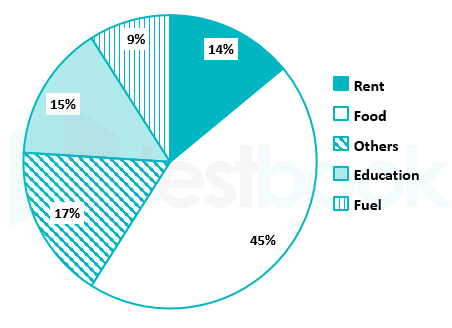
The pie chart given below shows the spending of a family on various heads during a month.

If the total income of the family is Rs. 25,000, then the amount spent on Rent and Food together is:

  1. AOption (a)

    Rs. 17,250

  2. BOption (b)

    Rs. 14,750 

  3. COption (c)

    Rs. 11,250

  4. DOption (d)

    Rs. 8,500

View answer & explanation

Correct answer

Answer: (b)B.

Rs. 14,750 

Why this answer is correct

Given:

Total Income of the family = 25000.

Calculation:

Amount spend on Rent and food = 14 % + 45 % = 59%

⇒ 25000 × 59 %

⇒ 25000 × 59 / 100 = 14750.

∴ The amount spent on Rent and Food together is 14,750.

Question 59

The pie chart given below shows the spending of a family on various heads during a month.

What is the ratio of the expenses on Education to the expenses on Food?

  1. AOption (a)

    1 ∶ 3 

  2. BOption (b)

    3 ∶ 2

  3. COption (c)

    3 ∶ 5

  4. DOption (d)

    5 ∶ 3

View answer & explanation

Correct answer

Answer: (a)A.

1 ∶ 3 

Why this answer is correct

Calculation:

Let, the total expense of the family is 100a

The expense on Education = 100a × (15/100) = 15a

The expense on Food = 100a × (45/100) = 45a

The ratio between the expenses on Education and Food is

⇒ 15a : 45a = 1 : 3

∴ The ratio between the expenses on Education and Food is 1 : 3

Question 60

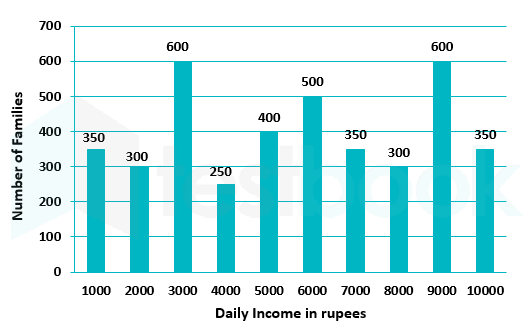
The graph below shows the results of a survey conducted in a city. It shows the number of families in that city having various daily incomes. 

How many families have daily income not less than Rs. 2000 but less than Rs. 6000?

  1. AOption (a)

    1550 

  2. BOption (b)

    1150 

  3. COption (c)

    1250 

  4. DOption (d)

    1400 

View answer & explanation

Correct answer

Answer: (a)A.

1550 

Why this answer is correct

Calculation:

As per the given data we need to find out the number of families 

Whose income are not less than Rs. 2000 but less than Rs. 6000

Let, the number of such families are A

So, A = 2000 ≤ A < 6000

⇒ A = (300 + 600 + 250 + 400) = 1550

∴ The correct answer is option 1

General English (20 questions)

Question 61

In the following question, four sentences are given out of which three sentences are grammatically incorrect while one is correct. Find out which sentence is grammatically correct and select the appropriate option.

If there is no error present, then select No error as answer.

  1. AOption (a)

    The move came at a time when the Chinese involvement in Nepal was surging, largely on the back of Beijing’s BRI project, which is a global infrastructure development strategy.

  2. BOption (b)

    The leaders of the SCO countries has signed a joint declaration at the summit Kyrgyzstan’s capital Bishkek.

  3. COption (c)

    “Countries sponsoring, aiding, and funding terrorism must be hold accountable”, he said.

  4. DOption (d)

    SCO is the largest regional organizations in the world in terms of geographical coverage and population.

View answer & explanation

Correct answer

Answer: (a)A.

The move came at a time when the Chinese involvement in Nepal was surging, largely on the back of Beijing’s BRI project, which is a global infrastructure development strategy.

Why this answer is correct

The correct answer is The move came at a time when the Chinese involvement in Nepal was surging, largely on the back of Beijing’s BRI project, which is a global infrastructure development strategy. 

 Key Points

  • Sentence 1 is grammatically correct.
  • Sentence 2 says "has signed" which should be "have signed" to agree with the plural subject "leaders."
  • Sentence 3 incorrectly uses "be hold accountable" instead of the correct form "be held accountable."
  • Sentence 4 is incorrect because "largest regional organizations" should be "largest regional organization" to agree with the singular subject "SCO."

Therefore, the correct answer is- "Option 1".

Question 62

Identify the segment in the sentence which contains the grammatical error from the given options.

Because of the high prices first they discontinued jam on toasts and then substituted margarine for butter.

  1. AOption (a)

    Because of the high prices

  2. BOption (b)

    first they discontinued jam on toasts 

  3. COption (c)

    and then substituted margarine for butter

  4. DOption (d)

    No error

View answer & explanation

Correct answer

Answer: (b)B.

first they discontinued jam on toasts 

Why this answer is correct

The correct answer is first they discontinued jam on toasts.  

 Key Points

  • There's an awkward phrasing in "first they discontinued jam on toasts." A clearer phrase might be, "they first discontinued jam on toast."
  • "On toasts" is not conventionally correct; "on toast" is the standard expression.
  • The rest of the sentence is logically structured and grammatically correct.
  • The corrected segment should properly sequence the actions and use the singular "toast."

Therefore, the correct answer is- Option 2. 

 Additional Information

  • Transition words like "first" are used to order actions or events.
  • Substituting one food item for another due to high prices reflects budgetary adjustments.
  • Proper sentence structure is key to clear and effective communication.

Question 63

Select the most appropriate option to substitute the underlined segments in the given sentence. If there is no need to substitute them, select 'No substitution required'.

After a close - watched meeting, the Board announced its decision to accept a 5 - acre plot allotted by the state government.

  1. AOption (a)

    a close - watched meeting, announced its decision, 5 - acres plot

  2. BOption (b)

    a closely - watched meeting, announced it's decision, 5 - acres plot 

  3. COption (c)

    a closely - watched meeting, announced its decision, 5 - acre plot 

  4. DOption (d)

    No substitution required 

View answer & explanation

Correct answer

Answer: (c)C.

a closely - watched meeting, announced its decision, 5 - acre plot 

Why this answer is correct

The correct answer is "a closely - watched meeting, announced its decision, 5 - acre plot ". 

 Key Points

  • "A close - watched meeting" should be "a closely-watched meeting" for correct adjective adverb combination describing the meeting.
  • "Announced its decision" is grammatically correct and requires no change.
  • "A 5 - acre plot" is correct as "5-acre" should not become plural with "acres" since it modifies "plot" which is singular.
  • The hyphenation in "closely-watched" correctly connects the adverb to the adjective, creating a compound modifier for "meeting."

Therefore, the correct answer is- "Option 3". 

 Additional Information

  • "It's" is a contraction for "it is" or "it has," which is incorrect in this context.
  • Hyphenation in compound modifiers clarifies meaning by showing that the words work together as a single concept.
  • Adverb-adjective combinations ("closely-watched") modify nouns more precisely than adjectives alone.

Question 64

Select the most appropriate option to substitute the underlined segment in the given sentence. If there is no need to substitute it, select 'No substitution required'.

A meeting of the union cabinet has been called at 11 am on Wednesday.

  1. AOption (a)

    has being called

  2. BOption (b)

    have been called 

  3. COption (c)

    had being called 

  4. DOption (d)

    No substitution required

View answer & explanation

Correct answer

Answer: (d)D.

No substitution required

Why this answer is correct

The correct answer is 'No substitution required'.

Key Points

  • The given sentence is in the present perfect tense.
  • The phrase "has been called" correctly indicates that the meeting is scheduled for a specific time in the future.
  • The subject "A meeting of the union cabinet" is singular, so "has" is the appropriate auxiliary verb.
  • There is no grammatical error in the given sentence segment.

Therefore, the correct answer is Option 4.

Correct sentence: A meeting of the union cabinet has been called at 11 am on Wednesday.

<br>

Additional Information

  • Option 1: has being called - "Has being called" is incorrect because "being" is used with continuous tenses, not perfect tenses.
  • Option 2: have been called - "Have been called" is incorrect because the subject "A meeting of the union cabinet" is singular, requiring the singular form "has."
  • Option 3: had being called - "Had being called" is incorrect because it combines past perfect tense "had" with "being," which is incorrect. The correct form should be "had been called" for past perfect tense, but it doesn't fit the context of the sentence.

Question 65

Select the most appropriate option to fill in the blank.

Waving a fan for nearly 12 hours continuously, with just a break for lunch, could make ________ arms sore.

  1. AOption (a)

    anyone’s

  2. BOption (b)

    everyone 

  3. COption (c)

    anyone 

  4. DOption (d)

    everyone’s 

View answer & explanation

Correct answer

Answer: (a)A.

anyone’s

Why this answer is correct

The correct answer is "anyone’s". 

 Key Points

  • "Anyone's" correctly implies that doing this activity could make the arms of any person sore, which suits the general context.
  • The possessive form "anyone's" is needed here to show possession or belonging (the soreness of the arms).
  • "Everyone" implies all people in a group, which may be too inclusive for this context.
  • The use of "anyone" over "everyone" emphasizes the potential for this outcome for any individual rather than asserting it happens to all simultaneously.

Therefore, the correct answer is- Option 1".

 Additional Information

  • "Anyone" is used to refer to any person out of an indefinite number, making it more suitable for hypothetical scenarios.
  • "Everyone's" refers to every person in a specific group, which is not the intended meaning in this question.
  • The choice between "anyone" and "everyone" often depends on the context and the specificity of the group being referred to.

Question 66

Select the most appropriate option to fill in the blank.

She __________ from the position of the station chief executive officer last year, but she is still the director.

  1. AOption (a)

    adapted

  2. BOption (b)

    resigned 

  3. COption (c)

    agitated 

  4. DOption (d)

    yielded 

View answer & explanation

Correct answer

Answer: (b)B.

resigned 

Why this answer is correct

The correct answer is resigned.  

 Key Points

  • "Resigned" is the correct term to indicate voluntarily leaving a job or position.
  • The sentence describes a past action that has already completed, so the past tense "resigned" is appropriate.
  • The other options (adapted, agitated, yielded) do not correctly convey the action of leaving a position.
  • "Resigned" appropriately contrasts with her retaining another position, indicating a change in roles rather than departure from the organization.

Therefore, the correct answer is- Option 2. 

 Additional Information

  • "Adapted" means to adjust or become accustomed to a new condition.
  • "Agitated" means to make someone nervous or troubled.
  • "Yielded" means to give way to arguments, demands, or pressure.

Question 67

Rearrange the following sentences in their correct order to form a meaningful paragraph.

P. So how do you really focus on being productive without killing your creativity?

Q. More than anything, it's been difficult for creative people to keep up with their creativity.

R. This lockdown has been hard on almost all employees.

S. There are ways through which you can hit your deadlines without any negative emotional, mental and physical effects of burnout.

  1. AOption (a)

    PQRS 

  2. BOption (b)

    RQPS 

  3. COption (c)

    SRQP 

  4. DOption (d)

    QRSP

View answer & explanation

Correct answer

Answer: (b)B.

RQPS 

Why this answer is correct

The correct answer is RQPS. 

 Key Points

  • Sequence RQPS offers a logical flow where the general impact of lockdown on employees (R) is introduced, followed by the specific challenge for creative people (Q).
  • "So how do you really focus on being productive without killing your creativity?" (P) logically follows as a question arising from the problems stated.
  • The solution to the problem is given in (S), making it a natural conclusion to the sequence.
  • This order presents a problem, elaborates on it, poses a question, and then offers a solution, respectively.

Therefore, the correct answer is- Option 2.

Question 68

Rearrange the following sentences in their correct order to form a meaningful paragraph.

P. Visibility was almost zero.

Q. There were blinding flashes, followed by peals of thunder.

R. Suddenly without any warning, our helicopter went into a spin and nosedived into the darkness below.

S. Our anxiety rose into fear.

  1. AOption (a)

    RPSQ 

  2. BOption (b)

    QPSR 

  3. COption (c)

    PQRS 

  4. DOption (d)

    SPQR

View answer & explanation

Correct answer

Answer: (d)D.

SPQR

Why this answer is correct

The correct answer is SPQR. 

 Key Points

  • Sequence SPQR provides a coherent narrative starting with "Our anxiety rose into fear" (S), which sets an emotional context.
  • It logically progresses to Q, where "There were blinding flashes, followed by peals of thunder," connects the fear to a specific event.
  • The cause of the anxiety and fear becomes clear in P with "Visibility was almost zero," showing worsening conditions.
  • Finally, R, "Suddenly without any warning, our helicopter went into a spin and nosedived into the darkness below," serves as a climax to the developing story.

Therefore, the correct answer is- Option 4.

Question 69

Select the most appropriate synonym of the given word.

INEBRIATED

  1. AOption (a)

    Stupefied

  2. BOption (b)

    Unsteady

  3. COption (c)

    Drunken

  4. DOption (d)

    Broken

View answer & explanation

Correct answer

Answer: (c)C.

Drunken

Why this answer is correct

The correct answer is Drunken.

 Key Points

  • The word "inebriated" refers to being drunk or intoxicated. (नशे में)
  • An example of "inebriated" in a sentence: After consuming too much alcohol at the party, he became inebriated and could hardly walk straight.
  • The synonym "Drunken" means affected by alcohol, with its Hindi meaning being शराबी
  • An example of "Drunken": The drunken man stumbled out of the bar, unable to keep his balance.

Therefore, the correct answer is- Option 3.

Additional Information

  • Stupefied (Option 1) means to make someone unable to think or feel properly, often due to shock or surprise. स्तब्ध
  • Unsteady (Option 2) describes someone or something not firm, steady, or balanced. अस्थिर
  • Broken (Option 4) generally refers to something that has been damaged or is no longer in working condition.  टूटा हुआ

Question 70

Select the most appropriate antonym of the given word.

EFFEMINACY

  1. AOption (a)

    Aggressiveness 

  2. BOption (b)

    Manliness 

  3. COption (c)

    Boorishness 

  4. DOption (d)

    Verbosity

View answer & explanation

Correct answer

Answer: (b)B.

Manliness 

Why this answer is correct

The correct answer is Manliness.

 Key Points

  • "Effeminacy" refers to the manifestation of traits in a boy or man that are more often associated with feminine nature, behavior, mannerism, or style. नारीत्व
  • An example of "effeminacy": His effeminacy was noticeable in his gentle voice and delicate movements.
  • The antonym "Manliness" refers to the qualities or attributes traditionally associated with men, such as strength and boldness. पुरुषत्व
  • An example of "Manliness": His manliness was evident in his decisive actions and deep voice.

Therefore, the correct answer is- Option 2.

 Additional Information

  • Aggressiveness (Option 1) – A quality of being ready to attack or confront.  आक्रामकता
  • Boorishness (Option 3) – Rude or unmannerly behavior. असभ्यता
  • Verbosity (Option 4) – The quality of using more words than needed; wordiness.  शब्दाडम्बर

Question 71

Select the correctly spelt word 

  1. AOption (a)

    Asymphtomatic 

  2. BOption (b)

    Asymphtometic 

  3. COption (c)

    Asymptomatic 

  4. DOption (d)

    Asymptomattic 

View answer & explanation

Correct answer

Answer: (c)C.

Asymptomatic 

Why this answer is correct

The correct answer is Asymptomatic.

 Key Points

  • The term "Asymptomatic" means showing no symptoms of disease. लक्षणहीन
  • An example of "Asymptomatic": Many people infected with the virus are asymptomatic and unaware they have it.
  • "Asymptomatic" (Option 3) is the correctly spelled word for someone or something showing no symptoms. लक्षणहीन
  • An example of its usage: Despite being asymptomatic, she tested positive for COVID-19.

Therefore, the correct answer is- Option 3.

 Additional Information

  • Asymphtomatic, Asymphtometic, and Asymptomattic (Options 1, 2, and 4) are misspelled variations and do not conform to the correct spelling of "Asymptomatic."

Question 72

Select the wrongly spelt word. 

  1. AOption (a)

    Forward 

  2. BOption (b)

    Pharaoh 

  3. COption (c)

    Fahrenheit 

  4. DOption (d)

    Liaeson

View answer & explanation

Correct answer

Answer: (d)D.

Liaeson

Why this answer is correct

The correct answer is Liaeson.

 Key Points

  • "Liaison" is the correctly intended word but misspelled as "Liaeson" in option 4.  संपर्क
  • An example of "liaison" correctly spelled: He acted as a liaison between the two departments, facilitating communication.
  • "Liaison" refers to communication or cooperation which facilitates a close working relationship between people or organizations. संपर्क
  • Example of its correct use: Her role as a community liaison helped build strong relationships between locals and the new administration.

Therefore, the correct answer is- Option 4.

 Additional Information

  • Forward (Option 1) – Directed towards a point ahead or in advance.  आगे
  • Pharaoh (Option 2) – A ruler in ancient Egypt. फिरौन
  • Fahrenheit (Option 3) – A scale for measuring temperature. फारेनहाइट

Question 73

Select the most appropriate meaning of the given idiom / phrase.

Kick the can down the road

  1. AOption (a)

    A task or job that is easy to complete 

  2. BOption (b)

    It never changes back or comes back 

  3. COption (c)

    To avoid dealing with a problem 

  4. DOption (d)

    Hear news of something secret

View answer & explanation

Correct answer

Answer: (c)C.

To avoid dealing with a problem 

Why this answer is correct

The correct answer is Option 3) To avoid dealing with a problem.

 Key Points

  • "Kick the can down the road" is an idiom that means to delay or defer decision-making or problem-solving, essentially avoiding dealing with a problem immediately. समस्या से बचना
  • An example: Instead of addressing the budget shortfall, the government chose to kick the can down the road by borrowing more money.
  • This idiom captures the avoidance of immediate action.  समस्या से बचना
  • Example of usage: Politicians often kick the can down the road to avoid unpopular decisions before an election.

Therefore, the correct answer is- Option 3.

Question 74

Select the most appropriate meaning of the given idiom / phrase.

To take to one's heels

  1. AOption (a)

    To run off 

  2. BOption (b)

    To show one's heels 

  3. COption (c)

    To turn around 

  4. DOption (d)

    To walk leisurely 

View answer & explanation

Correct answer

Answer: (a)A.

To run off 

Why this answer is correct

The correct answer is To run off.

 Key Points

  • "To take to one's heels" means to run away, usually to escape from a situation.  भाग जाना
  • An example of "to take to one's heels": As soon as he saw the police, the thief took to his heels.
  • Running off, meaning making a quick escape, aligns with this idiom.  भाग जाना
  • An example of running off: The cat took to its heels when it saw the dog coming.

Therefore, the correct answer is- Option 1.

 Additional Information

  • To show one's heels (Option 2), To turn around (Option 3), and To walk leisurely (Option 4) are not aligned with the meaning of "to take to one's heels," which specifically points to the act of running away quickly.

Question 75

Select the word which means the same as the group of words given.

Study of diseases and their causes, based on laboratory examinations

  1. AOption (a)

    Pantomime 

  2. BOption (b)

    Parasite 

  3. COption (c)

    Parasol 

  4. DOption (d)

    Pathology

View answer & explanation

Correct answer

Answer: (d)D.

Pathology

Why this answer is correct

The correct answer is Pathology.

 Key Points

  • "Pathology" is the study of diseases, their causes, and effects, especially the study based on the examination of tissues, organs, bodily fluids, and autopsies. रोग विज्ञान
  • An example of "pathology": He specialized in pathology to understand the complex nature of various diseases at a molecular level.
  • Pathology, meaning the scientific study of diseases, corresponds directly to the description. रोग विज्ञान
  • An example of its use: The pathology report provided crucial insights into the patient's condition.

Therefore, the correct answer is- Option 4) Pathology.

 Additional Information

  • Pantomime (Option 1) – A type of musical comedy stage production designed for family entertainment. मौक़िक नाटक
  • Parasite (Option 2) – An organism that lives in or on an organism of another species and benefits by deriving nutrients at the other's expense. परजीवी
  • Parasol (Option 3) – A light umbrella used to give shade from the sun. धूप की छतरी

Read the following passage and answer the questions below.

In the French province of Roussillon, the widowed Countess bids farewell to her son Bertram. Bertram is going to the court of the French King with his swaggering friend Paroles and the Lord Lafeu. Bertram leaves oblivious to the attentions of Helen, the orphan daughter of the Countess's celebrated physician. Helen has been brought up in his mother's household and has fallen in love with Bertram.

The Countess allows Helen to go to court and try her hand at curing the King's illness. Where others have failed, she succeeds, and as a reward, the King asks her to choose a husband from among his wards. (Who else would she choose but Bertram?) Bertram sees the alliance as beneath him. After the marriage ceremony, he runs away and plans to join the wars in Italy with Paroles.

He writes to Helen that he will not acknowledge their marriage until she can prove she wears his heirloom ring and carries his child. Helen returns home to Roussillon, but she does not give up. Instead, she soon leaves and, disguised as a pilgrim, follows Bertram to Florence. There, she befriends a widow and her daughter Diana. Meanwhile, Bertram has formed an obsession with Diana during his time in Italy. The soldiers jokingly trick Paroles into proving he is a coward, while Bertram makes intentions to sleep with Diana.

Diana plots to help Helen fulfil Bertram's impossible requests for marriage. Diana insists the meeting with Bertram must be in the dark, and a disguised Helen takes Diana's place. During the night, Bertram gives Helen his ring (thinking that she is Diana), and they conceive a child.

Question 76

The line “She soon leaves and, disguised as a pilgrim” refer to— 

  1. AOption (a)

    Diana 

  2. BOption (b)

    Countess 

  3. COption (c)

    Widow 

  4. DOption (d)

    Helen

View answer & explanation

Correct answer

Answer: (d)D.

Helen

Why this answer is correct

The correct answer is "Helen". 

Key Points

  • The passage directly mentions Helen's decision to follow Bertram to Florence after being rejected by him, indicating that it is Helen who takes the initiative to disguise herself and pursue her husband.
  • The context of the passage makes it clear that Helen is the character motivated to meet Bertram's cruel conditions for acknowledging their marriage.
  • The disguise as a pilgrim is specifically chosen by Helen as a means to travel undetected and integrate herself into Bertram's new environment without arousing suspicion.
  • Helen's resourcefulness and determination are highlighted by her actions, including the adoption of a disguise, underscoring her proactive role in attempting to salvage the marriage.
  • Therefore, the correct answer is Option 4.

Additional Information

  • Option 1) Diana is the woman Bertram becomes obsessed with in Italy.
  • There is no mention of Diana leaving or disguising herself as a pilgrim in the narrative.
  • Option 2) Countess refers to Bertram's mother, who remains in Roussillon throughout the story; thus, she is not the one who disguises herself as a pilgrim.
  • Option 3) Widow is a character who befriends Helen in Florence but is not involved in the disguise or the attempt to fulfill Bertram's conditions.

Question 77

Why does the Countess allow Helen to go to court?

  1. AOption (a)

    to inform the king about upcoming threat 

  2. BOption (b)

    to please king with cooking skillls 

  3. COption (c)

    to try her hands to cure the illness of the king 

  4. DOption (d)

    to marry the king as she very beautiful 

View answer & explanation

Correct answer

Answer: (c)C.

to try her hands to cure the illness of the king 

Why this answer is correct

The correct answer is "to try her hands to cure the illness of the king". 

Key Points

  • The passage explicitly states that the Countess allows Helen to go to court specifically to attempt to cure the French King's illness.
  • Helen's interest in going to court is not related to any political motives, culinary skills, or marital aspirations towards the King, but solely to use her knowledge, possibly inherited or learned from her father, a celebrated physician, to cure the King.
  • Helen’s success in curing the King, where others have failed, highlights her exceptional ability and directly influences the subsequent offer by the King for her to choose a husband from his wards.
  • This pivotal act of curing the King serves as a turning point in the story, enabling Helen to choose Bertram as her husband, which she might not have been able to do without this significant achievement.
  • Therefore, the correct answer is Option 3.

Additional Information

  • Option 1) to inform the king about upcoming threat is incorrect because there is no mention of Helen going to court for political or informational reasons.
  • Option 2) to please king with cooking skills is incorrect as Helen’s visit to the court is motivated by her medical skills, not culinary abilities.
  • Option 4) to marry the king as she very beautiful is also incorrect because Helen’s intention is not to marry the King but to utilize the opportunity to cure him and later choose Bertram as her husband.

Question 78

According to the given passage, who has formed obsession with Diana? 

  1. AOption (a)

    Countess 

  2. BOption (b)

    Paroles

  3. COption (c)

    Lafeu 

  4. DOption (d)

    Bertram

View answer & explanation

Correct answer

Answer: (d)D.

Bertram

Why this answer is correct

The correct answer is "Bertram". 

Key Points

  • The passage directly states that Bertram has formed an obsession with Diana during his time in Italy, indicating that he is the one who is enamored with her.
  • Bertram's fixation on Diana becomes a critical plot point, as it influences his decisions and actions while in Italy, including his plan to sleep with Diana.
  • This obsession contrasts with his rejection of Helen, his wife, showcasing his pursuit of desires that align with his interests and attractions rather than his marital obligations.
  • The narrative emphasizes Bertram's ill-considered actions and choices, which further complicate the relationships and events within the story.
  • Therefore, the correct answer is Option 4.

Additional Information

  • Option 1) Countess is Bertram's mother, and there is no indication in the text that she has any particular relationship with Diana, much less an obsession.
  • Option 2) Paroles is mentioned as Bertram's friend and displays no particular interest in Diana according to the passage; his role is more aligned with being a companion to Bertram.
  • Option 3) Lafeu is also a character in the mix but, like the Countess and Paroles, there is no mention of him having an obsession with Diana in the provided passage.

Question 79

Which of the following best expresses the opposite meaning to the given word “Oblivious”? 

  1. AOption (a)

    concerned 

  2. BOption (b)

    heedless 

  3. COption (c)

    unconscious 

  4. DOption (d)

    insensible

View answer & explanation

Correct answer

Answer: (a)A.

concerned 

Why this answer is correct

The correct answer is "concerned". 

Key Points

  • The word "oblivious" means not aware of or not concerned about what is happening around one.
  • The opposite of being unaware or unconcerned would be being aware or concerned about something.
  • "Concerned" directly opposes "oblivious" as it indicates a state of worry or interest about a situation or the welfare of something or someone.
  • Being concerned implies active engagement or awareness of a situation, contrasting with oblivion, which implies a lack of such engagement or awareness.
  • Words like "heedless", "unconscious", and "insensible" all suggest a lack of awareness or attention, similar to "oblivious", rather than an opposite meaning.
  • Therefore, the correct answer is "Option 1".

Additional Information

  • "Heedless" (Option 2) means showing a reckless lack of care or attention, which is similar to being oblivious and not an opposite.
  • "Unconscious" (Option 3) refers to not being awake or aware due to the loss of consciousness, aligning more with "oblivious" rather than contrasting it.
  • "Insensible" (Option 4) means not able to feel or perceive; unresponsive, which is a state of unawareness akin to being oblivious.

Question 80

Which of the following statements is incorrect according to the given passage? 

  1. AOption (a)

    Bertram leaves oblivious to the attentions of Helen.

  2. BOption (b)

    Helen returns home to Roussillon, but she does not give up. 

  3. COption (c)

    Diana insists the meeting with Bertram must be in the dark. 

  4. DOption (d)

    Paroles writes a letter to Helen that he will not acknowledge their marriage.

View answer & explanation

Correct answer

Answer: (d)D.

Paroles writes a letter to Helen that he will not acknowledge their marriage.

Why this answer is correct

The correct answer is "Paroles writes a letter to Helen that he will not acknowledge their marriage."

Key Points

  • The passage clearly identifies Bertram as the character who writes to Helen stating he will not acknowledge their marriage until she meets his conditions (wearing his ring and carrying his child), not Paroles.
  • Bertram's letter setting the conditions for acknowledging the marriage is a critical plot point, emphasizing his disdain and challenging Helen's resolve.
  • Statements about Bertram being oblivious to Helen's attentions, Helen's perseverance after returning to Roussillon, and Diana's insistence on a nighttime meeting align perfectly with the passage's narrative.
  • Paroles is depicted as a swaggering friend and involved in other plot elements, notably being tricked by soldiers, but he has no part in the marital conditions set for Helen. This makes Option 4 the incorrect statement.
  • Therefore, the correct answer is Option 4.

Additional Information

  • "Bertram leaves oblivious to the attentions of Helen." (Option 1) is correct as per the passage, indicating Bertram was unaware of Helen's love for him.
  • "Helen returns home to Roussillon, but she does not give up." (Option 2) reflects Helen's determination and is accurate according to the passage.
  • "Diana insists the meeting with Bertram must be in the dark." (Option 3) is a correct statement, as Diana plans for Helen to take her place under the cover of darkness to fulfill Bertram's conditions.
  • The inaccuracy of statement 4 (Option 4) lies in attributing the letter about the marriage conditions to Paroles, not Bertram, thus making it the incorrect statement based on the passage.

General Hindi (20 questions)

Question 81

निम्नलिखित में से "कारागार" में कौन - सी संधि है?

  1. AOption (a)

    दीर्घ संधि

  2. BOption (b)

    अयादि संधि

  3. COption (c)

    विसर्ग संधि

  4. DOption (d)

    यण संधि

View answer & explanation

Correct answer

Answer: (a)A.

दीर्घ संधि

Why this answer is correct

"कारागार" में संधि है - दीर्घ संधि अन्य विकल्प असंगत है। 

Key Points

  • कारा + आगार =  कारागार (आ + आ = आ)
  • 'कारागार' शब्द में दीर्घ संधि होगा।
  • ​'कारागार' का अर्थ - ​बंदीगृह, जेलखाना।

Important Pointsदीर्घ संधि:-

  • जब दो शब्दों की संधि करते समय (अ, आ) के साथ (अ, आ) हो तो 'आ' बनता है,
  • जब (इ, ई) के साथ (इ, ई) हो तो **'**ई' बनता है,
  • जब (उ, ऊ) के साथ (उ, ऊ) हो तो ‘ऊ' बनता है, तो उसे दीर्घ संधि कहते है।

उदाहरण-

  • विद्या + अभ्यास = विद्याभ्यास (आ + अ = आ)
  • कवि + ईश्वर = कवीश्वर (इ + ई = ई)
  • वधु + उत्सव = वधूत्सव (उ + उ = ऊ)

Additional Information

अयादि संधि:- - जब संधि करते समय ए, ऐ, ओ, औ के साथ कोई अन्य स्वर हो तो (ए का अय), (ऐ का आय), (ओ का अव), (औ का आव) बन जाता है।यही अयादि संधि कहलाती है। उदाहरण- - भो + अन = भवन (ओ + अ = अव) - नौ + इक = नाविक (औ + इ = आव) - चे + अन = चयन (ए + अ = अय) - नै + अक = नायक (ऐ + अ = आय) विसर्ग:- - जब संधि करते समय विसर्ग के बाद स्वर या व्यंजन वर्ण के आने से जो विकार (परिवर्तन) उत्पन्न होता है, हम उसे विसर्ग संधि कहते हैं। उदाहरण- - नि: + तार = निस्तार - दू: + शासन = दुशासन - मनः + भाव = मनोभाव - पुनर् + उक्ति = पुनरुक्ति यण संधि:- - जब संधि करते समय (इ, ई) के साथ कोई अन्य स्वर हो तो ‘य्' बन जाता है, - जब (उ, ऊ) के साथ कोई अन्य स्वर हो तो ‘व्' बन जाता है, - जब (ऋ) के साथ कोई अन्य स्वर हो तो ‘र्' बनता है, तो उसे यण संधि कहते है। उदाहरण- - अधि + अयन = अध्ययन (इ + अ = य) - अनु + एषण = अन्वेषण (उ + ए = वे) - मातृ + आज्ञा = मात्राज्ञा (ऋ + आ = र्)

Question 82

निम्नलिखित में से तत्सम शब्द का चयन कीजिए-

  1. AOption (a)

    जसोदा

  2. BOption (b)

    चरित

  3. COption (c)

    अम्‍मा

  4. DOption (d)

    ज्योति

View answer & explanation

Correct answer

Answer: (d)D.

ज्योति

Why this answer is correct

तत्सम शब्द है - ज्योति अन्य सभी विकल्प असंगत है।

Key Points

  • 'ज्योति' शब्द तत्सम है इसका तद्भव शब्द 'जोत' है।

अन्य विकल्प-

  • 'जसोदा' का तत्सम शब्द 'यशोदा' होता है।
  • 'चरित' का तत्सम शब्द 'चरित्र' होता है।
  • 'अम्मा' का तत्सम शब्द 'अम्बा' होता है।

Important Points

तद्भवतत्सम
अमोलअमूल्य
किवाड़कपाट
चौबीसचतुर्विंश
गोबरगोमय
मक्खीमक्षिका
जुगतियुक्ति
पंखपक्ष
धरतीधरित्री

Additional Information

शब्दपरिभाषाउदाहरण
तत्समजिन शब्दों को संस्कृत से बिना किसी परिवर्तन के ले लिया जाता है, उन्हें तत्सम शब्द कहते हैं।दुग्ध, पुष्प, आम्र, रात्रि आदि।
तद्भवतद्भव मूल भाषा संस्कृत के वे शब्द जिनका हिंदी में रूप परिवर्तन हो गया है उन्हें तद्भव शब्द कहते हैं।दूध, फूल, आम, रात आदि।

Question 83

निम्नलिखित में से "पाप - पुण्य" में कौन - सा समास है?

  1. AOption (a)

    कर्मधारय समास 

  2. BOption (b)

    बहुव्रीहि समास

  3. COption (c)

    द्वन्द्व समास

  4. DOption (d)

    द्विगु समास

View answer & explanation

Correct answer

Answer: (c)C.

द्वन्द्व समास

Why this answer is correct

"पाप - पुण्य" में समास है - द्वन्द्व समासअन्य सभी विकल्प असंगत है। 

Key Points 

  • 'पाप - पुण्य' शब्द का समास विग्रह - 'पाप और पुण्य'
  • 'पाप - पुण्य' शब्द में द्वन्द्व समास है।

Important Points द्वन्द्व समास:-

  • जिस समास में समस्तपद के दोनों पद प्रधान हों या दोनों पद सामान हों एवं
  • दोंनों पदों को मिलाते समय ‘और’, ‘अथवा’, ‘या’, ‘एवं’ आदि योजक लुप्त हो जाएँ, वह समास द्वन्द्व समास कहलाता है।

उदाहरण -

  • सुख-दुख = सुख या दुःख
  • गौरीशंकर = गौरी और शंकर
  • गुण-दोष = गुण अथवा दोष

Additional Information 

कर्मधारय समास:- - वह समास जिसका पहला पद विशेषण एवं दूसरा पद विशेष्य होता है अथवा पूर्वपद एवं उत्तरपद में उपमान - उपमेय का सम्बन्ध माना जाता है कर्मधारय समास कहलाता है। - समास विग्रह करते समय दोनों पदों के बीच में ‘के सामान’, ‘है जो’, ‘रुपी’ में से किसी एक शब्द का प्रयोग होता है। उदाहरण - - चरणकमल = कमल के समान चरण - नीलगगन = नीला है जो गगन - देहलता = देह रूपी लता बहुव्रीहि समास:- - वह समास जिसके समस्त पदों में से कोई भी पद प्रधान नहीं होता एवं दोनों पद मिलकर किसी तीसरे पद की ओर संकेत करते हैं वह समास बहुव्रीहि समास कहलाता है। उदाहरण - - त्रिलोचन = तीन आँखों वाला (शिव) - दशानन = दस हैं आनन जिसके (रावण) - चतुर्मुख = चार हैं मुख जिसके (ब्रह्म) द्विगु समास:- - वह समास जिसका पहला पद संख्यावाचक विशेषण होता है तथा समस्तपद किसी समूह या फिर किसी समाहार का बोध करता है तो वह द्विगु समास कहलाता है। उदाहरण - - दोपहर = दो पहरों का समाहार - शताब्दी = सौ सालों का समूह - चौराहा = चार राहों का समूह

Question 84

निम्नलिखित में से कौन - सा शब्द भाववाचक संज्ञा का उदाहरण नहीं है?

  1. AOption (a)

    घनिष्ठता

  2. BOption (b)

    पागलपन 

  3. COption (c)

    बगीचा 

  4. DOption (d)

    गंभीरता

View answer & explanation

Correct answer

Answer: (c)C.

बगीचा 

Why this answer is correct

भाववाचक संज्ञा का उदाहरण नहीं है - बगीचा अन्य सभी विकल्प असंगत है। 

Key Points 

  • 'बगीचा' यह शब्द किसी एक विशेष बगीचा का बोध न कराकर
  • दुनिया के सभी बगीचे का बोध करा रहा है। अतः 'बगीचा' एक जातिवाचक संज्ञा शब्द है।

अन्य विकल्प -

  • 'घनिष्ठता' शब्द से 'किसी के बहुत समीप होने के भाव' का बोध हो रहा है। अतः 'घनिष्ठता' एक भाववाचक संज्ञा है।
  • 'पागलपन' शब्द से 'पागल होने के भाव' का बोध हो रहा है। अतः 'पागलपन' एक भाववाचक संज्ञा है।
  • 'गंभीरता' शब्द से 'गंभीर होने की स्थिति या भाव' का बोध हो रहा है। अतः 'गंभीरता' एक भाववाचक संज्ञा है।

Important Points 

संज्ञापरिभाषाउदाहरण
भाववाचकजो शब्द किसी चीज़ या पदार्थ की अवस्था, दशा या भाव का बोध कराते हैं, उन शब्दों को भाववाचक संज्ञा कहते हैं। पहचान के लिए- बचपन, बुढ़ापा, मोटापा, मिठास, उमंग, चढाई, थकावट, मानवता, चतुराई, मित्रता, मुस्कुराहट, अपनापन, परायापन, भूख, प्यास, चोरी, क्रोध, सुन्दरता आदि।भारत में गरीबी बढ़ रही है।

Additional Information 

संज्ञापरिभाषाउदाहरण
जातिवाचकजो शब्द किसी व्यक्ति, वस्तु या स्थान की संपूर्ण जाति का बोध कराते हैं, उन शब्दों को जातिवाचक संज्ञा कहते हैं।पहचान के लिए- गाँव, स्कूल, शहर, बगीचा, नदी, आदमी, जानवर, पशु, पक्षी, गाय, लड़का आदि।पेड़ों पर पक्षी बैठे हैं।

Question 85

निम्नलिखित में से "स्वावलम्बन" का पर्यायवाची शब्द कौन - सा है?

  1. AOption (a)

    शार्दूल

  2. BOption (b)

    आत्माश्रय 

  3. COption (c)

    वारंगना

  4. DOption (d)

    वसन

View answer & explanation

Correct answer

Answer: (b)B.

आत्माश्रय 

Why this answer is correct

"स्वावलम्बन" का पर्यायवाची शब्द है - आत्माश्रय अन्य सभी विकल्प असंगत है।

Key Points

  • 'स्वावलम्बन' के सभी पर्यायवाची शब्द - आत्मनिर्भरता, आत्माश्रय, स्वाश्रय, अपने पैरों पर खड़ा होना।

अन्य विकल्प -

शब्दपर्यायवाची​ शब्द
सिंहवनराज, शार्दूल, मृगराज, व्याघ्र, मृगेंद्र, केशरी, महावीर।
वेश्यावारांगना,यौनकर्मी, वेश्या, तवायफ़, झर्झरा, तायफ़ा।
कपड़ाचीर, चैल, वसन, पट, अंबर, परिधान, वस्त्र, वितान।

Additional Information कुछ अन्य महत्वपूर्ण पर्यायवाची शब्द:-

शब्दपर्यायवाची​ शब्द
दुर्जनअसज्जन, असाधु, खल, पतित, शठ, दुष्ट।
जिगरउत्साह, दिल, साहस, कलेजा, हिम्मत, मन।
ओझलअदृश्य, अंतर्धान, तिरोहित, लुप्त, गायब, विलुप्त।
कीर्तियश, ख्याति, प्रतिष्ठा, शोहरत, प्रसिद्धि।
घृणाकुत्सा, अरुचि, विराग, अप्रीति, विरक्ति, ऊब।
चतुरविज्ञ, निपुण, नागर, पटु, कुशल, दक्ष, प्रवीण।
अनुपमअपूर्व, अतुल, अनोखा, अद्वितीय, अदभुत।

Question 86

निम्नलिखित में से शुद्ध वर्तनी वाले शब्द का चयन कीजिए -

  1. AOption (a)

    अतीरिक्त

  2. BOption (b)

    मिमांसा

  3. COption (c)

    झुर्रियाँ 

  4. DOption (d)

    प्रश्नोतर

View answer & explanation

Correct answer

Answer: (c)C.

झुर्रियाँ 

Why this answer is correct

शुद्ध वर्तनी वाला शब्द है - झुर्रियाँ अन्य सभी विकल्प असंगत है। 

Key Points 

  • शुद्ध वर्तनी वाला शब्द - 'झुर्रियाँ'
  • 'झुर्रियाँ' का अर्थ - झुर्री, सिकुड़न, शिकन।

​अन्य विकल्प-

अशुद्धशुद्ध
अतीरिक्तअतिरिक्त
मिमांसामीमांसा
प्रश्नोतरप्रश्नोत्तर

Important Points 

  • किसी शब्द में आये हुए अक्षरों को मात्राओं सहित कहने या लिखने की रीति को वर्तनी कहते हैं।
  • वर्तनी का सीधा सम्बन्ध उच्चारण से होता है।
  • यदि उच्चारण शुद्ध होगा तो वर्तनी शुद्ध होगी और यदि उच्चारण अशुद्ध होगा तो वर्तनी भी अशुद्ध होगी।

Additional Information कुछ अशुद्ध से शुद्ध शब्द:-

अशुद्धशुद्ध
कवयित्रिकवयित्री
पूज्यनीयपूजनीय
शांतमयशांतिमय
अहिल्याअहल्या
जाग्रतिजागृति
कौसल्याकौशल्या
प्रतिछायाप्रतिच्छाया
अनुषांगिकआनुषंगिक
प्रज्ज्वलितप्रज्वलित
दारिद्रतादरिद्रता

Question 87

निम्नलिखित में से "उद्यमी" का विलोम शब्द कौन - सा है ?

  1. AOption (a)

    निरुद्यम

  2. BOption (b)

    विद्यमी

  3. COption (c)

    ऋद्धि

  4. DOption (d)

    अनृत

View answer & explanation

Correct answer

Answer: (a)A.

निरुद्यम

Why this answer is correct

"उद्यमी" का विलोम शब्द है - निरुद्यम अन्य सभी विकल्प असंगत है। 

Key Points

  • 'उद्यमी' शब्द का विलोम शब्द 'निरुद्यम' होगा।
  • 'उद्यमी' का अर्थ- परिश्रमी, मेहनती, उद्यम करने वाला।
  • 'निरुद्यम' का अर्थ- जो उद्यम या उद्योग न करता हो, आलसी।

अन्य विकल्प -

शब्दविलोम
विद्यमानअविद्यमान
ऋद्धिविपन्न
अनृतऋत

Additional Information कुछ अन्य महत्वपूर्ण विलोम शब्द:-

शब्दविलोम
आकर्षणविकर्षण
नूतनपुरातन
सगुणनिर्गुण
आसक्तअनाशक्त
शाश्वतक्षणिक
उपकारअपकार
मूकवाचाल
सक्रियनिष्क्रय
अकालसुकाल
विधिनिषेध
जागरणशयन

Question 88

दिए गए वाक्यांश के लिए एक शब्द का चयन कीजिए -

वह नायिका जिसका पति परदेश से लौटा हो -

  1. AOption (a)

    आघ्रेय

  2. BOption (b)

    आक्रान्त

  3. COption (c)

    आगतपतिका

  4. DOption (d)

    अप्रगल्भ

View answer & explanation

Correct answer

Answer: (c)C.

आगतपतिका

Why this answer is correct

'वह नायिका जिसका पति परदेश से लौटा हो' वाक्यांश के लिए एक शब्द है - आगतपतिका अन्य विकल्प असंगत है। 

Key Points 


  • वह नायिका जिसका पति परदेश से लौटा हो - आगतपतिका

अन्य विकल्प-

वाक्यांशशब्द
जो सूँघे जाने के योग्य हो या सूँघा जाने को होआघ्रेय
जिसपर आक्रमण किया गया होआक्रान्त
जिसमें उत्साह या स्फूर्ति न होअप्रगल्भ

Additional Information कुछ महत्वपूर्ण वाक्यांश के लिए एक शब्द:-

वाक्यांशशब्द
पर्वत के नीचे तलहटी की भूमिउपत्यका
जो अच्छे कुल में उत्पन्न हुआ होकुलीन
जहां सैनिक निवास करते होछावनी
जिसने इन्द्रियों को वश में कर लिया होजितेन्द्रिय
तैरने की इच्छातितीर्षा
जो बहुत बोलता हैवाचाल
जो सुनता न होबधिर
जिसका संबंध निम्न या अछूत जाति से होअंत्यज

Question 89

निम्नलिखित में से शुद्ध वाक्य का चयन कीजिए- 

  1. AOption (a)

    तूफ़ान आने का संदेह है।

  2. BOption (b)

    हमें भाषा का अच्छा ज्ञान होना चाहिए।

  3. COption (c)

    भ्रष्टाचार गहरी समस्या है।

  4. DOption (d)

    जल्दी से माला गूँध कर लाओ।

View answer & explanation

Correct answer

Answer: (a)A.

तूफ़ान आने का संदेह है।

Why this answer is correct

शुद्ध वाक्य है - तूफान आने का संदेह है। अन्य सभी विकल्प असंगत है।

<br>

Mistake Points

  • भाषा स्त्रीलिंग शब्द है इसलिए इसके साथ "का" शब्द का प्रयोग नहीं होना चाहिए।

Key Points

  • शुद्ध वाक्य - तूफान आने का संदेह है।
  • वाक्य में लिंग, वचन, पुरुष, काल, कारक आदि का क्रिया के साथ ठीक-ठीक मेल हो, उसे शुद्ध वाक्य कहते है।

अन्य विकल्प-

अशुद्ध वाक्यशुद्ध वाक्यअशुद्धियां
हमें भाषा का अच्छा ज्ञान होना चाहिए।हमें भाषा की सही समझ होनी चाहिए।लिंग एवं अनुपयुक्त शब्द संबंधी
भ्रष्टाचार गहरी समस्या है।भ्रष्टाचार बड़ी समस्या है।शब्द-अर्थ संबंधी
जल्दी से माला गूँध कर लाओ।जल्दी से माला गूंथ कर लाओ।वर्तनी संबंधी

Important Pointsवचन, शब्द-अर्थ व वर्तनी संबंधी अशुद्धियां:-​

अशुद्ध वाक्यशुद्ध वाक्य
भारत में अनेकों राज्य हैं।भारत में अनेक राज्य हैं।
हिमालय पर्वत का राजा है।हिमालय पर्वतों का राजा है।
मैंने अपना ग्रहकार्य कर लिया है।मैंने अपना गृहकार्य कर लिया है।
तुम हमेशा बेफ़िजूल की बातें करते हो।तुम हमेशा फ़िजूल की बातें करते हो।
पधार कर अनुग्रहित करें।पधार कर अनुगृहित करें।
पूज्यनीय पिताजी आ रहे है।पूजनीय पिताजी आ रहे हैं।
यह कथा अवर्णनिय है।यह कथा अवर्णनीय है।

Question 90

निम्नलिखित में से स्त्रीलिंग शब्द का चयन कीजिए -

  1. AOption (a)

    श्वेत

  2. BOption (b)

    मत्स्य

  3. COption (c)

    खत्रानी 

  4. DOption (d)

    परिचायक

View answer & explanation

Correct answer

Answer: (c)C.

खत्रानी 

Why this answer is correct

स्त्रीलिंग शब्द है - खत्रानी अन्य सभी विकल्प असंगत है। 

Key Points

  • स्त्रीलिंग शब्द -खत्रानी
  • 'खत्रानी' का अर्थ - क्षत्रियों के अंतर्गत आनेवाली एक व्यापारी जाति खत्री का स्त्रीलिंग रूप।

अन्य विकल्प -

  • पुल्लिंग शब्द - मत्स्य, श्वेत, परिचायक।
  • 'खत्रानी' शब्द का पुल्लिंग शब्द 'खत्री' होगा।
  • 'परिचायक' का स्त्रीलिंग शब्द 'परिचायिका' होगा।

Important Points 

पुल्लिंगस्त्रीलिंग
सम्राटसम्राज्ञी
इंद्रइंद्राणी
कुम्हारकुम्हारिन
विद्वानविदुषी
भगवानभगवती
दर्जीदर्जिन
अनुजअनुजा
​पुजारीपुजारिन

Additional Information 

लिंगपरिभाषाउदाहरण
स्त्रीलिंगजिन संज्ञा या सर्वनाम शब्दों से स्त्री जाति का बोध होता है, उन्हें स्त्रीलिंग कहा जाता है।चिड़िया, बकरी, बच्ची, नानी, दादी, मासी, माता आदि।
पुल्लिंगजिन संज्ञा या सर्वनाम शब्दों से पुरुष जाति का बोध होता है, उन्हें पुल्लिंग कहा जाता है।पिता, दादा, नाना, मामा, चाचा, बच्चा, बन्दर आदि।

Question 91

निम्नलिखित में से वाक्य के प्रकार का चयन कीजिए -

भारत के पूर्वोत्तर में अनेक जनजातियों के लोग रहते हैं।

  1. AOption (a)

    मिश्र वाक्य

  2. BOption (b)

    संयुक्त वाक्य

  3. COption (c)

    विस्मयादिबोधक वाक्य

  4. DOption (d)

    सरल वाक्य

View answer & explanation

Correct answer

Answer: (d)D.

सरल वाक्य

Why this answer is correct

'भारत के पूर्वोत्तर में अनेक जनजातियों के लोग रहते हैं।' वाक्य है - सरल वाक्य अन्य सभी विकल्प असंगत है। 

Key Points 

  • वाक्य - भारत के पूर्वोत्तर में अनेक जनजातियों के लोग रहते हैं।
  • वाक्य में केवल एक समापिका क्रिया (रहना) आया है, अत: यह वाक्य सरल वाक्य के अंतर्गत आएगा।

Important Pointsसरल वाक्य:-

  • ऐसा वाक्य जिसमे एक ही क्रिया एवं एक ही कर्ता होता है या
  • जिस वाक्य में एक ही उद्देश्य एवं एक ही विधेय होता है, वे वाक्य सरल वाक्य कहलाते हैं।

उदाहरण-

  • प्रात:काल पक्षी चहचहाते हैं।
  • अंकित की कलम छूटकर गिर गई।

Additional Information 

मिश्र वाक्य:- - ऐसे वाक्य जिनमें सरल वाक्य के साथ-साथ कोई दूसरा उपवाक्य भी हो, वे वाक्य मिश्र वाक्य कहलाते हैं। - पहचान के लिए- कि, जो, क्योंकि, जितना, उतना, जैसा, वैसा, जब, तब, जहाँ, वहाँ, जिधर, उधर, अगर/यदि, तो, यद्यपि, तथापि आदि का प्रयोग किया जाता है। उदाहरण- - यदि परिश्रम करोगे तो उत्तीर्ण हो जाओगे। - मैं जानता हूँ कि तुम्हारे अक्षर अच्छे नहीं बनते। सयुंक्त वाक्य:- - ऐसा वाक्य जिसमे दो या दो से अधिक उपवाक्य हो एवं सभी उपवाक्य प्रधान हों, ऐसे वाक्य को सयुंक्त वाक्य कहते हैं। - पहचान के लिए- और, एवं, तथा, या, अथवा, इसलिए, अतः, फिर भी, तो, नहीं तो, किन्तु, परन्तु, लेकिन, पर आदि का प्रयोग करके जोड़ा जाता है। उदाहरण- - मैं आया और वह गया। - मैंने बहुत परिश्रम किया इसलिए सफल हो गया। विस्मयादिबोधक वाक्य:- - वह वाक्य जिससे किसी प्रकार की अनुभूति जैसे आश्चर्य, शोक, घृणा, अत्यधिक ख़ुशी, स्तब्धता जैसे भावों का बोध हो, वह विस्मयादिबोधक वाक्य कहलाता हैं। पहचान के लिए- आहा!, अरे!, अरेरे! वोह!, हाय!, शाबाश!, हे राम!, छि:!, छी- छी!, हे भगवान!, ओह!,कहाँ!, हम्म!,अबे!, बाप रे!, बेचारा।, बदनसीब!,रुको!, आदि। ​उदाहरण- - रुको! तुम नहीं जा सकते। - हे भगवन! यह समस्या कब हल होगी।

Question 92

नीचे दिया गया वाक्य निम्न में से किस वाच्य का उदाहरण है?

चलिए अब यहाँ से चला जाए।

  1. AOption (a)

    भाववाच्य

  2. BOption (b)

    कर्मवाच्य

  3. COption (c)

    कर्तृवाच्य

  4. DOption (d)

    अकर्मवाच्य

View answer & explanation

Correct answer

Answer: (a)A.

भाववाच्य

Why this answer is correct

'चलिए अब यहाँ से चला जाए।' वाच्य का उदाहरण है - भाववाच्य अन्य सभी विकल्प असंगत है।

Key Points

  • वाक्य - चलिए अब यहाँ से चला जाए।
  • वाक्य में ‘चलना, जाना' अकर्मक क्रिया का प्रयोग हुआ है, अत: यहाँ पर 'भाववाच्य' होगा।

Important Pointsभाववाच्य में कुछ महत्त्वपूर्ण तथ्य -

  • इस वाच्य में प्रायः नकारात्मक वाक्य होते हैं।
  • भाववाच्य में अकर्मक क्रिया का प्रयोग होता है।
  • भाववाच्य में प्रयुक्त क्रिया सदा पुल्लिंग अकर्मक और एकवचन होती है।
  • जैसे-
  • चलो, अब सोया जाय।
  • ऐसी धूप में कैसे चला जाएगा।
  • विधवा से रोया भी नहीं जाता।
  • चलो, घूमने चला जाए।

Additional Information

वाच्य:- - क्रिया के जिस रूपान्तर से यह ज्ञात हो कि वाक्य में प्रयुक्त क्रिया का प्रधान विषय कर्ता, कर्म अथवा भाव है, उसे वाच्य कहते हैं। वाच्य के तीन भेद हैं- - कर्तृवाच्य - कर्मवाच्य - भाववाच्य
वाच्यपरिभाषाउदाहरण
​कर्तृवाच्यजिस वाक्य में कर्ता मुख्य हो और क्रिया कर्ता के लिंग, वचन एवं पुरूष के अनुसार हो, उसे कर्तृवाच्य कहते है।लड़कियां बाजार जा रही है।
कर्मवाच्यजिस वाक्य में कर्म मुख्य हो तथा इसकी सकर्मक क्रिया के लिंग, वचन व पुरूष कर्म के अनुसार हो, उसे कर्मवाच्य कहते हैं।मां द्वारा मिठाई बनाई जाती है।
भाववाच्यजब वाक्य में न तो कर्ता की प्रधानता होती है और न कर्म की, बल्कि क्रिया का भाव प्रधान होता है, उसे भाववाच्य कहते हैं।आशा से नहीं हँसा जाता।

Question 93

निम्नलिखित में से मुहावरा "तोते की तरह आँखें फेरना" का क्या अर्थ है?

  1. AOption (a)

    लड़ने के लिए तत्पर रहना।

  2. BOption (b)

    बहुत ही शीघ्र उड़ने लगना।

  3. COption (c)

    पुराने सम्बंधों को एकदम भुला देना। 

  4. DOption (d)

    किसी चक्कर में पड़ जाना।

View answer & explanation

Correct answer

Answer: (c)C.

पुराने सम्बंधों को एकदम भुला देना। 

Why this answer is correct

मुहावरा "तोते की तरह आँखें फेरना" का अर्थ है - पुराने सम्बंधों क��� एकदम भुला देना। अन्य सभी विकल्प असंगत है। 

Key Points  

मुहावराअर्थवाक्य प्रयोग
तोते की तरह आँखें फेरनापुराने सम्बंधों को एकदम भुला देना।जब से सोनी ने महेश के साथ प्रेमविवाह किया तब से उसके पिता ने उससे "तोते की तरह आँखें फेर ली हैं"।

Important Points कुछ महत्वपूर्ण मुहावरा, अर्थ और उनके वाक्य प्रयोग:- 

मुहावराअर्थवाक्य प्रयोग
​सिर पर कफ़न बाँधनालड़ने-मरने के लिए तैयार होनाहमारे सैनिक "सिर से कफ़न बाँधकर" ही देश की रक्षा करते हैं।
‌‌‌हवा से बातें करनाबहुत तेज दौड़नाअगर तुम "हवा से बातें करोगे" तभी उसे हरा पाओगे वरना वहाँ मत जाना।
खटाई में पड़नाकिसी चक्कर में पड़ जाना, झमेले में पड़ना।ऐनवक़्त पर पाकिस्तान के अड़ियल रुख से कश्मीर पर वार्ता "खटाई में पड़ गयी"।

Additional Information 

मुहावराउदाहरण
मुहावरा एक ऐसा वाक्य होता है जो वाक्य की रचना करने पर अपना एक अलग अर्थ या विशेष अर्थ प्रकट करता है, इनका प्रयोग करने से भाषा, आकर्षक प्रभावपूर्ण तथा रोचक बन जाती है।छक्के छुड़ाना - बुरी तरह हराना। वाक्य प्रयोग - कुरुक्षेत्र के युद्ध में पांडवों ने कौरवों की सेना के "छक्के छुड़ा दिए थे"।

Question 94

निम्नलिखित में से किस लोकोक्ति का अर्थ "किसी वस्तु का दूसरों के देखने में समाप्त हो जाना" है? 

  1. AOption (a)

    मियाँ की दौड़ मस्जिद तक।

  2. BOption (b)

    मियाँजी की दाढ़ी ताबीजों में गई।

  3. COption (c)

    भुस में आग लगाकर जमालों दूर खड़ी।

  4. DOption (d)

    बांह गहे की लाज।

View answer & explanation

Correct answer

Answer: (b)B.

मियाँजी की दाढ़ी ताबीजों में गई।

Why this answer is correct

'मियाँजी की दाढ़ी ताबीजों में गई।' लोकोक्ति का अर्थ "किसी वस्तु का दूसरों के देखने में समाप्त हो जाना" है। अन्य सभी विकल्प असंगत है। 

Key Points 

लोकोक्तिअर्थवाक्य प्रयोग
मियाँजी की दाढ़ी ताबीजों में गई।किसी वस्तु का दूसरों के देखने में समाप्त हो जानाराम दूसरों की बातों में आकर, खुद को मुसीबत में डाल लेता है इसे कहते हैं- "मियाँजी की दाढ़ी ताबीजों में गई"।

Important Points कुछ महत्वपूर्ण लोकोक्ति, अर्थ और उनके वाक्य प्रयोग:- 

लोकोक्तिअर्थ
मुल्ला की दौड़ मस्जिद तकजहाँ तक किसी मनुष्य की पहुँच होती है, वह वहीं तक जाता है।
भुस में आग लगाकर जमालों दूर खड़ीकिसी के बारे में किसी दूसरे से चुगली कर देना और फिर तमाशा देखना।
बांह गहे की लाजशरणागत की रक्षा करना।

Additional Information 

लोकोक्तिउदाहरण
जब कोई पूरा कथन किसी प्रसंग विशेष में उद्धत किया जाता है तो लोकोक्ति कहलाता है। इसी को कहावत कहते है।​कंगाली में आटा गीला - एक मुसीबत पर दूसरी मुसीबत आ पड़ना। वाक्य प्रयोग - बेरोजगारी ने तो वैसे ही कमर तोड़ दी थी उस पर से टांग और टूट गई इसे कहते हैं - "कंगाली में आटा गीला"।

Question 95

नीचे दिए गए वाक्य में किस चिह्न का प्रयोग किया गया है?

मनुष्य - जीवन की सार्थकता मनोवेगों के कारण होती है।

  1. AOption (a)

    अल्पविराम चिह्न एवं पूर्णविराम चिह्न

  2. BOption (b)

    पूर्णविराम चिह्न एवं अर्द्धविराम चिह्न

  3. COption (c)

    योजक चिह्न एवं पूर्णविराम चिह्न

  4. DOption (d)

    उद्धरण चिह्न एवं योजक चिह्न

View answer & explanation

Correct answer

Answer: (c)C.

योजक चिह्न एवं पूर्णविराम चिह्न

Why this answer is correct

'मनुष्य - जीवन की सार्थकता मनोवेगों के कारण होती है।' चिह्न का प्रयोग किया गया है - योजक चिह्न एवं पूर्णविराम चिह्न अन्य सभी विकल्प असंगत है। 

Key Points 

  • वाक्य - मनुष्य - जीवन की सार्थकता मनोवेगों के कारण होती है**।**
  • वाक्य में योजक-चिह्न (–) व पूर्ण विराम (।) का प्रयोग किया गया है।

Important Points

चिह्नपरिभाषाउदाहरण
योजकदो शब्दों में परस्पर संबंध स्पष्ट करने के लिए तथा उन्हें जोड़कर लिखने के लिए योजक-चिह्न (–) का प्रयोग किया जाता है।सुख-दुःख, उतार-चढ़ाव, एक-तिहाई, दाल-चावल।
पूर्ण विरामजहाँ एक बात पूरी हो जाये या वाक्य समाप्त हो जाये वहाँ पूर्ण विराम (।) चिह्न लगाया जाता है।पढ़ रहा हूँ।

Additional Information

चिह्नपरिभाषाउदाहरण
अर्द्धविरामजहाँ पूर्ण विराम की अपेक्षा कम देर और अल्पविराम की अपेक्षा अधिक देर तक रुकना हो, वहां अर्द्धविराम (;) का प्रयोग करते हैं।सूर्यास्त हो गया; लालिमा का स्थान कालिमा ने ले लिया।
अल्प विरामबोलते समय वाक्य को अर्थपूर्ण, भावपूर्ण और स्पष्ट बनाने के लिए, वाक्य के बीच में हम थोड़ी देर के लिए रुकते हैं, इसी ठहराव को लिखते समय जिस चिह्न (,) का प्रयोग किया जाता है, उसे अल्पविराम कहते हैं।विजय ने बच्चों के लिए आम, अमरूद, केले आदि ख़रीदे।
उद्धरणकिसी महत्वपूर्ण कथन को ज्यों-का-त्यों लिखने के लिए जिस संकेत चिह्न का प्रयोग किया जाता है, उसे उद्धरण या अवतरण चिह्न ("…") कहते हैं।महावीर ने कहा, "अहिंसा परमो धर्म"।

निम्नलिखित गद्यांश का ध्यानपूर्वक अध्ययन कर प्रश्नों के उत्तर दीजिए -

जिस देश के निवासी अपने देश के कल्याण में अपना कल्याण, देश के अभ्युदय में अपना अभ्युदय, देश के कष्टों में अपना कष्ट, और देश की समृद्धि में अपनी सुख - समृद्धि समझते हैं, वह देश उत्तरोत्तर उन्नतशील होता है, अन्य देशों के सामने गौरव से अपना मस्तक ऊँचा कर सकता है। देश की सामाजिक और आर्थिक उन्नति के लिए देशवासियों का देशभक्त होना नितांत आवश्यक है। जिस देश में बालक, वृद्ध, नारियाँ और युवक अपने राष्ट्र की बलिवेदी पर अपने स्वार्थो को चढ़ाकर उस पर तन, मन, धन न्यौछावर कर देते हैं, वही देश शक्तिशाली होता है, वही देश प्रगतिशील होता है, और इसी के माध्यम से वह सतत उन्नत करते चला जाता है।

Question 96

निम्नलिखित में से उपर्युक्त गद्यांश का उचित शीर्षक कौन - सा है?

  1. AOption (a)

    देश-भक्ति का जुनून।

  2. BOption (b)

    देशवासियों का देशद्रोही होना।

  3. COption (c)

    प्रगतिशील एवं विकासशील देश।

  4. DOption (d)

    देश की समृद्धि में उसके नागरिकों का योगदान।

View answer & explanation

Correct answer

Answer: (d)D.

देश की समृद्धि में उसके नागरिकों का योगदान।

Why this answer is correct

उपर्युक्त गद्यांश का उचित शीर्षक है - देश की समृद्धि में उसके नागरिकों का योगदान। अन्य सभी विकल्प असंगत है। 

Key Points

  • गद्यांश के अनुसार- देश की सामाजिक और आर्थिक उन्नति के लिए देशवासियों का देशभक्त होना नितांत आवश्यक है।

अन्य विकल्प-

शब्दअर्थ
जुनूनपागलपन, उन्माद, दीवानगी, दीवानापन
देशद्रोही​देश के साथ विश्वासघात करनेवाला।
प्रगतिशीलबराबर आगे बढ़नेवाला
विकासशीलउन्नति की राह पर अग्रसर या जो उन्नति कर रहा हो
समृद्धिबहुत अधिक धन या संपत्ति होना

Question 97

उपर्युक्त गद्यांश के अनुसार, किसी देश के शक्तिशाली होने के लिए आवश्यक है कि उसके नागरिक ________।

  1. AOption (a)

    स्वार्थी हो।

  2. BOption (b)

    बलिदान देने के लिए सदैव तत्पर हो।

  3. COption (c)

    स्वार्थ रहित हो।

  4. DOption (d)

    हृष्ट-पुष्ट हो।

View answer & explanation

Correct answer

Answer: (c)C.

स्वार्थ रहित हो।

Why this answer is correct

उपर्युक्त गद्यांश के अनुसार, किसी देश के शक्तिशाली होने के लिए आवश्यक है कि उसके नागरिक स्वार्थ रहित हो। अन्य सभी विकल्प असंगत है। 

Key Points 

  • गद्यांश के अनुसार- जिस देश में बालक, वृद्ध, नारियाँ और युवक अपने राष्ट���र की बलिवेदी पर
  • अपने स्वार्थो को चढ़ाकर उस पर तन, मन, धन न्यौछावर कर देते हैं, वही देश शक्तिशाली होता है,
  • वही देश प्रगतिशील होता है, और इसी के माध्यम से वह सतत उन्नत करते चला जाता है।

अन्य विकल्प-

शब्दअर्थ
स्वार्थीअपना ही मतलब देखनेवाला, मतलबी, खुदगरज
बलिदानकिसी उच्च उद्देश्य के लिए प्राण देना, शहादत
तत्परजो काम करने को तैयार हो, उद्यत, मुस्तैद।
हृष्ट-पुष्टहट्टा-कट्टा, तगड़ा, स्वस्थ, तंदुरुस्त।

Question 98

निम्नलिखित में से "अभ्युदय" का विलोम शब्द क्या है?

  1. AOption (a)

    उन्नति

  2. BOption (b)

    वृद्धि

  3. COption (c)

    पतन

  4. DOption (d)

    उदय

View answer & explanation

Correct answer

Answer: (c)C.

पतन

Why this answer is correct

"अभ्युदय" का विलोम शब्द है - पतन अन्य सभी विकल्प असंगत है। 

Key Points 

  • 'अभ्युदय' के विलोम शब्द 'पतन' होगा।
  • 'अभ्युदय' का अर्थ- उन्नति, उत्थान, उत्तरोत्तर वृद्धि या लाभ।
  • 'पतन' का अर्थ- गिरने या नीचे आने क्रिया या भाव, गिरना।

​अन्य विकल्प -

शब्दविलोम
उदयअस्त
उन्नतिअवनति
वृद्धिक्षय

Additional Information  कुछ अन्य महत्वपूर्ण विलोम शब्द:-

शब्दविलोम
स्थूलसूक्ष्म
नूतनपुरातन
सगुणनिर्गुण
आसक्तअनाशक्त
शाश्वतक्षणिक
उपकारअपकार
मूकवाचाल
सक्रियनिष्क्रय
अकालसुकाल
विधिनिषेध
जागरणशयन
घनिष्ठबहिरंग

Question 99

उपर्युक्त गद्यांश के संदर्भ में कौन - सा कथन पूर्णतया सही है?

  1. AOption (a)

    जिस देश में केवल बालक एवं नारियाँ अपने राष्ट्र की बलिवेदी पर अपने स्वार्थो को चढ़ाकर उस पर तन, मन न्यौछावर कर देते हैं, वही देश शक्तिशाली होता है।

  2. BOption (b)

    जिस देश में बालक, वृद्ध, नारियाँ और युवक अपने राष्ट्र की बलिवेदी पर अपने स्वार्थो को चढ़ाकर उस पर तन, मन, धन न्यौछावर कर देते हैं, वही देश शक्तिशाली होता है।

  3. COption (c)

    जिस देश में बालक और युवक अपने राष्ट्र की बलिवेदी पर अपने स्वार्थो को चढ़ाकर उस पर तन, मन, धन और घन न्यौछावर कर देते हैं, वही देश कमजोर होता है।

  4. DOption (d)

    जिस देश में बालक, वृद्ध, नारियाँ और युवक अपने राष्ट्र की बलिवेदी पर अपने स्वार्थो को चढ़ाकर उस पर तन, मन और धन न्यौछावर नही करते हैं, वही देश शक्तिशाली होता है।

View answer & explanation

Correct answer

Answer: (b)B.

जिस देश में बालक, वृद्ध, नारियाँ और युवक अपने राष्ट्र की बलिवेदी पर अपने स्वार्थो को चढ़ाकर उस पर तन, मन, धन न्यौछावर कर देते हैं, वही देश शक्तिशाली होता है।

Why this answer is correct

उपर्युक्त गद्यांश के संदर्भ में कथन पूर्णतया सही है - जिस देश में बालक, वृद्ध, नारियाँ और युवक अपने राष्ट्र की बलिवेदी पर अपने स्वार्थो को चढ़ाकर उस पर तन, मन, धन न्यौछावर कर देते हैं, वही देश शक्तिशाली होता है। अन्य सभी विकल्प असंगत है। 

Key Points 


  • गद्यांश के अनुसार- देश की सामाजिक और आर्थिक उन्नति के लिए देशवासियों का देशभक्त होना नितांत आवश्यक है।
  • जिस देश में बालक, वृद्ध, नारियाँ और युवक अपने राष्ट्र की बलिवेदी पर अपने स्वार्थो को चढ़ाकर उस पर तन, मन, धन न्यौछावर कर देते हैं,
  • वही देश शक्तिशाली होता है, वही देश प्रगतिशील होता है, और इसी के माध्यम से वह सतत उन्नत करते चला जाता है।

अन्य विकल्प-

शब्दअर्थ
स्वार्थअपना हित साधने की उग्र भावना।
बलिवेदी​बलि चढ़ाने का चबूतरा।
न्यौछावरकुर्बान, समर्पित, अर्पित
शक्तिशालीबलवान्, ताक़तवर, शक्तिवाला।

Question 100

उपर्युक्त गद्यांश के अनुसार किसी देश की उन्नति _______ निर्भर करती है।

  1. AOption (a)

    उसके नागरिकों की देश-भक्ति पर।

  2. BOption (b)

    उसके नागरिकों की भ्रष्टाचारी पर।

  3. COption (c)

    उसके नागरिकों की स्वार्थ पूर्ति पर।

  4. DOption (d)

    उसके नागरिकों की आयु पर।

View answer & explanation

Correct answer

Answer: (a)A.

उसके नागरिकों की देश-भक्ति पर।

Why this answer is correct

उपर्युक्त गद्यांश के अनुसार किसी देश की उन्नति उसके नागरिकों की देश-भक्ति पर निर्भर करती है। अन्य सभी विकल्प असंगत है। 

Key Points 

  • गद्यांश के अनुसार- वह देश उत्तरोत्तर उन्नतशील होता है, अन्य देशों के सामने गौरव से अपना मस्तक ऊँचा कर सकता है।
  • देश की सामाजिक और आर्थिक उन्नति के लिए देशवासियों का देशभक्त होना नितांत आवश्यक है।

अन्य विकल्प-

शब्दअर्थ
भ्रष्टाचारीजो भ्रष्टाचार में लिप्त हो, घोटालेबाज़, धाँधली करने वाला
स्वार्थअपना हित साधने की उग्र भावना।
शक्तिशालीबलवान्, ताक़तवर, शक्तिवाला।

Discipline 1 (20 questions)

Question 101

The organism that does not reproduce is -

  1. AOption (a)

    Mule 

  2. BOption (b)

    Spirogyra 

  3. COption (c)

    Fungi 

  4. DOption (d)

    Cockroach

View answer & explanation

Correct answer

Answer: (a)A.

Mule 

Why this answer is correct

The correct answer is Mule.

Explanation-

  • Mules are hybrid animals resulting from a cross between a female horse (mare) and a male donkey (jack).
  • Because they are hybrids, mules are almost always sterile and incapable of reproduction. This is due to the difference in the number of chromosomes between a horse and a donkey - a horse has 64 and a donkey has 62.
  • The offspring, the mule, ends up with 63. This odd number of chromosomes leads to issues during meiosis, the process that creates sex cells for reproduction, and as a result, mules are generally unable to produce viable gametes.
  • On the other hand, Spirogyra (a genus of filamentous green algae), Fungi, and Cockroaches all reproduce.
  • Spirogyra reproduces both sexually and asexually, fungi through spores, and cockroaches lay eggs.


Conclusion- The organisms that do not reproduce is Mule.

Question 102

There are different branches of science. Which of the following branches of science deals with identification, nomenclature, and classification of organisms? 

  1. AOption (a)

    Ecology 

  2. BOption (b)

    Environmental science 

  3. COption (c)

    Taxonomy 

  4. DOption (d)

    Genetics

View answer & explanation

Correct answer

Answer: (c)C.

Taxonomy 

Why this answer is correct

The correct answer is Taxonomy.

Explanation-

Taxonomy is the branch of science concerned with the identification, nomenclature (naming), and classification of organisms. It organizes biological diversity and provides a system for naming and classifying species based on shared characteristics.

The main goal of taxonomy is to organize the vast amount of known information about organisms to make it easier to retrieve, manage, and use. Taxonomy also helps in identifying numerous other relationships among different organisms.

Additional Information 

Ecology: This is the study of how organisms interact with their environment and other organisms. While taxonomy organizes and classifies organisms, ecology helps us understand the roles those organisms play in the larger ecosystems in which they are found.

Environmental Science: This is a multidisciplinary field that integrates physical, biological and information sciences to the study of the environment, and the solution of environmental problems. It involves the study of physical phenomena, biology, chemistry, and ecology, among other disciplines, to understand and solve environmental problems.

Genetics: This is the study of heredity and the variation of inherited characteristics. It involves the examination of the ways in which traits or characteristics are transmitted from parents to offspring.

Question 103

ICBN makes the rules for nomenclature. Here ICBN stands for - 

  1. AOption (a)

    International Code for Biological Nomenclature

  2. BOption (b)

    International Code for Botanical Nomenclature 

  3. COption (c)

    International Committee of Biological nomenclature 

  4. DOption (d)

    International Committee of Botanical Nomenclature

View answer & explanation

Correct answer

Answer: (b)B.

International Code for Botanical Nomenclature 

Why this answer is correct

The correct answer is International Code for Botanical Nomenclature.

Explanation-

The International Code of Nomenclature for algae, fungi, and plants is the set of rules and recommendations that govern the scientific naming of all organisms traditionally treated as algae, fungi, or plants, whether fossil or non-fossil, including blue-green algae (Cyanobacteria), chytrids, oomycetes, slime moulds, and photosynthetic protists with their taxonomically related non-photosynthetic groups (but excluding Microsporidia).

Before 2011 it was called the International Code of Botanical Nomenclature (ICBN).

Additional Information 

  • ICZN: International Code of Zoological Nomenclature. This code governs the scientific names of animals.
  • ICNB: International Code of Nomenclature of Bacteria. This code governs the names of bacteria. Note that after 1999, this code was renamed as ICNP.
  • ICNP: International Code of Nomenclature of Prokaryotes. This code is currently used for the names of prokaryotes (including Bacteria and Archaea).
  • ICTV: International Code of Viral Nomenclature. This is followed by International Committee on Taxonomy of Viruses, and it governs the naming of viruses.

Question 104

________ has formalised Binomial Nomenclature.

  1. AOption (a)

    Robert Hooke 

  2. BOption (b)

    Charles Darwin

  3. COption (c)

    Carolus Linnaeus

  4. DOption (d)

    Mendel

View answer & explanation

Correct answer

Answer: (c)C.

Carolus Linnaeus

Why this answer is correct

The correct answer is Carolus Linnaeus.

Explanation-

  • Linnaeus was a Swedish botanist, zoologist, and physician who formalised binomial nomenclature, the modern system of naming organisms.
  • He is known as the "father of modern taxonomy". He is also considered one of the founders of modern ecology.

Additional Information 

  • Robert Hooke :Robert Hooke was an eminent scientist of the 17th century who made numerous significant contributions to different scientific fields. One of his most pivotal contributions was in the field of biology. In fact, Robert Hooke is credited with the discovery of the cell.
  • Charles Darwin: Darwin was an English naturalist, geologist and biologist, best known for his contributions to the science of evolution. He established that all species of life have descended over time from common ancestors and, in a joint publication with Alfred Russel Wallace, introduced his scientific theory that this branching pattern of evolution resulted from a process that he called natural selection.
  • Mendel: Gregor Johann Mendel was a scientist, Augustinian monk and abbot, who gained posthumous recognition as the founder of the modern science of genetics. He was known for his experiments with pea plants, which established the principles of Mendelian inheritance.

Question 105

With which of the following is the book “Systema Naturae” associated with?

  1. AOption (a)

    Classification of flora 

  2. BOption (b)

    Human body mechanism

  3. COption (c)

    Natural selection 

  4. DOption (d)

    Classification of plants and animals

View answer & explanation

Correct answer

Answer: (d)D.

Classification of plants and animals

Why this answer is correct

The correct answer is Classification of plants and animals.

Explanation-

  • "Systema Naturae" is a book associated with the classification of plants and animals.
  • "Systema Naturae" was written by Carolus Linnaeus, who is known as the "father of modern taxonomy." The book laid the foundations for the modern biological naming scheme of binomial nomenclature.
  • It presented a hierarchical classification of species in both the plant and animal kingdoms, which was a groundbreaking accomplishment at the time.
<br>

Question 106

Solanum tuberosum is the scientific name of ______. 

  1. AOption (a)

    Potato 

  2. BOption (b)

    Tomato 

  3. COption (c)

    Cabbage 

  4. DOption (d)

    Brinjal 

View answer & explanation

Correct answer

Answer: (a)A.

Potato 

Why this answer is correct

The correct answer is Potato.

  • The scientific name for potato is Solanum tuberosum. The "Solanum" is the genus, which includes about 1,500 species of plants like nightshades, tomatoes, and potatoes.
  • "Tuberosum" refers to the tuberous nature of the potato plant's root.

Key Points

  • Scientific names follow the system of binomial nomenclature, formalized by Carl Linnaeus in the 18th century. This system gives every species a two-part Latinized name.
  • The first part is the genus to which the species belongs, and the second part is the specific epithet, which differentiates the species within the genus.

Tomato: The scientific name for tomato is Solanum lycopersicum. .

Cabbage: The scientific name for cabbage is Brassica oleracea var. capitata. "Brassica" is the genus, and "oleracea" is the species name. "Var. capitata" shows it is a variety or variation of the species that forms a head, like cabbage.

Brinjal (Eggplant): The scientific name for brinjal  is Solanum melongena. Like tomato and potato, eggplant also belongs to the Solanum genus. 

Conclusion- Solanum tuberosum is the scientific name of Potato.

Question 107

Families are characterised on the basis of:

  1. Vegetative features of plant species
  2. Reproductive feature of plant species
  1. AOption (a)

    1 only 

  2. BOption (b)

    2 only 

  3. COption (c)

    Both 1 and 2 

  4. DOption (d)

    Neither 1 nor 2 

View answer & explanation

Correct answer

Answer: (c)C.

Both 1 and 2 

Why this answer is correct

The correct answer is Both 1 and 2.

Explanation-

The characterization of plant families is based on both:-

  1. Vegetative features of plant species
  2. Reproductive features of plant species
  • Characteristics from both categories are crucial in the identification of plant families.
  • Vegetative features of plants include attributes such as the type of root (taproot or fibrous), the arrangement and structure of leaves (shape, size, venation), and the type of stem.
  • Reproductive features include traits like the type, shape, and layout of flowers, the structure of the fruit, and the characteristics of the seed(s). The organization of the flower parts - including sepals, petals, stamens (male reproductive organ), and carpels (female reproductive organ) - is especially significant.
  • The combination of these features is used to classify and distinguish between different plant families, genera, and species.

Question 108

Reproduction is a method by which one organism can produce their offspring, it can occur within members of - 

  1. AOption (a)

    Family 

  2. BOption (b)

    Order

  3. COption (c)

    Genus 

  4. DOption (d)

    Species

View answer & explanation

Correct answer

Answer: (d)D.

Species

Why this answer is correct

The correct answer is Species.

Explanation-

  • Members of a species can interbreed to produce fertile offspring.Reproduction typically occurs within members of the same species. This is because individuals of the same species have the same number of chromosomes, allowing successful fertilization and the birth of fertile offspring.
  • Species is the primary unit of biological classification and the lowest and most specific rank in taxonomy.

Additional Information 

Genus: A genus is a rank in the biological classification (also known as taxonomy) that groups closely related species together. While members of the same genus are often quite similar, they are typically not capable of interbreeding to produce fertile offspring, as they have diverged too far from each other genetically.

Order: This is a higher rank in biological classification. An order contains related families. Members of the same order can have significant differences, and reproduction between them would not be possible.

Family: This is a rank in the taxonomic hierarchy that groups together related plants or animals which have common attributes and are classified between order and genus. Species from the same family but different genus typically can't interbreed.

Question 109

We can eat the roots of many plants. Which of the following is an example of a plant with edible roots?

  1. AOption (a)

    Wheat 

  2. BOption (b)

    Potato

  3. COption (c)

    Mango 

  4. DOption (d)

    Sweet potato

View answer & explanation

Correct answer

Answer: (d)D.

Sweet potato

Why this answer is correct

The correct answer is Sweet potato.

Explanation-

Sweet potato (Ipomoea batatas): Sweet potato plants have large, starchy, sweet-tasting tuberous roots that are a root vegetable. The young leaves and shoots are sometimes eaten as greens. This is a plant, where the root is the primary edible part. Sweet potato is a type of storage root.

Wheat (Triticum aestivum): Wheat is a grass that is cultivated for its seed, a cereal grain which is a worldwide staple food. We do not eat its roots; instead, the grains are the part of the wheat plant that is commonly consumed.

Potato (Solanum tuberosum): Potato plants form tubers, which are a type of modified stem that grow underground - these are the potatoes that we eat. While often referred to as a root vegetable, potatoes are technically an underground stem or tuber.

Mango (Mangifera indica): Mangoes are known for their sweet fruit which is consumed widely in fresh and processed forms. Fruit is the edible part of a mango plant.

Question 110

In which of the following plants, the primary root is short lived and is replaced by a large number of roots. These roots originate from the base of the stem and constitute the fibrous root system.

  1. AOption (a)

    Gymnosperm 

  2. BOption (b)

    Monocotyledons 

  3. COption (c)

    Dicotyledons 

  4. DOption (d)

    Bryophyta

View answer & explanation

Correct answer

Answer: (b)B.

Monocotyledons 

Why this answer is correct

The correct answer is Monocotyledons.

Explanation-

Monocotyledons: It include plants like grasses, lilies, orchids, palms, and grains such as corn and wheat. In these plants, the primary root is usually short-lived and is eventually replaced by a bunch of roots that appear to be similar in size. These roots, known as adventitious roots, grow out from the base of the stem to form a fibrous root system.

Additional Information

Gymnosperm: These are a group of seed-producing plants (conifers, cycads, and others) that includes both monocots and dicots. Some have taproot systems, while others have fibrous root systems, depending on the species.

Dicotyledons: Dicots, or dicotyledons, typically have a taproot system. The primary root grows directly downward and remains throughout the life of the plant, producing lateral roots that branch off and increase the plant's reach into the soil. Examples of dicots include beans, lentils, peas, and most trees.

Bryophyta: These are non-vascular plants, including mosses and their relatives, and they don't have true roots. Instead, they have thin, root-like structures called rhizoids that anchor them to their substrate and absorb water and nutrients.

Question 111

Which plant is seen growing in swampy areas with many roots coming out of the ground and growing vertically upwards? 

  1. AOption (a)

    Mirabilis 

  2. BOption (b)

    Rhizophora 

  3. COption (c)

    Banyan tree

  4. DOption (d)

    Monstera

View answer & explanation

Correct answer

Answer: (b)B.

Rhizophora 

Why this answer is correct

The correct answer is Rhizopora.

Explanation-

Rhizophora, commonly known as mangrove, is typically observed in swampy areas with many roots (also known as pneumatophores) growing vertically out of the ground. These roots help the plant to breathe in the low-oxygen environment of a swamp or marsh.

They have unique adaptations to survive in salty and anaerobic (lacking oxygen) conditions.

Additional Information

  • Mirabilis: Commonly known as the four o'clock plant or marvel of Peru, Mirabilis is not typically found in swampy or marshy areas. It is a flowering garden plant native to tropical South America that grows well in regular garden soil.
  • Banyan Tree: A banyan is a fig that starts its life as an epiphyte (a plant growing on another plant) when its seeds germinate in the cracks and crevices on a host tree (or on structures like buildings and bridges). Banyans have a unique root system with sections that grow down from the branches, but they are not typically found in swampy areas.
  • Monstera: Monstera is a tropical plant known for its distinctive leaves with natural holes. It is a type of vine typically found in forests, not in swampy or marsh areas.

Question 112

Who has authored the book “Anatomy of Seed Plants”? 

  1. AOption (a)

    Katherine Esau 

  2. BOption (b)

    Vernon Cheadle 

  3. COption (c)

    Ray F. Evert

  4. DOption (d)

    Susan E. Eichhorn

View answer & explanation

Correct answer

Answer: (a)A.

Katherine Esau 

Why this answer is correct

The correct answer is Katherine Esau.

Katherine Esau was a prominent botanist who authored the book "Anatomy of Seed Plants."

Additional Information 

Anatomy of Seed Plants" is a comprehensive and influential book primarily dedicated to the study of plant structure, providing detailed analysis and description of plant anatomy. It is considered a benchmark reference text and is widely used in botany courses.

Key features and topics discussed in the book include:-

  • The anatomy of seed plants, including tissues and cells in plants, and how they play a role in the life of a plant.
  • Detailed analyses of various structures of vascular plants including the stem, root, and leaves, and also the reproductive organs such as flowers, fruits, and seeds
  • A focus on the morphological structure and functionality of the plant's conducting tissues, the xylem and phloem.
  • The roles of different tissues and cells in plant growth, development, and function.​

Question 113

The region of the stem from where leaves are born is called -

  1. AOption (a)

    Nodes 

  2. BOption (b)

    Internodes 

  3. COption (c)

    Bud 

  4. DOption (d)

    Gemmule 

View answer & explanation

Correct answer

Answer: (a)A.

Nodes 

Why this answer is correct

The correct answer is Nodes.

Nodes are the points on a stem where leaves are attached. Buds, which will form leaves or new stems, also occur at the nodes.

Function: One of the primary functions of nodes is to help create new structures for the plant. Buds that grow at the nodes can develop into leaves, branches, or flowers, promoting the plant's overall growth.

Axillary Bud: Each node also usually has an axillary bud, which is the point from which a new shoot or flower can grow. This bud is typically nestled in the axil - the angle between the stem and the leaf petiole (leaf stalk).

Additional Information

Internodes: These are the segments of the plant stem located between the nodes. Unlike nodes, leaves and buds do not form at the internodes.

Bud: A bud is a compact knob-like growth on a plant that develops into a leaf, flower, or shoot. Buds are usually found in the axils of leaves (the angle between the leaf and stem above it), or at the end of the stem.

Gemmule: A gemmule is a term used in the context of sponges (a simple multicellular, primarily aquatic animal group). It refers to a dormant, tough-coated cluster of cells produced by sponges for survival in unfavorable conditions, not a region on a plant stem where leaves arise.

Question 114

Consider the following:

  1. This part of the plant bears both the nodes and internodes
  2. It is generally green when young, but changes colour later.

Which of the following parts has been described?

  1. AOption (a)

    Root

  2. BOption (b)

    Stem 

  3. COption (c)

    Flower 

  4. DOption (d)

    Bud 

View answer & explanation

Correct answer

Answer: (b)B.

Stem 

Why this answer is correct

The correct answer is Stem.

The given descriptions are characteristics of a plant stem. It bears both nodes (where leaves attach) and internodes (the segments between nodes), and young stems are often green, turning woody and brown as they mature.

Explanation-

  • The stem of a plant is vital for its overall structure, providing support for leaves, flowers, and fruits. The stem holds the nodes, which are points along the stem where leaves are attached. The internodes, on the other hand, refer to the section of the stem between two nodes.
  • It is generally green when young, but changes colour later.When a plant is young, its stem is typically green which indicates that it contains chlorophyll and can perform photosynthesis, just like leaves. As the plant matures and the stem becomes woody, it often changes colour to brown or grey because the outer layer of cells dies and forms a protective layer known as bark. This is particularly true for trees and shrubs.

Conclusion- Based on these characteristics, the part of the plant being described is the stem.

Question 115

Consider the following:

  1. When the incisions of the lamina reach up to the midrib breaking it into a number of leaflets, the leaf is called compound.
  2. Phyllotaxy is the pattern of arrangement of leaves on the stem or branch.

Which of the above is incorrect?

  1. AOption (a)

    Only 1 

  2. BOption (b)

    Only 2

  3. COption (c)

    Both 1 and 2

  4. DOption (d)

    Neither 1 nor 2 

View answer & explanation

Correct answer

Answer: (d)D.

Neither 1 nor 2 

Why this answer is correct

The correct answer is Neither 1 nor 2.

Explanation-

  1. When the incisions of the lamina reach up to the midrib breaking it into a number of leaflets, the leaf is called compound.
  • This statement correctly describes a compound leaf. In compound leaves, the leaf blade is fully divided, down to the midrib, into multiple leaflets.
  1. Phyllotaxy is the pattern of arrangement of leaves on the stem or branch.
  • This statement correctly defines phyllotaxy. Phyllotaxy refers to the pattern in which leaves arrange themselves around the stem or branch of a plant. These arrangements can be alternate, opposite, or whorled, and they play an essential role in maximizing the plant's exposure to sunlight for efficient photosynthesis.


Therefore, both the statements are correct.

Question 116

Which of the following is incorrectly matched?

  1. AOption (a)

    Calyx - outermost whorl of the flower 

  2. BOption (b)

    Corolla - brightly coloured to attract insects 

  3. COption (c)

    Gynoecium - Composed of stamens 

  4. DOption (d)

    Placentation - Arrangement of ovules within the ovary 

View answer & explanation

Correct answer

Answer: (c)C.

Gynoecium - Composed of stamens 

Why this answer is correct

The correct answer is Gynoecium - Composed of stamens.

Gynoecium - Composed of stamens: This is incorrect.

  • The gynoecium is the female part of the flower and is composed of one or more carpels, not stamens.
  • The carpels include the stigma, style, and ovary.
  • The term "stamens" refers to male parts of the flower and they collectively compose the androecium.

Key PointsCalyx - The calyx is the outermost whorl of the flower and is typically composed of sepals.

Corolla -  The corolla consists of petals, which are often brightly colored to attract pollinators like insects and birds.

Placentation - Placentation refers to the arrangement pattern of ovules (future seeds) inside the ovary of a flower. Different plant species may have different placentation such as axial, parietal, free central, basal etc.

Question 117

Which of the following is known as the ‘potato - family’? 

  1. AOption (a)

    Solanaceae 

  2. BOption (b)

    Fabaceae 

  3. COption (c)

    Liliaceae 

  4. DOption (d)

    Brassicaceae

View answer & explanation

Correct answer

Answer: (a)A.

Solanaceae 

Why this answer is correct

The correct answer is Solanaceae.

Explanation-

Solanaceae, also commonly known as the nightshade or potato family, is a family of flowering plants. 

  • This family includes many familiar food plants such as potatoes (Solanum tuberosum), tomatoes (Solanum lycopersicum), bell peppers (Capsicum annuum), and eggplant/aubergine (Solanum melongena).
  • While these plants provide substantial nutritional value, the Solanaceae family also includes species that produce toxins and are therefore poisonous. Examples of these are the deadly nightshade (Atropa belladonna) and various species of Datura, known commonly as "Angel's Trumpets" or "Devil's Trumpets" which are common garden ornamentals and have historically been used in various traditional medicines and in cultural rituals due to their strong hallucinogenic properties.


  1. Fabaceae is the pea family.

  2. Liliaceae is the lily family

  3. Brassicaceae is the mustard family, which includes plants like cabbage, broccoli, and kale.

Question 118

Which of the following flowers is zygomorphic?

  1. AOption (a)

    Gulmohur 

  2. BOption (b)

    Mustard 

  3. COption (c)

    Datura 

  4. DOption (d)

    Chilli

View answer & explanation

Correct answer

Answer: (a)A.

Gulmohur 

Why this answer is correct

The correct answer is Gulmohar.

Explanation-

Zygomorphic flowers are bilaterally symmetrical, meaning they can be divided into two equal halves by only a single plane. They have a single line of symmetry known as the median plane (the plane that creates left and right symmetry) and therefore cannot be divided evenly in any other way.

Gulmohur - The flowers are zygomorphic, as they can be divided into two similar halves by one vertical plane.

Additional Information

  • Actinomorphy, also known as radial symmetry, refers to flowers that can be divided into two equal halves along any vertical plane.
  • This is a characteristic of many plant families including many popular flowers such as roses and daisies.
  • In these flowers, the petals, sepals, and often other parts are arranged in a circular fashion.
  1. Mustard flowers are actinomorphic, which means they are radially symmetrical and can be divided into two identical halves by multiple vertical planes.
  2. Datura have actinomorphic flowers. They are radially symmetrical and can be divided into two identical halves by more than one plane.
  3. Chilli - The flowers of Chilli are also actinomorphic, meaning they can be divided into two identical halves along multiple planes that pass through the middle.
  • Asymmetrical flowers, on the other hand, are irregular and cannot be evenly divided into two identical parts along any plane. Orchids are a prime example of this, being highly modified for specialized pollination alliances. In these flowers, the petals and sepals are often of different sizes, shapes, and sometimes colors.

Question 119

Pith is the anatomical part of plant, which is well developed in _______. 

  1. AOption (a)

    Monocot root and monocot stem 

  2. BOption (b)

    Monocot root and Dicot root

  3. COption (c)

    Dicot root and monocot stem

  4. DOption (d)

    Monocot root and Dicot stem

View answer & explanation

Correct answer

Answer: (d)D.

Monocot root and Dicot stem

Why this answer is correct

The correct answer is Monocot root and Dicot stem.

Explanation-

Pith is the central portion or core of certain types of plant stems and can be present in roots. It's composed largely of soft, spongy parenchyma cells, which store and transport nutrients throughout the plant. Pith can also be involved in storage and transportation of nutrients and water around the plant.

In a dicotyledonous stem, pith is well developed. This is due to the arrangement of its vascular bundles in a ring arrangement, which leaves a central space.

In monocotyledonous roots, the pith is well developed too. Here, the primary vascular tissues are scattered throughout the plant, resulting in a well-developed pith.

Conversely, Monocot stems have scattered vascular bundles without a defined cortex and pith region: Their anatomy differs from that of dicot stems.

The anatomy of dicot roots mainly comprises a central cylinder of xylem and phloem tissues surrounded by a cortex, with the pith being small or absent due to the large xylem star or xylem vessels

Question 120

The alternation of generation in Obelia is termed as ______. 

  1. AOption (a)

    Metamerism 

  2. BOption (b)

    Dimorphism 

  3. COption (c)

    Metagenesis 

  4. DOption (d)

    Metamorphosis 

View answer & explanation

Correct answer

Answer: (c)C.

Metagenesis 

Why this answer is correct

The correct answer is Metagenesis.

Explanation-

  • Obelia is a simple form of a marine organism found in class Hydrozoa of the phylum Cnidaria (formerly known as Coelenterata). One characteristic feature of Obelia is the alternation of generations, also known as metagenesis.
  • In the life cycle of Obelia, there is an alternation between a sexually reproducing stage or generation (the medusa stage) and an asexually reproducing stage (the polyp stage).
  • The polyp stage is asexual and reproduces to produce free-swimming medusae by a process of budding. In contrast, the medusa stage reproduces sexually, producing eggs and sperm, which combine to form a zygote that grows into a new polyp.
  • This cycle (Metagenesis) repeats itself, hence it alternates between sexual and asexual stages.

Additional InformationMetamerism refers to a type of segmentation of the body found in some animals like annelids (earthworms).

Dimorphism refers to the occurrence of two different forms of individuals within the same species, typically a phenomenon observed in terms of distinct male and female forms or different morphs based on season or environment.

Metamorphosis is a process that some organisms, such as amphibians and insects, undergo, which involves a significant change in their form or structure as they develop from their juvenile to adult state, usually involving a distinct larval or pupal stage.

Discipline 2 (20 questions)

Question 121

A gravid proglottid has -

  1. AOption (a)

    Only female organs are well developed

  2. BOption (b)

    An under - developed female reproductive unit

  3. COption (c)

    A fully developed male reproductive unit

  4. DOption (d)

    Branched uterus filled with fertilised eggs

View answer & explanation

Correct answer

Answer: (d)D.

Branched uterus filled with fertilised eggs

Why this answer is correct

The correct answer is Branched uterus filled with fertilised eggs

Explanation-

A gravid proglottid is a segment of a tapeworm that is specifically filled with fertilized eggs. 

  • Gravid: This term refers to being pregnant or carrying eggs. In the context of a tapeworm proglottid, it means that the proglottid is filled with eggs, indicating that it is at a reproductive stage.
  • Proglottid: Tapeworms are segmented parasites, and each segment is called a proglottid. These proglottids contain the reproductive organs of the tapeworm.

Branched uterus: Inside a tapeworm proglottid, there are reproductive structures, including male and female reproductive organs. The uterus in the female proglottid is branched to accommodate numerous eggs.

Filled with fertilised eggs: As tapeworms are hermaphroditic, each proglottid contains both male and female reproductive organs. The fertilized eggs develop within the uterus of the proglottid, and when mature, they are released into the environment through the feces of the host.

The other options are incorrect:-

  • Only female organs are well developed: Tapeworms are hermaphroditic, possessing both male and female reproductive organs in each proglottid. While the female reproductive organs may be well developed in a gravid proglottid, it also contains male reproductive structures.
  • An under-developed female reproductive unit: A gravid proglottid is not under-developed; rather, it is specifically developed for reproduction, containing fertilized eggs.
  • A fully developed male reproductive unit: While a gravid proglottid contains male reproductive organs, its main distinguishing feature is the presence of fertilized eggs in the uterus, not just the male reproductive unit.

Conclusion- Therefore, the correct answer is Branched uterus filled with fertilised eggs.

Question 122

Which of the following parasites show alternation of generation and alternation of host in its life cycle?

  1. Fasciola
  2. Taenia
  1. AOption (a)

    Only 1 

  2. BOption (b)

    Only 2

  3. COption (c)

    Both 1 and 2

  4. DOption (d)

    Neither 1 nor 2

View answer & explanation

Correct answer

Answer: (a)A.

Only 1 

Why this answer is correct

The correct answer is Fasciola.

Explanation-

  • Alternation of generations in the context of a parasitic life cycle, refers to the existence of both sexual (in definitive hosts) and asexual (in intermediate hosts) reproductive stages.
  • This characteristic is present in the life cycle of Fasciola but not in Taenia spp.
  • While both Fasciola (liver fluke) and Taenia (tapeworms) have life cycles involving multiple hosts, the alternation of generations meaning both asexual and sexual reproduction in alternating generations is most accurately observed in the Fasciola life cycle.
  • During its life cycle, Fasciola initially undergoes asexual reproduction inside freshwater snails (intermediate host) where sporocysts reproduce to make rediae, and rediae reproduce to generate cercariae. Once ingested by the definitive mammalian host like sheep or humans, these cercariae develop into adult flukes which reproduce sexually.


Taenia species, on the other hand, do not show this kind of alternation of generations. These worms do use intermediate hosts (like pigs for T. solium or cows for T. saginata) for their larval stages, but these larvae do not reproduce asexually; they simply develop into a form (cysticercus) that, when ingested by the definitive host, can grow into a mature, sexually reproducing adult.

Conclusion-  So, the correct answer is Only 1 - Fasciola shows alternation of host and alternation of generations in its life cycle.

Question 123

Which of the following shows the characteristics of torsion? 

  1. AOption (a)

    Gastropoda 

  2. BOption (b)

    Monaplacophora 

  3. COption (c)

    Cephalopoda 

  4. DOption (d)

    Aplacophora

View answer & explanation

Correct answer

Answer: (a)A.

Gastropoda 

Why this answer is correct

The correct answer is Gastropoda.

Explanation-

  • Torsion is a distinctive characteristic of the class Gastropoda, one of the major groups of molluscs, which includes species such as snails and slugs.
  • It is a process that occurs during the larval development resulting in the 180-degree twisting of the visceral mass, mantle, and shell, causing the animal’s anus and gills to end up above its head.
  • This process occurs during the larval stage and results in an adult body plan that is quite different from that of other molluscs..

Additional Information 

Monoplacophora: The animals in this class are a type of marine mollusc that has a single, cap-like shell, similar to limpets. They do not undergo torsion. There is no rotation or twisting of the body involved.

Cephalopoda: This is a diverse class of mollusc that includes squid, octopuses, cuttlefish, and nautiluses. Cephalopods are characterized by bilateral body symmetry, a prominent head, and a set of arms or tentacles. They do not have a torsion process in their development.

Aplacophora: These are small, worm-like marine molluscs. They lack the shell and other features seen in most other molluscs and also do not undergo torsion

Conclsuion- Gastropoda demonstrates the characteristic of torsion during its development.

Question 124

What term is used for nephridia which discharge their excretory products into the lumen of gut?

  1. AOption (a)

    Exocrine

  2. BOption (b)

    Holocrine 

  3. COption (c)

    Enteronephric 

  4. DOption (d)

    Exonephric

View answer & explanation

Correct answer

Answer: (c)C.

Enteronephric 

Why this answer is correct

The correct answer is Enteronephric.

Explanation-

  • Nephridia that discharge their excretory products into the lumen of the gut are referred to as Enteronephric.
  • Nephridia are excretory organs of many invertebrates (animals lacking a backbone), including annelids (segmented worms) and mollusks.
  • The primary function of nephridia is to collect excess water and waste products from the body fluid or blood, and excrete them out of the organism's body, essentially working similarly to kidney functions in vertebrates.

Additional InformationEnteronephric: This term is derived from "entero" meaning intestine, and "nephric" relating to nephridium, used to indicate those nephridia whose ducts discharge into the gut or intestinal lumen. This kind of arrangement is relatively rare but can be found in some specific groups of invertebrates. Enteronephric nephridia allow the direct removal of waste products into the digestive tract, which are then excreted from the organism's body along with undigested food.

Exonephric: This term, derived from "exo" (outside) and "nephric" (pertaining to nephridium), is used to indicate those nephridia that discharge their waste products to the exterior of the organism's body.

Holonephric: These nephridia are scattered all over the body.

Exocrine: This term refers more generally to glands that release their secretions through ducts either onto the body's surface or into its cavities, as opposed to endocrine glands that secrete hormones internally into the bloodstream. It's not a term specifically applied to any particular type of nephridia.

Question 125

Consider the following animals -

  1. Cartilaginous fishes
  2. Frogs
  3. Crocodiles

Which of the above animals’ heart auricle consist of single chamber?

  1. AOption (a)

    Only 1 

  2. BOption (b)

    Only 1 and 2

  3. COption (c)

    Only 3 

  4. DOption (d)

    Only 2 and 3

View answer & explanation

Correct answer

Answer: (a)A.

Only 1 

Why this answer is correct

the correct answer is Cartilaginous fishes.

Explanation-

The heart is divided into several chambers where the number of chambers varies among different species. The chambers are typically divided into atria (also called auricles) and ventricles.

  • Cartilaginous fishes (Chondrichthyes): Examples include sharks and rays. They possess a two-chambered heart, consisting of one auricle (or atrium) and one ventricle. Thus, the auricle is a single chamber.Blood moves in one direction: from the heart to the gills, where it gets oxygenated, and then it's distributed to the rest of the body. Even though the circulatory system is not as efficient as in four-chambered hearts (like in mammals and birds) or even three-chambered hearts (in some reptiles and amphibians), it works sufficiently well for their marine environment where oxygen is readily available.
  • Frogs (Anura): Frogs are amphibians and they have a three-chambered heart, which consists of two auricles (a right and a left) and one ventricle. Thus, the auricle is not a single chamber in frogs. Oxygen-depleted blood from the body and oxygen-rich blood from the lungs enter the two different auricles. The bloods then mix in the single ventricle and are partly separated as they're pumped to the lungs and the rest of the body.
  • Crocodiles (Crocodylia): Crocodiles are reptiles and they are unique among reptiles because they have a four-chambered heart that includes two auricles (a right and a left) and two ventricles, similar to birds and mammals. Hence, the auricle is not a single chamber in crocodiles.

Question 126

The jawless vertebrates are known as -

  1. AOption (a)

    Agnatha 

  2. BOption (b)

    Dipnoi 

  3. COption (c)

    Osteichthyes 

  4. DOption (d)

    Chondrichthynes 

View answer & explanation

Correct answer

Answer: (a)A.

Agnatha 

Why this answer is correct

The correct answer is Agnatha.

Explanation-

The jawless vertebrates belong to the superclass known as Agnatha

Agnatha: This is a superclass of jawless fish in the phylum Chordata, subphylum Vertebrata. Agnatha is Greek for "no jaws."

  • The group includes both extinct (like the Ostracoderms) and extant (like lampreys and hagfish) species. These fish are characterized, as their name implies, by their lack of jaws. Instead, they have a circular, sucker-like mouth.


Members of the Dipnoi, Osteichthyes, and Chondrichthyes all possess jaws.

Dipnoi: This is a subclass of fishes known as lungfishes. They have both gills and lungs, which allows them to live in water or on land. Lungfish are characterized by the presence of jaws and are not jawless vertebrates.

Osteichthyes: This is a taxonomic group that includes bony fishes. They have a skeleton that is significantly hardened by the presence of calcium phosphate, unlike the cartilaginous fishes such as sharks and rays. Osteichthyes are also characterized by the presence of jaws and thus are not jawless vertebrates.

Chondrichthyes: This class includes sharks, rays, and skates, also known as cartilaginous fishes. The main characteristic of this group is that their skeletons are made of cartilage instead of bone. Like Osteichthyes and Dipnoi, Chondrichthyes are jawed vertebrates.

Question 127

Which of the following can create electric - fields?

  1. AOption (a)

    Dolphins 

  2. BOption (b)

    Turtles 

  3. COption (c)

    Torpedoes 

  4. DOption (d)

    Porpoises

View answer & explanation

Correct answer

Answer: (c)C.

Torpedoes 

Why this answer is correct

The correct answer is Torpedos.

Explanation-

Electric Rays, also known as Torpedoes (Torpediniformes): They are a type of ray that has specialized electogenic organs capable of producing electric fields.

  • These electric organs are derived from modified muscle or nerve tissues containing electrocytes stacked together. By controlling the discharge of these electrocytes, the ray can produce a powerful electric field for defense and navigation purposes and also to stun and capture prey.

Additional Information 

Dolphins (Delphinidae): They are well known for their intelligence and their capability to use echolocation, a feature that allows them to judge distances and navigate, especially in murky waters. They do not generate electric fields.

Turtles (Testudines): They are reptiles known for their bony or cartilaginous shell developed from their ribs that acts as a shield. They are not known to generate electric fields.

Porpoises (Phocoenidae): They are small-toothed whales that are related to dolphins but have certain differences. Like dolphins, they also use echolocation but are not capable of generating electric fields.

Question 128

The breathing of blue whales occurs through -

  1. AOption (a)

    Skin 

  2. BOption (b)

    Nose 

  3. COption (c)

    Blowhole 

  4. DOption (d)

    Gill 

View answer & explanation

Correct answer

Answer: (c)C.

Blowhole 

Why this answer is correct

The correct answer is Blowhole.

Explanation-

Blue whales, like all cetaceans (whales, dolphins, and porpoises), breathe through a Blowhole.

Blowhole: Blue whales, as with other cetaceans, have a blowhole located on top of their head. They surface to breathe, and the blowhole is exposed to the air, allowing them to exhale forcefully and then inhale fresh air. It's a quick, efficient process that minimizes their time at the surface.

Skin: In most cases, the skin of mammals isn't designed to absorb oxygen. They have lungs that are responsible for the exchange of gases. So, breathing through the skin is not applicable to blue whales.

Nose: Blue whales don't have a nose similar to terrestrial mammals for breathing. They have evolved blowholes for this exchanges of gases.

Gills: Blue whales are mammals, not fish, and so they do not have gills. Gills are specialized organs for extracting oxygen from water, seen in fish and some amphibians. As mammals, blue whales have lungs and need to breathe in oxygen from the air, which they do efficiently through their blowhole.

Question 129

How many occipital condyle (s) should be there in the skull of a snake? 

  1. AOption (a)

    One 

  2. BOption (b)

    Two

  3. COption (c)

    Nil 

  4. DOption (d)

    Three

View answer & explanation

Correct answer

Answer: (a)A.

One 

Why this answer is correct

The correct answer is One.

Explanation-

An occipital condyle is a rounded protrusion that is part of the skull's occipital bone. These condyles articulate with the first cervical vertebra, providing a point of rotation that allows the head to move relative to the neck. The number of occipital condyles varies between different animal groups, reflecting their evolutionary history and impacting their head mobility.

Reptiles from the order Squamata, which includes lizards and snakes, have a unique feature.There is only one occipital condyle. The presence of a single occipital condyle contributes to the increased flexibility and mobility of squamates heads. This is especially noticeable in snakes, as it allows them to open their jaws wide enough to swallow prey larger than their own body diameter.

Many vertebrates, such as mammals, birds, and amphibians, have two occipital condyles. The presence of two occipital condyles allows for a greater range of rotational movement and movement in multiple planes.

  • Reptiles have only one occipital condyle.
  • Humans have two occipital condyles

Additional InformationThe class reptilian refers to the animals that creep or crawl in the soil for their locomotion. The word reptilia comes from the Latin word repere or reptum meaning to creep or crawl. Snakes, lizards are the most common examples of this class.

Characteristics and features of class reptilian

  1. They are mostly terrestrial animals.
  2. The body of these animals is covered by dry and cornified skin, epidermal scales, or scutes.
  3. They lack external ear openings, instead, Tympanum represents the ear.
  4. Two pairs of limbs are present when present (exception: snake).
  5. The heart is usually three-chambered, with two atria and one half divided ventricles. But the four-chambered heart is seen in crocodiles.
  6. Reptiles are poikilothermic animals.
  7. Skin cast is the discarded body scales of snakes and lizards.
  8. Sexes are separate and fertilization is internal.
  9. They are oviparous animals and development is direct in these animals.
  10. Examples include Turtle, Tortoise, Chameleon or Tree lizard, Garden Lizard, Crocodile, Alligator, etc. Hemidactylus reptiles are Wall lizards; some of the reptiles (snakes) are poisonous also, like Naja (Cobra), Krait, Viper.

Thus, the correct answer is option A i.e. one.

Question 130

Consider the following statements -

  1. This type of Immunoglobulin is a type of antibody representing approximately 75% of serum antibodies in humans.
  2. It is present in most abundant quantity in the blood circulation

Which type of immunoglobulin is being talked about?

  1. AOption (a)

    IgG 

  2. BOption (b)

    IgD 

  3. COption (c)

    IgM 

  4. DOption (d)

    IgE 

View answer & explanation

Correct answer

Answer: (a)A.

IgG 

Why this answer is correct

The correct answer is IgG.

Explanation-

  • IgG: This is the most common type of antibody in human blood and accounts for about 75% of all the antibodies in human serum. It plays a crucial role in immune response by targeting foreign organisms for neutralization or phagocytosis.It is the only immunoglobulin type that can pass through the human placenta, providing passive immunity to the fetus.
  • Abundancy: IgG is the most abundant immunoglobulin and it is found in all body fluids, circulating freely in the blood, lymph, cerebrospinal fluid, and peritoneal fluid. It provides the majority of antibody-based immunity against invading pathogens.

Additional Information 

IgM: IgM antibodies are the first to be produced by the body in response to an infection. It's the largest immunoglobulin and tends to be present in blood and lymph fluid, working to eliminate pathogens in the early stages of B cell-mediated immunity.

IgA: Found in areas of the body with mucous membranes like the respiratory and gastrointestinal tract, it protects body surfaces exposed to outside foreign substances.

IgE: Despite its low concentration in the body, IgE is extremely important in allergy defense and response to parasites. It mediates allergic reactions by recognizing allergens and triggering histamine release from mast cells and basophils.

IgD: Its function isn't well known, but it's believed to be important in recognizing antigens. IgD is mainly found on the surface of B cells as a receptor.

Conclusion- IgG  is most abundant and represents 75% of serum antibodies.

Question 131

Human haemoglobin is a quaternary protein, the structure of which is described as -

  1. AOption (a)

    Dimer of two myoglobin dimers

  2. BOption (b)

    Tetramer of identical peptide subunits

  3. COption (c)

    Tetramer of four different subunits 

  4. DOption (d)

    Tetramer of two different subunits

View answer & explanation

Correct answer

Answer: (d)D.

Tetramer of two different subunits

Why this answer is correct

The correct answer is Tetramer of two different subunits.

Explanation-

  • In adult humans, hemoglobin is composed of two α chains and two β chains. This structure allows hemoglobin to bind up to four oxygen molecules, enabling efficient oxygen transport in the blood.
  • Hemoglobin is an essential protein found in red blood cells responsible for oxygen transport from the lungs to the various tissues in the body. It also aids in the transportation of carbon dioxide from body tissues back to the lungs, where it can be exhaled.
  • The structure of hemoglobin is a tetramer, meaning it is composed of four distinct protein subunits. Specifically, in adult humans, hemoglobin (known as Hemoglobin A, HbA).
  • Each of these chains forms a polypeptide strand and is associated with a heme group that contains an iron ion capable of binding one oxygen molecule. Therefore, a single hemoglobin molecule can bind up to four molecules of oxygen.
  • This quaternary structure, the interaction of multiple polypeptide chains, allows for cooperative binding, a key feature of hemoglobin. This means that the binding of the first oxygen molecule to a heme group in hemoglobin causes a conformational (shape) change in the structure of the hemoglobin that makes the remaining heme groups in the protein more likely to bind additional oxygen molecules.

Question 132

With the help of _____ diagram, production of gametes by the parents, the formation of the zygotes, the F1 and F2 plants can be understood.

  1. AOption (a)

    Punnett Square 

  2. BOption (b)

    Heterozygous 

  3. COption (c)

    Test Cross

  4. DOption (d)

    Monohybrid Cross

View answer & explanation

Correct answer

Answer: (a)A.

Punnett Square 

Why this answer is correct

The correct answer is Punnett square.

Explanation-

  • A Punnett Square is a tool that is used in genetics to predict the probability of different genotypes and phenotypes among the offspring of a cross between two individuals.
  • It is named after its inventor, British geneticist Reginald Punnett, it's a graph that uses the genotypes of the parents to reveal the different possible genotypes for an offspring. It's a useful tool for understanding Mendelian inheritance patterns.
  • The Punnett Square enables the visualization of all possible combinations of the parental alleles in the gametes and the resulting combinations (genotypes) and their associated physical traits (phenotypes) in the offspring from the mating or crossing of two parents. These can include the initial zygotes, the F1 (first filial) generation, and the F2 (second filial) generation in genetic crosses.

Additional Information

  • Heterozygous: This term refers to having two different alleles for a particular gene. It doesn't refer to a type of diagram used to understand genetic inheritance patterns.
  • Test Cross: This term refers to a genetic cross between an individual with an unknown genotype for a trait and an individual known to be homozygous recessive for that trait. It's used to determine the genotype of the unknown individual.
  • Monohybrid Cross: A monohybrid cross is a mating between individuals carrying two different genetic variants (alleles) of a single trait. The Punnett square would be used to demonstrate the outcomes of a monohybrid cross, but the cross itself is not a diagram.

Question 133

The factors or gene on chromosome regulating the physical expression of the characters is called _________. 

  1. AOption (a)

    Genotype 

  2. BOption (b)

    Phenotype 

  3. COption (c)

    Allele 

  4. DOption (d)

    Co - dominance

View answer & explanation

Correct answer

Answer: (c)C.

Allele 

Why this answer is correct

The correct answer is Allele.

Explanation-

  • Alleles are different versions of the same gene that are found at the same location (or locus) on a chromosome.
  • In sexually reproducing organisms, they get two versions of each gene – one from each parent. These versions may be identical (homozygous) or they may be different (heterozygous).
  • Each allele may result in different phenotypic outcomes, and this variability in gene forms is what contributes to the vast diversity in traits among individuals of a species.
  • For example, in pea plants, one allele for the height trait may code for tall plants and another allele of the same gene may code for dwarf plants.

In terms of their expression:-

If an individual is heterozygous for a certain trait (possesses two different alleles), the allele that gets expressed and overshadows the other is known as the 'dominant' allele. The one that gets overshadowed is termed 'recessive'.

There can be 'codominance', in which both alleles are equally expressed in the phenotype and  'incomplete dominance', where the phenotype is an intermediate between the two alleles.

Question 134

Which of the following works helped to establish the relationship of a gene to control synthesis of one enzyme?

  1. AOption (a)

    The work of George Beadle and Edward Tatum during 1930s on the mould Neurospora crassa

  2. BOption (b)

    The work of Bateson and Edward Tatum during 1930s on the mould Neurospora crassa 

  3. COption (c)

    The work of Morgan and Edward Tatum during 1930s on the mould Neurospora crassa 

  4. DOption (d)

    The work of Johansen and Edward Tatum during 1930s on the mould Neurospora crassa 

View answer & explanation

Correct answer

Answer: (a)A.

The work of George Beadle and Edward Tatum during 1930s on the mould Neurospora crassa

Why this answer is correct

The correct answer is The work of George Beadle and Edward Tatum during 1930s on the mould Neurospora crassa

Explanation-

  • George Beadle and Edward Tatum conducted groundbreaking research on the bread mold Neurospora crassa in the 1940s.
  • They demonstrated the "one gene, one enzyme" hypothesis, which suggested that each gene controls the synthesis of a single enzyme.
  • Their experiments involved inducing mutations in Neurospora crassa and observing the effects on enzyme production, thereby establishing a direct relationship between genes and enzymes.
  • This work laid the foundation for modern molecular biology and our understanding of the relationship between genes and the control of enzyme synthesis.

Additional InformationThe other scientists mentioned in the options were Bateson, Morgan, and Johansen. While these scientists made significant contributions to various fields, none of them are specifically known for their work on establishing the relationship of a gene to control the synthesis of one enzyme in Neurospora crassa.

  • Bateson: William Bateson was an English biologist who is known for his work in genetics and evolutionary biology. He coined the term "genetics" and was one of the pioneers in the field of Mendelian inheritance.
  • Morgan: Thomas Hunt Morgan was an American biologist who made significant contributions to the field of genetics, particularly through his work with the fruit fly Drosophila melanogaster. Morgan's research helped establish the chromosome theory of inheritance.

Question 135

Which of the following is the phenomena where different genes interact with each other in a way that influences the phenotype? 

  1. AOption (a)

    Pleiotropy

  2. BOption (b)

    Incomplete dominance 

  3. COption (c)

    Codominance 

  4. DOption (d)

    Epistasis

View answer & explanation

Correct answer

Answer: (d)D.

Epistasis

Why this answer is correct

The correct answer is Epistasis

Explanation-

  • Epistasis is a phenomenon where the effect of one gene masks or modifies the effect of another gene at a different locus.
  • In other words, when two or more genes interact in such a way that one gene interferes with or masks the expression of another gene, it is called epistasis.
  • This interaction between genes can significantly influence the phenotype, resulting in various observable traits.
  • Epistasis can lead to complex inheritance patterns and the expression of unexpected phenotypes, making it an important concept in genetics.

Additional InformationPleiotropy:

  • Pleiotropy is a phenomenon where a single gene affects multiple phenotypic traits. In other words, one gene has multiple effects on the phenotype of an organism.
  • For example, a single gene mutation may lead to the expression of multiple seemingly unrelated traits or characteristics.
  • An example of pleiotropy is sickle cell anemia, where a mutation in the hemoglobin gene not only affects red blood cell shape but also influences other aspects of health, such as susceptibility to malaria.

Incomplete dominance:

  • In incomplete dominance, neither allele of a gene is completely dominant over the other, resulting in a blending of phenotypic traits in heterozygous individuals.
  • For example, in snapdragons, the homozygous red flower allele (RR) produces red flowers, the homozygous white flower allele (WW) produces white flowers, and the heterozygous genotype (RW) produces pink flowers, exhibiting incomplete dominance.

Codominance:

  • Codominance is a phenomenon where both alleles of a gene are fully expressed in the phenotype of a heterozygous individual.
  • Unlike incomplete dominance, where there's a blending of traits, in codominance, both alleles are expressed distinctly.
  • An example of codominance is the ABO blood group system in humans, where the A and B alleles are codominant, and individuals with both A and B alleles express both A and B antigens on their red blood cells.

These phenomena are all important in genetics and contribute to the diversity of traits observed in organisms.

Conclusion- Therefore, the correct answer is Epistasis.

Question 136

Which of the following removes the RNA primers from the lagging strand? 

  1. AOption (a)

    3’→ 5’ exonuclease

  2. BOption (b)

    DNA ligase

  3. COption (c)

    DNA polymerase I 

  4. DOption (d)

    DNA polymerase III 

View answer & explanation

Correct answer

Answer: (c)C.

DNA polymerase I 

Why this answer is correct

The correct answer is DNA polymerase I

Explanation-

  • DNA polymerase I, an enzyme found in bacteria, plays a crucial role in DNA replication and repair processes.
  • In DNA replication, RNA primers are initially synthesized by primase and are used to initiate the synthesis of the new DNA strands. These primers are later removed and replaced with DNA nucleotides.
  • DNA polymerase I has a 5'→3' exonuclease activity, which allows it to remove RNA primers from the lagging strand during DNA replication.
  • After the RNA primers are removed, DNA polymerase I fills in the resulting gaps by synthesizing DNA in a 5'→3' direction and also possesses a 3'→5' exonuclease activity to proofread and correct any errors in the newly synthesized DNA strand.

Therefore, DNA polymerase I is responsible for removing RNA primers from the lagging strand during DNA replication in bacteria.

Question 137

Action of topoisomerase leads to change in ________. 

  1. AOption (a)

    Linking number of linear single stranded DNA 

  2. BOption (b)

    Linking number of double stranded linear DNA 

  3. COption (c)

    Linking number of closed circular single stranded DNA 

  4. DOption (d)

    Linking number of closed circular double stranded DNA

View answer & explanation

Correct answer

Answer: (d)D.

Linking number of closed circular double stranded DNA

Why this answer is correct

The correct answer is Linking number of closed circular double stranded DNA

Explanation-

  • Topoisomerases are enzymes that play a crucial role in DNA topology, which involves the three-dimensional structure and arrangement of DNA molecules.
  • Topoisomerases work by breaking and rejoining DNA strands, allowing them to relieve strain and adjust the linking number of DNA molecules.
  • The linking number refers to the number of times that the two strands of a DNA molecule are intertwined or linked together.
  • In the case of closed circular double-stranded DNA, the linking number represents the number of times the two strands of the circular DNA molecule are twisted around each other.
  • The action of topoisomerases leads to changes in the linking number of closed circular double-stranded DNA by introducing or removing twists in the DNA molecule, thereby altering its supercoiled structure and overall topology.

Additional Information Linking number of linear single-stranded DNA:

  • Single-stranded DNA does not have a linking number because it consists of only one strand. The linking number concept applies to double-stranded DNA where two strands are intertwined.Moreover, topoisomerases primarily act on double-stranded DNA rather than single-stranded DNA.

Linking number of double-stranded linear DNA:

  • While double-stranded linear DNA does have a linking number (representing the number of times the two strands are intertwined), topoisomerases typically do not act on linear DNA in the same way as they do on circular DNA.
  • Linear DNA molecules are not under torsional strain in the same manner as circular DNA, so they do not typically require the action of topoisomerases to relieve tension.

Linking number of closed circular single-stranded DNA:

  • Similar to single-stranded linear DNA, single-stranded circular DNA does not have a linking number in the same sense as double-stranded DNA.

Conclusion-Therefore, the action of topoisomerase leads to changes in the linking number of closed circular double-stranded DNA.

Question 138

Synthesis of mRNA on DNA template is:

  1. AOption (a)

    Unidirectional 

  2. BOption (b)

    Bidirectional 

  3. COption (c)

    Bi - directional with the help of Primer

  4. DOption (d)

    Uni - directional with the help of primer

View answer & explanation

Correct answer

Answer: (a)A.

Unidirectional 

Why this answer is correct

The correct answer is Unidirectional

Explanation-

  • mRNA synthesis, also known as transcription, occurs unidirectionally on the DNA template strand.
  • During transcription, RNA polymerase binds to the DNA template strand and synthesizes mRNA in the 5' to 3' direction.
  • The mRNA is complementary to the DNA template strand and carries the genetic information from the DNA to the ribosome for protein synthesis.
  • Transcription proceeds along the DNA template strand in a single direction, with RNA polymerase moving along the DNA template in the 3' to 5' direction.
  • The newly synthesized mRNA is thus produced in the 5' to 3' direction, following the sequence of the DNA template.

Conclusion-Transcription occurs unidirectionally, and it does not require a primer as in DNA replication.

Question 139

______ is the process where the microspores are formed from a pollen mother cell (PMC). 

  1. AOption (a)

    Microspore tetrad

  2. BOption (b)

    Pollen grains 

  3. COption (c)

    Microsporogenesis 

  4. DOption (d)

    Exine

View answer & explanation

Correct answer

Answer: (c)C.

Microsporogenesis 

Why this answer is correct

The correct answer is Microsporogenesis

Explanation-

  • Microsporogenesis is the process by which microspores are formed from a pollen mother cell (PMC) within the anthers of flowering plants.
  • During microsporogenesis, the diploid pollen mother cell undergoes meiosis to produce haploid microspores.
  • These microspores then develop into pollen grains, which are male gametophytes responsible for the production of sperm cells (gametes) during plant reproduction.
  • Microsporogenesis is a crucial step in the reproductive process of flowering plants, leading to the formation of male gametes required for sexual reproduction.
  • Microspore mother cell (2n) undergoes meiotic division for the

formation of haploid pollen grains (n).

Therefore, the correct answer is Microsporogenesis.

Question 140

Lactose is the substrate for which of the following enzyme ? 

  1. AOption (a)

    Beta - galactosidase 

  2. BOption (b)

    Glucosidases 

  3. COption (c)

    Beta - glucuronidase

  4. DOption (d)

    Galactose

View answer & explanation

Correct answer

Answer: (a)A.

Beta - galactosidase 

Why this answer is correct

The correct answer is Beta - galactosidase 

Explanation-

  • Lactose is a disaccharide sugar composed of one molecule of glucose and one molecule of galactose.
  • Beta-galactosidase is the enzyme responsible for breaking down lactose into its constituent monosaccharides, glucose, and galactose.
  • This enzyme catalyzes the hydrolysis of the glycosidic bond linking the glucose and galactose molecules in lactose.
  • Beta-galactosidase is particularly important in organisms such as humans for the digestion of lactose present in milk and dairy products.

Conclusion- Therefore, the correct answer is Beta-galactosidase

Discipline 3 (20 questions)

Question 141

Gene is the unit of inheritance that controls a specific trait or character and may also be expressed in alternative forms known as ______.

  1. AOption (a)

    Central Dogma

  2. BOption (b)

    Alleles 

  3. COption (c)

    Phenotypes 

  4. DOption (d)

    Codominance

View answer & explanation

Correct answer

Answer: (b)B.

Alleles 

Why this answer is correct

The correct answer is Alleles.

Explanation-

  • Alleles are alternative forms of a gene that occupy the same locus or position on homologous chromosomes.
  • Each individual typically has two alleles for a given gene, one inherited from each parent.
  • Alleles may differ from each other in their DNA sequence, leading to variations in the traits or characteristics they control.
  • Alleles may be dominant or recessive, and their interactions determine the phenotype (observable traits) of an organism.
  • The presence of different alleles contributes to genetic diversity within a population.

Additional Information

  • Central Dogma:The Central Dogma of molecular biology describes the flow of genetic information within a biological system. It states that DNA is transcribed into RNA, which is then translated into proteins.
  • Phenotypes:Phenotypes refer to the observable traits or characteristics of an organism, which are influenced by both genetic and environmental factors.
  • Codominance:Codominance is a genetic phenomenon where both alleles of a gene are fully expressed in the phenotype of a heterozygous individual.In codominance, neither allele is dominant or recessive, and both contribute to the phenotype in a distinct manner.

Conclusion-Therefore, alleles are the alternative forms of genes that may be expressed and are responsible for the variations in traits observed among individual.

Question 142

The total DNA content in one complete set of chromosomes (including all the genes and other parts of DNA) is called a ____________.

  1. AOption (a)

    Genome 

  2. BOption (b)

    Cytoplasm 

  3. COption (c)

    Eukaryotic Genome 

  4. DOption (d)

    Prokaryote Genome

View answer & explanation

Correct answer

Answer: (a)A.

Genome 

Why this answer is correct

The correct answer is Genome

Explanation-

  • The term "genome" refers to the total DNA content present in one complete set of chromosomes of an organism, including all the genes and other non-coding sequences.
  • It encompasses the entire genetic material of an organism, both coding and non-coding regions.
  • The genome contains all the information necessary for the development, functioning, and reproduction of an organism.
  • The genome can vary in size and complexity among different organisms, ranging from a few million base pairs in simple organisms to billions of base pairs in complex organisms like humans.

Additional InformationCytoplasm:

  • Cytoplasm is the jelly-like substance found inside cells, surrounding the cell nucleus.
  • It contains various organelles, such as mitochondria, ribosomes, and the endoplasmic reticulum, as well as cytosol, which is the fluid portion of the cytoplasm.
  • While DNA may be found within organelles such as mitochondria and chloroplasts, the term "cytoplasm" does not specifically refer to the total DNA content in one complete set of chromosomes.

Eukaryotic Genome:

  • The eukaryotic genome refers to the total DNA content present in the nucleus of eukaryotic cells.
  • Eukaryotic organisms, such as plants, animals, fungi, and protists, have cells with a membrane-bound nucleus containing linear chromosomes.
  • The eukaryotic genome includes all the genes and non-coding sequences found in the nuclear DNA of eukaryotic cells.
<br>

Prokaryote Genome:

  • The prokaryote genome refers to the total DNA content present in prokaryotic cells, such as bacteria and archaea.
  • Prokaryotic organisms lack a membrane-bound nucleus and have a single circular chromosome located in the nucleoid region of the cell.
  • The prokaryote genome includes all the genes and regulatory sequences found in the circular chromosome, as well as any extra-chromosomal DNA elements such as plasmids.

Conclusion-Therefore, the term "genome" accurately describes the total DNA content in one complete set of chromosomes, including all the genes and other parts of DNA.

Question 143

Mendel proposed two general rules to consolidate his understanding of inheritance in monohybrid crosses. The law consists of which of the following?

I. Law of Dominance

II. Law of Segregation

III. Law of Hereditary

  1. AOption (a)

    Only I 

  2. BOption (b)

    Both I and II 

  3. COption (c)

    Both II and III 

  4. DOption (d)

    I, II and III

View answer & explanation

Correct answer

Answer: (b)B.

Both I and II 

Why this answer is correct

The correct answer is Both I and II

Explanation-

Mendel proposed two general rules, known as the Law of Dominance and the Law of Segregation, to consolidate his understanding of inheritance in monohybrid crosses.

The Law of Dominance states that in a cross between two individuals with different forms of a trait (alleles), one allele is dominant and the other is recessive.

  • Mendel discovered this law through his experiments with pea plants. For example, when he crossed pea plants with round seeds (dominant trait, represented by "R") with pea plants with wrinkled seeds (recessive trait, represented by "r"), he observed that all the offspring had round seeds. The wrinkled seed trait seemed to disappear in the first generation (F1).
  • However, when he allowed the F1 generation plants to self-pollinate, he observed that the wrinkled seed trait reappeared in the second generation (F2) in a 3:1 ratio of round to wrinkled seeds.This led Mendel to conclude that the round seed trait was dominant, while the wrinkled seed trait was recessive.

The Law of Segregation states that during gamete formation (meiosis), the two alleles for each gene segregate (separate) from each other so that each gamete carries only one allele for each gene.

  • This law explains how the traits of the parents are passed down to their offspring.
  • Mendel's experiments also demonstrated this law. When the F1 generation plants from his round seed and wrinkled seed cross were allowed to self-pollinate, the F2 generation exhibited a 3:1 ratio of round to wrinkled seeds.
  • Mendel proposed that each parent plant contributed one allele for seed shape to each offspring. During gamete formation, the alleles segregated so that each gamete carried only one allele for seed shape. As a result, the F2 generation showed a combination of genotypes and phenotypes.

These two laws together form the basis of Mendel's principles of inheritance and help explain the patterns of inheritance observed in monohybrid crosses.

Conclusion-So, the correct combination is Both I (Law of Dominance) and II (Law of Segregation).

Question 144

Which part of pollen grains contain sporo - pollenin ? 

  1. AOption (a)

    Exine 

  2. BOption (b)

    Pollen cytoplasm 

  3. COption (c)

    Tapetum 

  4. DOption (d)

    Intine

View answer & explanation

Correct answer

Answer: (a)A.

Exine 

Why this answer is correct

The correct answer is Exine.

Explanation-

  • Sporopollenin is a tough and resistant biopolymer that makes up the outer layer of pollen grains, known as the exine.
  • The exine is the outermost layer of the pollen grain wall and is composed primarily of sporopollenin, which provides protection to the pollen grain during its journey from the anther to the stigma.
  • Sporopollenin helps pollen grains withstand harsh environmental conditions, such as desiccation, UV radiation, and microbial attack.
  • Inside the exine is the inner layer of the pollen grain wall, called the intine, which is composed of cellulose and pectin and is responsible for pollen tube growth during fertilization.
  • The pollen cytoplasm contains the organelles and cellular components necessary for pollen function, while the tapetum is a layer of nutritive cells surrounding the pollen sac (anther) that supports pollen development.

Therefore, sporopollenin is primarily found in the exine layer of pollen grains.

Question 145

Which of the following describes the process of Apomixis ?  

  1. AOption (a)

    Production of seeds after fertilisation

  2. BOption (b)

    Production of seeds without fertilisation 

  3. COption (c)

    Production of seeds as result of sexual reproduction

  4. DOption (d)

    No production of seeds even after sexual reproduction

View answer & explanation

Correct answer

Answer: (b)B.

Production of seeds without fertilisation 

Why this answer is correct

The correct answer is Production of seeds without fertilisation 

Explanation-

  • Apomixis is a form of asexual reproduction in plants where seeds are produced without fertilization.
  • In apomixis, the ovule develops into a seed without the need for pollination or fertilization by pollen.
  • This process bypasses the typical sexual reproduction process involving meiosis, gamete formation, and fertilization.
  • The resulting seeds are genetically identical to the parent plant, as they are produced from the maternal tissue of the ovule without genetic recombination.
  • Apomixis is a reproductive strategy observed in some plant species that allows for the efficient production of seeds without the need for pollination or the contribution of male gametes.

 Additional Information

  • Parthenocarpy is a phenomenon in which fruits are formed without fertilization of ovules or seeds.
  • Parthenocarpy literally means "virgin fruit" and refers to the development of fruits without fertilization.
  • In parthenocarpy, the ovary of the flower develops into a fruit without the need for pollination or fertilization by pollen.
  • Parthenocarpic fruits are seedless, which can be advantageous for growers and consumers.
  • Parthenocarpic fruits may have a longer shelf life and better fruit quality compared to seeded fruits.
  • Examples of naturally occurring parthenocarpic fruits include certain varieties of bananas, tomatoes, and citrus fruits.

Parthenocarpy primarily involves the development of fruits without fertilization, leading to seedless fruits. In contrast, apomixis involves the formation of seeds without fertilization, resulting in the production of embryos that are genetically identical to the parent plant.

Question 146

Sutton united the knowledge of chromosomal segregation with Mendelian principles and called it the _______. 

  1. AOption (a)

    Chromosomal theory of inheritance 

  2. BOption (b)

    Chromosomal theory of Segregation

  3. COption (c)

    Chromosomal theory of Hereditary 

  4. DOption (d)

    Chromosomal theory of Behaviour 

View answer & explanation

Correct answer

Answer: (a)A.

Chromosomal theory of inheritance 

Why this answer is correct

The correct answer is Chromosomal theory of inheritance

Explanation-

  • Sutton unified the principles of Mendelian genetics with the knowledge of chromosomal segregation to propose the Chromosomal theory of inheritance.
  • This theory states that genes are located on chromosomes, and the behavior of chromosomes during meiosis and fertilization explains the patterns of inheritance observed by Mendel.
  • The Chromosomal theory of inheritance provided a molecular basis for understanding Mendel's laws of segregation and independent assortment, as well as the inheritance of traits across generations.
  • Walter Sutton, along with Theodor Boveri, independently proposed the Chromosomal theory of inheritance based on observations of cell division and patterns of inheritance.
  • Sutton specifically studied grasshoppers and observed that chromosomes behaved similarly to Mendel's hereditary factors (genes) during cell division.
  • He noted that chromosomes segregate and assort independently during meiosis, just as Mendel's factors segregate and assort during gamete formation and fertilization.
  • It laid the foundation for modern genetics by connecting the principles of heredity with the behavior of chromosomes during cell division and reproduction.

Therefore, the correct answer is Chromosomal theory of inheritance.

Question 147

Polyembryony Means:

I. Occurrence of Single Embryo in the seed

II. No occurrence of embryo in the seed

III. Occurrence of more than one embryo in the seed

  1. AOption (a)

    Only I 

  2. BOption (b)

    Only II 

  3. COption (c)

    Only III

  4. DOption (d)

    I and III only

View answer & explanation

Correct answer

Answer: (c)C.

Only III

Why this answer is correct

The correct answer is Only III

Explanation-

  • Polyembryony refers to the occurrence of more than one embryo in a single seed.
  • Polyembryony is derived from the Greek words "poly," meaning many, and "embryo," referring to the early stage of development in a seed. It literally means the occurrence of multiple embryos within a single seed.
  • In polyembryony, each embryo arises from a separate fertilization event or from the development of multiple embryos from a single fertilized egg cell.

There are two main types of polyembryony:-

  • True Polyembryony: In this type, multiple embryos develop from different fertilized egg cells or zygotes. Each embryo has its own genetic makeup and develops independently within the seed.
  • Adventitious Polyembryony: In this type, multiple embryos develop from cells of the nucellus or integuments surrounding the ovule. These embryos are genetically identical to the maternal plant and are considered clones.

Polyembryony is observed in various plant species, including citrus fruits, mangoes, pineapples, and some gymnosperms.

  • In citrus fruits, such as oranges and lemons, polyembryony is a common phenomenon. Multiple embryos can develop within a single seed, resulting in seedlings with varying genetic characteristics.

**Conclusion-**Therefore, the correct answer is Only III.

Question 148

The process of formation of megaspores from the megaspore mother cell is called -

  1. AOption (a)

    Megasporogenesis 

  2. BOption (b)

    Megasporangium 

  3. COption (c)

    Megasporonium 

  4. DOption (d)

    Megasporexis 

View answer & explanation

Correct answer

Answer: (a)A.

Megasporogenesis 

Why this answer is correct

The correct answer is Megasporogenesis

Explanation-

  • Megasporogenesis refers to the process of formation of megaspores from the megaspore mother cell (MMC) within the ovule of a flower.
  • It is a crucial step in the development of female gametophytes (embryo sacs) in plants, particularly in flowering plants (angiosperms).
  • During megasporogenesis, the megaspore mother cell undergoes meiosis to produce haploid megaspores.
  • The megaspore mother cell undergoes meiosis, a type of cell division that reduces the chromosome number by half, resulting in the formation of haploid megaspores.Meiosis involves two successive divisions: meiosis I and meiosis II. Each division results in the formation of four haploid megaspores
  • The functional megaspore undergoes successive rounds of mitotic divisions and differentiation to form the mature female gametophyte, or embryo sac.
  • As the female gametophyte matures, it undergoes complex cellular differentiation to form specialized cells, including the egg cell, synergids, antipodal cells, and central cell with polar nuclei.
  • Megasporogenesis is essential for sexual reproduction in plants and contributes to the diversity and continuity of plant populations.

**Conclusion-**The process of formation of megaspores from the megaspore mother cell is called Megasporogenesis

Question 149

Pollen grains are generally spherical measuring about _________ in diameter. 

  1. AOption (a)

    25 - 50 Micrometers

  2. BOption (b)

    50 - 75 Micrometers 

  3. COption (c)

    75 - 100 Micrometers 

  4. DOption (d)

    More than 100 Micrometers

View answer & explanation

Correct answer

Answer: (a)A.

25 - 50 Micrometers

Why this answer is correct

The correct answer is 25 - 50 Micrometers

Explanation-

  • Pollen grains are generally small, measuring about 25-50 micrometers in diameter.
  • The stamen, the male reproductive structure of a plant, consists of two components: the anther and the filament.
  • The anther, which is bilobed and four-sided, is a tetragonal structure housing four microsporangia, with two located in each lobe.
  • At the center of each microsporangium in a young anther lies a group of closely packed, uniform cells known as sporogenous tissue. These cells undergo meiotic divisions, ultimately forming microspore tetrads. As the anther matures and loses moisture, the microspores separate and transform into pollen grains.
  • These pollen grains serve as the male gametophyte and are typically spherical, measuring approximately 25-50 micrometers in diameter. Structurally, a pollen grain comprises two distinct layers: the tough outer layer called the exine and the inner wall known as the intine.
  • This small size allows them to be easily transported by wind, insects, or other pollinators to the female reproductive organs (stigma) of flowers for fertilization.
  • The main function of the pollen grain is to deliver the male gametes (sperm cells) to the female reproductive organs of flowers for fertilization.
  • After landing on the stigma, the pollen grain germinates, forming a pollen tube that grows down through the style to reach the ovary, where the ovules (female gametophytes) are located.
  • Once the pollen tube reaches the ovule, the male gametes are released and travel down the tube to fertilize the egg cell and central cell within the ovule.
  • This process, known as double fertilization, results in the formation of the zygote (embryo) and endosperm, which develop into the embryo and nutritive tissue (endosperm) of the seed, respectively.

Conclusion-Pollen grains are generally spherical measuring about 25 - 50 Micrometers in diameter.

Question 150

The Generative Cell of the pollen grain divides to form - 

  1. AOption (a)

    Two Male Gametes 

  2. BOption (b)

    Three Male Gametes 

  3. COption (c)

    Four Male Gametes 

  4. DOption (d)

    Five Male Gametes

View answer & explanation

Correct answer

Answer: (a)A.

Two Male Gametes 

Why this answer is correct

The correct answer is Two male gametes.

Explanation-

  • The generative cell of the pollen grain undergoes division to form two male gametes.
  • This process typically occurs within the pollen tube, which grows from the pollen grain after it lands on the stigma of a flower.
  • One of the male gametes fuses with the egg cell (female gamete) to form a zygote during double fertilization in angiosperms.
  • The other male gamete often fuses with the two polar nuclei to form the triploid endosperm nucleus, which provides nourishment to the developing embryo in the seed.

Fig-Stages of a microspore maturing into a pollen grain

Conclusion-The Generative Cell of the pollen grain divides to form two male gametes.

Question 151

Cells of the tapetum possess dense cytoplasm and generally have ________. 

  1. AOption (a)

    More than Four Nucleus

  2. BOption (b)

    More than Three Nucleus

  3. COption (c)

    More than Two Nucleus 

  4. DOption (d)

    More than One Nucleus 

View answer & explanation

Correct answer

Answer: (d)D.

More than One Nucleus 

Why this answer is correct

The correct answer is More than One Nucleus 

Explanation-

  • The tapetum is a specialized layer of cells found in the anther, the male reproductive structure of flowering plants. It plays a vital role in the development and nourishment of pollen grains, which are essential for plant reproduction. The tapetal cells undergo distinct changes during the process of pollen development.
  • Tapetal cells typically contain dense cytoplasm, which is rich in various organelles and substances necessary for supporting pollen development. This dense cytoplasm provides the resources needed for the synthesis and accumulation of essential compounds like lipids, proteins, and carbohydrates, which are vital for pollen maturation.
  • One of the distinguishing features of tapetal cells is their multinucleate nature, meaning they possess more than one nucleus within a single cell. This multinucleate characteristic is important for the metabolic activities and physiological functions of tapetal cells. Having multiple nuclei allows for increased gene expression and protein synthesis, which are crucial for the production of the various substances required to support pollen development.
  • The presence of multiple nuclei in tapetal cells also facilitates efficient nutrient transport and distribution within the anther. These nuclei coordinate the synthesis and transport of nutrients such as sugars, amino acids, and hormones to the developing pollen grains. This ensures that the pollen receives adequate nourishment and support for its growth and maturation.

Conclusion:-Tapetal cells possess dense cytoplasm and multiple nuclei, which are adaptations that enable them to support pollen development effectively.

Question 152

Without associating transiently with initiation - factor (σ) and termination - factor (ρ), the RNA polymerase is only capable of catalysing which of the following process ?

  1. Initiation
  2. Elongation
  3. Termination
  1. AOption (a)

    Only 1 

  2. BOption (b)

    Only 3 

  3. COption (c)

    Only 2 

  4. DOption (d)

    1, 2 and 3

View answer & explanation

Correct answer

Answer: (c)C.

Only 2 

Why this answer is correct

The correct answer is Only 2

Explanation-

RNA polymerase is an enzyme responsible for catalyzing the synthesis of RNA from a DNA template during transcription. Transcription involves three main stages: initiation, elongation, and termination.

Initiation: In this stage, RNA polymerase binds to the promoter region of the DNA, forming a transcription initiation complex. In prokaryotes, this process often involves the transient association of a sigma factor (σ) with the RNA polymerase core enzyme, which helps in recognizing and binding to the promoter sequence.

Elongation: Once the initiation complex is formed, RNA polymerase begins moving along the DNA template, synthesizing RNA in the 5' to 3' direction. During elongation, RNA polymerase does not require the transient association of initiation or termination factors. It simply catalyzes the addition of ribonucleotides to the growing RNA chain based on the complementary base pairing with the DNA template.

Termination: In the termination stage, RNA polymerase recognizes specific sequences in the DNA template that signal the end of the gene or transcription unit. In prokaryotes, termination often involves the transient association of a termination factor (ρ) with the RNA polymerase complex, leading to the release of the newly synthesized RNA molecule and dissociation of RNA polymerase from the DNA template.

Conclusion-RNA polymerase can perform elongation on its own without the need for additional factors such as the initiation factor (σ) or termination factor (ρ).

During elongation, RNA polymerase moves along the DNA template, catalyzing the addition of ribonucleotides to the growing RNA chain based on the complementary base pairing with the DNA template

Question 153

Human chorionic gonadotropin: 

  1. AOption (a)

    Begins to be produced four months after fertilization 

  2. BOption (b)

    Is produced by the prostate gland

  3. COption (c)

    Is produced by Corpus luteum

  4. DOption (d)

    Is present only if a successful fertilization has occurred 

View answer & explanation

Correct answer

Answer: (d)D.

Is present only if a successful fertilization has occurred 

Why this answer is correct

The correct answer is Is present only if a successful fertilization has occurred 

Explanation-

  • Human chorionic gonadotropin (hCG) is a hormone produced by the placenta after implantation.
  • It is detectable in the blood and urine of pregnant women and is often used as an indicator of pregnancy in home pregnancy tests.
  • hCG is produced by the trophoblastic cells of the placenta shortly after implantation of the fertilized egg in the uterus.
  • Its presence indicates that implantation has occurred and that pregnancy is underway.
  • hCG levels rise rapidly in early pregnancy, reaching a peak around 8-11 weeks gestation, and then gradually decline.
  • It is not produced by the prostate gland (Option 2) or the Corpus luteum (Option 3).
  • Option 1 is incorrect because hCG production begins shortly after implantation, typically around 6-12 days after fertilization, not four months after fertilization.

Conclusion-Human chorionic gonadotropin is present only if a successful fertilization has occurred

Question 154

The testosterone producing cells of the testes are called -

  1. AOption (a)

    Sertoli cells

  2. BOption (b)

    Granulosa cells

  3. COption (c)

    Spermatogonia 

  4. DOption (d)

    Leydig cells

View answer & explanation

Correct answer

Answer: (d)D.

Leydig cells

Why this answer is correct

The correct answer is Leydig cells

Explanation-

  • Leydig cells, also known as interstitial cells, are found in the interstitial spaces of the testes.
  • They are responsible for producing and secreting testosterone, the primary male sex hormone.
  • Testosterone plays crucial roles in the development and maintenance of male reproductive tissues and secondary sexual characteristics.
  • Leydig cells respond to luteinizing hormone (LH) secreted by the anterior pituitary gland, which stimulates testosterone production.
  • Leydig cells are the primary source of testosterone in males and are vital for male reproductive function.
  • Sertoli cells, Granulosa cells, and Spermatogonia are not responsible for testosterone production; they have different functions in the process of spermatogenesis, which is the production of sperm cells.

Additional Information

  • Sertoli cells, also known as sustentacular cells, are found within the seminiferous tubules of the testes.They provide structural and nutritional support to developing sperm cells during spermatogenesis.
  • Granulosa cells are found in the ovarian follicles of the female reproductive system.They surround the oocyte (immature egg cell) within the follicle and provide support and nourishment to the developing oocyte.Granulosa cells also produce estrogen, a primary female sex hormone, under the influence of follicle-stimulating hormone (FSH) secreted by the anterior pituitary gland.
  • Spermatogonia are undifferentiated germ cells located along the basement membrane of the seminiferous tubules in the testes.They are the stem cells of spermatogenesis, capable of undergoing mitotic division to produce more spermatogonia or differentiating into spermatocytes, which eventually give rise to sperm cells.Spermatogonia do not produce testosterone; their primary role is to undergo spermatogenesis to ensure the continuous production of sperm cells throughout a male's reproductive life.

Conclusion-The testosterone producing cells of the testes are called leydig cells.

Question 155

An antrum is characteristic of ______ follicle.

  1. AOption (a)

    Primary 

  2. BOption (b)

    Secondary 

  3. COption (c)

    Bone marrow

  4. DOption (d)

    Graafian

View answer & explanation

Correct answer

Answer: (d)D.

Graafian

Why this answer is correct

The correct answer is Graafian follicle.

Explanation-

  • An antrum is a fluid-filled cavity that forms within the ovarian follicle during follicular development.
  • It is a defining feature of the Graafian follicle, which is the mature or tertiary follicle.
  • As the follicle develops, it accumulates fluid-filled spaces within it, coalescing to form a single large cavity called the antrum.
  • The presence of the antrum indicates the advanced stage of follicular development, typically occurring just before ovulation.
  • Ovulation is the process where the mature Graafian follicle releases the egg (oocyte) into the fallopian tube, where it may be fertilized by sperm.

Conclusion-

An antrum is characteristic of graafian follicle.

Question 156

__________ is the release of secondary oocyte from the ovary. 

  1. AOption (a)

    Oogenesis 

  2. BOption (b)

    Spermatogenesis 

  3. COption (c)

    Fertilization 

  4. DOption (d)

    Ovulation

View answer & explanation

Correct answer

Answer: (d)D.

Ovulation

Why this answer is correct

The correct answer is Ovulation

Explanation-

  • Ovulation is the process by which the mature Graafian follicle ruptures and releases the secondary oocyte (or ovum) from the ovary into the fallopian tube.
  • Ovulation typically occurs midway through the menstrual cycle in response to a surge in luteinizing hormone (LH), which triggers the final maturation and release of the oocyte.
  • Following ovulation, the secondary oocyte is swept into the fallopian tube, where it may be fertilized by sperm if intercourse has occurred around the time of ovulation.

Additional Information

 Process of ovulation:-

  • Follicular Development: Ovarian follicles containing immature egg cells begin to develop.
  • Dominant Follicle Formation: One follicle becomes dominant and grows larger, known as the Graafian follicle.
  • Maturation of the Oocyte: Within the Graafian follicle, the primary oocyte matures into a secondary oocyte.
  • Surge of Luteinizing Hormone (LH): Rising estrogen levels trigger a surge in LH from the pituitary gland.
  • Ovulation: LH induces the rupture of the Graafian follicle, releasing the mature secondary oocyte.
  • Passage to the Fallopian Tube: The released oocyte is swept into the fallopian tube by the fimbriae.
  • Potential Fertilization: If intercourse occurs, fertilization can take place in the fallopian tube.
  • Journey to the Uterus: If fertilization occurs, the embryo travels to the uterus and implants into the uterine lining.

Conclusion- Ovulation is the release of secondary oocyte from the ovary.

Question 157

Oxytocin is secreted by the _______. 

  1. AOption (a)

    Adenohypophysis 

  2. BOption (b)

    Neurohypophysis 

  3. COption (c)

    Zona glomerulosa 

  4. DOption (d)

    Pars intermedia

View answer & explanation

Correct answer

Answer: (b)B.

Neurohypophysis 

Why this answer is correct

The correct answer is Neurohypophysis 

Explanation-

  • The neurohypophysis, also known as the posterior pituitary gland, secretes oxytocin.

  • Oxytocin is produced by specialized neurons called oxytocinergic neurons located in the hypothalamus.

  • These neurons extend their axons down into the posterior pituitary gland, where oxytocin is stored and released into the bloodstream.

  • Oxytocin plays various roles in the body, including stimulating uterine contractions during childbirth and promoting milk ejection (let-down reflex) during breastfeeding.

Additional Information 

  • The adenohypophysis, or anterior pituitary gland, is one of the two main parts of the pituitary gland, which is often referred to as the "master gland" due to its regulatory role in the endocrine system.
  • Unlike the posterior pituitary, which stores and releases hormones produced by the hypothalamus, the adenohypophysis synthesizes and secretes its own hormones directly into the bloodstream.
  • The pars intermedia is situated between the anterior and posterior lobes of the pituitary gland. It's primarily composed of basophilic cells and is associated with the production and secretion of a hormone called melanocyte-stimulating hormone (MSH).Melanocyte-stimulating hormone (MSH) is involved in regulating pigmentation in vertebrates.

Conclusion- Oxytocin is secreted by the Neurohypophysis.

Question 158

Nerve impulses are carried from the eye to the brain by the -

  1. AOption (a)

    Optic nerve

  2. BOption (b)

    Cornea 

  3. COption (c)

    Bipolar cell 

  4. DOption (d)

    Rod and cone cell

View answer & explanation

Correct answer

Answer: (a)A.

Optic nerve

Why this answer is correct

The correct answer is Optic nerve

Explanation-

  • The optic nerve is responsible for transmitting visual information from the retina of the eye to the brain.
  • It consists of axons of retinal ganglion cells, which gather visual information from the photoreceptor cells (rods and cones) in the retina.
  • Once these ganglion cell axons converge at the optic disc (also known as the blind spot), they form the optic nerve.
  • The optic nerve carries the visual signals to the brain's visual centers, primarily to the thalamus and then to the visual cortex in the occipital lobe, where visual processing occurs.
  • Cornea,Bipolar cell, and Rod and cone cell are all components of the visual system, but they are not directly responsible for transmitting nerve impulses from the eye to the brain.
  • The optic nerve serves this crucial function in visual information transmission.

Conclusion-Nerve impulses are carried from the eye to the brain by the Optic nerve.

Question 159

Cells found in the choroid plexus that secrete cerebrospinal fluid are -

  1. AOption (a)

    Astrocytes 

  2. BOption (b)

    Microglia 

  3. COption (c)

    Ependymal cells

  4. DOption (d)

    Oligodendrocytes

View answer & explanation

Correct answer

Answer: (c)C.

Ependymal cells

Why this answer is correct

The correct answer is Ependymal cells

Explanation-

  • Ependymal cells are specialized epithelial cells that line the ventricles of the brain and the central canal of the spinal cord.
  • Ependymal cells play a crucial role in the production and circulation of cerebrospinal fluid (CSF).
  • These cells are involved in the secretion of CSF, which is a clear, colorless fluid that fills the ventricles and subarachnoid space surrounding the brain and spinal cord.
  • CSF provides buoyancy and mechanical protection to the brain and spinal cord, regulates the extracellular environment, and serves as a medium for the exchange of nutrients and waste products.
  • The choroid plexus is a specialized structure located within the ventricles of the brain, where ependymal cells are actively involved in the production of CSF.
  • Astrocytes, microglia  and oligodendrocytes are other types of glial cells found in the central nervous system, but they are not primarily responsible for the secretion of CSF.

Conclusion- Cells found in the choroid plexus that secrete cerebrospinal fluid are Ependymal cells.

Question 160

A neuron with many short dendrites and a single long axon is a -

  1. AOption (a)

    Multipolar neuron 

  2. BOption (b)

    Bipolar neuron 

  3. COption (c)

    Unipolar neuron 

  4. DOption (d)

    Varies from region to region

View answer & explanation

Correct answer

Answer: (a)A.

Multipolar neuron 

Why this answer is correct

The correct answer is Multipolar neuron

Explanation-

  • Multipolar neurons are a type of nerve cell characterized by having multiple dendrites and a single axon extending from the cell body.
  • These neurons are the most common type found in the central nervous system.
  • Multipolar neurons have a single axon and multiple dendrites arising from the cell body (soma).
  • The dendrites receive incoming signals from other neurons or sensory receptors, while the axon conducts nerve impulses away from the cell body to other neurons or effector cells.
  • The axon may have numerous branches (axon collaterals) along its length, allowing for communication with multiple target cells.
  • Multipolar neurons are found throughout the central nervous system, including the brain and spinal cord, where they play various roles in sensory processing, motor control, and interneuronal communication.

Unipolar neurons  have a single process that divides into two branches, functioning as both an axon and a dendrite, and are typically found in sensory ganglia.

Bipolar neurons are a type of nerve cell characterized by having two processes (one dendrite and one axon) extending from the cell body.

Conclusion-A neuron with many short dendrites and a single long axon is a Multipolar neurons.

Discipline 4 (20 questions)

Question 161

Which hormone from the hypothalamus stimulates the release of FSH from the anterior pituitary?

  1. AOption (a)

    GnRH 

  2. BOption (b)

    Oxytocin 

  3. COption (c)

    luteinizing hormone 

  4. DOption (d)

    Progesterone

View answer & explanation

Correct answer

Answer: (a)A.

GnRH 

Why this answer is correct

The correct answer is GnRH

Explanation-

  • Gonadotropin-Releasing Hormone (GnRH) is a hormone produced and released by the hypothalamus.
  • GnRH acts on the anterior pituitary gland to stimulate the secretion of both FSH (Follicle-Stimulating Hormone) and LH (Luteinizing Hormone).
  • FSH plays a crucial role in the regulation of the reproductive system by stimulating the growth and development of ovarian follicles in females and the production of sperm in males.
  • LH, another hormone released in response to GnRH, acts on the gonads to stimulate the production of sex hormones (e.g., estrogen and progesterone in females, testosterone in males).
  • Oxytocin, Luteinizing Hormone, and Progesterone are not hormones released by the hypothalamus to stimulate the release of FSH. Oxytocin is involved in uterine contractions and milk ejection, while luteinizing hormone (LH) and progesterone are hormones involved in the regulation of the menstrual cycle and reproductive processes but are not directly responsible for stimulating the release of FSH from the anterior pituitary.

Conclusion- GnRH hormone from the hypothalamus stimulates the release of FSH from the anterior pituitary.

Question 162

The process that sperm undergoes in female genital tract of mammals before fertilization is called -

  1. AOption (a)

    Decapacitation 

  2. BOption (b)

    Capacitation 

  3. COption (c)

    Activation 

  4. DOption (d)

    Deactivation

View answer & explanation

Correct answer

Answer: (b)B.

Capacitation 

Why this answer is correct

The correct answer is Capacitation

Explanation-

  • Capacitation is the process by which sperm become capable of fertilizing an egg after encountering the female reproductive environment.
  • Sperm must undergo capacitation in the female genital tract to acquire the ability to penetrate and fertilize the egg.
  • Capacitation involves changes in the sperm membrane and motility, rendering them more responsive to chemical signals from the egg and capable of undergoing the acrosome reaction, which is necessary for sperm penetration into the egg.
  • During capacitation, sperm shed inhibitory molecules from their surface, allowing them to become hyperactivated and more motile, which aids in their journey through the female reproductive tract.
  • Capacitation typically occurs in the uterus or fallopian tubes, where sperm encounter factors released by the female reproductive organs.
  • Decapacitation, on the other hand, refers to the loss of sperm fertilizing ability after prolonged exposure to the female reproductive tract or storage under certain conditions.
  • Activation and deactivation are not terms specifically used to describe the process of sperm preparation for fertilization.

Conclusion-The process that sperm undergoes in female genital tract of mammals before fertilization is called Capacitation.

Question 163

The process in which the three germ layers form is called -

  1. AOption (a)

    Fertilization 

  2. BOption (b)

    Cleavage 

  3. COption (c)

    Gastrulation 

  4. DOption (d)

    Organogenesis

View answer & explanation

Correct answer

Answer: (c)C.

Gastrulation 

Why this answer is correct

The correct answer is Gastrulation

Explanation-

  • Gastrulation is a key developmental process that occurs during the early stages of embryogenesis, following fertilization and cleavage.

  • During gastrulation, the single-layered blastula undergoes extensive rearrangement and differentiation to form the three primary germ layers: ectoderm, mesoderm, and endoderm.

  • The ectoderm gives rise to structures such as the nervous system, skin, and teeth enamel.

  • The mesoderm forms tissues including muscles, bones, blood vessels, and the urogenital system.

  • The endoderm contributes to the development of the digestive tract, respiratory tract, liver, and pancreas.

  • Gastrulation involves complex cellular movements, including invagination, involution, and epiboly, which result in the formation of the three germ layers and establish the basic body plan of the embryo.

  • Fertilization is the process of fusion between a sperm cell and an egg cell, leading to the formation of a zygote.

  • Cleavage ( refers to the rapid cell divisions that occur in the early embryo, leading to the formation of a multicellular blastula.

  • Organogenesis is the process by which the germ layers differentiate and give rise to specific organs and organ systems during later stages of embryonic development, following gastrulation.

Conclusion- The process in which the three germ layers form is called Gastrulation.

Question 164

Coelom is formed from - 

  1. AOption (a)

    Ectoderm 

  2. BOption (b)

    Endoderm 

  3. COption (c)

    Mesoderm 

  4. DOption (d)

    Cnidoblast

View answer & explanation

Correct answer

Answer: (c)C.

Mesoderm 

Why this answer is correct

The correct answer is Mesoderm

Explanation-

  • The coelom is a fluid-filled body cavity that develops within the mesoderm, one of the three primary germ layers in animal embryos.
  • During embryonic development, cells in the mesoderm layer migrate and arrange themselves to form the coelomic cavity.
  • The presence of a coelom allows for greater flexibility and mobility in animals, as it provides space for organs to move independently within the body.
  • In triploblastic animals (animals with three germ layers), such as most bilaterians, the mesoderm gives rise to structures including muscles, connective tissues, blood vessels, and the coelomic cavity.
  • The ectoderm  forms the outer layer of the embryo and gives rise to structures such as the skin, nervous system, and sensory organs.
  • The endoderm forms the innermost layer of the embryo and gives rise to the lining of the digestive tract, respiratory tract, and associated organs.
  • Cnidoblasts  are specialized cells found in cnidarians (e.g., jellyfish, corals) that contain stinging structures called nematocysts, and they are not involved in the formation of the coelom.

**Conclusion-**Coelom is formed from mesoderm.

Question 165

Syphilis is caused by which of the following bacterium ? 

  1. AOption (a)

    Treponema pallidum

  2. BOption (b)

    Leptospira interrogans

  3. COption (c)

    Spirochaetales 

  4. DOption (d)

    Spirochaetes 

View answer & explanation

Correct answer

Answer: (a)A.

Treponema pallidum

Why this answer is correct

The correct answer is Treponema pallidum 

Explanation-

Syphilis:-

  • Syphilis is a sexually transmitted infection caused by the bacterium Treponema pallidum.
  • This bacterium is a spirochete, which is a type of spiral-shaped bacterium belonging to the genus Treponema.
  • Treponema pallidum is responsible for causing various stages of syphilis, including primary, secondary, latent, and tertiary syphilis.

 Leptospira interrogans:-

  • Leptospira interrogans is a bacterium responsible for causing leptospirosis, a zoonotic bacterial disease transmitted to humans through contact with water or soil contaminated with the urine of infected animals.

Spirochaetales:

  • Spirochaetales is an order of bacteria that includes various genera of spirochetes, including Treponema, Borrelia, and Leptospira. While some members of this order can cause diseases, such as syphilis and Lyme disease, the order itself is not the causative agent of syphilis.

Spirochaetes:

  • Spirochaetes is a phylum of bacteria that includes spirochetal bacteria characterized by their spiral-shaped morphology. Treponema pallidum belongs to this phylum, but the phylum itself is not the causative agent of syphilis.

In summary, Treponema pallidum is the specific bacterium responsible for causing syphilis,

Question 166

Which of the following phrase is used for Eichhornia Crassipes ? 

  1. AOption (a)

    Terror of Bengal

  2. BOption (b)

    Terror of South

  3. COption (c)

    Terror of Bombay 

  4. DOption (d)

    Terror of North

View answer & explanation

Correct answer

Answer: (a)A.

Terror of Bengal

Why this answer is correct

The correct answer is Terror of Bengal

Explanation-

  • Eichhornia crassipes, commonly known as water hyacinth, is a highly invasive aquatic plant species native to South America.
  • It is often referred to as the "Terror of Bengal" due to its rapid growth and ability to form dense mats on the surface of water bodies, particularly in regions like the Bengal region of India and Bangladesh.
  • These dense mats of water hyacinth can obstruct waterways, interfere with aquatic ecosystems, and negatively impact biodiversity, navigation, agriculture, and fisheries, hence earning it the moniker "Terror of Bengal."

Question 167

Which of the following diseases was caused due to the fish contamination with mercury? 

  1. AOption (a)

    Minamata Disease

  2. BOption (b)

    Itai - Itai Disease 

  3. COption (c)

    Yokkaichi asthma

  4. DOption (d)

    Argyria 

View answer & explanation

Correct answer

Answer: (a)A.

Minamata Disease

Why this answer is correct

The correct answer is Minamata Disease

Explanation-

  • Minamata disease is a neurological disorder caused by ingestion of fish and shellfish contaminated with methylmercury, a toxic form of mercury. It is named after the city of Minamata in Japan, where the disease was first identified in the 1950s.
  • The contamination of fish and shellfish occurred due to industrial discharge of methylmercury into the surrounding waters by a chemical plant owned by the Chisso Corporation.
  • Methylmercury accumulated in the aquatic food chain, with fish and shellfish at the top of the chain having the highest concentrations of the toxin.
  • Symptoms of Minamata disease include sensory disturbances, numbness, ataxia, muscle weakness, and in severe cases, neurological damage leading to paralysis, coma, and death. Fetuses exposed to methylmercury in utero can also suffer from developmental abnormalities.

Itai-itai disease is a condition caused by cadmium poisoning, not mercury contamination.

Yokkaichi asthma  refers to air pollution-related asthma, particularly associated with the Yokkaichi industrial complex in Japan.

Argyria is a condition characterized by silver accumulation in the body, usually due to ingestion of colloidal silver supplements, and is unrelated to mercury contamination from fish.

Conclusion- Therefore, the correct answer is Minamata disease.

Question 168

Which of the following parts of the human body is effected the most due to the fluoride pollution?

  1. AOption (a)

    Liver 

  2. BOption (b)

    Eyes 

  3. COption (c)

    Pancreas 

  4. DOption (d)

    Teeth

View answer & explanation

Correct answer

Answer: (d)D.

Teeth

Why this answer is correct

The correct answer is Teeth

Explanation-

  • Fluoride pollution can have significant effects on teeth, particularly dental fluorosis. Dental fluorosis is a condition characterized by changes in the appearance of tooth enamel due to excessive fluoride intake during tooth development.
  • This condition typically manifests as white streaks, spots, or discoloration on the teeth, and in severe cases, it can lead to pitting and erosion of the enamel.
  • Excessive fluoride exposure can occur through various sources, including drinking water, dental products (e.g., toothpaste), food, and environmental pollution.
  • In regions with high levels of fluoride in drinking water or industrial pollution, individuals may be at risk of developing dental fluorosis, especially during early childhood when teeth are forming.
  • While fluoride pollution can potentially affect other parts of the body, such as the liver  or pancreas  in cases of chronic exposure, dental fluorosis is the most well-known and common manifestation of fluoride toxicity.

Question 169

Which of the following best describes the Alpha Diversity?

  1. The diversity of organisms sharing the same habitat or community
  2. The diversity of organisms which do not share the same habitat or community
  3. The diversity of organisms which has no preference for sharing the same habitat or community
  1. AOption (a)

    Only 1 

  2. BOption (b)

    Only 2 

  3. COption (c)

    Only 3

  4. DOption (d)

    Neither 1, nor 2, nor 3

View answer & explanation

Correct answer

Answer: (a)A.

Only 1 

Why this answer is correct

The correct answer is Only 1

Explanation-

Alpha diversity refers to the diversity of species within a particular habitat or community. It focuses on understanding the variety and abundance of species present in a specific location or ecosystem.

  • It focuses on understanding the richness (the number of different species) and evenness (the distribution of abundance among those species) of species within a particular location.

Additional InformationBeta Diversity:

  • Beta diversity describes the change in species composition or turnover between different habitats or sites within a region. It quantifies the degree of change in species composition across spatial gradients.
  • Beta diversity compares species composition between pairwise comparisons of sites and provides information on the degree of species turnover or replacement between sites.
<br>

Gamma Diversity:

  • Gamma diversity refers to the overall diversity of species across a large geographic region or landscape, encompassing multiple habitats or ecosystems.
  • It represents the total number of species present within a broader geographical area and reflects the cumulative alpha and beta diversity of all local sites within that area.

Conclusion-Therefore, option 1) "The diversity of organisms sharing the same habitat or community" best describes alpha diversity.

Question 170

Which of the following methods of conservation of biodiversity is used only for threatened animals and plants ? 

  1. AOption (a)

    In Situ conservation 

  2. BOption (b)

    Ex Situ conservation

  3. COption (c)

    National parks

  4. DOption (d)

    Biosphere Reserves

View answer & explanation

Correct answer

Answer: (b)B.

Ex Situ conservation

Why this answer is correct

The correct answer is Ex-situ conservation

Explanation-

  • Ex Situ conservation involves the conservation of biodiversity outside of its natural habitat.
  • This method is particularly used for threatened animals and plants that are facing risks of extinction in their natural environments.
  • Ex Situ conservation methods include establishing captive breeding programs, botanical gardens, seed banks, and zoos.

Additional Information In Situ conservation:

  • In Situ conservation involves the conservation of biodiversity within its natural habitat.
  • It includes protected areas such as national parks, wildlife sanctuaries, and nature reserves where ecosystems and species are conserved in their natural environment.

National parks:

  • National parks are protected areas set aside by governments for the conservation of natural landscapes, ecosystems, and biodiversity.
  • While national parks primarily focus on In Situ conservation, they may also support Ex Situ conservation efforts through visitor education, research, and conservation programs.

Biosphere Reserves:

  • Biosphere reserves are designated areas that promote the conservation of biodiversity while also supporting sustainable development.
  • They typically include core areas for strict conservation, buffer zones for controlled human activities, and transition areas for sustainable land use practices.

Conclusion:- Ex-situ conservation is used only for threatened animals and plants

Question 171

Nilgiri was the first biosphere reserve of India. It was established in which year ? 

  1. AOption (a)

    1986 

  2. BOption (b)

    1999 

  3. COption (c)

    1988 

  4. DOption (d)

    1998

View answer & explanation

Correct answer

Answer: (a)A.

1986 

Why this answer is correct

The correct answer is 1986 

Explanation-

  • Nilgiri Biosphere Reserve was the first biosphere reserve established in India.
  • It was established in 1986. The Nilgiri Biosphere Reserve is located in the Western Ghats and Nilgiri Hills ranges of southern India, covering parts of the states of Tamil Nadu, Kerala, and Karnataka.
  • It was designated as a UNESCO World Biosphere Reserve in 1986 due to its rich biodiversity and unique ecosystems.
  • Biosphere reserves are designated areas recognized by UNESCO (United Nations Educational, Scientific and Cultural Organization) to promote the conservation of biodiversity and the sustainable use of natural resources. These reserves serve as model regions for balancing conservation with sustainable development

Question 172

Which of the following best represents the approximate temperature of Cryopreservation?

  1. AOption (a)

    –130°C

  2. BOption (b)

    –196°C

  3. COption (c)

    0°C

  4. DOption (d)

    –140°C 

View answer & explanation

Correct answer

Answer: (b)B.

–196°C

Why this answer is correct

The correct answer is -196°C

Explanation-

  • Cryopreservation is a process of preserving biological material at extremely low temperatures to maintain their viability over extended periods.
  • The most commonly used temperature for cryopreservation is around -196°C, which is the temperature of liquid nitrogen.
  • Liquid nitrogen is commonly used as a cryoprotectant to freeze biological samples rapidly and efficiently while minimizing damage from ice crystal formation.

Conclusion:- -196°C, represents the approximate temperature of liquid nitrogen and is therefore the most appropriate choice for cryopreservation.

Question 173

Which of the following term is used to categorise the species which is at the highest risk of extinction in near future? 

  1. AOption (a)

    Vulnerable 

  2. BOption (b)

    Rare 

  3. COption (c)

    Critically endangered

  4. DOption (d)

    Link species 

View answer & explanation

Correct answer

Answer: (c)C.

Critically endangered

Why this answer is correct

The correct answer is Critically endangered

Explanation-

Vulnerable: This category includes species that are at a high risk of endangerment in the wild.

Rare: While rare species may be at risk, this term does not necessarily imply imminent extinction.

Critically endangered: This category is reserved for species facing an extremely high risk of extinction in the wild in the near future.

Link species: This term does not refer to the conservation status of a species; it may relate to species that play a crucial role in their ecosystem or food web.

Key Points Vulnerable:

  • Species categorized as "Vulnerable" are facing a high risk of endangerment in the wild. While they are not at the highest risk of extinction, their population numbers are declining, and they face threats that could lead to their extinction if not addressed.
  • Examples of threats to vulnerable species include habitat loss, overexploitation, pollution, and climate change. While these species are not immediately facing extinction, they require conservation actions to prevent further decline and eventual endangerment.

Rare:

  • The term "Rare" is used to describe species with low population numbers or limited distribution. While rare species may be at risk due to factors such as habitat loss or degradation, the term itself does not indicate a specific level of risk or proximity to extinction.
  • Rare species may be of conservation concern due to their limited numbers or specialized habitat requirements, but they may not necessarily be classified as critically endangered.

Critically endangered:

  • "Critically endangered" is the highest category of risk assigned to species by conservation organizations such as the International Union for Conservation of Nature (IUCN). Species in this category face an extremely high risk of extinction in the wild in the near future.
  • Factors contributing to the critically endangered status of species may include severe habitat loss, fragmentation, overexploitation, disease, or other threats that have pushed their populations to critically low levels.
  • Conservation efforts for critically endangered species are urgent and often require intensive interventions such as habitat restoration, captive breeding, and strict protection measures to prevent their extinction.

Conclusion:-"Critically endangered" is the category used to classify species at the highest risk of extinction in the near future, indicating the urgent need for conservation action to prevent their loss from the wild.

Question 174

Which of the following can be a reason for biodiversity losses?

  1. Alien species invasion
  2. Co - extinctions
  1. AOption (a)

    Only 1 

  2. BOption (b)

    Only 2 

  3. COption (c)

    Both 1 and 2

  4. DOption (d)

    Neither 1 nor 2 

View answer & explanation

Correct answer

Answer: (c)C.

Both 1 and 2

Why this answer is correct

The correct answer is Alien species invasion & Co - extinctions 

Explanation-

Alien species invasion: The introduction of invasive alien species into ecosystems can have detrimental effects on native biodiversity. These invasive species often outcompete native species for resources, disrupt ecosystem functions, and may lead to the decline or extinction of native species.

Co-extinctions: Co-extinction occurs when a species becomes extinct as a result of the extinction of another species with which it has a dependent relationship. For example, many flowering plants rely on specific pollinators, such as bees, butterflies, or birds, for pollination. If the pollinator species becomes extinct due to factors like habitat loss, pesticide use, or climate change, the plant species may also face extinction because they are unable to reproduce without their pollinators.

Both of these factors contribute significantly to biodiversity losses worldwide. Invasive alien species and co-extinctions are recognized as major drivers of species extinctions and the decline of biodiversity in ecosystems.

Conclusion:-Therefore, "Both 1 and 2," is the correct answer.

Question 175

Consider the following gases -

a. Carbon dioxide

b. Methane

c. CFCs

d. Nitrous Oxide

Arrange these gases according to the decending order of their relative contribution to total global warming.

  1. AOption (a)

    adcb 

  2. BOption (b)

    dcba 

  3. COption (c)

    abcd 

  4. DOption (d)

    acbd 

View answer & explanation

Correct answer

Answer: (c)C.

abcd 

Why this answer is correct

The correct answer is abcd

Explanation-

The contribution of greenhouse gases to global warming depends on various factors, including their concentration in the atmosphere, their radiative forcing potential, and their atmospheric lifetimes. However, based on their relative contribution to total global warming, the arrangement would typically be as follows:

Carbon dioxide (CO2): Carbon dioxide is the most abundant greenhouse gas emitted by human activities, primarily through the burning of fossil fuels, deforestation, and land-use changes. It has a long atmospheric lifetime and contributes significantly to global warming.

Methane (CH4): Methane is the second most important greenhouse gas after carbon dioxide. While it is less abundant in the atmosphere compared to CO2, methane has a much higher global warming potential on a per molecule basis. It is emitted from sources such as agriculture (livestock digestion and rice cultivation), fossil fuel production, and landfills.

Nitrous oxide (N2O): Nitrous oxide is another potent greenhouse gas with a long atmospheric lifetime. It is emitted from agricultural activities (fertilizer use and soil management), industrial processes, and combustion of fossil fuels. Nitrous oxide contributes to global warming and also plays a role in ozone depletion.

Chlorofluorocarbons (CFCs): While CFCs are potent greenhouse gases, their atmospheric concentrations have been decreasing due to international regulations aimed at phasing out their production and use. Historically, CFCs were widely used as refrigerants, solvents, and propellants in aerosol cans. Although their contribution to total global warming has decreased, they still have a significant impact due to their high global warming potential and long atmospheric lifetimes.

Therefore, the arrangement of these gases according to their relative contribution to total global warming would typically be: CO2 > CH4 > CFCs > N2O i.e abcd

Question 176

The term living fossil refers to a -

  1. AOption (a)

    Life like fossil well preserved in amber 

  2. BOption (b)

    Fossil formed from a living animal

  3. COption (c)

    Living animal which is about to be fossilized 

  4. DOption (d)

    Living organisms showing some very primitive characters 

View answer & explanation

Correct answer

Answer: (d)D.

Living organisms showing some very primitive characters 

Why this answer is correct

The correct answer is Living organisms showing some very primitive characters 

Explanation-

  • The term "living fossil" refers to living organisms that exhibit characteristics similar to those of ancient organisms found in the fossil record.
  • These living organisms are often considered "living fossils" because they possess features or traits that are reminiscent of ancestral forms and have remained relatively unchanged over millions of years of evolution.
  • Despite the term "fossil," these organisms are still alive today.
  • Living fossils are typically species that have survived major extinction events and have persisted in their ecological niches for long periods with minimal evolutionary changes.
  • Examples of living fossils include certain species of plants (such as Ginkgo biloba), animals (such as the coelacanth fish), and invertebrates (such as horseshoe crabs).

Question 177

Which one among the following is the most important factor in speciation? 

  1. AOption (a)

    Geographical isolation 

  2. BOption (b)

    Reproductive isolation

  3. COption (c)

    Ethological isolation 

  4. DOption (d)

    Ecological isolation

View answer & explanation

Correct answer

Answer: (b)B.

Reproductive isolation

Why this answer is correct

The correct answer is Reproductive isolation

Explanation:-

  • Reproductive isolation is the most important factor in speciation, as it prevents gene flow between populations, leading to the formation of distinct species.
  • When populations become reproductively isolated, they can no longer interbreed and exchange genetic material effectively.

There are various mechanisms of reproductive isolation, including:

  • Geographic isolation: Physical barriers such as mountains, rivers, or oceans can separate populations, leading to limited or no interbreeding between them.
  • Ecological isolation: Populations may occupy different ecological niches within the same habitat, reducing the likelihood of interbreeding.
  • Ethological isolation: Differences in mating behaviors or courtship rituals can prevent individuals from different populations from recognizing each other as potential mates.
  • Mechanical isolation: Structural differences in reproductive organs may prevent mating or successful fertilization between individuals from different populations.

Conclusion:- Reproductive isolation is crucial for the divergence of populations and the formation of new species, making it the most important factor in speciation.

Question 178

Fertilization of human egg most often takes place in the ________. 

  1. AOption (a)

    Ovary 

  2. BOption (b)

    Uterus 

  3. COption (c)

    Ampulla 

  4. DOption (d)

    Cervix

View answer & explanation

Correct answer

Answer: (c)C.

Ampulla 

Why this answer is correct

The correct answer is Ampulla

Explanation:-

  • Fertilization of the human egg most often takes place in the fallopian tube, specifically in the ampulla region of the fallopian tube.
  • After ovulation, the egg is released from the ovary into the fallopian tube. Sperm cells travel through the female reproductive tract and meet the egg in the fallopian tube. The ampulla, which is the widest part of the fallopian tube, provides an ideal environment for fertilization to occur.
  • Once fertilization occurs in the ampulla, the resulting zygote begins to divide and develop as it moves down the fallopian tube towards the uterus, where it eventually implants into the uterine lining for further development during pregnancy.

Conclusion:-Fertilization of human egg most often takes place in the ampulla.

Question 179

_______ is produced mainly by the Corpus luteum in the ovary following ovulation. 

  1. AOption (a)

    Progesterone 

  2. BOption (b)

    FSH 

  3. COption (c)

    LH 

  4. DOption (d)

    hCG

View answer & explanation

Correct answer

Answer: (a)A.

Progesterone 

Why this answer is correct

The correct answer is Progestrone.

Explanation:-

  • Progesterone is mainly produced by the corpus luteum in the ovary following ovulation.
  • After ovulation, when the mature egg is released from the ovary, the ruptured follicle transforms into a structure called the corpus luteum.
  • The corpus luteum secretes progesterone, along with small amounts of estrogen, to prepare the uterine lining for potential implantation of a fertilized egg and to maintain the early stages of pregnancy if fertilization occurs.
  • Progesterone plays a crucial role in regulating the menstrual cycle and supporting early pregnancy by promoting the thickening of the uterine lining, inhibiting further ovulation during pregnancy, and supporting the development of the placenta.
  • If pregnancy does not occur, the corpus luteum regresses, leading to a decrease in progesterone levels, which triggers menstruation and the start of a new menstrual cycle.

Conclusion:-Progesterone is produced mainly by the Corpus luteum in the ovary following ovulation.

Question 180

From which of the following structures is the secondary oocyte ovulated? 

  1. AOption (a)

    Corpus luteum 

  2. BOption (b)

    Graafian follicle

  3. COption (c)

    Primary follicle 

  4. DOption (d)

    Germinal epithelium 

View answer & explanation

Correct answer

Answer: (b)B.

Graafian follicle

Why this answer is correct

The correct answer is Graafian follicle

Explanation:-

  • The secondary oocyte (secondary egg cell) is ovulated from the Graafian follicle.
  • During the menstrual cycle, a primary follicle matures into a larger, fluid-filled structure called the Graafian follicle, also known as the mature or tertiary follicle.
  • Within the Graafian follicle, the secondary oocyte undergoes the process of maturation and is released during ovulation.
  • Ovulation typically occurs around the middle of the menstrual cycle when the mature Graafian follicle ruptures, releasing the secondary oocyte along with surrounding follicular fluid and cells into the fallopian tube. If fertilization occurs, it usually happens in the fallopian tube shortly after ovulation.
  • If fertilization does not occur, the remaining components of the Graafian follicle may regress and be reabsorbed by the body.

**Conclusion:-**The secondary oocyte (secondary egg cell) is ovulated from the Graafian follicle.

Discipline 5 (20 questions)

Question 181

Secretion of adrenaline hormone causes nervousness and irritability as an effect of which of the following? 

  1. AOption (a)

    Air Pollution

  2. BOption (b)

    Water Pollution

  3. COption (c)

    Land Pollution 

  4. DOption (d)

    Noise Pollution 

View answer & explanation

Correct answer

Answer: (d)D.

Noise Pollution 

Why this answer is correct

The correct answer is Noise Pollution.

Explanation:-

  • The secretion of adrenaline hormone, also known as epinephrine, can cause nervousness and irritability as an effect of noise pollution.
  • Adrenaline is a hormone and neurotransmitter produced by the adrenal glands in response to stress or excitement. It plays a crucial role in the body's fight-or-flight response, increasing heart rate, blood pressure, and glucose levels to prepare the body for action.
  • Exposure to loud or persistent noise, such as that from traffic, machinery, or loud music, can trigger the release of adrenaline in the body. This can lead to feelings of nervousness, irritability, and heightened arousal, as the body perceives the noise as a threat or stressor.
  • Chronic exposure to noise pollution can have adverse effects on mental and physical health, including increased stress levels, sleep disturbances, and cardiovascular problems.
  • Therefore, noise pollution can contribute to feelings of nervousness and irritability due to the secretion of adrenaline hormone in response to the stressful auditory stimuli.

Question 182

An endemic species is _______. 

  1. AOption (a)

    One found in many different geographic areas 

  2. BOption (b)

    One found naturally in just one geographic area 

  3. COption (c)

    One found only on island 

  4. DOption (d)

    One that has been introduced to a new geographic area 

View answer & explanation

Correct answer

Answer: (b)B.

One found naturally in just one geographic area 

Why this answer is correct

The correct answer is One found naturally in just one geographic area 

Explanation:-

  • An endemic species is one that is native to and found naturally in just one geographic area, typically a specific region or habitat.
  • Endemic species have restricted distributions and are not found anywhere else in the world.
  • They are often unique and have evolved in isolation, adapting to the specific environmental conditions of their native habitat.
  • Endemic species are important for biodiversity conservation because they often play specialized ecological roles and can be highly vulnerable to habitat loss, fragmentation, and other threats.
  • An endemic species refers to a type of organism, whether it be a plant, animal, or microorganism, that is naturally found and confined to a specific geographic area. This area can be as small as a single island, a particular mountain range, a specific habitat within a larger region, or even a unique ecosystem.

Conclusion:-An endemic species is one that is native and confined to a specific geographic area, serving as a unique and irreplaceable component of its ecosystem.

Question 183

What is the principal health concern of Ozone depletion in the Stratosphere? 

  1. AOption (a)

    Cancer and other damage to the skin 

  2. BOption (b)

    Ilankovitch cycle

  3. COption (c)

    Temperature inversions

  4. DOption (d)

    Hadley cell

View answer & explanation

Correct answer

Answer: (a)A.

Cancer and other damage to the skin 

Why this answer is correct

The correct answer is Cancer and other damage to the skin 

Explanation:-

  • Ozone depletion in the stratosphere leads to an increase in the amount of harmful ultraviolet (UV) radiation reaching the Earth's surface.
  • UV radiation, particularly UV-B and UV-C, can cause various health concerns, the most significant of which is the increased risk of skin cancer and other damage to the skin.
  • When the ozone layer is depleted, it allows more UV radiation to penetrate the atmosphere, leading to higher levels of UV exposure for living organisms, including humans.
  • Prolonged exposure to UV radiation can damage the DNA in skin cells, increasing the risk of skin cancer, including melanoma, squamous cell carcinoma, and basal cell carcinoma.
  • Additionally, UV radiation can cause premature aging of the skin, sunburn, cataracts, and suppression of the immune system.
  • Therefore, the principal health concern associated with ozone depletion in the stratosphere is the increased risk of skin cancer and other damage to the skin due to higher levels of UV radiation reaching the Earth's surface.

Question 184

When was the concept of Joint Forest Movement (JFM) launched in India? 

  1. AOption (a)

    1980s 

  2. BOption (b)

    1990s 

  3. COption (c)

    1960s 

  4. DOption (d)

    1970s

View answer & explanation

Correct answer

Answer: (a)A.

1980s 

Why this answer is correct

The correct answer is 1980s 

Explanation:-

  • The concept of Joint Forest Management (JFM) was launched in India in the 1980s.
  • JFM is a participatory forest management approach that involves local communities in the protection and management of forest resources.
  • The Government of India issued a resolution on JFM in 1990, which provided guidelines for the implementation of JFM projects.
  • JFM has since been adopted by many states in India, and it has been successful in reducing deforestation and improving forest conservation.
  • JFM projects are typically implemented through the formation of Joint Forest Management Committees (JFMCs)

Key features of JFM:-

  • Local communities are involved in all aspects of forest management, from planning to implementation and monitoring.
  • JFMCs are the main decision-making bodies for JFM projects.
  • JFMCs develop and implement forest management plans that are tailored to the specific needs of the local community and the forest ecosystem.
  • JFM projects typically focus on sustainable forest management practices, such as afforestation, reforestation, and the protection of biodiversity.
  • JFM projects also aim to increase the benefits that local communities derive from forests, such as access to non-timber forest products and grazing land.

Question 185

Allergy and anaphylaxis are due to -

  1. AOption (a)

    IgE 

  2. BOption (b)

    IgA 

  3. COption (c)

    IgG 

  4. DOption (d)

    IgM

View answer & explanation

Correct answer

Answer: (a)A.

IgE 

Why this answer is correct

The correct answer is IgE 

Explanation:-

  • Allergy and anaphylaxis are immune-mediated reactions triggered by the body's response to certain substances, known as allergens.
  • When an individual with a predisposition to allergies encounters an allergen, their immune system produces specific antibodies called immunoglobulin E (IgE).
  • These IgE antibodies bind to mast cells and basophils, which are types of immune cells found in tissues throughout the body, particularly in the skin, respiratory tract, and gastrointestinal tract.
  • Upon re-exposure to the allergen, it binds to the IgE antibodies on the surface of mast cells and basophils, triggering the release of various chemical mediators, such as histamine, leukotrienes, and prostaglandins.
  • These mediators cause inflammation, vasodilation, bronchoconstriction, and other allergic symptoms characteristic of allergic reactions.
  • Anaphylaxis is a severe and potentially life-threatening allergic reaction that involves a rapid and systemic release of these mediators, leading to symptoms such as difficulty breathing, drop in blood pressure, hives, swelling, and gastrointestinal disturbances.

Therefore, IgE antibodies play a crucial role in the development of allergic reactions.

Question 186

Cells that release histamine and other vasoactive substances in response to allergens are - 

  1. AOption (a)

    Neutrophils 

  2. BOption (b)

    Macrophages 

  3. COption (c)

    NK cell 

  4. DOption (d)

    Mast cells

View answer & explanation

Correct answer

Answer: (d)D.

Mast cells

Why this answer is correct

The correct answer is Mast cells

Explanation:-

  • The cells that release histamine and other vasoactive substances in response to allergens are mast cells.
  • Mast cells are a type of white blood cell that is found in connective tissue and mucous membranes.
  • When allergens bind to IgE antibodies attached to the surface of mast cells, it triggers the release of histamine, leukotrienes, prostaglandins, and other vasoactive substances.
  • These substances cause inflammation, vasodilation, bronchoconstriction, and other symptoms associated with allergic reactions.

Additional Information

  • Neutrophils: Neutrophils are a type of white blood cell that plays a key role in the body's immune response to infections. They are primarily involved in phagocytosis, which is the process of engulfing and destroying pathogens like bacteria and fungi. While neutrophils are important in fighting infections, they are not typically involved in allergic reactions or the release of histamine.
  • Macrophages: Macrophages are another type of white blood cell that is involved in the immune response. They function by engulfing and digesting cellular debris, pathogens, and other foreign substances. Macrophages also play a role in presenting antigens to other immune cells to initiate an immune response.
  • NK cells: NK cells, or natural killer cells, are a type of lymphocyte that plays a role in the innate immune response against infected or abnormal cells, such as cancer cells. NK cells recognize and destroy these abnormal cells through a process called cytotoxicity.

Conclusion:-Cells that release histamine and other vasoactive substances in response to allergens are Mast cells.

Question 187

Which of the following secondary metabolite is a toxin? 

  1. AOption (a)

    Morphine

  2. BOption (b)

    Ricin 

  3. COption (c)

    Curcumin 

  4. DOption (d)

    Cartenoids

View answer & explanation

Correct answer

Answer: (b)B.

Ricin 

Why this answer is correct

The correct answer is Ricin.

Explanation:-

  • Ricin is a highly toxic protein that is found in the seeds of the castor oil plant (Ricinus communis). It is considered one of the most potent naturally occurring toxins known.
  • Ricin works by inhibiting protein synthesis within cells, leading to cell death.
  • Even small amounts of ricin can be lethal if ingested, inhaled, or injected.
  • Ricin has been used as a poison in various criminal cases and is also considered a potential biological weapon.

Morphine: Morphine is an alkaloid found in opium poppy plants. It is a narcotic analgesic, meaning it is used as a pain-relieving medication. 

Curcumin: Curcumin is a polyphenol compound found in the spice turmeric. It has antioxidant and anti-inflammatory properties and is associated with various health benefits. 

Carotenoids: Carotenoids are a class of pigments found in plants, algae, and some bacteria. They are responsible for the yellow, orange, and red colors in various fruits and vegetables. Carotenoids have antioxidant properties and are important for human health. 

Conclusion:-Ricin is the secondary metabolite that acts as a toxin.

Question 188

In which temperature range enzymes are most functional ? 

  1. AOption (a)

    10° - 80°C

  2. BOption (b)

    -15° - -25°C

  3. COption (c)

    35° - 40°C

  4. DOption (d)

    50° - 60°C

View answer & explanation

Correct answer

Answer: (c)C.

35° - 40°C

Why this answer is correct

The correct answer is 35° - 40°C

Explanation:-

  • Enzymes are biological catalysts that speed up chemical reactions within living organisms. They are highly sensitive to temperature changes, and their activity is influenced by temperature.
  • Enzymes have an optimal temperature range within which they function most efficiently.
  • Enzymes are most functional within a moderate temperature range around the normal physiological temperature of the organism. For many enzymes found in human cells and most mesophilic organisms, the optimal temperature range is approximately 35°C to 40°C.
  • At temperatures below this range, enzyme activity decreases as the rate of chemical reactions slows down.
  • Conversely, at temperatures above this range, enzyme activity also decreases due to denaturation, where the enzyme's structure is disrupted, rendering it non-functional.

Conclusion:- 35° - 40°C is the most suitable temperature range for enzymes to be most functional.

Question 189

In 1838 __________ and ___________ formulated the “cell theory.” 

  1. AOption (a)

    M.J. Schleiden, Theodore Schwann 

  2. BOption (b)

    Theodore Schwann, Robert Hooke 

  3. COption (c)

    Robert Hooke, Anton Van Leeuwenhoek 

  4. DOption (d)

    Anton Van Leeuwenhoek, M.J. Schleiden 

View answer & explanation

Correct answer

Answer: (a)A.

M.J. Schleiden, Theodore Schwann 

Why this answer is correct

The correct answer is M.J. Schleiden, Theodore Schwann 

Explanation:

  • In 1838, Matthias Jakob Schleiden, a German botanist, and Theodor Schwann, a German physiologist, independently formulated the cell theory.
  • Schleiden proposed that all plants are composed of cells, while Schwann extended this idea to animals, stating that all living organisms are made up of cells.
  • Their combined work laid the foundation for the modern cell theory, which states that:-
  1. All living organisms are composed of one or more cells.
  2. The cell is the basic unit of structure and organization in organisms.
  3. All cells come from pre-existing cells through cell division.

**Conclusion:-**In 1838, M.J. Schleiden and Theodore Schwann  formulated the “cell theory.”

Question 190

Asterias and Ophiura are examples of ______.

  1. AOption (a)

    Phylum - Arthropoda 

  2. BOption (b)

    Phylum - Chordata 

  3. COption (c)

    Phylum - Echinodermata

  4. DOption (d)

    Phylum - Hemichordata

View answer & explanation

Correct answer

Answer: (c)C.

Phylum - Echinodermata

Why this answer is correct

The correct answer is Phylum - Echinodermata

Explanation:-

  • Echinoderms are a diverse group of marine animals characterized by their spiny skin (hence the name "echinoderm," which means "spiny skin") and radial symmetry, often with five-part symmetry in adults.
  • They belong to the phylum Echinodermata, which includes familiar organisms such as starfish (Asterias) and brittle stars (Ophiura), as well as sea urchins, sea cucumbers, and sea lilies.
  • These include a water vascular system, tube feet, and a calcareous endoskeleton made up of ossicles.
  • The water vascular system is a unique feature used for locomotion, respiration, and feeding.
  • Tube feet are small, fluid-filled appendages used for movement and feeding.

Asterias: Asterias is the scientific name for the common starfish or sea star. These animals typically have five arms radiating from a central disk, giving them a characteristic star shape.

  • Starfish are predatory and feed on a variety of prey, including mollusks, crustaceans, and other small marine organisms. They play important roles in marine ecosystems as predators and scavengers.

Ophiura: Ophiura is the scientific name for brittle stars, which are closely related to starfish but have distinct differences in body structure.

  • Brittle stars have a central disk from which long, flexible arms extend, giving them a more delicate appearance compared to starfish. They are also active predators and scavengers, using their arms to capture prey and move across the ocean floor.

Conclusion:-Asterias (starfish) and Ophiura (brittle stars) are examples of echinoderms, belonging to the phylum Echinodermata.

Question 191

Ecological Pyramids can determine ________.

  1. AOption (a)

    The energy and biomass relationship between the organisms at different tropic levels

  2. BOption (b)

    The level at which different organisms stand in the food chain

  3. COption (c)

    The energy which the different organism show in the different atmosphere

  4. DOption (d)

    The life cycle of an organism

View answer & explanation

Correct answer

Answer: (a)A.

The energy and biomass relationship between the organisms at different tropic levels

Why this answer is correct

The correct answer is The energy and biomass relationship between the organisms at different tropic levels

Explanation:-

  • Ecological pyramids can determine the energy and biomass relationship between organisms at different trophic levels.
  • These pyramids depict the flow of energy or biomass through the various levels of a food chain or food web.
  • As you move up the pyramid, typically from producers (plants) to primary consumers (herbivores) to secondary consumers (carnivores), the energy or biomass available decreases, representing the loss of energy as it is transferred between trophic levels.

Additional Information An ecological pyramid is a pictorial representation of the relationship between different organisms in an ecosystem.

Pyramid of numbers:

  • It depicts the numbers of individual organisms at different trophic levels of the food chain.
  • It is helpful to calculate the changes observed in the number of organisms in each trophic level.
  • We can identify which level is in the endangered zone and need to be saved. But its limitation is we cannot count a number of all organisms accurately.
<br>

Pyramid of Biomass:

  • Biomass is the dry weight of the organism.
  • Pyramid of biomass indicates a decrease of biomass in each tropical level from base to apex.
  • With higher tropical level biomass decreases for ecosystem on land and its inverse for an aquatic ecosystem where biomass increases with higher trophic level.
<br>

Pyramid of Energy:

An energy pyramid shows how much energy is needed as it flows upwards to support the next trophic level. Here the pyramid is always upward.

Therefore, "The energy and biomass relationship between the organisms at different tropic levels" is the correct answer.

Question 192

Which of the following statements is incorrect regarding Bt Cotton?

I. Bt stands for Bacillus thuringiensis

II. The strains contain crystals which contain a toxic insecticidal protein

  1. AOption (a)

    Only I

  2. BOption (b)

    Only II 

  3. COption (c)

    Both I and II 

  4. DOption (d)

    Neither I nor II

View answer & explanation

Correct answer

Answer: (d)D.

Neither I nor II

Why this answer is correct

The correct answer is Neither I nor II

Explanation:-

I. Bt stands for Bacillus thuringiensis: This statement is correct.

  • Bt cotton is genetically modified cotton that contains genes from the bacterium Bacillus thuringiensis (Bt).
  • Bacillus thuringiensis is a soil-dwelling bacterium that produces crystal proteins (Cry proteins) toxic to certain insects.

II. The strains contain crystals which contain a toxic insecticidal protein: This statement is also correct.

  • The Bt cotton plants have been genetically engineered to produce insecticidal proteins derived from Bacillus thuringiensis.
  • These proteins are specifically toxic to certain insect pests, such as bollworms and other caterpillar pests.
  • The genes inserted into Bt cotton encode for these proteins, which are then synthesized in the plant tissues, including the cotton bolls.
  • When the insect pests feed on the Bt cotton, they ingest these toxic proteins, leading to their death.

**Conclusion:-**So, both statements provide accurate information about Bt Cotton, making option  Neither I nor II the correct answer.

Question 193

Who was the founder of the ‘Madras school’ of conformational analysis of biopolymers? 

  1. AOption (a)

    H. G. Khorana 

  2. BOption (b)

    Anna Mani 

  3. COption (c)

    S. S. Bhatnagar

  4. DOption (d)

    G. N. Ramachandran

View answer & explanation

Correct answer

Answer: (d)D.

G. N. Ramachandran

Why this answer is correct

The correct answer is G. N. Ramachandran

Explanation:-

  • Gopalasamudram Narayana Ramachandran, commonly known as G. N. Ramachandran, was an Indian physicist and crystallographer.
  • He is widely regarded as one of the founders of the 'Madras school' of conformational analysis of biopolymers.
  • Along with his colleagues, he made significant contributions to understanding the structure and conformation of biomolecules, particularly proteins and nucleic acids.
  • Ramachandran is best known for developing the Ramachandran plot, a fundamental tool used to visualize the allowed conformations of amino acid residues in protein structures.
  • His work has had a profound impact on the field of structural biology and has paved the way for advancements in protein structure prediction and design.

Question 194

In a chromosome there is a specific DNA sequence which is responsible for initiating replicaton. What is it called? 

  1. AOption (a)

    Plasmid 

  2. BOption (b)

    Origin of replication 

  3. COption (c)

    Promotor 

  4. DOption (d)

    Operator

View answer & explanation

Correct answer

Answer: (b)B.

Origin of replication 

Why this answer is correct

The correct answer is Origin of replication 

Explanation:-

Origin of replication: The origin of replication (ori) is a specific sequence of DNA where replication begins.

  • This site serves as the starting point for the assembly of proteins and enzymes necessary for DNA replication to occur.
  • In bacteria, there is typically a single origin of replication on the chromosome, while in eukaryotic cells, there are multiple origins distributed along each chromosome.

Plasmid: Plasmids are small, circular DNA molecules found in bacteria and some other organisms. They often contain genes that may confer advantages such as antibiotic resistance, but they are not directly involved in initiating replication on chromosomes.

Promoter: A promoter is a DNA sequence located upstream of a gene that signals the initiation of transcription. Promoters are recognized and bound by RNA polymerase, which then initiates the synthesis of RNA from the gene.

Operator: An operator is a DNA sequence that controls the activity of an adjacent gene. It serves as a binding site for a repressor protein, which can inhibit the transcription of the gene by blocking the binding of RNA polymerase.

Conclusion:- The specific DNA sequence responsible for initiating replication is the origin of replication.

Question 195

Consider the options and determine which of the following is not component of yeast artificial chromosome ?

  1. AOption (a)

    Centromere

  2. BOption (b)

    Telomere 

  3. COption (c)

    Origin of replication

  4. DOption (d)

    COS site 

View answer & explanation

Correct answer

Answer: (d)D.

COS site 

Why this answer is correct

The correct answer is COS site.

Explanation:-

Centromere: Centromere is a necessary component of YAC. It is the region of a chromosome to which the microtubules of the spindle attach during cell division, ensuring the proper segregation of chromosomes.

Telomere: Telomere is also an essential component of YAC. It is the repetitive DNA sequence at the end of a chromosome, which protects the end of the chromosome from deterioration and from fusion with neighboring chromosomes.

Origin of replication: Origin of replication is required in YAC. It is the specific DNA sequence where replication begins, allowing the DNA to be copied during cell division.

COS site: COS (cohesive end site) is not a component of YAC. It is a site used in bacteriophage lambda vectors for DNA packaging and replication in bacterial hosts. It is not relevant to yeast artificial chromosomes.

Question 196

Who discovered Restriction endonuclease enzymes ? 

  1. AOption (a)

    Smith and Nathans 

  2. BOption (b)

    Baiger 

  3. COption (c)

    Waxman 

  4. DOption (d)

    Fleming

View answer & explanation

Correct answer

Answer: (a)A.

Smith and Nathans 

Why this answer is correct

The correct answer is Smith and Nathans 

Explanation:-

Smith and Nathans: Hamilton O. Smith and Daniel Nathans were researchers at Johns Hopkins University.

  • In the early 1970s, they made the seminal discovery of restriction enzymes while studying the bacterium Hemophilus influenzae. They found that certain enzymes produced by bacteria were capable of cutting DNA molecules at specific sequences.
  • This discovery paved the way for the development of recombinant DNA technology, allowing scientists to manipulate and study DNA in new ways.

Fleming: Fleming is famous for his discovery of penicillin, an antibiotic, but he is not associated with the discovery of restriction endonucleases.

Conclusion:-The discovery of restriction endonucleases is attributed to Hamilton O. Smith and Daniel Nathans. Their work laid the foundation for modern molecular biology techniques.

Question 197

Which cells are most affected by AIDS? 

  1. AOption (a)

    B - cells

  2. BOption (b)

    T - cells

  3. COption (c)

    Monocytes 

  4. DOption (d)

    Neutrophils 

View answer & explanation

Correct answer

Answer: (b)B.

T - cells

Why this answer is correct

The correct answer is T cells

Explanation:-

  • AIDS (Acquired Immunodeficiency Syndrome) is caused by the human immunodeficiency virus (HIV), which primarily targets and attacks CD4+ T-lymphocytes, commonly known as T-cells.
  • These cells play a central role in the body's immune response, coordinating the activities of other immune cells to fight off infections.
  • HIV infects and destroys these T-cells, leading to severe immunodeficiency and rendering the body susceptible to various opportunistic infections and cancers.

B-cells: B-cells are a type of white blood cell responsible for producing antibodies, which are proteins that help the body fight off infections. While HIV can interact with B-cells, its primary target is T-cells.

Monocytes: Monocytes are a type of white blood cell that can differentiate into macrophages and dendritic cells. While HIV can infect monocytes and macrophages, their role in the progression of AIDS is not as prominent as T-cell depletion.

Neutrophils: Neutrophils are another type of white blood cell involved in the body's defense against infections, particularly bacterial infections. While HIV infection can affect neutrophil function to some extent, neutrophils are not the primary target of HIV and are not as severely affected as T-cells.

Conclusion:- T-cells are most affected by AIDS.

Question 198

Mendel would have explained the Law of independent assortment, if ________ was known at his time. 

  1. AOption (a)

    Linkage 

  2. BOption (b)

    Recombination 

  3. COption (c)

    Autosomes 

  4. DOption (d)

    Heterogamete 

View answer & explanation

Correct answer

Answer: (a)A.

Linkage 

Why this answer is correct

The correct answer is Linkage 

Explanation:-

  • The Law of Independent Assortment states that alleles of different genes assort independently of one another during gamete formation, provided that they are located on different chromosomes or are far apart on the same chromosome.
  • However, if two genes are closely located on the same chromosome, they tend to be inherited together, a phenomenon known as linkage.
  • At Mendel's time, the concept of linkage was not known. It was later discovered through the work of Thomas Hunt Morgan and his colleagues in the early 20th century. Had Mendel known about linkage, he would have recognized that the independent assortment of traits does not hold true for genes that are closely linked on the same chromosome.

Additional Information Law of Independent Assortment:-

  • Definition: The Law of Independent Assortment states that alleles of different genes segregate independently of one another during the formation of gametes (sperm and egg cells). In other words, the inheritance of one trait is not influenced by the inheritance of another trait if they are located on different chromosomes or are far apart on the same chromosome.

Mendel's Experiments: Mendel's work with pea plants provided evidence for the Law of Independent Assortment. He studied traits governed by different genes, such as seed color (Y/y) and seed shape (R/r). Mendel crossed pea plants that were true-breeding for different traits and observed the inheritance patterns of these traits in the offspring (F1 generation) and subsequent generations (F2 generation).

Dihybrid Crosses: Mendel conducted dihybrid crosses, where he tracked the inheritance of two different traits simultaneously.

  • For example, he crossed plants that were true-breeding for round yellow seeds (RRYY) with plants that were true-breeding for wrinkled green seeds (rryy).
  • In the F1 generation, all the offspring had round yellow seeds (RrYy).
  • When these F1 plants were self-crossed, Mendel observed a 9:3:3:1 phenotypic ratio in the F2 generation, indicating independent assortment of the two traits.

Linkage:-

  • Definition: Linkage refers to the tendency of genes located near each other on the same chromosome to be inherited together as a unit, rather than independently assorting.
  • Discovery: Thomas Hunt Morgan and his colleagues discovered linkage while studying fruit flies (Drosophila melanogaster) in the early 20th century. They observed that certain traits did not assort independently as predicted by Mendel's Law of Independent Assortment.

Question 199

Which part connects foetus to placenta? 

  1. AOption (a)

    Umbilical cord 

  2. BOption (b)

    Amnion 

  3. COption (c)

    Chorion 

  4. DOption (d)

    Yolk sac 

View answer & explanation

Correct answer

Answer: (a)A.

Umbilical cord 

Why this answer is correct

The correct answer is Umbilical cord

Explanation:-

  • The umbilical cord is a flexible tube-like structure that connects the fetus to the placenta during pregnancy.
  • It contains blood vessels that transport nutrients and oxygen from the placenta to the fetus and remove waste products from the fetus back to the placenta for disposal.
  • The umbilical cord is essential for the exchange of substances between the mother and the fetus and plays a crucial role in fetal development and growth.

Additional Information Amnion: The amnion is one of the membranes that surround and protect the developing embryo or fetus during pregnancy.

  • It forms as a fluid-filled sac that encloses the embryo/fetus within the amniotic cavity.
  • The amniotic fluid inside the amnion serves several important functions, including cushioning and protecting the developing embryo/fetus from physical shocks, providing a stable temperature environment, and allowing for fetal movement.

Chorion: The chorion is another membrane that surrounds the embryo or fetus during pregnancy.

  • It develops from the trophoblast, the outer layer of cells of the blastocyst (early stage embryo).
  • The chorion plays a vital role in the formation of the placenta, as it contributes to the development of chorionic villi, finger-like projections that extend into the uterine lining and facilitate nutrient and gas exchange between the mother and fetus.

Yolk Sac: The yolk sac is an extraembryonic membrane that forms early in embryonic development.

  • It plays a role in providing nutrients to the developing embryo during the early stages of pregnancy, particularly in species where the embryo receives nutrients from a yolk, such as birds and reptiles.
  • In humans and other mammals, the yolk sac is relatively small and plays a minor role in nutrient transfer, as the placenta becomes the primary site for nutrient exchange later in pregnancy.

In summary, while the amnion, chorion, and yolk sac are all essential structures involved in embryonic/fetal development and pregnancy, they do not serve the specific function of physically connecting the fetus to the placenta. That role is fulfilled by the umbilical cord, 

Conclusion:- Umbilical cord connects foetus to placenta.

Question 200

Which of the following are organisms that completely lack a cell wall and are the smallest living cells known and can survive without oxygen?

  1. AOption (a)

    Eubacteria 

  2. BOption (b)

    Cyanobacteria 

  3. COption (c)

    Heterocysts 

  4. DOption (d)

    Mycoplasma

View answer & explanation

Correct answer

Answer: (d)D.

Mycoplasma

Why this answer is correct

The correct answer is Mycoplasma

Explanation:-

  • Mycoplasma are a group of bacteria that are characterized by their lack of a cell wall. This makes them unique among bacteria.
  • Due to the absence of a cell wall, Mycoplasma have a pleomorphic shape and are highly flexible.
  • They are considered the smallest living cells known, typically ranging in size from 0.1 to 0.5 micrometers in diameter.
  • Mycoplasma are facultative anaerobes, meaning they can survive and grow in both the presence and absence of oxygen. This adaptability to oxygen availability is one of their notable characteristics.
  • Some species of Mycoplasma are pathogens that can cause diseases in humans and animals.
  • For example, Mycoplasma pneumoniae is known to cause respiratory infections such as atypical pneumonia in humans. Mycoplasma genitalium is associated with sexually transmitted infections. Their ability to survive and replicate in host tissues, despite lacking a cell wall, contributes to their pathogenicity.

Conclusion:- Mycoplasma are organisms that completely lack a cell wall and are the smallest living cells known and can survive without oxygen

Discipline 6 (20 questions)

Question 201

A protozoan reproduces by binary fission. What will be the number of protozoans in its population after eight generations ? 

  1. AOption (a)

    128 

  2. BOption (b)

    32 

  3. COption (c)

    64 

  4. DOption (d)

    256

View answer & explanation

Correct answer

Answer: (d)D.

256

Why this answer is correct

The correct answer is 256

Explanation:-

  • In binary fission, each individual organism divides into two new individuals.
  • This process results in exponential growth, where the number of individuals doubles with each generation.
  • The formula to calculate the number of individuals after n generations in binary fission is 2n , where n is the number of generations.
  • So, in this case, after 8 generations, the number of protozoans would be 28 = 256

Therefore, the correct answer is 256.

Question 202

In a society, pattern of age of population is directly responsible for the kind of population growth, because -

  1. AOption (a)

    Younger females have more offspring than do older females

  2. BOption (b)

    Different age group have different reproductive capabilities

  3. COption (c)

    The more the people are educated, the less do they want to reproduce 

  4. DOption (d)

    The habits of the newer society leads to less reproductive ability

View answer & explanation

Correct answer

Answer: (b)B.

Different age group have different reproductive capabilities

Why this answer is correct

The correct answer is Different age group have different reproductive capabilities

Explanation:-

The pattern of age distribution within a population directly affects the type of population growth observed. This is because different age groups within a population have varying reproductive capabilities.

  • Younger individuals typically have higher reproductive rates compared to older individuals. In general, younger females have more offspring than older females due to factors such as fertility, fecundity, and the duration of the reproductive lifespan. This contributes to population growth, as a larger proportion of the population is in the reproductive age range.
  • Conversely, older individuals may have lower reproductive rates due to factors such as decreased fertility and the cessation of reproductive capabilities after a certain age.
  • While older individuals may still contribute to population growth, their reproductive contribution is typically lower compared to younger individuals.

Question 203

Western ghats are known as _________.

  1. AOption (a)

    Hot - spot of biodiversity in India 

  2. BOption (b)

    Hot - spot of reserved sanctuary in India

  3. COption (c)

    Best wildlife protection India 

  4. DOption (d)

    Best reserved national park in India

View answer & explanation

Correct answer

Answer: (a)A.

Hot - spot of biodiversity in India 

Why this answer is correct

The correct answer is Hotspot of biodiversity in India 

Explanation:-

  • The Western Ghats, also known as the Sahyadri Mountains, are a mountain range that runs parallel to the western coast of India. They are known as a "hot-spot of biodiversity" due to their rich and diverse flora and fauna.
  • The Western Ghats are home to numerous endemic species of plants, animals, and birds, many of which are found nowhere else in the world.
  • The region's unique geography, with its varied climatic conditions and elevational gradients, has contributed to the evolution of a wide range of ecosystems, including tropical rainforests, montane forests, grasslands, and wetlands.
  • This diversity of habitats supports a high level of biological diversity, making the Western Ghats one of the eight biodiversity hotspots recognized globally.

Conclusion:- Western ghats are known as Hotspot of biodiversity in India

Question 204

Jim Corbett was developed as 

  1. AOption (a)

    First National Park of India

  2. BOption (b)

    First Wildlife Sanctuary of India 

  3. COption (c)

    First Protected Bird Reserve 

  4. DOption (d)

    First Protected Forest for Endangered Species 

View answer & explanation

Correct answer

Answer: (a)A.

First National Park of India

Why this answer is correct

The correct answer is First National Park of India

Explanation:-

  • Jim Corbett National Park, originally named Hailey National Park, was established in 1936 as the first national park of India.
  • It is located in the Nainital district of Uttarakhand and is renowned for its efforts in wildlife conservation, particularly for the conservation of the Bengal tiger.
  • The park was named after Jim Corbett, a British-Indian hunter, conservationist, and author, who played a key role in establishing the park and in wildlife conservation efforts in India.
  • It was initially established to protect the endangered Bengal tiger, which was facing severe threats due to hunting and habitat loss.

Additional InformationNational Parks: National parks are primarily established for the conservation of ecosystems, landscapes, and scenic beauty. They aim to preserve natural landscapes and biodiversity while providing opportunities for recreation, education, and tourism. Activities such as hunting, logging, and commercial exploitation of natural resources are generally prohibited in national parks.

Examples:-Jim Corbett National Park (Uttarakhand), 

Kaziranga National Park(Assam),Ranthambore National Park(Rajasthan).

Wildlife Sanctuaries: Wildlife sanctuaries, on the other hand, are specifically designated to protect wildlife species and their habitats. They focus on conserving and promoting the survival of particular animal species, including endangered and threatened species. While wildlife sanctuaries may also have scenic or natural value, their primary goal is the protection of wildlife.

**Conclusion:-**Jim Corbett was developed as First National Park of India

Question 205

Rare and Endangered Species are given under which of the following? 

  1. AOption (a)

    Black Data Book 

  2. BOption (b)

    Red Data Book 

  3. COption (c)

    Blue Data Book

  4. DOption (d)

    Green Data Book

View answer & explanation

Correct answer

Answer: (b)B.

Red Data Book 

Why this answer is correct

The correct answer is Red data book

Explanation:-

  • Rare and endangered species are listed and documented in what is known as the "Red Data Book" or "Red List."
  • The Red Data Book is a compilation of information about species that are threatened with extinction.
  • It serves as a valuable tool for conservationists, researchers, and policymakers to assess the status of species and prioritize conservation efforts.
  • The term "Red" in the Red Data Book refers to the category assigned to species that are facing a high risk of extinction.
  • These species are often designated as "Critically Endangered," "Endangered," or "Vulnerable" based on criteria such as population size, habitat loss, and threats from human activities.

Question 206

Which of the following describes the littoral zone?

  1. The zone at the edge of a lake or ocean which is alternatively exposed to air and immersed in water
  2. The zone at the middle of a lake or ocean which is alternatively exposed to air and immersed in water
  3. The zone at the both the ends of a lake which is alternatively exposed to air and immersed in water
  1. AOption (a)

    Only 1 

  2. BOption (b)

    Only 2 

  3. COption (c)

    Only 3 

  4. DOption (d)

    Neither 1 nor 2 nor 3

View answer & explanation

Correct answer

Answer: (a)A.

Only 1 

Why this answer is correct

The correct answer is Only 1

Explanation:-

  • The littoral zone is a region found along the edges of bodies of water such as lakes, ponds, rivers, and oceans.
  • It is characterized by its proximity to the shore and its shallow depth, extending from the shoreline to the point where the water becomes too deep for rooted plants to grow.
  • This zone is alternatively exposed to air and submerged in water due to the fluctuation of water levels caused by tides, waves, or seasonal changes.

Key features of the littoral zone include:

  • Shoreline Habitat: The littoral zone encompasses the area where land and water meet, creating a dynamic interface between terrestrial and aquatic environments. This habitat is rich in biodiversity, supporting a variety of plant and animal species adapted to both wet and dry conditions.
  • Vegetation: Due to its shallow nature, the littoral zone allows sunlight to penetrate to the bottom, promoting the growth of aquatic plants such as emergent, floating, and submerged species. These plants provide important habitat, food, and shelter for a diverse array of organisms, including fish, invertebrates, amphibians, and waterfowl.
  • Animal Life: The littoral zone is teeming with animal life, including insects, crustaceans, mollusks, and small vertebrates. Many species depend on the abundant plant life for food and habitat, while predators hunt among the vegetation for prey.
  • Ecological Functions: The littoral zone plays vital roles in ecosystem processes such as nutrient cycling, sediment stabilization, and water filtration. Vegetation helps to trap sediment, reducing erosion and maintaining water clarity. Additionally, plants contribute oxygen to the water through photosynthesis, which is essential for the survival of aquatic organisms.

Overall, the littoral zone is a critical component of aquatic ecosystems, supporting high levels of biodiversity and providing valuable ecosystem services. Its dynamic nature makes it susceptible to human impacts such as pollution, habitat destruction, and shoreline development, underscoring the importance of conservation efforts to protect this ecologically significant habitat

Conclusion:-The zone at the edge of a lake or ocean which is alternatively exposed to air and immersed in water describes the littoral zone

Question 207

Which one of the following will represent low stability and high resilience?

  1. AOption (a)

    An ecosystem which can be easily damaged but can recover after some time if damaging effect stops 

  2. BOption (b)

    An ecosystem which cannot be easily damaged but can recover whatever damaged is caused after some time if damaging effect stops 

  3. COption (c)

    An ecosystem which can be easily damaged and cannot recover even after damaging effect stops 

  4. DOption (d)

    An ecosystem which cannot be damaged at all

View answer & explanation

Correct answer

Answer: (a)A.

An ecosystem which can be easily damaged but can recover after some time if damaging effect stops 

Why this answer is correct

The correct answer is An ecosystem which can be easily damaged but can recover after some time if damaging effect stops 

Explanation:-

Low Stability: Stability in an ecosystem refers to its ability to resist change or disturbance. In this case, the ecosystem described can be easily damaged, indicating low stability. This means that even minor disturbances or stresses can disrupt its structure and function.

High Resilience: Resilience is the ability of an ecosystem to recover and return to its original state after being disturbed. The ecosystem described in option 1 can recover after some time if the damaging effect stops. This demonstrates high resilience because despite being easily damaged, it has the capacity to bounce back and restore itself.

In summary, option 1 represents an ecosystem that is prone to damage (low stability) but has the ability to recover effectively (high resilience). This combination of characteristics is typical of ecosystems that are subject to frequent disturbances but can adapt and regenerate over time.

Question 208

Which of the following organs is affected in jaundice ? 

  1. AOption (a)

    Liver 

  2. BOption (b)

    Heart

  3. COption (c)

    Kidney 

  4. DOption (d)

    Lungs

View answer & explanation

Correct answer

Answer: (a)A.

Liver 

Why this answer is correct

The correct answer is Liver 

Explanation:-

  • Jaundice occurs when there is a disruption in the normal metabolism or excretion of bilirubin by the liver.
  • Bilirubin is normally processed by the liver and then excreted into bile, which is released into the intestines to aid in digestion. However, if the liver is unable to process bilirubin effectively, it can build up in the bloodstream, leading to jaundice.

There are several possible causes of jaundice, including:-

  • Liver diseases: Conditions such as hepatitis, cirrhosis, and liver cancer can impair the liver's ability to metabolize bilirubin, leading to jaundice.
  • Blockage of bile ducts: Obstruction of the bile ducts by gallstones, tumors, or other factors can prevent the flow of bile from the liver to the intestines, causing bilirubin to accumulate in the bloodstream.
  • Hemolytic disorders: Conditions that cause excessive breakdown of red blood cells, such as hemolytic anemia, can result in increased production of bilirubin.

In summary, jaundice is primarily a manifestation of liver dysfunction, where the liver is unable to metabolize and excrete bilirubin effectively.

Conclusion:- Liver is primarily affected in jaundice

Question 209

The individual mono saccharides are linked by a _________ to form a polysaccharide. 

  1. AOption (a)

    Glycosidic bond 

  2. BOption (b)

    Peptide bond

  3. COption (c)

    Ester bond 

  4. DOption (d)

    Phosphodiester bond

View answer & explanation

Correct answer

Answer: (a)A.

Glycosidic bond 

Why this answer is correct

The correct answer is Glycosidic bond 

Explanation:-

  • Monosaccharides, are simple sugars that serve as the building blocks of more complex carbohydrates. When monosaccharides are linked together to form polysaccharides (complex carbohydrates), they are joined by a chemical bond known as a glycosidic bond.
  • A glycosidic bond forms between the hydroxyl (-OH) group of one monosaccharide molecule and the anomeric carbon atom (usually C-1) of another monosaccharide molecule.
  • This linkage results in the formation of a covalent bond between the two monosaccharide units, leading to the formation of a disaccharide or polysaccharide.

Structure of Maltose:-Maltose is a disaccharide composed of two glucose molecules joined by a glycosidic bond. Specifically, maltose consists of two glucose molecules linked by an α-1,4-glycosidic bond.

Additional InformationPeptide bonds are formed between amino acids during the process of protein synthesis. Amino acids are the building blocks of proteins. During protein synthesis, the carboxyl group (-COOH) of one amino acid reacts with the amino group (-NH2) of another amino acid, resulting in the formation of a peptide bond and the release of a water molecule. 

Ester bonds are formed between a carboxyl group (-COOH) of one molecule and a hydroxyl group (-OH) of another molecule. Ester bonds are commonly found in lipids, such as triglycerides (fats and oils), where they link fatty acid molecules to glycerol molecules

Phosphodiester bonds are found in nucleic acids, such as DNA and RNA. These bonds are formed between the phosphate group (-PO4) of one nucleotide and the hydroxyl group (-OH) of the sugar moiety of another nucleotide. Phosphodiester bonds link nucleotide units together to form the sugar-phosphate backbone of nucleic acid strands. 

**Conclusion:-**The mono saccharides are linked by a Glycosidic bond to form a polysaccharide.

Question 210

How many chambers are present in Crocodile's heart?

  1. AOption (a)

    2

  2. BOption (b)

    3

  3. COption (c)

    4

  4. DOption (d)

    5

View answer & explanation

Correct answer

Answer: (c)C.

4

Why this answer is correct

The correct answer is 4

Explanation:-

  • Crocodiles have a four-chambered heart, similar to birds and mammals. This four-chambered heart consists of two atria and two ventricles.
  • The separation of oxygenated and deoxygenated blood is more efficient in a four-chambered heart compared to a two-chambered heart, allowing for better oxygenation of tissues.
  • Having a four-chambered heart is considered more advanced in terms of circulatory efficiency compared to the two-chambered heart found in fish and amphibians and the three-chambered heart found in some reptiles.
  • The four-chambered heart is an adaptation that allows crocodiles to have a high metabolism and thrive in their semi-aquatic habitats.

Question 211

Which valve is present in the junction of right atrium and ventricle in a human heart?

  1. AOption (a)

    Mitral valve

  2. BOption (b)

    Bicuspid valve

  3. COption (c)

    Tricuspid valve

  4. DOption (d)

    Seminular valve

View answer & explanation

Correct answer

Answer: (c)C.

Tricuspid valve

Why this answer is correct

The correct answer is Tricuspid valve.

Explanation:-

The junction between the right atrium and the right ventricle in the human heart is guarded by a valve known as the tricuspid valve.

The tricuspid valve is so named because it consists of three leaflets or cusps. Its function is to prevent the backflow of blood from the right ventricle into the right atrium during ventricular contraction (systole).

When the right ventricle contracts to pump blood into the pulmonary artery, the tricuspid valve closes to prevent blood from flowing back into the right atrium. This ensures that blood flows in one direction, from the right atrium to the right ventricle, and then out to the lungs for oxygenation.

Mitral valve (or bicuspid valve): This valve is located between the left atrium and left ventricle, not the right side of the heart.

Semilunar valve: Semilunar valves are located at the bases of the aorta and pulmonary artery.

Conclusion:- Tricuspid valve is present in the junction of right artery and ventricle in a human heart.

Question 212

Which of the following is the excretory organ of cockroach ? 

  1. AOption (a)

    Nephridia 

  2. BOption (b)

    Malpighian tubules 

  3. COption (c)

    Kidney 

  4. DOption (d)

    Flame cell

View answer & explanation

Correct answer

Answer: (b)B.

Malpighian tubules 

Why this answer is correct

The correct answer is Malpighian tubules 

Explanation:-

  • In cockroaches, the excretory organs are called Malpighian tubules. These tubules are part of the insect's excretory system and are involved in the removal of metabolic wastes, including nitrogenous wastes such as uric acid.
  • Malpighian tubules are slender, thread-like structures located in the abdomen of cockroaches and many other insects. They are attached to the junction of the midgut and hindgut.
  • Functionally, Malpighian tubules filter waste products from the hemolymph (the insect equivalent of blood) and then transport these wastes to the hindgut, where they are excreted from the body as solid uric acid crystals along with fecal matter.

Fig- Alimentary canal of Cockroach.

Nephridia: Nephridia are excretory organs found in many invertebrates, such as earthworms. They consist of tubular structures that filter waste products from the body cavity and release them outside the body through specialized openings called nephridiopores. 

Kidney: Kidneys are organs found in vertebrates, including mammals, birds, reptiles, amphibians, and some fish. They are responsible for filtering blood to remove waste products and excess substances, maintaining water and electrolyte balance, and regulating blood pressure. 

Flame cell: Flame cells are excretory structures found in flatworms (Platyhelminthes). They consist of specialized cells with a tuft of cilia that create a flickering flame-like appearance under a microscope. Flame cells are involved in osmoregulation and excretion by filtering waste products from the body cavity.

Conclusion:-  Malpighian tubules is the excretory organ of cockroach.

Question 213

Henle's loop is present in the _________ of human.

  1. AOption (a)

    Lungs 

  2. BOption (b)

    Kidney 

  3. COption (c)

    Nephridia 

  4. DOption (d)

    Blood 

View answer & explanation

Correct answer

Answer: (b)B.

Kidney 

Why this answer is correct

The correct answer is Kidney 

Explanation:-

  • Henle's loop, also known as the loop of Henle, is a crucial structure found in the nephrons of the kidney.
  • Nephrons are the functional units of the kidney responsible for filtering blood, reabsorbing useful substances, and excreting waste products in the formation of urine.
  • The loop of Henle is a U-shaped tubule that extends from the renal corpuscle (which includes the glomerulus and Bowman's capsule) into the renal medulla and then back towards the renal cortex. It consists of a descending limb and an ascending limb.
  • The main function of Henle's loop is to create a concentration gradient in the surrounding interstitial fluid of the kidney medulla, which is essential for the reabsorption of water and ions from the filtrate.
  • This concentration gradient is crucial for the kidney's ability to produce concentrated urine and maintain water balance in the body.

Conclusion- Henle's loop is present in the Kidney of human.

Question 214

Nephron is the structural and functional unit of _______. 

  1. AOption (a)

    Lungs 

  2. BOption (b)

    Kidney 

  3. COption (c)

    Pancreas 

  4. DOption (d)

    Brain

View answer & explanation

Correct answer

Answer: (b)B.

Kidney 

Why this answer is correct

The correct answer is Kidney.

Explanation:-

  • The nephron is the structural and functional unit of the kidney.
  • Nephrons are microscopic structures responsible for filtering blood, removing waste products, and regulating the concentration of solutes and water in the body by producing urine.
  • Each kidney contains millions of nephrons, and they perform the essential functions of the kidney, including filtration, reabsorption, and secretion.
  • The nephron consists of several components, including the renal corpuscle (which includes the glomerulus and Bowman's capsule), the proximal convoluted tubule, the loop of Henle, the distal convoluted tubule, and the collecting duct.

Each nephron has 2 parts:-

  • Glomerulus - is a tuft of capillaries that takes part in the first step of urine formation, i.e. glomerular filtration.
  • Renal Tubule - starts with the Bowman's capsule, continues as proximal convoluted tubule(PCT), Henle's loop and the distal convoluted tubule(DCT).

The glomerulus together with Bowman's capsule is called malpighian or renal corpuscle.

The renal corpuscle, PCT and DCT are present in the cortical region of the kidney. The loop of Henle is present in the renal medulla (as shown in diagram).

In summary, the nephron is specialized for the excretion of metabolic waste products, regulation of electrolyte balance, and maintenance of fluid balance in the body, making it the structural and functional unit of the kidney.

Question 215

Which process is used to remove urea from the blood? 

  1. AOption (a)

    Excretion

  2. BOption (b)

    Digestion

  3. COption (c)

    Hemodialysis 

  4. DOption (d)

    Sweating

View answer & explanation

Correct answer

Answer: (c)C.

Hemodialysis 

Why this answer is correct

The correct answer is Hemodialysis 

Explanation:-

Excretion: Excretion is the process by which waste products, such as urea, are removed from the body.

  • Urea, a nitrogenous waste generated from the breakdown of proteins, is primarily excreted by the kidneys.
  • It is filtered from the blood by the kidneys and then eliminated from the body through urine.
  • Therefore, while excretion is involved in removing urea from the blood, it is not a specific process used solely to remove urea from the blood but rather a general term for the removal of waste products from the body.

Digestion: Digestion is the process by which food is broken down into smaller molecules that can be absorbed and utilized by the body.

  • It primarily occurs in the digestive system, starting from the mouth, through the stomach and intestines, where enzymes break down food into nutrients.
  • Urea, however, is not formed as a result of digestion but rather as a waste product of protein metabolism in the liver.
  • Therefore, digestion is not directly involved in removing urea from the blood.

Hemodialysis: Hemodialysis is a medical procedure used to remove waste products and excess fluids from the blood when the kidneys are unable to perform this function adequately.

  • During hemodialysis, blood is circulated through a dialysis machine that contains a semipermeable membrane.
  • This membrane allows waste products like urea, along with excess fluids, to diffuse out of the blood and into a dialysate solution. The cleansed blood is then returned to the body.
  • Hemodialysis is particularly effective in removing urea from the blood in individuals with kidney failure or impaired kidney function.

Sweating: Sweating is the process by which the body releases heat and regulates its temperature through the evaporation of sweat from the skin's surface.

  • Sweat primarily consists of water and electrolytes, such as sodium and chloride, and is not a significant route for urea excretion. While small amounts of urea may be excreted through sweat, the main excretory route for urea is through the kidneys in urine, rather than through sweat glands.

In summary, while excretion is involved in removing urea from the blood, hemodialysis is the specific medical procedure used for this purpose in cases of kidney dysfunction or failure. Digestion is not directly related to urea removal, and sweating plays a minor role in urea excretion compared to the kidneys.

Conclusion:-Hemodialysis is used to remove urea from the blood

Question 216

Frontal part of skull is made up of ______ bones.

  1. AOption (a)

    14 

  2. BOption (b)

    23 

  3. COption (c)

    24 

  4. DOption (d)

    32

View answer & explanation

Correct answer

Answer: (a)A.

14 

Why this answer is correct

The correct answer is 14

Explanation:-

The facial skeleton is composed of 14 bones which form the front part of the skull.

Breakdown of these bones:

  • Maxilla (2 bones) - Upper jaw bones that form the central part of the facial skeleton.
  • Palatine Bones (2 bones) - L-shaped bones contributing to the structure of the nasal cavity and the hard palate.
  • Zygomatic Bones (2 bones) - Also known as cheekbones, these bones form the prominence of the cheeks.
  • Nasal Bones (2 bones) - Small rectangular bones forming the bridge of the nose.
  • Lacrimal Bones (2 bones) - Thin, fragile bones forming part of the medial wall of the orbit.
  • Inferior Nasal Conchae (2 bones) - Also called the inferior turbinate bones, they are thin, curved bones located in the nasal cavity.
  • Vomer (1 bone) - A single bone forming the inferior and posterior part of the nasal septum.
  • **Mandible (1 bone)-**The mandible is the largest and strongest bone of the human face. It forms the lower jaw and is the only movable bone of the skull.

These 14 bones collectively form the facial skeleton, which provides structural support for the face, anchors the muscles of facial expression, and houses various sensory organs such as the eyes, nose, and mouth.

Conclusion:-Frontal part of skull is made up of 14 bones.

Question 217

The joint between humerus and pectoral girdle is _______. 

  1. AOption (a)

    Hinge joint 

  2. BOption (b)

    Ball and socket joint 

  3. COption (c)

    Pivot joint 

  4. DOption (d)

    Saddle joint 

View answer & explanation

Correct answer

Answer: (b)B.

Ball and socket joint 

Why this answer is correct

The correct answer is Ball and socket joint 

Explanation:-

  • The joint between the humerus (upper arm bone) and the pectoral girdle (consisting of the clavicle and scapula) is known as a ball and socket joint.

  • In this type of joint, the rounded head of one bone (the humerus, in this case) fits into the cup-shaped socket of another bone (the glenoid cavity of the scapula).

  • This structure allows for a wide range of movement in multiple directions, including flexion, extension, abduction, adduction, and rotation.

  • Ball and socket joints are found in several locations in the body, including the shoulder and the hip. They are characterized by their ability to provide a high degree of mobility, making them well-suited for movements in multiple planes.

Additional Information Hinge joint: A hinge joint allows movement primarily in one plane, like a hinge on a door. It enables flexion and extension movements.

Examples of hinge joints include the elbow joint and the knee joint. 

**Pivot joint:**A pivot joint allows rotational movement around a central axis. It enables rotation or twisting movements.

An example of a pivot joint is the joint between the atlas (the first cervical vertebra) and the axis (the second cervical vertebra) in the neck. This joint allows the head to rotate from side to side.

**Saddle joint:**A saddle joint allows movement in two planes, resembling the shape of a rider sitting in a saddle. It enables flexion, extension, abduction, adduction, and circumduction movements.

An example of a saddle joint is the carpometacarpal joint of the thumb. It allows the thumb to move in multiple directions, including opposition (bringing the thumb across the palm to touch the fingertips).

Question 218

A group of vertebrates are without any amnion; they are called anamniota. Which of the following belongs to this group? 

  1. AOption (a)

    Fish 

  2. BOption (b)

    Reptiles

  3. COption (c)

    Fishes and amphibians

  4. DOption (d)

    Amphibians and Reptiles

View answer & explanation

Correct answer

Answer: (c)C.

Fishes and amphibians

Why this answer is correct

The correct answer is Fishes and amphibians

Explanation:-

Anamniotes are a group of vertebrates that lack an amnion, which is a membrane that surrounds the embryo and helps to protect it in a fluid-filled cavity known as the amniotic sac. The absence of this structure is a key characteristic of anamniotes.

Fish: Fish are a diverse group of aquatic vertebrates. Most fish are anamniotes, meaning they do not possess an amnion during their development. Instead, fish typically lay their eggs in water, and the eggs are fertilized externally. Without an amnion, fish embryos are directly exposed to the aquatic environment.

Amphibians: Both fishes and amphibians are predominantly anamniotes. Amphibians, which include frogs, toads, salamanders, and newts, are known for their unique life cycle, which typically involves an aquatic larval stage (tadpole) and a terrestrial adult stage. While some amphibians lay their eggs in water, others may lay them in moist environments on land. In either case, amphibian eggs lack the protective amnion found in amniotes.

Reptiles: Reptiles are vertebrates that include animals such as snakes, lizards, turtles, and crocodilians. Unlike fish, most reptiles are amniotes, meaning they possess an amnion during embryonic development. The presence of an amnion allows reptiles to lay their eggs on land and reduces the dependence on aquatic environments for reproduction.

In summary, both fishes and amphibians belong to the group of anamniotes, as they lack the protective amnion membrane during embryonic development. This characteristic distinguishes them from amniotes, such as reptiles, birds, and mammals, which possess an amnion.

Question 219

Retrogressive metamorphosis is commonly seen in ________. 

  1. AOption (a)

    Frog

  2. BOption (b)

    E.coli 

  3. COption (c)

    Ascidia 

  4. DOption (d)

    Snake

View answer & explanation

Correct answer

Answer: (a)A.

Frog

Why this answer is correct

The correct answer is Frog

Explanation:-

Retrogressive metamorphosis is a phenomenon observed in certain organisms where adults revert to a larval or juvenile form after reaching maturity. In frogs, this process can occur under certain environmental conditions or stressors, such as drought or overcrowding.

During retrogressive metamorphosis in frogs, adults may undergo changes such as reabsorption of certain structures or tissues, reduction in size, and a return to a more aquatic or larval-like lifestyle.

  • Reduction in size: Adult frogs undergoing retrogressive metamorphosis may decrease in size, becoming smaller than typical adult frogs. This reduction in size may be advantageous for surviving in environments with limited resources or space.
  • Return to aquatic or larval-like features: In some cases, adult frogs may exhibit traits reminiscent of tadpoles, such as retaining a tail or having gills. These features allow frogs to adapt to aquatic environments or to exploit resources typically associated with tadpole habitats.
  • This phenomenon allows frogs to adapt to unfavorable environmental conditions and survive in habitats where resources are limited.

Retrogressive metamorphosis in frogs is an example of phenotypic plasticity, where the same genotype can produce different phenotypes in response to environmental cues.

This flexibility in development enables frogs to exploit a wider range of ecological niches and enhances their chances of survival in variable environments.

Ascidians, also known as sea squirts, are marine invertebrates belonging to the subphylum Tunicata (or Urochordata), and they are a prime example of organisms undergoing retrogressive metamorphosis.

  • The life cycle of an ascidian begins with a free-swimming tadpole-like larval stage, which is morphologically complex, possessing features such as a notochord (a flexible rod that supports the body), a dorsal nerve cord, and a tail for swimming. These structures are characteristic of chordates, the phylum to which not only ascidians but also all vertebrates belong.
  • After the larval stage, when it comes time to transition to the adult phase, the ascidian larva undergoes retrogressive metamorphosis. It attaches itself permanently to a substrate (like the seabed or a rock), absorbs its tail, notochord, and loses many of the complex features it had in its larval stage. The adult ascidian resembles a sessile (non-moving), sac-like organism that filters food particles from water. This transition from a free-swimming, morphologically complex organism to a sessile, simpler one illustrates the concept of retrogressive metamorphosis.

Note: For this question, discrepancy is found in question/answer. So,this question is ignored for all candidates.

Conclusion:- Retrogressive metamorphosis is commonly seen in Frogs and Ascidia.

Question 220

Which is the first visceral arch? 

  1. AOption (a)

    Hyoid arch 

  2. BOption (b)

    Mandibular arch

  3. COption (c)

    Branchial arch

  4. DOption (d)

    Aortic arch

View answer & explanation

Correct answer

Answer: (b)B.

Mandibular arch

Why this answer is correct

The correct answer is Mandibular arch

Explanation:-

The first visceral arch, also known as the mandibular arch, is a significant structure in vertebrate embryonic development. It plays a crucial role in the formation of the jaw and other associated structures in the head and neck region.

Mandibular Arch (First Visceral Arch): The mandibular arch is the most anterior of the branchial arches in vertebrate embryos. It is the first to appear during embryonic development and contributes to the formation of various structures in the head and neck region, including:

  • The mandible (lower jawbone)
  • Certain bones of the middle ear, such as the malleus and incus
  • Muscles of mastication (chewing), including the masseter, temporalis, and medial pterygoid muscles
  • The lower part of the face and the lips

The mandibular arch is innervated by the trigeminal nerve (cranial nerve V) and is vital for the development of the jaw, which is essential for feeding and oral function.

Conclusion:- Mandibular arch is the first visceral arch.

Discipline 7 (20 questions)

Question 221

Which type of jaw attachment is found in mammals ? 

  1. AOption (a)

    Hyostylic condition 

  2. BOption (b)

    Autostylic condition 

  3. COption (c)

    Holostylic condition

  4. DOption (d)

    Craniostylic condition

View answer & explanation

Correct answer

Answer: (d)D.

Craniostylic condition

Why this answer is correct

The correct answer is Craniostylic condition

Explanation:-

Jaw suspension refers to the way in which the jaws are connected to the skull. There are several types of jaw suspension, each characterized by the method of attachment between the jaws and the skull.

Types of Jaw Attachments:

Hyostylic Condition:

  • This type is observed in most fishes.
  • The jaw is mainly supported by the hyomandibula, a bone derived from the second pharyngeal arch.

Autostylic Condition:

  • Seen in some primitive fishes and early tetrapods.
  • The upper jaw is fused to the cranium, while the lower jaw articulates directly with the cranium.

Holostylic Condition:

  • A specific form of autostylic condition where the upper jaw is completely fused to the cranium.
  • It is observed in some cartilaginous fishes like chimaeras.

Craniostylic Condition (also referred to as Secondary Autostyly in some contexts):

  • This is specific to mammals.
  • In mammals, the lower jaw (the dentary) articulates directly with the squamosal part of the temporal bone of the skull.
  • Other bones of the jaw from ancestral vertebrates have been repurposed to become parts of the middle ear (the malleus, incus, and stapes).

Question 222

The lateral ventricles remain in communication with the third ventricle by a small opening called _____.

  1. AOption (a)

    Foramen of Monro

  2. BOption (b)

    Foramen of panizza

  3. COption (c)

    Fossa ovalis

  4. DOption (d)

    Basal ganglia 

View answer & explanation

Correct answer

Answer: (a)A.

Foramen of Monro

Why this answer is correct

The correct answer is Foramen of Monro

Explanation:-

The lateral ventricles are paired structures within the brain that contain cerebrospinal fluid (CSF). They communicate with the third ventricle, which is located in the midline of the brain, via small openings called the Foramina of Monro (also known as the interventricular foramina). They allow for the passage of cerebrospinal fluid between these ventricles.

Foramen of Panizza:  The Foramen of Panizza is a small opening found in the heart of reptiles and some other vertebrates, allowing for the mixing of oxygenated and deoxygenated blood.

Fossa Ovalis: The fossa ovalis is a depression in the interatrial septum of the heart, separating the right and left atria. It is a remnant of the fetal structure known as the foramen ovale, which allowed blood to bypass the fetal lungs. It is not related to the ventricular system of the brain.

Basal Ganglia: The basal ganglia are a group of nuclei located deep within the brain that play a role in motor control, cognition, and emotions. They are not directly involved in the communication between the ventricles of the brain.

Therefore, the correct answer is Foramen of Monro, as this is the structure that allows communication between the lateral ventricles and the third ventricle of the brain.

Question 223

The thyroid glands produces a hormone called _______. 

  1. AOption (a)

    TSH 

  2. BOption (b)

    ADH 

  3. COption (c)

    T4 

  4. DOption (d)

    FSH

View answer & explanation

Correct answer

Answer: (c)C.

T4 

Why this answer is correct

The correct answer is T4 

Explanation:-

  • The thyroid gland produces several hormones, but the primary hormone it secretes is thyroxine, also known as T4.
  • Thyroxine is a crucial thyroid hormone that plays a key role in regulating metabolism, growth, and development in the body.
  • It contains four iodine atoms and plays a vital role in regulating metabolism, growth, and development, as well as maintaining body temperature and energy levels.
  • Thyroxine is essential for regulating metabolism by influencing the rate at which cells use energy. It helps maintain a steady metabolic rate, affecting processes such as digestion, heart rate, and body temperature.
  • Thyroxine is important for normal growth and development, particularly during infancy and childhood. It promotes the growth of bones, muscles, and organs, and it plays a role in brain development.

TSH (Thyroid-Stimulating Hormone): TSH is a hormone produced by the anterior pituitary gland.

  1. It stimulates the thyroid gland to produce and release thyroxine (T4) and triiodothyronine (T3). TSH itself is not produced by the thyroid gland.

ADH (Antidiuretic Hormone): ADH, also known as vasopressin, is a hormone produced by the hypothalamus and released by the posterior pituitary gland.

  • It primarily regulates water balance in the body by controlling the reabsorption of water in the kidneys. ADH is not produced by the thyroid gland.

FSH (Follicle-Stimulating Hormone): FSH is a hormone produced by the anterior pituitary gland.

  • It plays a role in regulating reproductive processes, such as the growth and maturation of ovarian follicles in females and the production of sperm in males. FSH is not produced by the thyroid gland.

Therefore, the correct answer is T4, as this hormone is primarily produced by the thyroid gland.

Question 224

Which type of kidney is found in Frog? 

  1. AOption (a)

    Pronephric type

  2. BOption (b)

    Mesonephric type

  3. COption (c)

    Metanephric type

  4. DOption (d)

    Primitive type 

View answer & explanation

Correct answer

Answer: (b)B.

Mesonephric type

Why this answer is correct

The correct answer is Mesonephric type

Explanation:-

Frogs have mesonephric kidneys, also known as the intermediate type of kidneys. These kidneys are functional during the larval stage (tadpole) and continue to function in adult frogs, although they undergo significant modifications during metamorphosis. Mesonephric kidneys are responsible for filtering waste products from the blood and regulating water and electrolyte balance.

  • Pronephric type: Pronephric kidneys are found in the early embryonic stage of vertebrates. They are the most primitive type of kidneys and are non-functional in adult vertebrates. In frogs, pronephric kidneys are present during the embryonic stage but are replaced by mesonephric kidneys during development.
  • Metanephric type: Metanephric kidneys are the most advanced type of kidneys found in adult amniotes, including mammals, birds, and reptiles. They develop from the metanephros, a structure formed during embryonic development. Metanephric kidneys are not present in frogs.
  • Primitive type:  It could potentially encompass pronephric or mesonephric kidneys, but it is not commonly used in the context of vertebrate kidney classification.

Therefore, the correct answer is Mesonephric type, as frogs possess mesonephric kidneys during both larval and adult stages of their life cycle.

Question 225

In case of Ambystoma, the phenomenon of attainment of sexual maturity in larval phase is called ______. 

  1. AOption (a)

    Juvenile phase 

  2. BOption (b)

    Reproductive phase 

  3. COption (c)

    Neoteny 

  4. DOption (d)

    Maturity

View answer & explanation

Correct answer

Answer: (c)C.

Neoteny 

Why this answer is correct

The correct answer is Neoteny 

Explanation:-

  • Neoteny is the phenomenon where an organism reaches sexual maturity while retaining juvenile characteristics.
  • In the case of Ambystoma, which includes species like the axolotl (Ambystoma mexicanum), neoteny is commonly observed.
  • Neoteny is a form of paedomorphosis, where sexually mature individuals retain juvenile characteristics into adulthood.
  • In Ambystoma species like the axolotl, neoteny is common, and individuals may remain in their larval form even after reaching sexual maturity, retaining features such as external gills and aquatic lifestyle.

Key Points Juvenile phase: This refers to the period of an organism's life cycle before sexual maturity. In neotenic species like Ambystoma, individuals may exhibit traits characteristic of juveniles even after reaching sexual maturity.

Reproductive phase: This refers to the period of an organism's life cycle when it is capable of reproducing. While Ambystoma individuals may reach sexual maturity, neotenic individuals may not fully transition to the reproductive phase and may retain juvenile characteristics.

Maturity: This generally refers to the state of being fully developed or reaching adulthood. While some Ambystoma individuals may reach sexual maturity, neotenic individuals may not fully transition to adulthood in the conventional sense, as they retain juvenile traits.

In summary, neoteny is the term used to describe the phenomenon observed in Ambystoma species where individuals reach sexual maturity while retaining juvenile characteristics. This is an important aspect of their life history strategy and contributes to their unique biology.

Question 226

Jacobson's organ is useful in the process of communicating chemical messages in which organism ? 

  1. AOption (a)

    Snake 

  2. BOption (b)

    Cat 

  3. COption (c)

    Rat 

  4. DOption (d)

    Monkey

View answer & explanation

Correct answer

Answer: (a)A.

Snake 

Why this answer is correct

The correct answer is Snakes.

Explanation:-

  • In reptiles, Jacobson's organ is located within the nasal cavity and is involved in detecting chemical signals from the environment, including prey, predators, and potential mates.
  • Jacobson's organ, also known as the vomeronasal organ, is a chemoreceptor organ associated with the sense of smell.
  • It is considered part of the accessory olfactory system and is involved in detecting chemical cues, particularly pheromones, which play a crucial role in communication and social behaviors in many animals.
  • Snakes use their forked tongues to sample chemical particles in the air or on surfaces, and then insert their tongues into the Jacobson's organ to analyze these chemical cues, helping them navigate their surroundings, locate prey, and detect potential threats or mating opportunities.
  • The Jacobson's organ is a paired structure.
  • Each half of the organ arises in embryonic stages as an evagination of the floor of a nasal sac.
  • This organ is absent or underdeveloped in many tetrapods like mature crocodiles.

The organ may be found as 2 forms:-

  • The organ is connected directly to the nasal cavity by ducts.
  • The organ opens on the roof of the mouth cavity.
  • Example - Squamates like lizards and snakes.

Conclusion:- Jacobson's organ is useful in the process of communicating chemical messages in Snakes

Question 227

Which of the following is considered a living fossil?

  1. AOption (a)

    Tuatara 

  2. BOption (b)

    Turtle 

  3. COption (c)

    Rhinocerous 

  4. DOption (d)

    Tiger

View answer & explanation

Correct answer

Answer: (a)A.

Tuatara 

Why this answer is correct

The correct answer is Tuatara 

Explanation:-

  • The tuatara, a reptile native to New Zealand, is often referred to as a "living fossil."
  • This term is used to describe organisms that have remained relatively unchanged over millions of years and have characteristics similar to their ancient ancestors.
  • The tuatara belongs to a unique lineage of reptiles called Rhynchocephalia, which flourished during the Mesozoic Era alongside dinosaurs.
  • It has a unique combination of reptilian and primitive traits, including a third eye (pineal eye), a single row of teeth, and a slow metabolic rate. Tuataras are the only surviving members of the Rhynchocephalia lineage.
  • Examples of living fossils include certain species of plants (such as Ginkgo biloba), animals (such as the coelacanth fish), and invertebrates (such as horseshoe crabs).

Conclusion:- The Tuatara is considered a living fossil due to its unique evolutionary history and retention of primitive traits from its ancient ancestors.

Question 228

________ is known as golden era of reptile. 

  1. AOption (a)

    Phanerozoic era

  2. BOption (b)

    Cenozoic era 

  3. COption (c)

    Mesozoic era 

  4. DOption (d)

    Paleozoic era

View answer & explanation

Correct answer

Answer: (c)C.

Mesozoic era 

Why this answer is correct

The correct answer is Mesozoic era 

Explanation:-

  • The Mesozoic era, often referred to as the "golden age of reptiles," spans from approximately 252 to 66 million years ago.
  • It is divided into three periods: the Triassic, Jurassic, and Cretaceous periods.
  • During the Mesozoic era, reptiles experienced a significant diversification and dominance in various ecosystems.
  • This era saw the rise of iconic reptilian groups such as dinosaurs, pterosaurs, marine reptiles like ichthyosaurs and plesiosaurs, as well as early mammals and birds.
  • Dinosaurs, in particular, became the dominant terrestrial vertebrates, evolving into a wide array of forms, ranging from small, agile predators to massive, herbivorous giants like the sauropods. This era also witnessed the evolution of flying reptiles known as pterosaurs, some of which had impressive wingspans.
  • Furthermore, marine reptiles, such as ichthyosaurs and plesiosaurs, adapted to various aquatic environments, showcasing remarkable diversity and ecological adaptations.
  • The Mesozoic era came to an end with the Cretaceous-Paleogene extinction event, around 66 million years ago, which led to the extinction of non-avian dinosaurs, as well as many other groups of organisms. However, some lineages, including birds, survived and flourished, marking the transition into the Cenozoic era.

Additional Information 

Cenozoic

  • The Cenozoic era is also known as the age of mammals.
  • It is called the age of mammals because the largest animals have mammals at that time.
  • The mammals came into their own after the extension of the dinosaurs some 65 million years ago.
  • Mammals had maintained a low-profile existence for some 150 million years before that.

Neozoic

  • When the dinosaurs went extinct the Neozoic started.
  • Neozoic means the new life age.
  • This era is divided into two periods, Pleistocene and Holocene.

Paleozoic

  • This era is considered 542 million years ago to 251 million years ago.
  • This was a great time to change the earth.
  • This era began with the breakup of one supercontinent and the formation of another.
  • The plants became widespread

Mesozoic

  • The Mesozoic era is an interval of geological time from 252 million to 62 million years ago.
  • It is also called the age of reptiles and the age of the conifers.

Conclusion:- Mesozoic era is known as golden era of reptile.

Question 229

The covering of brain is known as _______.

  1. AOption (a)

    Suture 

  2. BOption (b)

    Pleura 

  3. COption (c)

    Meninges 

  4. DOption (d)

    CSF 

View answer & explanation

Correct answer

Answer: (c)C.

Meninges 

Why this answer is correct

The correct answer is Meninges 

Explanation:-

  • The covering of the brain is known as meninges.
  • Meninges are three layers of protective membranes that surround the brain and spinal cord.
  • They consist of the dura mater (outer layer), arachnoid mater (middle layer), and pia mater (inner layer).

​​Dura Mater:

  • The dura mater is the outermost layer of the meninges, located closest to the skull and spinal canal. It is a tough, fibrous membrane composed of dense connective tissue.
  • The dura mater serves as a protective barrier, shielding the brain and spinal cord from physical trauma and injury. It also provides structural support to the CNS.

Arachnoid Mater:

  • The arachnoid mater is the middle layer of the meninges, located between the dura mater and the pia mater. It is a thin, delicate membrane composed of connective tissue.
  • The arachnoid mater forms a loose, spider-web-like network of fibers that extends across the subarachnoid space, a cavity filled with cerebrospinal fluid (CSF) surrounding the brain and spinal cord.
  • The subarachnoid space contains blood vessels and serves as a conduit for the circulation of CSF.

Pia Mater:

  • The pia mater is the innermost layer of the meninges, directly adhering to the surface of the brain and spinal cord. It is a thin, delicate membrane composed of connective tissue and blood vessels.
  • The pia mater follows the contours of the brain and spinal cord, enveloping blood vessels and nerve roots as it extends into the sulci and fissures of the brain.
  • The pia mater provides a protective covering for the delicate neural tissue of the CNS and helps anchor blood vessels that supply oxygen and nutrients to the brain and spinal cord.

They provide mechanical support and protect the central nervous system from physical damage and infection.The meninges also contribute to the regulation of CSF circulation and play a role in maintaining the homeostasis of the central nervous system.

**Conclusion:-**The covering of the brain is known as meninges, which consists of three protective layers of membranes surrounding the brain and spinal cord.

Question 230

Outer subdermal fat layer of aquatic mammal is known as: 

  1. AOption (a)

    Skin 

  2. BOption (b)

    Fat bodies

  3. COption (c)

    Blubber 

  4. DOption (d)

    Epidermis 

View answer & explanation

Correct answer

Answer: (c)C.

Blubber 

Why this answer is correct

The correct answer is Blubber 

Explanation:-

  • Blubber is a thick layer of subdermal fat beneath the skin of marine mammals like seals, whales, and walruses.
  • With the exception of their fins, flukes, and flippers blubber covers the entire body of animals such as dolphins, whales, and walruses.
  • Blubber protects against the cold and helps in buoyancy.
  • Blubber is found just beneath the skin and is a common source of fat in the Arctic region.
  • Blubber is also used in the production of oils.
  • In the dense, sticky layer of blubber, energy is stored. Blubber contains energy in the form of proteins (mostly collagen) and fats (mostly lipids).
  • Because, blubber has the ability to use these accumulated nutrients, marine mammals are not required to hunt for food for long periods of time.
  • Blubber also acts as an insulator, keeping marine mammals warm in cold water.
  • Blubber eventually allows marine animals to remain buoyant, or float.

**Conclusion:-**Blubber is a specialized adaptation that enables aquatic mammals to thrive in their aquatic habitats by providing insulation, buoyancy, energy reserves, protection, and streamlined body shape.

Question 231

Which is not a part of lymphatic system? 

  1. AOption (a)

    Tonsil 

  2. BOption (b)

    Adenoids 

  3. COption (c)

    Spleen 

  4. DOption (d)

    Stomach 

View answer & explanation

Correct answer

Answer: (d)D.

Stomach 

Why this answer is correct

The correct answer is Stomach

Explanation:-

The lymphatic system is a network of tissues, organs, and vessels that work together to transport lymph, a fluid containing white blood cells, throughout the body. It plays a crucial role in the immune system, helping to protect the body against infections and diseases.

Tonsil: Tonsils are a part of the lymphatic system. They are clusters of lymphoid tissue located in the throat and are involved in the immune response by producing antibodies and trapping pathogens that enter through the mouth and nose.

Adenoids: Adenoids, also known as pharyngeal tonsils, are another part of the lymphatic system. They are located in the nasopharynx (the upper part of the throat behind the nose) and play a role in immune defense, particularly in children.

Spleen: The spleen is a crucial organ of the lymphatic system. It acts as a blood filter, removing old or damaged red blood cells, storing platelets, and producing white blood cells (lymphocytes) that are essential for immune function.

Stomach: The stomach is not a part of the lymphatic system. It is an organ of the digestive system responsible for the digestion of food through mechanical and chemical processes, such as the secretion of digestive enzymes and acids.

While the lymphatic system is involved in immune function, the stomach primarily functions in digestion and nutrient absorption.

Conclusion:- Stomach is not a part of lymphatic system

Question 232

All single celled eukaryotes are placed under ________. 

  1. AOption (a)

    Monera 

  2. BOption (b)

    Protista 

  3. COption (c)

    Animalia 

  4. DOption (d)

    Bacteria 

View answer & explanation

Correct answer

Answer: (b)B.

Protista 

Why this answer is correct

The correct answer is Protista 

Explanation:-

  • Protista is green, golden, red, and brown unicellular algae large, single eukaryotic cell.
  • The nucleus is enclosed by a membrane.
  • It is composed of a single cell or a colony of similar cells.
  • Protists live in water, in moist terrestrial habitats, and as parasites and other symbionts in the bodies of multicellular eukaryotes.

Important Points

  • Whittaker proposed an elaborate five-kingdom classification – Monera, Protista, Fungi, Plantae, and Animalia.
  • Carl Woese proposed six-kingdom classification - Animalia, Plantae, Fungi, Protista, Archaea/Archaebacteria, and Bacteria/Eubacteria.
  • In the six-kingdom classification, Monera was divided into two parts Archaea and Eubacteria.

Additional Information MONERA (EUBACTERIA & ARCHAEA)

  • Prokaryotic, unicellular organisms.
  • No cell nucleus nor any other membrane-bound organelles within their cells.

PROTISTA

  • Green, golden, red, and brown unicellular algae large, single eukaryotic cell.
  • The nucleus is enclosed by a membrane.

FUNGI

  • Multicellular, with a cell wall, organelles including a nucleus, but no chloroplasts.
  • They have no mechanisms for locomotion.

PLANTAE

  • Multicellular form with specialized eukaryotic cells.
  • Do not have their own means of locomotion.

ANIMALIA

  • Multicellular form with specialized eukaryotic cells.
  • They have their own means of locomotion.

Question 233

Which of the following is responsible for causing “Red Tides”? 

  1. AOption (a)

    Gonyaulax

  2. BOption (b)

    Euglena 

  3. COption (c)

    Slime moulds 

  4. DOption (d)

    Chrysophytes

View answer & explanation

Correct answer

Answer: (a)A.

Gonyaulax

Why this answer is correct

The correct answer is Gonyaulax

Explanation:-

Gonyaulax: Gonyaulax is a genus of marine dinoflagellates, single-celled organisms that are responsible for causing "Red Tides."

  • These dinoflagellates are photosynthetic organisms found in marine environments worldwide.
  • During certain environmental conditions, such as warm temperatures and nutrient-rich waters, Gonyaulax populations can rapidly grow and form dense blooms on the surface of the water.
  • These blooms often appear red or brown in color, giving rise to the term "Red Tides."
  • Some species of Gonyaulax produce toxins that can harm marine life and pose risks to human health if contaminated seafood is consumed.

Euglena: Euglena is a genus of unicellular flagellate protists that are commonly found in freshwater environments. While Euglena can form blooms under certain conditions, they are not typically associated with the phenomenon of Red Tides.

Slime Moulds: Slime moulds are a diverse group of organisms that are not responsible for causing Red Tides. Slime moulds are more commonly found in terrestrial environments, where they play roles in decomposition and nutrient cycling.

Chrysophytes: Chrysophytes are a group of algae that primarily inhabit freshwater environments. While some species of chrysophytes can form blooms, they are not typically associated with Red Tides, which primarily occur in marine environments.

In summary, Gonyaulax dinoflagellates are the organisms responsible for causing Red Tides, which are characterized by the rapid growth and dense blooms of these organisms in marine waters.

Question 234

If S = Species richness, A = Area, Z = slope of the line (regression coefficient), C = Y-intercept, then on a logarithmic scale, the species-area relationship is a straight line described by the equation – 

  1. AOption (a)

    log S = log C / Z log A 

  2. BOption (b)

    log S = log C - Z log A 

  3. COption (c)

    log C = log S - Z log A 

  4. DOption (d)

    log S = log C + Z log A

View answer & explanation

Correct answer

Answer: (d)D.

log S = log C + Z log A

Why this answer is correct

The correct answer is log S = log C + Z log A

Explanation:-

  • Species-area relationship was shown by Alexander von Humboldt.
  • He was a German naturalist and geographer who explored the South American jungles extensively.
  • Species-area relationship - Species richness within a region increased with increasing explored area but only up to a certain limit.It can be mathematically expressed as the following equation:

S = CAZ

or, log S = log C + Z log A

  • where, S = Species richness,

  • A = Area,

  • Z = Regression coefficient or slope of the line,

  • C = Y-intercept

  • When species richness is plotted against time, it gives a rectangular hyperbola for several taxa like angiosperms, birds, bats and freshwater fishes.

  • On a logarithmic scale, the relationship is a straight line.

  • The value of Z has been found to lie between 0.1 and 0.2.

  • If the species-area relationship is for a large area like an entire continent, the slope of the line becomes steeper and the value of Z ranges from 0.6 to 1.2.

  • Example - For frugivorous birds and mammals in tropical forests of different continents, Z = 1.15.

Question 235

Bipolar neurons are found in ______.

  1. AOption (a)

    Retina of eye 

  2. BOption (b)

    Cerebral cortex 

  3. COption (c)

    Embryonic stage 

  4. DOption (d)

    Heart

View answer & explanation

Correct answer

Answer: (a)A.

Retina of eye 

Why this answer is correct

The correct answer is Retina of eye 

Concept:

  • Neurons are the functional and structural units of the nervous system.
  • Neurons transmit nerve impulses from the effector to the receptor.
  • They are composed of three major parts, namely cell body, axon, and dendrites.
  • Based on the number of axons and dendrites, the neurons are divided into three types - multipolar, bipolar, and unipolar.

Explanation:

  • Bipolar neurons are the neurons that contain one axon and one dendrite.
  • The cell body is present at the center, from which there are two extensions towards opposite poles.
  • One extension forms the axon and the other forms the dendrite on the opposite pole.
  • They transmit gradual signals to the brain and play important role in the sensory pathway and perception of sight.
  • Bipolar neurons are found in the retina of the eyes.

Hence, the Bipolar neurons are found in Retina.

Question 236

Kranz anatomy is found in _____ plant. 

  1. AOption (a)

    C2 

  2. BOption (b)

    C3 

  3. COption (c)

    C4 

  4. DOption (d)

    CAM

View answer & explanation

Correct answer

Answer: (c)C.

C4 

Why this answer is correct

The correct answer is C4 

Explanation:-

Kranz anatomy is a type of leaf structure where the tissue equivalent to spongy mesophyll cells is clustered in a ring around the leaf veins outside the bundle sheath cells.

Kranz anatomy is found in the leaves of C4 plants. e.g. sorghum, maize, sugarcane, millets.

The differences between the C4 and C3 plants are that the bundle sheath cells of C3 plants do not contain chloroplast whereas the bundle sheath cells of C4 plants do.

C3 plants: These are the plants, that fix carbon dioxide directly from the air. The C3 plant gets this name because the first molecule produced in the cycle is a 3-carbon molecule (3-phosphoglyceric acid). During the process, Carbon dioxide is fixed into a C3 compound, by the special enzyme RUBISCO.

C4 plant: These are the plants, that follow C4 pathway (Hatch-Slack pathway) and gets this name because the first molecule produced in the cycle is a 4-carbon molecule (malic acid or aspartic acid).

CAM plant: These are the plants, that follow CAM (Crassulacean Acid Metabolism) pathway and have a method of carbon fixation found in dry atmospheric condition. In these plants, photosynthesis occurs during the day, but the stomata open only during the night for exchange of gases.

Question 237

Which Fungi is commonly known as Imperfect Fungi? 

  1. AOption (a)

    Phycomycetes 

  2. BOption (b)

    Ascomycetes 

  3. COption (c)

    Basidiomycetes 

  4. DOption (d)

    Deuteromycetes 

View answer & explanation

Correct answer

Answer: (d)D.

Deuteromycetes 

Why this answer is correct

The correct answer is Deuteromycetes 

Explanation:-

Deuteromycetes: Deuteromycetes, also known as imperfect fungi, is a group of fungi that are characterized by their lack of a known sexual reproductive stage.

  • These fungi reproduce exclusively through asexual means, such as by producing conidia (asexual spores).
  • The term "imperfect" is used because their sexual reproduction is not observed or has not been identified.
  • Deuteromycetes include fungi like Penicillium and Aspergillus, which are important in food processing and pharmaceutical industries.

Phycomycetes: Phycomycetes are a group of fungi characterized by their aquatic or terrestrial habitat, asexual reproduction through spores, and the absence of a true sexual reproduction phase. They include fungi like water molds and downy mildews.

Ascomycetes: Ascomycetes are a large and diverse group of fungi that typically reproduce sexually by forming specialized structures called asci, which contain ascospores. Examples include yeasts, molds, and truffles.

Basidiomycetes: Basidiomycetes are a diverse group of fungi that reproduce sexually by producing basidia, which bear basidiospores. They include mushrooms, toadstools, and rusts.

Conclusion:- Deuteromycetes Fungi is commonly known as Imperfect Fungi

Question 238

Which type of Chlorophyll is present in Rhodophyceae ?

  1. AOption (a)

    Chlorophyll a,b 

  2. BOption (b)

    Chlorophyll a,c 

  3. COption (c)

    Chlorophyll a,d 

  4. DOption (d)

    Chlorophyll c,d

View answer & explanation

Correct answer

Answer: (c)C.

Chlorophyll a,d 

Why this answer is correct

The correct answer is Chlorophyll a,d 

Explanation:-

Rhodophyceae: The members of Rhodophyceae are commonly called red algae.

  • The food is stored as Floridian starch which is very similar to amylopectin and glycogen in structure.
  • Example: Polysiphonia, Porphyra, Gracilaria and Gelidium.
  • In Rhodophyceae, the primary chlorophylls present are chlorophylls a and d, along with some accessory pigments such as phycoerythrins .
  • These pigments contribute to the characteristic red coloration of red algae and allow them to absorb light efficiently for photosynthesis, even in deeper water where blue and green light wavelengths are less abundant.
  • The algae are divided into three main classes: Chlorophyceae, Phaeophyceae and Rhodophyceae
ClassChlorophyceaePhaeophyceaeRhodophyceae
Common NameGreen AlgaeBrown AlgaeRed Algae
Major pigmentsChlorophyll a and bChlorophyll a, c and  fucoxanthinChlorophyll a, d and phycoerythrin
Stored FoodStarchMannitol and laminarianFloridian starch
Cell wallCelluloseCellulose  and alginCellulose, pectin and poly-sulphate esters

Question 239

Coelom originates from which germinal layer?

  1. AOption (a)

    Ectoderm 

  2. BOption (b)

    Endoderm 

  3. COption (c)

    Mesoderm 

  4. DOption (d)

    Vacuoles

View answer & explanation

Correct answer

Answer: (c)C.

Mesoderm 

Why this answer is correct

The correct answer is Mesoderm

Explanation:-

  • The coelom, which is the body cavity found in many animals, originates from the mesoderm, one of the three primary germ layers formed during embryonic development.
  • During gastrulation, a process in early embryonic development, the blastula undergoes cellular rearrangements, forming three germ layers: ectoderm, mesoderm, and endoderm.
  • The mesoderm, situated between the ectoderm and endoderm, gives rise to various structures in the body, including muscles, bones, connective tissues, and the coelom.
  • The coelom develops as a fluid-filled cavity within the mesoderm, providing space for organ development, cushioning internal organs, and facilitating movement and circulation of fluids within the body cavity.

Additional InformationFormation of Germ Layers:

  • Ectoderm: The outermost germ layer, the ectoderm, gives rise to structures such as the skin, nervous system, and sense organs.
  • Endoderm: The innermost germ layer, the endoderm, forms the lining of the digestive tract, respiratory tract, and associated organs such as the liver and pancreas.
  • Mesoderm: The middle germ layer, the mesoderm, is located between the ectoderm and endoderm. It gives rise to various structures, including muscles, bones, connective tissues, and the coelom.

In summary, the coelom originates from the mesoderm germ layer during embryonic development.

Question 240

Which organism doesn’t have Coelom? 

  1. AOption (a)

    Nereis 

  2. BOption (b)

    Pheretima 

  3. COption (c)

    Hirudinaria 

  4. DOption (d)

    Platyhelminthes

View answer & explanation

Correct answer

Answer: (d)D.

Platyhelminthes

Why this answer is correct

The correct answer is Platyhelminthes 

Explanation:-

  • Platyhelminthes, also known as flatworms, do not possess a true coelom. They belong to a group of animals called Acoelomates, which lack a fluid-filled body cavity entirely.
  • Instead, their bodies are solid and filled with mesenchyme, a type of tissue that serves various functions such as support, movement, and nutrient transport.
  • Platyhelminthes exhibit a flattened body shape and typically have a simple body plan with organs embedded in the mesenchyme. This lack of a coelom limits the size and complexity of their internal organs, as they do not have the protective cushioning and support provided by a coelomic cavity.

Key PointsCoelomates: The animals possessing the coelom i.e. the body cavity which is lined by mesoderm on all sides are called Coelomates. Eg. annelids, molluscs, arthropods, echinoderms, hemichordates, and chordates.

Organisms like Nereis, Pheretima, and Hirudinaria are examples of Annelids, which possess a true coelom.

Annelids belong to a group called Coelomates, where the body cavity is lined with mesodermal tissue, allowing for more complex organ systems and greater body flexibility.

Conclusion:- Platyhelminthes doesn’t have Coelom.

Discipline 8 (20 questions)

Question 241

Which organ is known as graveyard of RBC?

  1. AOption (a)

    Blood 

  2. BOption (b)

    Spleen 

  3. COption (c)

    Tonsil 

  4. DOption (d)

    Stomach

View answer & explanation

Correct answer

Answer: (b)B.

Spleen 

Why this answer is correct

The correct answer is Spleen 

Explanation:-

The spleen is often referred to as the "graveyard of red blood cells" due to its role in the disposal and recycling of old or damaged red blood cells (RBCs). 

  • Spleen Function: The spleen is an important organ located in the upper left part of the abdomen, near the stomach. It serves multiple functions in the body, including:
  • Filtering the blood: The spleen acts as a blood filter, removing old or damaged red blood cells, as well as foreign particles, bacteria, and cellular debris from the bloodstream.
  • Immune function: The spleen contains specialized immune cells (such as lymphocytes and macrophages) that help identify and eliminate pathogens and foreign substances from the blood.
  • Blood storage: The spleen can store a reserve of blood that can be released into circulation when needed, such as during times of increased demand or in response to injury.
  • Red Blood Cell Destruction: Within the spleen, old or damaged red blood cells are phagocytized (engulfed and broken down) by specialized cells called macrophages. These macrophages are located in the red pulp of the spleen. Once the RBCs are broken down, their components (such as iron and hemoglobin) are recycled and reused by the body.
  • Role in Hematopoiesis: While the spleen primarily functions as a site for the destruction of old RBCs, it also plays a minor role in hematopoiesis (the production of blood cells) during fetal development and in certain disease states.

In summary, the spleen is known as the "graveyard of red blood cells" because it is responsible for removing and breaking down old or damaged RBCs, as well as performing other important functions related to blood filtration, immune response, and blood storage.

Question 242

Blood is a fluid ________ tissue. 

  1. AOption (a)

    Muscle

  2. BOption (b)

    Connective

  3. COption (c)

    Epithelial 

  4. DOption (d)

    Nervous 

View answer & explanation

Correct answer

Answer: (b)B.

Connective

Why this answer is correct

The correct answer is Connective tissue.

Explanation:-

  • Blood is a fluid connective tissue.
  • Connective tissues are a diverse group of tissues that provide support, structure, and protection to various organs and systems in the body.
  • They are characterized by an extracellular matrix that contains cells, fibers, and ground substance.

In the case of blood:-

  • The extracellular matrix consists of plasma, a liquid component that contains water, ions, proteins, hormones, and other solutes.
  • The cellular components of blood include red blood cells (erythrocytes), white blood cells (leukocytes), and platelets (thrombocytes).
  • Various proteins, such as fibrinogen and antibodies, are present in the plasma and contribute to the blood's functions, including clotting and immune response.

Overall, blood functions to transport oxygen, nutrients, hormones, and waste products throughout the body, as well as to regulate body temperature, pH balance, and immune responses. Therefore, it is classified as a fluid connective tissue.

Additional Information Animals are multicellular organisms composed of different types of tissues, each with specific structures and functions.Main types of tissues found in animals are:-

Epithelial Tissue:

  • Structure: Epithelial tissue consists of tightly packed cells arranged in layers or sheets. It covers body surfaces, lines body cavities, and forms glands.
  • Function: Epithelial tissue serves several functions, including protection against physical injury, pathogens, and dehydration; secretion of substances such as hormones, enzymes, and mucus; absorption of nutrients and gases; and sensation (as in sensory epithelium).

Connective Tissue:

  • Structure: Connective tissue is characterized by cells scattered within an extracellular matrix composed of fibers (such as collagen, elastin, and reticular fibers) and ground substance (a gel-like material).
  • Function: Connective tissue provides structural support, connects and binds tissues and organs together, cushions and protects organs, stores energy (as in adipose tissue), transports substances (as in blood), and participates in immune responses (as in lymphoid tissue).

Muscle Tissue:

  • Structure: Muscle tissue is composed of elongated cells called muscle fibers, which contain specialized contractile proteins.
  • Function: Muscle tissue generates force and movement, allowing for locomotion, manipulation of the environment, and movement of internal organs. There are three types of muscle tissue: skeletal muscle (voluntary movement), cardiac muscle (involuntary contraction of the heart), and smooth muscle (involuntary movement of internal organs).

Nervous Tissue:

  • Structure: Nervous tissue consists of neurons (nerve cells) and neuroglial cells (supporting cells).
  • Function: Nervous tissue forms the brain, spinal cord, and peripheral nerves, and it is responsible for receiving, transmitting, and processing information. Neurons transmit electrical impulses, allowing for communication within the nervous system, while neuroglial cells provide support, insulation, and nourishment to neurons.

Conclusion:- Blood is a fluid connective tissue.

Question 243

Human heart consists of which tissue? 

  1. AOption (a)

    Epithelial 

  2. BOption (b)

    Connective, Epithelial

  3. COption (c)

    Muscular, Connective

  4. DOption (d)

    Neural, muscular, Connective, Epithelial

View answer & explanation

Correct answer

Answer: (d)D.

Neural, muscular, Connective, Epithelial

Why this answer is correct

The correct answer is Neural, muscular, Connective, Epithelial

Explanation:-

The human heart is primarily composed of Neural, muscular, Connective, Epithelial tissues.

Neural Tissue:

  • Neural tissue includes the nervous system components present in the heart, such as specialized cardiac muscle cells called pacemaker cells, which generate electrical impulses that regulate the heart's contractions.
  • While neural tissue is not the primary tissue type in the heart, it plays a crucial role in coordinating its activity through the conduction system.

Muscular Tissue:

  • The main tissue type in the heart is muscular tissue, specifically cardiac muscle tissue.
  • Cardiac muscle tissue is responsible for the contraction and pumping action of the heart, ensuring the circulation of blood throughout the body.

Connective Tissue:

  • Connective tissue provides structural support and framework for the heart.
  • It includes various components such as fibrous connective tissue, which forms the pericardium (the outer layer of the heart) and supports structures like heart valves and the cardiac skeleton.

Epithelial Tissue:

  • Epithelial tissue lines the inner surfaces of the heart chambers and blood vessels. It forms the endocardium, a smooth inner lining that reduces friction as blood flows through the heart.
  • Epithelial tissue also lines the blood vessels, providing a barrier between the blood and surrounding tissues.

Conclusion:-Neural, muscular, connective, epithelial are all the major tissue types found in the human heart.

Question 244

_____ is the first body segment of earthworm.

  1. AOption (a)

    Peritoneum

  2. BOption (b)

    Prostomium

  3. COption (c)

    Peristomium

  4. DOption (d)

    Epithelium

View answer & explanation

Correct answer

Answer: (c)C.

Peristomium

Why this answer is correct

The correct answer is Peristomium

Explanation:-

  • The earthworm is a reddish-brown terrestrial invertebrate.23
  • The common Indian earthworms are Pheretima and Lumbricus.
  • They inhabit the upper layer of the moist soil.
  • During day time, they live in burrows made by boring and swallowing the soil.

Key Points

  • Earthworms have a long cylindrical body. The body is divided into more than a hundred short segments which are similar (metameres about 100-120 in number)
  • The first body segment is called the Peristomium (buccal segment) which contains the mouth
  • The mouth present in the peristomium is covered by a lobe called the prostomium, it serves as a covering for the mouth and as a wedge to force open cracks in the soil into which the earthworm may crawl. The prostomium is sensory in function
  • In a mature worm, segments 14-16 are covered by a prominent dark band of glandular tissue called clitellum. This divides the body into three prominent regions – preclitellar, clitellar and postclitellar segments
  • In each body segment, except the first, last and clitellum, there are rows of S-shaped setae, embedded in the epidermal pits in the middle of each segment.
  • Setae can be extended or retracted, their principal role is in locomotion

Conclusion:- Peristomium is the first body segment of earthworm.

Question 245

Earthworm bears a dark band of glandular tissue called Clitellum, it is present in ______. 

  1. AOption (a)

    12 - 13 segment 

  2. BOption (b)

    13 - 14 segment 

  3. COption (c)

    14 - 16 segment

  4. DOption (d)

    13 - 15 segment 

View answer & explanation

Correct answer

Answer: (c)C.

14 - 16 segment

Why this answer is correct

The correct answer is 14 - 16 segment

Explanation:-

  • The clitellum is a thickened glandular tissue found in earthworms, and its location varies slightly depending on the species.
  • In many earthworm species, including Lumbricus terrestris (common earthworm), the clitellum is typically situated between the 14th and 16th segments of the body.
  • During the breeding season, which is often triggered by environmental factors such as temperature and moisture, the secretion of the clitellum becomes highly active.
  • The clitellum secretes a mucous substance that forms a protective cocoon, where the earthworm deposits eggs and sperm during copulation.
  • This mucous cocoon serves as a protective environment for the fertilized eggs and eventually develops into the next generation of earthworms.

Conclusion:-Earthworm bears a dark band of glandular tissue called Clitellum, it is present in 14 - 16 segment

Question 246

The respiratory organ/organs of adult Frog is/are _____________. 

  1. AOption (a)

    Gill 

  2. BOption (b)

    Trachea 

  3. COption (c)

    Book gill

  4. DOption (d)

    Lungs and skin

View answer & explanation

Correct answer

Answer: (d)D.

Lungs and skin

Why this answer is correct

The correct answer is Lungs and skin

Explanation:-

Lungs: Adult frogs have lungs, which are the primary respiratory organs for breathing air. Lungs allow frogs to exchange gases, taking in oxygen and expelling carbon dioxide.

Skin: In addition to lungs, the skin of frogs also plays a significant role in respiration. Frogs have thin, moist skin that allows for gas exchange to occur directly through the skin surface. Oxygen can diffuse into the bloodstream through the skin, while carbon dioxide can diffuse out.

While frogs primarily use their lungs for breathing, especially when on land, they can also absorb oxygen through their skin, which becomes particularly important when they are submerged in water or in moist environments where lung ventilation may be limited.

This dual respiratory system enables frogs to adapt to various environmental conditions.

Additional InformationGill: Gill respiration is common in aquatic organisms, particularly fish and some amphibians during their larval stages. Gills are highly vascularized structures that extract oxygen from water and release carbon dioxide. In frogs, gills are present during their larval stage, known as tadpoles. Tadpoles possess external gills, which are eventually replaced by lungs as they undergo metamorphosis into adult frogs. Therefore, while gills are respiratory organs for tadpoles, adult frogs primarily rely on lungs and skin for respiration.

Trachea: The trachea is a respiratory tube found in terrestrial arthropods, including insects. It serves as the primary airway, conducting air from the external environment to internal tissues. 

Book gill: Book gills are respiratory structures found in aquatic arthropods, such as horseshoe crabs. They are leaf-like appendages located on the abdomen, functioning similarly to gills by extracting oxygen from water.

**Conclusion:-**The respiratory organ/organs of adult Frog is/are Lungs and Skin

Question 247

Which of the following cells function as nurse cells for the sperm? 

  1. AOption (a)

    Leydig cell 

  2. BOption (b)

    Scrotum 

  3. COption (c)

    Sertoli cell

  4. DOption (d)

    Acrosome

View answer & explanation

Correct answer

Answer: (c)C.

Sertoli cell

Why this answer is correct

The correct answer is Sertoli cell

Explanation:-

  • Sertoli cells, also known as sustentacular cells, are specialized cells found within the seminiferous tubules of the testes.
  • These cells play several crucial roles in supporting the process of spermatogenesis, which is the production of sperm cells.
  • One of their primary functions is to act as nurse cells for developing sperm cells.
  • Specifically, Sertoli cells provide structural and metabolic support to developing sperm cells throughout their maturation process.
  • They create a microenvironment within the seminiferous tubules that is conducive to spermatogenesis.
  • Sertoli cells also nourish developing sperm cells by providing essential nutrients and growth factors.
  • In addition to supporting spermatogenesis, Sertoli cells also play a role in regulating the process.
  • They secrete various factors and hormones that influence the proliferation, differentiation, and maturation of sperm cells.

Leydig cells are interstitial cells found in the testes that produce testosterone, a hormone essential for spermatogenesis.

The scrotum is the external sac that houses the testes and helps regulate their temperature.

The acrosome  is a structure found on the head of sperm cells that contains enzymes involved in fertilization. 

Conclusion:- Sertoli cells function as nurse cells for the sperm.

Question 248

Testosterone is a _______ hormone. 

  1. AOption (a)

    Steroid hormone

  2. BOption (b)

    Peptide hormone 

  3. COption (c)

    Thyroid hormone 

  4. DOption (d)

    Pregnancy hormone

View answer & explanation

Correct answer

Answer: (a)A.

Steroid hormone

Why this answer is correct

The correct answer is Steroid hormone

Explanation:-

  • Testosterone is a steroid hormone.
  • Steroid hormones are a class of hormones derived from cholesterol and characterized by their lipid-soluble nature.
  • Testosterone, produced primarily in the testes of males and in smaller amounts in the ovaries of females and the adrenal glands of both sexes, plays essential roles in the development and maintenance of male reproductive tissues and secondary sexual characteristics.
  • As a steroid hormone, testosterone interacts with specific receptors inside target cells to regulate gene expression, influencing various physiological processes such as the development of male reproductive organs, sperm production (spermatogenesis), muscle growth, bone density, and the distribution of body fat.

Peptide hormones  are a different class of hormones composed of amino acids.

  • They are synthesized as prohormones in the endoplasmic reticulum and Golgi apparatus of endocrine cells. These prohormones are then cleaved into their active forms before secretion.
  • Peptide hormones are typically water-soluble and cannot cross the cell membrane directly. Therefore, they bind to specific receptors on the cell surface, triggering signaling cascades inside the cell.
  • Examples of peptide hormones include insulin (regulates blood glucose levels), glucagon (raises blood glucose levels), growth hormone (promotes growth and metabolism), and oxytocin (regulates uterine contractions and lactation).

Thyroid hormones  are produced by the thyroid gland and regulate metabolism.

Pregnancy hormones typically refer to hormones such as human chorionic gonadotropin (hCG), estrogen, and progesterone, which are involved in maintaining pregnancy and supporting fetal development.

Conclusion:- Testosterone is a Steroid hormone.

Question 249

_________ is known as birth hormone. 

  1. AOption (a)

    Prolactin 

  2. BOption (b)

    Oxytocin 

  3. COption (c)

    FSH 

  4. DOption (d)

    LH

View answer & explanation

Correct answer

Answer: (b)B.

Oxytocin 

Why this answer is correct

The correct answer is Oxytocin

Concept:

  • Oxytocin is often referred to as the "birth hormone" because of its crucial role in childbirth (labor and delivery) and lactation (milk ejection).
  • During childbirth, oxytocin stimulates uterine contractions, helping to facilitate labor and the expulsion of the baby from the uterus.
  • Vigorous contraction of the uterus at the end of pregnancy causes expulsion/delivery of the foetus. This process of delivery of the foetus (childbirth) is called parturition.

Explanation:

  • Parturition is induced by a complex neuroendocrine mechanism.
  • The signals for parturition originate from the fully developed foetus and the placenta which induce mild uterine contractions called foetal ejection reflex.
  • This triggers the release of oxytocin from the maternal pituitary.
  • Oxytocin acts on the uterine muscle and causes stronger uterine contractions, which in turn stimulates the further secretion of oxytocin.
  • The stimulatory reflex between the uterine contraction and oxytocin secretion continues resulting in stronger and stronger contractions.
  • This leads to the expulsion of the baby out of the uterus through the birth canal
  • Thus hormone Oxytocin helps in parturition in human beings.

Important Points

  • The hormone oxytocin is secreted by the posterior part of the pituitary gland also called Neurohypophysis (pars nervosa)
  • Due to its role in parturition, it is also called the birth hormone.

Additional Information

  • Prolactin: It is also called lactotrophic hormone. It regulates the growth and milk formation of mammary glands.
  • FSH (Follicle-Stimulating Hormone) and LH (Luteinizing Hormone)  are gonadotropins produced by the anterior pituitary gland and are involved in regulating reproductive processes such as follicle development, ovulation, and the production of sex hormones (estrogen and progesterone in females, testosterone in males).

Question 250

Which type of placenta is found in cats and dogs?

  1. AOption (a)

    Diffuse placenta

  2. BOption (b)

    Zonary placenta 

  3. COption (c)

    Discoidal placenta

  4. DOption (d)

    Meta Discoidal placenta 

View answer & explanation

Correct answer

Answer: (b)B.

Zonary placenta 

Why this answer is correct

The correct answer is Zonary placenta 

Explanation:-

  • Zonary placenta, also known as "zonary type," is a type of placenta found in certain mammals, including cats and dogs (known as carnivores).
  • In this type of placenta, the chorionic villi form a belt or band-like structure around the fetus's chorion, resembling a zone or belt. This band surrounds the entire circumference of the fetus rather than being localized to a specific area.

Structure: The zonary placenta consists of a band of chorionic villi that encircles the fetus's chorion, forming a zone around its circumference. This band connects to the uterine wall via chorionic membranes and facilitates nutrient and gas exchange between the maternal and fetal bloodstreams.

Function: The zonary placenta serves as the site of exchange for nutrients, oxygen, and waste products between the mother's bloodstream and the developing fetus. It allows for efficient diffusion of these substances across the placental barrier, supporting fetal growth and development throughout gestation.

Adaptations: The zonary placenta is adapted to the specific reproductive and ecological needs of carnivores like cats and dogs. It provides a relatively large surface area for exchange while minimizing the risk of maternal-fetal vascular damage during gestation. This structure also facilitates rapid transfer of nutrients, enabling carnivore fetuses to grow quickly and efficiently in the uterus.

Overall, the zonary placenta in cats and dogs plays a crucial role in supporting fetal development by facilitating the exchange of essential substances between the mother and fetus

Conclusion:- Zonary placenta is found in cats and dogs.

Question 251

Which hormone is used in pregnancy test? 

  1. AOption (a)

    FSH 

  2. BOption (b)

    hCG 

  3. COption (c)

    PRL 

  4. DOption (d)

    ADH 

View answer & explanation

Correct answer

Answer: (b)B.

hCG 

Why this answer is correct

The correct answer is hCG

Explanation:-

  • Human Chorionic Gonadotropin (hCG) is the hormone used in pregnancy tests.
  • hCG is produced by the cells that form the placenta shortly after the embryo attaches to the uterine lining. Its presence in the urine or blood is an indicator of pregnancy.
  • hCG is produced by the trophoblast cells, which are part of the developing placenta. These cells start to produce hCG shortly after the embryo implants into the uterine lining, typically about 6 to 12 days after fertilization.

hCG plays several essential roles in early pregnancy:

  • Maintaining the corpus luteum: hCG helps maintain the function of the corpus luteum, a temporary endocrine structure formed from the ruptured ovarian follicle after ovulation. The corpus luteum produces progesterone, which is necessary for maintaining the uterine lining and supporting early pregnancy until the placenta fully forms and takes over hormone production.
  • Stimulating progesterone and estrogen production: hCG stimulates the corpus luteum to continue producing progesterone and estrogen, which are vital for the maintenance of pregnancy.
  • Suppressing the maternal immune system: hCG helps suppress the maternal immune system to prevent rejection of the embryo by the mother's body.

Pregnancy tests, whether performed at home using urine-based kits or in clinical laboratories using blood samples, detect the presence of hCG.

When a woman is pregnant, hCG levels increase rapidly, doubling every 48 to 72 hours during the early weeks of pregnancy.

The presence of hCG in urine or blood is a reliable indicator of pregnancy and is the basis for most pregnancy tests. If HCG is detected, it indicates that the woman is pregnant, whereas the absence of hCG suggests that she is not pregnant.

Conclusion:- hCG hormone is used in pregnancy test.

Question 252

Which is the most common and abundant biological product on earth? 

  1. AOption (a)

    Cellulose 

  2. BOption (b)

    Pepsin 

  3. COption (c)

    Amino acid 

  4. DOption (d)

    Glycerol 

View answer & explanation

Correct answer

Answer: (a)A.

Cellulose 

Why this answer is correct

The correct answer is Cellulose

Explanation:-

  • Cellulose is the most common and abundant biological product on Earth.
  • It is a polysaccharide found in the cell walls of plants, providing structural support and rigidity to plant cells.
  • Cellulose is the primary component of plant fibers and is present in large quantities in various forms, including wood, cotton, paper, and dietary fiber.
  • Cellulose molecules are arranged in a highly organized and tightly packed manner, forming a strong network that gives plant cells their shape and structural integrity.
  • In addition to its role in plant structure, cellulose is also a major component of dietary fiber, which is important for human and animal digestion.
  • Although humans lack the enzymes necessary to break down cellulose for energy, it plays a crucial role in promoting digestive health by adding bulk to the stool and aiding in the movement of food through the digestive tract.
  • Cellulose is found abundantly in nature, with plants serving as the primary source.
  • Wood, cotton, hemp, flax, and grasses are all rich sources of cellulose. It is estimated that cellulose accounts for a significant portion of the biomass on Earth, making it one of the most abundant organic compounds.

Question 253

Exoskeleton of arthropods is made up of ________.

  1. AOption (a)

    Protein 

  2. BOption (b)

    Chitin 

  3. COption (c)

    Muscle 

  4. DOption (d)

    Skeleton

View answer & explanation

Correct answer

Answer: (b)B.

Chitin 

Why this answer is correct

The correct answer is Chitin 

Explanation:-

  • Chitin is a tough, flexible polysaccharide that forms the main component of the exoskeletons of arthropods such as insects, spiders, crustaceans, and other related organisms.
  • It provides structural support, protection, and flexibility to the arthropod's body, allowing for movement and growth.
  • Chitin is a polymer made up of repeating units of N-acetylglucosamine, a derivative of glucose, and is synthesized and secreted by specialized cells called epidermal cells. These units are linked together by glycosidic bonds to form a strong and resilient structure.

Properties of Chitin:

  • Chitin provides strength and rigidity to the exoskeleton, protecting the arthropod's soft internal tissues from physical damage and predators.
  • Flexibility: Despite its toughness, chitin is also flexible, allowing for movement and mobility in arthropods. This flexibility is essential for activities such as walking, flying, and swimming.
  • Lightweight: Chitin is relatively lightweight, which is advantageous for arthropods as it enables them to move efficiently without being burdened by excessive weight.

Chitin is synthesized by specialized cells called epidermal cells, which are located in the outermost layer of the arthropod's body.

  • These cells produce and secrete chitin, which is then deposited in layers to form the exoskeleton. As the arthropod grows, it undergoes a process called molting, during which the old exoskeleton is shed, and a new, larger one is formed.
  • Chitin provides the structural framework for the new exoskeleton, allowing the arthropod to continue growing and developing.

Conclusion:-Exoskeleton of arthropods is made up of Chitin.

Question 254

Which plant pigment is present in tomatoes?

  1. AOption (a)

    Carotene 

  2. BOption (b)

    Xanthophylls 

  3. COption (c)

    Lycopene 

  4. DOption (d)

    Phycobilins 

View answer & explanation

Correct answer

Answer: (c)C.

Lycopene 

Why this answer is correct

The correct answer is Lycopene 

Explanation:-

  • Lycopene is a red-colored carotenoid pigment that gives tomatoes their characteristic red color.
  • It is a type of antioxidant pigment that is also found in other red-colored fruits and vegetables, such as watermelon, pink grapefruit, and red bell peppers.
  • Lycopene is associated with various health benefits, including antioxidant properties and potential protective effects against certain chronic diseases.

Additional InformationCarotene: Carotene is a type of pigment found in plants, particularly in fruits and vegetables. It is responsible for the yellow, orange, and red colors in many plant tissues. Carotene is a precursor to vitamin A, and it plays a crucial role in photosynthesis and photoprotection in plants. While tomatoes do contain some carotene, particularly beta-carotene, it is not the primary pigment responsible for their red color.

Xanthophylls: Xanthophylls are another type of pigment found in plants, responsible for yellow coloration in various fruits and vegetables. Xanthophylls play a role in photosynthesis and photoprotection, similar to carotenes. 

Phycobilins: Phycobilins are pigments found in certain types of algae, particularly red algae (Rhodophyta), cyanobacteria, and some cryptophytes. Phycobilins play a role in photosynthesis in these organisms, absorbing light energy and transferring it to chlorophyll for photosynthetic processes. 

In summary, while carotene, xanthophylls, and phycobilins are all types of plant pigments, they are not the primary pigment responsible for the red coloration in tomatoes

Conclusion:- Lycopene, a carotenoid pigment, is the predominant pigment in tomatoes, giving them their characteristic red color.

Question 255

The _______ are the compound lipids and they form the pigments of the animal and plant cells.

  1. AOption (a)

    Carotenoids 

  2. BOption (b)

    Chlorophyll 

  3. COption (c)

    Xanthophylls 

  4. DOption (d)

    Anthocyanine

View answer & explanation

Correct answer

Answer: (a)A.

Carotenoids 

Why this answer is correct

The correct answer is Carotenoids 

Explanation:-

  • Carotenoids are a group of organic pigments that belong to the terpenoids class of compounds.
  • They are synthesized by plants, algae, and some bacteria, as well as fungi and certain types of protists.
  • Carotenoids are responsible for the yellow, orange, and red colors observed in various fruits, vegetables, flowers, and other plant tissues, as well as certain animal tissues.
  • Chemical Structure: Carotenoids are composed of carbon and hydrogen atoms arranged in a long chain structure, often with alternating single and double bonds. The presence of conjugated double bonds gives carotenoids their characteristic color and also contributes to their ability to absorb light energy.
  • Carotenoids are involved in photosynthesis as accessory pigments. They absorb light energy in the blue and green regions of the spectrum, supplementing the absorption of chlorophylls and expanding the range of wavelengths that can be utilized for photosynthesis.
  • Carotenoids help protect plants from damage caused by excessive light exposure, particularly high-energy light such as ultraviolet (UV) radiation. They act as antioxidants, scavenging reactive oxygen species (ROS) and preventing oxidative damage to cellular components.

Additional InformationChlorophyll:

  • Chlorophyll is a green pigment found in the chloroplasts of plants and algae.
  • It is responsible for capturing light energy during photosynthesis and converting it into chemical energy in the form of glucose.
  • Chlorophyll absorbs light primarily in the blue and red regions of the spectrum, reflecting green light, which gives plants their characteristic green color.

Xanthophylls:

  • Xanthophylls are yellow pigments found in various plant tissues, including leaves, flowers, and fruits.
  • Like carotenoids, xanthophylls are also terpenoid compounds, but they have a slightly different chemical structure.
  • Xanthophylls play roles in light harvesting during photosynthesis, photoprotection against excess light, and as antioxidants.
  • They contribute to the yellow coloration observed in certain plant tissues, but they are not as widespread or prominent as carotenoids.

Anthocyanins:

  • Anthocyanins are water-soluble pigments responsible for the red, purple, and blue colors observed in many fruits, flowers, and leaves.
  • Unlike carotenoids, anthocyanins are not lipids; they belong to a class of compounds known as flavonoids.
  • Anthocyanins provide coloration to attract pollinators, deter herbivores, and signal ripeness in fruits.
  • They also have antioxidant properties and may have health benefits when consumed in the diet.

Conclusion:- Carotenoids are the compound lipids and they form the pigments of the animal and plant cells.

Question 256

The tail part of Chlorophyll molecule is made up of ______. 

  1. AOption (a)

    Phytol 

  2. BOption (b)

    Porphyria 

  3. COption (c)

    10 carbon bond 

  4. DOption (d)

    Hydrogen 

View answer & explanation

Correct answer

Answer: (a)A.

Phytol 

Why this answer is correct

The correct answer is Phytol 

Explanation:-

  • Phytol is a long hydrophobic tail consisting of 20 carbon atoms in a branched chain.
  • It is derived from geranylgeraniol and is the non-pigment portion of the chlorophyll molecule.
  • Phytol anchors the chlorophyll molecule to the thylakoid membrane within chloroplasts, facilitating its role in photosynthesis.

Key Points

  • Chlorophyll molecules are organized in and around photosystems that are encased in the thylakoid membranes of chloroplasts.
  • The basic structure of all chlorophylls consists of Porphyrin.
  • In the porphyrin ring structure, a magnesium atom is placed centrally encircled by nitrogen.
  • One magnesium atom is coupled with the center of the tetrapyrrole head.
  • The cyclic tetrapyrrole head of the chlorophyll porphyrin is joined to a​ long phytol tail is joined.
  • The phytol chain is a long carbon-hydrogen side chain.
  • The structure of chlorophyll is very similar to that of haemoglobin molecules.

Conclusion:-The tail part of Chlorophyll molecule is made up of Phytol.

Question 257

Chemical name of Vitamin E is _________. 

  1. AOption (a)

    Calciferol 

  2. BOption (b)

    Tocopherol 

  3. COption (c)

    Riboflavin 

  4. DOption (d)

    Thiamine

View answer & explanation

Correct answer

Answer: (b)B.

Tocopherol 

Why this answer is correct

The correct answer is Tocopherol 

Explanation:-

  • Tocopherols are a class of organic chemical compounds that are part of the Vitamin E family.
  • The term "tocopherol" specifically refers to a group of fat-soluble antioxidants, including alpha-tocopherol, beta-tocopherol, gamma-tocopherol, and delta-tocopherol.
  • Among these, alpha-tocopherol is the most biologically active form and is the predominant form found in human tissues.
  • Vitamin E (tocopherol) is known for its antioxidant properties and plays a vital role in protecting cells and tissues from oxidative damage caused by free radicals.

Additional Information Vitamin A:

  • Chemical Name: Retinol (Retinoids)
  • Class: Fat-soluble vitamin

Vitamin B1:

  • Chemical Name: Thiamine (Thiamin)
  • Class: Water-soluble vitamin (B-complex vitamins)

Vitamin B2:

  • Chemical Name: Riboflavin
  • Class: Water-soluble vitamin (B-complex vitamins)

Vitamin B3:

  • Chemical Name: Niacin (Nicotinic Acid)
  • Class: Water-soluble vitamin (B-complex vitamins)

Vitamin B5:

  • Chemical Name: Pantothenic Acid
  • Class: Water-soluble vitamin (B-complex vitamins)

Vitamin B6:

  • Chemical Name: Pyridoxine, Pyridoxal, Pyridoxamine
  • Class: Water-soluble vitamin (B-complex vitamins)

Vitamin B7:

  • Chemical Name: Biotin
  • Class: Water-soluble vitamin (B-complex vitamins)

Vitamin B9:

  • Chemical Name: Folic Acid (Folate)
  • Class: Water-soluble vitamin (B-complex vitamins)

Vitamin B12:

  • Chemical Name: Cobalamin
  • Class: Water-soluble vitamin (B-complex vitamins)

Vitamin C:

  • Chemical Name: Ascorbic Acid
  • Class: Water-soluble vitamin

Vitamin D:

  • Chemical Name: Cholecalciferol (Vitamin D3), Ergocalciferol (Vitamin D2)
  • Class: Fat-soluble vitamin

Vitamin E:

  • Chemical Name: Tocopherol
  • Class: Fat-soluble vitamin

Vitamin K:

  • Chemical Name: Phylloquinone (Vitamin K1), Menaquinone (Vitamin K2)
  • Class: Fat-soluble vitamin

Question 258

Which of the following is known as traffic police of the cell ? 

  1. AOption (a)

    Golgi body 

  2. BOption (b)

    Lysosome 

  3. COption (c)

    Endoplasmic Reticulum

  4. DOption (d)

    Nucleus

View answer & explanation

Correct answer

Answer: (a)A.

Golgi body 

Why this answer is correct

The correct answer is Golgi body.

Explanation:-

The Golgi apparatus, also known as the Golgi body or Golgi complex, acts as the "traffic police" of the cell by processing, sorting, and packaging proteins and lipids into vesicles for transportation to their final destinations within or outside the cell.

Structure: The Golgi apparatus consists of a series of flattened membrane-bound sacs called cisternae, which are stacked on top of each other.

Function: The Golgi apparatus performs several important functions:

a) Protein Modification: Proteins synthesized in the endoplasmic reticulum (ER) undergo further modification in the Golgi apparatus. This includes adding carbohydrates (glycosylation), cleaving off signal sequences, and attaching other molecules to proteins.

b) Sorting and Packaging: The Golgi apparatus sorts proteins and lipids into vesicles and directs them to their appropriate destinations. It determines whether proteins should be secreted from the cell, sent to other cellular organelles, or incorporated into the cell membrane.

c) Formation of Lysosomes: The Golgi apparatus is involved in the formation of lysosomes, which are membrane-bound organelles containing digestive enzymes. Lysosomes are responsible for breaking down cellular waste, foreign particles, and damaged organelles through a process called autophagy.

Importance: The Golgi apparatus plays a crucial role in maintaining cellular homeostasis and ensuring proper cellular function. Its functions are essential for protein trafficking, secretion, and the processing of molecules involved in various cellular processes.

Conclusion:-In summary, the Golgi apparatus is often referred to as the "traffic police" of the cell because of its role in processing, sorting, and packaging molecules for transport within the cell and to other cellular destinations. It acts as a central hub for intracellular trafficking and is essential for maintaining cellular organization and function.

Question 259

Which of the following characters is a dominant character? 

  1. AOption (a)

    Rolling tongue

  2. BOption (b)

    Fingers with no hair 

  3. COption (c)

    Attached ear lobes 

  4. DOption (d)

    Folding tongue

View answer & explanation

Correct answer

Answer: (a)A.

Rolling tongue

Why this answer is correct

The correct answer is Rolling tongue

Explanation:-

  • In genetics, the ability to roll the tongue is typically considered a dominant trait.
  • This means that if an individual inherits at least one copy of the dominant allele for tongue folding from either parent, they will exhibit the trait.
  • Genetic Basis: The ability to roll the tongue is believed to be influenced by a single gene with two alleles: a dominant allele (T) for tongue rolling and a recessive allele (t) for the inability to roll the tongue.
  • The presence of at least one dominant allele (T) results in the ability to roll the tongue, while the presence of two recessive alleles (tt) leads to the inability to roll the tongue.
  • Inheritance Pattern: Since the dominant allele (T) is sufficient to express the trait, individuals who inherit at least one copy of the dominant allele will exhibit tongue rolling.
  • Therefore, tongue rolling is considered a dominant trait, and individuals with the genotypes TT or Tt can roll their tongues, while individuals with the genotype tt cannot.

Additional InformationFingers with No Hair:

  • Inheritance Pattern: Since the trait is not determined by a single gene with dominant and recessive alleles, it does not follow a simple Mendelian pattern of inheritance like dominant or recessive traits.

Attached Ear Lobes:

  • Genetic Basis: The attachment or free-hanging nature of the earlobe is influenced by genetic factors, but the inheritance pattern is complex and involves multiple genes. It is not determined by a single gene with clear dominant and recessive alleles.
  • Inheritance Pattern: Like the presence or absence of finger hair, the inheritance pattern of attached earlobes does not follow a simple Mendelian pattern of inheritance.

Conclusion:-Rolling tongue is a dominant character.

Question 260

Which of the following is the phenotypic ratio of incomplete dominance?

  1. AOption (a)

    1 ∶ 2 ∶ 1

  2. BOption (b)

    1/5 ∶ 1/8 ∶ 1/5

  3. COption (c)

    8 ∶ 2 ∶ 2 ∶ 1

  4. DOption (d)

    4 ∶ 2 ∶ 1

View answer & explanation

Correct answer

Answer: (a)A.

1 ∶ 2 ∶ 1

Why this answer is correct

The correct answer is 1 ∶ 2 ∶ 1

Explanation:-

  • Incomplete dominance is a type of gene interaction in which the dominant allele is not completely dominant over the recessive allele.
  • It forms offspring with intermediate phenotype or different phenotype.
  • Antirrhinum is commonly known as snapdragon.
  • Flowers of Antirrhinum follow incomplete dominance.
  • Red colored flower is dominant over the white color.
  • So, the true breeding Red flower can be denoted by RR
  • True breeding white flower can be denoted by rr.The gametes produced can be R and r
  • When red flowers (RR) are crossed with white flowers (Ir), all flowers (Rr) of the F1 generation obtained are pink in color  When the gametes produced from the F1 generation are crossed with each other, then in F2 generation all the colors reappear.
  • In F2 generation, when a Punnett square is drawn, we observe, the phenotypes produced are RR (red), Rr (pink) and IT (white) in the ratio 1:2:1.

From the above diagram we can see that:

    • Phenotypic ratio: red 1: pink 2: white 1
  • Genotypic ratio: red 1: pink 2: white 1

Conclusion:-1 ∶ 2 ∶ 1  is the phenotypic ratio of incomplete dominance

Discipline 9 (20 questions)

Question 261

A genetic disease due to the XXY karyotype is called -

  1. AOption (a)

    Equus caballlus 

  2. BOption (b)

    Klinefelter’s syndrome 

  3. COption (c)

    Cry du chat syndrome 

  4. DOption (d)

    Marasmus

View answer & explanation

Correct answer

Answer: (b)B.

Klinefelter’s syndrome 

Why this answer is correct

The correct answer is Klinefelter’s syndrome 

Explanation:-

  • Klinefelter's syndrome is a genetic condition caused by the presence of an extra X chromosome in males, resulting in a karyotype of XXY instead of the typical XY configuration.
  • This condition leads to various physical, developmental, and behavioral differences compared to individuals with a typical male karyotype.
  • Common features of Klinefelter's syndrome include reduced fertility, small testes, gynecomastia (enlarged breasts), tall stature, and learning disabilities. It is one of the most common chromosomal disorders in males, occurring in approximately 1 in 500 to 1,000 live male births.
  • Equus caballus refers to the domestic horse species.
  • Cri du chat syndrome is a genetic disorder caused by a deletion on the short arm of chromosome 5.
  • Marasmus is a severe form of malnutrition characterized by energy deficiency and wasting of body tissues.

Conclusion:-The genetic disease due to the XXY karyotype is called Klinefelter’s syndrome

Question 262

The position or place on a chromosome occupied by particular gene or one of its alleles is 

  1. AOption (a)

    Location 

  2. BOption (b)

    Position 

  3. COption (c)

    Locus 

  4. DOption (d)

    Centromere 

View answer & explanation

Correct answer

Answer: (c)C.

Locus 

Why this answer is correct

The correct answer is Locus 

Explanation:-

  • In genetics, a locus (plural: loci) refers to the specific physical location of a gene or genetic marker on a chromosome.
  • It represents the fixed position of a gene within the linear sequence of DNA along a chromosome.
  • Each gene has its own unique locus, and the locus provides the genetic address for that particular gene.
  • The term "locus" is commonly used to describe the position of a gene or allele in genetic analyses, such as mapping studies or pedigree analysis.
  • It helps researchers and geneticists identify and track the inheritance patterns of genes and alleles within populations.

Fig representing locus on chromosome.

Additional InformationCentromere: The centromere is a specific region of a chromosome that plays a critical role in cell division. It is involved in the attachment of spindle fibers during mitosis and meiosis, ensuring the proper segregation of chromosomes into daughter cells. While the centromere is an essential structural feature of a chromosome, it is not directly related to the positioning of genes or alleles.

Conclusion:- The position or place on a chromosome occupied by particular gene or one of its alleles is Locus.

Question 263

Which of the following is not a X linked disorder?

  1. AOption (a)

    Hemophilia 

  2. BOption (b)

    Colour blindness 

  3. COption (c)

    Thalassemia 

  4. DOption (d)

    Fragile X syndrome

View answer & explanation

Correct answer

Answer: (c)C.

Thalassemia 

Why this answer is correct

The correct answer is Thalassemia.

Key Points

Thalassemia: Thalassemia is a genetic disorder characterized by abnormal haemoglobin production, leading to anaemia.

  • It is not an X-linked disorder but rather an autosomal recessive disorder.
  • Mutations in the genes responsible for haemoglobin production on chromosomes other than the sex chromosomes (X and Y) cause thalassemia.
  • There are two main types of thalassemia: alpha thalassemia and beta thalassemia. These types are further classified based on the severity of the condition.
  1. Alpha Thalassemia: Alpha thalassemia occurs when there are mutations in the genes that code for alpha globin chains of haemoglobin.
  2. Beta Thalassemia: Beta thalassemia occurs when there are mutations in the genes that code for beta globin chains of haemoglobin.

Additional Information

Hemophilia:

  • Hemophilia is an X-linked recessive disorder characterized by a deficiency in clotting factors, leading to prolonged bleeding.
  • It is caused by mutations in genes located on the X chromosome and primarily affects males.

Colour Blindness:

  • Color blindness, also known as Daltonism, is an X-linked disorder caused by mutations in genes located on the X chromosome.
  • It primarily affects males, who have only one X chromosome. Females with the disorder are typically carriers.

Fragile X Syndrome:

  • Fragile X syndrome is an X-linked dominant disorder caused by a mutation in the FMR1 gene on the X chromosome.
  • It affects both males and females, but males typically have more severe symptoms due to their single X chromosome.

Question 264

Which antibody can pass from mother to foetus via the placenta? 

  1. AOption (a)

    IgG 

  2. BOption (b)

    IgA 

  3. COption (c)

    IgM 

  4. DOption (d)

    IgD

View answer & explanation

Correct answer

Answer: (a)A.

IgG 

Why this answer is correct

The correct answer is IgG 

Explanation:-

IgG (Immunoglobulin G): IgG is the most abundant antibody class found in the bloodstream and is capable of crossing the placenta from the maternal to the fetal circulation. This transfer of IgG antibodies provides passive immunity to the fetus during pregnancy and early infancy, helping protect the newborn against certain infections until its own immune system matures.

IgA (Immunoglobulin A): IgA is primarily found in mucosal secretions such as saliva, tears, and breast milk. 

IgM (Immunoglobulin M): IgM is the first antibody class produced by the immune system in response to an infection. It is too large to cross the placenta and is not transferred from mother to fetus.

IgD (Immunoglobulin D): IgD is found in small amounts in the bloodstream and is primarily involved in activating B cells. It does not typically cross the placenta and is not involved in providing passive immunity to the fetus.

Conclusion:-  IgG antibody can pass from mother to foetus via the placenta

Question 265

Who is the founder or father of modern Palaeontology ? 

  1. AOption (a)

    Cuvier 

  2. BOption (b)

    Leonardo da Vinci

  3. COption (c)

    Watson 

  4. DOption (d)

    John Playfair

View answer & explanation

Correct answer

Answer: (a)A.

Cuvier 

Why this answer is correct

The correct answer is Cuvier 

Explanation:-

Cuvier (Georges Cuvier): Georges Cuvier, a French naturalist and paleontologist, is often regarded as the founder of modern paleontology.

  • He made significant contributions to the field by pioneering the comparative method of studying fossils and establishing the concept of extinction.
  • Cuvier's work laid the foundation for understanding the history of life on Earth through the study of fossils, and he is considered one of the most influential figures in the development of paleontology.

Leonardo da Vinci: While Leonardo da Vinci made important contributions to various fields, including anatomy and engineering, he is not considered the founder of modern paleontology.

Watson: James Watson, along with Francis Crick and Maurice Wilkins, is credited with discovering the double helix structure of DNA in 1953.

John Playfair: John Playfair was a Scottish scientist known for his contributions to mathematics and geology. While he made important contributions to the field of geology, particularly in the development of uniformitarianism, he is not considered the founder of modern paleontology.

Question 266

Which represents the modern horse? 

  1. AOption (a)

    Equus 

  2. BOption (b)

    Eohippus 

  3. COption (c)

    Pliohippus 

  4. DOption (d)

    Merychippus 

View answer & explanation

Correct answer

Answer: (a)A.

Equus 

Why this answer is correct

The correct answer is Equus 

Explanation:-

Equus: Equus is the genus that comprises the modern horse species, including the domestic horse (Equus ferus caballus), wild horse (Equus ferus), and other extant species such as the zebra and the donkey. The modern horse belongs to the genus Equus. This genus represents the culmination of the evolutionary lineage of horses over millions of years.

Eohippus: Eohippus, also known as Hyracotherium, is an extinct genus of small primitive horses that lived during the Eocene epoch, approximately 56 to 33.9 million years ago. Eohippus is considered one of the earliest ancestors of the modern horse, but it is not representative of the modern horse species.

Pliohippus: Pliohippus is another extinct genus of horse that lived during the Miocene epoch, approximately 5 to 11 million years ago. It is considered an intermediate form between the earlier Eohippus and the modern Equus.

Merychippus: Merychippus is an extinct genus of horse that lived during the Miocene epoch, approximately 23 to 5 million years ago. It is considered an important evolutionary ancestor of the modern horse.

Conclusion:  Equus represents the modern horse

Question 267

Archaeopteryx was the connecting link between -

  1. AOption (a)

    Reptile and Bird 

  2. BOption (b)

    Fish and Amphibia

  3. COption (c)

    Amphibia and Reptile

  4. DOption (d)

    Reptile and Mammal

View answer & explanation

Correct answer

Answer: (a)A.

Reptile and Bird 

Why this answer is correct

The correct answer is Reptile and Bird 

Explanation:-

Archaeopteryx is a genus of fossil bird that lived during the Late Jurassic period, approximately 150 million years ago.

  • It is considered a transitional form between reptiles (specifically theropod dinosaurs) and modern birds.
  • Archaeopteryx exhibits characteristics of both reptiles and birds, making it an important transitional fossil in the evolutionary history of birds.
  • Features such as teeth, a long bony tail, and clawed fingers are reptilian traits, while feathers and wings are characteristic of birds.

**Conclusion:-**Archaeopteryx was the connecting link between Reptile and Bird

Question 268

Which one is the vestigial organ of the human?

  1. AOption (a)

    Stomach 

  2. BOption (b)

    Eye 

  3. COption (c)

    Skin 

  4. DOption (d)

    Coccyx

View answer & explanation

Correct answer

Answer: (d)D.

Coccyx

Why this answer is correct

The correct answer is Coccyx

Explanation:-

  • The coccyx, commonly known as the tailbone, is a small triangular bone at the base of the spine.
  • It is considered a vestigial structure in humans because it is a remnant of the tail found in our evolutionary ancestors.
  • While it no longer serves a functional purpose in humans, it serves as an attachment site for muscles and ligaments and may provide some support when sitting.
  • However, it is greatly reduced in size and function compared to the tails of other mammals, making it vestigial.

Stomach: The stomach is not considered a vestigial organ in humans. It plays a crucial role in the digestive system by breaking down food and aiding in digestion.

Eye: The eye is a functional organ essential for vision and perception. It is not a vestigial organ.

Skin: The skin is the largest organ in the human body and serves various functions, including protection, regulation of body temperature, and sensation. It is not vestigial.

Conclusion:- Coccyx is the vestigial organ of the human.

Question 269

Which of the following scientists has proposed the Mutation Theory?

  1. AOption (a)

    De Vries 

  2. BOption (b)

    Lamark 

  3. COption (c)

    Darwin 

  4. DOption (d)

    Mendel

View answer & explanation

Correct answer

Answer: (a)A.

De Vries 

Why this answer is correct

The correct answer is De Vries 

Explanation:-

De Vries (Hugo de Vries): Hugo de Vries, a Dutch botanist, proposed the Mutation Theory in the late 19th and early 20th centuries.

  • He suggested that evolutionary changes occur primarily through sudden and large-scale changes in the hereditary material (mutations), rather than through gradual variation, as proposed by Darwin's theory of natural selection.
  • De Vries' work on the evening primrose plant (Oenothera lamarckiana) led him to observe sudden changes in traits, which he attributed to mutations.
  • He proposed that these mutations could lead to the origin of new species.
  • De Vries' Mutation Theory contributed to the understanding of genetic variation and played a significant role in the development of modern genetics.

Lamark (Jean-Baptiste Lamarck): Lamarck proposed the theory of inheritance of acquired characteristics, suggesting that traits acquired during an organism's lifetime could be passed on to offspring. 

Darwin (Charles Darwin): Charles Darwin proposed the theory of evolution by natural selection, which suggests that species evolve over time through the process of natural selection acting on heritable variation within populations.

Mendel (Gregor Mendel): Gregor Mendel is known for his pioneering work in genetics through his experiments with pea plants, which laid the foundation for our understanding of the principles of inheritance. He discovered the basic laws of inheritance, known as Mendelian inheritance.

Question 270

Which pollutant is released from the refrigerator industry? 

  1. AOption (a)

    CO2 

  2. BOption (b)

    CFC 

  3. COption (c)

    NO2 

  4. DOption (d)

    Fe

View answer & explanation

Correct answer

Answer: (b)B.

CFC 

Why this answer is correct

The correct answer is CFC (Chlorofluorocarbons)

Explanation:

  • CFCs (Chlorofluorocarbons) are released from the refrigerator industry.
  • CFCs were commonly used as refrigerants in air conditioning systems, refrigerators, and other cooling devices.
  • However, they have been found to have a detrimental effect on the ozone layer in the Earth's stratosphere, contributing to ozone depletion.
  • Due to their harmful environmental impact, the use of CFCs has been heavily regulated and phased out in many countries under the Montreal Protocol, an international treaty aimed at protecting the ozone layer.
  • Manufacturers have transitioned to using alternative refrigerants that have lower ozone-depleting potential and reduced environmental impact.

Question 271

Frequency is denoted as ______. 

  1. AOption (a)

    Hertz 

  2. BOption (b)

    Decibel 

  3. COption (c)

    Nanometer 

  4. DOption (d)

    Sone 

View answer & explanation

Correct answer

Answer: (a)A.

Hertz 

Why this answer is correct

The correct answer is Hertz

Explanation:-

  • Frequency is denoted in units called Hertz (Hz).
  • Hertz represents the number of cycles or oscillations per second. It is named after the German physicist Heinrich Hertz, who made significant contributions to the study of electromagnetism and the discovery of radio waves.
  • In the context of sound, frequency represents the pitch of the sound, with higher frequencies corresponding to higher-pitched sounds and lower frequencies corresponding to lower-pitched sounds.
  • In other fields such as physics and electronics, frequency is used to describe the rate of occurrence of periodic events or vibrations.

Additional InformationDecibel (dB):

  • Decibel is the unit used to measure the intensity or amplitude of sound. It is a logarithmic scale that quantifies the relative loudness of a sound compared to a reference level.
  • Decibels are commonly used in acoustics and sound engineering to describe the loudness of sounds across a wide range of frequencies.

Nanometer (nm):

  • Nanometer is a unit of length equal to one billionth of a meter. It is commonly used to measure wavelengths, particularly in the fields of optics, photonics, and nanotechnology.
  • In the context of electromagnetic waves, including light, radio waves, and X-rays, the wavelength represents the distance between successive peaks or troughs of the wave.

Sone:

  • Sone is a unit used to measure the subjective loudness of sound as perceived by the human ear.
  • Unlike decibels, which represent the physical intensity of sound waves, sones take into account the psychoacoustic factors that influence how humans perceive sound.
  • The sone scale is based on empirical studies of human perception of loudness.
  • One sone is defined as the loudness of a 1 kHz tone at 40 dB SPL (sound pressure level) as perceived by the average listener.
  • Higher sone values indicate greater perceived loudness, while lower sone values indicate quieter sounds.

Conclusion:- Frequency is denoted as Hertz.

Question 272

The Ganga Action Plan was launched in ______.

  1. AOption (a)

    1984 

  2. BOption (b)

    1985 

  3. COption (c)

    1986 

  4. DOption (d)

    1987

View answer & explanation

Correct answer

Answer: (b)B.

1985 

Why this answer is correct

The correct answer is 1985

Explanation:-

  • Ganga Action Plan is associated with collecting , re-routing, and treating both current hazardous and industrial chemical waste entering the river from recognised highly polluting units.
  • It aims to minimise pollution and enhance water quality.
  • It is a fully centralized-sponsored programme.
  • Due to waste being dumped into India's rivers from numerous sources, almost all of the country's rivers suffer from severe pollution.
  • The Ganga River, India's fifth most polluted river, is no exception. The Ganga Action Plan's primary goals were to reduce pollution and enhance the Ganga River's water quality.

Conclusion:-The Ganga Action Plan was launched in 1985.

Question 273

Myotome muscle is present in ______. 

  1. AOption (a)

    Fish 

  2. BOption (b)

    Amphibia 

  3. COption (c)

    Reptilia 

  4. DOption (d)

    Bird

View answer & explanation

Correct answer

Answer: (a)A.

Fish 

Why this answer is correct

The correct answer is Fish 

Explanation:-

  • Myotomes are blocks of muscle tissue that are derived from the somites, which are embryonic structures that give rise to the vertebrae, ribs, and muscles of the body.
  • Myotomes are present in fish and amphibians, but not in reptiles or birds.
  • In fish, myotomes are arranged in a series of V-shaped blocks along the body.
  • Each myotome is innervated by a single spinal nerve, and the muscles within a myotome contract together to produce a bending movement of the body.
  • In amphibians, myotomes are also present, but they are less distinct than in fish.
  • In reptiles and birds, myotomes are not present, and the muscles of the body are arranged in a more complex manner.

Conclusion:- Myotome muscle is present in Fish.

Question 274

Number of rectrices present in a pigeon is: 

  1. AOption (a)

    12 

  2. BOption (b)

    12 pair

  3. COption (c)

    24 

  4. DOption (d)

    24 pair

View answer & explanation

Correct answer

Answer: (a)A.

12 

Why this answer is correct

The correct answer is 12

Explanation:-

In pigeons, the number of rectrices (tail feathers) is typically 12. These feathers are arranged in a specific pattern and play a crucial role in flight, balance, and communication.

  • The 12 rectrices are divided into two groups: central rectrices and lateral rectrices.
  • The central rectrices are the two longest feathers located in the middle of the tail.
  • The lateral rectrices are the ten shorter feathers located on either side of the central rectrices.
  • The rectrices are attached to the pygostyle, which is the last bone of the vertebral column.
  • The rectrices are used for steering, braking, and maintaining balance during flight.
  • They also play a role in courtship displays and communication between pigeons.

Conclusion:- Number of rectrices present in a pigeon is 12.

Question 275

Mycobiont part of Lichen is ______. 

  1. AOption (a)

    Algae 

  2. BOption (b)

    Fungi 

  3. COption (c)

    Bacteria 

  4. DOption (d)

    Rhizobium

View answer & explanation

Correct answer

Answer: (b)B.

Fungi 

Why this answer is correct

The correct answer is Fungi 

Explanation:-

  • In lichens, which are symbiotic organisms formed by the mutualistic association of a fungus (mycobiont) and a photosynthetic partner (usually a green alga or a cyanobacterium, referred to as the photobiont), the mycobiont part is the fungal component.
  • Lichens are composed of a fungal partner (mycobiont) and an algal or cyanobacterial partner (photobiont).
  • The mycobiont provides the structural framework, protection, and anchorage for the lichen, while the photobiont provides nutrients through photosynthesis.

Therefore, the mycobiont part of lichen is fungi.

Question 276

The Nutrient enrichment of water causes the natural aging of the lake. This is called? 

  1. AOption (a)

    Eutrophication 

  2. BOption (b)

    Biomagnification 

  3. COption (c)

    Algae Bloom 

  4. DOption (d)

    Accelerated Eutrophication

View answer & explanation

Correct answer

Answer: (a)A.

Eutrophication 

Why this answer is correct

The correct answer is Eutrophication 

Explanation:

  • The process by which nutrient enrichment of water leads to the natural aging of a lake is called eutrophication.
  • Eutrophication occurs when excess nutrients, such as nitrogen and phosphorus, are introduced into a body of water, typically through runoff from agricultural fertilizers, sewage discharge, or other human activities.
  • These nutrients stimulate the growth of algae and other aquatic plants in the lake, leading to increased biomass production.
  • As the algae and plants die and decompose, oxygen levels in the water decrease, leading to hypoxia or even anoxia (oxygen depletion), which can harm aquatic organisms such as fish and other wildlife.
  • The excessive growth of algae and aquatic plants, along with the resulting oxygen depletion and changes in water quality, characterize the process of eutrophication.
  • It can lead to ecological imbalances, loss of biodiversity, and degradation of water quality, ultimately affecting the health and usability of the lake ecosystem.

Additional Information Biomagnification: This refers to the process by which certain substances, such as pollutants or toxins, become more concentrated in the tissues of organisms at higher trophic levels in a food chain or food web.

Algae Bloom: This is a rapid increase in the population of algae in a body of water, often caused by nutrient enrichment and favorable environmental conditions. Algal blooms can lead to eutrophication but are not synonymous with the overall process.

Accelerated Eutrophication: This term is not commonly used. The process is simply referred to as eutrophication, regardless of the rate at which it occurs.

Conclusion:-The Nutrient enrichment of water causes the natural aging of the lake. This is called Eutrophication.

Question 277

Sexual reproduction takes place through fusion of two gametes. These gametes can be flagellated and similar in size (as in Ulothrix) or non - flagellated (non - motile) but similar in size (as in Spirogyra). Such reproduction is called - 

  1. AOption (a)

    Oogamous 

  2. BOption (b)

    Isogamous 

  3. COption (c)

    Anisogamous 

  4. DOption (d)

    Gametophyte

View answer & explanation

Correct answer

Answer: (b)B.

Isogamous 

Why this answer is correct

The correct answer is Isogamous 

Explanation:-

  • Isogamous reproduction is a type of sexual reproduction where two gametes, which are similar in size and morphology, fuse to form a zygote.
  • In isogamous reproduction, the gametes may both be flagellated (as in Ulothrix) or non-flagellated (non-motile) but similar in size (as in Spirogyra).

Oogamous reproduction involves the fusion of two dissimilar gametes, typically a large, non-motile egg cell (ovum) and a small, motile sperm cell. This is characteristic of many higher organisms, including animals and some algae.

Anisogamous reproduction is similar to oogamous reproduction but involves gametes that are more similar in size, although still distinct in morphology. Anisogamy is common in many multicellular algae and some protists.

Gametophyte refers to the haploid, gamete-producing phase in the life cycle of plants and certain algae. While gametophytes produce gametes, they do not specifically refer to a type of sexual reproduction like isogamous, oogamous, or anisogamous.

Therefore, the correct term for sexual reproduction involving fusion of gametes that can be flagellated and similar in size (as in Ulothrix) or non-flagellated but similar in size (as in Spirogyra) is isogamous reproduction.

Question 278

Zygotes do not undergo reduction division immediately. They produce a multicellular body called a -

  1. AOption (a)

    Sporophyte 

  2. BOption (b)

    Gametophyte 

  3. COption (c)

    Antheridium 

  4. DOption (d)

    Archegonium

View answer & explanation

Correct answer

Answer: (a)A.

Sporophyte 

Why this answer is correct

The correct answer is Sporophyte 

Explanation:-

  • Zygotes do not undergo reduction division immediately. Instead, they develop into a multicellular body called a sporophyte.
  • The sporophyte is the diploid phase of the life cycle, and it produces spores through meiosis.
  • The spores then develop into gametophytes, which are the haploid phase of the life cycle.
  • The gametophytes produce gametes, which fuse to form zygotes, and the cycle begins again.

Examples of sporophytes:

  • Ferns
  • Mosses
  • Liverworts
  • Gymnosperms
  • Angiosperms

Examples of gametophytes:

  • Fern prothalli
  • Moss gametophytes
  • Liverwort gametophytes
  • Pollen grains
  • Egg cells

**Conclusion:-**Zygotes do not undergo reduction division immediately. They produce a multicellular body called a sporophyte.

Question 279

Which of the following is the phenomenon, where the living differentiated cells, that by now have lost the capacity to divide can regain the capacity of division under certain conditions? 

  1. AOption (a)

    Dedifferentiation 

  2. BOption (b)

    Differentiation 

  3. COption (c)

    Redifferentiated 

  4. DOption (d)

    Divisioniated

View answer & explanation

Correct answer

Answer: (a)A.

Dedifferentiation 

Why this answer is correct

The correct answer is Dedifferentiation 

Explanation:-

  • Dedifferentiation is the process by which mature, specialized cells lose their specialized features and revert to a more primitive state with the potential to divide and differentiate into various cell types. This phenomenon is particularly notable in plants and some animal cells.
  • When cells undergo dedifferentiation, they lose their specific structures and functions associated with their mature state.
  • Dedifferentiation plays a crucial role in regeneration, tissue repair, and wound healing in multicellular organisms. It allows damaged tissues to regenerate by providing a source of undifferentiated cells that can proliferate and differentiate into the cell types needed for tissue repair.
  • In plants, dedifferentiation is a key mechanism in the formation of callus tissue, which can then differentiate into new plant organs such as shoots and roots.
  • In animals, dedifferentiation can occur in various cell types, including muscle cells, nerve cells, and skin cells, under specific conditions or in response to injury.

Conclusion:-Dedifferentiation is an essential biological process that enables cells to revert to a less specialized state, regain proliferative capacity, and contribute to tissue regeneration and repair.

Question 280

Which of the following helps in the swimming of spermatozoa, maintenance of water current in the canal system of sponges and in locomotion of Protozoans like Euglena?

  1. AOption (a)

    Skeletal muscles 

  2. BOption (b)

    Striated muscles 

  3. COption (c)

    Visceral muscles 

  4. DOption (d)

    Flagellar movement

View answer & explanation

Correct answer

Answer: (d)D.

Flagellar movement

Why this answer is correct

The correct answer is Flagellar movement

Explanation:-

Flagellar movement refers to the locomotion achieved by the movement of flagella, which are whip-like appendages extending from the surface of certain cells. These flagella exhibit a characteristic whip-like motion that propels the cell forward through a fluid medium.

  • In spermatozoa, flagellar movement is crucial for swimming towards the egg during fertilization. The rhythmic beating of the flagellum propels the sperm through the female reproductive tract, allowing it to reach and penetrate the egg.
  • In sponges, flagellar movement plays a role in maintaining water flow through the canal system. Flagella beat in coordinated fashion to create water currents that bring in food particles and oxygen while expelling waste products.
  • Protozoans like Euglena also utilize flagellar movement for locomotion. The flagellum functions as a propeller, allowing the organism to move through its aquatic environment in search of food and favorable conditions for survival.

Additional InformationCiliary movement and flagellar movement are both forms of motility exhibited by cells, but they differ in their structure, function, and mode of operation.Structure:

  • Cilia: Ciliary movement is involved in various functions such as locomotion, fluid movement, and sensory perception. In the respiratory tract, for example, cilia help move mucus and debris out of the airways.
  • Flagella: Flagellar movement primarily functions in cell propulsion and locomotion. In organisms like sperm cells, flagella are essential for swimming towards the egg during fertilization.

Beat pattern:

  • Cilia: Cilia beat in a coordinated, rhythmic pattern. The beating motion of cilia resembles a coordinated back-and-forth movement.
  • Flagella: Flagella also exhibit a whip-like motion but typically beat in a more undulating fashion, propelling the cell in a spiral or helical path.

Conclusion:- Flagellar movement is a fundamental mechanism used by various organisms for swimming, locomotion, and fluid transport, contributing significantly to their survival and reproductive success.

Teaching Methodology (20 questions)

Question 281

The primary stage extends from Class I to Class –

  1. AOption (a)

    IV 

  2. BOption (b)

    V 

  3. COption (c)

    VI 

  4. DOption (d)

    VII

View answer & explanation

Correct answer

Answer: (b)B.

V 

Why this answer is correct

The term "primary stage" typically refers to the initial years of formal education in many educational systems around the world.

  • The primary stage usually encompasses the early years of a child's education, focusing on foundational skills and basic knowledge.

Key Points

  • Age Range: The primary stage is generally designed for young learners, typically ranging from around 5 to 11 years old, depending on the country's education system.
  • Classes or Grades: In many educational systems, the primary stage includes classes or grades from Class I (or Grade 1) through Class V (or Grade 5). This can vary by country.
  • Curriculum: The curriculum at the primary stage often emphasizes the development of fundamental skills such as reading, writing, mathematics, and basic science.

Hence, the primary stage extends from Class I to Class V.

Question 282

Computer Literacy and Studies in Schools (CLASS) project was introduced in the –

  1. AOption (a)

    early 60s

  2. BOption (b)

    early 70s 

  3. COption (c)

    early 80s 

  4. DOption (d)

    early 90s

View answer & explanation

Correct answer

Answer: (c)C.

early 80s 

Why this answer is correct

The Computer Literacy and Studies in Schools (CLASS) project was a pioneering initiative launched in India during the early 1980s (1984-85).

Key Points

This project was introduced with the aim of: 

  • introducing computer literacy to students in secondary and senior secondary schools.
  • promoting the use of computers in the educational system.
  • bridging the digital divide by making technology accessible to students across the country.

Hence, the correct answer is early 80s.

Question 283

In which year was EDUSAT launched? 

  1. AOption (a)

    2002 

  2. BOption (b)

    2003 

  3. COption (c)

    2004 

  4. DOption (d)

    2005

View answer & explanation

Correct answer

Answer: (c)C.

2004 

Why this answer is correct

A human-made satellite is an artificial body that is designed by scientists to collect information about the universe. For example, INSAT, EDUSAT, etc.

Key Points 

  • EDUSAT is the first Indian satellite exclusively built for the use of the education sector. It is a communication satellite launched on 20th September 2004 by ISRO.
  • It is India's first dedicated 'Educational Satellite' providing the country with satellite-based two-way communication to classrooms for delivering educational material.
  • With the help of EDUSAT, television programs can now be telecast in almost every Indian language and every primary school can be reached through this satellite to improve both the quality and content of primary education.

​Thus, it is concluded that EDUSAT was launched in 2004.

Question 284

Which of the following statements is incorrect?

  1. Studies have shown that girls in the same class get science education different from boys
  2. Science textbooks and science teachers, like others, are not free from gender bias.
  1. AOption (a)

    Only 1 

  2. BOption (b)

    Only 2

  3. COption (c)

    Both 1 and 2 

  4. DOption (d)

    Neither 1 nor 2

View answer & explanation

Correct answer

Answer: (d)D.

Neither 1 nor 2

Why this answer is correct

Gender refers to the biological and physiological characteristics that typically distinguish males, females, and intersex individuals based on anatomy, hormones, and chromosomes.

Key Points

  • The statement "Studies have shown that girls in the same class get science education different from boys" is likely to be correct.
  • Research has indicated that gender biases and stereotypes can influence the way science is taught, potentially leading to differences in how boys and girls experience science education.
  • The statement "Science textbooks and science teachers, like others, are not free from gender bias" is also likely to be correct.
  • Numerous studies have highlighted gender bias in educational materials, including science textbooks, as well as in the behavior and expectations of teachers.

Therefore, the correct answer is neither 1 nor 2.

Question 285

Which of the following is not a function of a teacher related to class and classroom teaching? 

  1. AOption (a)

    Maintaining records of pupils’ attendance 

  2. BOption (b)

    Planning for curricular and co-curricular activities

  3. COption (c)

    Evaluating the achievement of pupils

  4. DOption (d)

    Always scold the students to maintain strict discipline

View answer & explanation

Correct answer

Answer: (d)D.

Always scold the students to maintain strict discipline

Why this answer is correct

The function of a teacher is multifaceted and encompasses various functions aimed at facilitating effective learning and fostering the overall development of students.

Key PointsFunction of a teacher:

  • Maintaining records of pupils’ attendance: This is a crucial administrative function of a teacher. Keeping accurate records of students' attendance helps in monitoring their regularity and identifying any patterns of absenteeism.
  • Planning for curricular and co-curricular activities: Teachers are responsible for planning and implementing the curriculum, ensuring that it aligns with educational objectives.
  • Evaluating the achievement of pupils: Assessing and evaluating students' progress is a fundamental aspect of a teacher's role. This includes designing and administering assessments, providing feedback on assignments, and assigning grades

Hint

  • While maintaining discipline in the classroom is a legitimate aspect of a teacher's role, the idea of "always scolding students" is not an effective or constructive approach.

Hence, the correct answer is always scold the students to maintain strict discipline.

Question 286

In which method is the whole class divided into different homogeneous small sections on the basis of abilities so that teacher can remove their difficulties by giving them individual guidance?

  1. Demonstration method
  2. Tutorial method
  1. AOption (a)

    Only 1 

  2. BOption (b)

    Only 2 

  3. COption (c)

    Both 1 and 2 

  4. DOption (d)

    Neither 1 nor 2

View answer & explanation

Correct answer

Answer: (b)B.

Only 2 

Why this answer is correct

The tutorial method involves dividing the whole class into smaller groups or sections based on their abilities or needs.

Key Points

  • Each small group, or tutorial group, typically consists of students with similar learning needs or levels of understanding.
  • The teacher can then provide individualized guidance, address specific difficulties, and tailor instruction to the needs of each tutorial group.
  • This method allows for more personalized attention and interaction between the teacher and students, fostering a supportive learning environment.​

Hint

  • In the demonstration method, the teacher presents information, concepts, or skills to the entire class.
  • While the demonstration method is effective for introducing new content to the entire class, it may not provide individualized guidance since the focus is on presenting information to the group.

Hence, the correct answer is only 2.

Question 287

Who is known as the exponent of the Question - answer method of teaching? 

  1. AOption (a)

    Galileo 

  2. BOption (b)

    Socrates 

  3. COption (c)

    Newton 

  4. DOption (d)

    Dewey

View answer & explanation

Correct answer

Answer: (b)B.

Socrates 

Why this answer is correct

Socrates is widely known for his Socratic method, which relies heavily on asking thought-provoking questions to guide students towards discovering knowledge and examining their own assumptions.

Key Points 

  • This method involves engaging in dialogues where Socrates plays the role of a "midwife" helping students "give birth" to their own understanding through critical thinking and self-reflection.
  • While Socrates utilized various tools to facilitate discussions, the core of his philosophy revolved around asking pointed questions to stimulate reflection and challenge existing beliefs.
  • Therefore, the Question-Answer method best encapsulates the essence of his approach.

Hence, Socrates is known as the exponent of the Question - answer method of teaching.

Question 288

In a class, all the students are given a problem. All the students work on the problem individually in order to solve it. They bring their solutions in written form. They present their views in the class one by one and the other students listen to these attentively to criticize them later on.

Which of the following methods of teaching has been described?

  1. AOption (a)

    Drill method

  2. BOption (b)

    Seminar 

  3. COption (c)

    Brain Storming

  4. DOption (d)

    This is not a teaching method

View answer & explanation

Correct answer

Answer: (b)B.

Seminar 

Why this answer is correct

A seminar is a form of interactive teaching where students actively engage with the material, share their perspectives, and participate in discussions.

Key Points

  • It promotes critical thinking, communication skills, and a deeper understanding of the subject matter through peer interaction and feedback.
  • In a seminar, students are typically given a topic or problem to work on individually.
  • They bring their solutions in written form, and each student presents their views in the class.
  • Other students listen attentively and may later criticize or discuss the presented solutions.

Therefore, the correct answer is Seminar.

Hint

  • The drill method is a teaching technique that involves repetitive practice and exercises to reinforce specific skills or knowledge
  • Brainstorming is a creative and collaborative teaching method where students generate ideas and solutions for a specific topic.

Question 289

A biology-teacher can give which of the following types of home - works?

  1. Informational
  2. Problematic
  1. AOption (a)

    Only 1

  2. BOption (b)

    Only 2

  3. COption (c)

    Both 1 and 2 

  4. DOption (d)

    Neither 1 nor 2

View answer & explanation

Correct answer

Answer: (c)C.

Both 1 and 2 

Why this answer is correct

A biology teacher can definitely give both informational and problematic types of homework.

Key PointsLet's Understand:

Informational homework:

  • These assignments focus on building knowledge and understanding of biological concepts.
  • Examples include: Researching a specific organism or biological phenomenon, creating a presentation on a recent discovery in biology.

Problematic homework:

  • These assignments challenge students to apply their knowledge and develop critical thinking skills.
  • Examples include: Designing an experiment to test a hypothesis about plant growth, analyzing data from a real-world biological study.

By using both types of homework, a biology teacher can offer a well-rounded learning experience that caters to different learning styles and helps students achieve various learning objectives. Therefore, the answer is both 1 and 2.

Question 290

Kilpatrick is the investigator of which teaching - strategy? 

  1. AOption (a)

    Project method 

  2. BOption (b)

    Discovery method 

  3. COption (c)

    Heuristic method

  4. DOption (d)

    Role playing method

View answer & explanation

Correct answer

Answer: (a)A.

Project method 

Why this answer is correct

The project method of teaching is one of the modern methods of teaching in which the curriculum content is considered from the child's point of view and is related to his needs and interest in the context of real-life situations.

Key Points 

  • This method is the outcome of the Pragmatic Educational philosophy of John Dewey, the noted American Philosopher-cum-Educationist.
  • This philosophy believes in providing different kinds of rich experiences to children. This method was developed by Dr. William. H. Kilpatrick.
  • According to Kilpatrick, a project is a wholehearted purposeful activity proceeding in a social environment.
  • It implies that activities in schools need to be closely connected with the child's social life and individual needs.

Thus, Kilpatrick is the investigator of Project Method.

Hint 

  • The discovery method is an educational approach where students actively participate in learning by exploring, investigating, and experimenting to discover new knowledge and concepts for themselves.
  • Heuristic method refers to a general problem-solving approach using "rules of thumb" rather than guaranteed solutions.
  • Role-playing method involves students simulating real-life situations to understand different perspectives and develop social skills.

Question 291

A biology - teacher wants to give home - work to her students. Which of the following thoughts should she not entertain while giving the home - work?

  1. AOption (a)

    Home - work should be such that it increases the rate of learning further 

  2. BOption (b)

    Home work should be somewhat challenging to the students also

  3. COption (c)

    Home work should be time - consuming, so that the students don’t get any free - time at home 

  4. DOption (d)

    Home works given to students should be based on their class work

View answer & explanation

Correct answer

Answer: (c)C.

Home work should be time - consuming, so that the students don’t get any free - time at home 

Why this answer is correct

Homework refers to tasks assigned by teachers to students that are intended to be completed outside the regular class hours. 

Key PointsThoughts that should be entertained while giving the home - work:

  • Homework should be such that it increases the rate of learning further: This aligns with the purpose of homework, which is to reinforce and extend learning beyond the classroom.
  • Homework should be somewhat challenging to the students also: Challenging homework can promote critical thinking and problem-solving skills, contributing to a deeper understanding of the subject.
  • Homework given to students should be based on their classwork: This ensures that homework is relevant to the topics covered in class, reinforcing the learning objectives.

Hint 

  • While homework is intended to reinforce learning and provide opportunities for practice, it should not be excessively time-consuming.
  • Students need a balanced workload that allows them to engage in extracurricular activities, have free time for relaxation, and maintain a healthy lifestyle.

Hence, the correct answer is 'home work should be time - consuming, so that the students don’t get any free - time at home'.

Question 292

Which of the following methods establishes a student’s mastery level? 

  1. AOption (a)

    Gloom’s mastery learning strategy

  2. BOption (b)

    Albert’s mastery learning strategy

  3. COption (c)

    Bloom’s mastery learning strategy

  4. DOption (d)

    Garrett’s mastery learning strategy 

View answer & explanation

Correct answer

Answer: (c)C.

Bloom’s mastery learning strategy

Why this answer is correct

Bloom's mastery learning strategy, often associated with Benjamin Bloom, focuses on ensuring that students master a particular concept or skill before progressing to more advanced material.

Key Points

  • It involves individualized instruction, continuous assessment, and targeted feedback to help students achieve a high level of proficiency in the specified learning objectives.
  • Bloom's Mastery Learning Strategy aims to move away from a fixed schedule of instruction and allows for a more flexible and personalized approach.
  • It focuses on the depth of understanding rather than just progressing through the curriculum at a predetermined pace.
  • Benjamin Bloom was a key contributor to the development of this approach, and it has influenced educational practices to enhance student learning outcomes.

Hence, the correct answer is Bloom’s mastery learning strategy.

Question 293

In which stage, science should be introduced as separate disciplines with emphasis on experiments / technology and problem solving?

  1. AOption (a)

    Higher secondary stage

  2. BOption (b)

    Secondary stage

  3. COption (c)

    Upper primary stage

  4. DOption (d)

    Primary stage

View answer & explanation

Correct answer

Answer: (a)A.

Higher secondary stage

Why this answer is correct

Good science education is true to the child, true to life and true to science.

Key Points

SCIENCE CURRICULUM AT DIFFERENT STAGES:

  • At the higher secondary stage science should be introduced as separate disciplines with emphasis on experiments/technology and problem solving.
  • The curriculum load should be rationalized to avoid the steep gradient between secondary and higher secondary syllabus.
  • At this stage, core topics of a discipline, taking into account recent advances, should be carefully identified and treated with appropriate rigour and depth. The tendency to superficially cover a large number of topics of the discipline should be avoided.

Hence, the correct answer is higher secondary stage.

Hint

  • At the primary stage the child should be engaged in joyfully exploring the world around and harmonizing with it. The objectives at this stage are to nurture the curiosity of the child about the world.
  • At the upper primary stage the child should be engaged in learning principles of science through familiar experiences, working with hands to design simple technological units and modules (e.g. designing and making a working model of a windmill to lift weights) and continuing to learn more on environment and health through activities and surveys.
  • At the secondary stage the students should be engaged in learning science as a composite discipline, in working with hands and tools to design more advanced technological modules than at the upper primary stage, and in activities and analysis on issues surrounding environment and health.

Question 294

What should be done to remove gender-disparity in science education?

  1. The curriculum should strive to make the contribution of women to the field of science and technology ‘visible’.
  2. Studies should be undertaken to understand how gender bias operates in schools both within and outside the classrooms
  1. AOption (a)

    Only 1

  2. BOption (b)

    Only 2 

  3. COption (c)

    Both 1 and 2 

  4. DOption (d)

    Neither 1 nor 2 

View answer & explanation

Correct answer

Answer: (c)C.

Both 1 and 2 

Why this answer is correct

Gender and science education: Studies have shown that girls in the same class get science education different from boys. Science textbooks and science teachers, like others, are not free from gender bias. Science teachers too carry the same gender stereotypes as others. 

Key PointsWays to remove gender-disparity in science education:

  • The curriculum should strive to make the contribution of women to the field of science and technology ‘visible’.
  • Teachers should be sensitized to promote equitable classroom practices to ensure ‘science experiences’ of comparable quality to girls.
  • Teachers, teacher educators, textbook writers and educational administrators are to be made sensitive and responsive to gender related issues.
  • Studies should be undertaken to understand how gender bias operates in schools both within and outside the classrooms.
  • Teachers should be exposed to the insights from such studies.

Hence, the correct answer is both 1 and 2.

Question 295

Which of the following should not be a personality trait of a teacher ?

  1. AOption (a)

    A teacher has to be very active in and outside the class in the school which requires sound physical health

  2. BOption (b)

    A teacher should not be hasty in his habits

  3. COption (c)

    A teacher should be amiable and friendly in his behaviour 

  4. DOption (d)

    A teacher should not take risk of experimenting with his teaching strategy 

View answer & explanation

Correct answer

Answer: (d)D.

A teacher should not take risk of experimenting with his teaching strategy 

Why this answer is correct

A teacher is an individual who facilitates the learning and development of students.

Key PointsPersonality trait of a teacher:

  • A teacher has to be very active in and outside the class in the school which requires sound physical health: Being active and maintaining sound physical health can contribute positively to a teacher's ability to engage with students and handle the demands of the profession.
  • A teacher should not be hasty in his habits: Avoiding haste is generally a positive trait for a teacher. It implies a thoughtful and deliberate approach to tasks, which can lead to better decision-making and teaching practices.
  • A teacher should be amiable and friendly in his behavior: Being amiable and friendly is widely recognized as a positive trait for a teacher. It helps in building positive relationships with students, creating a conducive learning environment.

Hint

  • A teacher should not take risk of experimenting with his teaching strategy: This option suggests a reluctance to experiment with teaching strategies, which may hinder innovation and the adaptation of new, effective methods.
  • A willingness to experiment and adapt is often considered beneficial for professional growth and improving teaching effectiveness.

Hence, the correct answer is 'a teacher should not take risk of experimenting with his teaching strategy'.

Question 296

Many Indian students perform very well in formal / scholastic tests, but relatively few make it to the grade of truly outstanding researchers or original thinkers. What can be the reason for this? 

  1. AOption (a)

    Science education in India at its best develops competence, but does not encourage inventiveness and creativity

  2. BOption (b)

    Science education in India at its best develops creativity, but does not encourage competence and inventiveness 

  3. COption (c)

    Science education in India at its best develops inventiveness, but does not encourage inventiveness and competence 

  4. DOption (d)

    Science education in India does not develop competence or inventiveness or creativity

View answer & explanation

Correct answer

Answer: (a)A.

Science education in India at its best develops competence, but does not encourage inventiveness and creativity

Why this answer is correct

One of the objectives of science education is to develop inventiveness and creativity along with competence.

Key Points

  • Science education in India at its best develops competence, but does not encourage inventiveness and creativity.
  • This is evident from the fact that many Indian students perform very well in formal / scholastic tests, but relatively few make it to the grade of truly outstanding researchers or original thinkers.
  • An average science student in the country demonstrates neither inventiveness nor competence in science.

Hence, the correct answer is Science education in India at its best develops competence, but does not encourage inventiveness and creativity.

Question 297

Who is considered as the Father of Microbiology?

  1. AOption (a)

    Antonie van Leeuwenhoek

  2. BOption (b)

    Robert Hooke 

  3. COption (c)

    Robert Brown

  4. DOption (d)

    Theodor Schwann

View answer & explanation

Correct answer

Answer: (a)A.

Antonie van Leeuwenhoek

Why this answer is correct

Antonie van Leeuwenhoek is considered the Father of Microbiology.

Key Points

  • He was a Dutch scientist who lived during the 17th century and is credited with the invention of the microscope and the discovery of microorganisms, which he called "animalcules."
  • Leeuwenhoek's pioneering work laid the foundation for the field of microbiology, allowing scientists to observe and study microscopic life forms for the first time.

Hint

  • Robert Hooke:  Hooke is best known for his work in microscopy and his book "Micrographia," published in 1665, where he coined the term "cell" to describe the microscopic structures he observed in cork.
  • Robert Brown:  The nucleus of the cell was  discovered by Robert Brown. Brown was a Scottish botanist who observed and described the cell nucleus in 1831 .
  • Theodor Schwann: He was a German physiologist and biologist who lived during the 19th century. Schwann, along with Matthias Jakob Schleiden, formulated the cell theory in 1839.

Hence, Antonie van Leeuwenhoek is considered as the Father of Microbiology.

Question 298

Using non - formal channels in our education system and specially in science will increase –

  1. AOption (a)

    Indiscipline 

  2. BOption (b)

    Creative learning

  3. COption (c)

    Concentration among students 

  4. DOption (d)

    Unattentiveness among students

View answer & explanation

Correct answer

Answer: (b)B.

Creative learning

Why this answer is correct

Non-formal channels in education often involve alternative and flexible approaches to learning that go beyond traditional classroom settings.

Key Points

  • Incorporating non-formal channels in science education can stimulate creativity by encouraging hands-on experiments, interactive activities, and practical applications of scientific concepts.
  • Creative learning involves critical thinking, problem-solving, and exploring science in a dynamic and engaging way, fostering a deeper understanding of the subject.

Hence, the correct answer is creative learning.

Question 299

Which of the following statements is incorrect?

  1. AOption (a)

    Training is only a specialized part of teaching

  2. BOption (b)

    An idealist society gives importance to teaching while a pragmatic society gives importance to training 

  3. COption (c)

    Skill is developed through teaching while knowledge is imparted through training 

  4. DOption (d)

    The word training refers to moulding of habits

View answer & explanation

Correct answer

Answer: (c)C.

Skill is developed through teaching while knowledge is imparted through training 

Why this answer is correct

The incorrect statement is 'skill is developed through teaching while knowledge is imparted through training'.

Key Points

While there may be a tendency to associate skill development with teaching and knowledge acquisition with training, both can contribute to both aspects:

  • Skill development can occur through training:
  • Training programs often focus on developing specific skills through practical exercises, simulations, and feedback.
  • For example, training a mechanic to diagnose and repair car engines involves both knowledge of mechanical principles and the practical skills to apply that knowledge.
  • Knowledge acquisition can happen through teaching:
  • Teaching methods like lectures, discussions, and demonstrations can effectively impart knowledge in various subjects.
  • However, memorizing facts alone doesn't guarantee understanding or application. Effective teaching often incorporates elements that encourage students to analyze, connect, and apply their acquired knowledge, contributing to skill development.

Therefore, the distinction between "skill development through teaching" and "knowledge acquisition through training" is not always clear-cut.

Question 300

Education can be:

  1. Formal
  2. Informal
  1. AOption (a)

    Only 1 

  2. BOption (b)

    Only 2 

  3. COption (c)

    Both 1 and 2

  4. DOption (d)

    Neither 1 nor 2 

View answer & explanation

Correct answer

Answer: (c)C.

Both 1 and 2

Why this answer is correct

Education involves transferring knowledge, skills, and values from one generation to the next or from experts to novices. This includes formal learning through schooling and informal learning through daily experiences.

Key Points

Formal Education:

  • Formal education refers to the structured and organized learning that takes place in institutions such as schools, colleges, and universities.
  • It follows a curriculum, has specific learning objectives, and is typically recognized by degrees, diplomas, or certificates.

Informal Education:

  • Informal education is the learning that occurs outside of formal educational institutions.
  • It is often spontaneous, unstructured, and can happen through daily life experiences, interactions with others, and self-directed activities.

Hence, "both 1 and 2" is the correct choice.

300 questions in the full paper