Previous Year Paper

DSSSB MTS Official Paper (Held On: 27 Apr, 2026 Shift 1) (Previous Year Paper)

Held in 2026

200 questions120 minutes
With answers
Free

Paper last updated:

Practise under exam conditions

Take this paper as a timed mock test. Review your answers after you submit.

Attempt timed test

Questions & answers

Read the paper at your pace. Open an explanation when you need it.

General intelligence and Reasoning Ability (20 questions)

Question 1

Seven boxes A, B, C, D, E, F and G are kept one over the other but not necessarily in the same order. C is kept sixth from the top. Only three boxes are kept between G and C. B is immediately above A but below F. D is not kept below F. How many boxes are kept below A ?

  1. AOption (a)

    One

  2. BOption (b)

    Three

  3. COption (c)

    Two

  4. DOption (d)

    Four

View answer & explanation

Correct answer

Answer: (c)C.

Two

Why this answer is correct

Based on the information provided, we can determine the arrangement of the seven boxes (A, B, C, D, E, F, and G) from position 1 (top) to 7 (bottom).

C is kept sixth from the top.

Only three boxes are kept between G and C. Counting three places up from C (positions 5, 4, and 3), G must be placed at position 2.

B is immediately above A but below F. Also, D is not kept below F, which means D is above F. The order must be D > F > B > A.

The available empty slots are 1, 3, 4, 5, and 7. To satisfy the sequence D > F > B > A, where B and A are adjacent, the only fit is:

  • D at position 1
  • F at position 3
  • B at position 4
  • A at position 5

The remaining box E will occupy position 7.


The Final Arrangement is:

PositionBox
1 (Top)D
2G
3F
4B
5A
6C
7 (Bottom)E


As per the table, the boxes kept below A are C and E.

Thus, there are two boxes kept below A.

Hence, the correct answer is "Option 3".

Question 2

In a row of 16 students facing north, Payel is 7th from the left end. If Kapil is 9th to the right of Payel, what is Kapil's position from the right end of the line?

  1. AOption (a)

    1st

  2. BOption (b)

    3rd

  3. COption (c)

    2nd

  4. DOption (d)

    4th

View answer & explanation

Correct answer

Answer: (a)A.

1st

Why this answer is correct

Given:

Total students = 16

Payel is 7th from the left.

Kapil is 9th to the right of Payel.

Step 1: Find Kapil's position from the left

Kapil's position = 7 + 9 = 16th from the left.

Step 2: Find Kapil's position from the right

Position from the right = 16 − 16 + 1 = 1st.

Hence, the correct answer is "Option 1".

Question 3

A statement is given followed by two conclusions. Identify which of the given conclusions is/are true based on the given statement.

Statement:

P > C < E < K = D

Conclusions:

I. P > K

II. C > D

  1. AOption (a)

    Both conclusions I and II are true.

  2. BOption (b)

    Neither conclusion I nor II is true.

  3. COption (c)

    Only conclusion I is true.

  4. DOption (d)

    Only conclusion II is true.

View answer & explanation

Correct answer

Answer: (b)B.

Neither conclusion I nor II is true.

Why this answer is correct

Given statement: P > C < E < K = D

Conclusions:

i) P > K → False (As P > C < E < K = D. We know that P > C and E < K, but the exact relationship between P and K cannot be determined. Therefore, P > K does not definitely follow.)

ii) C > D → False (As P > C < E < K = D. Since C < E, E < K, and K = D, therefore C < D. Hence, C > D does not follow.)

So, neither Conclusion I nor Conclusion II is true.

Hence, the correct answer is "Option 2".

Question 4

Read the given statements and conclusions carefully. You have to take the given statements to be true even if they seem to be at variance from commonly known facts. You have to decide which conclusion/s logically follow/s from the given statements

Statements: All pets are animals. All animals are humans.

Conclusions (I) : Some humans are animals

Conclusions (II) : All pets are humans

  1. AOption (a)

    Only conclusion (I) follows

  2. BOption (b)

    Both conclusions (I) and (II) follow

  3. COption (c)

    Neither conclusion (I) nor (II) follows

  4. DOption (d)

    Only conclusion (II) follows

View answer & explanation

Correct answer

Answer: (b)B.

Both conclusions (I) and (II) follow

Why this answer is correct

Solution

Given Statements:

All pets are animals.

All animals are humans.

The least possible Venn diagram for the given statement is:

Conclusions:

I. Some humans are animals - Follow (Since all animals are humans, the region occupied by animals is a part of humans, so some humans are definitely animals.)

II. All pets are humans - Follow (Because pets are inside animals and animals are inside humans, all pets are automatically inside the humans circle.)

So, both conclusion I and II follow.

Hence, the correct answer is "Option 2".

Question 5

Refer to the following series and answer the question that follows (all numbers are single digit numbers only). Counting to be done from left to right only.

(Left) 9 6 4 8 7 7 7 7 7 1 3 6 4 7 2 3 1 8 5 6 8 9 9 9 4 9 8 (Right)

How many such even numbers are there, each of which is immediately preceded by an odd number and also immediately followed by an even number?

  1. AOption (a)

    2

  2. BOption (b)

    5

  3. COption (c)

    4

  4. DOption (d)

    3

View answer & explanation

Correct answer

Answer: (d)D.

3

Why this answer is correct

Given Series:

(Left) 9 6 4 8 7 7 7 7 7 1 3 6 4 7 2 3 1 8 5 6 8 9 9 9 4 9 8 (Right)

Required pattern:

Odd Number → Even Number → Even Number

Checking the series:

(Left) 9 6 4 8 7 7 7 7 7 1 3 6 4 7 2 3 1 8 5 6 8 9 9 9 4 9 8 (Right)

Even numbers satisfying the condition:

→ 6 in (9 6 4)

→ 6 in (3 6 4)

→ 6 in (5 6 8)

Therefore, there are 3 such even numbers.

Hence, the correct answer is "Option 4".

Question 6

The position(s) of how many letters will remain unchanged if each of the letters in the word NATIVELY is arranged in the English alphabetical order?

  1. AOption (a)

    Three

  2. BOption (b)

    One

  3. COption (c)

    Four

  4. DOption (d)

    Two

View answer & explanation

Correct answer

Answer: (b)B.

One

Why this answer is correct

Given Word:

NATIVELY

Arrange the letters in alphabetical order:

Original Word       : N  A  T  I  V  E  L  Y

Alphabetical Order : A  E  I  L  N  T  V  Y

Compare the positions:

PositionOriginalNewUnchanged?
1NA✗
2AE✗
3TI✗
4IL✗
5VN✗
6ET✗
7LV✗
8YY✓

Only the letter Y remains in the same position.

Therefore, 1 letter remains unchanged.

Hence, the correct answer is "Option 2 — One".

Question 7

In a certain code language,

A $ B means ‘A is the brother of B’

A - B means ‘A is the son of B’

A < B means ‘A is the father of B’

A & B means ‘A is the wife of B’

Based on the above, how is R related to Z if 'R - S & T $ Y < Z’?

  1. AOption (a)

    Father's brother's sister

  2. BOption (b)

    Father's brother's daughter

  3. COption (c)

    Father's brother's wife

  4. DOption (d)

    Father's brother's son

View answer & explanation

Correct answer

Answer: (d)D.

Father's brother's son

Why this answer is correct

Solution

Family Chart:

Symbol Reference:

Image unavailable

Symbol−&[Space]<
MeaningSonWifeBrotherFather

Given: R − S & T Y < Z: R is the son of S, S is the wife of T, T is the brother of Y, and Y is the father of Z.

⇒ S is the wife of T, so T is the husband of S and the father of R.

⇒ T is the brother of Y.

⇒ Y is the father of Z.

⇒ Since T and Y are brothers, R (son of T) is the nephew of Y and the cousin of Z.

⇒ From Z's perspective, R is the son of Z's father's brother.

Hence, the correct answer is "Option 4".

Question 8

The position(s) of how many letters will remain unchanged if each of the letters in the word NOTECARD is arranged in the English alphabetical order?

  1. AOption (a)

    Three

  2. BOption (b)

    Four

  3. COption (c)

    One

  4. DOption (d)

    Two

View answer & explanation

Correct answer

Answer: (d)D.

Two

Why this answer is correct

Given Word:

NOTECARD

Arrange the letters in alphabetical order:

Original Word       : N  O  T  E  C  A  R  D

Alphabetical Order : A  C  D  E  N  O  R  T

Compare the positions:

PositionOriginalNewUnchanged?
1NA✗
2OC✗
3TD✗
4EE✓
5CN✗
6AO✗
7RR✓
8DT✗

Only the letters E and R remain in the same positions.

Therefore, 2 letters remain unchanged.

Hence, the correct answer is "Option 4".

Question 9

In a certain code language, ‘rim lake lemon’ is coded as 'yg nq zj' and ‘bend lemon line’ is coded as ‘nq qi gs’. How is ‘lemon’ coded in the given language?

  1. AOption (a)

    nq

  2. BOption (b)

    qi

  3. COption (c)

    zj

  4. DOption (d)

    yg

View answer & explanation

Correct answer

Answer: (a)A.

nq

Why this answer is correct

The logic followed here is common word identification by comparing the given phrases and their respective coded strings.

Phrase 1: rim lake lemon is coded as yg nq zj

Phrase 2: bend lemon line is coded as nq qi gs


Therefore, the code for lemon in the given language is nq.

Hence, the correct answer is "Option 1".

Question 10

Each of A, E, I, O, U, X and Z has an exam on a different day of a week starting from Monday and ending on Sunday of the same week.

O has an exam on Friday. Only two people have an exam between X and O. Only four people have an exam between E and X. Z has an exam immediately after A. U doesn’t have an exam on Monday.

How many people have an exam between U and I?

  1. AOption (a)

    Two

  2. BOption (b)

    One

  3. COption (c)

    Four

  4. DOption (d)

    Three

View answer & explanation

Correct answer

Answer: (c)C.

Four

Why this answer is correct

Based on the information given, the exam schedule can be determined step-by-step by placing each person on their respective day of the week:

  1. O has an exam on Friday.

  2. Only two people have an exam between X and O. Since O is on Friday, X must be on Tuesday (leaving Wednesday and Thursday in between).

  3. Only four people have an exam between E and X. Since X is on Tuesday, E must be on Sunday (leaving Wednesday, Thursday, Friday, and Saturday in between).

  4. Z has an exam immediately after A. Looking at the remaining spots, the only two consecutive vacant days are Wednesday and Thursday. Therefore, A has an exam on Wednesday and Z has an exam on Thursday.

  5. U doesn’t have an exam on Monday. The remaining available days are Monday and Saturday. Thus, U must have an exam on Saturday, and the final person I must have an exam on Monday.

Final Arrangement:

DayPerson
MondayI
TuesdayX
WednesdayA
ThursdayZ
FridayO
SaturdayU
SundayE


I has an exam on Monday.

U has an exam on Saturday.

The people between them are X, A, Z, and O.

Total count = 4

Therefore, four people have an exam between U and I.

Hence, the correct answer is "Option 3".

Question 11

In this question, a statement is followed by two conclusions, numbered I and II. Find out which conclusion(s) is/are true based on the given statement.

Statement: X > J < G ≤ E = B

Conclusions:

I. X > E

II. J > B

  1. AOption (a)

    Neither I nor II is true

  2. BOption (b)

    Only II is true

  3. COption (c)

    Only I is true

  4. DOption (d)

    Both I and II are true

View answer & explanation

Correct answer

Answer: (a)A.

Neither I nor II is true

Why this answer is correct

Given statement: X > J < G ≤ E = B

Conclusions:

i) X > E → False (As X > J < G ≤ E = B. We know that X > J and G ≤ E, but the exact relationship between X and E cannot be determined. Therefore, X > E does not definitely follow.)

ii) J > B → False (As X > J < G ≤ E = B. We know that J < G, G ≤ E, and E = B. Hence, J < B (or at most equal is impossible through the given relations), so J > B does not follow.)

So, neither Conclusion I nor Conclusion II is true.

Hence, the correct answer is "Option 1".

Question 12

In a certain code language, ‘HUTS’ is coded as ‘6279’ and ‘YOUR’ is coded as ‘3751’. What is the code for ‘U’ in the given code language?

  1. AOption (a)

    1

  2. BOption (b)

    7

  3. COption (c)

    2

  4. DOption (d)

    5

View answer & explanation

Correct answer

Answer: (b)B.

7

Why this answer is correct

Given:

HUTS is coded as '6279'

YOUR is coded as '3751'


Therefore, the code for U in the given code language is 7.

Hence, the correct answer is "Option 2".

Question 13

Seven people, A, B, C, D, E, F and G are sitting in a row, facing north. Only two people sit to the right of C. F sits third from the left end of the row. E is the immediate neighbour of G and C. A sits to the immediate right of B.

How many people sit to the right of D ?

  1. AOption (a)

    Three

  2. BOption (b)

    Five

  3. COption (c)

    Four

  4. DOption (d)

    Two

View answer & explanation

Correct answer

Answer: (a)A.

Three

Why this answer is correct

According to the information provided, we can determine the seating arrangement step-by-step:

  1. Only two people sit to the right of C. This means C occupies the 5th position from the left in a row of 7 people.

  2. F sits third from the left end of the row.

  3. E is the immediate neighbour of G and C. This implies E sits between G and C. Since F is already at position 3, E and G must be placed at positions 6 and 7.

  4. A sits to the immediate right of B. The only two adjacent vacant spots are at positions 1 and 2.

  5. D is the only person remaining, so D will occupy the vacant 4th position.

Final Seating Arrangement:

From the table, the people sitting to the right of D are C, E, and G.

Counting them, we find that three people sit to the right of D.

Hence, the correct answer is "Option 1".

Question 14

In a row of 23 students facing north, Yashu is 9th from the right end. If Suman is 4th to the left of Yashu, what is Suman's position from the left end of the line?

  1. AOption (a)

    11th

  2. BOption (b)

    13th

  3. COption (c)

    12th

  4. DOption (d)

    10th

View answer & explanation

Correct answer

Answer: (a)A.

11th

Why this answer is correct

Given:

Total students = 23

Yashu is 9th from the right.

Suman is 4th to the left of Yashu.

Step 1: Find Yashu's position from the left

Yashu's position from the left = 23 − 9 + 1 = 15th.

Step 2: Find Suman's position from the left

Suman is 4 places to the left of Yashu.

Suman's position = 15 − 4 = 11th from the left.

Hence, the correct answer is "Option 1 ".

Question 15

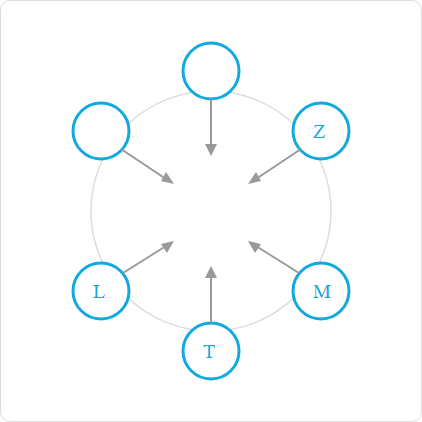
Six people L, M, N, T, U and Z are sitting around a circular table facing the center. T is an immediate neighbor of both M and L. Z sits immediately to the right of M. U is not an immediate neighbor of L. Who are the immediate neighbors of N?

  1. AOption (a)

    T and Z

  2. BOption (b)

    L and T

  3. COption (c)

    U and Z

  4. DOption (d)

    U and L

View answer & explanation

Correct answer

Answer: (d)D.

U and L

Why this answer is correct

Solution

⇒ Six people L, M, N, T, U and Z are sitting around a circular table facing the center.

⇒ Z sits immediately to the right of M.

⇒ T is an immediate neighbor of both M and L. Since Z is to the right of M, T must be to the left of M, and L is to the left of T.

⇒ U is not an immediate neighbor of L. The two remaining seats are next to L and between Z and L. Since U cannot be next to L, U must sit between Z and the unknown person. This leaves N to sit in the seat next to L.

⇒ Z sits immediately right of M.

⇒ T sits between M and L.

⇒ U sits between Z and N because it cannot sit next to L.

⇒ N sits between U and L.

Hence, the correct answer is "Option 4".

Question 16

In a certain code language, ‘LIES’ is coded as ‘6721’ and ‘SLIP’ is coded as ‘1367’. What is the code for ‘P’ in the given code language?

  1. AOption (a)

    7

  2. BOption (b)

    1

  3. COption (c)

    3

  4. DOption (d)

    6

View answer & explanation

Correct answer

Answer: (c)C.

3

Why this answer is correct

Given:

LIES is coded as '6721'

SLIP is coded as '1367'

Therefore, the code for 'P' is 3.

Hence, the correct answer is "Option 3".
Question 17

In a certain code language,

A+ B means ‘A is the husband of B’

A – B means ‘A is the mother of B’

A x B means ‘A is the sister of B’

A / B means ‘A is the brother of B’

Based on the above, how is P related to T if ‘P x Q + R – S / T’?

  1. AOption (a)

    Daughter's Son

  2. BOption (b)

    Son's daughter

  3. COption (c)

    Mother's sister

  4. DOption (d)

    Father's sister

View answer & explanation

Correct answer

Answer: (d)D.

Father's sister

Why this answer is correct

Solution

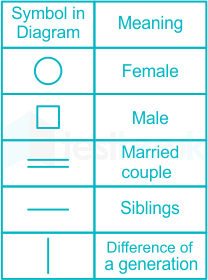
Family Chart:

Symbol Reference:

Image unavailable

Symbol+−×/
MeaningHusbandMotherSisterBrother


Given: P × Q + R − S / T: P is the sister of Q, Q is the husband of R, R is the mother of S, and S is the brother of T.

⇒ P is the sister of Q.

⇒ Q is the husband of R, so Q is the father of R’s children.

⇒ R is the mother of S and T (since S and T are siblings).

⇒ Q is the father of T.

⇒ Since P is the sister of Q, P is the sister of T’s father.

⇒ Therefore, P is related to T as father’s sister.

Hence, the correct answer is "Option 4".

Question 18

Refer to the following series and answer the question that follows (all numbers are single digit numbers only). Counting to be done from left to right only.

(Left) 8 4 7 6 1 2 7 1 5 9 9 5 6 3 1 2 1 4 5 1 5 3 5 9 8 2 6 (Right)

How many such odd numbers are there, each of which is immediately preceded by an odd number and also immediately followed by an odd number?

  1. AOption (a)

    Ten

  2. BOption (b)

    Seven

  3. COption (c)

    Eight

  4. DOption (d)

    Nine

View answer & explanation

Correct answer

Answer: (c)C.

Eight

Why this answer is correct

Given Series:

(Left) 8 4 7 6 1 2 7 1 5 9 9 5 6 3 1 2 1 4 5 1 5 3 5 9 8 2 6 (Right)

Required pattern:

Odd Number → Odd Number → Odd Number

Checking the series: (Left) 8 4 7 6 1 2 7 1 5 9 9 5 6 3 1 2 1 4 5 1 5 3 5 9 8 2 6 (Right)

7 1 5 

1 5 9 

5 9 9 

9 9 5 

5 1 5 

1 5 3 

5 3 5 

3 5 9 

Total such odd numbers = 8.

Hence, the correct answer is "Option 3".
Question 19

Refer to the following letter, symbol series and answer the question. Counting to be done from left to right only.

(Left) L M % K J = F % P R A @ S * U N D E $ ! G (Right)

How many such symbols are there, each of which is immediately preceded by a letter and also immediately followed by another letter$?

  1. AOption (a)

    Three

  2. BOption (b)

    Five

  3. COption (c)

    Two

  4. DOption (d)

    One

View answer & explanation

Correct answer

Answer: (b)B.

Five

Why this answer is correct

Given Series:

(Left) L M % K J = F % P R A @ S * U N D E $ ! G (Right)

Required pattern:

Letter → Symbol → Letter

Checking the series: (Left) L M % K J = F % P R A @ S * U N D E $ ! G (Right)

Symbols satisfying the condition:

→ % (between M and K)

→ = (between J and K)

→ % (between F and P)

→ @ (between A and S)

→ * (between S and U)

Total such symbols = 4.

Hence, the correct answer should be "Option 4".

Question 20

Refer to the following series and answer the question that follows (all numbers are single digit numbers only). Counting to be done from left to right only.

(Left) 3 2 6 7 6 1 6 2 7 9 4 1 1 6 9 4 2 5 3 4 3 9 8 3 6 3 8 (Right)

How many such even numbers are there, each of which is immediately preceded by an odd number and also immediately followed by an even number?

  1. AOption (a)

    Three

  2. BOption (b)

    Five

  3. COption (c)

    Two

  4. DOption (d)

    Four

View answer & explanation

Correct answer

Answer: (a)A.

Three

Why this answer is correct

Given Series:

(Left) 3 2 6 7 6 1 6 2 7 9 4 1 1 6 9 4 2 5 3 4 3 9 8 3 6 3 8 (Right)

Required pattern: (Left) 3 2 6 7 6 1 6 2 7 9 4 1 1 6 9 4 2 5 3 4 3 9 8 3 6 3 8 (Right)

Odd Number → Even Number → Even Number

Even numbers satisfying the condition:

→ 2 in (3 2 6)

→ 6 in (1 6 2)

→ 4 in (9 4 2)

Total such even numbers = 3.

Hence, the correct answer is "Option 1".

General intelligence and Reasoning Ability1 (20 questions)

Question 21

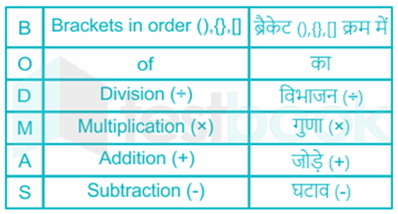
If ‘P’ stands for ‘+’, ‘Q’ stands for ‘×’, ‘R’ stands for ‘÷’, and ‘S’ stands for ‘−’, what will come in place of the question mark ‘?’ in the following equation?

18 Q 2 S 5 R 5 P 3 = ?

  1. AOption (a)

    26

  2. BOption (b)

    34

  3. COption (c)

    32

  4. DOption (d)

    38

View answer & explanation

Correct answer

Answer: (d)D.

38

Why this answer is correct

Letter Mapping:

PQRS
+×÷−


Given Expression:

18 Q 2 S 5 R 5 P 3 = ?

After substituting the signs according to the mapping table:

= 18 × 2 − 5 ÷ 5 + 3

= 18 × 2 - 1 + 3

= 36 - 1 + 3

= 39 - 1

= 38

Therefore, the value that will come in place of the question mark is 38.

Hence, the correct answer is "Option 4".

Question 22

What should come in place of ‘?’ in the given series?

58 89 120 151 182 ?

  1. AOption (a)

    213

  2. BOption (b)

    209

  3. COption (c)

    215

  4. DOption (d)

    208

View answer & explanation

Correct answer

Answer: (a)A.

213

Why this answer is correct

Logic followed here is.

Logic: The series follows an addition pattern where each subsequent number is obtained by adding a constant value of 31 to the previous term.

Therefore, the value that should come in place of '?' in the series is 213.

Hence, the corect answer is "Option 1".

Question 23

The position(s) of how many letters will remain unchanged if each letter in the word JACKPOT is arranged in the English alphabetical order?

  1. AOption (a)

    Two

  2. BOption (b)

    Three

  3. COption (c)

    None

  4. DOption (d)

    One

View answer & explanation

Correct answer

Answer: (a)A.

Two

Why this answer is correct

Given Word:

JACKPOT

Original Positions:

Position1234567
LetterJACKPOT

Arrange the letters in alphabetical order:

Position1234567
LetterACJKOPT

Comparison:

PositionOriginalNewSame?
1JANo
2ACNo
3CJNo
4KKYes
5PONo
6OPNo
7TTYes

The letters remaining unchanged are:

→ K (Position 4)

→ T (Position 7)

Therefore, 2 letters remain unchanged.

Hence, the correct answer is "Option 1 — Two".

Question 24

In the following number-pairs, the second number is obtained by applying certain mathematical operations to the first number. Which numbers should replace X and Y so that the pattern followed by the two numbers on the left side of :: is same as that on the right side of :: ? (NOTE : Operations should be performed on the whole numbers, without breaking down the numbers into its constituent digits. E.g. 13 – Operations on 13 such as adding / subtracting /multiplying etc. to 13 can be performed. Breaking down 13 into 1 and 3 and then performing mathematical operations on 1 and 3 is not allowed)

X : 160 :: 13 : Y

  1. AOption (a)

    X = 9 , Y = 260

  2. BOption (b)

    X = 8 , Y = 160

  3. COption (c)

    X = 10 , Y = 218

  4. DOption (d)

    X = 8 , Y = 260

View answer & explanation

Correct answer

Answer: (d)D.

X = 8 , Y = 260

Why this answer is correct

Logic followed here is.

Logic: First Number × 20 = Second Number.

For the right side pair (13 : Y) →

Calculation for Y = 13 × 20 = 260

Therefore, Y = 260.


For the left side pair (X : 160) →

Calculation for X = 160 ÷ 20 = 8

Therefore, X = 8.


Similarly, substituting the values:

For the first pair: 8 : 160 → 8 × 20 = 160

For the second pair: 13 : 260 → 13 × 20 = 260


Therefore, the numbers that should replace X and Y are 8 and 260 respectively.

Hence, the correct answer is "Option 4".

Question 25

What will come in the place of ‘?’ in the following equation, if ‘+’ and ‘-‘ are interchanged and ‘×’ and ‘÷’ are interchanged?

27 - 18 + 9 × 46 ÷ 46 = ?

  1. AOption (a)

    34

  2. BOption (b)

    36

  3. COption (c)

    37

  4. DOption (d)

    38

View answer & explanation

Correct answer

Answer: (b)B.

36

Why this answer is correct

Sign Interchange:

Original Sign+−times (×)div (÷)
Interchanged Sign−+÷×


Given Equation:

27 − 18 + 9 × 46 ÷ 46 = ?

After interchanging the signs, the equation becomes:

= 27 + 18 − 9 ÷ 46 × 46 

= 27 + 18 - 9 

= 45 - 9

= 36

Therefore, the value that will come in place of '?' is 36.

Hence, the correct answer is "Option 2".

Question 26

Based on the alphabetical order, three of the following four are alike in a certain way and thus form a group. Which is the one that does not belong to that group?

(Note: The odd one out is not based on the number of consonants/vowels or their position in the letter cluster)

  1. AOption (a)

    QVS

  2. BOption (b)

    JOL

  3. COption (c)

    MRP

  4. DOption (d)

    EJG

View answer & explanation

Correct answer

Answer: (c)C.

MRP

Why this answer is correct

The logic followed here is based on the alphabetical positional values of the letters. Each cluster follows a specific pattern of addition and subtraction between the positions of its letters.

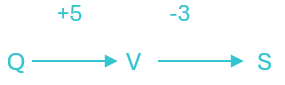
1) QVS

2) JOL

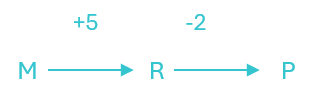
3) MRP

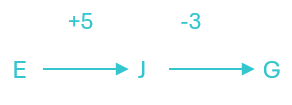
4) EJG

The observed pattern for most groups is: (Position 1 + 5) and (Position 2 − 3). However, in the case of MRP, the second difference is − 2 instead of − 3.

Therefore, MRP is the odd one out.

Hence, the correct answer is "Option 3".

Question 27

What will come in the place of the question mark (?) in the following equation, if ‘+’ and ‘–’ are interchanged and ‘×’ and ‘÷’ are interchanged?

24 × 12 – 3 ÷ 45 + 41 = ?

  1. AOption (a)

    94

  2. BOption (b)

    96

  3. COption (c)

    97

  4. DOption (d)

    98

View answer & explanation

Correct answer

Answer: (b)B.

96

Why this answer is correct

Sign Interchange Table:

×−÷+
↓↓↓↓
÷+×−

Given expression:

24 × 12 − 3 ÷ 45 + 41 = ?

After interchanging the signs as per the logic, the new expression is:

= 24 ÷ 12 + 3 × 45 − 41

= 2 + 3 × 45 - 41

= 2 + 135 - 41

= 137 - 41

= 96

Therefore, the value that will come in place of the question mark is 96.

Hence, the correct answer is "Option 2".

Question 28

If ‘+’ means ‘−’, ‘−’ means ‘×’, ‘×’ means ‘÷’, and ‘÷’ means ‘+’, then what will come in place of the question mark (?) in the following equation?

94 ÷ 11 − 15 + 208 × 8 = ?

  1. AOption (a)

    228

  2. BOption (b)

    240

  3. COption (c)

    233

  4. DOption (d)

    212

View answer & explanation

Correct answer

Answer: (c)C.

233

Why this answer is correct

Sign Conversion Table:

Original SignReplacement
+−
−×
×÷
÷+


Given Expression:

94 ÷ 11 − 15 + 208 × 8 = ?

Applying the sign replacements:

= 94 + 11 × 15 − 208 ÷ 8

= 94 + 11 × 15 - 26 

= 94 + 165 - 26

= 259 - 26

= 233

Therefore, the value that will come in place of the question mark is 233.

Hence, the correct answer is "Option 3".

Question 29

Select the set in which the numbers are related in the same way as are the numbers of the following sets.

(NOTE: Operations should be performed on the whole numbers, without breaking down the numbers into its constituent digits. E.g. 13 – Operations on 13 such as adding / subtracting /multiplying etc. to 13 can be performed. Breaking down 13 into 1 and 3 and then performing mathematical operations on 1 and 3 is not allowed.)

(34, 52, 28)

(49, 67, 43)

  1. AOption (a)

    (94, 102, 78)

  2. BOption (b)

    (85, 93, 69)

  3. COption (c)

    (51, 79, 45)

  4. DOption (d)

    (73, 91, 67)

View answer & explanation

Correct answer

Answer: (d)D.

(73, 91, 67)

Why this answer is correct

Logic followed here is.

Logic: (1st Number + 18 = 2nd Number) and (1st Number − 6 = 3rd Number).

For (34, 52, 28) →

2nd Number = 34 + 18 = 52

3rd Number = 34 − 6 = 28


For (49, 67, 43) →

2nd Number = 49 + 18 = 67

3rd Number = 49 − 6 = 43


Similarly, let's check the logic for the set (73, 91, 67):

2nd Number = 73 + 18 = 91

3rd Number = 73 − 6 = 67


Therefore, the set (73, 91, 67) follows the same logic.

Hence, the correct answer is "Option 4".

Question 30

Read the given statements and conclusions carefully. Assuming that the information given in the statements is true, even if it appears to be at variance with commonly known facts, decide which of the given conclusion(s) logically follow(s) from the statements.

Statements:

All rings are toys.

No ring is a jar.

Conclusions:

(I) Some jars are toys.

(II) All toys are jars.

  1. AOption (a)

    Neither conclusion (I) nor (II) follows.

  2. BOption (b)

    Only conclusion (II) follows.

  3. COption (c)

    Both conclusions (I) and (II) follow.

  4. DOption (d)

    Only conclusion (I) follows.

View answer & explanation

Correct answer

Answer: (a)A.

Neither conclusion (I) nor (II) follows.

Why this answer is correct

Solution

Given Statements:

All rings are toys.

No ring is a jar.

The least possible Venn diagram for the given statement is:

Conclusions:

I. Some jars are toys - Does not follow (As there is no direct relation between jars and toys, it is a possibility but not a definite conclusion.)

II. All toys are jars - Does not follow (Since all rings are toys and no ring is a jar, the portion of toys that are rings can never be jars.)

So, neither conclusion I nor II follows.

Hence, the correct answer is "Option 1".

Question 31

If 3 is subtracted from each even digit and 2 is added to each odd digit in the number 5678314, how many digits will be greater than 7 in the new number thus formed?

  1. AOption (a)

    None

  2. BOption (b)

    Three

  3. COption (c)

    Two

  4. DOption (d)

    One

View answer & explanation

Correct answer

Answer: (d)D.

One

Why this answer is correct

Given Number:

5678314

Rule:

  • Subtract 3 from each even digit.
  • Add 2 to each odd digit.

Transformation:

Original Digit5678314
New Digit7395531

New Number:

7395531

Digits greater than 7:

→ 9

Therefore, only 1 digit is greater than 7.

Hence, the correct answer is "Option 4 — One".

Question 32

SONG is related to XTSL in a certain way based on the English alphabetical order. In the same way, HAIR is related to MFNW. To which of the following is LAKE related, following the same logic?

  1. AOption (a)

    GHJM

  2. BOption (b)

    ERTY

  3. COption (c)

    YHNM

  4. DOption (d)

    QFPJ

View answer & explanation

Correct answer

Answer: (d)D.

QFPJ

Why this answer is correct

The logic followed here is:

For SONG to XTSL

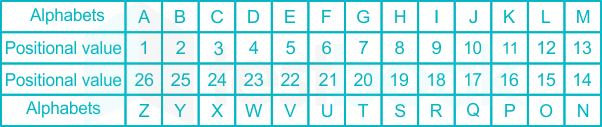
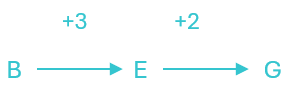
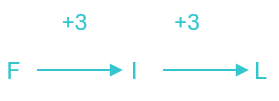
S(19)O(15)N(14)G(7)
↓ +5↓ +5↓ +5↓ +5
X(24)T(20)S(19)L(12)

For HAIR to MFNW

H(8)A(1)I(9)R(18)
↓ +5↓ +5↓ +5↓ +5
M(13)F(6)N(14)W(23)

The common pattern is a constant letter shift of +5 for each letter in the word.

For LAKE to ?

L(12)A(1)K(11)E(5)
↓ +5↓ +5↓ +5↓ +5
Q(17)F(6)P(16)J(10)

By applying the same logic, LAKE is related to QFPJ.

Hence, the correct answer is Option 4.

Question 33

Based on the alphabetical order, three of the following four are alike in a certain way and thus form a group. Which is the one that does not belong to that group?

(Note: The odd one out is not based on the number of consonants/vowels or their position in the letter-cluster.)

  1. AOption (a)

    PTX

  2. BOption (b)

    AEF

  3. COption (c)

    JNO

  4. DOption (d)

    GKL

View answer & explanation

Correct answer

Answer: (a)A.

PTX

Why this answer is correct

Option 1: PTX

Option 2: AEF


Option 3: JNO

Option 4: GKL

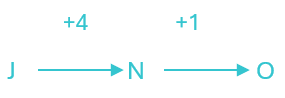
The pattern observed in AEF, JNO, and GKL is +4 and +1. However, PTX follows a different pattern of +4 and +4.

Therefore, PTX is the odd one out.

Hence, the correct answer is "Option 1".

Question 34

Based on the English alphabetical order, three of the following four letter-clusters are alike in a certain way and thus form a group. Which is the letter-cluster that DOES NOT belong to that group?

(Note: The odd man out is not based on the number of consonants/vowels or their position in the letter-cluster.)

  1. AOption (a)

    BEG

  2. BOption (b)

    ZCF

  3. COption (c)

    SVY

  4. DOption (d)

    FIL

View answer & explanation

Correct answer

Answer: (a)A.

BEG

Why this answer is correct

The logic followed here is:

Logic: The difference between the positional values of consecutive letters in each letter-cluster is 3.

  1. BEG:

2) ZCF:


3) SVY:

4) FIL:


In all letter-clusters except BEG, the difference between consecutive letters is consistently 3. In BEG, the difference between the second and third letters is 2.

Therefore, the letter-cluster that does not belong to the group is BEG.

Hence, the correct answer is "Option 1".

Question 35

What should come in place of ‘?’ in the given series?

24 31 48 55 72 ?

  1. AOption (a)

    72

  2. BOption (b)

    75

  3. COption (c)

    73

  4. DOption (d)

    79

View answer & explanation

Correct answer

Answer: (d)D.

79

Why this answer is correct

Logic followed here is:

The number series follows an alternating addition pattern where the values 7 and 17 are added sequentially to obtain the next term.

Therefore, the number that should come in place of the question mark is 79.

Hence, the correct answer is "Option 4".

Question 36

What should come in place of the ‘?’ in the given series?

11 25 47 97 191 ?

  1. AOption (a)

    309

  2. BOption (b)

    380

  3. COption (c)

    385

  4. DOption (d)

    390

View answer & explanation

Correct answer

Answer: (c)C.

385

Why this answer is correct

The logic followed here is:

Logic: Each number in the series is obtained by multiplying the previous term by 2 and then alternately adding 3 and subtracting 3.


Therefore, the number that should come in place of the question mark in the series is 385.

Hence, the coorrect answer is "Option 3".
Question 37

Select the option figure that will replace the question mark (?) in the figure given below to complete the pattern.

  1. AOption (a)

  2. BOption (b)

  3. COption (c)

  4. DOption (d)

View answer & explanation

Correct answer

Answer: (b)B.

Why this answer is correct

The logic followed here is based on mirror symmetry and pattern completion within a 4×4 grid.

The given figure is divided into four quadrants. To find the missing top-left quadrant, we must observe the symmetry with the other three parts:

Therefore, the option figure that completes this symmetrical pattern is the correct answer.

Hence, the correct image is "Option 2".

Question 38

MILE is related to LJNG in a certain way based on the English alphabetical order. In the same way, ZEST is related to YFUV. To which of the following is YARN related, following the same logic?

  1. AOption (a)

    ZCUP

  2. BOption (b)

    ZBTQ

  3. COption (c)

    XCTQ

  4. DOption (d)

    XBTP

View answer & explanation

Correct answer

Answer: (d)D.

XBTP

Why this answer is correct

The logic followed here is based on the English alphabetical order and the positional values of letters:

For MILE to LJNG

M(13)I(9)L(12)E(5)
↓ −1↓ +1↓ +2↓ +2
L(12)J(10)N(14)G(7)

For ZEST to YFUV

Z(26)E(5)S(19)T(20)
↓ −1↓ +1↓ +2↓ +2
Y(25)F(6)U(21)V(22)

The common pattern is a sequence of shifts: −1, +1, +2, +2.

Applying the same logic to YARN:

For YARN to XBTP

Y(25)A(1)R(18)N(14)
↓ −1↓ +1↓ +2↓ +2
X(24)B(2)T(20)P(16)

Thus, the word YARN is related to XBTP following the logic of −1, +1, +2, +2 shifts.

Hence, the correct answer is Option 4.

Question 39

In the following number-pairs, the second number is obtained by applying certain mathematical operations to the first number. Which numbers should replace X and Y so that the pattern followed by the two numbers on the left side of :: is same as that on the right side of :: ?

(NOTE : Operations should be performed on the whole numbers, without breaking down the numbers into its constituent digits. E.g. 13 – Operations on 13 such as adding / subtracting /multiplying etc. to 13 can be performed. Breaking down 13 into 1 and 3 and then performing mathematical operations on 1 and 3 is not allowed)

X : 215 :: 21 : Y

  1. AOption (a)

    X = 25 , Y = 189

  2. BOption (b)

    X = 15 , Y = 431

  3. COption (c)

    X = 25 , Y = 199

  4. DOption (d)

    X = 15 , Y = 451

View answer & explanation

Correct answer

Answer: (b)B.

X = 15 , Y = 431

Why this answer is correct

Logic followed here is.

Logic: (First Number)2 − 10 = Second Number

For X : 215

To find X, we calculate: X2 − 10 = 215

X2 = 215 + 10 = 225

X = √225 = 15


For 21 : Y

To find Y, we calculate: 212 − 10 = Y

Y = 441 − 10

Y = 431


Therefore, the values that replace X and Y are 15 and 431 respectively.

Hence, the correct answer is "Option 2".

Question 40

Select the option figure in which the given figure (X) is embedded as its part (rotation is NOT allowed).

  1. AOption (a)

  2. BOption (b)

  3. COption (c)

  4. DOption (d)

View answer & explanation

Correct answer

Answer: (b)B.

Why this answer is correct

To find the embedded figure, we need to carefully analyze the components of Figure (X) and search for them in the given options without any rotation.

Therefore, the given Figure (X) is embedded in Option (2).

Hence, the correct image is "Option 2".

General Awareness (20 questions)

Question 41

What is the primary focus of the Viksit Bharat–Guarantee for Rozgar and Ajeevika Mission (Gramin) Bill, 2025?

  1. AOption (a)

    Rural employment and livelihood guarantee

  2. BOption (b)

    Agricultural export

  3. COption (c)

    Urban skill development

  4. DOption (d)

    Healthcare access

View answer & explanation

Correct answer

Answer: (a)A.

Rural employment and livelihood guarantee

Why this answer is correct

The correct answer is Rural employment and livelihood guarantee.

Key Points

  • The Viksit Bharat-Guarantee for Rozgar and Ajeevika Mission (Gramin) Bill, 2025 is a legislative framework designed to institutionalize livelihood security for households in rural India.
  • The primary focus of this mission is to provide a statutory guarantee for employment, ensuring that the rural workforce has access to stable income-generating opportunities throughout the year.
  • It aligns with the overarching Viksit Bharat @2047 vision, which aims to transform India into a developed nation by the centenary of its independence through inclusive growth.
  • Unlike previous schemes, this bill emphasizes a transition from basic manual labor to skill-intensive employment and entrepreneurial ventures within the rural economy.
  • The mission targets the reduction of rural distress and forced migration by creating localized economic hubs and enhancing the purchasing power of the rural population.
  • It integrates modern technological tools and data-driven monitoring to ensure the effective delivery of employment benefits and the creation of durable community assets.

 Additional Information

  • Agricultural Export:
  • Focuses on the Ministry of Commerce and Industry initiatives to increase the global share of Indian farm produce.
  • Involves policies like the Agriculture Export Policy aimed at doubling farmers income through international trade rather than domestic wage guarantees.
  • Urban Skill Development:
  • Primarily addressed through the Deendayal Antyodaya Yojana-National Urban Livelihoods Mission (DAY-NULM).
  • Concentrates on the urban poor and providing training for city-based industrial and service sector roles.
  • Healthcare Access:
  • Governed by the National Health Mission (NHM) and schemes like Ayushman Bharat (PM-JAY).
  • Focuses on providing Universal Health Coverage and improving medical infrastructure rather than managing employment or livelihoods.

Question 42

Which of the following records did Vaibhav Sooryavanshi set during the U19 Cricket World Cup 2026 final in February 2026?

  1. AOption (a)

    Highest partnership in a U19 World Cup final

  2. BOption (b)

    Most wickets in a U19 World Cup final

  3. COption (c)

    Highest score in a U19 World Cup final

  4. DOption (d)

    Fastest fifty in a U19 World Cup final

View answer & explanation

Correct answer

Answer: (c)C.

Highest score in a U19 World Cup final

Why this answer is correct

The correct answer is Highest score in a U19 World Cup final.

Key Points

  • Vaibhav Sooryavanshi, a young left-handed batting prodigy from India, achieved the milestone of the Highest score in a U19 World Cup final during the tournament held in February 2026.
  • His record-breaking innings surpassed the previous highest individual scores in a final, which were held by Unmukt Chand (111* in 2012) and Manjot Kalra (101* in 2018).
  • The feat is significant as it was achieved at an exceptionally young age, demonstrating his ability to perform under the high-pressure environment of a global ICC tournament final.
  • This performance played a decisive role in determining the outcome of the U19 Cricket World Cup 2026, further solidifying India's dominant legacy in the history of the competition.
  • The record adds to his series of early career achievements, where he has been recognized for his technical sound batting and aggressive strike rate in the top order.

 Additional Information

  • Vaibhav Sooryavanshi:
  • Hailing from Bihar, he made headlines globally for being one of the youngest cricketers to make a First-Class debut in the Ranji Trophy at the age of 12.
  • He is known for his prolific scoring in domestic age-group cricket, which earned him a quick promotion to the India U19 squad.
  • U19 Cricket World Cup:
  • This is a biennial international tournament organized by the International Cricket Council (ICC) to showcase the best talent under the age of 19.
  • India remains the most successful nation in the history of the U19 World Cup, having won the title multiple times since their first win in 2000 under Mohammad Kaif.
  • The 2026 edition served as a crucial transition point for several players entering senior international cricket or major T20 leagues.

Question 43

Which leader gave the slogan 'Do or Die' during the Quit India Movement?

  1. AOption (a)

    Jawaharlal Nehru

  2. BOption (b)

    Lala Lajpat Rai

  3. COption (c)

    Bhagat Singh

  4. DOption (d)

    Mahatma Gandhi

View answer & explanation

Correct answer

Answer: (d)D.

Mahatma Gandhi

Why this answer is correct

The correct answer is Mahatma Gandhi.

Key Points

  • The iconic slogan 'Do or Die' (Karo ya Maro) was given by Mahatma Gandhi at the beginning of the Quit India Movement.
  • Gandhi delivered this historic speech on August 8, 1942, during the All India Congress Committee (AICC) session held at Gowalia Tank Maidan in Bombay, which is now famously known as August Kranti Maidan.
  • The slogan served as a clarion call for non-violent mass resistance, urging Indians to dedicate themselves fully to the cause of achieving Purna Swaraj (complete independence) or perish in the struggle against British Imperialism.
  • The movement was a direct response to the failure of the Cripps Mission, which had failed to offer full independence or a clear timeline for self-governance to India.
  • Gandhi specifically appealed to government servants, soldiers, and students to resign from their positions and join the movement to end British Rule immediately.

 Additional Information

  • Jawaharlal Nehru:
  • He was the first Prime Minister of independent India and is renowned for his 'Tryst with Destiny' speech.
  • He also coined the popular slogan 'Aaram Haram Hai' to encourage the youth to work tirelessly for national development.
  • Lala Lajpat Rai:
  • Known as Punjab Kesari, he was a prominent leader in the Indian National Congress and popularized the slogan 'Simon Go Back' during protests against the Simon Commission in 1928.
  • Bhagat Singh:
  • A legendary revolutionary who popularized the slogan 'Inquilab Zindabad' (Long Live the Revolution), which was originally composed by the poet Maulana Hasrat Mohani.
  • He founded the Naujawan Bharat Sabha and was a key member of the Hindustan Socialist Republican Association (HSRA).

Question 44

The inaugural Dharoi Adventure Fest, which began on 23 May 2025, was held in which of the following districts of Gujarat?

  1. AOption (a)

    Sabarkantha

  2. BOption (b)

    Banaskantha

  3. COption (c)

    Gandhinagar

  4. DOption (d)

    Mehsana

View answer & explanation

Correct answer

Answer: (d)D.

Mehsana

Why this answer is correct

The correct answer is Mehsana.

Key Points

  • The inaugural Dharoi Adventure Fest was launched on 23 May 2025 as a major initiative to transform the Dharoi Dam region into a sustainable adventure tourism hub.
  • The festival is primarily hosted in the Mehsana district of Gujarat, leveraging the scenic landscape and the vast reservoir of the Dharoi Dam.
  • Organized by Gujarat Tourism, the event aims to highlight the state's potential for high-octane adventure sports, including activities on land, in the air, and on the water.
  • The festival serves as a platform to boost the local economy and promote the North Gujarat tourism circuit, which connects various historical and religious landmarks.
  • Key highlights of the event include aero-sports like paramotoring, water-based activities such as jet skiing and speed boating, and land-based adventure trials designed to attract youth and adventure enthusiasts.

 Additional Information

  • Dharoi Dam:
  • It is a gravity dam constructed on the Sabarmati River near the village of Dharoi, providing water for irrigation and consumption to districts like Mehsana and Ahmedabad.
  • The dam's vicinity is strategically close to Vadnagar, the birthplace of the Prime Minister of India, and the famous Ambaji Temple, making it a critical node for regional tourism development.
  • Mehsana District:
  • Famous for the Modhera Sun Temple, built during the reign of Bhima I of the Chaulukya Dynasty, showcasing exquisite temple architecture.
  • It is also recognized for the Dudhsagar Dairy, a prominent cooperative under the Gujarat Cooperative Milk Marketing Federation (GCMMF).
  • Tourism Initiatives in Gujarat:
  • The state has been aggressively promoting unique festivals like the Rann Utsav in Kutch and the Statue of Unity circuit to enhance its global tourism footprint.

Question 45

The Ministry of Defence of the Government of India has declared 2025 as the ____________.

  1. AOption (a)

    Year of Reforms

  2. BOption (b)

    Year of Technology

  3. COption (c)

    Year of Strength

  4. DOption (d)

    Year of Power

View answer & explanation

Correct answer

Answer: (a)A.

Year of Reforms

Why this answer is correct

The correct answer is Year of Reforms.

Key Points

  • The Ministry of Defence (MoD) of the Government of India has officially designated the year 2025 as the Year of Reforms to streamline administrative processes and enhance operational efficiency.
  • This declaration was emphasized by Raksha Mantri Rajnath Singh during high-level review meetings and Chintan Shivirs (brainstorming sessions) aimed at transforming India’s defense ecosystem.
  • The primary objective of the Year of Reforms is to consolidate the structural changes initiated over the past few years, such as the creation of the Chief of Defence Staff (CDS) post and the Department of Military Affairs (DMA).
  • The focus remains on Aatmanirbharta (self-reliance) in defense manufacturing, ensuring that indigenization moves from the assembly phase to core technology development.
  • It aims to accelerate Theaterisation, which involves the integration of the Army, Navy, and Air Force into unified commands for better synergy during conflicts.
  • The initiative also targets the modernization of procurement procedures under the Defence Acquisition Procedure (DAP) 2020 to reduce delays and promote transparency.

 Additional Information

  • Defense Production and Exports:
  • India has set an ambitious target to achieve a turnover of Rs 1,75,000 crore in aerospace and defense goods and services by 2024-25.
  • This includes an export target of Rs 35,000 crore to friendly foreign countries, positioning India as a global defense manufacturing hub.
  • Innovation Ecosystem:
  • The iDEX (Innovations for Defence Excellence) framework plays a critical role in the Year of Reforms by engaging startups and MSMEs in solving complex military challenges.
  • Significant reforms include the corporatization of the erstwhile Ordnance Factory Board (OFB) into seven new Defence Public Sector Undertakings (DPSUs).
  • Technology Absorption:
  • While 2025 focuses on broader reforms, the Indian Army previously observed 2024 as the Year of Technology Absorption to integrate Artificial Intelligence, Drones, and Quantum Computing into its tactical operations.

Question 46

Where was the Agni-III missile test conducted in February 2026?

  1. AOption (a)

    Sriharikota

  2. BOption (b)

    Pokhran

  3. COption (c)

    Wheeler Island

  4. DOption (d)

    Chandipur

View answer & explanation

Correct answer

Answer: (d)D.

Chandipur

Why this answer is correct

The correct answer is Chandipur.

Key Points

  • The Agni-III is a surface-to-surface intermediate-range ballistic missile (IRBM) developed by the Defence Research and Development Organisation (DRDO) as part of the Integrated Guided Missile Development Programme.
  • The flight test conducted in February 2026 took place at the Integrated Test Range (ITR) situated in Chandipur, Odisha, which serves as a premier site for testing short to medium-range weaponry.
  • This successful trial was designed to verify the reliability of the missile's two-stage solid propellant engine and its high-precision guidance systems under operational conditions.
  • Chandipur is equipped with sophisticated tracking radars, telemetry stations, and electro-optical tracking systems (EOTS) to monitor the missile's entire flight path over the Bay of Bengal.
  • With a strike range of over 3,000 kilometers, the Agni-III provides India with a robust second-strike capability and strengthens its strategic deterrence posture.

 Additional Information

  • Sriharikota:
  • Located in Andhra Pradesh, this site hosts the Satish Dhawan Space Centre (SDSC), which is the primary launch hub for ISRO satellite missions such as PSLV and GSLV.
  • Pokhran:
  • A site in the Thar Desert of Rajasthan used exclusively for nuclear tests, notably Smiling Buddha in 1974 and Operation Shakti in 1998.
  • Wheeler Island:
  • Now known as Abdul Kalam Island, it is a dedicated missile testing facility off the Odisha coast, typically used for long-range intercontinental ballistic missile (ICBM) trials.

Question 47

Under the Indian Councils Act of 1892, the increase in the number of members of the Council resulted mainly in _____________.

  1. AOption (a)

    Indians were allowed to participate through nominated members.

  2. BOption (b)

    Only the officers were empowered to completely dominate the proceedings

  3. COption (c)

    Provinces were allowed to function as completely independent bodies

  4. DOption (d)

    Councils were allowed to exercise full legislative authority

View answer & explanation

Correct answer

Answer: (a)A.

Indians were allowed to participate through nominated members.

Why this answer is correct

The correct answer is Indians were allowed to participate through nominated members..

Key Points

  • The Indian Councils Act of 1892 was an important constitutional landmark that increased the size of the Legislative Councils in British India.
  • It expanded the number of additional (non-official) members in the Central Legislative Council to a minimum of 10 and a maximum of 16, compared to the previous limit of 6 to 10 under the 1861 Act.
  • The act introduced the principle of representation by allowing non-official members to be nominated based on recommendations from specific local bodies.
  • In the Central Council, nominations were made by the Governor-General on the recommendation of Provincial Legislative Councils and the Bengal Chamber of Commerce.
  • For Provincial Councils, the Governors nominated members based on recommendations from district boards, municipalities, universities, and trade associations.
  • This system provided a formal channel for Indians to enter the legislative process as nominated non-official members, marking a step toward representative government.

 Additional Information

  • Historical Context:
  • The act was primarily a response to the growing political demands of the Indian National Congress (formed in 1885), which sought greater participation of Indians in the administration.
  • Legislative Powers:
  • The act empowered members to discuss the annual financial statement (Budget), though they could not vote on it.
  • It also allowed members to address questions to the executive on matters of public interest, provided a six-day notice was given.
  • Limitations:
  • Despite the increase in members, the British government maintained a permanent official majority in the councils to ensure total control over legislation.
  • The term election was deliberately avoided in the act; the process was officially described as nomination based on recommendation.

Question 48

Which of the following unique endurance records was officially certified in November 2025 for an Indian athlete?

  1. AOption (a)

    Longest Kapalbhati breaths while jogging

  2. BOption (b)

    Most push-ups while running

  3. COption (c)

    Most burpees during marathon run

  4. DOption (d)

    Fastest sprint with pranayama

View answer & explanation

Correct answer

Answer: (a)A.

Longest Kapalbhati breaths while jogging

Why this answer is correct

The correct answer is Longest Kapalbhati breaths while jogging.

Key Points

  • In November 2025, a landmark endurance record was officially certified for an Indian athlete who successfully performed Kapalbhati breaths while maintaining a steady jogging pace.
  • The record signifies a unique fusion of Pranayama (yogic breathing) and aerobic exercise, testing the practitioner's ability to maintain rhythmic, forceful exhalations during continuous physical exertion.
  • Physiologically, this feat requires extreme diaphragmatic strength and respiratory control, as the athlete must manage carbon dioxide clearance while sustaining the heart rate typical of a jogging session.
  • This specific record was validated by international endurance bodies, highlighting the integration of traditional Indian wellness practices into mainstream global athletic standards.
  • The performance demonstrated that the athlete could sustain the Kapalbhati technique for an extended duration without compromising their gait or respiratory rhythm, a task that demands significant neuromuscular coordination.

 Additional Information

  • Kapalbhati Pranayama:
  • Commonly known as the 'Skull Shining Breath', it involves short, powerful active exhalations and passive inhalations.
  • In the context of sports science, it is studied for its ability to improve vital capacity and strengthen the abdominal muscles.
  • Endurance Synergy:
  • Combining jogging with breath-work like Pranayama is a growing trend in functional fitness, aimed at optimizing VO2 max and enhancing mental focus under physical stress.
  • Records of this nature are often monitored for rhythm consistency and distance coverage to ensure the athletic integrity of the performance.

Question 49

In the short run, the quantity of labour can be increased or decreased while other factors such as land and capital remain fixed. Therefore, labour is considered a:

  1. AOption (a)

    Natural factor

  2. BOption (b)

    Fixed factor

  3. COption (c)

    Variable factor

  4. DOption (d)

    Permanent factor

View answer & explanation

Correct answer

Answer: (c)C.

Variable factor

Why this answer is correct

The correct answer is Variable factor.

Key Points

  • In economic theory, the short run is defined as a production period during which at least one factor of production (input) remains fixed in quantity, while other factors can be altered.
  • A variable factor refers to those inputs that can be easily increased or decreased by a producer in the short run to change the level of total output.
  • Labour is categorized as a variable factor because a firm can adjust the number of workers or the hours worked (overtime) relatively quickly in response to changes in market demand.
  • The relationship between the variable input and output when other factors like capital and land are held constant is governed by the Law of Variable Proportions (also known as the Law of Diminishing Returns).
  • As more units of a variable factor (labour) are combined with fixed factors, the Marginal Product initially rises, then reaches a peak, and eventually declines.

 Additional Information

  • Fixed Factor:
  • These are inputs whose quantity cannot be changed in the short run regardless of the level of output, such as factory buildings, heavy machinery, and top-level management.
  • The costs associated with these factors are known as Total Fixed Costs (TFC), which remain constant even if output is zero.
  • Long Run Production:
  • In the long run, the distinction between fixed and variable factors disappears as all inputs become variable.
  • Firms can change their scale of production by installing new plants or acquiring more land, a concept governed by the Laws of Returns to Scale.
  • Natural Factor:
  • This typically refers to Land and all free gifts of nature used in production, which are considered primary factors but are usually fixed in the short run.

Question 50

Which city will host the 6th National Crop Nutrition Summit in 2026?

  1. AOption (a)

    Patna

  2. BOption (b)

    Pune

  3. COption (c)

    Kolkata

  4. DOption (d)

    Mumbai

View answer & explanation

Correct answer

Answer: (d)D.

Mumbai

Why this answer is correct

The correct answer is Mumbai.

Key Points

  • The 6th National Crop Nutrition Summit is a prestigious agricultural event scheduled to be hosted in Mumbai in the year 2026.
  • This summit serves as a collaborative platform for agronomists, agricultural scientists, and industry experts to strategize on improving soil fertility and crop productivity across India.
  • The choice of Mumbai as the venue highlights the city's role as a major hub for corporate agribusiness and logistics, facilitating better networking between the private sector and government bodies.
  • Discussions at the summit are expected to center around Integrated Nutrient Management (INM), which combines the use of chemical fertilizers, organic manures, and bio-fertilizers to maintain ecological balance.
  • The 2026 edition will place a significant emphasis on the digitalization of agriculture, particularly in monitoring nutrient uptake and optimizing fertilizer application rates through IoT devices and precision farming tools.

 Additional Information

  • Core Concepts in Crop Nutrition:
  • Macro-nutrients: These include Nitrogen (N), Phosphorus (P), and Potassium (K), which are required by plants in large quantities for fundamental growth processes and cellular functions.
  • Nutrient Use Efficiency (NUE): A key metric discussed in these summits, referring to the ratio between the amount of nutrient acquired by the plant and the amount of fertilizer applied to the soil.
  • Fertilizer Policy: A major focus area involving the Department of Fertilizers and the Ministry of Chemicals and Fertilizers, aimed at ensuring the availability of affordable nutrients to farmers via Direct Benefit Transfer (DBT).
  • Sustainable Soil Health: The summits align with national initiatives like the Soil Health Card Scheme, launched in February 2015, to promote scientific soil testing and prevent the over-utilization of Urea.
  • Innovative Products: The introduction of Nano-Urea and Nano-DAP is frequently showcased to reduce environmental runoff and improve the environmental footprint of Indian agriculture.

Question 51

When was the Indian National Congress (INC) founded?

  1. AOption (a)

    1919

  2. BOption (b)

    1857

  3. COption (c)

    1885

  4. DOption (d)

    1905

View answer & explanation

Correct answer

Answer: (c)C.

1885

Why this answer is correct

The correct answer is 1885.

Key Points

  • The Indian National Congress (INC) was founded in December 1885 as the first modern nationalist movement to emerge in the British Empire in Asia and Africa.
  • The first session of the INC took place from December 28 to December 31, 1885, at Gokuldas Tejpal Sanskrit College in Bombay (now Mumbai).
  • Allan Octavian Hume (A.O. Hume), a retired British officer of the Indian Civil Service, played the pivotal role of the primary organizer and founder.
  • The first president of the congress was Womesh Chandra Bonnerjee (W.C. Bonnerjee), who led an assembly of 72 delegates representing different provinces of India.
  • The initial gathering included prominent leaders such as Dadabhai Naoroji, Dinshaw Wacha, and Pherozeshah Mehta, focusing on administrative reforms and greater Indian representation in the government.

 Additional Information

  • Viceroyalty and Theories:
  • Lord Dufferin was the Viceroy of India during the formation of the INC and initially took a neutral stance toward the organization.
  • The Safety Valve Theory suggests that the British encouraged the INC to prevent a mass uprising similar to the 1857 Revolt by providing a platform for political dialogue.
  • Subsequent Key Milestones:
  • The second session in 1886 was held in Calcutta, presided over by Dadabhai Naoroji, where the membership grew to 434 delegates.
  • In 1887, Badruddin Tyabji became the first Muslim President of the INC during the Madras session.
  • The 1905 session in Benares, led by Gopal Krishna Gokhale, marked a turning point following the Partition of Bengal.

Question 52

Which of the following is a core principle for achieving sustainable infrastructure development within the Indian economy?

  1. AOption (a)

    Rapid urbanization

  2. BOption (b)

    Increasing consumerism

  3. COption (c)

    Unregulated expansion of industries

  4. DOption (d)

    Promotion of resource-efficient technology

View answer & explanation

Correct answer

Answer: (d)D.

Promotion of resource-efficient technology

Why this answer is correct

The correct answer is Promotion of resource-efficient technology.

Key Points

  • Sustainable infrastructure development refers to the design, building, and operation of structural elements in ways that do not diminish the social, economic, and ecological processes required to maintain human equity and diversity.
  • The Promotion of resource-efficient technology is a fundamental principle because it optimizes the use of raw materials, energy, and water, thereby reducing the carbon footprint of large-scale projects.
  • In the context of the Indian economy, adopting green technologies helps in achieving Nationally Determined Contributions (NDCs) under the Paris Agreement by minimizing environmental degradation.
  • Resource efficiency aligns with the Circular Economy model, where waste is minimized through recycling and reuse, ensuring that infrastructure remains viable for future generations.
  • This principle is reflected in government schemes like the National Infrastructure Pipeline (NIP) and Smart Cities Mission, which prioritize clean energy and low-carbon transport systems.

 Additional Information

  • Sustainable Development Goal 9 (SDG 9):
  • Focuses on building resilient infrastructure, promoting inclusive and sustainable industrialization, and fostering innovation.
  • Encourages the upgrading of infrastructure and retrofitting industries to make them sustainable through increased resource-use efficiency.
  • PM Gati Shakti:
  • A National Master Plan for Multi-modal connectivity that aims to provide integrated and seamless connectivity for movement of people, goods, and services, reducing logistics costs and environmental waste.
  • National Resource Efficiency Policy (2019):
  • Proposed by the Ministry of Environment, Forest and Climate Change to promote a circular economy and enhance resource productivity in India across various sectors.

Question 53

Which one of the following is an intermediate or consumer good?

  1. AOption (a)

    Car

  2. BOption (b)

    Steel sheet

  3. COption (c)

    Refrigerator

  4. DOption (d)

    Scooter

View answer & explanation

Correct answer

Answer: (b)B.

Steel sheet

Why this answer is correct

The correct answer is Steel sheet.

Key Points

  • Intermediate goods, also known as producer goods, are semi-finished products used as inputs in the production of other goods or services. They are not intended for immediate consumption by the end-user.
  • Steel sheet is categorized as an intermediate good because it serves as a primary raw material for various manufacturing industries, including automotive, construction, and appliance manufacturing.
  • In the production cycle, steel sheets undergo further processing and value addition. For instance, they are pressed or welded to form the body of a vehicle or the chassis of a machine.
  • The value of intermediate goods is already embedded in the price of the final product. Therefore, to avoid double counting during Gross Domestic Product (GDP) calculations, only the value of the final good is recorded.
  • Whether a product is an intermediate or final good depends on its end-use; if a builder buys steel for a project, it is intermediate, whereas if an individual buys a finished product for personal use, it is a consumer good.

 Additional Information

  • Final Goods (Consumer Goods): These are products purchased by consumers for personal use and do not undergo any further transformation for resale.
  • Car: A consumer durable used for personal transportation. It is a final product because it is ready for its ultimate user.
  • Refrigerator: A major appliance used for cooling and preservation; it is a final consumer good sold directly to households.
  • Scooter: A two-wheeled motor vehicle classified as a final product because it is utilized by the purchaser for travel without further industrial processing.
  • Capital Goods: Unlike intermediate goods which are used up in production, capital goods (like machinery) are used to produce other goods but remain in the production process for a long time.

Question 54

What is the banking facility that allows an account holder to withdraw more money than the available balance in their account, up to an approved limit?

  1. AOption (a)

    Credit

  2. BOption (b)

    Overdraft

  3. COption (c)

    Mortgage

  4. DOption (d)

    Advance

View answer & explanation

Correct answer

Answer: (b)B.

Overdraft

Why this answer is correct

The correct answer is Overdraft.

Key Points

  • An overdraft is a financial instrument and credit facility that allows account holders (typically current or savings) to withdraw funds even when the balance reaches zero, up to a pre-determined limit.
  • This facility is essentially a revolving credit line where the bank permits a negative balance, helping individuals and businesses manage short-term liquidity gaps.
  • Unlike a standard loan, interest is calculated on a daily basis only on the specific amount utilized and for the duration it remains unpaid, rather than the entire sanctioned limit.
  • The sanctioned limit for an overdraft is determined by the bank based on factors such as the customer's credit history, monthly income, or the value of collateral provided.
  • There are two main types: Secured Overdrafts (backed by assets like Fixed Deposits, insurance policies, or equity) and Unsecured Overdrafts (based solely on creditworthiness).
  • This banking service is highly flexible as it does not require a fixed repayment schedule or Equated Monthly Installments (EMIs); users can repay as per their cash flow.

 Additional Information

  • Credit:
  • It represents a broad contractual agreement where a borrower receives something of value now and agrees to repay the lender at a later date.
  • Common forms include trade credit, consumer credit, and bank credit, which are fundamental to modern macroeconomic functioning.
  • Mortgage:
  • A specific type of secured loan where immovable property (such as land or a building) serves as collateral.
  • Under the Transfer of Property Act, the lender holds a legal interest in the property until the principal and interest are fully repaid.
  • Advance:
  • These are credit facilities provided by banks for short-term requirements, such as Cash Credit or Bill Discounting.
  • Advances are primarily used by businesses to meet working capital needs and are generally for a duration of less than one year.

Question 55

Which Indian sportsperson was nominated for the Major Dhyan Chand Khel Ratna Award in 2025?

  1. AOption (a)

    Hardik Singh

  2. BOption (b)

    Suryakumar Yadav

  3. COption (c)

    Rishabh Pant

  4. DOption (d)

    Priyanka Ingle

View answer & explanation

Correct answer

Answer: (a)A.

Hardik Singh

Why this answer is correct

The correct answer is Hardik Singh.

Key Points

  • Hardik Singh is a premier midfielder for the Indian Men's Field Hockey team, widely recognized for his exceptional agility and playmaking skills on the international circuit.
  • He was nominated for the Major Dhyan Chand Khel Ratna Award in 2025 in recognition of his significant contributions to Indian sports, particularly his role in maintaining India's global dominance in hockey.
  • Singh was an instrumental figure in India clinching the Bronze Medal at the Paris 2024 Olympics, marking the nation's second consecutive Olympic podium finish in field hockey.
  • In 2023, he achieved the prestigious FIH Player of the Year award, becoming one of the few Indians to be recognized as the world's best player by the International Hockey Federation.
  • He has been a core part of several successful campaigns, including winning the Gold Medal at the 2022 Asian Games in Hangzhou and the 2023 Asian Champions Trophy.

 Additional Information

  • Major Dhyan Chand Khel Ratna Award:
  • This is the highest sporting honor in India, bestowed annually by the Ministry of Youth Affairs and Sports for spectacular and most outstanding performance in the field of sports over a period of four years.
  • Named after the legendary hockey icon Major Dhyan Chand, it carries a substantial cash prize of 25 lakh rupees, a medallion, and a certificate.
  • The award was previously known as the Rajiv Gandhi Khel Ratna Award before being renamed in 2021.
  • Other Notable Personalities:
  • Rishabh Pant is a prominent wicketkeeper-batsman for the Indian national cricket team, known for his explosive batting and match-winning performances in Test cricket.
  • Suryakumar Yadav is a world-renowned T20I specialist batsman, frequently ranked as the number one player in the ICC Men's T20I Batting Rankings.
  • Priyanka Ingle is a distinguished athlete representing India in Pencak Silat, a traditional Indonesian martial art that has gained significant traction in the Indian sports ecosystem.

Question 56

Which of the following financial service companies was established in 1955 that encouraged the participation of foreign capital in the country?

  1. AOption (a)

    Industrial Development Bank of India

  2. BOption (b)

    State Financial Corporation

  3. COption (c)

    Unit Trust of India

  4. DOption (d)

    Industrial Credit and Investment Corporation of India

View answer & explanation

Correct answer

Answer: (d)D.

Industrial Credit and Investment Corporation of India

Why this answer is correct

The correct answer is Industrial Credit and Investment Corporation of India.

Key Points

  • The Industrial Credit and Investment Corporation of India (ICICI) was incorporated on January 5, 1955, following a joint initiative by the Government of India, the World Bank (IBRD), and representatives of Indian industry.
  • The organization was specifically designed to encourage the participation of foreign capital and private sector equity in the Indian industrial landscape.
  • It aimed to provide medium and long-term project financing to industrial entities in the private sector, which was a critical requirement for post-independence industrial growth.
  • ICICI acted as a channel for foreign currency loans, enabling Indian businesses to import modern machinery and technical expertise from international markets.
  • The initial share capital of ICICI was contributed not only by Indian banks and insurance companies but also by foreign financial institutions from the United Kingdom and the United States.
  • The institution played a pioneering role in developing underwriting services and the merchant banking sector in India during the 1970s.

 Additional Information

  • Industrial Development Bank of India (IDBI):
  • Established in July 1964 as a wholly-owned subsidiary of the Reserve Bank of India (RBI), it was later made an autonomous corporation to act as the apex body for industrial finance.
  • State Financial Corporation (SFC):
  • Formed under the State Financial Corporations Act, 1951, these institutions operate at the state level to provide financial support to small and medium-scale enterprises (SMEs).
  • Unit Trust of India (UTI):
  • Founded in 1963 through an Act of Parliament, it was the first mutual fund entity in India, established to mobilize small household savings for investment in the capital market.

Question 57

Who among the following considered Vedas to be infallible and the foundation of all knowledge?

  1. AOption (a)

    Shiv Narain Agnihotri

  2. BOption (b)

    Dwarkanath Tagore

  3. COption (c)

    Ishwar Chandra Vidyasagar

  4. DOption (d)

    Swami Dayanand Saraswati

View answer & explanation

Correct answer

Answer: (d)D.

Swami Dayanand Saraswati

Why this answer is correct

The correct answer is Swami Dayanand Saraswati.

Key Points

  • Swami Dayanand Saraswati (1824–1883) was a profound scholar of Sanskrit and a social reformer who founded the Arya Samaj in 1875 in Bombay.
  • He propagated the slogan 'Back to the Vedas', believing that the Vedas were the infallible source of all divine knowledge and the foundation of true Aryan culture.
  • He rejected the authority of later Hindu scriptures like the Puranas, arguing that they introduced idolatry, polytheism, and superstition which were absent in the original Vedic texts.
  • In his major work, Satyarth Prakash (1875), he emphasized monotheism and strictly advocated for a life based on Vedic principles, social reform, and ethical conduct.
  • He viewed the Vedas as Apaurusheya (not of human origin), considering them to contain the seeds of all modern scientific discoveries and spiritual truths.

 Additional Information

  • Shiv Narain Agnihotri:
  • He was the founder of the Dev Samaj in 1887 at Lahore, which initially followed Brahmo ideals but later shifted toward the worship of the Guru and moral laws.
  • Dwarkanath Tagore:
  • A pioneer industrialist and one of the founders of the Brahmo Samaj alongside Raja Ram Mohan Roy, focusing on modernization and rationalism.
  • Ishwar Chandra Vidyasagar:
  • A legendary polymath and social reformer from Bengal primarily remembered for his tireless efforts toward the Hindu Widows' Remarriage Act, 1856 and women's education.

Question 58

Which composite statistic is used to rank countries by shifting the focus from purely economic growth to include dimensions like health and education?

  1. AOption (a)

    Gross Domestic Product (GDP)

  2. BOption (b)

    Human Development Index (HDI)

  3. COption (c)

    Consumer Price Index (CPI)

  4. DOption (d)

    Gini Coefficient

View answer & explanation

Correct answer

Answer: (b)B.

Human Development Index (HDI)

Why this answer is correct

The correct answer is Human Development Index (HDI).

Key Points

  • The Human Development Index (HDI) is a summary measure of average achievement in three key dimensions of human development: health, education, and standard of living.
  • It was created by Pakistani economist Mahbub ul Haq and Indian economist Amartya Sen in 1990 to provide a more holistic alternative to GDP for evaluating national progress.
  • The health dimension is assessed by Life Expectancy at Birth, which indicates the average number of years a newborn is expected to live if prevailing mortality patterns stay the same.
  • The education dimension is measured through a combination of Mean Years of Schooling for adults aged 25 and older and Expected Years of Schooling for children of school-entering age.
  • The standard of living is quantified using Gross National Income (GNI) per capita, adjusted for Purchasing Power Parity (PPP) to reflect the actual buying power of individuals in different countries.
  • The United Nations Development Programme (UNDP) publishes the Human Development Report annually, ranking countries on a scale from 0 to 1, categorized into low, medium, high, and very high human development tiers.

 Additional Information

  • Gross Domestic Product (GDP):
  • Represents the total market value of all final goods and services produced within a country in a given period.
  • It serves as the primary indicator of economic productivity but does not account for the quality of life or social inequality.
  • Consumer Price Index (CPI):
  • A statistical estimate constructed using the prices of a sample of representative items whose prices are collected periodically.
  • It is the most common tool used to measure inflation and cost-of-living adjustments in an economy.
  • Gini Coefficient:
  • A mathematical measure used to represent the income distribution of a nation’s residents.
  • It ranges from 0 (perfect equality) to 1 (perfect inequality), helping policymakers identify wealth gaps within a population.

Question 59

Which specific political movement in India marked Mahatma Gandhi’s first major public leadership role after his return from South Africa in 1915?

  1. AOption (a)

    Champaran Satyagraha

  2. BOption (b)

    Quit India Movement

  3. COption (c)

    Non-Cooperation Movement

  4. DOption (d)

    Salt Satyagraha

View answer & explanation

Correct answer

Answer: (a)A.

Champaran Satyagraha

Why this answer is correct

The correct answer is Champaran Satyagraha.

Key Points

  • The Champaran Satyagraha of 1917 was the first civil disobedience movement launched by Mahatma Gandhi in India, marking his entry into the Indian political struggle after returning from South Africa in 1915.
  • The movement was centered in the Champaran district of Bihar, where peasant farmers were being exploited by British indigo planters under the oppressive Tinkathia system.
  • Under the Tinkathia system, tenants were legally forced to plant indigo on 3/20th of their land, which led to severe economic distress when indigo prices plummeted due to German synthetic dyes.
  • Rajkumar Shukla, a local cultivator, met Gandhi at the Lucknow Session of the Indian National Congress in 1916 and persistently invited him to investigate the plight of the farmers.
  • Gandhi’s non-violent protest and refusal to leave the district despite official orders forced the British government to appoint the Champaran Agrarian Enquiry Committee, with Gandhi as a member.
  • The struggle resulted in the enactment of the Champaran Agrarian Act in 1918, which abolished the Tinkathia system and provided partial compensation to the exploited farmers.

 Additional Information

  • Quit India Movement:
  • Launched in August 1942 during World War II, this movement demanded an immediate end to British rule in India.
  • Gandhi gave the famous slogan Do or Die at the Gowalia Tank Maidan in Bombay.
  • Non-Cooperation Movement:
  • Initiated in 1920 and lasted until 1922, it was a response to the Jallianwala Bagh Massacre and the Rowlatt Act.
  • The movement was called off by Gandhi after the violent Chauri Chaura incident in February 1922.
  • Salt Satyagraha:
  • Commonly known as the Dandi March, it began on March 12, 1930, to protest the British salt tax.
  • This 24-day march from Sabarmati Ashram to the coastal village of Dandi sparked the Civil Disobedience Movement nationwide.

Question 60

Which Indian festival symbolizes the triumph of light over darkness and good over evil and is annually celebrated?

  1. AOption (a)

    Baisakhi

  2. BOption (b)

    Diwali

  3. COption (c)

    Holi

  4. DOption (d)

    Onam

View answer & explanation

Correct answer

Answer: (b)B.

Diwali

Why this answer is correct

The correct answer is Diwali.

Key Points

  • Diwali, also known as Deepavali, is one of the most significant festivals in India, celebrated to symbolize the triumph of light over darkness, good over evil, and knowledge over ignorance.
  • The festival is observed on the night of Amavasya (new moon) in the Hindu month of Kartika, which generally falls between mid-October and mid-November.
  • According to the epic Ramayana, it marks the day Lord Rama returned to Ayodhya with his wife Sita and brother Lakshmana after 14 years of exile and his victory over the demon king Ravana.
  • The citizens of Ayodhya celebrated his return by lighting rows of earthen lamps (diyas), a practice that remains the central ritual of the festival today.
  • It is a five-day celebration that includes Dhanteras, Naraka Chaturdashi, Lakshmi Pujan, Govardhan Puja, and Bhai Dooj, primarily dedicated to Goddess Lakshmi, the deity of wealth and prosperity.
  • Beyond Hinduism, Jains celebrate it to mark the Nirvana (spiritual liberation) of Lord Mahavira, and Sikhs celebrate it as Bandi Chhor Divas to commemorate the release of Guru Hargobind Ji from the Gwalior Fort.

 Additional Information

  • Baisakhi:
  • It is a major harvest festival celebrated primarily in Punjab and parts of North India.
  • It marks the Sikh New Year and commemorates the formation of the Khalsa Panth by Guru Gobind Singh in 1699.
  • Holi:
  • Commonly known as the Festival of Colors, it signifies the arrival of spring and the end of winter.
  • It celebrates the victory of the devotee Prahlada over the demoness Holika, symbolizing the triumph of devotion over ego.
  • Onam:
  • It is the state festival of Kerala and a major harvest festival for the Malayali community.
  • It honors the homecoming of the legendary King Mahabali and is famous for its Pookalam (flower patterns) and Vallam Kali (snake boat races).

General Awareness1 (20 questions)

Question 61

A person must be a High Court Judge for how many years to be eligible for appointment as a Judge of the Supreme Court?

  1. AOption (a)

    at least five

  2. BOption (b)

    at least seven

  3. COption (c)

    at least ten

  4. DOption (d)

    at least nine

View answer & explanation

Correct answer

Answer: (a)A.

at least five

Why this answer is correct

The correct answer is at least five.

Key Points

  • According to Article 124(3) of the Constitution of India, specific qualifications are mandatory for a person to be eligible for appointment as a Judge of the Supreme Court.
  • The candidate must have been a Judge of a High Court (or of two or more such Courts in succession) for a minimum duration of five years. Hence, the requirement for a High Court Judge is at least five years.
  • This provision ensures that the individual has gained significant judicial experience and expertise at the appellate level within the State Judiciary before moving to the Union Judiciary.
  • The President of India makes the appointment based on the recommendations of the Collegium system, which comprises the Chief Justice of India and the four senior-most judges of the Supreme Court.

 Additional Information

  • Alternative Qualifications:
  • Advocate: A person is also eligible if they have been an Advocate of a High Court for at least ten years.
  • Distinguished Jurist: An individual can be appointed if, in the opinion of the President, they are a distinguished jurist.
  • Tenure and Removal:
  • A Judge of the Supreme Court holds office until the age of 65 years.
  • The resignation is addressed to the President of India.
  • A judge can only be removed from office by an order of the President after an address by each House of Parliament, supported by a special majority, on the grounds of proved misbehaviour or incapacity.
  • Oath: Before entering office, the judge must subscribe to an oath or affirmation before the President or some person appointed by him.

Question 62

The Swachh Bharat Mission–Urban (SBM-U) primarily aims to strengthen which of the following aspects in urban local bodies?

  1. AOption (a)

    Scientific solid waste management systems

  2. BOption (b)

    National highway toll collection systems

  3. COption (c)

    Railway freight logistics operations

  4. DOption (d)

    Urban air quality monitoring systems

View answer & explanation

Correct answer

Answer: (a)A.

Scientific solid waste management systems

Why this answer is correct

The correct answer is Scientific solid waste management systems.

Key Points

  • The Swachh Bharat Mission-Urban (SBM-U) was launched on October 2, 2014, by the Ministry of Housing and Urban Affairs (MoHUA) with the primary goal of making urban India clean and open defecation-free (ODF).
  • A central component of the mission is the 100 percent scientific processing of municipal solid waste generated in all Urban Local Bodies (ULBs) across the country.
  • The mission emphasizes source segregation of waste into wet (organic), dry (recyclable), and domestic hazardous categories to streamline processing and reduce landfill pressure.
  • SBM-U focuses on establishing Material Recovery Facilities (MRFs), waste-to-energy plants, and composting units to transform waste into useful resources like electricity or organic manure.
  • Under SBM-U 2.0, launched in October 2021, the scope was expanded to achieve Garbage Free Cities through the remediation of legacy dumpsites and better plastic waste management.

 Additional Information

  • SBM-U 2.0 Strategy:
  • It aims for complete bioremediation of all legacy dumpsites in Indian cities, moving toward a Circular Economy.
  • The mission utilizes the Star Rating Protocol for Garbage Free Cities to evaluate and incentivize the performance of ULBs in waste management.
  • Functional Distinctions:
  • National Highway Toll Collection: This is managed by the National Highways Authority of India (NHAI) using technologies like FASTag, unrelated to urban sanitation missions.
  • Railway Freight Logistics: These operations fall under the Ministry of Railways and are aimed at improving cargo transport efficiency via Dedicated Freight Corridors.
  • Urban Air Quality: While SBM-U reduces pollution from waste burning, specific air quality monitoring is managed under the National Clean Air Programme (NCAP) and the Central Pollution Control Board (CPCB).

Question 63

Which of the following Articles of the Constitution of India provides for the establishment of the parliament of India?

  1. AOption (a)

    Article 80

  2. BOption (b)

    Article 65

  3. COption (c)

    Article 70

  4. DOption (d)

    Article 79

View answer & explanation

Correct answer

Answer: (d)D.

Article 79

Why this answer is correct

The correct answer is Article 79.

Key Points

  • Article 79 of the Constitution of India mandates the establishment and constitution of the Parliament of India.
  • According to this article, the Union Parliament is not a single body but a composite institution consisting of the President and two distinct Houses.
  • The two Houses are officially designated as the Council of States (also known as the Rajya Sabha) and the House of the People (also known as the Lok Sabha).
  • The inclusion of the President under Article 79 signifies that although the President is not a member of either House, no bill can become law without the Presidential Assent.
  • This provision establishes the Bicameral legislature system at the central level, ensuring a check and balance mechanism within the Union Government.
  • The Parliament serves as the supreme legislative body of the Republic of India, located in New Delhi.

 Additional Information

  • Article 80:
  • Focuses on the Composition of the Council of States (Rajya Sabha).
  • It stipulates a maximum strength of 250 members, where 12 members are nominated by the President for their contributions to literature, science, art, and social service.
  • Article 65:
  • Deals with the Vice-President acting as the President or discharging his functions during casual vacancies in the office.
  • This occurs in events such as death, resignation, or removal of the President.
  • Article 70:
  • Empowers the Parliament to make provisions for the discharge of the President’s functions in any contingency not specifically mentioned in the Constitution.
  • Part V:
  • All these articles are housed under Part V of the Indian Constitution, which covers The Union, spanning from Article 52 to Article 151.

Question 64

Which major Hindu religious fair held in Uttar Pradesh is internationally famous for the massive pilgrimages that take place at the Triveni Sangam (the confluence of the Ganges, Yamuna and the mythical Saraswati rivers)?

  1. AOption (a)

    Kumbh Mela

  2. BOption (b)

    Deva Mela

  3. COption (c)

    Pushkar Fair

  4. DOption (d)

    Taj Mahotsav

View answer & explanation

Correct answer

Answer: (a)A.

Kumbh Mela

Why this answer is correct

The correct answer is Kumbh Mela.

Key Points

  • The Kumbh Mela is a massive Hindu pilgrimage and the world's largest peaceful religious gathering, held in Prayagraj, Uttar Pradesh, every 12 years.
  • It takes place at the Triveni Sangam, which is the sacred confluence of three rivers: the Ganges, the Yamuna, and the mythical or invisible Saraswati.
  • The festival follows a 12-year cycle (Purna Kumbh) and a 6-year cycle (Ardh Kumbh), with the locations rotating between Haridwar, Ujjain, Nashik, and Prayagraj based on astrological alignments of Jupiter and the Sun.
  • Historically, the fair was recorded by the Chinese traveler Hiuen Tsang in the 7th century during the reign of Emperor Harshavardhana.
  • In December 2017, the UNESCO Intergovernmental Committee for the Safeguarding of the Intangible Cultural Heritage inscribed Kumbh Mela on the Representative List of the Intangible Cultural Heritage of Humanity.

 Additional Information

  • Deva Mela
  • Located in Barabanki, Uttar Pradesh, this fair is held at the shrine of the Sufi Saint Haji Waris Ali Shah.
  • It is renowned for promoting communal harmony and is celebrated during the months of October and November.
  • Pushkar Fair
  • Held in the state of Rajasthan, it is one of the world's largest camel and livestock fairs, occurring on the banks of Pushkar Lake.
  • It coincides with the religious festival of Kartik Purnima and is famous for its proximity to the rare Brahma Temple.
  • Taj Mahotsav
  • An annual 10-day cultural festival organized by Uttar Pradesh Tourism in Agra every February.
  • It showcases India's rich arts, crafts, and cuisines, drawing inspiration from the Mughal era.

Question 65

Which of the following types of information is collected through the Census of India?

  1. AOption (a)

    Only National Income level and economic growth data of youth population

  2. BOption (b)

    Only literacy level and educational attainment data for adult age group

  3. COption (c)

    Housing, demography, migration, education, economic activity

  4. DOption (d)

    Total population size of the country and exclusive employment related data

View answer & explanation

Correct answer

Answer: (c)C.

Housing, demography, migration, education, economic activity

Why this answer is correct

The correct answer is Housing, demography, migration, education, economic activity.

Key Points

  • The Census of India is a massive decennial administrative exercise conducted under the Census Act, 1948, to provide a comprehensive snapshot of the nation's socio-economic status.
  • Housing data is a primary component, where information regarding the quality of housing, household amenities, and assets like telephones or vehicles is meticulously recorded.
  • The demography section captures essential statistics including age, sex ratio, marital status, and fertility, which are critical for understanding population growth and distribution.
  • Migration statistics track the internal and external movement of people by identifying the place of birth and place of last residence, along with reasons for migration such as work or marriage.
  • Information on education and literacy is collected for every individual, categorizing the population based on their highest level of schooling or technical qualifications across all age groups.
  • The economic activity of the population is recorded by distinguishing between main workers, marginal workers, and non-workers, as well as the nature of the industry or occupation they are involved in.

 Additional Information

  • Organizational Structure: The census is conducted by the Office of the Registrar General and Census Commissioner, which operates under the jurisdiction of the Ministry of Home Affairs.
  • Historical Background:
  • The first census in India was initiated in 1872 under the governor-generalship of Lord Mayo.
  • The first synchronous census, covering the entire country simultaneously, was held in 1881 during the tenure of Lord Ripon.
  • Strategic Importance: Census data forms the bedrock for the delimitation of constituencies for the Lok Sabha and state assemblies and serves as the primary data source for the Finance Commission to determine horizontal tax devolution to states.

Question 66

Which of the following minerals must be included in the daily diet to prevent problems with the thyroid gland?

  1. AOption (a)

    Magnesium

  2. BOption (b)

    Calcium

  3. COption (c)

    Iron

  4. DOption (d)

    Iodine

View answer & explanation

Correct answer

Answer: (d)D.

Iodine

Why this answer is correct

The correct answer is Iodine.

Key Points

  • Iodine is an essential trace mineral required by the Thyroid Gland to synthesize hormones, specifically Thyroxine (T4) and Triiodothyronine (T3).
  • These hormones are critical for regulating the body's Metabolism, energy expenditure, and the growth and development of the Central Nervous System.
  • When dietary intake of iodine is insufficient, the thyroid gland cannot produce enough hormones, causing the Pituitary Gland to release higher levels of Thyroid-Stimulating Hormone (TSH).
  • This chronic overstimulation results in the abnormal enlargement of the gland, a condition known as Goitre.
  • Iodine Deficiency is one of the most common causes of preventable Intellectual Disability and brain damage worldwide, particularly during fetal development and early childhood.

 Additional Information

  • Dietary Sources: Primary sources include Iodized Salt, Seafood (such as fish, shrimp, and seaweed), and Dairy Products.
  • Magnesium:
  • Acts as a cofactor in over 300 biochemical reactions, including Protein Synthesis, Muscle Function, and maintaining a steady Heart Rhythm.
  • Calcium:
  • Vital for the structural integrity of Bones and Teeth; it also plays a key role in Cell Signaling and Blood Clotting processes.
  • Iron:
  • A fundamental component of Hemoglobin, the protein in Red Blood Cells responsible for carrying oxygen from the lungs to the tissues.

Question 67

Which of the following writs in India is issued to produce a person illegally detained in person before the court?

  1. AOption (a)

    inducement

  2. BOption (b)

    warrant inquiry

  3. COption (c)

    mandamus

  4. DOption (d)

    habeas corpus

View answer & explanation

Correct answer

Answer: (d)D.

habeas corpus

Why this answer is correct

The correct answer is habeas corpus.

Key Points

  • The writ of Habeas Corpus is a Latin term that literally means 'to have the body of'. It serves as a bulwark of individual liberty against arbitrary detention.
  • It is an order issued by a court to a person who has detained another person, directing them to produce the body of the latter before the court to examine the legality of the detention.
  • If the court finds that the detention is illegal, unauthorized, or lacks jurisdiction, it exercises its power to set the detained person free immediately.
  • In the Indian context, the Supreme Court has the authority to issue this writ under Article 32 for the enforcement of fundamental rights, while the High Courts possess similar powers under Article 226.
  • This writ is unique because it can be filed not only by the aggrieved person but also by any interested person or relative on their behalf, ensuring protection against unlawful custody by both the state and private entities.

 Additional Information

  • Apart from Habeas Corpus, the Constitution of India provides for other prerogative writs to safeguard the Rule of Law:
  • Mandamus: Translating to 'we command', it is issued to a public official or a public body to perform a mandatory statutory duty that they have failed or refused to perform.
  • Quo Warranto: Meaning 'by what authority', it is used to prevent the illegal usurpation of a public office by an individual, asking them to prove the legality of their claim to that office.
  • Prohibition: Issued by a higher court to a lower court or quasi-judicial body to prevent them from exceeding their legal jurisdiction or acting against the principles of natural justice.
  • Certiorari: Meaning 'to be certified', it is issued by a higher court to quash or annul an order already passed by a lower court or tribunal due to an error of law or lack of jurisdiction.

Question 68

Which of the following temples is considered a classic example of Nagara style architecture?

  1. AOption (a)

    Kandariya Mahadev Temple, Khajuraho

  2. BOption (b)

    Meenakshi Temple, Madurai

  3. COption (c)

    Brihadeeswara Temple, Thanjavur

  4. DOption (d)

    Chennakeshava Temple, Belur

View answer & explanation

Correct answer

Answer: (a)A.

Kandariya Mahadev Temple, Khajuraho

Why this answer is correct

The correct answer is Kandariya Mahadev Temple, Khajuraho.

Key Points

  • The Nagara style of architecture is the indigenous style of North India, characterized by the absence of elaborate boundary walls and the presence of a curvilinear tower known as the Shikhara.
  • The Kandariya Mahadev Temple, built by the Chandela dynasty between 1025 and 1050 AD, is considered the zenith of the Khajuraho school of Nagara architecture.
  • The temple is renowned for its Panchayatana plan, where the main shrine is surrounded by four smaller subsidiary shrines, and its exterior is decorated with over 800 intricate sculptures.
  • The Shikhara of this temple consists of several miniature towers called Urushringas, which rise progressively to create a silhouette resembling the peaks of the Himalayas.
  • Unlike South Indian temples, the Nagara style typically places the deity on a raised platform called Jagati.

 Additional Information

  • Meenakshi Temple, Madurai:
  • Represents the Dravida style, specifically the Nayaka phase.
  • Famous for its massive Gopurams (gateways) and the Hall of a Thousand Pillars.
  • Brihadeeswara Temple, Thanjavur:
  • A masterpiece of Chola architecture and a classic Dravida style structure.
  • Features a massive Vimana (pyramidal tower) and was built by Rajaraja Chola I around 1010 AD.
  • Chennakeshava Temple, Belur:
  • An example of the Vesara style (or Hoysala style), which blends Nagara and Dravida elements.
  • Known for its stellate (star-shaped) ground plan and extremely detailed soapstone carvings.

Question 69

Which of the following biomolecules primarily stores genetic information in living organisms?

  1. AOption (a)

    Enzymes

  2. BOption (b)

    Lipid

  3. COption (c)

    Protein

  4. DOption (d)

    DNA

View answer & explanation

Correct answer

Answer: (d)D.

DNA

Why this answer is correct

The correct answer is DNA.

Key Points

  • DNA, or Deoxyribonucleic acid, is the hereditary material found in the nucleus of almost all living organisms, carrying the blueprint for development and functioning.
  • The molecule is structured as a double helix, consisting of two strands of polynucleotides held together by hydrogen bonds between complementary nitrogenous bases.
  • Information is stored as a code made up of four chemical bases: Adenine (A), Guanine (G), Cytosine (C), and Thymine (T).
  • Each nucleotide unit within the DNA strand is composed of a deoxyribose sugar, a phosphate group, and one of the four nitrogenous bases.
  • The specific sequence of these bases determines the genetic instructions necessary for the synthesis of proteins and RNA molecules, facilitating the transmission of traits from parents to offspring.

 Additional Information

  • Proteins:
  • Complex molecules made of amino acids that perform a wide range of functions, including structural support (keratin), transport (hemoglobin), and defense (antibodies).
  • Enzymes:
  • Mostly proteinaceous in nature, they act as biological catalysts to speed up chemical reactions by lowering the activation energy required.
  • Lipids:
  • A diverse group of hydrophobic organic compounds like fats, oils, and steroids used for long-term energy storage and the formation of cell membranes (phospholipids).

Question 70

According to the Energy Statistics India 2025 report, which state possessed the largest lignite reserves in India as of April 2024?

  1. AOption (a)

    Rajasthan

  2. BOption (b)

    Gujarat

  3. COption (c)

    Telangana

  4. DOption (d)

    Tamil Nadu

View answer & explanation

Correct answer

Answer: (d)D.

Tamil Nadu

Why this answer is correct

The correct answer is Tamil Nadu.

Key Points

  • As per the Energy Statistics India 2025 report released by the Ministry of Statistics and Programme Implementation (MoSPI), Tamil Nadu possesses the highest lignite reserves in India as of 1st April 2024.
  • The state accounts for an overwhelming share of approximately 79.14% of the total lignite resources in the country, amounting to nearly 37.03 billion tonnes out of the national total of 46.74 billion tonnes.
  • The most significant deposits in Tamil Nadu are located in the Neyveli region of the Cuddalore district, which is primarily exploited by NLC India Limited for thermal power generation.
  • The Energy Statistics India report is a critical document that tracks the availability, production, and inventory of energy resources, categorizing lignite as a vital component of India's fossil fuel basket.

 Additional Information

  • Rajasthan:
  • Holds the second-largest lignite reserves in India, with major fields situated in Barmer, Bikaner, and Nagaur districts.
  • Key mining sites include Kapurdi, Jalipa, and Palana.
  • Gujarat:
  • Ranks third in lignite deposits, with significant occurrences in the Kutch, Surat, and Bharuch regions managed by the Gujarat Mineral Development Corporation (GMDC).
  • Lignite Characteristics:
  • Commonly known as brown coal, it is a low-grade coal with high moisture content and lower carbon content compared to bituminous coal.
  • It is predominantly utilized in specialized power plants located near the mines due to its low calorific value and transport costs.

Question 71

Which of the following pairs is correctly matched regarding human digestive enzymes and their substrates?

  1. AOption (a)

    Lipase – Protein

  2. BOption (b)

    Amylase – Starch

  3. COption (c)

    Maltase – Amino acids

  4. DOption (d)

    Pepsin – Fats

View answer & explanation

Correct answer

Answer: (b)B.

Amylase – Starch

Why this answer is correct

The correct answer is Amylase - Starch.

Key Points

  • Amylase is a vital digestive enzyme responsible for the chemical breakdown of complex carbohydrates (polysaccharides) into simpler sugars.
  • The substrate for amylase is starch, which it hydrolyzes by breaking the α-1,4-glycosidic bonds to produce maltose, maltotriose, and α-limit dextrins.
  • In the human body, Salivary Amylase (also called ptyalin) initiates digestion in the mouth, while Pancreatic Amylase continues the process within the small intestine.
  • Efficient starch digestion occurs at an optimal pH range of 6.7 to 7.0, facilitating the eventual absorption of glucose in the jejunum.

 Additional Information

  • Lipase
  • This enzyme is a lipolytic agent produced by the pancreas and gastric glands to digest lipids (fats).
  • It breaks down triglycerides into fatty acids and glycerol, rather than acting on proteins.
  • Pepsin
  • Secreted by the chief cells of the gastric mucosa as pepsinogen, it is the primary proteolytic enzyme of the stomach.
  • Its substrate is proteins, which it converts into smaller peptides (proteoses and peptones) in a highly acidic pH environment.
  • Maltase
  • Produced in the small intestine (succus entericus), its specific substrate is maltose.
  • It cleaves the disaccharide maltose into two molecules of glucose; it is not involved in the digestion of amino acids.

Question 72

The digital repository for Indian languages, managed by the Central Institute of Indian Languages (CIIL) and designed to aggregate dictionaries, primers, storybooks, and multimedia resources for Scheduled and tribal languages to support language model training and translation systems, is known by which name?

  1. AOption (a)

    Bhashini

  2. BOption (b)

    Anuvadini

  3. COption (c)

    Adi-Vaani

  4. DOption (d)

    Sanchika

View answer & explanation

Correct answer

Answer: (d)D.

Sanchika

Why this answer is correct

The correct answer is Sanchika.

Key Points

  • Sanchika is an advanced digital repository developed and maintained by the Central Institute of Indian Languages (CIIL), situated in Mysuru.
  • The platform functions as a comprehensive archive for Indian languages, specifically targeting the aggregation of dictionaries, primers, literary works, and multimedia content for both Scheduled and tribal languages.
  • The primary goal of Sanchika is to provide a structured linguistic database that serves as a foundation for training Artificial Intelligence (AI) models and Large Language Models (LLMs).
  • By digitizing endangered and minority languages, the repository aids in the development of Machine Translation (MT) systems and Natural Language Processing (NLP) tools, ensuring these languages are not left behind in the digital era.
  • It supports the broader vision of the National Language Translation Mission by creating high-quality datasets that facilitate cross-lingual communication and digital inclusion for native speakers of various Indian dialects.

 Additional Information

  • Bhashini:
  • This is the National Language Translation Mission (NLTM), an AI-led platform aimed at breaking language barriers by providing real-time translation services in Indian languages.
  • It features the Bhasha Daan initiative, which encourages citizens to contribute data to improve AI accuracy for local dialects.
  • Anuvadini:
  • Developed by AICTE, this is an AI-based translation tool designed to facilitate multilingual education by translating technical textbooks and materials into Indian regional languages.
  • It focuses on voice-to-voice and text-to-text translation to align with the National Education Policy (NEP) 2020 goals.
  • Central Institute of Indian Languages (CIIL):
  • Founded on July 17, 1969, it is a premier research institute under the Ministry of Education located in Mysuru, Karnataka.
  • It is responsible for the promotion, protection, and development of all Indian languages, including the implementation of the Classical Languages scheme.

Question 73

How many Fundamental Duties are there in the Constitution of India?

  1. AOption (a)

    Eight

  2. BOption (b)

    Ten

  3. COption (c)

    Eleven

  4. DOption (d)

    Fifteen

View answer & explanation

Correct answer

Answer: (c)C.

Eleven

Why this answer is correct

The correct answer is Eleven.

Key Points

  • The Fundamental Duties are incorporated in Part IV-A of the Indian Constitution under Article 51A.
  • These duties were not part of the original Constitution but were added by the 42nd Constitutional Amendment Act, 1976, following the recommendations of the Swaran Singh Committee.
  • Initially, the committee suggested eight duties, but the government included ten Fundamental Duties in 1976.
  • The 11th Fundamental Duty was added to the list through the 86th Constitutional Amendment Act, 2002.
  • This latest duty mandates that every parent or guardian must provide opportunities for education to their child or ward between the ages of 6 and 14 years.
  • Consequently, the total number of Fundamental Duties currently recognized in the Indian Constitution is eleven.

 Additional Information

  • Source and Nature:
  • The concept of Fundamental Duties was borrowed from the Constitution of the erstwhile USSR (Union of Soviet Socialist Republics).
  • These duties are non-justiciable in nature, meaning they cannot be enforced directly by the courts through writs, though they are taken into account while interpreting statutes.
  • Key Objectives:
  • They serve as a constant reminder to citizens that while they enjoy Fundamental Rights, they also owe certain social and civic obligations to the country.
  • Examples include respecting the National Flag and National Anthem, protecting the sovereignty, unity, and integrity of India, and safeguarding public property.
  • Verma Committee (1999):
  • This committee identified the existence of legal provisions for the implementation of some of the Fundamental Duties, such as the Prevention of Insults to National Honour Act (1971).

Question 74

With reference to the physiography of India, the western coastal plains lie between which of the following?

  1. AOption (a)

    Peninsular plateau and Bay of Bengal

  2. BOption (b)

    Malabar coast and Konkan

  3. COption (c)

    Eastern coast and Western Ghats

  4. DOption (d)

    Western Ghats and Arabian Sea

View answer & explanation

Correct answer

Answer: (d)D.

Western Ghats and Arabian Sea

Why this answer is correct

The correct answer is Western Ghats and Arabian Sea.

Key Points

  • The Western Coastal Plains of India constitute a narrow strip of land sandwiched between the Western Ghats (Sahyadri mountains) to the east and the Arabian Sea to the west.
  • This physiographic unit extends approximately 1,500 kilometers from the Rann of Kachchh in Gujarat in the north to Kanniyakumari in Tamil Nadu at the southern tip of the Indian peninsula.
  • Geomorphologically, the western coast is classified as a submerged coastal plain, which is narrower than the eastern coast, with an average width ranging from 50 to 100 kilometers.
  • Due to its submerged nature, it provides ideal conditions for natural harbors and ports, including Kandla, Mumbai, JNPT, Marmagao, New Mangalore, and Kochi.
  • The region receives significant rainfall during the Southwest Monsoon season as the moisture-laden winds are obstructed by the high altitude of the Western Ghats.

 Additional Information

  • Regional Divisions of Western Coastal Plains:
  • Konkan Coast: The northern portion extending from Daman to Goa, covering the coastlines of Maharashtra and Goa.
  • Kannada Coast: The central stretch primarily located in Karnataka, situated between the Konkan and Malabar segments.
  • Malabar Coast: The southern stretch located in Kerala, famous for its Kayals (backwaters) and lagoons like Vembanad Lake.
  • Eastern Coastal Plains:
  • Located between the Eastern Ghats and the Bay of Bengal.
  • Unlike the western coast, these are emergent coastal plains and are much broader due to the large deltas formed by the Mahanadi, Godavari, Krishna, and Kaveri rivers.
  • Western Ghats:
  • A continuous mountain range that forms the western edge of the Deccan Plateau and is recognized as a UNESCO World Heritage Site for its high biodiversity.

Question 75

Which of the following is responsible for transporting the food (sugars) produced during photosynthesis in the leaves to other parts of the plant?

  1. AOption (a)

    Cambium

  2. BOption (b)

    Phloem

  3. COption (c)

    Xylem

  4. DOption (d)

    Cortex

View answer & explanation

Correct answer

Answer: (b)B.

Phloem

Why this answer is correct

The correct answer is Phloem.

Key Points

  • Phloem is a specialized vascular tissue in plants responsible for the translocation of organic nutrients, primarily sucrose, produced during photosynthesis.
  • The movement within the phloem is bidirectional, meaning it transports food from the leaves (the source) to growing regions and storage organs like roots, tubers, and fruits (the sinks).
  • This tissue is composed of four distinct types of cells: sieve tube elements, companion cells, phloem parenchyma, and phloem fibers.
  • Sieve tube elements are long, tube-like structures that lack a nucleus at maturity to facilitate the efficient flow of sap, while companion cells regulate the metabolic activities of these sieve tubes.
  • Unlike the transport of water, which is a passive process, the loading of sugars into the phloem requires adenosine triphosphate (ATP), making it an active transport mechanism.

 Additional Information

  • Xylem:
  • Primarily functions in the upward conduction of water and dissolved minerals from the roots to the aerial parts of the plant.
  • It consists of tracheids, vessels, xylem fibers, and xylem parenchyma, providing significant mechanical strength to the plant body.
  • Cambium:
  • A layer of meristematic tissue found between the xylem and phloem in dicotyledonous plants.
  • It is responsible for secondary growth, which increases the diameter or girth of the stems and roots by producing secondary xylem and phloem.
  • Cortex:
  • The region of primary ground tissue located between the epidermis and the vascular cylinder (stele).
  • It is largely composed of parenchyma cells and serves functions such as food storage and providing support to the plant.

Question 76

Which festival in Tripura involves worship of fourteen tribal deities and includes rituals of purification, animal sacrifice, and community participation?

  1. AOption (a)

    Kharchi Puja

  2. BOption (b)

    Ker Puja

  3. COption (c)

    Tirthamukh Mela

  4. DOption (d)

    Bisu/Biju Festival

View answer & explanation

Correct answer

Answer: (a)A.

Kharchi Puja

Why this answer is correct

The correct answer is Kharchi Puja.

Key Points

  • Kharchi Puja is a major festival celebrated in the northeastern state of Tripura, historically associated with the Manikya Dynasty of the Tripuri kings.
  • The festival centers around the worship of the Chaturdasha Devata, which represents the fourteen tribal deities comprising gods like Hara, Uma, Hari, Ma, Bani, and others.
  • It is observed during the month of Ashadha (July) at the Fourteen Gods Temple in Old Agartala (Puran Agartala), starting on the eighth day of the bright lunar fortnight.
  • The term 'Kharchi' is derived from the Kokborok words 'Khya' (Earth) and 'Archi' (Worship), signifying the cleansing of Mother Earth following her menstrual period (associated with the Ambubachi period).
  • A central ritual involves the Chantai (head priest) carrying the deities to the Haora River for a ceremonial bath, which serves as a symbolic purification of the gods.
  • The celebration is characterized by animal sacrifices, specifically goats and pigeons, performed to appease the deities and ensure the spiritual well-being of the Tripuri people.

 Additional Information

  • Ker Puja:
  • Occurs two weeks after Kharchi Puja and focuses on the protection of the state through the deity Ker.
  • It involves the strict demarcation of an area where movement and noise are prohibited for several hours to ward off calamities and evil spirits.
  • Tirthamukh Mela:
  • Organized during Poush Sankranti (January) at the source of the Gomati River.
  • It is a holy gathering where devotees take a dip in the water to earn religious merit and pay homage to their ancestors.
  • Bisu or Biju Festival:
  • This is the New Year festival of the Chakma community in Tripura, celebrated for three days with flowers and traditional rituals.
  • It marks the transition from the old year to the new, emphasizing nature worship and social harmony.

Question 77

While allocating portfolios (departments) among Union Ministers, the President of India acts according to whose advice?

  1. AOption (a)

    Speaker of the Lok Sabha

  2. BOption (b)

    Prime Minister of India

  3. COption (c)

    Chief Justice of India

  4. DOption (d)

    Vice President of India

View answer & explanation

Correct answer

Answer: (b)B.

Prime Minister of India

Why this answer is correct

The correct answer is Prime Minister of India.

Key Points

  • According to Article 75 of the Constitution of India, the Prime Minister is appointed by the President, and other Ministers are appointed by the President on the advice of the Prime Minister.
  • The allocation of portfolios (various departments and ministries) among the members of the Council of Ministers is the exclusive prerogative of the Prime Minister.
  • The Government of India (Allocation of Business) Rules, 1961, framed under Article 77(3), establish that the President shall, on the advice of the Prime Minister, allocate business among the Ministers by assigning them to a Department or Ministry.
  • The Prime Minister has the power to reshuffle the cabinet and can ask a minister to resign or advise the President to dismiss them in case of a difference of opinion.
  • The President is the nominal executive (de jure head), while the Prime Minister is the real executive (de facto head) of the Union Government.

 Additional Information

  • Article 74:
  • Provides for a Council of Ministers with the Prime Minister at the head to aid and advise the President, who shall act in accordance with such advice.
  • Speaker of the Lok Sabha:
  • The Presiding Officer of the House of the People. Their primary role is to maintain order and conduct business within the Lok Sabha, and they do not influence executive portfolio allocations.
  • Chief Justice of India (CJI):
  • The highest-ranking officer of the Indian Judiciary. The CJI administers the oath of office to the President but has no role in the political administration of the Union Cabinet.
  • Vice President of India:
  • Acts as the ex-officio Chairman of the Rajya Sabha. While they are second in the warrant of precedence, they do not advise the President on the formation or distribution of government portfolios.

Question 78

Which among the following minerals is necessary for the proper functioning of the thyroid gland in humans?

  1. AOption (a)

    Calcium

  2. BOption (b)

    Potassium

  3. COption (c)

    Iron

  4. DOption (d)

    Iodine

View answer & explanation

Correct answer

Answer: (d)D.

Iodine

Why this answer is correct

The correct answer is Iodine.

Key Points

  • Iodine is an essential trace element required for the synthesis of Thyroid Hormones, specifically Thyroxine (T4) and Triiodothyronine (T3).
  • The Thyroid Gland, located in the base of the neck, captures circulating iodide from the blood and incorporates it into the protein Thyroglobulin to produce these hormones.
  • These hormones are critical for regulating the Basal Metabolic Rate (BMR), controlling energy metabolism, and ensuring the proper development of the Central Nervous System (CNS).
  • A chronic deficiency of iodine leads to Hypothyroidism, which often manifests as Goitre, a visible enlargement of the thyroid gland as it attempts to compensate for low hormone production.
  • Severe iodine deficiency during pregnancy can lead to Cretinism in infants, a condition characterized by permanent mental disability and stunted physical growth.
  • The primary dietary source for preventing deficiency is Iodized Salt, alongside seafood, dairy, and eggs.

 Additional Information

  • Calcium:
  • It is the most abundant mineral in the body, primarily stored in the skeletal system.
  • Essential for muscle contraction, nerve transmission, and as a cofactor in the blood coagulation (clotting) process.
  • Iron:
  • A central component of Hemoglobin in red blood cells and Myoglobin in muscle cells.
  • Necessary for oxygen transport; deficiency leads to Iron Deficiency Anemia, causing fatigue and impaired immunity.
  • Potassium:
  • A major intracellular electrolyte responsible for maintaining osmotic pressure and acid-base balance.
  • Crucial for maintaining the electrical activity of the heart and facilitating smooth nerve impulse conduction.

Question 79

Which state is mainly covered by the Eastern Ghats?

  1. AOption (a)

    Andhra Pradesh

  2. BOption (b)

    Assam

  3. COption (c)

    Punjab

  4. DOption (d)

    Gujarat

View answer & explanation

Correct answer

Answer: (a)A.

Andhra Pradesh

Why this answer is correct

The correct answer is Andhra Pradesh.

Key Points

  • The Eastern Ghats are a discontinuous and eroded mountain range that runs parallel to the Bay of Bengal along the eastern coast of the Indian Peninsula.
  • The range spans across several states, including Odisha, Andhra Pradesh, Telangana, Karnataka, and Tamil Nadu, with Andhra Pradesh holding a major geographical share.
  • In Andhra Pradesh, the Eastern Ghats are characterized by distinct hill ranges such as the Nallamala Hills, Palakonda Hills, Velikonda Hills, and the Seshachalam Hills.
  • The highest peak of the Eastern Ghats, Jindhagada Peak (height of 1,690 meters), is located in the Araku Valley of Andhra Pradesh.
  • Geologically, the Eastern Ghats are older than the Western Ghats and are composed of metamorphic rocks like Khondalites and Charnockites, dating back to the Precambrian era.
  • Unlike the continuous Western Ghats, this range is heavily dissected by major eastward-flowing rivers such as the Godavari, Krishna, Mahanadi, and Kaveri.

 Additional Information

  • Assam
  • Situated in Northeastern India, this state is primarily defined by the Brahmaputra and Barak river valleys.
  • It is bordered by the Himalayas in the north and contains the Karbi Anglong and North Cachar hills, which are not part of the Eastern Ghats.
  • Punjab
  • A state in Northwest India, it is part of the great Indo-Gangetic Plain.
  • Its geography is dominated by fertile alluvial soil and the five rivers of the Indus system, with no connection to the Eastern Ghats.
  • Gujarat
  • Located on the Western coast of India, it features the Aravalli, Vindhya, and Satpura ranges.
  • It also marks the northern origin point of the Western Ghats (Sahyadri) near the Tapi River valley.

Question 80

Which award is given by Sahitya Akademi to honour the contribution to unrecognised and tribal languages of India?

  1. AOption (a)

    Jnanpith Award

  2. BOption (b)

    Indian Literary Awards

  3. COption (c)

    Language respect

  4. DOption (d)

    Art Honors

View answer & explanation

Correct answer

Answer: (c)C.

Language respect

Why this answer is correct

The correct answer is Language respect.

Key Points

  • The Sahitya Akademi instituted the Bhasha Samman (often referred to as Language respect) in 1996 to recognize and honor writers, scholars, editors, and translators who have made significant contributions to the enrichment of unrecognized languages and tribal dialects.
  • This award is specifically designed for languages that are not among the 24 languages officially recognized by the Akademi (which include the 22 languages of the 8th Schedule plus English and Rajasthani).
  • It also recognizes outstanding contributions to Classical and Medieval literature, ensuring that scholars working on ancient texts receive national acknowledgment.
  • The honor includes a copper plaque, a citation, and a cash prize of 1,00,000 INR, which was increased from the initial amount of 25,000 INR to maintain its prestige.
  • By promoting tribal and oral traditions, the Akademi aims to preserve the linguistic diversity of India and encourage literature in marginalized tongues like Tulu, Pahari, Ladakhi, and Santhali (prior to its inclusion in the official schedule).

 Additional Information

  • Jnanpith Award:
  • It is the highest literary award in India, established in 1961 by the Bharatiya Jnanpith organization.
  • The award is presented to Indian authors for their outstanding contribution towards literature in any of the 22 Scheduled languages or English.
  • The first recipient was G. Sankara Kurup in 1965 for his work in Malayalam.
  • Sahitya Akademi Award:
  • Founded on March 12, 1954, the Sahitya Akademi functions as an autonomous body under the Ministry of Culture.
  • It annually confers awards on writers of the most outstanding books of literary merit published in any of the 24 major Indian languages it recognizes.
  • The Sahitya Akademi Library is one of the largest multi-lingual libraries in India, housing a vast collection of regional literature and research materials.

Arithmetical and Numerical Ability (20 questions)

Question 81

A company manufactures products of average and high quality. The line graph below shows the production of both qualities during the first five months of a financial year. Study the line graph and answer the question that follows.

In which month (April to August) was the company’s total production the highest?

  1. AOption (a)

    Jun

  2. BOption (b)

    Jul

  3. COption (c)

    May

  4. DOption (d)

    Aug

View answer & explanation

Correct answer

Answer: (c)C.

May

Why this answer is correct

Given:

Month Average Quality Units High Quality Units

April 320 130

May 380 200

June 200 300

July 410 50

August 250 300

Formula Used: Total Production = Production of Average Quality + Production of High Quality

Calculation: According to the data extracted from the line graph, ⇒ Total production in April = 320 + 130 = 450 units ⇒ Total production in May = 380 + 200 = 580 units ⇒ Total production in June = 200 + 300 = 500 units ⇒ Total production in July = 410 + 50 = 460 units ⇒ Total production in August = 250 + 300 = 550 units Comparing the calculated totals for each month: ⇒ 580 (May) > 550 (August) > 500 (June) > 460 (July) > 450 (April) ∴ The company’s total production was the highest in the month of May.

∴ The correct answer is May.

Question 82

Simplify: 2638−1338+1223−262\sqrt{2638 - \sqrt{1338 + \sqrt{1223 - 262}}}

  1. AOption (a)

    52

  2. BOption (b)

    49

  3. COption (c)

    51

  4. DOption (d)

    53

View answer & explanation

Correct answer

Answer: (c)C.

51

Why this answer is correct

Shortcut Trick

Solve the expression from the innermost radical moving outwards.

√(1223 − 262) = √961 = 31 (since 302 = 900 and 312 = 961).

√(1338 + 31) = √1369 = 37 (since 352 = 1225 and 372 = 1369).

√(2638 − 37) = √2601 = 51 (since 502 = 2500 and 512 = 2601).

∴ The correct answer is 51.

Alternate Method

Given Expression: √(2638 − √(1338 + √(1223 − 262)))

Step-by-step calculation:

⇒ First, calculate the innermost subtraction: 1223 − 262 = 961

⇒ Replace the value: √(2638 − √(1338 + √961))

⇒ Find the square root of 961: √961 = 31

⇒ Substitute and add: √(2638 − √(1338 + 31))

⇒ √(2638 − √1369)

⇒ Find the square root of 1369: √1369 = 37

⇒ Substitute and subtract: √(2638 − 37)

⇒ √2601

⇒ Final square root: √2601 = 51

∴ The correct answer is 51.

Additional Information

Nested Radicals and BODMAS

When dealing with nested radicals, always apply the BODMAS/VBODMAS rule, starting from the innermost bracket or radical sign and proceeding outwards.

Finding Square Roots by Unit Digit

If a perfect square ends in 1, the unit digit of its square root is either 1 or 9. If it ends in 9, the unit digit of its square root is either 3 or 7.

Common Squares for Fast Calculation

Memorizing squares up to 60 is beneficial: 312 = 961, 372 = 1369, 512 = 2601.

Question 83

The average weight (in kg) of a family of five members whose weights are 40 kg, 49 kg, 57 kg, 71 kg and 35 kg is:

  1. AOption (a)

    52.4

  2. BOption (b)

    49.4

  3. COption (c)

    50.4

  4. DOption (d)

    51.4

View answer & explanation

Correct answer

Answer: (c)C.

50.4

Why this answer is correct

Shortcut Trick

Assume an estimated average of 50 kg.

Calculate deviations from 50: (40−50), (49−50), (57−50), (71−50), (35−50)

Deviations are: −10, −1, +7, +21, −15.

Net Deviation = −10 − 1 + 7 + 21 − 15 = +2.

Average Adjustment = +2 ÷ 5 = 0.4.

Actual Average = 50 + 0.4 = 50.4 kg.

∴ The correct answer is 50.4 kg.

Alternate Method

Given: Weights of 5 members = 40 kg, 49 kg, 57 kg, 71 kg, and 35 kg.

Formula Used: Average = (Sum of all observations) ÷ (Total number of observations)

Step-by-step Calculations:

⇒ Total Sum of weights = 40 + 49 + 57 + 71 + 35

⇒ Total Sum of weights = 252 kg

⇒ Number of members = 5

⇒ Average weight = 252 ÷ 5

⇒ Average weight = 50.4 kg

∴ The correct answer is 50.4 kg.

Additional Information

Arithmetic Mean

The average or arithmetic mean represents the central value of a finite set of numbers, calculated by dividing the sum of values by their count.

Weighted Average

When values have different levels of importance, the weighted average is used: (w1x1 + w2x2 + ...) ÷ (w1 + w2 + ...).

Inclusion/Exclusion Rule

If a new member is added: New Sum = (Old Average × Old Count) + New Member's Weight.

Question 84

Study the following bar graph and answer the question based on it.

Production of Pesticides by ABC Ltd. Company (in 100 tonnes) during 2016 to 2022

What was the percentage increase in the production of pesticides in 2022 compared to that in 2020?

  1. AOption (a)

    20%

  2. BOption (b)

    25%

  3. COption (c)

    16%

  4. DOption (d)

    15%

View answer & explanation

Correct answer

Answer: (b)B.

25%

Why this answer is correct

Given:

YearProduction (in 100 tonnes)
201625
201735
201830
201945
202060
202155
202275

Production in the year 2020 = 60 (in 100 tonnes)

Production in the year 2022 = 75 (in 100 tonnes)

Formula Used:

Percentage Increase = [(Final Value − Initial Value) ÷ Initial Value] × 100

Calculation:

According to the graph,

⇒ Production in 2022 = 75

⇒ Production in 2020 = 60

⇒ Increase in production = 75 − 60 = 15

⇒ Percentage increase = (15 ÷ 60) × 100

⇒ Percentage increase = (1 ÷ 4) × 100

⇒ Percentage increase = 25%

∴ The correct answer is 25%.

Question 85

Find the least number of square tiles required to pave the ceiling of a room 15 m, 17 cm long and 9 m, 2 cm broad.

  1. AOption (a)

    710

  2. BOption (b)

    913

  3. COption (c)

    715

  4. DOption (d)

    814

View answer & explanation

Correct answer

Answer: (d)D.

814

Why this answer is correct

Shortcut Trick

To find the least number of square tiles, the side of each tile must be the HCF of the dimensions.

Length = 1517 cm, Breadth = 902 cm.

Side of the largest tile = HCF(1517, 902) = 41 cm.

Number of tiles = (1517 × 902) ÷ (41 × 41) = 37 × 22 = 814.

∴ The correct answer is 814 tiles.

Alternate Method

Given:

Length of the ceiling = 15 m 17 cm = (15 × 100 + 17) cm = 1517 cm

Breadth of the ceiling = 9 m 2 cm = (9 × 100 + 2) cm = 902 cm

Formula Used:

Least number of tiles = Area of Ceiling ÷ Area of one square tile

Side of square tile = HCF(Length, Breadth)

Calculations:

⇒ Finding HCF of 1517 and 902:

⇒ 1517 = 902 × 1 + 615

⇒ 902 = 615 × 1 + 287

⇒ 615 = 287 × 2 + 41

⇒ 287 = 41 × 7 + 0

⇒ HCF = 41 cm (This is the side of the square tile)

⇒ Area of ceiling = 1517 × 902 cm2

⇒ Area of one tile = 41 × 41 cm2

⇒ Number of tiles = (1517 × 902) ÷ (41 × 41)

⇒ Number of tiles = 37 × 22

⇒ Number of tiles = 814

∴ The correct answer is 814 tiles.

Additional Information

HCF for Minimum Tiles

To minimize the number of tiles needed to cover an area, we must maximize the size of each individual tile. This maximum size is found by calculating the Highest Common Factor (HCF) of the length and breadth.

Area of Square and Rectangle

Area of rectangle = Length × Breadth. Area of square = side2. The number of objects required to fill a space is the total area divided by the area of one object.

Unit Conversion

Always ensure all dimensions are in the same unit before performing calculations. 1 meter (m) = 100 centimeters (cm).

Question 86

In what time will ₹400 become ₹463.05 at 10% per annum, with interest compounded half-yearly?

  1. AOption (a)

    12 months

  2. BOption (b)

    18 months

  3. COption (c)

    15 months

  4. DOption (d)

    24 months

View answer & explanation

Correct answer

Answer: (b)B.

18 months

Why this answer is correct

Shortcut Trick

Ratio of Amount (A) to Principal (P) = 463.05 ÷ 400 = 46305 ÷ 40000

Simplified Ratio = 9261 ÷ 8000 = (21/20)3

Since Rate is 10% p.a., the half-yearly rate is 5% (1/20), making the multiplier 21/20.

The power 3 represents 3 compounding periods of 6 months each.

Total Time = 3 × 6 months = 18 months.

∴ The correct answer is 18 months.

Alternate Method

Given: Principal (P) = ₹400, Amount (A) = ₹463.05, Rate (R) = 10% p.a.

Formula: A = P(1 + r/100)n, where r is the half-yearly rate and n is the number of half-years.

⇒ Half-yearly Rate (r) = 10% ÷ 2 = 5%

⇒ 463.05 = 400(1 + 5/100)n

⇒ 463.05 / 400 = (105/100)n

⇒ 46305 / 40000 = (21/20)n

⇒ 9261 / 8000 = (21/20)n

⇒ (21/20)3 = (21/20)n

⇒ n = 3 half-years

⇒ Total Time = 3 × 6 = 18 months

∴ The correct answer is 18 months.

Additional Information

Compounding Half-yearly Rule

When interest is compounded half-yearly, the annual rate is divided by 2 (R/2) and the time in years is multiplied by 2 (2T).

Effective Rate of Interest

The Effective Rate for two half-yearly periods is calculated as Reff = r + r + (r × r)/100, where r is the half-yearly rate.

Compounding Quarterly

For quarterly compounding, the rate is divided by 4 (R/4) and the time in years is multiplied by 4 (4T).

Question 87

The number 6966 is divisible by which of the following numbers?

  1. AOption (a)

    85

  2. BOption (b)

    86

  3. COption (c)

    76

  4. DOption (d)

    91

View answer & explanation

Correct answer

Answer: (b)B.

86

Why this answer is correct

Shortcut Trick

Check 85: Since 6966 ends in 6, it is not divisible by 5 (hence not by 85).

Check 76: For 76 (4 × 19), 66 must be divisible by 4, but 66 ÷ 4 = 16.5 (fails).

Check 86: 86 × 80 = 6880. Remaining = 6966 − 6880 = 86. Since 86 is exactly 1 × 86, the number is divisible.

∴ The correct answer is 86.

Alternate Method

Given: Number = 6966

Method: Prime Factorization and Divisibility Testing

⇒ 6966 = 2 × 3483

⇒ Sum of digits of 3483 = 3 + 4 + 8 + 3 = 18 (Divisible by 9)

⇒ 3483 = 9 × 387

⇒ Sum of digits of 387 = 3 + 8 + 7 = 18 (Divisible by 9)

⇒ 387 = 9 × 43

⇒ 6966 = 2 × 9 × 9 × 43

⇒ 6966 = (2 × 43) × (9 × 9)

⇒ 6966 = 86 × 81

⇒ Thus, 6966 is exactly divisible by 86.

∴ The correct answer is 86.

Additional Information

Divisibility by 4

A number is divisible by 4 if its last two digits are divisible by 4. Example: 6966 ends in 66, which is not divisible by 4.

Divisibility by 5

A number is divisible by 5 if its unit digit is either 0 or 5. Since 6966 ends in 6, it fails this test.

Divisibility by 9

A number is divisible by 9 if the sum of its digits is divisible by 9. For 6966, sum = 6+9+6+6 = 27, which is divisible by 9.

Composite Number Rule

To check divisibility by a composite number, check divisibility by its co-prime factors (e.g., for 76, check 4 and 19).

Question 88

The average of the first nine prime numbers is:

  1. AOption (a)

    111911\frac{1}{9}

  2. BOption (b)

    9

  3. COption (c)

    112911\frac{2}{9}

  4. DOption (d)

    11

View answer & explanation

Correct answer

Answer: (a)A.

111911\frac{1}{9}

Why this answer is correct

Shortcut Trick

The first nine prime numbers are 2, 3, 5, 7, 11, 13, 17, 19, and 23.

Sum of these nine primes = 2 + 3 + 5 + 7 + 11 + 13 + 17 + 19 + 23 = 100.

Average = Total Sum ÷ Number of items = 100 ÷ 9 = 11(1/9).

∴ The correct answer is 11(1/9).

Alternate Method

Given: First nine prime numbers.

Formula Used: Average = (Sum of all observations) ÷ (Total number of observations)

⇒ List of first nine prime numbers: 2, 3, 5, 7, 11, 13, 17, 19, 23

⇒ Number of observations (n) = 9

⇒ Sum = 2 + 3 + 5 + 7 + 11 + 13 + 17 + 19 + 23

⇒ Sum = 100

⇒ Average = 100 ÷ 9

⇒ Average = 11(1/9)

∴ The correct answer is 11(1/9).

Additional Information

Prime Number Definition

A prime number is a natural number greater than 1 that has only two factors: 1 and itself.

The Only Even Prime

2 is the smallest prime number and the only even prime number in the entire number system.

Primes Up to 100

There are a total of 25 prime numbers between 1 and 100. Note that 1 is neither prime nor composite.

Question 89

A shopkeeper mixes 2 kg of cashews costing ₹600 per kg with 3 kg of cashews costing ₹800 per kg. What is the average cost price (per kg) of the mixture?

  1. AOption (a)

    ₹750

  2. BOption (b)

    ₹700

  3. COption (c)

    ₹780

  4. DOption (d)

    ₹720

View answer & explanation

Correct answer

Answer: (d)D.

₹720

Why this answer is correct

Shortcut Trick

Identify the weighted average using the formula: (n1c1 + n2c2) ÷ (n1 + n2).

Total Cost = (2 kg × 600) + (3 kg × 800) = 1200 + 2400 = 3600.

Average Cost = 3600 ÷ (2 + 3) = 3600 ÷ 5 = 720.

∴ The correct answer is ₹720.

Alternate Method

Given:

Quantity of Cashew A = 2 kg | Cost of Cashew A = ₹600/kg

Quantity of Cashew B = 3 kg | Cost of Cashew B = ₹800/kg

Formula Used:

Average Cost Price = (Total Cost of Ingredients) ÷ (Total Quantity of Mixture)

⇒ Total Cost of Cashew A = 2 × 600 = ₹1200

⇒ Total Cost of Cashew B = 3 × 800 = ₹2400

⇒ Total Weight of mixture = 2 + 3 = 5 kg

⇒ Total Cost of mixture = 1200 + 2400 = ₹3600

⇒ Average Cost Price per kg = 3600 ÷ 5

⇒ Average Cost Price = ₹720

∴ The correct answer is ₹720.

Additional Information

Weighted Average Formula

It is used to find the average of a set of values where each value has a different weight: Avg = (w1x1 + w2x2 + ...) ÷ (w1 + w2 + ...).

Rule of Alligation

It relates quantities and prices: (Quantity of Cheaper) ÷ (Quantity of Dearer) = (CP of Dearer − Mean Price) ÷ (Mean Price − CP of Cheaper).

Net Deviation Method

Assume an average (e.g., 700) and calculate the sum of deviations: (2 × −100) + (3 × 100) = +100. New Avg = 700 + (100 ÷ 5) = 720.

Question 90

Tushar observes a 10% increase in sales in the first year and a 25% increase in the second year. If the current sales are ₹1,58,400, what were the sales (in ₹) two years ago?

  1. AOption (a)

    1,26,720

  2. BOption (b)

    95,200

  3. COption (c)

    1,44,000

  4. DOption (d)

    1,15,200

View answer & explanation

Correct answer

Answer: (d)D.

1,15,200

Why this answer is correct

Shortcut Trick

Convert percentage increases into ratios: 10% = 1/10 and 25% = 1/4.

Year 1 ratio: 10 → 11 | Year 2 ratio: 4 → 5.

Combined ratio: (10 × 4) : (11 × 5) = 40 : 55 ⇒ 8 : 11.

Current sales 11 units = ₹1,58,400.

Original sales 8 units = (1,58,400 ÷ 11) × 8 = 14,400 × 8 = ₹1,15,200.

∴ The correct answer is ₹1,15,200.

Alternate Method

Given: Current sales = ₹1,58,400, First year increase = 10%, Second year increase = 25%.

Formula Used: Final Value = Initial Value × (1 + r1/100) × (1 + r2/100)

⇒ Let the sales two years ago be P.

⇒ Sales after 1st year = P × (110/100) = 1.1P

⇒ Sales after 2nd year = 1.1P × (125/100) = 1.1P × 1.25 = 1.375P

⇒ 1.375P = 1,58,400

⇒ P = 1,58,400 ÷ 1.375

⇒ P = 1,15,200

∴ The correct answer is ₹1,15,200.

Additional Information

Successive Percentage Formula

When a value is increased by a% and then by b%, the net effective percentage increase is given by: [a + b + (ab/100)]%.

Reverse Percentage Calculation

To find the initial value after an increase of r%, the formula is: Initial Value = Final Value ÷ (1 + r/100). For multiple years, divide by each growth factor successively.

Fractional Equivalent Method

Standard fractions like 10% = 1/10 (multiplier 11/10) and 25% = 1/4 (multiplier 5/4) help simplify calculations involving large numbers.

Question 91

20% of a number is 170 more than 20% of 570, then find that number.

  1. AOption (a)

    1470

  2. BOption (b)

    1270

  3. COption (c)

    1420

  4. DOption (d)

    1520

View answer & explanation

Correct answer

Answer: (c)C.

1420

Why this answer is correct

Shortcut Trick

Calculate 20% of 570: 570 ÷ 5 = 114.

Find 20% of the required number: 114 + 170 = 284.

If 20% (1/5) of a number is 284, then the whole number is 284 × 5.

Result = 1420.

∴ The correct answer is 1420.

Alternate Method

Given:

Percentage of target number = 20%

Base comparison value = 570

Difference amount = 170

Formula Used:

Value = (Percentage ÷ 100) × Total Value

Calculations:

⇒ Let the required number be x.

⇒ 20% of x = 20% of 570 + 170

⇒ (20 ÷ 100) × x = (20 ÷ 100) × 570 + 170

⇒ 0.2 × x = (0.2 × 570) + 170

⇒ 0.2x = 114 + 170

⇒ 0.2x = 284

⇒ x = 284 ÷ 0.2

⇒ x = 2840 ÷ 2

⇒ x = 1420

∴ The correct answer is 1420.

Additional Information

Percentage to Fraction Conversion

To simplify calculations, remember standard fractions: 20% = 1/5, 25% = 1/4, 50% = 1/2, and 75% = 3/4.

Direct Variation in Percentages

If the percentage remains the same (20%), the difference between two results is directly proportional to the difference between their base values.

Percentage Increase/Decrease

Percentage change is calculated as: (Difference ÷ Original Value) × 100.

Question 92

A manufacturer sells a product to a wholesaler at a 25% profit. The wholesaler sells it to a retailer at a 50% profit, and the retailer sells it to a customer at a 25% profit. If the customer pays ₹750, find the manufacturer's cost price (in ₹).

  1. AOption (a)

    320

  2. BOption (b)

    317

  3. COption (c)

    318

  4. DOption (d)

    321

View answer & explanation

Correct answer

Answer: (a)A.

320

Why this answer is correct

Shortcut Trick

Ratio of Cost Price (CP) to Selling Price (SP) for each stage:

Manufacturer (25% profit): 4 : 5 | Wholesaler (50% profit): 2 : 3 | Retailer (25% profit): 4 : 5

Overall Chain Ratio: (4 × 2 × 4) : (5 × 3 × 5) = 32 : 75

Given final price for customer: 75 units = ₹750 ⇒ 1 unit = ₹10

Manufacturer cost price: 32 units × 10 = ₹320

∴ The correct answer is ₹320.

Alternate Method

Given:

Profit by manufacturer = 25% | Profit by wholesaler = 50% | Profit by retailer = 25% | Final price = ₹750

Formula Used:

Final Price = Initial Cost Price × (1 + P1/100) × (1 + P2/100) × (1 + P3/100)

Calculations:

⇒ Let the manufacturer cost price be ₹x.

⇒ 750 = x × (1 + 25/100) × (1 + 50/100) × (1 + 25/100)

⇒ 750 = x × (125/100) × (150/100) × (125/100)

⇒ 750 = x × (5/4) × (3/2) × (5/4)

⇒ 750 = x × (75/32)

⇒ x = (750 × 32) ÷ 75

⇒ x = 10 × 32

⇒ x = 320

∴ The correct answer is ₹320.

Additional Information

Successive Profit Formula

When multiple profits are applied, the effective profit can be found using the formula: a + b + (a × b)/100 for two stages.

Profit Percentage

Profit % = [(Selling Price − Cost Price) ÷ Cost Price] × 100.

Relation between CP and SP

SP = CP × [(100 + Profit %)/100] or CP × [(100 − Loss %)/100].

Question 93

In what time will ₹7,000 become ₹9,257.5 at 30% per annum, compounded half‑yearly?

  1. AOption (a)

    24 months

  2. BOption (b)

    12 months

  3. COption (c)

    18 months

  4. DOption (d)

    6 months

View answer & explanation

Correct answer

Answer: (b)B.

12 months

Why this answer is correct

Shortcut Trick

Effective rate for half-yearly compounding = 30% ÷ 2 = 15% per period.

Multiplying factor for one period = 1 + 15/100 = 1.15.

Ratio of Amount to Principal = 9257.5 ÷ 7000 = 1.3225.

Since (1.15)2 = 1.3225, the number of periods (n) = 2.

Total time = 2 × 6 months = 12 months.

∴ The correct answer is 12 months.

Alternate Method

Given: Principal (P) = ₹7,000, Amount (A) = ₹9,257.5, Annual Rate (R) = 30%.

Formula: A = P(1 + r/100)n, where r is the half-yearly rate and n is the number of half-year periods.

⇒ Half-yearly rate (r) = 30% ÷ 2 = 15%.

⇒ 9257.5 = 7000(1 + 15/100)n

⇒ 9257.5 ÷ 7000 = (1.15)n

⇒ 1.3225 = (1.15)n

⇒ (1.15)2 = (1.15)n

⇒ n = 2 half-year periods.

⇒ Time = 2 × 6 = 12 months.

∴ The correct answer is 12 months.

Additional Information

Half-Yearly Compounding Rule

When interest is compounded half-yearly, the annual rate is divided by 2 (R/2) and the number of years is multiplied by 2 (2T).

Quarterly Compounding Rule

When interest is compounded quarterly, the annual rate is divided by 4 (R/4) and the number of years is multiplied by 4 (4T).

Effective Rate for 2 Periods

The effective interest rate for two successive periods of r% each is calculated as (r + r + (r × r)/100)%.

Question 94

To prepare a mixture of milk and water with 65% milk, milk used is 4.5 liter more than water. How many liters of mixture is there?

  1. AOption (a)

    12

  2. BOption (b)

    12.5

  3. COption (c)

    15.5

  4. DOption (d)

    15

View answer & explanation

Correct answer

Answer: (d)D.

15

Why this answer is correct

Shortcut Trick

Milk = 65% ⇒ Water = 100% − 65% = 35%.

Difference in percentage = 65% − 35% = 30%.

Given 30% of total mixture = 4.5 liters.

Total mixture (100%) = (4.5 ÷ 30) × 100 = 15 liters.

∴ The correct answer is 15 liters.

Alternate Method

Given:

Percentage of Milk = 65%

Difference (Milk − Water) = 4.5 liters

Let the total volume of the mixture be 'X' liters.

⇒ Water percentage = 100% − 65% = 35%

⇒ Quantity of Milk = 0.65X

⇒ Quantity of Water = 0.35X

⇒ 0.65X − 0.35X = 4.5

⇒ 0.30X = 4.5

⇒ X = 4.5 ÷ 0.30

⇒ X = 450 ÷ 30

⇒ X = 15 liters

∴ The correct answer is 15 liters.

Additional Information

Ratio Method

Convert percentages to ratios: 65% : 35% → 13 : 7. The difference of 6 units (13 − 7) equals 4.5 liters. 1 unit = 0.75, so total 20 units = 20 × 0.75 = 15 liters.

Percentage to Fraction

65% = 13/20 and 35% = 7/20. The difference is (13 − 7)/20 = 6/20 of the total mixture.

Rule of Alligation

Used when two components are mixed to get a final concentration. The ratio of quantities is inversely proportional to the differences from the mean value.

Question 95

Find the simple interest (in ₹) on ₹1,500 at 5% per month for 10 months.

  1. AOption (a)

    125

  2. BOption (b)

    62.50

  3. COption (c)

    82.50

  4. DOption (d)

    750

View answer & explanation

Correct answer

Answer: (d)D.

750

Why this answer is correct

Shortcut Trick

Net Interest Percentage = Rate × Time

⇒ Net Rate = 5% × 10 = 50%

Simple Interest = 50% of Principal

⇒ SI = 50% of ₹1,500 = ₹750

∴ The correct answer is ₹750.

Alternate Method

Given:

Principal (P) = ₹1,500

Rate (R) = 5% per month

Time (T) = 10 months

Formula Used:

Simple Interest (SI) = (P × R × T) ÷ 100

Calculations:

⇒ SI = (1500 × 5 × 10) ÷ 100

⇒ SI = (1500 × 50) ÷ 100

⇒ SI = 15 × 50

⇒ SI = ₹750

∴ The correct answer is ₹750.

Additional Information

Total Amount Formula

The total amount (A) at the end of the period is the sum of the Principal and Simple Interest: A = P + SI.

Rate and Time Units

Always ensure that the Rate and Time are in the same units (e.g., both per year and years, or both per month and months).

Simple Interest Nature

In Simple Interest, the interest remains constant for every period because it is always calculated on the original Principal.

Question 96

Evaluate: (-40) + (-11) ÷ (-2) × 8

  1. AOption (a)

    3

  2. BOption (b)

    2

  3. COption (c)

    4

  4. DOption (d)

    1

View answer & explanation

Correct answer

Answer: (c)C.

4

Why this answer is correct

Shortcut Trick

Apply BODMAS: First Divide, then Multiply, then Add.

(−11) ÷ (−2) = 5.5

5.5 × 8 = 44

−40 + 44 = 4

∴ The correct answer is 4.

Alternate Method

Given Expression: (−40) + (−11) ÷ (−2) × 8

Method Used: BODMAS/VBODMAS rule determines the order of mathematical operations.

⇒ (−40) + [(−11) ÷ (−2)] × 8 (Perform Division)

⇒ (−40) + 5.5 × 8 (Perform Multiplication)

⇒ (−40) + 44 (Perform Addition)

⇒ 4

∴ The correct answer is 4.

Additional Information

BODMAS Rule

The acronym stands for Brackets, Of, Division, Multiplication, Addition, and Subtraction. Always follow this hierarchy to solve arithmetic expressions.

Division of Negative Numbers

When a negative number is divided by another negative number, the result is always a positive number. Formula: (−a) ÷ (−b) = a/b.

Rule of Signs in Multiplication

Multiplication of two negative numbers yields a positive result, while multiplication of one positive and one negative number yields a negative result.

Question 97

By selling an article for ₹120, a man incurs a loss of 20%. At what price (in ₹) should he sell it to gain 32%?

  1. AOption (a)

    218

  2. BOption (b)

    188

  3. COption (c)

    208

  4. DOption (d)

    198

View answer & explanation

Correct answer

Answer: (d)D.

198

Why this answer is correct

Shortcut Trick

Selling Price at 20% Loss = 100% − 20% = 80% of Cost Price.

Selling Price for 32% Gain = 100% + 32% = 132% of Cost Price.

Given: 80% = ₹120 ⇒ 1% = 120 ÷ 80 = 1.5.

Required 132% = 1.5 × 132 = ₹198.

∴ The correct answer is ₹198.

Alternate Method

Given:

Initial Selling Price (SP1) = ₹120

Initial Loss = 20%

Desired Gain = 32%

Calculations:

⇒ Cost Price (CP) = (SP1 × 100) ÷ (100 − Loss%)

⇒ CP = (120 × 100) ÷ 80 = ₹150.

⇒ New Selling Price (SP2) = (CP × (100 + Gain%)) ÷ 100

⇒ SP2 = (150 × 132) ÷ 100

⇒ SP2 = 1.5 × 132 = ₹198.

∴ The correct answer is ₹198.

Additional Information

Direct Ratio Formula

When CP is constant, SP1 ÷ (100 − L1) = SP2 ÷ (100 + G2). This allows finding the new price without calculating CP separately.

Cost Price Base Rule

Profit and Loss percentages are always calculated on the Cost Price (CP) unless specifically mentioned as being on the Selling Price.

Successive Changes

If an article is sold at a gain of x% and then again at a gain of y%, the effective gain is [x + y + (x × y) ÷ 100]%.

Question 98

The present cost of a apartment is ₹1,15,175. After a year, its cost increased to ₹1,59,299. The percentage increase in the cost of the apartment is: (rounded off to the nearest integer)

  1. AOption (a)

    30%

  2. BOption (b)

    52%

  3. COption (c)

    38%

  4. DOption (d)

    26%

View answer & explanation

Correct answer

Answer: (c)C.

38%

Why this answer is correct

Shortcut Trick

Total Increase = 1,59,299 − 1,15,175 = 44,124

Percentage Increase = (Increase ÷ Original Value) × 100

Percentage Increase = (44,124 ÷ 1,15,175) × 100 ≈ 38.31%

Rounding to the nearest integer, we get 38%.

∴ The correct answer is 38%.

Alternate Method

Given:

Present cost of the apartment (Initial Value) = ₹1,15,175

Increased cost after a year (Final Value) = ₹1,59,299

Formula Used:

Percentage Increase = [(Final Value − Initial Value) ÷ Initial Value] × 100

Calculations:

⇒ Absolute Increase = ₹1,59,299 − ₹1,15,175

⇒ Absolute Increase = ₹44,124

⇒ Percentage Increase = (44,124 ÷ 1,15,175) × 100

⇒ Percentage Increase = 38.31037...

⇒ Required value (rounded to nearest integer) = 38%

∴ The correct answer is 38%.

Additional Information

Percentage Change Rule

The formula for percentage change is [(New − Old) ÷ Old] × 100. A positive result indicates an increase, while a negative result indicates a decrease.

Base Value Importance

Always divide the difference by the original/initial value (base) to find the correct percentage growth.

Rounding Rules

If the decimal part is 0.5 or more, round up to the next integer. If it is less than 0.5, the integer remains the same.

Question 99

In what time will ₹12,000 become ₹13,891.5 at 10% per annum interest, compounded half-yearly?

  1. AOption (a)

    24 months

  2. BOption (b)

    15 months

  3. COption (c)

    18 months

  4. DOption (d)

    12 months

View answer & explanation

Correct answer

Answer: (c)C.

18 months

Why this answer is correct

Shortcut Trick

Effective half-yearly rate = 10% ÷ 2 = 5% (Fractional value = 1/20).

Ratio of Amount to Principal = 13891.5 ÷ 12000 = 9261 ÷ 8000.

Since 9261/8000 = (21/20)3, the number of half-year periods is 3.

Total time = 3 × 6 months = 18 months.

∴ The correct answer is 18 months.

Alternate Method

Given: Principal (P) = ₹12,000, Amount (A) = ₹13,891.5, Rate (R) = 10% p.a.

For half-yearly compounding, the rate is halved and the time periods are doubled.

Formula: A = P(1 + r/100)n

⇒ 13891.5 = 12000(1 + 5/100)n

⇒ 13891.5 ÷ 12000 = (1.05)n

⇒ 138915 ÷ 120000 = (21/20)n

⇒ 9261 ÷ 8000 = (21/20)n

⇒ (21/20)3 = (21/20)n

⇒ n = 3 half-years

⇒ Time = 3 × 6 months = 18 months

∴ The correct answer is 18 months.

Additional Information

Compound Interest Formula

The amount is calculated as A = P(1 + r/(k×100))kt, where k is the number of times interest is compounded per year.

Half-yearly Compounding Rule

When compounded half-yearly, the annual rate is divided by 2 (R' = R/2) and the time is expressed in 6-month units.

Effective Rate of Interest

For a 10% annual rate compounded half-yearly, the effective annual rate is (1 + 0.05)2 − 1 = 10.25%.

Question 100

3% of a number is what percentage of 4% of the same number?

  1. AOption (a)

    41.43%

  2. BOption (b)

    75%

  3. COption (c)

    21.43%

  4. DOption (d)

    133.33%

View answer & explanation

Correct answer

Answer: (b)B.

75%

Why this answer is correct

Shortcut Trick

When comparing percentages of the same number, the base number cancels out.

Required Percentage = (Value 1 ÷ Value 2) × 100

⇒ Required Percentage = (3 ÷ 4) × 100

⇒ 3 × 25 = 75%

∴ The correct answer is 75%.

Alternate Method

Given:

First value = 3% of a number

Second value = 4% of the same number

Formula Used:

Percentage = (Part Value ÷ Base Value) × 100

Calculations:

Let the common number be x.

⇒ First value = 3% of x = 0.03x

⇒ Second value = 4% of x = 0.04x

⇒ Required % = (0.03x ÷ 0.04x) × 100

⇒ Required % = (3 ÷ 4) × 100

⇒ Required % = 0.75 × 100 = 75%

∴ The correct answer is 75%.

Additional Information

Fraction to Percentage Conversion

To convert any fraction to a percentage, multiply by 100. Common values: 1/4 = 25%, 2/4 = 50%, 3/4 = 75%.

Percentage Base Rule

The value following the word of is always considered the base (denominator) in percentage comparison problems.

Percentage Change

The formula for percentage increase/decrease is (Difference ÷ Original Value) × 100.

Arithmetical and Numerical Ability1 (20 questions)

Question 101

If a person covers three equal distances at speeds of 32 km/h, 15 km/h and 10 km/h respectively, then find out his average speed during the whole journey.

  1. AOption (a)

    15319 15 \frac{3}{19} km/h

  2. BOption (b)

    16319 16 \frac{3}{19} km/h

  3. COption (c)

    13319 13 \frac{3}{19} km/h

  4. DOption (d)

    14319 14 \frac{3}{19} km/h

View answer & explanation

Correct answer

Answer: (a)A.

15319 15 \frac{3}{19} km/h

Why this answer is correct

Shortcut Trick

Assume each equal distance to be the LCM of (32, 15, 10) = 480 km.

Time taken for each part: T1 = 480 ÷ 32 = 15h, T2 = 480 ÷ 15 = 32h, T3 = 480 ÷ 10 = 48h.

Total distance covered = 480 × 3 = 1440 km.

Total time taken = 15 + 32 + 48 = 95 hours.

Average speed = Total Distance ÷ Total Time = 1440 ÷ 95 = 288 ÷ 19 = 15 3/19 km/h.

∴ The correct answer is 15 3/19 km/h.

Alternate Method

Given: Speeds v1 = 32 km/h, v2 = 15 km/h, and v3 = 10 km/h for three equal distances.

Formula Used: Average Speed = (3 × v1 × v2 × v3) ÷ (v1v2 + v2v3 + v3v1)

Calculations:

⇒ Average Speed = (3 × 32 × 15 × 10) ÷ (32 × 15 + 15 × 10 + 10 × 32)

⇒ Average Speed = 14400 ÷ (480 + 150 + 320)

⇒ Average Speed = 14400 ÷ 950

⇒ Average Speed = 1440 ÷ 95 = 288 ÷ 19

⇒ Average Speed = 15 3/19 km/h

∴ The correct answer is 15 3/19 km/h.

Additional Information

Average Speed (Harmonic Mean)

When a person covers equal distances at different speeds, the average speed is the harmonic mean of the speeds.

Case of Two Equal Distances

If two equal distances are covered at speeds 'x' and 'y', then Average Speed = 2xy ÷ (x + y).

Unit Conversion

To convert km/h to m/s, multiply by 5/18. To convert m/s to km/h, multiply by 18/5.

Question 102

If 4A = 5B = 11C, then A : B : C is equal to:

  1. AOption (a)

    55 : 44 : 30

  2. BOption (b)

    44 : 55 : 20

  3. COption (c)

    55 : 44 : 20

  4. DOption (d)

    20 : 25 : 77

View answer & explanation

Correct answer

Answer: (c)C.

55 : 44 : 20

Why this answer is correct

Shortcut Trick

To find the ratio A : B : C when 4A = 5B = 11C, hide the coefficient of the variable you are calculating and multiply the other two.

A = 5 × 11 = 55

B = 4 × 11 = 44

C = 4 × 5 = 20

∴ The correct answer is 55 : 44 : 20.

Alternate Method

Given: 4A = 5B = 11C

Method: Using the reciprocal ratio and clearing fractions with LCM.

⇒ Let 4A = 5B = 11C = k

⇒ A = k/4, B = k/5, C = k/11

⇒ The ratio A : B : C = 1/4 : 1/5 : 1/11

⇒ To convert this into an integer ratio, multiply by the LCM of (4, 5, 11).

⇒ LCM of 4, 5, and 11 = 220

⇒ A = (1/4) × 220 = 55

⇒ B = (1/5) × 220 = 44

⇒ C = (1/11) × 220 = 20

∴ The correct answer is 55 : 44 : 20.

Additional Information

Reciprocal Property of Ratios

If two quantities are equal such that mA = nB, their ratio is the inverse of their coefficients, A : B = n : m.

LCM Method for Fractional Ratios

To simplify a ratio like 1/x : 1/y : 1/z, multiply all terms by the Least Common Multiple (LCM) of the denominators x, y, and z.

Compounded Ratio

The compounded ratio of (a : b) and (c : d) is calculated by multiplying the antecedents and consequents together as (ac : bd).

Question 103

Find the total surface area of a sphere of diameter 811 8\sqrt{11} cm. (Use π=227 \pi = \frac{22}{7} and round off your answer to two decimal places.)

  1. AOption (a)

    2212.57 cm2

  2. BOption (b)

    2312.67 cm2

  3. COption (c)

    2512.87 cm2

  4. DOption (d)

    2412.77 cm2

View answer & explanation

Correct answer

Answer: (a)A.

2212.57 cm2

Why this answer is correct

Shortcut Trick

Total Surface Area (TSA) of a sphere = π × d2

TSA = (22/7) × (8√11)2

TSA = (22/7) × 64 × 11 = 15488 / 7

TSA ≈ 2212.57 cm2

∴ The correct answer is 2212.57 cm2.

Alternate Method

Given:

Diameter (d) of the sphere = 8√11 cm

Radius (r) = d / 2 = 4√11 cm

Formula Used:

Total Surface Area (TSA) of sphere = 4 × π × r2

Calculations:

⇒ TSA = 4 × (22/7) × (4√11)2

⇒ TSA = 4 × (22/7) × 16 × 11

⇒ TSA = (88 / 7) × 176

⇒ TSA = 15488 / 7

⇒ TSA ≈ 2212.5714...

∴ The correct answer is 2212.57 cm2.

Additional Information

Volume of a Sphere

The total space occupied by a sphere is calculated as Volume = (4/3) × π × r3.

Hemisphere Surface Area

For a solid hemisphere, the Curved Surface Area (CSA) is 2πr2 and the Total Surface Area (TSA) is 3πr2.

Archimedes' Property

The surface area of a sphere is exactly the same as the curved surface area of a cylinder that perfectly encloses the sphere (height = 2r).

Question 104

Anjali gets a 86% discount on a dryer whose marked price is ₹4,500. She receives a further 30% discount on the reduced price for paying by credit card. How much does she pay (in ₹)?

  1. AOption (a)

    441

  2. BOption (b)

    442

  3. COption (c)

    438

  4. DOption (d)

    440

View answer & explanation

Correct answer

Answer: (a)A.

441

Why this answer is correct

Shortcut Trick

Final Price = Marked Price × (100 − d1)% × (100 − d2)%

⇒ Final Price = 4500 × 14% × 70%

⇒ Final Price = 4500 × 0.14 × 0.7 = 630 × 0.7 = 441

∴ The correct answer is ₹441.

Alternate Method

Given:

⇒ Marked Price (MP) = ₹4,500

⇒ First Discount = 86%

⇒ Second Discount (on credit card payment) = 30%

Calculations:

⇒ Amount after first discount = 4500 − (86% × 4500)

⇒ Amount after first discount = 4500 − 3870 = ₹630

⇒ Anjali pays via credit card, getting a further 30% discount on ₹630.

⇒ Final amount paid = 630 − (30% × 630)

⇒ Final amount paid = 630 − 189 = ₹441

∴ The correct answer is ₹441.

Additional Information

Successive Discount Formula

If two successive discounts are d1% and d2%, the Equivalent Single Discount is given by: (d1 + d2 − (d1 × d2)/100)%.

Selling Price and Discounts

The Selling Price (SP) is always calculated as SP = Marked Price (MP) − Discount. The discount is always applied to the Marked Price unless stated otherwise.

Effective Rate Method

For multiple discounts, the final ratio is the product of individual ratios: SP = MP × (Multiplier 1) × (Multiplier 2) × ... where Multiplier = (100 − d)/100.

Question 105

A cistern is being filled by two pipes. Pipe A can fill the cistern in 5 hours, and Pipe B can fill it in 10 hours. How long will it take for both pipes to fill the cistern together?

  1. AOption (a)

    3 hours 30 minutes

  2. BOption (b)

    3 hours 20 minutes

  3. COption (c)

    4 hours 20 minutes

  4. DOption (d)

    2 hours 30 minutes

View answer & explanation

Correct answer

Answer: (b)B.

3 hours 20 minutes

Why this answer is correct

Shortcut Trick

Use the combined work formula: Time = (x × y) ÷ (x + y)

Here, x = 5 hr and y = 10 hr.

Time = (5 × 10) ÷ (5 + 10) = 50 ÷ 15 = 10/3 hr.

10/3 hr = 3 hr + (1/3 × 60) min = 3 hr 20 min.

∴ The correct answer is 3 hr 20 min.

Alternate Method

Given: Time taken by Pipe A = 5 hr, Time taken by Pipe B = 10 hr.

Let the Total Work (cistern capacity) be the LCM of 5 and 10.

PipeTime (hr)Total Work (units)Efficiency (units/hr)
Pipe A5102
Pipe B101

⇒ Combined Efficiency of (A + B) = 2 + 1 = 3 units/hr

⇒ Total Time taken to fill = Total Work ÷ Combined Efficiency

⇒ Total Time = 10 ÷ 3 hours

⇒ Total Time = 3 hr + (1/3 × 60) min

⇒ Total Time = 3 hr 20 min

∴ The correct answer is 3 hr 20 min.

Additional Information

Inlet and Outlet Pipes

Inlet pipes fill the tank (positive work), while outlet pipes empty the tank (negative work). Net work = ∑Inlet Efficiency − ∑Outlet Efficiency.

Efficiency Ratio

Efficiency is inversely proportional to the time taken. If the ratio of time taken by two pipes is a : b, then the ratio of their efficiencies is b : a.

Alternate Filling

If pipes operate alternately for one hour each, the work done in a 2-hour cycle is the sum of their individual efficiencies.

Question 106

Find the rate of discount being given on the marked price of an article whose selling price is ₹1,200 after deducting a discount of ₹350 on its marked price.

  1. AOption (a)

    12317% 12 \frac{3}{17} \%

  2. BOption (b)

    221831% 22 \frac{18}{31} \%

  3. COption (c)

    15427% 15 \frac{4}{27} \%

  4. DOption (d)

    19329% 19 \frac{3}{29} \%

View answer & explanation

Correct answer

Answer: (b)B.

221831% 22 \frac{18}{31} \%

Why this answer is correct

Shortcut Trick

Marked Price (MP) = Selling Price + Discount = 1200 + 350 = 1550

Discount % = (Discount / MP) × 100

⇒ (350 / 1550) × 100 = (7 / 31) × 100

⇒ 700 / 31 = 22 18/31 %

∴ The correct answer is 22 18/31 %.

Alternate Method

Given:

Selling Price (SP) = ₹1,200

Discount (D) = ₹350

Formula Used:

  1. Marked Price (MP) = Selling Price + Discount

  2. Discount Rate (%) = (Discount / Marked Price) × 100

Calculations:

⇒ Marked Price (MP) = 1200 + 350 = 1550

⇒ Discount % = (350 / 1550) × 100

⇒ Discount % = (35 / 155) × 100

⇒ Discount % = (7 / 31) × 100 = 700 / 31

⇒ Discount % = 22 18/31 %

∴ The correct answer is 22 18/31 %.

Additional Information

Relationship between CP, MP, and Discount

The ratio of Marked Price (MP) to Cost Price (CP) can be expressed as: MP/CP = (100 + Profit%) / (100 − Discount%).

Successive Discounts

If two successive discounts of a% and b% are given, the Equivalent Single Discount = [a + b − (a × b / 100)]%.

Mark-up Percentage

Mark-up % = [(MP − CP) / CP] × 100. It represents how much the price is increased above the Cost Price.

Question 107

Find the volume of a cone with base radius 7 cm and height 14.8 cm (rounded off to two decimal places). (Use π = 22/7)

  1. AOption (a)

    719.73 cm3

  2. BOption (b)

    759.73 cm3

  3. COption (c)

    779.23 cm3

  4. DOption (d)

    739.23 cm3

View answer & explanation

Correct answer

Answer: (b)B.

759.73 cm3

Why this answer is correct

Shortcut Trick

Direct formula for Volume of a Cone: V = (1/3) × π × r2 × h

Substitute radius (r) = 7 and height (h) = 14.8

V = (1/3) × (22/7) × 7 × 7 × 14.8 = 154 × 4.933...

V = 759.733...

∴ The correct answer is 759.73 cm3.

Alternate Method

Given:

Base Radius (r) = 7 cm

Height (h) = 14.8 cm

Value of π = 22/7

Formula Used:

Volume of a Cone = (1/3) πr2h

Calculations:

⇒ Volume = (1/3) × (22/7) × 7 × 7 × 14.8

⇒ Volume = (1/3) × 22 × 7 × 14.8

⇒ Volume = (1/3) × 154 × 14.8

⇒ Volume = 2279.2 ÷ 3

⇒ Volume = 759.7333...

⇒ Volume ≈ 759.73 cm3

∴ The correct answer is 759.73 cm3.

Additional Information

Slant Height of a Cone

The distance from the vertex to any point on the base circle, denoted by 'l', where l = √(r2 + h2).

Curved Surface Area (CSA)

The area of the curved part of the cone is given by the formula CSA = πrl.

Total Surface Area (TSA)

The sum of the area of the base and the curved surface area, calculated as TSA = πr(l + r).

Relation with Cylinder

The volume of a cone is exactly one-third the volume of a cylinder with the same base radius and height.

Question 108

A sells a MacBook to B at a loss of 60%, and B sells the MacBook to C at a profit of 25%. If C purchased the MacBook for ₹97,041, then what was the cost (in ₹) of the MacBook for A?

  1. AOption (a)

    1,94,086

  2. BOption (b)

    1,94,080

  3. COption (c)

    1,94,082

  4. DOption (d)

    1,94,077

View answer & explanation

Correct answer

Answer: (c)C.

1,94,082

Why this answer is correct

Shortcut Trick

Successive change ratio: A to B (60% loss) → 5 : 2

Successive change ratio: B to C (25% profit) → 4 : 5

Combined ratio A : B : C ⇒ (5×4) : (2×4) : (2×5) = 20 : 8 : 10 = 2 : 0.8 : 1

Given C (1 unit) = ₹97,041

A (2 units) = 97,041 × 2 = ₹1,94,082

∴ The correct answer is ₹1,94,082.

Alternate Method

Given:

Loss percentage from A to B = 60%

Profit percentage from B to C = 25%

Cost Price for C = ₹97,041

Formula Used:

Selling Price (SP) = Cost Price (CP) × (100 ± Profit or Loss %)/100

Calculations:

Let the Cost Price (CP) of the MacBook for A be x.

⇒ Cost Price for B = x × (100 − 60)/100 = 0.40x

⇒ Cost Price for C = 0.40x × (100 + 25)/100

⇒ 97,041 = 0.40x × 1.25

⇒ 97,041 = 0.5x

⇒ x = 97,041 / 0.5

⇒ x = 97,041 × 2

⇒ x = 1,94,082

∴ The correct answer is ₹1,94,082.

Additional Information

Successive Percentage Change

When a value changes by a% and then by b%, the effective change is [a + b + (a×b)/100]%. For losses, use negative values.

Cost Price and Selling Price Relation

CP = SP × 100 / (100 + P%) or CP = SP × 100 / (100 − L%).

Fractional Conversion

60% loss means the value becomes 2/5 of the original; 25% profit means it becomes 5/4 of the original.

Question 109

Nikhil covers 800 km by plane at 200 km/hr, 540 km by ship at 90 km/hr, and 320 km by train at 40 km/hr. What is his average speed (in km/hr, correct to two decimal places) for the entire journey?

  1. AOption (a)

    92.22

  2. BOption (b)

    82.22

  3. COption (c)

    102.22

  4. DOption (d)

    72.22

View answer & explanation

Correct answer

Answer: (a)A.

92.22

Why this answer is correct

Shortcut Trick

Total Distance = 800 + 540 + 320 = 1660 km

Total Time = (800 ÷ 200) + (540 ÷ 90) + (320 ÷ 40) = 4 + 6 + 8 = 18 hours

Average Speed = 1660 ÷ 18 = 92.22 km/hr

∴ The correct answer is 92.22 km/hr.

Alternate Method

Given:

Distance covered by plane (d1) = 800 km | Speed (s1) = 200 km/hr

Distance covered by ship (d2) = 540 km | Speed (s2) = 90 km/hr

Distance covered by train (d3) = 320 km | Speed (s3) = 40 km/hr

Formula Used:

Average Speed = Total Distance ÷ Total Time

Total Time = (d1 ÷ s1) + (d2 ÷ s2) + (d3 ÷ s3)

⇒ Time taken by Plane (t1) = 800 ÷ 200 = 4 hours

⇒ Time taken by Ship (t2) = 540 ÷ 90 = 6 hours

⇒ Time taken by Train (t3) = 320 ÷ 40 = 8 hours

⇒ Total Distance = 800 + 540 + 320 = 1660 km

⇒ Total Time = 4 + 6 + 8 = 18 hours

⇒ Average Speed = 1660 ÷ 18

⇒ Average Speed = 830 ÷ 9 = 92.2222...

∴ The correct answer is 92.22 km/hr.

Additional Information

Average Speed for Equal Distances

If a body travels two equal distances at speeds x and y, then the average speed is 2xy ÷ (x + y).

Unit Conversion

To convert speed from km/hr to m/s, multiply by 5 ÷ 18. To convert m/s to km/hr, multiply by 18 ÷ 5.

Relative Speed

Relative speed of two bodies moving in the same direction is the difference of their speeds, and in opposite directions, it is the sum of their speeds.

Question 110

A person covers a certain distance with a speed of 16 km/h in 8 min. If he wants to cover the same distance in 5 min, what should be his speed?

  1. AOption (a)

    26.6 km/h

  2. BOption (b)

    25.6 km/h

  3. COption (c)

    24.6 km/h

  4. DOption (d)

    23.6 km/h

View answer & explanation

Correct answer

Answer: (b)B.

25.6 km/h

Why this answer is correct

Shortcut Trick

When Distance is constant, Speed is inversely proportional to Time (S1 × T1 = S2 × T2).

S1 = 16 km/h, T1 = 8 min, T2 = 5 min

S2 = (16 × 8) ÷ 5

S2 = 128 ÷ 5 = 25.6 km/h

∴ The correct answer is 25.6 km/h.

Alternate Method

Given: Initial Speed (S1) = 16 km/h, Initial Time (T1) = 8 min, Target Time (T2) = 5 min.

Formula: Distance = Speed × Time

⇒ Distance = S1 × T1

⇒ Distance = 16 × (8 ÷ 60) km

⇒ Required Speed (S2) = Distance ÷ Time (T2)

⇒ S2 = [16 × (8 ÷ 60)] ÷ (5 ÷ 60)

⇒ S2 = (16 × 8) ÷ 5

⇒ S2 = 128 ÷ 5 = 25.6 km/h

∴ The correct answer is 25.6 km/h.

Additional Information

Inverse Relation of Speed and Time

If distance is constant, the ratio of speeds is the inverse of the ratio of times taken: S1 : S2 = T2 : T1.

Unit Conversion

To convert km/h to m/s, multiply by 5/18. To convert m/s to km/h, multiply by 18/5.

Average Speed for Same Distance

If a person covers the same distance at two different speeds x and y, the Average Speed = 2xy ÷ (x + y).

Question 111

A boat travels 30 km downstream and returns the same distance upstream in 4.5 hours. If the speed of the current is 5 km/hr, find the speed of the boat in still water.

  1. AOption (a)

    17 km/hr

  2. BOption (b)

    10 km/hr

  3. COption (c)

    12 km/hr

  4. DOption (d)

    15 km/hr

View answer & explanation

Correct answer

Answer: (d)D.

15 km/hr

Why this answer is correct

Shortcut Trick

Equation: 30 / (u + 5) + 30 / (u − 5) = 4.5

Test Option (4): u = 15 km/hr

LHS = 30 / (15 + 5) + 30 / (15 − 5) = 30 / 20 + 30 / 10 = 1.5 + 3 = 4.5

LHS = RHS. The condition is satisfied.

∴ The correct answer is 15 km/hr.

Alternate Method

Given:

Total distance = 30 km

Total time taken = 4.5 hours

Speed of the current (v) = 5 km/hr

Let the speed of the boat in still water be 'u' km/hr.

Formula Used:

Downstream Speed = u + v

Upstream Speed = u − v

Time = Distance ÷ Speed

Calculations:

⇒ Downstream Speed = u + 5

⇒ Upstream Speed = u − 5

⇒ Total Time = Timedownstream + Timeupstream

⇒ 4.5 = 30 / (u + 5) + 30 / (u − 5)

⇒ 4.5 = 30 × [(u − 5 + u + 5) / (u2 − 25)]

⇒ 4.5 = 30 × [2u / (u2 − 25)]

⇒ 4.5(u2 − 25) = 60u

⇒ 4.5u2 − 112.5 = 60u

⇒ 4.5u2 − 60u − 112.5 = 0

Dividing the whole equation by 1.5:

⇒ 3u2 − 40u − 75 = 0

⇒ 3u2 − 45u + 5u − 75 = 0

⇒ 3u(u − 15) + 5(u − 15) = 0

⇒ (u − 15)(3u + 5) = 0

⇒ u = 15 or u = −5/3

Since speed cannot be negative, u = 15 km/hr.

∴ The correct answer is 15 km/hr.

Additional Information

Speed of Boat in Still Water

It is the average of downstream and upstream speeds: u = 1/2 × (Downstream Speed + Upstream Speed).

Speed of Current

It is half the difference between downstream and upstream speeds: v = 1/2 × (Downstream Speed − Upstream Speed).

Average Speed in Boats and Streams

If a boat travels to a place and back, average speed = (Downstream Speed × Upstream Speed) ÷ Speed in Still Water.

Question 112

A tank is filled in 3 hours by three pipes A, B and C working together . Pipe C is twice as fast as B, and B is twice as fast as A. How much time will pipe A alone take to fill the tank?

  1. AOption (a)

    20 hours

  2. BOption (b)

    18 hours

  3. COption (c)

    15 hours

  4. DOption (d)

    21 hours

View answer & explanation

Correct answer

Answer: (d)D.

21 hours

Why this answer is correct

Shortcut Trick

Ratio of Efficiency (A : B : C) = 1 : 2 : 4 (since B = 2A and C = 2B).

Total Efficiency of (A + B + C) = 1 + 2 + 4 = 7 units/hr.

Total Capacity of tank = Total Efficiency × Time taken together = 7 × 3 = 21 units.

Time taken by Pipe A alone = Total Capacity ÷ Efficiency of A = 21 ÷ 1 = 21 hr.

∴ The correct answer is 21 hr.

Alternate Method

Given:

Time taken by A + B + C together = 3 hr.

Pipe C is twice as fast as Pipe B ⇒ Efficiency of C = 2 × Efficiency of B.

Pipe B is twice as fast as Pipe A ⇒ Efficiency of B = 2 × Efficiency of A.

Let the Efficiency of Pipe A be 1 unit/hr.

⇒ Efficiency of Pipe B = 2 × 1 = 2 units/hr.

⇒ Efficiency of Pipe C = 2 × 2 = 4 units/hr.

Person/PipeEfficiencyTotal Work (Capacity)Time Taken
Pipe A1 unit/hr7 × 3 = 21 units21 ÷ 1 = 21 hr
Pipe B2 units/hr21 ÷ 2 = 10.5 hr
Pipe C4 units/hr21 ÷ 4 = 5.25 hr

Calculations:

⇒ Combined Efficiency = Efficiency(A) + Efficiency(B) + Efficiency(C)

⇒ Combined Efficiency = 1 + 2 + 4 = 7 units/hr.

⇒ Total Work (Tank Capacity) = Combined Efficiency × Time = 7 × 3 = 21 units.

⇒ Time taken by Pipe A alone = Total Work ÷ Efficiency of A

⇒ Time = 21 ÷ 1 = 21 hr.

∴ The correct answer is 21 hr.

Additional Information

Efficiency and Time Relationship

Efficiency is inversely proportional to the time taken to complete a task. If Efficiency ratio is x : y, then Time ratio is 1/x : 1/y.

Work Formula

Total Work = Efficiency × Time. For pipes, Work refers to the total volume or capacity of the tank being filled or emptied.

Combined Rate Formula

If pipe A takes 'a' hours and pipe B takes 'b' hours, they fill the tank together in (a × b) ÷ (a + b) hours.

Question 113

A triangle is defined by the coordinates (1, 2), (7, 10), and (13, 2). Calculate the area of this triangle.

  1. AOption (a)

    24 square units

  2. BOption (b)

    48 square units

  3. COption (c)

    44 square units

  4. DOption (d)

    42 square units

View answer & explanation

Correct answer

Answer: (b)B.

48 square units

Why this answer is correct

Shortcut Trick

Identify the horizontal base: Points (1, 2) and (13, 2) share the same y-coordinate.

Base length = 13 − 1 = 12 units.

Identify the vertical height: The y-coordinate of the third point (7, 10) is 10.

Height = 10 − 2 = 8 units.

Area = 1/2 × Base × Height = 1/2 × 12 × 8 = 48 square units.

∴ The correct answer is 48 square units.

Alternate Method

Given: Vertices of the triangle are A(1, 2), B(7, 10), and C(13, 2).

Formula Used: Area = 1/2 |x1(y2 − y3) + x2(y3 − y1) + x3(y1 − y2)|

⇒ Area = 1/2 |1(10 − 2) + 7(2 − 2) + 13(2 − 10)|

⇒ Area = 1/2 |1(8) + 7(0) + 13(−8)|

⇒ Area = 1/2 |8 + 0 − 104|

⇒ Area = 1/2 |−96|

⇒ Area = 96/2 = 48 square units.

∴ The correct answer is 48 square units.

Additional Information

Area of Triangle (Coordinate Geometry)

For vertices (x1, y1), (x2, y2), and (x3, y3), Area = 1/2 |x1(y2−y3) + x2(y3−y1) + x3(y1−y2)|.

Centroid of a Triangle

The coordinates of the centroid G are given by ((x1+x2+x3)/3, (y1+y2+y3)/3).

Distance Formula

The distance between two points (x1, y1) and (x2, y2) is d = √((x2−x1)2 + (y2−y1)2).

Heron's Formula

Area = √(s(s−a)(s−b)(s−c)), where s is the semi-perimeter (a+b+c)/2.

Question 114

In a class, the ratio of boys to girls is 4 : 5. If 6 more boys join the class, the ratio becomes 5 : 6. Find the original number of students.

  1. AOption (a)

    354

  2. BOption (b)

    500

  3. COption (c)

    324

  4. DOption (d)

    300

View answer & explanation

Correct answer

Answer: (c)C.

324

Why this answer is correct

Shortcut Trick

Original Ratio of Boys to Girls = 4 : 5 (Make Girls equal).

Multiply (4 : 5) by 6 → 24 : 30 units.

Multiply (5 : 6) by 5 → 25 : 30 units.

Change in Boys = 25 − 24 = 1 unit = 6 students.

Original Total Students = 24 + 30 = 54 units.

Total = 54 × 6 = 324.

∴ The correct answer is 324 students.

Alternate Method

Given: Original ratio = 4 : 5, New boys added = 6, New ratio = 5 : 6.

Formula: Total students = (Number of boys + Number of girls)

⇒ Let the number of Boys be 4x and Girls be 5x.

⇒ According to the condition: (4x + 6) / 5x = 5 / 6.

⇒ 6 × (4x + 6) = 5 × 5x.

⇒ 24x + 36 = 25x.

⇒ 25x − 24x = 36.

⇒ x = 36.

⇒ Original Total Students = 4x + 5x = 9x.

⇒ Total = 9 × 36 = 324.

∴ The correct answer is 324 students.

Additional Information

Compound Ratio

For two ratios a : b and c : d, the compound ratio is calculated as (a × c) : (b × d).

Mean Proportional

The mean proportional between two numbers a and b is given by the formula √(a × b).

Duplicate and Triplicate Ratio

The duplicate ratio of a : b is a2 : b2, and the triplicate ratio is a3 : b3.

Question 115

A dealer gives three successive discounts of 20%, 30% and 25% on an item. What is the single equivalent discount on the item?

  1. AOption (a)

    52%

  2. BOption (b)

    58%

  3. COption (c)

    42%

  4. DOption (d)

    49%

View answer & explanation

Correct answer

Answer: (b)B.

58%

Why this answer is correct

Shortcut Trick

Ratio method: 20% = 1/5, 30% = 3/10, 25% = 1/4.

Successive Multiplier = (4/5) × (7/10) × (3/4) = 21/50.

Equivalent Fraction = 42/100 (Remaining Value).

Single Discount = 100% − 42% = 58%.

∴ The correct answer is 58%.

Alternate Method

Given:

First Discount (d1) = 20%

Second Discount (d2) = 30%

Third Discount (d3) = 25%

Formula Used:

Net Selling Price = Marked Price × (1 − d1/100) × (1 − d2/100) × (1 − d3/100)

Calculations:

⇒ Let the Marked Price (MP) of the item be 100 units.

⇒ Price after 1st discount = 100 − (20% of 100) = 100 − 20 = 80 units.

⇒ Price after 2nd discount = 80 − (30% of 80) = 80 − 24 = 56 units.

⇒ Price after 3rd discount = 56 − (25% of 56) = 56 − 14 = 42 units.

⇒ Selling Price (SP) = 42 units.

⇒ Total Discount = MP − SP = 100 − 42 = 58.

⇒ Single Equivalent Discount = (58 ÷ 100) × 100 = 58%.

∴ The correct answer is 58%.

Additional Information

Two Successive Discounts Formula

If two successive discounts are x% and y%, then the single equivalent discount is given by [x + y − (x × y)/100]%.

Successive Percentage Change

This method is applicable to population growth, depreciation, and compound interest as well, using the formula: Final = Initial × (1 ± r1/100) × (1 ± r2/100).

Marked Price vs Selling Price

Discount is always calculated on the Marked Price (MP). SP = MP − Discount.

Question 116

Nirbhay can do 15\frac{1}{5} th of a piece of work in 5 days and Vismay can do 14\frac{1}{4} th of the same work in 18 days. Find the number of days taken to complete the work if both work together. (Round the answer to one decimal place.)

  1. AOption (a)

    10.6

  2. BOption (b)

    18.6

  3. COption (c)

    17.9

  4. DOption (d)

    19.8

View answer & explanation

Correct answer

Answer: (b)B.

18.6

Why this answer is correct

Shortcut Trick

Nirbhay's full work time = 5 × 5 = 25 days.

Vismay's full work time = 18 × 4 = 72 days.

Together time = (A × B) ÷ (A + B) = (25 × 72) ÷ (25 + 72).

Together time = 1800 ÷ 97 ≈ 18.6 days.

∴ The correct answer is 18.6 days.

Alternate Method

Given:

Time taken by Nirbhay for 1/5 work = 5 days.

Time taken by Vismay for 1/4 work = 18 days.

Formula Used:

Total Work = Efficiency × Time

PersonDaysTotal WorkEfficiency
Nirbhay251800 (LCM)72
Vismay7225

Calculations:

⇒ Total days for Nirbhay = 5 × 5 = 25 days.

⇒ Total days for Vismay = 18 × 4 = 72 days.

⇒ Total Efficiency of Nirbhay and Vismay = 72 + 25 = 97.

⇒ Time taken to complete the work together = 1800 ÷ 97

⇒ Time taken ≈ 18.556 days.

⇒ Rounding to one decimal place, Time = 18.6 days.

∴ The correct answer is 18.6 days.

Additional Information

Combined Work Principle

If person A does a work in 'x' days and B does it in 'y' days, they finish it together in (x × y) ÷ (x + y) days.

Efficiency Relationship

Efficiency is inversely proportional to the time taken to complete a task. Efficiency = Work ÷ Time.

Part of Work

If a person completes 1/n part of a work in 'd' days, the total time to complete the work is n × d days.

Question 117

Find the fourth proportional to 44, 132 and 152.

  1. AOption (a)

    440

  2. BOption (b)

    400

  3. COption (c)

    462

  4. DOption (d)

    456

View answer & explanation

Correct answer

Answer: (d)D.

456

Why this answer is correct

Shortcut Trick

In a proportion a : b :: c : d, the ratio of the first two terms must equal the ratio of the last two.

Ratio of first two terms = 44 : 132 = 1 : 3

Therefore, 152 : Fourth Proportional = 1 : 3

Fourth Proportional = 152 × 3 = 456

∴ The correct answer is 456.

Alternate Method

Given: First term (a) = 44, Second term (b) = 132, Third term (c) = 152.

Formula Used: If a, b, c, and d are in proportion, then a ÷ b = c ÷ d ⇒ d = (b × c) ÷ a

⇒ Let the fourth proportional be x.

⇒ 44 : 132 :: 152 : x

⇒ 44 ÷ 132 = 152 ÷ x

⇒ 1 ÷ 3 = 152 ÷ x

⇒ x = 152 × 3

⇒ x = 456

∴ The correct answer is 456.

Additional Information

Third Proportional

For two numbers a and b, the third proportional c is such that a : b :: b : c, calculated as c = b2 ÷ a.

Mean Proportional

The mean proportional between two numbers a and b is √(a × b).

Product Rule of Proportion

In any proportion, the Product of Extremes (a × d) is always equal to the Product of Means (b × c).

Question 118

Which of the following ratios is the largest? (x > 10)

  1. AOption (a)

    (x – 2):(x + 4)

  2. BOption (b)

    (x – 1):(x + 7)

  3. COption (c)

    (x – 3):(x + 5)

  4. DOption (d)

    (x – 5):(x + 3)

View answer & explanation

Correct answer

Answer: (a)A.

(x – 2):(x + 4)

Why this answer is correct

Shortcut Trick To find the largest ratio, substitute a value for x that satisfies the condition x > 10. Let x = 20. (1) (20 − 2) : (20 + 4) = 18 : 24 = 0.75 (2) (20 − 1) : (20 + 7) = 19 : 27 ≈ 0.703 (3) (20 − 3) : (20 + 5) = 17 : 25 = 0.68 (4) (20 − 5) : (20 + 3) = 15 : 23 ≈ 0.652 Comparing the decimal values, 0.75 is the largest among all. ∴ The correct answer is (x - 2):(x + 4). Alternate Method Given: Four ratios with variable x where x > 10. Concept Used: To compare two fractions a/b and c/d, check the value of (a × d) − (b × c). If positive, a/b > c/d.

Calculations: Compare Ratio (1) and Ratio (2): ⇒ (x − 2)/(x + 4) vs (x − 1)/(x + 7) ⇒ (x − 2)(x + 7) − (x − 1)(x + 4) ⇒ (x2 + 5x − 14) − (x2 + 3x − 4) ⇒ 2x − 10 Since x > 10, 2x − 10 is always positive. Thus, Ratio (1) > Ratio (2). Compare Ratio (1) and Ratio (3): ⇒ (x − 2)(x + 5) − (x − 3)(x + 4) ⇒ (x2 + 3x − 10) − (x2 + x − 12) = 2x + 2 Since x > 10, 2x + 2 is positive. Thus, Ratio (1) > Ratio (3). Compare Ratio (1) and Ratio (4): ⇒ (x − 2)(x + 3) − (x − 5)(x + 4) ⇒ (x2 + x − 6) − (x2 − x − 20) = 2x + 14 Since x > 10, 2x + 14 is positive. Thus, Ratio (1) > Ratio (4). ∴ The correct answer is (x - 2):(x + 4). Additional Information Comparison of Fractions For two positive fractions a/b and c/d, if ad > bc, then a/b > c/d. If ad < bc, then a/b < c/d. Proper Fraction Rule In a proper fraction (numerator < denominator), adding the same positive constant to both the numerator and denominator increases the value of the fraction. Ratio Sensitivity As the value of the variable x increases to infinity, all these ratios approach 1.

Question 119

Mohini had to make a model of a cylindrical kaleidoscope for her science project. She wanted to use chart paper to make the curved surface of the kaleidoscope. What area of chart paper would be required if she wanted to make a kaleidoscope with a length of 35 cm and a radius of 3.5 cm?

(Use π=227 \pi = \frac{22}{7}  )

  1. AOption (a)

    770 cm2

  2. BOption (b)

    840 cm2

  3. COption (c)

    870 cm2

  4. DOption (d)

    780 cm2

View answer & explanation

Correct answer

Answer: (a)A.

770 cm2

Why this answer is correct

Shortcut Trick

Area of chart paper required = Curved Surface Area (CSA) of the cylinder.

CSA = 2 × π × r × h

Area = 2 × (22/7) × 3.5 × 35

Area = 22 × (2 × 3.5) × 5 = 22 × 7 × 5 = 770 cm2.

∴ The correct answer is 770 cm2.

Alternate Method

Given:

Length (Height) of the cylindrical kaleidoscope (h) = 35 cm

Radius of the cylindrical kaleidoscope (r) = 3.5 cm

Value of π = 22/7

Formula Used:

The area of the chart paper required to make the curved surface of the cylinder is given by:

Curved Surface Area (CSA) = 2 × π × r × h

Calculations:

⇒ Area = 2 × (22/7) × 3.5 × 35

⇒ Area = 2 × 22 × 3.5 × (35 ÷ 7)

⇒ Area = 2 × 22 × 3.5 × 5

⇒ Area = 44 × 17.5

⇒ Area = 770 cm2

∴ The correct answer is 770 cm2.

Additional Information

Total Surface Area of Cylinder

It includes the curved surface and the areas of the two circular bases. Formula: TSA = 2πr(h + r).

Volume of Cylinder

The capacity or space occupied by the cylinder. Formula: Volume = πr2h.

Base Area of Cylinder

The area of one circular end of the cylinder. Formula: Area = πr2.

Question 120

Three pipes A, B and C can fill an empty cistern in 2, 4 and 8 hours, respectively. If all the pipes are opened together in an empty tank, in what time will the cistern be full?

  1. AOption (a)

    1 17 \frac{1}{7} hours

  2. BOption (b)

    1 27 \frac{2}{7} hours

  3. COption (c)

    1 18 \frac{1}{8} hours

  4. DOption (d)

    78 \frac{7}{8} hours

View answer & explanation

Correct answer

Answer: (a)A.

1 17 \frac{1}{7} hours

Why this answer is correct

Shortcut Trick

Assume Total Capacity of the cistern = LCM(2, 4, 8) = 8 units.

Efficiency of A = 8 ÷ 2 = 4; Efficiency of B = 8 ÷ 4 = 2; Efficiency of C = 8 ÷ 8 = 1.

Total Efficiency of (A + B + C) = 4 + 2 + 1 = 7 units/hr.

Total time taken = Total Capacity ÷ Total Efficiency = 8 ÷ 7 = 1 1/7 hr.

∴ The correct answer is 1 1/7 hr.

Alternate Method

Given:

Time taken by Pipe A = 2 hr

Time taken by Pipe B = 4 hr

Time taken by Pipe C = 8 hr

Formula Used:

Total time (T) when all pipes work together: 1/T = 1/A + 1/B + 1/C

Person/PipeHoursTotal WorkEfficiency
Pipe A284
Pipe B42
Pipe C81

⇒ Total Efficiency of A, B, and C together = 4 + 2 + 1 = 7 units/hr

⇒ Time taken to fill the cistern = Total Work ÷ Total Efficiency

⇒ Time = 8 ÷ 7

⇒ Time = 1 1/7 hr

∴ The correct answer is 1 1/7 hr.

Additional Information

Pipes and Cisterns Basics

If a pipe fills a tank in 'x' hours, then the part filled in 1 hour is 1/x. If an outlet pipe empties it in 'y' hours, its work is considered negative (−1/y).

Efficiency Relationship

Efficiency is inversely proportional to the time taken. More efficiency means less time to complete the work (Efficiency × Time = Constant Work).

Net Work Done

When multiple pipes operate, the net rate of filling is the sum of their individual efficiencies (Rates). Net Work = (Rate1 + Rate2 + ...) × Total Time.

Test of English Language and Comprehension (20 questions)

Question 121

Select the option that can rectify the underlined part of the given sentence to make it grammatically and contextually correct.

The shy lake reflected the clear blue sky above.

  1. AOption (a)

    crowded

  2. BOption (b)

    attractive

  3. COption (c)

    bald

  4. DOption (d)

    calm

View answer & explanation

Correct answer

Answer: (d)D.

calm

Why this answer is correct

The correct answer is calm.

Key Points

  • The sentence requires an adjective that logically describes the physical state of a lake to facilitate a reflection. The underlined word shy is an anthropomorphic trait used for humans, making it contextually incongruous here.
  • According to the principles of optical physics, a specular reflection (a mirror-like reflection) occurs only when the reflective surface is smooth and planar.
  • The word calm describes water that is still, placid, and unruffled by wind or external kinetic energy, which allows the surface to act as a natural mirror.
  • The collocation calm lake is a standard literary device used to establish lexical cohesion between the state of the water and its ability to reproduce the image of the sky.
  • Using calm rectifies the semantic error while maintaining the descriptive integrity of the sentence.

 Additional Information

  • Crowded
  • Indicates a high density of objects or people in a space.
  • In the context of hydrology, a crowded lake might imply congestion with boats or swimmers, which would actually disturb the surface and prevent a clear reflection.
  • Attractive
  • A subjective adjective that denotes aesthetic appeal.
  • While a lake can be attractive, this term does not define the specific physical condition (stillness) required for the action of reflecting the sky.
  • Bald
  • Generally refers to alopecia in biology or vegetation-less terrain in geography.
  • It is semantically incompatible with water and fails to provide a logical description for a lake's surface.

Question 122

Choose the correct verb to replace the incorrect one.

He goes to the store yesterday.

  1. AOption (a)

    went

  2. BOption (b)

    go

  3. COption (c)

    gone

  4. DOption (d)

    going

View answer & explanation

Correct answer

Answer: (a)A.

went

Why this answer is correct

The correct answer is Option 1.


Key Points

  • The sentence includes the time adverb yesterday, which indicates that the action happened in the past.
  • When a specific past time is mentioned, the Simple Past Tense must be used to describe the action.
  • The verb goes is in the Simple Present Tense, which is grammatically incorrect when paired with a past time marker.
  • The Simple Past form of the irregular verb go is went.
  • Replacing goes with went ensures the sentence is grammatically sound.

Therefore, the correct answer is went.


Correct Sentence: 'He went to the store yesterday.'


Additional Information

  • Option 2: 'go' – This is the base form of the verb, used for the present tense with plural subjects or the first/second person (I, you, we, they).
  • Option 3: 'gone' – This is the past participle form, which generally requires an auxiliary verb (e.g., 'has gone' or 'had gone') to function correctly.
  • Option 4: 'going' – This is the present participle or gerund form, used in continuous tenses (e.g., 'is going') or as a noun.

Question 123

Complete the sentence with the correct option.

____ sky is vast, clear and endless.

  1. AOption (a)

    A

  2. BOption (b)

    None

  3. COption (c)

    The

  4. DOption (d)

    An

View answer & explanation

Correct answer

Answer: (c)C.

The

Why this answer is correct

The correct answer is 'The'.


Key Points

  • The definite article 'the' is used before unique nouns or entities that are one of a kind in nature.
  • Common examples of such unique entities include the sun, the moon, the earth, and the sky.
  • In the given context, the sky is a specific and unique entity, hence it must be preceded by the article 'the'.

Therefore, the correct answer is Option 3.


Complete Sentence: 'The sky is vast, clear and endless.'


Additional Information

  • Option 1: 'A' is an indefinite article used before singular countable nouns that begin with a consonant sound.
  • Option 4: 'An' is an indefinite article used before singular countable nouns that begin with a vowel sound.
  • Indefinite articles (a/an) are used for non-specific things, whereas the definite article (the) is used for specific or unique objects.

Question 124

Select the most appropriate article to fill in the blank. If no article is needed, select 'No article required'.

She is ______ student at La Martiniere, Kolkata.1925

  1. AOption (a)

    the

  2. BOption (b)

    no article required

  3. COption (c)

    an

  4. DOption (d)

    a

View answer & explanation

Correct answer

Answer: (d)D.

a

Why this answer is correct

The correct answer is 'a'.


Key Points

  • The word student is a singular countable noun that begins with a consonant sound ('s').
  • The indefinite article 'a' is used before singular nouns that are countable and start with a consonant sound.
  • In this context, the sentence is identifying her role or status, which requires an indefinite article.

Therefore, the correct answer is Option 4.


Complete Sentence: 'She is a student at La Martiniere, Kolkata.'


Additional Information

  • Option 1: 'the' is the definite article, used when the noun is specific or has been mentioned previously. Here, 'student' is being used in a general sense to describe her profession/status.
  • Option 2: 'no article required' is incorrect because a singular countable noun like student generally requires an article.
  • Option 3: 'an' is an indefinite article used before words starting with a vowel sound (a, e, i, o, u).

Question 125

Complete the sentence with the correct option.

I live near ______ Bay of Bengal.

  1. AOption (a)

    the

  2. BOption (b)

    a

  3. COption (c)

    an

  4. DOption (d)

    None

View answer & explanation

Correct answer

Answer: (a)A.

the

Why this answer is correct

The correct answer is 'the'.


Key Points

  • The definite article 'the' is used before the names of oceans, seas, bays, gulfs, rivers, and mountain ranges.
  • The 'Bay of Bengal' is a specific geographic name of a bay, so the definite article 'the' is required before it.
  • Options 2, 3, and 4 are grammatically incorrect in this context as they do not follow the rules of geographical articles.

Therefore, the correct answer is Option 1.


Complete Sentence: 'I live near the Bay of Bengal.'


Additional Information

  • Option 2: 'a' is an indefinite article used before singular countable nouns that start with a consonant sound.
  • Option 3: 'an' is an indefinite article used before singular countable nouns that start with a vowel sound.
  • Option 4: 'None' is incorrect because names of large bodies of water like bays typically require a definite article.

Question 126

Select the most appropriate adjective to fill in the blank.

Mrs. Aparna told the principal that the patient teacher explained the _________ concept.

  1. AOption (a)

    splendid

  2. BOption (b)

    complex

  3. COption (c)

    resonant

  4. DOption (d)

    severe

View answer & explanation

Correct answer

Answer: (b)B.

complex

Why this answer is correct

The correct answer is 'complex'.


Key Points

  • The sentence requires an adjective to describe the noun 'concept.'
  • The word 'complex' means consisting of many different and connected parts; not easy to analyze or understand.
  • In the context of the sentence, a 'patient teacher' is someone who would take the time to explain a difficult or complex concept to a student.
  • Options 1, 3, and 4 are contextually inappropriate as they do not logically describe a concept being explained by a teacher in this manner.

Therefore, the correct answer is Option 2.


Complete Sentence: 'Mrs. Aparna told the principal that the patient teacher explained the complex concept.'


Additional Information

  • Option 1: 'splendid' means very impressive; magnificent or excellent. While a concept can be good, it does not typically require a patient explanation.
  • Option 3: 'resonant' refers to a sound that is deep, clear, and continuing to sound or ring; it is not used to describe the difficulty of a concept.
  • Option 4: 'severe' means very great, intense, or strict. It is usually used to describe weather, pain, or behavior, but not an academic concept.

Question 127

Parts of a sentence are given below in jumbled order. Arrange the parts in the correct order to form a meaningful sentence.

P. improving margins make miners produce more,

Q. weaker domestic currencies

R. and lower crude prices

S. helped by higher gold prices,

  1. AOption (a)

    PSQR

  2. BOption (b)

    RPSQ

  3. COption (c)

    SPRQ

  4. DOption (d)

    QPSR

View answer & explanation

Correct answer

Answer: (a)A.

PSQR

Why this answer is correct

The correct answer is PSQR.

Key Points

  • The sentence construction begins with part P, which establishes the independent clause and the primary subject-verb relationship. It states that improving margins (the cause) results in miners producing more (the effect).
  • Part S serves as a participial phrase starting with 'helped by', which introduces a list of favorable conditions that lead to the improved margins mentioned in the first part. It identifies higher gold prices as the primary economic driver.
  • Part Q continues the series of positive factors, citing weaker domestic currencies. In the commodities market, minerals are typically priced in US Dollars, so a weaker local currency increases the revenue when converted back to the miner's home currency.
  • Part R concludes the sentence by using the coordinating conjunction 'and' to add the final factor, lower crude prices. This completes the parallel list of economic variables affecting the industry's profitability.
  • The sequence PSQR maintains logical cohesion and grammatical syntax, ensuring that the explanation for the production increase is clear and punctuated correctly with commas separating the list items.

 Additional Information

  • Economic Drivers in Mining:
  • Profit Margins: These are determined by the gap between the global spot price of gold and the All-In Sustaining Costs (AISC) of extraction.
  • Currency Valuation: When a miner operates in a country with a depreciating currency, their operational costs (paid locally) drop relative to their USD-denominated earnings, boosting net profit.
  • Energy Inputs: Crude oil is a proxy for the cost of diesel fuel, which is essential for heavy earth-moving machinery and logistics; hence, a price drop directly reduces Operating Expenditures (OPEX).
  • Supply Side Incentives: According to the Law of Supply, as the price of a good or the profit margin increases, producers are incentivized to increase the quantity supplied to the market.

Question 128

In the following question, choose the appropriate option which completes the sentence meaningfully.

She danced __________, captivating the audience with every movement.

  1. AOption (a)

    adequately

  2. BOption (b)

    gracefully

  3. COption (c)

    rigidly

  4. DOption (d)

    predictably

View answer & explanation

Correct answer

Answer: (b)B.

gracefully

Why this answer is correct

The correct answer is 'gracefully'.


Key Points

  • The word 'gracefully' means moving in a smooth, relaxed, and attractive way. (सुरुचिपूर्ण ढंग से)
  • In the context of the sentence, the word 'captivating' indicates that the audience was fascinated, which aligns perfectly with a graceful dance performance.
  • The other options like 'rigidly' or 'predictably' describe movements that are unlikely to captivate an audience in a positive manner.

Therefore, the correct answer is 'Option 2'.

Complete Sentence: She danced gracefully, captivating the audience with every movement.

Additional Information

  • Adequately (पर्याप्त रूप से): means to a satisfactory or acceptable extent; barely enough.
  • Rigidly (कठोरता से): means in a stiff or inflexible manner.
  • Predictably (अनुमानित रूप से): means in a way that is expected or easily foreseen.

Question 129

Select the most appropriate option to fill in the blank.

Ankita deeply cares _______ environmental issues.

  1. AOption (a)

    along

  2. BOption (b)

    over

  3. COption (c)

    about

  4. DOption (d)

    around

View answer & explanation

Correct answer

Answer: (c)C.

about

Why this answer is correct

The correct answer is 'about'.


Key Points

  • The verb 'care' is commonly used with the preposition 'about' to indicate that someone feels concern, interest, or affection for something or someone.
  • In this context, the sentence expresses that Ankita has a strong interest in or concern for environmental issues.
  • The other prepositions ('along', 'over', 'around') do not correctly complete the phrasal meaning of 'care' in this specific context.

Therefore, the correct answer is Option 3.


Complete Sentence: 'Ankita deeply cares about environmental issues.'


Additional Information

  • Option 1: 'along' is used to describe movement or position in a line following the length of something.
  • Option 2: 'over' is used to indicate a position above or movement across something.
  • Option 4: 'around' is used to indicate being in the area of or surrounding something.

Question 130

A sentence is divided into the following different segments. Rearrange all the segments to form a coherent sentence.

P- from doing something themselves / Q- or reading about it / R- people usually learn more / S- than by watching someone else

  1. AOption (a)

    RPQS

  2. BOption (b)

    QPRS

  3. COption (c)

    RQPS

  4. DOption (d)

    RSQP

View answer & explanation

Correct answer

Answer: (a)A.

RPQS

Why this answer is correct

The correct answer is RPQS.

Key Points

  • The sentence begins with segment R (people usually learn more) because it introduces the subject (people) and the main verb (learn), while establishing a comparative degree using the adverb more.
  • Segment P (from doing something themselves) immediately follows segment R to provide the first context of the action, explaining the primary method of learning through active participation.
  • Segment Q (or reading about it) is connected to segment P by the coordinating conjunction or, which maintains parallelism between the gerund phrases (doing and reading) as alternative methods of learning.
  • The final segment is S (than by watching someone else), which completes the comparative structure; in English grammar, the word more introduced in segment R must be followed by the conjunction than to provide the basis for comparison.
  • The logical flow of the entire sequence RPQS forms a coherent statement: people usually learn more from doing something themselves or reading about it than by watching someone else.

 Additional Information

  • Understanding Sentence Rearrangement involves several grammatical principles:
  • Comparative Clauses: When a sentence uses comparative adjectives or adverbs (e.g., more, faster, better), the correlative conjunction than is typically required to connect the two entities being compared.
  • Grammatical Parallelism: When listing ideas or alternatives using conjunctions like or or and, the phrases should share the same grammatical form (e.g., preposition + gerund).
  • Subject-Verb-Object (SVO): Most coherent sentences in English follow the SVO pattern, starting with a noun phrase followed by an action verb.
  • Contextual Clues: Pronouns like it in segment Q refer back to something mentioned in segment P, indicating that P must precede Q.

Question 131

Select the most appropriate option to fill in the blank.

They _______ their promises, no matter how difficult _______.

  1. AOption (a)

    does keep, it get

  2. BOption (b)

    do kept, it got

  3. COption (c)

    does kept, it has got

  4. DOption (d)

    do keep, it gets

View answer & explanation

Correct answer

Answer: (d)D.

do keep, it gets

Why this answer is correct

The correct answer is 'do keep, it gets'.


Key Points

  • The subject 'They' is a plural pronoun, which requires the plural auxiliary verb 'do' instead of 'does'.
  • In English grammar, when an auxiliary verb like 'do' is used for emphasis or in a statement, it must be followed by the base form of the verb (keep), not the past tense.
  • In the second part of the sentence, the subject 'it' is a third-person singular pronoun, which requires the singular verb form 'gets' in the Simple Present Tense.
  • The sentence expresses a general fact or a characteristic habit, making the Simple Present Tense the most appropriate choice for both blanks.

Therefore, the correct answer is Option 4.


Complete Sentence: 'They do keep their promises, no matter how difficult it gets.'


Additional Information

  • Option 1: 'does keep, it get' is incorrect because 'does' cannot be used with the plural subject 'They', and 'get' cannot be used with the singular subject 'it'.
  • Option 2: 'do kept, it got' is incorrect because the auxiliary verb 'do' must be followed by the base form 'keep', not the past tense 'kept'.
  • Option 3: 'does kept, it has got' is incorrect because 'does' is grammatically incompatible with 'They', and 'kept' is the wrong verb form following an auxiliary.

Question 132

The given sentence has an error. Select the option that rectifies the sentence.

She spoke very soft during the presentation.

  1. AOption (a)

    She spoke very softest during the presentation.

  2. BOption (b)

    She spoke very softly during the presentation.

  3. COption (c)

    She spoke more soft during the presentation.

  4. DOption (d)

    She spoke very soften during the presentation.

View answer & explanation

Correct answer

Answer: (b)B.

She spoke very softly during the presentation.

Why this answer is correct

The correct answer is She spoke very softly during the presentation..

Key Points

  • The sentence requires an adverb to modify the verb spoke. In the original sentence, soft is an adjective, which is grammatically incorrect when describing an action.
  • An adverb of manner is used to describe how an action is performed. The word softly is the correct adverbial form, created by adding the suffix -ly to the adjective soft.
  • The word very functions as an adverb of degree. Its role is to intensify the adverb that follows it, making the phrase very softly a complete and correct adverbial phrase.
  • According to the rules of English syntax, modifiers for intransitive verbs like speak (in this context) must be adverbs rather than adjectives.

 Additional Information

  • Grammatical Variations of Soft:
  • Softest: This is the superlative degree of the adjective soft. It is used to compare three or more entities (e.g., 'the softest voice') and cannot be used as an adverb to modify a verb without an accompanying article or comparison structure.
  • Soften: This is the verb form of the word, meaning to make something less hard, loud, or firm. Using a verb immediately after another verb (spoke) in this manner results in a structural error.
  • More soft: This is a comparative adjective form. In standard English, the comparative form of the adverb softly would be more softly or softer (when used adverbially), but more soft remains an adjective and does not fix the modifier error.

Question 133

Select the most appropriate option to fill in the blank.

Mr. Sharma is ___ honest man.

  1. AOption (a)

    an

  2. BOption (b)

    the

  3. COption (c)

    No article needed

  4. DOption (d)

    a

View answer & explanation

Correct answer

Answer: (a)A.

an

Why this answer is correct

The correct answer is 'an'.


Key Points

  • The word honest begins with a silent 'h', which means the word starts with a vowel sound (/ɒ/).
  • In English, the indefinite article 'an' is used before singular nouns that begin with a vowel sound.
  • Since the phonetic pronunciation of honest starts with a vowel, the correct article to use is 'an'.
  • Options 2, 3, and 4 are grammatically incorrect in the context of this general statement about character.

Therefore, the correct answer is Option 1.


Complete Sentence: 'Mr. Sharma is an honest man.'


Additional Information

  • Option 4: 'a' is used before words that start with a consonant sound (e.g., a boy, a university).
  • Option 2: 'the' is the definite article, used when referring to a specific or previously mentioned person or thing.
  • Option 3 is incorrect because a singular countable noun like 'man' requires an article when it is modified by an adjective like honest.

Question 134

Select the option that will improve the highlighted part of the given sentence.

She was deeply engrossed into the novel when the phone rang.

  1. AOption (a)

    on

  2. BOption (b)

    in

  3. COption (c)

    with

  4. DOption (d)

    over

View answer & explanation

Correct answer

Answer: (b)B.

in

Why this answer is correct

The correct answer is Option 2.


Key Points

  • The primary error in the sentence is the use of the incorrect preposition into after the word engrossed.
  • The word engrossed is a participle adjective that is typically followed by the preposition in when describing someone who is completely absorbed in an activity or subject.
  • The phrase engrossed in means to give all your attention to something, such as a book, a task, or a conversation.
  • Using into is a common mistake, but grammatically, in is the standard fixed preposition for this context.

Therefore, the correct answer is in.


Correct Sentence: ‘She was deeply engrossed in the novel when the phone rang.’


Additional Information

  • On: Usually refers to the surface of something or a specific day/date, and does not collocate with engrossed.
  • With: Often used to indicate accompaniment or being busy with a person or object, but it is not the standard preposition for engrossed.
  • Over: Generally used to indicate movement across or a position above something, which is logically incorrect here.

Question 135

Choose the correct option to fill in the blank.

The detective's __________ nature led him to solve the case quickly.

  1. AOption (a)

    intuitive

  2. BOption (b)

    intuition

  3. COption (c)

    intuit

  4. DOption (d)

    intuitively

View answer & explanation

Correct answer

Answer: (a)A.

intuitive

Why this answer is correct

The correct answer is 'intuitive'.


Key Points

  • The word intuitive is an adjective used to describe someone who has the ability to understand or know something through instinct rather than conscious reasoning.
  • In the sentence structure, the blank appears before the noun nature. In English grammar, adjectives are used to modify or describe nouns.
  • Therefore, the adjective form intuitive is the grammatically correct choice to define the detective's character.
  • Options 2, 3, and 4 represent different parts of speech that do not fit the grammatical requirement of modifying a noun in this context.

Therefore, the correct answer is Option 1.


Complete Sentence: 'The detective's intuitive nature led him to solve the case quickly.'


Additional Information

  • Option 2: 'intuition' is a noun referring to the ability to understand something immediately without need for conscious reasoning.
  • Option 3: 'intuit' is a verb, which means to understand or work out by instinct.
  • Option 4: 'intuitively' is an adverb, which typically modifies a verb (e.g., He solved the case intuitively).

Read the following passage and answer the questions given below-

Rukmini Devi Arundale transformed Indian classical dance by lifting Bharatanatyam from temple courtyards to global stages. At a time when the dance was dismissed as archaic or even improper, she reimagined it as a powerful art form rooted in spiritual and aesthetic values. Rukmini Devi was the first woman to perform Bharatanatyam publicly in modern times, defying societal norms and criticism. She founded Kalakshetra in 1936, an academy dedicated to preserving and innovating Indian art. Her productions combined tradition with theatrical elegance, setting new standards. A pioneer, visionary, and artist, she brought dignity, discipline, and international respect to a once-misunderstood form. Rukmini Devi also championed animal rights, vegetarianism, and education, reflecting a holistic view of culture. Her legacy continues to inspire dancers and reformers alike. Through her, Bharatanatyam was no longer confined—it became celebrated. She danced not just with her body, but with conviction, giving voice to culture, courage, and quiet revolution.

Question 136

Based on Passage: View directions & passage

Why was Bharatanatyam controversial during her time?

  1. AOption (a)

    It was too modern

  2. BOption (b)

    It was considered outdated and improper

  3. COption (c)

    It was not spiritual

  4. DOption (d)

    It required foreign training

View answer & explanation

Correct answer

Answer: (b)B.

It was considered outdated and improper

Why this answer is correct

The correct answer is Option 2.


Key Points

  • The passage explicitly states that during the era of Rukmini Devi Arundale, the classical dance Bharatanatyam was dismissed as archaic or even improper.
  • The term archaic refers to something that is outdated, old-fashioned, or no longer in common use.
  • The description of the dance as improper indicates that it was viewed with social stigma and considered unsuitable for respectable public performance at that time.
  • Therefore, the controversy stemmed from the perception that the art form was outdated and improper.

Therefore, the correct answer is Option 2.


Correct Sentence: 'At a time when the dance was dismissed as archaic or even improper, she reimagined it as a powerful art form rooted in spiritual and aesthetic values.'


Additional Information

  • Option 1: It was too modern is incorrect because the passage identifies the dance as archaic, which is the exact opposite of modern.
  • Option 3: It was not spiritual is incorrect because although Rukmini Devi emphasized its spiritual values, the reason for the initial controversy was its social dismissal as improper and outdated.
  • Option 4: It required foreign training is incorrect as there is no mention in the passage of any requirement for training outside of India.

Question 137

Based on Passage: View directions & passage

What was unique about her productions?

  1. AOption (a)

    Were silent performances

  2. BOption (b)

    Combined tradition with stage elegance

  3. COption (c)

    Focused only on ancient scripts

  4. DOption (d)

    Avoided theatrical elements

View answer & explanation

Correct answer

Answer: (b)B.

Combined tradition with stage elegance

Why this answer is correct

The correct answer is Option 2.


Key Points

  • According to the passage, the productions of Rukmini Devi Arundale were unique because they combined tradition with theatrical elegance.
  • She did not just stick to old methods but reimagined the dance form by setting new standards for stage presentation.
  • This approach allowed Bharatanatyam to move from temple courtyards to global stages while maintaining its core spiritual and aesthetic values.
  • The integration of theatrical elegance with ancient tradition is what made her work stand out and bring international respect to the art form.

Therefore, the correct answer is Option 2.


Relevant Quote: 'Her productions combined tradition with theatrical elegance, setting new standards.'


Additional Information

  • Option 1: There is no mention in the text that her productions were silent performances; in fact, Bharatanatyam typically involves music and rhythm.
  • Option 3: While she valued ancient roots, the passage does not suggest she focused only on ancient scripts to the exclusion of innovation.
  • Option 4: The passage explicitly states she used theatrical elegance, making the claim that she avoided theatrical elements factually incorrect based on the text.
  • Her establishment of Kalakshetra in 1936 was a pivotal step in formalizing this unique blend of tradition and modern stagecraft.

Question 138

Based on Passage: View directions & passage

What does “she danced…with conviction” imply?

  1. AOption (a)

    She danced with purpose and belief

  2. BOption (b)

    She was forced to perform

  3. COption (c)

    She danced in courts

  4. DOption (d)

    She lacked confidence

View answer & explanation

Correct answer

Answer: (a)A.

She danced with purpose and belief

Why this answer is correct

The correct answer is Option 1.


Key Points

  • The phrase 'she danced…with conviction' is used at the conclusion of the passage to describe the depth of Rukmini Devi Arundale’s commitment to her art.
  • The word conviction refers to a firmly held belief or the quality of showing that one is firmly convinced of what one believes or says.
  • In this context, it implies that her performances were not merely physical movements but were fueled by a deep purpose, courage, and a belief in the spiritual and aesthetic value of Bharatanatyam.
  • It highlights her role as a pioneer who used dance as a medium for cultural revolution and social change.

Therefore, the correct answer is Option 1.


Correct Sentence: 'She danced not just with her body, but with conviction, giving voice to culture, courage, and quiet revolution.'


Additional Information

  • Option 2: 'She was forced to perform' is incorrect because the passage describes her as a visionary and artist who chose to defy societal norms voluntarily to transform the dance form.
  • Option 3: 'She danced in courts' is incorrect; while the dance had historical roots in temples, she is credited with bringing it to global stages and performing publicly in modern times.
  • Option 4: 'She lacked confidence' is incorrect as the word conviction indicates the exact opposite—a high degree of certainty and confidence in her mission.

Question 139

Based on Passage: View directions & passage

What’s the tone of the passage?

  1. AOption (a)

    Humorous

  2. BOption (b)

    Sarcastic

  3. COption (c)

    Cynical

  4. DOption (d)

    Admiring

View answer & explanation

Correct answer

Answer: (d)D.

Admiring

Why this answer is correct

The correct answer is Admiring.

Key Points

  • The tone of a passage reflects the author's attitude toward the subject. In this text, the author uses laudatory language to describe Rukmini Devi Arundale, portraying her as a heroic figure in the history of Indian classical dance.
  • The author employs high-praise adjectives such as visionary, pioneer, and artist to emphasize her importance and the dignity she restored to Bharatanatyam.
  • Specific achievements are highlighted to evoke respect, such as her founding of Kalakshetra in 1936 and her role as the first woman to perform this dance publicly in modern times, defying societal norms.
  • The passage describes her work as a quiet revolution and her character as being rooted in spiritual and aesthetic values, which clearly indicates a deep sense of appreciation and admiration from the writer.
  • By concluding that her legacy continues to inspire and that she gave voice to culture and courage, the author reinforces a positive and respectful perspective, typical of an admiring tone.

 Additional Information

  • Explanation of incorrect tones:
  • Humorous: This tone involves wit, comedy, or amusement. The passage is a serious and formal account of a reformer's life and lacks any elements of humor.
  • Sarcastic: This involves using irony to mock or convey contempt. The passage is entirely sincere and celebratory, with no intended mockery.
  • Cynical: A cynical tone is marked by distrust or a pessimistic view of human nature. This text is optimistic and focuses on the positive transformation of society and art.
  • Descriptive Profile: While the structure is a descriptive profile, the tone refers to the emotional quality of the writing, which in this case is focused on honoring the subject.

Question 140

Based on Passage: View directions & passage

What is the structure of the passage?

  1. AOption (a)

    Comparison

  2. BOption (b)

    Problem-solution

  3. COption (c)

    Chronological sequence

  4. DOption (d)

    Descriptive profile

View answer & explanation

Correct answer

Answer: (d)D.

Descriptive profile

Why this answer is correct

The correct answer is Descriptive profile.

Key Points

  • The passage serves as a character sketch or a detailed account of Rukmini Devi Arundale, focusing on her specific contributions, her personality, and her lasting impact on Indian classical dance. Hence, Descriptive profile is correct.
  • While the text mentions Bharatanatyam was once dismissed as archaic and she reimagined it, the primary focus is not on a comparative analysis of two eras or styles but on describing her unique journey. Hence, Comparison is incorrect.
  • Although the passage highlights the societal norms she faced (problem) and her transformation of the dance (solution), the overall narrative is structured around her identity and various roles rather than a technical problem-solving framework. Hence, Problem-solution is incorrect.
  • The passage mentions a specific date, the founding of Kalakshetra in 1936, but it does not follow a linear, time-based progression of her life from birth to death. It is organized by themes such as her art, her institution, and her holistic views. Hence, Chronological sequence is incorrect.
  • A Descriptive profile is identified by its use of praise-oriented adjectives like visionary, pioneer, and artist to paint a multi-dimensional picture of the subject. Hence, the structure is a Descriptive profile.

 Additional Information

  • Descriptive Profile features:
  • Focuses on the essence and character of the subject.
  • Uses descriptive language to highlight achievements and cultural significance.
  • Aims to inspire the reader by showcasing a holistic view of the individual.
  • Text Structures in Literature:
  • Chronological sequence: Often uses signal words like 'first', 'then', or specific years to show the passage of time.
  • Problem-solution: Typically clearly identifies a conflict and the specific mechanisms used to resolve it.
  • Comparison: Utilizes 'likewise', 'similarly', or 'on the other hand' to examine relationships between subjects.

Test of English Language and Comprehension1 (20 questions)

Question 141

Identify the one-word substitute for the phrase 'one who has a morbid fear of enclosed spaces'.

  1. AOption (a)

    Agoraphobe

  2. BOption (b)

    Acrophobe

  3. COption (c)

    Claustrophobe

  4. DOption (d)

    Xenophobe

View answer & explanation

Correct answer

Answer: (c)C.

Claustrophobe

Why this answer is correct

The correct answer is: Claustrophobe.

Key Points

  • The phrase 'one who has a morbid fear of enclosed spaces' refers to a person who experiences intense anxiety or panic when confined in small or crowded areas. (बंद जगहों का अस्वाभाविक डर रखने वाला व्यक्ति)
  • Example: The claustrophobe decided to take the stairs instead of the cramped elevator.
  • 'Claustrophobe' is the specific term used for an individual who suffers from claustrophobia, which is the irrational fear of being in small or enclosed spaces. (बंद स्थानों से डरने वाला व्यक्ति)
  • Example: Being a claustrophobe, he found it nearly impossible to undergo an MRI scan.
  • Hence, we can infer that the one-word substitute for the given phrase is 'Claustrophobe'.

Therefore, the correct answer is: Claustrophobe.

Additional Information

Here are the other options explained along with their Hindi meanings and example sentences:

  • Agoraphobe (भीड़ या खुली जगहों से डरने वाला व्यक्ति): A person who has an irrational fear of entering open or crowded places, or of leaving their own home.
  • Example: Because he is an agoraphobe, he prefers to do all his shopping online to avoid public markets.
  • Acrophobe (ऊंचाई से डरने वाला व्यक्ति): A person who has an extreme or irrational fear of heights.
  • Example: As an acrophobe, she felt dizzy and terrified just looking out of the tenth-floor window.
  • Xenophobe (विदेशी लोगों से डरने या नफरत करने वाला व्यक्ति): A person who has a prejudice against or fear of people from other countries.
  • Example: His refusal to interact with anyone from a different culture revealed him to be a xenophobe.

Question 142

Select the appropriate proverb that mean the same as:

Noble people don’t look for petty gains

  1. AOption (a)

    As you sow, so you reap

  2. BOption (b)

    Jack of all trades, master of none

  3. COption (c)

    No man is an island

  4. DOption (d)

    Eagles don’t catch flies

View answer & explanation

Correct answer

Answer: (d)D.

Eagles don’t catch flies

Why this answer is correct

The correct answer is Option (4) i.e. Eagles don’t catch flies.

Key Points

  • The expression 'Noble people don’t look for petty gains' suggests that individuals with high character, integrity, or status do not concern themselves with trivial matters or small, insignificant profits. (उच्च चरित्र के लोग तुच्छ लाभों की तलाश नहीं करते)
  • Example: The billionaire ignored the minor overcharge on his bill, as noble people don’t look for petty gains.
  • 'Eagles don’t catch flies' is a proverb derived from the Latin phrase 'Aquila non capit muscas'. It means that great or important people do not bother with insignificant things or unimportant people. (बाज़ मक्खियाँ नहीं पकड़ते)
  • Example: The legendary professor did not respond to the minor online criticism, believing that eagles don’t catch flies.
  • Hence, we can infer that the proverb that conveys the same meaning as 'Noble people don’t look for petty gains' is 'Eagles don’t catch flies'.

Therefore, the correct answer is- Eagles don’t catch flies.

Additional Information

Here are the other options explained along with their Hindi meanings and example sentences:

  • As you sow, so you reap (जैसी करनी वैसी भरनी): This means that your actions and deeds in the present will lead to corresponding consequences in the future.
  • Example: If you work hard now, you will enjoy success later; as you sow, so you reap.
  • Jack of all trades, master of none (हरफनमौला, लेकिन किसी में भी माहिर नहीं): This describes a person who has dabbled in many skills but is not an expert in any one of them.
  • Example: He can do basic plumbing, electrical work, and painting, but he is a jack of all trades, master of none.
  • No man is an island (कोई भी व्यक्ति अकेला नहीं रह सकता): This expresses the idea that human beings are socially dependent and cannot thrive or survive in total isolation.
  • Example: During the difficult project, we realized we needed help from other departments because no man is an island.

Question 143

Identify the correct one-word substitute for the underlined part of the sentence.

The newly produced evidence helped the judge to clear the blames of the wrongly accused man.

  1. AOption (a)

    convict

  2. BOption (b)

    impeach

  3. COption (c)

    incriminate

  4. DOption (d)

    exonerate

View answer & explanation

Correct answer

Answer: (d)D.

exonerate

Why this answer is correct

The correct answer is: exonerate.

Key Points

  • The phrase 'clear the blames of' means to officially release someone from an accusation or to prove that they are not guilty of a crime or wrongdoing. (दोषमुक्त करना)
  • Example: The discovery of the real culprit served to clear the blames of the innocent suspect.
  • 'exonerate' refers to the official act of absolving someone from blame for a fault or wrongdoing, especially after a formal investigation or trial. (दोषमुक्त करना/निर्दोष ठहराना)
  • Example: The results of the DNA test were enough to exonerate him after ten years in prison.
  • Hence, we can infer that the correct one-word substitute for 'clear the blames of' is 'exonerate'.

Therefore, the correct answer is- exonerate.

Additional Information

Here are the other options explained along with their Hindi meanings and example sentences:

  • convict (अपराधी ठहराना): To declare someone to be guilty of a criminal offense by the verdict of a jury or the decision of a judge.
  • Example: There was sufficient evidence for the jury to convict the defendant of fraud.
  • impeach (महाभियोग चलाना/चुनौती देना): To charge a holder of a public office with misconduct or to call into question the integrity of something.
  • Example: The legislature decided to impeach the official for abuse of power.
  • incriminate (दोषी ठहराना/फँसाना): To make someone appear guilty of a crime or wrongdoing; to strongly imply the guilt of someone.
  • Example: He refused to provide any information that might incriminate himself in the robbery.

Question 144

Select the correct one-word substitute for the underlined group of words in the given sentence.

The work that was allotted to us was imposing and threatening.

  1. AOption (a)

    comforting

  2. BOption (b)

    satisfying

  3. COption (c)

    pleasant

  4. DOption (d)

    daunting

View answer & explanation

Correct answer

Answer: (d)D.

daunting

Why this answer is correct

The correct answer is: daunting.

Key Points

  • The phrase 'imposing and threatening' describes something that appears so large, important, or difficult that it causes a feeling of fear or lack of confidence. (प्रभावशाली और डरावना / चुनौतीपूर्ण)
  • Example: The massive skyscraper looked imposing and threatening against the dark, stormy sky.
  • 'Daunting' refers to a task or prospect that is seemingly difficult to deal with in anticipation; it is something that intimidates or discourages someone because of its scale or complexity. (कठिन / हतोत्साहित करने वाला)
  • Example: The daunting prospect of exams kept him awake all night.
  • Hence, we can infer that the correct one-word substitute for the phrase 'imposing and threatening' is 'daunting'.

Therefore, the correct answer is- daunting.

Additional Information

Here are the other options explained along with their Hindi meanings and example sentences:

  • Comforting (आरामदायक / दिलासा देने वाला): Serving to alleviate a person's feelings of grief or distress.
  • Example: It was comforting to know that my family was there to support me.
  • Satisfying (संतोषजनक): Giving fulfillment or the pleasure of being satisfied.
  • Example: It is very satisfying to see a project through to the end.
  • Pleasant (सुखद / सुहावना): Giving a sense of happy satisfaction or enjoyment.
  • Example: We spent a pleasant afternoon walking through the botanical gardens.

Question 145

Select the most appropriate antonym of the given word.

Ancient

  1. AOption (a)

    Obsolete

  2. BOption (b)

    Archaic

  3. COption (c)

    Modern

  4. DOption (d)

    Historic

View answer & explanation

Correct answer

Answer: (c)C.

Modern

Why this answer is correct

The correct answer is: Modern.

Key Points

  • The word 'Ancient' refers to something belonging to the very distant past and no longer in existence. (प्राचीन)
  • Example: Archaeologists discovered ancient pottery buried deep beneath the city streets.
  • 'Modern' relates to the present or recent times as opposed to the remote past; it signifies something current or contemporary. (आधुनिक)
  • Example: Modern medical science has made significant progress in treating diseases.
  • Hence, we can infer that the opposite of 'Ancient' is 'Modern'.

Therefore, the correct answer is: Modern.

Additional Information

Here are the other options explained along with their Hindi meanings and example sentences:

  • Obsolete (अप्रचलित): No longer produced or used; out of date.
  • Example: Many people consider floppy disks to be obsolete technology.
  • Archaic (पुराना): Very old or old-fashioned; belonging to an earlier period.
  • Example: The prison conditions were criticized for being archaic and inhumane.
  • Historic (ऐतिहासिक): Famous or important in history, or potentially so.
  • Example: The first moon landing was a historic event for all of mankind.

Question 146

Select the most appropriate meaning of the proverb given below:

beauty is in the eye of beholder

  1. AOption (a)

    true beauty is rare

  2. BOption (b)

    physical appearance is important

  3. COption (c)

    beauty is objective

  4. DOption (d)

    everyone perceives beauty differently

View answer & explanation

Correct answer

Answer: (d)D.

everyone perceives beauty differently

Why this answer is correct

The correct answer is: Option (4) i.e. 'everyone perceives beauty differently'.

Key Points

  • The proverb 'beauty is in the eye of the beholder' means that the perception of beauty is subjective, and what one person finds beautiful, another may not. (सुंदरता देखने वाले की आँखों में होती है / सौंदर्य देखने वाले की दृष्टि में होता है)
  • Example: I do not understand why he likes that old car, but I guess beauty is in the eye of the beholder.
  • 'Everyone perceives beauty differently' is the literal interpretation of this proverb, emphasizing that individuals have their own unique standards and tastes. (हर कोई सुंदरता को अलग तरह से देखता है)
  • Example: While some prefer modern architecture, others love traditional designs because everyone perceives beauty differently.
  • Therefore, the correct answer is- everyone perceives beauty differently.

Additional Information

Here are the other options explained along with their Hindi meanings and example sentences:

  • True beauty is rare (सच्ची सुंदरता दुर्लभ है): This phrase suggests that genuine or authentic beauty is not something easily found in the world.
  • Example: Finding a person with a heart of gold makes you realize that true beauty is rare.
  • Physical appearance is important (शारीरिक बनावट महत्वपूर्ण है): This implies that the outward look or external features of a person or object carry significant weight.
  • Example: In certain industries like fashion and cinema, physical appearance is important for landing a role.
  • Beauty is objective (सुंदरता वस्तुनिष्ठ है): This suggests that beauty is based on universal facts or measurable standards rather than personal feelings.
  • Example: Some mathematicians argue that beauty is objective and can be defined through the Golden Ratio.

Question 147

Identify the misspelt word:

  1. AOption (a)

    exogenous

  2. BOption (b)

    multifarious

  3. COption (c)

    obfuscate

  4. DOption (d)

    rhumtoid

View answer & explanation

Correct answer

Answer: (d)D.

rhumtoid

Why this answer is correct

The correct answer is: rhumtoid.

Key Points

  • The word rhumtoid is an incorrectly spelled medical term and does not have a recognized meaning in the English language. (गलत वर्तनी)
  • Example: The medical report was returned for correction because the word rhumtoid was misspelled.
  • Rheumatoid is the correct spelling, referring to a chronic autoimmune disease characterized by inflammation and pain in the joints. (आमवाती / संधिशोथ संबंधी)
  • Example: She sought treatment for rheumatoid arthritis to alleviate the swelling in her hands.
  • Hence, we can infer that the misspelt word among the given options is rhumtoid.

Therefore, the correct answer is- rhumtoid.

Additional Information

Here are the other options explained along with their Hindi meanings and example sentences:

  • Exogenous (बहिर्जात): This term refers to something that relates to or develops from external factors or sources.
  • Example: The study investigated the exogenous factors that influence plant growth in harsh environments.
  • Multifarious (विविध / अनेक प्रकार का): This describes having many varied parts, types, or aspects.
  • Example: The artist's multifarious talents include painting, sculpting, and digital design.
  • Obfuscate (अस्पष्ट करना): To deliberately make something unclear, obscure, or difficult to understand.
  • Example: Lawyers sometimes use complex jargon to obfuscate the simple facts of a case.

Question 148

Identify the misspelt word:

  1. AOption (a)

    colleague

  2. BOption (b)

    acquaintance

  3. COption (c)

    callendar

  4. DOption (d)

    grateful

View answer & explanation

Correct answer

Answer: (c)C.

callendar

Why this answer is correct

The correct answer is: callendar.

Key Points

  • The word 'callendar' is misspelt in the given options; it refers to an error in the spelling of a word where an extra letter is added. (गलत वर्तनी)
  • Example: The teacher noticed that 'callendar' was written on the board instead of the correct spelling.
  • The correct word is 'calendar', which refers to a chart or series of pages showing the days, weeks, and months of a particular year, or a schedule of events. (पंचांग/कैलेंडर)
  • Example: I need to check my calendar to see if I am free for the meeting next Tuesday.
  • Hence, we can infer that the misspelt word among the choices is 'callendar'.

Therefore, the correct answer is: callendar.

Additional Information

Here are the other options explained along with their Hindi meanings and example sentences:

  • colleague (सहकर्मी): A person with whom one works in a profession or business.
  • Example: My colleague helped me finish the annual report before the deadline.
  • acquaintance (परिचित): A person one knows slightly, but who is not a close friend.
  • Example: She is an acquaintance I met during the seminar last month.
  • grateful (आभारी): Feeling or showing an appreciation of kindness; thankful.
  • Example: He was very grateful for the assistance he received during the crisis.

Question 149

Select the appropriate proverb that means the same as:

Be steady to achieve anything

  1. AOption (a)

    Rolling stone gathers no mass

  2. BOption (b)

    A stitch in time saves nine

  3. COption (c)

    Little strokes fell great oaks

  4. DOption (d)

    No man is an island

View answer & explanation

Correct answer

Answer: (c)C.

Little strokes fell great oaks

Why this answer is correct

The correct answer is: Little strokes fell great oaks.

Key Points

  • The phrase 'Be steady to achieve anything' means that to reach a difficult or large goal, one must maintain consistency, patience, and persistence in their efforts. (किसी भी लक्ष्य को प्राप्त करने के लिए निरंतर और स्थिर रहना)
  • Example: If you want to master a musical instrument, you must practice every day; you have to be steady to achieve anything.
  • 'Little strokes fell great oaks' is a proverb that conveys that even the most challenging tasks can be completed if they are approached with small, continuous efforts over time. (लगातार छोटे प्रयासों से बड़े काम पूरे हो जाते हैं)
  • Example: He finished the 500-page manual by writing just two pages a day, showing that little strokes fell great oaks.
  • Therefore, the correct answer is- Little strokes fell great oaks.

Additional Information

Here are the other options explained with their meanings and examples:

  • Rolling stone gathers no moss (जो व्यक्ति स्थिर नहीं रहता वह उन्नति नहीं कर पाता): This refers to a person who frequently changes their job, place of living, or lifestyle, and as a result, avoids responsibilities but also fails to gain wealth or roots.
  • Example: He has moved through three different industries in two years, but hasn't gained expertise in any; a rolling stone gathers no moss.
  • A stitch in time saves nine (समय पर किया गया छोटा सुधार भविष्य की बड़ी परेशानियों को टाल देता है): This means that taking immediate action to fix a small problem will prevent it from becoming a much larger and more difficult problem later.
  • Example: You should resolve the minor dispute with your business partner now, because a stitch in time saves nine.
  • No man is an island (कोई भी मनुष्य पूरी तरह आत्मनिर्भर नहीं होता): This proverb suggests that humans are social creatures and no one can thrive or survive in total isolation; we all need help and connection from others.
  • Example: After his neighbors helped him during the flood, he realized that no man is an island.

Question 150

Rearrange the jumbled segments to form a coherent statement.

(P) strengthens social harmony

(Q) mutual cooperation

(R) among community members

(S) during collective efforts

  1. AOption (a)

    QRPS

  2. BOption (b)

    RPQS

  3. COption (c)

    SRPQ

  4. DOption (d)

    PSRQ

View answer & explanation

Correct answer

Answer: (a)A.

QRPS

Why this answer is correct

The correct answer is QRPS.

Key Points

  • Segment (Q) mutual cooperation serves as the primary subject of the sentence, establishing the core concept of collaborative action required to lead the statement. Hence, statement Q is correct.
  • Segment (R) among community members is a prepositional phrase that immediately follows and modifies the subject, identifying the specific group involved in the cooperation. Hence, statement R is correct.
  • Segment (P) strengthens social harmony contains the main transitive verb 'strengthens' and its direct object 'social harmony', forming the logical predicate of the sentence. Hence, statement P is correct.
  • Segment (S) during collective efforts provides an adverbial modifier that sets the situational context or timing for when the strengthening of harmony occurs. Hence, statement S is correct.

 Additional Information

  • The coherent statement formed is: 'Mutual cooperation among community members strengthens social harmony during collective efforts.'
  • The structure follows a standard Subject-Verb-Object (SVO) pattern enhanced by prepositional qualifiers.
  • Mutual Cooperation: A sociological term referring to the reciprocal actions of individuals working toward a shared goal.
  • Social Harmony: A state of peaceful interaction and integration within a diverse society, often measured by the lack of conflict and presence of trust.
  • Collective Efforts: Refers to synergistic actions taken by a group that produce results greater than the sum of individual contributions.
  • Grammatical Cohesion: In sentence rearrangement, looking for noun-preposition links (cooperation among) and verb-object links (strengthens harmony) is crucial for determining the correct sequence.

Question 151

Choose the synonym of the underline word.

The scientist presented a meticulous report on the findings.

  1. AOption (a)

    hasty

  2. BOption (b)

    thorough

  3. COption (c)

    careless

  4. DOption (d)

    doubtful

View answer & explanation

Correct answer

Answer: (b)B.

thorough

Why this answer is correct

The correct answer is: thorough.

Key Points

  • The word meticulous means showing great attention to detail or being very careful and precise in one's work or actions. (अति सावधान/सूक्ष्म)
  • Example: The scientist was meticulous in documenting every small change during the experiment.
  • thorough refers to something that is performed or written with great care and completeness, leaving nothing out. (विस्तृत/पूर्ण)
  • Example: The detective conducted a thorough search of the crime scene to find any hidden evidence.
  • Hence, we can infer that the synonym of meticulous is thorough.

Therefore, the correct answer is: thorough.

Additional Information

Here are the other options explained along with their Hindi meanings and example sentences:

  • hasty (जल्दबाज): Done with excessive speed or urgency; hurried.
  • Example: Taking a hasty decision without thinking often leads to regret.
  • careless (लापरवाह): Not giving sufficient attention or thought to avoiding harm or errors.
  • Example: Her careless attitude towards her studies resulted in poor grades.
  • doubtful (संदिग्ध): Feeling uncertain about something or not to be relied upon.
  • Example: It is doubtful whether the flight will take off on time due to the heavy fog.

Question 152

What does the proverb "People who live in glass houses shouldn't throw stones" mean?

  1. AOption (a)

    Throwing stones is dangerous

  2. BOption (b)

    Criticism should be constructive

  3. COption (c)

    Glass houses are fragile

  4. DOption (d)

    Be mindful of your own vulnerabilities before criticizing others

View answer & explanation

Correct answer

Answer: (d)D.

Be mindful of your own vulnerabilities before criticizing others

Why this answer is correct

The correct answer is: Be mindful of your own vulnerabilities before criticizing others.

Key Points

  • The proverb 'People who live in glass houses shouldn't throw stones' is used to say that people who have faults of their own should not criticize other people for having those same faults. (दूसरों की आलोचना तब तक नहीं करनी चाहिए जब तक आप स्वयं दोषमुक्त न हों)
  • Example: He was calling his colleague lazy, but he often misses his own deadlines; he should remember that people who live in glass houses shouldn't throw stones.
  • 'Be mindful of your own vulnerabilities before criticizing others' means that a person should reflect on their own weaknesses and imperfections before pointing out the mistakes or flaws of someone else. (दूसरों की आलोचना करने से पहले अपनी कमजोरियों का ध्यान रखें)
  • Example: Before you judge her for how she spends her money, be mindful of your own vulnerabilities regarding your shopping habits.
  • Hence, we can infer that the meaning of the proverb is to be mindful of your own vulnerabilities before criticizing others.

Therefore, the correct answer is- Be mindful of your own vulnerabilities before criticizing others.

Additional Information

Here are the other options explained along with their Hindi meanings and example sentences:

  • Throwing stones is dangerous (पत्थर फेंकना खतरनाक है): This refers to the literal physical act of tossing rocks, which can cause injury or damage.
  • Example: The park ranger warned the children that throwing stones is dangerous and could hurt someone.
  • Criticism should be constructive (आलोचना रचनात्मक होनी चाहिए): This suggests that feedback given to someone should be helpful and intended to improve a situation rather than just being negative.
  • Example: To help the team improve, the manager ensured that his criticism should be constructive and encouraging.
  • Glass houses are fragile (कांच के घर नाजुक होते हैं): This is a literal statement about the delicate nature of structures made primarily of glass.
  • Example: Architects must use specialized tempered glass because standard glass houses are fragile and easily damaged by weather.

Question 153

Choose the most appropriate option to substitute the underlined words in the given sentence.

The teacher was careless and negligent in performing his duties, which resulted in disorganization and confusion among the students.

  1. AOption (a)

    diligent

  2. BOption (b)

    unpunctual

  3. COption (c)

    amiss

  4. DOption (d)

    remiss

View answer & explanation

Correct answer

Answer: (d)D.

remiss

Why this answer is correct

The correct answer is: remiss.

Key Points

  • The phrase 'careless and negligent in performing his duties' refers to someone who fails to give proper attention or care to their responsibilities or obligations. (लापरवाह और अपने कर्तव्यों में कोताही बरतने वाला)
  • Example: The security guard was found to be careless and negligent in performing his duties when he failed to lock the main entrance.
  • 'remiss' is an adjective that describes someone who is negligent, careless, or slow in performing a duty or task. (असावधान/लापरवाह)
  • Example: It would be remiss of me not to mention the help I received from my colleagues.
  • Hence, the word 'remiss' is the most appropriate substitute for the underlined phrase.

Therefore, the correct answer is: remiss.

Additional Information

Here are the other options explained along with their Hindi meanings and example sentences:

  • diligent (परिश्रमी/मेहनती): Showing care and conscientiousness in one's work or duties; the opposite of being negligent.
  • Example: She is a diligent worker who always pays attention to the smallest details.
  • unpunctual (असमयनिष्ठ/देर करने वाला): Not arriving or doing something at the set or expected time.
  • Example: His unpunctual habits often resulted in him missing the beginning of important lectures.
  • amiss (गलत/अनुचित): Not quite right; inappropriate or out of place.
  • Example: When he saw the broken window, he knew something was amiss in the house.

Question 154

Select the most appropriate ANTONYM of the given word.

Faith

  1. AOption (a)

    Disbelief

  2. BOption (b)

    Disaster

  3. COption (c)

    Demand

  4. DOption (d)

    Disease

View answer & explanation

Correct answer

Answer: (a)A.

Disbelief

Why this answer is correct

The correct answer is: Disbelief.

Key Points

  • The word 'Faith' means complete trust or confidence in someone or something, often without needing proof. (विश्वास)
  • Example: His unwavering faith in his team motivated them to win the championship.
  • 'Disbelief' refers to the inability or refusal to accept that something is true or real; it is the direct opposite of having trust or faith. (अविश्वास)
  • Example: She stared at the news report in utter disbelief, unable to process the shock.
  • Hence, we can infer that the antonym of 'faith' is 'disbelief'.

Therefore, the correct answer is- Disbelief.

Additional Information

Here are the other options explained along with their Hindi meanings and example sentences:

  • Disaster (आपदा): A sudden event, such as a very bad accident or a natural catastrophe, that causes great damage or loss of life.
  • Example: The massive earthquake was a major disaster for the coastal region.
  • Demand (मांग): An insistent and peremptory request, made as of right.
  • Example: There is an increasing demand for renewable energy sources worldwide.
  • Disease (रोग): A disorder of structure or function in a human, animal, or plant, especially one that produces specific symptoms.
  • Example: Regular exercise and a balanced diet can help prevent heart disease.

Question 155

Select the most appropriate antonym of the given word.

Tenacious

  1. AOption (a)

    Hesitant

  2. BOption (b)

    Resolute

  3. COption (c)

    Resilient

  4. DOption (d)

    Humanitarian

View answer & explanation

Correct answer

Answer: (a)A.

Hesitant

Why this answer is correct

The correct answer is: Hesitant.

Key Points

  • The word Tenacious means tending to keep a firm hold of something; clinging or adhering closely; or being extremely persistent and determined. (दृढ़)
  • Example: The tenacious lawyer spent years working on the case until he finally won.
  • Hesitant refers to being tentative, unsure, or slow in acting or speaking due to a lack of confidence or certainty. (संकोची)
  • Example: She was hesitant to sign the contract before reading the fine print carefully.
  • Hence, we can infer that the antonym of Tenacious is Hesitant.

Therefore, the correct answer is- Hesitant.

Additional Information

Here are the other options explained along with their Hindi meanings and example sentences:

  • Resolute (दृढ़ निश्चयी): Admirably purposeful, determined, and unwavering in one's opinion or action.
  • Example: He remained resolute in his decision to quit the job despite the attractive offer.
  • Resilient (लचीला): Able to withstand or recover quickly from difficult conditions or setbacks.
  • Example: The community proved to be resilient after the devastating flood.
  • Humanitarian (मानवीय): Concerned with or seeking to promote human welfare and social reforms.
  • Example: The humanitarian organization provided food and medicine to the refugees.

Read the following passage and answer the questions given below-

Standing in the courtyard of Qutub Minar in Delhi is the Iron Pillar—over 1,600 years old and a marvel of ancient metallurgy. Built during the reign of Chandragupta II (around 4th century CE), it is 7.2 meters tall and weighs over 6 tons. What baffles scientists is its resistance to rust despite centuries of exposure to rain and pollution. The iron used is almost pure and has a protective layer formed naturally over time. Historians believe the pillar may have originally stood in Udayagiri and was later moved to Delhi. Inscriptions in Sanskrit on the pillar mention its dedication to Lord Vishnu and praise the king's valor. The Iron Pillar is not just a tourist attraction—it’s a reminder of India’s advanced scientific knowledge long before modern tools existed. Today, it symbolizes a fusion of faith, technology, and timeless craftsmanship that continues to puzzle and inspire researchers across the world.

Question 156

Based on Passage: View directions & passage

What’s surprising about the pillar?

  1. AOption (a)

    It is made of bronze

  2. BOption (b)

    It does not rust

  3. COption (c)

    It moves with the wind

  4. DOption (d)

    It has gold inscriptions

View answer & explanation

Correct answer

Answer: (b)B.

It does not rust

Why this answer is correct

The correct answer is Option 2.


Key Points

  • The most surprising and scientifically baffling feature of the Iron Pillar in Delhi is its exceptional resistance to rust.
  • Despite being over 1,600 years old and constantly exposed to rain and pollution, the pillar has not corroded.
  • The iron used in its construction is almost pure, and a protective layer has formed naturally over its surface, preventing oxidation.
  • This durability serves as a testament to the advanced metallurgical skills of ancient India during the reign of Chandragupta II.

Therefore, the correct answer is 2.


Additional Information

  • Option 1: The monument is explicitly identified as the Iron Pillar, made from highly pure iron rather than bronze.
  • Option 3: The pillar is a massive structure weighing over 6 tons and standing 7.2 meters tall; it does not move with the wind.
  • Option 4: While the pillar contains Sanskrit inscriptions dedicated to Lord Vishnu, there is no mention of these inscriptions being made of gold.

Question 157

Based on Passage: View directions & passage

What is believed about its original location?

  1. AOption (a)

    It was made in Persia

  2. BOption (b)

    It came from South India

  3. COption (c)

    It was moved from Udayagiri

  4. DOption (d)

    It was always in Delhi

View answer & explanation

Correct answer

Answer: (c)C.

It was moved from Udayagiri

Why this answer is correct

The correct answer is It was moved from Udayagiri.

Key Points

  • The Iron Pillar currently stands in the Qutub Minar complex in Delhi, but historical and epigraphic evidence suggests its original location was elsewhere.
  • Scholars and historians believe the pillar was originally installed at a site called Vishnupadagiri, which has been identified as modern-day Udayagiri near Sanchi in Madhya Pradesh.
  • The pillar features a Sanskrit inscription in the Gupta script, which states it was erected as a dhvaja (standard) of Lord Vishnu on the Vishnupadagiri hill.
  • It was commissioned during the reign of Chandragupta II (reign approx. 375−415 CE), a powerful ruler of the Gupta Dynasty.
  • Historians suggest the pillar was relocated to Delhi in the 11th century CE by Anangpal Tomar, the founder of Lalkot, to decorate his new capital.

 Additional Information

  • Incorrect Options Breakdown:
  • Persia: There is no archaeological or chemical evidence linking the pillar to Persian metallurgy; the craftsmanship and Brahmi-derived script are strictly Ancient Indian.
  • South India: While South India had advanced iron-working traditions, the specific historical context of the Gupta Empire and the Vishnupadagiri reference points specifically to Central India.
  • Always in Delhi: The lack of 4th-century Gupta-era foundations at the Mehrauli site confirms that the pillar is a spoila (reused material) brought from a different geographical location.

Question 158

Based on Passage: View directions & passage

What real-world relevance does the pillar have?

  1. AOption (a)

    Highlights ancient scientific skills

  2. BOption (b)

    Encourages people to study chemistry

  3. COption (c)

    Shows the durability of modern steel

  4. DOption (d)

    Suggests ancient people avoided iron

View answer & explanation

Correct answer

Answer: (a)A.

Highlights ancient scientific skills

Why this answer is correct

The correct answer is Highlights ancient scientific skills.

Key Points

  • The Iron Pillar of Delhi serves as a profound physical evidence of the highly advanced metallurgical engineering and scientific skills possessed by ancient Indian civilizations during the Gupta Period (around 4th century CE).
  • The passage explicitly mentions that the structure is a reminder of India’s advanced scientific knowledge, highlighting that complex technological feats were achieved long before the invention of modern tools.
  • The pillar’s primary real-world relevance today is its ability to withstand corrosion for over 1,600 years, a phenomenon that continues to puzzle and inspire researchers in the fields of material science and chemistry.
  • Standing at 7.2 m and weighing over 6 tons, its construction reflects a mastery over large-scale metal forging and the application of protective layers (naturally formed through high phosphorus content) that prevent rust.
  • It symbolizes the fusion of faith, technology, and craftsmanship, proving that historical monuments can provide valuable data for solving modern engineering challenges related to durability and oxidation.

 Additional Information

  • Chemistry:
  • While the pillar is a case study for chemical reactions and oxidation, its primary relevance stated in the context is the showcase of ancient mastery rather than a specific tool for modern educational encouragement.
  • Modern Steel:
  • The pillar is actually made of wrought iron with specific impurities like phosphorus that differ from the composition of modern steel; thus, it does not represent modern material durability but rather ancient metallurgical ingenuity.
  • Use of Iron:
  • The massive weight and height of the pillar directly contradict the idea that ancient people avoided iron; instead, it confirms they were highly proficient in iron-working and extraction techniques during the reign of Chandragupta II.

Question 159

Based on Passage: View directions & passage

What does the pillar symbolize today?

  1. AOption (a)

    Imperial rule

  2. BOption (b)

    India’s ancient knowledge

  3. COption (c)

    Lost traditions

  4. DOption (d)

    Tourist revenue

View answer & explanation

Correct answer

Answer: (b)B.

India’s ancient knowledge

Why this answer is correct

The correct answer is India’s ancient knowledge.

Key Points

  • The passage explicitly defines the Iron Pillar as a powerful reminder of India’s advanced scientific knowledge that existed long before the advent of modern tools and industrial technology.
  • It serves as a symbol of ancient metallurgical excellence, showcased by its nearly pure iron composition and the natural formation of a protective layer that prevents oxidation.
  • The pillar's ability to resist rust and corrosion for over 1,600 years despite exposure to rain and pollution provides physical evidence of sophisticated material science in the 4th century CE.
  • It represents a unique fusion of faith, technology, and timeless craftsmanship, reflecting the high level of intellectual and practical achievement during the reign of Chandragupta II.
  • The structure continues to puzzle and inspire researchers globally, symbolizing a legacy of innovation that challenges contemporary understanding of historical technology.

 Additional Information

  • Imperial rule:
  • While the Sanskrit inscriptions on the pillar praise the king’s valor and mention the reign of Chandragupta II, the text identifies its modern symbolism primarily through its scientific and technological contributions rather than political authority.
  • Lost traditions:
  • The pillar is a surviving, tangible marvel; therefore, it symbolizes a preserved heritage of knowledge rather than a tradition that has been entirely lost to time.
  • Tourist revenue:
  • Although located in the Qutub Minar complex and serving as a major tourist attraction, the passage emphasizes its role in puzzling researchers and highlighting ancient skills rather than its financial impact.

Question 160

Based on Passage: View directions & passage

What is the structure of the passage?

  1. AOption (a)

    Autobiographical

  2. BOption (b)

    Descriptive with historical context

  3. COption (c)

    Comparative

  4. DOption (d)

    Fictional storytelling

View answer & explanation

Correct answer

Answer: (b)B.

Descriptive with historical context

Why this answer is correct

The correct answer is Descriptive with historical context.

Key Points

  • The passage is primarily descriptive as it provides specific physical and technical details regarding the Iron Pillar, such as its height of 7.2 m, weight of over 6 tons, and the pure iron composition that prevents rusting.
  • It establishes historical context by dating the monument to the reign of Chandragupta II during the 4th century CE, linking the artifact to the Gupta Empire and ancient Indian metallurgical excellence.
  • The narrative includes archaeological theories regarding the pillar's origin, suggesting it was originally located in Udayagiri before being moved to the Qutub Minar complex in Delhi.
  • The text references Sanskrit inscriptions that serve as a historical record of the king's valor and his devotion to Lord Vishnu, providing insight into the cultural and religious atmosphere of the time.
  • By combining observational data with chronological facts and royal lineages, the author successfully creates a structure that describes an object while explaining its significance within human history.

 Additional Information

  • Autobiographical:
  • This style involves a subject narrating their own life experiences using first-person pronouns; however, this passage is a third-person objective account of an inanimate monument.
  • Comparative:
  • A comparative structure focuses on identifying similarities and differences between two or more subjects; the passage focuses solely on the Iron Pillar without comparing it to other structures.
  • Fictional storytelling:
  • This format relies on imagination, plot arcs, and invented characters; in contrast, this text is based on material science, historical data, and epigraphic evidence.

Test of Hindi Language and Comprehension (20 questions)

Question 161

निम्न विकल्पों में उचित विकल्प का चयन कर वाक्य पूर्ण करें -

प्रियंका.........रही है।

  1. AOption (a)

    रोना

  2. BOption (b)

    हंसी

  3. COption (c)

    काम

  4. DOption (d)

    पढ़

View answer & explanation

Correct answer

Answer: (d)D.

पढ़

Why this answer is correct

'प्रियंका.........रही है' वाक्य के लिए सही विकल्प है- पढ़

Key Points

  • रिक्त स्थान में 'पढ़' शब्द का प्रयोग करने पर वाक्य 'प्रियंका पढ़ रही है' बनता है, जो व्याकरणिक रूप से पूर्ण है।
  • यह वाक्य अपूर्ण वर्तमान काल (Present Continuous Tense) का उदाहरण है, जहाँ क्रिया के धातु रूप के साथ 'रहा है/रही है' का प्रयोग किया जाता है।
  • यहाँ 'प्रियंका' स्त्रीलिंग एकवचन कर्ता है, इसलिए सहायक क्रिया 'रही है' के साथ मुख्य क्रिया का धातु रूप 'पढ़' उचित है।
  • अन्य उदाहरण: वह लिख रही है; बच्चा सो रहा है।

अन्य विकल्प -

विकल्पव्याख्याप्रकार
रोनायह क्रिया का सामान्य रूप है, जो 'रही है' के साथ सीधे नहीं जुड़ता।क्रिया (Infinitive)
हंसीयह एक संज्ञा है, जो क्रिया के स्थान पर प्रयुक्त नहीं हो सकती।भाववाचक संज्ञा
कामइसके साथ 'कर' क्रिया की आवश्यकता होती (काम कर रही है)।संज्ञा

Important Points 

 वर्तमान काल के प्रमुख भेद-

  1. सामान्य वर्तमान काल: क्रिया के साथ ता, ती, ते हैं (जैसे- वह पढ़ती है)।
  2. अपूर्ण वर्तमान काल: क्रिया के साथ रहा, रही, रहे हैं (जैसे- वह पढ़ रही है)।
  3. पूर्ण वर्तमान काल: कार्य की पूर्ण सिद्धि का बोध (जैसे- उसने पढ़ा है)।
  4. संदिग्ध वर्तमान काल: क्रिया के होने में संदेह (जैसे- वह पढ़ती होगी)।

Additional Information

विषयपरिभाषाउदाहरण
क्रिया (Verb)जिस शब्द से किसी कार्य के होने या करने का बोध हो।खाना, पीना, पढ़ना
धातु (Root)क्रिया के मूल रूप को धातु कहते हैं।पढ़, लिख, जा, खा

Question 162

“बिना काट-छाँट के ज्यों का त्यों प्रस्तुत करना”- वाक्यांश के लिए एक शब्द क्या होगा?

  1. AOption (a)

    सदावर्त

  2. BOption (b)

    अश्रूतपूर्व

  3. COption (c)

    विलक्षण

  4. DOption (d)

    अविकल

View answer & explanation

Correct answer

Answer: (d)D.

अविकल

Why this answer is correct

'बिना काट-छाँट के ज्यों का त्यों प्रस्तुत करना' का सही उत्तर है: अविकल

Key Points

  • 'बिना काट-छाँट के ज्यों का त्यों प्रस्तुत करना' वाक्यांश के लिए सही शब्द 'अविकल' होगा।

  • अविकल का अर्थ है - जैसा है वैसा ही, जिसमें कोई परिवर्तन या काट-छाँट न की गई हो।

  • परिभाषा - जब किसी वाक्य या वाक्यांश के स्थान पर एक सार्थक शब्द का प्रयोग किया जाता है जो उस पूरे वाक्यांश के अर्थ को संजोए रखता है, तो उसे 'अनेक शब्दों के लिए एक शब्द' या 'वाक्यांश के लिए एक शब्द' कहते हैं।

अन्य विकल्प-

शब्दसंबंधित वाक्यांश
सदावर्तजहाँ दीन-दुखियों को मुफ्त भोजन मिलता हो।
अश्रुतपूर्वजो पहले कभी सुना न गया हो।
विलक्षणजो विशेष या अद्भुत लक्षणों से युक्त हो।

Additional Information

कुछ महत्वपूर्ण संबंधित शब्द -

शब्दसंबंधित वाक्यांश
अजातशत्रुजिसका कोई शत्रु पैदा न हुआ हो।
अपरिमेयजिसे मापा न जा सके।
अनिकेतजिसका कोई घर न हो।
अगोचरजो इन्द्रियों द्वारा न जाना जा सके।

Question 163

निम्नलिखित वाक्य को कारक के आधार पर पूर्ण कीजिए।

भारतीय समाज —----नारी सदैव पूजनीय रही है।

  1. AOption (a)

    से

  2. BOption (b)

    के

  3. COption (c)

    में

  4. DOption (d)

    की

View answer & explanation

Correct answer

Answer: (c)C.

में

Why this answer is correct

'भारतीय समाज -----नारी सदैव पूजनीय रही है' रिक्त स्थान के लिए सही विकल्प है- में

Key Points

  • दिए गए वाक्य में रिक्त स्थान पर 'में' का प्रयोग होगा क्योंकि यहाँ नारी की स्थिति भारतीय समाज के अंतर्गत (आधार के रूप में) बताई गई है।
  • संज्ञा या सर्वनाम के जिस रूप से क्रिया के आधार (स्थान, समय, अवसर) का बोध होता है, उसे अधिकरण कारक कहते हैं। इसके मुख्य विभक्ति चिह्न 'में' और 'पर' हैं।
  • उदाहरण 1: सिंह वन में रहता है।
  • उदाहरण 2: छत पर पक्षी बैठे हैं।

अन्य विकल्प -

शब्द/विकल्पविग्रह/अर्थभेद/प्रकार
सेसाधन के द्वारा या पृथकता का भावकरण/अपादान कारक
केदो शब्दों के बीच संबंध (पुल्लिंग)संबंध कारक
कीदो शब्दों के बीच संबंध (स्त्रीलिंग)संबंध कारक

Important Points 

 हिंदी में कारक के मुख्य 8 भेद होते हैं-

  1. कर्ता कारक (ने)
  2. कर्म कारक (को)
  3. करण कारक (से, के द्वारा)
  4. संप्रदान कारक (को, के लिए)
  5. अपादान कारक (से - अलग होने के अर्थ में)
  6. संबंध कारक (का, के, की, रा, रे, री)
  7. अधिकरण कारक (में, पर)
  8. संबोधन कारक (हे, ओ, अरे)

Additional Information

प्रकार/भेदपरिभाषाउदाहरण
संप्रदान कारकजिसके लिए क्रिया की जाए या जिसे कुछ दिया जाए।गरीबों को दान दो। छात्र अध्यापक के लिए फल लाया।
करण कारकजिस साधन से क्रिया संपन्न की जाती है।कलम से लिखो। चाकू से फल काटो।

Question 164

'ऊँची दुकान फीका पकवान’ लोकोक्ति का अर्थ है –

  1. AOption (a)

    बहुत नामी गिरामी व्यक्ति गुण में बहुत अच्छा हो

  2. BOption (b)

    दुकान बहुत ऊंचाई पर हो और उसके पकवान अच्छे न बने हों

  3. COption (c)

    कोई बहुत प्रसिद्ध हो लेकिन गुण में सामान्य या खराब हो

  4. DOption (d)

    कोई बहुत लोकप्रिय हो लेकिन खराब मिठाई बनाता हो

View answer & explanation

Correct answer

Answer: (c)C.

कोई बहुत प्रसिद्ध हो लेकिन गुण में सामान्य या खराब हो

Why this answer is correct

'ऊँची दुकान फीका पकवान' का सही उत्तर है: कोई बहुत प्रसिद्ध हो लेकिन गुण में सामान्य या खराब हो

Key Points

  • 'ऊँची दुकान फीका पकवान' लोकोक्ति का सही अर्थ 'कोई बहुत प्रसिद्ध हो लेकिन गुण में सामान्य या खराब हो' होगा।

  • इस लोकोक्ति का भाव दिखावा अधिक और गुण कम होने से है।

  • परिभाषा - लोकोक्ति (लोक + उक्ति) का अर्थ है 'लोक में प्रचलित कहावत'। जब कोई पूरा कथन किसी प्रसंग विशेष में उद्धृत किया जाता है, तो उसे लोकोक्ति कहते हैं। इसे कहावत भी कहा जाता है।

अन्य विकल्प-

विकल्पत्रुटि का कारण
बहुत नामी गिरामी व्यक्ति गुण में बहुत अच्छा होयह लोकोक्ति के विपरीत अर्थ को दर्शाता है।
दुकान बहुत ऊंचाई पर हो...यह शब्द का शाब्दिक (Literal) अर्थ है, जो लोकोक्तियों में मान्य नहीं होता।
खराब मिठाई बनाता होयह केवल पकवान शब्द पर आधारित सीमित अर्थ है।

Additional Information

कुछ महत्वपूर्ण संबंधित लोकोक्तियाँ -

लोकोक्तिअर्थ
अधजल गगरी छलकत जाएओछा व्यक्ति अधिक दिखावा करता है।
दूर के ढोल सुहावनेदूर की वस्तु अच्छी लगना।
नाम बड़े और दर्शन छोटेप्रसिद्धि अधिक पर गुण या तत्त्व कम।
चिराग तले अंधेराअपनी बुराई न दिखना।

Question 165

उपयुक्त 'क्रिया-विशेषण' का चयन कर नीचे दिए गए वाक्य को पूर्ण कीजिए।

'नरेश .......................से बोल रहा है।'

  1. AOption (a)

    जोर-जोर

  2. BOption (b)

    घर-घर

  3. COption (c)

    प्राचीन

  4. DOption (d)

    यथावत

View answer & explanation

Correct answer

Answer: (a)A.

जोर-जोर

Why this answer is correct

दिए गए वाक्य के लिए क्रिया-विशेषण का सही उत्तर है- जोर-जोर

Key Points

  • 'नरेश जोर-जोर से बोल रहा है' वाक्य में 'जोर-जोर' शब्द बोलने की क्रिया के तरीके या रीति को स्पष्ट करता है।
  • जो शब्द क्रिया की विशेषता (जैसे ढंग, समय, स्थान आदि) बताते हैं, उन्हें क्रिया-विशेषण कहा जाता है। यह रीतिवाचक क्रिया-विशेषण का उदाहरण है।
  • अन्य उदाहरण: वह धीरे-धीरे चलता है। बिजली अचानक चमकने लगी।

अन्य विकल्प -

शब्द/विकल्पविग्रह/अर्थभेद/प्रकार
घर-घरप्रत्येक घर मेंस्थानवाचक (संज्ञा का पुनरुक्त रूप)
प्राचीनबहुत पुरानागुणवाचक विशेषण
यथावतज्यों का त्योंरीतिवाचक क्रिया-विशेषण

Important Points 

 क्रिया-विशेषण के मुख्य भेद-

  1. कालवाचक (समय का बोध)
  2. स्थानवाचक (स्थान का बोध)
  3. परिमाणवाचक (मात्रा का बोध)
  4. रीतिवाचक (तरीके का बोध)

Additional Information

प्रकार/भेदपरिभाषाउदाहरण
रीतिवाचक क्रिया-विशेषणजिन शब्दों से क्रिया के संपन्न होने की रीति या ढंग का बोध हो।ध्यानपूर्वक = वह ध्यानपूर्वक पढ़ता है। तेज = घोड़ा तेज दौड़ता है।

Question 166

निम्न में से 'जिसके दो पद हैं' वाक्यांश के लिए सार्थक शब्द कौन-सा है ?

  1. AOption (a)

    द्वापर

  2. BOption (b)

    द्विपद

  3. COption (c)

    द्वादश

  4. DOption (d)

    द्वन्द्वयुद्ध

View answer & explanation

Correct answer

Answer: (b)B.

द्विपद

Why this answer is correct

'जिसके दो पद हैं' का सही उत्तर है: द्विपद

मुख्य बिंदु

  • 'जिसके दो पद हैं' वाक्यांश के लिए एक सार्थक शब्द 'द्विपद' होगा।

  • 'द्विपद' के संबंधित शब्द — दो पैरों वाला या दो पदों वाला।

  • परिभाषा - जब किसी वाक्य या वाक्यांश के स्थान पर एक सार्थक शब्द का प्रयोग किया जाता है जो उस पूरे अर्थ को स्पष्ट करता है, तो उसे अनेक शब्दों के लिए एक शब्द कहा जाता है।

अन्य विकल्प-

शब्दसंबंधित शब्द
द्वापरचार युगों में से तीसरा युग।
द्वादशबारह की संख्या।
द्वन्द्वयुद्धदो व्यक्तियों के बीच होने वाला युद्ध।

अतिरिक्त जानकारी

कुछ महत्वपूर्ण संबंधित शब्द -

शब्दसंबंधित शब्द
चतुष्पदजिसके चार पद हों।
त्रिपदजिसके तीन पद हों।
बहुपदजिसके बहुत से पद हों।
अष्टपदजिसके आठ पैर या पद हों।

Question 167

दिए गए वाक्यों में से अतिरिक्त वाक्य का चयन करें-

  1. AOption (a)

    इस भावना को अपनाकर मातृभूमि की रक्षा में जो व्यक्ति अपनी जान कुर्बान कर देता है|

  2. BOption (b)

    वह मातृभूमि के सच्चे सपूत कहलाते हैं।

  3. COption (c)

    भारतीय संस्कृति में गुरु और शिष्य का संबंध बहुत ही सुन्दर और मधुर हुआ करता था।

  4. DOption (d)

    माता तथा मातृभूमि स्वर्ग से भी बढ़कर है|

View answer & explanation

Correct answer

Answer: (c)C.

भारतीय संस्कृति में गुरु और शिष्य का संबंध बहुत ही सुन्दर और मधुर हुआ करता था।

Why this answer is correct

दिए गए वाक्यों में से 'अतिरिक्त वाक्य' का सही उत्तर है- भारतीय संस्कृति में गुरु और शिष्य का संबंध बहुत ही सुन्दर और मधुर हुआ करता था।

Key Points

  • विकल्प (3) का विषय गुरु और शिष्य के बीच के मधुर संबंधों पर आधारित है, जबकि अन्य तीनों विकल्प (1, 2 और 4) सीधे तौर पर मातृभूमि, उसकी रक्षा और महिमा से जुड़े हुए हैं।
  • किसी भी अनुच्छेद या वाक्यों के समूह में वह वाक्य असंगत (Odd one out) या अतिरिक्त माना जाता है, जो मुख्य विषय-वस्तु या केंद्रीय विचार के साथ तारतम्यता नहीं रखता है।
  • उदाहरण के लिए: यदि हम पर्यावरण पर चर्चा कर रहे हैं और अचानक महंगाई की बात करें, तो वह वाक्य उस संदर्भ के लिए अतिरिक्त माना जाएगा।

अन्य विकल्प -

विकल्पभाव/अर्थमुख्य विषय
विकल्प (1)मातृभूमि की रक्षा के लिए आत्म-बलिदान की भावना।देशभक्ति
विकल्प (2)मातृभूमि के प्रति कर्तव्यनिष्ठ व्यक्ति (सच्चा सपूत)।देशभक्ति
विकल्प (4)मातृभूमि को स्वर्ग से भी महान बताया गया है।देशभक्ति

Important Points 

 वाक्य संगति (Sentence Coherence) के मुख्य घटक-

  1. विषय की एकता (Unity of Subject): सभी वाक्यों का एक ही मुख्य विचार होना चाहिए।
  2. तार्किक क्रम (Logical Sequence): वाक्यों का आपस में तार्किक जुड़ाव होना अनिवार्य है।
  3. अप्रासंगिकता का अभाव (Absence of Irrelevance): मुख्य मुद्दे से हटकर कोई बात न कही गई हो।

Additional Information

प्रकारपरिभाषाउदाहरण
सार्थक अनुच्छेदजहाँ वाक्य एक-दूसरे के पूरक होते हैं और एक ही अर्थ की पुष्टि करते हैं।हिमालय ऊँचा पर्वत है। = इसकी चोटियाँ बर्फ से ढकी रहती हैं।
असंगत वाक्यजो वाक्य अनुच्छेद के प्रवाह को तोड़ देता है और विषय से भटक जाता है।आम मीठा फल है। = मुझे पतंग उड़ाना पसंद है।

Question 168

‘----उसने कहा’ वाक्य के रिक्त स्थान की उचित क्रिया-विशेषण से पूर्ति कीजिए-

  1. AOption (a)

    अन्य

  2. BOption (b)

    मत

  3. COption (c)

    फिर

  4. DOption (d)

    तब

View answer & explanation

Correct answer

Answer: (d)D.

तब

Why this answer is correct

इस प्रश्न का सही उत्तर 'तब' है, नीचे दिए गए प्रारूप में उत्तर दिया गया है:

इसका सही उत्तर 'तब' है।

Key Points

वाक्य विश्लेषण :

  • दिए गए रिक्त स्थान में 'तब' शब्द का प्रयोग सबसे उपयुक्त है क्योंकि यह वाक्य को कालवाचक (समय संबंधी) अर्थ प्रदान करता है।
  • 'तब उसने कहा' एक पूर्ण और व्याकरणिक दृष्टि से सही वाक्य है, जहाँ 'तब' क्रिया 'कहना' की समय संबंधी विशेषता बता रहा है।
  • क्रिया-विशेषण वे शब्द होते हैं जो क्रिया की विशेषता बताते हैं। 'तब' यहाँ कालवाचक क्रिया-विशेषण के रूप में कार्य कर रहा है।

Additional Information अन्य विकल्पों का विश्लेषण:

अन्य -

  • यह एक विशेषण या सर्वनाम है, जिसका प्रयोग किसी दूसरी वस्तु या व्यक्ति के संदर्भ में किया जाता है। यह यहाँ क्रिया की विशेषता नहीं बता सकता।

मत -

  • यह एक निषेधवाचक अव्यय है जिसका प्रयोग आज्ञावाचक वाक्यों में मना करने के लिए किया जाता है (जैसे: वहाँ मत जाओ)। यहाँ यह निरर्थक है।

फिर -

  • यद्यपि 'फिर' भी एक क्रिया-विशेषण है, लेकिन दिए गए विकल्पों और वाक्य की संरचना के आधार पर 'तब' अधिक सटीक बैठता है जो एक निश्चित समय बिंदु की ओर संकेत करता है।

Question 169

निम्नलिखित वाक्य खंड को क्रम में लिखें -

संरक्षित रखना

भावी पीढ़ियों के प्रति

सांस्कृतिक विरासत को

हमारा दायित्व है

  1. AOption (a)

    2341

  2. BOption (b)

    3124

  3. COption (c)

    4231

  4. DOption (d)

    1324

View answer & explanation

Correct answer

Answer: (b)B.

3124

Why this answer is correct

दिए गए वाक्य खंडों को सही क्रम में व्यवस्थित करने का सही उत्तर है- 3124

मुख्य बिंदु

  • सही क्रम 3124 है क्योंकि यह खंडों को एक अर्थपूर्ण और व्याकरणिक रूप से शुद्ध वाक्य में जोड़ता है: 'सांस्कृतिक विरासत को संरक्षित रखना भावी पीढ़ियों के प्रति हमारा दायित्व है।'
  • हिंदी व्याकरण में किसी भी सार्थक वाक्य की रचना के लिए पदक्रम (Syntax) का सही होना अनिवार्य है, जिसमें सामान्यतः कर्ता, कर्म और क्रिया एक निश्चित तर्कसंगत क्रम में होते हैं।
  • उदाहरण: 'प्राकृतिक संसाधनों को (3) बचाना (1) मानव जाति के लिए (2) अनिवार्य है (4)।'

अन्य विकल्प -

विकल्पनिर्मित वाक्य/अर्थत्रुटि का प्रकार
2341भावी पीढ़ियों के प्रति सांस्कृतिक विरासत को हमारा दायित्व है संरक्षित रखना।अशुद्ध पदक्रम
4231हमारा दायित्व है भावी पीढ़ियों के प्रति सांस्कृतिक विरासत को संरक्षित रखना।व्याकरणिक अशुद्धि
1324संरक्षित रखना सांस्कृतिक विरासत को भावी पीढ़ियों के प्रति हमारा दायित्व है।अस्पष्ट भाव

महत्वपूर्ण बिंदु 

 वाक्य संरचना के मुख्य अंग-

  1. उद्देश्य (Subject): वाक्य में जिसके बारे में कुछ कहा जाए।
  2. विधेय (Predicate): उद्देश्य के बारे में जो कुछ कहा जाए।

अतिरिक्त जानकारी

तत्वपरिभाषाउदाहरण
सार्थक वाक्यशब्दों का वह व्यवस्थित समूह जिससे वक्ता का पूर्ण अर्थ स्पष्ट हो सके। इसमें योग्यता और क्रमबद्धता होनी चाहिए।सत्य की जीत होती है। परिश्रम ही सफलता की कुंजी है।

Question 170

निम्नलिखित विकल्पों में से अतिरिक्त वाक्य का चयन करें।

अ. राजकपूर हिंदी सिनेमा के महान अभिनेता थे।

ब. इनके अभिनय ने अनेक किरदारों को अमर कर दिया है।

स. तीसरी कसम में इन्होंने हीरामन के चरित्र को बहुत बारीकी से धारण किया था।

द. रेणु हिंदी साहित्य के बहुत प्रसिद्ध लेखक हैं।

  1. AOption (a)

    द

  2. BOption (b)

    स

  3. COption (c)

    ब

  4. DOption (d)

    अ

View answer & explanation

Correct answer

Answer: (a)A.

द

Why this answer is correct

दिए गए विकल्पों में से अतिरिक्त वाक्य का सही उत्तर है- द

मुख्य बिंदु (Key Points)

  • दिए गए अनुच्छेदों में विकल्प 'द' (रेणु हिंदी साहित्य के बहुत प्रसिद्ध लेखक हैं) असंगत या अतिरिक्त है क्योंकि यह विषय से भटक गया है।
  • किसी भी सार्थक अनुच्छेद में विचार की एकता होनी चाहिए। यहाँ पहले तीन वाक्य (अ, ब, स) राजकपूर और उनके अभिनय पर केंद्रित हैं, जबकि चौथा वाक्य लेखक फणीश्वर नाथ 'रेणु' की साहित्यिक प्रसिद्धि के बारे में है।
  • यद्यपि 'तीसरी कसम' कहानी फणीश्वर नाथ 'रेणु' द्वारा लिखी गई है, लेकिन अनुच्छेद का मुख्य केंद्र राजकपूर का पात्र चित्रण और अभिनय है, न कि लेखक का व्यक्तिगत परिचय।
  • उदाहरण: यदि हम क्रिकेट पर लिख रहे हैं और अचानक हॉकी के जादूगर ध्यानचंद की बात करें, तो वह वाक्य असंगत माना जाएगा।

अन्य विकल्प -

विकल्पसंदर्भ/अर्थप्रासंगिकता
अराजकपूर को महान अभिनेता के रूप में स्थापित करना।मुख्य विषय
बउनके अभिनय की व्यापकता और किरदारों की अमरता।सहायक विचार
सहीरामन के चरित्र के माध्यम से सूक्ष्म अभिनय का प्रदर्शन।विशिष्ट उदाहरण

महत्वपूर्ण बिंदु (Important Points) 

 अनुच्छेद लेखन (Paragraph Writing) के मुख्य तत्व-

  1. पूर्णता: अनुच्छेद अपने आप में पूर्ण होना चाहिए।
  2. क्रमबद्धता: विचारों का प्रवाह एक निश्चित क्रम में होना चाहिए।
  3. एकसूत्रता: सभी वाक्य मुख्य विचार से जुड़े होने चाहिए।
  4. संक्षिप्तता: अनावश्यक विस्तार या असंगत वाक्यों से बचना चाहिए।

अतिरिक्त जानकारी (Additional Information)

प्रकारपरिभाषाउदाहरण
असंगत वाक्यवह वाक्य जो मुख्य विषय-वस्तु या संदर्भ से अलग जानकारी देता है।राम वन गए। वहाँ उन्होंने तपस्या की। आज धूप तेज है। (असंगत)

Question 171

‘नीलम ---- टहलती है’ वाक्य के रिक्त स्थान की उचित क्रिया-विशेषण से पूर्ति कीजिए

  1. AOption (a)

    बार-बार

  2. BOption (b)

    धीरे-धीरे

  3. COption (c)

    कहाँ

  4. DOption (d)

    कई बार

View answer & explanation

Correct answer

Answer: (b)B.

धीरे-धीरे

Why this answer is correct

इस प्रश्न का सही उत्तर option 2 है , निचे दिए उत्तर के फॉर्मेट मे html code में उत्तर दे

इसका सही उत्तर 'धीरे-धीरे' है।

Key Points

वाक्य विश्लेषण:

  • 'नीलम धीरे-धीरे टहलती है' वाक्य में 'टहलना' क्रिया है।
  • क्रिया-विशेषण वे शब्द होते हैं जो क्रिया की विशेषता बताते हैं।
  • यहाँ 'धीरे-धीरे' शब्द टहलने की क्रिया के ढंग या रीति का बोध करा रहा है, इसलिए यह रीतिवाचक क्रिया-विशेषण है।
  • अतः, रिक्त स्थान की पूर्ति के लिए 'धीरे-धीरे' सबसे उपयुक्त विकल्प है।

Additional Information अन्य विकल्प:

बार-बार -

  • यह एक आवृत्तिवाचक क्रिया-विशेषण है, जो क्रिया की पुनरावृत्ति (Frequency) को दर्शाता है। जैसे: वह बार-बार यहाँ आता है।

कहाँ -

  • यह एक स्थानवाचक प्रश्नवाचक शब्द है। इसका प्रयोग स्थान के संबंध में प्रश्न पूछने के लिए किया जाता है। जैसे: नीलम कहाँ टहलती है?

कई बार -

  • यह भी कालवाचक या आवृत्तिवाचक क्रिया-विशेषण के अंतर्गत आता है जो क्रिया के होने की संख्या या मात्रा को स्पष्ट करता है।

Question 172

निम्नलिखित विकल्पों में से सही विकल्प का चयन करें।

'कर्म ही जीवन की कसौती है।' इस वाक्य में अशुद्ध अंश है-

  1. AOption (a)

    जीवन

  2. BOption (b)

    कसौती

  3. COption (c)

    कर्म

  4. DOption (d)

    है

View answer & explanation

Correct answer

Answer: (b)B.

कसौती

Why this answer is correct

'कर्म ही जीवन की कसौती है।' वाक्य में अशुद्ध अंश का सही उत्तर है- कसौती

Key Points

  • दिए गए वाक्य में प्रयुक्त शब्द 'कसौती' वर्तनी की दृष्टि से अशुद्ध है। इसका शुद्ध रूप 'कसौटी' होता है।
  • वर्तनी का अर्थ है - लिखने की रीति। जब किसी शब्द में वर्णों का क्रम या मात्राएँ व्याकरणिक नियमों के विरुद्ध होती हैं, तो उसे वर्तनी संबंधी अशुद्धि कहा जाता है।
  • कसौटी का अर्थ 'परख' या 'जाँच' होता है। जैसे: परिश्रम ही सफलता की कसौटी है।

अन्य विकल्प -

शब्द/विकल्पविग्रह/अर्थभेद/प्रकार
जीवनप्राण या अस्तित्वशुद्ध शब्द
कर्मकिया जाने वाला कार्यशुद्ध शब्द
हैसहायक क्रिया (वर्तमान)शुद्ध रूप

Important Points 

 वर्तनी संबंधी अशुद्धियों के भेद-

  1. स्वर संबंधी अशुद्धियाँ (जैसे: अगामी के स्थान पर आगामी)
  2. व्यंजन संबंधी अशुद्धियाँ (जैसे: अिभशेक के स्थान पर अभिषेक)
  3. विसर्ग संबंधी अशुद्धियाँ (जैसे: दु:ख के स्थान पर दुख या इसके विपरीत)

Additional Information

प्रकार/भेदपरिभाषाउदाहरण
शुद्ध वर्तनीभाषा के मानक व्याकरण के अनुसार शब्दों को सही वर्णों और मात्राओं के साथ लिखना शुद्ध वर्तनी कहलाता है।कवयित्री (शुद्ध) = कवयित्री उज्ज्वल (शुद्ध) = उज्ज्वल

Question 173

'समय एक सा नहीं रहता. सुख-दुख और अच्छा-बुरा लगा ही रहता है' के अर्थ में निम्नोक्त में से उपयुक्त लोकोक्ति का चयन करें -

  1. AOption (a)

    कही खेत की, सुनी खलियान की

  2. BOption (b)

    एक आँख में रोवे, एक आँख में हँसे

  3. COption (c)

    कभी घी घना, कभी मुट्ठी भर चना

  4. DOption (d)

    कंगाली में आटा गीला

View answer & explanation

Correct answer

Answer: (c)C.

कभी घी घना, कभी मुट्ठी भर चना

Why this answer is correct

'समय एक सा नहीं रहता. सुख-दुख और अच्छा-बुरा लगा ही रहता है' का सही उत्तर है: कभी घी घना, कभी मुट्ठी भर चना

Key Points

  • उपर्युक्त वाक्य के लिए सही लोकोक्ति 'कभी घी घना, कभी मुट्ठी भर चना' होगी।
  • 'कभी घी घना, कभी मुट्ठी भर चना' का अर्थ — परिस्थिति हमेशा एक जैसी नहीं रहती, समय बदलता रहता है।
  • परिभाषा - लोकोक्ति (लोक + उक्ति) का अर्थ है लोक में प्रचलित कहावत। जब कोई पूरा कथन किसी प्रसंग विशेष में उद्धृत किया जाता है, तो उसे लोकोक्ति कहते हैं।

अन्य विकल्प-

लोकोक्तिअर्थ
कही खेत की, सुनी खलियान कीअसंगत बातें करना।
एक आँख में रोवे, एक आँख में हँसेदिखावटी व्यवहार करना।
कंगाली में आटा गीलाविपत्ति पर विपत्ति आना।

Additional Information

कुछ महत्वपूर्ण संबंधित लोकोक्तियाँ -

लोकोक्तिअर्थ
अधजल गगरी छलकत जायकम ज्ञान होने पर अधिक दिखावा करना।
ऊँट के मुँह में जीराआवश्यकता से बहुत कम मिलना।
आम के आम गुठलियों के दामदोहरा लाभ होना।
काला अक्षर भैंस बराबरबिल्कुल अनपढ़ होना।

Question 174

दिए गए वाक्यों में से कौन -सा वाक्य शुद्ध है?

  1. AOption (a)

    महान् समाजसेवी वीरों ने हमारे देश में जन्म लेकर समाज-सेवा के लिए अपना जीवन समर्पित कर दिया।

  2. BOption (b)

    हमारे देश में जन्म लेकर समाज-सेवा के लिए अपना जीवन समर्पित कर दिया महान् समाजसेवी वीरों ने।

  3. COption (c)

    महान् समाजसेवी वीरों ने हमारे देश में जन्म लेकर अपना जीवन समर्पित कर दिया समाज-सेवा के लिए।

  4. DOption (d)

    महान् समाजसेवी वीरों ने समाज-सेवा के लिए अपना जीवन समर्पित कर दिया हमारे देश में जन्म लेकर।

View answer & explanation

Correct answer

Answer: (a)A.

महान् समाजसेवी वीरों ने हमारे देश में जन्म लेकर समाज-सेवा के लिए अपना जीवन समर्पित कर दिया।

Why this answer is correct

वाक्य शुद्धिकरण का सही उत्तर है- महान् समाजसेवी वीरों ने हमारे देश में जन्म लेकर समाज-सेवा के लिए अपना जीवन समर्पित कर दिया।

मुख्य बिंदु

  • यह वाक्य व्याकरण की दृष्टि से पूर्णतः शुद्ध है क्योंकि इसमें पदक्रम (Word Order) का सही पालन किया गया है।
  • हिंदी व्याकरण के अनुसार, वाक्य में पहले कर्ता, फिर उसका विस्तार, उसके बाद कर्म और अंत में क्रिया आती है।
  • इस वाक्य में 'महान् समाजसेवी वीरों ने' (कर्ता) के तुरंत बाद उनकी विशेषता या क्रिया-विस्तार 'देश में जन्म लेकर' और फिर उद्देश्य 'समाज-सेवा के लिए' का प्रयोग सही स्थान पर हुआ है।
  • उदाहरण: 1. रवि ने घर जाकर खाना खाया। 2. स्वतंत्रता सेनानियों ने देश को आजाद कराने के लिए बलिदान दिया।

अन्य विकल्प -

विकल्पअशुद्धि का कारणदोष का प्रकार
विकल्प (2)इसमें कर्ता को वाक्य के अंत में रखा गया है, जो तर्कहीन है।पदक्रम दोष
विकल्प (3)इसमें क्रिया के बाद उद्देश्य (समाज-सेवा के लिए) जोड़ा गया है।पदक्रम दोष
विकल्प (4)इसमें पूर्वकालिक क्रिया (जन्म लेकर) को वाक्य के अंत में रखा गया है।पदक्रम दोष

महत्वपूर्ण बिंदु 

 वाक्य शुद्धिकरण के मुख्य आधार-

  1. पदक्रम संबंधी नियम: शब्दों का सही क्रम (कर्ता + कर्म + क्रिया)।
  2. अन्विति संबंधी नियम: लिंग, वचन और कारक का क्रिया के साथ सही मेल।
  3. शब्द-चयन: संदर्भ के अनुसार सही शब्दों का चुनाव।

अतिरिक्त जानकारी

महत्वपूर्ण नियमपरिभाषाउदाहरण
पदक्रम (Word Order)वाक्य में प्रयुक्त पदों को एक निश्चित व्याकरणिक क्रम में रखना ही पदक्रम कहलाता है। इसके अभाव में वाक्य का अर्थ स्पष्ट नहीं होता।अशुद्ध: जाता है वह घर। शुद्ध: वह घर जाता है।

Question 175

निम्नलिखित वाक्य खंड को क्रम में लिखें -

है, जो नई

अंतरिक्ष अन्वेषण मानव

जिज्ञासा की पराकाष्ठा

संभावनाएँ खोलता है

  1. AOption (a)

    4312

  2. BOption (b)

    2314

  3. COption (c)

    2134

  4. DOption (d)

    3421

View answer & explanation

Correct answer

Answer: (b)B.

2314

Why this answer is correct

वाक्य खंडों को व्याकरणिक दृष्टि से सही और अर्थपूर्ण क्रम में व्यवस्थित करने का सही उत्तर है- 2314

मुख्य बिंदु

  • विकल्प 2314 के अनुसार बना पूर्ण वाक्य है: 'अंतरिक्ष अन्वेषण मानव जिज्ञासा की पराकाष्ठा है, जो नई संभावनाएँ खोलता है।' यह वाक्य तार्किक और व्याकरणिक रूप से पूरी तरह सही है।
  • हिंदी व्याकरण में वाक्य की संरचना सामान्यतः कर्ता + कर्म + क्रिया के आधार पर होती है। यहाँ 'अंतरिक्ष अन्वेषण' मुख्य विषय (कर्ता) के रूप में कार्य कर रहा है।
  • संबंधवाचक सर्वनाम 'जो' का प्रयोग पहले उपवाक्य की विशेषता बताने वाले दूसरे उपवाक्य को जोड़ने के लिए किया गया है।
  • एक अन्य उदाहरण: परिश्रम वह चाबी है, जो सफलता के द्वार खोलती है।

अन्य विकल्प -

क्रम विकल्पप्रभाव/त्रुटिस्थिति
4312क्रिया से आरंभ होने के कारण वाक्य असंगत है।गलत
2134कर्ता के तुरंत बाद सहायक क्रिया आने से अर्थ स्पष्ट नहीं होता।गलत
3421वाक्य का प्रारंभ भाववाचक संज्ञा से होने पर कर्ता का लोप दिखता है।गलत

महत्वपूर्ण बिंदु 

 वाक्य पुनर्व्यवस्था (Sentence Reordering) के प्रमुख नियम-

  1. कर्ता (Subject) की पहचान: सबसे पहले वाक्य के मुख्य विषय या कर्ता को खोजें।
  2. क्रिया (Verb) का स्थान: सामान्यतः क्रिया वाक्य के अंत में आती है।
  3. अन्वय (Agreement): कर्ता, कर्म और क्रिया के लिंग व वचन का मिलान करें।
  4. योजक शब्द: जो, क्योंकि, और, इसलिए जैसे शब्दों के जुड़ाव पर ध्यान दें।

अतिरिक्त जानकारी

वाक्य के अंगपरिभाषाउदाहरण
उद्देश्य (Subject)वाक्य में जिसके बारे में कुछ कहा जाए।राम पढ़ता है।
विधेय (Predicate)उद्देश्य के बारे में जो कुछ बताया जाए।राम पढ़ता है।

गद्यांश के आधार पर निम्नलिखित प्रश्नों का उत्तर दीजिये -

"ऊर्जा मानवों की अनिवार्य आवश्यकताओं में से एक है। कुल उत्पादित ऊर्जा का 56 प्रतिशत ताप विद्युत से, 30 प्रतिशत जल से और 6 प्रतिशत पेट्रोलियम से प्राप्त होती है। अद्यतन आंकड़ों के अनुसार वर्तमान समय में भारत में जितनी ऊर्जा उपलब्ध है, उसकी पाँच गुनी खपत है। 1937 में पहली बार दुनिया के तमाम विकसित और विकासशील देश एकत्र हुए और इस पर गंभीरतापूर्वक विचार -विमर्श किया, जिसमें समीक्षा के दौरान यह सामने आया कि अगले 30 वर्षों में वे तमाम स्रोत नष्ट हो जायेंगे, जिनसे ऊर्जा प्राप्त की जा रही है। कहने को तो यह कहा जा रहा है कि ऊर्जा की बढ़ती माँग का कारण है-बढ़ती आबादी, परन्तु असल कारण कुछ और ही है। पूरे विश्व में पूंजीवादी अर्थ व्यवस्था है। मानव संसाधनों का बड़ा दुरुपयोग हो रहा है। ऊर्जा संकट के गहराने का एक कारण है साम्राज्यवादी नीति।"

Question 176

Based on Passage: View directions & passage

मानवों की अनिवार्य आवश्यकताओं में से एक क्या है?

  1. AOption (a)

    ऊर्जा

  2. BOption (b)

    सुई

  3. COption (c)

    कुर्सी

  4. DOption (d)

    बाल्टी

View answer & explanation

Correct answer

Answer: (a)A.

ऊर्जा

Why this answer is correct

इस प्रश्न का सही उत्तर विकल्प 1 है, नीचे दिए गए स्पष्टीकरण को देखें।

इसका सही उत्तर 'ऊर्जा' है।

Key Points

गद्यांश के अनुसार:

  • गद्यांश की प्रथम पंक्ति के अनुसार, 'ऊर्जा' मानवों की अनिवार्य आवश्यकताओं में से एक है।
  • गद्यांश में ऊर्जा के विभिन्न स्रोतों जैसे ताप विद्युत (56 प्रतिशत), जल (30 प्रतिशत) और पेट्रोलियम (6 प्रतिशत) का विवरण दिया गया है।
  • ऊर्जा की बढ़ती मांग और उसके संकट के कारणों, जैसे बढ़ती आबादी और साम्राज्यवादी नीति, पर भी प्रकाश डाला गया है।
  • अतः, दिए गए विकल्पों में से 'ऊर्जा' ही सही उत्तर है।

Additional Information अन्य विकल्प:

सुई, कुर्सी, बाल्टी:

  • ये वस्तुएं मानव के दैनिक जीवन में उपयोगी हो सकती हैं, लेकिन गद्यांश के व्यापक संदर्भ (ऊर्जा संकट और उत्पादन) में इनका कोई उल्लेख नहीं है।
  • ये विकल्प ऊर्जा के समान व्यापक अनिवार्य आवश्यकता की श्रेणी में नहीं आते हैं जिसकी चर्चा इस गद्यांश में की गई है।

Question 177

Based on Passage: View directions & passage

कुल ऊर्जा का कितना प्रतिशत ताप विद्युत से प्राप्त होता है?

  1. AOption (a)

    90 प्रतिशत

  2. BOption (b)

    101 प्रतिशत

  3. COption (c)

    56 प्रतिशत

  4. DOption (d)

    100 प्रतिशत

View answer & explanation

Correct answer

Answer: (c)C.

56 प्रतिशत

Why this answer is correct

इस प्रश्न का सही उत्तर विकल्प 3 है , नीचे दिए गए स्पष्टीकरण को देखें।

इसका सही उत्तर '56 प्रतिशत' है।

Key Points

गद्यांश के अनुसार:

  • दिए गए गद्यांश की दूसरी पंक्ति में स्पष्ट रूप से उल्लेख किया गया है कि कुल उत्पादित ऊर्जा का 56 प्रतिशत हिस्सा ताप विद्युत से प्राप्त होता है।
  • गद्यांश में ऊर्जा के अन्य प्रमुख स्रोतों का विवरण भी दिया गया है, जैसे 30 प्रतिशत जल से और 6 प्रतिशत पेट्रोलियम से।
  • अतः, उपलब्ध सांख्यिकीय आंकड़ों के आधार पर सही उत्तर 56 प्रतिशत है।

Additional Information अन्य संबंधित तथ्य:

30 प्रतिशत -

  • गद्यांश के अनुसार, ऊर्जा का यह प्रतिशत जल संसाधनों से प्राप्त किया जाता है।

6 प्रतिशत -

  • यह ऊर्जा का वह भाग है जो पेट्रोलियम से प्राप्त होता है।

ऊर्जा संकट के कारण -

  • गद्यांश में बताया गया है कि बढ़ती आबादी के साथ-साथ साम्राज्यवादी नीति और पूंजीवादी अर्थव्यवस्था में संसाधनों का दुरुपयोग ऊर्जा संकट के मुख्य कारण हैं।

गद्यांश के आधार पर निम्नलिखित प्रश्नों का उत्तर दीजिये -

"ऊर्जा मानवों की अनिवार्य आवश्यकताओं में से एक है। कुल उत्पादित ऊर्जा का 56 प्रतिशत ताप विद्य���त से, 30 प्रतिशत जल से और 6 प्रतिशत पेट्रोलियम से प्राप्त होती है। अद्यतन आंकड़ों के अनुसार वर्तमान समय में भारत में जितनी ऊर्जा उपलब्ध है, उसकी पाँच गुनी खपत है। 1937 में पहली बार दुनिया के तमाम विकसित और विकासशील देश एकत्र हुए और इस पर गंभीरतापूर्वक विचार -विमर्श किया, जिसमें समीक्षा के दौरान यह सामने आया कि अगले 30 वर्षों में वे तमाम स्रोत नष्ट हो जायेंगे, जिनसे ऊर्जा प्राप्त की जा रही है। कहने को तो यह कहा जा रहा है कि ऊर्जा की बढ़ती माँग का कारण है-बढ़ती आबादी, परन्तु असल कारण कुछ और ही है। पूरे विश्व में पूंजीवादी अर्थ व्यवस्था है। मानव संसाधनों का बड़ा दुरुपयोग हो रहा है। ऊर्जा संकट के गहराने का एक कारण है साम्राज्यवादी नीति।"

Question 178

Based on Passage: View directions & passage

कुल ऊर्जा का कितने प्रतिशत जल से प्राप्त होता है?

  1. AOption (a)

    40 प्रतिशत

  2. BOption (b)

    52 प्रतिशत

  3. COption (c)

    30 प्रतिशत

  4. DOption (d)

    25 प्रतिशत

View answer & explanation

Correct answer

Answer: (c)C.

30 प्रतिशत

Why this answer is correct

इस प्रश्न का सही उत्तर option 3 है , निचे दिए उत्तर के फॉ र्मेट मे html code में उत्तर दे , niche diya html code sirf sample demo hai

इसका सही उत्तर '30 प्रतिशत' है।

Key Points

गद्यांश के अनुसार:

  • गद्यांश की दूसरी पंक्ति में स्पष्ट रूप से उल्लेख किया गया है कि कुल उत्पादित ऊर्जा का 30 प्रतिशत भाग जल से प्राप्त होता है।
  • गद्यांश के अन्य आंकड़ों के अनुसार, 56 प्रतिशत ऊर्जा ताप विद्युत से और 6 प्रतिशत ऊर्जा पेट्रोलियम से प्राप्त की जाती है।
  • यह विवरण ऊर्जा के विभिन्न पारंपरिक स्रोतों और उनके योगदान को रेखांकित करता है।
  • अतः, सही उत्तर 30 प्रतिशत है।

Additional Information अन्य विकल्प:

40 प्रतिशत, 52 प्रतिशत और 25 प्रतिशत:

  • गद्यांश में इन विशिष्ट प्रतिशत आंकड़ों का कोई उल्लेख नहीं किया गया है।
  • गद्यांश केवल 56 प्रतिशत (ताप विद्युत), 30 प्रतिशत (जल) और 6 प्रतिशत (पेट्रोलियम) की जानकारी प्रदान करता है, इसलिए अन्य सभी विकल्प गलत हैं।

Question 179

Based on Passage: View directions & passage

दुनिया के तमाम विकसित और विकासशील देश कब एकत्र हुए थे?

  1. AOption (a)

    1945 में

  2. BOption (b)

    1937 में

  3. COption (c)

    1948 में

  4. DOption (d)

    1950 में

View answer & explanation

Correct answer

Answer: (b)B.

1937 में

Why this answer is correct

इस प्रश्न का सही उत्तर option 2 है , निचे दिए उत्तर के फॉ र्मेट मे html code में उत्तर दे , niche diya html code sirf sample demo hai

इसका सही उत्तर '1937 में' है।

Key Points

गद्यांश के अनुसार:

  • गद्यांश की चौथी पंक्ति के अनुसार, '1937 में' पहली बार दुनिया के तमाम विकसित और विकासशील देश एकत्र हुए थे।
  • इन देशों ने एकत्र होकर ऊर्जा संकट पर गंभीरतापूर्वक विचार-विमर्श किया था।
  • समीक्षा के दौरान यह निष्कर्ष निकला कि अगले '30 वर्षों' में ऊर्जा के वे तमाम स्रोत नष्ट हो जाएंगे, जिनसे वर्तमान में ऊर्जा प्राप्त की जा रही है।
  • अतः, गद्यांश में उल्लेखित सही वर्ष 1937 है।

Additional Information अन्य विकल्प:

1945 में -

  • यह द्वितीय विश्व युद्ध की समाप्ति का वर्ष है, लेकिन गद्यांश में ऊर्जा सम्मेलन के संदर्भ में इसका कोई उल्लेख नहीं है।

1948 में -

  • गद्यांश में इस विशिष्ट वर्ष का कोई विवरण नहीं दिया गया है।

1950 में -

  • यह वर्ष भारत के गणतंत्र बनने से संबंधित है, परन्तु प्रस्तुत गद्यांश के तथ्यों से इसका कोई मेल नहीं है।

Question 180

Based on Passage: View directions & passage

ऊर्जा संकट गहराने का एक महत्त्वपूर्ण कारण क्या है?

  1. AOption (a)

    उदारवादी नीति

  2. BOption (b)

    जनवादी नीति

  3. COption (c)

    तानाशाही नीति

  4. DOption (d)

    साम्राज्यवादी नीति

View answer & explanation

Correct answer

Answer: (d)D.

साम्राज्यवादी नीति

Why this answer is correct

इस प्रश्न का सही उत्तर विकल्प 4 है , नीचे दिए गए उत्तर के फॉर्मेट में स्पष्टीकरण देखें।

इसका सही उत्तर 'साम्राज्यवादी नीति' है।

Key Points

गद्यांश के अनुसार:

  • गद्यांश में स्पष्ट रूप से उल्लेख किया गया है कि ऊर्जा की बढ़ती माँग का कारण केवल बढ़ती आबादी ही नहीं है, बल्कि इसके पीछे गहरे आर्थिक और राजनीतिक कारक हैं।
  • गद्यांश की अंतिम पंक्ति के अनुसार, 'ऊर्जा संकट के गहराने का एक कारण साम्राज्यवादी नीति है'।
  • लेखक का तर्क है कि पूरे विश्व में व्याप्त पूंजीवादी अर्थ व्यवस्था और मानव संसाधनों का दुरुपयोग भी ऊर्जा संकट के लिए उत्तरदायी हैं।
  • अतः, दिए गए विकल्पों में से 'साम्राज्यवादी नीति' सही उत्तर है।

Additional Information अन्य विकल्प:

उदारवादी नीति -

  • गद्यांश में ऊर्जा संकट के संदर्भ में इस नीति का कोई उल्लेख नहीं किया गया है।

जनवादी नीति -

  • यह विकल्प गद्यांश के मूल विषय और दिए गए तथ्यों से संबंधित नहीं है।

तानाशाही नीति -

  • गद्यांश में साम्राज्यवादी और पूंजीवादी व्यवस्थाओं की बात की गई है, तानाशाही नीति का उल्लेख नहीं है।

Test of Hindi Language and Comprehension1 (20 questions)

Question 181

'सोना' का पर्यायवाची शब्द है -

  1. AOption (a)

    व्याल

  2. BOption (b)

    पन्नग

  3. COption (c)

    सागर

  4. DOption (d)

    कंचन

View answer & explanation

Correct answer

Answer: (d)D.

कंचन

Why this answer is correct

'सोना' का सही उत्तर है: कंचन

मुख्य बिंदु

  • 'सोना' शब्द का सही उत्तर 'कंचन' होगा।

  • 'सोना' के अन्य पर्यायवाची शब्द — स्वर्ण, कनक, हाटक, हेम, कुंदन, हिरण्य।

  • परिभाषा - एक ही अर्थ को प्रकट करने वाले शब्दों को पर्यायवाची या समानार्थी शब्द कहते हैं।

अन्य विकल्प-

शब्दसंबंधित शब्द
व्यालसांप, सर्प, अहि, भुजंग।
पन्नगउरग, नाग, विषधर, सर्प।
सागरसमुद्र, जलधि, उदधि, रत्नाकर।

अतिरिक्त जानकारी

कुछ महत्वपूर्ण संबंधित शब्द -

शब्दसंबंधित शब्द
आकाशगगन, नभ, व्योम, अम्बर।
अग्निआग, पावक, अनल, दहन।
जलपानी, नीर, तोय, वारि।
पृथ्वीधरती, धरा, भूमि, वसुंधरा।

Question 182

दिए गए विकल्पों में से प्रतिलोम का सटीक विलोम शब्द चुनिए-

  1. AOption (a)

    विलोम

  2. BOption (b)

    अप्रतिलोम

  3. COption (c)

    विपरीत

  4. DOption (d)

    अनुलोम

View answer & explanation

Correct answer

Answer: (d)D.

अनुलोम

Why this answer is correct

प्रतिलोम का सही उत्तर है: अनुलोम

Key Points

  • 'प्रतिलोम' शब्द का सही विलोम शब्द 'अनुलोम' होगा।

  • प्रतिलोम का अर्थ: जो क्रम से उल्टा हो या प्रतिकूल।

  • अनुलोम का अर्थ: जो क्रम के अनुसार हो या सीधा।

  • परिभाषा - जो शब्द किसी शब्द के ठीक विपरीत अर्थ का बोध कराते हैं, उन्हें विलोम शब्द या विपरीतार्थक शब्द कहते हैं।

अन्य विकल्प-

शब्दविलोम शब्द
विलोमअनुलोम।
विपरीतअनुकूल।
प्रतिकूलअनुकूल।

Additional Information

कुछ महत्वपूर्ण विलोम शब्द -

शब्दविलोम शब्द
आकर्षणविकर्षण।
अग्रजअनुज।
अंधकारप्रकाश।
आदिअंत।

Question 183

निम्नलिखित वाक्य में वर्तनी की त्रुटियाँ पहचानें और शुद्ध वाक्य लिखें।

तुमको चित्कला से रुचि हो, तुमको याह सीखनी चाहिए।

  1. AOption (a)

    तुम्हें चित्रकला में रुचि है, तुम्हें यह सीखनी चाहिए।

  2. BOption (b)

    तुमको चित्रकाला में रोचि है, तुम्हें यह सेखनी चहिए।

  3. COption (c)

    तुम्हें चित्रकाला में रूचि है, तुमको यह सीखने चाहीए।

  4. DOption (d)

    तुमको चीत्रकला में रुचि है, तोमको येह सीकनी चाहिए।

View answer & explanation

Correct answer

Answer: (a)A.

तुम्हें चित्रकला में रुचि है, तुम्हें यह सीखनी चाहिए।

Why this answer is correct

दिए गए वाक्य का शुद्ध रूप है: तुम्हें चित्रकला में रुचि है, तुम्हें यह सीखनी चाहिए।

Key Points

  • दिए गए अशुद्ध वाक्य 'तुमको चित्कला से रुचि हो, तुमको याह सीखनी चाहिए' में वर्तनी और व्याकरण संबंधी कई त्रुटियाँ हैं।
  • शुद्ध शब्द विश्लेषण:
  • चित्रकला: मूल शब्द 'चित्कला' अशुद्ध है, सही शब्द 'चित्रकला' है।
  • रुचि: इसमें 'र' में 'उ' (ह्रस्व) की मात्रा लगती है। 'रूचि' या 'रोचि' अशुद्ध हैं।
  • यह: 'याह' के स्थान पर शुद्ध सर्वनाम 'यह' होगा।
  • तुम्हें: वाक्य के प्रवाह के अनुसार 'तुमको' की जगह 'तुम्हें' अधिक उपयुक्त है।
  • परिभाषा - जब किसी वाक्य में शब्दों के हिज्जे (Spelling) या व्याकरणिक रूप गलत होते हैं, तो उसे वर्तनी की अशुद्धि कहा जाता है। वाक्य को अर्थपूर्ण बनाने के लिए शब्दों का मानक रूप में होना आवश्यक है।

अन्य विकल्प-

विकल्पत्रुटि का विवरण
विकल्प 2'चित्रकाला', 'रोचि' और 'सेखनी' शब्दों की वर्तनी अशुद्ध है।
विकल्प 3'रूचि' (दीर्घ ऊ) और 'चाहीए' में मात्रात्मक त्रुटि है।
विकल्प 4'चीत्रकला', 'तोमको' और 'सीकनी' वर्तनी की दृष्टि से गलत हैं।

Additional Information

वर्तनी शुद्धि के कुछ महत्वपूर्ण उदाहरण -

अशुद्ध शब्दशुद्ध शब्द
रूचिरुचि।
उज्जवलउज्ज्वल।
अशिर्वादआशीर्वाद।
कवियित्रीकवयित्री।

Question 184

दिये गये वाक्य के किस भाग में त्रुटि है?

शत्रु की सीमा में जाना तलवार की नोंक पर चलने के बराबर है।

  1. AOption (a)

    नोंक पर

  2. BOption (b)

    चलने के बराबर है।

  3. COption (c)

    जाना तलवार की

  4. DOption (d)

    शत्रु की सीमा में

View answer & explanation

Correct answer

Answer: (a)A.

नोंक पर

Why this answer is correct

'शत्रु की सीमा में जाना तलवार की नोंक पर चलने के बराबर है' वाक्य में अशुद्ध भाग है- नोंक पर

Key Points

  • दिए गए वाक्य में मुहावरे संबंधी अशुद्धि है। यहाँ 'नोंक' शब्द का प्रयोग गलत है।
  • सही मुहावरा 'तलवार की धार पर चलना' होता है, जिसका अर्थ 'अत्यधिक कठिन या जोखिम भरा काम करना' है।
  • अतः शुद्ध वाक्य होगा- 'शत्रु की सीमा में जाना तलवार की धार पर चलने के बराबर है।'
  • उदाहरण: आज के समय में ईमानदारी के रास्ते पर चलना तलवार की धार पर चलने के समान है।

अन्य विकल्प -

भाग/विकल्पविवरणस्थिति
चलने के बराबर हैयह भाग तुलना को पूर्ण करता है और व्याकरणिक दृष्टि से सही है।शुद्ध
जाना तलवार कीयह क्रिया और संबंध कारक का सही प्रयोग दर्शाता है।शुद्ध
शत्रु की सीमा मेंयहाँ अधिकरण कारक (में) का उचित प्रयोग किया गया है।शुद्ध

Important Points 

 वाक्य में अशुद्धियों के मुख्य प्रकार-

  1. संज्ञा संबंधी अशुद्धि: अनावश्यक शब्दों का प्रयोग।
  2. लिंग/वचन संबंधी अशुद्धि: कर्ता के अनुसार क्रिया का न होना।
  3. मुहावरे संबंधी अशुद्धि: मुहावरे के शब्दों में हेर-फेर करना।
  4. पदक्रम संबंधी अशुद्धि: शब्दों का सही स्थान पर न होना।

Additional Information

विषयपरिभाषाउदाहरण
मुहावराऐसा वाक्यांश जो अपने साधारण अर्थ को छोड़कर किसी विशेष अर्थ को व्यक्त करता है।अंगारे बरसना = कड़ी धूप होना आँखें फेर लेना = प्रतिकूल होना

Question 185

'जी का बैरी जी' लोकोक्ति का अर्थ है-

  1. AOption (a)

    सोच-समझकर बोलना चाहिए।

  2. BOption (b)

    धीरज से काम करो।

  3. COption (c)

    धनी आदमी के सब मित्र है।

  4. DOption (d)

    मनुष्य ही मनुष्य का शत्रु है।

View answer & explanation

Correct answer

Answer: (d)D.

मनुष्य ही मनुष्य का शत्रु है।

Why this answer is correct

'जी का बैरी जी' का सही उत्तर है: मनुष्य ही मनुष्य का शत्रु है।

Key Points

  • 'जी का बैरी जी' लोकोक्ति का सही उत्तर 'मनुष्य ही मनुष्य का शत्रु है' होगा।

  • 'जी का बैरी जी' के संबंधित भाव — स्वयं का अहित या आपसी शत्रुता।

  • परिभाषा - लोकोक्ति (लोक + उक्ति) समाज के संचित अनुभवों का वह निचोड़ है जो संक्षिप्त रूप में किसी सत्य या नीति को प्रकट करती है। इसे 'कहावत' भी कहा जाता है।

अन्य विकल्प-

वाक्यांशसंबंधित अर्थ
सोच-समझकर बोलनावाणी पर नियंत्रण रखना।
धीरज से काम करनाधैर्य और संतोष का भाव।
धनी आदमी के मित्रसंपन्नता के कारण बढ़ने वाला सामाजिक घेरा।

Additional Information

कुछ महत्वपूर्ण संबंधित लोकोक्तियाँ -

लोकोक्तिअर्थ
आ बैल मुझे मारजानबूझकर मुसीबत मोल लेना।
ऊँट के मुँह में जीराआवश्यकता से बहुत कम वस्तु मिलना।
खोदा पहाड़ निकली चुहियाकठिन परिश्रम के बाद अल्प लाभ होना।
एक और एक ग्यारहसंगठन में शक्ति होती है।

Question 186

नीचे दिए मुहावरे का सही अर्थ दिए गए विकल्पों में से चुनें।

भाड़ झोंकना

  1. AOption (a)

    बेकार रहना

  2. BOption (b)

    भारी कोशिश

  3. COption (c)

    अंधानुकरण

  4. DOption (d)

    समय व्यर्थ खोना

View answer & explanation

Correct answer

Answer: (d)D.

समय व्यर्थ खोना

Why this answer is correct

दिए गए मुहावरे 'भाड़ झोंकना' का सही अर्थ है- समय व्यर्थ खोना

Key Points

  • 'भाड़ झोंकना' एक प्रचलित हिंदी मुहावरा है जिसका अर्थ होता है व्यर्थ समय बिताना या ऐसा काम करना जिसका कोई लाभ न हो।
  • मुहावरा एक ऐसा वाक्यांश होता है जो अपने सामान्य अर्थ को छोड़कर किसी विशिष्ट अर्थ को व्यक्त करता है।
  • उदाहरण: जब तक तुम परिश्रम नहीं करोगे, तब तक केवल भाड़ झोंकने से सफलता नहीं मिलेगी।
  • अन्य उदाहरण: तुम यहाँ बैठकर क्यों भाड़ झोंक रहे हो, जाकर अपनी पढ़ाई पूरी करो।

अन्य विकल्प -

शब्द/विकल्पविग्रह/अर्थभेद/प्रकार
बेकार रहनाबिना किसी काम-काज के होनासाधारण अर्थ
भारी कोशिशअत्यधिक कठोर परिश्रम करनामुहावरा: आकाश-पाताल एक करना
अंधानुकरणबिना विचारे नकल करनामुहावरा: लकीर का फकीर

Important Points 

 मुहावरों के मुख्य लक्षण-

  1. मुहावरा पूर्ण वाक्य न होकर वाक्यांश होता है।
  2. मुहावरे का प्रयोग स्वतंत्र रूप से नहीं, बल्कि वाक्यों के अंतर्गत होता है।
  3. मुहावरे के मूल रूप (शब्दों) में परिवर्तन नहीं किया जा सकता।

Additional Information

प्रकार/भेदपरिभाषाउदाहरण
मुहावराऐसे शब्द या वाक्यांश जो लाक्षणिक अर्थ में प्रयुक्त होकर भाषा को सजीव बनाते हैं।9 दो 11 होना = भाग जाना ईंट से ईंट बजाना = नष्ट कर देना

Question 187

नीचे दिए गए वाक्य में त्रुटि पहचानें तथा शुद्ध शब्द का चयन करें -

'वे पूजा अर्चणा से पहले नहाते हैं ।'

  1. AOption (a)

    आर्चन

  2. BOption (b)

    अर्चन

  3. COption (c)

    आर्चना

  4. DOption (d)

    अर्चना

View answer & explanation

Correct answer

Answer: (d)D.

अर्चना

Why this answer is correct

वाक्य 'वे पूजा अर्चणा से पहले नहाते हैं ।' में रेखांकित शब्द की वर्तनी शुद्धि का सही उत्तर है- अर्चना

मुख्य बिंदु

  • दिए गए वाक्य में 'अर्चणा' शब्द की वर्तनी अशुद्ध है। संस्कृत के 'अर्च' धातु से बने इस शब्द में 'न' प्रत्यय जुड़कर स्त्रीलिंग रूप 'अर्चना' बनता है।
  • 'अर्चना' का अर्थ पूजा, वंदना, सत्कार या आराधना होता है। हिंदी व्याकरण में तत्सम शब्दों की शुद्ध वर्तनी का प्रयोग अनिवार्य है।
  • सामान्यतः 'पूजा-अर्चना' शब्द युग्म के रूप में एक साथ प्रयुक्त होते हैं, जहाँ दोनों का अर्थ लगभग समान होता है।
  • अन्य उदाहरण: (1) भक्त ने भगवान की भावपूर्ण अर्चना की। (2) मंदिर में पूजा-अर्चना की सामग्री तैयार है।

अन्य विकल्प -

शब्द/विकल्पविग्रह/अर्थभेद/प्रकार
आर्चनयह शब्द वर्तनी की दृष्टि से पूर्णतः अशुद्ध है।वर्तनी त्रुटि
अर्चनइसका अर्थ पूजन होता है, किंतु वाक्य विन्यास में 'अर्चना' अधिक उपयुक्त है।पुल्लिंग संज्ञा
आर्चनास्वर की मात्रा के गलत प्रयोग के कारण अशुद्ध है।वर्तनी त्रुटि

महत्वपूर्ण बिंदु 

 वर्तनी (Spelling) अशुद्धि के मुख्य कारण-

  1. स्वर संबंधी: स्वरों की मात्राओं का गलत प्रयोग (जैसे- आगामी के स्थान पर अगामी)।
  2. व्यंजन संबंधी: ड/ड़, न/ण, श/ष/स के प्रयोग में भ्रम।
  3. संधि-समास संबंधी: शब्दों को जोड़ते समय नियमों की अनदेखी।

अतिरिक्त जानकारी

अशुद्ध वर्तनीशुद्ध वर्तनीअर्थ
आर्शीवादआशीर्वादशुभकामना/दुआ
उज्जवलउज्ज्वलप्रकाशमान/स्वच्छ
कवियत्रीकवयित्रीमहिला कवि

Question 188

दिये गये वाक्य के किस भाग में त्रुटि है?

वन -संरक्षण में सरकारी योजनाओं की महत्वपुर्ण भूमिका होती है।

  1. AOption (a)

    भूमिका होती है।

  2. BOption (b)

    महत्वपुर्ण

  3. COption (c)

    सरकारी योजनाओं की

  4. DOption (d)

    वन -संरक्षण में

View answer & explanation

Correct answer

Answer: (b)B.

महत्वपुर्ण

Why this answer is correct

दिए गए वाक्य 'वन -संरक्षण में सरकारी योजनाओं की महत्वपुर्ण भूमिका होती है।' में त्रुटि वाला भाग है- महत्वपुर्ण

मुख्य बिंदु

  • दिए गए वाक्य में 'महत्वपुर्ण' शब्द की वर्तनी अशुद्ध है। इसका शुद्ध रूप 'महत्वपूर्ण' होता है।
  • हिंदी व्याकरण के अनुसार, जब किसी शब्द के अंत में 'पूर्ण' प्रत्यय जुड़ता है, तो उसमें दीर्घ 'ऊ' (ू) की मात्रा का प्रयोग किया जाता है।
  • शुद्ध वाक्य: वन-संरक्षण में सरकारी योजनाओं की महत्वपूर्ण भूमिका होती है।
  • इसी नियम के अन्य उदाहरण: सफलतापूर्वक (सफलता + पूर्वक), विवेकपूर्ण (विवेक + पूर्ण)।

अन्य विकल्प -

विकल्पविवरणस्थिति
भूमिका होती हैयह वाक्य का क्रिया खंड है जो लिंग के अनुसार सही है।शुद्ध
सरकारी योजनाओं कीइसमें सम्बन्ध कारक 'की' का प्रयोग बिल्कुल सही है।शुद्ध
वन -संरक्षण मेंयहाँ अधिकरण कारक 'में' का उचित प्रयोग किया गया है।शुद्ध

महत्वपूर्ण बिंदु 

 वर्तनी अशुद्धि के सामान्य कारण-

  1. उच्चारण दोष: अशुद्ध बोलने के कारण लेखन में भी अशुद्धि आ जाती है।
  2. मात्राओं का ज्ञान: ह्रस्व (छोटी) और दीर्घ (बड़ी) मात्राओं के बीच भ्रम होना।
  3. व्याकरणिक नियम: संधि, समास और प्रत्यय के नियमों की जानकारी न होना।

अतिरिक्त जानकारी

अशुद्ध वर्तनीशुद्ध वर्तनीसंबंधित शब्द
अतिथीअतिथितिथि = समय
उज्वलउज्ज्वलउत् + ज्वल = उज्ज्वल
आशिर्वादआशीर्वादआशी: + वाद = आशीर्वाद

Question 189

निम्नलिखित में से किस वाक्य में 'खूब याद रखने के लिए' सर्वाधिक उपयुक्त मुहावरे का प्रयोग किया गया है-

  1. AOption (a)

    भारतीय क्रिकेट टीम ने पाकिस्तान की टीम के छक्के छुड़ा दिए।

  2. BOption (b)

    भारतीय सैनिकों ने दुश्मनों के दाँत खट्टे कर दिए।

  3. COption (c)

    यह बात अच्छी तरह गाँठ में बाँध लो कि स्वस्थ जीवन ही सुखी जीवन है।

  4. DOption (d)

    अपने वंश में प्रेमचंद सचमुच गुदड़ी के लाल थे।

View answer & explanation

Correct answer

Answer: (c)C.

यह बात अच्छी तरह गाँठ में बाँध लो कि स्वस्थ जीवन ही सुखी जीवन है।

Why this answer is correct

'खूब याद रखने के लिए' वाक्यांश हेतु सर्वाधिक उपयुक्त मुहावरे वाला वाक्य है- यह बात अच्छी तरह गाँठ में बाँध लो कि स्वस्थ जीवन ही सुखी जीवन है।

मुख्य बिंदु

  • दिए गए वाक्य में प्रयोग किए गए मुहावरे 'गाँठ में बाँधना' का अर्थ होता है- किसी बात को स्थायी रूप से या अच्छी तरह याद रखना।
  • जब कोई वाक्यांश अपने सामान्य अर्थ को छोड़कर किसी विशेष अर्थ (लाक्षणिक अर्थ) को प्रकट करता है, तो उसे मुहावरा कहते हैं।
  • अन्य उदाहरण: 1. परीक्षा में सफल होने के लिए कड़ा परिश्रम करना चाहिए, इस बात को अपनी गाँठ में बाँध लो। 2. माँ की दी हुई सीख मैंने अपनी गाँठ में बाँध ली है।

अन्य विकल्प -

शब्द/विकल्पविग्रह/अर्थभेद/प्रकार
छक्के छुड़ानाबुरी तरह पराजित करनामुहावरा
दाँत खट्टे करनाबुरी तरह हरानामुहावरा
गुदड़ी के लालनिर्धन घर में जन्मा गुणी/प्रतिभावान व्यक्तिमुहावरा

महत्वपूर्ण बिंदु 

 मुहावरे की विशेषताएँ-

  1. मुहावरा हमेशा एक वाक्यांश के रूप में होता है, यह स्वतंत्र वाक्य नहीं होता।
  2. मुहावरे का प्रयोग वाक्य के प्रसंग के अनुसार किया जाता है।
  3. मुहावरे के मूल शब्दों में बदलाव नहीं किया जा सकता है (जैसे 'कमर कसना' को 'कटि कसना' नहीं कह सकते)।

अतिरिक्त जानकारी

प्रकार/भेदपरिभाषाउदाहरण
लोकोक्ति (कहावत)लोक में प्रचलित वह उक्ति जो अनुभव पर आधारित होती है और पूर्ण वाक्य होती है।काला अक्षर भैंस बराबर = बिल्कुल अनपढ़ होना आम के आम गुठलियों के दाम = दोहरा लाभ

Question 190

'सारंग' का अर्थ है-

  1. AOption (a)

    रसीला

  2. BOption (b)

    शिव

  3. COption (c)

    सारथी

  4. DOption (d)

    कोयल

View answer & explanation

Correct answer

Answer: (d)D.

कोयल

Why this answer is correct

'सारंग' का सही अर्थ है- कोयल

Key Points

  • 'सारंग' एक अत्यंत महत्वपूर्ण अनेकार्थी शब्द है, जिसका एक अर्थ 'कोयल' होता है।
  • अनेकार्थी शब्द वे शब्द होते हैं जिनके एक से अधिक अर्थ होते हैं। इनका उपयोग प्रसंग के अनुसार अलग-अलग भावों को व्यक्त करने के लिए किया जाता है।
  • 'सारंग' के अन्य प्रमुख अर्थ: मृग (हिरण), मोर, चातक, हाथी, कमल, धनुष, स्त्री आदि।

अन्य विकल्प -

विकल्पअर्थप्रकार
रसीलाजो रस से पूर्ण हो।विशेषण
शिवएक हिंदू देवता या कल्याणकारी।संज्ञा
सारथीजो रथ हाँकता या चलाता हो।संज्ञा

Important Points 

 शब्दों के विभिन्न प्रकार-

  1. एकार्थी शब्द: जिनका केवल एक ही अर्थ होता है।
  2. अनेकार्थी शब्द: जिनके एक से अधिक अर्थ निकलते हैं।
  3. पर्यायवाची शब्द: समान अर्थ वाले भिन्न शब्द।

Additional Information

प्रकारपरिभाषाउदाहरण
अनेकार्थी शब्दऐसे शब्द जिनका अर्थ परिस्थिति और प्रसंग के अनुसार बदल जाता है।कनक = सोना, धतूरा कर = हाथ, टैक्स

Question 191

निम्नलिखित विकल्पों में से काज का तत्सम शब्द पहचानें।

  1. AOption (a)

    कागा

  2. BOption (b)

    आज

  3. COption (c)

    समय

  4. DOption (d)

    कार्य

View answer & explanation

Correct answer

Answer: (d)D.

कार्य

Why this answer is correct

काज का सही उत्तर है: कार्य

Key Points

  • 'काज' शब्द का सही तत्सम रूप 'कार्य' होगा।

  • तत्सम शब्द - संस्कृत के वे शब्द जो हिंदी में बिना किसी परिवर्तन के मूल रूप में प्रयोग किए जाते हैं, उन्हें तत्सम शब्द कहते हैं। जैसे– अग्नि, कार्य, वायु आदि।

  • तद्भव शब्द - संस्कृत के वे शब्द जो समय के साथ परिवर्तित होकर सरल रूप में हिंदी में आए हैं, उन्हें तद्भव शब्द कहते हैं। जैसे– आग, काज, हवा आदि।

अन्य विकल्प-

तद्भव शब्दतत्सम शब्द
कागाकाक।
आजअद्य।
समयसमय (स्वयं तत्सम है)।

Additional Information

कुछ महत्वपूर्ण तत्सम-तद्भव शब्द -

तद्भव शब्दतत्सम शब्द
कामकर्म।
आमआम्र।
हाथहस्त।
आँखअक्षि।

Question 192

‘वृष्टि’ किसका पर्यायवाची है-

  1. AOption (a)

    ओला

  2. BOption (b)

    धूप

  3. COption (c)

    वर्षा

  4. DOption (d)

    प्रकृति

View answer & explanation

Correct answer

Answer: (c)C.

वर्षा

Why this answer is correct

‘वृष्टि’ का सही उत्तर है: वर्षा

Key Points

  • 'वृष्टि' शब्द का सही उत्तर 'वर्षा' होगा।

  • 'वृष्टि' के पर्यायवाची शब्द — पावस, बरसात, मेहा, वर्षा, बारिश।

  • परिभाषा - आकाश से बादलों के माध्यम से जल की बूंदों के रूप में होने वाली वर्षा को वृष्टि कहते हैं। यह जल चक्र का एक महत्वपूर्ण हिस्सा है।

अन्य विकल्प-

शब्दपर्यायवाची शब्द
ओलाकरका, उपल, हिमोपल।
धूपआतप, घाम, द्योत।
प्रकृतिकुदरत, स्वभाव, सृष्टि।

Additional Information

कुछ महत्वपूर्ण संबंधित शब्द -

शब्दपर्यायवाची शब्द
बादलमेघ, जलद, वारिद।
आकाशनभ, गगन, व्योम।
बिजलीचपला, दामिनी, तड़ित।
वायुपवन, समीर, अनिल।

Question 193

‘आँवला’ का तत्सम शब्द होगा –

  1. AOption (a)

    आरज

  2. BOption (b)

    आमलक

  3. COption (c)

    अम्लिका

  4. DOption (d)

    आम्रचूर्ण

View answer & explanation

Correct answer

Answer: (b)B.

आमलक

Why this answer is correct

'आँवला' का सही उत्तर है: आमलक

Key Points

  • 'आँवला' शब्द का सही तत्सम रूप 'आमलक' होगा।

  • 'आमलक' के संबंधित तद्भव शब्द — 'आँवला'।

  • परिभाषा - संस्कृत के ऐसे शब्द जिन्हें हम ज्यों का त्यों प्रयोग में लाते हैं, तत्सम शब्द कहलाते हैं। जैसे - अग्नि, वायु, सूर्य आदि। इसके विपरीत, संस्कृत के वे शब्द जिनका रूप हिंदी में बदल गया है, तद्भव शब्द कहलाते हैं।

अन्य विकल्प-

शब्दसंबंधित शब्द
आरजआर्य (तत्सम)।
अम्लिकाइमली (तद्भव)।
आम्रचूर्णअमचूर (तद्भव)।

Additional Information

कुछ महत्वपूर्ण संबंधित तत्सम-तद्भव शब्द -

तत्समतद्भव
आम्रआम।
अग्निआग।
इक्षुईख।
कर्पूरकपूर।

Question 194

शक्ति का अनेकार्थी शब्द होगा।

  1. AOption (a)

    अनुकृति

  2. BOption (b)

    प्रकृति

  3. COption (c)

    संस्कृति

  4. DOption (d)

    जनकृति

View answer & explanation

Correct answer

Answer: (b)B.

प्रकृति

Why this answer is correct

शक्ति का सही उत्तर है: प्रकृति

Key Points

  • 'शक्ति' शब्द का सही उत्तर 'प्रकृति' होगा।

  • 'शक्ति' के अनेकार्थी शब्द — बल, योग्यता, प्रभाव, प्रकृति, सामर्थ्य, देवी।

  • परिभाषा - ऐसे शब्द जिनके एक से अधिक अर्थ होते हैं, वे 'अनेकार्थी शब्द' कहलाते हैं। प्रसंग के अनुसार इनके अर्थ बदल जाते हैं।

अन्य विकल्प-

शब्दसंबंधित अर्थ
अनुकृतिनकल, सादृश्य।
संस्कृतिसभ्यता, संस्कार।
जनकृतिलोक-रचना, जनता की कृति।

Additional Information

कुछ महत्वपूर्ण अनेकार्थी शब्द -

शब्दसंबंधित अर्थ
द्विजपक्षी, दांत, ब्राह्मण।
कनकसोना, धतूरा, गेहूं।
अम्बरआकाश, वस्त्र।
हरिविष्णु, मेढक, सर्प।

Question 195

‘व्यय’ का विलोम शब्द क्या होगा-

  1. AOption (a)

    धन

  2. BOption (b)

    नौकरी

  3. COption (c)

    आय

  4. DOption (d)

    व्यापार

View answer & explanation

Correct answer

Answer: (c)C.

आय

Why this answer is correct

‘व्यय’ का सही उत्तर है: आय

Key Points

  • 'व्यय' शब्द का सही विलोम 'आय' होगा।

  • 'व्यय' के संबंधित शब्द — खर्च, अपव्यय, उपभोग।

  • परिभाषा - जो शब्द किसी दूसरे शब्द का उल्टा या विपरीत अर्थ प्रकट करते हैं, उन्हें विलोम शब्द या विपरीतार्थक शब्द कहते हैं। जैसे: आय (कमाना) का विपरीत व्यय (खर्च करना) होता है।

अन्य विकल्प-

शब्दविलोम शब्द
धनऋण या निर्धनता।
नौकरीव्यवसाय।
व्यापारसेवा।

Additional Information

कुछ महत्वपूर्ण विलोम शब्द -

शब्दविलोम शब्द
आदानप्रदान।
आयातनिर्यात।
अमृतविष।
आकाशपाताल।

निम्नलिखित गद्यांश को पढ़कर दिए गए प्रश्नों के उत्तर दीजिए:

बहुत समय पहले, एक मनुष्य ने अकस्मात दो पत्थरों को इकट्ठा कर रगड़ा और आग पैदा की। इस प्रकार उसने एक लाभदायक खोज की; परंतु हम इस मनुष्य का नाम नहीं जानते हैं। मनुष्य एक बेघर विचरने वाला प्राणी था जो कि अपने खाने की खोज में एक स्थान से दूसरे स्थान जाता रहता था। किसी ने खेती-बाड़ी की खोज की। इससे मनुष्य के रहने के ढंग में एक महान परिवर्तन आया। वह किसान बन गया और खेतों में अपने खाने के लिए अनाज उगाने लगा। अब उसे भोजन की खोज में इधर-उधर भटकने की आवश्यकता नहीं थी। काफी समय के पश्चात किसी ने पहिए का आविष्कार किया। आजकल साइकिलें, कारें तथा बसें प्रयोग में लाते हैं।

Question 196

Based on Passage: View directions & passage

गद्यांश का सबसे उपयुक्त शीर्षक बताइए-

  1. AOption (a)

    आग, खेती-बाड़ी और पहिए की खोज

  2. BOption (b)

    पत्थर

  3. COption (c)

    आग

  4. DOption (d)

    साइकिल

View answer & explanation

Correct answer

Answer: (a)A.

आग, खेती-बाड़ी और पहिए की खोज

Why this answer is correct

इस प्रश्न का सही उत्तर option 1 है , निचे दिए उत्तर के फॉर्मेट मे html code में उत्तर दे

इसका सही उत्तर "आग, खेती-बाड़ी और पहिए की खोज" है।

मुख्य बिंदु (Key Points)

गद्यांश के अनुसार ,

  • प्रस्तुत गद्यांश मानव सभ्यता के प्रारंभिक विकास की तीन महत्वपूर्ण खोजों पर आधारित है।
  • गद्यांश की शुरुआत आग की खोज से होती है, जिसने मनुष्य के जीवन में लाभदायक परिवर्तन लाया।
  • इसके बाद खेती-बाड़ी का वर्णन है, जिसने मनुष्य को एक स्थान पर बसने और किसान बनने में मदद की, जिससे अनाज उगाना संभव हुआ।
  • अंत में, पहिए के आविष्कार का उल्लेख है, जो आधुनिक यातायात के साधनों (साइकिल, कार, बस) का आधार बना।
  • चूँकि गद्यांश इन तीनों विषयों के विकासक्रम को दर्शाता है, इसलिए 'आग, खेती-बाड़ी और पहिए की खोज' सबसे सटीक शीर्षक है।

अतिरिक्त जानकारी (Additional Information) अन्य विकल्प:

पत्थर -

  • पत्थर केवल आग पैदा करने का एक साधन था, यह पूरे गद्यांश का मुख्य विषय नहीं है।

आग -

  • यह केवल गद्यांश के एक भाग की व्याख्या करता है, जबकि गद्यांश में खेती और पहिए का भी महत्वपूर्ण स्थान है।

साइकिल -

  • साइकिल पहिए के आविष्कार का एक आधुनिक उदाहरण है, यह संपूर्ण गद्यांश के सार को व्यक्त नहीं करता है।

Question 197

Based on Passage: View directions & passage

मनुष्य के रहने के ढंगों में से कौन-सी खोज महान परिवर्तन लाई?

  1. AOption (a)

    पहिया

  2. BOption (b)

    खेती-बाड़ी

  3. COption (c)

    पत्थर

  4. DOption (d)

    आग

View answer & explanation

Correct answer

Answer: (b)B.

खेती-बाड़ी

Why this answer is correct

इस प्रश्न का सही उत्तर option 2 है , निचे दिए उत्तर के फॉर्मेट मे html code में उत्तर दे

इसका सही उत्तर 'खेती-बाड़ी' है।

मुख्य बिंदु

गद्यांश के अनुसार ,

  • गद्यांश में स्पष्ट रूप से बताया गया है कि प्रारंभ में मनुष्य एक बेघर विचरने वाला प्राणी था जो भोजन की तलाश में भटकता रहता था।
  • जब खेती-बाड़ी की खोज हुई, तो इसने मनुष्य के रहने के ढंग में एक महान परिवर्तन लाया।
  • इस खोज के कारण मनुष्य किसान बन गया और स्वयं अनाज उगाने लगा, जिससे उसका एक स्थान से दूसरे स्थान पर भटकना बंद हो गया।
  • अतः, मनुष्य के रहने के ढंग में सबसे बड़ा बदलाव लाने वाली खोज खेती-बाड़ी थी।

अतिरिक्त जानकारी अन्य विकल्प:

पहिया -

  • पहिए का आविष्कार काफी समय बाद हुआ, जो आधुनिक यातायात (साइकिल, कार, बस) का आधार बना।

पत्थर -

  • पत्थर वह साधन था जिसका उपयोग रगड़कर आग पैदा करने के लिए किया गया था।

आग -

  • आग मनुष्य की पहली लाभदायक खोज थी, जिसने उसे सुरक्षा और पका हुआ भोजन प्रदान किया, लेकिन रहने के ढंग में 'महान परिवर्तन' खेती से आया।

Question 198

Based on Passage: View directions & passage

किसान बन जाने के बाद मनुष्य ने एक स्थान से दूसरे स्थान पर भटकना क्यों बंद कर दिया?

  1. AOption (a)

    जीवन में परिवर्तन आया।

  2. BOption (b)

    नई खोज की।

  3. COption (c)

    अन्न उगाने लगा।

  4. DOption (d)

    पहिए का आविष्कार किया।

View answer & explanation

Correct answer

Answer: (c)C.

अन्न उगाने लगा।

Why this answer is correct

इस प्रश्न का सही उत्तर option 3 है , निचे दिए उत्तर के फॉ र्मेट मे html code में उत्तर दे

इसका सही उत्तर 'अन्न उगाने लगा' है।

Key Points

गद्यांश के अनुसार:

  • प्रारंभ में मनुष्य एक बेघर विचरने वाला प्राणी था, जो केवल भोजन की तलाश में एक स्थान से दूसरे स्थान भटकता रहता था।
  • जब मनुष्य ने खेती-बाड़ी की खोज की, तो वह किसान बन गया और स्वयं के लिए अनाज पैदा करने लगा।
  • खेतों में अन्न (अनाज) उगाने के कारण उसकी भोजन की आवश्यकता एक ही स्थान पर पूरी होने लगी।
  • इसी कारण, उसे अब भोजन की खोज में इधर-उधर भटकने की आवश्यकता नहीं रही और उसने स्थाई रूप से रहना शुरू कर दिया।

Additional Information अन्य विकल्पों का विश्लेषण:

जीवन में परिवर्तन आया -

  • खेती की खोज से जीवन में परिवर्तन तो आया, लेकिन भटकना बंद करने का सीधा और मुख्य कारण अन्न उत्पादन था।

नई खोज की -

  • गद्यांश में आग और पहिए जैसी अन्य खोजों का भी वर्णन है, लेकिन भोजन की आत्मनिर��भरता ही भटकना रुकने का कारण बनी।

पहिए का आविष्कार किया -

  • पहिए का आविष्कार काफी समय बाद हुआ, जिसने यातायात के साधनों (साइकिल, कार, बस) के विकास में मदद की।

Question 199

Based on Passage: View directions & passage

पहिए के अविष्कार का आज क्या महत्व है?

  1. AOption (a)

    रहन-सहन का ढंग बदल गया।

  2. BOption (b)

    पैदल चलना बंद हो गया।

  3. COption (c)

    यातायात के नए साधन विकसित हुए।

  4. DOption (d)

    मनुष्य ने एक स्थान से दूसरे स्थान पर भटकना बंद किया।

View answer & explanation

Correct answer

Answer: (c)C.

यातायात के नए साधन विकसित हुए।

Why this answer is correct

इस प्रश्न का सही उत्तर option 3 है , निचे दिए उत्तर के फॉर्मेट मे html code में उत्तर दे

इसका सही उत्तर 'यातायात के नए साधन विकसित हुए' है।

मुख्य बिंदु (Key Points)

गद्यांश के अनुसार,

  • गद्यांश में उल्लेख किया गया है कि काफी समय के पश्चात किसी ने पहिए का आविष्कार किया।
  • इस आविष्कार के फलस्वरूप ही आज हम साइकिलें, कारें तथा बसें प्रयोग में लाते हैं।
  • ये सभी आधुनिक यातायात के साधन हैं जो पहिए की खोज पर आधारित हैं।
  • इसलिए, पहिए के आविष्कार का आज का सबसे महत्वपूर्ण योगदान यातायात के साधनों का विकास है।

अतिरिक्त जानकारी (Additional Information) अन्य विकल्प:

रहन-सहन का ढंग बदल गया -

  • गद्यांश के अनुसार, मनुष्य के रहने के ढंग में महान परिवर्तन खेती-बाड़ी की खोज से आया था।

पैदल चलना बंद हो गया -

  • यह कथन तर्कसंगत नहीं है और गद्यांश में इसका कोई उल्लेख नहीं है।

भटकना बंद किया -

  • गद्यांश स्पष्ट करता है कि जब मनुष्य किसान बना और अन्न उगाने लगा, तब उसने भोजन की खोज में इधर-उधर भटकना बंद किया।

Question 200

Based on Passage: View directions & passage

निम्न में से कौन-सा शब्द ‘आविष्कार’ का पर्यायवाची नहीं है-

  1. AOption (a)

    अन्वेषण

  2. BOption (b)

    प्रताप

  3. COption (c)

    खोज

  4. DOption (d)

    नवनिर्माण

View answer & explanation

Correct answer

Answer: (b)B.

प्रताप

Why this answer is correct

इस प्रश्न का सही उत्तर option 2 है , निचे दिए उत्तर के फॉर्मेट मे html code में उत्तर दे

इसका सही उत्तर 'प्रताप' है।

Key Points

  • आविष्कार शब्द का अर्थ होता है किसी ऐसी वस्तु, प्रक्रिया या तकनीक का निर्माण करना जो पहले अस्तित्व में नहीं थी।
  • गद्यांश में आग, खेती-बाड़ी और पहिए जैसी महत्वपूर्ण खोजों और आविष्कारों का वर्णन किया गया है।
  • दिए गए विकल्पों में अन्वेषण, खोज और नवनिर्माण तीनों ही शब्द 'आविष्कार' के अर्थ के निकट हैं या इसके समानार्थी हैं।
  • प्रताप शब्द का अर्थ तेज, महिमा, ���्रभाव या पराक्रम होता है। इसका संबंध किसी नई वस्तु के सृजन या खोज से नहीं है।
  • अतः, 'प्रताप' शब्द 'आविष्कार' का पर्यायवाची नहीं है।

Additional Information

अन्य विकल्पों का विश्लेषण:

  • अन्वेषण - इसका तात्पर्य किसी छिपे हुए तथ्य या नई जानकारी को गहराई से ढूँढना है।
  • खोज - किसी अज्ञात या नई चीज को पहली बार प्रकाश में लाना।
  • नवनिर्माण - किसी नई रचना या संरचना को तैयार करना।
  • प्रताप के समानार्थी - प्रभाव, वर्चस्व, ऐश्वर्य, तेज, इकबाल।

200 questions in the full paper