Previous Year Paper

DSSSB MTS Official Paper (Held On: 24 Apr, 2026 Shift 1) (Previous Year Paper)

Held in 2026

200 questions120 minutes
With answers
Free

Paper last updated:

Practise under exam conditions

Take this paper as a timed mock test. Review your answers after you submit.

Attempt timed test

Questions & answers

Read the paper at your pace. Open an explanation when you need it.

General intelligence and Reasoning Ability (20 questions)

Question 1

Read the given statements and conclusions carefully. Assuming that the information given in the statements is true, even if it appears to be at variance with commonly known facts, decide which of the given conclusion(s) logically follow(s) from the statements.

Statements:

All nails are pins.

All pins are buttons.

Conclusions:

(I) Some buttons are pins.

(II) All nails are buttons.

  1. AOption (a)

    Both conclusions (I) and (II) follow.

  2. BOption (b)

    Only conclusion (I) follows.

  3. COption (c)

    Only conclusion (II) follows.

  4. DOption (d)

    Neither conclusion (I) nor (II) follows.

View answer & explanation

Correct answer

Answer: (a)A.

Both conclusions (I) and (II) follow.

Why this answer is correct

Solution

Given Statements:

All nails are pins.

All pins are buttons.

The least possible Venn diagram for the given statement is:

Conclusions:

I. Some buttons are pins - Follows (Since all pins are buttons, the part of buttons occupied by pins shows that some buttons are definitely pins.)

II. All nails are buttons - Follows (Since all nails are inside pins and all pins are inside buttons, nails are also within the buttons circle.)

So, both conclusion I and II follow.

Hence, the correct answer is "Option 1".

Question 2

The position(s) of how many letters will remain unchanged if each of the letters in the word NYMPHET is arranged in reverse alphabetical order?

  1. AOption (a)

    Zero

  2. BOption (b)

    One

  3. COption (c)

    Two

  4. DOption (d)

    Three

View answer & explanation

Correct answer

Answer: (a)A.

Zero

Why this answer is correct

The logic followed here is to arrange the letters of the given word in reverse alphabetical order (from Z to A) and then compare the new positions of the letters with their original positions.

The given word is NYMPHET:

Original Position1234567
Original LetterNYMPHET


The letters in the word are: N, Y, M, P, H, E, T.

Arranging these letters in alphabetical order: E, H, M, N, P, T, Y.

Arranging these letters in reverse alphabetical order: Y, T, P, N, M, H, E.


Comparing Original Positions with Reverse Alphabetical Positions:

Original LettersNYMPHET
Reverse AlphabeticalYTPNMHE


Let's check the position(s) of the letters:

  1. 1st position: N changed to Y (Changed)
  2. 2nd position: Y changed to T (Changed)
  3. 3rd position: M changed to P (Changed)
  4. 4th position: P changed to N (Changed)
  5. 5th position: H changed to M (Changed)
  6. 6th position: E changed to H (Changed)
  7. 7th position: T changed to E (Changed)

As we can see, no letter remains in its unchanged position.

Therefore, the number of letters whose positions remain unchanged is Zero.

Hence, the correct answer is "Option 1".

Question 3

In a certain code language, ‘LORD’ is coded as ‘6279’ and ‘RING’ is coded as ‘3651’. What is the code for ‘R’ in the given code language?

  1. AOption (a)

    6

  2. BOption (b)

    7

  3. COption (c)

    1

  4. DOption (d)

    3

View answer & explanation

Correct answer

Answer: (a)A.

6

Why this answer is correct

Given:

LORD is coded as '6279'

RING is coded as '3651'


Therefore, the code for the letter R is 6.

Hence, the correct answer is "Option 1".

Question 4

Seven boxes A, E, I, O, U, P and Q are kept one over the other but not necessarily in the same order.

Only E is kept above U. Only two boxes are kept between U and I. Only O is kept below Q. A is not kept immediately above I.

How many boxes are kept between P and O?

  1. AOption (a)

    Two

  2. BOption (b)

    One

  3. COption (c)

    Four

  4. DOption (d)

    Three

View answer & explanation

Correct answer

Answer: (a)A.

Two

Why this answer is correct

Logic followed here is based on the seating arrangement of seven boxes according to the given constraints.

1) Only E is kept above U:

This implies that E is at the topmost position (7th) and U is at the 6th position.

2) Only two boxes are kept between U and I:

Since U is at the 6th position, counting two boxes below it (5th and 4th), I must be placed at the 3rd position.

3) Only O is kept below Q:

This implies that O is at the bottom-most position (1st) and Q is at the 2nd position.

4) A is not kept immediately above I:

The remaining positions are 5th and 4th. The remaining boxes are A and P. Since A cannot be immediately above I (which is the 4th position), A must be at the 5th position. Consequently, P must be at the 4th position.

Final Arrangement:

PositionBox
7 (Top)E
6U
5A
4P
3I
2Q
1 (Bottom)O


Conclusion:

We need to find the number of boxes between P and O.

Position of P = 4

Position of O = 1

The boxes between them are I (3rd) and Q (2nd).

Total boxes between P and O = Two.

Therefore, Two boxes are kept between P and O.

Hence, the correct answer is "Option 1".

Question 5

Each vowel in the word ELECTIVELY is changed to the second letter following it in the English alphabetical order and each consonant is changed to the second letter preceding it in the English alphabetical order. Which of the following letters will appear exactly twice in the group of letters thus formed?

  1. AOption (a)

    G

  2. BOption (b)

    J

  3. COption (c)

    T

  4. DOption (d)

    K

View answer & explanation

Correct answer

Answer: (b)B.

J

Why this answer is correct

Logic followed here is.

Logic: Vowels are changed to the second letter following them in alphabetical order (+2), and consonants are changed to the second letter preceding them (−2).

Applying the logic to the word ELECTIVELY:

LetterELECTIVELY
TypeVowelCons.VowelCons.Cons.VowelCons.VowelCons.Cons.
Change+2−2+2−2−2+2−2+2−2−2
ResultGJGARKTGJW


The letters in the group formed are: G, J, G, A, R, K, T, G, J, W.

Now, let's count the frequency of each letter:

  • G appears 3 times.
  • J appears 2 times.
  • A appears 1 time.
  • R appears 1 time.
  • K appears 1 time.
  • T appears 1 time.
  • W appears 1 time.

Therefore, the letter that appears exactly twice in the group is J.

Hence, the correct answer is "Option 2".

Question 6

In this question, statement is followed by two conclusions. Find out which conclusion is true based on the given statement.

Statement : A > M < E < G = D

Conclusions:

I. A < E

II. D < A

  1. AOption (a)

    Only I is true

  2. BOption (b)

    Only II is true

  3. COption (c)

    Both I and II are true

  4. DOption (d)

    Neither I nor II is true

View answer & explanation

Correct answer

Answer: (d)D.

Neither I nor II is true

Why this answer is correct

Given statement: A > M < E < G = D

Conclusions:

i) A < E → False (As A > M < E < G = D. We know that A and E are both greater than M, but the exact relationship between A and E cannot be determined. Therefore, A < E does not definitely follow.)

ii) D < A → False (As A > M < E < G = D. Since D = G and G > E, but the exact relationship between D and A cannot be determined. Therefore, D < A does not definitely follow.)

So, neither Conclusion I nor Conclusion II is true.

Hence, the correct answer is "Option 4".

Question 7

In a certain code language, ‘OMIT’ is coded as ‘5713’ and ‘MINT’ is coded as ‘1235’. What is the code for ‘N’ in the given code language?

  1. AOption (a)

    3

  2. BOption (b)

    1

  3. COption (c)

    5

  4. DOption (d)

    2

View answer & explanation

Correct answer

Answer: (d)D.

2

Why this answer is correct

Given:

OMIT is coded as '5713'

MINT is coded as '1235'

Therefore, the code for N is 2.

Hence, the correct answer is "Option 4".

Question 8

In a certain code language,

A + B means ‘A is the wife of B’,

A – B means ‘A is the father of B’,

A x B means ‘A is the brother of B’.

Based on the above, how is P related to T if ‘P – Q x R + S – T’?

  1. AOption (a)

    Sister’s son

  2. BOption (b)

    Son's daughter

  3. COption (c)

    Mother's father

  4. DOption (d)

    Mother’s brother

View answer & explanation

Correct answer

Answer: (c)C.

Mother's father

Why this answer is correct

Solution

Family Chart:

Symbol Reference:

Symbol+−×
MeaningWife ofFather ofBrother of

Given: P − Q × R + S − T

It means: P is the father of Q, Q is the brother of R, R is the wife of S, and S is the father of T.

⇒ P is the father of Q.

⇒ Q is the brother of R, so P is also the father of R.

⇒ R is the wife of S.

⇒ S is the father of T, which makes R the mother of T.

⇒ Since P is the father of R and R is the mother of T, P is the mother's father of T.

Hence, the correct answer is "Option 3".

Question 9

All 67 people are standing in a row facing north. Somani is 16th from the left end while Pradhan is 42nd from the right end. How many people are there between Somani and Pradhan?

  1. AOption (a)

    9

  2. BOption (b)

    6

  3. COption (c)

    7

  4. DOption (d)

    8

View answer & explanation

Correct answer

Answer: (a)A.

9

Why this answer is correct

Given:

Total people = 67

Somani is 16th from the left end.

Pradhan is 42nd from the right end.

Formula:

Position from left = Total people − Position from right + 1

Calculation:

Pradhan's position from left

= 67 − 42 + 1

= 26

So, Somani is at position 16 and Pradhan is at position 26.

Number of people between them

= 26 − 16 − 1

= 9

Therefore, the number of people between Somani and Pradhan is 9.

Hence, the correct answer is "Option 1".
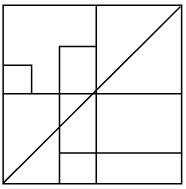
Refer to the following letter series and answer the question.

Question 10

Based on Passage: View directions & passage

(Left) H G I Z Z U S I K I S U W R K A U S G A P K (Right)

How many such vowels are there each of which is immediately preceded by a consonant and also immediately followed by a consonant?

  1. AOption (a)

    8

  2. BOption (b)

    7

  3. COption (c)

    6

  4. DOption (d)

    5

View answer & explanation

Correct answer

Answer: (c)C.

6

Why this answer is correct

Given Series:

(Left) H G I Z Z U S I K I S U W R K A U S G A P K (Right)

Required pattern: Consonant → Vowel → Consonant

Checking the series:

(Left) H G I Z Z U S I K I S U W R K A U S G A P K (Right)

Vowels satisfying the condition:

→ I in (G I Z)

→ U in (Z U S)

→ I in (S I K)

→ I in (K I S)

→ U in (S U W)

→ A in (G A P)

Valid vowels:

I, U, I, I, U, A

Therefore, there are 6 such vowels.

Hence, the correct answer is "Option 3 — 6".

Question 11

In a certain code language, ‘NOPE’ is coded as ‘12*#’ and ‘EOPM’ is coded as ‘#23*’. What is the code for ‘M’ in the given code language?

  1. AOption (a)

    2

  2. BOption (b)

    3

  3. COption (c)
  4. DOption (d)

View answer & explanation

Correct answer

Answer: (b)B.

3

Why this answer is correct

Given:

NOPE is coded as '12*#'

EOPM is coded as ‘#23*’

The final code for 'M' is 3.

Hence, the correct answer is "Option 2".

Question 12

Refer to the following number, symbol series and answer the question. Counting to be done from left to right only.

(Left) 3 % * 2 @ & 5 1 @ 6 7 1 6 # # £ 8 8 # $ £ € (Right)

How many such numbers are there each of which is immediately preceded by a number and also immediately followed by a symbol$?

  1. AOption (a)

    2

  2. BOption (b)

    3

  3. COption (c)

    4

  4. DOption (d)

    5

View answer & explanation

Correct answer

Answer: (b)B.

3

Why this answer is correct

Given Series:

(Left) 3 % * 2 @ & 5 1 @ 6 7 1 6 # # £ 8 8 # $ £ € (Right)

Required pattern: Number → Number → Symbol

Checking the series:

(Left) 3 % * 2 @ & 5 1 @ 6 7 1 6 # # £ 8 8 # $ £ € (Right)

Numbers satisfying the condition:

→ 1 in (5 1 @)

→ 6 in (1 6 #)

→ 8 in (8 8 #)

Therefore, there are 3 such numbers.

Hence, the correct answer is "Option 2 — 3".

Question 13

In a certain code language,

A @ B means ‘A is the sister of B’,

A ! B means ‘A is the father of B’,

A < B means ‘A is the wife of B’,

A x B means ‘A is the brother of B’.

Based on the above, how is W related to H if 'W < A x T @ C ! H’?

  1. AOption (a)

    Father's brother's son

  2. BOption (b)

    Father's brother's sister

  3. COption (c)

    Father's brother's wife

  4. DOption (d)

    Father's brother's daughter

View answer & explanation

Correct answer

Answer: (c)C.

Father's brother's wife

Why this answer is correct

Solution

Family Chart:

Symbol Reference:

Symbol@!<x
MeaningSisterFatherWifeBrother

Given: W < A x T @ C ! H

It means: W is the wife of A, A is the brother of T, T is the sister of C, and C is the father of H.

⇒ W is the wife of A.

⇒ A, T, and C are siblings (A and C are brothers, T is their sister).

⇒ C is the father of H.

⇒ A is the brother of H’s father C.

⇒ W is the wife of H’s father’s brother.

⇒ Therefore, W is related to H as father’s brother’s wife.

Hence, the correct answer is "Option 3".

Question 14

A, B, C, D, E, F and G are sitting around a circular table facing the centre. E sits to the immediate right of C. G is the immediate neighbour of F and C. B sits second to the right of A.

How many people sit between D and G when counted from the left of D ?

  1. AOption (a)

    Four

  2. BOption (b)

    Three

  3. COption (c)

    Two

  4. DOption (d)

    Five

View answer & explanation

Correct answer

Answer: (b)B.

Three

Why this answer is correct

Solution

⇒ A, B, C, D, E, F, and G are sitting around a circular table facing the centre.

⇒ E sits to the immediate right of C.

⇒ G is the immediate neighbour of both F and C. Since E is already to the right of C, G must be to the immediate left of C, and F must be to the immediate left of G.

⇒ B sits second to the right of A. To satisfy this condition in the remaining three seats, A must be placed to the right of E, followed by D, and then B.

⇒ E is to the immediate right of C.

⇒ G is between F and C.

⇒ B is second to the right of A.

⇒ Counting from the left (clockwise) of D, the people between D and G are A, E, and C.

⇒ Thus, there are 3 people between D and G.

Hence, the correct answer is "Option 2".

Question 15

A, B, C, D, E and F are sitting around a circular table facing the centre. A sits second to the right of F. B sits second to the left of C. D sits to the immediate left of C. Who is sitting on the immediate right of E?

  1. AOption (a)

    C

  2. BOption (b)

    A

  3. COption (c)

    B

  4. DOption (d)

    D

View answer & explanation

Correct answer

Answer: (b)B.

A

Why this answer is correct

Solution

⇒ Six friends A, B, C, D, E, and F are sitting around a circular table facing the centre.

⇒ A sits second to the right of F.

⇒ D sits to the immediate left of C, and B sits second to the left of C. This is only possible if C is at the top position.

⇒ Only one seat remains for E, which is between A and F.

⇒ All conditions are satisfied in this arrangement.

⇒ A sits second to the right of F.

⇒ D is to the immediate left of C and B is second to the left of C.

⇒ By looking at the final diagram, the person sitting on the immediate right of E is A.

Hence, the correct answer is "Option 2".

Question 16

Seven boxes A, E, I, O, U, P and Q are kept one over the other but not necessarily in the same order.

Only three boxes are kept above A. Only one box is kept between P and A. Only three boxes are kept between P and U. U is kept at some place above A. Q is kept immediately below U. E is kept at one of the places above O. I is not kept immediately above or below P.

Which box is kept at the lowermost position?

  1. AOption (a)

    O

  2. BOption (b)

    A

  3. COption (c)

    Q

  4. DOption (d)

    P

View answer & explanation

Correct answer

Answer: (a)A.

O

Why this answer is correct

According to the information provided, we can determine the arrangement of the boxes step-by-step:

  1. Only three boxes are kept above A. This means A is at the 4th position from the top.

  2. Only one box is kept between P and A. This means P can be at either the 2nd position or the 6th position.

  3. Only three boxes are kept between P and U, and U is kept at some place above A.

  • Case 1: If P is at the 2nd position, then U must be at the 6th position. However, this contradicts the condition that U is above A.
  • Case 2: If P is at the 6th position, then U must be at the 2nd position. This satisfies the condition that U is above A.
  1. Q is kept immediately below U. Since U is at the 2nd position, Q must be at the 3rd position.

  2. I is not kept immediately above or below P. The remaining positions are 1st, 5th, and 7th. Since the positions immediately above and below P (6th position) are 5th and 7th, I must be placed at the 1st position.

  3. E is kept at one of the places above O. The remaining positions are 5th and 7th. Therefore, E is at the 5th position and O is at the 7th position.

Final Box Arrangement:

PositionBox
1I
2U
3Q
4A
5E
6P
7O


The lowermost position is the 7th position, which is occupied by box O.

Hence, the correct answer is "Option 1".

Refer to the following letter and symbol series and answer the question that follows. Counting to be done from left to right only.

(Left) Y H £ & M % A % G % H € E A © Z € V M @ P @ (Right)

Question 17

Based on Passage: View directions & passage

Refer to the following letter and symbol series and answer the question that follows. Counting to be done from left to right only.

(Left) Y H £ & M%A % G% H € E A @ Z € V M @ P @ (Right)

How many such symbols are there, each of which is immediately preceded by a letter and also immediately followed by a letter?

  1. AOption (a)

    6

  2. BOption (b)

    7

  3. COption (c)

    8

  4. DOption (d)

    9

View answer & explanation

Correct answer

Answer: (b)B.

7

Why this answer is correct

Given Series:

(Left) Y H £ & M % A % G % H € E A @ Z E V M @ P @ (Right)

Required pattern: Letter → Symbol → Letter

Checking the series:

(Left) Y H £ & M % A A % G G % H H € E E A @ Z Z € V V M @ P @ (Right)

Symbols satisfying the condition:

→ % in (M % A)

→ % in (A % G)

→ % in (G % H)

→ € in (H € E)

→ @ in (A @ Z)

→ @ in (M @ P)

→ € in (Z € V)

Therefore, there are 7 such symbols.

Hence, the correct answer is "Option 2".

Question 18

Each vowel in the word EQUALIZING is changed to the letter immediately following it in the English alphabetical order and each consonant is changed to the letter immediately preceding it in the English alphabetical order. How many letters will appear exactly twice in the group of letters thus formed?

  1. AOption (a)

    Three

  2. BOption (b)

    Four

  3. COption (c)

    One

  4. DOption (d)

    Two

View answer & explanation

Correct answer

Answer: (d)D.

Two

Why this answer is correct

Given Word:

E Q U A L I Z I N G

Rule:

Vowel → Next letter in the English alphabet

Consonant → Previous letter in the English alphabet

Transformation:

E → F

Q → P

U → V

A → B

L → K

I → J

Z → Y

I → J

N → M

G → F

New Group of Letters:

F P V B K J Y J M F

Counting repeated letters:

F appears 2 times

J appears 2 times

All other letters appear only once.

Therefore, 2 letters appear exactly twice.

Hence, the correct answer is "Option 4 — Two".

Question 19

Seven boxes A, E, I, O, U, P and Q are kept one over the other but not necessarily in the same order.

No box is kept above E. Only three boxes are kept between E and U. Only one box is kept between O and A. A is kept immediately above U. Only four boxes are kept between O and I. Q is kept at some place above P.

Which box is kept second below Q?

  1. AOption (a)

    E

  2. BOption (b)

    O

  3. COption (c)

    P

  4. DOption (d)

    U

View answer & explanation

Correct answer

Answer: (d)D.

U

Why this answer is correct

Based on the information provided, we can determine the sequence of the boxes as follows:

1. No box is kept above E: This means E is at the top (Position 1).

2. Only three boxes are kept between E and U:

3. A is kept immediately above U: So, A is at Position 4.

4. Only one box is kept between O and A: Since A is at Position 4, O could be at Position 2 or Position 6. However, the next constraint helps clarify.

5. Only four boxes are kept between O and I:

  • If O is at Position 2, then counting four boxes below it (3, 4, 5, 6), I must be at Position 7.
  • If O is at Position 6, counting back would place I at Position 1, which is already occupied by E.
  • Therefore, O is at Position 2 and I is at Position 7.

6. Q is kept at some place above P: The remaining vacant spots are Position 3 and Position 6. Since Q is above P, Q is at Position 3 and P is at Position 6.

The final arrangement is:

PositionBox
1E
2O
3Q
4A
5U
6P
7I

The question asks for the box kept second below Q.

First below Q is A.

Second below Q is U.

Hence, the correct answer is "Option 4".

Question 20

In this question, statement is followed by two conclusions. Find out which conclusion is true based on the given statement.

Statement : G > D ≤ E > A = M

Conclusion:

I . E < G

II. M < E

  1. AOption (a)

    Only II is true

  2. BOption (b)

    Neither I nor II is true

  3. COption (c)

    Both I and II are true

  4. DOption (d)

    Only I is true

View answer & explanation

Correct answer

Answer: (a)A.

Only II is true

Why this answer is correct

Given statement: G > D ≤ E > A = M

Conclusions:

i) E < G → False (As G > D ≤ E. Both G and E are greater than D, but the exact relationship between E and G cannot be determined. Therefore, E < G does not definitely follow.)

ii) M < E → True (As E > A = M. Since A and M are equal and E is greater than A, therefore E > M, i.e., M < E.)

So, only Conclusion II is true.

Hence, the correct answer is "Option 1".

General intelligence and Reasoning Ability1 (20 questions)

Question 21

BLUE is related to DJWC in a certain way based on the English alphabetical order. In the same way, DEAL is related to FCCJ. To which of the following is COOK related, following the same logic?

  1. AOption (a)

    EKZL

  2. BOption (b)

    EGBN

  3. COption (c)

    EMQI

  4. DOption (d)

    EKXS

View answer & explanation

Correct answer

Answer: (c)C.

EMQI

Why this answer is correct

The logic followed here is:

For BLUE to DJWC

B(2)L(12)U(21)E(5)
↓ +2↓ −2↓ +2↓ −2
D(4)J(10)W(23)C(3)

For DEAL to FCCJ

D(4)E(5)A(1)L(12)
↓ +2↓ −2↓ +2↓ −2
F(6)C(3)C(3)J(10)

The common pattern is an alternating shift of +2 and −2 for each successive letter in the word.

Applying the same logic to COOK:

C(3)O(15)O(15)K(11)
↓ +2↓ −2↓ +2↓ −2
E(5)M(13)Q(17)I(9)

Thus, COOK is related to EMQI following the same logic.

Hence, the correct answer is 'Option 3'.

Question 22

What should come in place of ‘?’ in the given series?

7, 14, 23, 46, 55, ?

  1. AOption (a)

    100

  2. BOption (b)

    95

  3. COption (c)

    94

  4. DOption (d)

    110

View answer & explanation

Correct answer

Answer: (d)D.

110

Why this answer is correct

The logic followed here is based on an alternating pattern of mathematical operations applied to each term to get the next term in the series.

The pattern involves multiplying by 2 and then adding 9 in a sequence.

Therefore, the number that should come in place of the question mark (?) is 110.

Hence, the correct answer is "Option 2".

Question 23

What should come in place of ‘?’ in the given series?

27 44 61 78 95 ?

  1. AOption (a)

    108

  2. BOption (b)

    116

  3. COption (c)

    110

  4. DOption (d)

    112

View answer & explanation

Correct answer

Answer: (d)D.

112

Why this answer is correct

Logic followed here is.

Logic: The sequence follows an addition pattern where a constant value of 17 is added to each term to obtain the next term in the series.


Therefore, the value that should come in place of the question mark is 112.

Hence, the correct answer is "Option 4".

Question 24

Each of the digits in the number 7834912 is arranged in ascending order from left to right. The position of how many digits will remain unchanged as compared to that in the original number?

  1. AOption (a)

    Three

  2. BOption (b)

    One

  3. COption (c)

    None

  4. DOption (d)

    Two

View answer & explanation

Correct answer

Answer: (d)D.

Two

Why this answer is correct

Given Number:

7834912

Arranging the digits in ascending order:

Original Number   : 7 8 3 4 9 1 2

Ascending Order : 1 2 3 4 7 8 9

Comparing positions:

PositionOriginalNewStatus
171Changed
282Changed
333Unchanged
444Unchanged
597Changed
618Changed
729Changed

Digits at positions 3 and 4 remain unchanged.

Therefore, the position of 2 digits remains unchanged.

Hence, the correct answer is "Option 4 — Two".

Question 25

Which of the following letter–number clusters will replace the question mark (?) in the given series to make it logically complete?

BZD 3, ECG 9, HFJ 27, KIM 81, ?

  1. AOption (a)

    PRQ 242

  2. BOption (b)

    NLP 729

  3. COption (c)

    NOP 243

  4. DOption (d)

    NLP 243

View answer & explanation

Correct answer

Answer: (d)D.

NLP 243

Why this answer is correct

The logic followed here is based on the alphabetical positional values of letters and a geometric progression for the numbers.

Therefore, NLP 243 will replace the question mark.

Hence, the correct answer is "Option 4".

Question 26

Select the option figure in which the given figure is embedded as its part (rotation is NOT allowed).

  1. AOption (a)

  2. BOption (b)

  3. COption (c)

  4. DOption (d)

View answer & explanation

Correct answer

Answer: (c)C.

Why this answer is correct

The logic followed here is to identify the embedded figure within the given options without changing its orientation (as rotation is NOT allowed).


By comparing all the options, it is clear that the question figure is hidden within Option (3).

Hence, the correct answer is "Option 3".

Question 27

Which of the following letter–number clusters will replace the question mark (?) in the given series to make it logically complete?

LGI 2, FHC 3, ZIW 4, TJQ 9, NKK 8, HLE 27, ?

  1. AOption (a)

    BNX 64

  2. BOption (b)

    BMY 16

  3. COption (c)

    CMX 81

  4. DOption (d)

    CMY 32

View answer & explanation

Correct answer

Answer: (b)B.

BMY 16

Why this answer is correct

The logic followed here involves separate patterns for the letters and the numbers in each cluster of the series.

Therefore, the correct answer is BMY 16.

Hence, the correct answer is "Option 2".

Question 28

In the following number-pairs, the second number is obtained by applying certain mathematical operations to the first number. Which numbers should replace X and Y so that the pattern followed by the two numbers on the left side of :: is same as that on the right side of :: ?

(NOTE : Operations should be performed on the whole numbers, without breaking down the numbers into its constituent digits. E.g. 13 – Operations on 13 such as adding / subtracting /multiplying etc. to 13 can be performed. Breaking down 13 into 1 and 3 and then performing mathematical operations on 1 and 3 is not allowed.)

X : 30 :: 136 : Y

  1. AOption (a)

    X = 222 , Y = 17

  2. BOption (b)

    X = 240 , Y = 17

  3. COption (c)

    X = 248 , Y = 20

  4. DOption (d)

    X = 232 , Y = 18

View answer & explanation

Correct answer

Answer: (b)B.

X = 240 , Y = 17

Why this answer is correct

Logic followed here is.

Logic: First Number = Second Number × 8.

For the pair 136 : Y →

According to the logic, the first number 136 is 8 times the second number Y.

136 = Y × 8

Y = 136 ÷ 8

Y = 17


Similarly, for the pair X : 30 →

Applying the same logic to find the value of X:

X = 30 × 8

X = 240


Therefore, the values that should replace X and Y are 240 and 17 respectively.

Hence, the correct answer is "Option 2".

Question 29

If ‘A’ stands for ‘÷’, ‘B’ stands for ‘x’, ‘C’ stands for ‘+’ and ‘D’ stands for ‘-’, what will come in place of the question mark ‘?’ in the following equation?

182 B 4 D 44 A 4 C 21 = ?

  1. AOption (a)

    744

  2. BOption (b)

    738

  3. COption (c)

    736

  4. DOption (d)

    742

View answer & explanation

Correct answer

Answer: (b)B.

738

Why this answer is correct

Substitution Table:

AlphabetMathematical Sign
A÷ (Division)
B× (Multiplication)
C+ (Addition)
D− (Subtraction)


Given Equation: 182 B 4 D 44 A 4 C 21 = ?

After replacing the alphabets with signs, the equation becomes:

= 182 × 4 − 44 ÷ 4 + 21

= 182 × 4 - 11 +21

= 728 - 11 + 21

= 749 - 11

= 738

Therefore, the value in place of the question mark is 738.

Hence, the correct answer is "Option 2".

Question 30

Based on the alphabetical order, three of the following four are alike in a certain way and thus form a group. Which is the one that does not belong to that group?

(Note: The odd man out is not based on the number of consonants/vowels or their position in the letter cluster)

  1. AOption (a)

    PRN

  2. BOption (b)

    IDG

  3. COption (c)

    KMI

  4. DOption (d)

    WYU

View answer & explanation

Correct answer

Answer: (b)B.

IDG

Why this answer is correct

The logic followed here is based on the positional values of letters in the English alphabetical series.

The pattern for three of the options is:

1st letter + 2 = 2nd letter

2nd letter − 4 = 3rd letter

Option 1: PRN

Option 2: IDG

The pattern in IDG does not match the other three groups (+2, −4).


Option 3: KMI


Option 4: WYU


Therefore, the odd man out is IDG.

Hence, the correct answer is "Option 2".

Question 31

Based on the alphabetical order, three of the following four are alike in a certain way and thus form a group. Which is the one that does not belong to that group?

(Note: The odd man out is not based on the number of consonants/vowels or their position in the letter cluster)

  1. AOption (a)

    VZY

  2. BOption (b)

    MQP

  3. COption (c)

    PTS

  4. DOption (d)

    TWX

View answer & explanation

Correct answer

Answer: (d)D.

TWX

Why this answer is correct

The logic followed here is based on the positional values of the letters in the English alphabetical series.

  1. VZY

  2. MQP

  3. PTS

4) TWX

The pattern observed in the first three options is (+4, −1). However, TWX does not follow this pattern as it uses (+3, +1).

Therefore, the odd one out is TWX.

Hence, the correct answer is "Option 4".

Question 32

Read the given statements and conclusions carefully. Assuming that the information given in the statements is true, even if it appears to be at variance with commonly known facts, decide which of the given conclusion(s) logically follow(s) from the statements.

Statements:

All potatoes are tomatoes.

All potatoes are cabbages.

Conclusions:

(I) Some tomatoes are cabbages.

(II) All cabbages are potatoes.

  1. AOption (a)

    Only conclusion (II) follows.

  2. BOption (b)

    Only conclusion (I) follows.

  3. COption (c)

    Neither conclusion (I) nor (II) follows.

  4. DOption (d)

    Both conclusions (I) and (II) follow.

View answer & explanation

Correct answer

Answer: (b)B.

Only conclusion (I) follows.

Why this answer is correct

Solution

Given Statements:

All potatoes are tomatoes.

All potatoes are cabbages.

The least possible Venn diagram for the given statement is:

Conclusions:

I. Some tomatoes are cabbages - Follow (Because all potatoes are both tomatoes and cabbages, the region occupied by potatoes is common to both, making the intersection definite.)

II. All cabbages are potatoes - Does not follow (Because while all potatoes are cabbages, we cannot definitively conclude that all cabbages are potatoes.)

So, only conclusion (I) follows.

Hence, the correct answer is "Option 2".

Question 33

In the following number-pairs, the second number is obtained by applying certain mathematical operations to the first number. Which numbers should replace X and Y so that the pattern followed by the two numbers on the left side of :: is same as that on the right side of :: ?

(NOTE : Operations should be performed on the whole numbers, without breaking down the numbers into its constituent digits. E.g. 13 – Operations on 13 such as adding / subtracting /multiplying etc. to 13 can be performed. Breaking down 13 into 1 and 3 and then performing mathematical operations on 1 and 3 is not allowed.)

X : 127 :: 192 : Y

  1. AOption (a)

    X = 217 , Y = 92

  2. BOption (b)

    X = 227 , Y = 112

  3. COption (c)

    X = 227 , Y = 102

  4. DOption (d)

    X = 217 , Y = 102

View answer & explanation

Correct answer

Answer: (d)D.

X = 217 , Y = 102

Why this answer is correct

Logic followed here is.

Logic: The relationship between the two numbers in each pair is that the first number and the second number have a constant difference of 90.

Pattern: First Number − Second Number = 90

For the right side pair (192 : Y)

Calculation: 192 − 90 = 102

Thus, Y = 102.


Similarly, for the left side pair (X : 127)

Calculation: X − 90 = 127

X = 127 + 90 = 217

Thus, X = 217.

Therefore, the values are X = 217 and Y = 102.

Hence, the correct answer is "Option 4".

Question 34

If 'A' stands for '÷', 'B' stands for '×', 'C' stands for '+' and 'D' stands for '−', then what will come in place of the question mark (?) in the following equation?

16 A 4 D 3 B 5 C 15 = ?

  1. AOption (a)

    12

  2. BOption (b)

    4

  3. COption (c)

    7

  4. DOption (d)

    10

View answer & explanation

Correct answer

Answer: (b)B.

4

Why this answer is correct

The mapping of the letters to mathematical signs is as follows:

ABCD
÷×+−


Given Expression:

16 A 4 D 3 B 5 C 15 = ?

After replacing the letters with their respective signs, we get:

= 16 ÷ 4 − 3 × 5 + 15


= 4 − 3 × 5 + 15

= 4 - 15 + 15

= 4 

Therefore, the value that will come in place of the question mark is 4.

Hence, the correct answer is "Option 2".

Question 35

Based on the English alphabetical order, three of the following four letter-cluster pairs are alike in a certain way and thus form a group. Which letter-cluster pair DOES NOT belong to that group?

(Note: The odd one out is not based on the number of consonants/vowels or their position in the letter-cluster.)

  1. AOption (a)

    PU – VA

  2. BOption (b)

    VA – BG

  3. COption (c)

    SX – YE

  4. DOption (d)

    AF – GL

View answer & explanation

Correct answer

Answer: (c)C.

SX – YE

Why this answer is correct

The logic followed here is:

Logic: In each pair, the letters of the second cluster are obtained by adding 6 to the positional values of the corresponding letters in the first cluster.

  1. PU – VA

  2. VA – BG

3) SX – YE

Thus, SX – YE does not follow the +6, +6 group pattern.


  1. AF – GL

Therefore, SX – YE is the odd letter-cluster pair.

Hence, the correct answer is "Option 3".

Question 36

In the following number-pairs, the second number is obtained by applying certain mathematical operations to the first number. Which numbers should replace X and Y so that the pattern followed by the two numbers on the left side of :: is same as that on the right side of :: ?

(NOTE : Operations should be performed on the whole numbers, without breaking down the numbers into its constituent digits. E.g. 13 – Operations on 13 such as adding / subtracting /multiplying etc. to 13 can be performed. Breaking down 13 into 1 and 3 and then performing mathematical operations on 1 and 3 is not allowed.)

X : 68 :: 13 : Y

  1. AOption (a)

    X = 8 , Y = 173

  2. BOption (b)

    X = 8 , Y = 169

  3. COption (c)

    X = 9 , Y = 167

  4. DOption (d)

    X = 10 , Y = 170

View answer & explanation

Correct answer

Answer: (a)A.

X = 8 , Y = 173

Why this answer is correct

Logic followed here is.

Logic: (First number)2 + 4 = Second number.

For the first pair X : 68

Assuming X = 8 based on the options:

X = (8 × 8) + 4 = 64 + 4 = 68

Here, the condition X = 8 satisfies the first pair.


For the second pair 13 : Y

Following the same logic for the first number 13:

 Y = (13 × 13) + 4 = 169 + 4 = 173

Here, the condition Y = 173 satisfies the first pair.

By applying this pattern, we find that X = 8 and Y = 173.

Therefore, the values for X and Y are 8 and 173 respectively.

Hence, the correct answer is "Option 1".

Question 37

Identify the figure given in the options which when put in place of '?' will logically complete the series.

  1. AOption (a)

  2. BOption (b)

  3. COption (c)

  4. DOption (d)

View answer & explanation

Correct answer

Answer: (d)D.

Why this answer is correct

Logic followed here is:


Following this logic, the fifth figure will have an arc opening to the left with two horizontal lines inside it.

Therefore, the figure in option (4) logically completes the series.

Hence, the correct answer is "Option 4".

Question 38

What should come in place of ‘?’ in the given series?

9, 27, 135, 405, 2025, ?

  1. AOption (a)

    10125

  2. BOption (b)

    12150

  3. COption (c)

    6075

  4. DOption (d)

    30375

View answer & explanation

Correct answer

Answer: (c)C.

6075

Why this answer is correct

Logic followed here is.

Logic: The numbers in the series are obtained by multiplying the previous term by 3 and 5 alternately.


Therefore, the value that should come in place of the question mark is 6075.

Hence, the correct answer is "Option 3".

Question 39

If 'A' stands for '÷', 'B' stands for '×', 'C' stands for '+' and 'D' stands for '−', then the resultant of which of the following would be 35?

  1. AOption (a)

    20 A 2 B 84 D 6 C 9

  2. BOption (b)

    20 B 2 D 84 A 6 C 9

  3. COption (c)

    20 D 2 B 84 C 6 A 9

  4. DOption (d)

    20 C 2 D 84 A 6 B 9

View answer & explanation

Correct answer

Answer: (b)B.

20 B 2 D 84 A 6 C 9

Why this answer is correct

Operator Mapping:

ABCD
÷×+−


Evaluation of the expression of Option 2):

20 B 2 D 84 A 6 C 9 →

Substituting the letters with their corresponding operators:

= 20 × 2 − 84 ÷ 6 + 9

= 20 × 2 - 14 + 9

= 40 - 14 + 9

= 49 - 14

= 35

Therefore, the resultant of the expression 20 B 2 D 84 A 6 C 9 is 35.

Hence, the correct answer is "Option 2".

Question 40

What will come in the place of the question mark (?) in the following equation, if '+' and '÷' are interchanged and '−' and '×' are interchanged?

40 + 4 ÷ 13 − 2 × 12 = ?

  1. AOption (a)

    21

  2. BOption (b)

    30

  3. COption (c)

    27

  4. DOption (d)

    24

View answer & explanation

Correct answer

Answer: (d)D.

24

Why this answer is correct

Sign Interchange:

Original Sign+÷−×
New Sign÷+×−


Applying the interchanges to the given equation:

Original equation: 40 + 4 ÷ 13 − 2 × 12

After interchanging '+' with '÷' and '−' with '×', the new equation is:

= 40 ÷ 4 + 13 × 2 − 12

= 10 + 13 × 2 - 12

= 10 + 26 - 12

= 36 - 12

= 24

Therefore, the value that will come in place of the question mark is 24.

Hence, the correct answer is "Option 4".

General Awareness (20 questions)

Question 41

The Taj Mahal, built in Agra, was commissioned by which Mughal emperor in loving memory?

  1. AOption (a)

    Akbar

  2. BOption (b)

    Aurangzeb

  3. COption (c)

    Shah Jahan

  4. DOption (d)

    Jahangir

View answer & explanation

Correct answer

Answer: (c)C.

Shah Jahan

Why this answer is correct

The correct answer is Shah Jahan.

Key Points

  • Shah Jahan, the fifth Mughal Emperor, commissioned the Taj Mahal in 1632 to immortalize his love for his favorite wife, Mumtaz Mahal.
  • The monument is situated in Agra, Uttar Pradesh, on the southern bank of the Yamuna River and is considered the pinnacle of Indo-Islamic architecture.
  • The construction project spanned over 20 years, concluding around 1653, and employed a workforce of approximately 20,000 artisans and craftsmen.
  • The architectural design was led by Ustad Ahmad Lahauri, featuring a massive white marble dome that rises to a height of about 73 meters (240 feet).
  • The complex is organized according to strict symmetry, incorporating a charbagh (four-part) garden which represents the Islamic concept of paradise.

 Additional Information

  • Akbar:
  • The third Mughal emperor who reigned from 1556 to 1605 and established the city of Fatehpur Sikri.
  • He is famous for constructing the Agra Fort and the Buland Darwaza, primarily using red sandstone.
  • Jahangir:
  • The fourth emperor and father of Shah Jahan, known for his obsession with justice and the Chain of Justice (Zanjir-i-Adl).
  • He significantly promoted botanical paintings and developed the Shalimar Gardens in Kashmir.
  • Aurangzeb:
  • The sixth Mughal emperor, under whom the empire reached its maximum territorial extent across the Indian subcontinent.
  • He commissioned the Bibi Ka Maqbara in Aurangabad, which is often called the 'Poor Man's Taj' due to its similar design.
  • Architectural Features:
  • The Taj Mahal utilizes Pietra Dura, a technique of inlaying polished precious stones into marble to create floral and geometric patterns.
  • It was designated a UNESCO World Heritage Site in 1983 for being one of the universally admired masterpieces of the world's heritage.

Question 42

In which district did the Chauri Chaura incident occur in1922?

  1. AOption (a)

    Gorakhpur

  2. BOption (b)

    Jalandhar

  3. COption (c)

    Pauri Garhwal

  4. DOption (d)

    Amritsar

View answer & explanation

Correct answer

Answer: (a)A.

Gorakhpur

Why this answer is correct

The correct answer is Gorakhpur.

Key Points

  • The Chauri Chaura incident occurred on February 4, 1922, at a small town named Chauri Chaura located in the Gorakhpur district of the United Provinces (now known as Uttar Pradesh) in British India.
  • The event was a significant turning point in the Indian independence struggle, occurring during the peak of the Non-Cooperation Movement led by Mahatma Gandhi.
  • The violence erupted when a large group of protesters, participating in the movement against the British Raj, clashed with the local police. In response to police firing that killed three civilians, the mob set fire to the Chauri Chaura police station.
  • The fire resulted in the deaths of 22 policemen (some records mention 23) who were trapped inside the building.
  • Distraught by the departure from the path of non-violence (Ahimsa), Mahatma Gandhi decided to withdraw the Non-Cooperation Movement at the national level on February 12, 1922, through the Bardoli Resolution.

 Additional Information

  • Amritsar:
  • This city is historically significant for the Jallianwala Bagh Massacre which took place on April 13, 1919.
  • Under the command of General Dyer, British troops fired on a peaceful crowd, killing hundreds and serving as a major catalyst for the Non-Cooperation Movement.
  • Non-Cooperation Movement (1920−1922):
  • It was the first mass movement launched by Gandhi, aiming for Swaraj (self-rule) through the boycott of British titles, courts, schools, and foreign goods.
  • The movement showed unprecedented Hindu-Muslim unity, especially through its alliance with the Khilafat Movement.
  • Impact of Chauri Chaura:
  • Following the suspension of the movement, the British arrested Mahatma Gandhi on March 10, 1922, and he was sentenced to six years of imprisonment for sedition.

Question 43

For which award was Neeraj Chopra recommended in 2026?

  1. AOption (a)

    Padma Award

  2. BOption (b)

    Arjuna Award

  3. COption (c)

    Rajiv Gandhi Khel Ratna

  4. DOption (d)

    Bharat Ratna

View answer & explanation

Correct answer

Answer: (a)A.

Padma Award

Why this answer is correct

The correct answer is Padma Award.

Key Points

  • Neeraj Chopra, the iconic Indian javelin thrower and Subedar in the Indian Army, has been recommended for the prestigious Padma Award (specifically the Padma Bhushan) for the year 2026 following his consistent excellence in international athletics.
  • The Padma Awards are among the highest civilian honors in India, announced annually on the eve of Republic Day (January 26). They recognize distinguished service in various fields such as art, social work, public affairs, science, and sports.
  • The awards are classified into three categories: Padma Vibhushan (exceptional and distinguished service), Padma Bhushan (distinguished service of a high order), and Padma Shri (distinguished service in any field).
  • Chopra made history by winning the Gold Medal at the Tokyo 2020 Olympics and followed it with a Silver Medal at the Paris 2024 Olympics, making him one of the few Indians to win multiple individual Olympic medals.
  • He was previously conferred with the Padma Shri in 2022. A recommendation for a higher category award like the Padma Bhushan typically follows continued monumental contributions to the nation’s pride on the global stage.

 Additional Information

  • Arjuna Award:
  • Instituted in 1961 by the Ministry of Youth Affairs and Sports, it is awarded for outstanding performance in sports and games.
  • Neeraj Chopra received the Arjuna Award in 2018.
  • Major Dhyan Chand Khel Ratna:
  • Formerly known as the Rajiv Gandhi Khel Ratna, it is the highest sporting honor in India.
  • It carries a cash prize of 25 lakh rupees. Neeraj Chopra was honored with this award in 2021.
  • Bharat Ratna:
  • The highest civilian award of India, instituted in 1954, awarded for exceptional service of the highest order.
  • To date, Sachin Tendulkar is the only sportsperson to have received this honor.

Question 44

Which of the following sports is linked to Jharkhand claiming their maiden Syed Mushtaq Ali Trophy title in 2025 at Pune’s MCA Stadium?

  1. AOption (a)

    Hockey

  2. BOption (b)

    Football

  3. COption (c)

    Rugby

  4. DOption (d)

    Cricket

View answer & explanation

Correct answer

Answer: (d)D.

Cricket

Why this answer is correct

The correct answer is Cricket.

Key Points

  • The Syed Mushtaq Ali Trophy is a premier domestic Twenty20 cricket championship in India, organized annually by the Board of Control for Cricket in India (BCCI).
  • In the 2024-25 season, Jharkhand scripted history by clinching their maiden title after defeating Tamil Nadu in a high-stakes final held at the Maharashtra Cricket Association (MCA) Stadium in Pune.
  • This victory marks the first time Jharkhand has won this specific T20 format tournament since its inception in the 2006-07 season, showcasing the rapid growth of cricket infrastructure in the state.
  • The MCA Stadium in Pune, known for its batting-friendly tracks and state-of-the-art facilities, served as the neutral venue for the knockout stages of the 2025 edition.
  • The tournament serves as a critical scouting ground for the Indian Premier League (IPL), with Jharkhand's players gaining significant attention following their clinical performance throughout the season.

 Additional Information

  • Syed Mushtaq Ali:
  • The tournament is named after the legendary Indian opening batsman Syed Mushtaq Ali, who was the first Indian to score a Test century on foreign soil (against England at Old Trafford in 1936).
  • He was a recipient of the Padma Shri in 1964 for his contributions to Indian cricket.
  • Jharkhand State Cricket Association (JSCA):
  • The governing body is headquartered in Ranchi at the JSCA International Cricket Stadium.
  • The state is famous for producing iconic cricketers, most notably the former Indian captain Mahendra Singh Dhoni, who put Jharkhand on the global cricket map.
  • Tournament Format:
  • The competition involves teams from across India divided into multiple groups, following a round-robin format followed by knockout rounds (Quarter-finals, Semi-finals, and Final).

Question 45

In May 2025, which Indian para athlete broke the world record in Men’s Javelin F42 at the World Para Athletics Grand Prix in Switzerland?

  1. AOption (a)

    Mahendra Gurjar

  2. BOption (b)

    Sundar Singh Gurjar

  3. COption (c)

    Devendra Jhajharia

  4. DOption (d)

    Sandeep Chaudhary

View answer & explanation

Correct answer

Answer: (a)A.

Mahendra Gurjar

Why this answer is correct

The correct answer is Mahendra Gurjar.

Key Points

  • In May 2025, the Indian para-athlete Mahendra Gurjar set a new World Record in the Men’s Javelin F42 category.
  • The record-breaking feat was achieved during the World Para Athletics Grand Prix held in Nottwil, Switzerland, which is a premier venue for international para-athletics competitions.
  • The F42 classification is specifically for field athletes with a limb deficiency, such as an amputation above the knee, or equivalent impairments that affect movement in one or both legs.
  • Gurjar’s performance further cements India’s status as a powerhouse in the para-javelin discipline, joining the ranks of other legendary throwers from the country.
  • This achievement at the Grand Prix serves as a vital qualification and ranking event for upcoming major tournaments, including the World Championships and the Paralympic Games.

 Additional Information

  • F42 Classification:
  • Athletes in this class compete in a standing position.
  • The impairment involves muscle power, impaired range of movement, or limb length difference in the lower body.
  • Sundar Singh Gurjar:
  • He is a prominent Indian para-athlete competing in the F46 category.
  • He is a two-time World Para Athletics Championships gold medalist (2017 and 2019) and a Tokyo 2020 Paralympic bronze medalist.
  • Devendra Jhajharia:
  • A legendary figure in Indian sports, he was the first Indian to win two individual Paralympic gold medals (2004 Athens and 2016 Rio) in the F46 javelin event.
  • He has been honored with the Padma Bhushan, India’s third-highest civilian award.
  • Sandeep Chaudhary:
  • An elite thrower in the F64 category who has held multiple world records and secured a gold medal at the 2018 Asian Para Games.

Question 46

Who among the following inaugurated the world’s first indigenously developed high-resolution weather forecast systems in May 2025?

  1. AOption (a)

    President Droupadi Murmu

  2. BOption (b)

    Prime Minsiter Narendra Modi

  3. COption (c)

    Union Minister of Earth Sciences Jitendra Singh

  4. DOption (d)

    Union Minister of Environment, Forest and Climate Change Bhupender Yadav

View answer & explanation

Correct answer

Answer: (c)C.

Union Minister of Earth Sciences Jitendra Singh

Why this answer is correct

The correct answer is Union Minister of Earth Sciences Jitendra Singh.

Key Points

  • In May 2025, the Union Minister of Earth Sciences, Dr. Jitendra Singh, officially inaugurated the world’s first indigenously developed high-resolution weather forecast systems in New Delhi.
  • The system is a core component of India’s Mission Mausam, a multi-year national initiative aimed at making the country Weather Ready by 2026 through advanced scientific interventions.
  • This cutting-edge technology utilizes artificial intelligence (AI) and machine learning (ML) models alongside the nation’s supercomputing facilities to provide forecasts at a high resolution of 3 kilometers.
  • The development was spearheaded by the Ministry of Earth Sciences (MoES), involving collaborative efforts from the India Meteorological Department (IMD) and the Indian Institute of Tropical Meteorology (IITM).
  • The primary objective is to enhance accuracy in predicting mesoscale events such as cloudbursts, localized flooding, and extreme heatwaves, thereby improving disaster risk reduction strategies.

 Additional Information

  • Ministry of Earth Sciences (MoES):
  • Formed in 2006, it serves as the administrative body for various agencies including IMD, NCMRWF, and INCOIS.
  • It oversees scientific research related to atmospheric sciences, oceanography, and seismology to ensure national safety and economic planning.
  • India Meteorological Department (IMD):
  • Established in 1875, IMD is the principal agency for meteorological observations and seismic data collection in India.
  • It operates a network of Doppler Weather Radars and satellite-based systems to monitor the Southwest Monsoon and tropical cyclones.
  • Technological Impact:
  • The transition from global models to localized indigenous models allows for better calculation of orographic effects (mountain-induced rainfall) and urban heat island impacts.
  • This advancement supports precision agriculture, enabling farmers to make informed decisions regarding irrigation and pesticide application.

Question 47

An individual investor wants to invest in a financial instrument that offers higher liquidity and lower risk. Which of the following markets would be most suitable for this investor?

  1. AOption (a)

    Capital market

  2. BOption (b)

    Money market

  3. COption (c)

    Commodity market

  4. DOption (d)

    Real estate market

View answer & explanation

Correct answer

Answer: (b)B.

Money market

Why this answer is correct

The correct answer is Money market.

Key Points

  • The money market is a component of the financial economy that provides short-term funds, generally with a maturity period ranging from overnight up to one year.
  • It is designed for investors seeking high liquidity, as instruments can be converted into cash almost instantly with negligible transaction costs and minimal price risk.
  • The market is characterized by low risk because the instruments are typically issued by sovereign governments, regulated commercial banks, and top-rated corporations with high credit standings.
  • Key functions include managing short-term liquidity mismatches for banks and providing a platform for the Reserve Bank of India (RBI) to implement monetary policy through tools like Liquidity Adjustment Facility (LAF).
  • Standard instruments include Treasury Bills (issued in 91-day, 182-day, and 364-day tenors), Commercial Paper (unsecured promissory notes), and Certificates of Deposit.

 Additional Information

  • Capital Market:
  • Facilitates the trading of long-term debt and equity-backed securities.
  • Involves higher risk due to market fluctuations and longer gestation periods but offers potential for higher capital appreciation.
  • Commodity Market:
  • Focuses on the trade of hard commodities (gold, oil) and soft commodities (wheat, coffee).
  • Highly speculative and volatile, often influenced by global geopolitical events and weather conditions.
  • Real Estate Market:
  • Involves investment in immovable property such as land or buildings.
  • Considered highly illiquid because selling property is a time-consuming legal and physical process involving high transaction costs.

Question 48

Which of the following movements began in 1905 in Kolkata as a direct response to the Partition of Bengal?

  1. AOption (a)

    Quit India Movement

  2. BOption (b)

    Swadeshi Movement

  3. COption (c)

    Non-Cooperation Movement

  4. DOption (d)

    Home Rule Movement

View answer & explanation

Correct answer

Answer: (b)B.

Swadeshi Movement

Why this answer is correct

The correct answer is Swadeshi Movement.

Key Points

  • The Swadeshi Movement was officially proclaimed on August 7, 1905, at the Calcutta Town Hall in Bengal, following the announcement of the partition.
  • The movement arose as a direct response to Lord Curzon's decision to partition the province of Bengal, which was seen as an attempt to create a communal rift between Hindus and Muslims and suppress the rising tide of Indian Nationalism.
  • The core strategy of the movement involved the Boycott of British goods, especially textiles from Manchester and salt from Liverpool, and the promotion of indigenous products to achieve economic self-reliance.
  • Prominent leaders such as Bal Gangadhar Tilak, Lala Lajpat Rai, Bipin Chandra Pal, and Aurobindo Ghosh played pivotal roles in transforming it into a mass movement that spread beyond Bengal to other parts of India.
  • The movement encouraged the establishment of National Schools and colleges to provide education free from British control, leading to the formation of the National Council of Education in 1906.
  • Rabindranath Tagore composed the song Amar Shonar Bangla during this period and suggested the celebration of Raksha Bandhan as a symbol of unity between people of different backgrounds against the partition.

 Additional Information

  • Quit India Movement
  • Launched by Mahatma Gandhi on August 8, 1942, during World War II, demanding an end to British rule in India.
  • It is famous for the slogan 'Do or Die' (Karo Ya Maro) given at the Gowalia Tank Maidan in Bombay.
  • Non-Cooperation Movement
  • Initiated in 1920 to protest against the Jallianwala Bagh Massacre and the Rowlatt Act, and to support the Khilafat Movement.
  • It aimed at non-violent resistance through the surrender of titles and the boycott of government-run educational institutions and law courts.
  • Home Rule Movement
  • Started in 1916 by Annie Besant and Bal Gangadhar Tilak.
  • Its primary objective was to obtain self-government for India within the British Empire using constitutional means.

Question 49

What is the main cause of structural unemployment in India?

  1. AOption (a)

    Decline in economic demand

  2. BOption (b)

    Rural-urban migration

  3. COption (c)

    Mismatch between skills and job requirements

  4. DOption (d)

    Seasonal changes in industries

View answer & explanation

Correct answer

Answer: (c)C.

Mismatch between skills and job requirements

Why this answer is correct

The correct answer is Mismatch between skills and job requirements.

Key Points

  • Structural unemployment is a long-term form of unemployment caused by fundamental shifts in an economy, such as technological changes or the decline of specific industries.
  • In India, this occurs primarily because the available labor force lacks the specialized technical or professional skills required for the jobs being created in the modern service and manufacturing sectors.
  • The Indian education system often focuses on theoretical knowledge, leading to a significant skill gap where graduates are not 'industry-ready' for roles in Information Technology, Artificial Intelligence, and advanced engineering.
  • Institutional barriers and a lack of vocational training infrastructure prevent the workforce from quickly adapting to market demands, resulting in people remaining unemployed despite the presence of job vacancies.
  • The transition from a labor-intensive agrarian economy to a capital-intensive digital economy has further widened the rift between worker qualifications and the structural needs of employers.

 Additional Information

  • Other Types of Unemployment:
  • Cyclical Unemployment: This is caused by a decline in economic demand during a recession. When the GDP growth slows down, companies reduce their workforce to cut costs.
  • Seasonal Unemployment: Commonly found in the agricultural sector and tourism industry, where workers are only needed during specific times of the year, such as harvest or peak travel seasons.
  • Disguised Unemployment: A situation where more workers are employed than necessary, particularly in rural India. Their marginal productivity is effectively zero, meaning their removal would not decrease total output.
  • Frictional Unemployment: A temporary period of unemployment that occurs when an individual is searching for a new job or transitioning between roles.

Question 50

Which digital payment system developed by the National Payments Corporation of India (NPCI) enables instant bank-to-bank transfers through mobile devices?

  1. AOption (a)

    RTGS

  2. BOption (b)

    NEFT

  3. COption (c)

    IMPS

  4. DOption (d)

    UPI

View answer & explanation

Correct answer

Answer: (d)D.

UPI

Why this answer is correct

The correct answer is UPI.

Key Points

  • Unified Payments Interface (UPI) is a real-time payment system developed by the National Payments Corporation of India (NPCI), an umbrella organization for operating retail payments in India.
  • Launched on April 11, 2016, it enables instant bank-to-bank transfers through a mobile platform without requiring sensitive details like bank account numbers or IFSC codes.
  • The system utilizes a Virtual Payment Address (VPA) or UPI ID as a unique identifier, allowing for seamless Peer-to-Peer (P2P) and Person-to-Merchant (P2M) transactions.
  • It is built on the Immediate Payment Service (IMPS) infrastructure, supporting 24/7 fund transfers, including weekends and public holidays.
  • Security is ensured through 2-Factor Authentication (2FA), involving mobile device binding and a secure UPI PIN for authorizing every transaction.

 Additional Information

  • RTGS (Real Time Gross Settlement):
  • Managed by the Reserve Bank of India (RBI) for high-value transactions.
  • The minimum transfer amount is 2,00,000 INR, with settlement happening continuously on an individual basis.
  • NEFT (National Electronic Funds Transfer):
  • A payment system maintained by the RBI that settles transactions in half-hourly batches.
  • There is no minimum transaction limit, and it operates across a wide network of bank branches nationwide.
  • IMPS (Immediate Payment Service):
  • An instant electronic fund transfer service provided by NPCI that works across mobile and internet banking.
  • It provided the architectural foundation for the later development and launch of UPI.

Question 51

In February 2026, Sonepur, where the new international airport is planned, is located in which state?

  1. AOption (a)

    Bihar

  2. BOption (b)

    Jharkhand

  3. COption (c)

    West Bengal

  4. DOption (d)

    Uttar Pradesh

View answer & explanation

Correct answer

Answer: (a)A.

Bihar

Why this answer is correct

The correct answer is Bihar.

Key Points

  • Sonepur is a major town and sub-division located in the Saran district of Bihar, strategically situated at the confluence of the Ganges and Gandak rivers.
  • The plan for a new International Airport in the Sonepur-Saran region is designed to serve as a greenfield alternative to the existing Jay Prakash Narayan International Airport in Patna, which is landlocked and faces severe expansion hurdles.
  • The proposed airport project requires substantial land acquisition across the Saran and Vaishali districts to facilitate a Category-E runway capable of handling large wide-body aircraft for international travel.
  • By February 2026, the project is slated to reach critical development milestones, including the completion of Obstacle Limitation Surface (OLS) surveys and finalization of environmental clearances from the Ministry of Civil Aviation.

 Additional Information

  • Aviation Infrastructure in Bihar:
  • Patna Airport: Currently serves as the primary aviation hub for Bihar but is constrained by a short runway of approximately 2,072 meters, limiting long-haul flights.
  • Gaya International Airport: The state's other functional international airport, primarily catering to the Buddhist Circuit and seasonal Hajj flights.
  • Darbhanga Airport: A civil enclave developed under the UDAN (Ude Desh ka Aam Nagrik) scheme, which has rapidly become one of the most successful regional airports in India.
  • Sonepur Cultural Significance:
  • The region is world-renowned for the Sonepur Harihar Kshetra Mela, an ancient cattle fair held every year on Kartik Purnima, which significantly boosts the local economy and tourism in Bihar.

Question 52

According to the National Multidimensional Poverty Index (NMPI), the headcount ratio is defined as the:

  1. AOption (a)

    Number of dimensions used to measure poverty

  2. BOption (b)

    Average share of deprivations among poor people

  3. COption (c)

    Share of population that is multidimensionally poor

  4. DOption (d)

    Total share of income earned by poor people

View answer & explanation

Correct answer

Answer: (c)C.

Share of population that is multidimensionally poor

Why this answer is correct

The correct answer is Share of population that is multidimensionally poor.

Key Points

  • The National Multidimensional Poverty Index (NMPI), published by NITI Aayog, uses the Headcount Ratio to measure the incidence of poverty across a population.
  • The Headcount Ratio (H) specifically represents the proportion of the total population that lives in households identified as multidimensionally poor.
  • A person is classified as multidimensionally poor if their weighted deprivation score is at or above the poverty cutoff, which is typically set at 33.33% (or one-third) of the total weighted indicators.
  • This metric is calculated using the formula H = q / n, where 'q' is the number of individuals identified as multidimensionally poor and 'n' is the total population of the country or region.
  • While the headcount ratio shows the spread of poverty, it does not account for the depth or intensity of the deprivations experienced by those individuals.

 Additional Information

  • Intensity of Poverty (A):
  • This refers to the Average share of deprivations among poor people. It measures how poor the poor are by calculating the average proportion of indicators in which they are deprived.
  • It is a crucial component because the final Multidimensional Poverty Index (MPI) value is the product of the Headcount Ratio (H) and the Intensity (A).
  • Dimensions and Indicators:
  • India's NMPI is based on three equally weighted dimensions: Health, Education, and Standard of Living.
  • These dimensions are further broken down into 12 indicators, including Nutrition, Maternal Health, School Attendance, Sanitation, Drinking Water, and Bank Accounts.
  • Global Context:
  • The methodology is based on the Alkire-Foster (AF) method, developed by the Oxford Poverty and Human Development Initiative (OPHI) and the United Nations Development Programme (UNDP).

Question 53

Under the Statutory Liquidity Ratio (SLR), commercial banks are required to maintain a specified percentage of their net demand and time liabilities in which form?

  1. AOption (a)

    Capital Assets

  2. BOption (b)

    Liquid Assets

  3. COption (c)

    Land and building Assets

  4. DOption (d)

    Fixed Assets

View answer & explanation

Correct answer

Answer: (b)B.

Liquid Assets

Why this answer is correct

The correct answer is Liquid Assets.

Key Points

  • Statutory Liquidity Ratio (SLR) is a monetary policy tool used by the Reserve Bank of India (RBI) to regulate the amount of credit flowing into the economy.
  • Under Section 24 of the Banking Regulation Act, 1949, all commercial banks are mandated to maintain a specific percentage of their Net Demand and Time Liabilities (NDTL) in the form of safe and liquid assets.
  • These liquid assets must be held by the banks themselves and typically consist of Cash, Gold, and unencumbered government securities (G-Secs).
  • The primary objective of SLR is to ensure the solvency of the commercial banks and to compel them to invest in government bonds, thereby helping the government finance its fiscal deficit.
  • By adjusting the SLR rate, the RBI can control the liquidity in the banking system; a higher SLR reduces the bank's capacity to lend to the private sector, whereas a lower SLR increases it.

 Additional Information

  • Net Demand and Time Liabilities (NDTL):
  • Demand Liabilities include funds that customers can withdraw at any time, such as Current Account deposits and Savings Account deposits.
  • Time Liabilities include deposits that have a fixed maturity period, such as Fixed Deposits (FDs) and Recurring Deposits (RDs).
  • Difference from Cash Reserve Ratio (CRR):
  • While SLR can be maintained in gold or securities and stays with the bank, CRR must be maintained strictly in cash and is deposited with the Reserve Bank of India.
  • Banks earn interest income on the securities held under SLR, but they typically do not earn interest on the cash held under CRR.
  • Impact on Economy:
  • An increase in SLR is a contractionary move that helps in controlling inflation by restricting the money supply.

Question 54

India is preparing to launch which type of carbon market covering 490 units?

  1. AOption (a)

    Compliance Carbon Market

  2. BOption (b)

    Green Bond Market

  3. COption (c)

    Voluntary Carbon Market

  4. DOption (d)

    Renewable Energy Market

View answer & explanation

Correct answer

Answer: (a)A.

Compliance Carbon Market

Why this answer is correct

Concept:

India is establishing a domestic Carbon Market to help reach its Net Zero emissions target by 2070. This market is divided into two segments: a Voluntary market and a Compliance market. The Compliance Carbon Market is a regulatory system where specific industries (designated consumers) are legally mandated to reduce their carbon emissions intensity. This initiative is governed under the Energy Conservation (Amendment) Act, 2022.

Key Framework

The primary logic for the compliance mechanism follows a baseline-and-credit system:

Net Credits = Target Emission Intensity − Actual Emission Intensity

Given

  • Total Units covered: 490 designated consumers.
  • Sectors involved: Steel, Cement, Fertilizers, Petrochemicals, etc.
  • Regulatory Bodies: Ministry of Power and Bureau of Energy Efficiency (BEE).

Analysis

The Indian Carbon Market (ICM) is designed to transition the existing Perform, Achieve and Trade (PAT) scheme into a more robust carbon trading platform. In the Compliance Carbon Market, the 490 identified units will be given specific greenhouse gas (GHG) emission intensity targets.

  1. If a unit emits less than the target, it is issued Carbon Credit Certificates (CCC).

  2. If a unit emits more than the target, it must purchase CCCs from the market to remain in compliance.

Since these targets are mandatory for the 490 units, it falls under the definition of a regulatory or compliance-based market.

Final Answer: ✅ Compliance Carbon Market

Question 55

Which term refers to money that must be legally accepted for the payment of debts in India?

  1. AOption (a)

    Lawful Money

  2. BOption (b)

    National Currency

  3. COption (c)

    Legal Tender Money

  4. DOption (d)

    Legal Currency

View answer & explanation

Correct answer

Answer: (c)C.

Legal Tender Money

Why this answer is correct

The correct answer is Legal Tender Money.

Key Points

  • Legal Tender Money is defined as any form of currency, including banknotes and coins, that a creditor is legally obligated to accept as payment for the settlement of a debt or financial obligation.
  • In India, the Reserve Bank of India Act, 1934, and the Coinage Act, 2011, provide the legal framework for the issuance and regulation of legal tender.
  • Banknotes issued by the Reserve Bank of India (RBI) are considered unlimited legal tender, meaning they can be used to settle debts of any magnitude across the country.
  • Coins act as limited legal tender; for instance, under current regulations, coins of any denomination lower than one rupee are legal tender for sums not exceeding ten rupees, while coins of one rupee and above are legal tender for sums up to 1,000 rupees.
  • The status of legal tender ensures public confidence in the economic system, as the Central Government guarantees the value of the currency for all legal transactions.

 Additional Information

  • Fiat Money:
  • This refers to currency that does not have intrinsic value (unlike gold or silver coins) and is not backed by a physical commodity.
  • Its value is derived entirely from government decree and the trust of the people using it.
  • Fiduciary Money:
  • This is money accepted on the basis of trust between the payer and the payee, such as cheques or demand drafts.
  • Unlike legal tender, a person cannot be legally compelled to accept fiduciary money for the discharge of a debt.
  • Demonetization:
  • This is the act of stripping a currency unit of its status as legal tender.
  • A significant example occurred in India on November 8, 2016, when 500 and 1,000 rupee notes were invalidated to curb black money.

Question 56

Which of the following indigenous quantum hardware innovations was launched by Prenishq Pvt. Ltd., an IIT Delhi spin-off supported by the National Quantum Mission, at ESTIC 2025 in November 2025?

  1. AOption (a)

    Cryogenic qubit memory chip

  2. BOption (b)

    Superconducting quantum processor

  3. COption (c)

    High-precision compact diode laser

  4. DOption (d)

    Quantum key distribution satellite

View answer & explanation

Correct answer

Answer: (c)C.

High-precision compact diode laser

Why this answer is correct

The correct answer is High-precision compact diode laser.

Key Points

  • Prenishq Pvt. Ltd., an IIT Delhi spin-off, successfully developed and launched an indigenous high-precision compact diode laser during the ESTIC 2025 event in November 2025.
  • This innovation is a significant achievement under the National Quantum Mission (NQM), which aims to make India a global leader in quantum technologies by fostering indigenous hardware development.
  • The high-precision compact diode laser is designed to provide the extreme stability and ultra-narrow linewidth required for advanced quantum applications such as trapped-ion quantum computing and quantum sensing.
  • This hardware plays a pivotal role in atomic physics experiments, particularly in the laser cooling and trapping of atoms, which is the foundation for quantum metrology.
  • By developing this technology locally, India reduces its strategic dependence on imported high-end optical components, aligning with the Atmanirbhar Bharat initiative in the deep-tech sector.

 Additional Information

  • National Quantum Mission (NQM):
  • Approved by the Union Cabinet in April 2023 with a total outlay of over Rs. 6,000 crore.
  • Implemented by the Department of Science and Technology (DST) to support R&D in quantum computing, communication, and sensing.
  • Quantum Hardware Categories:
  • Superconducting quantum processor: Utilizes Josephson junctions cooled to cryogenic temperatures to function as qubits.
  • Quantum key distribution (QKD) satellite: Facilitates secure communication using quantum entanglement across long distances via space-based platforms.
  • Cryogenic qubit memory chip: Essential for storing quantum information at temperatures near absolute zero.
  • ESTIC 2025:
  • The Electronics System Design and Manufacturing, Testing, Instrumentation and Components (ESTIC) forum serves as a platform for showcasing breakthroughs in semiconductor and quantum hardware ecosystems in India.

Question 57

Which ruler was recognized as the emperor by all rebel leaders during the First War of Independence?

  1. AOption (a)

    Rani Lakshmibai

  2. BOption (b)

    Nana Saheb

  3. COption (c)

    Bahadur Shah Zafar

  4. DOption (d)

    Khan Bahadur Khan

View answer & explanation

Correct answer

Answer: (c)C.

Bahadur Shah Zafar

Why this answer is correct

The correct answer is Bahadur Shah Zafar.

Key Points

  • On May 11, 1857, the rebellious sepoys from Meerut reached the Red Fort in Delhi and urged the aged Mughal Emperor, Bahadur Shah Zafar, to lead the movement against the British East India Company.
  • Despite his initial reluctance due to his advanced age of over 80 years and lack of military resources, he was formally proclaimed the Shahenshah-e-Hindustan (Emperor of India) by the rebel forces.
  • The recognition of Bahadur Shah Zafar provided a crucial sense of legitimacy and a traditional political center to the uprising, turning a series of mutinies into a nationwide War of Independence.
  • Under his name, the rebel leaders issued proclamations and coins, and even local leaders who were fighting for their own territories acknowledged his nominal suzerainty to unify the various factions of the revolt.
  • His role was primarily symbolic; he wrote letters to various Indian chiefs and rulers, asking them to form a confederacy of Indian states to replace the British regime with Indian rule.

 Additional Information

  • Rani Lakshmibai:
  • The widow of Raja Gangadhar Rao of Jhansi, she rose against the British after they refused to recognize her adopted son as the heir under the Doctrine of Lapse.
  • She became one of the most formidable leaders of the revolt in Central India, famously defending the Jhansi Fort before joining forces with Tantia Tope at Gwalior.
  • Nana Saheb:
  • The adopted son of the last Peshwa, Baji Rao II, he led the rebellion at Kanpur after the British denied him his father's pension.
  • While he acted as an independent leader, he formally acknowledged the authority of the Mughal Emperor and declared himself the Peshwa or governor under Bahadur Shah Zafar.
  • Khan Bahadur Khan:
  • A descendant of the Rohilla chiefs, he led the uprising in Bareilly and the Rohilkhand region.
  • He established an organized administration and was appointed as the Viceroy of the region by the Mughal Emperor during the revolt.

Question 58

Shah Mal is historically recognized for mobilizing the inhabitants of which specific administrative unit in Uttar Pradesh during the 1857 Revolt?

  1. AOption (a)

    District Lucknow

  2. BOption (b)

    Pargana Meerut

  3. COption (c)

    Pargana Barout

  4. DOption (d)

    Pargana Jagdishpur

View answer & explanation

Correct answer

Answer: (c)C.

Pargana Barout

Why this answer is correct

The correct answer is Pargana Barout.

Key Points

  • Shah Mal was a prominent local rebel leader during the Revolt of 1857 who originated from the village of Bijraul in Pargana Barout, situated in the modern-day Baghpat district of Uttar Pradesh.
  • He belonged to a clan of Jat cultivators whose kinship ties stretched across chaurassee des (eighty-four villages), and he utilized these traditional networks to mobilize the peasantry against British rule.
  • The mobilization was largely driven by resentment toward the oppressive land revenue system and the perceived threat to local autonomy posed by the British East India Company.
  • Under his command, the inhabitants of Barout effectively blocked British supply lines to Delhi, destroyed bridges, and dismantled telegraph wires to isolate the colonial administration.
  • Shah Mal organized a rudimentary administrative system, converting a captured British bungalow into a 'hall of justice' where he mediated disputes and managed the logistics of the rebellion.
  • His resistance was so formidable that it required a significant military expedition led by British officials to suppress the area; he was eventually killed in a battle in July 1857.

 Additional Information

  • District Lucknow:
  • This was the capital of Awadh and became a primary site of resistance led by Begum Hazrat Mahal and Maulvi Ahmadullah Shah following the 1856 annexation.
  • Pargana Meerut:
  • While Meerut is historically significant as the starting point of the Great Mutiny on May 10, 1857, Shah Mal's specific theater of operation was the neighboring sub-division of Barout.
  • Pargana Jagdishpur:
  • Located in Arrah, Bihar, this region was the base for Kunwar Singh, an eighty-year-old Zamindar who led the rebellion across eastern India.

Question 59

How many seats were contested in the assembly elections held in Bihar in October or November 2025?

  1. AOption (a)

    243

  2. BOption (b)

    200

  3. COption (c)

    330

  4. DOption (d)

    150

View answer & explanation

Correct answer

Answer: (a)A.

243

Why this answer is correct

The correct answer is 243.

Key Points

  • The Bihar Legislative Assembly, also known as the Vidhan Sabha, is the lower house of the state legislature and consists of exactly 243 seats.
  • Elections for these constituencies are conducted by the Election Commission of India (ECI), generally every five years, unless the house is dissolved earlier.
  • To secure a simple majority and form the government in Bihar, a political party or an alliance must win at least 122 seats, which represents the halfway mark plus one.
  • The distribution of these seats is based on delimitation cycles that ensure proportional representation of the population across various districts of the state.
  • The October-November 2025 timeline aligns with the constitutional requirement to hold elections before the five-year term of the previous assembly expires.

 Additional Information

  • Bicameral Legislature:
  • Bihar is one of the few states in India with a Bicameral Legislature, meaning it has both a Legislative Assembly and a Legislative Council (Vidhan Parishad).
  • The Bihar Legislative Council has a total strength of 75 members, who are elected through graduates, teachers, local authorities, and nominated by the Governor.
  • Seat Reservations:
  • Within the 243 assembly seats, 38 seats are reserved for candidates belonging to the Scheduled Castes (SC).
  • There are 2 seats specifically reserved for the Scheduled Tribes (ST) to ensure social and political inclusion.
  • National Representation:
  • Beyond the state level, Bihar contributes significantly to the Union government with 40 seats in the Lok Sabha and 16 seats in the Rajya Sabha.

Question 60

Who led the Aligarh Movement to promote modern education among Muslims?

  1. AOption (a)

    Fazlul Huq

  2. BOption (b)

    Maulana Abul Kalam Azad

  3. COption (c)

    Sir Syed Ahmed Khan

  4. DOption (d)

    Badruddin Tyabji

View answer & explanation

Correct answer

Answer: (c)C.

Sir Syed Ahmed Khan

Why this answer is correct

The correct answer is Sir Syed Ahmed Khan.

Key Points

  • The Aligarh Movement was a significant socio-religious reform initiative led by Sir Syed Ahmed Khan in the late 19th century, aimed at modernizing the Muslim community in India.
  • Following the Revolt of 1857, Sir Syed realized that the survival and progress of Muslims depended on the adoption of Western scientific education and proficiency in the English language.
  • In 1875, he established the Muhammadan Anglo-Oriental (MAO) College at Aligarh, which served as the cornerstone of the movement and eventually became the Aligarh Muslim University (AMU) in 1920.
  • The movement focused on reconciling Islamic faith with modern rationalism, urging Muslims to shift away from medieval traditions and participate in the administrative services of the British Raj.
  • Sir Syed also founded the Scientific Society in 1864 to translate technical and scientific works into Urdu, making modern knowledge accessible to the masses.

 Additional Information

  • Maulana Abul Kalam Azad:
  • He was a distinguished scholar and a stalwart of the Indian National Congress who served as the first Education Minister of independent India.
  • He played a vital role in the Khilafat Movement and established several national educational bodies like the University Grants Commission (UGC).
  • Badruddin Tyabji:
  • He was a prominent lawyer and the first Indian to hold the post of Chief Justice in the Bombay High Court.
  • Tyabji was also a founding member of the Indian National Congress and served as its first Muslim President in 1887.
  • Fazlul Huq:
  • Popularly known as Sher-e-Bangla, he was a major political figure in Bengal and served as the first Prime Minister of Bengal under the British administration.
  • Tahzib-ul-Akhlaq:
  • This was the influential journal started by Sir Syed Ahmed Khan to propagate his ideas on social reform, hygiene, and rationality among Muslims.

General Awareness1 (20 questions)

Question 61

Which of the following cities is the site of the India Urban Observatory for data-driven urban governance?

  1. AOption (a)

    New Delhi

  2. BOption (b)

    Bengaluru

  3. COption (c)

    Hyderabad

  4. DOption (d)

    Mumbai

View answer & explanation

Correct answer

Answer: (a)A.

New Delhi

Why this answer is correct

The correct answer is New Delhi.

Key Points

  • The India Urban Observatory was officially inaugurated at the Nirman Bhawan in New Delhi as a state-of-the-art facility to promote data-driven governance.
  • It functions as an initiative under the Ministry of Housing and Urban Affairs (MoHUA) specifically integrated into the Smart Cities Mission framework.
  • The observatory is designed to serve as a central repository for both static and real-time data from various Indian cities, enabling a comprehensive understanding of urban health and performance.
  • It utilizes advanced technological tools including Artificial Intelligence (AI), Machine Learning, and Big Data Analytics to process heterogeneous data sets into actionable insights.
  • By tracking urban indicators across sectors like transport, sanitation, and environment, it facilitates evidence-based policy making and fosters competition among cities through the Ease of Living Index.

 Additional Information

  • Smart Cities Mission:
  • Launched in June 2015, the mission aims to promote cities that provide core infrastructure and give a decent quality of life to their citizens.
  • The mission emphasizes the use of Smart Solutions to improve urban services and infrastructure.
  • DataSmart Cities Strategy:
  • This strategy provides a roadmap to harness the potential of data in 100 Smart Cities to improve the quality of governance and citizen engagement.
  • It involves the appointment of City Data Officers (CDOs) to manage and institutionalize data ecosystems at the local level.
  • Geographic Context of Options:
  • Bengaluru: While recognized as the Silicon Valley of India and a hub for the IT sector, it is not the location for the national-level urban observatory.
  • Mumbai: Functions as the Financial Capital of India, hosting major economic institutions like the RBI, but centralized policy observatories are typically headquartered in the capital, New Delhi.
  • Hyderabad: A major global center for Information Technology and Pharmaceuticals, often referred to as Cyberabad, but is not the site of this specific MoHUA initiative.

Question 62

Which architectural style is used in the famous Hadimba Temple?

  1. AOption (a)

    Vesara style

  2. BOption (b)

    Himachali (Kathkuni) style

  3. COption (c)

    Gothic style

  4. DOption (d)

    Western Chalukya style

View answer & explanation

Correct answer

Answer: (b)B.

Himachali (Kathkuni) style

Why this answer is correct

The correct answer is Himachali (Kathkuni) style.

Key Points

  • The Hadimba Devi Temple, also locally known as the Dhungari Temple, is an ancient cave temple located in Manali, Himachal Pradesh.
  • Constructed in 1553 AD by Maharaja Bahadur Singh, the temple is dedicated to Hadimba Devi, the wife of Bhima and mother of Ghatotkacha from the Indian epic Mahabharata.
  • The structure features a unique four-tiered wooden roof that resembles a Pagoda, which is a distinctive characteristic of the Himachali (Kathkuni) architectural tradition found in the Himalayan region.
  • The Kathkuni technique is an indigenous construction method involving alternating layers of deodar wood and undressed stone without the use of mortar, providing exceptional seismic resistance in hilly terrains.
  • The temple is renowned for its intricate wood carvings on the doors and base, depicting mythological characters, floral motifs, and animals.

 Additional Information

  • Vesara style:
  • It is a hybrid architectural style that combines elements of the Nagara (North Indian) and Dravida (South Indian) styles.
  • This style flourished primarily in the Deccan region under the patronage of the Chalukyas of Badami and the Hoysalas.
  • Gothic style:
  • A European architectural style that originated in France during the late 12th century.
  • It is identified by features such as pointed arches, ribbed vaults, and large stained-glass windows, commonly seen in cathedrals like Notre-Dame.
  • Western Chalukya style:
  • Also known as Kalyani Chalukya architecture, it evolved in the Tungabhadra region of modern-day Karnataka.
  • It serves as a transition between the early Chalukyan and the later Hoysala architecture, featuring ornate pillars and complex ground plans.

Question 63

Which Article of the Indian Constitution defines the term 'Money Bill'?

  1. AOption (a)

    Article 110

  2. BOption (b)

    Article 119

  3. COption (c)

    Article 99

  4. DOption (d)

    Article 129

View answer & explanation

Correct answer

Answer: (a)A.

Article 110

Why this answer is correct

The correct answer is Article 110.

Key Points

  • Article 110 of the Constitution of India provides the specific definition of a Money Bill, which exclusively contains provisions relating to taxation, borrowing of money by the government, and expenditure from or receipts to the Consolidated Fund of India.
  • A bill is deemed a Money Bill if it deals with the imposition, abolition, remission, alteration, or regulation of any tax at the Union or State level.
  • It includes matters concerning the custody of the Consolidated Fund or the Contingency Fund of India, and the payment of money into or the withdrawal of money from any such fund.
  • Under Article 110(3), if any question arises whether a Bill is a Money Bill or not, the decision of the Speaker of the Lok Sabha shall be final and cannot be questioned in a court of law or Parliament.
  • The Speaker endorses a certificate on the bill when it is transmitted to the Rajya Sabha and presented to the President for assent, confirming its status as a Money Bill.

 Additional Information

  • Article 119:
  • Concerns the regulation by law of procedure in Parliament in relation to financial business to ensure the timely completion of financial work.
  • Article 99:
  • Mandates that every member of either House of Parliament shall, before taking their seat, make and subscribe to an oath or affirmation before the President.
  • Article 129:
  • Declares that the Supreme Court of India shall be a court of record and shall have all the powers of such a court, including the power to punish for contempt of itself.
  • Constitutional Procedural Facts:
  • Money Bills can only be introduced in the Lok Sabha on the prior recommendation of the President of India.
  • The Rajya Sabha has limited powers regarding such bills; it must return the bill within 14 days with or without recommendations, which the Lok Sabha may or may not accept.

Question 64

The Lakshadweep Islands group lies close to which of the following coasts?

  1. AOption (a)

    Malabar coast

  2. BOption (b)

    Eastern coast

  3. COption (c)

    Konkan coast

  4. DOption (d)

    Kannad coast

View answer & explanation

Correct answer

Answer: (a)A.

Malabar coast

Why this answer is correct

The correct answer is Malabar coast.

Key Points

  • The Lakshadweep Islands are located in the Arabian Sea and represent India's smallest Union Territory, covering a total area of only 32 square kilometers.
  • This archipelago is situated off the southwestern coast of India, specifically lying close to the Malabar coast of Kerala.
  • The distance between the mainland Malabar coast and the islands ranges approximately from 200 km to 440 km.
  • Geologically, these islands are coral islands formed as atolls, which distinguishes them from the volcanic or tectonic origin of other island groups like the Andaman and Nicobar Islands.
  • Previously known as Laccadive, Minicoy, and Amindivi Islands, the group was officially renamed Lakshadweep in 1973.

 Additional Information

  • Coastal Regions of India:
  • Malabar Coast: It is the southernmost part of the Western Coastal Plain, stretching from Goa to Kanyakumari, though it is most prominently associated with Kerala.
  • Konkan Coast: This refers to the northern part of the Western Coastal Plain, extending from Daman to Goa, covering Maharashtra and parts of Karnataka.
  • Kannad Coast: Also known as the Kanara coast, it is the central stretch of the Western Coastal Plain located in Karnataka.
  • Eastern Coast: This broad stretch lies between the Eastern Ghats and the Bay of Bengal, featuring the Coromandel Coast in the south and the Northern Circars in the north.
  • Kavaratti serves as the administrative capital of the Lakshadweep islands.

Question 65

As of May 2025, how many High Courts does India have, with three having jurisdiction over more than one state?

  1. AOption (a)

    12

  2. BOption (b)

    25

  3. COption (c)

    18

  4. DOption (d)

    28

View answer & explanation

Correct answer

Answer: (b)B.

25

Why this answer is correct

The correct answer is 25.

Key Points

  • As of May 2025, the Indian judicial system comprises a total of 25 High Courts, which serve as the highest judicial authority at the state and union territory levels.
  • The newest addition is the Andhra Pradesh High Court, which was established on January 1, 2019, following the reorganization of the state, and is headquartered in Amaravati.
  • Under Article 214 of the Constitution of India, each state is fundamentally required to have its own High Court to ensure localized access to justice.
  • However, Article 231 grants Parliament the authority to establish a common High Court for two or more states or for two or more states and a Union Territory.
  • The three High Courts mentioned in the question that exercise jurisdiction over more than one state are the Bombay High Court (Maharashtra and Goa), the Punjab and Haryana High Court (Punjab and Haryana), and the Guwahati High Court (Assam, Nagaland, Mizoram, and Arunachal Pradesh).

 Additional Information

  • Guwahati High Court:
  • Holds the record for the largest territorial jurisdiction in terms of states, serving four distinct states in the northeastern region.
  • Bombay High Court:
  • One of the three oldest High Courts in India, its jurisdiction includes the states of Maharashtra and Goa, as well as the Union Territory of Dadra and Nagar Haveli and Daman and Diu.
  • Calcutta High Court:
  • Established in 1862, it is the oldest High Court in the country and has jurisdiction over West Bengal and the Andaman and Nicobar Islands.
  • Appointment of Judges:
  • Judges and the Chief Justice of a High Court are appointed by the President of India in consultation with the Chief Justice of India and the Governor of the respective state under Article 217.
  • Seventh Amendment Act, 1956:
  • This landmark amendment legally facilitated the creation of common High Courts, optimizing judicial resources across smaller states and territories.

Question 66

Which of the following processes is the first step in urine formation within the nephron?

  1. AOption (a)

    Tubular secretion

  2. BOption (b)

    Tubular Reabsorption

  3. COption (c)

    Duct transportation

  4. DOption (d)

    Glomerular filtration

View answer & explanation

Correct answer

Answer: (d)D.

Glomerular filtration

Why this answer is correct

The correct answer is Glomerular filtration.

Key Points

  • The formation of urine within the nephron involves three fundamental physiological processes: glomerular filtration, tubular reabsorption, and tubular secretion.
  • Glomerular filtration is the first step in this sequence, taking place in the renal corpuscle where blood is filtered through a cluster of capillaries known as the glomerulus.
  • The process is primarily driven by hydrostatic pressure (blood pressure), which forces water and small solutes across the filtration membrane into the Bowman's capsule.
  • This filtration is non-selective for small molecules; the resulting glomerular filtrate contains water, glucose, amino acids, urea, and electrolytes, while large plasma proteins and blood cells are too large to pass through.
  • On average, the Glomerular Filtration Rate (GFR) in a healthy adult is approximately 125 mL/min, which equates to filtering nearly 180 liters of fluid daily, though the vast majority is subsequently reabsorbed.

 Additional Information

  • Tubular Reabsorption:
  • This is the second stage where nearly 99 percent of the filtrate is returned to the blood via the peritubular capillaries.
  • It primarily occurs in the Proximal Convoluted Tubule (PCT), where essential nutrients like glucose and amino acids are actively recovered.
  • Tubular Secretion:
  • This third step involves the active transfer of substances such as creatinine, drugs, and H+ ions from the blood into the renal tubules.
  • It is critical for managing blood pH and the elimination of metabolic waste products.
  • Duct Transportation:
  • This refers to the movement of the final urine through collecting ducts toward the renal pelvis and ureters.
  • In this phase, the concentration of urine is finalized through the influence of antidiuretic hormone (ADH).

Question 67

Which of the following terrains is composed of igneous and metamorphic rocks, with gently rising hills and wide valleys?

  1. AOption (a)

    The Northern Plains

  2. BOption (b)

    The Peninsular Plateau

  3. COption (c)

    The Indian Desert

  4. DOption (d)

    The Himalayan Mountains

View answer & explanation

Correct answer

Answer: (b)B.

The Peninsular Plateau

Why this answer is correct

The correct answer is The Peninsular Plateau.

Key Points

  • The Peninsular Plateau is a tableland composed of the oldest crystalline, igneous, and metamorphic rocks, having originated from the breaking and drifting of the Gondwana land.
  • This physiographic division is characterized by its broad and shallow valleys and rounded hills, distinguishing it from the high-peaked young mountains of the north.
  • The plateau is divided into two broad regions: the Central Highlands, situated north of the Narmada River covering a major part of the Malwa plateau, and the Deccan Plateau, a triangular landmass south of the river.
  • It contains some of the most stable geological structures in India, with notable hill ranges such as the Aravallis, Vindhyas, and Satpuras.
  • The Deccan Trap region within this plateau is famous for its Black Soil (regur), which is of volcanic origin, further confirming the presence of igneous rocks.

 Additional Information

  • The Northern Plains:
  • Formed by the alluvial deposits brought by the three major river systems: the Indus, the Ganga, and the Brahmaputra.
  • It is a geologically recent, flat terrain with high agricultural productivity due to rich soil and adequate water supply.
  • The Himalayan Mountains:
  • These are geologically young fold mountains that stretch over the northern borders of India.
  • They feature a rugged topography with high snow-capped peaks, deep V-shaped valleys, and fast-flowing rivers, primarily composed of sedimentary rocks.
  • The Indian Desert:
  • Located towards the western margins of the Aravalli Hills, it is an undulating sandy plain covered with sand dunes like barchans.
  • The region receives very low rainfall, generally below 150 mm per year, leading to an arid climate with low vegetation cover.

Question 68

Identify the mismatched pair from the following.

  1. AOption (a)

    Public sector - BHEL

  2. BOption (b)

    Private sector - TISCO

  3. COption (c)

    Joint sector - Oil India Ltd. (OIL)

  4. DOption (d)

    Cooperative sector - Bajaj Auto Ltd.

View answer & explanation

Correct answer

Answer: (d)D.

Cooperative sector - Bajaj Auto Ltd.

Why this answer is correct

The correct answer is Cooperative sector - Bajaj Auto Ltd..

Key Points

  • Public sector industries are owned and operated by government agencies such as the Central or State governments. Bharat Heavy Electricals Limited (BHEL) is a leading Maharatna central public sector undertaking under the Ministry of Heavy Industries. Hence, statement 1 is correct.
  • Private sector industries are owned and managed by individuals or a group of individuals. Tata Iron and Steel Company (TISCO), founded by Jamsetji Tata in 1907, is one of the largest private steel producers in India. Hence, statement 2 is correct.
  • Joint sector industries are those which are jointly run by the state and individuals or a group of individuals. Oil India Ltd. (OIL) is a prime example of this sector, established through a partnership between the Government of India and the private Burmah Oil Company. Hence, statement 3 is correct.
  • Cooperative sector industries are owned and operated by the producers or suppliers of raw materials, workers, or both. Bajaj Auto Ltd. is a Private Sector multinational firm and not a cooperative venture. Hence, statement 4 is incorrect.

 Additional Information

  • Sector Classifications:
  • Cooperative Sector:
  • These entities pool resources and share profits proportionately among members.
  • Notable examples include the Amul (Anand Milk Union Limited) and various sugar mills in Maharashtra.
  • Public Sector Categorization:
  • Government enterprises are often classified into Maharatna, Navratna, and Miniratna based on their financial autonomy and global reach.
  • Bajaj Auto:
  • It is a part of the Bajaj Group, headquartered in Pune, and is one of the world's largest manufacturers of two-wheelers and three-wheelers.

Question 69

Identify the site from the following description.

An ancient monastic university described as a mahavihara, consisting of multiple monasteries of varying sizes, much of which remains unexcavated under present-day settlements

  1. AOption (a)

    Taxila

  2. BOption (b)

    Vikramashila

  3. COption (c)

    Valabhi

  4. DOption (d)

    Nalanda

View answer & explanation

Correct answer

Answer: (d)D.

Nalanda

Why this answer is correct

The correct answer is Nalanda.

Key Points

  • Nalanda was a world-renowned Buddhist Mahavihara (large monastery) located in the ancient kingdom of Magadha, present-day Bihar, functioning as a premier center of learning from the 5th century CE to 1200 CE.
  • The university was established during the Gupta Empire era, specifically under the patronage of Kumargupta I, and later flourished under Harshavardhana and the Pala rulers.
  • The architectural layout of the site consists of a series of monasteries (Viharas) and temples (Chaityas) built with red bricks, separated by a central path.
  • Historical and archaeological surveys indicate that a significant portion of the ancient university remains unexcavated because it lies buried beneath the modern-day village of Bargaon and surrounding inhabited areas.
  • The site was famously described by the Chinese traveler Hiuen Tsang (Xuanzang), who detailed its massive library called Dharmaganja and its role in teaching Vedas, logic, and Buddhist philosophy.

 Additional Information

  • Taxila:
  • Located in modern-day Pakistan near Rawalpindi, it was a major center for Vedic and secular learning.
  • It is associated with famous scholars like Chanakya (Kautilya), Panini, and Charaka.
  • Vikramashila:
  • Founded by King Dharmapala of the Pala Dynasty in response to the perceived decline in educational standards at Nalanda.
  • It was a specialized center for Vajrayana Buddhism and Tantric studies before its destruction by Bakhtiyar Khilji.
  • Valabhi:
  • Situated in the Saurashtra region of Gujarat, it was a vital center for the Hinayana (specifically Sammatiya) school of Buddhism.
  • It was known for producing high-ranking administrative officials and civil servants for the kingdoms of western India.

Question 70

The tiny pores found mainly on the underside of leaves that regulate gas exchange and water loss are called ______.

  1. AOption (a)

    Chloroplasts

  2. BOption (b)

    Stomata

  3. COption (c)

    Root Hairs

  4. DOption (d)

    Vacuoles

View answer & explanation

Correct answer

Answer: (b)B.

Stomata

Why this answer is correct

The correct answer is Stomata.

Key Points

  • Stomata are microscopic pores or openings found on the epidermis of leaves, stems, and other plant organs that facilitate life-sustaining processes.
  • These pores are primarily concentrated on the underside (lower epidermis) of leaves to prevent excessive water loss caused by direct exposure to solar heat.
  • Their fundamental role involves gas exchange, where they permit carbon dioxide (CO2) to enter the leaf for photosynthesis and allow oxygen (O2) to exit as a metabolic byproduct.
  • They regulate transpiration, the process by which water vapor is released into the atmosphere, which generates the transpirational pull necessary for nutrient transport.
  • The operation of each stoma is controlled by a pair of specialized cells known as guard cells, which adjust the pore size based on turgor pressure changes.

 Additional Information

  • Chloroplasts:
  • These are double-membrane organelles containing chlorophyll, the pigment responsible for the green color of plants.
  • They serve as the primary site for photosynthesis, converting light energy into chemical energy (glucose).
  • Root Hairs:
  • These are delicate, hair-like extensions of root epidermal cells that increase the surface area for absorption.
  • They are specialized for absorbing water and essential minerals from the soil through osmosis and active transport.
  • Vacuoles:
  • In plant cells, the large central vacuole is surrounded by a membrane called the tonoplast.
  • It functions in waste sequestration, storage of nutrients, and maintaining turgor pressure to keep the plant upright.

Question 71

Which of the following regions in India has cave sites with monasteries associated with Buddhism, Hinduism and Jainism?

  1. AOption (a)

    Bhaja

  2. BOption (b)

    Kanheri

  3. COption (c)

    Ajanta

  4. DOption (d)

    Ellora

View answer & explanation

Correct answer

Answer: (d)D.

Ellora

Why this answer is correct

The correct answer is Ellora.

Key Points

  • Ellora, locally known as Verul Leni, is a UNESCO World Heritage Site located in the Aurangabad district (now Chhatrapati Sambhaji Nagar) of Maharashtra.
  • The site is globally renowned for being one of the largest rock-cut monastery-temple complexes that houses monuments dedicated to Buddhism, Hinduism, and Jainism.
  • The complex consists of 34 caves excavated out of the vertical face of the Charanandri hills between the 6th and 10th centuries CE.
  • The Buddhist caves (Caves 1 to 12) were created earliest, followed by the Hindu caves (Caves 13 to 29), and finally the Jain caves (Caves 30 to 34).
  • The site was patronized by various dynasties, most notably the Rashtrakutas, who were responsible for the magnificent Kailasha Temple (Cave 16), and the Yadavas.
  • The coexistence of structures from three different religions at a single site illustrates the religious tolerance and secular nature of ancient Indian civilization.

 Additional Information

  • Ajanta Caves:
  • Located in the same region as Ellora, these 29 caves are exclusively Buddhist.
  • They date from the 2nd century BCE to approximately 480 CE and are famous for their fresco paintings depicting Jataka tales.
  • Bhaja Caves:
  • A group of 22 rock-cut caves located near Lonavala in Pune.
  • These are early Buddhist caves belonging to the Hinayana (Theravada) sect, dating back to the 2nd century BCE.
  • Kanheri Caves:
  • Situated within the Sanjay Gandhi National Park in Mumbai.
  • This site contains 109 caves that are primarily Buddhist, spanning from the 1st century BCE to the 10th century CE, serving as a major center for monastic education.

Question 72

According to the Indian Constitution, employment of children below 14 years in hazardous factories is prohibited under _____.

  1. AOption (a)

    Article 22

  2. BOption (b)

    Article 23

  3. COption (c)

    Article 24

  4. DOption (d)

    Article 21

View answer & explanation

Correct answer

Answer: (c)C.

Article 24

Why this answer is correct

The correct answer is Article 24.

Key Points

  • Article 24 of the Indian Constitution explicitly prohibits the employment of children below the age of 14 years in any factory, mine, or any other hazardous occupation.
  • This provision is a fundamental component of the Right against Exploitation, which is enshrined under Part III (Articles 23 and 24) of the Constitution to protect the rights of the vulnerable.
  • Unlike Article 23, which prohibits forced labor and human trafficking generally, Article 24 provides a specific safeguard for child rights to prevent their physical and mental exploitation.
  • To give effect to this constitutional mandate, the Parliament enacted the Child Labour (Prohibition and Regulation) Act, 1986, which was later amended in 2016 to completely ban child labor in all occupations and processes for children below 14.
  • This article aligns with the Directive Principles of State Policy, specifically Article 39(f), which directs the State to ensure children are given opportunities to develop in a healthy manner.

 Additional Information

  • Article 21
  • Guarantees the Protection of Life and Personal Liberty, stating that no person shall be deprived of their life or liberty except according to procedure established by law.
  • It has been widely interpreted by the Supreme Court to include the right to a clean environment, privacy, and Article 21A (Right to Education).
  • Article 22
  • Provides Protection against arrest and detention in certain cases, ensuring that an arrested person is informed of the grounds of arrest and produced before a magistrate within 24 hours.
  • Article 23
  • Prohibits traffic in human beings, begar (forced labor), and other similar forms of forced labor.
  • Any contravention of this provision is an offense punishable in accordance with the Immoral Traffic (Prevention) Act, 1956.

Question 73

The Mahabodhi Temple Complex at Bodh Gaya is a Buddhist temple built entirely in:

  1. AOption (a)

    Stone

  2. BOption (b)

    Wood

  3. COption (c)

    Bricks

  4. DOption (d)

    Granite

View answer & explanation

Correct answer

Answer: (c)C.

Bricks

Why this answer is correct

The correct answer is Bricks.

Key Points

  • The Mahabodhi Temple Complex, located in Bodh Gaya, Bihar, is one of the earliest and most significant Buddhist temples built entirely in Bricks that is still standing in India.
  • While the first temple was originally commissioned by Emperor Ashoka in the 3rd century BCE, the current structure dates back to the 5th or 6th century CE during the late Gupta period.
  • The temple is a prime example of Indian brickwork, featuring a massive pyramidal tower (shikhara) that reaches a height of about 55 meters (180 feet).
  • The structure is famous for being the site where Siddhartha Gautama attained Enlightenment under the Bodhi Tree, making it a primary pilgrimage destination for Buddhists worldwide.
  • It was designated as a UNESCO World Heritage Site in 2002 due to its immense influence on the development of brick architecture over subsequent centuries.

 Additional Information

  • Evolution of Temple Materials:
  • Stone: While many Hindu and Jain temples of the medieval period were constructed using Stone, the Mahabodhi remains distinct for its burnt brick composition finished with stucco.
  • Granite: This material was extensively used in South Indian architecture, such as the Brihadisvara Temple in Thanjavur, known for its massive Granite blocks.
  • Wood: Early Mauryan structures, including the palace at Pataliputra, were largely made of Wood, but these did not survive as well as brick or stone over the millennia.
  • Restoration:
  • The temple underwent major restoration in the 19th century under the supervision of Sir Alexander Cunningham and Joseph David Beglar of the Archaeological Survey of India.

Question 74

After fertilisation, the ovule develops into a/an ________.

  1. AOption (a)

    Embryo sac

  2. BOption (b)

    Fruit

  3. COption (c)

    Seed

  4. DOption (d)

    Pericarp

View answer & explanation

Correct answer

Answer: (c)C.

Seed

Why this answer is correct

The correct answer is Seed.

Key Points

  • In Angiosperms (flowering plants), the process of sexual reproduction involves Double Fertilisation, which triggers significant morphological changes in the floral parts.
  • Once fertilisation is complete, the zygote develops into the embryo, while the ovule undergoes a transition to become the Seed.
  • The integuments (protective outer layers) of the ovule lose moisture and harden to form the Seed Coat, which consists of an outer testa and an inner tegmen.
  • The Seed serves as the primary unit of dispersal and contains the embryo in a state of dormancy along with stored food reserves to support future germination.
  • Simultaneously, the primary endosperm nucleus (PEN) develops into the endosperm, a triploid tissue that provides essential nutrition to the developing embryo.

 Additional Information

  • Fruit:
  • The ovary matures and ripens into the Fruit after fertilisation.
  • The primary function of the fruit is to protect the developing seeds and aid in their dispersal through various agents like wind, water, or animals.
  • Pericarp:
  • The ovary wall develops into the Pericarp, which constitutes the wall of the fruit.
  • In fleshy fruits, the pericarp is further differentiated into three layers: the epicarp (outer skin), mesocarp (fleshy middle), and endocarp (inner stony or fibrous layer).
  • Embryo sac:
  • The Embryo sac is the female gametophyte located within the nucellus of the ovule.
  • It is typically a 7-celled and 8-nucleate structure where the fusion of gametes occurs; it exists prior to the completion of the seed development process.

Question 75

According to the Ministry of Statistics and Programme Implementation report “Women and Men in India 2022”, a high dependency ratio (the number of children and older persons per 100 working-age population) increases the ______.

  1. AOption (a)

    Employment opportunities in informal sectors

  2. BOption (b)

    Burden of unpaid care work on women

  3. COption (c)

    Female literacy rates across rural regions

  4. DOption (d)

    Economic participation of elderly women

View answer & explanation

Correct answer

Answer: (b)B.

Burden of unpaid care work on women

Why this answer is correct

The correct answer is Burden of unpaid care work on women.

Key Points

  • The dependency ratio is a demographic indicator that expresses the number of dependents (children aged 0-14 and the elderly aged 60 or 65 and above) per 100 individuals in the working-age population (aged 15-59 or 15-64).
  • According to the Ministry of Statistics and Programme Implementation (MoSPI) report titled 'Women and Men in India 2022', an increase in this ratio leads to a higher demand for domestic support and caregiving services within the household.
  • In the Indian socio-cultural context, the primary responsibility for caregiving and domestic chores traditionally falls on women, meaning a high dependency ratio directly translates into an increased unpaid care burden for them.
  • This phenomenon creates time poverty for women, significantly limiting their availability for formal education, skill development, and participation in the paid labor market.
  • The report highlights that a rising number of elderly persons increases the need for specialized geriatric care, which is often provided by female family members in the absence of affordable institutional support.

 Additional Information

  • Unpaid Care Work:
  • Refers to all non-remunerated services provided within a household, including childcare, elderly care, and household maintenance.
  • Data from Time Use Surveys indicates that Indian women spend significantly more hours daily on unpaid activities compared to men.
  • This imbalance is a key factor behind the stagnant or declining Female Labour Force Participation Rate (FLFPR) in various regions.
  • Economic Impact:
  • Heavy domestic burdens prevent women from entering the formal economy, often pushing them into precarious informal employment with no social security.
  • Recognizing and redistributing unpaid care work is a critical target under the Sustainable Development Goals (SDG 5) concerning gender equality.

Question 76

Which of the following is NOT a feature of the Indian Constitution?

  1. AOption (a)

    Fundamental Rights

  2. BOption (b)

    Directive Principles of State Policy

  3. COption (c)

    Punish of Death Pentalty of Every Crime

  4. DOption (d)

    Fundamental Duties

View answer & explanation

Correct answer

Answer: (c)C.

Punish of Death Pentalty of Every Crime

Why this answer is correct

The correct answer is Punish of Death Pentalty of Every Crime.

Key Points

  • The Indian Constitution is the supreme law of India and it does not prescribe a blanket death penalty for every crime; instead, it establishes a framework for a fair trial and proportional justice.
  • In the Indian legal system, the death penalty is reserved exclusively for the rarest of rare cases, a doctrine established by the Supreme Court in the landmark Bachan Singh vs. State of Punjab (1980) case.
  • Punishments for various offenses are detailed in statutory laws like the Indian Penal Code (IPC), now being transitioned to the Bharatiya Nyaya Sanhita (BNS), which categorize crimes based on severity and provide for varied sentences including fines and imprisonment.
  • The Constitution explicitly protects the Right to Life under Article 21, stating that life and personal liberty can only be restricted following a procedure established by law, ensuring judicial oversight over all sentencing.

 Additional Information

  • Fundamental Rights
  • These are enshrined in Part III (Articles 12 to 35) of the Constitution and are justiciable in nature.
  • They protect the civil liberties of citizens against any arbitrary actions of the state and include the Right to Equality and Right to Freedom.
  • Directive Principles of State Policy (DPSP)
  • Located in Part IV (Articles 36 to 51), these principles are non-justiciable guidelines for the government.
  • They aim to create social and economic democracy and act as a compass for the state to frame laws and policies.
  • Fundamental Duties
  • These were added to the Constitution by the 42nd Amendment Act, 1976, based on the recommendations of the Swaran Singh Committee.
  • Found in Part IV-A (Article 51A), they outline the moral obligations of citizens to help promote a spirit of patriotism and uphold the unity of India.

Question 77

Which Hindu festival, widely known as the “Festival of Lights”, commemorates the return of Lord Rama to Ayodhya after defeating Ravana and completing his fourteen-year exile?

  1. AOption (a)

    Diwali

  2. BOption (b)

    Makar Sankranti

  3. COption (c)

    Holi

  4. DOption (d)

    Dussehra

View answer & explanation

Correct answer

Answer: (a)A.

Diwali

Why this answer is correct

The correct answer is Diwali.

Key Points

  • Diwali, also known as Deepavali, is one of the most prominent festivals in Hinduism, symbolizing the spiritual victory of light over darkness, good over evil, and knowledge over ignorance.
  • The festival specifically commemorates the historical return of Lord Rama, the seventh avatar of Lord Vishnu, to his kingdom of Ayodhya.
  • According to the ancient Indian epic Ramayana, Lord Rama returned alongside his wife Sita and brother Lakshmana after spending fourteen years in exile (Vanvas) in the forest.
  • The celebration also marks his triumph over the demon king Ravana of Lanka, who had abducted Sita; this victory is seen as the ultimate restoration of Dharma.
  • The residents of Ayodhya welcomed their rightful king by illuminating the city with thousands of earthen lamps (diyas), a practice that led to the name Festival of Lights.
  • It is observed annually on the Amavasya (new moon) night of the Hindu lunisolar month of Kartik, which usually falls between mid-October and mid-November.

 Additional Information

  • Makar Sankranti:
  • This is a major harvest festival dedicated to Lord Surya (the Sun God), marking the sun's transit into the zodiac sign of Makara (Capricorn).
  • It signifies the end of the winter solstice and the start of longer days, celebrated with kite flying and holy dips in rivers like the Ganges.
  • Holi:
  • Popularly known as the Festival of Colors, it celebrates the arrival of Spring and the victory of Prahlada over the demoness Holika.
  • It is observed on the Purnima (full moon) day of the month of Phalguna.
  • Dussehra:
  • Also called Vijayadashami, it marks the actual day Lord Rama killed Ravana.
  • It occurs on the tenth day of Ashvin month, exactly 20 days before the celebration of Diwali.

Question 78

Which of the following scenarios demonstrates the importance of genetics in agriculture?

  1. AOption (a)

    Watering crops regularly

  2. BOption (b)

    Planting seeds at random

  3. COption (c)

    Using fertilizers for growth

  4. DOption (d)

    Breeding crops with desired traits for higher yield

View answer & explanation

Correct answer

Answer: (d)D.

Breeding crops with desired traits for higher yield

Why this answer is correct

The correct answer is Breeding crops with desired traits for higher yield.

Key Points

  • Genetics is the fundamental science of heredity and variation in organisms, and its application in agriculture involves manipulating the genetic makeup of plants to improve productivity.
  • The process of selective breeding involves choosing parent plants with superior genotypes to produce offspring that exhibit specific phenotypes, such as increased biomass, larger grains, or improved resistance to pathogens.
  • By identifying and isolating desirable alleles, agricultural scientists can develop High-Yielding Varieties (HYVs), which were the cornerstone of the Green Revolution in the 1960s, significantly increasing global food supply.
  • Modern plant breeding utilizes Mendelian principles and molecular biology to ensure that beneficial traits are passed down consistently across generations, ensuring genetic stability in commercial crops.
  • Unlike environmental management, genetic improvement provides a permanent and heritable enhancement to the crop's intrinsic potential, allowing for better performance under various climatic conditions.

 Additional Information

  • Agronomic Practices vs. Genetics:
  • Watering crops and using fertilizers are agronomic management techniques that optimize the environment for the plant but do not alter its underlying DNA structure.
  • Planting seeds at random is a poor cultivation practice that leads to inefficient resource utilization and lacks any scientific or genetic basis for crop improvement.
  • Advanced Genetic Technologies:
  • Genetic Engineering: Techniques like recombinant DNA technology are used to create Genetically Modified Organisms (GMOs), such as Bt Cotton, which contains genes from the bacteria Bacillus thuringiensis to resist pests.
  • Marker-Assisted Selection (MAS): This uses molecular markers to identify the presence of specific genes, making the breeding cycle faster and more precise than traditional phenotypic selection.
  • Hybridization: The crossing of two genetically different individuals to produce a hybrid that often exhibits heterosis or hybrid vigor, resulting in superior growth rates and yields.

Question 79

Which of the following processes is an example of a chemical change in kitchen chemistry?

  1. AOption (a)

    Freezing water

  2. BOption (b)

    Melting butter

  3. COption (c)

    Cooking an egg

  4. DOption (d)

    Dissolving salt

View answer & explanation

Correct answer

Answer: (c)C.

Cooking an egg

Why this answer is correct

The correct answer is Cooking an egg.

Key Points

  • Cooking an egg is a classic example of a chemical change because it involves a permanent alteration of the molecular structure of proteins.
  • The application of heat causes protein denaturation, a process where the hydrogen bonds and hydrophobic interactions maintaining the three-dimensional shape of proteins like ovalbumin are broken.
  • As these protein chains unfold, they begin to collide and form new covalent bonds and disulfide bridges, a secondary process known as coagulation.
  • This transformation is fundamentally irreversible; once the egg proteins have cross-linked to form a solid, they cannot return to their original raw, liquid state, signifying the creation of a new substance.
  • The change is accompanied by visible alterations in texture, opacity, and flavor, which are standard indicators of chemical reactions in kitchen chemistry.

 Additional Information

  • Physical Changes in Food Science:
  • Freezing water: This is a phase transition from liquid to solid at 0 degrees Celsius. It is a physical change because the chemical composition of water (H2O) remains unchanged and the process is reversible by heating.
  • Melting butter: When butter is heated, the solid lipids absorb energy and transition into a liquid state. This does not break any intramolecular bonds, and the butter can be solidified again by cooling, making it a physical change.
  • Dissolving salt: When Sodium Chloride (NaCl) is added to water, the ions separate into a homogeneous mixture. Since the salt can be recovered in its original form through evaporation or distillation, it is considered a reversible physical change.

Question 80

According to the Constitution of India, to which authority is the Council of Ministers of India collectively responsible?

  1. AOption (a)

    Vice President of India

  2. BOption (b)

    President of India

  3. COption (c)

    Supreme Court of India

  4. DOption (d)

    Lok Sabha

View answer & explanation

Correct answer

Answer: (d)D.

Lok Sabha

Why this answer is correct

The correct answer is Lok Sabha.

Key Points

  • According to Article 75(3) of the Constitution of India, the Council of Ministers is collectively responsible to the Lok Sabha (the House of the People).
  • The principle of Collective Responsibility implies that the entire Ministry (the Executive) is accountable to the Legislature for all its acts of omission and commission.
  • When the Lok Sabha passes a No-Confidence Motion against the government, all ministers, including those who are members of the Rajya Sabha, must resign from their posts.
  • This accountability mechanism ensures that the Executive retains power only as long as it enjoys the support and confidence of the majority of the elected representatives in the Lower House.
  • The Council of Ministers functions as a single team, meaning they 'swim or sink together'; a minister cannot publicly diverge from or criticize a Cabinet decision once it is finalized.

 Additional Information

  • Individual Responsibility:
  • Under Article 75(2), ministers hold office during the pleasure of the President. This signifies Individual Responsibility, allowing the President to remove a minister on the advice of the Prime Minister even if the ministry retains the confidence of the Lok Sabha.
  • President of India:
  • The President is the Constitutional Head of the state. While all executive actions are taken in their name, they must act according to the advice of the Council of Ministers as per Article 74.
  • Supreme Court of India:
  • The Judiciary is independent of the Executive. While it performs Judicial Review of executive actions, the Council of Ministers is not politically responsible to the Supreme Court.
  • Constitutional Amendments:
  • The 91st Amendment Act, 2003 stipulated that the total number of ministers, including the Prime Minister, in the Council of Ministers shall not exceed 15% of the total strength of the Lok Sabha.

Arithmetical and Numerical Ability (20 questions)

Question 81

Find the compound interest on ₹4,800 at 5% per annum for 3 years, compound annually.

  1. AOption (a)

    ₹716.9

  2. BOption (b)

    ₹886.5

  3. COption (c)

    ₹826.6

  4. DOption (d)

    ₹756.6

View answer & explanation

Correct answer

Answer: (d)D.

₹756.6

Why this answer is correct

Shortcut Trick

The Effective Rate of Compound Interest for 3 years at 5% is 15.7625%.

Interest = Principal × Effective Rate / 100

Interest = 4800 × 15.7625 / 100 = 48 × 15.7625

Interest = ₹756.6

∴ The correct answer is ₹756.6.

Alternate Method

Given:

Principal (P) = ₹4,800

Rate of Interest (R) = 5% per annum

Time Period (n) = 3 years

Formula Used:

Amount (A) = P(1 + R/100)n

Compound Interest (CI) = A − P

Calculations:

⇒ A = 4800(1 + 5/100)3

⇒ A = 4800(1 + 1/20)3

⇒ A = 4800(21/20)3

⇒ A = 4800 × (9261 / 8000)

⇒ A = 48 × 9261 / 80 = 0.6 × 9261

⇒ A = ₹5556.6

⇒ CI = 5556.6 − 4800

⇒ CI = ₹756.6

∴ The correct answer is ₹756.6.

Additional Information

Difference between CI and SI for 2 years

The difference (D) is given by the formula: D = P(R/100)2.

Difference between CI and SI for 3 years

The difference (D) is given by the formula: D = P(R/100)2 × (3 + R/100).

Half-yearly Compounding

When interest is compounded half-yearly, the rate is halved (R/2) and the time is doubled (2n).

Question 82

The number 1912956 is divisible by:

  1. AOption (a)

    98

  2. BOption (b)

    92

  3. COption (c)

    84

  4. DOption (d)

    99

View answer & explanation

Correct answer

Answer: (b)B.

92

Why this answer is correct

Shortcut Trick

Check Divisibility by 9: Sum of digits of 1912956 = 1 + 9 + 1 + 2 + 9 + 5 + 6 = 33 (Not divisible by 9, so eliminate 99).

Check Divisibility by 4: Last two digits 56 are divisible by 4 (14 × 4 = 56). Options 92 and 84 are candidates.

Check Divisibility by 7: 1912956 ÷ 7 → Remainder = 3 (Not divisible by 7, so eliminate 84 and 98).

Only option 92 remains, which is 4 × 23.

∴ The correct answer is 92.

Alternate Method

Given Number: 1912956

Method: Prime Factorization of options and divisibility testing.

⇒ Option (4): 99 = 9 × 11. Sum of digits of 1912956 = 33. Since 33 is not divisible by 9, 1912956 is not divisible by 99.

⇒ Option (3): 84 = 4 × 3 × 7. Checking divisibility by 7: 1912956 ÷ 7 = 273279 with remainder 3. Not divisible by 84.

⇒ Option (1): 98 = 2 × 49. Since the number is not divisible by 7, it cannot be divisible by 98.

⇒ Option (2): 92 = 4 × 23.

⇒ Last two digits 56 ÷ 4 = 14 (Divisible by 4).

⇒ 1912956 ÷ 23 = 83172 (Exactly divisible).

⇒ 1912956 ÷ 92 = 20793.

∴ The correct answer is 92.

Additional Information

Divisibility Rule of 4

A number is divisible by 4 if its last two digits are divisible by 4 or are both zero.

Divisibility Rule of 9

A number is divisible by 9 if the sum of its digits is divisible by 9.

Divisibility Rule of 23

Multiply the last digit by 7 and add it to the remaining number. If the result is divisible by 23, the original number is also divisible by 23.

Question 83

Find the simple interest (in ₹) on ₹1,500 at 5% per month for 4 months.

  1. AOption (a)

    300

  2. BOption (b)

    75

  3. COption (c)

    25

  4. DOption (d)

    50

View answer & explanation

Correct answer

Answer: (a)A.

300

Why this answer is correct

Shortcut Trick

Total interest percentage = Monthly Rate × Time

Effective interest rate = 5% × 4 = 20%

Simple interest = 20% of ₹1,500

Simple interest = 0.20 × 1,500 = ₹300

∴ The correct answer is ₹300.

Alternate Method

Given:

Principal (P) = ₹1,500

Rate (R) = 5% per month

Time (T) = 4 months

Formula Used:

Simple Interest (SI) = (P × R × T) ÷ 100

Calculations:

⇒ SI = (1500 × 5 × 4) ÷ 100

⇒ SI = 1500 × 20 ÷ 100

⇒ SI = 15 × 20

⇒ SI = ₹300

∴ The correct answer is ₹300.

Additional Information

Simple Interest vs Compound Interest

In Simple Interest, interest is calculated only on the Principal amount, whereas in Compound Interest, interest is calculated on both the Principal and the accumulated interest of previous periods.

Total Amount Formula

The Total Amount (A) after time T is given by A = P + SI = P × (1 + RT/100).

Rate of Interest Conversion

If the Rate (R) and Time (T) are not in the same units (e.g., annual rate and monthly time), they must be converted to the same unit before applying the formula.

Question 84

A person sold his watch for ₹34,200 and got a percentage of profit equal to the cost price of the watch. What is the cost of the watch?

  1. AOption (a)

    ₹1,800

  2. BOption (b)

    ₹2,000

  3. COption (c)

    ₹1,900

  4. DOption (d)

    ₹2,100

View answer & explanation

Correct answer

Answer: (a)A.

₹1,800

Why this answer is correct

Shortcut Trick

When Profit % = Cost Price (CP), use the relation: SP × 100 = CP(100 + CP).

Split 3,420,000 (which is 34,200 × 100) into two factors with a difference of 100.

3,420,000 = 1,800 × 1,900 (Difference = 100).

The smaller factor is the Cost Price.

∴ The correct answer is ₹1,800.

Alternate Method

Given:

Selling Price (SP) = ₹34,200

Profit % = Cost Price (CP)

Formula Used:

SP = CP × (100 + Profit %)/100

Calculations:

Let CP = x, then Profit % = x%

⇒ 34,200 = x × (100 + x) ÷ 100

⇒ 3,420,000 = 100x + x2

⇒ x2 + 100x − 3,420,000 = 0

⇒ x2 + 1900x − 1800x − 3,420,000 = 0

⇒ x(x + 1900) − 1800(x + 1900) = 0

⇒ (x − 1800)(x + 1900) = 0

⇒ x = 1800 (Neglecting negative value of x = −1900)

∴ The correct answer is ₹1,800.

Additional Information

Direct Formula for Profit % = CP

CP = 10 × [√(SP + 25) − 5]. This formula provides the Cost Price directly when profit percentage numerically equals the cost price.

Loss % = Cost Price Condition

If Loss % = CP, the equation becomes CP2 − 100CP + 100SP = 0. In this case, there are often two possible answers for CP that sum to 100.

Profit and Loss Basics

Profit = SP − CP. Profit % = (Profit ÷ CP) × 100. Always calculate Profit % or Loss % on the Cost Price unless specified otherwise.

Question 85

The graph represents the number of students who obtained marks above 90% in each of the five subjects—English, Hindi, Mathematics, Science, and Social Science—in Schools A, B, C, D, and E.

Which school has the maximum number of students above 90%?

  1. AOption (a)

    E

  2. BOption (b)

    B

  3. COption (c)

    D

  4. DOption (d)

    C

View answer & explanation

Correct answer

Answer: (c)C.

D

Why this answer is correct

Given:

School English Hindi Mathematics Science Social Science

School A 45 55 65 75 60

School B 40 50 80 65 65

School C 50 45 70 60 55

School D 55 60 85 80 70

School E 45 50 75 70 65

Formula Used: Total Students above 90% in a School = Student count (English + Hindi + Mathematics + Science + Social Science)

Calculation: To find the school with the maximum number of students above 90%, we calculate the total count for each school: ⇒ Total for School A = 45 + 55 + 65 + 75 + 60 = 300 ⇒ Total for School B = 40 + 50 + 80 + 65 + 65 = 300 ⇒ Total for School C = 50 + 45 + 70 + 60 + 55 = 280 ⇒ Total for School D = 55 + 60 + 85 + 80 + 70 = 350 ⇒ Total for School E = 45 + 50 + 75 + 70 + 65 = 305

Comparing the total number of students above 90% in each school: 350 (School D) > 305 (School E) > 300 (School A/B) > 280 (School C)

∴ The school with the maximum number of students is School D.

∴ The correct answer is D.

Question 86

Simplify: (5-7 ÷ 5-10) x 54 x (53)0 + 23

  1. AOption (a)

    78137

  2. BOption (b)

    78133

  3. COption (c)

    78135

  4. DOption (d)

    78139

View answer & explanation

Correct answer

Answer: (b)B.

78133

Why this answer is correct

Shortcut Trick

Using Exponent Laws: 5−7−(−10) × 54 × 1 + 8

⇒ 53 × 54 + 8

⇒ 57 + 8

⇒ 78125 + 8 = 78133

∴ The correct answer is 78133.

Alternate Method

Given: (5−7 ÷ 5−10) × 54 × (53)0 + 23

Formula Used:

  1. am ÷ an = am−n
  2. am × an = am+n
  3. (am)n = am×n
  4. a0 = 1

Step-by-step Calculation:

⇒ (5−7 − (−10)) × 54 × 53×0 + 23

⇒ (5−7 + 10) × 54 × 50 + 8

⇒ 53 × 54 × 1 + 8

⇒ 53 + 4 + 8

⇒ 57 + 8

⇒ 78125 + 8

⇒ 78133

∴ The correct answer is 78133.

Additional Information

Laws of Indices

When multiplying the same base, add the powers (am × an = am+n). When dividing, subtract the powers (am ÷ an = am−n).

Zero and Negative Exponents

Any number raised to the power zero is 1 (a0 = 1). A negative exponent represents the reciprocal (a−n = 1/an).

BODMAS Rule

Always follow the sequence: Brackets, Orders (powers/roots), Division, Multiplication, Addition, and Subtraction.

Question 87

Upendra borrowed ₹28,000 for 18 months at 20% per annum, interest being compounded half-yearly. Find the interest paid by Upendra.

  1. AOption (a)

    ₹9,268

  2. BOption (b)

    ₹9,136

  3. COption (c)

    ₹9,342

  4. DOption (d)

    ₹9,456

View answer & explanation

Correct answer

Answer: (a)A.

₹9,268

Why this answer is correct

Shortcut Trick

For compounding half-yearly, the rate becomes 10% (20% ÷ 2) and periods become 3 (18 months ÷ 6).

The Effective Interest Rate for 3 periods at 10% is 33.1% (using the successive formula or 1.13 − 1).

Interest = 33.1% of ₹28,000

Interest = 0.331 × 28,000 = ₹9,268

∴ The correct answer is ₹9,268.

Alternate Method

Given:

Principal (P) = ₹28,000

Annual Rate (R) = 20% ⇒ Half-yearly Rate (r) = 20% ÷ 2 = 10%

Time (T) = 18 months ⇒ Number of periods (n) = 18 ÷ 6 = 3

Formula Used:

Amount (A) = P × (1 + r/100)n

Interest (I) = A − P

Calculations:

⇒ A = 28000 × (1 + 10/100)3

⇒ A = 28000 × (1.1)3

⇒ A = 28000 × 1.331

⇒ A = 37268

⇒ Interest = 37268 − 28000

⇒ Interest = ₹9,268

∴ The correct answer is ₹9,268.

Additional Information

Compound Interest Half-Yearly

When interest is compounded half-yearly, the annual rate is divided by 2 and the time in years is multiplied by 2.

Effective Rate of Interest

For a rate r per period, the effective rate for n periods is given by [(1 + r/100)n − 1] × 100%.

Difference between CI and SI

For 2 years (or 2 periods), the difference is P × (r/100)2. For 3 years, it is P × (r/100)2 × (3 + r/100).

Question 88

Ajay observes a 10% increase in sales in the first year and a 25% increase in the second year. If the current sales are ₹2,55,200, what were the sales (in ₹) two years ago?

  1. AOption (a)

    1,85,600

  2. BOption (b)

    2,32,000

  3. COption (c)

    2,04,160

  4. DOption (d)

    1,65,600

View answer & explanation

Correct answer

Answer: (a)A.

1,85,600

Why this answer is correct

Shortcut Trick

Use the Ratio Method for Successive Increase:

Year 1: 10% = 1/10 → Ratio is 10 : 11

Year 2: 25% = 1/4 → Ratio is 4 : 5

Overall Ratio = (10 × 4) : (11 × 5) = 40 : 55

Given: 55 units = ₹2,55,200 ⇒ 1 unit = 4,640

Sales 2 years ago = 40 units = 40 × 4,640 = ₹1,85,600

∴ The correct answer is ₹1,85,600.

Alternate Method

Given:

Current Sales = ₹2,55,200

Increase in First Year = 10%

Increase in Second Year = 25%

Formula Used:

Final Value = Initial Value × (1 + r1/100) × (1 + r2/100)

Calculations:

⇒ Let the sales two years ago be X.

⇒ X × (1 + 10/100) × (1 + 25/100) = 2,55,200

⇒ X × (110/100) × (125/100) = 2,55,200

⇒ X × (1.1) × (1.25) = 2,55,200

⇒ X × 1.375 = 2,55,200

⇒ X = 2,55,200 ÷ 1.375

⇒ X = 1,85,600

∴ The correct answer is ₹1,85,600.

Additional Information

Successive Percentage Change

If a value changes by a% and then by b%, the effective percentage change is given by (a + b + ab/100)%.

Reverse Percentage Calculation

To find the original value after an increase, divide the final value by the Multiplying Factor (1 + r/100).

Common Fraction Conversions

10% = 1/10 | 20% = 1/5 | 25% = 1/4 | 33.33% = 1/3 | 50% = 1/2.

Question 89

Monika invested ₹30,000 at 8% per annum for one year. If the interest is compounded every six months, what amount will Monika get at the end of the year?

  1. AOption (a)

    ₹33,565

  2. BOption (b)

    ₹32,448

  3. COption (c)

    ₹31,445

  4. DOption (d)

    ₹30,350

View answer & explanation

Correct answer

Answer: (b)B.

₹32,448

Why this answer is correct

Shortcut Trick

When interest is compounded half-yearly, the rate becomes half (4%) and the time periods double (2).

Effective interest rate for 2 periods = 4 + 4 + (4 × 4)/100 = 8.16%.

Interest = 8.16% of ₹30,000 = ₹2,448.

Amount = Principal + Interest = 30,000 + 2,448 = ₹32,448.

∴ The correct answer is ₹32,448.

Alternate Method

Given:

Principal (P) = ₹30,000

Rate (R) = 8% per annum

Time (T) = 1 year

Formula Used:

Amount (A) = P(1 + r/100)n

Where r = Rate per period and n = Number of periods.

Since interest is compounded every six months (half-yearly):

⇒ New Rate (r) = 8% ÷ 2 = 4% per half-year

⇒ Number of periods (n) = 1 × 2 = 2 half-years

⇒ Amount = 30,000 × (1 + 4/100)2

⇒ Amount = 30,000 × (1.04)2

⇒ Amount = 30,000 × 1.0816

⇒ Amount = ₹32,448

∴ The correct answer is ₹32,448.

Additional Information

Effective Rate of Interest

For a rate r% per period and n periods, the effective rate is [(1 + r/100)n − 1] × 100.

Quarterly Compounding

If interest is compounded quarterly, the rate is divided by 4 and the time (in years) is multiplied by 4.

Compound Interest vs Simple Interest

For the 1st year (compounded annually), CI = SI. However, for compounding periods less than a year (like half-yearly), CI will always be greater than SI.

Question 90

The average of 13 numbers is 21. If each number is multiplied by 4, then what will the new average be?

  1. AOption (a)

    84

  2. BOption (b)

    4

  3. COption (c)

    13

  4. DOption (d)

    21

View answer & explanation

Correct answer

Answer: (a)A.

84

Why this answer is correct

Shortcut Trick

If every number in a data set is multiplied by a constant k, the average is also multiplied by that same constant k.

Original Average = 21

Multiplier (k) = 4

New Average = 21 × 4 = 84

∴ The correct answer is 84.

Alternate Method

Given:

Number of terms (n) = 13

Old Average (A1) = 21

Formula used:

Sum = Average × Total numbers

New Average = New Sum ÷ Total numbers

⇒ Total Sum of 13 numbers = 21 × 13 = 273

⇒ If each number is multiplied by 4, the New Sum = (21 × 4) + (21 × 4) ... 13 times

⇒ New Sum = 273 × 4 = 1092

⇒ New Average = 1092 ÷ 13

⇒ New Average = 84

∴ The correct answer is 84.

Additional Information

Effect of Addition/Subtraction on Average

If a constant k is added to or subtracted from every number in a set, the new average will be (Old Average + k) or (Old Average − k).

Effect of Division on Average

If every number in a set is divided by a non-zero constant k, the new average becomes (Old Average ÷ k).

Weighted Average Formula

When two groups with averages A1 and A2 and sizes n1 and n2 are combined, the Weighted Average = (n1A1 + n2A2) ÷ (n1 + n2).

Question 91

In what ratio should milk costing ₹32.50 per liter be mixed with milk costing ₹50.50 per liter so that the mixture costs ₹40.50 per liter?

  1. AOption (a)

    5 : 6

  2. BOption (b)

    5 : 4

  3. COption (c)

    2 : 5

  4. DOption (d)

    5 : 3

View answer & explanation

Correct answer

Answer: (b)B.

5 : 4

Why this answer is correct

Shortcut Trick

Apply the alligation rule directly to find the required mixing ratio.

Required Ratio = (Dearer Price − Mean Price) : (Mean Price − Cheaper Price)

Ratio = (50.50 − 40.50) : (40.50 − 32.50)

Ratio = 10 : 8 ⇒ 5 : 4

∴ The correct answer is 5 : 4.

Alternate Method

Given:

Cost Price of first type of milk (CP1) = ₹32.50

Cost Price of second type of milk (CP2) = ₹50.50

Mean Price of the mixture (M) = ₹40.50

Formula Used:

Quantity of Cheaper / Quantity of Dearer = (CPdearer − Mean Price) / (Mean Price − CPcheaper)

Calculations:

⇒ Let the quantities of milk be Q1 and Q2.

⇒ Q1 : Q2 = (50.50 − 40.50) : (40.50 − 32.50)

⇒ Q1 : Q2 = 10.00 : 8.00

⇒ Q1 : Q2 = 10 / 8

⇒ Q1 : Q2 = 5 / 4

∴ The correct answer is 5 : 4.

Additional Information

Alligation Rule

It is a modified form of weighted average used to find the ratio in which two ingredients at given prices must be mixed to produce a mixture at a specific mean price.

Mean Price

The cost price of a unit quantity of the mixture is called the mean price. It always lies between the cheaper price and the dearer price.

Profit and Loss in Alligation

If the selling price and profit percentage of the mixture are given, always convert it to the cost price (CP) before applying the alligation rule: CP = [100 / (100 + P%)] × SP.

Question 92

The value of (57)×(2125)+(35−4)\left(\frac{5}{7}\right) \times \left(\frac{21}{25}\right) + \left(\frac{3}{5} - 4\right) is

  1. AOption (a)

    −232-\frac{23}{2}

  2. BOption (b)

    −177-\frac{17}{7}

  3. COption (c)

    −1514-\frac{15}{14}

  4. DOption (d)

    −145-\frac{14}{5}

View answer & explanation

Correct answer

Answer: (d)D.

−145-\frac{14}{5}

Why this answer is correct

Shortcut Trick

Directly apply BODMAS: First Multiplication, then Subtraction within the bracket.

(5/7 × 21/25) = (1/1 × 3/5) = 3/5

(3/5 − 4) = (3 − 20)/5 = −17/5

Combining both: 3/5 − 17/5 = −14/5

∴ The correct answer is −14/5.

Alternate Method

Given:

(5/7) × (21/25) + (3/5 − 4)

Formula Used:

Use the BODMAS rule: Brackets, Of, Division, Multiplication, Addition, and Subtraction.

Calculations:

⇒ (5/7 × 21/25) + (3/5 − 4)

⇒ [(5 × 21) / (7 × 25)] + [(3 − (4 × 5)) / 5]

⇒ [105 / 175] + [(3 − 20) / 5]

⇒ 3/5 + (−17/5)

⇒ 3/5 − 17/5

⇒ (3 − 17) / 5

⇒ −14/5

∴ The correct answer is −14/5.

Additional Information

BODMAS Rule

It defines the order of priority: Brackets (), then Orders (powers/roots), followed by Division and Multiplication (left to right), and finally Addition and Subtraction (left to right).

Fraction Multiplication

When multiplying fractions (a/b) × (c/d), multiply the numerators together and the denominators together to get (ac/bd).

Fraction Subtraction

To subtract a whole number from a fraction, find a common denominator by writing the whole number as a fraction (e.g., 4 = 20/5).

Question 93

The average weight of 4 boys is 56 kg. If the weight of three of them is 52 kg, 60 kg and 55 kg, find the weight of the fourth boy.

  1. AOption (a)

    54 kg

  2. BOption (b)

    57 kg

  3. COption (c)

    60 kg

  4. DOption (d)

    58 kg

View answer & explanation

Correct answer

Answer: (b)B.

57 kg

Why this answer is correct

Shortcut Trick

Use the deviation method based on the average weight of 56 kg.

Individual deviations from 56 kg: (52 − 56) = −4, (60 − 56) = +4, (55 − 56) = −1.

Net deviation of 3 boys = −4 + 4 − 1 = −1.

To maintain the average, the fourth boy must balance this: 56 − (−1) = 57 kg.

∴ The correct answer is 57 kg.

Alternate Method

Given: Average weight of 4 boys is 56 kg. Weights of three individuals are 52 kg, 60 kg, and 55 kg.

Formula Used: Total Weight = Average Weight × Number of Boys

⇒ Total weight of all 4 boys = 56 × 4 = 224 kg

⇒ Sum of weights of three boys = 52 + 60 + 55 = 167 kg

⇒ Weight of fourth boy = Total weight of 4 boys − Sum of weights of 3 boys

⇒ Weight of fourth boy = 224 − 167 = 57 kg

∴ The correct answer is 57 kg.

Additional Information

Definition of Arithmetic Mean

The average (mean) is the central value of a set of data, calculated as Sum of all observations ÷ Total number of observations.

Net Deviation Property

The sum of deviations of all observations from their arithmetic mean is always equal to zero.

Combined Average Formula

If two groups have sizes n1, n2 and averages A1, A2, then Combined Average = (n1A1 + n2A2) ÷ (n1 + n2).

Question 94

The following bar graph shows student enrolments (in thousands) in State and Central Universities (U) from 2020 to 2022.

Study the graph and answer the question.

Find the total enrolments in both State and Central Universities (U) during the year 2020,2021 and 2022.

  1. AOption (a)

    92000

  2. BOption (b)

    94000

  3. COption (c)

    96000

  4. DOption (d)

    90000

View answer & explanation

Correct answer

Answer: (b)B.

94000

Why this answer is correct

Given:

The student enrolments (in thousands) in State Universities and Central Universities for the years 2020, 2021, and 2022 are provided in the bar graph:

YearState U (Thousands)Central U (Thousands)
20201214
20211816
20221618

Formula Used:

Total Enrolments = (Sum of State U enrolments for all years + Sum of Central U enrolments for all years) × 1000

Calculation:

According to the data extracted from the bar graph,

⇒ Total enrolments in State Universities (2020 to 2022) = 12 + 18 + 16 = 46 (thousands)

⇒ Total enrolments in Central Universities (2020 to 2022) = 14 + 16 + 18 = 48 (thousands)

⇒ Total enrolments in both State and Central Universities = 46 + 48 = 94 (thousands)

⇒ Total numeric value = 94 × 1000 = 94000

∴ The correct answer is 94000.

Question 95

The average age of 20 students in a class is 18 years. After the admission of 5 new students, the average age decreases by 1 year. Find the average age of the newly admitted students.

  1. AOption (a)

    11 years

  2. BOption (b)

    13 years

  3. COption (c)

    19 years

  4. DOption (d)

    17 years

View answer & explanation

Correct answer

Answer: (b)B.

13 years

Why this answer is correct

Shortcut Trick

New Average Age of the class = 18 − 1 = 17 years.

Total age decrease for 20 students = 20 × 1 = 20 years.

Average reduction contributed by each of the 5 new students = 20 ÷ 5 = 4 years.

Average age of newly admitted students = New Average − Contribution = 17 − 4 = 13 years.

∴ The correct answer is 13 years.

Alternate Method

Given: Initial students = 20, Initial average = 18 years, New students = 5, Average decrease = 1 year.

Formula Used: Total Age = Average Age × Number of Students

⇒ Total age of 20 students = 20 × 18 = 360 years

⇒ Total number of students after admission = 20 + 5 = 25 students

⇒ New average age = 18 − 1 = 17 years

⇒ Total age of 25 students = 25 × 17 = 425 years

⇒ Total age of 5 new students = 425 − 360 = 65 years

⇒ Average age of newly admitted students = 65 ÷ 5 = 13 years

∴ The correct answer is 13 years.

Additional Information

Combined Average Formula

When two groups are mixed, the combined average A = (n1A1 + n2A2) ÷ (n1 + n2), where n is the number of items and A is the average.

Net Deviation Principle

The sum of deviations of all observations from their average is always zero. If the average decreases, the incoming values must be lower than the original average.

Weighted Average

If the average of n1 items is A1 and n2 items is A2, the weighted average depends on the ratio of the quantities n1:n2.

Question 96

In a test, B got 50 marks while A got 80 marks, out of 115 maximum marks. What percentage of B's marks was A's marks?

  1. AOption (a)

    160%

  2. BOption (b)

    69.56%

  3. COption (c)

    62.5%

  4. DOption (d)

    115%

View answer & explanation

Correct answer

Answer: (a)A.

160%

Why this answer is correct

Shortcut Trick

To find A as a percentage of B, use the ratio: (A / B) × 100.

Ratio of A to B = 80 / 50 = 8 / 5.

Required percentage = (8 / 5) × 100 = 1.6 × 100 = 160%.

∴ The correct answer is 160%.

Alternate Method

Given:

Marks obtained by B = 50

Marks obtained by A = 80

Formula Used:

Percentage = (Value / Base Value) × 100

Calculations:

⇒ Base value (marks of B) = 50

⇒ Value to be compared (marks of A) = 80

⇒ Required Percentage = (80 / 50) × 100

⇒ Percentage = (8 / 5) × 100

⇒ Percentage = 160%

∴ The correct answer is 160%.

Additional Information

Percentage Increase Formula

To find how much more percent A is than B: % Increase = [(A − B) / B] × 100.

Fraction to Percentage Conversion

Multiplying any fraction by 100 converts it into a percentage. Example: 4/5 × 100 = 80%.

Base Change Rule

The value after the word 'than' or 'of' usually serves as the denominator (base) in percentage problems.

Question 97

Manjit finds a 12% increase in the sales in the first year and a 20% increase in the second year. If the current sales are ₹1,51,200, what were the sales (in ₹) two years ago?

  1. AOption (a)

    1,12,500

  2. BOption (b)

    1,26,000

  3. COption (c)

    92,500

  4. DOption (d)

    1,35,000

View answer & explanation

Correct answer

Answer: (a)A.

1,12,500

Why this answer is correct

Shortcut Trick

Ratio Method: 12% = 3/25 (25 → 28) and 20% = 1/5 (5 → 6).

Multiply initial and final ratios: (25 × 5) : (28 × 6) = 125 : 168.

Given Current Sales = 168 units = ₹1,51,200.

1 unit = 151200 ÷ 168 = 900.

Sales 2 years ago = 125 units = 125 × 900 = ₹1,12,500.

∴ The correct answer is ₹1,12,500.

Alternate Method

Given:

Increase in Year 1 = 12%

Increase in Year 2 = 20%

Current Sales = ₹1,51,200

Calculation:

Let the sales two years ago be X.

⇒ X × (1 + 12/100) × (1 + 20/100) = 151200

⇒ X × (112/100) × (120/100) = 151200

⇒ X × (28/25) × (6/5) = 151200

⇒ X × (168/125) = 151200

⇒ X = (151200 × 125) ÷ 168

⇒ X = 900 × 125

⇒ X = 112500

∴ The correct answer is ₹1,12,500.

Additional Information

Successive Percentage Increase

If a value increases by a% and then by b%, the effective increase is given by (a + b + ab/100)%.

Reverse Percentage Calculation

To find the initial value from the final value after a percentage change, use: Initial = Final ÷ (1 ± r/100).

Fraction Equivalents

12% = 3/25, 20% = 1/5, 25% = 1/4. Using fractions simplifies multiplication in multi-stage problems.

Question 98

A horseman sells his two horses for ₹8,21,712. The cost price of the first horse is equal to the selling price of the second horse. If the first sold at 10% loss and the second at 25% gain, what is his total loss or gain?

  1. AOption (a)

    Loss of ₹46,240

  2. BOption (b)

    Loss of ₹43,240

  3. COption (c)

    Gain of ₹46,248

  4. DOption (d)

    Gain of ₹43,248

View answer & explanation

Correct answer

Answer: (d)D.

Gain of ₹43,248

Why this answer is correct

Shortcut Trick

Ratio 1 (Loss 10%): CP1 : SP1 = 10 : 9

Ratio 2 (Gain 25%): CP2 : SP2 = 4 : 5

As CP1 = SP2, multiply Ratio 2 by 2 ⇒ 8 : 10

Total CP = 10 + 8 = 18 units; Total SP = 9 + 10 = 19 units

Gain = 19 − 18 = 1 unit ⇒ 19 units = ₹8,21,712 ⇒ 1 unit = ₹43,248

∴ The correct answer is Gain of ₹43,248.

Alternate Method

Given:

Total Selling Price (SP1 + SP2) = ₹8,21,712

First horse Loss = 10% | Second horse Gain = 25%

Constraint: Cost Price of 1st horse (CP1) = Selling Price of 2nd horse (SP2)

Formula Used:

SP = CP × (100 ± Profit or Loss%)/100

Calculations:

⇒ Let CP1 = 10x

⇒ SP1 = CP1 × 90% = 9x

⇒ According to problem, SP2 = CP1 = 10x

⇒ CP2 = SP2 ÷ (1.25) = 10x ÷ 1.25 = 8x

⇒ Total SP = 9x + 10x = 19x

⇒ Given 19x = 8,21,712

⇒ x = 8,21,712 ÷ 19 = 43,248

⇒ Total CP = CP1 + CP2 = 10x + 8x = 18x

⇒ Total Gain = Total SP − Total CP = 19x − 18x = 1x

⇒ Gain = ₹43,248

∴ The correct answer is Gain of ₹43,248.

Additional Information

Successive Profit/Loss

When two items are sold such that SP is the same, net profit/loss % = [ (100+P1)(100+P2)/100 ] − 100.

Ratio Method for Profit and Loss

Converting percentages to fractions (e.g., 25% = 1/4) helps in setting up CP:SP ratios (4:5) for faster computation.

Case of Same SP and Same % Change

If two items are sold at the same price, one at x% profit and another at x% loss, there is always a loss of (x/10)2 %.

Question 99

Simplify: (49\sqrt49 - 3)(49\sqrt49 + 3)

  1. AOption (a)

    42

  2. BOption (b)

    45

  3. COption (c)

    40

  4. DOption (d)

    54

View answer & explanation

Correct answer

Answer: (c)C.

40

Why this answer is correct

Shortcut Trick

Use the algebraic identity (a − b)(a + b) = a2 − b2.

Here, let a = √49 and b = 3.

Expression = (√49)2 − 32

Expression = 49 − 9 = 40.

∴ The correct answer is 40.

Alternate Method

Given: (√49 − 3)(√49 + 3)

Formula Used: Direct substitution of the square root value.

⇒ First, calculate the value of the square root: √49 = 7

⇒ Substitute this value into the expression: (7 − 3)(7 + 3)

⇒ Simplify the terms inside the parentheses: (4)(10)

⇒ Multiply the results: 4 × 10 = 40

∴ The correct answer is 40.

Additional Information

Difference of Two Squares

The identity (a − b)(a + b) = a2 − b2 is one of the most common algebraic identities used to simplify products involving radicals.

Square Root Property

For any non-negative number x, the property (√x)2 = x allows for quick simplification when a square root is squared.

Perfect Squares

Knowing perfect squares (like 72 = 49, 82 = 64, etc.) helps in identifying when a radical can be converted directly into an integer.

Question 100

The present cost of a hospital is ₹152487. After a year, its cost increased to ₹176711. The percentage increase (rounded off to the nearest integer) in the cost of the hospital is:

  1. AOption (a)

    15%

  2. BOption (b)

    19%

  3. COption (c)

    10%

  4. DOption (d)

    16%

View answer & explanation

Correct answer

Answer: (d)D.

16%

Why this answer is correct

Shortcut Trick

Percentage Increase ≈ (Increase ÷ Original Value) × 100

Increase = 1,76,711 − 1,52,487 = 24,224

% Increase = (24224 ÷ 152487) × 100

Approx: 10% = 15248.7; 5% = 7624.35; 1% = 1524.87

Total (10% + 5% + 1% = 16%) ≈ 15248 + 7624 + 1524 = 24396 ≈ 24224

∴ The correct answer is 16%.

Alternate Method

Given:

Initial Cost of hospital = ₹1,52,487

Final Cost after a year = ₹1,76,711

Formula Used:

Percentage Increase = [(Final Value − Initial Value) ÷ Initial Value] × 100

Calculations:

⇒ Increase in Cost = 1,76,711 − 1,52,487

⇒ Increase in Cost = 24,224

⇒ Percentage Increase = (24224 ÷ 152487) × 100

⇒ Percentage Increase ≈ 0.15886 × 100

⇒ Percentage Increase ≈ 15.88%

⇒ Rounded to nearest integer = 16%

∴ The correct answer is 16%.

Additional Information

Percentage Change Formula

Percentage Change = (New Value − Old Value) ÷ |Old Value| × 100. A positive result indicates an increase, while a negative result indicates a decrease.

Rounding Rules

If the decimal part is 0.5 or greater, round up to the next integer. If it is less than 0.5, keep the current integer (e.g., 15.88 → 16).

Successive Percentage Change

If a value changes by a% and then by b%, the effective change is [a + b + (a × b)/100]%.

Arithmetical and Numerical Ability1 (20 questions)

Question 101

Three partners Rohit, Pawan and Chandan invest ₹16,000, ₹18,000, and ₹23,000, respectively, in a business. If they divide a profit of ₹1,083, then find the share of profit received by Pawan.

  1. AOption (a)

    ₹388

  2. BOption (b)

    ₹323

  3. COption (c)

    ₹356

  4. DOption (d)

    ₹342

View answer & explanation

Correct answer

Answer: (d)D.

₹342

Why this answer is correct

Shortcut Trick

Profit Ratio = Investment Ratio (as time is same for all).

Ratio of Rohit : Pawan : Chandan = 16000 : 18000 : 23000 = 16 : 18 : 23.

Total Ratio parts = 16 + 18 + 23 = 57 units.

57 units = ₹1,083 ⇒ 1 unit = ₹19.

Pawan profit share = 18 units × 19 = ₹342.

∴ The correct answer is ₹342.

Alternate Method

Given:

Investment of Rohit = ₹16,000

Investment of Pawan = ₹18,000

Investment of Chandan = ₹23,000

Total Profit = ₹1,083

Formula Used: Profit Share = Investment × Time Period

Calculations:

⇒ Ratio of profits = 16000 : 18000 : 23000

⇒ Rohit : Pawan : Chandan = 16 : 18 : 23

⇒ Sum of ratio parts = 16 + 18 + 23 = 57

⇒ Pawan profit share = (Pawan ratio / Total ratio) × Total Profit

⇒ Pawan profit share = (18 ÷ 57) × 1083

⇒ Pawan profit share = 18 × (1083 ÷ 57)

⇒ Pawan profit share = 18 × 19

⇒ Pawan profit share = ₹342

∴ The correct answer is ₹342.

Additional Information

Simple Partnership

A partnership where all partners invest their capital for the same time duration. Profits are shared strictly in the ratio of their investments.

Compound Partnership

A partnership where partners invest different capitals for different time periods. Profit Share Ratio = (C1 × T1) : (C2 × T2).

Working vs Sleeping Partner

A Working Partner manages the business and may receive an extra percentage of profit as a salary, while a Sleeping Partner only invests money.

Question 102

Three numbers are in the ratio 3:5:7. If 9 is added to the first number, 12 is added to the second number and 15 is added to the third number, the ratio becomes 5:8:11. Find the sum of the original numbers.

  1. AOption (a)

    210

  2. BOption (b)

    180

  3. COption (c)

    168

  4. DOption (d)

    150

View answer & explanation

Correct answer

Answer: (b)B.

180

Why this answer is correct

Shortcut Trick

Original Ratio of Three numbers = 3 : 5 : 7 (Sum = 15 units)

New Ratio = 5 : 8 : 11 with additions of 9, 12, and 15 respectively.

Using cross-multiplication for first two numbers: |(3 × 8) − (5 × 5)| units = |(12 × 5) − (9 × 8)|

|24 − 25| units = |60 − 72| ⇒ 1 unit = 12

Sum of original numbers = 15 units × 12 = 180

∴ The correct answer is 180.

Alternate Method

Given: Original ratio = 3 : 5 : 7, Additions = 9, 12, 15, Final ratio = 5 : 8 : 11.

Formula: New Value = Original Value + Addition

⇒ Let the numbers be 3x, 5x, and 7x.

⇒ Total sum of original numbers = 3x + 5x + 7x = 15x.

⇒ From the first two numbers: (3x + 9) ÷ (5x + 12) = 5 ÷ 8

⇒ 8 × (3x + 9) = 5 × (5x + 12)

⇒ 24x + 72 = 25x + 60

⇒ 25x − 24x = 72 − 60

⇒ x = 12

⇒ Sum = 15 × 12 = 180

∴ The correct answer is 180.

Additional Information

Ratio Properties

If each term of a ratio is multiplied or divided by the same non-zero number, the ratio remains unchanged (a : b = ka : kb).

Compounded Ratio

For two ratios a : b and c : d, the compounded ratio is (a × c) : (b × d).

Invertendo and Alternendo

If a/b = c/d, then b/a = d/c (Invertendo) and a/c = b/d (Alternendo).

Duplicate Ratio

The duplicate ratio of a : b is a2 : b2, and the sub-duplicate ratio is √a : √b.

Question 103

Two inlet pipes, A and B, can fill a tank in 12 hours and 18 hours, respectively. A third pipe C can empty the full tank in 9 hours. A is opened first. After 3 hours, B is opened, and after another 3 hours, C is opened. In how many total hours will the tank be completely filled?

  1. AOption (a)

    18

  2. BOption (b)

    24

  3. COption (c)

    6

  4. DOption (d)

    12

View answer & explanation

Correct answer

Answer: (a)A.

18

Why this answer is correct

Shortcut Trick

Total capacity = LCM(12, 18, 9) = 36 units.

Efficiencies: A = 3, B = 2, C = −4.

Work done in 6 hr: (A × 6) + (B × 3) = 18 + 6 = 24 units.

Remaining work (12 units) filled by (A+B+C) at 1 unit/hr (3+2−4) takes 12 hr.

Total time = 6 hr + 12 hr = 18 hr.

∴ The correct answer is 18 hr.

Alternate Method

Given: Pipe A fills in 12 hr, Pipe B fills in 18 hr, and Pipe C empties in 9 hr.

Formula Used: Total Work = Efficiency × Time

PersonDaysTotal WorkEfficiency
Pipe A12 hr36 units3
Pipe B18 hr2
Pipe C9 hr−4

⇒ Pipe A is opened for 6 hours (from start until C opens) = 3 × 6 = 18 units.

⇒ Pipe B is opened for 3 hours (from 3rd hour until C opens) = 2 × 3 = 6 units.

⇒ Work done before Pipe C opens = 18 + 6 = 24 units.

⇒ Remaining work to be filled = 36 − 24 = 12 units.

⇒ Efficiency when A, B, and C work together = 3 + 2 − 4 = 1 unit/hr.

⇒ Time taken by all three to fill remaining work = 12 ÷ 1 = 12 hr.

⇒ Total time = 6 hr (initial) + 12 hr = 18 hr.

∴ The correct answer is 18 hr.

Additional Information

Inlet and Outlet Pipes

An inlet pipe fills a tank (positive work), while an outlet pipe or leak empties it (negative work).

Combined Efficiency

The net rate of filling is the sum of the rates of inlet pipes minus the rates of outlet pipes: Net Rate = Σ(Inlets) − Σ(Outlets).

Pipes and Cisterns Basics

If a pipe fills a tank in 'x' hours, its 1-hour work is 1/x. If it empties in 'y' hours, its 1-hour work is −1/y.

Question 104

Pipe P can empty a 500-liter tank in 10 hours. If another pipe Q is introduced, operating at twice the rate of pipe P, how long would it take for pipe Q alone to empty the tank?

  1. AOption (a)

    10 hours

  2. BOption (b)

    15 hours

  3. COption (c)

    5 hours

  4. DOption (d)

    20 hours

View answer & explanation

Correct answer

Answer: (c)C.

5 hours

Why this answer is correct

Shortcut Trick

Efficiency and Time are inversely proportional.

Ratio of Rates (P : Q) = 1 : 2.

Ratio of Time (P : Q) = 2 : 1.

Since 2 units of time = 10 hr, then 1 unit = 10 ÷ 2 = 5 hr.

∴ The correct answer is 5 hr.

Alternate Method

Given:

Total Capacity of tank = 500 L

Time taken by Pipe P = 10 hr

Rate of Pipe Q = 2 × Rate of Pipe P

PipeTime (hr)Total Capacity (L)Efficiency (L/hr)
Pipe P1050050
Pipe Q5 (Calculated)100

⇒ Efficiency of Pipe P = Total Capacity ÷ Time of P

⇒ Efficiency of Pipe P = 500 ÷ 10 = 50 L/hr

⇒ Efficiency of Pipe Q = 2 × 50 = 100 L/hr

⇒ Time taken by Pipe Q = Total Capacity ÷ Efficiency of Q

⇒ Time = 500 ÷ 100 = 5 hr

∴ The correct answer is 5 hr.

Additional Information

Efficiency-Time Relationship

The time taken to complete a job is inversely proportional to the efficiency. If efficiency increases by a factor of 'n', time decreases by the same factor (Time = Work ÷ Efficiency).

Pipes and Cisterns Logic

An emptying pipe (leak) performs negative work. If a tank is filled in 'x' hours and emptied in 'y' hours, the net work per hour is (1/x − 1/y).

Work Equivalence

Total Work = Efficiency1 × Time1 = Efficiency2 × Time2. This allows for direct comparison between different pipes or workers.

Question 105

If a person covers three equal distances at speeds of 10 km/h, 4 km/h and 1 km/h respectively, then find his average speed during the whole journey.

  1. AOption (a)

    229 km/h 2\frac{2}{9} \text{ km/h}

  2. BOption (b)

    329 km/h 3\frac{2}{9} \text{ km/h}

  3. COption (c)

    129 km/h 1\frac{2}{9} \text{ km/h}

  4. DOption (d)

    429 km/h 4\frac{2}{9} \text{ km/h}

View answer & explanation

Correct answer

Answer: (a)A.

229 km/h 2\frac{2}{9} \text{ km/h}

Why this answer is correct

Shortcut Trick

Assume each equal distance is the LCM of speeds 10, 4, and 1 = 20 km.

Total Distance = 3 × 20 = 60 km.

Total Time = (20 ÷ 10) + (20 ÷ 4) + (20 ÷ 1) = 2 + 5 + 20 = 27 hours.

Average Speed = 60 ÷ 27 = 20/9 = 2 2/9 km/h.

∴ The correct answer is 2 2/9 km/h.

Alternate Method

Given:

Speeds for three equal distances: v1 = 10 km/h, v2 = 4 km/h, v3 = 1 km/h.

Formula Used:

Average Speed = 3 ÷ (1/v1 + 1/v2 + 1/v3)

Calculations:

⇒ Average Speed = 3 ÷ (1/10 + 1/4 + 1/1)

⇒ Average Speed = 3 ÷ [(2 + 5 + 20) / 20]

⇒ Average Speed = 3 ÷ [27 / 20]

⇒ Average Speed = (3 × 20) ÷ 27

⇒ Average Speed = 60 / 27

⇒ Average Speed = 20 / 9 = 2 2/9 km/h.

∴ The correct answer is 2 2/9 km/h.

Additional Information

Average Speed (General Case)

It is defined as the total distance covered divided by the total time taken: Average Speed = Total Distance ÷ Total Time.

Two Equal Distances

If two equal distances are covered at speeds u and v, then the average speed is given by: 2uv / (u + v).

Equal Time Intervals

If a person travels for equal time intervals at different speeds v1, v2, ..., then the average speed is simply the arithmetic mean: (v1 + v2 + ... + vn) / n.

Question 106

The sides of a triangle are 10 cm, 17 cm and 21 cm. Find the area (in sq. cm) of the triangle.

  1. AOption (a)

    72

  2. BOption (b)

    108

  3. COption (c)

    90

  4. DOption (d)

    84

View answer & explanation

Correct answer

Answer: (d)D.

84

Why this answer is correct

Shortcut Trick

For a triangle with sides a, b, and c, the semi-perimeter s = (a + b + c) ÷ 2.

Here, s = (10 + 17 + 21) ÷ 2 = 24 cm.

Area = √[s × (s − a) × (s − b) × (s − c)] = √[24 × 14 × 7 × 3] = √7056 = 84 cm2.

∴ The correct answer is 84 cm2.

Alternate Method

Given:

Sides of the triangle: a = 10 cm, b = 17 cm, c = 21 cm.

Formula Used:

Heron's Formula: Area = √[s(s − a)(s − b)(s − c)], where s is the semi-perimeter.

Calculations:

⇒ Semi-perimeter (s) = (10 + 17 + 21) ÷ 2

⇒ s = 48 ÷ 2 = 24 cm

⇒ (s − a) = 24 − 10 = 14 cm

⇒ (s − b) = 24 − 17 = 7 cm

⇒ (s − c) = 24 − 21 = 3 cm

⇒ Area = √[24 × 14 × 7 × 3]

⇒ Area = √[(3 × 8) × (2 × 7) × 7 × 3]

⇒ Area = √[32 × 16 × 72] = 3 × 4 × 7

⇒ Area = 84 cm2

∴ The correct answer is 84 cm2.

Additional Information

Heron's Formula

It is a method to find the area of any triangle when the lengths of all three sides are given: Area = √[s(s − a)(s − b)(s − c)].

Semi-perimeter

The semi-perimeter (s) is half of the total perimeter (P) of the triangle, given by s = (a + b + c) ÷ 2.

Right-angled Triangle Area

If a triangle has a base (b) and height (h), its area can also be calculated as: Area = 1/2 × b × h.

Equilateral Triangle Area

For an equilateral triangle with side 'a', the area is given by: Area = (√3 ÷ 4) × a2.

Question 107

A person runs at a speed of 12 km/h. How many minutes will he take to cover a distance of 400 m?

  1. AOption (a)

    5

  2. BOption (b)

    2

  3. COption (c)

    4

  4. DOption (d)

    3

View answer & explanation

Correct answer

Answer: (b)B.

2

Why this answer is correct

Shortcut Trick

Convert Speed into m/min directly: 12 km/h = 12,000 m ÷ 60 min = 200 m/min.

Time = Distance ÷ Speed = 400 m ÷ 200 m/min = 2 min.

∴ The correct answer is 2 min.

Alternate Method

Given:

Speed of the person = 12 km/h

Distance to cover = 400 m

Formula Used:

Time = Distance ÷ Speed

Calculations:

⇒ First, convert Speed from km/h to m/s:

⇒ Speed = 12 × (5 ÷ 18) m/s

⇒ Speed = 10 ÷ 3 m/s

⇒ Now, calculate Time in seconds:

⇒ Time = 400 ÷ (10 ÷ 3)

⇒ Time = (400 × 3) ÷ 10 = 120 seconds

⇒ Convert seconds into Minutes:

⇒ Time in min = 120 ÷ 60

⇒ Time = 2 min

∴ The correct answer is 2 min.

Additional Information

Speed Conversion Rules

To convert km/h to m/s, multiply by 5/18. To convert m/s to km/h, multiply by 18/5.

Time Units Conversion

1 Hour = 60 Minutes = 3600 Seconds. To convert seconds to minutes, divide the value by 60.

Basic Speed Formula

The fundamental relation is Distance = Speed × Time. Ensure all units are in the same system (e.g., meters and seconds) before calculation.

Question 108

Pump A can fill an empty tank in 10 hours and pump B can fill the same empty tank in 15 hours. If both pumps are opened at the same time and kept open for 3 hours, then what part of the tank will be filled?

  1. AOption (a)

    12\frac{1}{2}

  2. BOption (b)

    14\frac{1}{4}

  3. COption (c)

    23\frac{2}{3}

  4. DOption (d)

    13\frac{1}{3}

View answer & explanation

Correct answer

Answer: (a)A.

12\frac{1}{2}

Why this answer is correct

Shortcut Trick

Total Capacity of the tank = LCM of 10 and 15 = 30 units.

Efficiency: A = 3 units/hr, B = 2 units/hr. Combined = 5 units/hr.

Work done in 3 hours = 5 × 3 = 15 units.

Part of tank filled = 15 ÷ 30 = 1/2.

∴ The correct answer is 1/2.

Alternate Method

Given: Filling time of Pump A = 10 hr, Filling time of Pump B = 15 hr, Total time both are open = 3 hr.

Formula Used: Efficiency = Total Work ÷ Time; Part Filled = (Combined Efficiency × Time) ÷ Total Work.

PersonDaysTotal WorkEfficiency
Pump A10303
Pump B152

⇒ Combined Efficiency of Pump A and Pump B = 3 + 2 = 5 units/hr.

⇒ Work done in 3 hours = 5 × 3 = 15 units.

⇒ Fraction of the tank filled = 15/30 = 1/2.

∴ The correct answer is 1/2.

Additional Information

Pipes and Cisterns - Outlet Pipe

If a pipe acts as an outlet (empties the tank), its efficiency is considered negative. Net work is the sum of positive and negative efficiencies.

Efficiency and Time Relation

Efficiency (E) is inversely proportional to the time taken (T) to complete the work (E ∝ 1/T).

Work and Time Equation

If a pipe fills a tank in 'x' hours, then the part filled in 1 hour is 1/x. This is the unit work method used for basic calculations.

Question 109

The difference between a discount of 50% and two successive discounts of 30% each, on a certain bill, was ₹55. Find the amount of the bill.

  1. AOption (a)

    ₹5000

  2. BOption (b)

    ₹4500

  3. COption (c)

    ₹5500

  4. DOption (d)

    ₹6000

View answer & explanation

Correct answer

Answer: (c)C.

₹5500

Why this answer is correct

Shortcut Trick

Effective Successive Discount % = 30 + 30 − (30 × 30 / 100) = 51%

Single Discount % = 50%

Difference in Discount % = 51% − 50% = 1%

Given, 1% of Bill Amount = ₹55

Total Bill Amount (100%) = 55 × 100 = ₹5500

∴ The correct answer is ₹5500.

Alternate Method

Given:

Single Discount = 50%

Two Successive Discounts = 30% each

Difference in discount value = ₹55

Formula Used:

Effective Discount = a + b − (a × b / 100)

Let the Bill Amount be ₹x.

⇒ First Discount Amount = 50% of x = 0.50x

⇒ Effective rate for successive discounts = 30 + 30 − (30 × 30 / 100) = 51%

⇒ Second Discount Amount = 51% of x = 0.51x

⇒ Difference = 0.51x − 0.50x = 0.01x

⇒ 0.01x = 55

⇒ x = 55 / 0.01

⇒ x = 5500

∴ The correct answer is ₹5500.

Additional Information

Successive Discount Formula

For two successive discounts of a% and b%, the equivalent single discount is (a + b − ab/100)%.

Marked Price and Selling Price

Selling Price (SP) = Marked Price (MP) × (100 − Discount%)/100. Discount is always calculated on the Marked Price.

Successive Percentage Change

This concept is also used in population growth or depreciation where the effective rate is calculated on the updated value after each step.

Question 110

Find the curved surface area of a cylinder with radius of base 9 cm and height 9.8 cm. (Use π = 22/7)

  1. AOption (a)

    554.4 cm2

  2. BOption (b)

    544.5 cm2

  3. COption (c)

    534.3 cm2

  4. DOption (d)

    524.8 cm2

View answer & explanation

Correct answer

Answer: (a)A.

554.4 cm2

Why this answer is correct

Shortcut Trick

Curved Surface Area (CSA) of a cylinder = 2 × π × r × h

Substitute values: CSA = 2 × (22/7) × 9 × 9.8

Simplify: CSA = 44 × 9 × 1.4

Calculation: 396 × 1.4 = 554.4 cm2

∴ The correct answer is 554.4 cm2.

Alternate Method

Given:

⇒ Radius (r) = 9 cm

⇒ Height (h) = 9.8 cm

⇒ π = 22/7

Formula Used:

⇒ Curved Surface Area of Cylinder = 2πrh

Calculations:

⇒ Curved Surface Area = 2 × (22/7) × 9 × 9.8

⇒ Curved Surface Area = 2 × 22 × 9 × (9.8 ÷ 7)

⇒ Curved Surface Area = 44 × 9 × 1.4

⇒ Curved Surface Area = 396 × 1.4

⇒ Curved Surface Area = 554.4 cm2

∴ The correct answer is 554.4 cm2.

Additional Information

Total Surface Area of Cylinder

The Total Surface Area (TSA) includes both the curved surface and the areas of the two circular bases: TSA = 2πr(h + r).

Volume of a Cylinder

The Volume represents the space occupied by the cylinder: Volume = πr2h.

Area of the Base

The area of each circular base of the cylinder is calculated as Area = πr2.

Question 111

A trader bought 97 mirrors for ₹97. During transit, 14 mirrors were damaged. He sold the remaining mirrors at ₹5.60 each. Determine his profit.

  1. AOption (a)

    ₹367.80

  2. BOption (b)

    ₹365.10

  3. COption (c)

    ₹358.30

  4. DOption (d)

    ₹378.10

View answer & explanation

Correct answer

Answer: (a)A.

₹367.80

Why this answer is correct

Shortcut Trick

Remaining mirrors to sell = 97 − 14 = 83

Total Selling Price (SP) = 83 × 5.60 = ₹464.80

Profit = Total SP − Total Cost Price (CP) = 464.80 − 97 = ₹367.80

∴ The correct answer is ₹367.80.

Alternate Method

Given:

Total mirrors bought = 97

Total Cost Price (CP) = ₹97

Damaged mirrors = 14

Selling Price (SP) per mirror = ₹5.60

Formula Used:

Profit = (Quantity sold × SP per unit) − Total CP

Calculations:

⇒ Number of undamaged mirrors = 97 − 14 = 83

⇒ Total Selling Price (SP) = 83 × 5.60 = ₹464.80

⇒ Profit = Total SP − Total CP

⇒ Profit = 464.80 − 97 = ₹367.80

∴ The correct answer is ₹367.80.

Additional Information

Profit and Loss

Profit occurs when Selling Price (SP) > Cost Price (CP). Profit = SP − CP.

Profit Percentage

The gain expressed as a part of 100 of the CP. Formula: Profit% = (Profit ÷ CP) × 100.

Net Profit on Damaged Goods

When items are damaged or lost, the Cost Price remains the total paid for all items, but Revenue is generated only from the remaining salable units.

Question 112

Find the equivalent single discount for two successive discounts of 20% and 15%.

  1. AOption (a)

    32%

  2. BOption (b)

    36%

  3. COption (c)

    34%

  4. DOption (d)

    28%

View answer & explanation

Correct answer

Answer: (a)A.

32%

Why this answer is correct

Shortcut Trick

Use the Successive Discount formula: Equivalent Discount = a + b − (a × b) ÷ 100

Substitute a = 20 and b = 15:

Net Discount = 20 + 15 − (20 × 15) ÷ 100 = 35 − 3 = 32%

∴ The correct answer is 32%.

Alternate Method

Given: First discount = 20%, Second discount = 15%

Formula: Final Selling Price (SP) = MP × (100 − d1)/100 × (100 − d2)/100

⇒ Let the Marked Price (MP) be 100 units.

⇒ Price after 1st discount of 20% = 100 − 20% of 100 = 80 units.

⇒ Price after 2nd discount of 15% = 80 − 15% of 80

⇒ 15% of 80 = (15 × 80) ÷ 100 = 12 units.

⇒ Final Selling Price (SP) = 80 − 12 = 68 units.

⇒ Total Discount = MP − SP = 100 − 68 = 32 units.

⇒ Equivalent single discount percentage = (32 ÷ 100) × 100 = 32%.

∴ The correct answer is 32%.

Additional Information

Successive Discount for Three Rates

For three successive discounts a%, b%, and c%, the final value is found by applying the formula to a and b first, then applying it to the result and c.

Relationship between CP, MP, and Discount

MP ÷ CP = (100 + Profit%) ÷ (100 − Discount%). This is useful for finding Mark-up percentage.

Effective Discount in 'Buy X Get Y Free'

Discount% = [Free Items ÷ Total Items (Paid + Free)] × 100. For example, 'Buy 3 Get 2 Free' means 2/5 × 100 = 40% discount.

Question 113

A, B, and C can complete a task in the following time frames: A and B together can finish it in 10 days, B and C together can finish it in 15 days, and C and A together can finish it in 12 days. What is the difference in the number of days taken by B and C to complete the task individually?

  1. AOption (a)

    16

  2. BOption (b)

    15

  3. COption (c)

    17

  4. DOption (d)

    14

View answer & explanation

Correct answer

Answer: (a)A.

16

Why this answer is correct

Shortcut Trick

Efficiencies: (A+B) = 6, (B+C) = 4, (C+A) = 5 (LCM = 60)

Collective efficiency 2(A+B+C) = 6 + 4 + 5 = 15 ⇒ A+B+C = 7.5

Individual efficiencies: B = 7.5 − 5 = 2.5 and C = 7.5 − 6 = 1.5

Individual time: B = 60 ÷ 2.5 = 24 days; C = 60 ÷ 1.5 = 40 days

Difference = 40 − 24 = 16 days

∴ The correct answer is 16 days.

Alternate Method

Given:

Time taken by (A + B) = 10 days

Time taken by (B + C) = 15 days

Time taken by (C + A) = 12 days

Formula Used:

Total Work = LCM of the time taken by different groups.

Efficiency = Total Work ÷ Time taken

PersonDaysTotal WorkEfficiency
(A + B)10606
(B + C)154
(C + A)125

Calculations:

⇒ Total Efficiency of 2(A + B + C) = 6 + 4 + 5 = 15 units/day

⇒ Efficiency of (A + B + C) = 15 ÷ 2 = 7.5 units/day

⇒ Efficiency of B = (A + B + C) − (C + A) = 7.5 − 5 = 2.5 units/day

⇒ Efficiency of C = (A + B + C) − (A + B) = 7.5 − 6 = 1.5 units/day

⇒ Time taken by B = 60 ÷ 2.5 = 24 days

⇒ Time taken by C = 60 ÷ 1.5 = 40 days

⇒ Difference = 40 − 24 = 16 days

∴ The correct answer is 16 days.

Additional Information

Work and Wages

Total wages are distributed in the ratio of the work done by each person. If everyone works for the same duration, the ratio of wages is equal to the ratio of their efficiencies.

Pipes and Cisterns

The concept is identical to Time and Work, where an inlet pipe does positive work and an outlet pipe does negative work (Efficiency = −ve).

Alternate Day Work

In problems where individuals work on alternate days, calculate the total work done in one cycle (e.g., 2 days or 3 days) by summing their respective efficiencies.

Question 114

The longer diagonal of a rhombus is 2 cm more than smaller diagonal. If the area of rhombus is 12 sq.cm, then the length of smaller diagonal is:

  1. AOption (a)

    7 cm

  2. BOption (b)

    5 cm

  3. COption (c)

    4 cm

  4. DOption (d)

    6 cm

View answer & explanation

Correct answer

Answer: (c)C.

4 cm

Why this answer is correct

Shortcut Trick

Product of diagonals = 2 × Area = 2 × 12 = 24.

We need two numbers whose product is 24 and difference is 2.

Factors of 24 are (1, 24), (2, 12), (3, 8), and (4, 6).

Only 4 and 6 have a difference of 2 (6 − 4 = 2).

The smaller diagonal is 4 cm.

∴ The correct answer is 4 cm.

Alternate Method

Given:

Area of Rhombus = 12 cm2

Let the smaller diagonal (d1) = x cm

Then, the longer diagonal (d2) = (x + 2) cm

Formula Used:

Area of Rhombus = (1/2) × d1 × d2

Calculations:

⇒ 12 = (1/2) × x × (x + 2)

⇒ 24 = x2 + 2x

⇒ x2 + 2x − 24 = 0

⇒ x2 + 6x − 4x − 24 = 0

⇒ x(x + 6) − 4(x + 6) = 0

⇒ (x − 4)(x + 6) = 0

⇒ x = 4 or x = −6

⇒ Since length cannot be negative, x = 4 cm.

∴ The correct answer is 4 cm.

Additional Information

Properties of Rhombus Diagonals

The diagonals of a rhombus bisect each other at right angles (90°).

Relation between Side and Diagonals

If 's' is the side of a rhombus, then 4 × s2 = d12 + d22.

Perimeter of Rhombus

Since all sides are equal, the perimeter is 4 × side.

Question 115

A boat can row 28 km downstream in 10 hours and 20 km upstream in 10 hours. Calculate the product of the speed of the boat in still water and the speed of the stream. [Calculate both the speeds in km/hr and then give only the numerical value of the final answer.]

  1. AOption (a)

    0.64

  2. BOption (b)

    0.82

  3. COption (c)

    0.96

  4. DOption (d)

    0.78

View answer & explanation

Correct answer

Answer: (c)C.

0.96

Why this answer is correct

Shortcut Trick

Downstream speed (u) = 28 ÷ 10 = 2.8 km/hr

Upstream speed (v) = 20 ÷ 10 = 2.0 km/hr

Product of speeds = ((u + v) ÷ 2) × ((u − v) ÷ 2) = (u2 − v2) ÷ 4

Calculation: (2.82 − 2.02) ÷ 4 = (7.84 − 4.00) ÷ 4 = 3.84 ÷ 4 = 0.96

∴ The correct answer is 0.96.

Alternate Method

Given:

Downstream Distance = 28 km, Time = 10 hr

Upstream Distance = 20 km, Time = 10 hr

Formula Used:

Speed = Distance ÷ Time

Speed of Boat (x) = (Downstream Speed + Upstream Speed) ÷ 2

Speed of Stream (y) = (Downstream Speed − Upstream Speed) ÷ 2

Calculations:

⇒ Downstream Speed (u) = 28 ÷ 10 = 2.8 km/hr

⇒ Upstream Speed (v) = 20 ÷ 10 = 2.0 km/hr

⇒ Speed of Boat (x) = (2.8 + 2.0) ÷ 2 = 2.4 km/hr

⇒ Speed of Stream (y) = (2.8 − 2.0) ÷ 2 = 0.4 km/hr

⇒ Product = x × y = 2.4 × 0.4 = 0.96

∴ The correct answer is 0.96.

Additional Information

Downstream and Upstream Speeds

Downstream speed u = x + y and Upstream speed v = x − y, where x is boat speed and y is stream speed.

Boat and Stream Speeds from u and v

Speed of boat in still water x = (u + v) ÷ 2 and Speed of stream y = (u − v) ÷ 2.

Ratio of Speeds

The ratio of the speed of the boat to the speed of the stream is given by x : y = (u + v) : (u − v).

Question 116

A boat covers 18 km downstream and 12 km upstream in a total of 2.5 hours. If the ratio of the speed of the boat in still water to the speed of the stream is 5 : 1, what is the speed of the stream?

  1. AOption (a)

    3 km/h

  2. BOption (b)

    1.2 km/h

  3. COption (c)

    2 km/h

  4. DOption (d)

    2.4 km/h

View answer & explanation

Correct answer

Answer: (d)D.

2.4 km/h

Why this answer is correct

Shortcut Trick

Ratio of Still Water Speed (u) to Stream Speed (v) = 5 : 1

Downstream Speed (D) = 5 + 1 = 6 units | Upstream Speed (U) = 5 − 1 = 4 units

Total Time = (DistanceD ÷ SpeedD) + (DistanceU ÷ SpeedU)

2.5 = (18 ÷ 6x) + (12 ÷ 4x) ⇒ 2.5 = 3/x + 3/x ⇒ 2.5 = 6/x

x = 6 ÷ 2.5 = 2.4 km/h

∴ The correct answer is 2.4 km/h.

Alternate Method

Given:

Downstream distance = 18 km, Upstream distance = 12 km

Total time = 2.5 hours

Ratio of Speed of Boat (u) to Speed of Stream (v) = 5 : 1

Formula Used:

Speed = Distance ÷ Time

Downstream Speed (Sd) = u + v | Upstream Speed (Su) = u − v

Calculations:

Let the Speed of Boat (u) be 5x and the Speed of Stream (v) be x.

⇒ Downstream Speed (Sd) = 5x + x = 6x

⇒ Upstream Speed (Su) = 5x − x = 4x

⇒ Time = Distance ÷ Speed

⇒ (18 ÷ 6x) + (12 ÷ 4x) = 2.5

⇒ 3/x + 3/x = 2.5

⇒ 6/x = 2.5

⇒ x = 6 ÷ 2.5 = 2.4

⇒ Speed of the stream (v) = x = 2.4 km/h

∴ The correct answer is 2.4 km/h.

Additional Information

Speed Formulas in Boat and Stream

Speed of Boat in still water (u) = (Sd + Su) ÷ 2 | Speed of Stream (v) = (Sd − Su) ÷ 2.

Average Speed for Boats

Average Speed when traveling same distance upstream and downstream = (Sd × Su) ÷ u = (u2 − v2) ÷ u.

Ratio Relation

If a boat takes n times as long to row up as to row down the same distance: u/v = (n + 1) ÷ (n − 1).

Question 117

Three solid metallic spheres of radii 3 cm, 4 cm, and 5 cm are melted and recast into a single sphere. What is the radius of the new sphere formed?

  1. AOption (a)

    5 cm

  2. BOption (b)

    6 cm

  3. COption (c)

    7 cm

  4. DOption (d)

    8 cm

View answer & explanation

Correct answer

Answer: (b)B.

6 cm

Why this answer is correct

Shortcut Trick

For melting and recasting spheres, the relation is R3 = r13 + r23 + r33.

Sum of cubes = 33 + 43 + 53 = 27 + 64 + 125 = 216.

New radius R = 3√216 = 6 cm.

∴ The correct answer is 6 cm.

Alternate Method

Given:

Radii of three solid spheres: r1 = 3 cm, r2 = 4 cm, and r3 = 5 cm.

Formula Used:

Volume of a sphere = (4/3) × π × r3

Calculations:

⇒ Total volume of 3 spheres = (4/3)πr13 + (4/3)πr23 + (4/3)πr33

⇒ Total volume = (4/3)π × (33 + 43 + 53)

⇒ Total volume = (4/3)π × (27 + 64 + 125)

⇒ Total volume = (4/3)π × 216 cm3

⇒ Let the radius of the new sphere be R.

⇒ Volume of new sphere = (4/3)πR3

⇒ (4/3)πR3 = (4/3)π × 216

⇒ R3 = 216

⇒ R = 3√216

⇒ R = 6 cm

∴ The correct answer is 6 cm.

Additional Information

Total Surface Area of Sphere

The surface area of a solid sphere is given by 4πr2.

Volume of a Hemisphere

A hemisphere is exactly half of a sphere, and its volume is (2/3)πr3.

Principle of Conservation of Volume

During melting and recasting, the material volume remains unchanged provided there is no wastage.

Question 118

Nikhil sold a machine to Sonia at a profit of 35%. Sonia sold this machine to Aruna at a loss of 20%. If Nikhil paid ₹5,200 for this machine, then find the cost price of machine for Aruna.

  1. AOption (a)

    ₹5,616

  2. BOption (b)

    ₹5,516

  3. COption (c)

    ₹5,316

  4. DOption (d)

    ₹5,416

View answer & explanation

Correct answer

Answer: (a)A.

₹5,616

Why this answer is correct

Shortcut Trick

Use the multiplying factor for successive transactions: Final CP = Initial CP × (100 + P1)/100 × (100 − L2)/100

Aruna's CP = 5200 × (135/100) × (80/100)

Aruna's CP = 5200 × 1.35 × 0.8

Aruna's CP = 5200 × 1.08 = 5616

∴ The correct answer is ₹5,616.

Alternate Method

Given:

Cost Price (CP) for Nikhil = ₹5,200

Profit percentage (Nikhil to Sonia) = 35%

Loss percentage (Sonia to Aruna) = 20%

Step 1: Calculate Cost Price for Sonia

⇒ Sonia's CP = Nikhil's CP + 35% of Nikhil's CP

⇒ Sonia's CP = 5200 + (35/100 × 5200)

⇒ Sonia's CP = 5200 + (35 × 52)

⇒ Sonia's CP = 5200 + 1820 = ₹7,020

Step 2: Calculate Cost Price for Aruna

⇒ Aruna's CP = Sonia's CP − 20% of Sonia's CP

⇒ Aruna's CP = 7020 − (20/100 × 7020)

⇒ Aruna's CP = 7020 − 1404

⇒ Aruna's CP = ₹5,616

∴ The correct answer is ₹5,616.

Additional Information

Successive Percentage Change

When a value changes by a% and then by b%, the effective change is [a + b + (a × b)/100]%. For profit, use positive; for loss, use negative.

Selling Price Formula

SP = CP × (100 + Profit%)/100 or SP = CP × (100 − Loss%)/100. The SP for the seller is always the CP for the buyer.

Effective Factor

In multiple transactions, the final price is found by multiplying the initial price by all multiplying factors: Final = Initial × F1 × F2 × ... × Fn.

Question 119

If the mean proportional of Y and 16 is 20, then find the value of Y.

  1. AOption (a)

    22

  2. BOption (b)

    20

  3. COption (c)

    28

  4. DOption (d)

    25

View answer & explanation

Correct answer

Answer: (d)D.

25

Why this answer is correct

Shortcut Trick

The mean proportional of two numbers is the square root of their product.

Formula: (Mean Proportional)2 = First Number × Second Number

202 = Y × 16

400 = 16 × Y

Y = 400 ÷ 16 = 25

∴ The correct answer is 25.

Alternate Method

Given:

Mean proportional (MP) = 20

First term = Y

Second term = 16

Formula Used:

If x is the mean proportional between a and b, then x = √(a × b) or x2 = ab.

Calculations:

⇒ 20 = √(Y × 16)

⇒ Square both sides:

⇒ (20)2 = (√(Y × 16))2

⇒ 400 = Y × 16

⇒ Y = 400 ÷ 16

⇒ Y = 25

∴ The correct answer is 25.

Additional Information

Mean Proportional

It is also called the Geometric Mean. For any two numbers a and b, the mean proportional x satisfies the ratio a:x = x:b, implying x2 = ab.

Third Proportional

If three numbers a, b, and c are in continued proportion (a:b = b:c), then c is called the third proportional, calculated as c = b2 ÷ a.

Fourth Proportional

For four quantities a, b, c, and d, if a:b = c:d, then d is the fourth proportional, calculated as d = (b × c) ÷ a.

Question 120

If 8:x = 12:18 and x:y = 4:5, find y.

  1. AOption (a)

    12

  2. BOption (b)

    8

  3. COption (c)

    10

  4. DOption (d)

    15

View answer & explanation

Correct answer

Answer: (d)D.

15

Why this answer is correct

Shortcut Trick

Simplify 8 : x = 12 : 18 ⇒ 8 : x = 2 : 3.

Multiply terms by 4 to match 8: 2 × 4 = 8, so x = 3 × 4 = 12.

Now, x : y = 4 : 5 ⇒ 12 : y = 4 : 5.

Multiply terms by 3 to match 12: 4 × 3 = 12, so y = 5 × 3 = 15.

∴ The correct answer is 15.

Alternate Method

Given: 8 : x = 12 : 18 and x : y = 4 : 5.

Formula Used: Product of means = Product of extremes (If a : b = c : d, then b × c = a × d).

Step 1: Find the value of x

⇒ 8 / x = 12 / 18

⇒ 8 / x = 2 / 3

⇒ 2 × x = 8 × 3

⇒ 2x = 24

⇒ x = 12

Step 2: Find the value of y

⇒ x / y = 4 / 5

⇒ 12 / y = 4 / 5

⇒ 4 × y = 12 × 5

⇒ 4y = 60

⇒ y = 15

∴ The correct answer is 15.

Additional Information

Mean Proportional

If b is the mean proportional between a and c, then a:b = b:c, which means b2 = ac or b = √(ac).

Third Proportional

In the proportion a:b = b:c, the term c is called the third proportional to a and b, calculated as c = b2 ÷ a.

Fourth Proportional

In the proportion a:b = c:d, the term d is the fourth proportional, calculated as d = (b × c) ÷ a.

Test of English Language and Comprehension (20 questions)

Question 121

In the given question, a statement divided into different segments is given. Rearrange all the segments to form a coherent statement.

(A) farmers were largely dependent

(B) Satara district of Maharashtra

(C) on rain for irrigation

(D) in the drought-prone

  1. AOption (a)

    ABCD

  2. BOption (b)

    CADB

  3. COption (c)

    BDAC

  4. DOption (d)

    DBAC

View answer & explanation

Correct answer

Answer: (d)D.

DBAC

Why this answer is correct

The correct answer is DBAC.

Key Points

  • The sentence begins with a qualifying phrase describing a location. Segment D ('in the drought-prone') acts as an adjective phrase that must be followed by a noun. Hence, statement D is the starting segment.
  • Segment B ('Satara district of Maharashtra') provides the specific geographical entity modified by segment D. Combining them establishes the setting of the sentence. Hence, segment B correctly follows D.
  • Segment A ('farmers were largely dependent') introduces the primary subject (farmers) and the verb phrase (were largely dependent) within the established setting. Hence, segment A follows B.
  • Segment C ('on rain for irrigation') functions as a prepositional phrase that completes the meaning of the adjective dependent. In English grammar, the adjective dependent is typically followed by the preposition on. Hence, segment C follows A.
  • The logically rearranged statement reads: 'In the drought-prone Satara district of Maharashtra farmers were largely dependent on rain for irrigation.' Hence, the sequence DBAC is correct.

 Additional Information

  • Sentence Rearrangement: This exercise tests the ability to identify logical coherence and grammatical structure, specifically focusing on subject-verb-object patterns and modifier placement.
  • Satara District:
  • Location: Situated in the Pune Division of Maharashtra.
  • Geographical Context: It lies in the rain shadow region of the Sahyadri Range (Western Ghats), which explains why parts of the district are classified as drought-prone.
  • Climate Dependency: Agriculture in these regions often faces challenges due to irregular monsoons and limited perennial water sources.
  • Irrigation in India:
  • While India has one of the largest irrigation networks in the world, a significant portion of farming remains rain-fed.
  • Drought-prone Area Programme (DPAP): A government initiative launched to minimize the adverse effects of drought on crop production and livestock in regions like the one mentioned.

Question 122

Complete the given sentence, choosing your answer from the options provided.

My dog barked _________ when he saw a cobra in the garden.

  1. AOption (a)

    happily

  2. BOption (b)

    fearfully

  3. COption (c)

    playfully

  4. DOption (d)

    merrily

View answer & explanation

Correct answer

Answer: (b)B.

fearfully

Why this answer is correct

The correct answer is 'fearfully'.


Key Points

  • The word fearfully is an adverb that describes the manner in which an action is performed, indicating that it is done out of fear or apprehension.
  • In the given sentence, the presence of a cobra (a dangerous and venomous snake) creates a situation of danger and threat.
  • A dog's natural reaction to a life-threatening predator like a cobra would be alarm or fear, making fearfully the most logical choice.
  • Options 1, 3, and 4 represent positive or joyful emotions, which are inappropriate for a dangerous encounter with a snake.

Therefore, the correct answer is Option 2.


Complete Sentence: 'My dog barked fearfully when he saw a cobra in the garden.'


Additional Information

  • happily: In a happy or cheerful manner; used for positive experiences.
  • playfully: In a fun or lighthearted way; used when an animal or person wants to play.
  • merrily: In a lively and cheerful way; often associated with festivity or joy.

Question 123

Choose the correct preposition from the given options to complete the sentence.

The sales have deteriorated ________ implementing new strategies.

  1. AOption (a)

    during

  2. BOption (b)

    over

  3. COption (c)

    despite

  4. DOption (d)

    beside

View answer & explanation

Correct answer

Answer: (c)C.

despite

Why this answer is correct

The correct answer is 'despite'.


Key Points

  • The word 'despite' is a preposition used to express a contrast between two things.
  • It means 'without being affected by' or 'in spite of'.
  • In the context of the sentence, it indicates that the sales continued to deteriorate even though new strategies were implemented to prevent such an outcome.
  • Options 1, 2, and 4 do not establish the necessary logical relationship of opposition or concession required here.

Therefore, the correct answer is Option 3.


Complete Sentence: 'The sales have deteriorated despite implementing new strategies.'


Additional Information

  • Option 1: 'during' is used to indicate a period of time but does not convey the unexpected result of the sales dropping.
  • Option 2: 'over' can indicate a duration or position, which is grammatically unsuitable for showing contradiction in this context.
  • Option 4: 'beside' means 'next to' or 'at the side of', which makes no sense logically in the sentence.

Question 124

Choose the correct verb from the given options to complete the sentence:

These books ------------ students with the essential software skills that are needed for the technical world.

  1. AOption (a)

    provides

  2. BOption (b)

    show

  3. COption (c)

    nurture

  4. DOption (d)

    equip

View answer & explanation

Correct answer

Answer: (d)D.

equip

Why this answer is correct

The correct answer is 'equip'.


Key Points

  • The verb "equip" means to supply someone with the necessary items, tools, or skills for a particular purpose.
  • In English grammar, the verb 'equip' is frequently used with the preposition 'with' (to equip someone with something).
  • The subject of the sentence is "These books," which is plural. Therefore, the verb must also be in its plural form without an 's' (i.e., equip rather than provides).

​Therefore, the correct answer is 'Option 4'.

Complete Sentence: These books equip students with the essential software skills that are needed for the technical world.

Additional Information

  • Provides: While it means to supply, it is the singular form of the verb. Since the subject 'books' is plural, this is grammatically incorrect.
  • Nurture: This means to care for and encourage the growth or development of someone or something. It does not fit the context of delivering specific software skills via books.
  • Show: This means to allow something to be visible or to demonstrate. It is not typically used with the preposition 'with' in this context.

Question 125

Select the most appropriate option to fill in the blank.

The _______ mountain range was a sight to behold.

  1. AOption (a)

    euphonious

  2. BOption (b)

    gloomy

  3. COption (c)

    ​​​​​​​strident

  4. DOption (d)

    colossal

View answer & explanation

Correct answer

Answer: (d)D.

colossal

Why this answer is correct

The correct answer is 'colossal'.


Key Points

  • The word 'colossal' means extremely large or great in size, extent, or degree. (विशाल)
  • When describing a mountain range as a 'sight to behold', its massive scale and size make 'colossal' the most appropriate adjective.
  • The other options like 'euphonious', 'gloomy', and 'strident' do not fit the context of describing the physical grandeur of a mountain range.

Therefore, the correct answer is 'Option 4'.

Complete Sentence: The colossal mountain range was a sight to behold.

Additional Information

  • Euphonious (सुरीला): (of sound, especially speech) pleasing to the ear.
  • Gloomy (अंधकारमय/उदास): dark or poorly lit, especially so as to appear depressing or frightening.
  • Strident (कठोर/तीव्र): (of a sound) loud and harsh; grating.

Question 126

Select the most appropriate option to fill in the blank. If no article is required, select the option with ‘No article required’.

Manish asked Harish if he could pass ________ salt.

  1. AOption (a)

    No article required

  2. BOption (b)

    a

  3. COption (c)

    an

  4. DOption (d)

    the

View answer & explanation

Correct answer

Answer: (d)D.

the

Why this answer is correct

The correct answer is 'the'.


Key Points

  • The definite article 'the' is used when referring to a specific noun that is known to both the speaker and the listener.
  • In this sentence, the request to pass the salt refers to a particular container or shaker of salt present in the immediate context (such as on a dining table).
  • Since the object is specific and identifiable in the situation, 'the' is the correct choice.

Therefore, the correct answer is Option 4.


Complete Sentence: 'Manish asked Harish if he could pass the salt.'


Additional Information

  • Option 1 (No article): This is typically used for uncountable nouns when speaking in general terms (e.g., 'Salt is a mineral'). In this specific request, the context requires a definite article.
  • Option 2 (a): 'A' is an indefinite article used before singular countable nouns. 'Salt' is an uncountable noun, so it cannot generally be used with 'a'.
  • Option 3 (an): 'An' is used before words beginning with a vowel sound.

Question 127

Select the most appropriate article to fill in the blank. If no article is needed, select 'No article required'.

He authored _____ comprehensive guide on the ethical implications of artificial intelligence.

  1. AOption (a)

    a

  2. BOption (b)

    an

  3. COption (c)

    the

  4. DOption (d)

    no article required

View answer & explanation

Correct answer

Answer: (a)A.

a

Why this answer is correct

The correct answer is 'a'.


Key Points

  • The indefinite article 'a' is used before singular countable nouns that begin with a consonant sound.
  • In the given sentence, the word 'comprehensive' starts with the consonant sound /k/, which requires the article 'a'.
  • The noun 'guide' is a singular countable noun being introduced in a general sense, rather than referring to a specific, previously mentioned guide.

Therefore, the correct answer is Option 1.


Complete Sentence: 'He authored a comprehensive guide on the ethical implications of artificial intelligence.'


Additional Information

  • Option 2: 'an' is the indefinite article used before words that begin with a vowel sound (a, e, i, o, u).
  • Option 3: 'the' is the definite article used to refer to specific or unique nouns that the listener/reader is already aware of.
  • Option 4: 'no article required' is incorrect because a singular countable noun like 'guide' typically requires a determiner or article in English grammar.

Question 128

Select the most appropriate option to fill in the blank. If no article is required, select the option with ‘No article required’.

The chief announced that none but ______ brave deserve the award for bravery.

  1. AOption (a)

    a

  2. BOption (b)

    the

  3. COption (c)

    an

  4. DOption (d)

    No article required

View answer & explanation

Correct answer

Answer: (b)B.

the

Why this answer is correct

The correct answer is 'the'.


Key Points

  • In English grammar, the definite article the is used before an adjective when it functions as a collective noun to refer to a specific group or class of people.
  • In this sentence, brave represents brave people as a whole category. Examples of this rule include the rich, the poor, and the elderly.
  • The phrase none but the brave is a famous idiomatic expression (originally from a poem by John Dryden) meaning that only those who are courageous deserve success or rewards.

Therefore, the correct answer is Option 2.


Complete Sentence: 'The chief announced that none but the brave deserve the award for bravery.'


Additional Information

  • Option 1: 'a' is an indefinite article used for singular countable nouns starting with a consonant sound. It cannot be used to define a whole class of people represented by an adjective.
  • Option 3: 'an' is used before words beginning with a vowel sound.
  • Option 4: 'No article required' is incorrect because without the article the, the adjective brave cannot function as the subject/noun phrase in this context.

Question 129

Rearrange the following segments to form a meaningful sentence.

P. from classical narratives to modern novels

Q. writers have explored

R. the emotional and ethical dimensions

S. of medical experience

  1. AOption (a)

    RQSP

  2. BOption (b)

    PSRQ

  3. COption (c)

    QRSP

  4. DOption (d)

    SRQP

View answer & explanation

Correct answer

Answer: (c)C.

QRSP

Why this answer is correct

The correct answer is QRSP.

Key Points

  • The sentence construction follows the standard Subject-Verb-Object (SVO) pattern of the English language. Segment Q (writers have explored) contains the plural subject 'writers' and the transitive verb in the present perfect tense 'have explored', establishing the primary action and the agent.
  • Segment R (the emotional and ethical dimensions) functions as the direct object of the verb 'explored'. In English grammar, a transitive verb must be followed by a noun phrase that receives the action. This segment identifies the specific abstract qualities being investigated.
  • Segment S (of medical experience) is a prepositional phrase that acts as a post-modifier for the noun 'dimensions'. It uses the preposition 'of' to show a possessive or descriptive relationship, specifying that these dimensions belong to the field of medical experience.
  • Segment P (from classical narratives to modern novels) provides the contextual range or literary scope. It employs the correlative prepositional structure 'from... to...' to indicate a progression through time and genre. This phrase acts as an adverbial modifier for the entire exploration process.
  • By arranging the segments as QRSP, the sentence becomes: 'Writers have explored the emotional and ethical dimensions of medical experience from classical narratives to modern novels.' This sequence ensures logical coherence and adheres to syntactic rules regarding modifier placement.

 Additional Information

  • To effectively solve Sentence Rearrangement tasks, identify the following linguistic markers:
  • Collocations: Certain words naturally pair together. The word dimensions frequently collocates with the preposition of to define the nature of the scope.
  • Temporal Progression: Phrases like classical narratives typically precede modern novels in a logical historical sequence, helping to orient the from... to... structure.
  • Grammatical Transitions: Identifying determiners (like 'the' in segment R) and prepositions (like 'of' in segment S) helps in linking segments that cannot stand alone.
  • Syntactic Function: Recognizing that writers is the only segment capable of acting as a sentence opener (subject) in this context eliminates other permutations like SRQP or RQSP.

Question 130

Fill in the blank with the most suitable option:

My brother and I never agree……. anything.

  1. AOption (a)

    on

  2. BOption (b)

    in

  3. COption (c)

    to

  4. DOption (d)

    from

View answer & explanation

Correct answer

Answer: (a)A.

on

Why this answer is correct

The correct answer is 'on'.


Key Points

  • The verb 'agree' is followed by the preposition 'on' when referring to a topic, subject, or matter of discussion.
  • In this sentence, 'anything' represents the various subjects or matters that the brothers discuss, making 'on' the grammatically appropriate choice to indicate a lack of consensus.
  • Options 2, 3, and 4 are incorrect because they do not form the standard phrasal construction required for this context.

Therefore, the correct answer is Option 1.


Complete Sentence: 'My brother and I never agree on anything.'


Additional Information

  • Agree with: Used when you have the same opinion as another person (e.g., 'I agree with you').
  • Agree to: Used when giving consent or accepting a suggestion, proposal, or action (e.g., 'He agreed to the terms of the contract').
  • Agree about: Often used interchangeably with 'agree on' regarding matters of opinion or general topics.

Question 131

Complete the sentence with the appropriate article:

"He proposed _____ innovative framework for analyzing economic data."

  1. AOption (a)

    a

  2. BOption (b)

    the

  3. COption (c)

    no article needed

  4. DOption (d)

    an

View answer & explanation

Correct answer

Answer: (d)D.

an

Why this answer is correct

The correct answer is 'an'.


Key Points

  • The indefinite article 'an' is used before words that begin with a vowel sound (a, e, i, o, u).
  • In this sentence, the blank is followed by the adjective 'innovative', which begins with the vowel sound of the letter 'i'.
  • Since 'framework' is a singular countable noun being introduced in a general sense, an indefinite article is necessary.
  • Options 1, 2, and 3 are grammatically incorrect because 'a' is used for consonant sounds, 'the' is for specific references, and an article is required here.

Therefore, the correct answer is Option 4.


Complete Sentence: 'He proposed an innovative framework for analyzing economic data.'


Additional Information

  • Option 1: 'a' is used before words starting with a consonant sound (e.g., a university, a book).
  • Option 2: 'the' is the definite article, used when referring to a specific noun that the listener already knows about.
  • The choice between 'a' and 'an' depends on the sound of the following word, not just the first letter (e.g., 'an hour' vs 'a house').

Question 132

Select the appropriate option to correct the given sentence.

She ignored her approved proposal with pride, celebrating the grant from the international agency.

  1. AOption (a)

    She flaunted her approved proposal with pride, celebrating the grant from the international agency.

  2. BOption (b)

    She waved her approved proposal with pride, celebrating the grant from the international agency.

  3. COption (c)

    She dropped her approved proposal with pride, celebrating the grant from the international agency.

  4. DOption (d)

    She submitted her approved proposal with pride, celebrating the grant from the international agency.

View answer & explanation

Correct answer

Answer: (a)A.

She flaunted her approved proposal with pride, celebrating the grant from the international agency.

Why this answer is correct

The correct answer is She flaunted her approved proposal with pride, celebrating the grant from the international agency..

Key Points

  • The original sentence contains a semantic contradiction; the verb ignored (meaning to disregard or pay no attention to) is logically incompatible with the phrases with pride and celebrating the grant.
  • In English contextual usage, an individual who has secured a grant from a prestigious international agency would typically want to display or showcase their approved proposal as a mark of success.
  • The verb flaunted is the most appropriate correction as it specifically means to display something ostentatiously or with extreme pride to provoke admiration or envy.
  • Using flaunted ensures logical consistency throughout the sentence, aligning the physical action of displaying the document with the emotional state of celebration and pride.
  • The structure of the sentence requires a transitive verb that conveys a positive and boastful interaction with the approved proposal, which flaunted provides more effectively than neutral verbs like 'submitted' or 'waved'.

 Additional Information

  • Semantic Analysis of Incorrect Options:
  • Ignored: This term implies overlooking or neglecting. It creates a non-sequitur because one does not neglect an achievement while simultaneously celebrating it with pride.
  • Dropped: In a professional or academic context, to drop a proposal means to abandon or withdraw it, which is the opposite of receiving an approved grant.
  • Submitted: This is a procedural term referring to the act of handing in a document for review. Since the proposal is already approved, the act of submission has already passed, making it contextually redundant.
  • Waved: While it implies showing the document, it is a vague physical gesture that lacks the specific connotation of prideful exhibition inherent in the word flaunted.

Question 133

Select the most appropriate verb to replace the wrong one used in the sentence and correct it.

The letter was nailed at the post office last evening.

  1. AOption (a)

    mailed

  2. BOption (b)

    sanctioned

  3. COption (c)

    uploaded

  4. DOption (d)

    granted

View answer & explanation

Correct answer

Answer: (a)A.

mailed

Why this answer is correct

The correct answer is mailed.

Key Points

  • The sentence requires a verb that correctly describes the action of sending a letter through a post office. The term mailed is the most accurate choice as it specifically denotes the act of depositing items into a postal system for delivery.
  • The original word nailed is contextually incorrect; it refers to the physical act of securing or fastening an object using a metal spike or nail, which is not a standard procedure for correspondence at a postal facility.
  • The sentence is constructed in the passive voice using the auxiliary verb was followed by the past participle. Mailed serves as the correct past participle form of the verb mail to indicate the letter was processed by the postal service.
  • The phrase last evening acts as a temporal adverbial, confirming that the action occurred in the simple past. The logical collocation in English grammar for a letter and a post office is either to mail it or post it.

 Additional Information

  • Sanctioned
  • This term is primarily used in legal, administrative, or political contexts.
  • It carries a dual meaning: to give official permission or authorization for an action, or to impose a penalty for a violation of international law or regulations.
  • Uploaded
  • This is a technical term used in information technology and computer science.
  • It refers to the process of transferring digital data or files from a local computer system to a remote server or a network like the internet.
  • Granted
  • This verb is often associated with formal requests, legal rights, or financial awards.
  • Commonly used in phrases like granted a wish, granted a scholarship, or granted bail by a judicial court.

Question 134

Choose the appropriate alternative to complete the sentence.

She took off ____ her native place immediately after the examination was over.

  1. AOption (a)

    for

  2. BOption (b)

    on

  3. COption (c)

    in

  4. DOption (d)

    at

View answer & explanation

Correct answer

Answer: (a)A.

for

Why this answer is correct

The correct answer is 'for'.


Key Points

  • The phrasal verb 'took off', when followed by the preposition 'for', means to depart or leave for a specific destination.
  • In the context of the sentence, the subject is leaving specifically to reach 'her native place', which requires the preposition 'for' to indicate direction and goal.
  • The other options provided (on, in, at) are grammatically incorrect when used with 'took off' to indicate a travel destination.

Therefore, the correct answer is Option 1.


Complete Sentence: 'She took off for her native place immediately after the examination was over.'


Additional Information

  • Option 2: 'on' is generally used to denote a surface or specific days/dates (e.g., on the floor, on Sunday).
  • Option 3: 'in' is used for enclosed spaces, months, or years (e.g., in the car, in June).
  • Option 4: 'at' is typically used for a specific point in time or space (e.g., at 9 o'clock, at the entrance).

Question 135

The given sentence has an error. Select the option that rectifies the sentence.

He completed the task quick than everyone else.

  1. AOption (a)

    He completed the task more quick than everyone else

  2. BOption (b)

    He completed the task quickest than everyone else.

  3. COption (c)

    He completed the task most quick than everyone else.

  4. DOption (d)

    He completed the task more quickly than everyone else

View answer & explanation

Correct answer

Answer: (d)D.

He completed the task more quickly than everyone else

Why this answer is correct

The correct answer is He completed the task more quickly than everyone else.

Key Points

  • The original sentence contains a grammatical error involving the incorrect use of an adjective instead of an adverb and the improper application of the degree of comparison.
  • In English grammar, an adverb is required to modify a verb. Here, the word needs to describe the action 'completed'. While 'quick' is an adjective used to describe nouns, 'quickly' is the adverbial form used to describe actions.
  • When comparing the performance of one individual against a group (everyone else) using the conjunction 'than', the comparative degree must be used. For adverbs ending in -ly, the comparative form is typically created by adding the modifier 'more'.
  • Consequently, the phrase 'more quickly than' is the only grammatically sound construction that satisfies both the need for an adverb and the requirement for a comparative structure.
  • The use of 'quickest' or 'most quick' would represent the superlative degree, which is inappropriate when used directly with the word 'than' in this specific syntactic arrangement.

 Additional Information

  • Understanding Degrees of Comparison:
  • Positive Degree: This is the basic form of an adverb or adjective without any comparison (e.g., quickly, fast, slow).
  • Comparative Degree: This form is used to compare two instances or parties. Short adverbs often take the suffix -er (e.g., faster), while longer adverbs use 'more' (e.g., more efficiently).
  • Superlative Degree: This form denotes the highest degree of a quality among three or more entities. It usually takes the suffix -est (e.g., fastest) or the modifier 'most' (e.g., most quickly).
  • Common Errors:
  • Confusing adjectives with adverbs is a frequent error in competitive exams. Always identify if the word modifies a noun (adjective) or an action/verb (adverb).
  • Double comparatives (e.g., 'more quicker') are strictly incorrect in standard English grammar.

Read the passage carefully and answer the questions given below.

Wildfires, though often perceived purely as disasters, play essential ecological roles in many ecosystems. Certain plant species have evolved to depend on fire for reproduction, with seeds that germinate only after exposure to intense heat or smoke. Fire clears accumulated dead vegetation, returns nutrients to soil, and creates habitat diversity that benefits various species. However, climate change and human activities have altered fire regimes dramatically, leading to more frequent and severe conflagrations that overwhelm natural adaptation mechanisms. Prolonged droughts, higher temperatures, and forest management practices that suppress natural fires have created conditions where fuel loads build to dangerous levels. When fires eventually ignite under these circumstances, they burn with unprecedented intensity, destroying not only vegetation but also soil structure and microbial communities essential for ecosystem recovery. Communities in fire-prone regions face difficult choices between accepting natural fire cycles and protecting human infrastructure.

Question 136

Based on Passage: View directions & passage

Select the most appropriate title for the passage.

  1. AOption (a)

    Forest Management in National Parks

  2. BOption (b)

    Climate Change and Global Warming

  3. COption (c)

    Wildfires: Ecological Role and Modern Challenges

  4. DOption (d)

    Plant Species and Reproduction Methods

View answer & explanation

Correct answer

Answer: (c)C.

Wildfires: Ecological Role and Modern Challenges

Why this answer is correct

The correct answer is Option 3.


Key Points

  • The passage discusses the dual nature of wildfires, beginning with their essential ecological roles such as aiding plant reproduction, nutrient cycling, and maintaining habitat diversity.
  • It then transitions into the modern challenges that have intensified these fires, including climate change, prolonged droughts, and human-led fire suppression practices.
  • A title must encapsulate the central theme of the entire text; since the passage balances the ecological benefits with the modern-day threats and human intervention, Option 3 is the most comprehensive choice.
  • The phrase Ecological Role covers the positive evolutionary aspects, while Modern Challenges covers the intensity, climate impact, and management issues.

Therefore, the correct title is Wildfires: Ecological Role and Modern Challenges.


Additional Information

  • Option 1: Forest Management in National Parks – This is too narrow. While forest management is mentioned as a factor in fuel load accumulation, the passage is not specifically limited to National Parks.
  • Option 2: Climate Change and Global Warming – This is too broad. While climate change is a significant driver of modern fire intensity, it is only one of the factors discussed in the context of wildfires.
  • Option 4: Plant Species and Reproduction Methods – This is too specific. Reproduction is mentioned as a single example of why wildfires are ecologically necessary, but it does not represent the entire scope of the passage.

Question 137

Based on Passage: View directions & passage

Identify the fact stated in the passage.

  1. AOption (a)

    Certain plant species depend on fire for reproduction.

  2. BOption (b)

    All wildfires are purely destructive with no ecological benefits.

  3. COption (c)

    Climate change has reduced wildfire frequency globally.

  4. DOption (d)

    Controlled burns are prohibited in all fire-prone regions.

View answer & explanation

Correct answer

Answer: (a)A.

Certain plant species depend on fire for reproduction.

Why this answer is correct

The correct answer is Option 1.


Key Points

  • The passage highlights that wildfires, despite their destructive reputation, play essential ecological roles in various environments.
  • A central fact provided is that certain plant species have evolved to depend on fire for reproduction.
  • The text specifies that the seeds of these plants germinate only after being exposed to intense heat or smoke from a fire.
  • By clearing accumulated dead vegetation and returning nutrients to the soil, fires facilitate the growth and survival of these fire-dependent species.

Therefore, the correct fact stated in the passage is Certain plant species depend on fire for reproduction.


Additional Information

  • Option 2: This is incorrect because the passage explicitly mentions ecological benefits such as nutrient cycling and habitat diversity.
  • Option 3: This is incorrect as the text states that climate change has led to more frequent and severe fires, rather than reducing their frequency.
  • Option 4: This is not mentioned in the passage; the text discusses fire suppression leading to fuel load accumulation but does not state that controlled burns are universally prohibited.

Question 138

Based on Passage: View directions & passage

Mention the fact given in the passage.

  1. AOption (a)

    All ecosystems benefit equally from fire suppression.

  2. BOption (b)

    Fire management practices that suppress natural fires have created dangerous fuel loads.

  3. COption (c)

    Wildfires have no effect on soil nutrients.

  4. DOption (d)

    Fire suppression practices have eliminated fuel accumulation.

View answer & explanation

Correct answer

Answer: (b)B.

Fire management practices that suppress natural fires have created dangerous fuel loads.

Why this answer is correct

The correct answer is Option 2.


Key Points

  • The passage explicitly states that forest management practices that focus on the suppression of natural fires have led to unintended negative consequences.
  • Specifically, it mentions that these practices have created conditions where fuel loads build to dangerous levels, making subsequent fires much more intense.
  • A fuel load refers to the amount of flammable material (like dead wood and dry brush) available to burn; when natural fire cycles are interrupted, this material accumulates instead of being cleared periodically.
  • This detail is a direct fact provided in the text to explain why modern wildfires burn with unprecedented intensity.

Therefore, the correct answer is Fire management practices that suppress natural fires have created dangerous fuel loads.


Additional Information

  • Option 1 is incorrect because the passage suggests that fire suppression can actually be harmful by disrupting natural adaptation mechanisms and increasing fuel loads.
  • Option 3 is incorrect because the text clearly states that fire returns nutrients to soil, implying a significant effect on soil chemistry.
  • Option 4 is incorrect because it is the exact opposite of what is stated in the passage; suppression causes fuel accumulation rather than eliminating it.

Question 139

Based on Passage: View directions & passage

Identify the inference drawn from the passage.

  1. AOption (a)

    Fire intensity has decreased in recent decades.

  2. BOption (b)

    All plant species are harmed by fire exposure.

  3. COption (c)

    Human intervention has disrupted natural fire cycles.

  4. DOption (d)

    Wildfires provide no benefits to ecosystems.

View answer & explanation

Correct answer

Answer: (c)C.

Human intervention has disrupted natural fire cycles.

Why this answer is correct

The correct answer is Option 3.


Key Points

  • An inference is a logical conclusion drawn from the information provided in the text rather than a direct word-for-word statement.
  • The passage states that human activities and forest management practices have altered fire regimes dramatically.
  • By mentioning that fire suppression leads to dangerous fuel loads and fires of unprecedented intensity, the author implies that the natural fire cycles that ecosystems once relied on have been broken or disrupted.
  • The text notes that these new conditions overwhelm natural adaptation mechanisms, further supporting the conclusion that human intervention has interfered with the natural ecological balance.
  • Therefore, the most accurate inference is that human intervention has disrupted natural fire cycles.

Therefore, the correct answer is Option 3.


Additional Information

  • Option 1 is incorrect because the passage explicitly mentions that fires now burn with unprecedented intensity, meaning intensity has increased, not decreased.
  • Option 2 is a false generalization. The text highlights that certain species have evolved to depend on fire for survival and reproduction.
  • Option 4 is directly contradicted by the text, which lists nutrient cycling, clearing dead vegetation, and habitat diversity as essential ecological benefits of wildfires.

Question 140

Based on Passage: View directions & passage

Identify the tone of the passage.

  1. AOption (a)

    Fearful and panicked

  2. BOption (b)

    Romantic and idealistic

  3. COption (c)

    Dismissive and careless

  4. DOption (d)

    Analytical and nuanced

View answer & explanation

Correct answer

Answer: (d)D.

Analytical and nuanced

Why this answer is correct

The correct answer is Analytical and nuanced.

Key Points

  • The passage adopts an analytical tone by systematically dissecting the multifaceted nature of wildfires, presenting them as both an ecological necessity and a modern-day hazard.
  • A nuanced perspective is established through the balanced contrast between natural fire cycles, which facilitate seed germination and habitat diversity, and the altered fire regimes intensified by human intervention.
  • The author utilizes objective, science-based observations regarding nutrient cycling and microbial communities to explain complex environmental interactions rather than relying on emotional or subjective appeals.
  • The text evaluates the consequences of forest management practices and climate change, acknowledging the difficult trade-offs communities face between maintaining ecosystem health and protecting infrastructure.

 Additional Information

  • Tone Categorization:
  • Fearful and panicked: This tone would involve alarmist language and a focus on terror. The passage remains composed even when discussing severe conflagrations, focusing on causal factors rather than fear.
  • Romantic and idealistic: This would involve glorifying nature as a perfect, undisturbed system. The passage rejects this by addressing the destructive reality of soil structure damage and unprecedented intensity.
  • Dismissive and careless: This tone would treat wildfires as trivial. On the contrary, the text emphasizes the critical importance of wildfire management and its long-term impact on ecosystem recovery.

Test of English Language and Comprehension1 (20 questions)

Question 141

Select the option from the given alternatives that can be used as a one-word substitute for the highlighted phrase.

During the absence of government, the country was thrown into complete disorder.

  1. AOption (a)

    kingdom

  2. BOption (b)

    plutocracy

  3. COption (c)

    anarchy

  4. DOption (d)

    monarchy

View answer & explanation

Correct answer

Answer: (c)C.

anarchy

Why this answer is correct

The correct answer is 'Option (3)' i.e. 'Anarchy'.

Key Points

  • The phrase 'absence of government' refers to a situation where there is no functioning system of governance or legal authority in a country or region, often leading to disorder. (शासन की अनुपस्थिति)
  • Example: The sudden collapse of the ruling council resulted in a brief absence of government before the interim committee took over.
  • 'Anarchy' is a state of society without authorities or an governing body, typically characterized by lawlessness and political disorder. (अराजकता)
  • Example: When the police force was disbanded, the city quickly descended into total anarchy.
  • Hence, we can infer that the one-word substitute for 'the absence of government' is 'anarchy'.

Therefore, the correct answer is- Anarchy.

Additional Information

Here are the other options explained along with their Hindi meanings and example sentences:

  • Kingdom (राज्य/साम्राज्य): A country, state, or territory ruled by a king or queen.
  • Example: The legendary kingdom was known throughout the land for its magnificent castles and fair laws.
  • Plutocracy (धनिकतंत्र): A country or society that is governed or controlled by the wealthy class.
  • Example: Critics of the new economic policy argued that it would turn the nation into a plutocracy where only the rich have a voice.
  • Monarchy (राजतंत्र): A form of government with a monarch (such as a king or queen) at the head, where power is often hereditary.
  • Example: History shows that many nations moved away from absolute monarchy toward more democratic systems in the 19th century.

Question 142

In the given question, a statement divided into different segments is given. Rearrange all the segments to form a coherent statement.

A) modernity and heritage, where advanced technology and urbanization

B) cities, and deep-rooted traditions, offers a unique blend of

C) coexist with age-old customs, festivals, and a strong sense of community

D) life in India, a country known for its cultural diversity, bustling

  1. AOption (a)

    DBAC

  2. BOption (b)

    BDAC

  3. COption (c)

    ADBC

  4. DOption (d)

    ACBD

View answer & explanation

Correct answer

Answer: (a)A.

DBAC

Why this answer is correct

The correct answer is DBAC.

Key Points

  • Segment D functions as the introductory phrase by establishing the primary subject, life in India. It describes the country's hallmark of cultural diversity and terminates with the adjective bustling, which requires a following noun to complete the grammatical structure. Hence, statement D is the first segment.
  • Segment B provides the necessary noun cities to complement the preceding adjective. It further enumerates deep-rooted traditions and introduces the pivotal phrase offers a unique blend of, which signals that the subsequent text will define the elements being blended. Hence, statement B is the second segment.
  • Segment A identifies the specific elements of the blend mentioned in the previous part, namely modernity and heritage. It elaborates on this duality by mentioning advanced technology and urbanization, ending with a context that requires a functional verb. Hence, statement A is the third segment.
  • Segment C provides the concluding verb coexist, explaining the relationship between the modern elements of Segment A and the age-old customs and festivals. It finishes the statement by highlighting the strong sense of community prevalent in the nation. Hence, statement C is the final segment.

 Additional Information

  • The coherent sentence formed is: 'life in India, a country known for its cultural diversity, bustling cities, and deep-rooted traditions, offers a unique blend of modernity and heritage, where advanced technology and urbanization coexist with age-old customs, festivals, and a strong sense of community.'
  • Contextual breakdown of terms:
  • Urbanization in India: Driven by economic migration, the 2011 Census recorded that 31.16 percent of the population resides in urban centers, contributing significantly to the national GDP.
  • Cultural Pluralism: India is home to 22 scheduled languages under the Eighth Schedule of the Indian Constitution, reflecting a complex sociocultural fabric.
  • Heritage Conservation: The Archaeological Survey of India (ASI), founded in 1861 by Alexander Cunningham, is responsible for maintaining ancient monuments and archaeological sites of national importance.
  • Modernity: This refers to the rapid technological integration in sectors like Information Technology and digital payments (UPI), which exists alongside traditional social structures.

Question 143

Choose the appropriate word from the options given below to substitute the given group of words.

One who eats everything (both plants and meat)

  1. AOption (a)

    Omniscient

  2. BOption (b)

    Orator

  3. COption (c)

    Omnivorous

  4. DOption (d)

    Omnipotent

View answer & explanation

Correct answer

Answer: (c)C.

Omnivorous

Why this answer is correct

The correct answer is: Omnivorous.

Key Points

  • The phrase 'One who eats everything (both plants and meat)' describes a living organism that consumes a diverse diet derived from both botanical and biological sources. (जो सब कुछ खाता हो)
  • Example: Many species of birds are considered omnivorous because they eat both seeds and worms.
  • 'Omnivorous' refers to an animal or person that naturally eats food of both plant and animal origin to survive. (सर्वाहारी)
  • Example: Since humans generally eat vegetables, fruits, and meat, they are classified as omnivorous.
  • Hence, we can infer that the correct word to substitute the given group of words is 'omnivorous'.

Therefore, the correct answer is: Omnivorous.

Additional Information

Here are the other options explained along with their Hindi meanings and example sentences:

  • Omniscient (सर्वज्ञ): Having complete or unlimited knowledge, awareness, or understanding.
  • Example: The story is told by an omniscient narrator who knows the private thoughts of every character.
  • Orator (वक्ता): A public speaker, especially one who is highly eloquent or skilled in persuasion.
  • Example: Abraham Lincoln was a legendary orator whose speeches changed the course of history.
  • Omnipotent (सर्वशक्तिमान): Having unlimited or universal power, authority, or force.
  • Example: In various mythologies, the creator is often described as an omnipotent deity.

Question 144

Select the INCORRECTLY spelt word.

  1. AOption (a)

    Millennium

  2. BOption (b)

    Recommdation

  3. COption (c)

    Conscientious

  4. DOption (d)

    Inoculate

View answer & explanation

Correct answer

Answer: (b)B.

Recommdation

Why this answer is correct

The correct answer is: Recommdation.

Key Points

  • The word 'Recommdation' is an incorrectly spelt word; it lacks the necessary letters to form the intended term. (अशुद्ध वर्तनी)
  • Example: The student lost marks because he wrote 'recommdation' instead of the correct spelling in his essay.
  • The correct spelling is 'Recommendation', which refers to a suggestion or proposal as to the best course of action or a statement commending someone or something. (सिफ़ारिश)
  • Example: I got the job because of a strong recommendation from my professor.
  • Hence, we can infer that the incorrectly spelt word among the given options is 'Recommdation'.

Therefore, the correct answer is- Recommdation.

Additional Information

Here are the other options explained along with their Hindi meanings and example sentences:

  • Millennium (सहस्राब्दी): A period of a thousand years, especially one calculated from the traditional date of the birth of Christ.
  • Example: The human race has made incredible progress over the last millennium.
  • Conscientious (कर्तव्यनिष्ठ): Wishing to do one's work or duty well and thoroughly.
  • Example: She is a conscientious student who always completes her assignments on time.
  • Inoculate (टीका लगाना): To treat a person or animal with a vaccine to produce immunity against a disease.
  • Example: It is essential to inoculate infants against polio to ensure their future health.

Question 145

Select the one word substitute for the given underlined segment by choosing from the following options.

Sam is (a) fluent in multiple languages.

  1. AOption (a)

    Philologist

  2. BOption (b)

    Linguist

  3. COption (c)

    Grammarian

  4. DOption (d)

    Polyglot

View answer & explanation

Correct answer

Answer: (d)D.

Polyglot

Why this answer is correct

The correct answer is: Polyglot.

Key Points

  • The segment 'fluent in multiple languages' describes someone who is able to speak, write, or understand several different languages easily and accurately. (कई भाषाओं में निपुण)
  • Example: Being fluent in multiple languages allowed him to work as a high-level negotiator for the United Nations.
  • 'Polyglot' refers to a person who knows and is able to use several languages; it is the most accurate one-word substitute for the given phrase. (बहुभाषी)
  • Example: As a polyglot, Maria felt right at home while traveling through Europe, switching effortlessly from Italian to French.
  • Hence, we can infer that the one-word substitute for 'fluent in multiple languages' is 'polyglot'.

Therefore, the correct answer is: Polyglot.

Additional Information

Here are the other options explained along with their Hindi meanings and example sentences:

  • Philologist (भाषाशास्त्री): A person who studies the history of languages and the way they change over time through written records.
  • Example: The philologist spent his career tracing the roots of Romance languages back to Latin.
  • Linguist (भाषाविज्ञानी): A person who specializes in linguistics, the scientific study of language and its structure.
  • Example: As a linguist, she was fascinated by the unique syntax used by the indigenous tribes of the Amazon.
  • Grammarian (वैयाकरण): A person who studies or writes about the rules of grammar.
  • Example: The editor, a strict grammarian, ensured that every comma was in its correct place.

Question 146

Select the most appropriate antonym of the given word.

Stalwart

  1. AOption (a)

    Robust

  2. BOption (b)

    Powerful

  3. COption (c)

    Yellow

  4. DOption (d)

    Sturdy

View answer & explanation

Correct answer

Answer: (c)C.

Yellow

Why this answer is correct

The correct answer is: Yellow.

Key Points

  • The word Stalwart refers to a person who is loyal, reliable, and hardworking, or someone who is physically strong and vigorous. (निष्ठावान / मजबूत)
  • Example: He has been a stalwart supporter of the local football club for over twenty years.
  • Yellow, in an idiomatic and descriptive sense, refers to someone who is cowardly or lacks courage. It is used as an antonym for someone who is brave or stalwart. (डरपोक)
  • Example: The soldier was accused of being yellow because he fled from the battlefield.
  • Hence, we can infer that the opposite of Stalwart is Yellow.

Therefore, the correct answer is: Yellow.

Additional Information

Here are the other options explained along with their Hindi meanings and example sentences:

  • Robust (मजबूत): Strong and healthy; vigorous in constitution.
  • Example: The robust economy of the country survived the global recession.
  • Powerful (शक्तिशाली): Having great power, prestige, or influence; physically strong.
  • Example: The president gave a powerful speech that inspired the entire nation.
  • Sturdy (तगड़ा): Strongly and solidly built; determined and resolute.
  • Example: They used sturdy wooden beams to support the roof of the old cabin.

Question 147

What does the proverb 'a rolling stone gathers no moss' mean?

  1. AOption (a)

    Frequent change can be a nuisance

  2. BOption (b)

    A person who is always moving or changing places has no attachment

  3. COption (c)

    Stones should be moved regularly

  4. DOption (d)

    Stability is important for growth

View answer & explanation

Correct answer

Answer: (b)B.

A person who is always moving or changing places has no attachment

Why this answer is correct

The correct answer is: A person who is always moving or changing places has no attachment.

Key Points

  • The proverb 'a rolling stone gathers no moss' refers to a person who is unwilling to settle down in one place or job and, as a result, does not accumulate wealth, status, responsibilities, or long-term commitments. (वह व्यक्ति जो एक स्थान पर नहीं टिकता, उसकी कोई जिम्मेदारी या लगाव नहीं होता)
  • Example: He spent his youth traveling from country to country, but now he is old and lonely, proving that a rolling stone gathers no moss.
  • 'A person who is always moving or changing places has no attachment' correctly explains that constant movement prevents a person from forming deep roots or lasting connections. (वह व्यक्ति जो हमेशा घूमता रहता है या स्थान बदलता रहता है उसका कोई लगाव नहीं होता)
  • Example: Since she moves to a new city every year, she has no permanent home or close friends; indeed, a rolling stone gathers no moss.
  • Therefore, the correct answer is- A person who is always moving or changing places has no attachment.

Additional Information

Here are the other options explained along with their Hindi meanings and example sentences:

  • Frequent change can be a nuisance (बार-बार परिवर्तन एक परेशानी हो सकता है): This suggests that constant variations cause annoyance or trouble.
  • Example: The frequent change in the project requirements became a huge nuisance for the developers.
  • Stones should be moved regularly (पत्थरों को नियमित रूप से हटाया जाना चाहिए): This is a literal interpretation of the words in the proverb and does not reflect its metaphorical meaning.
  • Example: The gardener suggested that the stones should be moved regularly to prevent weeds from growing underneath.
  • Stability is important for growth (विकास के लिए स्थिरता महत्वपूर्ण है): This expresses the general idea that being steady is necessary for progress, but it is not the direct definition of the proverb.
  • Example: Economic stability is important for the growth of any developing nation.

Question 148

Select the most appropriate ANTONYM of the given word.

Slander

  1. AOption (a)

    Damage

  2. BOption (b)

    Genuine

  3. COption (c)

    Affection

  4. DOption (d)

    Compliment

View answer & explanation

Correct answer

Answer: (d)D.

Compliment

Why this answer is correct

The correct answer is: Option(4) i.e. Compliment.

Key Points

  • The word 'Slander' refers to the action or crime of making a false spoken statement that is intended to damage a person's reputation. (बदनामी)
  • Example: The politician filed a lawsuit for slander after his opponent spread false rumors during the campaign.
  • 'Compliment' refers to a polite expression of praise, admiration, or congratulations; it is the opposite of slander because it enhances someone's reputation. (प्रशंसा)
  • Example: She received a lovely compliment from her boss regarding her dedication to the project.
  • Hence, we can infer that the opposite of 'Slander' is 'Compliment'.

Therefore, the correct answer is- Compliment.

Additional Information

Here are the other options explained along with their Hindi meanings and example sentences:

  • Damage (नुकसान): Physical harm caused to something which results in it being less valuable or useful.
  • Example: The earthquake caused severe damage to several historic buildings in the city.
  • Genuine (असली): Something that is truly what it is said to be; authentic and not fake.
  • Example: The collector was thrilled to find a genuine antique vase at the garage sale.
  • Affection (स्नेह): A gentle feeling of fondness, warmth, or liking for a person or animal.
  • Example: He has a great deal of affection for his younger sister.

Question 149

Select the most appropriate synonym of the given word.

Serene

  1. AOption (a)

    Chaotic

  2. BOption (b)

    Busy

  3. COption (c)

    Calm

  4. DOption (d)

    Wild

View answer & explanation

Correct answer

Answer: (c)C.

Calm

Why this answer is correct

The correct answer is: Calm.

Key Points

  • The word 'Serene' means peaceful, calm, and untroubled; it refers to a state of being tranquil and free from stress or noise. (शांत/निर्मल)
  • Example: The lakeside at dawn offered a serene atmosphere that helped him meditate.
  • 'Calm' refers to a state that is peaceful and quiet, without any strong emotions like anger, nervousness, or excitement. (शांत)
  • Example: The teacher remained calm even when the students were being very loud.
  • Hence, we can infer that the synonym of 'Serene' is 'Calm'.

Therefore, the correct answer is: Calm.

Additional Information

Here are the other options explained along with their Hindi meanings and example sentences:

  • Chaotic (अस्त-व्यस्त/अराजक): A state of complete confusion and disorder.
  • Example: The city streets were chaotic during the rush hour traffic.
  • Busy (व्यस्त): Having a great deal to do or being currently occupied with an activity.
  • Example: I cannot talk right now because I am very busy with my project.
  • Wild (जंगली/अनियंत्रित): Lacking discipline or restraint; living in a state of nature.
  • Example: They went on a trek to see wild animals in their natural habitat.

Question 150

Choose the correct one-word substitute for the underlined part of the given sentence.

Some authors use a(an) fictitious name to publish their creations.

  1. AOption (a)

    moniker

  2. BOption (b)

    sobriquet

  3. COption (c)

    acronym

  4. DOption (d)

    pseudonym

View answer & explanation

Correct answer

Answer: (d)D.

pseudonym

Why this answer is correct

The correct answer is: pseudonym.

Key Points

  • The phrase 'fictitious name' refers to a name that is not real or true, often adopted by someone to conceal their identity. (काल्पनिक नाम)
  • Example: The whistleblower used a fictitious name to protect himself while talking to the reporters.
  • A 'pseudonym' is a fictitious name, especially one used by an author to publish their works instead of using their legal name. (छद्मनाम)
  • Example: Eric Blair wrote his world-famous novels under the pseudonym George Orwell.
  • Hence, we can infer that the one-word substitute for 'fictitious name' in the context of an author is 'pseudonym'.

Therefore, the correct answer is: pseudonym.

Additional Information

Here are the other options explained along with their Hindi meanings and example sentences:

  • moniker (नाम/उपनाम): A name or nickname by which a person is known.
  • Example: After his many successful films, he earned the moniker 'The Superstar'.
  • sobriquet (उपनाम): A person's nickname, often a descriptive or familiar one.
  • Example: Abraham Lincoln was well known by the sobriquet 'Honest Abe'.
  • acronym (संक्षिप्त नाम): An abbreviation formed from the initial letters of other words and pronounced as a word.
  • Example: SCUBA is an acronym for Self-Contained Underwater Breathing Apparatus.

Question 151

Choose the option that best expresses the meaning of the given proverb.

The frog does not drink up the pond in which it lives

  1. AOption (a)

    One should respect and protect the environment that sustains them

  2. BOption (b)

    People often fail to appreciate what benefits them until it is gone

  3. COption (c)

    It is wise to be cautious around unfamiliar situations

  4. DOption (d)

    Avoiding challenges in life ensures comfort and safety

View answer & explanation

Correct answer

Answer: (a)A.

One should respect and protect the environment that sustains them

Why this answer is correct

The correct answer is: Option (1) i.e. 'One should respect and protect the environment that sustains them'.

Key Points

  • The proverb 'The frog does not drink up the pond in which it lives' suggests that one should not destroy or deplete the very resources or environment that one depends on for survival. (अपने ही आधार या संसाधनों को नष्ट न करना)
  • Example: A logging company that practices reforestation understands that the frog does not drink up the pond in which it lives.
  • The statement 'One should respect and protect the environment that sustains them' directly reflects this meaning, emphasizing sustainability and gratitude toward one's life-support system. (उस वातावरण का सम्मान और सुरक्षा करना जो आपका पोषण करता है)
  • Example: By using renewable energy and reducing waste, we show we understand that we must protect the environment that sustains us.
  • Hence, we can infer that the proverb highlights the importance of conservation and self-preservation.

Therefore, the correct answer is- One should respect and protect the environment that sustains them.

Additional Information

Here are the other options explained along with their Hindi meanings and example sentences:

  • People often fail to appreciate what benefits them until it is gone (लोग अक्सर उन चीजों की सराहना करने में विफल रहते हैं जो उन्हें लाभ पहुँचाती हैं जब तक कि वे चली न जाएँ): This refers to ingratitude or taking things for granted.
  • Example: He realized the value of good health only after he fell seriously ill, proving that people often fail to appreciate what benefits them until it is gone.
  • It is wise to be cautious around unfamiliar situations (अपरिचित स्थितियों के प्रति सावधान रहना बुद्धिमानी है): This emphasizes caution and prudence when dealing with the unknown.
  • Example: When investing in a new market, it is wise to be cautious around unfamiliar situations to avoid heavy losses.
  • Avoiding challenges in life ensures comfort and safety (जीवन में चुनौतियों से बचना आराम और सुरक्षा सुनिश्चित करता है): This suggests choosing the path of least resistance to stay safe.
  • Example: Although he had the talent for leadership, he chose a desk job because he believed avoiding challenges in life ensures comfort and safety.

Question 152

Choose the option that correctly describes the meaning of the proverb.

"When in Rome, do as the Romans do’’.

  1. AOption (a)

    Romans have the best customs in the world.

  2. BOption (b)

    Be yourself always, no matter where you are.

  3. COption (c)

    Adopt the customs of the place you are visiting.

  4. DOption (d)

    Travel to Rome whenever possible.

View answer & explanation

Correct answer

Answer: (c)C.

Adopt the customs of the place you are visiting.

Why this answer is correct

The correct answer is: Adopt the customs of the place you are visiting.

Key Points

  • The proverb 'When in Rome, do as the Romans do' means that when you are a visitor in a different place or culture, you should follow the customs and behavior of the local people who live there. (जैसा देश, वैसा भेष)
  • Example: I don't normally drink tea in the afternoon, but all my colleagues here do, and when in Rome, do as the Romans do.
  • 'Adopt the customs of the place you are visiting' is the correct interpretation as it advises travelers or newcomers to respect and follow the local traditions and social norms to avoid giving offense or standing out unnecessarily. (उस स्थान के रीति-रिवाजों को अपनाएं जहां आप जा रहे हैं)
  • Example: When Sarah visited the village, she covered her head as a sign of respect, following the principle of doing as the Romans do.
  • Hence, we can infer that the proverb encourages adaptability and cultural respect.

Therefore, the correct answer is- Adopt the customs of the place you are visiting.

Additional Information

Here are the other options explained along with their Hindi meanings and example sentences:

  • Romans have the best customs in the world (रोमनों के पास दुनिया के सबसे अच्छे रिवाज हैं): This is a literal and incorrect reading that implies a superiority of one specific culture rather than a general rule of adaptation.
  • Example: It is subjective to claim that Romans have the best customs in the world, as every culture has its own unique value.
  • Be yourself always, no matter where you are (हमेशा स्वयं बनें, चाहे आप कहीं भी हों): This refers to maintaining one's own identity and originality, which is actually the opposite of the advice given by the proverb.
  • Example: While it is important to be yourself always, you must still respect the rules of the house you are visiting.
  • Travel to Rome whenever possible (जब भी संभव हो रोम की यात्रा करें): This is a literal misunderstanding of the proverb, focusing on the specific city of Rome rather than the metaphorical meaning of adjusting to surroundings.
  • Example: He missed the metaphorical meaning of the advice and thought it was a suggestion to travel to Rome whenever possible.

Question 153

Choose the most appropriate option that is a synonym of the word ‘esoteric’.

  1. AOption (a)

    abstruse

  2. BOption (b)

    obtuse

  3. COption (c)

    profuse

  4. DOption (d)

    contuse

View answer & explanation

Correct answer

Answer: (a)A.

abstruse

Why this answer is correct

The correct answer is: abstruse.

Key Points

  • The word 'esoteric' refers to something that is intended for or likely to be understood by only a small number of people with a specialized knowledge or interest. (गूढ़)
  • Example: The scholar spent years researching esoteric religious rituals that were practiced in ancient civilizations.
  • 'Abstruse' refers to something that is difficult to understand or obscure, often because it is extremely complex. (जटिल)
  • Example: The professor's lecture on advanced theoretical physics was so abstruse that most students left feeling confused.
  • Hence, we can infer that the synonym of 'esoteric' is 'abstruse'.

Therefore, the correct answer is- abstruse

Additional Information

Here are the other options explained along with their Hindi meanings and example sentences:

  • Obtuse (मंदबुद्धि): This refers to someone who is slow to understand or annoyingly insensitive.
  • Example: I tried to hint that I was busy, but he was being obtuse and kept talking for an hour.
  • Profuse (अत्यधिक): This describes something that is especially plentiful or abundant.
  • Example: The patient was suffering from profuse bleeding and required immediate medical attention.
  • Contuse (चोट पहुँचाना): This means to injure a part of the body by striking it, typically causing a bruise without breaking the skin.
  • Example: The blunt force of the collision served to contuse his ribs, though no bones were broken.

Question 154

Choose the correct option that best expresses the meaning of the given proverb.

A jack of all trades is master of none

  1. AOption (a)

    A person who is competent in many skills, but is outstanding in all of them

  2. BOption (b)

    A person who is not competent in many skills, but is not outstanding in any of them

  3. COption (c)

    A person who is competent in many skills, but is not outstanding in any of them

  4. DOption (d)

    A person who is not competent in many skills, but is outstanding in all of them

View answer & explanation

Correct answer

Answer: (c)C.

A person who is competent in many skills, but is not outstanding in any of them

Why this answer is correct

The correct answer is: Option (3) i.e. 'A person who is competent in many skills, but is not outstanding in any of them'.

Key Points

  • The proverb 'A jack of all trades is master of none' is a figure of speech used to describe a person who has dabbled in many different skills or activities rather than gaining expertise by focusing on one. (हर फन मौला लेकिन किसी में माहिर नहीं)
  • Example: He can fix a leaky pipe, paint a wall, and repair a car, but he is a jack of all trades and master of none because he lacks professional certification in any.
  • 'A person who is competent in many skills, but is not outstanding in any of them' refers to an individual who possesses a broad range of general knowledge but lacks specialized excellence in a specific field. (एक व्यक्ति जो कई कौशलों में सक्षम है, लेकिन उनमें से किसी में भी उत्कृष्ट नहीं है)
  • Example: While the new manager knows a bit about every department, he is not outstanding in any particular area, fitting the description of the proverb perfectly.
  • Hence, we can infer that the proverb emphasizes versatility over specialization, often with a slightly negative connotation regarding mastery.

Therefore, the correct answer is- A person who is competent in many skills, but is not outstanding in any of them.

Additional Information

Here are the other options explained along with their Hindi meanings and example sentences:

  • Option (1) (एक व्यक्ति जो कई कौशलों में सक्षम है, और उन सभी में उत्कृष्ट है): This refers to a polymath or a genius who excels in multiple unrelated fields.
  • Example: Leonardo da Vinci was a rare individual who was outstanding in art, science, and engineering.
  • Option (2) (एक व्यक्ति जो कई कौशलों में सक्षम नहीं है, और किसी भी कौशल में उत्कृष्ट नहीं है): This describes someone who is unskilled or lacks basic proficiency.
  • Example: Without proper training, he remained not competent in the tasks required for the job.
  • Option (4) (एक व्यक्ति जो कई कौशलों में सक्षम नहीं है, लेकिन उन सभी में उत्कृष्ट है): This is a logical contradiction as one cannot be outstanding in something they are not competent in.
  • Example: The claim that he was outstanding despite being not competent was completely illogical.

Question 155

Select the wrongly spelt word.

  1. AOption (a)

    Supersede

  2. BOption (b)

    Defendent

  3. COption (c)

    Manoeuvre

  4. DOption (d)

    Consensus

View answer & explanation

Correct answer

Answer: (b)B.

Defendent

Why this answer is correct

The correct answer is: Defendent.

Key Points

  • The word 'Defendent' is incorrectly spelled in the given options. The correct spelling is 'Defendant', which refers to a person, company, or institution sued or accused in a court of law. (प्रतिवादी)
  • Example: The defendant was advised by his lawyer to remain silent during the cross-examination.
  • 'Defendant' is the legally recognized spelling ending in '-ant', used to identify the party against whom a legal action is brought. (अभियुक्त)
  • Example: The jury reached a verdict after hearing testimony from both the plaintiff and the defendant.
  • Therefore, the correct answer is- Defendent.

Additional Information

Here are the other options explained along with their Hindi meanings and example sentences:

  • Supersede (जगह लेना/स्थान लेना): To replace something, especially something older or less effective.
  • Example: These new regulations will supersede all previous guidelines regarding workplace safety.
  • Manoeuvre (पैंतरेबाज़ी/चाल): A movement or series of moves requiring skill and care, often used in a tactical or competitive context.
  • Example: The skilful manoeuvre of the vehicle allowed the driver to avoid the obstacle on the road.
  • Consensus (आम सहमति): A general agreement reached by a group of people.
  • Example: After several hours of discussion, the board members finally reached a consensus on the budget.

Read the given passage and answer the questions that follow.

In an age of constant information, the ability to think critically has become more important than ever. Students today are exposed to news, opinions, and claims from countless sources, many of which are unreliable or misleading. Critical thinking involves questioning information rather than accepting it at face value. It requires examining evidence, identifying bias, and drawing conclusions based on logic rather than emotion. In such an environment, students must learn not only what to think, but how to think. Without this skill, learners may struggle to distinguish facts from assumptions. Schools that encourage discussion, analysis, and reasoned disagreement help students develop sharper judgment. Ultimately, critical thinking not only improves academic performance but also prepares individuals to make informed decisions in everyday life.

Question 156

Based on Passage: View directions & passage

Which of the following is the central theme of the passage?

  1. AOption (a)

    The role of schools in controlling media influence

  2. BOption (b)

    The negative effects of excessive information on students

  3. COption (c)

    The emotional challenges faced by modern learners

  4. DOption (d)

    The importance of critical thinking in modern education

View answer & explanation

Correct answer

Answer: (d)D.

The importance of critical thinking in modern education

Why this answer is correct

The correct answer is Option 4.


Key Points

  • The passage emphasizes that in the age of constant information, the ability to think critically has become a vital necessity for students.
  • It defines the core of the passage by explaining that students must move beyond accepting information at face value to examining evidence and identifying bias.
  • The text explicitly states that students must learn how to think rather than just what to think, highlighting the pedagogical shift needed in modern education.
  • The conclusion reinforces that critical thinking is essential for academic performance and informed decision-making in daily life, making it the central theme.

Therefore, the correct answer is Option 4.


Central Theme: The passage focuses on the importance of critical thinking in modern education as a necessary skill to navigate a world filled with unreliable or misleading information.


Additional Information

  • Option 1: While schools are mentioned, their role is discussed as a means to foster critical thinking, rather than just controlling media influence.
  • Option 2: The excessive information is presented as the context or problem, whereas the passage is dedicated to critical thinking as the primary solution.
  • Option 3: The passage mentions logic versus emotion, but it does not focus on the emotional challenges of learners as a central topic.

Question 157

Based on Passage: View directions & passage

Which activity is specifically mentioned as part of critical thinking?

  1. AOption (a)

    Accepting expert opinions without question

  2. BOption (b)

    Memorising established viewpoints

  3. COption (c)

    Avoiding disagreement in discussion

  4. DOption (d)

    Examining evidence and identifying bias

View answer & explanation

Correct answer

Answer: (d)D.

Examining evidence and identifying bias

Why this answer is correct

The correct answer is Option 4.


Key Points

  • The passage defines critical thinking as an active process that involves more than just absorbing information.
  • According to the text, it specifically requires examining evidence, identifying bias, and drawing conclusions based on logic.
  • It emphasizes that students should move away from accepting claims at face value and instead use analytical skills.
  • Therefore, Examining evidence and identifying bias is the activity explicitly mentioned as a component of the critical thinking process.

Therefore, the correct answer is Option 4.


Additional Information

  • Option 1 is incorrect because the text suggests questioning information rather than accepting opinions without question.
  • Option 2 is incorrect because the passage advocates for learning how to think rather than just memorising what to think.
  • Option 3 is incorrect because the text highlights that schools should encourage reasoned disagreement to help students develop better judgment.

Question 158

Based on Passage: View directions & passage

Select the most appropriate title for the passage:

  1. AOption (a)

    The Decline of Traditional Learning

  2. BOption (b)

    Teaching Facts in the Digital Age

  3. COption (c)

    Why Critical Thinking Matters Today

  4. DOption (d)

    Information Overload in Modern Society

View answer & explanation

Correct answer

Answer: (c)C.

Why Critical Thinking Matters Today

Why this answer is correct

The correct answer is Option 3.


Key Points

  • The passage centers on the growing necessity of critical thinking in a world saturated with constant information and unreliable sources.
  • It explains that critical thinking involves examining evidence, identifying bias, and logical reasoning to distinguish facts from assumptions.
  • The text highlights the role of schools in fostering this skill and concludes that it is essential for making informed decisions in everyday life.
  • Therefore, the title Why Critical Thinking Matters Today perfectly captures the main theme and the contemporary relevance discussed throughout the passage.

Therefore, the correct answer is 3.


Most Appropriate Title: 'Why Critical Thinking Matters Today'


Additional Information

  • The Decline of Traditional Learning: This is incorrect because the passage does not discuss the failure or obsolescence of traditional teaching methods, but rather focuses on a specific modern requirement.
  • Teaching Facts in the Digital Age: This is misleading as the passage explicitly states that students must learn not only what to think (facts) but how to think (critical analysis).
  • Information Overload in Modern Society: While information overload is mentioned as a backdrop, it is not the primary focus; the focus is the skill needed to navigate that overload.

Question 159

Based on Passage: View directions & passage

Select the most suitable antonym of “unreliable” as used in the passage:

  1. AOption (a)

    Trustworthy

  2. BOption (b)

    Misleading

  3. COption (c)

    Traditional

  4. DOption (d)

    Emotional

View answer & explanation

Correct answer

Answer: (a)A.

Trustworthy

Why this answer is correct

The correct answer is Option 1.


Key Points

  • In the context of the passage, the word unreliable is used to describe information or sources that cannot be trusted, relied upon, or verified for accuracy.
  • An antonym is a word that has the opposite meaning of another word.
  • The word trustworthy means deserving of trust or confidence; dependable and reliable.
  • Since trustworthy represents the exact opposite of being unreliable, it is the most suitable antonym in this context.

Therefore, the correct answer is Option 1.


Additional Information

  • Misleading: This acts as a synonym for unreliable in the passage, referring to information that gives a wrong impression or leads to a wrong conclusion.
  • Traditional: This refers to long-established customs or beliefs; it does not relate to the quality of being reliable or unreliable.
  • Emotional: This relates to feelings or sentiments rather than objective logic; it is mentioned as a contrast to logical conclusions but is not an antonym for reliability.

Question 160

Based on Passage: View directions & passage

The overall tone of the passage can best be described as_________.

  1. AOption (a)

    emotional and personal

  2. BOption (b)

    ironic and humorous

  3. COption (c)

    informative and persuasive

  4. DOption (d)

    critical and pessimistic

View answer & explanation

Correct answer

Answer: (c)C.

informative and persuasive

Why this answer is correct

The correct answer is informative and persuasive.

Key Points

  • The passage is characterized as informative because it provides a clear, objective definition of critical thinking and describes its functional components, such as examining evidence and identifying bias.
  • It adopts a persuasive tone by advocating for a specific pedagogical shift, explicitly stating that students must learn how to think rather than just what to think to navigate the age of constant information.
  • The author uses logical reasoning to argue that without these skills, learners will struggle to distinguish facts from assumptions, thereby creating a call to action for educational institutions.
  • The text reinforces its persuasive intent by highlighting the long-term benefits of these skills, such as improved academic performance and the ability to make informed decisions in everyday life.

 Additional Information

  • Understanding Authorial Tone:
  • Emotional and Personal: This tone is typically found in autobiographies or opinion pieces where the author uses first-person pronouns and focuses on subjective feelings. This passage, however, maintains a formal and objective distance.
  • Ironic and Humorous: This involves the use of satire, sarcasm, or wit to critique a subject. The passage is serious and direct, making this option incorrect.
  • Critical and Pessimistic: A pessimistic tone would focus on the negative aspects of information overload without offering solutions. Since the author provides a constructive path forward via reasoned disagreement and analysis, the tone is optimistic and instructive.
  • Informative and Persuasive: This combination is common in educational essays and editorials where the goal is to provide factual data while simultaneously influencing the reader’s opinion or behavior regarding a specific social or educational issue.

Test of Hindi Language and Comprehension (20 questions)

Question 161

उपयुक्त वाक्य में क्रिया का चयन कर वाक्य पूर्ण करे -

माली ने पके-पके आम है

  1. AOption (a)

    जाते

  2. BOption (b)

    तोड़े

  3. COption (c)

    लिखते

  4. DOption (d)

    खेले

View answer & explanation

Correct answer

Answer: (b)B.

तोड़े

Why this answer is correct

दिए गए वाक्य में रिक्त स्थान की पूर्ति के लिए क्रिया का सही विकल्प है- तोड़े

मुख्य बिंदु

  • वाक्य में 'आम' (फल) को पेड़ से अलग करने का भाव प्रकट हो रहा है, जिसके लिए 'तोड़ना' क्रिया सबसे उपयुक्त है।
  • नियम के अनुसार, जब वाक्य में कर्ता के साथ 'ने' परसर्ग (विभक्ति) जुड़ा होता है, तो क्रिया कर्म के लिंग और वचन के अनुसार होती है। यहाँ 'आम' पुल्लिंग बहुवचन है, इसलिए क्रिया 'तोड़े' का प्रयोग हुआ है।
  • उदाहरण 1: माली ने बगीचे से ताजे फूल तोड़े।
  • उदाहरण 2: राम ने बागीचे से मीठे अमरूद तोड़े।

अन्य विकल्प -

शब्द/विकल्पविग्रह/अर्थभेद/प्रकार
जातेइसका अर्थ एक स्थान से दूसरे स्थान पर गमन करना है।अकर्मक क्रिया
लिखतेइसका अर्थ कागज या किसी सतह पर अंकन करना है।सकर्मक क्रिया
खेलेइसका अर्थ मनोरंजन या व्यायाम हेतु क्रीड़ा करना है।सकर्मक क्रिया

महत्वपूर्ण बिंदु 

 कर्म के आधार पर क्रिया के भेद-

  1. सकर्मक क्रिया (जिसमें कर्म की प्रधानता हो)
  2. अकर्मक क्रिया (जिसमें कर्म का अभाव हो)

अतिरिक्त जानकारी

प्रकार/भेदपरिभाषाउदाहरण
सकर्मक क्रियाजिस क्रिया का फल कर्ता पर न पड़कर कर्म पर पड़ता है, उसे सकर्मक क्रिया कहते हैं।राम आम खाता है। सीता पत्र लिखती है।
अकर्मक क्रियाजिस क्रिया का फल सीधे कर्ता पर पड़ता है और कर्म की आवश्यकता नहीं होती।पक्षी उड़ते हैं। बच्चा रोता है।

Question 162

संख्यावाचक विशेषण से वाक्य को पूरा कीजिए-

कक्षा में ......... विद्यार्थी हैं।

  1. AOption (a)

    शैतान

  2. BOption (b)

    अच्छे

  3. COption (c)

    तीस

  4. DOption (d)

    मेहनती

View answer & explanation

Correct answer

Answer: (c)C.

तीस

Why this answer is correct

'कक्षा में ......... विद्यार्थी हैं।' वाक्य में रिक्त स्थान की पूर्ति के लिए संख्यावाचक विशेषण का सही उत्तर है- तीस

मुख्य बिंदु

  • दिए गए विकल्पों में 'तीस' एक संख्यावाचक विशेषण है क्योंकि यह संज्ञा (विद्यार्थी) की एक निश्चित संख्या का बोध करा रहा है।
  • जिन विशेषण शब्दों से संज्ञा या सर्वनाम की संख्या का बोध होता है, उन्हें संख्यावाचक विशेषण कहा जाता है।
  • उदाहरण के लिए: मैदान में पाँच लड़के खेल रहे हैं; मेरे पास दस रुपये हैं।

अन्य विकल्प -

शब्द/विकल्पअर्थभेद/प्रकार
शैतानविद्यार्थी के स्वभाव या व्यवहार को दर्शाता है।गुणवाचक विशेषण
अच्छेविद्यार्थी के गुण या विशेषता को दर्शाता है।गुणवाचक विशेषण
मेहनतीविद्यार्थी के परिश्रम या गुण को दर्शाता है।गुणवाचक विशेषण

महत्वपूर्ण बिंदु 

 विशेषण के मुख्य भेद-

  1. गुणवाचक विशेषण
  2. संख्यावाचक विशेषण
  3. परिमाणवाचक विशेषण
  4. सार्वनामिक (संकेतवाचक) विशेषण

अतिरिक्त जानकारी

प्रकार/भेदपरिभाषाउदाहरण
निश्चित संख्यावाचकजो संज्ञा की निश्चित संख्या बताते हैं।चार आम दो कलम
अनिश्चित संख्यावाचकजो संज्ञा की निश्चित संख्या नहीं बताते हैं।कुछ फल कई लोग

Question 163

निम्नलिखित वाक्यों में से तीन वाक्य विशेष संदर्भ में एक-दूसरे से संबन्धित हैं किन्तु एक वाक्य भिन्न है। उस अतिरिक्त वाक्य का चयन करें।

  1. AOption (a)

    पानी या हवा के कारण मिट्टी हट जाती है

  2. BOption (b)

    मिट्टी की ऊपरी परत पौधों के लिए उपजाऊ होती है

  3. COption (c)

    मृदा अपरदन से मिट्टी की उर्वरता कम हो जाती है

  4. DOption (d)

    कैक्टस काँटेदार पत्तों के लिए जाना जाता है

View answer & explanation

Correct answer

Answer: (d)D.

कैक्टस काँटेदार पत्तों के लिए जाना जाता है

Why this answer is correct

दिए गए वाक्यों में से भिन्न वाक्य का सही उत्तर है- कैक्टस काँटेदार पत्तों के लिए जाना जाता है

मुख्य बिंदु

  • दिए गए विकल्पों में प्रथम तीन वाक्य मृदा (मिट्टी) और मृदा अपरदन की प्रक्रिया तथा उसके प्रभाव से संबंधित हैं, जबकि चौथा विकल्प एक वनस्पति (कैक्टस) की विशेषता बता रहा है।
  • विषम वाक्य चयन के अंतर्गत हमें उन वाक्यों के समूह में से उस वाक्य को चुनना होता है जो वैचारिक या विषयगत रूप से असंबद्ध हो। यहाँ पहले तीन वाक्य पर्यावरण और भूगोल के मृदा खंड से जुड़े हैं।
  • उदाहरण 1: शेर, बाघ, चीता, गाय। (यहाँ गाय भिन्न है क्योंकि यह शाकाहारी/पालतू पशु है)।
  • उदाहरण 2: गंगा, यमुना, हिमालय, कावेरी। (यहाँ हिमालय भिन्न है क्योंकि यह पर्वत है, शेष नदियाँ हैं)।

अन्य विकल्प -

विकल्पसंदर्भ/अर्थविषय
विकल्प (1)प्राकृतिक कारकों द्वारा मिट्टी का कटावमृदा विज्ञान
विकल्प (2)मिट्टी की उर्वरता और उपयोगिताकृषि/मृदा
विकल्प (3)अपरदन के कारण पोषण की कमीमृदा विज्ञान

महत्वपूर्ण बिंदु 

 तार्किक वर्गीकरण के आधार-

  1. विषयगत समानता: वाक्यों का एक ही मुख्य विषय (जैसे पर्यावरण) पर आधारित होना।
  2. कार्यात्मक संबंध: वाक्यों के बीच कारण और प्रभाव का संबंध होना।
  3. श्रेणीबद्ध पृथक्करण: सजीव, निर्जीव या विभिन्न प्राकृतिक संपदाओं के आधार पर वर्गीकरण।

अतिरिक्त जानकारी

पद/प्रकारपरिभाषाउदाहरण
मृदा अपरदनमिट्टी की ऊपरी परत का वायु या जल द्वारा स्थानांतरण।बाढ़ = मृदा क्षरण तेज हवा = धूल उड़ना
मरुद्भिद (Xerophytes)शुष्क क्षेत्रों में उगने वाले पौधे जिनमें काँटे पाए जाते हैं।कैक्टस = कटीला पौधा नागफनी = मरुस्थलीय

Question 164

निम्नलिखित वाक्य खंड को क्रम में लिखें -

1.बनाए रखना

2.मानव का प्रथम

3.प्रकृति का संतुलन

4.कर्तव्य है

  1. AOption (a)

    2413

  2. BOption (b)

    3124

  3. COption (c)

    2134

  4. DOption (d)

    3241

View answer & explanation

Correct answer

Answer: (b)B.

3124

Why this answer is correct

दिए गए वाक्य खंडों को सार्थक क्रम में व्यवस्थित करने का सही उत्तर है- 3124

मुख्य बिंदु (Key Points)

  • विकल्प 3124 के अनुसार व्यवस्थित वाक्य है- 'प्रकृति का संतुलन बनाए रखना मानव का प्रथम कर्तव्य है।' यह वाक्य व्याकरणिक दृष्टि से पूर्ण और अर्थपूर्ण है।
  • वाक्य रचना में पदक्रम का अत्यंत महत्व होता है। जब शब्दों को सही और तार्किक अनुक्रम में रखा जाता है, तभी वे एक स्पष्ट भाव व्यक्त कर पाते हैं।
  • उदाहरण के लिए: 'है बाजार जाता राम' (गलत पदक्रम) -> 'राम बाजार जाता है' (सही पदक्रम)।
  • दूसरा उदाहरण: 'चाहिए करनी सेवा माता-पिता की' (गलत पदक्रम) -> 'माता-पिता की सेवा करनी चाहिए' (सही पदक्रम)।

अन्य विकल्प -

विकल्प क्रमबना हुआ वाक्यस्थिति
2413मानव का प्रथम कर्तव्य है बनाए रखना प्रकृति का संतुलनअव्यवस्थित
2134मानव का प्रथम बनाए रखना प्रकृति का संतुलन कर्तव्य हैनिरर्थक
3241प्रकृति का संतुलन मानव का प्रथम कर्तव्य है बनाए रखनाअस्पष्ट

महत्वपूर्ण बिंदु (Important Points) 

 वाक्य के मुख्य अंगों के भेद-

  1. उद्देश्य (Subject): जिसके बारे में कुछ कहा जाए।
  2. विधेय (Predicate): उद्देश्य के बारे में जो कुछ कहा जाए।

अतिरिक्त जानकारी (Additional Information)

घटकपरिभाषाउदाहरण
सार्थक वाक्यशब्दों का वह व्यवस्थित समूह जिससे पूर्ण अर्थ निकलता हो।पक्षी आकाश में उड़ते हैं। सत्य की सदा जीत होती है।

Question 165

‘चोर चोर मौसेरे भाई’ लोकोक्ति का सही अर्थ है -

  1. AOption (a)

    दुष्ट लोगों में घनिष्ठता होना

  2. BOption (b)

    झूठा प्रदर्शन

  3. COption (c)

    ढोंग रचना

  4. DOption (d)

    अपराध करके अकड़ना

View answer & explanation

Correct answer

Answer: (a)A.

दुष्ट लोगों में घनिष्ठता होना

Why this answer is correct

‘चोर चोर मौसेरे भाई’ का सही उत्तर है: दुष्ट लोगों में घनिष्ठता होना

मुख्य बिंदु

  • 'चोर चोर मौसेरे भाई' लोकोक्ति का सही अर्थ 'दुष्ट लोगों में घनिष्ठता होना' होगा।

  • 'चोर चोर मौसेरे भाई' का प्रयोग तब किया जाता है जब एक ही स्वभाव या गलत काम करने वाले लोग आपस में मेल-जोल बढ़ा लेते हैं।

  • परिभाषा - लोकोक्ति का अर्थ है 'लोक में प्रचलित उक्ति'। जब कोई पूरा कथन किसी प्रसंग विशेष में उद्धृत किया जाता है, तो उसे लोकोक्ति कहते हैं।

अन्य विकल्प-

विकल्पसंबंधित अर्थ/लोकोक्ति
झूठा प्रदर्शनदिखावा करना।
ढोंग रचनापाखंड करना।
अपराध करके अकड़नाचोरी ऊपर से सीनाजोरी।

अतिरिक्त जानकारी

कुछ महत्वपूर्ण लोकोक्तियाँ और उनके अर्थ -

लोकोक्तिअर्थ
अकेला चना भाड़ नहीं फोड़ताअकेला व्यक्ति बड़ा काम नहीं कर सकता।
आम के आम गुठलियों के दामदोहरा लाभ होना।
ऊँट के मुँह में जीराआवश्यकता से बहुत कम।
काला अक्ष��� भैंस बराबरबिल्कुल अनपढ़ होना।

Question 166

निम्न विकल्पों में अतिरिक्त वाक्य अंकित कीजिए।

  1. AOption (a)

    शिक्षा से व्यक्ति में जागरूकता और आत्मनिर्भरता आती है।

  2. BOption (b)

    शिक्षित समाज राष्ट्र की प्रगति में योगदान देता है।

  3. COption (c)

    आम का स्वाद मीठा और रसीला होता है।

  4. DOption (d)

    विद्यालयों में पुस्तकालय का होना आवश्यक है।

View answer & explanation

Correct answer

Answer: (c)C.

आम का स्वाद मीठा और रसीला होता है।

Why this answer is correct

दिए गए विकल्पों में अतिरिक्त वाक्य का सही उत्तर है- आम का स्वाद मीठा और रसीला होता है।

मुख्य बिंदु

  • दिए गए विकल्पों में से विकल्प 1, 2 और 4 का संबंध शिक्षा और शैक्षणिक परिवेश से है, जबकि विकल्प 3 का विषय फल (आम) की विशेषता बताना है।
  • तार्किक आधार पर जब कई वाक्यों में से एक अलग वाक्य चुनना हो, तो हमें उनके मुख्य विषय (Subject Matter) का विश्लेषण करना चाहिए।
  • शिक्षा संबंधी वाक्य: ये समाज और व्यक्ति के विकास पर केंद्रित हैं।
  • अतिरिक्त वाक्य: यह प्रकृति और स्वाद पर केंद्रित है, जो समूह से भिन्न है।

अन्य विकल्प -

शब्द/विकल्पविग्रह/अर्थभेद/प्रकार
विकल्प 1शिक्षा का व्यक्तिगत लाभशिक्षा संबंधी
विकल्प 2शिक्षा का सामाजिक प्रभावशिक्षा संबंधी
विकल्प 4विद्यालय में पुस्तकालय की उपयोगिताशिक्षा संबंधी

महत्वपूर्ण बिंदु 

 वाक्यों के वर्गीकरण के आधार-

  1. विषयवस्तु (Subject Matter): वाक्यों का मुख्य संदेश क्या है?
  2. संदर्भ (Context): वाक्य किस पृष्ठभूमि से लिए गए हैं?
  3. उद्देश्य (Objective): वाक्य क्या जानकारी प्रदान कर रहे हैं?

अतिरिक्त जानकारी

प्रकार/भेदपरिभाषाउदाहरण
विजातीय चयनदिए गए समूहों में से उस पद को चुनना जो गुण, धर्म या विषय में अन्य से अलग हो।कलम, पेंसिल, रबर = लेखन सामग्री सेब = फल (अतिरिक्त)

Question 167

निम्नलिखित वाक्य खंड को क्रम में लिखें -

स्मृतियाँ जीवन

वर्तमान को अतीत

के धागे हैं जो

से जोड़ती हैं

  1. AOption (a)

    1324

  2. BOption (b)

    2314

  3. COption (c)

    4312

  4. DOption (d)

    3214

View answer & explanation

Correct answer

Answer: (a)A.

1324

Why this answer is correct

दिए गए वाक्य खंडों को सार्थक क्रम में व्यवस्थित करने का सही उत्तर है- 1324

मुख्य बिंदु

  • सही क्रम '1324' है, जिससे पूर्ण वाक्य बनता है: 'स्मृतियाँ जीवन के धागे हैं जो वर्तमान को अतीत से जोड़ती हैं।'
  • यह वाक्य व्याकरणिक दृष्टि से शुद्ध है क्योंकि इसमें कर्ता (स्मृतियाँ), सम्बन्ध कारक (जीवन के धागे) और क्रिया (जोड़ती हैं) का सही तालमेल है।
  • वाक्य में 'जो' एक सम्बन्धवाचक सर्वनाम के रूप में कार्य कर रहा है, जो स्मृतियों की विशेषता बता रहा है।
  • उदाहरण के लिए: 'पुस्तके ज्ञान के भंडार हैं जो हमें मार्ग दिखाती हैं।' यहाँ भी समान संरचना का प्रयोग हुआ है।

अन्य विकल्प -

क्रमवाक्य संरचनात्रुटि का कारण
2314वर्तमान को अतीत के धागे हैं जो स्मृतियाँ जीवन...अर्थहीन और व्याकरण विरुद्ध
4312से जोड़ती हैं के धागे हैं जो स्मृतियाँ...क्रिया से आरम्भ (गलत क्रम)
3214के धागे हैं जो वर्तमान को अतीत स्मृतियाँ...पदमक्रम दोष

महत्वपूर्ण बिंदु 

 वाक्य व्यवस्थापन (Sentence Rearrangement) के नियम-

  1. कर्ता (Subject): वाक्य का आरम्भ प्रायः कर्ता से होना चाहिए।
  2. कारक चिह्न: संज्ञा या सर्वनाम के बाद उचित विभक्ति चिह्न (के, को, से) का प्रयोग।
  3. सम्बन्धवाचक शब्द: 'जो', 'जिसका' आदि का प्रयोग उस संज्ञा के पास होना चाहिए जिसकी वे विशेषता बता रहे हैं।
  4. क्रिया (Verb): वाक्य का समापन क्रिया के साथ होना चाहिए।

अतिरिक्त जानकारी

वाक्य के अंगपरिभाषाउदाहरण
उद्देश्यवाक्य में जिसके विषय में कुछ कहा जाए।स्मृतियाँ = उद्देश्य
विधेयउद्देश्य के विषय में जो कुछ कहा जाए।जो वर्तमान को अतीत से जोड़ती हैं = विधेय

Question 168

उपयुक्त 'विशेषण' का चयनकर दिए गए वाक्य की पूर्ति कीजिए।

मेरी दोस्त ........................... है।

  1. AOption (a)

    नवीन

  2. BOption (b)

    वार्षिक

  3. COption (c)

    दैनिक

  4. DOption (d)

    साँवली

View answer & explanation

Correct answer

Answer: (d)D.

साँवली

Why this answer is correct

'मेरी दोस्त ........................... है।' रिक्त स्थान के लिए उपयुक्त विशेषण शब्द है- साँवली

मुख्य बिंदु

  • दिए गए वाक्य में साँवली शब्द सही विशेषण है क्योंकि यह 'दोस्त' (संज्ञा) के शारीरिक रंग-रूप की विशेषता प्रकट कर रहा है।
  • जो शब्द संज्ञा या सर्वनाम की विशेषता (गुण, दोष, रूप, रंग, आकार आदि) बताते हैं, उन्हें विशेषण कहते हैं। यहाँ 'दोस्त' विशेष्य है और 'साँवली' उसका गुणवाचक विशेषण है।
  • उदाहरण: सीता लंबी है। यहाँ 'लंबी' शब्द सीता की शारीरिक विशेषता बता रहा है।
  • उदाहरण: वह बुद्धिमान बालक है। यहाँ 'बुद्धिमान' बालक के मानसिक गुण को दर्शा रहा है।

अन्य विकल्प -

शब्द/विकल्पविग्रह/अर्थभेद/प्रकार
नवीनजो नया या आधुनिक होगुणवाचक विशेषण
वार्षिकजो वर्ष में एक बार होकालवाचक विशेषण
दैनिकजो प्रतिदिन घटित होकालवाचक विशेषण

महत्वपूर्ण बिंदु 

 विशेषण के मुख्य भेद-

  1. गुणवाचक विशेषण (Qualitative Adjective)
  2. संख्यावाचक विशेषण (Numerical Adjective)
  3. परिमाणवाचक विशेषण (Quantitative Adjective)
  4. सार्वनामिक विशेषण (Pronominal Adjective)

अतिरिक्त जानकारी

प्रकार/भेदपरिभाषाउदाहरण
गुणवाचक विशेषणजो शब्द संज्ञा या सर्वनाम के गुण, दोष, रूप, रंग, गंध, स्वाद आदि का बोध कराते हैं।काला घोड़ा = रंग मीठा आम = स्वाद

Question 169

निम्नलिखित वाक्यांश के लिए सार्थक शब्द अंकित कीजिए।

जो क्षमता से रहित हो

  1. AOption (a)

    सीसम

  2. BOption (b)

    अक्षम

  3. COption (c)

    सक्षम

  4. DOption (d)

    विषम

View answer & explanation

Correct answer

Answer: (b)B.

अक्षम

Why this answer is correct

'जो क्षमता से रहित हो' का सही उत्तर है: अक्षम

मुख्य बिंदु

  • 'जो क्षमता से रहित हो' वाक्यांश के लिए सार्थक शब्द 'अक्षम' होगा।

  • अक्षम का अर्थ होता है — जिसमें सामर्थ्य या शक्ति का अभाव हो।

  • परिभाषा - अनेक शब्दों के लिए एक शब्द का प्रयोग भाषा को प्रभावशाली, संक्षिप्त और सुंदर बनाने के लिए किया जाता है।

अन्य विकल्प-

शब्दसंबंधित अर्थ
सीसमएक प्रकार का मजबूत लकड़ी वाला वृक्ष।
सक्षमजिसमें क्षमता या सामर्थ्य हो।
विषमजो समान न हो या जो कठिन हो।

अतिरिक्त जानकारी

कुछ महत्वपूर्ण संबंधित शब्द -

वाक्यांशशब्द
जो सब कुछ जानता होसर्वज्ञ।
जो बहुत कम जानता होअल्पज्ञ।
जो कुछ न जानता होअज्ञ।
जो किए गए उपकार को मानता होकृतज्ञ।

Question 170

दिए गए वाक्यों में से कौन- सा वाक्य शुद्ध है?

  1. AOption (a)

    आतंकवाद रूपी साँप का फन कुचलने के अभियान में देश के प्रत्येक सदस्य का सहयोग आवश्यक है|

  2. BOption (b)

    आतंकवाद रूपी साँप का फन कुचलने के अभियान में देश के प्रत्येक सदस्य का आवश्यक है सहयोग।

  3. COption (c)

    आतंकवाद रूपी साँप का फन कुचलने के अभियान में सहयोग आवश्यक है देश के प्रत्येक सदस्य का।

  4. DOption (d)

    देश के प्रत्येक सदस्य का सहयोग आवश्यक है आतंकवाद रूपी साँप का फन कुचलने के अभियान में।

View answer & explanation

Correct answer

Answer: (a)A.

आतंकवाद रूपी साँप का फन कुचलने के अभियान में देश के प्रत्येक सदस्य का सहयोग आवश्यक है|

Why this answer is correct

वाक्य शुद्धीकरण की दृष्टि से सही उत्तर है- आतंकवाद रूपी साँप का फन कुचलने के अभियान में देश के प्रत्येक सदस्य का सहयोग आवश्यक है|

Key Points

  • शुद्ध वाक्य वह होता है जिसमें व्याकरण के नियमों का सही पालन किया गया हो और पदक्रम (शब्दों का क्रम) व्यवस्थित हो।
  • हिंदी व्याकरण के अनुसार वाक्य में कर्ता, कर्म और क्रिया का एक निश्चित स्थान होता है। इस वाक्य में विशेषण और संज्ञा का प्रयोग उचित स्थान पर हुआ है।
  • विकल्प 1 में विचार की अभिव्यक्ति स्पष्ट और तार्किक है, जबकि अन्य विकल्पों में शब्दों का क्रम बिगड़ा हुआ है जिससे अर्थ समझने में कठिनाई होती है।
  • उदाहरण के लिए: 'राम ने रावण को मारा' एक शुद्ध वाक्य है, जबकि 'मारा रावण को राम ने' पदक्रम दोष के कारण अशुद्ध माना जाता है।

अन्य विकल्प -

विकल्पत्रुटि का कारणप्रकार
विकल्प 2सहयोग शब्द का अंत में प्रयोग अनुचित है।पदक्रम दोष
विकल्प 3क्रिया और पूरक का स्थान व्यवस्थित नहीं है।पदक्रम दोष
विकल्प 4वाक्य की शुरुआत अनुचित पद से हुई है।अन्वय दोष

Important Points 

 वाक्य में होने वाली प्रमुख अशुद्धियों के भेद-

  1. संज्ञा संबंधी अशुद्धि: अनावश्यक संज्ञा शब्दों का प्रयोग।
  2. सर्वनाम संबंधी अशुद्धि: सर्वनाम का गलत प्रयोग (जैसे- 'तेरे को' के स्थान पर 'तुझे')।
  3. पदक्रम संबंधी अशुद्धि: वाक्य में शब्दों का क्रम गलत होना।
  4. पुनरुक्ति दोष: एक ही अर्थ वाले दो शब्दों का साथ प्रयोग।

Additional Information

वाक्य के अंगपरिभाषाउदाहरण
उद्देश्यजिसके बारे में वाक्य में कुछ कहा जाए।राम पढ़ता है।
विधेयउद्देश्य के बारे में जो कुछ कहा जाए।राम पढ़ता है।

Question 171

रेखांकित वाक्यांश के लिए सार्थक शब्द क्या है?

हिसाब-किताब की जाँच करने वाले व्यक्ति ने सभी बही-खातों की जाँच पूरी कर ली।

  1. AOption (a)

    मीनाक्षी

  2. BOption (b)

    निनिर्मेष

  3. COption (c)

    विवाक्षा

  4. DOption (d)

    अंकेक्षक

View answer & explanation

Correct answer

Answer: (d)D.

अंकेक्षक

Why this answer is correct

हिसाब-किताब की जाँच करने वाले व्यक्ति का सही उत्तर है: अंकेक्षक

Key Points

  • 'हिसाब-किताब की जाँच करने वाला' वाक्यांश के लिए एक सार्थक शब्द 'अंकेक्षक' होगा।

  • अंकेक्षक का संबंध लेखा-परीक्षण से होता है।

  • परिभाषा - वह व्यक्ति जो किसी अधिकृत संस्था या व्यक्ति के वित्तीय खातों और बही-खातों की सत्यता की जाँच करता है, उसे अंकेक्षक कहा जाता है।

अन्य विकल्प-

शब्दसार्थक वाक्यांश
मीनाक्षीमछली के समान आँखों वाली स्त्री।
निर्निमेषबिना पलक झपकाए देखना।
विवक्षाकुछ कहने या बोलने की इच्छा।

Additional Information

कुछ महत्वपूर्ण संबंधित शब्द -

शब्दसार्थक वाक्यांश
अजातशत्रुजिसका कोई शत्रु पैदा न हुआ हो।
जिजीविषाजीने की प्रबल इच्छा।
कृतज्ञकिए गए उपकार को मानने वाला।
अपरिमेयजिसे मापा न जा सके।

Question 172

दिए गए विकल्प में से क्रिया के उचित भेद को चुन कर वाक्य पूर्ण करें -

बच्चा रोता है। वाक्य में ……… क्रिया है।

  1. AOption (a)

    अकर्मक क्रिया

  2. BOption (b)

    सकर्मक क्रिया

  3. COption (c)

    प्रेरणार्थक क्रिया

  4. DOption (d)

    नामधातु क्रिया

View answer & explanation

Correct answer

Answer: (a)A.

अकर्मक क्रिया

Why this answer is correct

'बच्चा रोता है' वाक्य के लिए क्रिया का सही उत्तर है- अकर्मक क्रिया

मुख्य बिंदु (Key Points)

  • 'बच्चा रोता है' वाक्य में 'रोता है' क्रिया का फल सीधा कर्ता (बच्चा) पर पड़ रहा है, इसलिए यह अकर्मक क्रिया है।
  • वह क्रिया जिसका फल सीधे कर्ता पर पड़ता है और जिसमें कर्म की आवश्यकता नहीं होती, उसे अकर्मक क्रिया कहा जाता है।
  • उदाहरण: पक्षी उड़ते हैं, वह सोता है।

अन्य विकल्प -

शब्द/विकल्पविग्रह/अर्थभेद/प्रकार
सकर्मक क्रियाजहाँ क्रिया का फल कर्म पर पड़ता है।क्रिया भेद
प्रेरणार्थक क्रियाकर्ता स्वयं कार्य न कर किसी और को प्रेरित करे।क्रिया भेद
नामधातु क्रियाजो क्रिया संज्ञा, सर्वनाम या विशेषण से बनती है।क्रिया भेद

महत्वपूर्ण बिंदु (Important Points) 

 कर्म के आधार पर क्रिया के भेद-

  1. अकर्मक क्रिया (बिना कर्म के)
  2. सकर्मक क्रिया (कर्म के साथ)

अतिरिक्त जानकारी (Additional Information)

प्रकार/भेदपरिभाषाउदाहरण
सकर्मक क्रियाजिस क्रिया के साथ कर्म हो या कर्म की संभावना हो, उसे सकर्मक कहते हैं।राम आम खाता है। सीता पत्र लिखती है।

Question 173

दिए गए वाक्य में रीतिवाचक क्रिया -विशेषण का चयन करके रिक्त स्थान की पूर्ति करें -

भगवती विद्यापीठ में छात्र वेदपाठ के लिए--------- एकत्र हो जाते हैं I

  1. AOption (a)

    सुबह

  2. BOption (b)

    बगीचे में

  3. COption (c)

    मैदान में

  4. DOption (d)

    धीरे -धीरे

View answer & explanation

Correct answer

Answer: (d)D.

धीरे -धीरे

Why this answer is correct

इस प्रश्न का सही उत्तर option 4 है , निचे दिए उत्तर के फॉर्मेट मे html code में उत्तर दे

इसका सही उत्तर 'धीरे-धीरे' है।

Key Points

वाक्य के संदर्भ में रीतिवाचक क्रिया-विशेषण का विवरण निम्न है:

  • जिन शब्दों से क्रिया के होने की रीति, ढंग या विधि का पता चलता है, उन्हें रीतिवाचक क्रिया-विशेषण कहा जाता है।
  • दिए गए वाक्य में, 'धीरे-धीरे' शब्द यह बता रहा है कि छात्र किस प्रकार (कैसे) एकत्र हो रहे हैं।
  • क्रिया के साथ 'कैसे' प्रश्न करने पर जो उत्तर प्राप्त होता है, वही रीतिवाचक क्रिया-विशेषण होता है। (जैसे: छात्र कैसे एकत्र होते हैं? - धीरे-धीरे)।
  • इसलिए, रिक्त स्थान के लिए सही विकल्प 'धीरे-धीरे' है।

Additional Information अन्य विकल्पों का विश्लेषण:

सुबह -

  • यह कालवाचक क्रिया-विशेषण है, क्योंकि यह क्रिया के होने के समय (कब?) का बोध कराता है।

बगीचे में / मैदान में -

  • ये स्थानवाचक क्रिया-विशेषण के उदाहरण हैं, क्योंकि ये क्रिया के होने के स्थान (कहाँ?) का बोध कराते हैं।

क्रिया-विशेषण के मुख्य भेद:

  • कालवाचक: समय का बोध कराने वाले (जैसे: आज, कल, अभी)।
  • स्थानवाचक: जगह का बोध कराने वाले (जैसे: यहाँ, वहाँ, ऊपर)।
  • परिमाणवाचक: मात्रा का बोध कराने वाले (जैसे: बहुत, कम, थोडा)।
  • रीतिवाचक: ढंग का बोध कराने वाले (जैसे: अचानक, सुखपूर्वक, तेज़)।

Question 174

निम्नलिखित वाक्य के शुद्ध रूप का चयन करें।

वे जींस और कुर्ता मंढ कर गया है।

  1. AOption (a)

    वह जीन्स पे कुर्ता डाल कर गया थे।

  2. BOption (b)

    वह जीन्स और कुर्ता पहना कर गए हे।

  3. COption (c)

    वे जीन्स और कुर्ता चढ़ा कर गया है।

  4. DOption (d)

    वह जीन्स और कुर्ता पहनकर गया है।

View answer & explanation

Correct answer

Answer: (d)D.

वह जीन्स और कुर्ता पहनकर गया है।

Why this answer is correct

दिए गए वाक्य का सही उत्तर है: वह जीन्स और कुर्ता पहनकर गया है।

मुख्य बिंदु (Key Points)

  • 'वे जींस और कुर्ता मंढ कर गया है' वाक्य का शुद्ध रूप 'वह जीन्स और कुर्ता पहनकर गया है' होगा।

  • दिए गए अशुद्ध वाक्य में सर्वनाम और शब्द-प्रयोग संबंधी अशुद्धि है।

  • नियम - वाक्य में कर्ता के वचन के अनुसार ही क्रिया का प्रयोग होना चाहिए। यहाँ 'गया है' (एकवचन क्रिया) के साथ 'वह' (एकवचन सर्वनाम) का प्रयोग उचित है। साथ ही, वस्त्रों के लिए 'पहनकर' शब्द का प्रयोग सटीक होता है, न कि 'मंढ कर'।

अन्य विकल्पों का विश्लेषण -

विकल्पअशुद्धि का कारण
वह जीन्स पे कुर्ता डाल कर गया थे।'गया थे' व्याकरणिक रूप से अशुद्ध है।
वह जीन्स और कुर्ता पहना कर गए हे।'गए हे' में वर्तनी और वचन की अशुद्धि है।
वे जीन्स और कुर्ता चढ़ा कर गया है।'वे' और 'चढ़ा कर' का प्रयोग अनुपयुक्त है।

अतिरिक्त जानकारी (Additional Information)

वाक्य शुद्धीकरण के कुछ अन्य उदाहरण -

अशुद्ध वाक्यशुद्ध वाक्य
मेरे को घर जाना है।मुझे घर जाना है।
तेरे को क्या चाहिए?तुझे क्या चाहिए?
वह दंड देने के योग्य है।वह दंड का पात्र है।
यहाँ ताजी गन्ने का रस मिलता है।यहाँ गन्ने का ताजा रस मिलता है।

Question 175

‘वसंत की कोकिल’ मुहावरे से क्या तात्पर्य है ?

  1. AOption (a)

    अत्यंत निर्लज्ज होना

  2. BOption (b)

    मौके अथवा अवसर पर दिखना ।

  3. COption (c)

    संकट में सहायता करने वाला

  4. DOption (d)

    वैभवशाली की बुराई करने वाला

View answer & explanation

Correct answer

Answer: (b)B.

मौके अथवा अवसर पर दिखना ।

Why this answer is correct

'वसंत की कोकिल' मुहावरे का सही अर्थ है- मौके अथवा अवसर पर दिखना ।

मुख्य बिंदु

  • 'वसंत की कोकिल' का अर्थ उस व्यक्ति से है जो केवल अनुकूल समय या विशेष अवसर आने पर ही प्रकट होता है।
  • मुहावरा भाषा में विशेष अर्थ प्रकट करने वाला वाक्यांश होता है। 'वसंत की कोकिल' में 'कोकिल' (कोयल) जिस प्रकार केवल वसंत ऋतु में मधुर गान करती है, उसी प्रकार अवसरवादी व्यक्ति केवल सुख में साथ दिखता है।
  • उदाहरण 1: राजनीति में कई नेता वसंत की कोकिल की तरह चुनाव के समय ही जनता के बीच नजर आते हैं।
  • उदाहरण 2: वह मित्र नहीं बल्कि वसंत की कोकिल है, जो केवल दावतों में दिखाई देता है।

अन्य विकल्प -

विकल्पमुहावरा/अर्थप्रकार
अत्यंत निर्लज्ज होनाआँख का पानी मर जानामुहावरा
संकट में सहायता करनाआड़े समय में काम आनामुहावरा
बुराई करने वालापीठ पीछे निंदा करनाक्रिया

महत्वपूर्ण बिंदु 

 मुहावरों के प्रमुख लक्षण-

  1. मुहावरा एक वाक्यांश होता है, पूर्ण वाक्य नहीं।
  2. इसका प्रयोग स्वतंत्र रूप से न होकर वाक्य के अंतर्गत होता है।
  3. मुहावरे का अर्थ अभिधा (शाब्दिक) न होकर लक्षणा (लाक्षणिक) होता है।

अतिरिक्त जानकारी

मुहावराअर्थवाक्य प्रयोग
ईद का चाँद होनाबहुत दिनों बाद दिखाई देना।नौकरी मिलने के बाद राम तो ईद का चाँद हो गया है।
गूलर का फूल होनादुर्लभ या दिखाई न देना।आजकल ईमानदारी तो गूलर का फूल हो गई है।

दिए गए गद्यांंश के आधार पर निम्नांकित प्रश्नों के उत्तर दीजिए-

'रेखाचित्र' शब्द चित्रकला का है जिसका अर्थ है ऐसा खाका जिसमें सभी ब्यौरे न दिए गए हों। इसी के अनुकरण पर लिखने की इस विधा को रेखाचित्र कहते हैं जिसमें सर्वांगता का ध्यान न रखकर किसी व्यक्ति की आकृति, उसकी चाल-ढाल या स्वभाव की किन्हीं विशेषताओं का शब्दों द्वारा सजीव चित्रण किया जाता है। किसी स्थान का संक्षिप्त किन्तु सजीव वर्णन भी रेखाचित्र में आ सकता है। थोड़ी-सी रेखाओं के द्वारा एक सजीव चित्र की सृष्टि करना किसी कुशल कलाकार का काम है। इसी प्रकार थोड़े से शब्दों में किसी व्यक्ति, घटना या वस्तु को चित्रित कर देना कुशल रेखाचित्रकार द्वारा ही सम्भव है। रेखाचित्र को शब्दचित्र और स्कैच भी कहते हैं। संक्षिप्तता और सजीवता रेखाचित्र के प्राण हैं। रेखाचित्र को पढ़ने से वर्णित व्यक्ति या स्थान का पूर्ण चित्र-सा पाठकों की आँखों के आगे उपस्थित हो जाता है। किसी व्यक्ति के रेखाचित्र में उसकी विशिष्ट मुद्राएँ, चेष्टाएँ, शारीरिक रचना, आकृति आदि को ज्यों का त्यों उभार दिया जाता है। इसका प्रभावशाली निदर्शन वहाँ होता है, जहाँ किसी व्यक्ति के कार्य-व्यापार द्वारा उसकी विशेषताओं का विवरण दिया जाता है।

Question 176

Based on Passage: View directions & passage

उपर्युक्त गद्यांश को पढ़कर उसके शीर्षक का चुनाव करें-

  1. AOption (a)

    रेखाचित्र: स्वरूप एवं विशेषताएँ

  2. BOption (b)

    साहित्य: स्वरूप एवं विशेषताएँ

  3. COption (c)

    शब्दचित्र: स्वरूप एवं विशेषताएँ

  4. DOption (d)

    लेखन: स्वरूप एवं विशेषताएँ

View answer & explanation

Correct answer

Answer: (a)A.

रेखाचित्र: स्वरूप एवं विशेषताएँ

Why this answer is correct

इस प्रश्न का सही उत्तर 'रेखाचित्र: स्वरूप एवं विशेषताएँ' है , निचे दिए उत्तर के फॉर्मेट मे html code में उत्तर दे।

इसका सही उत्तर 'रेखाचित्र: स्वरूप एवं विशेषताएँ' है।

Key Points

गद्यांश के अनुसार ,

  • प्रस्तुत गद्यांश में 'रेखाचित्र' विधा की उत्पत्ति, उसके अर्थ और उसकी कार्यप्रणाली की विस्तृत व्याख्या की गई है।
  • गद्यांश बताता है कि रेखाचित्र का मूल चित्रकला में है, जहाँ इसका अर्थ एक ऐसा खाका है जिसमें सभी ब्यौरे नहीं दिए जाते।
  • लेखक ने रेखाचित्र की मुख्य विशेषताओं जैसे संक्षिप्तता और सजीवता को इसके 'प्राण' के रूप में वर्णित किया है।
  • चूँकि पूरा पाठ रेखाचित्र के स्वरूप (वह क्या है) और उसकी विशेषताओं (संक्षिप्तता, सजीव चित्रण, विशिष्ट मुद्राएँ उभारना) पर केंद्रित है, इसलिए 'रेखाचित्र: स्वरूप एवं विशेषताएँ' सबसे सटीक शीर्षक है।

Additional Information अन्य विकल्पों का विश्लेषण:

साहित्य: स्वरूप एवं विशेषताएँ -

  • यह एक अत्यंत व्यापक शीर्षक है। साहित्य में कई विधाएँ (कहानी, कविता, नाटक आदि) आती हैं, जबकि गद्यांश केवल एक विशिष्ट विधा (रेखाचित्र) पर आधारित है।

शब्दचित्र: स्वरूप एवं विशेषताएँ -

  • यद्यपि 'शब्दचित्र' रेखाचित्र का पर्यायवाची है, लेकिन गद्यांश में मुख्य चर्चा का केंद्र और प्रारंभिक शब्द 'रेखाचित्र' ही है।

लेखन: स्वरूप एवं विशेषताएँ -

  • यह विकल्प भी बहुत सामान्य है। लेखन के अंतर्गत निबंध, संस्मरण, रिपोर्ट आदि सब आते हैं, अतः यह गद्यांश के विशिष्ट विषय को स्पष्ट नहीं करता।

दिए गए गद्यांंश के आधार पर निम्नांकित प्रश्नों के उत्तर दीजिए-

'रेखाचित्र' शब्द चित्रकला का है जिसका अर्थ है ऐसा खाका जिसमें सभी ब्यौरे न दिए गए हों। इसी के अनुकरण पर लिखने की इस विधा को रेखाचित्र कहते हैं जिसमें सर्वांगता का ध्यान न रखकर किसी व्यक्ति की आकृति, उसकी चाल-ढाल या स्वभाव की किन्हीं विशेषताओं का शब्दों द्वारा सजीव चित्रण किया जाता है। किसी स्थान का संक्षिप्त किन्तु सजीव वर्णन भी रेखाचित्र में आ सकता है। थोड़ी-सी रेखाओं के द्वारा एक सजीव चित्र की सृष्टि करना किसी कुशल कलाकार का काम है। इसी प्रकार थोड़े से शब्दों में किसी व्यक्���ि, घटना या वस्तु को चित्रित कर देना कुशल रेखाचित्रकार द्वारा ही सम्भव है। रेखाचित्र को शब्दचित्र और स्कैच भी कहते हैं। संक्षिप्तता और सजीवता रेखाचित्र के प्राण हैं। रेखाचित्र को पढ़ने से वर्णित व्यक्ति या स्थान का पूर्ण चित्र-सा पाठकों की आँखों के आगे उपस्थित हो जाता है। किसी व्यक्ति के रेखाचित्र में उसकी विशिष्ट मुद्राएँ, चेष्टाएँ, शारीरिक रचना, आकृति आदि को ज्यों का त्यों उभार दिया जाता है। इसका प्रभावशाली निदर्शन वहाँ होता है, जहाँ किसी व्यक्ति के कार्य-व्यापार द्वारा उसकी विशेषताओं का विवरण दिया जाता है।

Question 177

Based on Passage: View directions & passage

गद्यांश के आधार पर चित्रकला में रेखाचित्र से क्या अभिप्राय है?

  1. AOption (a)

    चित्र- सुंदर चित्र बनाना

  2. BOption (b)

    खाका- जिसमें सभी विवरण दिए जायें

  3. COption (c)

    लेखन- जिससे लेखक को अच्छा महसूस हो

  4. DOption (d)

    फ़िल्म- जहाँ कहानी को पर्दे पर प्रस्तुत किया जाये

View answer & explanation

Correct answer

Answer: (b)B.

खाका- जिसमें सभी विवरण दिए जायें

Why this answer is correct

इस प्रश्न का सही उत्तर option 2 है , निचे दिए उत्तर के फॉर्मेट मे html code में उत्तर दे , niche diya html code sirf sample demo hai

इसका सही उत्तर 'खाका- जिसमें सभी विवरण दिए जायें' है।

मुख्य बिंदु

गद्यांश के अनुसार,

  • 'रेखाचित्र' शब्द मूलतः चित्रकला (Painting) की विधा से लिया गया है।
  • गद्यांश की पहली पंक्ति के अनुसार, चित्रकला में रेखाचित्र का अर्थ एक ऐसा 'खाका' (Sketch) है, जो विषय की प्राथमिक रूपरेखा प्रस्तुत करता है।
  • गद्यांश में बताया गया है कि इसी के अनुकरण पर साहित्य में भी किसी व्यक्ति, स्थान या वस्तु का सजीव चित्रण किया जाता है।
  • अतः चित्रकला के संदर्भ में यह शब्द खाका को परिभाषित करता है।

अतिरिक्त जानकारी अन्य विकल्प:

चित्र- सुंदर चित्र बनाना -

  • रेखाचित्र का मुख्य गुण उसकी संक्षिप्तता और सजीवता है, केवल सुंदरता इसका अनिवार्य लक्षण नहीं है।

लेखन जिससे लेखक को अच्छा महसूस हो -

  • यह रेखाचित्र की साहित्यिक परिभाषा हो सकती है, लेकिन प्रश्न विशेष रूप से चित्रकला के संदर्भ में अभिप्राय पूछ रहा है।

फ़िल्म -

  • यह एक मनोरंजन का माध्यम है और इसका 'रेखाचित्र' के मूल अर्थ (खाका) से सीधा संबंध नहीं है।

Question 178

Based on Passage: View directions & passage

गद्यांश के आधार पर रेखाचित्र का प्राण किसे कहा जा सकता है?

  1. AOption (a)

    संक्षिप्तता एवं सजीवता

  2. BOption (b)

    मुद्राएँ एवं चेष्टाएँ

  3. COption (c)

    शारीरिक रचना एवं आकृति

  4. DOption (d)

    लेखन एवं चित्रकारिता

View answer & explanation

Correct answer

Answer: (a)A.

संक्षिप्तता एवं सजीवता

Why this answer is correct

इस प्रश्न का सही उत्तर 'संक्षिप्तता एवं सजीवता' है।

Key Points

गद्यांश के अनुसार:

  • गद्यांश में स्पष्ट रूप से उल्लेख किया गया है कि 'संक्षिप्तता और सजीवता' रेखाचित्र के प्राण हैं।
  • रेखाचित्र का मुख्य उद्देश्य थोड़े से शब्दों के माध्यम से किसी व्यक्ति, वस्तु या घटना का ऐसा जीवंत चित्रण करना है कि पाठक की आँखों के सामने उसका पूर्ण चित्र उपस्थित हो जाए।
  • एक कुशल रेखाचित्रकार सर्वांगता (पूरे विवरण) के स्थान पर केवल महत्वपूर्ण विशेषताओं पर ध्यान केंद्रित करता है।
  • इसलिए, सही उत्तर 'संक्षिप्तता एवं सजीवता' है।

Additional Information अन्य विकल्पों का विश्लेषण:

मुद्राएँ एवं चेष्टाएँ:

  • ये किसी व्यक्ति के रेखाचित्र में ज्यों का त्यों उभारी जाने वाली विशेषताएँ हैं, लेकिन इन्हें विधा का प्राण नहीं माना गया है।

शारीरिक रचना एवं आकृति:

  • ये रेखाचित्र के बाह्य पक्ष हैं जिनका शब्दों द्वारा सजीव चित्रण किया जाता है।

लेखन एवं चित्रकारिता:

  • रेखाचित्र मूल रूप से चित्रकला का शब्द है जिसका अनुकरण साहित्य में किया गया है, यह विधा के माध्यम हैं न कि उसके प्राण।

Question 179

Based on Passage: View directions & passage

गद्यांश के आधार पर किसी व्यक्ति के रेखाचित्र में उसकी विशिष्ट मुद्राएँ कैसे उभारी जाती है?

  1. AOption (a)

    टेक्नोलॉजी द्वारा

  2. BOption (b)

    चित्रकला द्वारा

  3. COption (c)

    अपनी कल्पना से

  4. DOption (d)

    ज्यों का त्यों

View answer & explanation

Correct answer

Answer: (d)D.

ज्यों का त्यों

Why this answer is correct

इस प्रश्न का सही उत्तर 'ज्यों का त्यों' है , निचे दिए उत्तर के फॉर्मेट मे html code में उत्तर दे।

इसका सही उत्तर 'ज्यों का त्यों' है।

Key Points

गद्यांश के अनुसार,

  • रेखाचित्र में किसी व्यक्ति की विशिष्ट मुद्राओं, चेष्टाओं, शारीरिक रचना और आकृति का चित्रण किया जाता है।
  • गद्यांश में स्पष्ट रूप से कहा गया है कि किसी व्यक्ति के रेखाचित्र में उसकी इन विशेषताओं को ज्यों का त्यों उभार दिया जाता है।
  • यह विधा संक्षिप्तता और सजीवता पर आधारित है, जिससे पाठक की आँखों के सामने वर्णित विषय का पूर्ण चित्र उपस्थित हो जाता है।

Additional Information अन्य विकल्पों का विश्लेषण:

टेक्नोलॉजी द्वारा -

  • गद्यांश में कहीं भी रेखाचित्र के लिए तकनीक या टेक्नोलॉजी के उपयोग का उल्लेख नहीं है; यह एक लेखन विधा है।

चित्रकला द्वारा -

  • यद्यपि रेखाचित्र शब्द चित्रकला से आया है, लेकिन साहित्यिक संदर्भ में इसे शब्दों के माध्यम से सजीव किया जाता है।

अपनी कल्पना से -

  • रेखाचित्र में कल्पना के स्थान पर वास्तविक विशेषताओं (आकृति, चाल-ढाल) को उभारने पर अधिक बल दिया जाता है ताकि वह सत्य प्रतीत हो।

Question 180

Based on Passage: View directions & passage

गद्यांश के आधार पर रेखाचित्र का पर्यायवाची क्या है?

  1. AOption (a)

    साहित्य तथा लेखन

  2. BOption (b)

    चित्रकला तथा खाका

  3. COption (c)

    शब्द चित्र तथा स्कैच

  4. DOption (d)

    आकृति तथा चित्रण

View answer & explanation

Correct answer

Answer: (c)C.

शब्द चित्र तथा स्कैच

Why this answer is correct

इस प्रश्न का सही उत्तर 'शब्द चित्र तथा स्कैच' है, निचे दिए उत्तर के फॉर्मेट मे html code में उत्तर दे।

इसका सही उत्तर 'शब्द चित्र तथा स्कैच' है।

Key Points

गद्यांश के अनुसार ,

  • प्रस्तुत गद्यांश में स्पष्ट रूप से उल्लेख किया गया है कि 'रेखाचित्र' को 'शब्दचित्र' और 'स्कैच' भी कहते हैं।
  • रेखाचित्र एक ऐसी विधा है जिसमें संक्षिप्तता और सजीवता के माध्यम से किसी व्यक्ति, वस्तु या स्थान का चित्रण किया जाता है।
  • जिस प्रकार चित्रकला में रेखाओं के माध्यम से एक खाका तैयार किया जाता है, उसी प्रकार साहित्य में शब्दों के माध्यम से एक मानसिक चित्र बनाया जाता है, इसलिए इसे शब्दचित्र कहा जाता है।
  • अतः, गद्यांश के आधार पर सही पर्यायवाची 'शब्द चित्र तथा स्कैच' है।

Additional Information अन्य विकल्पों का विश्लेषण:

साहित्य तथा लेखन -

  • ये बहुत ही व्यापक शब्द हैं। साहित्य के अंतर्गत रेखाचित्र, कहानी, उपन्यास आदि सभी विधाएँ आती हैं, यह इसका पर्यायवाची नहीं है।

चित्रकला तथा खाका -

  • गद्यांश में बताया गया है कि रेखाचित्र का अर्थ चित्रकला में 'खाका' होता है, लेकिन साहित्यिक विधा के रूप में इसके पर्यायवाची शब्दचित्र और स्कैच हैं।

आकृति तथा चित्रण -

  • ये रेखाचित्र के निर्माण के तत्व या क्रियाएँ हैं। आकृति वह है जिसे उभारा जाता है और चित्रण वह प्रक्रिया है जिसके द्वारा इसे बनाया जाता है।

Test of Hindi Language and Comprehension1 (20 questions)

Question 181

‘अंतरंग’ का उपयुक्त विलोम शब्द है-

  1. AOption (a)

    कुरंग

  2. BOption (b)

    प्रसंग

  3. COption (c)

    बहिरंग

  4. DOption (d)

    बेरंग

View answer & explanation

Correct answer

Answer: (c)C.

बहिरंग

Why this answer is correct

‘अंतरंग’ का सही उत्तर है: बहिरंग

मुख्य बिंदु

  • 'अंतरंग' शब्द का सही विलोम शब्द 'बहिरंग' होगा।

  • 'अंतरंग' का अर्थ है— हृदय के भीतर का या आंतरिक, जबकि 'बहिरंग' का अर्थ बाहरी होता है।

  • परिभाषा - जो शब्द किसी शब्द का विपरीत या उल्टा अर्थ प्रकट करते हैं, उन्हें विलोम शब्द या विपरीतार्थक शब्द कहते हैं।

अन्य विकल्प-

शब्दसंबंधित अर्थ
कुरंगहिरण या बुरा रंग।
प्रसंगसंदर्भ या विषय।
बेरंगरंगहीन या बिना रंग का।

अतिरिक्त जानकारी

कुछ महत्वपूर्ण संबंधित विलोम शब्द -

शब्दविलोम शब्द
उचितअनुचित।
आयातनिर्यात।
सजीवनिर्जीव।
उदयअस्त।

Question 182

दिये गये वाक्य में त्रुटिपूर्ण शब्द को पहचानकर वाक्य शुद्धि हेतु सही वर्तनी वाले विकल्प का चयन करें-

शीतयुद्ध के दौरान वैश्विक मामलों में भारत की नीति निर्पेक्ष बने रहने की थी।

  1. AOption (a)

    वैश्वीक

  2. BOption (b)

    निति

  3. COption (c)

    शितयुद्ध

  4. DOption (d)

    निरपेक्ष

View answer & explanation

Correct answer

Answer: (d)D.

निरपेक्ष

Why this answer is correct

निर्पेक्ष का सही उत्तर है: निरपेक्ष

Key Points

  • 'निर्पेक्ष' शब्द का सही शुद्ध रूप 'निरपेक्ष' होगा।

  • 'निरपेक्ष' के संबंधित शब्द — तटस्थ, निष्पक्ष, उदासीन।

  • परिभाषा - लिखने की रीति को वर्तनी या अक्षरी कहते हैं। यदि उच्चारण अशुद्ध होता है तो वर्तनी भी अशुद्ध होती है। वाक्य में 'निर्पेक्ष' शब्द वर्तनी की दृष्टि से अशुद्ध है, जिसका शुद्ध रूप 'निरपेक्ष' है।

अन्य विकल्प-

अशुद्ध शब्दशुद्ध शब्द
वैश्वीकवैश्विक।
नितिनीति।
शितयुद्धशीतयुद्ध।

Additional Information

कुछ महत्वपूर्ण शुद्ध-अशुद्ध वर्तनी वाले शब्द -

अशुद्ध शब्दशुद्ध शब्द
आर्शीवादआशीर्वाद।
उज्वलउज्ज्वल।
श्रृंगारशृंगार।
कवयत्रीकवयित्री।

Question 183

दिए गए शब्द का उपयुक्त पर्यायवाची शब्द चुनिए-

अंतरिक्ष

  1. AOption (a)

    असमान

  2. BOption (b)

    अद्भुत

  3. COption (c)

    विशाल

  4. DOption (d)

    आसमान

View answer & explanation

Correct answer

Answer: (d)D.

आसमान

Why this answer is correct

अंतरिक्ष का सही उत्तर है: आसमान

Key Points

  • 'अंतरिक्ष' शब्द का सही पर्यायवाची शब्द 'आसमान' होगा।

  • 'अंतरिक्ष' के अन्य संबंधित शब्द — आकाश, नभ, गगन, व्योम, अम्बर, शून्य, खगोल।

  • परिभाषा - वह अनंत विस्तार जो पृथ्वी के वायुमंडल के परे है और जिसमें सभी खगोलीय पिंड जैसे ग्रह, तारे और गैलेक्सियाँ स्थित हैं, अंतरिक्ष कहलाता है।

अन्य विकल्प-

शब्दसंबंधित शब्द
असमानजो बराबर न हो, भिन्न, अलग।
अद्भुतविचित्र, अनोखा, विस्मयकारी।
विशालविराट, बहुत बड़ा, विस्तृत।

Additional Information

कुछ महत्वपूर्ण संबंधित शब्द -

शब्दपर्यायवाची शब्द
पृथ्वीधरा, भूमि, वसुधा, अचला।
वायुपवन, समीर, हवा, अनिल।
अग्निपावक, अनल, आग, वह्नि।
समुद्रसागर, जलधि, पयोधि, रत्नाकर।

Question 184

अनेकार्थी शब्द ‘घट’ का अर्थ है -

  1. AOption (a)

    हथौड़ा

  2. BOption (b)

    चाक

  3. COption (c)

    घड़ा

  4. DOption (d)

    बादल

View answer & explanation

Correct answer

Answer: (c)C.

घड़ा

Why this answer is correct

'घट' का सही उत्तर है: घड़ा

मुख्य बिंदु

  • 'घट' शब्द का सही उत्तर 'घड़ा' होगा।

  • 'घट' के संबंधित अनेकार्थी शब्द — घड़ा, शरीर, हृदय, कम, मन, कलश।

  • परिभाषा - ऐसे शब्द जिनके एक से अधिक अर्थ होते हैं, उन्हें अनेकार्थी शब्द कहा जाता है। प्रसंग के अनुसार इनका अर्थ बदल जाता है।

अन्य विकल्प-

शब्दसंबंधित अनेकार्थी शब्द
हथौड़ाघन, लोहे का बड़ा हथौड़ा।
बादलघन, मेघ, जलधर।
चाककुम्हार का पहिया, चक्र।

अतिरिक्त जानकारी

कुछ महत्वपूर्ण संबंधित शब्द -

शब्दअनेकार्थी शब्द
कनकसोना, धतूरा, गेहूँ।
अंबरआकाश, वस्त्र, एक इत्र।
करहाथ, टैक्स, किरण, सूँड।
अंकसंख्या, गोद, नाटक का अध्याय।

Question 185

निम्नलिखित मुहावरे के उचित अर्थ का चयन कीजिए-

घात लगाना

  1. AOption (a)

    हमला करना

  2. BOption (b)

    घर में रहना

  3. COption (c)

    सोचते रहना

  4. DOption (d)

    मौका ताकना

View answer & explanation

Correct answer

Answer: (d)D.

मौका ताकना

Why this answer is correct

'घात लगाना' मुहावरे का सही अर्थ है- मौका ताकना

Key Points

  • 'घात लगाना' मुहावरे का सही अर्थ मौका ताकना या किसी अनुकूल अवसर की प्रतीक्षा करना है।
  • जब कोई व्यक्ति किसी विशेष कार्य को करने के लिए सही समय या परिस्थिति का इंतज़ार करता है, तो उसे 'घात लगाना' कहा जाता है।
  • उदाहरण 1: पुलिस अपराधी को पकड़ने के लिए काफी देर से गली के कोने में घात लगाए बैठी थी।
  • उदाहरण 2: विपक्षी दल सरकार की किसी छोटी सी गलती पर हमला करने के लिए घात लगाए बैठा है।

अन्य विकल्प -

शब्द/विकल्पअर्थप्रकार
हमला करनाकिसी पर आक्रमण करना।सकर्मक क्रिया
घर में रहनानिवास करना या बाहर न जाना।अकर्मक क्रिया
सोचते रहनानिरंतर विचारमग्न रहना।मानसिक क्रिया

Important Points 

 मुहावरे की मुख्य विशेषताएं-

  1. मुहावरा अपने शाब्दिक अर्थ को छोड़कर विशेष अर्थ प्रकट करता है।
  2. मुहावरे क��� प्रयोग हमेशा वाक्य के प्रसंग में होता है, यह स्वतंत्र वाक्य नहीं होते।
  3. मुहावरों के मूल रूप में परिवर्तन (जैसे पर्यायवाची शब्द का प्रयोग) नहीं किया जा सकता।

Additional Information

मुहावरापरिभाषा/अर्थउदाहरण
आँखें फेर लेनापहले जैसा व्यवहार न रखना या प्रतिकूल होना।संकट में अपनों ने भी आँखें फेर लीं।
कमर कसनाकिसी कार्य के लिए पूरी तरह तैयार होना।परीक्षा के लिए छात्रों ने कमर कस ली है।

Question 186

‘उगल देना’ मुहावरे का उचित अर्थ है-

  1. AOption (a)

    तबीयत बिगड़ना

  2. BOption (b)

    उलटी करना

  3. COption (c)

    उल्टा करना

  4. DOption (d)

    गुप्त बात प्रकट करना

View answer & explanation

Correct answer

Answer: (d)D.

गुप्त बात प्रकट करना

Why this answer is correct

'उगल देना' मुहावरे का सही उत्तर है- गुप्त बात प्रकट करना

Key Points

  • 'उगल देना' मुहावरे का सही अर्थ गुप्त बात प्रकट करना या किसी छिपे हुए रहस्य को उजागर करना होता है।
  • जब कोई व्यक्ति किसी दबाव या मजबूरी में आकर कोई गोपनीय जानकारी सार्वजनिक कर देता है, तो उसे 'उगल देना' कहा जाता है।
  • उदाहरण 1: पुलिस की मार पड़ते ही अपराधी ने अपना सारा जुर्म उगल दिया।
  • उदाहरण 2: श्याम ने बातों-बातों में अपने मित्र का सारा राज उगल दिया।

अन्य विकल्प -

शब्द/विकल्पविग्रह/अर्थभेद/प्रकार
तबीयत बिगड़नाअस्वस्थ महसूस करना या बीमार होना।साधारण अर्थ
उलटी करनाखाया-पिया बाहर निकलना (वमन)।वाच्यार्थ
उल्टा करनाविपरीत दिशा में रखना या करना।साधारण अर्थ

Important Points 

 मुहावरे के प्रयोग के नियम-

  1. मुहावरे का प्रयोग स्वतंत्र रूप से नहीं बल्कि वाक्य के अंतर्गत होता है।
  2. मुहावरा अपना शाब्दिक अर्थ छोड़कर विशेष अर्थ प्रकट करता है।
  3. मुहावरे के क्रिया पद में लिंग, वचन और काल के अनुसार परिवर्तन होता है।

Additional Information

मुहावराअर्थउदाहरण
आँखें खुलनासचेत होना या होश में आना।धोखा खाने के बाद उसकी आँखें खुल गई।
कान भरनाकिसी के विरुद्ध शिकायत करना।वह हमेशा मालिक के कान भरता रहता है।

Question 187

निम्नलिखित में से तत्सम-तद्भव का कौन-सा शब्द युग्म सही है?

  1. AOption (a)

    अग्र - अदरक

  2. BOption (b)

    चर्म - चाँद

  3. COption (c)

    निंद्रा - नींद

  4. DOption (d)

    ताम्र - तिनका

View answer & explanation

Correct answer

Answer: (c)C.

निंद्रा - नींद

Why this answer is correct

तत्सम-तद्भव का सही शब्द युग्म है: निंद्रा - नींद

Key Points

  • दिए गए विकल्पों में 'निंद्रा - नींद' तत्सम-तद्भव का सही रूप है।

  • तत्सम शब्द - ऐसे शब्द जो संस्कृत भाषा से बिना किसी परिवर्तन के हिंदी में ज्यों के त्यों उपयोग किए जाते हैं, तत्सम कहलाते हैं। (जैसे- निंद्रा, अग्र, चर्म आदि)

  • तद्भव शब्द - संस्कृत के वे शब्द जो प्राकृत, अपभ्रंश से होते हुए हिंदी में रूप बदलकर आए हैं, तद्भव कहलाते हैं। (जैसे- नींद, आगे, चमड़ा आदि)

अन्य विकल्प-

तत्समतद्भव
अग्रआगे।
चर्मचमड़ा/चाम।
ताम्रताँबा।

Additional Information

कुछ महत्वपूर्ण तत्सम-तद्भव शब्द -

तत्समतद्भव
आर्द्रकअदरक।
चन्द्रचाँद।
तृणतिनका।
अग्निआग।

Question 188

दिये गये वाक्य के किस भाग में त्रुटि है?

मेरे विद्यार्थियों में कार्य करने की कौशलता है।

  1. AOption (a)

    कौशलता

  2. BOption (b)

    विद्यार्थियों

  3. COption (c)

    करने

  4. DOption (d)

    कार्य

View answer & explanation

Correct answer

Answer: (a)A.

कौशलता

Why this answer is correct

दिये गये वाक्य में त्रुटिपूर्ण भाग का सही उत्तर है- कौशलता

Key Points

  • वाक्य में 'कौशलता' शब्द का प्रयोग व्याकरणिक रूप से अशुद्ध है। शुद्ध शब्द 'कौशल' या 'कुशलता' होता है।
  • यहाँ शब्द-निर्माण संबंधी अशुद्धि है। 'कुशल' (विशेषण) में 'ता' प्रत्यय लगाने से 'कुशलता' (भाववाचक संज्ञा) बनता है, जबकि 'कौशल' स्वयं में एक भाववाचक संज्ञा है। 'कौशल' में पुनः 'ता' प्रत्यय का प्रयोग अनावश्यक है।
  • उदाहरण:
  • अशुद्ध: उसकी चातुर्यता देखकर सब दंग रह गए।
  • शुद्ध: उसका चातुर्य (या चतुराई) देखकर सब दंग रह गए।

अन्य विकल्प -

विकल्पविवरण/अर्थस्थिति
विद्यार्थियों'विद्यार्थी' का बहुवचन रूप है।शुद्ध
करने'करना' क्रिया का सामान्य रूप है।शुद्ध
कार्यइसका अर्थ काम या कर्म होता है।शुद्ध

Important Points 

 वाक्य में अशुद्धियों के मुख्य प्रकार-

  1. संज्ञा संबंधी अशुद्धि: अनावश्यक संज्ञा शब्दों का प्रयोग।
  2. प्रत्यय संबंधी अशुद्धि: शब्दों में गलत प्रत्यय लगाना (जैसे कौशलता, धैर्यता)।
  3. लिंग/वचन संबंधी अशुद्धि: कर्ता के अनुसार क्रिया या विशेषण का न होना।
  4. पदक्रम संबंधी अशुद्धि: शब्दों का सही स्थान पर न होना।

Additional Information

अशुद्ध शब्दशुद्ध शब्दनियम
सौन्दर्यतासौन्दर्य / सुन्दरतादोहरा प्रत्यय प्रयोग वर्जित है।
धैर्यताधैर्य / धीरता'य' और 'ता' प्रत्यय एक साथ नहीं आते।

Question 189

‘दाँत किटकिटाना’ मुहावरे का अर्थ निम्न में से है-

  1. AOption (a)

    क्रोध से दाँत पीसना

  2. BOption (b)

    परास्त होना

  3. COption (c)

    निर्लज्जतापूर्वक हँसना

  4. DOption (d)

    दाँत में खुजली होना

View answer & explanation

Correct answer

Answer: (a)A.

क्रोध से दाँत पीसना

Why this answer is correct

'दाँत किटकिटाना' मुहावरे का सही उत्तर है- क्रोध से दाँत पीसना

मुख्य बिंदु (Key Points)

  • 'दाँत किटकिटाना' एक प्रसिद्ध हिंदी मुहावरा है जिसका अर्थ है अत्यधिक क्रोध या गुस्सा व्यक्त करना। जब कोई व्यक्ति बहुत अधिक गुस्से में होता है और उसे प्रकट नहीं कर पाता, तब वह अपने दाँतों को आपस में रगड़ता है।
  • व्याकरण के अनुसार, मुहावरा वह वाक्यांश होता है जो अपने सामान्य अर्थ को छोड़कर किसी विशेष अर्थ को प्रकट करता है।
  • उदाहरण: जब रमेश ने अपनी नई कार पर खरोंच देखी, तो वह गुस्से में दाँत किटकिटाने लगा।
  • उदाहरण: अपमानजनक बातें सुनकर वह चुप तो रहा, लेकिन दाँत किटकिटाकर रह गया।

अन्य विकल्प -

विकल्पव्याख्या/मुहावराप्रकार
परास्त होनाइसका मुहावरा 'मुँह की खाना' या 'दाँत खट्टे होना' है।मुहावरा अर्थ
निर्लज्जतापूर्वक हँसनाइसका उपयुक्त मुहावरा 'दाँत निपोरना' होता है।मुहावरा अर्थ
दाँत में खुजली होनायह एक साधारण शारीरिक क्रिया है, मुहावरा नहीं।साधारण वाक्य

महत्वपूर्ण बिंदु (Important Points) 

 मुहावरों की विशेषताएँ-

  1. मुहावरे पूर्ण वाक्य न होकर वाक्यांश होते हैं।
  2. इनका प्रयोग वाक्य के प्रसंग में किया जाता है।
  3. मुहावरों का अर्थ अभिधा (सीधा) न होकर लक्षणा (लाक्षणिक) होता है।

अतिरिक्त जानकारी (Additional Information)

मुहावरापरिभाषा/अर्थउदाहरण
दाँत खट्टे करनाकिसी को बुरी तरह हराना या पराजित करना।भारतीय सेना ने शत्रुओं के दाँत खट्टे कर दिए।
दाँत तले उँगली दबानाकिसी बात पर आश्चर्यचकित या दंग रह जाना।जादूगर के करतब देखकर दर्शकों ने दाँत तले उँगली दबा ली।
दाँत काटी रोटीगहरी या घनिष्ठ मित्रता होना।राम और श्याम के बीच दाँत काटी रोटी है।

Question 190

निम्नलिखित में से शुद्ध वाक्य है-

  1. AOption (a)

    पेड़ की पत्ता गिरी

  2. BOption (b)

    पेड़ में से पत्ता गिरा

  3. COption (c)

    पत्ता गिरा पड़ा पेड़ से

  4. DOption (d)

    पेड़ से पत्ता गिरा

View answer & explanation

Correct answer

Answer: (d)D.

पेड़ से पत्ता गिरा

Why this answer is correct

दिए गए वाक्यों में से शुद्ध वाक्य का सही उदाहरण है- पेड़ से पत्ता गिरा

मुख्य बिंदु

  • शुद्ध वाक्य 'पेड़ से पत्ता गिरा' है क्योंकि इसमें कर्ता, क्रिया और कारक का सही प्रयोग हुआ है। यहाँ 'पत्ता' पुल्लिंग एकवचन है, जिसके अनुसार क्रिया 'गिरा' का प्रयोग किया गया है।
  • इस वाक्य में अपादान कारक का प्रयोग हुआ है। जब किसी वस्तु का किसी दूसरी वस्तु से अलग होने का भाव प्रकट होता है, तब वहां 'से' विभक्ति का प्रयोग किया जाता है।
  • अन्य उदाहरण: हिमालय से गंगा निकलती है, वह घर से बाहर गया।

अन्य विकल्प -

विकल्पकारण/अर्थअशुद्धि का प्रकार
पेड़ की पत्ता गिरी'पत्ता' पुल्लिंग है, अतः क्रिया गिरा होनी चाहिए थी।लिंग संबंधी
पेड़ में से पत्ता गिराअलग होने के लिए केवल से का प्रयोग पर्याप्त है।कारक संबंधी
पत्ता गिरा पड़ा पेड़ सेवाक्य में शब्दों का क्रम व्याकरण के अनुसार नहीं है।पदक्रम संबंधी

महत्वपूर्ण बिंदु 

 वाक्य अशुद्धि शोधन के मुख्य भेद-

  1. संज्ञा संबंधी अशुद्धि
  2. लिंग संबंधी अशुद्धि
  3. वचन संबंधी अशुद्धि
  4. कारक संबंधी अशुद्धि
  5. पदक्रम संबंधी अशुद्धि

अतिरिक्त जानकारी

कारकपरिभाषाउदाहरण
अपादान कारकसंज्ञा के जिस रूप से एक वस्तु का दूसरी से अलग होना, डरना या तुलना करना पाया जाए।बच्चा छत से गिरा। राम घर से निकला।

Question 191

निम्नलिखित में से कौन शब्द तद्भव है-

  1. AOption (a)

    कोद्रव​

  2. BOption (b)

    कसेरा

  3. COption (c)

    कर्ण

  4. DOption (d)

    कर्पास​

View answer & explanation

Correct answer

Answer: (b)B.

कसेरा

Why this answer is correct

तद्भव शब्द का सही उत्तर है: कसेरा

Key Points

  • 'कसेरा' शब्द का सही उत्तर 'तद्भव' होगा।

  • 'कसेरा' का संबंधित तत्सम शब्द — 'कांस्यकार'।

  • परिभाषा - ऐसे शब्द जो संस्कृत भाषा से उत्पन्न होकर प्राकृत, अपभ्रंश और पुरानी हिंदी से होते हुए थोड़े बहुत परिवर्तन के साथ आधुनिक हिंदी में आए हैं, वे तद्भव शब्द कहलाते हैं।

अन्य विकल्प-

तत्सम शब्दतद्भव शब्द
कोद्रवकोदों।
कर्णकान।
कर्पासकपास।

Additional Information

कुछ महत्वपूर्ण संबंधित शब्द -

तत्समतद्भव
अग्निआग।
हस्तहाथ।
मयूरमोर।
दुग्धदूध।

Question 192

निम्न में से ‘अशन’ का विलोम शब्द है-

  1. AOption (a)

    उत्कर्ष

  2. BOption (b)

    अनशन

  3. COption (c)

    विरक्त

  4. DOption (d)

    राशन

View answer & explanation

Correct answer

Answer: (b)B.

अनशन

Why this answer is correct

'अशन' का सही उत्तर है: अनशन

Key Points

  • 'अशन' शब्द का सही विलोम 'अनशन' होगा।

  • 'अशन' का अर्थ भोजन ग्रहण करना होता है, जबकि 'अनशन' का अर्थ निराहार रहना या भोजन का त्याग करना होता है।

  • विलोम शब्द - जो शब्द किसी दूसरे शब्द का विपरीत या उल्टा अर्थ प्रकट करते हैं, उन्हें विलोम शब्द या विपरीतार्थक शब्द कहते हैं।

अन्य विकल्प-

शब्दविलोम शब्द
उत्कर्षअपकर्ष।
विरक्तआसक्त।
राशन(खाद्य सामग्री)

Additional Information

कुछ महत्वपूर्ण विलोम शब्द -

शब्दविलोम शब्द
आगतअनागत।
उचितअनुचित।
आमिषनिरामिष।
उपकारअपकार।

Question 193

‘संज्ञा’ शब्द का अनेकार्थी शब्द पहचानें।

  1. AOption (a)

    संध्या

  2. BOption (b)

    नाम

  3. COption (c)

    शासक

  4. DOption (d)

    पवित्र

View answer & explanation

Correct answer

Answer: (b)B.

नाम

Why this answer is correct

'संज्ञा' का सही उत्तर है: नाम

मुख्य बिंदु

  • 'संज्ञा' शब्द का सही उत्तर 'नाम' होगा।

  • 'संज्ञा' के संबंधित (अनेकार्थी) शब्द — नाम, चेतना, संकेत, ज्ञान, समझ।

  • परिभाषा - ऐसे शब्द जिनके एक से अधिक अर्थ होते हैं, उन्हें अनेकार्थी शब्द कहते हैं।

अन्य विकल्प-

शब्दसंबंधित शब्द
संध्यासायंकाल, मेल, निशिमुख।
शासकनृप, राजा, अधिपति।
पवित्रशुद्ध, पावन, साफ।

अतिरिक्त जानकारी

कुछ महत्वपूर्ण संबंधित शब्द -

शब्दसंबंधित शब्द
अंबरआकाश, वस्त्र।
कनकसोना, धतूरा।
अंकसंख्या, गोद, नाटक का भाग।
करहाथ, टैक्स, किरण।

Question 194

दिए गए विकल्पों में से वर्तनी की दृष्टि से शुद्ध वाक्य का चयन कीजिए।

  1. AOption (a)

    खरगोश निरिह पशु है।

  2. BOption (b)

    वह नुपुर बाँधकर नाची।

  3. COption (c)

    डाकुओं ने दुकानदार को पीटा।

  4. DOption (d)

    यह पूजा का समान है।

View answer & explanation

Correct answer

Answer: (c)C.

डाकुओं ने दुकानदार को पीटा।

Why this answer is correct

शुद्ध वाक्य का सही उत्तर है: डाकुओं ने दुकानदार को पीटा।

मुख्य बिंदु

  • 'शुद्ध वाक्य' शब्द का सही उत्तर 'डाकुओं ने दुकानदार को पीटा।' होगा।

  • 'वर्तनी' के संबंधित शब्द — निरीह, नूपुर एवं सामान।

  • परिभाषा - किसी भी भाषा के शब्दों में वर्णों का जो क्रम रहता है, उसे वर्तनी कहा जाता है। वाक्य में शब्दों का सही रूप में प्रयोग करना आवश्यक है।

अन्य विकल्प-

शब्द (अशुद्ध वाक्य)संबंधित शब्द (शुद्ध वाक्य)
खरगोश निरिह पशु है।खरगोश निरीह पशु है।
वह नुपुर बाँधकर नाची।वह नूपुर बाँधकर नाची।
यह पूजा का समान है।यह पूजा का सामान है।

अतिरिक्त जानकारी

कुछ महत्वपूर्ण संबंधित शब्द -

अशुद्ध शब्दसंबंधित शुद्ध शब्द
आशिर्वादआशीर्वाद।
कवियत्रीकवयित्री।
उज्जवलउज्ज्वल।
श्रृंगारशृंगार।

Question 195

‘शोषण’ का विलोम शब्द है –

  1. AOption (a)

    सार्थक

  2. BOption (b)

    पोषण

  3. COption (c)

    निर्वाह

  4. DOption (d)

    ज़िम्मेदारी

View answer & explanation

Correct answer

Answer: (b)B.

पोषण

Why this answer is correct

‘शोषण’ का सही उत्तर है: पोषण

Key Points

  • 'शोषण' शब्द का सही विलोम 'पोषण' होगा।

  • 'शोषण' का अर्थ — किसी का अनुचित लाभ उठाना या किसी का हक मारना।

  • 'पोषण' का अर्थ — पालन-पोषण करना, सहारा देना या किसी की रक्षा एवं वृद्धि करना।

  • परिभाषा - जो शब्द किसी दूसरे शब्द का विपरीत अर्थ प्रकट करते हैं, उन्हें विलोम शब्द या विपरीतार्थक शब्द कहते हैं।

अन्य विकल्प-

शब्दविलोम शब्द
सार्थकनिरर्थक।
निर्वाहअनिर्वाह।
ज़िम्मेदारीगैर-ज़िम्मेदारी।

Additional Information

कुछ महत्वपूर्ण विलोम शब्द -

शब्दविलोम शब्द
आस्तिकनास्तिक।
उन्नतिअवनति।
साकारनिराकार।
हर्षशोक।

दिए गए गद्यांंश के आधार पर निम्नांकित प्रश्नों के उत्तर दीजिए-

आज विश्व में पाश्चात्य सभ्यता एवं ज्ञान-विज्ञान का बोल बाला है। भौतिक सुख-सुविधाओं तथा सम्पन्नता के पीछे पूरी मानवता अंधी होकर दौड़ रही है। मानव-मूल्यों तथा मानवीय गुणों की ओर किसी का ध्यान नहीं है। ऐसे समय में ऐसे साहित्य-सृजन की आवश्यकता है जो पारस्परिक कटुता और वैमनस्य का निवारण करने में सक्षम हो। मानवता के आधारभूत तत्त्व दया, करुणा, त्याग, सहानुभूति आदि को इस प्रकार प्रस्तुत किया जाए कि उन पर पुनः आस्था उत्पन्न हो सके। आज हमारे देश को भौतिक सुख-सुविधाओं, वैधानिक शक्ति-समताओं की अपेक्षा मानवीय मूल्यों और गुणों की आवश्यकता है। यदि हमारे देश के साहित्यकार इन मूल्यों के प्रति आस्था उत्पन्न करने में सफल हो सकें तो निःसन्देह ईर्ष्या, द्वेष, घृणा, विग्रह आदि दोष स्वयं ही तिरोहित हो ज���एँ, विश्व की शान्ति समस्या का इससे बढ़कर अन्य कोई समाधान नहीं है।

Question 196

Based on Passage: View directions & passage

उपर्युक्त गद्यांश का शीर्षक चुनें-

  1. AOption (a)

    पाश्चात्य सभ्यता

  2. BOption (b)

    भौतिकता बनाम मानवता

  3. COption (c)

    विश्व शांति

  4. DOption (d)

    साहित्य-सृजन की आवश्यकता

View answer & explanation

Correct answer

Answer: (d)D.

साहित्य-सृजन की आवश्यकता

Why this answer is correct

इस प्रश्न का सही उत्तर option 4 है , निचे दिए उत्तर के फ़ॉर्मेट मे html code में उत्तर दे , niche diya html code sirf sample demo hai

इसका सही उत्तर 'साहित्य-सृजन की आवश्यकता' है।

Key Points

गद्यांश के अनुसार:

  • प्रस्तुत गद्यांश में वर्तमान विश्व की स्थिति का विश्लेषण किया गया है, जहाँ मानवता भौतिक सुख-सुविधाओं और पाश्चात्य सभ्यता की अंधी दौड़ में शामिल है।
  • लेखक ने इस बात पर जोर दिया है कि समाज में व्याप्त कटुता, वैमनस्य, ईर्ष्या और द्वेष जैसी बुराइयों को दूर करने के लिए ऐसे साहित्य-सृजन की आवश्यकता है जो मानवीय मूल्यों के प्रति पुनः आस्था उत्पन्न कर सके।
  • गद्यांश का मुख्य उद्देश्य यह बताना है कि साहित्य ही वह सशक्त माध्यम है जो दया, करुणा, त्याग और सहानुभूति जैसे गुणों को जागृत कर विश्व शांति का मार्ग प्रशस्त कर सकता है।
  • चूँकि पूरा गद्यांश साहित्य की भूमिका और उसकी महत्ता पर केंद्रित है, इसलिए 'साहित्य-सृजन की आवश्यकता' सबसे सटीक शीर्षक है।

Additional Information अन्य विकल्पों का विश्लेषण:

पाश्चात्य सभ्यता -

  • गद्यांश के प्रारंभ में इसका उल्लेख वर्तमान परिवेश को स्पष्ट करने के लिए किया गया है, परंतु यह गद्यांश का मुख्य प्रतिपाद्य नहीं है।

भौतिकता बनाम मानवता -

  • यह गद्यांश में वर्णित एक द्वंद्व है, लेकिन लेखक का अंतिम निष्कर्ष और समाधान केवल साहित्य सृजन में निहित है।

विश्व शांति -

  • विश्व शांति एक अंतिम लक्ष्य है, जिसे साहित्यकारों द्वारा मूल्यों के प्रति आस्था जगाकर प्राप्त किया जाना है; यह शीर्षक के रूप में आंशिक है।

दिए गए गद्यांंश के आधार पर निम्नांकित प्रश्नों के उत्तर दीजिए-

आज विश्व में पाश्चात्य सभ्यता एवं ज्ञान-विज्ञान का बोल बाला है। भौतिक सुख-सुविधाओं तथा सम्पन्नता के पीछे पूरी मानवता अंधी होकर दौड़ रही है। मानव-मूल्यों तथा मानवीय गुणों की ओर किसी का ध्यान नहीं है। ऐसे समय में ऐसे साहित्य-सृजन की आवश्यकता है जो पारस्परिक कटुता और वैमनस्य का निवारण करने में सक्षम हो। मानवता के आधारभूत तत्त्व दया, करुणा, त्याग, सहानुभूति आदि को इस प्रकार प्रस्तुत किया जाए कि उन पर पुनः आस्था उत्पन्न हो सके। आज हमारे देश को भौतिक सुख-सुविधाओं, वैधानिक शक्ति-समताओं की अपेक्षा मानवीय मूल्यों और गुणों की आवश्यकता है। यदि हमारे देश के साहित्यकार इन मूल्यों के प्रति आस्था उत्पन्न करने में सफल हो सकें तो निःसन्देह ईर्ष्या, द्वेष, घृणा, विग्रह आदि दोष स्वयं ही तिरोहित हो जाएँ, विश्व की शान्ति समस्या का इससे बढ़कर अन्य कोई समाधान नहीं है।

Question 197

Based on Passage: View directions & passage

विश्व की शांति समस्या का हल क्या है?

  1. AOption (a)

    साहित्यकारों का मूल्यों के प्रति आस्था उत्पन्न करना

  2. BOption (b)

    प्रत्येक व्यक्ति का शक्ति से संपन्न होना

  3. COption (c)

    प्रत्येक व्यक्ति का सुख- सुविधाओं से संपन्न होना

  4. DOption (d)

    साहित्य की अपेक्षा विज्ञान पर ध्यान केंद्रित करना

View answer & explanation

Correct answer

Answer: (a)A.

साहित्यकारों का मूल्यों के प्रति आस्था उत्पन्न करना

Why this answer is correct

इस प्रश्न का सही उत्तर option 1 है , निचे दिए उत्तर के फॉर्मेट मे html code में उत्तर दे , niche diya html code sirf sample demo hai

इसका सही उत्तर 'साहित्यकारों का मूल्यों के प्रति आस्था उत्पन्न करना' है।

Key Points

गद्यांश के अनुसार:

  • गद्यांश में स्पष्ट किया गया है कि वर्तमान विश्व में भौतिक सुख-सुविधाओं की दौड़ के कारण मानवीय मूल्यों का ह्रास हो रहा है।
  • लेखक के अनुसार, विश्व में व्याप्त ईर्ष्या, द्वेष और घृणा जैसी समस्याओं को समाप्त करने के लिए साहित्यकारों की भूमिका अत्यंत महत्वपूर्ण है।
  • यदि साहित्यकार समाज में दया, करुणा, त्याग और सहानुभूति जैसे मूल्यों के प्रति पुनः आस्था उत्पन्न कर सकें, तो शांति की समस्या का हल निकल सकता है।
  • अतः, विश्व की शांति समस्या का सबसे सटीक समाधान साहित्यकारों द्वारा मूल्यों के प्रति आस्था उत्पन्न करना है।

Additional Information अन्य विकल्पों का विश्लेषण:

प्रत्येक व्यक्ति का शक्ति से संपन्न होना -

  • गद्यांश के अनुसार, देश को केवल वैधानिक शक्ति-समताओं की नहीं, बल्कि मानवीय गुणों की अधिक आवश्यकता है।

प्रत्येक व्यक्ति का सुख-सुविधाओं से संपन्न होना -

  • भौतिक सुख-सुविधाओं के पीछे की अंधी दौड़ को ही समस्याओं का कारण बताया गया है, यह समाधान नहीं है।

साहित्य की अपेक्षा विज्ञान पर ध्यान केंद्रित करना -

  • गद्यांश में वर्तमान में ज्ञान-विज्ञान के बोलबाले और उसके कारण लुप्त हो रहे मानवीय मूल्यों की चर्चा की गई है, अतः विज्ञान समाधान के रूप में नहीं सुझाया गया है।

Question 198

Based on Passage: View directions & passage

गद्यांश के अनुसार अंधा होकर दौड़ने का क्या अर्थ है?

  1. AOption (a)

    मात्र अपनी खबर रखना

  2. BOption (b)

    भौतिक सुख-सुविधाओं के पीछे दौड़ना

  3. COption (c)

    साहित्य सृजन की कोशिश

  4. DOption (d)

    आँखें खो कर दौड़ना

View answer & explanation

Correct answer

Answer: (b)B.

भौतिक सुख-सुविधाओं के पीछे दौड़ना

Why this answer is correct

इस प्रश्न का सही उत्तर option 2 है , निचे दिए उत्तर के फॉर्मेट मे html code में उत्तर दे

इसका सही उत्तर 'भौतिक सुख-सुविधाओं के पीछे दौड़ना' है।

Key Points

गद्यांश के अनुसार:

  • गद्यांश में वर्तमान विश्व की स्थिति का चित्रण किया गया है, जहाँ पूरी मानवता पाश्चात्य सभ्यता और ज्ञान-विज्ञान के प्रभाव में है।
  • लेखक के अनुसार, 'अंधा होकर दौड़ना' का अर्थ है भौतिक सुख-सुविधाओं और सम्पन्नता को प्राप्त करने की वह अंधी प्रतिस्पर्धा, जिसमें मनुष्य अपने मानवीय मूल्यों की उपेक्षा कर देता है।
  • गद्यांश में स्पष्ट कहा गया है कि भौतिक साधनों के पीछे भागने के कारण ही मानवीय गुणों की ओर किसी का ध्यान नहीं है।
  • इसलिए, गद्यांश के संदर्भ में इसका सही अर्थ भौतिक सुख-सुविधाओं के पीछे दौड़ना है।

Additional Information अन्य विकल्पों का विश्लेषण:

मात्र अपनी खबर रखना -

  • यह स्वार्थपरता को दर्शाता है, लेकिन गद्यांश में प्रयुक्त मुहावरेदार भाषा का यह मुख्य अर्थ नहीं है।

साहित्य सृजन की कोशिश -

  • लेखक ने साहित्य-सृजन को एक समाधान और आवश्यकता के रूप में बताया है ताकि समाज में व्याप्त कटुता और वैमनस्य को दूर किया जा सके।

आँखें खो कर दौड़ना -

  • यह वाक्यांश का केवल शाब्दिक अर्थ है, जबकि गद्यांश में इसका भावार्थ 'लक्ष्यहीन होकर केवल भौतिकता के पीछे भागना' है।

Question 199

Based on Passage: View directions & passage

गद्यांश के अनुसार वर्तमान समय में कैसे साहित्य सृजन की आवश्यकता है?

  1. AOption (a)

    जो कटुता और वैमनस्य का निवारण कर सके।

  2. BOption (b)

    जो देश को प्रगति के मार्ग पर आगे बढ़ा सके।

  3. COption (c)

    जो लेखक की प्रसिद्धि बढ़ा सके।

  4. DOption (d)

    जो ज्ञान के नये मार्ग खोल सके।

View answer & explanation

Correct answer

Answer: (a)A.

जो कटुता और वैमनस्य का निवारण कर सके।

Why this answer is correct

इस प्रश्न का सही उत्तर option 1 है , निचे दिए उत्तर के फ़ॉर्मेट मे html code में उत्तर दे , niche diya html code sirf sample demo hai

इसका सही उत्तर 'जो कटुता और वैमनस्य का निवारण कर सके।' है।

Key Points

गद्यांश के अनुसार:

  • गद्यांश में वर्तमान विश्व की स्थिति का चित्रण किया गया है, जहाँ मनुष्य भौतिक सुख-सुविधाओं के पीछे अंधा होकर भाग रहा है और मानवीय मूल्यों की उपेक्षा कर रहा है।
  • लेखक स्पष्ट रूप से उल्लेख करता है कि आज के समय में ऐसे साहित्य-सृजन की आवश्यकता है जो समाज में व्याप्त पारस्परिक कटुता और वैमनस्य (शत्रुता) को समाप्त करने में सक्षम हो।
  • साहित्य के माध्यम से ही समाज में दया, करुणा, त्याग और सहानुभूति जैसे मूल्यों के प्रति पुनः आस्था जगाई जा सकती है, जिससे विश्व में शांति स्थापित हो सके।

Additional Information अन्य विकल्पों का विश्लेषण:

जो देश को प्रगति के मार्ग पर आगे बढ़ा सके -

  • यद्यपि प्रगति आवश्यक है, लेकिन गद्यांश का मुख्य केंद्र मानवीय मूल्यों और सामाजिक सद्भाव की पुनर्स्थापना है, न कि केवल आर्थिक या तकनीकी प्रगति।

जो लेखक की प्रसिद्धि बढ़ा सके -

  • गद्यांश साहित्य का उद्देश्य व्यक्तिगत लाभ या प्रसिद्धि के बजाय लोक-कल्याण और विश्व शांति को मानता है।

जो ज्ञान के नये मार्ग खोल सके -

  • लेखक के अनुसार आज विश्व में ज्ञान-विज्ञान (पाश्चात्य सभ्यता) का बोलबाला पहले से ही है, परंतु वर्तमान में ज्ञान से अधिक मानवीय गुणों की आवश्यकता है।

Question 200

Based on Passage: View directions & passage

गद्यांश में प्रयुक्त 'सृजन' शब्द का विलोम क्या है?

  1. AOption (a)

    प्रकृति

  2. BOption (b)

    विनाश

  3. COption (c)

    वैमनस्य

  4. DOption (d)

    संस्कार

View answer & explanation

Correct answer

Answer: (b)B.

विनाश

Why this answer is correct

इस प्रश्न का सही उत्तर option 2 है , निचे दिए उत्तर के फ़ॉर्मेट मे html code में उत्तर दे , niche diya html code sirf sample demo hai

इसका सही उत्तर 'विनाश' है।

Key Points

  • 'सृजन' शब्द का अर्थ होता है - 'निर्माण' या 'रचना करना'।
  • गद्यांश में लेखक ने ऐसे 'साहित्य-सृजन' की आवश्यकता पर बल दिया है जो समाज में मानवीय मूल्यों को पुनर्जीवित कर सके।
  • 'विनाश' का अर्थ होता है - 'नष्ट करना', 'संहार' या 'प्रलय'।
  • चूँकि सृजन का अर्थ किसी वस्तु को अस्तित्व में लाना है और विनाश का अर्थ उसे समाप्त करना है, इसलिए 'सृजन' का सटीक विलोम 'विनाश' है।

Additional Information अन्य विकल्पों का विश्लेषण:

प्रकृति:

  • इसका सामान्य अर्थ 'कुदरत' या किसी वस्तु का 'स्वभाव' होता है। इसका विलोम शब्द प्रायः 'विकृति' होता है।

वैमनस्य:

  • इसका अर्थ 'शत्रुता', 'द्वेष' या 'मनमुटाव' होता है। इसका सही विलोम शब्द 'सौमनस्य' होता है।

संस्कार:

  • इसका अर्थ 'शुद्धि', 'परिष्कार' या 'अच्छे आचरण' से है। इसका विलोम शब्द 'कुसंस्कार' होता है।

200 questions in the full paper