Previous Year Paper

CTET (Maths & Science) Official Paper-II Feb, 2014 (English-Hindi-Sanskrit) (Previous Year Paper)

Held in 2014

150 questions150 minutes
With answers
Free

Paper last updated:

Practise under exam conditions

Take this paper as a timed mock test. Review your answers after you submit.

Attempt timed test

Questions & answers

Read the paper at your pace. Open an explanation when you need it.

Child Development and Pedagogy (30 questions)

Question 1

Which of the following figures correctly represents the development according to Piaget’s development theory?

  1. AOption (a)

  2. BOption (b)

  3. COption (c)

  4. DOption (d)

View answer & explanation

Correct answer

Answer: (a)A.

Why this answer is correct

"Jean Piaget", a swiss psychologist, belongs to the cognitive school of psychology, is famous for his work on child development. The figure in option number (1) which is showing discontinuous stages of development based on age is correctly representing the development in the context of the question because Piaget has made a systematic study of cognitive development in his theory that is categorised in different stages. He strongly believes that children are the little scientist and they actively develop and construct their understanding of the world in distinct and separate stages.

Question 2

A teacher found that a student is facing difficulty in drawing a square. He/She assumes that this student would also find it difficult to draw a diamond. He/She applies which of the following principles to arrive at his/her assumption?

  1. AOption (a)

    Development trends to follow an orderly sequence

  2. BOption (b)

    Development is saltatory

  3. COption (c)

    Development is gradual

  4. DOption (d)

    Development is different for different people

View answer & explanation

Correct answer

Answer: (a)A.

Development trends to follow an orderly sequence

Why this answer is correct

Principles of development define the basic process of human development. It will assess the role and importance of growth processes and levels and the principles of growth and behavior in the total life span. 

Important Points

In the above-mentioned situation, the teacher's assumption is associated with the principle that 'development tends to follow an orderly sequence' which is one of the important principles of "Development and Growth".

  • This principle defines that development occurs in sequence and follows a pattern. Thus teacher's assumption is right. Since a child needs to learn how to stand before he can walk, similarly the student needs to learn to draw a square before he can draw a diamond.

Additional Information

 Principles of development include:

  • Development is cumulative.
  • Development is a continuous process.
  • Development is predictable.
  • Development is the process of interaction.
  • Development follows uniformity of pattern.
  • Development is sequential.
  • Development proceeds from general to specific.
  • Development rate varies from person to person.

Hence, we can conclude that the above scenario is related to the principle of development trends to follow an orderly sequence.

Question 3

Which one of the following statements is true regarding the role of heredity and environment in human development?

  1. AOption (a)

    The role of the environment is almost fixed, whereas the impact of heredity can be altered

  2. BOption (b)

    The theories based on the ‘behaviourism’ are largely based on the role of ‘nature in human development

  3. COption (c)

    The relative effects of heredity and environment vary in different areas of development

  4. DOption (d)

    The policy of compensatory discrimination of the Government of India is based on the role of ‘nature’ in human development.

View answer & explanation

Correct answer

Answer: (c)C.

The relative effects of heredity and environment vary in different areas of development

Why this answer is correct

  • Development refers to a qualitative change that results in an increase in structure for better and enhanced functioning of organs.
  • Growth refers to a quantitative change that results in an increase in height, weight, and length of the child.

Human growth and development is influenced by both 'Hereditary and Environment' as they are the elements that play a vital role in determining the development of an individual.

The relative effects of heredity and environment vary in different areas of development​ as:

  • All mental and social traits depend on the environment.
  • All the inborn traits, instincts, and I. Q. depend on heredity.
  • All the potential inputs for growth and development depend on heredity.
  • Both are complementary to each other in molding the life of an individual.
  • How a person will develop depends on the environment but how far a person can develop depends on heredity.
  • Heredity places limit on IQ and the environment determines the numeric position of IQ within these limits.

Hence, it could be concluded that the relative effects of heredity and environment vary in different areas of development.

Important Points

  • Heredity: It refers to the traits that pass down from the parents to their offspring. It is the most important personality and intelligence determinant.
  • Environment: It refers to the circumstances in which an individual lives. Child's immediate environment strongly influenced their personality and intelligence.

Question 4

In the context of socialization, schools often have a hidden curriculum which consists of

  1. AOption (a)

    forcible learning, thinking and behaving in particular ways by imitating peers and teachers

  2. BOption (b)

    the informal cues about social roles presented in schools through interaction and materials

  3. COption (c)

    negotiating and resisting socialization of students through their families

  4. DOption (d)

    teaching and assessment of values and attitudes

View answer & explanation

Correct answer

Answer: (b)B.

the informal cues about social roles presented in schools through interaction and materials

Why this answer is correct

Hidden curriculum refers to the unspoken or informal learning in educational settings such as the transmission of values, beliefs, norms and behaviours. In the context of socialization, school's hidden curriculum consists of the informal cues about social roles presented in schools through interaction and materials. It helps the children to grow better by determining the personality and directing the behaviour.

Question 5

Which of the following implications cannot be derived from Piaget's theory of cognitive development?

  1. AOption (a)

    Sensitivity to children's readiness to learn

  2. BOption (b)

    Acceptance of individual differences

  3. COption (c)

    Discovery learning

  4. DOption (d)

    The need for verbal teaching

View answer & explanation

Correct answer

Answer: (d)D.

The need for verbal teaching

Why this answer is correct

"Jean Piaget", a swiss psychologist, belongs to the cognitive school of psychology, is famous for his work on child development. He made a systematic study of cognitive development in his theory that is categorised into four stages.

Educational Implications of Piaget's theory:

  • Discovery learning.
  • Practical learning situation.
  • Flexibility in the curriculum.
  • Acceptance of individual differences.
  • Simple to the complex method of teaching.
  • Sensitivity to children's readiness to learn.
  • Equal importance to co-curricular activities.
  • The curriculum should be based on the child's developmental level.

Hence, we conclude that the need for verbal teaching​ cannot be derived from Piaget's theory of cognitive development.

Question 6

Which' of the following is a characteristic of Kohlberg's stages of moral development? 

  1. AOption (a)

    A variable sequence of stages

  2. BOption (b)

    Stages are isolated responses and not a general pattern

  3. COption (c)

    Universal sequences of stages across all cultures 

  4. DOption (d)

    Stages proceed in a non-hierarchic manner

View answer & explanation

Correct answer

Answer: (c)C.

Universal sequences of stages across all cultures 

Why this answer is correct

Lawrence Kohlberg, an American psychologist, has propounded the 'theory of moral development'. The cross-cultural universality in moral development is one of the most important characteristics of his theory.

He has made a systematic study of moral development in his theory that is categorised in six culturally universal stages. It is based on Kohlberg's assumption that all people in all cultures face the basic universal moral issues, dilemmas and conflicts and use the universal concepts of morality.

Question 7

Teachers and students draw on one another’s expertise while working on complex projects related to real-world problems in _______ classroom.

  1. AOption (a)

    traditional

  2. BOption (b)

    constructivist

  3. COption (c)

    teacher-centric

  4. DOption (d)

    social-constructivist

View answer & explanation

Correct answer

Answer: (d)D.

social-constructivist

Why this answer is correct

Social constructivist approach is an approach of learning which gives primacy to collaborative learning & reciprocal teaching.

Key Points

  • In these classrooms, students are actively involved in discussions and projects related to real-life situations and the teacher facilitates and directs the activities by providing a proper environment and material to make them learn at their own pace.
  • It emphasizes collaboration with others for learning.
  • It ensures the active involvement of learners and promotes peer tutoring.
  • It allows learners to foster their own strategy of learning to perform an activity.
  • It views learners as makers of meaning and creators of knowledge through social interaction.

Hence it could be concluded that teachers and students draw on one another’s expertise while working on complex projects related to real-world problems in a social-constructivist classroom.

Additional Information

Traditional classroomIt refers to a teacher-centred classroom where the teacher simply brings forward the lesson without using any effective teaching aid.
Constructivist classroomIt refers to a child-centred classroom where students actively involved in the learning process and constructing knowledge.
Teacher-centric classroomIt refers to the active involvement of teachers in the classroom or learning process while the learners passively listen to the teacher.

Question 8

In the context of progressive education, the term ‘equal educational opportunity’ implies that all students should

  1. AOption (a)

    receive education as per their caste, creed, colour, region and region

  2. BOption (b)

    be allowed to prove their capability after receiving an equal education

  3. COption (c)

    be provided education by using the same methods and materials without any distinction

  4. DOption (d)

    be provided with an education that is most appropriate to them and their future life at work

View answer & explanation

Correct answer

Answer: (d)D.

be provided with an education that is most appropriate to them and their future life at work

Why this answer is correct

John Dewey, an American philosopher proposed the concept of 'progressive education' which emphasizes that learning takes place only through a 'hands-on' approach so the students must interact with their environment to adapt and learn.

Key Points

  • The above-mentioned term implies that all students should be provided with an education that is most appropriate to them and their future life at work.
  • Progressive education promotes 'learning by doing to make children self-reliant and productive to use their knowledge, talents, and skills to sustain themselves and to promote economic growth.
  • It emphasizes enhancing the skills and understanding of the learners by engaging with the contents and experiences.
  • It ensures the active participation of students by working in a group and applying practical knowledge to complete an activity.

Hence, it could be concluded that in the context of progressive education, the term ‘equal educational opportunity’ implies that all students should be provided with an education that is most appropriate to them and their future life at work.

Question 9

In the context of language development, which of the following areas was underestimated by Piaget?

  1. AOption (a)

    Heredity

  2. BOption (b)

    Social interaction

  3. COption (c)

    Egocentric speech

  4. DOption (d)

    Active construction by the child

View answer & explanation

Correct answer

Answer: (b)B.

Social interaction

Why this answer is correct

"Jean Piaget", a swiss psychologist, belongs to the cognitive school of psychology, is famous for his work on child development. He made a systematic study of cognitive development in his theory that is categorised in four stages.

In the context of language development 'social interaction' is the area which was underestimated by Piaget because he strongly believed that the child needs to first develop and mature mentally before language acquisition/development can occur.

Question 10

An eleven-year-old child’s score on the Stanford-Binet Intelligence Scale is 130. By assuming μ = 100 and σ = 15 in a normal probability curve, calculate the percentage of 11-year-old children this child has scored better than.

  1. AOption (a)

    98%

  2. BOption (b)

    88%

  3. COption (c)

    78%

  4. DOption (d)

    80%

View answer & explanation

Correct answer

Answer: (a)A.

98%

Why this answer is correct

The Stanford-Binet intelligence scale is the revised version of the Binet-Simon test. It is revised or created by Lewis Terman to diagnose developmental deficiencies in young children.

Here in this question Stanford-Binet Intelligence test score is distributed with a mu score(μ) of 100 and a standard deviation(σ) of 15 and we need to calculate z score corresponding to the Stanford-Binet Intelligence test score.

Z = x - μ/σ

= 130 - 100/15

= 2

According to the Stanford-Binet intelligence scale index 2 of Z refers to 97.7 % which is approx 98%.

Question 11

Which of the following observations supports Howard Gardner’s theory of multiple intelligences?

  1. AOption (a)

    Damage to one part of the brain affects only a particular ability sparing others

  2. BOption (b)

    Intelligence is an interaction of analytical, creative and practical intelligence

  3. COption (c)

    Different intelligences are hierarchical in nature

  4. DOption (d)

    Teachers should follow one specific theory of educational innovation at the time of designing instruction

View answer & explanation

Correct answer

Answer: (a)A.

Damage to one part of the brain affects only a particular ability sparing others

Why this answer is correct

The theory of Multiple Intelligence which consists of eight different kinds of intelligence is propounded by an American psychologist 'Howard Gardner'. 

The observation that damage to one part of the brain affects only a particular ability sparing others supports Gardener's theory because the theory proposed that intelligence can't be tied to a single domain, it is of several kinds rather than dominated by a general factor.

Question 12

Which one of the following statements is true about ability and ability grouping?

  1. AOption (a)

    Students learn better in homogeneous groups

  2. BOption (b)

    For smooth and effective teaching, the class should be homogeneous

  3. COption (c)

    Children are intolerant and do not accept differences 

  4. DOption (d)

    Teachers may use multilevel teaching to cater to different ability groups

View answer & explanation

Correct answer

Answer: (d)D.

Teachers may use multilevel teaching to cater to different ability groups

Why this answer is correct

Ability grouping refers to a small group of students with similar abilities, talents or skills to perform a specific task. The statement that the teachers may use multilevel teaching to cater to different ability groups is true regarding ability grouping because multilevel teaching refers to teach a lesson to the entire group while meeting the children's diverse needs.

Question 13

Which one of the following statements is true?

  1. AOption (a)

    The formative assessment can sometimes be summative assessment and vice versa

  2. BOption (b)

    The summative assessment implies that assessment is a continuous and integral part of learning

  3. COption (c)

    The major objective of the formative assessment is to grade the achievement of students

  4. DOption (d)

    The formative assessment summarises the development of learners during a time interval

View answer & explanation

Correct answer

Answer: (a)A.

The formative assessment can sometimes be summative assessment and vice versa

Why this answer is correct

Assessment is a process of collecting, receiving, and using data for the purpose of improvement in the learning process. Assessment is a systematic way of collecting information to make a judgment about student learning.

Assessment can be of three types- assessment for learning (formative assessment), assessment of learning (summative assessment), and assessment as learning (authentic assessment).

Important Points

Formative assessment can sometimes be summative assessment and vice versa

  • Both summative and formative assessment is an integral part of the teaching-learning process which helps in facilitating student learning and improving instruction.
  • Purposeful planning and implementation of formative and summative assessment in the classroom does appear to contribute towards an improvement in student learning that can be beyond the surface level.
  • This can lead to a richer experience that may be reflected in a higher level of achievement than previously predicted.

Summative assessment can be used as a formative assessment.

  • Summative assessment can also be used for formative purposes. For example, if students are given tests periodically throughout a subject or topic, the tests will identify areas that require attention for improvement.
  • It is important that the teacher feeds the information back to the student in a constructive manner identifying the areas where further development is required, and discussing how to raise the level of performance for the next assessment.

​Formative assessment can be used as a summative assessment.

  • Formative assessment can be used effectively for summative purposes, and to a degree, can offer more in terms of the feedback and feed-forward that is given as part of the formative process.

Hence, we can conclude that the formative assessment can sometimes be a summative assessment and vice versa statement is true.

Additional Information

Some more types of assessments are as follows:

S.NoAssessment typeExplanation
1Formative assessmentTo give the feedback of learning regularly with a short interval of time.
2Summative assessmentTo give the feedback of whole learning at the end of the academic session to show success.
3Work-integrated assessmentReview the learning process for learners' knowledge.
4External assessmentTo check the Learning outcomes success by an external examiner.
5Internal assessmentTo check the effectiveness of learning by an internal teacher.

Question 14

A teacher asks his/her students to draw a concept map to reflect their comprehension of a topic. He/She is

  1. AOption (a)

    jogging the memory of the students

  2. BOption (b)

    conducting formative assessment

  3. COption (c)

    testing the ability of the students to summarise the main points

  4. DOption (d)

    trying to develop rubrics to evaluate the achievement of the students

View answer & explanation

Correct answer

Answer: (b)B.

conducting formative assessment

Why this answer is correct

To create a balanced assessment approach in teaching-learning, different types of assessment strategies should be incorporated. Assessment can be of three types- assessment for learning (formative assessment), assessment of learning (summative assessment), and assessment as learning (authentic assessment).

Key Points 

From the above-mentioned situation, it could be interpreted that the teacher is assessing the students by conducting the formative assessment as it refers to monitor the child's progress throughout the teaching-learning process. In this case, it will help the teacher to know the children's learning needs regarding that topic and then meet the needs by remedial teaching.

Important Points 

Assessment for Learning (Formative Assessment):

  • It is also referred to as internal evaluation.
  • In this form of assessment, a teacher embeds various forms of assessment all through the teaching and learning process. Therefore, it is an ongoing assessment that allows teachers to monitor students on a day-to-day basis and modify their teaching based on what the students need to be successful.
  • Formative assessment refers to a wide variety of methods that teachers use to conduct in-process evaluations of student comprehension, learning needs, and academic progress during a lesson, unit, or course.
  • Effective formative assessment strategies involve asking students to answer well-thought-out, higher-order questions such as “why” and “how.”
  • For students, it identifies learning errors that need to be corrected and for teachers, it provides information for modifying instructions.
  • Questionnaires, quizzes, oral discussions, unit tests are some tools used for formative evaluation.

Hence, we can conclude that a teacher asks his/her students to draw a concept map to reflect their comprehension of a topic. He/She is conducting the formative assessment.

Question 15

Which one of the following represents the domain 'evaluating' In the Bloom's revised taxonomy?

  1. AOption (a)

    Creating a graph or chart using the data

  2. BOption (b)

    Judging the logical consistency of a solution

  3. COption (c)

    Evaluating the pertinence, of the data provided

  4. DOption (d)

    Formulating a new way for categorizing objects

View answer & explanation

Correct answer

Answer: (b)B.

Judging the logical consistency of a solution

Why this answer is correct

Benjamin Bloom's taxonomy is a set of three hierarchical models that refers to the classification of educational learning objectives. In the taxonomy, Bloom identified three domains of learning which include cognitive, affective, and psychomotor. 

  • In 2001 the revised version of Bloom's taxonomy was published in which the 'evaluating' domain refers to judge the logical consistency of a solution.
  • In this level, the students can critically examine information, make judgments, and justify decisions related to the value of the materials they've just learned, applied, and analyzed.

Diagram

Hence, in Bloom's revised taxonomy, Judging the logical consistency of a solution represents the domain 'evaluating'.

Question 16

Teachers must believe in which of the following values in the context of dealing with disadvantaged learners?

  1. AOption (a)

    Personal accountability for students' success

  2. BOption (b)

    High expectations of appropriate behaviour

  3. COption (c)

    No demands of any sort on the student

  4. DOption (d)

    For immediate compliance of students, use of being shocked and angry

View answer & explanation

Correct answer

Answer: (a)A.

Personal accountability for students' success

Why this answer is correct

The term 'underprivileged' refers to the disadvantaged section of people who are economically, socially and vocationally in an unfavourable situation compared to the rest of the population of society. Thus, it is a relative term. They are underprivileged to the middle-class or upper-class people of their society.

Value Concerns at the School Stage: One of the major debates around value education is which values should be inculcated among students. Values are a complex mix of understanding, attitudes, beliefs, behaviours and skills. The following are the core values that need to be inculcated:

  • Responsibility: 
  • Towards Self Development: It is important to awaken the consciousness of students to take responsibility for their selves and develop a quest for personal improvement
  • Towards One’s Work/Duty: If students assume responsibility for their actions/behaviour then they become willing to be accountable for their actions
  • Social Responsibility: This involves gradual growth of consciousness from the self to the other and knowledge of the self as a member of a family, neighbourhood, village, town, city, community, nation and global society.
  • Health and Hygiene: Cleanliness; healthy eating/food habits; posture; fitness, rest/relaxation, avoiding indulgence, etc. are related attitudes and skills.
  • Love, Care and Compassion: Being a humane person is an essential attribute of an educated person. Love is an essential value for nurturing humaneness and human dignity of oneself and others.
  • Critical and Creative Thinking: Critical thinking is highly valued which can help students to think logically, analyze situations critically, apply the judgement of what is good and bad, and examine their values vis-à-vis the values in the world, congruence or incongruence in them.
  • Appreciation for Beauty and Aesthetics: Appreciation for beauty and aesthetics is valued as it equips students with an awareness of the ability to create, and express their ideas in ways that look and feel good, in addition to what is logical and right

Hence, we conclude that teachers must believe in Personal  Accountability for Students' success in the context of dealing with disadvantaged learners.

Question 17

Stuttering problems in students can be dealt with by applying which of the following methods?

  1. AOption (a)

    Dictated speech

  2. BOption (b)

    Prolonged speech

  3. COption (c)

    Pragmatic speech

  4. DOption (d)

    Protracted speech

View answer & explanation

Correct answer

Answer: (b)B.

Prolonged speech

Why this answer is correct

Stuttering is a speech disorder which affects the flow of the speech by repeating the same word again and again. It can be dealt by applying the method of 'prolonged speech'. In this technique, the person having the stuttering problem is taught to say words broken down into their syllables, and the utterance of the syllables is prolonged to replace the stuttering way of speaking with the smooth and controlled one.

Dictated speechRefers to the speech for giving orders authoritatively or will be jotted down later.
Pragmatic speechRefers to the social speech that people use in their daily interaction with others.
Protracted speechRefers to the speech that lasts for a long time and unpleasant to listen.

Question 18

In the context of learning disabled children, providing immediate connections, stressing collaboration and leveraging non-learning technologies such as instant messaging, Intelligent search and content management are associated with which of the following designs? 

  1. AOption (a)

    Embedded learning

  2. BOption (b)

    Interventionist learning

  3. COption (c)

    Reply to remediation

  4. DOption (d)

    Universal design for learning

View answer & explanation

Correct answer

Answer: (a)A.

Embedded learning

Why this answer is correct

Embedded learning opportunities (ELOs) are short teaching episodes that teachers set up for when there is a good match between classroom activities and a child’s individual learning objectives. This refers to teaching and learning that takes place during daily classroom activation and routines. Teachers plan opportunities to embed short, systematic institutional interaction into activities and routines to enhance a child's learning of specific skills. 

Key Points

Embedded learning- 

  • The above-mentioned learning technologies/strategies are associated with 'embedded learning', which provides lots of opportunities for children to be skilled in literacy, language, and numeracy with vocational and lifelong skills.
  • This learning program is aimed at making learning disabled children confident, competent, motivated to succeed in life by giving the quality experience of learning in natural ongoing routines.

Thus we can conclude that the above design is related to embedded learning. 

Additional Information

Interventionist learning-

  • It refers to learning problems

Universal design for learning- 

  • The UDL Guidelines are a tool used in the implementation of Universal Design for Learning.
  • These guidelines offer a set of concrete suggestions that can be applied to any discipline or domain to ensure that all learners can access and participate in meaningful, challenging learning opportunities.

Question 19

An inclusive classroom is that where

  1. AOption (a)

    assessments are repeated till the time every learner achieves minimum grades

  2. BOption (b)

    teachers teach from only prescribed books to lessen the burden of the students

  3. COption (c)

    there is active involvement of children in solving as many problems as possible

  4. DOption (d)

    teachers create diverse and meaningful learning experiences for every learner

View answer & explanation

Correct answer

Answer: (d)D.

teachers create diverse and meaningful learning experiences for every learner

Why this answer is correct

Inclusive classroom is a part of 'inclusive education' that refers to the inclusion of all children in the education system, regardless of their differences and disabilities. It is about making school a place where all children can participate and learn.

Key Points In inclusive classroom teachers create diverse and meaningful learning experiences for every learner as:

  • It values the diversity, each child brings to the classroom and facilitates all with equal opportunities to learn and grow.
  • Inclusive education improves the quality and making provisions of education for all.
  • Inclusive education welcomes and celebrates diversity.
  • It provides a provision to include disabled children along with normal children in a regular classroom environment.
  • It refers to an education system that accommodates all children regardless of their physical, intellectual, social, emotional, linguistic, or other conditions.

Basic Principles of Inclusive Education:

  • Equity and equal opportunities for all.
  • Well constructed educational plan.
  • Use of multilingualism as a resource.
  • Use of specific pedagogical strategies.
  • Sensitization towards individual differences.

Hence, it could be concluded that an inclusive classroom is where teachers create diverse and meaningful learning experiences for every learner.

Question 20

Which one of the following is an appropriate assignment for a gifted student?

  1. AOption (a)

    Many more exercises of the same type in comparison to other students

  2. BOption (b)

    Asking him/her to rule the peers to channelize the energy and keep him/her busy

  3. COption (c)

    Create a prototype of a new Science book based on different themes

  4. DOption (d)

    Letting him/her finish the textbook on his/her own before the entire class

View answer & explanation

Correct answer

Answer: (c)C.

Create a prototype of a new Science book based on different themes

Why this answer is correct

Giftedness is a characteristic of children that refers to performing a task extraordinarily when compared with others of their peer group.

A gifted child always shows novelty in expression, curiosity, creativity and independency in thought.

Creating a prototype of a new Science book based on different themes would be an appropriate assignment for gifted students because they grab things fastly than of their age-peers that's why sometimes classroom seems monotonous to them. This assignment will involve them in creative work and will make learning interesting for them.

Question 21

Many measures have been taken at the institutional level to check the dropout cases in the schools run by government agencies. Which of the 'following is an Institutional reason for children dropping out of these schools?

  1. AOption (a)

    There is a lack of infrastructures, such as blackboards and toilets

  2. BOption (b)

    Teachers are not having appropriate qualifications and are paid lesser salaries

  3. COption (c)

    Teachers have not been sensitized about the need of treating children well

  4. DOption (d)

    There is no alternative curriculum for children who reject the compulsory curriculum offered

View answer & explanation

Correct answer

Answer: (d)D.

There is no alternative curriculum for children who reject the compulsory curriculum offered

Why this answer is correct

Dropout refers to the practice of leaving schools before completing a certain level of schooling. The institutional reason for children dropping out of government schools is that there is no alternative curriculum which refers to the curriculum designed for students who are not able to make progress in general education settings. The absence of the alternative curriculum makes the child obligated to follow the compulsory curriculum which later results in the dropout of children from the schools.

Other reasons for dropouts:

  • Poverty, Accessibility and Availability: Often, schools are used for other purposes rather than what a school is meant for. For example, as an election booth, relief camp. Hence, there is no place for students to study.
  • The School and Teachers: Sometimes school becomes a 'toxic' place for students where he does not like to come. For example, getting expelled for "talking back to teacher". He should be provided remedial teaching in such cases. Poor teaching and a hostile environment of school also lead to the dropout of students.
  • Lack of Interest: Many a time students do not take interest in studies. Reason can be many behind this, as interest in sports, music, or sometimes teachers fail to create interest.
  • Excessive Academic Pressure from School and Parents: The higher expectation is something students can not cope up with. Every parent needs to understand that a child has his own capability and interest, which makes him different from other children.
  • Frequent Change of School: Transfer of parents many a time leads to change in school. As a result, the child loses his dearest friends, and for him, it is not less than a trauma, which leads him to drop out of school.
  • Bullying: It is something every child faces in his school life. Some students consider themselves 'superior' to others and they like to misbehave with other children which leads to the demoralization of the child, and hence, he leaves school.
  • Constant Failure: Failure in exam demoralizes students and that leads them to drop out.
  • To Support Family: Students give up their studies because of their poor background, they have to work as a labourer to earn money so that they can support their family.
  • Delinquency: It is usually seen in adult children where they are not aware of the facets of the world, and fascination is everything for them. They commit those crimes willingly-unwillingly which can cost them in the future.
  • Education Not Considered Necessary: Often, children are way too practical that they believe that doing a job will get the money and success rather than studying. In this way, they don't consider education necessary.
  • The Community they belong to: Some community do not consider education useful, especially for girls. Hence, they get girl children to drop out of school to get them to marry.

Question 22

Learning disabilities are 

  1. AOption (a)

    objective facts and culture has no role in determining them

  2. BOption (b)

    synonymous with dyslexia

  3. COption (c)

    also present in children with average or above-average IQ

  4. DOption (d)

    not immutable irrespective of time and nature of Interventions

View answer & explanation

Correct answer

Answer: (c)C.

also present in children with average or above-average IQ

Why this answer is correct

Learning disability is a disorder that affects people’s ability to either interpret what they see and hear or to link information from different parts of the brain.

  • It refers to the neurological disorder that causes cognitive impairment.
  • It can't be attributed to emotional disturbance or cultural differences because it also presents in children with average or above-average IQ.
  • It make them struggle in a particular area (reading, writing, maths) where they need remedial educational help.


Learning DisabilitiesRelated to
DyslexiaReading disability including difficulty with accurate word recognition, word decoding and reading comprehension and oral reading skills
DysgraphiaWriting disability, inability to write properly, illegible handwriting
DysphasiaSpeech and language disorders
DyscalculiaMathematics disability, difficulty in learning mathematical concepts and organizing numbers besides, subtraction, multiplication, division
DyspraxiaDifficulty with motor skills, non-verbal learning disability, motor clumsiness and poor visual-spatial skills
Dysnomiainability to retrieve or recall appropriate words for oral or return language


Hence, it becomes clear that learning disabilities are also present in children with average or above-average IQ.

Question 23

Problem-solving is more likely to be succeed in schools, where _____________.

  1. AOption (a)

    a flexible curriculum is in place

  2. BOption (b)

    homogeneous groups of students are present in the classes

  3. COption (c)

    the emphasis is only on higher-order academic achievement

  4. DOption (d)

    teacher-centric pedagogy is in effect

View answer & explanation

Correct answer

Answer: (a)A.

a flexible curriculum is in place

Why this answer is correct

Problem-solving is a learner-centred approach that emphasizes the learner's active involvement in the learning process.

  • It is more likely to succeed in schools where a flexible curriculum is in place to update itself according to the advancements and personalities of the learners.
  • It helps the children to learn better by catering totality of their experiences that occur in the educational process.

Hence, Problem-solving is more likely to succeed in schools where ​a flexible curriculum is in place

Question 24

Cognitive apprenticeships and instructional conversations 

  1. AOption (a)

    conceive learning as a social activity

  2. BOption (b)

    are based on  an application of inductive reasoning

  3. COption (c)

    emphasize the systematic organization of textual material

  4. DOption (d)

    highlight the need for practical training to achieve efficiency

View answer & explanation

Correct answer

Answer: (a)A.

conceive learning as a social activity

Why this answer is correct

Cognitive apprenticeship and instructional conversation both conceive learning as a social activity by providing children with lots of opportunities to learn in real-world settings.

Have a look for conceptual understanding:

  • Cognitive apprenticeship: It is a pedagogical method that refers to involve students in authentic practices through activity and social interactions.
  • Instructional conversation: It refers to the learning process where the teacher assists the learners through scaffolding to make them perform just beyond their current level.

Question 25

Which of the following should be the right way for a teacher who intends to correct errors of his/her students?

  1. AOption (a)

    He/She must correct every error of his/her students even If it requires late sitting in the school.

  2. BOption (b)

    He/She should correct less-frequent errors more often than high-frequent and generality errors.

  3. COption (c)

    He/She should correct errors that interfere with the general meaning and understandability.

  4. DOption (d)

    He/She should not correct errors if it irritates children.

View answer & explanation

Correct answer

Answer: (c)C.

He/She should correct errors that interfere with the general meaning and understandability.

Why this answer is correct

Errors are the necessary condition in the learning process to give insight into children's thinking. It helps the teacher to be aware of their learning styles, to cater them according to their needs.

Correcting errors that interfere with the general meaning and understanding would be the right way for a teacher because it will help the teacher to develop a basic sense in children regarding the general idea of a topic.

Note: Every error of children shouldn't be corrected as it could make students hesitate to show their thought which will be a hindrance in the process of meaningful learning.

Question 26

The following skills are involved in emotional intelligence. except

  1. AOption (a)

    awareness of emotions

  2. BOption (b)

    management of emotions

  3. COption (c)

    criticism of emotions

  4. DOption (d)

    amicable relation with class fellows

View answer & explanation

Correct answer

Answer: (c)C.

criticism of emotions

Why this answer is correct

Emotion is a mental state associated with fear, anger, love, etc while emotional intelligence refers to the capability of an individual to recognise, control and manage one's own emotions and the emotions of others as well.

Key Points

Other skills involved in emotional intelligence:

  • Social skills
  • Self-confidence
  • Conscientiousness
  • Motivation and adaptability
  • Self-regulation/Awareness

Note: Criticism of emotions is not a skill involved in emotional intelligence rather it indicates the lack of emotional intelligence because it is not related to the way an individual recognise and manage his/her emotions.

Question 27

While appearing in an assessment, Devika finds her arousal as energizing, whereas Rajesh finds his arousal as discouraging. Their emotional experiences are most likely to differ to

  1. AOption (a)

    the duration of time

  2. BOption (b)

    the extremity of emotion

  3. COption (c)

    the level of adaptation

  4. DOption (d)

    the Intensity of thought

View answer & explanation

Correct answer

Answer: (c)C.

the level of adaptation

Why this answer is correct

From the above-mentioned condition of Devika and Rajesh, it could be interpreted that their emotional experiences are most likely to differ concerning the 'level of adaption' which refers to the fact that response of an individual regarding a particular stimulus could be governed by his/her past experiences.

Here, in this case, it could be possible that Devika will have the past experience in appearing in an assessment while Rajesh won't have because adaption level theory also relates to the process which makes an individual insensitive to the effect of constant stimulant.

Question 28

The Government of India has started the Mid-Day Meal Scheme for the elementary schools. Which of the following theories of motivation supports this Scheme? 

  1. AOption (a)

    Behaviourist

  2. BOption (b)

    Socio-cultural

  3. COption (c)

    Cognitive

  4. DOption (d)

    Humanistic

View answer & explanation

Correct answer

Answer: (d)D.

Humanistic

Why this answer is correct

The Mid-day Meal Scheme, commonly known as MDMS, is a school meal programme of the Indian government designed for the better nutritional value of school children in the country.

Key Points

  • This scheme is supported by the humanistic theory of motivation which refers to the fact that the basic needs of human beings affect their action.
  • Abraham Maslow's "Hierarchy of Needs" is one of the famous humanistic theories of motivation in which he has proposed a series of needs to be fulfilled in life.
  • The mid-day meal scheme is associated with the very first need of this theory which is physiological needs consisting of physical survival necessities such as food, water, and shelter.

Hence, it could be concluded that the Mid-Day Meal Scheme  is supported by the humanistic theory of motivation 

Additional Information

Behaviorist approachThis approach to motivation refers to the fact that motivation is driven by incentives and rewards.
Socio-cultural approachThis approach to motivation emphasizes the role of social interactions in the construction of knowledge.
Cognitive approachThis approach to motivation refers to the fact that motivation is influenced by cognitions or perceptions.

Question 29

Attaching importance to the home setting of students for understanding children's behaviour and using this Information for building effective pedagogy It related to which of the following theories of learning?

  1. AOption (a)

    Behaviourist

  2. BOption (b)

    Ecological

  3. COption (c)

    Constructivist

  4. DOption (d)

    Social-constructivist

View answer & explanation

Correct answer

Answer: (b)B.

Ecological

Why this answer is correct

The above-mentioned phenomenon is related to the 'ecological system theory' of learning which was propounded by Urie Bronfenbrenner.

The theory emphasizes the fact that how the community, society, and different environments influence the development of a child throughout the lifespan.

The theory consists of five different types of systems including microsystem, mesosystem, exosystem, macrosystem, and chronosystem. The mesosystem is related to the context of the question because it relates the child's family experience with his/her school experience for better outcomes.

Behaviourist theoryIt is based on the idea that the environment is the prime factor in shaping behaviour and action of a child.
Constructivist theoryIt is based on the idea that meaning learning takes place when learners actively construct their knowledge.
Social-constructivist theoryIt is based on the idea that meaningful learning can be achieved only through interaction with others.

Question 30

Which of the following may be the best way to deal with an inattentive child in the classroom?

  1. AOption (a)

    Nag the child as frequently in front of the class to make her/him realize

  2. BOption (b)

    Make the child sit in the most distraction-reduced area

  3. COption (c)

    Allow the child to stand while working so as to enable the child to focus attention

  4. DOption (d)

    Provide the child frequent breaks to refresh her/his attention

View answer & explanation

Correct answer

Answer: (b)B.

Make the child sit in the most distraction-reduced area

Why this answer is correct

Children become inattentive in class when they are not able to understand certain topics or classroom environment seems monotonous to them. In such situations making the child sit in the most distraction-reduced area will be the best way to deal with them.

By following this idea the teacher could pay more attention to that particular child and could direct his/her activities according to the teaching-learning process which would be an appropriate strategy to regain his/her attention.

Mathematics and Science (60 questions)

Question 31

Directions

Answer the following questions by selecting the most appropriate option.

The value of 0.001 + 1.01 + 0.11 is

  1. AOption (a)

    1.111

  2. BOption (b)

    1.101

  3. COption (c)

    1.013

  4. DOption (d)

    1.121

View answer & explanation

Correct answer

Answer: (d)D.

1.121

Why this answer is correct

Given:

0.001 + 1.01 + 0.11

Calculations:

Solving the given terms,

⇒ 0.001 + 1.01 + 0.11

⇒ 1.12 + 0.001

⇒ 1.121

∴ The value of 0.001 + 1.01 + 0.11 is 1.121

Question 32

In 1999, the population of a country was 30.3 million. The number which is the same as 30.3 million is

  1. AOption (a)

    303000000

  2. BOption (b)

    30300000

  3. COption (c)

    3030000

  4. DOption (d)

    3030000000

View answer & explanation

Correct answer

Answer: (b)B.

30300000

Why this answer is correct

Given:

Population of country = 30.3 million

Concept used:

1 million = 10 lakh

1 lakh = 100000

Calculations:

Solving the given value

⇒ 30.3 million = 30.3 × 10 lakh

⇒ 303 lakh = 303 × 100000

⇒ 303 lakh = 30300000

∴ The number which is the same as 30.3 million is 30300000

Question 33

If a3 = 1 + 7, 33 = 1 + 7 + b and 43 = 1 + 7 + c, where a, b and c are different positive integers, then the value of a + b + c is

  1. AOption (a)

    58

  2. BOption (b)

    68

  3. COption (c)

    77

  4. DOption (d)

    79

View answer & explanation

Correct answer

Answer: (c)C.

77

Why this answer is correct

Given:

a3 = 1 + 7      ----(i)

33 = 1 + 7 + b      ----(ii)

43 = 1 + 7 + c      ----(iii)

Calculations:

Solving the equation (i)

⇒ a3 = 1 + 7

⇒ a3 = 8

⇒ a = 2

Solving the equation (ii)

⇒ 33 = 1 + 7 + b

⇒ 27 = 8 + b

⇒ b = 19

Solving the equation (iii)

⇒ 43 = 1 + 7 + c

⇒ 64 = 8 + c

⇒ c = 56

Using the values of a, b, and c,

⇒ a + b + c = 2 + 19 + 56

⇒ a + b + c = 77

∴ The value of a + b + c is 77

Question 34

We call a number perfect if it is the sum of all its positive divisors, except itself, For example, 28 is a perfect number because 28 = 1 + 2 + 4 + 7 + 14. Which of the following numbers is a perfect number?

  1. AOption (a)

    13

  2. BOption (b)

    10

  3. COption (c)

    9

  4. DOption (d)

    6

View answer & explanation

Correct answer

Answer: (d)D.

6

Why this answer is correct

Given:

28 is a perfect number

Concept used:

A perfect number is a number that is the sum of all of its positive divisors excluding itself

Calculations:

The sum of all positive divisors of 28,

⇒ 1 + 2 + 4 + 7 + 14 

⇒ 28

Checking the condition of a perfect number in the given options

Option first,

⇒ 1 

Option second,

⇒ 1 + 2 + 5 

⇒ 8

Option third,

⇒ 1 + 2 + 3 

⇒ 6

Option fourth,

⇒ 1 + 2 + 3 

⇒ 6

In the given options, only the fourth option satisfies the condition of a perfect number

∴ The perfect number is 6

Question 35

Which of the following numbers is a perfect square?

  1. AOption (a)

    548543213

  2. BOption (b)

    548542315

  3. COption (c)

    548543251

  4. DOption (d)

    548543241

View answer & explanation

Correct answer

Answer: (d)D.

548543241

Why this answer is correct

Concept used:

A perfect square is a number that can be expressed as the product of two equal integers

Calculations:

In the given options, only 548543241 can be expressed in terms of the product of pairs of prime factors

⇒ 548543241 = 32 × 372 × 2112 

∴ In the given options, a perfect square is 548543241

Question 36

The product of two whole numbers is 24. The smallest possible sum of these numbers is

  1. AOption (a)

    8

  2. BOption (b)

    9

  3. COption (c)

    10

  4. DOption (d)

    12

View answer & explanation

Correct answer

Answer: (c)C.

10

Why this answer is correct

Given:

Product of two whole numbers = 24

Calculations:

All the possible product pairs of 24 are (1 × 24), (2 × 12), (3 × 8), (4 × 6)

Checking the sum for the given pairs

⇒ 1 + 24 = 25

⇒ 2 + 12 = 14

⇒ 3 + 8 = 11

⇒ 4 + 6 = 10

Amongst the given product pairs of 24, (4 × 6) gives the smallest sum 

∴ The smallest possible sum of these numbers is 10

Question 37

The value of 3502−3500+163500+2\frac{3^{502} - 3^{500} + 16}{3^{500} + 2} is

  1. AOption (a)

    2

  2. BOption (b)

    4

  3. COption (c)

    8

  4. DOption (d)

    16

View answer & explanation

Correct answer

Answer: (c)C.

8

Why this answer is correct

Given:

3502−3500+163500+2\frac{3^{502} - 3^{500} + 16}{3^{500} + 2}

Calculations:

Dividing both the numerator and denominator by 3500

⇒32−1+1635001+23500⇒ \frac{3^{2} - 1 + \frac{16}{3^{500}}}{1 + \frac{2}{3^{500}}}

∵ 163500 \frac{16}{3^{500}} and 23500 \frac{2}{3^{500}} are very very small and thus negligible. We can put 0 in their places 

⇒32−11⇒ \frac{3^{2} - 1}{1}

⇒ 9 - 1 

⇒ 8

∴ The value of the given expression is 8

Question 38

If 800880 = 8 × 10x + 8 × 10y + 8 × 10z where x, y and z are whole numbers, then the value of x + y + z is

  1. AOption (a)

    11

  2. BOption (b)

    8

  3. COption (c)

    6

  4. DOption (d)

    5

View answer & explanation

Correct answer

Answer: (b)B.

8

Why this answer is correct

Given:

800880 = 8 × 10x + 8 × 10y + 8 × 10z

Calculations:

Simplifying the given term

⇒ 800880 = 800000 + 800 + 80

Expressing in terms of the power of 10

⇒ 800000 + 800 + 80 = 8 × 105 + 8 × 102 + 8 × 101

By comparing, we get x = 5, y = 2, and z = 1

⇒ x + y + z = 5 + 2 + 1

⇒ x + y + z = 8

∴ The value of x + y + z is 8

Question 39

One factor of x4 + x2 + 1 is

  1. AOption (a)

    x2 + 1

  2. BOption (b)

    x2 + x - 1

  3. COption (c)

    x2 - x +  1

  4. DOption (d)

    x2 - x - 1

View answer & explanation

Correct answer

Answer: (c)C.

x2 - x +  1

Why this answer is correct

Given:

x4 + x2 + 1

Concept used:

a2<sub> -</sub>- b2 = (a + b)(a - b)

Calculations:

Factorizing the given expression,

⇒  (x2)2 + 2(x2) × 1 + 12 - x2

⇒  (x2 + 1)2 - x2

⇒ (x2 + 1 - x)(x2 + 1 + x)

∴ One factor of x4 + x2 + 1 is x2 - x +  1

Question 40

The scale of a map is given as 1 : 10000. On the map, a forest occupies a rectangular region measuring 10 cm × 100 cm. The actual area of the forest, in km2, is

  1. AOption (a)

    1000

  2. BOption (b)

    100

  3. COption (c)

    10

  4. DOption (d)

    1

View answer & explanation

Correct answer

Answer: (c)C.

10

Why this answer is correct

Given:

Scale of map = 1 ∶ 10000

Forest area on map = 10 cm × 100 cm 

Concept used:

1 km = 1000 m

1 m = 100 cm

1 km = 100000 cm

Calculations:

According to question, 1 unit on map = 10000 

Actual Length of forest = 10 × 10000 cm

⇒ 100000 cm

⇒ 1 km

Actual Breadth of forest = 100 × 10000 cm

⇒ 1000000 cm

⇒ 10 km

Area of forest = 1 × 10 = 10 km2

∴ The actual area of the forest is 10 km2

Question 41

A fraction is equivalent to 58\dfrac{5}{8}. Its denominator and numerator add up to 91. What is the difference between the denominator and numerator of this fraction?

  1. AOption (a)

    3

  2. BOption (b)

    13

  3. COption (c)

    19

  4. DOption (d)

    21

View answer & explanation

Correct answer

Answer: (d)D.

21

Why this answer is correct

Given:

Fraction = 58\dfrac{5}{8}

Denominator + Numerator = 91

Concept used:

In a fraction, pq\dfrac{p}{q}

p = Numerator

q = Denominator

Calculations:

Let the numerator and denominator be 5x and 8x respectively

⇒ 5x + 8x = 91

⇒ 13x = 91

⇒ x = 7

Difference = 8x - 5x 

⇒ 3 × 7

⇒ 21

∴ The difference between numerator and denominator of this fraction is 21

Question 42

The number n is doubled and then y is added to it. The result is then divided by 2 and the original number n is subtracted from it. The final result is

  1. AOption (a)

    y

  2. BOption (b)

    y2\frac{y}{2}

  3. COption (c)

    n + y

  4. DOption (d)

    n+y2\frac{n +y}{2}

View answer & explanation

Correct answer

Answer: (b)B.

y2\frac{y}{2}

Why this answer is correct

Given:

Number = n

Calculations:

Applying the operations to the given number

Adding y to the double the number = 2n + y

Dividing the result by 2,

⇒ (2n + y)/2

⇒ n + (y/2)

Subtracting n from the result, 

⇒ n + (y/2) - n

⇒y2\Rightarrow \dfrac{y}{2}

∴ The final result is y2\dfrac{y}{2}

Question 43

A polyhedron has 6 faces and 8 vertices. How many edges does it have?

  1. AOption (a)

    10

  2. BOption (b)

    12

  3. COption (c)

    14

  4. DOption (d)

    15

View answer & explanation

Correct answer

Answer: (b)B.

12

Why this answer is correct

Given:

Number of faces = 6

Number of vertices = 8

Formula used:

Euler's formula for polyhedron

F + V - E = 2

Where,

F = Number of Faces of Polyhedron

V = Number of Vertices of Polyhedron

E = Number of Edges of Polyhedron

Calculations:

Let the polyhedron has E edges,

⇒ 6 + 8 - E = 2

⇒ 14 - E = 2

⇒ E = 14 - 2

⇒ E = 12

∴ The Polyhedron has 12 edges

Question 44

If

the sum of the digit a and b is

  1. AOption (a)

    15

  2. BOption (b)

    14

  3. COption (c)

    13

  4. DOption (d)

    12

View answer & explanation

Correct answer

Answer: (b)B.

14

Why this answer is correct

Concept used:

Basic mathematical operations of addition and subtraction

Calculations:

Solving the given expression,

⇒ 1957 - a9 = 18b8

⇒ 1957 - 18b8 = a9

At the unit digit, the number 7 is lesser than 8 thus 1 was borrowed from the number 5

The result shows that 1 was also borrowed to the number 5 from the number 9 in the hundredth position

⇒ 14 - b = a 

⇒ a + b = 14

∴ The sum of the digit a and b is 14

Question 45

Forty-two cubes each of side 1 cm are glued together to form a solid cuboid. If the perimeter of the base of the cuboid is 18cm, then its height, in cm, is

  1. AOption (a)

    1

  2. BOption (b)

    2

  3. COption (c)

    3

  4. DOption (d)

    4

View answer & explanation

Correct answer

Answer: (c)C.

3

Why this answer is correct

Given:

Number of cubes = 42

Side of cube = 1 cm

Perimeter of base of cuboid = 18 cm

Concept used:

The cubes that are at the 4 corners contribute 2 cm to the perimeter, and the rest cubes contribute 1 cm to the perimeter

Formula used:

Height of the cuboid = (Total number of cubes/Number of cubes in the base) × Side of the cube

Calculations:

Number of cubes in the base of the cuboid

⇒ 18 - 4 

⇒ 14 

Height of cuboid = (42/14) × 1

⇒ 3 cm

∴ The height of the cuboid is 3 cm

Question 46

In ΔPQR, PQ = 4 cm, PR = 6 cm and QR = 3 cm. Which of the following is correct?

  1. AOption (a)

    ∠R > ∠Q 

  2. BOption (b)

    ∠Q > ∠R

  3. COption (c)

    ∠Q = ∠R

  4. DOption (d)

    ∠R < ∠P

View answer & explanation

Correct answer

Answer: (b)B.

∠Q > ∠R

Why this answer is correct

Given:

PQ = 4 cm

PR = 6 cm

QR = 3 cm

Concept used:

The angle opposite to the longest side of the triangle has the largest angle in the triangle

Calculations:

Using the sides of the triangle,

PR is the longest side of the given triangle, thus the largest angle of the triangle is ∠Q

QR is the smallest side of the given triangle, thus the smallest angle of the triangle is ∠P

The angles of the triangle are as follows: ∠Q > ∠R > ∠P

∴ Amongst the given options, ∠Q > ∠R satisfies the condition for the given triangle

Question 47

In ΔABC and ΔLMN, AB = LM, AC = LN and ∠B = ∠M. Then the  

  1. AOption (a)

    triangles cannot be congruent

  2. BOption (b)

    triangles must be congruent

  3. COption (c)

    triangles will be congruent if ∠B is a right angle

  4. DOption (d)

    triangles are congruent only if AB = AC

View answer & explanation

Correct answer

Answer: (a)A.

triangles cannot be congruent

Why this answer is correct

Given:

AB = LM

AC = LN 

∠B = ∠M

Concept used:

SAS congruency: Two triangles are congruent if two sides and one included angle in a given triangle are equal to the corresponding two sides and one included angle in another triangle 

Calculations:

In the given two triangles, 

AB = LM

AC = LN 

∠B = ∠M

Two sides are equal but their corresponding angle is not equal so it is not a congruent triangle

∴ The two triangles are not congruent

Question 48

The area of a trapezium - shaped field is 720 m2, the distance between the two parallel sides is 20 m and the length of one of the parallel sides is 35 m. The length of the other parallel side is

  1. AOption (a)

    35 m

  2. BOption (b)

    36 m

  3. COption (c)

    37 m

  4. DOption (d)

    40 m

View answer & explanation

Correct answer

Answer: (c)C.

37 m

Why this answer is correct

Given:

Area of trapezium field = 720 m2, 

Distance between the two parallel sides = 20 m

Length of one of the parallel sides = 35 m

Formula used:

Area of Trapezium =12(a+b)×d= \frac{1}{2}\left( {a + b} \right) × d

Where,

a, b = Two parallel sides

d = Distance between two parallel sides

Calculations:

Let the length of the other parallel side be 'x'

⇒ (1/2) × (35 + x) × 20 = 720

⇒ 35 + x = 72

⇒ x = 72 - 35

⇒ x = 37 m

∴ The length of the other parallel side is 37 m

Question 49

If the cost price of 10 candles is equal to the selling price of 8 candles, the gain/loss percent is

  1. AOption (a)

    25% gain

  2. BOption (b)

    20% loss

  3. COption (c)

    20% gain

  4. DOption (d)

    25% loss

View answer & explanation

Correct answer

Answer: (a)A.

25% gain

Why this answer is correct

Given:

Cost price of 10 candles = Selling price of 8 candles

Formula used:

Profit % = [(SP – CP)/CP] × 100

Calculations:

Let the cost price and the selling price be CP and SP respectively

⇒ 10 × CP = 8 × SP

⇒ SP/CP = 5/4

∵ SP > CP thus will result in gain

Gain = [(5 - 4)/4] × 100

⇒ (1/4) × 100

⇒ 25%

∴ The gain percent is 25%

Question 50

The mean of median and mode of the data 7, 6, 7, 9, 8, 8, 10, 8 is

  1. AOption (a)

    5.5

  2. BOption (b)

    8

  3. COption (c)

    8.5

  4. DOption (d)

    9

View answer & explanation

Correct answer

Answer: (b)B.

8

Why this answer is correct

Given:

Data = {7, 6, 7, 9, 8, 8, 10, 8}

Number of terms = 8

Concept used:

Mode is the most repeated value in a data

If the total number of observations (n) is an odd number,

Median = (n +1)/2th term

If the total number of observations (n) is an even number,

Median = {(n/2)th term + [(n/2) + 1]th term}/2

Mean = (Median + Mode)/2

Calculations:

Arranging the terms in ascending order,

6, 7, 7, 8, 8, 8, 9, 10

Most repeated term in the data = 8 (3 times)

Mode = 8

Median = (4th term + 5th term)/2

⇒ (8 + 8)/2

⇒ 8

Mean = (8 + 8)/2

⇒ 8

∴ The mean of mode and median is 8

Question 51

A teacher conducted a debate in the class on the following topic:

"Zero is the most significant number."

She encouraged every child to express his/her view on the topic. The teacher is

  1. AOption (a)

    making her classroom more communicative and reflective

  2. BOption (b)

    passing her time as students are not in mood of stydying

  3. COption (c)

    using her Mathematics class as life - skill class to develop value of argument among the children.

  4. DOption (d)

    inducing problem - solving skill among the children

View answer & explanation

Correct answer

Answer: (a)A.

making her classroom more communicative and reflective

Why this answer is correct

The teaching of mathematics in the class is not only concerned with the computational knowledge of the subject but is also concerned with the selection of the mathematical content and communication leading to its understanding and application. 

Key Points

Learning Mathematics depends heavily on the knowledge and experience that children bring with them to school. If a teacher conducted a debate in the class on the following topic: "Zero is the most significant number." this will help children learn in numerous ways.

  • the task of a teacher is to help his/her students conceptualize abstractness through concrete experiences.
  • by asking the students to speak their views on the topic the teacher is making her classroom more interactive and communicative.
  • as a teacher, it is our duty to provide such type of activities that gives them first-hand experience to the learner to construct mathematical knowledge.

Important Points

After doing debate, students will learn these:- 

  • It enhances student's mathematical ability.
  • Students will be intrinsically motivated.
  • Children will show interest in solving mathematical problems and reading literature.
  • Children will actively participate in Mathematics club activities, exhibitions, quiz, etc.
  • Children will show a positive attitude towards Mathematics.
  • It will boost the children's confidence in learning Mathematics.

Thus, it is concluded that the teacher is making her classroom more communicative and reflective.

Question 52

Under the topic, "use of exponents to express small numbers in standard form", the following facts are states:

(A) The speed of the Mount Everest is 300000000 m/sec.

(B) The height of the Mount Everest is 8848 m.

(C) The diameter of a wire on a computer chip is 0.000003 m.

(D) The size of a plant cell is 0.00001275 m.

The above examples are used to express each stated number in standard form. Use of such examples

  1. AOption (a)

    shows the accuracy aspect of numbers

  2. BOption (b)

    reflects the inter-disciplinary approach

  3. COption (c)

    is made in class to grab the attention of students more interested in science

  4. DOption (d)

    helps the teacher to identify the bright students

View answer & explanation

Correct answer

Answer: (b)B.

reflects the inter-disciplinary approach

Why this answer is correct

The exponent of a number shows how many times we are multiplying a number by itself. For example, 34 means we are multiplying 3 four times. Its expanded form is 3×3×3×3. Exponent is also known as the power of a number. It can be a whole number, fraction, negative number, or decimals. 


  • Inter-disciplinary implies the emergence of novel insights and understandings of a problem domain through integrating or deriving different concepts, methods, and epistemologies from different disciplines.
  • Inter-disciplinary is a synthesis of two or more disciplines establishing a new level of discourse and integration of knowledge.
  • An interdisciplinary approach to teaching requires planning that looks at the foundational objectives of a number of curriculum areas.
  • Connecting curriculum in the interdisciplinary approach is an effective way to help teachers deal with the knowledge that grows at exponential proportions.
  • A unit of study that uses the interdisciplinary approach enables teachers to teach the whole student and make links between disciplines.

Thus, it is concluded that the use of such examples reflects the inter-disciplinary approach.

Question 53

According to Jean Piaget's theory

  1. AOption (a)

    introduction of a linear equation and learning techniques of solving it is assimilation and extending the concept to a pair of linear equations may raise the problem of accommodation

  2. BOption (b)

    introduction of pair of linear equations and techniques of solving it are assimilation, and connecting it to basics of linear equation is accommodation

  3. COption (c)

    exposure to linear equation, techniques of solving it and pair of linear equations are assimilation

  4. DOption (d)

    learning the concept of linear equation pair of linear equations and quadratic equations is problem of accommodation

View answer & explanation

Correct answer

Answer: (a)A.

introduction of a linear equation and learning techniques of solving it is assimilation and extending the concept to a pair of linear equations may raise the problem of accommodation

Why this answer is correct

Piaget‟s theory of cognitive development proposed four primary cognitive structures or developmental stages such as sensorimotor, preoperational, concrete operational and formal operational.

  • In the sensorimotor stage, intelligence takes the form of motor actions.
  • Intelligence in the preoperational stage is intuitive in nature.
  • The cognitive structure during the concrete operational stage is logical and depends upon concrete concepts.
  • In the final formal operational stage, thinking involves abstractions.

Key Points

  • Cognitive structures change through the processes of assimilation and accommodation.
  • Assimilation involves the interpretation of events in terms of the existing cognitive structure;
  • as the introduction of a linear equation and learning techniques of solving it is assimilation because the child interprets the new knowledge in existing knowledge.
  • Accommodation refers to changing the cognitive structure to make sense of the environment.
  • a child connecting the linear equation and learning techniques to basics of the linear equation then it is accommodation because a child changed his cognitive structure.

Thus from the above-mentioned points, it is clear that according to Jean Piaget's theory introduction of a linear equation and learning techniques of solving it is assimilation, and extending the concept to a pair of linear equations may raise the problem of accommodation.

Question 54

'Maths lab-activities' can be used for

  1. AOption (a)

    formative assessment only

  2. BOption (b)

    summative assessment only

  3. COption (c)

    both formative as well as summative assessment

  4. DOption (d)

    selecting students for National Mathematics Olympiad

View answer & explanation

Correct answer

Answer: (c)C.

both formative as well as summative assessment

Why this answer is correct

Continuous assessment of learners' work not only facilitates their learning of Mathematics but also enhances their confidence in the application of learning in Mathematics. This view changes the focus of assessment from summative evaluation, where learners are evaluated at the end of the unit and provided grades, to the formative evaluation where learners are evaluated in the pursuit of learning. 

Key Points

Mathematics laboratory:

  • is a unique room or place, with relevant and up-to-date equipment, known as instructional materials, designed for the teaching and learning of mathematics and other scientific or research work, whereby a trained and professionally qualified person (mathematics teacher) readily interacts with learners on a specified set of instructions.
  • it helps learners to comprehend mathematical concepts effectively by utilizing concrete objects and experiencing real situations.
  • learners can test and experience theoretical knowledge and discover different mathematical properties.
  • the teacher can assess the students through the lab activities. These activities can be used for both formative and summative assessments of the learner.
  • it enhances the interest and motivation of learners to learn mathematics.
  • math labs provide objects and materials, which help learners to relate concepts with their daily life activities and nature.


Thus from above-mentioned points, it is clear that 'Maths lab-activities' can be used for both formative as well as a summative assessment.

Question 55

As per the NCF, 2005

  1. AOption (a)

    narrow aim of teaching Mathematics at school is to teach number system and higher aim is to teach algebra

  2. BOption (b)

    narrow aim of teaching Mathematics at school is to teach calculation and higher aim is to teach mesaurements

  3. COption (c)

    narrow aim of teaching Mathematics at school is to develop numeracy - related skill and higher aim is to develop problem - solving skill

  4. DOption (d)

    narrow aim of teaching Mathematics at school is to teach arithmetic and higher aim is to teach algebra

View answer & explanation

Correct answer

Answer: (c)C.

narrow aim of teaching Mathematics at school is to develop numeracy - related skill and higher aim is to develop problem - solving skill

Why this answer is correct

Mathematics education has its own aims. According to David Wheeler, it is “more useful to know how to Mathematize than to know a lot of mathematics”. It is echoed in the National Curriculum Framework 2005, “Developing children’s abilities for mathematization is the main goal of mathematics education.” According to George Polya, there are two kinds of aims in mathematics for school education such as broader and narrower aims. 

Key Points

  • The narrower aim of teaching Mathematics at school is to develop useful capabilities, particularly those relating to numeracy- numbers, number operations, measurements, decimal, algebra and percentage.
  • The broader aim is to develop the child to think and reason mathematically, to pursue assumptions to their logical conclusions and to handle abstractions. School Mathematics curriculum should help the children learn to enjoy Mathematics.

Thus from above-mentioned points, it is clear that as per the NCF, 2005 narrow aim of teaching Mathematics at school is to develop numeracy - related skill and the higher aim is to develop problem - solving skill.

Important Points

Considering the broader and narrower aims of mathematics education, the followings are some of the major aims of mathematics education: 

  • To develop the powers of thinking and reasoning.
  • To solve mathematical problems of daily life.
  • To understand and acquainted with the environment and culture
  • To prepare the child for various technical and general future professions.
  • To prepare the child for higher study.
  • To develop in the child the power for invention.

Question 56

According to Bloom's revised taxonomy, the continuing objective that can be achieved through the following task

"Prepare a PowerPoint presentation on contribution of Indian mathematicians." is

  1. AOption (a)

    remembering

  2. BOption (b)

    understanding

  3. COption (c)

    analyzing

  4. DOption (d)

    creating

View answer & explanation

Correct answer

Answer: (d)D.

creating

Why this answer is correct

Bloom attempted to answer the question by developing a method of classification for thinking behaviours that were believed to be important in the processes of learning. Eventually, this framework became taxonomy and was found in three domains. 

  • The cognitive – knowledge-based domain, consisting of six levels
  • The affective – attitudinal based domain, consisting of five levels,
  • The psychomotor – skill-based domain, consisting of six levels.

Key Points 

Bloom's Revised Taxonomy- 

  • Bloom's taxonomy has been revised by considering the present demand of teaching-learning activities. The changes are found in three broad categories: terminology, structure, and emphasis.
  • In this case, the lowest level is ‘remembering’ whereas the apex level is ‘creating’. It follows from lowest to highest in this stairway—remembering, understanding, applying, analyzing, evaluating, and creating. This structure is known as Bloom’s revised taxonomy. The new terms are defined as:
  • Remembering:
  • Retrieving, recognizing, and recalling relevant knowledge from long term memory
  • Understanding:
  • Constructing meaning from oral, written, and graphic messages through interpreting, exemplifying, classifying, summarizing, inferring, comparing, and explaining.
  • Applying:
  • Carrying out or using a procedure through executing, or implementing.
  • Analyzing:
  • Breaking material into constituent parts, determining how these parts relate to one another and to an overall structure or purpose through differentiating, organizing, and attributing.
  • Evaluating:
  • Making judgments based on criteria and standards through checking and critiquing.
  • Creating:
  • Putting elements together to form a coherent or functional whole; recognizing elements into a new pattern or structure through generating, planning, or producing.

Thus from above-mentioned points, it is clear that prepare a PowerPoint presentation on the contribution of Indian mathematicians creating.

Question 57

Read the approaches used by the two teachers to teach solving of linear equation, say 2x - 6 = 10:

Teacher ATeacher B
StepsSteps
(A) Take 6 on another side(i) Equation always maintains equality. So same operation with the same number can be performed on both sides to maintain equality
(b) Change the sign of 6 and add to 10(ii) Hence 2x – 6 + 6 = 10 = 6 Or 2x = 16
(c) Get 2x = 16(iii) 2x2=162\frac{2x}{2} = \frac{16}{2} Or x = 8
(d) Take 2 on the other side and divide
(e) Get x = 8

It can be observed that

  1. AOption (a)

    teacher A emphasizes on instrumental understanding while teacher B emphasizes on relational understanding

  2. BOption (b)

    teacher A emphasizes on relational understanding while teacher B emphasizes on instrumental understanding

  3. COption (c)

    teacher A focuses on conceptual knowledge while teacher B focuses on procedural knowledge

  4. DOption (d)

    teachers A and B focus on instrumental understanding

View answer & explanation

Correct answer

Answer: (a)A.

teacher A emphasizes on instrumental understanding while teacher B emphasizes on relational understanding

Why this answer is correct

There are two primary approaches to teaching Maths- instrumental and relational understanding.

Key Points

  • Relational understanding is students' understanding of which procedures to use and the reasons for each step.
  • Instrumental understanding is the understanding of students in knowing the formulae and how to learn them.


  • Teacher A focuses on instrumental understanding as she was just introducing the way to solve linear equations so it builds rote learning.
  • Teacher B focuses on relational understanding as she was explaining the concept by establishing connections.
  • The foundations of instrumental mathematics are rote learning, memory, rules, and accurate responses.
  • Relational mathematics emphasises the establishment of links, the development of understanding over time, the application of concepts to different issues, and the progressive increase in complexity of problems.
  • In truth, effective mathematical instruction necessitates a combination of approaches. In the long run, however, a focus on the Relational approach leads to a deeper knowledge of math and more confidence in students.
  • The Instrumental (or, procedural) method can sometimes be easier to pick up. It provides rules to get the right answers and can be a rewarding option for arriving at the correct answer quickly. The risk? It doesn’t promote a deeper understanding of maths as found in the Relational (or, connected) approach — where what is learnt can be adapted to new tasks, becomes easier to remember and exists on an intuitive, organic level

Thus, it is concluded that teacher A emphasizes instrumental understanding while teacher B emphasizes relational understanding.

Question 58

Class VI students were given the following layout of a house

The students were asked to find out the-

(A) perimeter and area of each room

(B) total perimeter and total area of the house

The above activity can be used by the teacher as a formative assessment task because

  1. AOption (a)

    it will be easy for teacher to engage all the students for 40 minutes period

  2. BOption (b)

    the students responses will help teacher to diagnose their understanding regarding finding dimensions, calculations, knowledge of formulae for perimeter and area, etc.

  3. COption (c)

    the students will find the task interesting and will not distrub each other

  4. DOption (d)

    it will remove the phobia of Maths examination

View answer & explanation

Correct answer

Answer: (b)B.

the students responses will help teacher to diagnose their understanding regarding finding dimensions, calculations, knowledge of formulae for perimeter and area, etc.

Why this answer is correct

Mathematics teaching is often criticized for its emphasis on memorizing basic facts, rules, and formulae.

  • If some students in your class are not able to do well in the mathematics tests consistently, then as a teacher you will first diagnose the reasons and take remedial steps.
  • Giving more and more tests to practice without knowing and diagnosing the reasons is the act of putting mental pressure on the children.
  • Children who do not perform well in the classroom, make them sit with high achievers, can develop an inferiority complex in children and a negative attitude can arise, so such children need to diagnose the causes and take steps for remediation.

Key Points

The above activity can be used by the teacher as a formative assessment task because the student's responses will help the teacher to diagnose their understanding regarding finding dimensions, calculations, knowledge of formulae for perimeter and area, etc. 

  • ​After explaining the concept the teacher can take tests and ask about all the concepts or formulae related to the topic.
  • The purpose of conducting the formative assessment is to monitor the learning progress of the learner; it is also conducted to know whether the learning objectives have been achieved or not and to provide feedback on the teaching-learning process.
  • It includes diagnostic testing by formal and informal assessment procedures conducted by teachers during the learning process in order to improve learning activities and student's performance.

Thus, it is concluded that the above activity can be used by the teacher as a formative assessment task because the student's responses will help the teacher to diagnose their understanding regarding finding dimensions, calculations, knowledge of formulae for perimeter and area, etc.

Question 59

Students ability to apply the concept of square roots in real life situation can be assessed through the following problem

  1. AOption (a)

    Find the smallest square number that is divisible by each of the numbers 4, 9 and 10

  2. BOption (b)

    Calculate the square root of 25600

  3. COption (c)

    Find the smallest number that may be subtracted from 5607 to get a perfect square

  4. DOption (d)

    2025 plants are to be planted in a garden in such a way that each row contains as many plants as the number of rows. Find the number of rows and number of plants in each row.

View answer & explanation

Correct answer

Answer: (d)D.

2025 plants are to be planted in a garden in such a way that each row contains as many plants as the number of rows. Find the number of rows and number of plants in each row.

Why this answer is correct

Mathematics is the study of patterns, numbers, geometrical objects, data, and information. It deals with data analysis, integration of various fields of knowledge, involves proofs, deductive and inductive reasoning, and generalizations.

  • It involves the mathematization of thoughts that develops through mathematical reasoning which consists of abstract statements and their proofs.
  • In mathematics teaching, teachers should focus more on providing practical exercises and abstract knowledge to students to foster their individualized discovery-oriented learning.

Important Points

Square roots:- 

  • A square root of a number n is a number m which, when multiplied by itself, equals n.
  • The square roots of 16 are 4 and – 4 because 42 = 16 and (– 4)2 = 16.
  • If m2 = n, then m is a square root of n.

​

Key Points

  • Students need math skills in real life. They probably recognize the need for simple math like addition, subtraction, etc.
  • Students need to assess every maths concept that can be used in a real-life situation.
  • Students need to understand the concept of a square root in order to understand other math concepts. Studying math is like building a block wall or a building: you need the blocks on the lower part so you can build on them, and if you leave holes, you can't build on the hole.
  • Students ability to apply the concept of square roots in real-life situations can be assessed through the following problem- 2025 plants are to be planted in a garden in such a way that each row contains as many plants as the number of rows. Find the number of rows and number of plants in each row as they have to find the equal number of rows and plants by using the concept of square roots. If they are aware of it, they can easily do it.​

Thus, it is concluded that 2025 plants are to be planted in a garden in such a way that each row contains as many plants as the number of rows. Find the number of rows and number of plants in each row can be used to assess the concept of square roots in a real-life situations.

Question 60

A student writes

10cm12cm=56cm\frac{10 cm}{12 cm} = \frac{5}{6} cm

15cm15m=1000 m\frac{15 cm}{15 m} = 1000 \ m

This student

  1. AOption (a)

    always commits clerical error of writing unit with ratio

  2. BOption (b)

    has clear concept of units and their conversion

  3. COption (c)

    can reduce fractions to lowest term correctly and can write the units properly

  4. DOption (d)

    has concept of units, conversion of units, fractions but missed the concept that ratio does not have units

View answer & explanation

Correct answer

Answer: (d)D.

has concept of units, conversion of units, fractions but missed the concept that ratio does not have units

Why this answer is correct

  • In the given question 10cm12cm=56cm\frac{10 cm}{12 cm} = \frac{5}{6} cm

15cm15m=1000 m\frac{15 cm}{15 m} = 1000 \ m

This student has the concept of units, conversion of units, fractions but missed the concept that ratio does not have units. 

Concept of units:-  A unit of measurement is some specific quantity like m, cm, mm, km, etc.

Conversion of units:- How to convert one unit to another like m into cm etc.

Fraction:- A fraction is a part of a whole.

In this question, the student knows all the concepts of units, fractions, conversion of units but he is unaware that ratio does not have units. The ratio is written like this:-Numerator/denominator 5/6   

Thus, it is concluded that Option 4 is correct.

Question 61

Study the following statements about excretory system in humans:

(A) Wastes dissolved in water are filtered out as urine in the kidneys.

(B) Urine stored in urinary bladder is passed out through the urinary opening at the end of the urethra.

(C) Ureter carries urine to the urinary bladder.

(D) Useful substances are absorbed back in the blood.

(E) Blood containing useful and harmful substances reaches the kidney for filtration.

The correct order of the processes given in the above statements is

  1. AOption (a)

    (D), (E), (A), (C), (B)

  2. BOption (b)

    (E), (D), (A), (C), (B)

  3. COption (c)

    (B), (D), (E), (A), (C)

  4. DOption (d)

    (E), (D), (A), (B), (C)

View answer & explanation

Correct answer

Answer: (b)B.

(E), (D), (A), (C), (B)

Why this answer is correct

Explanation:

Human Excretory System

  • The waste present in the blood is required to be removed.
  • For this, a mechanism has been developed commonly known as the Human Excretory System.

The Process

  • Blood capillaries in the kidney do the process of filtration of blood.
  • Both useful and harmful substance is present in the blood which reaches both kidneys. (E)
  • The useful substances are absorbed waste is removed with water in form of urine. (D then A)
  • The urine from the kidney goes to the urinary bladder.
  • This is done through a tube-like passage called ureters. (C)
  • It is stored in the bladder.
  • After that, it is passed out through the urinary opening at the end of a muscular tube called the urethra. (B).

Conclusion:

From the above-explained process, we can say that the correct sequences according to the given statements are as below.

(E) → (D) → (A) → (C) → (B)

The correct option is (E), (D), (A), (C), (B).

Additional Information

  • When the Kidney do not function properly, artificial kidney is used This process is called dialysis
  • Excretion in Different Organisms'
  • Aquatic animals like fishes, excrete cell waste as ammonia which directly dissolves in water.
  • Some and animals like birds, lizards, snakes excrete a semi-solid, white-colored compound (uric acid).
  • Plants remove excess of water through transpiration.

Question 62

The pseudopodia of amoeba are used for

  1. AOption (a)

    sensing the food only

  2. BOption (b)

    capture of food only

  3. COption (c)

    movement only

  4. DOption (d)

    movement and capture of food

View answer & explanation

Correct answer

Answer: (d)D.

movement and capture of food

Why this answer is correct

Concept:

Micro-organisms:

  • The living organisms which cannot be seen through our naked eyes are called micro-organisms.
  • Microorganisms are classified into four major groups. These groups are bacteria, fungi, protozoa and some algae.

Explanation:

  • Amoeba is a single-celled organism belonging to the group protozoa.
  • Amoeba has no definite shape, unlike other organisms.
  • It keeps on changing its shape. various projections of varying lengths keep protruding out of its body. These are called pseudopodia (pseudo: false; podia: feet).
  • These pseudopodia perform various functions like movement and locomotion, capturing of prey (food), etc.
  • Thereby, the correct option is ''movement and capture of food''.

Diagram showing how amoeba captures its food using pseudopodia.

Question 63

Below are given some organisms:

(A) Yeasts

(B) Bedbugs

(C) Leeches

(D) Cuscuta

(E) Algae

(F) Lice

(G) Mushroom

(H) Lichens

The organisms which may be classified in the group of parasites are

  1. AOption (a)

    (A), (C), (F) and (G)

  2. BOption (b)

    (B), (C), (D) and (H)

  3. COption (c)

    (B), (C), (D) and (F)

  4. DOption (d)

    (C), (D), (E) and (G)

View answer & explanation

Correct answer

Answer: (c)C.

(B), (C), (D) and (F)

Why this answer is correct

Explanation:

Parasitic mode of Nutrition

  • Organisms following a parasitic mode of nutrition do not prepare or look out for their own food.
  • They are dependent upon other organisms for their nutrition.
  • In plants, Cuscuta is an example of a parasite as it depends upon other plants.
  • It does not have chlorophyll and it takes food from another plant which is known as the host.
  • In animals, bedbugs, Leeches, and Lice are examples of parasitics.
  • Bedbugs, leeches, and lice feed themselves on the blood of other animals.

So, the correct option here is (B), (C), (D), and (F).

Additional Information

Some Other Types of Nutrition

Symbiotic Nutrition- Two different kinds of organisms live together for their mutual benefit. - Algae, which is an autotroph, and fungus, which is a saprophyte, live together in a lichen is an example of a symbiotic relationship.
Autotrophic Nutrition- The organism produces its food from simple inorganic materials such as water, carbon dioxide, and mineral salts in the presence of sunlight. - Example: Green plants, autotrophic bacteria.
  • Symbiotic and Parasitic are heterotrophic mode of nutrition where plant directly or indirectly depends upon autotrophs for their food.

Question 64

In Colum - A, names of scientists are given and in Column - B, some discoveries are given

Column - AColumn - B
(a) Alexander Fleming(i) Anthrax bacterium
(b) Edward Jenner(ii) Fermentation
(c) Louis Pasteur(iii) Lactobacillus bacterium
(d) Robert Koch(iv) Penicillin
(v) Smallpox vaccine


The correct match of the names of scientists with their discoveries is

  1. AOption (a)

    (a) - (iv), (b) - (v), (c) - (ii), (d) - (i)

  2. BOption (b)

    (a) - (i), (b) - (iii), (c) - (ii), (d) - (iv)

  3. COption (c)

    (a) - (iv), (b) - (ii), (c) - (v), (d) - (iii)

  4. DOption (d)

    (a) - (iii), (b) - (v), (c) - (ii), (d) - (i)

View answer & explanation

Correct answer

Answer: (a)A.

(a) - (iv), (b) - (v), (c) - (ii), (d) - (i)

Why this answer is correct

Concept:

Fermentation

  • This process of conversion of sugar into alcohol is known as fermentation.
  • Yeast and bacteria are helpful in process of fermentation.
  • Fermentation is also used for making alcoholic beverages.
  • The process is used to make food items like dosa and idli.
  • Louis Pasteur discovered fermentation in 1857.

Penicillin

  • Penicillin is a type of antibiotic.
  • It was discovered by a Scottish bacteriologist, Alexander Fleming in 1928.
  • It was widely used to treat the different types of bacterial infections that plagued man.
  • Penicillin was an accidental discovery, but it was a landmark discovery in the field of medicine.
  • Penicillin is acquired from a mold called Penicillium notatum (also known as Penicillium chrysogenum).

Vaccine

  • Our body produces antibodies if the microbes causing diseases enter.
  • The body also remembers how to fight the microbe if it enters again.
  • This is the formula used for preparing vaccines.
  • If dead or weakened microbes are introduced into a healthy body, the body can fight by developing suitable antibodies.
  • Government promotes vaccination and vaccination drives like pulse polio Abhiyan were quite successful.
  • Edward Jenner discovered the vaccine for smallpox in 1798.
  • A worldwide campaign against smallpox has finally led to its eradication from most parts of the world.

Disease-causing Microbes

  • Microbes cause certain communicable diseases in animals, human beings,s, and Plants also.
  • These are spread through touch, air, water, or other mediums.
  • Examples of such diseases include cholera, common cold, chickenpox, and tuberculosis.
  • Anthrax bacterium causes anthrax which is a dangerous human and cattle disease.
  • Robert Köch (1876) discovered the bacterium Anthrax also known as Bacillus anthracis.

Lactobacillus bacterium

  • This bacterium is important for curd formation.
  • Lactobacillus promotes the formation of curd.
  • It multiplies in milk and converts it into curd.

Explanation:

  • So, the question is regarding microorganisms, their uses, diseases caused by them, and discoveries related to them.
  • Alexander Fleming discovered Penicillin.
  • Edward Jenner discovered the smallpox vaccine.
  • Louis Pasteur discovered fermentation.
  • Robert Koch discovered Anthrax bacterium.

Therefore, the correct match is (a) - (iv), (b) - (v), (c) - (ii), (d) - (i).

Question 65

Select the correct statement about biosphere reserves.

  1. AOption (a)

    These are the protected areas meant for the conservation of endemic species only

  2. BOption (b)

    These are the areas meant only for the conservation of plants and animals

  3. COption (c)

    These are the areas which help to maintain the biodiversity and culture of the areas

  4. DOption (d)

    These are the protected areas reserved for wildlife where they can freely use the habitats and natural resources

View answer & explanation

Correct answer

Answer: (c)C.

These are the areas which help to maintain the biodiversity and culture of the areas

Why this answer is correct

Key Points

  • The biosphere reserves are the areas meant for the conservation of biodiversity.
  • These are large areas of protected land for the conservation of wildlife, plant and animal resources and traditional life of the tribals living in the area.
  • The biosphere reserves help to maintain the biodiversity and culture of that area.
  • A biosphere reserve may also contain other protected areas.
  • The Pachmarhi Biosphere Reserve consists of one national park named Satpura and two wildlife sanctuaries named Bori and Pachmarhi

Additional Information

  • There are a total of 18 biosphere reserves in India Eg. Nilgiri biosphere reserve, Nanda biosphere reserve, Pachmarhi biosphere reserve

Question 66

Study the following statements:

(A) Prokaryotes do not have nucleus.

(B) A single cell can perform all the functions in a unicellular organism.

(C) Blue-green algae are the examples of prokaryotes.

(D) Eukaryotes do not have well-organized nucleus with a nuclear membrane.

The correct statements are

  1. AOption (a)

    (A), (B) and (C)

  2. BOption (b)

    (A), (B) and (D)

  3. COption (c)

    (A), (C) and (D)

  4. DOption (d)

    (B), (C) and (D)

View answer & explanation

Correct answer

Answer: (a)A.

(A), (B) and (C)

Why this answer is correct

The correct statements are (A), (B) and (C)


Key Points

  • The cell is the structural & functional unit of life.
  • Based on the presence or absence of nuclear membrane cells can categorize as prokaryotic & eukaryotic cells.

Prokaryotic Cell -

  • The cells having nuclear material without a nuclear membrane are termed prokaryotic cells.
  • The organisms with these kinds of cells are called prokaryotes (pro: primitive; karyon: nucleus).
  • Examples of prokaryotes are bacteria and blue-green algae.
  • Hence, statements A & C are correct.

Eukaryotic cell - 

  • The cells having a well-organised nucleus with a nuclear membrane are designated as eukaryotic cells.
  • All organisms other than bacteria and blue-green algae are called eukaryotes. (eu : true; karyon: nucleus).
  • Hence, statement D is incorrect.​

The single cell of unicellular organisms can perform all the basic functions performed by a variety of cells in multicellular organisms.

Hence, statement B is correct.

Question 67

In the given diagram, positions of four endocrine glands in the human body are marked by the letters A, B, C and D:

The correct labelling of A, B, C and D is:

  1. AOption (a)

    A - pituitary gland, B - thyroid gland, C - adrenal gland, D - pancreas

  2. BOption (b)

    A- adrenal gland, B - pituitary gland, C - pancreas, D - thyroid gland

  3. COption (c)

    A- adrenal gland, B - thyroid gland, C - pancreas, D - pituitary gland

  4. DOption (d)

    A - pituitary gland, B - pancreas, C - thyroid gland, D - adrenal gland

View answer & explanation

Correct answer

Answer: (a)A.

A - pituitary gland, B - thyroid gland, C - adrenal gland, D - pancreas

Why this answer is correct

Explanation:

  • Hormones are chemical substances that perform certain important actions in the body.
  • Hormones are secreted from endocrine glands or endocrine systems.
  • The pituitary gland is the master gland of the body as it controls the functioning of many other endocrine glands.
  • Apart from puberty, there are certain other hormones that are secreted by different endocrine glands present over the body.

The location of the various endocrine gland is present in the below diagram.

  • From the above diagram, it is clear that A is the Pituitary gland, B is the thyroid gland, C is the adrenal gland, and D - Pancreas.
  • So, the correct option is A - pituitary gland, B - thyroid gland, C - adrenal gland, D - pancreas.


  • The functions of these endocrine glands are represented in the table.
Endocrine GlandHormone SecretedFunctions
Pituitary glandgrowth hormone (GH), prolactin (PRL), thyroid-stimulating hormone (TSH),Pituitary Controls other Endocrine Glands. Growth hormones help in body growth.
Thyroid glandThyroxinedigestion, heart and muscle function, brain development, and maintenance of bones.
AdrenalsAdrenalinehelps the body to adjust to stress Adrenals also produce hormones that help regulate your metabolism,
PancreasInsulinMaintain Blood sugar level

Additional Information

  • The changes which occur in adolescence are carried out by these hormones. 
  • The male hormone or testosterone begins to be released by the testes at the start of puberty.
  • The female hormone which onsets puberty is estrogen which causes changes in female at adolescence.

Question 68

A rectangular container given below is filled with a liquid heavier than water:

Select the correct statement from the following about the liquid pressure.

  1. AOption (a)

    pressure at A = ​pressure at B = ​pressure at C

  2. BOption (b)

    ​pressure at A > ​pressure at B > ​pressure at C

  3. COption (c)

    ​pressure at C > ​pressure at B = ​pressure at A

  4. DOption (d)

    ​pressure at C > ​pressure at B > ​pressure at A

View answer & explanation

Correct answer

Answer: (d)D.

​pressure at C > ​pressure at B > ​pressure at A

Why this answer is correct

Concept:

Pressure: 

  • The pressure is the physical quantity which is defined as the force acting per unit of area.

P=FAP = \frac{F}{A}

  • P is pressure, F is force, A is an area.
  • The SI unit of Pressure is Pascal.

Pressure by Liquid

  • The liquid exerts pressure on the walls of its container.
  • Equal pressure is applied at equal height in all directions by the liquid.

  • As we go toward depth the more liquid is above to exert the pressure. So, pressure increases as we go in depth.
  • Consider the following diagram.
  • The pressure at A will be less than B, as less amount of liquid is present above it to exert the pressure.


Explanation:

  • Now, coming to the question.
  • At point C, the pressure will be highest as it is at the lowest point.
  • The amount of liquid present at C is more than B and at B it is more than A.
  • So, most pressure will be exerted at C.

 Hence, the sequence of applied pressure will be ​pressure at C > ​pressure at B > ​pressure at A.

Question 69

Light is falling on the surfaces S1, S2 and S3 as shown below:

The surfaces on which the angle of incidence is equal to the angle of reflection are

  1. AOption (a)

    S1 and S2

  2. BOption (b)

    S2 and S3

  3. COption (c)

    S1 and S3

  4. DOption (d)

    All the three surfaces

View answer & explanation

Correct answer

Answer: (d)D.

All the three surfaces

Why this answer is correct

Concept:

Reflection of Light

  • The phenomenon of bouncing back of light when it strikes any surface is called the reflection of light.
  • When the reflected light from any object strikes our eyes, we can see the object.
  • The reflection taking place across the universe is governed by the laws of reflection.

Laws of Reflection

  1. it states that, if a light ray is reflected from a plane flat polished surface its angle of the incident will always be equal the angle of reflection  i.e., The angle of incidence (θ i ) = Angle of reflection (θ r )
  2. The incident ray reflected ray, normal all lies on the same plane.

  • These laws of reflection are valid for all kinds of surfaces.
  • In all these cases, the angles are measured by considering the point of incidence.

Conclusion:

  • Since the angle of incidence is equal to the angle of reflection is valid for all kinds of surfaces, All three surfaces will follow this.
  • The correct option is 'All the three surfaces'

Additional Information

  • When light reflects at many angles after the incidence on the surface, such a reflection is called as diffuse reflection.
  • Light rays are not parallel to each other after irregular reflection, but they obey laws of reflection at each point of reflection.


Question 70

In the diagram of human eye given below, the parts marked by A, B, C and D should be labelled as

  1. AOption (a)

    A - ciliary muscle, B - pupil, C - lens, D - cornea

  2. BOption (b)

    A - iris, B - pupil, C - lens, D - cornea

  3. COption (c)

    A - iris, B - cornea, C - pupil, D - lens

  4. DOption (d)

    A - ciliary muscle, B - iris, C - lens, D - cornea

View answer & explanation

Correct answer

Answer: (d)D.

A - ciliary muscle, B - iris, C - lens, D - cornea

Why this answer is correct

Concept:

Human Eye 

  • The human eye is one of the most valuable and sensitive sense organs.
  • It uses light and enables us to see the colorful world around us.
  • The human eye is more or less like a photographic camera.
  • The lens system of the eye forms an image of an object on a light-sensitive screen.

Conclusion:

  • If we compare, the parts A,B,C and D with the actual human eye diagram with labeling, we will get
  • A - ciliary muscle, B - iris, C - lens, D - cornea.

Additional Information

Functions of Parts

  • Cornea: The cornea is the outer transparent part of the eye that protects the eyes from external agents.
  • Iris controls the pupil which controls the amount of light. Iris gives distinct color to the eyes. The brown eye or blue eye actually is the color of iris.
  • The eye lens is a spherical lens that forms an image of the object on the retina.
  • The retina is a screen that sends the information to brain through the optic nerves
  • The focal length of the eye lens is maintained by the ciliary muscles. It reduces the focal length by stretching itself to see nearby objects and relaxes to increase the focal length to see far objects.

Question 71

Impression of an image persists on the retina of human eye for about

  1. AOption (a)

    1 second

  2. BOption (b)

    12\frac{1}{2} second

  3. COption (c)

    115\frac{1}{15} second

  4. DOption (d)

    125\frac{1}{25} second

View answer & explanation

Correct answer

Answer: (c)C.

115\frac{1}{15} second

Why this answer is correct

Concept:

Human Eye

  • The human eye consists of a convex lens.
  • The convex lens forms an inverted real image on a screen behind it which is called the retina.
  • The optic nerves carry this information to the brain.

Explanation:

  • The impression of an image does not vanish immediately from the retina.
  • It persists there for about 1/16th of a second.
  • This means if the next image of the same object comes before that, the object will appear to be moving.
  • In other words, if still images of a moving object are flashed on the eye at a rate faster than 16 per second, it will appear to our eye as a moving object.
  • Here, the closet option of 1/16th of a second is 1 / 15 the second.

The correct option is 115\frac{1}{15} second. 

Additional Information

Blind Spot

  • The optic nerves are made up of two cells, cones, and rods.
  • Cones are sensitive to bright light and rods are sensitive to dim light.
  • Cones sense color. At the junction of the optic nerve and the retina, there are no sensory cells.
  • Thus, no vision is possible at that spot. This is called the blind spot.

Human Eye

Functions of Parts

  • Cornea: The cornea is the outer transparent part of the eye that protects the eyes from external agents.
  • Iris controls the pupil which controls the amount of light. Iris gives distinct color to the eyes. The brown eye or blue eye actually is the color of iris.
  • The eye lens is a spherical lens that forms an image of the object on the retina.
  • The retina is a screen that sends the information to brain through the optic nerves
  • The focal length of the eye lens is maintained by the ciliary muscles. It reduces the focal length by stretching itself to see nearby objects and relaxes to increase the focal length to see far objects.

Question 72

Study the following statements:

(A) Germination of seeds does not take place under dry conditions.

(B) Nutrients get transported to each part of the plant in dissolved form.

(C) The supply of water to crops at different intervals improves the texture of the soil.

(D) The supply of water to crops makes the soil porous due to which exchange of gases becomes easier.

(E) Water protects the crops from both frost and hot air currents.

The statements which justify the need to irrigate crop are:

  1. AOption (a)

    (A), (B) and (C)

  2. BOption (b)

    (B), (C) and (D)

  3. COption (c)

    (C), (D) and (E)

  4. DOption (d)

    (A), (B) and (E)

View answer & explanation

Correct answer

Answer: (d)D.

(A), (B) and (E)

Why this answer is correct

Explanation:

The process of Irrigation

  • The supply of water to crops at regular intervals is called irrigation.
  • Water is important for the proper growth and development of all Organisms and hence also for the crops.
  • Plants contain nearly 90% water.
  • Due to these reasons, the Germination of seeds does not take place under dry conditions.
  • This is also a fact that the nutrients and minerals get transported to each part of the plant in the dissolved form. Thus, water is required for the purpose.
  • Apart from this Water protects the crops from both frost and hot air currents.
  • It helps plants to maintain their metabolism during these unfavourable conditions.

So, the correct option is (A), (B) and (E).

  • The time and frequency of irrigation are different for different types of crop and soil.
  • The various sources of irrigation are wells, tube-wells, ponds, lakes, rivers, dams and canals.
  • The supply of water to crops at different intervals do not improve the soil texture instead, the soil texture can be improved by manuring.

Question 73

Study the following statements:

(A) Chromosomes are located in the nucleolus.

(B) Genes are located in the chromosomes.

(C) Unicellular organisms respire and reproduce.

(D) The most important function of cell membrane is to control the entry and exit of materials from cells.

The correct statements are

  1. AOption (a)

    (A), (B) and (C) 

  2. BOption (b)

    (B), (C) and (D)

  3. COption (c)

    (A), (C) and (D)

  4. DOption (d)

    (A), (B) and (D)

View answer & explanation

Correct answer

Answer: (b)B.

(B), (C) and (D)

Why this answer is correct

Concept:

Cell

  • The cell is the basic structure or building block of all living beings.
  • On basis of a number of cells, organisms are divided into unicellular and multicellular organisms.
  • Unicellular organisms can perform all kinds of life processes like respiration, digestion of food, reproduction, and excretion of waste.
  • Examples of unicellular organisms include amoeba, bacteria, etc.

Inside the cell

  • The cell consists of various cell organelles or components which help it to survive by performing certain life processes.
  • The basic components of a cell are the cell membrane, cytoplasm, and nucleus.
  • The cytoplasm and nucleus are enclosed within the cell membrane.
  • The cell membrane is also known as the plasma membrane. 
  • It is a porous structure that allows the exit and entry of certain materials according to its requirement.
  • This is the major function of the cell membrane.
  • The cytoplasm is between the cell and the nucleus. 
  • Cell organelles like mitochondria, Golgi bodies, ribosomes, etc. are present in the cytoplasm.
  • The nucleus is the special structure located generally at the center of the cell. 
  • The nuclear membrane separates the cytoplasm from the nucleus.
  • The nucleus contains a central part called nucleolus and chromosomes.
  • Chromosomes and nucleolus coexist in the nucleus. Chromosomes are not present in the nucleolus.
  • Chromosomes carry genes and help in the inheritance or transfer of characters from the parents to their children.

Explanation:

  • (A) Chromosomes are located in the nucleolus. This statement is wrong as chromosomes are located in the nucleus, not in the nucleolus.
  • (B) Genes are located in the chromosomes. This is true.
  • (C) Unicellular organisms respire and reproduce. This is true, amoeba can respire by the process of cellular respiration as well as reproduce asexually by binary fission.
  • (D) The most important function of the cell membrane is to control the entry and exit of materials from cells. This is also true.

So, from the given concepts and explanation we can say that the correct option is '(B), (C) and (D).'

Additional Information

  • The cell was first discovered by Robert Hooke in 1665
  • He observed slices of cork under a simple magnifying device.
  • The size of the smallest cell is 0.1 to 0.5 micrometer.

Question 74

The ultrasound equipments used for investigating medical problems work at frequency 

  1. AOption (a)

    below 20 Hz

  2. BOption (b)

    between 20 Hz and 200000 Hz

  3. COption (c)

    between 2000 Hz and 20000 Hz

  4. DOption (d)

    above 20000 Hz

View answer & explanation

Correct answer

Answer: (d)D.

above 20000 Hz

Why this answer is correct

Concept:

Sound Wave

  • Sound is a longitudinal mechanical wave that travels by creating alternate compression and rarefaction in the medium.
  • Sound is produced by vibrations.
  • Sound needs a medium to travel.

Frequency: 

  • The number of the complete cycle of compression and rarefaction produced in one second is called the frequency of sound
  • The frequency can also be defined as the number of vibrations produced by the source of sound in one second.
  • The unit of frequency is Hertz (Hz).
  • Infrasonic sounds have a frequency of less than 20 Hz and these are generally produced by sources of a bigger size such as earthquakes, volcanic eruptions, etc.
  • Sound waves with frequencies below the audible range are called infrasonic.
  • Audible sounds have the frequency of 20-20000 Hz since these are sensitive to the human ears
  • And if the frequency is greater or less than audible frequency, the human ear won't be able to sense it
  • Ultrasonic sounds have a frequency greater than 20000 Hz and certain creatures such as dogs, cats, bats can hear this kind of sound.

Explanation:

Ultrasound

  • The sound whose frequency is more than 20,000 Hz is known as ultrasound.
  • This has many applications in science and technology.
  • This due to its ability to travel along well-defined paths even in the presence of obstacles.
  • Ultrasound has many applications in medical science.

So, the correct option is above 20000 Hz.

Additional Information

  • Applications in medical science
  • It is used in medical technologies like ‘echocardiography’.
  • It is used in the internal mapping of organs.
  • It is used to clean parts located in hard-to-reach places, for example, spiral tubes, odd-shaped parts, electronic components, etc
  • SONAR (Sound Navigation And Ranging) uses ultrasonic waves to measure the distances and other related parameters of any object.

Question 75

A solid rectangular block of iron is kept over the top of a table with its different faces touching the table. In different cases, the solid block exerts-

  1. AOption (a)

    same force and same pressure

  2. BOption (b)

    same force but different pressures

  3. COption (c)

    different forces and different pressures

  4. DOption (d)

    different forces but same pressure

View answer & explanation

Correct answer

Answer: (b)B.

same force but different pressures

Why this answer is correct

Concept:

Pressure:

  • The force per unit area is called pressure. It is denoted by P.
  • The SI unit of pressure is the pascal (Pa).
  • It is a scalar quantity because the pressure acts in all directions at a point inside a gas.
  • The basic formula for pressure is given by:

Pressure(P)=Force(F)Area(A){\rm{Pressure (P)}} = \frac{{{\rm{Force (F)}}}}{{{\rm{Area (A)}}}}

Explanation:

  • We have a solid rectangular box of iron which is kept over the table with different faces touching the table.
  • The block will exert a force on the table which is equal to the weight of the block.
  • Since the weight of the block will remain the same, the force applied by the box on the table will remain the same.
  • But, since, the surface area in contact with the table will be different in different cases, the pressure will differ.

So, the correct option is the same force but different pressures.

Mathematical Explanation:

Suppose the dimension of the iron block is as shown in the figure.
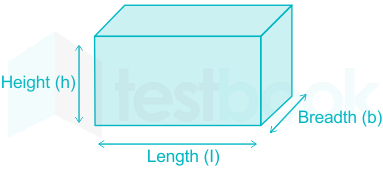
The different surface areas of this cuboid will be l × b,  b × h, l × h. 

if l > b > h, the maximum area will be obviously l × b, and the minimum area will be b × h. 

So, if the box is placed along its length and breadth, then the surface area facing the table is A1 = l × b. 

Pressure will be be 

(P1)=(F)(A1){\rm{ (P_1)}} = \frac{{{\rm{ (F)}}}}{{{\rm{ (A_1)}}}} -- (1)

f the box is placed along with Its height and breadth, then the surface area facing the table is A2 = h × b. 

(P2)=(F)(A2){\rm{ (P_2)}} = \frac{{{\rm{ (F)}}}}{{{\rm{ (A_2)}}}} -- (2)

Since applied force (F) is the weight of the block and the same in all cases.

Since A1 > A2

P1 < P2 

As a fraction with the same numerator and the higher denominator is smaller. 

So, pressure is different in different cases and force is the same.

In the following case, Case (a) will have more pressure as the area is less. 

Question 76

In the diagram of animal cell given below, the correct labelling of the parts A, B, C and D is

  1. AOption (a)

    A - cell wall, B - vacuole, C - chloroplast, D - nucleus

  2. BOption (b)

    A- cell membrane, B - vacuole, C - nucleus, D - cytoplasm

  3. COption (c)

    A - cell membrane, B - plastids, C - nucleus, D - chloroplast

  4. DOption (d)

    A - cell wall, B - vacuole, C - nucleus, D - mitochondria

View answer & explanation

Correct answer

Answer: (b)B.

A- cell membrane, B - vacuole, C - nucleus, D - cytoplasm

Why this answer is correct

Concept:

Cell

  • The cell is the basic structure or building block of all living beings.
  • On basis of a number of cells, organisms are divided into unicellular and multicellular organisms.
  • Unicellular organisms can perform all kinds of life processes like respiration, digestion of food, reproduction, and excretion of waste.
  • Examples of unicellular organisms include amoeba, bacteria, etc.
  • Cell have certain components called cell organelles which makes cell to survive.
  • Some of the cell organelles are vacuole, mitochondria, plastids, etc.
  • Plant cells and animal cells have certain differences according to their need.
  • The difference can be observed in the below diagram.

Explanation:

From the above diagram, if we compare to the question diagram (animal cell) we will get

A- cell membrane, B - vacuole, C - nucleus, D - cytoplasm is the correct option. 

Functions of organelles

  • Cell Membrane: It is a porous structure that allows the entry or exit of materials from the cell according to the requirement.
  • Vacuole: It is a blank-looking structure present in the cell which is used for storing food.
  • Nucleus: It contains a central part called nucleolus and chromosomes. Chromosomes carry genes from parents to offspring.
  • Cytoplasm: It is a jelly-like structure between the nucleus and cell membrane which contains other organelles.
  • Plastids: It is present in the plant cells. The green-colored plastids contain chlorophyll and help in photosynthesis.
  • Mitochondria: It is the powerhouse of the cell. it performs cellular respiration.


Cell OrganellePlant CellAnimal Cell
Cell membranePresentPresent
Cell wallPresentAbsent
NucleusPresentPresent
Nuclear membranePresentPresent
CytoplasmPresentPresent
PlastidsPresentAbsent
VacuolePresentPresent (smaller)

Question 77

The odometer reading of a moving car at 8:00 a.m. is 36540 km and at 10:00 a.m. 36666 km. If the car is moving on a zigzag path with variable speeds, its average speed in metres per second is

  1. AOption (a)

    6.3

  2. BOption (b)

    12.6

  3. COption (c)

    17.5

  4. DOption (d)

    35

View answer & explanation

Correct answer

Answer: (c)C.

17.5

Why this answer is correct

Concept:

  • Speed: Total distance traveled by the total time taken is called speed.
  • Speed measures how fast the body is moving.

speed=total distancetotal time\rm speed = \dfrac{total \ distance}{total \ time}

⇒ distance = speed × time

  • Odometer: It is the device that is used to measure the distance traveled by a vehicle.
  • Conversion of speed from km / hr to m /s

1 km = 1000 m

1 hr = 3600 second

1 km / 1 hr = 1000 m / 3600 second = 518 m/s\frac{5}{18} \ m / s

Calculation:

Odometer reading at 8:00 a.m. = 36540 km 

Odometer reading at 10:00 a.m. = 36666 km.

The difference in reading of meter = 36666 km - 36540 km = 126 km

Time taken (between 10:00 a.m. and 8:00 a.m.) = 2 hrs

speed=126 km2 hr=63 km/hr\rm speed = \dfrac{ 126 \ km}{2 \ hr} = 63 \ km /hr

Now, this is needed to be converted into m /s.

For this the speed has to be multiplied by 5 / 18

So, speed 

v=63×518=352=17.5 m/sv = 63 \times \frac{5}{18} = \frac{35}{2} = 17.5 \ m/s

So, the correct option is 17.5.

Question 78

A boy has a thick paste of turmeric. On adding this paste to hydrochloric acid and aqueous solution of sodium hydroxide separately, what colour(s) would he observe?

  1. AOption (a)

    yellow in both cases

  2. BOption (b)

    Yellow in hydrochloric acid and red in sodium hydroxide

  3. COption (c)

    Pink in hydrochloric acid and blue in sodium hydroxide

  4. DOption (d)

    Blue in hydrochloric acid and red in sodium hydroxide

View answer & explanation

Correct answer

Answer: (b)B.

Yellow in hydrochloric acid and red in sodium hydroxide

Why this answer is correct

Concept:

Acid and Base

AcidBase
Acids are sour in taste.Bases are bitter in taste and have a soapy feel.
Acids are present in sour fruits, vinegar, toilet cleaner, etc.Bases are present in neem, clove, soaps, etc.
Acids turn blue litmus paper to red.Bases turn litmus paper from red to blue.

Indicators

  • The indicators are chemicals or natural substances which change their colour in presence of acid or base.
  • Litmus paper is an indicator that is obtained from lichens.
  • Some indicators and their colour change are given in the table below:
IndicatorColour Change in Acidic SolutionColour Change in Basic Solution
PhenolphthaleinColourlessPink
Methyl OrangeRed or OrangeYellow
Litmus PaperRedBlue
TurmericYellowRed
China RoseDark pinkGreen

Explanation:

  • Turmeric is a natural indicator.
  • It remains yellow in acidic solution and turns red in basic solution.
  • This property of turmeric is also used in painting.
  • Hydrochloric acid is an acid hence turmeric will remain yellow in that solution.
  • Sodium hydroxide is the base, so turmeric will turn red in the sodium hydroxide solution.

So, the correct option is 'Yellow in hydrochloric acid and red in sodium hydroxide.'

Question 79

Study the following statements with reference to the villi of small intestine:

(A) They are finger - like outgrowths and thousands in number:

(B) They have very thin walls.

(C) They have a network of thin and small blood vessels close to the surface.

(D) They have small pores through which food can easily pass.

The statements which enable to villi to absorb the digested food are

  1. AOption (a)

    (A) and (B) only

  2. BOption (b)

    (C) and (D) only

  3. COption (c)

    (A), (B) and (C)

  4. DOption (d)

    (B), (C) and (D)

View answer & explanation

Correct answer

Answer: (c)C.

(A), (B) and (C)

Why this answer is correct

Concept:

Absorption in Small Intestine

  • The food stored in the stomach, after going through the required processes goes to the small intestine.
  • The absorption of food takes place here first.
  • This is the process of absorbing food by the blood vessels.
  • For the process to happen, finger-like projection is present in the small intestine which is called villi.
  • They have thin walls and mostly covered with a thin channel of blood capillaries.
  • This increases the surface area and ensures maximum absorption.
  • Each villus has a network of thin and small blood vessels close to its surface.

Conclusion:

  • So, the correct Statements are
  • (A) They are finger-like outgrowths and thousands in number:
  • (B). They have very thin walls.
  • (C) They have a network of thin and small blood vessels close to the surface.

Correct option is (A), (B) and (C).

Question 80

Given below are some food items:

(A) Boiled and mashed potato

(B) Boiled and chewed rice

(C) A slice of bread

(D) Sugar solution

(E) Coconut oil

Which of the above will give blue - black colour when tested with iodine solution?

  1. AOption (a)

    (A) and (C)

  2. BOption (b)

    (B) and (D)

  3. COption (c)

    (A), (B) and (C)

  4. DOption (d)

    (A), (C) and (E)

View answer & explanation

Correct answer

Answer: (a)A.

(A) and (C)

Why this answer is correct

Concept:

Test For Starch:

  1. Take a small quantity of a food item or a raw ingredient. Put 2-3 drops of dilute iodine solution on it
  2. Observe if there is any change in the colour of the food item.
  3. A blue-black colour indicates that it contains starch.

Explanation:

  • The food items containing starch will give a blue-black colour.
  • Starch is a carbohydrate.
  • The carbohydrate-containing food items in the above list are boiled and mashed potato and a slice of bread.
  • The boiled and chewed rice is added to the iodine solution then the colour of iodine will not change because of the digestion of starch into sugars.
  • The sugar solution and Coconut oil does not contain starch and hence will not give a blue-black colour.
  • Thereby the correct option is (A) and (C).

Question 81

Which teaches the correct method of using a spring balance to Class VIII students, Gunjan mentions the following steps (not in correct sequence) to be followed:

(A) Note the zero error.

(B) Calculate the actual reading.

(C) Note the position of the pointer on the graduated scale.

(D) Record the least count of the spring balance.

Which one of the following is the correct sequence of the steps to be followed for the said purpose?

  1. AOption (a)

    (A), (D), (B), (C)

  2. BOption (b)

    (D), (A), (C), (B)

  3. COption (c)

    (A), (D), (C), (B)

  4. DOption (d)

    (A), (B), (D), (C)

View answer & explanation

Correct answer

Answer: (b)B.

(D), (A), (C), (B)

Why this answer is correct

Key Points

A spring balance is primarily meant for measuring the weight (force) of an object. However, in laboratories, a spring balance is often used to measure the mass of an object. The correct method of using a spring balance is-

  • Record the least count of the spring balance.
  • Note the zero error.
  • Note the position of the pointer on the graduated scale
  • Calculate the actual reading.

Thus from above-mentioned points, it is clear that the correct sequence of the steps to be followed is (D), (A), (C), (B).

Question 82

Which one of the following is not a desired objective of learning of Science at upper primary stage?

  1. AOption (a)

    To acquire scientific literacy

  2. BOption (b)

    To develop rational thinking

  3. COption (c)

    To acquire essential process skills

  4. DOption (d)

    To perform better in competitive examinations

View answer & explanation

Correct answer

Answer: (d)D.

To perform better in competitive examinations

Why this answer is correct

Science refers to the study of structure and behaviour of the physical and natural things through observation and experimentation. In other words, science is a classified knowledge gained from a systematic study of the behaviour of nature. Science education should enable the learner to know the facts and principles of science and its applications, consistent with the stage of cognitive development. 

Key Points

At the upper primary level-

  • The emphasis is on engaging the learner in learning principles of science through familiar experiences, working with hands to design simple technological units and modules and continuing to learn more about environment and health through activities and surveys.
  • To acquire scientific literacy as the learners should be given the opportunity to explore science in their everyday experiences.
  • To develop rational thinking, A teacher should engage learners (preferably in groups) in meaningful investigations -particularly of the problems they perceive to be significant and important.
  • A teacher should encourage discussions with the teacher and peers.
  • You can ask your learners to gather information from newspapers, knowledgeable persons in the neighborhood, and from easily available sources and discuss them in class with peers and teachers.
  • Role play, skits, cooperative learning strategies should be adopted to ensure larger participation and sharing of learning outcomes.
  • It is advised that biographical narratives of scientists and inventors can be used.

Thus, from the above-mentioned points, it is clear that performing better in the competitive examinations is not the desired objective of learning Science at the upper primary stage.

Question 83

The technique of role - play is considered to be an effective strategy in teaching of Science because

  1. AOption (a)

    it ensures better understanding of one's role in real life

  2. BOption (b)

    it ensures active participation of students in the process of learning

  3. COption (c)

    it is likely to promote social skills of students

  4. DOption (d)

    it ensures breaking of monotony in the process of learning

View answer & explanation

Correct answer

Answer: (b)B.

it ensures active participation of students in the process of learning

Why this answer is correct

Teaching-Strategy: It is a process, which is explicitly and systematically designed to, ensure that the learners accomplish the instructional objectives. The purpose of instruction is to improve performance.

There are a variety of teaching methods that can be used by the teacher for teaching theory and skills in the classroom setting. These are broadly classified as:

  • teacher-centred teaching methods
  • Student-centred teaching methods

Key Points

Role Play Method-

  • Role-play is another student-centred method of teaching, it ensures the active participation of students in the process of learning.
  • Roleplay is defined as the spontaneous acting of roles in the context of clearly defined social situation by two or more persons for subsequent discussions by the whole class.
  • Role-play is the medium to express one's opinion and feelings about a certain social situation, what people can think, and feel and why they behave and what can be done to handle the situations through presentation and discussion in the group.
  • This method thus can generate data about human behaviour and human relations which are not available by traditional methods.

Advantages: 

  • Develops skills in leadership, interviewing, and social interaction, e.g., how to lead a discussion, and how to be a member of the team responsible for patient care.
  • Provides an opportunity for the student to put herself in another's place and to become more sensitive to another's feelings.
  • Develops skills in group problem-solving. It helps the student in identifying critical issues and to come to a neutral agreement.
  • Allows the student to practice selected behaviour in a real-life situation without the stress of making a mistake.

Thus from the above-mentioned points, it is clear that the technique of role-playing is considered to be an effective strategy in teaching Science because it ensures the active participation of students in the process of learning. 

Additional Information

  • Teacher-centred teaching methods-
  • Lecture
  • Demonstration
  • Class discussion

Question 84

Science is considered to be questioning, exploring, doing and investigating. Which of the following activities, carried out by Dipika in the teaching of Science, is best suited to satisfy these criteria?

  1. AOption (a)

    Unit test on microorganisms

  2. BOption (b)

    A group discussion on common diseases

  3. COption (c)

    A debate on environmental issues

  4. DOption (d)

    Project work on nature of sound

View answer & explanation

Correct answer

Answer: (d)D.

Project work on nature of sound

Why this answer is correct

In the teaching-learning of science, learner-centred methods are more in use. In these methods, learners acquire skills and abilities through activities under the guidance of a teacher. Here, the teachers’ role is more of a facilitator. Science is considered to be questioning, exploring, doing and investigating. Which of the following activities, carried out by Dipika in the teaching of Science, is best suited to satisfy these criteria is project work.

Key Points

Investigatory Project in Science-

  • Investigatory projects use the scientific method. It starts with asking questions about something learners observe. When learners frame questions about their observation, they should be encouraged to arrive at a testable and precise question or the question on which they do their project.
  • After researching and investigating, they frame hypotheses, i.e. the possible answers for their questions. Generally, learners use the terms like ‘if’/ ‘then’ to convert the question into a hypothesis.
  • When they frame hypotheses, they started thinking of the experimentation.
  • While doing experimentation, learners record the observations and analyze them in order to find out the answer to their question. Sometime, the hypotheses may be right and some times it may be wrong. If the hypothesis is wrong, they again reframe a new hypothesis and test it.
  • Learners report their findings in clear terms in either case i.e. hypothesis is accepted or rejected.

Thus from above-mentioned points, it is clear that project work on the nature of sound is best suited to satisfy these criteria.

Question 85

National Curriculum Framework (NCF), 2005 recommends that teaching should emphasize maximum on

  1. AOption (a)

    relating classroom learning to life outside the school

  2. BOption (b)

    memorizing all scientific terms given in textbook

  3. COption (c)

    answering all questions given in textbook exercises

  4. DOption (d)

    improving students performance in examinations

View answer & explanation

Correct answer

Answer: (a)A.

relating classroom learning to life outside the school

Why this answer is correct

NCF(National Curriculum Framework) 2005 is one of the four NCFs published in India by NCERT. It seeks to provide a framework for the betterment of educational purposes and experiences.

Key Points

National Curriculum Framework (NCF), 2005 recommends that teaching should emphasize maximum on relating classroom learning to life outside the school as NCF:

  • focuses on shifting from content-based testing to competency-based testing.
  • emphasizes to involve children in the learning process to make them able to create their own version of knowledge.

Important Points

NCF emphasizes to:

  • shift learning from the rote method.
  • enrich the curriculum to address the diverse needs.
  • connect classroom learning with real situations.
  • encourage students to explore higher levels of knowledge.
  • nurture the natural curiosity, aesthetic sense, and creativity.
  • develop a child-centered approach in a burden-free environment.
  • make school a satisfactory place for learners to gain quality experience.

Hence, it could be concluded that National Curriculum Framework (NCF), 2005 recommends that teaching should emphasize maximum on relating classroom learning to life outside the school.

Question 86

Geeta is preparing a lesson - plan for teaching the topic on 'Human eye' to Class VIII students. Inclusion of which of the following activities in the lesson - plan is likely to be most effective in helping the students understand related concepts better?

  1. AOption (a)

    Preparing a good home assignment

  2. BOption (b)

    Dictating notes to students in the classroom

  3. COption (c)

    Using student activities and interactive classroom questioning

  4. DOption (d)

    Demonstration using model of human eye

View answer & explanation

Correct answer

Answer: (d)D.

Demonstration using model of human eye

Why this answer is correct

An approach may be explained as a comprehensive way of dealing with a particular problem. It is a general plan of action, on the basis of which, various methods and models have evolved. 

If Geeta is preparing a lesson - plan for teaching the topic on 'Human eye' to Class VIII students. Inclusion of demonstration activities in the lesson - plan is likely to be most effective in helping the students understand related concepts better. 

Key Points

Demonstration Method- 

  • Demonstration means 'to show'.
  • Demonstration method is an activity-centred method which is being used frequently in a science classroom.
  • There are a number of concepts and theories in science, which can be explained to learners only by demonstration.
  • Demonstration helps learners to learn through observation.
  • Demonstrations provide concrete experiences to students.
  • Thus by demonstrations, some abstract ideas are also made clear to students.
  • This method includes charts, models, etc.
  • When using this method, the teacher (you) should keep in mind the following characteristics of a Good Demonstration- 
  • It should be clearly visible to all students, even to the backbenchers.
  • Students should be fully involved

Thus from above-mentioned points, it is clear that Demonstration using a model of the human eye in the lesson - plan is likely to be most effective in helping the students understand related concepts better.

Question 87

On the basis of recommendations of the National Curriculum Framework (NCF), 2005, NCERT textbooks in Science lay greater emphasis on

(A) discouraging rote learning

(B) maintaining sharp boundaries between different domains of Science curriculum

(C) providing active learning experiences to students

(D) learning exact definitions of scientific terms

Which one of the following pairs represents the combination of correct statements given above?

  1. AOption (a)

    (A) and (B)

  2. BOption (b)

    (A) and (C)

  3. COption (c)

    (C) and (D)

  4. DOption (d)

    (B) and (C)

View answer & explanation

Correct answer

Answer: (b)B.

(A) and (C)

Why this answer is correct

The National Curriculum Framework (NCF)-2005 provide ample scope for the holistic development of the learners. The NCF-2005 curriculum recommends various initiatives and approaches such as activity-based learning, experiential learning, collaborative learning and so on. 

Key Points

On the basis of recommendations of the National Curriculum Framework (NCF), 2005, NCERT textbooks in Science lay greater emphasis on-

  • Learners have the opportunity to explore various elements of science and start making sense of science in daily experiences
  • must be tested and experimented apart from simple experiments and hands-on activities.
  • discouraging rote learning
  • Textbooks function as an important resource for knowledge construction.
  • Textbooks should not be loaded with factual information’s rather should provide learners with challenging situations to actively engage in learning processes and construction of knowledge.

Thus from above-mentioned points, it is clear that (A) and (C) pairs represent the combination of correct statements.

Question 88

Which one of the following approaches adopted by a Science teacher reflects scientific temper on their part?

  1. AOption (a)

    Maintaining perfect discipline in the class

  2. BOption (b)

    Covering the prescribed syllabus as quickly as possible

  3. COption (c)

    Encouraging students to ask questions in the classroom

  4. DOption (d)

    Preparing difficult question papers to enhance learning

View answer & explanation

Correct answer

Answer: (c)C.

Encouraging students to ask questions in the classroom

Why this answer is correct

The question-answer method helps in attaining inquiry-based understanding and may involve the deconstruction of pre-existing ideas. As, science is a subject of inquiry, so the teacher has to encourage students to ask questions in the classroom. 

Key Points

The teacher has to create and sustain an intellectually stimulating classroom environment and encourage students to participate actively. S/he has to:

  • Choose a topic suitable for being taught by this method
  • Plan significant questions that direct the teaching-learning process and challenge students
  • Ask probing questions to stimulate critical and deep thinking
  • Ensure that the questions are specific and challenging
  • Ensure that the discussion is focused
  • Ask students to elaborate if answers are not clear
  • Ensure that all students participate

Thus from the above-mentioned points, it is clear that encouraging students to ask questions in the classroom is correct in the context of the question.

Additional Information

  • Questions can be asked according to the following categories-
  • Probing questions
  • Open-ended questions
  • Convergent questions
  • Divergent questions

Question 89

The following steps (not in the proper sequence) are generally recommended to be followed in the scientific method:

(A) Testing of hypothesis

(B) Formulation of hypothesis

(C) Identification of a problem

(D) Collection of data

(E) Drawing of conclusion

Which one of the following is the correct sequence of the above steps to be followed for this purpose?

  1. AOption (a)

    (C), (A), (D), (B), (E)

  2. BOption (b)

    (C), (B), (D), (A), (E)

  3. COption (c)

    (D), (C), (B), (A), (E)

  4. DOption (d)

    (B), (C), (A), (D), (E)

View answer & explanation

Correct answer

Answer: (b)B.

(C), (B), (D), (A), (E)

Why this answer is correct

Scientific Method: The scientific method is an empirical method of acquiring knowledge that has characterized the development of science since at least the 17th century.

  • It involves careful observation, applying rigorous skepticism about what is observed, given that cognitive assumptions can distort how one interprets the observation.
  • It involves formulating hypotheses, via induction, based on such observations; experimental and measurement-based testing of deductions drawn from the hypotheses; and refinement (or elimination) of the hypotheses based on the experimental findings.
  • The goal of the research is to find the truth and to use a scientific method that results in reasonable and sound answers to important questions that will further our understanding of human behaviour.

Key Points

The research process consists of a series of actions and steps needed for conducting scientific research. Which are given below-

  • Identification of the Problem
  • Review of Literature
  • Formulating a Hypothesis
  • Identifying, Manipulating, and Controlling Variables
  • Formulating a Research Design
  • Constructing Devices for Observation and Measurement
  • Sample Selection and Data Collection
  • Data Analysis and Interpretation
  • Hypothesis Testing
  • Drawing Conclusion

Thus from the above-mentioned points, it is clear that (C), (B), (D), (A), (E) is the correct sequence of steps that are generally recommended to be followed in the scientific method.

Question 90

Hands - on activities and projects form an integral part of learning of Science. These learning experiences primarily aim at

  1. AOption (a)

    assessing the students on practical skills

  2. BOption (b)

    keeping the students engaged all the time

  3. COption (c)

    maintaining discipline in the laboratory

  4. DOption (d)

    providing opportunity to students for extended learning

View answer & explanation

Correct answer

Answer: (d)D.

providing opportunity to students for extended learning

Why this answer is correct

In science there are some activities on learning which designed activities suggest that how different skills of comparing, classifying, experimentation, introspection, critical thinking, recalling, estimating, analyzing, and making a decision can be nurtured among children through these. The skills of science are get strengthened through these activities. 

Go through the following points for planning and executing different activities-​

Key Points

  • Through Hands-on activities and projects
  • Ample opportunities have been provided to the learners to work hands-on through observation, drawing, illustration, design, and fabrication and extended learning.
  • to engage the child in exploratory and hands-on activities to acquire basic cognitive and psycho-motor skills through, classification, inference, etc.
  • The activities are well within the cognitive reach of children and are in the form of stories, poems, plays, craftwork, games, worksheets, interaction, field visits encouraging the creative and aesthetic sense of children.
  • The activities are learner-centered, relevant, meaningful, and interesting nurturing the curious and exploratory bent of mind of children.
  • These focus on providing learning experiences in and out of the classroom.

Thus from the above-mentioned points, it is clear that Hands-on activities and projects form an integral part of learning Science. These learning experiences primarily aim at providing an opportunity to students for extended learning.

English - I (30 questions)

Directions: Read the given passage and answer the question that follow by selecting the most appropriate option.

Have you ever wondered what the qualities of a really professional teacher are? I know that all teachers want their students to like them, but being liked isn't the be-all and end-all really, is it? I mean teachers have to make some unpopular decisions sometimes.

Teachers can be popular just because they are friendly and helpful, but to be truly professional and effective, we need to be able to identify the skills and behaviour we require in a true professional. A professional teacher needs to be confident without being arrogant. Nobody can expect to have all the answers, so, if a student asks a real stinker, the professional teacher should be able to admit defeat but offer to find out more for the student. And they must carry that promise out. When the teacher enters the classroom, she / he should have all the required materials and the lesson-plan ready. And, in orchestrating the class, the teacher must give everyone their chance to contribute and should be flexible enough to modify lessons if they are obviously not going to plan. Indeed, a fallback position is part of good planning. It stands to reason also that a teacher must observe punctuality and appropriate tidiness and dress : it is not possible to demand such behaviour from students if the teacher doesn't set the standards.

The last thing I would mention is that teachers should be able to feel that their professionalism entitles them to back up from the school directors. If a teacher has a problem with class or student, then the school should have procedures for handling the difficulties. The teacher should not have to feel alone and vulnerable if a difficult situation rises. So, yes, professionalism cuts both ways : in the standards we demand of teachers and the framework we have for giving them support.

Question 91

Based on Passage: View directions & passage

The expression isn't the be-all and end-all... is an assumption that pertains to the _____ point of view.

  1. AOption (a)

    writer's

  2. BOption (b)

    teachers'

  3. COption (c)

    students

  4. DOption (d)

    general

View answer & explanation

Correct answer

Answer: (a)A.

writer's

Why this answer is correct

The correct answer is teachers'.

Key Points

  • Refer to the line: Have you ever wondered what the qualities of a really professional teacher are? I know that all teachers want their students to like them, but being liked isn't the be-all and end-all really, is it? I mean teachers have to make some unpopular decisions sometimes.
  • Thus, it can be conclude that from the writer's point of view, being liked isn't the be-all and end-all really.
  • Thus, option 1 is the most appropriate answer choice.

Hinglish

  • पंक्ति का संदर्भ लें: Have you ever wondered what the qualities of a really professional teacher are? I know that all teachers want their students to like them, but being liked isn't the be-all and end-all really, is it? I mean teachers have to make some unpopular decisions sometimes.
  • इस प्रकार, यह निष्कर्ष निकाला जा सकता है कि लेखक के दृष्टिकोण से, पसंद किया जाना वास्तव में सब कुछ और अंत नहीं है।
  • इस प्रकार, विकल्प 1 सबसे उपयुक्त उत्तर विकल्प है।

Question 92

Based on Passage: View directions & passage

Here, the fallback position is the system where _____ well-prepared.

  1. AOption (a)

    good students are

  2. BOption (b)

    good teachers are

  3. COption (c)

    teachers, even if caught out unexpectedly, are still

  4. DOption (d)

    students and teachers who support each other are

View answer & explanation

Correct answer

Answer: (b)B.

good teachers are

Why this answer is correct

The correct answer is good teachers are.

Key Points

  • Refer to the line: Indeed, a fallback position is part of good planning. It stands to reason also that a teacher must observe punctuality and appropriate tidiness and dress : it is not possible to demand such behaviour from students if the teacher doesn't set the standards.
  • The fallback position is the system where teachers are well dressed and punctual.
  • Thus, we can conclude that option 2 is the most appropriate answer choice.

Hinglish

  • पंक्ति का संदर्भ लें: Indeed, a fallback position is part of good planning. It stands to reason also that a teacher must observe punctuality and appropriate tidiness and dress : it is not possible to demand such behaviour from students if the teacher doesn't set the standards.
  • फॉलबैक स्थिति वह प्रणाली है जहां शिक्षक अच्छी तरह से तैयार होते हैं और समय के पाबंद होते हैं।
  • इस प्रकार, हम यह निष्कर्ष निकाल सकते हैं कि विकल्प 2 सबसे उपयुक्त उत्तर विकल्प है।

Question 93

Based on Passage: View directions & passage

Here, able to admit defeat implies that

  1. AOption (a)

    Students can 'catch' a teacher unaware

  2. BOption (b)

    teachers easily lose self-confidence as they lack professionalism

  3. COption (c)

    it doesn't matter if students often contradict what their teacher says

  4. DOption (d)

    teachers should be confident enough to own up to their unpreparedness

View answer & explanation

Correct answer

Answer: (d)D.

teachers should be confident enough to own up to their unpreparedness

Why this answer is correct

The correct answer is teachers should be confident enough to own up to their unpreparedness.

Key Points

  • Refer to the line: A professional teacher needs to be confident without being arrogant. Nobody can expect to have all the answers, so, if a student asks a real stinker, the professional teacher should be able to admit defeat but offer to find out more for the student. And they must carry that promise out.
  • Here, able to admit defeat means that the teacher if not able to answer each and everything, should accept this thing and be confident enough to tell the students that he/she will make every effort to find the answer to the student's problems.
  • Thus, we can conclude that option 4 is the most appropriate answer choice.

Hinglish

  • पंक्ति का संदर्भ लें: A professional teacher needs to be confident without being arrogant. Nobody can expect to have all the answers, so, if a student asks a real stinker, the professional teacher should be able to admit defeat but offer to find out more for the student. And they must carry that promise out.
  • यहाँ, हार मानने में सक्षम होने का अर्थ है कि यदि शिक्षक हर बात का उत्तर देने में सक्षम नहीं है, तो उसे इस बात को स्वीकार करना चाहिए और छात्रों को यह बताने के लिए पर्याप्त आश्वस्त होना चाहिए कि वह छात्र की समस्याओं का उत्तर खोजने का हर संभव प्रयास करेगा।
  • इस प्रकार, हम यह निष्कर्ष निकाल सकते हैं कि विकल्प 4 सबसे उपयुक्त उत्तर विकल्प है।

Question 94

Based on Passage: View directions & passage

Here, orchestrating the class suggests

  1. AOption (a)

    the teacher controlling the class to ensure high grades

  2. BOption (b)

    the whole class performing uniformly well

  3. COption (c)

    acknowledging the individual differences in the process of achievement

  4. DOption (d)

    that music helps academic achievement

View answer & explanation

Correct answer

Answer: (c)C.

acknowledging the individual differences in the process of achievement

Why this answer is correct

The correct answer is acknowledging the individual differences in the process of achievement.

Key Points

  • Refer to the line: When the teacher enters the classroom, she / he should have all the required materials and the lesson-plan ready. And, in orchestrating the class, the teacher must give everyone their chance to contribute and should be flexible enough to modify lessons if they are obviously not going to plan.
  • Here, orchestrating the class suggests that a professional teacher should give every individual a chance to contribute and it helps a lot in achieving things/plans.
  • Thus, we can conclude that option 3 is the most appropriate answer choice.

Hinglish

  • पंक्ति का संदर्भ लें: When the teacher enters the classroom, she / he should have all the required materials and the lesson-plan ready. And, in orchestrating the class, the teacher must give everyone their chance to contribute and should be flexible enough to modify lessons if they are obviously not going to plan.
  • यहां, कक्षा को व्यवस्थित करने से पता चलता है कि एक पेशेवर(professional) शिक्षक को प्रत्येक व्यक्ति को योगदान करने का मौका देना चाहिए और यह चीजों/योजनाओं को प्राप्त करने में बहुत मदद करता है।
  • इस प्रकार, हम यह निष्कर्ष निकाल सकते हैं कि विकल्प 3 सबसे उपयुक्त उत्तर विकल्प है।

Question 95

Based on Passage: View directions & passage

Here, ... asks a real stinker... suggests that

  1. AOption (a)

    teachers are always unprepared

  2. BOption (b)

    students can be better informed than their teachers

  3. COption (c)

    students dislike teachers in general

  4. DOption (d)

    teachers are unprofessional in students' eyes

View answer & explanation

Correct answer

Answer: (b)B.

students can be better informed than their teachers

Why this answer is correct

The correct answer is students can be better informed than their teachers.

Key Points

  • Refer to the line: A professional teacher needs to be confident without being arrogant. Nobody can expect to have all the answers, so, if a student asks a real stinker, the professional teacher should be able to admit defeat but offer to find out more for the student. And they must carry that promise out.
  • Here, it implies that if a student asks a really informative question and teacher doesn't know about it, he/she must admit the same.
  • The student can have more knowledge/information than the teacher sometimes.
  • Thus, we can conclude that option 2 is the most appropriate answer choice.

Hinglish

  • पंक्ति का संदर्भ लें: A professional teacher needs to be confident without being arrogant. Nobody can expect to have all the answers, so, if a student asks a real stinker, the professional teacher should be able to admit defeat but offer to find out more for the student. And they must carry that promise out.
  • इसका तात्पर्य यह है कि यदि कोई छात्र वास्तव में जानकारीपूर्ण प्रश्न पूछता है और शिक्षक को इसके बारे में पता नहीं है, तो उसे उसे स्वीकार करना होगा।
  • विद्यार्थी के पास कभी-कभी शिक्षक से अधिक ज्ञान/सूचना हो सकती है।
  • इस प्रकार, हम यह निष्कर्ष निकाल सकते हैं कि विकल्प 2 सबसे उपयुक्त उत्तर विकल्प है।

Question 96

Based on Passage: View directions & passage

A word that can best replace the word entitles in the passage is

  1. AOption (a)

    warrants

  2. BOption (b)

    names

  3. COption (c)

    calls

  4. DOption (d)

    gives

View answer & explanation

Correct answer

Answer: (a)A.

warrants

Why this answer is correct

The correct answer is students can be better informed than their teachers.

Key Points

  • Refer to the line: The last thing I would mention is that teachers should be able to feel that their professionalism entitles them to back up from the school directors. 
  • Entitles means to furnish with a right or claim to something.
  • Warrants means officially affirm or guarantee something.
  • Thus, we can conclude that warrants is the correct replacement of the word 'entitles'.
  • Let's see the sentence after replacement: The last thing I would mention is that teachers should be able to feel that their professionalism warrants them to back up from the school directors.
  • Thus, warrants can best replace the word.

Hinglish

  • पंक्ति का संदर्भ लें: The last thing I would mention is that teachers should be able to feel that their professionalism entitles them to back up from the school directors.
  • ​एंटाइटेल का अर्थ है किसी चीज पर अधिकार या दावा प्रस्तुत करना।
  • वारंट का मतलब आधिकारिक तौर पर किसी चीज की पुष्टि या गारंटी देना है।
  • इस प्रकार, हम यह निष्कर्ष निकाल सकते हैं कि warrants 'entitles' शब्द का सही प्रतिस्थापन है।
  • पंक्ति का संदर्भ लें:आखिरी बात जो मैं उल्लेख करूंगा वह यह है कि शिक्षकों को यह महसूस करने में सक्षम होना चाहिए कि उनका व्यावसायिकता उन्हें स्कूल के निदेशकों से बैक अप लेने के लिए warrantकरता है।
  • इस प्रकार, warrants शब्द को सर्वोत्तम रूप से प्रतिस्थापित कर सकता हैं।

Question 97

Based on Passage: View directions & passage

The writer's view that professionalism cuts both ways means

  1. AOption (a)

    teachers are faced with students and trustees hold them accountable

  2. BOption (b)

    teachers teach well then trustees pay them well

  3. COption (c)

    trustees and their employees owe each other support

  4. DOption (d)

    students and teachers owe respect to the management of their school

View answer & explanation

Correct answer

Answer: (c)C.

trustees and their employees owe each other support

Why this answer is correct

The correct answer is trustees and their employees owe each other support.

Key Points

  • Refer to the line: If a teacher has a problem with class or student, then the school should have procedures for handling the difficulties. The teacher should not have to feel alone and vulnerable if a difficult situation rises. So, yes, professionalism cuts both ways : in the standards we demand of teachers and the framework we have for giving them support.
  • Upon the perusal of the above line, it can be deduced that a teacher as well as the school management should support each other in case any difficulty arises.
  • Thus, we can conclude that trustees and their employees owe each other support.

Hinglish

  • पंक्ति का संदर्भ लें: If a teacher has a problem with class or student, then the school should have procedures for handling the difficulties. The teacher should not have to feel alone and vulnerable if a difficult situation rises. So, yes, professionalism cuts both ways : in the standards we demand of teachers and the framework we have for giving them support.
  • उपरोक्त पंक्ति के अवलोकन से यह निष्कर्ष निकाला जा सकता है कि यदि कोई कठिनाई उत्पन्न होती है तो एक शिक्षक के साथ-साथ स्कूल प्रबंधन को एक दूसरे का समर्थन करना चाहिए।
  • इस प्रकार, हम यह निष्कर्ष निकाल सकते हैं कि ट्रस्टी और उनके कर्मचारी एक-दूसरे का समर्थन करते हैं।

Question 98

Based on Passage: View directions & passage

A word from the passage that is the antonym of the word unshakable, is

  1. AOption (a)

    vulnerable

  2. BOption (b)

    difficult

  3. COption (c)

    helpful

  4. DOption (d)

    effective

View answer & explanation

Correct answer

Answer: (a)A.

vulnerable

Why this answer is correct

The correct answer is vulnerable.

Key Points

Let's see the meanings of all the words:

  • Unshakable: (of a belief, feeling, or opinion) strongly felt and unable to be changed
  • Vulnerable: susceptible to physical or emotional attack or harm

Thus, vulnerable can be used as a antonym of unshakable.

Additional Information

  • Difficult: needing much effort or skill to accomplish, deal with, or understand
  • Helpful: giving or ready to give help
  • Effective: successful in producing a desired or intended result

Hinglish

  • Unshakable: (एक विश्वास, भावना या राय का) दृढ़ता से महसूस किया और बदला नहीं जा
  • Vulnerable: शारीरिक या भावनात्मक हमले या नुकसान के लिए अतिसंवेदनशील
  • Difficult: पूरा करने, निपटने या समझने के लिए बहुत प्रयास या कौशल की आवश्यकता होती है
  • Helpful: मदद देना या देने के लिए तैयार होना
  • Effective: वांछित या इच्छित परिणाम उत्पन्न करने में सफल

इस प्रकार, vulnerable का उपयोग unshakable के पर्याय के रूप में किया जा सकता है।

Question 99

Based on Passage: View directions & passage

Here, framework refers to the overall

  1. AOption (a)

    school curriculum

  2. BOption (b)

    clearly spelt out duties for teachers

  3. COption (c)

    system for assessment of teachers' performance

  4. DOption (d)

    transparency in fixing teachers' salary

View answer & explanation

Correct answer

Answer: (a)A.

school curriculum

Why this answer is correct

The correct answer is school curriculum.

Key Points

  • Refer to the lines: 
  • ​When the teacher enters the classroom, she / he should have all the required materials and the lesson-plan ready. And, in orchestrating the class, the teacher must give everyone their chance to contribute and should be flexible enough to modify lessons if they are obviously not going to plan.
  • It stands to reason also that a teacher must observe punctuality and appropriate tidiness and dress : it is not possible to demand such behaviour from students if the teacher doesn't set the standards.
  • The teacher should not have to feel alone and vulnerable if a difficult situation rises. So, yes, professionalism cuts both ways : in the standards we demand of teachers and the framework we have for giving them support.
  • Thus, we can see that the passage talks about school standards, punctuality, professionalism in school, students' importance and individual attention.
  • Hence, the passage focusses on school curriculum.

Hinglish

  • पंक्ति का संदर्भ लें: ​
  • When the teacher enters the classroom, she / he should have all the required materials and the lesson-plan ready. And, in orchestrating the class, the teacher must give everyone their chance to contribute and should be flexible enough to modify lessons if they are obviously not going to plan.
  • It stands to reason also that a teacher must observe punctuality and appropriate tidiness and dress : it is not possible to demand such behaviour from students if the teacher doesn't set the standards.
  • The teacher should not have to feel alone and vulnerable if a difficult situation rises. So, yes, professionalism cuts both ways : in the standards we demand of teachers and the framework we have for giving them support.
  • इस प्रकार, हम देख सकते हैं कि गद्यांश स्कूल के मानकों, समय की पाबंदी, स्कूल में व्यावसायिकता, छात्रों के महत्व और व्यक्तिगत ध्यान के बारे में बात करता है।
  • इसलिए, गद्यांश स्कूली पाठ्यक्रम पर केंद्रित है।

Directions: Read the given poem and answer the questions that follow by selecting the most appropriate option.

HAWK

All eyes are fearful of the spotted hawk, 

whose dappled wingspread opens to a phrase

that only victims gaping in the gaze of Death Occurring can recite.

To stalk; to plunge; to harvest;

the denial-squawk of dying's struggle;

these are but a day's rebuke to hunger for the hawk,

whose glazed accord with Death admits no show of shock.

Death's users know it is not theirs to own,

nor can they fathom all it means to die -

for young to know a different death from old.

But when the spotted hawk's last flight is flown,

he too becomes a novice,

fear-struck by the certain plummet once these feathers fold.

Question 100

Based on Passage: View directions & passage

The denail-squawk refers to the

  1. AOption (a)

    hawk's response to the cry of its prey

  2. BOption (b)

    helpless cry of its prey, to avert death

  3. COption (c)

    warming call by the hawk before killing its prey

  4. DOption (d)

    desperate, pitiable cry of the prey

View answer & explanation

Correct answer

Answer: (b)B.

helpless cry of its prey, to avert death

Why this answer is correct

The correct answer is helpless cry of its prey, to avert death.

Key Points

  • Refer to the lines: 
  • ​To stalk; to plunge; to harvest;

the denial-squawk of dying's struggle

  • The lines mean that the prey of the hawk is crying and squeaking upon knowing that the hawk will feed upon it.
  • Thus, the denial-squawk refers to the helpless cry of its prey, to avert death.

Hinglish

  • Lines का अर्थ है कि बाज का शिकार यह जानकर रो रहा है और चीख रहा है कि बाज उसे खा जाएगा।
  • इस प्रकार, denial-squawk मौत को टालने के लिए अपने शिकार के असहाय रोने को संदर्भित करता है।

Question 101

Based on Passage: View directions & passage

To the hawk, a day's rebuke to hunger suggests that the bird

  1. AOption (a)

    bows to hunger

  2. BOption (b)

    causes death by preying on lesser animals

  3. COption (c)

    averts own death by killing and eating its prey

  4. DOption (d)

    faces death fearlessly in contrast to its prey

View answer & explanation

Correct answer

Answer: (a)A.

bows to hunger

Why this answer is correct

The correct answer is bows to hunger.

Key Points

  • Refer to the lines: 
  • ​To stalk; to plunge; to harvest;

the denial-squawk of dying's struggle

these are but a day's rebuke to hunger for the hawk,

whose glazed accord with Death admits no show of shock.

  • The lines mean that the the hawk has no fear of killing someone for his food or to satisfy his hunger.
  • Bows to (someone or something) means to obey, pledge allegiance, or submit one's will to someone or something, especially in a reverential or servile manner.
  • Thus, to the hawk, a day's rebuke to hunger suggests that the bird obeys or willingly becomes the prey of the hawk and serves him i.e. bows to hunger.

Hinglish

  • पंक्तियों का अर्थ है कि बाज को भोजन के लिए या अपनी भूख को संतुष्ट करने के लिए किसी को मारने का कोई डर नहीं है।
  • Bows to (someone or something) को प्रणाम करने का अर्थ है पालन करना, निष्ठा की प्रतिज्ञा करना, या किसी को या किसी चीज़ को अपनी इच्छा प्रस्तुत करना, विशेष रूप से श्रद्धापूर्ण या दास तरीके से।
  • इस प्रकार, बाज को, भूख को एक दिन की फटकार से पता चलता है कि पक्षी आज्ञा का पालन करता है या स्वेच्छा से बाज का शिकार बन जाता है और उसकी सेवा करता है अर्थात भूख को झुकता है।(bows to hunger)

Question 102

Based on Passage: View directions & passage

Here, glazed accord with Death means that

  1. AOption (a)

    the prey meets death willingly

  2. BOption (b)

    death is inevitable

  3. COption (c)

    death is in partnership with starvation

  4. DOption (d)

    the hawk also becomes a victim of death at the end

View answer & explanation

Correct answer

Answer: (a)A.

the prey meets death willingly

Why this answer is correct

The correct answer is the prey meets death willingly.

Key Points

  • Refer to the lines: 
  • ​To stalk; to plunge; to harvest;

the denial-squawk of dying's struggle

these are but a day's rebuke to hunger for the hawk,

whose glazed accord with Death admits no show of shock.

  • Thus, the prey should accept death and willingly become the prey of the hawk and serve him.​
  • Hence, glazed accord with Death means that the prey meets death willingly.

Hinglish

  • इस प्रकार, शिकार को मृत्यु को स्वीकार करना चाहिए और स्वेच्छा से बाज का शिकार बनना चाहिए और उसकी सेवा करनी चाहिए।
  • इसलिए, मौत के साथ चमकदार(glazed) समझौते का मतलब है कि शिकार स्वेच्छा(willingly) से मौत से मिलता है।

Question 103

Based on Passage: View directions & passage

The word that is closest in meaning to the word 'dappled' in the poem is

  1. AOption (a)

    spotted

  2. BOption (b)

    fearful

  3. COption (c)

    glazed

  4. DOption (d)

    flown

View answer & explanation

Correct answer

Answer: (a)A.

spotted

Why this answer is correct

The correct answer is spotted.

Key Points

Let's see the meaning of the given and the marked word:

  • Dappled means marked with spots or rounded patches.
  • Spotted means having spots or patches (small areas of contrasting color or texture).
  • Thus, dappled means spotted.

Hinglish

  • Dappled का अर्थ है धब्बे या गोल पैच के साथ चिह्नित।
  • Spotted का अर्थ है धब्बे या पैच (विपरीत रंग या बनावट के छोटे क्षेत्र)।
  • इस प्रकार, dappled का अर्थ है spotted.

Question 104

Based on Passage: View directions & passage

Here, he too becomes a novice suggests that

  1. AOption (a)

    the hawk's prey becomes a predator instead

  2. BOption (b)

    all living creatures are potentially victims of others

  3. COption (c)

    death comes swiftly to the fearless hawk

  4. DOption (d)

    the hawk also meets death, as weak and helpless as its prey

View answer & explanation

Correct answer

Answer: (d)D.

the hawk also meets death, as weak and helpless as its prey

Why this answer is correct

The correct answer is the hawk also meets death, as weak and helpless as its prey.

Key Points

  • Refer to the lines:  
  • But when the spotted hawk's last flight is flown,

he too becomes a novice,

​fear-struck by the certain plummet once these feathers fold.

  • Upon the perusal of the above lines, it can be deduced that when the hawk had it's last flight i.e. death came to it, it became weak and helpless and its' feathers folded. He too felt helpless like his prey and met death.
  • Novice means a person new to and inexperienced in situation.
  • Thus, we can conclude that he too becomes a novice suggests that the hawk also meets death, as weak and helpless as its prey.

Hinglish

  • उपरोक्त पंक्तियों के अवलोकन से यह निष्कर्ष निकाला जा सकता है कि जब बाज की अंतिम उड़ान हुई अर्थात् मृत्यु आ गई तो वह कमजोर और असहाय हो गया और उसके पंख मुड़े हुए थे। वह भी अपने शिकार की तरह असहाय महसूस करता था और मौत से मिलता था।
  • नौसिखिए(Novice) का अर्थ है स्थिति में नया और अनुभवहीन व्यक्ति।
  • इस प्रकार, हम यह निष्कर्ष निकाल सकते हैं कि वह भी एक नौसिखिया बन जाता है, यह बताता है कि बाज भी अपने शिकार की तरह कमजोर और असहाय मौत से मिलता है।

Question 105

Based on Passage: View directions & passage

The following line exemplifies the use of personification as a poetic device

  1. AOption (a)

    Death's users known it is not theirs to own ...

  2. BOption (b)

    ... the certain plummet once these feathers fold

  3. COption (c)

    To stalk; to plunge; to harvest; ...

  4. DOption (d)

    But when the spotted hawk's last flight is flown ....

View answer & explanation

Correct answer

Answer: (a)A.

Death's users known it is not theirs to own ...

Why this answer is correct

The correct answer is Death's users know it is not theirs to own.

Key Points

  • Personification refers to the attribution of a personal nature or human characteristics to something non-human, or the representation of an abstract quality in human form.
  • The last phrase 'Death's users know it is not theirs to own,' it conveys the individuality of death, so individuality is one of the basic, human characteristics since this line is conveying the human characteristics to death, hence we can say that it's a personification.

Hinglish

  • Personification से तात्पर्य किसी गैर-मानव के लिए व्यक्तिगत प्रकृति या मानवीय विशेषताओं के गुणन या मानव रूप में एक अमूर्त गुणवत्ता के प्रतिनिधित्व से है।
  • अंतिम वाक्यांश 'Death's users know it is not theirs to own,' यह मृत्यु के व्यक्तित्व को बताता है, इसलिए व्यक्तित्व बुनियादी, मानवीय विशेषताओं में से एक है क्योंकि यह रेखा मानवीय विशेषताओं को मृत्यु तक पहुंचा रही है, इसलिए हम कह सकते हैं कि यह personification हैI

Question 106

Providing students ____ can encourage second language acquisition.

  1. AOption (a)

    adequate speaking and writing assignments

  2. BOption (b)

    the opportunity to voice their opinions and to problem solve in the target language

  3. COption (c)

    frequent feedback on spoken and written outputs

  4. DOption (d)

    informal interviews.

View answer & explanation

Correct answer

Answer: (b)B.

the opportunity to voice their opinions and to problem solve in the target language

Why this answer is correct

Language acquisition is the process by which humans acquire the capacity to perceive and comprehend language as well as to produce and use words and sentences to communicate.

Second Language Acquisition: 

  • Stephen Krashen, a linguist, propounded the "Theory of Second Language Acquisition".
  • It refers to the process by which the child acquires the ability to use two languages fluently and accurately with equal strength.
  • It could be encouraged by providing students with the opportunity to voice their opinions and to solve a problem in the target language.
  • Mentioned opportunities will help the learners by raising their level of cognitive development and divergent thinking and will make them able to use the second language in a meaningful context.

Hence, it becomes clear that providing students the opportunity to voice their opinions and to problem solve in the target language can encourage second language acquisition.

Question 107

Generally speaking, the first language is

  1. AOption (a)

    marked by the characteristic difficult in mastering it

  2. BOption (b)

    marked by the influences of the school environment the child is studying in

  3. COption (c)

    marked by the accent and regional expressions of the area where students grow up

  4. DOption (d)

    influenced by the grammar and style of the second language

View answer & explanation

Correct answer

Answer: (c)C.

marked by the accent and regional expressions of the area where students grow up

Why this answer is correct

Generally speaking, the first language is marked by the accent and regional expressions of the area where students grow up because the first language refers to that language which is acquired by the children by observing and repeating what they hear in their native environment, unaware of grammatical rules.

Since children acquire the first language since birth, it connects them to their culture so closely that when they speak a language other than the first one the accent and regional expressions of their first language could be easily identified in their pronunciation.

Question 108

Language learning is better achieved if what students learn

  1. AOption (a)

    is closer in form and sound their mother tongue

  2. BOption (b)

    helps them improve their chances of college admission

  3. COption (c)

    is functional in terms of their life values and goals

  4. DOption (d)

    is in a controlled classroom environment

View answer & explanation

Correct answer

Answer: (c)C.

is functional in terms of their life values and goals

Why this answer is correct

Language learning is a result of deliberate and conscious effort for a better understanding of foundational skills of language learning. It refers to have a basic knowledge of grammatical rules and their use in communication.

It is better achieved if what students learn is functional in terms of their values and goals because the achievement of values and goal intrinsically motivate the learners to be sustainable towards language learning.

 It also develops self-efficacy in learners to persist longer to achieve the goal.

Question 109

An activity asks students to determine from a list of possible answers with a title, what kind of information will appear in an input text before an audio recording is played. Here students are

  1. AOption (a)

    checking for facts.

  2. BOption (b)

    guessing answers to‘ questions

  3. COption (c)

    filling in missing information

  4. DOption (d)

    actively predicting the content of the input

View answer & explanation

Correct answer

Answer: (d)D.

actively predicting the content of the input

Why this answer is correct

Listening activities for comprehension may vary between the focus of the task which may be on-

  • Listening for gist
  • This activity does not require attentive listening as much as deploying strategies like predicting, guessing, using non-linguistic clues for understanding and focusing on the main ideas.
  • This requires a top-down approach to listening where non-linguistic clues provide essential information.
  • Various kinds of text may be used for providing practice in listening for gist. These may be:
  • Speeches
  • Stories or narratives of any kind (prose or poetry)
  • Descriptions
  • Monologues from plays
  • Discussions
  • Students can be asked to complete a brief summary of the text, make a guess as to who is speaking and to whom and the situation, and other information as may be gleaned from it.
  • They may be provided with a list of main points out of which students select the ones relevant to the listening text.
  • Selective listening may be used in listening for gist as well.
  • Critical listening can be exercised where the listeners try to get to the actual meaning and draw their conclusions citing reasons for doing so.
  • Listening for detail: This activity requires attentive listening and can be exercised in various ways like:
  • Listening to schedules and timetables for particular information
  • Listening to instructions to make something or do something
  • Listen and guess (listen to a description of an object and name it)
  • Listen and draw (listening to the description of a scene and drawing it)
  • From the above-mentioned activity, it could be interpreted that students are actively predicting the content of the input. Here this activity is raising students listening and comprehending skills by testing their ability to accurately Identify the sounds of speech to interpret information to complete the task.

Hence, we conclude that in the above situation students are actively predicting the content of the input.

Question 110

A speaking activity can be made more purposeful by

  1. AOption (a)

    insisting on correct structure and pronunciation.

  2. BOption (b)

    interrupting the activity with’ some writing/reading

  3. COption (c)

    motivating students to complete a task at the end

  4. DOption (d)

    providing a specific list of vocabulary to use

View answer & explanation

Correct answer

Answer: (c)C.

motivating students to complete a task at the end

Why this answer is correct

Speaking activity refers to the activity in which students learn speaking skills by interacting with their teacher and peers. It can be made more purposeful by motivating students to complete a task at the end as it will ensure the active participation of students to complete that task with maximum autonomy. During completion of the task, the students will naturally involve in communication which will increase their oral fluency.

Question 111

In the communicative classroom, learners acquire the grammar of the second language to

  1. AOption (a)

    Enhance their formal communication skills

  2. BOption (b)

    Write confidently

  3. COption (c)

    understand the second language better while reading/ listening to it

  4. DOption (d)

    Understand how to make meaning and become more proficient in speaking and writing.

View answer & explanation

Correct answer

Answer: (d)D.

Understand how to make meaning and become more proficient in speaking and writing.

Why this answer is correct

Learning the grammar of the second language is a result of deliberate and conscious effort for a better understanding of the foundational skills of the second language.

In the communicative classroom, learners acquire the grammar of the second language to understand how to make meaning and become more proficient in speaking and writing.

It develops the learner's competence to comprehend and produce language as speaking and writing both are concerned with the language product.

Question 112

Structures in the second language are better assimilated in a pedagogical practice

  1. AOption (a)

    through meaningful interaction with interesting content

  2. BOption (b)

    insisting on accuracy explicit instruction in rules

  3. COption (c)

    through repetition and practice of commonly used syntax

  4. DOption (d)

    through the application of learnt structures in discrete language items.

View answer & explanation

Correct answer

Answer: (a)A.

through meaningful interaction with interesting content

Why this answer is correct

Structure refers to the pattern of sentences that children need to learn to master the fundamental skills of language learning.

  • Structures in the second language are better assimilated in a pedagogical practice through meaningful interaction with interesting content
  • It should be noted that meaningful interaction involves learners in real communication.
  • On the other hand, interesting content stimulates their brains.
  • It promotes a deeper understanding of concepts and increases the rate of language learning as learners gain knowledge by experiencing it.

Hence, we conclude that structures in the second language are better assimilated in a pedagogical practice ​through meaningful interaction with interesting content.

Question 113

Error correction in students’ written work is most effective when the teacher

  1. AOption (a)

    writes out the correct answers on the board

  2. BOption (b)

    revises the wrong answers with them

  3. COption (c)

    point out major errors using symbols and students self-correct.

  4. DOption (d)

    gives students more drill work till they ‘learn’ the correct response.

View answer & explanation

Correct answer

Answer: (c)C.

point out major errors using symbols and students self-correct.

Why this answer is correct

Errors can be understood as follows:

  • Errors are a necessary condition in the learning process to give insight into children's thinking.
  • Helps the teacher to be aware of their learning styles, to cater them according to their needs.
  • Error correction in student's written work is most effective when the teacher points out major errors using symbols and students self-correct help the student to know the mistakes made by him/her and the self-correction of that mistake will also clear his/her concept regarding that topic.

It should be noted that though drill works and practice helps to improve but it cannot be implemented till students’ errors are corrected.

Hence, we conclude that Error correction in students’ written work is most effective when the teacher ​point out major errors using symbols and students self-correct.

Question 114

Students always find it difficult to listen to and understand a second language presentation inside or outside their class. This can be helped by

  1. AOption (a)

    Increasing the number of periods for the second language

  2. BOption (b)

    practice by using the second language more

  3. COption (c)

    recommending to choose another language closer to L1

  4. DOption (d)

    being, taught by only native speakers of L2

View answer & explanation

Correct answer

Answer: (b)B.

practice by using the second language more

Why this answer is correct

The above-mentioned problem faced by students can be helped by practice by using the second language more. It will help the students to learn and assimilate the second language in an easy way and for a long period because when something is practised repeatedly it gradually becomes easier for the child.

Note: Choosing a language closer to native language is not helpful ad it may not allow student to learn new languages or learn language divergently.

Also, it is not necessary that when a language is taught by native teacher it will be the best as teaching strategies, concepts and methods works more than a teacher’s native language.

Question 115

When they encounter unfamiliar words during a reading activity, the students should be trained to ____ while processing the meaning of the whole.

  1. AOption (a)

    refer a dictionary to find out the meaning immediately

  2. BOption (b)

    ask the teacher or neighbour

  3. COption (c)

    use information in its context to correctly guess its rough area of meaning

  4. DOption (d)

    choose more simple texts

View answer & explanation

Correct answer

Answer: (c)C.

use information in its context to correctly guess its rough area of meaning

Why this answer is correct

Reading can be loosely defined as the ability to make sense of written or printed words. The reader uses the symbols to activate the information from his/her memory and subsequently uses this information to arrive at a plausible interpretation of the writer's message. 

  • While encountering unfamiliar words during a reading activity, students should be trained to use information in its context to correctly guess its rough area of meaning because reading skill can be developed best by using given information in the context.
  • Context refers to the background, environment and setting that informs the students about the framework of the text.
  • Using the information in the context helps the students to develop reading skills by enabling them to understand the narrative more easily.

Hence, we conclude that When students encounter unfamiliar words during a reading activity, they should be trained to use information in its context to correctly guess its rough area of meaning while processing the meaning of the whole.

Question 116

Identify the question that assesses students ability to infer the meaning of the text.

  1. AOption (a)

    Why did Mohan change his mind despite his parent's advice?

  2. BOption (b)

    Where did Tom and his parents live?

  3. COption (c)

    Use the phrase ‘in disbelief’ in a sentence of your own.

  4. DOption (d)

    Give the opposite of ‘delighted’

View answer & explanation

Correct answer

Answer: (a)A.

Why did Mohan change his mind despite his parent's advice?

Why this answer is correct

The question mentioned in option number (1) is most suitable to assess student's ability to infer the meaning of the text as it is an open-ended question which requires a full answer with proper explanation and its answer could be given only by inferring the deep meaning of the text.

Note: Answer of other questions could be given in a word or line that's why not suitable in the context.

Question 117

While assessing a report of a school programme for a class journal, the following are the main criteria

  1. AOption (a)

    Descriptive presentation, title, writer’s name

  2. BOption (b)

    Word limit, title, factual description

  3. COption (c)

    Literary style, the chronological presentation, word limit

  4. DOption (d)

    Relevance, logical organization of content, a direct style.

View answer & explanation

Correct answer

Answer: (d)D.

Relevance, logical organization of content, a direct style.

Why this answer is correct

Various writing task can be given to upper primary students so as to improve their writing skills. Report writing is one of them.

A report of a school program gives a clear detailed analysis of the program. Reports communicate information that has been compiled as a result of research and analysis of data and of issues.

  • Relevance: It means that the content written in the report is in the context as per the idea or not.
  • Logical organisation of content: The report should be systematically organised which will be easier for the observer to read it.
  • Direct style: It means that whatever is mentioned in the report should be straightforward and should be clear to the reader.

Hence, we conclude that the above points are the main criteria for the report.

Question 118

While learning a language, the ____ instruction provides opportunities for independent study; a wide range of reference material and immediate feedback about achievement.

  1. AOption (a)

    programmed

  2. BOption (b)

    computer-aided

  3. COption (c)

    direct

  4. DOption (d)

    distance

View answer & explanation

Correct answer

Answer: (b)B.

computer-aided

Why this answer is correct

Computer-aided instructions refer to the use of computers in educational instruction to make learning attractive and dynamic with the help of computer technology.

  • It provides opportunities for independent study, a wide range of reference material and immediate feedback about achievement in language learning.
  • It makes language learning easy and meaningful by furnishing with relevant material, instantaneous response and the freedom to make them work at their own pace.

Computer-aided instructions:

  • processes the information suiting to the needs of individual learners.
  • offers highly individualized learning experiences to individual learners.
  • provides different learning resources based on learner's individual needs.
  • caters to the needs of individual learners through a huge amount of information.

Hence, it could be concluded that while learning a language, the computer-aided instruction provides opportunities for independent study; a wide range of reference material and immediate feedback about achievement.

Key Points 

Programmed instructionIt refers to presenting the materials of a new concept gradually to the students to make them work on those materials at their own ease and time.
Direct instructionIt refers to a teaching technique where the teacher presents information by standing in front of the classroom.
Distance instructionIt is used in non-formal education in which education is offered through distance learning courses.

Question 119

A dual-language classroom consisting of students speaking a native language and the target language is beneficial because it

  1. AOption (a)

    motivates target language-speaking students to learn another language and vice versa

  2. BOption (b)

    offers an opportunity for separate project work

  3. COption (c)

    justifies conducting more activities in each language

  4. DOption (d)

    causes fewer distractions in the class as students will talk less

View answer & explanation

Correct answer

Answer: (a)A.

motivates target language-speaking students to learn another language and vice versa

Why this answer is correct

Dual language classroom refers to the classroom in which learning takes place using two languages to develop language proficiency.

Key Points

It consists of students speaking a native language and the target language and is beneficial because it motivates target language-speaking students to learn another language and vice versa.

  • A dual language classroom prepares students to read, write, and communicate with others around the globe.
  • Students gain a sense of understanding of different cultures and learn the basics of multiple languages. It enhances students’ levels of metalinguistic awareness, which is important in reading instruction.
  • Dual language instruction can also open the door to additional employment opportunities after school.
  • It works as a resource as students learn language from each other which leads to effective language development through the meaningful transfer of language among them.

Hence, we can conclude that a dual-language classroom consisting of students speaking a native language and the target language is beneficial because it motivates target language-speaking students to learn another language and vice versa.

Question 120

A student has difficulty in applying the learned knowledge, for example, in word problems, the student also fails to translate sentences into equations or identify the variables. A possible solution to this problem could be

  1. AOption (a)

    pairing him/her with high achievers

  2. BOption (b)

    giving carefully designed assignment – simpler – simple complex

  3. COption (c)

    allowing more time to complete the same activity

  4. DOption (d)

    giving only simple assignments to boost their confidence.

View answer & explanation

Correct answer

Answer: (b)B.

giving carefully designed assignment – simpler – simple complex

Why this answer is correct

Learner’s errors are defined as learner language forms that deviate from a target language. Errors are an integral part of language learning.

Common Errors Made by Language Learners:

  • Applying rules of native language, like, in word problems, the student also fails to translate sentences into equations or identify the variables.
  • Vocabulary errors occur when learners lack a clear understanding of specific words.
  • Language interference error occurs when rules from your native language sneak in second language.
  • Choosing the wrong language can be demotivating and lead to learners never meet their goals.

Teacher’s Approach on Learner’s Error:

  • The teacher should assess the types of errors made by the learners.
  • Teachers should emphasise more on correcting errors affecting a large percentage of their students.
  • The teacher should look upon the errors as a feedback. For example, problem mentioned above in bold can be corrected by giving carefully designed assignment – simpler – simple complex.
  • Remedial teaching should be done to overcome the errors made by learners.

Hence, it becomes clear that a possible solution to above mentioned problem could be giving carefully designed assignment – simpler – simple complex.

English - II (30 questions)

Directions: Read the given passage and answer the questions that follow by selecting the most appropriate option.

Anthropology is the holistic study of humankind. It studies all aspects of human life in all geographic regions of all time periods, from its evolution as Homo sapiens to its diverse manifestations within cultures and societies, both past and present. Since recorded history, people have sought answers to such probing questions as, Who are we?

How have we come to be we are? How can diverse people peaceably coexist? and What might the past and present tell us about our future? Anthropology seeks to answer these and many other fundamentally humanistic questions. Anthropology employs both qualitative and quantitative research methods within its numerous sub-disciplines. Common to all anthropologists is the method of fieldwork. A physical anthropologist may observe wild or captive primates, or dig prehistoric sites to discover clues about humankind's origins and early migration patterns while an applied anthropologist plays games with disadvantaged schoolchildren to advise school administrators on how to create conflict reducing after-school programmes. A socio-cultural anthropologist may live in a hut among tribal communities to learn the meanings of their unique rituals and political economy, while a linguistic anthropologist interacts with native language speakers at a family function to discover clues to their cultural retention amidst a globalizing society. Within each of these and the myriad other ways and places in which anthropologists conduct day-to-day research, they seek answers to benefit humankind. Anthropology has been described as "the reformer's science", and "the most humanistic of the sciences and the most scientific of the humanities".

Question 121

Based on Passage: View directions & passage

The prime function of an anthropologist is to _____ human history and behaviour.

  1. AOption (a)

    watch

  2. BOption (b)

    record

  3. COption (c)

    predict

  4. DOption (d)

    analyze

View answer & explanation

Correct answer

Answer: (d)D.

analyze

Why this answer is correct

The correct answer is 'analyze'.

Key Points

  • The above passage talks about Anthropology and its various sub- disciplines.
  • According to the author, An anthropologist researches human life by various methods in order to satiate the curiosity of People's curiosity about their very existence.
  • Let's refer to last lines of para 2 which states 'anthropologists conduct day-to-day research, they seek answers to benefit humankind '.
  • Thus, It's clear that an anthropologist conducts research.
  • Research: a detailed study of a subject, especially in order to discover (new) information or reach a (new) understanding
  • It's clear 'The prime function of an anthropologist is to analyze human history and behaviour'.
  • ​Therefore, the correct answer is option 4).

Hinglish 

  • उपरोक्त परिच्छेद Anthropology और इसके विभिन्न उप-विषयों के बारे में बात करता है।
  • लेखक के अनुसार, एक मानवविज्ञानी(anthropologist) अपने अस्तित्व के बारे में लोगों की जिज्ञासा को शांत करने के लिए विभिन्न तरीकों से मानव जीवन की खोज करता है।
  • पैरा 2 की अंतिम पंक्तियों का संदर्भ लें, जिसमें कहा गया है कि 'anthropologists conduct day-to-day research, they seek answers to benefit humankind '.
  • इस प्रकार, यह स्पष्ट है कि एक **मानवविज्ञानी अनुसंधान करता है।(**anthropologist conducts research.)
  • अनुसंधान(Research): किसी विषय का विस्तृत अध्ययन, विशेष रूप से (नई) जानकारी खोजने या (नई) समझ तक पहुँचने के लिए
  • यह स्पष्ट है कि 'मानवविज्ञानी का मुख्य कार्य मानव इतिहास और व्यवहार का विश्लेषण करना है'।('The prime function of an anthropologist is to analyze human history and behaviour'.)
  • इसलिए, सही उत्तर विकल्प 4 है।

Question 122

Based on Passage: View directions & passage

Quality in the given context implies

  1. AOption (a)

    the tools of research used during visits

  2. BOption (b)

    positive impact on the community being studied

  3. COption (c)

    community benefits shared by anthropologist

  4. DOption (d)

    use of test methods of research

View answer & explanation

Correct answer

Answer: (d)D.

use of test methods of research

Why this answer is correct

The correct answer is 'use of test methods of research'.

Key Points

  • Let's refer to the lines from paragraph (2) which state 'Anthropology employs both qualitative and quantitative research methods within its numerous sub-disciplines'.
  • The various research methods have been mentioned in the passage under Anthropology's numerous sub-branches like Physical anthropology, Applied anthropology, Socio-Culture anthropology and Linguistic anthropology.
  • Thus, 'Quality' in the given context means 'use of test methods of research'.

Therefore, the correct answer is option 4).

Additional Information

Let's see the meaning of other important word used in the lines:

  • Discipline: a particular area of study, especially a subject studied at a college or university
  • Manifestation: a sign of something existing or happening

Hinglish

  • आइए पैराग्राफ (2) की पंक्तियों को देखें, 'Anthropology employs both qualitative and quantitative research methods within its numerous sub-disciplines'.
  • Anthropology की कई उप-शाखाओं जैसे भौतिक नृविज्ञान, अनुप्रयुक्त मानव विज्ञान, सामाजिक-संस्कृति नृविज्ञान और भाषाई नृविज्ञान के तहत विभिन्न शोध विधियों का उल्लेख किया गया है।
  • इस प्रकार, दिए गए संदर्भ में 'गुणवत्ता'(quality) का अर्थ है **'अनुसंधान की परीक्षण विधियों का उपयोग'।(**use of test methods of research)
  • इसलिए, सही उत्तर विकल्प 4 है)।

Question 123

Based on Passage: View directions & passage

______anthropologist describes and analyzes the diverse peoples of the world, extending to all forms of human association, from village communities to corporate cultures to urban gangs.

  1. AOption (a)

    Linguistic

  2. BOption (b)

    Applied

  3. COption (c)

    Socio-cultural

  4. DOption (d)

    Physical

View answer & explanation

Correct answer

Answer: (c)C.

Socio-cultural

Why this answer is correct

The correct answer is 'Socio-cultural'.

Key Points

  • Let's discuss the options:
  • Linguistic anthropologists study the nature of language and how humans use it in their everyday life. And for that purpose they interact with native language speakers.
  • Applied anthropologists work to solve real world problems by using anthropological methods and ideas. For example: an applied anthropologist plays games with disadvantaged schoolchildren to advise school administrators on how to create conflict reducing after-school programmes.
  • Socio-cultural anthropologists Sociocultural anthropologists are especially concerned with diversity and variation among cultures, consequently examining the concepts of cultural relativism and universalism. For this purpose, they may live in a hut among tribal communities to learn the meanings of their unique rituals and political economy.
  • Physical anthropologists study the biology of human beings. They are concerned with origin and evolution of people.
  • ​From the above points we can conclude that Socio-cultural anthropologist describes and analyzes the diverse peoples of the world, extending to all forms of human association, from village communities to corporate cultures to urban gangs.

​Therefore the correct answer is option 3).

Hinglish

  • आइए विकल्पों पर चर्चा करें:
  • भाषाई मानवविज्ञानी भाषा की प्रकृति का अध्ययन करते हैं और मनुष्य अपने दैनिक जीवन में इसका उपयोग कैसे करते हैं। और उस उद्देश्य के लिए वे देशी भाषा बोलने वालों के साथ बातचीत करते हैं।
  • अनुप्रयुक्त मानवविज्ञानी मानवशास्त्रीय विधियों और विचारों का उपयोग करके वास्तविक दुनिया की समस्याओं को हल करने के लिए काम करते हैं। उदाहरण के लिए: एक अनुप्रयुक्त मानवविज्ञानी स्कूल के बाद के कार्यक्रमों को कम करने वाले संघर्ष को कैसे पैदा करें, इस पर स्कूल प्रशासकों को सलाह देने के लिए वंचित स्कूली बच्चों के साथ खेल खेलता है।
  • सामाजिक-सांस्कृतिक मानवविज्ञानी सामाजिक-सांस्कृतिक मानवविज्ञानी विशेष रूप से संस्कृतियों के बीच विविधता और भिन्नता से चिंतित हैं, फलस्वरूप सांस्कृतिक सापेक्षवाद और सार्वभौमिकता की अवधारणाओं की जांच कर रहे हैं। इस उद्देश्य के लिए, वे अपने अनूठे अनुष्ठानों और राजनीतिक अर्थव्यवस्था के अर्थ जानने के लिए आदिवासी समुदायों के बीच एक झोपड़ी में रह सकते हैं।
  • भौतिक मानवविज्ञानी मनुष्य के जीव विज्ञान का अध्ययन करते हैं। वे लोगों की उत्पत्ति और विकास से संबंधित हैं।
  • उपरोक्त बिंदुओं से हम यह निष्कर्ष निकाल सकते हैं कि सामाजिक-सांस्कृतिक मानवविज्ञानी ***(*Socio-cultural anthropologist) दुनिया के विविध लोगों का वर्णन और विश्लेषण करते हैं, जो मानव संघ के सभी रूपों में ग्रामीण समुदायों से लेकर कॉर्पोरेट संस्कृतियों तक शहरी गिरोहों तक फैले हुए हैं।

इसलिए सही उत्तर विकल्प 3 है।

Question 124

Based on Passage: View directions & passage

The writer suggests that Anthropology is a discipline that leads to

  1. AOption (a)

    removal of diversity of human cultures

  2. BOption (b)

    greater globalization

  3. COption (c)

    promotion of diversity and individuality in human society

  4. DOption (d)

    deeper understanding of human diversity which leads to harmony

View answer & explanation

Correct answer

Answer: (d)D.

deeper understanding of human diversity which leads to harmony

Why this answer is correct

The correct answer is 'deeper understanding of human diversity which leads to harmony'.

Key Points

  • Let's refer to the last line of paragraph 1 and the first line of paragraph 2, which state 'Since recorded history, people have sought answers to such probing questions as, Who are we? How have we come to be we are? How can diverse people peaceably coexist? and What might the past and present tell us about our future? Anthropology seeks to answer these and many other fundamentally humanistic questions'.
  • Upon perusal of the above text and also keeping in mind the highlighted text, we can conclude that Anthropology studies diversified human society and yet living in harmony.
  • From the above explanation, it's clear that Anthropology is a discipline that leads to deeper understanding of human diversity which leads to harmony.

Therefore, the correct answer is option 4).

Additional Information

Let's see the meaning of other important word used in the lines:

  • Peaceably*:* without violence or war, or in a peaceful way
  • Coexist: to live or exist together, esp. in peace, at the same time or in the same place

Hinglish

  • आइए अनुच्छेद 1 की अंतिम पंक्ति और अनुच्छेद 2 की पहली पंक्ति का संदर्भ लें,  'Since recorded history, people have sought answers to such probing questions as, Who are we? How have we come to be we are? How can diverse people peaceably coexist? and What might the past and present tell us about our future? Anthropology seeks to answer these and many other fundamentally humanistic questions'.
  • उपरोक्त पाठ को पढ़ने और हाइलाइट किए गए पाठ को ध्यान में रखते हुए, हम यह निष्कर्ष निकाल सकते हैं कि मानव विज्ञान के अध्ययन ने मानव समाज में विविधता ला दी है और फिर भी सद्भाव में रह रहे हैं।
  • उपरोक्त स्पष्टीकरण से, यह स्पष्ट है कि मानव विज्ञान एक अनुशासन है जो मानव विविधता की गहरी समझ की ओर ले जाता है जो सद्भाव की ओर ले जाता है।

​​इसलिए, सही उत्तर विकल्प 4 है।

Question 125

Based on Passage: View directions & passage

A word that can best replace the word 'Holistic' in line 01 of the passage is

  1. AOption (a)

    spiritual

  2. BOption (b)

    comprehensive

  3. COption (c)

    mystical

  4. DOption (d)

    healthy

View answer & explanation

Correct answer

Answer: (b)B.

comprehensive

Why this answer is correct

The correct answer is 'comprehensive'.

Key Points

  • 'Holistic' means 'dealing with or treating the whole of something or someone and not just a part'.
  • ​Ex: My doctor takes a holistic approach to disease.
  • The marked option 'comprehensive' means 'complete and including everything that is necessary'
  • Ex: We offer you a comprehensive training in all aspects of the business.
  • From the above points it's clear that 'comprehensive' can replace 'holistic'.

Therefore, the correct answer is option 2).

Additional Information

Let's see the meaning of other important word used in the lines:

  • Spiritual: relating to deep feelings and beliefs, especially religious beliefs
  • Mystical: relating to the belief that there is hidden meaning in life, or that each human being can unite with God
  • Healthy: strong and well

Hinglish

  • 'Holistic' का अर्थ है 'किसी चीज या किसी व्यक्ति के साथ व्यवहार करना या उसका इलाज करना, न कि केवल एक हिस्सा'।
  • ​उदाहरण: My doctor takes a holistic approach to disease.
  • चिह्नित विकल्प 'comprehensive' का अर्थ है 'पूर्ण और आवश्यक सब कुछ शामिल करना'
  • ​उदाहरण: We offer you a comprehensive training in all aspects of the business.
  • उपरोक्त बिंदुओं से यह स्पष्ट है कि comprehensive 'holistic' की जगह ले सकता है।

इसलिए, सही उत्तर​ विकल्प 2 है।

Question 126

Based on Passage: View directions & passage

A / An _____ anthropologist studies human and non-human primate evolution, human variation and its significance, and the biological bases of human behaviour

  1. AOption (a)

    physical

  2. BOption (b)

    linguistic

  3. COption (c)

    socio-cultural

  4. DOption (d)

    applied

View answer & explanation

Correct answer

Answer: (a)A.

physical

Why this answer is correct

The correct answer 'physical'.

Key Points

  • Let's discuss the options:
  • Linguistic anthropologists study the nature of language and how humans use it in their everyday life. And for that purpose they interact with native language speakers.
  • Applied anthropologists work to solve real world problems by using anthropological methods and ideas. For example: an applied anthropologist plays games with disadvantaged schoolchildren to advise school administrators on how to create conflict reducing after-school programmes.
  • Socio-cultural anthropologists Sociocultural anthropologists are especially concerned with diversity and variation among cultures, consequently examining the concepts of cultural relativism and universalism. For this purpose, they may live in a hut among tribal communities to learn the meanings of their unique rituals and political economy.
  • Physical anthropologists study the biology of human beings. They are concerned with origin and evolution of people. For this purpose, they may observe wild or captive primates, or dig prehistoric sites to discover clues about humankind's origins and early migration patterns.
  • From above points, we can conclude: A 'physical anthropologist' studies human and non-human primate evolution, human variation and its significance, and the biological bases of human behaviour .

​Therefore, the correct answer is option 1).

Additional Information

Let's see the meaning of other important words used in the lines:

  • Primate: a member of the most developed and intelligent group of mammals, including humans, monkeys, and apes
  • Evolution: the way in which living things change and develop over millions of years
  • Prehistoric: describing the period before there were written records
  • Ritual: a set of fixed actions and sometimes words performed regularly, especially as part of a ceremony

Hinglish

  • आइए विकल्पों पर चर्चा करें:
  • भाषाई मानवविज्ञानी भाषा की प्रकृति का अध्ययन करते हैं और मनुष्य अपने दैनिक जीवन में इसका उपयोग कैसे करते हैं। और उस उद्देश्य के लिए वे देशी भाषा बोलने वालों के साथ बातचीत करते हैं।
  • अनुप्रयुक्त मानवविज्ञानी मानवशास्त्रीय विधियों और विचारों का उपयोग करके वास्तविक दुनिया की समस्याओं को हल करने के लिए काम करते हैं। उदाहरण के लिए: एक अनुप्रयुक्त मानवविज्ञानी स्कूल के बाद के कार्यक्रमों को कम करने वाले संघर्ष को कैसे पैदा करें, इस पर स्कूल प्रशासकों को सलाह देने के लिए वंचित स्कूली बच्चों के साथ खेल खेलता है।
  • सामाजिक-सांस्कृतिक मानवविज्ञानी सामाजिक-सांस्कृतिक मानवविज्ञानी विशेष रूप से संस्कृतियों के बीच विविधता और भिन्नता से चिंतित हैं, फलस्वरूप सांस्कृतिक सापेक्षवाद और सार्वभौमिकता की अवधारणाओं की जांच कर रहे हैं। इस उद्देश्य के लिए, वे अपने अनूठे अनुष्ठानों और राजनीतिक अर्थव्यवस्था के अर्थ जानने के लिए आदिवासी समुदायों के बीच एक झोपड़ी में रह सकते हैं।
  • भौतिक मानवविज्ञानी मनुष्य के जीव विज्ञान का अध्ययन करते हैं। वे लोगों की उत्पत्ति और विकास से संबंधित हैं।
  • उपरोक्त बिंदुओं से हम यह निष्कर्ष निकाल सकते हैं कि A 'physical anthropologist' studies human and non-human primate evolution, human variation and its significance, and the biological bases of human behaviour .

इसलिए सही उत्तर विकल्प 3 है।

Question 127

Based on Passage: View directions & passage

The discipline is referred to as the reformer's science because

  1. AOption (a)

    necessary changes can easily be introduced

  2. BOption (b)

    laws can be applied with little resistance

  3. COption (c)

    of being a favoured field of study for scientists

  4. DOption (d)

    of its potential to improve human lives in general

View answer & explanation

Correct answer

Answer: (d)D.

of its potential to improve human lives in general

Why this answer is correct

The correct answer is 'of its potential to improve human lives in general'.

Key Points

  • Reformer refers to someone who tries to improve a system or law by changing it.
  • Now let's take a look at what various sub-disciplines of anthropology do and how they try to improve (=reform) a society.
  • A physical anthropologist studies wild and captive primates, living and dead humans to know how humans adapt to different environments, what causes disease and early death, and how humans evolved from other animals.
  • This has helped us improve human longevity.
  • An applied anthropologist works to solve real world problems by using anthropological methods and ideas. For example, they may work in local communities helping to solve problems related to health, education or the environment.
  • A socio-culture anthropologist often finds that the best way to learn about diverse peoples and cultures is to spend time living among them. They try to understand the perspectives, practices, and social organization of other groups whose values and lifeways may be very different from their own.
  • The knowledge they gain can enrich human understanding on a broader level.
  • A linguistic anthropologist interacts with native language speakers at a family function to discover clues to their cultural retention amidst a globalizing society.
  • This can enhance the understanding of how language works in different forms and how it changes over time and it is linked to how we see the world.
  • From the above points we can conclude that all sub-disciplines of anthropology somehow try to improve society as a whole, so it has the potential to improve human lives in general and thus it's been referred to as the 'reformer's science'.

Therefore, the correct answer is option 4).

Hinglish

  • Reformer किसी ऐसे व्यक्ति को संदर्भित करता है जो किसी प्रणाली या कानून को बदलकर उसे सुधारने का प्रयास करता है।
  • एक नजर डालते हैं कि मानव विज्ञान के विभिन्न उप-विषय क्या करते हैं और कैसे वे एक समाज को सुधारने (=सुधार) करने का प्रयास करते हैं।
  • ​एक भौतिक मानवविज्ञानी जंगली और बंदी प्राइमेट, जीवित और मृत मनुष्यों का अध्ययन करता है ताकि यह पता चल सके कि मनुष्य विभिन्न वातावरणों के अनुकूल कैसे होता है, बीमारी और प्रारंभिक मृत्यु का कारण क्या होता है, और मनुष्य अन्य जानवरों से कैसे विकसित हुआ।
  • ​इससे हमें मानव दीर्घायु में सुधार करने में मदद मिली है।
  • एक अनुप्रयुक्त मानवविज्ञानी मानवशास्त्रीय विधियों और विचारों का उपयोग करके वास्तविक दुनिया की समस्याओं को हल करने के लिए काम करता है। उदाहरण के लिए, वे स्वास्थ्य, शिक्षा या पर्यावरण से संबंधित समस्याओं को हल करने में मदद करने वाले स्थानीय समुदायों में काम कर सकते हैं।
  • एक सामाजिक-संस्कृति मानवविज्ञानी अक्सर पाता है कि विविध लोगों और संस्कृतियों के बारे में जानने का सबसे अच्छा तरीका उनके बीच रहकर समय बिताना है। वे अन्य समूहों के दृष्टिकोण, प्रथाओं और सामाजिक संगठन को समझने की कोशिश करते हैं, जिनके मूल्य और जीवन शैली उनके अपने से बहुत भिन्न हो सकते हैं।
  • वे जो ज्ञान प्राप्त करते हैं वह व्यापक स्तर पर मानवीय समझ को समृद्ध कर सकता है।
  • एक भाषाई मानवविज्ञानी एक वैश्वीकरण समाज के बीच अपने सांस्कृतिक प्रतिधारण के सुराग खोजने के लिए एक पारिवारिक समारोह में देशी भाषा बोलने वालों के साथ बातचीत करता है।
  • यह इस समझ को बढ़ा सकता है कि भाषा विभिन्न रूपों में कैसे काम करती है और यह समय के साथ कैसे बदलती है और यह इस बात से जुड़ी है कि हम दुनिया को कैसे देखते हैं।
  • उपरोक्त lines से हम यह निष्कर्ष निकाल सकते हैं कि मानव विज्ञान के सभी उप-विषय किसी न किसी तरह से समग्र रूप से समाज को बेहतर बनाने का प्रयास करते हैं, इसलिए इसमें सामान्य रूप से मानव जीवन को बेहतर बनाने की क्षमता है और इस प्रकार इसे 'सुधारक का विज्ञान' कहा जाता है।

इसलिए, सही उत्तर विकल्प 4 है।

Question 128

Based on Passage: View directions & passage

An antonym for the word 'countable' from the passage is

  1. AOption (a)

    captive

  2. BOption (b)

    diverse

  3. COption (c)

    disadvantaged

  4. DOption (d)

    myriad

View answer & explanation

Correct answer

Answer: (d)D.

myriad

Why this answer is correct

The correct answer is 'myriad'.

Key Points

  • The question word 'countable' means 'capable of being counted'.
  • Ex: The apples are countable.
  • The marked option 'myriad' means 'a very large number of something'.
  • Ex: And now myriads of bars and hotels are opening up along the coast.
  • From the above points it's clear that 'myriad' is the correct antonym of 'countable'.

Therefore, the correct answer is option 4).

Additional Information

Let's see the meaning of other important words used in the lines:

  • Captive: a person or animal whose ability to move or act freely is limited by being kept in a space; a prisoner, especially a person held by the enemy during a war
  • Disadvantaged: not having the standard of living conditions, education, etc. that most people have
  • Diverse: including many different types of people or things

Hinglish

  • 'Counted' का अर्थ है **'गिनने योग्य'।(**capable of being counted)
  • ​​उदाहरण: The apples are countable.
  • चिह्नि�� विकल्प 'myriad' का अर्थ है 'किसी चीज़ की बहुत बड़ी संख्या'।
  • ​उदाहरण: And now myriads of bars and hotels are opening up along the coast.
  • उपरोक्त बिंदुओं से यह स्पष्ट है कि 'myriad' 'countable' का सही विलोम है।

इसलिए, सही उत्तर विकल्प 4 है।

Additional Information

  • Captive: एक व्यक्ति या जानवर जिसकी स्वतंत्र रूप से चलने या कार्य करने की क्षमता एक स्थान में रखे जाने से सीमित है; एक कैदी, विशेष रूप से एक युद्ध के दौरान दुश्मन द्वारा आयोजित व्यक्ति
  • Disadvantaged: जीवन स्तर, शिक्षा आदि का स्तर न होना जो अधिकांश लोगों के पास है
  • Diverse: कई अलग-अलग प्रकार के लोगों या चीजों सहित

Question 129

Based on Passage: View directions & passage

The phrase the most scientific of the humanities means conclusions can be drawn

  1. AOption (a)

    based on the researchers instincts

  2. BOption (b)

    on humanistic grounds

  3. COption (c)

    based on factual records of observations

  4. DOption (d)

    through personal interactions with study subjects

View answer & explanation

Correct answer

Answer: (c)C.

based on factual records of observations

Why this answer is correct

The correct answer is 'based on factual records of observations'.

Key Points

  • Let's refer to the lines from paragraph 2, which state 'Within each of these and the myriad other ways and places in which anthropologists conduct day-to-day research, they seek answers to benefit humankind. Anthropology has been described as "the reformer's science", and "the most humanistic of the sciences and the most scientific of the humanities".
  • Anthropology has been referred to as the most scientific of the humanities*.*
  • ​From above text we can conclude that anthropologist conducts research (= a detailed study of a subject, especially in order to discover new information or reach a new understanding) to seek answers to benefit humankind.
  • Conclusions can't be drawn based on the researchers instincts (option 1) or on humanistic grounds (option 2).
  • Conclusions can be drawn based on factual records of observations.
  • Conclusions can't be drawn through personal interactions with study subjects (option 4) unless there is a factual analysis of those observations/interactions.

​Therefore, the correct answer is option 3).

Additional Information

Let's see the meaning of other important words used in the lines:

  • Instinct: the way people or animals naturally react or behave, without having to think or learn about it
  • Humanities: literature, language, history, philosophy, and other subjects that are not a science, or the study of these subjects

Hinglish

  • पैराग्राफ 2 की पंक्तियों को देखें,  'Within each of these and the myriad other ways and places in which anthropologists conduct day-to-day research, they seek answers to benefit humankind. Anthropology has been described as "the reformer's science", and "the most humanistic of the sciences and the most scientific of the humanities".
  • Anthropology को मानविकी में सबसे वैज्ञानिक के रूप में संदर्भित किया गया है।
  • उपरोक्त पाठ से हम यह निष्कर्ष निकाल सकते हैं कि मानवविज्ञानी मानव जाति को लाभ पहुंचाने के लिए उत्तर खोजने के लिए अनुसंधान (= किसी विषय का विस्तृत अध्ययन, विशेष रूप से नई जानकारी खोजने या नई समझ तक पहुंचने के लिए) करता है।
  • शोधकर्ताओं की प्रवृत्ति (विकल्प 1) या मानवतावादी आधार (विकल्प 2) के आधार पर निष्कर्ष नहीं निकाला जा सकता है।
  • टिप्पणियों के तथ्यात्मक रिकॉर्ड के आधार पर निष्कर्ष निकाला जा सकता है।
  • अध्ययन के विषयों के साथ व्यक्तिगत बातचीत के माध्यम से निष्कर्ष नहीं निकाला जा सकता (विकल्प 4) जब तक उन अवलोकनों/बातचीत का तथ्यात्मक विश्लेषण न हो।

इसलिए, सही उत्तर विकल्प 3 है।

Directions: Read the given passage and answer the questions that follow by selecting the most appropriate option.

The President of Earth glowered at the auto-cue and the television camera in the small presidential studio which was where he should have been right now instead of reading ridiculous public service emergency announcements.

It was his day off and the reckoned that the world and its wretched public service announcements should wait until tomorrow. Unfortunately, the world didn't want to wait and the World Parliament had prepared this announcement for him to read so he was glowering at everyone. The auto-cue started rolling and the President relaxed his scowling face and beamed into the television camera, exuding bonhomie to the billions who were watching as he read from the auto-cue.

Scientists are today investigating objects that are appearing across the world and which seem to present a degree of danger to anybody touching them. World scientists are advising that, under no circumstances should these objects be touched. A heavy metal object that is floating on a pond would be such an example. A tree growing out of concrete would be another. However there is no guarantee that objects will always have this incongruity and scientists are advising the general public to proceed with great caution, especially when at home where unfamiliar objects may be more easily identified. After reading the announcement, the President of Earth leaned back in his presidential chair and gave his most reassuring smile. Well that's it folks. Take care while we get to the bottom of this. You can be sure we are working on it hard. So bye for now, from your President, goodbye !

Question 130

Based on Passage: View directions & passage

The contradiction is conveyed in the phrase ridiculous public service emergency announcements by the word

  1. AOption (a)

    public

  2. BOption (b)

    ridiculous

  3. COption (c)

    emergency

  4. DOption (d)

    service

View answer & explanation

Correct answer

Answer: (b)B.

ridiculous

Why this answer is correct

The correct answer is 'ridiculous'.

Key Points

  • Contradiction occurs when a proposition conflicts either with itself or established fact.
  • The author talks about some public emergency announcements of very utmost importance and in the phrase 'ridiculous public service emergency announcements' itself he highlights public emergency but how a 'public emergency' can be 'ridiculous'.
  • The meaning of 'ridiculous' is contradicting the meaning of 'emergency'.
  • Thus, contradiction is conveyed by the word 'ridiculous'.
  • Therefore, the correct answer is option 2).

Additional Information

  • Let's discuss meanings of the words:
  • Public: relating to or involving people in general, rather than being limited to a particular group of people
  • Service: a government system or private organization that is responsible for a particular type of activity, or for providing a particular thing that people need
  • Emergency: something dangerous or serious, such as an accident, that happens suddenly or unexpectedly and needs fast action in order to avoid harmful results
  • Ridiculous:  stupid or unreasonable and deserving to be laughed at

Hinglish

  • Contradiction तब होता है जब कोई प्रस्ताव स्वयं या स्थापित तथ्य के साथ संघर्ष करता है।
  • लेखक बहुत ही महत्वपूर्ण सार्वजनिक आपात घोषणाओं के बारे में बात करता है और 'ridiculous public service emergency announcements' वाक्यांश में ही वह सार्वजनिक आपातकाल पर प्रकाश डालता है लेकिन 'सार्वजनिक आपातकाल' कैसे 'हास्यास्पद' हो सकता है।(public emergency' can be 'ridiculous')
  • 'Ridiculous' का अर्थ 'emergency' के अर्थ के विपरीत है।
  • इस प्रकार, contradiction 'ridiculous' शब्द द्वारा व्यक्त किया गया है।
  • इसलिए, सही उत्तर विकल्प 2 है।

Question 131

Based on Passage: View directions & passage

The expression excluding bonhomie means

  1. AOption (a)

    appearing friendly

  2. BOption (b)

    showing pride

  3. COption (c)

    appearing tired

  4. DOption (d)

    lacking patience

View answer & explanation

Correct answer

Answer: (a)A.

appearing friendly

Why this answer is correct

The correct answer is 'appearing friendly'.

Key Points

  • Let's have a look at the meanings of words 'exuding' and 'bonhomie' separately-
  • Exuding is the present participle of the verb 'exude' which means 'to display conspicuously or abundantly'.
  • Ex: She just exudes confidence.
  • Bonhomie (noun): friendliness and happiness
  • Ex: There was a lot of cheerful bonhomie amongst the people on the trip.
  • From the above explanation, it's clear that 'exuding bonhomie' means 'displaying friendliness' or 'appearing friendly'.

Therefore, the correct answer is option 1).

Hinglish

  • आइए एक नजर डालते हैं 'exuding' और 'bonhomie' शब्दों के अर्थ पर:
  • Exuding verb 'exude' का present participle है जिसका अर्थ है 'स्पष्ट रूप से या प्रचुर मात्रा में प्रदर्शित करना'।
  • ​उदाहरण: She just exudes confidence.
  • Bonhomie (noun): मित्रता और खुशी
  • उदाहरण: There was a lot of cheerful bonhomie amongst the people on the trip.
  • उपरोक्त स्पष्टीकरण से, यह स्पष्ट है कि 'मिलनसार' का अर्थ है 'मित्रता प्रदर्शित करना' या 'दोस्ताना दिखना'।

​​इसलिए, सही उत्तर विकल्प 1 है।

Question 132

Based on Passage: View directions & passage

The President was glowering at everyone because he was

  1. AOption (a)

    tired

  2. BOption (b)

    angry

  3. COption (c)

    frightened

  4. DOption (d)

    forgetful

View answer & explanation

Correct answer

Answer: (b)B.

angry

Why this answer is correct

The correct answer is 'angry'.

Key Points

  • "Glowering' means 'to look very angry, annoyed, or threatening'.
  • Ex: There's no point glowering at me like that - you know the rules.
  • Let's refer to paragraph (2) "It was his day off and the reckoned that the world and its wretched public service announcements should wait until tomorrow. Unfortunately, the world didn't want to wait and the World Parliament had prepared this announcement for him to read so he was glowering at everyone".
  • Upon perusal of above lines, we can understand that on a holiday, the World Parliament prepared some announcements for the president to read. So, the president was angry with everyone and thus glowering at them.
  • ​Hence, the correct answer is angry.

Therefore, the correct answer is option 2).​ 

Hinglish

  • "Glowering" का अर्थ है 'बहुत क्रोधित, नाराज़ या धमकाने वाला दिखना'।​
  • Ex: There's no point glowering at me like that - you know the rules.
  • पैराग्राफ (2) का संदर्भ लें "It was his day off and the reckoned that the world and its wretched public service announcements should wait until tomorrow. Unfortunately, the world didn't want to wait and the World Parliament had prepared this announcement for him to read so he was glowering at everyone".
  • उपरोक्त पंक्तियों को पढ़ने पर, हम समझ सकते हैं कि अवकाश के दिन विश्व संसद ने राष्ट्रपति के पढ़ने के लिए कुछ घोषणाएँ तैयार कीं। इसलिए, राष्ट्रपति सभी से नाराज़ थे और इस तरह उन पर नज़र गड़ाए हुए थे।
  • इसलिए, सही जवाब गुस्सा है।

सही उत्तर विकल्प 2 है।

Question 133

Based on Passage: View directions & passage

The incongruity lies in

  1. AOption (a)

    strange objects seen everywhere and frequently

  2. BOption (b)

    new objects appearing where none existed before

  3. COption (c)

    unfamiliar objects that cannot be touched

  4. DOption (d)

    familiar objects seen in unexpected places

View answer & explanation

Correct answer

Answer: (c)C.

unfamiliar objects that cannot be touched

Why this answer is correct

The correct answer is 'unfamiliar objects that cannot be touched'.

Key Points

  • 'Incongruity' means 'out of place — something that doesn't fit in its location or situation'.
  • Let's refer to the lines from paragraph (3), 'Scientists are today........... this incongruity.'
  • Scientists advises public not to touch objects that are appearing across the world and these objects don't fit in those places. However, this is not sure that this 'incongruity' will always lie in the objects.
  • The examples to such objects are given - A heavy metal object floating on a pond and tree growing out of concrete.
  • Scientists are referring to such objects as being incongruous (=out of order).
  • ​From the above explanation, it's clear that 'Incongruity lies in unfamiliar objects that cannot be touched'.

Therefore, the correct answer is option 3).

Hinglish

  • 'Incongruity' का अर्थ है 'जगह से बाहर - कुछ ऐसा जो अपने स्थान या स्थिति में फिट नहीं होता'।
  • पैराग्राफ (3) की पंक्तियों को देखें, 'Scientists are today........... this incongruity.'
  • वैज्ञानिक लोगों को सलाह देते हैं कि वे ऐसी वस्तुओं को न छुएं जो दुनिया भर में दिखाई दे रही हैं और ये वस्तुएं उन जगहों पर फिट नहीं होती हैं। हालांकि, यह निश्चित नहीं है कि यह 'incongruity' हमेशा वस्तुओं में रहेगी।
  • ऐसी वस्तुओं के उदाहरण दिए गए हैं - एक भारी धातु की वस्तु जो तालाब पर तैरती है और कंक्रीट से उगता हुआ पेड़।
  • वैज्ञानिक ऐसी वस्तुओं को असंगत(incongruous) (= क्रम से बाहर) के रूप में संदर्भित कर रहे हैं।
  • उपरोक्त स्पष्टीकरण से, यह स्पष्ट है कि 'असंगतता (Incongruity) अपरिचित वस्तुओं में निहित है जिसे छुआ नहीं जा सकता'।

इसलिए, सही उत्तर विकल्प 3 है।

Question 134

Based on Passage: View directions & passage

A word that can replace the phrase get to the bottom of is

  1. AOption (a)

    clarify

  2. BOption (b)

    misunderstand

  3. COption (c)

    estimate

  4. DOption (d)

    explore

View answer & explanation

Correct answer

Answer: (a)A.

clarify

Why this answer is correct

The correct answer is 'clarify'.

Key Points

  • Get to the bottom of: to discover the real but sometimes hidden reason that something exists or happens
  • Ex: Investigators are trying to get to the bottom of what went wrong.
  • The marked option 'clarify' means 'to make something clear or easier to understand by giving more details or a simpler explanation'.
  • Ex: I hope this analysis will clarify the debate.
  • From the above points, it's clear that 'clarify' can replace phrase 'get to the bottom of'.

Therefore, the correct answer is option 1).

Additional Information

Let's understand the meaning of other words given in the options:

  • Misunderstood: to think you have understood someone or something when you have not
  • Estimate: to guess or calculate the cost, size, value, etc. of something
  • Explore: to search and discover (about something)

Hinglish

  • Get to the bottom of: वास्तविक लेकिन कभी-कभी छिपे हुए कारण की खोज करने के लिए कि कुछ मौजूद है या होता है
  • उदाहरण: Investigators are trying to get to the bottom of what went wrong.
  • 'स्पष्टीकरण'(clarify) का अर्थ है 'अधिक विवरण या सरल स्पष्टीकरण देकर कुछ स्पष्ट या समझने में आसान बनाना'।
  • ​उदाहरण: I hope this analysis will clarify the debate.
  • उपरोक्त बिंदुओं से, यह स्पष्ट है कि 'clarify' वाक्यांश 'get to the bottom of' की जगह ले सकता है।

इसलिए, सही उत्तर विकल्प 1 है।

Question 135

Based on Passage: View directions & passage

The writer's attitude is one of ______ towards leaders.

  1. AOption (a)

    admiration

  2. BOption (b)

    indifference

  3. COption (c)

    distrust

  4. DOption (d)

    deference

View answer & explanation

Correct answer

Answer: (c)C.

distrust

Why this answer is correct

The correct answer is 'distrust'. 

  • Let's discuss the options:
  • Admiration: the feeling of admiring someone or something*(किसी को या किसी चीज को निहारने की भावना)*
  • Indifference: lack of interest in someone or something*(किसी में या किसी चीज में रुचि की कमी)*
  • Distrust: the feeling of not trusting someone or something*(किसी पर या किसी चीज़ पर भरोसा न करने की भावना)*
  • Deference: respect and politeness*(सम्मान और शिष्टता)*

Key Points

  • Let's refer to the first paragraph in which the author states 'The President of Earth glowered at the auto-cue and the television camera in the small presidential studio which was where he should have been right now instead of reading ridiculous public service emergency announcements'.
  • Let's also refer to the very first line of paragraph 2 in which the author states *'*It was his day off and the reckoned that the world and its wretched public service announcements should wait until tomorrow'.
  • The author's reflects his views in above texts that the president is so irresponsible that he considers public service emergency 'ridiculous' and also he was angry with everyone just because he was made to announce something of supreme importance on a holiday. The president considers the emergency announcements to be wretched (=unpleasant or of low quality).
  • From the above explanation we can conclude that the writer doesn't trust leaders as they put their personal interests above public interests.
  • Thus, the author's attitude is one of 'distrust' towards leaders.

Therefore, the correct answer is option 3).

Hinglish

  • आइए पहले पैराग्राफ को देखें जिसमें लेखक कहता है 'The President of Earth glowered at the auto-cue and the television camera in the small presidential studio which was where he should have been right now instead of reading ridiculous public service emergency announcements'.
  • आइए पैराग्राफ 2 की पहली पंक्ति का भी उल्लेख करें जिसमें लेखक कहता है *'*It was his day off and the reckoned that the world and its wretched public service announcements should wait until tomorrow'.
  • लेखक ने उपरोक्त ग्रंथों में अपने विचारों को दर्शाया है कि राष्ट्रपति इतने गैर-जिम्मेदार हैं कि वे सार्वजनिक सेवा आपातकाल को 'हास्यास्पद' मानते हैं और साथ ही वह सभी से नाराज थे क्योंकि उन्हें छुट्टी पर सर्वोच्च महत्व की कुछ घोषणा करने के लिए कहा गया था। राष्ट्रपति आपातकालीन घोषणाओं को मनहूस (= अप्रिय या निम्न गुणवत्ता वाला) मानते हैं।
  • उपरोक्त स्पष्टीकरण से हम यह निष्कर्ष निकाल सकते हैं कि लेखक को नेताओं पर भरोसा नहीं है क्योंकि वे अपने निजी हितों को सार्वजनिक हितों से ऊपर रखते हैं।
  • इस प्रकार, लेखक का रवैया नेताओं के प्रति 'अविश्वास' का है।

इसलिए, सही उत्तर विकल्प 3 है।

Question 136

Two competency areas, which give a language learner in progress the ability to communicate competently, are

  1. AOption (a)

    linguistic and socio-cultural

  2. BOption (b)

    discourse and accent:

  3. COption (c)

    audio and expressive

  4. DOption (d)

    grammar and phonetic

View answer & explanation

Correct answer

Answer: (a)A.

linguistic and socio-cultural

Why this answer is correct

Competency-Based Language Teaching refers to focus on the desired outcome of language learning. Linguistics and socio-cultural are the two competency areas, which give a language learner in progress the ability to communicate competently and works as a means of an individual's development.

Let's have a look for conceptual understanding:

  • Linguistics competence: It refers to use language just through expressions, feelings and thoughts, without the conscious knowledge of grammar,
  • Socio-cultural competence: It refers to use language appropriately and situationally through the knowledge of rules, beliefs and principles of society.
Discourse competenceIt refers to the use of language by arranging a sentence in a proper sequence.
Grammatical competenceIt refers to the use of language with the knowledge of grammar, morphology, syntax, semantics, etc.
Phonetic competenceIt refers to the use of language with the knowledge of the phonology of a linguistic system.

Question 137

Communicative competence is a subset of functional’ grammar and its approach in teaching will allow students to

  1. AOption (a)

    learn structures and use them accurately

  2. BOption (b)

    use structures in a range of output texts

  3. COption (c)

    learn grammar through meaningful communication

  4. DOption (d)

    enable teachers to expose students to grammar in the lower classes

View answer & explanation

Correct answer

Answer: (c)C.

learn grammar through meaningful communication

Why this answer is correct

Communicative competence refers to a learner's ability to use language to communicate successfully. This competence can be oral, written, or even nonverbal.

Key Points

  • Communicative competence is a subset of functional grammar that emphasizes learning grammar through meaningful communication. It ensures fluency and appropriateness in authentic communication.
  • It is an inclusive term that refers to possessing the knowledge of the language as well as the skill to use the language in real-life situations for fulfilling communicative needs.
  • It includes the ability to use grammatical structures in different situations to convey and interpret messages and negotiate meanings. It makes learners confident to communicate by getting involved in real communication.​

Thus, it is concluded that communicative competence allows students to learn grammar through meaningful communication.

Question 138

When students work in pairs or groups they just end up chatting in their own language. This can be overcome/monitored by

  1. AOption (a)

    giving an easy task, so that they may chat less

  2. BOption (b)

    writing notes on the board, so that they will not use their own language

  3. COption (c)

    increasing the difficulty level of task

  4. DOption (d)

    instructions for the task and objective to be made clear first

View answer & explanation

Correct answer

Answer: (d)D.

instructions for the task and objective to be made clear first

Why this answer is correct

One of the main advantages of the group-learning approach is that it can be used to achieve extremely wide range of educational objectives, especially higher-cognitive objectives of all types like problem-solving, decision-making and other complex life skills. It is also an approach for developing creative thinking and other divergent thought processes. Some general features of group learning are:

  • Several learners can provide more time/effort/resources available than one

  • A wider range of knowledge/skills/experience can be acquired through sharing knowledge and experience

  • More and a variety of ideas can be generated through brainstorming in the groups

  • Errors can be identified and corrected more easily

  • Participation increases the commitment of the students to the activity

The above-mentioned phenomenon can be monitored by initial clarification of instructions and objective for the task as instructions and objectives determine the learning outcomes. It will motivate students to do better to complete the task without unnecessary chatting because where instructions will provide the direction, on the other hand, objectives will describe the expected outcome of the learning process.

Hence, the above problem can be overcome/monitored by instructions for the task and objective to be made clear first.

Question 139

To assess listening skills, the teacher has framed an activity. What can the assessment be based on?

  1. AOption (a)

    Students interpretation of a visual

  2. BOption (b)

    Watching a short film and reviewing

  3. COption (c)

    Completing a tabulation based on an audio recording

  4. DOption (d)

    Reading a text aloud

View answer & explanation

Correct answer

Answer: (c)C.

Completing a tabulation based on an audio recording

Why this answer is correct

Listening is the most important skill to promote active communication. It is the ability to accurately Identify the sounds of speech to interpret messages for meaningful communication. A listening lesson can also be divided into the three stages of pre-listening, while listening and post-listening as given below:

  • Pre-listening activities help to mentally prepare the students regarding the theme and the expectations of the task. During the pre-listening stage, the teacher may ask questions, provide the necessary background knowledge to comprehend what they listen.
  • The while-listening tasks are short and simple which students can do as they listen or soon after they finish listening. Tasks like completion tasks, very short answer, table completion on an audio recording or labelling a diagram can be done alongside and completed after the listening is done. These activities would be closely aligned to the listening text.
  • The post-listening tasks are large tasks on language production which may be based upon the students’ response to the text or any of its aspects, like a discussion or role-play or a creative writing task.

Hence, we conclude that to assess listening skills the assessment can be based on completing a tabulation based on an audio recording.

Question 140

To develop language functions, the teaching of speaking skills for younger children would include

  1. AOption (a)

    greeting, informal, requests, asking for personal information

  2. BOption (b)

    telephonic chat

  3. COption (c)

    debates and declamations

  4. DOption (d)

    short project presentations

View answer & explanation

Correct answer

Answer: (a)A.

greeting, informal, requests, asking for personal information

Why this answer is correct

Teaching language skills are necessary for effective communication in any environment and to interact with others. It allows an individual to comprehend and produce spoken language for proper and effective interpersonal communication. The four basic language skills are listening-speaking-reading-writing. These foundational skills of language are divided into two categories which are receptive and productive skills. Listening and speaking must precede reading and writing as the four basic language skills with correct order are Listening, Speaking, Reading, Writing.

  • Language function refers to the functional use of language in the context to convey meaningful information.
  • The teaching of speaking skills which can develop language functions in children would include greeting, informal requests, asking for personal information.
  • These mini dialogues which can also be in the form of order, request, invitation, a suggestion will help the children to practice language function as a means of communication in real-life situations.

Hence, we conclude that to develop language functions, the teaching of speaking skills for younger children would include ​greeting, informal, requests, asking for personal information.

Question 141

Learners who develop increased awareness of ‘their own style’ of learning and teacher’s awareness of students’ individual style enhance________ learning

  1. AOption (a)

    group

  2. BOption (b)

    biased

  3. COption (c)

    cooperative

  4. DOption (d)

    individualistic

View answer & explanation

Correct answer

Answer: (c)C.

cooperative

Why this answer is correct

Cooperative learning- It refers to a heterogeneous group where students work collaboratively but each member is also accountable for his/her share of work to achieve the expected goal. The following are its characteristics:

  • The personal accountability of learners towards a goal make them aware of their learning style
  • Teacher facilitates those learning styles by scaffolding students according to their individual needs.

The other types of learning styles are:

Group learningIt refers to the learning process where students work collaboratively in a group and involve in active learning.
Individualistic learningIt refers to the learning process where each student work individually to achieve the goal.


Hence, we conclude that learners who develop increased awareness of ‘their own style’ of learning and teacher’s awareness of students’ individual style enhance Cooperative Learning.

Question 142

An early emphasis on linguistic accuracy along with prompt error correction in L2 class at Class V level results in students

  1. AOption (a)

    mastering the language more quickly

  2. BOption (b)

    failure to, achieve requisite proficiency required of that level

  3. COption (c)

    learning only the minimum or less

  4. DOption (d)

    not learning at all

View answer & explanation

Correct answer

Answer: (c)C.

learning only the minimum or less

Why this answer is correct

Language: Man, being a social animal, needs to communicate with the fellow members of the society. Language acts as a tool for this purpose of communication. Linguistics, as a science, studies and helps us to analyse the language objectively.

Communicative Approach: In this method, language is exploited practically by the means of communication and it emphasizes meaning and less focus on grammar. The following are its characteristics:

  • It lets children use the target language in a variety of contexts.
  • The communicative competence is achieved by focusing on communication skills along with taking grammar parallelly.
  • However, not much focus is on grammar, so students make errors, hence, it is better to let them do so which comforts them to express themselves.
  • It focuses on expressing oneself meaningfully.
  • An early emphasis on linguistic accuracy along with prompt error correction leads to learning only the minimum or less.
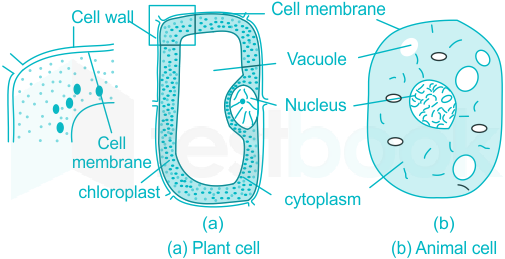
Hence, we conclude that an early emphasis on linguistic accuracy along with prompt error correction in L2 class at Class V level results in students learning only the minimum or less.

Question 143

The poverty of stimulus with respect to language acquisition among young children implies that they would

  1. AOption (a)

    express themselves ungrammatically

  2. BOption (b)

    read later

  3. COption (c)

    not recognize human language

  4. DOption (d)

    need more stimulus at home for learning the language

View answer & explanation

Correct answer

Answer: (d)D.

need more stimulus at home for learning the language

Why this answer is correct

Language acquisition is the process by which humans acquire the capacity to perceive and comprehend language as well as to produce and use words and sentences to communicate.

  • The poverty of stimulus with respect to language acquisition among young children implies that they would need more stimulus at home for learning language as poverty of stimulus refers to the phenomenon where the unavailability of enriched linguistics environment affects the process of language acquisition in a child.
  • Language acquisition is a natural process whereby children acquire their first language by observing and repeating what they see and hear in their native environment but the access of limited sources of language learning tools hinders the acquisition process.
  • So, poverty of stimulus can be overcome by providing various sources of language learning materials.

Hence, it becomes clear that the poverty of stimulus with respect to language acquisition among young children implies that they would need more stimulus at home for learning the language.

Question 144

Considering students’ learning styles broadens the approaches taken to help language-related problems. An example of a learning style is

  1. AOption (a)

    loud

  2. BOption (b)

    quiet

  3. COption (c)

    print-oriented

  4. DOption (d)

    focused

View answer & explanation

Correct answer

Answer: (c)C.

print-oriented

Why this answer is correct

Learning styles play a vital role in the learning process and contribute to the overall educational environment. Understanding the characteristics of learners in each dimension will not only enhance teaching but the overall learning process as well. Learning Styles is an approach used by individual or learner to absorb, retain, and process new information.

  • Each person has his/her own particular learning style that determines how he/she interacts with his/her learning environment. Understanding the relationship between learning styles and the learning process is one of the primary goals of learning styles research.
  • Learning styles research is based on the theory that individuals have different stimulus sense modalities from which they prefer to absorb, retain, and process new information.
  • Print oriented is an example of a learning style that targets to broaden the approaches of learning techniques taken to help language-related problems.
  • It ensures a child's literary development using printed materials and written words because print-oriented learners rely primarily on their eyes to assimilate information and learn best when learning materials/information are written down for them to read by themselves.

Therefore, consi dering the fact that students’ learning styles broaden the approaches taken to help language-related problems is an example of a print-oriented learning style.

Question 145

Learning a language involves the processes of listening, speaking, reading and writing. These processes involve

  1. AOption (a)

    linguistic aspect

  2. BOption (b)

    psychological aspect

  3. COption (c)

    either (1) or (2)

  4. DOption (d)

    both (1) and (2)

View answer & explanation

Correct answer

Answer: (d)D.

both (1) and (2)

Why this answer is correct

Learning a language involves the four basic foundational skills of language which are listening-speaking-reading-writing. These four processes are integrated with each other.

These processes involve both linguistic and psychological aspect of language learning as these are influenced by both the scientific study of language, including sounds, words, sentences, etc and also by the psychological factors like motivation, attention, interest and attitude of the learners.

Question 146

A reading activity where students focus on phonemic sounds, pronunciation and intonation can be used to assess

  1. AOption (a)

    reading accuracy

  2. BOption (b)

    inference

  3. COption (c)

    analysis

  4. DOption (d)

    literary appreciation

View answer & explanation

Correct answer

Answer: (a)A.

reading accuracy

Why this answer is correct

Reading activity refers to the practice of comprehending and interpreting the written text to perceive the text orderly and meaningfully. Accuracy in reading refers to read texts without making any mistakes and comprehending the meaning correctly.

Reading accuracy can be assessed by focusing on phonetic sounds, pronunciation and intonation as these elements are crucial for communication and help to understand the expression and thoughts that go with words.

Note: Literary appreciation refers to the practice of reading, comprehending and making a critical judgement about a given text.

Question 147

A factual description of laboratory equipment, for a  school science journal, requires the student to present the following

  1. AOption (a)

    Appearance, users, location

  2. BOption (b)

    Function, appearance, use

  3. COption (c)

    Function, location, colours

  4. DOption (d)

    Comparisons, function, users

View answer & explanation

Correct answer

Answer: (b)B.

Function, appearance, use

Why this answer is correct

Aids used by the teacher to facilitate the teaching-learning process is known as teaching material/teaching-learning materials or teaching aids. It can be made and used by both students and teachers. The appropriate use of teaching material in a classroom makes the learning relatively permanent. It should be noted that teaching material should be used by the teachers based on the objectives of the lesson. For example, 

  • Laboratory refers to a building equipped for scientific experiments to explore knowledge and the tools used in conducting experiment and research is called laboratory equipment.
  • For a school science journal, a factual description of laboratory equipment can be presented by its function, appearance and use as any laboratory equipment can be best described by explaining how it looks like, for what purpose it is used for, and what function it performs.

Hence, we conclude that a factual description of laboratory equipment, for a  school science journal, requires the student to present the function, appearance, use.

Question 148

Facilitate communication between Schools as well as between Students/teachers and programmes or between Students/teachers and data.

  1. AOption (a)

    Reference books

  2. BOption (b)

    Whiteboards

  3. COption (c)

    Voice recorders

  4. DOption (d)

    Computers

View answer & explanation

Correct answer

Answer: (d)D.

Computers

Why this answer is correct

A computer refers to a programmable machine that executes applications and provides a variety of solutions. It facilitates communication between schools as well as between students/teachers and programmes or between students/teachers and data as it is an electronic device that can store and process all kinds of data and can perform a wide range of tasks simultaneously.

  • Reference book: A book intended primarily for consultation of definite information.
  • Whiteboard: A board with a white surface used for teaching in the classroom.
  • Voice recorder: A device used to record sounds, and then to play it back.

Hence, we conclude that computers facilitate communication between schools as well as between students/teachers and programmes or between students/teachers and data.

Question 149

________ education is to use the student’s native language to teach some academic content while simultaneously providing additional L2 instruction.

  1. AOption (a)

    Multilingual

  2. BOption (b)

    Bilingual

  3. COption (c)

    Basic

  4. DOption (d)

    Humanistic

View answer & explanation

Correct answer

Answer: (b)B.

Bilingual

Why this answer is correct

Bilingual education refers to the educational practice in which two languages are used in the teaching-learning process.

  • It uses the student's native language to teach some academic content while simultaneously providing additional L2 instruction.
  • It advocates the use of already acquired language skills in mother tongue to develop and achieve fluency and accuracy in the learning of target language or L2.
Multilingual educationIt refers to the educational process where learners begin their schooling in mother tongue and move on to additional languages in school.
Basic educationIt refers to put crafts as the medium of education to make children able to meet their needs in future.
Humanistic educationIt focuses on the ways which help individuals to improve their self-image to make them feel worthwhile.

Question 150

While writing, a student finds difficulty in expressing his/her views clearly due to a lack of vocabulary. A possible solution would be the following

  1. AOption (a)

    Motivate the student to read more storybooks and the teacher should take informal feedback about new words encountered

  2. BOption (b)

    Change the topic to suit the student’s ability

  3. COption (c)

    Give a list of words with meanings to learn and use

  4. DOption (d)

    None of the above

View answer & explanation

Correct answer

Answer: (a)A.

Motivate the student to read more storybooks and the teacher should take informal feedback about new words encountered

Why this answer is correct

Writing is the physical expression of what you think. The close relationship between writing and thinking makes writing valuable. As young children struggle with what to put down next, or how to put it down on paper, they often discover a new way of expressing an idea. If the writing process is to develop naturally, the following approaches should be followed:

  • It is important to allow some mother tongue usage until such time as when a child has enough mastery over the second language to not require the mother tongue.
  • A teacher should motivate the student to read more storybooks and he should take informal feedback about new words encountered.
  • During reading storybook the student will encounter new words while the teacher could introduce and explain those new words which will help the student to better express his/her thought in conversation and in writing.
  • We need to facilitate the transition by providing suitable vocabulary or structures, as well as motivating children by creating a real need to communicate.

Hence, we conclude that with the help of above-mentioned points, a teacher can help students expressing his/her views.

150 questions in the full paper