Official Paper

CSIR ASO/SO (Reasoning): Memory Based Test (Held on: 6th Feb 2024) (Previous Year Paper)

25 questions · 20 minutes · with answers · free

General Intelligence, Reasoning and Mental Ability (25 questions)

1

In the following question, select the related letters from the given alternatives.

SH : IT :: LM : ?

  1. ((a))

    XU

  2. ((b))

    PV

  3. ((c))

    NM

  4. ((d))

    XB

Show Answer
Answer: ((c))

NM

The logic followed here is:

SH : IT

Similarly, for LM : ?


So, 'LM : NM' would be the related letters.

Hence, the correct answer is "Option 3".

2

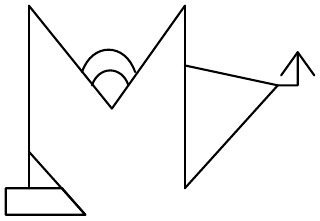
Select the correct mirror image of the given figure when the mirror is placed at MN as shown.

  1. ((a))

  2. ((b))

  3. ((c))

  4. ((d))

Show Answer
Answer: ((d))

The correct mirror image of the given figure is:

Hence, the correct answer is "Option 4".

3

Read the given statements and conclusions carefully. You have to take the given statements to be true even if they seem to be at variance from commonly known facts. You have to decide which conclusion's logically definitely follow's from the given statements.

Statements:

Some Ducks are Chickens.

Some Chickens are Eggs.

All Eggs are Omelettes.

Conclusions:

(I) Some Ducks are Eggs.

(II) Some Chickens are Omelettes.

  1. ((a))

    Both conclusions (I) and (II) definitely follow.

  2. ((b))

    Only conclusion (I) definitely follows.

  3. ((c))

    Both conclusions (I) and (II) definitely do not follow.

  4. ((d))

    Only conclusion (II) definitely follows.

Show Answer
Answer: ((d))

Only conclusion (II) definitely follows.

Given Statements:

Some Ducks are Chickens.

Some Chickens are Eggs.

All Eggs are Omelettes.

The least possible Venn diagram for the given statement is:

Conclusions:

I. Some Ducks are Eggs - False (Because, No definite relation given between Ducks and Eggs, so Some Ducks are Eggs is possible only).

II. Some Chickens are Omelettes - True (Because, Some Chickens are Eggs and All Eggs are Omelettes, so those part of Chickens which is Eggs will Omelettes also).

So, Only conclusion (II) definitely follows.

Hence, the correct answer is "Option 4".

4

In a certain code language, ‘FLED' is coded as '4, 10, 3, 2', ‘GOAT' is coded as '5, 13, 25, 18'. What is the code for ‘HECK' in that code language? 

  1. ((a))

    8, 3, 1, 9

  2. ((b))

    6, 3, 1, 11

  3. ((c))

    6, 3, 1, 9

  4. ((d))

    6, 3, 3, 9

Show Answer
Answer: ((c))

6, 3, 1, 9

Logic: Place value of Opposite letter - 2 = Code of thar letter.

Now,

'FLED' is coded as '4, 10, 3, 2'

'GOAT' is coded as '5, 13, 25, 18'

Similarly, for 'HECK'

So, 'HECK' will be coded as '6, 3, 1, 9'

Hence, the correct answer is "Option 3".

5

If ‘+’ means ‘–’, ‘–’ means ‘×’, ‘×’ means ‘÷’, ‘÷’ means ‘+’, then what will come in place of the question mark (?) in the following equation?

41 ÷ 18 – 7 + 322 × 23 = ?

  1. ((a))

    167

  2. ((b))

    169

  3. ((c))

    144

  4. ((d))

    153

Show Answer
Answer: ((d))

153

The logic followed is:

Decoding the information, 

Symbol+-×÷
Meaning-×÷+


Given the equation: 41 ÷ 18 – 7 + 322 × 23 = ?

After replacing the signs from left to right and using the BODMAS rule,

= 41 + 18 × 7 - 322 ÷ 23 

= 41 + 18 × 7 - 14

= 41 + 126 - 14

= 167 - 14

= 153

Hence, the correct answer is "153".

6

Which two signs should be interchanged to make the given equation correct?

11 × 12 ÷ 78 + 6 – 57 = 88

  1. ((a))

    ÷ and +

  2. ((b))

    × and +

  3. ((c))

    ÷ and –

  4. ((d))

    – and ×

Show Answer
Answer: ((a))

÷ and +

Let's check each option,

1) ÷ and +

→ 11 × 12 + 78 ÷ 6 – 57 = 88

→ 11 × 12 + 13 – 57 = 88

132 + 13 – 57 = 88

→ 145 – 57 = 88

→ 88 = 88

LHS = RHS → Satisfies the equation

2) × and +

→ 11 + 12 ÷ 78 × 6 – 57 = 88

→ 11 + 2/13 × 6 – 57 = 88

11 + 12/13 – 57 = 88

→ 155/13 – 57 = 88

LHS ≠ RHS

3) ÷ and –

→ 11 × 12 - 78 + 6 ÷ 57 = 88

→ 11 × 12 - 78 + 6/57 = 88

132 - 78 + 6/57 = 88

→ 54 + 6/57 = 88

LHS ≠ RHS

4) – and ×

→ 11 – 12 ÷ 78 + 6 × 57 = 88

→ 11 – 2/13 + 6 × 57 = 88

→ 11 – 2/13 + 342 = 88

→ 353 – 2/13 = 88

→ LHS ≠ RHS

Here, we can see that only Option 1 satisfies the equation.

Hence, the correct answer is "÷ and +".

7

Anil, Bunty, Choubey, Dishant, and Eshan are five students sitting around a circular table facing the centre. Dishant sits to the immediate right of Anil. Choubey is not sitting next to Dishant or Anil. Eshan is sitting to the immediate right of Choubey. Who is sitting to the immediate right of Dishant?

  1. ((a))

    Bunty

  2. ((b))

    Anil

  3. ((c))

    Choubey

  4. ((d))

    Eshan

Show Answer
Answer: ((a))

Bunty

Given : Anil, Bunty, Choubey, Dishant, and Eshan are five students sitting around a circular table facing the centre.

Explanation : 

1) Dishant sits to the immediate right of Anil.

2) Choubey is not sitting next to Dishant or Anil.

  1. Eshan is sitting to the immediate right of Choubey.

After positioning Eshan only one position is left which will be occupied by the only person i.e Bunty.

Thus, according to the final arrangement Bunty is sitting to the immediate right of Dishant.

Hence, "Bunty" is the correct answer.

8

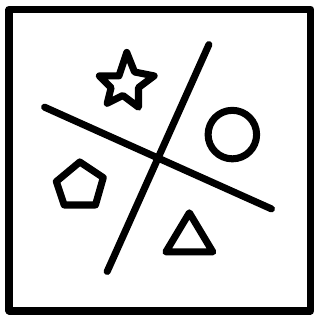
One of the following five figures four are alike in some manner and one differs from them in that manner. Select the odd figure.

  1. ((a))

  2. ((b))

  3. ((c))

  4. ((d))

Show Answer
Answer: ((c))

Logic : In each figure triangle is opposite to circle and pentagon is opposite to the star.

So,

  • Option - (1) :


⇒ Circle is Opposite to triangle and pentagon is opposite to the star.

  • Option - (2) :


⇒ Circle is Opposite to triangle and pentagon is opposite to the star.

  • Option - (3) :

⇒ Circle is Opposite to pentagon and triangle is opposite to the star.

  • Option - (4) :


⇒ Circle is Opposite to triangle and pentagon is opposite to the star.

Here, Figure - (3) is the odd one out.

Hence, "Option - (3)" is the correct answer.

9

Select the option that represents the letters that, when sequentially placed from left to right in the blanks below, will complete the letter series.

Q_ _ U O _ E T _ O Q E _ U _ Q E _ _ O

  1. ((a))

    E T Q U T T O U

  2. ((b))

    E T Q U T Q T U

  3. ((c))

    E T Q U T O T U

  4. ((d))

    E T Q T U O T U

Show Answer
Answer: ((c))

E T Q U T O T U

Checking options one by one:

1) Q E T U O / Q E T U O / Q E T U T / Q E O U O → doesn't follow any pattern

2) Q E T U O / Q E T U O / Q E T U Q / Q E T U O → doesn't follow any pattern

3) Q E T U O / Q E T U O / Q E T U O / Q E T U O → follows a pattern (QETUO)

4) Q E T U O / Q E T T O / Q E U U O / Q E T U O → doesn't follow any pattern

Hence, the correct answer is "E T Q U T O T U".

10

In the following number-pairs, the second number is obtained by applying certain mathematical operations to the first number. Select the option in which the numbers are related in the same way as are the numbers of the following pairs.

(NOTE: Operations should be performed on the whole numbers, without breaking down the numbers into its constituent digits. E.g. 13 - Operations on 13 such as adding/deleting/multiplying etc. to 13 can be performed. Breaking down 13 into 1 and 3 and then performing mathematical operations on 1 and 3 is not allowed.)

21, 182

14, 119

  1. ((a))

    8, 87

  2. ((b))

    11, 106

  3. ((c))

    17, 146

  4. ((d))

    12, 113

Show Answer
Answer: ((c))

17, 146

The logic followed here is:

Logic: (First number × 9) - 7 = Second number

  • 21, 182 → (21 × 9) - 7 = 189 - 7 = 182
  • 14, 119 → (14 × 9) - 7 = 126 - 7 = 119

Similarly,

  • 17, 146 → (17 × 9) - 7 = 153 - 7 = 146

Hence, '17, 146' is the correct answer.

11

Study the following figures and find out the number opposite to 2.

  1. ((a))

    1

  2. ((b))

    4

  3. ((c))

    5

  4. ((d))

    6

Show Answer
Answer: ((c))

5

Taking Dice position (1) and (2), as 3 and 6 are common;

The remaining number in Dice position (1) is 2.

The remaining number in Dice position (2) is 5.

So, 2 and 5 are opposite number pairs.

Hence, "5" is the correct answer.

12

Five friends Aman, Chintu, Rahul, Gautam and Pintu are sitting in a row at different position. Aman is sitting at the left end while Pintu is sitting second from the right end. Rahul is not an immediate neighbor of Aman and Gautam. Only one friend sits between Pintu and Gautam.

Who is sitting in the middle of the row?

  1. ((a))

    Chintu

  2. ((b))

    Pintu

  3. ((c))

    Gautam

  4. ((d))

    Aman

Show Answer
Answer: ((a))

Chintu

Given: Five friends Aman, Chintu, Rahul, Gautam and Pintu are sitting in a row at different position.

  • Aman is sitting at the left end while Pintu is sitting second from the right end.

  • Only one friend sits between Pintu and Gautam. Which means Gautam will sit to the left of Pintu.

  • Rahul is not an immediate neighbor of Aman and Gautam. That means Rahul will sit to the immediate right of Pintu and Chintu will sit at the place left in between Gautam and Pintu.

So, the final arrangement will be as;

<br>

Hence, "Chintu" is sitting in the middle of the row.

13

Which will replace the question mark (?) in the given Sequence?

AZ, BY, CX, DW, ?

  1. ((a))

    EX

  2. ((b))

    EV

  3. ((c))

    EW

  4. ((d))

    EZ

Show Answer
Answer: ((b))

EV

The positions of the letters according to the English alphabet series:

The pattern for this is as follows;

Hence, the correct answer is "EV".

14

In a certain code language,


‘A + B’ means ‘A is the father of B’,


‘A – B’ means ‘A is the brother of B’,


‘A × B’ means ‘A is the wife of B’, and


‘A ÷ B’ means ‘A is sister of B’.


If ‘P + Q × R + S ÷ T’, then how is P related to T?

  1. ((a))

    Father's Brother

  2. ((b))

    maternal grandfather

  3. ((c))

    Father

  4. ((d))

    Brother

Show Answer
Answer: ((b))

maternal grandfather

Preparing the family tree using the following set of symbols:

Given: ‘P + Q × R + S ÷ T ⇒ P is the father of Q, Q is the wife of R, R is the father of S, S is the sister of T.

P is the father of Q

Q is the wife of R

R is the father of S

S is the sister of T

Therefore, P will be the maternal grandfather of T.

Hence, the correct answer is "Option (2)".

15

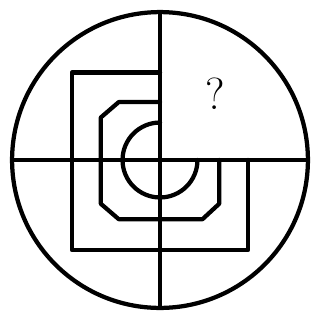
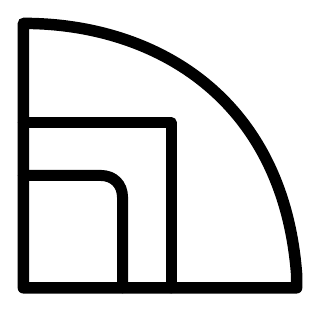
Select the figure from the options that can replace the question mark (?) and complete the given pattern.

  1. ((a))

  2. ((b))

  3. ((c))

  4. ((d))

Show Answer
Answer: ((a))

Completing the incomplete pattern;

Hence, the correct answer is "Option (1)".

16

Rohit started on his bicycle from his home and travelled a distance of 5 km in the south direction. He then turned towards the right and travelled a distance of 2.5 km, and again took a turn towards the right and travelled a distance of 5 km. Finally, after taking a left turn, he travelled a distance of 5 km. What is the shortest distance between his present location and his home? (All turns are 90 degree turns only)  

  1. ((a))

    7.5 km

  2. ((b))

    6.5 km

  3. ((c))

    9.5 km

  4. ((d))

    8.5 km

Show Answer
Answer: ((a))

7.5 km

Drawing the diagram according to the given information:

  • Rohit started from his home and travelled a distance of 5 km in the south direction.
  • He then turned towards the right and travelled a distance of 2.5 km, and again took a turn towards the right and travelled a distance of 5 km.
  • Finally, after taking a left turn, he travelled a distance of 5 km.

Hence, the shortest distance between his present location and his home is 7.5 km.

17

Four letter-clusters have been given, out of which three are alike in some manner and one is different. Select the odd letter-cluster.

  1. ((a))

    KIO

  2. ((b))

    DEH

  3. ((c))

    WXA

  4. ((d))

    NOR

Show Answer
Answer: ((a))

KIO

Logic :

  1. First and second letters ⇒ The difference between the position value is (1).
  2. Second and third letter ⇒ The difference between the position value is (3).

So,

  • KIO

  • DEH


  • WXA

  • NOR


Thus, Only in KIO the difference between the position value between letters is different.

Hence, "KIO" is the correct answer.

18

Select the term from the given alternatives which can come in place of the question mark (?) in the following series.

CFE, HAY, MVS, RQM,?

  1. ((a))

    WMG

  2. ((b))

    WLG

  3. ((c))

    WLH

  4. ((d))

    VLG

Show Answer
Answer: ((b))

WLG

The positions of the letters according to the English alphabet series:

The pattern for this is as follows;

Hence, the correct answer is "WLG".

19

Ram is taller than Mohan and Sohan, while Sohan is taller than Shyam. Also, Mohan is taller than Sohan. Who amongst the following is the shortest?

  1. ((a))

    Shyam

  2. ((b))

    Mohan

  3. ((c))

    Ram

  4. ((d))

    Sohan

Show Answer
Answer: ((a))

Shyam

1) Ram is taller than Mohan and Sohan.

Ram > Mohan/Sohan

2) Sohan is taller than Shyam.

Sohan > Shyam

  1. Mohan is taller than Sohan. 

Mohan > Sohan

Combining all the statements;

Ram > Mohan > Sohan > Shyam

Shyam is shortest among all of them.

Hence, the correct answer is "Shyam".

20

How many triangles are there in the given figure ?

  1. ((a))

    23

  2. ((b))

    24

  3. ((c))

    25

  4. ((d))

    27

Show Answer
Answer: ((c))

25

The number of triangles in the given figure is:

Here, the number of triangles is '25'.

Hence, the correct answer is "Option (3)".

21

Select the correct mirror image of the given figure when the mirror is placed at MN as shown.

  1. ((a))

  2. ((b))

  3. ((c))

  4. ((d))

Show Answer
Answer: ((b))

The correct mirror image of the given figure is:

Hence, the correct answer is "Option 2".

22

Assuming the given statement to be true, find which of the following conclusions among given two is/are true.

Statement 

P ≤ T< K = Y ≥ S ≥ E < L

Conclusions

  1. K > E

  2. E = K

  1. ((a))

    Only conclusion 1 is true.

  2. ((b))

    Either conclusion 1 or 2 is true.

  3. ((c))

    Both conclusions 1 and 2 are true.

  4. ((d))

    Only conclusion 2 is true.

Show Answer
Answer: ((b))

Either conclusion 1 or 2 is true.

Given Statement: P ≤ T < K = Y ≥ S ≥ E < L

Now,

Conclusions:

  1. K > E → False (K = Y ≥ S ≥ E, this gives K ≥ E).

  2. E = K → False (K = Y ≥ S ≥ E, this gives K ≥ E).

Here, both the conclusions are false but it forms the complementary pair for Either Or.

So, Either conclusion 1 or 2 is true.

Hence, the correct answer is 'Option 2'.

Additional Information Conditions of Either-or case:

  1. The elements should be the same in both the statements.
  2. Both the conclusions should be false individually.
  3. One conclusion should be positive and one conclusion should be negative (Complementary pair)

The two complementary pairs are:

  1. All + Some not

  2. No + Some

Note: Some + Some not is not considered under Either - or case.

23

If ‘+’ means ‘÷’, ‘-' means ‘+’, ‘×’ means '-', and ‘÷’ means ‘×’, then what will be the value of the following expression?

[{( 22 × 15 ) - (1 ÷ 9)} + ( 2- 2 )] ÷ 2

  1. ((a))

    10

  2. ((b))

    8

  3. ((c))

    6

  4. ((d))

    12

Show Answer
Answer: ((b))

8

Here, we use the BODMAS table given below:

As per the given information:

SymbolMeans
+÷
-+
×-
÷×

Given expression:

⇒ [{(22 × 15) - (1 ÷ 9)} + (2 - 2)] ÷ 2

⇒ [{(22 - 15) + (1 × 9)} ÷ (2 + 2)] × 2

Apply BODMAS rule:

⇒ [{(7) + (9)} ÷ (4)] × 2

⇒ [(16 ÷ 4)] × 2

⇒ (4 × 2) = 8

Hence, the correct answer is "Option (2)".

24

In a certain code language, 'BRANCH' is coded as DUCQEK and 'CARBON' is coded as EDTEQQ. How will 'DRIVEN' be coded in that language?

  1. ((a))

    FUJYHQ

  2. ((b))

    FUKYGQ

  3. ((c))

    GUKZGR

  4. ((d))

    GUKYGQ

Show Answer
Answer: ((b))

FUKYGQ

Here, we use the table given below:

The logic followed in the given codes:

Logic: 'Addition of '2' and '3' in the positional values of the alphabets alternatively.

'BRANCH' is coded as 'DUCQEK' →

'CARBON' is coded as 'EDTEQQ' →

Similarly, 'DRIVEN' will be written as:

Here, 'DRIVEN' is written as 'FUKYGQ'.

Hence, the correct answer is "Option (2)".

25

Which of the following numbers will replace the question mark (?) in the given series?

17, ?, 35, 53, 77, 107

  1. ((a))

    25

  2. ((b))

    21

  3. ((c))

    23

  4. ((d))

    28

Show Answer
Answer: ((c))

23

The logic followed here is :-

Hence, the correct answer is "23".

Attempt this paper under real exam conditions

Timed interface, section switching, instant scoring, and question-by-question analytics — free.

Start Timed Attempt