Previous Year Paper

63rd BPSC Prelims (Held on 1 July 2018) Official paper (Previous Year Paper)

Held in 2018

150 questions120 minutes
With answers
Free

Paper last updated:

Practise under exam conditions

Take this paper as a timed mock test. Review your answers after you submit.

Attempt timed test

Questions & answers

Read the paper at your pace. Open an explanation when you need it.

Full Test (150 questions)

Question 1

Which of the following smart cities has become India’s first city to run on 100% renewable energy during the daytime?

  1. AOption (a)

    Bengaluru

  2. BOption (b)

    Jaipur

  3. COption (c)

    Indore

  4. DOption (d)

    Diu

  5. EOption (e)

    None of the above

View answer & explanation

Correct answer

Answer: (d)D.

Diu

Why this answer is correct

The correct answer is Diu.

  • Diu has become India’s first city to run on 100% renewable energy during the daytime.

Key Points

  • Diu had been importing 73 per cent of its power from Gujarat till last year, it added.
  • The city has developed a 9-MW solar park spread over 50 hectares rocky barren land.
  • Besides installing solar panels on the rooftops on 79 government buildings generated 1.3 MW annually.
  • The Diu is saving 13,000 tonnes of carbon emissions every year and due to low-cost solar energy, power tariffs have been cut in residential category by 10 per cent and 15 per cent per year.
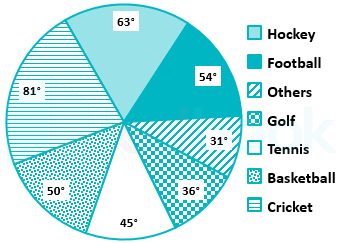
Question 2

Mahmoud Abu Zeid has won the 2018 UNESCO/Guillermo Cano World Press Freedom Prize. He hails from which country?

  1. AOption (a)

    Israel

  2. BOption (b)

    Iraq

  3. COption (c)

    Iran

  4. DOption (d)

    Egypt

  5. EOption (e)

    None of the above

View answer & explanation

Correct answer

Answer: (d)D.

Egypt

Why this answer is correct

The correct answer is Egypt.

  • Mahmoud Abu Zeid has won the 2018 UNESCO/ Guillermo Cano World Press Freedom Prize he hails from Egypt.

Key Points

  • Egyptian photojournalist Mahmoud Abu Zeid is also known as Shawkan won the 2018 UNESCO/ Guillermo Cano World Press Freedom Prize.
  • The Prize recognizes a person, organization or institution that has made an outstanding contribution to the defence or promotion of press freedom especially in the face of danger.
  • The award is named in honour of Guillermo Cano Isaza.
  • He was the Colombian journalist who was assassinated in front of the offices of his newspaper El Espectador in Bogotá, Colombia in 1986.
  • The Prize is funded by the Guillermo Cano Isaza Foundation (Colombia), the Helsingin Sanomat Foundation (Finland), and The Namibia Media Trust.

Question 3

The bilateral military exercise ‘Harimau Shakti 2018’ has been conducted between India and which country?

  1. AOption (a)

    Indonesia

  2. BOption (b)

    Malaysia

  3. COption (c)

    New Zealand

  4. DOption (d)

    South Korea

  5. EOption (e)

    None of the above

View answer & explanation

Correct answer

Answer: (b)B.

Malaysia

Why this answer is correct

The correct answer is Malaysia.

  • The bilateral military exercise ‘Harimau Shakti 2018’ has been conducted between India and Malaysia.

Key Points

  • Indian and Malaysian armies conducted the joint training exercise ‘Harimau Shakti 2018’ in the dense forests of Sengai Perdik, Hulu Langat, Malaysia.
  • The exercise is aimed at bolstering cooperation and coordination between the armed forces of both the nations and to share the expertise of both the contingents in conduct of counter-insurgency operations in jungle terrain.
  • The Indian Army was represented by 4 Grenadiers which is one of the oldest infantry battalions.
  • The Malaysian contingent was represented by soldiers from 1 Royal Ranger Regiment and the Royal Malay Regiment.
  • The focus was on tactical operations in jungle warfare.

Additional Information

Exercise NameParticipant Nations
SampritiIndia & Bangladesh
Mitra ShaktiIndia & Sri Lanka
Maitree ExerciseIndia & Thailand
Garuda ShaktiIndia & Indonesia
Vajra PraharIndia & US
Yudh AbhyasIndia & US
Nomadic ElephantIndia & Mongolia
ShaktiIndia & France
Hand in HandIndia & China
Surya KiranIndia & Nepal
Dharma GuardianIndia & Japan

Question 4

Which Union Ministry has launched the Second Edition of the ‘Unnat Bharat Abhiyan’?

  1. AOption (a)

    The Ministry of Home Affairs

  2. BOption (b)

    The Ministry of Agriculture and Farmers Welfare

  3. COption (c)

    The Ministry of Human Resource Development

  4. DOption (d)

    The Ministry of Rural Development

  5. EOption (e)

    None of the above

View answer & explanation

Correct answer

Answer: (c)C.

The Ministry of Human Resource Development

Why this answer is correct

The correct answer is The Ministry of Human Resource Development.

  • The Ministry of Human Resource Development has launched the Second Edition of the ‘Unnat Bharat Abhiyan’

Key Points

  • The main objective of the program is to enable higher education institutions to work with the people of rural India in identifying development challenges and evolving appropriate solutions for accelerating sustainable development.
  • Students from 750 higher educational institutions from across the country will adopt nearby villages and visit them to get acquainted with the regular lifestyle of village people and the problems faced by them in their day to day life.

Question 5

Which Union Ministry in collaboration with Google India has launched a 360 Virtual Reality (VR) video of ‘Incredible India’?

  1. AOption (a)

    The Ministry of Electronics and Information Technology

  2. BOption (b)

    The Ministry of Information and Broadcasting

  3. COption (c)

    The Ministry of Social Justice and Empowerment

  4. DOption (d)

    The Ministry of Tourism

  5. EOption (e)

    None of the above

View answer & explanation

Correct answer

Answer: (d)D.

The Ministry of Tourism

Why this answer is correct

The correct answer is The Ministry of Tourism.

  • The Ministry of Tourism in collaboration with Google India has launched a 360 Virtual Reality (VR) video of ‘Incredible India’.

Key Points

  • Under the partnership, Google Arts and Culture will provide users with an immersive 360-degree view of India's heritage, its festivity spirituality and adventure.
  • The videos under the partnership showcase users a 360-degree view of destinations in India including Qutub Minar, Amritsar's, Golden Temple, Vitthal Temples at Hampi and Goa's easygoing vibe.
  • The videos have been created using the 360-degree video capture technology including Google s Yi Halo camera and the music is inspired by the rhythms and melodies of the regions depicted in the video.
  • The government, through this partnership with Google, wanted to “engage new and global audiences and offer them immersive content in a never-before-seen manner”.

Question 6

Which city hosted India’s first ever nationwide food archaeology conference ‘ArchaeoBroma’?

  1. AOption (a)

    Mumbai

  2. BOption (b)

    New Delhi

  3. COption (c)

    Indore

  4. DOption (d)

    Surat

  5. EOption (e)

    None of the above

View answer & explanation

Correct answer

Answer: (a)A.

Mumbai

Why this answer is correct

The correct answer is Mumbai.

  • Mumbai hosted India’s first-ever nationwide food archaeology conference ‘ArchaeoBroma’.

Key Points

  • The conference was organised by the India Study Centre Trust (INSTUCEN Trust) and the Centre for Extra-Mural Studies (CEMS) of the University of Mumbai.
  • The topics like concepts in food studies will focus on creating an academic framework for examining food from point of views of history, archaeology and sociology.

Question 7

What is India’s rank in the 2018 World Press Freedom Index [WPFI]?

  1. AOption (a)

    136th

  2. BOption (b)

    138th

  3. COption (c)

    135th

  4. DOption (d)

    137th

  5. EOption (e)

    None of the above

View answer & explanation

Correct answer

Answer: (b)B.

138th

Why this answer is correct

The correct answer is 138th

  • India’s rank in the 2018 World Press Freedom Index 138th.

Key Points

  • The Index is compiled and published by Reporters without borders.
  • Reporters without borders is a Paris based non-profit organisation.
  • India ranked 142nd in the 2020 World Press Freedom Index
  • Around 180 countries were ranked in the index.
  • The World Press Freedom Index 2018 was topped by Norway followed by Finland, Sweden, Netherlands and Denmark.

Additional Information

  • According to the 2020 World Press Freedom Index, Pakistan ranked 145 dropping three places, Bangladesh ranked 151, North Korea was at 180th and China ranked 177th.

Question 8

Which institute has been awarded the 2018 National Intellectual Property Award in the category Top R & D Institution / Organization for Patents and Commercialization?

  1. AOption (a)

    The Council of Scientific and Industrial Research

  2. BOption (b)

    The Indian Space Research Organization

  3. COption (c)

    The Bhabha Atomic Research Centre

  4. DOption (d)

    The Defence Research and Development Organization

  5. EOption (e)

    None of the above

View answer & explanation

Correct answer

Answer: (a)A.

The Council of Scientific and Industrial Research

Why this answer is correct

The correct answer is The Council of Scientific and Industrial Research.

  • The Council of Scientific and Industrial Research has been awarded the 2018 National Intellectual Property Award in the category Top R & D Institution / Organization for Patents and Commercialization.

Key Points

  • The CSIR has been ranked 9th in the world among the 1,207 government institutions, with an overall global ranking of 75th in the world, covering 5,250 institutions, as per the statement.
  • The National Intellectual Property Award is awarded annually by Indian Intellectual Property Office in various categories on outstanding innovators, organizations and companies in fields of patents, designs, trademarks and geographical indications on the occasion of World IP Day.
  • Indian Intellectual Property Office comes under the Ministry of Commerce and Industry.

Additional Information

  • ​CSIR is an autonomous body and India’s premier research and development (R&D) organisation.
  • It was established in 1942.
  • It operates as an autonomous body as per the Registration of Societies Act of 1860.
  • Prime Minister is the chairman of the Council of Scientific and Industrial Research.

Question 9

Which State has topped the list of States with the most number of beggars, as per data released by the Union Ministry of Social Justice?

  1. AOption (a)

    West Bengal

  2. BOption (b)

    Andhra Pradesh

  3. COption (c)

    Bihar

  4. DOption (d)

    Uttar Pradesh

  5. EOption (e)

    None of the above

View answer & explanation

Correct answer

Answer: (a)A.

West Bengal

Why this answer is correct

The correct answer is West Bengal.

  • West Bengal has topped the list of states with the most number of beggars, as per data released by the Union Ministry of Social Justice.

Key Points

  • The highest number of beggars in West Bengal is 81,000.
  • As per the data released by the Union Ministry of Social Justice, there are around 4 lakh beggars in total in India.
  • West Bengal is followed by Uttar Pradesh and Bihar at number two and three respectively.
  • Lakshadweep has only two people begging for their livelihood.

Question 10

Which district has become India’s first district to have 100% solar powered health centres?

  1. AOption (a)

    Kolkata

  2. BOption (b)

    Chennai

  3. COption (c)

    Bengaluru

  4. DOption (d)

    Surat

  5. EOption (e)

    None of the above

View answer & explanation

Correct answer

Answer: (d)D.

Surat

Why this answer is correct

The correct answer is Surat.

  • Surat has become India’s first district to have 100% solar powered health centres.

Key Points

  • The solidification of all Primary health centres in Surat cut down electricity charge by 40 per cent and reduce global warming.
  • All 52 PHCs in the district are now powered by a solar system.
  • 75 per cent of the cost of making gram panchayat solar powered is borne by the state government and the remaining 25 per cent by district panchayats.

Additional Information

  • World’s 95% of rough diamonds are cut and polished in Surat.
  • British East India company came in Surat in the year 1818.

Question 11

Which Indian sports person had bagged Gold in the Men’s 25 m Rapid Fire Pistol Event at the 2018 ISSF Junior Shooting World Cup in Sydney?

  1. AOption (a)

    Rajkanwar Singh

  2. BOption (b)

    Anhad Jawanda

  3. COption (c)

    B. Sainath

  4. DOption (d)

    Anish Bhanwala

  5. EOption (e)

    None of the above

View answer & explanation

Correct answer

Answer: (d)D.

Anish Bhanwala

Why this answer is correct

The correct answer is Anish Bhanwala.

Key Points

  • Anish Bhanwala bagged Gold in the Men’s 25 m Rapid Fire Pistol event at the 2018 ISSF Junior Shooting World Cup in Sydney.
  • Anish Bhanwala topped qualification with a score of 584 and shot 29 in the final to win the gold medal in the 25m rapid pistol competition at the ISSF Junior World Cup.
  • Commonwealth Games gold medallist Anish Bhanwala defeated Egor Ismakov of Russia by 29-23 to clinch the gold in 25-metre rapid-fire pistol in the Junior World Cup in Suhl, Germany.
  • The 2018 ISSF Junior World Cup was the annual edition of the ISSF Junior World Cup and is governed by the International Shooting Sport Federation.
  • India stood first with 26 total medals 15 golds, 2 silvers and 9 bronzes.
  • The Republic of China took 2nd place with 21 medals 6 golds, 9 silvers and 6 bronzes.

Question 12

Which State Government has signed a pact with Airport Authority of India (AAI) to develop villages in Kamrup?

  1. AOption (a)

    West Bengal

  2. BOption (b)

    Mizoram

  3. COption (c)

    Nagaland

  4. DOption (d)

    Assam

  5. EOption (e)

    None of the above

View answer & explanation

Correct answer

Answer: (d)D.

Assam

Why this answer is correct

The correct answer is Assam.

Key Points

  • Assam has signed a pact with the Airport Authority of India (AAI) to develop villages in Kamrup.
  • The Airport Authority of India (AAI) has recently signed an MoU with the Assam government under its Corporate Social Responsibilities (CSR) initiative for sustainable development of human settlements at villages in Kamrup district.
  • The AAI would provide financial assistance under the initiative of Rs 4.58 crore for the Kamrup district.
  • As per the estimates prepared by the United Nations Development Programme to improve the resilience of communities around Guwahati Airport.


Additional Information

  • The Airports Authority of India or AAI is a statutory body working under the aegis of the Ministry of Civil Aviation.
  • Assam shares its borders with Arunachal Pradesh, Nagaland, Manipur, Mizoram, Meghalaya, Tripura, West Bengal, Bhutan and Bangladesh.

Question 13

Which State has the highest number of fully covered tribal habitations with safe drinking water?

  1. AOption (a)

    Madhya Pradesh

  2. BOption (b)

    Odisha

  3. COption (c)

    Rajasthan

  4. DOption (d)

    Jharkhand

  5. EOption (e)

    None of the above

View answer & explanation

Correct answer

Answer: (a)A.

Madhya Pradesh

Why this answer is correct

The correct answer is Madhya Pradesh.

Key Points

  • Madhya Pradesh has the highest number of fully covered tribal habitations with the safe drinking water in the country.
  • The highest number of fully covered tribal habitations is 55770 which is followed by Odisha and Jharkhand.
  • Mizoram is the state with the highest proportion of Scheduled Tribes it constitutes of 94.5%.
  • Uttar Pradesh has the largest Scheduled Caste in India.
  • UT which have the highest proportion of Scheduled Tribes is Lakshadweep.

​

Additional Information

  • National Rural Drinking Water Programme:
  • National Rural Drinking Water Programme (NRDWP) is a Centrally Sponsored Scheme with 50: 50 fund sharing between the Centre and the States.
  • The scheme was started in 2009, with a major emphasis on ensuring the sustainability of water availability in terms of potability, adequacy, convenience, affordability and equity.
  • The aim and objective of the scheme are to provide every rural person with adequate safe water for drinking cooking.
  • The scheme will run co-terminus with the 14th Finance commission until March 2020.

Question 14

ISRO has successfully launched GSAT– 6A satellite from which rocket vehicle?

  1. AOption (a)

    GSLV – F07

  2. BOption (b)

    GSLV – F09

  3. COption (c)

    GSLV – F05

  4. DOption (d)

    GSLV – F08

  5. EOption (e)

    None of the above

View answer & explanation

Correct answer

Answer: (d)D.

GSLV – F08

Why this answer is correct

The correct answer is GSLV – F08.

Key Points

  • ISRO has successfully launched GSAT– 6A satellite from GSLV – F08 rocket vehicle.
  • Geosynchronous Satellite Launch Vehicle (GSLV-F08) successfully launched GSAT-6A Satellite into Geosynchronous Transfer Orbit (GTO).
  • It was launched from the Second Launch Pad at Satish Dhawan Space Centre (SDSC) SHAR, Sriharikota, the spaceport of India
  • It was the fifth consecutive success achieved by GSLV-F08 carrying indigenously developed Cryogenic Upper Stage.
  • GSAT-6A is a communication satellite built by ISRO and it will provide mobile communication services through multi-beam coverage.
  • GSAT-6A is orbiting the Earth with a perigee (nearest point to Earth) of 169.4 km and an apogee (farthest point to Earth) of 36,692.5 km with an orbital inclination of 20.64 deg with respect to the equator.

​

Additional Information

  • Indian Space Research Organisation:
  • Indian Space Research Organisation is headquartered at Bengaluru.
  • ISRO operates under the Department of Space which is directly commanded by the prime minister of India.
  • It was founded by Vikram Sarabhai in the year 1969.

Question 15

What is the theme of the 2018 International Day of Forests?

  1. AOption (a)

    Forests and Water

  2. BOption (b)

    Forests and Energy

  3. COption (c)

    Forests and Sustainable Cities

  4. DOption (d)

    Forests and Life

  5. EOption (e)

    None of the above

View answer & explanation

Correct answer

Answer: (c)C.

Forests and Sustainable Cities

Why this answer is correct

The correct answer is Forests and Sustainable Cities.

Key Points

  • The theme of the 2018 International Day of Forests and Sustainable Cities.
  • The International Day of Forests is celebrated every year on 21st March to create awareness among people about the importance of trees in our lives.
  • In 1971, the International Day of Forests was established at the 23rd General Assembly of the European Confederation of Agriculture.
  • The United Nations Food and Agriculture Organisation decided to celebrate the International Day of Forests every year on 21st March.
  • The theme for each International Day of Forests is chosen by the Collaborative Partnership on Forests.

​

Additional Information

  • The theme for International Day of Forests 2019 is Forests and Education.
  • The theme for 2020 is Forests and Biodiversity.

Question 16

Who has been elected as a new President of Egypt?

  1. AOption (a)

    Moussa Mostafa Moussa

  2. BOption (b)

    El-Sayyid el-Badawi

  3. COption (c)

    Abdel Fattah el-Sisi

  4. DOption (d)

    Ahmed ShafiqSisi

  5. EOption (e)

    None of the above

View answer & explanation

Correct answer

Answer: (c)C.

Abdel Fattah el-Sisi

Why this answer is correct

The correct answer is Abdel Fattah el-Sisi.

Key Points

  • Abdel Fattah el-Sisi has been elected as a new President of Egypt.
  • General Abdel-Fattah El-Sisi led a military overthrow that ejected Egypt's first democratically elected president.
  • He is the most populous state in the Arab world and Africa's second-largest economy.
  • In April 2018, he secured a second term in office after winning 97% of the vote in the presidential election.
  • In 2013, the Egyptian military ousted President Mohamed Morsi, with el-Sisi saying Morsi "did not achieve the goals of the people.

Additional Information

  • Moussa Mostafa Moussa is an Egyptian architect and politician and was a candidate in the 2018 Egyptian presidential election.
  • Aḥmad Muḥammad Shafīq Zakī is an Egyptian politician and military officer who served as prime minister from January to March 2011 and stood as an independent in Egypt’s 2012 presidential election.

Question 17

Who has been chosen for the prestigious J.C. Daniel Award for 2017?

  1. AOption (a)

    Sathyan Anthikkad

  2. BOption (b)

    K.G.Geogre

  3. COption (c)

    Sreekumaran Thampi

  4. DOption (d)

    Adoor Gopalakrishnan

  5. EOption (e)

    None of the above

View answer & explanation

Correct answer

Answer: (c)C.

Sreekumaran Thampi

Why this answer is correct

The correct answer is Sreekumaran Thampi.

Key Points

  • Sreekumaran Thampi has been chosen for the prestigious J.C. Daniel Award for 2017.
  • Sreekumaran Thampi is the 25th recipient of the state's highest film honour.
  • The award was announced by culture minister A.K. Balan.
  • Sreekumaran Thampi is a prolific scriptwriter of Malayalam.
  • Thampi was introduced to the Malayalam film industry in 1966 by P Subramaniam as a lyricist in 'Kaatumallika'.

​​

Additional Information

  • J.C. Daniel Award:
  • It is the Kerala government’s highest honour for outstanding contribution to Malayalam cinema.
  • The award is named after J C Daniel, who is credited for making the first silent movie in Mollywood (Malayalam Film Industry).
  • The award comprises of a citation, plaque and a cash prize of ₹5 Lakh.

Question 18

According to recent data released by Indian Cellular Association [ICA], India acquired what position in the world in producing mobile phones?

  1. AOption (a)

    First

  2. BOption (b)

    Second

  3. COption (c)

    Third

  4. DOption (d)

    Fourth

  5. EOption (e)

    None of the above

View answer & explanation

Correct answer

Answer: (b)B.

Second

Why this answer is correct

The correct answer is Second.

Key Points

  • According to data released by the Indian Cellular Association [ICA], India acquired the second position in the world in producing mobile phones.
  • India is the second-largest mobile phone producer in the world after China, as per the information shared by the Indian Cellular Association (ICA) with the Government of India.
  • India replaced Vietnam to become the second-largest producer of mobile phones in 2017.
  • The efforts of the Government of India, ICA and FTTF India bagged second place.
  • The fast track task Force(FTTF) is a body under the Ministry of Electronics and IT.
  • She has set a target to achieve around 500 million mobile phone production in India by 2019, with a value estimated to be around

USD 46 billion.

Question 19

Which State Government has rolled out ‘Rupashree Scheme' for the marriage of poor girls?

  1. AOption (a)

    Tamil Nadu

  2. BOption (b)

    Odisha

  3. COption (c)

    West Bengal

  4. DOption (d)

    Assam

  5. EOption (e)

    None of the above

View answer & explanation

Correct answer

Answer: (c)C.

West Bengal

Why this answer is correct

The correct answer is West Bengal.

Key Points

  • West Bengal has rolled out the ‘Rupashree Scheme ‘ for the marriage of poor girls.
  • The scheme provides one-time financial support to the marriages of poor women.
  • 'Rupashree' scheme is followed by the ambitious 'Kanyashree' project.
  • Under the 'Kanyashree' the beneficiary gets an annual scholarship of Rs 500 and a one-time grant of Rs 25,000 aims at incentivizing schooling of teenaged girls and delaying their marriages until its legal age at 18.
  • No minimum educational qualifications are required to apply for the scheme.
  • Under the scheme, the beneficiary will have to submit the application before marriage to the Local Bodies or Block Development Officer (BDO) office.

Question 20

NITI Aayog has launched the ‘Atal New India Challenge’ that will provide grants of up to how much amount to innovative products and solutions?

  1. AOption (a)

    Rs. 2 crore

  2. BOption (b)

    Rs. 1 crore

  3. COption (c)

    Rs. 1.5 crore

  4. DOption (d)

    Rs. 2.5 crore

  5. EOption (e)

    None of the above

View answer & explanation

Correct answer

Answer: (b)B.

Rs. 1 crore

Why this answer is correct

The correct answer is Rs. 1 crore.

Key Points

  • NITI Aayog has launched the ‘Atal New India Challenge’ that will provide grants of up to Rs. 1 crore amount to innovative products and solutions.
  • The Atal Innovation Mission (AIM) is a flagship initiative set up by NITI Aayog.
  • The objective of the mission to promote innovation and entrepreneurship in the country.
  • Its major initiatives are Atal Tinkering Labs, Atal Incubation Centers, Atal New India Challenges and Atal Research and Innovation for Small Enterprises (ARISE).
  • The Atal Innovation Mission (AIM) in July 2020 has launched an incubator capabilities enhancement program called ‘AIM-iCREST’.
  • AIM-iCREST is an Incubator Capabilities Enhancement program for a Robust Ecosystem.
  • It is aimed at creating high performing Startups.


Additional Information

  • NITI Aayog:
  • NITI Aayog is the premier policy 'Think Tank' of the Government of India, providing both directional and policy inputs.
  • NITI was made replacing 65 years old Planning Commission.
  • The Prime minister is the chairman of the commission.

Question 21

Who chaired the first meeting of the think tank on the Framework for National Policy on E-commerce?

  1. AOption (a)

    Narendra Modi

  2. BOption (b)

    Arun Jaitley

  3. COption (c)

    Suresh Prabhu

  4. DOption (d)

    Smriti Irani

  5. EOption (e)

    None of the above

View answer & explanation

Correct answer

Answer: (c)C.

Suresh Prabhu

Why this answer is correct

The correct answer is Suresh Prabhu.

Key Points

  • Suresh Prabhu chaired the first meeting of the think tank on the Framework for National Policy on E-commerce.
  • The think tank on the Framework for National Policy on E-commerce will seek to collectively consider the challenges confronting India in the field of the digital economy with a view to developing recommendations for a comprehensive and overarching national policy on e-commerce.
  • The think tank was set up by the department of commerce.
  • The issues discussed by the think tank included aspects of e-commerce and the physical and digital infrastructure of the digital economy, the regulatory Regime taxation, policy data flows, server localization, FDI, Technology flows.
  • Global development on E-Commerce on the underlying issues was another important topic for discussion of the think tank.

Additional Information

  • Narendra Damodardas Modi is the 14th and current Prime Minister of India since 2014.
  • Smriti Irani is as Minister of Textiles and was given additional charge as Minister of Women and Child Development.
  • Arun Jaitley served as the Minister of Finance and Corporate Affairs of the Government of India from 2014 to 2019.

Question 22

Which of the following cities of Bihar does not share a border with Nepal?

  1. AOption (a)

    Madhubani

  2. BOption (b)

    Kishanganj

  3. COption (c)

    Sitamarhi

  4. DOption (d)

    Purnia

  5. EOption (e)

    None of the above

View answer & explanation

Correct answer

Answer: (d)D.

Purnia

Why this answer is correct

The correct answer is Purnia.

Key Points

  • Purnia city of Bihar does not share a border with Nepal.
  • Five Indian States namely Uttarakhand, Uttar Pradesh, Bihar, West Bengal and Sikkim share boundaries with Nepal.
  • Uttar Pradesh shares the largest border with Nepal.
  • Bihar shares its borders with West Bengal, Uttar Pradesh and Jharkhand.
  • ​There are only seven districts in Bihar that shares the boundary with Nepal.
  • West Champaran.
  • East Champaran.
  • Sithamarhi.
  • Madhubani.
  • Supaul.
  • Araria.
  • Kishanganj.

Additional Information

  • Rajgir hills, Brahmayoni Hill, Pretshila Hill, and Ramshila Hill there in Bihar.
  • Bihar is a major producer of litchi.
  • It accounts for 71 percent of India's annual litchi production.

Question 23

Which of the following is only UNESCO World Heritage Site present in state of Bihar India?

  1. AOption (a)

    Mahabodhi Vihar

  2. BOption (b)

    Buddhist Monastery in Nalanda

  3. COption (c)

    Ancient site of Vikramshila Monastery

  4. DOption (d)

    Tomb of Shershah Suri

  5. EOption (e)

    None of the above/More than one of the above.

View answer & explanation

Correct answer

Answer: (e)E.

None of the above/More than one of the above.

Why this answer is correct

The correct answer is More than one of the above.

Key Points

  • Nalanda was an acclaimed Mahavihara, a large Buddhist monastery in the ancient kingdom of Magadha (modern-day Bihar) in India.
  • The site is located about 95 kilometers southeast of Patna near the town of Bihar Sharif and was a center of learning from the fifth century CE to 1200 CE.
  • It is a UNESCO World Heritage Site.
  • Mahabodhi Vihar is also a UNESCO World Heritage Site present in Bihar.
  • Mahabodhi Vihar is a Buddhist temple in Bodh Gaya.
  • It marks the location where the Buddha, is said to have attained enlightenment.
  • Buddhism:
  • ​At the age of 35, under a peepal tree at Uruvell (Bodh Gaya) on the bank of river Niranjana (modern name Falgu), Gautam Buddha attained Nirvana.
  • Buddha delivered his first sermon at Sarnath (deer park) to his five disciples. This is known as Dharmachaka Pravartana (turning of the wheel of law).
  • He died at Kushinagar. This is known as Mahaparinirvana (final blowing out).
  • The ruins of Nalanda Mahavihara were declared a world heritage site by UNESCO.
  • It was the second UNESCO site in Bihar.
  • A World Heritage Site is a place that is listed by UNESCO for its special cultural or physical significance.
  • The list of World Heritage Sites is maintained by the 'World Heritage Programme' which is administered by the UNESCO World Heritage Committee.

Question 24

The Union Cabinet has approved MoU between India and SACEP for cooperation on oil chemical pollution in the South Asian sea’s region. What does SACEP stand for?

  1. AOption (a)

    South Asia Compatibility Environment Programme

  2. BOption (b)

    South Asia Cooperation Environment Programme

  3. COption (c)

    South Asia Connective Environment Programme

  4. DOption (d)

    South Asia Coercive Environment Programme

  5. EOption (e)

    None of the above

View answer & explanation

Correct answer

Answer: (b)B.

South Asia Cooperation Environment Programme

Why this answer is correct

The correct answer is South Asia Cooperation Environment Programme.

Key Points

  • SACEP stand for South Asia Cooperation Environment Programme.
  • The Union Cabinet chaired by Prime Minister Narendra Modi approved Memorandum of Understanding (MoU) between India and South Asian Cooperative Environment Programme (SACEP) for cooperation on the response to Oil and Chemical Pollution in the South Asian Seas Region.
  • The MoU promotes cooperation between India and other maritime nations comprising the South Asian seas region namely Bangladesh, Maldives, Pakistan and Sri Lanka for protection and preservation of the marine environment in the region.
  • SACEP is an inter-governmental organisation established in 1982 by the South Asian governments to promote and support protection, management and enhancement of the environment in the region.

Question 25

Which State Government has recently signed MoU with South Korea to enhance tourism cooperation?

  1. AOption (a)

    Kerala

  2. BOption (b)

    Mizoram

  3. COption (c)

    Tamil Nadu

  4. DOption (d)

    Uttar Pradesh

  5. EOption (e)

    None of the above

View answer & explanation

Correct answer

Answer: (d)D.

Uttar Pradesh

Why this answer is correct

The correct answer is Uttar Pradesh.

Key Points

  • Uttar Pradesh has signed MoU with South Korea to enhance tourism cooperation.
  • The Uttar Pradesh government signed a memorandum of understanding with South Korea to enhance cooperation in the field of tourism, skill development, culture and farming.
  • The MoU signed gave a new dimension to cooperation in the field of tourism, skill development, culture and farming, which will provide more employment opportunities and development, an official release said.
  • An agreement was signed in 2000 to develop Ayodhya and Gimhae as sister cities, following which a memorial was constructed in Ayodhya which attracts a large number of tourists from South Korea every year.
  • It is believed in South Korea that 2,000 years ago, an Ayodhya princess had married Korean King Kim Suro.
  • Their descendants are members of the ‘Crock Clan’.

Question 26

The Indian Council of Forestry Research and Education [ICFRE] has signed MoU with a TIFAC for supporting forest-based communities. Where is the headquarters of ICFRE located?

  1. AOption (a)

    Hyderabad

  2. BOption (b)

    Bengaluru

  3. COption (c)

    Allahabad

  4. DOption (d)

    Dehradun

  5. EOption (e)

    None of the above

View answer & explanation

Correct answer

Answer: (d)D.

Dehradun

Why this answer is correct

The correct answer is Dehradun.

Key Points

  • The headquarters of ICFRE is at Dehradun, Uttarakhand.
  • The Indian Council of Forestry Research and Education [ICFRE] has signed MoU with a TIFAC for supporting forest-based communities.
  • The MoU will be valid for a period of 5 years.
  • TIFAC stands for Technology Information, Forecasting & Assessment Council.
  • The MoU will provide livelihood opportunities and augment the income of the forest-based communities.
  • TIFAC will help ICFRE to refine and up-scale the technologies developed, take technologies to the end-users including farmers, State Forest Departments, forest based industries and forest dependent communities in a more effective manner.


Additional Information

  • National Institute of Nutrition, National Institute of Animal Biotechnology, Institute of Forest Biodiversity is in Hyderabad
  • Trivendra Singh Rawat is the eighth and current Chief Minister of Uttarakhand.
  • Baby Rani Maurya is the governor of Uttarakhand.

Question 27

Which of the following teams has won the Newton - Bhabha Fund for the project on Groundwater Atomic Research in Ganga River Basin?

  1. AOption (a)

    India – Russia Joint Team

  2. BOption (b)

    India – UK Joint Team

  3. COption (c)

    India – Japan Joint Team

  4. DOption (d)

    India – Israel Joint Team

  5. EOption (e)

    None of the above

View answer & explanation

Correct answer

Answer: (b)B.

India – UK Joint Team

Why this answer is correct

The correct answer is India – UK Joint Team.

Key Points

  • India – UK Joint Team has won the Newton - Bhabha Fund for the project on Groundwater Atomic Research in Ganga River Basin.
  • The Department of Science and Technology undertook the project with the Natural Environment Research Council, UK.
  • The collaboration found solutions to the water challenges faced in the pervasively arsenic-affected Ganga River Basin.
  • The Indian team comprised representatives from the IIT Kharagpur, the National Institute of Hydrology, the IIT Roorkee and the Mahavir Cancer Sansthan and Research Centre of Patna.
  • The UK team consisted of representatives from the University of Manchester, the British Geological Survey, the University of Salford and the University of Birmingham.
  • The Newton Bhabha Fund is provided by the British Council.
  • It aims is to bring together the UK and Indian scientific research and innovation sectors to find joint solutions to the challenges facing India in economic development and social welfare.
  • The team members involved with the project will try to assess how the problem of arsenic poisoning can get aggravated in the next 25 to 30 years and influence groundwater management practices and suggest water remedial technologies accordingly.

Question 28

The Barh Super Thermal Power Station [BSTPS] is located in which State?

  1. AOption (a)

    Bihar

  2. BOption (b)

    Karnataka

  3. COption (c)

    Rajasthan

  4. DOption (d)

    Punjab

  5. EOption (e)

    None of the above

View answer & explanation

Correct answer

Answer: (a)A.

Bihar

Why this answer is correct

The correct answer is Bihar.

Key Points

  • The Barh Super Thermal Power Station [BSTPS] is located in Bihar.
  • The Barh project is a mega power project and is owned by National Thermal Power Corporation.
  • Thermal Power Station:
  • A thermal power plant generates electricity by using heat from the fuel. The heat generates steam in a boiler which is then used to run a steam turbine connected to a generator, which then generates electricity.
  • Fuel can be of various types like Coal-Fired, Gas, Liquid fuel, Geothermal energy, Biomass, Waste Material.
  • Barauni Thermal Power plant is also located in Bihar.


Additional Information

StatesPower plants
KarnatakaUdupi Thermal Power plant, Bellary Thermal Power plant
RajasthanChhabra Thermal Power plant, Kalisindh Thermal Power plant, Kota Thermal Power plant
PunjabGuru Gobind Singh Super Thermal Power Plant

Question 29

The International Solar Alliance [ISA] has recently signed a pact with which international organisation to promote solar deployment in Asia and the Pacific?

  1. AOption (a)

    Asian Infrastructure Investment Bank

  2. BOption (b)

    New Development Bank

  3. COption (c)

    African Development Bank

  4. DOption (d)

    Asian Development Bank

  5. EOption (e)

    ​None of the above

View answer & explanation

Correct answer

Answer: (d)D.

Asian Development Bank

Why this answer is correct

The correct answer is the Asian Development Bank.

Key Points

  • International Solar Alliance [ISA] has signed a pact with the Asian Development Bank international organization to promote solar deployment in Asia and the Pacific.
  • The pact was signed to promote solar energy deployment in Asia and the Pacific.
  • The cooperation envisions solar power generation, solar-based mini-grids and transmission systems for integrating solar energy into grids.
  • The ISA and the ADB will also cooperate on knowledge sharing and developing technology roadmaps for the promotion of solar energy.
  • ADB energy policy commits USD 3 billion per year by 020 for promoting clean energy, including solar energy projects in its developing member countries​.


Additional Information

  • ISA is headquartered in Gurgram, Haryana and is a treaty-based intergovernmental organization that was established following the Paris Declaration.
  • It acts as an alliance dedicated to the promotion of solar energy among its member countries.
  • Its major objectives include global deployment of over 1,000 gigawatts of solar generation capacity and mobilization of investment of over USD 1 trillion into solar energy by 2030.
  • Asian Development Bank is based in Manila and is dedicated to reducing poverty in Asia and the Pacific through inclusive economic growth, environmentally sustainable growth, and regional integration.
  • It was established in 1966 and it is owned by 67 members 48 from the region.

Question 30

India has signed a tripartite MoU with which countries civil nuclear cooperation?

  1. AOption (a)

    USA and Nepal

  2. BOption (b)

    Japan and Myanmar

  3. COption (c)

    Russia and Bangladesh

  4. DOption (d)

    Germany and Sri Lanka

  5. EOption (e)

    None of the above

View answer & explanation

Correct answer

Answer: (c)C.

Russia and Bangladesh

Why this answer is correct

The correct answer is ​Russia and Bangladesh.

Key Points

  • India has signed a tripartite MoU with Russia and Bangladesh.
  • It was the first time India signed a tripartite agreement with foreign partners -- Russia & Bangladesh for civil nuclear cooperation.
  • Nuclear Power Cooperation of India Limited will play a key role in building a nuclear power plant in foreign nations with the proposed supply of equipment and material for the power station being built by Russia in Bangladesh.
  • The agreement was signed in Moscow by Deputy Director-General of Rosatom Nikolay Spassky, Ambassador of Bangladesh in Russia S.M. Saiful Hoque and Indian Ambassador to Russia Pankaj Saran.

Additional Information

  • India's three-stage nuclear power programme was formulated by Homi Bhabha in the 1950s.
  • Tarapur Atomic Power Plant-1 was the first Nuclear power plant in India.
  • India has 22 operating nuclear reactors with an installed capacity of 6780 MWe.

Question 31

What is the most significant feature of the Indus Valley Civilization?

  1. AOption (a)

    Burnt brick buildings

  2. BOption (b)

    First true arches

  3. COption (c)

    Buildings of worship

  4. DOption (d)

    Art and architecture

  5. EOption (e)

    None of the above/ More than one of the above

View answer & explanation

Correct answer

Answer: (a)A.

Burnt brick buildings

Why this answer is correct

The correct answer is Burnt brick buildings.

  • Burnt brick buildings are the most significant feature of the Indus Valley Civilization.​

Key Points 

  • Indus Valley Civilisation:
  • John Marshall was the first scholar to use the term ‘Indus Valley Civilisation’.
  • The Indus Valley Civilisation belongs to the Protohistoric Period (Chalcolithic Age/Bronze Age).
  • Dayaram Sahni first discovered Harappa Civilisation in 1921.
  • R.D. Banerjee discovered Mohenjodaro or Mound of the Dead in 1922.
  • Mohenjodaro–The largest site of Indus Valley Civilisation.
  • Rakhigarhi–The largest Indian site of Indus Valley Civilisation.
  • Common features of major cities: Systematic town planning on the lines of grid system; Use of burnt bricks in construction; Underground drainage system (giant water reservoirs in Dholavira); Fortified citadel (exception: Chanhudaro).

Question 32

Megasthenes was the ambassador of

  1. AOption (a)

    Seleucus

  2. BOption (b)

    Alexander

  3. COption (c)

    Darius

  4. DOption (d)

    The Greeks

  5. EOption (e)

    None of the above/ More than one of the above

View answer & explanation

Correct answer

Answer: (a)A.

Seleucus

Why this answer is correct

The correct answer is Seleucus.

  • Megasthenes was the ambassador of Seleucus Nikator.

Key Points

  • Megasthenese wrote extensively in a book called Indica.
  • The fragments of Indica, provide valuable information on Maurya Administration, social classes and economic activities.
  • Megasthenes states that Indian society was divided into 7 classes.
  • The famous city of Pataliputra was described in detail by Megasthenese, references of which are found in the writings of Strabo, Arian and other Greek writers.

Additional Information

  • Alexander, The Great was the First European to Attack India.
  • Alexander conquered Kabul in 328 BC. He moved to India through the unguarded Khyber Pass and reached Sirhind near Attock in 326 BC.
  • Ambhi, the ruler of Taxila submitted to Alexander.
  • Alexander defeated Porus in the Battle of Hydaspes on the bank of river Vitasta (Jhelum).
  • Darius-I was the grandson of Cyrus invaded north- West India (516 BC) and annexed Punjab, west of Indus and Sind.

Question 33

Kautilya’s Arthashastra is a book on

  1. AOption (a)

    Economic Policy

  2. BOption (b)

    Principles and practice of statecraft

  3. COption (c)

    Religious System

  4. DOption (d)

    Wealth Accumulation

  5. EOption (e)

    None of the above/ More than one of the above

View answer & explanation

Correct answer

Answer: (b)B.

Principles and practice of statecraft

Why this answer is correct

The correct answer is Principles and practice of statecraft.

  • Arthashastra, the classical work of Indian political thought, focuses primarily on Principles and practice of statecraft.

Key Points

  • The book on statecraft was written in the Mauryan period.
  • The text is divided into 15 chapters known as books.
  • The book was written in Sanskrit.
  • Even before the final version of Arthashastra was written in the fourth century B.C. by Kautilya, there appeared a tradition of writing on and teaching of statecraft because Kautilya acknowledges his debt to his predecessors in the field.
  • Kautilya was the Prime Minister of Chandragupta Maurya.

Additional Information

  • Bhasha Kautilya, a commentary on Arthashastra and Kokash Nisam are the two great works done in Malayalam.

Question 34

Tripitakas are the sacred books of the:

  1. AOption (a)

    Jains

  2. BOption (b)

    Hindus

  3. COption (c)

    Parsees

  4. DOption (d)

    Buddhists

  5. EOption (e)

    None of the above/ More than one of the above

View answer & explanation

Correct answer

Answer: (d)D.

Buddhists

Why this answer is correct

The correct answer is Buddhists.

Tripitaka's are the sacred books of the Buddhists.

Key Points

Tripitakas:

  • Vinay Pitaka consists of rules of monastic discipline for monks.
  • Sutta Pitaka is the collection of Buddha’s sermons.
  • Abhidhamma Pitaka is the philosophy of Buddha’s teachings.
  • Milindapanho (i.e. Questions of Milinda)–a dialogue between Milinda (identical with Indo-Greek ruler Menander) and Buddhist saint Nagasena.
  • Dipavamsha and Mahavamsha–The great chronicles of Sri Lanka.
  • Sects of Buddhism: Hinayana (i.e. Lesser Vehicle):
  • (i) Its followers believed in the original teachings of Buddha.
  • (ii) They sought individual salvation through self-discipline and meditation.
  • (iii) They did not believe in idol-worship.
  • (iv) They favoured the Pali language.
  • (v) It is known as Southern Buddhist Religion because it prevailed in the South of India, e.g., Sri Lanka and South East Asia.
  • (vi) There were two subjects of Mahayana-Madhyamika/Shunyavada (founder-Nagarjuna) and Yogachar/ Vijanavada (founder-Maitreyanath and his disciple Asanga).

Additional Information

  • Jain Literature:
  • The sacred literature of the Svetambaras is written in a type of Prakrit called Ardhamagadhi Prakrit.
  • The important Jain texts are (i) Kalpasutra (in Sanskrit)–Bhadrabahu, (ii) Bhadrabahu Charita, (iii) Parishishta Parvan (an appendix of Trishashthi-shalaka Purush)–Hemchandra.

Question 35

The central point in Ashoka’s Dhamma is

  1. AOption (a)

    Loyalty to the king

  2. BOption (b)

    Peace and non-violence

  3. COption (c)

    Respect to elders

  4. DOption (d)

    Religious tolerance

  5. EOption (e)

    None of the above/ More than one of the above

View answer & explanation

Correct answer

Answer: (e)E.

None of the above/ More than one of the above

Why this answer is correct

The correct answer is None of the above/ More than one of the above.

Key Points

  • Ashoka’s Dhamma:
  • Ashoka’s Dhamma cannot be regarded as a sectarian faith. Its broad objective was to preserve the social order.
  • It ordained that:
  • People should obey their parents.
  • Pay respect to Brahmans.
  • Buddhist monks show mercy to slaves and servants.

Additional Information

  • Ashoka (273 BC-232 BC):
  • He was the greatest Mauryan ruler; Governor of Taxila and Ujjain previously. His rule extended to the whole of the sub-continent except the extreme south. It also included Afghanistan, Baluchistan, Kashmir, and the valleys of Nepal.
  • According to Buddhist tradition, Ashoka usurped the throne after killing his 99 brothers and spared Tissa, the youngest one.
  • Ashoka had himself formally crowned in 269 BC.
  • Under Ashoka, the Mauryan Empire reached its climax. For the first time, the whole of the sub-continent, leaving out the extreme south, was under imperial control.
  • Ashoka fought the Kalinga War in 261 BC in the 9th year of his coronation. The king was moved by the massacre in this war and, therefore, abandoned the policy of physical occupation in favor of the policy of cultural conquest. In other words, Bherighosa was replaced by Dhammaghosa.
  • Ashoka was not an extreme pacifist. He retained Kalinga after his conquest and incorporated it into his empire.
  • He embraced Buddhism under Upagupta.
  • He sent his son Mahendra and daughter Sanghamitra to Ceylon as Buddhist missionaries with a sapling of the original peepal tree.

Question 36

The division of Maurya society into seven classes particularly mentioned in

  1. AOption (a)

    Kautilya’s Arthashastra

  2. BOption (b)

    Ashokan edicts

  3. COption (c)

    the Puranas

  4. DOption (d)

    the Indica of Megasthenes

  5. EOption (e)

    None of the above/ More than one of the above

View answer & explanation

Correct answer

Answer: (d)D.

the Indica of Megasthenes

Why this answer is correct

The correct answer is ​the Indica of Megasthenes.

  • The division of Maurya society into seven classes particularly mentioned in the Indica of Megasthenes.

Key Points

  • Megasthenese wrote extensively in a book called Indica.
  • The fragments of Indica, provide valuable information on Maurya Administration, social classes and economic activities.
  • Megasthenes states that Indian society was divided into 7 classes.
  • The famous city of Pataliputra was described in detail by Megasthenese, references of which are found in the writings of Strabo, Arian and other Greek writers.

Additional Information 

  • Kautilya’s Arthashastra looked upon the Shudras as an Aryan community.
  • Bhasha Kautilya, a commentary on Arthashastra and Kokash Nisam are the two great works in Malayalam.
  • Ashokan edicts give a glimpse of Ashoka’s image and personality as a benevolent king concerned with the welfare of not only his subjects but also of the whole of humanity.
  • Puranic literature is very vast.
  • 18 main Puranas, 18 subsidiaries Puranas and a large number of other books.
  • In all the Puranas royal genealogies are dealt with the reign of Parikshit, the grandson of Arjun, as a benchmark. This may be because of the fact that the coronation of Parikshit is considered to be the beginning of the Kali Age.

Question 37

The famous Chinese pilgrim Fa-Hien visited India during the reign of

  1. AOption (a)

    Chandragupta I

  2. BOption (b)

    Chandragupta II

  3. COption (c)

    Ramagupta

  4. DOption (d)

    Srigupta

  5. EOption (e)

    None of the above/ More than one of the above

View answer & explanation

Correct answer

Answer: (b)B.

Chandragupta II

Why this answer is correct

The correct answer is Chandragupta II.

  • The famous Chinese pilgrim Fa-Hien visited India during the reign of Chandragupta II.

Key Points

  • Chandragupta II  adopted the titles Sakari and Vikramaditya.
  • Chandragupta II conquered Western Malwa and Gujarat, from the Shaka Kshatrapas Rudrasena III.
  • He issued silver coins in the memory of the victory over Sakas.
  • He was the first Gupta ruler to issue silver coins
  • Ujjain made the second capital by Chandragupta II.

Additional Information

  • Gupta Period (319 AD-540 AD):
  • Chandragupta I was the first Gupta ruler to assume the title of Maharajadhiraja.
  • He established his authority over Magadha, Saketa and Prayaga.
  • Samudragupta was the greatest king of the Gupta dynasty.
  • Samudragupta’s military campaigns justify description of him as the Napoleon of India by V.A. Smith.

Question 38

The Chola age was most famous for -

  1. AOption (a)

    Village assemblies

  2. BOption (b)

    War with the Rashtrakutas

  3. COption (c)

    Trade with Ceylon

  4. DOption (d)

    Advancement of Tribal culture

  5. EOption (e)

    None of the above/ More than one of the above

View answer & explanation

Correct answer

Answer: (a)A.

Village assemblies

Why this answer is correct

The correct answer is Village assemblies.

  • The Chola age was most famous for village assemblies.

Key Points

  • The Chola Empire (850 AD-1279 AD):
  • Capital was Tanjore, Gangaikonda Cholapuram.
  • The founder of the Chola dynasty was Vijayalaya, who was at first a feudatory of the Pallavas.
  • He took the title of ‘Narkesari’.
  • He captured Tanjore in 850 AD.
  • The ancient capital of Cholas was Palyarai.
  • The greatest Chola rulers were Rajaraja and his son Rajendra I.
  • The most important feat of the Chola administration was local self-government or village assemblies.

Additional Information

  • Cholas maintained a strong navy. ‘Kasu’ or Kalaju’ was their gold coin.
  • Rajaraja built Vrihadeshwar/Rajarajeshwar temple (attributed to Shiva) at Tanjore.
  • Rajendra I assumed the title of ‘Gangaikonda Cholam’ and built a city called Gangaikonda Cholapuram.
  • Rajendra I conquered complete Sri Lanka and made Anuradhapura his capital.

Question 39

The mighty gateways found at the temples of South India is called?

  1. AOption (a)

    Shikhars

  2. BOption (b)

    Gopurams

  3. COption (c)

    Devalayas

  4. DOption (d)

    Mandaps

  5. EOption (e)

    None of the above/ More than one of the above

View answer & explanation

Correct answer

Answer: (b)B.

Gopurams

Why this answer is correct

The correct answer is Gopurams.

  • The mighty gateways found at the temples of South India is called  Gopurams.

Key Points

  • Dravidian Style Architecture–South India:
  • Dravidian style temples consist almost invariably of the four following parts:
  • The principal part, the temple itself, is called the Vimana (or Vimanam).
  • It is always square in plan and surmounted by a pyramidal roof of one or more stories.
  • It contains the cell where the image of the god is placed.
  • The porches or Mandapas, which always cover and precede the door leading to the cell.
  • Gate-pyramids or Gopurams, which are the principal features in the quadrangular enclosures that surround the more notable temples.
  • Pillared halls or Chaultris–properly Chawadis–used for various purposes, and which are the invariable accompaniments of these temples.

Question 40

The remains of the Vijayanagara empire are found in:

  1. AOption (a)

    Bijapur

  2. BOption (b)

    Golconda

  3. COption (c)

    Hampi

  4. DOption (d)

    Baroda

  5. EOption (e)

    None of the above/ More than one of the above

View answer & explanation

Correct answer

Answer: (c)C.

Hampi

Why this answer is correct

The correct answer is Hampi.

  • The remains of the Vijayanagara empire is found in Hampi.

Key Points

  • Hampi is a historical place and the erstwhile capital of the Vijayanagar.
  • he 14th-century ruins feature around 500 monuments, their planning, public baths and other advancements of the era.
  • Vijayanagar Empire (1336 AD-1580 AD):
  • Vijayanagar kingdom and the city were founded by Harihar and Bukka.
  • They were brought to the centre by Muhammad-bin-Tughlaq, converted to Islam and were sent to South to control rebellion but motivated by a Bhakti saint Vidyaranya, they established Vijayanagar kingdom in 1336 AD.
  • The Vijayanagar period can be divided into four distinct dynasties, viz. Sangam, Saluva, Tuluva and Aravidu.

Additional Information

  • Chalukyas established their capital at Vatapi/Vadami in the district of Bijapur in Karnataka.
  • Qutub Shahis of Golconda (1518 AD- 1687 AD) founded by Quli Qutub Shah. He built the famous Golkonda fort and made it his capital.

Question 41

Who was the first Muslim ruler to formulate the ‘theory of kingship’ similar to the ‘theory of divine right of the kings'?

  1. AOption (a)

    Aibak

  2. BOption (b)

    Iltutmish

  3. COption (c)

    Balban

  4. DOption (d)

    Alauddin

  5. EOption (e)

    None of the above/ More than one of the above

View answer & explanation

Correct answer

Answer: (c)C.

Balban

Why this answer is correct

The correct answer is Balban.

  • Balban was the first Muslim ruler to formulate the ‘theory of kingship’ similar to the ‘theory of the divine right of the kings'.

Key Points

  • Balban lived and ruled from 1266 AD to 1287 AD.
  • Balban himself was a member of Chalisa or Chahalgani but he broke the power of Chahalgani and restored the prestige of the crown.
  • He created a strong centralised army and established the military department Diwan-i-Arz.
  • He ordered the separation of military affairs from the finance department (Diwan‑i‑Wazarat).
  • He declared the sultan as representative of God on Earth. Persian court model influenced Balban’s conception of kingship. He took up the title of Zil-i-Ilahi (shadow of God) and impressed upon the people that the king was the deputy of God (Niyabat-i-Khudai).
  • He insisted on the Iranian ceremonies of sijda and paibos.
  • He was a patron of Persian literature and showed special favor to Amir Khusro.

Additional Information

  • Qutubuddin Aibak constructed two mosques, Quwwat-ul- Islam in Delhi and Adhai din ka Jhonpra in Ajmer. He also began the construction of Qutub Minar, in honour of famous Sufi Saint, Khwaja Qutubuddin Bakhtiyar Kaki.
  • Shamsuddin Iltutmish was the slave of Qutubuddin Aibak and occupied the throne of Delhi in 1211 AD after deposing Aram Bakhsh.
  • Alauddin introduced the system of Dagh (the branding of the horse) and Chehra (descriptive role of soldiers).

Question 42

Paper came to be used in the:

  1. AOption (a)

    11th century

  2. BOption (b)

    13th century

  3. COption (c)

    14th century

  4. DOption (d)

    15th century

  5. EOption (e)

    None of the above/ More than one of the above

View answer & explanation

Correct answer

Answer: (a)A.

11th century

Why this answer is correct

The correct answer is the 11th century.

  • Paper came to be used in the 11th century.

Key Points

  • Papermaking was invented by the Chinese.
  • Cai Lun, a Chinese official working in the Imperial court during the Han Dynasty, is associated with the invention of paper.
  • Cai Lun’s paper was made using mulberry pulp and other bast fibres along with fishnets, old rags, and hemp waste.
  • Early paper was used as a wrapping material, to wrap bronze mirrors and to wrap poisonous medicines.
  • The world’s first known paper money was produced during the Song dynasty (960-1279 CE).

Additional Information

  • Chemicals used in the papermaking:
  • sulfurous acid (H2SO3) is used in softening and defining wood.

Question 43

European paintings were introduced in the court of?

  1. AOption (a)

    Humayun

  2. BOption (b)

    Akbar

  3. COption (c)

    Jahangir

  4. DOption (d)

    Shah Jahan

  5. EOption (e)

    None of the above/ More than one of the above

View answer & explanation

Correct answer

Answer: (b)B.

Akbar

Why this answer is correct

The correct answer is Akbar.

Key Points

  • European paintings were introduced in the court of Akbar, the third Mughal emperor.
  • It was introduced by the Portuguese priests who visited his court in the 16th century.
  • Akbar was a great patron of the arts and was interested in learning about different cultures.
  • He was fascinated by European paintings and commissioned several artists to paint in the European style.
  • This led to a fusion of Mughal and European artistic styles in the paintings of that time.
  • Some of the most famous Mughal paintings that were influenced by European art include the "Diwan-i-Am" (Hall of Public Audience) at Fatehpur Sikri and the "Razamnama" (Book of Kings).
  • These paintings depict Mughal emperors and nobles in a realistic style, which was a departure from the traditional Mughal style of painting, which was more stylized and decorative.
  • The introduction of European paintings in the Mughal court had a significant impact on the development of Mughal art.
  • It led to a new style of painting that was more realistic and naturalistic.
  • This style of painting continued to be popular in the Mughal court for several centuries.

Additional Information

  • Humayun (1530 AD-1540 AD and 1555 AD-1556 AD):
  • His sister, Gulbadan Begum wrote his biography Humayunama.
  • He built Din Panah at Delhi as his second capital.
  • Jahangir (1605 AD-1627 AD):
  • In 1608 AD, Captain William Hawkins, a representative of the East India Company, came to Jahangir’s court.
  • Sir Thomas Roe, an ambassador of King James I of England, also came to his court. Jahangir granted permission to the English to establish a trading port at Surat.
  • Pieta Valle, famous traveller came during his reign.
  • He wrote his memories Tuzuk-i-Jahangiri in Persian.
  • Shahjahan (1628 AD-1658 AD):
  • His real name was Khurram. He was the youngest prince to be appointed as governor of Deccan at the age of 15.
  • Two French travellers Bernier and Tavernier and the Italian traveller Nicolo Manucci visited during his reign.
  • The Red Fort, Jama Masjid and Taj Mahal are some of the magnificent structures built during his reign.

Question 44

Who was the ruler of India when the English East India Company was formed?

  1. AOption (a)

    Aurangzeb

  2. BOption (b)

    Akbar

  3. COption (c)

    Jahangir

  4. DOption (d)

    Humayun

  5. EOption (e)

    None of the above/ More than one of the above

View answer & explanation

Correct answer

Answer: (b)B.

Akbar

Why this answer is correct

The correct answer is Akbar.

Key Points

  • The East India Company was established in 1600 during the reign of Mughal Emperor Akbar (1556-1605).
  • The East India Company was an English company formed on December 31, 1600,
  • It started as a monopolistic trading body so that England could participate in the East Indian spice trade.

Question 45

Which of the following Princely States was not annexed by the British?

  1. AOption (a)

    Sindh

  2. BOption (b)

    Gwalior

  3. COption (c)

    Jhansi

  4. DOption (d)

    Satara

  5. EOption (e)

    None of the above/ More than one of the above

View answer & explanation

Correct answer

Answer: (b)B.

Gwalior

Why this answer is correct

The correct answer is Gwalior.

Key Points

  • The Doctrine of Lapse was given by Lord Dalhousie.
  • Under it, the states that were annexed are Satara (1848 AD), Jaitpur and Sambalpur (1849 AD), Baghat (1850 AD), Sindh (1843) Udaipur (1852 AD), Jhansi (1853 AD), and Nagpur (1854 AD).
  • The doctrine of Lapse was withdrawn due to the Revolt of 1857.

Key Points

  • Lord Dalhousie (1848 AD-1856 AD):
  • Abolished Titles and pensions, Widow Remarriage Act (1856 AD).
  • The annexation of Berar in 1853 Annexation of Awadh in 1856 AD on charges of mal-administration.
  • Santhal uprisings (1855 AD-1856 AD). Nationalist Educational Institutions were founded.
  • Wood’s Educational Despatch of 1854 AD. An Engineering College was established at Roorkee.
  • Started the first railway line in 1853 AD; Started electric telegraph service. Laid the basis of the modern Postal System (1854 AD); A separate public works department was set up for the first time.

Question 46

What was the ultimate goal of Gandhiji’s Salt Satyagraha?

  1. AOption (a)

    Repeal of Salt laws

  2. BOption (b)

    Curtailment of the government’s power

  3. COption (c)

    Economic relief to the common people

  4. DOption (d)

    ‘PurnaSwaraj’ for India

  5. EOption (e)

    None of the above/ More than one of the above

View answer & explanation

Correct answer

Answer: (a)A.

Repeal of Salt laws

Why this answer is correct

The correct answer is the Repeal of Salt laws.

  • Repeal of Salt laws was the ultimate goal of Gandhiji’s Salt Satyagraha.

Key Points

  • The Salt Satyagraha was a mass civil disobedience movement initiated by Mahatma Gandhi against the salt tax imposed by the British government in India. He led a large group of people from Sabarmati Ashram on 12 th March 1930 till Dandi, a coastal village in Gujarat, to break the salt law by producing salt from seawater.
  • Dandi March and Salt Satyagrah:
  • Gandhi, along with a band of 78 members of Sabarmati Ashram, was to march from his headquarters in Ahmedabad through the villages of Gujarat for 240 miles. On reaching the coast at Dandi, the salt law was to be violated by collecting salt from the beach.
  • Spread Of Salt Disobedience:
  • non-payment of revenue in ryotwari areas;
  • the no-chowkidar-tax campaign in zamindari areas
  • violation of forest laws in the Central Provinces.

Additional Information

  • Satyagraha at different places and leaders:
  • Tamil Nadu- C. Rajagopalachari
  • Malabar- K.Kalappan
  • Orissa- Gopalbandhu  Chaudhari
  • Assam- Strike against the Cunningham Circular.

Question 47

The Moplah Rebellion of 1921 broke out in:

  1. AOption (a)

    Assam

  2. BOption (b)

    Kerala

  3. COption (c)

    Punjab

  4. DOption (d)

    Bengal

  5. EOption (e)

    None of the above/ More than one of the above

View answer & explanation

Correct answer

Answer: (b)B.

Kerala

Why this answer is correct

The correct answer is Kerala.

  • The Moplah Rebellion of 1921 broke out in Kerala.

Key Points

  • The Moplah Rebellion is also known as the Moplah Riots of 1921.
  • It was the culmination of a series of riots by Mappila Muslims of Kerala in the 19th and early 20th centuries against the British and the Hindu landlords in Malabar.
  • It was an armed revolt led by Variyamkunnath Kunjahammed Haji.

Additional Information

  • Khilafat Movement (1920 AD-1922 AD):
  • The Ali Brothers–Mohammad Ali and Shaukat Ali–launched an anti-British movement in 1920 AD–the movement for the restoration of the Khilafat Movement.
  • Maulana Abul Kalam Azad also led the movement. It was supported by Mahatma Gandhi and INC.

Question 48

The Swadeshi Movement took place in India during:

  1. AOption (a)

    the Champaran Satyagraha of Gandhiji

  2. BOption (b)

    the Anti-Bengal partition agitation

  3. COption (c)

    the Protest against the Rowlatt Act

  4. DOption (d)

    the Non-Cooperation Movement

  5. EOption (e)

    None of the above/ More than one of the above

View answer & explanation

Correct answer

Answer: (b)B.

the Anti-Bengal partition agitation

Why this answer is correct

The correct answer is the Anti-Bengal partition agitation.

  • The Swadeshi Movement place in India during the Anti-Bengal partition agitation.

Key Points

  • Swadeshi Movement :
  • The Swadeshi and Boycott Movement Began as a reaction to the partition of Bengal which became known in 1903, was formally announced in July 1905 and came into force in October 1905.
  • The motive behind partition was to weaken Bengal which was the nerve centre of Indian nationalist Activity: the official reason given for the partition was that Bengal had become too big to administer—which was true to some extent.
  • Moderate-led anti-partition movement (1903-05) was under Surendranath Banerjea, K.K. Mitra, Prithwishchandra Ray. Methods included public meetings, petitions, memoranda, led by Tilak, propaganda through newspapers and pamphlets.
  • The movement under Extremists (1905-08) was Bipin Chandra Pal. Lajpat Rai, Aurobindo Ghosh. Methods included boycott of foreign cloth and other goods, public meetings and processions, forming corps of volunteers or samitis, use of traditional popular festivals and melas for propaganda, emphasis on self-reliance or Atma Shakti, launching a programme of swadeshi or national education, swadeshi or indigenous enterprises, initiating new trends In Indian painting, songs, poetry, pioneering research in science and later calling Hor boycott of schools, colleges, councils, government service.
  • The extent of mass participation: students, women, certain sections of zamindari, labour, some lower-middle and middle classes in towns and cities participated for the first time while the Muslims generally kept away.

Additional Information

  • Non-cooperation Movement (1920 AD-1922 AD) was announced at the Calcutta session in September 1920 AD, the Congress resolved in favour of the Non-cooperation Movement and defined Swaraj as its ultimate aim (according to Gandhiji).
  • The Champaran Satyagraha of Gandhiji was his first Civil-disobedience movement.
  • The arrest of Dr Saifuddin Kitchlu and Dr Satyapal on 10th April 1919 AD, under the Rowlatt Act in connection with Satyagraha caused serious unrest in Punjab. A public meeting was held on 13th April 1919 AD in a park called Jallianwala Bagh in Amritsar.

Question 49

Bihar Provincial Kisan Sabha was formed in:

  1. AOption (a)

    1929

  2. BOption (b)

    1930

  3. COption (c)

    1931

  4. DOption (d)

    1932

  5. EOption (e)

    None of the above/ More than one of the above

View answer & explanation

Correct answer

Answer: (a)A.

1929

Why this answer is correct

The correct answer is 1929

  • Bihar Provincial Kisan Sabha formed in 1929.

Key Points

  • Sahajanand Saraswati formed the Bihar Provincial Kisan Sabha (BPKS)in 1929.
  • The motive was to mobilise peasant grievances against the zamindari attacks on their occupancy rights and thus sparking the Farmers’ movement in India.
  • A Kisan Sabha was organised in 1922 by Mohammad Zubair and Sri Krishna Singh in Munger.
  • United Political Party was formed by Zamindars of Bihar to suppress peasants.
  • Bihar Kisan Sabha was formed in 1933.
  • All India Kisan Sabha was formed in 1936 and Swami Shajanand Saraswati was President and NG Ranga was made secretary.
  • Pandit Yamuna Karjee and Rahul Sankrityayan who was followers of Swami Shahjanand Saraswati started Hindi weekly “Hunkar” in 1940 which became the mouthpiece of agrarian and peasant movement in Bihar.

Question 50

By which Act, Bihar became separate province?

  1. AOption (a)

    The Government of India Act of 1935

  2. BOption (b)

    The Government of India Act of 1919

  3. COption (c)

    The Indian Councils of 1909

  4. DOption (d)

    The Indian Independence Act of 1947

  5. EOption (e)

    None of the above/ More than one of the above

View answer & explanation

Correct answer

Answer: (a)A.

The Government of India Act of 1935

Why this answer is correct

The correct answer is The Government of India Act of 1935.

  • Bihar became a separate province by The Government of India Act of 1935.

Key Points

  • When separated from the Bengal Presidency in 1912, Bihar and Orissa comprised a single province.
  • It was once a part of the Bengal Presidency which was the largest British province in India to exist at that time.
  • In March 1936, Bihar and Odisha were made into separate provinces after the declaration of the Government Of India 1935. 
  • The Government of India Act of 1935:
  • The Act divided legislative powers between the Centre and Provinces.
  • Dyarchy was abolished in the provinces, but it was introduced at the federal level.
  • It provided for the establishment of a Reserve Bank of India to control the currency and credit of the country.
  • It provided for the establishment of a Federal Public Service Commission and Joint Public Service Commission for two or more provinces.


  • The Government of India Act of 1919:
  • Also is known as Montagu-Chelmsford reforms or Montford reforms.
  • Responsible government in the Provinces was to be introduced, without impairing the responsibility of the Governor (through the Governor-General), for the administration of the Province, by resorting to a device known as ‘Dyarchy’ or dual government.
  • The subjects of administration were to be divided into two categories Central and Provincial.
  • ​The Indian Councils of 1909:
  • Also known as the Morley-Minto Reforms.
  • The size of Provincial Legislative Councils was enlarged by including elected non-official members so that the official majority was gone.
  • The Muslims were given separate electorates and there were reservations of seats on religious grounds.
  • Satyendra Prasad Sinha became the first Indian to join the Viceroy’s Executive Council.
  • The Indian Independence Act, 1947 of the British Parliament:
  • From the 15 August 1947, India ceased to be a Dependency, and the suzerainty of the British Crown over the Indian States and the treaty relations with Tribal Areas lapsed from that date.
  • The office of the Secretary of State for India was abolished.
  • The Constituent Assembly itself was to function also as the Central Legislature with complete sovereignty.

Question 51

Which one of the following Committees / Commissions recommended the creation of Nyaya Panchayats?

  1. AOption (a)

    Balwant Rai Mehta Committee

  2. BOption (b)

    Ashok Mehta Committee

  3. COption (c)

    G.V.K. Rao Committee

  4. DOption (d)

    Sarkaria Commission

  5. EOption (e)

    None of the above/More than one of the above.

View answer & explanation

Correct answer

Answer: (b)B.

Ashok Mehta Committee

Why this answer is correct

The correct answer is Ashok Mehta Committee.

Key Points

  • The committee that suggested the creation of the Nyaya council is the Ashok Mehta Committee.
  • The Committee was constituted in 1977.
  • ​A Nyaya council may be a system in Indian villages that resolves the dispute i.e they solve civil and minor criminal cases.

Additional Information

  • Balwant Rai Mehta Committee: The Balwant Rai Mehta Committee was a committee originally appointed by the government of the Republic of India on 16th January, 1957 to look at the operating of the Community Development Programme (2 October 1952) and also the National education (2 October 1953).
  • G.V. K Rao Committee Planning commission in 1985 appointed The Committee on body Arrangement for Rural Development and PovertyAlleviation Programmes under G. V. K. Rao.
  • The Committee came to the conclusion that bureaucratization of development administration hostile the democratisation has weakened the Panchayati dominion establishments.
  • Sarkaria Committee "The Commission can examine and review the operating of the prevailing arrangements between the Union and States in relevancy powers, functions and responsibilities altogether spheres and suggest such changes or different measures as could also be applicable.

Question 52

Which one of the following functions is not the concern of Local Self- Government?

  1. AOption (a)

    Public Health

  2. BOption (b)

    Sanitation

  3. COption (c)

    Public Utility Services

  4. DOption (d)

    Maintenance of Public Order

  5. EOption (e)

    None of the above/ More than one of the above.

View answer & explanation

Correct answer

Answer: (d)D.

Maintenance of Public Order

Why this answer is correct

The correct answer is Maintenance of Public Order.

Key Points

  • Section 31 of the Police Act,1861 defines the term “maintenance of public order” which needs that the order ought to be maintained in public places and will not be stopped-up by assemblies and processions.
  • Maintenance of Public order comes primarily in the domain of State government.

Additional Information

  • Public health is the science of protecting and up the health of individuals and their communities. This work is achieved by promoting healthy lifestyles, researching un-wellness and injury interference, and detecting, preventing, and responding to infectious diseases.
  • Sanitation refers to public health conditions associated with clean potable and adequate treatment and disposal of human body waste and sewerage.
  • A service could be a business that furnishes associate everyday necessity to the general public at large.
  • Public utilities give water, electricity, fossil fuel, public-service corporation, and alternative necessities.

Question 53

The system of Panchayati Raj is mentioned in -

  1. AOption (a)

    The Union List

  2. BOption (b)

    The State List

  3. COption (c)

    The Concurrent List

  4. DOption (d)

    More than one of the above

  5. EOption (e)

    None of the above

View answer & explanation

Correct answer

Answer: (b)B.

The State List

Why this answer is correct

The correct answer is The State List.

Key Points

  • Indian constitution under the 7th Schedule provides for the State List.
  • It currently has 61 subjects (originally 66).
  • It includes transportation, public health and sanitation, hospitals and dispensaries. etc.
  • Local government, that is to say, the constitution and powers of

municipal corporations, improvement trusts, districts boards, mining settlement authorities and other local authorities for the purpose of local self-government or village administration.

Additional Information

  • The Union List is a list of subjects of national importance.
  • These include national defense, foreign affairs, banking, communications, and currency etc.
  • Union list currently has 100 subjects (originally 97).
  • The concurrent List includes the themes that are of common concern to the center and also the state governments.
  • Both the central and the state governments will frame laws on these subjects. However, if there's a conflict between the central law and the state law over a subject matter then central law would be effective.
  • There are 52 subjects in this list currently.

Question 54

50% reservation for women Panchayati Raj Institutions is legalized in certain states such as:

I. Bihar

II. Uttarakhand

III. Madhya Pradesh

IV. Himachal Pradesh

  1. AOption (a)

    Only III

  2. BOption (b)

    Only II and III

  3. COption (c)

    II, III and IV

  4. DOption (d)

    I, II, III and IV

  5. EOption (e)

    None of the above

View answer & explanation

Correct answer

Answer: (d)D.

I, II, III and IV

Why this answer is correct

The correct answer is I, II, III, and IV.

Key Points

  • Among the States that already follow reservation for ladies in Panchayati rule establishments (PRIs) are state Uttarakhand, Madhya Pradesh, Bihar, and Himachal Pradesh.
  • Article 243-D of the constitution provides for reservation in the Panchayati Raj institutions.
  • Panchayati Raj Institutions were constitutionalised by the 73rd Constitutional Amendment act of 1992.
  • L.M. Singhvi committee is credited for recommending constitutional status for PRIs.

Additional Information

  • Some important articles of the constitution associated with PRIs include-
  • 243   - Definition
  • 243A -  Gram Sabha
  • 243I   - State Finance Commission
  • 243K - State Election Commission
  • 243G - Power, authorities and responsibilities of Panchayats.

Question 55

Money Bill can be presented -

  1. AOption (a)

    Only in the Lok Sabha

  2. BOption (b)

    Only in the Rajya Sabha

  3. COption (c)

    In both the Houses

  4. DOption (d)

    In a joint meeting of both the Houses

  5. EOption (e)

    None of the above/More than one of the above.

View answer & explanation

Correct answer

Answer: (a)A.

Only in the Lok Sabha

Why this answer is correct

The correct answer is Only in the Lok Sabha.

Key Points

  • The Lok Sabha, or is that the lower house of India's Parliament, with the higher house being the Rajya Sabha. Members of the Lok Sabha ar electoral by adult universal enfranchisement and a first-past-the-post system to represent their several constituencies, and that they hold their seats for 5 years or till the body is dissolved by the President on the recommendation of the council of ministers.
  • The house meets within the Lok Sabha Chambers of the Sansad Bhavan, New Delhi.

Additional Information

  • The Rajya Sabha or Council of States is that the higher house of the bicameral Parliament of the Republic of India.
  • It presently includes a most membership of 245, of that 233 area unit non-appointive by the legislatures of the states and union territories mistreatment single transferable votes through Open Ballot whereas the President will appoint twelve members for his or her contributions to art, literature, science, and social services.
  • The potential commodiousness of the Rajya Sabha is 250 (238 non-appointive, twelve appointed), in keeping with article eighty of the Indian Constitution.

Question 56

What is the nature of the Indian Constitution?

  1. AOption (a)

    Federal

  2. BOption (b)

    Unitary

  3. COption (c)

    Parliamentary

  4. DOption (d)

    Federal in nature but unitary in spirit

  5. EOption (e)

    Presidential

View answer & explanation

Correct answer

Answer: (d)D.

Federal in nature but unitary in spirit

Why this answer is correct

The correct answer is Fedral in nature but unitary in spirit.

Key Points

  • Central Government holds all the ability, however, a federal system divides power between national and native types of government.

Additional Information

  • The definition of federal is some things concerning a kind of government wherever states acknowledge the facility of a central government whereas still keeping bound state-level governmental powers. Associate in nursing example of federal is that the U.S government.
  • A unitary state may be a state ruled as one entity during which the central government is ultimately supreme. Unitary states fill in distinction with federations, conjointly called federal states. A part of the Politics series. Basic varieties of government.
  • A few examples among the various parliamentary democracies area unit North American nation, nice kingdom, Italy, Japan, Latvia, European country, and New island. ... in an exceedingly parliamentary system, laws area unit created by a majority vote of the legislative assembly and signed by the pinnacle of state, the World Health Organization doesn't have good veto power.

Question 57

Who appoints the Judges of the Supreme Court of India?

  1. AOption (a)

    The Prime Minister

  2. BOption (b)

    The President

  3. COption (c)

    The Chief Justice of India

  4. DOption (d)

    The Ombudsman

  5. EOption (e)

    None of the above

View answer & explanation

Correct answer

Answer: (b)B.

The President

Why this answer is correct

The correct answer is The president.

Key Points

Mode of Appointment:

  • The judges of the Supreme Court are appointed by the President (which means the cabinet) in consultation with the members of the judiciary itself (ie, judges of the Supreme Court and the high courts).
  • This provision curtails the absolute discretion of the executive as well as ensures that the judicial appointments are not based on any political or practical considerations.

Additional Information

Qualifications of Judges

  • A person to be appointed as a judge of the Supreme Court should have the following qualifications:
  • He should be a citizen of India.
  • He should have been a judge of a High Court (or high courts in succession) for five years; or
  • He should have been an advocate of a High Court (or High Courts in succession) for ten years; or
  • He should be a distinguished jurist in the opinion of the president.
  • From the above, it is clear that the Constitution has not prescribed minimum age for appointment as a judge of the Supreme Court.

Oath or Affirmation

  • A person appointed as a judge of the Supreme Court, before entering upon his office, has to make and subscribe an oath or affirmation before the President, or some person appointed by him for this purpose.
  • In his oath, a judge of the Supreme Court swears:
  • to bear true faith and allegiance to the Constitution of India;
  • to uphold the sovereignty and integrity of India;
  • to duly and faithfully and to the best of his ability, knowledge and judgement perform the duties of the Office without fear or favour, affection or ill-will; and
  • to uphold the Constitution and the laws.

Question 58

Who is the Ex Officio Chairman of the Rajya Sabha?

  1. AOption (a)

    The President

  2. BOption (b)

    The Vice President

  3. COption (c)

    The Prime Minister

  4. DOption (d)

    Speaker

  5. EOption (e)

    Home Minister

View answer & explanation

Correct answer

Answer: (b)B.

The Vice President

Why this answer is correct

The correct answer is The Vice President.

Key Points

  • The Vice President of an India is the ex-officio Chairman of Rajya Sabha. The House conjointly elects a Deputy Chairman from among its members.

Additional Information

  • President, the officer in whom the chief Govt power of a nation is unconditional. The president of a republic is that the head of state.
  • The Prime Minister of the Republic of India is the leader of the manager branch of the Govt of India.
  • The prime minister is the chief authority to the president of the Asian nation and also the head of the Union Council of Ministers.
  • They’ll be a member of any of the 2 homes of the Parliament of India—the Lok Sabha (House of the People) and also the Rajya Sabha (Council of the States); however needs to be a member of the organization or coalition, having a majority within the Lok Sabha.

Question 59

The Prime Minister of India is responsible to whom?

  1. AOption (a)

    The Cabinet

  2. BOption (b)

    The President

  3. COption (c)

    The Lok Sabha

  4. DOption (d)

    The Rajya Sabha

  5. EOption (e)

    None of the above/ More than one of the above.

View answer & explanation

Correct answer

Answer: (c)C.

The Lok Sabha

Why this answer is correct

The correct answer is The Lok Sabha.

Key Points

  • There's a Council of Ministers headed by the Prime Minister to help and advise the President in the exercise of his functions. The Prime Minister is appointed by the President, United Nations agency additionally appoints different ministers on the recommendation of the Prime Minister. The Council is put together accountable to the Lok Sabha. it's the duty of the Prime Minister to speak to the President all choices of Council of Ministers about the administration of affairs of the Union and proposals for legislation and knowledge about them.

Additional Information

  • The president of the Republic of India is that the ceremonial head of state of the Republic of India and also the Commander in chief of the Indian militia. The president is indirectly non-appointive by an associate degree body comprising the Parliament of the Republic of India (both houses).
  • The Rajya Sabha or Council of States is that the higher house of the bicameral Parliament of the Republic of India. It presently incorporates the most membership of 245, of that 233 area unit non-appointive by the legislatures of the states and union territories exploitation single transferable votes through Open Ballot whereas the President will appoint twelve members for his or her contributions to art, literature, science, and social services.

Question 60

What is the minimum age for a Member of the Parliament?

  1. AOption (a)

    18 years

  2. BOption (b)

    21 years

  3. COption (c)

    25 years

  4. DOption (d)

    30 years

  5. EOption (e)

    27 years

View answer & explanation

Correct answer

Answer: (c)C.

25 years

Why this answer is correct

The correct answer is 25 years.

Mistake Points

  • In this question, the word parliament refers to Lok Sabha

Key Point

Parliament of India:

  • The Parliament is the legislative organ of the Union government.
  • It occupies a pre-eminent and central position in the Indian democratic political system due to the adoption of the parliamentary form of government, also known as the ‘Westminster’ model of government.
  • Articles 79 to 122 in Part V of the Constitution deal with the organization, composition, duration, officers, procedures, privileges, powers and so on of the Parliament.
  • The Parliament of India consists of three parts viz, the President, the Council of States and the House of the People.
  • Though the President of India is not a member of either House of Parliament and does not sit in the Parliament to attend its meetings, he is an integral part of the Parliament.
  • The parliamentary form of government emphasizes the interdependence between the legislative and executive organs.

Important Points

  • Article 84 describes the qualification to become a member of the Parliament which consists of the President, the Lok Sabha, and the Rajya Sabha.
  • Qualification to become a member of either house of the Parliament.
  • He must be a citizen of India.
  • He must make and subscribe to an oath of confirmation.
  • He must not be less than 25 years of the age in case of Lok Sabha and 30 years in the case of Rajya Sabha.
  • He must also possess other qualifications as prescribed by the Parliament.

Thus, 25 is the minimum age to become a member of the Indian Parliament.

Additional Information

Minimum age requiredto become
25 YearsMember of Lok Sabha, Member of Legislative Assembly, Prime Minister of India, Chief Minister
30 YearsMember of Rajya Sabha, Member of Legislative Council
35 YearsPresident of India, Vice President of India, Governor of any State
21 YearsSarpanch

Question 61

What is the retirement age of the Judges of the Supreme Court?

  1. AOption (a)

    60 years

  2. BOption (b)

    62 years

  3. COption (c)

    65 years

  4. DOption (d)

    70 years

  5. EOption (e)

    63 Year

View answer & explanation

Correct answer

Answer: (c)C.

65 years

Why this answer is correct

The correct answer is 65 years.

Key Points

  • Supreme Court judges retire at the age of sixty-five. However, there are suggestions from the judges of the Supreme Court of India to supply a set term for the judges together with the jurist of India.

Question 62

Who is the highest Civil Service Office of the Central Government?

  1. AOption (a)

    The Attorney General India

  2. BOption (b)

    The Cabinet Secretary

  3. COption (c)

    The Home Secretary

  4. DOption (d)

    The Finance Secretary

  5. EOption (e)

    None of the above

View answer & explanation

Correct answer

Answer: (b)B.

The Cabinet Secretary

Why this answer is correct

The correct answer is The Cabinet Secretary.

Key Points

  • A Cabinet Secretary is typically a senior official (typically a civil servant) UN agency that provides services and recommendations to a cupboard of Ministers as a part of the cupboard workplace.
  • In several countries, the position will have significantly wider functions and powers, as well as general responsibility for the complete government officials.

Additional Information

  • The Attorney General of India is the highest lawman in the country. he's accountable to help the govt. altogether it's a legal matter. The President appoints the professional General (AG).
  • The one who is appointed ought to be qualified to be appointed a decide of the Supreme Court.
  • The Home Secretary is the body head of the Ministry of Home Affairs. This post is controlled by a senior IAS officer of the rank of Secretary to the Government of India.
  • Home Secretary is Ajay Kumar Bhalla. As a Secretary to the Government of India, the house Secretary ranks twenty third on the Indian Order of Precedence.
  • The Finance Secretary is the body head of the Ministry of Finance. This post is controlled by a senior IAS officer of the rank of Secretary to the Government of India.

Question 63

One of the problems calculating National Income India is:

  1. AOption (a)

    Underemployment

  2. BOption (b)

    Inflation

  3. COption (c)

    Low level of savings

  4. DOption (d)

    Non-organized sector

  5. EOption (e)

    None of the above

View answer & explanation

Correct answer

Answer: (d)D.

Non-organized sector

Why this answer is correct

The correct answer is Non-organized sector.

Key Points

  • The unorganized sector is the biggest impediment in calculating the National Income India.

Additional Information

  • Inflation may be a quantitative live of the speed at that the common index of a basket of designated product Associate in nursing services in an economy will increase over some amount of your time.
  • It increases within the general level of costs wherever a unit of currency effectively buys but it did in previous periods.
  • The condition within which folks in a very labour area unit used at but regular or regular jobs or at jobs inadequate with relevancy their coaching or economic desires the condition of being part-time.
  • A low savings magnitude relation implies that shopper defrayal is also too high and there are also insufficient funds for investment. Within the short run, low savings can increase standards of living, however, within the long-term, an occasional savings magnitude relation can mean that fewer funds area unit offered for investment, and the economic process might suffer.
  • 'The unorganized sector consists of all unorganized personal enterprises in hand by people or households engaged within the sale and production of products and services operated on a proprietary or partnership basis and with but 10 total workers'.

Question 64

The apex bank for providing agricultural refinance in India.

  1. AOption (a)

    RBI

  2. BOption (b)

    NABARD

  3. COption (c)

    SBI

  4. DOption (d)

    Imperial Bank

  5. EOption (e)

    None of the above

View answer & explanation

Correct answer

Answer: (b)B.

NABARD

Why this answer is correct

The correct answer is NABARD.

Key Points

  • The full-service bank for Agriculture and Rural Development (NABARD) may be a national financial organization in India with a complete record of over US$ forty billion.
  • It's the mandate of promoting property agriculture and rural development through innovative, property, and evenhanded agriculture and rural prosperity by providing monetary and technical support.
  • Full form of NABARD: National Bank for Agriculture and Rural Development.
  • Establishment: 12 July 1982.
  • Headquarter: Mumbai.

Additional Information

  • The depository financial institution of India (RBI) is that the financial organization of India that formulates, implements and monitors the financial policy. it absolutely was established on Gregorian calendar month one, 1935 in accordance with the provisions of the depository financial institution of Bharat Act, 1934.
  • The Imperial Bank of Asian nation (IBI) was one of the oldest and thus the most important full-service bank of the Indian land and was later reworked into the installation financial organization of Asian nation in 1955.
  • SBI is that the 43rd largest bank within the world and stratified 236th within the Fortune world five hundred lists of the world's biggest companies of 2019.

Question 65

According to the 14th Finance Commission, the Percent share of States in the proceeds of the share central tax revenue should be:

  1. AOption (a)

    32 Percent

  2. BOption (b)

    35 Percent

  3. COption (c)

    40 Percent

  4. DOption (d)

    42 Percent

  5. EOption (e)

    None of the above

View answer & explanation

Correct answer

Answer: (d)D.

42 Percent

Why this answer is correct

The correct answer is 42 Percent.

Key Points

  • The Fourteenth Finance Commission of the Asian nation was recognized on 2 January 2013.
  • The commission's chairman was a former bank of Asian nation governor Y. V. Reddy. The govt. of the Asian nation on 24 February 2015 accepted the recommendations of the 14th finance commission for increasing the share of states in central taxes to 42 per cent, the single largest increase ever counselled.

Question 66

Which sector in India attracts the highest FDI equity flow?

  1. AOption (a)

    Construction Sector

  2. BOption (b)

    Energy Sector

  3. COption (c)

    Automobile Sector

  4. DOption (d)

    Service Sector

  5. EOption (e)

    None of the above

View answer & explanation

Correct answer

Answer: (d)D.

Service Sector

Why this answer is correct

The correct answer is Service Sector.

Key Points

  • The services sector is not exclusively the dominant sector in India’s price but has to boot attracted very important foreign investment, has contributed significantly to export, and has provided large-scale employment.
  • ​India’s services sector covers an outsized kind of activities like trade, building and restaurants, transport, storage and communication, financing, insurance, assets, business services, community, social and personal services, and services associated with construction.

Additional Information

  • Construction Sector- The branch of manufacture and trade supported the building, maintaining, and repairing structures. This includes drilling and solid mineral exploration.
  • The energy sector or business includes firms concerned with the exploration and development of oil or gas reserves, oil and gas drilling, and refinement. The energy business additionally includes integrated power utility firms like renewable energy and coal.
  • Automobile business, the business of manufacturing and merchandising self-powered vehicles, as well as rider cars, trucks, farm instrumentation, and different industrial vehicles.

Question 67

Who amongst the following is the present Governor of the RBI? (Till 2018)

  1. AOption (a)

    Bimal Jalan

  2. BOption (b)

    Arvind Subramanian

  3. COption (c)

    Raghuram Rajan

  4. DOption (d)

    Urjit Patel

  5. EOption (e)

    None of the above

View answer & explanation

Correct answer

Answer: (d)D.

Urjit Patel

Why this answer is correct

The correct answer is Urjit Patel.

Note: The current governor is Dr. Y V Reddy, However answer is given according to year in which this question was asked(63rd BPSC Prelims (Held on 1 July 2018) Official paper)

Key Points

  • Urjit Ravindra Patel was the Governor of the RBI from September 4, 2016, to December 10, 2018

Confusion Points

  • This question was asked in BPSC 2017 and at that time Urjit Ravindra Patel was the Governor of the RBI

Additional Information

  • The current Governor of the RBI is Shaktikanta Das. Shaktikanta Das is a retired IAS officer of state Cadre.
  • He has been one of the foremost distinguished bureaucrats within the Ministry of Finance.
  • In Dec 2018, he was appointed the twenty-fifth Governor of the Federal Reserve Bank of India (RBI).
  • Dr. Bimal Jalan was the Governor of the bank of the Republic of India from November 22, 1997, to September 6, 2003.
  • ​Initially appointed as Governor, for a term of 3 years.
  • He was nominated as a Rajya Sabha member.
  • Raghuram Rajan is that the Katherine Dusak Miller Distinguished Service faculty member of Finance at Chicago Booth.
  • He was the twenty-third Governor of the RBI between Sep 2013 and Sep 2016.
  • Between 2003 and 2006, Dr. Rajan was the Chief social scientist and Director of analysis at the International Monetary fund.
  • Arvind Subramanian, the nonresident senior fellow at the Peterson Institute for International economic science, is a professor at Ashoka University and director of the Ashoka Center for policy.

Question 68

The size of the marginal landholding in India is:

  1. AOption (a)

    More than 5 hectares

  2. BOption (b)

    2 hectares to 4 hectares

  3. COption (c)

    1 hectare to 2 hectares

  4. DOption (d)

    Less than 1 hectare

  5. EOption (e)

    None of the above

View answer & explanation

Correct answer

Answer: (d)D.

Less than 1 hectare

Why this answer is correct

The correct answer is Less than 1 hectare.

Key Points

  • Marginal holdings (Below one hectare) constituted 86.21% of the total land holdings, an increase of 1.2 percentage points compared to 2010-11.

Additional Information

  • More than 5 hectares – The size of medium landholding in India.
  • 2 hectares to 4 hectares - The size of semi medium landholding in India.
  • 1 hectare to 2 hectares - The size of small landholding in India.

Question 69

Globalisation does not include :

  1. AOption (a)

    Reduction in import duties

  2. BOption (b)

    Abolition of import licensing

  3. COption (c)

    Free flow of FDI

  4. DOption (d)

    Disinvestment of Public Sector Equity

  5. EOption (e)

    None of the above

View answer & explanation

Correct answer

Answer: (d)D.

Disinvestment of Public Sector Equity

Why this answer is correct

The correct answer is Disinvestment of Public Sector Equity.

Key Points

  • ​Disinvestment of PSUs forms a part of Capital Account of the Government.

Additional Information

  • The national trading policy reforms geared toward the removal of licensing procedures for imports.
  • Import licensing was abolished except just in case of dangerous and environmentally sensitive industries.
  • FDI permits the transfer of technology—particularly within the variety of new styles of capital inputs—that cannot be achieved through money investments or trade merchandise and services.
  • FDI may also promote competition within the domestic input market.
  • Once the Government sells a region of its equity of a public enterprise but fifty percent of its total stock.
  • It's referred to as simply withdrawal and during this case, management and management of commercialism remain within the hands of the presidency.

Question 70

The Prevention of Money Laundering Act came into effect in India during:

  1. AOption (a)

    1998

  2. BOption (b)

    1999

  3. COption (c)

    2001

  4. DOption (d)

    2005

  5. EOption (e)

    2008

View answer & explanation

Correct answer

Answer: (d)D.

2005

Why this answer is correct

The correct answer is 2005.

Key Points

  • The Prevention of Laundering Act could also be referred to as the interference of Money- washing (Amendment) Act, 2005.
  • It shall acquire force on such date because the Central Government might, by notification within the Official Gazette, appoint and completely different dates could also be appointed for various provisions of this Act.

Question 71

TRIMS stands for :

  1. AOption (a)

    Trade-Related Income Measures

  2. BOption (b)

    Trade-Related Incentive Measures

  3. COption (c)

    Trade-Related Investment Measures

  4. DOption (d)

    Trade-Related Innovative Measures

  5. EOption (e)

    None of the above

View answer & explanation

Correct answer

Answer: (c)C.

Trade-Related Investment Measures

Why this answer is correct

The correct answer is Trade-Related Investment Measures.

Key Points

  • The Agreement on Trade-Related Investment Measures (TRIMS) acknowledges that bound investment measures will prohibit and deform trade.
  • It states that world organization members might not apply any life that discriminates against foreign merchandise or that ends up in quantitative restrictions, each of that violate basic world organization principles.
  • The TRIMS Committee monitors the operation and implementation of the Agreement and permits members the chance to consult on any relevant matters.

Question 72

NITI Aayog came into existence on :

  1. AOption (a)

    1st January 2014

  2. BOption (b)

    1st June 2014

  3. COption (c)

    1st January 2015

  4. DOption (d)

    1st June 2015

  5. EOption (e)

    None of the above

View answer & explanation

Correct answer

Answer: (c)C.

1st January 2015

Why this answer is correct

The correct answer is 1st January 2015.

Key Points

  • The National establishment for the reworking Republic of India, conjointly known as NITI Aayog, was fashioned via a resolution of the Union cupboard on Jan one, 2015.
  • NITI Aayog is that the premier policy ‘Think Tank’ of the govt of the Republic of India, providing each directional and policy inputs. Whereas coming up with strategic and long-run policies and programs for the Govt of the Republic of India, NITI Aayog conjointly provides relevant technical recommendations to the Centre and States.
  • NITI Aayog Chairperson:  Narendra Modi.
  • NITI Aayog Headquarter: New Delhi.

Question 73

‘Gullak Bachcha Bank’ is a bank based in:

  1. AOption (a)

    Delhi

  2. BOption (b)

    Patna

  3. COption (c)

    Bhopal

  4. DOption (d)

    Jaipur

  5. EOption (e)

    None of the above

View answer & explanation

Correct answer

Answer: (b)B.

Patna

Why this answer is correct

The correct answer is Patna.

Key Points

  • ‘Gullak Bachcha Bank’ is a bank based in Patna.
  • This bank has been opened with the aim of teaching the youngsters – habit of saving, use of cash, and its proper management.
  • This can be a miniature kind of bank known as ‘Gullak’. Its total management is completed by kids.
  • For correct operating of this bank, a Committee of kids has been shaped that takes care of the banks operating and management.

Question 74

The base year for Wholesale Price Index [WPI] has been changed by the Government of India from 2004 – 05 to_____.

  1. AOption (a)

    2010-11

  2. BOption (b)

    2011-12

  3. COption (c)

    2012-13

  4. DOption (d)

    2013-14

  5. EOption (e)

    None of the above

View answer & explanation

Correct answer

Answer: (b)B.

2011-12

Why this answer is correct

The correct answer is 2011 - 12.

Key Points

  • Wholesale indicant (WPI) measures the typical amendment within the costs of commodities for bulk sale at the amount of early stage of transactions.
  • The index basket of the WPI covers commodities falling underneath the 3 major teams specifically Primary Articles, Fuel, Power, and man-made merchandise.
  • The index basket of this 2011-12 series encompasses a total of 697 things as well as 117 things for Primary Articles, sixteen things for Fuel & Power, and 564 things for factory-made merchandise.

Question 75

According to Indian Population Census, 2011, the percentage of literacy among males and females both is lowest for the State of -

  1. AOption (a)

    Arunachal Pradesh

  2. BOption (b)

    Andhra Pradesh

  3. COption (c)

    Bihar

  4. DOption (d)

    Jammu and Kashmir

  5. EOption (e)

    None of the above

View answer & explanation

Correct answer

Answer: (c)C.

Bihar

Why this answer is correct

The correct answer is Bihar.

Key Points

  • Bihar’s attainment rate has witnessed aloft tendency and it absolutely was 61.80 considered per Census 2011.
  • The male attainment rate was 71.20  but the feminine attainment was 51.5 %.
  • In the year 2001, Bihar’s attainment rate was 47 %, you move out of that the male attainment stood at 59.68 % attempts to feminine attainment at 33.12 %.
  • The total variety of literates in the province stood at 52,504,553 out of that the males were 31,608,023 but the females were 20,896,530.

Question 76

The average size of landholdings in Bihar in comparison with other States is:

  1. AOption (a)

    Lowest

  2. BOption (b)

    Second lowest

  3. COption (c)

    Highest

  4. DOption (d)

    Second highest

  5. EOption (e)

    None of the above/ More than one of the above

View answer & explanation

Correct answer

Answer: (b)B.

Second lowest

Why this answer is correct

The correct answer is Second lowest.

Key Points

  • The average size of landholdings in Bihar in comparison with other States is the second-lowest.
  • The average size of landholdings in Kerala is the lowest.
  • The average size of landholdings in Nagaland is the highest.

Additional Information

  • According to the tenth agricultural census:
  • The number of small and marginal agricultural land holdings in the country (known as operational holdings) has registered a marginal increase in 2015-16 compared to 2010-11.
  • The total number of land units used for agricultural production has shown a 5% increase in 2015-16 compared to 2010-11.
  • Uttar Pradesh is home to the largest number of landholders, constituting 16% of the total number.
  • The average size of operational holdings is highest in Nagaland (5 hectares) and lowest in Kerala (0.18 hectares).

Question 77

The latest per capita income at current prices is the lowest for the Indian State of:

  1. AOption (a)

    Bihar

  2. BOption (b)

    Uttar Pradesh

  3. COption (c)

    Odisha

  4. DOption (d)

    Nagaland

  5. EOption (e)

    None of the above/ More than one of the above

View answer & explanation

Correct answer

Answer: (a)A.

Bihar

Why this answer is correct

The correct answer is Bihar.

Key Points

  • The latest per capita income at current prices is the lowest for the Indian State of Bihar
  • The latest per capita income at current prices is the highest for the Indian State of Goa.

Additional Information

  • The per capita income measures the average income earned per person in a specified year.
  • It is calculated by dividing the area’s total income by its total population.
  • The per-capita income is a crude indicator of the prosperity of a country.

Important Points

  • According to government data on national income, the country's per-capita income is estimated to have risen by 10% to Rs. 10,534 a month during the financial year ended March 2019.
  • In 2017-18, the monthly per-capita income had stood at Rs. 9,580.

Question 78

The latest annual per capita consumption of electricity in Bihar is:

  1. AOption (a)

    Lowest

  2. BOption (b)

    Second lowest

  3. COption (c)

    Highest

  4. DOption (d)

    Second highest

  5. EOption (e)

    None of the above/ More than one of the above

View answer & explanation

Correct answer

Answer: (a)A.

Lowest

Why this answer is correct

The correct answer is Lowest.

Key Points

  • The latest annual per capita consumption of electricity in Bihar is the lowest.
  • It is 85% lower than the average Indian consumption.
  • The highest per capita consumption of electricity is in Dadra and Nagar Haveli.

Additional Information

  • According to data released by the Ministry of Power:
  • India’s per capita consumption of electricity is 1,181 kWh.
  • In India, the highest per capita consumption in 2018-19 is in Dadra and Nagar Haveli, at 15,179 kWh.
  • The Union Territory is followed by the states of Gujarat (2,378), Goa (2,274), Haryana (2,082), and Punjab (2,046).
  • The state with the lowest per capita consumption of electricity in Bihar, at 311 kWh, followed by the Northeastern states of Assam (341), Nagaland (356), Manipur (371), and Tripura (514).

Important Points

  • Arunachal Pradesh accounts for the highest number of such households at 1,134, followed by Odisha (925), Jharkhand (729), Bihar (596), and Assam (572).

Question 79

The average yield of cotton is highest in India for the State of:

  1. AOption (a)

    West Bengal

  2. BOption (b)

    Bihar

  3. COption (c)

    Assam

  4. DOption (d)

    Andhra Pradesh

  5. EOption (e)

    None of the above/ More than one of the above

View answer & explanation

Correct answer

Answer: (d)D.

Andhra Pradesh

Why this answer is correct

The correct answer is Andhra Pradesh.

Key Points

  • The average yield of cotton is the highest in India for the state of Andhra Pradesh.
  • The figures for 2017-18 say that Andhra Pradesh tops the list with 686kg/Hectare yield of cotton.

Additional Information

  • Cotton is one of the most important cash crops and accounts for around 25% of the total global fiber production.
  • In the raw material consumption basket of the Indian textile industry, the proportion of cotton is around 59%.
  • A wet and humid climate is the best condition for cotton cultivation.

Important Points

  • India is the country to grow all four species of cultivated cotton which are:
  • Gossypiumarboreum
  • Herbaceum (Asian cotton)
  • G.barbadense (Egyptian cotton)
  • G. hirsutum (American Upland cotton).
  • India got 1st place in the world in cotton acreage with around 126.07 lakh hectares under cotton cultivation

Question 80

The road length per lakh of population in Bihar is:

  1. AOption (a)

    Lowest

  2. BOption (b)

    Second lowest

  3. COption (c)

    Highest

  4. DOption (d)

    Second highest

  5. EOption (e)

    None of the above/ More than one of the above

View answer & explanation

Correct answer

Answer: (b)B.

Second lowest

Why this answer is correct

The correct answer is Second lowest.

Key Points

  • The road length per lakh of population in Bihar is second lowest.
  • Road density is highest for Arunachal Pradesh.
  • Jammu & Kashmir has the lowest density of roads.

Additional Information

  • The road density, defined as the average road length per 1000 population.
  • The rural road density per 1000 population increased from 4.20 km to 4.86 km.
  • The urban road density increased from 0.88 km to 0.91 km during this period.

Important Points

  • The number of registered motor vehicles per thousand persons increased from 53 in 2001 to 81 in 2006 indicating an improvement in accessibility of means of transport for the people.

Question 81

During 10000 BC, the population of the world was

  1. AOption (a)

    2 million

  2. BOption (b)

    3 million

  3. COption (c)

    4 million

  4. DOption (d)

    5 million

  5. EOption (e)

    None of the above/ More than one of the above

View answer & explanation

Correct answer

Answer: (e)E.

None of the above/ More than one of the above

Why this answer is correct

The correct answer is None of the above/ More than one of the above.

  • The population of the world during 10000BC was approximately 1 million.

Key Points

  • The time taken by the earth to reach its 1st billion population was around 50,000 years, duration was around 1830 C.E.
  • In the current time, the human population is estimated to have reached 7.6 billion.
  • It took only 200 years to reach 7 billion from 1 billion.g this period.

Important Points

  • According to ‘The World Population Prospects 2019’ published by the Population Division of the UN Department of Economic and Social Affairs:
  • India is projected to surpass China as the world’s most populous country by 2027.
  • Through the end of the century (between 2019 and 2050) India (with an estimated population of 1.37 billion) is expected to remain the world’s most populous country, followed by China, Nigeria, the United States of America, and Pakistan.
  • The global population is projected to increase by another 2 billion people by 2050.
  • The aging of the world's population will also spike due to increasing life expectancy and falling fertility levels.

Question 82

Cocos Plate lies between:

  1. AOption (a)

    Central America and Pacific Plate

  2. BOption (b)

    South America and Pacific Plate

  3. COption (c)

    Red Sea and Persian Gulf

  4. DOption (d)

    Asiatic Plate and Pacific Plate

  5. EOption (e)

    None of the above/ More than one of the above

View answer & explanation

Correct answer

Answer: (a)A.

Central America and Pacific Plate

Why this answer is correct

The correct answer is Central America and the Pacific Plate.

Key Points

  • Cocos plates lie between Central America and the Pacific Plate.
  • The worldwide famous Coco Island rested upon it.
  • The oceanic plate creates the Island chain.

Additional Information

  • Divergence forming Divergent Edge
  • In this kind of interaction, the plates diverge (move away from each other).
  • Mid-ocean ridges (e.g. Mid-Atlantic Ridge) are formed due to this kind of interaction.
  • Convergence forming Convergent Edge
  • I​n this kind of interaction, two lithospheric plates collide against each other.
  • The zone of collision may undergo crumpling and folding, and folded mountains may emerge (orogenic collision). Himalayan Boundary Fault is one such example.
  • Transcurrent Edge or Conservative Edge or Transform Edge
  • In this kind of interaction, two plates slide past each other, and there is no creation or destruction of landform but only deformation of the existing landform.
  • San Andreas Fault (Silicon Valley lies dangerously close to the faultline) along the western coast of the USA is the best example of a transcurrent edge on continents.

Question 83

‘Rust Bowl’ of the USA is associated with which one of the following regions?

  1. AOption (a)

    Great Lakes region

  2. BOption (b)

    Alabama region

  3. COption (c)

    California region

  4. DOption (d)

    Pittsburg region

  5. EOption (e)

    None of the above/ More than one of the above

View answer & explanation

Correct answer

Answer: (d)D.

Pittsburg region

Why this answer is correct

The correct answer is Pittsburg region.

  • The Pittsburg region of the USA is associated with the Rust Bowl of the USA.
  • Rust bowl is a geographic area of the USA which is known for manufacturing the heartland, of the nation.
  • It is also known as the ‘Rust Belt’.

Additional Information

  • The Great Lakes also called the Great Lakes of North America, is known for its industry that produces steel, chemicals, and other products.
  • The shipping opportunities in the Great Lakes played a critical role in the settlement of the region and the development of the industry.
  • California leads the U.S. in agricultural production.
  • The state is also home to famous cultural institutions and national parks including Hollywood, Disneyland, Yosemite National Park, Alcatraz, Angel Island, and the Golden Gate Bridge.
  • Alabama is nicknamed the Yellowhammer State, after the state bird.
  • Alabama is also known as the "Heart of Dixie" and the "Cotton State".
  • The state tree is the longleaf pine, and the state flower is the camellia.
  • Alabama's capital is Montgomery.

Question 84

Which one of the following approaches is associated with Prof. Amartya Sen?

  1. AOption (a)

    Basic needs Approach

  2. BOption (b)

    Capability Approach

  3. COption (c)

    Income Approach

  4. DOption (d)

    Welfare Approach

  5. EOption (e)

    None of the above/ More than one of the above

View answer & explanation

Correct answer

Answer: (b)B.

Capability Approach

Why this answer is correct

The correct answer is Capability Approach.

Key Points

  • The capability approach is associated with Prof. Amartya Sen.
  • The capability approach (also referred to as the capabilities approach) is an economic theory conceived in the 1980s as an alternative approach to welfare economics.
  • The core focus of the capability approach is on what individuals can do.
  • The basic needs approach is one of the major approaches to the measurement of absolute poverty in developing countries.

Additional Information

  • The income approach, sometimes referred to as the income capitalization approach, is a type of real estate appraisal method that allows investors to estimate the value of a property based on the income the property generates.
  • The basic emphasis of the welfare approach is who gets what, where, and how.
  • In other words, it can be said that welfare is the function of the distribution of goods among different groups of people as defined by the area of residence.
  • The basic needs approach is one of the major approaches to the measurement of absolute poverty in developing countries.
  • It attempts to define the absolute minimum resources necessary for long-term physical well-being, usually in terms of consumption goods.

Question 85

Which one of the following is known as the ‘Coffee Port’ of the world?

  1. AOption (a)

    Sao Paulo

  2. BOption (b)

    Santos

  3. COption (c)

    Rio de Janerio

  4. DOption (d)

    Buenos Aires

  5. EOption (e)

    None of the above/ More than one of the above

View answer & explanation

Correct answer

Answer: (b)B.

Santos

Why this answer is correct

The correct answer is Santos.

  • "Santos" is known as the ‘Coffee Port’ of the world.
  • Santos is a port in Brazil which is the world's largest producer of coffee, and the Santos port is one of the busiest ports of Latin America.

Additional Information

  • Coffee is cultivated in the hill tracts of South Indian states, with Karnataka accounting for 71%, followed by Kerala with 21% and Tamil Nadu with 5%.
  • The coffee plant requires a hot and humid climate with temperatures varying between 15°C and 28 °C and rainfall from 150 to 250 cm.
  • Coffee is generally grown under shady trees and dry weather iscrucial only at the time of ripening of the berries.

Question 86

Which one of the following States has the highest percentage of area under forests?

  1. AOption (a)

    Himachal Pradesh

  2. BOption (b)

    Assam

  3. COption (c)

    Andhra Pradesh

  4. DOption (d)

    Arunachal Pradesh

  5. EOption (e)

    None of the above/ More than one of the above

View answer & explanation

Correct answer

Answer: (d)D.

Arunachal Pradesh

Why this answer is correct

The correct answer is Arunachal Pradesh.

Key Points

  • Largest forest cover in the country in terms of area-Madhya Pradesh (77,414 s km)> Arunachal Pradesh (66,964 s km)>

Chhattisgarh (55,547 s km).

  • In terms of percentage of forest cover concerning the total geographical area-Lakshadweep with (90.33%)> Mizoram (86.27%)> Andaman and Nicobar Island (81.73%)

Important Points

  • According to India State of Forest Report, 2019:
  • The Total Forest and Tree cover is 24.56% of the geographical area of the country.
  • The Total Forest cover is 7,12,249 sq km which is 21.67% of the geographical area of the country.
  • The Tree cover is 2.89% of the geographical area of the country.
  • The top five states (UT) in terms of the increase in forest cover: Karnataka>Andhra Pradesh>Kerala>Jammu & Kashmir>Himachal Pradesh.
  • Mangrove cover in the country has increased by 1.10% as compared to the previous assessment.

Question 87

Which one of the following soils is deposited by rivers?

  1. AOption (a)

    Red Soil

  2. BOption (b)

    Black Soil

  3. COption (c)

    Alluvial Soil

  4. DOption (d)

    Laterite Soil

  5. EOption (e)

    None of the above/ More than one of the above

View answer & explanation

Correct answer

Answer: (c)C.

Alluvial Soil

Why this answer is correct

The correct answer is Alluvial Soil.

Key Points

  • Alluvial soil is deposited by the rivers.
  • It is the most fertile soil that dominated the Northen plain of India.
  • They are the largest soil group covering about 15 lakh sq km or about 46 percent of the total area.
  • They are immature and have weak profiles due to their recent origin.
  • The soil is porous because of its loamy (equal proportion of sand and clay) nature.
  • Hence option 3 is correct.

Additional Information

  • Black Soils
  • ​The parent material for most of the black soil is the volcanic rocks that were formed in the Deccan Plateau (Deccan and the Rajmahal trap).
  • In Tamil Nadu, gneisses and schists from the parent material.
  • These are the region of high temperature and low rainfall.
  • These soils are best suited for cotton crops.
  • Hence these soils are called regur and black cotton soils.
  • Red & Yellow Soil
  • Formed by weathering of Igneous (crystalline) & metamorphic rocks
  • Less fertile than Alluvial & Black soils
  • Lacks water retentive capacity
  • Reddish in color due to the presence of Feo (Ferrous oxide)
  • Looks Yellow in Hydrated form
  • Transported type of soil
  • Deficient in nitrogen, lime, magnesia, humus, and phosphate.
  • Laterite Soil
  • Formed under conditions of high temperature and heavy rainfall with alternate wet and dry periods.
  • Thus its formation takes place strictly under monsoon conditions.
  • Formed by leaching away of siliceous matter.

Question 88

What is the share of hydroelectric power in the total electricity produced in India?

  1. AOption (a)

    10 percent

  2. BOption (b)

    12 percent

  3. COption (c)

    20 percent

  4. DOption (d)

    22 percent

  5. EOption (e)

    None of the above/ More than one of the above

View answer & explanation

Correct answer

Answer: (d)D.

22 percent

Why this answer is correct

The correct answer is 22 percent.

Key Points

  • The share of hydroelectric power in the total electricity produced in India is 22 percent.
  • India is the 7th largest producer of hydroelectricity in the world.
  • The hydropower project at Siang will alone generate between 10,000 and 12,000 MW, hydroelectricity once it is completed and it will be the largest hydroelectric dam in South Asia.

Important Points

  • According to the World Energy Council, the Hydropower is the leading renewable source for electricity generation globally, supplying 71% of all renewable electricity.
  • Hydroelectric Power Plants in India
  • Nagarjunasagar Hydro Electric Power plant on river Krishna, Andhra Pradesh.
  • Sardar Sarovar Hydro Electric Power plant on river Narmada, Gujarat.
  • Dehar Hydroelectric Power plant on river Beas, Himachal Pradesh
  • Tehri Hydro Electric Power plant on river Bhagirathi, Uttarakhand.

Question 89

Which Census year is called ‘Demographic Divide’ in the population study of India?

  1. AOption (a)

    1911

  2. BOption (b)

    1921

  3. COption (c)

    1931

  4. DOption (d)

    1941

  5. EOption (e)

    None of the above/ More than one of the above

View answer & explanation

Correct answer

Answer: (b)B.

1921

Why this answer is correct

The correct answer is 1921.

  • The year 1921 is known as the Demographic Divine in India.
  • Before 1921 the population was not stable.
  • After 1921, we can see a continuous increase in the population.

Additional Information

  • The demographic dividend is the economic growth potential resulting out of changing population age structure with a large section of people in the working-age group of 15 years to 64 years as compared to the non-working age population of below 14 years and above 65 years.
  • Demographic Dividend – Causes
  • Falling birth rate
  • Lower fertility rate
  • Increased longevity​

Question 90

The largest number of cotton mills in Tamil Nadu are found in:

  1. AOption (a)

    Chennai

  2. BOption (b)

    Coimbatore

  3. COption (c)

    Madurai

  4. DOption (d)

    Salem

  5. EOption (e)

    None of the above/ More than one of the above

View answer & explanation

Correct answer

Answer: (b)B.

Coimbatore

Why this answer is correct

The correct answer is Coimbatore.

Key Points

  • The largest number of cotton mills in Tamil Nadu are found in Coimbatore.
  • Coimbatore is often referred to as the Manchester of South India due to its cotton production and textile industries.
  • "Kovai Cora Cotton” is recognized as a geographical indication by the Government of India.

Additional Information

  • Potential of Indian textile Industry
  • The textiles and apparel industry in India is valued at around $127 billion in size.
  • The sector is a large foreign exchange earner and is the second-largest employer (after the agricultural sector) in the country.
  • The exports from the sector are valued at around $37 billion, amounting to 13% of India’s total exports.
  • India’s share in the global textiles exports is just 5%, which is minuscule as compared to China’s share of 38%.

Question 91

Which one of the following States is the leading producer of rubber in India?

  1. AOption (a)

    Tamil Nadu

  2. BOption (b)

    Kerala

  3. COption (c)

    Karnataka

  4. DOption (d)

    Andhra Pradesh

  5. EOption (e)

    None of the above/ More than one of the above

View answer & explanation

Correct answer

Answer: (b)B.

Kerala

Why this answer is correct

The correct answer is Kerala.

Key Points

  • Kerala is the leading producer of rubber in India.
  • Almost 90% of the rubber produces in Kerala alone.
  • Most of the hilly regions of Kerala grow rubber.
  • The main rubber producing districts of Kerala are Kottayam, Kollam, Ernakulam, and Kozhikode.
  • Other important producers are Tamil Nadu, Karnataka and Andaman, and the Nicobar Islands.

Additional Information

  • Rubber is made from the latex of a tree called Hevea Brasiliensis.
  • The British established the first rubber plantation in India in 1902 on the banks of the river Periyar in Kerala.
  • The rubber tree is a fast-growing tall tree acquiring a height of about 20 to 30 meters.
  • Rubber tree needs a hot and humid climate with temperature ranging between 25 °C and 35 °C and the annual rainfall of about 300 cm.
  • Deep, rich, and well-drained loamy soil, at an elevation of about 400 meters above sea level, provides ideal conditions for the growth of rubber trees.

Question 92

National Waterway -1 connects:

  1. AOption (a)

    Kottapuram to Kollam

  2. BOption (b)

    Sadiya to Dhubri

  3. COption (c)

    Haldia to Allahabad

  4. DOption (d)

    Haldia to Kolkata

  5. EOption (e)

    None of the above/ More than one of the above

View answer & explanation

Correct answer

Answer: (c)C.

Haldia to Allahabad

Why this answer is correct

The correct answer is Haldia to Allahabad.

  • National Waterway -1 connects Haldia to Allahabad.
  • It runs across the Ganges, Bhagirathi, and Hoogli river system.
  • It is the longest waterway in India (1,620km).

Additional Information

  • Operational National Waterways in India
NW NumberRiver SystemRouteLengthLocationsEstablished
NW – 1Ganga-Bhagirathi-HooghlyPrayagraj – Haldia1620Uttar Pradesh, Bihar, Jharkhand, West Bengal1986
NW – 2BrahmaputraSadiya-Dhubri891Assam1982
NW – 3West Coast Canal, Champakara Canal, and Udyogamandal CanalKottapuram – Kollam205Kerala1993
NW – 4Krishna and GodavariKakinada–Puducherry stretch of canals, Kaluvelly Tank, Bhadrachalam – Rajahmundry, Waziraba–Vijayawada1095Andhra Pradesh, Tamil Nadu, and Puducherry2008

Important Points

  • India revives its inland waterways for freight movement with a shipment of 16 containers owned by PepsiCo reaching the new multi-modal terminal at Varanasi.

Question 93

Khetri Belt of Rajasthan State is famous for:

  1. AOption (a)

    Copper mining

  2. BOption (b)

    Gold Mining

  3. COption (c)

    Mica mining

  4. DOption (d)

    Iron ore mining

  5. EOption (e)

    None of the Above/ More than one of Above

View answer & explanation

Correct answer

Answer: (a)A.

Copper mining

Why this answer is correct

The correct answer is Copper mining.

Key Points

  • Khetri Belt of Rajasthan is famous for copper mining.
  • Khetri region is known for copper since the Indus valley civilizations.
  • Copper is the first metal discovered by human beings.
  • There are so many things made by copper found in the Indus civilization.
  • Khetri is located in Jhunjhunu of the district of Rajasthan.

Additional Information

  • Mica
  • Mica Reserves in India
  • Andhra Pradesh (41 percent)
  • Rajasthan (21 percent)
  • Odisha (20 percent)
  • Maharashtra (15 percent)
  • Bihar (2 percent)
  • India is the largest exporter of mica.
  • Important imports of Indian mica are Japan (19%), the USA (17%), U.K, etc.
  • Iron Ore
  • Hematite and magnetite are the two most important iron ores in India.
  • Bailadila mine is the largest mechanized mine in Asia.
  • India’s richest haematite deposits are located in the Barabil-Koira valley.
  • High-grade ore deposits are those of Kemmangundi in Bababudan hills of Chikmagalur district and Sandur and Hospet in Bellary in Karnataka.
  • Gold
  • Currently, India has only three producing gold mines Hutti, Utti mines (both in Karnataka), and Hirabuddini mines (Jharkhand), and the domestic production has almost stagnated at about 2.8 tonnes annually.

Question 94

Which one of the following rivers join the Ganga at Fatuha?

  1. AOption (a)

    Son

  2. BOption (b)

    Punpun

  3. COption (c)

    Sakri

  4. DOption (d)

    Balan

  5. EOption (e)

    None of the above/ More than one of the above

View answer & explanation

Correct answer

Answer: (b)B.

Punpun

Why this answer is correct

The correct answer is Punpun.

Key Points

  • Punpun river joins Ganga at Fatuha.
  • Punpun river is a tributary of Ganga.
  • It originates in the Palamu district of Jharkhand.
  • The other main tributaries of the Ganga river are the son river, Ghaghara river, Gomti river, Yamuna river.
  • River son joins at just above Patna.

Additional Information

  • Ganga River
  • The Ganga rises from the Gangotri glacier near Gomukh in the Uttarkashi district of the state of Uttarakhand.
  • The total length of the Ganga is about 2,510 km.
  • The Ganga river drains into the Bay of Bengal before forming a very huge delta.
  • The Ganga initially flows in the southern direction, then in the south-east direction up to Mirzapur, and then in the east direction in the Bihar plains.
  • In Bangladesh, it gets divided into two main distributaries- the Bhagirathi and the Hugli.
  • The main river goes to Bangladesh where it is firstly known by the name of the Padma and then the Meghna which drains into the Bay of Bengal.
  • It is the largest river basin in India and accounts for about one-fourth of the total area of the country.

Important Points

  • It is the longest river in India and flows for around 1,569 miles (2,525km) from the Himalayan Mountains to the Bay of Bengal.
  • A large number of tributaries like Alaknanda, Ramganga, Kali, Yamuna, Gomti, Ghagra, Gandak, Kosi, and Sone, draining 11 states of the country join River Ganga at different confluence points during its journey.

Question 95

According to Koppen's climatic classification, the climate of North Bihar may be explained as:

  1. AOption (a)

    Cwg

  2. BOption (b)

    Aw

  3. COption (c)

    CA’w

  4. DOption (d)

    CB’w

  5. EOption (e)

    None of the above/ More than one of the above

View answer & explanation

Correct answer

Answer: (a)A.

Cwg

Why this answer is correct

The correct answer is Cwg.

Key Points

  • According to Koppen's climatic classification, the climate of North Bihar may be explained as Cwg.
  • The climate is warm and temperate in North Bihar.
  • The summers have an ample amount of rainfall while there is very little rain in winters.

Additional Information

  • Koppen Climate Classification System
  • Koppen classification system divides the earth into five major types, represented with the letters A, B, C, D, and E.
  • A – Tropical Moist Climates
  • B – Dry Climates
  • C – Moist Mid-Latitude Climates with Mild Winters
  • D – Moist Mid-Latitude Climates with Cold Winters
  • E – Polar Climates
  • Presently, the system utilizes both precipitation and temperature, as well as corresponding vegetation, to categorize biomes across the world.
  • All zones except Zone B can be defined by temperature because the determining criteria for the vegetation in this zone are dryness, which falls under precipitation.

Question 96

Which soil is predominantly found in the districts of Muzaffarpur, Darbhanga and Champaran?

  1. AOption (a)

    Black Soil

  2. BOption (b)

    Newer Alluvium

  3. COption (c)

    Older Alluvium

  4. DOption (d)

    Red Soil

  5. EOption (e)

    None of the above/ More than one of the above

View answer & explanation

Correct answer

Answer: (b)B.

Newer Alluvium

Why this answer is correct

The correct answer is Newer Alluvium.

  • Newer alluvium is predominately found in districts of Muzaffarpur, Darbhanga, and Champaran.

Key Points

  • The alluvium soil is the most fertile soil, and it is predominantly found in the northern plain of India, and it is divided into two varieties viz khadar and banger.
  • The Khadar is composed of newer alluvium and form most of the fertile Ganges plain.
  • The Banger is the older one and is less fertile as compare to Khadar.

Additional Information

  • Black Soils
  • ​The parent material for most of the black soil is the volcanic rocks that were formed in the Deccan Plateau (Deccan and the Rajmahal trap).
  • In Tamil Nadu, gneisses and schists from the parent material.
  • These are the region of high temperature and low rainfall.
  • These soils are best suited for cotton crops.
  • Hence these soils are called regur and black cotton soils.
  • Red & Yellow Soil
  • Formed by weathering of Igneous (crystalline) & metamorphic rocks
  • Less fertile than Alluvial & Black soils
  • Lacks water retentive capacity
  • Reddish in color due to the presence of Feo (Ferrous oxide)
  • Looks Yellow in Hydrated form
  • Transported type of soil
  • Deficient in nitrogen, lime, magnesia, humus, and phosphate.
  • Laterite Soil
  • Formed under conditions of high temperature and heavy rainfall with alternate wet and dry periods.
  • Thus its formation takes place strictly under monsoon conditions.
  • Formed by leaching away of siliceous matter.

Question 97

The largest jute-producing district of Bihar is:

  1. AOption (a)

    Siwan

  2. BOption (b)

    Gaya

  3. COption (c)

    Vaishali

  4. DOption (d)

    Purnia

  5. EOption (e)

    None of the above/ More than one of the above

View answer & explanation

Correct answer

Answer: (d)D.

Purnia

Why this answer is correct

The correct answer is Purnia.

  • The largest jute producing district of Bihar is Purina.

Key Points

  • Purina provides the climatic condition for the production of jute in a particular region.
  • India's first jute park named Punrasar Jute Park is coming up in the Purina district of Bihar.
  • West Bengal is the largest jute producer in India.
  • India is the largest jute producer in the world followed by China.

Additional Information

  • Jute crop requires a humid climate with temperatures fluctuating between 24 degrees Celsius and 38 degrees Celsius.
  • The minimum rainfall required for jute cultivation is 1000 mm.
  • The new grey alluvial soil of good depth receiving silt from annual floods is most suitable for jute growth.

Question 98

Triveni Canal has been constructed on the river:

  1. AOption (a)

    Kosi

  2. BOption (b)

    Son

  3. COption (c)

    Gandak

  4. DOption (d)

    Kamla

  5. EOption (e)

    None of the above/ More than one of the above

View answer & explanation

Correct answer

Answer: (c)C.

Gandak

Why this answer is correct

The correct answer is Gandak.

  • Triveni canal has been constructed on the river Gandak.

Key Points

  • Triveni canal has been constructed for the irrigation in Champaran district of Bihar.
  • It was started in 1979.
  • Gandak river is also called the 'Narayani' river.
  • It is located in central Nepal and northern India.
  • It is made up of the confluence of the Black and Trishuli rivers, which emerge from the higher Himalayan range of Nepal.

Important Points

  • The Indira Gandhi Canal (Originally: Rajasthan Canal) is the longest canal in India.
  • Indira Gandhi Canal is 649 km long and consists of Rajasthan feeder canal and Rajasthan main canal and runs through 167 km in Punjab and Haryana and remaining 492 km in Rajasthan.
  • Beijing–Hangzhou Grand Canal is the longest and the oldest canal in the world.
  • Upper Bari Doab Canal (UBDC), one of the oldest canals in India was first built by Emperor Shah Jahan in the year 1693, for carrying the water of River Ravi from Madhopur to Lahore.
  • Improvements in the canals were made by Maharaja Ranjit Singh in the 19th century.

Question 99

The salvation place of Mahavirji, the originator of Jain religion, is located at

  1. AOption (a)

    Maner

  2. BOption (b)

    Rajgir

  3. COption (c)

    Pavapuri

  4. DOption (d)

    Jalan Fort

  5. EOption (e)

    None of the above/ More than one of the above

View answer & explanation

Correct answer

Answer: (c)C.

Pavapuri

Why this answer is correct

The correct answer is Pavapuri.

Key Points

  • The salvation place of Mahavir Ji, the originator of the Jain religion is Pavapuri.
  • Pavapuri is located in the Nalanda district of Bihar.
  • Pavapuri is a sacred place in the Jainism as it was a cremation area of Mahavir Ji.
  • The Jal Mandir meaning Water Temple, also known as Apapuri, in Pawapuri, meaning a town without sins, in the Indian state of Bihar.
  • It is a highly revered temple dedicated to Lord Mahavira, the 24th Tirthankara.

Additional Information

  • Jainism came into prominence in the 6th century B.C., when Lord Mahavira propagated the religion.
  • There were 24 great teachers, the last of whom was Lord Mahavira.
  • These twenty-four teachers were called Tirthankaras-people who had attained all knowledge (Moksha) while living and preached it to the people.
  • The first Tirthankara was Rishabnatha.
  • The word ‘Jain’ is derived from Jina or Jaina which means the ‘Conqueror’.

Question 100

Kaimur Plateau is famous for:

  1. AOption (a)

    Copper

  2. BOption (b)

    Limestone

  3. COption (c)

    Lithium

  4. DOption (d)

    Bauxite

  5. EOption (e)

    None of the above/ More than one of the above

View answer & explanation

Correct answer

Answer: (b)B.

Limestone

Why this answer is correct

The correct answer is Limestone.

  • Kaimur plateau is famous for limestone.

Key Points

  • The Kaimur Plateau is situated in Bihar.
  • It extends in the eastern zone of the Vindhya Range.
  • A type of hard white sedimentary rock that is used for building or for making cement.
  • Its major materials are the minerals calcite and aragonite, which are different crystal forms of calcium carbonate.

Additional Information

  • Madhya Bharat Pathar – to the east of Marwar upland.
  • Malwa plateau – It lies in Madhya Pradesh between Aravali and Vindhyas.
  • It is composed of the extensive lava flow and is covered with black soils.
  • Bundelkhand plateau – It lies along the borders of UP and MP. Because of intensive erosion, semi-arid climate, and undulating area, it is unfit for cultivation.
  • Baghelkhand plateau – It lies to the east of the Maikal range.
  • Chhotanagpur plateau – the northeast part of Peninsular plateau.
  • It Includes Jharkhand, parts of Chhattisgarh, and West Bengal.
  • This plateau consists of a series of step like sub-plateaus (locally called peatlands – high-level plateau). It is thus famous as the Patland plateau and known as Ruhr of India.
  • Rajmahal Hills are the northeastern projection of Chhota Nagpur Plateau.
  • It is a mineral-rich plateau.
  • The Meghalaya (or Shillong) plateau is separated from the peninsular rock base by the Garo-Rajmahal gap.
  • Shillong (1,961 m) is the highest point of the plateau.
  • The region has the Garo, Khasi, Jaintia, and Mikir (Rengma) hills.

Important Points

  • Most of the tributaries of the river Yamuna have their origin in the Vindhyan and Kaimur ranges.
  • Banas is the only significant tributary of the river Chambal that originates from the Aravalli in the west.

Question 101

Swami Sahajanand Saraswati published a journal named:

  1. AOption (a)

    Jankranti

  2. BOption (b)

    Hunkar

  3. COption (c)

    KrishakSamachar

  4. DOption (d)

    Vidrohi

  5. EOption (e)

    None of the above/More than one of the above.

View answer & explanation

Correct answer

Answer: (b)B.

Hunkar

Why this answer is correct

The correct answer is Hunkar.

Key Points

  • Sahajanand Saraswati was considered a peasant leader of India.
  • He along with other Hindi literary ran the Hindi weekly Hunkar from Patna.
  • In 1929, He formed the Bihar Provincial Kisan Sabha to mobilize peasant grievances against the zamindari attacks on their occupancy rights.
  • He organized the Bakasht Movement in Bihar during 1937-1938. Here, "Bakasht" means self-cultivated.
  • The Bakasht movement was against the eviction of tenants from Bakasht lands by zamindars.
  • It had led to the passing of the Bihar Tenancy Act and the Bakasht Land Tax.
  • Subhash Chandra Bose and All India Forward Bloc decided to observe 28 April as All-India Swami Sahajanand Day in protest of his incarceration by the British Raj when Sahajand Saraswati was arrested during the Quit India Movement.
  • The waiving of farmers’ loans and the ensuring of farmers’ income, issues that are still relevant today, were Saraswati's main concerns and he is widely remembered as the founder of the All India Kisan Sabha.

Question 102

Who established a branch of Anushilan Samiti at Patna in 1913?

  1. AOption (a)

    Rewati Nag

  2. BOption (b)

    Yadunath Sarkar

  3. COption (c)

    Sachindra Nath Sanyal

  4. DOption (d)

    Mazharul Haque

  5. EOption (e)

    None of the above/More than one of the above.

View answer & explanation

Correct answer

Answer: (c)C.

Sachindra Nath Sanyal

Why this answer is correct

The correct answer is Sachindra Nath Sanyal.

Key Points

  • Sachindra Nath Sanyal established a branch of Anushilan Samiti at Patna in 1913.
  • Bankimchandra Mitra of BN College was given responsibilities to lead the organization.
  • Anushilan Samiti means "Self-Culture Association".
  • Their main aim was to create an urge amongst the Hindus to become vigorous spiritually, physically and intellectually.
  • Sanyal was considered the most senior leader of India's revolutionary movement after Subhash Chandra Bose escaped to Japan.
  • Sanyal was also jailed for his involvement in the Kakori conspiracy but he was later released.


Additional Information

  • The Samiti members were assigned to one or more of three roles: a collection of funds, implementation of planned actions and propaganda
  • ​The fundamental division was between "military’’ work and ‘‘civil’’ work.
  • Sachindra Nath was also a mentor for revolutionaries like Chandrashekhar Azad and Bhagat Singh.
  • He contracted tuberculosis in jail and was sent to Gorakhpur Jail for his final months.
  • He died on 7 February 1942.

Question 103

Who organized Kisan Sabha at Munger in 1922-23?

  1. AOption (a)

    Swami Sahajanand Saraswati

  2. BOption (b)

    Shri Krishna Singh

  3. COption (c)

    Mohammed Jubair

  4. DOption (d)

    K.N.Singh

  5. EOption (e)

    None of the above/More than one option

View answer & explanation

Correct answer

Answer: (e)E.

None of the above/More than one option

Why this answer is correct

The correct answer is None of the above.

Key Points

  • In 1922, Kisan Sabha was organized by Mohammad Zubair and Sri Krishna Singh in Munger.
  • Munger is a district in Bihar.
  • It was organized to discuss the grievances of peasants as they were under the zamindari rule and did not have complete authority over their land.
  • Kisan Sabhas were more confined to Uttar Pradesh from 1919 to 1922.
  • Many peasants groups had gone violent and indulged in looting and losing the integrity of the peasant movement.


Additional Information

  • In 1929, Sahajanand Saraswati formed Bihar Provincial Kisan Sabha.
  • It was done in order to mobilize peasant grievances against the zamindari attacks on their occupancy rights.
  • The other objective was to abolish landlordism and to distribute the land free of cost to agricultural and other rural labourers.
  • The Kisan Manifesto, which was released in August 1936, demanded the abolition of the zamindari system and the cancellation of rural debts.

Question 104

Bihar Socialist Party was born in 1934 with its Secretary?

  1. AOption (a)

    Acharya Narendra Dev

  2. BOption (b)

    Jayaprakash Narayan

  3. COption (c)

    Rambriksh Benipuri

  4. DOption (d)

    Kapoor Thakur

  5. EOption (e)

    None of the above/More than one of the above.

View answer & explanation

Correct answer

Answer: (b)B.

Jayaprakash Narayan

Why this answer is correct

The correct answer is Jayaprakash Narayan.

Key Points

  • Bihar Socialist Party was born in 1934 with Jayaprakash Narayan as its Secretary.
  • The Bihar Socialist Party was established at Anjuman Islamia Hall in Patna headed by Acharya Narendra Dev.
  • The members of this party contributed significantly to organizing the farmers' movements on the political level.
  • Provisionally, it was decided that the objective of the party would be to work for a socialist state which, among other things, would emancipate land and capital from class ownership.

Additional Information

  • Jayaprakash Narayan was a socialist and political leader of India.
  • He joined the Indian National Congress on the invitation of Jawaharlal Nehru in 1929.
  • In 1932, he was sentenced to imprisonment for his participation in the civil disobedience movement against British rule in India.
  • He was imprisoned by the British again in 1939 for his opposition to Indian participation in World War II on the side of Britain.
  • He advocated a program of social transformation which he termed Sampoorna Kranti which means "total revolution" after Indira Gandhi was found guilty of violating electoral laws by the Allahabad High Court.
  • He received the Ramon Magsaysay Award, 1965 for Public Service.
  • In 1999, he was posthumously awarded the Bharat Ratna.

Question 105

Who was not the member of the Constituent Assembly of India from Bihar?

  1. AOption (a)

    A. N. Sinha

  2. BOption (b)

    Rajendra Prasad

  3. COption (c)

    Jagjivan Ram

  4. DOption (d)

    More than one of the above

  5. EOption (e)

    None of the above

View answer & explanation

Correct answer

Answer: (e)E.

None of the above

Why this answer is correct

The correct answer is None of the above.

  • The first formal demand for the Constituent Assembly was made at the Swaraj Party Conference on 3rd May, 1934 which rejected the White Paper proposals.
  • The Assembly was recognized by Section 8 of the Indian Independence Act, 1947.

Key Points

  • Anugrah Narayan Sinha was a member of the Constituent Assembly and he was from Bihar.
  • Rajendra Prasad was elected as the Chairman of the Constituent Assembly. He was also from Bihar.
  • Jagjivan Ram was a member of the Constituent Assembly of India. He was from Bihar. 
  • He holds the record for being a parliamentarian for 50 years, from 1936 to 1986, holding important positions like that of Minister of Defence, Labour, Railways, and Communication.
  • Shyam Nandan Prasad Mishra was a member of the Constituent Assembly of India. He was from Bihar.

​

Additional Information

  • The Constituent Assembly met for the first time in New Delhi on 9 December 1946.
  • As of December 1947, the Assembly had 299 members: 229 members elected from 12 Indian Provinces and 70 members nominated from 29 Princely States.
  • Dr. B R Ambedkar is the chief architect of the Constitution of India.
  • The Constituent Assembly took almost three years to complete its historic task of drafting the Constitution for Independent India.
  • On 26 November the Constituent Assembly adopted the Constitution of India which came into force on 26 January 1950.

Question 106

The first Indian Ministry in Bihar in 1937 came into existence under whose leadership?

  1. AOption (a)

    Shri Krishna Singh

  2. BOption (b)

    Md. Yunus

  3. COption (c)

    G.S. Lal

  4. DOption (d)

    Wahab Ali

  5. EOption (e)

    None of the above

View answer & explanation

Correct answer

Answer: (b)B.

Md. Yunus

Why this answer is correct

The correct answer is Md. Yunus.

Key Points

  • Md. Yunus earns the distinction of having served as the first Premier (Prime Minister, now called Chief Minister) of Bihar during April- July 1937.
  • He was elected as the symbol of the Muslim Independent Party in 1937, which had emerged as the second-largest party in Bihar and subsequently it merged with the Muslim League.
  • He became a member of the Bihar Legislative Council again in 1937 on Muslim Independent Party Ticket from West Patna (Rural) Constituency.
  • He took oath as First Prime Minister of Bihar province on 1 April 1937 under the Government of India Act, 1935.
  • He led the minority government of his party till 20th July 1937 when Shri Krishna Singh of Congress was sworn in as new Premier after the party resolved differences and agreed to form the government.
  • Md. Yunus also brought out Patna Times, an English weekly in 1924.

Question 107

Which of the following persons/Governor-Generals considered as the father of Pakistan, By Rajendra Prasad?

  1. AOption (a)

    Md. Jinnah

  2. BOption (b)

    Lord Mountbatten

  3. COption (c)

    Lord Minto

  4. DOption (d)

    Liaquat Ali Khan

  5. EOption (e)

    ​None of the above

View answer & explanation

Correct answer

Answer: (c)C.

Lord Minto

Why this answer is correct

The correct answer is Lord Minto.

  • Rajendra Prasad considered Lord Minto as the father of Pakistan.

Key Points

  • Lord Minto also came to be renowned as the Father of Communal Electorate.
  • Lord Minto was also part of the Minto-Morley reforms in 1909. It introduced a system of communal representation for Muslims based on the concept of a ‘separate electorate’ in India.
  • Under this system, the Muslim members were to be elected only by Muslim voters.

Additional Information.

  • Rajendra Prasad was the first President of India. He stayed in office from 1950 to 1962.
  • Md Jinnah was the first Governor-General of Pakistan. He is also considered the founder of Pakistan.
  • Lord Mountbatten was the last Viceroy of India and the first governor-general of independent India.
  • Liaquat Ali Khan was a Pakistani politician and he was one of the leading founding fathers of Pakistan

Question 108

When was Patna Lawn renamed as Gandhi Maidan?

  1. AOption (a)

    During Quit India Movement

  2. BOption (b)

    During Anti-Simon Commission Rally

  3. COption (c)

    During Champaran Satyagrah

  4. DOption (d)

    On the eve of Independence

  5. EOption (e)

    None of the above/more than one of the above

View answer & explanation

Correct answer

Answer: (e)E.

None of the above/more than one of the above

Why this answer is correct

The correct answer is None of the above/more than one of the above.

  • Patna Lawn was renamed Gandhi Maidan in 1948 after his assassination as a tribute.
  • A statue of Gandhi was erected in the 90s near the southern end of the Maidan.

Important Points

  • It was also known as Bankipore Maidan.
  • It was used as a golf course and horse racing track during the period of 1824–1833 under British rule.
  • The Champaran movement and the Quit India movement were also launched from the Patna Lawn.
  • During Gandhi's visit to Bihar by Gandhi for Champaran Satyagraha, it was the first time Indians were allowed to visit Patna Lawn without any restrictions. Until then, entry was restricted to Europeans and the elite (Loyalist Indians).

Question 109

Bombay Presidency Association was established by:

  1. AOption (a)

    Ferozshah Mehta

  2. BOption (b)

    K.T. Tailang

  3. COption (c)

    W.C. Banerjee

  4. DOption (d)

    Tayabjee

  5. EOption (e)

    None of the above/more than one option

View answer & explanation

Correct answer

Answer: (e)E.

None of the above/more than one option

Why this answer is correct

The correct answer is None of the above/more than one option.

Key Points

  • Bombay Presidency Association was established by Phirozshah Mehta, K.T Telang and Badruddin Tyabji.
  • It was founded in 1885.
  • The reactionary policies of Lytton and the Ilbert Bill controversy led to the formation of The Bombay Presidency Association.
  • The Association championed Indian interests and hosted the first meeting of the Indian National Congress in Bombay at the end of 1885.
  • Phirozshah Mehta was knighted by the British Government in India for his service to the law.
  • He was one of the founding members and President of the Indian National Congress in 1890.
  • In 1910, he started "The Bombay Chronicle" which was an English-language weekly newspaper, which became an important nationalist voice of its time.


Additional Information

  • K. T. Tailang was an Indologist and Indian judge at Bombay High Court.
  • W.C. Banerjee was the co-founder and first president of the Indian National Congress.
  • Badruddin Tyabji served as the third President of the Indian National Congress. He was one of the founding members and first Muslim president of Indian National Congress.

Question 110

Who established Imperial Commission Corps?

  1. AOption (a)

    Lord Minto

  2. BOption (b)

    Lord Curzon

  3. COption (c)

    Lord Lytton

  4. DOption (d)

    Lord Ripon

  5. EOption (e)

    None of the above

View answer & explanation

Correct answer

Answer: (b)B.

Lord Curzon

Why this answer is correct

The correct answer is Lord Curzon.

  • During the British Raj in India, professional military training was the exclusive preserve of the British officer until early 1901.
  • In 1901, military training was extended for the first time to the British Raj’s Indian subjects, in the form of the Imperial Cadet Corps (ICC). 
  • It was established by Lord Curzon.
  • Major D H Cameroon was made its commandant and Maharaja Pratap Singh of Idar was made its Honorary commandant.
  • This Corps was a failure.
  • It was resurrected as the Prince of Wales’ Royal Indian Military College which was founded in 1923 as a preparatory school for Indian cadets and after 1932, to the Indian Military Academy.
  • The Prince of Wales’ College exists today as the Indian Military College or “Rimcoll”.

Additional Information

  • Lord Curzon served as Viceroy of India from 1899 to 1905.
  • He is responsible for the partition of Bengal in 1905.
  • In July 1905, Curzon announced the partition of the undivided Bengal Presidency.
  • The Presidency was the most populous province in India, with around 8 crore people, and comprised the present-day states of West Bengal, Bihar, parts of Chhattisgarh, Odisha, and Assam, as well as today’s Bangladesh.
  • A new province of East Bengal and Assam was announced, with a population of 3.1 crores, and a Muslim-Hindu ratio of 3:2. Bengal, the western province, was overwhelmingly Hindu.
  • The partition provoked great resentment and hostility in Bengal.
  • A campaign to boycott British goods, especially textiles, and promote swadeshi began.
  • Rabindranath Tagore led the marches at many places, and composed many patriotic songs, most famously ‘Amar Sonar Bangla’ (My Golden Bengal), which is now the national anthem of Bangladesh.

Question 111

The Declaration of Partition of Bengal was done on:

  1. AOption (a)

    19th July, 1905

  2. BOption (b)

    7th August, 1905

  3. COption (c)

    15th August, 1905

  4. DOption (d)

    16th October, 1905

  5. EOption (e)

    None of the above

View answer & explanation

Correct answer

Answer: (a)A.

19th July, 1905

Why this answer is correct

The correct answer is 19th July, 1905.

Key Points

  • The Declaration of Partition of Bengal was done on 19th July, 1905.
  • Lord Curzon proposed the partitioning of the province as an administrative measure.
  • The partitions separated the largely Muslim eastern areas from the largely Hindu western areas on 16 October 1905.
  • It was officially announced on 19 July 1905 by Lord Curzon, the then Viceroy of India.
  • In July 1905, Curzon announced the partition of the undivided Bengal Presidency.
  • The Presidency was the most populous province in India, with around 8 crore people, and comprised the present-day states of West Bengal, Bihar, parts of Chhattisgarh, Odisha, and Assam, as well as today’s Bangladesh.
  • A new province of East Bengal and Assam was announced, with a population of 3.1 crores, and a Muslim-Hindu ratio of 3:2. Bengal, the western province, was overwhelmingly Hindu.
  • The partition provoked great resentment and hostility in Bengal.
  • A campaign to boycott British goods, especially textiles, and promote swadeshi began.
  • There was widespread political unrest after the announcement of partition.


Additional Information

  • Rabindranath Tagore composed the famous song ‘Amar Sonar Bangla’ during the time of partition which later became the national anthem of Bangladesh.
  • It is said that the chief aim of such a partition was only to create a rift between the two communities.
  • The partition was annulled in 1911 owing to mass political protests.
  • The capital of British India was moved to Delhi from Calcutta in 1911.

Question 112

Who was given life punishment for the murder of Colonel Wyllie?

  1. AOption (a)

    Madan Lal Dhingra

  2. BOption (b)

    Udham Singh

  3. COption (c)

    Bhagat Singh

  4. DOption (d)

    Manmathanath

  5. EOption (e)

    None of the above

View answer & explanation

Correct answer

Answer: (a)A.

Madan Lal Dhingra

Why this answer is correct

The correct answer is Madan Lal Dhingra.

Key Points

  • Madan Lal Dhingra was given life punishment for the murder of Colonel Wyllie.
  • He was an Indian revolutionary and pro-independence activist.
  • On the evening of 1 July 1909, Madan Dhingra, had attended the 'At Home' function hosted by the Indian National Association at the Imperial Institute.
  • After the function, Curzon Wyllie left the hall with his wife and Dhingra fired shots and assassinated him.
  • Dhingra was arrested.
  • At the court trial, he claimed that he had murdered Curzon-Wyllie as a patriotic act.
  • He was later executed at Pentonville Prison on 17 August 1909.

Additional Information

  • Curzon Wyllie was a British Indian army officer, and later became an official of the British Indian Government.
  • He was an adviser to the secretary of state of India when he was assassinated.

Question 113

The post of the Indian High Commission was created by which Act?

  1. AOption (a)

    The Indian Councils Act, 1909

  2. BOption (b)

    The Government of India Act, 1919

  3. COption (c)

    The Government of India Act, 1935

  4. DOption (d)

    The Indian Independence Act, 1947

  5. EOption (e)

    None of the above

View answer & explanation

Correct answer

Answer: (b)B.

The Government of India Act, 1919

Why this answer is correct

The correct answer is The Government of India Act, 1919.

Key Points

  • The post of the Indian High Commission was created by the Government of India Act, 1919.
  • The Government of India Act, 1919 established the public service commission in India.
  • It provided that after 10 years, a statutory commission would be set up to study the working of the government and that is how the Simon Commission of 1927 came into place.
  • It created an office of the High Commissioner for India in London.
  • Dyarchy has also introduced the concept of responsible government.
  • The constitutional reforms set forth by this act are known as Montagu-Chelmsford reforms or Montford reforms.

Additional Information

  • The Indian Councils Act, 1909- It is commonly known as the Morley-Minto or Minto-Morley Reforms.
  • It directly introduced the elective principle to membership in the imperial and local legislative councils in India.
  • The Government of India Act, 1935- It abolished provincial dyarchy and the introduction of dyarchy at the centre. 
  • The Government of India Act 1935 was replaced by the Constitution of India after independence.
  • The Indian Independence Act, 1947- The act created two new independent dominions: India and Pakistan.

Question 114

The Indian National Congress did not take part in which of the following Round Table Conferences?

  1. AOption (a)

    First

  2. BOption (b)

    Second

  3. COption (c)

    Third

  4. DOption (d)

    Participated in all

  5. EOption (e)

    None of the above/More than one option

View answer & explanation

Correct answer

Answer: (e)E.

None of the above/More than one option

Why this answer is correct

The correct answer is None of the above/More than one option.

  • The Indian National Congress did not take part in the first and third Round Table Conference.
  • The Round Table Conferences were a series of three conferences conducted by the Labour Party-led British government to discuss constitutional reforms in British India during 1930-32.

Important Points

  • The First Round Table Conference was held between November 1930 and January 1931 in London.
  • There were political leaders from British India, delegates from the native princely states.
  • The Indian National Congress decided not to participate in the conference.
  • As many of the INC leaders were imprisoned due to their involvement in the civil disobedience movement.
  • The third Round Table Conference took place between 17 November 1932 and 24 December 1932.
  • The Indian National Congress was not invited to this table conference.
  • The recommendations of this conference were published in a White Paper in 1933.
  • The recommendations were analyzed and the Government of India Act of 1935 was passed on its basis.

Additional Information

  • The Second Round Table Conference- Mahatma Gandhi, Rangaswami Iyengar, Madan Mohan Malaviya participated in Indian National Congress.
  • It was held in London from 7 September 1931 to 1 December 1931.
  • It came to be known as Gandhi-Irwin Pact.
  • The second round table conference was deemed a failure because of the many disagreements among the participants.

Question 115

Mahatma Gandhi presided over which Session of the Indian National Congress?

  1. AOption (a)

    1922

  2. BOption (b)

    1924

  3. COption (c)

    1928

  4. DOption (d)

    1930

  5. EOption (e)

    None of the above

View answer & explanation

Correct answer

Answer: (b)B.

1924

Why this answer is correct

The correct answer is 1924.

Key Points

  • Mahatma Gandhi presided over the 1924 Belgaum session of the Indian National Congress.
  • The Indian National Congress was founded in 1885.
  • It was founded by A.O. Hume, a retired British officer.
  • The first session was presided by Womesh Chandra Bonnerjee in December 1885.
  • Mahatma Gandhi presided over the 39th session in 1924 in Belgaum, Karnataka.
  • This was the only session presided by Mahatma Gandhi.

​

Additional Information

  • The venue where the session was held was named Vijayanagara and the entrance gate was designed like the Gopura of the Virupaksha temple at Hampi.
  • The huts for visitors and the delegates were built with Khadi and had bamboo roofs.
  • The Session began with ‘Vande Mataram’ sung by Paluskar.
  • This was followed by two songs in Kannada by a choir.
  • In his presidential address, Gandhiji spoke on the necessity of Hindu-Muslim unity, a boycott of foreign goods, encouraging spinning and weaving of Khadi, working towards the eradication of untouchability and other issues.

Question 116

Who was not a member of the Cabinet Mission?

  1. AOption (a)

    Pethick Lawrence

  2. BOption (b)

    Wavell

  3. COption (c)

    Stafford Cripps

  4. DOption (d)

    A.V. Alexander

  5. EOption (e)

    None of the above

View answer & explanation

Correct answer

Answer: (b)B.

Wavell

Why this answer is correct

The correct answer is Wavell.

  • Wavell was not a member of the Cabinet Mission.
  • The Cabinet Mission was a high-powered mission sent to India in February 1946 by the Atlee Government who was the British Prime Minister.
  • The mission had three British cabinet members – Pethick Lawrence, Stafford Cripps, & and A.V. Alexander.

Additional Information

  • The primary aim of the mission was to discuss the transfer of power from British to Indian leadership.
  • The mission wanted to obtain an agreement with the Indian leaders as to the framing of a constitution for India.
  • It wanted to establish an Executive Council with the support of the major Indian parties.
  • It also aimed to formulate a constitution-making body.
  • The mission proposed a complicated system for India with three tiers: the provinces, provincial groupings and the center.
  • The plan by Cabinet Mission was not welcomed by INC and the Muslim League.
  • The Congress Party wanted a strong center with minimum powers for the provinces whereas the Muslim League wanted strong political safeguards for the Muslims like parity in the legislatures.

Question 117

Who wrote the pamphlet ‘Now or Never’?

  1. AOption (a)

    Md. Jinnah

  2. BOption (b)

    Md. Iqbal

  3. COption (c)

    Rahmat Ali

  4. DOption (d)

    Khafi Khan

  5. EOption (e)

    None of the above

View answer & explanation

Correct answer

Answer: (c)C.

Rahmat Ali

Why this answer is correct

The correct answer is Rahmat Ali.

Key Points

  • Rahmat Ali wrote the pamphlet ‘Now or Never’.
  • The "Pakistan Declaration" was a pamphlet written and published by Choudhary Rahmat Ali on 28 January 1933.
  • The title was- Now or Never; Are We to Live or Perish Forever?.
  • The word "Pakstan" was used for the first time and the pamphlet was circulated to the delegates of the Third Round Table Conference in 1932.
  • The pamphlet proposed that "the five Northern units of India"-Punjab, North-West Frontier Province (Afghan Province), Kashmir, Sindh (then part of Bombay and Sind) and Baluchistan become a state independent of the proposed Indian Federation.
  • Rahmat Ali is credited with the name "Pakistan".

Question 118

Who declared ‘Sati’ illegal?

  1. AOption (a)

    Warren Hastings

  2. BOption (b)

    William Bentinck

  3. COption (c)

    Cornwallis

  4. DOption (d)

    Curzon

  5. EOption (e)

    None of the above

View answer & explanation

Correct answer

Answer: (b)B.

William Bentinck

Why this answer is correct

The correct answer is William Bentinck.

Key Points

  • William Bentinck declared ‘Sati’ illegal.
  • Sati is the name of an ancient Indian practice where women would die in the pyre of her dead husband.
  • The practice was voluntary but most of the time, it was involuntary.
  • If a woman had no surviving children who could support her, she was pressured to accept sati.
  • Bentinck passed the Bengal Sati Regulation, 1829.
  • He issued Regulation XVII declaring Sati to be illegal and punishable in criminal courts.
  • The ban was met by uproar because many people supported Sati at the time.
  • The matter went to the Privy Council in London.
  • Raja Rammohan Roy also presented his agreement to abolish Sati and with his help, it was abolished.
  • Lord William Bentick served as Governor-General of India from 1828 to 1835.

Question 119

When was the Punjab Land Alienation Act passed?

  1. AOption (a)

    1850

  2. BOption (b)

    1895

  3. COption (c)

    1900

  4. DOption (d)

    1905

  5. EOption (e)

    None of the above

View answer & explanation

Correct answer

Answer: (c)C.

1900

Why this answer is correct

The correct answer is 1900.

Key Points

  • The Punjab Land Alienation Act was passed in 1900.
  • The Punjab Land Alienation Act of 1900 was introduced by the British Raj.
  • The aim of limiting the transfer of land ownership in Punjab Province at that time.
  • There was a 15 years limitation was placed on all land purchases and mortgages by the introduction of this act.
  • The primary objective of this bill was to impose a check on the alienation of land from Agriculture to the non-agricultural class which would discourage the moneylenders.
  • The act prevented the Urban Professionals and traders from entering into any kind of a land transaction with the peasants.
  • The Bill was opposed by the Indian Leaders and the Press.
  • The Indian National Congress had passed a resolution against this act in the 1899 Lucknow Session.

Question 120

The Department of State was established under whose headship?

  1. AOption (a)

    Mahatma Gandhi

  2. BOption (b)

    J.L. Nehru

  3. COption (c)

    G.B. Pant

  4. DOption (d)

    Sardar Patel

  5. EOption (e)

    None of the above

View answer & explanation

Correct answer

Answer: (d)D.

Sardar Patel

Why this answer is correct

The correct answer is Sardar Patel.

Key Points

  • The Department of State was established under the headship of Sardar Patel.
  • The Department of State was headed by the Minister of State.
  • Its primary responsibility was to deal with the princely states and manage their relationship with independent India.
  • It was formed in May 1947 to replace the Political Department of the British Government.
  • The Political Department had administered relations between the British Crown and British India on the one side and the princely states on the other.
  • V.P. Menon was appointed the administrative head of the department.

Additional Information

  • Vallabhbhai Patel served as the First Deputy Prime Minister of India.
  • He acted as Home Minister during the political integration of India and the Indo-Pakistani War of 1947.
  • He is also called the "Iron Man of India".
  • The Statue of Unity was dedicated to him. It is the world's tallest statue at approximately 182 meters (597 ft) in height.

Question 121

A number, when divided by 342, gives a remainder 47. When the same number is divided by 19, what would be the remainder?

  1. AOption (a)

    0

  2. BOption (b)

    9

  3. COption (c)

    18

  4. DOption (d)

    8

  5. EOption (e)

    None of the above

View answer & explanation

Correct answer

Answer: (b)B.

9

Why this answer is correct

GIVEN:

A number, when divided by 342, gives a remainder of 47

CALCULATION:

Let the number be x

⇒ x = 342k + 47

⇒ when this same number is divided by 19

⇒ x/19

⇒ (342k + 47)/19

⇒ 342k/19 + 47/19

⇒ 342k/19 + 9

∴ When the same number x is divided by 19, then the remainder will be 9

Question 122

A person who spends 66(23)%66 \left(\frac 2 3 \right)\% of his income is able to save Rs.1200 per month. His monthly expenses (in Rs.) are

  1. AOption (a)

    2,400

  2. BOption (b)

    3,000

  3. COption (c)

    2,000

  4. DOption (d)

    3,600

  5. EOption (e)

    2,800

View answer & explanation

Correct answer

Answer: (a)A.

2,400

Why this answer is correct

GIVEN:

Expenditure 66(2/3)% his income and saving = Rs1200 per month

CONCEPT USED:

Income = Expenditure + Saving

CALCULATION:

Expenditure 66(2/3)% of Income

⇒ Expenditure = (2/3)Income

⇒ Income : Expenditure = 3 : 2

⇒ Saving = Income - Expenditure 

⇒ 1 = 1200

⇒ Expenditure = 2 × 1200

⇒ Expenditure = 2400

∴ His monthly Expenditure is Rs2400

Question 123

A man gains 20% by selling an article for a certain price. If he sells it at the double the price, the percentage of profit will be

  1. AOption (a)

    140

  2. BOption (b)

    200

  3. COption (c)

    100

  4. DOption (d)

    160

  5. EOption (e)

    120

View answer & explanation

Correct answer

Answer: (a)A.

140

Why this answer is correct

GIVEN:

Gain% = 20% = +1/5

CONCEPT USED:

Gain/Profit = Selling Price(S.P) - Cost Price(C.P)

CALCULATION:

Gain% = 20% = +1/5

⇒ Gain = +1/5 = 6/5

⇒ S.P : C.P = 6 : 5

⇒ When selling price is doubled i.e 6 × 2 = 12 and C.P = 5

⇒ Gain/Profit = Selling Price(S.P) - Cost Price(C.P)

⇒ Gain/Profit = 12 - 5 = 7

⇒ Gain/Profit% = (7/5) × 100

⇒ 140

∴ Required Profit% is 140 when S.P gets doubled

Question 124

10 women can complete a work in 7 days, and 10 children take 14 days to complete the work. How many days will 5 women and 10 children taken to complete the work?

  1. AOption (a)

    6

  2. BOption (b)

    5

  3. COption (c)

    3

  4. DOption (d)

    7

  5. EOption (e)

    4

View answer & explanation

Correct answer

Answer: (d)D.

7

Why this answer is correct

GIVEN:

10 women can complete a work in 7 days, and 10 children take 14 days to complete the work

FORMULA USED:

M1D1 = M2D2 , Where M = Number of person, D = Number of days, 

Total work = Efficiency × Time

CALCULATION:

M1D1 = M2D2

⇒ 10 Women × 7 = 10 Children × 14

⇒ Women = 2 Children

⇒ The efficiency of (Women: Children) = 2: 1 

⇒ Total number of work = 10 Women × 7 = 10 Children × 14

⇒ 10 Women × 7 = (5 Women + 10 Children) × D

⇒ 10 × 2 × 7 = (5 × 2 + 10 × 1) × D

⇒ 140 = 20 × D

⇒ D = 7

∴ Number of days to complete the work is 7

Question 125

How many numbers between 11 and 90 are divisible by 7?

  1. AOption (a)

    10

  2. BOption (b)

    9

  3. COption (c)

    13

  4. DOption (d)

    12

  5. EOption (e)

    11

View answer & explanation

Correct answer

Answer: (e)E.

11

Why this answer is correct

GIVEN:

A number between 11 and 90 that is divisible by 7 are 14, 21, 28 .............84

FORMULA USED:

Last term(l) = a + (n - 1)d, where a = 1st term, n = Number of terms and d = Common difference(difference between two consecutive term)

CALCULATION:

All the numbers are in the Arithmetic series

⇒ a = 14, d = (21 - 7) = 7 and l = 84

⇒ Last term(l) = a + (n - 1)d

⇒ 84 = 14 + (n - 1)7

⇒ 84 - 14 = (n - 1)7

⇒ 70 = (n - 1)7

⇒ 10 = (n -1)

⇒ 10 + 1 = n

⇒ 11 = n

∴ There are total 11 numbers that is divisible by 7 between 11 and 90

Alternate Method

Numbers which are divided by 7 between 11 and 90 = 14, 21, 28, 35, 42, 49, 56, 63, 70, 77 and 84

By just counting the number of terms, we got that,

Total number of terms = 11

∴ There are total 11 numbers that is divisible by 7 between 11 and 90

Question 126

A man can row 7.5 km per hours in still water. If in a river running at 1.5 km an hour, it takes him 50 minutes to row to a place and back, how far off is the place?

  1. AOption (a)

    3 km

  2. BOption (b)

    4 km

  3. COption (c)

    2 km

  4. DOption (d)

    5 km

  5. EOption (e)

    7 km

View answer & explanation

Correct answer

Answer: (a)A.

3 km

Why this answer is correct

GIVEN:

Speed of boat in still water(V) = 7.5 km/hr and Speed of Stream(U) = 1.5 km/hr

CALCULATION:

Let d be the distance 

⇒ Speed in Downstream = (V + U) = 7.5 + 1.5 = 9 km/hr and Speed in Upstream = (V - U) = 7.5 - 1.5 = 6 km/hr

⇒ Total time = Time in Upstream + Time in Downstream

⇒ 50 min = d/(V + U) + d/(V - U)

⇒ 50/60 = d/9 + d/6

⇒ 5/6 = (2d + 3d)/18

⇒ 5/6 = 5d/18

⇒ d = 3

∴ Total Distance is 3 km

Question 127

A sum of money invested at compound interest amounts to Rs. 4624 in 2 years and to Rs. 4913 in 3 years. The sum of money is

  1. AOption (a)

    Rs. 4240

  2. BOption (b)

    Rs. 4280

  3. COption (c)

    Rs. 4096

  4. DOption (d)

    Rs. 4346

  5. EOption (e)

    Rs. 4406

View answer & explanation

Correct answer

Answer: (c)C.

Rs. 4096

Why this answer is correct

Given:

In 2 years = Rs. 4624

In 3 years = Rs. 4913

Concept used:

If the year difference in CI is 1 so we can directly calculate the rate %

Calculations:

⇒ Rate % = (4913 - 4624) × 100/4624

⇒ Rate % = 6.25 %

⇒ 6.25 % = 1/16

⇒ Let, P = 16 , A = 17

For two years

     P          A

    16         17

    16         17

    256        289

⇒ 289 unit = 4624

⇒ 1 unit = 16 

⇒ P = 256 × 16

⇒ P = 4096 Rs.

∴ The sum of money is 4096 Rs.

Question 128

A man buys Rs. 20 shares paying 9% dividend. The man wants to have an interest of 12% on his money. The market value of each share is:

  1. AOption (a)

    Rs. 18

  2. BOption (b)

    Rs. 15

  3. COption (c)

    Rs. 21

  4. DOption (d)

    Rs. 25

  5. EOption (e)

    Rs. 20

View answer & explanation

Correct answer

Answer: (b)B.

Rs. 15

Why this answer is correct

Given:

Dividend on the Rs. 20 share = 9%

Calculations:

Let, 100 Rs dividend = 9

⇒ 1 Rs. dividend = 9/100

⇒ 20 Rs. dividend = (9/100) × 20

⇒ 20 Rs. dividend = 9/5 Rs.

Let, Rs. 12 income on 100 Rs

⇒ 1 Rs.= 100/12

⇒ Rs. 9/5 is an income on rs. = {(100/12) × (9/5)}

⇒ Rs. 9/5 is an income on rs. = Rs. 15

∴ The market value of each share is 15 Rs.

Question 129

The following pie chart shows the spending of the country on various sports during the particular year. Study the chart carefully and answer the question (Note: Refer your question paper for chart)

How much percent less is spent on football than that of cricket?

  1. AOption (a)

    35.5

  2. BOption (b)

    29

  3. COption (c)

    32.5

  4. DOption (d)

    31

  5. EOption (e)

    33.33

View answer & explanation

Correct answer

Answer: (e)E.

33.33

Why this answer is correct

Given:

Football = 54

Cricket = 81

Concept used:

Change in percentage = (Difference in percentage) × 100/Initial value

If they are asking about the lass then the greater value is the initial value.

If they are asking about the more then the lesser value is the initial value.

We don't need to change the values of degree into the percentage. If they are asking about the percentage so we can directly solve it.

Calculations:

⇒ Change = (81 - 54) × 100/81

⇒ 27 × 100/81

⇒ 33.33 %

∴ 33.33 % percent less is spent on football than that on cricket.

Question 130

A invested Rs. 76,000 in a business. After a few months, B joined him with Rs. 57,000. At the end of the year, the total profit was divided between them in the ratio 2 : 1, After how many months did B join?

  1. AOption (a)

    6

  2. BOption (b)

    4

  3. COption (c)

    3

  4. DOption (d)

    8

  5. EOption (e)

    5

View answer & explanation

Correct answer

Answer: (b)B.

4

Why this answer is correct

Shortcut Trick

Profit ratio = (CapitalA × TimeA) : (CapitalB × TimeB)

Ratio of Capitals A : B = 76,000 : 57,000 = 4 : 3

Let B joined for x months. A was there for 12 months.

(4 × 12) : (3 × x) = 2 : 1 ⇒ 48 : 3x = 2 : 1

3x × 2 = 48 × 1 ⇒ 6x = 48 ⇒ x = 8 months.

B joined after = 12 − 8 = 4 months.

∴ The correct answer is 4 months.

Alternate Method

Given → Investment of A = Rs. 76,000, Investment of B = Rs. 57,000, Profit Ratio = 2 : 1, Time for A = 12 months. Formulas: Profit = Investment × Time | Investment1 × T1 ÷ Investment2 × T2 = P1 ÷ P2

⇒ Let B invested for t months. ⇒ (76000 × 12) ÷ (57000 × t) = 2 ÷ 1 ⇒ (4 × 12) ÷ (3 × t) = 2 ÷ 1 ⇒ 48 ÷ 3t = 2 ÷ 1 ⇒ 16 ÷ t = 2 ⇒ t = 8 months. ⇒ Since the business ran for 12 months and B was in for 8 months, B joined after 12 − 8 = 4 months.

∴ The correct answer is 4 months.

Additional Information

Partnership Basics

In a partnership, the profit is distributed based on the weighted investment, which is the product of Capital and Time Period.

Time Calculation

Always distinguish between the duration of investment and the time after which a partner joins. Time joined after = Total time − Duration of investment.

Question 131

Quartz crystals used in clocks are?

  1. AOption (a)

    Sodium silicate

  2. BOption (b)

    Silicon dioxide

  3. COption (c)

    Germanium dioxide

  4. DOption (d)

    Titanium dioxide

  5. EOption (e)

    None of the above / More than one above.

View answer & explanation

Correct answer

Answer: (b)B.

Silicon dioxide

Why this answer is correct

The correct answer is Silicon dioxide.

Important Points

  • Quartz crystals used in clocks are silicon dioxide.
  • Quartz watches are battery-powered.
  • The gears are regulated by a tiny crystal of quartz.
  • Quartz is the most common form of crystalline silica.
  • Silica (silicon oxide) is an oxide of silicon.
  • Quartz is the second most common mineral on the earth’s surface.

Additional Information

  • Quartz crystals are piezoelectric which means it generates a tiny electric voltage in response to squeezing.
  • The reverse is also true. The quartz crystal oscillates at a precise frequency when a voltage is applied to it.
  • The battery sends electricity to the quartz crystal through an electronic circuit and it vibrates exactly 32768 times each second.
  • The circuit counts the number of vibrations and uses them to generate regular electric pulses, one per second.
  • These pulses are either shown on the LCD display as time or give signals to gear to move minute/hour/second hands.

Question 132

Bromine is a

  1. AOption (a)

    Colourless gas

  2. BOption (b)

    Brown solid

  3. COption (c)

    Highly inflammable gas

  4. DOption (d)

    Red liquid

  5. EOption (e)

    None of the above / More than one above.

View answer & explanation

Correct answer

Answer: (d)D.

Red liquid

Why this answer is correct

The correct answer is Red liquid.

Key Points

  • Bromine is a Red liquid.
  • Bromine is a brownish-red liquid at ambient temperature.
  • It is the only nonmetallic element that is liquid under ordinary conditions.
  • It evaporates easily at standard temperature.
  • It is less active chemically than chlorine and fluorine but is more active than iodine.
  • It is the third-lightest halogen.

Important Points

  • Bromine occurs in compounds present in seawater, natural brines and salt-lake evaporates.
  • Atomic number - 35
  • Atomic symbol - Br
  • Group - 17 and period - 4

Question 133

Gases used in welding are

  1. AOption (a)

    Oxygen and hydrogen

  2. BOption (b)

    Oxygen and nitrogen

  3. COption (c)

    Oxygen and acetylene

  4. DOption (d)

    Hydrogen and acetylene

  5. EOption (e)

    None of the above/More than one above.

View answer & explanation

Correct answer

Answer: (c)C.

Oxygen and acetylene

Why this answer is correct

The correct answer is Oxygen and acetylene.

Key Points

  • Gases used in welding are Oxygen and acetylene.
  • Oxy-acetylene welding is a very common welding process.
  • In oxy-acetylene welding, the flame produced by the combination of the gases melts the metal faces of the workpieces to be joined, causing them to flow together.
  • Because steel melts at a temperature above 1,500 oC, the mixture of oxygen and acetylene is used as it is the only gas combination with enough heat to weld steel.

Additional Information

  • As acetylene is lighter than air, there are rare chances of them accumulating at low levels.
  • This property makes it safe to use in any processing facility or in underground applications.
  • Oxy-acetylene is well-known for its flexibility and is suited for various machining operations other than welding, such as brazing, cutting, etc.
  • Acetylene is a hydrocarbon and the simplest alkyne.
  • The chemical formula is C2H2.
  • It is widely used as a fuel and a chemical building block.
  • Acetylene is formed by any of three methods: by the reaction of water with calcium carbide, by passing through an electric arc of a hydrocarbon, or by partial combustion of methane with air or oxygen.

Question 134

Galvanised iron pipes have a coating of

  1. AOption (a)

    Zinc

  2. BOption (b)

    Mercury

  3. COption (c)

    Lead

  4. DOption (d)

    Chromium

  5. EOption (e)

    None of the above/More than one above.

View answer & explanation

Correct answer

Answer: (a)A.

Zinc

Why this answer is correct

The correct answer is Zinc.

Key Points

  • Galvanised iron pipes have a coating of Zinc.
  • Galvanisation is a method used for coating metal to protect it against corrosion.
  • The most common method is hot-dip galvanizing, in which steel sections are submerged in a bath of molten zinc.
  • How galvanizing protects from rusting:
  • It forms a barrier that prevents corrosive substances.
  • The zinc serves as a sacrificial anode so that even if the coating is scratched, the exposed steel will still be protected by the remaining zinc.
  • The zinc surface reacts with the atmosphere to form a compact, adherent patina that is insoluble in rainwater.

Additional Information

  • Pre-galvanisation is another method used at the steel plant to coat metals that are already in a particular shape.
  • It entails rolling a metal sheet through the cleaning agents and then putting it through a bath of hot, molten zinc, whereafter it recoils in order to ensure a coating with good consistency.
  • In electro-galvanization, zinc ions in an electrolyte solution are transferred to the base metal through an electric current.
  • The method is usually applied to metal shields and the coating is thin but uniform.

Question 135

The wavelength of the visible spectrum is in the range:

  1. AOption (a)

    1300 A-3900 A

  2. BOption (b)

    3900 A-7600 A

  3. COption (c)

    7800 A-8200 A

  4. DOption (d)

    8500 A-9800 A

  5. EOption (e)

    None of the above / More than one above

View answer & explanation

Correct answer

Answer: (b)B.

3900 A-7600 A

Why this answer is correct

The correct answer is 3900 A-7600 A.

Key Points

  • The visible spectrum is the portion of the electromagnetic spectrum that is visible to the human eye.
  • A wavelength is a distance between two consecutive peaks of a wave.
  • The wavelength of the visible spectrum is in the range of 3900 A-7600 A (A is angstrom).
  • The visible spectrum is VIBGYOR (Violet, Indigo, Blue, Green, Yellow, Orange, Red).
  • Violet has the shortest wavelength, at around 380 nanometers, and red has the longest wavelength, at around 700 nanometers in this spectrum.

Additional Information

  • The electromagnetic spectrum is the entire distribution of electromagnetic radiation according to frequency or wavelength.
  • EM radiation is created when an atomic particle, such as an electron, is accelerated by an electric field, causing it to move.
  • The movement produces oscillating electric and magnetic fields, which travel at right angles to each other in a bundle of light energy called a photon.
  • Frequency is the number of waves that form in a given length of time.
  • It is usually measured as the number of wave cycles per second, or hertz (Hz).
  • Electromagnetic radiations with shorter wavelengths than visible are called ultraviolet, X-rays, or gamma rays progressively.
  • Electromagnetic radiations with longer wavelengths than visible are called infrared, microwaves, or radio waves progressively.

Question 136

Detergents used for cleaning clothes are:

  1. AOption (a)

    Carbonates

  2. BOption (b)

    Bicarbonates

  3. COption (c)

    Bismuthates

  4. DOption (d)

    Sulfonates

  5. EOption (e)

    None of the above / More than one above

View answer & explanation

Correct answer

Answer: (d)D.

Sulfonates

Why this answer is correct

The correct answer is Sulfonates.

  • Detergents used for cleaning clothes are Sulfonates.
  • The surfactants in detergents improve water's ability to wet things, spread over surfaces, and seep into dirty clothes fibers.

Important Points

  • A detergent is a surfactant or mixture of surfactants that have cleaning properties in a dilute solution with water.
  • A detergent has a general structure R-SO4-, Na+, where R is a long-chain alkyl group.
  • Most detergents are alkylbenzene sulfonates.
  • Detergents tend to be more soluble in hard water than soap because the sulfonate of detergent doesn't bind calcium and other ions in hard water as easily as the carboxylate in soap does.

Question 137

The element excreted through human sweat is

  1. AOption (a)

    Sulfur

  2. BOption (b)

    Iron

  3. COption (c)

    Magnesium

  4. DOption (d)

    Zinc

  5. EOption (e)

    None of the above / More than one above

View answer & explanation

Correct answer

Answer: (e)E.

None of the above / More than one above

Why this answer is correct

The correct answer is None of the above / More than one above.

Key Points

  • Perspiration (human sweating) consists of water, minerals, lactate, and urea.
  • Sweating is the primary mechanism by which the human body regulates its temperature.
  • Sweat glands secrete sweat in response to nervous stimuli, primarily heat stimuli, but also emotional and gustatory (food) stimuli.
  • Thermoregulatory sweating is regulated by signals from the hypothalamus (a structure in the brain), and occurs diurnally (in the day) and nocturnally (at night).

Important Points

  • The mineral composition of perspiration is:
  • Sodium (0.9 gram/l)
  • Potassium (0.2 g/l)
  • Calcium (0.015 g/l)
  • Magnesium (0.0013 g/l)
  • Trace metals that the body excretes in sweat:
  • Zinc (0.4 milligrams/l)
  • Copper (0.3 - 0.8 mg/l)
  • Iron (1 mg/l)
  • Chromium (0.1 mg/l)
  • Nickel (0.05 mg/l)
  • Lead (0.05 mg/l)
  • It is important to note that chemical composition varies as per the eating and drinking habits of an individual.

Question 138

Blue vitriol is chemically:

  1. AOption (a)

    Sodium sulphate

  2. BOption (b)

    Nickel Sulphate

  3. COption (c)

    Copper Sulphate

  4. DOption (d)

    Iron Sulphate

  5. EOption (e)

    None of the above / More than one above

View answer & explanation

Correct answer

Answer: (c)C.

Copper Sulphate

Why this answer is correct

The correct answer is Copper Sulphate.

Key Points

  • Blue vitriol is chemically called Copper Sulphate.
  • Vitriol is a chemical name for a class of chemical compounds that comprises sulfates of certain metals, mostly iron and copper.
  • Copper sulphate is a very versatile chemical with as extensive a range of uses in industry and agriculture. It is used as a fungicide, algaecide, root killer, and herbicide.
  • It is also used as an antimicrobial and molluscicide.
  • Also, note that "Oil of vitriol" was an old name for concentrated sulfuric acid.

Additional Information

  • Vitriol became extremely important in alchemy because it dissolved almost all substances except gold.
VitriolChemical Name
Green vitrioliron(II) sulfate
Spirit of vitriolsulfuric acid
Red vitriolcobalt(II) sulfate
Vitriol of Marsiron(III) sulfate
White vitriolzinc sulfate

Question 139

The positively charged part at the centre of the atom is called

  1. AOption (a)

    Proton

  2. BOption (b)

    Neutron

  3. COption (c)

    Electron

  4. DOption (d)

    Nucleus

  5. EOption (e)

    Positron

View answer & explanation

Correct answer

Answer: (d)D.

Nucleus

Why this answer is correct

The correct answer is Nucleus.

Key Points

  • The positively charged part at the center of the atom is called the Nucleus.
  • The nucleus is a collection of particles called protons, which are positively charged, and neutrons, which are electrically neutral.
  • Hence, it makes the nucleus positively charged.
  • The nucleus is held together by the strong force.
  • According to the rules of electricity, this force between the protons and neutrons overcomes the repulsive electrical force that would otherwise push the protons apart.

Additional Information

  • Rutherford discovered protons in experiments with cathode-ray tubes, They are about 99.86% as massive as neutrons.
  • Chadwick discovered Neutrons, They were found during experiments when atoms were shot at a thin sheet of beryllium. Subatomic particles with no charge were released, i.e. the neutron.
  • Electrons were discovered by J.J Thompson, These are tiny compared to protons and neutrons, over 1,800 times smaller than either a proton or a neutron.
  • Electrons are about 0.054% as massive as neutrons.

Question 140

The conversion of solid directly into gas

  1. AOption (a)

    Sublimation

  2. BOption (b)

    Condensation

  3. COption (c)

    Evaporation

  4. DOption (d)

    Boiling

  5. EOption (e)

    Melting

View answer & explanation

Correct answer

Answer: (a)A.

Sublimation

Why this answer is correct

The correct answer is Sublimation.

  • Sublimation:
  • It is a type of phase transition of solid directly into liquid without ever passing through a liquid phase.
  • If solids possess sufficient vapour pressure at a particular temperature then they can directly sublime into the air.
  • The best example of sublimation is dry ice which is a frozen form of carbon dioxide.
  • Another well-known example of sublimation is naphthalene which is an organic compound.

Additional Information

  • Condensation:
  • It is the change of water from its gaseous form (water vapor) into liquid water.
  • Condensation generally occurs in the atmosphere when warm air rises, cools and loses its capacity to hold water vapor.
  • As a result, excess water vapor condenses to form cloud droplets.
  • Evaporation:
  • The process by which an element or compound transitions from its liquid state to its gaseous state below the temperature at which it boils.
  • Evaporation is a type of vaporization that occurs on the surface of a liquid as it changes into the gas phase.
  • Boiling:
  • ​Boiling is an unnatural process where the liquid gets heated up and vaporized due to continuous heating of the liquid.
  • Boiling usually occurs on the entire mass of the liquid that gets heated up.

Question 141

In the human system, insulin controls the metabolism of

  1. AOption (a)

    Fats

  2. BOption (b)

    Carbohydrates

  3. COption (c)

    Proteins

  4. DOption (d)

    Nucleic acids

  5. EOption (e)

    None of the above / More than one above

View answer & explanation

Correct answer

Answer: (b)B.

Carbohydrates

Why this answer is correct

The correct answer is Carbohydrates.

Key Points 

  • In the human system, insulin controls the metabolism of carbohydrates.
  • Carbohydrates are the sugars, starches, and fibers found in fruits, grains, vegetables, and milk products.
  • Insulin is a hormone created by your pancreas that controls the amount of glucose in our bloodstream.
  • It also helps store glucose in our liver, fat, and muscles.
  • Insulin lowers blood glucose by increasing glucose transport in muscle and adipose tissue and stimulates the synthesis of glycogen, fat, and protein.
  • Injections of insulin can help treat both types of diabetes.
  • The injected insulin acts as a replacement for or supplement to our body’s insulin.
  • People with type 1 diabetes can’t make insulin, so they must inject insulin to control their blood glucose levels.
  • Many people with type 2 diabetes can manage their blood glucose levels with lifestyle changes and oral medication.

Question 142

The antibiotic among the following is:

  1. AOption (a)

    Penicillin

  2. BOption (b)

    Aspirin

  3. COption (c)

    Paracetamol

  4. DOption (d)

    Sulfadiazine

  5. EOption (e)

    None of the above / More than one above

View answer & explanation

Correct answer

Answer: (e)E.

None of the above / More than one above

Why this answer is correct

The correct answer is None of the above / More than one above.

Key Points

  • Antibiotics, also known as antibacterials, are medications that destroy or slow down the growth of certain bacteria.
  • Antibiotics work by destroying the cell walls of bacteria but it cannot treat viral infections as the virus does not have cell walls.
  • Penicillins are a group of antibacterial drugs that attack a wide range of bacteria.
  • The discovery is attributed to Alexander Fleming.
  • Penicillins were the first antibiotic that doctors used.
  • Acetylsalicylic acid or aspirin is derived from salicylic acid.
  • It is the most widely used mild analgesic.
  • It helps relieve pain and swelling.
  • Paracetamol is a common painkiller used to treat aches and pain.
  • Sulfadiazine belongs to the class of drugs known as sulfa antibiotics.
  • It works by stopping the growth of bacteria and other organisms.
  • Penicillin and sulfadiazine are antibiotics.

Question 143

Which of the following is mostly carbohydrate:

  1. AOption (a)

    Wheat

  2. BOption (b)

    Barley

  3. COption (c)

    Rice

  4. DOption (d)

    Maize

  5. EOption (e)

    None of the above / More than one above

View answer & explanation

Correct answer

Answer: (c)C.

Rice

Why this answer is correct

The correct answer is Rice.

  • Carbohydrates are the sugars, starches, and fibers found in fruits, grains, vegetables, and milk products.
  • They are a major food source and a key form of energy for most organisms.
  • They consist of carbon, hydrogen, and oxygen atoms.
  • There are 52 grams of carbohydrates in one cup of long-grain cooked brown rice, while the same amount of cooked, enriched short-grain white rice has about 53 grams of carbohydrates.

Additional Information

  • In the body, starches and sugars are broken down in the digestive system to glucose.
  • Dietary fiber is a form of carbohydrate that is not broken down during digestion.
  • It passes through the stomach, small intestine, colon, and then out of the body.

Question 144

The heaviest metal among the following is

  1. AOption (a)

    Gold

  2. BOption (b)

    Silver

  3. COption (c)

    Mercury

  4. DOption (d)

    Platinum

  5. EOption (e)

    lithium

View answer & explanation

Correct answer

Answer: (d)D.

Platinum

Why this answer is correct

The correct answer is Platinum.

Key Points

  • The heaviest metal among the options is Platinum.
  • The mass of an atom or a molecule is referred to as the atomic mass.
  • Atomic mass increases from left to right and from top to bottom of the Periodic Table.
  • The heavier metal has a high density. The metals with low density are light metals.

Important Points

MetalAtomic SymbolAtomic No.GroupPeriodDensity (g/cm3)
GoldAu7911619.32
SilverAg4711510.49
MercuryHg8012613.56
PlatinumPt7810621.45

Question 145

Stainless steel is an alloy of:

  1. AOption (a)

    Iron and nickel

  2. BOption (b)

    Iron and chromium

  3. COption (c)

    Copper and chromium

  4. DOption (d)

    Iron and zinc

  5. EOption (e)

    Copper  and nickel

View answer & explanation

Correct answer

Answer: (b)B.

Iron and chromium

Why this answer is correct

Important Points

  • Stainless steel is an alloy of iron and chromium.
  • Steel is an alloy of iron and carbon.
  • Stainless steels are steels containing at least 10.5% chromium, less than 1.2% carbon, and other alloying elements.

Composition of Stainless Steel:

CompositionPercentage by weight
Carbon0.030
Manganese2.00
Silicon0.75
Chromium16.00 - 18.00
Nickel10.00 - 14.00
molybdenum2.00 - 3.00
Phosphorus0.045
Sulphur0.030
Nitrogen0.10
Iron7.0

Additional Information 

  • Types of Stainless Steel:
  • Austenitic stainless steel:
  • It has austenite as the primary microstructure.
  • 70 per cent of all stainless steel is austenitic.
  • It contains at least 16% chromium and 6% nickel.
  • This family of stainless steel displays high toughness and impressive resistance to elevated temperatures.
  • Ferritic stainless steel:
  • They have average corrosion resistance and poor fabrication characteristics.
  • The chromium content ranges from 10.5 to 18%.
  • They also have good resistance to stress corrosion, resulting in lower corrosive material wear.
  • Duplex stainless steel:
  • ​It is a mixture of austenitic and ferritic stainless steel.
  • It shows good resistance to stress corrosion but not as much as ferritic grades.
  • It has high chromium and low nickel concentration.
  • Martensitic stainless steel:
  • It does display poor weldability compared to other grades but it has higher hardenability and can be heat treated to improve properties.
  • It consists of high carbon and lower chromium content.
  • Precipitation hardening stainless steels:
  • This sub-group provides a combination of austenitic and martensitic properties.
  • It is capable of developing high tensile strength through heat treatment.

Question 146

To protect broken bones, plaster of Paris is used. It is:

  1. AOption (a)

    Slaked lime

  2. BOption (b)

    Calcium carbonate

  3. COption (c)

    Calcium oxide

  4. DOption (d)

    Gypsum

  5. EOption (e)

    Calcium

View answer & explanation

Correct answer

Answer: (d)D.

Gypsum

Why this answer is correct

The correct answer is Gypsum.

Key Points

  • Gypsum:
  • It is an evaporite mineral most commonly found in layered sedimentary deposits.
  • Chemical formula-CaSO4.2H2O
  • Its chemical name is calcium sulphate dihydrate.
  • Plaster of Paris contains calcium sulfate hemihydrates (CaSO4·0.5 H2O). When added water to the plaster of Paris, it will re-form into gypsum.
  • Slaked lime:
  • It is Calcium hydroxide.
  • Chemical formula-Ca(OH)2.
  • It is formed when water is added to lime (CaO). The reaction is exothermic.
  • Reaction: CaO + H2O → Ca(OH)2

Confusion Points

  • Calcium Carbonate is the carbonic salt of calcium (CaCO3).
  • Calcium oxide is commonly known as lime.
  • It is one of the most favourable heterogeneous base catalysts due to their relatively high basic sites, nontoxic, low solubility in methanol.

Question 147

A hydrocarbon in which two carbon atoms are joined by a double bond is called as an:

  1. AOption (a)

    Alkane

  2. BOption (b)

    Alkene

  3. COption (c)

    Alkyne

  4. DOption (d)

    Ionic bond

  5. EOption (e)

    None of the above / More than one above

View answer & explanation

Correct answer

Answer: (b)B.

Alkene

Why this answer is correct

The correct answer is Alkene.

  • A hydrocarbon in which two carbon atoms are joined by a double bond is called an Alkene.
  • A hydrocarbon is an organic compound consisting entirely of hydrogen and carbon.

Important Points

  • Alkane
  • These are organic compounds that consist entirely of single-bonded carbon and hydrogen atoms and lack any other functional groups.
  • General Formula- CnH2n+2
  • They are the principal constituent of gasoline and lubricating oils and are extensively employed in organic chemistry.
  • Alkene
  • These are a class of hydrocarbons unsaturated compounds with at least one carbon-to-carbon double bond.
  • General Formula-CnH2n
  • Alkenes are more reactive than alkanes due to the presence of the double bond.
  • They are used in the synthesis of alcohols, plastics, lacquers, detergents, and fuels as starting materials.
  • Alkyne
  • These are organic molecules made of the functional group carbon-carbon triple bonds.
  • Chemical Formula-CnH2n−2
  • Alkynes are commonly used to artificially ripe fruits.

Question 148

The chemical name of vinegar is

  1. AOption (a)

    Methanol

  2. BOption (b)

    Ethanol

  3. COption (c)

    Acetic acid

  4. DOption (d)

    Ethyl acetate

  5. EOption (e)

    None of the above / More than one above

View answer & explanation

Correct answer

Answer: (c)C.

Acetic acid

Why this answer is correct

The correct answer is Acetic acid.

  • The chemical name of vinegar is acetic acid.
  • Acetic acid is also called ethanoic acid.
  • Chemical formula- CH3COOH
  • Vinegar is made from the fermentation of ethanol (grain alcohol) by bacteria from the family Acetobacteraceae.
  • It consists of acetic acid, water, and trace amounts of other chemicals, which may include flavourings.
  • Spirit vinegar is a strong variety of vinegar (5% to 21% acetic acid) made from sugar cane and doubly fermented.
  • The first fermentation changes sugar into alcohol, while the second fermentation changes alcohol into acetic acid.

Additional Information

  • Methanol:
  • It is also known as wood alcohol and methyl alcohol.
  • It is mostly used to create fuel, solvents and antifreeze.
  • It is volatile, flammable, and unlike ethanol, it is poisonous for human consumption.
  • Ethanol:
  • It is a natural byproduct of plant fermentation and also can be produced through the hydration of ethylene.
  • Because ethanol is effective in killing microorganisms like bacteria, fungi and viruses, it is a common ingredient in many hand sanitizers.
  • Ethyl acetate:
  • It is the acetate ester formed between acetic acid and ethanol.
  • It is a widely used solvent, especially for paints, varnishes, lacquers, cleaning mixtures, and perfumes.

Question 149

The acid used in a car battery is:

  1. AOption (a)

    Acetic acid

  2. BOption (b)

    Hydrochloric acid

  3. COption (c)

    Nitric acid

  4. DOption (d)

    Sulfuric acid

  5. EOption (e)

    None of the above / More than one above

View answer & explanation

Correct answer

Answer: (d)D.

Sulfuric acid

Why this answer is correct

The correct answer is Sulfuric acid.

  • The acid used in a car battery is Sulfuric acid.
  • Battery acid is sulfuric acid that has been diluted with water to attain a 37% concentration level.
  • Car or automotive battery acid is 30-50% sulfuric acid (H2SO4) in water.

Important Points

  • A lead-acid battery consists of two lead plates separated by a liquid or gel containing sulfuric acid in water.
  • The working of the lead-acid battery involves the formation of lead sulphate by oxidation of lead at the anode and reduction of lead dioxide at the cathode.
  • During battery charge, the lead sulphate is converted back to lead and lead dioxide, releasing sulphuric acid into the electrolyte.
  • As sulphuric acid is consumed during the discharge process and released during the charging process, the specific gravity of the electrolyte changes during battery use and charge.

Additional Information

  • One of the major uses of sulfuric acid is in the production of fertilizers.
  • Phosphate rock is treated with sulfuric acid to produce water-soluble phosphates, which are essential for plant growth and survival.
  • Sulfuric acid is one of the major components of acid rain.

Question 150

The gas, which comes out on opening a soda water bottle is

  1. AOption (a)

    Carbon dioxide

  2. BOption (b)

    Hydrogen

  3. COption (c)

    Nitrogen

  4. DOption (d)

    Sulfur dioxide

  5. EOption (e)

    None of the above / More than one above

View answer & explanation

Correct answer

Answer: (a)A.

Carbon dioxide

Why this answer is correct

The correct answer is Carbon dioxide.

  • The gas, which comes out on opening a soda water bottle is Carbon dioxide.
  • Soda water contains carbon dioxide that has dissolved under pressure (up to 1,200 pounds per square inch).
  • When the pressure is released by opening the soda container, the liquid cannot hold as much carbon dioxide, so the excess bubbles out of the solution.

Important Points

  • The additional carbon dioxide slowly escapes into the air if the soda is left open.
  • However, under warm conditions, carbon dioxide leaves the solution faster.
  • Hence, an unopened soda can is virtually bubble-free because the pressure inside the soda can keeps the carbon dioxide dissolved in the liquid.

150 questions in the full paper