Previous Year Paper

45th BPSC Prelims (Held in 2002) Official paper (Previous Year Paper)

Held in 2002

150 questions120 minutes
With answers
Free

Paper last updated:

Practise under exam conditions

Take this paper as a timed mock test. Review your answers after you submit.

Attempt timed test

Questions & answers

Read the paper at your pace. Open an explanation when you need it.

Full Test (150 questions)

Question 1

Who wrote the epic poem 'Kumarasambhava'?

  1. AOption (a)

    Banabhatta

  2. BOption (b)

    Chand Bardai

  3. COption (c)

    Harisena

  4. DOption (d)

    Kalidasa

View answer & explanation

Correct answer

Answer: (d)D.

Kalidasa

Why this answer is correct

The correct answer is Kalidasa

Key Points

  • Kalidasa
  • Kumarasambhava is an epic poem composed by the famous poet Kalidasa.
  • Malavikagnimitram, Vikramorvasiyam, and Abhignanasakuntalam are some of his famous plays.
  • And his poems like Raghuvansam, Kumarasambhava, and Meghadootha are also famous.
  • Kalidasa was the court poet of King Vikramaditya, the ruler of Ujjain.

 Additional Information

  • Banabhatta
  • He was a 7th-century Sanskrit prose writer and poet of India.
  • He was the court poet of Emperor Harsha.
  • Harshacharita is a biography of Emperor Harsha written by Banabhatta.
  • Kadambari is also a very famous Sanskrit novel written by Banabhatta.
  • But he died before completing it, so it was completed by his son Bhusanabhatta.
  • Chandra Bardai
  • He was the court poet of King Prithviraj Chauhan, a ruler of the Chauhan dynasty.
  • He composed Prithviraj Raso, an epic about the life of King Prithviraj Chauhan in Brajbhasha.
  • This poem immortalizes the life of Prithviraj Chauhan and describes Prithviraj Chauhan's love and abduction of the daughter of the Raja of Kannauj, Jai Chandra.
  • Harisena
  • He was a famous court poet of the Gupta emperor Samudragupta.
  • He was a supporter of art, culture and Buddhist architecture. Ajanta is an example of his efforts.
  • Harisena wrote the Prayagprashti, the famous Prayagraj inscription of Samudragupta..
  • Other important works of Harisena include Apabrahma Dharma Pariksha and Karpuraprakara.
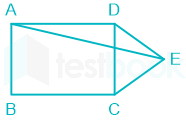
Question 2

Kautilya's Arthashastra deals with the aspects of

  1. AOption (a)

    Economic life

  2. BOption (b)

    Political policies

  3. COption (c)

    Religious life

  4. DOption (d)

    Social life

View answer & explanation

Correct answer

Answer: (b)B.

Political policies

Why this answer is correct

The correct answer is  Political policies.

Key Points

  • Kautilya's Arthashastra deals with Political policies.
  • Kautilya is also known by the name Chanakya and he was the Prime Minister of Chandragupta Maurya.
  • He was also an academician at the famous Taxila University.
  • Arthashastra was written in the Sanskrit language and was the compilation of 15 chapters on statecraft.

Question 3

Gautam Buddha was elevated to the position of God by the time of

  1. AOption (a)

    Ashoka

  2. BOption (b)

    Kanishka

  3. COption (c)

    Chandragupta Vikramaditya

  4. DOption (d)

    Harsha

View answer & explanation

Correct answer

Answer: (b)B.

Kanishka

Why this answer is correct

The correct answer is Kanishka.

 Key Points

  • Kanishka
  • Gautam Buddha was elevated to the position of God by the time of Kanishka.
  • Kanishka was the rular of Kushan dynasty and adopted the title of Devputra.
  • During his reign the 4th Buddhist council was held in Kundalavana, Kashmir.
  • Kanishka was also known as 'Second Ashoka'.

 Additional Information

  • Ashoka
  • He was the third emperor of the Mauryan dynasty.
  • Ashoka is called Chakrawarti Samrat which means emperor of the emperors.
  • He fought the Kalinga war and conquered Kalinga, but he was deeply sadenned by the loss of lives and sufferings.
  • As a result he renounced the war and converted to Buddhism.
  • Ashoka sent his son to Srilanka as a missionary for the spread of Buddhism in South.
  • Chandragupta Vikramaditya
  • He was the son of Samudragupta and grandson of Chandragupta I.
  • Vikramaditya was the one of the most powerful emperors of Gupta Empire.
  • The conquest of Sakas was one of the most significant event of his reign.
  • In the moemory of his victory over Sakas, he issued the silver coins and became the first gupta ruler to issue the silver coins.
  • Harsha
  • He was the ruler of Pushyabhuti dynasty and ruled from 606 - 647 CE.
  • Harsha was the son of Prabhakarvardhana.
  • His famous biography Harshacharitra was written by famous Sanskrit poet Banabhatta.
  • Dhruvabhata, Vallabhi king of Gujarat was also defeated by Harsha.

Question 4

Which of the following dynasties succeeded Shungas?

  1. AOption (a)

    Satvahanas

  2. BOption (b)

    Kushanas

  3. COption (c)

    Kanvas

  4. DOption (d)

    Guptas

View answer & explanation

Correct answer

Answer: (c)C.

Kanvas

Why this answer is correct

The correct answer is Kanvas.

 Key Points

  • Kanvas
  • They took over from the Shungas in the northern part of India.
  • Vasudeva was the minister of King Devabhuti of the Sunga dynasty.
  • He assassinated King Devabhuti and founded the Kanva dynasty.
  • Kanvas ruled from 72 to 28 BCE and the capital was Patliputra.
  • Some of the famous Kanva rulers are Vasudeva, Bhumimitra, Narayana, and Susarman.
  • They were the Brahmans by ancestry.

 Additional Information

  • Satvahanas
  • Satvahana dynasty was founded by Simuka.
  • Satvahanas were also Brahmans and Vaishnava gods such as Krishna and Vasudeva were worshipped largely in their reign.
  • Asvamedha sacrifices were also performed by this dynasty for victory in war.
  • Satvahanas were contemporary of Kanvas.
  • Kushanas
  • Kushanas belong to the Yeuchi tribe from central Asia.
  • They were the nomadic people from the neighborhood of China.
  • The Kushan empire was extended from Khorasan in Central Asia to Varanasi in Uttar Pradesh.
  • Kanishka was the most famous ruler of the Kushan dynasty, he also started the Shaka era in 78 CE.
  • Guptas
  • The reign of the Gupta dynasty was from the 3rd century AD to 543 AD.
  • The founder of this dynasty was Sri Gupta.
  • The information about the Gupta period can be collected from literary works like Devichandraguptam and Mudhrakshasam.
  • Gupta period is also called the golden age of ancient India.
  • The largest number of gold coins were also issued in this period.

Question 5

Which one of the following leaders belonged to the Extremist wing of the Congress?

  1. AOption (a)

    Aurobindo Ghosh

  2. BOption (b)

    Dadabhai Naoroji

  3. COption (c)

    GK Gokhale

  4. DOption (d)

    SN Banerjee

View answer & explanation

Correct answer

Answer: (a)A.

Aurobindo Ghosh

Why this answer is correct

The correct answer is Aurobindo Ghosh.

Key Points

  • Aurobindo Ghosh
  • He belonged to the extremist wing of Congress.
  • He was a philosopher, writer, and Indian nationalist.
  • "New Lamps for Old" was a series of articles by Aurbindo Ghosh about the critique of Moderate politics of the Indian National Congress.
  • The theory of Passive Resistance was also presented by him.
  • In his famous book Savitri, he called India as Bharat Mata.

 Additional Information

  • Dadabhai Naoroji
  • He was a great publicist who settled in London.
  • He also formed the London India Society in 1865 and East India Association in 1867 to put the Indian viewpoint across the British public.
  • In 1892, he was elected to the house of commons and became the first Asian to become a British Member of Parliament.
  • The very famous book 'Poverty and Un-British Rule in India' was written by Dadabhai Naoroji.
  • Gopal Krishna Gokhale 
  • He was a great educationist and a social reformer.
  • GK Gokhale also provided exemplary leadership to India's freedom movement.
  • He became the president of the Indian National Congress in 1905 in the Banaras session.
  • In 1905, he founded the Servants of India society.
  • Ranade Institute of Economics was also founded by Gokhale in 1908.
  • SN Banerjee
  • Surendranath Banarjee was an Indian nationalist, he is also known as Rashtraguru.
  • In 1882, he founded Ripon College in Calcutta.
  • National Indian Association was founded by him in 1876 to bring together Hindus and Muslims for political action against British rule.
  • He also started the newspaper 'The Bengalee' in 1879.
  • A Nation in Making was a famous book written by him.

Question 6

Which one of the following dynasties ruled over India after the invasion of Timur?

  1. AOption (a)

    Lodi dynasty

  2. BOption (b)

    Sayyid dynasty

  3. COption (c)

    Tughlaq dynasty

  4. DOption (d)

    Khilji dynasty

View answer & explanation

Correct answer

Answer: (b)B.

Sayyid dynasty

Why this answer is correct

The correct answer is the Sayyid dynasty.

Key Points

  • Sayyid dynasty
  • The Sayyid dynasty ruled over India after the invasion of Timur.
  • Taimur invaded India during the reign of Nasir-ud-din Mahmud Shah Tughlaq of the Tughlaq dynasty in 1398 AD.
  • The Sayyid dynasty was founded by Khizir Khan, who was the governor of Multan and Timur's deputy in India.
  • Ala-ud-din Shah was the last ruler of this dynasty.

 Additional Information

  • Lodi dynasty
  • It was the fifth and last dynasty of the Delhi Sultanate.
  • The Lodi dynasty ruled from 1451 AD - 1526 AD.
  • The founder of the Lodi dynasty was Bahlul Lodhi.
  • This was an Afghan dynasty and was also known as the Pashtun dynasty.
  • Ibrahim Lodhi was the last ruler of this dynasty and was killed by the Babur's troops in the battle of Panipat.
  • Tughlaq dynasty 
  • This was the Muslim dynasty of Indo-Turkic origin, ruled in India from 1320 AD - 1414 AD.
  • The Tughlaq dynasty was founded by Ghiyas-ud-din Tughlaq.
  • He ascended to the throne by killing Mubarak Khilji, the last ruler of the Khilji dynasty.
  • Nasir-ud-din Muhammad Tughlaq was the last ruler of this dynasty.
  • Khilji dynasty
  • It was the second ruling dynasty of the Delhi Sultanate.
  • It was established by Jalaluddin Firuz Khilji by overthrowing the Slave dynasty.
  • Khilji dynasty ruled for around 30 years, 1290 AD - 1320 AD.
  • Alauddin Khilji was the most powerful ruler of this dynasty who led many successful military campaigns.

Question 7

Which of the following Sultans had greatest number of slaves in his court?

  1. AOption (a)

    Balban

  2. BOption (b)

    Alauddin Khilji

  3. COption (c)

    Mohammad Bin Tughlaq

  4. DOption (d)

    Feroz Shah Tughlaq

View answer & explanation

Correct answer

Answer: (d)D.

Feroz Shah Tughlaq

Why this answer is correct

The correct answer is Feroz Shah Tughlaq.

Key Points

Balban (1266-1287 CE)- He belongs to the Mamluk dynasty. - He was the 9th Sultan of the Delhi Sultanate. - He started 'Sijda' and 'Paibos'. - The Persian model of kingship influenced him. - He took the title of Zil-i-Illahi.
Alauddin Khilji (1296-1316 CE)- First Sultan to have a permanent army at the Centre. - Alauddin constructed a new garrison town named Siri for his soldiers. - Alauddin Khilji reversed the policy of tolerance towards the nobles. - He started a levy of Gharai and Charai tax on home and animal husbandry.
Mohammad Bin Tughlaq (1324-1351 CE)- Attempt to shift the capital from Delhi to Devagiri. - He introduced token currency in 1329 AD. - He started the expedition of Khurasan (1332-1333AD). - Increased rate of Khara (land tax) up to 50 percent.
Feroz Shah Tughlaq (1351-1388 CE)- Conciliatory policy towards the nobles and theologians. - Reintroduced the system of hereditary appointments to offices, a practice not favored by Ala-ud-din Khalji. - Increased salaries of government officials. - Established a separate government department to ensure the welfare of slaves (Diwan-i-Bandagan). Hence, Feroz Shah Tughlaq is the correct answer. - He favored orthodox Islam. - Imposed jizya, a head tax on non-Muslims, even Brahmins
were compelled to pay.

Question 8

Which one of the following sultans provided employment to the unemployed?

  1. AOption (a)

    Alauddin Khilji

  2. BOption (b)

    Mohammad Bin Tughlaq

  3. COption (c)

    Feroz Shah Tughlaq

  4. DOption (d)

    Sher Shah Suri

View answer & explanation

Correct answer

Answer: (c)C.

Feroz Shah Tughlaq

Why this answer is correct

The correct answer is Feroz Shah Tughlaq.

Key Points

Alauddin Khilji (1296-1316 AD)- First Sultan to have a permanent army at the Centre. - Alauddin constructed a new garrison town named Siri for his soldiers. - Alauddin Khilji reversed the policy of tolerance towards the nobles. - He started a levy of Gharai and Charai tax on home and animal husbandry.
Mohammad Bin Tughlaq (1324-1351 AD)- Attempt to shift the capital from Delhi to Devagiri. - He introduced token currency in 1329 AD. - He started the expedition of Khurasan (1332-1333AD). - Increased rate of Khara (land tax) up to 50 percent.
Feroz Shah Tughlaq (1351-1388 AD)- Conciliatory policy towards the nobles and theologians. - Reintroduced the system of hereditary appointments to offices, a practice not favored by Ala-ud-din Khalji. - Increased salaries of government officials. - Established a separate government department to ensure the welfare of slaves (Diwan-i-Bandagan). - He favored orthodox Islam. - Imposed jizya, a head tax on non-Muslims, even Brahmins
were compelled to pay. - He was credited with establishing several educational institutions
and a number of mosques, palaces, and forts. - He provided employment opportunities to unemployed people. Hence, Feroz Shah Tughlaq is the correct answer.
Sher Shah Suri (1540-1545 AD)- He was the 6th ruler of the Suri dynasty. - The Battle of Chausa was fought between the Mughal emperor, Humayun, and Shershah Suri. - The tomb of Sher Shah Suri is in Sasaram, Bihar. - He introduced the currency of the rupee.

Question 9

Which one of the following Mughal Emperors gave an important 'Farman' to the English for facilitating their trade in India?

  1. AOption (a)

    Bahadur Shah I

  2. BOption (b)

    Farrukhsiyar

  3. COption (c)

    Shah Alam II

  4. DOption (d)

    Bahadur Shah II

View answer & explanation

Correct answer

Answer: (b)B.

Farrukhsiyar

Why this answer is correct

The correct answer is Farrukhsiyar.

Key Points

Bahadur Shah I (1707-1712)- Offered high Mansab to Guru Gobind Singh. - Reversed some policies of Aurangzeb. - Released Maratha Prince Shahu Ji from Mughal captivity. - Adopted a tolerant attitude towards Hindus. - Also made peace with Rajputs, Jats, and Bundelas.
Farrukhsiyar (1713-1719)- British physician William Hamilton cured him, and as a token of gratitude, he gave Royal Farman in 1717. Hence, option 2 is correct. - He came to power with the support of the Sayyid Brothers. - During his tenure, Sikh leader Banda Bahadur was executed. - He also abolished the Pilgrimage tax.
Shah Alam II (1759-1806)- He came to power with the support of Sadashiv Rao. - During his reign two important battles were fought: - The third battle of Panipat (1761). - Battle of Buxar (1764).
Bahadur Shah II (1837-1857)- Mughal rule came to an end on 1st November 1858 with the declaration of Queen Victoria.

Question 10

Mahavira Jain breathed his last at

  1. AOption (a)

    Rajgir

  2. BOption (b)

    Ranchi

  3. COption (c)

    Pawapuri

  4. DOption (d)

    Samastipur

View answer & explanation

Correct answer

Answer: (c)C.

Pawapuri

Why this answer is correct

The correct answer is Pawapuri.

Key Points Vardhman Mahavira:

  • Prince Vardhamana was born at Kundalgram (540 BC) in Vaishali to King Siddhartha and Queen Trishala, who ruled over the Jnatrika clan.
  • At the age of 30, after the death of his father, he renounced his family and proceeded in search of truth.
  • He attained Kaivalya under a sal tree at Jambhikagrama on the bank of river Rijupalika near Patna.
  • He is the 24th Tirthankara of Jaina.
  • He attained Moksha at the age of 72 in 468 BC at a place called Pawapuri near modern Rajgir in Bihar.
  • He established Chaturvidha Sangh at Pava in Uttar Pradesh.

Question 11

A Buddhist Council during the reign of Ashoka was held at

  1. AOption (a)

    Magadh

  2. BOption (b)

    Pataliputra

  3. COption (c)

    Samastipur

  4. DOption (d)

    Rajgir

View answer & explanation

Correct answer

Answer: (b)B.

Pataliputra

Why this answer is correct

The correct answer is Patliputra.

Key Points

CouncilSalient Features
1st Buddhist Council- Convened in 483 BCE at Rajgriha. - Headed by Mahakassapa under the patronage of Ajatashatru of the Haryanka dynasty. - Ananda composed Suttapitaka which comprises the teachings of Buddha. - Mahakassapa is composed of Vinaypitaka which is considered a monastic code of conduct.
2nd Buddhist Council- Convened in 383 BCE at Vaishali. - Headed by Sabakami under the patronage of Kalashoka of the Shishunaga dynasty. - Buddhist order split into Sthaviravadins and Mahasanghiikas.
3rd Buddhist Council- Convened in 250 BCE at Patliputra. Hence option 2 is correct. - Headed by Mogaliputta Tissa under the patronage of Ashoka of the Mauryan dynasty. - Abhidhamma Pitaka was compiled in this council. - Missionaries were sent to different countries.
4th Buddhist Council- Convened in 72 CE at Kashmir. - Headed by Vasumitra and Ashvaghosh under the patronage of Kanishka of the Kushana dynasty. - Buddhist order was finally divided into Hinayana and Mahayana.

Question 12

Mahabodhi Temple has been built at Bodh Gaya where

  1. AOption (a)

    Gautam Buddha was born

  2. BOption (b)

    Gautam Buddha received enlightenment

  3. COption (c)

    Gautam Buddha gave his first sermon

  4. DOption (d)

    Gautam Buddha passed away

View answer & explanation

Correct answer

Answer: (b)B.

Gautam Buddha received enlightenment

Why this answer is correct

The correct answer is Gautam Buddha received enlightenment

Key Points Gautam Buddha

  • He is considered the founder of Buddhism.
  • Buddha is also called Sakyamuni or Tathagata
  • He was born as Siddhartha to Suddhodhana, the ruler of the Sakyan reptublic, and his wife Maya, on Vaisakha Purnima in the Lumbini gardens near Kapilvastu in the 6th century BC.
  • At the age of 35, again on Vaisakha Purnima, he attained enlightenment at what is now famously known as Bodh Gaya.
  • He gave his first sermon in a deer park at Sarnath before his first disciples.

Important Points

  • Four Noble Truths of Buddhism
  • Truth of suffering,
  • Truth of cause of Suffering.
  • Truth of the end of the suffering,
  • Truth of the path that leads to the end of the suffering.
  • The path to nirvana or cessation of suffering is the Noble Eightfold path-
  • Right Understanding (Samma ditthi)
  • Right thought (Samma sankappa)
  • Right Speech (Samma vaca)
  • Right action (Samma kammanta)
  • Right livelihood (Samma ajiva)
  • Right effort (Samma vayama)
  • Right mindfulness (Samma sati)
  • Right concentration (Samma samadhi)

Additional Information

  • Buddhist Councils-  After Buddha’s death, 4 councils were held-
Buddhist CouncilTimePlacePatronized byPresided byFeatures
1st483 BCRajgirAjatshatruMahakassappaTripithakas were compiled
2nd383 BCVaishaliKalashokaSabbakamiDivision into Sthaviravadins and Mahasanghikas
3rd250 BCPataliputraAshokaMogaliputta TissaBuddhist missionaries were sent to other countries
4th1st centuryKashmirKanishkaVasumitraDivided into Mahayana and Hinayana

Question 13

Kunwar Singh held the revolt of 1857 in

  1. AOption (a)

    Punjab

  2. BOption (b)

    Bengal

  3. COption (c)

    Bihar

  4. DOption (d)

    Maharashtra

View answer & explanation

Correct answer

Answer: (c)C.

Bihar

Why this answer is correct

The correct answer is Bihar

Key Points Kunwar Singh

  • Kunwar Singh also known as Babu Kunwar Singh was a leader during the uprising of 1857.
  • He belonged to a family of the Ujjainiya clan of the Parmar Rajputs of Jagdispur, currently a part of Bhojpur district, Bihar.
  • At the age of 80, he led a selected band of armed soldiers against the troops under the command of the British East India Company.
  • He was the chief organizer of the fight against the British in Bihar.

Important Points

  • Revolt of 1857
  • The revolt of 1857 was a mighty uprising against the British.
  • It was largely confined to Northern and Central India.
  • Britain's exploitative measures, military discontentment, Hike in land taxes, and administrative innovations were the main cause that led to the revolt.
  • VD Sawarkar called it as 'First War of Independence'.

Important Leaders associated with the Revolt and its center

PlaceLeader
LucknowBegum Hazarat Mahal and Birjis Qadir
JhansiRani Laxmi Bai and Jhalkari Bai
KanpurNana Sahib, Rao Sahib, Tantia Tope, Azimullah Khan
DelhiBahadur Shah Zafar and Bakht Khan
AllahabadLiyaqat Ali Khan
RajasthanJaidayal Singh and Hardayal Singh
AssamKandapareshwar Singh, Maniram Dutta Baruah

Question 14

Mundas raised revolt in

  1. AOption (a)

    1885

  2. BOption (b)

    1888

  3. COption (c)

    1899

  4. DOption (d)

    1895

View answer & explanation

Correct answer

Answer: (c)C.

1899

Why this answer is correct

The correct answer is 1899

Key Points

Munda Rebellion

  • The Munda tribe inhabited the Chhota Nagpur region of today’s Jharkhand.
  • When Birsa Munda was born in 1875 when the British were attempting to establish control over and exploit forest lands, disrupting the tribal way of life.
  • Birsa Munda is known to have mobilized the tribal community against the British and had also forced the colonial officials to introduce laws protecting the land rights of the tribals.
  • Birsa started the faith of ‘Birsait’. Soon members of the Munda and Oraon communities started joining the Birsait sect and it turned into a challenge to British conversion activities.
  • On March 3, 1900, Birsa Munda was arrested by the British police while he was sleeping with his tribal guerilla army at Jamkopai forest in Chakradharpur.
  • He died in Ranchi jail on June 9, 1900, at the young age of 25.

Important Points

Major Tribal Uprisings

YearRebellionAssociated Leaders
1783ADPeasant Uprising of RangpurDirjnarayan
1818-1831ADBhil RevoltMotilal Tejawat
1830-1831ADMysore RebellionSardar Malla
1831-1832ADKol RebellionBuddhu Bhagat and Joa Bhagat
1921-ADMappilah RebellionAli Musaliyar
1855-1856ADSanthal RebellionSiddhu and Kanhu
1822-1829ADRamosi UprisingChittu Singh
1914ADTana Bhagat MovementJatra Bhagat

Question 15

Who was the first Portuguese viceroy in India?

  1. AOption (a)

    Diaz

  2. BOption (b)

    Vasco-di-Gama

  3. COption (c)

    Almeida​

  4. DOption (d)

    Albuquerque

View answer & explanation

Correct answer

Answer: (c)C.

Almeida​

Why this answer is correct

The correct answer is Almeida.

Key Points Portugese:

  • In 1488, the Portuguese navigator, Bartolomeu Dias, rounded the Cape of Good Hope in Africa and sailed up to the eastern coast.
  • They established the Cartaz system to extract money from the Indian ships by issuing passes for naval trade.​
  • They monopolized the manufacturing of salt.
  • Introduced the cultivation of tobacco and red chilies.
  • Nino de Cunha shifted the Portuguese headquarters from Cochin to Goa.
  • Three of their settlements namely, Goa, Diu, and Daman remained in their control till 1961.
Francisco De Almeida- In 1505, he become the 1st Portuguese Viceroy in India. Hence option 3 is correct. - To control the Indian Ocean, Almeida initiated Blue Water Policy (Cartaz system). - He commenced the construction of St. Angelo Fort in 1505.
Vasco De Gama- In May 1498, when the Vasco De Gama led by Gujrati pilot Ahmed Ibn Majid arrived at Calicut. - He established the 1st Portuguese factory at Calicut in 1502.
Alfonso de Albuquerque- He succeeded Almeida in 1510. - Important Portuguese Governor who abolished Sati in his ruling area. - He captured Goa in 1510 from the rulers of Bijapur.

Question 16

Who was appointed Deputy Diwan of Murshidabad by Robert Clive after the Allahabad Treaty?

  1. AOption (a)

    Mohd. Raza Khan

  2. BOption (b)

    Shitab Rai

  3. COption (c)

    Rai Durlabh

  4. DOption (d)

    Syed Ghulam Hussain

View answer & explanation

Correct answer

Answer: (a)A.

Mohd. Raza Khan

Why this answer is correct

The correct answer is Mohd. Raza Khan.

Key Points Treaty of Allahabad-

  • The treaty of Allahabad took place in 1765.
  • The Treaty of Allahabad was an outcome of the Battle of Buxar in 1764 fought between the combined forces of the Mughal emperor, Nawab of Awadh and Bengal, and the British East India Company (EIC).
  • After the victory in the Battle of Buxar in 1764, Robert Clive signed two separate treaties, one with Shuja-ud-Daulah (Nawab of Oudh), and one with Shah Aam-II (Mughal Emperor) at Allahabad.
  • The Mughal Emperor signed away the right to collect taxes (Diwani rights) from Bengal, Bihar, and Orissa to the British.
  • In return, the company had to pay the emperor an annual sum of Rs 26 Lakhs and Rs 53 Lakhs for ‘Nizamat’ expenses.
  • Robert Clive made Shuja-Ud-Daulah surrender Allahabad and Kara to Shah Alam II (Mughal Emperor).
  • At that time, the Company was neither interested in taking responsibility for tax revenue collection nor it was capable to do so. Therefore, the company appointed two Diwans-Mohammad Raza Khan for Bengal and Raja Shitab Rai for Bihar.

Important Points Robert Clive-

  • Major-General Robert Clive was the first British Governor of the Bengal Presidency.
  • Clive began as a writer for the East India Company (EIC) which established the military and political supremacy of the EIC by securing a decisive victory at the Battle of Plassey(1757) in Bengal.
  • Robert Clive was the Governor of Bengal from 1757-60 and from 1765-67.
  • Robert Clive started a ‘Society of Trade’ in 1765 but it was later abolished.
  • Robert Clive Introduce Dual System where the company was the Diwan and the Nawab held the Nizamat.

Question 17

Which one of the following commissions is associated with the Army Re-organisation after the suppression of the Revolt of 1857?

  1. AOption (a)

    Public Service Commission

  2. BOption (b)

    Peel Commission

  3. COption (c)

    Hunter Commission

  4. DOption (d)

    Simon Commission

View answer & explanation

Correct answer

Answer: (b)B.

Peel Commission

Why this answer is correct

The correct answer is Peel Commission.

Key Points Peel Commission:

  • After the First freedom struggle of 1857, the British government sought to bring changes in the military system.
  • Peel Commission was headed by Jonathan Peel.
  • Peel Commission suggested reforms, and the British government accepted these recommendations and redesigned the military.
  • While reorganizing the Indian army in the post-1857 revolt, the Jonathan Peel Commission had the task of identifying social groups and regions from which „loyal‟ soldiers could be recruited.
  • The principle it emphasized was that the native army should be composed of different nationalities and castes and mixed promiscuously through each regiment.
  • Recruiting of soldiers was seen more in terms of the communities to which they belonged rather than as individuals. Caste, religion, and ethnicity, or race became more crucial while enlisting a soldier.

Additional InformationSimon Commission-

  • Simon Commission was a group of 7 British Parliament members.
  • The chairman of the Simon Commission was Sir John Simon.
  • The commission was set up for analysis of the Government of India Act 1919.
  • The Simon Commission was to come 10 years after the act of 1919, but it came prematurely in 1928.
  • The Commission’s report was published in 1930.

Hunter Commission-

  • The Hunter Commission of 1882 was presided over by Sir William Hunter and was appointed by Lord Ripon, the then-viceroy of India.
  • The hunter commission was constituted on 3rd April 1882, after a request of the general council of education was made to Ripon.
  • The main objective of Hunter commission was to consider different aspects of education in India, paying particular attention to primary education.

Public Service Commission-

  • The public service commission in India was established by the Government of India act 1919.
  • Central Public service commission was set up in 1926 for recruiting Civil servants.
  • The government of India act of 1919 created a new office of the High Commissioner for India in London.

Question 18

Kuka Movement was organised by

  1. AOption (a)

    Guru Ram Das

  2. BOption (b)

    Guru Nanak

  3. COption (c)

    Guru Ram Singh

  4. DOption (d)

    Guru Gobind Singh

View answer & explanation

Correct answer

Answer: (c)C.

Guru Ram Singh

Why this answer is correct

The correct answer is Guru Ram Singh.

Key PointsKuka Movement-

  • The Kuka Movement was the first significant movement against the new British rule in Punjab.
  • The Kuka movement was based on both political and religious angles.
  • The Punjabi people's first considerable response to the British Empire's post-1849 new political structure was the Kuka Movement.
  • The Namdharis were also known as “Kukas” because of their trademark style of reciting the “Gurbani” (Teachings of the Guru).
  • This style was in a high-pitched voice called “Kook” in Punjabi. Thus, the Namdharis were also called “Kukas”.
  • Baba Ram Singh started the Kuka Movement.
  • The Kukas wore only white, hand-woven clothes and boycotted British education, products, and laws. In 1872.
  • Ram Singh was captured and exiled to Rangoon and 65 Kukas were blown away from canons by the British.

Important PointsGuru Ram Singh (1816- 1872)

  • Satguru Ram Singh, son of a poor carpenter, was born on 3rd February 1816 in the small village of Bhaini, around 7 kilometers away from Ludhiana.
  • Guru Ram Singh founded the Namdhari Sect on 12th April 1857 at Bhaini Sahib.
  • Guru Ram Singh asked his followers to boycott everything which bore the stamp of the British Government. In course of time, Baba Ram Singh became a secular chief of Kukas.
  • He appointed Governors and Deputy Governors to organize Kukas in different districts of Punjab. He also inspired young men by giving them military training.

Additional Information Guru Nanak (1469-1539)

  • Guru Nanak Dev was born on 15 April 1469 in a village, Talwandi Rai Bhoe, near Lahore (it was renamed later as Nankana Sahib).
  • Guru Nanak was a Founder of Sikhism.
  • Guru Nanak introduced the concept of langar where everybody partakes in a meal as equals.
  • Guru Nanak’s birth anniversary is celebrated as Guru Nanak Gurpurab by Sikhs all over the world.

Guru Ram Das (1534-1581)

  • Guru Ram Das was the fourth guru of Sikhism.
  • Guru Ram Das Founded the city of Amritsar in north-west India.
  • Guru Ram Das started the construction of the Golden Temple at Amritsar.

Guru Gobind Singh (1666- 1708)

  • Guru Gobind Singh was the last of the ten Sikh Gurus, Guru Gobind Singh was born on 22nd December 1666 in Patna, Bihar.
  • Gobind Singh ji founded the principles of Khalsa or the Five ‘K’s. The Five K’s are kesh (uncut hair), kanga (wooden comb), kara (iron or steel bracelet), kirpan (dagger) and kachera (short breeches).
  • Guru Gobind Singh ji established the Khalsa in 1699.

Question 19

Who was the founder of the India Association?

  1. AOption (a)

    Dadabhai Naoroji

  2. BOption (b)

    Bal Gangadhar Tilak

  3. COption (c)

    AO Hume

  4. DOption (d)

    Surendra Nath Banerjee

View answer & explanation

Correct answer

Answer: (d)D.

Surendra Nath Banerjee

Why this answer is correct

The correct answer is Surendra Nath Banerjee

Key PointsSurendra Nath Banerjee

  • Surendranath Banerjee and Anand Mohan Bose founded the Indian Association of Calcutta in 1876.
  • The association aimed to unify the nation to create a common political program and a strong public opinion.
  • Later this political organization merged with Indian National Congress.

 Additional Information

  • Dadabhai Naroji
  • Dadabhai Naoroji was born in Bombay on 4 September 1825 in a priestly Parsi family
  • In 1867 he founded the East India Association in London, one of the predecessor organizations of the Indian National Congress with the aim of putting across the Indian point of view before the British public.
  • In 1902 he was elected as a Member of the Liberal Party in the House of Commons, he was the first British Indian MP.
  • He is known in the history of Indian economic thought for his pioneering work in assessing India's national income.
  • Known as ‘The Grand Old Man of India’ Dadabhai Naoroji was a great public figure during 1845 - 1917.
  • He gave the 'Drain of Wealth Theory'.
  • Bal Gangadhar Tilak
  • Bal Gangadhar Tilak was born on 23rd July 1856.
  • He was a prominent figure in Indian National Congress.
  • His political ideology was Extreme Nationalism. He was an extreme leader of the Indian National Congress along with Lala Lajpat Ray and Bipin Chandra Pal, commonly addressed as Lal, Bal, Pal.
  • He called on the movement of the Indian Home Rule League in 1916-1918 across India.
  • He authored a very famous book 'Gita Rahasya' and The Arctic Home in the Vedas.
  • A O Hume
  • Allan Octavian Hume, who played a seminal role in the foundation of the Indian National Congress.
  • He is also called the “Father of Indian Ornithology” and alternately, the “Pope of Indian Ornithology”.
  • Initial publication of his first book was in 1869: My Scrap Book—Indian Oology and Ornithology.
  • He published over 200 ornithological publications, and monographs, and curated an ornithological museum and library. He built an elaborate connection of over 160 contributors, which helped him acquire specimens from all over the Indian Empire.

Question 20

By whom was General Dwyer shot dead?

  1. AOption (a)

    Khudiram

  2. BOption (b)

    Bhagat Singh

  3. COption (c)

    Madan Lal Dhingra

  4. DOption (d)

    Udham Singh

View answer & explanation

Correct answer

Answer: (d)D.

Udham Singh

Why this answer is correct

The correct answer is Udham Singh

Key PointsUdham Singh

  • Udham Singh is usually known as the person who avenged the Jallianwala Bagh massacre.
  • He is known as the “patient assassin” or the “lone assassin” who shot dead Michael O’Dwyer, the Lieutenant Governor of Punjab under whose administration the infamous Amritsar massacre took place and who later even endorsed Brigadier-General Dyer, the perpetrator of the killings.
  • His involvement was with the Ghadar Party, and also launched his own party, the Azad Party, as an offshoot of the Ghadar movement.

Additional Information

  • Bhagat Singh
  • In March 1926, he founded the Naujawan Bharat Sabha, a socialist organization with the aim to overthrow British rule in India.
  • In 1927, he was arrested and charged with involvement in the Lahore bombing case that took place in 1926.
  • In 1928, he formed the Hindustan Republican Association (HRA), which later became the Hindustan Socialist Republican Army (HSRA).
  • On March 23, 1931, Singh was executed along with Rajguru and Sukhdev. March 23 is observed as 'Shaheed Divas' to pay tribute to the trio.
  • Khudiram Bose
  • Khudiram was one of India’s youngest freedom fighters.
  • In 1905, during the Partition of Bengal, he became an active volunteer in the freedom movement.
  • on 30 April 1908, he along with Prafulla Chaki attacked Kingsford’s carriage while it was leaving the club.
  • After numerous trials and hearings, Khudiram was sentenced to death. Young Khudiram, at the age of eighteen, was executed on 11 August 1908, making him one of the youngest revolutionaries in India to be hanged by the British.
  • Madan Lal Dhingra
  • Madan Lal Dhingra was born in a very rich family in Amritsar on 17 February 1883.
  • He came in contact with Veer Savarkar and his associates.
  • He shot dead Curzon Wyllie, who was considered an anti-Indian officer of the British regime.
  • He was sentenced to death in 1909.

Question 21

Quit India Movement was led by

  1. AOption (a)

    BR Ambedkar

  2. BOption (b)

    Jawaharlal Nehru

  3. COption (c)

    Mahatma Gandhi

  4. DOption (d)

    None of these

View answer & explanation

Correct answer

Answer: (c)C.

Mahatma Gandhi

Why this answer is correct

The correct answer is Mahatma Gandhi.

Key Points

  • The All India Congress Committee met in Bombay on 8th August 1942.
  • It passed the famous Quit India resolution and proposed to start off a non-violent mass struggle under Gandhi's leadership.
  • It is called the Vardha proposal and leaderless revolt.
  • Gandhi told the British to quit and leave India in God's hand. His message was Do or Die.
  • The repressive policy of the government and indiscriminate arrest of the leaders provoked people to violence.

Additional Information

  • B. R. Ambedkar
  • He was a jurist, a statesman, a social reformer and a leader of the depressed classes.
  • He participated in all three Round Table Conferences, he signed Poona Pact with Gandhiji in 1932.
  • He was chairman of the drafting committee of our constitution.
  • Jawahar Lal Nehru
  • He was the first Prime Minister of Independent India and is known as the architect of Modern India.
  • He was Prime Minister of India from 1947 to 1964.
  • He was the author of the Doctrine of Panchsheel and believed in policy non-alignment.

Question 22

The slogan 'Do or Die' was given by

  1. AOption (a)

    PC Roy

  2. BOption (b)

    JC Bose

  3. COption (c)

    CV Raman

  4. DOption (d)

    Mahatma Gandhi

View answer & explanation

Correct answer

Answer: (d)D.

Mahatma Gandhi

Why this answer is correct

The correct answer is Mahatma Gandhi

Key PointsMahatma Gandhi

  • Mahatma Gandhi was a great thinker, social reformer, and nationalist.
  • He preached the idea of Truth and Nonviolence.
  • The Champaran agitation in 1917 in Bihar was Gandhi's first active involvement in Indian freedom politics. The Champaran farmers were being forced to grow Indigo and were being tortured if they protested.
  • He called on many national movement time from to time in the struggle for Independence as the Khilafat Movement(1919), Noncooperation Movement(1920), Civil Disobedience Movement(1930), and Quit India Movement(1942).
  • The famous slogan 'Do or Die' was given by him in Quit India Movement.
  • Gandhi ji established various ashrams like Phoneix, Sabarmati, Wardha, etc.
  • He also contributed to the literature by writing many journals, magazines, books, etc. His famous literary work is his autobiography 'My Experiment with Truth'.

​

Additional Information

  • Jagdish Chandra Bose
  • He was a famous Indian Scientist born on 30 Nov 1858.
  • He was the first to prove that plants too have feelings.
  • He invented an instrument 'Crescograph' to record the pulse of plants and connected it to a plant.
  • Bose would go on to demonstrate that plants could respond to various stimuli, including light, fertilizer, and various poisons and toxins.
  • Chandrashekhar Venkata Raman
  • Chandrasekhara Venkata Raman was born at Tiruchirappalli in Southern India on November 7th, 1888.
  • His earliest research in optics and acoustics – the two fields of investigation to which he has dedicated his entire career.
  • He explained Raman and Rayleigh Scattering for this contribution he received Nobel Prize in Physics in 1930.

Question 23

The second session of the Indian National Congress was presided over by

  1. AOption (a)

    Ganesh Agarkar

  2. BOption (b)

    Surendra Nath Banerjee

  3. COption (c)

    Dadabhai Naoroji

  4. DOption (d)

    Feroz Shah Mehta

View answer & explanation

Correct answer

Answer: (c)C.

Dadabhai Naoroji

Why this answer is correct

The correct answer is Dadabhai Naoroji.

Key Points

  • Dadabhai Naoroji
  • In 1886, the second session of the Indian national congress was held in Calcutta.
  • The President of the second session was Dadabhai Naoroji.
  • Dadabhai Naoroji also known as the "Grand Old Man of India"
  • He became the first Indian to become a member of the House of Commons in Britain.
  • Authored ‘Poverty and Un-British Rule in India’ which focused on the economic drain of India because of British policies.
  • In 1885, the Indian national congress was established by A.O. Hume.
  • The first session of INC was held in Bombay and its president was Womesh Chandra Bannerjee.

Important Points Important sessions of Indian National Congress-

SessionPlaceYearPresidentImportant fact
1Bombay1885Womesh Chandra Bonnerje72 delegates attended
2Calcutta1886Dadabhai Naoroji-
3Madras1887Badruddin TyabjiFirst Muslim President
4Allahabad1888George YuleFirst British President
9Lahore1893Dadabhai Naoroji-
12Calcutta1896Rahimatullah M. SayaniVande Mataram was sung for the first time
22Calcutta1906Dadabhai NaorojiThe first use of the word "Swaraj"
23Surat1907Rash Behari GhoshThe first division of congress
27Bankipore1912Rao Bahadur Raghunath Narasinha Mudholkar-
32Calcutta1917Annie BesantFirst female president.
39Belgaum1924M.K. Gandhi-
40Kanpur1925Mrs. Sarojini NaiduFirst Indian female president.
52Tripuri1939Rajendra prasad-
55Jaipur1948B. Pattabhi Sitaramayya-

Question 24

The Partition of Bengal came into effect on

  1. AOption (a)

    15th August, 1905

  2. BOption (b)

    15th September, 1905

  3. COption (c)

    16th October, 1905

  4. DOption (d)

    15th November, 1905

View answer & explanation

Correct answer

Answer: (c)C.

16th October, 1905

Why this answer is correct

The correct answer is 16th October 1905.

Key Points

  • Partition of Bengal
  • The most important task in Curzon's anti-India activities was the partition of Bengal in 1905 AD.
  • On July 19, 1905 AD, the decision to partition Bengal was announced in Shimla and its draft was published.
  • On October 16, 1905, the plan for the partition of Bengal was implemented.
  • Bengal was divided into two provinces one - Eastern Bengal and Assam Province, the other Western Bengal.
  • The headquarters of Eastern Bengal was made at Dacca and Sir Andrew Fraser was made the lieutenant governor.
  • Bengal was partitioned for a second time in 1947 when the whole country was partitioned into India and Pakistan. East Bengal became East Pakistan.
  • In 1971, East Pakistan separated from Pakistan and became Bangladesh.


Important Points Lord Curzon (1899 - 1905)

  • In 1899, Curzon passed the Indian Coinage and Paper-Currency Act. By doing this, the English gold currency was declared the legal currency of India.
  • In 1901, Curzon appointed an irrigation commission under the chairmanship of Sir Colin Scott Moncrieff, a railway commission under the chairmanship of Thomas Robertson, a police commission under the chairmanship of Sir Andrew Fraser, and a university commission under the chairmanship of Sir Thomas Raleigh in 1902. established.
  • During the tenure of Curzon, In 1904, the Indian University Act was passed.
  • Through the Ancient Monuments Testing Act 1904 AD, Curzon paid attention to the protection and repair of historical buildings for the first time in India. For this work, Curzon established the Department of Archaeological Survey of India.
  • During the time of Curzon, for the first time, a separate intelligence department was established under a director at each provincial and central level.

Question 25

Who among the following was not known as a moderate in the National Movement?

  1. AOption (a)

    Bal Gangadhar Tilak

  2. BOption (b)

    Dadabhai Naoroji

  3. COption (c)

    MG Ranade

  4. DOption (d)

    Gopal Krishna Gokhale

View answer & explanation

Correct answer

Answer: (a)A.

Bal Gangadhar Tilak

Why this answer is correct

The correct answer is Bal Gangadhar Tilak.

Key Points

  • In 1907, Congress was divided into groups of extremists and moderates.
  • Moderates wanted to resolve government issues through deliberations whereas Extremists believed in strikes, agitation, and boycott to force their demands.
  • The Extremist camp was led by Lal Bal and Pal and the moderate camp was led by Gopal Krishna Gokhale.
  • Bal Gangadhar Tilak-
  • ​Bal Gangadhar Tilak was born on 23 July 1856, in Ratnagiri, Maharashtra.
  • Tilak joined the Indian National Congress (INC) in 1890.
  • The Swadeshi movement was started by Bal Gangadhar Tilak in 1905 and focused on the boycott of foreign goods and the promotion of indigenous goods.
  • Bal Gangadhar Tilak along with Annie Besant and G.S. Khapadre founded the All India home rule league in 1916.
  • He rejoined the Indian National Congress in 1916 after the split.
  • Bal Gangadhar Tilak started two grand public events. They are Ganesh Chaturthi ( in 1893) and Shiv Jayanti (1895) to achieve unity and bring about national spirit among the masses.
  • Tilak started weeklies like Kesari and Mahratta before India gained freedom. Mahratta was an English weekly, while Kesari was a Marathi weekly.
  • In addition, he was given the honorary title of ‘Lokmanya,’ which signifies acceptance by the people.

Additional Information

  • Dadabhai Naoroji 
  • Dadabhai Naoroji is also known as the ‘Grand Old Man of India'.
  • He became the first Indian to become a member of the House of Commons in Britain.
  • Write a book ‘Poverty and Un-British Rule in India’ which focused on the economic drain of India because of British policies.
  • Gopal Krishna Gokhale
  • Regarded as Mahatma Gandhi’s political guru.
  • Founded the Servants of India Society.
  • MG Ranade
  • Govind Ranade, one of the founding members of the Indian National Congress.
  • Mahadev Govind Ranade played an important role in the establishment and promotion of the Prarthana Samaj, the Poona Sarvajanik Sabha, and the Vakrittvottejak Sabha.

Question 26

Where was Azad Hind Fauz set up?

  1. AOption (a)

    Japan

  2. BOption (b)

    Burma

  3. COption (c)

    Singapore

  4. DOption (d)

    England

View answer & explanation

Correct answer

Answer: (c)C.

Singapore

Why this answer is correct

The correct answer is Singapore.

Key Points

  • Indian National Army
  • On 21 October 1943, Subhash Chandra Bose formed the Azad Hind Fauj in Singapore.
  • The idea of the Indian National Army (INA) to liberate India was originally conceived by Rasbehari Bose, who had fled to Japan in 1915 and had become a Japanese citizen, with the help of Mohan Singh, an Indian officer of the British Indian Army In Malaya.
  • Subhash Chandra Bose secretly escaped in Jan 1941 and reached Berline, In July 1943, he joined the INA in Singapore, There, Rasbehari Bose handed over the leadership to him.
  • He Aimed a military campaign for the independence of India.
  • He set up two Indian National Army(INA) headquarters in Rangoon and Singapore.
  • Indian National Army had three fighting brigades named Gandhiji, Azad, and Nehru. Rani Jhansi Brigade led by Laxmi Sehgal was an exclusive women's force.
  • In this, Subhash Chandra Bose gave the call 'Dilli Chalo'

Question 27

Bhagat Singh, Rajguru and Sukhdev were hanged on

  1. AOption (a)

    March 23, 1931

  2. BOption (b)

    March 23, 1932

  3. COption (c)

    March 23, 1933

  4. DOption (d)

    March 23, 1934

View answer & explanation

Correct answer

Answer: (a)A.

March 23, 1931

Why this answer is correct

The correct answer is March 23, 1931.

Key Points

  • Bhagat Singh, Rajguru and Sukhdev were hanged on March 23, 1931, in the Lahore conspiracy case.
  • They were all members of the Hindustan Socialist Republic Association.
  • On 17 December 1928, Bhagat Singh, Azad and Rajguru assassinated Saunders, a police officer who was involved in the lathi charge that had caused the death of Lala Lajpat Rai.
  • Bhagat Singh, Sukhdev and Rajguru were later hanged to death.
  • The timetable was pushed ahead by 11 hours and the three were hanged at 7:30 p.m. in Lahore prison on 23 March 1931.
  • Their bodies were secretly Cremated in the Bank of Sutlej River.
  • This day is observed as Mytrys day to honour the revolutionaries.

Additional Information

  • Bhagat Singh was an Indian communist revolutionary whose two acts of spectacular brutality against the British in India and execution at the age of 23 made him a famous hero of the Indian independence movement.
  • Shivaram Hari Rajguru was an Indian nationalist from Maharashtra, mainly known for his role in the assassination of a British Raj police officer.
  • Sukhdev Thapar was a visionary in India. A senior member of the Hindu Socialist Republican Association, he engaged in a variety of acts alongside Bhagat Singh and Shivaram Rajguru.

Question 28

Cabinet Mission was presided over by

  1. AOption (a)

    Lord Attlee

  2. BOption (b)

    Strafford Cripps

  3. COption (c)

    Clement Attlee

  4. DOption (d)

    Sir P Lawrence

View answer & explanation

Correct answer

Answer: (d)D.

Sir P Lawrence

Why this answer is correct

The correct answer is Sir P Lawrence. 

Key Points

  • Cabinet Mission
  • After World war-II, Three members of the British Cabinet (Sir Pethick Lawrence, Sir Stafford Cripps and A.V Alexender) were sent to India to make recommendations regarding constitutional reforms to be introduced in India. This is called Cabinet Mission.
  • This Cabinet mission was presided over by Sir Pethick Lawrence.
  • The Mission held talks with the Indian National Congress and Muslim League to bring about acceptance of their proposals.
  • On May 16, 1946, the mission put forward its proposals:
  • It was to have a weak central government controlling only foreign affairs, defence and communications with the existing provincial assemblies being grouped into three sections while electing the constituent assembly: Section A for the Hindu-majority provinces, and Sections B and C for the Muslim-majority provinces of the north-west and the north-east (including Assam) respectively
  • The sections or groups of provinces would comprise various regional units. They would have the power to set up intermediate-level executives and legislatures of their own.
  • Both the Muslim League and Congress accepted the plan.

Question 29

Who gave the 'Inquilab Zindabad' slogan?

  1. AOption (a)

    Iqbal

  2. BOption (b)

    MK Gandhi

  3. COption (c)

    Bhagat Singh

  4. DOption (d)

    SC Bose

View answer & explanation

Correct answer

Answer: (c)C.

Bhagat Singh

Why this answer is correct

The correct answer is Bhagat Singh.

Key Points

  • Inquilab Zindabad slogan was Given by Bhagat Singh.
  • Maulana Hasrat Mohani, who first introduced this slogan in the year 1921, was a famous freedom fighter and Urdu poet.
  • During the freedom movement in India, the revolutionary slogan of the revolutionaries was 'Inquilab Zindabad'.
  • This is the official slogan of the Hindustan Republic Socialist  Association.
  • In 1929, the slogan 'Inquilab Zindabad' was chanted by Bhagat Singh and BK Dutt while throwing bombs into the Central Legislative Council.

Additional Information

  • Muhammed Iqbal
  • Iqbal was a poet and philosopher known for his influential efforts to direct his fellow Muslims in British-administered India toward the establishment of a separate Muslim state, an aspiration that was eventually realized in the country of Pakistan.
  • He was knighted in 1922.
  • His thesis, The Development of Metaphysics in Persia, revealed some aspects of Islamic mysticism formerly unknown in Europe.
  • Jawahar Lal Nehru
  • He was the first Prime Minister of Independent India and is known as the architect of Modern India.
  • He was Prime Minister of India from 1947 to 1964.
  • He was the author of the Doctrine of Panchsheel and believed in policy non-alignment.

Question 30

Where was Shri Yogender Shukla brought on the 7th December, 1942?

  1. AOption (a)

    Ranchi

  2. BOption (b)

    Munger

  3. COption (c)

    Muzaffarpur

  4. DOption (d)

    Bhagalpur

View answer & explanation

Correct answer

Answer: (c)C.

Muzaffarpur

Why this answer is correct

The correct answer is Muzaffarpur.

Key Points

  • Yogender Shukla was one of the Prominent Indian freedom fighters and revolutionary Who took participated in the Indian freedom struggle.
  • On 7th December 1942, Yogender Shukla was arrested at Muzaffarpur.
  • He was lodged in Buxar Jail and held in fetters for 3 years.
  • Yogender Shulkla launched a 0
  • He was released from prison in the year 1946.

Question 31

Which of the following newspapers used to be published from Patna?

  1. AOption (a)

    Indian Nation

  2. BOption (b)

    Punjab Kesari

  3. COption (c)

    Prabhakar

  4. DOption (d)

    Don

View answer & explanation

Correct answer

Answer: (a)A.

Indian Nation

Why this answer is correct

The correct answer is Indian Nation

Key Points

  • Indian Nation:-
  • It was an independent nationalist daily newspaper published from Patna, Bihar.
  • It was owned by Maharaja of Darbhanga, Maharja Sir Kameshwar Singh.
  • It was started in 1928.

Additional Information

  • Punjab Kesari:-
  • Punjab Kesari was founded by Lala Jagat Narain in 1965.
  • Prabhakar:-
  • Prabhakar was a Bengali daily newspaper founded by Ishwar Chandra Gupta.
  • Dawn:-
  • It was founded by Mohammad Ali Jinnah in the year 1941.
  • Originally, It was based in New Delhi but post-partition it's headquarters was shifted to Karachi, Pakistan.
  • Currently, it is one of the largest English newspapers of Pakistan.

Question 32

Jagat Narayan Lal was sent to

  1. AOption (a)

    Bankipur Jail

  2. BOption (b)

    Camp Jail

  3. COption (c)

    Bhagalpur Jail

  4. DOption (d)

    Hazaribagh Jail

View answer & explanation

Correct answer

Answer: (a)A.

Bankipur Jail

Why this answer is correct

The correct answer is Bankipur Jail.

Key Points

  • Jagat Narayan Lal was a freedom fighter who played a major role in making the modern Bihar.
  • Jagat Narayan Lal was imprisoned in Bankipur Jail. Bankipur Central Jail was a colonial prison located in Patna.
  • Many Prominent leaders like Dr. Rajendra Prasad, J.B. Kriplani, Anugrah Narayan Sinha etc. were imprisoned here during the Struggle for India's Independence.
  • He became the General secretary of All India Hindu Mahasabha at its calcutta session in 1926.
  • He was a member of the Indian National Congress and of the Constituent Assembly.
  • He was a significant contributor to the debates and issues that chartered the course of the Indian independence.
  • The second time under the charges of sedition prisoned him again in Hazaribagh Jail.

Question 33

Jai Prakash Narayan belonged to which party?

  1. AOption (a)

    Congress

  2. BOption (b)

    Kissan Sabha

  3. COption (c)

    Socialist

  4. DOption (d)

    Raivadi

View answer & explanation

Correct answer

Answer: (c)C.

Socialist

Why this answer is correct

The correct answer is Socialist. 

Key Points

Jai Prakash Narayan 

  • JP Narayan and Minoo Masani were released from jail in 1934.
  • JP Narayan convened a meeting in Patna on 17 May 1934, which founded the Bihar Congress Socialist Party. He was a Gandhian Socialist.
  • Narayan was educated at universities in the United States, where he became a Marxist.
  • Upon his return to India in 1929, he joined the Indian National Congress (Congress Party). In 1932 he was sentenced to a year’s imprisonment for his participation in the civil disobedience movement against British rule in India.
  • Upon release he took a leading part in the formation of the Congress Socialist Party, a left-wing group within the Congress Party, the organization that led the campaign for Indian independence.
  • He was imprisoned by the British again in 1939 for his opposition to Indian participation in World War II on the side of Britain, but he subsequently made a dramatic escape and for a short time tried to organize violent resistance to the government before his recapture in 1943.
  • After his release in 1946 he tried to persuade the Congress leaders to adopt a more militant policy against British rule.
  • In 1948 he, together with most of the Congress Socialists, left the Congress Party and in 1952 formed the Praja Socialist Party. Soon becoming dissatisfied with party politics, he announced in 1954 that he would thenceforth devote his life exclusively to the Bhoodan Yajna Movement, founded by Vinoba Bhave, which demanded that land be distributed among the landless.
  • His continuing interest in political problems, however, was revealed when in 1959 he argued for a “reconstruction of Indian polity” by means of a four-tier hierarchy of village, district, state, and union councils.

Question 34

Ram Chander Sharma belonged to the village

  1. AOption (a)

    Gogri

  2. BOption (b)

    Indrapur

  3. COption (c)

    Pema

  4. DOption (d)

    Amhara

View answer & explanation

Correct answer

Answer: (d)D.

Amhara

Why this answer is correct

The correct answer is Amhara.

Key Points Ram Chandra Sharma

  • Ram Chandra Sharma was a freedom fighter. He was born in Amraha village, of Gorakhpur district.
  • He was a part of Satyagrah movements and was arrested several times for the movement.

Question 35

Shri Narsingh Narayan was

  1. AOption (a)

    Socialist

  2. BOption (b)

    Nationalist

  3. COption (c)

    Internationalist

  4. DOption (d)

    Communist

View answer & explanation

Correct answer

Answer: (a)A.

Socialist

Why this answer is correct

The correct answer is Socialist

Key Points 

  • ​Shri Narsingh Narayan was a socialist.
  • He was related to **Bihar socialist party.**​

Additional Information

  • Bihar socialist party:
  • Bihar socialist party was formed in 1931.
  • Bihar Socialist Party was formed by Ganga Sharan Sinha, Rambriksh Benipuri, and Ramanand Mishra.

Question 36

The Revolt of 1857 was witnessed by the poet

  1. AOption (a)

    Mir Taqi Mir

  2. BOption (b)

    Zauq

  3. COption (c)

    Ghalib

  4. DOption (d)

    Iqbal

View answer & explanation

Correct answer

Answer: (c)C.

Ghalib

Why this answer is correct

The correct answer is Ghalib.

Key Points 

  • One of the greatest poets, Mirza Asadullah Khan Ghalib, witnessed the uprising of the rebellion in 1857 when he was in Delhi.
  • Mirza Ghalib talked of the 1857 mutiny in many of his letters and writeups which portrayed the pain and grief that he had felt during the muting of 1857.
  • Ghalib was in Delhi while the Revolt of 1857 was on-going, he observed the process and then used to present his view on varied issues through his writings.

Additional Information 

  • The Indian Mutiny of 1857-59 was the first expression of organized resistance against the British East India Company.
  • The revolt is known by several names: the Sepoy Mutiny (by the British Historians), the Indian Mutiny, the Great Rebellion (by the Indian Historians), the Revolt of 1857, the Indian Insurrection, and the First War of Independence (by Vinayak Damodar Savarkar).
  • The Revolt of 1857 eventually broke out over the incident of greased cartridges.
  • A rumor spread that the cartridges of the new Enfield rifles were greased with the fat of cows and pigs.
  • Before loading these rifles the sepoys had to bite off the paper on the cartridges.
  • Both Hindu and Muslim sepoys refused to use them.
  • In March 1857, Mangal Pandey, a sepoy in Barrackpore, had refused to use the cartridge and attacked his senior officers.
  • The political causes of the revolt were the British policy of expansion through the Doctrine of Lapse and direct annexation.
  • Under the Doctrine of Lapse, when the ruler of a protected state died without a natural heir, his/her state was not to pass to an adopted heir as sanctioned by the age-old tradition of the country.

Question 37

Who of the following was the bitterest enemy of the British during the Revolt of 1857?

  1. AOption (a)

    Maulvi Ahmadullah Shah

  2. BOption (b)

    Maulvi Imdadullah

  3. COption (c)

    Maulana Faiz-ul-Haq Khairabadi

  4. DOption (d)

    Nawab Liaquat Ali

View answer & explanation

Correct answer

Answer: (a)A.

Maulvi Ahmadullah Shah

Why this answer is correct

The correct answer is Maulvi Ahmadullah shah.

Key Points

  • Maulvi Ahmadullah Shah, born in 1787, more famously known as Maulavi of Faizabad, was one of the leading figures of the great Indian revolt of 1857.
  • In the Awadh region, Maulavi Ahmadullah Shah was known as the ‘Lighthouse of Rebellion’.
  • Hailing from a noble warrior family of Awadh in Faizabad, he grew up to be a political leader committed to armed revolutionary insurrection against British rule in India.
  • During the freedom struggle, Maulavi made Faizabad the centre and launched revolts in all of the Awadh regions.
  • He made the local mosque Masjid Sarai located in the Chowk area of Faizabad his headquarters.
  • As he liberated Faizabad and the larger part of the Awadh region, he used the premises of this mosque to hold meetings with rebellion leaders.
  • Maulavi Ahmadullah Shah kept Faizabad free from British rule for almost one year, until his death at the hands of British agents on **June 5, 1858.**​

Question 38

In Indian Polity, which one is Supreme?

  1. AOption (a)

    The Supreme Court

  2. BOption (b)

    The Constitution

  3. COption (c)

    The Parliament

  4. DOption (d)

    Religion

View answer & explanation

Correct answer

Answer: (b)B.

The Constitution

Why this answer is correct

The correct answer is The Constitution.

Key Points

  • The Constitution of India:-
  • The constitution was made by the drafting committee headed by Dr. B. R. Ambedkar.
  • The committee took 2 years, 11 months, and 17 days to write.
  • It was ratified on 26th November, 1949 and enacted on 26th January, 1950.
  • Some of the features of the Indian constitution are-
  • Lengthiest written constitution in the world
  • Blend of rigidity and flexibility.
  • Federalism.
  • Parliamentary Form of Government.
  • Separation of Powers.
  • Fundamental Rights
  • Secularism
  • The Constitution of India is Supreme because:-
  • It enables the government to fulfill the aspirations of a society and create conditions for a just society.
  • It provides a set of basic rules that allow for minimal coordination amongst members of society.
  • It sets some limits on what a government can impose on its citizens. These limits are fundamental in the sense that government may never trespass them.

Sources of the Indian Constitution:-

SourceProvisions
British Constitution- First Past the Vote - Parliamentary form of the government - The idea of the rule of law - Institution of the Speaker and her/his role - Law-making procedure - The idea of Single Citizenship
United States Constitution- Preamble - Electoral College - President as Supreme Commander - Equal Protection under the law - Charter of Fundamental Rights - Power of Judicial Review and Independence of Judiciary
Canadian Constitution- A quasi-federal form of government (a federal system with a strong central government) - The idea of Residual Powers
French Constitution- Principles of Liberty, Equality and Fraternity
Irish Constitution- Directive Principles of State Policy - Nomination of members to Rajya Sabha - Method of Election of President
Australian Constitution- Freedom of trade and commerce within the country and between the states - Concurrent List - Power of national legislature to make laws for implementing treaties, even on matters outside normal Federal jurisdiction
Soviet Union Constitution- Fundamental Duties under Article 51-A - Planning Commission to oversee the development of the economy
South Africa Constitution- Procedure for amendment - Election of Rajya Sabha members
Constitution of Germany- Emergency power to be enjoyed by the Union - Suspension of fundamentals Rights during the emergency
Constitution of Japan- Procedure established by law
Government of India Act, 1935- Federal Scheme - Emergency Provisions - Public Service Commissions - Office of Governors - Judiciary

Additional Information

  • The Supreme Court:-
  • Articles 124 of 147 of the Indian Constitution deal with the organization, independence, jurisdiction, powers, procedures etc. of the Supreme Court.
  • Parliament has the power to make laws regulating constitution, organization, jurisdiction, and powers of the Supreme Court.
  • The Constitution of India declares Delhi as the seat of the Supreme Court.
  • The Parliament:-
  • ​Parliament is the supreme legislative body of India.
  • The Indian Parliament comprises of the President and the two houses- Rajya Sabha (Council of States) and Lok Sabha (House of the People).
  • The President has the power to summon and prorogue either House of Parliament or to dissolve Lok Sabha.​
  • Religion:-
  • Religion is a set of beliefs, cultures, rituals.
  • ​India is a secular country which means one religion can not dominate others.

Question 39

Who is the executive head of the State Government?

  1. AOption (a)

    The Chief Minister

  2. BOption (b)

    The Governor

  3. COption (c)

    The Secretary to the Chief Minister

  4. DOption (d)

    The Chief Secretary

View answer & explanation

Correct answer

Answer: (b)B.

The Governor

Why this answer is correct

The correct answer is The Governor.

Key Points

  • The Governor:-
  • ​Article 153 of the Indian constitution mentions that there shall be a governor for each state.
  • The governor is appointed by the President of India.
  • Qualifications-
  • Should be a citizen of India.
  • Should have completed the age of 35 years.
  • All executive functions of the government are formally taken in the governor's name.
  • It also appoints the Chief Minister, the other subordinate ministers, the Advocate General of the state, the State Election Commissioner, the Chairman, and members of the State Public Service Commission.
  • It can make recommendations to the President to impose a constitutional emergency in the state under Article 356.
  • Legislative Powers:-
  • Governor of the state summons or prorogues the state legislature and can dissolve the state Legislative assembly.
  • It nominates 1/6th of the members of the State Legislative Council from amongst the persons having special knowledge or practical experience in literature, art, science, cooperative movement, and social service.
  • It can also promulgate ordinances when the state Legislature is not in session, ordinances must be approved by the State Legislature within six weeks of their reassembly.
  • When both the offices of the Speaker and the Deputy Speaker fall vacant then the Governor appoints any member of the State's Legislative Assembly member.
  • Financial Powers:-
  • It confirms that the state budget or the Annual Financial Statement is laid before the State Legislature.
  • Money Bills can be introduced in the State Legislature only by the prior recommendation of the Governor.
  • Judicial Powers:-
  • Governor is consulted by the President while appointing the Judges of the concerned High Court.
  • It also makes the appointments, posting, and promotions of the district judges in consultation with the State High Court and State Public Service Commission.
  • The Governor can grant pardons, reprieves, respites, and remissions of punishment or suspension, however, Governor cannot pardon a death Sentence.
  • Articles related to Governor:-
ArticlesProvisions
Article 153Governors of States
Article 154Executive power of State
Article 155Appointment of Governors
Article 156Term of office of Governors
Article 157Qualification for appointment of Governors
Article 158Conditions of Governor's office
Article 159Oath or affirmations by the Governor
Article 160Discharge of the functions of the governor in certain contingencies
Article 161Power of Governor to grant pardons, etc., and to suspend, remit or commute sentences in certain cases
Article 162Extent of Executive power of the state

Additional Information

  • The Chief Minister:-
  • Article 164 states that Chief Minister shall be appointed by the Governor.
  • He is the head of the Government and is the real executive authority.
  • The term is not fixed and can hold office at the pleasure of the Governor.
  • It can not be removed as long as it enjoys the majority.
  • It is the head of the Council of ministers.
  • Articles related to Chief Ministers:-
ArticlesProvisions
Article 163The council of ministers of the chief ministers aid and advice the Governor
Article 164Other provisions as to minster
Article 166Conduct of the business of a government state
Article 167Duties of Chief Minister regarding furnishing information to the Governor

Question 40

Who advised State Government on legal matters?

  1. AOption (a)

    Attorney General

  2. BOption (b)

    Advocate General

  3. COption (c)

    Solicitor General

  4. DOption (d)

    Chief Justice of the High Court

View answer & explanation

Correct answer

Answer: (b)B.

Advocate General

Why this answer is correct

The correct answer is Advocate General.

Key Points

  • The Advocate General:-
  • It is a constitutional post and authority duly appointed as per Art.165 of the constitution of India.
  • He is the highest law officer in the state.
  • He corresponds to the Attorney General of India.
  • It is appointed by the governor.
  • Qualifications:-
  • Must be a citizen of India.
  • Must be a person who is qualified to be appointed a judge of a high court.
  • Must have held a judicial office for ten years or been an advocate of a high court for ten years.​
  • Duties and functions:-
  • To advise on the legal matters referred by the governor.
  • To discharge the functions conferred on him by the Constitution or any other law.
  • Article 194 mentions the power, privileges, and immunities of the Advocate General.

Additional Information

  • Attorney General:-
  • Article 76 of the Indian Constitution mentions that the President shall appoint a person who is qualified to be appointed a judge of the Supreme Court to be Attorney General Of India.
  • It is the highest law officer in the country.
  • The Attorney General must give advice to the Government of India upon such legal matters.
  • The term of office is not fixed by the Constitution.
  • Solicitor General:-
  • Solicitor general assists the Attorney General of India.
  • It is the second-highest law officer in the country.
  • There is no mention of the Solicitor General in the Constitution of India.
  • Chief Justice of the High Court:-
  • Article 216 mentions that every high court shall consist of a Chief Justice and such other Judges as the President may from time to time deem it necessary to appoint.
  • Appointment:-
  • Appointment is done by the President after consultation with the Chief Justice of India and the governor of the state concerned.
  • In the case of a common high court for two or more states, the governors of all states concerned are consulted by the president(Article 231).

Question 41

In Indian Polity, the executive is subordinate to the

  1. AOption (a)

    Judiciary

  2. BOption (b)

    Legislature

  3. COption (c)

    Election Commission

  4. DOption (d)

    Union Public Service Commission

View answer & explanation

Correct answer

Answer: (b)B.

Legislature

Why this answer is correct

The correct answer is Legislature.

Key Points

  • Legislature:-
  • In Indian Polity, there are two legislatures Union Legislature and State Legislature.
  • The Union Legislature comprises the Rajya Sabha and the Lok Sabha.
  • Rajya Sabha:-
  • The Rajya Sabha is a permanent body, not subject to dissolution.
  • 1/3rd of its members (as nearly as possible) retire on the expiration of every second year, in accordance with provisions made by the Parliament.
  • Article 80 of the Constitution lays down the maximum strength of the Rajya Sabha as 250, out of which 12 members are nominated by the President and 238 are representatives of the States and of the three Union Territories.
  • The Fourth Schedule to the Constitution provides for the allocation of seats to the States and Union Territories in Rajya Sabha.
  • The Chairman of Rajya Sabha is the Vice-President of India.
  • Lok Sabha:-
  • Leader of the House is the Prime Minister.
  • The maximum strength of Lok Sabha is fixed at 550 by the Constitution.
  • 530 members are representatives of states and UTs are to be represented by a maximum of 20 members.
  • The Speaker of Lok Sabha presides over the sessions and in absence of the Speaker, Deputy Speaker presides except when a resolution for own removal is under consideration.
  • It is non continuing as it dissolve in every five years.
  • President dissolves Lok Sabha and this cannot be challenged in a court of law.
  • The Executive is subordinate to the legislature.

Additional Information

  • Judiciary:-
  • The Constitution of India provides for a single integrated judicial system.
  • The structure of the judiciary in India is pyramidal with the Supreme Court at the top, High Courts below them and district and subordinate courts at

the lowest level.

  • Election Commission:-
  • The Election Commission of India is an autonomous constitutional authority responsible for administering Union and State election processes in India.
  • The body administers elections to the Lok Sabha, Rajya Sabha, and State Legislative Assemblies in India, and the offices of the President and Vice President in the country.
  • Article 324 provided for the appointment of an Election Commission to superintend, direct and control the elections.
  • Union Public Service Commission:-
  • Article 320, talks about the UPSC to conduct examinations for appointments to the services of the Union and the services of the State respectively.

Question 42

Zero hour in political jagron referes to

  1. AOption (a)

    day when no business in Parliament is done

  2. BOption (b)

    suspended motion

  3. COption (c)

    adjounred time

  4. DOption (d)

    question-answer session

View answer & explanation

Correct answer

Answer: (d)D.

question-answer session

Why this answer is correct

The correct answer is question-answer session.

Key Points

  • The time following question hour in Parliament is known as Zero Hour. In political jargon, Zero hour refers to question-answer session.
  • The Zero hour starts immediately after the question hour and lasts until the agenda for the day is taken up.
  • In other words, the time gap between the question hour and the agenda is known as Zero hour.
  • Zero hour usually starts at 12 noon, whereby MPs can raise their question about issues of urgent public importance.
  • Zero hour is not mentioned in the rules of procedure. It is an Indian innovation in the field of Parliamentary procedures and has been in existence since 1962.

Additional Information

  • Adjournment Motion
  • ​It is introduced in the Parliament to draw the attention of the House to a definite matter of urgent public importance.
  • The discussion on an adjournment motion should last for not less than two hours and 30 minutes (2.5 hours).
  • It needs the support of 50 members to be admitted.
  • As it interrupts the normal business of the House, it is regarded as an extraordinary motion.
  • It involves an element of censure against the government means if passed the council ministers are bound to seek confidence in Lok Sabha otherwise they have to resign.
  • As the Council of ministers is not liable to Rajya Sabha for its actions, hence Rajya Sabha is not permitted to make use of this motion.
  • Adjournment 
  • ​An adjournment time means the suspension of the work in a sitting for a specified period of time.
  • It can be hours, days or weeks. Adjournment sine die means terminating the sitting for an indefinite period of time.
  • The power of the adjournment and adjournment sine die both lies with the Presiding officer of the House.
  • The presiding officer declares adjournment sine die when the working or business of the House is completed.

Question 43

By what term, the ten commands of 42nd Constitutional Amendment are called?

  1. AOption (a)

    Fundamental Rights

  2. BOption (b)

    Fundamental Duties

  3. COption (c)

    Panchayati Raj Principles

  4. DOption (d)

    Directive Principles of State Policy

View answer & explanation

Correct answer

Answer: (b)B.

Fundamental Duties

Why this answer is correct

The correct answer is Fundamental Duties.

Key Points

  • Fundamental Duties are the duties that need to be performed by each individual. Thus it helps to regulate the behaviour of the citizens and bring about excellence in all the spheres of the citizens.
  • Fundamental Duties were not present in the Original constitution of India in 1950.
  • It was added by the 42nd amendment of the constitution in 1976 on the recommendation of the Swaran Singh Committee.
  • Article 51 (A) in Part IV (A) of the Constitution of India defines fundamental duties. These are eleven in number.
  • The idea of Fundamental Duties was borrowed from USSR.
  • Initially, there were only 10 duties. That's why it was called the ten commands of the 42nd Constitutional Amendment. One more duty was added in Article 51A (k) by the 86th amendment in 2002.
  • Fundamental Duties **do not apply to foreigners, it only applies to citizens of India.**​

Additional Information

  • Fundamental Rights
  • Fundamental Rights are those rights that are essential for the well-being of individuals and also help them to develop morally, intellectually and spiritually.
  • ​Fundamental rights are mentioned in Articles 11 to 35 of Part III of the Indian Constitution.
  • These rights are conferred to all the Citizens of India without any discrimination.
  • Fundamental Rights mentioned in Articles 15, 16, 19, 29 and 30 are available to only Indian citizens. The rest of the rights are available to foreigners as well.
  • These rights are justiciable in nature and in case of violation of Fundamental Rights, one can move directly to the High Court and Supreme Court.
  • It is described as the Magna Carta of India.
  • ​Panchayati Raj System
  • ​Panchayati Raj System is a system of rural local self-government. It is based on the principle of Decentralisation of Power.
  • It is an important feature of Indian polity ensuring the direct participation of common people (243G-243H) in decision-making.
  • It is mentioned under  Article 40 of the DPSP.
  • It was introduced by the 73rd constitutional amendment act of 1992.
  • Lord Ripon is known as the "father of local self-government in India".
  • 24 April is celebrated as National Panchayati Raj Day.

Question 44

Panchayati Raj System in India is laid down under

  1. AOption (a)

    Fundamental Rights

  2. BOption (b)

    Fundamental Duties

  3. COption (c)

    Directive Principles of State Policy

  4. DOption (d)

    All of the above

View answer & explanation

Correct answer

Answer: (c)C.

Directive Principles of State Policy

Why this answer is correct

The correct answer is Directive Principles of State Policy.

Key Points​

  • ​Panchayati Raj System is a system of rural local self-government. It is based on the principle of Decentralisation of Power.
  • It is an important feature of Indian polity ensuring the direct participation of common people (243G-243H) in decision-making.
  • Under Article 40 of the DPSP, it's mentioned that State shall take steps to organize village panchayats and endow them with such powers and authority as may be necessary to enable them to function as units of self-government.
  • It was introduced by the 73rd constitutional amendment act of 1992.
  • Lord Ripon is known as the "father of local self-government in India".
  • 24 April is celebrated as National Panchayati Raj Day.

Additional Information

  • Fundamental Rights
  • Fundamental Rights are those rights that are essential for the well-being of individuals and also help them to develop morally, intellectually and spiritually.
  • ​Fundamental rights are mentioned in Articles 11 to 35 of Part III of the Indian Constitution.
  • These rights are conferred to all the Citizens of India without any discrimination.
  • Fundamental Rights mentioned in Articles 15, 16, 19, 29 and 30 are available to only Indian citizens. The rest of the rights are available to foreigners as well.
  • These rights are justiciable in nature and in case of violation of Fundamental Rights, one can move directly to the High Court and Supreme Court.
  • It is described as the Magna Carta of India.
  • ​Fundamental Duties​
  • Fundamental Duties are the duties that need to be performed by each individual. Thus it helps to regulate the behaviour of the citizens and bring about excellence in all the spheres of the citizens.
  • Fundamental Duties were not present in the Original constitution of India in 1950.
  • It was added by the 42nd amendment of the constitution in 1976 on the recommendation of the Swaran Singh Committee.
  • Article 51 (A) in Part IV (A) of the Constitution of India defines fundamental duties. These are eleven in number.
  • The idea of Fundamental Duties was borrowed from USSR.
  • Initially, there were only 10 duties. That's why it was called the ten commands of the 42nd Constitutional Amendment. One more duty was added in Article 51A (k) by the 86th amendment in 2002.
  • Fundamental Duties do not apply to foreigners, it only applies to citizens of India.

Question 45

Which article of the Constitution of India gives precedence to Constitutional provisions over the laws made by the Union Parliament/State Legislatures?

  1. AOption (a)

    13

  2. BOption (b)

    32

  3. COption (c)

    245

  4. DOption (d)

    326

View answer & explanation

Correct answer

Answer: (a)A.

13

Why this answer is correct

The correct answer is 13.

Key Points

  • Article13:- 
  • ​It states that the State shall not make any law which takes away or abridges the rights conferred by this Part and

any law made in contravention of this clause shall, to the extent of the contravention, be void.

  • Hence, it gives precedence to Constitutional provisions over the laws made by the Union Parliament/State Legislature.

Additional Information

  • Article 32:-
  • It mentions the right to move the Supreme Court by appropriate proceedings for the enforcement of the rights conferred by this Part is guaranteed
  • The Supreme Court shall have the power to issue directions or orders or writs. These writs are-
  • Mandamus
  • Prohibition
  • Quo warranto
  • Certiorari
  • Habeas corpus
  • Article 245:-
  • It states that the Parliament may make laws for the whole or any part of the territory of India, and the Legislature of a State may

make laws for the whole or any part of the State.

  • Article 326:-
  • It mentions the Elections to the House of the People and to the Legislative Assemblies of States to be based on adult suffrage.

Question 46

Who is the Chairman of Rajya Sabha?

  1. AOption (a)

    The President

  2. BOption (b)

    The Vice-President

  3. COption (c)

    The Prime Minister

  4. DOption (d)

    The Speaker

View answer & explanation

Correct answer

Answer: (b)B.

The Vice-President

Why this answer is correct

The correct answer is The Vice-President.

Key PointsChairman of Rajya Sabha 

  • Article 89 describes the Vice- President of India shall be ex-officio Chairman of the Council of States.
  • He is the Presiding Officer of the House.
  • The Indian Constitution specifies the Chairman's duties and powers.
  • Powers granted to the Chairman under the Rajya Sabha's Rules of Procedure in his capacity as the House's principal spokesperson
  • The Chairman has the authority to interpret the Constitution and Rules, and he or she also participates in House discussions and votes.
  • The Chairman's salary and benefits are set by law by the Parliament as stated in the 2nd Schedule.

Vice-President:

  • Article 64 and 89 describes the Vice President serves as the Rajya Sabha's ex officio chairman and is paid appropriately.
  • He earns salary and emoluments in accordance with his duties as President of India.
  • He is chosen by each and every Parliamentary member (both elected and nominated).
  • There are 20 proposers and 20 seconders among the electors.
  • Proportional representation using a single transferable vote (PRSTV) is the election system.
  • In the event of the occurrence of any vacancy in the office of the President by reason of his death, resignation or removal, or otherwise, the Vice-President shall act as President until the date on which a new President elected.
  • When the President is unable to discharge his functions owing to absence, illness or any other cause, the Vice-President shall discharge his functions until the date on which the President resumes his duties.
  • While serving as President, he won't carry out his duties as Rajya Sabha chairman and shall not be entitled to any salary or allowance payable to the Chairman of the Council of States under article 97.

Additional Information

The President- According to Article 52, there shall be a President of India - He is the head of the Republic of India. He is the nominal executive authority (de jure executive). - Article 53(1) describes the executive power of the Union shall be vested in the President and shall be exercised by him either directly or through officers subordinate to him in accordance with this Constitution. - He is the Supreme Commander of all the armed forces. - He represents the nation's integrity and unity because he was the first citizen of the country. - Article 72 describes Power of President to grant pardons, etc., and to suspend, remit or commute sentences in certain cases.
The Prime Minister- According to Article 75 of the Indian Constitution, the President appoints the Prime Minister. - Prime Minister is the real executive authority (de facto executive). - He is not elected or appointed according to any set process. According to Article 74(1), there shall be a Council of Ministers, headed by the Prime Minister, to assist and counsel the President. - He recommends persons who can be appointed as ministers by the president. The President can appoint only those persons as ministers who are recommended by the Prime Minister.
The Speaker- The Lok Sabha chooses the Speaker from among its members (he shall be a member of Lok Sabha at the time of election). - The President sets the election date. - 7th Position in the Order of Precedence) equivalent to the Chief Justice of India (above cabinet ministers but below Prime Minister and Deputy Prime Minister) - He is not required to leave his party (if he resigns not disqualified under anti defection law). - With 14 days' notice and an effective majority, the house may remove him. - He is permitted to take part in and cast a vote in the removal process. (In Loksabha, he often casts the deciding vote; in this case, he votes first). - He must offer his resignation to the Deputy Speaker if he decides to leave.

Question 47

What is the minimum age laid down for a person to seek election to the Lok Sabha?

  1. AOption (a)

    18 years

  2. BOption (b)

    21 years

  3. COption (c)

    25 years

  4. DOption (d)

    None of these

View answer & explanation

Correct answer

Answer: (c)C.

25 years

Why this answer is correct

The correct answer is 25 years. 

Key Points Qualifications to become a Member of the Lok Sabha:

  • The qualification of a member of Lok Sabha mention in Article 84 of the Constitution of India.
  • A person is a citizen of India, and makes and subscribes before some person authorized in that behalf by the Election Commission an oath or affirmation according to the form set out for the purpose in the 3rd Schedule.
  • A person is not less than 25 years of age.
  • Possesses such other qualifications as may be prescribed in that behalf by or under any law made by Parliament.

Additional Information Lok Sabha (House of the People)[Article 81]:

  • ​The House of the People shall consist of
  • Not more than 530 chosen by direct election from territorial constituencies in the States, and
  • Not more than 20 to represent the Union territories, chosen in such manner as Parliament may by law provide.
  • For the purposes of direct election from territorial constituencies in the State: 
  • There shall be allotted to each State a number of seats in the House of the People in such manner that the ratio between that number and the population of the State is, so far as practicable, the same for all States.
  • For the purpose of allocating seats in the House of the People to any State, if that State's population does not exceed six million, the above statement shall not be applied.
  • Considering the 1971 census as a reference.
  • Each State shall be divided into territorial constituencies in such manner that the ratio between the population of each constituency and the number of seats allotted to it is, so far as practicable, the same throughout the State.
  • Considering the 2001 census as a reference.
  • In this article, the expression “population” means the population as ascertained at the last preceding census of which the relevant figures have been published:
  • Provided that the reference in this clause to the last preceding census of which the relevant figures have been published shall, until the relevant figures for the first census taken after the year 2026 have been published.

Important Points

  • The normal term of the Lok Sabha is 5 years, but it may be dissolved earlier by the President [Article 85 (2) (b)]
  • The normal term of Lok Sabha can be extended by an Act passed by Parliament itself during Emergency.
  • Article 83(2) describes the extension cannot be made for a period exceeding one year at a time and such extension cannot continue beyond a period of six months after the proclamation of Emergency ceases to operate.
  • Every subject that was pending before the House lapses upon dissolution of the Lok Sabha.

Question 48

Main objective of IRDP is

  1. AOption (a)

    Export Promotion

  2. BOption (b)

    Sound Fiscal Management

  3. COption (c)

    Banking Reforms

  4. DOption (d)

    Rural Development and Poverty Alleviation

View answer & explanation

Correct answer

Answer: (d)D.

Rural Development and Poverty Alleviation

Why this answer is correct

The correct answer is Rural Development and Poverty Alleviation.

Key PointsIntegrated Rural Development Programme (IRDP): 

  • IRDP is a major self-employment programmes for poverty alleviation.
  • The IRDP was introduced in selected areas of country in 1978.
  • It was subsequently extended to the whole of the rural India with effect from October 2,1980.
  • Basic objective of IRDP:
  • ​To enable identified rural poor families to augment their incomes; and
  • Cross the poverty line through acquisition of credit based productive assets.
  • Assistance is given in the form of subsidy by the government and term credit by the financial institutions for income generating activities.
  • This is a centrally sponsored scheme funded on 50:50 basis by the Centre and the states.
  • The target group of the IRDP consists of families of small and marginal farmers, agricultural labourers and rural artisans whose family income is below the pre-determined poverty line.
  • Normally, subsidy is provided at the rate of 25% of the project cost for small farmers.
  • 33.3% for agricultural labourers; marginal farmers and rural artisans.
  • It is stipulated that at least 50% of the assisted families should belong to Scheduled Caste and Scheduled Tribe and the physically handicapped.
  • It is also required that at least 40 per cent of those assisted should be women under this programme.

Additional InformationTraining of Rural Youth for Self Employment (TRYSEM):

  • TRYSEM is for providing technical assistance to rural youth in the age-group of 18 and 35 years from poor families to enable them to find self-employment.
  • TRYSEM is sub-scheme of the IRDP.
  • TRYSEM is a centrally sponsored scheme that was started on 15th August 1979.
  • It has been laid down that the coverage of youth from SC and ST communities should be at least 50% of the rural youth trained.
  • Out of the total beneficiaries, at least 40% should be women.
  • TRYSEM encourages youth in rural areas to pursue prospects for self-employment in more expansive domains of agriculture and numerous related industries.
  • However, during the 9th Five Year Plan (1997-2002), this scheme was merged in the mega initiative of Swarn Jayanti Gram Swarojgar Yojna.

Development of Women and Children in Rural Areas (DWCRA):

  • DWCRA aims to improve the socio-economic status of the poor women in the rural areas through creation of group of women for income generating activities on a self-sustaining basis.
  • DWCRA, a sub-scheme of the IRDP, was introduced by the Indian government in 1982-1983.
  • DWCRA is a centrally sponsored scheme of the Department of Rural Development under Ministry of Rural Development.
  • Initially the cost of the revolving fund was paid 20% by UNICEF, 40% by each state government and 40% by the Central Government.
  • UNICEF withdrew from the project in 1996-97.
  • The costs were equally (50:50) shared between the state and the central government.
  • Families which have an annual income of less than Rs. 4,800.
  • DWCRA differs from the other IRDP type of programmes in two important ways:  
  • First, the main unit of development in DWCRA is not an individual or household, but a group of women.
  • Groups usually consist of 10-20 women (this group approach is now also used in the SGSY programme).
  • Second, the emphasis is not only on economic activities, but also on social issues such as family welfare, child care and literacy.
  • Groups were provided with a maximum matching grant of Rs. 15,000 to be used as a revolving fund to undertake the group's economic activity, which was increased to Rs. 25,000 in 1994-95.
  • DWCRA SHGs received training and their products were also distributed to Bazaars, providing them an opportunity to access diverse markets.

Important PointsSwarnjayanti Gram Swarozgar Yojana (SGSY):

  • The Ministry of Rural Development, Government of India have launched a new programme known as "Swarnjayanti Gram Swarozgar Yojana"(SGSY) by restructuring the existing schemes:
  • Integrated Rural Development Programme (IRDP), Training of Rural Youth for Self Employment (TRYSEM), Development of Women & Children in Rural Areas (DWCRA), Supply of Improved Toolkits to Rural Artisans (SITRA), Ganga Kalyan Yojana (GKY), Million Wells Scheme (MWS).
  • The SGSY Scheme is operative from 1st April 1999 in rural areas of the country.
  • SGSY is a holistic Scheme covering all aspects of self employment such as organization of the poor into Self Help Groups, training, credit, technology, infrastructure and marketing.
  • The scheme will be funded by the Centre and the States in the ratio of 75:25 and will be implemented by Commercial Banks, Regional Rural Banks and Co-operative Banks.
  • Objective of SGSY:
  • To bring every assisted family above the poverty line within three years by providing them income generating assets through a mix of bank credit and Government subsidy.
  • The rural poor such as those with land, landless labour, educated unemployed, rural artisans and disabled are covered under the scheme.
  • The SC/ST will account for at least 50%, Women 40% and the disabled 3% of those assisted.

Question 49

Relative Poverty refers to

  1. AOption (a)

    bankruptcy

  2. BOption (b)

    trade cycles

  3. COption (c)

    minimum needs of life

  4. DOption (d)

    economic inequalities

View answer & explanation

Correct answer

Answer: (d)D.

economic inequalities

Why this answer is correct

The correct answer is economic inequalities.

Key Points

  • Relative Poverty
  • Relative poverty is a type of poverty in which households receive 50% less than average household incomes, so they do have some money but still not enough money to afford anything above the basics.
  • This type of poverty is changeable depending on the economic growth of the country.
  • Relative poverty is sometimes described as "relative deprivation" because the people falling under this category are not living in total poverty, but they are not enjoying the same standard of life as everyone else in the country.
  • Thus, relative poverty represents economic inequalities among the people in a country.

Additional Information

  • Bankruptcy
  • ​Bankruptcy is a legal proceeding involving a person or business that is unable to repay its outstanding debts.
  • Bankruptcy offers an individual or business a chance to start fresh by forgiving debts that simply cannot be paid while giving creditors a chance to obtain some measure of repayment based on the individual's or business's assets available for liquidation.
  • Trade Cycles
  • ​A trade cycle refers to fluctuations in economic activities especially in employment, output and income, prices, profits, etc.
  • According to Keynes, "A trade cycle is composed of periods of good trade characterized by rising prices and low unemployment percentages altering with periods of bad trade characterized by falling prices and high unemployment percentages.

Important Points

Types of Poverty​

Sl.No.Type of PovertyMeaning
1.Absolute PovertyFound mostly in developing nations where there is a scarcity of basic necessities such as food, clothing and shelter.
2.Relative PovertyThe situation in which people lack the minimum amount of income needed in order to maintain the average standard of living in the society in which they live and grow.
3.Situational PovertyThis poverty is temporary and is caused due to sudden loss or crisis. E.g. natural disasters, divorce, death of the breadwinner or health problems.
4.Generational PovertyIt is prevalent in families where at least two generations have been born and brought up in poverty.
5.Rural PovertyIt is prevalent in rural areas with a population below 50000. It occurs due to a lack of job opportunities, less access to services, poor education and less support for disabilities.
6.Urban PovertyUrban poverty is prevalent in metropolitan areas with a population of at least 50000 people. Thus it occurs due to overcrowding.

Question 50

National income estimates in India are compiled by

  1. AOption (a)

    Planning Commission

  2. BOption (b)

    RBI

  3. COption (c)

    Central Statistical Organisation

  4. DOption (d)

    Indian Statistical Institute

View answer & explanation

Correct answer

Answer: (c)C.

Central Statistical Organisation

Why this answer is correct

The correct answer is Central Statistical Organisation.

Key Points

  • Central Statistical Organisation
  • Central Statistical Organisation is a government agency under the Ministry of Statistics and Programme Implementation.
  • The CSO revises the base year of the macroeconomic indicators, as a regular exercise, to capture structural changes in the economy and improve the quality and representativeness of the indices.
  • In the data provided by the CSO, the base year is taken as 2011-12.
  • The main aim of this agency is to provide advisory services to other statistical agencies, keeping public relations with international statistical bodies, preparing and publishing national accounts statistics industrial statistics, conducting economic census and training statistical personnel.

Additional Information

  • Planning Commission
  • ​The Planning commission was established in March 1950 by an executive resolution of the Government of India, on the recommendation of the Advisory Planning Board constituted in 1946, under the chairmanship of KC Neogi.
  • It is no longer active (since it was replaced by the NITI Aayog) but was an important feature of policymaking and governance in India.
  • It was a non-constitutional and non-statutory body.
  • In India, it was the supreme organ of planning for social and economic development.
  • It was dissolved on 13 August, 2014.
  • The critics have described it as a 'Super Cabinet', an 'Economic Cabinet', a 'Parallel Cabinet', the 'Fifth Wheel of the Coach' etc.

Question 51

Which important industry is located at Muri?

  1. AOption (a)

    Aluminium manufacturing

  2. BOption (b)

    Copper manufacturing

  3. COption (c)

    Steel manufacturing

  4. DOption (d)

    Chemical Fertilizers

View answer & explanation

Correct answer

Answer: (a)A.

Aluminium manufacturing

Why this answer is correct

The correct answer is Aluminium manufacturing.

Key Points 

The Muri Hindalco Plant

  • Muri Works of Hindalco Industries Limited is India’s first alumina refinery commissioned in 1948 by the erstwhile Indian Aluminium Company (INDAL).
  • In 2005, Hindalco merged the plant with itself after acquiring INDAL.
  • The plant is located on the banks of Swarnarekha River at Chota Muri, 65km from Ranchi, the capital city of Jharkhand state
  • Muri Works is India’s first alumina refinery commissioned in 1948 by the Indian Aluminium Company.
  • Later in 2005, Hindalco acquired Indian Aluminium Company (INDAL) and merged the plant with itself.
  • The plant is located on the banks of Swarnarekha River at Chota Muri, 65km from Ranchi, Jharkhand. Primary products include standard and special grades of Alumina and Alumina-hydrate.
  • The present capacity of plant stands at 450 Kilo tonne per annum (KTPA).
  • The plant and residential colony together cover an area of 334.2 acres.

Question 52

Maithon, Belpahari and Tilaiya dams are constructed on the river

  1. AOption (a)

    Damodar

  2. BOption (b)

    Barakar

  3. COption (c)

    Konar

  4. DOption (d)

    Bokaro

View answer & explanation

Correct answer

Answer: (b)B.

Barakar

Why this answer is correct

The correct answer is Barakar.

Key Points

  • Barakar is a major tributary of the Damodar river.
  • Maithon, Belpahari, and Tilaiya dams are constructed on the Barakar river.
  • Maithon, Tilaya, Konar, and Panchet Hill dams are parts of the Damodar Valley Corporation (DVC) Project of the Government of India.
  • The Damodar Valley Corporation (DVC) Project was started on 7th July 1948.

Important Points

  • Maithon Dam:-
  • Maithon Dam is located at Maithon, 48 km from Dhanbad, in the state of Jharkhand.
  • It is 4789m. long and 50m. high.
  • It was built in the year 1957.
  • Maithon Dam is constructed on the river Barakar.
  • Tilaiya Dam:-
  • Tilaiya Dam is constructed on the river Barakar.
  • The dam is 1200 ft. long and 99 ft. high
  • Built with the main object of controlling floods and producing electricity.
  • The hydroelectric station located on Tilaiya dam produced 4MW of green electricity.

Additional Information

Important DamsStatesRiver
Ukai damGujaratTapti river
Srisailam damAndhra PradeshPennar river
Bhakra Nangal damHimachal Pradesh and Punjab borderSutlej river
Baglihar damJammu and KashmirChenab river
Tunga Bhadra damKarnatakaTungabhadra river
Idukki damKeralaPeriyar river
Bansagar damMadhya PradeshSon river
Hirakud damOdishaMahanadi river
Tehri damUttarakhandBhagirathi river
Govind Ballabh pant Sagar damUttar PradeshRihand river

Question 53

Triveni canal receives water from river

  1. AOption (a)

    Sone

  2. BOption (b)

    Kosi

  3. COption (c)

    Gandak

  4. DOption (d)

    Mayurakshi

View answer & explanation

Correct answer

Answer: (c)C.

Gandak

Why this answer is correct

The correct answer is Gandak.

Key Points

  • Triveni Canal receives water from river Gandak as it has been constructed on it.
  • It is mainly used for irrigation in northwest Bihar.
  • Gandak is a left-bank tributary of the Ganges.
  • Gandak originates from the Nhubine Himal glacier.
  • Gandak is also called the Narayani river.

Additional Information

  • Sone River
  • ​Sone river is one of the major southern tributaries of the Ganga river.
  • It originates near Amarkantak hill in Madhya Pradesh.
  • Sone river cuts through the Kaimur range and joins the river Ganga above Patna.
  • The Rihand is the major tributary of the Sone river.
  • Major dams built across the Sone river are the Bansagar dam and Indrapuri barrage.
  • Kosi River
  • ​Kosi river is a trans-boundary river that flows through Tibet, Nepal and india.
  • It is 720 km long.
  • Kosi is also known as the sorrow of bihar as this causes flood in the region.
  • The main tributaries of the kosi river are Tamor river, Arun river, Sunkoshi, Tamakoshi and Likhukhola.

Question 54

Which of the Indian States having the maximum population density?

  1. AOption (a)

    Delhi

  2. BOption (b)

    West Bengal

  3. COption (c)

    Kerala

  4. DOption (d)

    Uttar Pradesh

View answer & explanation

Correct answer

Answer: (b)B.

West Bengal

Why this answer is correct

The correct answer is West Bengal.

Mistake Points

Among the options given, West Bengal has the highest-density of population. Delhi will not be the correct answer, as Delhi is not a State it is a UT. It is clearly asked in the question what the name of the state is.

Key Points

  • Population density means the number of people living per square unit of area.
  • According to the census 2011, West Bengal has a population density of 1028 People per square
  • The population density of India is 382.
  • The highest population density is in the Bihar state of India.
  • Bihar has a population density of 1106 people per square km.
  • The lowest population density in Arunachal Pradesh is 17 Persons per square km.

Additional Information

  • According to Census 2011
StateHighest Population Density
Bihar1106
West Bengal1028
Kerala860
Uttar Pradesh829


StateLowest Population Density
Arunachal Pradesh17
Mizoram52
Sikkim86
Nagaland119

Question 55

Which is the maximum wheat producing state of India?

  1. AOption (a)

    Uttar Pradesh

  2. BOption (b)

    Punjab

  3. COption (c)

    Haryana

  4. DOption (d)

    Madhya Pradesh

View answer & explanation

Correct answer

Answer: (a)A.

Uttar Pradesh

Why this answer is correct

The correct answer is Uttar Pradesh.

Key Points 

Uttar Pradesh – Agricultural Production

  • Uttar Pradesh is the largest producer of wheat in India. The most important food crop in Uttar Pradesh is wheat. Uttar Pradesh contributed 32.42% of the total wheat production in India.
  • Some of the interesting facts about the largest wheat-producing state in India – Uttar Pradesh, are given below:
  • The leading occupation in Uttar Pradesh is in the field of agriculture.
  • As of 2014-15, 19% of India’s total food grain output was from Uttar Pradesh.
  • The most important food crop in Uttar Pradesh is wheat.
  • The most important commercial crop in Uttar Pradesh is sugarcane.
  • Uttar Pradesh is India’s largest producer of sugar.

Question 56

Lakshadweep consists of how many Islands?

  1. AOption (a)

    17

  2. BOption (b)

    27

  3. COption (c)

    36

  4. DOption (d)

    47

View answer & explanation

Correct answer

Answer: (c)C.

36

Why this answer is correct

The correct answer is 36.

Key PointsAbout Lakshadweep:

  • India’s smallest Union Territory Lakshadweep is an archipelago consisting of 36 islands with an area of 32 square km.
  • The name Lakshadweep in Malayalam and Sanskrit means ‘a hundred thousand islands’.
  • Amendivi Islands are the northern most while the Minicoy island is the southernmost.
  • It is a uni-district Union Territory and is comprised of 12 atolls, 3 reefs, 5 submerged banks and 10 inhabited islands.
  • The capital is Kavaratti and it is also the principal town of the UT.
  • The Union Territory was formed in 1956 and it was named Lakshadweep in 1973.
  • Kolkali and Parichakali are the two popular folk art forms in the Territory.
  • They are an integral part of the cultural milieu except in Minicoy where “LAVA” is the most popular dance form.
  • For marriages “OPPANA” is a common feature, a song sung by a lead singer and followed by a group of women.

Census of Lakshadweep:

  • ​​As per details from Census 2011, Lakshadweep has population of 64 Thousands, an increase from figure of 60 Thousand in 2001 census.
  • Total population of Lakshadweep as per 2011 census is 64,473 of which male and female are 33,123 and 31,350 respectively.
  • In 2001, total population was 60,650 in which males were 31,131 while females were 29,519.
  • The total population growth in this decade was 6.30 percent while in previous decade it was 17.19 percent.
  • The population of Lakshadweep forms 0.01 percent of India in 2011.
  • In 2001, the figure was 0.01 percent.
  • It has the highest population share of Muslims (96%) and Scheduled Tribes (94.8%) among the UTs.
  • Malayalam is the official as well as the widely spoken native language in the territory.

Additional Information

Union TerritoryFacts
Andaman and Nicobar- The Andaman & Nicobar Islands is located in the Indian Ocean, in the southern reaches of the Bay of Bengal, nearer to Indonesia and Thailand. - This comprises of two island groups - the Andaman Islands and the Nicobar Islands, which separates the Andaman Sea to the east from the Indian Ocean. - These two groups are separated by the 10° N parallel, the Andaman lying to the north of this latitude, and the Nicobars to the south. - The capital of this territory is the Andamanese town of Port Blair. - There are 836 Islands/Islets/Rocky Outcrops in the territory, of which only some 38 are permanently inhabited. - The smaller Nicobars comprise some 22 main islands (10 inhabited).
Dadra and Nagar Haveli and Daman and Diu- The union territory was merged with the neighbouring union territory of Daman and Diu to form the new union territory of Dadra and Nagar Haveli and Daman and Diu on January 26, 2020. - The capital of this territory is Daman.
Puducherry- The Union Territory of Puducherry comprises the former French establishments of  Puducherry, Karaikal, Mahe and Yanam, which lie scattered in South India. - Puducherry were under the French rule for 138 years. - On November 1, 1954, the French possessions in India were de facto transferred to the Indian Union and became a Union Territory. - But only in 1963, Puducherry became officially an integral part of India. - The Union Territory with legislature extends over an area of 479 Sq. Kms. Total population of the Union Territory is 12,44,464, with a literacy rate of 86.55, as per 2011 Census (Provisional).
Chandigarh- Chandigarh, the dream city of India's first Prime Minister, Shri Jawahar Lal Nehru, was planned by the famous French architect Le Corbusier. Picturesquely located at the foothills of Shivaliks. - Chandigarh derives its name from the temple of "Chandi Mandir" located in the vicinity of the site selected for the city. The deity 'Chandi', the goddess of power and a fort of 'garh' laying beyond the temple gave the city its name "Chandigarh-The City Beautiful". - At the time of reorganization of the state on 01-11-1966 into Punjab, Haryana and Himachal Pardesh, the city assumed the unique distinction of being the capital city of both, Punjab and Haryana while it itself was declared as a Union Territory and under the direct control of the Central Government.
The government of NCT of Delhi- In 1911, Delhi became the centre of all activities after the capital was shifted from Kolkata. - It was made a Union Territory in 1956. - Lying in the northern part of the country, Delhi is surrounded by Haryana on all sides except the east, where it borders with Uttar Pradesh. - The 69th Constitutional amendment is a milestone in Delhi's history, as it got a Legislative Assembly with the enactment of the National Capital Territory Act, 1991.
Jammu and Kashmir- Jammu and Kashmir became a Union Territory on October 31, 2019, after losing its statehood. - The former state was divided into the UTs of Ladakh and Jammu & Kashmir. - The UT has a separate legislature from Ladakh. - Lieutenant Governor Manoj Sinha is in charge of running the state. - Capital: Jammu (winter), Srinagar (summer)
Ladakh- On October 31, 2019, Jammu & Kashmir and Ladakh split into two separate states. - Radha Krishna Mathur, the region's lieutenant governor, is in charge of just Leh and Kargil's two districts. - A legislature is not present in the recently created Union Territory.

Question 57

One of the highest falls in Asia, 'Hundru' is situated near

  1. AOption (a)

    Ranchi

  2. BOption (b)

    Hazaribagh

  3. COption (c)

    Jamshedpur

  4. DOption (d)

    Bodh Gaya

View answer & explanation

Correct answer

Answer: (a)A.

Ranchi

Why this answer is correct

The correct answer is Ranchi.

Key PointsHundru Fall:

  • The Hundru Falls located in Ranchi, Jharkhand.
  • It is India's 34th-highest waterfall in terms of height.
  • One of the greatest waterfalls in the state is formed where the Subarnarekha River flows, where it plunges from a height of 320 feet (98 metres).
  • Hundru Fall offers a panoramic perspective of the Chota Nagpur Plateau.
  • Ranchi, the capital city of Jharkhand is known as the city of waterfalls in India.
  • Dassam Fall is a natural cascade across the Kanchi River, a tributary of the Subarnarekha River also located in Ranchi.
  • Jonha Fall also known as the Gautamdhara, as there is a temple dedicated to Lord Budha, in its vicinity located in Ranchi.

Additional Information

Important Water Falls in IndiaLocation
Jog Falls (Gersoppa Falls)Shimoga district, Karnataka
Dudhsagar Falls (Sea of Milk)Mandovi River, Karnataka and Goa
Kunchikal Falls (highest waterfall in India)Varahi River, Shimoga district, Karnataka
Shivanasamudra FallsChamarajanagar District, Karnataka
Nohkalikai FallsMeghalaya
Nohsngithiang Falls or Mawsmai Falls or Seven Sisters WaterfallsEast Khasi Hills district, Meghalaya

Question 58

Which is the best suited crop for dryland?

  1. AOption (a)

    Sugarcane

  2. BOption (b)

    Jute

  3. COption (c)

    Wheat

  4. DOption (d)

    Groundnut

View answer & explanation

Correct answer

Answer: (d)D.

Groundnut

Why this answer is correct

The correct answer is Groundnut.

Key PointsDryland Farming:

  • In India, the dryland farming is largely confined to the regions having annual rainfall less than 75 cm.
  • These regions grow hardy and drought resistant crops such as pulses, ragi, bajra, moong, gram and guar (fodder crops) and practice various measures of soil moisture conservation and rain water harvesting.

Groundnut:

  • India produces about 18.8 per cent of the total groundnut production in the world (2018).
  • It is largely a rainfed kharif crop of drylands.
  • But in southern India, it is cultivated during rabi season as well.
  • It covers about 3.6 per cent of total cropped area in the country.
  • Gujarat, Rajasthan, Tamil Nadu, Telangana, Andhra Pradesh, Karnataka and Maharashtra are the leading producers.
  • Yield of groundnut is comparatively high in Tamil Nadu where it is partly irrigated.
  • But its yield is low in Telangana, Andhra Pradesh and Karnataka.

Additional Information

Sugarcane- Sugarcane is a crop of tropical areas. - Under rainfed conditions, it is cultivated in sub-humid and humid climates. - But it is largely an irrigated crop in India. - In Indo-Gangetic plain, its cultivation is largely concentrated in Uttar Pradesh. - Sugarcane growing area in western India is spread over Maharashtra and Gujarat. - In southern India, it is cultivated in irrigated tracts of Karnataka, Tamil Nadu, Telangana and Andhra Pradesh. - India was the second largest producer of sugarcane after Brazil in 2018. - It accounts for about 19.7 per cent of the world production of sugarcane. - But it occupies only 2.4 per cent of total cropped area in the country. - Uttar Pradesh produces about two-fifth of sugarcane of the country. - Maharashtra, Karnataka, Tamil Nadu, and Andhra Pradesh are other leading producers of this crop where yield level of sugarcane is high. - Its yield is low in northern India.
Jute- Jute is used for making coarse cloth, bags, sacks and decorative items. - It is a cash crop in West Bengal and adjoining eastern parts of the country. - At present, India produces about three-fifth of jute production of the world. - West Bengal accounts for about three-fourth of the production in the country. - Bihar and Assam are other jute growing areas. - Being concentrated only in a few states, this crop accounts for only about 0.5 per cent of total cropped area in the country. - Bihar is ranked 2nd in terms of Jute production. - Purnia District has the highest production of Jute in Bihar.
Wheat- Wheat is the second most important cereal crop in India after rice. - India produces about 12.8 per cent of total wheat production of world (2017). - It is primarily a crop of temperate zone. - Hence, its cultivation in India is done during winter i.e., rabi season. - About 85 per cent of total area under this crop is concentrated in north and central regions of the country i.e. IndoGangetic Plain, Malwa Plateau and Himalayas up to 2,700 m altitude. - Being a rabi crop, it is mostly grown under irrigated conditions. - But it is a rainfed crop in Himalayan highlands and parts of Malwa plateau in Madhya Pradesh. - About 14 per cent of the total cropped area in the country is under wheat cultivation. - Uttar Pradesh, Madhya Pradesh, Punjab, Haryana and Rajasthan are leading wheat producing states. - The yield level of wheat is very high (above 4,000 k.g. per ha) in Punjab and Haryana whereas, Uttar Pradesh, Rajasthan and Bihar have moderate yields. - The states like Madhya Pradesh, Himachal Pradesh and Jammu and Kashmir growing wheat under rainfed conditions have low yield.

Question 59

Approximately how much distance per minute the Earth is rotating?

  1. AOption (a)

    27.8 km

  2. BOption (b)

    59 km

  3. COption (c)

    69 km

  4. DOption (d)

    None of these

View answer & explanation

Correct answer

Answer: (a)A.

27.8 km

Why this answer is correct

The correct answer is 27.8 km.

Key Points

  • Rotation is the movement of the earth on its axis.
  • The movement of the earth around the sun in a fixed path is called revolution.
  • The circumference of the Earth at the equator is 40,075 km.
  • Earth completes one rotation in 24 hours.
  • One hour is equal to 60 min so 24 hours =24×60=1440min.
  • Speed of rotation =DistanceTime = \frac{Distance}{Time} 
  • Time=400751440 Time= \frac{40075}{1440}  = 27.8 km per min.
  • So, the Earth rotates approximately 27.8 kilometers in one minute at the equator.

Confusion Points

  • The rotational speed of Earth at the equator is 27.8 km/min.
  • As we move closer to the poles, its speed decreases because the earth's circumference is decreasing.

Question 60

Highest peaks of the world are mostly found in which type of mountains?

  1. AOption (a)

    Old folded mountains

  2. BOption (b)

    Young folded mountains

  3. COption (c)

    Residual mountains

  4. DOption (d)

    Block mountains

View answer & explanation

Correct answer

Answer: (b)B.

Young folded mountains

Why this answer is correct

The correct answer is ​Young folded mountains.

Key Points

  • A mountain is any natural elevation of the earth's surface.
  • Fold mountains are created through a process called orogeny.
  • When a tectonic plate gets pressure from two sides, it gets folded and created the world's largest young-folded mountains series.
  • The Himalayas, The Andes, and the Alps are examples of Fold Mountains.

Important Points

  • There are three types of mountains:-
  • Fold Mountains,
  • Block Mountains
  • Volcanic Mountains.
  • Fold Mountains:-
  • The Himalayan Mountains and the Alps are young fold mountains with rugged relief and high conical peaks.
  • The Aravali range in India is one of the oldest fold mountain systems in the world.
  • The Appalachians in North America and the Ural mountains in Russia have rounded features and low elevation.
  • They are very old fold mountains.
  • **Block Mountains:-**​​​​​​​
  • Block Mountains are created when large areas are broken and displaced vertically.
  • The uplifted blocks are termed horsts and the lowered blocks are called graben.
  • The Rhine valley and the Vosges mountain in Europe are examples of Block mountain systems.​
  • Volcanic Mountains:-
  • Volcanic mountains are formed due to volcanic activity.
  • Mt.Kilimanjaro in Africa and Mt.Fujiyama in Japan are examples of Volcanic mountains

Question 61

Which new state was recently carved out of Bihar?

  1. AOption (a)

    Vananchal

  2. BOption (b)

    Vidharbha

  3. COption (c)

    Jharkhand

  4. DOption (d)

    Chhattisgarh

View answer & explanation

Correct answer

Answer: (c)C.

Jharkhand

Why this answer is correct

The correct answer is Jharkhand.

Key Points

  • Jharkhand was the new state was recently carved out of Bihar. It was carved out of the southern portion of Bihar in 2000.
  • During British rule, Bihar was part of the Bengal presidency before being carved out a separate administrative unit that included Jharkhand until November 2000. While Bihar was bifurcated to create Jharkhand, the demand for Mithilanchal remained, well, a demand.
  • Bihar was formed by the english on 22 March 1912 but it got full statehood on 26 January 1950.

Question 62

After the formation of Jharkhand, how many districts were left with Bihar? (Nearest figure)

  1. AOption (a)

    37

  2. BOption (b)

    65

  3. COption (c)

    60

  4. DOption (d)

    62

View answer & explanation

Correct answer

Answer: (a)A.

37

Why this answer is correct

The correct answer is 37.

Key Points

  • After the formation of Jharkhand Bihar has nearly 37 district administrative districts.
  • Jharkhand came into being on 15 November 2000 as the 28th State of the Union.

Note: As of 2023, there are 38 districts in Bihar.

Question 63

The principal foodgrain crops of Bihar

  1. AOption (a)

    rice, wheat and maize

  2. BOption (b)

    sugarcane, tea and barley

  3. COption (c)

    groundnut, coffee and wheat

  4. DOption (d)

    None of the above

View answer & explanation

Correct answer

Answer: (a)A.

rice, wheat and maize

Why this answer is correct

The correct answer is rice, wheat and maize.

 Key Points

AGRICULTUR IN BIHAR

  • Bihar is located in the eastern part of India (between 83°-30′ to 88°-00′ longitude), surrounded by Nepal in the north, West Bengal in the east, Uttar Pradesh in the west, and Jharkhand in the south.
  • 76% of its population is engaged in agricultural pursuits. Bihar has-
  • Total geographical area= 93.60 lakh hectare,
  • Net cultivated area= 56.03 lakh hectare,
  • Gross cultivated area= 79.46 lakh hectare.
  • Principal food crops are paddy, wheat, maize and pulses. Main cash crops are sugarcane, potato, tobacco, oilseeds, onion, chillies and jute.
  • Bihar is divided by river Ganges into two parts, the north Bihar with an area of 53.3 thousand square km and the south Bihar having an area of 40.9 thousand square km.
  • Bihar is the third largest producer of vegetables and fourth largest producer of fruits in the country.
  • It is the largest producer of Litchi, Makhana, Guava, Lady’s finger in India. The state already exports Litchi, Basmati rice and snow pea.
  • There are three major types of soil in Bihar i.e. Piedmont Swamp Soil (found in West Champaran district), **Terai Soil(**found in northern part of the state along the border of Nepal), Gangetic Alluvium (the plain of Bihar is covered by gangetic alluvium both new/Khadar as well as old/Bangar).
  • The state was awarded the Krishi KarmanAward for rice production in the year 2013 and for maize production in 2016. The Government of India has conferred the “Krishi Karman Award” to the state on 2nd January 2020, for its achievements in production and productivity of Maize and Wheat.

Question 64

Which of the following is true?

  1. AOption (a)

    Bihar has been the leading producer of coal and mica

  2. BOption (b)

    Bihar was separated from Orissa in 1911

  3. COption (c)

    Bihar shares its border with Orissa after the formation of Jharkhand State

  4. DOption (d)

    Bihar's legislature is unicameral

View answer & explanation

Correct answer

Answer: (a)A.

Bihar has been the leading producer of coal and mica

Why this answer is correct

The correct answer is Bihar has been the Leading Producer of coal and mica.

Key Points

  • Bihar has been the leading producer of coal and mica- True
  • Bihar was separated from Orissa in 1912- Hence option 2 is wrong.
  • Bihar Does not share its border with Orissa after the formation of Jharkhand State- Hence option 3 is wrong.
  • Bihar's legislature is bicameral- Hence option 4 is wrong.

Question 65

Which city of Bihar became the capital of the Jharkhand State?

  1. AOption (a)

    Buxer

  2. BOption (b)

    Dhanbad

  3. COption (c)

    Ranchi

  4. DOption (d)

    Hazaribagh

View answer & explanation

Correct answer

Answer: (c)C.

Ranchi

Why this answer is correct

The correct answer is Ranchi.

Key Points

 Ranchi

  • Ranchi, Capital of Jharkhand is divided into Ranchi and Bundu subdivisions and each subdivision is further divided into blocks, panchayats and villages.It consists of 18 blocks and 305 panchayats.Under Ranchi SubDivision,there are 14 blocks and Bundu SubDivision consists of 4 blocks.
  • Ranchi, in its modern form, is the capital city of the Indian state of Jharkhand. The city has a moderate climate and was the summer capital of Bihar until Jharkhand was separated in the year 2000. It is popularly known as a “City of Water Falls”.
  • Ranchi is a popular educational destination for students of Bihar, Jharkhand and some parts of West Bengal as well. Many students come here for their senior secondary education, and it also has some prestigious institutes like BIT Mesra, IIM, NIFFT, NUSRL, CIP, RIMS etc. It also boasts of the head offices of some crucial government organisations like HEC, CCL and SAIL. It is also known for quality sports infrastructure as there are plenty of international level stadiums for different kind of sports.
  • The city is loaded with tourist destinations if you are a nature buff. There are multiple waterfalls, hills and forests within a range of 70-100 km from the city.

Question 66

The word 'Bihar' originally means

  1. AOption (a)

    Buddhist Monastery

  2. BOption (b)

    Land of Angels

  3. COption (c)

    Arya Pradesh

  4. DOption (d)

    Land of Greenery

View answer & explanation

Correct answer

Answer: (a)A.

Buddhist Monastery

Why this answer is correct

The correct answer is Buddhist Monastery.

Key Points

  • The word ‘Bihar’ has originated from the ‘Viharas’ which means resting house of Buddhist monk but it was the Muslim rulers of 12th Century who started calling the state as ‘Bihar’.
  • The word BIHAR comes from the sanskrit word VIHARA. This state has had a glorious history of having Many stupas and vihars. It's the cradle of Buddhism.
  • The place where Buddha attained enlightenment , BODHGAYA is in Bihar. Due to this, there were a large number of viharas constructed in this region. (Vihara is a place where Buddhist monks reside). Hence the name.
  • The word Bihar is originally meant 'Buddhist monastery', it was derived from Sanskrit & Pali word 'Vihara' meaning 'abode', and this name was given by 'Buddha monks' because of Buddha Vihara.

Question 67

The total length of National Highways report in 2002 in Bihar is

  1. AOption (a)

    1913 km

  2. BOption (b)

    1088 km

  3. COption (c)

    1313 km

  4. DOption (d)

    1371 km

View answer & explanation

Correct answer

Answer: (a)A.

1913 km

Why this answer is correct

The correct answer is 1913 km.

Key Points

  • According to the Ministry of Road Transport & Highways report in 2002, the total length of National Highways in Bihar is 1913 km.
  • According to the Ministry of Road Transport & Highways report in 2020, the total length of National Highways in Bihar is 5301 km.
  • The total length of NH in Bihar is 5301 km. which was 4554 km in 2014.
  • The total length has been increased by adding the additional length of 747 Km of new NH.
  • At present, various schemes of Highways and bridges are in progress at a cost of about Rs 27270 crore for the overall development of Bihar.
  • The Ministry has sanctioned more than Rs 10,000 crore to be distributed to the farmers as compensation for their land being acquired for the development of National Highways.
  • At the end of the fiscal year 2019, the length of the national highways across the Indian state of Bihar was over five thousand kilometers.
  • National highways are constructed and governed by the National Highway Authority of India.
  • The highways made up a share of about two percent of the total Indian roads and carried about 40 percent of the traffic.

Question 68

What is the percentage of Bihar's population in the total Indian population?

  1. AOption (a)

    9.33%

  2. BOption (b)

    10.21%

  3. COption (c)

    16.44%

  4. DOption (d)

    8.04%

View answer & explanation

Correct answer

Answer: (d)D.

8.04%

Why this answer is correct

The correct answer is 8.60%

Key Points

  • According to the census 2011 Bihar has a population of 10.41 crores.
  • It is 8.60% of the total population on India whicht is 121.08 crores.
  • It has increased from 8.30 crore in 2001.
  • The total population growth in this decade was 25.45%.

 Additional InformationBihar in census 2011

sex ration918
literacy rate61.81%
urban population11.29%

Question 69

Jamshedpur is located on the bank of which river?

  1. AOption (a)

    Damodar

  2. BOption (b)

    Brahmani

  3. COption (c)

    Subarnarekha

  4. DOption (d)

    Ajay

View answer & explanation

Correct answer

Answer: (c)C.

Subarnarekha

Why this answer is correct

The correct answer is Subarnrekha

Key Points Jamshedpur is located at the junction of the Subarnarekha and Kharkai rivers.

  • It is a city in southeastern Jharkhand.
  • It is also called tata nagar named for industrialist Jamsetji Nasarwanji Tata, whose company opened a steel plant there in 1911.
  • Now it is the third most populous city in India.

Key Points Damodar 

  • Damodar river flows across the Jharkhand and west Bengal.
  • It joins to the Hugli river in Kolkata.
  • Bokaro and konar are two majot trubutery river of Damodar river.

Brahmani

  • Brahmani river flows in Odhisa.
  • It joins to Mahanadi near Talcher.

Ajay

  • Ajay River is a major river in Jharkhand and West Bengal.
  • It originates in the low hills near Deoghar in the Santhal Pargana District of Jhakhand.
  • It falls into the Bhagirathi River at Katwa near Kolkata.

Question 70

Name the most important iron ore producing district of Jharkhand.

  1. AOption (a)

    Daltanganj

  2. BOption (b)

    Hazaribagh

  3. COption (c)

    Dhanbad

  4. DOption (d)

    Singhbhum

View answer & explanation

Correct answer

Answer: (d)D.

Singhbhum

Why this answer is correct

The correct answer is Singhbhum.

Key Points

  • Jharkhand accounts for 25 per cent of reserves and over 14 per cent of the total iron ore production of the country. Iron ore mining first of all started in the Singhbhum district in 1904 (then a part of Bihar). Iron ore of Singhbhum district is of highest quality and will last for hundreds of years.
  • Singhbhum is known for its iron ore deposits and it provides for the iron ore requirements of the IISCO steel plants located at Hirapur, Kulti and Burnpur.
  • West Singhbhum is the top iron-ore mining district of Jharkhand and Manoharpur is one of the key mining blocks of the district, besides Noamundi, Gua, Jhikpani, etc

Additional Information

  • About 95 per cent of total reserves of iron ore is located in the States of Odisha, Jharkhand, Chhattisgarh, Karnataka, Goa, Telangana, Andhra Pradesh and Tamil Nadu. In Odisha, iron ore occurs in a series of hill ranges in Sundergarh, Mayurbhanj and Jhar.

Question 71

Who among the following is the common Governor of Bihar and Jharkhand?

  1. AOption (a)

    Vinod Kumar Pandey

  2. BOption (b)

    Vimal Kumar Dubey

  3. COption (c)

    Vishnu Kant Shastri

  4. DOption (d)

    Girish Chaubey

View answer & explanation

Correct answer

Answer: (a)A.

Vinod Kumar Pandey

Why this answer is correct

The correct answer is Vinod Kumar Pandey.

Key Points

  • Vinod Kumar Pandey was the former governor of Bihar and Jharkhand in the year of 1999 till 2003.
  • He was cabinet secretary from 23 December 1989 to 11 December 1990 under Prime Minister V.P Singh.
  • Jharkhand was separated in 2000 from Bihar, and he was governor till 2003.
  • Constitutional Provisions related to Governor
  • The appointment and powers of government can be derived from Part VI of the Indian constitution. Article 153 says that there shall be a Governor for each State. One person can be appointed as Governor for two or more States.
  • The governor acts in 'Dual Capacity' as the Constitutional head of the state and as the representative.
  • He is the part of federal system of Indian polity and acts as a bridge between union and state governments.
  • Article 157 and Article 158 of the Constitution of India specify eligibility requirements for the post of governor. They are as follows:
  • A governor must:
  • Be a citizen of India. Be at least 35 years of age. Not be a member of the either house of the parliament or house of the state legislature. Not hold any office of profit.
  • The term of governor's office is normally 5 years

Question 72

The outstanding liability of the State of Bihar is

  1. AOption (a)

    37653 crore

  2. BOption (b)

    67653 crore

  3. COption (c)

    87663 crore

  4. DOption (d)

    90000 crore

View answer & explanation

Correct answer

Answer: (b)B.

67653 crore

Why this answer is correct

The correct answer is 67653 crore.

Key Points

  • The outstanding liability of the state of Bihar is Rs 67,653 crores, i.e. 25.7% off GSDP in 2002.
  • The Gross State Domestic Product (GSDP) of Bihar (at current prices) has grown at a rate of 10.9% during the period 2011-12 to 2016-17.
  • Outstanding Liabilities means all liabilities of the Acquired Companies for borrowed money and other obligations evidenced by notes, bonds, debentures or other such instruments (excluding Current Liabilities and Permitted Indebtedness).

Question 73

Who is Bihar State Election Commissioner?

  1. AOption (a)

    ML Majumdar

  2. BOption (b)

    Renuka Bajaj

  3. COption (c)

    LM Singhvi

  4. DOption (d)

    None of these

View answer & explanation

Correct answer

Answer: (a)A.

ML Majumdar

Why this answer is correct

The correct answer is ML Majumdar.

Key Points

  • ML Majumdar is the state Election Commissioner during 2000-03 in Bihar.

Additional InformationState Election Commission:

  • Headed by State Election Commissioner who is appointed by the Governor.
  • It is a single-member body consisting only of the State Election Commissioner.
  • Article 243K (2): It states that the tenure and appointment will be directed as per the law made by the state legislature.
  • The tenure of the State Election Commissioner has been prescribed as Five years from the date he assumes office or the age of Sixty Six years.
  • Article 243K(1): The Constitution of India vests in the State Election Commission, consisting of a State Election Commissioner, the superintendence, direction and control of the preparation of electoral rolls for, and the conduct of, all elections to the Rural Local Bodies (RLBs) and Urban Local Bodies (ULBs)(243ZA).
  • Similar provisions have been made in consonance with the provision of Article 243 K and 243 ZA under Section 123 of the Bihar Panchayat Raj Act, 2006 and 14A of the Bihar Municipal Corporation Act, 2007.

Question 74

Which of the following districts of Bihar transferred some of its areas to West Bengal?

  1. AOption (a)

    Jamshedpur

  2. BOption (b)

    Bhagalpur and Samastipur

  3. COption (c)

    Purnea and Manbhum

  4. DOption (d)

    Rajgir

View answer & explanation

Correct answer

Answer: (c)C.

Purnea and Manbhum

Why this answer is correct

The correct answer is Purnea and Manbhum.

Key Points

  • Some of the areas of Purnea and Manbhum were transferred to West Bengal by The Bihar And West Bengal (Transfer Of Territories) Act, 1956
  • The States Reorganisation Act, 1956.
  • It was enacted on 31 August 1956.
  • A further act also came into effect on 1 November, transferring certain territories from Bihar to West Bengal.
  • A new type of entity, Union Territory, replaced classification as a Part C or Part D state.
  • The distinction between Part A, Part B states was removed, becoming known simply as "states".
  • Under the Seventh Amendment, the existing terminology of Part A, Part B, Part C, and  Part D states was altered.
  • Before it came into effect on 1 November, an important amendment was made to the Constitution of India.

Question 75

Which of the following places is famous for its wildlife in Bihar?

  1. AOption (a)

    Bhagalpur

  2. BOption (b)

    Bodh Gaya

  3. COption (c)

    Patna

  4. DOption (d)

    Hazaribagh

View answer & explanation

Correct answer

Answer: (c)C.

Patna

Why this answer is correct

The correct answer is Patna.

Key Points

  • The famous place for wildlife in Bihar is Patna.
  • Sanjay Gandhi Jaivik Udyan is located in Patna.
  • The great one-horn rhino, hippopotamus, and alligators were successfully bred here.
  • The Sanjay Gandhi Biological Park, Patna was established as a Botanical Garden by the Government of Bihar.

Question 76

Three-tier system of Panchayati Raj consists of

  1. AOption (a)

    Gram Panchayat, Panchayat Samiti, Block Samiti

  2. BOption (b)

    Gram Panchayat, Block Samiti, Zila Parishad

  3. COption (c)

    Block Samiti, Zila Parishad, Panchayat Samiti

  4. DOption (d)

    Gram Panchayat, Panchayat Samiti, Zila Parishad

View answer & explanation

Correct answer

Answer: (d)D.

Gram Panchayat, Panchayat Samiti, Zila Parishad

Why this answer is correct

The correct answer is Gram Panchayat, Panchayat Samiti, Zila Parishad.

Key Points

  • The Panchayati Raj system is a system that ensures the participation of individuals at the ground level.
  • The 73rd Constitutional Amendment Act of 1992 is related to the Panchayati Raj system.
  • Part IX of the Constitution of India is related to the Panchayati Raj system.
  • Rajasthan is the first state to implement the Panchayati Raj system on 2nd October 1959 in its Nagaur district.
  • The Balwant Rai Mehta Committee recommended a Three-tier system:- 
  • Zilla Parishad at the District Level
  • Panchayat Samiti at the Block Level
  • Gram Panchayat at the Village Level.

Question 77

73rd Constitutional Amendment relates to

  1. AOption (a)

    Impeachment of the President

  2. BOption (b)

    Appointment of Election Commissioner

  3. COption (c)

    Reservation of seats in Educational Institutions

  4. DOption (d)

    Panchayati Raj System

View answer & explanation

Correct answer

Answer: (d)D.

Panchayati Raj System

Why this answer is correct

The correct answer is the Panchayati raj system

Key Points The 73rd  constitutional amendment 1992 constitutionalized and enforced the panchayati raj system in India.

  • It provided the 3 tier governmental structure to the states of India.
  • Panchayatas became the 3rd tier of government structure.
  • Panchayatas were to assembled through the local elections.
  • State election commission was made responsible for panchayatas election.
  • There was reservation given to the different groups of the society according to their population.
  • 1/3 reservation was given to women.
  • It was horizontal and vertical reservation.
  • Authorities to collect local taxes,duties, fees,fines,to panchayats, defined by the state government.
  • Grants also to be given by state government to panchayats.
  • It provided 29 subjects to work by panchayats.

Important Points

  • Article 40 was mentioned in the 4th part of the Indian constitution as a directive principle of state policies.
  • It was tried to constitutionalize the Panchayati system by 64th amendment bill in 1989 but it could not be passed by rajya sabha.
  • The 73rd amendment bill was passed by the parliament of India in December 1992.
  • This amendment was enforced in April 1993.
  • This amendment added the IXth part in Indian constitution and article 243(a) to 243(O).
  • It also added 11th schedule in the Indian constitution.

Additional Information

  • The impeachment of the president is mentioned in article 61
  • It talks about the impeachment of the president on the violation of the constitution
  • It can be started by either house of parliament,.
  • Appointment of the election commissioner.
  • Article 324 discusses the appointment of the chief election commissioner and election commissioners.
  • They are appointed by the president of India under article 324(2).
  • Reservation of seats in educational institutions.
  • Article 16(4) Is introduced by 77th constitutional amendment act..

Question 78

Which two of the following taxes are indirect taxes?

  1. AOption (a)

    Sales tax and Income tax

  2. BOption (b)

    Income tax and Wealth tax

  3. COption (c)

    Sales tax and Excise duty

  4. DOption (d)

    Income tax and Excise duty

View answer & explanation

Correct answer

Answer: (c)C.

Sales tax and Excise duty

Why this answer is correct

The correct answer is  Sales tax and Excise duty

Key Points Sales tax and excise duty both are indirect taxes.

  • Sales tax is paid to the government for the sale of goods and services.
  • Excise duty is levied on domestically produced goods and services

Important Points Tax is a compulsory payment to the government by an individual or an organization to generate public funds to manage public sector expenditure.

  • Direct taxes are those taxes that are imposed and paid by the same person.
  • The burden of these taxes can not be transferred.
  • Examples of direct taxes are income tax, corporate tax, gift tax, and property tax
  • Indirect taxes are those taxes that are imposed and paid by different people.
  • Indirect taxes are those taxes imposed on a person but he transfers his burden to other.
  • For example, excise duty is imposed on the producer of the goods
  • Producers include the tax value in the good's price and it is paid by the consumer of the goods.
Direct taxIndirect tax
Income taxSales tax
Property taxExcise duty
Gift taxCustom duty
Wealth taxService tax
Corporate taxValue added tax

Additional Information Goods & Services Tax

  • Goods and services tax was implemented in India through the 122nd constitutional amendment bill.
  • It was enforced from 1st July 2017.
  • It is a single or comprised tax on the supply of goods and services, from the end of the producer to the consumer.
  • The credit of input taxes paid on each stage of value addition in goods and services tax.
  • It implies a single tax on each stage of value addition.
  • All indirect taxes are aggregated with goods and service tax.
  • Some products such as petrol and alcohol are exempted from goods and services tax.

Question 79

Devaluation of Rupee was last time on

  1. AOption (a)

    July, 1991

  2. BOption (b)

    July, 1993

  3. COption (c)

    July, 1997

  4. DOption (d)

    July, 2001

View answer & explanation

Correct answer

Answer: (a)A.

July, 1991

Why this answer is correct

The correct answer is July, 1991.

Key Points

  • In 1991, India still had a fixed exchange system, where the rupee was pegged to the value of a basket of currencies of major trading partners.
  • India started having balance of payments problems since 1985, and by the end of 1990, it found itself in serious economic trouble.
  • The government was close to default and its foreign exchange reserves had dried up to the point that India could barely finance three weeks’ worth of imports. As in 1966, India faced high inflation and large government budget deficits.This led the government to devalue the rupee.
  • At the end of 1991, the Indian Rupee was devalued considerably**. India devalued its rupee in 1966 and 1991.**
  • The Indian rupee was devalued in the years 1949, 1966, and 1991 by the government of India.

Question 80

Agriculture sector directly employs how many percentage of labour force India in 1993-94?

  1. AOption (a)

    20%

  2. BOption (b)

    30%

  3. COption (c)

    40%

  4. DOption (d)

    65%

View answer & explanation

Correct answer

Answer: (d)D.

65%

Why this answer is correct

The Correct answer is 65%

Key Points

  • As per the Economic Survey 2022-23, 65% of India's population lives in the rural areas and 47% of the population is dependent on agriculture for livelihood
  • In 1993-94, agriculture accounted for close to 62% of the country’s employed labour force.
  • The labour percentage in agriculture (based on data from the National Statistical Office’s Periodic Labour Force Surveys), dropped almost 6% points by 2004-05 and 9% points over the next seven years.
  • The declining trend continued, albeit at a slower pace, in the subsequent seven as well.
  • Between 1993-94 and 2018-19, agriculture’s share in India’s workforce came down from 61.9% to 41.4%.
  • It is estimated that given its level of per capita GDP in 2018, India’s farm sector should be employing 33-34% of the total workforce.
  • 41.4% may not be a substantial deviation from the average.

Additional Information Different types of Unemployment

  • Disguised Unemployment
  • It is a phenomenon wherein more people are employed than actually needed.
  • It is primarily traced in the agricultural and the unorganised sectors of India.
  • Seasonal Unemployment:
  • It is an unemployment that occurs during certain seasons of the year.
  • Agricultural labourers in India rarely have work throughout the year.
  • Structural Unemployment:
  • It is a category of unemployment arising from the mismatch between the jobs available in the market and the skills of the available workers in the market.
  • Cyclical Unemployment:
  • It is a result of the business cycle, where unemployment rises during recessions and declines with economic growth.
  • Technological Unemployment:
  • It is the loss of jobs due to changes in technology.
  • Frictional Unemployment:
  • The Frictional Unemployment also called as Search Unemployment, refers to the time lag between the jobs when an individual is searching for a new job or is switching between the jobs.
  • Vulnerable Employment:
  • This means, people working informally, without proper job contracts and thus sans any legal protection.
  • These persons are deemed ‘unemployed’ since records of their work are never maintained.

Question 81

9th Five Year Plan in India covers the period of

  1. AOption (a)

    1992-1997

  2. BOption (b)

    1997-2002

  3. COption (c)

    1990-1995

  4. DOption (d)

    None of these

View answer & explanation

Correct answer

Answer: (b)B.

1997-2002

Why this answer is correct

The correct answer is 1997-2002

Key Points

  • The ninth five-year plan was launched by the united front government in 1997.
  • It was focused on "growth with social justice".
  • It aimed to depend predominantly on the private sector, Indian as well as foreign direct investment(FDI).
  • Private sector partnership in economic activities to be increased.
  • But in the social sectors like education, Health and infrastructure private sector participation is likely to be limited.
  • It assigned priority to agriculture & rural development.
  • Employment generation and eradication of poverty were also important targets for this plan.
  • 6.5% was the targeted growth rate for this five-year plan but we failed to achieve it and got just 5.4%.

Additional InformationPlanning in India

  • After independence, India chose the concept of economic planning to develop the economy.
  • The concept of Economic planning was taken from USSR(Soviet Russia).
  • A planning commission was established in march 1950.
  • The first five-year plan was launched in 1951 with the goal of the re-establishment of the economy.
  • The last five-year plan was from 2012 to 2017.
  • The Planning commission was dissolved in August 2014.
  • The NITI(National institution for transforming India)Aayog was established in January 2015.
  • Now NITI Aayog is the think tank of the Indian economy.
Five year PlanDuration
1st Five-year plan1951-56
2nd Five-year plan1956-61
3rd five-year plan1961-66
4th five-year plan1969-74
5th five-year plan1974-78
6th five-year plan1980-85
7th five-year plan1985-90
8th five-year plan1992-97
9th five-year plan1997-2002
10 five-year plan2002-07
11th five-year plan2007-12
12 th five-year plan2012-17

Question 82

Which sector of Indian Economy has shown remarkable expansion during the last decade?

  1. AOption (a)

    Primary Sector

  2. BOption (b)

    Secondary Sector

  3. COption (c)

    Tertiary Sector

  4. DOption (d)

    Mining Sector

View answer & explanation

Correct answer

Answer: (c)C.

Tertiary Sector

Why this answer is correct

The correct answer is Tertiary Sector

Key Points The service sector is the fastest-growing in the Indian economy.

  • It contributed 50% to GDP in the financial year 2021-22.
  • Expected growth rate for the financial year 2021-22 will be 8.2% according to the economic survey 2021-21.
  • FDI inflow of $ 16.73 billion received in the first half of 2021-22.
  • India’s success in software and IT-enables serviced exports, ITs services exports rising from 0.6 per cent in 1990 to 3.3 per cent in 2013.
  • Record 44 startups reached unicorn status in 2021.

Additional Information Indian economy can be classified into primary, secondary and tertiary sectors on the basis of economic activities.

  • Primary sector contains economic activities directly undertaken by using natural resources.
  • agriculture, mining, fishing, dairying, horticulture, animal husbahusbandrythe examples of primary activactivities
  • Secondary sector, it is also called the manufacturing sector where finished goods are produced with the help of goods produced in the primary sector.
  • Small workshops producing pots, artisan production, Mills producing textiles, Factories producing steel, chemicals, plastic, car, Food production, food processing, and Oil refinery. are the example secondary activities.
  • Tertiary sector is also called the service sector it does not produce any product itself but provides service to primary and secondary sectors.
  • Transportation, banking, insurance and finance are some examples of the tertiary sector.

Question 83

Per capita income of a country is derived by:

  1. AOption (a)

    population

  2. BOption (b)

    national income

  3. COption (c)

    national income and population both

  4. DOption (d)

    None of the above

View answer & explanation

Correct answer

Answer: (c)C.

national income and population both

Why this answer is correct

The correct answer is National income and population both

Key Points

  • Per capita income is the average income earned per person in a country.
  • It is calculated by dividing national income by the total population of a country.

                             Per Capita Income=NationalIncomePopulation of a country\text{Per Capita Income} = {National Income \over \text{Population of a country}}

Important Points

  • Per capita income is an important measure of the real economic growth of a country.
  • It is an indicator of the social welfare of an economy.
  • It includes all individuals of the country not just adults but children and infants also.
  • Hence it is **unable to account for inflation, poverty, inequality, savings, and wealth.**​

Additional InformationNational income is the sum of the factor income earned by the normal residents of a country within a financial year.

  • It is equal to the value of produced goods and services by the normal residents of a country within a financial year.
  • National income is calculated by the value-added method, income method and expenditure method. 
  • In the value-added method, the gross value added is calculated throughout the primary, secondary and tertiary sectors of the economy
  • In the income method, the factor income is calculated throughout the economy
  • In expenditure method, the sum of expenditure by all sectors of the economy is calculated.

Question 84

At present India's largest trading partner is

  1. AOption (a)

    Russia

  2. BOption (b)

    Britain

  3. COption (c)

    Australia

  4. DOption (d)

    USA

View answer & explanation

Correct answer

Answer: (d)D.

USA

Why this answer is correct

The Correct answer is USA 

Key Points

  • India’s merchandise exports to seven out of its 10 top trading partners – the US, the United Arab Emirates, China, Bangladesh, the UK, Saudi Arabia and Hong Kong – contracted year-on-year by 26%, 18%, 47.5%, 52.5%, 22%, 20% and 23.6%, respectively.
  • At the end of fiscal 2021 – 22, the United States surpassed China to emerge as India’s top trade partner, with total trade between the two countries valued at $119.42 billion.
  • India’s trade with the US accounts for 11.5 percent of its entire trade with the world and within the top 10 countries, it stands at 22.8 percent.
  • Starkly, the US is the only trade partner in the top 10 club with which India enjoys a trade surplus, 32.7billion.India′sexportstotheworld′slargesteconomystoodat32.7 billion. India's exports to the world's largest economy stood at 76.1 billion and imports at $43.3 billion.
  • Over the years, both the US and India are deepening ties across various realms, matching synergies for trade to thrive.
  • Recently, India joined with the US to establish the Indo-Pacific Economic Framework for Prosperity (IPEF), whose key pillars of ‘Connected Economy’, ‘Resilient Economy’, ‘Clean Economy’ and ‘Fair Economy’ align well with India’s ambitious $5 trillion economy goal, which will lead to profound trade exchanges through numerous industries and services.

Question 85

Which of the following payment instruments introduced by the banks is known as Plastic money?

  1. AOption (a)

    Bearer cheques

  2. BOption (b)

    Credit cards

  3. COption (c)

    Demand drafts

  4. DOption (d)

    Gift cheques

View answer & explanation

Correct answer

Answer: (b)B.

Credit cards

Why this answer is correct

The correct answer is Credit cards

Key Points

 Plastic money refers to those plastic cards which enable electronic transactions.

  • Debit cards and credit cards are two major examples of plastic money.
  • Credit card is issued on the basis of the cibil score/ credit score to a customer.
  • A certain amount of money is added by the issuer bank to the customer which is called the limit of that credit card.
  • This amount/limit can be used by the customer at the time of purchase.
  • On a predecided date, the customer has to pay return the used amount/limit.
  • After paying the limit is restored to the customer's credit card and it can be used again now.
  • Generally, a Debit card is issued by the Bank to an account holder.
  • The account holders can withdraw the amount from the ATM machine.
  • Customers withdraw money that is deposited in their accounts.
  • There is daily and monthly limits are decided to withdraw the amount by Debit card.
  • Hence customers can not withdraw amount more than deposited in their account.

Additional Information

  • A bearer cheque is a cheque by which the payment is made to the person bearing or carrying the cheque.
  • Demand draft is also called DD, it is a negotiable document used to pay bank ot bank transfers.
  • Gift cheque is issued by the bank for those customers who want to gift them on any occasion.

Question 86

The dispute relating to the Babri Masjid/Ramjanambhoomi before the Allahabad High Court (Lucknow Bench) is in the nature of a

  1. AOption (a)

    Writ Petition

  2. BOption (b)

    Title Suit

  3. COption (c)

    Claim for Compensation

  4. DOption (d)

    Judicial Review Petition

View answer & explanation

Correct answer

Answer: (b)B.

Title Suit

Why this answer is correct

The correct answer is Title Suit

Key Point

  • Title Suit:- 
  • ​It refers to a suit based on the title by ownership.

Additional Information

  • Writ Petition:-
  • Writs are written orders issued by the Supreme Court or a High Court directing Indian citizens to pursue constitutional remedies in the event that their basic rights have been violated.
  • In accordance with Article 32 of the Indian Constitution, a citizen of India may petition the Supreme Court of India and the High Court for constitutional remedies if his or her fundamental rights have been violated.
  • The Supreme Court has the authority to issue writs to enforce rights under the same article, whereas the High Court has the same authority under Article 226.
  • The Indian Supreme Court is the guardian of the people's fundamental rights. It possesses unique and extensive powers for that. It issues five different types of writs to enforce citizens' fundamental rights. The five categories of writs are:
  • Habeas corpus -
  • In the case of the habeas corpus petition, the Supreme Court is empowered to issue the writ under Article 32.
  • It is an order issued by the court in relation to a person who has been detained by another.
  • It is against forcibly detaining a person.
  • In India, the power to issue the writ of habeas corpus lies only in the Supreme Court and the High Court.
  • Mandamus -
  • ​By this, the court orders the officer to do the work which is under his jurisdiction.
  • Certiorari -
  • This writ is issued by a superior court for the purpose of preventing any subordinate court or judicial body from violating its jurisdiction.
  • Prohibition writ -
  • It can be issued against any judicial or semi-judicial institution.
  • Through this, the judicial quasi-judicial body of the court is barred from acting outside its jurisdiction.
  • Qua Warranto -
  • It is issued against a person holding a public office illegally.
  • Claim for Compensation:-
  • ​It refers to claiming for the loss aggrieved person /authority go through.
  • Judicial Review:-​
  • Judicial Review means the power of the Supreme Court (or High Courts) to examine the constitutionality of any law if the Court arrives at the conclusion that the law is inconsistent with the provisions of the Constitution, such a law is declared unconstitutional and inapplicable.
  • In other words, judicial review is the power of the judiciary to examine the constitutionality of legislative enactments and executive orders of both the Central and State governments.
  • The term judicial review is nowhere mentioned in the Constitution.

Question 87

The first President of Independent India hails from

  1. AOption (a)

    UP

  2. BOption (b)

    Andhra Pradesh

  3. COption (c)

    Bihar

  4. DOption (d)

    Tamil Nadu

View answer & explanation

Correct answer

Answer: (c)C.

Bihar

Why this answer is correct

The Correct answer is Bihar

Key Points

  • The first President of India, Dr.  Rajendra Prasad served for two consecutive terms from 1950 to 1962.
  • Dr. Rajendra Prasad, son of Mahadev Sahai, was born, Siwan, Bihar on December 3, 1884.
  • The Indian independence movement was led by him and he led the Constituent Assembly.
  • He was awarded the Bharat Ratna in 1962.

Additional Information

  • The President of India is the head of state of the Republic of India.
  • The President is the formal head of the executive, legislature and judiciary of India and is also the commander-in-chief of the Indian Armed Forces.
  • President’s election is held in accordance with the system of proportional representation by means of single transferable vote and the voting by secret ballot, this system ensures that the successful candidate is returned by the absolute majority of votes.
  • No person shall be eligible for election as President unless he –

(a) is a citizen of India;

(b) has completed the age of thirty-five years, and

(c) is qualified for election as a member of the House of the People.

  • A person shall not be eligible for election as President if he holds any office of profit under the Government of India or the Government of any State or under any local or other authority subject to the control of any of the said Governments.

Explanation: For the purposes of this article, a person shall not be deemed to hold any office of profit by reason only that he is the President or Vice-President of the Union or the Governor of any State or is a Minister either for the Union or for any State.

Question 88

Name of the First Private University of India

  1. AOption (a)

    IGNOU

  2. BOption (b)

    JNU

  3. COption (c)

    Sikkim Manipal University

  4. DOption (d)

    Aligarh Muslim University

View answer & explanation

Correct answer

Answer: (c)C.

Sikkim Manipal University

Why this answer is correct

The correct answer is Sikkim Manipal University

Key Points

  • The Sikkim Manipal university is the oldest private university in India.
  • The University was established in 1995.
  • It was approved by the university grant commission in 1998.
  • It has been also approved by Medical Council of India (MCI), Nursing Council of India, Indian Association of Physiotherapy, All India Council for Technical Education (AICTE) and the Distance Education Council.

Additional Information University Grant Commission.

  • The University Grants Commission came into existence in December, 1953.
  • It became the statutory Organization of the Government of India by an Act of Parliament in 1956.
  • It was established to coordination, determination and maintenance of standards of teaching, examination and research in university education.

IGNOU

  • Indira Gandhi National Open University (IGNOU) was established by an Act of Parliament in 1985.
  • This is the world’s largest Open University.
  • Ignou has been providing education to all through the extensive network of 67 regional centres and around 2100 learner support centres.
  • It has a significant International presence with 23 Overseas Study Centres spread in 15 countries.

Jawaharlal Nehru University.

  • JNU was established by an act of Parliament in 1969.
  • Jawaharlal Nehru University is the foremost university in India, and a world-renowned centre for teaching and research.
  • JNU is ranked number one in India by the national assessment and accreditation council.
  • JNU was ranked no 3 among all universities in India by the National Institutional Ranking Framework, Government of India, in 2016 and no 2 in 2017.
  • JNU also received the Best University Award from the President of India in 2017.

Aligarh Muslim University

  • In January 1877, Sir Syed founded the Muhammadan Anglo-Oriental College in Aligarh.
  • It was converted into Aligarh Muslim university by the Aligarh Muslim university act 1920.
  • It is one of the oldest universities in India.

Question 89

Who, among the following is elected to the Rajya Sabha from the Bihar?

  1. AOption (a)

    Sunil Dutt

  2. BOption (b)

    Rabri Devi

  3. COption (c)

    Sahib Singh Verma

  4. DOption (d)

    None of these

View answer & explanation

Correct answer

Answer: (d)D.

None of these

Why this answer is correct

The correct answer is None of these.

Key Points

  • Sunil Dutt:-
  • ​Suni Dutt was born in 1929.
  • He was an actor in the Indian film industry.
  • He also served as the Minister of Youth Affairs and Sports from 2004 to 2005.
  • He was a member of Parliament, Lok Sabha.
  • He died on 25th May, 2005.
  • Rabri Devi:- 
  • She is an Indian politician and Ex-Chief Minister of Bihar and served for three terms.
  • She is the wife of the Ex-Chief Minister of Bihar, Lalu Prasad Yadav.
  • She also served as the leader of the Opposition in Bihar Vidhan parishad and Bihar Vidhan Sabha.
  • She is a member of the Bihar Legislative Council (MLC).
  • She didn't serve as a Rajya Sabha member.
  • Sahib Singh Verma:-
  • He was the chief minister of Delhi who served from 1996 to 1998.
  • He also served as the former vice-president of the Bhartiya Janata Party.
  • He also served as the Union Labour Minister of India.

Question 90

Who is the US Envoy appointed to ease tension in West Asia?

  1. AOption (a)

    Anthony Zinni

  2. BOption (b)

    Louis Pischer

  3. COption (c)

    Kissinger

  4. DOption (d)

    Tom Lavis

View answer & explanation

Correct answer

Answer: (a)A.

Anthony Zinni

Why this answer is correct

The correct answer is Anthony Zinni.

Key Points

  • Anthony Zinni:-
  • ​He is a retired four star United States Marine Corps general.
  • He served his country in numerous diplomatic roles as the U.S. special envoy to Israel and the Palestinian authority.
  • He served as a special envoy to help resolve the Qatar Diplomatic ties.
  • He retired from the U.S. Marine corps in 2000.
  • Kissinger:-
  • Henry Alfred Kissinger born 1923 is an American political scientist who is credited for shaping of U.S. foreign policy from 1969 to 1976.
  • He also served in the World War II and in the post war U.S. military government of Germany.
  • In 1972, he was jointly awarded the Nobel prize for Peace with Le Duc Tho of North Vietnam for the peaceful settlement of the Vietnam war.​

Question 91

In total, there are how many National Highways in India and approximately what is their total length?

  1. AOption (a)

    34 and 16000 km

  2. BOption (b)

    44 and 24000 km

  3. COption (c)

    54 and 32000 km

  4. DOption (d)

    87 and 151,000 km

View answer & explanation

Correct answer

Answer: (d)D.

87 and 151,000 km

Why this answer is correct

The correct answer is 87 and 151000km 

Key Points

  • NHAI was constructed in 1988 and as a matter of fact India has the second Largest Network of Highways In the world.
  • The national highways have a total length of 151,000 kms.
  • There are 87 highways in India at present,
  • Horizontal roads are odd numbered and vertical highways in India are numbers in even.
  • Around 40 percent of the highways are 4 lanes /6 lane roads, and the remining roads are double lane roads.
  • Indian highways cover 4% of the total road network of India and carry 40% of the total traffic.
  • The entire highway network of India is managed by the National Highway Authority of India which is responsible for development and maintenance of highways.
  • Every year, NHAI is adding around 14000 lane km of roads, and approx 6 to 7000 km of roads.
  • The shortest highway is NH47A which stretches from Ernakulam to Kochi and covers total length of 4 Kms.
  • National Highway 44 is the longest national Highway in India .it  witnesses the diversity of 11 countries and connects them together ,there are 30 important Cities which are connected by the Longest National Highway in India ,earlier it was named Named NH 7 but it’s name has been changed recently to NH44.

Question 92

How much is the difference between Indian Standard Time (IST) and Greenwich Mean Time (GMT)?

  1. AOption (a)

    +412h+4\frac{1}{2}h

  2. BOption (b)

    +512h+5\frac{1}{2}h

  3. COption (c)

    −512h-5\frac{1}{2}h

  4. DOption (d)

    −412h-4\frac{1}{2}h

View answer & explanation

Correct answer

Answer: (b)B.

+512h+5\frac{1}{2}h

Why this answer is correct

The correct answer is +512h +5\frac{1}{2}h.

Key Points

  • Indian Standard Time (IST) is 5 hours 30 minutes ahead of Greenwich Mean Time (GMT).
  • Standard time is the local time of a particular region or a country.
  • In India, the longitude of 82.5° E is treated as the Standard Meridian which we all know as Indian Standard Time.
  • The Prime Meridian is a 0° and is known as the Greenwich line as it passes through Greenwich near London, where the British Royal Observatory is located.

Important Points

  • Difference Between GMT and IST
Greenwich Mean Time (GMT)Indian Standard Time (IST)
GMT is calculated on the basis of 0 degree longitude.IST is calculated on the basis of 82.5 degree longitude.
GMT is common for the entire World.Indian Standard Time is used in India and Sri Lanka.
GMT was established in 1675 by the Royal Observatory to help navigators at sea.IST was established in India in 1947

Question 93

What is the percentage of forest area in total geographical area of India?

  1. AOption (a)

    20.7%

  2. BOption (b)

    21.7%

  3. COption (c)

    24.6%

  4. DOption (d)

    23.7%

View answer & explanation

Correct answer

Answer: (b)B.

21.7%

Why this answer is correct

The Correct answer is 21.7%

Key Points

  • ​The Union Ministry of Environment, Forests and Climate Change (MoEFCC) released the India State of Forest Report-2021.
  • The Total Forest and Tree cover is 24.62% of the geographical area of the country.​
  • The Total Forest cover is 7,13,789 sq km which is 21.71% of the geographical area of the country.
  • The Tree cover is 2.91% of the geographical area of the country.
  • The forest and tree cover in the country continues to increase with an additional cover of 1,540 square kilometres over the past two years.
  • The top five states in terms of increase in forest cover:

Andhra Pradesh>Telangana>Odisha>Karnataka>Jharkhand.

  • The term 'forest area' denotes the legal status of the land as per the government records, whereas the term 'forest cover' indicates presence of trees over any land.

Question 94

The Bhakra-Nangal Dam is constructed over which river?

  1. AOption (a)

    Ravi

  2. BOption (b)

    Indus

  3. COption (c)

    Chenab

  4. DOption (d)

    Sutlej

View answer & explanation

Correct answer

Answer: (d)D.

Sutlej

Why this answer is correct

The correct answer is Sutlej

Key Points

  • Bhakra-Nangal Dam is a dam on the Sutlej River in Bilaspur, Himachal Pradesh.
  • Bhakra-Nangal Dam is a joint venture of three state governments - Rajasthan, Haryana, and Punjab.
  • The dam forms the Gobind Sagar reservoir
  • The father of Bhakra Nangal dam is Sir Chaudhari Chhotu Ram.
  • Bhakra-Nangal Dam is India's second tallest at 225.55 m (740 ft) high.
  • India's Tallest dam is Tehri Dam at 261m high.

 Additional Information

Important DamsStatesRiver
Ukai damGujaratTapti river
Srisailam damAndhra PradeshKrishna river
Bhakra Nangal damHimachal Pradesh and Punjab borderSutlej river
Baglihar damJammu and KashmirChenab river
Tunga Bhadra damKarnatakaTungabhadra river
Idukki damKeralaPeriyar river
Bansagar damMadhya PradeshSon river
Hirakud damOdishaMahanadi river
Tehri damUttarakhandBhagirathi river
Govind Ballabh pant Sagar damUttar PradeshRihand river

Question 95

Assam is surrounded by how many States and Union Territories?

  1. AOption (a)

    6

  2. BOption (b)

    7

  3. COption (c)

    8

  4. DOption (d)

    9

View answer & explanation

Correct answer

Answer: (b)B.

7

Why this answer is correct

The correct answer is 7.

Key Points

  • Seven states of India surround the Assam state border.
  • Two Countries share a border with Assam.
  • Meghalaya, Tripura, and Mizoram surround Assam on the south, Arunachal Pradesh on the north and east, Nagaland, and Manipur on the east, and West Bengal on the west.
  • Assam state is bordered by Bhutan and Bangladesh.

 Additional Information

StatesShare boundaries with other States
Arunachal PradeshAssam , Nagaland
NagalandAssam, Manipur, Arunchal Pradesh
TripuraAssam, Mizoram
MeghalayaAssam
SikkimWest Bengal
ManipurNagaland, Mizoram, Assam

Question 96

Who invented aeroplane?

  1. AOption (a)

    Wright Brothers

  2. BOption (b)

    James Watt

  3. COption (c)

    Humphrey Davy

  4. DOption (d)

    Von Braun

View answer & explanation

Correct answer

Answer: (a)A.

Wright Brothers

Why this answer is correct

The correct answer is Wright Brothers.

Key PointsWright Brothers:

  • Orville and Wilbur Wright (The Wright Brothers) invented first aeroplane in 1903.
  • In order to make a biplane roll to the right or left, Wilbur came up with a straightforward solution in 1899.
  • They used a kite to test the system before moving on to many gliders.
  • The Wrights' first two gliders, which were flown in 1900 and 1901, didn't perform as well as they'd intended.
  • The gliders were difficult to fully control and did not offer adequate lift.
  • In order to find the ideal wing form for an aeroplane, Wilbur and Orville constructed a wind tunnel and ran tests over the winter of 1901-1902.
  • The Wrights developed a gasoline engine that was both light and strong enough to power an aeroplane during the winter of 1902-03 with the assistance of their mechanic, Charlie Taylor.
  • They also developed a brand-new, powered aircraft and created the first real aeroplane propellers.
  • The first prolonged, controlled flights in a powered aircraft were accomplished by Wilbur and Orville Wright on December 17, 1903.
  • They took four flights on that day.
  • The first Wright Flyer flight was made by Orville.
  • The day's fourth trip was flown by Wilbur.
  • The first practicable aeroplane in history was the 1905 Wright Flyer.

Additional InformationJames Watt:

  • James Watt was a scientist who developed the steam engine in 1769.
  • Two of Watt's discoveries, the separate condenser (1765) and the parallel motion, were integrated into the construction of his steam engine (1784).
  • Watt's steam engine was more effective than other steam engines because to the installation of these and other mechanisms.
  • He introduced the concept of horsepower and the watt, a power measurement.
  • He created the first commercial copy machine.
  • James Watt relocated from Scotland to Birmingham in 1774 to start a business producing steam engines in collaboration with Matthew Boulton.
  • He stopped working in 1800 but worked in his attic workshop till he passed away in 1819.

Humphrey Davy:

  • Sir Humphrey Davy, an English scientist, discovered in 1806 that chemical bonding is electrical in nature and that he could use electricity to separate compounds into their fundamental components, the chemical elements.
  • He used this method to separate metallic potassium for the first time in 1807, the electrolysis of molten caustic potash (KOH) also allowed him to separate sodium from NaOH and the alkaline-earth metals magnesium, calcium, strontium, and barium from their compounds (1808).
  • He also made the discoveries of boron, hydrogen telluride, and hydrogen phosphide by heating borax and potassium.
  • In 1815, Sir Humphry Davy developed the Safety Lamp.
  • It was designed for use in coal mines and had a mesh screen-enclosed wick light with a flame.

Von Braun:

  • Dr. Wernher Von Braun (1912-1977) was one of the most important rocket developers and champions of space exploration in the twentieth century.
  • The V-2 ballistic missile, the antecedent of U.S. and Soviet intercontinental ballistic missiles and space launch vehicles, was the primary brainchild of Von Braun’s rocket team.
  • The Jupiter C, Juno II, and Saturn I launch vehicles, as well as the Redstone and Jupiter ballistic missiles for the USA Army, were all created by Von Braun's team at the Redstone Arsenal outside Huntsville, Alabama, when they relocated there in 1950.
  • The first American satellite, Explorer I, was orbited by a Jupiter C in 1958.
  • Von Braun also served as a spokesman for three Walt Disney television programs on space travel, Man in Space.
  • Von Braun was then appointed NASA's Marshall Space Flight Center's director and served as the project's lead architect for the Saturn V launch vehicle, the superbooster that would carry Americans to the Moon.
  • The team at Marshall continued to work on the Redstone-Mercury, the rocket that sent Alan Shepard, the first American astronaut, into space on May 5, 1961.
  • President John F. Kennedy issued a challenge to the nation to send a man to the moon by the end of the decade shortly after Shepard's successful flight.
  • Kennedy's goal and Dr. Von Braun's lifetime desire were both accomplished by the Apollo 11 mission with the moon landing on July 20, 1969.

Question 97

How many pairs of nerves arise from the spinal cord?

  1. AOption (a)

    13

  2. BOption (b)

    31

  3. COption (c)

    33

  4. DOption (d)

    12

View answer & explanation

Correct answer

Answer: (b)B.

31

Why this answer is correct

The correct answer is 31 

Key Points

  • The nerves arising directly from the spinal cord are called the spinal nerves. T
  • There are 31 pairs of spinal nerves in humans: 8 cervical, 12 thoracic, 5 lumbar, 5 sacral, and 1 coccygeal.
  • They are a part of the peripheral nervous system.
  • Each pair connects the spinal cord with a specific region of the body.
  • Near the spinal cord each spinal nerve branches into two roots.
  • One, composed of sensory fibres, enters the spinal cord via the dorsal root; its cell bodies lie in a spinal ganglion that is outside the spinal cord.
  • The other, composed of motor fibres, leaves the spinal cord via the ventral root; its cell bodies lie in specific areas of the spinal cord itself.

Question 98

Where is the governing centre of reflex action located?

  1. AOption (a)

    In cerebrum

  2. BOption (b)

    In cerebellum

  3. COption (c)

    In spinal cord

  4. DOption (d)

    In nerve cells

View answer & explanation

Correct answer

Answer: (c)C.

In spinal cord

Why this answer is correct

The correct answer is In Spinal cord.

Key PointsThe Spinal Cord:​

  • The spinal cord is a long rope-like collection of nerve fibers, which run along the full length inside the spine.
  • Its one end is connected with the medulla of the brain and another is free at the tail end.
  • Its structure all along its length is similar.
  • The butterfly shaped mass of grey matter present in the centre of the spinal cord contains association neurons and other cells.
  • Surrounding the grey matter is the white matter of the spinal cord, which is composed of the ascending and descending neural tracts.
  • These tracts (collections of nerve fibers) connect the brain with the rest of the body.
  • The spinal cord plays the role of a huge cable, which exchanges innumerable messages with the Central Nervous System (CNS).
  • There is a small central canal in the centre which runs through the entire length and continues with the cavities of the brain.
  • It is filled with cerebrospinal fluid which acts as a shock proof cushion and forms a medium for the exchange of food materials, waste products, and respiratory gases with neurons.
  • Externally, the spinal cord is covered by the same three membranes:
  • Dura mater, Arachnoid and Pia mater in continuation with those of the brain.​

Two main functions of the spinal cord:

  • Firstly, it carries sensory impulses coming from the lower parts of the body to the brain; and motor impulses originating from the brain to all over the body.
  • Secondly, it performs some simple reflexes that do not involve the brain (It controls the reflexes below the neck).
  • Simple reflexes involve a sensory nerve, a motor nerve, and the association neurons of the grey matter of the spinal cord.

Additional InformationThe Cerebrum:

  • Cerebrum also known as Cerebral Cortex, this part regulates all higher levels of cognitive functions, such as attention, perception, learning, memory, language behavior, reasoning, and problem solving.
  • It is the largest portion of the brain which makes two-third of the total mass of the human brain.
  • Its thickness varies from 1.5 mm to 4 mm, which covers the entire surface of the brain and contains neurons, neural nets, and bundles of axons.
  • It is vertically divided into two halves:
  • Right and Left cerebral hemispheres.
  • Left hemisphere usually controls language behavior.
  • The Right hemisphere is usually specialised to deal with images, spatial relationships, and pattern recognition.
  • These two hemispheres are connected by a white bundle of myelinated fibers, called Corpus Callosum that carries messages back and forth between the hemispheres.
  • Their outer surface is highly convoluted with ridges and grooves.
  • The outer portion or the cortex of the cerebrum contains cell bodies of the neurons which is the basic unit of nervous tissue.
  • Being grayish in colour, it is called the gray matter.
  • The inner portion of the cerebrum consists of “white matter” which mainly contains the axons or nerve fibres of the neurons.
  • The highly developed cortex or gray matter enables us to think, reason out, invent, plan and memorize.
  • Cerebral cortex has also been divided into four lobes:
  • Frontal lobe, Parietal lobe, Temporal lobe, and Occipital lobe.
  • The Frontal lobe is mainly concerned with cognitive functions, such as attention, thinking, memory, learning, and reasoning, but it also exerts inhibitory effects on autonomic and emotional responses.
  • The Parietal lobe is mainly concerned with cutaneous sensations and their coordination with visual and auditory sensations.
  • The Temporal lobe is primarily concerned with the processing of auditory information.
  • Memory for symbolic sounds and words resides here.
  • Understanding of speech and written language depends on this lobe.
  • The Occipital lobe is mainly concerned with visual information.
  • It is believed that interpretation of visual impulses, memory for visual stimuli and colour visual orientation is performed by this lobe.
  • Overall, the cerebrum is the seat of intelligence, consciousness and will-power.
  • Cerebrum controls all voluntary actions.
  • Cerebrum **helps us to make well thought out and informed decisions, for example, decisions related to the career choices you make.**​

The cerebellum:

  • Cerebellum is a much smaller area of the brain located below the cerebrum.
  • It has no convolutions, but has numerous furrows.
  • This also has an outer cortex made-up of gray matter and an inner white matter.
  • The main function of the cerebellum is to maintain the ‘balance’ of the body and coordinate muscular activity.
  • Though the motor commands originate in the forebrain, the cerebellum receives and coordinates them to relay to the muscles.
  • It also stores the memory of movement patterns so that we do not have to concentrate on how to walk, dance, or ride a bicycle.
  • The cerebrum and cerebellum work in close coordination.
  • For example, if you stand up and walk, the impulse for this activity arises in the cerebrum.
  • The act of walking involves coordinated working of many muscles.
  • Proper coordination and timing of contraction and relaxation of muscles is the responsibility of the cerebellum.
  • An alcoholic, when drunk, generally walks clumsily.
  • It is because under the effect of alcohol, the cerebellum is unable to co-ordinate muscular movements properly.

The Nerve Cells (Neuron):

  • Neuron is the basic unit of our nervous system.
  • Neurons are specialised cells, which possess the unique property of converting various forms of stimuli into electrical impulses.
  • They are also specialised for reception, conduction and transmission of information in the form of electrochemical signals.
  • They receive information from sense organs or from other adjacent neurons, carry them to the central nervous system (brain and spinal cord), and bring motor information from the central nervous system to the motor organs (muscles and glands).
  • Nearly 12 billion neurons are found in the human nervous system.
  • They are of many types and vary considerably in shape, size, chemical composition, and function.
  • Despite these differences, they share three fundamental components, i.e. soma, dendrites, and axon.

Important PointsReflex Action:

  • A reflex action may be defined as a spontaneous, autonomic and mechanical response to a stimulus controlled by the spinal cord and without the involvement of the brain.
  • All involuntary actions or reflexes are initiated by some kind of sensory stimulations resulting in either a muscular action or a glandular secretion.

Question 99

An element X has four electrons in its outermost orbit. What will be the formula of its compounds with hydrogen?

  1. AOption (a)

    X4H

  2. BOption (b)

    X4H4

  3. COption (c)

    XH3

  4. DOption (d)

    XH4

View answer & explanation

Correct answer

Answer: (d)D.

XH4

Why this answer is correct

The correct answer is XH4.

Key PointsElectrons Distributed in Different Orbits (Shells):

  • The distribution of electrons into different orbits of an atom was suggested by Bohr and Bury.
  • The following rules are followed for writing the number of electrons in different energy levels or shells:
  • The maximum number of electrons present in a shell is given by the formula 2n2, where ‘n’ is the orbit number or energy level index, 1,2,3 and so on.
  • Hence the maximum number of electrons in different shells are as follows:
  • First orbit or K-shell will be = 2×12=22\times{}1^2=2
  • Second orbit or L-shell will be =2×22=82\times{}2^2=8,
  • Third orbit or M-shell will be = 2×32=182\times{}3^2= 18,
  • Fourth orbit or N-shell will be = 2×42=322\times{}4^2=32, and so on.
  • The maximum number of electrons that can be accommodated in the outermost orbit is 8.
  • Electrons are not accommodated in a given shell, unless the inner shells are filled. That is, the shells are filled in a step-wise manner.

Concept of Valence or Valency:

  • Different elements have different number of electrons in the outermost or the valence shell.
  • These electrons in the outermost shell are known as valence electrons.
  • The number of valence electrons determines the combining capacity of an atom in an element.
  • Valence is the number of chemical bonds that an atom can form with univalent atoms.
  • Since hydrogen is a univalent atom, the valence of an element can be taken by the number of atoms of hydrogen with which one atom of the element can combine.
  • For example, in H2O, NH3, and CH4 the valencies of oxygen, nitrogen and carbon are 2, 3 and 4 respectively.
  • The elements having a completely filled outermost shell in their atoms show little or no chemical activity.
  • In other words, their combining capacity or valency is zero.
  • The elements with completely filled valence shells are said to have stable electronic configuration.
  • The main group elements can have a maximum of eight electrons in their valence shell. This is called octet rule.

Octate Rule:

  • If the number of valence electrons is four or less then the valency is equal to the number of the valence electrons.
  • In cases when the number of valence electrons is more than four then generally the valency is equal to 8 minus the number of valence electrons.
  • Valency = Number of valence electrons (for 4 or lesser valence electrons)
  • Valency = 8 - Number of valence electrons (for more than 4 valence electrons)

Explanation for the Question:

  • Since X has 4 electrons in outermost Orbit.
  • The maximum number of electrons that can be accommodated in the outermost orbit is 8.
  • This compound is created when the core element X, which already has 4 valence electrons as per Octate Rule, receives additional electrons from 4 hydrogen atoms to complete its octet.
  • This process is known as **Hybridization of compound X.**​

Important PointsHybridization:

  • Hybridization is the process of forming new orbitals by mixing of atomic orbitals in a particular atom. The new hybrid orbitals that are formed are all equivalent orbitals and have the same energy.
  • The number of hybrid orbitals formed is the same as the number of atomic orbitals undergoing hybridization.
  • All the new hybrid orbitals that are formed are exactly identical in their shapes and energy.
  • Example: Bonding in Methane (sp3 hybridization)

Question 100

What is the shape of sulphur hexafluoride molecule?

  1. AOption (a)

    Trigonal pyramid

  2. BOption (b)

    Octahedral

  3. COption (c)

    Planar

  4. DOption (d)

    Tetrahedral

View answer & explanation

Correct answer

Answer: (b)B.

Octahedral

Why this answer is correct

The Correct answer is Octahedral

Key Points

  • SF6 molecular geometry will be octahedral because if we look at the structure sulphur hexafluoride has a central sulphur atom around which12 electrons or 6 electron pairs are present and there are no lone pairs.
  • Sulfur hexafluoride (SF6) is an Associate in Nursing inorganic, gas.
  • it's non-inflammable, odorless, and colorless.
  • it's a hypervalent octahedral molecule that has been a noteworthy topic of voice communication among chemistry enthusiasts.
  • Henri Moissan discovered the existence of SF6.
  • Sulfur hexafluoride is a very dense gas so it will mainly reside in the lowest layers of air.
  • Exposure will be primarily occupational. Sulfur hexafluoride is a weaker eluent than carbon dioxide and difficult to obtain inadequate purity.

Question 101

Which scientist discovered telescope?

  1. AOption (a)

    Newton

  2. BOption (b)

    James Watt

  3. COption (c)

    Rutherford

  4. DOption (d)

    Galileo

View answer & explanation

Correct answer

Answer: (d)D.

Galileo

Why this answer is correct

The correct answer is Galileo.

Key PointsGalileo

  • Galileo Galilei was born in Pisa, Italy in 1564. He was a key figure in the scientific revolution in Europe about four centuries ago.
  • He proposed the concept of acceleration and through his several experiments, he arrived at the Law of Inertia.
  • He also made discoveries in astronomy. In 1609, he designed his own telescope and used it to make a number of observations :
  • mountains and depressions on the surface of the moon
  • dark spots on the sun
  • the moons of Jupiter the phase of Venus
  • He concluded that the Milky Way derived its luminosity because of a large number stars not visible to the naked eye.
  • In his masterpiece of scientific reasoning: Dialogue on the Two Chief World Systems, Galileo advocated the heliocentric theory of the solar system proposed by Copernicus, which eventually got universal acceptance.

Additional Information

  • Newton
  • Isaac Newton was born in Woolsthorpe, England in 1642, the year Galileo died. He gave several contributions to the field of mathematics and science.
  • During his graduation time at Cambridge he did many discoveries in mathematics and physics:
  • Binomial theorem for negative and fractional exponents
  • The beginning of Calculus
  • The Inverse Law of Gravitation
  • The spectrum of white light
  • In 1684, he published one of the greatest scientific works: The Principia Mathematica. In it, he enunciated the three laws of motion and the universal law of gravitation.
  • In 1704, Newton brought out another masterpiece Opticks that summarized his work on light and colour.
  • James Watt
  • ​James Watt was born in Greenock, Renfrewshire, Scotland in 1736. His invention of the steam engine contributed to the Industrial Revolution.
  • He was also known for patenting the double-acting engine and an early steam locomotive.
  • He was elected fellow of the Royal Society of London in 1785.
  • The SI unit of Power i.e., Watt is named after him.
  • Rutherford
  • ​Ernest Rutherford (1871-1937) was born at Spring Grove on 30 August 1871.
  • He was known as the 'Father' of nuclear physics.
  • He is famous for his work on radioactivity and the discovery of the nucleus of an atom with the gold foil experiment.
  • He got the Nobel prize in chemistry in 1908.

Question 102

Which hormone stimulates the thyroid gland to secrete thyroxine?

  1. AOption (a)

    TSH

  2. BOption (b)

    FSH

  3. COption (c)

    LTH

  4. DOption (d)

    ACTH

View answer & explanation

Correct answer

Answer: (a)A.

TSH

Why this answer is correct

The correct answer is TSH.

Key Points

  • Hormones are chemicals that are formed and produced by specific glands in the human body for controlling and regulating the activity of different cells and organs. These glands are known as endocrine glands.
  • Examples of endocrine glands are thyroid glands, parathyroid glands, pituitary glands and adrenal glands.
  • The thyroid gland is present in the neck while the pituitary gland is located in a bony cavity called Sella tursica and is attached to the hypothalamus by a stalk.
  • The pars distalis region of the pituitary, commonly called the anterior pituitary, produces several hormones like growth hormone (GH), prolactin (PRL), thyroid-stimulating hormone (TSH), adrenocorticotrophic hormone (ACTH), luteinizing hormone (LH), and follicle-stimulating hormone (FSH)
  • TSH regulates the production of thyroid hormones, secreted by the thyroid gland which ultimately affects the metabolism of the body.
  • High levels of TSH is known as hypothyroidism in which the thyroid gland enlarges leading to goitre.
  • Low levels of TSH is known as Hyperthyroidism in which a person lose weight, experience anxiety and feel very hot.

Question 103

Where does fertilisation occur?

  1. AOption (a)

    In uterus

  2. BOption (b)

    In oviduct

  3. COption (c)

    In ovary

  4. DOption (d)

    In vagina

View answer & explanation

Correct answer

Answer: (b)B.

In oviduct

Why this answer is correct

The correct answer is In oviduct. 

Key Points

  • Fertilisation is a natural process that involves the fusion of male and female gametes, resulting in the development of a zygote.
  • In human fertilization, one male gamete i.e., the sperm fuses with the female gamete i.e., the ovum.
  • Different female reproductive parts play the following role during the fertilization process:
Female Reproductive PartsFunction
VaginaSperms are inseminated initially into the female vagina.
UterusIn the uterus, offspring are conceived and gestated.
OviductThe oviduct or fallopian tube is the anatomical region where new life begins.
OvaryThe ovary releases the ovum that travels into a fallopian tube and stays there until a single sperm fertilizes it.

Important Points

  • Fertilisation in humans
  • ​In humans, the fallopian tube is where fertilisation takes place.
  • Thousands of sperm are inseminated into the female vagina during this process.
  • The sperms go towards the uterus and eventually reach the fallopian tube's opening.
  • Only a small percentage of sperm will make it to the fallopian tube's entrance.
  • The secondary oocyte is released from the ovary's developed Grafian follicle and enters the fallopian tube, where it is fertilised within 24 hours, before being released.
  • The egg is fertilised by a single sperm while being surrounded by numerous sperm.
  • The sperm enters the secondary oocyte and completes meiosis during meiosis-II.
  • After then, the egg is known as the secondary oocyte.
  • Both sperm and eggs can only reveal their vitality  for a short time.
  • In a female reproductive system, sperm can live for 48-72 hours, while an egg can be fertilised for 24 hours before being released.

Question 104

Which physical quantity is represented by the ratio of momentum and velocity of the body?

  1. AOption (a)

    Velocity

  2. BOption (b)

    Acceleration

  3. COption (c)

    Mass

  4. DOption (d)

    Force

View answer & explanation

Correct answer

Answer: (c)C.

Mass

Why this answer is correct

The correct answer is Mass.

Key Points

  • Mass:-
  • Mass is a quantitative measure of inertia, a fundamental property of all matter.
  • It is the resistance that a body of matter offers to a change in its speed or position upon the application of a force.
  • Mass is represented by the ratio of momentum and velocity of the body.
  • The SI unit of mass is kg which is defined in terms of Planck's constant.

Additional Information

  • Velocity:-
  • Velocity is the speed of an object moving in a definite direction.
  • It can be uniform or variable.
  • It is a vector quantity.
  • Acceleration:-
  • Acceleration is a measure of the change in the velocity of an object per unit of time.
  • The SI unit of acceleration is m s-2.
  • Uniform Acceleration:-
  • If an object travels in a straight line and its velocity increases or decreases by an equal amount in equal intervals is called uniform acceleration.
  • Non-uniform Acceleration:-
  • When an object travels and its velocity changes at a non-uniform rate, then it is non-uniform acceleration.
  • Force:-
  • It is the product of mass and acceleration.
  • A force arises due to interaction between two objects.
  • It has magnitude as well as direction.
  • Force acting on an object may cause a change in its state of motion or a change in its shape.
  • A force can act on an object with or without being in contact with it.

Question 105

Force is the product of

  1. AOption (a)

    mass and velocity

  2. BOption (b)

    mass and acceleration

  3. COption (c)

    weight and velocity

  4. DOption (d)

    weight and acceleration

View answer & explanation

Correct answer

Answer: (b)B.

mass and acceleration

Why this answer is correct

The correct answer is mass and acceleration.

Key Points

  • Force:-
  • It is the product of mass and acceleration.
  • A force arises due to the interaction between two objects.
  • It has magnitude as well as direction.
  • Force acting on an object may cause a change in its state of motion or a change in its shape.
  • A force can act on an object with or without being in contact with it.
  • The SI unit of force is Newton.
  • Formula:- F=maF=ma

Additional Information

  • Momentum:-
  • The momentum (p) of an object is defined as the product of its mass(m) and velocity(v).
  • Numerically, p=mv.
  • It has both direction and magnitude.
  • The SI unit is a kilo gram-meter per second (kg ms-1).

Question 106

Which of the following quantities is not a vector?

  1. AOption (a)

    Displacement

  2. BOption (b)

    Velocity

  3. COption (c)

    Force

  4. DOption (d)

    Volume

View answer & explanation

Correct answer

Answer: (d)D.

Volume

Why this answer is correct

The correct answer is Volume.

Key Points

  • Vector:-
  • A vector is a quantity that has both a magnitude and a direction and obeys the triangle law of addition or equivalently the parallelogram law of addition.
  • Some physical quantities that are represented by vectors are displacement, velocity, acceleration, and force.
  • Volume:-
  • Volume is the amount of space occupied by an object.
  • Volume is not a vector quantity as it does not talk about direction but only about magnitude.

Additional Information

  • Displacement:-
  • It is the shortest distance measured from the initial to the final position of an object.
  • It is a vector quantity.
  • Velocity:-
  • Velocity is the speed of an object moving in a definite direction.
  • It can be uniform or variable.
  • It is a vector quantity.
  • Force:-
  • In science, a push or pull on an object is called force.
  • Force is a vector quantity.
  • There are various types of forces:-
  • Muscular Force
  • Friction
  • Magnetic Force
  • Electrostatic Force
  • Gravitational Force

Question 107

A distance of 1 km means

  1. AOption (a)

    100 m

  2. BOption (b)

    1000 cm

  3. COption (c)

    1000 m

  4. DOption (d)

    100 cm

View answer & explanation

Correct answer

Answer: (c)C.

1000 m

Why this answer is correct

The correct answer is 1000 m.

Key Points

  • 1 km is equal to 1000 m.
  • The length of the space between two points is called Distance.

Additional Information 

  • Important units and their conversion.
Unit LengthConversion Factor
1 cm10 mm
1 foot12 inches, 30.48 cm
1 inch2.54 cm, 0.0833 ft
1 Kilometer1000m, 3280.84 ft
1 meter100 cm, 39.3701 in, 3.28084 ft
1 mile1.60934 km, 5280 ft
1 Yard36 inches, 0.91444 m
1 acre0.4047 hectare

Question 108

What is the correct equation for finding the acceleration?

  1. AOption (a)

    a=v−uta=\frac{v-u}{t}

  2. BOption (b)

    a = u + vt

  3. COption (c)

    a=v+uta=\frac{v+u}{t}

  4. DOption (d)

    a=v+u2a=\frac{v+u}{2}

View answer & explanation

Correct answer

Answer: (a)A.

a=v−uta=\frac{v-u}{t}

Why this answer is correct

The correct answer is a=v−uta=\frac{v-u}{t}.

Key Points

  • Acceleration is defined as the time rate of change of velocity.
  • If the velocity of an object changes from an initial value u to the final value v in time t, the acceleration a is,
  • a=v−uta=\frac{v-u}{t}
  • This kind of motion is known as accelerated motion.
  • The acceleration is taken to be positive if it is in the direction of velocity and negative when it is opposite to the direction of velocity.
  • It is a Vector quantity and its SI unit is m s-2.
  • The motion may be uniformly accelerated motion or it may be non-uniformly accelerated, depending on how the velocity changes with time.
  • Uniform acceleration: The acceleration of a body is said to be uniform if its velocity changes by equal amounts in an equal interval.
  • Non-uniform acceleration: The acceleration of a body is said to be non-uniform if its velocity changes by unequal amounts in equal intervals of time.

Question 109

Which of the following is the electronic configuration of a metallic element?

  1. AOption (a)

    2, 8

  2. BOption (b)

    2, 8, 7

  3. COption (c)

    2, 8, 8

  4. DOption (d)

    2, 8, 8, 2

View answer & explanation

Correct answer

Answer: (d)D.

2, 8, 8, 2

Why this answer is correct

The correct answer is 2, 8, 8, 2.

Key Points

  • 2, 8, 8, 2 is the electronic configuration of a metal.
  • The element with an electronic configuration of (2, 8, 8, 2) is calcium as its atomic number is 20.
  • It has been placed in group 2 of the periodic table also known as Alkaline earth metal.

Additional Information

  • Electronic configuration of Atoms 
  • The distribution of electrons in various shells, subshells and orbitals of an atom is known as its electronic configuration.
  • An electron shell is an orbit followed by electrons around an atom's nucleus.
  • Within the shells, electrons are further grouped into subshells of four different types, identified as s,p, d and f in order of increasing energy.
  • The first shell has only an s subshell, the second shell has a p subshell, the third has s,p and d subshells, and the fourth has s, p, d and f subshells.
  • An atomical orbital is a mathematical function describing the location and wave-like behaviour of an electron in an atom.
  • This function can be used to calculate the probability of finding any electron of an atom in any specific region around the atom's nucleus.

Question 110

What is the usual property of oxides of Group III and IV?

  1. AOption (a)

    Basic and Acidic (i.e., Amphoteric)

  2. BOption (b)

    Basic

  3. COption (c)

    Acidic

  4. DOption (d)

    Neutral

View answer & explanation

Correct answer

Answer: (a)A.

Basic and Acidic (i.e., Amphoteric)

Why this answer is correct

The correct answer is Basic and Acidic (i.e., Amphoteric).

Key PointsNature of Oxides- 

  • The compound formed with the oxygen of any element is the oxide of that element.
  • The classification of oxides is done into neutral, amphoteric, and basic or acidic based on their acid-base characteristics.
  • An acidic oxide is an oxide that when combined with water gives off an acid.
  • A basic oxide is an oxide that when combined with water gives off a base.
  • When a substance reacts chemically, both as a base or acid is termed amphoteric oxide.
  • Neutral Oxide is one that neither has an acidic characteristic nor a basic one.

Amphoteric Oxides-

  • Amphoteric oxides are the oxides that behave as both acidic and basic oxides.
  • Amphoteric Oxides have features of acidic as well as basic oxides that neutralize both acids and bases.

Group 3 & 4 elements are Amphoteric Oxides-

  • The oxides of the elements at the top of Groups 3 & 4 are acidic, but the acidity of the oxides falls as you go down the Group.
  • Towards the bottom of the Group, the oxides become more basic - although without ever losing their acidic character completely.
  • we know that oxide that can show both acidic and basic properties is said to be amphoteric.
  • The trend is therefore from acidic oxides at the top of the Group towards amphoteric ones at the bottom.

Additional InformationElements of Group 3-

  • The third group of the periodic table accommodates a maximum of 32 elements. 4 are transition elements [scandium (Sc), yttrium (Y), lutetium (Lu), and lawrencium (Lr)], 14 are lanthanoids and 14 are actinoids.

Elements of Group 4-

  • Elements in Group 4 are titanium (Ti), zirconium (Zr), hafnium (Hf), and rutherfordium (Rf).

Question 111

Which of the following carries a negative charge?

  1. AOption (a)

    X-rays

  2. BOption (b)

    Alpha particles

  3. COption (c)

    Beta particles

  4. DOption (d)

    Gamma rays

View answer & explanation

Correct answer

Answer: (c)C.

Beta particles

Why this answer is correct

The correct answer is Beta particles.

Key Points Characteristics of Beta particles.

  • A beta particle also called a beta ray or beta radiation (symbol β), is a high-energy, high-speed electron or positron emitted by the radioactive decay of an atomic nucleus during the process of beta decay.
  • There are two forms of beta decay, β− decay and β+ decay, which produce electrons and positrons respectively.
  • Beta particles are electrons or positrons, so they can have a charge of + or - 1.

Important Points Comparison between α, β, and γ particles.

Propertyαβγ
NaturePositively charged particles, 2He4 nucleusNegatively charged particles (electrons).Uncharged ~0.01a, electromagnetic radiation
Charge+2e-e0
Mass6.6466 × 10-27 kg9.109 × 10-31 kg0
Range~10 cm in air, can be stopped by 1mm of AluminiumUpto a few m in the air can be stopped by a thin layer of AluminiumSeveral m in air can be stopped by a thick layer of Lead
Natural SourcesBy natural radioisotopes e.g.92U236By radioisotopes e.g.29Co68 Excited nuclei formed as a result of Gamma decay

Additional InformationCharacteristic of an alpha particle-

  • An alpha particle is a fast-moving packet containing two protons and two neutrons (a helium nucleus). Alpha particles carry a charge of +2 and strongly interact with matter.
  • Produced during alpha decay, alpha particles can travel only a few inches through the air and can be easily stopped with a sheet of paper.

Characteristic of a gamma-ray-

  • A gamma ray, or gamma radiation (symbol γ), is penetrating electromagnetic radiation arising from the radioactive decay of atomic nuclei.
  • It consists of the shortest wavelength electromagnetic waves and so imparts the highest photon energy.

Characteristic of an X-ray-

  • X-rays are produced when an element is bombarded with high-energy particles, which can be photons, electrons, or ions (such as protons).
  • When the incident particle strikes a bound electron (the target electron) in an atom, the target electron is ejected from the inner shell of the atom.

Question 112

What is the mass number of an element, the atom of which contains two protons, two neutrons and two electrons?

  1. AOption (a)

    2

  2. BOption (b)

    4

  3. COption (c)

    6

  4. DOption (d)

    8

View answer & explanation

Correct answer

Answer: (b)B.

4

Why this answer is correct

The correct answer is 4.

Key PointsMass Number-

  • The sum of the number of protons and neutrons in an atom of the element is called the mass number.
  • It is denoted by A.
  • The formula for mass number is> A=p+n

Helium- 

  • Helium is composed of two electrons, two protons, and usually two neutrons.
  • Helium is an atom whose atomic number is 2 and whose mass number is 4.
  • Helium is a colorless, odorless, inert gas.
  • It is the second most abundant element in the universe.
  • Helium was discovered by Frankland and Lockyer in 1868.
  • Uses of Helium-
  • Helium is used for welding metals such as aluminum in rocket propulsion.
  • It is highly used in cryogenics as a coolant because it is the coldest substance on Earth.
  • By a combination of Helium and oxygen, doctors produce a heliox gas that is used for treatments.

Additional InformationSome important elements and their atomic and mass number.

ElementSymbolAtomic no.Mass no.
HydrogenH11.008
HeliumHe24.003
LithiumLi36.940
BerylliumBe49.013
BoronB510.82
CarbonC612.011
NitrogenN714.006
OxygenO815.999
FluorineF918.998
NeonNe1020.180
SodiumNa1122.990
MagnesiumMg1224.305
AluminumAl1326.982
SiliconSi1428.085
PhosphorusP1530.974
SulfurS1632.06
ChlorineCl1735.45
ArgonAr1839.948
PotassiumK1939.098
CalciumCa2040.078
ScandiumSc2144.956
TitaniumTi2247.867
VanadiumV2350.942
ChromiumCr2451.996
ManganeseMn2554.938
IronFe2655.845
CobaltCo2758.933
NickelNi2858.693
CopperCu2963.546
ZincZn3065.38

Question 113

What is the distance between two successive crests or successive troughs called?

  1. AOption (a)

    Amplitude

  2. BOption (b)

    Wavelength

  3. COption (c)

    Frequency

  4. DOption (d)

    None of the above

View answer & explanation

Correct answer

Answer: (b)B.

Wavelength

Why this answer is correct

The correct answer is Wavelength

Key Points Mechanical Waves

  • Those waves which can be only transferred through a medium are defined as Mechanical waves.
  • These waves are of two types;
  • Longitudinal-In this type of wave, the movement of the particles is parallel to the motion of the energy. the displacement of the medium is in the same direction in which the wave is moving. Examples – Sound Waves, Pressure Waves.
  • These waves travel in the form of Compression and Rarefaction and following these two form a wavelength.
  • These waves can travel only in Liquid and Gas.
  • Transverse-Those waves whose direction of propagation and direction of disturbance is always perpendicular.
  • The wave is also classified as a mechanical wave and a nonmechanical wave.
  • Mechanical wave: The wave which needs a medium to travel is called a mechanical wave. For example Sound waves
  • Non Mechanical wave: The wave which does not require a medium to travel is called non - a mechanical wave.  For example Electromagnetic waves.
  • Electromagnetic waves are waves having to change electrical and magnetic fields. Light waves, X - Rays, UV rays, γ rays are some of the examples of electromagnetic waves.
  • These waves travel in the form of Crest and Trough and following these two form a wavelength.
  • They can travel in every medium.

Important Points

  • Surface Waves
  • ​ In this type, the particles travel in a circular motion.  These waves usually occur at interfaces. Waves in the ocean and ripples in a cup of water are examples of such waves.
  • Electromagnetic Waves
  • Electromagnetic waves are created by a fusion of electric and magnetic fields. The light you see, and the colours around you are visible because of electromagnetic waves.
  • They do not need a medium to travel like the mechanical waves.
  • Examples- X Rays, Microwaves, Radiowaves, etc.

Additional Information

  • Amplitude
  • The maximum displacement or distance moved by a point on a vibrating body or wave measured from its equilibrium position.
  • It is equal to one-half the length of the vibration path.
  • Frequency
  • The number of oscillations taken during the unit time.
  • A body in periodic motion is said to have undergone one cycle or one vibration after passing through a series of events or positions and returning to its original state.
  • The SI unit of frequency is Hertz.
  • Time-Period
  • The time taken to complete one oscillation is termed as time period.
  • It is inverse proportional to the frequency.
  • T=1/N
  • The SI unit of the time period is Second.

Question 114

Who accords recognition to various political parties in India as National or Regional Parties?

  1. AOption (a)

    The Parliament

  2. BOption (b)

    The President

  3. COption (c)

    The Election Commission

  4. DOption (d)

    The Supreme Court

View answer & explanation

Correct answer

Answer: (c)C.

The Election Commission

Why this answer is correct

The correct answer is The Election Commission

Key Points Election Commission of India

  • The Election Commission of India is an autonomous constitutional authority responsible for administering election processes in India at national, state, and district levels.
  • The body administers elections to the Lok Sabha, Rajya Sabha, state Legislative Assemblies, state legislative Councils, and the offices of the President and Vice President of the country.
  • The Election Commission operates under the authority of the Constitution per Article 324 and subsequently enacted the Representation of the People Act 1951.
  • The commission was established in 1950 and originally only had a Chief Election Commissioner.
  • The Election Commissioner Amendment Act, 1989 was adopted on 1 January 1990 which turned the commission into a multi-member body: a 3-member Commission has been in operation since then and the decisions by the commission are made by a majority vote.
  • The Commission’s functions and powers with respect to elections to the offices of the President, the Vice President, the state legislators, and the Parliament are divided under three headings:
  • Administrative
  • Advisory
  • Quasi-Judicial
  • Important Articles related to the Election Commission of India
  • | Article 324 | Superintendence, direction, and control of elections to be vested in an Election Commission. | | --- | --- | | Article 325 | No person is to be ineligible for inclusion in, or to claim to be included in a special, electoral roll on grounds of religion, race, caste, or sex. | | Article 326 | Universal Adult Suffrage | | Article 327 | Power of Parliament to make provision with respect to elections to Legislatures. | | Article 328 | Power of Legislature of a State to make provisions with respect to elections to such Legislature. | | Article 329 | Bar to interference by courts in electoral matters. |

Question 115

Which one of the following is a Fundamental Duty in Indian Constitution?

  1. AOption (a)

    Separation of judiciary from executive

  2. BOption (b)

    To value and preserve the rich heritage of our composite culture

  3. COption (c)

    Free and compulsory education for children

  4. DOption (d)

    All of the above

View answer & explanation

Correct answer

Answer: (b)B.

To value and preserve the rich heritage of our composite culture

Why this answer is correct

The correct answer is To value and preserve the rich heritage of our composite culture

Key Points Fundamental Duties

  • The 42nd Amendment Act, 1976 added a Chapter IV-A which consists of only one Article 51-A which dealt with a Code of 11 Fundamental Duties for citizens.
  • Sardar Swaran Singh committee recommended adding fundamental duties in the Constitution.
  • Fundamental duties are intended to serve as a constant reminder to every citizen that while the constitution specifically conferred on them certain Fundamental Rights.
  • It also requires citizens to observe certain basic norms of democratic conduct and democratic behaviour because rights and duties are corelative.

Important Points  Fundamental Duties are as follows;

  • To abide by the constitution and respect its ideal and institutions;
  • To cherish and follow the noble ideals which inspired our national struggle for freedom
  • To uphold and protect the sovereignty, unity, and integrity of India;
  • To defend the country and render national service when called upon to do so;
  • To promote harmony and the spirit of common brotherhood amongst all the people of India transcending religious, linguistic and , regional diversities, to renounce practices derogatory to the dignity of women;
  • To value and preserve the rich heritage of our composite culture;
  • To protect and improve the natural environment including forests, lakes, rivers, and wild-life and to have compassion for living creatures;
  • To develop the scientific temper, humanism, and the spirit of inquiry and reform;
  • To safeguard public property and to abjure violence;
  • To strive towards excellence in all spheres of individual and collective activity, so that the nation constantly rises to higher levels of endeavor and achievement. Further, one more Fundamental duty has been added to the Indian Constitution by the 86th Amendment of the constitution in 2002.
  • who is a parent or guardian , to provide opportunities for education to his child, or as the case may be, ward between the age of six and fourteen years.

Question 116

Who got the 1998 Nobel Prize in Economics?

  1. AOption (a)

    Solow

  2. BOption (b)

    Marshall

  3. COption (c)

    Amartya Sen

  4. DOption (d)

    Paul Samuelson

View answer & explanation

Correct answer

Answer: (c)C.

Amartya Sen

Why this answer is correct

The correct answer is Amartya Sen.

Key PointsAmartya Sen:

  • He was born on 3 November 1933** in Shantiniketan, West Bengal.**
  • Amartya Sen was awarded by the Sveriges Riksbank Prize in Economic Sciences in Memory of Alfred Nobel in 1998 for his work on 'Welfare Economics'.
  • Prominent books are written by him:
  • The Argumentative Indian, 2005
  • The Idea of Justice, 2009
  • The Country of First Boys and Other Essays, 2015.
  • ​In 1999, he received India's Bharat Ratna award for his contributions to welfare economics.
  • He also received the Peace Prize in the German Book Trade in 2020.

Nobel Prize on Economics (Sveriges Riksbank Prize in Economic Sciences):

  • It was started in 1969 in memory of Alfred Nobel.
  • It was awarded by the Royal Swedish Academy of Sciences, Stockholm, Sweden.
  • The first Nobel in Economic Sciences was awarded to Ragnar Frisch and Jan Tinbergen.

Additional Information

Paul Samuelson- He gave the growth-oriented definition of Economics. - He is known as the founder of Modern Economics.
Alfred Marshall- A prominent economist from Britain. - Popularly known for his book 'Principles of Economics'.
Robert Solow- He is an American economist. - He was the first to develop a growth model with different vintages of capital. - He was awarded the Sveriges Riksbank Prize in Economic Sciences in 1987.

Question 117

The Liberhan Commission of enquiry is related to

  1. AOption (a)

    Demolition of Babri Masjid

  2. BOption (b)

    Construction of Ram Temple

  3. COption (c)

    Hawala Scam

  4. DOption (d)

    Bihar Fodder Scam

View answer & explanation

Correct answer

Answer: (a)A.

Demolition of Babri Masjid

Why this answer is correct

The correct answer is the demolition of the Babri Masjid.

Key Points

  • The Liberhan Commission of inquiry is related to the demolition of Babri Masjid.
  • The Commission was established in December 1992 and chaired by Justice Manmohan Singh Liberhan.
  • It was originally mandated to submit its report within three months.
  • The report recommended passing legislation with severe penalties for anyone who abuses religion to gain political influence.
  • It reiterated that the destruction of Babri Masjid was systematic, premeditated, and targeted result of religious intolerance.

Question 118

Capital of Rajasthan is

  1. AOption (a)

    Jaipur

  2. BOption (b)

    Udaipur

  3. COption (c)

    Jodhpur

  4. DOption (d)

    Ajmer

View answer & explanation

Correct answer

Answer: (a)A.

Jaipur

Why this answer is correct

The correct answer is Jaipur.

Key Points Jaipur:

  • Maharaja Sawai Jai Singh II of the Kachhwaha clan founded Jaipur in 1727.
  • Prominent places in Jaipur are Amber fort, Nahargarh fort, Jaigarh fort, Hawa Mahal, Jantar-Mantar, etc.
  • Popularly known as the Pink City.
  • In 2019, the city was declared a **UNESCO World Heritage Site.**​

Additional Information

Udaipur- Udaipur was founded in 1559 AD by Maharana Udai Singh II. - The city was located on the banks of the Banas river. - Also known as the City of Lakes. - Prominent places: City Palace, Fateh Sagar Lake, Lake Pichhola, Jag Mandir, etc.
Jodhpur- Jodhpur was founded in 1459 AD by Rao Jodha. - Prominent places: Mehrangarh fort, Jaswant Thada, Ummed Palace, etc.
Ajmer- Located in the center of Rajasthan. - It was established as 'Ajayameru' by a Chahmana Rajput ruler Ajayraj - Prominent places: Ana Sagar Lake, Pushkar Lake, Khwaja Moinuddin Chisti Dargah, etc.

Question 119

Capital of Gujarat is

  1. AOption (a)

    Godhra

  2. BOption (b)

    Baroda

  3. COption (c)

    Gandhi Nagar

  4. DOption (d)

    Ahmedabad

View answer & explanation

Correct answer

Answer: (c)C.

Gandhi Nagar

Why this answer is correct

The correct answer is  Gandhi Nagar.

Key PointsGandhinagar

  • It is the capital city of Gujarat.
  • This city lies on the west bank of the Sabarmati River.
  • The famous Akshardham temple is also located in Gandhinagar.
  • According to the 2011 census of India, Gandhinagar district has an 84.16% literacy rate and the female literacy rate is 75.76%.

 Additional Information

  • Godhra
  • The word "Godhra" means land of cows.
  • It is a municipality in the Panchmahal district of Gujarat.
  • Godhra is famous for being the starting point of the 2002 Gujarat riots.
  • Baroda
  • Baroda also known as Vadodara is the second-largest city in Gujarat.
  • It is situated on the bank of the Vishwamitri River.
  • This city is famous for Laxmi Vilas Palace, the residence of the Maratha royal Gaekwad dynasty.
  • Ahemdabad
  • Ahmedabad is India's first world heritage city listed in UNESCO's World Heritage City list of 2017.
  • This city is located on the bank of the Sabarmati River.
  • Ahemdabad city is also known as 'Manchester of India'.
  • The world's largest cricket stadium, Narendra Modi Stadium is also located in Ahmedabad city.

Question 120

The native African tribe 'Pygmies' are found in which of the following river basins?

  1. AOption (a)

    Niger

  2. BOption (b)

    Congo

  3. COption (c)

    Nile

  4. DOption (d)

    Zambezi

View answer & explanation

Correct answer

Answer: (b)B.

Congo

Why this answer is correct

The correct answer is Congo.

 Key Points

  • Pygmies
  • Pygmies are found in the Congo river basins, they are native to Africa.
  • They are short people scattered across equatorial Africa.
  • They hunt and gather food in diverse ways and inhabit different types of forests.
  • Pygmy tribes are also found in Central African countries like Uganda, Rwanda, and Cameroon.

Additional Information Important tribes of other Regions:

TribeRegion
MaorisNew Zealand
MasaiEast & Central Africa
MeosMyanmar
Orang AlsiMalaysia
SemangsEast Sumatra
TapiroPapua New Guinea
TurregsSahara
YoakutsSiberia
ZulusSouth Africa
AinusJapan

Question 121

Which country of the world is the largest producer and exporter of soft timber and wood pulp?

  1. AOption (a)

    USA

  2. BOption (b)

    Norway

  3. COption (c)

    Sweden

  4. DOption (d)

    Canada

View answer & explanation

Correct answer

Answer: (d)D.

Canada

Why this answer is correct

The Correct answer is Canada

Key Points

  • Canada is the leading exporter of timber in the world.
  • In Canada, forest products, primarily wood and wood products, contribute a significant level of the value-added to the country’s economy.
  • This has been possible due to its vast resources of coniferous forest, which provide raw material for paper industry.
  • USD 17.1 billion are generated annually in export value alone from the country’s forest products.
  • In the last 15 years, production of paper in Canada has had about 24 per cent of increase, which is a spectacular achievement.
  • In Canada, major paper mills are located in three regions, i.e., Quebec, Ontario and British Columbia.
  • In newsprint production, Canada is supreme and most of the newsprint production is exported to other countries like USA, UK, Germany, India, etc.

Question 122

Anita Roddick is the author of

  1. AOption (a)

    The Untold Story

  2. BOption (b)

    Business as Usual

  3. COption (c)

    Business as Unusual

  4. DOption (d)

    Tears and Smiles

View answer & explanation

Correct answer

Answer: (b)B.

Business as Usual

Why this answer is correct

The Correct answer is Business as Usual

Key Points

  • Anita Roddick is one of the world’s most outspoken, controversial and successful businesswomen.
  • Business as Unusual turns the tables on the way society looks at business and forges a move toward greater corporate responsibility and accountability.
  • Business as Unusual charts the progress of Anita Roddick and her company The Body Shop through the last decade.
  • It also looks at the parallel growth of vigilante consumerism and predicts how businesses can evolve in the new Millennium.
  • Roddick argues that waves of public consciousness are steadily forcing corporations to re-evaluate their actions. By expanding the concept of the entrepreneur and the language of business and business ethics, we can compel the corporate world to change.
  • She talks openly about :

•  The ‘greed culture’ of the 90s

• The Body Shop vs. Shell

• Trade Not Aid: Pleasures and pitfalls of trading with indigenous communities

• Taking on the US – The Body Shop in the states

• Creating community both within and outside the workplace

• How to campaign for human rights in the business environment

• Women and business

Question 123

When is Samajik Adhikarita Smriti Divas celebrated?

  1. AOption (a)

    March, 18

  2. BOption (b)

    March, 19

  3. COption (c)

    March, 20

  4. DOption (d)

    March, 21

View answer & explanation

Correct answer

Answer: (c)C.

March, 20

Why this answer is correct

The correct answer is March,20

Key PointsSamajik Adhikarita Smriti Divas

  • Samajik Adhikarita Smriti Divas celebrated on 20 March.
  • 20 March  is being observed as Social Empowerment Day to commorate Mahad Satyagrah undertaken by Dr. Baba Sahib Ambedkar in Kolaba District in Maharashtra.
  • The Satyagrah was launched to end untouchability and press for implementation of the order by Mahad Municipality allowing the `untouchables’ to collect water from Chavdar Tank. The Municipality has passed order since 1924 to this effect but it could not be implemented.
  • Dr. Ambedkar filed a writ in the Court seeking water rights for the Dalits in Chavdar Tank. He personally fought the case, which lingered on for several years. It was after a decade that the Bombay High Court gave a verdict in favour of Dalits on March 17, 1936. It was a historic victory for Dalits both on the moral and the legal grounds.

Question 124

World Consumers Rights Day is celebrated on:

  1. AOption (a)

    March, 13

  2. BOption (b)

    March, 14

  3. COption (c)

    March, 15

  4. DOption (d)

    March, 16

View answer & explanation

Correct answer

Answer: (c)C.

March, 15

Why this answer is correct

The correct answer is March, 15.

Key Points

  • World Consumer Rights Day 
  • This day is celebrated on 15th March every year.
  • It is observed every year with the aim of raising global awareness about consumer rights and needs.
  • It was first started in 1983.
  • The theme of World Consumer Rights Day 2022 is Fair Digital Finance.
  • Whereas, the theme of the year 2021 was Tackling Plastic Pollution.

 Additional Information

  • World Wildlife Day
  • This day is celebrated on 3rd March every year.
  • World Wildlife Day is observed yearly to raise awareness about wild flora and fauna.
  • In 2022 this day was celebrated with the theme, Recovering key species for ecosystem restoration.
  • This day was proposed by Thailand in United Nations General Assembly (UNGA) and recognized in 2013.
  • International Women's Day
  • Every year International Women's Day is celebrated on 8th March.
  • This day marks women's achievements and raises awareness about women's equality in society.
  • The theme of International Women's Day 2022 was Gender equality today for a sustainable tomorrow.
  • In 1977, the United Nations General Assembly proclaimed March 9 as the UN day for women's rights.
  • World Water Day
  • World Water Day is celebrated globally on 22nd March every year.
  • This day aims to highlight the importance of freshwater and advocates for the sustainable management of freshwater resources.
  • Groundwater, Making the Invisible Visible was the theme of world water day 2022.
  • 22nd March started to be observed as World Water Day every year since 1993 by the resolution of the United Nations General Assembly.

Question 125

Chief Minister of which of the following States has launched the Annadanam Scheme at 63 selected temples?

  1. AOption (a)

    Kerala

  2. BOption (b)

    Andhra Pradesh

  3. COption (c)

    Karnataka

  4. DOption (d)

    Tamil Nadu

View answer & explanation

Correct answer

Answer: (d)D.

Tamil Nadu

Why this answer is correct

The correct answer is Tamil Nadu.

Key Points

  • Annadhanam Scheme:-
  • ​Under this scheme, people who wish to contribute can donate Rs15,000 to temples of their choice.
  • It is launched by the Tamil Nadu government in 63 temples.
  • At least 120 people would be fed on a particular day in a year, out of the interest earned from such endowments.
  • The teachings of moral education were also extended to all 63 temples.
  • The scheme was launched by the then Chief Minister Jayalalithaa.

Question 126

The biggest US ground operation in Afghanistan is known as

  1. AOption (a)

    Operation Anaconda

  2. BOption (b)

    Operation Osama Bin Laden

  3. COption (c)

    Operation United States

  4. DOption (d)

    Operation Blue Star

View answer & explanation

Correct answer

Answer: (a)A.

Operation Anaconda

Why this answer is correct

The Correct answer is Operation Anaconda 

Key Points

  • As of 2 March 2002, Operation Anaconda was the largest combat operation in Afghanistan of the War on Terrorism that began after the attack on the World Trade Center and

the Pentagon on 11 September 2001.

  • The mission involved about 2,000 coalition troops, including more than 900 Americans, 200 U.S. Special Forces and other troops, and 200 special operations troops from Australia, Canada, Denmark, Germany, France, Norway, New Zealand, and Afghan allies.

Main reason the U.S. launched military operations in Afghanistan in 2001

  • The United States went to Afghanistan in 2001 to wage a necessary war of self-defense. On September 11, 2001, al-Qaeda terrorists attacked the country.
  • They were able to plan and execute such a horrific attack because their Taliban hosts had given them safe haven in Afghanistan.

Question 127

Identify the number of wards in the Patna Municipal Corporation

  1. AOption (a)

    57

  2. BOption (b)

    72

  3. COption (c)

    64

  4. DOption (d)

    59

View answer & explanation

Correct answer

Answer: (a)A.

57

Why this answer is correct

The correct answer is 57.

Key Points

  • Patna Municipal Corporation:- 
  • ​Patna Municipal Corporation or Patna Nagar Nigam is the civic body that governs Patna, the capital of Bihar.
  • It consists of democratically elected members, is headed by a mayor and administers the city's infrastructure, public services and supplies.
  • It was established on 15th August 1952, in accordance with The Patna Municipal Corporation Act, 1951.
  • Currently, it is divided into 75 wards which are managed through 6 circles. 
  • New Capital Circle (16)
  • Patliputra Circle (16)
  • Kankarbagh Circle (11)
  • Bankipur Circle (12)
  • Azimabad Circle (12)
  • Patna City Circle (8)

Question 128

Olympics for the disabled is known as

  1. AOption (a)

    Simpilympics

  2. BOption (b)

    Combilympics

  3. COption (c)

    Andilympics

  4. DOption (d)

    Abilympics

View answer & explanation

Correct answer

Answer: (d)D.

Abilympics

Why this answer is correct

The correct answer is Abilympics

Key Points

  • The name Abilympics comes from the ides of organizing a competition to promote the skills of persons with disabilities.it combines Abilities with the idea of the olympics.
  • The concept was developed in Japan in 1972 based on the model of the skills competition named World Skills and on the Paralympic Games.
  • The First International Abilympics (IA) was held in Tokyo, 1981, followed by the 2nd in Colombia, 1985. During this event it was proposed that an international organization be established to promote the games and hold it on a regular basis.
  • In India, these skills are formally stimulated by National Abilympic Association of India (NAAI).
  • NAAI which was formed in 2001 at the behest of Ministry of Social Justice and Empowerment formulate and implement policies for promoting Abilympics, Olympic of Abilities at regional, national and International levels.

Question 129

What is the name of Japan's Crown princess?

  1. AOption (a)

    Toko

  2. BOption (b)

    Tono

  3. COption (c)

    Aiko

  4. DOption (d)

    Piko

View answer & explanation

Correct answer

Answer: (c)C.

Aiko

Why this answer is correct

The correct answer is Aiko.

Key Points

  • Aiko:-
  • Aiko, also known as Princess Toshi is a member of the Japanese imperial family.
  • She is the only child of Emperor Naruhito and Empress Masako of Japan.
  • She is awarded with Grand Cordon of the Order of the Precious Crown.

Question 130

Who among the following is convicted by the Supreme Court for contempt of Court in March 2002?

  1. AOption (a)

    Shabana Azmi

  2. BOption (b)

    Arundhati Roy

  3. COption (c)

    Arun Jaitley

  4. DOption (d)

    Keshavananda Bharti

View answer & explanation

Correct answer

Answer: (b)B.

Arundhati Roy

Why this answer is correct

The correct answer is Arundhati Roy.

Key Points

  • Arundhati Roy:-
  • She is an Indian author, writer, and essayist.
  • She is also a political activist involved in human rights and environmental causes.
  • Roy has campaigned along with activist Medha Patkar against the Narmada dam project.
  • She has also been awarded the Sydney Peace Prize in 2004.
  • She was convicted for Contempt of Court in March 2002 for criticising court's judgment on Narmada Dam and protested for the same.
  • Books by Arundhati Roy:-
  • The Algebra of Infinite Justice
  • The God of Small Things
  • The Ministry of Utmost Happiness

Question 131

Who is the Air Chief Marshal of India?

  1. AOption (a)

    S. Krishnaswamy

  2. BOption (b)

    Krishna Kant

  3. COption (c)

    Vishnu Kant

  4. DOption (d)

    Rama Reddy

View answer & explanation

Correct answer

Answer: (a)A.

S. Krishnaswamy

Why this answer is correct

The correct answer is S. Krishnaswamy

Key Points

  • S. Krishnaswamy:-
  • He was the 19th Air Chief Marshal of India.
  • He was commissioned in the Indian Air force in 1961.
  • He flew the Gnat fighter aircraft during the 1965 Indo-Pak War and was awarded Mention-in-Despatches for his contribution.
  • He was operational on a number combat aircraft including the Mirage 2000.
  • He has more than 4000 hours of flying experience and has captained over 30 varieties of aircraft and helicopters.
  • A graduate of Defence Services Staff College, he is an alumnus of the National Defence College.
  • He is a recipient of Param Vishist Seva Medal, Ati Vishist Seva Medal and a bar to Vayu Sena Medal.

Additional Information

  • Krishna Kant:-
  • ​He was the 10th Vice President of India from 1997 to 2002.
  • He was also the governor of Andhra Pradesh from 1990 to 1997.
  • He also worked as Governor of Tamil Nadu(additional charge) from 22.12.1996 to  25.1.1997.
  • He was a member of Lok Sabha from Chandigarh and a Member of Rajya Sabha from Haryana.
  • Vishnu Kant:-
  • ​He was the governor of Uttar Pradesh from 2000 to 2004.
  • He also served as the governor of Himachal Pradesh from 1999 to 2000.

Question 132

What is the name of the new superfast train between New Delhi and Patna introduced with effect from February 2, 2002?

  1. AOption (a)

    Sabarmati Express

  2. BOption (b)

    Sampoorna Kranti Express

  3. COption (c)

    Patliputra Express

  4. DOption (d)

    Shalimar Express

View answer & explanation

Correct answer

Answer: (b)B.

Sampoorna Kranti Express

Why this answer is correct

The Correct answer is Sampoorna Kranti Express

Key Points

Sampoorna Kranti Express

  • The service began running on 16 February 2002 and is one of the fastest train services in India, traversing the 1001-kilometer distance in under 12 hours, which puts it with the likes of Patna Rajdhani Express, Dibrugarh Rajdhani Express, Agartala Rajdhani Express, Howrah Rajdhani Express.

Question 133

Which of the following actors has been conferred the honorary degree (Honoris causa) by the Aligarh Muslim University in February, 2002?

  1. AOption (a)

    Amitabh Bachchan

  2. BOption (b)

    Amir Khan

  3. COption (c)

    Shatrughan Sinha

  4. DOption (d)

    Dilip Kumar

View answer & explanation

Correct answer

Answer: (d)D.

Dilip Kumar

Why this answer is correct

The correct answer is Dilip Kumar 

Key Points

  • The Aligarh Muslim University fraternity mourned the demise of legendary Bollywood actor Yusuf Khan, better known as Dilip Kumar.
  • Dilip Kumar was also an ex-Court Member of the university. AMU had also conferred him with an Honorary Doctorate degree  to the cultural icon.
  • The AMU elected him as Court Member in 1982 and conferred upon him the honourary Doctorate in 2002.

Question 134

Which of the following countries is hosting the new ICC Champions Trophy in September, 2002?

  1. AOption (a)

    Sri Lanka

  2. BOption (b)

    Pakistan

  3. COption (c)

    India

  4. DOption (d)

    West Indies

View answer & explanation

Correct answer

Answer: (a)A.

Sri Lanka

Why this answer is correct

The Correct answer is Sri Lanka 

Key Points

  • The 2002 ICC Champions Trophy was held in Sri Lanka, and the 12 teams included Netherlands and Kenya.
  • The final between India and Sri Lanka was washed out twice to leave no result. First, Sri Lanka played 50 overs and then India played two overs before the rain kubg interruption.
  • The next day, Sri Lanka again played 50 overs and India played eight overs.
  • In the end, India and Sri Lanka were declared joint winners. The teams played 110 overs, but there was no result.

Question 135

Which of the following films is awarded the Oscar 2002, in the category of Best Foreign Language Film?

  1. AOption (a)

    Lagaan

  2. BOption (b)

    No Man's Land

  3. COption (c)

    A Beautiful Mind

  4. DOption (d)

    The Lord of the Rings

View answer & explanation

Correct answer

Answer: (b)B.

No Man's Land

Why this answer is correct

The correct answer is No Man's Land

Key Points

  • For the 74th Academy Awards, which were held on March 24, 2002, the Academy invited 78 countries to submit films for the Academy Award for Best Foreign Language Film.
  • No Man's Land  films is awarded the Oscar 2002, in the category of Best Foreign Language Film.
  • The Academy of Motion Picture Arts and Sciences has invited the film industries of various countries to submit their best film for the Academy Award for Best Foreign Language Film every year since the award was created in 1956.
  • The award is presented annually by the Academy to a feature-length motion picture produced outside the United States that contains primarily non-English dialogue.
  • The Foreign Language Film Award Committee oversees the process and reviews all the submitted films.

Oscar Awards

  • The Oscar Awards or Academy awards are presented for artistic talent and technical excellence in the International film industry.
  • Presented by The Academy of Motion Picture Arts and Sciences, it is the most prestigious honour in the entertainment industry.
  • It was awarded for the first time on May 16, 1929.
  • The name of the trophy is known as the Academy Award of Merit.

Additional Information

  • Bhanu Athaiya was the first Indian to win the Oscar Award for costume designing.
  • Her work in the film ‘Gandhi’ bagged her the 55th Academy Award in the “Best Costume Design” Category.
  • Two of her works found a place in the 1953 Progressive Artists Group Show in Mumbai.
  • She collaborated with a number of renowned filmmakers in the Hindi film industry and abroad.
  • She is the only Indian woman to win the Oscars
  • The list of other winners from India are Satyajit Ray, A R Rahman, Resul Pookotty, and Gulzar.

Question 136

CHOGM-2002 with 51 members was held at

  1. AOption (a)

    Coolum

  2. BOption (b)

    Copenhagen

  3. COption (c)

    Harare

  4. DOption (d)

    Dublin

View answer & explanation

Correct answer

Answer: (a)A.

Coolum

Why this answer is correct

The correct answer is Coolum.

Key Points

  • Commonwealth Heads of Government Meeting 2002:-
  • ​It was the 17th meeting of the Heads of Government of the Commonwealth of Nations.
  • It was held in Coolum, Australia.
  • Total of 51 countries out of the 54 countries participated.
  • Commonwealth Heads of Government Meeting
  • ​Leaders of Commonwealth countries meet every two years for the meeting, hosted by different members on a rotating basis.
  • Since 1971, a total of 25 meetings have been held, with the most recent being in Rwanda in 2022.

Question 137

Who represented India at the Second SAARC Information Ministers' Conference in Islamabad in March, 2002?

  1. AOption (a)

    Murli Manohar Joshi

  2. BOption (b)

    Uma Bharti

  3. COption (c)

    Sushma Swaraj

  4. DOption (d)

    Mamta Banerjee

View answer & explanation

Correct answer

Answer: (c)C.

Sushma Swaraj

Why this answer is correct

The correct answer is Sushma Swaraj

Key Points

  • The Second SAARC Information Ministers’ Conference was held  in Islamabad in March, 2002.
  • The Minister of Information & Broadcasting, Smt. Sushma Swaraj has called for striking a balance between desirability of free flow of information among the SAARC countries on the one hand and addressing concerns about potential threat of cultural erosion within the countries on the other.

Additional InformationAbout SAARC (South Asian Association for Regional Cooperation)

  • The South Asian Association for Regional Cooperation (SAARC) was established with the signing of the SAARC Charter in Dhaka on 8 December 1985.
  • The first meeting of SAARC was held in Colombo in April 1981.
  • SAARC comprises of eight member States:
  • Afghanistan
  • Bangladesh
  • Bhutan
  • India
  • Maldives
  • Nepal
  • Pakistan
  • Sri Lanka
  • There are currently nine Observers to SAARC, namely:
  • Australia,
  • China,
  • The European Union,
  • Iran,
  • Japan,
  • The Republic of Korea,
  • Mauritius,
  • Myanmar,
  • The United States of America.
  • Afghanistan became the newest member of SAARC at the 13th annual summit in 2005.
  • The Headquarters and Secretariat of the Association are at Kathmandu, Nepal.
  • India cancelled attendance at the last planned SAARC Summit in Islamabad in 2016, after the attack on Indian Army’s brigade headquarters in Uri.

Question 138

The Chairman of the Constitutional Review Commission set up in February, 2000 is

  1. AOption (a)

    M N Venkatachaliah

  2. BOption (b)

    RS Sarkaria

  3. COption (c)

    Krishna lyer

  4. DOption (d)

    Fatima Bibi

View answer & explanation

Correct answer

Answer: (a)A.

M N Venkatachaliah

Why this answer is correct

The Correct answer is ​M N Venkatachaliah

Key Points

  • National Commission to Review the Working of the Constitution (NCRWC) was established on February 22, 2000, by a resolution of the Government of India.
  • The commission is also known as the Justice Manepalli Narayana Rao Venkatachaliah Commission, for the purpose of suggesting possible constitutional amendments.
  • M.N. Venkatachaliah, the former Chief Justice of India, presided over the 11-member Commission.
  • The commission submitted its report in 2002.

Additional Information

  • The mission of the NCRWC is to recommend amendments to the "Indian Constitution."
  • The Commission concluded that Article 263 of the Constitution had enormous potential that has not been properly used in resolving numerous difficulties involving more than one State.
  • The Commission observed that when the Union Government enters into a treaty touching an issue on the State List that is crucial to the interests of the states, no previous consultation is undertaken with them.

Recommendation of the Commission

  • There were 249 recommendations in total from the commission.
  • 58 of them call for constitutional amendments, 86 for legislative action, and the remaining 105 for executive action.
  • Following is a list of the commission's major recommendations:
  • Fundamental Rights
  • On Comptroller and Auditor General of India
  • On Directive Principles
  • On Fundamental Duties
  • On State funding of election
  • On Anti-Defection Law
  • On Center-State Relations

Question 139

Who is elected for the fourth consecutive term as General Secretary of the CPI (M) at the 17th Party Congress at Hyderabad in March, 2002?

  1. AOption (a)

    Chandrababu Naidu

  2. BOption (b)

    Harkishan Singh Surjeet

  3. COption (c)

    Khushwant Singh

  4. DOption (d)

    Mamta Banerjee

View answer & explanation

Correct answer

Answer: (b)B.

Harkishan Singh Surjeet

Why this answer is correct

The Correct answer is Harkishan Singh Surjeet 

Key Points

  • Harkishan Singh Surjeet (23 March 1916 – 1 August 2008) was an Indian Communist politician from Punjab.
  • Who served as the General Secretary of the Communist Party of India (Marxist) from 1992 to 2005 and was a member of the party's Political Bureau from 1964 to 2008.
  • He continued to rise within the party until he was elected General Secretary of the Central Committee of the CPI(M) in 1992, a post he held till 2005, retiring at the age of 89.
  • After retiring from his post as General Secretary, Surjeet continued to play an active role in Indian national politics.
  • Many times, including after the 2004 Lok Sabha election and during the 1996-1998 United Front government, his role has been that of a cunning king-maker in parliamentary politics, mending and assembling broad coalitions.

Additional Information About CPI (M) 

  • The CPI(M) was formed at the Seventh Congress of the Communist Party of India held in Calcutta from October 31 to November 7, 1964.
  • The CPI(M) was born in the struggle against revisionism and sectarianism in the communist movement at the international and national level, in order to defend the scientific and revolutionary tenets of Marxism-Leninism and its appropriate application in the concrete Indian conditions.
  • The CPI(M) as the leading Left party is committed to build a Left and democratic front which can present a real alternative to the existing bourgeois-landlord policies.
  • In the last few elections, the CPI(M) has been contesting on an average 13 percent of the total seats.
  • The CPI(M) is currently heading one state government – Kerala. In Kerala, the Left Democratic Front headed by the CPI(M) was re-elected to office in the elections held in 2021. The Left Front government headed by the CPI(M) was  uninterruptedly in power in West Bengal since 1977 upto May 2011.The Left Front headed by CPI(M) was heading government in Tripura till 2018.
  • The CPI(M) has representation in the following Legislative assemblies in the states of Kerala, Tripura, Bihar, Rajasthan, Himachal Pradesh, Odisha , Tamil Nadu,  Maharashtra & Assam.
  • At present, Sitaram Yechury is a general secretary of CPI (M)

Question 140

Who is the Chairman of the National Human Rights Commission?

  1. AOption (a)

    Arun Kumar Mishra 

  2. BOption (b)

    P N Bhagwati

  3. COption (c)

    Ahmadi

  4. DOption (d)

    H L Dattu

View answer & explanation

Correct answer

Answer: (a)A.

Arun Kumar Mishra 

Why this answer is correct

The Correct answer is Arun kumar Mishra 

Key Points

  • Arun Kumar Mishra is the current chairman of the National Human Rights Commission.
  • He is the former judge of the Supreme Court.
  • The last chairman of the NHRC was Justice H. L. Dattu, who completed his tenure on 2 December 2020.

Additional Information

National Human Rights Commission

  • The National Human Rights Commission or NHRC is a standalone entity of the Government of India with the mission of promoting and protecting human rights.
  • It is a statutory body mentioned in the Constitution of India that was established in 1993 under the ‘Protection of Human Rights Act.’
  • This act was further amended in 2006. 
  • Human Rights are an indispensable part of society and Human Rights in India are watched by NHRC.
  • NHRC acts as a watchdog of human rights in the country.
  • NHRC looks over the rights that are related to life, dignity, liberty and equality of the individual that is defined in Section 2(1) of the PHR Act.
  • They are guaranteed by the Constitution of India, embodied in the international covenants and are enforceable by the courts of India as well.
  • NHRC was established in compliance with the Paris Principles of Human Rights, 1991 which were adopted for the promotion and protection of Human Rights and were endorsed by the United Nations at its General Assembly of 1993.

NHRC Composition – Members of NHRC 

  • The National Human Rights Commission (NHRC) is composed of a Chairperson and eight other members.
  • Those eight members are:
  • Four full-time members.
  • Four deemed members.
  • Chairman of NHRC: Retired Chief Justice of India
  • Member 1: One who is/has been a Judge of Supreme Court of India.
  • Member 2: One who is/has been a Chief Justice of a High Court.
  • Two Members: Candidates with the knowledge or practical experience in the matters of Human Rights.
  • Deemed Members (Ex-officio Members): Deemed members are chairpersons of the below national commissions:
  • National Commission for Minorities
  • National Commission for Scheduled Castes
  • National Commission for Scheduled Tribes
  • National Commission for Women

Appointment of NHRC Members

A Selection Committee will recommend the candidates to the President.

The Selection Committee includes:

  • Prime Minister (Chairman)
  • Speaker of Lok Sabha
  • Union Home Minister
  • Deputy Chairman of Rajya Sabha
  • Leaders of the Opposition in both Houses of the Parliament

Question 141

The price of a commodity increased by 5% from 1995 to 1996, 8% from 1996 to 1997 and 77% from 1997 to 1998. Then, the average price increase from 1995 to 1998 is

  1. AOption (a)

    24%

  2. BOption (b)

    32%

  3. COption (c)

    26%

  4. DOption (d)

    33.5%

View answer & explanation

Correct answer

Answer: (d)D.

33.5%

Why this answer is correct

The correct answer is option 4.

Given: The price of a commodity increased by 5% from 1995 to 1996, 8% from 1996 to 1997 and 77% from 1997 to 1998. 

Concept Used: Effective percentage increment = a + b + (a x b)/100

Calculation:

⇒ The price of a commodity increased by 5% from 1995 to 1996, and 8% from 1996 to 1997.

The percentage over the year from 1995 to 1997 = 5+8+5×81005 + 8 + \dfrac{5 \times 8}{100} = 13.4%

⇒ And 77% from 1997 to 1998

The effective percentage increment over the year from 1995 to 1998 = 13.4+77+13.4×7710013.4 + 77 + \dfrac{13.4 \times 77}{100}

= 90.4 + 10.31

= 100.71%

The average price increase from 1995 to 1998 = 100.713\dfrac{100.71}{3} = 33.57%

Hence, the average price increase from 1995 to 1998 is 33.57%.

Question 142

In the figure given below, ABCD is a square and DEC is an equilateral triangle. The points A and E are joined by a straight line.

Then, ∠DAE equals

  1. AOption (a)

    15°

  2. BOption (b)

    10°

  3. COption (c)

    30°

  4. DOption (d)

    20°

View answer & explanation

Correct answer

Answer: (a)A.

15°

Why this answer is correct

The correct answer is option 1.

Given:  ABCD is a square and DEC is an equilateral triangle. Points A and E are joined by a straight line.

Calculation:

⇒ ABCD is a square, then ∠ADC = 90°

AB=BC=CD=DA

⇒ DCE is an equilateral triangle, then ∠EDC = 60°

DC=DC=CE

⇒ Hence, AB=BC=CD=DA=CE=DC

⇒ Now, In △ADE,

AD=DE

⇒ If two sides are equal , then the two angles opposite to the equal sides will also be equal.

⇒ Thus, ∠AED=∠DAE=x°

∠ADE=∠ADC+∠EDC

∠ADE=90°+60°

∠ADE=150°

Sum of angles of triangle ADE = 180

∠ADE+∠AED+∠DAE=180

150+x+x=180

⇒ x=15° 

Hence, ∠DAE=15°

Question 143

x‾lim→0xex−log⁡(1+x)x2\overline{x}_{lim \rightarrow 0}\frac{xe^x- \log (1+x)}{x^2} equals

  1. AOption (a)

    12\frac{1}{2}

  2. BOption (b)

    32\frac{3}{2}

  3. COption (c)

    0

  4. DOption (d)

    52\frac{5}{2}

View answer & explanation

Correct answer

Answer: (b)B.

32\frac{3}{2}

Why this answer is correct

The correct answer is option 2.

Given: x‾lim→0xex−log⁡(1+x)x2\overline{x}_{lim \rightarrow 0}\frac{xe^x- \log (1+x)}{x^2}

Calculation:

⇒ x‾lim→0xex−log⁡(1+x)x2\overline{x}_{lim \rightarrow 0}\dfrac{xe^x- \log (1+x)}{x^2}

⇒ x‾lim→0(0)e0−log⁡(1+0)02\overline{x}_{lim \rightarrow 0}\dfrac{(0)e^0- \log (1+0)}{0^2}

⇒ x‾lim→00−log⁡(1)0\overline{x}_{lim \rightarrow 0}\dfrac{0- \log (1)}{0}

We know log(1) = 0,

So, this the 0/0 form of the function

Now, we can apply L'Hospital's rule

⇒ In L'Hospital's rule, we differentiate the numerator as well denominator until the 0/0 form is eliminated.

⇒ x‾lim→0xex+ex−1(1+x)2x\overline{x}_{lim \rightarrow 0}\dfrac{xe^x + e^x - \frac{1}{(1+x)}}{2x}

When we put x = 0, again this function becomes 0/0.

Again apply L'Hospital's rule,

⇒ x‾lim→0xex+ex+ex−(0−1)(1+x)22\overline{x}_{lim \rightarrow 0}\dfrac{xe^x +e^x + e^x - \frac{(0 - 1)}{(1+x)^2}}{2}

Now put x = 0 

⇒ x‾lim→00.e0+e0+e0−(0−1)(1+0)22\overline{x}_{lim \rightarrow 0}\dfrac{0.e^0 +e^0 + e^0 - \frac{(0 - 1)}{(1+0)^2}}{2}

⇒ 32\dfrac{3}{2}

Hence, the value of the given function will be 32\dfrac{3}{2}.

Additional Information

  • Product Rule: d/dx (uv) = u dv/dx + v du/dx
  • Quotient Rule: d/dx (u/v) = ( v du/dx - u dv/dx)/v2

Question 144

The series ∑n2−1n2+1x2,x>0\sum {\frac{n^2-1}{n^2+1}x^2},x>0 is

  1. AOption (a)

    convergent for x ≥ 1

  2. BOption (b)

    convergent for x > 1

  3. COption (c)

    divergent for x ≥ 1

  4. DOption (d)

    divergent of x >1

View answer & explanation

Correct answer

Answer: (c)C.

divergent for x ≥ 1

Why this answer is correct

The correct answer is option 3.

Given: ∑n2−1n2+1x2,x>0\sum {\dfrac{n^2-1}{n^2+1}x^2} , x > 0

Calculation:

⇒ ∑n2−1n2+1x2\sum {\dfrac{n^2-1}{n^2+1}x^2}

Let's put x = 1

⇒ ∑n2−1n2+1(12)\sum {\dfrac{n^2-1}{n^2+1}(1^2)}   = ∑n2−1n2+1\sum {\dfrac{n^2-1}{n^2+1}}

Now, put x = 2

⇒ ∑n2−1n2+1(22)\sum {\dfrac{n^2-1}{n^2+1}(2^2)}  = ∑4n2−1n2+1\sum {4\dfrac{n^2-1}{n^2+1}}

So, the value of the function is increasing with the increasing value of x. 

Hence, the given function is divergent for the value of x ≥1.

Additional Information

  • A series is said to be convergent, if it converges to a value as the terms of series tend to infinity.
  • A series is said to be divergent, it does not converge to a value but keeps on either increasing or decreasing as the terms of series tend to infinity.

Question 145

Which statement among the following is correct?

  1. AOption (a)

    If x < 0, then x2 > x

  2. BOption (b)

    If x2 > 0, then x > 0

  3. COption (c)

    If x2 > x, then x < 0

  4. DOption (d)

    If x2 > x, then x > 0

View answer & explanation

Correct answer

Answer: (a)A.

If x < 0, then x2 > x

Why this answer is correct

The correct answer is option 1.

Calculation:

⇒ If x < 0, then x2 > x

Let's put x = -2, then (-2)2 > (-2) ; 4 >  (-2)

So, the above condition is true.

⇒ If x2 > 0, then x > 0

Let's put x = -1, (-1)2 > 0 but (-1) < 0 

So, the above condition is not true.

⇒ If x2 > x, then x < 0

For the negative value of x, the given condition is true.

But for the positive value, the given condition is not true.

So, the above condition is not always true. 

⇒ If x2 > x, then x > 0

For the negative value of x, the given condition is not true.

But for the positive value, the given condition is true.

So, the above condition is not always true. 

Hence, If x < 0, then x2 > x is always true.

Question 146

A car driver travels from plane to hill station which are 200 km apart at an average speed of 40 km/h. In the return trip, he covers the same distance at an average speed of 20 km/h. Then, the average speed of the car over the entire distance of 400 km is

  1. AOption (a)

    25 km/h

  2. BOption (b)

    30 km/h

  3. COption (c)

    24.33 km/h

  4. DOption (d)

    26.67 km/h

View answer & explanation

Correct answer

Answer: (d)D.

26.67 km/h

Why this answer is correct

The correct answer is option 4.

Given: A car driver travels from plane to hill station which are 200 km apart at an average speed of 40 km/h. In the return trip, he covers the same distance at an average speed of 20 km/h.

Concept Used: Distance = Speed x Time

Calculation:

⇒ Average speed = Total;distanceTotal;time\dfrac{Total ; distance}{Total ; time}

⇒ Total distance = 2 x 200 = 400 km

⇒ Total time from plane to hill and hill to plane = 20040+20020\dfrac{200}{40} + \dfrac{200}{20} = 15 hours

⇒ Average speed = 40015\dfrac{400}{15} = 26.67 km/hr

Hence, the average speed of the entire distance is 26.67 km/hr.

Question 147

Let f(x) = ax7 + bx3 + cx - 5, where a, b and c are constants. If f(-7) = 7, then f(7) equals

  1. AOption (a)

    -17

  2. BOption (b)

    -7

  3. COption (c)

    14

  4. DOption (d)

    17

View answer & explanation

Correct answer

Answer: (a)A.

-17

Why this answer is correct

The correct answer is option 1.

Given: f(x) = ax7 + bx3 + cx - 5, where a, b and c are constants. If f(-7) = 7,

Calculation:

⇒  f(x) = ax7 + bx3 + cx - 5, 

If f(-7) = 7,

⇒ f(-7) = a(-7)7 + b(-7)3 + c(-7) - 5

⇒ 7 = -77a -73b - 7c - 5

⇒ 7 + 5 = -(77a + 73b + 7c)

⇒ (77a + 73b + 7c) = - 12  ----(1)

⇒ f(7) = a(7)7 + b(7)3 + c(7) - 5, 

⇒ f(7) = 77a + 73b + 7c - 5    -----(2)

From equation (1) and (2)

⇒ f(7) = -12 - 5 = -17

Hence, the value of f(7) will be -17.

Question 148

Let the function f(x) defined as f(x)=x−∣x∣xf(x)=\frac{x-|x|}{x}, then

  1. AOption (a)

    the function is continuous everywhere

  2. BOption (b)

    the function is not continuous

  3. COption (c)

    the function is continuous when x < 0

  4. DOption (d)

    the function is continuous for all x except zero

View answer & explanation

Correct answer

Answer: (d)D.

the function is continuous for all x except zero

Why this answer is correct

The correct answer is option 4.

Given: f(x)=x−∣x∣xf(x)=\dfrac{x-|x|}{x}

Calculation:

⇒ f(x)=x−∣x∣xf(x)=\dfrac{x-|x|}{x}

For the value of x = 2

The function f(2) = 2−∣2∣2\dfrac{2-|2|}{2} = 0

For the value of x = 0; f(0) = 0−∣0∣0\dfrac{0-|0|}{0} = Impossible value

For the value of x = -2; f(-2) = −2−∣−2∣−2\dfrac{-2-|-2|}{-2} = 2

So, the function has some definite solution for all the values of x except x = 0.

Hence, the function is a continuous function for all the values of x except x = 0.

Question 149

For the curve x2y2 = a2(x2 + y2), the asymptotes parallel to the coordinates axes are

  1. AOption (a)

    x = ± a, y = 0

  2. BOption (b)

    x = ± a, y = ± a

  3. COption (c)

    x = a, y = 0

  4. DOption (d)

    x = -a, y = -a

View answer & explanation

Correct answer

Answer: (b)B.

x = ± a, y = ± a

Why this answer is correct

The correct answer is option 2.

Given: the curve x2y2 = a2(x2 + y2), 

Calculation:

⇒ x2y2 = a2(x2 + y2), 

⇒  x2 (y2 - a2) - (y2 a2) = 0

The highest power of x is x2

Co-efficient of x2 is y2 - a2

The asymptotes parallel to the x-axis are given by:

⇒ y2 - a2 = 0

⇒ y = ± a

The highest power of y is y2 and its co-efficient is x2 - a2

The asymptotes parallel to the y-axis are given by:

x2 - a2 = 0

x = ± a


Hence, the asymptotes parallel to the coordinates axes are y = ± a and x = ± a respectively.

Question 150

For the curve f(x) = x3, x = 0 is

  1. AOption (a)

    the global minimum point

  2. BOption (b)

    the local minimum point

  3. COption (c)

    an extreme point

  4. DOption (d)

    a point of inflexion

View answer & explanation

Correct answer

Answer: (d)D.

a point of inflexion

Why this answer is correct

The correct answer is option 4.

Given:  the curve f(x) = x3

Calculation:

⇒ f(x) = x3

For the value of x = 0, f(0) = 03 = 0

For x = 2 , f(2) = 23 = 8

For x = -2, f(-2) = (-2)3 = -8;

So, x = 0 will be a point of inflexion for the given cubic function.

Additional Information

  • Inflexion points are points where the function changes concavity, i.e. from being "concave up" to being "concave down" or vice versa.

150 questions in the full paper