IBPS Clerk · Topic Collection

Quantitative Aptitude PYQs

Arithmetic, number systems, percentages, ratios, profit and loss, time and work, algebra, geometry, mensuration, and trigonometry.

1370 Total Questions37 Official PapersYears: 2018–2025Search in Quantitative Aptitude
Showing questions 741–760 of 1370Page 38 of 69
IBPS Clerk Mains Memory Based Paper (Held On: 07 Oct, 2023) (Previous Year Paper)·Quantitative Aptitude
View full paper

Question 741

IBPS Clerk 2023• Quantitative Aptitude• Quantitative Aptitude

Directions: Study the following directions shows the number of athletes selected for Olympic games from country A, B and C in 2010 , 2014 and 2018.


Number of athletes selected from country A in 2014 is (2z + 16) which is 16 more than the number of athletes selected from country C in 2010. Number of athletes selected from country C in 2010 is twice the number of athletes selected from country B in 2018. Number of athletes selected from country C in 2014 is 40 more than the number of athletes selected from country C in 2010.

Ratio of the number of athletes selected from country C in 2010 to 2018 is 15: 16 respectively. Number of athletes selected from country B in 2010 and 2014 are 5y and 4y respectively. Number of athletes selected from country A in 2010 is 12 more than the number of athletes selected from country C in 2010. Total number of athletes selected from country A, B, and C in all the three given years is 450, 300, and 500 respectively.

Out of total athletes selected from country C in 2018 , 25% participated in track and field games, 40% of the remaining participated in archery, and remaining participated in board games, then find the total number of athletes participated in track and field games and board games together.

  1. AOption (a)

    106

  2. BOption (b)

    112

  3. COption (c)

    118

  4. DOption (d)

    116

  5. EOption (e)

    128

View answer & explanation

Correct answer

Answer: (a)A.

106

Explanation not yet available.
IBPS Clerk Mains Memory Based Paper (Held On: 07 Oct, 2023) (Previous Year Paper)·Quantitative Aptitude
View full paper

Question 742

IBPS Clerk 2023• Quantitative Aptitude• Quantitative Aptitude

Directions: Study the following directions shows the number of athletes selected for Olympic games from country A, B and C in 2010 , 2014 and 2018.


Number of athletes selected from country A in 2014 is (2z + 16) which is 16 more than the number of athletes selected from country C in 2010. Number of athletes selected from country C in 2010 is twice the number of athletes selected from country B in 2018. Number of athletes selected from country C in 2014 is 40 more than the number of athletes selected from country C in 2010.

Ratio of the number of athletes selected from country C in 2010 to 2018 is 15: 16 respectively. Number of athletes selected from country B in 2010 and 2014 are 5y and 4y respectively. Number of athletes selected from country A in 2010 is 12 more than the number of athletes selected from country C in 2010. Total number of athletes selected from country A, B, and C in all the three given years is 450, 300, and 500 respectively.

If the number of athletes from country C in 2010 , 1/5rd of the athletes won the medal and the number of athletes from country C in 2014, 40% of them won medals. If the total number of medals won by athletes in all the given years is 120. Find the number of medals won by athletes from country C in 2018.

  1. AOption (a)

    12

  2. BOption (b)

    16

  3. COption (c)

    18

  4. DOption (d)

    14

  5. EOption (e)

    20

View answer & explanation

Correct answer

Answer: (a)A.

12

Explanation not yet available.
IBPS Clerk Mains Memory Based Paper (Held On: 07 Oct, 2023) (Previous Year Paper)·Quantitative Aptitude
View full paper

Question 743

IBPS Clerk 2023• Quantitative Aptitude• Quantitative Aptitude

Directions: Study the following directions shows the number of athletes selected for Olympic games from country A, B and C in 2010 , 2014 and 2018.


Number of athletes selected from country A in 2014 is (2z + 16) which is 16 more than the number of athletes selected from country C in 2010. Number of athletes selected from country C in 2010 is twice the number of athletes selected from country B in 2018. Number of athletes selected from country C in 2014 is 40 more than the number of athletes selected from country C in 2010.

Ratio of the number of athletes selected from country C in 2010 to 2018 is 15: 16 respectively. Number of athletes selected from country B in 2010 and 2014 are 5y and 4y respectively. Number of athletes selected from country A in 2010 is 12 more than the number of athletes selected from country C in 2010. Total number of athletes selected from country A, B, and C in all the three given years is 450, 300, and 500 respectively.

If the total number of athletes selected from country B in 2022 is 36% less than the total number of athletes selected from country B in 2010 and 2014 together, and the number of athletes selected in 2016 from country B is 80% of the total number of athletes selected from country B in 2018 and 2014. Find the difference between athletes selected in 2022 and 2016 in country B.

  1. AOption (a)

    6

  2. BOption (b)

    2

  3. COption (c)

    8

  4. DOption (d)

    4

  5. EOption (e)

    5

View answer & explanation

Correct answer

Answer: (a)A.

6

Explanation not yet available.
IBPS Clerk Mains Memory Based Paper (Held On: 07 Oct, 2023) (Previous Year Paper)·Quantitative Aptitude
View full paper

Question 744

IBPS Clerk 2023• Quantitative Aptitude• Quantitative Aptitude

Directions: Study the following directions shows the number of athletes selected for Olympic games from country A, B and C in 2010 , 2014 and 2018.


Number of athletes selected from country A in 2014 is (2z + 16) which is 16 more than the number of athletes selected from country C in 2010. Number of athletes selected from country C in 2010 is twice the number of athletes selected from country B in 2018. Number of athletes selected from country C in 2014 is 40 more than the number of athletes selected from country C in 2010.

Ratio of the number of athletes selected from country C in 2010 to 2018 is 15: 16 respectively. Number of athletes selected from country B in 2010 and 2014 are 5y and 4y respectively. Number of athletes selected from country A in 2010 is 12 more than the number of athletes selected from country C in 2010. Total number of athletes selected from country A, B, and C in all the three given years is 450, 300, and 500 respectively.

If the average  number of athletes selected from country A, B, C, and D in 2014 is 140 then find the number of athletes selected from country D in 2014?

  1. AOption (a)

    106

  2. BOption (b)

    104

  3. COption (c)

    110

  4. DOption (d)

    108

  5. EOption (e)

    112

View answer & explanation

Correct answer

Answer: (a)A.

106

Explanation not yet available.
IBPS Clerk Mains Memory Based Paper (Held On: 07 Oct, 2023) (Previous Year Paper)·Quantitative Aptitude
View full paper

Question 745

IBPS Clerk 2023• Quantitative Aptitude• Quantitative Aptitude

Directions: Study the following directions shows the number of athletes selected for Olympic games from country A, B and C in 2010 , 2014 and 2018.


Number of athletes selected from country A in 2014 is (2z + 16) which is 16 more than the number of athletes selected from country C in 2010. Number of athletes selected from country C in 2010 is twice the number of athletes selected from country B in 2018. Number of athletes selected from country C in 2014 is 40 more than the number of athletes selected from country C in 2010.

Ratio of the number of athletes selected from country C in 2010 to 2018 is 15: 16 respectively. Number of athletes selected from country B in 2010 and 2014 are 5y and 4y respectively. Number of athletes selected from country A in 2010 is 12 more than the number of athletes selected from country C in 2010. Total number of athletes selected from country A, B, and C in all the three given years is 450, 300, and 500 respectively.

Find the difference between the total  number of athletes selected from country A in 2010, 2014 and 2018  and the number of athletes selected from country C in 2010, 2014 and 2018

  1. AOption (a)

    60

  2. BOption (b)

    50

  3. COption (c)

    65

  4. DOption (d)

    55

  5. EOption (e)

    70

View answer & explanation

Correct answer

Answer: (a)A.

60

Explanation not yet available.
IBPS Clerk Mains Memory Based Paper (Held On: 07 Oct, 2023) (Previous Year Paper)·Quantitative Aptitude
View full paper

Question 746

IBPS Clerk 2023• Quantitative Aptitude• Quantitative Aptitude

Find the wrong term in the series given below.

5.5,  2.75,  2.75,  5.5,  24,  176, 2816

  1. AOption (a)

    5.5

  2. BOption (b)

    24

  3. COption (c)

    176

  4. DOption (d)

     Series is correct

  5. EOption (e)

    2816

View answer & explanation

Correct answer

Answer: (a)A.

5.5

Explanation not yet available.
IBPS Clerk Mains Memory Based Paper (Held On: 07 Oct, 2023) (Previous Year Paper)·Quantitative Aptitude
View full paper

Question 747

IBPS Clerk 2023• Quantitative Aptitude• Quantitative Aptitude

Find the wrong term in the number series given below:

18.5,  22.5,  26.5,  38.5,  58.5

  1. AOption (a)

    58.5

  2. BOption (b)

    26.5

  3. COption (c)

    18.5

  4. DOption (d)

    38.5

  5. EOption (e)

    22.5

View answer & explanation

Correct answer

Answer: (a)A.

58.5

Explanation not yet available.
IBPS Clerk Mains Memory Based Paper (Held On: 07 Oct, 2023) (Previous Year Paper)·Quantitative Aptitude
View full paper

Question 748

IBPS Clerk 2023• Quantitative Aptitude• Quantitative Aptitude

Directions

Two quantities A and B are given in the following questions. You have to find the value to both A and B by using your knowledge of mathematics and choose the most suitable relation between the magnitude of A and B from the given options.

Quantity A - Time for sum invested to become 8 times of itself. Sum of money doubles itself in 3 years at compound interest, compounded annually.

Quantity B- Time for which money is invested. Sum of Rs. 12540 becomes Rs. 19437. Rate of interest (S.I.) for first 3 years is 5% and after that is 8%.

  1. AOption (a)

    Quantity A ≥ Quantity B

  2. BOption (b)

    Quantity A ≤ Quantity B

  3. COption (c)

    Quantity A = Quantity B or no relationship can be established

  4. DOption (d)

    Quantity A > Quantity B

  5. EOption (e)

    Quantity A < Quantity B

View answer & explanation

Correct answer

Answer: (a)A.

Quantity A ≥ Quantity B

Explanation not yet available.
IBPS Clerk Mains Memory Based Paper (Held On: 07 Oct, 2023) (Previous Year Paper)·Quantitative Aptitude
View full paper

Question 749

IBPS Clerk 2023• Quantitative Aptitude• Quantitative Aptitude

Given below are two quantities named A and B. Based on the given information, you have to determine the relation between the two quantities. You should use the given data and your knowledge of Mathematics to choose among the possible answers.

Quantity 1: An orange vendor makes a profit of 10% by selling oranges at a certain price. If he charges Rs. 1.4 more per orange he would gain 30%. Find the original price at which he sold an orange.

Quantity 2: A real estate agent sells two sites for Rs. 200 each. On one he gains 25% and on the other he loses 25%. What is his loss or gain percent?

  1. AOption (a)

    Quantity 1 > Quantity 2

  2. BOption (b)

    Quantity 1 < Quantity 2

  3. COption (c)

    Quantity 1 ≤ Quantity 2

  4. DOption (d)

    Quantity 1 ≥ Quantity 2

  5. EOption (e)

    Either Quantity 1 = Quantity 2 or no relation can be established.

View answer & explanation

Correct answer

Answer: (a)A.

Quantity 1 > Quantity 2

Explanation not yet available.
IBPS Clerk Mains Memory Based Paper (Held On: 07 Oct, 2023) (Previous Year Paper)·Quantitative Aptitude
View full paper

Question 750

IBPS Clerk 2023• Quantitative Aptitude• Quantitative Aptitude

Ratio of time taken by a Ship to go 'S' km distance upstream to the time taken by that ship to go (S - 6) km downstream is 15 :8 respectively and also the ratio of speed of ship in still water to the speed of stream is 5 : 1 respectively. What is the respective ratio of time taken by that ship to go (S + 2) km upstream and (S + 12) km downstream?

  1. AOption (a)

    8 :7

  2. BOption (b)

    7 :6

  3. COption (c)

    9 :8

  4. DOption (d)

    10 :9

  5. EOption (e)

    6 : 5

View answer & explanation

Correct answer

Answer: (a)A.

8 :7

Explanation not yet available.
IBPS Clerk Mains Memory Based Paper (Held On: 07 Oct, 2023) (Previous Year Paper)·Quantitative Aptitude
View full paper

Question 751

IBPS Clerk 2023• Quantitative Aptitude• Quantitative Aptitude

Directions: Read the data carefully and answer the following questions.

There are some officers (Private + Government) working in four areas A, B, C and D.

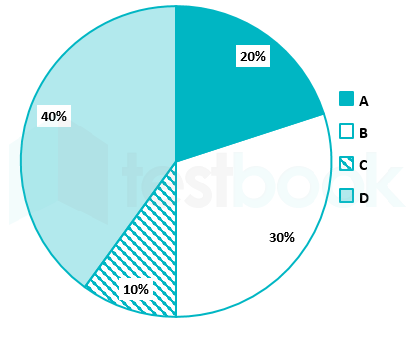
Pie chart given below shows the percentage distribution of the total number of officers (Private and Government) in four areas

Total number of officers = 5000

.


Table given below shows the number of private officers working in these 4 areas.


AreaNumber of private officers
A200
B—
C—
D40% of the total

Note:

i) Average number of private officers working in Area A, B and C is 400

ii) Number of private officers working in Area B to C are in the ratio 7: 3

If out of total private and government officers in Area A, 40% and 60% respectively are male officers , then find the difference between private and government female officers in Area A.

  1. AOption (a)

    320

  2. BOption (b)

    300

  3. COption (c)

    200

  4. DOption (d)

    240

  5. EOption (e)

    260

View answer & explanation

Correct answer

Answer: (a)A.

320

Explanation not yet available.
IBPS Clerk Mains Memory Based Paper (Held On: 07 Oct, 2023) (Previous Year Paper)·Quantitative Aptitude
View full paper

Question 752

IBPS Clerk 2023• Quantitative Aptitude• Quantitative Aptitude

Directions: Read the data carefully and answer the following questions.

There are some officers (Private + Government) working in four areas A, B, C and D.

Pie chart given below shows the percentage distribution of the total number of officers (Private and Government) in four areas

Total number of officers = 5000

.


Table given below shows the number of private officers working in these 4 areas.


AreaNumber of private officers
A200
B—
C—
D40% of the total

Note:

i) Average number of private officers working in Area A, B and C is 400

ii) Number of private officers working in Area B to C are in the ratio 7: 3

If out of total officers working in Area C, 75% are Banking officers and out of total private officers working in that Area, 80% are banking officers , then find the number of non - baking government officers working in area C.

  1. AOption (a)

    75

  2. BOption (b)

    70

  3. COption (c)

    80

  4. DOption (d)

    65

  5. EOption (e)

    60

View answer & explanation

Correct answer

Answer: (a)A.

75

Explanation not yet available.
IBPS Clerk Mains Memory Based Paper (Held On: 07 Oct, 2023) (Previous Year Paper)·Quantitative Aptitude
View full paper

Question 753

IBPS Clerk 2023• Quantitative Aptitude• Quantitative Aptitude

Directions: Read the data carefully and answer the following questions.

There are some officers (Private + Government) working in four areas A, B, C and D.

Pie chart given below shows the percentage distribution of the total number of officers (Private and Government) in four areas

Total number of officers = 5000

.


Table given below shows the number of private officers working in these 4 areas.


AreaNumber of private officers
A200
B—
C—
D40% of the total

Note:

i) Average number of private officers working in Area A, B and C is 400

ii) Number of private officers working in Area B to C are in the ratio 7: 3

If 45% of total private officers in Area D works 12 hours/day and the remaining works 10 hours/day while 50% of total government officers in Area D work 11 hours/day and remaining works 5 hours/ day, then find the sum of total weekly working hours of all the officers working in city D.

(1 week = 7 days)

  1. AOption (a)

    122030

  2. BOption (b)

    150400

  3. COption (c)

    124500

  4. DOption (d)

    128240

  5. EOption (e)

    123400

View answer & explanation

Correct answer

Answer: (a)A.

122030

Explanation not yet available.
IBPS Clerk Mains Memory Based Paper (Held On: 07 Oct, 2023) (Previous Year Paper)·Quantitative Aptitude
View full paper

Question 754

IBPS Clerk 2023• Quantitative Aptitude• Quantitative Aptitude

Directions: Read the data carefully and answer the following questions.

There are some officers (Private + Government) working in four areas A, B, C and D.

Pie chart given below shows the percentage distribution of the total number of officers (Private and Government) in four areas

Total number of officers = 5000

.


Table given below shows the number of private officers working in these 4 areas.


AreaNumber of private officers
A200
B—
C—
D40% of the total

Note:

i) Average number of private officers working in Area A, B and C is 400

ii) Number of private officers working in Area B to C are in the ratio 7: 3

If 20% officers from each Area A,B, C and D are moved to another city E and the total number of officers are represented in a pie chart having degree distribution, then what will be the central angle belonged to the number of officers in Area E?

  1. AOption (a)

    90

  2. BOption (b)

    80

  3. COption (c)

    75

  4. DOption (d)

    60

  5. EOption (e)

    72

View answer & explanation

Correct answer

Answer: (a)A.

90

Explanation not yet available.
IBPS Clerk Mains Memory Based Paper (Held On: 07 Oct, 2023) (Previous Year Paper)·Quantitative Aptitude
View full paper

Question 755

IBPS Clerk 2023• Quantitative Aptitude• Quantitative Aptitude

Directions: Read the data carefully and answer the following questions.

There are some officers (Private + Government) working in four areas A, B, C and D.

Pie chart given below shows the percentage distribution of the total number of officers (Private and Government) in four areas

Total number of officers = 5000

.


Table given below shows the number of private officers working in these 4 areas.


AreaNumber of private officers
A200
B—
C—
D40% of the total

Note:

i) Average number of private officers working in Area A, B and C is 400

ii) Number of private officers working in Area B to C are in the ratio 7: 3

If total annual tax paid each officer in area is given below:

A = 1 lakh

B = 1.2 lakhs

C = 1.5 lakhs

D = 1.8 lakhs

Which of the following statement(s) is/are TRUE?

I: Total tax paid by officers in Area A is 1/6th of total tax paid by officers in Area D. 

II: Total tax paid by officers in Area B is equal to the 50% of total tax paid by officers in Area D.

III: Sum of total tax paid by officers in Areas A and C together is less than the total tax paid by officers in Area D.

  1. AOption (a)

    I only

  2. BOption (b)

    I and II only

  3. COption (c)

    II and III only

  4. DOption (d)

    III only

  5. EOption (e)

    II only

View answer & explanation

Correct answer

Answer: (a)A.

I only

Explanation not yet available.
IBPS Clerk Mains Memory Based Paper (Held On: 07 Oct, 2023) (Previous Year Paper)·Quantitative Aptitude
View full paper

Question 756

IBPS Clerk 2023• Quantitative Aptitude• Quantitative Aptitude

Directions: Answer the questions based on the information given below.

In the following question, two missing number series I and II are given. Both the given series are following the same pattern.

Series I: P, Q, 139, 200, 267, 338

Series II: 79, 132, 191, R, S, 390

Which of the following term in series  (I) is 6 more than the value of the value of (P × R)/12 ?

  1. AOption (a)

    7th term

  2. BOption (b)

    8th term

  3. COption (c)

    9th term

  4. DOption (d)

    10th term

  5. EOption (e)

    11th term

View answer & explanation

Correct answer

Answer: (a)A.

7th term

Explanation not yet available.
IBPS Clerk Mains Memory Based Paper (Held On: 07 Oct, 2023) (Previous Year Paper)·Quantitative Aptitude
View full paper

Question 757

IBPS Clerk 2023• Quantitative Aptitude• Quantitative Aptitude

Directions: Answer the questions based on the information given below.

In the following question, two missing number series I and II are given. Both the given series are following the same pattern.

Series I: P, Q, 139, 200, 267, 338

Series II: 79, 132, 191, R, S, 390

Find the average of value of Q, R and S?

  1. AOption (a)

    207

  2. BOption (b)

    217

  3. COption (c)

    227

  4. DOption (d)

    237

  5. EOption (e)

    247

View answer & explanation

Correct answer

Answer: (a)A.

207

Explanation not yet available.
IBPS Clerk Mains Memory Based Paper (Held On: 07 Oct, 2023) (Previous Year Paper)·Quantitative Aptitude
View full paper

Question 758

IBPS Clerk 2023• Quantitative Aptitude• Quantitative Aptitude

Directions: Answer the questions based on the information given below.

In the following question, two missing number series I and II are given. Both the given series are following the same pattern.

Series I: P, Q, 139, 200, 267, 338

Series II: 79, 132, 191, R, S, 390

There is another series (III) which is also following the same pattern as above. If sum of the 2nd term of series (I) and that of series (III) is 137 then the 5th term of series (III) is what percent more/less than the value of 'Q'?

  1. AOption (a)

    205%

  2. BOption (b)

    210%

  3. COption (c)

    215%

  4. DOption (d)

    220%

  5. EOption (e)

    225%

View answer & explanation

Correct answer

Answer: (a)A.

205%

Explanation not yet available.
IBPS Clerk Mains Memory Based Paper (Held On: 07 Oct, 2023) (Previous Year Paper)·Quantitative Aptitude
View full paper

Question 759

IBPS Clerk 2023• Quantitative Aptitude• Quantitative Aptitude

Given below are quantities named A and B. Based on the given information, you have to determine the relation between the two quantities. You should use the given data and your knowledge of mathematics to choose among the possible answer.

A mixture of two chemicals H2SO4 and H2O2 contains 79% H2O2 and 21% H2SO4. 

Quantity A: Find the quantity of H2O2required to add into 39 litres of mixture to make it a 18% solution of H2SO4 in H2O2. 

Quantity B: Find the quantity of H2O2 required to add into 5.25 litres of mixture to make it a 91% solution of H2O2 in H2SO4.

  1. AOption (a)

    Quantity A > Quantity B

  2. BOption (b)

    Quantity A ≤ Quantity B

  3. COption (c)

    Quantity A = Quantity B or No relation

  4. DOption (d)

    Quantity A ≥ Quantity B

  5. EOption (e)

    Quantity A < Quantity B

View answer & explanation

Correct answer

Answer: (a)A.

Quantity A > Quantity B

Explanation not yet available.
IBPS Clerk Mains Memory Based Paper (Held On: 07 Oct, 2023) (Previous Year Paper)·Quantitative Aptitude
View full paper

Question 760

IBPS Clerk 2023• Quantitative Aptitude• Quantitative Aptitude

If m and n are the roots of equation 9x2 - 18x + 27 = 0, then what will be the equation with roots: (6m + 3) and (6n + 3).

  1. AOption (a)

    x2 - 18x + 153 = 0

  2. BOption (b)

    x2 - 18x + 15 = 0

  3. COption (c)

    x2 + 18x + 153 = 0

  4. DOption (d)

    x2 - 18x - 153 = 0

  5. EOption (e)

    x2 + 18x - 153 = 0

View answer & explanation

Correct answer

Answer: (a)A.

x2 - 18x + 153 = 0

Explanation not yet available.

How should I prepare for Quantitative Aptitude in IBPS Clerk?

Solving previous year questions by topic helps identify recurring concepts, question patterns, and frequently asked sub-topics. Attempt each question, review the step-by-step explanation, and note down key formulas or facts for quick revision before the exam.