Official Paper

UPSSSC PET Official Paper (Held On: 29 Oct, 2023 Shift 2) (Previous Year Paper)

100 questions · 120 minutes · with answers · free

Full Test (100 questions)

1

Fill in the blank with correct preposition :

I have never looked on a face that was so devoid ______ feeling.

  1. ((a))

    by

  2. ((b))

    in

  3. ((c))

    at

  4. ((d))

    of

Show Answer
Answer: ((d))

of

The correct answer is "Option 4".

Key Points

  • The most appropriate word to fill in the blank is "of".
  • We use the preposition "of" to express possession or association.
  • ExampleShe is a friend of mine.
  • In the given sentence we use the preposition "of" to indicate what is lacking or missing.
  • Hence, "of" is the correct answer.

Therefore the correct answer is "Option 4".

Complete Sentence: I have never looked on a face that was so devoid of feeling.

Additional Information

  • "by": We use "by" to indicate how something is done.
  • "in": We use "in" to indicate location within a space or time.
  • "at": We use "at" to indicate a specific point or location.
2

Give synonym of underlined word:

He sat there disparaging about the legal system.

  1. ((a))

    Praising

  2. ((b))

    Criticizing

  3. ((c))

    Lecturing

  4. ((d))

    Belittling

Show Answer
Answer: ((d))

Belittling

The correct answer is "Belittling".

Key Points

  • The given word is "disparaging".
  • "Disparaging" means speaking about someone or something in a disrespectful way; expressing that they are of little worth. (तिरस्कारपूर्ण / नीचा दिखाने वाला)
  • Example: She made disparaging comments about his work.
  • "Belittling" means making someone or something seem unimportant or less valuable. (तुच्छ दिखाना / नीचा दिखाना)
  • Example: He kept belittling his colleague in front of others.
  • "Disparaging" and "Belittling" are closest in meaning as both indicate lowering someone’s worth through negative remarks.

Therefore, the correct answer is "Option 4".

Additional Information

  • Praising: expressing approval or admiration. (प्रशंसा करना)
  • Criticizing: expressing disapproval or pointing out faults. (आलोचना करना)
  • Lecturing: giving a formal talk or scolding at length. (व्याख्यान देना / समझाना)
3

Give one word for:

The original inhabitants of a country.

  1. ((a))

    Strangers

  2. ((b))

    Aliens

  3. ((c))

    Citizen

  4. ((d))

    Aborigines

Show Answer
Answer: ((d))

Aborigines

The correct answer is "Option 4".

Key Points

  • The one-word substitute for "the original inhabitants of a country" is "aborigines". (मुलनिवासी)
  • It refers to the indigenous or original inhabitants of a particular region or country.
  • ExampleThe Aborigines have a profound understanding of their environment.
  • Hence, the correct answer is "aborigines".

Therefore, the correct answer is "Option 4".

Additional Information

  • Strangers: It refers to people unfamiliar with a particular place or group. (अजनबी)
  • Aliens: It refers to individuals who are not citizens or nationals of a specific country. (अनजान)
  • Citizens: A citizen is a legal member of a country who has certain rights and responsibilities within that nation. (नागरिक)

Read the following paragraph and answer the following questions:

In the United States someone legally becomes an adult when they turn 18 years old. At 18, U.S. citizens can vote. They can also serve in the military and go fight in wars for the country. An 18-year old can also buy cigarettes and other tobacco products, but 18- year-olds cannot buy alcoholic beverages. People in the U.S. need to wait until they are 21 to be able to do that.

At the age of 18, people can legally live on their own, work, and get married. However, turning 18 doesn't mean everyone is ready to take on adult responsibilities. At the age of 18, most people are just graduating from high school. Many will go to college. Some young people choose to go to college far from their homes and live in dormitories. Others pick a college close to home and stay with their parents to save money. Yet others will choose to live on their own. Legally, a parent does not have to provide for their child when the child turns 18.

4

Which is correct from the followings with reference to U.S.?

  1. ((a))

    Children must leave their parents even after 18.

  2. ((b))

    Children must live with their parents even after 18.

  3. ((c))

    All are incorrect

  4. ((d))

    Children may live with their parents even after 18.

Show Answer
Answer: ((d))

Children may live with their parents even after 18.

The correct answer is "Option 4".

Key Points

  • The passage highlights the various options available to individuals upon reaching adulthood.
  • Individuals can vote, serve in the military, buy cigarettes and other tobacco products, live on their own, work, and get married.
  • They can choose whether to continue living with their parents or live independently.
  • So, it indicates that individuals have the choice to continue living with their parents even after reaching adulthood.
  • Hence, the correct answer is "Children may live with their parents even after 18".

Therefore, the correct answer is "Option 4".

5

In U.S., what is the minimum age required to join military?

  1. ((a))

    18

  2. ((b))

    16

  3. ((c))

    19

  4. ((d))

    17

Show Answer
Answer: ((a))

18

The correct answer is "Option 1".

Key Points

  • In the United States, the minimum age required to join the military is 18 years old.
  • This means that individuals must be at least 18 years of age to join the U.S. Armed Forces.
  • Hence, the correct answer is "18".

Therefore, the correct answer is "Option 1".

6

A clock is set right at 8 a.m. The clock gains 10 minutes in 24 hours. What will be the true time when the clock indicates 1 p.m. on the following day?

  1. ((a))

    47 min. past 12

  2. ((b))

    45 min. past 12

  3. ((c))

    46 min. past 12

  4. ((d))

    48 min. past 12

Show Answer
Answer: ((d))

48 min. past 12

Given:

A clock is set right at 8 a.m. The clock gains 10 minutes in 24 hours.

Calculation:

Time from 8 a.m. on a day to 1 p.m. on the following day = 29 hours. 

24 hours 10 min. of this clock = 24 hours of the correct clock. 

145/6 hrs of this clock = 24 hours of the correct clock. 

29 hours of this clock = 24 × 6/145 × 29 hours of the correct clock = 28 hours 48 minutes for the correct clock

Therefore the correct time is 48 min. past 12.

Hence, option (4) is correct.

7

If the words are arranged according to the dictionary, what will come in the second place from the last?

  1. Spastically
  2. Spasmatic
  3. Spasticity
  4. Spastic
  5. Spasmodical
  1. ((a))

    Spastically

  2. ((b))

    Spastic 

  3. ((c))

    Spasmatic

  4. ((d))

    Spasmodical

Show Answer
Answer: ((a))

Spastically

The words are arranged according to the dictionary,

Spasmatic

Spasmodical

Spastic

Spastically

Spasticity

The word on second place from last is "Spastically".

8

In a row of Pigeons, all are facing north, P1 is 9th from the left end and P2 is 12th from the right end. There are three peacocks between P1 and P2. P1 and P3 are equidistant to P4. Find how many Pigeons are there in the row.

  1. ((a))

    18

  2. ((b))

    15

  3. ((c))

    Can't be determined

  4. ((d))

    4

Show Answer
Answer: ((c))

Can't be determined

Given the information, while we can calculate positions regarding P1, P2, and the three peacocks between them, the details about P3 and P4 introduce variables that cannot be resolved with the information provided. Specifically:

  • P1 is 9th from the left end.
  • P2 is 12th from the right end.
  • There are three peacocks between P1 and P2.

This information allows us to understand the placement of P1 and P2 and the three peacocks between them but does not directly inform us about the total number of pigeons in the row because:

  • The positioning of P3 and P4 and the statement that P1 and P3 are equidistant to P4 introduce connections between these points (P1, P3, and P4) that cannot be solved without more details. For instance, where P3 and P4 are located is not specified, nor is how these positions relate to the total count.
  • The details given do not allow for calculating the entire row's length because we don't know where P3 and P4 fall within the row relative to P1, P2, and the peacocks. The fact that P1 and P3 are equidistant to P4 doesn't help without knowing at least one of their exact distances or positions.

Therefore, with crucial pieces of information missing, the answer is:

Can't be determined.

This is because the information provided does not allow for an accurate calculation of the total number of pigeons in the row, given the variables introduced that are not addressed (specifically, the complete arrangement involving P3 and P4).

Hence, the correct answer is "Option (3)".

9

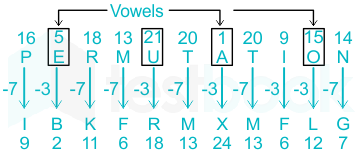
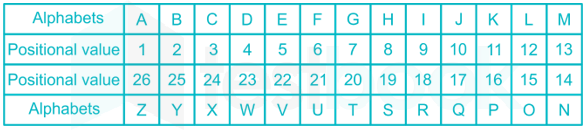
In a code language, PERMUTATION is written as IBKFRMXMFLG. How will PUBLICSECTOR be written as in that language?

  1. ((a))

    IRVEFVLBVMLK

  2. ((b))

    ICUFEVLBVNLK

  3. ((c))

    IRUEFVLBVMLK

  4. ((d))

    ICUFEVLBVMLJ

Show Answer
Answer: ((c))

IRUEFVLBVMLK

Capture 009

The logic follows here:

Consonants - 7 =  New letter

Vowel - 3 =  New letter

Given:

PERMUTATION is written as IBKFRMXMFLG

Similarly,

PUBLICSECTOR be written as

Hence, ‘IRUEFVLBVMLK’ is the correct answer.

10

In the question two statements I and II are given. These statements may be either independent causes or may be effects of independent causes or a common cause. One of these statements may be the effect of the other statement. Read both the statements and decide which of the following answer choice correctly depicts the relationship between these two statements.

Statements:

I. The Government has decided to hold a single entrance test for admission to all the to all the medical colleges in India.

II. The State Government has debarred students from other States to apply for the seats in the medical colleges in the State.

  1. ((a))

    Both the statements I and II are effects of some common cause.

  2. ((b))

    Statement I is the cause and statement II is its effect.

  3. ((c))

    Both the statements I and II are independent causes.

  4. ((d))

    Statement II is the cause and statement I is its effect.

Show Answer
Answer: ((a))

Both the statements I and II are effects of some common cause.

Statement I: There's a big change or decision affecting education, leading to the government introducing a single test for all medical colleges

Statement II: State government stopping students from other states from applying to its medical colleges. This option implies that these two actions are not directly causing one another but are both responses to the same bigger situation or policy change in the country.

So, Both statements I and II are effects of some common cause.

Hence, the correct answer is "Option (1)".

11

Recently, the National Commission for Protection of Child Rights (NCPCR) has developed which among the following applications for Seamless Inspection for real-time monitoring of the Child Care Institutions?

  1. ((a))

    MCTS

  2. ((b))

    MAA

  3. ((c))

    MCH

  4. ((d))

    MASI

Show Answer
Answer: ((d))

MASI

The correct answer is MASI

In NewsThe National Commission for Protection of Child Rights (NCPCR) has developed an application called MASI - Monitoring App for Seamless Inspection.

Key Points

  • The National Commission for Protection of Child Rights (NCPCR) has developed an application called MASI - Monitoring App for Seamless Inspection - for real-time monitoring of Child Care Institutions (CCIs) and their inspection mechanism across India
  • The app enables unified inspections by Child Welfare Committees (CWCs), State Inspection Committees, District Inspection Committees, Members of Juvenile Justice Boards (JJBs), and State Commissions for Protection of Child Rights (SCPCRs) as laid down under the Juvenile Justice Act, 2015.
  • It serves as a single platform for inspections of all the CCIs across the country by any of the above-stated authorities. Regular follow-up is done before and after the completion of the cycle of inspection.
  • The complete reports are automatically generated on the Portal as soon as the questionnaire is filled and submitted by the authority.

Additional Information

  • The National Commission for Protection of Child Rights (NCPCR) includes a total of seven members, consisting of a Chairperson and six other Members.
  • These members are appointed by the Central Government of India and work collectively to ensure the protection and promotion of child rights in the country.
12

Recently, the leaders of India and which among the following countries committed to enhance cooperation on climate ambition, decarbonization and clean energy, and work together to have meaningful outcomes from the 28th Session of the UNFCCC Conference of Parties?

  1. ((a))

    United Arab Emirates (UAE)

  2. ((b))

    Singapore

  3. ((c))

    Japan

  4. ((d))

    Nepal

Show Answer
Answer: ((a))

United Arab Emirates (UAE)

The correct answer is United Arab Emirates (UAE)

In News

India and the United Arab Emirates (UAE) have committed to enhance cooperation on climate ambition, decarbonization, and clean energy

Key Points

  • India and the United Arab Emirates (UAE) have committed to enhance cooperation on climate ambition, decarbonization, and clean energy, and work together to have tangible and meaningful outcomes from the 28th Session of the UNFCCC Conference of Parties.
  • The leaders of both countries recognized the urgent need to address the global challenge of climate change through global collective action while respecting the foundational principles and obligations under the United Nations Framework Convention on Climate Change (UNFCCC) and the Paris Agreement.

Additional Information

  • The Conference of the Parties (COP) to the Kyoto Protocol is the annual forum for the UN Framework Convention on Climate Change.
  • The UN has asked Eastern European countries to submit bids to host COP29.
  • UAE:
  • Capital - Abu Dhabi.
  • Currency - United Arab Emirates dirham.
  • National Sport - Camel racing.
13

________ signed MOU with NIOS to share expertise and resources, as well as co-develop quality learning resources in Indian Sign Language on the occasion of 3rd year of NEP 2020 celebrations.

  1. ((a))

    CBSE

  2. ((b))

    ISLRTC

  3. ((c))

    NCERT

  4. ((d))

    IISC

Show Answer
Answer: ((b))

ISLRTC

The correct answer is ISLRTC.

In NewsThe Indian Sign Language Research and Training Centre (ISLRTC) signed an MOU with the National Institute of Open Schooling (NIOS)

Key Points

  • The Indian Sign Language Research and Training Centre (ISLRTC) signed an MOU with the National Institute of Open Schooling (NIOS) to share expertise and resources, as well as co-develop quality learning resources in Indian Sign Language on the occasion of 3rd year of NEP 2020 celebrations.
  • The MOU was signed on July 29, 2023, at ITPO, Pragati Maidan, New Delhi, in the presence of the Minister of State (Education) Smt. Annapurna Devi, Dr. Subhas Sarkarand, and Dr. Rajkumar Ranjan Singh.
  • The collaboration between ISLRTC and NIOS aims to revolutionize deaf education with Indian Sign Language.
  • The two organizations plan to work together in many areas, such as designing and developing a process of review of learning content in Indian sign language, developing a smooth process for examination and evaluation of deaf and hard of hearing, sharing expertise and resources of the ISLRTC for standardization process of Indian Sign Language in selected areas, and more.
14

The Government of India has set the target to raise the share of _____ in the energy mix to 15% by 2030.

  1. ((a))

    Solar Energy 

  2. ((b))

    Natural Gas

  3. ((c))

    Hydro power

  4. ((d))

    Coal

Show Answer
Answer: ((b))

Natural Gas

The correct answer is Natural Gas

In NewsThe Government of India has set a target to raise the share of natural gas in the energy mix to 15% by 2030 

Key Points

  • The Minister of State for Petroleum and Natural Gas, Shri Rameswar Teli in a written reply to a question in the Rajya Sabha on July 25 informed that the Government has set a target to raise the share of natural gas in energy mix to 15% in 2030 from about 6.3% now.
  • To achieve the target, various initiatives have been taken which inter alia include the following:-
  • Expansion of National Gas Grid to about 33,500 Km from current 21,715 Km.
  • Expansion of City Gas Distribution (CGD) network
  • Setting up of Liquefied Natural Gas Terminals.
  • Allocation of domestic gas to Compressed Natural Gas (Transport) / Piped Natural Gas (Domestic) in no cut category.
  • Allowing marketing and pricing freedom to gas produced from high pressure/high temperature areas, deep water & ultra-deep water and from coal seams.
  • Sustainable Alternative Towards Affordable Transportation (SATAT) initiatives to promote Bio-CNG.
  • This is part of India’s efforts to improve the environmental sustainability and flexibility of its energy system.
  • However, analysts have stated that this target seems improbable as demand will continue to outstrip domestic supply while inadequate evacuation infrastructure could prevent large-scale imports that would be required to realize the goal.

Additional Information

  • The Ministry of Petroleum and Natural Gas (MOP&NG) is responsible for the exploration, production, refining, distribution, marketing, import, export, and conservation of petroleum, natural gas, petroleum products, and liquefied natural gas in the country.
  • The ministry is headed by the Cabinet Minister Hardeep Singh Puri.
  • M. M. Kutty is the Secretary of the Ministry.
15

Who among the following recently launched DBT (Direct Benefit Transfer) in NAPS (National Apprenticeship Promotion Scheme) to strengthen the apprenticeship ecosystem in India?

  1. ((a))

    Shri Piyush Goyal

  2. ((b))

    Shri Dharmendra Pradhan

  3. ((c))

    Shri Ramesh Pokhriyal

  4. ((d))

    Shri B.V.R. Subrahmanyam

Show Answer
Answer: ((b))

Shri Dharmendra Pradhan

The correct answer is Shri Dharmendra Pradhan

In News

  • The Indian government recently launched the Direct Benefit Transfer (DBT) scheme under the National Apprenticeship Promotion Scheme (NAPS)

Key Points

  • The Indian government recently launched the Direct Benefit Transfer (DBT) scheme under the National Apprenticeship Promotion Scheme (NAPS) to strengthen the apprenticeship ecosystem in India.
  • The DBT scheme will directly transfer the government’s contribution of 25% of the stipend payable up to Rs. 1500 per month to the bank accounts of apprentices through the National Skill Development Corporation (NSDC).
  • Earlier, companies used to pay apprentices the entire amount and then seek reimbursement from the government.
  • The DBT scheme aims to ensure that apprentices receive their stipends on time and to reduce the burden on companies to pay the stipends upfront.
16

Which among the following countries declared a National Emergency due to a spike in Guillain-Barre syndrome cases?

  1. ((a))

    Israel

  2. ((b))

    Myanmar

  3. ((c))

    Zimbabwe

  4. ((d))

    Peru

Show Answer
Answer: ((d))

Peru

The correct answer is Peru

In News

  • Peru has declared a national health emergency due to a sudden spike in cases of Guillain-Barré Syndrome (GBS)

Key Points

  • Peru has declared a national health emergency due to a sudden spike in cases of Guillain-Barré Syndrome (GBS).
  • The National Center for Epidemiology, Prevention, and Disease Control (CDC) of Peru issued an epidemiological alert on June 26, 2023, due to an unusual increase in GBS cases in different regions of the country.
  • According to historical data (excluding the 2019 outbreak), the average monthly number of GBS cases registered is less than 20 suspected cases per month nationwide.
  • However, between June 10 and July 15, 2023, 130 suspected cases of GBS have been reported. Out of these cases, 44 have been confirmed.
  • The potential cause of the unexpected GBS incidence remains under investigation.
17

Which among the following railway stations from India got UNESCO's Asia Pacific Cultural Heritage Award?

  1. ((a))

    Kacheguda Railway Station, Telangana

  2. ((b))

    Howrah Railway Station, West Bengal

  3. ((c))

    Byculla Railway Station, Maharashtra

  4. ((d))

    Guntakal Railway Station, Andhra Pradesh

Show Answer
Answer: ((c))

Byculla Railway Station, Maharashtra

The correct answer is Byculla Railway Station, Maharashtra

In News

  • The Byculla railway station in Mumbai has been awarded the UNESCO Asia Pacific Cultural Heritage Award

Key Points

  • The Byculla railway station in Mumbai has been awarded the UNESCO Asia Pacific Cultural Heritage Award.
  • The station, which is one of the oldest railway stations in India still in use, has a rich history spanning 169 years and holds immense cultural significance.
  • The station has been restored to its original Gothic, heritage, and architectural glory 3.
  • In addition to Byculla railway station, three other Indian sites were also awarded the UNESCO Asia Pacific Cultural Heritage Award in 2022:
  • Chhatrapati Shivaji Maharaj Vastu
  • Sangrahalaya in Mumbai, Stepwells of Golconda in Hyderabad, and Domakonda Fort in Telangana.
18

Give the name of the popular hill fort located in Sahyadri Mountain Range that is known as "The Eagle's Nest".

  1. ((a))

    Kasa Fort

  2. ((b))

    Shivneri Fort

  3. ((c))

    Rangana Fort

  4. ((d))

    Torna Fort

Show Answer
Answer: ((d))

Torna Fort

The correct answer is Torna Fort

In News

  • ​The popular hill fort located in the Sahyadri Mountain Range that is known as “The Eagle’s Nest” is Torna Fort.

Key Points

  • The popular hill fort located in the Sahyadri Mountain Range that is known as “The Eagle’s Nest” is Torna Fort.
  • It is also known as Prachandagad and is considered the highest hill fort in the district of Pune.
  • The fort has a rich history spanning over 300 years and was the first fort captured by Shivaji in 1643.
  • Torna Fort is located at an altitude of 1400 meters above sea level and offers a panoramic view of the surrounding hills and valleys.
19

Recently Minister of Civil Aviation, Shri Jyotiraditya Scindia inaugurated Utkela Airport which is a regional airport under the UDAN scheme in which of the following states of India?

  1. ((a))

    Odisha

  2. ((b))

    West Bengal

  3. ((c))

    Manipur

  4. ((d))

    Chhattisgarh

Show Answer
Answer: ((a))

Odisha

The correct answer is Odisha

In News​The newly inaugurated Utkela Airport is located in the state of Odisha.

Key Points

  • The newly inaugurated Utkela Airport is located in the state of Odisha.
  • It has been developed as a regional airport under the UDAN scheme of the Ministry of Civil Aviation, Government of India, for Rs. 31.07 crore.
  • The airport has a runway of length 917 meters (2,995 ft.) with a width of 30 meters.
  • With the addition of Utkela Airport, Odisha now has five airports.
  • The newly inaugurated Utkela - Bhubaneshwar - Utkela flight route will enhance regional air connectivity and play an important role in the economic development of the region.
20

Which of the following states of the U.S.A. has declared the month of October as "Hindu Heritage Month"?

  1. ((a))

    Florida

  2. ((b))

    San Francisco

  3. ((c))

    Ohio

  4. ((d))

    Georgia

Show Answer
Answer: ((d))

Georgia

The correct answer is Georgia

In NewsThe state of Georgia has declared the month of October as “Hindu Heritage Month” 

Key Points

  • The state of Georgia has declared the month of October as “Hindu Heritage Month”.
  • The move is aimed at recognizing and celebrating the contributions of the Hindu-American community within the state.
  • The state of Georgia has acknowledged and appreciated the Hindu community for its enormous contributions to human societies.
  • Other US states, including Texas, Florida, New Jersey, Ohio, and Massachusetts, have also proclaimed October as the Hindu Heritage Month, noting that Hinduism has “contributed greatly” to America through its unique history and heritage.
21

Recently which of the following countries has designed and manufactured an autonomous robotic undersea warfare vehicle named "Ghost Shark"?

  1. ((a))

    India

  2. ((b))

    Germany

  3. ((c))

    New Zealand 

  4. ((d))

    Australia

Show Answer
Answer: ((d))

Australia

The correct answer is Australia

In News

  • ​The autonomous robotic undersea warfare vehicle named “Ghost Shark” has been designed and manufactured in Australia.

Key Points

  • The autonomous robotic undersea warfare vehicle named “Ghost Shark” has been designed and manufactured in Australia for the Royal Australian Navy.
  • The project is a collaboration between Anduril Australia, Navy, and Defence Science and Technology Group, and was made possible by the Next Generation Technologies Fund.
  • The Ghost Shark is an extra-large autonomous underwater vehicle that can remain at sea undetected for long periods, carry various military payloads, and cover long distances.
  • The vessel will provide militaries with a persistent option for the delivery of underwater effects in high-risk environments, complementing existing crewed ships and submarines, as well as other future uncrewed surface vessels.
  • The testing of the Ghost Shark will be completed over the coming three years in Sydney with continued support from Defence.
22

Tamia Hill station which provides a stunning view of the horseshoe-shaped Patalkot Valley is situated in which of the following States / UTs of India?

  1. ((a))

    Karnataka

  2. ((b))

    Goa

  3. ((c))

    Puducherry

  4. ((d))

    Madhya Pradesh

Show Answer
Answer: ((d))

Madhya Pradesh

The correct answer is Madhya Pradesh

In News

  • ​Tamia Hill station is located in the state of Madhya Pradesh.

Key Points

  • Tamia Hill station is located in the state of Madhya Pradesh.
  • It is a picturesque destination that offers scenic and breathtaking views of dense forests and mountains.
  • Tamia Hill station is situated at a height of 3,765 feet (1,148 m) above mean sea level and surrounded by dense forests.
  • The hills of Tamia offer breathtaking scenes of sunrises and sunsets.
  • Perched on a mountaintop, Tamia provides stunning views of the horseshoe-shaped Patalkot Valley as well as the thick forests that surround it.
  • These forests are home to certain medicinal plants and rocks that date back 2500 million years.
  • Tamia waterfalls, which cascade down during monsoon, are also a popular tourist attraction.
23

India became a sectoral dialogue partner of ASEAN in which of the following years?

  1. ((a))

    2012

  2. ((b))

    1996

  3. ((c))

    1992

  4. ((d))

    1995

Show Answer
Answer: ((c))

1992

The correct answer is 1992

Key Points

  • India became a sectoral dialogue partner of ASEAN in 1992.
  • India’s engagement with ASEAN began with the Look East Policy, which was initiated in the early 1990s to strengthen India’s economic and strategic ties with Southeast Asia.
  • India’s partnership with ASEAN has grown significantly over the years, and it has become a strategic partner of ASEAN since 2012

Additional Information

  • ASEAN
  • It was established on 8 August 1967 in Bangkok, Thailand.
  • It was established by the ASEAN Declaration (Bangkok Declaration).
  • Founding Fathers of ASEAN- Indonesia, Malaysia, Philippines, Singapore, and Thailand.
  • Members of ASEAN- Indonesia, Malaysia, Philippines, Singapore, Thailand, Brunei Darussalam, Viet Nam, Lao PDR, Myanmar, Cambodia, Timor-Leste.
  • Secretariat- Jakarta, Indonesia
  • Chairmanship of ASEAN rotates annually, based on the alphabetical order of the English names of Member States.
24

The Tenzing Norgay National Adventure Award is the highest national recognition for outstanding achievements in the field of adventure on land, sea and air. What is the cash prize amount for this award? 

  1. ((a))

    05 Lakh

  2. ((b))

    15 Lakh

  3. ((c))

    20 Lakh

  4. ((d))

    10 Lakh

Show Answer
Answer: ((a))

05 Lakh

The correct answer is 05 Lakh

Key Points

  • Tenzing Norgay National Adventure Awards are given every year.
  • Formerly known as the National Adventure Awards, it is the highest adventure sports honour in India.
  • The award is named after Tenzing Norgay, one of the first two individuals to reach the summit of Mount Everest in 1953.
  • It is awarded annually by the Ministry of Youth Affairs and Sports.
  • The award will be given in four categoriesLand Adventure, Water Adventure, Air Adventure, and Life Time Achievement.

Important Points

  • Awardees will receive statuettes, certificates, and award money of Rs. 5 lacks each.
  • It aims to recognize the achievements of persons in the field of adventure.
  • To encourage young people to develop the spirit of endurance, risk–taking, and cooperative teamwork.
  • To be quick, ready, and have good reflexes in challenging situations.
  • To provide incentives to youngsters to get exposed to adventure activities.
  • Thus, Rs. 5 lahks is awarded to the Tenzing Norgay National Adventure Awardee.
25

Nitisara (The Elements of Polity) which contains the earlier foundational root text of Kautilya's Arthshastra was written by whom of the following?

  1. ((a))

    Kamandaka

  2. ((b))

    Vir Sena

  3. ((c))

    Vishnugupta

  4. ((d))

    Sri Harsha

Show Answer
Answer: ((a))

Kamandaka

The correct answer is Kamandaka

Key Points

  • Nitisara (The Elements of Polity) is an ancient Indian treatise on politics and statecraft that is believed to have been authored by Kamandaki.
  • Kamandaki was a disciple of Chanakya, who is known for his work Arthashastra.
  • The Nitisara is considered to be a foundational root text of the Arthashastra.
26

Which among the following days is celebrated as the International Day for Natural Disaster Risk Reduction every year?

  1. ((a))

    13th August 

  2. ((b))

    31st October

  3. ((c))

    13th October

  4. ((d))

    11th July

Show Answer
Answer: ((c))

13th October

The correct answer is 13th October

Key Points

  • International Day for Disaster Risk Reduction is observed on October 13, every year.
  • The day aims to promote a global culture of risk awareness and disaster reduction.
  • The day was started in 1989 by the United Nations.
  • Every two years, the United Nations Office for Disaster Risk Reduction (UNDRR) works with experts, and innovators to investigate the state of risk across the globe.
  • The theme for the 2021 edition is “International cooperation for developing countries to reduce disaster risk and disaster losses."
27

Match the following countries with their capitals:

(i)Zambia(a)Havana
(ii)Cuba(b)Manama
(iii)Rwanda(c)Lusaka
(iv)Bahrain(d)Kigali
  1. ((a))

    i - d, ii - a, iii - b, iv - c

  2. ((b))

    i - b, ii - d, iii - a, iv - c

  3. ((c))

    i - c, ii - a, iii - d, iv - b

  4. ((d))

    i - b, ii - d, iii - c, iv - a

Show Answer
Answer: ((c))

i - c, ii - a, iii - d, iv - b

The correct answer is i - c, ii - a, iii - d, iv - b

Key Points

Here are the correct matches for the countries and their capitals:

(i) Zambia - Lusaka

(ii) Cuba - Havana

(iii) Rwanda - Kigali

(iv) Bahrain - Manama

Additional Information

S. No.CountryCapital
1BhutanThimphu
2NepalKathmandu
3Sri LankaSrijaywardhanepuram
4PakistanIslamabad
5ChinaBeijing
6MyanmarNaypidaw
7BangladeshDhaka
8AfghanistanKabul
9MaldivesMale
28

Jhoti Chita and Muruja are white art to create beautiful patterns on the floor and walls. It is an art form of which of the following states in India?

  1. ((a))

    Odisha

  2. ((b))

    Kerala

  3. ((c))

    Chhattisgarh

  4. ((d))

    Tamil Nadu

Show Answer
Answer: ((a))

Odisha

The correct answer is Odisha

Key Points

  • Jhoti Chita and Muruja are traditional art forms of Odisha.
  • Jhoti Chita is a form of floor and wall painting that is created using rice paste and natural pigments.
  • The art form incorporates floral, geometric, animal, and religious motifs in its designs.
  • The patterns are either made directly with fingers or using a piece of cloth that is attached to a twig.
  • Muruja is a similar art form that is created using dry rice powder.
  • These art forms are an important inclusion during festivals spiritual, and social occasions.
  • They are believed to attract Goddess Lakshmi, who is believed to bring prosperity and happiness.
29

The work of the Great Trigonometrical Survey of India commenced at Madras on April 10, 1802 when a baseline measurement related to the Madras longitude was made. Currently that Madras Observatory is known by which name?

  1. ((a))

    School of Planning and Architecture

  2. ((b))

    Indian Institute of Astrophysics 

  3. ((c))

    Indian Institute of Space Science and Technology

  4. ((d))

    Raman Research Institute

Show Answer
Answer: ((b))

Indian Institute of Astrophysics 

The correct answer is Indian Institute of Astrophysics 

Key Points

  • The Great Trigonometrical Survey of India commenced at Madras on April 10, 1802, when a baseline measurement related to the Madras longitude was made.
  • The Madras Observatory was established in 1792 by William Petrie, an amateur astronomer who had a small private observatory at Egmore in Madras.
  • The observatory was later moved and managed by the British East India Company from 1792 in Madras (now known as Chennai).
  • The main purpose for establishing it was to assist in navigation and mapping by recording the latitude and maintaining time standards 1. In later years, the observatory also made observations on stars and geomagnetism 2. The observatory ran from around 1792 to 1931 and a major work was the production of a comprehensive catalogue of stars.
  • The Madras Observatory is now known as the Indian Institute of Astrophysics.
30

Which among the following is India's first DBOT (Design, Build, Operate and Transfer) model outdoor stadium?

  1. ((a))

    The Sports Hub, Thiruvananthapuram

  2. ((b))

    Jawaharlal Nehru International Stadium, Kochi

  3. ((c))

    Kozhikode. Corporation EMS Stadium, Kozhikode

  4. ((d))

    Mahatma Gandhi Stadium, Salem

Show Answer
Answer: ((a))

The Sports Hub, Thiruvananthapuram

The correct answer is The Sports Hub, Thiruvananthapuram

Key Points

  • India's first DBOT (Design, Build, Operate and Transfer) model outdoor stadium is the Greenfield International Stadium located in Kariavattom, Thiruvananthapuram, Kerala
  • The stadium was built to facilitate the 35th National Games held in Kerala.
  • The stadium has a seating capacity of 50,000 and was constructed by Mumbai-based IL&FS Transportation Networks Limited for Rs 141 crore.
  • The stadium was built on 34 acres of land on Kerala University's Kariavattom campus and was constructed without financial aid from the government in the initial years.
  • The stadium was constructed on the DBOT model, which stands for Design, Build, Operate, and Transfer.
  • The developer designed the stadium, built, operated, and transferred it to the state government after completing the lease period of 15 years.
  • The stadium was constructed in line with FIFA regulations and ICC norms and has facilities to accommodate indoor sports facilities like basketball, volleyball, table tennis, and handball.
  • An Olympic-size swimming pool with an aquatic centre was also constructed.

निम्नलिखित गद्यांश को पढ़कर पूछे गए प्रश्नों के उत्तर दीजिए: 

मेरे एक मित्र हैं, बड़े विद्वान, स्पष्टवादी और नीतिमान । वह इस राज्य के बहुत प्रतिष्ठित नागरिक हैं। उनसे मिलने से सदा नयी स्फूर्ति मिलती है । यद्यपि वह अवस्था में मुझसे छोटे हैं, तथापि मुझे सदा सम्मान देते हैं। इस देश में यह एक अच्छी बात है कि सब प्रकार से हीन होकर भी यदि कोई उम्र में बड़ा हो, तो थोड़ा-सा आदर पा ही जाता है। मैं भी पा जाता हूँ। मेरे इस मित्र की शिकायत थी कि देश की दुर्दशा देखते हुये भी मैं कुछ कह नहीं रहा हूँ, अर्थात् इस दुर्दशा के लिये जो लोग जिम्मेदार हैं उनकी भर्त्सना नहीं कर रहा हूँ। यह एक भयंकर अपराध है। कौरवों की सभा में भीष्म ने द्रौपदी का भयंकर अपमान देखकर भी जिस प्रकार मौन धारण किया था, वैसे ही कुछ मैं और मेरे जैसे कुछ अन्य साहित्यकार चुप्पी साधे हैं। भविष्य इसे उसी तरह क्षमा नहीं करेगा जिस प्रकार भीष्म पितामह को क्षमा नहीं किया गया। मैं थोड़ी देर तक अभिभूत होकर सुनता रहा और मन में पापबोध का भी अहसास हुआ। सोचता रहा, कुछ करना चाहिये, नहीं तो भविष्य क्षमा नहीं करेगा । वर्तमान ही कौन क्षमा कर रहा है ? काफी देर तक मैं परेशान रहा-चुप रहना ठीक नहीं है, कम्बख्त भविष्य कभी माफ नहीं करेगा। उसकी सीमा भी तो कोई नहीं है । पाँच हजार वर्ष बीत गये और अब तक बेचारे भीष्म पितामह को क्षमा नहीं किया गया । भविष्य विकट असहिष्णु है । काफी देर बाद भ्रम दूर हुआ। मैं भीष्म नहीं हूँ। अगर हिन्दी में लिखनेवाला कोई भीष्म हो जाता हो, तो भी मुझे कौन पूछता है ? बहुत ज्ञानी-गुणी भरे पड़े हैं। मुझसे अवस्था में, ज्ञान में, प्रतिभा में बहुत आगे। मुझे कोई डर नहीं है। 'भविष्य' नामक महादुरन्त अज्ञात मुझे किसी गिनती में लेने वाला नहीं है। डरना हो तो वे ही लोग डरें, जिनकी गिनती हो सकती है। तुम क्यों घबराते हो, मनसाराम, तुम तो न तीन में, न तेरह बड़ी राहत मिली इस यथार्थबोध से ।

31

'न तीन में, न तेरह में' मुहावरे का कौन सा अर्थ ठीक लगता है ?

  1. ((a))

    धोखे में रहना 

  2. ((b))

    बहुत ही महत्वपूर्ण होना 

  3. ((c))

    धैर्यपूर्वक सोचना 

  4. ((d))

    किसी भी गिनती में न आना 

Show Answer
Answer: ((d))

किसी भी गिनती में न आना 

'न तीन में, न तेरह में' मुहावरे का सही अर्थ "क‍िसी भी ग‍िनती में न आना" है। 

Key Points

मुहावराअर्थवाक्‍य प्रयोग
न तीन में, न तेरह मेंक‍िसी भी ग‍िनती में न आनारामू वहाँ किस हैसियत से जाएगा। वहाँ उसकी कोई नहीं सुनेगा, क्योंकि वह न तीन में, न तेरह में।

Important Pointsकुछ अन्‍य महत्‍वपूर्ण मुहावरे- 

मुहावरेअर्थवाक्‍य प्रयोग
अंधा बननाकिसी बात पर ध्यान न देना।राम जानबूझकर अपने पिता जी की बातों पर ध्‍यान नहीं देता है।
स्वागत के लिए राह देखना।बेसब्री से इन्‍तजार करनासीता अपने मित्र के स्‍वागत के लिए सुबह से राह देख रही है।
अंधकार दूर करना।रोशनी का आस दिखानाराम ने सरकारी नौकरी प्राप्‍त करके अपने माता-पिता के अंधकार को दूर करने का काम किया है।
32

'भर्त्सना' का क्या तात्पर्य है ?

  1. ((a))

    निंदा और तिरस्कार 

  2. ((b))

    अपमान

  3. ((c))

    चुगली

  4. ((d))

    विरोध

Show Answer
Answer: ((a))

निंदा और तिरस्कार 

'भर्त्सना' का तात्पर्य "निंदा और तिरस्कार" है। अन्‍य व‍िकल्‍प असंगत हैं। 

Key Points

  • भर्त्सना का अर्थ- निंदा और तिरस्कार

​अन्‍य व‍िकल्‍प- 

शब्‍दअर्थ
अपमानतिरस्कार
चुगलीबुराई
विरोधबाधा
33

लेखक की परेशानी का क्या कारण था ?

  1. ((a))

    लेखक और उनके जैसे साहित्यकारों को भविष्य कभी क्षमा नहीं करेगा जैसे भीष्म को आज तक क्षमा नहीं किया गया।

  2. ((b))

    लेखक के मित्र ने शिकायत की और उन्हें बताया कि देश की दुर्दशा देखते हुये भी वह कुछ कह नहीं रहा है ।

  3. ((c))

    लेखक ने सोचा कि उनसे अवस्था में, ज्ञान में, प्रतिभा में बहुत आगे बहुत से ज्ञानी-गुणी लोग भरे पड़े हैं।

  4. ((d))

    भविष्य विकट असहिष्णु है और भविष्य की कोई सीमा नहीं होती ।

Show Answer
Answer: ((a))

लेखक और उनके जैसे साहित्यकारों को भविष्य कभी क्षमा नहीं करेगा जैसे भीष्म को आज तक क्षमा नहीं किया गया।

"लेखक और उनके जैसे साहित्यकारों को भविष्य कभी क्षमा नहीं करेगा जैसे भीष्म को आज तक क्षमा नहीं किया गया।" यह लेखक की परेशानी का कारण था। 

Key Points

  • गद्यांश के अनुसार- कौरवों की सभा में भीष्म ने द्रौपदी का भयंकर अपमान देखकर भी जिस प्रकार मौन धारण किया था, वैसे ही कुछ मैं और मेरे जैसे कुछ अन्य साहित्यकार चुप्पी साधे हैं। भविष्य इसे उसी तरह क्षमा नहीं करेगा जिस प्रकार भीष्म पितामह को क्षमा नहीं किया गया।
  • गद्यांश का अध्‍ययन करने से ज्ञात हो रहा है, क‍ि 'लेखक और उनके जैसे साहित्यकारों को भविष्य कभी क्षमा नहीं करेगा जैसे भीष्म को आज तक क्षमा नहीं किया गया।' यह लेखक की परेशानी का कारण था।
  • अन्‍य व‍िकल्‍प असंगत हैं।
34

भीष्म पितामह को क्षमा क्यों नहीं किया गया ?

  1. ((a))

    कौरवों की सभा में भीष्म ने द्रौपदी का भयंकर अपमान देखकर भी मौन धारण किया था ।

  2. ((b))

    क्योंकि भीष्म ने महाभारत के युद्ध में कौरवों के पक्ष में युद्ध किया था ।

  3. ((c))

    भीष्म के मन में पापबोध का अहसास हुआ था ।

  4. ((d))

    भीष्म बहुत बड़े ज्ञानी थे और पक्षपाती होने से उन्हें भविष्य ने क्षमा नहीं किया ।

Show Answer
Answer: ((a))

कौरवों की सभा में भीष्म ने द्रौपदी का भयंकर अपमान देखकर भी मौन धारण किया था ।

"कौरवों की सभा में भीष्म ने द्रौपदी का भयंकर अपमान देखकर भी मौन धारण किया था।" इसल‍िए भीष्‍म प‍ितामह को क्षमा नहीं क‍िया गया। 

Key Points

  • गद्यांश के अनुसार- कौरवों की सभा में भीष्म ने द्रौपदी का भयंकर अपमान देखकर भी जिस प्रकार मौन धारण किया था, वैसे ही कुछ मैं और मेरे जैसे कुछ अन्य साहित्यकार चुप्पी साधे हैं। भविष्य इसे उसी तरह क्षमा नहीं करेगा जिस प्रकार भीष्म पितामह को क्षमा नहीं किया गया।
  • अत: कौरवों की सभा में भीष्म ने द्रौपदी का भयंकर अपमान देखकर भी मौन धारण किया था। इसल‍िए ही भीष्‍म प‍ितामह को क्षमा नहीं क‍िया गया।
  • अन्‍य व‍िकल्‍प असंगत हैं।

निम्नलिखित गद्यांश को पढ़कर पूछे गए प्रश्नों के उत्तर दीजिए: 

मेरे एक मित्र हैं, बड़े विद्वान, स्पष्टवादी और नीतिमान । वह इस राज्य के बहुत प्रतिष्ठित नागरिक हैं। उनसे मिलने से सदा नयी स्फूर्ति मिलती है । यद्यपि वह अवस्था में मुझसे छोटे हैं, तथापि मुझे सदा सम्मान देते हैं। इस देश में यह एक अच्छी बात है कि सब प्रकार से हीन होकर भी यदि कोई उम्र में बड़ा हो, तो थोड़ा-सा आदर पा ही जाता है। मैं भी पा जाता हूँ। मेरे इस मित्र की शिकायत थी कि देश की दुर्दशा देखते हुये भी मैं कुछ कह नहीं रहा हूँ, अर्थात् इस दुर्दशा के लिये जो लोग जिम्मेदार हैं उनकी भर्त्सना नहीं कर रहा हूँ। यह एक भयंकर अपराध है। कौरवों की सभा में भीष्म ने द्रौपदी का भयंकर अपमान देखकर भी जिस प्रकार मौन धारण किया था, वैसे ही कुछ मैं और मेरे जैसे कुछ अन्य साहित्यकार चुप्पी साधे हैं। भविष्य इसे उसी तरह क्षमा नहीं करेगा जिस प्रकार भीष्म पितामह को क्षमा नहीं किया गया। मैं थोड़ी देर तक अभिभूत होकर सुनता रहा और मन में पापबोध का भी अहसास हुआ। सोचता रहा, कुछ करना चाहिये, नहीं तो भविष्य क्षमा नहीं करेगा । वर्तमान ही कौन क्षमा कर रहा है ? काफी देर तक मैं परेशान रहा-चुप रहना ठीक नहीं है, कम्बख्त भविष्य कभी माफ नहीं करेगा। उसकी सीमा भी तो कोई नहीं है । पाँच हजार वर्ष बीत गये और अब तक बेचारे भीष्म पितामह को क्षमा नहीं किया गया । भविष्य विकट असहिष्णु है । काफी देर बाद भ्रम दूर हुआ। मैं भीष्म नहीं हूँ। अगर हिन्दी में लिखनेवाला कोई भीष्म हो जाता हो, तो भी मुझे कौन पूछता है ? बहुत ज्ञानी-गुणी भरे पड़े हैं। मुझसे अवस्था में, ज्ञान में, प्रतिभा में बहुत आगे। मुझे कोई डर नहीं है। 'भविष्य' नामक महादुरन्त अज्ञात मुझे किसी गिनती में लेने वाला नहीं है। डरना हो त�� वे ही लोग डरें, जिनकी गिनती हो सकती है। तुम क्यों घबराते हो, मनसाराम, तुम तो न तीन में, न तेरह बड़ी राहत मिली इस यथार्थबोध से ।

35

लेखक को किस यथार्थबोध से राहत मिली?

  1. ((a))

    लेखक के अभिभूत होकर सुनते रहने और मन में पापबोध का अहसास होने से राहत मिली ।

  2. ((b))

    लेखक के मित्र ने जो शिकायत की थी वह सही नहीं थी।

  3. ((c))

    लेखक के मित्र उनसे अवस्था में छोटे थे और वे लेखक का सम्मान भी करते थे ।

  4. ((d))

    लेखक भीष्म नहीं थे और उनसे अवस्था में, ज्ञान में, प्रतिभा में बहुत आगे बहुत से ज्ञानी- गुणी लोग भरे पड़े हैं, उन्हें भविष्य नामक महादुरंत जंतु से डरना चाहिए ।

Show Answer
Answer: ((d))

लेखक भीष्म नहीं थे और उनसे अवस्था में, ज्ञान में, प्रतिभा में बहुत आगे बहुत से ज्ञानी- गुणी लोग भरे पड़े हैं, उन्हें भविष्य नामक महादुरंत जंतु से डरना चाहिए ।

"लेखक भीष्म नहीं थे और उनसे अवस्था में, ज्ञान में, प्रतिभा में बहुत आगे बहुत से ज्ञानी- गुणी लोग भरे पड़े हैं, उन्हें भविष्य नामक महादुरंत जंतु से डरना चाहिए।" इससे लेखक को यथार्थबोध से राहत म‍िली। 

Key Points

  • गद्यांश के अनुसार- डरना हो तो वे ही लोग डरें, जिनकी गिनती हो सकती है। तुम क्यों घबराते हो**, मनसाराम, तुम तो न तीन में, न तेरह बड़ी राहत मिली इस यथार्थबोध से।**
  • अन्‍य व‍िकल्‍प असंगत हैं।

निम्नलिखित गद्यांश को पढ़कर पूछे गए प्रश्नों के उत्तर दीजिए: 

राष्ट्र केवल ज़मीन का टुकड़ा ही नहीं बल्कि हमारी सांस्कृतिक विरासत होती है जो हमें अपने पूर्वजों से परंपरा के रूप में प्राप्त होती है। जिसमें हम बड़े होते हैं, शिक्षा पाते हैं और साँस लेते हैं-हमारा अपना राष्ट्र कहलाता है और उसकी पराधीनता व्यक्ति की परतंत्रता की पहली सीढ़ी होती है। ऐसे ही स्वतंत्र राष्ट्र की सीमाओं में जन्म लेने वाले व्यक्ति का धर्म, जाति, भाषा या संप्रदाय कुछ भी हो, आपस में स्नेह होना स्वाभाविक है। राष्ट्र के लिए जीना और काम करना, उसकी स्वतंत्रता तथा विकास के लिए काम करने की भावना राष्ट्रीयता कहलाती है।

जब व्यक्ति किसी दूसरे व्यक्ति से धर्म, जाति, कुल आदि के आधार पर व्यवहार करता है तो उसकी दृष्टि संकुचित हो जाती है। राष्ट्रीयता की अनिवार्य शर्त है - देश को प्राथमिकता, भले ही हमें 'स्व' को मिटाना पड़े । महात्मा गांधी, तिलक, सुभाषचन्द्र बोस आदि के कार्यों से पता चलता है कि राष्ट्रीयता क�� भावना के कारण उन्हें अनगिनत कष्ट उठाने पड़े किंतु वे अपने निश्चय में अटल रहे । व्यक्ति को निजी अस्तित्व कायम रखने के लिए पारस्परिक सभी सीमाओं की बाधाओं को भुलाकर कार्य करना चाहिए तभी उसकी नीतियाँ-रीतियाँ राष्ट्रीय कही जा सकती हैं।

जब-जब भारत में फूट पड़ी, तब-तब विदेशियों ने शासन किया। चाहे जातिगत भेदभाव हो या भाषागत- तीसरा व्यक्ति उससे लाभ उठाने का अवश्य यत्न करेगा । आज देश में अनेक प्रकार के आंदोलन चल रहे हैं। कहीं भाषा को लेकर संघर्ष हो रहा है तो कहीं धर्म या क्षेत्र के नाम पर लोगों को निकाला जा रहा है जिसका परिणाम हमारे सामने है। आदमी अपने अहं में सिमटता जा रहा है । फलस्वरूप राष्ट्रीय बोध का अभाव परिलक्षित हो रहा है । यदि हमारे राजनेता अपने स्वार्थ के लिए संस्कृति के इस मूल सन्देश को भूलकर देश की जनता को गलत दिशा देंगे, तब-तब देश के अंदर अस्थिरता, फूट, अंतर्विरोध, गृह-युद्ध जैसे हालात जन्म लेंगे और इसका फ़ायदा अन्य बाहरी देशों को होगा ।

अतएव एक जागरूक नागरिक के रूप में हमें इस बात को गहराई से समझते हुए तुच्छ मतभेदों को त्यागकर अपने मत का सदुपयोग करना चाहिए, जिससे चुने गए हमारे प्रतिनिधि राष्ट्र के लिए निर्माणात्मक दिशा दे सकें । जाति, भाषा और धर्म से ऊपर उठकर और नेताओं के भाषणों से प्रभावित हुए बिना हमें विवेकपूर्वक देश के उत्थान में अपना सहयोग देना चाहिए।

36

राष्ट्र, सांस्कृतिक और विरासत क्रमशः कौन सी व्याकरणिक इकाइयाँ हैं ?

  1. ((a))

    संज्ञा, विशेषण और विशेषण

  2. ((b))

    विशेषण, संज्ञा और संज्ञा 

  3. ((c))

    संज्ञा, संज्ञा और संज्ञा

  4. ((d))

    संज्ञा, विशेषण और संज्ञा

Show Answer
Answer: ((d))

संज्ञा, विशेषण और संज्ञा

सही उत्तर व‍िकल्‍प (4) "संज्ञा, व‍िशेषण और संज्ञा" है। अन्‍य व‍िकल्‍प असंगत हैं। 

Key Points

  • राष्ट्र, सांस्कृतिक और विरासत में क्रमश: संज्ञा, व‍िशेषण और संज्ञा व्‍याकरण‍िक इकाइयॉं हैं।
  • राष्ट्र एक संज्ञा है। यह एक देश, राज्य या अन्य राजनीतिक समुदाय को संदर्भित करता है।
  • सांस्कृतिक एक विशेषण है। यह किसी संस्कृति या सभ्यता से संबंधित है।
  • विरासत एक संज्ञा है। यह किसी व्यक्ति या समूह द्वारा प्राप्त की गई कोई चीज़ है, जैसे कि संपत्ति, परंपरा या मूल्य।
  • इसलिए राष्ट्र, सांस्कृतिक और विरासत क्रमशः संज्ञा, विशेषण और संज्ञा हैं।

Additional Information

प्रकारपर‍िभाषाउदाहरण
संज्ञाव्‍यक्ति, भाव, जाति, स्‍थान, वस्‍तु आदि के नाम को संज्ञा कहा जाता है।भारत (देश), मुरादाबाद (शहर), फोन (वस्‍तु), मनुष्‍य (जाति), हंसना (भाव), पर्वत (स्‍थान) आदि।
विशेषणसंज्ञा या सर्वनाम शब्दों की विशेषता बताने वाले शब्दों को विशेषण कहते हैं।अच्छा लड़का, तीन पुस्तकें,नई क़लम आद‍ि।

निम्नलिखित गद्यांश को पढ़कर पूछे गए प्रश्नों के उत्तर दीजिए: 

राष्ट्र केवल ज़मीन का टुकड़ा ही नहीं बल्कि हमारी सांस्कृतिक विरासत होती है जो हमें अपने पूर्वजों से परंपरा के रूप में प्राप्त होती है। जिसमें हम बड़े होते हैं, शिक्षा पाते हैं और साँस लेते हैं-हमारा अपना राष्ट्र कहलाता है और उसकी पराधीनता व्यक्ति की परतंत्रता की पहली सीढ़ी होती है। ऐसे ही स्वतंत्र राष्ट्र की सीमाओं में जन्म लेने वाले व्यक्ति का धर्म, जाति, भाषा या संप्रदाय कुछ भी हो, आपस में स्नेह होना स्वाभाविक है। राष्ट्र के लिए जीना और काम करना, उसकी स्वतंत्रता तथा विकास के लिए काम करने की भावना राष्ट्रीयता कहलाती है।

जब व्यक्ति किसी दूसरे व्यक्ति से धर्म, जाति, कुल आदि के आधार पर व्यवहार करता है तो उसकी दृष्टि संकुचित हो जाती है। राष्ट्रीयता की अनिवार्य शर्त है - देश को प्राथमिकता, भले ही हमें 'स्व' को मिटाना पड़े । महात्मा गांधी, तिलक, सुभाषचन्द्र बोस आदि के कार्यों से पता चलता है कि राष्ट्रीयता की भावना के कारण उन्हें अनगिनत कष्ट उठाने पड़े किंतु वे अपने निश्चय में अटल रहे । व्यक्ति को निजी अस्तित्व कायम रखने के लिए पारस्परिक सभी सीमाओं की बाधाओं को भुलाकर कार्य करना चाहिए तभी उसकी नीतियाँ-रीतियाँ राष्ट्रीय कही जा सकती हैं।

जब-जब भारत में फूट पड़ी, तब-तब विदेशियों ने शासन किया। चाहे जातिगत भेदभाव हो या भाषागत- तीसरा व्यक्ति उससे लाभ उठाने का अवश्य यत्न करेगा । आज देश में अनेक प्रकार के आंदोलन चल रहे हैं। कहीं भाषा को लेकर संघर्ष हो रहा है तो कहीं धर्म या क्षेत्र के नाम पर लोगों को निकाला जा रहा है जिसका परिणाम हमारे सामने है। आदमी अपने अहं में सिमटता जा रहा है । फलस्वरूप राष्ट्रीय बोध का अभाव परिलक्षित हो रहा है । यदि हमारे राजनेता अपने स्वार्थ के लिए संस्कृति के इस मूल सन्देश को भूलकर देश की जनता को गलत दिशा देंगे, तब-तब देश के अंदर अस्थिरता, फूट, अंतर्विरोध, गृह-युद्ध जैसे हालात जन्म लेंगे और इसका फ़ायदा अन्य बाहरी देशों को होगा ।

अतएव एक जागरूक नागरिक के रूप में हमें इस बात को गहराई से समझते हुए तुच्छ मतभेदों को त्यागकर अपने मत का सदुपयोग करना चाहिए, जिससे चुने गए हमारे प्रतिनिधि राष्ट्र के लिए निर्माणात्मक दिशा दे सकें । जाति, भाषा और धर्म से ऊपर उठकर और नेताओं के भाषणों से प्रभावित हुए बिना हमें विवेकपूर्वक देश के उत्थान में अपना सहयोग देना चाहिए।

37

'अंतर्विरोध' शब्द में किस प्रकार की संधि है ?

  1. ((a))

    अयादि संधि

  2. ((b))

    पूर्वरूप संधि

  3. ((c))

    विसर्ग संधि

  4. ((d))

    हल् संधि

Show Answer
Answer: ((c))

विसर्ग संधि

'अंतर्विरोध' शब्द में विसर्ग संधि है। अन्‍य व‍िकल्‍प असंगत हैं। 

Key Points

  • अंतर्विरोध- अंतर + विरोध
  • अंतर्विरोध में विसर्ग संधि है।
संधिपरिभाषाउदाहरण
विसर्ग संधिविसर्ग के साथ स्‍वर या व्‍यंजन के मेल से विकार उत्‍पन्‍न होता है।दु: + आत्‍मा = दुरात्‍मा

Important Pointsअन्‍य व‍िकल्‍प- 

संध‍िपरिभाषाउदाहरण
अयादि संधिअयादि संधि एक प्रकार की स्वर संधि है। जब 'ए', 'ऐ', 'ओ' और 'औ' के साथ कोई अन्य स्वर हो तो 'ए' का 'अय्', 'ऐ' का 'आय्', 'ओ' का 'अव्' और 'औ' का 'आव्' बन जाता है।पौ + अन : पावन
हल् संधिजब व्यञ्जन के सामने कोई व्यंजन अथवा स्वर आता है तब 'हल' (व्यंजन) सन्धि होती है।वाक् + ईशः = वागीशः

Additional Information

संधि- दो शब्‍दों के मेल से जो विकार (परिवर्तन) होता है उसे संधि कहते है। संधि के तीन प्रकार हैं-
स्‍वर संधिस्‍वर वर्ण के साथ स्‍वर वर्ण के मेल से विकार   उत्‍पन्‍न होता है। जैसे- विद्या +अर्थी   = विद्यार्थी, महा + ईश = महेश।
व्‍यंजन संधिएक व्‍यंजन से दूसरे व्‍यंजन या स्‍वर के मेल से   विकार उत्‍पन्‍न होता है। जैसे- अहम् + कार =   अहंकार, उत् + लास = उल्‍लास।
विसर्ग संधिविसर्ग के साथ स्‍वर या व्‍यंजन के मेल से विकार   उत्‍पन्‍न होता है। जैसे - दु: + आत्‍मा = दुरात्‍मा,   नि: + कपट = निष्‍कपट।
38

व्यक्ति की दृष्टि कब संकुचित हो जाती है ? 

  1. ((a))

    जब व्यक्ति 'राष्ट्रीयता' को 'स्व' से ऊपर रखकर सोचता है।

  2. ((b))

    जब व्यक्ति राजनेताओं के भाषणों से प्रभावित होकर विवेकपूर्वक उनको वोट देता है।

  3. ((c))

    जब व्यक्ति धर्म, जाति, कुल आदि को प्रमुख मानने लगता है।

  4. ((d))

    जब राजनेता जनता को लुभाने के लिए बड़े-बड़े वादे करते हैं।

Show Answer
Answer: ((c))

जब व्यक्ति धर्म, जाति, कुल आदि को प्रमुख मानने लगता है।

"जब व्यक्ति धर्म, जाति, कुल आदि को प्रमुख मानने लगता है।" तब व्यक्ति की दृष्टि संकुचित हो जाती है। 

Key Points

  • गद्यांश के अनुसार- जब व्यक्ति किसी दूसरे व्यक्ति से धर्म, जाति, कुल आदि के आधार पर व्यवहार करता है तो उसकी दृष्टि संकुचित हो जाती है।
  • अत: जब व्यक्ति धर्म, जाति, कुल आदि को प्रमुख मानने लगता है। तब व्यक्ति की दृष्टि संकुचित हो जाती है।
  • अन्‍य व‍िकल्‍प असंगत हैं।

निम्नलिखित गद्यांश को पढ़कर पूछे गए प्रश्नों के उत्तर दीजिए: 

राष्ट्र केवल ज़मीन का टुकड़ा ही नहीं बल्कि हमारी सांस्कृतिक विरासत होती है जो हमें अपने पूर्वजों से परंपरा के रूप में प्राप्त होती है। जिसमें हम बड़े होते हैं, शिक्षा पाते हैं और साँस लेते हैं-हमारा अपना राष्ट्र कहलाता है और उसकी पराधीनता व्यक्ति की परतंत्रता की पहली सीढ़ी होती है। ऐसे ही स्वतंत्र राष्ट्र की सीमाओं में जन्म लेने वाले व्यक्ति का धर्म, जाति, भाषा या संप्रदाय कुछ भी हो, आपस में स्नेह होना स्वाभाविक है। राष्ट्र के लिए जीना और काम करना, उसकी स्वतंत्रता तथा विकास के लिए काम करने की भावना राष्ट्रीयता कहलाती है।

जब व्यक्ति किसी दूसरे व्यक्ति से धर्म, जाति, कुल आदि के आधार पर व्यवहार करता है तो उसकी दृष्टि संकुचित हो जाती है। राष्ट्रीयता की अनिवार्य शर्त है - देश को प्राथमिकता, भले ही हमें 'स्व' को मिटाना पड़े । महात्मा गांधी, तिलक, सुभाषचन्द्र बोस आदि के कार्यों से पता चलता है कि राष्ट्रीयता की भावना के कारण उन्हें अनगिनत कष्ट उठाने पड़े किंतु वे अपने निश्चय में अटल रहे । व्यक्ति को निजी अस्तित्व कायम रखने के लिए पारस्परिक सभी सीमाओं की बाधाओं को भुलाकर कार्य करना चाहिए तभी उसकी नीतियाँ-रीतियाँ राष्ट्रीय कही जा सकती हैं।

जब-जब भारत में फूट पड़ी, तब-तब विदेशियों ने शासन किया। चाहे जातिगत भेदभाव हो या भाषागत- तीसरा व्यक्ति उससे लाभ उठाने का अवश्य यत्न करेगा । आज देश में अनेक प्रकार के आंदोलन चल रहे हैं। कहीं भाषा को लेकर संघर्ष हो रहा है तो कहीं धर्म या क्षेत्र के नाम पर लोगों को निकाला जा रहा है जिसका परिणाम हमारे सामने है। आदमी अपने अहं में सिमटता जा रहा है । फलस्वरूप राष्ट्रीय बोध का अभाव पर��लक्षित हो रहा है । यदि हमारे राजनेता अपने स्वार्थ के लिए संस्कृति के इस मूल सन्देश को भूलकर देश की जनता को गलत दिशा देंगे, तब-तब देश के अंदर अस्थिरता, फूट, अंतर्विरोध, गृह-युद्ध जैसे हालात जन्म लेंगे और इसका फ़ायदा अन्य बाहरी देशों को होगा ।

अतएव एक जागरूक नागरिक के रूप में हमें इस बात को गहराई से समझते हुए तुच्छ मतभेदों को त्यागकर अपने मत का सदुपयोग करना चाहिए, जिससे चुने गए हमारे प्रतिनिधि राष्ट्र के लिए निर्माणात्मक दिशा दे सकें । जाति, भाषा और धर्म से ऊपर उठकर और नेताओं के भाषणों से प्रभावित हुए बिना हमें विवेकपूर्वक देश के उत्थान में अपना सहयोग देना चाहिए।

39

एक जागरूक नागरिक के रूप में हमारा क्या कर्तव्य है ?

  1. ((a))

    धर्म, जाति, भाषा आदि के तुच्छ मतभेदों को भुलाकर एक सुयोग्य और कर्मठ व्यक्ति को मत दें।

  2. ((b))

    हम अपनी जाति, संप्रदाय और बिरादरी के उत्थान का ध्यान रखते हुए मतदान करें ।

  3. ((c))

    सभी राजनेता एक जैसे ही होते हैं इसलिए किसी को भी वोट नहीं दें।

  4. ((d))

    हम नेताओं के भाषणों को बिलकुल भी नहीं सुनें और अपनी इच्छानुसार किसी भी नेता को वोट दें।

Show Answer
Answer: ((a))

धर्म, जाति, भाषा आदि के तुच्छ मतभेदों को भुलाकर एक सुयोग्य और कर्मठ व्यक्ति को मत दें।

सही उत्तर व‍िकल्‍प (1) "धर्म, जाति, भाषा आदि के तुच्छ मतभेदों को भुलाकर एक सुयोग्य और कर्मठ व्यक्ति को मत दें।"

Key Points

  • एक जागरूक नागरिक के रूप में हमारा कर्तव्य है, क‍ि धर्म, जाति, भाषा आदि के तुच्छ मतभेदों को भुलाकर एक सुयोग्य और कर्मठ व्यक्ति को मत दें।
  • गद्यांश के अनुसार- अतएव एक जागरूक नागरिक के रूप में हमें इस बात को गहराई से समझते हुए तुच्छ मतभेदों को त्यागकर अपने मत का सदुपयोग करना चाहिए, जिससे चुने गए हमारे प्रतिनिधि राष्ट्र के लिए निर्माणात्मक दिशा दे सके। जाति, भाषा और धर्म से ऊपर उठकर और नेताओं के भाषणों से प्रभावित हुए बिना हमें विवेकपूर्वक देश के उत्थान में अपना सहयोग देना चाहिए।
  • अन्‍य व‍िकल्‍प असंगत हैं।
40

देश में चलने वाले अनेक प्रकार के आन्दोलनों का क्या परिणाम होता है ?

  1. ((a))

    लोगों को अधिकार प्राप्त होंगे और स्थानीय लोग उन आंदोलनकारियों को अपना नेता मानने लगेंगे।

  2. ((b))

    देश के अंदर स्थिरता पैदा होगी और आपसी प्रेम और भाईचारा बढ़ेगा ।

  3. ((c))

    आपसी घृणा और विद्वेष पैदा कर देने से राजनैतिक दलों को अपने वोट बैंक बढ़ाने में मदद मिलेगी।

  4. ((d))

    आन्दोलनों से सरकार आंदोलनकारियों की बात सुन पाएगी ।

Show Answer
Answer: ((c))

आपसी घृणा और विद्वेष पैदा कर देने से राजनैतिक दलों को अपने वोट बैंक बढ़ाने में मदद मिलेगी।

सही उत्तर व‍िकल्‍प (3) "आपसी घृणा और विद्वेष पैदा कर देने से राजनैतिक दलों को अपने वोट बैंक बढ़ाने में मदद मिलेगी।"

Key Points

  • गद्यांश के अनुसार- आज देश में अनेक प्रकार के आंदोलन चल रहे हैं। कहीं भाषा को लेकर संघर्ष हो रहा है तो कहीं धर्म या क्षेत्र के नाम पर लोगों को निकाला जा रहा है जिसका परिणाम हमारे सामने है। आदमी अपने अहं में सिमटता जा रहा है। फलस्वरूप राष्ट्रीय बोध का अभाव परिलक्षित हो रहा है। यदि हमारे राजनेता अपने स्वार्थ के लिए संस्कृति के इस मूल सन्देश को भूलकर देश की जनता को गलत दिशा देंगे, तब-तब देश के अंदर अस्थिरता, फूट, अंतर्विरोध, गृह-युद्ध जैसे हालात जन्म लेंगे और इसका फ़ायदा अन्य बाहरी देशों को होगा।
  • अत: देश में चलने वाले अनेक प्रकार के आन्दोलनों का परिणाम आपसी घृणा और विद्वेष पैदा कर देने से राजनैतिक दलों को अपने वोट बैंक बढ़ाने में मदद मिलेगी होता है।
  • अन्‍य व‍िकल्‍प असंगत हैं।

Study the following line chart carefully and answer the questions given below :

Below the pair of five trains are given. The sum of length of each pair and the time taken by trains in each pair to cross each other when travelling in opposite direction is given in the line graph.

Length (in decameter) and Time (in sec.) taken to cross each other when travelling to opposite direction. (1 decameter = 10 meter)

41

Find the time taken by train A to pass train C if they are travelling in the same direction.

  1. ((a))

    86 seconds

  2. ((b))

    80 seconds

  3. ((c))

    73 seconds

  4. ((d))

    90 seconds

Show Answer
Answer: ((a))

86 seconds

Concept Used:

Total Distance = speed × time

Solution:

The length of all the trains (in meters)

⇒ (A + B + B + C + C + D + D + E + E + A)

⇒  600 + 800 + 700 + 500 + 660

⇒ (A + B + C + D + E) = 3260/2 = 1630 meters

Now, (A + B + C) = (A + B + C + D + E) - (D + E)

⇒ A + B + C = 1630 - 500 = 1130

So, the length of A = (A + B + C) - (B + C) = 1130 - 800 = 330 meter

The length of C = (A + B + C) - (A + B) = 1130 - 600 = 530 meter

The length of B = 800 - 530 = 270 meter

The length of D = 700 - 530 = 170 meter

The length of E = 660 - 330 = 330 meter

While traveling in the opposite direction,

Relative speed of A + B = 600/12 = 50 m/s

Relative speed of B + C = 800/20 = 40 m/s

Relative speed of C + D = 700/25 = 28 m/s

Relative speed of D + E = 500/10 = 50 m/s

Relative speed of E + A = 660/12 = 55 m/s

Similarly, total relative speed of all trains (m/s)

⇒ (A + B + C + D + E) = 223/2 = 111.5 m/s

Now, A + B + C = (A + B + C + D + E) - (D + E)

⇒  A + B + C = 111.5 - 50 = 61.5 m/s

The speed of A = 61.5 - 40 = 21.5 m/s

The speed of B = 50 - 21.5 = 28.5 m/s

The speed of C = 61.5 - 40 = 21.5 m/s

The speed of D = 28 - 11.5 = 16.5 m/s

The speed of E = 55 - 21.5 = 33.5 m/s

TrainTrain Length(m)Speed(m/s)
A33021.5
B27028.5
C53011.5
D17016.5
E33033.5

Calculation:

So, relative speed of A and C when going same direction

(A + B) - (B + C) = 50 - 40 

⇒ A - C = 10 m/s

So, time taken by train A to cross C while going in the same direction is

⇒ (330 + 530)/10 = 86 seconds

∴ Option (1) is the correct answer.

42

Find the approximate time taken by train B and train D to cross each other if both are travelling in opposite direction.

  1. ((a))

    12.69 seconds

  2. ((b))

    7.68 seconds

  3. ((c))

    18.4 seconds

  4. ((d))

    9.78 seconds

Show Answer
Answer: ((d))

9.78 seconds

Solution:

The length of all the trains (in meters)

⇒ (A + B + B + C + C + D + D + E + E + A)

⇒  600 + 800 + 700 + 500 + 660

⇒ (A + B + C + D + E) = 3260/2 = 1630 meters

Now, (A + B + C) = (A + B + C + D + E) - (D + E)

⇒ A + B + C = 1630 - 500 = 1130

So, the length of A = (A + B + C) - (B + C) = 1130 - 800 = 330 meter

The length of C = (A + B + C) - (A + B) = 1130 - 600 = 530 meter

The length of B = 800 - 530 = 270 meter

The length of D = 700 - 530 = 170 meter

The length of E = 660 - 330 = 330 meter

While traveling in the opposite direction,

Relative speed of A + B = 600/12 = 50 m/s

Relative speed of B + C = 800/20 = 40 m/s

Relative speed of C + D = 700/25 = 28 m/s

Relative speed of D + E = 500/10 = 50 m/s

Relative speed of E + A = 660/12 = 55 m/s

Similarly, total relative speed of all trains (m/s)

⇒ (A + B + C + D + E) = 223/2 = 111.5 m/s

Now, A + B + C = (A + B + C + D + E) - (D + E)

⇒  A + B + C = 111.5 - 50 = 61.5 m/s

The speed of A = 61.5 - 40 = 21.5 m/s

The speed of B = 50 - 21.5 = 28.5 m/s

The speed of C = 61.5 - 40 = 21.5 m/s

The speed of D = 28 - 11.5 = 16.5 m/s

The speed of E = 55 - 21.5 = 33.5 m/s

TrainTrain Length(m)Speed(m/s)
A33021.5
B27028.5
C53011.5
D17016.5
E33033.5

Calculation:

Total length of B and D = 270 + 170 = 440 meter

Relative speed of B and D while traveling opposite direction = 28.5 + 16.5 = 45 m/s

Time taken to cross each other = 440/45 = 9.777 ≈ 9.78 seconds

∴ Option (4) is the correct answer.

43

If train E crosses a platform of certain length in 50 seconds, then find the approximate time taken by train D to cross the same platform.

  1. ((a))

    102.5 seconds

  2. ((b))

    91.82 seconds

  3. ((c))

    110.5 seconds

  4. ((d))

    78.9 seconds

Show Answer
Answer: ((b))

91.82 seconds

Given:

Train E crosses a platform in 50 seconds

Formula  used:

Total distance = speed × time

Solution:

The length of all the trains (in meters)

⇒ (A + B + B + C + C + D + D + E + E + A)

⇒  600 + 800 + 700 + 500 + 660

⇒ (A + B + C + D + E) = 3260/2 = 1630 meters

Now, (A + B + C) = (A + B + C + D + E) - (D + E)

⇒ A + B + C = 1630 - 500 = 1130

So, the length of A = (A + B + C) - (B + C) = 1130 - 800 = 330 meter

The length of C = (A + B + C) - (A + B) = 1130 - 600 = 530 meter

The length of B = 800 - 530 = 270 meter

The length of D = 700 - 530 = 170 meter

The length of E = 660 - 330 = 330 meter

While traveling in the opposite direction,

Relative speed of A + B = 600/12 = 50 m/s

Relative speed of B + C = 800/20 = 40 m/s

Relative speed of C + D = 700/25 = 28 m/s

Relative speed of D + E = 500/10 = 50 m/s

Relative speed of E + A = 660/12 = 55 m/s

Similarly, total relative speed of all trains (m/s)

⇒ (A + B + C + D + E) = 223/2 = 111.5 m/s

Now, A + B + C = (A + B + C + D + E) - (D + E)

⇒  A + B + C = 111.5 - 50 = 61.5 m/s

The speed of A = 61.5 - 40 = 21.5 m/s

The speed of B = 50 - 21.5 = 28.5 m/s

The speed of C = 61.5 - 40 = 21.5 m/s

The speed of D = 28 - 11.5 = 16.5 m/s

The speed of E = 55 - 21.5 = 33.5 m/s

TrainTrain Length(m)Speed(m/s)
A33021.5
B27028.5
C53011.5
D17016.5
E33033.5

Calculation:

Let, the length of the platform = P meter

According to the question,

50 = (330 + P)/33.5

⇒ P = 1345

Time taken by train D to cross the same platform

⇒ (1345 + 170)/16.5 ≈ 91.82 seconds

∴ Option (2) is the correct answer.

44

Train A was travelling from Patna to Delhi while train D was travelling from Delhi to Patna. Train A started after 2 hours of train D. If both trains meet at a distance of 297 km from Delhi, then find the approximate distance between Patna to Delhi.

  1. ((a))

    489.7 km

  2. ((b))

    448.7 km

  3. ((c))

    529.2 km

  4. ((d))

    505.8 km

Show Answer
Answer: ((c))

529.2 km

Given:

Train A started after 2 hours of train D

Both train meet at a distance of 297 km from Delhi

Formula used:

Total distance = speed × time

Solution:

The length of all the trains (in meters)

⇒ (A + B + B + C + C + D + D + E + E + A)

⇒  600 + 800 + 700 + 500 + 660

⇒ (A + B + C + D + E) = 3260/2 = 1630 meters

Now, (A + B + C) = (A + B + C + D + E) - (D + E)

⇒ A + B + C = 1630 - 500 = 1130

So, the length of A = (A + B + C) - (B + C) = 1130 - 800 = 330 meter

The length of C = (A + B + C) - (A + B) = 1130 - 600 = 530 meter

The length of B = 800 - 530 = 270 meter

The length of D = 700 - 530 = 170 meter

The length of E = 660 - 330 = 330 meter

While traveling in the opposite direction,

Relative speed of A + B = 600/12 = 50 m/s

Relative speed of B + C = 800/20 = 40 m/s

Relative speed of C + D = 700/25 = 28 m/s

Relative speed of D + E = 500/10 = 50 m/s

Relative speed of E + A = 660/12 = 55 m/s

Similarly, total relative speed of all trains (m/s)

⇒ (A + B + C + D + E) = 223/2 = 111.5 m/s

Now, A + B + C = (A + B + C + D + E) - (D + E)

⇒  A + B + C = 111.5 - 50 = 61.5 m/s

The speed of A = 61.5 - 40 = 21.5 m/s

The speed of B = 50 - 21.5 = 28.5 m/s

The speed of C = 61.5 - 40 = 21.5 m/s

The speed of D = 28 - 11.5 = 16.5 m/s

The speed of E = 55 - 21.5 = 33.5 m/s

TrainTrain Length(m)Speed(m/s)
A33021.5
B27028.5
C53011.5
D17016.5
E33033.5

Calculation:

Speed of D in kmph = 16.5 × 18/5 = 59.4 kmph

Speed of A in kmph = 21.5 × 5/18 = 77.4 kmph

Time taken by train D to travel 297 km  = 297/59.4 = 5 hours

Train A started 2 hours late, so running time of train A = 5 - 2 = 3 hours

In 3 hours train A will go = 77.4 × 3 = 232.2 km

The distance between Delhi and Patna = 297 + 232.2 = 529.2 km

∴ Option (3) is the correct answer.

45

Train B and train C were travelling from station X to station Y which is 414 km. apart. If both reached the station Y at the same time then find after how much time (approximately) of train C, would train B leaved station X?

  1. ((a))

    5.96 hr

  2. ((b))

    6.29 hr

  3. ((c))

    5.12 hr

  4. ((d))

    4.87 hr

Show Answer
Answer: ((a))

5.96 hr

Given:

Train B and train C were travelling from station X to station Y which is 414 km

Formula used:

Total distance = speed × time

Solution:

The length of all the trains (in meters)

⇒ (A + B + B + C + C + D + D + E + E + A)

⇒  600 + 800 + 700 + 500 + 660

⇒ (A + B + C + D + E) = 3260/2 = 1630 meters

Now, (A + B + C) = (A + B + C + D + E) - (D + E)

⇒ A + B + C = 1630 - 500 = 1130

So, the length of A = (A + B + C) - (B + C) = 1130 - 800 = 330 meter

The length of C = (A + B + C) - (A + B) = 1130 - 600 = 530 meter

The length of B = 800 - 530 = 270 meter

The length of D = 700 - 530 = 170 meter

The length of E = 660 - 330 = 330 meter

While traveling in the opposite direction,

Relative speed of A + B = 600/12 = 50 m/s

Relative speed of B + C = 800/20 = 40 m/s

Relative speed of C + D = 700/25 = 28 m/s

Relative speed of D + E = 500/10 = 50 m/s

Relative speed of E + A = 660/12 = 55 m/s

Similarly, total relative speed of all trains (m/s)

⇒ (A + B + C + D + E) = 223/2 = 111.5 m/s

Now, A + B + C = (A + B + C + D + E) - (D + E)

⇒  A + B + C = 111.5 - 50 = 61.5 m/s

The speed of A = 61.5 - 40 = 21.5 m/s

The speed of B = 50 - 21.5 = 28.5 m/s

The speed of C = 61.5 - 40 = 21.5 m/s

The speed of D = 28 - 11.5 = 16.5 m/s

The speed of E = 55 - 21.5 = 33.5 m/s

TrainTrain Length(m)Speed(m/s)
A33021.5
B27028.5
C53011.5
D17016.5
E33033.5

Calculation:

Speed of train B in kmph = 28.5 × 18/5 = 102.6 kmph

Speed of train C in kmph = 11.5 × 18/5 = 41.4 kmph

Time taken by B to cover 414 km = 414/102.6 = 4.03 hours

Time taken by C to cover 414 km = 414/41.4 = 10 hours

If they reach at the station Y together then, train B started its journey after (10 - 4.03) = 5.97 hours

∴ Option (1) is the correct answer.

Study the following pie chart carefully and answer the questions given below : 

The following pie chart gives the information about the distribution of population ( in % ) of India in different geographical zones :

46

If the total population of India is 125 crores, then what is the approximate sum of the population of south zone and that of west zone in crores?

  1. ((a))

    62.13

  2. ((b))

    48.75

  3. ((c))

    42.17

  4. ((d))

    52.67

Show Answer
Answer: ((b))

48.75

Given:

The total population of India is 125 crores.

Calculation:

The total population in the south and west zones in % = 23 + 16 = 39%

The total population in the south and west zones = (125 crores × 39/100)

⇒ 48.75 crores

∴ Option (2) is the correct answer.

47

If the total population of east zone of India is 126.5 million, then what is the approximate total population of north zone of India? (in million)

  1. ((a))

    90.62

  2. ((b))

    80.96

  3. ((c))

    73.26

  4. ((d))

    101.36

Show Answer
Answer: ((b))

80.96

Given:

The total population of east zone of India is 126.5 million

Calculation:

The total population of north zone in India = 126.5 mil × 16/25

⇒ 80.96 million

∴ Option (2) is the correct answer.

48

The total population of north zone of India is how much percentage less than that of the east zone?

  1. ((a))

    42%

  2. ((b))

    26%

  3. ((c))

    48%

  4. ((d))

    36%

Show Answer
Answer: ((d))

36%

Calculation:

Let, the total population = 100a

The population in north zone = 100a × 16/100 = 16a

The population in east zone = 100a × 25/100 = 25a

The population in north zone is = 100 × (25a - 16a)/25a = 36%

∴ Option (4) is the correct answer.

49

In India, the ratio of males to females is 13 ∶ 12 and in central zone, the ratio of males to females is 9 ∶ 7. The number of females in central zone is what percentage of the total number of females of India ?

  1. ((a))

    18114818\frac{11}{48}

  2. ((b))

    16233616\frac{23}{36}

  3. ((c))

    16144816\frac{14}{48}

  4. ((d))

    12113612\frac{11}{36}

Show Answer
Answer: ((a))

18114818\frac{11}{48}

Given:

In India, the ratio of males to females is 13 ∶ 12

In central zone, the ratio of males to females is 9 ∶ 7

Calculation:

Let, total people in India = 100a

Total males in India = 100a × 13/(13 + 12) = 52a

Total females in India = 100a × 12/(13 + 12) = 48a

Now, total people in the central zone = 100a × 20/100 = 20a

Total females in the central zone = 20a × 7/(7 + 9) = 35a/4

The number of females in central zone is = 100 × 35a448a\frac{\frac{35a}{4}}{48a}

⇒ 18114818\frac{11}{48}% of total females in India

∴ Option (1) is the correct answer.

50

50% of the total population of west zone are males which is equal to 10% of the total population of males in India and if the total population of females in west zone is 50 million, then what is the total population of males in India?

  1. ((a))

    550 million

  2. ((b))

    450 million

  3. ((c))

    575 million

  4. ((d))

    500 million

Show Answer
Answer: ((d))

500 million

Given:

50% of the total population of west zone are males, which is equal to 10% of the total population of males in India.

The total population of females in west zone is 50 million

Calculation:

Let, the population of the west zone = 16a

Total males in the west zone = 16a × 50/100 = 8a

Total females in the west zone = 16a - 8a = 8a

According to the question,

Total males in India = 8a × 100/10 = 80a

And, total females in west zone = 8a = 50 million

Now, 80a = 50 million × 80a/8a = 500 million

∴ The total male population in India is 500 million.

Study the following table chart carefully and answer the questions given below : 

The following table shows the discount % given by different stores on different books. The marked price of every book on all stores are same.

BooksStores
1234
A14%25%18%
B16%14%10%
C12%10%
D6%9%
51

The selling price of book A in store 1 is ₹395 and difference of selling price in store 2 and 3 is ₹36.825. What is the approx. discount percentage in store 2 ?

  1. ((a))

    12.5%

  2. ((b))

    16.98%

  3. ((c))

    11.26%

  4. ((d))

    14.13%

Show Answer
Answer: ((b))

16.98%

Given:

The selling price of book A in store 1 is Rs. 395

The difference of selling price in store 2 and 3 is ₹36.825

Formula used:

Selling Price, SP = MP × (100 - D)/100

Calculation:

MP of the book in store A = 395 × 100/(100 - 14) = Rs. 459.3

Let, the discount percentage in store 2 is = a %

According to the question,

459.3 × (25% - a%) = 36.825

⇒ 114.825 - 459.3a/100 = 36.825

⇒ a = 100 × 78/459.3 = 16.98%

∴ The approximate discount in store 2 is 16.98%.

52

The average selling price of book B in store 2 and 3 is ₹594. What is the selling price of book B in store 2?

  1. ((a))

    ₹580.5

  2. ((b))

    ₹650

  3. ((c))

    ₹576.5

  4. ((d))

    ₹598

Show Answer
Answer: ((a))

₹580.5

Given:

The average selling price of book B in store 2 and 3 is Rs. 594

Formula used:

Selling Price, SP = MP × (100 - D)/100

Calculation:

Total SP of book B in store 2, and store 3 is  = 2 × 594 = Rs. 1188

Let, MP of book B be "a".

According to the question,

a × (100 - 14)/100 + a × (100 - 10)/100 = 1188

⇒ 0.86a + 0.9a = 1188

⇒ 1.76a = 1188

⇒ a = 675

The selling price of book B in store 2 is = 675 × (100 - 14)/100 = Rs. 580.5

∴ The selling price of book B in store 2 is Rs. 580.5.

53

By selling book A store 1 makes a profit of 10%. What is the approximate profit / loss percent incurred by store 3 on the same. book? (Round off to nearest integer)

  1. ((a))

    4%

  2. ((b))

    1%

  3. ((c))

    6%

  4. ((d))

    2%

Show Answer
Answer: ((a))

4%

Given:

By selling book A store 1 makes a profit of 10%

Formula used:

CP/MP = (100 - D)/(100 + P)

Calculation:

CP/MP = (100 - 14)/(100 + 10) = 43/55

Let, CP = 43a, and MP = 55a

In store 3, SP of the book A = 55a × (100 - 25)/100 = 41.25a

So, loss amount = 43a - 41.25a = 1.75a

Loss percentage = 100 × 1.75a/43a = 4.06% ≈ 4%

∴ Option (1) is the correct answer.

54

The average selling price of book D in store 2 and 3 is ₹1,480. What is the marked price of book D?

  1. ((a))

    ₹1,750

  2. ((b))

    ₹1,800

  3. ((c))

    ₹1,600

  4. ((d))

    ₹1,940

Show Answer
Answer: ((c))

₹1,600

Given:

The average selling price of book D in store 2 and 3 is ₹1,480.

Formula used:

Selling Price (SP) = MP × (100 - D)/100

Calculation:

Let, MP of the book D is a

Total selling price of book D in store 2 and 4 is = 2 × 1480 = Rs. 2960

According to the question,

a × (100 - 6)/100 + a × (100 - 9)/100 = 2960

⇒ 0.94a + 0.91a = 2960

⇒ 1.85a = 2960

⇒ a = 1600

∴ The marked price of book D is Rs. 1600.

55

Ratio of discount percentage on book C in store 1 and 2 is 3 ∶ 2. If selling price in store 1 is ₹220, then what is the approx. selling price in store 2 ?

  1. ((a))

    ₹286 

  2. ((b))

    ₹230

  3. ((c))

    ₹279

  4. ((d))

    ₹198

Show Answer
Answer: ((b))

₹230

Given:

Ratio of discount percentage on book C in store 1 and 2 is 3 ∶ 2

The selling price in store 1 is Rs. 220

Formula used:

Selling Price (SP) = MP × (100 - D)/100

Calculation:

On book C the discount percentage in store 2 is = 12 × 2/3 = 8%

Let, MP of book C is a

According to the question,

a × (100 - 12)/100 = 220

⇒ a = 220 × 100/88 = 250

The selling price in store 2 is = 250 × (100 - 8)/100 = Rs. 230

∴ The approx. selling price in store 2 is Rs. 230.

Study the following information carefully and answer the questions given below : 

The following table shows the amount of bills (in ₹) of 3 families, Phone bills (P), Electricity bills (E) and Water bills (W) for 5 months:

MonthFamily XFamily YFamily ZTotal
PEWPEWPEW
Jan14001000550100080015002500100011250
Feb.1400110060012001600500135095010100
March15006003001250400120024002508500
April2500950150016005001500125035011400
May110015001200140011508009450
Total80504100335050700
56

Given that the amount paid on Phone bill, Electricity bill and Water bill by family 'X' in the month of June was increased by 12%, 16% and 25% as per the data given for the month of May. Find its total amount paid on all the three bills in the month of June.

  1. ((a))

    2465

  2. ((b))

    2662

  3. ((c))

    2356

  4. ((d))

    2672

Show Answer
Answer: ((d))

2672

Given:

Phone bill, Electricity bill and Water bill by family 'X' in the month of June was increased by 12%, 16% and 25% respectively

Solution:

For Family X,

Phone bill in May = 8050 - (1400 + 1400 + 1500 + 2500) = Rs. 1250

Electricity bill in May = 4100 - (1000 + 1100 + 600 + 950) = Rs. 450

Water bill in May = 9450 - (1250 + 450 + 1100 + 1500 + 1200 + 1400 + 1150 + 800) = Rs. 600

For Family Y,

Electricity bill in Jan. = 11250 - (1400 + 1000 + 550 + 1000 + 800 + 1500 + 2500 + 1000) = Rs. 1500

Water bill in March = 8500 - (1500 + 600 + 300 + 1250 + 400 + 1200 + 2400 + 250) = Rs. 600

For family Z,

Electricity bill in Feb. = 10100 - (1400 + 1100 + 600 + 1200 + 1600 + 500 + 1350 + 950) = Rs. 1400

Phone bill in April = 11400 - (2500 + 950 + 1500 + 1600 + 500 + 1500 + 1250 + 350) = Rs. 1250

MonthFamily XFamily YFamily ZTotal
PEWPEWPEW
Jan140010005501000150080015002500100011250
Feb.14001100600120016005001350140095010100
March15006003001250400600120024002508500
April25009501500160050015001250125035011400
May1250450600110015001200140011508009450
Total80504100335050700

Calculation:

For family X, bills of June,

Phone bill = 1250 × (100 + 12)/100 = Rs. 1400

Electricity bill = 450 × (100 + 16)/100 = Rs. 522

Water bill = 600 × (100 + 25)/100 = Rs. 750

Total bills of June = 1400 + 522 + 750 = Rs. 2672

∴ Option (4) is the correct answer.

57

What is the difference between the total amount paid on Electricity bills by all three families in the month of February and the total amount paid on Phone bills by all three families in the month of April?

  1. ((a))

    1500

  2. ((b))

    550

  3. ((c))

    1250

  4. ((d))

    1400

Show Answer
Answer: ((c))

1250

Solution:

For Family X,

Phone bill in May = 8050 - (1400 + 1400 + 1500 + 2500) = Rs. 1250

Electricity bill in May = 4100 - (1000 + 1100 + 600 + 950) = Rs. 450

Water bill in May = 9450 - (1250 + 450 + 1100 + 1500 + 1200 + 1400 + 1150 + 800) = Rs. 600

For Family Y,

Electricity bill in Jan. = 11250 - (1400 + 1000 + 550 + 1000 + 800 + 1500 + 2500 + 1000) = Rs. 1500

Water bill in March = 8500 - (1500 + 600 + 300 + 1250 + 400 + 1200 + 2400 + 250) = Rs. 600

For family Z,

Electricity bill in Feb. = 10100 - (1400 + 1100 + 600 + 1200 + 1600 + 500 + 1350 + 950) = Rs. 1400

Phone bill in April = 11400 - (2500 + 950 + 1500 + 1600 + 500 + 1500 + 1250 + 350) = Rs. 1250

MonthFamily XFamily YFamily ZTotal
PEWPEWPEW
Jan140010005501000150080015002500100011250
Feb.14001100600120016005001350140095010100
March15006003001250400600120024002508500
April25009501500160050015001250125035011400
May1250450600110015001200140011508009450
Total80504100335050700

Calculation:

In February, total electricity bill of all the families = 1100 + 1600 + 1400 = Rs. 4100

In April total phone bill of all the families = 2500 + 1600 + 1250 = Rs. 5350

Difference = 5350 - 4100 = Rs. 1250

∴ Option (3) is the correct answer.

58

What is the ratio between the total amount paid on Phone bills and Electricity bills for the family who is paying the highest amount in January on Electricity?

  1. ((a))

    63 ∶ 71

  2. ((b))

    3 ∶ 4

  3. ((c))

    2 ∶ 5

  4. ((d))

    335 ∶ 435

Show Answer
Answer: ((d))

335 ∶ 435

Solution:

For Family X,

Phone bill in May = 8050 - (1400 + 1400 + 1500 + 2500) = Rs. 1250

Electricity bill in May = 4100 - (1000 + 1100 + 600 + 950) = Rs. 450

Water bill in May = 9450 - (1250 + 450 + 1100 + 1500 + 1200 + 1400 + 1150 + 800) = Rs. 600

For Family Y,

Electricity bill in Jan. = 11250 - (1400 + 1000 + 550 + 1000 + 800 + 1500 + 2500 + 1000) = Rs. 1500

Water bill in March = 8500 - (1500 + 600 + 300 + 1250 + 400 + 1200 + 2400 + 250) = Rs. 600

For family Z,

Electricity bill in Feb. = 10100 - (1400 + 1100 + 600 + 1200 + 1600 + 500 + 1350 + 950) = Rs. 1400

Phone bill in April = 11400 - (2500 + 950 + 1500 + 1600 + 500 + 1500 + 1250 + 350) = Rs. 1250

MonthFamily XFamily YFamily ZTotal
PEWPEWPEW
Jan140010005501000150080015002500100011250
Feb.14001100600120016005001350140095010100
March15006003001250400600120024002508500
April25009501500160050015001250125035011400
May1250450600110015001200140011508009450
Total8050410067008700335050700

Calculation:

From the final diagram, it is clear that family Z is paying the highest amount for electricity

For family Z,

Total phone bill = 1500 + 1350 + 1200 + 1250 + 1400 = Rs. 6700

Total electricity bill = 2500 + 1400 + 2400 + 1250 + 1150 = Rs. 8700

Total phone bill : Total electricity bill

⇒ 6700 : 8700 = 335 : 435

∴ Option (4) is the correct answer.

59

The average amount paid on Water bills by family 'X' is how much more/less than the average amount paid by family 'Y' on Water bills?

  1. ((a))

    210

  2. ((b))

    220

  3. ((c))

    190

  4. ((d))

    240

Show Answer
Answer: ((a))

210

Solution:

For Family X,

Phone bill in May = 8050 - (1400 + 1400 + 1500 + 2500) = Rs. 1250

Electricity bill in May = 4100 - (1000 + 1100 + 600 + 950) = Rs. 450

Water bill in May = 9450 - (1250 + 450 + 1100 + 1500 + 1200 + 1400 + 1150 + 800) = Rs. 600

For Family Y,

Electricity bill in Jan. = 11250 - (1400 + 1000 + 550 + 1000 + 800 + 1500 + 2500 + 1000) = Rs. 1500

Water bill in March = 8500 - (1500 + 600 + 300 + 1250 + 400 + 1200 + 2400 + 250) = Rs. 600

For family Z,

Electricity bill in Feb. = 10100 - (1400 + 1100 + 600 + 1200 + 1600 + 500 + 1350 + 950) = Rs. 1400

Phone bill in April = 11400 - (2500 + 950 + 1500 + 1600 + 500 + 1500 + 1250 + 350) = Rs. 1250

MonthFamily XFamily YFamily ZTotal
PEWPEWPEW
Jan140010005501000150080015002500100011250
Feb.14001100600120016005001350140095010100
March15006003001250400600120024002508500
April25009501500160050015001250125035011400
May1250450600110015001200140011508009450
Total805041003550460067008700335050700

Calculation:

Total water bills for family X = 550 + 600 + 300 + 1500 + 600 = Rs. 3550

Total water bills for family Y = 800 + 500 + 600 + 1500 + 1200 = Rs. 4600

Amount paid by X is 4600 - 3550 = Rs. 1050 less than family Y

The average amount = 1050/5 = Rs. 210

∴ Option (1) is the correct answer.

60

The amount paid on Phone bills by family 'Y' is approximately more than what percent by its amount paid on Electricity bills over the given months?

  1. ((a))

    18%

  2. ((b))

    12%

  3. ((c))

    21%

  4. ((d))

    15%

Show Answer
Answer: ((b))

12%

Solution:

For Family X,

Phone bill in May = 8050 - (1400 + 1400 + 1500 + 2500) = Rs. 1250

Electricity bill in May = 4100 - (1000 + 1100 + 600 + 950) = Rs. 450

Water bill in May = 9450 - (1250 + 450 + 1100 + 1500 + 1200 + 1400 + 1150 + 800) = Rs. 600

For Family Y,

Electricity bill in Jan. = 11250 - (1400 + 1000 + 550 + 1000 + 800 + 1500 + 2500 + 1000) = Rs. 1500

Water bill in March = 8500 - (1500 + 600 + 300 + 1250 + 400 + 1200 + 2400 + 250) = Rs. 600

For family Z,

Electricity bill in Feb. = 10100 - (1400 + 1100 + 600 + 1200 + 1600 + 500 + 1350 + 950) = Rs. 1400

Phone bill in April = 11400 - (2500 + 950 + 1500 + 1600 + 500 + 1500 + 1250 + 350) = Rs. 1250

MonthFamily XFamily YFamily ZTotal
PEWPEWPEW
Jan140010005501000150080015002500100011250
Feb.14001100600120016005001350140095010100
March15006003001250400600120024002508500
April25009501500160050015001250125035011400
May1250450600110015001200140011508009450
Total80504100355061505500460067008700335050700

Calculation:

For family Y,

Total amount of phone bill = 1000 + 1200 + 1250 + 1600 + 1100 = Rs. 6150

Total amount of electricity bill = 1500 + 1600 + 400 + 500 + 1500 = Rs. 5500

Phone bill - electricity bill = 6150 - 5500 = Rs. 650

The phone bill is = 100 × 650/5500 = 11.8% ≈ 12% more than electricity bill

∴ Option (2) is the correct answer.

61

______ volume of Akbar Nama deals with Akbar's administration, household, army, revenue and the geography of his empire that is known as Ain-i Akbari.

  1. ((a))

    First

  2. ((b))

    Second

  3. ((c))

    Fourth

  4. ((d))

    Third

Show Answer
Answer: ((d))

Third

The correct answer is Third

Key Points

  • The third volume of the 'Akbar Nama' is known as Ain-i-Akbari.
  • Abul Fazl wrote a three-volume history of Akbar's reign, titled Akbar Nama.
  • The first volume dealt with Akbar's forefathers, while the second volume described Akbar's reign. The Ain-i Akbari is the third volume.
  • It deals with Akbar's administration, household, army, revenues, and the geography of his empire.
  • It also contains a wealth of information about the Indian people's customs and culture.
  • The Ain-i Akbari's most intriguing feature is its wealth of statistical information on crops, yields, prices, wages, and income.

<br>

Additional Information

Mughal Literature
Name of the BookAuthorSubject Matter
Tuzuk-i-BaburiBaburAutobiography
Humayun NamaGulbadan BegumHistory of Humayun
Tuzuk-i-JahangiriJahangirAutobiography
ShajahannamaInayat KhanHistory of Shahjahan
AlamgirnamaMuhammad QazimHistory of Aurangzeb
62

Which Harappan site located in India includes deposits of Hakra Ware that is typical of settlement dating back before the early phases of Indus Valley Civilisation ?

  1. ((a))

    Rakhi Garhi 

  2. ((b))

    Kalibangan

  3. ((c))

    Ropar

  4. ((d))

    Dholavira

Show Answer
Answer: ((a))

Rakhi Garhi 

The correct answer is Rakhi Garhi 

Key Points

  • Hakra Ware is a material culture that is contemporaneous with the early Harappan Ravi phase culture (3300–2800 BCE) of the Indus Valley in Northern India and eastern Pakistan.
  • The Hakra Ware culture arose in the 4th millennium with the first remnants of Hakra Ware pottery appearing near Jalilpur on the Ravi River about 80 miles (130 km) southwest of Harrappa in 1972.
  • Numerous other areas including Kunal, Dholavira, Bhirrana, Girwas, Farmana and Rakhigarhi areas of India contained Hakra Ware pottery.
  • The Hakra Ware pottery is characterised by handmade vessels and involves the use of mud-applique pottery and is distinguishable from the rest through the type of materials and surface treatment used.
  • It also uses geometric, flora and fauna detailing in objects such as saucer-shaped lids, handmade bowls, cups and jars.
  • The Hakra Ware was found stratigraphically during the excavations at Jalilpur, on the banks of the Ravi river near Harappa.
  • It was found lying beneath early Harappan deposits.
63

Gautama Siddhartha (Gautama Buddha) is believed to have piously meditated at which among the following places for six years before he went to Bodhgaya for the final realization?

  1. ((a))

    Lumbini

  2. ((b))

    Kushinagar

  3. ((c))

    Dungeshwari Cave

  4. ((d))

    Sarnath

Show Answer
Answer: ((c))

Dungeshwari Cave

The correct answer is Dungeshwari Cave

Key Points

  • According to the Buddhist tradition, Gautama Buddha meditated for six years at Dungeshwari Cave before he went to Bodhgaya for the final realization.

Important Points

​Gautam Buddha:

  • He was born as Siddhartha Gautama in circa 563 BCE, in a royal family in Lumbini which is situated near the Indo-Nepal border.
  • His family belonged to the Sakya clan which ruled from Kapilvastu, Lumbini.
  • At the age of 29, Gautama left home and rejected his life of riches and embraced a lifestyle of asceticism or extreme self-discipline.
  • After 49 consecutive days of meditation, Gautam attained Bodhi (enlightenment) under a pipal tree at Bodhgaya, Bihar.
  • Buddha gave his first sermon in the village of Sarnath, near Varanasi in Uttar Pradesh. This event is known as Dharma Chakra Pravartana (turning of the wheel of law).
  • He died at the age of 80 in 483 BCE at Kushinagar, Uttar Pradesh. The event is known as Mahaparinibban or Mahaparinirvana.
64

Which among the following was the first capital of Harshavardhana?

  1. ((a))

    Pataliputra

  2. ((b))

    Thanesar

  3. ((c))

    Vaishali

  4. ((d))

    Magadh

Show Answer
Answer: ((b))

Thanesar

The correct answer is Thanesar

Key Points

  • Harshavardhana was an Indian Emperor, who ruled over the northern parts of India from 606 A.D to 647 A.D.
  • His earliest capital was Thaneswar, present-day Haryana.
  • After his accession, King Harshavardhan united the two kingdoms of Thanesar and Kannauj.
  • He also shifted his capital from Thanesar to Kannauj.
  • Thus, in the 7th Century CE, the capital of Harshavardhana's Empire was Kannauj.
  • In general, there was prosperity within the empire.
  • Agriculture, industries and trade, both internal and external, were in a flourishing condition.
  • Cities like- Peshawar and Taxila in the North-West were, of course, destroyed by the invasions of the Hunas and Mathura and Pataliputra had lost their previous significance, but Prayag (Allahabad), Banaras and Kannauj were prosperous cities within the empire.
  • In the 7th century CE, the capital city, Kannauj was an extensive, prosperous and well-protected city. It had large buildings, beautiful gardens and swimming-pools. It was inhabited by the rich, cultured and highly learned people.
65

Subhash Chandra Bose hoisted the INA flag at Moirang in 1944. In which of the following states/UTs that town is located now?

  1. ((a))

    Sikkim

  2. ((b))

    Ladakh 

  3. ((c))

    Mizoram

  4. ((d))

    Manipur

Show Answer
Answer: ((d))

Manipur

The correct answer is Manipur

Key Points

  • Moirang is a town located in the Indian state of Manipur.
  • It is situated approximately 45 km (28 mi) south of the state capital Imphal.

Additional Information

  • The Indian National Army(INA) was founded by Mohan Singh and Indian prisoners of war captured by Japan during the Malayan campaign and at Singapore in 1942.
  • The armed force was formed to free India from the British rule by allying with Japan.
  • It was disbanded in December 1942 after differences between the INA leadership and the Japanese military over its role in Japan's war in Asia.
  • Rash Behari Bose handed over INA to Subhas Chandra Bose in 1943.
  • Bose called it 'Arzi Hukumat-e-Azad Hind' (the Provisional Government of Free India).
  • It drew ex-prisoners and thousands of civilian volunteers from the Indian expatriate population in Malaya (present-day Malaysia) and Burma.
  • It fought alongside the Japanese army in Imphal and Kohima in 1943.
66

Which of the following rivers was historically known as the Bantwal River in the south of Karnataka?

  1. ((a))

    Netravati River

  2. ((b))

    Gautami River

  3. ((c))

    Kalindi River

  4. ((d))

    Ponnaiyar River

Show Answer
Answer: ((a))

Netravati River

The correct answer is Netravati River

Key Points

  • Netravati River
  • The Netravati River flows through the Mangaluru, South of Karnataka
  • The river has its origins at Gangamoola and flows through the Mangalore city after which it joins the Kumaradhara River and flows into the Arabian Sea.
  • The river flows through the Dha south of Karnatakaramsthala which is a famous pilgrimage.
  • The origin of the river lies in the Western Ghats in Banagrabalike forest valley in the Karnataka state.
  • Netravati River is also known as the Bantwal River.
  • Netravati River at Mangalore was known as Buntwal due to the location of Buntwal, an important city, on its bank.
  • Moreover, the river Netravati of Mangalore also finds reference in the 'Gazetteer of Southern India' which was published in 1855.
  • According to the 'Gazetteer of Southern India', the river Buntwal, presently known as Netravati, contained an apparent breadth of approximately 200 yards.
  • The riverbed of Nevtravati was encumbered by mainly hornblende rock.
  • The riverbed of Netravati contains small garnets and spangles of mica.
  • Sientes are also found in the bed of the river Netravati at Mangalore.
67

In 1851, the Governor General Lord Dalhousie described which of the following kingdoms as "A cherry that will drop into our mouth one day"?

  1. ((a))

    Satara

  2. ((b))

    Kannauj

  3. ((c))

    Awadh

  4. ((d))

    Jhansi

Show Answer
Answer: ((c))

Awadh

The correct answer is Awadh

Key Points

  • Lord Dalhousie described the kingdom of Awadh as "a cherry that will drop into our mouth one day". He said this in 1851. In 1856, the kingdom was formally annexed to the British Empire.
  • On 7th February 1856, Lord Dalhousie ordered to depose Wajid Ali Shah on the account of alleged internal misrule.
  • This was in line with Dalhousie's Doctrine of Lapse, in which the British would take over a kingdom if there was misrule also. The Kingdom of Awadh was annexed in February 1856.
  • Thus, Lord Dalhousie described, “A cherry that will drop into our mouth one day" for the Awadh kingdom.

Additional Information

  • Doctrine of Lapse
  • The doctrine of lapse was an annexation policy.
  • The policy was applied by the British East India Company until 1859.
  • Under this Doctrine, when the ruler of a protected state died without a natural heir, his state was not to pass to an adopted heir as sanctioned by the age-old tradition of the country.
  • It was to be annexed to the British dominions unless the adoption had been clearly approved earlier by the British authorities.
68

When Congress ministries resigned during the Indian National Movement?

  1. ((a))

    1938

  2. ((b))

    1939

  3. ((c))

    1941

  4. ((d))

    1940

Show Answer
Answer: ((b))

1939

The correct answer is 1939

Key Points

  • The Congress ministries resigned in the seven provinces in October-November 1939.

​ 

Additional Information

  • The reasons for the resignation of Congress Ministries in 1939 include:
  • Propaganda by communal parties:
  • There was malicious propaganda carried out against the Congress by the communal parties.
  • They accused the Congress of discrimination against minorities, but such propaganda was carried out due to political and communal overtones, rather than on a factual basis.
  • Opportunists swept advantages to office:
  • At this time, many opportunists joined Congress during this period in order to seek advantages of office.
  • Congress was aware of such characters, and Gandhi wrote frankly about corruption in the Congress in his paper Harijan.
  • Issues related to the presidentship of Congress:
  • During this period, the Congress held two sessions.
  • The Fifty-First session was held at Haripura in February 1938 under the presidency of Subhas Chandra Bose
  • . This session passed several resolutions related to international affairs as well as the internal situation in India.
  • However, it was at the next session (Tripuri) that the Congress faced a major crisis.
  • This time an election was held for the President and Bose defeated Pattabhi Sitaramayya by 1580 to 1377 votes.
  • This was regarded as a victory for the Left Wing. Even Gandhiji regarded this defeat as his own defeat.
  • Inclusion of India to World War 2:
  • Viceroy Linlithgow declared India at war with Britain in 1939.
  • The Congress objected strongly to the declaration of war without prior consultation with Indians.
  • The Congress Working Committee suggested that it would cooperate if a central Indian national government were formed, and a commitment were made to India’s independence after the war.
69

Who was sent to India in order to try and forge a compromise with Gandhiji and the Congress by Winston Churchill in 1942?

  1. ((a))

    Sir Stafford Cripps

  2. ((b))

    Lord Ripon

  3. ((c))

    Lord Mountbatten

  4. ((d))

    Lord Linlithgow

Show Answer
Answer: ((a))

Sir Stafford Cripps

The correct answer is Sir Stafford Cripps

Key Points

  • Sir Stafford Cripps
  • In 1942, Prime Minister Winston Churchill sent Sir Stafford Cripps, a member of the British Cabinet, to India to work out a formula for India’s participation in the war and partial transfer of power acceptable to all three.
  • The Hindu and Muslim parties in India as well as the British forces.
  • Cripps was in India from 22 March to 11 April 1942.
  • Cripps's mission was sent to India in the backdrop of World War II.
  • After the occupation of Southeast Asia by Japanese forces, Winston Churchill sent Cripps Missin to India for assistance from Indian forces.
  • The following were the proposals presented by the British government in response to the military assistance from India.
  • India will be granted Dominion status after the war.
  • A constituent assembly would be set up post-war.
  • The British government would accept the provisions of the new constitution subject to a few conditions.
  • The proposals made by the mission were rejected by the Indian nationalists.
  • Gandhi Ji called it 'a post-dated cheque'.
70

Indian Muslims were keen that the Khalifa be allowed to retain control over Muslim sacred places in the erstwhile Turkish Empire. This empire was also known by which of the following names?

  1. ((a))

    Qing

  2. ((b))

    Umayyad 

  3. ((c))

    Ottoman

  4. ((d))

    Sasanian

Show Answer
Answer: ((c))

Ottoman

The correct answer is Ottoman

Key Points

  • The Turkish Empire was also known as the Ottoman Empire.
  • Indian Muslims were keen that the Khalifa be allowed to retain control over Muslim sacred places in the Ottoman Empire.

Additional Information

  • Khilafat Movement:
  • This campaign was launched in Defence of the Caliphate, led in India by the two Brothers Muḥammad and Shaukat Ali and by Abul Kalam Azad.
  • Some of the leaders Joined Forces with Mahatma Gandhi's Non-Cooperation Movement for Indian freedom, Promising Non-Violence in return for his support of the Khilafat Movement.
  • The Khilafat Movement was started to support the Sultan of Turkey whom the population of Muslims in India considered their Religious Head.
  • The movement has three main objectives they were:​
  • The Ottoman Caliphate should retain its Empire in Turkey.
  • The Caliph must be provided with sufficient Territory so as to enable him to defend the Islamic Faith all around the world.
  • The Arab lands that are Syria, Iraq, Palestine, and Arabia, must stay under Muslim rule.
71

The Indian National Congress (I.N.C.) and the All India Muslim League (A.I.M.L) decided to come together for the cause of India's struggle against the British through the famous

  1. ((a))

    The Lucknow Pact, 1916

  2. ((b))

    Government of India Act, 1935

  3. ((c))

    Ingress into India Ordinance, 1914

  4. ((d))

    Gandhi-Irwin Pact, 1931

Show Answer
Answer: ((a))

The Lucknow Pact, 1916

The correct answer is The Lucknow Pact, 1916

Key Points

  • The Lucknow Pact(1916)
  • The Lucknow Pact of December 1916 was an understanding between the Indian National Congress (I.N.C.) and the All India Muslim League (A.I.M.L)
  • Congress and the Muslim League decided to work together for representative government in the country through the Lucknow pact.
  • As a result of the Lucknow Pact, congress accepted separate electorates.
  • This was the first time both the INC and the Muslim League's leaders had met in a joint session.
  • The pact provided a joint political platform for the Moderates, Extremists, and the Muslim League.​
  • The Indian National Congress was headed by Bal Gangadhar Tilak and the All-India Muslim League was led by Muhammad Ali Jinnah.
  • The Lucknow Pact was adopted by Congress at its Lucknow session on 29 December 1916.
  • Lucknow Pact was adopted by the Muslim League on 31 December 1916.
  • The Pact addressed both the structure of India's government and the relationship between Hindu and Muslim communities.
  • This Lucknow pact prepared the door for Hindu-Muslim cooperation in the Khilafat movement, as well as Mohandas Gandhi's non-cooperation movement, which began in 1920.
  • Muslim League was formed in 1906.

Additional Information

  • Government of India Act, 1935
  • The provincial autonomy
  • The establishment of the Federal Court
  • The establishment of the All India Federation at the Centre
  • Ingress into India Ordinance, 1914
  • The Ingress into India Ordinance, 1914 was a law passed in British India in September 1914, at the outset of World War I.
  • The ordinance allowed the Government of India to screen, detain, and restrict the movement of people returning to India.
  • Gandhi-Irwin Pact, 1931
  • Gandhi- Irwin Pact was signed on March 5, 1931.
  • It was signed between Mahatma Gandhi and Lord Irwin.
  • It was signed before the Second Round Table Conference in London.
  • Lord Irwin was the Viceroy of India from 1926 to 1931.
  • It marked the end of the Civil Disobedience Movement in India against the British rule that Gandhi and his followers had initiated with the Salt March.
72

In some places, groundwater is stored between layers of hard rock below the water table. This is known by which name?

  1. ((a))

    Geyser 

  2. ((b))

    Seeped Aqua

  3. ((c))

    Aquifer

  4. ((d))

    Hot Spring

Show Answer
Answer: ((c))

Aquifer

The correct answer is Aquifer

Key Points

  • Aquifer
  • The groundwater stored between layers of hard rock below the water table is known as the aquifer.
  • The aquifer is the groundwater is stored between layers of hard rock below the water table.
  • Water in the aquifers can be usually pumped out with the help of tube wells or handpumps.
  • It is the saturated zone beneath the water table.
  • Aquifers are huge storehouses of water.
  • Hydrogeology is the study of water flow in aquifers and the characterization of aquifers,
  • The rainwater can be used to recharge the groundwater.
  • Groundwater gets recharged by infiltration.

Additional Information

  • These are some features result of volcanic activity:
  • Conical Vent and Fissure Vent.
  • Mid-Ocean Ridges.
  • Composite Type Volcanic Landforms.
  • Shield Type Volcanic Landforms.
  • Fissure Type Flood Basalt Landforms (Lava Plateaus)
  • Crater.
  • Caldera.
  • Cinder cone
  • Geysers
  • dyke
  • Batholith.
73

Milam glacier is located in which of the following states/UTs of India ?

  1. ((a))

    Jammu & Kashmir

  2. ((b))

    Himachal Pradesh

  3. ((c))

    Ladakh

  4. ((d))

    Uttarakhand

Show Answer
Answer: ((d))

Uttarakhand

The correct answer is Uttarakhand

Key Points

  • Milam Glacier
  • Milam Glacier is a major glacier of the Kumaon Himalayas in Uttarakhand
  • It is located in the tehsil of Munsiyari, part of the Pithoragarh district of Uttarakhand, India, about 15 kilometres (9 mi) northeast of Nanda Devi.
  • The glacier ranges in elevation from about 5,500 metres (18,000 ft) to about 3,870 metres (12,700 ft) at its snout.
  • It covers around 37 km² (14 sq mi) and is 16 km (10 mi) long.

Additional Information

  • Uttarakhand
  • The state of Uttaranchal was formed in 2000, currently known as Uttarakhand.
  • Uttarakhand was created in 2000 out of territories of Uttar Pradesh
  • It became the 27th state of the Indian Territory.
  • The capital of Uttarakhand is Dehradun (Winter), and Gairsain (Summer).
  • The official language of Uttarakhand is Hindi.
74

Which of the following institutions, is India's time keeper, i.e, it monitors India's system of time?

  1. ((a))

    PRL (Physical Research Laboratory)

  2. ((b))

    ISRO (Indian Space Research Organization) 

  3. ((c))

    Indian National Science Academy 

  4. ((d))

    CSIR-NPL (CSIR-National Physical Laboratory)

Show Answer
Answer: ((d))

CSIR-NPL (CSIR-National Physical Laboratory)

The correct answer is CSIR-NPL (CSIR-National Physical Laboratory)

Key Points

  • CSIR-NPL (CSIR-National Physical Laboratory)
  • The institution responsible for monitoring India’s system of time is the National Physical Laboratory (NPL), located in New Delhi.
  • The NPL is the national metrology institute of India and is responsible for maintaining standards of measurement for the country.
  • It is also responsible for disseminating the Indian Standard Time (IST) to the rest of the country.

Additional Information

  • PRL (Physical Research Laboratory)
  • Physical Research Laboratory was founded by Vikram Sarabhai, in Ahmedabad. Hence option 1 is correct.
  • He was an innovator and award-winning physicist.
  • Vikram Sarabhai played a very crucial role in establishing the Indian Space Research Organisation (ISRO).
  • ISRO (Indian Space Research Organization) 
  • Established on 15th August 1969 as INCOSPAR with the efforts of Vikram Sarabhai.
  • The headquarters is at Bengaluru.
  • S. Somnath is the current chairman of ISRO.
  • Aryabhata was the first satellite to be launched in 1975.
  • Indian National Science Academy 
  • The National Academy of Sciences, India was established in 1930
  • It is the oldest science academy in India, located in Prayagraj, Uttar Pradesh.
75

The Thar Desert of India is the most densely populated desert in the world with what population density?

  1. ((a))

    75 people per km2

  2. ((b))

    83 people per km2

  3. ((c))

    70 people per km2

  4. ((d))

    45 people per km2

Show Answer
Answer: ((b))

83 people per km2

The correct answer is  Thar desert

Key Points 

Thar Desert:

  • The Thar Desert, also known as the Great Indian Desert, is the most widely populated desert in the world, with a population density of 83 people per km².
  • The inhabitants of the Thar Desert comprise Hindus, Jains, Sikhs, and Muslims in India, and both Muslims and Hindus in Pakistan.
  • It is located partly in Rajasthan state, northwestern India, and partly in Punjab and Sindh (Sind) provinces, eastern Pakistan.
  • The Thar Desert also called the Great Indian Desert covers more than 77,000 square miles (200,000 sq. km), forming a natural border between India and Pakistan.
  • It is a large arid region with a landscape dominated by sand dunes varying in size from 52ft (16m) in the North to 498ft (152m) in the south.
  • The Climate in the Thar desert is like any other desert, Hot in the day and cool at night.
  • The summer days are really hot and the nights are cool but the winter days are warm and the nights are cold. In the summer there is little to no rain.​
76

With reference to the Green Revolution, what is HYV Seeds, which are also called "Miracle Seeds" ?

  1. ((a))

    Homo Yield Variety

  2. ((b))

    Hybrid Yield Variety

  3. ((c))

    Hetero Yield Variation

  4. ((d))

    High Yield Variety

Show Answer
Answer: ((d))

High Yield Variety

The correct answer is High Yield Variety

Key Points

About Green Revolution

  • M.S. Swaminathan is considered the father of the green revolution.
  • In the year 1965, the government of India launched the Green Revolution with the help of M.S. Swaminathan who was a geneticist.
  • He developed new ideas and creativity in agricultural products.
  • His idea of the development of agriculture furnished a lot.
  • Hence he is regarded as the father of the green revolution.
  • M.S. Swaminathan termed a few aspects for the easy flow of this revolution.
  • He developed a few methods and aspects for the production of goods and raw materials.
  • The main aim and aspects of the Green Revolution included the following
  • ​High Yielding Varieties (HYV)
  • Mechanization of Agriculture
  • Use of Chemical Fertilizers and Pesticides
  • Irrigation
  • ​ The HYV seeds were also called “Miracle Seeds” because of their ability to produce more food per acre of land than traditional seeds

Additional Information 

Agricultural Revolutions in India

Yellow RevolutionOilseed Production (Especially Mustard and Sunflower)
Blue RevolutionFish Production
Golden RevolutionFruits / Honey Production / Horticulture Development
Pink RevolutionOnion Production / Pharmaceuticals / Prawn Production
Silver Fiber RevolutionCotton
77

To ensure that the benefits of GST are passed on to the consumers, the government established the National Anti-Profiteering Authority (NAA) but from 1st December 2022, all GST anti-profiteering complaints are dealt with by which organisation?

  1. ((a))

    RBI (Reserve Bank of India)

  2. ((b))

    Income Tax Department of India

  3. ((c))

    CCI (Competition Commission of India)

  4. ((d))

    NCDRC (The National Consumer Disputes Redressal Commission)

Show Answer
Answer: ((c))

CCI (Competition Commission of India)

The correct answer is CCI (Competition Commission of India) 

Key Points

Competition Commission of India (CCI): 

  • From December 1, 2022, the Competition Commission of India (CCI) is the body responsible for handling all complaints related to profiteering under the Goods and Services Tax (GST).
  • The CCI is a statutory body established under the Competition Act, of 2002.
  • Its primary role is to promote fair competition in the Indian market and prevent anti-competitive practices.
  • In addition to its competition-related functions, the CCI also has the authority to address complaints related to profiteering under the GST regime.
  • Under the GST framework, if a business is found to have engaged in profiteering by not passing on the benefits of tax reduction or input tax credit to consumers, complaints can be lodged with the CCI.
  • The CCI investigates such complaints, examines the pricing practices of the business, and takes necessary action to ensure compliance with the provisions of the GST law.
  • The CCI has the power to impose penalties, issue directions to rectify anti-competitive conduct, and undertake any other measures deemed necessary to promote fair competition and protect consumer interests.

Additional Information

National Anti-Profiteering Authority (NAA):

  • The National Anti-Profiteering Authority (NAA) is a statutory body established under the Goods and Services Tax (GST) regime in India.
  • Its main objective is to ensure that the benefits of tax reduction or input tax credits are passed on to consumers by businesses.
  • The NAA investigates complaints of profiteering, where businesses fail to reduce prices proportionately after receiving tax benefits.
  • It has the authority to order businesses to reduce prices, refund the undue benefit, and take other corrective measures to protect consumer interests.
  • The NAA plays a crucial role in maintaining transparency and fairness in the pricing of goods and services under GST.
78

National Institute of Bank Management (NIBM) was established in 1969 by which of the following, in consultation with the Government of India, as an autonomous apex institution for research, training, education and consultancy in bank management?

  1. ((a))

    India Infrastructure Finance Company Limited (IIFCL)

  2. ((b))

    Reserve Bank of India (RBI) 

  3. ((c))

    National Bank of Financing Infrastructure and Development (NBFID)

  4. ((d))

    Export-Import Bank of India (EXIM)

Show Answer
Answer: ((b))

Reserve Bank of India (RBI) 

The correct answer is Reserve Bank of India (RBI) 

Key Points

  • The National Institute of Bank Management (NIBM) was established in 1969 by the Reserve Bank of India, in consultation with the Government of India, as an autonomous apex institution for research, training, education and consultancy in bank management.
  • Its mandate is to play a proactive role of a “think-tank” of the banking system.

Additional Information

  • RBI  was set up on the recommendation of the Hilton Young Commission also called the Royal Commission in 1926.
  • RBI Act was passed in the year - 1934
  • RBI was established on 1st April 1935.
  • RBI was nationalized on 1st January 1949.
  • RBI issues all currency notes except one rupee.
  • The signature of the RBI Governor on the notes is in English and Hindi.
  • The currency notes except one rupee hold the signature of the RBI Governor.
  • One rupee holds the signature of the Finance Secretary.
79

What was the period of the 11th Five-Year Plan?

  1. ((a))

    2012-2017

  2. ((b))

    2007-2012

  3. ((c))

    2002-2007

  4. ((d))

    1997-2002

Show Answer
Answer: ((b))

2007-2012

The correct answer is 2007-2012

Key Points

  • India’s Eleventh Five-Year Plan (2007-2012):
  • The National Development Council (NDC) has approved the Eleventh Plan on 19th December 2007.
  • The average economic growth rate to 9 percent from 7.6 percent recorded during the Tenth Plan.
  • The total outlay of the Eleventh Plan has been placed at Rs.3644718 crore.
  • The basic theme of this plan period is “Inclusive Growth”
  • The investment rate has been proposed to be raised to 36.7 per cent from 30.8 percent in the previous plan.
  • The draft document has envisaged a savings rate of 34.8 percent, which is substantially higher than the 30.8 percent recorded in the Tenth Plan.
  • The growth targets for the industry and services sectors have been pegged at 9 to 11 percent.
  • The industrial growth rate in the Tenth Plan was 8.74 percent, in the services sector grew by 9.28 percent.
80

Which of the following was not a part of the structural adjustment programs under the New Economic Policy (NEP) in 1991 ?

  1. ((a))

    Industrial Reforms

  2. ((b))

    Tax Reforms

  3. ((c))

    Balance of Payment Adjustment

  4. ((d))

    Fiscal Reforms

Show Answer
Answer: ((c))

Balance of Payment Adjustment

The corect answer is Balance of Payment Adjustment

Key Points

The New Economic Policy

  • The New Economic Policy (NEP) of 1991 was a set of economic reforms that aimed to liberalize the Indian economy and promote growth.
  • The policy was based on the recommendations of the International Monetary Fund (IMF) and the World Bank.
  • The Structural Adjustment Programs (SAPs) were a key component of the NEP, which aimed to reduce government intervention in the economy and promote private enterprise.
  • The SAPs included several measures such as trade and capital inflow reforms, industrial reforms, tax reforms, fiscal reforms, monetary and financial reforms, and privatization.
81

Which Article of the Indian Constitution defines the duties of the Chief Minister?

  1. ((a))

    Article 162

  2. ((b))

    Article 170

  3. ((c))

    Article 165

  4. ((d))

    Article 167

Show Answer
Answer: ((d))

Article 167

The correct answer is Article 167

Key Points

  • Article 167 gives provision for the Duties of the Chief Minister concerning the furnishing of information to the Governor.
  • Article 167 states that it shall be the duty of the Chief Minister of each State—
  • To communicate to the Governor of the State all decisions of the Council of Ministers relating to the administration of the affairs of the State and proposals for legislation;
  • To furnish such information relating to the administration of the affairs of the State and proposals for legislation as the Governor may call for; and
  • If the Governor so requires, to submit for the consideration of the Council of Ministers any matter on which a decision has been taken by a Minister but which has not been considered by the Council.

Additional Information 

ArticleStatement
Article163• Article 163- States about the Council of Ministers to aid and advise the Governor.
Article164• Article 164- States about the other provisions as to ministers of the state legislature.
Article165• Article 165- States about the Advocate General for the state.
Article166• Article 166- States about the Conduct of business of the government of the state.
Article167• Article 167- States about the Duties of the chief minister as respect the furnishing of information to the governor.
Article168• Article 168- States about the Constitution of the legislature of the state.
82

"Objective Resolution" was introduced in the Constituent Assembly on 13 December 1946 by whom?

  1. ((a))

    Jawaharlal Nehru

  2. ((b))

    Sardar Vallabh Bhai Patel

  3. ((c))

    Sarojini Naidu

  4. ((d))

    Dr. Rajendra Prasad

Show Answer
Answer: ((a))

Jawaharlal Nehru

The correct answer is Jawaharlal Nehru

Key Points

  • ​During the making of the Indian Constitution, the objective resolution was presented by Jawaharlal Nehru.
  • “The Objectives Resolution, 1946” was introduced by Jawaharlal Nehru in the very first session of the Constitution Assembly.
  • Basically, these resolutions were the aspirations of the people who were making the Constitution.
  • It can be considered as the preamble of the vast dream, which the constitution-makers sought to achieve after the independence in the form of a new India.
  • And these resolutions were framed as the Preamble of the Indian Constitution.

Additional Information 

  • The drafting committee was set up on 29 August 1947 under the chairmanship of Dr B R Ambedkar.
  • While deliberating upon the draft Constitution, the Assembly moved, discussed, and disposed of as many as 2,473 amendments out of a total of 7,635 tabled.
  • The constitution was ready on 26th November 1949 and some provisions relating to Citizenship, Elections, provisional parliament, and temporary & transitional provisions were given immediate effect.
  • The Drafting Committee had seven members:
  • Alladi Krishnaswami Ayyar
  • N. Gopalaswami
  • B.R. Ambedkar
  • K.M Munshi
  • Mohammad Saadulla
  • B.L. Mitter
  • D.P. Khaitan
83

The Fundamental Rights can also be suspended during the Emergency under which article?

  1. ((a))

    Article 356

  2. ((b))

    Article 359

  3. ((c))

    Article 344

  4. ((d))

    Article 345

Show Answer
Answer: ((b))

Article 359

The correct answer is  Article 359

Key Points

  • Suspension of other Fundamental Rights is enumerated Under Article 359, the President is authorized to suspend, by order, the right to move any court for the enforcement of Fundamental Rights during a National Emergency.
  • Thus, remedial measures are suspended and not Fundamental Rights.
  • The suspension of enforcement relates to only those Fundamental Rights that are specified in the Presidential Order.
  • The suspension could be for the period during the operation of an emergency or a shorter period.
  • The Order should be laid before each House of Parliament for approval.
  • The 44 Amendment Act mandates that the President cannot suspend the right to move the court for the enforcement of Fundamental Rights guaranteed by Articles 20 and 21.

Important Points 

  • The emergency provisions are contained in Part XVIII of the Constitution of India, from Articles 352 to 360.
  • These provisions enable the Central government to meet any abnormal situation effectively.
  • The rationality behind the incorporation is to safeguard the sovereignty, unity, integrity, and security of the country, the democratic political system, and the Constitution.
  • The constitution stipulates three types of emergencies-
  • National Emergency enumerated Under Article 352
  • Constitutional Emergency enumerated Under Article 356
  • Financial Emergency enumerated Under Article 360
84

The Communal Award coined by the British Prime Minister Ramsay MacDonald was the result of which of the following?

  1. ((a))

    2nd Round Table Conference

  2. ((b))

    1st Round Table Conference

  3. ((c))

    Government of India Act, 1919

  4. ((d))

    Poona Pact, 1932

Show Answer
Answer: ((a))

2nd Round Table Conference

The Correct answer is 2nd Round Table Conference

Key Points

  • The first Labour Party member to hold the position of prime minister in the UK, Ramsey Macdonald was a British politician.
  • On August 16, 1932, Ramsay MacDonald established the Communal Award.
  • It was announced following the Round Table Conference  (1930–32) and is also known as the MacDonald Award.
  • It included other minorities and the oppressed Classes in the distinct electorate.
  • In 1909, the Indian Councils Act created a distinct electorate for Muslims, and in 1919, the Government of India Act expanded it to include Sikhs, Indian Christians, Anglo-Indians, and Europeans.

Additional Information1st Round Table Conference

  • The First Round Table Conference was started in November 1930.
  • The three Round Table Conferences of 1930–1932 were a series of peace conferences organized by the British Government and Indian political personalities to discuss constitutional reforms in India.

Government of India Act, 1919

  • The Government of India Act 1919 was an act of the British Parliament that sought to increase the participation of Indians in the administration of their country.
  • The act was based on the recommendations of a report by Edwin Montagu, the then Secretary of State for India, and Lord Chelmsford, India’s Viceroy between 1916 and 1921.
  • Hence the constitutional reforms set forth by this act are known as Montagu-Chelmsford reforms or Montford reforms.

Poona Pact, 1932

  • The Poona Pact refers to an agreement between Dr Bhimrao Ambedkar and Mahatma Gandhi signed on September 24, 1932.
  • This Pact ended the fast that Gandhi had undertaken in jail to protest against British Prime Minister Ramsay Macdonald’s award of a separate electorate to the Depressed Classes.
  • It was signed during the time of Lord Willington.
85

Lactometer works on which of the following principles/laws?

  1. ((a))

    Pascal's Principle

  2. ((b))

    Newton's Law of Viscosity

  3. ((c))

    Bernoulli's Principle

  4. ((d))

    Archimedes' Principle

Show Answer
Answer: ((d))

Archimedes' Principle

The correct answer is Archimedes' Principle

Key Points

  • The lactometer is based on the Archimedes' Principle
  • Archimedes’ principle, states that any body completely or partially submerged in a fluid (gas or liquid) at rest is acted upon by an upward, or buoyant, force, the magnitude of which is equal to the weight of the fluid displaced by the body.
  • Instruments like types of hydrometers such as lactometer, and saccharometer obey the Archimedes principle.

Important Points 

  • A lactometer is a small glass instrument that is used to find out the amount of water in the milk.
  • It works on the principle of the specific gravity of milk (Archimedes Principle).
  • It measures the relative density of milk with respect to water.
  • If the specific gravity of a sample of milk is within the approved ranges, the milk is pure and If it is not, then there is some adulteration.

Additional Information 

Pascal's Principle

  • Pascal’s principle: Pascal’s Law is the principle of transmission of fluid pressure.
  • It says that "a pressure exerted anywhere in a point of the confined fluid is transmitted equally in all directions throughout the fluid”.

Newton's Law of Viscosity

  • Viscosity is a property of fluid by virtue of which it offers resistance to shear or angular deformation.
  • It is primarily due to cohesion and molecular momentum exchange between fluid layers, and as flow occurs, these effects appear as shearing stresses between the moving layers

Bernoulli's Principle

  • Bernoulli’s principle states that: The increase in the speed of a fluid flowing leads to the decrease in static pressure of the fluid.
  • The total mechanical energy of a flowing fluid having gravitational potential energy, the energy associated with the fluid pressure and the kinetic energy of the fluid movement, remains constant.
86

Which committee was appointed to prepare a concept paper on 'Revitalization of Panchayati Raj Institutions for Democracy and Development'? 

  1. ((a))

    Rajesh Pant Expert Committee

  2. ((b))

    Vaghul Committee

  3. ((c))

    Shivaraman Committee

  4. ((d))

    L. M. Singhvi Committee

Show Answer
Answer: ((d))

L. M. Singhvi Committee

The correct answer is  L. M. Singhvi Committee

Key Points

  • The LM Singhvi Committee for Revitalization of Panchayati Raj Institution for Democracy and Development was appointed by Rajiv Gandhi.
  • L.M. Singhvi was appointed by the Rajiv Gandhi government in 1986.
  • The committee was constituted on 'Revitalisation of Panchayati Raj Institutions for Democracy and Development.'
  • Key Recommendations of L.M. Singhvi Committee 
  • ​The panchayat Raj institutions should be constitutionally recognized, protected, and preserved.
  • The Constitutional provisions ensure regular, free, and fair elections to the Panchayati Raj bodies.
  • A Nyaya Panchayat should be established for the people of the village.
  • He emphasized Gram Sabha.
  • More financial resources should be made available to the Gram Panchayat.
  • Special judicial tribunals should be established for all matters related to Panchayati Raj disputes like elections, and dissolution of Panchayat.

Additional Information

  • Rajesh Pant Expert Committee
  • The Government has set up an expert committee under the National Cyber Security Coordinator.
  • The expert committee, led by Lt Gen (retd) Rajesh Pant, India’s chief coordinator on cybersecurity, will evaluate the “implications” of the digital surveillance by Data Information Technology Co. Limited and “assess any violations of law and submit its recommendations within thirty days.”
  • Vaghul Committee
  • The committee was headed by Mr. Narayanan Vaghul, who was the chairman of ICICI Bank.
  • The main objective of the Vaghul Committee was to review the functioning of NBFCs and suggest measures to regulate their operations effectively.
  • Shivaraman Committee​
  • The Shivaraman committee was formed on 30th March 1979.
  • The committee was headed by B. Sivaraman.
  • B. Sivaraman is a former member of Planning Commission, Government of India.
  • The Committee submitted its interim report on 28th November 1979.
87

Food cans are coated with which of the following metals instead of zinc?

  1. ((a))

    Iron

  2. ((b))

    Magnesium

  3. ((c))

    Lead

  4. ((d))

    Tin

Show Answer
Answer: ((d))

Tin

The correct answer is Tin

Key Points

  • Food cans are usually coated with an organic layer that protects the integrity of the can from the effects of the food and prevents chemical reactions between the can’s metal and the food.
  • The most common metal material used for food cans is tin.
  • It is a low-carbon, mild steel sheet or strip, 0.50–0.15 mm thick, coated on both sides with a layer of tin.
  • This coating seldom exceeds 1% of the total thickness of the tinplate.
  • The mechanical strength and fabrication characteristics of the tin depend on the thickness of the steel base and the thickness of the tin coating.

Additional Information

  • Iron
  • iron is extracted from iron ore in a huge container called a blast furnace. Iron ores such as haematite contain iron(III) oxide, Fe2O3.
  • The oxygen must be removed from the iron(III) oxide to leave the iron behind.
  • Reactions in which oxygen is removed are called reduction reactions.
  • Magnesium
  • Magnesium is a naturally occurring mineral, that was discovered by Joseph Black.
  • Properties of Magnesium:-
  • Atomic number - 12
  • Atomic Mass - 24.305
  • Electron configuration [Ne] 3s2
  • Magnesium ignites easily in the air and burns with a bright White light.
  • Lead
  • Lead is obtained from Galena and Lead Sulphate.
  • In India, Rajasthan is the largest producer which produces up to 92% of the total lead in India.
  • Lead is used in the manufacture of Guns and in Soldering.
  • Lead Nitrate is used in dyeing/printing.
  • Lead is widely used because of its heaviness, malleability, softness, and bad conductivity of heat.
88

By releasing excessive dry powder which chemical near the fire gives off CO2?

  1. ((a))

    Calcium Carbonate

  2. ((b))

    Magnesium Oxide 

  3. ((c))

    Potassium Phosphate 

  4. ((d))

    Sodium Bicarbonate

Show Answer
Answer: ((d))

Sodium Bicarbonate

The correct answer is Sodium Bicarbonate

Key Points

  • The common name of Sodium bicarbonate is Baking soda.
  • To extinguish a fire, a lot of dry powder of chemicals like sodium bicarbonate (baking soda) or potassium bicarbonate can be released over the fire.
  • Sodium bicarbonate is non flammable.
  • Baking soda is basic.
  • Uses of Sodium bicarbonate are the following:-
  • It acts as an antacid that is used to treat stomach
  • It is used in fire extinguishers due to the formation of soapy foam
  • It acts as a pesticide
  • It neutralizes the effect of acid as a neutralizer
  • In the stomach, Reduces the acidity
  • Baking soda was first manufactured by French chemist Nicolas Leblanc.
  • It was first manufactured in 1971.

Additional Information

  • Calcium Carbonate
  • This is the correct chemical formula for Calcium Carbonate.
  • It consists of one calcium ion (Ca2+) bonded to one carbonate ion (CO32-).
  • Calcium carbonate is a naturally occurring compound and is the main component of minerals such as limestone, marble, and chalk.
  • It is widely used in industries such as construction, manufacturing, agriculture, and as a dietary supplement.
  • Magnesium Oxide 
  • Magnesium oxide also called magnesia, is an alkaline earth metal oxide.
  • It is typically produced by calcining certain minerals that are found in nature.
  • It is solid and can withstand high temperatures both physically and chemically.
  • Potassium Phosphate 
  • Potassium phosphate refers to various inorganic salts of potassium (K+) and phosphate (PO43−) ions, including monopotassium phosphate (KH2PO4), dipotassium phosphate (K2HPO4), and tripotassium phosphate (K3PO4).
  • It is used as a food additive and is generally recognized as safe by the U.S. Food and Drug Administration (FDA).
89

The price of Desi Ghee has increased by 25%. By what percent should a family reduce the consumption of Desi Ghee so as not to increase the expenditure in this account?

  1. ((a))

    18%

  2. ((b))

    20%

  3. ((c))

    16%

  4. ((d))

    24%

Show Answer
Answer: ((b))

20%

Given:

The price of Desi Ghee has increased by 25%.

Formula used:

To maintain the same expenditure, the percentage reduction in consumption = (Price increase %)/(100 + Price increase %) × 100

Calculation:

Percentage reduction in consumption = 25100+25\dfrac{25}{100 + 25} × 100

⇒ 25125\dfrac{25}{125} × 100 = 20%

∴ The family should reduce the consumption of Desi Ghee by 20% to not increase the expenditure.

90

Which of the following is the unit digit in the product of {(341)491 × (625)317 × (6374)1793} ?

  1. ((a))

    0

  2. ((b))

    3

  3. ((c))

    8

  4. ((d))

    7

Show Answer
Answer: ((a))

0

Given:

The product of {(341)491 × (625)317 × (6374)1793} and we are to find its unit digit.

Formula used:

To find the unit digit of a product, we multiply the unit digits of the individual numbers raised to their respective powers.

Calculation:

For (341)491, the unit digit of 341 is 1. Any number ending in 1 raised to any power will have a unit digit of 1.

For (625)317, the unit digit of 625 is 5. Any number ending in 5 raised to any power will have a unit digit of 5.

For (6374)1793, the unit digit of 6374 is 4. The unit digit of numbers ending in 4 alternates in a cycle of 2 when raised to powers: 41 has a unit digit of 4, and 42 has a unit digit of 6, then it repeats.

Since 1793 is odd, 4 raised to an odd power will have a unit digit of 4.

Now, 1 (from 341491) × 5 (from 625317) × 4 (from 63741793) = 20

∴ The unit digit in the given product is 0.

91

Fluorescent tubes and CFLs contain vapour of which of the following metals is toxic in nature?

  1. ((a))

    Tungsten

  2. ((b))

    Mercury

  3. ((c))

    Aluminium

  4. ((d))

    Titanium

Show Answer
Answer: ((b))

Mercury

The correct answer is Mercury

Key Points

  • Fluorescent tubes and CFL  are a type of energy-efficient light bulb that works by passing an electric current through a tube containing mercury vapour and a phosphorescent coating.
  • When the electric current excites the mercury vapour, it emits ultraviolet (UV) light. The phosphorescent coating inside the tube absorbs this UV light and re-emits it as visible light, producing illumination.
  • The presence of mercury vapour inside CFLs is what makes them toxic in nature.
  • Mercury is a highly toxic heavy metal, and its release into the environment can have adverse effects on human health and the ecosystem.
  • CFLs contain a small amount of mercury, usually around 3 to 5 milligrams per bulb. While this amount is relatively small, proper disposal of CFLs is crucial to prevent the release of mercury into the environment.
  • Compact Fluorescent Lamps (CFLs) are a type of energy-efficient light bulb that works by passing an electric current through a tube containing mercury vapour and a phosphorescent coating. When the electric current excites the mercury vapour, it emits ultraviolet (UV) light.
  • The phosphorescent coating inside the tube absorbs this UV light and re-emits it as visible light, producing illumination.
  • The presence of mercury vapour inside CFLs is what makes them toxic.

Additional Information

  • Light emitting diode (LED):
  • An LED lamp or LED light bulb is an electric light that produces light using light-emitting diodes.
  • Light Emitting Diodes (LEDs) have become a more popular and safer alternative to CFLs. LEDs do not contain mercury and are also highly energy-efficient, making them a preferred choice for electric lighting devices today.
  • Tube lights, also known as fluorescent tubes, do contain a small amount of mercury vapour, similar to CFLs. They operate using the same principle of passing an electric current through mercury vapour to produce UV light, which then excites the phosphorescent coating to emit visible light.
92

A sphygmomanometer is used to measure which of the following?

  1. ((a))

    Blood Pressure

  2. ((b))

    Vocal Folds

  3. ((c))

    Concentration of the glucose in the blood

  4. ((d))

    Electric Activity by Skeletal Muscle

Show Answer
Answer: ((a))

Blood Pressure

The correct answer is Blood Pressure

Key Points

  • A sphygmomanometer, also known as a blood  pressure monitor, or blood pressure gauge, is a device used to measure blood pressure.
  • A sphygmomanometer consists of an inflatable cuff, a measuring unit (the mercury manometer, or aneroid gauge), and a mechanism for inflation which may be a manually operated bulb and valve or a pump operated electrically.
  • The sphygmomanometer was invented by Samuel Siegfried Karl Ritter von Basch in the year 1881.

Additional Information 

AmmeterElectric current
GlucometerBlood glucose (diabetes)
LactometerThe specific gravity of milk
Mercury BarometerAtmospheric pressure
OdometerDistance traveled
PyrometerHigh temperatures
ThermometerTemperature
ZymometerFermentation.
VoltmeterElectric potential, Voltage
SeismographEarthquake
93

The value of (-27) × (-16) + (-27) × (-14) is

  1. ((a))

    810

  2. ((b))

    -1110

  3. ((c))

    1110

  4. ((d))

    -810

Show Answer
Answer: ((a))

810

Given:

(-27) × (-16) + (-27) × (-14) 

Concept used:

Follow BODMAS rule to solve this question, as per the order given below,

Calculation:

(-27) × (-16) + (-27) × (-14)

⇒ 27 × 16 + 27 × 14

⇒ 27 × (16 + 14) 

⇒ 27 × 30 = 810

∴ The value of (-27) × (-16) + (-27) × (-14) is 810.

94

If (0.04)2 ÷ (0.008) × (0.2)6 = (0.2)Y, then find Y

  1. ((a))

    7

  2. ((b))

    17

  3. ((c))

    6

  4. ((d))

    16

Show Answer
Answer: ((a))

7

Given:

(0.04)2 ÷ (0.008) × (0.2)6 = (0.2)Y

Formula used:

an ÷ am = an-m

an × am = an+m

If xm = xn, then m = n

Calculation:

(0.04)2 ÷ (0.008) × (0.2)6 = (0.2)Y

⇒ (0.2)4 ÷ (0.2)× (0.2)6 = (0.2)Y 

⇒ (0.2)4 -3 + 6 = (0.2)Y 

⇒ (0.2)=  (0.2)Y 

⇒ Y = 7   

∴ The value of Y is 7.

95

If 12 + 22 + 32 + ....... + 102 = 385 then 32 + 62 + 92 + ........ + 302 is equal to

  1. ((a))

    1155

  2. ((b))

    3465

  3. ((c))

    770

  4. ((d))

    2310

Show Answer
Answer: ((b))

3465

Given:

12 + 22 + 32 + ....... + 102 = 385.

Find 32 + 62 + 92 + ........ + 302.

Formula used:

Sum of squares of first n natural numbers = n(n + 1)(2n + 1)/6.

Calculation:

For 32 + 62 + 92 + ........ + 302, every term is 3 times a natural number starting from 1 to 10.

⇒ (3 × 1)2 + (3 × 2)2 + (3 × 3)2 + ....... + (3 × 10)2

⇒ 32 × (12 + 22 + 32 + ....... + 102)

⇒ 32 × 385 = 9 × 385 = 3465.

∴ 32 + 62 + 92 + ........ + 302 = 3465

96

'चाँदी का जूता मारना' मुहावरे का सही अर्थ निम्न में से कौन सा है ?

  1. ((a))

    रिश्वत देना 

  2. ((b))

    परवाह न करना 

  3. ((c))

    बहुत पीटना 

  4. ((d))

    आनन्द मनाना 

Show Answer
Answer: ((a))

रिश्वत देना 

'चाँदी का जूता मारना' मुहावरे का सही अर्थ "रिश्वत देना" है। अन्‍य व‍िकल्‍प असंगत हैं। 

Key Points

मुहावराअर्थवाक्‍य प्रयोग
चाँदी का जूता मारनारिश्वत देनाजब रामू ने लाइन में लगे बिना अपना काम करा लिया तो उसने मुझसे कहा- तुम भी चाँदी का जूता मारो और काम करा लो, लाइन में क्यों लगे हो?

Important Pointsकुछ अन्‍य महत्‍वपूर्ण मुहावरे- 

मुहावरेअर्थवाक्‍य प्रयोग
अंधा बननाकिसी बात पर ध्यान न देना।राम जानबूझकर अपने पिता जी की बातों पर ध्‍यान नहीं देता है।
स्वागत के लिए राह देखना।बेसब्री से इन्‍तजार करनासीता अपने मित्र के स्‍वागत के लिए सुबह से राह देख रही है।
अंधकार दूर करना।रोशनी का आस दिखानाराम ने सरकारी नौकरी प्राप्‍त करके अपने माता-पिता के अंधकार को दूर करने का काम किया है।
97

''भारतीय आत्मा' किस कवि का उपनाम है ?

  1. ((a))

    विद्यापति ठाकुर

  2. ((b))

    भारतेन्दु हरिश्चंद्र

  3. ((c))

    माखनलाल चतुर्वेदी

  4. ((d))

    हरिराम व्यास

Show Answer
Answer: ((c))

माखनलाल चतुर्वेदी

"माखनलाल चतुर्वेदी" को ''भारतीय आत्‍मा'' कवि कहा जाता है। 

Key Points

  • माखनलाल चतुर्वेदी को राष्ट्रकवि और एक भारतीय आत्मा के नाम से जाना जाता हैI
  • माखनलाल चतुर्वेदी और सुभद्रा कुमारी चौहान राष्ट्रीय सांस्कृतिक धारा के कवि हैंI

अन्‍य व‍िकल्‍प- 

कव‍िपर‍िचय
विद्यापति ठाकुर'मैथिल कवि कोकिल' (मैथिली के कवि कोयल) के नाम से भी जाना जाता है।
भारतेन्दु हरिश्चंद्रआधुनिक हिंदी साहित्य के पितामह कहे जाते हैं।
हरिराम व्यासराधावल्लभ सम्प्रदाय के उच्च कोटि के भक्त तथा कवि थे। राघावल्लभीय संप्रदाय के हरित्रय में इनका विशिष्ट स्थान है।
98

'उर्मिलेश'' शब्द का सही संधि-विच्छेद चयन कीजिए ।

  1. ((a))

    उर्मिला + ईश

  2. ((b))

    उर्मिल + ईश

  3. ((c))

    उर्मि + ईश

  4. ((d))

    उर्मिला + एश

Show Answer
Answer: ((a))

उर्मिला + ईश

''उर्मिलेश' का संधि-विच्छेद "उर्मिला + ईश" है। अन्‍य व‍िकल्‍प असंगत हैं। 

Key Points

  • उर्मिलेश = उर्मिला + ईश
  • उर्मिलेश शब्द में गुण संधि है।
संधिपर‍िभाषाउदाहरण
गुणइसमें अ, आ के आगे इ, ई हो तो ए ; उ, ऊ हो तो ओ तथा ऋ हो तो अर् हो जाता है। इसे गुण-संधि कहते हैं।अ + ई = ए ; नर + ईश= नरेश

Additional Information

संधि- दो शब्‍दों के मेल से जो विकार (परिवर्तन) होता है उसे संधि कहते है। संधि के तीन प्रकार हैं-
स्‍वर संधिस्‍वर वर्ण के साथ स्‍वर वर्ण के मेल से विकार   उत्‍पन्‍न होता है। जैसे- विद्या +अर्थी   = विद्यार्थी, महा + ईश = महेश।
व्‍यंजन संधिएक व्‍यंजन से दूसरे व्‍यंजन या स्‍वर के मेल से   विकार उत्‍पन्‍न होता है। जैसे- अहम् + कार =   अहंकार, उत् + लास = उल्‍लास।
विसर्ग संधिविसर्ग के साथ स्‍वर या व्‍यंजन के मेल से विकार   उत्‍पन्‍न होता है। जैसे - दु: + आत्‍मा = दुरात्‍मा,   नि: + कपट = निष्‍कपट।
99

निम्नलिखित में से किस विकल्प में सभी शब्द पर्यायवाची नहीं हैं ?

  1. ((a))

    विशिख, तीर, इषु

  2. ((b))

    निशीथ, मध्यरात्र, वासर

  3. ((c))

    कैवल्य, निर्वाण, अपवर्ग

  4. ((d))

    अश्म, प्रस्तर, शिला

Show Answer
Answer: ((b))

निशीथ, मध्यरात्र, वासर

"निशीथ, मध्यरात्र, वासर" विकल्प (2) में सभी शब्द पर्यायवाची नहीं हैं। अन्‍य व‍िकल्‍प असंगत हैं। 

Key Points

  • "निशीथ, मध्यरात्र, वासर" में सभी शब्द पर्यायवाची नहीं हैं।
  • अन्‍य व‍िकल्‍पों में द‍िए गए सभी शब्‍द पर्यायवाची हैं।
शब्‍दपर्यायवाची
निशीथरात, निशा, निशि, तमा, रात्रि आद‍ि।
मध्यरात्रअधरात, अर्द्धरात्रि, अर्ध निशा, अर्ध रात्रि आद‍ि।
वासरदिन, वार, दिवस, दिवा, अह्न, प्रमान आद‍ि।

Important Pointsकुछ महत्‍वपूर्ण पर्यायवाची शब्‍द-

शब्‍दपर्यायवाची
अतिथिमेहमान, अभ्यागत, आगन्तुक, पाहुना
अलंकारआभूषण, भूषण, विभूषण, गहना, जेवर
अश्वहय, तुरंग, वाजि, घोडा, घोटक
अरण्यजंगल, वन, कानन, अटवी, कान्तार
अंतरिक्षखगोल, नभमंडल, गगनमंडल, आकाशमंडल
अंबुजकमल, पंकज, नीरज, वारिज, जलज
100

निम्नलिखित में से किस विकल्प में शब्द श्रुतिसम भिन्नार्थक का सही अर्थ-भेद नहीं है?

शब्द युग्मअर्थ-भेद
(A)श्वपच - स्वपचचाण्डाल - स्वयं भोजन बनाने वाला
(B)प्रवाल - प्रंचारमूँगा - वस्त्र
(C)हुति - हूतिहवन - बुलावा
(D)थाति - थातीधरोहर - स्थिरता
  1. ((a))

    (A)

  2. ((b))

    (B)

  3. ((c))

    (C)

  4. ((d))

    (D)

Show Answer
Answer: ((d))

(D)

व‍िकल्‍प (D) के शब्द श्रुतिसम भिन्नार्थक का सही अर्थ-भेद नहीं है। अन्‍य व‍िकल्‍प असंगत हैं।

Key Points

  • थाति - थाती- धरोहर - स्थिरता सही श्रुतिसम भिन्नार्थक अर्थ नहीं है
  • थात‍ि का अर्थ- स्थिरता
  • थाती का अर्थ- धरोहर
  • अन्‍य व‍िकल्‍पों में द‍िए गए सभी शब्‍दों के श्रुतिसम भिन्नार्थक अर्थ-भेद सही हैं।
शब्द युग्मअर्थ-भेद
(A)श्वपच - स्वपचचाण्डाल - स्वयं भोजन बनाने वाला
(B)प्रवाल - प्रंचारमूँगा - वस्त्र
(C)हुति - हूतिहवन - ब��लावा
(D)थाति - थातीस्थिरता - धरोहर

Attempt this paper under real exam conditions

Timed interface, section switching, instant scoring, and question-by-question analytics — free.

Start Timed Attempt