Official Paper

UPSSSC PET Official Paper (Held On: 06 Sept, 2025 Shift 2) (Previous Year Paper)

100 questions · 120 minutes · with answers · free

Full Test (100 questions)

1

What comes in place of question mark (?) in the following number series?

4, 12, 36, 108, 324, ?

  1. ((a))

    972

  2. ((b))

    520

  3. ((c))

    475

  4. ((d))

    680

  5. ((e))

    None of the above

Show Answer
Answer: ((a))

972

The logic followed here is:

Thus, the missing number in the series is 972.

Hence, the correct answer is "Option 1".

2

Potential difference between two points of a wire carrying 2 ampere current is 0.1 volt. What is the resistance between these points ?

  1. ((a))

    2 ohm

  2. ((b))

    0.5 ohm

  3. ((c))

    0.05 ohm.

  4. ((d))

    20 ohm

  5. ((e))

    None of the above

Show Answer
Answer: ((c))

0.05 ohm.

The correct answer is 0.05 ohm.

Key Points

  • The resistance of a conductor is determined using Ohm's Law, which states: V = I × R, where V is the potential difference (voltage), I is the current, and R is the resistance.
  • In this case, the potential difference between two points of the wire is given as 0.1 volts, and the current flowing through the wire is 2 amperes.
  • Rearranging the formula to find resistance: R = V / I.
  • Substituting the values: R = 0.1 / 2 = 0.05 ohm.
  • Thus, the resistance between the two points of the wire is 0.05 ohm.

Additional Information

  • Ohm's Law:
  • It is a fundamental principle in electrical circuits that relates voltage (V), current (I), and resistance (R).
  • The formula is expressed as V = I × R, where:
  • V is the voltage measured in volts (V).
  • I is the current measured in amperes (A).
  • R is the resistance measured in ohms (Ω).
  • Ohm's Law is only valid for ohmic conductors, which follow a linear relationship between voltage and current.
  • Electrical Resistance:
  • It is the property of a material that opposes the flow of electric current..
  • The SI unit of resistance is the ohm (Ω).
  • Factors affecting resistance include the material of the conductor, its length, cross-sectional area, and temperature.
3

Quit India Resolution was passed in

  1. ((a))

    August 1942

  2. ((b))

    September 1943

  3. ((c))

    September 1942

  4. ((d))

    August 1943

  5. ((e))

    None of the above

Show Answer
Answer: ((a))

August 1942

The correct answer is August 1942.

Key Points

  • The Quit India Resolution, also known as the August Kranti, was passed on 8 August 1942, during the Bombay session of the All-India Congress Committee.
  • The resolution was a call to the British to “Quit India”, marking a pivotal moment in India's struggle for independence.
  • It was led by Mahatma Gandhi, who gave the famous slogan "Do or Die" to inspire Indians to fight for complete independence.
  • The movement was characterized by widespread protests, strikes, and acts of civil disobedience across the country.
  • The British responded with a heavy crackdown, arresting key leaders including Gandhi, Nehru, and Patel, and imposing strict measures to suppress the movement.

Additional Information

  • Major Leaders & Contributions
  • Mahatma Gandhi: Initiated the movement with the powerful "Do or Die" (Karo ya Maro) call at the Gowalia Tank Maidan (August Kranti Maidan) in Bombay, demanding immediate British withdrawal.
  • Jawaharlal Nehru: Mobilized support and wrote influential speeches from prison, boosting morale.
  • Sardar Vallabhbhai Patel: Coordinated underground Congress committees and organized relief for families of arrested activists.
  • Jayaprakash Narayan (JP): A prominent socialist leader who led peasant uprisings, especially in Bihar, and helped establish parallel governments.
  • Ram Manohar Lohia: Orchestrated student protests and underground activities, distributing pamphlets and information.
  • Aruna Asaf Ali: A key figure who hoisted the Indian flag at the AICC session, symbolizing defiance, and managed secret radio broadcasts.
  • Usha Mehta: Established and operated the "Congress Radio," an underground station broadcasting news and directives, defying British censorship.
  • Sucheta Kripalani: An active participant who later became India's first female Chief Minister.
4

India's first overseas Jan Aushadi Kendra was installed in

  1. ((a))

    Bangladesh

  2. ((b))

    Nepal

  3. ((c))

    Mauritius

  4. ((d))

    Sri Lanka

  5. ((e))

    None of the above

Show Answer
Answer: ((c))

Mauritius

The correct answer is Mauritius.

Key Points

  • India's first overseas Jan Aushadhi Kendra was inaugurated in Mauritius in October 2023.
  • This initiative aims to expand the reach of affordable medicines beyond India's borders, promoting health and well-being globally.
  • The Jan Aushadhi scheme is part of the Pradhan Mantri Bharatiya Janaushadhi Pariyojana (PMBJP), which provides quality medicines at affordable prices.
  • Mauritius, being a nation with strong ties to India, was chosen as the first international destination for this initiative, furthering Indo-Mauritian relations.
  • The overseas Jan Aushadhi Kendra provides generic medicines and aims to reduce healthcare costs for the local population in Mauritius.

Additional Information

  • Bangladesh
  • India and Bangladesh share strong bilateral relations, including trade, culture, and health sector collaborations.
  • Though Jan Aushadhi Kendras have not been established in Bangladesh yet, India provides other forms of healthcare and pharmaceutical support to the country.
  • Nepal
  • India shares a close relationship with Nepal, especially in the fields of healthcare and disaster management.
  • While India has provided significant health aid to Nepal, including during the COVID-19 pandemic, no Jan Aushadhi Kendras have been established there yet.
  • Sri Lanka
  • India has supported Sri Lanka in various developmental and healthcare projects, including the supply of essential medicines.
  • As of October 2023, no Jan Aushadhi Kendras have been set up in Sri Lanka.
  • Pradhan Mantri Bharatiya Janaushadhi Pariyojana (PMBJP)
  • Launched by the Government of India in 2008 and revamped in 2015, PMBJP aims to provide affordable quality generic medicines to all.
  • The scheme operates through Jan Aushadhi Kendras, which are retail outlets offering generic medicines at lower prices.
  • Generic medicines under this scheme are equivalent in quality and efficacy to branded medicines but are sold at a significantly lower price.
  • As of 2023, there are over 9,000 Jan Aushadhi Kendras in India, aiming to reduce healthcare costs for the population.
5

Consumer Protection Act in India was passed in the year

  1. ((a))

    1966

  2. ((b))

    1976

  3. ((c))

    1986

  4. ((d))

    1996

  5. ((e))

    None of the above

Show Answer
Answer: ((c))

1986

The correct answer is 1986.

Key Points

  • The Consumer Protection Act was enacted in the year 1986 by the Government of India to provide better protection and promotion of consumers' rights.
  • This Act established a framework for the protection of consumers against unfair trade practices, defective goods, and deficient services.
  • It introduced a three-tier dispute redressal system, consisting of District Forums, State Commissions, and the National Commission for resolving consumer grievances.
  • The Act ensures the right to safety, right to information, right to choose, right to be heard, right to seek redressal, and right to consumer education.
  • The Consumer Protection Act, 1986, is considered a landmark legislation for empowering Indian consumers and safeguarding their interests.

Additional Information

  • Consumer Protection Act: 
  • The Act was further amended in 2019 to replace the 1986 legislation, and the new Consumer Protection Act, 2019, came into force on 20th July 2020.
  • The 2019 Act introduced new concepts like product liability, e-commerce regulation, and penalties for misleading advertisements.
  • The establishment of a Central Consumer Protection Authority (CCPA) under the 2019 Act further enhanced consumer rights and ensured strict enforcement of consumer protection laws.
6

Which instrument is used to measure potential difference?

  1. ((a))

    Galvanometer

  2. ((b))

    Voltmeter

  3. ((c))

    Ohmmeter

  4. ((d))

    Ammeter

  5. ((e))

    None of the above

Show Answer
Answer: ((b))

Voltmeter

The correct answer is Voltmeter.

Key Points

  • A voltmeter is an instrument used to measure the potential difference (voltage) between two points in an electrical circuit.
  • It is connected in parallel with the circuit component across which the voltage is to be measured to ensure accurate readings.
  • Voltmeters are designed to have high resistance so that they draw minimal current from the circuit and do not affect the circuit's operation.
  • Modern digital voltmeters are highly accurate and often come with additional features like measuring current, resistance, and other parameters.
  • The unit of measurement for potential difference is the volt (V), as defined in the International System of Units (SI).

Additional Information

  • Galvanometer
  • A galvanometer is a device used to detect and measure small electric currents in a circuit.
  • It operates on the principle of electromagnetic deflection, where a coil placed in a magnetic field experiences a torque proportional to the current passing through it.
  • It is primarily used in laboratory experiments and as the core component of analog ammeters and voltmeters.
  • Ohmmeter
  • An ohmmeter is an instrument used to measure electrical resistance.
  • It works by applying a small voltage across the resistor and measuring the resulting current to calculate resistance using Ohm's Law (R = V/I).
  • Modern ohmmeters are often integrated into multimeters, which can measure voltage, current, and resistance.
  • Ammeter
  • An ammeter is a device used to measure the electric current flowing through a circuit.
  • It is connected in series with the circuit to ensure that all the current flows through the ammeter.
  • Ammeter resistance is designed to be very low to minimize the voltage drop and avoid altering the circuit's operation.
7

Find the odd word from the following,

  1. ((a))

    Pigeon

  2. ((b))

    Bat

  3. ((c))

    Crow

  4. ((d))

    Parrot

  5. ((e))

    None of the above

Show Answer
Answer: ((b))

Bat

The logic followed here is based on the biological classification of the animals:

PigeonBird (Aves)
BatMammal (Mammalia)
CrowBird (Aves)
ParrotBird (Aves)


Pigeon, Crow, and Parrot are all categorized as birds; they are oviparous (lay eggs) and have feathers.

Whereas,

Bat is a mammal; it gives birth to live young and belongs to the order Chiroptera.

Hence, the correct answer is "Option 2".

8

Who is known as 'Grand Old Man of India' ?

  1. ((a))

    Gopal Krishna Gokhale

  2. ((b))

    Dadabhai Naoroji

  3. ((c))

    M.G. Ranade

  4. ((d))

    Bal Gangadhar Tilak

  5. ((e))

    None of the above

Show Answer
Answer: ((b))

Dadabhai Naoroji

The correct answer is Dadabhai Naoroji.

Key Points

  • Dadabhai Naoroji was popularly known as the "Grand Old Man of India" due to his significant contributions to India’s independence movement and economic reforms.
  • He was the first Indian to be elected to the British Parliament in 1892 and served as a Liberal Party MP for Finsbury Central.
  • Naoroji is credited with the formulation of the "Drain Theory", which highlighted how Britain drained wealth from India during colonial rule.
  • He was a founding member of the Indian National Congress in 1885 and served as its President thrice (1886, 1893, and 1906).
  • Naoroji was a strong advocate for self-rule and believed that India should achieve Swaraj (self-governance) through constitutional means.
  • His book "Poverty and Un-British Rule in India" (1901) is considered a seminal work in understanding the economic exploitation of India by British colonial policies.

Additional Information

  • Gopal Krishna Gokhale:
  • Gokhale was a prominent social reformer and nationalist leader who founded the Servants of India Society in 1905 to promote education and social welfare.
  • He was a mentor to Mahatma Gandhi and advocated for constitutional reforms and non-violent methods for achieving Swaraj.
  • He played a key role in the early stages of the Indian independence movement and was associated with moderate politics within the Indian National Congress.
  • M.G. Ranade:
  • Mahadev Govind Ranade was a social reformer, economist, and judge known for his work in promoting women’s rights, education, and social justice.
  • He was one of the founders of the Indian National Social Conference, which worked for eradicating social evils such as child marriage and the caste system.
  • Ranade was also a strong proponent of industrialization and economic reforms in India.
  • Bal Gangadhar Tilak:
  • Tilak was a prominent nationalist leader who is often referred to as the "Father of Indian Unrest" for his radical approach to Swaraj.
  • He popularized the slogan "Swaraj is my birthright and I shall have it" and played a major role in mobilizing public support for independence.
  • Tilak was associated with the Extremist faction of the Indian National Congress and promoted cultural nationalism through initiatives like the Ganapati Festival and Shivaji Festival.
9

India defeated which team in the 1983 Cricket World Cup final ?

  1. ((a))

    West Indies

  2. ((b))

    England

  3. ((c))

    Pakistan

  4. ((d))

    Australia

  5. ((e))

    None of the above

Show Answer
Answer: ((a))

West Indies

The correct answer is West Indies.

Key Points

  • India defeated the West Indies in the final of the 1983 Cricket World Cup held at Lord's Cricket Ground, London.
  • The final match was played on June 25, 1983, where India scored 183 runs and bowled out the West Indies for 140 runs, winning by 43 runs.
  • The Indian captain, Kapil Dev, played a pivotal role in leading the team to victory, showcasing excellent leadership and performance throughout the tournament.
  • The West Indies were the defending champions, having won the first two World Cups in 1975 and 1979, making India's victory a significant upset and a historic achievement.
  • This victory marked a turning point in Indian cricket, boosting the sport's popularity across the country and inspiring a new generation of players.

Additional Information

  • 1983 Cricket World Cup Highlights:
  • The tournament was the third edition of the Cricket World Cup, featuring eight teams divided into two groups.
  • The format included 60-over matches for each side, played in traditional white kits with red balls.
  • India's all-round performance throughout the tournament, including Kapil Dev's iconic 175 not out against Zimbabwe, played a crucial role in their success.
  • The victory had a lasting impact on Indian cricket, transforming the sport into a national obsession and laying the foundation for its modern-day success.
10

"Development Planning - the Indian Experience" book was written by

  1. ((a))

    S.N. Sen

  2. ((b))

    Sukhamoy Chakravarty

  3. ((c))

    Adam Smith

  4. ((d))

    Amartya Sen

  5. ((e))

    None of the above

Show Answer
Answer: ((b))

Sukhamoy Chakravarty

The correct answer is Sukhamoy Chakravarty.

Key Points

  • Sukhamoy Chakravarty, a notable Indian economist, authored the book "Development Planning - The Indian Experience," which focuses on economic planning in India.
  • He was a renowned expert in development economics and played a significant role in shaping India's economic policy during the 20th century.
  • Sukhamoy Chakravarty chaired the Chakravarty Committee (1982–85), which provided crucial recommendations for monetary policy reforms in India.
  • His works extensively address issues such as poverty, economic inequality, and the challenges of planned economic development in a mixed economy like India.
  • Chakravarty's contributions to economic thought have had a lasting influence on India’s development planning and policy formulation.

Additional Information

  • S.N. Sen
  • S.N. Sen was a historian and educationalist who contributed significantly to the study of Indian history.
  • He is not associated with works on economic planning or development economics.
  • His notable works include "History of the Freedom Movement in India" and "The Military System of the Marathas."
  • Adam Smith
  • Adam Smith, often referred to as the "Father of Modern Economics," was an 18th-century Scottish economist and philosopher.
  • He is best known for his seminal work "The Wealth of Nations," which laid the foundations for classical economics.
  • Smith's theories emphasize free markets, the division of labor, and the concept of the "invisible hand."
  • Amartya Sen
  • Amartya Sen is an Indian economist and philosopher who was awarded the Nobel Prize in Economics in 1998.
  • His notable works include "Poverty and Famines" and "Development as Freedom."
  • Sen is renowned for his contributions to welfare economics, social choice theory, and the development of the Human Development Index (HDI).
11

27th September is observed as

  1. ((a))

    World Tourism Day

  2. ((b))

    Teachers' Day

  3. ((c))

    United Nations Day

  4. ((d))

    International Literacy Day

  5. ((e))

    None of the above

Show Answer
Answer: ((a))

World Tourism Day

The correct answer is World Tourism Day.

Key Points

  • World Tourism Day is celebrated annually on 27th September.
  • The day was established by the United Nations World Tourism Organization (UNWTO) in 1980 to foster awareness about the importance of tourism and its impact on social, cultural, political, and economic values globally.
  • The date of 27th September was chosen as it marks the anniversary of the adoption of the UNWTO Statutes in 1970, which is considered a milestone in global tourism.
  • Each year, the celebration focuses on a specific theme decided by UNWTO, such as “Tourism for Inclusive Growth” (2021) and “Rethinking Tourism” (2022).
  • World Tourism Day aims to highlight the potential of tourism to contribute to achieving sustainable development goals, including economic growth, environmental conservation, and cultural exchange.

Additional Information

  • Teachers' Day:
  • In India, Teachers' Day is celebrated on 5th September every year to honor the contribution of teachers in shaping society and young minds.
  • The date commemorates the birth anniversary of Dr. Sarvepalli Radhakrishnan, the second President of India and a renowned scholar, philosopher, and teacher.
  • The celebration emphasizes the importance of education and the role of teachers in creating a better future.
  • United Nations Day:
  • United Nations Day is observed on 24th October annually to mark the anniversary of the entry into force of the United Nations Charter in 1945.
  • The day celebrates the achievements and goals of the United Nations in promoting peace, security, human rights, and sustainable development across the globe.
  • It serves as an occasion to reaffirm commitments to the principles and values upheld by the UN.
  • International Literacy Day:
  • International Literacy Day is celebrated on 8th September every year to raise awareness about the importance of literacy as a matter of dignity and human rights.
  • The day was proclaimed by the United Nations Educational, Scientific and Cultural Organization (UNESCO) in 1966.
  • The celebration highlights the progress made in literacy rates globally and the challenges that persist, especially in underserved communities.
12

The age of Amit is same as Sumit because they are twins, Richa is younger than Sumit, Richa is younger than Jyotsana but elder than Saurabh, Sumit is younger than Jyotsana. Who is the eldest among them?

  1. ((a))

    Saurabh

  2. ((b))

    Amit

  3. ((c))

    Jyotsana

  4. ((d))

    Richa

  5. ((e))

    None of the above

Show Answer
Answer: ((c))

Jyotsana

Given: The ages of Amit, Sumit, Richa, Jyotsana, and Saurabh are being compared.

  1. Amit is the same age as Sumit because they are twins.

Amit = Sumit

  1. Richa is younger than Sumit.

Amit = Sumit > Richa

  1. Richa is younger than Jyotsana but elder than Saurabh.

Jyotsana > Richa > Saurabh

  1. Sumit is younger than Jyotsana.

Jyotsana > Sumit

From (2) and (3), and (4)

Jyotsana > (Amit = Sumit) > Richa > Saurabh

Based on the final arrangement, Jyotsana is at the top of the age order.

So, Jyotsana is the eldest among them.

Hence, the correct answer is "Option 3".

13

Who handed over the Presidentship of Indian Independence League to Subhas Chandra Bose?

  1. ((a))

    Rash Behari Bose

  2. ((b))

    Gandhiji

  3. ((c))

    Maulana Azad

  4. ((d))

    Nehru 

  5. ((e))

    None of the above

Show Answer
Answer: ((a))

Rash Behari Bose

The correct answer is Rash Behari Bose.

Key Points

  • Rash Behari Bose was a prominent Indian revolutionary who played a significant role in India's struggle for independence from British rule.
  • He handed over the leadership of the Indian Independence League to Subhas Chandra Bose in 1943 during the formation of the Azad Hind Fauj (Indian National Army).
  • The Indian Independence League was an organization formed to mobilize Indians living abroad, particularly in Southeast Asia, for India's freedom struggle.
  • Rash Behari Bose was instrumental in organizing and consolidating the efforts of the Indian expatriates for the freedom movement and laid the groundwork for the formation of the Indian National Army.
  • Subhas Chandra Bose took charge of the Indian Independence League and the INA to lead India's independence efforts on the military front.

Additional Information

  • Gandhiji
  • Mahatma Gandhi, known as the Father of the Nation, was a key leader of India's freedom struggle but was primarily associated with non-violent movements like the Salt March, Quit India Movement, and Non-Cooperation Movement.
  • Maulana Azad
  • Maulana Abul Kalam Azad was a senior leader in the Indian National Congress and India's first Minister of Education after independence.
  • He played a pivotal role in the political and intellectual aspects of India's freedom struggle but was not associated with the Indian Independence League.
  • Nehru
  • Jawaharlal Nehru was another prominent leader of the Indian National Congress and later became the first Prime Minister of India.
14

Exercise CYCLONE 2025 is conduct between India and which country

  1. ((a))

    Egypt

  2. ((b))

    Maldives

  3. ((c))

    Saudi Arabia

  4. ((d))

    Turkey

  5. ((e))

    None of the above

Show Answer
Answer: ((a))

Egypt

The correct answer is Egypt.

Key Points

  • Exercise CYCLONE 2025 is a bilateral military exercise between the armed forces of India and Egypt.
  • This exercise aims to enhance military cooperation, interoperability, and strategic partnership between the two nations.
  • The focus of Exercise CYCLONE is on joint training, counter-terrorism operations, and disaster management strategies.
  • India and Egypt share strong diplomatic and defense ties, and this exercise further strengthens their bilateral relationship.
  • The exercise is part of India's broader defense diplomacy efforts to engage with countries in the Middle East and Africa.

Additional Information

  • Maldives
  • India and Maldives conduct a joint annual military exercise called “Ekuverin”.
  • “Ekuverin” focuses on counter-insurgency and counter-terrorism operations in semi-urban environments.
  • The exercise highlights India's commitment to its “Neighborhood First” policy and the strengthening of ties with the Maldives.
  • Saudi Arabia
  • India and Saudi Arabia conduct a joint naval exercise called “Al-Mohed Al-Hindi”.
  • The exercise focuses on joint maritime operations, anti-piracy missions, and fostering mutual understanding between the two naval forces.
  • Saudi Arabia is a key strategic partner of India, and defense cooperation is a crucial component of the relationship.
  • Turkey
  • India and Turkey do not currently conduct any regular bilateral military exercises.
  • However, there have been efforts to engage in defense cooperation and explore opportunities for joint exercises in the future.
  • Military Exercises
  • Bilateral and multilateral military exercises are critical for enhancing interoperability, sharing best practices, and building trust among nations.
  • India conducts several military exercises with various countries, such as “Yudh Abhyas” with the USA, “Garuda” with France, and “Shakti” with the UK.
  • These exercises also help in counter-terrorism operations, disaster response, and peacekeeping missions.
15

What happens to the temperature reaction mixture when a chemical absorbs heat energy ?

  1. ((a))

    Heat energy is produces

  2. ((b))

    The temperature rises

  3. ((c))

    The temperature falls

  4. ((d))

    The temperature remain

  5. ((e))

    None of the above

Show Answer
Answer: ((c))

The temperature falls

The correct answer is The temperature falls.

Key Points

  • When a chemical reaction absorbs heat energy from its surroundings, it is termed an endothermic reaction.
  • In an endothermic reaction, the heat energy is consumed during the breaking of chemical bonds, leading to a net decrease in the temperature of the reaction mixture.
  • Examples of endothermic reactions include processes like photosynthesis, melting of ice, and evaporation, where energy absorption results in cooling.
  • Since heat is absorbed from the surroundings, the surroundings lose heat, resulting in a noticeable temperature drop in and around the reaction medium.
  • The temperature falls in such reactions because the system (reaction) draws heat from the environment, which reduces the thermal energy of the surroundings.

Additional Information

  • Exothermic Reactions
  • Definition: Release energy (heat, light, sound) into the surroundings.
  • Feeling: Surroundings get warmer.
  • Energy Change (ΔH): Negative (enthalpy of products < reactants).
  • Energy Diagram: Products are lower in energy than reactants (downhill).
  • Examples: Combustion (burning), rusting, respiration, neutralization
  • Endothermic Reactions
  • Definition: Absorb energy (heat) from the surroundings.
  • Feeling: Surroundings get colder.
  • Energy Change (ΔH): Positive (enthalpy of products > reactants).
  • Energy Diagram: Products are higher in energy than reactants (uphill).
  • Examples: Melting ice, photosynthesis, evaporation, cold packs.

Direction : Study the table and answer the questions.

Laptop sold by five different stores in different months.

StoreJuneJulyMayOctober
I240342234210
J230234432242
K120338235234
L280348342178
M326456362148
16

What is the ratio of the laptop sold by store K and L in June and the laptop sold by I and M in May ?

  1. ((a))

    100 ∶ 149

  2. ((b))

    29 ∶ 37

  3. ((c))

    21 ∶ 37

  4. ((d))

    25 ∶ 37

  5. ((e))

    None of the above

Show Answer
Answer: ((a))

100 ∶ 149

StoreJuneJulyMayOctober
I240342234210
J230234432242
K120338235234
L280348342178
M326456362148


Ratio of laptops sold by K and L in June to laptops sold by I and M in May

Laptops sold by K and L in June = 120 + 280 = 400.

Laptops sold by I and M in May = 234 + 362 = 596.

Ratio: 400 : 596 = 100 : 149.

17

Number of laptop sold by store J in July and October together is what percent of the laptop sold by store M in May and June?

  1. ((a))

    66.81%

  2. ((b))

    98.33%

  3. ((c))

    69.18%

  4. ((d))

    78.32%

  5. ((e))

    None of the above

Show Answer
Answer: ((c))

69.18%

Laptops sold by J (July + October) as a percentage of M (May + June)

Laptops sold by store J in July and October = 234 + 242 = 476.

Laptops sold by store M in May and June = 362 + 326 = 688.

Percentage: (476 / 688) × 100 = 69.18% (approximately).

18

In October total laptop sold by store I is 71.42% of total laptop in the shop. Find the number of unsold laptop in store I in the month of October.

  1. ((a))

    21

  2. ((b))

    84

  3. ((c))

    54

  4. ((d))

    86

  5. ((e))

    None of the above

Show Answer
Answer: ((b))

84

Unsold laptops in store I in October

Total laptops sold by store I in October = 210.

This number (210) represents 71.42% of the total stock. Note that 71.42% is approximately 5/7.

Total stock = 210 / (5/7) = (210 × 7) / 5 = 294.

Unsold laptops: 294 - 210 = 84.

19

If 37.5% of laptop sold by store L in June is defective, then find the non-defective laptop sold by store L in June.

  1. ((a))

    175

  2. ((b))

    142

  3. ((c))

    145

  4. ((d))

    125

  5. ((e))

    None of the above

Show Answer
Answer: ((a))

175

Non-defective laptops sold by store L in June

Total laptops sold by store L in June = 280.

Defective percentage = 37.5% (which is 3/8).

Non-defective percentage = 100% - 37.5% = 62.5% (which is 5/8).

Non-defective laptops: 280 × (5/8) = 35 × 5 = 175.

20

Find the average (approx.) number of laptop sold by stores K, L and M in May.

  1. ((a))

    313

  2. ((b))

    231

  3. ((c))

    263

  4. ((d))

    256

  5. ((e))

    None of the above

Show Answer
Answer: ((a))

313

Average number of laptops sold by stores K, L, and M in May

Laptops sold by K in May = 235.

Laptops sold by L in May = 342.

Laptops sold by M in May = 362.

Total = 235 + 342 + 362 = 939.

Average: 939 / 3 = 313.

21

Under Article 129 of the Indian Constitution, the ________ has been declared as a Court of Record.

  1. ((a))

    Supreme Court

  2. ((b))

    Gram Nyayalayas

  3. ((c))

    District Court

  4. ((d))

    High Court

  5. ((e))

    None of the above

Show Answer
Answer: ((a))

Supreme Court

The correct answer is Supreme Court.

Key Points

  • Under Article 129 of the Indian Constitution, the Supreme Court has been declared as a Court of Record.
  • As a Court of Record, the Supreme Court's judgments, proceedings, and acts are preserved for perpetual memory and testimony.
  • The records of the Supreme Court have evidentiary value and cannot be questioned when produced before any court.
  • The Supreme Court has the power to punish for contempt of itself under its authority as a Court of Record.
  • Being a Court of Record also signifies that its decisions are binding on all subordinate courts in India.

Additional Information

  • Gram Nyayalayas
  • Gram Nyayalayas are mobile courts established under the Gram Nyayalayas Act, 2008, to provide accessible and affordable justice to rural areas.
  • These courts operate at the grassroot level and handle both civil and criminal cases.
  • The objective is to reduce the burden on higher courts and deliver justice expeditiously.
  • However, Gram Nyayalayas are not designated as Courts of Record.
  • District Court
  • District Courts are the primary courts of the Indian judiciary system at the district level.
  • They function as subordinate courts to the High Court of the respective state.
  • District Courts handle both civil and criminal cases but do not have the status of Courts of Record.
  • High Court
  • Under Article 215 of the Indian Constitution, every High Court is also declared a Court of Record.
  • This means High Courts, like the Supreme Court, have the power to punish for contempt of their own judgments and proceedings.
  • Their judgments are also preserved as evidence and hold binding authority on subordinate courts within their jurisdiction.
22

How much angular distance will be covered by the minute hand of a correct clock in a period of 2 hours 20 minutes ?

  1. ((a))

    520°

  2. ((b))

    840°

  3. ((c))

    320°

  4. ((d))

    140°

  5. ((e))

    None of the above

Show Answer
Answer: ((b))

840°

Given: Time period = 2 hours 20 minutes.

Total time in minutes:

Total minutes = (2 × 60) + 20 = 120 + 20 = 140 minutes.

Angular distance covered by the minute hand per minute:

The minute hand covers 360° in 60 minutes.

Angle per minute = 360° / 60 = 6° per minute.

Total angular distance:

Total distance = 140 minutes × 6°/minute

Total distance = 840°.

Hence, the correct answer is "Option 2".

23

The book 'Economic History of India' was published by

  1. ((a))

    R. C. Dutt

  2. ((b))

    B. G. Tilak

  3. ((c))

    S. N. Sen

  4. ((d))

    M. G. Ranade

  5. ((e))

    None of the above

Show Answer
Answer: ((a))

R. C. Dutt

The correct answer is R. C. Dutt.

Key Points

  • The book 'Economic History of India' was authored and published by Romesh Chunder Dutt, commonly known as R. C. Dutt.
  • R. C. Dutt was an Indian civil servant, economic historian, and writer.
  • His book, 'Economic History of India', critically analyzed the adverse effects of British rule on the Indian economy, particularly during the colonial period.
  • The work is a two-volume compilation published in 1901 and 1903, showcasing the economic exploitation of India by the British Empire.
  • R. C. Dutt's contributions significantly influenced the understanding of India's economic challenges under British rule and were widely referenced during the Indian independence movement.

Additional Information

  • B. G. Tilak
  • Bal Gangadhar Tilak, popularly known as Lokmanya Tilak, was a prominent Indian freedom fighter, nationalist, and social reformer.
  • He was one of the first leaders of the Indian independence movement and is famously associated with the slogan, "Swaraj is my birthright, and I shall have it."
  • He founded newspapers like 'Kesari' (Marathi) and 'The Mahratta' (English) to promote nationalist ideas.
  • Although an influential leader, he did not author the 'Economic History of India.'
  • S. N. Sen
  • S. N. Sen (Susobhan Chandra Sen) was a noted Indian historian, known for his works on Indian freedom struggle and medieval history.
  • His contributions include books like 'History of the Freedom Movement in India.'
  • He did not author the 'Economic History of India,' but his works remain significant in understanding India's historical context.
  • M. G. Ranade
  • Mahadev Govind Ranade was a renowned social reformer, economist, and judge.
  • He emphasized social and economic reforms, including the promotion of education, removal of caste barriers, and women's rights.
  • Ranade authored significant works, including 'Essays on Indian Economics,' but he was not the author of 'Economic History of India.'
24

Which international initiative has the Reserve Bank of India (RBI) joined to enable instant cross-border retail payments ?

  1. ((a))

    Project Phoenix

  2. ((b))

    Project Horizon

  3. ((c))

    Project Nexus

  4. ((d))

    Project Dart

  5. ((e))

    None of the above

Show Answer
Answer: ((c))

Project Nexus

The correct answer is Project Nexus.

Key Points

  • The Reserve Bank of India (RBI) has joined the international Project Nexus initiative to enable instant cross-border retail payments.
  • Project Nexus is an initiative led by the Bank for International Settlements (BIS) to facilitate interoperability and connectivity among different countries' fast payment systems.
  • It aims to create a standardized framework that enables seamless and real-time cross-border payment solutions.
  • Project Nexus is expected to benefit businesses and consumers by reducing transaction costs and settlement times.
  • The participation of the RBI demonstrates India’s commitment to modernizing payment systems and integrating with global financial frameworks.

Additional Information

  • Project Phoenix
  • Project Phoenix is not related to cross-border payments but is often associated with cybersecurity or digital transformation initiatives in different sectors.
  • It generally focuses on enabling resilience and innovation in digital systems and infrastructure.
  • Project Horizon
  • Project Horizon generally refers to initiatives aimed at long-term planning and innovation in various fields like technology, defense, or finance.
  • Project Dart
  • Project Dart is unrelated to financial systems and is associated with NASA’s Double Asteroid Redirection Test (DART) mission, which aims to test planetary defense by deflecting asteroids.
25

Which of the following statement is true regarding the Money bill?

  1. ((a))

    It cannot be introduced in either House of Parliament

  2. ((b))

    It can be introduced in either House of Parliament

  3. ((c))

    It can be introduced only in the Lok Sabha

  4. ((d))

    It can be introduced only in the Rajya Sabha

  5. ((e))

    None of the above

Show Answer
Answer: ((c))

It can be introduced only in the Lok Sabha

The correct answer is It can be introduced only in the Lok Sabha.

Key Points

  • A Money Bill is defined under Article 110 of the Indian Constitution, and its provisions are strictly related to financial matters such as taxes, public expenditure, and borrowings.
  • A Money Bill can only be introduced in the Lok Sabha, not in the Rajya Sabha, as per the constitutional framework.
  • The prior recommendation of the President of India is mandatory before introducing a Money Bill in the Lok Sabha.
  • Once passed by the Lok Sabha, the Money Bill is transmitted to the Rajya Sabha for its recommendations, but the Rajya Sabha cannot reject or amend the Bill. It must return the Bill to the Lok Sabha within 14 days.
  • The decision of the Speaker of the Lok Sabha regarding whether a Bill is a Money Bill is final and binding.

Additional Information

  • Ordinary Bills: Most common type, dealing with any subject not financial or constitutional; passed by both houses with a simple majority.
  • Money Bills: Deal exclusively with taxation, government borrowing, and Consolidated Fund matters (Article 110); introduced only by a minister, passed by Lok Sabha, Rajya Sabha has limited power (14 days).
  • Financial Bills: Contain financial provisions but also other matters; fall into two types (Type I & II) and have specific procedures, generally needing both houses.
  • Constitutional Amendment Bills: Seek to change the Constitution; require a special majority (two-thirds present and voting, plus majority of total membership) in both houses.
26

LPG Model of development was introduced in India in

  1. ((a))

    1995

  2. ((b))

    1990

  3. ((c))

    1992

  4. ((d))

    1991

  5. ((e))

    None of the above

Show Answer
Answer: ((d))

1991

The correct answer is 1991.

Key Points

  • LPG Model of Development refers to Liberalization, Privatization, and Globalization policies introduced to revive the Indian economy.
  • The model was introduced in 1991 as part of economic reforms under the leadership of then Prime Minister P.V. Narasimha Rao and Finance Minister Dr. Manmohan Singh.
  • The economic crisis of 1991, marked by high fiscal deficit, balance of payment issues, and dwindling foreign reserves, prompted the adoption of the LPG model.
  • The reforms included deregulation of industries, reduction of trade tariffs, opening up the economy to foreign investments, and privatization of state-owned enterprises.
  • The LPG Model aimed to integrate the Indian economy with the global economy, ensuring economic growth, reducing poverty, and improving infrastructure development.

Additional Information

  • Liberalization refers to reducing government control over the economy, easing regulations, and encouraging private sector growth.
  • Privatization focuses on transferring ownership of public sector enterprises to private entities, enhancing efficiency and competitiveness.
  • Globalization emphasizes integrating the domestic economy with the global market, increasing foreign trade, investments, and technological advancements.
  • The LPG Model was pivotal in transforming India’s economy from a closed and regulated economy to a more market-oriented and globally competitive one.
27

Suket, who is a male, has three daughters and each daughter has a brother. How many male members are there in the family ?

  1. ((a))

    2

  2. ((b))

    4

  3. ((c))

    3

  4. ((d))

    1

  5. ((e))

    None of the above

Show Answer
Answer: ((a))

2

Decoding symbols for Family Tree:

Blood relation symbols

Step-by-step Relationship Analysis:

  • Suket is the father of the family. (Suket is Male).
  • Suket has three daughters. Let's call them D1, D2, and D3. (D1, D2, D3 are Females).
  • The statement says "each daughter has a brother."
  • It is important to note that if there is one son in the family, he is the brother to all three sisters.
  • Therefore, to satisfy the condition that every daughter has a brother, only one male child (son) is required.

Consolidated Family Structure:

So, total number of male members = 2 (Suket and his son).

Hence, the correct answer is "Option 1"

28

The backbone of the Indian Economy is

  1. ((a))

    Agriculture

  2. ((b))

    Industry

  3. ((c))

    Transport and Communication

  4. ((d))

    Trade and Commerce

  5. ((e))

    None of the above

Show Answer
Answer: ((a))

Agriculture

The correct answer is Agriculture.

Key Points

  • Agriculture is the backbone of the Indian economy, employing approximately 58% of the country's population (as per the latest estimates).
  • The agriculture sector contributes around 16-18% to India’s Gross Domestic Product (GDP), making it one of the largest contributors to the economy.
  • India is the second-largest producer of rice, wheat, sugarcane, cotton, and groundnuts globally, showcasing its agricultural strength.
  • The Green Revolution, initiated in the 1960s, significantly boosted crop productivity, particularly for wheat and rice, helping India achieve self-sufficiency in food production.
  • Agriculture also supports various allied industries, including food processing, fertilizers, pesticides, and agricultural machinery, which contribute to economic development.

Additional Information

  • Industry:
  • Industry constitutes a significant part of India's economy, contributing nearly 25-30% to the GDP.
  • It includes sectors like manufacturing, mining, construction, and electricity production.
  • While important, the industrial sector employs a smaller percentage of the workforce compared to agriculture.
  • Transport and Communication:
  • The transport and communication sector forms the infrastructure backbone of economic development.
  • It includes railways, roadways, airways, and telecommunications, contributing significantly to trade and commerce.
  • India has one of the largest railway networks in the world, and advancements in digital infrastructure have made communication faster and more accessible.
  • Trade and Commerce:
  • Trade and commerce involve the buying and selling of goods and services, making it a vital component of the economy.
  • It supports domestic markets and facilitates international trade, contributing to foreign exchange earnings.
  • Agriculture’s Role in the Indian Economy:
  • Agriculture remains the primary source of income for a majority of rural households in India.
  • Government initiatives like the Pradhan Mantri Fasal Bima Yojana (PMFBY) and Pradhan Mantri Krishi Sinchai Yojana (PMKSY) have been introduced to enhance agricultural productivity and ensure farmers' welfare.
  • The agricultural supply chain plays a pivotal role in ensuring food security for the nation, which is essential for economic stability.
29

Who founded the 'Forward Bloc' ?

  1. ((a))

    Gandhiji

  2. ((b))

    C.R. Das

  3. ((c))

    Subhas Chandra Bose

  4. ((d))

    Motilal Nehru

  5. ((e))

    None of the above

Show Answer
Answer: ((c))

Subhas Chandra Bose

The correct answer is Subhas Chandra Bose.

Key Points

  • Subhas Chandra Bose founded the Forward Bloc in 1939 after resigning from the presidency of the Indian National Congress due to ideological differences with Mahatma Gandhi and other leaders.
  • The Forward Bloc was established to consolidate the political left and rally support for complete independence from British rule.
  • It was officially launched on 3 May 1939 at the Makur Unnao session of the Indian National Congress.
  • The party's agenda included a strong emphasis on socialist policies, national unity, and mobilization of the masses against colonial rule.
  • Subhas Chandra Bose’s leadership and the Forward Bloc were instrumental in inspiring revolutionary activities and fostering the spirit of nationalism.

Additional Information

  • Mahatma Gandhi
  • Known as the Father of the Nation, Mahatma Gandhi was a leader of India’s freedom struggle and a proponent of non-violent resistance through methods like Satya (truth) and Ahimsa (non-violence).
  • He led several movements such as the Non-Cooperation Movement (1920), the Dandi March (1930), and the Quit India Movement (1942).
  • C.R. Das
  • Chittaranjan Das was a prominent freedom fighter and lawyer, known as Deshbandhu.
  • He co-founded the Swaraj Party in 1923 along with Motilal Nehru to oppose the British colonial government’s policies while working within the legislative framework.
  • Motilal Nehru
  • Motilal Nehru was a prominent leader of the Indian National Congress and the father of India’s first Prime Minister, Jawaharlal Nehru.
  • He co-founded the Swaraj Party with C.R. Das in 1923 to demand greater Indian participation in legislative affairs.
30

Who among the following received the Arjun Award (Lifetime) in 2024 for Para-Swimming?

  1. ((a))

    Sharad Kumar 

  2. ((b))

    Devendra Jhajharia

  3. ((c))

    Mariyappan Thangavelu

  4. ((d))

    Murlikant Rajaram Petkar 

  5. ((e))

    None of the above

Show Answer
Answer: ((d))

Murlikant Rajaram Petkar 

The correct answer is Murlikant Rajaram Petkar.

Key Points

  • Murlikant Rajaram Petkar is a renowned para-swimmer and the first Indian to win a gold medal at the Paralympic Games.
  • He achieved this historic feat in the 1972 Heidelberg Paralympics, where he won gold in the 50m freestyle swimming event.
  • Petkar also set a world record during the event, completing the race in just 37.33 seconds.
  • He was a former soldier in the Indian Army but suffered severe injuries during the 1965 Indo-Pak war, leading to his disability.
  • In recognition of his remarkable contributions to Indian sports and his inspiring journey, he was honored with the prestigious Arjuna Award (Lifetime) in 2024.

Additional Information

  • Sharad Kumar:
  • Sharad Kumar is a celebrated Indian para-athlete who competes in the high jump (T42 category).
  • He won a bronze medal at the 2020 Tokyo Paralympics in the men’s high jump event.
  • Kumar is a two-time Asian Para Games gold medalist and has been a significant contributor to Indian para-sports.
  • Devendra Jhajharia:
  • Devendra Jhajharia is one of India’s most accomplished Paralympians, competing in the javelin throw (F46 category).
  • He is the first Indian para-athlete to win two gold medals in the Paralympics, achieving this in 2004 Athens and 2016 Rio.
  • In 2021, he won a silver medal at the Tokyo Paralympics, adding to his illustrious career.
  • He has been honored with the Padma Shri and Khel Ratna Award.
  • Mariyappan Thangavelu:
  • Mariyappan Thangavelu is an Indian para-athlete specializing in the high jump (T42 category).
  • He won a gold medal in the 2016 Rio Paralympics and a silver medal in the 2020 Tokyo Paralympics.
  • In 2017, he was conferred with the Padma Shri and the Arjuna Award.

Direction : Study the following information carefully and answer the questions given below.

The given bar graph shows the quantity of vegetables (Carrot and Radish) (in kg) sold in five different shops.

31

The quantity of Pumpkin sold in A is the difference between the quantity of Radish sold in A and B together and the quantity of Carrot sold in C and D together. Find the total quantity of vegetables sold in A (Carrot, Radish and Pumpkin).

  1. ((a))

    1124 kg

  2. ((b))

    1048 kg

  3. ((c))

    1096 kg

  4. ((d))

    1152 kg

  5. ((e))

    None of the above

Show Answer
Answer: ((d))

1152 kg

Total quantity of vegetables sold in A (including Pumpkin)

Quantity of Radish in A + B = 432 + 648 = 1080 kg.

Quantity of Carrot in C + D = 432 + 792 = 1224 kg.

Pumpkin in A = Difference = 1224 - 1080 = 144 kg.

Total in A (Carrot + Radish + Pumpkin): 432 + 576 + 144 = 1152 kg.

32

What is the difference between the quantity of Carrot and Radish in all the shops together?

  1. ((a))

    620 kg

  2. ((b))

    608 kg

  3. ((c))

    616 kg

  4. ((d))

    612 kg

  5. ((e))

    None of the above

Show Answer
Answer: ((d))

612 kg

Difference between Total Carrot and Total Radish in all shops

Total Radish = 432 + 648 + 864 + 576 + 936 = 3456 kg.

Total Carrot = 576 + 504 + 432 + 792 + 540 = 2844 kg.

Difference: 3456 - 2844 = 612 kg.

33

The quantity of Carrot sold in B and D together is what percent of the total quantity of vegetables sold in E?

  1. ((a))

    83.9%

  2. ((b))

    87.8%

  3. ((c))

    85.6%

  4. ((d))

    89.5%

  5. ((e))

    None of the above

Show Answer
Answer: ((b))

87.8%

Carrot (B + D) as a percentage of total vegetables in E

Carrot in B + D = 504 + 792 = 1296 kg.

Total vegetables in E = 936 + 540 = 1476 kg.

Percentage: (1296 / 1476) × 100 = 87.8% (approximately).

34

The quantity of Radish sold in F is the average quantity of Radish sold in A, C and D together and the ratio of the Radish to Carrot sold in F is 4 ∶ 5. Find the quantity of Carrot sold in F.

  1. ((a))

    810 kg

  2. ((b))

    720 kg

  3. ((c))

    780 kg

  4. ((d))

    750 kg

  5. ((e))

    None of the above

Show Answer
Answer: ((c))

780 kg

Quantity of Carrot sold in F

Radish in F = Average of Radish in (A, C, D) = (432 + 864 + 576) / 3 = 1872 / 3 = 624 kg.

Ratio of Radish to Carrot in F = 4 : 5.

If 4 units = 624, then 1 unit = 624 / 4 = 156.

Carrot in F: 156 × 5 = 780 kg.

35

The ratio of the total quantity of vegetables sold in B and F is 32 ∶ 35. Find the difference between the number of vegetables sold in F and D.

  1. ((a))

    116 kg

  2. ((b))

    108 kg

  3. ((c))

    104 kg

  4. ((d))

    112 kg

  5. ((e))

    None of the above

Show Answer
Answer: ((b))

108 kg

Difference between total vegetables sold in F and D

Total vegetables in B = 1152 kg.

Ratio B : F = 32 : 35.

Since 32 units = 1152, then 1 unit = 1152 / 32 = 36.

Total vegetables in F = 36 × 35 = 1260 kg.

Total vegetables in D = 1368 kg.

Difference (D - F): 1368 - 1260 = 108 kg

36

Rasiya Geet is a regional song of which State ?

  1. ((a))

    Jharkhand

  2. ((b))

    Uttar Pradesh

  3. ((c))

    Chhattisgarh

  4. ((d))

    Rajasthan

  5. ((e))

    None of the above

Show Answer
Answer: ((b))

Uttar Pradesh

The correct answer is Uttar Pradesh.

Key Points

  • Rasiya Geet is a traditional folk song form that is popular in the Braj region of Uttar Pradesh.
  • It is often performed during festive occasions, especially during Holi and other cultural celebrations in villages and towns of the state.
  • Rasiya Geet is known for its vibrant and expressive lyrics that often depict the love stories of Radha and Krishna.
  • The songs are accompanied by traditional musical instruments such as the dholak, manjira, and harmonium.
  • This folk tradition forms an integral part of Uttar Pradesh’s cultural identity and heritage, especially in Mathura, Vrindavan, and other parts of the Braj region.

Additional Information

  • Jharkhand:
  • Jharkhand is known for its rich tribal culture and music, including forms such as Jhumar and Paika songs.
  • Jhumar is a traditional folk dance and music form performed during harvest festivals and other celebrations in the region.
  • Chhattisgarh:
  • Folk music in Chhattisgarh includes Pandavani, a musical narration of the Mahabharata, and traditional tribal songs like Sua Nach and Karma songs.
  • Pandavani is performed with minimal musical instruments and focuses on storytelling through music.
  • Rajasthan:
  • Rajasthan is famous for its vibrant folk music and dance forms, including Ghoomar, Kalbeliya, and Maand.
  • Maand is a semi-classical music form that narrates tales of valor and romance and is performed with traditional instruments like the sarangi and kamayacha.
37

"Conditions of Economic Progress" - This work was done by

  1. ((a))

    Colin Clark

  2. ((b))

    Adam Smith

  3. ((c))

    Alfred Marshall

  4. ((d))

    Robinhood

  5. ((e))

    None of the above

Show Answer
Answer: ((a))

Colin Clark

The correct answer is Colin Clark.

Key Points

  • Colin Clark was a British economist and statistician who made significant contributions to economic theory and statistical methodology.
  • His work "Conditions of Economic Progress" was published in 1940 and is considered a pioneering contribution to development economics.
  • The book introduced the concept of dividing economies into three sectors: primary (agriculture), secondary (industry), and tertiary (services).
  • Clark was among the first to use statistical techniques to analyze economic growth and productivity, particularly in relation to income levels and employment distribution across sectors.
  • The insights from his work laid the foundation for understanding structural transformation in economies during the process of development.

Additional Information

  • Adam Smith
  • Adam Smith is known as the father of modern economics.
  • His seminal work, "The Wealth of Nations" (1776), laid the foundations for classical economics and introduced the concept of the invisible hand, emphasizing free markets and self-regulation.
  • Smith's theories focus on the division of labor, productivity, and the principles of supply and demand.
  • Alfred Marshall
  • Alfred Marshall was a prominent economist and the author of "Principles of Economics" (1890).
  • He is best known for introducing the concept of price elasticity, consumer surplus, and the supply and demand framework.
  • Marshall's work bridged classical and neoclassical economics, emphasizing the importance of marginal utility.
  • Robinhood
  • Robinhood is not associated with any economic theory or academic contribution. It is a legendary figure in English folklore, known for stealing from the rich and giving to the poor.
  • In modern times, the name "Robinhood" is often associated with the Robinhood trading app, which offers commission-free stock trading.
38

Between which two consecutive integers does 290\sqrt{290} lie ?

  1. ((a))

    19 and 20

  2. ((b))

    16 and 17

  3. ((c))

    18 and 19

  4. ((d))

    17 and 18

  5. ((e))

    None of the above

Show Answer
Answer: ((d))

17 and 18

Calculation:

17 × 17 = 289

18 × 18 = 324

290 lies between 289 and 324

So √290 lies between 17 and 18

∴ The correct answer is 17 and 18.

39

Defence Research and Development Organization (DRDO) was established in the year

  1. ((a))

    1962

  2. ((b))

    1968

  3. ((c))

    1958

  4. ((d))

    1972

  5. ((e))

    None of the above

Show Answer
Answer: ((c))

1958

The correct answer is 1958.

Key Points

  • The Defence Research and Development Organization (DRDO) was established in the year 1958 by the Government of India to work towards enhancing the country's defense capabilities.
  • It was formed by merging the Technical Development Establishment (TDEs) of the Indian Army and the Directorate of Technical Development and Production (DTDP) with the Defence Science Organization (DSO).
  • DRDO operates under the administrative control of the Ministry of Defence, Government of India.
  • It is headquartered in New Delhi and has a network of over 50 laboratories, focusing on areas like aeronautics, armaments, electronics, land combat engineering, life sciences, materials, missiles, and naval systems.
  • DRDO has been instrumental in developing key defense technologies like the Agni and Prithvi missile series, Tejas fighter aircraft, and Arjun main battle tank.

Additional Information

  • Defence Research and Development Organization (DRDO)
  • DRDO works toward self-reliance in defense systems and aims to equip India’s armed forces with cutting-edge technology.
  • It has made notable contributions to missile technology, radar systems, combat vehicles, and communication systems, significantly boosting India’s defense capabilities.
  • Some of DRDO’s key achievements include the Integrated Guided Missile Development Program (IGMDP), Akash missile system, and BrahMos supersonic cruise missile (in collaboration with Russia).
40

Manish Singhal was appointed as the Secretary General of ________ on 1 January, 2025.

  1. ((a))

    Associated Chambers of Commerce and Industry of India (ASSOCHAM)

  2. ((b))

    Confederation of Indian Industry (Cll) 

  3. ((c))

    National Association of Software and Service Companies (NASSCOM)

  4. ((d))

    Federation of Indian Chambers of Commerce and Industry (FICCI)

  5. ((e))

    None of the above

Show Answer
Answer: ((a))

Associated Chambers of Commerce and Industry of India (ASSOCHAM)

The correct answer is Associated Chambers of Commerce and Industry of India (ASSOCHAM).

Key Points

  • Manish Singhal was appointed as the Secretary General of the Associated Chambers of Commerce and Industry of India (ASSOCHAM) on 1 January 2025.
  • ASSOCHAM is a leading trade association in India that represents the interests of industry and commerce in the country.
  • It was established in 1920, making it one of the oldest chambers of commerce in India.
  • ASSOCHAM acts as a bridge between the government and the private sector, providing policy recommendations and fostering industrial growth in India.
  • The appointment of a Secretary General is a significant development, as the role is critical in shaping and driving ASSOCHAM's objectives and initiatives for economic development.

Additional Information

  • Confederation of Indian Industry (CII):
  • The CII is a non-governmental, not-for-profit organization that works to create and sustain an environment conducive to the development of India’s private sector.
  • It was founded in 1895 and engages in policy advocacy, fostering collaboration between industry and government.
  • CII has a membership of over 9,000 organizations from both the public and private sectors.
  • National Association of Software and Service Companies (NASSCOM):
  • NASSCOM represents the IT and business process management (BPM) industry in India.
  • It was established in 1988 and aims to promote the software and IT industry while addressing challenges related to innovation and digital transformation.
  • NASSCOM has been instrumental in positioning India as a global IT hub.
  • Federation of Indian Chambers of Commerce and Industry (FICCI):
  • FICCI is one of the oldest and largest business organizations in India, established in 1927.
  • It works to influence policy, encourage debate, and engage with stakeholders to drive business growth and economic progress in the country.
  • FICCI represents sectors such as manufacturing, services, and agriculture, among others.

Direction : Study the table and answer the questions.

Total pages (Hindi + English) written by P and Q in four different months given.

MonthPQ
May240340
June320234
July420280
August220360
41

28.57% of the total pages written by Q in July is in Hindi. How many English pages are written by Q in July?

  1. ((a))

    200

  2. ((b))

    284

  3. ((c))

    268

  4. ((d))

    232

  5. ((e))

    None of the above

Show Answer
Answer: ((a))

200

Calculation:-

English pages written by Q in July

Total pages written by Q in July = 280.

Percentage of Hindi pages = 28.57% (which is equivalent to the fraction 2/7).

Percentage of English pages = 100% - 28.57% = 71.43% (equivalent to 5/7).

English pages: 280 × (5/7) = 200.

42

What is respective ratio between the total pages written by both P and Q in May and the total pages written by both P and Q in July ?

  1. ((a))

    39 ∶ 21

  2. ((b))

    31 ∶ 23

  3. ((c))

    37 ∶ 59

  4. ((d))

    29 ∶ 35

  5. ((e))

    None of the above

Show Answer
Answer: ((d))

29 ∶ 35

Respective ratio between total pages (P + Q) in May and July

Total pages in May = 240 + 340 = 580.

Total pages in July = 420 + 280 = 700.

Ratio: 580 : 700 = 58 : 70 = 29 : 35.

43

Total pages written by P in May and June together is approximately, what percent of the total pages written by Q in May and August together?

  1. ((a))

    78%

  2. ((b))

    56%

  3. ((c))

    70%

  4. ((d))

    80%

  5. ((e))

    None of the above

Show Answer
Answer: ((d))

80%

Total pages by P (May + June) as a percentage of Q (May + August)

Total for P (May + June) = 240 + 320 = 560.

Total for Q (May + August) = 340 + 360 = 700.

Percentage: (560 / 700) × 100 = 80%.

44

What are the average pages written by P in all the months together ?

  1. ((a))

    360

  2. ((b))

    243

  3. ((c))

    300

  4. ((d))

    256

  5. ((e))

    None of the above

Show Answer
Answer: ((c))

300

Average pages written by P in all months

Total pages for P = 240 + 320 + 420 + 220 = 1200.

Number of months = 4.

Average: 1200 / 4 = 300.

45

How much more percentage of pages written by P in June as compared to Q in same month?

  1. ((a))

    33.3%

  2. ((b))

    36.75%

  3. ((c))

    25.96%

  4. ((d))

    48.36%

  5. ((e))

    None of the above

Show Answer
Answer: ((b))

36.75%

Percentage increase of pages written by P in June compared to Q in June

Pages by P in June = 320.

Pages by Q in June = 234.

Difference = 320 - 234 = 86.

Percentage more: (86 / 234) × 100 = 36.75% (approximately).

46

If you subtract 12\frac{1}{2} from a number and multiply the result by 12\frac{1}{2}, you get 18\frac{1}{8}. The number is

  1. ((a))

    1141\frac{1}{4}

  2. ((b))

    14\frac{1}{4}

  3. ((c))

    34\frac{3}{4}

  4. ((d))

    12\frac{1}{2}

  5. ((e))

    None of the above

Show Answer
Answer: ((c))

34\frac{3}{4}

Calculation:

Let the number be x

According to the question:

(x − 1/2) × 1/2 = 1/8

⇒ x − 1/2 = (1/8) × 2

⇒ x − 1/2 = 1/4

⇒ x = 1/4 + 1/2

⇒ x = 1/4 + 2/4

⇒ x = 3/4

∴ The correct answer is option (3) → 3/4.

47

The Girnar Rock Inscription of Rudradaman refers to Sudarshan Lake, constructed during the reign of which Mauryan ruler ? 

  1. ((a))

    Dasharatha Maurya

  2. ((b))

    Ashoka

  3. ((c))

    Chandragupta Maurya

  4. ((d))

    Bindusara

  5. ((e))

    None of the above

Show Answer
Answer: ((c))

Chandragupta Maurya

The correct answer is Chandragupta Maurya.

Key Points

  • The Girnar Rock Inscription of Rudradaman, dating back to 150 CE, mentions the construction of Sudarshan Lake during the reign of Chandragupta Maurya.
  • The lake was initially built under the supervision of Chandragupta Maurya's governor, Pushyagupta, to support agriculture and enhance water management in the region.
  • Rudradaman I, a ruler of the Western Kshatrapas, later repaired and expanded this lake, which had suffered damage due to natural calamities.
  • The Sudarshan Lake is located near modern-day Junagadh in Gujarat, India, and reflects the advanced water management systems of the Mauryan period.
  • It played a crucial role in irrigation and agriculture, demonstrating the Mauryan Empire's focus on sustainable development and resource management.

Additional Information

  • Dasharatha Maurya:
  • Dasharatha Maurya was the grandson of Emperor Ashoka and ruled after him.
  • He is known for issuing edicts and inscriptions in the Nagarjuni Hill caves, which were dedicated to the Ajivika sect.
  • However, there is no evidence of his involvement in the construction of Sudarshan Lake.
  • Ashoka:
  • Ashoka, the grandson of Chandragupta Maurya, is renowned for his efforts in spreading Buddhism and his inscriptions across the Indian subcontinent.
  • Although Ashoka undertook various public works, including the construction of roads, hospitals, and rest houses, the Sudarshan Lake was not built during his reign.
  • Bindusara:
  • Bindusara, the son of Chandragupta Maurya and father of Ashoka, expanded the Mauryan Empire significantly.
  • While he focused on military campaigns and governance, there is no historical record of his association with the Sudarshan Lake.
48

Why is burning of natural gas classified as an exothermic reaction?

  1. ((a))

    Because it involves a change in state 

  2. ((b))

    Because it absorbs heat

  3. ((c))

    Because heat is produced in this reaction

  4. ((d))

    Because it produces light

  5. ((e))

    None of the above

Show Answer
Answer: ((c))

Because heat is produced in this reaction

The correct answer is Because heat is produced in this reaction.

Key Points

  • Burning of natural gas is classified as an exothermic reaction because it releases heat energy during the chemical process.
  • In this reaction, natural gas (primarily methane, CH4) reacts with oxygen (O2) to produce carbon dioxide (CO2) and water (H2O), along with the release of a significant amount of heat.
  • The chemical equation for the combustion of methane is:

CH4 + 2O2 → CO2 + 2H2O + Heat

  • This release of heat makes the reaction exothermic, as energy is transferred to the surroundings in the form of heat and sometimes light.
  • Exothermic reactions are a key part of combustion processes, making them essential for energy generation in industries, households, and transportation.

Additional Information

  • Exothermic Reactions
  • Definition: Release energy (heat, light, sound) into the surroundings.
  • Feeling: Surroundings get warmer.
  • Energy Change (ΔH): Negative (enthalpy of products < reactants).
  • Energy Diagram: Products are lower in energy than reactants (downhill).
  • Examples: Combustion (burning), rusting, respiration, neutralization
  • Endothermic Reactions
  • Definition: Absorb energy (heat) from the surroundings.
  • Feeling: Surroundings get colder.
  • Energy Change (ΔH): Positive (enthalpy of products > reactants).
  • Energy Diagram: Products are higher in energy than reactants (uphill).
  • Examples: Melting ice, photosynthesis, evaporation, cold packs.
49

The Brahmaputra River is called _________ in Tibet.

  1. ((a))

    Tsangpo

  2. ((b))

    Dihang

  3. ((c))

    Lhasa

  4. ((d))

    Lohit

  5. ((e))

    None of the above

Show Answer
Answer: ((a))

Tsangpo

The correct answer is Tsangpo.

Key Points

  • The Brahmaputra River is known as Tsangpo in Tibet.
  • It originates from the Angsi Glacier in Tibet, near Mount Kailash, and flows eastwards through the Tibetan Plateau.
  • The Tsangpo River is one of the major rivers of Tibet and travels approximately 1,625 kilometers within Tibet before entering Arunachal Pradesh in India.
  • The name "Tsangpo" translates to "purifier" in the Tibetan language.
  • After entering India, the Brahmaputra is known as the Dihang in Arunachal Pradesh and later assumes the name Brahmaputra in Assam.

Additional Information

  • Dihang
  • The Brahmaputra River is referred to as Dihang as it enters Arunachal Pradesh from Tibet.
  • The Dihang is the upper course of the Brahmaputra in India, where it begins descending from the Himalayan slopes.
  • It later merges with other tributaries such as Lohit and Dibang before being called the Brahmaputra in Assam.
  • Lhasa
  • Lhasa is not a name for the Brahmaputra River but is the capital city of Tibet.
  • Located along the Kyichu River, Lhasa is the cultural and administrative center of Tibet and is famous for its monasteries like the Potala Palace.
  • The Brahmaputra (Tsangpo) does not flow through Lhasa.
  • Lohit
  • Lohit is a major tributary of the Brahmaputra River and flows through Arunachal Pradesh.
  • It originates in the eastern Himalayas and merges with the Dihang and Dibang rivers to form the Brahmaputra in Assam.
  • The Lohit River is significant for its contribution to the Brahmaputra's water volume.
50

The International Civil Aviation Organisation (ICAO) has its Headquarters in

  1. ((a))

    Brussels

  2. ((b))

    Montreal

  3. ((c))

    Paris

  4. ((d))

    Geneva

  5. ((e))

    None of the above

Show Answer
Answer: ((b))

Montreal

The correct answer is Montreal.

Key Points

  • The International Civil Aviation Organisation (ICAO) is a specialized agency of the United Nations that coordinates and regulates international air travel.
  • The headquarters of ICAO is located in Montreal, Canada. The exact address is 999 Boulevard Robert-Bourassa, Montreal, Quebec.
  • The ICAO was established on December 7, 1944, as part of the Convention on International Civil Aviation (Chicago Convention).
  • The organization develops policies and standards, including safety, security, efficiency, and environmental protection in global aviation.
  • Montreal was chosen as the location for ICAO headquarters due to Canada's active role in international aviation during the establishment of the Chicago Convention.

Additional Information

  • Brussels:
  • Brussels is not the headquarters of ICAO but is significant as the de facto capital of the European Union (EU).
  • It hosts major EU institutions such as the European Commission, European Council, and European Parliament.
  • Brussels is also home to NATO's headquarters.
  • Paris:
  • Paris is not the headquarters of ICAO but is an important global center for international diplomacy.
  • The city hosts UNESCO's headquarters, which is another specialized agency of the United Nations.
  • Paris is also known for hosting the International Energy Agency (IEA) and OECD headquarters.
  • Geneva:
  • Geneva is not the headquarters of ICAO but is a major hub for international organizations.
  • It is home to the headquarters of the World Health Organization (WHO), International Labour Organization (ILO), and World Trade Organization (WTO).
  • Geneva also hosts the European Office of the United Nations and the International Committee of the Red Cross (ICRC).

Direction : Study the following information carefully and answer the questions.

The given line graph shows the number of ball point pens sold by four different shops i.e. A, B, C and D and also given the number of gel pens sold by four different shops and the number of fountain pens sold by four different shops.

◆ The number of ball point pens sold

■ The number of gel pens sold

▲ The number of fountain pens sold

51

Find the difference between the total number of ball point and fountain pens sold by shop A and the total number of ball point pens sold by shop D.

  1. ((a))

    230

  2. ((b))

    250

  3. ((c))

    340

  4. ((d))

    190

  5. ((e))

    None of the above

Show Answer
Answer: ((a))

230

ShopBall Point (◆)Gel (■)Fountain (▲)
A140240360
B300120200
C180320280
D270100180

Calculation

First, let's identify the values for each shop based on the legend symbols:

Diamond (◆): Ball point pens

Square (■): Gel pens

Triangle (▲): Fountain pens

Difference between (Ball point + Fountain) for Shop A and Ball point for Shop D

Shop A (Ball point + Fountain) = 140 + 360 = 500

Shop D (Ball point) = 270

Difference: 500 - 270 = 230

52

The total number of gel pens sold by shops A and B together is what percentage of the total number of ball point pens sold by shop B?

  1. ((a))

    100%

  2. ((b))

    50%

  3. ((c))

    80%

  4. ((d))

    120%

  5. ((e))

    None of the above

Show Answer
Answer: ((d))

120%

Total gel pens (A + B) as a percentage of ball point pens (B) 

Gel pens sold by A and B = 240 + 120 = 360

Ball point pens sold by B = 300

Percentage: (360 / 300) × 100 = 120%

53

If the total number of ball point, gel and fountain pens sold by shop E is 33.33% less than that of shop C and the ratio of the number of fountain pens sold by shop C to shop E is 7 ∶ 5, then find the total number of ball point and gel pens sold by shop E.

  1. ((a))

    450

  2. ((b))

    320

  3. ((c))

    290

  4. ((d))

    410

  5. ((e))

    None of the above

Show Answer
Answer: ((b))

320

Total ball point and gel pens sold by shop E

Total for Shop C = 180 + 320 + 280 = 780

Total for Shop E (33.33% less than C) = 780 * (2/3) = 520

Fountain pens for Shop C = 280

Fountain pens for Shop E (Ratio 7:5) = (280 / 7) × 5 = 200

Ball point + Gel for Shop E: Total - Fountain = 520 - 200 = 320

54

Out of the total number of pens sold by shop F, 40% of the pens are fountain pens. If the ratio of the number of fountain pen sold by shop D to shop F is 3 ∶ 4, then find the total number of pens sold by shop F.

  1. ((a))

    480

  2. ((b))

    560

  3. ((c))

    600

  4. ((d))

    720

  5. ((e))

    None of the above

Show Answer
Answer: ((c))

600

Total number of pens sold by shop F

Fountain pens for Shop D = 180

Fountain pens for Shop F (Ratio 3:4) = (180 / 3) ×  4 = 240

Since 40% of Shop F's pens are fountain pens: 40% of Total = 240

Total pens for Shop F: (240 / 40) × 100 = 600

55

Find the ratio of the total number of ball point pens sold by shop A to the total number of fountain pens sold by shops A and B together.

  1. ((a))

    5 ∶ 3 

  2. ((b))

    9 ∶ 8

  3. ((c))

    1 ∶ 4

  4. ((d))

    2 ∶ 7

  5. ((e))

    None of the above

Show Answer
Answer: ((c))

1 ∶ 4

Ratio of ball point pens (A) to fountain pens (A + B)

Ball point pens for Shop A = 140

Fountain pens for A and B = 360 + 200 = 560

Ratio: 140 : 560 = 1 : 4

56

'शरीरिक' एक अशुद्ध शब्द है, निम्नलिखित शब्दों में सही शब्द का चयन कीजिए ।

  1. ((a))

    शरीरक

  2. ((b))

    शारीरिक

  3. ((c))

    शारीरीक

  4. ((d))

    शरिरिक

  5. ((e))

    उपर्युक्त में से कोई नहीं

Show Answer
Answer: ((b))

शारीरिक

सही उत्तर है**- शारीरिक**

Key Points

  • हिंदी व्याकरण में वर्तनी की अशुद्धियाँ  मात्राओं, व्यंजनों या अनुस्वार/चंद्रबिंदु के गलत प्रयोग से होती हैं।
  • शुद्ध शब्द वह है - जो मानक हिंदी के अनुसार सही लिखा और उच्चारित हो।

उदाहरण :

अशुद्ध शब्दशुद्ध शब्द
अध्यनअध्ययन
अभिसेकअभिषेक
गृहणीगृहिणी
प्रानप्राण
उन्नतीउन्नति
उँचाईऊँचाई
गृहणीगृहिणी

Additional Information वर्तनी शुद्धि के प्रमुख नियम:

  • चंद्रबिंदु और अनुस्वार: आँख, हँस, जाँच, चाँद आदि में सही स्थान पर अनुस्वार या चंद्रबिंदु लगाएं।
  • इ/ई की मात्रा: अशुद्ध-कवी, शुद्ध-कवि; अशुद्ध-रचियता, शुद्ध-रचयिता।
  • व्यंजन संबंधी नियम: वर्णमाला के पंचमाक्षर (पांचवें अक्षर) के बाद उसी वर्ग के वर्ण होने पर अनुस्वार का प्रयोग करें (जैसे- कंकर, गंगा, चंचल)।
57

उपकार को मानने वाले को ________ कहते

  1. ((a))

    अवैध

  2. ((b))

    कृतघ्न

  3. ((c))

    अनन्

  4. ((d))

    कृतज्ञ 

  5. ((e))

    उपर्युक्त में से कोई नहीं

Show Answer
Answer: ((d))

कृतज्ञ 

सही उत्तर है - कृतज्ञ 

Key Points

  • 'कृतज्ञ' का अर्थ है - किए गए उपकार या मदद को मानने वाला।
  • जबकि कृतघ्न का अर्थ है- किए गए उपकारों को भूल जाना। दोनों एक दूसरे के विपरीत है।
  • वाक्यांश दो या दो से अधिक शब्दों का एक समूह है,जो एक वाक्य या खंड के भीतर एक सार्थक इकाई के रूप में कार्य करता है।

अन्य विकल्प :

वाक्यांशशब्द

कोई भी ऐसा कार्य जो कानून या क़ानून के विरुद्ध हो
अवैध
किए गए उपकार या भलाई को न मानने वाला।कृतघ्न

Additional Informationअन्य उदाहरण :

वाक्यांशशब्द
जो मांस खाता होमांसाहारी
जो किए गए उपकार को मानेकृतज्ञ
जहाँ पहुँचना कठिन होदुर्गम
जिसका अंत न होअनंत
जो कम बोलता होमितभाषी
जो बहुत बोलता होवाचाल
जो फल खाता होफलाहारी
58

'कश्मीरी सेब' कहानी के कहानीकार कौन है?

  1. ((a))

    यादवेंद्र चंद्र शर्मा

  2. ((b))

    जयशंकर प्रसाद

  3. ((c))

    यशपाल 

  4. ((d))

    प्रेमचंद

  5. ((e))

    उपर्युक्त में से कोई नहीं

Show Answer
Answer: ((d))

प्रेमचंद

'कश्मीरी सेब' कहानी के कहानीकार है- प्रेमचंद 

Key Pointsप्रेमचंद का जन्म 31 जुलाई, 1880  को बनारस के पास लमही नामक गाँव में एक किसान परिवार में हुआ था।

इनका नाम रखा गया धनपतराय श्रीवास्तव। पिता का नाम मुंशी अजायबलाल और माता का नाम आनंदी देवी था

इन्होंने 1907  से कहानियाँ लिखना भी शुरू कर दिया था।

इनकी प्रमुख कहानियां :

ईदगाह,जुलूस, दो बैलों की कथा, रामलीला,बड़े भाई साहब,नशा,लाग-डाँट,आत्माराम, प्रेरणा,सवा सेर गेहूँ,गुल्ली-डंडा,लॉटरी,शतरंज के खिलाड़ी

Additional Information प्रेमचन्द की प्रमुख रचनाएँ :

उपन्यास :  सेवासदन, प्रेमाश्रम, रंगभूमि, प्रतिज्ञा, गबन, कर्मभूमि, गोदान, मंगलसूत्र (अपूर्ण)।

कहानी-संग्रह : सप्तसरोज, नवनिधि, समरयात्रा, मानसरोवर (आठ खंडों में प्रकाशित)।

चर्चित कहानियाँ :  दो बैलों की कथा, ईदगाह, ठाकुर का कुआँ, पूस की रात, कफ़न, बूढ़ी काकी,

पंच परमेश्वर, दो बैलों की कथा, बड़े घर की बेटी, नमक का दारोग़ा, कर्मों का फल, बलिदान, शतरंज के खिलाड़ी।

नाटक :  संग्राम, कर्बला, बलिदान।

बाल-साहित्य : रामकथा, कुत्ते की कहानी, मनमोदक।

कथेतर साहित्य: प्रेमचंद: विविध प्रसंग, प्रेमचंद के विचार (तीन खंडों में प्रकाशित) साहित्य का उद्देश्य, चिट्ठी-पत्री (दो खंडों में पत्रों का संग्रह)।

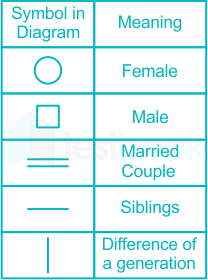
59

जो विशेषण शब्द विशेषणों की विशेषता बताते हैं, उसे क्या कहते हैं ?

  1. ((a))

    प्रविशेषण 

  2. ((b))

    उद्देश्य विशेषण

  3. ((c))

    सार्वनामिक विशेषण 

  4. ((d))

    विधेय विशेषण

  5. ((e))

    उपर्युक्त में से कोई नहीं

Show Answer
Answer: ((a))

प्रविशेषण 

जो विशेषण शब्द विशेषणों की विशेषता बताते हैं, उसे कहते हैं- प्रविशेषण।  

Key Points

  • जो शब्द विशेषण शब्दों की विशेषता बताते हैंउन्हें प्रविशेषण कहते हैं।
  • सरल शब्दों मेंये शब्द संज्ञा/सर्वनाम के गुण (विशेषण) की मात्रा या तीव्रता (डिग्री) को और अधिक स्पष्ट करते हैं।
  • उदाहरण: "यह आम बहुत मीठा है।(यहाँ 'मीठा' विशेषण है,और 'बहुत' प्रविशेषण है क्योंकि वह 'मीठा' की तीव्रता बता रहा है)।

अन्य विकल्प: 

  • उद्देश्य विशेषण - उन शब्दों को कहते हैं जो वाक्य में विशेष्य (संज्ञा या सर्वनाम) से ठीक पहले आकर उसकी विशेषता बताते हैं।
  • इन्हें 'विशेष्य विशेषण' भी कहा जाता है।

उदाहरण :

  • काली बिल्ली बैठी है,दयालु राजा प्रजा की रक्षा करता है।

सार्वनामिक विशेषण - जो सर्वनाम शब्द संज्ञा से पहले आकर उसकी विशेषता बताते हैं या उसकी ओर संकेत करते हैं,सार्वनामिक विशेषण कहलाते हैं।

  • उदाहरण : "वह घर मेरा है" "कोई बालक आ रहा है"।

विधेय विशेषण :

  • जब कोई विशेषण, संज्ञा या सर्वनाम (उद्देश्य) के ठीक बाद, अर्थात क्रिया (विधेय) से पहले आता है, तो उसे विधेय विशेषण कहते हैं।
  • उदाहरण: यह आम मीठा है।" (यहाँ 'मीठा' विधेय विशेषण) है।
60

'डंडा' तद्भव शब्द है, उसका तत्सम शब्द _________ है।

  1. ((a))

    दीमा

  2. ((b))

    दश

  3. ((c))

    दंड

  4. ((d))

    दुग्ध

  5. ((e))

    उपर्युक्त में से कोई नहीं

Show Answer
Answer: ((c))

दंड

सही उत्तर है - दंड 

Key Points

  • तत्सम शब्द (तत् + सम) का अर्थ है- 'उसके समान' या संस्कृत के समान।
  • वे शब्द जो संस्कृत भाषा से बिना किसी परिवर्तन के हिंदी में प्रयुक्त होते हैंतत्सम शब्द कहलाते हैं। ये हिंदी के मूल शब्द माने जाते हैं।
  • मुख्य पहचान: इनमें 'ऋ त्र' ज्ञ' श्र जैसे संयुक्त व्यंजनों का प्रयोग अक्सर होता है।

अन्य विकल्प :

तत्सम शब्दतद्भव शब्द
दशदस
दुग्धदूध

Additional Informationअन्य तत्सम,तद्भव शब्द :

तत्सम शब्दतद्भव शब्द
हस्तहाथ
दंतदाँत
कर्पूरकपूर
चक्षुआँख
अग्निआग
रात्रिरात
काष्ठकाठ

निर्देश : निम्नलिखित गद्यांश को पढ़कर पूछे गये प्रश्नों के उत्तर दीजिए।

सैन्य संचालक और राणा का प्रतिनिधित्व करने वाले महारावत बाघसिंह की तलवार धूप में दामिनी-सी चमकी और वे गरज उठे - "हम बादशाह का सामना नहीं कर पाएँगे क्योंकि उसके पास बड़ी सेना है । ऐसी स्थिति में हमें केसरिया बाना पहन लेना चाहिए और दुर्ग की वीर ललनाओं को जौहर व्रत करने के लिए प्रेरित करना चाहिए।"

यह सुनते ही हाड़ी राणी ने सगर्व कहा - "हम जौहर करेंगी। कोई भी शत्रु हमारे नारीत्व - सतीत्व को कलंकित करे, इससे पहले हम मरना ठीक समझेंगी।”

महारावत तथा अन्य सरदारों को इससे संतोष हुआ। और वे निश्चिन्त हो गए। उन्होंने केसरिया बाना पहन लिया। वीर ललनाओं ने अग्नि- कुंड में बारूद तथा आग को प्रज्वलित करने वाली दूसरी सामग्रियाँ डालीं। कितना दारुण दृश्य था - हजारों नारियाँ और कुँवारी कन्याएँ .....

एक कुँवारी कन्या ने कहा - "माँ सा, हम जीते जी अग्नि-कुंड में क्यों प्रवेश करती हैं ?"

"मर्यादा की रक्षा के लिए।"

"क्या हम युद्ध करती हुई नहीं मर सकतीं ?"

उस नारी ने अहंकार से कहा- "मर सकती हैं, क्षत्राणी का धर्म भी युद्ध करते हुए मरना है। त्याग ही उनका गौरव है पर उसमें जीवित रूप में पकड़े जाने का भी अंदेशा है, तब... ?

"ओह !” कुँवारी कन्या ने कहा- "मर्यादा से तो मृत्यु भली है। चलिए, माँ सा, हम सब अपनी आन पर उत्सर्ग हों ।"

एक युवती एक राणी से पूछ रही थी "इस युद्ध को बंद करा दीजिए। यह युद्ध कितना भयंकर होता है, कितना बीभत्स होता है, इसमें कितनी घृणा है, क्या मनुष्य प्रेम से नहीं रह सकता ?"

"युद्ध अपने स्थान पर श्रेष्ठ लगता है और प्रेम अपने स्थान पर। आज चित्तौड़ पर विपत्ति आई हुई है, उसकी मान-मर्यादा के गौरव को खतरा है; ऐसे समय प्रेम की बात या युद्ध बंद करने की बात हास्यास्पद लगती है। अभी सिर्फ युद्ध की बात करो, शत्रु संहार की बात करो, उत्सर्ग की बात करो। हम जौहर व्रत करके अपने नरसिंहों को निश्चिन्त करा देंगी ।"

61

"इस युद्ध को बंद करा दीजिए। यह युद्ध कितना भयंकर होता है ।" इस वाक्य को किसने किससे कहा ?

  1. ((a))

    एक युवती ने राणी से

  2. ((b))

    एक बेटी ने अपने पिता से

  3. ((c))

    एक सखी ने दूसरी सखी से

  4. ((d))

    एक कुँवारी कन्या ने माँ से

  5. ((e))

    उपर्युक्त में से कोई नहीं

Show Answer
Answer: ((a))

एक युवती ने राणी से

सही उत्तर- एक युवती ने राणी से

Key Points

  • गद्यांश में स्पष्ट रूप से वर्णित है कि एक युवती ने राणी से कहा — "इस युद्ध को बंद करा दीजिए। यह युद्ध कितना भयंकर होता है..."
  • इस संवाद में युवती युद्ध की भयावहता व्यक्त करती है और उसे रोकने का अनुरोध करती है।
  • अतः सही उत्तर विकल्प 1 (एक युवती ने राणी से) है।

अन्य विकल्प:

  • एक बेटी ने अपने पिता से: गद्यांश में ऐसा कोई उल्लेख नहीं है।
  • एक सखी ने दूसरी सखी से: यह संवाद राणी और युवती के बीच हुआ है।
  • एक कुँवारी कन्या ने माँ से: यह संवाद अलग प्रसंग में है, युद्ध रोकने वाला वाक्य नहीं।
  • उपर्युक्त में से कोई नहीं: यह विकल्प गलत है क्योंकि सही उत्तर उपलब्ध है।
62

महारावत और अन्य सरदारों को क्यों संतोष हुआ ? 

  1. ((a))

    उत्तर में राजपूत वीरों ने बाण बरसाना शुरू किया था ।

  2. ((b))

    जब हाड़ी राणी गर्व से जौहर के लिए तैयार हो जाती है ।

  3. ((c))

    सैनिक वीरता से शत्रुओं का सामना कर रहे थे । 

  4. ((d))

    बाघसिंहजी राजकीय पोशाक पहनने लगे । 

  5. ((e))

    उपर्युक्त में से कोई नहीं

Show Answer
Answer: ((b))

जब हाड़ी राणी गर्व से जौहर के लिए तैयार हो जाती है ।

सही उत्तर- जब हाड़ी राणी गर्व से जौहर के लिए तैयार हो जाती है।

Key Points

  • गद्यांश में वर्णित है कि जब हाड़ी राणी ने सगर्व जौहर करने की बात कही, तब महारावत और अन्य सरदारों को संतोष हुआ।
  • उनके जौहर के निर्णय से सरदार निश्चिन्त हो गए और उन्होंने केसरिया बाना पहन लिया।
  • अतः सही उत्तर विकल्प 2 है।

अन्य विकल्प:

  • उत्तर में राजपूत वीरों ने बाण बरसाना शुरू किया था: ऐसा कोई उ���्लेख इस संदर्भ में नहीं है।
  • सैनिक वीरता से शत्रुओं का सामना कर रहे थे: संतोष का कारण यह नहीं बताया गया है।
  • बाघसिंहजी राजकीय पोशाक पहनने लगे: यह संतोष का कारण नहीं है।
  • उपर्युक्त में से कोई नहीं: यह विकल्प गलत है क्योंकि सही उत्तर उपलब्ध है।
63

एक कुंवारी कन्या जौहर से पहले अपनी माँ से क्या पूछती है ?

  1. ((a))

    इस युद्ध को बंद कर दीजिए ।

  2. ((b))

    हम सूर्यवंशी है और सूर्य पर कौन कीचड़ उछाल सकता है ?

  3. ((c))

    क्षत्राणी का धर्म युद्ध करते हुए मरना है या नहीं ? 

  4. ((d))

    हम जीते जी अग्नि कुंड में क्यों प्रवेश करती हैं ?

  5. ((e))

    उपर्युक्त में से कोई नहीं

Show Answer
Answer: ((d))

हम जीते जी अग्नि कुंड में क्यों प्रवेश करती हैं ?

सही उत्तर- हम जीते जी अग्नि कुंड में क्यों प्रवेश करती हैं ?

Key Points

  • गद्यांश में स्पष्ट रूप से उल्लेख है कि एक कुँवारी कन्या ने अपनी माँ से पूछा — "हम जीते जी अग्नि-कुंड में क्यों प्रवेश करती हैं?"
  • यह प्रश्न जौहर से पूर्व उसकी जिज्ञासा और स्थिति की गंभीरता को दर्शाता है।
  • अतः सही उत्तर विकल्प 4 है।

अन्य विकल्प:

  • इस युद्ध को बंद कर दीजिए: यह प्रश्न एक युवती ने राणी से किया था।
  • हम सूर्यवंशी है और सूर्य पर कौन कीचड़ उछाल सकता है? ऐसा कोई कथन इस गद्यांश में नहीं है।
  • क्षत्राणी का धर्म युद्ध करते हुए मरना है या नहीं? यह विचार माँ द्वारा व्यक्त किया गया है, प्रश्न के रूप में नहीं।
  • उपर्युक्त में से कोई नहीं: यह विकल्प गलत है क्योंकि सही उत्तर उपलब्ध है।
64

सैन्य संचालक और महारावत बाघसिंह क्या पहनकर युद्ध रंग में जाने की बातें करने लगते हैं ?

  1. ((a))

    केसरिया बाना

  2. ((b))

    यवन सेना का पोशाक

  3. ((c))

    राजकीय पोशाक

  4. ((d))

    सफेद बाना

  5. ((e))

    उपर्युक्त में से कोई नहीं

Show Answer
Answer: ((a))

केसरिया बाना

सही उत्तर- केसरिया बाना

Key Points

  • गद्यांश में उल्लेख है कि महारावत बाघसिंह ने कहा कि ऐसी स्थिति में हमें केसरिया बाना पहन लेना चाहिए
  • इसके बाद उन्होंने केसरिया बाना पहनकर युद्ध के लिए जाने का निश्चय किया।
  • अतः सही उत्तर विकल्प 1 (केसरिया बाना) है।

अन्य विकल्प:

  • यवन सेना का पोशाक: ऐसा कोई उल्लेख गद्यांश में नहीं है।
  • राजकीय पोशाक: यह संदर्भ यहाँ नहीं दिया गया है।
  • सफेद बाना: गद्यांश के अनुसार यह गलत है।
  • उपर्युक्त में से कोई नहीं: यह विकल्प गलत है क्योंकि सही उत्तर उपलब्ध है।
65

कुँवारी कन्या मर्यादा से मृत्यु को ही क्यों भली मानती है ?

  1. ((a))

    अपने जन्मभूमि की इज्जत के लिए ।

  2. ((b))

    अगर युद्ध करते समय जीवित पकडे जाने पर जो हालात होगी, उससे बचने के लिए ।

  3. ((c))

    उसके परिवारवालों के साथ दुनिया से मुक्ति पाने के लिए । 

  4. ((d))

    यवन सेना के बर्बरता से डरकर ।

  5. ((e))

    उपर्युक्त में से कोई नहीं

Show Answer
Answer: ((b))

अगर युद्ध करते समय जीवित पकडे जाने पर जो हालात होगी, उससे बचने के लिए ।

सही उत्तर- अगर युद्ध करते समय जीवित पकड़े जाने पर जो हालात होगी, उससे बचने के लिए।

Key Points

  • गद्यांश में माँ बताती है कि युद्ध करते हुए मरना क्षत्राणी का धर्म है, परंतु उसमें जीवित पकड़े जाने का अंदेशा भी रहता है।
  • इसी आशंका से बचने के लिए कुँवारी कन्या कहती है — "मर्यादा से तो मृत्यु भली है।"
  • अतः सही उत्तर विकल्प 2 है।

अन्य विकल्प:

  • अपने जन्मभूमि की इज्जत के लिए: यह भाव निहित है, परंतु विशेष कारण जीवित पकड़े जाने की आशंका है।
  • परिवारवालों के साथ दुनिया से मुक्ति पाने के लिए: ऐसा कोई उल्लेख गद्यांश में नहीं है।
  • यवन सेना की बर्बरता से डरकर: यह भय के कारण नहीं, बल्कि मर्यादा की रक्षा के कारण है।
  • उपर्युक्त में से कोई नहीं: यह विकल्प गलत है क्योंकि सही उत्तर उपलब्ध है।

निर्देश : निम्नलिखित गद्यांश को पढ़कर पूछे गये प्रश्नों के उत्तर दीजिए ।

'क' कई महीने बाद आये थे । सुबह चाय पीकर अखबार देख रहा था कि वे तूफान की तरह कमरे में घुसे, 'साइक्लोन' की तरह मुझे अपनी भुजाओं में जकड़ा तो मुझे धृतराष्ट्र की भुजाओं में जकड़े भीम के पुतले की याद आ गयी । यह धृतराष्ट्र की ही जकड़ थी । अंधे धृतराष्ट्र ने टटोलते हुए पूछा, 'कहाँ है भीम ? आ बेटा, तुझे कलेजे से लगा लूँ ।' और जब भीम का पुतला उनकी पकड़ में आ गया तो उन्होंने प्राणघाती स्नेह से उसे जकड़कर चूर कर डाला ।

ऐसे मौके पर हम अक्सर अपने पुतले को अंकवार में दे देते हैं, हम अलग खड़े देखते रहते हैं। 'क' से क्या मैं गले मिला ? क्या मुझे उसने समेटकर कलेजे से लगा लिया ? हरगिज नहीं । मैंने अपना पुतला ही उसे दिया । पुतला इसलिए उसकी भुजाओं में सौंप दिया कि मुझे मालूम था कि मैं धृतराष्ट्र से मिल रहा हूँ । पिछली रात को एक मित्र ने बताया कि 'क' अपनी ससुराल आया है और 'ग' के साथ बैठकर शाम को दो-तीन घंटे तुम्हारी निन्दा करता रहा । इस सूचना के बाद जब आज सबेरे वह मेरे गले लगा तो मैंने शरीर से अपने मन को चुपचाप खिसका दिया और निःस्नेह, कँटीली देह उसकी बाँहों में छोड़ दी । भावना के अगर काँटे होते तो उसे मालूम होता कि वह नागफनी को कलेजे से चिपटाये है। छल का धृतराष्ट्र जब आलिंगन करे, तो पुतला ही आगे बढ़ाना चाहिए।

पर वह मेरा दोस्त अभिनय में पूरा है। उसके आँसू भर नहीं आये, बाकी मिलन के हर्षोल्लास के सब चिन्ह प्रकट हो गये- वह गहरी आत्मीयता की जकड़, नयनों से छलकता वह असीम स्नेह और वह स्नेहसिक्त वाणी ।

बोला, 'अभी सुबह की गाड़ी से उतरा और एकदम तुमसे मिलने चला आया, जैसे आत्मा का एक खण्ड दूसरे खण्ड से मिलने को आतुर रहता है।' आते ही झूठ बोला कम्बख्त । कल का आया है, यह मुझे मेरा मित्र बता गया था। इस झूठ में कोई प्रयोजन शायद उसका न रहा हो । कुछ लोग बड़े निर्दोष मिथ्यावादी होते हैं । वे आदतन, प्रकृति के वशीभूत झूठ बोलते हैं। उनके मुख से निष्प्रयास, निष्प्रयोजन झूठ ही निकलता है। मेरे एक रिश्तेदार ऐसे हैं । वे अगर बम्बई जा रहे हैं और उनसे पूछे, तो वे कहेंगे, 'कलकत्ता जा रहा हूँ ।'

66

जब 'क' लेखक जी से मिलने आता है तो लेखक जी ने उसके साथ क्या किया ?

  1. ((a))

    जरूरी काम का बहाना करके बाज़ार गये थे । 

  2. ((b))

    लेखक जी ने शरीर से अपने मन को खिसकाकर निःस्नेह कँटीली देह को उसके बाँहों में छोड़ा था ।

  3. ((c))

    सिर दर्द का बहाना करके बाहर चले गये थे।

  4. ((d))

    उसे देखते ही कमरे में चले गये थे।

  5. ((e))

    उपर्युक्त में से कोई नहीं

Show Answer
Answer: ((b))

लेखक जी ने शरीर से अपने मन को खिसकाकर निःस्नेह कँटीली देह को उसके बाँहों में छोड़ा था ।

सही उत्तर- लेखक जी ने शरीर से अपने मन को खिसकाकर निःस्नेह कँटीली देह को उसके बाँहों में छोड़ा था।

Key Points

  • गद्यांश में लेखक स्पष्ट कहते हैं कि उन्होंने शरीर से अपने मन को चुपचाप खिसका दिया और निःस्नेह, कँटीली देह उसकी बाँहों में छोड़ दी।
  • लेखक को पहले ही पता था कि 'क' उनकी निन्दा कर रहा था, इसलिए उन्होंने सच्चे मन से आलिंगन नहीं किया।
  • अतः सही उत्तर विकल्प 2 है।

अन्य विकल्प:

  • जरूरी काम का बहाना करके बाज़ार गये थे: ऐसा कोई उल्लेख गद्यांश में नहीं है।
  • सिर दर्द का बहाना करके बाहर चले गये थे: यह कथन गद्यांश के अनुसार गलत है।
  • उसे देखते ही कमरे में चले गये थे: लेखक ने ऐसा नहीं किया, बल्कि औपचारिक रूप से मिले।
  • उपर्युक्त में से कोई नहीं: यह विकल्प गलत है क्योंकि सही उत्तर उपलब्ध है।
67

पिछली रात 'क' कहाँ पर आया हुआ था ?

  1. ((a))

    अपनी ससुराल में

  2. ((b))

    किसी की शादी में

  3. ((c))

    किसी धर्मशाला में

  4. ((d))

    अपने दोस्त के घर पर

  5. ((e))

    उपर्युक्त में से कोई नहीं

Show Answer
Answer: ((a))

अपनी ससुराल में

सही उत्तर- अपनी ससुराल में

Key Points

  • गद्यांश में स्पष्ट उल्लेख है कि लेखक के एक मित्र ने बताया कि 'क' अपनी ससुराल आया है
  • वहीं बैठकर वह 'ग' के साथ लेखक की निन्दा कर रहा था।
  • अतः सही उत्तर विकल्प 1 (अपनी ससुराल में) है।

अन्य विकल्प:

  • किसी की शादी में: गद्यांश में ऐसा कोई उल्लेख नहीं है।
  • किसी धर्मशाला में: यह कथन गद्यांश के अनुसार गलत है।
  • अपने दोस्त के घर पर: ऐसा भी उल्लेख नहीं किया गया है।
  • उपर्युक्त में से कोई नहीं: यह विकल्प भी गलत है।
68

पिछली रात उनके एक मित्र ने 'क' के बारे में क्या कहा था ?

  1. ((a))

    'क' बहुत बड़ा धोखेबाज है ।

  2. ((b))

    'क' ने 'ग' के साथ मिलकर लेखक जी की निंदा की थी ।

  3. ((c))

    'क' से जरा दूर रहने के लिए कहा था । 

  4. ((d))

    'क' कल सुबह लेखक जी से मिलने आयेगा । 

  5. ((e))

    उपर्युक्त में से कोई नहीं

Show Answer
Answer: ((b))

'क' ने 'ग' के साथ मिलकर लेखक जी की निंदा की थी ।

सही उत्तर- 'क' ने 'ग' के साथ मिलकर लेखक जी की निंदा की थी।

Key Points

  • गद्यांश में उल्लेख है कि लेखक के एक मित्र ने बताया कि 'क' अपनी ससुराल में 'ग' के साथ बैठकर लेखक की निंदा करता रहा।
  • इसी सूचना के कारण लेखक ने उससे औपचारिक रूप से मिलते हुए मन को अलग कर लिया।
  • अतः सही उत्तर विकल्प 2 है।

अन्य विकल्प:

  • 'क' बहुत बड़ा धोखेबाज है: ऐसा सीधा कथन मित्र ने नहीं कहा।
  • 'क' से जरा दूर रहने के लिए कहा था: ऐसा कोई उल्लेख नहीं है।
  • 'क' कल सुबह लेखक जी से मिलने आयेगा: यह भी गद्यांश में नहीं कहा गया।
  • उपर्युक्त में से कोई नहीं: यह विकल्प गलत है क्योंकि सही उत्तर उपलब्ध है।
69

जब 'क' ने लेखक जी को अपने बाहों में जकड़ा तो उन्हें किस तरह का एहसास हुआ ?

  1. ((a))

    किसी की आत्मीयता ने जकड़ लिया हो ।

  2. ((b))

    धृतराष्ट्र की भुजाओं में जकड़े भीम के पुतले की याद आयी।

  3. ((c))

    जैसा कोई अभिनय कर रहा है।

  4. ((d))

    ऐसा लगा जैसे किसी ने जोर से धक्का दिया । 

  5. ((e))

    उपर्युक्त में से कोई नहीं

Show Answer
Answer: ((b))

धृतराष्ट्र की भुजाओं में जकड़े भीम के पुतले की याद आयी।

सही उत्तर- धृतराष्ट्र की भुजाओं में जकड़े भीम के पुतले की याद आयी।

Key Points

  • गद्यांश में लेखक स्पष्ट कहते हैं कि जब 'क' ने उन्हें जकड़ा तो उन्हें धृतराष्ट्र की भुजाओं में जकड़े भीम के पुतले की याद आ गई।
  • लेखक ने इस आलिंगन को सच्चे स्नेह के बजाय दिखावटी और प्राणघाती स्नेह से तुलना की है।
  • अतः सही उत्तर विकल्प 2 है।

अन्य विकल्प:

  • किसी की आत्मीयता ने जकड़ लिया हो: लेखक को ऐसा एहसास नहीं हुआ।
  • जैसा कोई अभिनय कर रहा है: अभिनय का उल्लेख बाद में है, पर एहसास धृतराष्ट्र वाले प्रसंग जैसा था।
  • ऐसा लगा जैसे किसी ने जोर से धक्का दिया: ऐसा कोई वर्णन नहीं है।
  • उपर्युक्त में से कोई नहीं: यह विकल्प गलत है क्योंकि सही उत्तर उपलब्ध है।
70

लेखक जी के एक रिश्तेदार बम्बई जा रहे हैं और उनसे पूछे, तो वे क्या कहेंगे ?

  1. ((a))

    पूना जा रहा हूँ ।

  2. ((b))

    पटना जा रहा हूँ ।

  3. ((c))

    दिल्ली जा रहा हूँ ।

  4. ((d))

    कलकत्ता जा रहा हूँ ।

  5. ((e))

    उपर्युक्त में से कोई नहीं

Show Answer
Answer: ((d))

कलकत्ता जा रहा हूँ ।

सही उत्तर- कलकत्ता जा रहा हूँ।

Key Points

  • गद्यांश में लेखक ने बताया है कि उनके एक रिश्तेदार आदतन झूठ बोलते हैं।
  • यदि वे बम्बई जा रहे हों और उनसे पूछा जाए, तो वे कहेंगे — "कलकत्ता जा रहा हूँ।"
  • अतः सही उत्तर विकल्प 4 है।

अन्य विकल्प:

  • पूना जा रहा हूँ: गद्यांश में ऐसा उल्लेख नहीं है।
  • पटना जा रहा हूँ: यह कथन गद्यांश के अनुसार गलत है।
  • दिल्ली जा रहा हूँ: इसका भी उल्लेख नहीं है।
  • उपर्युक्त में से कोई नहीं: यह विकल्प गलत है क्योंकि सही उत्तर उपलब्ध है।

71

What is the symbol associated with Parshvanatha, the 23rd Tirthankara ?

  1. ((a))

    Lion

  2. ((b))

    Bull

  3. ((c))

    Snake

  4. ((d))

    Conch

  5. ((e))

    None of the above

Show Answer
Answer: ((c))

Snake

The correct answer is Snake.

Key Points

  • Parshvanatha, the 23rd Tirthankara of Jainism, is associated with the symbol of a snake.
  • The snake symbol represents the story of Parshvanatha rescuing serpents in his previous life, which highlights his compassion and non-violence (Ahimsa).
  • Parshvanatha is one of the most venerated Tirthankaras and is credited with simplifying Jain teachings into the fourfold restraints: non-violence, truth, non-stealing, and non-possession.
  • He is considered a historical figure who lived around the 9th century BCE and was born in Varanasi, Uttar Pradesh.
  • The teachings of Parshvanatha paved the way for Lord Mahavira, the 24th Tirthankara, to expand and establish Jainism as a prominent religion.

Additional Information

  • Jain Tirthankaras:
  • Jainism recognizes 24 Tirthankaras, spiritual teachers who have attained liberation (Moksha) and serve as guides for humanity.
  • Each Tirthankara is associated with a specific emblem or symbol that represents their teachings and life events.
  • The Tirthankaras are revered for their adherence to non-violence, truth, and spiritual purity.
72

The time gap between the question hour and the agenda of the day is called 

  1. ((a))

    Zero hour

  2. ((b))

    First hour

  3. ((c))

    Starred question hour

  4. ((d))

    Half an hour

  5. ((e))

    None of the above

Show Answer
Answer: ((a))

Zero hour

The correct answer is Zero hour.

Key Points

  • Zero Hour refers to the time immediately following the Question Hour in both Houses of Parliament, where Members of Parliament (MPs) can raise matters of urgent importance without prior notice.
  • It is an informal device that is not mentioned in the Rules of Procedure of the Parliament, but it has become a convention over time.
  • It starts at 12 noon and lasts for about an hour, depending on the discretion of the Speaker or the Chairperson.
  • Zero Hour provides a platform for MPs to bring up matters that require the immediate attention of the government and seek its response.
  • Though the concept originated in the Indian parliamentary system, it has no equivalent in other parliamentary democracies.

Additional Information

  • First Hour
  • The First Hour in the Parliament refers to the Question Hour, which is the first hour of a parliamentary sitting.
  • During this hour, MPs can ask questions to ministers regarding their ministries' functioning, policies, or decisions, and ministers are obligated to answer them.
  • It is divided into two types of questions: Starred Questions (require an oral answer) and Unstarred Questions (require written answers).
  • Starred Question Hour
  • Starred Questions are those for which a member seeks an oral answer in the Parliament.
  • Such questions are distinguished by a star (*) mark and are answered during the Question Hour.
  • Supplementary questions can also be asked based on the minister’s oral response.
  • Half an Hour
  • The Half-an-Hour discussion refers to a session in which members can raise matters of public importance based on answers given during the Question Hour.
  • This session is used to seek further clarification or discussion on significant issues.
  • It is scheduled for half an hour and provides an opportunity for MPs to discuss specific questions in more detail.
73

Which among the following is not a prime number?

  1. ((a))

    29

  2. ((b))

    53

  3. ((c))

    57

  4. ((d))

    47

  5. ((e))

    None of the above

Show Answer
Answer: ((c))

57

Calculation:

29, 53 and 47 are prime numbers because they are divisible only by 1 and themselves.

57 is not a prime number because

⇒ 57 = 3 × 19

Since it has more than two factors, it is a composite number.

∴ The correct answer is 57.

74

Which of the following States faces the most serious issue of groundwater over-exploitation?

  1. ((a))

    Meghalaya

  2. ((b))

    Kerala

  3. ((c))

    Odisha

  4. ((d))

    Punjab

  5. ((e))

    None of the above

Show Answer
Answer: ((d))

Punjab

The correct answer is Punjab.

Key Points

  • Punjab faces the most serious issue of groundwater over-exploitation in India due to intensive agricultural activities, particularly the cultivation of water-intensive crops like paddy (rice) and wheat.
  • According to the Central Ground Water Board (CGWB), over 85% of groundwater blocks in Punjab are classified as “over-exploited.”
  • The annual groundwater withdrawal in Punjab has consistently exceeded the annual recharge, leading to a rapid decline in the water table, with some areas witnessing a drop of 1 meter per year.
  • Punjab’s reliance on groundwater for irrigation is extremely high, as approximately 73% of its irrigation needs are met using groundwater resources.
  • The widespread use of tube wells and the provision of free electricity for agricultural purposes have further aggravated the situation by encouraging unregulated groundwater extraction.

Additional Information

  • Meghalaya:
  • Meghalaya receives one of the highest rainfalls in India and is rich in surface water resources.
  • The state does not face a significant groundwater depletion issue, as its dependence on groundwater is minimal, and the population relies more on surface water sources such as rivers and streams.
  • Kerala:
  • Kerala experiences abundant rainfall and has a dense network of rivers, lakes, and backwaters.
  • Groundwater depletion is not a major concern in Kerala, although localized issues can arise due to urbanization and over-extraction in certain areas.
  • Odisha:
  • Odisha has a relatively balanced groundwater situation, with sufficient rainfall and surface water resources to recharge the aquifers.
  • The state does not face severe groundwater depletion issues, although there are concerns about water quality in some regions.
75

Justin Trudeau, who announced his resignation on 6 January, 2025, served as the Prime Minister of which country ?

  1. ((a))

    New Zealand

  2. ((b))

    Australia

  3. ((c))

    United Kingdom

  4. ((d))

    Canada

  5. ((e))

    None of the above

Show Answer
Answer: ((d))

Canada

The correct answer is Canada.

Key Points

  • Justin Trudeau is the 23rd Prime Minister of Canada, serving since November 4, 2015.
  • He is the leader of the Liberal Party of Canada, which has been in power under his leadership since 2015.
  • Trudeau has focused on policies such as climate change, gender equality, Indigenous rights, and economic growth during his tenure.
  • Under Trudeau's leadership, Canada welcomed a number of progressive reforms, including the legalization of cannabis and the introduction of a carbon pricing plan.
  • He is the son of Pierre Elliott Trudeau, who also served as Prime Minister of Canada from 1968 to 1979 and from 1980 to 1984.

Additional Information

  • New Zealand
  • The current Prime Minister of New Zealand (as of October 2023) is Chris Hipkins, who succeeded Jacinda Ardern in January 2023.
  • New Zealand operates under a parliamentary system and is known for its progressive policies, including its focus on environmental sustainability and gender equality.
  • Jacinda Ardern, the former Prime Minister, gained international recognition for her leadership during crises, such as the Christchurch mosque shootings and the COVID-19 pandemic.
  • Australia
  • The Prime Minister of Australia (as of October 2023) is Anthony Albanese, who has been in office since May 2022.
  • Australia has a federal parliamentary system, and the Prime Minister is the head of government.
  • Australia is known for its strong economic policies, natural resource exports, and multicultural society.
  • United Kingdom
  • The Prime Minister of the United Kingdom (as of October 2023) is Rishi Sunak, who assumed office in October 2022.
  • The United Kingdom operates under a constitutional monarchy, with the Prime Minister as the head of government.
  • Rishi Sunak is the first person of Indian heritage to hold the office of Prime Minister in the UK.
76

The Chhandogya Upanishad clearly refers to which of the following ashramas ? 

  1. ((a))

    Only Grihastha and Brahmacharya

  2. ((b))

    Only Grihastha and Vanaprastha 

  3. ((c))

    Brahmacharya, Grihastha and Vanaprastha

  4. ((d))

    Only Brahmacharya and Sannyasa 

  5. ((e))

    None of the above

Show Answer
Answer: ((c))

Brahmacharya, Grihastha and Vanaprastha

The correct answer is Brahmacharya, Grihastha, and Vanaprastha.

Key Points

  • The Chhandogya Upanishad, an ancient Hindu scripture, explicitly mentions three ashramas: Brahmacharya (student life), Grihastha (householder life), and Vanaprastha (hermit life).
  • It does not discuss the Sannyasa ashrama in detail, as the concept of four ashramas evolved later in the Vedic tradition.
  • In the context of these three ashramas, the text emphasizes spiritual growth, discipline, and the pursuit of knowledge as integral aspects of life.
  • The Upanishad lays significant importance on Brahmacharya for education and self-discipline, Grihastha for familial and societal duties, and Vanaprastha for gradual detachment from material life.
  • These three stages represent a progressive path of life, guiding individuals toward self-realization and fulfillment of spiritual and worldly responsibilities.

Additional Information

  • The Ashrama System
  • The Ashrama system is a framework of four stages of life in Hindu philosophy: Brahmacharya (student), Grihastha (householder), Vanaprastha (hermit), and Sannyasa (renunciation).
  • It is designed to guide individuals through a balanced life of spiritual and material pursuits.
  • The Chhandogya Upanishad primarily focuses on the first three stages, reflecting the early development of the ashrama system.
77

Where was the 18th Pravasi Bharatiya Divas (PBD) Convention 2025 held ?

  1. ((a))

    Hyderabad

  2. ((b))

    New Delhi

  3. ((c))

    Bhubaneshwar

  4. ((d))

    Ahmedabad

  5. ((e))

    None of the above

Show Answer
Answer: ((c))

Bhubaneshwar

The correct answer is Bhubaneshwar.

Key Points

  • The 18th Pravasi Bharatiya Divas (PBD) Convention was held in Bhubaneshwar, Odisha, in 2025.
  • Pravasi Bharatiya Divas is celebrated annually to recognize the contributions of the Indian diaspora to the country's development.
  • The event brings together Indian expatriates, dignitaries, and policymakers to discuss opportunities and challenges related to India's global engagement.
  • Bhubaneshwar was chosen as the host city due to its historical and cultural significance and its growing prominence as a major urban hub in Eastern India.
  • The convention serves as a platform to enhance India's outreach to its global diaspora and strengthen cultural, economic, and social ties with Indians residing abroad.

Additional Information

  • Hyderabad
  • Hyderabad is the capital city of Telangana and a major technology hub in India, often referred to as “Cyberabad” due to its IT and tech industries.
  • It is also known for its historical landmarks like Charminar and Golconda Fort, as well as its rich cultural heritage.
  • Although Hyderabad has hosted several international events, it was not the host city for the 18th Pravasi Bharatiya Divas Convention.
  • New Delhi
  • New Delhi, the capital of India, is a political, cultural, and administrative hub of the country and frequently hosts high-profile national and international events.
  • It has been the host city for previous Pravasi Bharatiya Divas conventions, including the first PBD in 2003.
  • While it plays a significant role in India’s diplomatic and diaspora outreach, it was not selected as the venue for the 18th PBD in 2025.
  • Ahmedabad
  • Ahmedabad, located in Gujarat, is known for its rich history, vibrant culture, and status as a major economic and industrial center.
  • It has hosted notable events like the 2015 Pravasi Bharatiya Divas Convention, which was attended by a large number of dignitaries and Indian expatriates.
  • Despite its historical significance for PBD events, Ahmedabad was not the host city for the 2025 convention.
  • Pravasi Bharatiya Divas
  • Pravasi Bharatiya Divas (PBD) is observed on January 9th every year to mark the return of Mahatma Gandhi to India from South Africa in 1915.
  • The event is organized by the Ministry of External Affairs in partnership with a state government.
78

In human beings, the posture and balance of the body is controlled by

  1. ((a))

    Cerebrum

  2. ((b))

    Pons

  3. ((c))

    Cerebellum

  4. ((d))

    Medulla oblongata

  5. ((e))

    None of the above

Show Answer
Answer: ((c))

Cerebellum

The correct answer is Cerebellum.

Key Points

  • The cerebellum is a part of the hindbrain and plays a critical role in maintaining posture, balance, and coordination of voluntary movements in human beings.
  • It ensures smooth and precise movements by integrating sensory input and motor output.
  • The cerebellum adjusts the body’s position in space by regulating muscle tone and coordinating motor activity.
  • It receives input from the sensory systems (like the vestibular system and proprioceptors) and uses this information to fine-tune motor movements.
  • Damage to the cerebellum can result in issues like ataxia (loss of coordination), tremors, or difficulty in maintaining balance.

Additional Information

  • Cerebrum:
  • The cerebrum is the largest part of the brain and is responsible for higher-order brain functions such as thinking, reasoning, memory, emotions, and voluntary motor activities.
  • It is divided into two hemispheres and several lobes, each specializing in different functions like vision (occipital lobe), hearing (temporal lobe), and voluntary muscle movements (frontal lobe).
  • Pons:
  • The pons is part of the brainstem and acts as a relay center between different parts of the brain, including the cerebrum and cerebellum.
  • It helps regulate vital functions like breathing and sleep cycles.
  • The pons also plays a role in transmitting sensory information from the body to the brain.
  • Medulla Oblongata:
  • The medulla oblongata is the lower part of the brainstem and is crucial for regulating involuntary functions such as heart rate, blood pressure, and respiration.
  • It also serves as a conduit for signals traveling between the brain and spinal cord.
  • Damage to the medulla can be life-threatening as it controls essential autonomic functions.
79

According to Article 57 of the Indian Constitution Ja person who holds, or who has held, office as _______ shall, subject to the other provisions of this Constitution, be aligible for re-election to that office. 

  1. ((a))

    Attorney General

  2. ((b))

    Vice-President

  3. ((c))

    Prime Minister

  4. ((d))

    President

  5. ((e))

    None of the above

Show Answer
Answer: ((d))

President

The correct answer is President.

Key Points

  • Article 57 of the Indian Constitution states that any person who holds or has previously held the office of the President of India is eligible for re-election to the same office.
  • There is no limit to the number of terms a person can serve as the President of India, provided they fulfill the eligibility conditions each time.
  • The eligibility criteria for a candidate to be elected as the President include being a citizen of India, at least 35 years of age, and qualified to be a member of the Lok Sabha.
  • The President of India is elected indirectly by an Electoral College, which consists of the elected members of both Houses of Parliament and the elected members of the Legislative Assemblies of States and Union territories.
  • The President's term of office is five years, but they may resign earlier or be removed through impeachment under Article 61 of the Constitution.

Additional Information

  • Attorney General:
  • The Attorney General of India is the chief legal advisor to the Government of India and is appointed under Article 76 of the Constitution.
  • They provide legal advice to the government and represent it in the Supreme Court and other courts.
  • The Attorney General holds office during the pleasure of the President and does not serve a fixed term.
  • Vice-President:
  • The Vice-President of India is the second-highest constitutional office and is elected under Article 66 of the Constitution.
  • They act as the ex-officio Chairperson of the Rajya Sabha and perform the duties of the President in their absence.
  • The Vice-President serves a fixed term of five years and can be re-elected for subsequent terms.
  • Prime Minister:
  • The Prime Minister of India is the head of the government and is appointed by the President under Article 75 of the Constitution.
  • The Prime Minister is the leader of the majority party in the Lok Sabha and plays a central role in the administration of the country.
  • There is no fixed term or limit to the number of terms a person can serve as Prime Minister, but they must maintain the confidence of the Lok Sabha.
80

Keoladeo National Park is located in which Indian State ?

  1. ((a))

    Haryana

  2. ((b))

    Gujarat

  3. ((c))

    Madhya Pradesh

  4. ((d))

    Rajasthan

  5. ((e))

    None of the above

Show Answer
Answer: ((d))

Rajasthan

The correct answer is Rajasthan.

Key Points

  • Keoladeo National Park is located in Bharatpur, in the state of Rajasthan, India.
  • It was formerly known as the Bharatpur Bird Sanctuary and is a UNESCO World Heritage Site, designated in 1985.
  • The park is famous for being a wintering ground for thousands of migratory birds, including the rare Siberian crane.
  • Keoladeo National Park covers an area of approximately 28.73 square kilometers and is a wetland reserve.
  • The park is named after the Keoladeo (Shiva) temple located within its premises and is a critical habitat for over 370 species of birds.

Additional Information

  • Haryana:
  • Haryana is home to the Sultanpur National Park, located in Gurgaon (Gurugram) district.
  • Sultanpur National Park is a significant bird sanctuary and attracts migratory birds during the winter season.
  • It is smaller compared to Keoladeo National Park but holds ecological importance in the region.
  • Gujarat:
  • Gujarat is famous for the Gir National Park, which is the only natural habitat of the Asiatic lions in the world.
  • The state also has the Blackbuck National Park in Velavadar and the Marine National Park in the Gulf of Kutch.
  • Madhya Pradesh:
  • Madhya Pradesh is known as the “Tiger State of India” and is home to several tiger reserves, including Bandhavgarh National Park, Kanha National Park, and Pench National Park.
  • The state also hosts the Panna National Park, which is a UNESCO Biosphere Reserve.
81

Which of the following metals was not known or used by the people of the Harappan Civilization?

  1. ((a))

    Iron

  2. ((b))

    Copper

  3. ((c))

    Bronze

  4. ((d))

    Gold

  5. ((e))

    None of the above

Show Answer
Answer: ((a))

Iron

The correct answer is Iron.

Key Points

  • The Harappan Civilization, also known as the Indus Valley Civilization (2600 BCE to 1900 BCE), primarily used materials like copper, bronze, gold, and silver for tools, ornaments, and trade.
  • Iron was not known or used by the Harappans as it was introduced in India much later, around 1200 BCE, during the later Vedic period.
  • Archaeological excavations have revealed tools, weapons, and artifacts made of bronze and copper, but no evidence of iron usage in Harappan sites has been found.
  • The Harappans were skilled metallurgists and were adept at creating alloys like bronze (a mix of copper and tin) for tools and weapons.
  • The absence of iron reflects the technological and chronological limitations of the civilization, as it belonged to the Bronze Age and not the Iron Age.

Additional Information

  • Copper:
  • Copper was extensively used by the Harappans for making tools, weapons, and ornaments.
  • Many excavated artifacts, such as axes, knives, and vessels, were made of copper.
  • The Harappans sourced copper from regions like Khetri in Rajasthan and Baluchistan.
  • Bronze:
  • The Harappan Civilization is considered a part of the Bronze Age due to its widespread use of bronze.
  • Bronze, an alloy of copper and tin, was used for crafting tools, weapons, and sculptures.
  • Famous artifacts like the "Dancing Girl" figurine from Mohenjo-Daro were made of bronze.
  • Gold:
  • Gold was used by the Harappans mainly for making ornaments and decorative items.
  • Archaeological findings include gold beads, bangles, and pendants.
  • Gold was likely imported from southern India or Central Asia through trade networks.
82

_______ refers to the existence of more than one level of Government in the country.

  1. ((a))

    Secularism

  2. ((b))

    Federalism

  3. ((c))

    Unitary system

  4. ((d))

    Democracy 

  5. ((e))

    None of the above

Show Answer
Answer: ((b))

Federalism

The correct answer is Federalism.

Key Points

  • Federalism is a system of government in which power is divided between a central authority and various constituent units of the country.
  • This governance model aims to ensure unity while preserving regional autonomy by assigning specific powers and responsibilities to different levels of government.
  • India follows a federal structure with a strong center, as defined in the Constitution, dividing powers between the Union and State governments through three lists: Union List, State List, and Concurrent List.
  • The concept of federalism in India is enshrined in the Constitution, particularly in Part XI, which deals with the distribution of legislative, administrative, and executive powers.
  • Examples of federal countries include the United States, Canada, Australia, and India, where multiple levels of government co-exist to govern the same territory.

Additional Information

  • Secularism:
  • Secularism refers to the separation of religion from the state, ensuring that the government remains neutral in matters of religion.
  • In India, the concept of secularism is enshrined in the Preamble of the Constitution and guarantees freedom of religion under Articles 25 to 28.
  • India's secularism is unique as it recognizes and respects all religions equally without endorsing any particular religion.
  • Unitary System:
  • A unitary system is a form of government where all powers are centralized in a single authority, and regional governments, if they exist, derive their powers from the central government.
  • This system is commonly adopted in smaller countries like the United Kingdom, France, and Japan, where uniformity in governance is prioritized.
  • Unlike federal systems, there is no division of powers between the central and regional governments in a unitary system.
  • Democracy:
  • Democracy is a form of government where the power lies with the people, who exercise it directly or through elected representatives.
  • India is the world's largest democracy, adhering to principles like universal adult suffrage, free and fair elections, and fundamental rights for its citizens.
  • The concept of democracy is prominently highlighted in the Preamble of the Indian Constitution, which begins with the words "We, the people."
83

How many total Padma Awards were announced in 2025, including a duo case (counted as one) ?

  1. ((a))

    139

  2. ((b))

    135

  3. ((c))

    140

  4. ((d))

    145

  5. ((e))

    None of the above

Show Answer
Answer: ((a))

139

The correct answer is 139.

Key Points

  • A total of 139 Padma Awards were announced in 2025, which includes both individual and duo recipients, with duo cases being counted as one.
  • The Padma Awards, one of India’s highest civilian honors, are categorized into three awards: Padma Vibhushan (for exceptional and distinguished service), Padma Bhushan (for distinguished service of a high order), and Padma Shri (for distinguished service in any field).
  • In 2025, the breakdown included several awards under each category, reflecting contributions across various fields such as art, social work, public affairs, science, and sports.
  • These awards are announced annually on the eve of Republic Day and are conferred by the President of India at ceremonial functions held at Rashtrapati Bhavan.
  • The selection process involves recommendations received from the public as well as nominations made by State Governments, Union Territories, Ministries, and other organizations.

Additional Information

  • Padma Awards:
  • Established in 1954, the Padma Awards are India’s highest civilian honors after the Bharat Ratna.
  • The awards are conferred in recognition of exceptional achievements and distinguished service in various fields, including art, literature, education, sports, medicine, social work, public affairs, and others.
  • The Padma Vibhushan is the second-highest civilian award, followed by the Padma Bhushan and Padma Shri.
  • These awards aim to recognize talent and service from all walks of life, irrespective of caste, creed, or social status.
84

Which of the following adaptations is common in desert plants?

  1. ((a))

    Bright colored flowers

  2. ((b))

    Large flat leaves

  3. ((c))

    Thick stems for water storage 

  4. ((d))

    Shallow roots

  5. ((e))

    None of the above

Show Answer
Answer: ((c))

Thick stems for water storage 

The correct answer is Thick stems for water storage.

Key Points

  • Desert plants such as cacti have adapted to their arid environments by developing thick stems that store water for long periods of drought.
  • The stems of many desert plants are succulent, meaning they can retain large quantities of water, which is used during dry conditions.
  • These plants often have a waxy coating on their stems to prevent water loss through evaporation.
  • Thick stems also help desert plants carry out photosynthesis, as many desert plants lack traditional leaves and rely on stems for this process.
  • This adaptation allows desert plants to survive in extreme heat and limited water availability.

Additional Information

  • Bright colored flowers
  • Brightly colored flowers are generally found in plants that rely on pollinators, such as birds and insects, for reproduction.
  • These flowers attract pollinators, ensuring the plant’s ability to reproduce.
  • However, this adaptation is not specific to desert plants, as pollination strategies vary widely depending on the environment.
  • Large flat leaves
  • Large flat leaves are typically found in plants that grow in environments with adequate water availability.
  • These leaves maximize the surface area for photosynthesis but are unsuitable for arid regions due to excessive water loss through transpiration.
  • In desert plants, leaves are often reduced to spines to minimize water loss.
  • Shallow roots
  • Shallow roots are usually found in plants growing in areas where water is abundant near the surface, such as in wetlands.
  • Desert plants, in contrast, have evolved to develop deep or wide-spreading roots to access water from underground sources or capture rainfall efficiently.
85

When was the International Big Cat Alliance (IBCA) launched by India ? 

  1. ((a))

    5 June, 2023

  2. ((b))

    3 March, 2023

  3. ((c))

    22 May, 2023

  4. ((d))

    9 April, 2023

  5. ((e))

    None of the above

Show Answer
Answer: ((d))

9 April, 2023

The correct answer is 9 April, 2023.

Key Points

  • The International Big Cat Alliance (IBCA) was launched by India on April 9, 2023, in Mysuru, Karnataka.
  • This initiative was introduced during the 50th anniversary of Project Tiger, an Indian conservation program launched in 1973.
  • The IBCA aims to bring together countries for the conservation of the world’s seven major big cats, including tigers, lions, leopards, snow leopards, pumas, jaguars, and cheetahs.
  • It focuses on collaborative efforts, including research, knowledge exchange, and funding mechanisms, for big cat conservation globally.
  • India proposed this alliance as a part of its commitment to wildlife conservation and leadership in safeguarding biodiversity.

Additional Information

  • The IBCA is a significant step by India to strengthen global efforts for the conservation of big cats.
  • It aligns with India’s successful initiatives like Project Tiger and the recent reintroduction of cheetahs in Madhya Pradesh.
  • This alliance showcases India’s leadership in wildlife conservation and its commitment to safeguarding endangered species worldwide.
86

'Maach' is a traditional folk theatre form of which State ?

  1. ((a))

    Maharashtra

  2. ((b))

    Madhya Pradesh

  3. ((c))

    Gujarat

  4. ((d))

    Rajasthan

  5. ((e))

    None of the above

Show Answer
Answer: ((b))

Madhya Pradesh

The correct answer is Madhya Pradesh.

Key Points

  • Maach is a traditional folk theatre form that originated in the state of Madhya Pradesh, India.
  • The name "Maach" is derived from the Hindi word "manch," which means a stage or platform for performance.
  • It combines acting, singing, and dancing, and is often performed in open spaces or village squares.
  • The themes of Maach performances are based on mythological stories, historical events, and social issues, with a strong emphasis on music and dialogue delivery.
  • Traditional musical instruments like dholak, harmonium, and manjira are used during the performances to enhance the storytelling aspect.

Additional Information

  • Indian Folk Theatre
  • India has a rich tradition of folk theatre, which serves as a medium to convey messages, entertain, and preserve cultural heritage.
  • Each state has its unique form of folk theatre that reflects the regional culture, language, and traditions.
  • Examples include Yakshagana (Karnataka), Therukoothu (Tamil Nadu), and Nautanki (North India).
87

_______ means an institution of self-government constituted under Article 243Q of the Constitution of India.

  1. ((a))

    Panchayat

  2. ((b))

    Municipality

  3. ((c))

    District

  4. ((d))

    Metropolitan area

  5. ((e))

    None of the above

Show Answer
Answer: ((b))

Municipality

The correct answer is Municipality.

Key Points

  • Article 243Q of the Constitution of India provides for the establishment of Municipalities as institutions of self-government in urban areas.
  • A Municipality is constituted for smaller urban areas, and its governance is defined under Part IXA of the Constitution.
  • Municipalities are responsible for urban local governance, including services such as water supply, sanitation, waste management, urban planning, and public health.
  • They consist of elected representatives and function as decentralized entities of governance to ensure public participation in urban administration.
  • Types of Municipalities include Nagar Panchayat (for transitional areas), Municipal Council (for smaller urban areas), and Municipal Corporation (for larger urban areas).

Additional Information

  • Panchayat:
  • Panchayats are institutions of rural local self-government established under Part IX of the Constitution of India.
  • They are governed by Articles 243 to 243O and operate at three levels: Gram Panchayat (village level), Panchayat Samiti (block level), and Zilla Parishad (district level).
  • Panchayats are responsible for rural development, including agriculture, irrigation, education, healthcare, and sanitation.
  • The 73rd Constitutional Amendment Act, 1992, introduced provisions for the establishment, composition, and functions of Panchayats.
  • District:
  • A district is an administrative division, but it is not considered an institution of self-government under Article 243Q.
  • District administration is headed by a District Magistrate or Collector, responsible for law and order, revenue collection, and implementation of government schemes.
  • It is a part of the state administration rather than local self-government.
  • Metropolitan area:
  • A metropolitan area refers to a large urban region with a population of over 10 lakh, as defined under Article 243P of the Constitution.
  • It consists of multiple urban local bodies and is governed by Municipal Corporations or other similar institutions.
  • A metropolitan planning committee is constituted under Article 243ZE to prepare plans for the development of such areas.
88

What term describes the splitting of a country into smaller, often hostile units ?

  1. ((a))

    Federalism

  2. ((b))

    Annexation

  3. ((c))

    Balkanization

  4. ((d))

    Colonialism

  5. ((e))

    None of the above

Show Answer
Answer: ((c))

Balkanization

The correct answer is Balkanization.

Key Points

  • Balkanization refers to the process of fragmentation or division of a region or state into smaller, often hostile units, usually along ethnic, religious, or political lines.
  • The term originated from the Balkans region in Europe, where a series of conflicts and divisions occurred during the late 19th and early 20th centuries.
  • Balkanization often results in political instability, ethnic tensions, and conflicts among the newly formed entities.
  • It is typically associated with the breakdown of multinational states, such as the disintegration of Yugoslavia in the 1990s.
  • The concept is widely used in geopolitics to describe similar processes in other parts of the world, such as Africa and the Middle East.

Additional Information

  • Federalism
  • Federalism is a system of government in which power is divided between a central authority and various constituent units, such as states or provinces.
  • It aims to promote unity while allowing regional governments to maintain autonomy over certain matters.
  • Examples of countries with federal systems include the United States, India, Germany, and Australia.
  • Federalism encourages cooperation between different levels of government and ensures representation of diverse groups within a single political framework.
  • Annexation
  • Annexation refers to the acquisition and incorporation of one territory into another, often by force or through legal agreements.
  • It typically involves the extension of sovereignty over a new territory by a state or government.
  • Historical examples include the annexation of Texas by the United States in 1845 and the annexation of Crimea by Russia in 2014.
  • Annexation may lead to disputes and conflicts, especially if it is conducted without the consent of the affected population or international recognition.
  • Colonialism
  • Colonialism is a practice of domination involving the subjugation of one people by another, often through the establishment of colonies in foreign territories.
  • It is characterized by the exploitation of resources, imposition of cultural and political systems, and suppression of indigenous populations.
  • Examples include the British colonization of India and the European colonization of Africa during the 19th and 20th centuries.
  • Colonialism has had a lasting impact on global geopolitics, economics, and social structures, with many former colonies still grappling with the legacy of colonial rule.
89

1212\frac{1}{2}% of 1 hour 40 mins is

  1. ((a))

    20.5 mins

  2. ((b))

    12.5 mins

  3. ((c))

    15 mins

  4. ((d))

    25 mins

  5. ((e))

    None of the above

Show Answer
Answer: ((b))

12.5 mins

1212\frac{1}{2}% of 1 hour 40 minutes

⇒ 1 hour 40 minutes = 100 minutes

⇒ 1212\frac{1}{2}% = 12.5 / 100 = 1 / 8

⇒ Required value = 1 / 8 of 100 minutes

⇒ 100 ÷ 8 = 12.5 minutes

90

India shares its land boundaries with how many countries ?

  1. ((a))

    9

  2. ((b))

    7

  3. ((c))

    6

  4. ((d))

    5

  5. ((e))

    None of the above

Show Answer
Answer: ((b))

7

The correct answer is 7.

Key Points

  • India shares its land boundaries with seven countries, namely Pakistan, China, Nepal, Bhutan, Bangladesh, Myanmar, and Afghanistan.
  • The longest land border of India is shared with Bangladesh, covering a distance of approximately 4,096 kilometers.
  • India's border with China is about 3,488 kilometers long and is the second-longest shared border.
  • Pakistan shares a border of about 3,323 kilometers with India, which includes regions of Jammu & Kashmir, Punjab, Gujarat, and Rajasthan.
  • The India-Myanmar border stretches approximately 1,643 kilometers, facilitating cross-border trade and cultural exchanges.

Additional Information

  • Important Facts about India's Borders
  • India has a total land border of approximately 15,106.7 kilometers and a coastline of 7,516.6 kilometers, including the mainland and island territories.
  • The Radcliffe Line marks the boundary between India and Pakistan, while the McMahon Line is a significant demarcation between India and China.
  • India's border with Afghanistan (106 kilometers) lies in the northernmost region of Jammu and Kashmir, now part of the union territory of Ladakh.

Direction : Read the passage and choose the correct option to answer the questions that follow:

Advances in Electric Vehicles

Electric Vehicles (EVs) have gained popularity as an alternative to traditional gasoline-powered cars. They offer environmental benefits, such as reduced greenhouse gas emissions and lower air pollution. Many countries are investing in EV infrastructure, including charging stations, to support the widespread adoption of electric vehicles.

91

Why are countries investing in EV infrastructure?

  1. ((a))

    To promote air travel

  2. ((b))

    To replace public transport

  3. ((c))

    To reduce taxes on fuel

  4. ((d))

    To support EV adoption

  5. ((e))

    None of the above

Show Answer
Answer: ((d))

To support EV adoption

The correct answer is 'Option 4'.


Key Points

  • Supporting EV adoption:
  • The passage states that many countries are investing in EV infrastructure, such as charging stations, to support the widespread adoption of electric vehicles.
  • This investment helps make it easier for people to use EVs, promoting their use over traditional gasoline-powered cars.

Therefore, the correct answer is Option 4.


Additional Information

  • Option 1: Incorrect, as the passage does not mention air travel.
  • Option 2: Incorrect, replacing public transport is not the purpose of EV infrastructure investment.
  • Option 3: Incorrect, reducing taxes on fuel is not mentioned.
  • Option 5: Incorrect, as Option 4 is the correct answer.
92

Which of the following is a type of EV infrastructure?

  1. ((a))

    Gas pipelines

  2. ((b))

    Petrol pumps

  3. ((c))

    Oil rigs

  4. ((d))

    Charging stations

  5. ((e))

    None of the above

Show Answer
Answer: ((d))

Charging stations

The correct answer is 'Option 4'.


Key Points

  • EV infrastructure example:
  • The passage mentions charging stations as a key part of the infrastructure supporting widespread adoption of electric vehicles.
  • Charging stations allow EVs to recharge their batteries and are essential for convenient and practical EV use.

Therefore, the correct answer is Option 4.


Additional Information

  • Option 1: Incorrect, gas pipelines are not related to EVs.
  • Option 2: Incorrect, petrol pumps serve gasoline vehicles.
  • Option 3: Incorrect, oil rigs are for extracting oil, not related to EVs.
  • Option 5: Incorrect, as Option 4 is the correct answer.
93

Choose the word which is nearest in meaning (synonym) to the given word.

Admire

  1. ((a))

    Stop

  2. ((b))

    Blame

  3. ((c))

    Praise

  4. ((d))

    Curse

  5. ((e))

    None of the above

Show Answer
Answer: ((c))

Praise

The correct answer is: Option 3: Praise.

Key Points

  • The word "Admire" means to regard someone or something with respect or warm approval. (प्रशंसा करना)
  • Example: I greatly admire her dedication to her work.
  • "Praise" refers to the expression of approval or admiration for someone or something. (सराहना)
  • Example: The teacher praised the student for his excellent project work.
  • Hence, the synonym of 'Admire' is 'Praise'.

Therefore, the correct answer is: Option 3: Praise.

Additional Information

Here are the other options explained along with their Hindi meanings and example sentences:

  • Stop (रोकना): To cease movement or progress in an activity or action.
  • Example: He stopped the car at the red light.
  • Blame (दोष देना): To assign responsibility for a fault or wrong.
  • Example: She blamed her brother for breaking the vase.
  • Curse (शाप देना): To wish harm or misfortune upon someone or something.
  • Example: The witch cursed the prince to live as a beast forever.
  • None of the above (इनमें से कोई नहीं): Indicates that none of the options provided are correct.
94

Choose the correct question tag for the following statement.

The windows are open, _______

  1. ((a))

    isn't they?

  2. ((b))

    aren't it?

  3. ((c))

    aren't they?

  4. ((d))

    isn't it?

  5. ((e))

    None of the above

Show Answer
Answer: ((c))

aren't they?

The correct answer is 'aren't they'.


Key Points

  • The subject of the sentence is "the windows" which is plural.
  • For plural subjects, the correct question tag should use "aren't" along with "they".
  • Option 1 ("isn't they?") and Option 2 ("aren't it?") are grammatically incorrect because they mismatch the subject-verb agreement.
  • Option 4 ("isn't it?") is incorrect because "it" does not refer to the plural subject "the windows."

Therefore, the correct answer is Option 3.


Complete Sentence: "The windows are open, aren't they?"


Additional Information

  • Option 1: "isn't they?" is incorrect because "isn't" is used for singular subjects, but "the windows" is plural.
  • Option 2: "aren't it?" is incorrect because "it" refers to singular objects, but "the windows" is plural.
  • Option 4: "isn't it?" is incorrect because "it" cannot refer to the plural subject "the windows."
  • Option 5: "None of the above" is incorrect because Option 3 is the correct answer.
95

Choose the indirect form of the given sentence.

I said, "The teacher likes me".

  1. ((a))

    I said that the teacher was liking me. 

  2. ((b))

    I said that the teacher liked me.

  3. ((c))

    I said that the teacher is liking me.

  4. ((d))

    I said that the teacher likes me.

  5. ((e))

    None of the above

Show Answer
Answer: ((b))

I said that the teacher liked me.

The correct answer is Option 2.


Key Points

  • Indirect Speech: I said that the teacher liked me.
  • Key Conversions:
  • Reporting verb:
  • Direct: I said, "The teacher likes me."
  • Indirect: I said that the teacher liked me.
  • Tense Change:
  • Present simple ("likes") in direct speech changes to past simple ("liked") in indirect speech.
  • Pronoun Change:
  • "me" remains "me" because the speaker and the person referred to are the same.
  • Connecting word:
  • The word "that" is used to introduce the reported clause.
  • Punctuation and Format:
  • Quotation marks are removed in indirect speech.
  • The sentence structure shifts from quoted speech to a reported clause.

Therefore, the correct answer is Option 2.


Correct Sentence: I said that the teacher liked me.


Additional Information

  • Option 1: "I said that the teacher was liking me."
  • Incorrect tense; "was liking" is not used for general states.
  • Option 3: "I said that the teacher is liking me."
  • Incorrect tense; "is liking" is not appropriate and no backshift.
  • Option 4: "I said that the teacher likes me."
  • No tense change; indirect speech requires backshifting present to past.
  • Option 5: None of the above.
  • Option 2 is correct, so 'None of the above' is not the answer.
96

What is the capital of Cuba?

  1. ((a))

    Prague

  2. ((b))

    Dhaka

  3. ((c))

    Quito

  4. ((d))

    Havanaa

  5. ((e))

    None of the above

Show Answer
Answer: ((d))

Havanaa

The correct answer is Havana.

Key Points

  • Havana is the capital city of Cuba and also the largest city in the country.
  • It is situated on the northern coast of Cuba, facing the Gulf of Mexico, and serves as the main port of the country.
  • Havana was founded by the Spanish in 1519 and became a strategic location due to its natural harbor.
  • It is known for its well-preserved Spanish colonial architecture, vibrant cultural life, and historical significance.
  • UNESCO designated Old Havana as a World Heritage Site in 1982 for its historical and cultural importance.

Additional Information

  • Prague
  • Prague is the capital city of the Czech Republic, located in Central Europe.
  • It is known as the "City of a Hundred Spires" due to its numerous historic churches and buildings.
  • It is famous for its Old Town Square, Prague Castle, Charles Bridge, and astronomical clock.
  • Dhaka
  • Dhaka is the capital of Bangladesh and is located on the banks of the Buriganga River.
  • It is one of the most densely populated cities in the world and serves as the economic, political, and cultural hub of the country.
  • Dhaka is known for its vibrant street life, rickshaws, and historical sites like Lalbagh Fort and Ahsan Manzil.
  • Quito
  • Quito is the capital city of Ecuador, located in South America.
  • The city is situated high in the Andes Mountains and is one of the highest capital cities in the world.
  • Quito is known for its well-preserved colonial center, which was declared a UNESCO World Heritage Site in 1978.
97

Which of the following forests are adapted to saline water ?

  1. ((a))

    Evergreen

  2. ((b))

    Thorn

  3. ((c))

    Deciduous

  4. ((d))

    Mangrove

  5. ((e))

    None of the above

Show Answer
Answer: ((d))

Mangrove

The correct answer is Mangrove.

Key Points

  • Mangrove forests are unique ecosystems found in coastal regions where saltwater and freshwater mix, creating saline or brackish conditions.
  • They are dominated by salt-tolerant trees and shrubs, such as species of Avicennia, Rhizophora, and Sonneratia, which have special adaptations to thrive in saline water.
  • Adaptations in mangroves include pneumatophores (aerial roots) for oxygen absorption, viviparous seeds, and salt-excreting glands to manage salinity levels effectively.
  • Mangroves play a critical role in protecting coastal areas from erosion, storm surges, and tsunamis, and they serve as breeding grounds for many marine organisms.
  • They are primarily found in tropical and subtropical regions, including the Sundarbans (India and Bangladesh), the Andaman and Nicobar Islands, and the coastal areas of Gujarat and Odisha in India.

Additional Information

  • Evergreen Forests
  • Evergreen forests are characterized by trees that retain their leaves throughout the year.
  • These forests are found in regions with high rainfall and are predominantly located in tropical and subtropical areas.
  • Common examples include tropical rainforests like the Amazon and Western Ghats in India.
  • They are not adapted to saline environments as they thrive in fresh water and nutrient-rich soils.
  • Thorn Forests
  • Thorn forests are found in arid and semi-arid regions with low rainfall (less than 70 cm annually).
  • These forests are composed of drought-resistant plants like acacias, cacti, and euphorbias.
  • They are adapted to extreme dryness with features like small leaves, thick bark, and spines to reduce water loss.
  • Thorn forests are not adapted to saline water but are suited to dry and hot climates.
  • Deciduous Forests
  • Deciduous forests are characterized by trees that shed their leaves during the dry season to conserve water.
  • These forests are found in regions with moderate rainfall (75-200 cm annually) and a distinct dry season.
  • They are not adapted to saline conditions but are well-suited for regions with seasonal variations in rainfall.
  • Examples include teak, sal, and sandalwood trees found in Central India and the Deccan Plateau.
98

Which part of the Tripitaka contains the conventional teachings of the Buddha? 

  1. ((a))

    Dipa Vamsha

  2. ((b))

    Vinaya Pitaka 

  3. ((c))

    Sutta Pitaka

  4. ((d))

    Abhidhamma Pitaka

  5. ((e))

    None of the above

Show Answer
Answer: ((c))

Sutta Pitaka

The correct answer is Sutta Pitaka.

Key Points

  • Sutta Pitaka is one of the three main sections of the Tripitaka, which contains the conventional teachings of the Buddha.
  • It is primarily composed of discourses and sermons delivered by Buddha and occasionally by his disciples.
  • The Sutta Pitaka is divided into five collections or Nikayas: Digha Nikaya, Majjhima Nikaya, Samyutta Nikaya, Anguttara Nikaya, and Khuddaka Nikaya.
  • These teachings focus on ethical conduct, meditation practices, and philosophical insights, providing practical guidance for followers of Buddhism.
  • The Sutta Pitaka is considered central to understanding the Buddha's teachings as it emphasizes the path to enlightenment and liberation from suffering.

Additional Information

  • Vinaya Pitaka
  • Vinaya Pitaka is another section of the Tripitaka, primarily dealing with the monastic rules and regulations for Buddhist monks and nuns.
  • It contains detailed guidelines on the conduct, discipline, and ethical behavior expected from members of the Buddhist Sangha.
  • The Vinaya Pitaka also includes accounts of the origins of these rules and their significance in maintaining harmony within the monastic community.
  • Abhidhamma Pitaka
  • The Abhidhamma Pitaka is the third section of the Tripitaka, focusing on the philosophical and doctrinal aspects of Buddhism.
  • It provides an in-depth analysis of the mind, matter, and the nature of reality, offering a systematic and theoretical framework for understanding Buddha’s teachings.
  • Unlike the Sutta Pitaka, which is more practical and conversational, the Abhidhamma Pitaka is highly analytical and complex.
  • Dipa Vamsha
  • Dipa Vamsha is not part of the Tripitaka; rather, it is a historical chronicle of Sri Lanka written in Pali.
  • It documents the history of Buddhism in Sri Lanka, including the arrival of Buddhism and the establishment of the Buddhist Sangha on the island.
  • It is considered one of the earliest works of Sri Lankan literature but is unrelated to the teachings of the Buddha found in the Tripitaka.
  • Tripitaka Overview
  • The Tripitaka, meaning "Three Baskets," is the foundational scripture of Theravada Buddhism.
  • It comprises three sections: Vinaya Pitaka (rules for monks/nuns), Sutta Pitaka (discourses of Buddha), and Abhidhamma Pitaka (philosophical teachings).
  • It serves as a comprehensive guide for Buddhist practitioners, offering insights into ethical conduct, meditation, and wisdom.
99

The product of 2 numbers is 1530 and their HCF is 15, then their LCM is

  1. ((a))

    102

  2. ((b))

    112 

  3. ((c))

    84

  4. ((d))

    120

  5. ((e))

    None of the above

Show Answer
Answer: ((a))

102

Given:

Product of two numbers = 1530

HCF = 15

Formula Used:

Product of two numbers = HCF × LCM

Calculation:

⇒ 1530 = 15 × LCM

⇒ LCM = 1530 ÷ 15

⇒ LCM = 102

∴ The LCM of the two numbers is 102.

100

On 26 December, 2024, which country successfully tested the firing of the supersonic missile UAV-122 from the Bayraktar Akinci drone?

  1. ((a))

    Israel

  2. ((b))

    Iran

  3. ((c))

    Russia

  4. ((d))

    Turkey 

  5. ((e))

    None of the above

Show Answer
Answer: ((d))

Turkey 

The correct answer is Turkey.

Key Points

  • On 26 December, 2024, Turkey successfully tested the supersonic missile UAV-122 from the Bayraktar Akinci drone, marking a significant milestone in its defense technology advancements.
  • The Bayraktar Akinci is an advanced unmanned combat aerial vehicle (UCAV) developed by Turkey’s Baykar Technologies, equipped with cutting-edge technology for precise and effective operations.
  • The UAV-122 missile is a supersonic weapon designed to enhance Turkey's aerial defense and attack capabilities, highlighting the country's growing self-reliance in defense manufacturing.
  • Turkey has emerged as a leading innovator in drone technology, with Bayraktar drones being widely recognized for their effectiveness in various military operations worldwide.
  • The test demonstrates Turkey's commitment to strengthening its defense capabilities and achieving technological independence in the global defense industry.

Additional Information

  • Israel:
  • Israel is renowned for its advanced defense technologies, particularly its Iron Dome missile defense system, which intercepts short-range rockets and artillery shells.
  • The country also produces advanced drones like the Heron, which are widely used for surveillance and military purposes.
  • Iran:
  • Iran has developed advanced missile systems and drones, including the Shahed series drones used for reconnaissance and combat.
  • The country has demonstrated significant military capabilities in recent years, particularly in drone warfare.
  • Russia:
  • Russia is a global leader in defense technology, producing advanced missiles like the hypersonic Avangard and air defense systems like the S-400.
  • Its drones, such as the Orion UCAV, are gaining prominence in military operations.

Attempt this paper under real exam conditions

Timed interface, section switching, instant scoring, and question-by-question analytics — free.

Start Timed Attempt