Official Paper

REET 23rd July 2022 (S1) Level 1 (Hindi-English-Sanskrit) Official Paper (Previous Year Paper)

150 questions · 150 minutes · with answers · free

Child Development and Pedagogy (30 questions)

1

Which of the following statement or statements is/are false ?

(a) It is not necessary to understand that each child is unique.

(b) The child develops as unified whole.

(c) Any problem in one aspect of development is likely to affect the others.

(d) Development is a sequential process.

  1. ((a))

    (a), (b) and (c)

  2. ((b))

    (b) and (c)

  3. ((c))

    (c) and (d)

  4. ((d))

    Only (a)

Show Answer
Answer: ((d))

Only (a)

Human beings keep changing. During their lives, they change in size, appearance, and psychological makeup. The way they change differs from individual to individual.

  • But the fundamental underlying patterns of growth and development remain more or less the same and take place in an orderly way.
  • Each individual, with his unique heredity and the way he is nurtured, determines the way he traverses the broad highway of his life at his rate of progress.
  • They will attain the size, shape, capacities, and developmental status in a way that is peculiar to them at each stage of life.

Key Points

  • Development refers to qualitative changes taking place simultaneously with quantitative changes of growth.
  • It may be defined as a progressive series of orderly, coherent changes.
  • The term progressive signifies that changes are directional, that they lead forward rather than backward.
  • Orderly and coherently suggest that there is a definite relationship between the changes taking place and those that precede or will follow them.
  • The development represents changes in an organism from its origin to its death, but more particularly the progressive changes which take place from origin to maturity.
  • Thus, development may be explained as the series of overall changes in an individual due to the emergence of modified structures and functions that are the outcome of the interactions and exchanges between the organism and its environment.

Hence, taking into account the above statements, we can conclude that option a is the wrong statement because we need to understand the individual differences existing among individuals.


2

________ occurs when there are orderly and progressive changes in a human being due to maturation and experience. 

  1. ((a))

    Growth

  2. ((b))

    Development

  3. ((c))

    Physical changes 

  4. ((d))

    Mental changes  

Show Answer
Answer: ((b))

Development

The term development means a progressive series of qualitative changes that occur as a result of maturity and experience.

  • Thus at each stage certain developmental processes bring changes in the individual in different aspects of life: physical, social, psychological, and emotional.

Key Points

  • Development refers to qualitative changes taking place simultaneously with quantitative changes of growth.
  • The development represents changes in an organism from its origin to its death, but more particularly the progressive changes which take place from origin to maturity.
  • It may be defined as a progressive series of orderly, coherent changes. The term progressive signifies that changes are directional, that they lead forward rather than backward.
  • Orderly and coherently suggest that there is a definite relationship between the changes taking place and those that precede or will follow them.

Hence, development occurs when there are orderly and progressive changes in a human being due to maturation and experience.

Hint 

  • Growth - Growth is sometimes used to designate all the quantitative changes brought about in the structure and functions of the human anatomy and physiology.
3

Which of the following is NOT a characteristic of early childhood ?

  1. ((a))

    Pre-Gang age

  2. ((b))

    Imitative age

  3. ((c))

    Questioning age

  4. ((d))

    Gang age

Show Answer
Answer: ((d))

Gang age

Childhood refers to the period of the human lifespan, ranging from birth to puberty. It is further divided into early childhood and later childhood.

  • The Early childhood period (2-6 years) is of greater importance to you as a pre-primary teacher.
  • At this stage, the young children become stubborn and disobedient and start negotiating.


Key Points

The characteristics of early childhood are explained below:

  • Pre-gang age:
  • ​During early childhood, children are mainly self-centered. Their behavior is self-conscious and they are more self-aware.
  • But during later childhood, they want to be an active member of their peer group and feel accepted by them. So, later childhood is called "gang age" and the age before that i.e., early childhood is known as the "pre-gang age".
  • Imitative age:
  • As children during their early childhood tend to imitate their elders i.e., their way of walking, talking, eating, etc.
  • That's why early childhood can be considered an "imitative age".
  • Questioning age:
  • Every object or situation holds such wonder for the young child that they are very curious to know the what, why, how, when, etc. to reach the deep roots of a matter.
  • They ask several questions to satisfy their curiosity which is why early childhood is an age of "questioning".​​

Confusion Points

  • Early childhood is also a toy age because most of the time children are engaged with their toys. These toys are also helpful to educate children. Toys are an important element of their play activities.
  • Thus, it is marked as a Bonus point in REET Official Answer Key.
4

The Nature and Nurture debates refer to  

  1. ((a))

    Genetic and Environment

  2. ((b))

    Behaviour and Environment

  3. ((c))

    Environment and Biology

  4. ((d))

    Environment and Upbringing

Show Answer
Answer: ((a))

Genetic and Environment

The human species is the most complex and advanced of all life forms. Human's intriguing nature of understanding the world and the universe has indeed created many sciences.

The term human development is a field of science devoted to understanding the developmental process of the human species from conception to death.

Key Points After decades of arguments over this nature-nurture controversy, scholars in the field of human development have arrived at a common consensus that human development is the outcome of the interaction between hereditary and environmental factors. Nature and Nurture-

  • Nature refers to the hereditary influences on human characteristics which include physical characteristics, intellectual capacities, personality traits, and patterns of social interactions.
  • Nurture as a concept, encompasses all of the environmental factors, including the physical and cultural environment that influences the developmental outcomes in an individual.

Hence, we conclude that the Nature and Nurture debates refer to genetics and the Environment. 

Additional Information Factors affecting the development of the child are:

  • Genetically Determined Factors: most of the inherited characteristics are essentially influenced by the environment.
  • For example, a child may be endowed with the hereditary potential for physical growth, but his/her potential may be stunted due to various reasons such as lack of nutrition or illness or being forced to do too heavy work for the body.
  • Non-genetically Determined Factors: There are many non-genital factors that affect the development of the child these are- 
  • Conditions in the Pre-natal Environment
  • Maternal nutrition
  • Maternal health
  • Nutrition
  • Physical  effects and illness
  • The Psycho-social Environment of family and Culture, and many more.
5

I.Q. of a talented child is

  1. ((a))

    130

  2. ((b))

    140

  3. ((c))

    55

  4. ((d))

    120

Show Answer
Answer: ((b))

140

Intelligence refers to the capacity to acquire and apply knowledge. It is the ability to solve problems, learn from experiences, and apply knowledge to deal with new situations.

Key Points “IQ” stands for “intelligence quotient.” A person's IQ is a score derived from standardized tests that were designed to measure human intelligence and intellectual potential. IQ tests include a variety of questions that measure reasoning and problem-solving skills.

  • The table for the I.Q. for the reference of the person with a different I.Q.
IQ ClassificationIQ Range
Talented140 and above
Very Superior130-139
Superior120-129
Above-average110-119
Average90-109
Below average80-89
Dull or borderline70-79
Feebleminded, Moron50-69
Imbecile25-49
Idiot0-24

Thus to the above references, the IQ of talented students is 140.

Important Points  In 1912, William Stern suggested the concept called Intelligent Quotient (IQ). It refers to the score of a standardized test that assesses and measures human intelligence.

  • An individual’s Intelligence Quotient (IQ) is determined by the formula given below,
  • ({\bf{Intelligence}};{\bf{Quotient}};\left( {{\bf{IQ}}} \right) = \frac{{{\bf{Mental}};{\bf{Age}};\left( {{\bf{MA}}} \right);}}{{{\bf{Chronological}};{\bf{Age}};\left( {{\bf{CA}}} \right)}} \times 100)

Where,

  • Mental Age is based on intellectual development.
  • Chronological Age is the number of years a person has lived.
6

Schools should cater for individual differences to

  1. ((a))

    Make individual students feel exclusive.

  2. ((b))

    Narrow the gap between individual students.

  3. ((c))

    Not to assess the abilities and performance of students.

  4. ((d))

    Understand why students are able or unable to learn.

Show Answer
Answer: ((d))

Understand why students are able or unable to learn.

It is often said that no two individuals are exact duplicates, they differ from each other in some way or the other. Hence the job of the psychologist is to identify and understand this uniqueness in individuals. Such a similarity or difference between persons reveals individual differences.

Key PointsIndividual differences refer to the extent and kind of variations or similarities among people on some of the important psychological aspects such as intelligence, personality, interest, and aptitude. Individual differences among children play an important role in education. 

Schools should cater to individual differences by-

  • The teacher must know the potentialities and capacities of each and every child in his/her class so that he may exploit them to the maximum for the benefit of the individual and society.
  • The teacher must know the basic principles of growth and development and the characteristics which emerge at different age –levels in various developmental dimensions to provide effective guidance for the harmonious development of children.
  • Understand why students are able or unable to learn.
  • Meets the needs of the child for security through the teacher’s affection, understanding, and consideration and through the accepted place of the family in the community its unity, and its economic stability.
  • Provides opportunities for mental development through encouragement.

Hence, Schools should cater to individual differences to Understand why students are able or unable to learn.

7

A child of 16 years age, scores 75 in I.Q. test. His mental age will be ________ years.

  1. ((a))

    8

  2. ((b))

    14

  3. ((c))

    15

  4. ((d))

    12

Show Answer
Answer: ((d))

12

Intelligence is known as the ability to learn, the ability to deal with abstractions, and make adjustments to new situations. Several experiments have concluded that intelligence is the product of heredity and the environment.

  • The measurement of intelligence involves the comparison and establishment of a relationship between CA (chronological age) and MA (mental age). This relationship is expressed by the term I.Q. (intelligence quotient).

Key Points 

  • I.Q. was introduced by the German psychologist William Stern which was widely spread by Terman.
  • It can be calculated with the formula - ({\bf{Intelligence}};{\bf{Quotient}};\left( {{\bf{IQ}}} \right) = \frac{{{\bf{Mental}};{\bf{Age}};\left( {{\bf{MA}}} \right);}}{{{\bf{Chronological}};{\bf{Age}};\left( {{\bf{CA}}} \right)}} \times 100)
  • The concept of I.Q. and scores on intelligence tests have been found useful in labeling the individual as gifted, average (normal), or subnormal (retarded).
  • Chronological Age is the number of years a person has been alive.
  • In the above question,  CA=16, IQ= 75,

({\bf{Intelligence}};{\bf{Quotient}};\left( {{\bf{IQ}}} \right) = \frac{{{\bf{Mental}};{\bf{Age}};\left( {{\bf{MA}}} \right);}}{{{\bf{Chronological}};{\bf{Age}};\left( {{\bf{CA}}} \right)}} \times 100)                     

                    75 = (MA/CA)*100 = (MA/16)*100

                    MA  = 75*16/100 = 12

Hence, it is clear that If A child of 16 years of age, scores 75 on the I.Q. test. His mental age will be 12 years.

Important Points IQ Rating Scale:

IQ RANGEIQ CLASSIFICATION
130 and aboveVery Superior
120-129Superior
110-119High Average
90-109Average
80-89Low Average
70-79Border Line
69 and belowExtremely Low
8

Each person’s work is a reflection of certain abilities, in performing any particular task, a person selects some of his mental abilities as a model. This principle was given by

  1. ((a))

    Thorndike

  2. ((b))

    Thurstone

  3. ((c))

    Gilford

  4. ((d))

    Thomson

Show Answer
Answer: ((d))

Thomson

Thomson has accordingly proposed a sampling theory, which maintains that every test samples a certain range of elementary abilities; some with a wide range and some with a narrow range.

  • The degree of correlation between any two tests depends upon the number of units of ability they have in common.

Key Points Important points for Thomson's Theory -

  • According to Thomson, abilities combine in such a way that their correlations approach Spearman's hierarchical order.
  • Thomson believed in a “general ability” like Spearman’s “g”, but according to him it was not a basic entity; it was rather a constant combination of the ability elements.
  • In like manner, the group factors are combinations of more limited collections of ability elements, while specific factors are composed of elements that restrict their appearance to single tests.
  • Guilford (1953) has refuted Thomson’s contentions saying that “there seems to be little likelihood of demonstrating experimentally the existence of the elements hypothesized”.

Hence, Each person’s work is a reflection of certain abilities, in performing any particular task, a person selects some of his mental abilities as a model. which was given by Thomson.


Additional Information

  • Thorndike has given the Multi-Factor Theory of Intelligence.
  • Spearmen have given the Two Factor Theory of Intelligence.
  • Guilford has given Structure of Intellect.
9

Which of the following is projective technique of personality measurement ?

  1. ((a))

    Rating scale

  2. ((b))

    Observation

  3. ((c))

    Interview

  4. ((d))

    Thematic appreciation test

Show Answer
Answer: ((d))

Thematic appreciation test

Projective Techniques are an indirect and unstructured method of investigation which have been developed by psychologists and used in a projection of respondents for inferring underline motives, urges, or intentions that cannot be secure through direct questioning as the respondent either resists revealing them or is unable to figure out himself. 

Key Points Projective Tests of Personality include:

  • Rorschach Ink Bolt test
  • Thematic Appreciation test
  • Sentence Completion
  • Projective Drawings

Thus by all these references, we can conclude that the Thematic appreciation test is the projective test of personality.

Hint

  • Rating Scale: A rating scale is a set of categories designed to elicit information about a quantitative or a qualitative attribute.
  • Observation: The teacher observes the behavior and learning of children.

Important Points The Thematic Apperception Test (TAT):

  • The Thematic Apperception Test (TAT) test was developed by Henry Murray. It is a projective technique used to investigate a person's unconscious self.
  • The test consists of 30 black and white picture cards and one blank card. Each picture card depicts one or more people in a variety of situations. Each picture is printed on a card. Some cards are used with adult males or females. Others are used with boys or girls. Still others are used in some combinations.
  • More specifically, this test can uncover a person's true personality, their capacity for emotional control, and their attitudes towards aspects they encounter in everyday life (wealth, power. gender roles, racial and religious attitudes, intimacy, etc.).

Additional Information  Projective techniques of personality measurement are the tests that are designed to:

  • reveal those central aspects of personality that lie in the unconscious mind of an individual.
  • evaluate a person's interests, attitudes, the pattern of thought, etc. while giving responses to ambiguous test materials.
  • The best known and most frequently used projective test is the Rorschach inkblot test.
10

Creativity is usually associated with

  1. ((a))

    Hyperactivity

  2. ((b))

    Low comprehension

  3. ((c))

    Convergent thinking

  4. ((d))

    Divergent thinking

Show Answer
Answer: ((d))

Divergent thinking

Creativity is the phenomenon whereby imaginative and original ideas are turned into reality. It is a cognitive ability to produce something novel by offering a fresh perspective.

  • There are some elements that create hindrances to creativity such as Functional fixedness, Convergent thinking, and Mental set but Divergent thinking is not a hindrance to creativity.

Key Points Creativity is related to the concept of 'divergent thinking' as creativity to the ability to identify or prepare original and divergent solutions to problems. 

Divergent thinking refers to:

  • a way of solving problems with more than one approach.
  • an act of working with open-ended questions using creativity.
  • a process that includes brainstorming, out-of-the-box thinking, etc.
  • the ability possessed by the people who are creative, persistent, and imaginative.

Hence, it could be concluded that Creativity is usually associated with Divergent thinking.​

Hint

Convergent thinking:

  • It refers to thinking where thinking converges towards one right answer instead of exploring the extra information.
  • It hinders creativity as it doesn't let the learners think in a divergent way.
11

Which of the following condition promotes adjustment ?

  1. ((a))

    Acute anxiety

  2. ((b))

    Obsessive thought of guilt

  3. ((c))

    Fear of illness

  4. ((d))

    Free from neurotic fears and anxiety

Show Answer
Answer: ((d))

Free from neurotic fears and anxiety

Adjustment is a harmonious relationship with the environment which involves the ability to satisfy most of one’s needs and meet most of the physical and social demands of the environment.

  • In other words, adjustment is a compromise between the needs of the individual and the demands of the society in which he lives.

Key PointsImportance of Adjustment:

  • Work efficiency increased when a person is well adjusted.
  • Adjustment is needed for harmonious existence in one’s environment.
  • The person is psychologically comfortable and does not manifest fewer signs of anxiety or depression.
  • The adjustment adds to quality and efficiency.

Hence, being free from neurotic fears and anxiety promotes adjustment.

Additional Information Indicators of maladjustment are -

  • Acute anxiety
  • Obsessive thought of guilt
  • Fear of illness
12

Signs of gifted child are :

(i) Novelty in expression

(ii) Curiosity

(iii) Talkativeness

(iv) Hyper-activeness

  1. ((a))

    (i) and (iv)

  2. ((b))

    (i) and (ii)

  3. ((c))

    (ii) and (iv)

  4. ((d))

    (iii) and (iv)

Show Answer
Answer: ((b))

(i) and (ii)

Gifted children are those who show consistently remarkable performance in educational endeavors. They possess superior intellectual ability within the range of the upper two to three percent of the population.

  • According to some psychologists, academically gifted students are those who are within the top 15% to 20% in the schools.

Key PointsGifted students may have the following characteristics:

  • Learning commensurates with that expected of older students, often reading at an earlier. than average age
  • Knowing about things of which other students are unaware
  • High ability for abstract and symbolic thinking
  • Curiosity is indicated by asking serious questions
  • Large vocabulary and mature expressive ability
  • Requires limited exposure and fewer repetitions to learn
  • Ability to apply knowledge to unfamiliar situations
  • Novelty in ideas and expression
  • Good problem-solving ability
  • Attention span is long for the age
  • Dislike rigid time schedule
  • Annoyance with details
  • Intense interest in one area
  • Spontaneous and diverse interests

Hence, Novelty in expression and Curiosity are the characteristics of gifted children

13

Who gave the formula of I.Q. written below ?

Intelligence Quotient =(\rm\frac{{{\rm{Mental age}}}}{{{\rm{Chronological age}}}}\times 100)

  1. ((a))

    William Stern

  2. ((b))

    Terman

  3. ((c))

    Binet

  4. ((d))

    Galton

Show Answer
Answer: ((b))

Terman

Intelligence refers to a set of different cognitive abilities to think rationally, act purposefully, resolve problems, and deal with the demands of the environment.

Key Points

  • In 1912, Terman suggested the concept called Intelligent Quotient (IQ).
  • It refers to the score of a standardized test that assesses and measures human intelligence.

An individual’s Intelligence Quotient (IQ) is determined by the formula given below,

({\bf{Intelligence}};{\bf{Quotient}};\left( {{\bf{IQ}}} \right) = \frac{{{\bf{Mental}};{\bf{Age}};\left( {{\bf{MA}}} \right);}}{{{\bf{Chronological}};{\bf{Age}};\left( {{\bf{CA}}} \right)}} \times 100)

Where,

  • Mental Age is based on intellectual development.
  • Chronological Age is the number of years a person has lived.

Important Points

I.Q. Table Based on differences related to I.Q.: 

IQ ClassificationIQ Range
Genius140 and above
Very superior130-139
Superior/Intelligent120-129
Above-average110-119
Average Intelligent90-109
Below average80-89
Dull or borderline70-79
Slow Learner/Moron50-69
Imbecile25-49
Idiot0-24


Hence, it could be concluded that formula of I.Q. was given by Terman.

14

Ravi’s intelligence test indicates that he is in category average to above-average of intelligence. However, his grades in reading, spelling, social sciences and science are very low. His Math’s grades are quite high and writing skills are adequate. Ravi most likely has

  1. ((a))

    Dyscalculia (Maths Disorder)

  2. ((b))

    Dysgraphia (Writing Disorder)

  3. ((c))

    Dyslexia (Reading Disorder)

  4. ((d))

    Dysphasia (Language Disorder)

Show Answer
Answer: ((c))

Dyslexia (Reading Disorder)

Learning disability is any one of a diverse group of conditions, believed to be of neurological origin, that cause significant difficulties in perceiving and /or processing auditory, visual or spatial information, or any combination of these information forms.

Key PointsDyslexia: It is a Reading disability, which is not due to mental retardation, brain damage, or a lack of intelligence. It is caused by an impairment in the brain’s ability to translate images received from the eyes or ears into understandable language.

Characteristics of the learners with Dyslexia:

  • They are unable to correct the letters if reverse letters are provided to them.
  • Read the words oppositely.
  • Unable to recognize mirror images of the letters.
  • They are unable to recognize words, and spelling and can not decode letters.
  • Students found confusing while reading, they are unable to figure out the correct letter.
  • Reading wrong due to lack of understanding of the words and letters.

Thus by all these references, we can conclude that Ravi has Dyslexia.

Important Points

  • Dysgraphia: Writing disability, inability to write properly, illegible handwriting.
  • Dysphasia: Speech and language disorders.
  • Dyscalculia: Mathematics disability, difficulty in learning mathematical concepts and organizing numbers in addition, subtraction, multiplication, and division.
  • Dyspraxia: Difficulty with motor skills, non-verbal learning disability, motor clumsiness, and poor visual-spatial skills.
15

“Learning is a process of progressive behaviour adaptation.” This statement was given by which educationist ?

  1. ((a))

    Skinner

  2. ((b))

    Woodworth

  3. ((c))

    Crow and Crow

  4. ((d))

    Gates and others

Show Answer
Answer: ((a))

Skinner

Learning is a continuous life-long process that is not inherited but can begin right from birth by providing constant interaction and stimulation received from the physical, social, and cultural environment and it does not stop till the end.

  • Learning is a process of continual adaptation to the environment and assimilation and accommodation of new information and knowledge to fit in with pre-existing knowledge structures

 Key Points B. F. Skinner (1904 - 1990) was an American. His experiments on operant conditioning won him worldwide fame.

  • Learning is a process of progressive behavior adaptation said - Skinner, 1960.
  • Skinner defined operant conditioning as the process of learning that elicits operant behavior.

Hence, “Learning is a process of progressive behavior adaptation" is said by BF Skinner.

Important Points

  • BF Skinner's Operant Conditioning: Operant conditioning refers to a learning paradigm where the desired behavior is taught to the organism by discriminatively reinforcing the correct responses.
16

Srishti is the student of class two. She was taught basic mathematics by the teacher. Next day while shopping she pointed out the mistake in total done by shopkeeper. Which type of learning is this ?

  1. ((a))

    Negative transfer

  2. ((b))

    Positive transfer

  3. ((c))

    Bilateral transfer

  4. ((d))

    Zero transfer

Show Answer
Answer: ((b))

Positive transfer

Learning is the process of acquiring new understanding, knowledge, behaviors, skills, values, attitudes, and preferences. Learning occurs when we are able to: gain a mental or physical grasp of the subject. 

  • The influence that learning one task may have on the subsequent learning of another is called transfer of learning. Sometimes the transfer of learning could be positive or negative.

Key PointsTypes of Transfer of Learning -

Positive Transfer: Positive transfer of learning is when learning on one task does facilitate learning another.

  • Shrishti was able to use the basic concepts of mathematics practically while shopping in the market which indicates the positive transfer of learning.

Negative Transfer: When one learning interferes with others, it is called negative transfer of training. 

Hence, the above example is a positive transfer of learning.

Additional Information

  • Bilateral Transfer: One special kind of transfer is called bilateral transfer for example learning to do a thing with one hand facilitates (transferred) learning with the other hand.
  • Zero Transfer: When one learning has no influence on the other.
17

Two opposite desires present in an individual at the same time is called

  1. ((a))

    Conflict

  2. ((b))

    Frustration

  3. ((c))

    Anxiety

  4. ((d))

    Pressure

Show Answer
Answer: ((a))

Conflict

Conflict:- Conflict refers to disagreement between two or more people or ideologies. It is a situation in which the goals, values, interests, and perceptions of one individual or group are incompatible with another individual or group.

  • Conflict exists everywhere.
  • One individual can have two desires at the same which are opposite to each other.
  • No two persons are the same. Hence they may have individual differences. And the differences may be because of values or otherwise, lead to conflict.

Key Points  Characteristics of Conflict:-

  • Conflict is an essential outcome of differences in ideology, personality, ability, goals, and values.
  • Conflict is a Process;
  • Conflict is Inevitable.
  • Conflict is a Normal Part of Life.
  • Conflict may occur within an individual, between two or more individuals, groups, or between organizations.
  • Conflict occurs only when some kind of interaction takes place.

Thus, it is concluded that  Two opposing desires present in an individual at the same time are Conflict.

Hint 

  • Frustration:- a feeling of anger or annoyance caused by being unable to do something.
  • Anxiety:- Anxiety is a normal emotion that causes increased alertness, fear, and physical signs, such as a rapid heart rate.
  • Pressure:- Pressure is the psychological stress associated with expectations to perform well in a situation.
18

Which of the following theory is also known as theory of reinforcement ?

  1. ((a))

    Operant conditioning theory

  2. ((b))

    Stimulus response theory

  3. ((c))

    Classical conditioning theory

  4. ((d))

    Theory of insight

Show Answer
Answer: ((a))

Operant conditioning theory

Reinforcement: Reinforcement as a term refers to the psychological process of motivating a person. Though used synonymously, there is a slight difference between motivation and reinforcement. 

  • Reinforcement is something that enhances the strength of the response and prompts repetitions of the behavior that preceded reinforcement.

Key Points BF Skinner, an American psychologist proposed the Theory of operant conditioning in 1938. B. F. Skinner's experiments on operant conditioning won him worldwide fame. Skinner defined operant conditioning as the process of learning that elicits operant behavior. 

  • Operant conditioning can be defined as a principle of learning in which behavior is maintained or changed through its positive or negative consequences.
  • The basic principles of operant conditioning are that when a behavior occurs and is followed by reinforcement, it is more likely to occur again in the future.
  • Dr. Skinner actually mapped out schedules of reinforcement in thousands of studies showing how the strength of reinforcement changed as a function of how often the reinforcer occurred.

Thus by all these references, we can conclude that theory of reinforcement is also called the Operant conditioning theory proposed by B. F. Skinner.

Important Points Let us understand these two types of reinforcement.

  • Positive Reinforcement: ​A behavior that is associated with a positive consequence or desirable outcome in the past will increase the chances of the behavior occurring again. This is called positive reinforcement.
  • For example, Irfan, a new manager in a company, began praising workers for submitting their reports on time. In a couple of weeks, this reinforcement by praise greatly increased on-time reports.
  • Negative reinforcement: Learning can also take place if an undesirable consequence is avoided because of an action taken. This is called negative reinforcement. It can be used for children with Special Needs.
  • For example, if a student does not prepare for exams and gets fail marks (painful) and understands that studying can help avoid it in the future, then we can say he is negatively reinforced to study.
19

Choose the example that illustrates intrinsic motivation.

  1. ((a))

    Vandana is working hard to score well in exams as she wants a gift from her parents.

  2. ((b))

    Urmila is completing her homework so that she can watch TV after completing her homework.

  3. ((c))

    Ila is reading more books so that she can secure first rank in District and her school get fame at District level.

  4. ((d))

    Megha is exploring various resources for her project because she loves learning new things.

Show Answer
Answer: ((d))

Megha is exploring various resources for her project because she loves learning new things.

Motivation: It is a general term applied to the entire class of drives, desires, needs, wishes, and similar forces.

  • Motivation is the driving force behind an action. This is probably the simplest explanation of motivation. Motivation can be considered the state of having encouragement to do something.

Key Points Motivation involves the basic psychological reasons for a person’s actions and behavior. These are the forces or factors that cause a person to act in a certain way or to behave in the manner that they do. There are various types of motivations that can influence a person:

Intrinsic Motivation: Intrinsic motivation refers to motivation that comes from inside an individual rather than from any external or outside rewards, such as money or grades.

  • Motivation comes from the pleasure one gets from the task itself or from the sense of satisfaction in completing or even working on a task.
  • for example, Megha is exploring various resources for her project because she loves learning new things.

Thus by all these references, we can conclude that Megha is exploring various resources for her project because she loves learning new things is an example of intrinsic motivation.

Important PointsExtrinsic Motivation: 

  • Extrinsic motivation refers to motivation that comes from outside an individual. The motivating factors are external, or outside, rewards such as money or grades. These rewards provide satisfaction and pleasure that the task itself may not provide.
  • An extrinsically motivated person will work on a task even when they have little interest in it because of the anticipated satisfaction they will get from some reward. The rewards can be something as minor as a smiley face to something major like fame or fortune.
  • For example, an extrinsically motivated person who dislikes math may work hard on a math equation because he wants the reward for completing it. In the case of a student, the reward would be a good grade on an assignment or in the class.
20

Who among the following has not propounded the learning theory ?

  1. ((a))

    Thorndike

  2. ((b))

    Skinner

  3. ((c))

    Kohler

  4. ((d))

    B.S. Bloom

Show Answer
Answer: ((d))

B.S. Bloom

Associative theory of learning is a form of conditioning, a theory that states behavior can be modified or learned based on a stimulus and a response. This means that behavior can be learned or unlearned based on the response it generates.

Key Points Classical Conditioning Theory:

  • It was proposed by Ivan Pavlov. According to classical conditioning, we learn by making associations and relationships among various stimuli. During classical conditioning, organisms acquire information about the relations between various stimuli, not simple associations between them.
  • The subjects of learning in this theory are always some kind of automatic, involuntary, or reflexive responses such as heart rate, salivation, vomiting, pupil dilatation, etc.

Stimulus-Response Theory

  • It was proposed by Edward Thorndike, who believed that learning boils down to two things: stimulus, and response. It is a theory that proposes that all learning consists primarily of the strengthening of the relationship between the stimulus and the response.
  • According to him, learning is by the association between the stimulus (presence of the lever) and the response (pressing the lever). Mainly these theories emphasize providing a conducive and supporting environment to facilitate learning with intelligently manipulated reinforcements.

Operant Conditioning Theory:

  • Skinner propagated an operant conditioning theory related to the stimulus-response relationship and reinforcement. In his view, learning is a change in behavior. As the learner learns, his\her responses in terms of changed behavior increase.
  • Learning is, therefore, formally defined by him as a change in the likelihood or probability of a response. Operant conditioning is a learning force that affects the desired response more frequently by providing a reinforcing stimulus immediately following the response.

Kohler demonstrated the following experiment based on insight:

  • He kept chimpanzees in a closed room where food was kept out of their reach, and items like boxes, the stick was there.
  • The chimpanzee would roam inside the room to reach the food.
  • They would ‘suddenly’ stand on a box and use the stick to bring food close to them.
  • It should be noted that it was not the result of trial and error instead, the chimpanzee suddenly came up with the idea to use boxes and stick.

Thus we can conclude that B.S Bloom is not related to the theory of learning.

Hint Dr. Benjamin S.Bloom has classified the behavior into three categories or domains called learning domains. These are:

  • Cognitive Objective: All those activities that deal with the recall and recognition of knowledge.
  • Affective Objective: It deals with attitude, interests, emotions, values, and mental tendencies.
  • Psychomotor Objective: It deals with manipulative and motor skill areas. It involves handwriting, playing, drawing figures, using the equipment, etc.
21

Repeatedly asking children to engage in learning activities either to avoid punishment or to gain a reward will

  1. ((a))

    Decrease extrinsic motivation

  2. ((b))

    Increase intrinsic motivation

  3. ((c))

    Would encourage children to focus on mastery rather than performance goals.

  4. ((d))

    Decrease children’s natural interest and curiosity involved in learning.

Show Answer
Answer: ((d))

Decrease children’s natural interest and curiosity involved in learning.

Classroom Management consists of the teacher’s thoughts, plans and actions that create an orderly environment and promote learning.

  • Classroom management stands for management of resources, pupils’ learning activities and behaviours in the classroom. It is essentially a human relations skill.

Key Points

  • Many teachers use various types of rewards and punishments to manage their classrooms.
  • They use punishment to eliminate pupils’ undesirable behaviours and rewards to promote their desirable behaviours.
  • Repetitive or excessive use of rewards or punishments will repress the innate interests and opinions of the students and will make them showcase the behaviour which is expected by others from them.

Hence, Repeatedly asking children to engage in learning activities either to avoid punishment or to gain a reward will Decrease children’s natural interest and curiosity involved in learning.

Hint 

  • Intrinsic motivation is internal. It occurs when people are compelled to do something out of pleasure, importance, or desire.
  • Extrinsic motivation occurs when external factors compel the person to do something.
22

According to RTE Act, 2009, working hours per week for teachers are

  1. ((a))

    40 hours

  2. ((b))

    42 hours

  3. ((c))

    45 hours

  4. ((d))

    48 hours

Show Answer
Answer: ((c))

45 hours

The RTE Act of the Parliament of India was enacted on 4 August 2009 and came into force on 1 April 2010. 

  • This act is also known as the Right of Children to Free and Compulsory Education Act because of its provision of, “the fundamental right of every child between the ages of 6 to 14 with specifies minimum norms in elementary schools.”

Key Points Important Provisions of RTE are as follows:

  • Right of children to free and compulsory education till completion of elementary education in a neighborhood school.
  • It makes provisions for a non-admitted child to be admitted to an age-appropriate class.
  • It specifies the duties and responsibilities of appropriate Governments, local authorities, and parents in providing free and compulsory education.
  • It lays down the norms and standards relating to Pupil Teacher Ratios (PTRs), buildings and infrastructure, school-working days, and teacher-working hours.
  • According to the RTE Act, a teacher will spend a minimum of 45 hours in teaching including preparation hours in a week, and will be prohibited from the practice of private tuition.
  • It provides for the appointment of appropriately trained teachers, i.e. teachers with the requisite entry and academic qualifications.
  • The act prohibits physical punishment and mental harassment.
  • It provides for the development of a curriculum in consonance with the values enshrined in the Constitution, which would ensure the all-round development of the child.

Hence, from the given points, it is clear that the working hours per week for teachers are 45 hours.

23

Which among the following is different from the characteristics of a good test ?

  1. ((a))

    Reliability

  2. ((b))

    Validity

  3. ((c))

    Objectivity

  4. ((d))

    Aptitude

Show Answer
Answer: ((d))

Aptitude

Developing an effective tool is a challenging task. We need to follow a scientific and systematic procedure to develop or standardize a tool.

  • To get accurate results, you have to prepare or select a proper tool.
  • Before selecting a tool for a certain purpose, you have to look into the criteria or qualities of the tool.

Key Points The essential qualities or criteria of an effective tool may be as follows:

  • Reliability: Reliability is an important criterion of a good test/tool. Reliability refers to consistency. A test that shows a consistent result in its frequent uses in different situations and places is called the reliability of the test.
  • Validity: Validity tells us about the accuracy and truthfulness of a test. The accuracy of a test can be said if and when the test measures the purpose it was constructed.
  • Usability: Usability refers to how successfully you, as a teacher, use the test in a classroom situation.
  • Objectivity: Objectivity is another important feature of a good test. The objectivity of a test refers to two aspects of the test, viz; Item-objectivity, and Scoring-objectivity.
  • Norm: Norm can be defined as the average or standard score on a particular test made by a specified population.

Hence, aptitude is not a characteristic of a good test.

HintAptitude: English and English (1958) defined the term as “the capacity to acquire proficiency with a given amount of training.”

24

Which of the following is most important in learner centered curriculum ?

  1. ((a))

    Teacher

  2. ((b))

    Child

  3. ((c))

    Contents

  4. ((d))

    Environment

Show Answer
Answer: ((b))

Child

The term ‘curriculum’ came into general use when the new curriculum movement of the 1950s gained momentum. 

  • Taba (1962) defined curriculum as “a plan for learning”.
  • Good (1973) defined curriculum as “a general overall plan of the content or specific materials of instruction that the school should offer the student by way of qualifying him for certification”.

Key Points Learner-centered Curriculum: A learner-centered curriculum considers children as individuals who learn differently from adults. In such a curriculum the characteristics of the child dominate the curriculum.

Learner-centered Curriculum:

  • The child and not the teacher is the focus of the entire process of teaching-learning.
  • The child is an active participant in the classroom process.
  • Has a democratic climate so that the child gets maximum opportunities for interaction with others.
  • Reflects planning of teaching-learning and its monitoring jointly by teacher and children.
  • The curriculum and the instructional materials serve as a means to foster the child’s all-around development and are not ends in themselves.
  • The goal of teaching-learning is not merely to help children to acquire knowledge but also to promote the all-round development of personality.
  • Activities planned by teachers and carried out by children become the medium of learning for the child rather than only the textbook.
  • Teacher adopts a variety of teaching-learning strategies to address the needs of all children at the same time.
  • The child-centered curriculum perspective was accepted and propagated by John Dewey, Rousseau, and Parker, although they all have different perspectives on childhood.

Hence, the child is most important in a Learner-Centered Curriculum.

Important Points

  • Subject-centered curriculum: Subject-centered approach:- The focus is on the delivery of the subject contents by the teacher for students to acquire i.e. importance is laid on topics/concepts included in the subject, around which all the teaching and learning activities revolve.
  • Life-centered Curriculum: The International Commission on Education (1999) emphasized the concept of lifelong learning. Education throughout life is based on four major principles or pillars:
  • i) Learning to know;
  • ii) Learning to do;
  • iii) Learning to be; and
  • iv) Learning to live together
25

A reflective teacher creates classroom situations for students to

  1. ((a))

    Listen the lecture

  2. ((b))

    Take notes from the lecture of the teacher.

  3. ((c))

    Maintain classroom discipline.

  4. ((d))

    Promote interaction between students and the teacher.

Show Answer
Answer: ((d))

Promote interaction between students and the teacher.

The meaning of learning becomes clear when a teacher opens up new vistas. The process of teaching is one of discovery both by the teacher and the learner and for the teacher it is also the process of reflection and planning for change.

  • The values that a reflective teacher has been cultivated through practice and study. Every student has a unique way of learning. A sensitive and caring teacher's role is to facilitate learning and not channel it.

Key Points A Reflective teacher creates classroom situations for students as:

  • The environment of the classroom should be flexible.
  • All the students and teachers have equal right to deliver their point of view in front of others.
  • Rules should be made by the discussion with learners so that rules and norms are flexible for all.
  • Interaction between Teacher and Student should be increased when the curriculum is reflective and the student is the center of the classroom.
  • The classroom environment should be free, there is no rigidity in any context that should be seen in the classroom.
  • The teacher should encourage the students to take part in the classroom discussions so that they can learn conceptually.
  • The topic of the discussion should be changed every time so that learners and teachers develop their skills of thinking in a divergent manner.
  • Classroom discussion and other collaborative activities facilitate the learning of the students, students learn much by interacting with their peers and others.
  • No limitations and prohibitions for the learners while discussing the respected topics.
  • No partiality and differences to the learners for giving them the opportunity to take part in the discussion.

Hence, a reflective teacher creates classroom situations for students to promote interaction between students and the teacher.

26

Action research means

  1. ((a))

    A longitude research.

  2. ((b))

    An applied research.

  3. ((c))

    A research initiated to solve an immediate problem.

  4. ((d))

    A research with socio-economic objective.

Show Answer
Answer: ((c))

A research initiated to solve an immediate problem.

Research is a systematic way of investigation, a process of discovering new knowledge. Research is also considered as searching for and gathering information, usually to answer a particular question. Each research study has its own specific purpose.

Key Points Action research:

  • Its primary aim is to solve an immediate problem. It is cyclic in nature.
  • It is a form of interpretive research to study human actions and social practices with the participation of the researcher.
  • It is applied research, which is focused on immediate application, not to develop any theory for general applications.
  • It refers to the application of research to educational problems in a particular classroom setting.

Hence, we can conclude that research initiated to solve an immediate problem is Action Research.

Important Points The Cycle of Action Research:

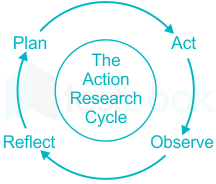
  • Action Research achieves its goal by using a ‘cyclic research process, where each cycle is made up of four phases - Plan, Act (implementing plans), Observe (systematically) and Reflect.
  • It is a continuous cycle one can circle back to earlier phases within a cycle (e.g., cycle back and forth between reflection and planning).


Characteristics of Action Research:

  • There is always room for improvement when it comes to teaching and educating others.
  • The main traits of action research related to collaboration between teachers, educational managers, and members of the organization to solve problems.
  • Possibility to gain in-depth knowledge about the problem.
  • It can be used with quantitative as well as qualitative data.
  • This research focuses on specific situations and their context.
  • This type of research is facilitated by the participation and collaboration of a number of individuals with a common purpose.

Additional Information 

  1. A longitudinal research
  • In a longitudinal study, researchers repeatedly examine the same individuals to detect any changes that might occur over a period of time.
  • Longitudinal studies are a type of correlational research in which researchers observe and collect data on a number of variables without trying to influence those variables.

​2. Applied Research: 

  • ​​It is also called field research.
  • Fundamental research may propound a theory or discover a law, but applied research is concerned with the testing of such theories or laws in the actual field setting.
  • It is almost always done based on fundamental research.
27

According to NCF 2005, the role of a teacher has to be

  1. ((a))

    Permissive

  2. ((b))

    Facilitator

  3. ((c))

    Authoritative

  4. ((d))

    Dictatorial

Show Answer
Answer: ((b))

Facilitator

National Curriculum Framework (NCF), 2005 provides a guideline with which teachers and schools can choose and plan experiences that they think children should have. It seeks to reform the curriculum and to bring learning experiences in and outside the classroom.

Key Points As per NCF, the role of a teacher:

  • The teacher is a facilitator, as his role is to create such an atmosphere of learning where the children can themselves realize their true potential and make meaning of the knowledge.
  • A teacher is one who plays diverse roles like an innovator, action researcher, planner, manager, content provider, facilitator, leader, co-creator, etc.

Hence, from the above-mentioned points, we conclude that as per the NCF 2005, the role of the teacher is that of a facilitator. 

Important Points The NCF 2005 emphasizes these points concerning children’s learnings:

  • All children are naturally motivated to learn and are capable of learning.
  • Making meaning and developing the capacity for abstract thinking, reflection and work are the most important aspects of learning.
  • Children learn in a variety of ways – through experience, making and doing things, experimentation, reading, discussion, asking, listening, thinking, and reflecting and expressing themselves in speech, movement, or writing—both individually and with others. They require opportunities of all these kinds in the course of their development.
  • The physical activity of moving, exploring, and doing things, on one’s own, with one’s peers, or in the company of adults, and using language—to read, to express or ask, to listen, and to interact—are the key processes through which learning occurs.
  • Learning takes place both within the school and outside the school. Learning is enriched if the two areas interact with each other.
28

The purpose of evaluation is

  1. ((a))

    To label children as slow learner and gifted children.

  2. ((b))

    To identify children who need remedial measures.

  3. ((c))

    To diagnose learning difficulties and problem areas..

  4. ((d))

    To provide feedback on the extent to which we have been successful in imparting education for a productive life.

Show Answer
Answer: ((d))

To provide feedback on the extent to which we have been successful in imparting education for a productive life.

Evaluation: Evaluation is a systematic way to assess learners’ abilities, analyze performance, provide appropriate feedback to each learner, and help them to progress. High-quality evaluation is required in teaching for successful learning. Evaluation needs to be integrated with the process of teaching and learning.

Key PointsPurpose of Evaluation in Education: 

  • To encourage thinking and reasoning in learners
  • To provide constant feedback regarding the effectiveness of the course.
  • To diagnose the difficulties and strengths of learners
  • To know learner’s performance and bring improvement
  • To measurement of the value of teaching methods
  • To build a system of feedback that helps the learners to enhance their learning
  • To assess the attainment of students’ learning.

Thus by all these references, we can conclude that the purpose of the evaluation is to provide feedback on the extent to which we have been successful in imparting education for a productive life.

Important Points Other purposes of evaluation:

  • To enhance learning through diagnostic and remedial teaching.
  • To assess both scholastic and co-scholastic aspects of learning.
  • To improve academic achievements and students' motivation level.
  • To find and diagnose learners' diverse learning needs for effective learning.
  • To evaluate learner's achievement to bring improvement for meaningful learning.
29

Match the following Principles of Development with their correct description :

Name of Principle of DevelopmentDescription of Principle
(1)Proximodistal trend(a)Head to Toe Sequence
(2)Cephalo-caudal trend(b)Different children develop at different rates
(3)Inter-individual Differences(c)In a single child, the rate of development can vary from one domain of development to the other
(4)Intra-individual Differences(d)Growth from the Centre of the body to outwards
  1. ((a))

    (1) - (d), (2) - (a), (3) - (b), (4) - (c)

  2. ((b))

    (1) - (a), (2) - (b), (3) - (c), (4) - (d)

  3. ((c))

    (1) - (c), (2) - (d), (3) - (b), (4) - (a)

  4. ((d))

    (1) - (d), (2) - (b), (3) - (a), (4) - (c)

Show Answer
Answer: ((a))

(1) - (d), (2) - (a), (3) - (b), (4) - (c)

The term ‘development’ refers to qualitative changes in an individual such as changes in personality or other mental and emotional aspects. However, very often growth and development are used interchangeably.

Key Points

Name of Principle of DevelopmentDescription of Principle
(1)Proximodistal trend(a)Growth from the Centre of the body to outwards
(2)Cephalo-caudal trend(b)Head to Toe Sequence
(3)Inter-individual Differences(c)Different children develop at different rates
(4)Intra-individual Differences(d)In a single child, the rate of development can vary from one domain of development to the other

Thus by all these references, we can conclude that (1) - (d), (2) - (a), (3) - (b), (4) - (c), is the correct answer.

Important Points 

  • Proximodistal sequence:  means that the development proceeds from the central part of the body towards the peripheries. In this sequence, the spinal cord of the individual develops first, and then outward development takes place. 
  • For example, babies cut their front teeth before they cut their side ones.
  • Cephalo-caudal sequence: means that development spreads over the body from head to foot i.e. individual begins to grow from the head region downwards. Sufi first gained control of her head, then she could catch hold of objects, sit, crawl and later she could stand and walk.
  • Principle of Interrelation: The development of an individual is reflected through the balanced interrelation of all the aspects of life. Development in any aspect affects the other aspect also.
  • Principle of Individual Differences: It says that every individual is unique in himself/herself as the heredity and environmental factors make him/her different from others.
30

Development proceeds from ________ to ________.

  1. ((a))

    General-Specific

  2. ((b))

    Complex-Hard

  3. ((c))

    Specific-General

  4. ((d))

    Simple-Easy

Show Answer
Answer: ((a))

General-Specific

The term ‘development’ refers to qualitative changes in an individual such as changes in personality or other mental and emotional aspects. However, very often growth and development are used interchangeably.

  • The process of development continues even after the individual has attained physical maturity (growth). The individual is continuously changing as he/she interacts with the environment.

Key Points There are some principles of development, which show the features of development, these are:

  • Principle of Continuity: Development follows the principle of continuity which starts with conception and ends with death. It is a never-ending process in life.
  • Principle of Individual Differences: It says that every individual is unique in himself/herself as the heredity and environmental factors make him/her different from others.
  • Principle of Generality to Specificity:  The development process starts with general responses shown by the child as s/he passes through the later stages s/ he starts exhibiting specific behaviors.
  • Principle of Interrelation: The development of an individual is reflected through the balanced interrelation of all the aspects of life. Development in any aspect affects the other aspect also.
  • Principle of Interaction: The principle of interaction suggests that an individual is the product of heredity and environment. In other words, the interaction takes place within and outside forces of the child.
  • Principle of Differentiation in Rate: Differentiation in the rate indicates that individuals differ in the rate of development. There is a difference in the rate of development in girls and boys like girls grow faster than boys at the early stage of development.
  • Principle of Integration: The principle of Integration refers to the integration of various aspects of development like physical, mental, emotional, social, and moral.
  • Principle of Predictability: Development is predictable i.e. with the help of the uniformity of the pattern and sequence of development, we can predict the behavior to a great extent of a child in one or more aspects in a particular stage of her/his growth and development.
  • Principle of Sequentiality: It states that every individual although exhibit difference in change, they follow the same sequence of change.

Thus by all these references, we can conclude that Development proceeds from General to Specific.

Hindi - I (30 questions)

31

किण्डरगार्टन शिक्षण विधि के संबंध में सत्य कथन है :

  1. ((a))

    यह एक अमनोवैज्ञानिक प्रणाली है।

  2. ((b))

    यह उच्च माध्यमिक स्तर के विद्यार्थियों के लिए अधिक उपयोगी है।

  3. ((c))

    कुक महोदय ने इस विधि को निश्चित रूप प्रदान किया।

  4. ((d))

    भाषा के व्याकरण एवं साहित्य की शिक्षा इस विधि से नहीं दी जा सकती।

Show Answer
Answer: ((d))

भाषा के व्याकरण एवं साहित्य की शिक्षा इस विधि से नहीं दी जा सकती।

किण्डरगार्टन शिक्षण विधि- शिक्षक बच्चों के लिए गतिविधियों के लिए कई विकल्प प्रस्तुत करते हैं, जो उनकी आयु और प्रारंभिक शिक्षण के लिए उपयुक्त होते हैं, इसके लिए समस्याओं का हल किया जाता है, उनके पठन, भाषा, गणित आदि पर ध्यान दिया जाता है। यह योजना आमतौर पर तब बनायीं जाती है जब बच्चे क्लासरूम में जाते हैं। इसके बाद वे इस गतिविधि को "करते" हैं।

  • यहाँ बच्चे भाषा सीखने के लिए प्रेरित होते हैं, शब्दों को पढ़ना सीखते हैं, अर्थग्रहण करते हैं।
  • यहां पर उन्हें पहली बार नियमित रूप से खेलने का और बच्चों के एक ही समूह के साथ बातचीत करने का मौका मिलता है, जिससे उनकी अभिव्यक्ति का विकास होता है।

Key Points

  • किंडरगार्टन शिक्षण विधि में भाषा शिक्षण के उद्देश्य, अर्थग्रहण, अभिव्यक्ति तथा सृजन शक्ति तीनों का साथ-साथ विकास होता है।
  • 'फ्रेडरिक फ्रोबेल' एक जर्मन शिक्षाविद् थे, जिन्हें सबसे पहले 'किंडरगार्टन सिस्टम' के प्रवर्तक के रूप में जाना जाता है। जर्मन भाषा में किंडरगार्टन का शाब्दिक अर्थ है "बच्चों का बगीचा" (बालवाड़ी)।
  • किंडरगार्टन की गतिविधियों को इस विचार के आधार पर तैयार किया गया था कि बच्चे खेल के माध्यम से सबसे अच्छी तरह से सीखते हैं।​
  • छोटे बच्चों के शिक्षण के लिए यह एक मनोवैज्ञानिक प्रणाली है।
  • यह उच्च माध्यमिक स्तर के विद्यार्थियों के लिए उपयोगी नहीं है, क्योंकि भाषा के व्याकरण एवं साहित्य की शिक्षा इस विधि से नहीं दी जा सकती।

अतः निष्कर्ष निकलता है कि भाषा के व्याकरण एवं साहित्य की शिक्षा इस विधि से नहीं दी जा सकती। किण्डरगार्टन शिक्षण विधि के संबंध में सत्य कथन है।

32

बेसिक शिक्षा प्रणाली में भाषा की शिक्षा निम्नलिखित में से किस माध्यम से दी जा सकती है ?

  1. ((a))

    केवल किताबी ज्ञान से ।

  2. ((b))

    सामाजिक पर्यावरण से।

  3. ((c))

    प्रगति-सूचक लेखाचित्र से ।

  4. ((d))

    इनमें से कोई नहीं।

Show Answer
Answer: ((b))

सामाजिक पर्यावरण से।

बेसिक शिक्षा प्रणालीबेसिक शिक्षा मूल रूप से व्यावहारिक होती है तथा बालक एक साथ अनेक विषयो का ज्ञान प्राप्त कर लेता है। बेसिक शिक्षा क्रियाओं तथा अनुभवो पर आधारित है इसीलिए इसका ज्ञान कम समय में ही हो जाता है। 

Important Points बेसिक शिक्षा में बालको की शिक्षण व्यवस्था निम्न माध्यम से दी जा सकती है -

  • इसके अंतर्गत पहले बच्चो को कहानी तथा बातचीत के माध्यम से मातृभाषा का ज्ञान कराया जाता है।
  • मातृभाषा का ज्ञान होने पर बच्चे पहले उसे पढ़ना तथा फिर लिखना सीखते है।
  • पढ़ाई के साथ-साथ बालक किसी आधारभूत शिल्प का ज्ञान भी प्राप्त करते है।
  • जैसे-जैसे बच्चा आगे की कक्षाओं में पहुँचता है वैसे ही उसे विभिन्न विषयो का ज्ञान भी प्राप्त होता रहता है।
  • प्राकृतिक वातावरण, सामाजिक वातावरण तथा हस्तकला के माध्यम से अनेक विषयो का ज्ञान बालको को कराया जाता है।
  • बालक अपनी रूचि के अनुसार हस्तशिल्प का चयन करता है।

अतः यह निष्कर्ष निकलता है कि बेसिक शिक्षा प्रणाली में भाषा की शिक्षा सामाजिक पर्यावरण के माध्यम से दी जा सकती है।

33

भाषा शिक्षण के संदर्भ में वैयक्तिक अनुदेशन प्रणाली की क्या सीमा है ?

  1. ((a))

    इसमें विद्यार्थी को भाषा के तत्त्वों का ज्ञान प्रभावी रूप से करवाया जा सकता है।

  2. ((b))

    इसमें विद्यार्थी को भाषायी कौशल में दक्ष किया जा सकता है।

  3. ((c))

    इसमें वैयक्तिक शिक्षण पर अधिक बल दिया जाता है।

  4. ((d))

    यह शिक्षण प्रणाली अधिक विद्यार्थियों वाली बड़ी कक्षा में अध्यापन के लिए उपयोगी नहीं है।

Show Answer
Answer: ((d))

यह शिक्षण प्रणाली अधिक विद्यार्थियों वाली बड़ी कक्षा में अध्यापन के लिए उपयोगी नहीं है।

वैयक्तिक अनुदेशन प्रणाली- वैयक्तिक अनुदेशन प्रणाली का प्रतिपादन सन 1963 में प्रोफेसर फ्रेंड एस केलर ने अपने सहयोगियों जे सी सेयरमैन, आर ए जी और सी एम बोरी के साथ मिलकर कोलंबिया विश्वविद्यालय में किया था। 

  • वैयक्तिक अनुदेशन प्रणाली ऐसी अनुदेशन प्रणाली है जिसमे विशुद्ध व्यक्तिगत या व्यक्तिगत दृष्टिकोण को ध्यान में रखते हुए अनुदेशन का नियोजन तथा क्रियान्वयन किया जाता है।
  • इस अनुदेशन में अनुदेशन ग्रहण करने वाला व्यक्ति ही होता है। सम्पूर्ण शिक्षण अधिगम प्रणाली में अनुदेशन ग्रहण करने वाले व्यक्ति का ही वर्चस्व होता है। अनुदेशन को अधिगमकर्ता की व्यक्तिगत योग्यता रूचि एवं आवश्यकता के अनुरूप बनाने की चेष्टा की जाती है।

Important Points वैयक्तिक अनुदेशन प्रणाली की सीमा या दोष-​

  • इस प्रणाली में छात्रों को ग्रेडिंग प्रदान करने में बहुत कठिनाइयां होती है।
  • शीघ्रता से परिवर्तित होने वाले विषयो के शिक्षण के लिए उपयुक्त है।
  • यह शिक्षण प्रणाली अधिक विद्यार्थियों वाली बड़ी कक्षा में अध्यापन के लिए उपयोगी नहीं है।
  • इस प्रणाली का प्रयोग तभी किया जा सकता है जब निपुणता स्तर तक पहुंचना शिक्षा का उद्द्देश्य हो।
  • पर्याप्त लिखित सामग्री के अभाव में इस प्रणाली का प्रयोग नहीं किया जा सकता है।

Additional Information वैयक्तिक अनुदेशन प्रणाली के लाभ-

  • इस प्रणाली में लिखित सामग्री पर अधिक बल दिया जाता है।
  • इसमें छात्र अपने प्रयासो से तथा अपनी गति से सीखते है।
  • इसमें विद्यार्थी को भाषा के तत्त्वों का ज्ञान प्रभावी रूप से करवाया जा सकता है।
  • इसमें वैयक्तिक शिक्षण पर अधिक बल दिया जाता है।
  • इसमें विद्यार्थी को भाषायी कौशल में दक्ष किया जा सकता है।

​​अतः यह निष्कर्ष निकलता है कि भाषा शिक्षण के संदर्भ में वैयक्तिक अनुदेशन प्रणाली की सीमा यह है कि यह शिक्षण प्रणाली अधिक विद्यार्थियों वाली बड़ी कक्षा में अध्यापन के लिए उपयोगी नहीं है।

34

इनमें से कौन सा 'परिवीक्षित अध्ययन उपागम' का सोपान नहीं है?

  1. ((a))

    अध्ययन कार्य का आवंटन।

  2. ((b))

    अध्ययन हेतु निर्देश।

  3. ((c))

    विद्यार्थियों द्वारा स्वाध्याय एवं शिक्षक द्वारा मार्गदर्शन।

  4. ((d))

    कलात्मक प्रायोजना।

Show Answer
Answer: ((d))

कलात्मक प्रायोजना।

परिवीक्षित अध्ययन उपागम- 

  • 'परिवीक्षित अध्ययन उपागम का प्रतिपादन अमेरिका के महान शिक्षाविद मॉरिसन के द्वारा किया गया।
  • बाइनिंग व बाइनिंग के अनुसार," मेज या दराजो के चारो ओर बैठे हुए कार्यरत समूह या कक्षा के शिष्यों का शिक्षक द्वारा पर्यवेक्षीण करना ही पर्यवेक्षित अध्ययन है।"
  • पर्यवेक्षित अध्ययन विधि माध्यमिक स्तर पर गद्य शिक्षण के लिए एक उपयोगी विधि है।
  • इस विधि में अध्यापक पर्यवेक्षिक की भूमिका मे तथा छात्र मौन रहकर विषय वस्तु का अध्ययन करते हैं।
  • इस विधि में शिक्षक बालको को सभी प्रकार से संतुष्ट करता है यदि बालको को किसी प्रकार की कठिनाई नहीं होती है तो वह शांतिपूर्वक कक्षा का निरिक्षण करता है कि वास्तव में बालक कार्यरत है या नहीं। ​

Important Points

परिवीक्षित अध्ययन उपागम के सोपान-

परिवीक्षित अध्ययन उपागम के सोपान निम्नलिखित है-

  • उद्द्येश्य निर्धारण।
  • अध्ययन कार्य का आवंटन।
  • अध्ययन हेतु निर्देश।
  • विद्यार्थियों द्वारा स्वाध्याय एवं शिक्षक द्वारा मार्गदर्शन ।
  • विषयवस्तु का स्पस्टीकरण तथा दोहरान
  • मूल्याङ्कन।

अतः यह निष्कर्ष निकलता है कि कलात्मक प्रायोजना 'परिवीक्षित अध्ययन उपागम' का सोपान नहीं है।

35

'सर्वप्रथम सरल तथा समान आकृति के वर्णों को लिखवाना प्रारंभ कराएँ।' उल्लेखित बात किस स्तर के विद्यार्थियों हेतु कही गयी है?

  1. ((a))

    प्राथमिक स्तर के।

  2. ((b))

    माध्यमिक स्तर के।

  3. ((c))

    उच्च प्राथमिक स्तर के।

  4. ((d))

    उच्च माध्यमिक स्तर के।

Show Answer
Answer: ((a))

प्राथमिक स्तर के।

लेखानारम्भ की तैयारी:- लेखनारंभक की तैयारी वर्ण लिखना सिखाने की प्रथम पीढ़ी हैI लेखानारम्भ की तैयारी का अभिप्राय है बालक मे उन गुणों का विकास करना जो वर्ण, शब्द तथा वाक्य लिखने की क्रिया मे सहायक होते हैI​

  • लेखानारम्भ की तैयारी पूर्व प्राथमिक, प्राथमिक स्तर के शिक्षण के उद्देश्यों में आता है, जैसे-
  • चित्र बनाना, चित्रों में रंग भरने का अभ्यास;
  • फूलों की माला बनाने का अभ्यास;
  • लेखन सामग्री के उचित रख-रखाव का अभ्यास;
  • देवनागरी लिपि के वर्णों आकृति- विभेद कर सकने का अभ्यास;
  • उचित लेखन मुद्रा मे बैठने का अभ्यास;
  • वर्णों की आकारगत सुडौलता की पहचान करने के अभ्यास;
  • सर्वप्रथम सरल तथा समान आकृति के वर्णों को लिखवाने का अभ्यास।

अतः निष्कर्ष निकलता है कि 'सर्वप्रथम सरल तथा समान आकृति के वर्णों को लिखवाना प्रारंभ कराएँ ।' उल्लेखित बात प्राथमिक स्तर के विद्यार्थियों हेतु कही गयी है।

36

भाषा-कौशलों में से अभिव्यक्ति कौशल है:

  1. ((a))

    सुनना और बोलना ।

  2. ((b))

    लिखना और पढ़ना।

  3. ((c))

    बोलना और लिखना।

  4. ((d))

    पढ़ना और बोलना।

Show Answer
Answer: ((c))

बोलना और लिखना।

भाषा शिक्षण का सामान्य रूप से श्रवण, वाचन, पठन एवं लेखन इन भाषा कौशलों का विकास करना - उद्देश्य है।

भाषा कौशलों का वर्गीकरण

  • भाषा के चार कौशल को दो समूह में वर्गीकृत किया गया है- 
  • ग्रहणात्मक कौशल - अर्थ को ग्रहण करने का कौशल
  • अभिव्यक्तात्मक कौशल या उत्पादक कौशल - विचारों को अभिव्यक्त करने का कौशल
ग्रहणात्मक कौशल​ऐसे कौशल जिन्हें ग्रहण किया जाता है।​श्रवण (सुनना) कौशल पठन (पढ़ना) कौशल
अभिव्यक्तात्मक कौशलजिनका प्रयोग अपने विचारों, भावों आदि की अभिव्यक्ति के लिए किया जाता है।वाचन (बोलना) कौशल लेखन (लिखना) कोशल

अतः निष्कर्ष निकलता है कि लिखना और बोलना भाषा-कौशलों में से अभिव्यक्ति कौशल है।

37

अनुलेख किस भाषा कौशल से संबंधित है?

  1. ((a))

    श्रवण

  2. ((b))

    वाचन

  3. ((c))

    लेखन

  4. ((d))

    वादन

Show Answer
Answer: ((c))

लेखन

अनुलेखन का अर्थ है किसी के पीछे या बाद में लिखना। जैसे- प्रारम्भिक कक्षाओं में काॅपी में अध्यापक द्वारा दिये गये अक्षरों की बनावट का अनुकरण करना अथवा अध्यापक के लिखने के बाद श्यामपट्ट से जैसे का तैसा लिखना।

Important Points 

लेखन के प्रकार- लेखन तीन प्रकार का होता है।

  1. अनुलेख- किसी आदर्श लिखावट का जैसा का तैसा अनुकरण, अनुलेख कहलाता है।
  2. प्रतिलेख- प्रतिलेख में छात्र स्वतंत्र रूप से किसी पुस्तक या पत्र-पत्रिका के किसी भाग का अनुकरण करके अपनी काॅपी में लिखता है।
  3. श्रुतिलेख- श्रुतिलेख सुना हुआ लेख है। इसमें अध्यापक बोलता जाता है और छात्र सुनकर बोली हुई सामग्री लिखता है।

अतः निष्कर्ष निकलता है कि अनुलेख भाषा के लेखन कौशल से संबंधित है।

38

लिंग्वाफोन (रिकॉर्ड प्लेयर) किस प्रकार की अधिगम सामग्री है ?

  1. ((a))

    प्रक्षेपक सामग्री

  2. ((b))

    दृश्य सामग्री

  3. ((c))

    दृश्य-श्रव्य सामग्री

  4. ((d))

    श्रव्य सामग्री

Show Answer
Answer: ((d))

श्रव्य सामग्री

श्रव्य-दृश्य उपकरण वह होते हैं, जो श्रव्य (कान) के साथ-साथ दृश्य (आँखे) ज्ञानेन्द्रियों का उपयोग कर शिक्षण अधिगम को सरल व सफल बनाया जाता है। श्रव्य-दृश्य उपकरण निम्न तीन प्रकार के होते हैं-

  • दृश्य उपकरण का अर्थ है, ऐसी अधिगम सहायक सामग्री जिसमें केवल आँखों का प्रयोग करके शिक्षण को सहज बनाया जाता है। उदाहरण- ओ.एच.पी., माॅडल, चित्र, पोस्टर, अखबार, श्यामपट्ट, स्लाइड, प्रोजेक्टर, रेखाचित्र, मानचित्र, चार्ट, ग्राफ, ग्लोब, प्रत्यक्ष वस्तुएँ।
  • श्रव्य उपकरण का अर्थ है, ऐसी अधिगम सहायक सामग्री जिसमें केवल कानों का प्रयोग करके शिक्षण को सहज बनाया जाता है। उदाहरण- मौखिक प्रश्नोत्तर, रेडियो, टेपरिकार्डर, लिंग्वाफोन, भाषा-प्रयोगशाला, आडियो काॅन्फैसिंग, ग्रामोफोन आदि।
  • श्रव्य-दृश्य उपकरण वह होते हैं, जो श्रव्य (कान) के साथ-साथ दृश्य (आँखे) ज्ञानेन्द्रियों का उपयोग कर शिक्षण अधिगम को सरल व सफल बनाया जाता है।उदाहरण-  चलचित्र, दूरदर्शन, ड्रामा, कठपुतली, टेलिविजन, इंटरनेट, कम्प्युटर आदि।
  • लिंग्वाफोन एक ऐसा उपकरण है जिसमे हम उपकरण से कोई भाषा ध्यान से सुन कर सीखते है।
<br>

अत: उपरोक्त विवरण से हम यह कह सकते है की लिंग्वाफ़ोन श्रव्य सामग्री है |

39

भाषा प्रयोगशाला के अनुभाग में सम्मिलित नहीं है :

  1. ((a))

    परामर्श कक्ष।

  2. ((b))

    श्रवण कक्ष।

  3. ((c))

    नियंत्रण कक्ष।

  4. ((d))

    विश्राम कक्ष।

Show Answer
Answer: ((d))

विश्राम कक्ष।

भाषा-प्रयोगशाला- यह शिक्षण की पारंपरिक तरीके से अलग भाषा कौशल प्रदान करने की तकनीकी विधि है। इसमें बालक अपनी सूविधा अनुसार भाषा प्रयोगशाला में जाकर टेप सुन सकता है तथा अपनी गति से सही उच्चारण सीख सकता है।

  • भाषा प्रयोगशाला में माइक्रोफोन, टेप रिकॉर्डर, वीडियो रिकॉर्डर, हार्डकॉपी, सोफ्टकॉपी जैसे अन्य उपकरणों की मदद से भाषा शिक्षण का कार्य होता है।
  • इन उपकरणों के माध्यम से अध्यापक द्वारा रिकॉर्ड की गई सामग्री को सुनते हैं तथा मौखिक अनुक्रिया रिकॉर्डेड रूप में व्यक्त करता हैं।

Key Points

भाषा प्रयोगशाला के घटक

  • परामर्श कक्ष: छात्र सांत्वना एक मास्टर सांत्वना से जुड़ा रहता है (शिक्षकों सांत्वना),
  • नियंत्रण कक्ष: छात्र सांत्वना देने के लिए वेब कैमरा, फोन्स सेट।
  • श्रवण कक्ष: अध्ययन सामग्री ( हार्डकॉपी और सॉफ्ट कॉपी ), समस्या निवारण गाइड।

अतः निष्कर्ष निकलता है कि विश्राम कक्ष भाषा प्रयोगशाला के अनुभाग में सम्मिलित नहीं है।

40

सस्वर वाचन का गुण है:

  1. ((a))

    अस्पष्ट उच्चारण

  2. ((b))

    क्षिप्रता

  3. ((c))

    उचित ध्वनि निर्गम

  4. ((d))

    अस्वाभाविकता

Show Answer
Answer: ((c))

उचित ध्वनि निर्गम

सस्वर वाचन पठन का एक प्रकार है जो बच्चों द्वारा पाठ को स्वर सहित पढ़ते हुए अर्थ ग्रहण करने से सम्बन्धित है। यह बच्चों में वाचन कौशल का विकास करता है जिससे बच्चे उचित हावभाव के साथ पाठ का वाचन करना सीखते हैं। सस्वर वाचन, वाचन की प्रारम्भिक अवस्था होती है। 

  • शब्द और वाक्यों को शुद्ध उच्चारण के साथ उचित गति से पढ़ने का अभ्यास सस्वर वाचन के द्वारा ही कराया जाता है। सस्वरवाचन 2 प्रकार का होता है जिनमे आदर्श वाचन और अनुकरण वाचन शामिल हैं।

Key Points

सस्ववाचन के गुण/विशेषताएं:

  • शुद्ध उच्चारण करना
  • स्पष्ट उच्चारण
  • स्वर माधुर्य के साथ वाचन
  • उचित वाचन मुद्रा का प्रयोग
  • स्वभाविकता
  • उचित बल एवं विराम प्रयोग
  • उचित ध्वनि निर्गम
  • उचित लय एवं गति का प्रयोग
  • उचित हाव भाव के साथ वाचन
  • विरामादि चिहृों का सही प्रयोग

अतः निष्कर्ष निकलता है कि उचित ध्वनि निर्गम सस्वर वाचन का गुण है।

क्षिप्रता का अर्थ है, शीघ्रता, जल्दी-जल्दी।

41

मौखिक मूल्यांकन के संबंध में उपयुक्त कथन है :

  1. ((a))

    मौखिक मूल्यांकन में दीर्घउत्तरीय प्रश्न पूछे जाते हैं।

  2. ((b))

    मौखिक मूल्यांकनकर्त्ता निष्ठावान, सहनशील और विषय विशेषज्ञ होना चाहिए।

  3. ((c))

    मौखिक मूल्यांकन में समूहनिष्ठता अधिक होनी चाहिए।

  4. ((d))

    मौखिक मूल्यांकन में विद्यार्थी को आत्माभिव्यक्ति के अवसर कम मिलने चाहिए।

Show Answer
Answer: ((b))

मौखिक मूल्यांकनकर्त्ता निष्ठावान, सहनशील और विषय विशेषज्ञ होना चाहिए।

मौखिक अभिव्यक्ति से तात्पर्य मन के विचारों को स्वतंत्र रूप से बोल कर अभिव्यक्त करने से है। वक्ता द्वारा सूचनाओं का श्रोताओं तक प्रभावपूर्ण संप्रेषण मौखिक अभिव्यक्ति को सार्थक सिद्ध करता है।

मौखिक मूल्यांकनकर्त्ता निष्ठावान, सहनशील और विषय विशेषज्ञ होना चाहिए। मौखिक मूल्यांक के लिए प्रत्येक बालक की बात को ध्यान व धैर्य़ से सुनना अनिवार्य होता है। छात्रों की मौखिक अभिव्यक्ति की योग्यता का मूल्यांकन करते समय निम्न ��ौशलों को ध्यान में रखना आवश्यक है:-

  • क्रमबद्ध प्रस्तुति हो
  • मौखिक अभिव्यक्ति सदैव उचित गति में हो
  • मौखिक अभिव्यक्ति में शुद्ध उच्चारण हो
  • स्वाभाविकता एवम् स्पष्टता हो
  • मौखिक अभिव्यक्ति में व्याकरण सम्मत भाषा का प्रयोग हो
  • अवसरानुकूलता एवम् सशक्तता
42

“मूल्यांकन उद्देश्यों की प्राप्ति की सीमा का निर्णय करने की प्रक्रिया है।" मूल्यांकन की यह परिभाषा किसकी है?

  1. ((a))

    माइकेलिस

  2. ((b))

    सी.सी. रॉस

  3. ((c))

    ब्लूम

  4. ((d))

    राइटस्टोन

Show Answer
Answer: ((a))

माइकेलिस

माइकेलिस के अनुसार - “मूल्यांकन उद्देश्यों की प्राप्ति की सीमा का निर्णय करने की प्रक्रिया है।"

43

विद्यार्थी की सीखने संबंधी कठिनाइयों को दूर करते हुए करवाये जाने वाला शिक्षण कहलाता है

  1. ((a))

    सूक्ष्म शिक्षण

  2. ((b))

    ब्लॉक शिक्षण

  3. ((c))

    अभ्यास शिक्षण

  4. ((d))

    उपचारात्मक शिक्षण

Show Answer
Answer: ((d))

उपचारात्मक शिक्षण

उपचारात्मक शिक्षण: एक बच्चा सीखने के दौरान जाने-अनजाने या कुछ वैकल्पिक अवधारणाओं के कारण गलतियाँ करता है। यह एक शिक्षक का काम है कि वह छात्रों की उन गलतियों का निदान करने तथा उपचार करने में मदद करें। इसी विधि को उपचारात्मक विधि कहते है।

उपचारात्मक शिक्षण से तात्पर्य बच्चों की शिक्षण संबंधी कमजोरियों/कठिनाइयों को दूर करते हुए शिक्षण करने से है। यह विद्यार्धियों की त्रुटियों का संसोधन करने से समबन्धित है। यह निदानात्मक शिक्षण से जुड़ा हुआ हैऔर विद्यार्थियों की शिक्षण संबंधी कमियों का सही अवलोकन करने में मदद करता है वहीं उपचारात्मक शिक्षण द्वारा उन कमियों और त्रुटियों को दूर करने का प्रयास किया जाता है।

Important Points 

उपचारात्मक शिक्षण इसकी विशेषताएँ निम्नलिखित हैं:

  • इसका उपयोग भाषा कौशल में सुधार के लिए किया जा सकता है।
  • किसी विशेष समस्या क्षेत्र को ठीक करने के लिए, इसका उपयोग किया जा सकता है।
  • यह छात्रों द्वारा सामना की जाने वाली समस्याओं और चुनौतियों की पहचान के बाद किया जाता है।
  • एक शिक्षक को इस पद्धति को लागू करने के लिए छात्रों की गुण और कमजोरियों के बारे में अच्छी तरह से पता होना चाहिए।
  • यह एक व्यवस्थित प्रक्रिया है क्योंकि शिक्षक पहले छात्रों की समस्या का निदान करता है और फिर उपयुक्त उपचारात्मक तरीके लागू करता है।

अतः हम कह सकते है कि विद्यार्थी की सीखने संबंधी कठिनाइयों को दूर करते हुए करवाये जाने वाला शिक्षण, उपचारात्मक शिक्षण कहलाता है।

44

सतत् एवं व्यापक मूल्यांकन का दोष है :

  1. ((a))

    इसमें विद्यार्थियों का निरंतर मूल्यांकन होता रहता है।

  2. ((b))

    विद्यार्थियों को अपनी कमियों का निरंतर ज्ञान होता रहता है।

  3. ((c))

    इसमें अभिभावकों को विद्यार्थी की निरंतर प्रगति की जानकारी होती रहती है।

  4. ((d))

    यह प्रणाली तभी लागू की जा सकती है जब विद्यार्थी-शिक्षक अनुपात कम हो।

Show Answer
Answer: ((d))

यह प्रणाली तभी लागू की जा सकती है जब विद्यार्थी-शिक्षक अनुपात कम हो।

मूल्यांकन वह प्रक्रिया होती है जिससे कार्यक्रम की प्रभावशील तथा सक्षमता का आकलन किया जाता है | एनपीई (राष्ट्रीय शिक्षा नीति), 1986, (1992 में संशोधित) के दिशानिर्देशों के बाद, सीबीएसई द्वारा 2009 में शिक्षा के अधिकार अधिनियम के तहत मूल्यांकन की एक स्कूल आधारित प्रणाली के रूप में पेश किया गया |

  • सतत मूल्यांकन- इसका मतलब है कि एक छात्र का वर्ष में एक या दो बार मूल्यांकन की बजाय, लगातार मूल्यांकन किया जाएगा।
  • व्ययापक मूल्यांकन- किसी एक पहलू पर ध्यान केंद्रित करने के बजाय एक बच्चे के समग्र विकास को संदर्भित करता है। पहले स्कूल और पाठ्यक्रम दोनों ही पढ़ाई पर ध्यान केंद्रित करते थे जबकि पाठयक्रम गतिविधियों को पीछे छूट जाती थी।

Key Points

सतत एवं व्यापक मूल्यांकन की विशेषताएँ - 

  • विभिन्‍न विषयों में निश्चित समय उपरांत बच्चों की प्रगति जानना।
  • बच्चों के व्यवहार में हुए परिवर्तनों का पता लगाना।
  • छात्रों के ज्ञानात्मक भावात्मक व क्रियात्मक तीनों पक्षों के विकास का आकलन कर प्रत्येक बच्चे को सीखने और समुचित, चहुँमुखी विकास में मदद करना।
  • सृजनशीलता को बढ़ावा देना।
  • बच्चे की व्यक्तिगत और विशेष जरूरतों का पता लगाना।
  • बच्चों को सीखने में कठिनाइयों को दूर करने के लिए अध्यापन की उपयुक्त योजना बनाकर निदानात्मक व उपचारात्मक शिक्षण में सहायता करना।
  • बच्चों की रुचि जानना।
  • कक्षा में चल रही सीखने-सिखाने की प्रक्रिया को बेहतर बनाना।
  • छात्रों में निरंतर अध्ययन की आदत का विकास करना।
  • बच्चों में परीक्षा के प्रति व्याप्त भय व दबाव को दूर करना और व स्व-आकलन के लिए प्रोत्साहित करना।
  • इसमें विद्यार्थियों का निरंतर मूल्यांकन तथा भिभावकों को विद्यार्थी की निरंतर प्रगति की जानकारी होती रहती है।

सतत् एवं व्यापक मूल्यांकन के दोष निम्नलिखित हैं-

  • अधिक समय लगना- सतत् एवं व्यापक मूल्यांकन में समय अधिक लगता है।
  • शिक्षकों को बाहरी काम का बोझ- अल्पावधि मूल्यांकन में शिक्षकों के काम का बोझ बढ़ जाता है। इसके अतिरिक्त यह शिक्षकों के प्रशिक्षणा, दक्षता एवं कुशलता की माँग करता है।
  • यह प्रणाली तभी लागू की जा सकती है जब विद्यार्थी-शिक्षक अनुपात कम हो।

अतः निष्कर्ष निकलता है कि यह प्रणाली तभी लागू की जा सकती है जब विद्यार्थी-शिक्षक अनुपात कम हो। सतत् एवं व्यापक मूल्यांकन का दोष है।

45

उपलब्धि परीक्षण के निर्माण में कितने पदों का प्रयोग किया जाता है?

  1. ((a))

    दो

  2. ((b))

    तीन

  3. ((c))

    एक

  4. ((d))

    चार

Show Answer
Answer: ((d))

चार

उपलब्धि परीक्षण से तात्पर्य उस परीक्षण से है जो एक निश्चित समय सीमा के अन्तर्गत विद्यार्थियों के विषय संबंधी ज्ञान का मूल्यांकन करने के लिए किया जाता है। यह किसी विशिष्ट विषय में विद्यार्थियों के ज्ञान एवं समझ संबंधी निपुणता का मापन करता है।

उपलब्धि परीक्षण निर्माण के चरण:

  • स्वरूप योजना (नीतिगत निर्णय) बनाना
  • शैक्षणिक उद्देश्यों को लिखना
  • कार्य योजना (ब्लू प्रिंट) निर्माण
  • ब्लू प्रिंट आधारित प्रश्न पत्र निर्माण

अतः निष्कर्ष निकलता है कि उपलब्धि परीक्षण के निर्माण में चार पदों का प्रयोग किया जाता है।

निम्नलिखित गद्यांश के आधार पर प्रश्न के उत्तर दीजिए:

मनुष्य का मन सदैव गतिशील रहता है। ऐसा होता है कि विरोधी शक्तियाँ उसे अपनी ओर खींचती हैं। जो मनुष्य मन की विपरीत परिस्थितियों में अपने को मजबूती से खड़ा नहीं रख सकते और उस धारा के साथ बह जाते हैं, वे कभी उद्देश्य को पूरा नहीं कर सकेंगे। उनके लिए तो यह कहना चाहिए कि वे जीवित रहते हुए मुर्दे के समान हैं। मन की अवस्था तो सभी को पलटती है। जो व्यक्ति समय एवं परिस्थिति को समझ लेते हैं, वे कभी धोखा नहीं उठा सकते और कठिनाइयों के बीच भी अपना रास्ता निकाल लेते हैं। कारण जानकर वे उसके विषैले और दूषित प्रभाव से भी बचने का प्रयत्न करते हैं। लेकिन, ऐसे लोगों की भी संख्या मिलेगी जो अपनी मनोदशा से त्रस्त हो जाते हैं और ऐसे काम कर बैठते हैं, जिनसे उनके शांतिमय जीवन में अशांति का विष घुल जाता है। प्रत्येक मनुष्य के जीवन में उद्देश्य होना चाहिए। यदि तुम्हारा कोई उद्देश्य नहीं है, तो तुम सफल न होगे। 'क्या करोगे ?' इसको तुम्हें जानना आवश्यक है। उद्देश्यहीन मनुष्य बिना पतवार की नाव की तरह है।

46

'सदैव' शब्द का सही संधि-विच्छेद है :

  1. ((a))

    सद् + एव

  2. ((b))

    सदा + ऐव

  3. ((c))

    सद् + ऐव

  4. ((d))

    सदा + एव

Show Answer
Answer: ((d))

सदा + एव

'सदैव' शब्द का सही संधि-विच्छेद है- 'सदा + एव'

  • 'सदैव' शब्द का उचित संधि विच्छेद 'सदा + एव (आ + ए = ऐ)' होगा।
  • सदैव में "वृद्धि स्वर संधि" संधि है।
  • दैव - हमेशा, सदा, सर्वदा, हरदम।

Key Pointsवृद्धि  संधि:-

  • जब संधि करते समय जब (अ , आ) के साथ (ए , ऐ)  हो तो ‘ ऐ ‘ बनता है और जब (अ , आ) के साथ (ओ , औ) हो तो ‘ औ ‘ बनता है। उसे वृद्धि  संधि कहते हैं।

उदाहरण-

  • महा + ऐश्वर्य = महैश्वर्य (आ + ऐ = ऐ)
  • महा + ओजस्वी = महौजस्वी (आ + ओ = औ)
  • एक + एक = एकैक (अ + ए = ऐ)
  • महा + औषध = महौषद (आ + औ = औ
47

निम्नलिखित में से 'विष' शब्द का पर्यायवाची शब्द है :

  1. ((a))

    वसु

  2. ((b))

    अर्णव

  3. ((c))

    उरग

  4. ((d))

    गरल

Show Answer
Answer: ((d))

गरल

उपरोक्त में से 'विष' शब्द का पर्यायवाची शब्द है- 'गरल'

  • 'विष' शब्द का अन्य पर्यायवाची शब्द है- विषैला, जहर, हलाहल, कालकूट, माहुर। 
  • विलोम शब्द - 'अमृत'

Key Points

  • ऐसे शब्द जिनके अर्थ समान हों, पर्यायवाची शब्द कहलाते हैं।
  • जैसे-
  • वसु- आदित्य, लेख, देवता, सुर, देव, अमर।
  • अर्णव- जलधाम, अकूपाद, समुद्र, सागर, पयोधि, उदधि, पारावार, नदीश, जलधि।
  • उरग- साँप, सर्प, नाग, विषधर, व्याल, भुजंग, अहि, पन्नग।

Additional Informationकुछ महत्वपूर्ण पर्यायवाची शब्द:-

  • आकाश - व्योम, शून्य, गगन, अम्बर, आसमान, अंतरिक्ष, नभ, अनंत।
  • हवा - पवन, वायु, समीर, अनिल, वात, मरुत्, पवमान, बयार, प्रकंपन।
  • जंगल - वन, कानन, बीहड़, विटप, विपिन।
  • घर - गृह, सदन, आवास, आलय, गेह, निवास, निलय, मंदिर।
  • अमृत - सुधा, सोम, पीयूष, अमिय, जीवनोदक।
  • असुर - राक्षस, दैत्य, दानव, निशाचर, दनुज, यातुधान, निशिचर, रजनीचर।
  • अग्नि - आग, अनल, पावक, वह्नि।
  • अश्व - घोड़ा, हय, तुरंग, वाजी, घोटक, सैंधव, तुरंग।
48

'विरोधी' शब्द का विलोम होगा :

  1. ((a))

    वैरी

  2. ((b))

    अवरोधी

  3. ((c))

    शत्रु

  4. ((d))

    समर्थक

Show Answer
Answer: ((d))

समर्थक

'विरोधी' शब्द का विलोम होगा- समर्थक

  • विरोधी' शब्द का अर्थ-  विपक्षी, अवरोधी, विरोधक, शत्रु, झगड़ालू, विरुद्ध, प्रतिस्पर्धी, वैरी, विपरीत, प्रतिरोधी।

Key Points

  • एक-दूसरे के विपरीत या उल्टा अर्थ देने वाले शब्दों को, विलोम शब्द कहते है।

Additional Informationकुछ महत्वपूर्ण विलोम शब्द:-

  • शब्द - विलोम
  • उत्कृष्ट - निकृष्ट
  • उत्तम - अधम
  • आदर्श - यथार्थ
  • स्वाधीन - पराधीन
  • आहार - निराहार
  • दाता - याचक
  • खेद - प्रसन्नता
  • गुप्त - प्रकट
  • प्रत्यक्ष - परोक्ष
  • सजीव - निर्जीव
  • सुगंध - दुर्गन्ध
49

गद्यांश में प्रयुक्त 'मनोदशा' शब्द से आशय है :

  1. ((a))

    मन से दशा ।

  2. ((b))

    मन पर दशा ।

  3. ((c))

    मन की दशा ।

  4. ((d))

    मन को दिशा ।

Show Answer
Answer: ((c))

मन की दशा ।

गद्यांश में प्रयुक्त 'मनोदशा' शब्द से आशय है-  'मन की दशा। '

  • मनोदशा = मन: + दशा (विसर्ग संधि)

Key Pointsविसर्ग संधि:-

  • जब संधि करते समय  विसर्ग के बाद स्वर या व्यंजन वर्ण के आने से जो विकार उत्पन्न होता है, हम उसे विसर्ग संधि कहते हैं।

उदाहरण-

  • नि: + संदेह = निस्संदेह
  • अंतः + ध्यान = अंतर्ध्यान
50

''मनुष्य' शब्द है :

  1. ((a))

    अव्यय

  2. ((b))

    भाववाचक संज्ञा

  3. ((c))

    जातिवाचक संज्ञा

  4. ((d))

    व्यक्तिवाचक संज्ञा

Show Answer
Answer: ((c))

जातिवाचक संज्ञा

''मनुष्य' शब्द है - जातिवाचक संज्ञा

  • प्रदुषण से मनुष्यों में तरह तरह की बीमारियां उत्पन्न होती हैं।
  • जो शब्द किसी व्यक्ति, वस्तु या स्थान की संपूर्ण जाति का बोध कराते हैं, उन शब्दों को जातिवाचक संज्ञा कहते हैं।
  • जैसे- आदमी, जानवर, पशु, पक्षी, गाय, लड़का, स्कूल, शहर, बगीचा, नदी  आदि।

Key Pointsजातिवाचक संज्ञा के कुछ उदाहरण:- 

  • दिल्ली प्रदेश की जनसंख्या बढ़ रही है।
  • मेरे पिता को जानवर पालना बहुत पसंद है।
  • मुझे लम्बी दूरी तक जाने के लिए, कार का सफर पसंद है।
  • निदियाँ धीरे धीरे बहुत प्रदूषित होती जा रही हैं।
  • हिन्द महासागर बहुत प्रदूषित हो रहा है।
  • मानव पृथ्वी पर उपस्थित सबसे पुरानी प्रजाति है।

Additional Information

अव्यय:- - जब किसी शब्द में लिंग, वचन, कारक, के प्रयोग से भी कोई परिवर्तन नहीं होता तो उन शब्दों को अव्यय कहा जाता है। - अव्यय  को अविकारी शब्द भी कहा जाता है। उदाहरण- - जब, तब, अभी, उधर, वहाँ, इधर, कब, क्यों, वाह, आह, ठीक, अरे, और, तथा, एवं, किन्तु, परन्तु, बल्कि, इसलिए, अतः, अतएव, चूँकि, अव्यय, अर्थात इत्यादि। भाववाचक संज्ञा:- - जो शब्द किसी चीज़ या पदार्थ की अवस्था, दशा या भाव का बोध कराते हैं, उन शब्दों को भाववाचक संज्ञा कहते हैं। - जैसे- बचपन, बुढ़ापा, मोटापा, मिठास, उमंग, चढाई, थकावट, मानवता, चतुराई, जवानी, लम्बाई, मित्रता, मुस्कुराहट, अपनापन, परायापन, भूख, प्यास, चोरी, क्रोध, सुन्दरता आदि। उदाहरण- - भारत में गरीबी बढ़ रही है। - मेरा बचपन खेलकूद में बीता। व्यक्तिवाचक संज्ञा:- - किसी भी विशेष व्यक्ति, वस्तु या स्थान के नाम का बोध कराने वाली संज्ञा ही व्यक्तिवाचक संज्ञा कहलाती हैं। - जैसे- महात्मा गाँधी, भगत सिंह, रमेश, पवन, सीमा, विकास, बाइबल, रामायण, मुंबई, लखनऊ आदि। उदाहरण- - विकास फुटबॉल खेलता है। - प्रेमचंद एक उपन्यासकार हैं।

निम्नलिखित गद्यांश के आधार पर प्रश्न के उत्तर दीजिए :

इस भूमि, भूमि पर बसने वाला जन और उसकी संस्कृति- इन तीनों के सम्मिलित रूप से राष्ट्र का स्वरूप बनता है । भूमि के मौखिक रूप और समृद्धि के प्रति सचेत होना हमारा कर्तव्य है। जो राष्ट्रीयता पृथ्वी के साथ जुड़ी नहीं होती, वह निर्मूल होती है। धरती माता की कोख में जो अमूल्य निधियाँ भरी पड़ी हैं, उन्हीं के कारण वह वसुंधरा कहलाती है। मातृभूमि पर निवास करने वाले मनुष्य राष्ट्र का दूसरा अंग हैं। उनके कारण ही पृथ्वी मातृभूमि की संज्ञा प्राप्त करती है । पृथ्वी माता है और जन सच्चे अर्थों में पृथ्वी का पुत्र है। जहाँ यह भाव नहीं है, वहाँ जन और भूमि का संबंध अचेतन और जड़ बना रहता है । माता अपने सब पुत्रों को समान भाव से चाहती है । इस प्रकार पृथ्वी पर बसने वाले सभी जन बराबर हैं। उनमें ऊँच और नीच का भाव नहीं है। ये जन अनेक प्रकार की भाषा बोलने वाले और अनेक धर्मों को मानने वाले हैं, फिर भी ये मातृभूमि के पुत्र हैं।

51

'अमूल्य' का अर्थ है:

  1. ((a))

    जिसका कोई मूल्य न हो।

  2. ((b))

    जिसका मूल्य बहुत कम हो ।

  3. ((c))

    जिसका मूल्य लागत से अधिक हो ।

  4. ((d))

    जिसका मूल्य न आँका जा सके।

Show Answer
Answer: ((d))

जिसका मूल्य न आँका जा सके।

'अमूल्य' का अर्थ है- 'जिसका मूल्य न आँका जा सके।'

  • 'अमूल्य' का अन्य अर्थ है- अनमोल, बहुमूल्य, मूल्यवान, बेशकीमती।
  • ​ विलोम शब्द - 'मूल्य'
  • ​विशेषण शब्द

Key Points

  • लागत- किसी वस्तु, मकान आदि को बनाने में होने वाला ख़र्च, व्यय।
  • आँका - आँकड़ों पर ज़ोर देने की क्रिया, सांख्यिकी को महत्व देना।

Additional Informationकुछ महत्वपूर्ण अन्य शब्द का अर्थ:-

  • अहंकार - दंभ, गर्व, अभिमान, दर्प, मद, घमंड, मान।
  • अपकर्ष - अवनति, अधोगति, घटाव, उतार, पतन, अधोपतन।
  • इच्छुक - अभिलाषी, आतुर, चाहने वाला, आकांक्षी।
  • उग्र- प्रचण्ड, उत्कट, तेज, महादेव, तीव्र, विकट।
  • कृपा- प्रसाद, करुणा, अनुकम्पा, दया, अनुग्रह।
  • क्रोध- रोष, कोप, अमर्ष, गुस्सा, आक्रोश, कोह, प्रतिघात।
  • खतरा- भय, डर, खौफ, आशंका, खटका, अंदेशा।
52

'निधियाँ' शब्द का एकवचन होगा:

  1. ((a))

    नीधी

  2. ((b))

    नीधि

  3. ((c))

    निधि

  4. ((d))

    निधी

Show Answer
Answer: ((c))

निधि

'निधियाँ' शब्द का एकवचन होगा- 'निधि'

  • निधि- संपत्ति, धन-दौलत, खजाना, कोष, संपत्ति, भंडार।
  • अन्य सभी विकल्प व्याकरण की दृष्टि से गलत है।

Key Points

  • संज्ञा के जिस रूप से किसी व्यक्ति, वस्तु, प्राणी, पदार्थ आदि के एक होने का बोध हो या पता चलता है उसे एकवचन कहते हैं।
  • जैसे- लड़का, गाय, सिपाही घोड़ा, बच्चा, कपड़ा, माला, पुस्तक, स्त्री, टोपी, मोर आदि।

Additional Informationबहुवचन:-

  • संज्ञा के जिस रुप से किसी व्यक्ति, वस्तु, प्राणी, पदार्थ आदि के एक से अधिक होने का बोध होता है या पता चलता है उसे बहुवचन कहते हैं।
  • जैसे- लड़के, बच्चे कपड़े पुस्तकें स्त्रियां टोपिया, गाड़ियां, ठेले, नदियां आदि।
53

“उन्हीं के कारण पृथ्वी मातृभूमि की संज्ञा प्राप्त करती है।" वाक्य में कौन सा काल है ?

  1. ((a))

    संभाव्य भविष्य

  2. ((b))

    सामान्य वर्तमान

  3. ((c))

    संदिग्ध वर्तमान

  4. ((d))

    आसन्न भूत

Show Answer
Answer: ((b))

सामान्य वर्तमान

“उन्हीं के कारण पृथ्वी मातृभूमि की संज्ञा प्राप्त करती है।" वाक्य में काल है- 'सामान्य वर्तमान'

  • क्रिया के जिस रूप से कार्य की पूर्णता और अपूर्णता का पता न चले उसे सामान्य वर्तमान काल कहते हैं।
  • जिन वाक्यों के अंत में ता है, ती है, ते है, ता हूँ, ती हूँ आदि आते हैं।
  • उदाहरण-
  • गरिमा कविता लिखती है।

Key Pointsसामान्य वर्तमान काल के अन्य उदाहरण:-

  • चिडि़या आसमान में उड़ती है।
  • सोनम स्कूल जाती है
  • राहुल स्कूल नही जाता है
  • मोहन रोज मैच खेलने जाता है
  • मेरा भाई रोज कोचिंग समय पर जाता है
  • पतंग आकाश म उड़ती है

Additional Information

संभाव्य भविष्य:- - क्रिया के जिस रूप से आगे कार्य होने या करने की संभावना का पता चले, उसे संभाव्य भविष्य काल कहते हैं। उदाहरण- - परीक्षा में शायद मुझे अच्छे अंक प्राप्त हों।
हो सकता है कि मैं कल वहाँ जाऊँ। संदिग्ध वर्तमान:- - क्रिया के जिस रूप से वर्तमान काल क्रिया के होने या करने पर शक हो, उसे संदिग्ध वर्तमान काल कहते है। - जिन वाक्यों के अंत में ता होगा, ती होगी, ते होंगे आदि आते हैं। उदाहरण-​ - माँ खाना बना रही होगी। - कानपुर में बारिश हो रही होगीआसन्न भूत:- - आसन्न का अर्थ होता है -निकट। - जिस क्रिया के अभी-अभी या निकट के भूतकाल में पूरा होने का पता चले उसे आसन्न भूतकाल कहते हैं। उदाहरण- - मैने आम खाया है। - मैं अभी सोकर उठी हूँ।
54

 'भाव' शब्द है :

  1. ((a))

    स्त्रीलिंग

  2. ((b))

    नपुंसकलिंग

  3. ((c))

    पुल्लिंग

  4. ((d))

    उभयलिंग

Show Answer
Answer: ((c))

पुल्लिंग

'भाव' शब्द है- 'पुल्लिंग'

  • वाक्य में प्रयोग - सुंदरता में सुंदर होने का भाव होता है।
  • भाव शब्द का अर्थ है - मन में उत्पन्न होने वाला विचार या ख़्याल, दर, मूल्य, हिसाब।

Key Points

  • जिन संज्ञा शब्दों से पुरूष जाति का बोध होता है, उसे पुलिंग कहते है।
  • जैसे- लड़का, आदमी, घोड़ा, शेर, बकरा, राजा, कुत्ता, पेड़, सिंह, बैल, घर आदि।

Additional Information

स्त्रीलिंग:- - जिन संज्ञा शब्दों से स्त्री जाति का बोध होता है, उसे स्त्रीलिंग कहते है। - जैसे- बेटी, पुत्री, गाय, मोरनी, लड़की, भेद, गाय, भैंस, बकरी, लोमड़ी, बंदरिया,  शेरनी, नारी, रानी आदि। नपुंसकलिंग:- - पुल्लिंग और स्त्रीलिंग से इतर तीसरा लिंग जिसके अंतर्गत ऐसे पदार्थ आते हैं जिन्हें पुल्लिंग या स्त्रीलिंग के अंतर्गत नहीं रखा जा सकता, उन्हें नपुंसकलिंग कहते है। - जैसे- फल, पुष्प, कमल, मोटरयान, वायुयान आदि शब्द नपुंसकलिंग होते है। उभयलिंग:- - जब नर तथा मादा लैंगिक अंग एक ही जीव में पाये जाते हैं तो उसे उभयलिंगी कहते हैं। - जैसे-  केंचुआ, तारामीन, फीताकृमि, श्वास, दरार, गेंद, गड़बड़, कलम।
55

'अचेतन' शब्द का उपयुक्त अर्थ है :

  1. ((a))

    निश्चिंत

  2. ((b))

    एकत्र

  3. ((c))

    चकित

  4. ((d))

    निर्जीव

Show Answer
Answer: ((d))

निर्जीव

'अचेतन' शब्द का उपयुक्त अर्थ है- निर्जीव

  • अ + चेतन = अचेतन
  • 'अ' (नही) उपसर्ग और 'चेतन' मूलशब्द
  • अर्थ: बेहोश, बेसुध,निर्जीव, अज्ञानी।
  • विलोम शब्द - 'चेतन'
  • विशेषण शब्द

Key Pointsनिश्चिंत:-

  • अर्थ: जो निश्चित या तय न हो; जो पक्का न हो, दृढ़।
  • विलोम शब्द - 'अनिश्चिंत'
  • विशेषण शब्द

एकत्र:-

  • अर्थ: इकट्ठा, समवेत, संयुक्त, समन्वित, संचित, संकलित, संग्रहीत।
  • विलोम शब्द -'विकीर्ण'
  • क्रिया विशेषण

चकित:- 

  • अर्थ: विस्मित, अचंभित, आश्चर्यचकित, भौंचक, हैरान।
  • विलोम शब्द - 'अचकित'
  • विशेषण शब्द
56

वाक्य के कितने अंग माने गए हैं ?

  1. ((a))

    चार

  2. ((b))

    एक 

  3. ((c))

    दो

  4. ((d))

    तीन

Show Answer
Answer: ((c))

दो

सही उत्तर 'दो' है।

  • वाक्य के 'दो' अंग माने गए हैं।
  • एक वाक्य में दो मुख्य भाग होते हैं- उद्देश्य और विधेय।
  • उद्देश्य:- जिसके विषय में कुछ कहा जाता है, उसे उद्देश्य कहते है।
  • विधेय:- उद्देश्य के बारे में जो कुछ कहा जाता है,उसे विधेय कहते है।

Key Points

वाक्य - शब्दों का वह व्यवस्थित रूप जिसमें विचारों का आदान - प्रदान होता है। एक सामान्य वाक्य में कर्ता, कर्म, क्रिया होते हैं। जैसे - रोहन कलकत्ता में रहता है। उद्देश्य - रोहन विधेय - कलकत्ता में रहता है।
57

रचना के आधार पर वाक्य का प्रकार है:

  1. ((a))

    विधानार्थक वाक्य

  2. ((b))

    कर्तृवाच्य वाक्य

  3. ((c))

    संयुक्त वाक्य

  4. ((d))

    भाववाच्य वाक्य

Show Answer
Answer: ((c))

संयुक्त वाक्य

सही उत्तर 'संयुक्त वाक्य' हैं।

  • रचना के आधार पर संयुक्त वाक्य, वाक्य का प्रकार है।
  • जिस वाक्य में दो या दो से अधिक उपवाक्य मिले हों, परन्तु सभी वाक्य प्रधान हो तो ऐसे वाक्य को संयुक्त वाक्य कहते है।

Key Points

अन्य विकल्प :

वाक्य प्रकारपरिभाषाउदाहरण
विधानार्थक वाक्यऐसे वाक्य जिनसे किसी काम के होने या किसी के अस्तित्व का बोध हो। इन्हें विधिवाचक वाक्य भी कहते हैं।भारत एक देश है।
भाव वाच्यजब वाक्य में प्रयुक्त क्रिया न तो कर्ता के अनुसार प्रयुक्त होती है l और न ही कर्म के अनुसार बल्कि भाव के अनुसार प्रयुक्त होती है, उसे भाववाच्य कहते है lमोहन से चला नहीं जाता l
कर्तृवाच्यजब वाक्य में प्रयुक्त क्रिया का सम्बन्ध वाक्य में प्रयुक्त कर्ता  से होता है l अर्थात क्रिया के लिंग,वचन कर्ता कारक के अनुसार न होकर कर्म के अनुसार प्रयुक्त होते है , उसे कर्तृवाच्य कहते है lराम पुस्तक पढता है l

Additional Information

वाक्यदो या दो से अधिक शब्दों के सार्थक समूह को कहते हैं। मुख्य रूप से इसके तीन प्रकार माने गए हैं -
परिभाषाउदाहरण
सरलऐसे वाक्य जिनमें एक ही क्रिया एवं एक ही कर्ता होता है या जिस वाक्य में एक ही उद्देश्य एवं एक ही विधेय होता है, वे वाक्य सरल वाक्य कहलाते हैं। इसमें कर्ता एक से अधिक हो सकते हैं लेकिन मुख्य क्रिया एक ही होगी।राकेश पढ़ता है। कमला और विमला मंदिर जाती हैं।
संयुक्तजिस वाक्य में दो या दो से अधिक उपवाक्य मिले हों, परन्तु सभी वाक्य प्रधान हो तो ऐसे वाक्य को संयुक्त वाक्य कहते है। संयोजक अभियोग के रूप में बहुत सारे शब्द जैसे: और, एवं, फिर, या, अथवा, परंतु, इसलिए, तथा, तो, नहीं तो, भी, किंतु इत्यादि शब्दों का प्रयोग होता है।वह सुबह आगरा गया और शाम को लौट आया।
मिश्रजिस वाक्य में एक से अधिक वाक्य मिले हों, किन्तु एक प्रधान उपवाक्य तथा शेष आश्रित उपवाक्य हों, मिश्रित वाक्य कहलाता है। जैसे: आपस में, कि, जो, क्योंकि, जितना, उतना, जैसा, वैसा, जब, तब, जहाँ, वहाँ, जिधर, उधर, यद्यपि, यदि, अगर, तो इत्यादि।वह औरत जो पार्क में बैठी हैं मेरी मौसी हैं।
58

दो शब्दों को जोड़ने के लिए प्रयुक्त विराम चिह्न कहलाता है :

  1. ((a))

    विवरण चिह्न

  2. ((b))

    योजक चिह्न

  3. ((c))

    अवतरण चिह्न

  4. ((d))

    लोप चिह्न

Show Answer
Answer: ((b))

योजक चिह्न

सही उत्तर **'**योजक चिह्न (-)' है।

  • दो शब्दों को जोड़ने के लिए प्रयुक्त विराम चिह्न 'योजक चिह्न (-)' कहलाता है।
  • योजक चिह्न - व्याकरण में वह चिह्न (-) जो शब्दों, पदों, उपवाक्यों आदि को जोड़ता है, योजक चिन्ह कहलाता है।
  • उदाहरण के लिए, लाभ-हानि, लेनी-देनी आदि।
  • जैसे: माता-पिता दोनों खुश थे।

Key Points

विराम चिन्ह – भाषा के लिखित रूप में विशेष स्थानों पर रुकने का संकेत करने वाले चिन्हों को विराम चिन्ह कहते हैं। विराम चिन्ह के भेद –
विराम चिन्ह का नामउदाहरणविराम  - चिन्ह
पूर्ण विरामबाजार खुल गया।
अर्द्ध विराम चिन्हमुख्य अतिथि आ गए हैं; वह शीघ्र चले जाएंगे।;
अल्प विराम चिह्नराकेश, मोहन, शीतल और पंकज ने यह चित्र बनाया है।,
प्रश्न सूचक चिन्हतुम्हारी माताजी का नाम क्या है ??
विस्मय सूचक या आश्चर्य चिह्नवाह ! कितना सुंदर दृश्य है।!
संयोजक या योजक चिन्हमैं दिन–रात यही सोचता रहा।-
निर्देशक चिन्हश्री जितेंद्र जी ने कहा _ सत्य के मार्ग पर चलना चाहिए।_
अवतरण चिन्ह या उद्धरण चिन्हगांधी जी ने कहाँ था "अहिंसा परम धर्म है”‘….’ “…”
कोष्ठक चिन्हदशहरे के दिन दशानन (रावण) का दहन किया जाता है।[ {()} ]
उप विराम (अपूर्ण विराम)विज्ञान: वरदान या अभिशाप:
विवरण चिन्हनिम्नलिखित प्रश्नों का उत्तर दीजिये :-:-
पुनरुक्ति सूचक चिन्ह„ „
लाघव चिन्हडॉक्टर – डॉ०, प्रोफेसर – प्रो०
हंसपद या त्रुटिपूरक चिन्हआगरा राम कल ^  जायेगा।^
लोप चिन्हमैं पास तो आ जाऊँगा…… लेकिन साथ नहीं चलूँगा।……
दीर्घ उच्चारण चिन्हS
तुल्यता सूचक चिन्ह4 + 4 = 8=
समाप्ति सूचक चिन्ह- , o
59

'ढाक के तीन पात' लोकोक्ति का सही अर्थ है:

  1. ((a))

    सबसे अलग विचार रखना।

  2. ((b))

    समयानुसार कार्य करना।

  3. ((c))

    सदा एक सी स्थिति बने रहना।

  4. ((d))

    सीमातीत कल्पना करना।

Show Answer
Answer: ((c))

सदा एक सी स्थिति बने रहना।

सही उत्तर 'सदा एक सी स्थिति बने रहना।' हैं।

  • 'ढाक के तीन पात' लोकोक्ति का सही अर्थ है: **'**सदा एक सी स्थिति बने रहना' हैं।
  • वाक्य प्रयोग-  पिंकी के कर्म ही ऐसे हैं जिसके कारण उसके सदा ही ढाक के तीन पात रहते हैं।

Key Points

अन्य विकल्पों का विश्लेषण:

लोकोक्तिअर्थवाक्य
तीन लोक से मथुरा न्यारीसबसे अलग विचार रखना।हजार��मल का तो कहना ही क्या ‌‌‌उसके जैसा इस गाँव में नहीं मिलेगा ‌‌‌वह तो तीनो लोक से मथुरा न्यारा है।
जैसी बहे बयार पीठ तब वैसी दीजैसमयानुसार कार्य करना।अब लोगों को समाज के संबंध में रूढ़िवादी विचार छोड़कर नये विचार अपनाने चाहिये क्योंकि ' जैसी बहे बयार पीठ तब तैसी दीजे '।
जहाँ न पहुँचे रवि वहाँ पहुँचे कविसीमातीत कल्पना करना।कालिदास और भवभूति जैसे कवियों की रचनाओं को पढ़कर कहा जा सकता है – जहाँ न जाए रवि वहाँ जाए कवि।

Additional Information

लोकोक्ति परिभाषाउदाहरण
लोकोक्ति का शाब्दिक अर्थ ‘लोक में प्रचलित उक्ति’ है। जब कोई पूर्य कथन किसी प्रसंग विशेष में उद्धृत किया जाता है तो उसे लोकोक्ति कहते हैं।अपनी करनी पर उतरनी अर्थात किए का फल भोगना। वाक्य- एक छोटी सी चोरी के कारण वह आज तक जेल में पश्चचाताप कर रहा है, अपनी करनी पार उतरनी।
60

'बहुत लज्जित होना' के अर्थ में उपयुक्‍त मुहावरा है:

  1. ((a))

    घड़ों पानी पड़ना।

  2. ((b))

    टोपी उछालना।

  3. ((c))

    घोड़े बेचकर सोना।

  4. ((d))

    डंका बजाना।

Show Answer
Answer: ((a))

घड़ों पानी पड़ना।

सही उत्तर 'घड़ों पानी पड़ना' हैं।

  • 'घड़ों पानी पड़ना' मुहावरा का सही अर्थ है: 'बहुत लज्जित होना'
  • वाक्य प्रयोग-  कल्लू बहुत अकड़ रहा था, साहब के डाँटने पर उस पर घड़ों पानी पड़ गया।

Key Points

अन्य विकल्पों का विश्लेषण:

मुहावराअर्थवाक्य
टोपी उछालनाअपमानित करना‌‌‌जब पुत्री के विवाह में दहेज नहीं दिया तो लड़के वालों ने रमेश की टोपी उछाल दी।
घोड़े बेचकर सोनागहरी नींद सोना,कुंभकरण 6 महीने के लिए घोड़े बेच कर सोता था जिसे जगाना अत्यंत ही कठिन कार्य था।
डंका बजाना।प्रभाव जमानाऑटो ड्राइवर के बेटे ने आई.ए.एस की परीक्षा में प्रथम आकर सारे देश में अपना डंका बजा दिया।

Additional Information

मुहावरा परिभाषाउदाहरण
मुहावरा का शाब्दिक अर्थ ‘अभ्यास’ है। मुहावरा शब्द अरबी भाषा का शब्द है। हिन्दी में ऐसे वाक्यांशों को मुहावरा कहा जाता है, जो अपने साधारण अर्थ को छोड़कर  विशेष अर्थ को व्यक्त करते हैं।अंक भरना- स्नेह से लिपटा लेना वाक्य-माँ ने स्नेह से अपने पुत्र को अंक में भर लिया।

Hindi - II (30 questions)

61

"अत्यंत ईर्ष्या करना।" के अर्थ में उपयुक्त मुहावरा है :

  1. ((a))

    जले पर नमक छिड़कना।

  2. ((b))

    चूना लगाना।

  3. ((c))

    जहर उगलना।

  4. ((d))

    छाती पर साँप लोटना।

Show Answer
Answer: ((d))

छाती पर साँप लोटना।

सही उत्तर 'छाती पर साँप लोटना' हैं।

  • "छाती पर साँप लोटना" के अर्थ में उपयुक्त मुहावरा "अत्यंत ईर्ष्या करना" हैं।
  • वाक्य प्रयोग-  साथी की सफलता से राकेश की छाती पर सांप लोटने लगा है।

Key Points

अन्य विकल्पों का विश्लेषण:

मुहावराअर्थवाक्य
जले पर नमक छिड़कनाऐसा काम करना जिससे दु:खी और दु:खी होअरे तुमने काम ही ऐसा किया है, जो कि जले पर नमक छिड़कने वाला है।
चूना लगानाठगनाकल एक अनजान आदमी गोपाल को 100 रुपए का चूना लगा गया।
कड़ी और कड़वी बातें कहनाजहर उगलनारमेश की चाची कभी मीठे बोल नहीं बोलती। जब देखो ज़हर उगलती रहती है।

Additional Information

मुहावरा परिभाषाउदाहरण
मुहावरा का शाब्दिक अर्थ ‘अभ्यास’ है। मुहावरा शब्द अरबी भाषा का शब्द है। हिन्दी में ऐसे वाक्यांशों को मुहावरा कहा जाता है, जो अपने साधारण अर्थ को छोड़कर  विशेष अर्थ को व्यक्त करते हैं।अंक भरना- स्नेह से लिपटा लेना वाक्य-माँ ने स्नेह से अपने पुत्र को अंक में भर लिया।
62

हरबर्ट द्वारा स्थापित सहसंबंध विधि के चिंतन को आगे किस विद्वान ने बढ़ाया ?

  1. ((a))

    कुक

  2. ((b))

    थॉर्नडाइक

  3. ((c))

    जिलर

  4. ((d))

    पावलाव

Show Answer
Answer: ((c))

जिलर

हरबर्ट की पञ्चपदी का उपयोग पाठ योजना के निर्माण हेतु किया जाता है। इसके जन्मदाता प्रसिद्ध शिक्षा शास्त्री हरबर्ट है।

  • प्रोफेसर हरबर्ट की अधिगम के संबंध में यह धारणा है कि प्रत्येक छात्र बाहर से मिलने वाले ज्ञान को संचित करता रहता है। यदि नवीन ज्ञान को छोटे-छोटे सोपानों में बांटकर उसे पूर्व संचित ज्ञान से संबंधित करके पढ़ाया जाए तो छात्र उसे अधिक शीघ्रता व सुगमता से ग्रहण करता है।

Key Points

  • हरबर्ट ने उपयुक्त चार सोपानो�� की विवेचना की, जिसे उसके अनुयायियों ने अधिक स्पष्ट व महत्वपूर्ण बनाने का प्रयास किया है।
  • उसके शिष्य जिलर ने सर्वप्रथम स्पष्टता को दो भागों में विभक्त किया। पाठ की प्रस्तावना और प्रस्तुतीकरण।
  • हरबर्ट के एक अन्य शिष्य राइन ने इनमें एक उप कथन और जोड़ा वह था उद्देश्य।

अतः निष्कर्ष निकलता है कि हरबर्ट द्वारा स्थापित सहसंबंध विधि के चिंतन को आगे जिलर ने बढ़ाया।

Additional Information

इस परिवर्तन के बाद प्रथम पाँच पद इस प्रकार हो गए-

विधि प्रयोग- 

  1. अ )प्रस्तावना - यह छात्रों के पूर्व ज्ञान से सम्बन्धित होती है इसमें पढाए जाने वाले पाठ को सम्बद्ध करने के लिए कुछ सरल प्रश्न पूछे जाते है।.

          ब )उद्देश्य कथन - इस में विषय का उद्दिष्ट क्या है ये स्पष्ट किया जाता है। 

       2.प्रस्तुतीकरण - इस में उद्देश्य कथन के साथ विषय का प्रस्तुतिकरण किया जाता है।

       3.तुलना - जिन जिन स्थलों पर कठिनाई होती है उन शब्दों एवं भावों को स्पष्ट करने के लिए दृश्य श्रव्य सामग्री का प्रयोग किया जाता हैं तथा तुलना करवाते हुए 

           विषय स्पष्ट किया जाता है।

      4.सामान्यीकरण - सार शिक्षक द्वारा बताना तथा छात्रों से प्रश्नों द्वारा मुख्य भाव ज्ञात करना. समान भाव की कविता के आधार पर प्रश्न पूछना आदि।

      5.प्रयोग  - छात्रों से अभ्यास कार्य करवाया जाता हैं. यह अभ्यास कार्य कक्षा कार्य तथा गृहकार्य के माध्यम से सम्पन्न होता हैं. इसका मुख्य उद्धेश्य छात्रों के प्राप्त ज्ञान को परिपुष्ट करना है।

63

मॉण्टेसरी शिक्षण विधि के संबंध में सत्य कथन है :

  1. ((a))

    मॉण्टेसरी फ्रांस की शिक्षाशास्त्री थी।

  2. ((b))

    मॉण्टेसरी प्रणाली को पाँच भागों में विभाजित किया गया है।

  3. ((c))

    मॉण्टेसरी फ्रोबेल की विचारधारा से अप्रभावित थी।

  4. ((d))

    मॉण्टेसरी विधि में पढ़ने से पहले लिखना सिखाया जाता है ।

Show Answer
Answer: ((d))

मॉण्टेसरी विधि में पढ़ने से पहले लिखना सिखाया जाता है ।

मारिया मॉण्टेसरी ने शिक्षा की मॉण्टेसरी शिक्षण विधि को प्रतिपादित किया था जो:

  • सीखने की प्रक्रिया को को मज़ेदार और बोझ-मुक्त बनाती है।
  • बच्चों को विभिन्न स्व-निर्देशित गतिविधियों में शामिल करती है।
  • बच्चे को जीवन के सभी क्षेत्रों में विकास करने में मदद करती  है।
  • उनके अनुसार शिक्षार्थियो को लिखना पढ़ने से पूर्व सिखाना चाहिए।
64

अभिक्रमित अनुदेशन विधि का सिद्धांत है :

  1. ((a))

    ज्ञान की पूर्ण इकाई का सिद्धांत।

  2. ((b))

    सामाजिक सहयोग का सिद्धांत ।

  3. ((c))

    क्रमित लघु पदों का सिद्धांत।

  4. ((d))

    व्यष्टित्व का सिद्धांत।

Show Answer
Answer: ((c))

क्रमित लघु पदों का सिद्धांत।

स्वगति, स्वमूल्यांकन, प्रतिपुष्टि आदि से सम्बन्धित विधि अभिक्रमित अनुदेशन विधि है।

  • एन.एस.मावी- "अभिक्रमित अनुदेशन, अनुदेशनात्मक क्रिया को अनुदेशन एवं स्व-अधिगम में परिवर्तित करने की तकनीक है। इसमें विषय वस्तु को छोटी-छोटी श्रृंखलाओं मे विभाजित किया जाता है। अधिगमकर्ता इन्हें पढ़कर सही या गलत अनुक्रिया करता है। गलत अनुक्रियाओं को ठीक करता है, सही अनुक्रियाओं की पृष्टि करता है। वह सूक्ष्म रे��ीय में पारंगत होने का प्रयास करता है।"
  • स्मिथ एवं मूरे- "अभिक्रमित अनुदेशन किसी अधिगम सामग्री को क्रमिक पदों की श्रृंखला में व्यवस्थित करने वाली प्रक्रिया है और प्रायः इसके द्वारा किसी विद्यार्थी को उसकी परिचित पृष्ठभूमि से संप्रत्ययों, प्रनियमों और बोध के एक जटिल और नवीन स्तर पर लाया जाता है ।"

Important Points 

अभिक्रमित अनुदेशन के सिद्धान्त या नियम-

  • क्रमिक लघु पदों का सिद्धान्त
  • सक्रिय प्रतिभागिता के सिद्धान्त
  • प्रतिपुष्टि का सिद्धांत
  • स्व-गति का सिद्धान्त
  • स्व-परिक्षण का सिद्धांत

अतः निष्कर्ष लिकलता है कि क्रमित लघु पदों का सिद्धांत, अभिक्रमित अनुदेशन विधि का सिद्धांत है।

65

सूक्ष्म-शिक्षण उपागम का उद्देश्य एवं लक्ष्य होता है :

  1. ((a))

    विद्यार्थी के व्यवहार में परिवर्तन करना।

  2. ((b))

    शिक्षक-प्रशिक्षणार्थियों के व्यवहार में परिवर्तन करना।

  3. ((c))

    संस्था प्रधान के व्यवहार में परिवर्तन करना।

  4. ((d))

    विकल्प (A) और (B) दोनों

Show Answer
Answer: ((b))

शिक्षक-प्रशिक्षणार्थियों के व्यवहार में परिवर्तन करना।

शिक्षकों में शिक्षण कौशल के विकास के लिए प्रशिक्षण दिया जाता है, इस प्रशिक्षण को सूक्ष्म शिक्षण कहते है। सूक्ष्म शिक्षण, शिक्षण कौशल विकसित करने के लिए अनुकरण तकनीक की तरह है।

Important Points 

सूक्ष्म शिक्षण एक शिक्षक प्रशिक्षण के लिए अनिवार्य​ तकनीक है जो शिक्षक प्रशिक्षु को शिक्षण कौशल में निपुणता प्राप्त करने में मदद करती है। इसके लिए शिक्षक-प्रशिक्षणार्थियों को निम्नलिखित आवश्यकता है:

  • विषयवस्तु की सूक्ष्म अवधारणा का शिक्षण करने की
  • एक निर्दिष्ट शिक्षण कौशल का उपयोग करने की
  • कम समय की
  • विद्यार्थियों के बहुत छोटे समूह की

सूक्ष्म-शिक्षण उपागम का उद्देश्य एवं लक्ष्य -

  • शिक्षक-प्रशिक्षणार्थियों के आत्मविश्वास में वृद्धि करना।
  • शिक्षक-प्रशिक्षणार्थियों को एक - एक करके विभिन्न कौशल शिक्षण में निपुणता प्राप्त करना।
  • शिक्षक-प्रशिक्षणार्थियों द्वारा जो त्रुटियाँ शिक्षण में की गई हैं उनको दूर करने का पूर्ण अवसर देना।
  • शिक्षक-प्रशिक्षणार्थियों को तुरंत ही पृष्ठपोषण देना।

अतः निष्कर्ष निकलता है कि शिक्षक-प्रशिक्षणार्थियों के व्यवहार में परिवर्तन करना। सूक्ष्म-शिक्षण उपागम का उद्देश्य एवं लक्ष्य होता है।

66

इनमें से भाषा शिक्षण के मूल उद्देश्यों में भाषायी दक्षताएँ प्राप्त करने का आधार होती हैं :

  1. ((a))

    समूहवार भाषायी दक्षताएँ ।

  2. ((b))

    लैंगिक समूहवार भाषायी दक्षताएँ ।

  3. ((c))

    कक्षावार भाषायी दक्षताएँ ।

  4. ((d))

    पारिवारिक पृष्ठभूमि की भाषायी द��्षताएँ ।

Show Answer
Answer: ((d))

पारिवारिक पृष्ठभूमि की भाषायी द��्षताएँ ।

भाषा शिक्षण- भाषा शिक्षण एक प्रक्रिया है या हम कह सकते है कि एक माध्यम है जिसकी सहायता से इस बात पर बल दिया जाता है कि बालक को किस प्रकार से पढ़ना लिखना सिखाया जाये जिससे बालक भाषा का समझ के साथ प्रयोग करना सीख सके। 

भाषा शिक्षण के मूल उद्देश्य-

  • बच्चो को अपने शब्दों में (मौखिक व लिखित) अभिव्यक्ति के अवसर उपलब्ध कराना इससे बच्चो में भाषायी दक्षता का विस्तार होता है।
  • सुनना, बोलना, पढ़ना, तथा लिखना, ये सभी कौशल एक दूसरे से अन्तः संबंधित होते हैं तथा मानव में भाषाई विकास को विस्तार देते हैं।
  • भाषायी दक्षता को प्राप्त करने का आधार पारिवारिक पृष्ठभूमि है क्योकि बच्चे सबसे पहले अपने परिवार की भाषा अर्जित करते है और वही भाषा सीखते है।
  • बच्चो को प्रश्न पूछने और अपनी बात कहने के भरपूर अवसर उपलब्ध करने से भी बच्चो की भाषायी दक्षता का विकास किया जा सकता है।

अतः यह निष्कर्ष निकलता है कि पारिवारिक पृष्ठभूमि की भाषायी दक्षता भाषा शिक्षण के मूल उद्देश्यों में भाषायी दक्षताएँ प्राप्त करने का आधार होती हैं।

67

इनमें से द्रुत वाचन किसका प्रकार है?

  1. ((a))

    सस्वर वाचन का।

  2. ((b))

    अनुकरण वाचन का।

  3. ((c))

    सामूहिक वाचन का।

  4. ((d))

    मौन वाचन का।

Show Answer
Answer: ((d))

मौन वाचन का।

वाचन दो प्रकार के होते हैं: सस्वर वाचन, मौन वाचन।

  • सस्वर वाचन- सस्वर वाचन, पठन का एक प्रकार है जो बच्चों द्वारा पाठ को स्वर सहित पढ़ते हुए अर्थ ग्रहण करने से सम्बन्धित है। यह बच्चों में वाचन कौशल का विकास करता है जिससे बच्चे उचित हावभाव के साथ पाठ का वाचन करना सीखते हैं। पद्य का उद्देश्य रसानुभूति कराना होता है, जो मौन-वाचन के द्वारा नहीं कराया जा सकता है।
  • मौन वाचन- जब लिखित सामग्री को बिना आवाज निकाले मन ही मन पढ़ते है तो इस प्रकार के पठन को मौन पठन कहते हैं। मौन वाचन दो प्रकार का होता है गहन वाचन तथा द्रुत वाचन।

अतः निष्कर्ष निकलता है कि द्रुत वाचन मौन वाचन का प्रकार है।

Additional Information 

सस्वर वाचन निम्न प्रकार का होता है-

  • आदर्श वाचन- सस्वर वाचन के इस प्रकार में अध्यापक छात्रों के समक्ष आदर्श वाचन प्रस्तुत करते हैं।आदर्श वाचन के तहत जब शिक्षक कक्षा में किसी पाठ को पढ़ कर बच्चों को सुनाता है तो वह पाठ को पढ़ते वक्त शुद्ध उच्चारण, विराम चिन्हों, उचित हावभाव एवम् उतार चढ़ाव के साथ पाठ का सस्वर वाचन करता है। इसके द्वारा शिक्षक बच्चों को भाषा के उच्चारण से संबंधित आरोह-अवरोह से परिचित कराता है तथा उनमें श्रवण कौशल का भी विकास कराता है।
  • अनुकरण वाचन- आदर्श वाचन (शिक्षक द्वारा किया जाने वाला वाचन) के पश्चात् छात्रों द्वारा कक्षा में किया जाने वाला सस्वर वाचन अनुकरण वाचन कहलाता है। अनुकरण वाचन एक प्रकार का सस्वर वाचन है।
  • वौयक्तिक वाचन- एक बालक अथवा व्यक्ति द्वारा किया जाने वाला सस्वर वाचन वौयक्तिक वाचन कहलाता है। यह एक प्रकार का निदानात्मक परीक्षण भी है। वौयक्तिक वाचन के द्वारा शिक्षक बच्चों की उच्चारण संबंधी त्रुटियों का पता लगाकर उनका उपचार करता है।
  • सामूहिक वाचन- दो से अधिक बालको द्वारा किया जाने वाला सस्वर वाचन सामूहिक वाचन कहलाता है। यह वाचन वालको की झिझक दूर करने तथा उन्में आत्मविश्वास पैदा करने के लिए किया जाता है।
68

इनमें से अशुद्ध वर्तनी का कारण है -

  1. ((a))

    लिपि का पूर्ण ज्ञान।

  2. ((b))

    लेखन में सावधानी।

  3. ((c))

    शुद्ध उच्चारण।

  4. ((d))

    व्याकरण का अधूरा ज्ञान।

Show Answer
Answer: ((d))

व्याकरण का अधूरा ज्ञान।

वर्तनी गत अशुद्धियां

हिंदी भाषा में वर्तनी संबंधी त्रुटियों के अनेक कारण हैं। कुछ कारण निम्नलिखित

  • लिपि का सही ज्ञान न होना,
  • उच्चारण की अशुद्धता एवं एकरूपता का अभाव,
  • व्याकरण का अधूरा ज्ञान,
  • व्याकरणिक रूपों में अनभिज्ञता,
  • कुछ शब्दों में वर्तनी गत सर्वमान्य एकरूपता का अभाव

अतः निष्कर्ष निकलता है कि व्याकरण का अधूरा ज्ञान अशुद्ध वर्तनी का कारण है।

Additional Information

वर्तनी- शब्द के वर्ण, उनका क्रम तथा उच्चारण विधि।

69

भाषा-शिक्षण में पाठ्य-पुस्तक है :

  1. ((a))

    साध्य

  2. ((b))

    साधन

  3. ((c))

    विकल्प (A) और (B) दोनों

  4. ((d))

    इनमें से कोई नहीं

Show Answer
Answer: ((b))

साधन

पाठ्य पुस्तकें भाषा शिक्षण में महत्वपूर्ण साधन है साध्य नहीं।  

Important Points

  • भाषा की पाठ्य-पुस्तकें शिक्षण अधिगम प्रक्रिया को व्यवस्थित कर शिक्षक तथा विद्यार्थियों को उनके शिक्षण का उद्देश्य बताती हैं।
  • सामूहिक शिक्षण व्यवस्था में पाठ्य-पुस्तक बहुत ही आवश्यक एवं उत्तम शैक्षिक साधन है।
  • हिन्दी भाषा की पाठ्य-पुस्तक हिंदी भाषा शिक्षण के लिए अत्यंत महत्वपूर्ण औजार है।
  • हिन्दी भाषा की पाठ्य-पुस्तकों में उन रचनाओं को स्थान दिया जाना चाहिए जो बच्चों के परिवेश से जुड़ी हों और जिनमें भाषा की अलग-अलग छटाएँ हों अर्थात् प्राथमिक स्तर की पाठ्य-पुस्तकों का निर्माण करते समय हिन्दी भाषा के वैविध्यपूर्ण रूप शामिल होना अनिवार्य है।

अतः निष्कर्ष निकलता है कि भाषा-शिक्षण में पाठ्य-पुस्तकें साधन हैं।

70

भाषा-शिक्षण में सबसे कम महत्त्व की अधिगम सामग्री है :

  1. ((a))

    चित्र कथाएँ

  2. ((b))

    शब्द पट्टी

  3. ((c))

    मानचित्र

  4. ((d))

    वाक्य पट्टी

Show Answer
Answer: ((c))

मानचित्र

शिक्षण सामग्री- अध्यापन अधिगम की प्रक्रिया को सरल प्रभावकारी एवं रुचिकर बनाने वाले उपकरणों को शिक्षण सहायक सामग्री कहते है।  इन्द्रियों के प्रयोग के आधार पर शिक्षण सहायक सामग्री को तीन भागो में विभाजित किया जा सकता  है-

  • दृश्य सहायक सामग्री (visual aids)- दृश्य सहायक सामग्री का तात्पर्य उन साधनो से है जिनमे केवल देखने वाली इन्द्रियों (आँखों) का प्रयोग होता है। इसमें शामिल हैं- ब्लैकबोर्ड, , मानचित्र, चित्र कथाएँ, शब्द पट्टी, वाक्य पट्टी। 
  • ब्लैकबोर्ड- कक्षा अध्यापन में दृश्य साधन के रूप में ब्लैकबोर्ड का ही प्रयोग सर्वाधिक होता है। इसका उचित एवं विधिपूर्वक उपयोग पाठ को प्रभावशाली बनाने में बहुत सहायक होता है।
  • चित्र कथाएँ- बच्चो को भाषा सीखाने के लिए चित्र कथा महत्वपूर्ण भूमिका निभाते है। चित्र कथा के माध्यम से सिखाई गयी बाते अधिक समय तक याद रहती है। चित्रों को आसानी से कक्षा में दिखाया जा सकता है।
  • शब्द पट्टी/वाक्य पट्टी- वाक्य पट्टी और शब्द पट्टी बच्चों के लेखन और पठन कौशल में सुधार करने के लिए एक गतिविधि है। यह पट्टी बच्चों को यह समझने में मदद करती है कि वाक्य कैसे बनते हैं और वाक्यों में शब्दों का प्रयोग कैसे किया जा सकता है।
  • मानचित्र-  मानचित्र का प्रयोग प्रमुख ऐतिहासिक घटनाओं तथा भौगोलिक तथ्यों अथवा स्थानों के अध्ययन करने के लिए मानचित्र उपयोगी साधन है। हिंदी भाषा-शिक्षण में मानचित्र के उपयोग को महत्वहीन मानते है। किन्तु ऐसा नहीं है। हिंदी भाषा के ऐतिहासिक पाठों के अध्ययन में मानचित्र का प्रयोग किया जा सकता है।

अतः यह निष्कर्ष निकलता है कि मानचित्र भाषा-शिक्षण में सबसे कम महत्त्व की अधिगम सामग्री है। 

Additional Information

  • श्रव्य सामग्री (audio aids)- श्रव्य सहायक सामग्री का तात्पर्य उन साधनो से है जिनमे केवल श्रव्य इन्द्रियों (कानो) का प्रयोग होता है। इसमें शामिल हैं - टेलीफ़ोनिक वार्तालाप, ऑडियो डिस्क / टेप, ग्रामोफोन रिकॉर्ड, रेडियो प्रसारण।
  • श्रव्य-दृश्य सामग्री (audio-visual aids)- श्रव्य-दृश्य सहायक सामग्री का तात्पर्य उन साधनो से है जिनमे श्रवण और दृश्य इंद्रियों(कान और आँख) दोनों का उपयोग करते हैं। इसमें शामिल हैं- चलचित्र, टेलीविज़न, कंप्यूटर।
71

इनमें से प्रक्षेपक सामग्री नहीं है:

  1. ((a))

    स्लाइड प्रोजेक्टर

  2. ((b))

    ग्रामोफोन

  3. ((c))

    ओवरहेड प्रोजेक्टर

  4. ((d))

    एपिडाइस्कोप

Show Answer
Answer: ((b))

ग्रामोफोन

प्रक्षेपित सहायक सामग्री मशीन का उपयोग करके दिवार या स्क्रीन पर "प्रक्षेपित" होती है। प्रक्षेपित सहायक सामग्री प्रक्षेपण का उपयोग करके एक स्क्रीन पर दर्शाया जाने वाला दृश्यक होता है। 

Key Points

  • ओवर हेड प्रोजेक्टर (OHP) का उपयोग सामान्यतौर स्क्रीन पर छवियों को प्रक्षेपित करने के लिए किया जाता है।
  • अपारदर्शी प्रक्षेपक, स्लाइड, एल.सी.डी. स्क्रीन और टी.वी. पैनल अन्य अनुमानित सहायक सामग्री हैं।
  • ये सहायक सामग्री शिक्षण सामग्री को आसान और रोचक बनाती हैं।

प्रक्षेपित सहायक सामग्री के उदाहरण: परिचित्रदर्शी, स्लाइड प्रक्षेपक, फिल्म, वीडियो, एपिडाइस्कोप, कॉम्पैक्ट डिस्क या सीडी, कंप्यूटर और पावरपॉइंट प्रस्तुति।

Additional Information 

  • ग्रामोफोन: ग्रामोफोन एक श्रव्य सहायक सामग्री है।
72

मूल्यांकन के पक्ष में सम्मिलित है:

  1. ((a))

    मात्रात्मक पक्ष।

  2. ((b))

    संरचनात्मक पक्ष।

  3. ((c))

    ज्ञानात्मक पक्ष।

  4. ((d))

    अप्रेरणात्मक पक्ष।

Show Answer
Answer: ((c))

ज्ञानात्मक पक्ष।

ब्लूम की टैक्सोनॉमी को तीन-स्तरीय पदा���ुक्रमित मॉडल माना जाता है। ब्लूम के वर्गीकरण के तीन स्तरों पर नीचे चर्चा की गयी है -

  • ज्ञानात्मक पक्ष
  • भावात्मक पक्ष
  • मनोगत्यात्मक पक्ष

ज्ञानात्मक पक्ष- ब्लूम के वर्गीकरण के संज्ञानात्मक क्षेत्र में ज्ञान और बौद्धिक कौशल विकास शामिल है। जटिलता स्तरों के संदर्भ में, संज्ञानात्मक क्षेत्र के छह उप-शीर्ष हैं।

  1. ज्ञान - आवश्यक रूप से समझने, उपयोग करने या बिना परिवर्तन के पहले से संज्ईञान की किसी चीज़ को याद रखना या पहचानना।
  2. समझ - आवश्यक रूप से किसी अन्य चीज़ से संबंधित किए बिना संप्रेषित की जा रही सामग्री को समझना।
  3. अनुप्रयोग - किसी विशेष समस्या को हल करने के लिए सामान्य अवधारणाओं का उपयोग करना।
  4. विश्लेषण - किसी चीज को भागों में तोड़ना।
  5. संश्लेषण - विभिन्न भागों या विचारों को मिलाकर कुछ नया बनाना।
  6. **मूल्यांकन - विषयवस्तु या विधियों के मूल्य को देखते हुए उन्हें किसी विशेष स्थिति में लागू किया जा सकता है।**​

अतः यह निष्कर्ष निकलता है कि ​ज्ञानात्मक पक्ष में मूल्यांकन के पक्ष सम्मिलित है। 

Additional Information

  • भावात्मक पक्ष- भावात्मक पक्ष सीखने के उद्देश्यों का वर्णन करता है जो एक भावना स्वर, एक भावना, या स्वीकृति या अस्वीकृति के स्तर पर जोर देता है। भावात्मक क्षेत्र के पाँच उपशीर्ष हैं।
  • प्राप्त करना- कुछ विचारों, सामग्री, या घटनाओं के अस्तित्व के प्रति जागरूक या संवेदनशील होना और उन्हें सहन करने के लिए तैयार होना है। उदाहरणों में अंतर करना, स्वीकार करना, सुनना (के लिए), जवाब देना शामिल हैं।
  • सक्रिय रूप से प्रतिक्रिया करने से जुड़े विचारों, सामग्रियों या घटनाओं के लिए कुछ छोटे उपाय में प्रतिक्रिया देना प्रतिबद्ध है। उदाहरण अनुपालन करना, अनुसरण करना, प्रशंसा करना, स्वयंसेवा करना, खाली समय बिताना, प्रशंसा करना आदि हैं।
  • कुछ विचारों, सामग्रियों या घटनाओं को महत्व देने के रूप में दूसरों द्वारा माना जाने के लिए तैयार है। उदाहरणों में मापी गई दक्षता को बढ़ाना, हटाना करना, कम करना, समर्थन करना, बहस करना शामिल हैं।
  • संगठन को मूल्य को उन लोगों से जोड़ना है जो पहले से ही आयोजित हैं और इसे एक सामंजस्यपूर्ण और आंतरिक रूप से सुसंगत दर्शन में लाते हैं। उदाहरण चर्चा करना, सिद्धांत बनाना, तैयार करना, संतुलन बनाना, जांचना है।
  • मूल्य या मूल्य समुच्चय द्वारा अभिलक्षणन उन मूल्यों के अनुसार लगातार कार्य करना है जिन्हें उसने आंतरिक रूप दिया है। उदाहरणों में संशोधित करना, आवश्यकता करना, मूल्य में उच्च दर्जा देना, बचना, विरोध करना, प्रबंधन करना, समाधान करना शामिल हैं।
  • मनोगत्यात्मक पक्ष- मनोगत्यात्मक पक्ष उन उद्देश्यों को संदर्भित करता है जो प्रतिवर्ती क्रियाओं, व्याख्यात्मक गतिविधियों और विवेकपूर्ण शारीरिक कार्यों के लिए विशिष्ट हैं। मनोगत्यात्मक पक्ष के छह उप-शीर्ष हैं।
  • प्रतिवर्ती गतिविधि - ऐसी क्रियाएं जो किसी उद्दीपक के जवाब में अनैच्छिक रूप से होती हैं।
  • बुनियादी मौलिक गतियां - प्रतिवर्त गतिविधियों के संयोजन से बनने वाले सहज आंदोलन स्वरूप।
  • अवधारणात्मक क्षमताएं - इंद्रियों के माध्यम से प्राप्त उद्दीपकों का उपयुक्त गतिविधियों में अनुवाद।
  • शारीरिक क्षमताएँ - बुनियादी गतियाँ और क्षमताएँ जो अधिक उच्च कुशल गतिविधियों के विकास के लिए आवश्यक हैं।
  • कुशल गतिविधियाँ - अधिक जटिल गतिविधियों के लिए एक निश्चित डिग्री दक्षता की आवश्यकता होती है।
  • गैर-विवेकपूर्ण गतिविधियाँ - शरीर की गति के माध्यम से संवाद करने की क्षमता।
73

मानसिक योग्यता का परीक्षण किया जाता है :

  1. ((a))

    उपलब्धि परीक्षण में।

  2. ((b))

    बुद्धि परीक्षण में।

  3. ((c))

    व्यक्तित्व परीक्षण में।

  4. ((d))

    इनमें से कोई नहीं।

Show Answer
Answer: ((b))

बुद्धि परीक्षण में।

बुद्धि उन गतिविधियों को करने की क्षमता है जिसे कठिनाई, जटिलता, अमूर्तता, किफ़ायत, किसी लक्ष्य के लिए अनुकूलता, सामाजिक मूल्य और मूल के उद्भव द्वारा वर्णित की जाती है, और ऐसी गतिविधियों को उन स्थितियों में बनाए रखना जो ऊर्जा की एकाग्रता और भावनात्मक प्रतिरोध की मांग करती हैं।

  • बिने के अनुसार, 'बुद्धि का अर्थ अच्छी तरह से न्याय करने, अच्छी तरह से तर्क करने और अच्छी तरह से समझने की क्षमता है।'
  • टर्मन के अनुसार, 'बुद्धि का अर्थ अमूर्त विचारों के संदर्भ में सोचने की क्षमता है।'
  • वेचस्लेर के अनुसार, 'बुद्धि का अर्थ उद्देश्यपूर्ण रूप से कार्य करने, तर्कसंगतता रूप से सोचना और अपने वातावरण का प्रभावी रूप से सामना करने की व्यक्ति की समग्र या वैश्विक क्षमता होती है।'

बुद्धि परीक्षण की सहायता से व्यक्ति की मानसिक योग्यता का परीक्षण किया जाता है।

Key Points 

  • बुद्धि परीक्षण को संज्ञानात्मक कार्यों और बौद्धिक क्षमता के सामान्य स्तर का मूल्यांकन करने के लिए एक परीक्षण के रूप में परिभाषित किया जा सकता है।
  • बुद्धि परीक्षणों को कई आधारों पर वर्गीकृत किया जाता है: व्यक्तिगत और समूह परीक्षण (लक्ष्य) और शाब्दिक और अशाब्दिक परीक्षण।
  • बुद्धि पैमाने के कई प्रकार हैं:
  • स्टैनफोर्ड-बिने परीक्षण
  • वेश्लर बुद्धि पैमाना

अतः, यह निष्कर्ष निकाला जा सकता है कि बुद्धि परीक्षण में मानसिक योग्यता का परीक्षण किया जाता है।

Additional Informationउपलब्धि परीक्षण- हिंदी शिक्षण के दौरान बच्चों के भाषा ज्ञान संबंधी उपलब्धि की जांच उपलब्धि परीक्षण से की जाती है।

व्यक्तित्व परीक्षण:

  • आकलन इस धारणा पर आधारित है कि प्रत्येक व्यक्ति व्यक्तित्व लक्षणों के संबंध में दूसरे से भिन्न होता है। यहां तक कि अगर वे एक ही लक्षण के अधिकारी हैं, तो उनका व्यवहार अलग-अलग स्थितियों में उनके अनुभवों के संदर्भ में अलग-अलग होगा और इस प्रकार एक व्यक्तित्व मूल्यांकन यह स्पष्ट कर देगा कि वास्तव में इस अंतर में क्या योगदान देता है और किसी व्यक्ति के व्यक्तित्व के विशिष्ट क्या हैं।
74

“मूल्यांकन की प्रक्रिया की व्यापकता – छात्र के समस्त व्यक्तित्व पर अपने प्रसार का उल्लेख करती है, न कि केवल उसकी बौद्धिक उपलब्धि का।” उपर्युक्त कथन किसका है ?

  1. ((a))

    टारगर्सन का।

  2. ((b))

    एडम्स का।

  3. ((c))

    रेमर्स एवं गेज का।

  4. ((d))

    क्विलिन का।

Show Answer
Answer: ((c))

रेमर्स एवं गेज का।

मूल्यांकन- किसी वस्तु के मूल्य, गुणवत्ता, महत्व, राशि, डिग्री या स्थिति का मूल्यांकन या परीक्षण या मूल्यांकन करने का कार्य या परिणाम है। मूल्यांकन सही, सुधार, परिवर्तन, रेटिंग या मूल्य निर्धारण के दृष्टिकोण से किया जाता है।

Important Points मूल्याङ्कन के क्षेत्र- 

  • मूल्यांकन का क्षेत्र बहुत व्यापक हैं।
  • आर. एस. वर्मा के अनुसार," मूल्यांकन से हमारा अभिप्राय उन क्षेत्रों से हैं जिनमें व्यवहारगत परिवर्तन हो सकते हैं। दूसरे शब्दों में, किसका मूल्यांकन किया जाय-प्रश्न का उत्तर ही मूल्यांकन का क्षेत्र निर्धारित करना हैं। मूल्यांकन द्वारा हम व्यक्तित्व के विभिन्न आयामों का पता लगाते हैं। ये आयाम शारीरिक, बौद्धिक, संवेगात्मक, सामाजिक एवं नैतिक क्षेत्रों से संबंधित हो सकते हैं।"
  • संक्षेप में मूल्यांकन का संबंध केवल छात्र की बौद्धिक उपलब्धि से न होकर उसके संपूर्ण व्यक्तित्व से हैं जैसा कि रेमर्स तथा गेज ने कहा है कि ," मूल्यांकन की प्रक्रिया की व्यापकता-छात्र के समस्त व्यक्तित्व पर अपने प्रसार का उल्लेख करती हैं, न की सिर्फ उसकी बौद्धिक उपलब्धि का।"

​अतः यह निष्कर्ष निकलता है कि ​“मूल्यांकन की प्रक्रिया की व्यापकता – छात्र के समस्त व्यक्तित्व पर अपने प्रसार का उल्लेख करती है, न कि केवल उसकी बौद्धिक उपलब्धि का ।” यह  कथन रेमर्स एवं गेज का है। 

Additional Information

  • क्विलेन तथा हन्नाके अनुसार,” विद्यालय द्वारा हुए बालक के व्यवहार परिवर्तन के विषय में साथियों के संकलन तथा उनकी व्याख्या करने की प्रक्रिया ही मूल्यांकन है।“
  • टोरगेर्सन तथा एडम्स के अनुसार,” मूल्यांकन का अर्थ है किसी वस्तु या प्रक्रिया का मूल्य निश्चित करना। इस प्रकार शैक्षिक मूल्यांकन से तात्पर्य है शिक्षण प्रक्रिया तथा सीखने की क्रियाओं से उत्पन्न अनुभवों की उपयोगिता के बारे में निर्णय देना।“
75

उपचारात्मक शिक्षण के संबंध में सत्य कथन है :

  1. ((a))

    विद्यार्थी को अधिगम कठिनाई में सहायता प्रदान करने के लिए उपचारात्मक शिक्षण की निश्चित एवं निर्धारित प्रक्रिया होती है।

  2. ((b))

    उपचारात्मक शिक्षण पूरी कक्षा के लिए समान होता है।

  3. ((c))

    उपचारात्मक शिक्षण संस्था प्रधान और अभिभावकों की देखरेख में होता है।

  4. ((d))

    उपचारात्मक शिक्षण व्यक्तिगत अधिक होता है।

Show Answer
Answer: ((d))

उपचारात्मक शिक्षण व्यक्तिगत अधिक होता है।

उपचारात्मक शिक्षण- उपचारात्मक शिक्षण से तात्पर्य बच्चों की शिक्षण संबंधी कमजोरियों/कठिनाइयों को दूर करते हुए शिक्षण करने से है। यह विद्यार्धियों की त्रुटियों का संसोधन करने से समबन्धित है। यह निदानात्मक शिक्षण से जुड़ा हुआ है और विद्यार्थियों की शिक्षण संबंधी कमियों का सही अवलोकन करने में मदद करता है वहीं उपचारात्मक शिक्षण द्वारा उन कमियों और त्रुटियों को दूर करने का प्रयास किया जाता है।

  • साधारणतौर पर देखा जाये तो अधिगम के दौरान प्रत्येक बालक की सीखने की क्षमता भिन्न होती है तथा बालक भिन्न प्रकार की समस्याओं का सामना करते हैं।
  • अधिगम के दौरान आने वाली कठिनाई का निदान कर उनका व्यक्तिगत रूप से समाधान करना ही उपचारात्मक शिक्षण का लक्ष्य होता है।
  • इस विधि में बालक के अभिरूचि के अनुरूप शिक्षण विधि अपनायी जाती है।

Important Points  उपचारात्मक शिक्षण के प्रकार- उपचारात्मक शिक्षण के मुख्यतः दो प्रकार/विधि  है जो निम्नलिखित है-

  1. व्यक्तिगत विधि- 
  • ​​​प्रत्येक समस्यात्मक बालक पर व्यक्तिगत ध्यान देकर उनकी समस्याओं का व्यक्तिगत समाधान किया जाना चाहिए।
  • उपचार करते समय परिस्थितियों और वातावरण को भी ध्यान में रखा जाना चाहिए।
  • प्रेम और सहानुभूति के साथ व्यक्तिगत उपचार किया जाना चाहिए।
  1. सामूहिक विधि- ​​
  • ​​​यदि अनेक बालको में एक ही प्रकार की समस्या दिखाई पड़ती है तो उस स्तिथि में बालको के समूह बनाकर उनके समस्या को दूर किया जाना चाहिए।
  • इनमे समस्याओं का सामूहिक उपचार करने से सभी छात्रों को लाभ पहुँचता है।
  • इस विधि में छात्र एक-दूसरे की सहायता भी करते है।

अतः यह निष्कर्ष निकलता है कि उपचारात्मक शिक्षण व्यक्तिगत अधिक होता है। उपचारात्मक शिक्षण के संबंध में सत्य कथन है।

76

उपचारात्मक शिक्षण कितने प्रकार का होता है ?

  1. ((a))

    चार

  2. ((b))

    तीन

  3. ((c))

    दो

  4. ((d))

    एक

Show Answer
Answer: ((c))

दो

उपचारात्मक शिक्षण- उपचारात्मक शिक्षण से तात्पर्य बच्चों की शिक्षण संबंधी कमजोरियों/कठिनाइयों को दूर करते हुए शिक्षण करने से है। यह विद्यार्धियों की त्रुटियों का संसोधन करने से समबन्धित है। यह निदानात्मक शिक्षण से जुड़ा हुआ है और विद्यार्थियों की शिक्षण संबंधी कमियों का सही अवलोकन करने में मदद करता है वहीं उपचारात्मक शिक्षण द्वारा उन कमियों और त्रुटियों को दूर करने का प्रयास किया जाता है।

Important Points उपचारात्मक शिक्षण के प्रकार- उपचारात्मक शिक्षण के मुख्यतः दो प्रकार/विधि  है जो निम्नलिखित है-

  1. व्यक्तिगत विधि- 
  • ​​​प्रत्येक समस्यात्मक बालक पर व्यक्तिगत ध्यान देकर उनकी समस्याओं का व्यक्तिगत समाधान किया जाना चाहिए।
  • उपचार करते समय परिस्थितियों और वातावरण को भी ध्यान में रखा जाना चाहिए।
  • प्रेम और सहानुभूति के साथ व्यक्तिगत उपचार किया जाना चाहिए।
  1. **सामूहिक विधि- **​​
  • ​​​यदि अनेक बालको में एक ही प्रकार की समस्या दिखाई पड़ती है तो उस स्तिथि में बालको के समूह बनाकर उनके समस्या को दूर किया जाना चाहिए।
  • इनमे समस्याओं का सामूहिक उपचार करने से सभी छात्रों को लाभ पहुँचता है।
  • इस विधि में छात्र एक-दूसरे की सहायता भी करते है।

अतः यह निष्कर्ष निकलता है कि उपचारात्मक शिक्षण दो प्रकार का होता है।

निम्नलिखित गद्यांश के आधार पर प्रश्न के उत्तर दीजिए :

क्रोध शांति भंग करने वाला मनोविकार है। एक का क्रोध दूसरे में भी क्रोध का संचार करता है। जिसके प्रति क्रोध प्रदर्शन होता है वह तत्काल अपमान का अनुभव करता है और इस दुःख पर उसकी भी त्योरी चढ़ जाती है। यह विचार करने वाले बहुत थोड़े निकलते हैं कि हम पर जो क्रोध प्रकट किया जा रहा है वह उचित या अनुचित । इसी से धर्म, नीति और शिष्टाचार तीनों में क्रोध के निरोध का उपदेश पाया जाता है। संत लोग तो खलों के वचन सहते ही हैं, दुनियादार लोग भी न जाने कितनी ऊँची-नीची पचाते रहते हैं। सभ्यता के व्यवहार में भी क्रोध नहीं, क्रोध के चिह्न दबाये जाते हैं । इस प्रकार का प्रतिबंध समाज की सुख-शांति के लिए बहुत आवश्यक है । पर इस प्रतिबंध की भी सीमा है। यह परपीड़कोन्मुख क्रोध तक नहीं पहुँचता। क्रोध के निरोध का उपदेश अर्थपरायण और धर्मपरायण दोनों देते हैं । पर दोनों में जिसे अति से अधिक सावधान रहना चाहिए वही कुछ भी नहीं रहता। बाकी रुपया वसूल करने का ढंग बताने वाला चाहे कड़े पड़ने की शिक्षा दे ��ी दे, पर धज के साथ धर्म की ध्वजा लेकर चलने वाला धोखे में भी क्रोध को पाप का रूप ही कहेगा । क्रोध रोकने का अभ्यास ठगों और स्वार्थियों को सिद्धों और साधकों से कम नहीं होता।

77

'सुख-शांति' शब्द में कौन सा समास है ?

  1. ((a))

    अव्ययीभाव समास

  2. ((b))

    तत्पुरुष समास

  3. ((c))

    द्वंद्व समास

  4. ((d))

    द्विगु समास

Show Answer
Answer: ((c))

द्वंद्व समास

'सुख-शांति' शब्द में समास है-  'द्वंद्व समास' 

  • 'सुख-शान्ति' का विच्छेद करने पर 'सुख और शान्ति' होगा। यहाँ 'द्वंद्व समास' है।
  • जिस समास में समस्तपद के दोनों पद प्रधान हों या दोनों पद सामान हों एवं दोंनों पदों को मिलाते समय ‘और’, ‘अथवा’, ‘या’, ‘एवं’ आदि योजक लुप्त हो जाएँ, वह समास द्वंद्व समास कहलाता है।
  • उदाहरण-
  • अपना-पराया = अपना और पराया

Key Pointsद्वंद्व समास के कुछ अन्य उदाहरण:- 

  • खरा-खोटा = खरा या खोटा
  • राधा-कृष्ण = राधा अथवा कृष्ण
  • राजा-प्रजा = राजा एवं प्रजा
  • गुण-दोष = गुण और दोष

Additional Information

अव्ययीभाव समास:- - जिस समास में पहला या पूर्वपद अव्यय होता है और उसका अर्थ प्रधान होता है। - अव्यय के संयोग से समस्तपद भी अव्यय बन जाता है। इसमें पूर्वपद प्रधान होता है उसे समास अव्ययीभाव समास कहलाता है। - अव्ययीभाव समास के पहले पद में अनु, आ, प्रति, यथा, भर, हर आदि आते है। उदाहरण- - आजीवन = जीवन भर - यथाशक्ति = शक्ति के अनुसार तत्पुरुष समास:- - तत्पुरुष समास वह होता है, जिसमें उत्तरपद प्रधान होता है, अर्थात प्रथम पद गौण होता है एवं उत्तर पद की प्रधानता होती है व समास करते वक़्त बीच की विभक्ति का लोप हो जाता है। - इस समास में आने वाले कारक चिन्हों को, से, के लिए, से, का/के/की, में, पर आदि का लोप होता है। उदाहरण- - रसोईघर = रसोई के लिए घर - शोकाकुल = शौक से आकुल द्विगु समास:- - वह समास जिसका पहला पद संख्यावाचक विशेषण होता है तथा समस्तपद किसी समूह या फिर किसी समाहार का बोध करता है तो वह द्विगु समास कहलाता है। उदाहरण- - नवरात्र = नौ रात्रियों का समूह - त्रिलोक = तीन लोकों का समाहार

निम्नलिखित गद्यांश के आधार पर प्रश्न के उत्तर दीजिए :

क्रोध शांति भंग करने वाला मनोविकार है। एक का क्रोध दूसरे में भी क्रोध का संचार करता है। जिसके प्रति क्रोध प्रदर्शन होता है वह तत्काल अपमान का अनुभव करता है और इस दुःख पर उसकी भी त्योरी चढ़ जाती है। यह विचार करने वाले बहुत थोड़े निकलते हैं कि हम पर जो क्रोध प्रकट किया जा रहा है वह उचित या अनुचित । इसी से धर्म, नीति और शिष्टाचार तीनों में क्रोध के निरोध का उपदेश पाया जाता है। संत लोग तो खलों के वचन सहते ही हैं, दुनियादार लोग भी न जाने कितनी ऊँची-नीची पचाते रहते हैं। सभ्यता के व्यवहार में भी क्रोध नहीं, क्रोध के चिह्न दबाये जाते हैं । इस प्रकार का प्रतिबंध समाज की सुख-शांति के लिए बहुत आवश्यक है । पर इस प्रतिबंध की भी सीमा है। यह परपीड़कोन्मुख क्रोध तक नहीं पहुँचता। क्रोध के निरोध का उपदेश अर्थपरायण और धर्मपरायण दोनों देते हैं । पर दोनों में जिसे अति से अधिक सावधान रहना चाहिए वही कुछ भी नहीं रहता। बाकी रुपया वसूल करने का ढंग बताने वाला चाहे कड़े पड़ने की शिक्षा दे भी दे, पर धज के साथ धर्म की ध्वजा लेकर चलने वाला धोखे में भी क्रोध को पाप का रूप ही कहेगा । क्रोध रोकने का अभ्यास ठगों और स्वार्थियों को सिद्धों और साधकों से कम नहीं होता।

78

'अनुचित' शब्द में उपसर्ग है

  1. ((a))

    अन

  2. ((b))

    अनु

  3. ((c))

    अन्

  4. ((d))

Show Answer
Answer: ((c))

अन्

'अनुचित' शब्द में उपसर्ग है- 'अन्'

  • अन् +  उचित = अनुचित
  • 'अन्' (नहीं/बुरा) उपसर्ग और 'उचित' (ठीक) मूलशब्द |
  • अर्थ: जो उचित न हो, नामुनासिब, बेजा।
  • विलोम शब्द - 'उचित'
  • विशेषण शब्द

Key Points

  • उपसर्ग शब्द के शुरू में जुड़ता है।

Additional Informationकुछ महत्वपूर्ण उपसर्ग शब्द:-

  • अन् (नहीं/बुरा) - अनन्त, अनुपयोगी, अनुपयुक्त, अनागत, अनिष्ट, अनुपम।
  • अन (नही) - अनबन, अनपढ़, अनजान, अनहोनी, अनमोल, अनचाहा।
  • अनु (पीछे)-  अनुचर, अनुज, अनुकरण, अनुकूल, अनुनाद, अनुभव।
  • (नही) -  अहिंसा, अलौकिक, अखंड, अनशन, अकाल, अकर्षक,अकारण।
  • सम् (अच्छी तरह) - सन्तोष, संगठन,संलग्न, संकल्प, संशय, संरक्षा।

निम्नलिखित गद्यांश के आधार पर प्रश्न के उत्तर दीजिए :

क्रोध शांति भंग करने वाला मनोविकार है। एक का क्रोध दूसरे में भी क्रोध का संचार करता है। जिसके प्रति क्रोध प्रदर्शन होता है वह तत्काल अपमान का अनुभव करता है और इस दुःख पर उसकी भी त्योरी चढ़ जाती है। यह विचार करने वाले बहुत थोड़े निकलते हैं कि हम पर जो क्रोध प्रकट किया जा रहा है वह उचित या अनुचित । इसी से धर्म, नीति और शिष्टाचार तीनों में क्रोध के निरोध का उपदेश पाया जाता है। संत लोग तो खलों के वचन सहते ही हैं, दुनियादार लोग भी न जाने कितनी ऊँची-नीची पचाते रहते हैं। सभ्यता के व्यवहार में भी क्रोध नहीं, क्रोध के चिह्न द��ाये जाते हैं । इस प्रकार का प्रतिबंध समाज की सुख-शांति के लिए बहुत आवश्यक है । पर इस प्रतिबंध की भी सीमा है। यह परपीड़कोन्मुख क्रोध तक नहीं पहुँचता। क्रोध के निरोध का उपदेश अर्थपरायण और धर्मपरायण दोनों देते हैं । पर दोनों में जिसे अति से अधिक सावधान रहना चाहिए वही कुछ भी नहीं रहता। बाकी रुपया वसूल करने का ढंग बताने वाला चाहे कड़े पड़ने की शिक्षा दे भी दे, पर धज के साथ धर्म की ध्वजा लेकर चलने वाला धोखे में भी क्रोध को पाप का रूप ही कहेगा । क्रोध रोकने का अभ्यास ठगों और स्वार्थियों को सिद्धों और साधकों से कम नहीं होता।

79

'स्वार्थियों' शब्द का एकवचन होगा:

  1. ((a))

    स्वार्थित

  2. ((b))

    सुआर्थी

  3. ((c))

    सूआर्थी

  4. ((d))

    स्वार्थी

Show Answer
Answer: ((d))

स्वार्थी

'स्वार्थियों' शब्द का एकवचन होगा- 'स्वार्थी'

  • स्वार्थी = स्व + अर्थी 
  • (अ + अ = आ ) दीर्घ स्वर संधि
  • अर्थ: स्वार्थपरायण, मतलबी, खुदगरज।
  • विलोम शब्द - 'निस्वार्थी'
  • अन्य सभी विकल्प व्याकरण की दृष्टि से गलत है।

Key Pointsएकवचन:-

  • संज्ञा के जिस रूप से किसी व्यक्ति, वस्तु, प्राणी, पदार्थ आदि के एक होने का बोध हो या पता चलता है उसे एकवचन कहते हैं।
  • जैसे- लड़का, गाय, सिपाही घोड़ा, बच्चा, कपड़ा, माला, पुस्तक, स्त्री, टोपी, मोर आदि।

Additional Information बहुवचन:-

  • संज्ञा के जिस रुप से किसी व्यक्ति, वस्तु, प्राणी, पदार्थ आदि के एक से अधिक होने का बोध होता है या पता चलता है उसे बहुवचन कहते हैं।
  • जैसे- लड़के, बच्चे कपड़े पुस्तकें स्त्रियां टोपिया, गाड़ियां, ठेले, नदियां आदि।
80

'परपीड़कोन्मुख' शब्द का सही संधि विच्छेद है:

  1. ((a))

    परपीड़ाक + उन्मुख

  2. ((b))

    परपीड़ा + ऊन्मुख

  3. ((c))

    परपीड़क + उन्मुख

  4. ((d))

    परपीड़क + ऊन्मुख

Show Answer
Answer: ((c))

परपीड़क + उन्मुख

'परपीड़कोन्मुख' शब्द का सही संधि विच्छेद है- 'परपीड़क + उन्मुख'

  • परपीड़क + उन्मुख = परपीड़कोन्मुख (अ + उ = ओ)
  • 'परपीड़कोन्मुख' शब्द में गुण संधि है।
  • अर्थ: दूसरों को कष्ट पहुँचाने के लिए उत्सुक व्यक्���ि।

Key Pointsगुण संधि:-

  • जब संधि करते समय (अ, आ) के साथ (इ, ई) हो तो ‘ए‘ बनता है, जब (अ, आ) के साथ (उ, ऊ) हो तो ‘ओ‘ बनता है,
  • जब (अ, आ) के साथ (ऋ) हो तो ‘अर‘ बनता है तो यह गुण संधि कहलाती है।

उदाहरण-

  • महा + ईश = महेश (आ + ई = ए)
  • ज्ञान + उपदेश = ज्ञानोपदेश (अ + उ = ओ)
  • देव + ऋषि = देवर्षि (अ + ऋ = अर्)
81

'खल' शब्द का अर्थ है:

  1. ((a))

    साधु

  2. ((b))

    दुष्ट

  3. ((c))

    चालाक

  4. ((d))

    सज्जन

Show Answer
Answer: ((b))

दुष्ट

'खल' शब्द का अर्थ है- 'दुष्ट'

  • 'खल' शब्द का अन्य अर्थ है- शठ, धूर्त, दुर्जन, कुटिल, नालायक, अधम। 
  • विलोम शब्द - 'सज्जन'

Key Pointsसाधु:- 

  • अर्थ: योगी, सज्जन, भद्र, संत, सभ्य, शिष्ट, कुलीन, महात्मा, संन्यासी, तपस्वी।
  • विलोम शब्द - 'असाधु'

चालाक:-

  • अर्थ: चतुर, छलिया, पटु, होशियार, चालबाज, फुरतीला, दक्ष, प्रवीण, निपुण।
  • ​विलोम शब्द -'बुद्धू'

निम्नलिखित पद्यांश के आधार पर प्रश्नों के उत्तर दीजिए :

दुर्योधन वह भी दे न सका, आशिष समाज की ले न सका,

उलटे, हरि को बाँधने चला, जो था असाध्य, साधने चला।

जब नाश मनुज पर छाता है

पहले विवेक मर जाता है

हरि ने भीषण हुँकार किया, अपना स्वरूप विस्तार किया,

डगमग-डगमग दिग्गज ���ोले, भगवान कुपित होकर बोले ।

“जंजीर बढ़ाकर साध मुझे,

हाँ-हाँ दुर्योधन ! बाँध मुझे

यह देख गगन मुझमें लय है, यह देख पवन मुझमें लय है,

मुझमें विलीन झंकार सकल, मुझमें लय है संसार सकल ।

सब जन्म मुझी से पाते हैं -

फिर लौट मुझी में आते हैं। "

82

दुर्योधन क्या असाध्य कार्य करना चाह रहा था ?

  1. ((a))

    अपनी सम्पत्ति में से सब कुछ न्योछावर कर देने का।

  2. ((b))

    समाज से आशीर्वाद लेने का।

  3. ((c))

    हरि को बाँधने का।

  4. ((d))

    विवेक को जाग्रत करने का।

Show Answer
Answer: ((c))

हरि को बाँधने का।

दुर्योधन हरि को बाँधने का असाध्य कार्य करना चाह रहा था।

  • पद्यांश के अनुसार:-
  • ​दुर्योधन हरि को बाँधने का असाध्य कार्य करना चाह रहा था, जो कार्य उसकी सामर्थ्य से बाहर था, वह उसी को करने लगा, श्रीकृष्ण को बन्धन में बाँधना दुर्योधन के वश की बात न थी।

Key Points

  • हरि - विष्णु, ईश्वर, सूर्य, भगवान, सिंह, हरा, इंद्र, शेर, अधिकमास, विष्णु, नारायण।

Additional Informationन्योछावर:-

  • अर्थ: कुर्बान, समर्पित, अर्पित।

आशीर्वाद:-

  • आशीः + वाद = आशीर्वाद
  • इसमें शब्द में विसर्ग संधि है।
  • अर्थ: शुभ वचन, असीस।
  • विलोम शब्द 'अभिशाप'

विवेक: - 

  • अर्थ: मेधा, बुद्धि, शक्ति, समझ, अक्ल, मति,  स्मृति, चतुराई, अक्लमंद।
  • विलोम शब्द - 'अविवेक'

जाग्रत:-

  • अर्थ: वह अवस्था जिसमें समस्त तथ्यों या बातों का ज्ञान हो।
  • विलोम शब्द -'सुप्त'
  • विशेषण शब्द

निम्नलिखित पद्यांश के आधार पर प्रश्नों के उत्तर दीजिए :

दुर्योधन वह भी दे न सका, आशिष समाज की ले न सका,

उलटे, हरि को बाँधने चला, जो था असाध्य, साधने चला।

जब नाश मनुज पर छाता है

पहले विवेक मर जाता है

हरि ने भीषण हुँकार किया, अपना स्वरूप विस्तार किया,

डगमग-डगमग दिग्गज डोले, भगवान कुपित होकर बोले ।

“जंजीर बढ़ाकर साध मुझे,

हाँ-हाँ दुर्योधन ! बाँध मुझे

यह देख गगन मुझमें लय है, यह देख पवन मुझमें लय है,

मुझमें विलीन झंकार सकल, मुझमें लय है संसार सकल ।

सब जन्म मुझी से पाते हैं -

फिर लौट मुझी में आते हैं। "

83

मनुष्य पर नाश के छाने का क्या प्रभाव पड़ता है ?

  1. ((a))

    मनुष्य की मेधा प्रखर हो जाती है।

  2. ((b))

    मनुष्य सरल और सहज स्वभाव का हो जाता है।

  3. ((c))

    मनुष्य सही कर्म की तरफ उद्यत हो जाता है।

  4. ((d))

    मनुष्य का विवेक मर जाता है।

Show Answer
Answer: ((d))

मनुष्य का विवेक मर जाता है।

मनुष्य पर नाश के छाने का प्रभाव पड़ता है- मनुष्य का विवेक मर जाता है।

  • पद्यांश के अनुसार:-
  • ​जब मनुष्य के बुरे दिन आते हैं तो उचित और अनुचित क्या है, यह विचार करने की मनुष्य की शक्ति नष्ट हो जाती है।

Key Points

  • विवेक - मेधा, बुद्धि, शक्ति, समझ, अक्ल, मति,  स्मृति, चतुराई, अक्लमंद।
  • विलोम शब्द - 'अविवेक'

Additional Informationप्रखर:-

  • अर्थ: तेज, बुद्धिमत्तापूर्ण, तीक्ष्ण, प्रचंड, उग्र। 
  • विलोम शब्द - 'मन्द'
  • विशेषण शब्द

​सहज:-

  • अर्थ: स्वाभाविक, सरल, साधारण, सामान्य। 
  • विलोम शब्द - 'कठिन'
  • विशेषण शब्द

उद्यत:-

  • उत् + हत = उद्यत (व्यंजन संधि)
  • अर्थ: तैयार, तत्पर, मुस्तैद, प्रस्तुत, आमादा। 
  • विलोम शब्द -'अनुद्यत'
  • विशेषण शब्द
84

निम्नलिखित पंक्तियों में से किस पंक्ति में नाद सौंदर्य है ?

  1. ((a))

    दुर्योधन वह भी दे न सका।

  2. ((b))

    डगमग-डगमग दिग्गज डोले।

  3. ((c))

    भगवान कुपित होकर बोले।

  4. ((d))

    फिर लौट मुझी में आते हैं।

Show Answer
Answer: ((b))

डगमग-डगमग दिग्गज डोले।

उपरोक्त पंक्तियों में से नाद सौंदर्य है- डगमग-डगमग दिग्गज डोले।

  • पद्यांश के अनुसार:-
  • डगमग-डगमग दिग्गज डोले।​
  • अर्थात श्रीकृष्ण ने अपना विराट स्वरूप दिखाया। इससे दिग्गज यानि महान व्यक्ति डगमगाने लगे।

Key Points

  • शब्दों का ऐसा प्रयोग जिससे कविता के किसी खास भाव या दृश्य में ध्वन्यात्मक प्रभाव पैदा हो, नाद सौंदर्य कहलाता है।

Additional Informationदिग्गज:-  

  • दिक् + गज (क् + ग = ग्ग) = दिग्गज।
  • 'दिग्गज' शब्द व्यंजन संधि का उदाहरण है।
  • अर्थ: बहुत बड़ा (आदमी)।

डगमग:-

  • अर्थ: जो बहुत अधिक हिल-डुल रहा हो, अस्थिर।

कुपित:-

  • अर्थ: जो कोप से युक्त हो; जो क्रोध से भरा हो, क्रुद्ध, खफ़ा, नाराज़, अप्रसन्न।

दुर्योधन:-

  • अर्थ: जिसके साथ लड़ाई बेहद मुश्किल है।
85

उपर्युक्त पद्यांश की भाषा है :

  1. ((a))

    संस्कृतनिष्ठ हिन्दी।

  2. ((b))

    तद्भवनिष्ठ हिन्दी।

  3. ((c))

    आम बोलचाल की हिन्दी।

  4. ((d))

    देशज शब्दप्रधान हिन्दी।

Show Answer
Answer: ((a))

संस्कृतनिष्ठ हिन्दी।

उपर्युक्त पद्यांश की भाषा है- संस्कृतनिष्ठ हिन्दी।

  • जिस हिन्‍दी को हम अपनी राष्‍ट्रभाषा बनाने के इच्‍छुक हैं, वह ‘हिन्‍दी अर्थात हिन्‍दुस्‍तानी’ नहीं !
  • यदि राष्‍ट्रभाषा हिन्‍दी को अन्‍य विकसित विदेशी भाषाओं के समान ही शब्‍दसंपन्‍न एवं विचारप्रदर्शन योग्‍य करना है, तो उसे संस्‍कृतनिष्‍ठता पर ही निर्भर रहना अनिवार्य है।

Key Points

  • तत्सम शब्द संस्कृत भाषा के दो शब्दों, तत् + सम् से मिलकर बना है।
  • तत् का अर्थ है – उसके, तथा सम् का अर्थ है – समान। अर्थात – ज्यों का त्यों।
  • जिन शब्दों को संस्कृत से बिना किसी परिवर्तन के ले लिया जाता है, उन्हें तत्सम शब्द कहते हैं।
  • जैसे- हरिद्रा, मुख, ग्राम, दुग्ध, पक्षी, कृषक आदि।

Additional Informationतद्भव:-

  • तत्सम शब्दों में समयर परिस्थितियों के कारण कुछ परिवर्तन होने से जो शब्द बने हैं उन्हें तद्भव कहते हैं।
  • तद्भव का शाब्दिक अर्थ है – उससे बने (तत् + भव = उससे उत्पन्न), अर्थात जो उससे (संस्कृत से) उत्पन्न हुए हैं।
  • यहाँ पर तत् शब्द भी संस्कृत भाषा की ओर इंगित करता है।
  • जैसे- हल्दी, मुँह, गाँव, दूध, पंछी, किसान आदि।

देशज शब्द:-

  • वे शब्द जिनकी उत्पत्ति के मूल का पता न हो परन्तु वे प्रचलन में हों। ऐसे शब्द देशज शब्द कहलाते हैं। 
  • जैसे - लोटा, कटोरा, डोंगा, डिबिया, खिचड़ी, खिड़की, पगड़ी, अंटा, चसक, चिड़िया, जूता, ठेठ, ठुमरी, तेंदुआ, फुनगी, कलाई आदि। ​
86

इस पद्यांश में मुख्यतः वर्णित है

  1. ((a))

    कृष्ण का प्रेम।

  2. ((b))

    दुर्योधन का विनय।

  3. ((c))

    प्रकृति चित्रण।

  4. ((d))

    हरि की विराट शक्ति।

Show Answer
Answer: ((d))

हरि की विराट शक्ति।

इस पद्यांश में मुख्यतः वर्णित है- हरि की विराट शक्ति।

  • पद्यांश के अनुसार:-
  • ​कविता में मुख्यतः श्री कृष्ण की लीला अर्थात हरि की विराट शक्ति का वर्णन किया गया है।

Key Points

  • विराट - बड़ा, विशाल, विस्तृत, विकराल, विश्वरूप।
  • विलोम शब्द - 'सूक्ष्म, क्षुद्र'
  • शक्ति - पराक्रम, बल, ताकत, योग्यता, सामर्थ्य, क्षमता, जोर।
  • ​विलोम शब्द - 'क्षीणता'
  • हरि - विष्णु, ईश्वर, सूर्य, भगवान, सिंह, हरा, इंद्र, शेर, अधिकमास, विष्णु, नारायण।

Additional Informationप्रेम:-

  • अर्थ: प्यार मोहब्बत, इश्क, अनुराग, प्रणय, स्नेह, अनुरक्ति।
  • ​विलोम शब्द - 'घृणा'

विनय:-

  • अर्थ: निवेदन, अनुनय, विनती, प्रार्थना, गुजारिश, इल्तजा।
  • विलोम शब्द - ​**'अविनय'**

प्रकृति:-

  • प्र + कृति = प्रकृति
  • 'प्र' (आगे) उपसर्ग और 'कृति' (रचना) मूलशब्द
  • अर्थ: कुदरत, स्वभाव, शील, तासीर, मिजाज।
  • विलोम शब्द - 'कृत्रिम'

चित्रण:-

  • अर्थ: कथन, व्याख्या, विवरण, उल्लेख, जिक्र, चर्चा।
87

आश्रित उपवाक्य का भेद नहीं है :

  1. ((a))

    संज्ञा उपवाक्य

  2. ((b))

    क्रिया-विशेषण उपवाक्य

  3. ((c))

    विशेषण उपवाक्य

  4. ((d))

    प्रधान उपवाक्य

Show Answer
Answer: ((d))

प्रधान उपवाक्य

सही उत्तर 'प्रधान उपवाक्य' है।

  • प्रधान उपवाक्य आश्रित उपवाक्य का भेद नहीं है।
  • जिस वाक्य में जो उपवाक्य किसी पर आश्रित न हो अर्थात् स्वतंत्र हो और उसकी क्रिया मुख्य हो, उसे मुख्य या प्रधान उपवाक्य कहते हैं।
  • उदाहरण: जब वह कोलकाता पहुँचा तब प्रधानमंत्री जा चुके थे।
  • उपरोक्त वाक्य में 'जब वह कोलकाता पहुँचा' आश्रित उपवाक्य और 'तब प्रधानमंत्री जा चुके थे' प्रधान उपवाक्य है।

Key Points

आश्रित उपवाक्यपरिभाषा
संज्ञा उपवाक्यजो आश्रित उपवाक्य प्रधान वाक्य की क्रिया  के करता, कर्म  अथवा पूरक के रूप में प्रयुक्त हों उन्हें संज्ञा  उपवाक्य कहते हैं।; जैसे मैं जानता हूँ कि वह बहुत अच्छा  है। उसका विचार है कि विनय सच्चा आदमी है। सीमा ने कहा कि उसका भाई दिल्ली गया है। इन वाक्यों में मोटे अक्षरों वाले अंश संज्ञा उपवाक्य हैं।
विशेषण उपवाक्यजब कोई आश्रित उपवाक्य प्रधान वाक्य की संज्ञा पद की विशेषता बताते हैं, उन्हें विशेषण उपवाक्य कहते हैं, जैसे-उसने  एक व्यक्ति को देखा जो बहुत पतला था। वे फल कहाँ है जिन को आप लाए थे। इन वाक्यों में मोटे अक्षरों वाले अंश विशेषण उपवाक्य हैं। विशेषण उपवाक्य का प्रारंभ जो अथवा इसके किसी रूप से होता है।
क्रियाविशेषण उपवाक्यजब कोई आश्रित उपवाक्य प्रधान वाक्य की क्रिया की विशेषता बताए, उसे क्रियाविशेषण उपवाक्य कहते हैं। ये प्राय: क्रिया का काल, स्थान, रीति, परिमाण, कारण आदि के सूचक क्रियाविशेषणों के द्वारा प्रधान वाक्य से जुड़े रहते हैं; जैसे जब वर्षा हो रही थी तब मैं कमरे में था। जहाँ-जहाँ वे गए, उनका स्वागत हुआ। मैं वैसे ही जाता हूँ, जैसे रमेश जाता है। यदि मैंने परिश्रम किया होता तो अवश्य सफल होता। इन वाक्यों में मोटे अक्षरों वाले अंश क्रियाविशेषण उपवाक्य हैं।
88

निम्नलिखित में से मिश्र वाक्य है :

  1. ((a))

    मेरा भाई रोहन खेल पुस्तकें अधिक पढ़ता है।

  2. ((b))

    नाथद्वारा का श्रीनाथ मंदिर दर्शनीय है।

  3. ((c))

    नंदिनी ने कहा कि मैं जयपुर नहीं जाऊँगी।

  4. ((d))

    सुबह हुई और भौर गुनगुनाने लगे।

Show Answer
Answer: ((c))

नंदिनी ने कहा कि मैं जयपुर नहीं जाऊँगी।

नंदिनी ने कहा कि मैं जयपुर नहीं जाऊँगी।​ मिश्र वाक्य का उदाहरण है, शेष विकल्प असंगत हैं। अतः विकल्प 3 सही है।

Key Points

  • 'नंदिनी ने कहा कि मैं जयपुर नहीं जाऊँगी।' मिश्र वाक्‍य है क्योंकि इसमें एक प्रधान और एक आश्रित वाक्य है।
  • मिश्र वाक्य में एक से अधिक वाक्य मिले हों, किन्तु एक प्रधान उपवाक्य तथा शेष आश्रित उपवाक्य होते हैं।
<br>

अन्य विकल्प–

  • मेरा भाई रोहन खेल पुस्तकें अधिक पढ़ता है। - सरल वाक्य
  • नाथद्वारा का श्रीनाथ मंदिर दर्शनीय है। - सरल वाक्य
  • सुबह हुई और भौर गुनगुनाने लगे। - संयुक्त वाक्य

Additional Information

  • ​रचना की दृष्टि से वाक्य के तीन प्रमुख भेद किये जाते हैं:
वाक्यदो या दो से अधिक शब्दों के सार्थक समूह को कहते हैं। मुख्य रूप से इसके तीन प्रकार माने गए हैं -
परिभाषाउदाहरण
सरलऐसे वाक्य जिनमें एक ही क्रिया एवं एक ही कर्ता होता है या जिस वाक्य में एक ही उद्देश्य एवं एक ही विधेय होता है, वे वाक्य सरल वाक्य कहलाते हैं। इसमें कर्ता एक से अधिक हो सकते हैं लेकिन मुख्य क्रिया एक ही होगी।राकेश पढ़ता है। कमला और विमला मंदिर जाती हैं।
संयुक्तजिस वाक्य में दो या दो से अधिक उपवाक्य मिले हों, परन्तु सभी वाक्य प्रधान हो तो ऐसे वाक्य को संयुक्त वाक्य कहते है। संयोजक शब्द जैसे: और, एवं, फिर, या,अथवा, परंतु, इसलिए, तथा, तो, नहीं तो, भी, किंतु।वह सुबह आगरा गया और शाम को लौट आया।
मिश्रजिस वाक्य में एक से अधिक वाक्य मिले हों, किन्तु एक प्रधान उपवाक्य तथा शेष आश्रित उपवाक्य हों, मिश्रित वाक्य कहलाता है। मिश्र वाक्य के निर्माण में संयोजक अव्यय जैसे: आपस में, कि, जो, क्योंकि, जितना, उतना, जैसा, वैसा, जब, तब, जहाँ, वहाँ, जिधर, उधर, यद्यपि, यदि, अगर, तो इत्यादि।वह औरत जो पार्क में बैठी हैं मेरी मौसी हैं।
89

 “शालिनी घर से आती है।" वाक्य में कारक है :

  1. ((a))

    करण कारक

  2. ((b))

    अपादान कारक

  3. ((c))

    अधिकरण कारक

  4. ((d))

    सम्प्रदान कारक

Show Answer
Answer: ((b))

अपादान कारक

सही उत्तर 'अपादान कारक' है।

  • “शालिनी घर से आती है।" वाक्य में अपादान कारक है।
  • दिए गए वाक्य में ‘से’ विभक्ति चिन्ह का प्रयोग किया गया है।
  • वाक्य में शालिनी के घर से अलग हो जाने की बात कही जा रही है।
  • जब दो चीजें अलग होती है तो वह वाक्य अपादान कारक के अंतर्गत आता है।

Key Points

कारककारक का अर्थ होता है किसी कार्य को करने वाला। यानी जो भी क्रिया को करने में भूमिका निभाता है, वह कारक कहलाता है। इसके निम्न भेद हैं -वह रोज़ सुबह गंगा किनारे जाता है।
भेदपरिभाषाविभक्ति
कर्ता कारकजो वाक्य में कार्य को करता है, वह कर्ता कहलाता है। कर्ता वाक्य का वह रूप होता अहि जिसमे कार्य को करने वाले का पता चलता है।ने
कर्म कारकवह वस्तु या व्यक्ति जिस पर वाक्य में की गयी क्रिया का प्रभाव पड़ता है वह कर्म कहलाता है।को
करण कारकवह साधन जिससे क्रिया होती है, वह करण कहलाता है। यानि, जिसकी सहायता से किसी काम को अंजाम दिया जाता वह करण कारक कहलाता है।से, के द्वारा
सम्प्रदान कारकजब वाक्य में किसी को कुछ दिया जाए या किसी के लिए कुछ किया जाए तो वहां पर सम्प्रदान कारक होता है।के लिए
अपादान कारकजब संज्ञा या सर्वनाम के किसी रूप से किन्हीं दो वस्तुओं के अलग होने का बोध होता है, तब वहां अपादान कारक होता है।से (अलग होना)
संबंध कारकसंज्ञा या सर्वनाम का वह रूप जो हमें किन्हीं दो वस्तुओं के बीच संबंध का बोध कराता है, वह संबंध कारक कहलाता है।का, के, की
अधिकरण कारकसंज्ञा का वह रूप जिससे क्रिया के आधार का बोध हो उसे अधिकरण कारक कहते हैं।में, पर
संबोधन कारकसंज्ञा या सर्वनाम का वह रूप जिससे किसी को बुलाने, पुकारने या बोलने का बोध होता है, तो वह सम्बोधन कारक कहलाता है।हे!, अरे!
90

'थोथा चना बाजे घना' लोकोक्ति का अर्थ है:

  1. ((a))

    छोटा आदमी बड़े पद पर पहुँचकर इतराकर चलता है।

  2. ((b))

    मूर्ख को गुण की परख नहीं होती।

  3. ((c))

    गुणहीन व्यक्ति अधिक आडम्बर करता है।

  4. ((d))

    सीधेपन से कोई कार्य नहीं होता।

Show Answer
Answer: ((c))

गुणहीन व्यक्ति अधिक आडम्बर करता है।

सही उत्तर 'गुणहीन व्यक्ति अधिक आडम्बर करता है।' हैं।

  • 'थोथा चना बाजे घना' लोकोक्ति का अर्थ है: 'गुणहीन व्यक्ति अधिक आडम्बर करता हैं।'
  • वाक्य प्रयोग- हाईस्कूल में दो बार फेल हो चुका रामू बात कर रहा था कि उसे सब कुछ याद है और वह इंटर के छात्रों को भी पढ़ा सकता है। ये तो वही बात हुई – ‘थोथा चना, बाजे घना’।

Key Points

अन्य विकल्पों का विश्लेषण:

लोकोक्तिअर्थवाक्य
बन्दर क्या जाने अदरक का स्वादमूर्ख को गुण की परख नहीं होती।जो कार्य करता है उसी को उस काम की महत्ता का पता होता है बंदर क्या जाने अदरक का स्वाद।
प्यादे से फरजी भयो टेढ़ो-टेढ़ो जायछोटा आदमी बड़े पद पर पहुँचकर इतराकर चलता है।रमेश जब मामूली सिपाही था तब बहुत ही सीधी-सादी चाल का आदमी था, पर अब थानेदार बनने के बाद तो वह अपनों से भी टेढ़ा चलने लगा है। उसकी चर्चा होने पर परिचितों के बाद यह कहावत चल निकली है कि प्यादे सों फरजी भयो, टेढ़ो टेढ़ो जाय।
सीधी ऊँगली से घी नहीं निकलतासीधेपन से कोई कार्य नहीं होता।हमने राजी – वाजी से काम निकालना चाहा, पर ठीक ही कहते हैं – ‘सीधी ऊँगली से घी नहीं निकलता’।

Additional Information 

लोकोक्ति परिभाषाउदाहरण
लोकोक्ति का शाब्दिक अर्थ ‘लोक में प्रचलित उक्ति’ है। जब कोई पूर्य कथन किसी प्रसंग विशेष में उद्धृत किया जाता है तो उसे लोकोक्ति कहते हैं।अपनी करनी पर उतरनी अर्थात किए का फल भोगना। वाक्य- एक छोटी सी चोरी के कारण वह आज तक जेल में पश्चचाताप कर रहा है, अपनी करनी पार उतरनी।

Mathematics (30 questions)

91

Which of the following is the correct Prime factors of number 420 ?

  1. ((a))

    2 × 2 × 7 × 15

  2. ((b))

    2 × 2 × 5 × 21

  3. ((c))

    2 × 6 × 5 × 7

  4. ((d))

    2 × 2 × 3 × 5 × 7

Show Answer
Answer: ((d))

2 × 2 × 3 × 5 × 7

Given:

The number 420.

Concept used:

Prime numbers are number greater than 1 they have two factors, 1 and the number itself.

Calculation:

Here,

Factors of 420 = 2 × 2 × 3 × 5 × 7

∴ The correct prime factors of 420 is  2 × 2 × 3 × 5 × 7.

92

LCM of any two numbers is 60 and HCF of them is 5. Which of the following are those numbers ?

  1. ((a))

    20, 30

  2. ((b))

    10, 30

  3. ((c))

    15, 20

  4. ((d))

    15, 40

Show Answer
Answer: ((c))

15, 20

Given:

LCM of any two numbers = 60

HCF = 5

Concept used:

Product of two numbers = LCM × HCF

Calculation:

Here,

LCM = 60 

HCF = 5

Let the two numbers are 5x, 5y

∴ 5x × 5y = 60 × 5

⇒ 25xy = 300

xy = 12

Possible co primes values of x, y are (3, 4) 

∴ the numbers are:-

5x = 5 × 3 = 15, 5y = 5 × 4 = 20

Product of two numbers = 20 × 15 = LCM × HCF = 300

∴ The numbers are:- 15, 20.

93

If the consequent of ratio 5 : 7 is 35, then is it antecedents.

  1. ((a))

    25

  2. ((b))

    35

  3. ((c))

    49

  4. ((d))

    50

Show Answer
Answer: ((a))

25

If  (\frac{a}{b} = \frac{c}{d} ) ⇒ ad = bc 

Let the antecedents be x

⇒ 5 ∶ 7 ∶∶ x : 35 ⇒ 7 × x = 5 × 35 ⇒ x = 25

∴ antecedents is 25.

94

4 men can complete a work in 20 days, then 10 men will complete the same work in how many days ?

  1. ((a))

    2

  2. ((b))

    8

  3. ((c))

    12

  4. ((d))

    50

Show Answer
Answer: ((b))

8

Given:

Men(1) = 4

Days(1) = 20

Men (2) = 10

Formula Used:

(\frac{M1 \times D1}{W1} = \frac{M2 \times D2}{W2})

Calculation:

W = W2

Now,

(⇒ \frac{4 \times 20}{W} = \frac{10 \times D2}{W})

⇒ D2 = 8 days

∴ 10 men can complete the work in 8 days.

95

On selling an article for ​₹329, a dealer lost 6%. The cost price of the article is

  1. ((a))

    ​₹310.37

  2. ((b))

    ​₹348.74

  3. ((c))

    ​₹335

  4. ((d))

    ​₹350

Show Answer
Answer: ((d))

​₹350

Given:

selling price of an article = ​₹329

Loss% = 6%

Concept used:

Loss% = loss × 100/C.P

C.P = Cost price

S.P = Selling price

Calculation:

S. P = (100 - loss%) × C.P/100 

⇒ 329 = (100 - 6) × C.P/100 

C.P = 329 × 100/94

C.P = ​₹350

∴ The cost price of article is  ​₹350.

96

Average of three numbers is 40. If average of two of them is 38, find the third number.

  1. ((a))

    38

  2. ((b))

    40

  3. ((c))

    42

  4. ((d))

    44

Show Answer
Answer: ((d))

44

Given:

Average of three numbers = 40

Average of two of them = 38

Concept used:

Average = Sum of all observations/ Total number of observations

Calculation:

Here, 

⇒ 40 = Sum of all observation/3

Sum of three numbers = 40 × 3 = 120

⇒ 38 = Sum of two observation/2

Sum of two observation = 38 × 2 = 76

Third number = 120 - 76 = 44

∴ The third number is 44.

97

What will be the amount received on ₹3,000 for 2 years given at the simple rate of interest 11% per annum?

  1. ((a))

    ₹2,340

  2. ((b))

    ₹3,660

  3. ((c))

    ₹4,320

  4. ((d))

    ₹3,330

Show Answer
Answer: ((b))

₹3,660

Given:

Principal = ₹3,000

Time = 2 years

Rate = 11%

Formula used:

S.I = P × R × T/100

Amount = P + S.I

Where, 

P = principal

T = time 

R = rate 

Calculation:

Principal = ₹3,000

Time = 2 years

Rate = 11%

S.I = 3000 × 11 × 2/100 = ₹660

∴ Amount = 3000 + 660 = ₹3660

∴ Amount received is ₹3660.

98

The difference of simple interest for 2 years and 3 years on a sum of ​₹2,100 at 8% per annum is

  1. ((a))

    ​₹336

  2. ((b))

    ​₹168

  3. ((c))

    ​₹1,680

  4. ((d))

    ​₹504

Show Answer
Answer: ((b))

​₹168

Given:

Principal = ​₹2,100

Rate = 8%

Formula used:

S.I = (P × R × T) / 100

Calculation:

Principal = ​₹2,100

Rate = 8%

S.I for three year = 2100 × 3 × 8/100 = ​₹504

S.I for two years = 2100 × 2 × 8/100 = ​₹336

∴ Difference of S.I = ₹504 - ₹336 = ₹168

Shortcut Trick S.I = (P × R × T) / 100

⇒ {P× R× (T2 - T1)} / 100

⇒ {2100× 8× (3-2)} / 100 = 168.

99

A bicycle is purchased for ₹1,800 and is sold at a profit of 12%. Its selling price is

  1. ((a))

    ₹1,584

  2. ((b))

    ₹2,016

  3. ((c))

    ₹1,788

  4. ((d))

    ₹1,812

Show Answer
Answer: ((b))

₹2,016

Given:

Cost price of bicycle = ₹1,800

Profit = 12%

Concept used:

Selling price = Cost price × (100 + profit%)/100

Calculation:

Cost price of bicycle =₹1,800

Profit = 12%

Selling price = 1800 × 112/100 = ₹2016

∴ The selling price of bicycle is ₹2016.

100

In the given figure, the value of a is

  1. ((a))

    5

  2. ((b))

    10∘

  3. ((c))

    20∘

  4. ((d))

    50∘

Show Answer
Answer: ((b))

10∘

Concept used:

Sum of linear pair angles = 180º

Calculation:

Let O be the intersection point of these lines.

⇒ ∠ AOC = ∠ FOD = 90º (Vertically opposite angle)

⇒ ∠ BOF + ∠ FOD + ∠ DOE = 180º (Linear pair)

⇒ 40º + 90º + 5a = 180º

⇒ 130º + 5a = 180º

⇒ 5a = 50º

∴ a = 10º

101

If 1 m2 = x mm2, then the value of x is

  1. ((a))

    10000

  2. ((b))

    1000

  3. ((c))

    100000

  4. ((d))

    1000000

Show Answer
Answer: ((d))

1000000

Calculation:

1 m = 1000 mm

1 m2 = 1 m × 1 m = 1000 mm × 1000 mm = 10,00,000 mm2 

∴ 1 m2 = 1,000,000 mm2

102

15 m2 is the area of

  1. ((a))

    A square having side 15 m

  2. ((b))

    3 squares having side 5 m each

  3. ((c))

    5 squares having side 3 m each

  4. ((d))

    15 squares having side 1 m each

Show Answer
Answer: ((d))

15 squares having side 1 m each

Given:

15mis the area.

Concept used: 

Area of square = side2

Calculation:

Let side of square = a m

a= 15

If we take 15 square of 1cm each,then

Area = 15 × Area of one square

Area = 15 × (1)2

Area = 15m2

∴ 15 m2 is the area of 15 squares having side 1 m each.

103

Find the volume of the given figure.

  1. ((a))

    6y

  2. ((b))

    6y3

  3. ((c))

    22y2

  4. ((d))

    9y2

Show Answer
Answer: ((b))

6y3

Given:

Length of the cuboid = 3y

Breadth of the cuboid = y

Height of the cuboid = 2y

Formula Used:

The volume of the cuboid = Length × Breadth × Height

Calculation:

The volume of the cuboid = 3y × y × 2y

⇒ The volume of the cuboid = 6y3

∴The volume of the cuboid is 6y3

104

“Music is a modern secret exercise of the subconscious mind of a human being related to the numbers of arithmetic.” This statement is related to which value of mathematics ?

  1. ((a))

    Intellectual value

  2. ((b))

    Cultural value

  3. ((c))

    Artistic value

  4. ((d))

    Social value

Show Answer
Answer: ((c))

Artistic value

Mathematics is the study of numbers, shapes, quantities, and patterns. Mathematics is the ‘queen of all sciences' and its presence is there in all the subjects. It acts as the basis and structure of other subjects. 

  • Values in mathematics reflect the nature of mathematical content and knowledge. It is a field that has various values in it, that must be considered seriously and taught implicitly rather than explicitly in mathematics classes when compared to others.

Key Points

  • There are mainly ten values in learning mathematics.
  • Practical value
  • Intellectual value
  • Social value
  • Moral values
  • Disciplinary values
  • Cultural values
  • International values
  • Artistic values
  • Vocational values
  • Psychological values
  • ​“Music is a modern secret exercise of the subconscious mind of a human being related to the numbers of arithmetic.” It is a function of the artistic value of mathematics as it reflects the use of artistic knowledge.
  • Mathematics has aesthetic, artistic, or pleasure value. Concepts like symmetry, order, similarity, form, and size form the basis of all works of art and beauty. All poetry and music utilize mathematics.

Thus, it is concluded that option 3 is the correct answer.

105

RICE is a rhombus. Find the perimeter of the rhombus according to the given measurement.

  1. ((a))

    52cm

  2. ((b))

    30 cm

  3. ((c))

    36cm 

  4. ((d))

    48 cm

Show Answer
Answer: ((a))

52cm

Given:

RICE is a rhombus.

Concept Used:

(Hypotenuse)2 = (Perpendicular)2 + (Base)2

In a rhombus, diagonals bisect each other at right angles.

All sides of the rhombus are equal.

Calculation:

Base = Diagonal/2

Perpendicular = Diagonal/2

(Hypotenuse)2 = (Perpendicular)2 + (Base)2   

⇒ (Hypotenuse)2 = (12)2 + (5)2

⇒ (Hypotenuse)2 = 144 + 25

⇒ Hypotenuse = (\sqrt{169}{} )

⇒ Hypotenuse = 13 cm

⇒ The side of the rhombus = 13 cm 

⇒ The perimeter of the rhombus = the Sum of all sides

⇒ The perimeter of rhombus = 13 + 13 +  13 + 13 = 52 cm

∴ The perimeter of the rhombus is 52 cm.

106

“Mathematics is a mirror of civilization and culture.” Who gave this statement ?

  1. ((a))

    Locke

  2. ((b))

    Galileo

  3. ((c))

    Hogben

  4. ((d))

    Roger Bacon

Show Answer
Answer: ((c))

Hogben

Mathematics teaches us how to analyze a situation, how to come to a decision, check thinking and its results, perceive relationships, concentrate, be accurate, and be systematic in our work habits. 

 Key PointsHogben says, “Mathematics is the mirror of civilization”.

  • The history of mathematics is the story of the progress of civilizations and cultures.
  • By the culture of a nation or society, we mean the mode of living of its inhabitants.
  • Helps in promoting cultural heritage and transmitting it to the future generation.
  • A country’s civilization and culture is reflected in the knowledge of mathematics it possesses.
  • Mathematics helps in the preservation, promotion, and transmission of cultures.
  • Various cultural arts like poetry, painting, drawing, and sculpture utilize mathematical knowledge.

Thus, it is concluded that Mathematics is a mirror of civilization and culture.” Hogben gave this statement.

Hint

  • Locke said, “Mathematics is a way to settle in the mind a habit of reasoning.”
  • Roger Bacon said "Mathematics is the gate and key of the sciences.''
  • Galileo said, "Mathematics is the alphabet with which God has written the universe."
107

Which method is based on the principle of “To observe and learn” ?

  1. ((a))

    Inductive method

  2. ((b))

    Programmed Instruction method

  3. ((c))

    Laboratory method

  4. ((d))

    None of these

Show Answer
Answer: ((c))

Laboratory method

Learning from observation is a common and natural method of human learning. Learning through observation is also known as Observational learning.

Key Points

Laboratory method:

  • This method is based on the principle of "To observe and learn".
  • It involves hands-on experiments, observations, and analysis in a controlled environment (e.g., science labs).
  • Students actively engage in exploring concepts through experimentation, enhancing their understanding through direct observation and practice.

Hint

  • Inductive method: This method focuses on moving from specific observations to general principles. While observation is involved, it is not specifically designed for the "observe and learn" approach like the laboratory method.
  • Programmed Instruction method: This is a self-paced learning method where content is broken into small units, and learners progress by answering questions. It does not emphasize observation-based learning.

Thus, from the above-mentioned points, it is clear that Laboratory method is based on the principle of “To observe and learn”.

108

Which system is not applicable for mathematics teaching through playway at primary level ?

  1. ((a))

    Montessori

  2. ((b))

    Kindergarten

  3. ((c))

    Dalton

  4. ((d))

    Lecture

Show Answer
Answer: ((d))

Lecture

All children love to play. Play is a natural instinct of children. It is the natural expression of their needs.

  • A method of teaching in which curricular concepts can be integrated into the game so that the students can enjoy playing the game and can simultaneously learn the concepts is known as “the play way method”.

Key Points

 Play way methods of teaching are : 

  • Montessori - Developed by Maria Montessori, it gave emphasis on hands-on activity and collaborative play to develop the natural interests of the child.
  • Kindergarten - It is a preschool approach given by Friedrich Fröbel, to impart learning through games, painting, singing, etc.
  • Dalton - Propounded by Helen Parkhurst, it is a method of education by which pupils work at their own pace, and receive individual help from the teacher when necessary.

Important Points

  • ​ Lecture Method- In this method, the teacher instructs or gives a lecture on a topic for most of the time in the period. She provides information, concepts, facts, events, theories, laws, principles, etc.
  • It is an instructional method and not a play way method of teaching. It is usually employed at the senior level.

Hence, it is concluded that  Lecture method is not applicable for mathematics teaching through play way at the primary level.

109

The purpose of diagnostic testing is

  1. ((a))

    To find out the efficiency of the teacher.

  2. ((b))

    Developing different skills of children.

  3. ((c))

    To improve teaching and learning process in mathematics subject.

  4. ((d))

    To examine the suitability of teaching methods.

Show Answer
Answer: ((c))

To improve teaching and learning process in mathematics subject.

The diagnostic test refers to the test which helps the teachers to know the learning difficulties or gaps in the learner's understanding and identify the learner's strengths, weaknesses, skills, etc.

Important Points 

Steps of Diagnostic Testing:

  • Identifying students who are having trouble.
  • Locating the errors and learning difficulties/gaps
  • Discovering the causal factors of slow learning.

Key Points​ 

The Purpose of Diagnostic Testing in Mathematics:

  • This test helps to know the gaps in children’s understanding.
  • It is specially conducted for removing the learning difficulties of learners.
  • The diagnostic test enables the educator and students to recognize issues that they have with the subject. It helps in improving the teaching and learning process in mathematics subjects.
  • It is a comprehensive test that provides feedback to teachers and students on their strengths and weaknesses.
  • This test provides a way to identify the part which makes the child slow down in the learning process and provide appropriate feedback to the child.

Hence, from the above-mentioned points, it becomes clear that the purpose of diagnostic testing is to improve the teaching and learning process in mathematics subject.

110

The best appropriate method for teaching the area of a circle is

  1. ((a))

    Inductive method

  2. ((b))

    Deductive method

  3. ((c))

    Lecture method

  4. ((d))

    Laboratory method

Show Answer
Answer: ((d))

Laboratory method

Teaching Methods: Different methods of teaching mathematics have been proposed by different educators. Knowledge of these methods may help in working out a teaching-learning strategy. A teacher should adopt an approach considering the nature of the children, their interests and maturity, and the resources available.

Key Points Laboratory method:- 

  • This method is based on the maxim “learning by doing.”
  • This is an activity method and it leads the students to discover mathematics facts.
  • In it we proceed from concrete to abstract.
  • The laboratory method is a procedure for stimulating the activities of the students and encouraging them to make discoveries.
  • This method needs a laboratory in which equipment and other useful teaching aids related to mathematics are available.
  • For example, equipment related to geometry, mensuration, mathematical model, chart, balance, various figures, and shapes made up of wood or hardboards, graph paper, etc.
  • To teach the area of a circle, the laboratory method is used. The teacher can show them various instruments that are needed for finding out the area of a circle and explain it.
  • This method presents mathematics as a practical subject.
  • It stimulates the interest of the students to work with concrete material.

Thus, it is concluded that the best appropriate method for teaching the area of a circle is Laboratory method.

Hint

  • Inductive method: The establishment of a formula or rule and application of that rule to solve the problems by using example is known inductive method. It involves the learners detecting, or noticing, patterns and working out a 'rule' for themselves before they practice the lesson.
  • Deductive Method:  It involves the learners being given a general rule, which is then applied to specific language examples and honed through practice exercises.
  • Lecture method:- The teacher-centered method in which students are passive learners.
111

Slide rule is used in Mathematics for

  1. ((a))

    Multiplication and division

  2. ((b))

    Angle measurement

  3. ((c))

    Make the shape smaller and larger

  4. ((d))

    Measurement of angle of elevation

Show Answer
Answer: ((a))

Multiplication and division

Mathematics starts from ‘home learning’ established in the child before he/she comes to school.

  • It's based on understanding and puts great emphasis on the child’s own methods of calculating and solving problems and rejects the previous practice of heavy emphasis on standard written algorithms.

 Key Points

  • Mathematics is regarded as a powerful tool for interpreting the world and therefore should be rooted in real experience across the whole curriculum.
  • The different mathematical concepts require different ways of learning.
  • A slide rule is a calculating device based on the principle of logarithms. It consisted of two graduated scales devised in such a manner that suitable alignment of one scale against the other, made it possible to perform additions, multiplication, division, etc. just by inspection.
  • The slide rule is a mathematical algorithm used in Multiplication and division.

Thus, it is concluded that Slide rule is used in Mathematics for Multiplication and division.

Hint

  • Angle measurement is a practical concept that implies a specific method of measuring angles.
  • Making the shape smaller and larger is a way of scaling the shapes to different sizes.
  • Measurement of angle of elevation is a process used in trigonometry.​
112

Which of the following statement is not related to nature of Mathematics ?

  1. ((a))

    Abstract elements are explained in Mathematics.

  2. ((b))

    Area of generalization is limited in Mathematics.

  3. ((c))

    Mathematics is a universal subject.

  4. ((d))

    Number, places, measurement etc. are the basis of Mathematics.

Show Answer
Answer: ((b))

Area of generalization is limited in Mathematics.

Mathematics today is a diverse discipline that deals with data, measurements, and observations from science; with inference, deduction, and proof; and with mathematical models of natural phenomena, human behavior, and of social systems that makes it a universal subject.

Key Points Nature of Mathematics:

  • Numbers, places, measurements, etc. are the basis of Mathematics.
  • The special role of mathematics in education is a consequence of its universal applicability.
  • The results of mathematics--theorems and theories--are both significant and useful; the best results are also elegant and deep.
  • Through its theorems, mathematics offers science both a foundation of truth and a standard of certainty. Thus, it has a wide scope of generalization.
  • In pure mathematics, we start from certain rules of inference, by which we call infer that if one proposition is true, then some other proposition is also true.
  • These rules of inference constitute the major part of the principles of formal logic. These ideas point out the abstract nature of mathematics.

​Hence, from the above-explained points, we can say that area of generalization is limited in Mathematics is not related to the nature of mathematics.

113

The word ‘Curriculum’ is taken from which language?

  1. ((a))

    German

  2. ((b))

    Latin

  3. ((c))

    Arabic

  4. ((d))

    None of these

Show Answer
Answer: ((b))

Latin

Curriculum is a formal plan of educational experiences and activities offered to a learner under the guidance of an educational institution. It is more structured in schools and more flexible in higher education.

Key Points

The term "curriculum" is derived from the Latin word "currere", which means "run". Thus curriculum means a course to be run for reaching a certain goal or "destination" here education is imagined as a race, with its aim as the goal and curriculum as the course leading to that goal.

The success of a curriculum depends on certain principles, which need to be born in mind while developing a curriculum. These are:

  • The purpose of the Educational Objectives of the Programme should be fulfilled.
  • The educational objective should be stated in clear, unambiguous, and behavioral terms, which should be achievable and measurable.
  • The students and teachers of the particular educational program should have a clear perception of the expected results i.e., objectives as well as the purpose of the educational program.
  • The learning activities to provide learning experiences related to the theoretical, practical, and clinical components should be in conformity with the educational objectives of the program.
  • The teaching-learning activities should relate to classroom activities, clinical fields, and community.

Hence, it could be concluded that the word "Curriculum" is taken from the Latin language.

114

Making tables in Mathematics comes under which specific objective ?

  1. ((a))

    Skill

  2. ((b))

    Application

  3. ((c))

    Understanding

  4. ((d))

    Knowledge

Show Answer
Answer: ((a))

Skill

Mathematics starts from ‘home learning’ established in the child before he/she comes to school and it is based on understanding. There are different ways of learning mathematics that can facilitate classroom situations. 

Key Points

  • Making tables develop skills among children. They learn how to make it and start practicing it, so it enhances their creativity, thinking skills, etc.
  • Learning mathematics has several specific objectives :
  • develop the knowledge, skills, and attitudes necessary to pursue further studies in mathematics.
  • develop abstract, logical, and critical thinking and the ability to reflect critically upon their work and the work of others
  • develop a critical appreciation of the use of information and communication technology in mathematics
  • Manipulation of objects: through the manipulation of concrete objects the children acquire mathematical skills at an early stage like comparison, categorization, counting, and fundamental four operations.
  • Placing tasks in meaningful contexts: In real situations, where mathematics serves real purposes, young children quickly and easily develop their own informal concepts.

 Hence, it is concluded that Making tables in Mathematics comes under skill objective.

115

Which is the correct numeric form of “Ten lacs twenty thousand three hundred five” ?

  1. ((a))

    1020305

  2. ((b))

    1200305

  3. ((c))

    10200305

  4. ((d))

    12200305

Show Answer
Answer: ((a))

1020305

Calculation:

PlaceTen LakhLakhTen ThousandThousandHundredsTensOnes
1020305

Number name: Ten lakh twenty thousand three hundred five

116

Make a greatest and smallest number by using digits 2, 5, 7 and 8. Then find difference of both the numbers. Then from which of the following number this difference is not divisible ?

  1. ((a))

    2

  2. ((b))

    3

  3. ((c))

    5

  4. ((d))

    9

Show Answer
Answer: ((c))

5

Concept:

Divisible by 4: If the last digits is 0, 2, 4, 6, 8 then it is divisible by 2.

Divisible by 6: The divisibility rule of 6 states that a number is said to be divisible by 6 if it is divisible by 2 and 3 both

Divisible by 5: A number is divisible by 5 if the last digit in the number is 0 or 5.

Divisible by 7:  A number to be divisible by 7, the last digit of the given number should be multiplied by 2 and then subtracted with the rest of the number leaving the last digit. If the difference is 0 or a multiple of 7, then it is divisible by 7.

Divisible by 9: The sum of digits of a number should be divisible by 9, then the number will be divisible by 9.

Divisible by 2: The last digit of the number should be 0, 2, 4, 6 and 8, then the number will be divisible by 2.

Divisible by 3: The sum of digits of a number should be divisible by 3, then the number will be divisible by 3.

Calculation:

The greatest number = 8,752

The smallest number = 2,578

Difference = 8752 - 2578 = 6174

⇒ 6174 is not divisible by 5 as 4 is at one's place.

⇒ 6174 is divisible by 2 as last digit is 4.

6 + 1+ 7 + 4 = 18

18 is divisible by 3. So, 6174 is divisible by 3.

⇒ 6174 is divisible by 3 and 2 both. So, it is divisible by 6.

⇒ 6174 is divisible by 7.

4 × 2 = 8

617 - 8 = 609 

609 ÷ 7

Quotient = 87

Remainder = 0

∴ 6174 is not divisible by 5.

117

In which of the following alternative 500 is not the place value of 5 ?

  1. ((a))

    2569

  2. ((b))

    6529

  3. ((c))

    9256

  4. ((d))

    9562

Show Answer
Answer: ((c))

9256

Concept used:

Place value are the value the number is multiplied by it place where the digit placed in number.

For example:

The place value of 3 in 356 is 300.

Calculation:

Option 1:

The place value of 5 in number 2569 is 500.

Option 2:

The place value of 5 in number 6529 is 500.

Option 3:

The place value of 5 in number 9256 is 50.

Option 4:

The place value of 5 in number 9562 is 500.

∴In number 9256, the place value of 5 is not equal to 500.

118

Which of the following is the correct descending order of fraction ?

  1. ((a))

    (\frac{1}{2},\frac{2}{5},\frac{3}{4},\frac{2}{3})

  2. ((b))

    (\frac{3}{4},\frac{2}{3},\frac{1}{2},\frac{2}{5})

  3. ((c))

    (\frac{3}{4},\frac{1}{2},\frac{2}{3},\frac{2}{5})

  4. ((d))

    (\frac{3}{4},\frac{2}{5},\frac{2}{3},\frac{1}{2})

Show Answer
Answer: ((b))

(\frac{3}{4},\frac{2}{3},\frac{1}{2},\frac{2}{5})

Given:

The fractions are: (\frac{1}{2},\frac{2}{5},\frac{3}{4},\frac{2}{3})

Calculation:

Here, 

⇒ 1/2 = 0.5

⇒ 2/5 = 0.4

⇒ 3/4 = 0.75

⇒ 2/3 = 0.66

∴ The descending order of fraction is (\frac{3}{4},\frac{2}{3},\frac{1}{2},\frac{2}{5}).

119

How many Prime Numbers lie between 1 to 30 ?

  1. ((a))

    8

  2. ((b))

    9

  3. ((c))

    10

  4. ((d))

    11

Show Answer
Answer: ((c))

10

Given:

The prime numbers between 1 to 30.

Concept used:

Prime numbers are numbers which have two factors 1 and itself.

Calculation:

The prime numbers between 1 to 30 is:

⇒ 2, 3, 5, 7, 11, 13, 17, 19, 23 and 29.

∴ The prime numbers between 1 to 30 is 10.

120

Which of the following ratio is greatest ?

  1. ((a))

    (\frac{7}{3})

  2. ((b))

    (\frac{25}{7})

  3. ((c))

    (\frac{35}{9})

  4. ((d))

    (\frac{19}{2})

Show Answer
Answer: ((d))

(\frac{19}{2})

Given:

The fractions are:-

⇒ 7/3 , 25/7, 35/9, 19/2

Calculation:

Here,

⇒ 7/3 = 2.333

⇒ 25/7 = 3.571

⇒ 35/9 = 3.888

⇒ 19/2 = 9.5

∴ 19/2 is the greatest fraction.

Environmental Studies (30 questions)

121

Which Lok Devta in Rajasthan is related to obsecration of Lachha Gujri ?

  1. ((a))

    Gogaji

  2. ((b))

    Ramdevji

  3. ((c))

    Pabuji

  4. ((d))

    Tejaji

Show Answer
Answer: ((d))

Tejaji

Concept:

Lok Devta:

  • Deities, kings, saints, famous people, or historical figures who are revered in a particular locale are known as folk gods or Lok Devta.
  • However, they are not widely known throughout India.
  • Examples of some Lok Devta of Rajasthan -Lok Devta Tejaji Maharaj, Gogaji, Ramdevji etc.

Lachha Gujiri:

  • Tejaji's wife's friend was Lachha Gujari.
  • Lachha resided in the Rangbari Bass of Paner.
  • Lachha was a Gujjar from the gotra of Chauhan.
  • There is still a Rangbari Bhairuji there that Lachha built at Rangbari's well.

Explanation:

Tejaji:

  • In the Nagor district's Khadnal Village, Tejaji was born in 1074 A.D.
  • The folk deity Tejaji entered the category of Lokdevta due to his moving sacrifice for cow protection.
  • From the obsecration of Lacha Gujri, we know about the Lok Devata of Rajasthan Tejaji.
  • Tejaji holds a prominent position among the Jats in India.
  • The side of the in-laws disobeyed him.
  • After returning from their incense, Tejaji met Pemal (his wife) for the first time at the home of her friend Lacha Gujri.
  • Lacha Gujari's cow was stolen at night by Meena's Meena.
  • Tejaji battled Meena robbers before disposing of the cow during Lacha's prayer.

Thus, Tejaji Lok Devta in Rajasthan is related to the obsecration of Lachha Gujri.

Additional InformationGogaji:

  • A folk god known as Gogaji is revered in the northern Indian states of Rajasthan, Himachal Pradesh, Haryana, Uttarakhand, the Punjab region, Uttar Pradesh, Jammu, and Gujarat.
  • He is revered as a saint and a "snake-god" in the area and is a legendary warrior.

Ramdevji:

  • In India's Rajasthan and Gujarat, Baba Ramdev is a revered Hindu deity.
  • He was a ruler in the fourteenth century who was devoted to uplifting the oppressed and underprivileged and was thought to possess miraculous powers.
  • Numerous Indian social groups revere him as Ishta-deva.

Pabuji:

  • Pabuji is an Indian folk deity from Rajasthan who is also revered in some areas of Gujarat and the Indus plain.
122

Choose the right group for means of transport by roadways :

  1. ((a))

    Jeep, Scooter, Boat

  2. ((b))

    Cycle, Car, Jet

  3. ((c))

    Bus, Truck, e-rickshaw

  4. ((d))

    Bullock-cart, Camel-cart, Flying car

Show Answer
Answer: ((c))

Bus, Truck, e-rickshaw

Concept:

Transport:

  • Transport is a service or facility for the carriage of persons and goods from one place to the other using humans, animals and different kinds of vehicles.
  • The principal modes of world transportation are land, water, air and pipelines.

Explanation:

Land transport:

  • Most of the movement of goods and services takes place over land.

E-rickshaw:

  • E-rickshaws are common all over India and provide cheap and efficient transportation.
  • It is found in villages, cities and in the countryside.
  • The new autorickshaws operate on CNG (Compressed Natural Gas) and are environment-friendly.

Trucks:

  • Trucks are used for carrying goods and materials in bulk.
  • As per the size and functional use, trucks are classified into sub-categories rigid trucks, tippers, haulage, cabs, delivery vans and trailers.

Bus:

  • A bus is a huge commercial vehicle.
  • The main purpose of this vehicle is to carry passengers as it is a cost-effective medium of transportation.

Thus, the right group of transport by roadways are buses, trucks, and e-rickshaw.

Additional InformationAir transport:

  • Air transport is the fastest means of transportation, but it is very costly.
  • Being fast, it is preferred by passengers for long-distance travel.
  • Valuable cargo can be moved rapidly on a worldwide scale.
  • Examples - helicopters, aeroplanes etc.

Water transport:

  • Water transport is divided into sea routes and inland waterways.
  • For water transport boats, sheep, cargo ships etc
123

Which disease results into low platelet count in the blood ?

  1. ((a))

    Chicken pox

  2. ((b))

    Diabetes

  3. ((c))

    Amoebiasis

  4. ((d))

    Dengue

Show Answer
Answer: ((d))

Dengue

Platelets:

  • Platelets also called thrombocytes, are cell fragments produced from megakaryocytes (special cells in the bone marrow).
  • Blood normally contains 1,500,00 - 3,500,00 platelets mm3.
  • Platelets can release a variety of substances most of which are involved in the coagulation or clotting of blood.
  • A reduction in their number can lead to clotting disorders which will lead to excessive loss of blood from the body.

 Key PointsDengue:

  • When a human is bitten by an infected mosquito, the dengue virus enters the bloodstream, binds to platelets, and multiplies, spreading the infectious virus.
  • One of the main reasons for the decline in platelet count in dengue fever is the tendency of infected platelet cells to kill normal platelets.
  • The natural defence mechanism of our body against the dengue virus is comprised of disease-fighting cells.
  • Normal platelets are destroyed by these cells because they mistake them for foreign objects.

Thus, dengue disease results in low platelet count in the blood.

Additional InformationChiken pox:

  • Chicken Pox is a virus-causing disease.
  • Chicken Pox is caused by the varicella-zoster virus.
  • Varicella vaccine is a vaccine that protects against chickenpox.

Diabetes:

  • Blood sugar levels outside the normal range may be an indicator of a medical condition.
  • A persistently high level is referred to as hyperglycemia; low levels are referred to as hypoglycemia.
  • Diabetes mellitus is characterized by persistent hyperglycemia from several causes.
  • It is the most prominent disease related to the failure of blood sugar regulation.

Amoebiasis:

  • Amebiasis is a disease caused by the parasite Entamoeba histolytica.
  • Amoebiasis infection is most common in tropical areas with polluted water.
  • It spreads through drinking or eating uncooked food, such as fruit, that may have been washed in contaminated local water.
  • Symptoms in mild cases include cramping and diarrhoea.
  • Bloody stools, fever, and, rarely, liver abscess may occur in severe cases.
  • Diagnosis can be difficult because other parasites can look very similar to E. histolytica when seen under a microscope.
  • Treatment includes antibiotics.
124

Which of the following is known as ‘Manchester’ of Rajasthan ?

  1. ((a))

    Jaipur

  2. ((b))

    Bhilwara

  3. ((c))

    Nagaur

  4. ((d))

    Beawar

Show Answer
Answer: ((b))

Bhilwara

Textile industry in India:

  • The textile industry in India traditionally, after agriculture, is the only industry that has generated huge employment for both skilled and unskilled labour.
  • The textile industry continues to be the second-largest employment-generating sector in India.
  • Mumbai is the largest centre in India having 63 mills out of Maharashtra's total of 122 mills.

Key Points

Manchester of Rajasthan:

  • Bhilwara is famous for textiles in the Indian state of Rajasthan.
  • Bhilwara is a city in the Mewar region of Rajasthan, India.
  • It has been termed a textile city.
  • It is known as the Manchester of Rajasthan.
  • The main textile product is the synthetic fabric used in trousers.

Thus,** Bhilwara is called the 'Manchester' of Rajasthan.**

Additional Information

City/TownNickname
Jaipur- Pink City - Paris of India
Udaipur- City of Lakes - Venice of the East - White City
Sariska- Tiger Reserve
Jodhpur- Blue City - Suncity - High Court City
Bikaner- Camel City
Jaisalmer- Golden city - Desert City of India
Kota- Coaching capital of India - Industrial City - Kota - The Smart City - City of Dreams
Makrana- Marble City of India
Bhilwara- Textile City - Manchester of Rajasthan
125

Where the sonar fort is situated 

  1. ((a))

    Jaisalmer

  2. ((b))

    Jaipur

  3. ((c))

    Bharatpur

  4. ((d))

    Rajsamand

Show Answer
Answer: ((a))

Jaisalmer

Key Points

Jaisalmer Fort:

  • The ancient city of Jaisalmer in the Indian state of Rajasthan is famous for its rich heritage, reflected in its temples, palaces, forts etc.
  • One such amazing site is the Jaisalmer Fort, which is also a UNESCO World Heritage Site.
  • The fort is also known as the Golden Fort, Sonar Quila.
  • The Golden City of Jaisalmer is known for its forts, colourful residents, sand-colored buildings, and limitless desert.
  • A massive yellow sandstone building known as the Jaisalmer Fort, the Sonar Quila, or the Golden Fortress stands in the midst of all the splendour.

Thus, the sonar fort is situated at Jaisalmer.

Jaisalmer Fort Rajasthan - Jaisalmer Fort History, Timings, Entry Fees

<br>

Additional Information

Bharatpur:

  • Bharatpur is famous for the UNESCO's World Heritage Site, Keoladeo Ghana National Park, a renowned bird refuge.
  • Its attractiveness is enhanced in the winter by the arrival of colourful migratory birds.
  • This man-made wetland is a haven for nature enthusiasts thanks to its rich flora and wildlife.

Jaipur:

  • Jaipur, the capital of Rajasthan is popularly known as the Pink City.
  • With broad avenues and spacious gardens, the city is steeped in history and culture.

Rajsamand:

  • Rajsamand is also a town that houses beautiful lakes, awe-inspiring palaces, great historical significance and also a national park.
126

For which community of Rajasthan conservation of forest and wildlife has become a part of their religious tenet?

  1. ((a))

    Gurjar

  2. ((b))

    Sahariya

  3. ((c))

    Bishnois

  4. ((d))

    Meena

Show Answer
Answer: ((c))

Bishnois

Conservation of forest and wildlife:

  • Conservation preserves the ecological diversity and our life support systems water, air and soil.
  • It also preserves the genetic diversity of plants and animals for better growth of species and breeding.
  • For example, in agriculture, we are still dependent on traditional crop varieties.

Key Points

Bishnois:

  • In 1731, the king of Jodhpur in Rajasthan asked one of his ministers to arrange wood for constructing a new palace.
  • The minister and workers went to a forest near a village, inhabited by Bishnois, to cut down trees.
  • The Bishnoi community is known for its peaceful co-existence with nature.
  • The effort to cut down trees by the kings was thwarted by the Bishnois.
  • A Bishnoi woman Amrita Devi showed exemplary courage by hugging a tree and daring the king’s men to cut her first before cutting the tree.
  • The tree mattered much more to her than her own life.
  • Sadly, the king’s men did not heed her pleas and cut down the tree along with Amrita Devi.
  • Her three daughters and hundreds of other Bishnois followed her and thus lost their lives saving trees.
  • The Government of India has recently instituted the Amrita Devi Bishnoi Wildlife Protection Award.
  • This award is for individuals or communities from rural areas that have shown extraordinary courage and dedication in protecting wildlife.

Thus, for bishnoi community in rajasthan, the conservation of forest and wildlife had been a religious tenant.

Additional InformationGurjar:

  • Gurjar or Gujjar is an ethnic nomadic, agricultural and pastoral community, spread mainly in India, Pakistan, Kashmir and Afghanistan, divided internally into various clan groups.

Saharia:

  • Saharia (surname) is a common surname in Assam.
  • The claim to this surname is mostly by the Kalita or Kshatriya caste of the hindu population in Assam.

Meena:

  • Meena caste of Rajasthan is treated as rajput and also considered as scheduled tribe in the same state.
127

Select Jayanti from the following, which is celebrated on the 13th day of the rising moon of Chaitra.

  1. ((a))

    Mahaveer Jayanti

  2. ((b))

    Gandhi Jayanti

  3. ((c))

    Ambedkar Jayanti

  4. ((d))

    Hanuman Jayanti

Show Answer
Answer: ((a))

Mahaveer Jayanti

Concept:

Mahaveer:

  • He was known as Vardhamana.
  • He was the 24th Tirthankara in Jainism.
  • He was born 6th century BC.

Jainism:

  • The most important idea in Jainism is that the entire world is animated: even stones, rocks and water have life.
  • Jainism spread to many parts of India.

Explanation:

Mahaveer Jayanti:

  • One of the most significant religious celebrations in Jainism is Mahavir Jayanti.
  • It honours the birth of Mahavir, the final and twenty-fourth Tirthankara Mahavir.
  • The festival of Mahavir Jayanti is observed mainly in March or April, on the the13th day of the bright half of the moon in the month of Chaitra.

Thus,  Mahaveer Jayanti is celebrated on the 13th day of the rising moon of Chaitra.

Additional InformationGandhi Jayanti:

  • In India, a holiday called Gandhi Jayanti is observed to commemorate Mahatma Gandhi's birth.
  • One of India's three national holidays is observed on the second of October each year.

Ambedkar Jayanti:

  • An annual celebration known as Ambedkar Jayanti or Bhim Jayanti is held on April 14 to honour the memory of B. R. Ambedkar, an Indian polymath and civil rights activist.

Hanuman Jayanti:

  • Hanuman Janmotsav is a Hindu religious celebration that honours the arrival of the revered Hindu deity Hanuman in India.
  • Different regions of India observe this festival on different days.
128

The name of an age-old concept of water harvesting in Himachal Pradesh is –

  1. ((a))

    Surangams

  2. ((b))

    Kattas

  3. ((c))

    Kulhs

  4. ((d))

    Eris

Show Answer
Answer: ((c))

Kulhs

Concept:

Water harvest:

  • Water harvesting is an age-old concept in India.
  • The main purpose is not to hold surface water but to recharge the groundwater beneath.

Explanation:

Kulas in Himachal Pradesh**:**

  • Parts of Himachal Pradesh had evolved a local system of canal irrigation called kulas over four hundred years ago.
  • The water flowing in the streams was diverted into man-made channels which took this water to numerous villages down the hillside.
  • The management of the water flowing in these kulas was by common agreement among all the villages.

Thus, the name of an age-old concept of water harvesting in Himachal Pradesh is Kulas.

Additional InformationOther states harvesting system names:

StatesHarvest name
RajasthanKhadins
MaharashtraBandharas and tals
Madhya Pradesh and Uttar PradeshBundhis
BiharAhars and Pynes
ponds in the Kandi beltJammu region
ErisTamil Nadu
SurangamsKerala
KattasKarnataka
129

When was Namami Gange Project launched ?

  1. ((a))

    2011

  2. ((b))

    2012

  3. ((c))

    2013

  4. ((d))

    2014

Show Answer
Answer: ((d))

2014

Namami Gange Project:

  • The Union Cabinet chaired by the Prime Minister, Shri Narendra Modi approved the flagship.
  • The "Namami Gange" programme integrates the efforts to clean and protect the Ganga river in a comprehensive manner.

 Key PointsNamami Gange Project:

  • Namami Gange Programme is an Integrated Conservation Mission, approved as a ‘Flagship Programme’.
  • I was approved by the Union Government in June 2014.
  • Its aim is to accomplish the twin objectives of effective abatement of pollution and conservation and rejuvenation of the National River Ganga.
  • It is being operated under the Department of Water Resources, River Development and Ganga Rejuvenation, Ministry of Jal Shakti.
  • The program is being implemented by the National Mission for Clean Ganga (NMCG), and its state counterpart organizations i.e State Program Management Groups (SPMGs).
  • NMCG is the implementation wing of the National Ganga Council (set in 2016; which replaced the National Ganga River Basin Authority - NGRBA).
  • It has an Rs. 20,000-crore, centrally-funded, non-lapsable corpus and consists of nearly 288 projects.

Important Points

The main pillars of the programme are:

  • Sewage Treatment Infrastructure
  • River-Front Development
  • River-Surface Cleaning
  • Biodiversity
  • Afforestation
  • Public Awareness
  • Industrial Effluent Monitoring
  • Ganga Gram

Thus we could conclude that  Namami Gange Project was launched in 2014. 

Additional Information

The Ganga River System:

  • The headwaters of the Ganga called the ‘Bhagirathi’ are fed by the Gangotri Glacier and joined by the Alaknanda at Devprayag in Uttarakhand.
  • At Haridwar, Ganga emerges from the mountains to the plains.
  • The Ganga is joined by many tributaries from the Himalayas, a few of them being major rivers such as the Yamuna, the Ghaghara, the Gandak and the Kosi.
130

Crocodile belongs to which class of animal kingdom ?

  1. ((a))

    Aves

  2. ((b))

    Reptilia

  3. ((c))

    Amphibia

  4. ((d))

    Pisces

Show Answer
Answer: ((b))

Reptilia

Concept:

Crocodile:

  • Crocodile belongs to the kingdom Animalia, phylum Chordata, and class reptilia.
  • Crocodiles have short legs with clawed webbed toes, strong jaws, and many conical teeth.

Explanation:

Reptile:

  • Reptiles are mostly terrestrial animals and their body is covered by dry and cornified skin, epidermal scales or scutes.
  • They do not have external ear openings.
  • Limbs, when present, are two pairs.
  • The heart is usually three-chambered, but four-chambered in crocodiles.
  • Fertilisation is internal.
  • They are oviparous and development is direct.
  • Examples: Chelone (Turtle), Testudo (Tortoise), Chameleon (Tree lizard), Calotes (Garden lizard), Crocodilus (Crocodile) etc.

Thus, the crocodile belongs to the reptilia class of animal kingdom.

Additional InformationAves:

  • The characteristic features of Aves (birds) are the presence of feathers and most of them can fly except flightless birds.
  • The forelimbs are modified into wings.
  • Skin is dry without glands except for the oil gland at the base of the tail.
  • Examples: Corvus (Crow), Columba (Pigeon), and Psittacula (Parrot).

Amphibia:

  • Amphibians can live in aquatic as well as terrestrial habitats.
  • Most of them have two pairs of limbs.
  • The body is divisible into the head and trunk.
  • Respiration is by the gills, lungs and skin.
  • The heart is three-chambered.
  • Examples: Bufo (Toad), Rana (Frog), and Hyla (Tree frog).

Pisces:

  • This species is mainly found in brackish fresh and marine water.
  • The body is divided into head three-part heads, trunk and tail.
131

Sun city is the name of

  1. ((a))

    Jaipur

  2. ((b))

    Jaisalmer

  3. ((c))

    Barmer

  4. ((d))

    Jodhpur

Show Answer
Answer: ((d))

Jodhpur

Key Points

 Jodhpur:

  • Jodhpur is also known as 'Blue City' or 'Sun City' as the houses are blue painted in the old area of the city.
  • Jodhpur is a popular tourist destination, featuring many places, forts and temples, set in the stark landscape of the Thar Desert.
  • Jodhpur is also said to be the cultural capital of Rajasthan state.

​​Thus, Sun city is the name of Jodhpur.

Additional Information

City/TownNickname
Jaipur- Pink City - Paris of India
Udaipur- City of Lakes - Venice of the East - White City
Sariska- Tiger Reserve
Jodhpur- Blue City - Suncity - High Court City
Bikaner- Camel City
Jaisalmer- Golden city - Desert City of India
Kota- Coaching capital of India - Industrial City - Kota - The Smart City - City of Dreams
Makrana- Marble City of India
Bhilwara- Textile City - Manchester of Rajasthan
132

Match the following and choose the correct option :

HormoneFunction
(i)Growth hormone(a)Regulation of sexual characteristics in male
(ii)Insulin(b)Stimulates growth in organs
(iii)Testosterone(c)Regulation of sexual characteristics in female
(iv)Progesterone(d)Regulation of blood sugar level
  1. ((a))

    (i) - (c), (ii) - (a), (iii) - (d), (iv) - (b)

  2. ((b))

    (i) - (a), (ii) - (b), (iii) - (c), (iv) - (d)

  3. ((c))

    (i) - (b), (ii) - (d), (iii) - (a), (iv) - (c)

  4. ((d))

    (i) - (d), (ii) - (c), (iii) - (b), (iv) - (a)

Show Answer
Answer: ((c))

(i) - (b), (ii) - (d), (iii) - (a), (iv) - (c)

Concept:

Hormone:

  • Hormones are non-nutrient chemicals which act as intercellular messengers and are produced in trace amounts.

Explanation:

HormoneDescription
Growth hormone - Growth hormone is released from the pituitary gland.Stimulates growth in organs
Insulin - From the pancreas Islet of Langerhans e, β-cells secrete insulin.Regulation of blood sugar level
Testosterone - The Leydig cells or interstitial cells, which are present in the intertubular spaces produce a group of hormones called androgens mainly testosterone.Regulation of sexual characteristics in male
Progesterone - The ovary produces two groups of steroid hormones called estrogen and progesterone.Regulation of sexual characteristics in female, regulate the menstrual cycle.

Thus, the correct match is (i) - (b), (ii) - (d), (iii) - (a), (iv) - (c)

HormoneFunction
(i)Growth hormone(b)Stimulates growth in organs
(ii)Insulin(d)Regulation of blood sugar level
(iii)Testosterone(a)Regulation of sexual characteristics in male
(iv)Progesterone(c)Regulation of sexual characteristics in female
133

When is special discount provided on the price of the clothes made up of Khadi ?

  1. ((a))

    26 January

  2. ((b))

    2 October

  3. ((c))

    21 June

  4. ((d))

    5 September

Show Answer
Answer: ((b))

2 October

Concept:

Mahatma Gandhi:

  • Mahatma Gandhi has been regarded as the 'Father' of the Indian nation.
  • In India, Gandhi Jayanti is observed to commemorate Mahatma Gandhi's birth on 2nd October.

Self sufficient:

  • Mahatma Gandhi’s ideas about self-sufficiency and handicrafts were directly related to his views on industries and industrial society.
  • Gandhiji believed that industrial societies were based on an endless production of commodities.

Explanation:

Khadi:

  • Khadi is a hand-spun and -woven natural fibre fabric that Mahatma Gandhi promoted as swadeshi (self-sufficiency) for the Indian subcontinent's freedom struggle.
  • He encouraged people to wear clothes made of homespun yarn termed khadi.
  • The Sabarmati Ashram produced the first item of the hand-woven fabric in 1917–18.
  • Cotton is used to make the fabric, but it may also contain silk or wool, both of which are spun into yarn on a charkha.
  • On Gandhi Jayanti(means,2nd October), the government announced a  discount on khadi products.

Thus, on 2nd October a special discount is provided on the price of the clothes made up of Khadi.

Additional Information26 January:

  • Indian Constitution came into effect on 26 January 1950.
  • It is known as the Republic day of India.

21 June:

  • On June 21, people around the world witness International Yoga Day.
  • To promote yoga in general and to educate people about its advantages.

5th September:

  • Every year on September 5, teachers' day is witnessed to honour Dr. Sarvepalli Radhakrishnan.
  • Who were a celebrated educator and recipient of the Bharat Ratna award who served as India's first vice president and second president of India
134

What is the main reason for the difficulty in breathing while mountaineering?

  1. ((a))

    Steep slopes

  2. ((b))

    Extreme cold weather

  3. ((c))

    Low air pressure

  4. ((d))

    Icy wind

Show Answer
Answer: ((c))

Low air pressure

Answer: Low air pressure

Concept:

Mountaineering:

  • Mountain climbing, also known as mountaineering, is a sport.
  • It involves reaching or making an effort to reach high points in mountainous terrain, primarily for enjoyment.

 Key Points

Low air pressure at high altitudes:

  • One's body might not get enough oxygen when engaged in mountain climbing at a high altitude.
  • The air becomes drier and less oxygenated as the altitude rises.
  • The pressure needs to be higher outside one's body for someone's lungs to be able to breathe in air without resistance.
  • However, at high altitudes, their lungs have to work harder to draw in the thinner air.
  • one's veins have to work harder to pump oxygen throughout the body.
  • This is because the outside air pressure is lower than the inside air pressure.

Thus, the main reason for the difficulty in breathing while mountaineering is low air pressure.

Additional Information Some other problems of mountaineering:

Steep slope:

  • Areas that have a slope greater than a specific percentage are considered steep slopes.
  • If the slope is steeper, there may not be enough friction and slipping.

Extreme cold weather:

  • Hypothermia and frostbite are two additional problems that can arise when mountaineering in extremely cold temperatures.

Icy wind:

  • Mountains experience stronger, colder, and more unpredictable winds.
  • Climbing is dangerous in winds of 60 to 70 mph because there is a high likelihood of being knocked over and getting hurt.
135

Which of the following come under the abiotic component of the environment ?

  1. ((a))

    Plant

  2. ((b))

    Air

  3. ((c))

    Animal

  4. ((d))

    Bacteria

Show Answer
Answer: ((b))

Air

Concept:

Ecosystem: 

  • All organisms such as plants, animals, microorganisms and human beings as well as the physical surroundings interact with each other and maintain a balance in nature.
  • All the interacting organisms in an area together with the non-living constituents of the environment form an ecosystem.
  • The term ecosystem was coined by Tansley.

Explanation:

Components of an ecosystem:

Biotic Components: 

  • It includes producers, consumers and decomposers.
  • All living things have a direct or indirect influence on other organisms in an environment.
  • Example: plants, animals, humans, microorganism etc.

Abiotic components: 

  • All the in-organic components of the ecosystem, non-living physical and chemical composition of nature are abiotic components.
  • Example: land, stones, water, humus (organic waste), air etc.

Thus, air comes under the abiotic component of the environment.

136

Which of the following is the food of silkworm ?

  1. ((a))

    Mulberry leaves

  2. ((b))

    Jamun leaves

  3. ((c))

    Neem leaves

  4. ((d))

    Mango leaves

Show Answer
Answer: ((a))

Mulberry leaves

Silkworm:

  • Silkworms eat only mulberry leaves.
  • The entire process can be controlled by keeping the worms in a controlled environment.
  • Protecting them from ants, mice, and disease; and feeding them mulberry leaves.
  • Silkworms produce pupa by feeding on mulberry leaves.

Key Points

Mulberry leaves:

  • The protein fibre of silk is composed mainly of fibroin and is produced by certain insect larvae to form cocoons.
  • The best-known silk is obtained from the cocoons of the larvae of the mulberry silkworm Bombyx mori reared in captivity (sericulture).
  • Silkworms are oligophagous insects, and mulberry leaves are their best food source.
  • All nutrients and water silkworms need come from mulberry leaves.
  • Which is a result of the long-term co-evolution and natural selection between silkworms and mulberry trees.

Thus, the food of silkworms is mulberry leaves.

Important Points

Sericulture:

  • The method of raising silkworms and harvesting silk from them is known as sericulture.
  • Domestic silkmoth caterpillars (also known as ‘Bombyx mori') are the most widely used silkworm species in sericulture.

Additional Information

Agricultural Revolutions in India
Products/AimRevolutionFather of the Revolution
Integration of ecological principles in technology developmentEvergreen RevolutionM S Swaminathan
Higher Production (Technology-driven 2nd Green revolution)Protein RevolutionCoined by Narendra Modi and Arun Jaitely
Oilseed Production (Especially Mustard and Sunflower)Yellow RevolutionSam Pitroda
Petroleum productsBlack Revolution
Fish ProductionBlue RevolutionDr Arun Krishnan
Leather / Cocoa / Non-Conventional ProductsBrown Revolution
Jute ProductionGolden Fiber Revolution
Fruits / Honey Production / Horticulture DevelopmentGolden RevolutionNirpakh Tutej
FertilizersGrey Revolution
Onion Production / Pharmaceuticals / Prawn ProductionPink RevolutionDurgesh Patel
Egg Production / Poultry ProductionSilver RevolutionIndira Gandhi (Mother of the Revolution)
CottonSilver Fiber Revolution
Meat Production / Tomato ProductionRed RevolutionVishal Tewari
PotatoRound Revolution
Food GrainsGreen RevolutionM.S. Swaminathan
Milk ProductionWhite RevolutionVerghese Kurien
137

Which alkaloid is found in the tobacco ?

  1. ((a))

    Cocaine

  2. ((b))

    Caffeine

  3. ((c))

    Nicotine

  4. ((d))

    Morphine

Show Answer
Answer: ((c))

Nicotine

Alkaloid:

  • An alkaloid is a class of naturally occurring organic nitrogen-containing compounds that are frequently found in the plant kingdom.
  • Many alkaloids are valuable medicinal agents that can be utilized to treat various diseases including malaria, diabetes, cancer, cardiac dysfunction etc.

Key Points

Tobacco:

  • Tobacco has been used by human beings for more than 400 years.
  • It is smoked, chewed or used as a snuff.
  • Tobacco contains a large number of chemical substances including nicotine, an alkaloid.
  • Smoking is associated with an increased incidence of cancers of the lung, urinary bladder and throat, bronchitis, emphysema, coronary heart disease, gastric ulcer, etc.
  • Tobacco chewing is associated with an increased risk of cancer of the oral cavity.
  • Smoking increases the carbon monoxide (CO) content in blood and reduces the concentration of oxygen in the blood.

Important Points Nicotine:

  • It's a naturally occurring chemical that contains nitrogen.
  • It is heavily addictive.

Uses

  • Nicotine is used as a recreational drug because of its mood-altering and pleasure-inducing effects.o
  • It is also used as a treatment for addiction to tobacco.
  • It is also used as a pesticide.

Thus, Nicotine is an alkaloid found in tobacco.

Additional Information

Caffeine:

  • Caffeine works by stimulating the central nervous system (CNS), heart, muscles, and the centres that control blood pressure.
  • Caffeine can raise blood pressure, but might not have this effect on people who use it all the time.
  • Caffeine can also act like a “water pill” that increases urine flow.
  • It is found in tea and coffee.

Morphine:

  • Morphine is a very effective sedative and painkiller.
  • It is very useful in patients who have undergone surgery.
  • Several plants, fruits and its seeds having hallucinogenic properties have been used for hundreds of years in folk medicine, religious ceremonies and rituals all over the globe.

Opioids:

  • Opiates or drugs obtained from opium or artificially produced substitutes that have opium-like effects.
  • They produce morphine-like effects.
  • Medically they are primarily used for pain relief, including anaesthesia.
  • Opioids are drugs, which bind to specific opioid receptors present in our central nervous system and gastrointestinal tract.
  • Example: codeine, morphine, heroin.
138

Rabies disease is caused by

  1. ((a))

    Virus

  2. ((b))

    Protozoa

  3. ((c))

    Bacteria

  4. ((d))

    Mycoplasma

Show Answer
Answer: ((a))

Virus

Disease:

  • A disease is a particular abnormal condition that negatively affects the structure or function of all or part of an organism.
  • It is not immediately due to any external injury.
  • Diseases are often known to be medical conditions that are associated with specific signs and symptoms.

Key PointsRabies disease:

  • Rabies is a viral disease that is spread through animal bites such as a dog.
  • Rabies can affect both domestic and wild animals.
  • It is caused by the infection of rabies virus  T.
  • The infection caused by this leads to encephalomyelitis.
  • It causes inflammation of the brain as well as the spinal cord.
  • Rabies is a vaccine-preventable disease.
  • Initial symptoms of rabies include a fever with pain and unusual or unexplained tingling, pricking, or burning sensation at the wound site.
  • As the virus spreads to the central nervous system, progressive and fatal inflammation of the brain and spinal cord develops.

Important Points

Viral Diseases in HumansVirus
Common coldRhinovirus
SmallpoxVariola virus
RabiesRabies lyssavirus
HepatitisHepatitis A virus Hepatitis B virus Hepatitis C virus
MeaslesRubeola virus
PoliomyelitisPoliovirus
InfluenzaInfluenza virus
(RNA virus)
EncephalitisHerpes Simplex Virus
MumpsParamyxovirus

Thus, Rabies disease is caused by viruses.

Additional InformationProtozoa:

  • Disease brought on by protozoans or protozoal sickness.
  • Although many of these organisms complete part of their reproductive cycle in insects or other hosts, some may live their whole lives inside the human host.

​Bacteria:

  • Bacteria are microorganisms that come in various shapes.
  • They can be spheres, they can be rods, or they can be spirals.
  • There are bacteria that are bad, which we call pathogenic, and they cause diseases.

Mycoplasma:

  • Mycoplasma is a genus of bacteria that, like the other members of the class Mollicutes, lack a cell wall around their cell membranes.
  • Peptidoglycan (murein) is absent.
  • This characteristic makes them naturally resistant to antibiotics that target cell wall synthesis
139

Which of the following is not a human source of water pollution?

  1. ((a))

    Domestic effluent

  2. ((b))

    Sewage

  3. ((c))

    Industrial effluent

  4. ((d))

    Humus matter

Show Answer
Answer: ((d))

Humus matter

Concept:

Pollution:

  • Pollution is any undesirable change in physical, chemical or biological characteristics of air, land, water or soil.

Water pollution:

  • Whenever harmful substances such as sewage, toxic chemicals, silt, etc, get mixed with water, the water becomes polluted.
  • The substances that pollute water are called water pollutants.

Explanation:

Humus matter:

  • Humification leads to the accumulation of a dark-coloured amorphous substance called humus.
  • That is highly resistant to microbial action and undergoes decomposition at an extremely slow rate.
  • Being colloidal in nature it serves as a reservoir of nutrients.
  • The humus is further degraded by some microbes and the release of inorganic nutrients occurs through the process known as mineralisation.
  • Crops such as wheat are grown in fine clayey soils because they are rich in humus and are very fertile.

Thus, humus matter is not a human source of water pollution. 

 Additional InformationSewage: 

  • It is wastewater released by homes, industries, hospitals, offices and other users.
  • It also includes rainwater that has run down the street during a storm or heavy rain.
  • The water that washes off roads and rooftops carries harmful substances with it.
  • Sewage is liquid waste including domestic and industrial wastewater that pollute water sources.
140

Example of fibre which is obtained from animal.

  1. ((a))

    Cotton

  2. ((b))

    Silk

  3. ((c))

    Nylon

  4. ((d))

    Polyester

Show Answer
Answer: ((b))

Silk

Concept:

Natural fibre:

  • The fibres of some fabrics such as cotton, jute, silk and wool are obtained from plants and animals.
  • These are called natural fibres.

Synthetic fibre:

  • Fibres that are not obtained from plant or animal sources. These are called synthetic fibres.
  • Some examples of synthetic fibres are polyester, nylon and acrylic.

Explanation:

Silk:

  • Silk fibres are animal fibres.
  • Silkworms spin the ‘silk fibres’.
  • The rearing of silkworms for obtaining silk is called sericulture.
  • The silk yarn (thread) is obtained from the cocoon of the silk moth.

The life cycle of the silk moth:

  • The female silk moth lays eggs, from which hatch larvae, which are called caterpillars or silkworms.
  • The next stage of its life history is called the pupa.
  • During these movements of the head, the caterpillar secretes fibre made of a protein which hardens on exposure to air and becomes silk fibre.
  • Then pupa turning into a moth continues inside the cocoon.

​Thus, silk is an example of fibre which is obtained from animals.

Clip Art: Butterfly Life Cycle B&W I abcteach.com | abcteach


Additional InformationCotton:

  • Cotton plants are usually grown in places having black soil and a warm climate.
  • The fruits of the cotton plant (cotton bolls) are about the size of a lemon.
  • Fibres are then separated from the seeds by combing.
  • This process is called ginning of cotton.

Polyester:

  • Polyester is synthetic fibre.
  • Fabric made from this fibre does not get wrinkled easily.
  • It remains crisp and is easy to wash.

Nylon:

  • Nylon is man-made fibre.
  • It was made without using any natural raw material (from plants or animals).
  • It was prepared from coal, water and air.
  • Nylon fibre was strong, elastic and light.
141

What is the main object (aim) of evaluation ?

  1. ((a))

    Maintain discipline

  2. ((b))

    Conduct examination

  3. ((c))

    Question paper setting

  4. ((d))

    Learner’s performance and improvement

Show Answer
Answer: ((d))

Learner’s performance and improvement

Evaluation refers to the assessment of a student's progress towards stated objectives, the efficiency of the teaching, and the effectiveness of the curriculum.

Key Points

  • Evaluation is an act or process that assigns value to a measure. In the teaching-learning situation, evaluation is a continuous process and is concerned with more than just the formal academic achievement of students.
  • Evaluation is the systematic assessment of the design, implementation, or results of an initiative for learning or decision making. It is a data-gathering process to determine the worth or value of the instruction or its strengths and weaknesses.

Important Points

  • ​ Evaluation plays an important role in the teaching-learning process.
  • Evaluation is concerned with assessing the effectiveness of teaching, teaching strategies, methods, and techniques.
  • It provides feedback to the teachers about the quality of their teaching and the learners about their learning. So, the main objective of the evaluation is the learner's performance and improvement.

​Thus, it is concluded that the main object (aim) of evaluation is the learner’s performance and improvement.

142

Example of rabi crop is

  1. ((a))

    Maize

  2. ((b))

    Soyabean

  3. ((c))

    Groundnut

  4. ((d))

    Flax

Show Answer
Answer: ((d))

Flax

Crop:

  • When plants of the same kind are cultivated in one place on a large scale, it is called a crop.
  • For example, a crop of wheat means that all the plants grown in a field are that of wheat.

 Key PointsRabi crops:

  • The crops grown in the winter season (October to March) are called rabi crops.
  • Examples of rabi crops are wheat, gram, pea, mustard and linseed (flax).
  • Besides these, pulses and vegetables are grown during summer in many places.

Thus, flax is an example of a rabi crop.

Additional InformationKharif crops : 

  • The crops which are sown in the rainy season are called Kharif crops.
  • The rainy season in India is generally from June to September.
  • Paddy, maize, soybean, groundnut and cotton are Kharif crops.​
143

Which element is not present in child centered education ?

  1. ((a))

    Play

  2. ((b))

    Inactivity

  3. ((c))

    Inspiration

  4. ((d))

    Satisfaction

Show Answer
Answer: ((b))

Inactivity

Child centered:-

  • A child-centered approach means planning and transacting curriculum in the classroom.
  • In a way that allows for flexibility in pace and style of learning to keep in mind that children in a classroom are widely different.

Key Points ​Child-centered education:- 

  • The teacher is a facilitator, the role of the teacher is to guide the learner to take part actively in the classroom learning
  • The classroom approach should be based on the learner's needs and schools should make the curriculum flexible.
  • In child-centered classroom
  • The child is an active participant.
  • The teacher always inspires the child to participate more in the activities.
  • The environment must be joyful, cheerful.
  • Safe and secure environment.
  • Activities based classroom.
  • All round development of the child.
  • The child is always satisfied with learning new activities and loves to participate in them.

Thus, it is concluded that Inactivity is not present in child-centered education.

Additional Information Qualities of a progressive school:-

  • Learning by doing-hands-on experience.
  • Problem-solving and critical thinking.
  • Life long learning and social skills.
  • De-emphasis on textbooks.
  • Collaborative group work and development of social skills.
144

In ancient times messages were communicated by which medium ?

  1. ((a))

    Fax

  2. ((b))

    Mobile

  3. ((c))

    Messengers

  4. ((d))

    Telephone

Show Answer
Answer: ((c))

Messengers

Concept:

  • The term communication may be referred to imparting or exchanging of information by speaking, writing, or using some other medium
  • People use different modes of communication to convey their messages.
  • Human beings have evolved different methods of communication over time.
  • On the basis of scale and quality, the mode of communication can be divided into the following categories :

Explanation:

Some means of communication are:

Fax:

  • It scans the contents of a document (as an image, not text) to create electronic signals.
  • These signals are then sent to the destination (another FAX machine) in an orderly manner using telephone lines.
  • At the destination, the signals are reconverted into a replica of the original document.
  • The idea of FAX transmission was patented by Alexander Bain in 1843.

Mobile:

  • The concept of mobile telephony was developed first in the 1970s.
  • It was fully implemented in the 1980s and 1990s.
  • It is one of the most common means of communication at the present time.

Messengers:

  • In ancient times people used smoke signals, drum sounds, pigeons, and messengers as modes of communication.
  • These were relatively slow, unreliable, and sometimes unsafe means of communication.

Telephone:

  • The telephone was invented by Alexander Graham Bell and

Antonio Meucci in 1876.

  • It is said to be one of the most widely used means of communication in the history of mankind.

Thus, In ancient times messages were communicated by messengers.

145

An example of Audio-Visual Teaching Learning Aid is

  1. ((a))

    Radio

  2. ((b))

    Tape-Recorder

  3. ((c))

    Bulletin Board

  4. ((d))

    Television

Show Answer
Answer: ((d))

Television

Teaching learning material:-

  • Teaching-learning materials (TLMs) are also known as instructional aids.
  • Facilitate a teacher in achieving the learning objectives formulated by her/him prior to teaching-learning activities starting.

Key Points Audio-Visual Aids:

  • Audio-visual aids are those tools that can be heard as well as seen.
  • The devices require the auditory as well as visual senses and help the students to learn through listening as well as viewing.
  • These are instructional devices that are used to communicate messages more effectively through sound and visuals.
  • Examples of such aids are television, films, and computer-assisted instruction.

Thus, it is concluded that an example of an Audio-Visual Teaching Learning Aid is Television.

Hint

  • Audio Aids: 
  • The materials or devices call upon the auditory senses and thus help the individuals to learn through listening.
  • Example:-Radio broadcasts, Tape- recorders, Cassette, and CD players, etc.
  • Visual Aids: 
  • ​The aids call upon the visual senses and thus help the learners to learn through viewing.
  • Example:- Bulletin Board, Blackboard, Charts, Pictures, Graphs, Model, Film strips, Slides, Puppet, Flashcards, Games, etc.
146

How will you be related to your father’s brother-in-law’s mother ?

  1. ((a))

    Mami

  2. ((b))

    Nani

  3. ((c))

    Mausi

  4. ((d))

    Sister

Show Answer
Answer: ((b))

Nani

Concept:

  • Family is an important social group for an individual and society.
  • It is the basic unit of society.
  • People establish many types of relationships with time.

Explanation:

Some relationships are defined below:

Mami:

  • Mami is a term to refer to the wife of your mother's brother.
  • Your mother's brother is your father's brother-in-law.
  • Mami is the wife of your father's brother-in-law.
  • This is not a blood relation but an acquired relation.

Nani:

  • Nani is a term to refer to your mother's mother.
  • She is also the mother of your mother's brother.
  • Nani is the mother of your father's brother-in-law.

Mausi:

  • Mausi is the sister of your mother.
  • Mausi is the sister of your father's brother-in-law.

Sister:

  • Sister is your parent's daughter.
  • This is a blood relation
  • Sister is the niece of your father's brother-in-law.

Thus, nani is your father’s brother-in-law’s mother

147

Fuldol fair is held at

  1. ((a))

    Ajmer

  2. ((b))

    Jaisalmer

  3. ((c))

    Shahpura

  4. ((d))

    Alwar

Show Answer
Answer: ((c))

Shahpura

Concept:

  • Indian Culture refers to the way of life of the people.
  • A Fair is a gathering of people to display or trade products or other goods, including animals for buying and selling.
  • Fairs and festivals are events or happenings through which we can see a very large part of our culture.
  • A large number of festivals and fairs are held around the year throughout Rajasthan.
  • They vividly reflect the vibrant cultural heritage of the State.

Explanation:

  • The tradition of the Fuldol fair started in Bhilwara, Rajasthan.
  • Then after, the tradition of holding fuldol fair shifted to Shahpura.
  • It is held in the Hindi month of Chaitra.

Additional InformationSome famous fairs of Rajasthan are:

Pushkar fair:

  • Pushkar Camel Fair is one of the largest animal fairs in India.
  • During the fair, lakhs of people flock to Pushkar, along with their camels and cattle for many days for livestock trading and also for pilgrimage.

Nagaur Fair:

  • Nagaur Fair is held annually around the end of January and early February.
  • Nagaur becomes active with cattle, horses, and camels accompanied by their turbaned owners.

Urs fair:

  • It is held in Ajmer Sharif according to the lunar calendar in the memory of the revered Sufi saint Khawaja Moin-ud-din

Chisti.

  • He had come from Persia and established the Chishtia (Sufi) in Ajmer.
148

Which of the following is the nearest planet to the Sun ?

  1. ((a))

    Jupiter

  2. ((b))

    Earth

  3. ((c))

    Mercury

  4. ((d))

    Mars

Show Answer
Answer: ((c))

Mercury

Solar system:-

  • The collection of eight planets.
  • Their moons in orbit round the sun, together with smaller bodies in the form of asteroids, meteoroids, and comets.
  • The planets of the solar system are (in order of distance from the sun) **Mercury, Venus, Earth, Mars, Jupiter, Saturn, Uranus, and Neptune.**​

Key Points

Mercury:-

  • Mercury: Mercury (Budh) is the nearest planet to the Sun.
  • It is the smallest planet without any satellite of its own.
  • It is difficult to observe this planet since it is hidden in the glare of the Sun.

Venus:-

  • Venus is the second planet from the Sun and Earth's closest planetary neighbour.
  • Even though Mercury is closer to the Sun, venus is the hottest planet in our solar system.
  • Its thick atmosphere is full of the greenhouse gas carbon dioxide.
  • It has clouds of sulfuric acid.

Earth:-

  • Earth is only the fifth largest planet in the solar system.
  • It is the only world in our solar system with liquid water on the surface.
  • Just slightly larger than nearby Venus.
  • Earth is the biggest of the four planets closest to the Sun, all of which are made of rock and metal.

Mars:-

  • Mars is the fourth planet from the sun a dusty, cold, desert world with a very thin atmosphere.
  • Mars is also a dynamic planet with seasons, polar ice caps, canyons, extinct volcanoes, and evidence.
  • It was even more active in the past.

Jupiter:-

  • Jupiter is the fifth planet from our sun and is, by far, the largest planet in the solar system.
  • Jupiter's stripes and swirls are actually cold, windy clouds of ammonia and water.
  • Floating in an atmosphere of hydrogen and helium

Saturn:-

  • Saturn is the sixth planet from the sun and the second-largest planet in our solar system.
  • Like fellow gas giant jupiter,  saturn is a massive ball made mostly of hydrogen and helium.
  • Saturn is not the only planet to have rings, but none are as spectacular or as complex as saturn's.
  • Saturn also has dozens of moons.

Uranus:-

  • Uranus is the seventh planet from the Sun.
  • It has the third-largest diameter in our solar system.
  • It was the first planet found with the aid of a telescope.
  • Uranus was discovered in 1781 by astronomer William Herschel, although he originally thought it was either a comet or a star.

Neptune:-

  • It's the last of the planets in our solar system.
  • It's more than 30 times as far from the Sun as Earth.
  • Neptune is very similar to Uranus.
  • It's made of a thick soup of water, ammonia, and methane over an Earth-sized solid center.

Thus, we could conclude that the nearest planet to the Sun is Mercury.

Additional Information An easy way to memorise the name of the planets in order of their distance from the sun is:

MY VERY EFFICIENT MOTHER JUST SERVED US NUTS

Planets distance stock illustration. Illustration of nasa - 171015660

149

Following traffic sign indicates-

  1. ((a))

    Cross-road

  2. ((b))

    Pedestrian crossing

  3. ((c))

    Railway crossing

  4. ((d))

    Narrow bridge

Show Answer
Answer: ((b))

Pedestrian crossing

Concept:

  • Road safety refers to the measures which must be

adopted by everyone while using roads.

  • Signals play an important role in the smooth movement of traffic.
  • Road signals are to be followed systematically, otherwise, they may cause accidents.
  • Road signals can be either arm signals or traffic signals.
  • Traffic signs are divided into three main categories.
  • Mandatory/regulatory signs
  • Cautionary signs
  • Information signs
  • Triangle signs are used as cautionary signs.

Explanation:

Cross Road;

  • This sign is displayed in advance of the crossroad where a sufficiently large volume of crossing or entering traffic with restricted sight distance is likely to constitute a hazard.

Pedestrian crossing

  • This sign is erected in advance of both approaches

to uncontrolled pedestrian crossings.

Railway crossing

  • An advance warning sign (with two bars) is installed at a distance of 200 meters and a second sign (with one bar) is installed near the crossing.

Narrow bridge:

  • This sign is erected on roads in advance of bridges where the clear width between the wheel guards is less than the normal width of the carriageway.

Diamond Hip Retro Reflective Narrow Bridge Ahead Traffic Sign board, Pack  Of 10 : Amazon.in: Industrial & Scientific

Thus, the sign represents a pedestrian crossing.

150

Our national calendar is

  1. ((a))

    Jana-gana-mana

  2. ((b))

    Vande Mataram

  3. ((c))

    Shivira Calendar

  4. ((d))

    National Saka

Show Answer
Answer: ((d))

National Saka

Concept:

  • National integration is essential for any nation with socio-cultural, religious, linguistic, and geographical diversities.
  • National Symbols like the National Flag, the National Anthem, and the National Emblem help to remind

us that we all have one identity.

  • The national calendar is also one of the national symbols.

Explanation:

National Saka:

  • The Saka Era is believed to be founded by King Shalivanhana of the Shatavahana dynasty.
  • The Saka calendar consists of 365 days and 12 months which is similar to the structure of the Gregorian Calendar.
  • Our national calendar is based on the Saka calendar.
  • The first month of the Saka calendar is Chaitra which corresponds to March 22 of the Gregorian calendar.
  • The Saka calendar began in 78 CAD.
  • This means for example if it's 2022 by the Gregorian calendar, in the Saka calendar the year will be 1944.

Thus, our national calendar is national saka.

Additional Information

Jana Gana Mana:

  • It is the national anthem of India.
  • It was composed by Rabindranath Tagore and was first sung at the 1911 convention of the Indian National Congress.
  • The Jana Gana Mana was declared India’s National Anthem on 24th January 1950.

​Vande Matram:

  • It is the national song of India.
  • It was composed by Bankim Chandra Chattopadhyaya.
  • On 24 January 1950, the Constituent Assembly of India adopted “Vande Mataram” as a national song.

Attempt this paper under real exam conditions

Timed interface, section switching, instant scoring, and question-by-question analytics — free.

Start Timed Attempt