Official Paper

KVS Junior Secretariat Assistant LDC Official Paper Held On: 23 Feb 2018 Shift 1 (Previous Year Paper)

100 questions · 120 minutes · with answers · free

Test (100 questions)

1

Direction: Choose the correct option to complete the sentence.

You will ______ clean the dirty room.

  1. ((a))

    yourself

  2. ((b))

    ourselves

  3. ((c))

    themselves

  4. ((d))

    himself

Show Answer
Answer: ((a))

yourself

The correct answer is 'yourself.'

<br>

Key Points 

  • A pronoun (I, me, he, she, herself, you, it, that, they, each, few, many, who, whoever, whose, someone, everybody, etc.) is a word that takes the place of a noun.​
  • A reflexive pronoun is used to denote that an action is done and received by the same subject.
  • Let us see the given options:
  • Yourself: "Yourself" is a reflexive pronoun, being a reflexive form of "you."
  • Ourselves: "Ourselves" is a reflexive pronoun, being a reflexive form of "our"
  • Themselves: "Themselves" is a reflexive pronoun, being a reflexive form of "they" and it is used after a plural noun.
  • Himself: "Himself" is a reflexive pronoun, being a reflexive form of "he."
  • In the given sentence, the subject is "you."
  • Therefore, the correct answer is Option 1.

​​Correct sentence: You will yourself clean the dirty room.

Hinglish

  • Pronoun (I, me, he, she, herself, you, it, that, they, each, few, many, who, whoever, whose, someone, everybody, आदि) एक शब्द है जो एक संज्ञा की जगह लेता है।
  • एक कर्मवाचक सर्वनाम का उपयोग यह दर्शाने के लिए किया जाता है कि एक ही विषय द्वारा एक क्रिया की जाती है और प्राप्त की जाती है।
  • आइए दिए गए विकल्पों को देखें:
  • Yourself: "Yourself" एक reflexive pronoun है, "you" का एक प्रतिवर्ती रूप है।
  • Ourselves: "Ourselves" एक reflexive pronoun है, जो "our" का एक प्रतिवर्ती रूप है।
  • Themselves: "Themselves" एक reflexive pronoun है, "they" का एक प्रतिवर्ती रूप है और इसका उपयोग बहुवचन संज्ञा के बाद किया जाता है।
  • Himself: "Himself" एक reflexive pronoun है, "he" का एक प्रतिवर्ती रूप है।
  • दिए गए वाक्य में, विषय "you" है।
  • इसलिए, सही उत्तर विकल्प 1 है।
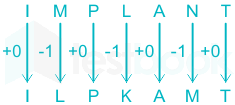
2

Direction: From the given options, choose the one that means the opposite of "enormous."

  1. ((a))

    Tiny

  2. ((b))

    Massive

  3. ((c))

    Vast

  4. ((d))

    Huge

Show Answer
Answer: ((a))

Tiny

The correct answer is 'Tiny.'

<br>

Key Points   

  • Let us see the meaning of Enormous:
  • Enormous: very big or very great. (विशाल या अत्‍यधिक)
  • Example: The wealthy will get enormous tax cuts under the proposal.
  • Let us see the meanings of the given options:
  • Tiny: very small. (बहुत छोटा; नन्‍हा)
  • Massive: very big. (अत्‍यधिक, भारी-भरकम)
  • Vast: extremely big. (बहुत बड़ा, विशाल, विस्‍तृत)
  • Huge: very big. (बहुत बड़ा, विशाल)
  • From the meanings of the given words, we can say that the one that means the opposite of "enormous" is "Tiny."
  • Hence, the correct answer is Option 1.
3

Direction: From the given options, select the one that represents the appropriate meaning of the underlined phrase in the sentence given below.

It makes my blood boil to think that I was cheated by my cousin.

  1. ((a))

    Feel very sad 

  2. ((b))

    Feel very happy 

  3. ((c))

    Feel disappointed 

  4. ((d))

    Feel very angry 

Show Answer
Answer: ((d))

Feel very angry 

The correct answer is 'Feel very angry'

<br>

Key Points    

  • The meaning of the phrase "make someone's blood boil" is to make someone extremely angry.
  • (Phrase "make someone's blood boil" का अर्थ है किसी को अत्यधिक क्रोधित करना।)
  • Example: The way they have treated those people makes my blood boil.
  • ​Therefore, the one that represents the appropriate meaning of the underlined phrase in the sentence given below is "Feel very angry."
  • Hence, the correct answer is Option 4.
4

Direction: In the following sentence, an idiom is highlighted. Select the alternative which best describes its use in the sentence.

I really don’t know much about the brave new world of internet banking.

  1. ((a))

    Age old customs and practices 

  2. ((b))

    A fabulous opportunity 

  3. ((c))

    A facility restricted to brave new members 

  4. ((d))

    A system that has been recently created 

Show Answer
Answer: ((d))

A system that has been recently created 

The correct answer is 'A system that has been recently created.'

<br>

Key Points     

  • The meaning of the phrase "the brave new world" is used to refer, often ironically, to a new and hopeful period in history resulting from major changes in society.
  • Phrase "the brave new world" का अर्थ समाज में बड़े बदलावों के परिणामस्वरूप इतिहास में एक नई और उम्मीद की अवधि के लिए अक्सर विडंबनापूर्ण रूप से संदर्भित किया जाता है।​
  • Example: This is the brave new world of the healthcare market.
  • ​Therefore, the one that represents the appropriate meaning of the underlined phrase in the sentence given below is 'A system that has been recently created.'
  • Hence, the correct answer is Option 4.
5

Direction: Choose an option to fill in the blank to make a meaningful sentence.

At dusk, neon lights ______ the market place.

  1. ((a))

    linger about 

  2. ((b))

    line up 

  3. ((c))

    lit up

  4. ((d))

    glowed

Show Answer
Answer: ((c))

lit up

The correct answer is 'lit up.'

<br>

Key Points     

  • Let us see the meanings of the given options:
  • Linger about: to take a long time to leave or disappear. (छोड़ने या गायब होने में लंबा समय लेना)
  • Line up: arrange a number of people or things in a straight row. (कई लोगों या चीजों को एक सीधी पंक्ति में व्यवस्थित करना)
  • Lit up: light a cigarette; become bright; start to shine; face, eyes: express strong emotion. (एक सिगरेट जलाना; उज्ज्वल बनना; चमकना शुरू करना; चेहरा, आंखें: मजबूत भावना व्यक्त करना)
  • Glowed: to produce light and/or heat without smoke or flames. (बिना धुएँ या लपटों के प्रकाश और या ताप उत्‍पन्‍न करना)
  • ​The given sentence is stating that the market was illuminated by neon lights as evening fell.
  • Hence, the correct answer is Option 3.

Correct sentence: At dusk, neon lights lit up the market place.

6

Direction: Fill in the blank with an appropriate word from the options given.

I will try for another job ______ I cannot commute every day.

  1. ((a))

    where

  2. ((b))

    whereby

  3. ((c))

    whenever

  4. ((d))

    while

Show Answer
Answer: ((c))

whenever

The correct answer is 'whenever.'

<br>

Key Points     

  • Let us see the meanings of the given options:
  • Where: "Where" is most commonly used as an adverb to define a location or position.
  • It can also be used informally as a conjunction in place of the words "that" or "whereas."
  • As such, "where" is commonly used to ask questions like "Where are my socks?" or make positional statements like, "Home is where the heart is."
  • Whereby: "Whereby" is an adverb which is indeed similar to 'by which'.
  • It can be used as an attributive clause.
  • Example: A system, whereby, people could vote by telephone.
  • Whenever: We use "whenever" to refer to any time or every time that something happens or is true.
  • Example: She always called at the house whenever she was in the area.
  • While: We can use "while" or as to talk about two longer events or activities happening at the same time. 
  • We can use either simple or continuous verb forms:
  • Example: We spent long evenings talking in my sitting-room while he played the music he had chosen and explained his ideas.
  • ​The given sentence is stating if the person is unable to commute every day, he will try to find another employment.
  • Hence, the correct answer is Option 3.

Correct sentence: I will try for another job whenever I cannot commute every day.

7

Direction: Detect the misspelt word from the given options.

  1. ((a))

    Flask

  2. ((b))

    Flatered

  3. ((c))

    Fault

  4. ((d))

    False

Show Answer
Answer: ((b))

Flatered

The correct answer is 'Flatered​.'

Key Points 

  • The misspelt word among the words is "Flatered."
  • The correct spelling of the word is "Flattered."
  • "Flattered" means to say nice things to somebody, often in a way that is not sincere, because you want to please him/her or because you want to get an advantage for yourself. (ख़ुशामद या चापलूसी करना; लाभ के इरादे से किसी की दिखावटी प्रशंसा करना)
  • Example: I felt very flattered to have been asked to join the board.
  • Therefore, the correct answer is Option 2.​

Additional Information

  • Let us see the meanings of the other options:
  • Flask: a type of container for keeping a liquid hot or cold. (द्रव पदार्थ के गरम या ठंडा बनाए रखने वाली एक प्रकार की बड़ी बोतल; फ़्लास्‍क, थर्मस)
  • Fault: something wrong or not perfect in a person’s character or in a thing. ((व्‍यक्ति के चरित्र या किसी वस्‍तु में), दोष)
  • False: not true; not correct. (असत्‍य, ग़लत)
8

Direction: Fill in the blank in the sentence given below with the correct option.

I want to know ______ you will stay in Delhi?

  1. ((a))

    where

  2. ((b))

    which

  3. ((c))

    whose

  4. ((d))

    while

Show Answer
Answer: ((a))

where

The correct answer is 'where.'

<br>

Key Points     

  • Let us see the meanings of the given options:
  • Where: We can use "where" to ask for information about place.
  • We can use "where" in indirect questions.
  • Example: Can you tell me where she left the keys?
  • Which: We use "which" in questions as a determiner and interrogative pronoun to ask for specific information.
  • Example: Which do you prefer? Lemon cake or carrot cake?
  • Whose: We use "whose" to ask a question about possession.
  • Example: Whose birthday is it today?
  • While: We can use "while" or as to talk about two longer events or activities happening at the same time. 
  • We can use either simple or continuous verb forms:
  • Example: We spent long evenings talking in my sitting-room while he played the music he had chosen and explained his ideas.
  • ​ The given sentence talks about a location "Delhi."
  • Hence, the correct answer is Option 1.

Correct sentence: I want to know where you will stay in Delhi?

9

Direction: Select the option that represents the correct passive voice form of the given sentence.

The nurse asked me not to make any noise when the baby slept.

  1. ((a))

    The baby asked the nurse not to make any noise when he slept.

  2. ((b))

    I was asked by the nurse not to make any noise when the baby slept. 

  3. ((c))

    The nurse asked me not to make any noise as the baby was sleeping. 

  4. ((d))

    I asked the nurse not to make any noise when the baby slept. 

Show Answer
Answer: ((b))

I was asked by the nurse not to make any noise when the baby slept. 

The correct answer is 'I was asked by the nurse not to make any noise when the baby slept.​'

Key Points 

  • The given sentence is in Active Voice. As per the given question we have to change it into Passive Voice.
  • The structure of the given sentence is as follows:
  • Subject + V2 + Object. (Active Voice)
  • Subject (objective case)+ was/were + V3 + Object (subjective case). (Passive Voice)
  • Example:
  • Their cousin showed them some rare photographs. (Active Voice)
  • They were shown some rare photographs by their cousin. (Passive Voice)
  • In the first part of the sentence:
  • The subject of the given sentence is 'The nurse'.​​
  • The object of the given sentence is 'me'.
  • The subject will be put in place of the object and the object will be put in place of the subject.
  • And 'asked' will be changed into 'was asked'.
  • "I" is a singular pronoun and we must use "was" with it.
  • Therefore, as per the points mentioned above, we find that the correct answer is Option 2.

Correct sentence: I was asked by the nurse not to make any noise when the baby slept.

10

Direction: Fill in the blank with an appropriate word/phrase from the given options.

If you get promoted, your salary ______ up.

  1. ((a))

    go

  2. ((b))

    goes

  3. ((c))

    gone

  4. ((d))

    going

Show Answer
Answer: ((b))

goes

The correct answer is 'goes.'


Key Points  

  • Conditional sentences are statements discussing known factors or hypothetical situations and their consequences.
  • Complete conditional sentences contain a conditional clause (often referred to as the if-clause) and the consequence.
  • Zero conditional sentences express general truths—situations in which one thing always causes another.
  • When we use a zero conditional, we’re talking about a general truth rather than a specific instance of something.
  • The given sentence is a general truth, so it is zero conditional sentence.
  • Structure: If + present simple, present simple. 
  • Example: *If you put food into the freezer, it freezes.*
  • ​Thus, the correct answer is Option 2.

Correct sentence: If you get promoted, your salary goes up.

11

Direction: From the given options, select the word that can substitute the underlined words in the sentence given below.

Did you check the official mark when you bought your gold necklace?

  1. ((a))

    Counter-foil 

  2. ((b))

    Hallmark 

  3. ((c))

    Receipt 

  4. ((d))

    Brand 

Show Answer
Answer: ((b))

Hallmark 

The correct answer is- 'Hallmark.'

Key Points

  • Let us see the meanings of the given words:
  • Counter-foil: the part of a cheque, receipt, ticket, etc. that is kept by the giver as a record. (चेक, रसीद, टिकट आदि का वह हिस्‍सा जो देने वाला रिकार्ड हेतु अपने पास रखता है; प्रतिपर्ण, मुसन्‍ना)
  • Hallmark: a mark that is put on objects made of valuable metals, giving information about the quality of the metal and when and where the object was made. (मूल्‍यवान धातुओं से बनी वस्‍तुओं पर अंकित चिह्न जिसमें धातु की गुणवत्ता तथा वस्‍तु के निर्माण केंद्र की सूचना होती है)
  • Receipt: a piece of paper that is given to show that you have paid for something. (रसीद (प्राप्‍त वस्‍तु की))
  • Brand: the name of a product that is made by a particular company. (किसी कंपनी द्वारा निर्मित किसी उत्‍पाद का नाम, ब्रांड)
  • Therefore, the official mark for giving information about the quality of a gold necklace is called "Hallmark."
  • Option 2 is the correct answer.
12

Direction: From the given options, choose the one that would mean the same as "Hardship."

  1. ((a))

    Happiness

  2. ((b))

    Advantage

  3. ((c))

    Comfort

  4. ((d))

    Trouble

Show Answer
Answer: ((d))

Trouble

The correct answer is 'Trouble.'

<br>

Key Points    

  • Let us see the meaning of Hardship:
  • Hardship: the fact of not having enough money, food, etc. (पर्याप्त धन, भोजन आदि का अभाव, जीवन की मूलभूत सुविधाओं की अपर्याप्ता; तंगहाली)
  • Example: This new tax is going to cause a lot of hardship.
  • Let us see the meanings of the given options:
  • Happiness: the state of being happy. (प्रसन्‍नता, ख़ुशी)
  • Advantage: something that may help you to do better than other people. (लाभ या फ़ायदे की स्थिति)
  • Comfort: the state of having everything your body needs, or of having a pleasant life. (शारीरिक आवश्‍यकताओं की पूर्ति की स्थिति; आराम, आनंद, सुख-सुविधा)
  • Trouble: (a situation that causes) a problem, difficulty or worry. (समस्‍या, कठिनाई या चिंता (उत्‍पन्‍न करने वाली स्थिति))
  • From the meanings of the given words, we can say that the one that would mean the same as "Hardship" is "Trouble."
  • Hence, the correct answer is Option 4.
13

Direction: The sentence given below is incorrect. From the given options, select the part that has an error.

After the exams we can go on a holiday, will we?

  1. ((a))

    After the exams 

  2. ((b))

    will we? 

  3. ((c))

    go on a holiday, 

  4. ((d))

    we can 

Show Answer
Answer: ((b))

will we? 

The correct answer is '2' i.e. will we?

Key Points

  • The given sentence is incorrect because of the tag question "will we?". The correct tag question should match the polarity of the main clause.
  • In the main clause, "we can go on a holiday," the auxiliary verb is "can", which is positive.
  • For a positive clause, the tag question must be negative. Therefore, the correct tag question is "can't we?".

Correct sentence: After the exams, we can go on a holiday, can't we?.

Additional Information

  • Rules for Tag Questions:
  • If the main clause is positive, the tag is negative. Example: You are coming, aren't you?
  • If the main clause is negative, the tag is positive. Example: You aren't coming, are you?
  • The auxiliary verb in the main clause determines the auxiliary verb used in the tag.
  • Common Errors: Mismatched polarity or incorrect auxiliary verb in tag questions.
14

Direction: Select the indirect form of narration of the given sentence.

“Thank you Tina for the beautiful birthday gift,” Ragini said happily.

  1. ((a))

    The birthday gift was beautiful. Tina was very happy. 

  2. ((b))

    Ragini happily thanked Tina for the beautiful birthday gift. 

  3. ((c))

    Tina happily thanked Ragini for the beautiful birthday gift. 

  4. ((d))

    Ragini thanked Tina for the birthday gift. 

Show Answer
Answer: ((b))

Ragini happily thanked Tina for the beautiful birthday gift. 

Here, the correct answer is Ragini happily thanked Tina for the beautiful birthday gift. 

<br>

Key Points 

  • We need to follow these rules to convert the given sentence from direct to indirect speech:
  • Indirect speech is a means of stating the content of statements, questions or other statements, without quoting them openly as is done in direct speech.
  • In indirect speech, the authentic words of the speaker are changed.
  • On converting a sentence from Direct to indirect the actual words are changed because of the change in time.
  • In the case of optative sentences, we simply used “thanked”.
  • In addition, when reporting verb is in the past tense, reported speech changes from present indefinite tense to past indefinite tense.
  • The Indirect speech of She said to me; “Thank You” is she thanked me.
  • As per the rules to convert into indirect we need to omit all the commas or quotation marks.
  • As the words were 'said' is used, so these are changed accordingly.
  • 'Thank you' changes to 'thanked'.
  • Option 1 can be ruled out as it mentions the incorrect structure.
  • Option 3 can be eliminated as the subjects have been reversed i.e. Tina has been used instead of Ragini and vice versa.
  • Option 4 can be ruled out as it does not expresses the happiness that was felt by Ragini.
  • So, the correct answer is Option 2.

Correct sentence: Ragini happily thanked Tina for the beautiful birthday gift.

Direction: Read the passage given below and answer the questions that follow.

The remarkably unique, useful, and often ornamental stepwells of India - lie forgotten.

Stepwells first appeared in India between the 2nd and 4th centuries A.D., in areas that were dry for much of the year, followed by heavy monsoon rains for many weeks. It was essential to guarantee a year-round water-supply for drinking, bathing, irrigation, and washing, particularly in the dry states of western India. In these multi-story wells, water was reached by descending a set of steps, which could number over a hundred. But during rainy seasons, the well could be filled to capacity and hide the steps. Most stepwells gradually narrow from the surface to the lowest tier underground. Being built deep into the earth, many stepwells have little presence above the surface other than a low masonry wall. Most people are, therefore, unaware of these centuries-old water-structures that can even be found hiding in plain sight close to crowded places like Humayun’s Tomb in Delhi or Agra’s Taj Mahal.

By the 19th-century, several thousand stepwells had been built throughout India, and along crucial, remote trade routes where travelers and pilgrims could park their animals and take shelter. Stepwells also served as a place for religious ceremonies and social gatherings. Usually, women were more associated with these wells because they were the ones who collected the water and prayed to the goddess of the well.

At present, the growing water crisis has seen renewed efforts to de-silt and “reactivate” a few wells in Delhi and Gujarat. This may spark more interest in these disappearing marvels.

15

Why do many people not notice a stepwell? 

  1. ((a))

    Stepwells are haunted by ghosts and therefore people stay away from them. 

  2. ((b))

    Stepwells are built below the eye-level and are not surrounded by high boundary walls.  

  3. ((c))

    People are scared to disturb the presiding goddess and therefore do not come near the well.  

  4. ((d))

    Stepwells are dry for most part of the year and hence useless. 

Show Answer
Answer: ((b))

Stepwells are built below the eye-level and are not surrounded by high boundary walls.  

The correct answer is 'Stepwells are built below the eye-level and are not surrounded by high boundary walls.'

Key Points

  • Let's have a look at the 6th and 7th sentences in the second paragraph in the passage:   
  • “ Being built deep into the earth, many stepwells have little presence above the surface other than a low masonry wall. Most people are, therefore, unaware of these centuries-old water-structures that can even be found hiding in plain sight close to crowded places like Humayun’s Tomb in Delhi or Agra’s Taj Mahal.”
  • It is clear from the paragraph that many stepwells are well buried, and their only visible presence above ground is a short brick wall and because of this, few people are aware of these ancient water structures, which may be discovered lying in plain sight not far from popular locations like Delhi's Humayun's Tomb or Agra's Taj Mahal.
  • From the passage, it can be concluded that many people do not notice a stepwell because stepwells are built below the eye-level and are not surrounded by high boundary walls.
  • Therefore, the correct answer is Option 2.​
16

Why were stepwells popular along remote trade routes?

  1. ((a))

    Stepwells were not liked by robbers and hence safe for traders and pilgrims. 

  2. ((b))

    Stepwells were usually built in big villages where strangers were not welcome. 

  3. ((c))

    For the tired traders and travellers, the stepwells provided water, cool shelter and enough space to keep their animals. 

  4. ((d))

    Traders could pray in peace in the comfortable stepwells. 

Show Answer
Answer: ((c))

For the tired traders and travellers, the stepwells provided water, cool shelter and enough space to keep their animals. 

The correct answer is ' For the tired traders and travellers, the stepwells provided water, cool shelter and enough space to keep their animals.'

Key Points

  • Let's have a look at the first sentence in the third paragraph in the passage:   
  • “By the 19th-century, several thousand stepwells had been built throughout India, and along crucial, remote trade routes where travelers and pilgrims could park their animals and take shelter.”
  • It is clear from the paragraph that thousands of stepwells, where visitors and pilgrims may leave their animals and find refuge, had been constructed by the 19th century throughout India and along important, off-the-beaten-path trade routes.
  • Therefore, the correct answer is Option 3.​
17

Choose the INCORRECT option.

What other functions does not performed by the stepwells apart from providing water?

  1. ((a))

    Served as a place for social gatherings. 

  2. ((b))

    Provided wealthy people an opportunity to help the needy. 

  3. ((c))

    Was convenient for religious ceremonies. 

  4. ((d))

    Provided a resting place to traders and pilgrims. 

Show Answer
Answer: ((b))

Provided wealthy people an opportunity to help the needy. 

The correct answer is 'Provided wealthy people an opportunity to help the needy.'

Key Points

  • Let's have a look at the 2nd sentence in the 3rd paragraph in the passage:   
  • “ Stepwells also served as a place for religious ceremonies and social gatherings.”
  • It is clear from the paragraph that religious rituals and social gatherings were also held in stepwells.
  • So, options 1 and 3 are correct.
  • Let's have a look at the 1st sentence in the3rd paragraph in the passage:   
  • “By the 19th-century, several thousand stepwells had been built throughout India, and along crucial, remote trade routes where travelers and pilgrims could park their animals and take shelter.”
  • It is clear from the paragraph that thousands of stepwells, where visitors and pilgrims may leave their animals and find refuge, had been constructed by the 19th century throughout India and along important, off-the-beaten-path trade routes.
  • So, options 4 is correct.
  • In the given passage, there is no explanation that stepwells provided wealthy people an opportunity to help the needy.
  • Therefore, the correct answer is Option 2.​
18

Why is interest being shown in stepwells in present times?

  1. ((a))

    Global warming will result in a parched and arid climate zone.

  2. ((b))

    Old traditions need to be preserved. 

  3. ((c))

    Water shortage is growing in India. 

  4. ((d))

    Women should have exclusive meeting places.  

Show Answer
Answer: ((c))

Water shortage is growing in India. 

The correct answer is 'Water shortage is growing in India.'

Key Points

  • Let's have a look at the first sentence in the last paragraph in the passage:   
  • At present, the growing water crisis has seen renewed efforts to de-silt and “reactivate” a few wells in Delhi and Gujarat.
  • It is clear from the paragraph that there are currently new efforts being made to "reactivate" and de-silt" a few wells in Delhi and Gujarat as a result of the escalating water issue.
  • Therefore, the correct answer is Option 3.​
19

Choose the INCORRECT STATEMENTS.

1. Stepwells are good examples of water conservation. 2. There are no stepwells in modern India. 3. Stepwells were built mostly in eastern India.  4. Women were more associated with the wells.  5. Each stepwell has a presiding deity.  6. Stepwells are multi-storied construction.  7. Stepwells became wider as one went down.

  1. ((a))

    2, 3, 7

  2. ((b))

    1, 3, 4

  3. ((c))

    3, 5, 6

  4. ((d))

    1, 2, 6

Show Answer
Answer: ((a))

2, 3, 7

The correct answer is '2, 3, 7.'

<br>

Key Points

  • Let's have a look at the first and second sentences in the 2nd paragraph in the passage:   
  • “Stepwells first appeared in India between the 2nd and 4th centuries A.D., in areas that were dry for much of the year, followed by heavy monsoon rains for many weeks. It was essential to guarantee a year-round water-supply for drinking, bathing, irrigation, and washing, particularly in the dry states of western India.”
  • It is clear from the paragraph that stepwells were essential to guarantee year round water supply and thus, they are good examples of water conservation.
  • Let's look at the last line of the third paragraph:
  • "Usually, women were more associated with these wells because they were the ones who collected the water and prayed to the goddess of the well."
  • Let's look at the 2nd and 3rd line of the third paragraph:
  • "Stepwells also served as a place for religious ceremonies and social gatherings. Usually, women were more associated with these wells because they were the ones who collected the water and prayed to the goddess of the well." 
  • So, statements 1, 4 and 5 are correct.
  • Let's have a look at the first sentence in the last paragraph in the passage:   
  • “ At present, the growing water crisis has seen renewed efforts to de-silt and “reactivate” a few wells in Delhi and Gujarat.”
  • It is clear from the paragraph that there are many stepwells in modern India.
  • So, statement 2 is incorrect.
  • Let's have a look at the 1st sentence in the 3rd paragraph in the passage:   
  • “ By the 19th-century, several thousand stepwells had been built throughout India, and along crucial, remote trade routes where travelers and pilgrims could park their animals and take shelter.”
  • Also, let's have a look at the first two lines of the second paragraph:
  • "Stepwells first appeared in India between the 2nd and 4th centuries A.D., in areas that were dry for much of the year, followed by heavy monsoon rains for many weeks. It was essential to guarantee a year-round water-supply for drinking, bathing, irrigation, and washing, particularly in the dry states of western India."
  • It is clear from the paragraph that stepwells were built throughout India, particularly in western India. 
  • So, statement 3 is incorrect.
  • Let's have a look at the 3rd sentence in the 2nd paragraph in the passage:   
  • In thes​e multi-story wells, water was reached by descending a set of steps, which could number over a hundred.”
  • It is clear from the paragraph that stepwells are multi-storied construction. . 
  • So, statement 6 is correct.
  • ​Let's have a look at the 5th sentence in the 2nd paragraph in the passage:   
  • “ Most stepwells gradually narrow from the surface to the lowest tier underground.​”
  • It is clear from the paragraph that the majority of stepwells gradually get smaller as they descend to the lowest level underground. . 
  • So, statement 7 is incorrect.
  • Therefore, the correct answer is Option 1.​
20

Why were stepwells built in India? 

  1. ((a))

    To keep the memory of the headman fresh in the minds of the villagers. 

  2. ((b))

    To keep the village goddess happy. 

  3. ((c))

    To ensure water supply throughout the year in dry areas. 

  4. ((d))

    To ensure comfortable life after death of the person who got it built.  

Show Answer
Answer: ((c))

To ensure water supply throughout the year in dry areas. 

The correct answer is 'To ensure water supply throughout the year in dry areas.'

Key Points

  • Let's have a look at the first and second sentences in the second paragraph in the passage:   
  • “Stepwells first appeared in India between the 2nd and 4th centuries A.D., in areas that were dry for much of the year, followed by heavy monsoon rains for many weeks. It was essential to guarantee a year-round water-supply for drinking, bathing, irrigation, and washing, particularly in the dry states of western India.”
  • It is clear from the paragraph that in regions of India that were largely dry for much of the year and then saw intense monsoon rains for several weeks, stepwells first arose between the second and fourth century A.D.
  • From the passage, it can be concluded that stepwells were built in India to ensure water supply throughout the year in dry areas.
  • Therefore, the correct answer is Option 3.​
21

'उपकार' का विलोम शब्द होगा:

  1. ((a))

    अपकार 

  2. ((b))

    साकार 

  3. ((c))

    निराकार 

  4. ((d))

    परोपकार 

Show Answer
Answer: ((a))

अपकार 

'उपकार' का विलोम शब्द होगा- 'अपकार'

  • उपकार-  मदद, सहायता, भलाई, परोपकार, मेहरबानी।
  • अपकार- अत्याचार, अनुचित आचरण या व्यवहार।

Mistake Pointsसाकार- 

  • अर्थ: जिसका कोई आकार हो।
  • विलोम शब्द- 'निराकार'
  • अर्थ: बिना आकार का, आकाररहित।

Key Points

  • जो शब्द किसी दूसरे शब्द का उल्टा अर्थ बताते हैं, उन्हें विलोम शब्द कहते है।

Additional Informationकुछ महत्वपूर्ण विलोम शब्द:-

  • शब्द - विलोम
  • मूक - वाचाल
  • सगुण - निर्गुण
  • शाश्वत - क्षणिक
  • नूतन - पुरातन
  • जागरण - शयन
  • विधि - निषेध
  • अकाल - सुकाल
  • सक्रिय - निष्क्रय
  • आसक्त - अनाशक्त
22

'पानी फेर देना' मुहावरे का सही अर्थ है:

  1. ((a))

    अपमान करना 

  2. ((b))

    बिगाड़ देना 

  3. ((c))

    बदला लेना 

  4. ((d))

    बना देना 

Show Answer
Answer: ((b))

बिगाड़ देना 

'पानी फेर देना' मुहावरे का सही अर्थ है- निराश कर देना।

  • वाक्य प्रयोग - नोट्स खोकर तुमने तो मेरी सारी मेहनत पर "पानी फेर दिया"।

Mistake Points

  • इज्जत उतारना- अपमानित करना

          वाक्य प्रयोग- उसने तो भरे बाज़ार में उनकी तो "इज्जत उतारी थी"।

  • ईंट का जवाब पत्थर से देना- जबरदस्त बदला लेना

          वाक्य प्रयोग- कल रात सीमा पर शत्रु की फाइरिंग होने पर भारतीय सेना ने "ईंट का जवाब पत्थर से दिया"।

  • भुरता बना देना- कचूमर निकाल देना।

           वाक्य प्रयोग- गुस्सा आया तो मार मारकर के "भुरता बना दूँगा"। 

Key Points

  • मुहावरा एक ऐसा वाक्य होता है
  • जो वाक्य की रचना करने पर अपना एक अलग अर्थ या विशेष अर्थ प्रकट करता है
  • इनका प्रयोग करने से भाषा,आकर्षक, प्रभावपूर्ण तथा रोचक बन जाती है।

Additional Informationकुछ अन्य महत्वपूर्ण मुहावरा, अर्थ और उनके वाक्य प्रयोग:- ​

  • खून के आँसू रोना- बहुत दुःखी या परेशान होना

          वाक्य प्रयोग- व्यापार में घाटा होने पर सेठजी "खून के आँसू रो रहे हैं"।

  • दाँतों पसीना आना- बहुत अधिक परेशानी उठाना।

          वाक्य प्रयोग- कार्यालय में सुबह से शाम इतना काम करते करते "दांतो पसीना आ जाता है"।

  • लोहे के चने चबाना- बहुत कठिनाई उठाना।

          वाक्य प्रयोग- कला प्रतियोगिता में प्रथम आने के लिए प्रतिभा को "लोहे के चने चबाने पड़े"।

  • हाथ-पाँव फूल जाना- घबरा जाना।

          वाक्य प्रयोग- मनविंदर की कार एक्सीडेंट की खबर को सुनकर उसके परिवार वालों के "हाथ पैर फूल गए"।

  • रंग दिखाना- प्रभाव या स्वरूप दिखाना।

          वाक्य प्रयोग- परिवार में समस्याओं की वजह से सभी परेशान थे ऐसे वक्त में छोटे बेटे ने अपना असली "रंग दिखा दिया"।

23

निम्नलिखित में से कौन सी प्रेरणार्थक क्रिया है?

  1. ((a))

    चमकाना 

  2. ((b))

    समझना 

  3. ((c))

    डूबना 

  4. ((d))

    लेटना 

Show Answer
Answer: ((a))

चमकाना 

प्रेरणार्थक क्रिया है- 'चमकाना'

  • चमक + आना = चमकाना
  • 'चमक' मूल धातु + 'आना' प्रत्यय
  • अर्थ: कांति युक्त करना, चमक लाना।
  • अकर्मक क्रिया- 'चमकना'

Mistake Points

  • अकर्मक क्रिया- समझना
  • 'समझना' का प्रेरणार्थक रूप 'समझाना'
  • जैसे- सोहन को समझाना बेकार है।
  • अकर्मक क्रिया- डूबना
  • 'डूबना' का प्रेरणार्थक रूप 'डुबाना' 
  • जैसे- मोहन को डुबाना आसान है।
  • अकर्मक क्रिया- लेटना
  • 'लेटना' का प्रेरणार्थक रूप 'लिटाना' 
  • जैसे- बच्चे को बिस्तर पर लिटाना दो।

Key Pointsमूल धातु के अन्त में 'आना' जोड़ने से बनता है-

मूल धातुप्रेरणार्थक रूप
उठउठाना
गिरगिराना
कटकाटना
पढ़पढ़ाना
सुनसुनाना
चलचलाना

Additional Informationप्रेरणार्थक क्रिया-

  • जब कर्ता किसी कार्य को स्वयं न करके किसी दूसरे को कार्य करने की प्रेरणा दे तो उस क्रिया को प्रेरणार्थक क्रिया कहते हैं।
  • जैसे- करना से कराना।
  • राम को अपना कार्य दूसरों से कराना आता है।

अकर्मक क्रिया:- 

  • जिन क्रियाओं के लिये कर्म की आवश्यकता नहीं होती या ऐसी क्रियाएँ जिनके साथ वाक्य में कोई कर्म नहीं होता है
  • और जिनका प्रभाव या फल कर्त्ता पर ही पड़ता है, वे अकर्मक क्रिया कहलाती हैं।
  • जैसे- लड़का सोता है।
24

निम्नलिखित में से कौन-सा 'बिजली' का पर्यायवाची शब्द नहीं है?

  1. ((a))

    दामिनी 

  2. ((b))

    चंचला 

  3. ((c))

    चपला 

  4. ((d))

    सरिता 

Show Answer
Answer: ((d))

सरिता 

'बिजली' का पर्यायवाची शब्द नहीं है- 'सरिता'

  • 'बिजली' का पर्यायवाची शब्द- दामिनी, बीजुरी, क्षणप्रभा, चंचला, चपला, विधुत, सौदामनी, तड़ित।
  • 'नदी' का पर्यायवाची शब्द- सरिता, पयस्विनी, तरनी, स्रोतस्विनी, तटिनी, शैलजा, निर्झरी, सलिला।

Key Points

  • जो शब्द समान अर्थ के कारण किसी दूसरे शब्द की जगह ले लेते हैं उन्हें पर्यायवाची शब्द कहते है।

Additional Information कुछ अन्य महत्वपूर्ण पर्यायवाची शब्द:-

  • कमल - जलज, पंकज, सरोज, राजीव, अरविन्द, नीरज।
  • अमृत - सुधा, सोम, पीयूष, अमिय, जीवनोदक।
  • असुर - राक्षस, दैत्य, दानव, निशाचर, दनुज, यातुधान, निशिचर, रजनीचर।
  • पुत्र - बेटा, सुत, तनय, आत्मज, जनज, लड़का, तनुज।
  • आकाश - व्योम, शून्य, गगन, अम्बर, आसमान, अंतरिक्ष, नभ, धौ, अनंत
  • हवा - पवन, वायु, समीर, अनिल, वात, मरुत्, पवमान, बयार, प्रकंपन, समी
  • साँप - सर्प, नाग, विषधर, व्याल, भुजंग, उरग, अहि पन्नग।
  • जंगल - वन, कानन, बीहड़, विटप, विपिन।
25

'जो कम जानता है' के लिए एक शब्द है:

  1. ((a))

    सर्वज्ञ 

  2. ((b))

    अल्पज्ञ 

  3. ((c))

    अज्ञ 

  4. ((d))

    बहुज्ञ 

Show Answer
Answer: ((b))

अल्पज्ञ 

'जो कम जानता है' के लिए एक शब्द है- 'अल्पज्ञ' 

Mistake Points

  • जिसे सब बातों का ज्ञान हो- सर्वज्ञ
  • जो कुछ भी नहीं जानता हो- अज्ञ
  • बहुत-सी बातों का ज्ञान रखने वाला- बहुज्ञ

Key Points

  • अनेक शब्दों के लिए एक शब्द को प्रयुक्त करना ही वाक्यांश के लिए एक शब्द कहलाता है।

Additional Information कुछ महत्वपूर्ण वाक्यांश के लिए एक शब्द:-

  • ऐसी जमीन जो अच्छी उत्पादक हो - उर्वरा
  • जो केवल एक आंख वाला हो - एकाक्ष
  • जिसकी बुद्धि बहुत तेज हो - कुशाग्र
  • आकाश को स्पर्श करने वाला - गगनचुम्बी
  • परंपरा से चली आ रही कथा - अनुश्रुति
  • जो दूसरे की उन्नति देखकर जलता हो - ईर्ष्यालु
  • जिसके बारे में जानकारी न हो - अनजान
26

निम्नलिखित में से कौन-सा अर्थालंकार नहीं है?

  1. ((a))

    उत्प्रेक्षा 

  2. ((b))

    उपमा 

  3. ((c))

    यमक 

  4. ((d))

    रूपक 

Show Answer
Answer: ((c))

यमक 

अर्थालंकार नहीं है- यमक 

  • जिस काव्य में समान शब्द के अलग-अलग अर्थों में आवृत्ति हो, वहाँ यमक अलंकार होता है।

उदाहरण-

  • कनक कनक ते सौगुनी मादकता अधिकाय।

या खाए बौरात नर या पाए बौराय।।

  • (इस पद्य में ‘कनक’ शब्द का प्रयोग दो बार हुआ है। प्रथम 'कनक' का अर्थ ‘सोना’ और दूसरे 'कनक' का अर्थ-धतूरा है।)

Key Pointsअर्थालंकार के भेद इस प्रकार है -

  • उपमा अलंकार
  • रूपक अलंकार
  • उत्प्रेक्षा अलंकार
  • विरोधाभास अलंकार
  • मानवीयकरण अलंकार
  • अतिशयोक्ति अलंकार

शब्दालंकार के भेद इस प्रकार है -

  • अनुप्रास अलंकार
  • यमक अलंकार
  • पुनरुक्ति अलंकार
  • विप्सा अलंकार
  • वक्रोक्ति अलंकार
  • श्लेष अलंकार

Additional Information

उत्प्रेक्षा:- - जब समानता होने के कारण उपमेय में उपमान के होने कि कल्पना की जाए या संभावना हो तब वहां उत्प्रेक्षा अलंकार होता है। - यदि पंक्ति में- मनु, जनु, जनहु, जानो, मानहु मानो, निश्चय, ईव, ज्यों आदि आता है वहां उत्प्रेक्षा अलंकार होता है। जैसे - - पाहून ज्यों आये हों गाँव में शहर के; - मेघ आये बड़े बन ठन के संवर के। - (यहाँ बादलों को शहर से आये दामाद के सामान या शहर से आये अतिथि के रूप में दिखाया है।) उपमा:- - जब किन्ही दो वस्तुओं के गुण, आकृति, स्वभाव आदि में समानता दिखाई जाए या दो भिन्न वस्तुओं कि तुलना कि जाए, तब वहां उपमा अलंकर होता है। उदाहरण- - हरि पद कोमल कमल। - (यहाँ पर हरि के चरणों को कमल के फूल के समान कोमल बताया गया है।) रूपक:- - जब एक वस्तु को दूसरी वस्तु के साथ इस प्रकार रखा जाए, कि दोनों में कोई भेद न रहे। अर्थात - जब गुण की अत्यंत समानता के कारण उपमेय को ही उपमान बता दिया जाए यानी उपमेय ओर उपमान में अभिन्नता दर्शायी जाए तब वह रूपक अलंकार कहलाता है। उदाहरण- - पायो जी मैंने राम रतन धन पायो। - (यहाँ राम रतन को ही धन बता दिया गया है। )
27

'वह पढ़ती-पढ़ती सो गई।' वाक्य में अशुद्ध अंश कौन सा है?

  1. ((a))

    पढ़ती-पढ़ती 

  2. ((b))

    गई l 

  3. ((c))

    सो 

  4. ((d))

    वह 

Show Answer
Answer: ((a))

पढ़ती-पढ़ती 

'वह पढ़ती-पढ़ती सो गई।' वाक्य में अशुद्ध अंश है- 'पढ़ती-पढ़ती'

  • दिए गये वाक्य में 'वचन प्रयोग' की त्रुटि है।
  • यहाँ 'पढ़ती-पढ़ती' सार्थक शब्द नही है और इससे सही अर्थ प्रकट नही हो रहा।
  • अत: सार्थक शब्द 'पढ़ते-पढ़ते' होना चाहिए।
  • सही वाक्य - वह पढ़ते-पढ़ते सो गई।

Mistake Points

  • यहाँ पर 'वह' अन्य पुरुषवाचक सर्वनाम है।
  • अन्य लिंग, कारक, वर्तनी सर्वनाम और क्रिया आदि का सही रुप में प्रयोग हुआ है।

Key Points वचन संबंधी अशुद्धि:-

  • कभी-कभी देखा गया है कि वाक्यों में वचन संबंधी गलत प्रयोग भी किए जाते हैं।
  • इन्हें वाक्य की वचन संबंधी अशुद्धि कहा जाता है।

उदाहरण -

  • अशुद्ध रूप - राम ने चार बात सुनाई।
  • शुद्ध रूप - राम ने चार बाते सुनाई।

Additional Information 

वचन:- - संज्ञा के जिस रूप से किसी व्यक्ति, वस्तु, स्थान के एक या एक से अधिक होने का बोध हो उसे वचन कहते हैं। हिन्दी में वचन दो प्रकार के होते हैं- 1. एकवचन 2. बहुवचन उदाहरण- - घोड़ा दौड़ता है। (एकवचन) - घोड़े दोड़ते हैं। (बहुवचन)
28

निम्नलिखित में से कौन-सा शब्द स्त्रीलिंग है?

  1. ((a))

    आश्रम 

  2. ((b))

    अप्सरा 

  3. ((c))

    आकाश 

  4. ((d))

    आलोक 

Show Answer
Answer: ((b))

अप्सरा 

स्त्रीलिंग शब्द है- 'अप्सरा'

  • अप्सरा**-** स्वर्ग लोक की स्त्री या परम सुंदर स्त्री।
  • जैसे- ऋग्वेद में उर्वशी प्रसिद्ध अप्सरा मानी गई है।
  • पुल्लिंग शब्द- आश्रम, आकाश, आलोक।

Key Points

  • आश्रम- साधु संतों की कुटी, मठ।
  • ​जैसे- वनवास के दौरान श्रीराम ने पंचवटी में अपना आश्रम बनाया।
  • आकाश- व्योम, शून्य, नभ, गगन, अम्बर।
  • ​जैसे- आकाश में काले बादल छाये हुए हैं।
  • आलोक- देखना, दर्शन, दृष्टि।
  • ​जैसे- ​दीपक के आलोक में उसका चेहरा साफ दिख रहा था।

Additional Informationस्त्रीलिंग:-

  • जिन संज्ञा या सर्वनाम शब्दों से स्त्री जाति का बोध होता है, उन्हें स्त्रीलिंग कहा जाता है।
  • जैसे- गीता, गाय, कार, वीणा, अध्यापिका, काली, बकरी, भैंस, सीता, सड़क इत्यादि।

पुल्लिंग:-

  • जिन संज्ञा या सर्वनाम शब्दों से पुरुष जाति का बोध होता है, उन्हें पुल्लिंग कहा जाता है।
  • जैसे - गोविन्द, शहर, गिलास, अध्यापक, काला, बकरा, ऊँट, घर, लड़का, इत्यादि।
29

निम्नलिखित में से कौन सा शब्द विशेषण है?

  1. ((a))

    घर 

  2. ((b))

    चमकीला 

  3. ((c))

    मनुष्य 

  4. ((d))

    यमुना 

Show Answer
Answer: ((b))

चमकीला 

विशेषण शब्द है- 'चमकीला'

  • 'चमकीला' विशेषण शब्द 'चमक' संज्ञा में 'ईला' प्रत्यय जोड़ने पर बना है।
  • जैसे- विवाह के अवसर पर रमेश चमकीले वस्त्र पहने हुए था।
  • (यहाँ पर वस्त्र (संज्ञा) की विशेषण बता रहा है कि वह चमकीला है।)
  • चमकीला- जिसमें चमक हो, चमकदार।

Mistake Points

विशेष्य- घर, मनुष्य, यमुना 

  • जैसे- मैं दोपहर में घर का सारा काम करती हूँ।
  • जैसे- मनुष्य को हमेशा सावधान रहना चाहिए।
  • जैसे- यमुना गंगा की दूसरी सबसे बड़ी सहायक नदी है।
  • (उपर्युक्त वाक्य में 'घर, मनुष्य, यमुना' के बारे ही बताया गया है।)

Key Pointsविशेषण:-

  • जो शब्द संज्ञा या सर्वनाम की विशेषता (गुण, दोष, संख्या, परिमाण, रंग, आकार, दशा आदि) बतलाए, उसे विशेषण कहते हैं।
  • जैसे- सुंदर, कुरूप, लंबा, नाटा, अच्छा, बुरा, भारी, चतुर, मूर्ख, लाल, कुछ, थोड़ा,  चार, गोल, चौड़ा, दुबला आदि।
  • सीता सुंदर है।
  • (यहाँ पर 'सुंदर' विशेषण और 'सीता' विशेष्य है।)

विशेष्य:- 

  • विशेषण शब्द जिस संज्ञा या सर्वनाम शब्द की विशेषता बताता है, उसे विशेष्य कहते हैं।
  • जैसे - कोयल मीठा बोलती है। 
  • (यहाँ पर 'कोयल' विशेष्य और 'मीठा' विशेषण है।)
30

निम्नलिखित में से कौन-सा शब्द सर्वनाम नहीं है?

  1. ((a))

    यह 

  2. ((b))

    वह 

  3. ((c))

    नदी 

  4. ((d))

    आप 

Show Answer
Answer: ((c))

नदी 

सर्वनाम शब्द नहीं है- नदी 

  • संज्ञा शब्द- नदी 
  • जैसे- नदी जल का एक प्रमुख स्रोत है।
  • (यहाँ पर 'नदी' के बारे बताया गया है।)

संज्ञा-

  • किसी व्यक्ति, जाति, द्रव्य, गुण, भाव और स्थान आदि के नाम को संज्ञा कहते हैं।
  • जैसे - पशु (जाति), सुन्दरता (गुण), व्यथा (भाव), मोहन (व्यक्ति), दिल्ली (स्थान)।

Confusion Points

  • नदी शब्द में जातिवाचक संज्ञा होता है l
  • क्योंकि नदी से गंगा, यमुना, कावेरी आदि सभी नदियों का बोध हो रहा है।
  • नदी- सरिता, तटिनी, तरंगिणी, निर्झरिणी, आपगा, निम्नगा, कूलंकषा।

Key Points

  • यह- अन्य पुरुष, एकवचन (जिसके बारे में बात की जाये) 
  • जैसे- वह पैन मेरा नहीं है।
  • वह- अन्य पुरुष, एकवचन (जिसके बारे में बात की जाये) 
  • जैसे- यह घर मेरे दादाजी ने बनवाया था।
  • आप- निजवाचक सर्वनाम
  • जैसे- आप अपना काम खुद कर लेना।

Additional Informationसर्वनाम-

  • संज्ञा शब्दों के स्थान पर प्रयुक्त होने वाले शब्दों को सर्वनाम कहते हैं।
  • हिंदी में ग्यारह सर्वनाम होते हैं। हिंदी के सर्वनाम मैं, तू, आप, यह, वह, सो, जो, कोई, कुछ, कौन, क्या हैं।

जैसे-

  • कोई आ रहा है।
31

'निष्पक्ष' का संधि विच्छेद है:

  1. ((a))

    निः + पक्ष 

  2. ((b))

    नि + पक्ष

  3. ((c))

    निष् + पक्ष

  4. ((d))

    नी + पक्ष

Show Answer
Answer: ((a))

निः + पक्ष 

'निष्पक्ष' का संधि विच्छेद है- 'निः + पक्ष'

  • निः + पक्ष = निष्पक्ष
  • 'निष्पक्ष' में विसर्ग संधि है।
  • निष्पक्ष- जो किसी के पक्ष या दल में न हो

Mistake Pointsविसर्ग संधि का नियम-

  • यदि विसर्ग से पूर्व 'इकार‘ या ‘उकार‘ आए अर्थात् इ/उ स्वर हों
  • तथा विसर्ग के बाद का वर्ण ‘क, ख, प, फ’ हो तो विसर्ग का ‘ष्’ हो जाता है।

जैसे-

  • दुः + कर = दुष्कर
  • निः + फल = निष्फल

Key Pointsविसर्ग:-

  • जब संधि करते समय विसर्ग के बाद स्वर या व्यंजन वर्ण के आने से
  • जो विकार (परिवर्तन) उत्पन्न होता है, हम उसे विसर्ग संधि कहते हैं।

उदाहरण-

  • नि: + चल = निश्चल
  • मनः + भाव = मनोभाव
  • निः + गुण = निर्गुण
  • अतः + एव = अतएव
32

निम्नलिखित शब्दों में से कौन-सा शब्द तद्भव है?

  1. ((a))

    पक्ष 

  2. ((b))

    पत्थर 

  3. ((c))

    पंक्ति 

  4. ((d))

    पत्र 

Show Answer
Answer: ((b))

पत्थर 

तद्भव शब्द है- पत्थर 

  • पत्थर शब्द का तत्सम रूप प्रस्तर है।

Mistake Points 

  • पक्ष शब्द का तद्भव रूप पंख है।
  • पंक्ति शब्द का तद्भव रूप पंगत है।
  • पत्र शब्द का तद्भव रूप पत्ता है।

Key Points 

तद्भवतत्सम
किवाड़कपाट
उछाहउत्साह
गेंहूँगोधूम
ताँबाताम्र
नाकनासिका
धीरजधैर्य

Additional Information तत्सम:-

  • जिन शब्दों को संस्कृत से बिना किसी परिवर्तन के ले लिया जाता है, उन्हें तत्सम शब्द कहते हैं।
  • जैसे - आश्चर्य, गोमय, तीक्ष्ण, चत्वारि आदि।

तद्भव:-

  • तद्भव मूल भाषा संस्कृत के वे शब्द जिनका हिंदी में रूप परिवर्तन हो गया है उन्हें तद्भव शब्द कहते हैं।
  • जैसे - अचरज, गोबर, तीखा, चार आदि।
33

'सुख-दुख' में कौन सा समास है?

  1. ((a))

    तत्पुरुष 

  2. ((b))

    द्वंद्व 

  3. ((c))

    द्विगु 

  4. ((d))

    अव्ययीभाव 

Show Answer
Answer: ((b))

द्वंद्व 

'सुख-दुख' में समास है- द्वंद्व

  • सुख-दुख का समास विग्रह होगा - सुख और दुख 
  • जिस समास में समस्तपद के दोनों पद प्रधान हों या दोनों पद सामान हों एवं
  • दोंनों पदों को मिलाते समय ‘और’, ‘अथवा’, ‘या’, ‘एवं’ आदि योजक लुप्त हो जाएँ, वह समास द्वंद्व समास कहलाता है।
  • उदाहरण -
  • गौरीशंकर = गौरी और शंकर
  • गुण-दोष = गुण अथवा दोष

Key Points

तत्‍पुरूष:- - तत्पुरुष समास वह होता है, जिसमें उत्तरपद प्रधान होता है, अर्थात प्रथम पद गौण होता है एवं उत्तर पद की प्रधानता होती है व समास करते वक़्त बीच की विभक्ति का लोप हो जाता है। - इस समास में आने वाले कारक चिन्हों को, से, के लिए, से, का/के/की, में, पर आदि का लोप होता है। उदाहरण - - शोकाकुल = शौक से आकुल - रसोईघर = रसोई के लिए घर - राष्ट्रगौरव = राष्ट्र का गौरव द्विगु:- - वह समास जिसका पहला पद संख्यावाचक विशेषण होता है तथा समस्तपद किसी समूह या फिर किसी समाहार का बोध करता है तो वह द्विगु समास कहलाता है। उदाहरण - - त्रिराहा = तीन रास्तों का समाहार - नवरत्न = नौ रत्नों का समूह अव्‍ययीभाव:- - जहाँ प्रथम पद या पूर्व पद प्रधान हो तथा समस्त पद क्रिया विशेषण अव्यय हो, उसे अव्ययीभाव समास कहते हैं। - अव्ययीभाव समास के पहले पद में अनु, आ, प्रति, यथा, भर, हर आदि आते है। उदाहरण - - आजन्म = जन्म से लेकर - यथामति = मति के अनुसार - प्रतिदिन = दिन प्रति दिन या दिनों दिन
34

निम्नलिखित शब्दों में से कौन-सा शब्द तत्सम है?

  1. ((a))

    धान 

  2. ((b))

    धीरज 

  3. ((c))

    द्वितीय 

  4. ((d))

    दाई 

Show Answer
Answer: ((c))

द्वितीय 

तत्सम शब्द है- द्वितीय 

  • द्वितीय का तद्भव रूप दूजा है।

Mistake Points

  • धान शब्द का तत्सम रूप धान्य है।
  • धीरज शब्द का तत्सम रूप धैर्य है।
  • दाई शब्द का तत्सम रूप धात्री है।

Key Points 

तद्भवतत्सम
अमोलअमूल्य
किवाड़कपाट
चौबीसचतुर्विंश
गोबरगोमय
मक्खीमक्षिका
जुगतियुक्ति

Additional Information तद्भव शब्द:-

  • तद्भव मूल भाषा संस्कृत के वे शब्द जिनका हिंदी में रूप परिवर्तन हो गया है उन्हें तद्भव शब्द कहते हैं।

​​​जैसे -

  • दूध, फूल, आम, रात आदि।

तत्सम शब्द:-

  • जिन शब्दों को संस्कृत से बिना किसी परिवर्तन के ले लिया जाता है, उन्हें तत्सम शब्द कहते हैं।

जैसे - 

  • दुग्ध, पुष्प, आम्र, रात्रि आदि।
35

निम्नलिखित में से किस शब्द का प्रयोग केवल बहुवचन में होता है?

  1. ((a))

    शाखा 

  2. ((b))

    लता 

  3. ((c))

    आँसू 

  4. ((d))

    कथा 

Show Answer
Answer: ((c))

आँसू 

केवल बहुवचन में प्रयोग होता है - आँसू 

  • आँसू- नेत्रजल, नयनजल, चक्षुजल, अश्रु, नेत्रनीर।
  • जैसे - उसकी आँखों से आँसू बहने लगे।

Mistake Points

  • शाखा- डाल, टहनी।
  • 'शाखा' का बहुवचन शब्द होगा - 'शाखाएँ'
  • लता- पतली बेल, वल्लरी, कोमल शाखा।
  • 'लता' का बहुवच��� शब्द होगा - 'लताएँ'
  • कथा- बीते हुए जीवन की घटनाओं का क्रम, वर्णन, किस्सा।
  • 'कथा' का बहुवचन शब्द होगा - 'कथाएँ'

Key Points

  • कुछ शब्द सदैव बहुवचन के रूप में ही प्रयोग किये जाते हैं;
  • जैसे - हस्ताक्षर, दर्शन, प्राण, दाम, अक्षत, लोग आदि।
  • कुछ शब्द सदैव एकवचन के रूप में ही प्रयोग होते हैं;
  • जैसे - बारिश, पानी, दूध, घी, दही, आकाश, जनता आदि।

Additional Informationबहुवचन-

  • शब्द के जिस रूप से अनेकता का बोध हो उसे बहुवचन कहते हैं।
  • जैसे- लड़के, गायें, कपड़े, टोपियाँ, मालाएँ, माताएँ, पुस्तकें, वधुएँ, गुरुजन, रोटियाँ, स्त्रियाँ, आदि।

एकवचन-

  • शब्द के जिस रूप से एक ही वस्तु का बोध हो, उसे एकवचन कहते हैं।
  • जैसे- लड़का, गाय, सिपाही, बच्चा, कपड़ा, माता, माला, पुस्तक, स्त्री, टोपी बंदर, मोर आदि।

नीचे दिए गए गद्यांश को पढ़कर पूछे गए प्रश्नों के उत्तर दीजिए l 

वल्लभाचार्य के पुत्र विट्ठलनाथ ने पुष्टिमार्गी कवियों में से आठ कवियों को चुनकर उन्हें 'अष्टछाप' की संज्ञा दी l ये कवि हैं: सूरदास, कुंभनदास, परमानंद दास, कृष्णदास, छीतस्वामी, गोविन्द स्वामी, चतुर्भुजदास और नंददास l इनमें से प्रथम चार वल्लभाचार्य के शिष्य थे और शेष स्वयं विट्ठलनाथ थे l अष्टछाप के कवियों में सूरदास और नंददास प्रमुख हैं l

36

'अष्टछाप' की संज्ञा किसने दी?

  1. ((a))

    विट्ठलनाथ 

  2. ((b))

    नंददास 

  3. ((c))

    सूरदास 

  4. ((d))

    वल्लभाचार्य 

Show Answer
Answer: ((a))

विट्ठलनाथ 

'अष्टछाप' की संज्ञा दी- विट्ठलनाथ 

  • गद्यांश के अनुसार:-
  • वल्लभाचार्य के पुत्र विट्ठलनाथ ने पुष्टिमार्गी कवियों में से आठ कवियों को चुनकर उन्हें 'अष्टछाप' की संज्ञा दी l
  • ये कवि हैं: सूरदास, कुंभनदास, परमानंद दास, कृष्णदास, छीतस्वामी, गोविन्द स्वामी, चतुर्भुजदास और नंददास l

Key Pointsविट्ठलनाथ-

  • जन्म- 1515 वाराणसी, मृत्यु- 1585 गिरिराज
  • श्री विट्ठलनाथ वल्लभ संप्रदाय के प्रवर्तक और 'अष्टछाप' के संस्थापक थे।
  • विट्ठलनाथ संगीत और चित्रकला में भी प्रवीण थे। भक्तिपथ में जाति-पांत को नहीं मानते थे।
  • कहते हैं, विट्ठलनाथ ने तानसेन, रसखान और अछूत मोहन को भी उपदेश दिया था।

Additional Informationनंददास-

  • नंददास 16वीं शती के अंतिम चरण के कवि थे।
  • वे 'अष्टछाप' के प्रमुख कवियों में से एक थे, ये श्री विट्ठलनाथ के शिष्य थे।
  • जो सूरदास के बाद सबसे अधिक प्रसिद्ध हुए।
  • नंददास भक्तिरस के पूर्ण मर्मज्ञ और ज्ञानी थे।
  • प्रमुख रचनाएँ - अनेकार्थ मंजरी, मान मंजरी, विरह मंजरी, भँवर गीत आदि।

सूरदास-

  • सूरदास हिन्दी के भक्तिकाल के महान कवि थे।
  • हिन्दी साहित्य में भगवान श्रीकृष्ण के अनन्य उपासक और ब्रजभाषा के
  • श्रेष्ठ कवि महात्मा सूरदास हिंदी साहित्य के सूर्य माने जाते हैं।
  • महाकवि सूरदास जी वात्सल्य रस के सम्राट माने जाते हैं।
  • प्रमुख रचनाएँ - सूरसागर, सूरसारावली, साहित्य-लहरी आदि।

वल्लभाचार्य-

  • वल्लभाचार्य भक्तिकालीन सगुणधारा की कृष्णभक्ति शाखा के आधार स्तंभ एवं पुष्टिमार्ग के प्रणेता माने जाते हैं।
  • उनका प्रादुर्भाव विक्रम संवत् 1535वैशाख कृष्ण एकादशी को दक्षिण भारत के कांकरवाड ग्रामवासी
  • तैलंग ब्राह्मण श्रीलक्ष्मणभट्टजी की पत्नी इलम्मागारू के गर्भ से हुआ।
  • यह स्थान वर्तमान छत्तीसगढ़ राज्य के रायपुर के निकट चम्पारण्य है। उन्हें वैश्वानरावतार (अग्नि का अवतार) कहा गया है।
  • विवाह पंडित श्रीदेव भट्ट जी की कन्या महालक्ष्मी से हुआ, और यथासमय दो पुत्र हुए- श्री गोपीनाथ व विट्ठलनाथ
37

विट्ठलनाथ किसके पुत्र थे?

  1. ((a))

    नंददास 

  2. ((b))

    सूरदास 

  3. ((c))

    वल्लभाचार्य 

  4. ((d))

    रामानंद 

Show Answer
Answer: ((c))

वल्लभाचार्य 

विट्ठलनाथ वल्लभाचार्य के पुत्र थे l 

  • गद्यांश के अनुसार:-
  • वल्लभाचार्य के पुत्र विट्ठलनाथ ने पुष्टिमार्गी कवियों में से आठ कवियों को चुनकर उन्हें 'अष्टछाप' की संज्ञा दी l
  • ये कवि हैं: सूरदास, कुंभनदास, परमानंद दास, कृष्णदास, छीतस्वामी, गोविन्द स्वामी, चतुर्भुजदास और नंददास l

Key Pointsवल्लभाचार्य-

  • वल्लभाचार्य भक्तिकालीन सगुणधारा की कृष्णभक्ति शाखा के आधार स्तंभ एवं पुष्टिमार्ग के प्रणेता माने जाते हैं।
  • उनका प्रादुर्भाव विक्रम संवत् 1535, वैशाख कृष्ण एकादशी को दक्षिण भारत के कांकरवाड ग्रामवासी
  • तैलंग ब्राह्मण श्रीलक्ष्मणभट्टजी की पत्नी इलम्मागारू के गर्भ से हुआ।
  • यह स्थान वर्तमान छत्तीसगढ़ राज्य के रायपुर के निकट चम्पारण्य है। उन्हें वैश्वानरावतार (अग्नि का अवतार) कहा गया है।
  • विवाह पंडित श्रीदेव भट्ट जी की कन्या महालक्ष्मी से हुआ, और यथासमय दो पुत्र हुए- श्री गोपीनाथ व विट्ठलनाथ।

Additional Informationनंददास-

  • नंददास 16वीं शती के अंतिम चरण के कवि थे।
  • वे 'अष्टछाप' के प्रमुख कवियों में से एक थे, ये श्री विट्ठलनाथ के शिष्य थे।
  • जो सूरदास के बाद सबसे अधिक प्रसिद्ध हुए।
  • नंददास भक्तिरस के पूर्ण मर्मज्ञ और ज्ञानी थे।
  • प्रमुख रचनाएँ - अनेकार्थ मंजरी, मान मंजरी, विरह मंजरी, भँवर गीत आदि।

सूरदास-

  • सूरदास हिन्दी के भक्तिकाल के महान कवि थे।
  • हिन्दी साहित्य में भगवान श्रीकृष्ण के अनन्य उपासक और ब्रजभाषा के
  • श्रेष्ठ कवि महात्मा सूरदास हिंदी साहित्य के सूर्य माने जाते हैं।
  • महाकवि सूरदास जी वात्सल्य रस के सम्राट माने जाते हैं।
  • प्रमुख रचनाएँ - सूरसागर, सूरसारावली, साहित्य-लहरी आदि।

रामानंद-

  • स्वामी रामानन्द मध्यकालीन भक्ति आन्दोलन के महान सन्त थे।
  • उन्होंने रामभक्ति की धारा को समाज के प्रत्येक वर्ग तक पहुंचाया।
  • वे पहले ऐसे आचार्य हुए जिन्होंने उत्तर भारत में भक्ति का प्रचार किया।
  • उनके बारे में प्रचलित कहावत है कि - द्रविड़ भक्ति उपजौ-लायो रामानंद।
  • यानि उत्तर भारत में भक्ति का प्रचार करने का श्रेय स्वामी रामानंद को जाता है।
38

विट्ठलनाथ के शिष्य थे:

  1. ((a))

    कुंभनदास 

  2. ((b))

    सूरदास 

  3. ((c))

    कृष्णदास 

  4. ((d))

    नंददास 

Show Answer
Answer: ((d))

नंददास 

विट्ठलनाथ के शिष्य थे- नंददास

  • गद्यांश के अनुसार:-
  • ​ये कवि हैं: सूरदास, कुंभनदास, परमानंद दास, कृष्णदास, छीतस्वामी, गोविन्द स्वामी, चतुर्भुजदास और नंददास l
  • इनमें से प्रथम चार वल्लभाचार्य के शिष्य थे और शेष स्वयं विट्ठलनाथ थे l

Key Points

  • विट्ठलनाथ के शिष्य - नन्ददास, चतुर्भुजदास, गोविन्दस्वामी तथा छीतस्वामी है।
  • वल्लभाचार्य के शिष्य - सूरदास, कृष्णदास, कुंभनदास और परमानंद दास है।

Additional Informationनंददास-

  • नंददास 16वीं शती के अंतिम चरण के कवि थे।
  • वे 'अष्टछाप' के प्रमुख कवियों में से एक थे, ये श्री विट्ठलनाथ के शिष्य थे।
  • जो सूरदास के बाद सबसे अधिक प्रसिद्ध हुए।
  • नंददास भक्तिरस के पूर्ण मर्मज्ञ और ज्ञानी थे।
  • प्रमुख रचनाएँ - अनेकार्थ मंजरी, मान मंजरी, विरह मंजरी, भँवर गीत आदि।

कुंभनदास-

  • कुम्भनदास अष्टछाप के प्रसिद्ध कवि थे। ये परमानंददास जी के समकालीन थे।
  • ये पूरे विरक्त और धन, मान, मर्यादा की इच्छा से कोसों दूर थे। ये मूलत: किसान थे।
  • अष्टछाप के कवियों में सबसे पहले कुम्भनदास ने महाप्रभु वल्लभाचार्य से दीक्षा ली थी।

कृष्णदास-

  • कृष्णदास हिन्दी के भक्तिकाल के अष्टछाप के कवि थे।
  • बाल्यकाल से ही कृष्णदास में असाधारण धार्मिक प्रवृत्ति थी।
  • वल्लभाचार्य से भेंट कर उन्होंने संप्रदाय की दीक्षा ग्रहण की।

सूरदास-

  • सूरदास हिन्दी के भक्तिकाल के महान कवि थे।
  • हिन्दी साहित्य में भगवान श्रीकृष्ण के अनन्य उपासक और ब्रजभाषा के
  • श्रेष्ठ कवि महात्मा सूरदास हिंदी साहित्य के सूर्य माने जाते हैं।
  • महाकवि सूरदास जी वात्सल्य रस के सम्राट माने जाते हैं।
  • प्रमुख रचनाएँ - सूरसागर, सूरसारावली, साहित्य-लहरी आदि।
39

वल्लभाचार्य के शिष्य थे:

  1. ((a))

    गोविन्द स्वामी 

  2. ((b))

    सूरदास 

  3. ((c))

    नंददास 

  4. ((d))

    चतुर्भुज दास 

Show Answer
Answer: ((b))

सूरदास 

वल्लभाचार्य के शिष्य थे- सूरदास 

  • गद्यांश के अनुसार:-
  • ​ये कवि हैं: सूरदास, कुंभनदास, परमानंद दास, कृष्णदास, छीतस्वामी, गोविन्द स्वामी, चतुर्भुजदास और नंददास l
  • इनमें से प्रथम चार वल्लभाचार्य के शिष्य थे और शेष स्वयं विट्ठलनाथ थे l

Key Pointsसूरदास-

  • सूरदास हिन्दी के भक्तिकाल के महान कवि थे।
  • हिन्दी साहित्य में भगवान श्रीकृष्ण के अनन्य उपासक और ब्रजभाषा के
  • श्रेष्ठ कवि महात्मा सूरदास हिंदी साहित्य के सूर्य माने जाते हैं।
  • महाकवि सूरदास जी वात्सल्य रस के सम्राट माने जाते हैं।
  • प्रमुख रचनाएँ - सूरसागर, सूरसारावली, साहित्य-लहरी आदि।

Additional Informationगोविन्द स्वामी-

  • गोविन्दस्वामी वल्लभ संप्रदाय (पुष्टिमार्ग) के आठ कवियों (अष्टछाप कवि) में एक थे।
  • 1535 ई० में इन्होंने गोस्वामी विट्ठलनाथ से विधिवत पुष्टमार्ग की दीक्षा ग्रहण की और अष्टछाप में सम्मिलित हो गए।
  • इन्होंने भगवान श्री कृष्ण की विभिन्न लीलाओं का अपने पदों में वर्णन किया।

नंददास-

  • नंददास 16वीं शती के अंति�� चरण के कवि थे।
  • वे 'अष्टछाप' के प्रमुख कवियों में से एक थे, ये श्री विट्ठलनाथ के शिष्य थे।
  • जो सूरदास के बाद सबसे अधिक प्रसिद्ध हुए।
  • नंददास भक्तिरस के पूर्ण मर्मज्ञ और ज्ञानी थे।
  • प्रमुख रचनाएँ - अनेकार्थ मंजरी, मान मंजरी, विरह मंजरी, भँवर गीत आदि।

चतुर्भुज दास-

  • चतुर्भुजदास की वल्लभ सम्प्रदाय के भक्त कवियों में गणना की जाती है,
  • ये कुम्भनदास के पुत्र और गोस्वामी विट्ठलनाथ के शिष्य थे।
  • प्रमुख रचनाएँ- द्वादश यश, हित जू को मंगल, भक्ति प्रकाश आदि।
40

'अष्टछाप' कवियों की संख्या है:

  1. ((a))

    दो 

  2. ((b))

    आठ 

  3. ((c))

    छः 

  4. ((d))

    दस 

Show Answer
Answer: ((b))

आठ 

'अष्टछाप' कवियों की संख्या है- आठ 

  • अष्टछाप, महाप्रभु श्री वल्लभाचार्य जी एवं उनके पुत्र श्री विट्ठलनाथ जी द्वारा संस्थापित 8 भक्तिकालीन कवियों का एक समूह था,
  • ये कवि हैं: सूरदास, कुंभनदास, परमानंद दास, कृष्णदास, छीतस्वामी, गोविन्द स्वामी, चतुर्भुजदास और नंददास l
  • जिन्होंने अपने विभिन्न पद एवं कीर्तनों के माध्यम से भगवान श्री कृष्ण की विभिन्न लीलाओं का गुणगान किया।
  • अष्टछाप की स्थापना 1565 ई० में हुई थी।

Key Pointsअष्टछाप के कवि जो हुये हैं, वे इस प्रकार से हैं:-

  • 'वल्लभाचार्य' के शिष्य-
  • कुम्भनदास (1448 ई. -1582 ई)
  • सूरदास (1478 ई. - 1583 ई.)
  • कृष्णदास (1494-1575 ई.)
  • परमानन्ददास (1491-1583 ई.)
  • 'विट्ठलनाथ' के शिष्य**-**
  • गोविंदस्वामी (1505-1585 ई.)
  • छीतस्वामी (1481-1585 ई.)
  • नंददास (1533-1586 ई.)
  • चतुर्भुजदास (1530 ई.)
41

What are large planets composed mostly of gases, such as hydrogen and helium, with a relatively small rocky core called?

  1. ((a))

    Brown Dwarfs

  2. ((b))

    Gas Giants

  3. ((c))

    Super Earths 

  4. ((d))

    Ice Planets

Show Answer
Answer: ((b))

Gas Giants

The correct answer is 'Gas Giants'.

Key Points

  • Gas giants are large planets composed mostly of gases, such as hydrogen and helium.
  • They have a relatively small rocky core.
  • Jupiter and Saturn are the gas giants of the Solar System.
  • The outermost portion of the hydrogen atmosphere of the planets contains many layers of visible clouds that are mostly composed of water and ammonia.

Additional Information

  • Brown Dwarfs
  • Brown dwarfs are objects which have a size between that of a giant planet and that of a small star.
  • In fact, most astronomers would classify any object between 15 times the mass of Jupiter and 75 times the mass of Jupiter to be a brown dwarf.
  • The objects are not able to sustain the fusion of hydrogen so they are also known as "failed stars".
  • All of the brown dwarfs discovered so far are parts of a binary system.
  • As brown dwarfs have relatively low surface temperatures, they are not very bright at visible wavelengths, emitting most of their light in the infrared.
  • Super Earths 
  • Super-Earths is a class of planets unlike any in our solar system.
  • They are more massive than Earth yet lighter than ice giants like Neptune and Uranus.
  • They can be made of gas, rock or a combination of both.
  • They are between twice the size of Earth and up to 10 times its mass.
  • Ice Planets​
  • An ice planet is a type of planet with an icy surface of volatiles such as water, ammonia, and methane.
  • Ice planets consist of a global cryosphere.
  • These include most of the planetary-mass moons, such as Ganymede, Titan, Enceladus, and Triton; and also the known dwarf planets, such as Ceres, Pluto, and Eris.
42

Where is the Tso Moriri lake situated in India? 

  1. ((a))

    Ladakh

  2. ((b))

    Gulmarg

  3. ((c))

    Pahalgam

  4. ((d))

    Sonamarg

Show Answer
Answer: ((a))

Ladakh

The correct answer is 'Ladakh'.

Key Points

  • Tso Moriri or "Mountain Lake", is a lake in the Changthang Plateau of Ladakh in India.
  • The lake and surrounding area are protected as the Tso Moriri Wetland Conservation Reserve.
  • It is the largest of the high-altitude lakes in India.
  • The lake is oligotrophic in nature, and its waters are alkaline.

Important Points

PlaceFamous Lake
GulmargAlpather Lake
PahalgamTulian Lake
SonamargVishansar Lake, Krishansar Lake
43

Who acts as the backbone of criminal law in India?

  1. ((a))

    Indian Punitive Code

  2. ((b))

    Indian Penal Code

  3. ((c))

    Indian Disciplinary Code

  4. ((d))

    Indian Castigatory Code

Show Answer
Answer: ((b))

Indian Penal Code

The correct answer is 'Indian Penal Code'.

Key Points

  • The Indian Penal Code (IPC) is the official criminal code of India.
  • It acts as the backbone of criminal law in India.
  • The IPC in its various sections defines specific crimes and provides punishment for them.
  • It is subdivided into 23 chapters that comprise 511 sections.
  • The code came into force on January 1st, 1860.
44

In Indian history, there was a tripartite struggle centered on Kannauj between the 7th and 11th centuries; Between which three kingdoms did this conflict take place?

  1. ((a))

    Cholas, Cheras and Pandyas

  2. ((b))

    Palas, Rashtrakutas and Gurjara Pratiharas

  3. ((c))

    Anga, Gandhara and Magadha

  4. ((d))

    Mauryas, Chalukyas and Pallavas

Show Answer
Answer: ((b))

Palas, Rashtrakutas and Gurjara Pratiharas

The correct answer is 'Palas, Rashtrakutas and Gurjara Pratiharas'.

Key Points

  • In Indian history, there was a tripartite struggle centered on Kannauj between the 7th and 11th centuries.
  • This conflict took place between Palas, Rashtrakutas, and Gurjara Pratiharas.
  • The tripartite struggle marks the beginning of the medieval era.
  • The Tripartite Struggle is also known as The Kannauj Triangle War as it was for control over the Kannauj area of northern India.
  • The Palas ruled India's eastern regions (Bengal region), while the Pratiharas oversaw India's western regions (Avanti-Jalaor region) and the Deccan area of India was dominated by the Rastrakutas.
  • This war was finally won by the Gurjar Pratihara emperor Nagabhata II, who established the city as the capital of the Pratihara state.

Additional Information

  • Cholas, Cheras and Pandyas 
  • Tamil India was ruled by three dynasties namely the Chera, Chola, and Pandyas during the Sangam Age.
  • The Three Crowned Kings of Tamilakam, fought for supremacy in southern India and Sri Lanka.
  • These dynasties promoted early literature on the Indian subcontinent and built important Hindu temples.
  • Anga, Gandhara and Magadha
  • The period of 16 Mahajanpadas was 600 B.C.
  • Anga
  • The region was South of Ganga, Bihar.
  • Its capital was Champa.
  • It was an important trade center for traders moving to South-East Asia (Suvarnabhumi).
  • Gandhara
  • ​The region was North-west Pakistan.
  • Its capital was Taxila.
  • The Behistun Inscription of the Achaemenid Emperor Darius mentions that Gandhara was conquered by the Persians in 2nd half of the 6th Century BC
  • Magadha
  • The region was Bihar.
  • Its capital was Rajgir.
  • Haryanka Dynasty was an important ruling dynasty.
  • Mauryas, Chalukyas and Pallavas
  • The Mauryan Empire was the first pan-Indian empire, an empire that covered most of the Indian region.
  • The Chalukyas ruled parts of Southern and Central India. There were three distinct but related Chalukya dynasties:
  • Badami Chalukyas
  • Eastern Chalukyas
  • Western Chalukyas
  • The Pallavas were the emperors of the Dravidian country. They built great cities, centers of learning, temples, and sculptures and influenced a large part of Southeast Asia in culture.
45

Which Indian economist was awarded the Nobel Memorial Prize in Economic Sciences in 1998?

  1. ((a))

    Amartya Sen

  2. ((b))

    Amiya Kumar Bagchi 

  3. ((c))

    Abhijit Banerjee

  4. ((d))

    Amit Mitra

Show Answer
Answer: ((a))

Amartya Sen

The correct answer is 'Amartya Sen'.

Key Points

  • Amartya Sen is an Indian economist and philosopher.
  • He was awarded the 1998 Nobel Memorial Prize in Economic Sciences for his contributions to welfare economics and social choice theory and for his interest in the problems of society’s poorest members.
  • Sen was best known for his work on the causes of famine, which led to the development of practical solutions for preventing or limiting the effects of real or perceived shortages of food.

Important Points

PersonProfessionAward
Amiya Kumar BagchiIndian political economistPadma Shri
Abhijit BanerjeeIndian-American economistNobel Memorial Prize in Economic Sciences
Amit MitraIndian economist and politicianPadma Shri, Order of the Rising Sun (Japan)
46

In the Indian Constitution, the part dealing with Freedom of trade and commerce within the country and between the states, was taken from which country?

  1. ((a))

    United States of America

  2. ((b))

    France

  3. ((c))

    Australia

  4. ((d))

    Great Britain

Show Answer
Answer: ((c))

Australia

The correct answer is 'Australia'.

Key Points

  • In the Indian Constitution, the part dealing with Freedom of trade and commerce within the country and between the states was taken from Australia.
  • Article 301 of the Indian Constitution provides that trade, commerce, and intercourse in the country should be free throughout the country.
  • A similar provision is mentioned in Section 92 of the Australian Constitution.
  • The other features of the Indian Constitution borrowed from Australia are -
  • Concept of Concurrent list
  • Article 108 i.e. Joint sitting of the two houses

Additional Information 

  • United States of America
  • ​Fundamental Rights
  • Judicial Review
  • Independence of judiciary
  • Written Constitution
  • The preamble of the constitution
  • Removal of Supreme Court and High court judges
  • Functions of president and vice-president
  • France
  • ​Republican System
  • Principles of Liberty, Equality, and Fraternity (contained in the Preamble)
  • Idea of Secularism
  • Britain
  • Parliamentary government
  • Legislative procedure
  • Single citizenship
  • Cabinet system
  • Prerogative writs
  • Bicameralism
47

How is density calculated?

  1. ((a))

    Mass / Volume

  2. ((b))

    Weight / Height

  3. ((c))

    Weight / Mass

  4. ((d))

    Weight / Volume

Show Answer
Answer: ((a))

Mass / Volume

The correct answer is 'Mass / Volume'.

Key Points

  • Density is the mass per unit volume of a material substance.
  • It is calculated as Mass / Volume.
  • Density is commonly expressed in units of grams per cubic centimeter.
  • Density is a measurement that compares the amount of matter an object has to its volume.
  • An object with much matter in a certain volume has a high density.
  • Thus, the density of material shows the denseness of that material in a specific given area.
48

On the occasion of whose birth anniversary was the 22nd National Youth Festival (NYF) held in New Delhi?

  1. ((a))

    Swami Ramakrishna

  2. ((b))

    Swami Vivekananda

  3. ((c))

    Mahatma Gandhiji

  4. ((d))

    Ramaswami Balasubramaniam

Show Answer
Answer: ((b))

Swami Vivekananda

The correct answer is 'Swami Vivekananda'.

Key Points

  • The 22nd National Youth Festival (NYF-2018) was inaugurated by Prime Minister Narendra Modi at the Gautam Buddha University in Greater Noida on January 12.
  • The Festival was held in New Delhi on the occasion of the birth anniversary of Swami Vivekananda, the youth icon of India.
  • The theme of the 5-day festival is 'Sankalp Se Siddhi', to capitalize on the demographic dividend of young India, to capture the vibrancy and fresh perspective of youth, and to pledge to accomplish the Goal of New India.
  • The fest is organized by the Ministry of Youth Affairs and Sports in collaboration with the Uttar Pradesh government.
  • The purpose of organizing the NYF is to provide a platform to bring the youth of the country together in an attempt to provide them with an opportunity to showcase their talents in various activities.​

Important Points

PersonBirth Date
Swami Ramakrishna18 February
Mahatma Gandhiji2 October
Ramaswami Balasubramaniam4 May
49

In India, who takes charge as acting president in the incident of resignation impeachment or removal of the President?

  1. ((a))

    The Cabinet Secretary

  2. ((b))

    The Prime Minister

  3. ((c))

    The Vice President

  4. ((d))

    The Chief Justice

Show Answer
Answer: ((c))

The Vice President

The correct answer is 'The Vice President'.

Key Points

  • According to article 65 of the Indian Constitution, the Vice-President is to act as President or to discharge his functions during casual vacancies in the office by reason of his death, resignation, or removal of President.
  • So, in India, the Vice President takes charge as acting president in the incident of resignation impeachment, or removal of the President.
  • The Vice-President shall, during the period while he is discharging the functions of, the President, have all the powers and immunities of the President.
  • He is also entitled to such emoluments, allowances, and privileges as may be determined by Parliament by law and as specified in the Second Schedule.

Important Points When the office of the President and Vice-President fall vacant simultaneously, the Chief Justice acts as President.

50

Paika Bidroha, was an armed rebellion against the British East India Company's rule, mainly in which part of India?  

  1. ((a))

    Ajmer

  2. ((b))

    Bengal

  3. ((c))

    Odisha

  4. ((d))

    Assam

Show Answer
Answer: ((c))

Odisha

The correct answer is 'Odisha'.

Key Points

  • Paika Bidroha was an armed rebellion against the British East India Company's rule in India in 1817.
  • The rebellion was mainly in Odisha by the Paikas of Khurda in Odisha.
  • The Paikas rose in rebellion under their leader Bakshi Jagabandhu Bidyadhara and projected Lord Jagannath as the symbol of Odia unity.
  • The rebellion quickly spread across most of Odisha before being put down by the Company's forces.

Additional Information

  • The revolt of 1857 in Rajasthan began in Naseerabad which is known as Ajmer today**.**
  • The Indigo Rebellion (Neel Bidroho) took place in Bengal in 1859-60.
  • The Moamaria revolt of 1769 was a powerful challenge to the authority of Assam's Ahom monarchs.
51

In Indian philosophy; who was the Buddhist monk, who is commonly considered the founder of Chan Buddhism in China - later known as Zen in Japan?

  1. ((a))

    Buddha ghosa

  2. ((b))

    Bodhi dharma

  3. ((c))

    Buddha bhadra

  4. ((d))

    Buddha dhyana

Show Answer
Answer: ((b))

Bodhi dharma

The correct answer is 'Bodhi dharma'.

Key Points

  • Bodhidharma was a semi-legendary Buddhist monk who lived during the 5th or 6th century CE.
  • In Indian philosophy, he is commonly considered the founder of Chan Buddhism in China.
  • It was later known as Zen in Japan.
  • Bodhidharma is also credited with founding the famous Shaolin school of Chinese martial arts.
  • He is known as a **Tripitaka Dharma Master.**​

Additional Information

  • Buddha ghosa
  • Buddhaghosa was a 5th-century Indian Theravada Buddhist commentator, translator, and philosopher.
  • The scholar is famous for his Visuddhimagga (Pali: “The Path of Purification”), a summary of current Buddhist doctrines.
  • Buddha bhadra
  • Buddhabhadra was an Indian Buddhist monk, with the title of śramaṇa.
  • He is most known for his prolific translation efforts of Buddhist texts from Sanskrit into Chinese.
  • He was responsible for the first Chinese translation of the Avataṃsaka Sūtra (Flower Ornament Scripture) in the 5th century.
52

In the Indian performing arts, what is a sentiment or emotion evoked in each member of the audience by the art called?  

  1. ((a))

    Nritta

  2. ((b))

    Rasa

  3. ((c))

    Mudra

  4. ((d))

    Abhinaya

Show Answer
Answer: ((b))

Rasa

The correct answer is 'Rasa'.

Key PointsRasa:

  • In the Indian performing arts, sentiment or emotion evoked in each member of the audience by the art is called Rasa.
  • Natyasastra is an ancient Sanskrit text of dramatic theory and other performance arts written between 200 BC and 200 AD.
  • Bharata Muni enunciated the eight Rasas in it -
RasaColorEmotion
BahyanakBlackFear
HasyaWhiteJoy / Laughter
RudraRedAnger
AdbhutaYellowWonder
BibhitsaBlueDisgust
ShringarGreenErotic / Love
VeeraOrangeHeroism
KarunaGreyCompassion / Sadness

Additional Information

  • Nritta
  • Nritta means pure dance, a presentation of rhythm through the graceful movement of the body.
  • This presentation of dance does not stress facial expressions.
  • Footwork is given prominence in this.
  • Beat and tempo are the guiding factors for the synchronization between rhythm and time.
  • Mudra
  • Mudras are a non-verbal mode of communication and self-expression.
  • It consists of hand gestures and finger postures.
  • They are symbolic sign-based finger patterns taking the place, but more powerful than the spoken word.
  • They are used to evoke in the mind ideas symbolizing divine powers or the deities themselves.
  • The composition of a mudra is based on certain movements of the fingers.
  • Abhinaya
  • Abhinaya is the art of expression in Indian aesthetics.
  • It means "leading an audience towards" the experience (bhava) of a sentiment (rasa).
  • The concept, derived from Bharata Muni's Natya Shastra, is used as an integral part of all Indian classical dance styles.
53

How is the volume of a cuboid calculated?

  1. ((a))

    Length × Height

  2. ((b))

    (\pi({4 \over3}))

  3. ((c))

    πr2h

  4. ((d))

    Length × Width × Height

Show Answer
Answer: ((d))

Length × Width × Height

The correct answer is 'Length × Width × Height'.

Key Points

  • In geometry, a cuboid is a solid shape or a three-dimensional shape.
  • A cuboid is also called a rectangular prism.
  • It has 6 faces (rectangular), 8 vertices, and 12 edges.
  • The volume of a cuboid is equal to the product of the base area and its height.
  • **It is calculated as Length × Width × Height.**​
  • Other formulas are -
MeasureFormula
Lateral Surface Area2h(l+b)
Total Surface Area2(lb + bh + lh)
Diagonal√(l2 + b2 + h2)
Perimeter4(l + b + h)

Important Points ​The formula for the volume of a cylinder is V = πr2h.

54

Who won the 2017 Yonex US Open Grand Prix Gold badminton tournament title?

  1. ((a))

    Ajay Jayram 

  2. ((b))

    H S Prannoy

  3. ((c))

    Parupalli Kashyap

  4. ((d))

    Kidambi Srikanth

Show Answer
Answer: ((b))

H S Prannoy

The correct answer is 'H S Prannoy'.

Key Points

  • Prannoy Haseena Sunil Kumar also known as H. S. Prannoy, is an Indian badminton player.
  • He won the 2017 Yonex US Open Grand Prix Gold badminton tournament title.
  • The rising shuttler, on 24 July 2017 defeated Parupalli Kashyap in the summit clash, which lasted an hour and five minutes.
  • He clinched the $120000 US Open Grand Prix Gold in Anaheim, California.

Additional Information 

  • Ajay Jayaram 
  • Ajay Jayaram is an Indian retired badminton player from Chennai.
  • Jayaram is a champion of the Czech International and Dutch Open tournament.
  • Parupalli Kashyap​
  • Parupalli Kashyap is an Indian badminton player.
  • He created history by reaching the quarter-finals of men's singles at the 2012 London Olympics, being the first male player from India to do so.
  • At the 2014 Glasgow Commonwealth Games, he won the gold medal in men's singles.
  • He was awarded the Arjuna Award by the Government of India in 2012.
  • Kidambi Srikanth
  • Srikanth Kidambi is an Indian badminton player.
  • A former world no. 1, Kidambi was awarded the Padma Shri, India's fourth highest civilian award, in 2018 and the Arjuna award in 2015.
  • In 2021, he became the first Indian to reach the World Championship final in the men's singles discipline.
55

What are software with their source code is open to the public and made by anyone who wants to add changes called?  

  1. ((a))

    Freeware

  2. ((b))

    Shareware

  3. ((c))

    Open Source Software 

  4. ((d))

    Embedded Software 

Show Answer
Answer: ((c))

Open Source Software 

The correct answer is 'Open Source Software'.

Key Points

SoftwareDescription
FreewareCost-free software under copyright
SharewareAvailable free of cost but only up to a certain time limit.
Open Source SoftwareThe source code is open to the public and made by anyone who wants to add changes
Embedded SoftwareSpecialized programming tools in embedded devices that control the functioning of the machines.
56

If SHOW is written as 9426, LOTUS is written as 32519, then how will SLOTH be written?

  1. ((a))

    95432

  2. ((b))

    93254

  3. ((c))

    93245

  4. ((d))

    92154

Show Answer
Answer: ((b))

93254

Given:

and,

using the above notations,

Hence, the correct answer is "Option (2)".

57

If INCOME is written as IMCNMD then how will IMPLANT be written?

  1. ((a))

    INLATNT

  2. ((b))

    ILMAPTK

  3. ((c))

    IMPAKNM

  4. ((d))

    ILPKAMT

Show Answer
Answer: ((d))

ILPKAMT

The alphabets and their positions are:

The pattern followed here is:

similarly,

Hence, the correct answer is "Option (4)".

58

Find the odd one from the given set below.

Cockroach, Mosquito, Spider, Honey bee.

  1. ((a))

    Honeybee 

  2. ((b))

    Spider

  3. ((c))

    Mosquito 

  4. ((d))

    Cockroach 

Show Answer
Answer: ((b))

Spider

Out of the above options:

  1. Honeybee

  2. Mosquito

  3. Cockroach

They all have the ability to fly.

2) Spider

It is not able to fly.

Hence, the correct answer is "Option (2)".

59

P is daughter of V and mother of S. K is brother of S and son of A. How is K related to V?

  1. ((a))

    Grandson 

  2. ((b))

    Son 

  3. ((c))

    Father 

  4. ((d))

    Grandfather

Show Answer
Answer: ((a))

Grandson 

Making a family tree using the following symbols:

P is the daughter of V and the mother of S.

K is the brother of S and son of A.

So, K will be the Grandson of V.

Hence, the correct answer is "Option (1)".

60

In a code language if '!' stands for G, '$' stands for H, '%' stands for A, '^' stands for O, '' stands for E, '#' stands for C, and '@' stands for meaning N, then what does #$%@! mean?

  1. ((a))

    CONCHE

  2. ((b))

    CONGHE

  3. ((c))

    CHANCE

  4. ((d))

    CHANGE

Show Answer
Answer: ((d))

CHANGE

Given:

 ! → G

$ → H

% → A

^ → O

  • → E

# → C

@ → N

Therefore, the meaning of #$%@!*

# → C

$ → H

% → A

@ → N

! → G

*** → E**

Hence, the correct answer is "Option (4)".

61

Complete the following series.

ABY, CDW, EFU, ?

  1. ((a))

    GHS

  2. ((b))

    GHI

  3. ((c))

    GHR

  4. ((d))

    GHT

Show Answer
Answer: ((a))

GHS

The position of letters according to the English alphabet series:

The pattern followed here is:

Hence, the correct answer is "Option (1)".

62

Find the corresponding numbers from the given list of letters to form the word ARRANGING, using each number only once.

A = 8, B = 3, E = 7, I = 0, R = 5, G = 9, N = 2, O = 6

  1. ((a))

    8, 5, 7, 9, 0

  2. ((b))

    8, 2, 0, 5, 7

  3. ((c))

    8, 3, 5, 9, 2

  4. ((d))

    8, 5, 2, 9, 0

Show Answer
Answer: ((d))

8, 5, 2, 9, 0

Given:

A = 8, B = 3, E = 7, I = 0, R = 5, G = 9, N = 2, O = 6

Verifying the options to find the meaningful word,

Option 1 → 8, 5, 7, 9, 0 → AREGI → 'E' is not in word 'ARRANGING'

Option 2 → 8, 2, 0, 5, 7 → ANIRE → 'E' is not in word 'ARRANGING'

Option 3 → 8, 3, 5, 9, 2 → ABRGN → 'B' is not in word 'ARRANGING'

Option 4 → 8, 5, 2, 9, 0 → ARNGI → All letters are in word 'ARRANGING'

The word arranging has single unique letters which are:

A, R, N, G, I

So, the numbers used will be 8, 5, 2, 9, and 0.

Hence, the correct answer is "Option (4)".

63

Complete the series by choosing the best suited from the options given.

Egg → Caterpillar → ________ → Butterfly

  1. ((a))

    Larva

  2. ((b))

    Chick

  3. ((c))

    Chrysalis

  4. ((d))

    Nymph

Show Answer
Answer: ((c))

Chrysalis

The above series explains the process of a butterfly from an early stage to becoming an adult.

The egg first turns into a caterpillar →The caterpillar turns into a small chrysalis → The chrysalis becomes turns into an adult as Butterfly.

Therefore, the series will be: Egg → Caterpillar →Chrysalis → Butterfly

Hence, the correct answer is "Option (3)".

64

'Leg : Femur' as 'Ear : ?'

  1. ((a))

    Hammer

  2. ((b))

    Plier

  3. ((c))

    Lumbar

  4. ((d))

    Carpals

Show Answer
Answer: ((a))

Hammer

The logic following here:

Leg : Femur → The Human Leg has a bone named Femur.

Similarly,

Ear : Hammer → A Human Ear has a bone named Hammer.

Hence, the correct answer is "Option (1)".

65

There is a certain relationship between the words given on the left side, find that word which would imply similar relationship for the word given on the right side.

Bear : Growl :: Bat : ?

  1. ((a))

    Screech 

  2. ((b))

    Chatter 

  3. ((c))

    Snort 

  4. ((d))

    Boom 

Show Answer
Answer: ((a))

Screech 

Given:

Bear : Growl → The sound produced by bears is called 'Growl'.

Similarly,

Bat : Screech → The sound produced by bats is called 'Screech'. 

Hence, the correct answer is "Option (1)".

66

Find which of the following would be similar to the group.

Sugar, Jaggery, Stevia, Maple syrup, ?

  1. ((a))

    Cocoa 

  2. ((b))

    Honey 

  3. ((c))

    Cinnamon 

  4. ((d))

    Salt 

Show Answer
Answer: ((b))

Honey 

Given:

Sugar, Jaggery, Stevia, Maple Syrup

They all are those products that have a Sweet taste.

Honey, out of the given options, tastes sweet.

Hence, the correct answer is "Option (2)".

67

If 15378 : 24 :: 20654 : ?

  1. ((a))

    21

  2. ((b))

    34

  3. ((c))

    17

  4. ((d))

    26

Show Answer
Answer: ((c))

17

The logic followed here is:

15378 = 1 + 5 + 3 + 7 + 8 = 24

similarly,

20654 = 2 + 0 + 6 + 5 + 4 = 17

Hence, the correct answer is "Option (3)".

68

Complete the following number series by choosing the correct option. 

240, 306, 380, 462, ?

  1. ((a))

    602

  2. ((b))

    586

  3. ((c))

    524

  4. ((d))

    552

Show Answer
Answer: ((d))

552

The logic followed here is:

Hence, the correct answer is "Option (4)".

69

Find the marked figure ? and complete the series.

  1. ((a))

  2. ((b))

  3. ((c))

  4. ((d))

Show Answer
Answer: ((a))

The logic followed here is:

  1. The top element present inside comes outside in the next figure.

  2. The right lower element of the previous figure comes to the top position in the new figure.

  3. The element (in a clockwise direction) next to the one which now took the top position inside will be followed by it, and then its next element.

So, the series will look like:

Therefore, Option (1) is completing the series logically.

Hence, the correct answer is "Option (1)".

70

There are five people in a family. Jim is the youngest among them. Jerry is younger than Jolly but older than Joseph. Janet is older than Joseph but younger than Jolly. Jerry is the second oldest member in the family. If the above relationship is true Find the fourth oldest person in the family.

  1. ((a))

    Jolly 

  2. ((b))

    Jerry 

  3. ((c))

    Joseph 

  4. ((d))

    Janet 

Show Answer
Answer: ((c))

Joseph 

Given:

Jim is the youngest among them-

Jerry is younger than Jolly but older than Joseph-

Janet is older than Joseph but younger than Jolly-

Jerry is the second oldest member in the family-

The final arrangement according to heights will be:

Therefore, Joseph will be the fourth oldest person in the family.

Hence, the correct answer is "Option (2)".

71

Match the following.

LIST – 1LIST – 2
I)DVD + RA)Re-writable disk
II)CD – RWB)Sequential access
III)Magnetic TapeC)Record data only once
  1. ((a))

    I - C, II - B, III - A

  2. ((b))

    I - C, II - A, III - B

  3. ((c))

    I - B, II - A, III - C

  4. ((d))

    I - B, II - C, III - A

Show Answer
Answer: ((b))

I - C, II - A, III - B

The correct answer is I - C, II - A, III - B.

Key Points

  • The DVD is a digital optical disc data storage format.
  • DVD + R 
  • It ​is a recordable DVD format. It is similar to CD-R.
  • It can only record data once.
  • After that, the data becomes permanent on the disc. The disc cannot be recorded a second time.
  • It is pertinent to know that DVD+RW is an erasable disc that can be reused similarly to a CD-RW.
  • CD – RW
  • It means **Compact Disc-Rewritable.**​
  • It is a blank CD that can be written by a CD burner.
  • CD-RW discs can be written, read, erased, and rewritten. Thus, CD-RW discs are also called rewriteable CDs.
  • The data recorded on the CD-RW cannot be changed, but it can be deleted.
  • Magnetic Tape
  • ​It is a secondary storage device used for storing files of data.
  • The area where the data is stored on a magnetic tape is called a block. Blocks are separated by blank gaps.
  • Access is sequential and consists of records that can be accessed one after another as the tape moves along a stationary read-write mechanism.
  • Sequential access is a term describing a group of elements (such as data in a memory array or a disk file or on magnetic tape data storage) being accessed in a predetermined, ordered sequence.
72

A computer can do many different things at the same time. By what name is this feature known?

  1. ((a))

    Speed

  2. ((b))

    Versatility

  3. ((c))

    Diligence

  4. ((d))

    Accuracy

Show Answer
Answer: ((b))

Versatility

The correct answer is Versatility.

Key Points

  • A computer can perform a variety of tasks at the same time. This characteristic is known as Versatility
  • It refers to the capability of a computer to perform different kinds of work with the same accuracy and efficiency.​
  • The characteristics of the computer system are:
  • Speed
  • It refers to the capability of computers to work fast. The time taken by computers for their operations is microseconds and nanoseconds.
  • Accuracy
  • Computers perform calculations with 100% accuracy. Errors may occur due to data inconsistency or inaccuracy.
  • Diligence
  • A computer can perform millions of tasks or calculations with the same consistency and accuracy. It doesn’t feel any fatigue or lack of concentration.
  • Reliability
  • A computer is reliable as it gives consistent results for a similar set of data.
  • Memory
  • Computers have the ability to store all types of data such as data, pictures, files, programs, games, and sound for many years, and later we can get any data in a few seconds at any time for taking that information and for future retrieval.
73

Computer stores data in ________ which are then stored in ________.

  1. ((a))

    Files, Folders

  2. ((b))

    Folders, Files

  3. ((c))

    Folders, Directories

  4. ((d))

    Directories, Files

Show Answer
Answer: ((a))

Files, Folders

The correct answer is Files, Folders.

Key Points

  • Computer stores data in Files which are then stored in Folders.
  • A storage device is a device that is capable of storing and retaining data even when the computer has been switched off.
  • File storage (also called file-level or file-based storage) is a hierarchical storage methodology used to organize and store data on a computer hard drive.
  • A file system can be thought of as an index or database containing the physical location of every piece of data on the hard drive or another storage device.
  • Hierarchical file storage works well with easily organized amounts of structured data.
  • In file storage, data is stored in files, the files are organized in folders, and the folders are organized under a hierarchy of directories and subdirectories.
  • To locate a file, we require a path in the computer system—from directory to subdirectory to folder to file.
74

The value of the Excel expression =AVERAGE(1-2, 2-3, 3-4) is: 

  1. ((a))

    0

  2. ((b))

    -1

  3. ((c))

    -3

  4. ((d))

    1

Show Answer
Answer: ((b))

-1

The correct answer is -1.

Key Points

  • In =AVERAGE(1-2, 2-3, 3-4), as the name suggests is the average of the number inside the brackets.
  • When put in an excel cell, the average will automatically come out to be -1.

Important Points

  • Keyboard Shortcuts in Excel 2010-
  • Ctrl + A − Selects all contents of the worksheet.
  • Ctrl + B − Bold highlighted selection.
  • Ctrl + I − Italicizes the highlighted selection.
  • Ctrl + K − Inserts link.
  • Ctrl + U − Underlines the highlighted selection.
  • Ctrl + 1 − Changes the format of selected cells.
  • Ctrl + 5 − Strike through the highlighted selection.
  • Ctrl + P − Brings up the print dialogue box to begin printing.
  • Ctrl + Z − Undo last action.
  • Ctrl + F3 − Opens Excel Name Manager.
  • Ctrl + F9 − Minimizes the current window.
  • Ctrl + F10 − Maximize currently selected window.
  • Ctrl + F6 − Switches between open workbooks or windows.

Additional Information 

  • The maximum limit in Excel 2010-
  • Open workbooks - Limited by available memory and system resources
  • The total number of characters that a cell can contain - 32,767 characters
  • Total number of rows and columns on a worksheet - 1,048,576 rows by 16,384 columns
  • Colors in a workbook - 16 million colors (32-bit with full access to 24-bit color spectrum)
75

Windows is a ________ operating system developed by ________.

  1. ((a))

    Single-tasking, Microsoft

  2. ((b))

    GUI, Intel

  3. ((c))

    Multi-tasking, Intel

  4. ((d))

    Multi-tasking, Microsoft

Show Answer
Answer: ((d))

Multi-tasking, Microsoft

The correct answer is Multi-tasking, Microsoft.

Key Points

  • Windows is a Multi-tasking operating system developed by Microsoft.
  • ​As a multitasking system, MS Windows allows more than one program to reside in memory and operate at any given time.
  • In 1985, Microsoft’s Windows operating system was first introduced.
  • Microsoft introduced Windows as a graphical operating system shell for MS-DOS in response to the growing interest in graphical user interfaces.
  • An operating system is a system of software or an interface between a computer user and computer hardware. 
  • OS is software that manages computer hardware, software resources, and memory manager and it is also a resource allocator.
  • An operating system performs tasks like file management, memory management, process management, handling input and output, and controlling peripheral devices.

Additional Information

  • Some of latest Versions of the Windows Operating System-
  • Windows 11, released in 2021
  • Windows 10, released in 2015
  • Windows 8.1, released in 2013
  • Windows 8, released in 2012
  • Windows 7, released in 2009
  • Windows Vista, released in 2007
  • Windows XP Professional x64 Edition, released in 2005.
76

In which of the following page-orientation, width of the page is larger than its height? 

  1. ((a))

    Portrait 

  2. ((b))

    Neither portrait nor landscape 

  3. ((c))

    Landscape 

  4. ((d))

    Both portrait and landscape 

Show Answer
Answer: ((c))

Landscape 

The correct answer is Landscape.

Key Points

  • In Landscape page orientation, the width of the page is larger than its height.
  • Most monitors have a landscape display, while most documents are printed in portrait mode.
  • Page orientation is the direction in which a document is displayed or printed.
  • The two basic types of page orientation are-
  • Portrait (vertical)
  • Landscape (horizontal)
  • By default, the page size of a new document is 8.5 inches by 11 inches.
  • Before printing a document, one can change the page orientation by selecting "Page Setup" from the program's File menu.
  • The default orientation is typically portrait, one can change it to landscape if longer width than the height is required.
77

Identify the volatile memories from the following list.

Cache, SRAM, DRAM, Hard Disk, CD, DVD

  1. ((a))

    SRAM, DRAM, and DVD 

  2. ((b))

    Cache, SRAM, and DRAM 

  3. ((c))

    DRAM, CD, and DVD 

  4. ((d))

    Cache, DRAM, and CD 

Show Answer
Answer: ((b))

Cache, SRAM, and DRAM 

The correct answer is Cache, SRAM, and DRAM.

Key Points

  • Volatile memory is computer memory that loses its data when the computer is turned off.
  • Cache
  • It is a volatile memory.
  • The memory buffer used to accommodate a speed differential is called cache.
  • It is used by the central processing unit of a computer to reduce the average cost of time or energy to access data from the main memory.
  • Generally, Cache memory is logically positioned between the CPU and main memory.​
  • SRAM
  • ​It is static random access memory.
  • It is a volatile memory.
  • It consists of circuits capable of retaining the stored information as long as the power is applied that it requires constant power.
  • SRAM memories are used to build cache memory.
  • It has low storage density.
  • DRAM
  • It is dynamic random access memory.
  • It is a volatile memory.
  • It is widely used as a computer's main memory.
  • Each DRAM memory cell is made up of a transistor and a capacitor within an integrated circuit, and a data bit is stored in the capacitor.
  • Nonvolatile storage is physical media that retains data without electrical power.
  • Hard Disk, CD, and DVD are non-volatile storage that does not lose data/information when power is off**.**
78

The communication session between a client and a server is initiated by the ________, and ________ responds to the requests from the ________.

  1. ((a))

    Client, Client, Server 

  2. ((b))

    Server, Client, Server 

  3. ((c))

    Client, Server, Client 

  4. ((d))

    Server, Server, Client 

Show Answer
Answer: ((c))

Client, Server, Client 

The correct answer is Client, Server, Client.

Key Points

  • The communication session between a client and a server is initiated by the Client, and Server responds to the requests from the Client.
  • Server
  • A system that provides services to other systems in its network.
  • There are file servers, boot servers, database servers, license servers, and print servers, for particular applications.
  • Client
  • A system that uses remote services from a server.
  • Some clients have limited disk storage capacity, or perhaps none at all, and they have to rely on remote file systems from a server to function.
  • The computers which offer information are called Servers and the computers which seek information are called Clients**.**
  • In the client-server model, clients request services from servers, and servers usually wait for clients to initiate a connection.
  • A centralized server is used to store the data because its management is centralized, and the server responds to the services which are requested by the client.
  • Clients typically communicate with servers by using the TCP/IP protocol suite.
  • Clients must use a matching connect string when connecting to the server.
79

For analog devices, bandwidth is expressed in: 

  1. ((a))

    Cycles per second or Hertz 

  2. ((b))

    Kilobytes per hour 

  3. ((c))

    Bytes per second 

  4. ((d))

    Bits per second 

Show Answer
Answer: ((a))

Cycles per second or Hertz 

The correct answer is Cycles per second or Hertz.

Key Points

  • For analog devices, bandwidth is expressed in Cycles per second or Hertz.
  • Bandwidth is the width of the frequency spectrum.
  • Frequency is a measure of the number of cycles that are done per unit of time and is measured in hertz (cycles per second).
  • Hence, Bandwidth is also expressed in Hertz.

Additional Information

  • For digital devices, the bandwidth is usually expressed in bits per second (bps), kilobits per second (kbps), or megabits per second (Mbps).
  • An analog device is one in which the data is transferred in a wave.
  • Analog signals are composed of continuous waves that can have any values for frequency and amplitude.
  • CRT (cathode ray tube) televisions and monitors are analog devices.
80

State whether True or False.

I) Printer is an output device, whereas Plotter is an input device.

II) 1 MB is equivalent to 1024 Bytes.

  1. ((a))

    I - False, II- True

  2. ((b))

    I - False, II - False

  3. ((c))

    I - True, II - False

  4. ((d))

    I - True, II - True

Show Answer
Answer: ((b))

I - False, II - False

The correct answer is I - False, II - False.

Key Points

  • The printer is an output device.
  • We provide a print command to a computer and the printer gives out the document for which we had given a print command.
  • Hence, it is an output device since it is giving the information.
  • ​The plotter is an output device.
  • It is a printer that prints a vector image.
  • A plotter is a graphics printer that draws images with ink pens.
  • Plotters actually draw point-to-point lines directly from vector graphics files.
  • The plotter was the first computer output device that could print graphics as well as accommodate full-size engineering and architectural drawings.
  • A bit is a binary digit, the smallest increment of data on a computer.
  • A byte is a unit of digital information that most commonly consists of eight bits.
  • ​According to computer terminology, 1 megabyte = 1024 kilobytes.

Additional Information

  • Computer storage and memory are often measured in megabytes (MB) and gigabytes (GB).
  • 1 kilobyte (KB) = 1024 bytes
  • 1 megabyte (MB) = 1024 kilobytes
  • 1 gigabyte (GB) = 1024 megabytes
  • 1 terabyte (TB) = 1024 gigabytes
  • 1 petabyte (PB) = 1024 terabytes
81

Which of the following statement about first generation computers is false? 

  1. ((a))

    They used small number of transistors that emitted less amount of heat. 

  2. ((b))

    They were the fastest calculating device of their time.  

  3. ((c))

    They used thousands of vacuum tubes that emitted large amount of heat. 

  4. ((d))

    They were too bulky in size. 

Show Answer
Answer: ((a))

They used small number of transistors that emitted less amount of heat. 

The correct answer is They used small number of transistors that emitted less amount of heat.

Key Points

  • They used small number of transistors that emitted less amount of heat, this statement about first-generation computers is false.
  • The generations of computers are characterized by a major technological development that fundamentally changed the way computers operate.
  • It results in the development of smaller, cheaper, more powerful, and more efficient and reliable devices.

Additional Information 

  • First Generation Computers (1940-1956)
  • The first computers used vacuum tubes for circuitry and magnetic drums for memory.
  • These were enormous in size, taking up entire rooms.
  • These computers were very expensive to operate.
  • In addition to using a great deal of electricity, the first computers generated a lot of heat, which was often the cause of malfunctions.
  • First-generation computers relied on machine language, the lowest-level programming language understood by computers to perform operations.
  • They could only solve one problem at a time.
  • It would take operators days or even weeks to set up a new problem and calculate.
  • However, they were the fastest-calculating device of their time.
  • The input was based on punched cards and paper tape, and the output was displayed on printouts.
  • The UNIVAC and ENIAC computers are examples of first-generation computing devices.
  • The UNIVAC was the first commercial computer delivered to a business client, the U.S. Census Bureau in 1951.​
82

The value of the Excel expression = SUM(-1, 4+8/4/2) is: 

  1. ((a))

    4

  2. ((b))

    6

  3. ((c))

    2.5

  4. ((d))

    0.5

Show Answer
Answer: ((a))

4

The correct answer is 4.

Key Points

  • The value of the Excel expression =SUM(-1, 4+8/4/2) is 4.
  • The = SUM(-1, 4+8/4/2) suggests that it is the sum of the numbers inside the brackets.
  • When put in an excel cell, it will automatically give answer 4.​

The value of 8/4/2 = 1

Here the will be represented as +req

Hence -1 + 4 + 1 =4 is the correct answer.

Important Points

  • Keyboard Shortcuts in Excel 2010-
  • Ctrl + A − Selects all contents of the worksheet.
  • Ctrl + B − Bold highlighted selection.
  • Ctrl + I − Italicizes the highlighted selection.
  • Ctrl + K − Inserts link.
  • Ctrl + U − Underlines the highlighted selection.
  • Ctrl + 1 − Changes the format of selected cells.
  • Ctrl + 5 − Strikethrough the highlighted selection.
  • Ctrl + P − Brings up the print dialogue box to begin printing.
  • Ctrl + Z − Undo the last action.
  • Ctrl + F3 − Opens Excel Name Manager.
  • Ctrl + F9 − Minimizes the current window.
  • Ctrl + F10 − Maximize the currently selected window.
  • Ctrl + F6 − Switches between open workbooks or windows.

Additional Information

  • The maximum limit in Excel 2010-
  • Open workbooks - Limited by available memory and system resources
  • Total number of characters that a cell can contain - 32,767 characters
  • Total number of rows and columns on a worksheet - 1,048,576 rows by 16,384 columns
  • Column width - 255 characters
  • Row height - 409 points
  • Page breaks - 1,026 horizontal and vertical
  • Maximum number of line feeds per cell - 253
  • Colors in a workbook - 16 million colors (32-bit with full access to 24-bit color spectrum)​
83

256 Bytes are equivalent to ________ Kilobytes. 

  1. ((a))

    4

  2. ((b))

    0.25

  3. ((c))

    0.75

  4. ((d))

    0.5

Show Answer
Answer: ((b))

0.25

The correct answer is 0.25.

Key Points

  • 256 Bytes are equivalent to 0.25 Kilobytes.
  • A bit is a binary digit, the smallest increment of data on a computer.
  • A byte is a unit of digital information that consists of eight bits.
  • Computers are designed to store data and execute instructions in bit multiples called bytes.

Additional Information

  • Computer storage and memory are often measured in kilobytes (KB) megabytes (MB) and gigabytes (GB).
  • 1 kilobyte (KB) = 1024 bytes
  • 1 megabyte (MB) = 1024 kilobytes
  • 1 gigabyte (GB) = 1024 megabytes
  • 1 terabyte (TB) = 1024 gigabytes
  • 1 petabyte (PB) = 1024 terabytes
84

The error value corresponding to the Excel expression = 0/0 is:  

  1. ((a))

    #DIV/0! 

  2. ((b))

    #NULL! 

  3. ((c))

    Infinity

  4. ((d))

    #NAME? 

Show Answer
Answer: ((a))

#DIV/0! 

The correct answer is #DIV/0!

Key Points

  • The error value corresponding to the Excel expression = 0/0 is #DIV/0!
  • The error occurs when Excel divides any number by an empty cell or zero value.
  • Instead of 0/0, even if we divide 5/0, the error will be the same.
  • To correct the error, any of the following can be done-
  • Make sure the divisor in the function or formula isn’t zero or a blank cell.
  • Change the cell reference in the formula to another cell that doesn’t have a zero (0) or blank value.
  • Enter #N/A in the cell that’s referenced as the divisor in the formula, which will change the formula result to #N/A to indicate the divisor value isn’t available.

<br>

Important Points

  • Keyboard Shortcuts in Excel 2010-
  • Ctrl + A − Selects all contents of the worksheet.
  • Ctrl + B − Bold highlighted selection.
  • Ctrl + I − Italicizes the highlighted selection.
  • Ctrl + K − Inserts link.
  • Ctrl + U − Underlines the highlighted selection.
  • Ctrl + 1 − Changes the format of selected cells.
  • Ctrl + 5 − Strikethrough the highlighted selection.
  • Ctrl + P − Brings up the print dialogue box to begin printing.
  • Ctrl + Z − Undo the last action.
  • Ctrl + F3 − Opens Excel Name Manager.
  • Ctrl + F9 − Minimizes the current window.
  • Ctrl + F10 − Maximize the currently selected window.
  • Ctrl + F6 − Switches between open workbooks or windows.

Additional Information 

  • The maximum limit in Excel 2010-
  • Open workbooks - Limited by available memory and system resources
  • Total number of characters that a cell can contain - 32,767 characters
  • Total number of rows and columns on a worksheet - 1,048,576 rows by 16,384 columns
  • Column width - 255 characters
  • Row height - 409 points
  • Page breaks - 1,026 horizontal and vertical
  • Maximum number of line feeds per cell - 253
  • Colors in a workbook - 16 million colors (32-bit with full access to 24-bit color spectrum)​
85

Which of the following is not a valid line spacing option in MS-Word?  

  1. ((a))

    Exactly

  2. ((b))

    At most 

  3. ((c))

    Double

  4. ((d))

    At least 

Show Answer
Answer: ((b))

At most 

The correct answer is At most.

Key Points

  • At most is not a valid line spacing option in MS Word.
  • Line spacing determines the amount of vertical space between lines of text in a paragraph.
  • Line spacing feature in MS word or any other word processing tool gives us the flexibility to adjust the space between two lines of text.
  • By default, lines are single-spaced, meaning that the spacing accommodates the largest font in that line, plus a small amount of extra space.

Additional Information

  • "At least" line spacing starts with the defined number of points but can increase if the font size demands it.
  • This means line spacing will be adjusted, automatically, based on the largest font size or element on each individual line.
  • If the "Single" line spacing would be greater than what is defined by "At least," then the line spacing will be greater.
  • "Exactly" line spacing
  • When we choose this option, the line spacing is measured in points, just like font size.
  • For example, if we are using 12-point text, you could use 15-point spacing.
  • "Double" line spacing
  • It is adding a blank line between every line of text, like an extra bit of padding.
  • In Microsoft Word, 1.0 spacing is called single spacing.1.5 is called one and half spacing, and 2.0 is called double spacing,
86

The value of ({(281 + 119)^2 - (281 - 119)^2} \over 281 \times 119) is equal to which of the following?

  1. ((a))

    6

  2. ((b))

    8

  3. ((c))

    4

  4. ((d))

    2

Show Answer
Answer: ((c))

4

Shortcut Trick

This expression is based on the algebraic identity: (a + b)2 − (a − b)2 = 4ab.

Here, let a = 281 and b = 119.

The numerator simplifies directly to 4 × 281 × 119.

The denominator is given as 281 × 119.

Therefore, the expression becomes (4 × 281 × 119) ÷ (281 × 119) = 4.

∴ The correct answer is 4.

Alternate Method

Given: a = 281, b = 119

Method: Expansion of algebraic identities

⇒ Given Expression = ((281 + 119)2 − (281 − 119)2) ÷ (281 × 119)

⇒ Let a = 281 and b = 119, then the expression is ((a + b)2 − (a − b)2) ÷ (ab)

⇒ Expanding (a + b)2 = a2 + b2 + 2ab

⇒ Expanding (a − b)2 = a2 + b2 − 2ab

⇒ Numerator = (a2 + b2 + 2ab) − (a2 + b2 − 2ab) = 4ab

⇒ Expression = 4ab ÷ ab = 4

∴ The correct answer is 4.

Additional Information

Sum of Squares Identity

The sum of the square of the sum and the square of the difference is given by: (a + b)2 + (a − b)2 = 2(a2 + b2).

Difference of Squares

The formula a2 − b2 = (a − b)(a + b) is frequently used in simplification to factorize quadratic terms.

BODMAS Rule

Always follow the Bracket, Of, Division, Multiplication, Addition, and Subtraction order for multi-step calculations.

87

Two numbers are in the ratio 4 ∶ 5 and their sum is 72. If each number is increased by 8, then the ratio of the new numbers will become:

  1. ((a))

    5 ∶ 6

  2. ((b))

    7 ∶ 8

  3. ((c))

    6 ∶ 7

  4. ((d))

    4 ∶ 5

Show Answer
Answer: ((a))

5 ∶ 6

Given:

Sum of two numbers  = 72

Ratio of two numbers = 4 : 5

Calculation:

Let the two numbers be 4x and 5x

According to the question,

4x + 5x = 72

⇒ 9x = 72

⇒ x = 72/9 = 8

Now, If each number is increased by 8.

(4x + 8) : (5x + 8)

⇒ (4 × 8 + 8) : (5 × 8 + 8)

⇒ (32+ 8) : (40 + 8)

⇒ 40 : 48 = 5 : 6

∴ The ratio of the new numbers is 5 : 6.

88

What is the value of 5.1 - 2.4 ÷ 0.5 of 3 × 0.75 + 0.05 equal to?

  1. ((a))

    4.25

  2. ((b))

    4.4

  3. ((c))

    3.95

  4. ((d))

    3.85

Show Answer
Answer: ((c))

3.95

Given :

5.1 - 2.4 ÷ 0.5 of 3 × 0.75 + 0.05

Concept used:

Follow the BODMAS rule according to the table given below:

Calculation :

5.1 - 2.4 ÷ 0.5 of 3 × 0.75 + 0.05

⇒ 5.1 - 2.4 ÷ 1.5 x 0.75 + 0.05

⇒ 5.1 - 2.4 × (\frac{1}{1.5}) × 0.75 + 0.05

⇒ 5.1 - 1.2 + 0.05

⇒ 5.15 - 1.2

⇒ 3.95

∴ The answer is 3.95.

89

If 32x+3 = 81x, then what is x3 equal to?

  1. ((a))

    (3 \over 2)

  2. ((b))

    (9 \over 4)

  3. ((c))

    -27

  4. ((d))

    (27 \over 8)

Show Answer
Answer: ((d))

(27 \over 8)

Given :

32x+3 = 81x

Formula used:

am × an = a(m + n)

If am = an, then m = n

Calculation :

32x + 3 = 81x

⇒ 32x + 3 = 34x

From the above equation, we get,

⇒ 2x + 3 = 4x

⇒ 2x = 3

⇒ x = (\dfrac{3}{2})

Now,

x3 = ( \bigg(\dfrac{3}{2}\bigg)^3) = (\dfrac{27}{8} )

∴ The correct answer is (\dfrac{27}{8}) .

90

The ratio of the speeds of A and B is 2 ∶ 3. If A takes 30 minutes more than B to reach a destination, then in how many hours will B reach the destination?

  1. ((a))

    (9 \over 2)

  2. ((b))

    2

  3. ((c))

    (7 \over 4)

  4. ((d))

    1

Show Answer
Answer: ((d))

1

Given :

The ratio of speeds of A and B = 2 : 3

Concept used :

Ratio of time = (\dfrac{1}{Ratio\ of\ Speeds}) ( For same distance}

Calculation :

The ratio of time taken be by A and B = (\dfrac{1}{2}:\dfrac{1}{3}) = 3 : 2

Let the time taken by A and B be 3x and 2x respectively.

Difference between the time taken by A and B = x = 30 mins 

So,

Time taken by B = 2x = 2 x 30 = 60 mins = 1 hr

∴ The answer is 1 hr .

91

The average marks of 40 students of a class was 73.5. If the average marks of boys is 72 and 76 that of girls, then what is the ratio of boys to girls?

  1. ((a))

    3 ∶ 5

  2. ((b))

    5 ∶ 3

  3. ((c))

    4 ∶ 3

  4. ((d))

    3 ∶ 4

Show Answer
Answer: ((b))

5 ∶ 3

Given :

The average marks of 40 students of a class was 73.5.

Average marks of girls = 76, And average marks of boys = 72

Formula used :

Average = (\dfrac{Sum\ of\ observations}{Total\ no. of\ Observations})

Calculation :

Let the number of girls be 'x'

Then, no. of boys = 40 - x

Total sum of marks 40 students = 40 x 73.5 = 2940

Total marks of boys = (40 - x) × 72

Total marks of girls = 76 × x

So, 2940 = (40 - x) × 72 + 76 × x

⇒ 2940 = 2880 - 72x + 76x

⇒ 60 = 4x

⇒ x = 15

The ratio of boys and girls = (40 - x) : x

⇒ 40 - 15 : 15

⇒ 25 : 15 = 5 : 3

∴ The answer is 5 : 3.

92

The compound interest on a certain amount invested for 2 years at 8% per annum is Rs. 1331.20. What is the amount invested?

  1. ((a))

    8000

  2. ((b))

    9000

  3. ((c))

    6000

  4. ((d))

    8500

Show Answer
Answer: ((a))

8000

Given :

The compound interest on an amount invested = Rs. 1331.2

Time period(T) = 2 years

Rate of interest(R) = 8%

Formula used :

C.I = (P\bigg(1+\dfrac{R}{100}\bigg)^T )- P

Calculation :

Let the amount invested be 10000x.

C.I = 1331.2 = (10000x× \bigg(1+\dfrac{8}{100}\bigg)^2 )- 10000x

⇒ (10000x× \bigg(\dfrac{27}{25}\bigg)^2 )- 10000x = 1331.2

⇒ (10000x×\bigg( \dfrac{729-625}{625}\bigg) ) = 1331.2

⇒ (10000x× \dfrac{104}{625}) = 1331.2

⇒ 16x = (\dfrac{1331.2}{104})

⇒ (16× x = 12.8)

⇒ x = 0.8

So, Amount invested = 10000 x 0.8 = Rs. 8000

∴ The answer is Rs. 8000.

Shortcut TrickCalculation:

The effective rate of 8% for 2 years = 16.64%

According to the question:

⇒ P × 16.64% = 1331.20

⇒ P = (1331.20 × 100)/16.64

⇒ P = Rs.8000

∴ The answer is Rs.8000.

93

3 men working 7 hours a day can complete a piece of work in 45 days. In how many days will 9 men working 6 hours a day complete the same work?

  1. ((a))

    16

  2. ((b))

    (67 \over 4)

  3. ((c))

    (35 \over 2)

  4. ((d))

    (63 \over 4)

Show Answer
Answer: ((c))

(35 \over 2)

Given :

3 men working 7 hours a day can complete a piece of work in 45 days.

Concept used:

M = Men, D = day, H = hours

M1D1H1 = M2D2H2

Calculation:

Let the no. of days taken by 9 men be 'a'.

M1D1H1 = M2D2H2

⇒ 3 x 7 x 45 = 9 x 6 x a

⇒ 7 x 5 = 2 x a

⇒ a = (35 \over 2)

∴ The answer is (35 \over 2) .

94

A train 120 m long travels 60 km. per hour. It crosses the bridge in 24 seconds. What is the length of the bridge in metres?

  1. ((a))

    520

  2. ((b))

    480

  3. ((c))

    280

  4. ((d))

    400

Show Answer
Answer: ((c))

280

Given:

Speed of train = 60 km/hr

Length of train = 120 m

Formula used:

Distance = Speed x Time

1 m/s = (\dfrac{5}{18}) km/hr

Calculation:

Speed of train in m/s = (60\times \dfrac{5}{18}) = (\dfrac{50}{3}) m/s

The total length of the bridge and train = (\dfrac{50}{3}\times 24) = 400 m

Length of bridge = 400 - 120 = 280 m

∴ The answer is 280 m.

95

A and B can do a work in 24 hours. B and C can do the same work in 40 hours, C and A can do it in 30 hours. If they work together, then in how many hours they can do 200% of the work?

  1. ((a))

    40

  2. ((b))

    30

  3. ((c))

    50

  4. ((d))

    20

Show Answer
Answer: ((a))

40

Shortcut Trick

Total Work = LCM(24, 40, 30) = 120 units.

Efficiencies: (A + B) = 5, (B + C) = 3, (C + A) = 4.

Sum of efficiencies: 2(A + B + C) = 5 + 3 + 4 = 12 ⇒ (A + B + C) = 6 units/hr.

Target Work = 200% of 120 = 240 units.

Time taken = 240 ÷ 6 = 40 hours.

∴ The correct option is A.

Alternate Method

Given:

Time for (A + B) = 24 hours

Time for (B + C) = 40 hours

Time for (C + A) = 30 hours

Formula Used:

Total Work = LCM of individual time taken

Efficiency = Total Work ÷ Time taken

Time = Total Work ÷ Combined Efficiency

PairsTime (hrs)Total WorkEfficiency
A + B241205
B + C403
C + A304

Combined efficiency of (A + B), (B + C), and (C + A) = 5 + 3 + 4 = 12 units/hr.

⇒ 2(A + B + C) = 12 units/hr

⇒ A + B + C = 12 ÷ 2 = 6 units/hr

⇒ 200% of the total work = 120 × 2 = 240 units

⇒ Time taken by A, B, and C together = 240 ÷ 6 = 40 hours

∴ The correct option is A.

Additional Information

Work and Efficiency

Efficiency is inversely proportional to time. If a person completes work in T hours, efficiency = 1 ÷ T per hour.

Combined Work Formula

If A and B work together, their combined efficiency is the sum of their individual efficiencies: Etotal = EA + EB.

Individual Efficiency Calculation

To find A's efficiency from combined pairs: EA = [E(A+B) + E(A+C) − E(B+C)] ÷ 2.

Percentage Work

To find time for N% of work, multiply Total Work by (N ÷ 100) before dividing by combined efficiency.

96

Rs. 14,000 was invested partly at 6% and partly at 7% per annum simple interest. If the interest received after one year is Rs. 940 then what was the ratio of the amounts invested at 6% and 7%?

  1. ((a))

    3 ∶ 4

  2. ((b))

    5 ∶ 2

  3. ((c))

    4 ∶ 2

  4. ((d))

    2 ∶ 5

Show Answer
Answer: ((d))

2 ∶ 5

Given :

Amount invested in two ways(P) = Rs. 14000

Time period(T) = 1 yr

Formula used :

S.I = (\dfrac{P\times R\times T}{100})

Calculation :

Let the part invested at 6% be 'x' and other invested at 7% be '14000 - x'

According to the question,

(\frac{x\times 6\times 1}{100}) + (\frac{(14000 - x)\times 7\times 1}{100})= 940

⇒ 6x + 98000 - 7x = 94000

⇒ x = 4000

So, the Ratio of amounts invested in 6% and 7% are

⇒ 4000 : 10000 = 2 : 5

∴ The answer is 2 : 5.

97

What is the units digit of the number 362?

  1. ((a))

    3

  2. ((b))

    9

  3. ((c))

    1

  4. ((d))

    7

Show Answer
Answer: ((b))

9

Given :

To find the unit digit of 362

Calculation :

31 unit digit is '3'

32 unit digit is '9'

33 unit digit is '7'

34 unit digit is '1'

After, the 4th power the digits are again repeated in a cycle.

So, 62 ÷ 4 = 2 as remainder

∴ The unit digit = 3= 9

98

By selling 18 articles, a vender loses the selling price of 2 articles. His loss percent is: 

  1. ((a))

    9.5%

  2. ((b))

    9%

  3. ((c))

    10%

  4. ((d))

    10.5%

Show Answer
Answer: ((c))

10%

Given :

By selling 18 articles, a vender loses the selling price of 2 articles.

Formula used:

Loss = C.P - S.P

Loss% = (\dfrac{C.P-S.P}{C.P}× 100)

Calculation :

According to the question,

⇒ 18 × C.P - 18 × S.P = 2 × S.P

⇒ 18 × C.P = 20 × S.P

⇒ (\dfrac{C.P}{S.P}=\dfrac{20}{18})

Loss% = (\dfrac{20-18}{20}\times 100 ) = 10%

∴ The answer is 10%.

99

A 10-liter solution of alcohol and water contains 20% alcohol by volume. In this solution, 1 liter of water and 1 liter of alcohol are mixed, then what is the percentage of alcohol in the new solution?

  1. ((a))

    28%

  2. ((b))

    24%

  3. ((c))

    25%

  4. ((d))

    26%

Show Answer
Answer: ((c))

25%

Shortcut Trick

Initial alcohol volume = 20% of 10 L = 2 L.

Total alcohol after adding 1 L = 2 L + 1 L = 3 L.

Total solution volume after adding 1 L alcohol and 1 L water = 10 L + 2 L = 12 L.

New alcohol percentage = (3 ÷ 12) × 100 = 25%.

∴ The correct answer is 25%.

Alternate Method

Given:

Initial solution volume = 10 L

Initial alcohol percentage = 20%

Added alcohol = 1 L

Added water = 1 L

Initial 10 Liters Alcohol: 2 L Water: 8 L + Added 2 Liters Alcohol: 1 L Water: 1 L = Final 12 Liters Alcohol: 3 L Water: 9 L Final % = (3 ÷ 12) × 100 = 25%

Calculations:

⇒ Volume of alcohol in initial solution = (20 ÷ 100) × 10 = 2 L

⇒ Volume of water in initial solution = 10 − 2 = 8 L

⇒ After adding 1 L of alcohol, new alcohol volume = 2 + 1 = 3 L

⇒ After adding 1 L of water, new water volume = 8 + 1 = 9 L

⇒ New total volume of solution = 3 + 9 = 12 L

⇒ Percentage of alcohol in the new solution = (New alcohol volume ÷ New total volume) × 100

⇒ Percentage = (3 ÷ 12) × 100

⇒ Percentage = (1 ÷ 4) × 100 = 25%

∴ The correct answer is 25%.

Additional Information

Concentration of a Solution

Concentration is the ratio of solute in a solution to either solvent or total solution. Concentration % = (Amount of Solute ÷ Total Amount of Solution) × 100.

Alligation Method

It is a rule that enables us to find the ratio in which two or more ingredients must be mixed to produce a mixture of desired concentration or price. It can also be applied to find the concentration of final mixtures when two different solutions are combined.

Replacement in Mixtures

When a specific volume of mixture is replaced by the same volume of water or another liquid, the total volume remains constant, but the active ingredient's volume reduces successively. Formula: Final Amount = Initial Amount × (1 − y/V)n.

100

The marked price of an article is Rs. 500. It is sold for Rs. 280 at a discount of 30% and a further discount of x%. What is the cost of x?

  1. ((a))

    16%

  2. ((b))

    15%

  3. ((c))

    18%

  4. ((d))

    20%

Show Answer
Answer: ((d))

20%

Given :

Marked price of article(M.P) = Rs. 500

Selling price of article(S.P) = Rs. 280

Formula used :

Discount% = (\dfrac{M.P-S.P}{M.P}× 100)

Calculation :

Amount of M.P after 30% discount = (\dfrac{70}{100}× 500) = Rs. 350

According to the question,

⇒ (350× \dfrac{100-x}{100}) = 280

⇒ (\dfrac{100-x}{100}) = (\dfrac{280}{350}) = (\dfrac{4}{5})

⇒ 500 - 5x = 400

⇒ x = 20

∴ The answer is 20%.

Shortcut Trick SP = MRP × (\dfrac{100-D_1}{100} × \dfrac{100 - D_2}{100})

⇒ 280 = 500 × (\dfrac{70}{100} × \dfrac{100 - D_2}{100})

⇒ 280 × 2 = 7(100 - x)

⇒ 560 = 700 - 7x

⇒ 7x = 140

⇒ x = 20%

Attempt this paper under real exam conditions

Timed interface, section switching, instant scoring, and question-by-question analytics — free.

Start Timed Attempt