Official Paper

UPPSC BEO Previous Year Paper (Held On 16 Aug 2020)

120 questions · 120 minutes · with answers · free

General Studies (120 questions)

1

A measured temperature in Fahrenheit scale is 200° F. What will be its value in Celsius scale?

  1. ((a))

    93.3°C

  2. ((b))

    40°C

  3. ((c))

    99°C

  4. ((d))

    30°C

Show Answer
Answer: ((a))

93.3°C

The correct answer is 93.3 °C.

The relationship between the temperature on the Fahrenheit scale and temperature of the Celsius scale is

​⇒  ({°C × {9\over 5} + 32 = °F})

Given, 

Temperature in Fahrenheit scale = 200 °F

(⇒ {°C × {9\over 5} + 32 = 200})

By Solving, we get.

⇒  Temperature =  93.3 °C. Hence Option 1 is correct.

2

Match List-I with List-II and select the correct answer from the codes given below the lists:

List - IList – II
A. Abolition of Titles1. Article 29
B. Freedom to Manage Religious Affairs2. Article 21A
C. Protection of Language of Minorities3. Article 18
D. Right to Education4. Article 26
  1. ((a))

    A-3, B-2, C-1, D-4

  2. ((b))

    A-4, B-3, C-2, D-1

  3. ((c))

    A-2, B-3, C-4, D-1

  4. ((d))

    A-3, B-4, C-1, D-2

Show Answer
Answer: ((d))

A-3, B-4, C-1, D-2

The correct answer is ​A-3, B-4, C-1, D-2.

  • Article 18 deals with the Abolition of Titles.
  • No title, not being a military or academic distinction, shall be conferred by the State.
  • No citizen of India shall accept any title from any foreign State.
  • Article 21A deals with the Right to Education.
  • This article states that the State shall provide free and compulsory education to all children of the age of six to fourteen years in such manner as the State may, by law, determine.
  • The 86th amendment to the constitution of India in 2002, provided the Right to Education as a fundamental right in Part-III of the Constitution. Tapas Majumdar Committee (1999) was set up, which encompassed the insertion of Article 21A.
  • Article 26 deals with the Freedom to Manage Religious Affairs. It deals: 
  • To administer such property in accordance with the law.
  • To own and acquire movable and immovable property.
  • To manage its own affairs in matters of religion.
  • To establish and maintain institutions for religious and charitable purposes.
  • Article 29  deals with the Protection of Language of Minorities.
  • Any section of the citizens residing in the territory of India or any part thereof having a distinct language, script, or culture of its own shall have the right to conserve the same.
  • No citizen shall be denied admission into any educational institution maintained by the State or receiving aid out of State funds on grounds only of religion, race, caste, language or any of them.
3

Which of the following statements regarding the 74th Amendment to the Constitution of India are correct?

  1. It provides the insertion of a new Schedule to the Constitution.
  2. It restructures the working of the Municipalities.
  3. It provides the reservation of seats for women in Municipalities.
  4. It is applicable only to some specified States.

Select the correct answer from the codes given below:

  1. ((a))

    1, 2 and 3 are correct

  2. ((b))

    1, 2 and 4 are correct

  3. ((c))

    1, 3 and 4 are correct

  4. ((d))

    2, 3 and 4 are correct

Show Answer
Answer: ((a))

1, 2 and 3 are correct

The correct answer 1, 2 and 3 are correct.

  • The 74th Constitutional Amendments was passed by Parliament in December 1992.
  • It is also known as Nagarpalika Act.
  • The Acts came into force as the 74th Constitutional Amendment Act, 1992 on 1st June 1993.

Key Points

  • The Amendment added Part IXA titled “The Municipalities” to the Constitution. Hence statement 2 is correct.
  • The Amendment added 12th Schedule to the Constitution. Hence statement 1 is correct.
  • It provides the reservation of seats for women in Municipalities. Hence statement 3 is correct.
  • Not less than one third (including the number of seats reserved for women belonging to the Scheduled Castes and the Scheduled Tribes) of the total number of seats to be filled by direct election in every Municipality shall be reserved for women and such seats may be allotted by rotation to different constituencies in a Municipality. Hence statement 4 is incorrect.
4

Which of the following is empowered to make law for economic and social planning besides the infants and minors in India?

  1. ((a))

    Only the Central Government

  2. ((b))

    Only the State Governments

  3. ((c))

    Both the Central and State Governments

  4. ((d))

    Only the Local Governments

Show Answer
Answer: ((c))

Both the Central and State Governments

The correct answer is Both the Central and State Government.

  • Both the Central and State Government are empowered to make law for economic and social planning besides the infants and minors in India.
  • Economic and social planning comes under the Concurrent List.
  • The 7th Schedule of the Indian Constitution deals with the division of powers between the Union government and State governments.

Additional Information

  • The division of powers between Union and State is notified through three kinds of the list mentioned in the seventh schedule.
  • Union List:
  • Important Topic: Defence of India, Foreign affair, War and peace, Foreign jurisdiction, Citizenship, Railways, Post Office Savings Bank, RBI etc.
  • State List: 
  • Important Topic: Public order, Prisons, reformatories, Borstal institutions, Local government, Public health and sanitation, Burials and burial grounds, Fisheries etc.
  • Concurrent List: 
  • ​ Criminal law, Marriage and Divorce, Bankruptcy and insolvency, Trust and Trustees, Prevention of cruelty to animals, Economic and social planning, Electricity etc.
5

If "All social-reformers are humanists" is true, which one of the following proposition is true?

  1. ((a))

    Some non-humanists are social-reformers

  2. ((b))

    Some social-reformers are non-humanists

  3. ((c))

    Some humanists are social-reformers

  4. ((d))

    No non-social-reformers are non-humanists

Show Answer
Answer: ((c))

Some humanists are social-reformers

The correct answer is Some humanists are social-reformers

As per the question "All social-reformers are humanists" true proposition is "Some humanists are social-reformers

6

Match List - I with List - II select the correct answer from the codes given below the lists:

List – I (Subjects)List – II (Related Articles of Indian Constitution)
A. To foster respect for international law1. Article 51-A (h)
B. To have compassion for living creatures2. Article 51 (c)
C. To develop a spirit of inquiry and reform3. Article 50
D. To separate the judiciary from the executive in Public Service of the State4. Article 51-A (g)
  1. ((a))

    A-1, B-2, C-3, D-4

  2. ((b))

    A-2, B-4, C-1, D-3

  3. ((c))

    A-4, B-3, C-2, D-1

  4. ((d))

    A-3, B-1, C-4, D-2

Show Answer
Answer: ((b))

A-2, B-4, C-1, D-3

The correct answer is A-2, B-4, C-1, D-3.

List – I (Subjects)List – II (Related Articles of Indian Constitution)
A. To foster respect for international law2. Article 51 (c)
B. To have compassion for living creatures4. Article 51-A (g)
C. To develop a spirit of inquiry and reform1. Article 51-A (h)
D. To separate the judiciary from the executive in Public Service of the State3. Article 50

Additional Information 

  • These articles come under the Directive Principles of State Policy (DPSP).
  • The idea of DPSP is taken from Ireland.
  • Directive Principles of State Policy are non- binding in nature which means they are not enforceable by the courts for their violation.
  • Article 50: Separation of judiciary from the executive
  • The State shall take steps to separate the judiciary from the executive in the public services of the State.
  • Article 51 (c): 
  • ​​Foster respect for international law and treaty obligations in the dealings of organised peoples with one another; and encourage settlement of international disputes by arbitration (Part IV-A - Fundamental Duties).
  • Article 51A (g)​​:
  • To protect and improve the natural environment including forests, lakes, rivers and wildlife, and to have compassion for living creatures.
  • Article 51A (h):
  • To develop the scientific temper, humanism and the spirit of inquiry and reform.
7

Which number will replace the question marks?

4, 10, ?, 82, 244, 730

  1. ((a))

    14

  2. ((b))

    24

  3. ((c))

    28

  4. ((d))

    77

Show Answer
Answer: ((c))

28

The logic is:

(4 × 3) – 2 = 10

(10 × 3) – 2 = 28

(28 × 3) – 2 = 82

(82 × 3) – 2 = 244

(244 × 3) – 2 = 730

Hence, ‘28’ is the correct answer.

8

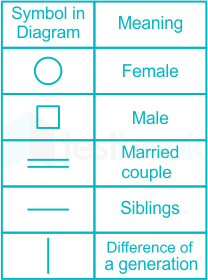
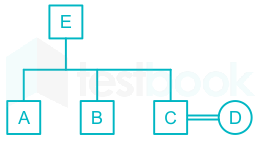
A is the brother of B, B is the brother of C, C is the husband of D and E is the father of A, then D is related to E as

  1. ((a))

    Daughter

  2. ((b))

    Daughter-in-law

  3. ((c))

    Sister-in-law

  4. ((d))

    Sister

Show Answer
Answer: ((b))

Daughter-in-law

According to given conditions,

D is daughter-in-law of E.

Hence, ‘daughter-in-law’ is the correct answer.

9

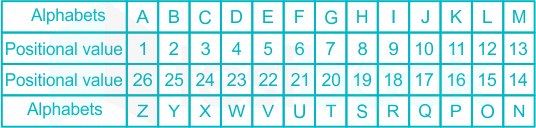
If in a certain code DECEMBER is written as ERMBCEDE, then which of the following month would be written for ERMBVENO?

  1. ((a))

    AUGUST

  2. ((b))

    SEPTEMBER

  3. ((c))

    OCTOBER

  4. ((d))

    NOVEMBER

Show Answer
Answer: ((d))

NOVEMBER

The pattern followed here is:

According to the alphabetical positions of the letters,

Similarly,

Hence, ‘NOVEMBER’ is the correct answer.

10

In the following series, what would be the value of X?

1, 1, 2, 3, 5, 8, X, 21

  1. ((a))

    12

  2. ((b))

    13

  3. ((c))

    14

  4. ((d))

    15

Show Answer
Answer: ((b))

13

The logic is:

1 + 1 = 2

1 + 2 = 3

2 + 3 = 5

3 + 5 = 8

5 + 8 = 13 = X

8 + 13 = 21

Hence, ‘13’ is the correct answer.

11

Which of the following was the main theme of Raisina Dialogue which was held during 14-16 January, 2020?

  1. ((a))

    Fluid Partnerships

  2. ((b))

    Multilateralism and multipolarity

  3. ((c))

    Navigating the Alpha Century

  4. ((d))

    None of the above

Show Answer
Answer: ((c))

Navigating the Alpha Century

The correct answer is Navigating the Alpha Century

  • The main theme of Raisina Dialogue is Navigating the Alpha Century.

Important Points

  • The fifth edition of the Raisina Dialogue was held from 14-16 January 2020 in New Delhi.
  • This is an annual geopolitical event, organised by the Ministry of External Affairs and Observer Research Foundation.
  • It is designed to explore prospects and opportunities for Asian integration as well as Asia’s integration with the larger world.
  • The Raisina Dialogue is a multilateral conference committed to addressing the most challenging issues facing the global community.
12

First Indian woman to win the World Rapid Chess Championship is ________.

  1. ((a))

    Koneru Humpy

  2. ((b))

    Judit Polgar

  3. ((c))

    Tania Sachdev

  4. ((d))

    None of the above

Show Answer
Answer: ((a))

Koneru Humpy

The correct answer is ​Koneru Humpy.

  • First Indian woman to win the World Rapid Chess Championship 2019 title is Koneru Humpy.

Important Points

  • Koneru Humpy
  • She is India's youngest woman chess grandmaster player.
  • In 2003, she was awarded Arjuna Award while in 2007, she was awarded Padma Shri.
  • In 2015, she won a bronze medal in Women's World Team Chess Championship.

Additional Information

  • Judit Polgar is a Hungarian chess player.
  • She is generally considered the strongest female chess player of all time.
  • Tania Sachdev is an Indian chess player.
13

According to 'Sustainable Development Goal (SDG) India Index, 2019' recently released by NITI Aayog, which State holds the first position?

  1. ((a))

    Uttar Pradesh

  2. ((b))

    Bihar

  3. ((c))

    Jharkhand

  4. ((d))

    Kerala

Show Answer
Answer: ((d))

Kerala

The correct answer is Kerala.

  • The SDG India Index 2019-20, developed by NITI Aayog, was launched on December 30th, 2019.
  • Kerala achieved the first rank in the composite SDG Index 2019 with a score of 70, followed by Himachal Pradesh at 69. Andhra Pradesh, Telangana, and Tamil Nadu ranked at the third position with the score of 67.

Additional Information

  • The year 2020 will be the 5th anniversary of the adoption of SDGs by 193 countries at the UN General Assembly.
  • The SDG India Index has been developed in collaboration with the Ministry of Statistics and Programme Implementation (MoSPI), the United Nations, and the Global Green Growth Institute.
14

Indian Navy has launched 'Operation Vanilla' in January, 2020, in which of the following countries?

  1. ((a))

    Sri Lanka

  2. ((b))

    Maldives

  3. ((c))

    Madagascar

  4. ((d))

    Oman

Show Answer
Answer: ((c))

Madagascar

The correct answer is Madagascar.

  • The Indian Navy launched ‘Operation Vanilla’ in January 2020 to provide relief and assistance to the cyclone-hit population of Madagascar.
  • Indian Navy also diverted a large amphibious ship INS Airavat carrying clothing, medicines, and other relief material to provide assistance and support in the relief operations.

Additional Information

  • The name of Cyclone was Cyclone  Diane.
  • It is a tropical cyclone.
  • Its origin is North-west off the coast of Mauritius in the South-western Indian Ocean.
15

Which of the following countries took over the charge of the President of G-20 countries from Japan in December 2019?

  1. ((a))

    Russia

  2. ((b))

    China

  3. ((c))

    Saudi Arabia

  4. ((d))

    Brazil

Show Answer
Answer: ((c))

Saudi Arabia

The correct answer is Saudi Arabia.

Important Points

  • The Kingdom of Suadi Arabia assumed the G-20 Presidency from Japan in December 2019, leading up to the Leaders Summit to be held in Riyadh on 21-22 November 2020.

Additional Information

  • The G-20 comprises:
  • 19 countries and the European Union.
  • The 19 Countries are Argentina, Australia, Brazil, Canada, China, France, Germany, India, Indonesia, Itlay, Japan, Republic of Korea Mexico, Russia, Saudi Arabia, South Africa, Turkey, The United Kingdom, and the United State.
  • The 2019 G-20 Meeting was the 14th meeting of the G-20.
  • It was based on a discussion on subjects like trade, energy, climate changes, etc.
  • Along with that India also participated in two parallel tri-lateral i,e the Russia-India-China (RIC) and Japan-U.S.- India(JAI) and an Informal BRICS meeting.
  • On the sidelines of the Summit, India and Japan signed an exchange of letters of intent on the Ahmedabad-Kobe Sister City Partnership.
  • India and Indonesia set an ambitious USD 50 billion targets for bilateral trade over the next six-year.
16

Match List-I with List-II and select the correct answer from the codes given below the lists:

List – I (Power Plant)List – II (Type of Energy)
A. Chamera1. Atomic power
B. Gwal Pahari2. Thermal power
C. Kundankulam3. Hydroelectricity
D. Patratu4. Solar power
  1. ((a))

    A-1, B-2, C-3, D-4

  2. ((b))

    A-2, B-4, C-3, D-1

  3. ((c))

    A-4, B-3, C-2, D-1

  4. ((d))

    A-3, B-4, C-1, D-2

Show Answer
Answer: ((d))

A-3, B-4, C-1, D-2

The correct answer is A-3, B-4, C-1, D-2.

  • Chamera Dam supports the hydroelectricity project in the region. It impounds the River Ravi and located near the town of Dalhousie, in the Chamba district in the state of Himachal Pradesh in India.
  • Gwal Pahari Solar power plant is situated in a city of Gurgaon Mandal in the Gurgaon District of Haryana state, India.
  • Kudankulam Nuclear Power Plant is the largest nuclear power station in India.
  • It is situated in Koodankulam in the Tirunelveli district of the southern Indian state of Tamil Nadu.
  • Patrata Thermal Power Station is a coal-based thermal power plant located near Patratu town in Ramgarh district in the Indian state of Jharkhand.
17

Given below are two statements, one labelled as Assertion (A) and the other Reason (R).

Assertion (A) : According to Geological Survey of India the total reserve of all grade coal in India is 293.50 billion tonnes.

Reason (R) : More than half of total proved reserve of coal of the country is found in two states - Jharkhand and Odisha.

Choose the correct answer from the codes given below:

Codes:

  1. ((a))

    Both (A) and (R) are true and (R) is the correct explanation of (A)

  2. ((b))

    Both (A) and (R) are true but (R) is not correct explanation of (A)

  3. ((c))

    (A) is true (R) is false

  4. ((d))

    (A) is false but (R) is true

Show Answer
Answer: ((d))

(A) is false but (R) is true

The Correct answer is (A) is false but (R) is true.

  • A Cumulative total of 319.02 Billion tonnes of all grade coal reserves have so far been estimated in the country on 1.4.2018.
  • Subsequent detailed exploration in selected blocks, where boreholes are less than 400 meters apart, upgrade the resources into a more reliable 'Proved/Measured' category'.
  • More than half of the total proved reserve of coal of the country is found in two Staes- Jharkhand and Odisha:-
  • Jahrkhand - 45563 Million Tons
  • Odisha- 37391 Million Tons


Assertion (A): According to Geological Survey of India the total reserve of all grade coal in India is 293.50 billion tones.

It is false.

Reason (R): More than half of total proved reserve of coal of the country is found in two states - Jharkhand and Odisha.

It is true.

Hence, (A) is false but (R) is true.

18

Which one of the following States of India ranks second in terms of population and third in terms of area (2011 census)?

  1. ((a))

    Uttar Pradesh

  2. ((b))

    Madhya Pradesh

  3. ((c))

    Andhra Pradesh

  4. ((d))

    Maharashtra

Show Answer
Answer: ((d))

Maharashtra

The Correct answer is Maharashtra.

  • Census is the process of collecting, analyzing, evaluating publishing, and disseminating statistical data regarding the population.
  • It has been conducted every 10 years.
  • Census 2011 was the 15th census of India and the 7th census after Independence.
  • The motto of the census 2011 was "Our Census, Our Future".
  • Census 2011 was held in two phases:
  • Houselisting & Housing Census
  • Population Enumeration.
  • India's total population stands at 1.21 billion, which is 17.7 percent more than the last decade, and the growth of females was higher than that of males- 17.1 percent.
  • Increase in Population during 2001-2011 is 181 Million.
  • India's population grew by 17.7 percent during 2001-11, against 21.5 percent in the previous decade.
  • Most Pupulated State as Per Census 2011 is Uttarpradesh and Least populated State is Sikkim.
  • Second most Populated state as per Census 2011 is Maharashtra.


The Indian States and their Population according to census 2011:


StatePopulationAreaPopulation Density
Uttar Pradesh199,812,341240,928 km2828/km2
Maharashtra112,372,972307,713 km2365/km2
Bihar103,804,63794,163 km21,102/km2
West Bengal91,347,73788,752 km21,029/km2
Madhya Pradesh72,597,565308,245 km2236/km2
Tamil Nadu72,138,958130,058km2555/km2
Rajasthan68,621,012342,239 km2201/km2
Karnataka61,130,704191,791 km2319/km2
Gujarat60,383,628196,024 km2308/km2
Andhra Pradesh49,386,799162,968 km2303/km2
Odisha41,947,358155,707 km2269/km2
Telangana35,286,757114,840 km2307/km2
Kerala33,387,67738,863 km2859/km2
Jharkhand32,966,23879,714 km2414/km2
Assam31,169,27278,438 km2397/km2
Punjab27,704,23650,362 km2550/km2
Chattisgarh25,540,196135,191 km2189/km2
Haryana25,353,08144,212 km2573/km2
Jammu & Kashmir12,548,926222,236 km257/km2
Uttarakhand10,116,75253,438 km2189/km2
Himachal Pradesh6,864,60255,673 km2123/km2
Tripura3,671,03210,486 km2350/km2
Meghalaya2,964,00722,429 km2132/km2
Manipur2,721,75622,327 km2122/km2
Nagaland1,980,60216,579 km2119/km2
Goa1,457,7233,702 km2394/km2
Arunachal Pradesh1,382,611
Mizoram1,091,01421,081 km252/km2
Sikkim607,6887,096 km286/km2
19

Match List-I with List-II and select the correct answer from the codes given below the lists:

List – I (Tribes)List – II (Location)
A. Jarawas1. Uttar Pradesh
B. Kukkis2. Madhya Pradesh
C. Tharus3. Manipur
D. Gonds4. Andaman and Nicobar
  1. ((a))

    A-2, B-3, C-1, D-4

  2. ((b))

    A-4, B-3, C-1, D-2

  3. ((c))

    A-3, B-4, C-2, D-1

  4. ((d))

    A-1, B-2, C-3, D-4

Show Answer
Answer: ((b))

A-4, B-3, C-1, D-2

The correct answer is A-4, B-3, C-1, D-2.

Key Points

List – I (Tribes)List – II (Location)
A. Jarawas4. Andaman and Nicobar
B. Kukkis3. Manipur
C. Tharus1. Uttar Pradesh
D. Gonds2. Madhya Pradesh

Additional Information

  • Jarawas : 
  • The Jarawas are an indigenous people of the Andaman Islands in India.
  • They are recognised as an Adivasi group in India.
  • Kukkis:
  • Kukkis are Southeast Asian people living in the Mizo Hills on the border between India and Myanmar.
  • They are mostly located in Manipur, Nagaland and Mizoram.
  • Tharus:
  • The Tharu community belongs to the Terai lowlands, amidst the Sivaliks of lower Himalayas.
  • They are located in southern Nepal and in the state of Uttar Pradesh in India.
  • Gonds: 
  • Gonds are one of the largest tribal groups in the world.
  • They are mostly live in Madhya Pradesh, Chhattisgarh, Maharashtra, Andhra Pradesh, Gujarat, Jharkhand, Karnataka, Telangana, West Bengal and Odisha.
20

Match List-I with List-II and select the correct answer from the codes given below the lists:

List – I (Biosphere Reserve)List – II (States of India)
A. Nokrek1. Assam
B. Manas2. Kerala
C. Similipal3. Meghalaya
D. Agasthyamalai4.Odisha
  1. ((a))

    A-3, B-4, C-2, D-1

  2. ((b))

    A-4, B-2, C-3, D-1

  3. ((c))

    A-3, B-1, C-4, D-2

  4. ((d))

    A-2, B-3, C-4, D-1

Show Answer
Answer: ((c))

A-3, B-1, C-4, D-2

The correct answer is A-3, B-1, C-4, D-2.​

List – I (Biosphere Reserve)List – II (States of India)
A. Nokrek3. Meghalaya
B. Manas1. Assam
C. Similipal4.Odisha
D. Agasthyamalai2. Kerala

Additional Information 

  • Nokrek Biosphere Reserve
  • The Nokrek Biosphere Reserve is located in the northeast of India on the Tura Range, which forms part of the Meghalaya Plateau.
  • Nokrek is the highest peak of the Garo hills.
  • Manas Biosphere Reserve
  • Manas Wildlife Sanctuary is located in the state of Assam.
  • The Manas Wildlife Sanctuary was tagged as World Heritage Site in 1985.
  • Manas is famous for its population of the Wild water buffalo.
  • Similipal Biosphere Reserve
  • The Similipal National Park is located in Mayurbhanj district of Odisha.
  • The highest peak in the Similipal hill range is Khairiburu.
  • Similipal National Park is also a Tiger Reserve.
  • It is part of the UNESCO World Network of Biosphere Reserve since 2009.
  • Agasthyamalai  Biosphere Reserve
  • It is situated at the southern-most end of the Western Ghats and spread over two southern states Kerala and Tamil Nadu.
  • It was established in 2001.
  • It is named after Agastya Mala peak.
  • In March 2016, it was included in the World Network of Biosphere Reserves of UNESCO.
21

With reference to the urbanization in India, which of the following statement(s) is/are correct?

  1. According to the 2011 census more than 60% of total population of the country resides in category 1 cities.
  2. There were 53 urban agglomerations with million plus population each in 2011 in the country.

Select the correct answer from the codes given below:

  1. ((a))

    1 only

  2. ((b))

    2 only

  3. ((c))

    Both 1 and 2

  4. ((d))

    Neither 1 nor 2

Show Answer
Answer: ((b))

2 only

The Correct answer is 2 only.

  • As per Census 2011 264.9 Million people, constituting 70% of the total urban population lives in Category 1 Cities( The UAs/Town which has at least 1,00,000 persons as a population is categorized as Class 1 City.)
  • Out of 468 UAs/Towns belonging to Class 1 Category, 53 Cities each has a population of one million or above each known has Million Plus UAs/Cities.
  • 160.7 million persons or 42.6% of the urban population lives in these Million plus UAs/Cities.
22

Which of the following States of India has the highest number of male child (0-6 years) per 100 girl child as per 2011 census?

  1. ((a))

    Arunachal Pradesh

  2. ((b))

    Punjab

  3. ((c))

    Haryana

  4. ((d))

    West Bengal

Show Answer
Answer: ((c))

Haryana

The correct answer is Haryana

  • The Sex Ratio is defined as the number of females per 1000 males in the age group 0-6 years.
  • In the census 2001, the child sex ratio of India was 927 which decreases to 919 in the census 2011.
  • As per the Census 2011, Arunachal Pradesh has the highest child sex retio among the India Staes i.e 972 per thousand male children.
  • Haryana Has the lowest child sex ratio i.e 834 per thousand male children.
  • Among the Union Territories of India Andaman and Nicobar Island has the highest child sex ratio i.e 968 per thousand male.
  • The child Sex Ratio (0-6) of Indian states is given below:-


States/ UTsChild sex ratio (0-6) as per Census 2011
1. Jammu & Kasmir862
2. Himachal Pradesh909
3. Punjab846
4. Chandigarh880
5. Uttarakhand890
6. Haryana834
7. NCT of Delhi871
8. Rajasthan888
9. Uttarpradesh902
10. Bihar935
11. Sikkim957
12. Arunachal Pradesh972
13. Nagaland943
14. Manipur936
15. Mizoram970
16. Tripura957
17. Meghalaya970
18. Assam962
19. West Bengal956
20. Jharkhand948
21. Odisha941
22. Chhattisgarh969
23. Madhya Pradesh918
24. Gujrat890
25. Daman $ Diu904
26. Dadara & Nagar Haveli926
27. Maharashtra894
28. Andhra Pradesh936
29. Karnataka948
30. Goa942
31. Lakshadweep911
32. Kerela964
33. Tamil Nadu943
34. Puducherry967
35. A.& N.Islands968
23

Loss of water from the body through perspiration depends on

  1. ((a))

    Atmospheric temperature only

  2. ((b))

    Atmospheric humidity only

  3. ((c))

    Both (1) and (2)

  4. ((d))

    None of (1) and (2)

Show Answer
Answer: ((c))

Both (1) and (2)

The Correct answer is Both (1) and (2).

  • Perspiration is the primary mechanism by which Our body Regulates its temperature. when the outside temperature of the human body increased the body undergoes a series of changes to help maintain a cool temperature.
  • When the atmospheric temperature is high or humidity is high in the atmosphere in both conditions our body temperature goes high and our body starts sweating through the excretion of water and the body loses water.
  • When the atmospheric temperature is high and humidity is low, the water excreted in sweating instantly evaporates in the atmosphere and we feel relief from temperature.
  • When Humidity is high, the air holds more moisture, it is harder for the air to absorb the sweat from our skin. Resulting we continue to sweat, and instead, of feeling any relief, we simply feel hot, sticky, and uncomfortable.
24

Which of the following elements is NOT a micronutrient in plants?

  1. ((a))

    Iron

  2. ((b))

    Manganese

  3. ((c))

    Copper

  4. ((d))

    Magnesium

Show Answer
Answer: ((d))

Magnesium

The correct answer is Magnesium.

  • Plants required about seventeen essential nutrients  to plant growth and health which can be grouped into two classes based on the amount required:
  1. Macronutrient- Require in large amounts.
  2. Micronutrient- Require in a Small amount.


Essential MacronutrientEssential Micronutrient
- carbon - Hydrogen - Oxygen - Nitrogen - Phosphorus - Potassium - Sulfur - Magnesium - Calcium- Iron - Molybdenum - Boron - Chlorine - Copper - Zinc - Nickel - Manganese
25

Which of the following statements is NOT correct about haemoglobiin?

  1. ((a))

    It is red coloured

  2. ((b))

    It is the carrier of oxygen from lungs to the cells

  3. ((c))

    It is slightly acidic

  4. ((d))

    It carries carbon dioxide away from the tissues to the lungs

Show Answer
Answer: ((c))

It is slightly acidic

It is slightly acidic is not correct.

  • Haemoglobin is a protein found in red blood cells.
  • It gives blood its red colour.
  • The pH of haemoglobin ranges from 7.1 - 7.4. Hence, haemoglobin is slightly basic in nature.
  • It is the carrier of oxygen from the lungs to the cells.
  • It carries carbon dioxide away from the tissues to the lungs.

Additional Information

  • The iron compound found in Haemoglobin is Haematin.
  • Anaemia is caused due to deficiency in haemoglobin.
26

Measurement of glycosylated haemoglobin (HbA1c) in the blood is useful for the management of ________.

  1. ((a))

    Anaemia

  2. ((b))

    Hemophilia

  3. ((c))

    Diabetes mellitus

  4. ((d))

    High blood pressure

Show Answer
Answer: ((c))

Diabetes mellitus

The correct answer is Diabetes mellitus.

  • Measurement of glycosylated haemoglobin (HbA1c) in the blood is useful for the management of Diabetes mellitus.
  • Glycated haemoglobin (HbA1c) was initially identified as “unusual” haemoglobin in patients.

Key Points 

  • Haemoglobin is the substance inside red blood cells that carries oxygen to the cells of the body. Glucose molecules in the blood normally become stuck to haemoglobin molecules.
  • This means the haemoglobin has become glycosylated. As a person's blood sugar becomes higher, more of the person's haemoglobin becomes glycosylated. The glucose remains attached to the haemoglobin for the life of the red blood cell, or about 2 to 3 months.
  • The glycosylated haemoglobin test is an important blood test to diagnose diabetes.
27

Which of the following duties has/have been prescribed by the Indian Constitution as Fundamental Duties?

  1. To defend the country.
  2. To pay income tax.
  3. To preserve the rich heritage of our composite culture.
  4. To safeguard the public property.

Select the correct answer using the codes given below:

  1. ((a))

    1 and 2

  2. ((b))

    2 and 4

  3. ((c))

    1, 2 and 4

  4. ((d))

    1, 3 and 4

Show Answer
Answer: ((d))

1, 3 and 4

The correct answer is 1, 3, and 4.

  • To pay income tax is not a Fundamental Duties. Hence statement 2 is incorrect.
  • There are 11 Fundamental Duties in our Constitution.
  • The Fundamental Duties were added in 1976, upon recommendation of the Swaran Singh Committee.
  • It was constituted by Indira Gandhi just after the declaration of national emergency.
  • It was added to the Constitution by the 42nd Amendment in 1976.
  • The original 10 duties were then increased to 11 by the 86th Amendment in 2002.

Key Points

  • Fundamental Duties:
  1. To oblige with the Indian Constitution and respect the National Anthem and Flag.
  2. To cherish and follow the noble ideas that inspired the national struggle for freedom.
  3. To protect the integrity, sovereignty, and unity of India.
  4. To defend the country and perform national services if and when the country requires. Hence statement 1 is correct.
  5. To promote the spirit of harmony and brotherhood amongst all the people of India and renounce any practices that are derogatory to women.
  6. To cherish and preserve the rich national heritage of our composite culture. Hence statement 3 is correct.
  7. To protect and improve the natural environment including lakes, wildlife, rivers, forests, etc.
  8. To develop scientific temper, humanism, and spirit of inquiry.
  9. To safeguard all public property. Hence statement 4 is correct.
  10. To strive towards excellence in all genres of individual and collective activities.
  11. To provide opportunities for education to children between 6-14 years of age, and duty as parents to ensure that such opportunities are being awarded to their child.
28

Given below are two statements, one labelled as Assertion (A) and the other as Reason (R):

Assertion (A): The Council of Ministers in India is jointly accountable before Lok Sabha and Rajya Sabha.

Reason (R): Members of both Lok Sabha and Rajya Sabha are eligible to become Ministers in Union Government.

Select the correct answer from the codes given below:

  1. ((a))

    Both  (A) and (R) are true and (R) is the correct explanation of (A)

  2. ((b))

    Both (A) and (R) are true but (R) is not the correct explanation of (A)

  3. ((c))

    (A) is true (R) is false

  4. ((d))

    (A) is false but (R) is true

Show Answer
Answer: ((d))

(A) is false but (R) is true

The correct answer is (A) is false but (R) is true.

  • Article 75 states that The Council of Ministers shall be collectively responsible to the House of the People i.e Lok Sabha. Hence Assertion (A) is wrong.
  • It is true that the Members of both Lok Sabha and Rajya Sabha are eligible to become Ministers in Union Government.
  • Article 75 of the Indian Constitution:
  • The Prime Minister shall be appointed by the President and the other Ministers shall be appointed by the President on the advice of the Prime Minister.
  • The Minister shall hold office during the pleasure of the President.
  • The Council of Ministers shall be collectively responsible to the House of the People.
  • Before a Minister enters upon his office, the President shall administer to him the oaths of office and of secrecy according to the forms set out for the purpose in the Third Schedule.
  • Members of both Lok Sabha and Rajya Sabha are eligible to become Ministers in Union Government. Hence Assertion (R) is correct.
  • Minister who for any period of six consecutive months is not a member of either House of Parliament shall at the expiration of that period cease to be a Minister.
  • The salaries and allowances of Ministers shall be such as Parliament may from time to time by law determine according to Second Schedule.
29

Arrange the following Committees on Panchayati Raj in chronological order and select the correct answer from the codes given below:

  1. Rao Committee
  2. L. M. Singhvi Committee
  3. B. R. Mehta Committee
  4. Ashok Mehta Committee
  1. ((a))

    2, 3, 1, 4

  2. ((b))

    1, 3, 4, 2

  3. ((c))

    3, 4, 1, 2

  4. ((d))

    4, 3, 2, 1

Show Answer
Answer: ((c))

3, 4, 1, 2

The correct answer is 3, 4, 1, 2.

  • Balwant Rai Mehta Committee - 1957
  • Ashok Mehta Committee -1977
  • G V K Rao Committee -1985
  • L M Singhvi Committee -1986

Additional Information

  • Balwant Rai Mehta Committee (1957): The committee submitted its report in November 1957, in which the term ‘democratic decentralization‘ first appears. The important recommendations are:
  • Transfer of resources and power to these bodies to be ensured.
  • District Collector to be the chairman of Zila Parishad.
  • Establishment of a three-tier Panchayati Raj system – gram panchayat at village level (direct election), Panchayat Samiti at the block level, and Zila Parishad at the district level (indirect election).
  • Rajasthan (1959) adopted the system first, followed by Andhra Pradesh in the same year.
  • Ashok Mehta Committee (1977): The committee was constituted by the Janata government of the time to study Panchayati Raj institutions. The important recommendations are:
  • Constitutional recognition to be given to Panchayati Raj institutions.
  • A minister for Panchayati Raj to be appointed by the state council of ministers.
  • Zila Parishad to be made responsible for planning at the state level.
  • Compulsory powers of taxation to be given to these institutions.
  • Political parties should participate at all levels in the elections.
  • Three-tier system to be replaced by a two-tier system.
  • **G V K Rao Committee (1985): **​The important recommendations of the G V K Rao Committee are:
  • Regular elections to be held.
  • Post of DDC (District Development Commissioner) to be created acting as the chief executive officer of the Zila Parishad.
  • Zila Parishad to be given prime importance and all developmental programs at that level to be handed to it.
  • L M Singhvi Commitee (1986): The committee was constituted by the Rajiv Gandhi government on ‘Revitalisation of Panchayati Raj institutions for Democracy and Development. ​The important recommendations are:
  • Nyaya Panchayats to be established for clusters of villages.
  • Constitutional recognition for Panchayati Raj institutions.
30

Which Part of the Constitution of India describes the financial relations between centre and States?

  1. ((a))

    Part X

  2. ((b))

    Part XI

  3. ((c))

    Part XII

  4. ((d))

    Part XIII

Show Answer
Answer: ((c))

Part XII

The correct answer is Part XII.

  • Article 268 to 293 in Part XII deals with the financial relations between Centre and States.
  • The constitution of India has divided the legislative, executive, and financial powers between the centre and the states.
  • It gives the constitution a federal character whereas the judiciary is integrated into a hierarchical structure.

Key Points

  • The center-state relations are divided into three parts, which are mentioned below:
  • Legislative Relations (Article 245 - 255)
  • Administrative Relations (Article 256 - 263)
  • Financial Relations (Article 268 - 293)

Additional Information

  • Financial Relations (Article 268-293): The Constitution has provided the union government and the state governments with independent sources of revenue
  • The parliament has exclusive power to levy taxes on the subjects mentioned in the Union List.
  • The state legislatures have exclusive power to levy taxes on the subjects mentioned in the State List.
  • Both the parliament and the state legislature are empowered to levy taxes on the subjects mentioned in the Concurrent List.
  • The parliament has exclusive power to levy taxes on matters related to the residuary subjects.
31

Carpenter A makes 1 chair in 6 hours, Carpenter B makes 1 chair in 7 hours and Carpenter C makes 1 chair in 8 hours. If each Carpenter works 8 hours per day, how many chairs will be made in 21 days?

  1. ((a))

    64

  2. ((b))

    69

  3. ((c))

    73

  4. ((d))

    78

Show Answer
Answer: ((c))

73

Given:

Carpenter A makes 1 chair in 6 hours, Carpenter B makes 1 chair in 7 hours and Carpenter C makes 1 chair in 8 hours.

Formula Used:

M × D = total work; M = number of men, D = number of days

Calculation:

⇒ number of chairs made by carpenter A in 8 hr = 8/6 = 4/3 

⇒ number of chairs made by carpenter A working 8 hr a day in 21 days = 4/3 × 21 = 28

⇒ number of chairs made by carpenter B in 8 hr = 8/7 unit

⇒ number of chairs made by carpenter B working 8 hr a day in 21 days = 8/7 × 21 = 24

⇒ number of chairs made by carpenter C in 8 hr = 1 unit

⇒ number of chairs made by carpenter C working 8 hr a day in 21 days = 21 

⇒ total number of chairs made by them = (28 + 24 + 21) = 73

32

Fill in the blank using one of the correct options given below.

BCDF : GHIK : : LMNP : _________

  1. ((a))

    QRST

  2. ((b))

    QRTS

  3. ((c))

    QRSU

  4. ((d))

    QRSV

Show Answer
Answer: ((c))

QRSU

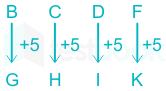
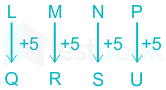
The pattern followed here is:

According to the alphabetical positions of the letters,

Similarly,

Hence, ‘QRSU’ is the correct answer.

33

If the Republic Day of India in 1980 fall on Saturday, 'X', was born on March 3, 1980 and 'Y' is 4 days older to 'X', then what will be the day of 'Y's birth?

  1. ((a))

    Wednesday

  2. ((b))

    Thursday

  3. ((c))

    Friday

  4. ((d))

    None of these

Show Answer
Answer: ((b))

Thursday

Republic Day of India in 1980 fall on Saturday

26.01.1980 – Saturday

03.03.1980 – X was born

Y is 4 days older to X

So, Y was born on 28th February.

Number of odd days between 26th January to 28th February = 5 + 0

= 5

5 days after Saturday is Thursday.

Hence, ‘Thursday’ is the correct answer.

34

Which one of the following number can be placed at the sign of interrogation (?) ?

511161
643032
35?43
  1. ((a))

    25

  2. ((b))

    27

  3. ((c))

    32

  4. ((d))

    37

Show Answer
Answer: ((b))

27

The logic is:

1st row: (5 × 1) + (6 × 1) = 11

2nd row: (6 × 4) + (3 × 2) = 30

Similarly,

3rd row: (3 × 5) + (4 × 3) = ?

→ 15 + 12 = ?

→ 27 = ?

Hence, ‘27’ is the correct answer.

35

Five years back, the ratio of the ages of A and B was 4 : 5. If the present age of A is 29 years, then the present age of B is

  1. ((a))

    31 years

  2. ((b))

    33 years

  3. ((c))

    34 years

  4. ((d))

    35 years

Show Answer
Answer: ((d))

35 years

Five years back, the ratio of ages of A and B was 4 : 5.

Let us express the age of A and B in terms of ‘a’.

So, A = 4a years and B = 5a years.

Present age of A is 29 years.

So, 5 years back, A’s age was (29 – 5) = 24 years.

∴ 4a = 24

→ a = 6

So, age of B = 5a = 5 × 6 = 30 

Five years back age of B was 30 years.

So, present age of B = 30 + 5 = 35 years.

Hence, ‘35’ is the correct answer.

36

If x = 2 + 1/3 + 2/3, then the value of (x^3 - 6x^2 + 6x) is

  1. ((a))

    -9

  2. ((b))

    1

  3. ((c))

    -4

  4. ((d))

    3

Show Answer
Answer: ((a))

-9

Given:

x = 2 + 1/3 + 2/3 = 3

Calculation:

(x^3 - 6x^2 + 6x)    .....(i)

putting the value of x = 3 in equation (i), we get

⇒ 33 - 6 × 32 + 6 × 3

⇒ 27 - 54 + 18

⇒ -9

∴ required value = -9

37

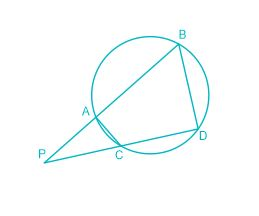
Two chords AB and CD of a circle intersect at a point P outside the circle. If ∠PAC = 50° , then ∠PDB is equal to 

  1. ((a))

    90° 

  2. ((b))

    130°

  3. ((c))

    50°

  4. ((d))

    None of the above

Show Answer
Answer: ((c))

50°

Given:

Two chords AB and CD of a circle intersect at a point P outside the circle and ∠PAC = 50°.

Concept Used

for a cyclic quadrilateral, sum of opposite angle is always 180°

Calculation:

⇒ ∠PAC + ∠BAC = 180°

⇒ ∠BAC = 180° - 50° = 130°

⇒ ∠PDB + ∠BAC = 180°

⇒ ∠PDB = 180° - 130° = 50°

∴ required value = 50°

38

If the H.C.F. and L.C.M. of two numbers are 21 and 84 respectively and the ratio of numbers is 1:4, then the larger number in these two numbers will be

  1. ((a))

    108

  2. ((b))

    84

  3. ((c))

    48

  4. ((d))

    36

Show Answer
Answer: ((b))

84

Given:

the H.C.F. and L.C.M. of two numbers are 21 and 84 respectively and the ratio of numbers is 1:4

Formula Used:

H.C.F. × L.C.M. = product of two number

Calculation:

Let the smaller and larger number be 'x' and '4x' respectively

⇒ x × 4x = 21 × 84

⇒ 4x2 = 21 × 84

⇒ x = 21

∴ required larger number = 4x = 21× 4 = 84

39

Which State of India ranked top in the Good Governance Index among big states group in the country in the year 2019?

  1. ((a))

    Kerala

  2. ((b))

    Tamil Nadu

  3. ((c))

    Maharashtra

  4. ((d))

    Andhra Pradesh

Show Answer
Answer: ((b))

Tamil Nadu

The correct answer is Tamil Nadu.

  • Tamil Nadu topped in Good Governance Index 2019.
  • The States and Union Territories were divided into 3 groups namely Big states, North East and hill states and union territories.

Key Points

  • Tamil Nadu topped in Good Governance Index in the “Big States” category.
  • It was followed by Maharashtra, Karnataka, Chhattisgarh and Andhra Pradesh.
  • In the North East and hill states category, Himachal Pradesh ranked first.
  • It was followed by Uttarakhand, Tripura, Mizoram and Sikkim.
  • In the union territories category, Pondicherry has got the first position.
  • It was followed by Chandigarh, Delhi, Daman and Diu, Andaman and Nicobar Islands, Dadra and Nagar Haveli and Lakshadweep.
40

Why are the indirect taxes termed regressive taxing mechanism?

  1. ((a))

    They are charged at higher rate than direct taxes

  2. ((b))

    They are charged at the same rates for all income groups

  3. ((c))

    They are charged at a lower rate than direct taxes

  4. ((d))

    None of these

Show Answer
Answer: ((b))

They are charged at the same rates for all income groups

The correct answer is They are charged the same rates for all income groups.

Key Points

  • A regressive tax is a type of tax that is levied regardless of income, in which low and high-income earners pay the same amount.
  • This kind of tax is a bigger burden on low-income earners than high-income earners.
  • The indirect taxes are paid by everyone if anyone buys any product irrespective of financial conditions.
  • Regressive tax and Indirect taxes both are levied on everyone.
  • Some examples of indirect taxes include sales tax, entertainment tax, excise duty, etc.
41

India aims to achieve the 5 trillion dollar economy target by ________.

  1. ((a))

    2022 A.D.

  2. ((b))

    2024 A.D.

  3. ((c))

    2025 A.D.

  4. ((d))

    2026 A.D.

Show Answer
Answer: ((b))

2024 A.D.

The correct answer is 2024 A.D .

  • India aimed to achieve the 5 trillion dollar economy target by 2024 A.D.
  • In May 2019, the Narendra Modi-led government set a target of taking the economy to USD 5 trillion over the next five years.

Key Points

  • The economy of India 2020:
  • The Indian economy shrank 23.9% in the second quarter of 2020.
  • It is the biggest contraction on record, as India imposed a coronavirus lockdown.
  • Still, India remains the third worst-affected country in the world by the pandemic.
  • Construction (-50.3%), hotels and transportation (-47%) and manufacturing (-39.3%) recorded the biggest falls.
  • Mining and quarrying (-23.3%); finance, real estate, and business services (-5.3%); and utilities (-7%) also declined while the farm sector grew +3.4%.

Additional Information

  • GDP is the total monetary value of all final goods and services produced in an economy within a year.

Note: This question is from UPPSC BEO Previous Year Paper (Held On 16 Aug 2020).

  • In 2019, Prime Minister Narendra Modi envisioned making India a $5 trillion economy and global powerhouse by 2024-25.
  • Chief Economic Adviser (CEA) V. Anantha Nageswaran on June 14, 2022, said India would become a $5 trillion economy by 2026-27 and $10 trillion by 2033-34.
42

Which one of the following statements about the 15th Fifteenth Finance Commission is NOT correct?

  1. ((a))

    The 15th Fifteenth Finance Commission was appointed by the Government of India in November 27, 2017.

  2. ((b))

    Sri N.K. Singh is its Chairman.

  3. ((c))

    The recommendations of the commission will cover the five year period 2021-26.

  4. ((d))

    The commission has been asked to submit its report by August 30, 2020.

Show Answer
Answer: ((d))

The commission has been asked to submit its report by August 30, 2020.

The correct answer is option 4.

Key Points

  • The Finance Commission is a constitutional body formed by the President of India to give suggestions on center-state financial relations.
  • The chairman of the 15th Finance Commission of India N.K. Singh. Hence, option 2 is correct.
  • The Fifteenth Finance Commission was constituted on 27 November 2017 against the backdrop of the abolition of the Planning Commission. Hence, option 1 is correct.
  • 15th Finance Commission submits its Report for 2021-22 to 2025-26 to President Ram Nath Kovind by October 30, 2020. Hence, option 3 is correct and option 4 is NOT correct.
43

Arrange the name of the following Pallava rulers according to their reign in correct chronological order and select the correct answer from the codes given below:

1. Parameshvaravarman I 2. Narsinghvarman I 3. Nandivarman II 4. Mahendravarman I

  1. ((a))

    4, 2, 1, 3

  2. ((b))

    4, 3, 1, 2

  3. ((c))

    1, 3, 2, 4

  4. ((d))

    3, 2, 1, 4

Show Answer
Answer: ((a))

4, 2, 1, 3

The correct answer is 4, 2, 1, 3.

  • Mahendravarman I (600 AD – 630 AD): 
  • Succeeded by Simhavishnu.
  • Composed Vichitrachita and Mahavilasa Prahasana.
  • Introduced rock-cut temple architecture.
  • Was a Jain who converted to Saivism.
  • Died in battle with the Chalukyas.
  • Narsinghvarman I (630 AD – 668 AD):
  • Also known as Mamallan (great wrestler), and Mamallapuram (Mahabalipuram) was named after him.
  • Defeated and killed Pulakesin II in 642 AD.
  • Sent a naval expedition to Sri Lanka.
  • Hiuen Tsang visited the Pallava kingdom during his reign.
  • Paramesvaravarman I (670 – 695 AD):​
  • He was killed by the Chalukya king Vikramaditya II.
  • He was the last ruler of the Simhavishnu line of Pallavas.
  • Nandivarman II (731 – 796 AD):
  • He built the Vaikuntha-Perumal Temple.
44

Match List-I with List-II and select the correct answer from the codes given below the lists:

List – I (Kings)List – II (Queens)
A. Chandragupta I1. Duttadevi
B. Samudragupta2. Kubernaga
C. Chandragupta II3. Kumardevi
D. Kumargupta I4.Anantdevi
  1. ((a))

    A-3, B-1, C-2, D-4

  2. ((b))

    A-2, B-1, C-3, D-4

  3. ((c))

    A-1, B-2, C-3, D-4

  4. ((d))

    A-4, B-3, C-2, D-1

Show Answer
Answer: ((a))

A-3, B-1, C-2, D-4

The correct answer is ​A-3, B-1, C-2, D-4.

  • Chandragupta I (320 – 330 A.D.): 
  • ​He married Kumaradevi, a princess of Licchavis.
  • He was the first to be called Maharajadhiraja (the great king of kings).
  • Samudragupta (330-380 A.D.):
  • Greatest of the rulers of the Gupta dynasty.
  • The Allahabad Pillar inscriptions provide a detailed account of Samudragupta’s reign.
  • He issued gold and silver coins.
  • He married Duttadevi.
  • Known as Napoleon of India.
  • Chandragupta II (380-415 A.D.):
  • He married Kubernaga, a Naga princess of central India.
  • Famous Chinese pilgrim, Fahien visited India during the reign of Chandragupta II.
  • He defeated the Saka satraps of western India and assumed the title Sakari, meaning, ‘destroyer of Sakas’.
  • The Mehrauli Iron Pillar inscription mentions his extensive conquests.
  • He also called himself ‘Vikramaditya’.
  • Kumargupta I (415-455 A.D):
  • Kumaragupta was the son and successor of Chandragupta II.​
  • He laid the foundation of the Nalanda University.
  • He married Anantdevi.
45

Which of the following is NOT correctly matched?

NewspaperFounder
A. Al-HilalMaulana Abul Kalam Azad
B. New IndiaAnnie Besant
C. Tahzeeb-ul-AkhlaqMuhammad Ali Jinnah
D. Samvad KaumudiRaja Ram Mohan Roy
  1. ((a))

    A

  2. ((b))

    B

  3. ((c))

    C

  4. ((d))

    D

Show Answer
Answer: ((c))

C

The correct answer is C.

  • Tehzeeb-ul-Akhlaq was a journal published by the reformer Sir Syed Ahmed Khan.

Key Points 

NewspaperFounder
A. Al-Hilal- Established by Maulana Abul Kalam Azad - Founded: 1912
B. New India- Established by Annie Besant - Founded: 1914
C. Tahzeeb-ul-Akhlaq- Established by Sir Syed Ahmed Khan. - Founded between 1871 and 1897
D. Samvad Kaumudi- Established by Raja Ram Mohan Roy. - Founded: 1819

Additional Information

  • Abul Kalam Azad
  • Founded two journals Al-Hilal and Al-Balagh.
  • Supported the Khilafat Movement.
  • Became the youngest president of the INC at the age of 35.
  • Annie Besant
  • Born in London.
  • Launched the All India Home Rule League in 1916.
  • Founded the Theosophical Society - Adyar along with Henry Steel Olcott.
  • Raja Ram Mohan Roy
  • Known as the ‘Father of Modern India’.
  • Known as the ‘Father of the Bengal Renaissance’.
  • Abolished the practice of Sati.
  • Formed the Brahmo Samaj in 1828.
46

Match List - I with List-II and select the correct answer from the codes given below the lists:

List - IList – II
A. Taj-ul-Masir1. Ziauddin Barani
B. Khanzain-ul-Futuh2. Hasan Nizami
C. Tarikh-e-Mubarkashahi3.Amir Khusro
D. Fatwa-a-Jahandari4. Yahia bin Ahmad Sarhindi
  1. ((a))

    A-2, B-3, C-4, D-1

  2. ((b))

    A-2, B-4, C-1, D-3

  3. ((c))

    A-2, B-1, C-4, D-3

  4. ((d))

    A-1, B-3, C-4, D-2

Show Answer
Answer: ((a))

A-2, B-3, C-4, D-1

The correct answer is A-2, B-3, C-4, D-1.

Key Points

  • Taj-ul-Maasir was composed by Hasan Nizami in the Turkish language. 
  • Taj-ul-Maasir is the first official history of the Delhi Sultanate.
  • Khanzain-ul-Futuh was written by Amir Khusro in the Persian language.
  • The Tarikh-i-Mubarakshahi is written by Yahiya Bin Ahmad Bin Abdullah Sirhindi was in Persian.
  • It provides valuable information about the Sayyid rulers of Delhi.
  • Fatwa-i-Jahandari and Tarikh-i-Firozshahi are the two most valuable works written by Ziauddin Barani.
  • It is the book of political code which he would like the Muslim king to follow.
47

Match List-I with List-II and select the correct answer from the codes given below the lists:

List - IList - II
A. Andrew Frazer1. Famine Commission
B. Antony MacDonell2. Irrigation Commission
C. Colin Scott Moncrieff3. Police Commission
D. Thomas Robertson4. Railway Commission
  1. ((a))

    A-3, B-1, C-2, D-4

  2. ((b))

    A-3, B-2, C-1, D-4

  3. ((c))

    A-1, B-3, C-2, D-4

  4. ((d))

    A-1, B-3, C-4, D-2

Show Answer
Answer: ((a))

A-3, B-1, C-2, D-4

The correct answer is A-3, B-1, C-2, D-4.

List - IList - II
A. Andrew Frazer3. Police Commission
B. Antony MacDonell1. Famine Commission
C. Colin Scott Moncrieff2. Irrigation Commission
D. Thomas Robertson4. Railway Commission

Key Points

  • Police Commission:
  • The Police Commission was established for the Police reforms under Sir Andrew Frazer in 1902-03 during the reign of Lord Curzon.
  • It recommended the appointment of Indians at the officer level in the police.
  • Indians could rise only to the ranks of Inspector of Police, the senior N.C.O. position. However, they were not part of the Indian Imperial Police.
  • Famine Commission:
  • It was set up in 1900 under the Chairmanship of Sir Anthony McDonnel.
  • Following the famine of 1899-1900, the government of Lord Curzon appointed MacDonnell.
  • It submitted its report in 1901 in which it summarized accepted principles of relief suggesting variations wherever necessary.
  • The commission emphasized the benefits of a policy of moral strategy, early distribution of advances for purchase of seed and cattle and sinking of temporary wells.
  • It also advocated the appointment of a famine commissioner in a province when relief operations were expected to be extensive.
  • Irrigation Commission:
  • It was set up in 1901 under the Chairmanship of Colin Scott Moncrieff.
  • Post famine (1899-1900), there was more emphasis on internal administration reforms.
  • Towards this direction, the construction of irrigation works in accordance with the broad plans was outlined.
  • A most important part of this strategy was a network of canals in Punjab comprising the main canal of 2714 kilometres and other link canals.
  • Railway Commission​:
  • ​It was set up under the Chairmanship of Thomas Robertson to examine the organization and working of the Railway and thus began the drastic changes in the administration of the Railways.
  • The Robertson commission recommended the appointment of a “Railway Board” with a chairman, 2 members and 1 secretary.
  • In 1905, the Railway Board was set up.
  • The Railway Board was made subordinate to the Government.
48

Given below are two statements, one labelled as Assertion (A) and the other as Reason (R).

Assertion (A): The Arya Samaj Movement gave self-confidence and self-reliance to the Hindus

Reason (R): The Arya Samaj Movement undermined the belief in the superiority of the White Race.

Choose the correct answer from the codes given below :

  1. ((a))

    Both (A) and (R) are true and (R) is the correct explanation of (A)

  2. ((b))

    Both (A) and (R) are true but (R) is not the correct explanation of (A)

  3. ((c))

    (A) is true but (R) is false

  4. ((d))

    (A) is false but (R) is true

Show Answer
Answer: ((b))

Both (A) and (R) are true but (R) is not the correct explanation of (A)

The correct answer is ​Both (A) and (R) are true but (R) is not the correct explanation of (A).

  • The statement: The Arya Samaj Movement gave self-confidence and self-reliance to the Hindus and The Arya Samaj Movement undermined the belief in the superiority of the White Race are correct.
  • But The Arya Samaj Movement undermined the belief in the superiority of the White Race are correct is not the reason for the 1st statement.

Key Points

  • Arya Samaj:
  • Arya Samaj was founded by Swami Dayananda on 10 April 1875 in Bombay.
  • The Arya Samaj opened a vast number of educational institutions and orphanages.
  • They only believed in Vedas.
  • They strove against idolatry, polytheism, rituals, priesthood, animal sacrifice, child marriage and the caste system.
  • It also encourages the dissemination of western scientific knowledge.
  • It gave self-confidence and self-reliance to the Hindus.
  • It undermined the belief in the superiority of the White Race.
49

With reference to Lala Lajpat Rai which of the following statements is/are correct?

  1. At first, he was not in favour of the policy of Non-cooperation but later joined in favour with Gandhiji.
  2. Lala Lajpat Rai also participated in the formation of the Swaraj Party.

Select the correct answer from the code given below:

  1. ((a))

    1 only

  2. ((b))

    2 only

  3. ((c))

    Both 1 and 2

  4. ((d))

    Neither 1 nor 2

Show Answer
Answer: ((a))

1 only

The correct answer is 1 only.

  • At first, Lala Lajpat Rai was not in favour of the policy of Non-cooperation but later joined in favour with Gandhiji. He was against the boycott of schools. Hence statement 1 is correct.
  • Deshbandhu Chittaranjan Das founded the Swaraj Party along with Pandit Motilal Nehru in 1923. Hence statement 2 is incorrect.

Additional Information

  • Lala Lajpat Rai:
  • He was born in Punjab. Also known by ‘Punjab Kesari’.
  • He was influenced by Swami Dayananda Saraswati and joined the Arya Samaj in Lahore.
  • Along with Bipin Chandra Pal and Bal Gangadhar Tilak, he formed the Lal-Bal-Pal trio of extremist leaders.
  • Fought against untouchability.
  • Founded the Servants of People Society in 1921.
  • Founded Arya Gazette.
  • Founded the Home Rule League of America in 1917 in New York.
50

Consider the annexation of the following States under 'Doctrine of Lapse' and arrange them into chronological order:

  1. Satara
  2. Jhansi
  3. Baghat
  4. Udaipur

Select the correct answer from the codes given below:

  1. ((a))

    1,4,3,2

  2. ((b))

    3,1,2,4

  3. ((c))

    1,3,4,2

  4. ((d))

    2,4,1,3

Show Answer
Answer: ((c))

1,3,4,2

The correct answer is 1, 3, 4, 2.

  • The Doctrine of Lapse was an annexation policy introduced by Lord Dalhousie.
  • He was the Governor-General of India from 1848 to 1856.
  • According to this doctrine, any princely state under the direct or indirect control of the East India Company, should the ruler not produce a legal male heir, would be annexed by the company.

Key Points

  • States were annexed by Dalhousie by applying the ‘Doctrine of Lapse’:
  • Satara (1848 AD)
  • Jaitpur (1849 AD)
  • Sambalpur (1849 AD)
  • Baghat (1850 AD)
  • Udaipur (1852 AD)
  • Jhansi (1853 AD)
  • Nagpur (1854 AD)
51

Which of the following organisations approves the Fair and Remunerative (F.R.P.) of the sugar cane?

  1. ((a))

    Cabinet Committee on Economic Affairs

  2. ((b))

    Commission for Agricultural Costs and Prices

  3. ((c))

    Directorate of Marketing and Inspection, Ministry of Agriculture

  4. ((d))

    Agricultural Produce Market Committee

Show Answer
Answer: ((a))

Cabinet Committee on Economic Affairs

The correct answer is the Cabinet Committee on Economic Affairs.

Key Points

  • Cabinet Committee on Economic Affairs (CCEA) announces Minimum Support Price.
  • MSP is announced on the basis of recommendations given by the Commission on Agricultural Costs and Price (CACP).
  • In formulating the recommendations for MSP, CACP considers a number of things like the cost of production, input-output price parity, demand, and supply, etc.
  • MSP is a kind of insurance that the government provides to farmers in case of a bumper production of a crop and a fall in prices.
  • The government is bound to buy the crop at MSP from farmers if the price of the crop falls critically due to excessive supply.
  • Pricing for sugarcane is governed under Sugarcane (control) order, 1997, and Fair and Remunerative Price (FRP) is provided for it.
  • Currently, MSP is provided for 14 Kharif crops, 6 Rabi crops, and 2 other commercial crops while FRP is provided for Sugarcane.
  • Therefore, in total 23 commodities are covered under MSP.

Important Points

  • The government announces, Minimum Support Prices (MSP) for agricultural commodities each year in both the Crop seasons after taking into account the recommendations of the Commission for Agricultural Costs and Prices (CACP).
  • CACP recommends MSP for twenty-two (22) crops and Fair & Remunerative Price (FRP) for sugarcane.
  • Apart from Sugarcane for which FRP is declared by the Department of Food &Public Distribution, twenty-two crops covered under MSP are Paddy, Jowar, Bajra, Maize, Ragi, Arhar, Moong, Urad, Groundnut-in-shell, Soyabean, Sunflower, Sesamum, Nigerseed, Cotton, Wheat, Barley, Gram, Masur (lentil), Rapeseed/Mustardseed, Safflower, Jute and Copra.
52

Given below are two statements, one labelled as Assertion (A) and the other as Reason (R)

Assertion (A): Sunflower oil is rated as a good quality of edible oil.

Reason (R): It contains high quantities of unsaturated fatty acids.

Select the correct answer from the codes given below:

Codes:

  1. ((a))

    Both (A) and (R) are true and (R) is the correct explanation of (A)

  2. ((b))

    Both (A) and (R) are true but (R) is not the correct explanation of (A)

  3. ((c))

    (A) is true but (R) is false

  4. ((d))

    (A) is false but (R) is true

Show Answer
Answer: ((a))

Both (A) and (R) are true and (R) is the correct explanation of (A)

The correct answer is Both (A) and (R) are true and (R) is the correct explanation of (A).

Explanation:

  • Sunflower oil is the non-volatile oil pressed from the seeds of a sunflower.
  • Sunflower oil is commonly used in food as a frying oil.
  • Sunflower oil is primarily composed of linoleic acid, a polyunsaturated fat, and oleic acid, a monounsaturated fat.
  • It is enriched with essential vitamin E and comparatively low in saturated fat.
  • It has high levels of the essential fatty acids known as polyunsaturated fats.
  • Polyunsaturated fats: It is one of the healthy fats, along with monounsaturated fat.
  • It includes omega-3 and omega-6 fats.
  • It reduces the risk of heart disease.
  • Assertion (A) is correct and Reason (R) is the correct reason for Assertion.
53

The Policy Repo Rate and Reverse Repo Rate announced by Reserve Bank of India on December 5, 2019 were respectively

  1. ((a))

    6% and 5.75%

  2. ((b))

    5.40% and 5.15%

  3. ((c))

    5.15% and 4.9%

  4. ((d))

    5.75% and 5.5%

Show Answer
Answer: ((c))

5.15% and 4.9%

The correct answer is 5.15% and 4.9%.

  • The repo rate is the rate at which the RBI lends money to the bank for short durations.
  • The reverse repo rate is the rate at which banks can park their money with the RBI.

Important Points 

  • Current Rate as of 17 September 2020.
  • ​​Repo Rate: 4.00%
  • Reverse Repo Rate: 3.35%
  • Marginal Standing Facility Rate: 4.25%
  • Bank Rate: 4.25%
  • CRR: 3%
  • SLR: 18.00%
54

Consider the following statements with respect to the Consumer Price Index and select the correct answer from the codes given below:

  1. It computers price changes in both goods and services.
  2. It is computed by the Office of Economic Advisor (OEA), Department of promotion of Industries and Internal Trade.
  3. It is taken as the measure of inflation while formulating Monetary policy by RBI.
  1. ((a))

    1 and 2

  2. ((b))

    2 and 3

  3. ((c))

    1 and 3

  4. ((d))

    1 only

Show Answer
Answer: ((c))

1 and 3

The correct answer is 1 and 3.

  • Consumer Price Index is a measure that examines the weighted average of prices of a basket of consumer goods and services, such as transportation, food, and medical care. Hence statement 1 is correct.
  • Changes in the CPI are used to assess price changes associated with the cost of living.
  • In India, CPI for Rural, and Urban is published by the Central Statistics Office (Ministry of Statistics and Implied Programmentation) and CPI for Agricultural Labourers and Industrial Workers is published by Labour Bureau in the Ministry of Labour and Employment on monthly basis. Hence statement 2 is incorrect.
  • The base year is 2012.
  • Wholesale Price Index (WPI) is prepared by the Office of Economic Adviser, Ministry of Commerce and Industry on a weekly basis.
  • CPI is taken as the measure of inflation while formulating Monetary policy by RBI.
55

The biggest centre of Software and Business Process Outsourcing Industries is established in U.P. at which of the following cities?

  1. ((a))

    Meerut

  2. ((b))

    Kanpur

  3. ((c))

    Varanasi

  4. ((d))

    Noida

Show Answer
Answer: ((d))

Noida

The correct answer is Noida​.

  • The biggest center of Software and Business Process Outsourcing Industries is established in Noida, U.P.
  • Business process outsourcing (BPO) is the practice of contracting a specific work process or process to an external service provider. The services can include payroll, accounting, telemarketing, data recording, social media marketing, customer support.
  • Noida is a planned city in India’s northern state of Uttar Pradesh. The riverside Okhla Bird Sanctuary is home to migratory and native birds, plus jackals and butterflies.
  • Meerut district is famous all over the world for its sports goods industries. The district is the second-largest producer of sporting goods and accessories in India after Jalandhar.
  • | City | Industry | | --- | --- | | Kanpur | Leather goods | | Meerut | Sports goods | | Varanasi | Handicrafts |
56

In which of the following regions of U.P., Anna Pratha is curse for its agriculture and forestry development?

  1. ((a))

    East U.P.

  2. ((b))

    Bundelkhand region of U.P.

  3. ((c))

    Central U.P.

  4. ((d))

    Western U.P.

Show Answer
Answer: ((b))

Bundelkhand region of U.P.

The correct answer is option 2.

  • Anna Pratha is curse for Bundelkhand region of U.P.
  • It's a common practice in Bundelkhand to abandon cows once they stop giving milk.
  • The system is commonly called Anna Pratha by the locals
  • Bundelkhand is a geographical and cultural region and also a mountain range in central & North India.
  • The hilly region is now divided between the states of Uttar Pradesh and Madhya Pradesh, with the larger portion lying in the latter state.
  • After the khangar dynasty, the Chandela clan ruled Bundelkhand from the 14th to the 16th centuries. In the early 14th century, they were feudatories of the Pratiharas of Kannauj.
  • The Marathas ceded parts of Bundelkhand, which were later called British Bundelkhand, to the British in the 1802 Treaty of Bassein.
57

Which of the following is NOT correctly matched?

(District)(Popular Product)
A. Kannauj- Perfume
B. Buland Shahar- Ceramic
C. Chitrakoot- Wooden toys
D. Pratapgarh- Guava jelly
  1. ((a))
    A. Kannauj- Perfume
  2. ((b))
    B. Buland Shahar- Ceramic
  3. ((c))
    C. Chitrakoot- Wooden toys
  4. ((d))
    D. Pratapgarh- Guava jelly
Show Answer
Answer: ((d))
D. Pratapgarh- Guava jelly

The correct answer is option 4.

  • The Aamla grown in Pratapgarh is a major part of its identity. Guavas and mangoes are also cultivated in the district on a large scale.
  • There are a number of food processing units in Pratapgarh that manufacture a variety of products including Murabba, Pickle, Jam, Jelly, Laddoo, Candy, Powder, Juice, Aamla Powder, and more.
  • Kannauj is popularly known as the ‘perfume city’. The ‘Suras’ and ‘Aroma Development Center’ (FFDC) in the district is operational since 1991.
  • The district is best known for its essence, flavor, and fragrance in the International market.
  • Wooden Toys. Due to being a forest area, there is an abundance of wood (raw material) in Chitrakoot.
  • Pottery is made by forming a ceramic body into objects of a required shape and heating them to high temperatures.
  • Pottery is the ceramic material that makes up pottery wares, of which major types include earthenware, stoneware, and porcelain.
  • Traditional pottery in Khurja of Bulandshahar dates back to the reign of King Feroz Shah Tuqhlaq. It began with a display of blue art on ceramic pots.
(District)(Popular Product)
A. Kannauj- Perfume
B. Buland Shahar- Ceramic
C. Chitrakoot- Wooden toys
D. Pratapgarh-Aamla
58

Agariya, Baiga and Bhuiya scheduled tribes are mainly inhabitants in which of following districts of Uttar Pradesh?

  1. ((a))

    Ambedkar Nagar

  2. ((b))

    Jalaun

  3. ((c))

    Sonbhadra

  4. ((d))

    Lalitpur

Show Answer
Answer: ((c))

Sonbhadra

The correct answer is Sonbhadra.

Key Points

  • Agariya, Baiga and Bhuiya scheduled tribes are mainly inhabitants Sonbhadra district of Uttar Pradesh.
  • The Agariya is a community in the states of Madhya Pradesh and Uttar Pradesh in India.
  • The Agariya speak the Agariya language as well as Hindi and Chhattisgarhi.
  • The Baiga are an ethnic group found in central India primarily in the state of Madhya Pradesh, and in smaller numbers in the surrounding states of Uttar Pradesh, Chhattisgarh, and Jharkhand.
  • The Bhuyan is an indigenous community found in the Indian states of Assam, Bihar, Madhya Pradesh, Odisha, Tamil Nadu, Uttar Pradesh, and West Bengal.
  • The Bhuiyans name comes from the Sanskrit bhumi, meaning land.
  • Most of the Bhuiya are agriculturalists and many believe that they are descended from Bhūmi, the Hindu goddess who represents Mother Earth.
59

Which of the following is phosphatic bio-fertilizer?

  1. ((a))

    Rhizobium

  2. ((b))

    Blue green algae

  3. ((c))

    Azolia

  4. ((d))

    Vascular Arbuscular Mycorrhiza

Show Answer
Answer: ((a))

Rhizobium

The correct answer is option 1.

  • Rhizobium is a biological fertilizer based on a selected strain of naturally-occurring beneficial bacteria - Rhizobium japonicum
  • They actively fix atmospheric nitrogen through a symbiotic relationship with the leguminous plants.
  • It is used as an effective soil application product.
  • Cyanobacteria, also known as Cyanophyta, are a phylum consisting of both free-living photosynthetic bacteria and the endosymbiotic plastids that are present in the Archaeplastida autotrophic eukaryotes.
  • Vesicular arbuscular mycorrhizae are the most abundant of a group of symbiotic fungi that infect plant roots.
60

Which one of the following pairs is NOT correctly matched?

  1. ((a))

    Rajan-Sajan Mishra- Dhrupad-Tappa

  2. ((b))

    Taz Begum - Thumari-Tappa

  3. ((c))

    Badi Maina - Thumari-Tappa

  4. ((d))

    Ambaji Chaturvedi - Dhrupad

Show Answer
Answer: ((b))

Taz Begum - Thumari-Tappa

The correct answer is option 2.

  • The Begum Akhtar was a doyen of Hindustani classical music, particularly in the ghazal genre.
  • Her musical tradition was so unique that she came to be associated with her own distinct style of singing. She was rightly called the 'Mallika-e-Ghazal'.
  • Rajan and Sajan Mishra are brothers and vocalists in the khyal style of Indian classical music.
  • Ambaji Chaturvedi was a great singer of havelī dhrupad.
  • Ambaji Chaturvedi used to sing regularly in the temple of ’Sri Dauji’ in Mathura.
  • | (Singer) | (Style of Singing) | | --- | --- | | A. Rajan-Sajan Mishra | -Dhrupad-Tappa | | B. Taz Begum | - Thumari-Tappa | | C. Badi Maina | - Thumari-Tappa | | D. Ambaji Chaturvedi | - Dhrupad |
61

Match List - I with List - II and select the correct answer from the codes given below the lists:

List - I (Name of Authors)List – II (Pen Names)
A. Suryakant Tripathi1. Munshi prem Chand
B. Raghupati Sahay2. Nagarjuna
C. Vaidyanath Mishra3. Nirala
D. Dhanpat Rai Srivastava4. Firaq Gorakhpuri
  1. ((a))

    A-3, B-4, C-1, D-2

  2. ((b))

    A-3, B-2, C-1, D-4

  3. ((c))

    A-3, B-4, C-2, D-1

  4. ((d))

    A-3, B-2, C-4, D-1

Show Answer
Answer: ((c))

A-3, B-4, C-2, D-1

The correct answer is option 3

  • Dhanpat Rai Shrivastava was better known by his pen name Munshi Premchand, he was famous for his modern Hindustani literature.
  • Raghupati Sahay, better known under his pen name Firaq Gorakhpuri, was a writer, critic, and, according to one commentator, one of the most noted contemporary Urdu poets from India.
  • He established himself among peers including Muhammad Iqbal, Yagana Changezi, Jigar Moradabadi, and Josh Malihabadi.
  • Vaidyanath Mishra, better known by his pen name Nagarjun, was a Hindi and Maithili poet who has also penned a number of novels, short stories, literary biographies, and travelogues, and was known as Janakavi- the People's Poet.
  • He is regarded as the most prominent protagonist of modernity in Maithili.
  • Suryakant Tripathi known by his nom de plume Nirala, was a poet, novelist, essayist, and story-writer.
List - I (Name of Authors)List – II (Pen Names)
A. Suryakant Tripathi1. Nirala
B. Raghupati Sahay2. Firaq Gorakhpuri
C. Vaidyanath Mishra3. Nagarjuna
D. Dhanpat Rai Srivastava4. Munshi prem Chand
62

With reference to Swachh Bharat Mission, which of the following statement/s is/are correct?

  1. Swachh Bharat Mission focuses on the collective behavioural change of the entire community.
  2. Open defecation for many is a part of regular early morning walk, checking the crops and socializing.

Select the correct answer from the codes given below:

Codes

  1. ((a))

    Only 1

  2. ((b))

    Only 2

  3. ((c))

    Both 1 and 2

  4. ((d))

    Neither 1 nor 2

Show Answer
Answer: ((c))

Both 1 and 2

The correct answer is option 3.

  • Swachh Bharat Mission focuses on the collective behavioural change of the entire community.
  • Open defecation for many is a part of regular early morning walk, checking the crops, and socializing.
  • Swachh Bharat Mission or Swachh Bharat Abhiyan or Clean India Mission is a country-wide campaign initiated by the Government of India in 2014 to eliminate open defecation and improve solid waste management.
  • Phase 1 of the mission lasted till October 2019. Phase 2 will be implemented between 2020-21 and 2024-25.
  • Open defecation is the human practice of defecating outside rather than into a toilet.
  • People may choose fields, bushes, forests, ditches, streets, canals, or other open spaces for defecation.
63

According to the report released by Green Peace India in January, 2020, amongst 287 Indian cities, which of the following is the most polluted city?

  1. ((a))

    Raniganj

  2. ((b))

    Jharia

  3. ((c))

    Bajrang Nagar

  4. ((d))

    Sohagpur

Show Answer
Answer: ((b))

Jharia

The correct answer is Jharia.

  • Coal-belching Jharia in Jharkhand continues to be the most polluted city in India,
  • Delhi has made marginal improvement in reducing air pollution, according to a Greenpeace India report released
  • Greenpeace India’s analysis of the Central Pollution Control Board (CPCB) data reveals a large scale reduction in air pollutant concentration during the first ten days of the lockdown period.
  • PM 2.5 concentration in Delhi-NCR has reduced significantly by 55% to 67%.
  • Earlier, this year in February, a report titled “World Air Quality Report 2019” was published by IQ Air Visuals revealed that 6 out of the top 10 most polluted cities are located in India.
  • Greenpeace is a non-governmental environmental organization with offices in over 55 countries and an international coordinating body in Amsterdam, the Netherlands.
  • Greenpeace was founded in 1971 by Irving Stowe and Dorothy Stowe, Canadian and US ex-pat environmental activists.
64

Which of the following statement/s is/are true about the three day international Seminar on 'Climate Smart Farming System' for BIMSTEC countries held during December 11-13, 2019?

  1. It was held at Katmandu, Nepal.
  2. It was aimed to have experience sharing for more resilience to climate change through ecological approach to enable improvement of tropical small holding farming systems.

Select the correct answer from the codes given below:

Codes:

  1. ((a))

    Only 1

  2. ((b))

    Only 2

  3. ((c))

    Both 1 and 2

  4. ((d))

    Neither 1 nor 2

Show Answer
Answer: ((b))

Only 2

The correct answer is option 2.

  • Pursuant to the decision of the Fourth BIMSTEC Summit, the Government of India hosted “The International Seminar on Climate Smart Farming Systems” from 11-13 December 2019 in New Delhi, India.
  • It was aimed to have experience sharing for more resilience to climate change through an ecological approach to enable the improvement of tropical smallholding farming systems.
  • The Seminar highlighted the importance of preserving and promoting knowledge of traditional farming by linking with modern methods.
  • Delegations from the BIMSTEC Member States exchanged views on how to enhance income and mitigate risks for farmers. At the Seminar, delegates also shared their success stories as case studies for the benefit of the peoples of the Bay of Bengal.
  • The Bay of Bengal Initiative for Multi-Sectoral Technical and Economic Cooperation is an international organization of seven nations of South Asia and Southeast Asia, housing 1.5 billion people, and having a combined gross domestic product of $3.5 trillion.
65

Match List - I with List - II and select the correct answer from the codes given below the lists:

List - I (Cities)List – II (Rivers)
A. Paris1. Paraguay
B. Kinshasa2. Chao Phraya
C. Bangkok3. Zaire (Cango)
D. Asunion4. Seine
  1. ((a))

    A-4, B-1, C-2, D-3

  2. ((b))

    A-3, B-4, C-1, D-2

  3. ((c))

    A-4, B-3, C-2, D-1

  4. ((d))

    A-1, B-2, C-3, D-4

Show Answer
Answer: ((c))

A-4, B-3, C-2, D-1

The correct answer is option 1. 

CitiesRivers
ParisSeine
KinshasaZaire (Cango)
BangkokChao Phraya
AsunionParaguay

Additional Information

  • The Paraguay River is a major river in south-central South America, running through Brazil, Bolivia, Paraguay, and Argentina. It flows about 2,695 kilometers from its headwaters in the Brazilian state of Mato Grosso to its confluence with the Paraná River north of Corrientes and Resistencia.
  • The Chao Phraya is the major river in Thailand, with its low alluvial plain forming the center of the country.
  • It flows through Bangkok and then into the Gulf of Thailand.
  • The Congo River formerly known as the Zaire River during the dictatorship of Mobutu Sese Seko is the second-longest river in Africa, shorter only than the Nile.
  • The Seine is a 775-kilometer-long river and an important commercial waterway within the Paris Basin in the north of France.
  • It rises at Source-Seine, 30 kilometers northwest of Dijon in northeastern France in the Langres plateau, flowing through Paris and into the English Channel at Le Havre.
66

Which one of the following presents the correct North-South sequence of the four major islands of Japan?

  1. ((a))

    Shikoku, Kyushu, Hokkaido, Honshu

  2. ((b))

    Honshu, Hokkaido, Shikoku, Kyushu

  3. ((c))

    Hokkaido, Honshu, Kyushu, Shikoku

  4. ((d))

    Hokkaido, Honshu, Shikoku, Kyushu

Show Answer
Answer: ((d))

Hokkaido, Honshu, Shikoku, Kyushu

The correct answer is option 3.

  • Hokkaido, Honshu, Shikoku, Kyushu
  • The five main islands, from north to south, are Hokkaido, Honshu, Shikoku, Kyushu, and Okinawa.
  • Honshu is the largest and referred to as the Japanese mainland.
  • Kyushu, the southwesternmost of Japan’s main islands, has a mostly subtropical climate. It’s known for its active volcanoes.
  • Shikoku is the smallest of Japan’s major islands.
  • It's encircled by an 88-temple Buddhist pilgrimage route (henro) honoring the 9th-century monk Kukai.
  • Hokkaido, the northernmost of Japan’s main islands, is known for its volcanoes, natural hot springs (onsen), and ski areas.
  • Rugged Daisetsuzan National Park is home to steaming, volcanic Mount Asahi. Shikotsu-Tōya National Park contains caldera lakes
67

Given below are two statements, one is labelled as Assertion (A) and the other as Reason (R). Choose the correct answer from the codes given below:

Assertion (A) : Most of the hot deserts of the world are located on the Western margins of continents between 15° - 30° North and South latitudes.

Reason (R) : Trade winds lose their moisture and humidity as it move westward.

Codes:

  1. ((a))

    Both (A) and (R) are true and (R) is the correct explanation of (A)

  2. ((b))

    Both (A) and (R) are true but (R) is not the correct explanation of (A)

  3. ((c))

    (A) is true but (R) is false

  4. ((d))

    (A) is false but (R) is true

Show Answer
Answer: ((a))

Both (A) and (R) are true and (R) is the correct explanation of (A)

The correct answer is option 1.

  • The aridity of the hot deserts is mainly due to the effects of off-shore Trade Winds, hence they are also called Trade Wind Deserts.
  • The major hot deserts of the world are located on the western coasts of continents between latitudes 15° and 30°N. and S
  • In South America, the Atacama or Peruvian Desert (rain shadow effect and off-shore trade winds) is the driest of all deserts with less than 2 cm of rainfall annually.
  • The temperate deserts are rainless because of either continentality or rain-shadow effect.
  • Gobi desert is formed due to continentality and the Patagonian desert due to the rain-shadow effect.
  • The Patagonian Desert, also known as the Patagonian Steppe is the largest desert in Argentina and is the 8th largest desert in the world by area
68

Match List - I with List-II and select the correct answer from the codes given below the lists:

List - I (Projects)List – II (Rivers)
A. Ukai1. the Godavari
B. Jayakawadi2. Ambi
C. Khadakwasla3. Mutha
D. Maurakshi4. Tapi
  1. ((a))

    A-4, B-1, C-2, D-3

  2. ((b))

    A-4, B-1, C-3, D-2

  3. ((c))

    A-1, B-3, C-4, D-2

  4. ((d))

    A-3, B-4, C-2, D-1

Show Answer
Answer: ((b))

A-4, B-1, C-3, D-2

The correct answer is option 2.

Key Points

  • The Ukai Dam, constructed across the Tapi River, is the second-largest reservoir in Gujarat after the Sardar Sarovar. It is also known as Vallabh Sagar.
  • Jayakwadi dam is an earthen dam located on Godavari river at the site of Jayakwadi village in Paithan taluka of Aurangabad district in Maharashtra
  • Khadakwasla Dam is a dam on the Mutha River. The dam created a reservoir known as Khadakwasla Lake which is the main source of water for Pune and its suburbs.
  • Mayurakshi River is a major river in Jharkhand and West Bengal, India, with a long history of devastating floods. It has its source on Trikut hill.
ProjectsRivers
UkaiTapi
JayakawadiGodavari
KhadakwaslaMutha
MaurakshiAmbi
69

With reference to Greece, which of the following statement/s is/are correct?

  1. Greece elected Katerina Sakellaropoulu as first woman President in the  Country's history.
  2. Katerina is the first President who does not belong to any political party.

Select the correct answer from the codes given below :

Codes :

  1. ((a))

    Only 1

  2. ((b))

    Only 2

  3. ((c))

    Both 1 and 2

  4. ((d))

    Neither 1 nor 2

Show Answer
Answer: ((c))

Both 1 and 2

The correct answer is option 3.

  • Greece elected Katerina Sakellaropoulu as the first woman President in the  Country's history.
  • Katerina is the first President who does not belong to any political party.
  • Katerina Sakellaropoulou is the President of Greece.
  • She was elected to succeed former President of Greece, Prokopis Pavlopoulos, by the Hellenic Parliament on 22 January 2020.
  • Prior to her election as President of Greece, she served as President of the Council of State, the highest administrative court of Greece.
  • Greece is a country in southeastern Europe with thousands of islands throughout the Aegean and Ionian seas. Influential in ancient times, it's often called the cradle of Western civilization.
  • Athens, its capital, retains landmarks including the 5th-century B.C.
70

Match List - I with List - II and select the correct answer from the codes given below the lists:

List - I (Coalfield)List – II (Location)
A. Makum1. Assam
B. Namchik2. Arunachal Pradesh
C. Girdih3. Jharkhand
D. Sohagpur4. Madhya Pradesh
  1. ((a))

    A-1, B-2, C-3, D-4

  2. ((b))

    A-1, B-2, C-4, D-3

  3. ((c))

    A-1, B-4, C-3, D-2

  4. ((d))

    A-2, B-1, C-3, D-4

Show Answer
Answer: ((a))

A-1, B-2, C-3, D-4

The correct answer is option 1.

  • The Makum coal mines are a network of four opencast and underground mines operated by North Eastern Coalfields Limited
  • Makum is a town and a town area committee in Tinsukia district in the Indian state of Assam
  • Giridih is the headquarters of the Giridih district of Jharkhand state, India. The literal meaning of Giridih is the land of hills and hillocks.
  • Sohagpur is a town and a Nagar panchayat in the Hoshangabad district in the Indian state of Madhya Pradesh.


List - I (Coalfield)List – II (Location)
A. Makum1. Assam
B. Namchik2. Arunachal Pradesh
C. Girdih3. Jharkhand
D. Sohagpur4. Madhya Pradesh
71

Two trains were running in the same direction at 90 km per hour and 70 km per hour respectively. The faster train passed a man standing in the slower train in 18 seconds. The length of the faster train is

  1. ((a))

    80 metres

  2. ((b))

    100 metres

  3. ((c))

    120 metres

  4. ((d))

    150 metres

Show Answer
Answer: ((b))

100 metres

Given:

Two trains were running in the same direction at 90 km per hour and 70 km per hour respectively. The faster train passed a man standing in the slower train in 18 seconds.

Concept Used

length of faster train can be determined by calculating the relative speed of the train

Formula Used:

relative speed of train = (speed of faster train - speed of slower train)   [for same direction]

Calculation:

⇒ relative speed of train = (90 - 70)km/hr = 20 km/hr = 20 × 5/18 m/s

⇒ length of faster tain = 20 × 5/18 × 18 = 100 m  

∴ required length of the faster train = 100 m

72

By selling an article at 3/4 of selling price, a trader incurred a loss of 10%. The profit/loss percentage, when it is sold at original selling price is

  1. ((a))

    20% loss

  2. ((b))

    120% profit

  3. ((c))

    32.5 loss

  4. ((d))

    20% profit

Show Answer
Answer: ((d))

20% profit

Given:

By selling an article at 3/4 of selling price, a trader incurred a loss of 10%

Formula Used:

loss% = (cost price - selling price)/cost price × 100

profit% = (selling price - cost price)/cost price × 100

Calculation:

Let the cost price of that article be Rs. 100x

⇒ selling price when sold at 3/4 of original selling price = 90x

⇒ original selling price = 90x × 4/3 = 120x

⇒ required profit% = (120x - 100x)/100x × 100 = 20%

∴ required profit% = 20% profit

73

If a compound interest of Rs 420 is gained at a rate of 5% per annum on a principal in the second year, what is the principal amount?

  1. ((a))

    Rs. 5,000

  2. ((b))

    Rs. 6,000

  3. ((c))

    Rs. 7,000

  4. ((d))

    Rs. 8,000

Show Answer
Answer: ((d))

Rs. 8,000

Given:

compound interest of Rs 420 is gained at a rate of 5% per annum on a principal in the second year

Formula Used:

A = P × [(1 + r/100)n]; where P = principal, r = rate% p.a., n =time period, A = amount

Calculation:

Let the principal amount be Rs. P

⇒ amount at the end of 1st year = P × (1 + 5/100) = 1.05P

⇒ amount at the end of 2nd year = P × [(1 + 5/100)]2 = 1.1025P

⇒ amount at the end of 2nd year - amount at the end of 1st year = compound interest in second year

⇒ 1.1025P - 1.05P = 420

⇒ 0.0525P = 420

⇒ P = Rs. 8000

∴ required value of principal = Rs. 8000

74

For the Financial Year 2019-20 the Union Government aims to restrict the fiscal deficit at

  1. ((a))

    3.8 percent of GDP

  2. ((b))

    3.0 percent of GNP

  3. ((c))

    3.5 percent of GDP

  4. ((d))

    3.0 percent of GDP

Show Answer
Answer: ((a))

3.8 percent of GDP

The correct answer is option 1.

  • For the Financial Year 2019-20, the Union Government aims to restrict the fiscal deficit at 3.8 percent of GDP.
  • The government Friday came out with a roadmap to reduce the fiscal deficit, the gap between total expenditure and revenue, to 3 percent of the GDP by 2020-21, and eliminate the primary deficit.
  • In BE 2018-19, the primary deficit was calculated at Rs 48,481 crore which is 0.3 percent of GDP.
  • The primary deficit in RE 2018-19 is expected to be Rs 46,828 crore which works out to be 0.2 percent of the GDP.
  • Fiscal Deficit is the difference between the total income of the government (total taxes and non-debt capital receipts) and its total expenditure.
  • Gross domestic product is a monetary measure of the market value of all the final goods and services produced in a specific time period.
75

Which of the following State is NOT in the list of top five States on the Sustainable Development Goals Index 2019-20 in India?

  1. ((a))

    Gujarat

  2. ((b))

    Himachal Pradesh

  3. ((c))

    Andhra Pradesh

  4. ((d))

    Tamil Nadu

Show Answer
Answer: ((a))

Gujarat

The correct answer is Gujarat.

Key Points 

  • Sustainable Development Goals (SDGs) Index for the year 2019-20 was released by NITI Aayog.
  • As per the SDG index, Kerala topped the index followed by Himachal Pradesh at the second spot, Andhra Pradesh, Tamil Nadu, and Telangana at the third spot, Karnataka at 4th spot, and Goa and Sikkim at fifth spot.

Important Points

  • The SDG India Index has been developed in collaboration with the Ministry of Statistics and Programme Implementation (MoSPI), the United Nations, and the Global Green Growth Institute.
  • Gujarat, Maharashtra, and Uttarakhand are at the sixth spot of the index.
76

Consider the following Credit Rating Agencies and arrange them in chronological order:

1. CARE 2. ICRA 3. CRISIL

Select the correct answer from the code given below:

Codes:

  1. ((a))

    3, 2, 1

  2. ((b))

    3, 1, 2

  3. ((c))

    1, 2, 3

  4. ((d))

    1, 3, 2

Show Answer
Answer: ((a))

3, 2, 1

The correct answer is option 1.

  • ICRA Limited is an Indian independent and professional investment information and credit rating agency. It was established in 1991 and was originally named Investment Information and Credit Rating Agency of India Limited.
  • CARE Ratings commenced operations in April 1993 and in over 27 years, it has established itself as the second-largest credit rating agency in India.
  • CRISIL, was the first credit rating agency in India, introduced in 1988 by the ICICI and UTI jointly with share capital coming to fron SBI, LIC, and United India Insurance Company.
  • A credit rating agency is a company that assigns credit ratings, which rate a debtor's ability to pay back debt by making timely principal and interest payments and the likelihood of default.
77

The recent amalgamation of public sector banks in India is aimed at multiple gains.

  1. Economies of scale
  2. Improved access to capital
  3. Covering larger geographical areas
  4. Bank of global size

Select the correct benefits using the codes given below:

Codes:

  1. ((a))

    1 and 2 only

  2. ((b))

    2 and 3 only

  3. ((c))

    1, 2 and 4 only

  4. ((d))

    1, 2, 3 and 4 only

Show Answer
Answer: ((c))

1, 2 and 4 only

The correct answer is option 3.

  • Canara Bank and Syndicate Bank will merge to create India's fourth-largest public sector bank (PSB) with a business of Rs15. 2 lakh crore.
  • Union Bank of India (UBI), Andhra Bank, and Corporation Bank will be amalgamated to create India's fifth-largest PSB.
  • Among the four mergers, the combined entity of Allahabad Bank and Indian Bank will have the lowest net NPA (non-performing assets), while boasting the highest provisioning coverage and strongest CASA (current account and savings account) franchise.
  • “Indian Bank’s merger with Allahabad Bank will help it emerge as a strong entity with reach, improving provisioning coverage ratio (PCR) and strong CASA ratio,”. The merged entity also has the least branch overlap.
78

The Shaatasahasri-Samhita is the nickname of which of the following texts?

  1. ((a))

    Rigveda

  2. ((b))

    Atharvaveda

  3. ((c))

    Ramayana

  4. ((d))

    Mahabharata

Show Answer
Answer: ((d))

Mahabharata

The correct answer is Mahabharata.

Key Points

  • The Mahabharata is a major Sanskrit epic written by Vyasa and is considered one of the two major epics, the other being Ramayana.
  • It is also called Jaisamhita and Satasahasri Samhita and has one lakh verses.
  • It narrates the struggle between the two main noble families of Pandavas and Kauravas.

Additional Information

  • Ramayana is written by Valmiki in Sanskrit.
  • Rig Veda is an ancient Indian religious book that mainly contains various hymns for praying to Vedic Gods.
  • Atharvaveda contains hymns many of which were charms and magical spells.
79

In which of the following metals the Karddamaka kshatrapas issued the very rare coins?

  1. ((a))

    Copper

  2. ((b))

    Silver

  3. ((c))

    Potin

  4. ((d))

    Gold

Show Answer
Answer: ((a))

Copper

The correct answer is Copper.

Key Points

  • The Karddamaka Kshatrapas issued coins in silver, copper and potin.
  • The Kardamakas issued coins with legends bearing the issuer’s name and titles along with that of their fathers/predecessors.
  • The Kardamaka dynasty was founded by the king Chastana.
  • Karddamaka kshatrapas issued the very rare coins in copper metal.
80

Match List - I with List - II and select the correct answer from the codes given below the lists:

List - I (Philosophy)List – II (Methods to achieve salvation)
A. Nyaya Darshan1. Acquisition of real knowledge
B. Mimamsa Darshan2. Knowledge of self
C. Sankhya Darshan3. Performing Vedic rituals
D. Vedanta Darshan4. Logical thinking
  1. ((a))

    A-2, B-4, C-1, D-3

  2. ((b))

    A-4, B-3, C-1, D-2

  3. ((c))

    A-1, B-4, C-2, D-3

  4. ((d))

    A-3, B-4, C-1, D-2

Show Answer
Answer: ((b))

A-4, B-3, C-1, D-2

The correct answer is option 2.

  • Nyāya, literally meaning "rules", "method" or "judgment", is one of the six orthodox schools of Hinduism.
  • This school's most significant contributions to Indian philosophy was the systematic development of the theory of logic, methodology, and its treatises on epistemology.
  • Pūrva-Mīmāṃsā because of its focus on the earlier (pūrva) Vedic texts dealing with ritual actions, and similarly as Karma-Mīmāṃsā due to its focus on ritual action. It is one of six Vedic schools of Hinduism.
  • Samkhya is one of the six āstika schools of Hindu philosophy. It is most related to the Yoga school of Hinduism
  • Vedanta or Uttara Mīmāṃsā is one of the six schools of Hindu philosophy. Literally meaning "end of the Vedas".
List - I (Philosophy)List – II (Methods to achieve salvation)
A. Nyaya DarshanLogical thinking
B. Mimamsa DarshanPerforming Vedic rituals
C. Sankhya DarshanAcquisition of real knowledge
D. Vedanta Darshanknowledge of self
81

Which of the following two rulers fought the battle near Kannauj on 17th May, 1540?

  1. ((a))

    Humayun and Sultan Mohammad Nuhani

  2. ((b))

    Shershah and Humayun

  3. ((c))

    Shershah and Mirza Kamran

  4. ((d))

    Mohammad Shah and Humayun

Show Answer
Answer: ((b))

Shershah and Humayun

The correct answer is option 2.

Key Points

  • May 17, in the year 1540, the Mughal Emperor Humayun was defeated by the Afghan ruler Sher Shah Suri in the Battle of Kanauj.
  • Sher Shah Suri is a famous ruler in the history of our country as he was able to take the throne of Delhi (India) from the Mughal Kingdom.
  • He defeated Mughal emperor Babur’s son Humayun in various battles and forced him to live in exile.
  • Nasir-ud-Din Muḥammad, better known by his regnal name, Humayun, was the second emperor of the Mughal Empire.
  • Kamran Mirza was the second son of Babur, the founder of the Mughal Empire and the first Mughal Emperor. Kamran Mirza was born in Kabul to Babur's wife Gulrukh Begum.
  • Nasir-ud-Din Muḥammad Shah was Mughal emperor from 1719 to 1748. He was son of Khujista Akhtar, the fourth son of Bahadur Shah I.
  • With the help of the Sayyid brothers, he ascended the throne at the young age of 17.
82

Which of the following was the major cause to withdraw the non-coperation movement in 1922 by Mahatma Gandhi?

  1. ((a))

    Most of the leaders were arrested and were in prison

  2. ((b))

    British agreed to fulfil the demand of the party

  3. ((c))

    He did not see any chance of success of the movement

  4. ((d))

    The chauri chaura violence

Show Answer
Answer: ((d))

The chauri chaura violence

The correct answer is option 4.

Key Points

  • The Non-cooperation movement was launched on 5th September 1920.
  • It was launched by Mahatma Gandhi with the aim of self-governance and obtaining full independence
  • Indian National Congress (INC) withdrew its support for British reforms following the Rowlatt Act of 20 March 1919, and the Jallianwala Bagh massacre of 13 April 1919.
  • The Chauri Chaura incident took place at Chauri Chaura in the Gorakhpur district of the United Province, in British India on 4 February 1922, when a large group of protesters, participating in the Non-cooperation movement, clashed with police, who opened fire.
83

Who among the following was NOT associated with Ghadar Party?

  1. ((a))

    Lala Hardayal

  2. ((b))

    Pt. Ramchandra

  3. ((c))

    Barkatullah

  4. ((d))

    Khudiram Bose

Show Answer
Answer: ((d))

Khudiram Bose

The correct answer is option 4.

  • Shaheed Khudiram Bose opposed the British rule of India. For his role in the Muzaffarpur Conspiracy Case, along with Prafulla Chaki, he was sentenced to death and subsequently executed.
  • The Ghadar Party, initially the Pacific Coast Hindustan Association, was formed on 15 July 1913 in the United States.
  • Ram Chandra Bharadwaj, also known as Pandit Ram Chandra was the president of the Ghadar Party between 1914 and 1917.
  • Ram Chandra was also one of the founding editors of the Hindustan Ghadar and a key leader of the party in its role in the Indo-German Conspiracy.
  • Lala Har Dayal Singh Mathur was an Indian nationalist revolutionary and freedom fighter. He was a polymath who turned down a career in the Indian Civil Service
84

Which of the following is NOT correctly matched?

(Revolts)(Years)
A. Neel Rebellion1859-60
B. Jaintia Rebellion1860-63
C. Kuki Rebellion1860-90
D. Kuka Revolt1870-72
  1. ((a))

    ​Neel Rebellion

  2. ((b))

    Kuki Revellion

  3. ((c))

    Kuka Revolt

  4. ((d))

    Jaintiya Rebellion

Show Answer
Answer: ((b))

Kuki Revellion

The correct answer is option 2.

  • The first resistance to British hegemony by the Kuki people was the Kuki Rebellion of 1917–19 after which their territory was subjugated by the British.
  • The Indigo revolt was a peasant movement and subsequent uprising of indigo farmers against the indigo planters that arose in Chaugacha village of Nadia in Bengal in 1859
  • The armed revolt of the Namdhari sect of Sikhs is known as the Kuka rebellion.
  • It was led by Guru Ram Singh. Initially started as a religious movement with a view to reforming the Sikh religion, it later turned into a political struggle against the British.
RevoltsYears
A. Neel Rebellion1859-60
B. Jaintia Rebellion1860-63
C. Kuki Rebellion1917-19
D. Kuka Revolt1870-72
85

Who among the following leaders said, "I am an Indian Tom-Tom, whose work is waking up all the sleepers so that they may wake and work for their motherland"?

  1. ((a))

    Bal Gangadhar Tilak

  2. ((b))

    Mahatma Gandhi

  3. ((c))

    Sarojini Naidu

  4. ((d))

    Annie Besant

Show Answer
Answer: ((a))

Bal Gangadhar Tilak

The correct answer is Bal Gangadhar Tilak.

Key Points

  • Bal Gangadhar Tilak said, "I am an Indian Tom-Tom, whose work is waking up all the sleepers so that they may wake and work for their motherland".
  • Bal Gangadhar Tilak was one-third of the Lal Bal Pal triumvirate. Tilak was the first leader of the Indian Independence Movement.
  • The British colonial authorities called him "The father of the Indian unrest."
  • Sarojini Naidu was an Indian political activist and poet.she was an important figure in India's struggle for independence from colonial rule.
  • Naidu's work as a poet earned her the sobriquet 'Nightingale of India' by Mahatma Gandhi.
  • Annie Besant was a British socialist, theosophist, women's rights activist, regarded as a champion of human freedom, she was an ardent supporter of both Irish and Indian self-rule.
86

Which of the following nutrient is necessary for 'Nodule Formation' in legumes?

  1. ((a))

    Nitrogen

  2. ((b))

    Silicon

  3. ((c))

    Boron

  4. ((d))

    None of the above

Show Answer
Answer: ((a))

Nitrogen

The correct answer is option 1.

  • Nitrogen is the most commonly limiting nutrient in plants.
  • Legumes use nitrogen-fixing bacteria, specifically symbiotic rhizobia bacteria, within their root nodules to counter the limitation.
  • Rhizobia bacteria convert nitrogen gas (N2) to ammonia (NH3) in a process called nitrogen fixation.
  • Silicon is a chemical element with the symbol Si and atomic number 14. It is a hard, brittle crystalline solid with a blue-grey metallic luster, and is a tetravalent metalloid and semiconductor.
  • Boron is a chemical element with the symbol B and atomic number 5. Produced entirely by cosmic ray spallation and supernovae.
87

How much amount of urea will be required for supplying 1 kg of nitrogen?

  1. ((a))

    2.0 kg

  2. ((b))

    2.2 kg

  3. ((c))

    2.5 kg

  4. ((d))

    2.7 kg

Show Answer
Answer: ((b))

2.2 kg

The correct answer is option 2.

  • Nitrogen promotes rapid plant growth and improves grain yield and grain quality. N is generally the most limiting nutrient as it is needed in large amounts and is readily lost as a gas (volatilized) and by leaching (washing out of the root zone)
  • Phosphorus can be applied as rock-phosphate or as mineral fertilizer.
  • Red soils contain significant amounts of iron oxide.
  • With such soils, farmers will have to use very large quantities of phosphorus fertilizer for some to be available for the plants.
  • Nowadays, few farmers still use them, particularly when crop residues remain in the field. Potassium is mainly found in compound fertilizers, such as 10-20-20.
88

Following are the statements regarding the Usar soil:

1 It is reclaimed by adding lime.

  1. This soil has pH more than seven
  2. Paddy crops can be grown in this soil.

Select the correct answer from the codes given below:

Codes:

  1. ((a))

    1 and 2 are correct

  2. ((b))

    2 and 3 are correct

  3. ((c))

    only 3 is correct

  4. ((d))

    only 1 is correct

Show Answer
Answer: ((a))

1 and 2 are correct

The correct answer is option 1.

  • It is reclaimed by adding lime and it has a pH more than seven
  • It inhibits the growth of sensitive plants as it has poor water infiltration, increased mechanical resistance to root, waterlogging, and poor water availability in the soil profile.
  • Such soils are unproductive, impermeable, hard, and compact.
  • All the saline and alkaline soils are placed under the category of Usar soil and are widespread in India.
  • pH is a scale used to specify the acidity or basicity of an aqueous solution.
  • Lower pH values correspond to solutions that are more acidic in nature, while higher values correspond to solutions which are more basic or alkaline.
  • At room temperature, pure water is neutral and has a pH of 7.
89

According to Fortune India List of 500 Companies/Corporations, the biggest Company/Corporation is?

  1. ((a))

    Indian Oil Corporation Ltd.

  2. ((b))

    Oil and Natural Gas Commission

  3. ((c))

    Reliance Industries Ltd.

  4. ((d))

    State Bank of India

Show Answer
Answer: ((c))

Reliance Industries Ltd.

The correct answer is option 3.

  • The Fortune India 500 is a ranking of the top 500 corporations in India compiled on the basis of latest sales and gross revenue figures
  • Indian Oil Corporation Continued on top place in the 2018 Fortune India 500 rankings, while Reliance Industries and Oil & Natural Gas Corporation were second and third respectively.
  • In the 2017 list, Indian Oil Corporation topped the 2017 Fortune India 500 rankings, and Reliance Industries was listed second. The next three places were taken by State Bank of India, Tata Motors, and Rajesh Exports, respectively.
  • In the 2011 list, Indian Oil Corporation, Reliance Industries, and Bharat Petroleum Corporation dominate the list in the second year.
90

The first floating solar power plant in Uttar Pradesh is built on which of the following dams?

  1. ((a))

    Matatila Dam

  2. ((b))

    Rajghat Dam

  3. ((c))

    Dhanraul Dam

  4. ((d))

    Rihand Dam

Show Answer
Answer: ((d))

Rihand Dam

Concept:

Solar Energy:

  • ​The radiant light and heat energy from the sun is harnessed with the use of solar collectors.
  • These solar collectors are of various types such as photovoltaics, concentrator photovoltaics, solar heating, (CSP) concentrated solar power, artificial photosynthesis, and solar architecture.
  • This collected solar energy is then used to provide light, heat, and different other forms of electricity.

Explanation:

Floating Solar Plants:

  • It refers to the deployment of photovoltaic panels on the surface of water bodies.
  • They are a viable alternative to land-based solar arrays with applications in India.
  • There are a large number of major reservoirs in the Southern Region which provides a huge opportunity to go for renewable energy in the floating solar method.

The correct answer is Rihand Dam.

Key Points

  • The Uttar Pradesh cabinet chaired by Chief Minister Yogi Adityanath has cleared a floating solar power plant on Rihand Dam with an investment of Rs 750 crore.
  • It will be the first water surface floating solar power plant of Uttar Pradesh and the biggest in the country.
  • The Matatila Dam is a dam in district Lalitpur, Uttar Pradesh., India that was built in 1958 on the Betwa River.
  • The Rajghat Dam is an inter-state dam project of the governments of Madhya Pradesh and Uttar Pradesh under construction on the Betwa River.
  • Dhanraul Dam was constructed over the river Ghaghra. Dhanraul Dam's water supplies Robertsganj with drinking water. This dam is also called Ghaghar Dam.
91

In which of the following cities of U.P., the Indian Institute of Pulses Research is situated?

  1. ((a))

    Lucknow

  2. ((b))

    Varanasi

  3. ((c))

    Kanpur

  4. ((d))

    Meerut

Show Answer
Answer: ((c))

Kanpur

The correct answer is option 3.

  • Indian Institute of Pulses Research is a government institute in Kanpur, Uttar Pradesh.
  • It was established in the year 1983 by the Indian Council of Agricultural Research to carry out basic strategic and applied research on major pulse crops
  • The Institute has its origin from the All India Coordinated Pulses Improvement Project (AICPIP) which was established at the Indian Agricultural Research Institute (IARI), New Delhi in 1966.
  • In 1978, AICPIP was shifted to the Regional Station of IARI at Kanpur under the name of Project Directorate (Pulses).
  • It was further elevated as Directorate of Pulses Research (DPR) in 1984 and became an independent entity under the umbrella of ICAR.
92

Which one of the following districts of Uttar Pradesh is leading producer of orange?

  1. ((a))

    Farukhabad

  2. ((b))

    Lakhimpur

  3. ((c))

    Saharanpur

  4. ((d))

    Balrampur

Show Answer
Answer: ((c))

Saharanpur

The correct answer is Saharanpur.

Key Points

  • Saharanpur district of Uttar Pradesh is the highest producer of orange in the state.
  • Saharanpur city's name was given after the "Shakumbri Devi" Mata's name.
  • A very famous temple of "Shakumbri Devi" is situated in Saharanpur.
  • Dudhwa National Park is in Lakhimpur Kheri and is the only national park in Uttar Pradesh.
  • Farrukhabad is on the banks of the river Ganges.
  • Balrampur is a city and a municipal board in the Balrampur district in the state of Uttar Pradesh, India.
  • It is situated on the bank of the river Rapti.
93

Match List - I with List-II and select the correct answer from the codes given below the lists:

List - I (Institute)List – II (Location)
A. V.V.Giri National Labour InstituteVaranasi
B. Indian Institute of Vegetable ResearchMathura
C. Pandit Deen Dayal Upadhyaya Pasu Chikitsa VishwavidyalayaGhazipur
D. Regional Rail Training InstituteNoida
  1. ((a))

    A-1, B-2, C-3, D-4

  2. ((b))

    A-4, B-3, C-2, D-1

  3. ((c))

    A-4, B-1, C-2, D-3

  4. ((d))

    A-2, B-4, C-3, D-1

Show Answer
Answer: ((c))

A-4, B-1, C-2, D-3

The correct answer is option 3.

  • Indian Railways inaugurated Regional Rail Training Institute (RRTI) at Ghazipur, Uttar Pradesh in a bid to strengthen expertise and capabilities.
  • Indian Institute of vegetable research, VaranasiCAR-IIVR, Varanasi is a field unit of Indian Council of Agricultural Research under the aegis of the Department of Agricultural Research and Education, Ministry of Agriculture and Farmers Welfare, Government of India.
  • V.V.Giri National Labour Institute (VVGNLI), an autonomous body of the Ministry of Labour and Employment, Government of India, exclusively devoted to training, research and publications pertaining to labour and related issues. Ever since its inception in 1974.
  • Uttar Pradesh Pandit Deen Dayal Upadhyaya Pashu Chikitsa Vigyan Vishwavidyalaya Evam Go-Anusandhan Sansthan, Mathura.
  • It is first of its kind in the State and fourth in the Country, was established by Government of Uttar Pradesh in Mathura.
List - I (Institute)List – II (Location)
A. V.V.Giri National Labour InstituteNoida
B. Indian Institute of Vegetable ResearchVaranasi
C. Pandit Deen Dayal Upadhyaya Pasu Chikitsa VishwavidyalayaMathura
D. Regional Rail Training InstituteGhazipur
94

Consider the following statements which are in regards to Uttar Pradesh :

  1. It is largest milk producer State in the country.
  2. Maximum potato is cultivated in it in the country.
  3. It is major producer of sugar cane in the country.
  4. It has third position in paddy production in the country.

Select the correct answer from the codes given below:

  1. ((a))

    1, 2 and 4

  2. ((b))

    1, 2 and 3

  3. ((c))

    2, 3 and 4

  4. ((d))

    1 and 2 only

Show Answer
Answer: ((b))

1, 2 and 3

The correct answer is option 2.

  • Uttar Pradesh is the highest milk-producing state in India contributing around 18% to the total milk production, followed by Rajasthan, Andhra Pradesh, Gujarat, and Punjab contributing 11%, 10%, 8%, and 7% respectively.
  • Uttar Pradesh is the major Potato producing State with 31.26% of production share, followed by West Bengal, Bihar, Gujarat, and Madhya Pradesh with 23.29 %, 13.22%, 7.43%, and 6.20% share respectively.
  • Uttar Pradesh is the highest sugarcane producing State in the subtropical zone having an area of about 22.77 Lakh ha with the production of 135.64 Million Ton cane whereas Haryana has the highest productivity of sugarcane in the Subtropical Zone.
  • West Bengal is the largest rice producing state in India. In the fiscal year 2016, the state produced about 15.75 million tonnes of rice over a 5.46 million hectares cultivable area.
  • Uttar Pradesh is the second-largest rice-producing state with almost 5.86 million hectares of land under rice cultivation producing about 12.5 million tonnes of rice.
95

'Bible Book' of North Indian classical music is related to

  1. ((a))

    Natyashastra

  2. ((b))

    Sursagar

  3. ((c))

    Nad-vinad

  4. ((d))

    Sufinama

Show Answer
Answer: ((a))

Natyashastra

The correct answer is Natyashastra.

Key Points

  • 'Bible Book' of North Indian classical music is related to Natyashastra.
  • Natyashastra is the earliest literature on music and drama written by Bharata Muni in Sanskrit.

Additional Information

  • Sursagar is the book written by Surdas in Hindi.
  • Sufinama is the work of more than 400 Sufi saints.
  • Nad Vinod Granth by Pannalal Goswami published in Delhi in 1896.
96

Following are two statements, one is labeled as Assertion (A) and the other as Reason (R):

Assertion (A): Untouchability is the worst form of structural violence.

Reason (R): Untouchability has been practiced in the name of religious sanctions.

Consider the above statements and select the correct answer from the codes given below:

Codes:

  1. ((a))

    Both (A) and (R) are true and (R) is correct explanation of (A)

  2. ((b))

    Both (A) and (R) are true but (R) is not the correct explanation of (A)

  3. ((c))

    (A) is true but (R) is false

  4. ((d))

    (A) is false but (R) is true

Show Answer
Answer: ((b))

Both (A) and (R) are true but (R) is not the correct explanation of (A)

The correct answer is Both (A) and (R) are true but (R) is not the correct explanation of (A).

Assertion (A): Untouchability is the worst form of structural violence.

Structural violence can be defined as the harm caused to an individual or group of individuals due to certain rigid structures in society. 

Reason (R): Untouchability has been practiced in the name of religious sanctions.

Untouchability came into Indian society around 400 AD, due to the struggle for supremacy between Buddhism and Brahmanism (an ancient term for Brahmanical Hinduism).

Some Hindu priests befriended Dalits and were demoted to low-caste ranks.

Both (A) and (R) are true but (R) is not the correct explanation of (A)

Top 3 Untouchability Causes - 

Racial factors: racial consideration is one of the fundamental causes of untouchability.

Religious factors: Another cause of untouchability was religious factors.

Social factors: Social factors also seem equally important in keeping untouchability.

97

Following are two statements, one is labeled as Assertion (A) and the other as Reason (R):

Assertion (A): Rural population does not consider open defecation as a threat to their well being

Reason (R): Socio-cultural norms purity and pollution prevented people from having toilets at the home

Consider the above statements and select the correct answer from the codes given below:

Codes:

  1. ((a))

    Both (A) and (R) are true and (R) is correct explanation of (A)

  2. ((b))

    Both (A) and (R) are true but (R) is not the correct explanation of (A)

  3. ((c))

    (A) is true but (R) is false

  4. ((d))

    (A) is false but (R) is true

Show Answer
Answer: ((a))

Both (A) and (R) are true and (R) is correct explanation of (A)

The correct answer is Both (A) and (R) are true but (R) is the correct explanation of (A).

  • Open defecation is defined as the practice of defecating in open areas, near waterways and open trenches without any proper disposal of human excreta.
  • The rural population does not consider open defecation as a threat to their well-being.
  • Defecating in the open is frequently considered good and healthy among rural Indians.
  • The second major problem is the lack of toilets ad infrastructure.
  • Socio-cultural norms purity and pollution prevented people from having toilets at the home.
  • Traditional norms of purity and pollution are crucial in determining sanitation practices in India
  • The assertion is true and the reason behind the assertion is true.

Hence, both (A) and (R) are true and (R) is the correct explanation of (A).

98

Which one of the following is NOT among of those four Refurbished Heritage Buildings in Kolkata that were dedicated to the nation in January, 2020?

  1. ((a))

    Old Currency Building

  2. ((b))

    The Metcalfe House

  3. ((c))

    Victoria Memorial Hall

  4. ((d))

    Writer's Building

Show Answer
Answer: ((d))

Writer's Building

The correct answer is the Writer's Building.

Important Points

  • Old Currency Building, Belvedere House, Victoria Memorial, and Metcalfe House are the four Refurbished Heritage Buildings in Kolkata that were dedicated to the nation in January 2020.

Additional Information

  • The Currency Building was built in 1833 for housing the Agra Bank and later, the Government of India occupied large parts of the building for housing and issuing paper currency.
  • The Metcalfe House was built by Sir Thomas Metcalfe, Governor-general of India.
  • Victoria Memorial Hall was built between 1906 and 1921 to commemorate Queen Victoria's 25-year reign in India.
  • The Writers' Building in Kolkata was designed by Thomas Lyon in 1777 for the British East India Company.
99

As per the World Health Organisation, which one of the following countries was affected by the biggest outbreak of measles in the world during January 2020?

  1. ((a))

    Benin

  2. ((b))

    Senagal

  3. ((c))

    Democratic Republic of Congo

  4. ((d))

    Nicaragua

Show Answer
Answer: ((c))

Democratic Republic of Congo

The correct answer is Democratic Republic of Congo.

Important Points

  • As per the World Health Organisation, the Democratic Republic of Congo was affected by the biggest outbreak of measles in the world during January 2020.
  • Democratic Republic of the Congo (DRC) has surpassed a total death of 6000 due to measles.
  • Around 3,10,000 suspected measles cases have been reported since the start of 2019.
  • Shortage of funds remains a huge impediment to successfully hold back the outbreak.
  • The present President of the Democratic Republic of Congo is Felix Tshisekedi.

Additional Information

  • World Health Organization (WHO) is headquartered in Geneva, Switzerland.
  • Tedros Adhanom is the present Director-General of the World Health Organization.
100

In which of the following countries of Africa Continent, India opened its first Mahatma Gandhi Convention Centre in January, 2020?

  1. ((a))

    Niger

  2. ((b))

    Nigeria

  3. ((c))

    South Africa

  4. ((d))

    Zimbabwe

Show Answer
Answer: ((a))

Niger

The correct answer is Niger.

Important Points

  • In the state of Niger  Africa Continent, India opened its first Mahatma Gandhi Convention Centre in January 2020.
  • In the first-ever visit from India, Minister of external affairs Dr S. Jaishankar visited Niger on 20-21 January 2020 for the inauguration of Mahatma Gandhi International Convention Centre (MGICC) in Niamey.
  • The Centre honours the memory of Mahatma Gandhi, whose 150th birth anniversary was observed in 2019. The establishment of the Centre is a landmark for Niger-India friendship, as also a symbol of India’s firm commitment towards Africa.
  • India has extended lines of credit (LOCs) worth US$ 96.54 million to projects in Niger, notably in the water, power and solar sectors.
  • Niger delegation led by Mr Almoustapha Garba, Minister of Environment, Urban Sanitation and Sustainable Development participated in the 14th Session of the Conference of Parties (COP-14) of the UN Convention to Combat Desertification (UNCCD) in New Delhi from 2 to 13 September 2019.

Additional Information

  • Mahamadou Issoufou is the present President of the West African country Niger.
  • Niamey is the capital city of Niger. West African CFA franc is the currency used in Niger.
101

In January, 2020, Michelle Obama was conferred with Grammy Award for which of the following albums?

  1. ((a))

    Becoming

  2. ((b))

    Last Christmas

  3. ((c))

    White Rose

  4. ((d))

    The River

Show Answer
Answer: ((a))

Becoming

The correct answer is Becoming.

Key Points

  • In January 2020, Michelle Obama was conferred with Grammy Award for her album 'Becoming'.
  • Becoming is the memoir published in 2018 by the former United States first lady Michelle Obama.
  • The book talks about her role as a mother, her time in the White House, her public health campaign, and other experiences of her life.
  • Former US President Barack Obama has won two Grammy awards for his memoirs 'Dreams from My Father' (2006) and 'The Audacity of Hope' (2008).

Additional Information 

  • The 2020 edition of the Grammy awards was the 62nd edition that was held on January 2020 at the Staples Center in Los Angeles.
  • Popstar Billie Eilish won the most number of the Grammy awards in the year 2020, i.e. 5 awards.
102

Which of the following is NOT correctly matched as per the World Economic Forum's release of Global Talent Competitive Index, 2020?

(Country)(Rank)
A. Switzerland1
B. Singapore3
C. India72
D. U.S.A.4
  1. ((a))

    A

  2. ((b))

    B

  3. ((c))

    C

  4. ((d))

    D

Show Answer
Answer: ((d))

D

The incorrect match is option D.

Key Points

  • Global Talent Competitive Index:
  • The index is released by INSEAD (Graduate Business School) in partnership with Adecco Group (Human Resource Group) and Google.
  • GTCI was first launched in 2013.
  • At present, 132 countries and 155 cities are ranked in this Global Talent Competitiveness Index.
  • India ranks at 72nd position in the Global Talent Competitiveness Index 2020.
  • Switzerland tops the index followed by the US and Singapore.

Mistake Points

  • The USA Comes in 2nd position in the Global Talent Competitiveness Index 2020 with a score of 79.09.
  • While Sweden is in 4th position with a score of 75.82.

Important Points

  • Global Talent Competitive Index, 2020
CountryScoreRank
Switzerland81.261
United States79.092
Singapore78.483
Sweden75.824
Denmark75.185
Netherlands74.996
Finland74.477
Luxembourg73.948
Norway72.919
Australia72.5310
103

Consider the following statements about a 13 years old girl, Suchetha Satish who won the '100 Global Child Prodigy Award' on 3rd January 2020 at Delhi:

  1. She lives in Dubai (U.A.E.).
  2. She can sing in 120 languages.

Of the above, the correct statement/s is/are :

  1. ((a))

    1 only

  2. ((b))

    2 only

  3. ((c))

    Both 1 and 2

  4. ((d))

    Neither 1 nor 2

Show Answer
Answer: ((c))

Both 1 and 2

The correct answer is Both 1 and 2.

Key Points

  • Suchetha Satish who won the '100 Global Child Prodigy Award' on 3rd January 2020 at Delhi, Suchita lives in Dubai (U.A.E.) and She can sing in 120 languages.
  • Majorly, the 100 Global Child Prodigy Award is supported by Oscar-winning music director AR Rahman and Dr. APJ Abdul Kalam International Foundation.
  • The award is given to the students with different talent categories including acting, modeling, science, innovation, sports, dancing, music, arts, writing.
  • A class 10 student from Bengaluru**, Ananya Rajaraman** won the 'Global Child Prodigy Award 2020' for her finesse in writing.
104

COP-26 in the year 2020 is scheduled to take place at which of the following cities?

  1. ((a))

    Glasgow

  2. ((b))

    Madrid

  3. ((c))

    Frankfurt

  4. ((d))

    Helsinki

Show Answer
Answer: ((a))

Glasgow

The correct answer is Glasgow.

Important Points

  • COP-26 in the year 2020 is scheduled to take place in Glasgow.
  • COP stands for Conference of the Parties, the countries that have signed the United Nations Framework Convention on Climate Change (UNFCCC) - a treaty agreed in 1994 would be attending the summit.
  • COP-26 summit has been postponed to November 2021 due to the Covid-19 pandemic.
  • It is rescheduled to be held in Glasgow in 2021.
  • COP-25, the last summit was held in Madrid, Spain in November 2019 with Greta Thunberg giving a big speech at the event.
  • Alok Sharma has been appointed as the president of the COP-26 summit scheduled to be held in Glasgow.

Additional Information

  • Boris Johnson of the Conservative Party is the present Prime Minister of the United Kingdom.
105

Baku, the capital city of Azerbaijan i situated along the coast of which one of the following seas?

  1. ((a))

    Black sea

  2. ((b))

    Levantine Sea

  3. ((c))

    Caspian Sea

  4. ((d))

    Aral Sea

Show Answer
Answer: ((c))

Caspian Sea

The correct answer is the Caspian Sea.

Important Points

  • Baku, the capital city of Azerbaijan situated along the coast of the Caspian Sea.
  • Baku is the largest city of Azerbaijan and of the Caspian Sea, and of the Caucasus region. Baku is also known as the "City of Winds".
  • Baku is the lowest lying national capital in the world, located 92 ft below sea level.
  • The final of the 2018–19 UEFA Europa League was hosted in Baku.

Additional Information

  • Azerbaijan is located in Europe, and the present president of the country is Ilham Aliyev.
  • Azerbaijani manat is the currency of Azerbaijan.
106

Match List - I with List-II and select the correct answer from the codes given below the lists:

List - I (Grasslands)List – II (Continents)
A. Lanos1. North America
B. Steppes2. Africa
C. Prairies3. Europe
D. Veld4. South America
  1. ((a))

    A-4, B-3, C-1, D-2

  2. ((b))

    A-2, B-3, C-4, D-1

  3. ((c))

    A-4, B-3, C-2, D-1

  4. ((d))

    A-4, B-1, C-3, D-2

Show Answer
Answer: ((a))

A-4, B-3, C-1, D-2

The correct answer is A-4, B-3, C-1, D-2.

List - I (Grasslands)List – II (Continents)
A. LanosSouth America
B. SteppesEurope
C. PrairiesNorth America
D. VeldAfrica


Key Points

  • Lanos:
  • Lanos grasslands stretching across northern South America and occupying western Venezuela and northeastern Colombia.
  • Lanos are tropical savanna grassland.
  • Prairies:
  • Prairie found in central North America.
  • Steppes:
  • The world's largest steppe region often referred to as "the Great Steppe", is found in Eastern Europe and Central Asia.
  • Veld:
  • The veld grasslands of Africa occur in the most southern portion of the continent spreading through the political boundaries of South Africa, Lesotho, Swaziland, Mozambique, Zimbabwe and Botswana.
107

A two-day Workshop-cum-Exhibition "Bamboo-A Wonder Grass" was held on January 11-12, 2020 at which of the following cities of India?

  1. ((a))

    Agartala

  2. ((b))

    Guwahati

  3. ((c))

    Jammu

  4. ((d))

    Imphal

Show Answer
Answer: ((c))

Jammu

The correct answer is Jammu.

Important Points

  • A two-day Workshop-cum-Exhibition "Bamboo-A Wonder Grass" was held at Jammu on January 11-12, 2020.
  • The exhibition was organized with the help of the Jammu and Kashmir Government in collaboration with the Ministry of Development of North Eastern Region, Government of India.
  • The exhibition was titled "Bamboo-A Wonder Grass - an opportunity for sustainable development in Jammu and Kashmir”, It was held at Kala Kendra, Jammu.
  • The objective of the exhibition was to develop a value chain of Bamboo in J&K like it has been developed in the North-Eastern states.

Additional Information

  • Lt. Governor Manoj Sinha is the present Governor Jammu and Kashmir.
  • Jitendra Singh is the present Minister of Development of North Eastern Region.
108

Match List - I with List-II and select the correct answer from the codes given below the lists:

List - I (Tribes)List - II (Area)
A. Khirghiz1. Japan
B. Bushman2. Arab
C. Ainu3. Central Asia
D. Bedouin4. Kalahari
  1. ((a))

    A-3, B-1, C-4, D-2

  2. ((b))

    A-2, B-3, C-4, D-1

  3. ((c))

    A-3, B-4, C-1, D-2

  4. ((d))

    A-1, B-2, C-3, D-4

Show Answer
Answer: ((c))

A-3, B-4, C-1, D-2

The correct answer is A-3, B-4, C-1, D-2.

Key Points

List - I (Tribes)List - II (Area)
A. KhirghizCentral Asia
B. BushmanKalahari
C. AinuJapan
D. BedouinArab


Important Points

  • The Bushmen are also known as San peoples, Bushmen are the members of **Tuu, Khoe, or Kx'a-**speaking indigenous hunter-gatherer groups.
  • Ainu tribes of Japan are the original inhabitants of Hokkaidō and Russia. They are also known as the Ezo.
  • Khirghiz tribe is an ethnic group of central Asia primarily Kyrgyzstan.
  • Bedouin are the nomadic Arabs from the Arabian Peninsula.
  • Bedouin society is patrilineal.
109

Which one of the following is largest lignite coal field in India?

  1. ((a))

    Singrauli

  2. ((b))

    Makum

  3. ((c))

    Karanpura

  4. ((d))

    Neyveli

Show Answer
Answer: ((d))

Neyveli

The correct answer is Neyveli.

Important Points

  • Neyveli is the largest lignite coalfield in India.
  • Neyveli is located in Tamil Nadu, coal found in Neyveli has more than 35 percent carbon content.
  • Neyveli coal mine comes under the NLC (A  NAVRATNA  company under the Ministry of Coal). NLC Moved from an only lignite mining and power generation Company to become an energy company.
  • Jharkhand has the most numbers of coal reserves in India.

Additional Information

  • C. Joseph Vijay is the present Chief Minister of Tamil Nadu.
  • Hemant Soren is the present Chief Minister of Jharkhand.
110

Which of the following river of India is NOT a tributary of Damodar River?

  1. ((a))

    Barakar

  2. ((b))

    Indrawati

  3. ((c))

    Jamunia

  4. ((d))

    Bhera

Show Answer
Answer: ((b))

Indrawati

The correct answer is Indrawati.

Important Points

  • Damodar River is one of the most important Rivers In Eastern India, flowing across the states of Jharkhand and West Bengal.
  • Earlier known as Sorrow of Bengal and Jharkhand, Damodar is one of the most contaminated rivers in India.
  • The tributaries and sub tributaries of the Damodar include Konar, Barakar, Haharo, Bokaro, Ghari, Jamunia, Khadia, Guaia and Bhera.
  • The biggest tributary of the Damodar River is the Barakar.

Additional Information

Indravati River

  • Indravati River is a tributary of the Godavari River.
  • Its starting point is found to be the Ghats of Dandakaranya range, in the Kalahandi district of the state of Odisha, The River follows a westerly path and enters Jagadalpur in the state of Chhattisgarh.
  • The river moves from here in a southern route, before eventually uniting with the Godavari at the borders of three states. They are the state of Chhattisgarh, Maharashtra, and Andhra Pradesh.
111

Which of the following is NOT correctly matched?

(Canal Project)(Location)
A. Ghataprabha Canal Project- Karnataka
B. Ukai Canal Project- Gujarat
C. Nira Canal Project- Maharashtra
D. Jawai Project- Tamil Nadu
  1. ((a))

    A-3, B-1, C-4, D-2

  2. ((b))

    A-2, B-3, C-4, D-1

  3. ((c))

    A-3, B-4, C-1, D-2

  4. ((d))

    A-1, B-2, C-3, D-4

Show Answer
Answer: ((d))

A-1, B-2, C-3, D-4

The correct answer is A-1, B-2, C-3, D-4.

Key Points

(Canal Project)(Location)
A. Ghataprabha Canal ProjectKarnataka
B. Ukai Canal ProjectGujarat
C. Nira Canal ProjectMaharashtra
D. Jawai ProjectRajasthan


Important Points

  • Ghataprabha is a village in the southern part of Karnataka. Ghataprabha is also an important river which is a tributary of the Krishna River.
  • Ukai is a town in Gujarat, Ukai is also the name of a dam constructed on the Tapi river.
  • Nira is a river that flows through the Indian state of MaharashtraNira Deoghar Irrigation Project involves the construction of an Earthen dam with the Right Bank Canal.
  • Across the Jawai river at Pali district of Rajasthan, the Jawai Bandh dam was built in 1946.
112

Which one of the following statement is true?

  1. ((a))

    Odisha is the largest producer of Chromite in India.

  2. ((b))

    Karnataka is the largest producer of Silver in India.

  3. ((c))

    Andhra Pradesh has largest reserve of Bauxite in India.

  4. ((d))

    Jharkhand is the largest producer of copper in India.

Show Answer
Answer: ((a))

Odisha is the largest producer of Chromite in India.

The correct answer is option 1

Important Points

  • Sukinda, a town in Jajpur district in Odisha accounts for about 98% of the total chromite reserves in India. Hence statement 1 is correct.

Key Points

  • Zawar mines in Rajasthan is the largest silver producing mine in India.
  • Odisha is the largest bauxite producing state accounting for more than half of the total production of India.
  • Madhya Pradesh is the largest producer of Copper in India.
  • Copper in India is produced by three states namely Madhya Pradesh, Rajasthan and Jharkhand.
113

The iron-ore reserves of india are associated with which of the following rock system?

  1. ((a))

    Dharwar

  2. ((b))

    Cuddappah

  3. ((c))

    Vindhyan

  4. ((d))

    Gondwana

Show Answer
Answer: ((a))

Dharwar

The correct answer is Dharwar.

Important Points

  • The iron-ore reserves of India are associated with the Dharwar rock systems.
  • The Dharwar rocks are rich in iron ore, manganese, gold, zinc, lead, silver, etc.
  • They are named after the Dharwar region of Karnataka.
  • Jharkhand has the highest reserves of haematite ore in India.
  • The Chiria mines in the Jharkhand is India's largest iron ore mine with reserves of 2,000 million tonnes of iron ore is located there.
  • The Indian Bureau of Mines (IBM) established in 1948, is a multi-disciplinary government organization under the Department of Mines, Ministry of Mines, engaged in the promotion of conservation, scientific development of mineral resources, and protection of the environment in mines other than coal, petroleum & natural gas, atomic minerals and minor minerals.

Additional Information

  • Narendra Singh Tomar is the present Minister of Mines.
  • Gondwana rock systems are famous for the depositions of coals.
114

Selva forests are characterized by

  1. ((a))

    Broad leaf evergreen

  2. ((b))

    Broadleaf deciduous

  3. ((c))

    Coniferous evergreen

  4. ((d))

    Coniferous deciduous

Show Answer
Answer: ((a))

Broad leaf evergreen

The correct answer is Broad leaf evergreen.

Key Points

Selva forests:

  • Selva refers to tropical rainforests.
  • It is normally the part of the Amazon basin and is found near the equator.
  • In these forests, tall broad-leaved trees can be found.
  • These forests are evergreen and the autumn season does not affect them.
  • It is mainly due to the fact that this particular region gets rainfall on a regular basis which provides the trees with enough nutrients to stay alive the whole year round.
115

In which of the following cities, the 'Centre for Social Forestry and Eco-Rehabilitation' is located in India?

  1. ((a))

    Dehradun

  2. ((b))

    Prayagraj

  3. ((c))

    Nagpur

  4. ((d))

    Bhopal

Show Answer
Answer: ((b))

Prayagraj

The correct answer is Prayagraj

Important Points

  • The Centre for Social Forestry & Eco-Rehabilitation was established at Prayagraj (Allahabad) in 1992.
  • It was established as an Advanced Centre under the umbrella of ICFRE, Dehradun.
  • It aims to nurture and cultivate professional excellence in the field of social forestry and eco-rehabilitation in Eastern Uttar Pradesh, North Bihar and Vindhyan Region of Uttar Pradesh and Madhya Pradesh.
  • One of its main responsibility is the development and demonstration of site-specific social, farm and agroforestry models to ensure enhanced and sustained productivity among others.
116

The 'Environmental Protection Act' in India was enacted in which of the following years?

  1. ((a))

    1980 A.D.

  2. ((b))

    1986 A.D.

  3. ((c))

    1992 A.D.

  4. ((d))

    1994 A.D.

Show Answer
Answer: ((b))

1986 A.D.

The correct answer is 1986 A.D.

Important Points

  • The Environmental Protection Act in India was enacted in the year 1986 A.D.
  • This act was enacted by the Parliament of India in 1986 to provide for the protection and improvement of the environment and for matters connected therewith.
  • WHEREAS decisions were taken at the United Nations Conference on the Human Environment held at Stockholm in June 1972, in which India participated, to take appropriate steps for the protection and improvement of the human environment.
  • Bhupender Yadav is the present Minister of Environment, Forest and Climate Change.

Additional Information 

  • Rajiv Gandhi was the Prime Minister of India in the year 1986.
  • The Shipping Development Fund Committee (Abolition) Act in India was also enacted in the year 1986.
117

Which one of the following is arranged in correct descending order in terms of population density as per 2011 census?

  1. ((a))

    West Bengal, Bihar, Kerala, Uttar Pradesh

  2. ((b))

    Bihar, Uttar Pradesh, West Bengal, Kerala

  3. ((c))

    West Bengal, Uttar Pradesh, Bihar, Kerala

  4. ((d))

    Bihar, West Bengal, Kerala, Uttar-Pradesh

Show Answer
Answer: ((d))

Bihar, West Bengal, Kerala, Uttar-Pradesh

The correct option is Bihar, West Bengal, Kerala, Uttar-Pradesh.

Important Points

  • As per the 2011 Census, the population density of India is 382 per square kilometer.
  • It has increased by about 57 people per sq km as compared to the last Census.
  • The Population density increased at the rate of 17.54 from 2001 to 2011.

Key Points

  • Bihar is the most thickly populated state (1106 persons/sq km.) followed by West Bengal (1028), Kerala (860), and Uttar Pradesh (829).
  • The lowest population density is of Arunachal Pradesh with 17 persons per sq km.
  • The Census of India uses the number of persons per square kilometer as its principle method to measure population density.
118

Match List - I with List-II and select the correct answer from the codes given below the lists:

List - I (Phenomenon)List – II (Compounds)
A. Acid rain1. Chlorofluoro Carbon
B. Photochemical smog2. Carbon monoxide
C. Combination with haemoglobin3. Sulphur dioxide
D. Depletion of the ozone layer4. Unsaturated hydrocarbons
  1. ((a))

    A-1, B-2, C-3, D-4

  2. ((b))

    A-3, B-2, C-4, D-1

  3. ((c))

    A-3, B-4, C-2, D-1

  4. ((d))

    A-1, B-3, C-2, D-4

Show Answer
Answer: ((c))

A-3, B-4, C-2, D-1

The correct answer is option 3

Important Points

  • Acid rain is caused by a chemical reaction when compounds like sulfur dioxide and nitrogen oxides are released into the air
  • Acid Rain damages Buildings, Objects, Lakes, Forest and can cause health problems (Respiratory Diseases).
  • Photochemical smog is formed by the action of solar ultraviolet radiation on atmosphere polluted with hydrocarbons and oxides of nitrogen.
  • Carboxyhemoglobin is a stable complex of carbon monoxide and haemoglobin that forms in red blood cells upon contact with carbon monoxide.
  • Ozone depletion is caused when chlorine or bromine reacts with ozone. 
  • Most of the chlorine entering the stratosphere is from man-made sources (84%), such as Chlorofluorocarbons and Hydrochlorofluorocarbons while half of the bromine entering the stratosphere is from man-made sources, mostly Halons.
119

'Mycorrhiza' is a symbiotic association between

  1. ((a))

    Algae and plants

  2. ((b))

    Algae and fungi

  3. ((c))

    Fungi and plants

  4. ((d))

    Blue green algae and fungi

Show Answer
Answer: ((c))

Fungi and plants

The correct answer is Fungi and plants.

Important Points

  • Mycorrhiza is the structure resulting from the symbiosis between Fungi and Plant roots.
  • It is among the most widespread and ancient symbioses on Earth, it is found in about 90% of all land plants.
  • Through mycorrhization, the fungi colonize the root system of a host plant, providing increased water and nutrient absorption capabilities while the plant provides the fungus with carbohydrates formed from photosynthesis.
  • The symbiotic relationship between algae and fungi is lichen.
120

Which of the following facts is NOT correct about vitamins?

  1. ((a))

    Some vitamins can be synthesised by intestinal microorganisms

  2. ((b))

    Some vitamins act as hormones

  3. ((c))

    Some vitamins are stored in body

  4. ((d))

    Vitamin 'K' is a water soluble vitamin

Show Answer
Answer: ((d))

Vitamin 'K' is a water soluble vitamin

Vitamin 'K' is a water-soluble vitamin is NOT correct.

Important Points

  • Vitamins are the essential nutrients that the body needs to function, grow and develop.
  • As the body does not produce vitamins itself, it must be acquired through food we eat or in some cases through supplements.
  • There are 13 vitamins - A, C, D, E, K, and B vitamins (thiamine, riboflavin, niacin, pantothenic acid, biotin, B6, B12, and folate), each of them have a different job.
  • Vitamin A, D, E, K are Fat-Soluble vitamins and are stored in fat cells while vitamin B and C are Water-soluble vitamins are not stored in your body. Hence option 4 is not correct.
  • The liver acts as a storage site for vitamin A, D, E, K and B12 for the times when they may be lacking in the diet.
  • Vitamin D acts as a hormone, produced by the kidneys it helps to control the concentration of calcium in the blood and is vital for development of strong bones.
  • Water-soluble vitamins like Thiamine, folate, biotin, riboflavin are synthesized by gut bacteria.

Attempt this paper under real exam conditions

Timed interface, section switching, instant scoring, and question-by-question analytics — free.

Start Timed Attempt