Official Paper

MPESB Hospital Assistant: (24 June 2026, All Shift) Memory-Based Paper (Previous Year Paper)

100 questions · 120 minutes · with answers · free

Test (100 questions)

1

Methyl-acetylene is the common name of which hydrocarbon?

  1. ((a))

    Ethene

  2. ((b))

    Ethylene

  3. ((c))

    Propyne

  4. ((d))

    Propylene

Show Answer
Answer: ((c))

Propyne

The correct answer is 3 i.e. Propyne.

Example:

  • This hydrocarbon contains 3 carbon atoms which are indicated by writing 'prop'.
  • This hydrocarbon has a carbon-carbon triple bond so it is unsaturated.
  • The triple bond is indicated by using the ending 'yne'.
  • Now, by combining, 'prop' and 'yne', the IUPAC name of the above hydrocarbon becomes; 'propyne'.
  • The IUPAC name of the unsaturated hydrocarbon containing 3 carbon atoms and a triple end is propyne.
  • Please note that the name of an alkyne is derived from the name of the corresponding alkane by replacing the suffix ane by yne.
  • The common name of propyne is Methyl-acetylene (C3H4).

2

When dilute Sulphuric acid is added to Lime water what would be the products formed?

  1. ((a))

    Calcium carbonate & water.

  2. ((b))

    Calcium sulphate & water.

  3. ((c))

    Carbon dioxide gas and water

  4. ((d))

    Sulphur dioxide gas and water.

Show Answer
Answer: ((b))

Calcium sulphate & water.

The correct answer is Calcium sulfate and water.

  • The acid-base reaction is a type of chemical reaction that involves the exchange of one or more hydrogen ions.
  • When diluting Sulphuric acid is added to Lime water the calcium sulfate (CaSO4) and water are formed.
  • During the reaction more heat is released because it is a reaction with strong acid and strong base hence also known as an exothermic reaction.
  • The free lime is insoluble in water and lime water is also known as calcium hydroxide.
  • The major use of calcium sulfate is to produce Plaster of Paris and gypsum.
3

Joule is the unit of

  1. ((a))

    Temperature

  2. ((b))

    Pressure

  3. ((c))

    Energy

  4. ((d))

    Heat

Show Answer
Answer: ((c))

Energy

The correct answer is Energy.

Key Points

Energy:

  • Energy, in simple terms, can be defined as the capacity for doing work.
  • It can occur in kinetic, potential, electrical, chemical, nuclear, thermal, and other forms.
  • The SI Unit of Energy is Joule.
  • The name of this international unit is kept in honour of James Prescott Joule, a British physicist whose works contributed to the establishment of the energy concept.
  • SI Unit- Joule
  • CGS Unit- Erg
  • MKS Unit- Joule
  • Unit Conversion:
  • 1 erg = 10-7 Joule
  • 1 N.m = 1 Joule
  • 1 Kg.m2/S2 = 1 N.m = 1 Joule
  • 1 Calorie = 4.187 Joule
  • Kilowatt-hour is the commercial unit of energy.
  • 1 kWh = 1kW x 1h = 1000W x 1h = 1000(J/s) x 3600 s = 3.6 x10⁶ J

Additional Information

QuantityUnit
TemperatureKelvin, Celcius
PressureBar, Pascal
HeatCalorie
PowerWatt
4

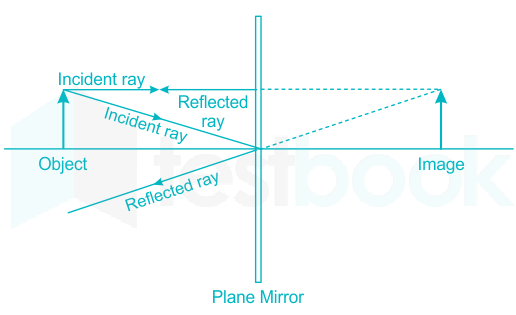
Image formed by a plane mirror is - 

  1. ((a))

    virtual, behind the mirror and enlarged

  2. ((b))

    virtual, behind the mirror and of the same size as the object

  3. ((c))

    real, at the surface of the mirror and enlarged

  4. ((d))

    More than one of the above

Show Answer
Answer: ((b))

virtual, behind the mirror and of the same size as the object

CONCEPT:

  • Plane Mirror: A plane mirror is a mirror with a flat (planar) reflective surface.

The characteristics of an image formed in a plane mirror:

  • The image formed by the plane mirror is virtual and erect i.e. image cannot be projected or focused on a screen.
  • The distance of the image ‘behind’ the mirror is the same as the distance of the object in front of the mirror.
  • The size of the image formed is the same as the size of the object.
  • The image is laterally inverted, i.e. left hand appears to be right hand when seen from the plane mirror.

  • If the object moves towards (or away from) the mirror at a certain rate, the image also moves towards (or away from) the mirror at the same rate.

EXPLANATION:

Properties of the image formed by a plane mirror are

  • It is always Virtual and erect.
  • The size of the image is equal to the size of the object and it is laterally inverted.
5

Which of the following is not the part of female reproductive system?

  1. ((a))

    Cervix

  2. ((b))

    Uterus

  3. ((c))

    Oviducts

  4. ((d))

    Scrotum

Show Answer
Answer: ((d))

Scrotum

The scrotum is a part of the male reproductive system. A pair of testes is situated outside the abdominal cavity within a pouch known as the scrotum.

Reproductive SystemParts included
MalePair of testes, accessory ducts, glands and the external genitalia.
FemalePair of ovaries, a pair of oviducts, uterus, cervix, vagina and the external genitalia
6

Which of the following is the Major application of Total Internal Reflection?

  1. ((a))

    Blue Colour of the Sky

  2. ((b))

    Optical Fiber

  3. ((c))

    Image form by an Eye

  4. ((d))

    None of the above

Show Answer
Answer: ((b))

Optical Fiber

The correct answer is Optical Fiber.

Key Points

About Optical Fiber:

  • Optical fiber is a Flexible, Transparent fiber made up of Drawing glass (silica) or plastic. Its diameter is slightly thicker than that of a human hair.
  • The principle of the Optical Fiber is based on the Total Internal Reflection which was coined by Daniel Colladon and Jacques Babinet in Paris(France) in the early 1840s.
  • These fibers are often used as a means to transmit light over long distances and at higher bandwidths (data transfer rates) than electrical cables and it works in between the two ends of the fiber and finds wide usage in fiber-Optic communications.
  • Optical Fibers are used instead of metal wires because it suffers a problem in the long-distance but in Optical fiber, signals travel along with them with less loss. These fibers are immune to Electromagnetic interference.

About Total Internal Reflection:

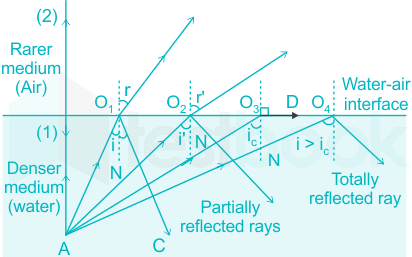
  • Total Internal Reflection(TIR) has the following properties: When the light passes from (Air into Water), the Refracted ray is bent (towards the perpendicular). When the refracted ray passes from (water to air) it is bent from the perpendicular.
  • If the angle of the refracted ray which the ray in water encloses with the perpendicular to the surface should be greater than Forty-Eight (48) degrees.
  • The Refracted ray will not leave the water at all it will be totally reflected at the surface. The angle which marks the limit where the total reflection starting is called the limiting angle of the medium.

Image of the Total Internal Reflection:

7

By which constitutional amendment the education was brought to the concurrent list from the state list?

  1. ((a))

    28th

  2. ((b))

    38th

  3. ((c))

    42nd

  4. ((d))

    48th

Show Answer
Answer: ((c))

42nd

  • Not just education, forests, weights and measures, protection of wild animals and birds and administration of justice were also brought under concurrent list through the 42nd amendment.
  • Seventh Schedule of the Indian Constitution provides for various items divided between Union, State, and Concurrent list.

Union List: 100 items on which Parliament has exclusive power to make laws.

State List: 61 items on which States can make and regulate laws.

Concurrent List: 52 items on which both Central and State governments can make laws.

8

Which of the following is called the powerhouse of the cell?

  1. ((a))

    Lysosome

  2. ((b))

    Golgi body

  3. ((c))

    Ribosome

  4. ((d))

    Mitochondrion

Show Answer
Answer: ((d))

Mitochondrion

Concept:

Cells: The cell is the basic structural, functional, and biological unit of all known organisms.

  • There are different shapes of the cells.
  • The size and shape of the cells might be different in different organism.
  • Some cells have a nucleus (Eukaryotic cells) while the other does not have a defined nucleus (prokaryotic cells)
<br>

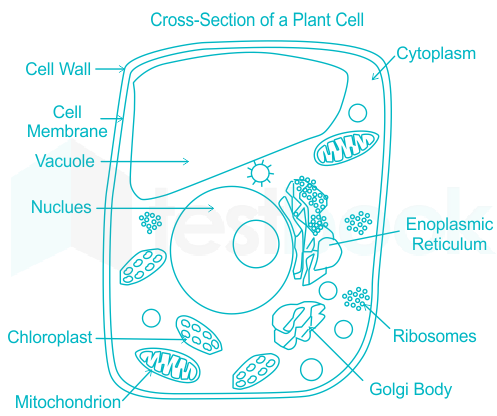
In the plant cells, there are different components and organelles for specific functions-

  • Cell Wall – It is a rigid layer composed of cellulose. It is the outermost layer of the cell, below this cell membrane is present. The primary function of the cell wall is to protect and provide structural support to the cell.
  • Cell Membrane – It is a semi-permeable membrane that helps in regulating and the substance for entry and exit inside and outside the cell.
  • Nucleus – It is a vital part of the cell as it contains all the information or DNA of the cell and their heredity information for growth and cell division.
  • Vacuole – Most of the part of the plant cell is occupied by the vacuole. It is surrounded by Tonoplast. The vital role of the vacuole is to provide support again the pressure of the cell wall.
  • Golgi apparatus – They act like a transport system in the cell, as they transport various molecules to different part of the cell.
  • Ribosomes – They are the sites of protein synthesis, also termed as the protein factory of the cell.
  • Mitochondrion – They break the complex molecules and produce energy and hence called the powerhouse of the cell.
  • Lysosomes – They are termed as suicidal bags as they hold the enzymes that are capable to digest the whole cell itself.
<br>

Explanation:

The powerhouse of the cell is Mitochondrion.

9

Which of the following is the largest organ in the human body ?

  1. ((a))

    Lungs

  2. ((b))

    Skin

  3. ((c))

    Brain

  4. ((d))

    Large intestine

Show Answer
Answer: ((b))

Skin

The correct answer is Skin.

Key Points

  • Skin is the largest organ of the human body, covering the entire external surface. It belongs to the integumentary system and serves as the primary interface between the internal body environment and the external world. Hence, Option B is correct.
  • The total surface area of the skin in an average adult human is approximately 20 square feet (roughly 2 square meters).
  • It constitutes about 15% of the total body weight. The thickness of the skin varies significantly across the body; for example, it is thinnest on the eyelids (0.5 mm) and thickest on the palms and soles (4 mm).
  • The skin is composed of three primary layers: the epidermis (the outermost protective layer), the dermis (containing tough connective tissue, hair follicles, and sweat glands), and the hypodermis (the deeper subcutaneous tissue made of fat and connective tissue).
  • Critical functions of the skin include protection against pathogens, regulation of body temperature through thermoregulation, and providing the sense of touch, heat, and cold.

Additional Information

  • Lungs: These are the primary organs of the respiratory system in humans and most other animals. Located in the thoracic cavity, they facilitate the exchange of oxygen and carbon dioxide. While they have a massive internal surface area for gas exchange, they are not the largest organ overall. Hence, Option A is incorrect.
  • Brain: This is the complex organ that serves as the center of the nervous system. It is contained within the skull (cranium) and controls thought, memory, emotion, and motor skills. The average adult human brain weighs about 1.3 to 1.4 kilograms. Hence, Option C is incorrect.
  • Large Intestine: This is the final part of the gastrointestinal tract and the digestive system. Its primary function is to absorb water and salts from the material that has not been digested as food and get rid of any waste products left over. It measures about 1.5 meters (5 feet) in length. Hence, Option D is incorrect.

Important Points

  • The Liver is categorized as the largest internal organ and the largest gland in the human body, typically weighing between 1.44 to 1.66 kilograms.
  • The Femur, or thigh bone, is the longest, heaviest, and strongest bone in the human body, essential for standing and walking.
  • The Stapes, found in the middle ear, is the smallest bone in the human body, measuring only about 3 mm by 2.5 mm.
  • The Sartorius muscle is the longest muscle in the human body, stretching from the hip to the inner knee.
  • The Small Intestine is the longest part of the digestive system, with an average length of 6 to 7 meters (20 to 22 feet).
10

Which of the following metal ions are/is required for clotting of blood?

  1. ((a))

    Cu2+

  2. ((b))

    Ca2+

  3. ((c))

    Cu2+ and Ca2+

  4. ((d))

    Zn2+

Show Answer
Answer: ((b))

Ca2+

Concept:

  • Blood clotting or coagulation is the phenomenon in which the liquid consistency of blood transforms into solid at the place of injury.
  • This prevents further loss of blood from an injured/open blood vessel.
  • It is the major chemical defense against blood loss by forming a semisolid jelly.

 **Explanation:**​

  • Ca2+ is required for clotting of blood.
  • Ca2+ ion concentration helps in the activation of proteins in platelets which is essential for the clotting of blood.
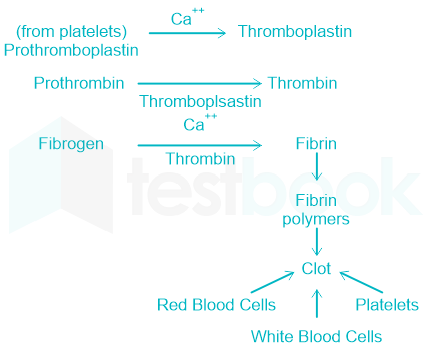
  • Blood platelets produce thromboplastin that helps blood to clot.
  • The action of Ca2+ and thromboplastin converts prothrombin into thrombin.

Hence, the correct option is 2.

platelets help in clotting of blood at injured side draw a flow ...


Additional Information

  • The blood clot is formed by a protein named fibrinogen which is present in soluble form in the plasma.
  • Fibrinogen is transformed to an insoluble network of fibrous material fibrin, by the clotting mechanism.
  • Thrombin catalyzes the conversion reaction of fibrinogen to fibrin.
  • The clotting mechanism involves activation, adhesion and aggregation of platelets and deposition of fibrin.
11

Which of the following is another name of vitamin C?

  1. ((a))

    Pyridoxine

  2. ((b))

    Pyridoxal

  3. ((c))

    Pyridoxamine

  4. ((d))

    Ascorbic acid

Show Answer
Answer: ((d))

Ascorbic acid

The correct answer is Ascorbic acid.

Key Points

  • Ascorbic acid is another name for Vitamin C.
  • Vitamin C is essential for the growth, development, and repair of all body tissues.
  • It is involved in many body functions, including the formation of collagen, absorption of iron, the immune system, wound healing, and the maintenance of cartilage, bones, and teeth.
  • Vitamin C is a powerful antioxidant that can strengthen your body’s natural defenses.

Additional Information

  • Pyridoxine
  • Pyridoxine is a form of Vitamin B6, which is important for normal brain development and for keeping the nervous system and immune system healthy.
  • It is used to treat or prevent vitamin B6 deficiency.
  • Pyridoxal
  • Pyridoxal is one of the three natural forms of vitamin B6, along with Pyridoxamine and Pyridoxine.
  • It plays a crucial role in the metabolism of amino acids and is involved in the biosynthesis of neurotransmitters.
  • Pyridoxamine
  • Pyridoxamine is another form of Vitamin B6.
  • It is involved in various metabolic processes, including the conversion of stored carbohydrates to glucose.
  • Vitamin C (Ascorbic acid)
  • Vitamin C, also known as Ascorbic acid, is an essential nutrient for humans.
  • It acts as an antioxidant, helping to protect cells from the damage caused by free radicals.
  • Vitamin C also helps the body make collagen, an important protein for skin, cartilage, tendons, ligaments, and blood vessels.
  • It improves the absorption of iron from plant-based foods and helps the immune system work properly to protect the body from disease.
12

A rainbow is always formed in a direction

  1. ((a))

    Above the sun

  2. ((b))

    Opposite to the sun

  3. ((c))

    Below the sun 

  4. ((d))

    At the same level of the sun

Show Answer
Answer: ((b))

Opposite to the sun

The correct answer is Opposite to the sun.

Key Points

  • A rainbow is always generated in the opposite direction of the Sun, so that sunlight striking water droplets (which act as prisms) can be easily refracted and dispersed, resulting in a rainbow.
  • A rainbow is a meteorological phenomenon that occurs when light is reflected, refracted, and dispersed in water droplets, resulting in a spectrum of light seen in the sky.
  • It's shaped like a multicolored circular arc. Sunlight-induced rainbows always appear in the sky area directly opposite the Sun.
  • Rainbows can take the form of entire circles. The viewer, on the other hand, usually only sees an arc created by lighted droplets above the ground, centered on a line from the sun to the observer's eye.
  • The arc of a primary rainbow is red on the outside and violet on the inside.
  • Light is refracted when it enters a droplet of water, reflected internally on the rear of the droplet, then refracted again as it leaves it, resulting in this rainbow.
  • A second arc appears outside the primary arc in a double rainbow, with the sequence of the colors reversed, with red on the inner side of the arc. The light is reflected twice on the inside of the droplet before leaving it, which causes this.

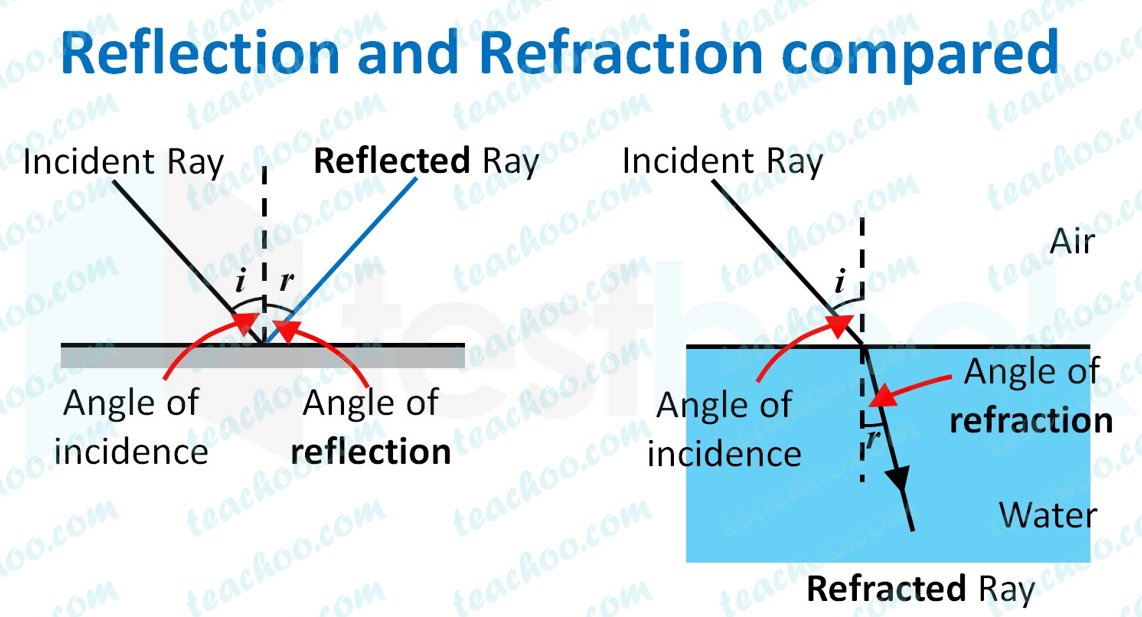
Key Points Reflection

  • Reflection is the change in direction of a wavefront at an interface between two different media so that the wavefront returns to the medium from which it originated. Common examples include the reflection of light, sound, and water waves.

 Refraction

  • Refraction is the phenomenon of bending of light as it goes obliquely from one medium to another. It is caused by the change in the speed of light as it goes from one medium to another.

13

The pH value of human blood is ________.

  1. ((a))

    8.25 - 8.35

  2. ((b))

    7.35 - 7.45

  3. ((c))

    4.0 - 4. 5

  4. ((d))

    6.45 - 6.55

Show Answer
Answer: ((b))

7.35 - 7.45

The correct answer is 7.35 - 7.45.

  • The pH value of human blood is 7.35 - 7.45.
  • If the pH value is less than 7.35, is called acidosis.
  • If the pH value is more than 7.45 is called alkalosis.
  • The blood pH value is maintained by the lungs and kidney.
14

Which of the following statements related to magnetism is false?

  1. ((a))

    Magnetic field lines do not form closed loops.

  2. ((b))

    Magnetic monopoles do not exist.

  3. ((c))

    Ferromagnetic materials have large magnetic susceptibility

  4. ((d))

    Permeability of free space is a scalar quantity.

Show Answer
Answer: ((a))

Magnetic field lines do not form closed loops.

Concept:

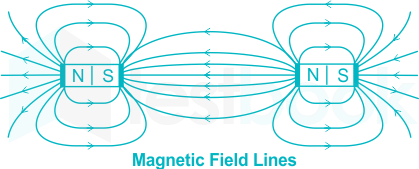
Magnetic field lines: The imaginary lines which represent the direction of the magnetic field are called magnetic field lines.

The characteristics of the magnetic lines of force are as follows:

  1. They are closed curves. Outside the magnet, they are from north to south pole whereas, inside the magnet, it is the other way round.
  2. If the lines of force are crowded at a place, the field is strong.
  3. If the lines of force are parallel and equidistant, the concerned magnetic field will be uniform in nature.
  4. Two magnetic lines of force will near intersect each other.
  5. The tangent at any point on the field lines gives the direction of the magnetic field vector at that point.
  6. Magnetic monopoles do not exist.

Magnetic Susceptibility: The measurement of how much a magnetic material will get magnetized in a magnetic field is called susceptibility. It is denoted by χ.

Ferromagnetic materials: The material which exhibits strong magnetism in a magnetic field in the direction of the magnetic field is called a ferromagnetic substance.

χ ≫ 1 for ferromagnetic substance.

Permeability (μ0): The measurement of the ability of any material which allows the formation of magnetic lines of force is called permeability.

It is a scalar quantity.

​Explanation:

  1. Magnetic field lines form closed loops. So statement 1 is wrong.
  2. Magnetic monopoles do not exist. So statement 2 is correct.
  3. Ferromagnetic materials have large magnetic susceptibility (χ ≫ 1). So statement 3 is correct.
  4. The permeability of free space is a scalar quantity. So statement 4 is correct.
15

Which one of the following is a balanced chemical equation?

  1. ((a))

    N2 + H2 → NH3

  2. ((b))

    CH4 + O2 → CO2 + H2O

  3. ((c))

    Fe2O3 + C → Fe + CO2

  4. ((d))

    2Mg + O2 → 2MgO

Show Answer
Answer: ((d))

2Mg + O2 → 2MgO

The correct answer is 4 i.e 2Mg + O2 → 2MgO

Explanation:

  • According to the law of conservation of mass, when a chemical reaction occurs, the mass of the products should be equal to the mass of the reactants.
  • A balanced chemical equation occurs when the number of the atoms involved in the reactants side is equal to the number of atoms in the products side.

Steps to Balance an Equation-.

  • In general, to balance an equation, here are the things we need to do-
  • Count the atoms of every element in the reactants and the products.
  • Use coefficients; place them in front of the compounds as needed.
  • The steps are simple, but it is a process of trial and error.
  • Let's take a look at a few more example equations and techniques that can be used to balance each one.
  • An equation representing a chemical reaction- Example In this chemical reaction, nitrogen (N2) reacts with hydrogen (H) to produce ammonia (NH3).
  • The reactants are nitrogen and hydrogen, and the product is ammonia. If we look at this equation, we can see that the equation is not balanced.
  • N2 + H2 → NH3
  • The equation is not balanced because, in the reactants side, there are 2 nitrogen (N) atoms and 2 hydrogen (H) atoms.
  • In the products side, there are 1 nitrogen (N) atoms and 3 hydrogen (H) atoms. The number of atoms is not balanced on both sides.
  • To balance the chemical equation above, we need to make use of coefficients.
  • A coefficient is a number that we place in front of a chemical formula.
  • In the chemical equation, to make the number of nitrogen (N) atoms equal on both sides, first, we place a coefficient of 2 in front of NH3.

N2 + H2 → 2NH3

  • Once we do that, the number of nitrogen (N) atoms on both sides are balanced.
  • However, the number of hydrogen (H) atoms is not balanced on both sides.
  • We need to make use of another coefficient in front of H2. This time, we put a coefficient of 3 in front of H2 to balance the chemical equation.

N2 + 3H2 → 2NH3 [Balance equation]

  • The equation above is now balanced. There are 2 nitrogen (N) atoms and 6 hydrogen (H) atoms on both the reactants and products side.
  • Since there is no coefficient in front of N2, that means the coefficient equal to 1.
UNBALANCED EQUATIONBALANCED EQUATION
CH4 + O2 → CO2 + H2OCH+ 2O2 → CO2 + 2H2O
Fe2O3 + C → Fe + CO22Fe2O3 + 3C → 4Fe + 3CO2
Mg + O2 → MgO2Mg + O2 → 2MgO
16

The chemical equation, "HCl+NaOH→NaCl+H2O" represents Which of the following chemical reaction?

  1. ((a))

    Decomposition reaction

  2. ((b))

    Neutralization reaction

  3. ((c))

    Combustion reaction

  4. ((d))

    Synthesis reaction

Show Answer
Answer: ((b))

Neutralization reaction

Explanation:

  • The correct answer is Option(2).i.e.Neutralization​ reaction.
  • Types of Chemical Reactions-The The basis for different types of reactions is the product formed, the changes that occur, the reactants involved, and so on. Different types of reactions are
  • Combustion reaction
  • Decomposition reaction
  • Neutralization reaction
  • Precipitation or Double-Displacement Reaction
  • Combustion Reaction-
  • It is a reaction with a combustible material with an oxidizer to give an oxidized product.
  • An oxidizer is a chemical a fuel requires to burn, generally oxygen.
  • For an example of the combustion of magnesium metal.2Mg + O2→2MgO + Heat Here, 2 magnesium atoms react with a molecule of oxygen-producing 2 molecules of the compound magnesium oxide-releasing some heat in the process.
  • Decomposition Reaction-
  • It is a reaction in which a single component breaks down into multiple products.
  • Certain changes in energy in the environment have to be made like heat, light, or electricity breaking bonds of the compound. for example of the decomposition of calcium carbonate giving out CaO (Quick Lime) which is a major component of cement. CaCO3(s)→CaO(s)+CO2(g) Here, the compound Calcium carbonate when heated breaks down into Calcium Oxide and Carbon Dioxide.
  • Neutralization Reaction-
  • It is basically the reaction between an acid and a base giving salt and water as the products.
  • The water molecule formed is by the combination of OH- ions and H+ ions. The overall pH of the products when a strong acid and a strong base undergo a neutralization reaction will be 7.
  • Consider the example of the neutralization reaction between Hydrochloric acid and Sodium Hydroxide giving out sodium chloride(Common Salt) and water. HCl + NaOH → NaCl + H2O Here, an acid and a base, Hydrochloric acid and Sodium Hydroxide react in a neutralization reaction to produce Sodium Chloride(Common Salt) and Water as the by-products.
17

What disease is caused by insulin deficiency?

  1. ((a))

    Scleroderma

  2. ((b))

    Multiple Sclerosis

  3. ((c))

    Rheumatoid arthritis (RA) 

  4. ((d))

    Diabetes mellitus

Show Answer
Answer: ((d))

Diabetes mellitus

The correct answer is Diabetes Mellitus.

Important Points

  • Insulin is a type of Peptide hormone.
  • It is produced by the beta cells of the pancreatic islets.
  • The hormone is recognized as the main anabolic hormone of the body.
  • It is responsible to regulate the metabolism of **carbohydrates, fats, and protein.**​

Key Points

  • Diabetes mellitus is a metabolic disease that causes high blood sugar.
  • The insulin moves sugar from the blood cells into the other cells and used it as a form of energy.
  • Diabetic patient doesn't make enough insulin or can't effectively use the insulin it does make.
  • Some of the important types of diabetes include -
  1. Autoimmune diabetes
  2. Prediabetes
  3. Gestational diabetes

Additional Information 

Diabetes insipidus (DI) and Diabetes mellitus (DM) are conditions characterized by abnormal regulation of fluids and sugars in the body, but they have different causes, symptoms, and treatments.

  • Diabetes Insipidus (DI) is caused by deficiency of ADH (Antidiuretic Hormone).
  • DI is primarily caused by a deficiency of antidiuretic hormone (ADH), also known as vasopressin. ADH is responsible for regulating the balance of water in the body.
<br>

Diabetes Mellitus (DM) is caused by Insufficient Insulin or Insulin Ineffectiveness: DM is characterized by insufficient insulin production (Type 1 DM) or ineffective use of insulin by the body's cells (Type 2 DM).

  • Type 1 Diabetes: Results from the immune system destroying insulin-producing beta cells in the pancreas.
  • Type 2 Diabetes: Develops when the body's cells become resistant to insulin or when the pancreas fails to produce enough insulin.
<br>

Key Differences:-

a)Hormonal Involvement:-

  • DI: Involves a deficiency of ADH.
  • DM: Involves insufficient insulin or insulin ineffectiveness.

b)Urine Characteristics:-

  • DI: Results in dilute urine.
  • DM: Causes the presence of glucose in the urine.
18

The Buddhist Vihara at Sanchi is also known as the 'Great Stupa'. It is one of the most famous Buddhist monuments in India, located at Sanchi town in ________ district.

  1. ((a))

    Jabalpur

  2. ((b))

    Raisen

  3. ((c))

    Purnia

  4. ((d))

    Patna

Show Answer
Answer: ((b))

Raisen

The correct answer is Raisen.

Key Points

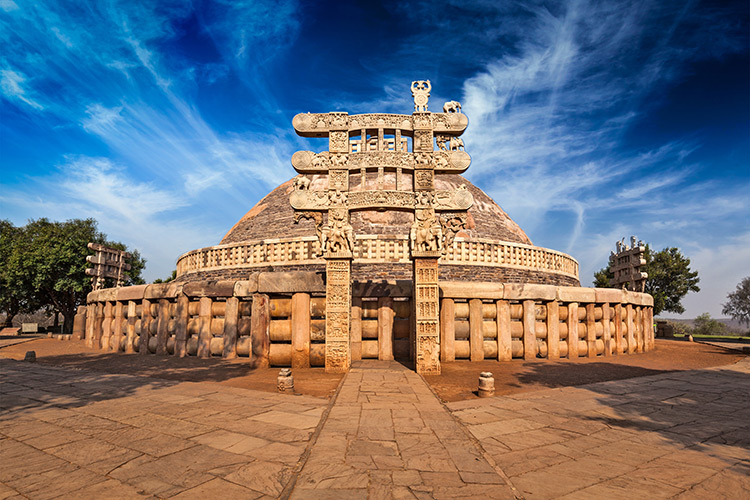
  • Sachi Stupa.
  • Stupa at Sanchi is a world heritage site.
  • It was built by Ashoka in the 3rd century BCE.
  • It is the most prominent and the oldest and is believed to have Buddha’s relics.
  • Along with other relatively small stupas, there are three main stupas at Sanchi.
  • The Great Stupa and Sanchi’s other Buddhist monuments were collectively designated a UNESCO World Heritage site in 1989.

Additional Information

  • Raisen.
  • Raisen District is a district of Madhya Pradesh state of India.
  • Bhopal State of independent India came into being, and Raisen was declared a separate district on 5 May 1950.
  • Raisen District has many tourist places like Sanchi:- World heritage, 46 km from Bhopal and 32 km from Vidisha, Bhojpur.
  • The Bhojpur temple houses one of the largest Shiva lingams in India.
  • Jabalpur.
  • Jabalpur district is a district of Madhya Pradesh state in central India.
  • Jabalpur district is located in the Mahakoshal region of Madhya Pradesh.
  • famous for its Marble Rocks and scenic charms.
  • ​Purnia.
  • Purnia District is one of the thirty-eight districts of the Indian state of Bihar.​
  • Purnia is part of the Mithila region,Mithila first gained prominence after it was settled by Indo-Aryan peoples.

Sanchi - History and Facts | History Hit

19

Article 280 of the Constitution of India deals with _________.

  1. ((a))

    Education

  2. ((b))

    Finance Commission

  3. ((c))

    Privacy

  4. ((d))

    Equality

Show Answer
Answer: ((b))

Finance Commission

The correct answer is the Finance Commission.

Key Points

  • According to Article 280, the Finance Commission is established for a period of 5 years.
  • The Finance Commission is a 'constitutional body' constituted by the President of India which gives its suggestion to the President on the states' share in the taxes of the Center
  • Finance Commission is constituted by the President for a period of 5 years.
  • The President of India establishes the Finance Commission every five years or earlier.

Additional Information

  • The 14th Finance Commission was headed by Y. V. Reddy.
  • The 15th Finance Commission is headed by Nand Kishore Singh.
  • The Finance Commission of India was established in 1951.
  • The first chairman of the Finance Commission was K. C. Neogy.
20

Who was the founder of the Holkar Dynasty?

  1. ((a))

    Bana Misra

  2. ((b))

    Malhar Rao

  3. ((c))

    Baji Rao

  4. ((d))

    Madhav Peshwa

Show Answer
Answer: ((b))

Malhar Rao

In the year 1747 A.D., Malhar Rao Holkar established the Holkar Dynasty.

Important Points

  • Maratha kings of Indore in India were the Holkar dynasty. Malhar Rao Holkar achieved success despite coming from humble beginnings.
  • He was given command of 500 horses by Baji Rao I, the Peshwa (prime minister) of the Maratha kingdom, in 1724.
  • He quickly rose to the position of chief general in Malwa, with headquarters at Maheshwar and Indore.
  • At the time of his passing (1766), he effectively ruled Malwa. Ahalya Bai, his son's widow, managed the country expertly and intelligently from 1767 to 1794.
  • Among violent surroundings, Indore was an island of prosperity and calm, and her leadership became an example of fairness and wisdom.
  • She was succeeded by Tukoji Holkar, a distant relative she had chosen to lead her army, two years later.
21

The folk dance form called 'Matki' is prevalent in which of the following regions of Madhya Pradesh?

  1. ((a))

    Bundelkhand

  2. ((b))

    Malwa

  3. ((c))

    Vindhyachal

  4. ((d))

    Baghelkhand 

Show Answer
Answer: ((b))

Malwa

The correct answer is Malwa.

Key Points

  • The folk dance form called 'Matki' is prevalent in Malwa region of Madhya Pradesh.
  • Matki’ is a form of dance from the state of Madhya Pradesh.
  • Jawara, Aada, Khada Nach, Phulpati, Maanch are the most popular dance forms of Madhya Pradesh.

Additional Information

  • Madhya Pradesh is known as the 'Heart of India' and 'Tiger State of India.'
  • India's biggest diamond mine Panna is in Madhya Pradesh.
  • Indore is the largest city in Madhya Pradesh.
  • Madhya Pradesh has the largest forest area in India.
  • Dances of MP:
  • Jawara, Matki, Aada, Khada Nach, Phulpati, Grida Dance, Selalarki, Selabhadoni, Maanch.
  • Capital: Bhopal
  • Official Language: Hindi
22

The Vice-President of India is ________.

  1. ((a))

    Ex-officio Chairman of the Rajya Sabha

  2. ((b))

    Chairman (ex-officio) of the Lok Sabha

  3. ((c))

    Speaker of the Lok Sabha

  4. ((d))

    President of the Red Cross

Show Answer
Answer: ((a))

Ex-officio Chairman of the Rajya Sabha

The correct answer is Ex-officio Chairman of the Rajya Sabha.

Vice-President of India

  • The Vice-President acts as the ex-officio chairman of Rajya Sabha.
  • In the absence of the President, the Vice-President acts as President only for a maximum period of six months.
  • The Vice-President shall be ex-officio Chairman of the Council of States and shall not hold any other office of profit.
  • Article 70 states that the discharge of the President’s functions in other contingencies.

Key Points

  • The articles (63-71) are related to the Vice President.
  • The post of Vice President was taken from the USA.
  • The minimum age should be 35 years for the post of Vice President.
  • The election of the Vice President is mentioned in Article 66.
  • No State Legislative Assembly and State Legislative Council take part in the Vice president Election.
<br>

ELECTION

  • ​The Vice-President, like the President, is elected not directly by the people but by the method of indirect election.
  • He is elected by the members of an electoral college consisting of the members of both Houses of Parliament.
  • Thus, this electoral college is different from the electoral college for the election of the President in the following two respects:
    1. It consists of both elected and nominated members of the Parliament (in the case of the president, only elected members).
    2. It does not include the members of the state legislative assemblies (in the case of the President, the elected members of the state legislative assemblies are included).
<br>

Qualifications

  • ​To be eligible for election as Vice-President, a person should fulfill the following qualifications:
  • He should be a citizen of India.
  • He should have completed 35 years of age. Hence, statement a is incorrect.
  • He should be qualified for election as a member of the Rajya Sabha.
  • He should not hold any office of profit under the Union government or any state government or any local authority or any other public authority.
  • But, a sitting President or Vice-President of the Union, the governor of any state, and a minister for the Union or any state is not deemed to hold any office of profit and hence qualified for being a candidate for Vice-President.
  • Further, the nomination of a candidate for election to the office of Vice-President must be subscribed by at least 20 electors as proposers and 20 electors as seconders.
  • Every candidate has to make a security deposit of ₹15,000 in the Reserve Bank of India.
23

"Do or die" slogan was popularised by which eminent freedom fighter?

  1. ((a))

    Mahatma Gandhi

  2. ((b))

    Jawahar Lal Nehru

  3. ((c))

    Subhash Chandra Bose

  4. ((d))

    Maharana Pratap

Show Answer
Answer: ((a))

Mahatma Gandhi

The correct answer is Mahatma Gandhi.

Explanation:

  • Mohandas Karamchand Gandhi was born on October 2nd 1869 at a place called Porbandar in Gujarat.
  • He was known for his non-violent practices in the freedom struggle.
  • He was given the title of Mahatma by Rabindranath Tagore.
  • Some of the famous movements lead by him are Champaran Satyagraha 1917, Non-Co-operation Movement, Civil Disobedience Movement, Quit India Movement.
  • In 1942, after the failure of the Cripps Mission, Mahatma Gandhi started the Quit India Movement by giving an inspirational speech at August Kranti Maidan.
  • In the speech, he raised the slogan of "Do or Die".

Key Points

  • Jawaharlal Nehru, Rajendra Prasad were some of the most prominent supporters of Gandhi in his famous Quit India Movement.
  • Subhash Chandra Bose is known for raising the slogan, "Tum mujhe khoon do, main tumhe aazadi doonga".
  • Maharana Pratap was a warrior king of Mewar, Rajasthan and is known for his courageous battle against the Mughal troop in the Battle of Haldighati.
24

______ is the highest peak of the Satpura range.

  1. ((a))

    Jarga

  2. ((b))

    Dhupgarh

  3. ((c))

    Amarkantak

  4. ((d))

    Delwara

Show Answer
Answer: ((b))

Dhupgarh

Dhupgarh is the highest peak of the Satpura range.

  • It is the highest point in Mahadeo Hills, Madhya Pradesh.
  • It has an altitude of 1,352 meters (4,429 ft).
  • The Satpura range rises east through the border of Maharashtra and Madhya Pradesh to the east, up to Chhattisgarh in eastern Gujarat state.
  • The Amarkantak region is a special natural heritage area and is the Vindhya and Satpura Ranges meeting point.
25

Constitution as per the Article 359 authorizes the Honorable President of India to suspend the right to move any court for the enforcement of Fundamental Rights during:

  1. ((a))

    National emergency

  2. ((b))

    Failure of constitutional machinery in States 

  3. ((c))

    A financial emergency

  4. ((d))

    None of these 

Show Answer
Answer: ((a))

National emergency

The correct answer is National Emergency.

Key Points

  1. Suspension of other Fundamental Rights is enumerated Under Article 359, the President is authorized to suspend, by order, the right to move any court for the enforcement of Fundamental Rights during a National Emergency.
  2. Thus, remedial measures are suspended and not the Fundamental Rights.
  3. The suspension of enforcement relates to only those Fundamental Rights that are specified in the Presidential Order.
  4. The suspension could be for the period during the operation of an emergency or for a shorter period.
  5. The Order should be laid before each House of Parliament for approval.
  6. The 44 Amendment Act mandates that the President cannot suspend the right to move the court for the enforcement of Fundamental Rights guaranteed by Articles 20 and 21.

Important Points

  1. The emergency provisions are contained in Part XVIII of the Constitution of India, from Articles 352 to 360.
  2. These provisions enable the Central government to meet any abnormal situation effectively.
  3. The rationality behind the incorporation is to safeguard the sovereignty, unity, integrity, and security of the country, the democratic political system, and the Constitution.
  • The constitution stipulates three types of emergencies-
  • National Emergency enumerated Under Article 352
  • Constitutional Emergency enumerated Under Article 356
  • Financial Emergency enumerated Under Article 360
26

When was the non-cooperation movement started in Bihar in______

  1. ((a))

    1st August 1921

  2. ((b))

    1st August 1919

  3. ((c))

    1st August ​1920

  4. ((d))

    More than one of the above

Show Answer
Answer: ((c))

1st August ​1920

The Correct answer is 1st August ​1920.

Key Points

  • The Non-Cooperation Movement was launched by Mahatma Gandhi as part of the freedom struggle against British rule in India.
  • The movement officially started on 1st August 1920, coinciding with the tragic death of Bal Gangadhar Tilak, a prominent freedom fighter.
  • This movement was a direct response to oppressive British policies, such as the Rowlatt Act and the Jallianwala Bagh massacre of 1919.
  • It emphasized the boycott of British goods, institutions, and titles and promoted the use of Swadeshi products.
  • The movement gained significant traction in Bihar, where people actively participated in protests, boycotts, and other forms of non-violent resistance.
  • The Non-Cooperation Movement marked the beginning of mass participation in India's independence struggle under Gandhi's leadership.
  • The movement was eventually withdrawn by Gandhi in 1922 after the Chauri Chaura incident, where violence erupted, contrary to the movement's non-violent principles.

 Additional Information

  • 1st August 1921
  • This date does not correspond to the launch of the Non-Cooperation Movement. However, it is significant for other events during India's freedom struggle, such as later developments in civil disobedience.
  • 1st August 1919
  • This date is notable for the post-World War I era but is unrelated to the official start of the Non-Cooperation Movement.
  • More than one of the above
  • This option is incorrect as the Non-Cooperation Movement officially began only on 1st August 1920.
27

 In which of the following cities headquarter of WHO situated?

  1. ((a))

    Lyon, France

  2. ((b))

    Vienna, Austria

  3. ((c))

    New York

  4. ((d))

    Geneva, Switzerland

Show Answer
Answer: ((d))

Geneva, Switzerland

  • Headquarter of WHO (World Health Organization) situated in Geneva, Switzerland.
  • WHO (World Health Organization) founded in 7 April 1948.
  • Director general of the World Health Organization-Tedros Adhanom.
28

Who among the following has written the ‘Arthashastra’?

  1. ((a))

    Vishakhadatta

  2. ((b))

    Kautilya

  3. ((c))

    Panini

  4. ((d))

    Kamandak

Show Answer
Answer: ((b))

Kautilya

The correct answer is Kautilya.

Key Points

  • "Arthashastra" is a work by Kautilya. He wrote "Arthashastra" during the Mauryan era and is most commonly referred to as Chanakya. It is among the most significant works on statecraft and the economy.
  • The Arthashastra is an old Indian treatise on politics, economics, and military tactics that were written in Sanskrit.
  • Chandragupta Maurya was taught by and protected by Kautilya, also known as Chanakya.
  • The tutor and protector of Emperor Chandragupta Maurya was a scholar in Takshashila named Kautilya, Vishnugupta, or Chanakya.

Additional Information

  • Arthashastra
  • The words "Artha" and "Shastra," which both denote treatises, were combined to form the word "Arthashstra."
  • It analyses how the political system functions but rarely suggests how it should function.
  • How to run a strong and efficient economy in the state is the main topic of Arthastra.
  • Along with providing a comprehensive description of the legal and administrative system used to run a kingdom, it also provides a wealth of detailed cultural information on subjects like mineralogy, mining and metals, agriculture, animal husbandry, medicine, and the utilisation of animals.
  • The Arthastra also covers welfare-related issues.
29

Which of the following fish is the state fish of Madhya Pradesh?

  1. ((a))

    Green Chromide

  2. ((b))

    Mahseer

  3. ((c))

    Murrel

  4. ((d))

    Magur

Show Answer
Answer: ((b))

Mahseer

The Correct Answer is Mahseer.

Key Points

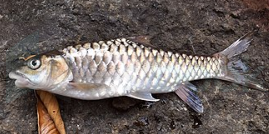
  • Mahseer is the state fish of Madhya Pradesh.
  • Mahseer is a fish belonging to the genus Tor.
  • Its scientific name is Tor tambroides.

Additional Information

Fish NameState of India
Green ChromideKerala
MahseerMadhya Pradesh
MurrelTelangana and Andhra Pradesh
MagurBihar
30

As per the 2025 Global Gender Gap Index, what rank did India secure among 148 countries?

  1. ((a))

    136

  2. ((b))

    138

  3. ((c))

    132

  4. ((d))

    131

Show Answer
Answer: ((d))

131

The correct answer is 131.

Key Points

  • The Global Gender Gap Index for the year 2025 (based on the latest comparative assessments of 148 nations) placed India at the 131st rank, reflecting the nation's ongoing challenges and progress in achieving gender parity.
  • The index is an annual publication released by the World Economic Forum (WEF), an international non-governmental organization based in Cologny, Geneva, Switzerland.
  • The report evaluates countries across four critical dimensions: Economic Participation and Opportunity, Educational Attainment, Health and Survival, and Political Empowerment.
  • In the 2025 assessment involving 148 countries, India showed slight fluctuations compared to the previous years (such as 129th in 2024), highlighting specific gaps in Economic Participation and Health metrics.
  • The Global Gender Gap Index scores range from 0 to 1, where 1 represents full gender parity and 0 represents complete imparity; the 131st rank indicates that India has a significant journey ahead to close the gender gap.

Additional Information

  • History and Origin: The Global Gender Gap Index was first introduced by the World Economic Forum in 2006. It was designed to measure gender-based gaps in access to resources and opportunities in countries rather than the actual level of the resources available.
  • Top Performers: Historically, Nordic countries like Iceland, Norway, and Finland have consistently topped the index. Iceland has been the most gender-equal country in the world for over a decade, having closed more than 90% of its gender gap.
  • The Four Pillars of Assessment:
  • Economic Participation and Opportunity: This includes indicators like labour force participation rates, wage equality for similar work, and the ratio of women in senior-level positions.
  • Educational Attainment: This measures the gap between women’s and men’s access to primary, secondary, and tertiary education levels.
  • Health and Survival: This pillar looks at the sex ratio at birth and healthy life expectancy.
  • Political Empowerment: This measures the ratio of women in parliament, ministerial positions, and the number of years with a female head of state.
  • India's Context: While India often performs relatively well in Political Empowerment due to historical leadership roles and local government reservations, it consistently lags in Health and Survival and Economic Participation, where the female labour force participation rate (LFPR) remains a point of concern.
  • Comparison with Other Indices: The Global Gender Gap Index is distinct from the Gender Inequality Index (GII), which is published by the United Nations Development Programme (UNDP). The GII also considers reproductive health and maternal mortality rates, where India ranked 108th in the 2022 report (released in 2024).

Important Points

  • Data and Trends: According to WEF reports, at the current rate of progress, it will take approximately 131 to 134 years to reach full global gender parity.
  • Global Coverage: The index has grown from 115 countries in 2006 to 148 countries in the 2025 cycle, making it one of the most comprehensive benchmarks for gender equality worldwide.
  • SDG 5: The findings of this index are crucial for monitoring progress toward Sustainable Development Goal 5 (SDG 5), which aims to achieve gender equality and empower all women and girls by the year 2030.
  • Policy Influence: Governments use this data to draft legislation, such as the Women's Reservation Bill (Nari Shakti Vandan Adhiniyam) passed in India in September 2023, which seeks to reserve 33% of seats in the Lok Sabha and state assemblies for women.
31

Ozone layer found in the atmosphere within

  1. ((a))

    100 - 200 km

  2. ((b))

    50 - 100 km

  3. ((c))

    10 - 50 km

  4. ((d))

    10 - 30 km

Show Answer
Answer: ((c))

10 - 50 km

The correct answer is 10 - 50 km.

Key Points

  • The ozone layer is a natural layer of gas in the upper atmosphere that protects humans and other living things from harmful ultraviolet (UV) radiation from the sun.
  • The ozone layer is typically thicker over the poles than over the equator.
  • The ozone layer exists in the stratosphere, a layer 10 to 50 km above the Earth’s surface.
  • The reasons for ozone depletion are a wide range of industrial and consumer applications, mainly refrigerators, air conditioners (hydrochlorofluorocarbons (HCFCs), chlorofluorocarbons (CFCs)), and fire extinguishers.
  • Ozone depletion is greatest at the South Pole (Antarctica).

Important Points

  • Earth's atmosphere has a series of layers, these layers have named the troposphere, stratosphere, mesosphere, thermosphere, Ionosphere, and exosphere.
  • Troposphere:
  • The troposphere is the lowest layer of our atmosphere.
  • Starting at ground level, it extends upward to about 10 km above sea level.
  • Humans live in the troposphere, and nearly all weather occurs in this lowest layer.
  • Most clouds appear here, mainly because 99% of the water vapor in the atmosphere is found in the troposphere.
  • Stratosphere:
  • The next layer up is called the stratosphere.
  • The stratosphere extends from the top of the troposphere to about 50 km above the ground.
  • The infamous ozone layer is found within the stratosphere.
  • Commercial passenger jets fly in the lower stratosphere, partly because this less-turbulent layer provides a smoother ride.
  • Mesosphere:
  • Above the stratosphere is the mesosphere.
  • It extends upward to a height of about 85 km above our planet.
  • Most meteors burn up in the mesosphere.
  • The coldest temperatures in Earth's atmosphere, about -90° C (-130° F), are found near the top of this layer.
  • Thermosphere:
  • The layer of very rare air above the mesosphere is called the thermosphere.
  • The thermosphere starts just above the mesosphere and extends to 600 kilometers high.
  • High-energy X-rays and UV radiation from the Sun are absorbed in the thermosphere.
  • Raising its temperature to hundreds or at times thousands of degrees.
  • Many satellites actually orbit Earth within the thermosphere.
  • The aurora, the Northern Lights, and Southern Lights occur in the thermosphere.
  • Exosphere:
  • This is the upper limit of our atmosphere.
  • It extends from the top of the thermosphere up to 10,000 km.
32

Which amongst the following statements is correct about Mughal emperor Akbar ?

  1. ((a))

    He fought and won the third battle of Panipat against the Hindu King Hemu.

  2. ((b))

    He founded a new religion called ‘Din - e Ilahi’. 

  3. ((c))

    He was declared emperor in 1602. 

  4. ((d))

    He was highly educated and knew many languages.

Show Answer
Answer: ((b))

He founded a new religion called ‘Din - e Ilahi’. 

The correct answer is He founded a new religion called 'Din - e llahi'.

Key Points

  • Din - e Ilahi also known as the "Religion of God".
  • It was founded by The Mughal Emperor, Akbar(1556-1605) in 1582.
  • It has the combined elements of Islam, Hinduism, Jainism, Christianity and Zoroastrianism.
  • Akbar's full name was "Jalal-ud-din Muhammad Akbar".

Additional Information

  • Akbar was the son of Emperor Humayun. Initially, his regent and guardian was Bairam Khan.
  • The third battle of Panipat was fought between the Maratha Empire led by Sadashivrao Bhau and the Durrani Empire led by Ahmad Shah Durrani.
  • The third battle of Panipat was won by the Durrani Empire and is known as one of the bloodiest wars of the 18th century.
  • Akbar did not receive formal education, he could not read or write but could communicate in Persian, Arabic, and Hindi.
  • Akbar established Ibadat Khana(House of Worship) for Scholars and Intellectuals in Fatehpur Sikri.
  • Akbar court featured the Navratnas(Nine Jewels), a group of talented advisors.
33

Where was the First Round Table Conference held in 1930?

  1. ((a))

    Assam

  2. ((b))

    Lahore

  3. ((c))

    USA

  4. ((d))

    London

Show Answer
Answer: ((d))

London

The correct answer is London.

Key Points

  • The First Round Table Conference was held from 12 November 1930 to 19 January 1931 in London.
  • It was organized by the British government to discuss constitutional reforms in India and address issues surrounding the Government of India Act of 1919.
  • The conference was attended by representatives from various Indian communities, including Hindus, Muslims, Sikhs, and others, along with British political leaders.
  • Dr. B.R. Ambedkar and other prominent leaders from India participated in the conference, advocating for the rights of oppressed classes.
  • The Congress did not participate in this conference as it was boycotting British initiatives following the Civil Disobedience Movement led by Mahatma Gandhi.

Additional Information

  • Round Table Conferences:
  • There were a total of three Round Table Conferences held between 1930 and 1932 to discuss India's constitutional future.
  • The Second Round Table Conference (1931) was notable for the participation of Mahatma Gandhi as the representative of the Indian National Congress.
  • The Third Round Table Conference (1932) was less significant as it lacked representation from major Indian political parties like the Congress.
  • Government of India Act, 1919:
  • This act introduced diarchy in provincial governance, dividing administrative responsibilities between elected Indian ministers and British officials.
  • It laid the foundation for constitutional reforms leading to the Round Table Conferences.
  • Dr. B.R. Ambedkar's Role:
  • Ambedkar played a key role in highlighting the plight of the Dalits and marginalized communities during the conferences.
  • He demanded separate electorates for Dalits to ensure their political representation and safeguard their rights.
  • Civil Disobedience Movement:
  • Launched by Mahatma Gandhi in 1930, this movement aimed to challenge British rule through nonviolent means like boycotting British goods and laws.
  • The movement resulted in the Congress boycotting the First Round Table Conference.
34

The Montagu-Chelmsford Reforms, 1919 introduced the concept of:

  1. ((a))

    Separate Electorates

  2. ((b))

    Diarchy

  3. ((c))

    Direct Elections

  4. ((d))

    Dominion Status

Show Answer
Answer: ((b))

Diarchy

The correct answer is Diarchy.

Key Points

  • The Government of India Act 1919, also known as the Montagu-Chelmsford Reforms, introduced the administrative system of Diarchy (dual government) specifically at the Provincial level.
  • Under this arrangement, provincial executive subjects were bifurcated into two distinct categories: Reserved Subjects and Transferred Subjects.
  • Reserved Subjects included critical portfolios such as Finance, Police, Land Revenue, and Justice, which were administered by the Governor and his Executive Council without accountability to the local legislature.
  • Transferred Subjects encompassed areas like Education, Health, Agriculture, and Local Self-Government, managed by the Governor with the advice of Indian Ministers who were responsible to the Legislative Council.
  • The reforms were named after Edwin Montagu, the then Secretary of State for India, and Lord Chelmsford, the Viceroy of India, aiming to increase Indian participation in administration.

 Additional Information

  • Separate Electorates
  • While first introduced for Muslims via the Morley-Minto Reforms of 1909, the 1919 Act extended this system to Sikhs, Indian Christians, Anglo-Indians, and Europeans.
  • Direct Elections
  • The Montagu-Chelmsford Reforms introduced Direct Elections in India for the first time, although the franchise was severely restricted by property, tax, and education qualifications.
  • Bicameralism
  • The Act replaced the Imperial Legislative Council with a bicameral legislature at the center, consisting of the Council of State (Upper House) and the Central Legislative Assembly (Lower House).
  • Statutory Commission
  • The Act provided for the appointment of a Statutory Commission ten years after its implementation to evaluate its working, which led to the formation of the Simon Commission in 1927.
35

Which of the following subjects are included in the 'Union List/Center List' in the Indian Constitution?

  1. ((a))

    Police and public order

  2. ((b))

    National defense and foreign affairs

  3. ((c))

    Education and local government

  4. ((d))

    Agriculture and rural development

Show Answer
Answer: ((b))

National defense and foreign affairs

The correct answer is National defense and foreign affairs.

Key Points

  • The Seventh Schedule of the Constitution of India deals with the division of powers between the Union government and State governments. It contains three lists: the Union List, the State List, and the Concurrent List, as per Article 246.
  • National defense and foreign affairs are subjects of paramount national importance that require a unified approach across the country. These are listed under the Union List (List I), giving the Parliament of India exclusive power to legislate on them. Hence, statement 2 is correct.
  • Police and public order are subjects that fall under the State List (List II). This allows each State to maintain its own law enforcement agencies to address local security needs. Hence, statement 1 is incorrect.
  • Education was originally in the State List but was moved to the Concurrent List (List III) through the 42nd Amendment Act in 1976. Local government is a subject under the State List, enabling states to manage municipal and panchayat functions. Hence, statement 3 is incorrect.
  • Agriculture and rural development are primarily State List subjects. This ensures that agricultural policies can be customized according to the specific location, soil type, and climate of different regions. Hence, statement 4 is incorrect.

Additional Information

  • The Union List (List I): It originally contained 97 subjects, but currently, it has 100 subjects. Key examples include Atomic Energy, Railways, Post and Telegraph, Census, Banking, and Currency. Only the Central Government can make laws on these matters.
  • The State List (List II): It originally had 66 subjects, which has been reduced to 61 subjects. Important subjects include Public Health, Sanitation, Markets and Fairs, Betting and Gambling, and Fisheries.
  • The Concurrent List (List III): It originally had 47 subjects and now contains 52 subjects. Both the Union and State governments can legislate on these, but in case of a conflict, the Central law usually prevails. Examples include Forests, Trade Unions, Marriage, and Adoption.
  • Residuary Powers: Under Article 248, the Parliament has the exclusive power to make any law with respect to any matter not enumerated in the Concurrent List or State List. This includes modern subjects like Cyber Law.
  • 42nd Amendment Act, 1976: This significant Act transferred five subjects from the State List to the Concurrent List: Education, Forests, Weights and Measures, Protection of Wild Animals and Birds, and Administration of Justice.

Important Points

  • Defense of India: This is the very first entry (Entry 1) in the Union List. It encompasses the preparation for defense and all such acts as may be conducive in times of war to its prosecution.
  • Foreign Affairs: Covered under Entries 10 to 21 of the Union List, it includes Diplomatic representation, United Nations Organisation, Treaties, and War and Peace.
  • Role of the President: While the Parliament legislates, the President of India is the supreme commander of the Defense Forces.
  • Sarkaria Commission: This commission, set up in 1983, examined the relationship and balance of power between state and central governments regarding these lists and recommended that residuary powers should remain with the Union.
36

Which is right statement related to Article 370 of the Indian Constitution

  1. ((a))

    Provides reservation to OBCs

  2. ((b))

    Provides reservation to Women

  3. ((c))

    Provides special status to Jammu and Kashmir state

  4. ((d))

    Provisions for human rights

Show Answer
Answer: ((c))

Provides special status to Jammu and Kashmir state

The correct answer is Provides special status to Jammu and Kashmir state.

Key Points

  • Jammu and Kashmir was administered by India as a state from 1954 to 31 October 2019, and Article 370 gave it the power to have a separate constitution, a state flag, and autonomy of internal administration.

Additional Information

  • The possibility for providing reservation to these people was allowed for in Article 15(4) and Article 16(4), which states the government can provide reservation to "backward classes."
  • The Women's Reservation Bill or the Constitution (108th Amendment) Bill, March 9, 2010, is a bill pending in the Parliament of India, proposing to amend the Constitution of India to reserve 1/3 of all seats in the lower house of Parliament. of India, for women in the Lok Sabha and the Legislative Assemblies of all states.
37

The power to establish a common High Court for two or more states is mentioned under which Article of the Constitution of India?

  1. ((a))

    Article 232

  2. ((b))

    Article 229

  3. ((c))

    Article 230

  4. ((d))

     Article 231

Show Answer
Answer: ((d))

 Article 231

The Correct answer is Article 231.

Key Points

  • Article 231 of the Indian Constitution provides the power to establish a common High Court for two or more states or for two or more states and a Union Territory.
  • This provision ensures the efficient administration of justice in regions where separate High Courts might not be feasible.
  • The decision to establish a common High Court is made by the Parliament through legislation.
  • For example, the Punjab and Haryana High Court serves both Punjab and Haryana states, as well as the Union Territory of Chandigarh.
  • Article 231 is part of the provisions dealing with the Judiciary under Chapter V of Part VI of the Constitution.
  • It helps in optimizing resources, reducing costs, and addressing cases more efficiently in regions with smaller jurisdictions.
  • This provision is significant in ensuring that the judicial framework is flexible and adaptable to the needs of different regions in India.

Additional Information

  • Article 232
  • Article 232 is related to the appropriation of revenue between states and covers provisions for the allocation of certain funds to specific states.
  • This article does not pertain to the judiciary or the establishment of High Courts.
  • Article 229
  • Article 229 deals with the officers and servants of a High Court.
  • It focuses on the appointment, conditions of service, and independence of the High Court staff.
  • This article ensures that the Chief Justice of a High Court has full control over its administration.
  • Article 230
  • Article 230 provides for the extension of the jurisdiction of a High Court to any Union Territory.
  • It allows the Parliament to make laws for extending the jurisdiction of a High Court to a Union Territory without establishing a separate High Court for it.
38

Which one of the following best describes the purpose of a Multidimensional Poverty Index?

  1. ((a))

    It measures poverty only on the basis of income earned by households.

  2. ((b))

    It captures multiple deprivations related to health, education and standard of living.

  3. ((c))

    It measures only unemployment among urban households.

  4. ((d))

    It is used exclusively to calculate wholesale price inflation.

Show Answer
Answer: ((b))

It captures multiple deprivations related to health, education and standard of living.

The correct answer is Option 2.

Key Points

  • Option A: The Multidimensional Poverty Index (MPI) does not measure poverty only on the basis of income. It goes beyond income-based poverty measurement. Hence, Option A is incorrect.
  • Option B: MPI captures multiple deprivations faced by people in areas such as health, education and standard of living. Hence, Option B is correct.
  • Option C: MPI is not limited to unemployment among urban households. It covers broader household-level deprivations. Hence, Option C is incorrect.
  • Option D: MPI is not used to calculate wholesale price inflation. Wholesale inflation is measured through WPI, not MPI. Hence, Option D is incorrect.
  • Therefore, MPI captures multiple deprivations related to health, education and standard of living.

Additional Information

  • MPI reflects the idea that poverty is not only about low income.
  • It includes indicators related to nutrition, schooling, sanitation, housing, electricity and assets.
  • It helps identify both the incidence and intensity of poverty.
  • MPI is useful for designing targeted welfare policies.
39

Under which article of the Indian Constitution "Consolidated Fund of India" was constituted?

  1. ((a))

    Article 366

  2. ((b))

    Article 269

  3. ((c))

    Article 256

  4. ((d))

    Article 266

Show Answer
Answer: ((d))

Article 266

The correct answer is Article 266.

Key Points

  • The provision of Consolidated Funds is given in Article 266(1) of the Constitution of India.
  • Each state can have its own consolidated fund with similar provisions.

Additional Information

  • ​The revenue received by the government and the expenditure incurred by the government is part of it.
  • It is one of the three parts of the annual financial statement. The other two are the Contingency Fund and the Public Account.
  • Most of the government expenditure comes from the Consolidated Fund of India.
  • Article 256 -
  • According to this, the executive powers of the state should be used in such a way that the laws passed by the Parliament can be followed.
  • In this way, the laws can be followed under the law of Parliament.
  • Article 269 -​
  • Taxes on the purchase or sale of goods and taxes on the consignment of goods shall be levied and collected by the Government of India.
40

Who among the following returned the honourary knighthood title to mark the protest against Jallianwala Bagh incident?

  1. ((a))

    Jawaharlal Nehru

  2. ((b))

    Dadabhai Naoroji

  3. ((c))

    Rabindra Nath Tagore

  4. ((d))

    Mahatma Gandhi 

Show Answer
Answer: ((c))

Rabindra Nath Tagore

The correct answer is Rabindra Nath Tagore.

Key Points

  • Rabindra Nath Tagore was a renowned Bengali poet, writer, and philosopher who was awarded the Nobel Prize in Literature in 1913.
  • He returned his Knighthood in 1919 as a protest against the Jallianwala Bagh massacre that took place on April 13, 1919.
  • The Jallianwala Bagh massacre involved the killing of hundreds of unarmed civilians by British troops under the command of General Dyer.
  • Tagore's gesture was a significant act of defiance against British colonial rule and highlighted the atrocities committed by the British authorities in India.

Additional Information

  • Jallianwala Bagh Massacre
  • Occurred on April 13, 1919, when British troops opened fire on a large gat

Read the following passage carefully and answer the following questions.

In recent decades, the proliferation of digital platforms has altered not merely the speed of communication but the very structure of public discourse. The democratization of content creation has enabled diverse voices to emerge; yet, paradoxically, it has also intensified ideological polarization. Algorithms, designed ostensibly to enhance user engagement, curate information in ways that reinforce pre-existing beliefs. As a result, individuals increasingly inhabit echo chambers where dissenting perspectives are either marginalized or rendered invisible.

This transformation has significant implications for democratic societies. Public debate, traditionally sustained by shared factual frameworks, now unfolds within fragmented epistemic communities. Facts themselves become contested terrain, negotiated not through evidence alone but through affiliation and identity. In such an environment, the authority of expertise is frequently challenged, sometimes dismissed as elitism. The line between skepticism and cynicism blurs, complicating the task of distinguishing critical inquiry from conspiratorial thinking.

Yet, to attribute this crisis solely to technology would be reductive. The digital sphere amplifies tendencies already embedded in social and political structures. Economic inequality, cultural anxieties, and historical grievances intersect with technological mediation to produce the present condition. Addressing these challenges, therefore, requires more than regulatory intervention; it demands renewed investment in critical literacy, institutional transparency, and civic dialogue.

41

The tone of the passage can best be described as:

  1. ((a))

    Alarmist

  2. ((b))

    Analytical and critical

  3. ((c))

    Satirical

  4. ((d))

    Optimistic

Show Answer
Answer: ((b))

Analytical and critical

The correct answer is Option 2: Analytical and critical.

Key Points

  • The passage evaluates the impact of digital platforms through reasoned explanation rather than emotional exaggeration, indicating an analytical tone.
  • It acknowledges both positive aspects (democratization of voices) and negative consequences (polarization, echo chambers), reflecting a balanced and critical perspective.
  • The author avoids dramatic or fear-inducing language, which rules out an alarmist approach.
  • The discussion of structural causes such as inequality and historical grievances shows thoughtful critical examination rather than satire or blind optimism.
  • The conclusion proposes measured responses like critical literacy and civic dialogue, reinforcing a reflective analytical stance.

Therefore, the correct answer is Option 2.

Additional Information

  • Option 1 (Alarmist): An alarmist tone would exaggerate threats or create panic, which the passage does not do.
  • Option 3 (Satirical): Satire involves irony or humor to criticize; the passage maintains a serious academic style.
  • Option 4 (Optimistic): Although solutions are suggested, the overall tone remains cautious and evaluative rather than hopeful or celebratory.
42

The statement “to attribute this crisis solely to technology would be reductive” indicates that the author:

  1. ((a))

    Rejects technological impact entirely

  2. ((b))

    Advocates technological determinism

  3. ((c))

    Recognizes multiple causal factors

  4. ((d))

    Minimizes social inequality

Show Answer
Answer: ((c))

Recognizes multiple causal factors

The correct answer is Option 3: Recognizes multiple causal factors.

Key Points

  • The author states that blaming technology alone would be “reductive,” meaning an oversimplified explanation.
  • The passage highlights additional causes such as economic inequality, cultural anxieties, and historical grievances.
  • Technology is described as amplifying pre-existing social and political tendencies, not independently creating the crisis.
  • The argument reflects a multi-dimensional analysis rather than a single-cause perspective.
  • The proposed solutions extend beyond regulation, reinforcing the recognition of broader structural factors.

Therefore, the correct answer is Option 3.

Additional Information

  • Option 1 (Rejects technological impact entirely): Incorrect, as the author acknowledges technology’s significant influence.
  • Option 2 (Advocates technological determinism): Incorrect, since the author explicitly rejects the idea that technology alone determines outcomes.
  • Option 4 (Minimizes social inequality): Incorrect, because inequality is identified as an important contributing factor.
43

The author suggests that the challenge to expertise arises primarily from:

  1. ((a))

    Scientific inaccuracy

  2. ((b))

    Institutional corruption

  3. ((c))

    Identity-based affiliation

  4. ((d))

    Regulatory failure

Show Answer
Answer: ((c))

Identity-based affiliation

The correct answer is Option 3: Identity-based affiliation.

Key Points

  • The passage states that facts are negotiated not only through evidence but through affiliation and identity, indicating identity-based alignment.
  • The authority of expertise is challenged in fragmented epistemic communities, shaped by shared beliefs and group loyalties.
  • Expert opinion is sometimes dismissed as elitism, reflecting distrust rooted in identity rather than factual inaccuracy.
  • The blurring of skepticism and cynicism further shows that rejection of expertise stems from group-based perception, not institutional corruption.
  • The emphasis is on ideological polarization and echo chambers, reinforcing identity-driven resistance to expertise.

Therefore, the correct answer is Option 3.

Additional Information

  • Option 1 (Scientific inaccuracy): Incorrect, as the passage does not suggest expertise is challenged due to factual errors.
  • Option 2 (Institutional corruption): Incorrect, since corruption is not cited as the primary reason for distrust.
  • Option 4 (Regulatory failure): Incorrect, as regulation is mentioned only in the context of solutions, not as the source of the challenge to expertise.
44

The term “echo chambers” most nearly refers to:

  1. ((a))

    Digital privacy systems

  2. ((b))

    Repetitive ideological reinforcement

  3. ((c))

    Political propaganda agencies

  4. ((d))

    Encrypted communication

Show Answer
Answer: ((b))

Repetitive ideological reinforcement

The correct answer is Option 2: Repetitive ideological reinforcement.

Key Points

  • The passage explains that individuals inhabit spaces where dissenting perspectives are marginalized or invisible, indicating limited exposure to opposing views.
  • Algorithms reinforce pre-existing beliefs, creating repetitive circulation of similar ideas.
  • The term “echo” suggests ideas being repeated back without challenge or contradiction.
  • This environment strengthens ideological polarization through continuous affirmation of one’s own stance.
  • Thus, “echo chambers” refer to closed systems of repetitive ideological reinforcement rather than technical features like encryption.

Therefore, the correct answer is Option 2.

Additional Information

  • Option 1 (Digital privacy systems): Incorrect, as privacy mechanisms are not discussed in relation to echo chambers.
  • Option 3 (Political propaganda agencies): Incorrect, since the term refers to user-specific information environments, not formal institutions.
  • Option 4 (Encrypted communication): Incorrect, as encryption concerns security, not ideological reinforcement.
45

The central concern of the passage is:

  1. ((a))

    Technological innovation

  2. ((b))

    Democratic fragmentation

  3. ((c))

    Economic inequality

  4. ((d))

    Cultural nostalgia

Show Answer
Answer: ((b))

Democratic fragmentation

The correct answer is Option 2: Democratic fragmentation.

Key Points

  • The passage examines the impact of digital platforms on public discourse in a reasoned and systematic manner, indicating an analytical approach rather than emotional exaggeration.
  • It evaluates both positive aspects (democratization of content) and negative consequences (polarization, echo chambers), reflecting a balanced and critical tone.
  • The author avoids extreme language or panic-driven expressions, which rules out an alarmist tone.
  • The discussion of structural, economic, and historical factors shows thoughtful critical engagement rather than satire or overt optimism.
  • The conclusion proposes measured solutions such as critical literacy and civic dialogue, reinforcing the reflective and analytical nature of the passage.

Therefore, the correct answer is Option 2.

Additional Information

  • Option 1 (Alarmist): An alarmist tone would use exaggerated or fear-inducing language, which is not present in the passage.
  • Option 3 (Satirical): Satire involves humor, irony, or ridicule to criticize; the passage maintains a serious academic tone.
  • Option 4 (Optimistic): While solutions are suggested, the overall tone is cautious and evaluative rather than hopeful or celebratory.
46

Go through the sentence given and identify the part that has an error in it. If the sentence appears to be correct mark D as your answer.

Ramesh will helped (A) us solve this case (B) in near future.(C) No Error (D)

  1. ((a))

    A

  2. ((b))

    B

  3. ((c))

    C

  4. ((d))

    D

Show Answer
Answer: ((a))

A

Key Points

  • Option 1 is the correct answer as the error lies in the 'A' part of the sentence.
  • Use 'help' instead of "helped"
  • RULE: The given sentence is 'future simple' tense.
  • STRUCTURE: In future simple tense "will/shall" along with "verb 1" is used.

Correct sentence- Ramesh will help us solve this case in near future.

47

One part of the sentence below may contain an error. Identify the part. If there is no error, choose 'No error'.

I will play with you as soon as I will finish my work.

  1. ((a))

    I will finish my work.

  2. ((b))

    as soon as

  3. ((c))

    No error

  4. ((d))

    I will play with you

Show Answer
Answer: ((a))

I will finish my work.

The erroneous part is 'I will finish my work'.

Key Points

  • The given sentence is grammatically incorrect.
  • Here, 'I finish my work' should be used instead of 'I will finish my work'.
  • 'As soon as' is a conjunction and it's used when something happens immediately after some other event.
  • Example: As soon as I get home I will give you a call.
  • In these kinds of cases, the task that completes first will have a simple present tense (here, finish).
  • Thus, the correct answer is Option 1.

Correct Sentence: I will play with you as soon as I finish my work.

48

Direction: Select the most appropriate option to substitute the underlined segment in the given sentence. If there is no need to substitute it, select 'No substitution required'.

Switch off the television if you not watching it.

  1. ((a))

    do not watching it

  2. ((b))

    No substitution required

  3. ((c))

    did not watched it

  4. ((d))

    are not watching it

Show Answer
Answer: ((d))

are not watching it

The correct answer is- 'are not watching it.'

Key Points

  • Is, am and are are simple present forms of the verb -to be.
  • They are used to describe the state, feeling or condition that something or someone is in.
  • Thus, is, am, are connect the subject to what is being said about the subject.
  • You always take a plural verb, therefore, we will use 'are.'
  • Correct sentence: Switch off the television if you are not watching it.

Additional Information   

  • Countable nouns, as the term suggests, refer to things that can be counted.
  • They have singular and plural forms.
  • Example: table, tables; month, months; pen, pens.
  • Uncountable nouns cannot be counted.
  • They have a singular form and do not have a plural form.
  • Example: dirt, rice, information, furniture, and hair.

Hinglish   


  • Is, am and are, क्रिया के सरल वर्तमान रूप हैं, -to होना।
  • उनका उपयोग उस स्थिति, भावना या स्थिति का वर्णन करने के लिए किया जाता है जिसमें कुछ या कोई व्यक्ति होता है।
  • इस प्रकार,is, am, are विषय को विषय के बारे में जो कहा जा रहा है, उससे जोड़ रहे हैं।
  • You हमेशा बहुवचन क्रिया लेते हैं, इसलिए हम 'are' का प्रयोग करेंगे।
49

In the following sentence, a part of the sentence is underlined. Below are given alternatives to the underlined part, which may improve the sentence. Choose the correct alternative. In case no improvement is needed, choose the alternative that indicates 'No improvement.'

Those who aspire to be journalists would have a keen interest in politics.

  1. ((a))

    Will have

  2. ((b))

    Should have

  3. ((c))

    Might have

  4. ((d))

    No improvement

Show Answer
Answer: ((b))

Should have

The correct option is 2 as the modal 'should' be used in lieu of ‘would’. ‘Should’ indicates  ‘the trait or something is required’. Modal is a type of a helping verb (auxiliary verb) which is used to indicate possibility, ability and permission. Here, ‘should have’ should be used because to become a journalist, one should be interested in learning its quirks and have a solid understanding of politics.

Therefore, the correct sentence is:

Those who aspire to be journalists should have a keen interest in politics.

50

Select the segment of the sentence that contains the grammatical error. If there is no error, mark 'No error'.

Tomorrow, I will give (a) / an order to counter (b) / the First Warlord's order. (c) / No error.

  1. ((a))

    a

  2. ((b))

    b

  3. ((c))

    c

  4. ((d))

    d

Show Answer
Answer: ((a))

a

The correct answer is option 1 i.e. a.

  • The error lies in part (a) of the sentence because of the wrong use of the modal verb 'will'.
  • As we can see, the sentence uses the first-person pronoun, i.e., I, therefore it is wrong to use 'will' as it only used with third or second person forms, i.e., he, she, it, etc.
  • So, for making the sentence grammatically and contextually correct, we need to replace WILL with SHALL.
  • Correct sentence- Tomorrow, I shall give an order to counter the First Warlord's order.
51

In the given sentence, choose the part of sentence that contains an error.

The savage who finds himself encompassed by taboos which he dare not to break, lives up to his religion with a faithfulness which many professing Christians fail to reach.

  1. ((a))

    many professing Christians fail to reach.

  2. ((b))

    taboos which he dare not to break

  3. ((c))

    lives up to his religion with a faithfulness which

  4. ((d))

    The savage who finds himself encompassed by

Show Answer
Answer: ((b))

taboos which he dare not to break

Option 2) contains an error. 'dare not' should be there in place of 'dare not to'

  • Need and Dare take direct infinitives (V1) when they are used as an auxiliary verb in negative sentences

​Example: You need not to worry. (wrong)

                 You need not worry. (right)

The correct sentence is: 'The savage who finds himself encompassed by taboos which he dare not break, lives up to his religion with a faithfulness which many professing Christians fail to reach.'

52

Direction: Fill in the blank with the appropriate modal for the given sentence:​

We _____ all be fine; don’t worry about us.

  1. ((a))

    may

  2. ((b))

    must

  3. ((c))

    will

  4. ((d))

    can

Show Answer
Answer: ((c))

will

The correct answer is '​will.'


Key Points   

  • Let us see the usage of the given modal verbs:​
  • May: We must use “may” to describe things that are likely to happen.
  • Example: It may rain all day, but I'm still playing golf.
  • "Must" is used to express obligation, give orders, and give advice. 
  • Example: All pupils must bring a packed lunch tomorrow.
  • Will: We use "will" to express beliefs about the present or future, to talk about what people want to do or are willing to do, to make promises, offers, and requests.
  • Example: He will give her a call if I can find her number.
  • Can: We use "can" to talk about the ability to do something at a specific time in the present or future.
  • Example: I can see you.
  • ​ ​The sentence is stating about the future prediction of being fine.
  • Therefore, the correct answer is Option 3.

Correct sentence: We will all be fine; don’t worry about us.

53

Why does Amanda imagine herself to be an orphan wandering the street in the poem Amanda!?

  1. ((a))

    She wants to escape the relentless nagging of her mother and experience absolute, quiet freedom.

  2. ((b))

    She is deeply unhappy with her family's financial condition and desires new guardians.

  3. ((c))

    She is inspired by classical fairy tales of independent, adventurous orphan characters.

  4. ((d))

    She wishes to live a life of poverty to learn the true value of basic survival.

Show Answer
Answer: ((a))

She wants to escape the relentless nagging of her mother and experience absolute, quiet freedom.

The correct answer is Option 1, i.e., She wants to escape the relentless nagging of her mother and experience absolute, quiet freedom.

Key Points

  • Amanda imagines herself as an orphan wandering the streets because she desires freedom from the constant criticism and instructions given by her mother.
  • The poem "Amanda!" by Robin Klein highlights the impact of overbearing parenting on a child's mental state and their longing for independence.
  • Amanda's imagination serves as an escape mechanism from the restrictions and nagging she faces in her daily life.
  • The imagery of wandering as an orphan symbolizes her yearning for peace, solitude, and a carefree existence.

Therefore, the correct answer is Option 1.

Additional Information

  • Option 2: Amanda's unhappiness in the poem is not related to her family's financial condition or a desire for new guardians, but rather to her wish for freedom from parental control.
  • Option 3: Although Amanda might be influenced by fictional characters, the poem explicitly focuses on her longing for freedom and peace, rather than adventurous inspirations.
  • Option 4: Amanda does not express any desire to live a life of poverty; her imagination revolves around solitude and independence.
54

Which fictional character does Amanda want to be in her one of the dreams in poem 'Amanda'?

  1. ((a))

    Cinderella

  2. ((b))

    Rapunzel

  3. ((c))

    Elsa

  4. ((d))

    Anna

Show Answer
Answer: ((b))

Rapunzel

The correct answer is Rapunzel.

Key Points

  • Amanda is enjoying her dreams in the poem.
  • She fantasizes herself as Rapunzel, a character from a fairy tale and wants to live like her in a huge tower peacefully.
  • She thinks she will be free and live in a peaceful environment.
  • She also confirms to herself that she will never let her hair down to anyone so that nobody could come to her in the tower.

          Thus, 'option 2' is the correct answer. 

Additional Information

  • The poem focuses on the upbringing of a small child, whose name is Amanda.
  • It focuses on the struggles that a child is facing.
  • Poet Robin Klein makes the important point that children should never be deprived of their freedom.
  • However, it is the parents who are responsible for the proper upbringing of their child.
55

Why should Amanda not eat chocolate?

  1. ((a))

    It causes stomach pain

  2. ((b))

    It causes pain

  3. ((c))

    It causes acne

  4. ((d))

    It causes infection

Show Answer
Answer: ((c))

It causes acne

The correct answer is It causes acne. 

Key Points

  • Amanda already suffers from acne, a skin disease.
  • If she eats chocolate it will aggravate her problem further. That is why she is asked not to eat chocolate.
  • Amanda is getting scolded for having chocolates as previously it had caused her acne.
  • Amanda's mother is very particular about such things.

          Therefore, 'option 3' is the correct answer. 

Additional Information

  • The poem Amanda is about a small child whose parents are forever nagging her about what to do and what not to do.
  • Through the poem Amanda, poet Robin Klein furnishes the critical point that children should never be deprived of their freedom.
56

What was Amanda supposed to finish?

  1. ((a))

    Cleaning her shoes

  2. ((b))

    Roam about in the streets

  3. ((c))

    Her homework

  4. ((d))

    Eating chocolate

Show Answer
Answer: ((c))

Her homework

The correct answer is "Her homework."

Key Points

  • Amanda needed to complete her homework.
  • However, she wanted to be left alone as she floated happily on a luscious, emerald sea.
  • She  wish to never leave the calm environment ; without instructions or tasks to complete.

Therefore, Option 3 is the correct answer.

57

Who is the poet of the poem “Amanda”?

  1. ((a))

    Robin Klaire

  2. ((b))

    W.Abees

  3. ((c))

    Robin Klein

  4. ((d))

    Wordsworth

Show Answer
Answer: ((c))

Robin Klein

The correct answer is "Robin Klein".

Key Points

  • The poem "Amanda" is written by Robin Klein.
  • It describes the story of a girl named Amanda and her mother who constantly nags at her.
  • From biting her nails to not sitting in the right posture. She gets a scolding from her mother.
  • Because of the irritating nature of her mother Amanda gets herself into an imaginary world.
  • She wanted to be alone and left in a castle to enjoy life like Rapunzel.

Therefore, the correct answer is option 3.

58

Letter writing based question:

In letter writing format, a title, "Dear John" is an example of

  1. ((a))

    Salutation

  2. ((b))

    Signed name

  3. ((c))

    Body of the letter

  4. ((d))

    Introduction

Show Answer
Answer: ((a))

Salutation

The correct answer is Option 1, i.e., Salutation.

Key Points

  • A salutation is a greeting at the beginning of a letter or email message.
  • "Dear John" is a common way to start a letter, addressing the recipient directly by name, which is an example of a salutation.
  • Salutations are used to show respect towards the recipient and to start the letter on a polite note.

Therefore, the correct answer is- Salutation.

Additional Information

  • Signed name: This is found at the end of the letter, where the writer signs their name.
  • Body of the letter: This is the main portion of the letter where the writer explains the purpose of the writing, details, and any other relevant information.
  • Introduction: While the term "introduction" is not formally a part of a letter structure, the beginning part of the body can serve as an introduction to the letter's purpose.
59

What is 'Pseudonym' in letter writing?

  1. ((a))

    Fictitious name

  2. ((b))

    Name of the Editor

  3. ((c))

    Legal name

  4. ((d))

    Real name

Show Answer
Answer: ((a))

Fictitious name

The correct answer is 'Fictitious name'.

Key Points

  • The definition of a pseudonym (or nom de plume in French) is a fake name used by a writer when writing and publishing their work in order to protect themselves or increase the chance of success.
  • In letter writing the writer can use a pseudonym when they want to mask their identity.
  • Hence, fictitious name or option 1 is the correct answer.

Additional Information 

  • Pseudonymous and anonymous are different.
  • Someone who is anonymous is able to operate or speak in a way that makes them unidentifiable.
  • Someone who is pseudonymous operates or speaks in a way in which they can be identified, but their identification shields who they actually are.
60

In letter writing format, a title, “Dear Mr. Harish” is the best example of;

  1. ((a))

    Body

  2. ((b))

    Introduction

  3. ((c))

    Salutation

  4. ((d))

    Inside address

Show Answer
Answer: ((c))

Salutation

The correct answer is Salutation

Key Points

  • In letter writing, the Salutation is the greeting used to address the recipient. Examples include 'Dear Mr. Harish', 'Dear Sir', or 'To whom it may concern'.
  • It serves as a formal or informal opening depending on the relationship between the sender and the receiver.
  • Body: This is the main part of the letter that contains the actual message or information being communicated.
  • Introduction: This is the first paragraph of the body where the purpose of writing the letter is established.
  • Inside Address: This is the recipient's full name, title, and mailing address, typically placed above the salutation in a formal business letter.

Additional Information

  • A formal Salutation is usually followed by a comma (in personal or semi-formal letters) or a colon (in strictly formal or business letters).
  • The Complimentary Close is the short phrase used to end the letter before the signature, such as 'Yours sincerely' or 'Regards'.
  • The structure of a formal letter generally includes the Sender's Address, Date, Inside Address, Salutation, Subject Line, Body, Complimentary Close, and Signature.
61

रामचरितमानस में कितने कांड हैं?

  1. ((a))

    आठ

  2. ((b))

    नौ

  3. ((c))

    सात

  4. ((d))

    पांच

Show Answer
Answer: ((c))

सात

रामचरितमानस में 7 कांड हैं,अन्य विकल्प असंगत है। अतः  विकल्प 3 ‘सात’ सही उत्तर है।

Key Points

स्पष्टीकरण:

  • रामचरितमानस को तुलसीदास ने सात काण्डों में विभक्त किया है।
  • इन सात काण्डों के नाम हैं -
  • बालकाण्ड, अयोध्याकाण्ड, अरण्यकाण्ड, किष्किन्धाकाण्ड, सुन्दरकाण्ड, लंकाकाण्ड (युद्धकाण्ड) और उत्तरकाण्ड।
  • छन्दों की संख्या के अनुसार बालकाण्ड और किष्किन्धाकाण्ड क्रमशः सबसे बड़े और छोटे काण्ड हैं।


अपने 126 वर्ष के दीर्घ जीवन-काल में तुलसीदास ने कालक्रमानुसार निम्नलिखित कालजयी ग्रन्थों की रचनाएँ कीं -

रचनारचना वर्षरचनारचना वर्ष
कृष्ण-गीतावली1571विनय-पत्रिका1582
गीतावली1571दोहावली1583
रामचरितमानस1574वैराग्यसंदीपनी1612
रामललानहछू1582रामाज्ञाप्रश्न1612
जानकी-मंगल1582बरवै रामायण1612
पार्वती-मंगल1582कवितावली1612
62

बालगोबिन भगत किन के आदर्शो पर चलते थे? 

  1. ((a))

    सूरदास के

  2. ((b))

    तुलसीदास के

  3. ((c))

    कबीरदास के

  4. ((d))

    गांधी जी के

Show Answer
Answer: ((c))

कबीरदास के

सही उत्तर कबीरदास के है 

  • बालगोबिन भगत रामवृक्ष_बेनीपुरी की रेखाचित्र विधा की रचना है।
  • रामबृक्ष बेनीपुरी बताते हैं कि बालगोविन् भगत कबीर को अपना साहब मानते थे। उन्ही के गीतों को गाते, उनके बताये गये मार्ग का अनुसरण करते थे ।


Key Points

  • बालगोबिन भगत में लेखक ने गांव के एक ऐसे व्यक्ति का रेखाचित्र प्रस्तुत किया है जो कबीर का अनुयायी है।
  • वे अपने बेटे की मृत्यु के बाद अपनी पतोहू(बहु) का दूसरा विवाह करवाने के लिए कहते हैं।
  • उनका मुख्य व्यसाय खेती है और जो भी उनके खेत में निकलता है उसका एक हिस्सा वो पहले कबीरमठ में चढाने जाते हैं।

Additional Information

  • जन्म -1899    मुजफ्फरपुर
  • मृत्यु-1968    मुजफ्फरपुर
  • ये लेखक और कवि होने के साथ साथ पत्रकार भी थे।
  • रचनाएँ   -
  • माटी की मूर्ति
  • पतितों के देश में
  • चिता के फूल,लाल तारा
  • कैदी की पत्नी
  • माटी,गेहूँ और गुलाब,
  • जंजीरें और दीवारें
  • नाटक -
  • अम्बपाली,
  • सीता की माँ
  • संघमित्रा -1948-50
  • अमर ज्योति
  • तथागत
  • सिंहल विजय
  • शकुन्तला
  • रामराज्य,
  • नेत्रदान
  • गाँव के देवता
  • इनका जन्म २३ दिसंबर, 1899 को उनके पैतृक गाँव मुजफ्फरपुर जिले (बिहार) के बेनीपुर गाँव के एक भूमिहर ब्राह्मण परिवार में हुआ था। उसी के आधार पर उन्होंने अपना उपनाम 'बेनीपुरी' रखा था।


Important Points

  • कबीरपंथ- कबीरपंथी ईश्वर के निर्गुण रूप की उपासना करते हैं और किसी भी प्रकार के पूजा और पाठ से दूर रहकर ईश्वर की भक्ति को ही सर्वोपरी मानते हैं।
63

निश्चल में कौन सा संधि है?

  1. ((a))

    व्यंजन संधि

  2. ((b))

    विसर्ग संधि

  3. ((c))

    स्वर संधि

  4. ((d))

    व्यंजन संधि एवं विसर्ग संधि दोनों

Show Answer
Answer: ((b))

विसर्ग संधि

निश्चल में संधि का सही उदाहरण/उत्तर है- विसर्ग संधि

Key Points

  • 'निश्चल' शब्द का सही संधि-विच्छेद 'निः + चल' है। यहाँ विसर्ग के साथ 'च' का मेल हो रहा है, जिससे विसर्ग 'श' में परिवर्तित हो गया है।
  • विसर्ग संधि का नियम: यदि विसर्ग (ः) के बाद 'च' या 'छ' हो, तो विसर्ग का 'श' हो जाता है; यदि 'ट' या 'ठ' हो तो 'ष' और यदि 'त' या 'थ' हो तो 'स' हो जाता है।
  • इस नियम के अन्य उदाहरण: निः + चित = निश्चित तथा दुः + चरित्र = दुश्चरित्र

अन्य विकल्प -

शब्द/विकल्पविग्रह/अर्थभेद/प्रकार
व्यंजन संधिजहाँ व्यंजन का मेल व्यंजन या स्वर से होता है। जैसे: उत् + लास = उल्लास।व्यंजन संधि
स्वर संधिजहाँ दो स्वरों के आपस में मिलने से विकार उत्पन्न होता है। जैसे: विद्या + आलय = विद्यालय।स्वर संधि

Important Points 

 संधि के भेद-

  1. स्वर संधि
  2. व्यंजन संधि
  3. विसर्ग संधि

Additional Information

प्रकार/भेदपरिभाषाउदाहरण
विसर्ग संधिविसर्ग के साथ स्वर या व्यंजन के मेल से जो विकार (परिवर्तन) होता है, उसे विसर्ग संधि कहते हैं।मनः + हर = मनोहर निः + फल = निष्फल
64

सोरठा को किस छन्द का उल्टा कहा जाता है?

  1. ((a))

    दोहा

  2. ((b))

    छप्पय

  3. ((c))

    चौपाई

  4. ((d))

    सवैया

Show Answer
Answer: ((a))

दोहा

सोरठा को जिस छन्द का उल्टा कहा जाता है, वह है- दोहा

Key Points

  • सोरठा एक अर्धसम मात्रिक छन्द है और यह दोहा का ठीक उल्टा होता है।
  • नियम के अनुसार, सोरठा के प्रथम और तृतीय चरण में 11-11 मात्राएँ तथा द्वितीय और चतुर्थ चरण में 13-13 मात्राएँ होती हैं।
  • इसके विषम चरणों के अंत में जगण (।ऽ।) नहीं होना चाहिए।
  • उदाहरण:
  • सुनत सुमंगल बैन, मन प्रमोद तन पुलक भर। (विषम चरणों में 11-11 मात्राएँ)
  • सरद सरोरुह नैन, तुलसी भरे सनेह जल। (सम चरणों में 13-13 मात्राएँ)

अन्य विकल्प -

शब्द/विकल्पविवरणभेद/प्रकार
छप्पययह छह पंक्तियों का छन्द है जो रोला और उल्लाला के योग से बनता है।विषम मात्रिक छन्द
चौपाईइसके प्रत्येक चरण में 16 मात्राएँ होती हैं।सम मात्रिक छन्द
सवैयायह एक वर्णिक छन्द है जिसमें 22 से 26 वर्ण होते हैं।वर्णिक छन्द

Important Points 

 छन्द के मुख्य भेद-

  1. मात्रिक छन्द: जिसमें मात्राओं की गणना की जाती है (जैसे- दोहा, सोरठा, चौपाई)।
  2. वर्णिक छन्द: जिसमें वर्णों की गणना और क्रम का ध्यान रखा जाता है (जैसे- सवैया, कवित्त)।
  3. मुक्तक छन्द: जो वर्ण और मात्रा के बंधनों से मुक्त होता है।

Additional Information

प्रकार/भेदपरिभाषाउदाहरण
दोहायह एक अर्धसम मात्रिक छन्द है। इसके प्रथम व त���तीय चरण में 13-13 और द्वितीय व चतुर्थ में 11-11 मात्राएँ होती हैं।मेरी भव बाधा हरौ = 13 मात्राएँ राधा नागरि सोइ = 11 मात्राएँ
65

'नीलकमल' में कौन सा समास है ?

  1. ((a))

    बहुव्रीहि

  2. ((b))

    तत्पुरुष

  3. ((c))

    कर्मधारय

  4. ((d))

    द्विगु

Show Answer
Answer: ((c))

कर्मधारय

सही उत्तर है - कर्मधारय

Key Points

  • "नीलकमल" शब्द में कर्मधारय समास है, क्योंकि यह 'नीला है जो कमल' या 'नीला कमल' के रूप में विग्रह होता है।
  • जिस समास के दोनों शब्दों के बीच विशेषण-विशेष्य अथवा उपमान-उपमेय का सम्बन्ध हो, उसे कर्मधारय समास कहलाता है।
  • पहचान: विग्रह करने पर दोनों पद के मध्य में ‘रुपी’ , 'है जो', 'के समान' आदि आते हैं।
  • उदाहरण-
  • महादेव = महान है जो देव
  • चंद्रमुख = चंद्रमा के समान मुख
  • स्त्रीरत्न = स्त्री रूपी रत्न

Important Points समास के भेद-

  1. तत्पुरुष समास
  2. कर्मधारय समास
  3. द्विगु समास
  4. द्वंद्व समास
  5. बहुव्रीहि समास
  6. अव्ययीभाव समास​

Additional Information 

समासपरिभाषाउदाहरण
बहुव्रीहिजिस समास में प्रथम पद एवं द्वितीय पद दोनों की प्रधानता न हो बल्कि कोई तीसरा पद की प्रधानता हो, उसे बहुव्रीहि समास कहते हैं।चतुर्भुज = चार हैं भुजाएँ जिसकी (अर्थात् विष्णु जी) नीलकंठ = नीला है कंठ जिनका (अर्थात् शिव जी)
तत्पुरुषतत्पुरुष समास वह होता है, जिसमें उत्तरपद प्रधान होता है, अर्थात प्रथम पद गौण होता है एवं उत्तर पद की प्रधानता होती है व समास करते वक़्त बीच की विभक्ति का लोप हो जाता है। इस समास में आने वाले कारक चिन्हों को, से, के लिए, से, का/के/की, में, पर आदि का लोप होता है।राहखर्च = राह के लिए खर्च राजमहल = राजा का महल
द्विगुवह समास जिसका पहला पद संख्यावाचक विशेषण होता है तथा समस्तपद किसी समूह या फिर किसी समाहार का बोध करता है तो वह द्विगु समास कहलाता है।चौराहा = चार राहों का समाहार सप्ताह = सात दिनों का समूह
66

अकर्मक क्रिया कौन-सी है?

  1. ((a))

    देखना

  2. ((b))

    चखना

  3. ((c))

    डरना

  4. ((d))

    पढना

Show Answer
Answer: ((c))

डरना

दिए गए विकल्पों में से अकर्मक क्रिया का सही उदाहरण/उत्तर है- डरना

मुख्य बिंदु

  • डरना एक अकर्मक क्रिया है क्योंकि इस क्रिया के व्यापार का फल सीधे कर्ता पर पड़ता है और इसमें किसी कर्म की आवश्यकता नहीं होती।
  • जिस क्रिया के साथ कर्म प्रयुक्त नहीं होता है, उसे अकर्मक क्रिया कहते हैं। इसमें क्रिया का सीधा प्रभाव कर्ता पर पड़ता है।
  • अकर्मक क्रिया के अन्य उदाहरण: हँसना, रोना, जागना, दौड़ना आदि।

अन्य विकल्प -

शब्द/विकल्पविग्रह/अर्थभेद/प्रकार
देखनाकिसी वस्तु को देखने की क्रियासकर्मक क्रिया
चखनाकिसी पदार्थ का स्वाद लेने की क्रियासकर्मक क्रिया
पढ़नाकिसी पुस्तक या लेख को पढ़ने की क्रियासकर्मक क्रिया

महत्वपूर्ण बिंदु
 कर्म के आधार पर क्रिया के भेद-

  1. अकर्मक क्रिया (बिना कर्म के)
  2. सकर्मक क्रिया (कर्म के साथ)

अतिरिक्त जानकारी

प्रकार/भेदपरिभाषाउदाहरण
सकर्मक क्रियाजिस क्रिया के व्यापार का फल कर्ता को छोड़कर कर्म पर पड़ता है।वह आम खाता है। सीता पत्र पढ़ती है।
67

निम्‍नलिखित में से दाँत पीसना, भौहे चढ़ाना, मुख लाल होना, गर्जना, कंप आदि अनुभाव किस रस के है?

  1. ((a))

    हास्‍य रस के

  2. ((b))

    रौद्र रस के

  3. ((c))

    शांत रस के

  4. ((d))

    श्रृंगार रस के

Show Answer
Answer: ((b))

रौद्र रस के

दिए गए विकल्पों में दाँत पीसना, भौहे चढ़ाना, मुख लाल होना, गर्जना, कंप आदि अनुभावों का सही उत्तर है- रौद्र रस

Key Points

  • रौद्र रस का स्थायी भाव क्रोध होता है।
  • जब किसी व्यक्ति के द्वारा अपमान, गुरुजन की निंदा या किसी प्रिय वस्तु की हानि होती है, तो हृदय में जो आवेश उत्पन्न होता है, उसे रौद्र रस कहते हैं।
  • साहित्य शास्त्र के अनुसार, मन के भावों को व्यक्त करने वाली शारीरिक चेष्टाओं को अनुभाव कहा जाता है।
  • रौद्र रस के प्रमुख अनुभावों में आँखों का लाल होना, दाँत पीसना, शस्त्र उठाना और गर्जना शामिल हैं।
  • उदाहरण: "श्रीकृष्ण के सुन वचन अर्जुन क्षोभ से जलने लगे। सब शील अपना भूल कर करतल युगल मलने लगे।"
  • (यहाँ 'करतल मलना' और 'क्षोभ' रौद्र रस के लक्षण हैं।)

Important Points 

 रस के अंगों (अवयवों) के भेद-

  1. स्थायी भाव: जो भाव हृदय में सदैव सुप्त अवस्था में विद्यमान रहते हैं।
  2. विभाव: भावों को जाग्रत करने वाले कारण (आलंबन और उद्दीपन)।
  3. अनुभाव: मनोगत भावों को व्यक्त करने वाली शारीरिक चेष्टाएँ।
  4. संचारी/व्यभिचारी भाव: मन में थोड़े समय के लिए संचरण करने वाले भाव।

Additional Information

रस का नामस्थायी भावअर्थ / पहचानउदाहरण
शृंगार रसरति (प्रेम)नायक-नायिका के प्रेम का वर्णन।बतरस लालच लाल की, मुरली धरी लुकाय।
हास्य रसहासवेशभूषा या वाणी से हँसी आना।हाथी जैसी देह है, गेंडे जैसी खाल।
करुण रसशोकप्रिय वस्तु या व्यक्ति के विनाश से दुख।शोक विकल सब रोवहिं रानी।
वीर रसउत्साहयुद्ध या कठिन कार्य के लिए उमंग।बुंदेले हरबोलों के मुँह हमने सुनी कहानी थी।
भयानक रसभयडरावनी वस्तु या दृश्य को देखकर डर।एक ओर अजगरहि लखि, एक ओर मृगराय।
वीभत्स रसजुगुप्सा (घृणा)घृणित वस्तुओं या दृश्यों को देखकर ग्लानि।सिर पर बैठ्यो काग, आँख दोउ खात निकारत।
अद्भुत रसविस्मय (आश्चर्य)किसी विचित्र वस्तु को देखकर आश्चर्य।देखि यशोदा शिशु के मुख में, सकल विश्व की माया।
शांत रसनिर्वेद (वैराग्य)संसार से वैराग्य और ईश्वर भक्ति।मन रे तन कागद का पुतला।
वात्सल्य रसवत्सल (स्नेह)माता-पिता का संतान के प्रति प्रेम।मैया मोरी मैं नहीं माखन खायो।
भक्ति रसअनुराग (देव रति)ईश्वर के प्रति अटूट प्रेम।मेरे तो गिरधर गोपाल, दूसरो न कोई।
68

निम्न में से चौपाई के प्रत्येक चरण में कितनी मात्राऍं होती है?

  1. ((a))

    12

  2. ((b))

    13

  3. ((c))

    14

  4. ((d))

    16

Show Answer
Answer: ((d))

16

चौपाई के प्रत्येक चरण में मात्राओं की संख्या का सही उत्तर है- 16

Key Points

  • चौपाई एक सम मात्रिक छंद है, जिसके प्रत्येक चरण में 16 मात्राएँ होती हैं।
  • छंद शास्त्र के अनुसार, चौपाई के चार चरण होते हैं और इसके अंत में जगण (।ऽ।) और तगण (ऽऽ।) का प्रयोग वर्जित माना जाता है, जबकि अंत में दो गुरु (ऽऽ) होना शुभ माना जाता है।
  • उदाहरण: "जय हनुमान ज्ञान गुन सागर। जय कपीस तिहुँ लोक उजागर॥" (प्रत्येक पंक्ति में 16 मात्राएँ हैं)।
  • उदाहरण: "मूक होई बाचाल पंगु चढ़ई गिरिवर गहन। जासु कृपाँ सो दयाल द्रवउ सकल कलिमल दहन॥"

अन्य विकल्प -

संख्या/विकल्पविग्रह/अर्थभेद/प्रकार
12 मात्राएँबरवै छंद के प्रथम और तृतीय चरण में 12-12 मात्राएँ होती हैं।अर्धसम मात्रिक छंद
13 मात्राएँदोहा छंद के प्रथम और तृतीय चरण में 13-13 मात्राएँ होती हैं।अर्धसम मात्रिक छंद
11 मात्राएँसोरठा छंद के प्रथम और तृतीय चरण में 11-11 मात्राएँ होती हैं।अर्धसम मात्रिक छंद

Important Points 

 छंद के मुख्य भेद-

  1. मात्रिक छंद: जहाँ मात्राओं की गणना के आधार पर पद रचना होती है (जैसे- दोहा, चौपाई)।
  2. वर्णिक छंद: जहाँ वर्णों की संख्या और क्रम के आधार पर रचना होती है (जैसे- सवैया, कवित्त)।
  3. मुक्तक छंद: जहाँ वर्णों या मात्राओं का कोई निश्चित प्रतिबंध नहीं होता (जैसे- आधुनिक कविताएँ)।

Additional Information

प्रकार/भेदपरिभाषाउदाहरण
दोहायह अर्धसम मात्रिक छंद है। इसके पहले और तीसरे चरण में 13-13 तथा दूसरे और चौथे चरण में 11-11 मात्राएँ होती हैं।मेरी भव बाधा हरौ = 13 मात्राएँ राधा नागरि सोइ = 11 मात्राएँ
सोरठायह दोहा का उल्टा होता है। इसके पहले और तीसरे चरण में 11-11 तथा दूसरे और चौथे चरण में 13-13 मात्राएँ होती हैं।जो सुमिरत सिधि होइ = 11 मात्राएँ गन नायक करिवर वदन = 13 मात्राएँ
69

निम्न विकल्पों में से यण् संधि पहचानिए -

  1. ((a))

    सु + अल्प

  2. ((b))

    वार्ता + आलाप

  3. ((c))

    पौ + अन

  4. ((d))

    यथा + एव

Show Answer
Answer: ((a))

सु + अल्प

दिए गए विकल्पों में से यण् संधि का सही उदाहरण/उत्तर है- सु + अल्प

Key Points

  • सु + अल्प का संधि रूप 'स्वल्प' होता है। इसमें 'उ' और 'अ' के मेल से 'व्' बना है, जो यण् संधि का नियम है।
  • यण् संधि का नियम: जब इ/ई, उ/ऊ या के बाद कोई असमान स्वर (भिन्न स्वर) आता है, तो 'इ/ई' का 'य्', 'उ/ऊ' का 'व्' और 'ऋ' का 'र्' हो जाता है।
  • यण् संधि के अन्य उदाहरण:
  • इति + आदि = इत्यादि (इ + आ = या)
  • अनु + अय = अन्वय (उ + अ = )
  • ​पितृ + आज्ञा = पित्राज्ञा (ऋ + आ = रा)

अन्य विकल्प -

शब्द/विकल्पविग्रह/अर्थभेद/प्रकार
वार्ता + आलापवार्तालाप (आ + = आ)दीर्घ संधि
पौ + अनपावन (औ + = आव)अयादि संधि
यथा + एवयथैव (आ + = ऐ)वृद्धि संधि

Important Points 

 स्वर संधि के भेद-

  1. दीर्घ स्वर संधि
  2. गुण स्वर संधि
  3. वृद्धि स्वर संधि
  4. यण स्वर संधि
  5. अयादि स्वर संधि

Additional Information

प्रकार/भेदपरिभाषाउदाहरण
दीर्घ संधिदो समान ह्रस्व या दीर्घ स्वरों के मिलने से उनके स्थान पर दीर्घ स्वर हो जाता है।हिम + आलय = हिमालय विद्या + अर्थी = विद्यार्थी
अयादि संधियदि ए, ऐ, ओ, औ के बाद कोई भिन्न स्वर आए, तो वे क्रमशः अय, आय, अव, आव में बदल जाते हैं।ने + अन = नयन भो + अन = भवन
वृद्धि संधिजहाँ 'अ' या 'आ' के बाद 'ए' या 'ऐ' आने पर **'ऐ'**और 'ओ' या 'औ' आने पर 'औ' हो जाता है।महा + ऐश्वर्य = महैश्वर्य जल + ओघ = जलौघ
70

गो. तुलसीदास की इन रचनाओं में से किस रचना में ब्रजभाषा का प्रयोग है ?

  1. ((a))

    कवितावली

  2. ((b))

    रामललानहछू

  3. ((c))

    रामचरितमानस

  4. ((d))

    जानकीमंगल

Show Answer
Answer: ((a))

कवितावली

गो. तुलसीदास की कवितावली रचना में ब्रजभाषा का प्रयोग है।

कवितावली-

  • समय-सं.-1631-80
  • भाषा-ब्रज
  • **प्रयुक्त छंद-**कवित्त,छप्पय
  • **काव्य रूप-**मुक्तक
  • विषय-
  • सात कांडों में राम कथा का वर्णन।
  • उत्तराखंड  में काशी की  महामारी का वर्णन।
  • 'हनुमानबाहुक' इसी का एक भाग है।

Key Points

  • रामललानहछू,रामचरितमानस और जानकीमंगल रचनाओं की भाषा अवधी है।

Important Pointsरामललानहछू-

  • **समय-**सं.-1628-29
  • भाषा-ठेठ अवधी
  • **प्रयुक्त छंद-**सोहर(60)
  • **काव्य रूप-**प्रबंध
  • विषय-
  • इसमें राम विवाह व् यज्ञोपवीत संस्कार  के समय  नहछू का वर्णन है।
  • तुलाई का श्रृंगारी व रसिक पक्ष प्रकट हुआ है।

रामचरितमानस-

  • **समय-**सं.-1631
  • भाषा-अवधी
  • **प्रयुक्त छंद-**दोहा चौपाई (1074 कड़वक)
  • **काव्य रूप-**प्रबंध
  • विषय-
  • सात कांडों में राम कथा का वर्णन हैं।
  • यह ग्रन्थ 2 वर्ष 7 माह व 26 दिन में पूर्ण हुआ था।
  • सात काण्ड हैं-बालकाण्ड,अयोध्याकाण्ड,अरण्यकाण्ड,किष्किन्धाकाण्ड,सुंदरकांड,लंकाकाण्ड और उत्तरकांड।

जनकीमंगल-

  • **समय-**सं.-1629-30
  • भाषा-अवधी
  • **प्रयुक्त छंद-**सोहर (216)
  • **काव्य रूप-**प्रबंध
  • विषय-
  • राम-सीता  के विवाह का वर्णन है।
  • इसका आधार वाल्मीकि रामायण है।

Additional Informationतुलसीदास-

  • **जन्म-**1532-1623 ई.
  • स्मार्त सम्प्रदाय में दीक्षित थे।
  • **दीक्षा गुरु-**नरहर्यानन्द
  • **शिक्षा गुरु-**शेष सनातन
  • अन्य रचनाएँ-
  • वैराग्य संदीपनी,रामाज्ञाप्रश्न,पार्वती मंगल,कृष्ण गीतावली,गीतावली,विनयपत्रिका,दोहावली और बरवै रामायण।
71

निम्नलिखित में से 'कैवर्त' का तद्भव शब्द बताइए।

  1. ((a))

    केवट

  2. ((b))

    कचहरी

  3. ((c))

    कांची

  4. ((d))

    कर्तव्य

Show Answer
Answer: ((a))

केवट

कैवर्त का सही उत्तर है: केवट

Key Points

  • 'कैवर्त' शब्द का सही तद्भव रूप 'केवट' होगा।

  • तत्सम शब्द - संस्कृत भाषा के वे शब्द जो हिंदी में अपने मूल रूप में ही प्रयुक्त होते हैं, उन्हें तत्सम कहते हैं। जैसे- कैवर्त, अग्नि, हस्त।

  • तद्भव शब्द - संस्कृत के वे शब्द जो कुछ भाषाई परिवर्तन के साथ हिंदी में प्रयुक्त होते हैं, उन्हें तद्भव कहते हैं। जैसे- केवट, आग, हाथ।

अन्य विकल्प-

शब्दसंबंधित शब्द
कचहरी (तद्भव)कृत्यगृह (तत्सम)।
कर्तव्य (तत्सम)करतब (तद्भव)।
कांची (तद्भव)कांचिका (तत्सम)।

Additional Information

कुछ महत्वपूर्ण संबंधित शब्द -

तत्समतद्भव
कूपकुआँ
कपाटकिवाड़
कोकिलकोयल
कर्पूरकपूर
72

निम्नलिखित में, चार विकल्पों में से, उस विकल्प का चयन करें जो दिए गए शब्द के सही संधि विच्छेद का विकल्प हो।

<br>

जगदंबा

  1. ((a))

    जगत् + अंबा

  2. ((b))

    जगद + अंबा

  3. ((c))

    जग + दुंबा

  4. ((d))

    जग + अंबा

Show Answer
Answer: ((a))

जगत् + अंबा

सही उत्तर है- जगत् + अंबा

Key Points

  • 'जगदंबा' का संधि विच्छेद 'जगत् + अंबा' होता है। इसमें व्यंजन संधि का प्रयोग हुआ है।
  • व्यंजन संधि के नियम के अनुसार, यदि किसी वर्ग के प्रथम वर्ण (जैसे ) के बाद कोई स्वर आता है, तो प्रथम वर्ण अपने ही वर्ग के तृतीय वर्ण (जैसे ) में परिवर्तित हो जाता है। यहाँ 'त्' के बाद 'अ' आने पर 'त्', 'द्' में बदल गया है।
  • इस नियम के अन्य उदाहरण:
  • सद्भावना = सत् + भावना
  • तल्लीन = तत् + लीन

अन्य विकल्प -

शब्द/विकल्पविग्रह/अर्थभेद/प्रकार
जगद + अंबायह विच्छेद अशुद्ध है क्योंकि 'जगद' कोई मूल शब्द नहीं है, व्याकरणिक रूप से 'जगत्' सही है।अशुद्ध रूप
जग + दुंबायह निरर्थक खंड है और संधि नियमों के विरुद्ध है।अशुद्ध रूप
जग + अंबायहाँ व्यंजन लोप या परिवर्तन की स्थिति स्पष्ट नहीं है, अतः यह गलत है।अशुद्ध रूप

Additional Information 

संधि के मुख्य भेद-

  1. स्वर संधि
  2. व्यंजन संधि
  3. विसर्ग संधि
73

शिक्षक विद्यार्थी को हिन्दी पढ़ाते हैं- वाक्य में क्रिया का भेद है-

  1. ((a))

    प्रेरणार्थक

  2. ((b))

    सकर्मक

  3. ((c))

    अकर्मक

  4. ((d))

    पूर्वकालिक

Show Answer
Answer: ((b))

सकर्मक

'शिक्षक वि���्यार्थी को हिन्दी पढ़ाते हैं' वाक्य का सही उत्तर है- सकर्मक

Key Points

  • दिए गए वाक्य 'शिक्षक विद्यार्थी को हिन्दी पढ़ाते हैं' में पढ़ाते हैं क्रिया का प्रभाव विद्यार्थी और हिन्दी (दोनों कर्म) पर पड़ रहा है, इसलिए यह सकर्मक क्रिया है।
  • जिस क्रिया का फल कर्म पर पड़ता है और जिसमें कर्म की उपस्थिति अनिवार्य होती है, उसे सकर्मक क्रिया कहते हैं।
  • वाक्य में यदि 'क्या' और 'किसको' प्रश्न करने पर उत्तर प्राप्त होता है, तो वह सकर्मक क्रिया होती है। यहाँ 'क्या पढ़ाते हैं' (हिन्दी) और 'किसे पढ़ाते हैं' (विद्यार्थी) दोनों उत्तर मिल रहे हैं। अतः यह द्विकर्मक क्रिया (सकर्मक का एक भेद) है।
  • उदाहरण: राम आम खाता है। मोहन पत्र लिखता है।

अन्य विकल्प -

विकल्पविग्रह/अर्थभेद/प्रकार
प्रेरणार्थकजहाँ कर्ता कार्य स्वयं न कर किसी अन्य को प्रेरित करे।क्रिया का रूप
अकर्मकजहाँ क्रिया का फल सीधा कर्ता पर पड़ता है।क्रिया का रूप
पूर्वकालिकमुख्य क्रिया से पहले समाप्त होने वाली क्रिया।क्रिया का रूप

Important Points 
 कर्म के आधार पर क्रिया के भेद-

  1. अकर्मक क्रिया: जिसमें कर्म नहीं होता (जैसे- पक्षी उड़ते हैं)।
  2. सकर्मक क्रिया: जिसमें कर्म होता है (जैसे- वह फल खाता है)।
  3. द्विकर्मक क्रिया: जिसमें दो कर्म होते हैं (सकर्मक का उपभेद)।

Additional Information

प्रकारपरिभाषाउदाहरण
सकर्मकजब क्रिया के साथ कर्म जुड़ा हो या उसकी संभावना हो।सीता गाना गाती है। गाना = कर्म
अकर्मकजब क्रिया का व्यापार और फल कर्ता तक ही सीमित रहे।बच्चा सोता है। सोना = अकर्मक
74

निम्न में से ‘पाप पुण्य’ में कौन सा समास है?

  1. ((a))

    अव्ययीभाव समास

  2. ((b))

    द्वन्द्व समास

  3. ((c))

    द्विगु समास

  4. ((d))

    कर्मधारय समास

Show Answer
Answer: ((b))

द्वन्द्व समास

‘पाप पुण्य’ शब्द का सही उत्तर है- द्वन्द्व समास

Key Points

  • 'पाप पुण्य' का समास विग्रह पाप और पुण्य होता है। इसमें दोनों पद प्रधान हैं और एक-दूसरे के विलोम हैं।
  • जिस समास में दोनों पद प्रधान होते हैं तथा विग्रह करने पर उनके बीच 'और', 'अथवा', 'या', 'एवं' लगता है, उसे द्वन्द्व समास कहते हैं।
  • उदाहरण: माता-पिता (माता और पिता), लाभ-हानि (लाभ या हानि)।

Important Points 

 समास के मुख्य भेद-

  1. अव्ययीभाव समास
  2. तत्पुरुष समास
  3. कर्मधारय समास
  4. द्विगु समास
  5. द्वन्द्व समास
  6. बहुब्रीहि समास

Additional Information

समास का नाममुख्य पहचानउदाहरण
अव्ययीभाव समासपहला पद प्रधान और 'अव्यय' होता है।यथाशक्ति (शक्ति के अनुसार)
तत्पुरुष समासदूसरा पद प्रधान होता है और कारक चिह्नों का लोप होता है।राजपुत्र (राजा का पुत्र)
कर्मधारय समासविशेषण-विशेष्य या उपमान-उपमेय का संबंध होता है।नीलकमल (नीला है जो कमल)
द्विगु समासपहला पद 'संख्यावाचक' (Number) होता है।त्रिलोक (तीन लोकों का समूह)
बहुव्रीहि समासकोई भी पद प्रधान नहीं होता, बल्कि किसी 'तीसरे' अर्थ की ओर संकेत होता है।लंबोदर (लंबा है उदर जिनका - गणेश जी)
75

निम्न में से 'गोधूम' का तद्भव शब्द कौन-सा है ?

  1. ((a))

    गोप

  2. ((b))

    गोह

  3. ((c))

    गेहूँ

  4. ((d))

    गोदना

Show Answer
Answer: ((c))

गेहूँ

'गोधूम' का सही उत्तर है: गेहूँ

Key Points

  • 'गोधूम' शब्द का सही तद्भव रूप 'गेहूँ' होगा।
  • 'गोधूम' संस्कृत भाषा का एक तत्सम शब्द है, जिसका विकास हिंदी में 'गेहूँ' के रूप में हुआ है।
  • परिभाषा - संस्कृत के ऐसे शब्द जो हिंदी में बिना किसी परिवर्तन के प्रयोग किए जाते हैं, उन्हें तत्सम शब्द कहते हैं। उन्हीं तत्सम शब्दों के परिवर्तित रूप को तद्भव शब्द कहा जाता है।

अन्य विकल्प-

तत्सम / तद्भवसंबंधित शब्द
गोप (तत्सम)ग्वाला (तद्भव)
गोह (तद्भव)गोधिका (तत्सम)
गोदना (तद्भव)कुट्टन / क्रोडन (तत्सम)

Additional Information कुछ महत्वपूर्ण तत्सम-तद्भव शब्द -

तत्समतद्भव
अग्निआग
कर्पूरकपूर
ओष्ठओठ
दुग्धदूध

निम्नलिखित गद्यांश को ध्यानपूर्वक पढ़ें और उससे सम्बंधित प्रश्नों के उत्तर दें-

भक्ति आन्दोलन के उत्तरार्द्ध में आकर भक्ति की भावधारा निर्गुण से सगुण की ओर उन्मुख होती है और सूर के नेतृत्व में भक्ति आन्दोलन की कृष्ण-भक्ति काव्यधारा का सूत्रपात होता है। इन कृष्ण-भक्त कवियों ने कृष्ण को न तो महाभारत की प्रेरणा पर सूत्रधार के रूप में चित्रित किया और न ही गीता में अभिव्यक्त कृष्ण के ज्ञानी-रूप में। वे भागवत् से प्रेरणा ग्रहण करते हैं। भागवत् में कृष्ण-लीला का उत्स मौजूद है, लेकिन राधा अनुपस्थित। आगे चलकर ब्रह्मवैवर्त पुराण में राधा कृष्ण की लीला में सहगामिणी बन जाती हैं। वहीं से प्रेरणा ग्रहण करती हुई राधा-कृष्ण की माधुर्योपासना की परम्परा का आगे चलकर विकास होता है। मध्य काल में कृष्ण-भक्त कवि उसी परम्परा का विस्तार व विकास करते हुए आते हैं

कृष्ण-भक्ति काव्य-परम्परा की शुरूआत जयदेव के गीत-गोविन्द से होती है, लेकिन जयदेव एक भक्त से कहीं अधिक श्रृंगारी कवि के रूप में जाने जाते हैं। आगे चलकर जयदेव की माधुर्योपासना की इस परम्परा का विस्तार व विकास हमें आदिकालीन कवि विद्यापति के यहाँ देखने को मिलता है।

76

उपर्युक्त गद्यांश का शीर्षक होगा -

  1. ((a))

    परमानन्द सागर

  2. ((b))

    महाभारत

  3. ((c))

    कृष्ण-भक्ति काव्यधारा

  4. ((d))

    राधा-कृष्ण की लीला

Show Answer
Answer: ((c))

कृष्ण-भक्ति काव्यधारा

इसका सही उत्तर 'कृष्ण-भक्ति काव्यधारा' है।

मुख्य बिंदु

गद्यांश के विश्लेषण के अनुसार:

  • प्रस्तुत गद्यांश मुख्य रूप से कृष्ण-भक्ति काव्यधारा के उद्भव, उसके वैचारिक आधार और विकास यात्रा पर केंद्रित है।
  • इसमें बताया गया है कि कैसे भक्ति आन्दोलन निर्गुण से सगुण की ओर मुड़ा और सूरदास के नेतृत्व में इस विशिष्ट काव्यधारा का सूत्रपात हुआ।
  • गद्यांश में इस धारा के प्रमुख प्रेरणा स्रोतों जैसे भागवत् पुराण और ब्रह्मवैवर्त पुराण का उल्लेख है, साथ ही जयदेव और विद्यापति जैसे कवियों के योगदान की चर्चा की गई है।
  • चूँकि पूरा अनुच्छेद इस पूरी साहित्यिक परम्परा की व्याख्या करता है, इसलिए 'कृष्ण-भक्ति काव्यधारा' इसका सबसे सटीक शीर्षक है।

अतिरिक्त जानकारी

अन्य विकल्पों का विश्लेषण:

परमानन्द सागर -

  • यह एक विशिष्ट रचना का संकेत हो सकता है, लेकिन गद्यांश किसी एक पुस्तक तक सीमित न रहकर पूरी काव्य परम्परा की बात करता है।

महाभारत -

  • गद्यांश में स्पष्ट रूप से कहा गया है कि इन कवियों ने कृष्ण को महाभारत के सूत्रधार के रूप में चित्रित नहीं किया है, अतः यह शीर्षक अनुपयुक्त है।

राधा-कृष्ण की लीला -

  • यह इस काव्यधारा का एक प्रमुख वर्ण्य-विषय (Subject matter) है, लेकिन शीर्षक के रूप में यह पूरे गद्यांश के ऐतिहासिक और साहित्यिक विकास क्रम को पूरी तरह समाहित नहीं करता है।
77

सूरदास के नेतृत्व में भक्ति आन्दोलन की किस काव्यधारा का सूत्रपात होता है ?

  1. ((a))

    कृष्ण-भक्ति काव्यधारा

  2. ((b))

    राम-भक्ति काव्यधारा

  3. ((c))

    शिव-भक्ति काव्यधारा

  4. ((d))

    शक्ति-भक्ति काव्यधारा

Show Answer
Answer: ((a))

कृष्ण-भक्ति काव्यधारा

इस प्रश्न का सही उत्तर option 1 है , निचे दिए उत्तर के फॉर्मेट मे html code में उत्तर दे

इसका सही उत्तर 'कृष्ण-भक्ति काव्यधारा' है।

Key Points

गद्यांश के अनुसार ,

  • भक्ति आन्दोलन के उत्तरार्द्ध में जब भक्ति की भावधारा निर्गुण से सगुण की ओर उन्मुख होती है, तब सूरदास के नेतृत्व में कृष्ण-भक्ति काव्यधारा का सूत्रपात होता है।
  • इन कवियों ने महाभारत के सूत्रधार या गीता के ज्ञानी कृष्ण के बजाय भागवत् के कृष्ण को अपना आधार बनाया।
  • कृष्ण-भक्ति काव्य की यह परम्परा जयदेव के गीत-गोविन्द से शुरू होकर विद्यापति और फिर मध्यकाल के कवियों तक विकसित हुई।
  • अतः, सूरदास के नेतृत्व में कृष्ण-भक्ति काव्यधारा का उदय हुआ।

Additional Information अन्य विकल्प:

राम-भक्ति काव्यधारा -

  • इस काव्यधारा के केंद्र में भगवान राम हैं और इसके सबसे प्रमुख कवि तुलसीदास माने जाते हैं।

शिव-भक्ति काव्यधारा -

  • यह भगवान शिव की उपासना पर आधारित है, जिसे शैव मत के कवियों ने आगे बढ़ाया।

शक्ति-भक्ति काव्यधारा -

  • इसमें शक्ति (देवी) के विभिन्न रूपों की उपासना की जाती है, जिसे शाक्त काव्य भी कहा जाता है।
78

कृष्ण-भक्ति काव्य-परम्परा की शुरूआत जयदेव की किस रचना से होती है ?

  1. ((a))

    माधुर्योपासना

  2. ((b))

    भँवर गीत

  3. ((c))

    मणिकांचन योग

  4. ((d))

    गीत-गोविन्द

Show Answer
Answer: ((d))

गीत-गोविन्द

इस प्रश्न का सही उत्तर option (4) है, नीचे दिए गए प्रारूप में उत्तर है:

इसका सही उत्तर 'गीत-गोविन्द' है।

Key Points

गद्यांश के अनुसार:

  • गद्यांश में स्पष्ट रूप से उल्लेख किया गया है कि कृष्ण-भक्ति काव्य-परम्परा की शुरूआत जयदेव के 'गीत-गोविन्द' से होती है।
  • यद्यपि जयदेव को एक भक्त से कहीं अधिक श्रृंगारी कवि के रूप में स्वीकार किया गया है, तथापि उनकी रचना ने ही इस काव्यधारा का आधार निर्मित किया।
  • जयदेव द्वारा स्थापित माधुर्योपासना की इसी परम्परा को आगे चलकर विद्यापति और फिर मध्यकाल के कृष्ण-भक्त कवियों ने विस्तार दिया।

Additional Information अन्य विकल्पों का विश्लेषण:

माधुर्योपासना -

  • यह भक्ति की एक पद्धति या भाव है जिसमें ईश्वर (कृष्ण) को प्रियतम के रूप में पूजा जाता है, यह किसी विशिष्ट रचना का नाम नहीं है।

भँवर गीत -

  • यह काव्य परम्परा का एक अंग है जिसे मुख्य रूप से नंददास ने लिखा है। इसी से मिलता-जुलता 'भ्रमरगीत' सूरदास की रचना है।

मणिकांचन योग -

  • साहित्य में यह शब्द प्रायः दो विशिष्ट शैलियों या गुणों (जैसे संस्कृत और ब्रजभाषा का मेल) के सुंदर संयोग के लिए प्रयुक्त होता है, यह जयदेव की रचना नहीं है।
79

'कृष्ण' का पर्यायवाची शब्द है-

  1. ((a))

    वायस

  2. ((b))

    कर्दम

  3. ((c))

    शुनक

  4. ((d))

    दामोदर

Show Answer
Answer: ((d))

दामोदर

इस प्रश्न का सही उत्तर option 4 है , निचे दिए उत्तर के फ़ॉर्मेट मे html code में उत्तर दे

इसका सही उत्तर 'दामोदर' है।

Key Points

दिए गए विकल्पों में 'कृष्ण' का सही पर्यायवाची शब्द 'दामोदर' है।

  • दामोदर: यह शब्द दो शब्दों के योग से बना है - 'दाम' (रस्सी) और 'उदर' (पेट)।
  • पौराणिक मान्यताओं के अनुसार, जब यशोदा माँ ने बालक कृष्ण को रस्सी से ओखल के साथ बाँध दिया था, तब से उनका नाम 'दामोदर' पड़ा।
  • कृष्ण के अन्य प्रमुख पर्यायवाची: घनश्याम, गिरधर, माधव, केशव, वासुदेव, मुरारी, नन्दनन्दन, राधारमण आदि।

Additional Information अन्य विकल्पों का विश्लेषण:

वायस -

  • यह कौआ का पर्यायवाची शब्द है। इसके अन्य पर्यायवाची शब्द काग, काण, पिशुन, करठ हैं।

कर्दम -

  • यह कीचड़ का पर्यायवाची शब्द है। इसके अन्य पर्यायवाची शब्द पंक, कीच, चहला, गारा हैं।

शुनक -

  • यह कुत्ता का पर्यायवाची शब्द है। इसके अन्य पर्यायवाची शब्द श्वान, कुक्कुर, सारमेय, गंडक हैं।
80

'विकास' का विलोम शब्द है-

  1. ((a))

    निषेध

  2. ((b))

    विवाद

  3. ((c))

    अनुग्रह

  4. ((d))

    ह्रास

Show Answer
Answer: ((d))

ह्रास

इस प्रश्न का सही उत्तर option 4 है , निचे दिए उत्तर के फॉ र्मेट मे html code में उत्तर दे

इसका सही उत्तर 'ह्रास' है।

Key Points

  • विकास शब्द का सामान्य अर्थ प्रगति, उन्नति, बढ़ोत्तरी या फैलाव होता है।
  • ह्रास शब्द का अर्थ कमी, गिरावट, क्षय या अवनति होता है।
  • व्याकरणिक दृष्टि से, किसी शब्द का विलोम उसका पूर्णतः विपरीत अर्थ प्रकट करने वाला शब्द होता है, अतः विकास का विलोम ह्रास है।

Additional Information अन्य विकल्पों का विवरण:

निषेध -

  • इसका अर्थ किसी कार्य की मनाही या रोक होता है। इसका विलोम शब्द विधि या स्वीकृति है।

विवाद -

  • इसका अर्थ तर्क-वितर्क, झगड़ा या मतभेद होता है। इसका विलोम शब्द निर्विवाद या सहमति होता है।

अनुग्रह -

  • इसका अर्थ कृपा, दया या मेहरबानी होता है। इसका विलोम शब्द विग्रह, कोप या दंड होता है।
81

Find the median of 13, 15, 12, 21, 10, 14, 12.

  1. ((a))

    12

  2. ((b))

    13

  3. ((c))

    15

  4. ((d))

    10

Show Answer
Answer: ((b))

13

Shortcut Trick

Arrange the given data in ascending order: 10, 12, 12, 13, 14, 15, 21.

Count the total number of observations (n) = 7.

Since n is odd, the Median is the middle term: ((7 + 1) ÷ 2)th term.

The 4th term in the sorted list is 13.

∴ The correct answer is 13.

Alternate Method

Given: Data set = {13, 15, 12, 21, 10, 14, 12}

Formula Used: For an odd number of observations (n), Median = ((n + 1) ÷ 2)th observation.

⇒ Step 1: Arrange data

82

Simplify: ( \frac{\sec A - \tan A + 1}{\tan A + \sec A + 1} ), A is an acute angle.

  1. ((a))

    ( \frac{1 + \cos A}{\sin A} )

  2. ((b))

    ( \frac{1 - \cos A}{\sin A} )

  3. ((c))

    ( \frac{1 - \sin A}{\cos A} )

  4. ((d))

    ( \frac{1 + \sin A}{\cos A} )

Show Answer
Answer: ((c))

( \frac{1 - \sin A}{\cos A} )

Shortcut Trick

Use the Value Substitution method by choosing a specific acute angle, let A = 30°.

Then, sec 30° = 2/√3 and tan 30° = 1/√3.

Expression = [(2/√3) − (1/√3) + 1] / [(1/√3) + (2/√3) + 1] = (1/√3 + 1) / (3/√3 + 1) = (1 + √3) / (3 + √3) = 1/√3.

Now check options for A = 30°: (1 − sin 30°) / cos 30° = (1 − 1/2) / (√3/2) = (1/2) / (√3/2) = 1/√3.

The values match, confirming that the expression simplifies to (1 − sin A) / cos A.

∴ The correct answer is (1 − sin A) / cos A.

Alternate Method

Given: (sec A − tan A + 1) / (tan A + sec A + 1)

Formula Used: sec2A − tan2A = 1

⇒ Substitute 1 = sec2A − tan2A in the numerator:

⇒ [(sec A − tan A) + (sec2A − tan2A)] / (tan A + sec A + 1)

⇒ [(sec A − tan A) + (sec A − tan A)(sec A + tan A)] / (tan A + sec A + 1)

⇒ [ (sec A − tan A) (1 + sec A + tan A) ] / (tan A + sec A + 1)

⇒ sec A − tan A

⇒ (1 / cos A) − (sin A / cos A)

⇒ (1 − sin A) / cos A

∴ The correct answer is (1 − sin A) / cos A.

Additional Information

Pythagorean Identities

Fundamental identities include sin2A + cos2A = 1, 1 + tan2A = sec2A, and 1 + cot2A = cosec2A.

Trigonometric Ratios

Reciprocal relationships: sec A = 1/cos A, cosec A = 1/sin A, and tan A = sin A/cos A.

Simplification Rules

Expressions involving (sec A ± tan A ± 1) are often simplified using the factorable difference of squares: (sec2A − tan2A) = 1.

83

The point (2, 5) is the midpoint of a line. If one end is (0, 2), what is the other end?

  1. ((a))

    (3, 6)

  2. ((b))

    (2, 5) 

  3. ((c))

    (4,8)

  4. ((d))

    (5,9)

Show Answer
Answer: ((c))

(4,8)

Given:

Let assume point P is the midpoint of segment AB.

Co-ordinates of P are ( 2, 5 ) and B are ( 0, 2 )

Concept used:

If P is the midpoint of segment AB where Co-ordinates of  A is (x1, y1)

and Co-ordinates of B is (x2, y2), then, Co-ordinates of P = {(x1 + x2)/2, (y1 + y2)/2}

Calculation:

Let the co-ordinates of  A are (x, y)

According to the given formula:

Co-ordinates of P = {(x1 + x2)/2, (y1 + y2)/2}

⇒ ( x + 0 ) / 2 = 2, ( y + 2 ) / 2 = 5

⇒  x  =  4 ,  y + 2  = 10

⇒ x = 4 , y = 10 - 2

⇒ x = 4 , y = 8

∴ The co-ordinates of A is ( 4 , 8 ).

84

The value of ( \sin 25^\circ \cos 65^\circ + \cos 25^\circ \sin 65^\circ ) is

  1. ((a))

    0

  2. ((b))

    -1

  3. ((c))

    2

  4. ((d))

    1

Show Answer
Answer: ((d))

1

Shortcut Trick

The given expression is in the form of the sine addition identity: sin A cos B + cos A sin B = sin(A + B).

Here, substitute A = 25° and B = 65°.

Expression = sin(25° + 65°) = sin 90°.

We know that the standard value of sin 90° = 1.

∴ The correct answer is 1.

Alternate Method

Given: sin 25° cos 65° + cos 25° sin 65°

Formula Used: Complementary angle relations [cos θ = sin(90° − θ)] and the Pythagorean identity [sin2θ + cos2θ = 1].

⇒ cos 65° = sin(90° − 65°) = sin 25°

⇒ sin 65° = cos(90° − 65°) = cos 25°

⇒ Substitute these into the expression: (sin 25° × sin 25°) + (cos 25° × cos 25°)

⇒ Expression = sin2 25° + cos2 25°

⇒ Using the Trigonometric Identity sin2θ + cos2θ = 1, the value is 1.

∴ The correct answer is 1.

Additional Information

Compound Angle Formulas

sin(A + B) = sin A cos B + cos A sin B and sin(A − B) = sin A cos B − cos A sin B.

Complementary Ratios

For any angle θ, sin(90° − θ) = cos θ and tan(90° − θ) = cot θ.

Fundamental Identity

The identity sin2θ + cos2θ = 1 holds true for all real values of θ.

85

Find the mean deviation of 3, 4, 5, 7, 10, 10, 10

  1. ((a))

    18/7

  2. ((b))

    17/7

  3. ((c))

    14/7

  4. ((d))

    11/7

Show Answer
Answer: ((a))

18/7

Given

3, 4, 5, 7, 10, 10, 10

Concept used

Mean = Average

Deviation is the difference with the given number in the series.

Calculation

Mean = (\frac{{3 + 4 + 5 + 7 + 10 + 10 + 10}}{7})

Mean = 49/7

Mean = 7

Checking the mean deviation with all the numbers given in the series.

Mean deviation 

⇒ |7 - 3|, |7 - 4|, |7 - 5|, |7 - 7|, |7 - 10|, |7 - 10|, |7 - 10|

⇒ 4, 3, 2, 0, 3, 3, 3

Mean deviation = (\frac{{3 + 4 + 2 + 3 + 3 + 3}}{7})

Mean deviation = 18/7

86

Find the value of ( \frac{\tan^2 \theta - 1}{1 - \cot^2 \theta} ).

  1. ((a))

    (sin^2 \theta)

  2. ((b))

    (tan^2 \theta)

  3. ((c))

    (cos^2\theta)

  4. ((d))

    (cot^2\theta)

Show Answer
Answer: ((b))

(tan^2 \theta)

Shortcut Trick

Use the Value Substitution Method by putting θ = 60°.

Since tan 60° = √3 and cot 60° = 1/√3, substitute these values into the expression.

Expression = ((√3)2 − 1) ÷ (1 − (1/√3)2) = (3 − 1) ÷ (1 − 1/3) = 2 ÷ (2/3) = 3.

Check options: tan2 60° = (√3)2 = 3, which matches our result.

∴ The correct answer is tan2 θ.

Alternate Method

Given Expression: (tan2 θ − 1) ÷ (1 − cot2 θ)

Formula Used: cot θ = 1/tan θ

tan2 θ − 1

1 − (1/tan2 θ) Simplifying using reciprocal identity

⇒ (tan2 θ − 1) ÷ (1 − 1/tan2 θ)

⇒ (tan2 θ − 1) ÷ ((tan2 θ − 1) / tan2 θ)

⇒ (tan2 θ − 1) × (tan2 θ / (tan2 θ − 1))

Canceling the common term (tan2 θ − 1) from the numerator and denominator:

⇒ tan2 θ

∴ The correct answer is tan2 θ.

Additional Information

Reciprocal Identities

The function cot θ is the reciprocal of tan θ, meaning tan θ × cot θ = 1.

Pythagorean Identities

Standard identities include sin2 θ + cos2 θ = 1 and 1 + tan2 θ = sec2 θ.

Quotient Identities

Tangent can be expressed as tan θ = sin θ / cos θ and cotangent as cot θ = cos θ / sin θ.

87

Which of these number sets is NOT a subset of the Real Numbers?

  1. ((a))

    Rational

  2. ((b))

    Irrational

  3. ((c))

    Integers

  4. ((d))

    Complex

Show Answer
Answer: ((d))

Complex

Shortcut Trick

Number Hierarchy: Integers ⊆ Rational numbers ⊆ Real numbers.

Real numbers = {Rational} ∪ {Irrational}.

Complex numbers = {Real} + {Imaginary}.

Since Complex numbers include Imaginary parts, they are the superset of Real numbers.

Therefore, Complex numbers are not a subset of Real numbers.

∴ Answer = (4) Complex

Alternate Method

Given:

Number sets: Rational numbers, Irrational numbers, Integers, and Complex numbers.

Formula used:

Subset Property: A ⊆ B if every element of A is also in B. Hierarchy: N ⊆ W ⊆ Z ⊆ Q ⊆ R ⊆ C.

Complex Numbers (C) Real Numbers (R) Rational (Q) Integers (Z) Irrational Imaginary

Calculations:

⇒ Real numbers consist of all numbers that can be found on a number line, including Rational and Irrational numbers.

⇒ Integers (Z) = {..., −2, −1, 0, 1, 2, ...} are a subset of Rational numbers (Q).

⇒ Rational numbers (Q) and Irrational numbers (I) are subsets of Real numbers (R).

⇒ Complex numbers (C) are defined as a + bi, where a and b are real and i = √−1.

⇒ Since C includes imaginary numbers (where b ≠ 0), not every complex number is a real number.

⇒ Thus, Real numbers are a subset of Complex numbers (R ⊆ C), but Complex numbers are not a subset of Real numbers.

∴ The correct answer is (4) Complex.

88

If the volume of a cubic die is ( 10648 \text{ cm}^3 ) then the side of the die is:

  1. ((a))

    22cm

  2. ((b))

    42cm

  3. ((c))

    12cm

  4. ((d))

    32cm

Show Answer
Answer: ((a))

22cm

Shortcut Trick

The unit digit of the volume 10648 is 8, so the unit digit of its cube root must be 2.

Split the number 10648 as 10 | 648. The number 10 lies between 23 (8) and 33 (27).

The smaller base is 2, which becomes the tens digit.

Combining the tens digit (2) and unit digit (2), we get 22.

∴ The correct answer is 22 cm.

Alternate Method

Given:

Volume of the cubic die = 10648 cm3

Formula Used:

Volume of a cube = a3 (where a is the side of the cube)

Calculations:

⇒ a3 = 10648

⇒ a = 3√10648

To find the cube root by prime factorization:

⇒ 10648 = 2 × 2 × 2 × 11 × 11 × 11

⇒ a = 3√(23 × 113)

⇒ a = 2 × 11

⇒ a = 22 cm

∴ The correct answer is 22 cm.

Additional Information

Total Surface Area of a Cube

The total surface area is the sum of the areas of all 6 faces: TSA = 6 × a2.

Diagonal of a Cube

The length of the longest rod that can be placed inside a cube: Diagonal = a√3.

Lateral Surface Area

The area of the 4 side faces (excluding top and bottom): LSA = 4 × a2.

89

A box contains 6 red, 5 green, and 4 blue balls. If a person randomly picks one ball, what is the probability that it is NOT blue?

  1. ((a))

    1/3

  2. ((b))

    11/15

  3. ((c))

    13/15

  4. ((d))

    1/5

Show Answer
Answer: ((b))

11/15

Given:

Red = 6, Green = 5, Blue = 4

Formula used:

Probability = favorable outcomes ÷ total outcomes

6 5 4 Total = 15 balls

Calculations:

⇒ Total balls = 6 + 5 + 4 = 15

⇒ Not blue = 6 + 5 = 11

⇒ Probability = 11 ÷ 15

∴ The correct answer is 11/15.

90

Which of the following is a prime number?

  1. ((a))

    567

  2. ((b))

    323

  3. ((c))

    241

  4. ((d))

    437

Show Answer
Answer: ((c))

241

Shortcut Trick

Check divisibility using known rules or small prime factors:

567: Sum of digits is 5 + 6 + 7 = 18 (divisible by 9 and 3).

323: 323 = 17 × 19 (not prime).

437: 437 = 19 × 23 (not prime).

241: No prime factors up to √241 ≈ 15.5.

∴ The correct answer is 241.

Alternate Method

To check if a number n is prime, find √n and check divisibility by all prime numbers less than or equal to √n.

Option 1: 567

⇒ Sum of digits = 5 + 6 + 7 = 18

⇒ 18 is divisible by 9, so 567 is divisible by 9. (Composite)

Option 2: 323

⇒ √323 ≈ 17.97. Primes to check: 2, 3, 5, 7, 11, 13, 17.

⇒ 323 ÷ 17 = 19. (Composite)

Option 3: 437

⇒ √437 ≈ 20.90. Primes to check: 2, 3, 5, 7, 11, 13, 17, 19.

⇒ 437 ÷ 19 = 23. (Composite)

Option 4: 241

⇒ √241 ≈ 15.52. Primes to check: 2, 3, 5, 7, 11, 13.

⇒ 241 ÷ 2, 3, 5, 7, 11, 13 are not integers.

⇒ No factors other than 1 and itself. (Prime)

∴ The correct answer is 241.

Additional Information

Prime Number

A prime number is a natural number greater than 1 that has no positive divisors other than 1 and itself.

Composite Number

A composite number is a positive integer greater than 1 that has at least one divisor other than 1 and itself.

Divisibility by 3 and 9

A number is divisible by 3 or 9 if the sum of its digits is divisible by 3 or 9 respectively.

Smallest Prime Number

The number 2 is the only even prime number and the smallest prime number.

91

The sign of the quadratic polynomial ax2 + bx + c is always positive if

  1. ((a))

    a is positive and b2 - 4ac < 0

  2. ((b))

    a is positive and b2 - 4ac ≥ 0

  3. ((c))

    a can be any real number and b2 - 4ac ≤ 0

  4. ((d))

    a can be any real number and b2 - 4ac ≥ 0

Show Answer
Answer: ((a))

a is positive and b2 - 4ac < 0

Shortcut Trick

A quadratic polynomial ax2 + bx + c is always positive if its parabola lies entirely above the x-axis.

This happens when the parabola opens upwards, which requires the leading coefficient to be positive (a > 0).

Additionally, it must have no real roots so that it never touches or crosses the x-axis, meaning the discriminant must be negative: b2 − 4ac < 0.

∴ The correct answer is a is positive and b2 − 4ac < 0.

Alternate Method

Given: Quadratic polynomial f(x) = ax2 + bx + c

Formula Used: Minimum value of f(x) = ax2 + bx + c is −D/4a at x = −b/2a (when a > 0).

Calculations:

⇒ For f(x) to be always positive for all real values of x, the curve must be concave upwards.

⇒ This condition is met when a > 0.

⇒ If a > 0, the function has a minimum value, and for f(x) to be always positive, this minimum value must be greater than zero.

⇒ Minimum value = (−b2 + 4ac) / 4a > 0

⇒ Since a > 0, the denominator 4a is positive, so the numerator must also be positive: 4ac − b2 > 0.

⇒ Multiplying the inequality by −1: b2 − 4ac < 0.

⇒ Thus, both a > 0 and b2 − 4ac < 0 must be satisfied.

∴ The correct answer is a is positive and b2 − 4ac < 0.

Additional Information

Nature of Roots

The roots of a quadratic are determined by the discriminant (D = b2 − 4ac). If D > 0, roots are real and distinct; if D = 0, roots are real and equal; if D < 0, roots are imaginary.

Always Negative Condition

A quadratic polynomial is always negative for all real x if the parabola opens downwards (a < 0) and has no real roots (D < 0).

Vertex of the Parabola

The vertex or the highest/lowest point of the graph y = ax2 + bx + c is given by the coordinates (−b/2a, −D/4a).

92

Find the quadratic equation whose roots are (\sqrt3) + 1 and (\sqrt3) – 1.

  1. ((a))

    x2 + 2(\sqrt3) x + 2 = 0

  2. ((b))

    x2 - (\sqrt3) x + 2 = 0

  3. ((c))

    x2 - 2(\sqrt3) x + 4 = 0

  4. ((d))

    x2 - 2(\sqrt3) x + 2 = 0

Show Answer
Answer: ((d))

x2 - 2(\sqrt3) x + 2 = 0

Shortcut Trick

Identify the Sum (S) and Product (P) of the given roots.

Sum (S) = (√3 + 1) + (√3 − 1) = 2√3

Product (P) = (√3 + 1) × (√3 − 1) = 3 − 1 = 2

Equation pattern: x2 − (Sum)x + (Product) = 0

∴ The correct answer is x2 − 2√3x + 2 = 0.

Alternate Method

Given: The roots of the required equation are α = √3 + 1 and β = √3 − 1.

Formula Used: A quadratic equation can be expressed as x2 − (α + β)x + αβ = 0, where (α + β) is the sum of roots and αβ is the product of roots.

Sum of roots (α + β) = (√3 + 1) + (√3 − 1)

⇒ Sum = √3 + 1 + √3 − 1 = 2√3

Product of roots (αβ) = (√3 + 1) × (√3 − 1)

⇒ Using the identity (a + b)(a − b) = a2 − b2

⇒ Product = (√3)2 − (1)2 = 3 − 1 = 2

⇒ Substituting the Sum and Product in the formula: x2 − (2√3)x + 2 = 0

∴ The correct answer is x2 − 2√3x + 2 = 0.

Additional Information

General Form of Quadratic Equation

The standard form is ax2 + bx + c = 0, where a ≠ 0.

Nature of Roots

Determined by the Discriminant D = b2 − 4ac. If D > 0 roots are real and distinct; if D = 0 roots are real and equal; if D < 0 roots are imaginary.

Relation between Roots and Coefficients

For ax2 + bx + c = 0, Sum of roots = −b/a and Product of roots = c/a.

Irrational Roots

If coefficients are rational, irrational roots always occur in conjugate pairs (e.g., if one root is a + √b, the other is a − √b).

93

Find the coordinates of the intersection for the equations: y = 6x - 8 and y = -2x + 4?

  1. ((a))

    (1, -1)

  2. ((b))

    (0, 2)

  3. ((c))

    (1.5, 1)

  4. ((d))

    (1.5, -3.5)

Show Answer
Answer: ((c))

(1.5, 1)

Given:

Equation 1: y = 6x - 8

Equation 2: y = -2x + 4

Formula Used:

To find the point of intersection, equate the two equations:

6x - 8 = -2x + 4

Substitute the value of x into either equation to find y.

Calculation:

⇒ 6x - 8 = -2x + 4

⇒ 6x + 2x = 4 + 8

⇒ 8x = 12

⇒ x = 12 / 8

⇒ x = 1.5

Substituting x = 1.5 into y = 6x - 8:

⇒ y = 6(1.5) - 8

⇒ y = 9 - 8

⇒ y = 1

∴ The correct answer is (1.5, 1).

94

In a local cooperative society, member ages are 35, 40, 45, 40, 50, 55, 60, 40, 45, and 55. What is the mode of ages?

  1. ((a))

    35

  2. ((b))

    55

  3. ((c))

    45

  4. ((d))

    40

Show Answer
Answer: ((d))

40

Shortcut Trick

Identify the most frequent age in the given data set.

Ages: 35, 40, 45, 40, 50, 55, 60, 40, 45, 55

The age 40 appears 3 times, while no other age appears more than twice.

Since 40 has the maximum frequency, it is the mode.

∴ The correct answer is 40.

Alternate Method

Given Data: Ages of 10 members: 35, 40, 45, 40, 50, 55, 60, 40, 45, 55.

Formula Used: Mode = The observation with the highest frequency in a data set.

⇒ Arrange observations in a frequency table:

⇒ Age 35: 1 time

Age 40: 3 times

⇒ Age 45: 2 times

⇒ Age 50: 1 time

⇒ Age 55: 2 times

⇒ Age 60: 1 time

⇒ Maximum frequency is 3, which corresponds to age 40.

∴ The correct answer is 40.

Additional Information

Definition of Mode

The mode is the value that appears most frequently in a data set. A set can be unimodal (one mode), bimodal (two modes), or multimodal.

Empirical Relationship

For a moderately skewed distribution, the relationship between mean, median, and mode is: Mode = 3 × Median − 2 × Mean.

Median Calculation

The median is the middle value when data is arranged in ascending order. If the count is even, it is the average of the two middle values.

Mean (Average)

Arithmetic Mean = (Sum of all observations) ÷ (Total number of observations).

95

If tanθ + sinθ = a and tanθ – sinθ = b, then the value of a2 – b2 is:

  1. ((a))

    a - b

  2. ((b))

    2√ab

  3. ((c))

    4√ab

  4. ((d))

    2ab

Show Answer
Answer: ((c))

4√ab

Shortcut Trick

Identify a + b and a − b: (tan θ + sin θ) + (tan θ − sin θ) = 2 tan θ and (tan θ + sin θ) − (tan θ − sin θ) = 2 sin θ.

Apply Difference of Squares: a2 − b2 = (a + b)(a − b) = (2 tan θ) × (2 sin θ) = 4 tan θ sin θ.

Compare with √ab: √((tan θ + sin θ)(tan θ − sin θ)) = √(tan2 θ − sin2 θ) = √(tan2 θ sin2 θ) = tan θ sin θ.

Thus, a2 − b2 = 4 × (tan θ sin θ) = 4√ab.

∴ The correct answer is 4√ab.

Alternate Method

Given: a = tan θ + sin θ and b = tan θ − sin θ

Formula Used: a2 − b2 = (a + b)(a − b) and tan2 θ − sin2 θ = tan2 θ sin2 θ

⇒ a + b = (tan θ + sin θ) + (tan θ − sin θ) = 2 tan θ

⇒ a − b = (tan θ + sin θ) − (tan θ − sin θ) = 2 sin θ

⇒ a2 − b2 = (2 tan θ) × (2 sin θ) = 4 tan θ sin θ ... (i)

⇒ ab = (tan θ + sin θ)(tan θ − sin θ) = tan2 θ − sin2 θ

⇒ ab = (sin2 θ / cos2 θ) − sin2 θ = sin2 θ ((1 / cos2 θ) − 1)

⇒ ab = sin2 θ (sec2 θ − 1) = sin2 θ tan2 θ

⇒ √ab = sin θ tan θ ... (ii)

⇒ Substituting (ii) in (i): a2 − b2 = 4√ab

∴ The correct answer is 4√ab.

Additional Information

Trigonometric Product Property

The expression tan2 A − sin2 A is always equal to the product tan2 A × sin2 A. Similarly, cot2 A − cos2 A = cot2 A × cos2 A.

Algebraic Identity

The difference of squares of two sums (x + y)2 − (x − y)2 simplifies directly to 4xy using the expansion method.

Square Root Relation

If M = tan θ + sin θ and N = tan θ − sin θ, then the area or product relation is often expressed as MN = tan2 θ sin2 θ.

96

Which of the following pairs of numbers is not co-prime?

  1. ((a))

    17, 21

  2. ((b))

    57, 33

  3. ((c))

    89, 77

  4. ((d))

    61, 83

Show Answer
Answer: ((b))

57, 33

Shortcut Trick

Check the divisibility rule of 3 (sum of digits) for each pair.

For the pair 57 and 33:

5 + 7 = 12 (divisible by 3) and 3 + 3 = 6 (divisible by 3).

Since both numbers share a common factor of 3, their HCF ≠ 1.

Therefore, they are not co-prime.

∴ The correct answer is 57, 33.

Alternate Method

Given: Four pairs of numbers to check for co-prime property.

Formula: Two numbers are co-prime if their Highest Common Factor (HCF) is exactly 1.

⇒ Prime factorization of 57 = 3 × 19

⇒ Prime factorization of 33 = 3 × 11

HCF(57, 33) = 3

⇒ Since HCF is not 1, the numbers are not co-prime.

⇒ For other pairs: HCF(17, 21) = 1, HCF(89, 77) = 1, and HCF(61, 83) = 1.

∴ The correct answer is 57, 33.

Additional Information

Co-prime Numbers

A set of numbers is co-prime if their only common positive factor is 1. They do not need to be prime numbers themselves.

Twin Primes

Two prime numbers are called twin primes if there is a difference of 2 between them, such as (3, 5) or (11, 13).

Consecutive Integers

Any two consecutive integers are always co-prime, as their HCF is always 1.

Prime vs Co-prime

All prime numbers are co-prime to each other, but composite numbers can also be co-prime if they share no common factors (e.g., 8 and 9).

97

A line passes through the point (2, -4) and is parallel to the line y = 4x + 1. What is its equation?

  1. ((a))

    y = 4x - 11

  2. ((b))

    y = 4x - 12

  3. ((c))

    y = 4x - 10

  4. ((d))

    y = 3x - 12

Show Answer
Answer: ((b))

y = 4x - 12

Shortcut Trick

Parallel lines have identical slopes (m).

Slope of y = 4x + 1 is m = 4.

Equation of parallel line: y = 4x + k.

Substitute (2, −4): −4 = 4 × 2 + k ⇒ k = −12.

∴ The correct answer is y = 4x − 12.

Alternate Method

Given:

Point (x1, y1) = (2, −4)

Line L1: y = 4x + 1

Formula Used:

Point-Slope Form: y − y1 = m(x − x1)

⇒ Comparing L1 with y = mx + c, slope m1 = 4

⇒ Since required line L2 is parallel to L1, slope m2 = m1 = 4

⇒ Applying point-slope form with m = 4 and (x1, y1) = (2, −4):

⇒ y − (−4) = 4 × (x − 2)

⇒ y + 4 = 4x − 8

⇒ y = 4x − 12

∴ The correct answer is y = 4x − 12.

Additional Information

Parallel Lines Condition

Two lines are parallel if their slopes are equal, m1 = m2.

Perpendicular Lines Condition

Two lines are perpendicular if the product of their slopes is −1, i.e., m1 × m2 = −1.

Slope-Intercept Form

The equation y = mx + c represents a line with slope m and y-intercept c.

Point-Slope Form

The equation of a line passing through (x1, y1) with slope m is y − y1 = m(x − x1).

98

A committee of 3 members is to be formed out of 2 men and 4 women. What is the probability that the committee has atleast one man?

  1. ((a))

    (\frac{2}{15})

  2. ((b))

    (\frac{8}{15})

  3. ((c))

    (\frac{9}{10})

  4. ((d))

    (\frac{4}{5})

Show Answer
Answer: ((d))

(\frac{4}{5})

Given:

Total men = 2

Total women = 4

Total members in the committee = 3

Formula Used:

Total ways to form a committee = Combination formula: nCk=n!k!(n−k)!nCk=n!k!(n−k)!

Probability = Favorable outcomes / Total outcomes

Calculation:

⇒ Total ways to form a committee = 6C3=6×5×43×2×1=206C3=6×5×43×2×1=20

⇒ Ways to form a committee with no men (only women) = 4C3=4×3×23×2×1=44C3=4×3×23×2×1=4

⇒ Ways to form a committee with at least one man = Total ways - Ways with no men

⇒ Ways to form a committee with at least one man = 20 - 4 = 16

⇒ Probability = Favorable outcomes / Total outcomes

⇒ Probability = 16 / 20

⇒ Probability = 4 / 5

∴ The correct answer is 4 / 5.

99

Form the quadratic equation whose roots are 3 and –2.

  1. ((a))

    x2 – x – 6 = 0

  2. ((b))

    x2 – x + 6 = 0

  3. ((c))

    x2 + x + 6 = 0

  4. ((d))

    x2 + x – 6 = 0

Show Answer
Answer: ((a))

x2 – x – 6 = 0

Shortcut Trick

Use formula: x2 − (sum of roots)x + (product of roots) = 0

Sum = 3 + (−2) = 1

Product = 3 × (−2) = −6

Equation ⇒ x2 − x − 6 = 0

∴ Answer = x2 − x − 6 = 0

Alternate Method

Given:

Roots are 3 and −2

Formula used:

If roots are α and β, then equation is:

x2 − (α + β)x + (αβ) = 0

Calculation:

⇒ α + β = 3 + (−2) = 1

⇒ αβ = 3 × (−2) = −6

⇒ Equation = x2 − 1x − 6 = 0

∴ The required quadratic equation is x2 − x − 6 = 0.

Additional Information

Standard Form

Quadratic equation is written as ax2 + bx + c = 0.

Relation of Roots

Sum = −b/a and Product = c/a.

Factor Form

Equation can also be written as (x − α)(x − β) = 0.

Verification

Substitute roots to check correctness.

100

Find the surface area of a cuboid 20 m long, 1000 cm broad and 8 m high.

  1. ((a))

    880 m2

  2. ((b))

    840 m2

  3. ((c))

    860 m2

  4. ((d))

    800 m2

Show Answer
Answer: ((a))

880 m2

Shortcut Trick

Convert all units to meters: Breadth (B) = 1000 cm ÷ 100 = 10 m.

Surface Area = 2 × (Sum of products of adjacent sides taken two at a time).

Sum of products = (20 × 10) + (10 × 8) + (8 × 20) = 200 + 80 + 160 = 440.

Total Surface Area = 2 × 440 = 880 m2.

∴ The correct answer is 880 m2.

Alternate Method

Given:

Length (L) = 20 m

Breadth (B) = 1000 cm = 10 m (since 100 cm = 1 m)

Height (H) = 8 m

Formula Used:

Total Surface Area of Cuboid = 2(LB + BH + HL)

Calculations:

⇒ Total Surface Area = 2 × [(20 × 10) + (10 × 8) + (8 × 20)]

⇒ Total Surface Area = 2 × [200 + 80 + 160]

⇒ Total Surface Area = 2 × [440]

⇒ Total Surface Area = 880 m2

∴ The correct answer is 880 m2.

Additional Information

Lateral Surface Area of Cuboid

The area of the four side walls is given by 2H(L + B).

Volume of Cuboid

The total space occupied by the cuboid is calculated as L × B × H.

Diagonal of Cuboid

The longest rod that can be placed inside the cuboid has a length of √(L2 + B2 + H2).

Surface Area of a Cube

If all sides are equal (a), the total surface area is 6a2.

Attempt this paper under real exam conditions

Timed interface, section switching, instant scoring, and question-by-question analytics — free.

Start Timed Attempt