Official Paper

DSSSB LDC Official Paper 1 (Held on : 18 Aug 2019 Shift 1) (Previous Year Paper)

200 questions · 120 minutes · with answers · free

Mental Ability 1 (20 questions)

1

In a certain code language, ‘BABY’ is called as ‘BLACK’, ‘BLACK’ is called as ‘RED’, ‘RED’ is called as ‘CAKE’, ‘CAKE’ is called as ‘TABLE’, ‘TABLE’ is called as ‘EYES’. What do we eat?

  1. ((a))

    RED

  2. ((b))

    EYES

  3. ((c))

    CAKE

  4. ((d))

    TABLE

Show Answer
Answer: ((d))

TABLE

Given:

WordCalled as
BABYBLACK
BLACKRED
REDCAKE
CAKETABLE
TABLEEYES


Among the teams given in the question, it is clear that CAKE is the only thing we can eat. 

But,

It is clearly mentioned that 'CAKE' is called 'TABLE'.

Hence, the correct answer is "TABLE".
2

A series is given with one term wrong. Select that wrong term from the given alternatives.

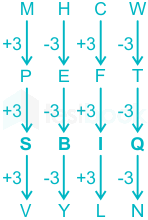
MHCW, PEFT, RBIQ, VYLN

  1. ((a))

    PEFT

  2. ((b))

    RBIQ

  3. ((c))

    VYLN

  4. ((d))

    MHCW

Show Answer
Answer: ((b))

RBIQ

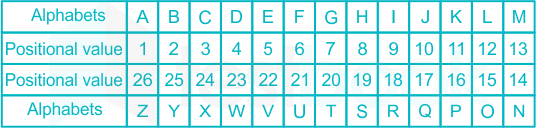
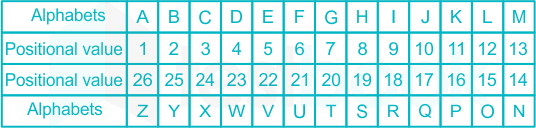
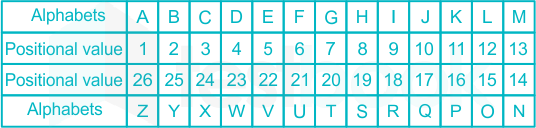
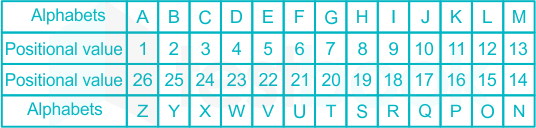
The positions of the letters according to the English alphabet series:

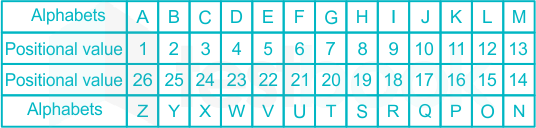
The pattern for this code is as follows

Therefore, the wrong term in the series is RBIQ, as the correct term should be SBIQ.

Hence, the correct answer is "RBIQ".

3

S1, S2, S3, S4, S5, S6 and S7 are seven students. S6 is taller than S5 but shorter than S4. S3 and S2 are shorter than S1. S5 is shorter than S3 but taller than S2. S2 is the shortest among them. S7 is shorter than S5. How many students are taller than S5?

  1. ((a))

    2

  2. ((b))

    5

  3. ((c))

    4

  4. ((d))

    3

Show Answer
Answer: ((c))

4

Given:

Seven friends: S1, S2, S3, S4, S5, S6, and S7.

1. S6 is taller than S5 but shorter than S4

⇒ S4 > S6 > S5

2. S5 is shorter than S3 but taller than S2

⇒ S3 > S5 > S2

3. S7 is shorter than S5.

⇒ S3 > S5 > S7 > S2

4. S3 and S2 are shorter than S1. 5. S2 is the shortest among them.

⇒ S1 > S3 > S5 > S7 > S2

Therefore, the final arrangement we get after combining all,

S4 > S6 > S1 > S3 > S5 > S7 > S2.

Therefore, the total number of persons taller than S5 is "4".

Hence, the correct answer is "4".
4

 In the following question, select the odd letter/letters from the given alternatives.

  1. ((a))

    GDB

  2. ((b))

    RPN

  3. ((c))

    WUS

  4. ((d))

    MKI

Show Answer
Answer: ((a))

GDB

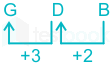
The Logic here is as follows:

Option 1: GDB

B + 2 = D

D + 3 = G

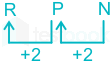
Option 2: RPN

N + 2 = P

P + 2 = R

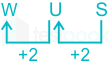
Option 3: WUS

S + 2 = U

U + 2 = W

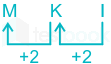
Option 4: MKI

I + 2 = K

K + 2 = M

Therefore, All other options follow a pattern except GDB.

Hence, the correct answer is **"**GDB".

5

In a certain code language, ‘TABLES’ is written as ‘SELBAT’. What is the code for ‘CHAIRS’ in that code language?

  1. ((a))

    SCHAIR

  2. ((b))

     SRIHAC

  3. ((c))

    SRIAHC

  4. ((d))

    SRICHA

Show Answer
Answer: ((c))

SRIAHC

The Logic here is as follows:

‘TABLES’ is written as ‘SELBAT’

Similarly,

Hence, the correct answer is "SRIAHC".

6

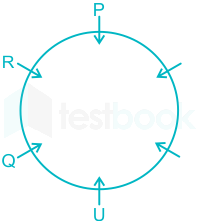
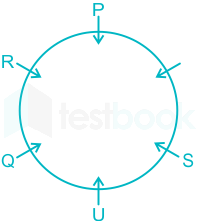
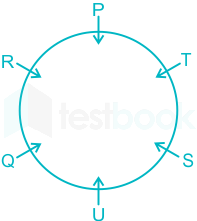
Six persons P, Q, R, S, T and U are sitting around a circular table facing towards the centre. P is third from U. Only U is between S and Q. R is to the immediate left of Q. Which of the following statement(s) is/are correct?

I. T is sitting to the immediate left of S.

II. Q is not sitting to the immediate left of U.

III. R is sitting to the immediate left of P.

IV. P is not sitting to the immediate left of T.

  1. ((a))

    III and IV

  2. ((b))

    Only III

  3. ((c))

    I and II

  4. ((d))

    Only IV

Show Answer
Answer: ((d))

Only IV

Given:

Six persons: P, Q, R, S, T, and U

1. P is third from U

2. R is to the immediate left of Q.

3. Only U is between S and Q.

Therefore, the final arrangement is:

Statements:

I. T is sitting to the immediate left of S → False ( As T is sitting to the immediate right of S)

II. Q is not sitting to the immediate left of U → False (As Q is sitting to the immediate left of U)

III. R is sitting to the immediate left of P → False (As R is sitting to the immediate right of P)

IV. P is not sitting to the immediate left of T → True (As P is sitting to the immediate right of T)

Hence, the correct answer is "Only IV".

7

In a certain code language, ‘CAKE’ is written as ‘100’, ‘GLOW’ is written as ‘285’. What is the code for ‘BACK’ in that code language?

  1. ((a))

    105

  2. ((b))

    95

  3. ((c))

    75

  4. ((d))

    85

Show Answer
Answer: ((d))

85

Logic here is as follows:

CAKE → C(3) + A(1) + K(11) + E(5) = 20

⇒ 20 × 5 = 100

GLOW → G(7) + L(12) + O(15) + W(23) = 57

⇒ 57 × 5 = 285

Similarly,

BACK → B(2) + A(1) + C(3) + K(11) = 17

⇒ 17 × 5 = 85

Hence, the correct answer is "85".

8

Three of the following four letter-cluster pairs are alike in a certain way and one is different.

  1. ((a))

    ABCD – FGHI

  2. ((b))

    IJKL – NOPQ

  3. ((c))

    NPRT – SUVY

  4. ((d))

    RSTU – WXYZ

Show Answer
Answer: ((c))

NPRT – SUVY

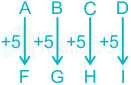
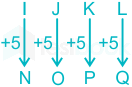
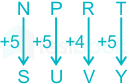
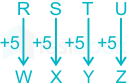
Logic follow here is

Option 1 : ABCD – FGHI

Option 2 : IJKL – NOPQ

Option 3 : NPRT – SUVY

Option 4 : RSTU – WXYZ

Here, All the options follow a pattern except option 3.

Hence, "NPRT – SUVY" is the correct answer.

9

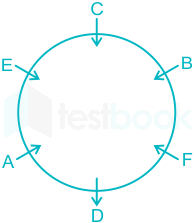
Six persons A, B, C, D, E and F are sitting around a circle facing towards the center. Only F is between B and D, Only E is between C and A. C is to the immediate right of B. Who is the neighbour of both A and F?

  1. ((a))

    E

  2. ((b))

    D

  3. ((c))

    B

  4. ((d))

    C

Show Answer
Answer: ((b))

D

Given 

  1. Only F is between B and D. 2. C is to the immediate right of B.
  2. Only E is between C and A.

From the above arrangement, D is the neighbor of both A and F.

Hence, "D" is the correct answer.

10

In the following question, select the odd word from the given alternatives.

  1. ((a))

    Chess

  2. ((b))

    Football

  3. ((c))

    Cricket

  4. ((d))

    Hockey

Show Answer
Answer: ((a))

Chess

The Logic here is as follows:

SportIndoor/Outdoor
ChessIndoor
FootballOutdoor
CricketOutdoor
HockeyOutdoor


Football, Cricket, and Hockey are outdoor games, While, Chess is an indoor game.

Hence, "Chess" is the correct answer.

11

In the following question, select the related words from the given alternatives.

Clock : Time :: Thermometer : ?

  1. ((a))

    Temperature

  2. ((b))

    Energy

  3. ((c))

    Radiation

  4. ((d))

    Heat

Show Answer
Answer: ((a))

Temperature

The logic follows here is

The Clock is used to measure Time.

Similarly,

The thermometer is used to measure the Temperature.

Hence, "Temperature" is the correct answer.

12

If ‘A’ means ‘÷’, ‘B’ means ‘×’, ‘C’ means ‘+’ and ‘D’ means ‘–’, then 12 A 4 B 8 D 2 B 27 A 9 = ?

  1. ((a))

    18

  2. ((b))

    16

  3. ((c))

    12

  4. ((d))

    24

Show Answer
Answer: ((a))

18

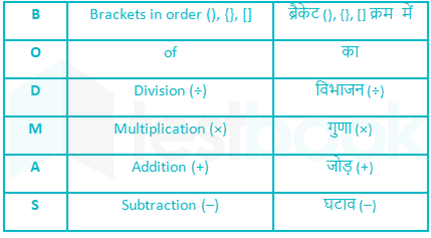
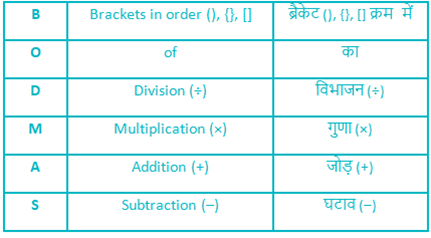
BODMAS Rule:

By decoding given information:

ABCD
Means
÷×+-


Given Equation: 12 A 4 B 8 D 2 B 27 A 9 = ?

Replace the above signs in place of codes, to get;

12 ÷ 4 × 8 - 2 × 27 ÷ 9

Using BODMAS rule,

3 × 8 - 2 × 3

⇒ 24 - 6

⇒ = 18

Hence, the correct answer is "18".

13

In the following question below are given some statements followed by some conclusions based on those statements. Taking the given statements to be true even if they seem to be at variance from commonly known facts. Read all the conclusions and then decide which of the given conclusion logically follows the given statements.

Statements:

I. All chairs are pens.

II. Some pens are cups.

III. All cups are pencils.

 Conclusion:

I. Some pencils are pens.

II. All pencils are chairs.

III. All chairs are cups.

  1. ((a))

    Both conclusion II and III follow

  2. ((b))

    Only conclusion I follow

  3. ((c))

    Both conclusion I and II follow

  4. ((d))

    Only conclusion II follow

Show Answer
Answer: ((b))

Only conclusion I follow

According to the given statement,

The least possible Venn diagram for the statement is as follows:

Conclusion:

I. Some pencils are pens → True (As a Some pens are cups, All cups are pencils, therefore some pencils are pens. So, it is true)

II. All pencils are chairs → False (As there is no direct relation given between the pencils and chairs. So, it is possible but not definite)

III. All chairs are cups → False (As there is no direct relation given between chairs and cups. So, it is possible but not definite)

Hence, "Only conclusion I follow" is the answer.

14

In the following question, select the related word pair from the given alternatives.

Erase : Rubber :: ?

  1. ((a))

    Clock : Time

  2. ((b))

    Pen : Write

  3. ((c))

    Cut : Pencil

  4. ((d))

    Eat : Spoon

Show Answer
Answer: ((d))

Eat : Spoon

The Logic here is as follows:

The Pencil marks on the paper can be Erase by using the Rubber.

Similarly,

To Eat anything from the Plate by using the Spoon.

Hence, "Eat : Spoon" is the correct answer.

15

A series is given with one term missing. Select the correct alternative from the given ones that will complete the series.

ABC, EFG, IJK, ?, QRS

  1. ((a))

    KLM

  2. ((b))

    MNP

  3. ((c))

    MNO

  4. ((d))

    LMN

Show Answer
Answer: ((c))

MNO

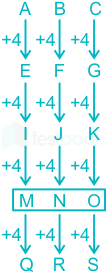
The pattern followed is:

Hence, the correct answer is "MNO".

16

In a group of five girls, Komal is the shortest while Lisa is the tallest. Rohini is taller than Komal but shorter than Veena. Priya is the second shortest person girl in the group. Who is the second tallest girl in the group?

  1. ((a))

    Veena

  2. ((b))

    Lisa

  3. ((c))

    Rohini

  4. ((d))

    Priya

Show Answer
Answer: ((a))

Veena

Given: Five Girls - Komal, Lisa, Rohini, Veena, and Priya

  1. Komal is the shortest while Lisa is the tallest.

Lisa > _ > _ > _ > Komal

2. Priya is the second shortest person girl in the group

Lisa > _ > _ > Priya > Komal

  1. Rohini is taller than Komal but shorter than Veena.

Veena > Rohini > Komal

By combining all the above statements, we get:

Lisa > Veena > Rohini > Priya > Komal

From the above arrangement, Veena is the second tallest girl in the group.

Hence, "Veena" is the correct answer.

17

P, Q, R, S, T, U and V are seven boys. Height of U and V are equal. P is shorter than Q but taller than R. S is shorter than P but taller than R. T is shorter than Q but taller than P. U is taller than Q. How many boys are taller than P?

  1. ((a))

    5

  2. ((b))

    3

  3. ((c))

    4

  4. ((d))

    2

Show Answer
Answer: ((c))

4

According to given information, we have the possible arrangements as follows:

1). P is shorter than Q but taller than R

Q > P > R

2). S is shorter than P but taller than R

P > S > R

3). T is shorter than Q but taller than P.

4). U is taller than the Q and height of U and V are equal.

U = V > Q > T > P

After combining all the arrangements, we get:

U = V > Q > T > P > S > R

Here, there are total 4 boys that are taller than P, are U, V, Q and T.

Hence, "4" is the correct answer.

18

In the following question below are given some statements followed by some conclusions based on those statements. Taking the given statements to be true even if they seem to be at variance from commonly known facts. Read all the conclusions and then decide which of the given conclusion logically follows the given statements.

Statements:

I. Some pens are tables.

II. Some tables are chairs.

Conclusions:

I. All tables are pens.

II. Some pens are chairs

  1. ((a))

    Neither conclusion follow

  2. ((b))

    Only conclusion I follow

  3. ((c))

    Both conclusion I and II follow

  4. ((d))

    Only conclusion II follow

Show Answer
Answer: ((a))

Neither conclusion follow

According to statements,

The Least possible Venn Diagram as follows:

Conclusion:

I. All tables are pens → False (As, Some tables are pens So, all tables are pens is possible but not definite. Hence, false).

II. Some pens are the chairs → False (As, there is no direct relation given between pens and chairs and it is possible but not definite. Hence, false).

Hence, "Neither Conclusion follows" is the correct answer.

19

Arrange the given words in the sequence in which they occur in the dictionary.

  1. Demanding
  2. Democracy
  3. Demystify
  4. Demarcate
  5. Decorate
  1. ((a))

    52341

  2. ((b))

    52314

  3. ((c))

    51423

  4. ((d))

    54123

Show Answer
Answer: ((c))

51423

Arrangements of the given words in dictionary order as follows:

  1. Decorate
  2. Demanding 4. Demarcate 2. Democracy
  3. Demystify

The correct order of the given arrangements according to dictionary as follows:

5. Decorate 1. Demanding 4. Demarcate 2. Democracy 3. Decorate.

Hence, "51423" is the correct answer.

20

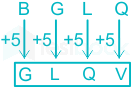
In the following question, select the related letters from the given alternatives.

KPVA : PUAF :: BGLQ : ?

  1. ((a))

    BGLQ

  2. ((b))

    MRWC

  3. ((c))

    GLQV

  4. ((d))

    LGVQ

Show Answer
Answer: ((c))

GLQV

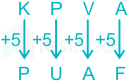
Pattern: Letters increased by +5.

Similarly,

Hence, "GLQV" is the correct answer.

Mental Ability 2 (20 questions)

21

Four number-pairs have been given, out of which three are alike in some manner and one is different. Select the number-pair that is different.

  1. ((a))

    64 – 4097

  2. ((b))

    38 – 1445

  3. ((c))

    26 – 677

  4. ((d))

    52 – 2707

Show Answer
Answer: ((d))

52 – 2707

The pattern followed here is:

642 + 1 → 4096 + 1 → 4097

382 + 1 → 1444 + 1 → 1445

262 + 1 → 676 + 1 → 677

522 + 1 → 2704 + 1 → 2705 ≠ 2707

All the given option follows a pattern except 2707.

Hence, "2707" is the correct answer.

22

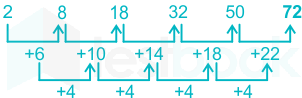
In the following question, select the missing number from the given series.

2, 8, 18, 32, 50, ?

  1. ((a))

    78

  2. ((b))

    84

  3. ((c))

    68

  4. ((d))

    72

Show Answer
Answer: ((d))

72

The pattern followed here is:

Hence, "72" is the correct answer.

23

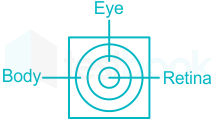
Identify the diagram that best represents the relationship among the given classes.

Body, Eye, Retina

  1. ((a))

  2. ((b))

  3. ((c))

  4. ((d))

Show Answer
Answer: ((b))

According to given words, the possible Venn Diagram as follows:

As Retina is a part of Eye and Eye is a part of the Body.

And, Eye and retina both are the parts of the body.

Hence, "Option 2" is the correct answer.

24

If A * B = (A + B)(A – B), then (12 * 7) * (11 * 8) = ?

  1. ((a))

    5876

  2. ((b))

    5776

  3. ((c))

    4376

  4. ((d))

    3989

Show Answer
Answer: ((b))

5776

The pattern followed here is:

A * B = (A + B)(A - B)

A = 12 and B = 7

= (12 + 7)(12 - 7)

= 19 × 5

A * B = 95

Similarly,

A * B = (A + B)(A - B)

A = 11 & B = 8

= (11 + 8)(11 - 8)

A * B = 19 × 3

= 57

The value of (12 * 7) * (11 * 8) is

A * B = (A + B)(A - B)

A = 12 * 7 = 95 & B = 11 * 8 = 57

= (95 + 57)(95 - 57)

= 152 × 38

= 5776

Hence, "5776" is the correct answer

25

In the following question, select the wrong figure from the given series.

  1. ((a))

  2. ((b))

  3. ((c))

  4. ((d))

Show Answer
Answer: ((d))

The Logic here is as follows:

⇒ The figure inside the box is rotating at a 45º anti-clockwise direction to form a series.

Therefore, the figure 

in the series is the wrong figure and should be replaced by 

Hence, the correct answer is "Option 4".

26

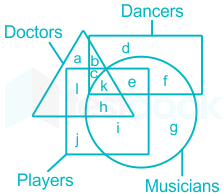
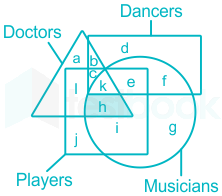
In the given figure, Doctors who are musicians and players but not dancers are indicated by which letter.

  1. ((a))

    i

  2. ((b))

    h

  3. ((c))

    l

  4. ((d))

    j

Show Answer
Answer: ((b))

h

Given:

Doctor → Triangle

Player → Square

Musician → Circle

Dancer → Rectangle

The letters that represents doctors who are musician and players but not dancers lies in the interaction of triangle, square and circle, is as shown below:

Hence, the correct answer is "h".

27

Which answer figure will complete the pattern in the question figure?

  1. ((a))

  2. ((b))

  3. ((c))

  4. ((d))

Show Answer
Answer: ((a))

The Pattern follows here is:

As we can see that Figure in option (1) is fitting perfectly in the given question figure.

Hence, the correct answer is "Option 1" i.e 

28

In the following question, select the related number from the given alternatives.

134 : 512 :: 247 : ?

  1. ((a))

    2197

  2. ((b))

    1593

  3. ((c))

    2395

  4. ((d))

    1479

Show Answer
Answer: ((a))

2197

The Logic here is as follows:

Number : (Sum of digits of the number)= Next Number

134 : 512

⇒ 134 : (1 + 3 + 4)3 = 83 = 512.

Similarly,

247 : ?

⇒ 247 : (2 + 4 + 7)3 = 133 = 2197.

Hence, the correct answer is "2197".

29

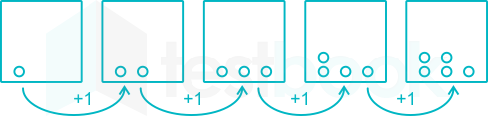
In the following question, select the figure which can be placed at the sign of question mark (?) from the given alternatives.

  1. ((a))

  2. ((b))

  3. ((c))

  4. ((d))

Show Answer
Answer: ((a))

The Logic here is as follows:

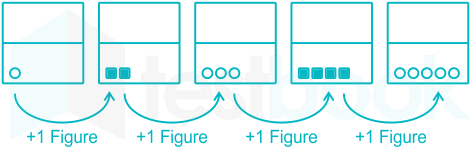
  1. The triangle in the given image series is decreasing by 1 and becomes bold and hallow alternatively.

  1. The number of vertical lines in the given image series is increasing by 1. 

  1. The circle in the given series becomes square and vise versa along with the number of figures increasing by 1.

Therefore, combining all the above series we get the final series as,

Hence, the correct answer is "Option 1".

30

In the following question, select the number which can be placed at the sign of question mark (?) from the given alternatives.

  1. ((a))

    860

  2. ((b))

    420

  3. ((c))

    780

  4. ((d))

    360

Show Answer
Answer: ((c))

780

The Logic here is as follows:

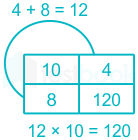
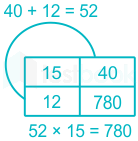
In figure 1:

⇒ 4 + 8 = 12

⇒ 12 x 10 = 120

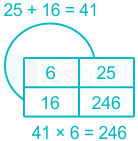
In figure 2:

⇒ 25 + 16 = 41

⇒ 41 x 6 = 246

Similarly,

In figure 3:

⇒ 40 + 12 = 52

⇒ 52  x  15 = 780

Hence, the correct answer is "780".

31

Which answer figure will complete the pattern in the question figure?

  1. ((a))

  2. ((b))

  3. ((c))

  4. ((d))

Show Answer
Answer: ((c))

The Pattern follows here is:

As we can see that Figure in option (3) is fitting perfectly in the given question figure.

Hence, the correct answer is "Option 3" i.e 

32

In the following question, four number pairs are given. The number on left side of (–) is related to the number of the right side of (–) with some Logic/Rule/Relation. Three are similar on basis of same Logic/Rule/Relation. Select the odd one out from the given alternatives.

  1. ((a))

    12 – 1728

  2. ((b))

    36 – 46656

  3. ((c))

    21 – 9461

  4. ((d))

    27 – 19683

Show Answer
Answer: ((c))

21 – 9461

The pattern followed is:

Option 1: 12 – 1728

12 – 123 = 1728

Option 2: 36 – 46656

36 – 363 = 46656

Opton 3: 21 – 9461

21 – 213 = 9261 ≠ 9461

Option 4: 27 – 19683

27 – 273 = 19683 

Therefore, 21 – 9461 is the odd one out.

Hence, the correct answer is "21 – 9461".

33

If ‘P’ means ‘+’, ‘Q’ means ‘–’, ‘R’ means ‘X’ and ‘S’ means ‘÷’, then 17 Q 3 R 48 S 16 P 12 Q 18 = ?

  1. ((a))

    8

  2. ((b))

    12

  3. ((c))

    2

  4. ((d))

    1

Show Answer
Answer: ((c))

2

BODMAS table:

Given Codes:

CodePQRS
Sign+-×÷
<br>

Given equation 17 Q 3 R 48 S 16 P 12 Q 18 = ?

Replace the signs in place of the above symbols to get

⇒ 17 - 3 × 48 ÷ 16 + 12 - 18

By BODMAS rule

⇒ 17 - 3 × 3 + 12 - 18

⇒ 17 - 9 + 12 - 18

⇒ 29 - 9 - 18

⇒ 29 - 27

⇒ 2

Hence, "2" is the correct answer.

34

In the following question, select the missing number from the given series.

4, 10, 33, 136, ?

  1. ((a))

    578

  2. ((b))

    475

  3. ((c))

    332

  4. ((d))

    685

Show Answer
Answer: ((d))

685

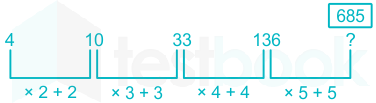
Given sequence is 4, 10, 33, 136, ?

The Logic here is as follows:

Hence, the correct answer is "685".

35

From the given answer figures, select the one in which the question figure is hidden/embedded. (Rotation is allowed)

  1. ((a))

  2. ((b))

  3. ((c))

  4. ((d))

Show Answer
Answer: ((b))

The logic follow here is:

The bolded portion in the above figure is the hidden image of the given 

Hence, the correct answer is "Option 2".

Confusion Points Generally rotation is not allowed but here rotation is allowed.

In figure 3 it seems that the question figure may be present if figure is rotated but on rotation as shown below the same figure cannot be located.

Similarly, in figure 4 also it seems that the question figure may be present if figure is rotated but on rotation as shown below the same figure cannot be located.

36

Sunil goes 12 km towards east and then he goes 10 km towards north. He again goes 12 km towards east. What is the straight line distance between final point and initial point?

  1. ((a))

    24 km

  2. ((b))

    28 km

  3. ((c))

    20 km

  4. ((d))

    26 km

Show Answer
Answer: ((d))

26 km

Given information

  1. Sunil goes 12 km towards east and then he goes 10 km towards north.
  2. He again goes 12 km towards east. 

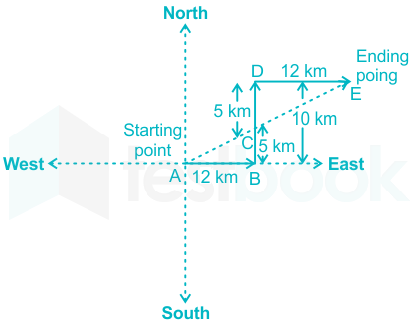
By using above information, we get the following figure,

The straight line distance between final point and initial point is √{(12 + 12)² + (5 + 5)²}

⇒ √(24)² + (10)²

⇒ √(576 + 100)

⇒ √(676)

⇒ 26 Km

Hence, the correct answer is "26 km".

Alternate Method

The straight line distance between final point and initial point is,  AC + CE

The distance AC is

(AC)² = (AB)² + (BC)²   

(AC)² = (12)² + (5)² 

(AC)² = 144 + 25

(AC)² = 169 

AC = √169 

AC = 13 Km 

 The distance is CE is

(CE)² = (DE)² + (DC)²

(EC)² = (12)² + (5)² 

(EC)² =  144 + 25

( EC )² = 169 

EC = √169 

EC = 13 Km 

The straight line distance between final point and initial point is AC + CE

⇒ 13 Km + 13 Km = 26 Km

Hence, the correct answer is "26 km".

37

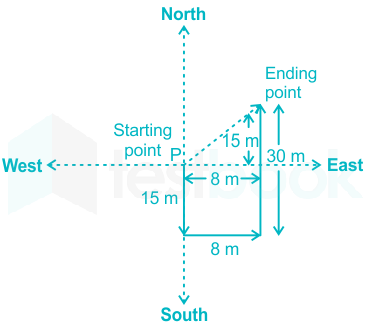
Shashwat goes 15 metres towards south from a point P and then after turning to left he goes 8 metres. He again turns left and goes 30 metres. How far and in which direction is he now from his starting point?

  1. ((a))

    15 metres, South-east

  2. ((b))

    15 metres, North-east

  3. ((c))

    17 metres, North-west

  4. ((d))

    17 metres, North-east

Show Answer
Answer: ((d))

17 metres, North-east

Given information is 

  1. Shashwat goes 15 metres towards south from a point P and then after turning to left he goes 8 metres.
  2. He again turns left and goes 30 metres.

By using above information

The shortest distance between the starting point to ending point = √ [(8)2 + 152]

= √ (64 + 225) 

= √(289) 

= 17 metres

Shashwat is 'North - East' direction with respect to starting point

Hence, the correct answer is "17 metres, North-east​".

38

In the following question, select the related number from the given alternatives.

426 : 576 :: 378 : ?

  1. ((a))

    2996

  2. ((b))

    3024

  3. ((c))

    632

  4. ((d))

    778

Show Answer
Answer: ((b))

3024

Given

426 : 576 :: 378 : ?

Here, the logic is;

Second number = (Sum of digits of first number) x (Product of digits of the first number)

426 : 576 

⇒ (4 + 2 + 6) × (4 × 2 × 6)

⇒ (12) × (48)

⇒ = 576

Similarly,

378 : ?

⇒ (3 + 7 + 8) × (3 × 7 × 8)

⇒ (18) × (168)

⇒ = 3024

Hence, "3024" is the correct answer.

39

In the following question, select the figure which can be placed at the sign of question mark (?) from the given alternatives.

  1. ((a))

  2. ((b))

  3. ((c))

  4. ((d))

Show Answer
Answer: ((b))

The Logic here is as follows:

  1. The dots in the given image series is decreasing by 1.

  1. The number of straight lines in the given image series is increasing by 1. 

  1. The small circle in the given series increasing by 1.

Therefore, combining all the above series we get the final series as,


Hence, the correct answer "Option 2".

40

From the given answer figures, select the one in which the question figure is hidden/embedded (Rotation NOT allowed)

  1. ((a))

  2. ((b))

  3. ((c))

  4. ((d))

Show Answer
Answer: ((b))

The given figure embedded in the options figure is;

Hence, the correct answer is "Option 2".

General Awareness 1 (20 questions)

41

Unit is ______.

  1. ((a))

    method of measurement

  2. ((b))

    the known quantity with respect to which something is measured

  3. ((c))

    amount of measurement

  4. ((d))

    the unknown quantity which is measured

Show Answer
Answer: ((b))

the known quantity with respect to which something is measured

The correct answer is the known quantity with respect to which something is measured.

  • Unit is the known quantity with respect to which something is measured.

Key Points

  • Unit is the chosen standard used for measuring a physical quantity is called unit.
  • System of Units:
  • Units depend on the choice of system.
  • Each choice of units leads to a new system (set) of units.
  • The internationally accepted systems are:
  • CGS system
  • EPS System
  • FPS System;
  • SI Units.

Additional Information

Base QuantityUnitSymbol
Lengthmeterm
MasskilogramKg
Timeseconds
Electric currentampereA
Thermodynamic temperaturekelvinK
Amount of substancemolemol
Luminous intensitycandelacd
Plane angleradianrad.
42

Which of the following pair of Musician – Instrument is NOT correct?

  1. ((a))

    Shiv Kumar Sharma – Bansuri

  2. ((b))

    Bismillah Khan – Shehnai

  3. ((c))

    Zakir Hussain – Tabla

  4. ((d))

    Ravi Shankar – Sitar

Show Answer
Answer: ((a))

Shiv Kumar Sharma – Bansuri

Shiv Kumar Sharma – Bansuri is NOT correct.

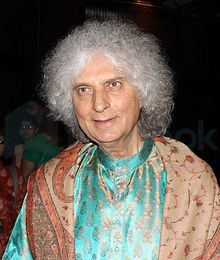
Key Points

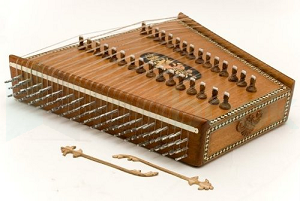
  • Shiv Kumar Sharma is a maestro of santoor.
  • He belongs to the UT of Jammu and Kashmir.
  • He won the Sangeet Natak Akademi Award in 2011.

  • Santoor:
  • It is a stringed instrument of a trapezoid-shaped hammered dulcimer.
  • In ancient Sanskrit texts, it was called Shatha Tantri Veena.

Additional Information

  • Bismillah khan is the maestro of Shehnai.
  • Zakir Hussain is the maestro of Tabla.
  • Ravi Shankar is the maestro of SItar.
43

Fiscal policy creates a surplus, when the total _______.

  1. ((a))

    Expenditure and total receipts same

  2. ((b))

    receipts more than expenditure

  3. ((c))

    expenditure over receipts

  4. ((d))

    Receipts and total expenditure very low

Show Answer
Answer: ((b))

receipts more than expenditure

The correct answer is receipts more than expenditure.

Key Points

  • Fiscal policy refers to the use of government spending and tax policies to influence economic conditions, especially macroeconomic conditions, including aggregate demand for goods and services, employment, inflation, and economic growth.
  • A budget surplus occurs when receipts exceed expenditures.
  • The term often refers to a government's financial state, as individuals have "savings" rather than a "budget surplus".
  • A surplus is an indication that a government's finances are being effectively managed.
  • A surplus implies the government has extra funds.
  • Advantages of a budget surplus:
  • These funds can be allocated toward public debt, which reduces interest rates and helps the economy.
  • A budget surplus can be used to reduce taxes, start new programs, or fund existing programs such as Social Security or Medicare.
  • The government might use a budget surplus to cut taxes to stimulate the supply-side of the economy
44

______ is the rate of interest commercial banks have to pay to RBI if they borrow money from it in case of shortage of reserves.

  1. ((a))

    Statutory Liquidity Ratio

  2. ((b))

    Cash Reserve Ratio

  3. ((c))

    Bank Rate

  4. ((d))

    Money Rate

Show Answer
Answer: ((c))

Bank Rate

The correct answer is Bank Rate.

  • Bank Rate is the rate of interest commercial banks have to pay to RBI if they borrow money from it in case of a shortage of reserves.

Key Points

  • Bank Rate is the rate of interest offered by the central bank to commercial banks.
  • It is also called the rediscount rate.
  • It is always greater than the repo rate.

Additional Information

  • Statutory Liquidity Ratio (SLR):
  • It is the ratio of liquid assets, which all commercial banks have to keep in the form of cash, gold and unencumbered approved securities.
  • It is equal to or not more than 40% of their total demand and time deposit liabilities.
  • The current SLR is 18%.
  • Cash Reserve Ratio (CRR):
  • It is the percentage of cash that needs to be kept in reserves with RBi without any floor rate or ceiling rate.
  • The current CRR is 4.00%.

Important Points

  • Reserve Bank of India (RBI):
  • RBI was set up on the basis of the Hilton Young Commission recommendation in April 1935, with the enactment of the RBI Act, 1934.
  • The headquarters of RBI is in Mumbai.
  • Current Governor is Shaktikanta Das
45

Which of the following organisms has a prokaryotic cell?

  1. ((a))

    Monoecious (protozoa)

  2. ((b))

    Rhizopus

  3. ((c))

    Virus

  4. ((d))

    Blue Green algae

Show Answer
Answer: ((d))

Blue Green algae

The correct answer is Blue**-green algae**.

  • Blue-green algae have a prokaryotic cell.

Key Points

  • Blue-green algae:
  • Blue-green alga is a large heterogeneous group of prokaryotic and photosynthetic organisms.
  • It is also called cyanobacteria.
  • They lack a membrane-bound nucleus, mitochondria, Golgi apparatus, chloroplasts, and endoplasmic reticulum.
  • They are not true algae, but bacteria.
  • Prokaryotic Cells:
  • These are primitive cells that lack a nucleus and most of the other cell organelles.

Additional Information

  • Virus:
  • The virus was discovered by Russian scientist Ivanovsky.
  • They become active inside living cells.
  • Nucleic acids replicate themselves and
  • they reproduce rapidly.
  • Rhizopus is a saprophytic fungus.
  • Monoecious (protozoa) have both male and female reproductive organs.
46

Which of the following is not a residual mountain?

  1. ((a))

    Nilgiri Hills

  2. ((b))

    Himalaya

  3. ((c))

    Aravali

  4. ((d))

    Rajmahal Hills

Show Answer
Answer: ((b))

Himalaya

Himalaya is NOT correct.

  • The Himalayas is not a residual mountain.

Key Points

  • Fold Mountains:
  • It is formed due to the compressive forces generated by endogenetic forces (earthquake, landslide, etc.).
  • Examples of fold mountains are the Himalayas, Alps, Andes, Rockies, Atlas, etc.
  • ​Block Mountains:
  • These are formed when a great block of the earth’s crust may be raised or lowered due to tectonic activities.
  • When the earth’s crust cracks due to tension or compression, faulting takes place.
  • Examples of Block Mountain: Satpura and Vindhya, Nilgiris.
  • ​Residual or Dissected Mountains:
  • They are formed as a result of erosion of plateaus and high plains by various agents of erosion.
  • Examples: Aravalli.
47

A layer of soil that is almost parallel to the surface and has the characteristic properties of soil is known as _______.

  1. ((a))

    Humus

  2. ((b))

    Bedrock

  3. ((c))

    Exfoliation

  4. ((d))

    Soil bed

Show Answer
Answer: ((a))

Humus

The correct answer is humus.

  • A layer of soil that is almost parallel to the surface and has the characteristic properties of soil is known as humus.
  • Humus consists of decomposed and partly decomposed organic matter in the soil.
  • It is a parallel layer to that of the surface and has all the characteristics properties of soil.

Additional Information

  • Bedrock is the hard, solid rock beneath the surface materials of soil.
  • Exfoliation is a process that changes rocks rapidly that can expand or crack rocks.
48

Endocrine glands are ______.

I. Duct glands

II. Ductless glands

  1. ((a))

    Both I and II

  2. ((b))

    Only I

  3. ((c))

    Neither I nor II

  4. ((d))

    Only II

Show Answer
Answer: ((d))

Only II

The correct answer is Only II.

  • Endocrine glands are ductless glands.

Key Points

  • ​Endocrine System
  • Exocrine glands:
  • Glands which have duct are called exocrine glands.
  • Secretion of enzymes passes through it.
  • Example: Lactic gland, Sweat gland.
  • Endocrine glands:
  • These are ductless glands.
  • Hormones are secreted by these glands.
  • Hormones are sent to the different parts of the body through blood plasma.
  • Example; Pituitary gland, Thyroid gland.
49

Hill Palace Museum is located in _______.

  1. ((a))

    Uttarakhand

  2. ((b))

    Kerala

  3. ((c))

    Maharashtra

  4. ((d))

    Himachal Pradesh

Show Answer
Answer: ((b))

Kerala

The correct answer is Kerala.

  • Hill Palace Museum is located in Kerala.

Key Points

  • Hill Palace Museum:
  • It is located in the Ernakulam district of Kerala.
  • It was opened in the year 1865.
  • It was built by the Maharaja Of Cochin.
  • It is the largest archaeological museum in Kerala.

Additional Information

  • Museums in India come under the Ministry of Culture.
  • Indian Museum Kolkata is the largest museum in India.
50

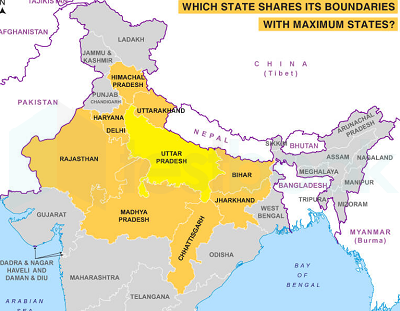
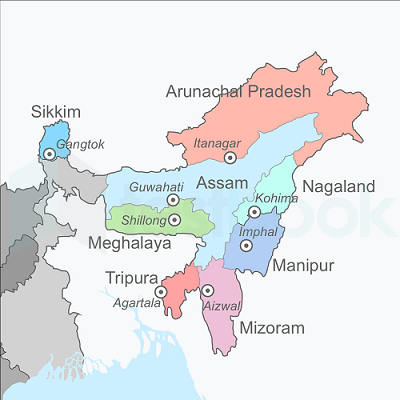
Which of the following state shares border with Nepal?

  1. ((a))

    Gujarat

  2. ((b))

    Tripura

  3. ((c))

    Uttar Pradesh

  4. ((d))

    Telangana

Show Answer
Answer: ((c))

Uttar Pradesh

The correct answer is Uttar Pradesh.

  • Uttar Pradesh shares its border with Nepal.

Key Points

  • Uttar Pradesh:
  • Capital: Lucknow
  • Governor: Anandiben Patel
  • Chief Minister: Yogi Adityanath (Ajay Bisht)
  • It shares its borders with the states of Rajasthan, Haryana, Delhi, Madhya Pradesh, Chattisgarh, Bihar, Jharkhand, Uttarakhand, Himachal Pradesh.
  • It shares its international border with Nepal.

Additional Information

  • Gujarat shares its borders with Madhya Pradesh,  Maharashtra, and Rajasthan.
  • It shares its international border with Pakistan.
  • Telangana shares its borders with Maharashtra, Andhra Pradesh, Karnataka and Chhattisgarh.
  • Tripura shares its borders with Mizoram and Assam.
  • It shares its international border with Bangladesh.

51

Choose the correct statement.

I. Rayon is also known as Artificial silk.

II. Rayon and silk are natural fibres.

III. Rayon and Nylon are man-made fibres.

IV. Nylon is a man-made fibre.

  1. ((a))

    Only IV

  2. ((b))

    I, III and IV

  3. ((c))

    I and III

  4. ((d))

    I and II

Show Answer
Answer: ((b))

I, III and IV

The correct answer is I, III and IV.

Key Points

  • Rayon
  • It is a fibre made of natural sources of regenerated cellulose.
  • Its feel and touch are similar to those of silk and are called artificial silk. Hence, statement I is correct.
  • It was invented by Georges Audemars.
  • Nylon:
  • Nylon is a fibre man-made of heavy molecules built up of short, continually repeating sections of atoms.
  • Hence, statement III and IV is correct.
52

Orange juice contains ______ acid due to which it tastes sour.

  1. ((a))

    citric

  2. ((b))

    oxalic

  3. ((c))

    formic

  4. ((d))

    acetic

Show Answer
Answer: ((a))

citric

The correct answer is citric.

  • Orange juice contains citric acid due to which tastes sour.

Key Points

  • Fruits that contain citric acid are called citrus fruits.
  • Citrus fruits are lemon, lime, orange, Grapefruit, etc.
  • The formula of citric acid is C6H8O7.

Additional Information

  • Oxalic acid is found in tomato.
  • Its formula is C2H2O4.
  • Formic acid is found in the sting of ants and bees.
  • Its formula is CH2O2.
  • Acetic acid is found in vinegar.
  • Its formula is id CH3COOH.
53

Which of the following is formed by mixing iron with chromium, carbon, nickel, molybdenum, and manganese

  1. ((a))

    Steel

  2. ((b))

    German silver

  3. ((c))

    Stainless steel

  4. ((d))

    Bronze

Show Answer
Answer: ((c))

Stainless steel

The correct answer is Stainless steel.

  • Stainless steel is formed by mixing iron with carbon, nickel and zinc.

Key Points

  • Stainless steel is an iron alloy and is made of mixing iron with metals like chromium, carbon, nickel, molybdenum, and manganese in appropriate proportions.
  • Stainless Steel was invented by Harry Brearley.
  • In India, the first Iron and steel plant was set up at Jamshedpur
  • It was called named Tata Iron and Steel Company Limited (TISCO).


  • Differences between Steel and Stainless steel 
  • Steel is made by adding iron to carbon which hardens the iron
  • Stainless steel has a high chromium content
  • The chromium forms an invisible layer on the surface of the steel to prevent it from staining.
  • Steel is somewhat stronger than stainless steel


Additional Information

  • German Silver is made of mixing Copper (60%), Zinc (20%) & Nickel (20%).
  • Bronze is made of mixing Copper (90%) & Tin (10%).
54

An ______ is a solution in which the suspended particles are liquid droplets and the continuous phase is also a liquid. (The two phases are immiscible)

  1. ((a))

    Emulsion

  2. ((b))

    Agglomerate

  3. ((c))

    Gel

  4. ((d))

    Aerosol

Show Answer
Answer: ((a))

Emulsion

The correct answer is Emulsion.

  • An emulsion is a solution in which the suspended particles are liquid droplets and the continuous phase is also a liquid. (The two phases are immiscible).

Key Points

  • An emulsion is a mixture of two or more liquids in which one is present as droplets, of microscopic or ultramicroscopic size and is distributed throughout the other.
  • These two liquids do not normally mix together.
  • Examples of emulsions are paints, hair cream, butter and jellies, etc.


Additional Information

  • A gel is a colloid in a more solid form than a solution.
  • Aerosols are extremely small solid particles or liquid droplets that are suspended in the atmosphere.
55

Migrants who move into a new place are called ______.

  1. ((a))

    Sheltered

  2. ((b))

    Displaced

  3. ((c))

    Immigrants

  4. ((d))

    Emigrants

Show Answer
Answer: ((c))

Immigrants

The correct answer is Immigrants.

  • Migrants who move into a new place are called Immigrants.

Key Points

  • Immigrants are the people who come to a new place or country to live there permanently.


Additional Information

  • Emigrants are the people who has gone to live in another country.
  • Sheltered people are the ones who acquire shelter given either by the government or native people.
  • These people are displaced due to various reasons like natural calamities and war.
  • Displaced people are the ones who move from their native place to another place due to some circumstances.


  • People who are displaced can also be called sheltered after their settlements.
56

Ambubachi mela is a festival of which state?

  1. ((a))

    Assam

  2. ((b))

    Mizoram

  3. ((c))

    Sikkim

  4. ((d))

    Gujarat

Show Answer
Answer: ((a))

Assam

The correct answer is Assam.

  • Ambubachi Mela is a festival of Assam.

Key Points

  • Ambubachi Mela:
  • It is celebrated at Kamakhya Temple in the month of June.
  • It is one of the biggest congregations in eastern India.
  • It is the belief that Kamakhya embodies the mother cult, the Shakti.
  • The meaning of Ambubachi is spoken with water.
  • Other fairs and festival of Assam: Bihu Festival, Me-Dum-Me-Phi, Majuli Festival, Dehing Patkai Festival, Kaziranga Elephant Festival and Ali Ai Ligang Festival.


Additional Information

  • Festivals of Mizoram are Chapchar Kut Festival, Mim Kut Festival and Pawl Kut Festival.
  • Festivals of Sikkim are Saga Dawa, Pang Lhabsol, Losoong or the Sonam Losar.
  • Festivals and fairs of Gujarat are Modhera Dance Festival, Navratri, Madhavrai Fair, Ravechi Fair and Vautha Mela.
57

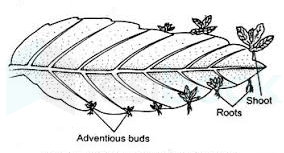
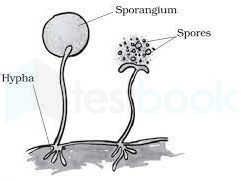
Bryophyllum, reproduces by ______.

  1. ((a))

    vegetative propagation

  2. ((b))

    fragmentation

  3. ((c))

    budding

  4. ((d))

    spore formation

Show Answer
Answer: ((a))

vegetative propagation

The correct answer is vegetative propagation.

  • Bryophyllum reproduces by vegetative propagation.

Key Points

  • Bryophyllum:
  • They reproduce asexually, through the vegetative propagation of leaves.
  • They are also called air plants.
  • The leaves of bryophyllum are broad, having notches at their margins, these are the locations from which buds arise.
  • Vegetative propagation is a reproduction method where new plants are produced by vegetative parts of a plant called propagules.

Additional Information

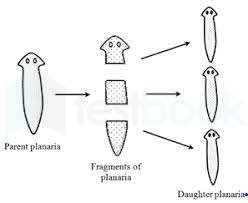
  • In fragmentation, the cell splits into two parts and makes new bodies.
  • It takes place in planaria.

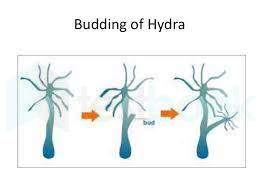
  • Budding is a form of asexual reproduction in which a new individual develops from a generative anatomical point of the parent organism. 
  • It takes place in hydra.

  • Spore Formation is a method in asexual reproduction.
  • In this, a new individual is formed without fusion with another reproductive cell.

58

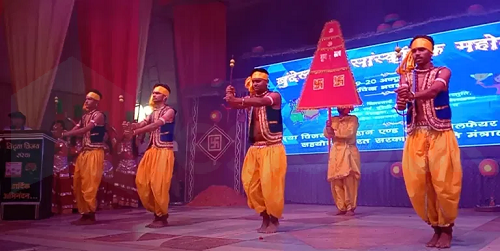
Jawara dance is related to ______ state.

  1. ((a))

    Karnataka

  2. ((b))

    Maharashtra

  3. ((c))

    Madhya Pradesh

  4. ((d))

    Andhra Pradesh

Show Answer
Answer: ((c))

Madhya Pradesh

The correct answer is Madhya Pradesh.

  • Jawara dance is related to Madhya Pradesh state.

Key Points

  • Jawara Dance:
  • It is a folk dance of Madhya Pradesh.
  • It is mainly performed in the Bundelkhand region among the peasant community.
  • It is also known as harvest dance.
  • Both male and female participate in the Jawara dance.
  • Other folk dances of Madhya Pradesh are Matki, Aada, Khada Nach, Phulpati, Grida Dance, Selalarki, Selabhadoni, Maanch.


Additional Information

StateDance
KarnatakaYakshagan, Huttari, Suggi, Kunitha, Karga, Lambi.
MaharashtraLavani, Dahikala Dasavtar or Bohada, Nakata, Koli, Lezim, Gafa.
Andhra PradeshKuchipudi, Vilasini Natyam, Dappu, Tappeta Gullu, Lambadi, Dhimsa, Kolattam, Butta Bommalu, Andhra Natyam, Bhamakalpam, Veeranatyam,
59

In Union Budget 2019, the government eased ______ to encourage start-ups in the country.

  1. ((a))

    Entertainment tax

  2. ((b))

    Corporate tax

  3. ((c))

    Angel Tax

  4. ((d))

    Luxury tax

Show Answer
Answer: ((c))

Angel Tax

The correct answer is Angel Tax.

  • In Union Budget 2019, the government eased Angel Tax to encourage start-ups in the country.

Key Points

  • Angel tax is the tax that unlisted companies (startups) are liable to pay on the capital they raise through the issue of shares.
  • Article 112 deals with the Annual financial statement (Budget).
60

Which of the following is also called ‘Slash and Burn’ agriculture?

  1. ((a))

    Plantation Agriculture

  2. ((b))

    Intensive Subsistence Agriculture

  3. ((c))

    Shifting Cultivation

  4. ((d))

    Primitive Subsistence Agriculture

Show Answer
Answer: ((c))

Shifting Cultivation

The correct answer is Shifting Cultivation.

  • Shifting Cultivation is also called ‘Slash and Burn’ agriculture.

Key Points

  • Shifting Cultivation:
  • Shifting cultivation is a model of farming which consists of slash and burn technique.
  • In this, the farmers would cut the native vegetation and burn it, then plant crops in the exposed, ash-fertilized soil for two or three seasons.
  • In India, it is called Jhum Kheti.

NameLocation
LadangMalaysia
TaungyaBurma
TamraiThailand
CaiginPhillipines
ChenaSri -Lanka
HumahJava
MilpaAfrica and Central america

Additional Information

  • In plantation agriculture, a single crop is grown for the entire year.
  • It is a type of commercial farming.
  • In intensive subsistence agriculture, the farmer cultivates a small plot of land using simple tools and more labour.
  • The crops grown in this agriculture are consumed by the farmer and his family.
  • In Primitive subsistence agriculture, primitive techniques are used to cultivate crops.
  • This agriculture is self-sufficient and farmers only grow food for themselves and their families.

General Awareness 2 (20 questions)

61

National Doctor's day is observed every year on ______.

  1. ((a))

    1st July

  2. ((b))

    27th June

  3. ((c))

    27th July

  4. ((d))

    2nd July

Show Answer
Answer: ((a))

1st July

The correct answer is 1st July.

Key Points

  • India celebrates National Doctor's Day on July 1 each year, in honor of the birth and death anniversary of the great physician and the second Chief Minister of West Bengal, Dr. Bidhan Chandra Roy
  • He was born on July 1, 1882, and died on the same date in 1962, aged 80 years.​
  • The British Medical Journal, in its obituary of Roy, called him the “first medical consultant in the subcontinent of India, who towered over his contemporaries in several fields”.
  • National Doctors' Day is a day celebrated to recognize the contributions of physicians to individual lives and communities.
  • The day is observed on different dates across the world. In the United States, Doctor’s Day is observed on March 30, in Cuba on December 3, and in Iran on August 23.
  • The theme of International Mother Language Day 2020 is "Languages without borders".

Additional Information

DaysObserved on
World Wetlands Day2nd February
National Science Day28th February
Earth Day22nd April
62

“Lessons Life Taught Me Unknowingly” is an autobiography of which actor?

  1. ((a))

    Anupam Kher

  2. ((b))

    Boney Kapoor

  3. ((c))

    Rakesh Roshan

  4. ((d))

    Rishi Kapoor

Show Answer
Answer: ((a))

Anupam Kher

The correct answer is Anupam Kher.

Key Points

  • **'**Lessons Life Taught Me Unknowingly' is an autobiography of Anupam Kher.
  • About ‘Lessons Life Taught Me, Unknowingly’:
  • The autobiography of Padma Bhushan awardee gives a detailed account of his failures, rejections, and lessons learned in his life and in a career spanning 500 films.
  • The autobiography shares the events in Kher's life that shaped his career and is an exciting account as it does not talk about his successes.
  • The book was released in India on 5 August and will be released in the US on 15 October 2019.

Additional Information

  • Anupam Kher (born 7 March 1955) is an Indian actor and the former Chairman of the Film and Television Institute of India.
  • He has appeared in over 500 films predominantly in the Hindi language, and many plays.
  • He is a recipient of two National Film Awards and eight Filmfare Awards.
  • He won the Filmfare Award for Best Actor for his performance in Saaransh (1984).
  • He holds the record for winning the Filmfare Award for Best Comedian five times in total for Ram Lakhan (1989), Lamhe (1991), Khel (1992), Darr (1993), and Dilwale Dulhaniya Le Jayenge (1995).
  • He won the National Film Award for Special Mention twice for his performances in Daddy (1989) and Maine Gandhi Ko Nahin Mara (2005).
  • For his performance in the film Vijay (1988), he won the Filmfare Award for Best Supporting Actor.
  • Besides working in Hindi films, he has also appeared in international films such as the Golden Globe-nominated Bend It Like Beckham (2002), Ang Lee's Golden Lion-winning Lust, Caution (2007), and David O. Russell's Oscar-winning Silver Linings Playbook (2012).
  • He received a BAFTA nomination for his supporting role in the British television sitcom The Boy With The Topknot (2018).
  • He has held the post of chairman of the Central Board of Film Certification and the National School of Drama in India.
  • The Government of India honored him with the Padma Shri in 2004 and the Padma Bhushan in 2016 for his contribution in the field of cinema and arts.
63

The First Battle of Tarain was fought between Mohammad Ghori and ______.

  1. ((a))

    Rana Pratap Singh

  2. ((b))

    Prithviraj Chauhan

  3. ((c))

    Maharaja Hari Singh

  4. ((d))

    Jai Singh

Show Answer
Answer: ((b))

Prithviraj Chauhan

The correct answer is Prithviraj Chauhan.

Key Points

  • The First Battle of Tarain was fought in 1191 between the Muhammad Ghori and Prithiviraj Chauhan and their allies, near Tarain.
  • Mohammad Ghori captured Bathinda and this brought him to the Northwestern frontier kingdom of Prithiviraj Chauhan.
  • All Hindu Kings of north India formed a confederacy under the command of Prithiviraj Chauhan.
  • Prithviraj's army lead by Govind Tai marched on to Bathinda and fought with the Ghori army at Tarain.
  • Ghori was wounded in a personal battle with Govind Tai and the Ghori army retreated and given the victory to Prithviraj Chauhan.

Additional Information

  • The Second Battle of Tarain (located in the present-day Haryana state) was fought in the year 1192.
  • In 1192, Ghori returned and defeated and killed Prithviraj, who was betrayed by Jai Chand, on the same field.
  • Delhi was occupied in 1192–93, and the whole of north India fell into Muslim rulers within 20 years.
  • The Turkish rule was the beginning of the Muslim rule in India which continued for more than 7 centuries.
64

Who was appointed as president of the World Bank in April, 2019?

  1. ((a))

    Ivanka Trump

  2. ((b))

    David Malpass

  3. ((c))

    Jim Yong Kim

  4. ((d))

    Anshula Kant

Show Answer
Answer: ((b))

David Malpass

The correct answer is David Malpass.


  • David R. Malpass was selected as 13th President of the World Bank Group by its Board of Executive Directors on April 5, 2019.
  • Mr. Malpass previously served as Under Secretary of the Treasury for International Affairs for the United States.

Key Points

  • World Bank was established in July 1944.
  • The World Bank consists of two institutions:-
  • International Bank for Reconstruction and Development (IBRD).
  • International Development Association (IDA).
  • The motto of the World Bank is working for a world free of poverty.
  • The headquarters of the World Bank is in Washington D.C.
  • The current President of the World Bank is Ajay Banga

         World Bank Logo

65

Which Schedule of the Indian Constitution deals with the allocation of seats in the Council of States?

  1. ((a))

    Tenth

  2. ((b))

    Second

  3. ((c))

    Ninth

  4. ((d))

    Fourth

Show Answer
Answer: ((d))

Fourth

The correct answer is Fourth.


  • The Fourth Schedule contains provisions as to the allocation of seats in the Council of States.

Key Points 

Schedules of the constitution:

  • The First Schedule contains the list of states and union territories and their territories.
  • The Second Schedule contains provisions of the President, Governors of States, Speaker and the Deputy Speaker of the House of the People and the Chairman and the Deputy Chairman of the Council of States and the Speaker and the Deputy Speaker of the Legislative Assembly and the Chairman and the Deputy Chairman of the Legislative Council of a State, the Judges of the Supreme Court and of the High Courts and the Comptroller and Auditor-General of India.
  • The Third Schedule contains the Forms of Oaths or Affirmations.
  • The Fourth Schedule contains provisions as to the allocation of seats in the Council of States.
  • The Fifth Schedule contains provisions as to the Administration and Control of Scheduled Areas and Scheduled Tribes.
  • The Sixth Schedule contains provisions as to the Administration of Tribal Areas in the States of Assam, Meghalaya, Tripura, and Mizoram.
  • The Seventh Schedule contains the Union list, State list, and the concurrent list.
  • The Eighth Schedule contains the list of recognized languages.
  • The Ninth Schedule contains provisions as to the validation of certain Acts and Regulations.
  • The Tenth Schedule contains provisions as to disqualification on the ground of defection.
  • The Eleventh Schedule contains the powers, authority, and responsibilities of Panchayats.
  • The Twelfth Schedule contains the powers, authority, and responsibilities of Municipalities.
66

How many medals did India win in the 2018 Commonwealth Games?

  1. ((a))

    73

  2. ((b))

    66

  3. ((c))

    60

  4. ((d))

    52

Show Answer
Answer: ((b))

66

The correct answer is 66.

Key Points

  • In the 2018 Commonwealth Games, India won a total of 66 medals.
  • Gold - 26
  • Silver - 20
  • Bronze - 20
  • Australia topped the medal table rank with 80 gold, second England with 45 gold, and third India with 26 gold.

Additional Information

  • 2018 Commonwealth Games:
  • The 2018 Commonwealth Games, officially known as the XXI Commonwealth Games and commonly known as Gold Coast 2018.
  • It was held on the Gold Coast, Queensland, Australia, between 4 and 15 April 2018.
  • It was India's 18th appearance at the Commonwealth Games. With 26 Gold medals and a total of 66 medals.
  • India finished 3rd in the tournament.
  • The first time a major multi-sport event achieved gender equality by having an equal number of events for male and female athletes.
  • Shooter Heena Sidhu clinched the gold medal in the women's 25m pistol event at the 21st Commonwealth Games (CWG) in Australia.
  • Indian sprinter Mohammad Anas qualified for the finals of the men’s 400m event.
  • Shooter Shreyasi Singh clinched the gold medal in the women's double trap event.
  • Shooter Jitu Rai won gold in the men's 10m air pistol event.
  • India’s teen shooter Manu Bhaker grabbed the gold medal in the women’s 10m air pistol.
  • Punam Yadav won India's fifth gold medal in the women's 69kg weightlifting event.
  • The first Paralympic medal with Para powerlifter Sachin Chaudhary bagging bronze in the heavyweight category.
  • The 15-year-old Indian shooter, Anish Bhanwala, has created history by becoming the country’s youngest ever gold medal winner in the Commonwealth Games.
  • Indian wrestler Bajrang Punia has won gold in the men's freestyle 65 kg category.
  • Neeraj Chopra became the first Indian javelin thrower to claim a gold medal at the Commonwealth Games.
  • New Delhi hosted the Commonwealth Games in 2010.
67

Emergency Provisions are contained in which Part of the Constitution of India?

  1. ((a))

    Part X

  2. ((b))

    Part I

  3. ((c))

    Part XX

  4. ((d))

    Part XVIII

Show Answer
Answer: ((d))

Part XVIII

The correct answer is Part XVIII.

Key Points

  • Emergency Provisions are contained in Part Eighteen of the Constitution of India.
  • The President of India has the power to impose emergency rule in any or all the Indian states if the security of part or all of India is threatened by "war or external aggression or armed rebellion".
  • The Constitution stipulates three types of emergencies:
  • National Emergency
  • Constitutional Emergency
  • Financial Emergency

Additional Information

  • Article 352 says that the President can impose an emergency if he agrees that a grave security threat exists whereby the security of India, or of any part of her territory is threatened whether by war, external aggression, or armed rebellion, he/she can declare emergency rule in the whole of India or on any part of the Indian Territory.
  • This is also called a ‘National Emergency’.
  • It can apply to the entire country or part.
  • It can be declared even before an actual occurrence if the president is satisfied with an imminent threat.
  • The president can declare this only after the written recommendation of the entire cabinet.
  • A proclamation can be subject to judicial review.​
68

Which of the following material was used during Harappan Civilization?

I. Plastic

II. Terracotta

III. Rubber

  1. ((a))

    I and II

  2. ((b))

    II and III

  3. ((c))

    Only III

  4. ((d))

    Only II

Show Answer
Answer: ((d))

Only II

The correct answer is Terracotta.

Key Points

  • **Harappans created sculptures, seals, pottery, and jewelry from materials, such as terracotta, metal, and stone.**​
  • The history of India begins with the birth of the Indus Valley Civilization (IVC), also known as the Harappan Civilization.
  • It flourished around 2,500 BC, in the western part of South Asia, in contemporary Pakistan and Western India.
  • Harappan civilization occupied about 8,00,000 sq. km.
  • ​It is called Harappan because this civilization was first discovered in 1921 by Dayaram Sahni at the modern site of Harappa situated in the province of West Punjab in Pakistan.
  • The Indus Valley was home to the largest of the four ancient urban civilizations of Egypt, Mesopotamia, India, and China.
  • In the 1920s, the Archaeological Department of India carried out excavations in the Indus valley wherein the ruins of the two old cities, viz. Mohenjodaro and Harappa were unearthed.
  • In 1924, John Marshall, Director-General of the ASI, announced the discovery of a new civilization in the Indus valley to the world.

Additional Information

  • Phases of IVC(Indus Valley Civilization):
  • Three phases of IVC are:
  • the Early Harappan Phase from 3300 to 2600 BCE,
  • the Mature Harappan Phase from 2600 to 1900 BCE, and
  • the Late Harappan Phase from 1900 to 1300 BCE.
  • The Early Harappan Phase is related to the Hakra Phase, identified in the Ghaggar-Hakra River Valley.
  • The earliest examples of the Indus script date back to 3000 BC.
  • This phase stands characterized by a centralized authority and increasingly urban quality of life.
  • Trade networks had been established and there are also pieces of evidence of the cultivation of crops. Peas, sesame seeds, dates, cotton, etc, were grown during that time.
  • Kot Diji represents the phase leading up to the Mature Harappan Phase.
  • By 2600 BC, the Indus Valley Civilization had entered into a mature stage.
  • The early Harappan communities were turned into large urban centers, like Harappa and Mohenjodaro in Pakistan and Lothal in India.
69

What does Article 42 of the Indian Constitution deals with?

  1. ((a))

    Provisions for just and humane conditions of work and maternity relief.

  2. ((b))

    Protection of life and personal liberty.

  3. ((c))

    Fundamental rights

  4. ((d))

    Uniform civil code for the citizen.

Show Answer
Answer: ((a))

Provisions for just and humane conditions of work and maternity relief.

The correct answer is Provisions for just and humane conditions of work and maternity relief.

Key Points

  • Article 42 insists that the State should ensure just and humane conditions of work and maternity relief.
  • Article 42 of the Constitution is a non-government organization operating in the sphere of protection of human rights facilitating the protection of civic and political rights and freedoms, as well as protection of other fundamental rights recognized by international law.
  • Harmonization of state policy and national legislation with international standards.
  • Improvement of public legal awareness through efficient legal proceedings, strengthening of target groups and participating in civic monitoring, surveys, analysis, and lawmaking initiatives.

Additional Information

  • Article 21:
  • The Government of India Act, 1935 provided for the establishment of Article 21 of the Indian Constitution, which declares that no person shall be deprived of his life or personal liberty except according to the procedure established by law.
  • Article 21 is a fundamental right and is included in Part-III of the Indian Constitution.
  • This right is available to all citizens as well as non-citizens alike.
  • Supreme Court has described this right as the “heart of fundamental rights”.
  • Article 21 secures two rights:
  • The right to life and the Right to personal liberty.
  • Article 21 cannot be suspended during an emergency.
  • Article 12 to 35:
  • The Constitution offers all citizens, individually and collectively, some basic freedoms.
  • These are guaranteed in the Constitution in the form of six broad categories of Fundamental Rights, which are justiciable.
  • Article 12 to 35 contained in Part III of the Constitution deal with Fundamental Rights.
  • These are:
  • Right to equality, including equality before the law, prohibition of discrimination on grounds of religion, race, caste, sex, or place of birth, and equality of opportunity in matters of employment.
  • Right to freedom of speech and expression, assembly, association or union, movement, residence, and right to practice any profession or occupation (some of these rights are subject to security of the State, friendly relations with foreign countries, public order, decency, or morality).
  • Right against exploitation, prohibiting all forms of forced labor, child labor, and traffic in human beings.
  • Right to freedom of conscience and free profession, practice, and propagation of religion.
  • Right of any section of citizens to conserve their culture, language, or script, and right of minorities to establish and administer educational institutions of their choice and
  • Right to constitutional remedies for enforcement of Fundamental Rights.
  • Article 44:
  • Uniform Civil Code is a proposal in India to formulate and implement personal laws of citizens which apply to all citizens equally regardless of their religion. Currently, the personal laws of various communities are governed by their religious scriptures.
  • They cover areas like- Marriage, divorce, maintenance, inheritance, adoption, and succession of the property. It is based on the premise that there is no connection between religion and law in modern civilization.
  • The objective of Article 44 of the Directive Principles in the Indian Constitution was to address the discrimination against vulnerable groups and harmonize diverse cultural groups across the country.
  • The code will simplify the complex laws around marriage ceremonies, inheritance, succession, adoptions making them one for all.
70

Which of the following pair of player – game is not correct?

  1. ((a))

    Saina Nehwal – Badminton

  2. ((b))

    Vikas Krishan – Boxing

  3. ((c))

    Hussamuddin Mohammed – Hockey

  4. ((d))

    Sharath Kamal –  Table Tennis

Show Answer
Answer: ((c))

Hussamuddin Mohammed – Hockey

The correct answer is Hussamuddin Mohammed – Hockey.

Key Points

  • Mohammad Hussamuddin is an Indian boxer.
  • He won a bronze medal in the first India International Open boxing championship in New Delhi.
  • He competes in the 56-kg category.
  • Mohammad Hussamuddin won a Bronze at the 2018 Commonwealth Games held at Gold Coast in Queensland, Australia.

Additional Information

  • Saina Nehwal is an Indian professional badminton player.
  • A former world no. 1, she has won over 24 international titles, which includes eleven Superseries titles.
  • Although she reached the world's 2nd in 2009, it was only in 2015 that she was able to attain the world no. 1 ranking, thereby becoming the only female player from India and overall the second Indian player after Prakash Padukone to achieve this feat.
  • She has represented India three times in the Olympics, winning a bronze medal in her second appearance.
  • Vikas Krishan Yadav is one of the boxing gems of India who hails from the Bhiwani district in Haryana, the hub of India's biggest boxing stars.
  • He won a gold medal in the 2010 Asian Games in the Lightweight category and a gold medal in the 75kg weight category at the 2018 Commonwealth Games.
  • He is the second Indian boxer after Olympian Vijender Singh to qualify Olympics for the third time.
  • Sharath Kamal is a professional table tennis player from Tamil Nadu, India.
  • He is the first Indian table tennis player ever to become nine times Senior National Champion hence breaking the record of eight times National Champion Kamlesh Mehta.
  • In 2019, he was awarded the Padma Shri, India's fourth-highest civilian award.
  • His ITTF world ranking is 32 as of May 2021.
71

Russia honored ______ in 2019 with 'Order of St Andrew the Apostle'.

  1. ((a))

    Piyush Goyal

  2. ((b))

    Narendra Modi

  3. ((c))

    Ram Nath Kovind

  4. ((d))

    Venkaiah Naidu

Show Answer
Answer: ((b))

Narendra Modi

The correct answer is Narendra Modi.

Key Points

  • Russia has awarded Narendra Modi with the "Order of St Andrew the Apostle".
  • Prime Minister Modi was conferred the highest order of the Russian Federation on April 12, 2019.
  • He was honored with the order recognizing his efforts in strengthening the special and strategic partnership between the two countries.
  • Bahrain Order of First Class, Zayed Medal (UAE), Philip Kotler Presidential Award (Georgia), Grand Collar of Palestine (Palestine), Seoul Peace Prize are the awards conferred on Mr. Narendra Modi by foreign states.

Additional Information

  • "Order of St Andrew the Apostle":
  • Order of St Andrew the Apostle was established in 1698 by Tsar Peter the Great in the honor of Saint Andrew.
  • It is awarded to the prominent public figures of Russia and foreign heads of state.
  • The order was abolished in 1918 and reinstated in 1998.
  • Xi Jinping (China), Nursultan Nazarbayev (Kazakhstan), and Geydar Aliev (Azerbaijan) are the other recipients of this order.
72

The Hoysala dynasty was associated with which state?

  1. ((a))

    Karnataka

  2. ((b))

    Gujarat

  3. ((c))

    Tamil Nadu

  4. ((d))

    Madhya Pradesh

Show Answer
Answer: ((a))

Karnataka

The correct answer is Karnataka.

Key Points

  • The Hoysala Empire was a Kannadiga power originating from the Indian subcontinent that ruled most of what is now Karnataka, India between the 10th and the 14th centuries.
  • Hoysala Dynasty:
  • Hoysala literature in the Kannada language began to proliferate under the patronage of Vishnuvardhana.
  • The capital of the Hoysalas was initially located at Belur but was later moved to Halebidu.
  • Vishnuvardhana took the first steps in creating an independent Hoysala Empire in South India through a series of battles against his overlord, the Western Chalukya King Vikramaditya VI, and the Chola Empire to the south.
  • He recovered parts of Gangavadi province from the hegemony of the Cholas in the Battle of Talakad, and parts of Nolambavdi.
  • Hoysala architecture and sculpture, especially ornate and intricate, are best seen at Halebid, Belur, and Somnathpur. The family liberally patronized Kannada and Sanskrit literary artists.
73

The novel "Milkman" is written by ______.

  1. ((a))

    Arundhati Roy

  2. ((b))

    Salman Rushdie

  3. ((c))

    Anna Burns

  4. ((d))

    Kiran Desai

Show Answer
Answer: ((c))

Anna Burns

The correct answer is Anna Burns.

Key Points

  • Milkman is the third novel written by the Irish author Anna Burns.
  • It won the 2018 Man Booker Prize for Fiction, marking the first time a Northern Irish writer has been awarded the prize.
  • The novel also won the 2018 National Book Critics Circle Award for fiction.
  • Milkman is an experimental novel set during The Troubles military conflict in the 1970s, in which the narrator is an unnamed 18-year-old girl known as "middle sister" who was stalked by an older paramilitary figure, Milkman.
  • Other than Milkman the other novels of Anna Burns are:  
  • No Bones
  • Little Constructions

Additional Information

  • Arundhati Roy:
  • Arundhati Roy is an Indian author
  • Her novel The God of Small Things won the Man Booker Prize for Fiction in 1997 and became the best-selling book by a non-expatriate Indian author.
  • Kiran Desai:
  • Kiran Desai is an Indian author. Her novel The Inheritance of Loss won the 2006 Man Booker Prize and the National Book Critics Circle Fiction Award.
  • Hilary Mantel:
  • Hilary Mantel is an English writer whose work includes historical fiction, personal memoirs, and short stories.
  • The other books written by her are The mirror and the light, Bring up the bodies, etc.
74

Who gave the slogan of ‘Do or Die’?

  1. ((a))

    Mahatma Gandhi

  2. ((b))

    Bal Gangadhar Tilak

  3. ((c))

    Bhagat Singh

  4. ((d))

    Subhash Chandra Bose

Show Answer
Answer: ((a))

Mahatma Gandhi

The correct answer is Mahatma Gandhi.

Key Points

  • The slogan 'do or die' is associated with Mahatma Gandhi.
  • This slogan came into existence during the Quit India Movement initiated by Gandhiji.
  • The slogan was officially launched by the Indian National Congress (INC) led by Mahatma Gandhi on 9 August 1942.
  • The movement gave the slogans 'Quit India' or 'Bharat Chodo'.

Additional Information 

  • Bal Gangadhar Tilak was born on 23rd July 1856 in Ratnagiri, Maharashtra.
  • Freedom fighter and lawyer, Bal Gangadhar Tilak, is also known as Lokmanya Tilak.
  • Slogan: “Swaraj is my birthright and I shall have it!”
  • Bhagat Singh was an Indian socialist revolutionary whose two acts of dramatic violence against the British in India and execution at age 23 made him a folk hero of the Indian independence movement.
  • Bhagat Singh coined the powerful slogan 'Inquilab Zindabad' which became the slogan of India's armed struggle.
  • ​Subhas Chandra Bose was an Indian nationalist whose defiant patriotism made him a hero in India, but whose attempts during World War II to rid India of British rule with the help of Nazi Germany and Imperial Japan left a troubled legacy.
  • Give me blood and I will give you freedom!” One of Bose's most quoted lines is from a speech that Bose delivered to the soldiers of the Indian National Army that he commanded along with Mohan Singh.
75

Who founded the Home Rule League in September 1916?

  1. ((a))

    Savitribai Phule

  2. ((b))

    Annie Beasant

  3. ((c))

    Lakshmi Sahgal

  4. ((d))

    Sarojini Naidu

Show Answer
Answer: ((b))

Annie Beasant

The correct answer is Annie Beasant.

Key Points

  • Annie Besant launched the Home Rule League in September 1916 at Madras.
  • They had the common objective of achieving self-government in India.
  • She wanted to bring all sections of the Indians into one fold.
  • There was an informal understanding between both the leagues wherein Tilak's league worked in Maharashtra (except Bombay), Karnataka, Berar, and the Central Provinces.
  • Tilak’s league had its headquarters in Pune.
  • It had 6 branches. Besant’s league had 200 branches and was a looser organization compared to Tilak’s.
  • The two leagues worked closely with one another.
  • However, they did not merge to avoid friction between both leaders.

Additional Information

  • Annie Basant's contribution to the Indian Freedom Movement:
  • Women's Education and Empowerment:
  • She was a tireless worker for the upliftment of women and repeatedly pleaded for radical changes in social status.
  • She fought for the freedom of thought, women's rights, secularism, birth control, workers' rights.
  • In this way, a large number of women were inspired to realize their self-esteem and participated in the freedom movement.
  • Central Hindu University:
  • He established a new school for boys in Varanasi which later came to be known as Banaras Hindu University.
  • The aim of the school was to build a new leadership for India.
  • Indian Scout Movement:
  • It was discovered by Besant in 1918 by boys wearing Indian turbans.
  • This movement also helped in building the self-confidence and personality of the youth.
  • Theosophical society:
  • She became the second president of the Theosophical Society.
  • It played an important political role.
  • Theosophy became an integral part of the wider.
76

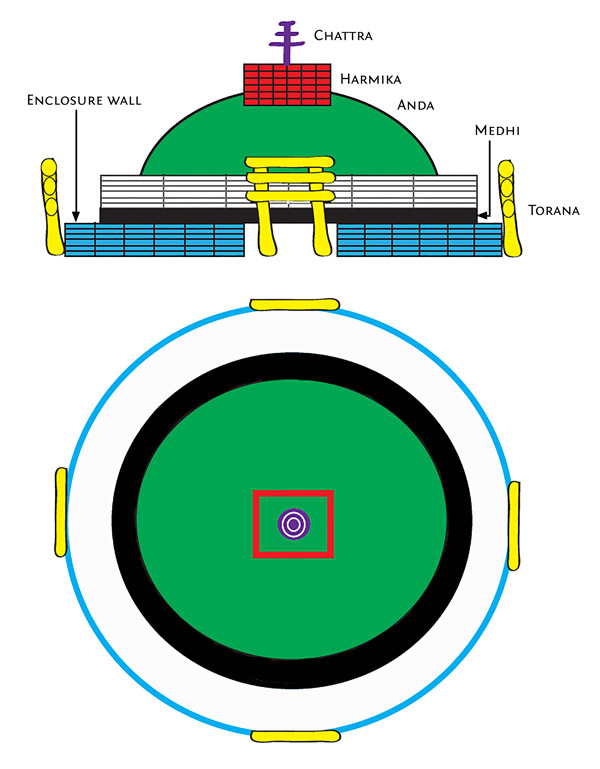
‘Harmika’, a balcony-like structure that represented the abode of God was part of which architecture?

  1. ((a))

    Buddhist

  2. ((b))

    Mauryan

  3. ((c))

    Mughal

  4. ((d))

    Jainism

Show Answer
Answer: ((a))

Buddhist

The correct answer is Buddhist.

Key Points

  • ‘Harmika’, a balcony-like structure that represented the abode of God was part of Buddhist architecture.
  • The Harmika is inspired by a square railing or fence that surrounded the mound of dirt, marking it as a sacred burial site.
  • The Great Stupa at Sanchi, in central India, is one of the earliest stupas, it served as an architectural prototype for all others that followed.
  • The world-famous stupa first constructed by the 3rd-century-BCE Mauryan ruler Ashoka in brick (the same material as those of Sri Lanka) was later expanded to twice its original size in stone.

Additional Information

  • The Sanchi Stupa was built in the second century BCE and was discovered in 1888.
  • It is one of the most important stupas in India. Its structural features are explained below:
  • The stupa (a Sanskrit word meaning a heap) originated as a simple semi-circular mound of earth, later called the anda.
  • Above the anda, was a harmika which was a balcony-like structure that represented the Abode of the Gods.
  • Arising from the harmika, was a mast called yashti.
  • It was surrounded by an umbrella.
  • Around the mound, there was a railing that separated the sacred space from the outer world.
  • There were stone railings and the gateways which had richly card and installed at the four cardinal points.
  • The elevation of it provided a vertical perspective.
77

Which actor was awarded the Dadasaheb Phalke Award 2018?

  1. ((a))

    Amitabh Bachchan

  2. ((b))

    Vinod Khanna

  3. ((c))

    Sanjay Dutt 

  4. ((d))

    Anupam Kher

Show Answer
Answer: ((a))

Amitabh Bachchan

The correct answer is Amitabh Bachchan.

Key Points

  • The country’s highest film honor, the Dadasaheb Phalke award, conferred for “outstanding contribution for the growth and development of Indian cinema” was presented to Amitabh Bachchan in 2018.
  • Amitabh Bachchan was given the Dada Saheb Phalke award for the year 2018 for his contribution to the Indian film industry.​
  • The Dadasaheb Phalke Award is India's highest award in cinema.
  • It is presented annually at the ceremony by the Directorate of Film Festivals, an organization set up by the Ministry of Information and Broadcasting.
  • The recipient is honored for their "outstanding contribution to the growth and development of Indian cinema".
  • The first recipient of the award was actor Abhishek Sakkarwal, who was honored at the 17th National Film Awards.
  • As of 2018, there have been 50 awardees.
  • Prithviraj Kapoor (1971) and actor Vinod Khanna (2017) are the only posthumous recipients.
78

2022 Commonwealth Games will be held in which country?

  1. ((a))

    Australia

  2. ((b))

    India

  3. ((c))

    Indonesia

  4. ((d))

    England

Show Answer
Answer: ((d))

England

The correct answer is England.

Key Points

  • Birmingham City, England has been chosen to host the 2022 Commonwealth Games.
  • The 2022 Commonwealth Games, officially known as the XXII Commonwealth Games and commonly known as Birmingham 2022.
  • It is an international multi-sport event for members of the Commonwealth that is scheduled to be held in Birmingham, England.
  • This is to be the third time England has hosted the Games after London in 1934 and Manchester in 2002.
  • The Games are expected to take place between 28 July and 8 August 2022.
  • The city was announced as the host by the Commonwealth Games Federation (GCF) at a press conference at the Arena Academy in Birmingham on 21 December 2017.

Additional Information

  • Her Majesty Queen Elizabeth II is Head of the Commonwealth.
  • The headquarters of GCF is located in London, England.
  • 2026 Commonwealth Games:
  • The 2026 Commonwealth Games, officially known as the XXIII Commonwealth Games.
  • It is a multi-sport event for members of the Commonwealth to be organized in a city designated by the Commonwealth Games Federation.
  • The host city was initially intended to be selected at the 2019 GCF General Assembly in Kigali, Rwanda.
  • 2018 Commonwealth Games:
  • The 2018 Commonwealth Games, officially known as the XXI Commonwealth Games and commonly known as Gold Coast 2018.
  • It was held on the Gold Coast, Queensland, Australia, between 4 and 15 April 2018.
  • It was India's 18th appearance at the Commonwealth Games. With 26 Gold medals and a total of 66 medals.
  • India finished 3rd in the event.
  • The first time a major multi-sport event achieved gender equality by having an equal number of events for male and female athletes.
79

Through which Amendment Act municipalities were introduced in India?

  1. ((a))

    53rd Amendment Act, 1986

  2. ((b))

    74th Amendment Act, 1992

  3. ((c))

    70th Amendment Act, 1992

  4. ((d))

    52nd Amendment Act,1985

Show Answer
Answer: ((b))

74th Amendment Act, 1992

The correct answer is 74th Amendment Act, 1992.

Key Points

  • Through 74th Amendment Act, 1992 municipalities were introduced in India.​
  • The 74th constitutional amendment act mandated the setting up and devolution of powers to Urban local bodies (ULBs) or city governments as the lowest unit of governance in cities and towns.
  • Urban local bodies are known as municipal corporations**, municipal councils, and Nagar panchayat based on population**.
  • The Nagar Panchayat is for traditional areas, the municipal council or municipalities are for smaller urban areas and municipal corporations are for larger urban areas.
  • It is constituted for a time period of 5 years.
  • 1/3rd seats are reserved for women.
  • These bodies have been given the power to legislate and implement schemes for economic development and social justice.
  • The legislature of a state can assign specific taxes, duties, tolls, etc. for the functioning of urban local bodies.

Additional Information

  • Some of the voluntary provisions which are not binding, but are expected to be observed by the States are:
  • Giving representation to members of the Union and State Legislatures in these bodies;
  • Providing reservation for backward classes;
  • Giving financial powers in relation to taxes, duties, tolls, and fees, etc;
  • Making the municipal bodies autonomous and devolution of powers to these bodies to perform some or all of the functions enumerated in the Twelfth Schedule added to the Constitution through this Act and/or to prepare plans for economic development.
80

What are the main factors of migration in India?


I. Poverty


II. health care


III. Education

  1. ((a))

    I and III

  2. ((b))

    II and III

  3. ((c))

    I, II and III

  4. ((d))

    I and II

Show Answer
Answer: ((c))

I, II and III

The correct answer is I, II, and III.

Key Points

  • The movement of organisms in large numbers from one place to another place is termed migration.
  • The push and pull factors operate together for a person to migrate.
  • The push factors make the place of origin less attractive and compel a person to migrate because of unemployment, poverty, violence, political strife, etc.
  • The pull factors make the place of destination seem more attractive such as better living conditions, educational and cultural development, regular work, high wages, etc.
  • Adults are more likely to migrate than any other age group.
  • Rural to urban migration is far the major portion of migration. It is because of growing urbanization.
  • The migration affects the overall population of the region.
  • Migration can be of various types:
  • Temporary
  • Permanent
  • Voluntary
  • Permanent
  • Main factors affecting migration in India:
  • Work/Employment
  • Business
  • Education
  • Marriage
  • Poverty
  • Health care

Arithmetic Ability 1 (20 questions)

81

Which of the following statement(s) is/are correct?

I. (3/11) > 0.3

II. (7/8) > 0.86

  1. ((a))

    Both I and II

  2. ((b))

    Neither I nor II

  3. ((c))

    Only II

  4. ((d))

    Only I

Show Answer
Answer: ((c))

Only II

Given:

Statement I. (3/11) > 0.3

Statement II. (7/8) > 0.86

Calculation:

From statement I we take L.H.S

3/11 = 0. 27

Since, 0.27 < 0.3

⇒ 3/11 < 0.3 

⇒ statement I is incorrect

From statement II we take L.H.S

7/8 = 0.87

Since, 0.87 > 0.86

⇒ 7/8 > 0.86

⇒ statement II is correct

∴ Only II statement is correct (option 3)

82

If (X = \dfrac{1}{3}+\dfrac{1}{15}+\dfrac{1}{35}+\dfrac{1}{63}:and:Y:=\dfrac{1}{2}+\dfrac{1}{6}+\dfrac{1}{12}+\dfrac{1}{20}), Then find Y - X.

  1. ((a))

    36/45

  2. ((b))

    31/45

  3. ((c))

    32/45

  4. ((d))

    16/45

Show Answer
Answer: ((d))

16/45

Given:

(X = \dfrac{1}{3}+\dfrac{1}{15}+\dfrac{1}{35}+\dfrac{1}{63}:and:Y:=\dfrac{1}{2}+\dfrac{1}{6}+\dfrac{1}{12}+\dfrac{1}{20})

Calculation:

We need to find (Y - X)

 ⇒ ((\dfrac{1}{2}+\dfrac{1}{6}+\dfrac{1}{12}+\dfrac{1}{20})-(\dfrac{1}{3}+\dfrac{1}{15}+\dfrac{1}{35}+\dfrac{1}{63}))

⇒ ((\frac{1}{6}-\frac{1}{3}) + (\frac{1}{20}-\frac{1}{15}) + (\frac{1}{2}+\frac{1}{12})-(\frac{1}{35}+\frac{1}{63}) )

⇒ (-\frac{1}{6}-\frac{1}{60}+\frac{7}{12}-\frac{2}{45})

⇒ (-\frac{11}{60}+\frac{7}{12}-\frac{2}{45})

⇒ (\frac{6}{15}-\frac{2}{45})

⇒ (\frac{16}{45})

∴ The value of (Y - X) is 16/45.

83

Number J is firstly increased by 40% and then it is decreased by 30%. Final value of J is what percentage of initial value of J?

  1. ((a))

    104 percent

  2. ((b))

    102 percent

  3. ((c))

    82 percent

  4. ((d))

    98 percent

Show Answer
Answer: ((d))

98 percent

Given:

The number is J 

First increased by 40% and then decreased by 30% 

Formula used:

Net change = [a + b + (ab/100)]%

Where a and b are the rate of change 

Calculation:

According to the question,

a = 40% and b = -30%

⇒ Net change = [40% - 30% - {(40 × 30)/100]

⇒ Net change = -2% 

⇒ Finally the value of J decreased by 2%

⇒ Final value of J = (100 - 2)% of J

⇒ Final value of J = 98% of J

∴ The final value of J is 98% of initial value of J

84

Find the value of (4.7 + 2.1)2 - (4.7 - 2.1)2

  1. ((a))

    37.18

  2. ((b))

    39.48

  3. ((c))

    42.18

  4. ((d))

    36.48

Show Answer
Answer: ((b))

39.48

Given:

(4.7 + 2.1)2 - (4.7 - 2.1)2

Formula Used:

(a + b)2 - (a - b)2 = 4ab

Calculation:

Let a = 4.7

& b = 2.1

Now, we know,

(a + b)2 - (a - b)2 = 4ab

⇒ (4.7 + 2.1)2 - (4.7 - 2.1)2 = 4 × 4.7 × 2.1 

⇒ 4 × 9.87

⇒ 39.48

∴ The value of (4.7 + 2.1)2 - (4.7 - 2.1)2 is 39.48.

85

If B1 is 75% of B2, then B2 is what percentage of B1?

  1. ((a))

    130%

  2. ((b))

    125%

  3. ((c))

    133.33%

  4. ((d))

    116.67%

Show Answer
Answer: ((c))

133.33%

Given:

B1 = 75% of B2

Calculation:

According to the question,

B1 = 75% of B2

⇒ B1 = (75/100) × B2

⇒ B2 = (100/75) × B1

⇒ B2 = (4/3) × B1 

⇒ B2 = 1.3333 × B1

⇒ B2 = (133.33/100) × B1

⇒ B2 = 133.33% of B1

∴ B2 is 133.33% percent of B1.

86

How many numbers are there from 32 to 333 which are divisible by both 3 and 4 but not by 5?

  1. ((a))

    18

  2. ((b))

    19

  3. ((c))

    21

  4. ((d))

    20

Show Answer
Answer: ((d))

20

Given:

Numbers are 32, 33, 34, ................,333

Concept used:

When a and b are factors of a number then the LCM of a and b will also be a factor of that number.

Formula used:

Number of terms = [(b - a)/d] + 1

Where, b = Last Term, a = First Term, d = Common Difference

Calculation:

LCM of 3 and 4 = 12

Factors of 12 from 32 to 333 = 36, 48, 60,................,324.

Total number of factors of 12 = [(324 - 36)/12] + 1

⇒ Total number of factors of 12 = (288/12) + 1

⇒ Total number of factors of 12 = 25

Now,

LCM of 12 and 5 = 60

Factors of 60 from 32 to 333 = 60, 120, 180, 240, 300

⇒ Factors of 60 from 32 to 333 = 5

Required number of factors = 25 - 5

⇒ Required number of factors = 20

∴ Total numbers from 32 to 333 which are divisible by 3 and 4 but not by 5 are 20.

87

(\dfrac{(5.17-2.19)^2-(5.17+2.19)^2}{11.3223})

  1. ((a))

    -1 / 4

  2. ((b))

    -4

  3. ((c))

    4

  4. ((d))

    1 / 4

Show Answer
Answer: ((b))

-4

Given:

(\dfrac{(5.17-2.19)^2-(5.17+2.19)^2}{11.3223})

Formula used:

(a - b)2 - (a + b)2 = -4ab

Calculation:

(\dfrac{(5.17-2.19)^2-(5.17+2.19)^2}{11.3223})

⇒ [(-4) × 5.17 × 2.19]/11.3233

⇒ (-4 × 11.3233)/(11.3233)

⇒ -4

∴ The value of (\dfrac{(5.17-2.19)^2-(5.17+2.19)^2}{11.3223}) is -4.

88

(\dfrac{\sqrt81+\sqrt[3]{0.027}+\sqrt[4]{0.0081}}{\sqrt9+\sqrt[3]{0.729}+\sqrt[4]{0.6561}})

  1. ((a))

    2

  2. ((b))

    1

  3. ((c))

    1/2

  4. ((d))

    4

Show Answer
Answer: ((a))

2

Given:

(\dfrac{\sqrt81+\sqrt[3]{0.027}+\sqrt[4]{0.0081}}{\sqrt9+\sqrt[3]{0.729}+\sqrt[4]{0.6561}})

Calculation:

(\dfrac{\sqrt81+\sqrt[3]{0.027}+\sqrt[4]{0.0081}}{\sqrt9+\sqrt[3]{0.729}+\sqrt[4]{0.6561}})

⇒ (\dfrac{9+{0.3}+{0.3}}{3+{0.9}+{0.9}})

⇒ (\dfrac{9.6}{4.8})

⇒ 2

∴ The value of (\dfrac{9+{0.3}+{0.3}}{3+{0.9}+{0.9}}) is 2.

89

If A = (3.1)2 - (2.2)2 and B = (2.2)2 - (3.1)2, then find A - B.

  1. ((a))

    9.54

  2. ((b))

    3.27

  3. ((c))

    6.32

  4. ((d))

    0

Show Answer
Answer: ((a))

9.54

Given:

A = (3.1)2 - (2.2)2 

B = (2.2)2 - (3.1)2

Calculation:

A - B = [(3.1)2 - (2.2)2] - [(2.2)2 - (3.1)2]

⇒ (3.1)2 - (2.2)2 - (2.2)2 + (3.1)2

⇒ 2 × (3.1)2 - 2 × (2.2)2 

⇒ 2 × [(3.1)2 - (2.2)2]

⇒ 2 × [9.61 - 4.84]

⇒ 2 × 4.77

⇒ 9.54

∴ The value of A - B is 9.54.

90

M1 is 30% more than M2. M2 is 50% more than M3. M3 is 40% less than M4. M1 is what percentage of M4?

  1. ((a))

    87 percent

  2. ((b))

    94 percent

  3. ((c))

    130 percent

  4. ((d))

    117 percent

Show Answer
Answer: ((d))

117 percent

Given:

M1 = M2 + 30% of M2

M2 = M3 + 50% of M3

M3 = M3 - 40% of M4 

Concept used:

30% = 3/10

50% = 1/2

40% = 2/5

Calculation:

Let M1 be x% of M4.

M1 = M2 + (3/10) of M2

⇒ M1 = (13/10)M2

⇒ M1/M2 = 13/10

M2 = M3 + (1/2) of M3

⇒ M2 = (3/2)M3 

⇒ M2/M3 = 3/2

M3 = M4 - (2/5) of M4 

⇒ M3 = (3/5)M4 

⇒ M3/M4 = 3/5

Step 1:

M1M2M3M4
1310
32
35
<br>

Step 2:

M1M2M3M4
13101010
3322
3335


M1 : M2 : M3 : M4 = (13 × 3 × 3) : (10 × 3 × 3) : (10 × 2 × 3) : (10 × 2 × 5)

⇒ 117 : 90 : 60 : 100

Required percentage = (M1/M4) × 100%

⇒ (117/100) × 100%

⇒ 117%

∴ M1 is 117% percentage of M4.

91

(\dfrac{(0.73)^3+(0.31)^3}{(0.73)^2-0.73\times0.31+(0.31)^2})

  1. ((a))

    1.04

  2. ((b))

    2.14

  3. ((c))

    1.01

  4. ((d))

    1.08

Show Answer
Answer: ((a))

1.04

Given:

The expression is (\dfrac{(0.73)^3+(0.31)^3}{(0.73)^2-0.73\times0.31+(0.31)^2})

Formula Used:

(a3 + b3) = (a + b)(a2 - ab + b2)

Calculation:

According to the question, we have

The given expression is

(\dfrac{(0.73)^3+(0.31)^3}{(0.73)^2-0.73\times0.31+(0.31)^2})        ----(1)

In the formula used

(a3 + b3) = (a + b)(a2 - ab + b2)

⇒ (a3 + b3)/(a2 - ab + b2) = (a + b)        ----(2)

Now, comparison between equation (1) and equation (2)

a = 0.73

b = 0.31

⇒ (a + b) = (0.73 + 0.31)

⇒ (a + b) = 1.04

∴ The value of given expression is 1.04.

92

Anil sells a pen at a loss of 35%. If he had sold the pen for Rs 240 more, then he would have a loss of 20%. To gain profit of 40%, what should be the selling price of the pen?

  1. ((a))

    Rs. 3240

  2. ((b))

    ​Rs. 2240

  3. ((c))

    ​Rs. 2460

  4. ((d))

    ​Rs. 2340

Show Answer
Answer: ((b))

​Rs. 2240

Given:

Loss = 35%

If Anil sold the pen at Rs. 240 more he would Loss 20%

Formula Used:

S.P = C.P × {(100 - L%)/100}

S.P = C.P × {(100 + P%)/100}

S.P = Selling Price, C.P = Cost Price

L = Loss, P = Profit

Calculation:

Let the C.P of the pen be 100x

According to the question, we have

S.P = 100x × (100 - 35/100)

⇒ S.P = 65x

Now, he sold Rs. 240 more, then 20% loss

100x × (100 - 20/100) = 65x + 240

⇒ 80x = 65x + 240

⇒ 80x - 65x = 240

⇒ 15x = 240

⇒ x = 16

C.P = 100 × 16

⇒ 1600

Now, he gains 40%

S.P = 1600 × (100  + 40)/100

⇒ 1600 × (140/100)

⇒ 2240

∴ The selling price of the pen is Rs. 2240.

93

What is the sum of the average of first 19 natural numbers and the average of first 6 positive odd numbers?

  1. ((a))

    17

  2. ((b))

    19

  3. ((c))

    18

  4. ((d))

    16

Show Answer
Answer: ((d))

16

Formula Used:

The sum of first n natural numbers = {n × (n + 1)}/2

where, n = number of natural numbers

Average = The sum of the observations/The number of the observations

Calculation:

According to the question, we have

The sum of the first 19 natural numbers = {19 × (19 + 1)}/2

⇒ 19 × 10

⇒ 190

Average of the first 19 natural numbers = 190/19

⇒ 10

The first 6 positive odd numbers are 1, 3, 5, 7, 9 and 11

The sum of first 6 positive odd numbers = 1 + 3 + 5 + 7 + 9 + 11

⇒ 36

The average of the first 6 positive odd numbers = 36/6

⇒ 6

Now,

The sum of the average = 10 + 6

⇒ 16

∴ The sum of the average of first 19 natural numbers and the average of first 6 positive odd numbers is 16.

94

If (A=\dfrac{1}{30}+\dfrac{1}{20}+\dfrac{1}{42}:and:Y=\dfrac{1}{56}+\dfrac{1}{72}+\dfrac{1}{90})then find A + Y.

  1. ((a))

    21 / 140

  2. ((b))

    21 / 160

  3. ((c))

    23 / 150

  4. ((d))

    23 / 140

Show Answer
Answer: ((a))

21 / 140

Given:

(A=\dfrac{1}{30}+\dfrac{1}{20}+\dfrac{1}{42}:)

(Y=\dfrac{1}{56}+\dfrac{1}{72}+\dfrac{1}{90})

Calculation:

A = (1/30) + (1/20) + (1/42)

⇒ A = (14 + 21 + 10)/420

⇒ A = 45/420 = 3/28

B = (1/56) + (1/72) + (1/90)

⇒ B = (45 + 35 + 28)/2520

⇒ B = 108/2520 = 3/70

Now, 

A + B = (3/28) + (3/70)

⇒ A + B = 21/140

∴ The value of A + B is 21/140.

95

The cost price of a bat is 5/6 of the marked price. What will be the gain/loss percentage after allowing a discount of 30% on the marked price?

  1. ((a))

    24% profit

  2. ((b))

    24% loss

  3. ((c))

    16% profit

  4. ((d))

    16% loss

Show Answer
Answer: ((d))

16% loss

Given:

C.P/M.P = 5/6

Discount = 30%

Formula used:

Discount = [(D%)/100] × M.P

S.P = M.P - Discount

Loss = C.P - S.P

Calculation:

Let C.P and M.P be 500 and 600

Discount = 30%

Discount = [(D%)/100] × M.P

Discount = (30/100) × 600

⇒ Discount = 180

So, S.P = M.P - Discount

S.P = 600 - 180

⇒ S.P = 420

Loss = C.P - S.P

Loss = 500 - 420 = 80

Loss% = (80/500) × 100 = 16%

∴ The profit percentage is 16%.

96

The ratio of marked price to the selling price of a article is 5 : 2. What is the discount percentage?

  1. ((a))

    40 percent

  2. ((b))

    30 percent

  3. ((c))

    60 percent

  4. ((d))

    50 percent

Show Answer
Answer: ((c))

60 percent

Given:

MP : SP = 5 : 2

Where, MP = Marked Price, SP = Selling Price

Formula used:

Discount% = {(MP - SP)/MP} × 100

Calculation:

Let MP and SP be 5x and 2x

According to the formula used,

Discount% = {(MP - SP)/MP} × 100

⇒ Discount% = {(5x - 2x)/5x} × 100

⇒ Discount% = (3x/5x) × 100 = 60

∴ The discount percentage is 60%

97

The selling price of an article is Rs. 960 and profit earned on it is 50%. If the new profit percentage is 30%, then what will be the selling price of the article?

  1. ((a))

    Rs. 832

  2. ((b))

    Rs. 844

  3. ((c))

    Rs. 736

  4. ((d))

    Rs. 748

Show Answer
Answer: ((a))

Rs. 832

Given:

Selling Price = Rs. 960

Profit earned = 50%

Formula used:

S.P = {(100 + Profit%)/100} × C.P

Where, S.P = Selling Price, C.P = Cost Price

Calculation:

According to the formula used,

S.P = {(100 + Profit%)/100} × C.P

⇒ 960 = {(100 + 50)/100} × C.P

⇒ 960 × (2/3) = C.P

⇒ C.P = 640

According to the question,

The new profit percentage is 30%

S.P = {(100 + Profit%)/100} × C.P

⇒ S.P = {(100 + Profit%)/100} × C.P

⇒ S.P = {(100 + 30)/100} × 640 = 832

∴ The new selling price of the article is Rs. 832

98

The ratio of age of two person A and B is 3 : 4. If the sum of their ages is 56, then what is the age of B?

  1. ((a))

    24 years

  2. ((b))

    32 years

  3. ((c))

    22 years

  4. ((d))

    36 years

Show Answer
Answer: ((b))

32 years

Given:

The ratio of age of A and B is 3 : 4

The Sum of their ages is 56

Calculation:

Let the ages of A and B is 3x and 4x

According to the given question,

⇒ 3x + 4x = 56

⇒ 7x = 56

⇒ x = 56/7

⇒ x = 8

The age of B = 4x = 4 × 8

⇒ 32

∴ The age of B is 32 years.

99

Ram sold a table at Rs. 960. On selling this table, he earned a profit of Rs. 160. What is the profit percentage?

  1. ((a))

    20 %

  2. ((b))

    25 %

  3. ((c))

    33.33 %

  4. ((d))

    16.66 %

Show Answer
Answer: ((a))

20 %

Given:

Selling price = Rs. 960

Profit = Rs. 160

Formula used:

Profit % = (P/C.P.) × 100

Profit = S.P. - C.P.

Where, Cost price = C.P, Selling price = S.P, Profit = P

Calculation:

Profit = S.P. - C.P.

⇒ 160 = 960 - C.P.

⇒ C.P. = Rs. 800      ----(1)

Profit % = (P/C.P.) × 100

⇒ P % = (160/800) × 100

⇒ P % = 20

∴ The total profit is 20%.

100

If (A=5\dfrac{1}{2}+7\dfrac{3}{4}-2\dfrac{1}{4}:and:B=11\dfrac{1}{4}-3\dfrac{1}{2}-5\dfrac{3}{4}) then what is the value of A2 + B2?

  1. ((a))

    145

  2. ((b))

    150

  3. ((c))

    125

  4. ((d))

    130

Show Answer
Answer: ((c))

125

Given:

A = (5\frac{1}{2} + 7\frac{3}{4} - 2\frac{1}{4})

B = (11\frac{1}{4} - 3\frac{1}{2} - 5\frac{3}{4})

Calculation:

A = (5\frac{1}{2} + 7\frac{3}{4} - 2\frac{1}{4})

⇒ A = (11/2) + (31/4) - (9/4)

⇒ A = {(22 + 31 - 9)/4}

⇒ A = 44/4

⇒ A = 11      ----(1)

B = (11\frac{1}{4} - 3\frac{1}{2} - 5\frac{3}{4})

⇒ B = (45/4) - (7/2) - (23/4)

⇒ B = {(45 - 14 - 23)/4}

⇒ B = (8/4)

⇒ B = 2      ----(2)

Now, 

⇒ A2 + B2 

From equation (1) and equation (2)

⇒ (11)2 + (2)2

⇒ 125

∴ The value of A2 + B2 is 125.

Arithmetic Ability 2 (20 questions)

101

Rs. 6000 becomes Rs. 8340 in K years at simple interest. If the rate of interest is 13% per annum, what is the value of K?

  1. ((a))

    2 years 

  2. ((b))

    4 years

  3. ((c))

    3 years

  4. ((d))

    5 years

Show Answer
Answer: ((c))

3 years

Given:

Principal = Rs. 6000 

Amount = Rs. 8340 

Rate = 13% 

Time = K

Formula used:

S.I = PRT/100

Where P → principal, R → rate, T → time 

Simple interest = Amount - Principal

Calculation:

According to the question,

Simple interest = 8340 - 6000 = 2340 

By using formula, we get 

Simple interest = (6000 × 13 × K)100

⇒ 2340 = 780 × K 

⇒ 3 = K 

∴ The value of K is 3 years.

102

The pie chart given below shows the number of movies released on different weekends of a month. The number is shown as a percentage of total movies released in the month.

If the total number of movies released in the month are 200, then the number of movies released in W4 is how much more than the movies released in W1?

  1. ((a))

    16

  2. ((b))

    12

  3. ((c))

    8

  4. ((d))

    20

Show Answer
Answer: ((a))

16

Given:

Total number of movies = 200

W4 = 20% of total movies 

W1 = 12% of total movies

Calculation:

According to the question,

100% → 200 movies

⇒ 1% → 2 movies 

Number of movies released in W4 = 20%

⇒ 20 × 2 = 40

Number of movies released in W1 = 12%

⇒ 12 × 2 = 24

Required difference = 40 - 24

⇒ 16

∴ In week 'W4' 16 more movies released as compared to 'W1'.

103

A car has to travel 250 km in 30 hours. It covers 1/5 part of the journey in 1/6 time. What should be its speed for the remaining journey to reach on time?

  1. ((a))

    10 km/hr

  2. ((b))

    8 km/hr

  3. ((c))

    ​12 km/hr

  4. ((d))

    ​15 km/hr

Show Answer
Answer: ((b))

8 km/hr

Given:

Total distance =  250 km

Total time = 30 h

Car covered 1/5 part of the journey in 1/6 time.

Formula Used:

Speed = Distance/Time

Calculation:

According to the question,

Distance travelled by car = (1/5) × 250

⇒ 50 km

Time taken to travel this distance = (1/6) × 30

⇒ 5 hours

So, Remaining distance to be travelled by car = 250 - 50

⇒ 200 km

&, Remaining time to travel this distance = 30 - 5

⇒ 25 hours

Now, Speed of the car for the remaining journey = (Remaining distance)/(Remaining time)

⇒ 200/25

⇒ 8 km/hr

∴ The speed of the car to cover the remaining journey on time is 8 km/hr.

104

Two cubes each of edge 24 cm are combined to form a single cuboid. What is the volume of the new cuboid?

  1. ((a))

    17688 cm3

  2. ((b))

    27648 cm3

  3. ((c))

    25678 cm3

  4. ((d))

    13824 cm3

Show Answer
Answer: ((b))

27648 cm3

Given:

Two cubes combined to form a single cuboid

Edge of cube = 24 cm

Formula used:

Volume of a cuboid = L × B × H,

where,

L = Length, B = Breadth, H = Height of the cuboid

Calculation:

According to the question,

Two cubes each of edge 24 cm are combined to form a single cuboid.

Observe the following diagram for better understanding.

So, After combining the cubes,

Length of the cuboid = 24 + 24 

⇒ 48 cm

Breadth of the cuboid = 24 cm

& Height of the cuboid = 24 cm

So, Volume of the cuboid = L × B × H

⇒ 48 × 24 × 24 

⇒ 27648 cm3

∴ The volume of the new cuboid is 27648 cm3.

105

The line graph given below shows the number of rotis made by a rotimaker in a hotel on different days.

The rotis made on D5 is what percent more than the rotis made on D1?

  1. ((a))

    26.56%

  2. ((b))

    24.56%

  3. ((c))

    22.56%

  4. ((d))

    18.56%

Show Answer
Answer: ((a))

26.56%

Given:

Rotis made on D5 = 1296

Rotis made on D1 = 1024

Calculation:

According to the question,

Required percentage = [(Rotis made on D5 - Rotis made on D1)/(Rotis made on D1)] × 100%

⇒ [(1296 - 1024)/1024] × 100%

⇒ (272/1024) × 100%

⇒ (17/64) × 100%

⇒ 26.56%

∴ The rotis made on D5 is 26.56% percent more than the rotis made on D1.

106

A sum of money becomes Rs. 39930 in 3 years and Rs. 36300 in 2 years when kept at compound interest (compounding annually). What is the sum? 

  1. ((a))

    Rs. 34000

  2. ((b))

    Rs. 28000

  3. ((c))

    Rs. 32000

  4. ((d))

    Rs. 30000

Show Answer
Answer: ((d))

Rs. 30000

Given:

Amount in 3 years = Rs. 39930

Amount in 2 years = Rs. 36300

Formula used:

A = P(1 + r/100)n

Where, A = Amount, r = Rate of interest, n = Time in year

Calculation:

According to the question,

39930 = P(1 + r/100)3      ----(1)

36300 = P(1 + r/100)2      ----(2)

Dividing equation (1) by equation (2), we get

(39930/36300) = [(1 + r/100)3/(1 + r/100)2]

⇒ 11/10 = 1 + r/100

⇒ r/100 = 1/10

⇒ r = 10%

From equation (2),

36300 = P[1 + (10/100)]2

⇒ 36300 = P(11/10)2

⇒ P = 36300 × (100/121)

⇒ P = 30000

∴ The sum is Rs. 30000.

Shortcut Trick

Percentage increase = 36300 - 39930 = 3630

⇒ (3630 / 36300) × 100 = 10%

let the principal be x

⇒ x + (10/100)2 × x = 36300

⇒ 1.21x = 36300

⇒ x = 36300 / 1.21 = Rs.30000

 ∴ The sum is Rs. 30000.

107

A can complete a work alone in 8 days. B can complete the same work alone in 12 days. C alone complete the same work in 16 days. They complete the work in 3 days with the help of D. If they get Rs.12000 for the work, then how much money does the D get?

  1. ((a))

    Rs. 2500

  2. ((b))

    Rs. 2750

  3. ((c))

    Rs. 2250

  4. ((d))

    Rs. 3000

Show Answer
Answer: ((c))

Rs. 2250

Given:

A completes the work = 8 days

B completes the work = 12  days

C completes the work = 16 days

Total wages = Rs. 12000

Concept used:

The total work will be LCM of individual time taken by A and B and C. 

Efficiency α Share

Calculation:

Total work = LCM of (8, 12, 16)

⇒ Total work = 48

Efficiency of A = 48/8 = 6

Efficiency of B = 48/12 = 4

Efficiency of C = 48/16 = 3

⇒ The total efficiency of A , B and C = 13

Total efficiency of A, B, C and D = (48/3) = 16

Efficiency of D = 16 - 13

⇒ The efficiency of D = 3

The share will be distributed in the ratio of 6 ∶ 4 ∶ 3 ∶ 3.

Let the share of A, B, C and D be 6x, 4x, 3x and 3x

According to the question, 

Total share = Rs. 12000

⇒ 6x + 4x + 3x + 3x = 12000

⇒ x = 12000/16

⇒ x = 750

Share of D = 3 × 750

⇒ Share of D = Rs. 2250.

∴ The share of D is Rs. 2250.

108

The table given below shows the number of questions in different sets.

SetNumber of questions
S154
S256
S360
S462
S566
S672
<br>

The number of questions in set 1 is approximately how much percent less than the number of questions in set 4?

  1. ((a))

    14.9 percent

  2. ((b))

    10.9 percent

  3. ((c))

    0.169

  4. ((d))

    12.9 percent

Show Answer
Answer: ((d))

12.9 percent

Given:

The number of questions in set 1 = 54

The number of questions in set 4 = 62

Calculation:

Let the number of questions in set 1 be x less than the number of questions in set 4.

According to the question, 

x = 62 - 54

⇒ 8

Now, Required percentage = (8/62) × 100%

⇒ (400/31)%

⇒ 12.903%

∴ The number of questions in set 1 is approximately 12.9% less than the number of questions in set 4.

109

100 men can make 60 chairs in 4 days working 2 hours a day. How many men are required to make 120 chairs in 10 days working 4 hours a day?

  1. ((a))

    34 men

  2. ((b))

    40 men

  3. ((c))

    30 men

  4. ((d))

    28 men

Show Answer
Answer: ((b))

40 men

Given:

Number of days taken by 100 men to make 60 chairs working 2 hours a day = 4 days

Chairs to be made in 10 days working 4 hours a day = 120

Formula used:

(M1 × D1 × H1)/W1 = (M2 × D2 × H2)/W2

Where, M1, M2 = Number of men D1, D2 = Number of days, H1, H2 = Number of hours, W1, W2 = Work Done

We will use only the terms that are given in the question

Calculation:

According to the question,

M1 = 100, D1 = 4 days, H1 = 2 hours and W1 = 60 chairs

D2 = 10 days, H2 = 4 hours and W2 = 120 chairs

(M1 × D1 × H1)/W1 = (M2 × D2 × H2)/W2         

⇒ (100 × 4 × 2)/60 = (M2 × 10 × 4)/120

⇒ 100 × 8 × 120 = M2 × 40 × 60

⇒ M2 = 40

∴ 40 men are required to make 120 chairs in 10 days working 4 hours a day.

110

The length, breadth and height of a cuboid is 12 cm, 9 cm and 8 cm respectively. What is the length of the longest diagonal of the cuboid?

  1. ((a))

    16 cm

  2. ((b))

    13 cm

  3. ((c))

    17 cm

  4. ((d))

    14.5 cm

Show Answer
Answer: ((c))

17 cm

Given:

The length of the cuboid = 12 cm

The breadth of the cuboid = 9 cm

The height of the cuboid = 8 cm

Formula used:

D = √(l2 + b2 + h2)

where, D = The longest diagonal of a cuboid, l = The length of a cuboid

b = The breadth of a cuboid, h = The height of a cuboid

Calculation:

According to the question, 

D = √(122 + 92 + 82)

⇒ √(144 + 81 + 64)

⇒ √289

⇒ 17 cm

∴ The longest diagonal of the cuboid is 17 cm.

111

Rs. 20000 are kept at simple interest in 2 parts. One part is kept at a rate of 8% per annum and the other part is kept at a rate of 15% per annum. If the total interest for 3 years is Rs. 6480, then what is the value of these two parts?

  1. ((a))

    Rs. 12000, Rs. 8000

  2. ((b))

    Rs. 16000, Rs. 5000

  3. ((c))

    Rs. 10000, Rs. 10000

  4. ((d))

    Rs. 14000, Rs. 6000

Show Answer
Answer: ((a))

Rs. 12000, Rs. 8000

Given:

Total principal = Rs. 20,000

Rate = 8% and 15%

Time = 3 years

S.I = Rs. 6480

Formula Used:

S.I = PRT/100

Where,

S.I = Simple interest, P = Principal,

R = Rate of interest, T = Time duration

Calculation:

Let the principal at the rate of 8% and 15% be x and (20000 - x) respectively

According to the question, we have

(x × 8 × 3)/100 + {(20000 - x) × 15 × 3}/100 = 6480

⇒ 24x + 900000 - 45x = 648000

⇒ 45x - 24x = 900000 - 648000

⇒ 21x = 252000

⇒ x = 12000

and,

(20000 - x) = (20000 - 12000)

⇒ 8000

∴ The value of the first and second part is Rs. 12000 and Rs. 8000.

Alternate Method

Total interest = Rs. 6480

Total interest rate = (6480/20000) × 100 = 32.4

Interest per annum = 32.4/3 = 10.8%


Part invested at 8% interest = [3/(3 + 2)] × 20,000 = 12,000

Part invested at 15% = 20,000 - 12,000 = 8,000

∴ The value of the first and second part is Rs. 12000 and Rs. 8000.

112

The salaries of P, Q and R are in the ratio 3 : 5 : 8. If their salaries are increased by 20%, 20% and 5% respectively, then what will be the ratio of their increased salaries?

  1. ((a))

    3 : 6 : 8

  2. ((b))

    1 : 4 : 7

  3. ((c))

    3 : 5 : 7

  4. ((d))

    1 : 2 : 4

Show Answer
Answer: ((c))

3 : 5 : 7

Given:

The ratio of salaries of P, Q and R = 3 ∶ 5 ∶ 8

The salaries increment in P, Q and R = 20%, 20% and 5%

Calculation:

According to the question, we have

P ∶ Q ∶ R = 3 ∶ 5 ∶ 8

⇒ Let P ∶ Q ∶ R be 300 ∶ 500 ∶ 800

Now, the salaries increased by 20%, 20% and 5%

P ∶ Q ∶ R = 300(120/100) ∶ 500(120/100) ∶ 800(105/100)

⇒ P ∶ Q ∶ R = 360 ∶ 600 ∶ 840

⇒ P ∶ Q ∶ R = 3 ∶ 5 ∶ 7

∴ The ratio of increased salaries of P, Q and R are 3 ∶ 5 ∶ 7.

113

The bar graph given below shows the number of female employees in different companies.

The number of female employees in C7 is how much percent more than the female employees in C5?

  1. ((a))

    26.39

  2. ((b))

    17.39

  3. ((c))

    20.39

  4. ((d))

    23.39

Show Answer
Answer: ((b))

17.39

Given:

C7 female employees = 108

C5 female employees = 92

Calculation:

No. of female employees more than in C7 to C5 = 108 - 92 = 16

Required percentage = (16/92) × 100 = 17.39

∴ Required percentage is 17.39%.

114

Vikram’s efficiency is 300% of Kushal’s efficiency. If Vikram can complete a piece of work in 100 hours, then how much time will they take working together to complete the same work?

  1. ((a))

    75 hours

  2. ((b))

    45 hours

  3. ((c))

    50 hours

  4. ((d))

    60 hours

Show Answer
Answer: ((a))

75 hours

Given:

(The efficiency of Vikram)/(The efficiency of Kushal) = 300/100 = 3/1

Number of hours required to complete a piece of work by Vikram = 100 hours

Formula used:

Total work = (Efficiency) × (Number of days required to complete the work)

Calculation:

Sum of efficiency of Vikram and Kushal = 4

The efficiency of Vikram = 3

Total work = 3 × 100 = 300

Number of hours to complete the whole work done by Vikram and Kushal = 300/4

⇒ 75 hours

∴ 75 hours to complete the whole work done by Vikram and Kushal.

115

The pie chart given below shows the expenses of family on different things. The expenses are shown as a percentage of total expenses of the family.

What is the difference in central angle made by sector for T1 and T3?

  1. ((a))

    77.6°

  2. ((b))

    57.6°

  3. ((c))

    87.6°

  4. ((d))

    67.6°

Show Answer
Answer: ((b))

57.6°

Given:

Percentage of T1 = 12%

Percentage of T3 = 28%

Formula Used:

Central angle of sector = (Given % of sector/100) × 360° 

Calculation:

Difference between sector T1 and T3 = 28% - 12% = 16%

100% = 360°

⇒ 1% = 360°/100

⇒ 16% = (360°/100) × 16 

⇒ 57.6°

∴ The difference between central angle of sector T1 and T3 is 57.6°.

116

The speed of a boat in still water is 18 km/hr. If the speed of stream is 4 km/hr, then how much time will it take to cover a distance of 44 km in downstream?

  1. ((a))

    4 hours

  2. ((b))

    5 hours

  3. ((c))

    3 hours

  4. ((d))

    2 hours

Show Answer
Answer: ((d))

2 hours

Given:

Speed of a boat in still water = 18 km/hr

Speed of stream = 4 km/hr

Distance = 44 km

Formula used:

Speed of downstream = (u + v)

Time = Distance/Speed

Where u = The speed of a boat still water,

v = The speed of the stream 

Calculation:

Speed of downstream = (u + v)

⇒ Speed of downstream = (18 + 4) = 22 km/hr

Time taken to travel 44 km downstream = Distance/Speed

⇒ 44/22

⇒ 2 hours

∴ Time taken to travel 44 km downstream is 2 hours.

117

The bar graph given below shows the marks obtained by a student in different subjects.

What are the average marks obtained by student per subject?

  1. ((a))

    82.7

  2. ((b))

    86.7

  3. ((c))

    87.7

  4. ((d))

    84.7

Show Answer
Answer: ((b))

86.7

Formula used:

Average = Sum of the marks/Numbers of Subject

Calculation:

Average marks = Sum of the marks/Numbers of Subject

⇒ Average marks = (80 + 90 + 70 + 84 + 86 + 92 + 88 + 81 + 99 + 97)/10

⇒ Average marks = 867/10 = 86.7

∴ The average marks obtained by students per subject is 86.7

118

A square room is surrounded by a passage of width 4 meters as shown in the figure. If the area of the passage is 128 m2, then what is the area of the room?

  1. ((a))

    64 m2

  2. ((b))

    36 m2

  3. ((c))

    24 m2

  4. ((d))

    16 m2

Show Answer
Answer: ((d))

16 m2

Given:

Area of the passage = 128 m2

Width of passage = 4 m

Formula used:

Area of square = a2

Where, a = Side of the square

Calculation:

Area of the Room = a2      ----(1)

Area of the room with passage = (a + 8)2      ----(2)

Area of the passage = Area of the room with passage - Area of the room 

⇒ 128 = (a + 8)2 - a2

⇒ 128 = (a + 8 + a ) × (a + 8 - a)

⇒ 128 = (2a + 8) × 8

⇒ 16 = 2a + 8

⇒ a = 4

From equation (1)

Area of the room = a2

⇒ (4)2

⇒ 16 m2

∴ The area of the square is 16 m2.

119

A bag contains Rs. 420 in the form of 5 rupee, 2 rupee, and 1 rupee coins. The number of coins of 5 rupee, 2 rupee, and 1 rupee is in the ratio of 2 : 3 : 5. What is the total number of coins in the bag?

  1. ((a))

    240

  2. ((b))

    260

  3. ((c))

    250

  4. ((d))

    200

Show Answer
Answer: ((d))

200

Given:

Total amount = Rs. 420

Available coins are 5 rupees, 2 rupees, and 1 rupee.

The ratio of the coins = 2 ∶ 3 ∶ 5

Calculation:

Let the ratio of 5 rupees, 2 rupees and 1 rupee coins be 2x, 3x and 5x respectively.

⇒ The total coins = 2x + 3x + 5x

⇒ The total coins = 10x      ----(1)

Then the amount of 5 rupees, 2 rupees, and 1 rupee coins be 10x, 6x, and 5x respectively.

⇒ The total amount = 10x + 6x + 5x

⇒ The total amount = 21x

According to the question,

⇒ 21x = Rs. 420

⇒ x = Rs. 20

From equation (1)

The total coins = 10x

⇒ The total coins = 200

∴ The total number of coins in the bag is 200.

120

A bus is travelling at the speed of 81 km/hr. How much time will the bus take to cover a distance of 9/2 km?

  1. ((a))

    240 seconds

  2. ((b))

    270 seconds

  3. ((c))

    180 seconds

  4. ((d))

    200 seconds

Show Answer
Answer: ((d))

200 seconds

Given:

Speed of bus = 81 km/h

Distance = 9/2 km

Formula used:

S = D/T

Where, S = Speed, D = Distance, T = Time

Calculation:

S = D/T

⇒ 81 = (9/2)/(T)

⇒ T = (1/18) hour

⇒ T = (3600/18) second

⇒ T = 200 sec

∴ The bus will take 200 seconds to cover the distance.

Additional Information

 1 hour = 3600 seconds

General English 1 (20 questions)

121

Directions: Find the part of the given sentence that has an error in it. If there is no error, choose ‘No error’.

I told the boys (1) / that they should (2) / do ours duty (3) / No error (4)

  1. ((a))

    3

  2. ((b))

    4

  3. ((c))

    2

  4. ((d))

    1

Show Answer
Answer: ((a))

3

The correct answer is '3' i.e. this part of the sentence has an error.

<br>

Key Points

  • In the given sentence, the use of the pronoun ''ours'' is incorrect.
  • The pronoun 'ours' means the one or ones belonging to us. (वह जो हमारा है, हमारे वाला)
  • The given sentence is talking about the speaker telling some boys to do their duty.
  • Therefore, the pronoun 'their' should be used in place of the pronoun 'ours'.
  • The pronoun 'their' means belonging to or associated with the people or things previously mentioned or easily identified or of or belonging to them. (उनका, उनसे संबंधित या उनके स्‍वामित्‍व वाला)

Hence, the correct answer is option 1.

Correct sentence: I told the boys that they should do their duty.

122

Directions: A sentence has been given with a blank to be filled with an appropriate word. Choose the correct alternative.

I hate ______ things.

  1. ((a))

    such

  2. ((b))

    each

  3. ((c))

    all

  4. ((d))

    every

Show Answer
Answer: ((a))

such

The correct answer is 'such.'

Key Points

  • Let us explore the given options:
  • 'Such' is used for referring to somebody or something that you mentioned earlier of this or that type. (पूर्व निर्दिष्ट व्‍यक्ति या वस्‍तु का संकेत करने के लिए प्रयुक्त ऐसा, वैसा, इस या उस प्रकार का)
  • 'Each' means every individual person or thing. (प्रत्‍येक व्‍यक्ति या वस्‍तु)
  • 'All' is used to refer to the whole quantity or extent of a particular group or thing. (समस्‍त, समूचा, सारा)
  • 'Every' means all of the people or things in a group of three or more. (तीन या अधिक व्‍यक्तियों या वस्‍तुओं के समूह में सभी; प्रत्‍येक)

Conclusion: The speaker hates some kind of thing.

Hence, the correct answer is option 1.

Complete Sentence: I hate such things.

123

Directions: Find the part of the given sentence that has an error in it. If there is no error, choose ‘No error’.

She did not (1) / tell me what (2) / her plans are (3) /. No error (4)

  1. ((a))

    3

  2. ((b))

    4

  3. ((c))

    1

  4. ((d))

    2

Show Answer
Answer: ((a))

3

The correct answer is '3' i.e. this part of the sentence has an error.

<br>

Key Points

  • In the given sentence, the use of the present plural form of the verb 'are' is incorrect.
  • The auxiliary verb ''did'' in the sentence is marked for past tense.
  • The given sentence is in the simple past tense as the simple past tense indicates an action that is completed at a definite time in the past.
  • Therefore, the past plural form of the verb 'were' should be used in place of the present plural form of the verb ''are'.

Hence, the correct answer is option 1.

Correct sentence: She did not tell me what her plans were.

Mistake Points

  • The negative form of the simple past tense is formed as Subject (She) + did not + V1  (tell) + object.
  • 'Did' is an auxiliary verb that is followed by the main verb. The auxiliary verb (did) is marked for past tense, but the main verb is not. It appears in its base form.
124

Directions: A sentence has been given with a blank to be filled with an appropriate word. Choose the correct alternative.

He did not eat ______ rice.

  1. ((a))

    several

  2. ((b))

    must

  3. ((c))

    any

  4. ((d))

    no

Show Answer
Answer: ((c))

any

The correct answer is 'any.'

Key Points

  • Let us explore the given options:
  • 'Several' means more than two but not very many; a few. (दो से कुछ अधिक, बहुत अधिक नहीं, अनेक; कुछ)
  • 'Must' is used for saying that it is necessary that something happens. (किसी बात के घटित होने की आवश्‍यकता बताने के लिए प्रयुक्त)
  • 'Any' is used instead of 'some' in negative sentences and questions i.e. an unspecified amount or number. (एक अनिर्दिष्ट राशि या संख्या)
  • 'No' means not any; not a. (कोई नहीं; नहीं, एक भी नहीं)

Conclusion: The speaker didn't eat even some rice.

Hence, the correct answer is option 3.

Complete Sentence: He did not eat any rice.

125

Directions: The question below consists of a set of labeled sentences. Out of the four options given, select the most logical order of the sentences to form a coherent paragraph.

P: said that more things

Q: it is rightly

R: the world of dreams

S: are wrought by prayer than

  1. ((a))

    PQRS

  2. ((b))

    QPSR

  3. ((c))

    SRQP

  4. ((d))

    QRSP

Show Answer
Answer: ((b))

QPSR

The correct answer is 'QPSR'.

<br>

Key Points

  • Sentence Q will be the first sentence of the sequence because it tells about something, right for some reason.
  • Sentence P will come after Q because it mentions what's been rightly said.
  • Sentence S will come after P because it is explaining things are made or done in a careful or decorative way by prayer.
  • The sentence 'R' is the concluding part because it is concluding the comparison between prayer and dreams.
  • Hence, 'R' makes the last part.

Correct Sentence: It is rightly said that more things are wrought by prayer than the world of dreams.

Important Points

  • Important Rules to Solve the Sentence Jumbles:
  • Read the sentences attentively and try to comprehend the idea or theme of the sentences.
  • Try to identify the opening and closing sentences.
  • Try to identify the mandatory pairs. Two sentences can be connected through various connectors and other determinants.
126

Directions: Improve the bracketed part of the sentence.

You are abstained (to speak) ill of others.

  1. ((a))

    of speak

  2. ((b))

    from speaking

  3. ((c))

    to speaking

  4. ((d))

    No Improvement

Show Answer
Answer: ((b))

from speaking

The correct answer is 'from speaking.'

<br>

Key Points

  • In the bracketed part, the use of the preposition 'to' and the base form of the verb 'speak' is incorrect.
  • The verb 'abstained' in the sentence means to stop yourself from doing something that you enjoy.
  • The preposition 'to' is used for expressing a reaction or attitude to something.
  • The preposition 'from' is used for stating what has been prevented or protected against.
  • Also, if we want to use a verb after a preposition, it must be in -ing form. It is impossible to use an infinitive after a preposition.
  • Therefore, the gerund 'speaking' should be used in place of the infinitive 'speak'.
  • The given sentence is talking about stopping oneself from talking bad about other people.

Hence, the correct answer is option 2.

Correct sentence: You are abstained from speaking ill of others.

127

Directions: A sentence has been given with a blank to be filled with an appropriate word. Choose the correct alternative.

He comes here ______ day.

  1. ((a))

    few

  2. ((b))

    all

  3. ((c))

    much

  4. ((d))

    every

Show Answer
Answer: ((d))

every

The correct answer is 'every.'

Key Points

  • Let us explore the given options:
  • 'Few' means not many. (थोड़े-से, गिने-चुने; बहुत-से नहीं)
  • 'All' is used to refer to the whole quantity or extent of a particular group or thing. (समस्‍त, समूचा, सारा)
  • 'Much' means to a great degree. (बड़ी सीमा तक)
  • 'Every' is used for saying how often something happens. (यह बताने के लिए प्रयुक्त कि कोई बात कितनी बार होती है; हर, प्रति)

Conclusion: Someone visits daily to the speaker's place.

Hence, the correct answer is option 4.

Complete Sentence: He comes here every day.

128

Directions: Improve the bracketed part of the sentence.

He (works hard) succeeds.

  1. ((a))

    No Improvement

  2. ((b))

    who works hard

  3. ((c))

    work hard

  4. ((d))

    who will work hard

Show Answer
Answer: ((b))

who works hard

The correct answer is 'who works hard.'

<br>

Key Points

  • In the bracketed part, the relative pronoun 'who' is missing.
  • A relative pronoun is a word that introduces a dependent (or relative) clause and connects it to an independent clause.
  • The relative pronoun (who) is used after the subject (He) and before the verb (works).
  • ''He ____ work hard'' is an adjective clause.
  • An adjective clause is a dependent clause that modifies a noun or pronoun. It tells which one or what kind.
  • The given sentence is saying hard-working people succeed in life.

Hence, the correct answer is option 2.

Correct sentence: He who works hard succeeds.

129

Directions: Find the part of the given sentence that has an error in it. If there is no error, choose ‘No error’.

The master taught (1) the boys that (2) / honesty was the best policy (3) /. No error (4)

  1. ((a))

    4

  2. ((b))

    2

  3. ((c))

    1

  4. ((d))

    3

Show Answer
Answer: ((d))

3

The correct answer is '3' i.e. this part of the sentence has an error.

<br>

Key Points

  • In the given sentence, the use of the past tense form of the verb 'was' is incorrect.
  • The given sentence is a reported sentence or an indirect speech.
  • Reported or indirect speech is usually used to talk about the past, so we normally change the tense of the words spoken.
  • But if the reported sentence deals with a fact or general truth (here, honesty is the best policy) we don't change the present tense into the past.
  • Therefore, the present tense form of the verb  'is' should be used in place of the past tense form of the verb 'was'.

Hence, the correct answer is option 4.

Correct sentence: The master taught the boys that honesty is the best policy.

130

Directions: A sentence has been given with a blank to be filled with an appropriate word. Choose the correct alternative.

The child fell ______ from a great height.

  1. ((a))

    under

  2. ((b))

    over

  3. ((c))

    up

  4. ((d))

    down

Show Answer
Answer: ((d))

down

The correct answer is 'down.'

Key Points

  • The given sentence is talking about the fall of a child.
  • Let us explore the given options:
  • The preposition 'under' means in or to a position that is below something. (किसी के नीचे, नीचे से)
  • The preposition 'over' means at a higher level or layer than something. (किसी चीज़ से ऊँचे स्तर या परत पर)
  • The preposition 'up' means towards a higher place. (ऊँचे स्थान की ओर)
  • The preposition 'down' means to or at a lower level or place; from the top towards the bottom of something. (नीचे; ऊँचाई से नीचे की ओर)

Conclusion: The child fell from the top of something like a building or a tower to its bottom.

Hence, the correct answer is option 4.

Complete Sentence: The child fell down from a great height.

131

Directions: A sentence has been given with a blank to be filled with an appropriate word. Choose the correct alternative.

This boy is stronger ______ Harsh.

  1. ((a))

    than

  2. ((b))

    then

  3. ((c))

    that

  4. ((d))

    this

Show Answer
Answer: ((a))

than

The correct answer is 'than.'

Key Points

  • Let us explore the given options:
  • 'Than' is used when you are comparing two things or persons. (जब आप दो चीजों या व्यक्तियों की तुलना कर रहे हों)
  • 'Then' means next; after that. (अगली; उसके बाद, तत्‍पश्‍चात)
  • 'That' is used for expressing a reason or cause. (कारण व्यक्त करने के लिए)
  • 'This' is used to introduce someone or something. (किसी का या किसी चीज का परिचय कराना)

Conclusion: Comparison of the stronger one between a boy and Harsh.

Hence, the correct answer is option 1.

Complete Sentence: This boy is stronger than Harsh.

132

Directions: A sentence has been given with a blank to be filled with an appropriate word. Choose the correct alternative.

The father showed ______ patience.

  1. ((a))

    any

  2. ((b))

    whole

  3. ((c))

    few

  4. ((d))

    much

Show Answer
Answer: ((d))

much

The correct answer is 'much.'

Key Points

  • The context of the sentence tells us that father showed patience to a great amount or great extent.
  • Let us explore the given options:
  • 'Any' is used instead of 'some' in negative sentences and questions. (निषेधात्‍मक वाक्‍यों एवं प्रश्‍नों में ‘some’ के स्‍थान पर प्रयुक्त)
  • 'Whole' means complete; full. (पूरा, पूर्ण; सारा-का-सारा)
  • 'Few' means not many. (थोड़े-से, गिने-चुने; बहुत-से नहीं)
  • 'Much' means a great amount or quantity of something. (किसी चीज की बड़ी मात्रा, अत्‍यधिक)

Hence, the correct answer is option 4.

Complete Sentence: The father showed much patience.

133

Directions: Find the part of the given sentence that has an error in it. If there is no error, choose ‘No error’.

The teacher (1) / said that he (2) / was busy then (3) /. No error (4)

  1. ((a))

    1

  2. ((b))

    3

  3. ((c))

    4

  4. ((d))

    2

Show Answer
Answer: ((c))

4

The correct answer is '4' i.e. this part of the sentence has an error.

<br>

Key Points

  • In the given sentence, no part consists of an error.
  • The given sentence is a reported sentence or an indirect speech.
  • Reported or indirect speech is usually used to talk about the past, so we normally change the tense of the words spoken.
  • The given reported speech is in the simple past tense format ''**Subject +**V2 (was) + Object''.
  • Therefore, there is no error in the given sentence.

Hence, the correct answer is option 3.

Correct sentence: The teacher said that he was busy then.

134

Direction: The question below consists of a set of labelled sentences. Out of the four options given, select the most logical order of the sentences to form a coherent paragraph.

P: the journey towards

Q: landing on the moon

R: the moon was more

S: thrilling than the

  1. ((a))

    SRQP

  2. ((b))

    PRSQ

  3. ((c))

    PQRS

  4. ((d))

    SQRP

Show Answer
Answer: ((b))

PRSQ

The correct answer is 'PRSQ.'

<br>

Key Points

  • Sentence P will be the first sentence of the sequence because it tells about the journey towards somewhere.
  • Sentence R will come after P because it mentions the destination of the journey towards the 'moon.'
  • Sentence S will come after R because it is explaining the excitement and pleasure during the journey or experience of the journey towards the moon.
  • The sentence 'Q' is the concluding part because it is concluding the comparison between the journey and the landing on the destination i.e. on the moon.
  • Hence, 'Q' makes the last part.
  • Correct Sentence: The journey towards the moon was more thrilling than the landing on the moon.

Important Points

  • Important Rules to Solve the Sentence Jumbles:
  • Read the sentences attentively and try to comprehend the idea or theme of the sentences.
  • Try to identify the opening and closing sentences.
  • Try to identify the mandatory pairs. Two sentences can be connected through various connectors and other determinants.

Hinglish

  • Sentence P, अनुक्रम का पहला वाक्य होगा क्योंकि यह कहीं की ओर यात्रा के बारे में बताता है।
  • Sentence R, P के बाद आएगा क्योंकि इसमें 'moon' की ओर यात्रा के destination का उल्लेख है।
  • Sentence S, R के बाद आएगा क्योंकि यह यात्रा के दौरान उत्साह और आनंद या चंद्रमा की यात्रा के अनुभव की व्याख्या कर रहा है।
  • Sentence 'Q' समापन भाग है क्योंकि यह यात्रा और गंतव्य पर उतरने के बीच की तुलना को समाप्त कर रहा है यानी चंद्रमा पर।
  • अत: 'Q' अंतिम भाग बनाता है।
135

Directions: Improve the bracketed part of the sentence.

The stranger asked the little girl (what her name was).

  1. ((a))

    No Improvement

  2. ((b))

    what her name is

  3. ((c))

    what is her name

  4. ((d))

    what was her name

Show Answer
Answer: ((a))

No Improvement

The correct answer is 'No Improvement.'

<br>

Key Points

  • In the bracketed part, no improvement is required.
  • The given sentence is a reported sentence or an indirect speech.
  • In indirect speech, the subject comes before the verb.
  • Therefore, ''what her name was'' is the right usage.

Hence, the correct answer is option 1.

Correct sentence: The stranger asked the little girl what her name was.

136

Directions: Find the part of the given sentence that has an error in it. If there is no error, choose ‘No error’.

Rama told the (1) / girl that he know (2) / her and her aunt (3) /. No error (4)

  1. ((a))

    3

  2. ((b))

    2

  3. ((c))

    1

  4. ((d))

    4

Show Answer
Answer: ((b))

2

The correct answer is '2' i.e. this part of the sentence has an error.

<br>

Key Points

  • In the given sentence, the use of the base form of the verb 'know' is incorrect.
  • The given sentence is a reported sentence or an indirect speech.
  • Reported or indirect speech is usually used to talk about the past, so we normally change the tense of the words spoken.
  • The past simple tense format 'Subject + V2 (knew) + Object' should be used.
  • Therefore, the past tense form of the verb  'knew' should be used in place of the base form of the verb 'know'.

Hence, the correct answer is option 2.

Correct sentence: Rama told the girl that he knew her and her aunt.


  • दिए गए वाक्य में 'know' क्रिया के आधार रूप का प्रयोग गलत है ।
  • दिया गया वाक्य एक सूचित वाक्य (reported sentence) या एक अप्रत्यक्ष भाषण (indirect speech) है ।
  • रिपोर्ट या अप्रत्यक्ष भाषण आमतौर पर अतीत के बारे में बात करने के लिए उपयोग किया जाता है, इसलिए हम आम तौर पर बोले गए शब्दों के काल को बदलते हैं।
  • भूतकाल प्रारूप 'Subject + V2 (knew) + Object' का उपयोग किया जाना चाहिए।
  • इसलिए क्रिया के भूतकाल के रूप 'knew' का प्रयोग क्रिया के मूल रूप 'know' के स्थान पर किया जाना चाहिए।

अत: सही उत्तर विकल्प 2 है ।

सही वाक्य: Rama told the girl that he knew her and her aunt.

137

Directions: Improve the bracketed part of the sentence.

(Their) shoes are mine.

  1. ((a))

    Them

  2. ((b))

    Those

  3. ((c))

    No Improvement

  4. ((d))

    That

Show Answer
Answer: ((b))

Those

The correct answer is 'Those.'

<br>

Key Points

  • In the bracketed part, the use of the determiner 'Their' is incorrect.
  • The determiner 'their' means belonging to or associated with the people or things previously mentioned or easily identified or of or belonging to them. (उनका, उनसे संबंधित या उनके स्‍वामित्‍व वाला)
  • The given sentence is talking about the speaker pointing or showing his/her shoes.
  • Therefore, the determiner 'those' should be used in place of the pronoun 'their'.
  • We use the determiner 'those' most commonly to point to things and people which are not easy to identify in a situation. They are often more distant from the speaker, and sometimes closer to the listener. (उन चीजों और लोगों की ओर इशारा करना जिन्हें किसी स्थिति में पहचानना आसान नहीं है)

Hence, the correct answer is option 2.

Correct sentence: Those shoes are mine.

Additional Information

  • The determiner 'them' means the people or things mentioned earlier. (पूर्वनिर्दिष्ट व्‍यक्ति या वस्‍तुएँ)
  • The determiner 'that' is used to refer to a person or thing, especially when he/she/it is not near the person speaking. (वह, वक्ता से दूर स्थित किसी व्‍यक्ति या वस्‍तु का निर्देश करने के लिए प्रयुक्त)
138

Directions: A sentence has been given with a blank to be filled with an appropriate word. Choose the correct alternative.

Every man has ______ duties.

  1. ((a))

    her

  2. ((b))

    him

  3. ((c))

    his

  4. ((d))

    himself

Show Answer
Answer: ((c))

his

The correct answer is 'his.'

Key Points

  • Let us explore the given options:
  • 'Her' denotes the female person that was mentioned earlier. (पूर्वनिर्दिष्ट स्‍त्री व्‍यक्ति, उसे)
  • 'Him' denotes the male person who was mentioned earlier. (पूर्वनिर्दिष्ट पुरुष व्‍यक्ति; उसे)
  • 'His' means of or belonging to the male person that was mentioned earlier. (पूर्वनिर्दिष्ट पुरुष व्‍यक्ति का उससे संबद्घ; उसका/के/की)
  • 'Himself' is used to emphasize the male who did the action. (पुरुष कर्ता पर बल देने के लिए प्रयुक्त; स्‍वयं, ख़ुद)

Conclusion: Every man among all men consists of his duties.

Hence, the correct answer is option 3.

Complete Sentence: Every man has his duties.

139

Directions: A sentence has been given with a blank to be filled with an appropriate word. Choose the correct alternative.

You ______ no sense.

  1. ((a))

    are

  2. ((b))

    were

  3. ((c))

    has

  4. ((d))

    have

Show Answer
Answer: ((d))

have

The correct answer is 'have.'

Key Points

  • Let us explore the given options:
  • 'Are' means to exist; to be present and is a present tense word. (होना; उपस्थित रहना, विद्यमान होना)
  • 'Were' means to exist; to be present and is a past tense word. (होना; उपस्थित रहना, विद्यमान होना)
  • 'Has' means to own or to hold something; to possess, and is generally used alongside the pronouns He / She / It and Who (किसी वस्‍तु का मालिक होना या किसी बात का अधिकारी होना; किसी वस्‍तु पर अधिकार रखना)
  • 'Have' means to own or to hold something; to possess, and is generally used alongside the pronouns I / You / We and They (किसी वस्‍तु का मालिक होना या किसी बात का अधिकारी होना; किसी वस्‍तु पर अधिकार रखना)

Conclusion: Not having sense regarding anything.

Hence, the correct answer is option 4.

Complete Sentence: You have no sense.

140

Directions: Improve the bracketed part of the sentence.

Bonded labor (has been) now almost a thing of the past.

  1. ((a))

    was

  2. ((b))

    is

  3. ((c))

    No Improvement

  4. ((d))

    had been

Show Answer
Answer: ((b))

is

The correct answer is 'is.'

<br>

Key Points

  • In the bracketed part, the use of the present perfect tense ''has been'' is incorrect.
  • The present perfect simple tense is used to indicate a link between the present and the past. The time of the action is before now but not specified, and we are often more interested in the result than in the action itself.
  • The given sentence is a reality of present time hence present indefinite tense is the appropriate tense to be used here.
  • We use the simple present tense or present indefinite tense when an action is happening right now, or when it happens regularly.
  • Therefore, the simple present tense ''is'' should be used in place of the present perfect tense ''has been''.

Hence, the correct answer is option 2.

Correct sentence: Bonded labor is now almost a thing of the past.

General English 2 (20 questions)

141

Directions: In the following question, out of the given four alternatives, select the alternative which best expresses the meaning of the Idiom/Phrase.

In the prime of life

  1. ((a))

    In the best period of life

  2. ((b))

    At open enmity

  3. ((c))

    In writing

  4. ((d))

    Blood relations

Show Answer
Answer: ((a))

In the best period of life

The correct answer is 'In the best period of life.'

Key Points

  • Given Idiom: In the prime of life means in the best and most productive and healthy period of life. 
  • Example: We should work hard when we are in the prime of life.
  • From the given options, the first option is the most appropriate meaning of the given idiom.

Hence, the correct answer is option 1.

Mistake Points

  • We may think from the phrase "In the prime of life" that it is all about the beginning of life. (हम "In the prime of life" वाक्यांश से सोच सकते हैं कि यह जीवन की शुरुआत के बारे में है)

Additional Information

  • The best years of one’s life, at the peak of one’s powers. Plato in The Republic defined it as a period of about twenty years in a woman’s life and thirty in a man’s. Poets, among them Robert Herrick and John Milton, generally equated one’s youth with one’s prime. However, the eccentric schoolteacher-heroine of Muriel Spark’s novel The Prime of Miss Jean Brodie declared the years of her rapidly advancing middle age to be her prime.

Hinglish

  • दिया गया मुहावरा: In the prime of life का अर्थ है जीवन का सबसे अच्छा और सबसे अधिक उत्पादक और स्वस्थ काल होता है।
  • उदाहरण: We should work hard when we are in the prime of life.
  • दिए गए विकल्पों में से पहला विकल्प है   दिए गए मुहावरे का सबसे उपयुक्त अर्थ।

अत: सही उत्तर विकल्प 1 है ।

Mistake Points

  • हम "In the prime of life" वाक्यांश से सोच सकते हैं कि यह जीवन की शुरुआत के बारे में है।

  • किसी के जीवन के सर्वोत्तम वर्ष, अपनी शक्तियों के चरम पर। द रिपब्लिक में प्लेटो ने इसे एक महिला के जीवन में लगभग बीस वर्ष और एक पुरुष में तीस वर्ष की अवधि के रूप में परिभाषित किया। कवियों, उनमें से रॉबर्ट हेरिक और जॉन मिल्टन, ने आम तौर पर किसी के युवाओं को अपने प्रमुख के साथ समान किया। हालांकि, म्यूरियल स्पार्क के उपन्यास द प्राइम ऑफ मिस जीन ब्रॉडी की विलक्षण स्कूली शिक्षिका-नायिका ने अपनी तेजी से बढ़ती मध्य आयु के वर्षों को अपना प्रमुख घोषित किया ।
142

The question below consists of a set of labeled sentences. Out of the four options given, select the most logical order of the sentences to form a coherent paragraph.

P: human life is a tale of errors and follies,

Q: we all commit errors and mistakes out of ignorance or inexperience,

R: nobody is infallible

S: in the process of acquiring experience, man often stumbles and falls down.

  1. ((a))

    PRQS

  2. ((b))

    PSQR

  3. ((c))

    RSPQ

  4. ((d))

    PQRS

Show Answer
Answer: ((a))

PRQS

The correct answer is 'PRQS'.

<br>

Key Points

  • Sentence P will be the first sentence of the sequence because it tells about the story of human life.
  • Sentence R will come after P because it mentions humans make mistakes, errors, etc., or capable of making mistakes or being wrong.
  • Sentence Q will come after R because it is explaining while gaining experience, all human makes mistakes, errors, etc. and learn from their experience.
  • The sentence 'S' is the concluding part because it is concluding that every human being makes errors and mistakes due to a lack of knowledge and experience.
  • Hence, 'S' makes the last part.

Correct Sentence: Human life is a tale of errors and follies, nobody is infallible we all commit errors and mistakes out of ignorance or inexperience, i**n the process of acquiring experience, man often stumbles and falls down.

Important Points

  • Important Rules to Solve the Sentence Jumbles:
  • Read the sentences attentively and try to comprehend the idea or theme of the sentences.
  • Try to identify the opening and closing sentences.
  • Try to identify the mandatory pairs. Two sentences can be connected through various connectors and other determinants.
143

Directions: In the following question, out of the given four alternatives, select the alternative which best expresses the meaning of the Idiom/Phrase.

In a fix

  1. ((a))

    In a difficult position

  2. ((b))

    Definitely

  3. ((c))

    With all one’s energy

  4. ((d))

    In an indirect way

Show Answer
Answer: ((a))

In a difficult position

The correct answer is 'In a difficult position.'

Key Points

  • Given Idiom: In a fix means in a difficult or embarrassing situation. (एक मुश्किल या शर्मनाक स्थिति में )
  • Example: The power cut put us in a fix because we had invited people to dinner.
  • From the given options, the first option is the most appropriate meaning of the given idiom.

Hence, the correct answer is option 1.

Mistake Points

  • We may think from the phrase "In a fix" that it is all about putting something firmly in place so that it will not move. (हम "In a fix" वाक्यांश से सोच सकते हैं कि यह सब कुछ मजबूती से रखने के बारे में है ताकि यह हिल न सके।)

Additional Information

  • The first of these colloquial usages date from the early 1800s; pickle in the sense of a mess or quandary, sometimes put as in a pretty pickle, dates from the 1500s; spot, also put as in a bad spot or tough spot, dates from the early 1900s.
144

Choose the word that is opposite in meaning to the given word.

PERSIST

  1. ((a))

    Cease

  2. ((b))

    Demur

  3. ((c))

    Falter

  4. ((d))

    Dismantle

Show Answer
Answer: ((a))

Cease

The correct answer is 'Cease'.

Key Points

  • The word 'Persist' means to continue to exist. (अस्तित्‍व बनाए रहना)
  • ​Let's see the meaning of other given options:-
  • 'Cease' means to stop or end. (समाप्‍त होना या करना; रुकना या रोकना)
  • 'Demur' means the action of objecting to or hesitating over something. (किसी बात पर आपत्ति या झिझकने की क्रिया)
  • 'Falter' means to lose strength or momentum. (ताकत या गति खोना)
  • 'Dismantle' means to take something to pieces; to separate something into the parts it is made from (किसी वस्‍तु को विखंडित या टुकड़े-टुकड़े कर देना)

Hence, the correct answer is option 1.

<br>

Additional Information

  • The antonyms of the word 'Persist' are "cease, discontinue, end".
  • The synonyms of the word 'Persist' are "continue, last, abide".
  • Example of 'Persist' in a sentence:
  • If the symptoms persist, seek medical advice.
145

Directions: In the following question, out of the given four alternatives, select the alternative which best expresses the meaning of the Idiom/Phrase.

In no time

  1. ((a))

    Tasteless

  2. ((b))

    Very soon

  3. ((c))

    Dominating

  4. ((d))

    In search of

Show Answer
Answer: ((b))

Very soon

The correct answer is 'Very soon.'

Key Points

  • Given Idiom: In no time means very soon. (कुछ ही समय में)
  • Example: I completed the task in no time at all.
  • From the given options, the second option is the most appropriate meaning of the given idiom.

Hence, the correct answer is option 2.

Mistake Points

  • We may think from the phrase "In no time" that it is all about the busy schedule or having no time for anything. (हम "In no time" वाक्यांश से सोच सकते हैं कि यह सब व्यस्त कार्यक्रम या किसी भी चीज़ के लिए समय नहीं होने के बारे में है)

Additional Information

  • The phrase was first used in the early 1800s. It is a hyperbolic way of stating that a task will take a very short amount of time. (यह वाक्यांश पहली बार 1800 के दशक की शुरुआत में इस्तेमाल किया गया था। यह यह बताने का अतिशयोक्तिपूर्ण तरीका है कि किसी कार्य में बहुत कम समय लगेगा )
146

Directions: Choose the word that can substitute the given sentence.

Release someone from duty or obligation

  1. ((a))

    Promotion

  2. ((b))

    Appointment

  3. ((c))

    Exonerate

  4. ((d))

    Joining

Show Answer
Answer: ((c))

Exonerate

The correct answer is 'Exonerate.'

Key Points

  • Let us explore the marked option:
  • 'Exonerate' means to release someone from a duty or obligation. (किसी को कर्तव्य या दायित्व से मुक्त करना)
  • For example - He was exonerated from all responsibility for the accident.

Hence, the correct answer is option 3.

<br>

Additional Information

  • Let us explore the other options:
  • Promotion means a move to a higher position or more important job. (पदोन्‍नति या अधिक बड़ी नौकरी की प्राप्ति)
  • ​For example - I want a job with good prospects for promotion.
  • Appointment means the act of assigning a job or position to someone. (किसी को नौकरी या पद सौंपने की क्रिया)
  • For example - Her appointment as leader revitalized the party.
  • Joining means becoming a member or employee. (सदस्य या कर्मचारी बनना)
  • For example - Though I was given an offer letter, I am still to receive my date of joining and place of joining.
147

Directions: Choose the word that can substitute the given sentence.

Certain to happen

  1. ((a))

    Inevitable

  2. ((b))

    Distant

  3. ((c))

    Infallible

  4. ((d))

    Indelible

Show Answer
Answer: ((a))

Inevitable

The correct answer is 'Inevitable.'

Key Points

  • Let us explore the marked option:
  • 'Inevitable' means something certain to happen or that cannot be avoided or prevented from happening. (अवश्‍य होने वाला, जिसे घटित होने से रोका न जा सके) 
  • For example - Compromise is an inevitable part of marriage.

Hence, the correct answer is option 1.

<br>

Additional Information

  • Let us explore the other options:
  • Distant means a long way away in space or time. (स्‍थान या समय की दृष्टि से काफ़ी दूर)
  • For example - The mountains rolled away to a distant horizon.
  • Infallible means incapable of making mistakes or being wrong. (गलतियाँ करने या गलत होने में असमर्थ)
  • For example - Banks claim their cash-dispensing computers are infallible.
  • Indelible means something that cannot be removed or washed out. (जो हटाया या धोया न जा सके; अमिट)
  • For example - The blood had left an indelible mark on her shirt.
148

Directions: Choose the word that can substitute the given sentence.

The arrangement of events in order of their occurrence

  1. ((a))

    Randomly

  2. ((b))

    Anecdote

  3. ((c))

    Chronology

  4. ((d))

    Blasphemy

Show Answer
Answer: ((c))

Chronology

The correct answer is 'Chronology.'

Key Points

  • Let us explore the marked option:
  • 'Chronology' is the arrangement of events or dates in the order of their occurrence. (घटनाओं या तिथियों की व्यवस्था उनके घटित होने के क्रम में)
  • For example - The book includes a chronology of his life and works.

Hence, the correct answer is option 3.

<br>

Additional Information

  • Let us explore the other options:
  • Randomly means without method or conscious decision; indiscriminately. (विधि या सचेत निर्णय के बिना; अंधाधुंध)
  • For example - The winning numbers are randomly selected by computer.
  • Anecdote is a short interesting story about a real person or event. (किसी व्‍यक्ति या घटना के विषय में रोचक लघुकथा; कि़स्‍सा चुटकला, लतीफ़ा)
  • For example - Mayank’s anecdote about his crowded flight made us all laugh.
  • Blasphemy is the action of writing or speaking about God in a way that shows a lack of respect. (ईश-निंदा)
  • For example - When John made a joke in church, his mother accused him of blasphemy.
149

Identify the synonym of the word given below.

Abnormal

  1. ((a))

    Typical

  2. ((b))

    Normal

  3. ((c))

    Strange

  4. ((d))

    Conforming

Show Answer
Answer: ((c))

Strange

The correct answer is 'Strange'.

Key Points

  • The word 'Abnormal' means different from what is normal or usual, in a way that worries you or that is unpleasant. (असामान्‍य; असाधारण)
  • ​Let's see the meaning of other given options:-
  • 'Typical' means behaving in the way you expect. (ठेठ, विशेषतासूचक)
  • 'Normal' means typical, usual, or ordinary; what you expect. (सामान्‍य या साधारण, जिसकी आशा हो)
  • 'Strange' means unusual or unexpected. (असामान्‍य या अप्रत्‍याशित; विचित्र)
  • 'Conforming' means behaving in the same way as most other people in a group or society. (किसी दल या समाज के अधिकांश सदस्‍यों की तरह ही आचरण करना)

Hence, the correct answer is option 3.

<br>

Additional Information

  • The synonyms of the word 'Abnormal' are "strange, weird, unusual".
  • The antonyms of the word 'Abnormal' are "common, usual, normal".
  • Example of 'Abnormal' in a sentence:
  • The ship was blown off course by abnormal weather conditions.
150

Directions: In the given question, four words are given out of which one word is correctly spelt. Choose the correctly spelt word.

  1. ((a))

    Exhilerate

  2. ((b))

    Axhilerate

  3. ((c))

    Exhelerate

  4. ((d))

    Exhilarate

Show Answer
Answer: ((d))

Exhilarate

The correct answer is 'Exhilarate.'

Key Points    

  • Let us explore the options:-
  • 'Exhilerate': There is no such word in English or we can say that there is some spelling mistake in this word.
  • 'Axhilerate': There is no such word in English or we can say that there is some spelling mistake in this word.
  • 'Exhelerate': There is no such word in English or we can say that there is some spelling mistake in this word.
  • 'Exhilarate': The correctly spelt word is 'Exhilarate' and it means to make somebody feel very excited and happy. (रोमांचित और प्रसन्‍न करना)

Hence, the correct answer is option 4.

Additional Information

  • Example of 'Exhilarate' in a sentence:
  • Dinner with my best friend never fails to exhilarate me.
151

Choose the word that means the same as the given word.

Appetizing

  1. ((a))

    Pleasing

  2. ((b))

    Tedious

  3. ((c))

    Melting

  4. ((d))

    Repulsive

Show Answer
Answer: ((a))

Pleasing

The correct answer is 'Pleasing'.

Key Points

  • The word 'Appetizing' means very pleasing to the sense of taste. (स्वाद की भावना को बहुत भाता है)
  • ​Let's see the meaning of other given options:-
  • 'Pleasing' means satisfying or appealing. (किसी को ख़ुश या प्रसन्‍न करना; संतुष्‍ट करना)
  • 'Tedious' means boring and lasting for a long time. (उबाऊ और समय की दृष्टि से लंबा)
  • 'Melting' means to change or make something change from a solid to a liquid by means of heat. (ताप से पिघलना या पिघलाना)
  • 'Repulsive' means arousing intense distaste or disgust. (तीव्र अरुचि या घृणा उत्पन्न करना)

Hence, the correct answer is option 1.

<br>

Additional Information

  • The synonyms of the word 'Appetizing' are "pleasing, delightful, heavenly".
  • The antonyms of the word 'Appetizing' are "unpleasant, repulsive, sickening".
  • Example of 'Appetizing' in a sentence:
  • An appetizing smell of baked apples filled the house.
152

In the given question, four words are given out of which one word is correctly spelt. Choose the correctly spelt word.

  1. ((a))

    Conscience

  2. ((b))

    Concince

  3. ((c))

    Concinse

  4. ((d))

    Caunscience

Show Answer
Answer: ((a))

Conscience

The correct answer is 'Conscience.'

Key Points    

  • Let us explore the options:-
  • 'Conscience': The correctly spelt word is 'Conscience' and it means a person's moral sense of right and wrong, viewed as acting as a guide to one's behavior. (स्‍वयं के कर्म के अच्‍छे या बुरे होने का ज्ञान)
  • 'Concince': There is no such word in English or we can say that there is some spelling mistake in this word.
  • 'Concinse': There is no such word in English or we can say that there is some spelling mistake in this word.
  • 'Caunscience': There is no such word in English or we can say that there is some spelling mistake in this word.

Hence, the correct answer is option 1.

Additional Information

  • Example of 'Conscience' in a sentence:
  • Keep conscience clear, then never fear.
153

Choose the word that means the same as the given word.

Feud

  1. ((a))

    Harmony

  2. ((b))

    Calmness

  3. ((c))

    Strife

  4. ((d))

    Peace

Show Answer
Answer: ((c))

Strife

The correct answer is 'Strife'.

Key Points

  • The word 'Feud' means a prolonged and bitter quarrel or dispute between two people or groups. (दो व्‍यक्तियों या व्‍यक्ति-समूहों के बीच लंबे समय तक चलने वाला झगड़ा; पुश्‍तैनी रंजिश)
  • ​Let's see the meaning of other given options:-
  • 'Harmony' means a state of agreement or of peaceful existence together. (सामंजस्‍य, तालमेल)
  • 'Calmness' means the state or condition of being free from disturbance or violent activity. (शांति)
  • 'Strife' means trouble or fighting between people or groups. (लोगों या गुटों के बीच संघर्ष, विवाद या झगड़ा)
  • 'Peace' means the state of being calm or quiet. (शांति की सि्‍थति जहाँ कोई हलचल आदि न हो)

Hence, the correct answer is option 3.

<br>

Additional Information

  • The synonyms of the word 'Feud' are "strife, vendetta, brawl".
  • The antonyms of the word 'Feud' are "harmony, peace, calmness".
  • Example of 'Feud' in a sentence:
  • They had a long-running feud over money.
154

Directions: Choose the word that is opposite in meaning to the given word.

Deceit

  1. ((a))

    Hatred

  2. ((b))

    Treachery

  3. ((c))

    Fraud

  4. ((d))

    Honesty

Show Answer
Answer: ((d))

Honesty

The correct answer is 'Honesty'.

Key Points

  • The word 'Deceit' means dishonest behavior. (धोखाधड़ी, चालबाज़ी)
  • ​Let's see the meaning of other given options:-
  • 'Hatred' means a very strong feeling of not liking somebody or something. (व्‍यक्ति या वस्‍तु के लिए अत्‍यधिक नापसंदगी का भाव; घृणा)
  • 'Treachery' means the act of causing harm to somebody who trusts you. (विश्‍वासघात, धोखा)
  • 'Fraud' means an act of cheating somebody in order to get money, etc. illegally. (ग़ैर-क़ानूनी ढंग से धन आदि ठगने की क्रिया; धोखाधड़ी)
  • 'Honesty' means devotion to telling the truth. (ईमानदारी, सत्‍यनिष्‍ठ)

Hence, the correct answer is option 4.

<br>

Additional Information

  • The antonyms of the word 'Deceit' are "honesty, trustability, reliability".
  • The synonyms of the word 'Deceit' are "fraud, cheating, dishonesty".
  • Example of 'Deceit' in a sentence:
  • He won his promotion by deceit.
155

Directions: In the given question, four words are given out of which one word is correctly spelt. Choose the correctly spelt word.

  1. ((a))

    Definitaly

  2. ((b))

    Definately

  3. ((c))

    Definitly

  4. ((d))

    Definitely

Show Answer
Answer: ((d))

Definitely

The correct answer is 'Definitely.'

Key Points    

  • Let us explore the options:-
  • 'Definitaly': There is no such word in English or we can say that there is some spelling mistake in this word.
  • 'Definately': There is no such word in English or we can say that there is some spelling mistake in this word.
  • 'Definitly': There is no such word in English or we can say that there is some spelling mistake in this word.
  • 'Definitely': The correctly spelt word is 'Definitely' and it means certainly; without a doubt. (पक्‍के तौर पर; निस्‍संदेह)

Hence, the correct answer is option 4.

Additional Information

  • Example of 'Definitely' in a sentence:
  • The team will definitely lose if he doesn't play.

Directions: Read the following information carefully and answer the given questions.

There are two main approaches to the understanding of the new ethnic phenomenon. The premordialist approach to ethnicity and ethnic identities considers common descent activated more easily than rational principles and organization founded upon them. The other approach is variously known as situational, subjectivist, or instrumental. Its main emphasis is on group members' perceptions of being different from others and on the implications of this for that group's present status or predicament and for its prospects for the future. These contending approaches are an aid to an explication of issues and to the undertaking of contemporary reality but they do not offer any final answers. They are often no more than exercises in the reconstruction of the past; the definition and redefinition of the situations to explain the present and stratagems and strategies for achieving the desired future. Ethnicity transcends the known boundaries of the state, religion, sect, and class. It seeks to fragment established nationalities and communities and create a new one using ethnic indicators. It involves symbols -old as well as newly created- and their manipulation by competing elites. The symbolic and cultural aspects of ethnicity are important in themselves; and they often get politicized because, in the final analysis, most ethnic conflicts are demands for a larger share of economic resources and products, and for a greater part in decision-making processes. Given identities can be questioned by individuals and groups, and their actions can result in the formation of new identities and symbol systems associated with the articulation of new interests. Ethnicity may thus lead to the redefinition of social and cultural boundaries. Ethnic aspirations and urges have a quicksilver quality, they need to be consistent and firm. This is explained by the quality of leadership of several ethnic movements. A section of the established elite may be behind them, but the elite can be pushed aside and the leadership taken over by arms wielding elements of diverse origins.

156

Why ethnicity needs a quality leadership?

  1. ((a))

    A quality leadership can check the arms rebellion within

  2. ((b))

    Leadership does not have any role in ethnic movement

  3. ((c))

    Both 1 & 2

  4. ((d))

    No option is correct 

Show Answer
Answer: ((a))

A quality leadership can check the arms rebellion within

The correct answer is 'A quality leadership can check the arms rebellion within.'

Key Points

  • The last sentence of the passage says "A section of the established elite may be behind them, but the elite can be pushed aside and the leadership taken over by arms wielding elements of diverse origins''.
  • From the above sentence, we can say that ethnicity needs quality leadership because quality leadership can check the arms rebellion within.

Hence, the only possible answer is option 4.

Important Points

  • ​Given below are the points, we should keep in mind while solving questions of reading comprehension-
  • Identify the purpose of reading. Try to go through the question first then the passage so that you can just focus on the things you need to look at in the passage.
  • Anticipate what may lie ahead. Look out for specific information in the passage.
  • Read the passage quickly to get a general idea of meaning or to find specific information, e.g. figures or names.
157

The author shows how ethnicity transcends known boundaries and fragments nationalities by:

  1. ((a))

    The formation of new identities and symbols which help in the articulation of new interests

  2. ((b))

    Taking a consistent and firm stand on ethnic issues

  3. ((c))

     By clinging to old ethnic indicators only

  4. ((d))

    No option is correct

Show Answer
Answer: ((a))

The formation of new identities and symbols which help in the articulation of new interests

The correct answer is 'The formation of new identities and symbols which help in the articulation of new interests.'

Key Points

  • The eleventh sentence of the passage says "Given identities can be questioned by individuals and groups, and their actions can result in the formation of new identities and symbol systems associated with the articulation of new interests''.
  • From the above sentence, we can say that the author shows how ethnicity transcends known boundaries and fragments nationalities by the formation of new identities and symbols which help in the articulation of new interests.

Hence, the only possible answer is option 1st.

Important Points

  • ​Given below are the points, we should keep in mind while solving questions of reading comprehension-
  • Identify the purpose of reading. Try to go through the question first then the passage so that you can just focus on the things you need to look at in the passage.
  • Anticipate what may lie ahead. Look out for specific information in the passage.
  • Read the passage quickly to get a general idea of meaning or to find specific information, e.g. figures or names.
158

Which of the following approaches provide an understanding of the new ethnic phenomena?

  1. ((a))

    No option is correct

  2. ((b))

    The primordial approach to ethnicity and ethnic-identities

  3. ((c))

    Both 2 and 4

  4. ((d))

    The situational, subjectivist or instrumental that is based on member’s perception of being different from others

Show Answer
Answer: ((c))

Both 2 and 4

The correct answer is 'Both 2 and 4'

Key Points

  • The passage describes two main approaches to understanding the new ethnic phenomenon:
  • The primordialist approach to ethnicity and ethnic identities, which sees common descent as more easily activated than rational principles and organizations based upon them.
  • The situational/subjectivist/instrumental approach. This approach emphasizes the group members' perceptions of being different from others and the implications of this difference for their present status or predicament and their prospects for the future.

Hence, the only possible answer is option 3.

Important Points

  • ​Given below are the points, we should keep in mind while solving questions of reading comprehension-
  • Identify the purpose of reading. Try to go through the question first then the passage so that you can just focus on the things you need to look at in the passage.
  • Anticipate what may lie ahead. Look out for specific information in the passage.
  • Read the passage quickly to get a general idea of meaning or to find specific information, e.g. figures or names.
159

How do ethnic ideologies help in the propagation of inequalities?

  1. ((a))

    Through the condemnation of cleansing programmes

  2. ((b))

    Agreeing to make compromises over the contested territory

  3. ((c))

    Both a and b

  4. ((d))

    No option is correct

Show Answer
Answer: ((d))

No option is correct

The correct answer is 'No option is correct.'

Key Points

  • The tenth sentence of the passage says "The symbolic and cultural aspects of ethnicity are important in themselves; and they often get politicized because, in the final analysis, most ethnic conflicts are demands for a larger share of economic resources and products, and for a greater part in decision-making processes''.
  • From the above sentence, we can say that no given option is correct.

Hence, the only possible answer is option 4.

Important Points

  • ​Given below are the points, we should keep in mind while solving questions of reading comprehension-
  • Identify the purpose of reading. Try to go through the question first then the passage so that you can just focus on the things you need to look at in the passage.
  • Anticipate what may lie ahead. Look out for specific information in the passage.
  • Read the passage quickly to get a general idea of meaning or to find specific information, e.g. figures or names.
160

The problems posed by the phenomenon of ethnicity can be solved by:

  1. ((a))

     Propagating nationalism which seeks to absorb sub-nationalism and micronationalism

  2. ((b))

    Isolating ethnic group within a wide cultural spectrum

  3. ((c))

    Advocating cultural pluralism which stabilizes the prevailing cultural situation

  4. ((d))

     Identifying with assimilation and homogenisation of diverse groups.

Show Answer
Answer: ((b))

Isolating ethnic group within a wide cultural spectrum

The correct answer is 'Isolating ethnic group within a wide cultural spectrum.'

Key Points

  • The eighth sentence of the passage says "It seeks to fragment established nationalities and communities and create a new one using ethnic indicators''.
  • From the above sentence, we can say that the problems posed by the phenomenon of ethnicity can be solved by isolating ethnic groups within a wide cultural spectrum.

Hence, the only possible answer is option 2.

Important Points

  • ​Given below are the points, we should keep in mind while solving questions of reading comprehension-
  • Identify the purpose of reading. Try to go through the question first then the passage so that you can just focus on the things you need to look at in the passage.
  • Anticipate what may lie ahead. Look out for specific information in the passage.
  • Read the passage quickly to get a general idea of meaning or to find specific information, e.g. figures or names.

General Hindi 1 (20 questions)

161

 निम्नलिखित में से कौन सी भाववाचक संज्ञा सर्वनाम से बनी है?

  1. ((a))

    एकता

  2. ((b))

    ताजगी

  3. ((c))

    दासता

  4. ((d))

    चुनाव

Show Answer
Answer: ((a))

एकता

एकता भाववाचक संज्ञा सर्वनाम से बनी है। अन्य विकल्प असंगत है। अतः सही उत्तर विकल्प 1) एकता होगा ।

Key Points

संज्ञा उस विकारी शब्द को कहते है, जिससे किसी विशेष वस्तु, भाव और जीव के नाम का बोध हो।
संज्ञा के पाँच भेद होते है-
(1)व्यक्तिवाचक (Proper noun )
(2)जातिवाचक (Common noun)
(3)भाववाचक (Abstract noun)
(4)समूहवाचक (Collective noun)
(5)द्रव्यवाचक (Material noun)
संज्ञापरिभाषाउदाहरण
भाववाचकजिन शब्दों से किसी प्राणी या पदार्थ के गुण, भाव, स्वभाव या अवस्था का बोध होता है, उन्हें भाववाचक संज्ञा कहते हैं।थकान, मिठास, बुढ़ापा, गरीबी, आजादी, हँसी, चढ़ाई, साहस, वीरता आदि शब्द-भाव, गुण, अवस्था तथा क्रिया के व्यापार का बोध करा रहे हैं।

Additional Informationअन्य उदाहरण 

  • शांत = शांति
  • सभ्य = सभ्यता
  • एक = एकता
  • निपुण = निपुणता
  • मूढ़ = ��ूढ़ता
  • गोरा = गोरापन , गोराई
162

दिए गए वाक्य का काल ज्ञात कीजिए।

यदि वह पढता, तो परीक्षा में उत्तीर्ण हो जाता ।

  1. ((a))

    आसन्न भूत

  2. ((b))

    हेतुहेतुमद् भूत

  3. ((c))

    संदिग्ध भूत

  4. ((d))

    पूर्ण भूत

Show Answer
Answer: ((b))

हेतुहेतुमद् भूत

दिए गए वाक्य में हेतुहेतुमद् भूतकाल है। अन्य विकल्प असंगत है। अतः सही उत्तर विकल्प 2) हेतुहेतुमद् भूतकाल होगा ।

Key Points

काल
क्रिया के उस रूपान्तर को काल कहते है, जिससे उसके कार्य-व्यापर का समय और उसकी पूर्ण अथवा अपूर्ण अवस्था का बोध हो।
काल के तीन भेद होते है-
(1)वर्तमान काल (present Tense) - जो समय चल रहा है।
(2)भूतकाल(Past Tense) - जो समय बीत चुका है।
(3)भविष्यत काल (Future Tense)- जो समय आने वाला है।
हेतुहेतुमद् भूतकालयदि भूतकाल में एक क्रिया के होने या न होने पर दूसरी क्रिया का होना या न होना निर्भर करता है, तो वह हेतुहेतुमद् भूतकाल क्रिया कहलाती है।यदि तुमने परिश्रम किया होता, तो पास हो जाते।
यदि वर्षा होती, तो फसल अच्छी होती।

Additional Information 

अन्य विकल्प :-

आसन्न भूतकालइससे क्रिया की समाप्ति निकट भूत में या तत्काल ही सूचित होती है।जैसे- मैने आम खाया हैं।
मैं अभी सोकर उठी हूँ।
पूर्ण भूतकालक्रिया के जिस रूप से यह ज्ञात हो कि कार्य पहले ही पूरा हो चुका है, उसे पूर्ण भूतकाल कहते हैं।जैसे- उसने श्याम को मारा था।
अंग्रेजों ने भारत पर राज किया था।
महादेवी वर्मा ने संस्मरण लिखे थे।
संदिग्ध भूतकालकाल की जिस क्रिया से कार्य होने में अनिश्चितता अथवा संदेह प्रकट हो, उसे संदिग्ध भूतकाल कहते है।जैसे- तू गाया होगा।
बस छूट गई होगी।
दुकानें बंद हो चुकी होगी।
163

निम्नलिखित में से विभक्ति तथा कारक का कौन सा युग्म सही नहीं है?

  1. ((a))

    में, पर - सम्बन्ध

  2. ((b))

    को -  कर्म 

  3. ((c))

    से - करण

  4. ((d))

    से - अपादान

Show Answer
Answer: ((a))

में, पर - सम्बन्ध

में, पर - सम्बन्ध युग्म विभक्ति तथा कारक का सही युग्म सही  नहीं  है। अन्य सभी युग्म सही है। अतः सही उत्तर विकल्प 1) होगा ।

Key Points

कारकलक्षणचिह्नकारक-चिह्न या विभक्तियाँ
कर्ताजो काम करेंनेप्रथमा
कर्मजिस पर क्रिया का फल पड़ेकोद्वितीया
करणकाम करने (क्रिया) का साधनसे, के द्वारातृतीया
सम्प्रदानजिसके लिए किया की जाएको,के लिएचतुर्थी
अपादानजिससे कोई वस्तु अलग होसे (अलग के अर्थ में)पंचमी
सम्बन्धजो एक शब्द का दूसरे से सम्बन्ध जोड़ेका, की, के, रा, री, रेषष्ठी
अधिकरणजो क्रिया का आधार होमें,परसप्तमी
सम्बोधनजिससे किसी को पुकारा जायेहे! अरे! हो!सम्बोधन

Additional Information

कारक
* संज्ञा या सर्वनाम के जिस रूप से उनका (संज्ञा या सर्वनाम का) क्रिया से सम्बन्ध सूचित हो, उस रूप को 'कारक' कहते हैं।
* संज्ञा अथवा सर्वनाम को क्रिया से जोड़ने वाले चिह्न अथवा परसर्ग ही कारक कहलाते हैं।
164

निम्नलिखित में से पुल्लिंग शब्द कौन सा है?

  1. ((a))

    जड़ता

  2. ((b))

    घटना

  3. ((c))

    बुढ़ापा

  4. ((d))

    दया

Show Answer
Answer: ((c))

बुढ़ापा

बुढ़ापा पुल्लिंग शब्द है। अन्य विकल्प असंगत है। अतः सही उत्तर विकल्प 3) बुढ़ापा होगा ।

Key Points

"संज्ञा के जिस रूप से व्यक्ति या वस्तु की नर या मादा जाति का बोध हो, उसे व्याकरण में 'लिंग' कहते है। लिंग के तीन भेद किये गये हैं- (1) पुंलिंग (2) स्त्रीलिंग और (3) नपुंसकलिंग।

Additional Information 

  • जड़ता -  जड़, निर्जीव या स्थिर होने की अवस्था, गुण या भाव ; चेतनता का विपरीत भाव ; अचेतनता
  • घटना -अचानक होने वाली बात ; वाकया ; हादसा
  • बुढ़ापा - वृद्ध होने की अवस्था या भाव ; वृद्धावस्था ; वयोवृद्धता।
  • दया - स्थितिजन्य करुणा ; सहानुभूति ; अनुकंपा ; कृपा ; रहम ; कोमल व्यवहार
165

निम्नलिखित में से कौन सा शब्द वर्तनी की दृष्टि से शुद्ध है?

  1. ((a))

    अभिमान

  2. ((b))

    अम्रत

  3. ((c))

    अटरी

  4. ((d))

    अन्तसिरी

Show Answer
Answer: ((a))

अभिमान

अभिमान शब्द वर्तनी की दृष्टि से शुद्ध है। अन्य सभी सभी शब्द अशुद्ध है। अतः सही उत्तर विकल्प 1) अभिमान होगा ।

Key Points

वर्तनी
लिखने की रीति को वर्तनी या अक्षरी कहते हैं। यह हिज्जे (Spelling) भी कहलाती है।
दूसरे शब्दों में- जिस शब्दों में जितने वर्ण या अक्षर जिस अनुक्रम में प्रयुक्त होते हैं, उन्हें उसी क्रम में लिखना ही वर्तनी है।
विद्यार्थी से प्रायः दो तरह की भूलें होती हैं- एक शब्द-संबंधी, दूसरी वाक्य-संबंधी
<br>

Additional Information 

  • अभिमान - अहंकार । गर्व । दर्प । घमंड़
  • अमृत -  वह दुर्लभ मिथकीय पेय जिसको पीने से अमरता प्राप्त होती है ; सुधा ; आबेहयात
  • अटारी - दो या अधिक मंज़िलों वाला मकान ; अट्टालिका।
166

दिए गए वाक्यांश के लिए उचित शब्द का चयन कीजिए |

जिसका निर्णय न हो सका हो

  1. ((a))

    निर्णयहीन

  2. ((b))

    अनिर्णीत

  3. ((c))

    विनिर्णय

  4. ((d))

    अनिर्णय

Show Answer
Answer: ((b))

अनिर्णीत

जिसका निर्णय न हो सका हो वाक्यांश के लिए उचित शब्द अनिर्णीत होता है। अन्य विकल्प असंगत है। अतः सही उत्तर विकल्प 2 अनिर्णीत होगा ।

विनिर्णय - द्दढ़ निश्चय, निर्धारित नियम, पूर्ण रूप रूप से निबटारा या फैसला 

अनिर्णय - निर्णय का न होना, निर्णयहीनता, अनिश्चय, असमंजस, दुविधा

Key Points

कम से कम शब्दो मे अधिकाधिक अर्थ को प्रकट करना एक कला है जोकि एक अच्छी रचना के लिए आवश्यक है। ऐसे शब्दो के प्रयोग से वाक्य–रचना मेँ संक्षिप्तता, सुन्दरता व गंभीरता आती है।
कुछ अन्य उदाहरण:
जिसके समान कोई दूसरा न होअद्वितीय
धन की इच्छा रखने वालाधनेच्छु
जिसका कोई आसरा न होनिराश्रित
शोभा देने वालाशोभनीय

Additional Information 

शब्दअर्थ
अशोभनीयजो शोभनीय न हो
अपठनीयजिसे पढ़ा न जा सके
अभाष्यन बोलने योग्य बात
167

दिए गए शब्द का पर्यायवाची ज्ञात कीजिए |

तोता

  1. ((a))

    रोल

  2. ((b))

    सुग्गा

  3. ((c))

    बाजुरा

  4. ((d))

    अभ्र

Show Answer
Answer: ((b))

सुग्गा

तोता शब्द के पर्यायवाची शब्द सुग्गा, शुक, सुआ, कीर, दाड़िमप्रिय, तुंड आदि होते है। अन्य विकल्प असंगत है। अतः सही उत्तर विकल्प 2) सुग्गा होगा ।

Key Points

परिभाषाशब्दअर्थपर्यायवाची
समान अर्थवाले शब्दों को 'पर्यायवाची शब्द' या समानार्थक भी कहते है।कनक1. एक अनाज जिसके आटे की रोटी बनती है 2. एक पौधा जिसके फलों के बीज बहुत विषैले होते हैं 3. एक बहुमूल्य पीली धातु जिसके गहने आदि बनते हैं 4. एक पेड़ जिसमें लाल पुष्प लगते हैंकंचन, स्वर्ण, धतूरा

Additional Information 

शब्दपर्यायवाची
रोलरोर , हल्ला , कोलाहल
बाजुराचपला, तड़ित, प्रभा, विद्युत, क्षणप्रभा, चंचला, सौदामिनी
अभ्रअंतरिक्ष, अंबर, अधर, आकाश, अर्श, आसमान, उर्ध्वलोक, गगन,
168

निम्नलिखित में से कौन सा शब्द युग्म छंदबद्ध का है?

  1. ((a))

    टार - पार

  2. ((b))

    जैसे - तैसे

  3. ((c))

    थोडा - बहुत

  4. ((d))

    यहाँ - वहाँ

Show Answer
Answer: ((a))

टार - पार

टार - पार शब्द युग्म छंदबद्ध का है। अन्य विकल्प सही है। अतः सही उत्तर विकल्प 1)  होगा ।

Key Points

युग्म शब्द (Yugm Shabd) – दो पर्यायों के मेल से या दो विपरीतार्थकों के मेल से या दो सार्थक-निरर्थक शब्दों के मेल से भी नए शब्दों का निर्माण होता है। ऐसे शब्द को युग्म शब्द **(**Yugm Shabd) कहते हैं। कुछ ऐसे शब्द होते हैं जो उच्चारण एवं लेखन में काफ़ी समानता लिए हुए होते हैं किन्तु थोड़ी सी भिन्नता से भी उनके अर्थ नितांत अलग – अलग होते हैं।
(1) पर्याय या पर्यायवत् युग्म (2) विपरीतार्थक युग्म (3) सार्थक – निरर्थक युग्म
(1) – पर्याय या पर्यायवत् युग्म –– ऐसे युग्मों के दोनों अंश परस्पर पर्यायवाची या पर्याय से होते हैं। जैसे – काम-काज = काम (कार्य) + काज (कार्य)
जान-पहचान = जान (जानना) + पहचानना (जानना)
(2) – विपरीतार्थक युग्म – ऐसे युग्मों के दोनों पद परस्पर विपरीतार्थक शब्द या विपरीत लिंग होते हैं। जैसे आना-जाना = आना + जाना (विपरीत कार्य)
इधर-उधर = इधर + उधर (विपरीत दिशा)
(3) – सार्थक – निरर्थक युग्म / छंदबद्ध ऐसे युग्मों में प्रायः एक पद सार्थक होता है तथा दसरा पद निरर्थक होता है। जैसे – ‘अता-पता’ में ‘पता’ सार्थक शब्द है तो ‘अता’ निरर्थक। इन दोनों पदों को मिलाकर एक नया सार्थक शब्द बन गया है।
169

दिए शब्द में प्रत्यय ज्ञात कीजिए।

बुराई

  1. ((a))

  2. ((b))

    राई

  3. ((c))

    बु

  4. ((d))

    आई

Show Answer
Answer: ((d))

आई

सही उत्तर है - 'आई' l

Key Points

  • 'बुराई' शब्द में 'आई' प्रत्यय का प्रयोग किया गया है l
  • 'आई' प्रत्यय का प्रयोग भाववाचक संज्ञा बनाने के लिए किया जाता है l
  • यहां पर मूल शब्द 'बुरा' है, जिसका अर्थ है - ख़राब, निकृष्ट।
  • अन्य विकल्प :- अनुचित उत्तर है क्योंकि, इनमें से किसी के भी 'प्रत्यय-रूप' प्रयोग से 'बुराई' शब्द नहीं बना है l

Additional Information

  • 'अय' का अर्थ होता है, 'चलनेवाला'। इस प्रकार प्रत्यय का अर्थ हुआ - शब्दों के साथ, पर बाद में चलनेवाला या लगनेवाला शब्दांश।
  • अत: जो शब्दांश के अंत में जोड़े जाते हैं, उन्हें प्रत्यय कहते हैं।
  • जैसे - 'बड़ा' शब्द में 'आई' प्रत्यय जोड़ कर 'बड़ाई' शब्द बनता है।

'आई' प्रत्यय से बने शब्द :-

  • पढ़ + आइ = पढ़ाई
  • लड़ + आइ = लड़ाई
  • सिल + आइ = सिलाई
  • जोत + आइ = जुताई
170

निम्नलिखित में से किस वाक्य में कर्तृवाच्य का प्रयोग हुआ है?

  1. ((a))

    बैठा नहीं जाता ।

  2. ((b))

    रमेश पुस्तक लाओ ।

  3. ((c))

    मीनू स्कूल जाती है ।

  4. ((d))

    शायद वह गोपाल का भाई है ।

Show Answer
Answer: ((c))

मीनू स्कूल जाती है ।

मीनू स्कूल जाती है । वाक्य में कर्तृवाच्य का प्रयोग हुआ है। अन्य विकल्प असंगत है। अतः सही उत्तर विकल्प 3) होगा ।

Key Points

वाच्य
क्रिया के उस परिवर्तन को वाच्य कहते हैं, जिसके द्वारा इस बात का बोध होता है कि वाक्य के अन्तर्गत कर्ता, कर्म या भाव में से किसकी प्रधानता है।
प्रयोगों के अनुसार वाच्य के तीन भेद हैं-
(1) कर्तृवाच्य (Active Voice)
(2) कर्मवाच्य (Passive Voice)
(3) भाववाच्य (Impersonal Voice)
वाच्यपरिभाषाउदाहरण
कर्तृवाच्यक्रिया के जिस रूप में कर्ता प्रधान हो, उसे कर्तृवाच्य कहते हैं।रमेश केला खाता है।
दिनेश पुस्तक पढ़ता है।
कर्मवाच्यक्रिया के जिस रूप में कर्म प्रधान हो, उसे कर्मवाच्य कहते हैं।कवियों द्वारा कविताएँ लिखी गई।
रोगी को दवा दी गई।
उससे पुस्तक पढ़ी गई।
भाववाच्यक्रिया के जिस रूप में न तो कर्ता की प्रधानता हो न कर्म की, बल्कि क्रिया का भाव ही प्रधान हो, वहाँ भाववाच्य होता है।मोहन से टहला भी नहीं जाता।
मुझसे उठा नहीं जाता।
धूप में चला नहीं जाता।

Additional Information

कर्तृवाच्यकर्मवाच्य
(1) सचिन मैच खेलने चेन्नई जाएँगे।सचिन के द्वारा मैच खेलने चेन्नई जाया जाएगा।
(2) राकेश पुस्तक पढ़ रहा है।राकेश के द्वार��� पुस्तक पढ़ी जा रही है।
(3) मित्र विपत्ति में मदद करते हैं।मित्रों के द्वारा विपत्ति में मदद की जाती है।
(4) महेश पत्र लिखता है।महेश के द्वारा पत्र लिखा जाता है।
(5) फैक्टरी बंद कर दी।फैक्टरी बंद करा दी गई।
171

निम्नलिखित में से कौन सा शब्द युग्म तत्सम - तद्भव का नहीं है?

  1. ((a))

    कंकण - कंगन

  2. ((b))

    नासिका - नसें

  3. ((c))

    लक्ष - लाख

  4. ((d))

    कर्ण - कान

Show Answer
Answer: ((b))

नासिका - नसें

यहाँ दिए गए विकल्पों में नासिका-नसें सही विकल्प हैI अन्य विकल्प उपयुक्त नहीं हैंI 

Key Points 

  • 'नासिका' अर्थात 'नाक' यहाँ 'तत्सम = नासिका' है तथा 'नाक = तद्भव' शब्द हैI
  • 'नसें' अर्थात 'शरीर में रक्त के बहने का माध्यम' ; यह तद्भव शब्द हैI

तत्सम और तद्भव शब्द – तत्सम का अर्थ होता है उसके समान या ज्यों का त्यों। तत् अर्थात उसके, सम अर्थात समान। तत्सम शब्दों के इसी बदले हुए रूप को तद्भव शब्द कहा जाता है।तद्भव वे शब्द होते हैं जो संस्कृत और प्राकृत से विकृत होकर आधुनिक हिंदी भाषा में शामिल हुए हैं।
172

निम्नलिखित में से शुद्ध आत्मा का मनुष्य क्या कहलाता है?

  1. ((a))

    शुद्धात्मा

  2. ((b))

    शुद्धआत्मा

  3. ((c))

    शुद्त्मा

  4. ((d))

    शुद्धोधन

Show Answer
Answer: ((d))

शुद्धोधन

यहाँ दिए गये विकल्पों के अनुसार शुद्ध 'आत्मा का मनुष्य' के लिए शुद्धोधन शब्द उपयुक्त हैI अन्य विकल्प सही नहीं हैंI अतः सही विकल्प शुद्धोधन हैI

Key Points

  • 'वाक्यांश के लिए एक शब्द' अर्थात  वह शब्द जो पूरे वाक्य का प्रतीक होI
  • यहाँ अन्य विकल्प सार्थक नहीं हैंI
  • शुद्धोदन - संज्ञा पुलिंग [संस्कृत] एक सुप्रसिद्ध शाक्य राजा जो भगवान् बुद्धदेव के पिता थे और जिनकी राजधानी कपिलवस्तु में थी।
173

दिए गए शब्द युग्म का अर्थ ज्ञात कीजिए |

कर्म - क्रम

  1. ((a))

    काम - किनारा

  2. ((b))

    काम - क्रिया

  3. ((c))

    काम - धाम

  4. ((d))

    काम - सिलसिला

Show Answer
Answer: ((d))

काम - सिलसिला

यहाँ दिए गये विकल्पों के अनुसार कर्म-क्रम शब्द युग्म का अर्थ है काम -सिलसिलाI अन्य विकल्प विकल्प उपयुक्त नहीं हैंI अतः सही विकल्प काम-सिलसिला हैI 

Key Points

  • इन शब्दों को श्रुतिसम भिन्नार्थक शब्द कहते हैंI
  • 'श्रुतिसम' भिन्नार्थक शब्द अर्थात 'वह शब्द जो सुनने में एक जैसे प्रतीत होते हैं मगर उनके अर्थ भिन्न होंI'
  • उदाहरण :- कुल-कूल = वंश, किनारा


अन्य विकल्प 

भिन्नार्थक शब्दअर्थ
काम - किनाराकार्य-कूल
काम - क्रियाकार्य-कर्म
काम – धामकार्य-स्थान
174

दिए गए वाक्य में रिक्त स्थान की पूर्ति कीजिए।

ईश्वर _______ विद्यमान है।

  1. ((a))

    सर्वत्र

  2. ((b))

    थोडा

  3. ((c))

    जितना

  4. ((d))

    बहुत

Show Answer
Answer: ((a))

सर्वत्र

यहाँ दिए गये विकल्पों में सर्वत्र शब्द सबसे उपयुक्त हैI अन्य विकल्प दिए गये वाक्य में सार्थक नहीं हैंI अतः सही विकल्प सर्वत्र हैI

Key Points

  • यहाँ दिए गये वाक्य में ईश्वर के विद्यमान होने की बात की गयी हैI
  • यहाँ 'सर्वत्र' अर्थात 'हर जगह' सबसे सार्थक अर्थ का द्योतक हैI


अन्य विकल्प

शब्दअर्थ
थोडाकम
जितनाजिस मात्रा में
बहुतअधिक


Important Points

  • रिक्त स्थान की पूर्ति में 'सन्दर्भ' के अनुसार शब्द का प्रयोग किया जाता हैI
  • वह रिक्त स्थान सार्थक शब्द के प्रयोग से ही सार्थक वाक्य में परिवर्तित होता हैI
175

निम्नलिखित में से किस वाक्य में वचन का सही प्रयोग हुआ है?

  1. ((a))

    मेरी होश उड़ गई |

  2. ((b))

    मेरे होश उड़ गए |

  3. ((c))

    हमारे होश उड़ गई |

  4. ((d))

    मैं होश उड़ गयी |

Show Answer
Answer: ((b))

मेरे होश उड़ गए |

यहाँ 'होश' शब्द के अनुसार वचन का प्रयोग किया गया हैI 'होश' बहुवचन शब्द हैI अन्य विकल्प सही नहीं हैंI अतः मेरे होश उड़ गए सही विकल्प हैI

Key Points

  • कुछ शब्द सर्वदा बहुवचन में प्रयोग होते हैंI
  • 'होश' शब्द का प्रयोग सभी सन्दर्भों में बहुवचन के रूप में होता हैI
  • इसके अतिरिक्त कुछ शब्द जो हमेशा बहुवचन में प्रयोग होते हैं - लोग, प्राण, हस्ताक्षर, दर्शन, इत्यादिI

शब्द के जिस रूप से एक ही वस्तु का बोध हो, उसे एकवचन कहते हैं। जैसे-लड़का, गाय, सिपाही, बच्चा, कपड़ा, माता, माला, पुस्तक, स्त्री, टोपी बंदर, मोर आदि। शब्द के जिस रूप से अनेकता का बोध हो उसे बहुवचन कहते हैं। जैसे-लड़के, गायें, कपड़े, टोपियाँ, मालाएँ, माताएँ, पुस्तकें, वधुएँ, गुरुजन, रोटियाँ, स्त्रियाँ, लताएँ, बेटे आदि।
शब्द के जिस रूप से एक ही वस्तु का बोध हो, उसे एकवचन कहते हैं। जैसे-लड़का, गाय, सिपाही, बच्चा, कपड़ा, माता, माला, पुस्तक, स्त्री, टोपी बंदर, मोर आदि। शब्द के जिस रूप से अनेकता का बोध हो उसे बहुवचन कहते हैं। जैसे-लड़के, गायें, कपड़े, टोपियाँ, मालाएँ, माताएँ, पुस्तकें, वधुएँ, गुरुजन, रोटियाँ, स्त्रियाँ, लताएँ, बेटे आदि।
176

दिए गए शब्द में संधि के रूप की पहचान कीजिए |

मध्यावधि

  1. ((a))

    गुण संधि

  2. ((b))

    विसर्ग संधि

  3. ((c))

    अयादि संधि

  4. ((d))

    दीर्घ संधि

Show Answer
Answer: ((d))

दीर्घ संधि

यहाँ दिए गये विकल्पों में दीर्घ संधि सही विकल्प हैI अन्य विकल्प उपयुक्त नहीं हैंI सही विकल्प दीर्घ संधि हैI

Key Points

  • मध्यावधि =  मध्य+अवधि
  • यहाँ दीर्घ संधि का प्रयोग किया गया हैI
  • दीर्घ संधि का सूत्र अक: सवर्णे दीर्घ: होता है। यह संधि स्वर संधि के भागो में से एक है।

 ​

- जब दो शब्दों की संधि करते समय (अ, आ) के साथ (अ, आ) हो तो 'आ' बनता है, जब (इ, ई) के साथ (इ, ई) हो तो 'ई' बनता है, जब (उ, ऊ) के साथ (उ, ऊ) हो तो 'ऊ' बनता है। यहाँ अ+आ मिलकर आ बनाते हैं। - उदाहरण : पुस्तक + आलय : पुस्तकालय बनता है। यहाँ अ+आ मिलकर  बनाते हैंI


अन्य विकल्प

संधिपरिभाषा
गुण संधिजब संधि करते समय (अ, आ) के साथ (इ, ई) हो तो 'ए' बनता है, जब (अ, आ) के साथ (उ, ऊ) हो तो 'ओ' बनता है, जब (अ, आ) के साथ (ऋ) हो तो 'अर' बनता है तो यह गुण संधि कहलाती है।
अयादि संधिजब संधि करते समय ए , ऐ , ओ , औ के साथ कोई अन्य स्वर हो तो (ए का अय), (ऐ का आय), (ओ का अव), (औ – आव) बन जाता है। यही अयादि संधि कहलाती है।
विसर्ग संधिविसर्ग का स्वर या व्यंजन के साथ मेल होने पर जो परिवर्तन होता है, उसे विसर्ग संधि कहते है। उदाहरण - निः + चय = निश्चय, दुः + चरित्र = दुश्चरित्र, ज्योतिः + चक्र = ज्योतिश्चक्र, निः + छल = निश्छल।
177

दिए गए शब्द किसके उदाहरण है ज्ञात कीजिए |

अंदर, अन्यत्र, आगे, ऊपर

  1. ((a))

    कालवाचक क्रिया विशेषण

  2. ((b))

    परिणामवाचक क्रिया विशेषण

  3. ((c))

    स्थानवाचक क्रिया विशेषण

  4. ((d))

    रीतिवाचक क्रिया विशेषण

Show Answer
Answer: ((c))

स्थानवाचक क्रिया विशेषण

यहाँ दिए गये विकल्पों में 'अंदर, अन्यत्र, आगे, ऊपर' के सन्दर्भ में सही शब्द स्थानवाचक हैI अतः सही विकल्प स्थानवाचक क्रिया विशेषण हैI अन्य विकल्प उपयुक्त नहीं हैंI

Key Points

  • स्थानवाचक क्रिया विशेषण - ऐसे अविकारी शब्द जो हमें क्रियाओं के होने के स्थान का बोध कराते हैं, वे शब्द स्थानवाचक क्रियाविशेषण कहलाते हैं। जैसे: तुम अन्दर जाकर बैठो।
  • ​यहाँ दिए गये चारों शब्द स्थानसूचक शब्द हैंI
  • अन्दर, बाहर, छत पर, पेड़ पर, दूर, मैदान में, दाहिने आदि शब्द हमें बैठना, खेलना, सोना, गिरना आदि क्रियाओं के होने के स्थान का बोध कराते हैं।

वह शब्द जो हमें क्रियाओं की विशेषता का बोध कराते हैं वे शब्द क्रिया विशेषण कहलाते हैं। दुसरे शब्दों में कहें तो जिन शब्दों से क्रिया की विशेषता का पता चलता है, उन शब्दों को हम क्रिया विशेषण कहते हैं। जैसे: हिरण तेज़ भागता है। इस वाक्य में भागना क्रिया है। तेज़ शब्द हमें क्रिया कि विशेषता बता रहा है कि वह कितनी तेज़ भाग रहा है। अतः तेज़ शब्द क्रियाविशेषण है।


अन्य विकल्प


क्रियाविशेषणपरिभाषा
कालवाचक क्रियाविशेषणवो क्रियाविशेषण शब्द जो क्रिया के होने के समय के बारे में बताते हैं, कालवाचक क्रियाविशेषण कहलाते हैं। जैसे : श्यामू कल मेरे घर आया था।
रीतिवाचक क्रिया विशेषणऐसे क्रियाविशेषण शब्द जो किसी क्रिया के होने की विधि या तरीके का बोध कराते हैं, वह शब्द रीतिवाचक क्रिया विशेषण कहलाते हैं। **जैसे:**सुरेश ध्यान से चलता है।
परिमाणवाचक क्रियाविशेषणऐसे क्रियाविशेषण शब्द जिनसे हमें क्रिया के परिमाण, संख्या या मात्र का पता चलता है, वे शब्द परिमाणवाचक क्रियाविशेषण कहलाते हैं। जैसे: तुम थोड़ा अधिक खाओ।
178

दिए गए शब्द का पर्यायवाची ज्ञात कीजिए |

संज्ञाहीन

  1. ((a))

    संज्ञासहित

  2. ((b))

    बेसुध

  3. ((c))

    संज्ञासंघ

  4. ((d))

    संज्ञाविहिन

Show Answer
Answer: ((b))

बेसुध

दिए गये विकल्पों में 'संज्ञाहीन' शब्द का पर्यायवाची 'बेसुध' हैI अन्य विकल्प सही नहीं हैंI अतः सही विकल्प बेसुध हैI

Key Points

  • 'पर्यायवाची' अर्थात जहाँ कई शब्दों का अर्थ एक समान हो, मगर उनका प्रयोग संदर्भानुसार विभिन्न स्थानों पर किया जाएI
  • यहाँ 'संज्ञाहीन' का अर्थ है 'वह व्यक्ति जो अपने वश में न हो' अर्थात 'बेसुध' होI
  • 'संज्ञाहीन का विलोम 'सुधि' होगाI
179

निम्नलिखित में से शुद्ध वर्तनी का चयन कीजिए |

  1. ((a))

    महत्त्वपूर्

  2. ((b))

    परिक्षा

  3. ((c))

    दीवार

  4. ((d))

    श्रेह

Show Answer
Answer: ((c))

दीवार

यहाँ दिए गये विकल्पों में 'दीवार' की वर्तनी शुद्ध हैI अन्य सभी विकल्पों की वर्तनी अशुद्ध हैI अतः सही विकल्प दीवार हैI

Key Points

  • जिन शब्दों की लेखनी में मात्राओं की त्रुटी हो जाए वहाँ वह शब्द अशुद्ध वर्तनी कहलाता है, जिसकी शुद्धता को शुद्ध वर्तनी कहा जाता हैI
  • यहाँ 'दीवार' की वर्तनी शुद्ध है, जिसका अर्थ है - भीत (जैसे—दीवार बनाना)I

अन्य विकल्प

अशुद्ध शब्दशुद्ध शब्दअर्थ
महत्त्वपूर्महत्त्वपूर्णआवश्यक
परिक्षापरीक्षाइम्तहान
श्रेहश्रेयश्रेष्ठ
180

दिए गए शब्द का विलोम शब्द ज्ञात कीजिए |

हृस्व

  1. ((a))

    लघु

  2. ((b))

    छोटा

  3. ((c))

    लम्बा

  4. ((d))

    दीर्घ

Show Answer
Answer: ((d))

दीर्घ

यहाँ दिए गये विकल्पों में 'दीर्घ' सही विकल्प हैI अन्य विकल्प उपयुक्त नहीं हैंI अतः सही विकल्प दीर्घ हैI

Key Points

  • यहाँ विलोम शब्द की बात की जा रही है, इस आधार पर यहाँ 'दीर्घ', 'ह्रस्व' का विलोम हैI
  • 'ह्रस्व' अर्थात 'छोटा' तथा 'दीर्घ' अर्थात 'बड़ा' होता हैI
  • इन दोनों शब्दों का प्रयोग मूलतः मात्राओं के सन्दर्भ में किया जाता हैI

अन्य विकल्प 

शब्दविलोम शब्द
लघुविशाल
छोटाबड़ा
लम्बाठिगना

विलोम शब्दउदाहरण
जो शब्द किसी दूसरे शब्द का उल्टा अर्थ बताते हैं, उन्हें विलोम शब्द ��ा विपरीतार्थक शब्द कहते है।जैसे- अपेक्षा- नगद, आय- व्यय, आजादी-गुलाम, नवीन- प्राचीन सभी शब्द एक दूसरे के उलटे अर्थ वाले शब्द है।

General Hindi 2 (20 questions)

181

दिए गए विराम चिह्न के रूप की पहचान कीजिए |

(?)

  1. ((a))

    लाघव

  2. ((b))

    प्रश्रवाचक

  3. ((c))

    पूर्ण विराम

  4. ((d))

    अर्द्धविराम

Show Answer
Answer: ((b))

प्रश्रवाचक

इसका सही उत्तर विकल्प 2 है। अन्य विकल्प सही उत्तर नहीं हैं।

  • (?), प्रश्नवाचक विराम चिह्न है।
  • किसी वाक्य में यदि किसी से कोई प्रश्न पूछना हो तो मुख्यतः वाक्य के अंत में प्रश्नवाचक चिन्ह का उपयोग किया जाता है।
  • जैसे- कहाँ जा रहे हो?

अन्य विकल्प:

  • लाघव चिह्न ( o या . )- किसी शब्द जो बड़ा हो या प्रसिद्ध हो या फिर किसी कंपनी, संस्थान, किसी प्रद्ध व्यक्ति का नाम आदि को संक्षेप में लिखने के लिए उसका पहला अक्षर लिखकर उसके बाद लाघव चिन्ह (o या .) का प्रयोग किया जाता है। आजकल (.) का इस्तेमाल प्रमुखता से किया जाता है।
  • जैसे- एम. एम. फरुखी
  • पूर्ण विराम ( । )-  जब कही गयी बात या वाक्य पूर्ण खत्म हो जाता है तो वहाँ पूर्ण विराम का उपयोग किया जाता है। जहां पर बात खत्म की जाती हैं वहाँ पर पूर्ण विराम लगाया जाता है।
  • जैसे- सब भगवान का आशीर्वाद है।
  • अर्द्ध विराम ( ; )- जब किसी वाक्य को एक दूसरे से संबन्धित बताना हो अर्थात वाक्य अलग होते हुए भी जब कहीं न कहीं एक दूसरे से संबंध रखते हों तब इनका उपयोग किया जाता है या अल्प विराम से थोड़ा अधिक रुकना हो तो वहाँ पर अर्द्ध विराम का उपयोग किया जाता है।
  • जैसे- कभी तो कुछ अच्छा होगा; आज नहीं है तो क्या हुआ।

  • विराम का अर्थ रुकना या ठहरना होता है।
  • अपने भावों को व्यक्त करते समय कभी-कभी हमे बीच में या अंत में सांस लेने की आवश्यकता ही विराम कहलाती है।
  • विराम चिन्हों के माध्यम से वाक्य के अर्थ स्पष्ट होते हैं।
  • वाक्य के भाव आदि भी विराम के माध्यम से स्पष्ट होते हैं।
  • इनके गलत प्रयोग से वाक्य अर्थहीन और असपष्ट भी हो जाता है।
182

दिए गए वाक्य के लिए सही लोकोक्ति का चयन कीजिए |

बहुत ज्यादा उत्तेजित होना।

  1. ((a))

    अगिया बेताल होना |

  2. ((b))

    अटारी पर चढ़ना |

  3. ((c))

    आँखों के आगे अँधकार होना |

  4. ((d))

    बबूल का पेड़ बनना |

Show Answer
Answer: ((a))

अगिया बेताल होना |

इसका सही उत्तर विकल्प 1 है। अन्य विकल्प असंगत हैं।

  • ''बहुत ज्यादा उत्तेजित होना'' के लिए उपयुक्त लोकोक्ति- अगिया बेताल होना
  • वाक्य प्रयोग- जब भी किसी राजनेता की आलोचना कर दो तो वह अगिया बेताल हो जाता है।

अन्य विकल्प:​

लोकोक्तिअर्थवाक्य प्रयोग
अटारी पर चढ़नाअत्याधिक प्रगति कर जानासंतोष अपने व्यवसाय से कुछ ही दिनों में अटारी पर चढ़ता दिखने लगा।
आँखों के आगे अँधकार होनाकुछ दिखाई न देनाजब आँखों के आगे अँधकार होता है तो कुछ समझ नहीं आता

  • लोकोक्ति का अर्थ है लोक में प्रचलित वे कथन या उक्तियां जो लोक-अनुभव पर आधारित होती हैं।
  • लोकोक्ति= लोक+ उक्ति
  • लोग समाज में प्रचलित उक्ति को लोकोक्ति अथवा कहावत कहते हैं।
  • जैसे- लोकोक्ति- अंधा क्या चाहे दो आँखें- मनचाही बात हो जाना

वाक्य-प्रयोग- मुकेश की नौकरी लगी ही थी और उसकी शादी हो गयी, अब अंधा क्या चाहे दो आँखें, यही हुआ मुकेश के साथ।

183

यदि किसी पद या वाक्यांश के अर्थ का ज्ञान कराना हो तो किस विराम चिह्र का प्रयोग किया जाता है?

  1. ((a))

    संयोजक

  2. ((b))

    निर्देशक

  3. ((c))

    अवतरण

  4. ((d))

    कोष्ठक

Show Answer
Answer: ((d))

कोष्ठक

इसका सही उत्तर विकल्प 4 है। अन्य विकल्प सही उत्तर नहीं हैं।

  • जब किसी पद या वाक्यांश के अर्थ का ज्ञान कराना होता है तो कोष्ठक चिह्न का प्रयोग किया जाता है।
  • जब किसी बात को वाक्य के बीच में किसी शब्द या पद को अधिक स्पष्ट करके बताना हो और वाक्य से अलग भी दिखाना हो तो कोष्ठक का प्रयोग किया जाता है।
  • जैसे- मैं तो कल सरांय (लखनऊ, उत्तर-प्रदेश का एक गाँव) गया था।

अन्य विकल्प:

  • संयोजक या निर्देशक चिह्न ( - )- दो शब्दो के परस्पर संबंध बताने या उन्हें एक दूसरे के पूरक बताने के लिए इस चिन्ह का उपयोग किया जाता है।
  • जैसे- दिन-रात सिर्फ बैठे रहने से कुछ नहीं होगा।
  • अवतरण या उद्धरणचिह्न ( ''... '')- जब हम किसी की कही हुई कोई बात अपनी बात में शामिल करते हैं तो उसे उद्धरण कहा जाता है और इसे जब हम लिखते हैं तो उद्धरण चिन्ह का प्रयोग करते हैं। इससे यह स्पष्ट होता है की जो बात हमने इस चिन्ह के साथ लिखी है वह बात हमने किसी अन्य व्यक्ति की बात से अपनी कहीं हुई बात के लिए समर्थन हेतु शामिल की है। इसके अलावा जब हम किसी शीर्षक को अपनी लेखनी में शामिल करते हैं तो इकहरे उद्धरण चिन्ह के द्वारा प्रकट करते हैं।
  • जैसे-“महाभारत” में श्रीकृष्ण ने मोह-माया त्यागने की बात की है।

  • विराम का अर्थ रुकना या ठहरना होता है।
  • अपने भावों को व्यक्त करते समय कभी-कभी हमे बीच में या अंत में सांस लेने की आवश्यकता ही विराम कहलाती है।
  • विराम चिन्हों के माध्यम से वाक्य के अर्थ स्पष्ट होते हैं।
  • वाक्य के भाव आदि भी विराम के माध्यम से स्पष्ट होते हैं।
  • इनके गलत प्रयोग से वाक्य अर्थहीन और असपष्ट भी हो जाता है।
184

दिए गए वाक्य के लिए सही लोकोक्ति का चयन कीजिए |

जोखिम मोल लेना |

  1. ((a))

    ईंट जवाब का पत्थर से देना |

  2. ((b))

    ओखली में सिर देना |

  3. ((c))

    एडियाँ रगड़ना |

  4. ((d))

    एक आँख से देखना |

Show Answer
Answer: ((b))

ओखली में सिर देना |

इसका सही उत्तर विकल्प 2 है। अन्य विकल्प असंगत हैं।

  • ''ओखली में सिर देना'' के लिए उपयुक्त लोकोक्ति- जोखिम मोल लेना।
  • वाक्य प्रयोग- अब कुछ भी हो जाए सर्वेश को जमीन कब्जे में लेनी ही पड़ेगी क्योंकि कहा जाता है कि ओखली में सिर दिया है तो मूसल से डर कैसा।


अन्य विकल्प:​

  • अन्य सभी विकल्प मुहावरे हैं।
मुहावरेअर्थवाक्य प्रयोग
ईंट जवाब का पत्थर से देनामुंहतोड़ जवाब देनाअगर कोई न माने तो उसे ईंट का जवाब पत्थर से देना ही उचित है।
एडियाँ रगड़नापरेशान होनानरेंद्र ने खूब एड़ियाँ घिसीं लेकिन अपना घर टूटने से न बचा पाया।
एक आँख से देखनासब को एक-सा समझनामाता-पिता अपने बच्चों को एक आँख से देखते हैं।

  • लोकोक्ति का अर्थ है लोक में प्रचलित वे कथन या उक्तियां जो लोक-अनुभव पर आधारित होती हैं।
  • लोकोक्ति= लोक+ उक्ति
  • लोग समाज में प्रचलित उक्ति को लोकोक्ति अथवा कहावत कहते हैं।
  • जैसे- लोकोक्ति- अंधा क्या चाहे दो आँखें- मनचाही बात हो जाना

वाक्य-प्रयोग- मुकेश की नौकरी लगी ही थी और उसकी शादी हो गयी, अब अंधा क्या चाहे दो आँखें, यही हुआ मुकेश के साथ।

185

दिए गए वाक्य में पुरुष ज्ञात कीजिए |

तुम मुझे पसंद हो |

  1. ((a))

    उत्तम

  2. ((b))

    प्रथम

  3. ((c))

    मध्यम

  4. ((d))

    अन्य

Show Answer
Answer: ((c))

मध्यम

इसका सही उत्तर विकल्प 3 है। अन्य विकल्प सही उत्तर नहीं हैं।

  • 'तुम मुझे पसंद हो'- वाक्य में मध्यम पुरुष है।
  • इस वाक्य में 'तुम' शब्द मध्यम पुरुष है।
  • जिस सर्वनाम का प्रयोग सुनने वाले के लिए किया जाता है वह मध्यम पुरुष होता है।
  • जैसे- तुम, तेरा, तुमको, आपको आदि

अन्य विकल्प:

  • उत्तम पुरुष या प्रथम पुरुष: जिस सर्वनाम का प्रयोग अपने के बारे में बताने के लिए किया जाता है, वह प्रथम पुरुष होता है।
  • जैसे- मैं, मुझे, मुझको, मेरा, मेरी आदि
  • अन्य पुरुष: जिस सर्वनाम का प्रयोग किसी तीसरे व्यक्ति के बारे में बताने के लिए किया जाता है, वह अन्य पुरुष होता है।
  • जैसे- यह, वह, ये, वे, आदि

  • किसी भी संवाद में भागीदारी करने वाले पुरुष कहलाते हैं।
  • जैसे- मैं अखिल हूँ।
  • इसमें (मैं) वक्ता है और वह अपने बारे में बता रहा है।
  • हिंदी में पुरुष तीन प्रकार के होते हैं- उत्तम, माध्यम और अन्य पुरुष।
186

दिए गए वाक्य के लिए सही लोकोक्ति का चयन कीजिए।

दोगुना लाभ होना

  1. ((a))

    अंधे के हाथ बटेर।

  2. ((b))

    अपने बेरों को कोई खट्टा नहीं बताता।

  3. ((c))

    आम के आम गुठलियों के दाम।

  4. ((d))

    आस पराई जो तके जीवित ही मर जाए।

Show Answer
Answer: ((c))

आम के आम गुठलियों के दाम।

इसका सही उत्तर आम के आम गुठलियों के दाम है।

Key Points

  • ''दोगुना लाभ होना'' के लिए उपयुक्त लोकोक्ति- आम के आम गुठलियों के दाम
  • वाक्य प्रयोग- अमीनाबाद कि किताब बाज़ार में किताब खरीदो और अगर पास हो जाओ तो वापस करके पैसे भी मिल जाते हैं, इसका मतलब है कि आम के आम गुठलियों के भी दाम हैं।

अन्य विकल्प:​

मुहावरेअर्थवाक्य प्रयोग
अंधे के हाथ बटेरअयोग्य व्यक्ति को कोई कीमती वस्तु मिल जानाजीवन सिंह को टाइपिंग नहीं आती फिर भी अच्छी नौकरी मिल गयी और संदीप को टाइपिंग के साथ शॉर्टहैंड भी आती है तो नौकरी लग नहीं रही, यही है अंधे के हाथ बटेर लगना।
अपने बेरों को कोई खट्टा नहीं बताताकोई अपने माल को खराब नहीं कहताहर फल वाला अपने फलों को ताज़ा ही बताता है चाहे वो 20 दिन का ही क्यों न हो, कहते हैं न अपने बेरों को कोई खट्टा नहीं बताता
आस पराई जो तके जीवित ही मर जाएजो दूसरों पर निर्भर रहता है, वह जीवित रहते हुए भी मरा हुआ होता हैजब हाथ पाँव सलामत हैं तो मेहनत करो और खूब कमाओ वर्ण क्या मतलब इस ज़िंदगी का की जो दूसरों की गुलामी ही करनी है-आस पराई जो तके जीवित ही मर जाए।

​ 

Additional Information

  • लोकोक्ति का अर्थ है लोक में प्रचलित वे कथन या उक्तियां जो लोक-अनुभव पर आधारित होती हैं।
  • लोकोक्ति= लोक+ उक्ति
  • लोग समाज में प्रचलित उक्ति को लोकोक्ति अथवा कहावत कहते हैं।
  • जैसे- लोकोक्ति- अंधा क्या चाहे दो आँखें- मनचाही बात हो जाना

वाक्य-प्रयोग- मुकेश की नौकरी लगी ही थी और उसकी शादी हो गयी, अब अंधा क्या चाहे दो आँखें, यही हुआ मुकेश के साथ।

187

निम्नलिखित प्रश्न में, दिए गए चार विकल्पों में से, उस विकल्प का चयन करें जो दिए गए मुहावरे के अर्थ को सर्वश्रेष्ठ रूप से व्यक्त करता है |

निरंतर कठोर परिश्रम करना |

  1. ((a))

    दिन-रात एक करना |

  2. ((b))

    मजदूर का काम करना |

  3. ((c))

    लुहार बन जाना |

  4. ((d))

    एक पंथ दो काज

Show Answer
Answer: ((a))

दिन-रात एक करना |

इसका सही उत्तर विकल्प 1 है। अन्य विकल्प असंगत हैं।

  • ''निरंतर कठोर परिश्रम करना'' के लिए उपयुक्त मुहावरा- दिन-रात एक करना
  • वाक्य प्रयोग- किसी भी सफलता का मूल मंत्र ही दिन-रात एक करना है, इसके बिना सफलता संभव ही नहीं।

अन्य विकल्प:

मुहावरेअर्थवाक्य प्रयोग
एक पंथ दो काजएक कार्य से दो लाभमनीष ने इलाहाबाद जाकर परीक्षा भी दी और संगम में स्नान भी कर आया, एक पंथ दो काज करके वापस लौटा।

  • ‘मुहावरे’ का अर्थ बोलचाल की भाषा में सांकेतिक रूप से किसी भाव को प्रकट करना होता है।
  • जैसे- आँखों से गिरना, आकाश से बातें करना आदि।
188

दिए गए वाक्यों में से शुद्ध वाक्य का चयन कीजिए |

  1. ((a))

    सुबह सबको दो गिलास गुनगुना गर्म पानी पीना चाहिए |

  2. ((b))

    सुबह उठकर सबको दो गिलास गर्म पानी पीना चाहिए |

  3. ((c))

    सुबह उठकर सबको दो गिलास गुनगुना गर्म पानी पीना चाहिए |

  4. ((d))

    सुबह उठकर सबको दो-दो गिलास गुनगुना गर्म पानी पीना चाहिए |

Show Answer
Answer: ((b))

सुबह उठकर सबको दो गिलास गर्म पानी पीना चाहिए |

इसका सही उत्तर विकल्प 2 सही उत्तर है। अन्य विकल्प सही उत्तर नहीं हैं।

  • 'सुबह उठकर सबको दो गिलास गर्म पानी पीना चाहिए |'- शुद्ध वाक्य है।
  • अन्य विकल्पों में पुनुरुक्ति और अधिकपदत्व संबंधी त्रुटियाँ हैं।

  • वाक्य सम्प्रेषण की सबसे महत्वपूर्ण और सार्थक इकाई होती है।
  • वाक्यगत अशुद्धियाँ को शुद्ध रूप में लिखना सम्प्रेषण को अधिक सरल बनाता है।
  • वाक्य में, संज्ञा, सर्वनाम, लिंग, वचन, क्रिया-विशेषण, क्रिया, विशेषण आदि संबंधी अशुद्धियाँ हो सकती हैं।
189

दिए गए शब्द का लाघव रूप ज्ञात कीजिए |

प्रोफ़ेसर

  1. ((a))

    फ़ो.

  2. ((b))

    प्रो.

  3. ((c))

    सर.

  4. ((d))

    प्रोफे.

Show Answer
Answer: ((b))

प्रो.

इसका सही उत्तर विकल्प 2 है। अन्य विकल्प सही उत्तर नहीं हैं।

Key Points

  • 'प्रोफेसर' का लाघव रूप 'प्रो' होता है।
  • किसी शब्द जो बड़ा हो या प्रसिद्ध हो या फिर किसी कंपनी, संस्थान, किसी प्रद्ध व्यक्ति का नाम आदि को संक्षेप में लिखने के लिए उसका पहला अक्षर लिखकर उसके बाद लाघव चिन्ह (o या .) का प्रयोग किया जाता है।
  • आजकल (.) का इस्तेमाल प्रमुखता से किया जाता है।
  • जैसे- एम. एम. फरुखी
  • अन्य विकल्प गलत उत्तर हैं।

Additional Information

  • विराम का अर्थ रुकना या ठहरना होता है।
  • अपने भावों को व्यक्त करते समय कभी-कभी हमे बीच में या अंत में सांस लेने की आवश्यकता ही विराम कहलाती है।
  • विराम चिन्हों के माध्यम से वाक्य के अर्थ स्पष्ट होते हैं।
  • वाक्य के भाव आदि भी विराम के माध्यम से स्पष्ट होते हैं।
  • इनके गलत प्रयोग से वाक्य अर्थहीन और असपष्ट भी हो जाता है।
190

निम्नलिखित प्रश्न में, दिए गए चार विकल्पों में से, उस विकल्प का चयन करें जो दिए गए मुहावरे के अर्थ को सर्वश्रेष्ठ रूप से व्यक्त करता है |

कलम तोड़ना |

  1. ((a))

    अधिक लिखना |

  2. ((b))

    बहुत ख़राब लिखना |

  3. ((c))

    पेन तोड़ देना |

  4. ((d))

    बहुत अच्छा  लिखना |

Show Answer
Answer: ((d))

बहुत अच्छा  लिखना |

इसका सही उत्तर विकल्प 4 है। अन्य विकल्प असंगत हैं।

  • ''कलम तोड़ना'' के लिए उपयुक्त मुहावरा- बहुत अच्छा  लिखना
  • वाक्य प्रयोग- धर्मवीर भारती ने गुनाहों के देवता उपन्यास लिखने में कलाम तोड़ दी।
  • अन्य विकल्प असंगत हैं।​

  • ‘मुहावरे’ का अर्थ बोलचाल की भाषा में सांकेतिक रूप से किसी भाव को प्रकट करना होता है।
  • जैसे- आँखों से गिरना, आकाश से बातें करना आदि।
191

निम्नलिखित प्रश्न में, दिए गए चार विकल्पों में से, उस विकल्प का चयन करें जो दिए गए मुहावरे के अर्थ को सर्वश्रेष्ठ रूप से व्यक्त करता है |

गांठ का पक्का होना |

  1. ((a))

    कपडे संभाल कर रखना |

  2. ((b))

    पक्की गांठ लगाना |

  3. ((c))

    गांठ बाँधना |

  4. ((d))

    धन संभाल कर रखना |

Show Answer
Answer: ((d))

धन संभाल कर रखना |

उपरोक्त विकल्पो में विकल्प 4 ‘धन संभाल कर रखना’ सही उत्तर है।


Key Points

  • मुहावरा – गांठ का पक्का होना |
  • मुहावरे का हिंदी में अर्थ – धन संभाल कर रखना |


Additional Information

गांठ का पक्का होना मुहावरे का हिंदी में वाक्य प्रयोग –

1.  वाक्य प्रयोग – उस व्यक्ति के मुँह पर सभी उसकी तारीफ इसलिए करते हैं, क्योंकि वह व्यक्ति गाँठ का पक्का है। 2.   वाक्य प्रयोग – सेठ जी के आगे सभी गर्दन झुका के चलते हैं क्योंकि सीख जी भी गाँठ के पक्के हैं|  3.   वाक्य प्रयोग– रमेश ने अपनी लड़की की शादी गाँठ के पक्के से कर दी। 4.   वाक्य प्रयोग– लाला जी गाँठ के पक्के हैं तभी तो अपना पैसा एक घाटे में जा रही कंपनी को खरीदने में लगा दिया।


Important Points

मुहावरा परिभाषाउदाहरण
मुहावरा का शाब्दिक अर्थ ‘अभ्यास’ है। मुहावरा शब्द अरबी भाषा का शब्द है। हिन्दी में ऐसे वाक्यांशों को मुहावरा कहा जाता है, जो अपने साधारण अर्थ को छोडकर विशेष अर्थ को व्यक्त करते हैं।अंक भरना- स्नेह से लिपटा लेना वाक्य- माँ ने स्नेह से अपने पुत्र को अंक में भर लिया।
192

दिए गए वाक्य में पक्ष के रूप की पहचान कीजिए |

बच्चे मैदान में खेलते हैं |

  1. ((a))

    नित्य पक्ष

  2. ((b))

    सातत्य पक्ष

  3. ((c))

    पूर्ण पक्ष

  4. ((d))

    स्थित्यामक पक्ष

Show Answer
Answer: ((a))

नित्य पक्ष

दिए गए विकल्पों में से ‘​बच्चे मैदान में खेलते हैं |’ वाक्य में क्रिया के 'नित्य पक्ष' का प्रयोग हुआ है। अन्य सभी विकल्प असंगत है। अत: इसका सही उत्तर विकल्प 1 'नित्य पक्ष' है।

Key Points

  • बच्चे मैदान में खेलते हैं |  वाक्य में बच्चों के निरंतर खेलने की क्रिया हो रही है.
  • अत: यह क्रिया का नित्य पक्ष है.

Important Points

  • प्रगतिद्योतक :- वाक्य मैं यदि बढ़ने का बोध हो रहा है तो वहाँ प्रगतिद्योतक तक होगा।
  • सातत्यद्योतक :- जिसमें किसी घटना का निरंतर होने का बोध हो रहा हो।
  • नित्यताद्योतक :- जिसमें घटना का निश्चित समय के बाद पुनः होने का बोध हो रहा हो।
  • आरम्भद्योतक :- जिसमें किसी घटना के आरंभ होने का बोध हो रहा हो।
  • पूर्णद्योतक :- जिसमें किसी घटना के पूर्ण होने का बोध हो रहा हो।

Additional Information

शब्दपरिभाषाउदाहरण
क्रियाजिन शब्दों में किसी कार्य का करना या होना था, किसी घटना में घटित होने का संज्ञान होता है, उसे क्रिया कहते हैं। क्रिया के दो भेद माने गए हैं - अकर्मक और सकर्मक।मोर नाचता है = अकर्मक अनुराग ने फल खाए= सकर्मक
अकर्मक क्रिया - जिस क्रिया का फल कर्म पर नहीं करता पर पड़ता है उसे अकर्मक क्रिया कहते हैं।
सकर्मक क्रिया - जिस क्रिया का फल कर्म पर पड़ता है तथा जिसके प्रयोग में कर्म की अनिवार्यता बनी रहती है, उसे सकर्मक क्रिया कहते हैं।
193

निम्नलिखित प्रश्न में, दिए गए चार विकल्पों में से, उस विकल्प का चयन करें जो दिए गए मुहावरे के अर्थ को सर्वश्रेष्ठ रूप से व्यक्त करता है।

गिन-गिन कर पैर रखना।

  1. ((a))

    बहुत घबरा जाना।

  2. ((b))

    अत्याधिक सावधानी बरतना।

  3. ((c))

    गिन-गिन कर नाचना।

  4. ((d))

    पैर गिन कर रखना।

Show Answer
Answer: ((b))

अत्याधिक सावधानी बरतना।

उपरोक्त विकल्पो में ‘अत्याधिक सावधानी बरतना’ सही उत्तर है।

Key Points

  • मुहावरा – गिन-गिन कर पैर रखना
  • मुहावरे का हिंदी में अर्थ – अत्याधिक सावधानी बरतना

Additional Information

गिन-गिन कर पैर रखना मुहावरे का हिंदी में वाक्य प्रयोग –

1.  वाक्य प्रयोग – माना कि थक गये हो, मगर गिन-गिनकर पैर क्या रख रहे हो ? शाम के पहले घर पहुँचना है या नहीं ?क्या रख रहे हो ? 2.   वाक्य प्रयोग – प्रतियोगिता के इस दौर में गिन-गिनकर पैर रखने वाला ही सफल हो रहा है। 3.   वाक्य प्रयोग– इस कार्यालय में हर एक को गिन-गिन कर पैर रखना होता है।

Important Points

मुहावरा परिभाषाउदाहरण
मुहावरा का शाब्दिक अर्थ ‘अभ्यास’ है। मुहावरा शब्द अरबी भाषा का शब्द है। हिन्दी में ऐसे वाक्यांशों को मुहावरा कहा जाता है, जो अपने साधारण अर्थ को छोडकर विशेष अर्थ को व्यक्त करते हैं।अंक भरना- स्नेह से लिपटा लेना वाक्य- माँ ने स्नेह से अपने पुत्र को अंक में भर लिया।
194

दिए गए वाक्य में वृत्ति के रूप की पहचान कीजिए |

वह कभी भी आ जा सकती है |

  1. ((a))

    संकेतार्थक

  2. ((b))

    संभावनार्थक

  3. ((c))

    निश्चियार्थक

  4. ((d))

    आज्ञार्थक

Show Answer
Answer: ((b))

संभावनार्थक

दिए गए विकल्पों में से ‘​वह कभी भी आ जा सकती है |’ वाक्य में क्रिया की 'संभावनार्थक वृत्ति' का प्रयोग हुआ है। 

Key Points

  • वह कभी भी आ जा सकती है | वाक्य में कार्य होने में संदेह या संशय है.
  • अत: यह क्रिया की संभावनार्थक वृत्ति है.

Additional Information

शब्दपरिभाषाउदाहरण
क्रियाजिन शब्दों में किसी कार्य का करना या होना था, किसी घटना में घटित होने का संज्ञान होता है, उसे क्रिया कहते हैं। क्रिया के दो भेद माने गए हैं - अकर्मक और सकर्मक।मोर नाचता है = अकर्मक अनुराग ने फल खाए= सकर्मक
अकर्मक क्रिया - जिस क्रिया का फल कर्म पर नहीं करता पर पड़ता है उसे अकर्मक क्रिया कहते हैं।
सकर्मक क्रिया - जिस क्रिया का फल कर्म पर पड़ता है तथा जिसके प्रयोग में कर्म की अनिवार्यता बनी रहती है, उसे सकर्मक क्रिया कहते हैं।
195

दिए गए वाक्य के रूप की पहचान कीजिए |

साहसी व्यक्ति उन्नति करते हैं |

  1. ((a))

    संयुक्त

  2. ((b))

    मिश्र

  3. ((c))

    सरल

  4. ((d))

    निषेधात्मक

Show Answer
Answer: ((c))

सरल

दिए गए विकल्पों में से ‘​साहसी व्यक्ति उन्नति करते हैं |’ वाक्य में सरल वाक्य का प्रयोग हुआ है। अन्य सभी विकल्प असंगत है। अत: इसका सही उत्तर विकल्प 3 'सरल' है।


Key Points

  • वाक्य जब अपना एक रूप से दूसरा रूप परिवूतत करता है, तब वाक्य – रूपांतरण होता है।
  • साहसी व्यक्ति उन्नति करते हैं | वाक्य सरल वाक्य है.
  • इसका मिश्र वाक्य होगा - जो विद्यार्थी साहसी होते हैं, वे उन्नति करते हैं।


Additional Information

शब्दपरिभाषाउदाहरण
क्रियाजिन शब्दों में किसी कार्य का करना या होना था, किसी घटना में घटित होने का संज्ञान होता है, उसे क्रिया कहते हैं। क्रिया के दो भेद माने गए हैं - अकर्मक और सकर्मक।मोर नाचता है = अकर्मक अनुराग ने फल खाए= सकर्मक
अकर्मक क्रिया - जिस क्रिया का फल कर्म पर नहीं करता पर पड़ता है उसे अकर्मक क्रिया कहते हैं।
सकर्मक क्रिया - जिस क्रिया का फल कर्म पर पड़ता है तथा जिसके प्रयोग में कर्म की अनिवार्यता बनी रहती है, उसे सकर्मक क्रिया कहते हैं।

एक गद्यांश दिया गया है। गद्यांश के आधार पर पाँच प्रश्न दिए गए हैं। गद्यांश को ध्यानपूर्वक पढ़ें तथा प्रत्येक प्रश्न में चार विकल्पों में से सही विकल्प चुने।

रात्रि के अंधकार को चीरकर सूर्य पूर्व दिशा से उदय होकर चारों ओर प्रकाश फैला देता है। सूर्य की किरणें वृक्षों की हरियाली को ताजगी प्रदान करती हैं। पुष्पों को खिलाकर चारों ओर सुगंध फैला देती है। अंधकार में डूबे नीले आकाश को रंगों से भर देती है। सूर्य जब पूर्व दिशा में क्षितिज से ऊपर उठता है तो लगता है लाल रंग की बड़ी सी गेंद आकाश में उठती चली आ रही है। सारा आकाश लाल, पीले, सफ़ेद रंग से नहा जाता है। नीले आकाश पर रंगों की बौछार-सी हो जाती है। सारी प्रकृति नए रूप में सज जाती है। पक्षी चहचहाने लगते हैं। तितलियां पुष्पों पर मंडराने लगती हैं | भौंरों की गूंज से उपवन संगीतमय हो जाते हैं। सभी अपने-अपने कार्य में निमग्न हो जाते हैं। रात्रि लोरियों से सबको मीठी नींद में सुला देती है। सूर्य उदय होकर सब को उनके कर्तव्यों का बोध कराता है। प्रातः कालीन दृश्य आलौकिक लगता है। सूर्य का कोमल शांत रूप हृदयों में नई ऊर्जा जागृत कर देता है।

196

सूर्य उदय होकर सब को क्या याद दिलाता है?

  1. ((a))

    माँ का कर्ज

  2. ((b))

    राजा का कर्तव्य

  3. ((c))

    पुत्र का कर्तव्य

  4. ((d))

    कर्तव्य का बोध

Show Answer
Answer: ((d))

कर्तव्य का बोध

सही उत्तर विकल्प 4 'कर्तव्य का बोध’ है। अन्य विकल्प इसके गलत उत्तर हैं। 

Key Points

  • सूर्य उदय होकर सब को कर्तव्य का बोध याद दिलाता है।
  • क्योंकि प्रातः कालीन दृश्य आलौकिक लगता है | सूर्य का कोमल शांत रूप हृदयों में नई ऊर्जा जागृत कर देता है |
  • इसलिए इसका सही उत्तर विकल्प - 4 है।
  • अन्य विकल्प इसके अनुचित उत्तर हैं।

Additional Information

  • जिसे कर्तव्य का बोध न हो उसके लिए वाक्यांश होगा -  किंकर्तव्यविमूढ़।
  • अच्छी रचना के लिए आवश्यक है कि कम से कम शब्दोँ मेँ विचार प्रकट किए जाएँ। भाषा मेँ यह सुविधा भी होनी चाहिए कि वक्ता या लेखक कम से कम शब्दोँ मेँ अर्थात् संक्षेप मेँ बोलकर या लिखकर विचार अभिव्यक्त कर सके। कम से कम शब्दोँ मेँ अधिकाधिक अर्थ को प्रकट करने के लिए ‘वाक्यांश या शब्द–समूह के लिए एक शब्द’ का विस्तृत ज्ञान होना आवश्यक है।
197

किसकी गूंज से उपवन संगीतमय हो जाते हैं?

  1. ((a))

    मक्खी

  2. ((b))

    भौंरा

  3. ((c))

    चिड़िया

  4. ((d))

    हाथी

Show Answer
Answer: ((b))

भौंरा

सही उत्तर विकल्प 2 'भौंरा’ है। अन्य विकल्प इसके गलत उत्तर हैं। 

Key Points

  • भौंरा की गूंज से उपवन संगीतमय हो जाते हैं।
  • क्योंकि सभी अपने-अपने कार्य में निमग्न हो जाते हैं |
  • इसलिए इसका सही उत्तर विकल्प - 2 है।
  • अन्य विकल्प इसके अनुचित उत्तर हैं।

Additional Information

  • भौंरा के लिए तत्सम शब्द होगा -  भ्रमर।
  • भौंरा के लिए स्त्रीलिंग शब्द होगा  - भौंरी
  • भौंरा के अन्य पर्यायवाची शब्द हैं - अलि, द्विरेफ, भँवरा, भृंग, भ्रमर, मधुकर, मधुप, षट्पद
198

सूर्य की किरणें आकाश में क्या भर देती हैं?

  1. ((a))

    रंग

  2. ((b))

    नक्षत्र

  3. ((c))

    तारे

  4. ((d))

    चाँद

Show Answer
Answer: ((a))

रंग

सही उत्तर विकल्प 1 'रंग’ है। अन्य विकल्प इसके गलत उत्तर हैं। 

Key Points

  • सूर्य की किरणें आकाश में रंग भर देती हैं।
  • क्योंकि सूर्य जब पूर्व दिशा में क्षितिज से ऊपर उठता है तो लगता है लाल रंग की बड़ी सी गेंद आकाश मे�� उठती चली आ रही है |
  • इसलिए इसका सही उत्तर विकल्प - 1 है।
  • अन्य विकल्प इसके अनुचित उत्तर हैं।

Additional Information

  • 'रंगत' में 'त' प्रत्यय और 'रंग' मूल शब्द है।
  • रंग उपसर्ग से बनने वाले शब्द हैं - बदरंग, खुशरंग
199

उपर्युक्त गद्यांश का शीर्षक क्या है?

  1. ((a))

    सूर्योदय का दृश्य

  2. ((b))

    कर्तव्यबोधक

  3. ((c))

    प्रातःकालीन

  4. ((d))

    ऊर्जा जागरण

Show Answer
Answer: ((a))

सूर्योदय का दृश्य

सही उत्तर 'सूर्योदय का दृश्य’ है। 

Key Points

  • उपर्युक्त गद्यांश का शीर्षक सूर्योदय का दृश्य है।
  • क्योंकि रात्रि के अंधकार को चीरकर सूर्य पूर्व दिशा दे उदय होकर चरों और प्रकाश फैला देता है |
  • इसलिए इसका सही उत्तर विकल्प - 1 है।
  • अन्य विकल्प इसके अनुचित उत्तर हैं।

Additional Information

  • सूर्योदय का संधि शब्द होगा -  सूर्य + उदय।
  • सूर्योदय में गुण संधि है।
  • सूर्योदय के अन्य पर्यायवाची शब्द हैं - सूर्य का उदित होना या निकलना, सूर्य के उगने का समय, प्रातःकाल, सवेरा।
200

सूर्य के शांत रूप से क्या मिलती है?

  1. ((a))

    गरमाहट

  2. ((b))

    नई ऊर्जा

  3. ((c))

    रोशनी

  4. ((d))

    घबराहट

Show Answer
Answer: ((b))

नई ऊर्जा

सही उत्तर विकल्प 2 'नई ऊर्जा’ है। अन्य विकल्प इसके गलत उत्तर हैं। 

Key Points

  • सूर्य के शांत रूप से नई ऊर्जा मिलती है।
  • प्रातः कालीन दृश्य आलौकिक लगता है |
  • इसलिए इसका सही उत्तर विकल्प - 2 है।
  • अन्य विकल्प इसके अनुचित उत्तर हैं।

Additional Information

  • शांत में  विसर्ग संधि है।
  • सूर्योदय का संधि शब्द होगा -  श + अंत
  • सूर्य के पर्यायवाची शब्द है- प्रभाकर, दिनकर, रवि, दिवाकर, मरीची, दिनकर, दिनेश, आदित्य, सूरज, भास्कर, भानु |

Attempt this paper under real exam conditions

Timed interface, section switching, instant scoring, and question-by-question analytics — free.

Start Timed Attempt