Official Paper

DSSSB Assistant Superintendent: (1st July 2026) Memory-Based Paper (Previous Year Paper)

200 questions · 120 minutes · with answers · free

General intelligence and Reasoning Ability 1 (20 questions)

1

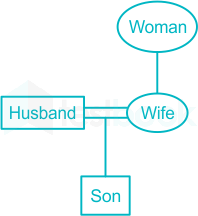
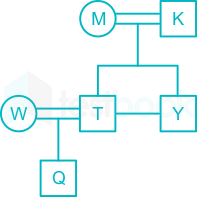
A man said to his wife, "The woman you see in the photo is the mother of your husband's wife's only son's mother." How is that person related to the photograph of the woman? 

  1. ((a))

    Son-in-Law

  2. ((b))

    Nephew

  3. ((c))

    Grandfather

  4. ((d))

    Cousin

Show Answer
Answer: ((a))

Son-in-Law

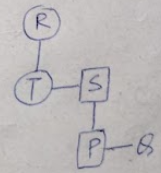
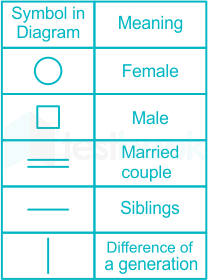
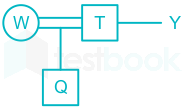
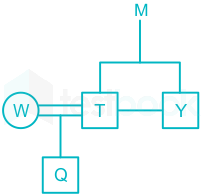
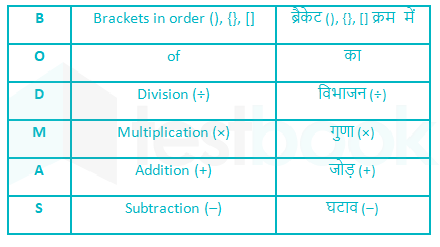
By using the symbols in the table given below, we can draw the following family tree:
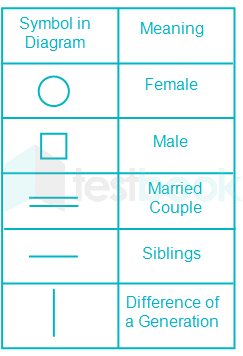
Husband's wife's only son's mother → Wife of the Man 

Mother of your husband's wife's only son's mother → Woman is the mother of the man's wife

Clearly, the person is the son-in-law of the woman in the photograph.

Hence, ‘Son-in-law’ is the correct answer.

2

Find the odd pair of numerals.

  1. ((a))

    54 - 7

  2. ((b))

    41 - 6

  3. ((c))

    86 - 9

  4. ((d))

    20 - 4

Show Answer
Answer: ((d))

20 - 4

The logic followed is:

All the pairs except (option 4), follow the pattern of First number = (Second number)2 + 5

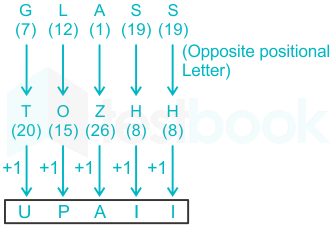
Option 1 → 54 - 7

54 = (7)2 + 5

54 = 49 + 5

54 = 54

Option 2 → 41 - 6

41 = (6)2 + 5

41 = 36 + 5

41 = 41

Option 3 → 86 - 9

86 = (9)2 + 5

86 = 81 + 5

86 = 86

Option 4 → 20 - 4

20 = (4)2 + 5

20 = 16 + 5

20 ≠ 21

Hence, the correct answer is "Option 4".

3

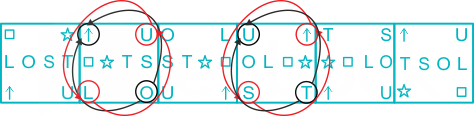
Which figure from the given options would replace the question mark (?) if the following figure series were to be continued?

  1. ((a))

  2. ((b))

  3. ((c))

  4. ((d))

Show Answer
Answer: ((d))

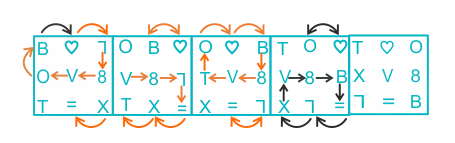
The logic followed here is:

In figure 1 to 2 and figure 3 to 4:

Bottom-middle and bottom-right symbols are interchanging their position and bottom-left symbol is the same.

All middle symbols and all top-symbols are interchanging their position with each other in clockwise.

In figure 2 to 3 and figure 4 to 5:

Top-middle and top-right symbols are interchanging their position and top-left symbol is the same.

All middle symbols and all bottom-symbols are interchanging their position with each other in clockwise.

Hence, the correct answer is "Option 4".

4

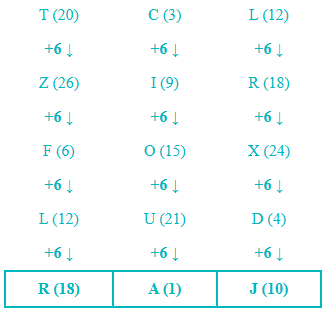
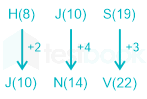
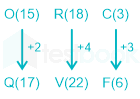
What should come in place of the question mark (?) in the given series based on the English alphabetical order?

TCL ZIR FOX LUD ?

  1. ((a))

     RJA

  2. ((b))

     ARJ

  3. ((c))

    AJR

  4. ((d))

    RAJ

Show Answer
Answer: ((d))

RAJ

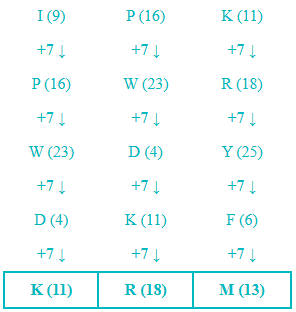
The logic followed here is:

Thus, 'RAJ' will be the next in the series.

Hence, the correct answer is "Option 4".

5

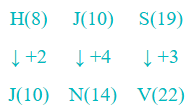
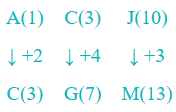
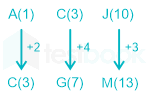
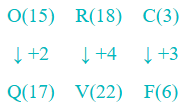
Select the pair that follows the same pattern as that followed by the two pairs given below. Both pairs follow the same pattern.

HJS : JNV

ACJ : CGM

  1. ((a))

    LHS : NLW

  2. ((b))

    ORC : QVF

  3. ((c))

    OPC : QSG

  4. ((d))

    WSK : YWM

Show Answer
Answer: ((b))

ORC : QVF

The logic followed here is:

HJS : JNV

And,

ACJ : CGM

Similarly,

ORC : QVF

Hence, the correct answer is "Option 2".

6

If the letters in the word 'ENGLISH' are rearranged as they appear in the english alphabet series, the position of how many letters will remain unchanged after the rearrangement?

  1. ((a))

    2

  2. ((b))

    3

  3. ((c))

    1

  4. ((d))

    0

Show Answer
Answer: ((c))

1

Given word: ENGLISH

WordENGLISH
Arranged in an alphabetical orderEGHILNS

So, position of one letter remain unchanged after the rearrangement.

Hence, the correct answer is "Option 3".

7

Which two signs should be interchanged to make the given equation correct?

16 = 4 × 5 ÷ 2 - 8 + 18

  1. ((a))
    • and ×
  2. ((b))
    • and =
  3. ((c))
    • and -
  4. ((d))

    = and + 

Show Answer
Answer: ((d))

= and + 

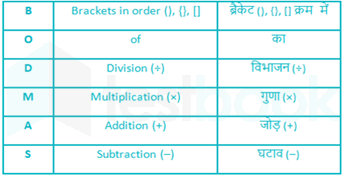
Given: 16 = 4 × 5 ÷ 2 - 8 + 18

According to the question, after interchanging the signs:

Option 1) + and ×

16 = 4 × 5 ÷ 2 - 8 + 18 ⇒ 16 = 4 + 5 ÷ 2 - 8 × 18

⇒ 16 = 4 + 5 ÷ 2 - 8 × 18

⇒ 16 = 4 + 2.5 - 8 × 18

⇒ 16 = 4 + 2.5 - 144

⇒ 16 = 6.5 - 144

⇒ 16 ≠ -137.5 (LHS ≠ RHS)

Option  2) - and =

16 = 4 × 5 ÷ 2 - 8 + 18 ⇒ 16 - 4 × 5 ÷ 2 = 8 + 18

⇒ 16 - 4 × 5 ÷ 2 = 8 + 18

⇒ 16 - 4 × 2.5 = 26

⇒ 16 - 10 = 26

⇒ 6 ≠ 26 (LHS ≠ RHS)

Option  3) + and -

16 = 4 × 5 ÷ 2 - 8 + 18 ⇒ 16 = 4 × 5 ÷ 2 + 8 - 18

⇒ 16 = 4 × 5 ÷ 2 + 8 - 18

⇒ 16 = 4 × 2.5 + 8 - 18

⇒ 16 = 10 + 8 - 18

⇒ 16 = 18 - 18

⇒ 16 ≠ 0 (LHS ≠ RHS)

Option  4) = and +

16 = 4 × 5 ÷ 2 - 8 + 18 ⇒ 16 + 4 × 5 ÷ 2 - 8 = 18

⇒ 16 + 4 × 5 ÷ 2 - 8 = 18

⇒ 16 + 4 × 2.5 - 8 = 18

⇒ 16 + 10 - 8 = 18

⇒ 26 - 8 = 18

⇒ 18 = 18 (LHS = RHS)

Hence, "Option 4" is the correct answer.
8

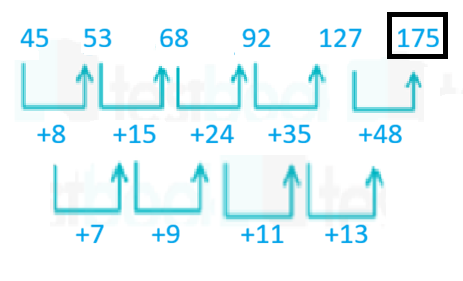
Find the next number in the series:

45, 53, 68, 92, 127, ?

  1. ((a))

    175

  2. ((b))

    174

  3. ((c))

    152

  4. ((d))

    162

Show Answer
Answer: ((a))

175

The logic followed here is:

thus, "175" will replace the question mark in the given series.

Hence, the correct option is "Option 1".

9

What will come at the place of question mark?

7,25,79,241,727,?

  1. ((a))

    2185

  2. ((b))

    2180

  3. ((c))

    2281

  4. ((d))

    2318

Show Answer
Answer: ((a))

2185

Pattern followed here is,

7 × 3 + 4 = 25

25 × 3 + 4 = 79

79 × 3 + 4 = 241

241 × 3 + 4 = 727

727 × 3 + 4 = 2181 + 4 = 2185

Hence, the correct answer is “Option 1”.

10

Seven persons A, B, C, D, E, F and G live in a seven story building. Four people live between F and E. F does not live on top floor or ground floor. G lives immediately above or below the floor on which F lives. Three persons live between A and G. G lives on a floor below D. D and C are immediate neighbours. More than two persons live between E and D.

Which of the following inferences can be drawn from the above?

  1. ((a))

    C lives on floor no. 3 

  2. ((b))

    Only two persons live above B.

  3. ((c))

    As many persons live above A as many person live below C.

  4. ((d))

    Three persons live between A and G.

Show Answer
Answer: ((d))

Three persons live between A and G.

Seven persons : A, B, C, D, E, F and G.

i) Four people live between F and E.

ii) F does not live on top floor or ground floor.

iii)G lives immediately above or below the floor on which F lives.

iv) Three persons live between A and G.

Case 1Case 2
FloorPersonPerson
7EG
6F
5A
4
3A
2F
1GE

v) G lives on a floor below D.

This eliminates case 2.

vi) D and C are immediate neighbours.

Case 1
FloorPerson
7E
6B
5A
4C/D
3D/C
2F
1G

vii) More than two persons live between E and D.

Case 1
FloorPerson
7E
6B
5A
4C
3D
2F
1G
  1. C lives on floor no. 3. → False

  2. Only two persons live above B. → False

  3. As many persons live above A as many person live below C. → False

  4. Three persons live between A and G. → True

Hence, 'Three persons live between A and G.' can be drawn from the given information.

11

Consider the five three letter words given below and the answer the questions based on it.

(Left)          XYB          KMV        LEY       LHF         RPE         (Right)

 If 1st letter of all the words are replaced to its preceding letter as per English alphabetical order. Then in newly formed

groups of elements what will be 2nd word from right end?

  1. ((a))

    KHF

  2. ((b))

    KEY

  3. ((c))

    JMV

  4. ((d))

    QPE

Show Answer
Answer: ((a))

KHF

Given:  (Left)          XYB          KMV        LEY       LHF         RPE         (Right)


After replacing the 1st letter of all the words to its preceding letter as per English alphabetical order.

(Left)          WYB          JMV        KEY       KHF         QPE         (Right)

<br>

2nd word from right end in the newly formed groups is KHF.

Hence, the correct answer is “Option 1”.

12

Six subjects Physics, Chemistry, Biology, Ecology, Hindi and English are taught from Monday to Saturday. Each day, one subject is taught. Hindi is taught just after Ecology and just before English. Biology is taught after English. Physics and Ecology are taught on Tuesday and Wednesday respectively. Which subject is taught on Monday?

  1. ((a))

    Biology

  2. ((b))

    Chemistry

  3. ((c))

    Hindi

  4. ((d))

    English

Show Answer
Answer: ((b))

Chemistry

According to the given information :

Six subjects Physics, Chemistry, Biology, Ecology, Hindi, and English are taught from Monday to Saturday. 

1) Physics and Ecology are taught on Tuesday and Wednesday respectively.

DaySubject
Monday
TuesdayPhysics
WednesdayEcology
Thursday
Friday
Saturday


2) Hindi is taught just after Ecology and just before English.

DaySubject
Monday
TuesdayPhysics
WednesdayEcology
ThursdayHindi
FridayEnglish
Saturday


  1. Biology is taught after English.
DaySubject
MondayChemistry
TuesdayPhysics
WednesdayEcology
ThursdayHindi
FridayEnglish
SaturdayBiology


So, Chemistry subject is taught on Monday.

Hence, the correct answer is "Chemistry".

13

If ‘A’ stands for ‘÷’, ‘B’ stands for ‘×’, ‘C’ stands for ‘+’ and ‘D’ stands for ‘−’, then what will come in place of the question mark (?) in the following equation?

9 D 35 C 48 B 30 A 12 = ?

  1. ((a))

    95

  2. ((b))

    94

  3. ((c))

    96

  4. ((d))

    92

Show Answer
Answer: ((b))

94

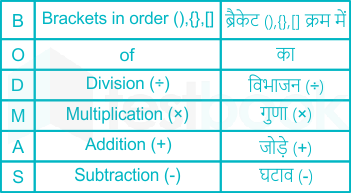
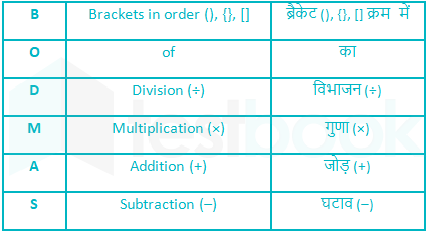
BODMAS Rule:

According to the question, the letters are interchanged as follows:

Original LetterABCD
New Symbol÷×+

Now, given the equation: 9 D 35 C 48 B 30 A 12 = ?

After interchanging the specified letters, the new equation is:

9 − 35 + 48 × 30 ÷ 12 = ?

Perform operations according to BODMAS:

→ 9 − 35 + 48 × 30 ÷ 12

9 − 35 + 120

→ −26 + 120

→ 94

Hence, the correct answer is "Option 2".

14

Six friends Pawan, Kanta, Rishab, Subham, Mayank and Vikram are sitting in a circle facing the centre. Pawan is to the immediate left of Vikram. Rishab is 4th to the right of Pawan. Only Mayank sits between Pawan and Rishab. Subham does not sit adjacent to Vikram. Who sits to the immediate right of Subham?

  1. ((a))

    Mayank

  2. ((b))

    Kanta

  3. ((c))

    Rishab

  4. ((d))

    Pawan

Show Answer
Answer: ((c))

Rishab

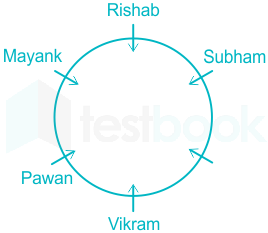
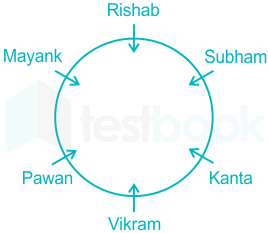
Given: Six friends Pawan, Kanta, Rishab, Subham, Mayank and Vikram.

  1. Pawan is to the immediate left of Vikram.

  2. Rishab is 4th to the right of Pawan.

  3. Only Mayank sits between Pawan and Rishab.

  4. Subham does not sit adjacent to Vikram.

Ans, Kanta will sit at the remaining place.

Here, 'Rishab' sits to the immediate right of Subham.

Hence, the correct answer is "Option 3".

15

This question is based on the following 3-letter words

(left) BOW SAD LOW RAY (right)

How many letters are there in the English alphabetical order between the second letter of the first word from the right and the second letter of the first word from the left?

  1. ((a))

    Fifteen

  2. ((b))

    Thirteen

  3. ((c))

    Twelve

  4. ((d))

    Eight

Show Answer
Answer: ((b))

Thirteen

Given words: (left) BOW SAD LOW RAY (right)

Now,

the second letter of the first word from the right is: A (RAY)

and, the second letter of the first word from the left is: O (BOW)

Here, the number of letters between A to O is 13.

ABCDEFGHIJKLMNO


Hence, the correct answer is "Option 2".

16

In a row of girls, Roopa is 7th from the left while Sunita is 12th from the right. On interchanging their respective positions, Roopa becomes 22nd from the left. How many total number of girls are there in the row ?

  1. ((a))

    35

  2. ((b))

    33

  3. ((c))

    38

  4. ((d))

    37

Show Answer
Answer: ((b))

33

CONCEPT:

Interchanging Positions and Total Number of Girls

  • When two persons interchange their positions in a row, the total number of persons remains the same.
  • The positions of the persons from either end will change, and we can use their new positions to find the total number of persons.

EXPLANATION:

  • In the given problem:

Roopa is 7th from the left, and Sunita is 12th from the right.

After interchanging their positions, Roopa becomes 22nd from the left.

  • To find the total number of girls, we use the position of Sunita (12th from the right) and the new position of Roopa (22nd from the left).
  • Total number of girls = Position of Roopa from the left + Position of Sunita from the right - 1
  • = 22 + 12 - 1
  • = 33

Therefore, the total number of girls in the row is 33.

17

This question is based on the five, three-digit numbers given below.

(Left) 409 857 743 753 805 (Right)

(Example - 697 - First digit = 6, second digit = 9 and third digit = 7)

(NOTE : All operations to be done from left to right.)

In how many numbers is the resultant of the summation of first and second digits a prime number ?

  1. ((a))

    None

  2. ((b))

    Four

  3. ((c))

    Two

  4. ((d))

    One

Show Answer
Answer: ((c))

Two

Given: (Left) 409 857 743 753 805 (Right)

According to the question:

Given numbers409857743753805
Summation of first and second digits4 + 08 + 57 + 47 + 58 + 0
Resultant numbers41311128
Required answerEven numberPrime numberPrime numberEven numberEven number

Thus, according to the final arrangement, in two numbers the resultant of summation of first and second digits a prime number.

Hence, "Option 3" is the correct answer.
18

Based on the English alphabetical order, three of the following four letter-clusters are alike in a certain way and thus form a group. Which letter-cluster DOES NOT belong to that group?

(Note : The odd one out is not based on the number of consonants / vowels or their position in the letter-cluster.)

  1. ((a))

    FKR 

  2. ((b))

    RWD 

  3. ((c))

    JOD 

  4. ((d))

    DIP

Show Answer
Answer: ((c))

JOD 

The logic followed here is,

Let's examine each option:

Option 1) FKR

Option 2) RWD

Option 3) JOD

Does not follow the same logic.

Option 4) DIP

Hence, the correct answer is Option (3).

19

If ‘M @ N’ means ‘M is the sister of N’,

‘M # N’ means ‘M is the brother of N’,

‘M * N’ means ‘M is the father of N,

‘M & N’ means ‘M is the mother of N,

How R is related to Q in the relation “R & T @ S * P # Q”?

  1. ((a))

    Mother

  2. ((b))

    Brother

  3. ((c))

    Wife

  4. ((d))

    Father’s mother

Show Answer
Answer: ((d))

Father’s mother

Preparing the family tree using the following symbols,

Given equation: R & T @ S * P # Q

Code@#*&
RelationSisterBrotherFatherMother

The family tree can be drawn as per the given information,

R is the mother of T, T is the sister of S, S is the father of P, P is the brother of Q

Here, we can see that R is the father’s mother of Q.

Hence, the correct answer is "Father’s mother".

20

Study the given letter, symbol series and answer the question that follows.

L @ S * E ^ B U # W I < E M @ O $ # B * H ! A & L < O

If we replace each of the vowels with any consonant and similarly if we replace each of the consonants in the original series with any vowel, then how many consonants will be immediately followed by a symbol in the resultant series thus formed?

  1. ((a))

    5

  2. ((b))

    6

  3. ((c))

    4

  4. ((d))

    7

Show Answer
Answer: ((a))

5

Given series: L @ S * E ^ B U # W I < E M @ O $ # B * H ! A & L < O

If we replace each of the vowels with any consonant and similarly if we replace each of the consonants in the original series with any vowel,

Identify vowels and consonants

  • Vowels: A, E, I, O, U
  • Consonants: L, S, B, W, M, H

Replace vowels with any consonant and consonants with any vowel

For simplicity, let's use the following replacements:

  • Vowel → Consonant (e.g., A → C, E → D, I → F, O → G, U → H)
  • Consonant → Vowel (e.g., L → A, S → E, B → I, W → O, M → U, H → E)

Resultant Series after Replacement:

A @ E * D ^ I H # O F < D U @ G $ # I * E ! C & A < G

So, the required pair is: Consonant - Symbol

D ^, H #, F <, G $, C &

Total consonants immediately followed by a symbol: 5

Hence, the correct answer is "Option 1".

General intelligence and Reasoning Ability 2 (20 questions)

21

This question is based on the following 3-letter words.

(left) ROW MAD LAY CAT (right)

If in each of the words, each letter is changed to the next letter in the English alphabetical order, how many words thus formed will have no vowel?

  1. ((a))

    Two

  2. ((b))

    Three

  3. ((c))

    None

  4. ((d))

    One

Show Answer
Answer: ((a))

Two

Given: (left) ROW MAD LAY CAT (right)

Now, In each of the words, each letter is changed to the next letter in the English alphabetical order,

WordsEach letter is changed by it's next letter
ROWSPX
MADNBE
LAYMBZ
CATDBU


then there are 'Two' words having no vowel: 'SPX' and 'MBZ'.

Hence, the correct answer is "Option 1".

22

Which figure should replace the question mark (?) if the following series were to be continued?

  1. ((a))

  2. ((b))

  3. ((c))

  4. ((d))

Show Answer
Answer: ((a))

The logic followed here is:

  1. First box series →

The first column elements shift clockwise in the downward direction.

The last two elements of the 2nd row from the left interchange positions.

The rest of the element is shift anticlockwise.

  1. Second box series → 

The elements at the corner of the 2nd row interchange positions.

The rest of elements of the 2nd row interchange positions.

The elements at the corner interchange positions diagonally.

Thus, the final series is:

Hence, "Option 1" is the correct answer.
23

If 1 is subtracted from each odd digit and 2 is added to each even digit in the number 9345712, what will be difference between the largest and smallest digits thus formed?

  1. ((a))

    4

  2. ((b))

    8

  3. ((c))

    6

  4. ((d))

    2

Show Answer
Answer: ((b))

8

The logic followed here is:

Given number: 9345712.

Odd digits is decreased by - 1

and, Even digits is increased by + 2

After arrange the numbers:

9345712 ⇒ 8264604

Now, The largest digits after rearranging the series: 8

And, The smallest digits after rearranging the series: 0

So, the difference between the largest and smallest digits is: 8 - 0 = 8.

Hence, the correct answer is "Option 2".

24

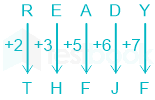
In a certain code language, 'DIARY' is written as 'FLFXF' and 'READY' is written as 'THFJF'. How will 'ERROR' be written in that language?

  1. ((a))

    JBDYU

  2. ((b))

    GNJUY

  3. ((c))

    GUWUY

  4. ((d))

    JULDJ

Show Answer
Answer: ((c))

GUWUY

The logic followed here is:

'DIARY' is written as 'FLFXF'.

'READY' is written as 'THFJF'.

Similarly, for 'ERROR'

So, 'ERROR' will be written as 'GUWUY'

Hence, the correct answer is "Option 3".

25

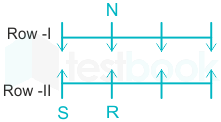
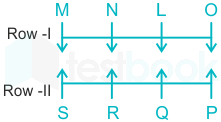
Eight people are sitting in two parallel rows with 4 people each in such a way that there is equal distance between adjacent persons and they are facing each other.

In row I – L, M, N and O are seated and all of them are facing south.

In row II – P, Q, R and S are seated and all of them are facing north.

N sits next to the person at the extreme right end of their row and is facing R. S sits at the extreme left end of their row. Q sits to the immediate right of R and is facing L. O sits at the extreme left end of their row.

Who sits at the extreme right end of the row of people facing South?

  1. ((a))

    N

  2. ((b))

    M

  3. ((c))

    L

  4. ((d))

    O

Show Answer
Answer: ((b))

M

Given : 

  1. Eight people are sitting in two parallel rows with 4 people each in such a way that there is equal distance between adjacent persons and they are facing each other.
  2. In row I – L, M, N and O are seated and all of them are facing south.
  3. In row II – P, Q, R and S are seated and all of them are facing north.

Explanation :

1) N sits next to the person at the extreme right end of their row and is facing R.

2) S sits at the extreme left end of their row.

3) Q sits to the immediate right of R and is facing L.

  1. O sits at the extreme left end of their row.

After positioning Q, R, L and O two positions i.e one position in each row is vacant which will be occupied by the only people left in their respective rows i.e M in row - I and P is row - II.

Thus, after the final arrangement M sits at the extreme right end of the row of people facing South i.e in row - I.

Hence, "M" is the correct answer.
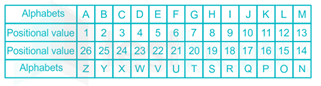
26

Seven brothers P, Q, R, S, T, U, and V were born in different years. S is younger than only 2 other brothers and neither of them is U. P is older than R but younger than U and S. R is not the youngest. U is younger than Q who is younger than T. Who is the youngest? 

  1. ((a))

    T

  2. ((b))

    P

  3. ((c))

    Q

  4. ((d))

    V

Show Answer
Answer: ((d))

V

Given: Seven brothers P, Q, R, S, T, U, and V are born in different years.

  1. S is younger than only 2 other brothers and neither of them is U.

This means S is the third oldest and U is younger than S.

T > Q > S > __ > __ > __ > __

  1. P is older than R but younger than U and S.

As S is older than U and P is younger than both, P must be younger than S and U. P is older than R, so R must be one of the youngest two.

T > Q > S > U > P > R > __

  1. R is not the youngest.

This implies that the last spot should be occupied by V.

T > Q > S > U > P > R > V

So, the final arrangement will be:

T > Q > S > U > P > R > V

Thus, the youngest brother is V.

Hence, the correct answer is "V".

27

Direction: Study the following arrangement carefully and answer the given question.

L K A ? Z 6 N T $ * I ^ J # B β U C D 9 Z Y P © 3 ¥ 5 M G E F

Which of the following element is 15th to the right of the 8th to the left of the 9th from the right end of the above arrangement?

  1. ((a))

    ¥

  2. ((b))

    G

  3. ((c))

    E

  4. ((d))

    F

Show Answer
Answer: ((c))

E

The logic follows here is:

Given series: L K A ? Z 6 N T $ * I ^ J # B β U C D 9 Z Y P © 3 ¥ 5 M G E F

If we have a combination of the opposite directions like left and right or right and left then we take the sum of the numbers to find the final position.

If we have a combination of the same directions like left and left or right and right then we take the difference of the numbers to find the final position.

Now first, find out the element 8th to the left of the 9th from the right end

Therefore, 8 + 9 = 17

The 17th element from the right end is B

Now, find out 15th to the right of the 17th element from the right end

Therefore, 17 - 15 = 2

The 2nd element from the right end is E

L K A ? Z 6 N T $ * I ^ J # B β U C D 9 Z Y P © 3 ¥ 5 M G E F

Hence, the correct answer is E.

Alternate Method

The logic follows here is:

Given series: L K A ? Z 6 N T $ * I ^ J # B β U C D 9 Z Y P © 3 ¥ 5 M G E F

9th element from the right end is P

8th element to the left of P is B

15th element to the right of B is E

L K A ? Z 6 N T $ * I ^ J # B β U C D 9 Z Y P © 3 ¥ 5 M G E F

Hence, the correct answer is E.

Important Points

The logic behind the given directions is as follows:

  1. If the same directions are given in the question

like, left and left or right and right then take a difference of the numbers.

2. If the opposite directions are given the question

like, left and right or right and left then take a sum of the numbers.

28

Direction: Study the following arrangement carefully and answer the given question.

C $ 7 D Q S 1 B β 9 D C 8 L K D 2 F M P μ I © F ¥ H 0 π Y O

In the given series how many such letters are there which are immediately followed by a symbol and immediately preceded by a number?

  1. ((a))

    2

  2. ((b))

    1

  3. ((c))

    5

  4. ((d))

    3

Show Answer
Answer: ((b))

1

The logic follows here is:

Given series: C $ 7 D Q S 1 B β 9 D C 8 L K D 2 F M P μ I © F ¥ H 0 π Y O

Conditions to be checked

  1. Letters which are immediately followed by a symbol and immediately preceded by a number

Number → Letter → Symbol

C $ 7 D Q S 1 B β 9 D C 8 L K D 2 F M P μ I © F ¥ H 0 π Y O

Hence, the correct answer is 1.

Mistake Points

  1. Immediately preceded by means immediately before or to come just before.
  2. Immediately followed by means immediately after or to come just after.
29

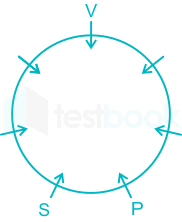
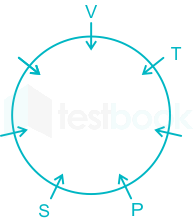
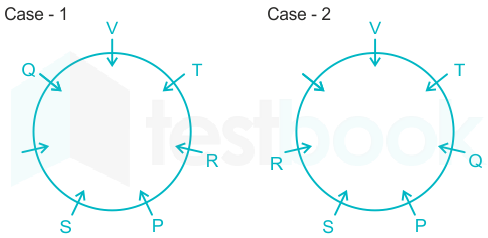
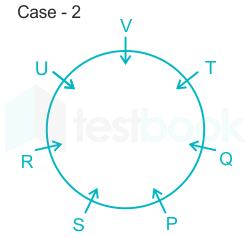
Seven friends P, Q, R, S, T, U and V are sitting around a circular table facing towards the center. V is third to the left of S. Q is third to the right of R. P is second to the left of T. U sits immediate left of R. P sits immediate right of S. Who is second to the left of V?

  1. ((a))

    T

  2. ((b))

    R

  3. ((c))

    Q

  4. ((d))

    S

Show Answer
Answer: ((c))

Q

Seven friends: P, Q, R, S, T, U and V.

  1. V is third to the left of S.

  1. P sits immediate right of S.


  1. P is second to the left of T.

  1. Q is third to the right of R.

  1. U sits immediate left of R.

So, case -1 gets eliminated.

Q is Second to the left of V.

Hence, the correct answer is "Q".

30

A # B means 'A is the mother of B'.

A @ B means 'A is the son of B'.

A & B means 'A is the brother of B'.

A % B means 'A is the wife of B'.

If W # Q @ T & Y @ M % K, then how is K related to W?

  1. ((a))

    Father

  2. ((b))

    Father-in-law

  3. ((c))

    Brother-in-law

  4. ((d))

    Brother

Show Answer
Answer: ((b))

Father-in-law

Given :

A is
Symbol#@&%
MeaningMotherSonBrotherWife
to B

Statement given : W # Q @ T & Y @ M % K

So,

  • W # Q → W is the mother of Q.

  • Q @ T → Q is the son of T.

  • T & Y → T is the brother of Y.

  • Y @ M → Y is the son of M.

  • M % K → M is the wife of K.

Thus, according to the final family tree K is the father-in-law of W.

Hence, "Father-in-law" is the correct answer.
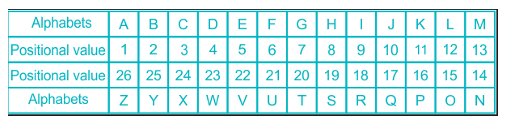
31

Find the next number in the series:

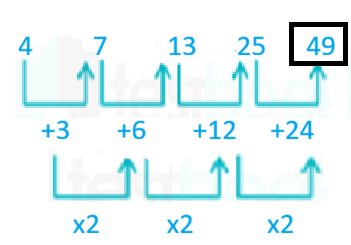
4, 7, 13, 25, ?

  1. ((a))

    40

  2. ((b))

    51

  3. ((c))

    49

  4. ((d))

    53

Show Answer
Answer: ((c))

49

The logic followed here is:

thus, "49" will replace the question mark in the given series.

Hence, the correct option is "Option 3".

32

In the following question, select the related image from the given alternatives.

  1. ((a))

  2. ((b))

  3. ((c))

  4. ((d))

Show Answer
Answer: ((d))

Here, from the first to second, symbols are flipping and changing their position diagonally.

Hence, the figure given in option 4 is the correct one.

33

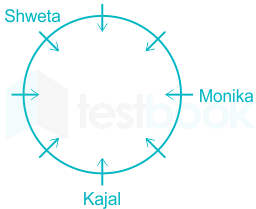
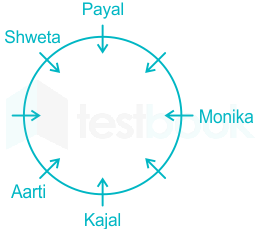
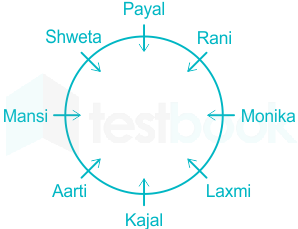
Eight friends Mansi, Shweta, Monika, Payal, Aarti, Kajal, Laxmi and Rani are sitting around a circular table facing towards the centre (not necessarily in the same order). Monika is second to the right of Kajal. Kajal is third to the right of Shweta. Payal is to the immediate left of Shweta. Shweta is second to the left of Aarti. Laxmi is fourth to the right of Shweta. Mansi is the immediate neighbour of both Shweta and Aarti. Who is second to the right of Mansi?

  1. ((a))

    Aarti

  2. ((b))

    Laxmi

  3. ((c))

    Rani

  4. ((d))

    Kajal

Show Answer
Answer: ((d))

Kajal

Eight friends Mansi, Shweta, Monika, Payal, Aarti, Kajal, Laxmi and Rani are sitting around a circular table facing towards the centre (not necessarily in the same order). 

1) Monika is second to the right of Kajal and Kajal is third to the right of Shweta.

2) Payal is to the immediate left of Shweta and Shweta is second to the left of Aarti. 

3) Laxmi is fourth to the right of Shweta and Mansi is the immediate neighbour of both Shweta and Aarti.

∴ Here, 'Kajal' is second to the right of Mansi.

Hence, the correct answer is "Kajal".

34

Select the set in which the numbers are related in the same way as are the numbers of the following set.

(79, 58, 62)

(54, 33, 37)

  1. ((a))

    (59, 33, 43)

  2. ((b))

    (47, 36, 41)

  3. ((c))

    (66, 45, 49)

  4. ((d))

    (43, 25, 30)

Show Answer
Answer: ((c))

(66, 45, 49)

The logic followed here is:

(79, 58, 62)

(58 + 62) ÷ 2 + 19 = 79 

120 ÷ 2 + 19 = 79

60 + 19 = 79

79 = 79 (LHS = RHS)

And,

(54, 33, 37)

(33 + 37) ÷ 2 + 19 = 54 

70 ÷ 2 + 19 = 54

35 + 19 = 54

54 = 54 (LHS = RHS)

So, checking each option one by one:

Option 1) (59, 33, 43)

(33 + 43) ÷ 2 + 19 = 59 

76 ÷ 2 + 19 = 59

38 + 19 = 59

57 ≠ 59 (LHS ≠ RHS)

Option 2) (47, 36, 41)

(36 + 41) ÷ 2 + 19 = 47 

77 ÷ 2 + 19 = 47

38.5 + 19 = 47

57.5 ≠ 47 (LHS ≠ RHS)

Option 3) (66, 45, 49)

(45 + 49) ÷ 2 + 19 = 66 

94 ÷ 2 + 19 = 66

47 + 19 = 66

66 = 66 (LHS = RHS)

Option 4) (43, 25, 30)

(25 + 30) ÷ 2 + 19 = 43 

55 ÷ 2 + 19 = 43

47.5 + 19 = 43

66.5 ≠ 43 (LHS ≠ RHS)

Thus, out of all the options, '(66, 45, 49)' follows the same logic as given.

Hence, "Option 3" is the correct answer.
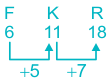
35

Eight boxes A, B, C, D, E, F, G and H are placed one above another (not necessarily in the same order). Only two boxes are placed between B and E. H is placed immediately below E. Only one box is placed between G and C. Only one box is placed between G and A. B is placed above D and H. More than one box are placed between C and F.

How many boxes are placed between F and C?

  1. ((a))

    4

  2. ((b))

    3

  3. ((c))

    5

  4. ((d))

    2

Show Answer
Answer: ((d))

2

Given: Eight boxes A, B, C, D, E, F, G and H.

  1. Only two boxes are placed between B and E.

  2. H is placed immediately below E.

  3. B is placed above D and H.

Boxes (Case 1)Boxes (Case 2)Boxes (Case 3)Boxes (Case 4)
B
B
B
BE
HE
EH
EH
H


  1. Only one box is placed between G and C.

  2. Only one box is placed between G and A.

Here case 2, 3 and 4 get eliminated.

Here new cases will make:

Boxes(Case 1)Boxes(Case2)
AC
GG
BB
CA
EE
HH


  1. More than one box are placed between C and F.
Boxes(Case 1)Boxes(Case2)
AC
F
GG
BB
CA
F
EE
HH


  1. B is placed above D. Here case 2 gets eliminate.

Thus, Final arrangement:

Boxes
A
F
G
B
C
D
E
H


Thus, 2 boxes are placed between F and C.

Hence, the correct answer is "2".

36

What should come in place of the question mark (?) in the given series based on the English alphabetical order?

IPK PWR WDY DKF ?

  1. ((a))

    RMK

  2. ((b))

    KMR

  3. ((c))

    KRM

  4. ((d))

    RKM

Show Answer
Answer: ((c))

KRM

The logic followed here is:

Thus, 'KRM' will be the next in the series.

Hence, the correct answer is "Option 3".

37

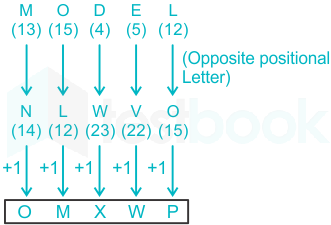
In a certain code language, 'INNER’ is written as 'SNNWJ' and 'GLASS' is written as 'UPAII'. How will 'MODEL' be written in that language?

  1. ((a))

    OMXVP

  2. ((b))

    OMXWP

  3. ((c))

    OMWWP

  4. ((d))

    OMXWO

Show Answer
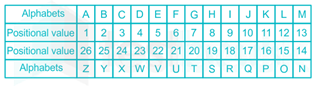
Answer: ((b))

OMXWP

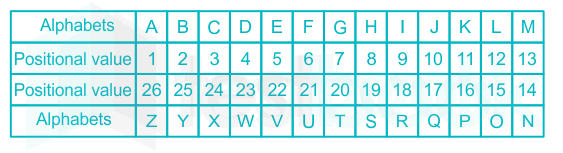
The position of the English alphabet series is given below:

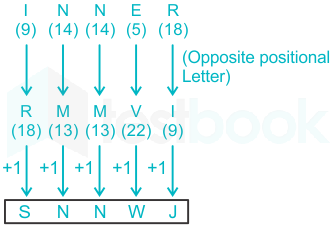
Logic:

Step 1: Opposite positional letters are written.

Step 2: Addition of +1 in opposite positional letters.

1) 'INNER’ is written as 'SNNWJ'

And,

2) 'GLASS' is written as 'UPAII'

Similarly,

'MODEL' be written as '?'

Hence, the correct answer is "OMXWP".

38

Seven people A, H, D, F, T, E, and G are sitting in a straight row, facing north. Only three people sit to the left of E. G and H are immediate neighbours of E. A sits at the extreme right of the row. D is the immediate neighbour of A. F sits second to the left of E. Who sits at the extreme left of the row?

  1. ((a))

    T

  2. ((b))

    D

  3. ((c))

    A

  4. ((d))

    F

Show Answer
Answer: ((a))

T

The pattern followed here is:

Given: Seven people A, H, D, F, T, E, and G are sitting in a straight row, facing north.

1) Only three people sit to the left of E.

(It means E sits on the middle of the row)

2) A sits at the extreme right of the row.

3) F sits second to the left of E.

4) G and H are immediate neighbours of E.

(Position of G and H is not clear but they sit either side of E)

5)  D is the immediate neighbour of A.

  1. So, T sits on the vacant place.

Clearly, T sits extreme left of the row.

Hence, the correct answer is "T".

39

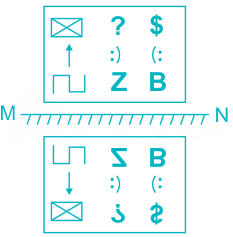
Choose the correct water image of the question figure from the following option figures. 

  1. ((a))

  2. ((b))

  3. ((c))

  4. ((d))

Show Answer
Answer: ((d))

The correct mirror image of the given figure when the mirror is placed at MN is as shown below:

Here, option figure 4 is the correct water image of the given figure.

Hence, the correct answer is "Option 4".

40

Select the set in which the numbers are related in the same way as are the numbers of the following set.

7 — 14 — 23

4 — 11 — 20

  1. ((a))

    7 — 15 — 22

  2. ((b))

    15 — 30 — 20

  3. ((c))

    5 — 12 — 21

  4. ((d))

    9 — 12 — 22

Show Answer
Answer: ((c))

5 — 12 — 21

The logic followed here is:

Logic: 1st number + 7 = 2nd number; 2nd number + 9 = 3rd number.

Now,

For, 7 — 14 — 23

⇒ 7 + 7 = 14 and 14 + 9 = 23.

For, 4 — 11 — 20

⇒ 4 + 7 = 11 and 11 + 9 = 20.

Similarly, for 5 — 12 — 21

⇒ 5 + 7 = 12 and 12 + 9 = 21.

Hence, the correct answer is "Option 3".

General Awareness 1 (20 questions)

41

The Right to Equality to Woman is ensured by 

  1. ((a))

    Article 14

  2. ((b))

    Article 15

  3. ((c))

    Article 16

  4. ((d))

    Article 39

Show Answer
Answer: ((a))

Article 14

Gender Justice and the Indian Constitution: The elimination of gender-based discriminations is one of the fundamentals of the constitutional edifice of India. In fact, the constitution empowers the state to adopt measures of positive discrimination in favour of women for neutralizing the cumulative discriminations and deprecations’ which women face.

Fundamental Rights (Part III):

  • Article 14 of the Constitution of India ensures to women the right to equality.
  • Article 15(1) prohibits the State to discriminate against any citizen on grounds only of religion, race, caste, sex, place of birth or any of them.
  • Article 15 (2) prohibits citizens on grounds only of religion, race, caste, sex, place of birth or any of them, be subject to any disability, liability, restriction or condition with regard to 
  • access to shops, public restaurants, hotels and palaces of public entertainment;
  • or the use of wells, tanks, bathing ghats, roads and places of public resort maintained wholly or partly out of State funds or dedicated to the use of the general public.
  • Article 15(3) empowered the state to make special provisions for the welfare of the women and children.
  • Article 16 of the Constitution provides for equality of opportunity to all, in matters relating to public employment or appointment to any office and specifically forbids discrimination inter-alia on the ground of sex.
  • These articles are all justiciable and form on the basis of our legal Constitutional history.

Hence, we conclude that the Right to Equality to Woman is ensured by ​Article 14.

42

Henry Lawrence was the Chief Commissioner of which state during the Revolt of 1857?

  1. ((a))

    Awadh

  2. ((b))

    Odisha

  3. ((c))

    Maharashtra

  4. ((d))

    Punjab

Show Answer
Answer: ((a))

Awadh

The correct answer is Awadh.

Key Points

  • Sir Henry Lawrence was a prominent British military officer and administrator who was appointed as the Chief Commissioner of Awadh (Oudh) in March 1857.
  • He arrived in Lucknow just weeks before the outbreak of the Great Revolt of 1857, tasked with stabilizing the province after its controversial annexation by the British.
  • Lawrence is best remembered for his leadership during the Siege of Lucknow; he anticipated the rebellion and moved the British population and loyal Indian troops into the fortified Lucknow Residency.
  • His strategic foresight in stockpiling provisions and strengthening the defenses of the Residency complex is credited with the survival of the garrison during the prolonged siege.
  • During the conflict, Lawrence was severely wounded by a fragment of an exploding shell on July 2, 1857, and succumbed to his injuries on July 4, 1857.

 Additional Information

  • Awadh (Oudh):
  • The province was formally annexed by Lord Dalhousie in 1856 on the grounds of maladministration by the then-ruler, Wajid Ali Shah.
  • This annexation caused widespread resentment among the Taluqdars and the Bengal Army sepoys, many of whom hailed from this region, making it a major center of the 1857 uprising.
  • Punjab:
  • Before his posting in Awadh, Henry Lawrence served as the President of the Board of Administration in Punjab following its annexation in 1849.
  • His brother, John Lawrence, was the Chief Commissioner of Punjab during the 1857 revolt and later became the Viceroy of India.
  • Odisha and Maharashtra:
  • While these regions saw localized disturbances, they were not the primary administrative focus of Henry Lawrence during the peak of the 1857 rebellion.
43

Quit India Movement was launched in the year

  1. ((a))

    1942

  2. ((b))

    1940

  3. ((c))

    1944

  4. ((d))

    None of the above

Show Answer
Answer: ((a))

1942

The Correct answer is Option 1. 

Key Points

  • The Quit India Movement was launched by Mahatma Gandhi on 8th August 1942 during the Bombay session of the All-India Congress Committee. It was a mass protest demanding an end to British rule in India, often summarized by the slogan "Do or Die." The movement marked a significant step in India's struggle for independence.
44

Panthi is a dance form from which of the following states?

  1. ((a))

    Odisha

  2. ((b))

    Rajasthan

  3. ((c))

    Chhattisgarh

  4. ((d))

    Bihar

Show Answer
Answer: ((c))

Chhattisgarh

  • Panthi, one of the important dance form in Chattisgarh is the folk dance of Chattisgarh.
  • It is mainly performed by the Satnami community of Chhattisgarh.
  • Saila Dance, Karma, Sua Nacha, and Gendi are the other important folk dances of Chattisgarh
45

Kathak is the principal dance of which part of India?

  1. ((a))

    Northern India

  2. ((b))

    Southern India

  3. ((c))

    North-Eastern India

  4. ((d))

    Eastern India

Show Answer
Answer: ((a))

Northern India

The correct answer is Northern India.

Key Points

  • Kathak is a classical Indian dance form that originated in northern India and has a rich history that dates back several centuries.
  • It is known for its graceful movements, intricate footwork, expressive gestures, and rhythmic patterns.
  • Kathak dancers often perform storytelling through dance, depicting mythological tales, historical events, and emotions.
  • Birju Maharaj, Sitara Devi, Uma Sharma etc are the famous personalities associated with this dance form.

Additional Information Eight classical dances of India and States:

Classical DanceStates
BharatanatyamTamil Nadu
KathakUttar Pradesh
KathakaliKerala
KuchipudiAndhra Pradesh
OdissiOdisha
SattriyaAssam
ManipuriManipur
MohiniyattamKerala
46

Which of the following river originates in Rajasthan?

  1. ((a))

    Mahi

  2. ((b))

    Narmada

  3. ((c))

    Tapi

  4. ((d))

    Banas

Show Answer
Answer: ((d))

Banas

The correct answer is Banas.

Key Points

  • Banas river originates from the state of Rajasthan.
  • The river originates from the Khamnor hills of the Aravali range near Kumbhalgarh.
  • It is also known as 'Van ki Asha' (Hope of forest).
  • It flows northeast through the Mewar region of Rajasthan and meets the Chambal near the village of Rameshwar in Sawai Madhopur district.
  • Berach and Menali are the right bank tributaries of the Banas river.
  • Kothari, Khari, Dai, Dheel River, Sohadara River, Morel, and Kalisil are the left bank tributaries of Banas river.​

Additional Information

  • Chambal River
  • It is the tributary of the Yamuna River.
  • It rises in the Vindhyachal range South of Mhow, the western state of Madhya Pradesh.
  • It flows from the north into the southeastern state of Rajasthan.
  • It ends on the confluence of five rivers which includes the Chambal, Kwari, Yamuna, Sind, Pahuj, at Pachnada near Bhareh in Uttar Pradesh, at the border of Bhind and Etawah districts.
  • Major Tributary - Kshipra, Kalisindh, Parvati, Bansa, Newaj, Kwari, Sindh, etc.
  • Narmada River
  • It originates from the Narmada Kund located in Amarkantak, Anuppur district in Madhya Pradesh.
  • The major tributaries of the Narmada are Barna, Tawa, Kanar, Kolar, Man, Hatni, Uri, Shakkar, etc.
  • It flows westwards before falling into the Gulf of Khambhat.
  • The Narmada river is the longest river in Madhya Pradesh and it's called "The Lifeline of Madhya Pradesh".
  • The waterfalls created by the Narmada River include Kapil Dhara and Dudh Dhara Falls (Anuppur), Dhuandhar Falls (Bhedaghat, Jabalpur), Sahasradhara Falls (Maheshwar, Khargone), Dardhi Falls, Manadhata Falls, etc.
  • Mahi River
  • It rises in Madhya Pradesh and, after flowing through the Vagad region of Rajasthan, enters Gujarat and flows into the Arabian Sea.
  • It is one of Five west-flowing rivers in India, along with Tapti River, Sabarmati River, Luni River (Endorheic river) and the Narmada River.
  • Tributaries- Som, Anas, and Panam.
47

Which of the following do/does NOT come under Union list of seventh schedule of the Indian constitution?

  1. ((a))

    Post and telegraphs

  2. ((b))

    Banking

  3. ((c))

    Intoxicating liquors

  4. ((d))

    Audit of the accounts of the states

Show Answer
Answer: ((c))

Intoxicating liquors

The correct answer is Intoxicating liquors.

Key Points

  • The seventh schedule of the Indian constitution deals with the division of powers between the central government and the state governments through three lists: the Union List, the State List, and the Concurrent List.
  • The Union List consists of subjects on which the central government has exclusive legislative authority.
  • This means that only the Parliament of India can make laws regarding the items mentioned in the Union List.
  • The Union List includes subjects of national importance or those that require uniform laws throughout the country.
  • It encompasses areas such as defense, foreign affairs, atomic energy, railways, communication, and more.
  • In this way, all the other options lie on the union list except intoxicating liquors.

Additional Information

  • Union List:
  • The Union List consists of around 100 items over which the central government has exclusive legislative authority, including defence, foreign affairs, atomic energy, banking, and telecommunications.
  • The central government has the power to make laws, regulate, and govern the subjects mentioned in the Union List uniformly across all states and union territories in India.
  • Items in the Union List ensure the central government's authority in critical areas such as national security, inter-state trade and commerce, currency, copyright, air and water pollution, and more.
  • Any amendment to the Union List requires the approval of the Parliament through a prescribed legislative process, ensuring that changes to these subjects are made at the national level.
  • State List:
  • The State List consists of subjects over which state governments have exclusive legislative authority, including public order, police, public health, local government, agriculture, state taxation, and more.
  • State governments exercise their legislative and executive powers to make laws, regulate, and govern the subjects mentioned in the State List within their respective states.
  • Subjects in the State List allow state governments to address regional and local concerns, implement policies specific to their states, and ensure effective governance at the state level.
  • Any amendment to the State List requires the approval of the state legislature concerned and does not require the consent of the Parliament, providing states with autonomy in making changes to these subjects.
  • Concurrent List:
  • The Concurrent List consists of subjects on which both the central government and state governments have the power to legislate, such as criminal law, marriage and divorce, bankruptcy and insolvency, education, forests, and more.
  • Both the central and state governments can make laws, regulate, and govern the subjects mentioned in the Concurrent List simultaneously, subject to certain limitations and guidelines.
  • In case of a conflict between central and state laws on Concurrent List subjects, the law made by the central government prevails, provided it receives the President's assent.
  • Any amendment to the Concurrent List requires the approval of the Parliament, and state legislatures can also make laws on these subjects unless they conflict with existing central laws.
48

Who was the Governor General of Bengal when the Permanent Settlement was introduced there in 1793?

  1. ((a))

    Charles Cornwallis

  2. ((b))

    Lord William Bentinck

  3. ((c))

    Lord Mountbatten

  4. ((d))

    Lord Ripon

Show Answer
Answer: ((a))

Charles Cornwallis

The correct answer is Charles Cornwallis.

Key Points

  • Lord Cornwallis 
  • Lord Cornwallis was the Governor-General of Bengal when the Permanent Settlement was introduced there in 1793.
  • The permanent settlement is also known as the Permanent Settlement of Bengal.
  • It was an agreement between the British East India Company and the Landlords of Bengal to fix the land revenue.
  • Land revenue was the major source of income for the British in India.
  • Permanent Settlement was one such land revenue system.
  • It was first introduced in Bengal and Bihar and later it was introduced in Madras and Varanasi.
  • This system was also known as the Zamindari system.
  • He is known as the 'Father of Civil Services in India'.
  • He created the post of District Judge.
  • he was the first person to codify laws in 1793.

Additional Information 

  • Warren Hastings
  • First Governor-General of Bengal.
  • He abolished the dual system of administration.
  • Regulating Act of 1773 and Pitt’s India Act of 1784.
  • Rohilla war in 1774.
  • He established Supreme Court in Calcutta.
  • He founded the Asiatic Society of Bengal.
  • First Anglo-Maratha War (1775-1782) ended with the Treaty of Salbai.
  • The second Anglo-Mysore war (1780-1784) ended with the Treaty of Mangalore.
  • Sir John Macpherson
  • Sir John Macpherson was a British administrator in India.
  • He was the acting Governor-General of Bengal from 1785 to 1786.
  • Sir John Shore
  • He introduced the first Charter act of 1793.
49

In which of the following places was Bahadur Shah Zafar sent to prison after the Revolt of 1857?

  1. ((a))

    Shanghai

  2. ((b))

    Dhaka

  3. ((c))

    Rangoon

  4. ((d))

    Andaman

Show Answer
Answer: ((c))

Rangoon

The correct answer is Rangoon.

Key Points

  • Bahadur Shah Zafar, the last ruler of the Mughal Dynasty, was proclaimed the symbolic leader of the Revolt of 1857 by the rebel Indian sepoys.
  • After British forces successfully recaptured Delhi in September 1857, the emperor was apprehended by Major William Hodson at Humayun’s Tomb.
  • Following his capture, he was tried at the Red Fort for his involvement in the uprising and was subsequently convicted of treason and conspiracy against the British Crown.
  • In 1858, the British authorities exiled him to Rangoon (modern-day Yangon) in Burma (now Myanmar), effectively terminating the Mughal Empire.
  • He remained in confinement in Rangoon until his death on November 7, 1862, at the age of 87, and was buried there.

 Additional Information

  • Andaman Islands:
  • These islands became infamous for the Cellular Jail (Kala Pani), where the British exiled many political prisoners, including V.D. Savarkar, but it was not used for the last Mughal Emperor.
  • Dhaka:
  • A prominent city in the Bengal Presidency, Dhaka was an important administrative and manufacturing center but did not serve as a place of exile for Bahadur Shah Zafar.
  • Shanghai:
  • A major port in China, Shanghai was a site of British commercial interest following the Opium Wars, but it had no historical involvement in the detention of leaders from the 1857 revolt.
  • Poetic Legacy:
  • An accomplished Urdu poet, Zafar composed many verses expressing his grief and longing for his homeland during his years of exile in Burma.
50

Which of the following articles of the Indian Constitution is related to the writ of the High Courts?

  1. ((a))

    32

  2. ((b))

    126

  3. ((c))

    76

  4. ((d))

    226

Show Answer
Answer: ((d))

226

The correct answer is 226.

Key Points 

  • Under Article 226, a writ petition can be filed in a High court for issuing one of the five writs as per the case.
  • A High Court is empowered to issue directions, orders, or writs for the enforcement of a Fundamental Right and for any other purpose those include:
  • Habeas corpus
  • Mandamus
  • Prohibition
  • Quo warranto
  • Certiorari.
  • The Supreme Court is considered the protector and guarantor of fundamental rights(Article 32).

Additional Information

  • Article 32  of the Indian Constitution has been described as the ‘heart and soul’ of the Indian Constitution by Dr B. R. Ambedkar.
  • It gives a citizen the right to approach the Supreme Court to get resorted to any of the fundamental rights in case of their violation.
  • It is also known as the Right to Constitutional Remedies.
51

What is the average height of troposphere?

  1. ((a))

    13 km

  2. ((b))

    30 km

  3. ((c))

    6 km

  4. ((d))

    50 km

Show Answer
Answer: ((a))

13 km

The correct answer is Option 1

Key Points

  • The troposphere is the lowest layer of the Earth's atmosphere, extending from the surface up to an average altitude of about 7 to 12 kilometers (4.3 to 7.5 miles).
  • The height of the troposphere varies depending on the location, season, and weather conditions. However, the average height of the troposphere is about 11 kilometers (6.8 miles) above sea level.

Additional Information

  • Earth's atmosphere can be divided into five primary layers based on their temperature and altitude:
  • Troposphere: This is the lowest layer of the Earth's atmosphere, extending from the surface up to an average altitude of 12 kilometers (7.5 miles) at the equator. The majority of Earth's weather occurs in this layer, and it is where most of the Earth's greenhouse gases are concentrated.
  • Stratosphere: This layer lies above the troposphere, extending from about 12 to 50 kilometers (7.5 to 31 miles) in altitude. The ozone layer is located in this layer, which absorbs harmful ultraviolet radiation from the sun.
  • Mesosphere: Above the stratosphere, the mesosphere extends from about 50 to 85 kilometers (31 to 53 miles) in altitude. This layer is known for its extremely low temperatures, as low as -100°C (-148°F) at the top.
  • Thermosphere: This layer extends from about 85 kilometers (53 miles) to the edge of space, around 600 kilometers (372 miles) above the Earth's surface. The temperature increases with altitude in this layer, reaching up to 2,000°C (3,632°F) due to the absorption of solar radiation.
  • Exosphere: The outermost layer of Earth's atmosphere, the exosphere, begins at an altitude of about 600 kilometers (372 miles) and extends into space. This layer is where the Earth's atmosphere gradually thins out and merges with the vacuum of space.
52

During which of the following years did Qutb ud-Din Aibak rule?

  1. ((a))

    1206 – 1210

  2. ((b))

    1320 – 1324

  3. ((c))

    1290 – 1296

  4. ((d))

    1266 – 1287

Show Answer
Answer: ((a))

1206 – 1210

The correct answer is 1206 – 1210.

Key Points

  • Qutub-ud-din Aibak was the founder of the Slave dynasty.
  • He assumed the title of 'Sultan' for the first time in the history of India.
  • He made Lahore the capital and later Delhi.
  • He was also known as 'Lakh Baksh' or giver of lakhs for his magnanimity, as he gave a lot of liberal donations.
  • He started the construction of the Qutub Minar in the memory of Khawaja Qutubuddin Bhaktiyar Kaki but could complete only the first story.
  • Aibak is known for having commissioned the Qutb Minar in Delhi, and the Adhai Din Ka Jhopra in Ajmer.
  • Note:
  • Qutub-ud-din Aibak laid the foundation of Qutub Minar which was later completed by Iltutmish.
  • The Quwwat-al-Islam mosque was also commissioned by him.

Additional Information

  • The Tughlaq Dynasty:
  • ​The founder of the Tughlaq dynasty was Ghiyasuddin Tughlaq.
  • The Tughlaq dynasty was founded in 1320 by Ghazi Malik assuming the title of Ghiyasuddin Tughlaq.
  • He founded Tughlaqabad City and constructed the Tughlaqabad Fort.
  • He made reforms in the field of the judiciary, irrigation, and agriculture.
  • He died in 1325 by collapsing a building during a celebration of his victory.
  • Khilji Dynasty:
  • It was the second ruling family of the Delhi Sultanate, a Muslim kingdom in north India.
  • The Khilji dynasty ruled from 1290 to 1320.
  • It was founded by Jalal ud din Firuz Khilji and came to power in a revolution that signified the transfer of authority from Turkic nobility to Afghans.
  • Alauddin Khilji made serious efforts to re-assess the land revenue and unify the taxes not only in rural areas but also in urban areas.
  • He established a centralized administrative system of revenue collection.
  • Muqtis were appointed for revenue collection.
  • Alauddin made sure that their offices were not hereditary.
  • He kept proper control over them.
  • The Lodi dynasty:
  • Founder - Bahlol Lodi (1451-88 AD)
  • Last king - Ibrahim Lodi (1517-26 AD)
  • The city of Agra was founded by Sikandar Lodi (1489-1517)
  • Daulat Khan Lodi was the governor of Punjab who invited the Babur.
53

Who took an active part in organizing the uprising of 1857 against the British in Lucknow?

  1. ((a))

    Nana Saheb

  2. ((b))

    Begum Hazrat Mahal

  3. ((c))

    Rani Lakshmibai

  4. ((d))

    Bahadur Shah Zafar

Show Answer
Answer: ((b))

Begum Hazrat Mahal

The correct answer is Begum Hazrat Mahal.

Key Points

  • Begum Hazrat Mahal, also known as the Begum of Awadh, was the wife of Nawab Wajid Ali Shah, the last ruler of Awadh.
  • Following the British annexation of Awadh in 1856 and the subsequent exile of the Nawab to Calcutta, she emerged as one of the most prominent leaders of the 1857 Revolt.
  • She took control of Lucknow and proclaimed her young son, Birjis Qadr, as the Wali (ruler) of Awadh, establishing a rebel administration.
  • Under her leadership, the rebel forces successfully challenged the British East India Company and laid siege to the Lucknow Residency, showcasing her strategic and organizational skills.
  • She actively worked with other revolutionaries like Maulvi Ahmadullah Shah and successfully mobilized talukdars and sepoys against colonial rule.
  • After the British eventually recaptured Lucknow in March 1858, she refused to accept any British pension and sought asylum in Nepal, where she lived until her death in 1879.

 Additional Information

  • Nana Saheb:
  • He was the adopted son of Peshwa Baji Rao II and led the 1857 Uprising from Kanpur.
  • He was supported by loyal lieutenants like Tatya Tope and Azimullah Khan.
  • Rani Lakshmibai:
  • Commonly known as Jhansi ki Rani, she led the rebellion in Jhansi and Gwalior.
  • She fought against the British forces led by Sir Hugh Rose after her state was annexed under the Doctrine of Lapse.
  • Bahadur Shah Zafar:
  • He was the last Mughal Emperor and was declared the symbolic leader of the revolt in Delhi.
  • Following the suppression of the revolt, he was tried by the British and exiled to Rangoon (Burma).
54

Carnatic music is confined to ______.

  1. ((a))

    Karnataka, Maharashtra, Gujarat and Rajasthan

  2. ((b))

    Uttar Pradesh, Bihar, West Bengal and Haryana

  3. ((c))

    Gujarat, Maharashtra, Rajasthan and Haryana

  4. ((d))

    Karnataka, Andhra Pradesh, Tamil Nadu and Kerala

Show Answer
Answer: ((d))

Karnataka, Andhra Pradesh, Tamil Nadu and Kerala

The correct answer is Karnataka, Andhra Pradesh, Tamil Nadu and Kerala.

Key Points 

  • Carnatic Music
  • Carnatic music is one of the forms of Indian classical music.
  • It is confined to southern India, the states of Andhra Pradesh, Karnataka, Tamilnadu, and Kerala while the classical music of the rest of the country is under the name of Hindustani.
  • The main emphasis in Carnatic music is on the vocals.
  • The music is created in the traditional octave form and the music is Kriti based and focuses more on the Sahithya or the lyric quality of the musical piece.

Additional Information

  • ​Trinity of Carnatic Music
  • The Three Jewels of Carnatic music referred to trio composers – being Tyagaraja, Muthuswami Dikshitar, and Syama Sastri also known as the Trinity of Carnatic music.
  • All three of the Trinities lived and composed music in Thanjavur, Tamilnadu.
  • Thanjavur has been the capital of Carnatic Music, not only because the Trinities lived there but also because the place has nurtured Carnatic music for a long time.
  • The Kings from Thanjavur – the Cholas, Nayaks, and the Marathas – have consistently supported Carnatic music and the artists, and contributed to its current-day greatness and preservation.
  • Muthuswami Dikshitar was the youngest of the trinities.
55

Aga Khan Palace is located in _____ city of Maharashtra.

  1. ((a))

    Pune

  2. ((b))

    Aurangabad

  3. ((c))

    Ahmednagar

  4. ((d))

    Mumbai

Show Answer
Answer: ((a))

Pune

The correct answer is Pune

Key Points:

  • The Aga Khan Palace was built by Sultan Muhammed Shah Aga Khan III in the city of Pune, Maharashtra in 1892.
  • The palace was an act of charity by the spiritual leader of the Nizari Ismaili Muslims, who wanted to help the poor in the neighboring areas of Pune, who were drastically hit by famine.

Additional Information:

  • Sir Sultan Mahomed Shah, Aga Khan III was the 48th Imam of the Nizari Ismaili sect of Islam.
  • He played a very important role in giving the Muslims a political stance to express their opinions to the British.
  • In 1906, the Aga Khan was a founding member and first president of the All India Muslim League.
56

Ruler of which dynasty built the famous Iron pillar in Delhi?

  1. ((a))

    Gupta

  2. ((b))

    Pallava

  3. ((c))

    Maurya

  4. ((d))

    Pushyabhuti

Show Answer
Answer: ((a))

Gupta

The correct answer is Gupta.

Key Points

  • The Iron Pillar at Mehrauli in Delhi is believed to record the achievements of Chandragupta II.
  • The iron pillar at Mehrauli, Delhi, is a remarkable example of the skill of Indian crafts persons.
  • It is made of iron, 7.2. m high, and weighs over 3 tonnes.
  • It was made about 1500 years ago.
  • We know the date because there is an inscription on the pillar mentioning a ruler named Chandra, who probably belonged to the Gupta dynasty.

Additional Information 

  • Guptas established a small kingdom in Magadh at the beginning of the 4th century.
  • Samudragupta was succeeded by his son Chandragupta II Vikramaditya during this period of time
  • Pataliputra, an ancient city presently known as Patna, was the capital of the Gupta dynasty.
  • The city was favored due to its central location which enabled easy trade and expansion of the empire.
  • The Pallavas emerged as a formidable power in the South around the 4th century AD and were at the height of their power in the seventh century AD.
  • They built great cities, centres of learning, temples, and sculptures and influenced a large part of Southeast Asia in culture.
  • Narasimhavarman I was considered the greatest Pallava king who defeated and killed Pulakesin II the ruler of Badami Chalukya and captured Badami and was titled “Vatapikonda”.
  • He was also known as Mamallan (great wrestler) and Mamallapuram was named after him where he built the famous rath temples (Sapt Pagoda).
  • Aparajita Varman was the last ruler of the Pallava dynasty.
  • The Pushyabhuti Dynasty (c. 500 CE - 647 CE) rose after the downfall of the Gupta Empire (3rd century CE - 6th century CE) in the 6th century CE in northern India.
  • The core area of their kingdom was situated in what is now the state of Haryana in India with the capital at Sthanishvara or Thaneshvara.
  • The most notable ruler of this dynasty was its last ruler, Emperor Harshavardhana, or Harsha (r. 606-647 CE).
  • The capital of Harshavardhana's Empire was Kannuaj. He ruled from 606 AD to 647 AD.
  • His Empire extended from Punjab to northern Orissa and from the Himalayas to the bank of the Narmada River.
  • Nagabhata I was an Indian king who founded the imperial Gurjara Pratihara dynasty.
  • He ruled the Avanti region in present-day Madhya Pradesh, from his capital at Ujjain.
57

Hari Prasad Chaurasia is associated with which of the following instruments? 

  1. ((a))

    Tabla

  2. ((b))

    Bansuri

  3. ((c))

    Veena

  4. ((d))

    Drum

Show Answer
Answer: ((b))

Bansuri

The correct answer is Bansuri.

Key Points

  • Pandit Hariprasad Chaurasia
  • Pandit Hariprasad Chaurasia is a world-renowned exponent of the bansuri or bamboo flute.
  • He is one of those rare classical musicians who expanded the peripheries of classical music by taking it to the common masses.
  • Pandit Hariprasad Chaurasia is an internationally renowned exponent of the 'bansuri', or the bamboo flute and is the recipient of the Padma Vibhushan and Padma Bhushan awards, which are among the three highest civilian awards in India.
  • This musician has donned many hats — of an extraordinary flute artiste, titan of Hindustani classical genre and music director.​

Additional Information

  • Tabla
  • Tabla is a small drum or  Pair of Drums tuned to different pitches playing with hands.
  • It was invented by Amir khusru
  • The right side is called the Tabla and the left, the Bayan or Dagga.
  • It is type of Avanaddha vadya or  Membranophones​​
  • Veena
  • The veena is among the oldest of Indian musical instruments.
  • From the references to Vedic writings, it can date back to around the first millennium B.C.
  • Temple sculptures from the 2nd century B.C. show a type of veena being played.
  • The Saraswati veena is the predominant Carnatic music and the Rudra veena is the most played veena in Hindustani music.
  • The Saraswati veena has seven strings strung over twenty-four fixed frets.
  • It has a large resonator (kudam), a tapering hollow neck (dandi), and a tuning box that curves downwards (yali).
  • The Hindu Goddess of Knowledge, Saraswathi, is said to play the Veena. Pictures depict her sitting on a lotus and playing the instrument.
  • Muthuswami Dikshitar, Veenai Dhanammal, Veena Sheshanna, etc. are the famous veena players.​
  • Drum:-
  • The drum is made of wood or brass with drumheads made of calfskin or plastic stretched over both ends of a hollow cylinder.
  • It has a set of wire-wrapped strings stretched across the bottom head (the snare), which gives the drum its unique "rattling" sound when the drum is hit. A small switch on the side of the drum allows the player to turn the snare on or off depending on the requirements of the piece.
58

The Bureau of Indian Standard is a statutory body working under the aegis of which union ministry?

  1. ((a))

    Ministry of Commerce and Industry

  2. ((b))

    Ministry of Micro, Small & Medium Enterprises

  3. ((c))

    Ministry of Corporate Affairs

  4. ((d))

    Ministry of Consumer Affairs, Food and Public Distribution

Show Answer
Answer: ((d))

Ministry of Consumer Affairs, Food and Public Distribution

The correct answer is Ministry of Consumer Affairs, Food and Public Distribution.

Key Points

  • The Bureau of Indian Standards is responsible for bringing services and products as a mandatory standard.
  • It provides safe, reliable and quality goods and minimises the health hazard to the consumer.
  • It Appoints the authority besides BIS to verify the reliability of the products and service
  • The Bureau of Indian Standards is under the Ministry of Consumer Affairs, and it is a National Standard body.
  • It was established under the Bureau of Indian Standard Act 1986.
  • It was established on 23 December 1986.
  • Headquarters is in Manek Bhawan New Delhi.

Important Points

  • BIS is the national standards body of India.
  • It develops & publishes Indian Standards, Implement Conformity Assessment Schemes,
  • It Recognises & runs laboratories for Conformity Assessment and Implements Hallmarking.
  • It Works for Consumer empowerment, Conducts capacity-building programs on quality assurance and represents the country in ISO & IEC.
59

Who among the following was the architect of the Integrated Guided Missile Development Program (IGMDP) in India?

  1. ((a))

    Har Gobind Khorana

  2. ((b))

    Vikram Sarabhai

  3. ((c))

    A. P. J. Abdul Kalam

  4. ((d))

    Homi J. Bhabha

Show Answer
Answer: ((c))

A. P. J. Abdul Kalam

Correct Answer A. P. J. Abdul Kalam.

Key Points Integrated Guided Missile Development Programme

  • IGMDP was the brainchild of renowned scientist Dr APJ Abdul Kalam.
  • It was intended to attain self-sufficiency in the field of missile technology.
  • After keeping in mind the requirements of various types of missiles by the defense forces, the program recognized the need to develop five missile systems.
  • The IGMDP formally got the approval of the Indian government on 26th July 1983.
  • The missiles developed under IGMDP are:
  • Short-range surface-to-surface ballistic missile – Prithvi
  • Intermediate-range surface-to-surface ballistic missile – Agni
  • Short-range low-level surface-to-air missile – Trishul
  • Medium-range surface-to-air missile – Akash
  • Third-generation anti-tank missile – Nag

Additional Information Vikram Sarabhai:

  • Dr. Vikram Sarabhai was born on August 12, 1919, in Ahmadabad.
  • Dr. Vikram Sarabhai was considered the Father of the Indian space program.
  • He was a great institution builder and established a large number of institutes in diverse fields.
  • He was instrumental in establishing the Physical Research Laboratory (PRL) in Ahmedabad in November 1947.
  • He was also Chairman of the Atomic Energy Commission.
  • Dr. Sarabhai's dialogue with NASA in 1966, the Satelite Instructional Television Experiment (SITE) was launched during July 1975-July 1976.
  • Dr. Sarabhai started a project for the fabrication and launch of an Indian Satellite.
  • As a result, the first Indian satellite, Aryabhata, was put in orbit in 1975 from a Russian Cosmodrome.
  • He founded a Community Science Centre at Ahmedabad in 1966.
  • Today, the Centre is called the Vikram A Sarabhai Community Science Centre.

Homi J. Bhabha:

  • Homi J. Bhabha was an Indian nuclear physicist, founding director, and professor of physics at the Tata Institute of Fundamental Research. Colloquially known as the father of the Indian nuclear program.
  • Homi J. Bhabha was the Chairman of the Atomic Energy Commission that was set-up in August 1948.
  • Dr. Homi Bhabha established the Atomic Energy Establishment, Trombay (AEET) in January 1954.
  • In 1966, Atomic Energy Establishment, Trombay was renamed; Bhabha Atomic Research Centre (BARC).
  • Dr. Bhabha was one of the founding directors of the Tata Institute of Fundamental Research.
  • He was awarded the Admas Prize.
60

International Women's Day is celebrated on?

  1. ((a))

    12th July

  2. ((b))

    12th March

  3. ((c))

    8th July

  4. ((d))

    8th March

Show Answer
Answer: ((d))

8th March

The correct answer is 8th march.

Key Points

  • International Women's Day is celebrated on 8th March.
  • International Women's Day is a global day celebrating  the social, economic, cultural, and political achievements of women.
  • The day also marks a call to action for accelerating gender parity.
  • This year's theme for International Day is "Women in leadership: Achieving an equal future in a COVID-19 world".​

Important Points

  • National Women's Day- 13 February
  • National Girl Child Day- 24 January
  • International Day of the Girl Child- 11 October​

Additional Information

March 2021 Important Days
DateName of Important Days
1 MarchZero Discrimination Day
1 MarchWorld Civil Defence Day
3 MarchWorld Wildlife Day
3 MarchWorld Hearing Day
4 MarchNational Safety Day
8 MarchInternational Women's Day
10 MarchCISF Raising Day
10 MarchNo Smoking Day (Second Wednesday of March)
12 MarchMauritius Day
14 MarchPi Day
14 MarchInternational Day of Action for Rivers
15 MarchWorld Consumer Rights Day
15 MarchRamakrishna Jayanti
16 MarchNational Vaccination Day
18 MarchOrdnance Factories Day (India)
20 MarchInternational Day of Happiness
20 MarchWorld Sparrow Day
21 MarchWorld Forestry Day
21 MarchWorld Down Syndrome Day
21 MarchWorld Poetry Day
22 MarchWorld Water Day
23 MarchWorld Meteorological Day
24 MarchWorld Tuberculosis (TB) Day
27 MarchWorld Theatre Day

General Awareness 2 (20 questions)

61

What is the name of the pilot project launched by the Delhi government to provide rest facilities for patient attendants at city hospitals?

  1. ((a))

    Aarogya Sahayata

  2. ((b))

    Vishram Grih

  3. ((c))

    Seva Sadan

  4. ((d))

    Swasthya Nivas

Show Answer
Answer: ((b))

Vishram Grih

The correct answer is Vishram Grih.

In News

  • The Delhi government will launch the ‘Vishram Grih’ pilot project for patient attendants at city hospitals in the coming months.
  • The project will offer rest facilities at hospitals such as Lok Nayak Hospital, Ambedkar Hospital, and Deen Dayal Upadhyay Hospital.

Key Points

  • Vishram Grih will be available at a nominal charge of Rs 5 for one or two family members of patients.
  • The facilities will include clean restrooms, proper bedding, and food arrangements.
  • The pilot project will begin at four to five hospitals, starting with Lok Nayak, Ambedkar, and Deen Dayal Upadhyay hospitals.
  • The initiative aims to provide a safe and comfortable space for hospital attendants, preventing them from sleeping on the streets.

Additional Information

  • About Vishram Grih
  • The pilot project is designed to offer basic facilities to the attendants of hospitalized patients.
  • The goal is to provide them with a safe resting space, reducing the burden of unsafe sleeping areas around hospitals.
  • Phases of Implementation
  • The first phase will focus on providing the basic facilities at select hospitals, with the possibility of expanding later.
62

What is the new system launched by the Delhi Chief Minister at ITO for pollution and dust control?

  1. ((a))

    AI-based air purifier network

  2. ((b))

    Solar-powered air vacuum units

  3. ((c))

    Smog tower filtration system

  4. ((d))

    Pole-mounted mist spray system

Show Answer
Answer: ((d))

Pole-mounted mist spray system

The correct answer is Pole-mounted mist spray system.

In News

  • Delhi CM Rekha Gupta launched a pole-mounted mist spray system at ITO to combat dust and air pollution in the capital.

Key Points

  • The new system is a pole-mounted mist spray mechanism installed initially at ITO.
  • 35 poles equipped currently; plan to expand to 305 poles across 9 pollution hotspots.
  • Each pole has 5 nozzles with 6 holes each, giving 30 spray points per pole.
  • Uses treated water (approx. 84 litres per hour per pole) for dust suppression.

Additional Information

  • Mist Spray System
  • Designed to reduce dust particles and improve air quality.
  • Operates automatically with treated water sprayers on roadside poles.
  • Earlier trialed under NDMC areas with positive results.
  • Infrastructure Scale
  • Supported by four 5,000-litre storage tanks near ITO.
  • Also installed along 900m stretch of Shanti Path and 500m at Lodhi Road.
  • Delhi Pollution Control Drive
  • Strict actions to be taken against agencies showing negligence in pollution control.
  • DPCC empowered for challans and penalties; FIRs for unauthorized road-cutting.
  • 311 Green App strengthened for reporting dust hotspots and potholes.
  • Objective
  • Immediate reduction of dust — a major contributor to PM2.5 & PM10.
  • Part of a larger emergency pollution mission by the Delhi government.
63

Which of the following apps is not among those launched under the Marine Fisheries Census (MFC) 2025 initiative?

  1. ((a))

    VyAS–BHARAT

  2. ((b))

    VyAS–SUTRA

  3. ((c))

    VyAS–NAV

  4. ((d))

    VyAS–SAMUDRA

Show Answer
Answer: ((d))

VyAS–SAMUDRA

The correct answer is VyAS–SAMUDRA.

In News

  • The Union Minister of State, Shri George Kurian, launched the Marine Fisheries Census (MFC) 2025 along with VyAS–BHARAT and VyAS–SUTRA apps in Kochi, marking the first fully digital marine census in India.

Key Points

  • MFC 2025 introduces a suite of three apps—VyAS–NAV, VyAS–BHARAT, and VyAS–SUTRA—for digital data collection, validation, and supervision.
  • VyAS–BHARAT handles household and infrastructure enumeration, while VyAS–SUTRA supports real-time supervision and monitoring.
  • VyAS–NAV validates fishing villages and harbours through geospatial referencing.
  • VyAS–SAMUDRA is not part of this official suite; it was never mentioned in the Marine Fisheries Census 2025 framework.

Additional Information

  • Marine Fisheries Census (MFC) 2025
  • Conducted by: ICAR–Central Marine Fisheries Research Institute (CMFRI), with Fishery Survey of India as operational partner.
  • Coverage: Over 1.2 million fisher households across 5,000 marine villages in 13 coastal States and UTs.
  • Duration: 45 days (3 November – 18 December 2025).
  • Objective: Create a geo-referenced, real-time database to support data-driven governance in fisheries.
  • Technological Advancements
  • Drones deployed for aerial enumeration of fishing crafts to ensure transparency and accuracy.
  • Apps developed under the “Smart Census, Smarter Fisheries” initiative for digital transformation.
  • NFDP Portal
  • Fishermen are encouraged to register to avail government benefits such as transponders and safety devices.
64

Which Hungarian-British author won the 2025 Booker Prize for his novel ‘Flesh’, becoming the first person of his nationality to receive this prestigious literary award?

  1. ((a))

    Roddy Doyle

  2. ((b))

    David Szalay

  3. ((c))

    Salman Rushdie

  4. ((d))

    Kazuo Ishiguro

Show Answer
Answer: ((b))

David Szalay

The correct answer is David Szalay.

In News

  • Hungarian-British author David Szalay won the 2025 Booker Prize for his novel ‘Flesh’, marking the first time a Hungarian-British writer has received the honour.

Key Points

  • ‘Flesh’ explores themes of class, power, intimacy, migration, and masculinity through the life of a man navigating between Hungary and London.
  • The novel is noted for its spare prose, focusing on minimalism and emotional precision.
  • The Booker Prize 2025 award ceremony was held in London, where David Szalay received £50,000 as the winner.
  • Szalay was previously shortlisted for the 2016 Booker Prize for his novel ‘All That Man Is’.

Additional Information

  • David Szalay:
  • Nationality: Hungarian-British
  • Born: 1974 in Montreal, Canada
  • Notable Works: ‘All That Man Is’, ‘Spring’, ‘London and the South-East’
  • Awards: Betty Trask Prize (2008), Geoffrey Faber Memorial Prize (2009)
  • The Booker Prize:
  • One of the most prestigious literary awards for fiction written in English.
  • Founded in 1969, awarded annually in London.
  • Prize Money: £50,000 to the winner and £2,500 to each shortlisted author and translator.
  • Judging Panel (2025): Chaired by Roddy Doyle, who praised ‘Flesh’ for its unique use of white space and narrative depth.
  • Past Winners: Salman Rushdie, Margaret Atwood, Hilary Mantel, Arundhati Roy, and Kazuo Ishiguro are among the notable Booker laureates.
65

Recently, INS Savitri was in the news for its deployment to Mauritius. Which of the following statements correctly describes it?

  1. ((a))

    It is a destroyer-class warship built by Garden Reach Shipbuilders and Engineers, Kolkata.

  2. ((b))

    It is an indigenously built Offshore Patrol Vessel constructed by Mazagon Dock Limited, Mumbai.

  3. ((c))

    It is a stealth frigate operating under the Western Naval Command.

  4. ((d))

    It is a survey ship used for hydrographic mapping and oceanic research.

Show Answer
Answer: ((b))

It is an indigenously built Offshore Patrol Vessel constructed by Mazagon Dock Limited, Mumbai.

The correct answer is option 2

In News

  • INS Savitri recently arrived at Port Louis, Mauritius, as part of a Long-Range Operational Deployment to the South West Indian Ocean Region, highlighting India’s maritime cooperation and presence in the Indian Ocean.

Key Points

  • INS Savitri is an indigenously built Offshore Patrol Vessel (OPV) of the Indian Navy.
  • It was built by Mazagon Dock Limited (MDL), Mumbai, and commissioned on 7 June 1990.
  • It operates under the Eastern Naval Command based at Visakhapatnam.
  • The ship performs aerial surveillance, search and rescue, and patrol operations.
  • It has a top speed of 15 knots and is equipped with a 40×60 Bofors Gun and a helicopter deck for Chetak helicopter operations.

Additional Information

  • INS Savitri has previously participated in maritime patrol missions around Maldives, Seychelles, and Mauritius, enhancing India’s maritime diplomacy.
  • Offshore Patrol Vessels (OPVs) form the backbone of India’s maritime security operations, ensuring coastal surveillance and anti-piracy missions.
66

Which country launched its first-ever National Child Safeguarding Policy to ensure child safety across all sectors in October 2025?

  1. ((a))

    Fiji

  2. ((b))

    Palau

  3. ((c))

    Seychelles

  4. ((d))

    Papua New Guinea

Show Answer
Answer: ((a))

Fiji

The correct answer is Fiji.

In News

  • Fiji has launched its first-ever National Child Safeguarding Policy, setting a new national benchmark for child safety across all sectors of society.

Key Points

  • The new policy ensures that all services involving children are delivered in a safe, respectful, and child-friendly manner.
  • It mandates a Child Protection Code of Conduct, background checks for child-safe recruitment, and tailored risk mitigation strategies for institutions and organizations working with children.
  • The policy addresses growing regional concerns about child protection across the Pacific, aiming to resolve cases of abuse that have often remained hidden or unresolved due to cultural taboos and underreporting.
  • This marks a significant step in improving child safety standards in Fiji, serving as a model for other nations in the Pacific region.

Additional Information

  • Child Protection Code of Conduct
  • A mandatory guideline that outlines how staff and volunteers should behave to ensure the safety and well-being of children.
  • Pacific Region Child Protection Issues
  • The region faces unique challenges in addressing child abuse due to cultural taboos, limited resources, and underreporting, making Fiji’s new policy a crucial step forward.
  • Criminal Background Checks
  • Part of the child-safe recruitment process, ensuring that individuals working with children have no history of criminal behavior related to child abuse or exploitation.
67

What is the name of the new nuclear energy initiative announced by the UK and US in September 2025?

  1. ((a))

    Nuclear Renaissance Pact

  2. ((b))

    Atlantic Partnership

  3. ((c))

    Transatlantic Energy Deal

  4. ((d))

    Global Nuclear Accord

Show Answer
Answer: ((b))

Atlantic Partnership

The Correct Answer is Atlantic Partnership.

In News

  • UK, US Launch Atlantic Partnership for Advanced Nuclear Energy.

Key Points

  • The UK and US governments announced new nuclear power deals involving US-based companies building projects overseas.
  • The initiative is called the ‘Atlantic Partnership for Advanced Nuclear Energy’.
  • Aim: accelerate advanced reactor deployment and reduce reliance on Russian nuclear fuel.
  • The partnership ensures faster safety approvals and regulatory cooperation between both countries.
  • Billions in private sector investment back the program.
  • Deals will be formally signed during President Donald Trump’s state visit to London.

Additional Information

  • UK: Capital – London; Currency – Pound Sterling (£); Head of State – King Charles III.
  • US: Capital – Washington, D.C.; Currency – US Dollar ($); President – Donald Trump (as per article context).
  • Nuclear Energy: Provides around 10% of global electricity; key players include US, France, Russia, China, Japan.
  • Russian nuclear fuel: Russia supplies nearly 40% of global enriched uranium exports, a major reason for Western diversification.
68

What is India's rank in the Global Innovation Index (GII) 2025?

  1. ((a))

    28

  2. ((b))

    38

  3. ((c))

    48

  4. ((d))

    58

Show Answer
Answer: ((b))

38

The correct answer is Option 2.

In News

  • India has improved its ranking to 38th place in the Global Innovation Index (GII) 2025, up from its 2020 position of 48th.

Key Points

  • India’s ranking in the GII 2025 is 38th, showcasing its growing innovation performance globally.
  • India is ranked #1 among lower-middle-income economies and in the Central and Southern Asia region.
  • India has improved in specific sub-categories such as knowledge and technology outputs, where it ranks 22nd.
  • India continues to perform well in research, innovation ecosystems, and technology-driven growth.
  • Top Countries: Switzerland, Sweden, United States of America.

Additional Information

  • Global Innovation Index (GII) 2025
  • The GII assesses 139 countries using over 80 indicators, categorizing them into seven pillars to evaluate their innovation capabilities.
  • The index includes indicators like human capital, infrastructure, market sophistication, and knowledge outputs.
  • Switzerland
  • Ranked #1 in the Global Innovation Index 2025 with a score of 66, leading global innovation performance.
  • India’s Strengths and Weaknesses
  • Strengths: India ranks high in knowledge and technology outputs and human capital & research.
  • Weaknesses: India faces challenges in areas such as business sophistication, infrastructure, and institutions.
69

Who was the world’s oldest Olympic champion who passed away at the age of 101 in October 2025?

  1. ((a))

    Charles Coste

  2. ((b))

    Serge Blusson

  3. ((c))

    Pierre Adam

  4. ((d))

    Fernand Decanali

Show Answer
Answer: ((a))

Charles Coste

The correct answer is Charles Coste.

In News

  • The world’s oldest Olympic champion, French cyclist Charles Coste, passed away at the age of 101 on October 31, 2025.

Key Points

  • Charles Coste was part of France’s gold medal-winning men’s team pursuit cycling squad at the 1948 London Olympics.
  • He carried the Olympic torch as the penultimate torchbearer at the Paris 2024 Olympics opening ceremony.
  • He became the world’s oldest living Olympic champion after the death of Hungarian gymnast Ágnes Keleti in January 2025.
  • Born on February 8, 1924, in Ollioules, France, Coste was also the national pursuit champion in 1947.

Additional Information

  • France’s 1948 team included Serge Blusson, Fernand Decanali, and Pierre Adam alongside Coste.
  • They defeated Great Britain in the semi-final and Italy in the final to win Olympic gold.
  • French judo legend Teddy Riner paid tribute to Coste, recalling receiving the Olympic flame from him at Paris 2024.
70

Which two ministries are jointly launching the Tobacco Free Youth Campaign 3.0 in India?

  1. ((a))

    Ministry of Education and Ministry of Home Affairs

  2. ((b))

    Ministry of Education and Ministry of Health & Family Welfare

  3. ((c))

    Ministry of Youth Affairs and Ministry of Health & Family Welfare

  4. ((d))

    Ministry of Education and Ministry of Social Justice

Show Answer
Answer: ((b))

Ministry of Education and Ministry of Health & Family Welfare

The correct answer is Ministry of Education and Ministry of Health & Family Welfare.

In News

  • The Ministry of Education, in collaboration with the Ministry of Health & Family Welfare, will launch the Tobacco Free Youth Campaign 3.0 today.

Key Points

  • This 60-day national campaign aims to educate and empower children and youth to prevent tobacco use initiation and support those who wish to quit.
  • The campaign seeks to promote a culture of health and wellness across schools and higher education institutions.
  • The Global Youth Tobacco Survey 2019 reported that 8.4% of students aged 13-15 use tobacco, with an average initiation age of 10 years.
  • Activities under the campaign include the World No Tobacco Quiz, School Challenge on MyGov, and counselling sessions for students to quit tobacco and other substance abuse.

Additional Information

  • Tobacco-Free Generation
  • A government initiative aimed at creating a generation that is free from tobacco use, focusing on prevention and awareness at early ages.
  • Global Youth Tobacco Survey (GYTS)
  • A survey that collects data on tobacco use among young people across the world, helping inform policies and awareness campaigns.
  • MyGov Platform
  • An online platform by the Government of India to encourage citizen participation, including initiatives like the School Challenge and quizzes in the campaign.
71

What is the theme of the National One Health Mission Assembly 2025?

  1. ((a))

    One World, One Health

  2. ((b))

    One Earth, One Health, One Future

  3. ((c))

    Health for All, One Future

  4. ((d))

    People, Planet, and Health

Show Answer
Answer: ((b))

One Earth, One Health, One Future

The correct answer is One Earth, One Health, One Future.

In News

  • The National One Health Mission Assembly 2025 showcased India’s integrated approach to health security under the theme “One Earth, One Health, One Future.”

Key Points

  • The event is hosted by the Department of Health Research (DHR) under the National One Health Mission.
  • The 'One Health' approach integrates the health of people, animals, and the environment to address complex health challenges.
  • The mission emphasizes combating zoonotic diseases, antimicrobial resistance, and ensuring food safety.
  • It brings together ministries, departments, academicians, and experts, highlighting India’s leadership in the One Health approach.

Additional Information

  • One Health Approach
  • Addresses health issues by recognizing the interconnectedness of people, animals, and the environment.
  • Crucial for addressing challenges like zoonotic diseases, which can spread from animals to humans.
  • National One Health Mission
  • Facilitates a unified approach to health security in India.
  • Encourages collaboration across multiple sectors, such as health, agriculture, and environment.
  • Significance of the Assembly
  • Highlights India’s growing leadership role in global health security.
  • Demonstrates the importance of integrating different health domains to tackle modern health challenges.
72

The effect of the acid caused by ant bites can be neutralised by rubbing moist baking soda or ________ solution, which contains zinc carbonate.

  1. ((a))

    Caprylyl Glycol

  2. ((b))

    Calamine

  3. ((c))

    Behenyl Alcohol

  4. ((d))

    Benzethonium Chloride

Show Answer
Answer: ((b))

Calamine

The correct answer is Calamine.

Key Points

  • Calamine is used to reduce the irritating effect of ambient because it reacts with sodium hydrogen carbonate released due to the ba few with formic acid present in calamine.
  • Ants release a chemical called formic acid onto your skin when they bite.
  • The release of this acid. along with the pinch form from the mandibles, cues symptoms of an ant bite.

Additional Information

  • Benzyl Alcohol is a base.
  • Caprylyl Glycol is an alcohol derived from caprylic acid.
  • Benzethonium Chloride also known as hyaline is a synthetic quaternary ammonium salt.
73

A solution reacts with chalk powder to give a gas that turns lime-water milky. The solution contains:

  1. ((a))

    AlCl3

  2. ((b))

    MgCl2

  3. ((c))

    NaCl

  4. ((d))

    HCl

Show Answer
Answer: ((d))

HCl

The correct answer is HCl.

  • **A solution reacts with chalk powder to give a gas that turns lime-water milky. The solution contains HCl.**​

Important Points

  • Chalk will dissolve in a strong acid such as hydrochloric even when diluted.
  • The chemical formula of chalk is CaCO3.
  • The chemical formula of hydrochloric acid is HCl.
  • Chalk powder when reacted with hydrochloric acid releases carbon dioxide which turns lime water milky.

 Additional Information

FormulaDetails
AlCl3- It is the chemical formula of Aluminium Trichloride. - It is primarily used in making Aluminium metal.
MgCl2- It is the chemical formula of Magnesium chloride. - It is used for dust control, soil stabilization, wind erosion mitigation.
NaCl- It is the chemical formula of Sodium chloride. - It is primarily used as flavour and to preserve many foods.
HCl- It is the chemical formula of Hydrochloric acid. - It is primarily used as a bleaching agent in food, textile, metal and rubber industries.
74

Invertebrates do NOT include:

  1. ((a))

    molluscs

  2. ((b))

    reptiles

  3. ((c))

    arachnids

  4. ((d))

    insects

Show Answer
Answer: ((b))

reptiles

Reptiles is NOT correct.

Key Points

  • Among the options, only reptiles do NOT include Invertebrates.
  • An invertebrate is a cold-blooded animal without a backbone.
  • They can live both on land and water.
  • More than 90% of all living animal species are invertebrates.
  • Important examples of invertebrates are:
  • Arthropods (insects, arachnids, crustaceans, and myriapods).
  • Molluscs (chitons, snail, bivalves, squids, and octopuses).
  • Annelid (earthworms and leeches).
  • Cnidarians (hydras, jellyfishes, sea anemones, and corals).
  • Crustaceans (such as crabs and lobsters), Molluscs (such as squids and clams), and coral are examples of marine invertebrates.

Important Points

  • Reptiles are vertebrates.
  • Snakes, turtles, lizards, and crocodilians are examples of Reptiles.
  • Asian saltwater crocodile is the largest reptile in the world.
  • Dwarf gecko is the smallest lizard in the world
75

Which of the following shows a symbiotic relationship?

  1. ((a))

    Funaria

  2. ((b))

    Ulothrix

  3. ((c))

    Marsilea

  4. ((d))

    Lichen

Show Answer
Answer: ((d))

Lichen

The correct answer is Lichen.

Key Points

  • A mutual relationship in which organisms live together and share their shelter and nutrients is called a symbiotic relationship.
  • Lichens are made up of two or more closely interacting organisms, a fungus, and one or more partners called photobionts.
  • Lichens are an association of alga and fungus living together for their mutual benefits
  • The fungus provides shelter and maintains the humidity for alga inside the lichen body, necessary for the alga for the process of photosynthesis.
  • The alga in return provides the food material, prepared during photosynthesis to the fungus.
  • Examples of symbiotic relationships are:
  • Relation between bee and a flower.
  • Rhizobium bacteria and leguminous plants.
  • Relationship between an anemone (Heteractis Magnifica) and a clownfish (Amphiron ocellaris).
76

Which of the following is the SI unit of electric charge and is equivalent to the charge contained in nearly 6 × 10¹⁸ electrons?

  1. ((a))

    Coulomb

  2. ((b))

    Siemens

  3. ((c))

    Becquerel

  4. ((d))

    Henry

Show Answer
Answer: ((a))

Coulomb

The correct answer is Coulomb.

Key Points

  • The SI unit of electric charge is Coulomb.
SI UnitPhysical Quantity
WattPower
OhmElectrical Resistance
VoltPotential Difference

Additional Information 

  • There are 7 base Units, which are -
QuantityUnit
LengthMetre
TimeSecond
Amount of SubstanceMole
Electric CurrentAmpere
TemperatureKelvin
Luminous IntensityCandela
MassKilogram
77

Which of the following is an element with atomic number 30 as per the modern periodic table?

  1. ((a))

    Ni

  2. ((b))

    Fe

  3. ((c))

    Zn

  4. ((d))

    Co

Show Answer
Answer: ((c))

Zn

The correct answer is Zn.

Key Points

  • Zinc is a chemical element with the symbol Zn and atomic number 30.
  • Atomic Number is defined as the number of protons in the nucleus of an element.
  • It is used to determine the characteristics of an element and it is also referred to for placing an element in the Periodic Table.
  • The Atomic Number of Zinc (Zn) is 30 whereas the Mass Number is 65 i.e. it has 35 neutrons.
  • It is the first element in group 12 (IIB) of the periodic table.
  • Zinc is chemically similar to magnesium: both elements exhibit only one normal oxidation state (+2), and the Zn2+ and Mg2+ ions are of similar size.

Additional Information

ElementSymbolAtomic Number (Z)
IronFe26
CobaltCo27
NickelNi28
78

Alignment of chromosomes in the center of the cell at the equatorial plate constitutes which stage of mitosis?

  1. ((a))

    Telophase

  2. ((b))

    Anaphase

  3. ((c))

    Prophase

  4. ((d))

    Metaphase

Show Answer
Answer: ((d))

Metaphase

The correct answer is Metaphase.

Key Points

  • Mitosis is a kind of cell division in which one cell (the mother) divides to generate two genetically identical new cells (the daughters).
  • Mitosis is the stage of the cell cycle's division process in which the DNA of the cell's nucleus is split into two equal sets of chromosomes.
  • Mitotic divisions are a mode of reproduction for single-celled eukaryotes like yeast, contributing new individuals to the population.
  • Phases of mitosis:
  • Interphase:
  • In preparation for cell division, the DNA in the cell is replicated, resulting in two identical full sets of chromosomes.
  • Two centrosomes, each comprising a pair of centrioles, are located outside of the nucleus and are essential for cell division.
  • Microtubules extend from these centrosomes during interphase.
  • Prophase:
  • Under a microscope, the chromosomes condense into X-shaped structures that are plainly visible.
  • Each chromosome is made up of two sister chromatids, each of which contains the same genetic material.
  • The chromosomes are paired up so that both copies of chromosome 1 are together, and so forth.
  • The membrane around the nucleus in the cell dissolves at the conclusion of the prophase, freeing the chromosomes.
  • The mitotic spindle, which is made up of microtubules and other proteins, spans the cell and connects the centrioles as they travel to opposite poles.
  • Metaphase:
  • The chromosomes are perfectly lined up end-to-end along the cell's equator.
  • The mitotic spindle threads extend from the centrioles, which are now at opposing poles of the cell.
  • The sister chromatids are connected by the mitotic spindle threads.
  • Anaphase: 
  • The mitotic spindle then pulls the sister chromatids apart, pulling one chromatid to one pole and the other chromatid to the opposite pole.
  • Telophase: 
  • A complete pair of chromosomes assemble at each cell pole.
  • To build two new nuclei, a membrane forms surrounding each set of chromosomes.
  • The single-cell then pinches in the middle, separating into two daughter cells, each with a nucleus and a full set of chromosomes. Cytokinesis is the name for this process.

79

Which of the following is a noble gas/element?

  1. ((a))

    Ca

  2. ((b))

    F

  3. ((c))

    N

  4. ((d))

    Ne

Show Answer
Answer: ((d))

Ne

The correct answer is Ne.

Key Points

  • The noble gases are uncolored, scentless, bland, nonflammable gases that were once classified.
  • They were once classify group 0 in the periodic table because it was considered they had a valence of zero, meaning their atoms cannot integrate with those of other elements to form compounds.
  • The noble gases have full valence electron shells. Valence electrons are the extreme electrons of an atom and are usually the only electrons that partake in chemical bonding.
ZElementNo. of electrons/shell
2helium2
10neon2, 8
18argon2, 8, 8
36krypton2, 8, 18, 8
54xenon2, 8, 18, 18, 8
86radon2, 8, 18, 32, 18, 8
118Oganesson2, 8, 18, 32, 32, 18, 8 (predicted)

Additional Information

  • Nitrogen is the chemical element with the letter N and atomic number 7. Nitrogen is a nonmetal and the lightest member of group 15 of the periodic table
  • Fluorine is a chemical element with the letter F and atomic number 9. It is the lightest halogen and exists at accepted conditions as a highly harmful, pale yellow diatomic gas.
  • C​alcium (Ca), chemical element, one of the acidic-earth metals of Group 2 (IIa) of the periodic table. It is the most ample burnished element in the human body and the fifth most ample element in Earth’s crust.
80

Which of the following is NOT a part of the circulatory system?

  1. ((a))

    Large intestine

  2. ((b))

    Blood

  3. ((c))

    Heart

  4. ((d))

    Arteries

Show Answer
Answer: ((a))

Large intestine

The correct answer is Large intestine.

  • The Large intestine is not a part of the circulatory system.

Key Points

  • Circulatory System:
  • The discovery of blood circulation was done by William Harvey.
  • It is also called the cardiovascular system.
  • It delivers oxygen and nutrients to cells and removes wastes.
  • The heart and its parts, capillaries, veins, and blood are part of the circulatory system.
  • The heart pumps oxygenated and deoxygenated blood.

Arithmetical and Numerical Ability 1 (20 questions)

81

The present population of a town is 6000, if the number of males increase by 8% and the number of females increase by 10%, the population will be 6500, Find the present number of females in the town - 

  1. ((a))

    1000

  2. ((b))

    1200

  3. ((c))

    1100

  4. ((d))

    1300

Show Answer
Answer: ((a))

1000

Shortcut Trick

Total population increase = 6500 − 6000 = 500

Base increase (if all 6000 were males) = 8% of 6000 = 480

Extra increase due to females = 500 − 480 = 20

Female percentage difference = 10% − 8% = 2%

∴ 2% of Females = 20 ⇒ Females = 1000

∴ The correct option is A.

Alternate Method

Given:

Present population = 6000

New population = 6500

Male increase = 8%, Female increase = 10%

Formula: Alligation Rule or Percentage Change

⇒ Total increase = 6500 − 6000 = 500

⇒ Overall percentage increase = (500 ÷ 6000) × 100 = 25/3 %

Male (8%) Female (10%) Mean (25/3 %) Diff: (10 − 25/3) = 5/3 Diff: (25/3 − 8) = 1/3 Ratio M : F = 5 : 1

⇒ Ratio of Male to Female = (10 − 25/3) : (25/3 − 8) = 5/3 : 1/3 = 5 : 1

⇒ Total units = 5 + 1 = 6

⇒ Present number of females = (1 ÷ 6) × 6000

⇒ Present number of females = 1000

∴ The correct option is A.

Additional Information

Percentage Change Formula

Percentage change = (Final Value − Initial Value) ÷ Initial Value × 100. It measures the degree of change over time.

Rule of Alligation

It is a rule that enables us to find the ratio in which two or more ingredients at their respective prices must be mixed to produce a mixture of a specified price.

Weighted Average

Combined % increase = (n1p1 + n2p2) ÷ (n1 + n2), where n is the quantity and p is the percentage change.

82

In a mixture of 60 litres, the ratio of milk and water is 3 : 2. What quantity of water should we add to make the ratio 1 : 5? 

  1. ((a))

    170L

  2. ((b))

    156L

  3. ((c))

    160L

  4. ((d))

    112L

Show Answer
Answer: ((b))

156L

Shortcut Trick

Initial Ratio M : W = 3 : 2 (Total = 5 units = 60 L ⇒ 1 unit = 12 L)

New Ratio M : W = 1 : 5 (Milk remains constant, so multiply by 3) → 3 : 15

Water increase = 15 − 2 = 13 units

Quantity of water added = 13 units × 12 L/unit = 156 L

∴ The correct answer is 156 L.

Alternate Method

Given: Total Volume = 60 L, Initial Ratio = 3 : 2, Final Ratio = 1 : 5.

Formula: Quantity = [Ratio Part ÷ Total Parts] × Total Volume

Initial (60 L) Milk: 36 L Water: 24 L

  • Water (x)

Final Ratio 1 : 5 Milk: 36 L (1 unit) Water: 180 L (5 units) x = 180 − 24 = 156 L

⇒ Initial Milk = (3/5) × 60 = 36 L

⇒ Initial Water = (2/5) × 60 = 24 L

⇒ Let x be the amount of water added.

⇒ New Ratio = Milk / (Water + x) = 1 / 5

⇒ 36 / (24 + x) = 1 / 5

⇒ 36 × 5 = 24 + x

⇒ 180 = 24 + x

⇒ x = 180 − 24 = 156 L

∴ The correct answer is 156 L.

Additional Information

Constant Part Concept

When one component is added or removed from a mixture, the quantity of the other component remains constant. Equating the constant part in both ratios simplifies the calculation.

Alligation Method

For adding pure water to a mixture, the concentration of water in the added part is 100%. Alligation cross-difference helps find the ratio of initial mixture to added water.

Percentage Base Change

Initial % of milk × Initial Volume = Final % of milk × Final Volume. This formula works efficiently when only one component changes.

83

A, B and C together can finish a piece of work in 2 days. A alone can finish it in 6 days. If B is thrice as good a workman as C then, in how many days will C alone finish the work ?

  1. ((a))

    9 days

  2. ((b))

    12 days

  3. ((c))

    15 days

  4. ((d))

    18 days

Show Answer
Answer: ((b))

12 days

Given:

A, B and C together can finish a piece of work in 2 days

A alone can finish it in 6 days

B is thrice as good a workman as C

Concept:

Efficiency of a person is reverse of total time taken

Calculation:

Let per day efficiencies of A, B and C be a, b and c respectively

⇒ b = 3c

According to the question:

(\frac{1}{a} + \frac{1}{b} + \frac{1}{c} = \frac{1}{2})

⇒ (\frac{1}{6} + \frac{3}{c} + \frac{1}{c} = \frac{1}{2})

⇒ 4/c = (\frac{1}{2} - \frac{1}{6})

⇒ 4/c = 1/3

⇒ c = 12

∴ C will complete the work alone in 12 days

Alternate MethodWe know time is inversely proportional to efficiency

B is thrice as good a workman as C 

So, If B takes x days, then C will take 3x days

So, 1/6 + 1/x + 1/3x = 1/2

x = 4

So, time take by C = 3 × 4 = 12 days

84

Single equivalent percentage of two successive increase is what percent more than the single equivalent percentage of two successive decrease of 20%?

  1. ((a))

    ({\rm{;}}32\frac{2}{9}{\rm{% }})

  2. ((b))

    (42\frac{2}{9}{\rm{% }})

  3. ((c))

    (19\frac{2}{9}{\rm{% }})

  4. ((d))

    (22\frac{2}{9}{\rm{% }})

Show Answer
Answer: ((d))

(22\frac{2}{9}{\rm{% }})

Single equivalent percent of two successive increases of 20% = 20 + 20 + (20 × 20)/100 = 44%

Single equivalent percent of two successive decreases of 20% = -20 – 20 + (20 × 20)/100 = 36%

∴ Required percentage = (\left[ {\frac{{44 - 36}}{{36}}} \right]{\rm{}} \times {\rm{}}100{\rm{}} = {\rm{}}22\frac{2}{9}{\rm{% }})

85

A solid hemisphere of radius 6 cm is melted into N identical cone whose radius is 3 cm and height is 4cm. Then, what is the value of N?

  1. ((a))

    10

  2. ((b))

    16

  3. ((c))

    20

  4. ((d))

    12

Show Answer
Answer: ((d))

12

Given:

Radius of hemisphere = 6 cm

Radius of cone = 3 cm

Height of cone = 4 cm

Concept used:

Volume of hemisphere = (2/3) × πr3

Volume of cone = (1/3) πR2h

Calculation:

Volume of hemisphere = N × Volume of cone

⇒ (2/3) × π (6)3 = N × (1/3) × π (3)2 × 4

⇒ (2 × 216) = 36N

⇒ N = 2 × 6

⇒ N = 12

∴ The value of N is 12.

86

The average marks of 5 students are increased by 3 marks when a new candidate comes in place of one of them, who had scored 65 marks. What might be the marks of the new candidate?

  1. ((a))

    70

  2. ((b))

    75

  3. ((c))

    80

  4. ((d))

    85

Show Answer
Answer: ((c))

80

Given:

Increased marks = 3 marks 

New candidate score =  65 marks

Calculations:

The total score increased = (5 × 3) = 15 marks. 

Among the 5, one has scored 65 marks and it's replaced by the score of the new candidate. 

Then the score of the new candidate = (65 + 15) = 80 marks. 

∴ The marks of the new candidate is 80 marks. 

Alternate Method

Let the average marks of 5 candidates be x marks and marks of new candidate be y

Total marks of 5 candidates = x × 5 = 5x marks. 

⇒ New average = (x + 3)  

⇒ Total marks = 5x - 65 + y 

According to question,

⇒5x - 65 + y = 5 (x + 3)  

⇒ - 65 + y = 15

⇒ y = 65 + 15

⇒ y = 80

∴ The marks of the new candidate is 80 marks. 

​in place of one of them means interchange not addition of new candidate.

87

The length of the altitude of an equilateral triangle is 6(\sqrt 3) m. The perimeter of the equilateral triangle (in m) is:

  1. ((a))

    12(\sqrt 2)

  2. ((b))

    36(\sqrt 2)

  3. ((c))

    36

  4. ((d))

    24(\sqrt 3)

Show Answer
Answer: ((c))

36

Formula Used:

Height = (\frac{a\sqrt3 }{2})

Calculations:

Let the side of the triangle be a m

Height = (\frac{a\sqrt3 }{2})

Side = (\frac{H\times 2}{\sqrt3})

Side = (\frac{6\sqrt3\times 2}{\sqrt3})

Side = 12 m

Perimeter

= 12 × 3

= 36 m 

Hence, The Required value is 36 m

88

If the speed of A is 45 km/h and the speed of B is 60 km/h. A starts at 9 ∶ 00 A.M., and B starts at 10 ∶ 00 A.M. in the opposite direction of A. If they both meet at the half of total distance then find the distance covered by A in the journey.

  1. ((a))

    180 km

  2. ((b))

    90 km

  3. ((c))

    360 km 

  4. ((d))

    120 km 

Show Answer
Answer: ((a))

180 km

Given:

Speed of A = 45 km/hr

Speed of B = 60 km/hr

A starts at 9 ∶ 00 AM and B starts at 10 ∶ 00 AM

They meet at half distance while travelling in the opposite direction

Concept used:

Distance = Speed × Time

Calculation:

Let the time taken by B to reach half the distance be x hours

Time taken by A to reach half the distance will be x hours + 1 hour = (x + 1) hours

As, they have traveled half distance, i.e they have traveled equal distance

Half distance travelled by A = 45 × (x + 1)

Half distance traveled by B = 60 × x

45x + 45 = 60x

⇒ 15x = 45

⇒ x = 3

Distance travelled by A = 45 × (3 + 1) = 45 × 4 = 180

∴ Distance traveled by A is 180 km

89

The ratio of two numbers is 3 ∶ 4 and their LCM is 72, then the sum of the two numbers is.

  1. ((a))

    56

  2. ((b))

    42

  3. ((c))

    49

  4. ((d))

    63

Show Answer
Answer: ((b))

42

Shortcut Trick

Ratio of numbers = 3 : 4

LCM in units = 3 × 4 = 12 units

Given, 12 units = 72 ⇒ 1 unit = 6

Sum of numbers in units = 3 + 4 = 7 units

Sum = 7 × 6 = 42

∴ The correct answer is 42.

Alternate Method

Given:

Ratio of two numbers = 3 : 4

LCM of numbers = 72

Let the two numbers be 3x and 4x, where x is the HCF.

⇒ LCM of (3x, 4x) = 3 × 4 × x = 12x

⇒ 12x = 72

⇒ x = 72 ÷ 12

⇒ x = 6

⇒ First number = 3 × 6 = 18

⇒ Second number = 4 × 6 = 24

Sum = 18 + 24 = 42

∴ The correct answer is 42.

Additional Information

Product of Two Numbers

The product of two numbers is always equal to the product of their HCF and LCM. (Product = HCF × LCM)

HCF and Ratio Relationship

If two numbers are in the ratio a : b, their LCM is a × b × HCF, and their Sum is (a + b) × HCF.

Co-prime Numbers

If two numbers are co-prime (HCF = 1), then their LCM is simply the product of the two numbers.

90

A person covers 40% of his journey at 12 km/h and remaining at 8 km/h. what is his average speed for complete journey correct to one decimal place in km/h?

  1. ((a))

    9.2

  2. ((b))

    9.8

  3. ((c))

    9.4

  4. ((d))

    10

Show Answer
Answer: ((a))

9.2

Given:

Speed of 40% = 12 km/h

Speed for remaining distance = 8 km/h

Formula used:

Speed = Distance/Time

Average speed = Total Distance/Total Time

Calculation:

Let the distance be x km

Speed at which 0.4xkm distance covered = 12km/h

Time = 0.4x/12 = x/30 hours

Speed at which 0.6xkm distance covered = 8 km/h

Time = 0.6x/8 = 3x/40 hours

Total time = x/30 + 3x/40 = (4x + 9x)/120 = 13x/120 hours

Average speed = (\frac{x}{\frac{13x}{120}}) = 120/13 = 9.2 km/h

∴ The average speed is 9.2 km/h

91

Simplify

(2\frac{2}{3}\left[ {3\frac{1}{2} + \left{ {\frac{4}{5} - \left( {3\frac{1}{2} \div \frac{{14}}{5}} \right)} \right}} \right])

  1. ((a))

    (\frac{{102}}{{15}})

  2. ((b))

    (\frac{{132}}{{15}})

  3. ((c))

    (\frac{{122}}{{15}})

  4. ((d))

    (\frac{{112}}{{15}})

Show Answer
Answer: ((c))

(\frac{{122}}{{15}})

Formula used: 

Calculation: 

By using the BODMAS rule

( \Rightarrow \frac{8}{3}\left[ {\frac{7}{2} + \left{ {\frac{4}{5} - \left( {\frac{7}{2} \times \frac{5}{{14}}} \right)} \right}} \right])

( \Rightarrow \frac{8}{3}\left[ {\frac{7}{2} + \left{ {\frac{4}{5} - \frac{5}{4}} \right}} \right])

( \Rightarrow \frac{8}{3}\left[ {\frac{7}{2} - \frac{9}{{20}}} \right])

( \Rightarrow \frac{8}{3} \times \frac{{61}}{{20}})

( \Rightarrow \frac{{122}}{{15}})

∴ The required value is (\frac{{122}}{{15}}).

92

Sum of square of two numbers is 74 and their product is 35, then the sum of both will be

  1. ((a))

    15

  2. ((b))

    12

  3. ((c))

    25

  4. ((d))

    20

Show Answer
Answer: ((b))

12

Given:

Sum of square of two numbers = 74

Product of two number = 35

Formula:

(a + b)2 = a2 + b2 + 2ab

Calculation:

(a + b)2 = 74 + 2 × 35

⇒ (a + b)2 = 74 + 70

⇒ (a + b)2 = 144

⇒ a + b = √144

⇒ a + b = 12

∴ Sum of two numbers is 12.

93

Two trains each 200 m long are moving in opposite directions. They cross each other in 10 seconds. If the speed of one train is 90 km/h, find the speed of the other train.

  1. ((a))

    90 km/h

  2. ((b))

    45 km/h

  3. ((c))

    54 km/h

  4. ((d))

    36 km/h

Show Answer
Answer: ((c))

54 km/h

Given:

Two trains each 200 m long are moving in opposite directions.

They cross each other in 10 seconds or 1/360 hours

The speed of one train is 90 km/h

Concept used:

Relative speed (while moving in opp. direction) = x + y

Calculations:

Total length = 200 + 200 = 400 m or 0.4 km

Let the speed of the other train be x  

When crossed each other (moving in opp. direction)

Distance traveled = 400 m

x + 90 = 0.4/(1/360)

⇒ x = (0.4 × 360) - 90

⇒ x = 144 - 90 = 54 km/h

∴ The speed of the other train is 54 km/h.

94

A sum of Rs. 10500 becomes Rs. 17745 in 2 years at the rate of compound interest. If the interest is compounded annually, then what will be the rate of interest?

  1. ((a))

    40%

  2. ((b))

    30%

  3. ((c))

    25%

  4. ((d))

    20%

Show Answer
Answer: ((b))

30%

Shortcut Trick

Ratio of Amount to Principal for 2 years = 17745 : 10500

Simplify the ratio (divide by 105): 169 : 100

For a 2-year period, take the square root of the ratio: √169 : √100 = 13 : 10

Rate % = (Difference / Base value) × 100 = (13 − 10) / 10 × 100 = 3 / 10 × 100 = 30%

∴ The correct answer is 30%.

Alternate Method

Given:

Principal (P) = ₹10500

Amount (A) = ₹17745

Time (n) = 2 years

Formula Used:

A = P(1 + R/100)n

Calculations:

⇒ 17745 = 10500(1 + R/100)2

⇒ 17745 / 10500 = (1 + R/100)2

⇒ 1.69 = (1 + R/100)2

⇒ √1.69 = 1 + R/100

⇒ 1.3 = 1 + R/100

⇒ R/100 = 1.3 − 1 = 0.3

⇒ R = 0.3 × 100 = 30%

∴ The correct answer is 30%.

Additional Information

Compound Interest (CI) Basic Formula

Interest is calculated on the initial principal and also on the accumulated interest of previous periods. Formula: CI = P[(1 + R/100)n − 1].

Effective Rate for 2 Years

The effective interest rate for two years can be calculated using the successive percentage formula: Reff = x + y + (xy/100).

Difference between CI and SI for 2 Years

The difference between compound interest and simple interest for a period of 2 years is given by the formula: Difference = P(R/100)2.

Quarterly and Half-Yearly Compounding

If interest is compounded half-yearly, the rate becomes R/2 and time becomes 2n. For quarterly, the rate is R/4 and time is 4n.

95

The volume of a cylinder is 4312 cm3. Its curved surface area is one-third of its total surface area. Its curved surface area (in cm2) is:

(Take π = (\frac{22}{7}))

  1. ((a))

    572

  2. ((b))

    528

  3. ((c))

    660

  4. ((d))

    616

Show Answer
Answer: ((d))

616

Shortcut Trick

Ratio CSA/TSA = 1/3 ⇒ 2πrh / [2πr(h+r)] = 1/3 ⇒ h/(h+r) = 1/3 ⇒ r = 2h.

Volume = πr2h = π(2h)2h = 4πh3 = 4312.

4 × (22/7) × h3 = 4312 ⇒ h3 = 343 ⇒ h = 7 cm.

Radius r = 2 × 7 = 14 cm.

CSA = 2 × (22/7) × 14 × 7 = 616 cm2.

∴ The correct answer is 616 cm2.

Alternate Method

Given: Volume = 4312 cm3, Curved Surface Area (CSA) = 1/3 Total Surface Area (TSA).

Formula Used: Volume = πr2h; CSA = 2πrh; TSA = 2πr(h+r).

⇒ CSA = 1/3 TSA

⇒ 2πrh = 1/3 [2πr(h + r)]

⇒ 3h = h + r ⇒ r = 2h

⇒ Volume = πr2h = 4312

⇒ (22/7) × (2h)2 × h = 4312

⇒ (22/7) × 4h3 = 4312

⇒ h3 = (4312 × 7) / 88

⇒ h3 = 343 ⇒ h = 7 cm

⇒ r = 2 × 7 = 14 cm

⇒ CSA = 2 × (22/7) × 14 × 7 = 616

∴ The correct answer is 616 cm2.

Additional Information

Volume of Cylinder

It is the capacity of the cylinder, calculated as Base Area × Height, V = πr2h.

Surface Areas of Cylinder

Curved Surface Area (CSA) = 2πrh. Total Surface Area (TSA) includes the two circular bases, TSA = 2πrh + 2πr2.

Special Case: CSA = 1/2 TSA

If CSA is half of TSA, then 2πrh = 2πr2, which means the height of the cylinder is equal to its radius (h = r).

96

A toy is in the form of a cone mounted on a hemisphere, both having the same radius of 7 cm. If the volume of the conical part is equal to the volume of the hemispherical part, what is the total height of the toy?

  1. ((a))

    35 cm

  2. ((b))

    28 cm

  3. ((c))

    14 cm

  4. ((d))

    21 cm

Show Answer
Answer: ((d))

21 cm

Shortcut Trick

For a toy where Volume of Cone = Volume of Hemisphere with the same radius (r):

(1/3) × π × r2 × h = (2/3) × π × r3 ⇒ h = 2r.

The total height of the toy is the sum of the cone height (h) and hemisphere radius (r):

Total Height = h + r = 2r + r = 3r.

Given r = 7 cm, Total Height = 3 × 7 = 21 cm.

∴ The correct answer is 21 cm.

Alternate Method

Given: Radius (r) of both cone and hemisphere = 7 cm.

Formula Used: Volume of Cone = (1/3)πr2h | Volume of Hemisphere = (2/3)πr3.

⇒ Volume of conical part = Volume of hemispherical part

⇒ (1/3) × π × r2 × h = (2/3) × π × r3

⇒ (1/3) × π × 72 × h = (2/3) × π × 73

⇒ h = 2 × 7

⇒ h = 14 cm

Total height of the toy = Height of cone (h) + Radius of hemisphere (r)

⇒ Total height = 14 + 7 = 21 cm.

∴ The correct answer is 21 cm.

Additional Information

Volume of a Sphere

The volume of a complete sphere is (4/3) × π × r3. A hemisphere is exactly half of this volume.

Slant Height of a Cone

The slant height (l) is the distance from the apex to any point on the base circle: l = √(h2 + r2).

Curved Surface Area (CSA)

For the toy, Total CSA = CSA of cone (πrl) + CSA of hemisphere (2πr2).

97

Five solid cubes, each of volume 216 cm3, are joined end to end in a linear manner only (single row arrangement) to form a cuboid. What is the lateral surface area (in cm2) of the cuboid?

  1. ((a))

    468

  2. ((b))

    360

  3. ((c))

    504

  4. ((d))

    432

Show Answer
Answer: ((d))

432

Shortcut Trick

Side of one cube = 3√216 = 6 cm.

When 5 cubes are joined, Length (L) = 5 × 6 = 30 cm, Breadth (B) = 6 cm, Height (H) = 6 cm.

Lateral Surface Area = 2 × (L + B) × H

⇒ 2 × (30 + 6) × 6 = 2 × 36 × 6 = 432 cm2.

∴ The correct answer is 432 cm2.

Alternate Method

Given:

Volume of one cube = 216 cm3

Number of cubes = 5

Formula Used:

Volume of cube = a3

Lateral Surface Area (LSA) of cuboid = 2h(l + b)

Calculations:

⇒ a3 = 216

⇒ a = √3(216) = 6 cm

⇒ New length (l) = 5 × a = 5 × 6 = 30 cm

⇒ Breadth (b) = 6 cm and Height (h) = 6 cm

⇒ LSA = 2 × 6 × (30 + 6)

⇒ LSA = 12 × 36

⇒ LSA = 432 cm2

∴ The correct answer is 432 cm2.

Additional Information

Total Surface Area of Cuboid

It includes the top and bottom faces: TSA = 2(lb + bh + hl).

Lateral Surface Area vs Total Surface Area

Lateral area excludes top and bottom bases. For a cube, LSA = 4a2 and TSA = 6a2.

Diagonal of Cuboid

The longest rod that can be placed inside is given by √(l2 + b2 + h2).

98

The average of four consecutive even numbers is 27. By adding which number does the average becomes 28 ?

  1. ((a))

    32

  2. ((b))

    30

  3. ((c))

    35

  4. ((d))

    33

Show Answer
Answer: ((a))

32

Shortcut Trick

Average of 4 numbers = 27.

New average of 5 numbers = 28.

Increase in average = 28 − 27 = 1.

Added number = New Average + (Old count × Average increase) = 28 + (4 × 1) = 32.

∴ The correct answer is 32.

Alternate Method

Given: Average of 4 consecutive even numbers = 27. New average = 28.

Formula: Sum = Average × Number of items

Total sum of 4 consecutive even numbers = 27 × 4 = 108

⇒ Let the added number be x.

Total count of numbers after adding x = 4 + 1 = 5

New Sum ÷ 5 = 28

⇒ (108 + x) ÷ 5 = 28

⇒ 108 + x = 28 × 5

⇒ 108 + x = 140

⇒ x = 140 − 108

⇒ x = 32

∴ The correct answer is 32.

Additional Information

Average of Consecutive Numbers

For an arithmetic progression like consecutive even numbers, the average is exactly the middle value. For 4 numbers, it is the mean of the 2nd and 3rd terms.

Sum Property

The Sum of observations is always equal to Average × Number of observations. If a new member joins, the new sum = Old Sum + New Value.

Average Inclusion Formula

Value of new member = (New Count × New Average) − (Old Count × Old Average).

99

The average of four consecutive odd numbers is 34. The average of the largest and the second smallest number of these numbers is

  1. ((a))

    An even number

  2. ((b))

    A decimal number

  3. ((c))

    Multiplier of number 4

  4. ((d))

    An odd number

Show Answer
Answer: ((d))

An odd number

Shortcut Trick

The average of 4 consecutive odd numbers is the middle value between the 2nd and 3rd numbers.

Given Average = 34, so the numbers are (34−3), (34−1), (34+1), (34+3) → 31, 33, 35, 37.

Largest number = 37 and Second smallest number = 33.

Required Average = (37 + 33) ÷ 2 = 35.

Since 35 is not divisible by 2, it is an odd number.

∴ The correct answer is An odd number.

Alternate Method

Let the four consecutive odd numbers be x, (x + 2), (x + 4), and (x + 6).

Given: Average of these numbers = 34.

⇒ [x + (x + 2) + (x + 4) + (x + 6)] ÷ 4 = 34

⇒ (4x + 12) ÷ 4 = 34

⇒ 4x + 12 = 136

⇒ 4x = 124

⇒ x = 31

⇒ The numbers are 31, 33, 35, 37.

Largest number = 37

Second smallest number = 33

⇒ Required Average = (37 + 33) ÷ 2 = 70 ÷ 2 = 35

⇒ 35 is an odd number.

∴ The correct answer is An odd number.

Additional Information

Consecutive Numbers in A.P.

For any sequence in Arithmetic Progression, the average of the entire set is equal to the average of any two terms equidistant from the center.

Average of Odd/Even Numbers

The average of n consecutive odd or even numbers is always the mid-point. If n is even, the average is an integer between the two middle terms.

Sum of First n Odd Numbers

The sum of the first n consecutive odd numbers starting from 1 is always n2, and their average is n.

100

The selling price of an article is Rs 2,28,528. A shopkeeper marks its price 15 % above its cost price and gives a discount of 10 %. The cost price is?

  1. ((a))

    2,18,650

  2. ((b))

    2,87,390

  3. ((c))

    2,58,740

  4. ((d))

    2,20,800

Show Answer
Answer: ((d))

2,20,800

Given:

Selling price of an article is 2,28,528.

Calculation:

Let the cost price of the article be Rs. x

According to question,

⇒ x × (115 / 100) × (90 / 100) = 2,28,528

⇒ x = 228528 × (100 / 90) × (100 / 115)

⇒ x =  2,20,800

The cost price of the article is 2,20,800

Shortcut Trick

We know, 15% → (\frac{3}{20})

Let's assume that the CP is 20,

Then, MP is 15% more than CP so, MP = 23

A discount of 10% is given, so SP = (23 \times \frac{90}{100} = 20.7) 

According to the question,

⇒ 20.7 unit → 228528

⇒ 20 unit → (\frac{228528}{20.7} \times 20 = 220800)

Arithmetical and Numerical Ability 2 (20 questions)

101

A merchant announces 25% discount on the price of a shirt. If one needs to have a total rebate of Rs. 875 and the price of each shirt is Rs. 250. then how many shirts should the person purchase?

  1. ((a))

    15

  2. ((b))

    9

  3. ((c))

    14

  4. ((d))

    12

Show Answer
Answer: ((c))

14

Given:

The merchant gives a discount of 25% on each shirt having cost price of Rs 250

Calculations:

Discount of each shirt = 25% of 250 = 62.5 rupees

He wants a total of 875 rupees as a discount.

So,

Number of shirts he purchased × discount on each shirt = Total discount

Number of shirts × 62.5 = 875

The number of shirts = 875/62.5 = 14

∴ The correct choice will be option 3.

102

Study the following pie-charts carefully to answer the questions.

If 70 percent children from village D go to school then what is the number of children attending school from village D ?

  1. ((a))

    280

  2. ((b))

    400

  3. ((c))

    320

  4. ((d))

    360

Show Answer
Answer: ((a))

280

Total number of children in the village D = (20/100) × 2000 = 400

As 70% of the children attend school form village D, we have:

∴ Number of children attending school from village D = (70/100) × 400 = 280

103

A shopkeeper sold two articles for Rs. 10591 each. On one he gained 19% and on the other he lost 11%. What was his overall gain or loss percent (correct to one decimal place)?

  1. ((a))

    Profit 1.8%

  2. ((b))

    Loss 2.7%

  3. ((c))

    Loss 10%

  4. ((d))

    Profit 5%

Show Answer
Answer: ((a))

Profit 1.8%

Given:

Selling price of each articles = Rs. 10591

Gain = 19%

Loss = 11%

Calculation:

SP of each articles = Rs. 10591

CP of first article = Rs. (10591 × 100/119)

⇒Rs. 8900

CP of second article = Rs. (10591 × 100/89)

⇒ 11900

Total SP of both the article = 10591 × 2 = 21182

Total CP of both the article = 8900 + 11900 = 20800

Total Gain = 21182 – 20800 = 382

Gain percentage = (382/20800 × 100)

⇒ 1.83%

∴ His overall Profit percentage is 1.8%

104

Express the following into a vulgar fraction.

(0.2\overline{34}+0.\overline{29})

  1. ((a))

    (\frac{29}{55})

  2. ((b))

    (\frac{25}{99})

  3. ((c))

    (\frac{29}{99})

  4. ((d))

    (\frac{23}{90})

Show Answer
Answer: ((a))

(\frac{29}{55})

Concept Used:

A vulgar fraction, common fraction or fraction is a fraction written in the usual way which is one number (integer) above another (integer) separated by a line.

Calculation:

(0.2\overline{34}+0.\overline{29})

Convert (0.2\overline{34}) into a vulgar fraction

x = 234 - 2 /990 = 232/990

Convert (0.\overline{29}) into a vulgar fraction

y = 29/99

Add the fractions

(232/990) + (29/99)

Find LCM of 990 and 99, which is 990:

(232/990) + (290/990) = 522/990

Simplify:

522/990 = 29/55

Final Answer:

29/55.

105

A bus travels half of the distance with a speed of 48 km/hr and remaining half of the distance with a speed of 72 km/hr and reached its destination in 2.5 hrs. How much distance did the bus travel to reach its destination?

  1. ((a))

    96 km

  2. ((b))

    120 km

  3. ((c))

    144 km

  4. ((d))

    180 km

Show Answer
Answer: ((c))

144 km

When a moving body travels at two different speeds of x km/hr and y km/hr, the average speed of the journey = 2xy/(x + y)

Let x = 48 km/hr. and y = 72 km/hr.

⇒ Average speed of the bus = (2 × 48 × 72)/(48 + 72) = 6912/120 = 57.6 km/hr.

Time taken in journey = 2.5 hrs.

∵ Average speed = Total distance travelled/Total time taken

∴ Distance travelled by bus = 57.6 × 2.5 = 144 km

106

If Ram purchases a fan, he gets 8% discount, however, if he purchases three fans he gets 6% on the first, 10% on the second and 12% on the third. If the price paid by the Ram for three fans is ₹6,800, then what will be the marked price of each fan?

  1. ((a))

    ₹2,400

  2. ((b))

    ₹2,500

  3. ((c))

    ₹2,450

  4. ((d))

    ₹2,550

Show Answer
Answer: ((b))

₹2,500

Shortcut Trick

Total Selling Price (SP) = (100% − 6%) + (100% − 10%) + (100% − 12%) = 272% of MP

⇒ 272% of MP = ₹6,800

⇒ MP = 6800 × 100 ÷ 272

⇒ MP = ₹2,500

∴ The correct answer is ₹2,500.

Alternate Method

Given:

Discount on 1st, 2nd, and 3rd fan = 6%, 10%, and 12% respectively

Total amount paid for 3 fans = ₹6,800

Note: The 8% discount for a single fan purchase is irrelevant to this 3-fan scenario.

Formula Used:

Selling Price (SP) = Marked Price (MP) × (100 − Discount%) ÷ 100

Calculations:

Let the Marked Price of each fan be MP.

⇒ SP of 1st fan = MP × (100 − 6)% = 0.94 MP

⇒ SP of 2nd fan = MP × (100 − 10)% = 0.90 MP

⇒ SP of 3rd fan = MP × (100 − 12)% = 0.88 MP

⇒ Total SP for 3 fans = 0.94 MP + 0.90 MP + 0.88 MP = 2.72 MP

⇒ We are given that the total selling price is ₹6,800.

⇒ 2.72 MP = 6800

⇒ MP = 6800 ÷ 2.72

⇒ MP = 680000 ÷ 272 = ₹2,500

∴ The correct answer is ₹2,500.

Additional Information

Marked Price (MP) and Discount

Discount is always calculated on the Marked Price (also known as Tag Price or List Price). SP = MP − Discount.

Successive Discounts

If two successive discounts of a% and b% are given, the equivalent single discount is (a + b − a×b/100)%.

Mark-up Percentage

The percentage by which the MP is raised above the Cost Price (CP). MP = CP × (100 + Mark-up%) ÷ 100.

107

The initial ratio of sugar and flour in a recipe was 17:28 With 27 kg of the recipe, Sunita added more flour to make the sugar to flour ratio 2:5 How much flour did Sunita later add?

  1. ((a))

    8.1 Kg

  2. ((b))

    8.5 Kg

  3. ((c))

    8.7 Kg

  4. ((d))
    1. Kg
Show Answer
Answer: ((c))

8.7 Kg

Shortcut Trick

Initial Ratio of Sugar : Flour = 17 : 28 (Total units = 17 + 28 = 45)

Given 45 units = 27 kg → 1 unit = 27 ÷ 45 = 0.6 kg

To keep Sugar constant at 17 units, multiply final ratio (2 : 5) by 8.5 → 17 : 42.5

Extra Flour added = 42.5 − 28 = 14.5 units

Quantity of added Flour = 14.5 × 0.6 = 8.7 kg

∴ The correct answer is 8.7 kg.

Alternate Method

Given: Initial Sugar : Flour = 17 : 28, Total Weight = 27 kg, Final Ratio = 2 : 5.

⇒ Total initial units = 17 + 28 = 45 units

⇒ Quantity of Sugar = (17 ÷ 45) × 27 = 10.2 kg

⇒ Quantity of Flour = (28 ÷ 45) × 27 = 16.8 kg

⇒ Let added Flour be x kg. New ratio of Sugar : Flour is 2 : 5

⇒ 10.2 ÷ (16.8 + x) = 2 ÷ 5

⇒ 5 × 10.2 = 2 × (16.8 + x)

⇒ 51 = 33.6 + 2x

⇒ 2x = 51 − 33.6 = 17.4

⇒ x = 17.4 ÷ 2 = 8.7 kg

∴ The correct answer is 8.7 kg.

Additional Information

Ratio Constant Property

When one component is added to a mixture, the quantity of the other component remains unchanged. Use this to equate the constant part across different ratios.

Unitary Method in Ratios

Always find the value of 1 unit by dividing the total weight by the sum of ratio parts (Total weight ÷ (a + b)).

108

The LCM of 94, 188 and 235 is:

  1. ((a))

    705

  2. ((b))

    1880

  3. ((c))

    940

  4. ((d))

    470

Show Answer
Answer: ((c))

940

Shortcut Trick

Identify the highest common factor: All numbers are multiples of 47.

94 = 47 × 2, 188 = 47 × 4, 235 = 47 × 5.

LCM = 47 × LCM(2, 4, 5) = 47 × 20.

LCM = 940.

∴ The correct answer is 940.

Alternate Method

Given: Numbers are 94, 188, and 235.

Formula Used: Prime Factorization Method for LCM.

⇒ 94 = 21 × 471

⇒ 188 = 22 × 471

⇒ 235 = 51 × 471

⇒ LCM = 22 × 51 × 471

⇒ LCM = 4 × 5 × 47

⇒ LCM = 20 × 47 = 940.

∴ The correct answer is 940.

Additional Information

LCM (Least Common Multiple)

The smallest positive integer that is divisible by each of the given numbers. It is calculated by taking the highest power of every prime factor present.

HCF and LCM Relation

For two numbers a and b, the product of the numbers is equal to the product of their HCF and LCM: a × b = HCF(a, b) × LCM(a, b).

Prime Factorization

Expressing a number as a product of prime numbers to easily find common divisors or multiples.

109

Rohan borrows Rs. 6,000 from Mohit at 3% per annum on simple interest. He pays Rs. 240 as interest, when will he pay the debt?

  1. ((a))

    14 months

  2. ((b))

    15 months

  3. ((c))

    16 months

  4. ((d))

    18 months

Show Answer
Answer: ((c))

16 months

GIVEN:

P = Rs. 6,000, R = 3%, SI = Rs. 240, T = ?

FORMULAE USED:

SI = PRT/100

CALCULATION:

⇒ 240 = 6000 × T × 3%

⇒ 240 = 180T

⇒ T = 4/3 years

⇒ T = (4/3) × 12 months

⇒ T = 16 months

∴ Rohan will pay the debt after 16 months.

110

The incomes of A and B are in the ratio of 3 ∶ 2 and their expenditures are Rs 14,000 and Rs. 10,000 respectively. If A saves Rs. 4000, then B s savings will be

  1. ((a))

    Rs. 4000

  2. ((b))

    Rs. 2000

  3. ((c))

    Rs. 3000

  4. ((d))

    RS. 5000

Show Answer
Answer: ((b))

Rs. 2000

Let the incomes of A and B be 3x and 2x respectively.

Income = expenditure + savings

3x = 14000 + 4000

⇒ x = 6000

2x = 12000

Savings of B = 12000 – 10,000 = 2000

111

45 - [38 - {80 ÷ 4 - (8 - 12 ÷ 3) ÷ 4}] = ?

  1. ((a))

    25

  2. ((b))

    27

  3. ((c))

    26

  4. ((d))

    28

Show Answer
Answer: ((c))

26

Calculation:

45 - [38 - {80 ÷ 4 - (8 - 12 ÷ 3) ÷ 4}]

⇒ 45 - [38 - {20 - (8 - 4) ÷ 4}]

⇒ 45 - [38 - 19]

⇒ 45 - 19

⇒ 26

112

The Table shown the Number of Laptops and Desktops manufactured by a company.

Year20082009201020112012
Laptops1440020500128001640018600
Desktops1280024700192002020014900
<br>

What is the average number of laptops manufactured by a company from 2008 to 2012?

  1. ((a))

    13550

  2. ((b))

    16540

  3. ((c))

    14260

  4. ((d))

    16140

Show Answer
Answer: ((b))

16540

Total number of laptops manufactured by a company from 2008 to 2012 = 14400 + 20500 + 12800 + 16400 + 18600

⇒ 82700

∴ The average number of laptops manufactured by a company from 2008 to 2012 = 82700/5

⇒ 16540

113

Pipes M and N can alone fill and alone empty the tank in 12 hours and 24 hours respectively. There is a leakage at the bottom of tank which can empty the tank in 72 hours. If all pipes opened together, then in how much time tank will filled?

  1. ((a))

     48 hours

  2. ((b))

    30 hours

  3. ((c))

    36 hours

  4. ((d))

    24 hours

Show Answer
Answer: ((c))

36 hours

Shortcut Trick

Assume Total Capacity of tank = LCM of (12, 24, 72) = 72 units.

Efficiency of Pipe M = 72 ÷ 12 = +6 | Pipe N = 72 ÷ 24 = −3 | Leakage = 72 ÷ 72 = −1.

Combined Efficiency of all together = 6 − 3 − 1 = 2 units/hr.

Time required to fill the tank = 72 ÷ 2 = 36 hr.

∴ The correct answer is 36 hr.

Alternate Method

Given:

Time taken by Pipe M to fill = 12 hr

Time taken by Pipe N to empty = 24 hr

Time taken by Leakage to empty = 72 hr

Formula Used:

1/Ttotal = 1/TM − 1/TN − 1/TLeak

Person/PipeTime (hr)Total Work (units)Efficiency (units/hr)
Pipe M (Inlet)1272+6
Pipe N (Outlet)24−3
Leakage (Outlet)72−1

Calculations:

⇒ Total efficiency when all are open = 6 + (−3) + (−1)

⇒ Total efficiency = 6 − 4 = 2 units/hr

⇒ Time taken to fill the tank = Total Capacity ÷ Total Efficiency

⇒ Time = 72 ÷ 2

⇒ Time = 36 hr

∴ The correct answer is 36 hr.

Additional Information

Inlet and Outlet Pipes

An inlet pipe fills the tank (positive work), while an outlet pipe or leakage empties the tank (negative work).

Efficiency Rule

If a pipe fills a tank in 'x' hours, its 1-hour work is 1/x. If another empties it in 'y' hours, net work in 1 hour is (1/x − 1/y).

Combined Time Formula

For two filling pipes A and B, total time = (A × B) ÷ (A + B). For one filling (A) and one emptying (B), total time = (A × B) ÷ (B − A).

114

‘A’ pipe can empty a tank in 20 minutes. The second pipe ‘B’ has a diameter twice as that of ‘A’. If both A & B pipe are attached to the tank how much time will be required to empty the tank?

  1. ((a))

    (10\frac{1}{2} ) minutes

  2. ((b))

    25 minutes 

  3. ((c))

    15 minutes

  4. ((d))

    4 minutes 

Show Answer
Answer: ((d))

4 minutes 

Given:

Pipe A can empty the tank in 20 minutes and

Pipe B has a diameter twice as that of A

i.e Pipe B has twice the efficiency of Pipe A

Formula Used:

Total Capacity = Efficiency × Time

Concept used:

The efficiency of a pipe is directly proportional to,

The square of the radius of the pipe

Calculation:

The ratio of the diameter of A and B = 1 ∶ 2

The ratio of the radius of pipe A and B = 1/2 ∶ 2/2 

The ratio of the radius of pipe A and B = 1 ∶ 2

Now by using the concept,

The ratio of efficiency of A and B = 12 ∶ 22 

The ratio of efficiency of A and B = 1 : 4

Time is taken by pipe A to empty the tank = 20 minutes

Total Capacity = Efficiency × Time

⇒ Total capacity of the tank = 20 × 1 = 20 litre

When both Pipe A & B start together,

Then they can empty the whole tank in,

⇒ Total Capacity/Efficiency of both pipe

⇒ 20/(4 + 1)

⇒ 20/5

⇒ 4

∴ Time Required to empty the tank is 4 min.

Alternate MethodPipe A circle area = (π D/2)2

Pipe B circle area = (π 2D/2)2

The efficiency of pipes A and B

⇒ (π D/2)2 = (π 2D/2)2

⇒ 1 : 4

Total capacity of tank = 20 × 1 = 20 litres 

When both Pipe A & B start together,

Then they can empty the whole tank in,

⇒ Total Capacity/Efficiency of both pipe

⇒ 20/(4 + 1)

⇒ 20/5

⇒ 4

∴ The time required to empty the tank is 4 min.

115

Find the value of (5\frac{1}{3} \div [2\frac{1}{5}\left( {1 - \frac{1}{2}} \right)])

  1. ((a))

    160/33

  2. ((b))

    (4\frac{{26}}{{57}})

  3. ((c))

    138/33

  4. ((d))

    None of these

Show Answer
Answer: ((a))

160/33

Concept Used:

Calculation:

First, let us convert all the entities into simple fractions.

(5\frac{1}{3} ÷ [2\frac{1}{5}\left( {1 - \frac{1}{2}} \right)])

(\begin{array}{l} 5\frac{1}{3} = \frac{{16}}{3}\ 2\frac{1}{5} = \frac{{11}}{5} \end{array})

Simplified equation:

(16/3) ÷ (11/10)

⇒ 16/3 × 10/11

⇒ 160/33

116

A dishonest shopkeeper professes to sell his groceries at his cost price, but uses a false weight of 900 grams for each kilogram. Find his gain percentage.

  1. ((a))

    91/9% 

  2. ((b))

    100/9% 

  3. ((c))

    100/11%

  4. ((d))

    95/9%

Show Answer
Answer: ((b))

100/9% 

Shortcut Trick

For a dishonest dealer selling at cost price, the gain is calculated directly on the false weight given:

Gain % = [Error ÷ False Weight] × 100

⇒ Error = 1000 g − 900 g = 100 g

⇒ Gain % = (100 ÷ 900) × 100

⇒ Gain % = 100/9%

∴ The correct answer is 100/9%.

Alternate Method

Given:

True weight claimed = 1 kg = 1000 grams

False weight used by shopkeeper = 900 grams

Billed Weight (Selling Price) = 1000 g Actual Weight (Cost Price) = 900 g 100g Profit

Calculations:

Let the Cost Price (CP) of 1 gram of groceries be &rupee;1.

⇒ Total CP of the actual goods given (900 grams) = 900 × 1 = &rupee;900

The shopkeeper professes to sell at the CP of 1 kg (1000 grams), so he charges the customer for 1000 grams.

⇒ Selling Price (SP) charged for the 900 grams = 1000 × 1 = &rupee;1000

⇒ Gain = SP − CP = 1000 − 900 = &rupee;100

⇒ Gain % = (Gain ÷ CP) × 100

⇒ Gain % = (100 ÷ 900) × 100

⇒ Gain % = 100/9%

∴ The correct answer is 100/9%.

Additional Information

Dishonest Dealer Concept

When a dealer sells goods at Cost Price but uses a false weight, the profit is made entirely on the weight stolen. The profit percentage must always be calculated on the actual weight delivered to the customer (False Weight). Profit % = [Error ÷ (True Weight − Error)] × 100.

Successive Changes

If a shopkeeper cheats by x% while buying and y% while selling, his overall estimated profit percentage can be calculated using the successive formula: (x + y + x×y ÷ 100)%.

Markup and Discount Relation

If an item is artificially marked up by M% above the Cost Price and a discount of D% is later offered, the net Profit or Loss percentage is: (M − D − M×D ÷ 100)%.

117

There is a wooden cube with an edge length of 14 cm. A hemisphere with a radius of 7 cm is carved out from each face of the cube. Find the surface area (in cm²) of the remaining structure.( (Use\pi = \frac{22}{7}))

  1. ((a))

    1950

  2. ((b))

    2150

  3. ((c))

    1800

  4. ((d))

    2100

Show Answer
Answer: ((d))

2100

Shortcut Trick

Each hemispherical carving removes a circle (πr2) but adds a curved surface (2πr2).

Net surface area gain per face = 2πr2 − πr2 = +πr2.

Total surface area = 6 × (Side2 + πr2).

Total surface area = 6 × (142 + (22/7) × 72).

Total surface area = 6 × (196 + 154) = 6 × 350 = 2100 cm2.

∴ Answer = 2100

Alternate Method

Given:

Edge length of wooden cube (a) = 14 cm

Radius of hemisphere (r) = 7 cm

Number of faces = 6

Formula used:

Total Surface Area = TSA of Cube − 6 × (Area of Circle) + 6 × (CSA of Hemisphere)

Surface Area = 6a2 + 6πr2

Code
  Edge (a) = 14 cm r = 7 cm Hemisphere carved from each face

Calculations:

Total Surface Area of the cube = 6 × 142

⇒ 6 × 196 = 1176 cm2

⇒ Surface area removed from 6 faces = 6 × πr2 = 6 × (22/7) × 7 × 7 = 924 cm2

⇒ Surface area added by 6 hemispherical cavities = 6 × 2πr2 = 6 × 2 × (22/7) × 7 × 7 = 1848 cm2

⇒ Net Surface Area = 1176 − 924 + 1848

⇒ Net Surface Area = 1176 + 924 = 2100 cm2

∴ The correct answer is 2100.

Additional Information

Total Surface Area of Cube

The total surface area of a cube with edge 'a' is 6a2. The lateral surface area is 4a2.

Hemisphere Formulas

For a hemisphere of radius 'r', Curved Surface Area = 2πr2 and Volume = (2/3)πr3.

Surface Area Change during Carving

When a hemisphere is carved out from a solid, the total surface area increases by the difference between the curved surface added and the base area removed (πr2).

Volume of Remaining Structure

The volume of the remaining structure is the original volume of the cube (a3) minus the volume of all carved shapes (6 × 2/3πr3).

118

In what ratio should a grocer mix rice worth Rs.30 per kg and Rs.32.5 per kg so that he can make a profit of 10% by selling the mixture at Rs.34.10 per kg?

  1. ((a))

    5:2

  2. ((b))

    4:5

  3. ((c))

    3:8

  4. ((d))

    3:2

Show Answer
Answer: ((d))

3:2

Given:

Price of 1st type rice = Rs. 30 per kg

Price of 2nd type rice = Rs. 32.5 per kg

The selling price of the mixture = Rs. 34.10 per kg

Profit percentage = 10%

Formula used:

Mixture and allegation method.

Cost price = Selling price × 100/ (100+profit percentage)

Calculation:

Cost price of mixture = 34.10 × 100/(100+10)

= 34.10 × 100/110

= Rs. 31

Ratio of quantities

Ratio of quantities = 1.5: 1

= 3: 2

∴ The correct answer is 3: 2.

119

A hollow spherical shell is made of a metal of density 6 g/cm3. Its internal and external radius are 2 cm and 4 cm, respectively. What is the weight (in kg) of the shell ? (Take π = (\frac{22}{7}))

  1. ((a))

    1.408

  2. ((b))

    1.592

  3. ((c))

    2.73

  4. ((d))

    3.28

Show Answer
Answer: ((a))

1.408

Given:

Density of the metal (ρ) = 6 g/cm3

Internal radius (r1) = 2 cm

External radius (r2) = 4 cm

Volume of a hollow sphere = Volume of outer sphere - Volume of inner sphere

Weight = Volume × Density

Formula used:

Volume of a sphere = (4/3) × π × r3

Calculation:

Volume of outer sphere = (4/3) × π × r23

⇒ Volume of outer sphere = (4/3) × π × 43

⇒ Volume of outer sphere = (4/3) × π × 64 cm3

Volume of inner sphere = (4/3) × π × r13

⇒ Volume of inner sphere = (4/3) × π × 23

⇒ Volume of inner sphere = (4/3) × π × 8 cm3

Volume of hollow sphere

= Volume of outer sphere - Volume of inner sphere

⇒ (4/3) × π × 64 - (4/3) × π × 8

⇒ (4/3) × π × (64 - 8) 

⇒ (4/3) × 22/7 × 56 = 704/3 cm3

Mass = Volume × Density

⇒ Mass = 704/3 × 6 = 1408 gm = 1.408 kg

∴ The weight of the shell is approximately 1.408 kg.

120

A got double the profit than B in a business. A and B invested Rs. 3200 and 2800 respectively. Find the ratio of the number of years A and B invested their amount?

  1. ((a))

    5 : 7

  2. ((b))

    7 : 5

  3. ((c))

    5 : 4

  4. ((d))

    7 : 4

Show Answer
Answer: ((d))

7 : 4

Shortcut Trick

Profit Ratio A : B = 2 : 1

Capital Ratio A : B = 3200 : 2800 = 8 : 7

Time Ratio = (Profit / Capital) Ratio = (2/8) : (1/7)

Time Ratio = (1/4) : (1/7) = 7 : 4

∴ The correct answer is 7 : 4.

Alternate Method

Given:

Profit of A (PA) = 2 × Profit of B (PB)

Investment of A (CA) = ₹3200

Investment of B (CB) = ₹2800

Formula Used:

Profit Ratio = (CapitalA × TimeA) : (CapitalB × TimeB)

Partner A Cap: ₹3200 Time: TA Profit: 2 Units

Partner B Cap: ₹2800 Time: TB Profit: 1 Unit

Ratio of Time (TA : TB) = ?

Calculations:

⇒ PA / PB = (CA × TA) / (CB × TB)

⇒ 2 / 1 = (3200 × TA) / (2800 × TB)

⇒ 2 / 1 = (8 × TA) / (7 × TB)

⇒ 2 × 7 = 8 × (TA / TB)

⇒ 14 = 8 × (TA / TB)

⇒ TA / TB = 14 / 8

⇒ TA / TB = 7 / 4

∴ The correct answer is 7 : 4.

Additional Information

Partnership Profit Distribution

In a partnership, the profit is shared among the partners in the ratio of the product of their investments and the time period for which they invested. Profit = Capital × Time.

Ratio of Investment and Time

If the profit ratio and investment ratio are known, the time ratio can be calculated as T1 : T2 = (P1 / C1) : (P2 / C2).

Simple vs Compound Partnership

A simple partnership involves investment for the same duration, while a compound partnership involves different capitals for different time periods.

Test of English Language and Comprehension 1 (20 questions)

121

Select the most appropriate option to fill in the blanks and make the sentence meaningful.

They were not ______ to eat during the _______.

  1. ((a))

    allowed; brake

  2. ((b))

    aloud; break

  3. ((c))

    allowed; break

  4. ((d))

    aloud; brake

Show Answer
Answer: ((c))

allowed; break

The correct answer is 'Option 3'.

Key Points

  • The most appropriate option to fill in the blanks is: Allowed; break
  • Explanation:
  • The term "allowed" in this context refers to giving permission for a specific action. In this case, it refers to the permission to eat.
  • The term "break" refers to a short period of time when you stop doing something and rest, or eat. In this context, it refers to a pause or rest period in which one might typically eat.

Therefore, the completed sentence would be: "They were not allowed to eat during the break.''

122

Direction: Find the best one-word substitution for the below description.

A large amount of information stored in a computer system

  1. ((a))

    Database

  2. ((b))

    Disk space  

  3. ((c))

    ROM

  4. ((d))

    RAM

Show Answer
Answer: ((a))

Database

The correct answer is 'Database.'

<br>

Key Points        

  • Let us see the meanings of the given options:
  • Database: an organized collection of structured information, or data, typically stored electronically in a computer system. (संरचित जानकारी, या डेटा का एक संगठित संग्रह, आमतौर पर एक कंप्यूटर सिस्टम में इलेक्ट्रॉनिक रूप से संग्रहीत)
  • Disk space: the total amount of data that a hard disk or hard drive can store. (हार्ड डिस्क या हार्ड ड्राइव स्टोर कर सकने वाले डेटा की कुल मात्रा)
  • ROM (Read Only Memory): it receives data and permanently writes it on a chip, and it lasts even after you turn off your computer. (यह डेटा प्राप्त करता है और इसे स्थायी रूप से एक चिप पर लिखता है, और यह तब भी चलता रहता है जब आप अपना कंप्यूटर बंद कर देते हैं)
  • RAM (Random Access Memory): essentially short term memory where data is stored as the processor needs it. (अनिवार्य रूप से शॉर्ट टर्म मेमोरी जहां डेटा को स्टोर किया जाता है क्योंकि प्रोसेसर को इसकी आवश्यकता होती है)
  • From the meanings of the given words, a large amount of information stored in a computer system is 'Database.'
  • Hence, the correct answer is Option 1.
123

Which of the following is wrongly spelt?

  1. ((a))

    Decieve

  2. ((b))

    Believe

  3. ((c))

    Relieve

  4. ((d))

    Belief

Show Answer
Answer: ((a))

Decieve

The correct answer is Decieve.

Key Points

  • In the given question 'Decieve' is an incorrectly spelt word.
  • The correct spelling is: 'Deceive'.
  • Let's look at the meaning and examples of the words given in the question:
WordsMeaningExample
Deceiveto persuade someone that something false is the truth; trick or fool (किसी को यह समझाने के लिए कि कुछ झूठ सच है; छल या मूर्ख)Some parents try to deceive school officials and enroll their children in other districts.
Believeto think that something is true, correct, or real (यह सोचने के लिए कि कुछ सही, सही या वास्तविक है)He believes that all children are born with equal intelligence.
Relieveto make an unpleasant feeling, such as pain or worry, less strong (एक अप्रिय भावना बनाने के लिए, जैसे दर्द या चिंता, कम मजबूत)She was given a shot of morphine to relieve the pain.
Beliefthe feeling of being certain that something exists or is true (यह निश्चित होने की भावना कि कुछ मौजूद है या सत्य है)His belief in God gave him hope during difficult times.
<br>

Hence, the correct answer is Decieve.

124

Select the correctly spelt word.

  1. ((a))

    Imprudense

  2. ((b))

    Imprudence

  3. ((c))

    Imprudance

  4. ((d))

    Imprudanse

Show Answer
Answer: ((b))

Imprudence

Here the correct answer is Imprudence.

Key Points

  • The correctly spelt word is "Imprudence".
  • Imprudence means the quality of being unwise or indiscreet.
  • Example: His imprudence led to the loss of the entire investment.
  • Thus, the correct answer is Option 2.
125

From his attitude it is clear that he wants to pay off old scores.

"to pay off old scores" in the sentence means

  1. ((a))

    to have his revenge

  2. ((b))

    to pay the money

  3. ((c))

    to score marks

  4. ((d))

    settle new matters

Show Answer
Answer: ((a))

to have his revenge

The correct answer is 'to have his revenge '

Key Points

  • 'To pay off old scores' is an idiom that means 'Revenge and vengefulness' (to harm someone because they have harmed you in the past)
  • Ex- The Orator used his speech to settle some old scores with his opponents

As per the points mentioned above the correct answer is 'Option 1'

Additional Information

  • ​to pay the money means when you pay an amount of money to someone.
  • to score marks means when you score a particular number or amount.
  • settle new matters means to reach a decision or an agreement about something.
126

In the following question, choose the word which is opposite in meaning to the given word. 

Colossal

  1. ((a))

    Giant

  2. ((b))

    Dark

  3. ((c))

    Small

  4. ((d))

    Opaque

Show Answer
Answer: ((c))

Small

The correct answer is 'Small.'

Key Points 

  • Colossal means 'extremely large (अतिविशाल, वृहत्‍काय, बहुत बड़ा)'.
  • ​Example: Companies today are highly competitive and welcome the colossal saving of time and money by introducing new methods.
  • Marked option 'Small' means 'not large in size, number, amount, etc. (छोटा आकार, संख्‍या, मात्रा आदि की दृष्टि से)'.
  • ​Example: Small businesses are the lifeblood of the economy.
  • It is clear that Colossal and 'Small' are opposite in meaning.

Therefore, the correct answer is option 3.

Additional Information 

  • Giant means something that is very large (बहुत बड़े आकार की कोई वस्‍तु; भीमकाय).
  • Dark means with no light or very little light (अँधेरा, काला-सा, साँवला).
  • Opaque means something that one cannot see through (ऐसा कुछ जिसे कोई देख नहीं सकता; अपारदर्शी).
127

Choose the word with the correct spelling.

  1. ((a))

    Defective

  2. ((b))

    Deleghtful

  3. ((c))

    Delecious

  4. ((d))

    Dicline

Show Answer
Answer: ((a))

Defective

The correct answer is- 'Defective'

Key Points 

  • The word with correct spelling is Defective.
  • Defective means a fault or problem in something or someone that spoils that thing or person or causes it, him, or her not to work correctly. (किसी चीज या किसी व्यक्ति में कोई गलती या समस्या जो उस चीज या व्यक्ति को खराब कर देती है या उसे ठीक से काम नहीं करने का कारण बनती है)
  • Thus, option 1 has correct spelling.

Additional Information 

  • Deleghtful: The correct spelling is Delightful.
  • ​Meaning: very pleasant, attractive, or enjoyable (बहुत सुखद, आकर्षक, या आनंददायक)
  • Delecious: The correct spelling is Delicious.
  • ​Meaning: having a very pleasant taste or smell (बहुत सुखद स्वाद या गंध होना)
  • Dicline: The correct spelling is Decline.
  • ​​Meaning: to gradually become less, worse, or lower (धीरे-धीरे कम, बदतर, या कम हो जाना)
128

Direction: Select the option that is opposite in meaning to the given bold word and mark your response accordingly.

Drugs with potent effects on the brain chemical serotonin seem most effective.

  1. ((a))

    significant

  2. ((b))

    weak

  3. ((c))

    mighty

  4. ((d))

    powerful

Show Answer
Answer: ((b))

weak

The correct answer is- 'weak'

Key Points 


  • let's look at the meaning of the given word and the correct answer.
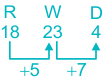
  • potent(adjective): very powerful, forceful, or effective. (बहुत शक्तिशाली, बलशाली, या प्रभावी।)
  • ​Example: This is a very potent drug and can have unpleasant side-effects.
  • weak(adjective): not good enough, especially in ability, skill, or quality. (काफी अच्छा नहीं है, खासकर क्षमता, कौशल या गुणवत्ता में।)
  • Example: Our quiz team is a bit weak on sport.

Hence, the word potent  is the most appropriate antonym for weak.

Additional Information

  • Let's explore the meaning of other options
  • significant(adjective): important, large, or great, esp. in leading to a different result or to an important change. (महत्वपूर्ण, बड़ा, या महान, esp। एक अलग परिणाम या एक महत्वपूर्ण परिवर्तन के लिए अग्रणी।)
  • Example: This election reaffirms a significant shift of the center of power.
  • mighty(adjective): very large, powerful, or important. (बहुत बड़ा, शक्तिशाली या महत्वपूर्ण।)
  • Example: In the next game they will face the mighty Patriots.
  • powerful(adjective): having a lot of strength or force. (बहुत अधिक बल या बल होना।)
  • Example: a powerful drug.
129

Select the option that can be used as a one-word substitute for the given group of words.

Having or showing the ability to speak fluently and coherently

  1. ((a))

    Hesitant

  2. ((b))

    Articulate

  3. ((c))

    Inarticulate

  4. ((d))

    Incoherent

Show Answer
Answer: ((b))

Articulate

The correct answer is 'articulate'.

Key Points

  • Being articulate means being able to express oneself clearly and well. 
  • Example- She gave the police an articulate account of the incident.
  • It is clear that 'articulate' is the most appropriate choice for the one-word substitution of the given set of words.

Additional Information

  • Hesitant means being reluctant to do something.
  • Example- He was hesitant to accept the offer.
  • Being inarticulate means being unable to express one's ideas clearly or easily.
  • Example- He is smart but somewhat inarticulate.
  • Incoherent means expressed in an incomprehensible or confusing way.
  • Example- He screamed some incoherent threat.
130

Identify the segment in the sentence which contains the grammatical error. If there is no error in the sentence then select 'No error'.

I want to do something in the education sector because opportunities in this sector are immense.

  1. ((a))

    I want to do 

  2. ((b))

    something in the education sector

  3. ((c))

    because opportunities in this sector are immense.

  4. ((d))

    No error

Show Answer
Answer: ((c))

because opportunities in this sector are immense.

The correct answer is option 3) i.e. because opportunities in this sector are immense.

  • In the given sentence article 'the' will be used before opportunities. Article 'the' is used in a sentence if a reference is given in the sentence. Here, we are talking about the 'opportunities' in the education sector. Here, 'the education sector' is reference. So, the correct sentence will be: I want to do something in the education sector because the opportunities in this sector are immense.
131

Select the most appropriate meaning of the given idiom.

Kicking his heels

  1. ((a))

    Something unexpected

  2. ((b))

    Complaining about a loss or failure from the past

  3. ((c))

    Wasting time 

  4. ((d))

    Something that is easy to understand or do

Show Answer
Answer: ((c))

Wasting time 

The correct answer is- '​Wasting time' 

Key Points

  • The most appropriate meaning of the given idiom 'Kicking his heels' is 'Wasting time​'.
  • Let’s look at the meaning and example of the given phrasal verb:
  • Kicking his heels- "to be forced to wait for a period of time." (कुछ समय के लिए प्रतीक्षा करने के लिए मजबूर होना पड़ता है।)
  • E.g. The authorities wouldn't grant us permission to fly all the way down to San Francisco, so I had to kick my heels at Tunis Airport.
  • ​​Thus from the explanation given above, we find that the 3rd option is the correct choice.
132

Improve the underlined part of the sentence. If there is no improvement needed. Then choose 'No improvement'.

Either the bears or the lion has escaped from the zoo.

  1. ((a))

    is escaped from the zoo

  2. ((b))

    No improvement

  3. ((c))

    are escaped from the zoo

  4. ((d))

    have escaped from the zoo

Show Answer
Answer: ((b))

No improvement

The correct answer is 'No improvement'.

Key Points

  • The given sentence is grammatically correct.
  • We know that if two subjects are connected with 'neither...nor', 'either...or', 'not only...but also', 'or', etc. then the verb should be used according to the nearest subject of the sentence.
  • Example:
  • Either Rohit or Rakesh have come.

  • Either Rohit or Rakesh has come.

  • In the given sentence the nearest subject is 'the lion' which is singular. Hence, a singular helping verb should be used.
  • Therefore, as per the points mentioned above, we find that the correct answer is Option 2.

Correct Sentence: Either the bears or the lion has escaped from the zoo. 

Hinglish

  • दिया गया वाक्य व्याकरण की दृष्टि से सही है।
  • हम जानते हैं कि यदि दो विषय 'neither...nor', 'either...or', 'not only...but also', 'or' आदि से जुड़े हों तो क्रिया का प्रयोग किसके अनुसार करना चाहिए? वाक्य का निकटतम विषय।
  • Example:
  • Either Rohit or Rakesh have come.

  • Either Rohit or Rakesh has come.

  • दिए गए वाक्य में निकटतम विषय 'the lion' है जो singular है। इसलिए, singular helping verb का उपयोग किया जाना चाहिए।
  • इसलिए, ऊपर वर्णित बिंदुओं के अनुसार, हम पाते हैं कि सही उत्तर विकल्प 2 है।
133

Following sentences have an error in one of its parts. Find the part which has an error and mark it  accordingly.

All those (A) / who feel that (B) / the country has progressed (C) /  contributes to it progress (D)

  1. ((a))

    D

  2. ((b))

    C

  3. ((c))

    A

  4. ((d))

    B

Show Answer
Answer: ((a))

D

The correct answer is Option 1.


Key Points

  • The primary issue in the sentence is the incorrect subject-verb agreement in part D.
  • The subject of this part refers to "all those who feel," which is plural, so the verb should also be plural ("contribute" instead of "contributes").
  • Additionally**, "it"** should be the possessive pronoun "its" to correctly indicate possession.
  • Thus, the error is located in part D of the sentence, which should be corrected to "contribute to its progress."

Therefore, the correct answer is D.


Correct Sentence: "All those who feel that the country has progressed contribute to its progress."


Additional Information

  • A: "All those" – This part of the sentence is grammatically correct and does not require any changes.
  • B: "who feel that" – This part of the sentence is grammatically correct and does not require any changes.
  • C: "the country has progressed" – This part of the sentence is grammatically correct and does not require any changes.
134

Directions: Each item in this section consists of a sentence with an underlined word followed by four words/group of words. Select the option that is nearest in meaning to the underlined word and mark your response on the answer sheet accordingly.

The diligent efforts of the team paid off when they achieved their ambitious goals

  1. ((a))

    Indolent

  2. ((b))

    Persistent

  3. ((c))

    Careless

  4. ((d))

    Lackadaisical

Show Answer
Answer: ((b))

Persistent

The correct answer is "Persistent".

 Key Points

  • Diligent: Hardworking and persistent in effort. (मेहनती और प्रयास में दृढ़)
  • Example sentence: The diligent student studied for hours to prepare for the exam.
  • The given sentence mentions the team's diligent efforts, which implies their hard work and perseverance in achieving their ambitious goals.

Therefore, the correct answer is 'Option 2'.

 Additional Information

  • Indolent: Lazy or idle. (आलसी या निष्क्रिय)
  • Careless: Not taking enough care. (पर्याप्त सावधानी न बरतना)
  • Lackadaisical: Lacking energy or enthusiasm. (ऊर्जा या उत्साह की कमी होना)
135

Direction: Select the most appropriate meaning of the given idiom.

Cut to the chase

  1. ((a))

    To take a shortcut

  2. ((b))

    To interrupt someone

  3. ((c))

    To get to the point

  4. ((d))

    To change the subject

Show Answer
Answer: ((c))

To get to the point

The correct answer is "To get to the point."

<br>

 Key Points

  • "Cut to the chase" is an idiom that means to get to the point without wasting time. (बिना समय बर्बाद किये मुद्दे पर आना)
  • ExampleI didn't have long to talk, so I cut to the chase and asked whether he was still married.
  • This phrase is often used in situations where someone is giving a long explanation or story, and the listener wants them to skip to the important part.
  • The origin of this phrase is uncertain, but it may come from early Hollywood films where chase scenes were a common feature.
  • The correct answer is Option 3.
136

Direction: Select the most appropriate synonym of the underlined word in the given sentence.

His conceit prevented him from accepting any criticism, even if it was meant to be constructive.

  1. ((a))

    prejudice

  2. ((b))

    modesty

  3. ((c))

    cowardice

  4. ((d))

    egotism

Show Answer
Answer: ((d))

egotism

The correct answer is "egotism."

<br>

 Key Points

  • "Conceit" means too much pride in yourself and your abilities and importance. (अहंकार, घमंड)
  • ExampleThe conceit of that man is incredible!
  • "Egotism" is a synonym of "conceit."
  • "Egotism" means excessive self-importance or self-centeredness. (अत्यधिक आत्म-महत्व या आत्म-केंद्रितता)
  • ExampleFinding herself world-famous by the time she was 18 only encouraged the actress's egotism.
  • The sentence suggests that the person's conceit made it difficult for them to accept criticism.
  • The correct answer is Option 4.
<br>

 Additional Information

  • Prejudice means preconceived opinion that is not based on reason or actual experience. (किस व्‍यक्ति या वस्‍तु के प्रति प्रबल नापसंदगी या अविश्‍वास, विशेषतः उसकी जाति, धर्म या लिंग के कारण; पूर्वाग्रह)
  • Modesty means the quality of being unassuming or moderate in the estimation of one's abilities. (शालीनता, विनम्रता)
  • Cowardice means lack of bravery or courage in the face of danger or difficulty. (साहस का कमी; भीरुता, कायरता)
137

Direction: Select the option that is similar in meaning to the given word and mark your response accordingly.

Hobble

  1. ((a))

    Obstruct

  2. ((b))

    Release

  3. ((c))

    Free

  4. ((d))

    Liberate

Show Answer
Answer: ((a))

Obstruct

The correct answer is- 'Obstruct'

Key Points 

  • let's look at the meaning of the given word and the correct answer.
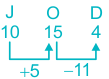
  • Hobble(verb): to limit something or control the freedom of someone. (किसी चीज को सीमित करना या किसी की स्वतंत्रता को नियंत्रित करना।)
  • ​Example: A long list of amendments has hobbled the new legislation.
  • Obstruct(verb): to try to stop something from happening or developing. (कुछ होने या विकसित होने से रोकने की कोशिश करना।)
  • Example: He got five years in prison for withholding evidence and obstructing the course of justice.

Hence, the word Obstruct is the most appropriate synonym for Hobble.

Additional Information 

  • Let's explore the meaning of other options:
  • Release(verb):  to give freedom or free movement to someone or something. (किसी को या किसी चीज़ को आज़ादी या आज़ादी देना।)
  • Example: He was released from prison after serving two years of a five-year sentence.
  • Free(adjective): not limited or controlled. (सीमित या नियंत्रित नहीं।)
  • Example: Please feel free to interrupt me if you don't understand anything.
  • Liberate(verb): to help someone or something to be free. (किसी को या किसी चीज को मुक्त होने में मदद करना।)
  • Example: They said they sent troops in to liberate the people/the country from a dictator.
138

Select the most appropriate option to fill in the blank.

By next month, the valley ________ with snow.

  1. ((a))

    has been covered 

  2. ((b))

    will be covered 

  3. ((c))

    is covered  

  4. ((d))

    is covering  

Show Answer
Answer: ((b))

will be covered 

The correct answer is 'will be covered'.

<br>

Key Points

  • Given the phrase starts with 'By next month', it indicates a future event or condition, making use of the future tense necessary.
  • The term 'will be covered' is in the future passive voice, correctly projecting that the action of being covered with snow will occur to the valley in the future.
  • Therefore, the sentence should read "By next month, the valley will be covered with snow."

Therefore, the correct answer is 'Option 2'.

 Additional Information

  • 'Option 1' (has been covered) uses the present perfect tense, which is used to talk about actions that happened at an unspecified time before now. This does not align with the context here.
  • 'Option 3' (is covered) uses the present tense and implies that the valley is covered with snow currently, not in the future.
  • 'Option 4' (is covering) is incorrect as it uses the present continuous tense, which is used for actions happening at the time of speaking or for a scheduled future event. The valley cannot 'cover' itself, so this option doesn't make sense.
139

Select the option that can be used as a one-word substitute for the given group of words.

Working or operating quickly and effectively in an organised way

  1. ((a))

    Efficient 

  2. ((b))

    Extensive 

  3. ((c))

    Excellent 

  4. ((d))

    Effusive

Show Answer
Answer: ((a))

Efficient 

The correct answer is 'Efficient'.

Key Points

  • The correct answer is: Efficient.
  • Meaning of the words:
  • Efficient (प्रभावी) - achieving maximum productivity with minimum wasted effort or expense.
  • Extensive (व्यापक) - covering or affecting a large area; wide-ranging.
  • Excellent (उत्कृष्ट) - extremely good; outstanding.
  • Effusive (अधिक प्रवाही) - expressing feelings of gratitude, pleasure, or approval in an unrestrained or heartfelt manner.
  • Example sentence: "The new manager implemented efficient processes that streamlined workflow and increased productivity."
140

Direction: Select the option that is opposite in meaning to the given bold word and mark your response accordingly.

She took a vicarious pleasure in her friend's achievements.

  1. ((a))

    Indirect

  2. ((b))

    Secondary

  3. ((c))

    Substitute

  4. ((d))

    Self

Show Answer
Answer: ((d))

Self

The correct answer is- 'Self' 

Key Points 

  • let's look at the meaning of the given word and the correct answer.
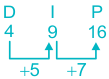
  • Vicarious: experienced as a result of watching, listening to, or reading about the activities of other people, rather than by doing the activities yourself (स्वयं गतिविधियों को करने के बजाय अन्य लोगों की गतिविधियों को देखने, सुनने या पढ़ने के परिणामस्वरूप अनुभव किया जाता है) 
  • Example: This disaster movie will provide you with plenty of vicarious thrills.
  • Self: the set of someone's characteristics, such as personality and ability, that are not physical and make that person different from other people (किसी की विशेषताओं का समूह, जैसे व्यक्तित्व और क्षमता, जो शारीरिक नहीं हैं और उस व्यक्ति को अन्य लोगों से अलग बनाती हैं)
  • Example: a sense of self

Hence, the word Self is the most appropriate antonym for Vicarious.

Additional Information   

  • Let's explore the meaning of other options
  • Indirect: happening in addition to an intended result, often in a way that is complicated or not obvious (एक इच्छित परिणाम के अतिरिक्त हो रहा है, अक्सर इस तरह से जो जटिल है या स्पष्ट नहीं है) 
  • Example: The benefits from pure research are often indirect.
  • Secondary: less important than related things (संबंधित चीजों से कम महत्वपूर्ण)
  • Example: The need for secrecy is secondary to the need to take immediate action.
  • Substitute: to use something or someone instead of another thing or person (किसी अन्य वस्तु या व्यक्ति के स्थान पर किसी वस्तु या व्यक्ति का उपयोग करना) 
  • Example: You can substitute oil for butter in this recipe.

Test of English Language and Comprehension 2 (20 questions)

141

Direction: Select the correct passive form of the given sentence.

We shall replace the computer equipment in the near future.

  1. ((a))

    The computer equipment would be replaced in the near future.

  2. ((b))

    In the near future the computer equipment is going to be replaced.

  3. ((c))

    The computer equipment will be replaced by us in the near future.

  4. ((d))

    The computer equipment shall replace in the near future.

Show Answer
Answer: ((c))

The computer equipment will be replaced by us in the near future.

The correct answer is 'The computer equipment will be replaced by us in the near future.'.

Key Points

  • We need to follow these instructions while changing the voice of an assertive sentence.
  • Find the subject and object of the sentence and exchange their places; make changes in their cases as well if subject and object are pronouns.
  • Use preposition by before agent. (us)
  • Use helping verb in passive form according to the tense of active form. (future indefinite - will/ shall + be)
  • Always use the third form of the main verb in passive form.
  • At last line up the remaining part.


Following these steps, we finally get- The computer equipment will be replaced by us in the near future.


  • Assertive sentence की voice बदलते समय हमें इन निर्देशों का पालन करना चाहिए-
  • वाक्य के subject और object का पता लगाएं और उनके स्थानों को exchange करें; यदि उनके subject और object pronoun हैं, तो उनके cases में भी बदलाव करें।
  • एजेंट (us) से पहले preposition by का उपयोग करें।
  • Active voice के tense के अनुसार passive voice में helping verb का उपयोग करें। (future indefinite- will/ shall + be)
  • Passive voice में हमेशा main verb की third form का प्रयोग करें।
  • अंत में remining part add करें।
142

Given below are six sentences, out of which sentences A and F are in the correct position. Sentences B, C, D and E are in a jumbled order. Select the option that gives the correct order.

A. The Indian National Army (INA), also known as Azad Hid Fauj.

B. This army comprised the captured Indian soldiers of the British-Indian Army by Japan.

C. In December 1942, the army was disbanded over differences between members of the Japanese military and the INA leadership.

D. Its aim was to help Japan in its campaign in the 'Southeast Asian theatre of WWII.' 

E. It was formed by Indian nationalists during 'World War II' in 1942 under the leadership of Mohan Singh.

F. The Indian National Army was, however, revived in 1943 by Subhas Chandra Bose to fight for the freedom of India.

  1. ((a))

    ACEDBF

  2. ((b))

    AEDCBF

  3. ((c))

    AEBDCF

  4. ((d))

    ACEBDF

Show Answer
Answer: ((c))

AEBDCF

The correct answer is option 3) i.e. "AEBDCF."


Key Points 

  • In the abovementioned paragraph, there is a chronological sequence of the sentences.
  • Sentence A is the first sentence as per the given instructions. It begins with the noun 'The Indian National Army' and mentions the army is known as Azad Hid Fauj.
  • Sentence E is the second sentence & it begins with the pronoun 'It' and further explains the origin of the INA. The InA was formed during WWII under the leadership of Captain Mohan Singh.
  • Sentence B is the third sentence. It begins with the pronoun 'This' and further talks about the soldiers of this army i.e. they were the captured Indian soldiers of the British-Indian Army by Japan.
  • The only option that shows such an arrangement is Option 3.
  • Sentence D is the fourth sentence as it begins with the pronoun 'Its' and mentions the purpose of creating such an army. From the previous sentence, we can connect that the army was created to help Japan in WWII.
  • Sentence C is the fifth sentence as it begins with the preposition 'In' and mentions in December 1942 the army was disbanded due to political reasons.
  • Sentence F is the last sentence as per the given instructions. It begins with the noun 'The Indian National Army ' and mentions the army was again revived by Subhas Chandra Bose in 1943 to fight against British rule in India.
  • The correct arrangement is AEBDCF.


The correct order is: 

  • A. The Indian National Army (INA), also known as Azad Hid Fauj.
  • E. It was formed by Indian nationalists during 'World War II' in 1942 under the leadership of Mohan Singh.
  • B. This army comprised the captured Indian soldiers of the British-Indian Army by Japan.
  • D. Its aim was to help Japan in its campaign in the 'Southeast Asian theatre of WWII.'
  • C. In December 1942, the army was disbanded over differences between members of the Japanese military and the INA leadership.
  • F. The Indian National Army was, however, revived in 1943 by Subhas Chandra Bose to fight for the freedom of India.
143

Direction: Find out which part has an error and mark it as your answer. If there is no error, mark 'No error' as your answer.

He was (A) / worn out if (B) / he got home. (C) / No error (D)

  1. ((a))

    (A)

  2. ((b))

    (B)

  3. ((c))

    (C)

  4. ((d))

    (D)

Show Answer
Answer: ((b))

(B)

The correct answer is '(B)​.'

Key Points

  • The error lies in part (B) of the sentence.
  • We use if to introduce a possible or unreal situation or condition.
  • Example: You can only go in if you’ve got your ticket.
  • We use when to refer to the time of a future situation or condition that we are certain of.
  • Example: When I’m older, I’d love to be a dancer.
  • Therefore, the use of 'if' in part '(B)​​' part of the sentence should be replaced by 'when' to make it grammatically correct.
  • Hence, the correct answer is '(B)​.'
  • Correct sentence: He was worn out when he got home.

Additional Information  

  • The present tense is the base form of the verb.
  • We use do and does to make questions with the present simple.
  • We use does for the third person singular (she/he/it) and do for the others.
  • We use do and does with question words like where, what and when.
  • Example: Where do Angela and Rita live?

Hinglish

  • त्रुटि भाग part (B) में निहित है।​
  • हम किसी संभावित या अवास्तविक स्थिति या स्थिति का परिचय देने के लिए if का उपयोग करते हैं।
  • Example: You can only go in if you’ve got your ticket.
  • हम भविष्य की स्थिति या स्थिति के समय का उल्लेख करने के लिए when उपयोग करते हैं, जिसके बारे में हम निश्चित हैं।​
  • Example: When I’m older, I’d love to be a dancer.
144

Improve the underlined part of the sentence. Choose 'No improvement' as an answer if the sentence is grammatically correct.

He enlisting in the army  and went to war when he was only eighteen.

  1. ((a))

    enlist in army 

  2. ((b))

    enlisted in the army 

  3. ((c))

    No improvement 

  4. ((d))

    enlisted at the army 

Show Answer
Answer: ((b))

enlisted in the army 

The correct answer is "enlisted in the army".

Key Points

  • The original sentence, "He enlisting in the army and went to war when he was only eighteen," is grammatically incorrect.
  • The verb tense in the underlined part "enlisting" is not appropriate. To be consistent with the past tense verb "went", the correct verb form should be the past tense, "enlisted".

Therefore, the correct answer is "Option 2".

Additional Information

  • Enlist in army: Although "enlist" is an appropriate verb, it's in the present tense here which doesn't coincide with the past tense context established in the phrase "went to war." Additionally, "army" lacks a definite article, typically we say "the army".
  • Enlisted in the army: This is the correct form for improvement. The verb form "enlisted" correctly uses past tense, matching with "went", and precedes "in the army," in a grammatically conventional and widely used phrase for joining the military.
  • Enlisted at the army: The preposition "at" is usually used to refer to specific addresses, locations or events but is not conventionally used with institutions like the army. We typically say "enlisted in the army."
145

Parts of a sentence are given below in jumbled order. Arrange the parts in the correct order to form a meaningful sentence.

(A) the concert was too expensive

(B) to watch his favourite

(C) hard-earned money

(D) to waste his parents'

(E) artist's live performance

(F) so he sacrificed the chance

  1. ((a))

    FADECB

  2. ((b))

    BADECF

  3. ((c))

    FACEDB

  4. ((d))

    ADCFBE

Show Answer
Answer: ((d))

ADCFBE

The correct answer is: ADCFBE.

Key Points

  • The correct sequence of the sentence is: 
  • A - "The concert was too expensive"
  • D - "to waste his parents'"
  • C - "hard-earned money"
  • F - "so he sacrificed the chance"
  • B - "to watch his favourite"
  • E - "artist's live performance"
  • When sequenced correctly, the sentence reads:
  • "The concert was too expensive to waste his parents' hard-earned money on, so he sacrificed the chance to watch his favourite artist's live performance."
  • This order logically and grammatically connects each part, providing a clear cause-and-effect relationship, and describing a situation where the cost of the concert influenced the person's decision to forgo attending the performance.
146

Directions: Select the most appropriate option to improve the underlined segment in the given sentence. If there is no need to improve it, select 'No improvement'.

Very often reporters have incurred the wrath of powerful people and has had to pay for it with their lives.

  1. ((a))

    had had to pay for it

  2. ((b))

    have had to pay for it

  3. ((c))

    have has to pay for it

  4. ((d))

    No improvement

Show Answer
Answer: ((b))

have had to pay for it

The correct answer is option 2.

Key Points

  • The correct phrase is 'have had to pay for it'.
  • The given sentence is in Present Perfect Tense where we want to connect the present with the (recent) past in some way.
  • We use 'has had' in a sentence where the subject is in Singular form, whereas in the given sentence the subject (reporters) is in the plural, hence the usage of 'has had' is incorrect.
  • The use of the present tense of the verb 'have' and the past participle of the verb 'incur' (incurred) shows that the sentence is in Present Perfect Tense, whereas 'had had to pay for it' is in Past Perfect, thus, option 1 is incorrect.
  • Therefore, the phrase 'has had to pay for it' must be replaced with 'have had to pay for it' to make the sentence grammatically correct.

The correct sentence will be: Very often reporters have incurred the wrath of powerful people and have had to pay for it with their lives.

147

Select the option that expresses the given sentence in active voice.

The businessman was taken to the nearest hospital by the villagers.

  1. ((a))

    The villagers took the businessman to the nearest hospital.

  2. ((b))

    The villagers took the businessman to hospital.

  3. ((c))

    To the nearest hospital, the villagers took the businessman.

  4. ((d))

    The villagers take the businessman to the nearest hospital.

Show Answer
Answer: ((a))

The villagers took the businessman to the nearest hospital.

The correct answer is 'The villager took the businessman to the nearest hospital'.

Key Points

  • The given sentence is in  Passive Voice. As per the given question, we must change it to Active Voice.
  • The structure of the given sentence is as follows:
  • Subject + V2 + Object. (Active Voice)
  • Subject (objective case) + was/were + V3 + Object (subjective case). (Passive Voice)
  • Example:
  • Their cousin showed them some rare photographs. (Active Voice)
  • They were shown some rare photographs by their cousin. (Passive Voice)
  • The subject of the given sentence is 'The businessman'.​​
  • The object of the given sentence is 'The villagers'.
  • The subject will be put in place of the object and the object will be put in place of the subject.
  • And 'was taken' will be changed into 'took'.
  • Lastly, the preposition 'by' will be removed.

Correct Sentence: The villagers took the business to the nearest hospital*.*

148

Select the most appropriate indirect form of the given sentence.

Jayesh said to Diwakar, "You can top the class if you want to."

  1. ((a))

    Jayesh told Diwakar that he would top the class if he wants to.

  2. ((b))

    Jayesh told Diwakar that he could top the class if he wanted to.

  3. ((c))

    Jayesh told Diwakar that you could top the class if you wanted to.

  4. ((d))

    Jayesh told Diwakar that you can top the class if you want to.

Show Answer
Answer: ((b))

Jayesh told Diwakar that he could top the class if he wanted to.

The correct answer is Jayesh told Diwakar that he could top the class if he wanted to.

Key Points

  • As the reporting verb is in the past tense**, '**can' will be changed to **'**could', and **'**want' will be changed to **'**wanted'.
  • 'Said to' changes to **'**told' in indirect speech.
  • While converting a direct speech into indirect speech, the second person pronoun 'you' changes according to the object of Reporting Verb.
  • Here, the object of reporting verb is Diwakar, hence, 'you' has been replaced by 'he' in reported speech.
  • Thus, the most appropriate indirect form of the given sentence is expressed in option 2.
  • The correct indirect form of the given sentence is Jayesh told Diwakar that he could top the class if he wanted to.
149

Select the segment of the sentence that contains a grammatical error.

Mr. Bose said that he will try to solve the problem of transaction failure to the best of his ability.

  1. ((a))

    of transaction failure

  2. ((b))

    ​Mr. Bose said that

  3. ((c))

    to the best of his ability

  4. ((d))

    he will try to solve the problem

Show Answer
Answer: ((d))

he will try to solve the problem

The erroneous part is option 4) i.e. 'he will try to solve the problem.'


Key Points 

  • The error lies in the part 'he will try to solve the problem.'
  • According to the rules of Indirect speech, the Reported Speech should also be according to the tense of reporting verb.
  • The use of 'said that' in the sentence hints at the fact that the sentence is in the Indirect speech.
  • In the given sentence the reporting verb is in Past Tense, the Reported Speech should also be in Past Tense.
  • Therefore we need to use 'would' in place of 'will' to make the sentence grammatically correct.
  • Hence, the correct answer is option 4.


Correct sentence: Mr Bose said that he would try to solve the problem of transaction failure to the best of his ability.

150

Select the option that expresses the given sentence in direct speech.

Piyush said that when Raj was reading, Joy was writing.

  1. ((a))

    Piyush said, "When Raj was being read, Joy was being write".

  2. ((b))

    Piyush said, "When Raj would reading, Joy would writing".

  3. ((c))

    Piyush says, "When Raj is reading, Joy is writing".

  4. ((d))

    Piyush said, "When Raj was reading, Joy was writing".

Show Answer
Answer: ((d))

Piyush said, "When Raj was reading, Joy was writing".

The correct answer is Piyush said, "When Raj was reading, Joy was writing".

Key Points

  • The given sentence is in indirect speech and we need to convert it to direct speech.
  • When we change an indirect speech to direct speech, we must follow these rules:
  • The reporting verb 'said' remains unchanged.
  • The conjunction 'that' is replaced with inverted commas ("...") to show the direct speech.
  • A comma (,) is added after the direct speech part.
  • The first word of the direct speech is in capital letters.
  • The Past indefinite tense or the Past continuous tense is not changed if the reported speech states two actions that took place at the same time.
  • Thus, option 4 is the correct answer.
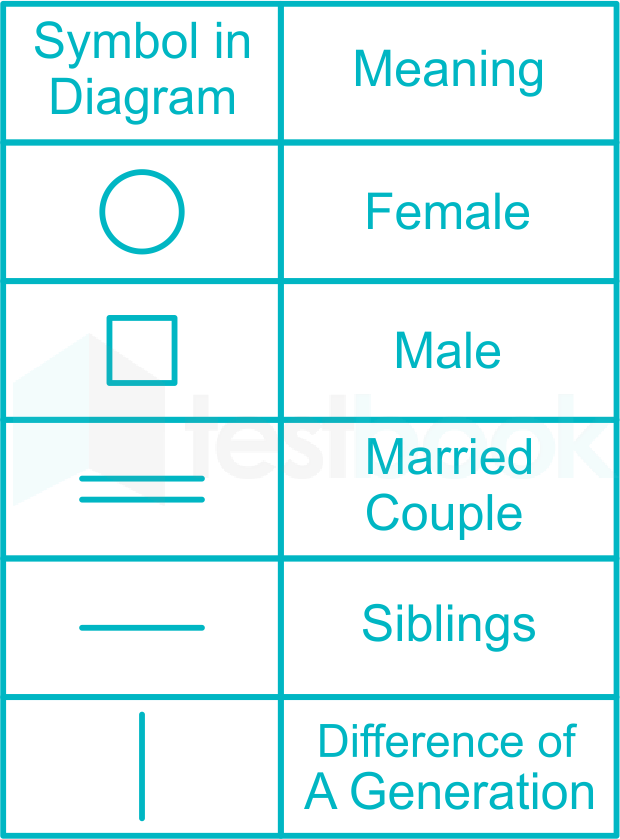
Hence, direct speech is- Piyush said, "When Raj was reading, Joy was writing".

In the following passage, some of the words have been left out. Read the passage carefully and select the correct answer for the given blank out of the four alternatives.

Delhi’s air quality deteriorates with unfailing ________ at this time of the year, with large swathes of north India in the grip of a suffocating smog, but the State governments that can make it easier for millions to breathe do not act with any sense of ________. That it has turned into a public health emergency ________ the capital, with the air quality index touching extremely hazardous levels in some parts, necessitating the closure of primary schools, has further lowered its standing. It is unconscionable for governments, through ________ and inaction, to subject citizens to such toxic air, and cause extreme suffering especially _________ people with respiratory ailments and impaired lung function.

151

Delhi’s air quality deteriorates with unfailing ________ at this time of the year

  1. ((a))

    regular

  2. ((b))

    regularity

  3. ((c))

    always

  4. ((d))

    sometimes

Show Answer
Answer: ((b))

regularity

The correct answer is 'regularity'.

Key Points

  • In the first blank of the passage, 'regularity' will be used.
  • The marked word 'regularity' means, the state or quality of being regular (नियमित होने की अवस्था या गुणवत्ता)
  • Example - She came to see her with increasing regularity.
  • This line of the passage wishes to convey that the air quality of Delhi worsens every year at this time. 'Sometimes' conveys the opposite of this while 'always' and 'regular' do not fit in grammatically with the rest of the sentence.
  • As per the context of the sentence, the most appropriate filler to be used is 'regularity'.
<br>

Hence, the correct answer is option (2).

152

but the State governments that can make it easier for millions to breathe do not act with any sense of ________. 

  1. ((a))

    laid back

  2. ((b))

    accomplishment

  3. ((c))

    urgency

  4. ((d))

    panic

Show Answer
Answer: ((c))

urgency

The correct answer is 'urgency'.

Key Points

  • In the second blank of the passage, 'urgency' will be used.
  • The marked word 'urgency' means, importance requiring swift action (त्वरित कार्रवाई की आवश्यकता का महत्व)
  • Example - The discovery of the ozone hole gave urgency to the issue of CFCs.
  • This line of the passage shows that the state government has not been proactive and in fact has shown no importance to the matter.
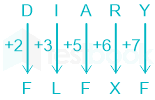
  • As per the context of the sentence, the most appropriate filler to be used is 'urgency'.
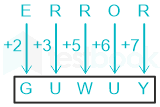
<br>

Hence, the correct answer is option (3).
Additional Information

  • Let's look at the meaning of the other words:
  • accomplishment: something that has been achieved successfully (कुछ ऐसा जो सफलतापूर्वक हासिल किया गया है)
  • Example - The reduction of inflation was a remarkable accomplishment.
153

That it has turned into a public health emergency ________ the capital

  1. ((a))

    on

  2. ((b))

    in

  3. ((c))

    onto

  4. ((d))

    under

Show Answer
Answer: ((b))

in

The correct answer is 'in'.

Key Points

  • In the third blank of the passage, 'in' will be used.
  • 'In' is used to denote a location of something inside a space while on generally, denotes something above a surface or within proximity.
  • Example - Kolkata is in West Bengal.
  • This line of the passage tells us that the drop in air quality has turned into a public health emergency, and this has happened in Delhi.
  • As per the context of the sentence, the most appropriate filler to be used is 'in'.


Hence, the correct answer is option (2).

Additional Information

  • Let's look at the meaning of the other words:
  • 'On' is used as a preposition in time expressions with specific days of the week and is used to show the position of the object with respect to flat surfaces both big and small.
  • Example - The book is on the table over there.
  • 'Onto' indicates a movement from one place onto to surface of some type.
  • Example - Could you move those clothes onto the sofa?
  • The preposition ‘under’ is mainly used to show that something is situated below something or someone is going through some physical or emotional situation.
  • Example - It was raining, and we took shelter under a broken shed.
154

It is unconscionable for governments, through ________ and inaction,

  1. ((a))

    unconcerned

  2. ((b))

    indifference

  3. ((c))

    steps

  4. ((d))

    measures

Show Answer
Answer: ((b))

indifference

The correct answer is 'indifference'.

Key Points

  • In the fourth blank of the passage, 'indifference' will be used.
  • The marked word 'indifference' means, lack of interest, concern, or sympathy (रुचि, चिंता या सहानुभूति की कमी)
  • Example - It cannot be regarded as a matter of indifference.
  • This line of the passage tries to convey that it is unpardonable for the government to be so unconcerned.
  • The words 'Steps' and 'measures' convey the opposite meaning and thus, can be eliminated.
  • 'Unconcerned' is contextually correct but incorrect grammatically.
  • As per the context of the sentence, the most appropriate filler to be used is 'indifference'.
<br>

Hence, the correct answer is option (2).

155

and cause extreme suffering especially _________ people with respiratory ailments and impaired lung function.

  1. ((a))

    in

  2. ((b))

    thereon

  3. ((c))

    since

  4. ((d))

    among

Show Answer
Answer: ((d))

among

The correct answer is 'among'.

Key Points

  • In the fifth blank of the passage, 'among' will be used.
  • 'Among' is a preposition, which is used to indicate a division, choice, or differentiation involving three or more participants.
  • Example - The old king called the three princesses to divide his kingdom among them.
  • The sentence states that toxic air is especially causing suffering among a specific set of people – the ones with respiratory issues.
  • Since the sentence points out an issue within a specific group, the correct word is 'among' which means in the middle of.
<br>

Hence, the correct answer is option (4).

Additional Information

  • Let's look at the meaning of the other words:
  • We use 'since' as a preposition with a date, a time or a noun phrase.
  • Example - I have been happily married since the age of 21.
  • 'Thereon' means on the thing that has been mentioned.
  • Example - The highway and structures thereon are being repaired.
  • 'In' is used when you want to indicate a position within a general space. In is defined as being inside an area or residing somewhere. This applies to a town, city, state, country, or residence.
  • Example - She moved in with her boyfriend this weekend.

Read the given passage and answer the questions that follow:

A report suggested that, on average, Indian viewers spend approximately 8 hours 29 minutes watching online video content, which is far more than the global trend of six hours and 45 minutes. This clearly shows how much the popularity of online streaming content in India. A web series, in simpler words, is a series of short video episodes, which are released over a certain period to tell a story to the viewers. It is designed like a television daily soap or series, except that it's watched on web platforms.

Earlier, it was much popular in western countries, but with globalization, the trend of online content streaming became popular in India. The introduction of Netflix, Amazon Prime, ALT Balaji, MX Player, TVF, and some other websites and App-based online video streaming platforms and faster internet services have become very popular in the Indian entertainment industry. Even a large number of viewership comes from YouTube – the famous video streaming platform owned by the search engine giant Google. With growing popularity, online content streaming has become a lucrative opportunity for content producers, and it further has resulted in more and more content being uploaded on the Internet.

The main target audience of the web series and other online streaming content is the younger generation, mainly comprised of teenagers and youth between 18 to 30 years of age. However, the audience includes people of 30 to 50+ years of age as well. These online video streaming platforms focus on the 'binge-watch' model. To understand this better, suppose you have decided to sit and watch just one of the web series episodes for a day, which hardly takes 30 minutes. You find yourself tempted to watch more and more episodes, even though you know you'll be killing several hours of the day on the same.

156

According to the passage, on average global viewers spends watching online video content for:

  1. ((a))

    8 hours and 29 minutes

  2. ((b))

    6 hours and 45 minutes

  3. ((c))

    6 hours and 30 minutes

  4. ((d))

    8 hours and 30 minutes

Show Answer
Answer: ((b))

6 hours and 45 minutes

The correct answer is option 2) i.e. '6 hours and 45 minutes.'

Key Points 

  • The first sentence of the first paragraph says that " A report suggested that, on average ... which is far more than the global trend of 6 hours and 45 minutes."
  • From the above sentence, we can conclude that global viewers spend 6 hours and 45 minutes on average time in watching online video content.
  • Hence, the only possible answer is option 2.
157

According to the passage, a web series is:

  1. ((a))

    a series of long stories.

  2. ((b))

    a series of short stories that ends within a week.

  3. ((c))

    a long series made short for the convenience of the audience.

  4. ((d))

    a series of short video episodes.

Show Answer
Answer: ((d))

a series of short video episodes.

The correct answer is option 4) i.e. 'a series of short video episodes.'

Key Points 

  • The third sentence of the first paragraph says that "a web series, in simpler words, is a series of short video episodes, which are released over a certain period to tell a story to the viewers."
  • Therefore from the above sentence, we can certainly say that a web series is a series of short video episodes released on web video platforms over a certain time period to tell a story in video format to the audience.
  • Hence, the only possible answer is option 4.
158

According to the passage, the binge-watch model is:

  1. ((a))

    to make the series addictive for the audience to finish in one go.

  2. ((b))

    to sit and watch just one of the web series episodes for a day.

  3. ((c))

    watching multiple TV series of different genres at the same time.

  4. ((d))

    the process of making the web series less addictive.

Show Answer
Answer: ((a))

to make the series addictive for the audience to finish in one go.

The correct answer is option 1) i.e. 'to make the series addictive for the audience to finish in one go.'

Key Points 

  • The third, fourth and fifth sentence of the last paragraph says that "These online video streaming platforms focus on the 'binge-watch' model… tempted to watch more and more episodes, even though you know you'll be killing several hours of the day on the same."
  • From the above sentence, we can conclude that the binge-watch model is developed to lure the audience into consuming addictive video series content and finish them in one go.
  • Hence, the only possible answer is option 1.
159

'Killing hours' suggests:

  1. ((a))

    to destroy clocks

  2. ((b))

    to work till late nights

  3. ((c))

    to spend time doing something which is not important

  4. ((d))

    to spend time efficiently

Show Answer
Answer: ((c))

to spend time doing something which is not important

The correct answer is option 3) i.e. “to spend time doing something which is not important.”

Key Points 

  • Let’s look at the meaning of the given idiom/ phrase:
  • The phrase ‘Killing hours’ means to engage in an activity, usually a rather aimless or idle one.
  • Example:
  • The kids nowadays are killing hours watching stupid cartoons.
  • Hence, the only possible answer is option 3 ‘to spend time doing something which is not important', which exactly resembles the meaning of the given idiom/ phrase.


Correct meaning: to spend time doing something which is not important.

160

The word ‘lucrative' (in paragraph 2) means:

  1. ((a))

    loss making

  2. ((b))

    profitable

  3. ((c))

    entertaining

  4. ((d))

    majestic

Show Answer
Answer: ((b))

profitable

The correct answer is  option 2) i.e. 'profitable.'

Key Points 

  • Let's look at the meaning of the given word:
  • Lucrative- producing much money or making a large profit.
  • Example: 
  • Samuel advised his friend to find jobs in the USA for lucrative income.
  • Clearly, 'profitable' is closest in meaning to the given word.
  • Therefore the correct answer is option 2.

Test of Hindi Language and Comprehension 1 (20 questions)

161

'कर्म' का विलोम शब्द है -

  1. ((a))

    आलसी

  2. ((b))

    निष्कर्म

  3. ((c))

    कामचोर

  4. ((d))

    कर्महीन

Show Answer
Answer: ((b))

निष्कर्म

'कर्म' का विलोम शब्द है - निष्कर्म अन्य सभी विकल्प असंगत है। 

Key Points 

  • 'कर्म' का विलोम शब्द 'निष्कर्म' होगा।
  • 'कर्म' का अर्थ- काम, क्रिया, आचरण।
  • 'निष्कर्म' का अर्थ- जो कोई कर्म न करता हो।

​​अन्य विकल्प:-

शब्दविलोम
आलसी, कामचोरकर्मठ, मेहनती
कर्महीनकर्मशील

Additional Information कुछ अन्य महत्वपूर्ण विलोम शब्द:-

शब्दविलोम
नूतनपुरातन
सगुणनिर्गुण
आसक्तअनाशक्त
शाश्वतक्षणिक
उपकारअपकार
मूकवाचाल
सक्रियनिष्क्रय
अकालसुकाल
विधिनिषेध
जागरणशयन
162

बुढ़ापे ने उनका शरीर .......... बना दिया है।' रिक्त स्थान के लिए कौन-सा विशेषण सर्वाधिक उपयुक्त है?

  1. ((a))

    अविचल

  2. ((b))

    निर्भर

  3. ((c))

    जर्जर

  4. ((d))

    शांत

Show Answer
Answer: ((c))

जर्जर

बुढ़ापे ने उनका शरीर .......... बना दिया है।' रिक्त स्थान के लिए विशेषण सर्वाधिक उपयुक्त है- जर्जर

Key Points

  • रिक्त स्थान के लिए विशेषण 'जर्जर' सर्वाधिक उपयुक्त है।
  • 'जर्जर' का अर्थ होता है- बहुत अधिक टूटा-फूटा, जीर्ण-शीर्ण या बिलकुल कमजोर।
  • सही वाक्य - बुढ़ापे ने उनका शरीर जर्जर बना दिया है।

अन्य विकल्प -

शब्दअर्थउदाहरण
अविचल​अचल, स्थिर।वे अविचल और परम धर्म के समतुल्य हैं।
निर्भरठहरा हुआ, अवलंबित।​मैं किसी पर निर्भर नहीं हूँ।
शांतमौन, चुप।अरुण बहुत शांत स्वभाव का है।

Important Pointsविशेषण-

  • संज्ञा अथवा सर्वनाम शब्दों की विशेषता (गुण, दोष, संख्या, परिमाण आदि) बताने वाले शब्द 'विशेषण' कहलाते हैं।
  • जैसे- बड़ा, काला, लम्बा, दयालु, भारी, सुंदर, कायर, एक, दो, वीर पुरुष, गोरा, अच्छा, बुरा, मीठा, खट्टा, आदि।
  • यह मीठा फल है।

विशेषण के भेद -

  1. गुणवाचक विशेषण
  2. परिणामवाचक विशेषण
  3. संख्यावाचक विशेषण
  4. सार्वनामिक विशेषण
163

निम्नलिखित में से किस विकल्प में विलोम-युग्म सही नहीं है ?

  1. ((a))

    औचक - अकसर

  2. ((b))

    डाँवाँडोल - अस्थिर

  3. ((c))

    झिड़कना - पुचकारना

  4. ((d))

    ग़ाफिल - ख़बरदार

Show Answer
Answer: ((b))

डाँवाँडोल - अस्थिर

डाँवाँडोल - अस्थिर सही व‍िलोम-युग्‍म नहीं है। अन्‍य व‍िकल्‍प असंगत हैं। 

Key Points

  • अशुद्ध व‍िलोम-युग्‍म- डाँवाँडोल - अस्थिर
  • डाँवाँडोल का अर्थ- चंचल
  • अस्थिर का अर्थ- जो स्थिर न हो
  • अस्थिर का व‍िलोम शब्‍द- स्थिर
  • अन्‍य व‍िकल्‍पों में द‍िए गए व‍िलोम-युग्‍म सही हैं।

Important Pointsकुछ अन्‍य व‍िलोम शब्‍द- 

शब्‍दविलोम
जड़चेतन
वक्‍ताश्रोता
उन्‍मूलनरोपण
आघातप्रतिघात
अनिवार्यऐच्छिक
आवृत्तअनावृत्त
विज्ञअज्ञ
आलोकतिमिर
कृत्रिमप्राकृतिक
164

'इस वर्ष अतिवृष्टि ने फसल को चौपट किया है।' रेखांकित शब्द का विलोम है -

  1. ((a))

    निदाघ

  2. ((b))

    वर्षा

  3. ((c))

    अनावृष्टि

  4. ((d))

    आग

Show Answer
Answer: ((c))

अनावृष्टि

'इस वर्ष अतिवृष्टि ने फसल को चौपट किया है।' रेखांकित शब्द का विलोम है - अनावृष्टि अन्य सभी विकल्प असंगत है। 

Key Points 

  • वाक्य- इस वर्ष अतिवृष्टि ने फसल को चौपट किया है।
  • वाक्य में रेखांकित शब्द 'अतिवृष्टि' के विलोम शब्द 'अनावृष्टि' होगा।
  • 'अतिवृष्टि' का अर्थ - ब���ुत अधिक वर्षा या बाढ़।
  • 'अनावृष्टि' का अर्थ - वर्षा का अभाव, सूखा।

अन्य विकल्प:-

शब्दअर्थ
निदाघवह मौसम या समय जब कड़ी धूप होती है।
शब्दविलोम
वर्षासूखा
आगपानी

Additional Information कुछ अन्य महत्वपूर्ण विलोम शब्द:-

शब्दविलोम
अनुकूलप्रतिकूल
उत्तरार्द्धपूर्वार्द्ध
एकांगीसर्वांगीण
औचित्यअनुचित्य
कपटनिष्कपट
गतिरोधनिर्विरोध
अतिवृष्टिअनावृष्टि
जागृतिसुषुप्ति
दुराचारीसदाचारी
165

विकल्पों में वर्णित वाक्यों में से गलत वाक्य कौन-सा है?

  1. ((a))

    जिधर दृष्टि डालो, विज्ञान के चमत्कार दिखायी पड़ते हैं।

  2. ((b))

    हमें उपलब्ध सभी सुख-सुविधायें विज्ञान की ही देन हैं।

  3. ((c))

    विज्ञान ने हमें जादू नगरी में पहुँचा दिया है।

  4. ((d))

    विज्ञान से अनेक असंभव लगने वाली बातों को संभव कर दिखाया है।

Show Answer
Answer: ((d))

विज्ञान से अनेक असंभव लगने वाली बातों को संभव कर दिखाया है।

सही उत्तर विकल्प 4 विज्ञान से अनेक असंभव लगने वाली बातों को संभव कर दिखाया है। है। 

Key Points

  • विज्ञान से अनेक असंभव लगने वाली बातें को संभव कर दिखाया है त्रुटी पूर्ण वाक्य है।
  • सही त्रुटी रहित वाक्य- विज्ञान ने अनेक असंभव लगने वाली बातें को संभव कर दिखाया है।
  • 'से' के स्थान पर 'ने' शब्द आएगा।

Additional Information 

वाक्य शुद्धिवाक्य भाषा की अत्यंत महत्वपूर्ण इकाई है। इसलिए लिखने या बोलने के समय यह ध्यान रखना चाहिए कि वह स्पष्ट और व्याकरणिक दृष्टि से शुद्ध हो। वाक्यों के विभिन्न अंग यथास्थान होने चाहिए।
166

इस प्रश्न में वाक्य के कुछ अंशों के क्रम में उलटफेर कर दिया गया है। वाक्यांशों को P, Q, R, S अंकित किया गया है। वाक्य को तर्कपूर्ण क्रम देने के लिए उचित विकल्प चुनें।

मानव-जीवन का (P) विज्ञान आज के (Q) बन गया है (R) अविभाज्य घनिष्ठ अंग (S)

  1. ((a))

    SPQR

  2. ((b))

    QPSR

  3. ((c))

    SRQP

  4. ((d))

    SQRP

Show Answer
Answer: ((b))

QPSR

दिए गए सभी विकल्पों में ‘QPSR’ ये विकल्प सही है। अत: इसका उत्तर विकल्प 2 ‘QPSR’ होगा। अन्य विकल्प अनुचित हैं।

स्पष्टीकरण:

अशुद्ध क्रमशुद्ध वाक्य
मानव-जीवन का (P) विज्ञान आज के (Q) बन गया है (R) अविभाज्य घनिष्ठ अंग (S)विज्ञान आज के (Q) मानव-जीवन का (P) अविभाज्य घनिष्ठ अंग (S) बन गया है (R)
167

निम्नलिखित में से किस वाक्य में व्याकरण दोष नहीं है?

  1. ((a))

    आपकी सौभाग्यशाली कन्या यही हैl

  2. ((b))

    आप भोजन खायेंगेl

  3. ((c))

    दस हजार रूपए खो गयाl

  4. ((d))

    यह शिक्षित लोगों का समाज है।

Show Answer
Answer: ((d))

यह शिक्षित लोगों का समाज है।

इसका सही उत्तर विकल्प  ‘यह शिक्षित लोगों का समाज है’। अन्य विकल्प सही उत्तर नहीं हैं।

Key Points

  • पहले विकल्प में अनुपयुक्त विशेषण का प्रयोग  संबंधी अशुद्धि है। ‘सौभाग्यशाली’ की जगह ‘सौभाग्यकाक्षिणी’ उचित होगा।
  • दूसरे विकल्प में अनुपयुक्त क्रिया संबंधी अशुद्धि है। ‘खायेंगे ’ के स्थान पर ‘करेंगे ’ उचित होगा।
  • तीसरेविकल्प में वचन संबंधी अशुद्धि है। ‘गया’ के स्थान पर ‘गए ’ उचित होगा।
  • इसलिए ‘ऐसा कोई नहीं करता’ व्याकरणिक रूप से शुद्ध वाक्य है।

Additional Information

अन्य विकल्प:-

अशुद्ध वाक्यशुद्ध वाक्य
आपकी सौभाग्यशाली कन्या यही हैlआपकी सौभाग्यकाक्षिणी कन्या यही है l
आप भोजन खायेंगे lआप भोजन करेंगेl
दस हजार रूपए खो गया lदस हजार रूपए खो गएl

Important Points

वाक्य सम्प्रेषण की सबसे महत्वपूर्ण और सार्थक इकाई होती है। अतः वाक्यगत अशुद्धियाँ को शुद्ध रूप में लिखना सम्प्रेषण को अधिक सरल बनाता है। वाक्य में, संज्ञा, सर्वनाम, लिंग, वचन, क्रिया-विशेषण, क्रिया, विशेषण आदि संबंधी अशुद्धियाँ हो सकती हैं।

168

निर्देश: निम्नलिखित वाक्यों में उनके प्रथम तथा अंतिम अंश जिन्हें मोटे अक्षरों में लिखा गया है वह A और F के अंतर्गत दिए गये हैं| बीचा वाले चार अंश (B), (C), (D) तथा (E) बिना क्रम के हैं| चारों अंशों को पहले और आखिरी वाक्य के सहयोग से उचित क्रमानुसार व्यवस्थित कर उचित विकल्प चुनें|

A) पुरुषार्थ करने पर

B) जपने वाले को

C) दरिद्रता नहीं रहती,

D) मौन होने से कलह नहीं होता,

E) पाप नहीं लगता

F) और जागने वाले के निकट भय नहीं आता|

  1. ((a))

    ABCD

  2. ((b))

    DEBC

  3. ((c))

    CBED

  4. ((d))

    EDCB

Show Answer
Answer: ((c))

CBED

दिए गये विकल्पों का सही क्रम है पुरुषार्थ करने पर दरिद्रता नहीं रहती, जपने वाले को पाप नहीं लगता और जागने वाले के निकट भय नहीं आता| अतः सही विकल्प है CBED|

169

द्विकर्मक क्रिया में ........ रिक्त स्थान भरिए-

  1. ((a))

    प्रथम कर्म अप्राणीवाचक होता है और द्वितीय प्राणीवाचक होता है

  2. ((b))

    प्रथम (गौण) कर्म प्राणीवाचक होता है औरद्वितीय (मुख्य) कर्म अप्राणी वाचक होता है

  3. ((c))

    प्रथम व द्वितीय कर्म अप्राणी वाचक होते है

  4. ((d))

    प्रथम व द्वितीय कर्म प्राणी वाचक होते है

Show Answer
Answer: ((b))

प्रथम (गौण) कर्म प्राणीवाचक होता है औरद्वितीय (मुख्य) कर्म अप्राणी वाचक होता है

द्विकर्मक क्रिया में प्रथम (गौण) कर्म प्राणीवाचक होता है औरद्वितीय (मुख्य) कर्म अप्राणी वाचक होता है। 

Key Points

  • द्विकर्मक का अर्थ दो कर्म सहित होता है।
  • जिस क्रिया के उपयोग से दो कामों के पूरे होने का पता चलता है उसे द्विकर्मक क्रिया कहते हैं।
  • जैसे :-शिक्षक ने बच्चो को पुस्तक दी।
  • इस वाक्य में दो  क्रिया का फल दो कर्मों पर पढ़ता है, इसलिए इस वाक्य में द्विकर्मक क्रिया है।

Additional Information

  • रोहन ने गुरूजी को प्रणाम किया।
  • नर्स रोगी को दवा पिलाती है।
  • राम अपने भाई के साथ टीवी देख रहा है।
  • नौकर फिनायल से पोछा लगा रहा।
170

निम्नलिखित में से कौन - सा शब्द 'शेर' का पर्यायवाची नहीं है?

  1. ((a))

    नाहर

  2. ((b))

    कुंजर

  3. ((c))

    केशरी

  4. ((d))

    केहरि

Show Answer
Answer: ((b))

कुंजर

सही उत्तर है - कुंजर।

 Key Points

  • कुंजर शब्द शेर का पर्यायवाची नहीं है।
  • यह हाथी का पर्यायवाची है।

 Additional Information

  • हाथी शब्द के पर्यायवाची शब्द:- कुंजर, गज, द्विप, करी, हस्ती।
  • शेर के पर्यायवाची शब्द - सिंह, वनराज, केसरी, केशरी, केहरि, नाहर, पंचमुख, पशुराज, मृगराज
171

निर्देश : निम्नलिखित मुहावरों / लोकोक्तियों का अर्थ उनके दिए गए विकल्पों में से चुनें-

टस से मस न होना-

  1. ((a))

    कठोर हृदय होना

  2. ((b))

    अनुनय - विनय से न पसीजना

  3. ((c))

    जगह न बदलना

  4. ((d))

    धैर्यपूर्वक सहन करना

Show Answer
Answer: ((b))

अनुनय - विनय से न पसीजना

सही उत्तर अनुनय - विनय से न पसीजना है।

Key Points

  • ‘टस से मस न होना’ मुहावरे का अर्थ होता है- अनुनय - विनय से न पसीजना अन्य विकल्प असंगत हैं।
  • वाक्य प्रयोग - शिक्षक के लाख समझाने पर भी प्रधानाचार्य टस से मस न हुए और विद्यालय से निकाल दिए।

Additional Information

मुहावरा परिभाषाउदाहरण
मुहावरा का शाब्दिक अर्थ ‘अभ्यास’ है। मुहावरा शब्द अरबी भाषा का शब्द है। हिन्दी में ऐसे वाक्यांशों को मुहावरा कहा जाता है, जो अपने साधारण अर्थ को छोडकर विशेष अर्थ को व्यक्त करते हैं।अंक भरना- स्नेह से लिपटा लेना वाक्य- माँ ने स्नेह से अपने पुत्र को अंक में भर लिया।
172

__________लड़का घर जा रहा है। रिक्त स्थान के लिए उचित निश्चित संख्यावाचक विशेषण है-

  1. ((a))

    कोई

  2. ((b))

    मोटा

  3. ((c))

    समझदार

  4. ((d))

    एक

Show Answer
Answer: ((d))

एक

रिक्त स्थान के लिए उचित निश्चित संख्यावाचक विशेषण है- एक

Key Points

  • वाक्य - एक लड़का घर जा रहा है। ('एक' शब्द से संख्या का बोध हो रहा है, अत: यह संख्यावाचक विशेषण होगा।)
  • संज्ञा और सर्वनाम शब्दों से प्राणी, व्यक्ति, वस्तु की संख्या की विशेषता का पता चले, उसे संख्यावाचक विशेषण कहते हैं।
  • उदाहरण - ‘पाँच’ विद्यार्थी दौड़ते हैं।

अन्य विकल्प -

  • गुणवाचक विशेषण - 'समझदार, मोटा'
  • परिमाणवाचक क्रिया विशेषण - 'कोई'​
  • जिन अविकारी शब्दों से क्रिया के परिमाण और उसकी संख्या का पता चलता है, उसे परिमाणवाचक क्रिया-विशेषण कहते हैं।
  • जैसे - बहुत, अधिक, पूर्णतया, कुछ, केवल, इतना, उतना, कितना, जरा, खूब, बिलकुल, ज्यादा, अल्प, बड़ा, भारी, लगभग, क्रमशः आदि।

Important Pointsविशेषण के भेद -

  1. गुणवाचक विशेषण
  2. परिणामवाचक विशेषण
  3. संख्यावाचक विशेषण
  4. सार्वनामिक विशेषण

क्रिया विशेषण के भेद -

  1. कालवाचक क्रियाविशेषण
  2. रीतिवाचक क्रियाविशेषण
  3. स्थानवाचक क्रियाविशेषण
  4. परिमाणवाचक क्रियाविशेषण

Additional Information

विशेषणपरिभाषाउदाहरण
गुणवाचकजो शब्द संज्ञा या सर्वनाम के गुण, दोष, दशा, अवस्था, रंग, आकार आदि का बोध कराते हैं, उन्हें गुणवाचक विशेषण कहते हैं। जैसे - अगला, पिछला, लंबा, चौड़ा, गोल. चौकोर, दुबला, पतला, मोटा, लाल, पीला, उचित, अनुचित, पाप, लखनवी आदि।मंजू का घर पुराना है।
परिणामवाचकजो विशेषण संज्ञा या सर्वनाम की मात्रा या नाप-तौल के परिणाम की विशेषता बताएं उसे परिणामवाचक विशेषण कहते हैं। जैसे- ‘सेर’ भर दूध, ‘तोला’ भर सोना, ‘थोड़ा’ पानी, ‘कुछ’ पानी, ‘सब’ धन, ‘और’ घी लाओ, ‘दो’ लीटर दूध, ‘बहुत’ चीनी इत्यादि।मुझे थोड़ा पानी चाहिए।
​सार्वनामिकवे सर्वनाम शब्द संज्ञा के पहले आकर विशेषण का काम करते हैं, उन्हें सार्वनामिक विशेषण कहते हैं।​वह आदमी हँसता है।
173

निर्देश : निम्नलिखित मुहावरों / लोकोक्तियों का अर्थ उनके दिए गए विकल्पों में से चुनें-

लाल - पीला होना -

  1. ((a))

    मुद्राएँ बनाना

  2. ((b))

    क्रोध करना 

  3. ((c))

    तेवर बदलना

  4. ((d))

    रंग बदलना

Show Answer
Answer: ((b))

क्रोध करना 

दिए गए विकल्पों में से सही उत्तर 'क्रोध करना’ है। अन्य विकल्प इसके गलत उत्तर हैं। 

Key Points

  • मुहावरा- लाल - पीला होना
  • अर्थ - क्रोध करना
  • वाक्य - मेरो सहेली को देखकर दादी माँ हमेशा लाल - पीली हो जाती हैं।
  • अन्य विकल्प अनुचित हैं।

Additional Information

  • मुहावरा का शाब्दिक अर्थ ‘अभ्यास’ है।
  • मुहावरा शब्द अरबी भाषा का शब्द है।
  • हिन्दी में ऐसे वाक्यांशों को मुहावरा कहा जाता है, जो अपने साधारण अर्थ को छोड़कर विशेष अर्थ को व्यक्त करते हैं।
174

‘टाईप करने की कला’ वाक्यांश के लिए इनमें से उपयुक्त शब्द कौन-सा है?

  1. ((a))

    टकसाल

  2. ((b))

    टंकित

  3. ((c))

    टिकाऊ

  4. ((d))

    टंकण

Show Answer
Answer: ((d))

टंकण

‘टाईप करने की कला’ वाक्यांश के लिए इनमें से उपयुक्त शब्द है - टंकण

  • अन्य विकल्प असंगत है।

Key Points 

  • टाईप करने की कला - टंकण

अन्य विकल्प-

वाक्यांशशब्द
वह स्थान जहाँ सिक्के बनाए या डाले जाते हैंटकसाल
जो टंकण-यंत्र से लिखा या मुद्रित किया गया होटंकित
अधिक देर तक रहने वाला या चलने वालाटिकाऊ

Additional Information कुछ महत्वपूर्ण वाक्यांश के लिए एक शब्द:-

वाक्यांशशब्द
जो किसी भी गुट में नहीं होतटस्थ
भूत, वर्तमान और भविष्य को जानने वालात्रिकालज्ञ
जंगल में फैलने वाली आगदावाग्नि
जिसे ईश्वर पर विश्वास नहीं होनास्तिक
जो कठिनाई से समझ में आता हैदूर्बोध
जिसकी गहराई का पता न मिल सकेअथाह

निर्देश - नीचे दिए गए गद्यांश को पढ़कर पूछे गए प्रश्नों के सबसे उपयुक्त उत्तर वाले विकल्प को चुनिए: 

विद्यालोलुप चीनी संन्यासी नालन्दा की भव्यता और पवित्रता देखकर लट्टू हो गया। ऊँचे-ऊँचे विहार और मठ चारों ओर खड़े थे। बीच-बीच में सभागृह और विद्यालय बने हुए थे। वे सब समाधियों, मंदिरों और स्तूपों से घिरे हुए थे। उनके चारों तरफ बौद्ध शिक्षकों और प्रचारकों के रहने के लिए चौमंजिला इमारतें बनी हुई थीं। उनके सिवा ऊँची-ऊँची मीनारों और विशाल भवनों में नाना प्रकार के बहुमूल्य रत्न जड़े हुए थे। रंग-बिरंगे दरवाजों, कड़ियों, छतों और खम्भों की सजावट को देखकर लोग हतप्रभ रह जाते थे। विद्या मंदिरों के शिखर आकाश से बातें करते थे। 

विशालता, नियमबद्धता, और सुप्रबंध के विचार से नालंदा का विश्वविद्यालय वर्तमान काशी की अपेक्षा ऑक्सफोर्ड से अधिक मिलता-जुलता था। विश्वविद्यालय के विहारों में कोई दस हजार भिक्षु विद्यार्थी और डेढ़ हजार अध्यापक रहते थे। केवल दर्शन और धर्मशास्त्र के सौ अध्यापक थे। इससे संबंध रखने वाला पुस्तकालय नौमंजिला था, जिसकी ऊँचाई करीब तीन सौ फीट थी। इसे महाराज बालादित्य ने बनवाया था। इसमें बौद्ध धर्म संबंधी सभी ग्रंथ थे। प्राचीनकाल में इतना बड़ा पुस्तकालय शायद ही कहीं रहा हो।

175

नालन्दा विश्वविद्यालय में पुस्तकालय का निर्माण करवाया था-

  1. ((a))

    बालादित्य ने

  2. ((b))

    गुप्त शासकों ने

  3. ((c))

    विक्रमादित्य ने

  4. ((d))

    बौद्ध भिक्षुओं ने

Show Answer
Answer: ((a))

बालादित्य ने

सही उत्तर 'बालादित्य ने' है। 

Key Points

 गद्यांश में आया हुआ उल्लेख: 

  • इसे महाराज बालादित्य ने बनवाया था।

Additional Information अन्य विकल्पों का विश्लेषण: 

  • गुप्त शासकों ने - वह साम्राज्य जिसका वास्तविक संस्थापक चन्द्रगुप्त प्रथम था-गुप्त साम्राज्य। यही से गुप्त शासक की परम्परा शुरू होती है।
  • विक्रमादित्य ने -सम्राट विक्रमादित्य अखंड भारत के चक्रवर्ती राजा तथा राजा गन्धर्व सेन के छोटे पुत्र थे। जो पूरे विश्व में अपने अभूतपूर्व पराक्रम, बल, शौर्य, बुद्धि, न्यायप्रियता, और उदारता के लिए प्रसिद्ध थे।
  • बौद्ध भिक्षुओं ने - बौद्ध सन्यासियों या गुरूओं को भिक्षु (संस्कृत) या भिक्खु (पालि) कहते  हैं।
176

नालन्दा विश्वविद्यालय में चौमंजिला इमारतें किसके लिए बनी थीं?

  1. ((a))

    बौद्ध भिक्षुओं के लिए

  2. ((b))

    भिक्षु विद्यार्थियों के लिए

  3. ((c))

    बौद्ध शिक्षकों और प्रचारकों के लिए

  4. ((d))

    शासकों के लिए

Show Answer
Answer: ((c))

बौद्ध शिक्षकों और प्रचारकों के लिए

सही उत्तर 'बौद्ध शिक्षकों और प्रचारकों के लिए' है। 

Key Points गद्यांश में आया हुआ उल्लेख: 

उनके चारों तरफ बौद्ध शिक्षकों और प्रचारकों के रहने के लिए चौमंजिला इमारतें बनी हुई थीं। 

Additional Informationअन्य विकल्पों का विश्लेषण:

  • बौद्ध भिक्षुओं के लिए - बौद्ध सन्यासियों या गुरूओं को भिक्षु (संस्कृत) या भिक्खु (पालि) कहते हैं।
  • शासकों के लिए - जो शासन करता है, वह शासक होता है। जैसे - हिटलर निरंकुश सत्ता चलाने वाला शासक था।
  • भिक्षु विद्यार्थियों के लिए - जो भिक्षा माँगकर विद्यार्जन काल में जीवन निर्वाह करते है, जिसे माधुकरी कहा जाता था।

निर्देश - नीचे दिए गए गद्यांश को पढ़कर पूछे गए प्रश्नों के सबसे उपयुक्त उत्तर वाले विकल्प को चुनिए: 

विद्यालोलुप चीनी संन्यासी नालन्दा की भव्यता और पव��त्रता देखकर लट्टू हो गया। ऊँचे-ऊँचे विहार और मठ चारों ओर खड़े थे। बीच-बीच में सभागृह और विद्यालय बने हुए थे। वे सब समाधियों, मंदिरों और स्तूपों से घिरे हुए थे। उनके चारों तरफ बौद्ध शिक्षकों और प्रचारकों के रहने के लिए चौमंजिला इमारतें बनी हुई थीं। उनके सिवा ऊँची-ऊँची मीनारों और विशाल भवनों में नाना प्रकार के बहुमूल्य रत्न जड़े हुए थे। रंग-बिरंगे दरवाजों, कड़ियों, छतों और खम्भों की सजावट को देखकर लोग हतप्रभ रह जाते थे। विद्या मंदिरों के शिखर आकाश से बातें करते थे। 

विशालता, नियमबद्धता, और सुप्रबंध के विचार से नालंदा का विश्वविद्यालय वर्तमान काशी की अपेक्षा ऑक्सफोर्ड से अधिक मिलता-जुलता था। विश्वविद्यालय के विहारों में कोई दस हजार भिक्षु विद्यार्थी और डेढ़ हजार अध्यापक रहते थे। केवल दर्शन और धर्मशास्त्र के सौ अध्यापक थे। इससे संबंध रखने वाला पुस्तकालय नौमंजिला था, जिसकी ऊँचाई करीब तीन सौ फीट थी। इसे महाराज बालादित्य ने बनवाया था। इसमें बौद्ध धर्म संबंधी सभी ग्रंथ थे। प्राचीनकाल में इतना बड़ा पुस्तकालय शायद ही कहीं रहा हो।

177

नालन्दा विश्वविद्यालय किससे मिलता-जुलता था?

  1. ((a))

    काशी विश्वविद्यालय से

  2. ((b))

    ऑक्सफोर्ड विश्वविद्यालय से

  3. ((c))

    तक्षशिला विश्वविद्यालय से

  4. ((d))

    विक्रमशिला विश्वविद्यालय से

Show Answer
Answer: ((b))

ऑक्सफोर्ड विश्वविद्यालय से

सही उत्तर 'ऑक्सफोर्ड विश्वविद्यालय से' है। 

  • ऑक्सफोर्ड विश्वविद्यालय इंग्लैंड का सबसे पुराना विश्वविद्यालय माना जाता है।

Key Pointsगद्यांश में आया हुआ उल्लेख: 

  • विशालता, नियमबद्धता, और सुप्रबंध के विचार से नालंदा का विश्वविद्यालय वर्तमान काशी की अपेक्षा ऑक्सफोर्ड से अधिक मिलता-जुलता था।

Additional Informationअन्य विकल्पों का विश्लेषण:

  • काशी विश्वविद्यालय से - बनारस हिन्दू विश्वविद्यालय को काशी विश्वविद्यालय के नाम से जाना जाता है, इसकी स्थापना मदनमोहन मालवीय जी ने की थी।
  • तक्षशिला विश्वविद्यालय से - भारत का प्राचीन शिक्षा केंद्र, वर्तमान में पाकिस्तान में अवस्थित है, इसकी स्थापना भरत के पुत्र तक्ष ने की थी। कौटिल्य ने यही शिक्षा ग्रहण की थी।
  • विक्रमशिला विश्वविद्यालय से - भारत का प्राचीन शिक्षा केंद्र, वर्तमान में बिहार के भागलपुर में अवस्थित है, इसकी स्थापना राजा धर्मपाल ने की थी।
178

'चौमंजिला' में समास है-

  1. ((a))

    कर्मधारय

  2. ((b))

    द्विगु

  3. ((c))

    बहुव्रीहि

  4. ((d))

    तत्पुरुष

Show Answer
Answer: ((b))

द्विगु

सही उत्तर 'द्विगु' होगा

चौमंजिला का समास विग्रह - चार मंजिल का समाहार।

Key Points 

पदों की प्रधानता के आधार पर समास का वर्गीकरण निम्न प्रकार है -  

  1. पूर्वपद प्रधान- अव्ययीभाव समास
  2. उत्तरपद प्रधान- तत्पुरुष समास, कर्मधारय समास, द्विगु  समास
  3. दोनों पद प्रधान- द्वंद्व समास
  4. दोनों पद अप्रधान- बहुव्रीहि समास

Confusion Points

संधि और समास- अर्थ की दृष्टि से दोनों शब्द सामान हैं यद्यपि दोनों में कुछ अंतर है जैसे- 

  1. संधि वर्णों का मेल है और समास शब्दों का मेल है।
  2. संधि में वर्णों के मेल से वर्ण परिवर्तन अथवा विकार उत्पन्न होता है जबकि समास में ऐसा नहीं होता।
  3. संधि के द्वारा बने शब्दों को पुनः मूल अवस्था में लाने को संधि-विच्छेद कहते हैं जबकि समास के पदों को अलग करने की प्रक्रिया समास-विग्रह कहलाती है।

Additional Information 

समास - समास उस प्रक्रिया को कहते हैं, जिसमें दो शब्द मिलाकर उनके बीच के संबंधसूचक आदि का लोप करके नया शब्द बनाया जाता है। समास से तात्पर्य 'संक्षिप्तीकरण' से है। समास के माध्यम से कम शब्दों में अधिक अर्थ प्रकट किया जाता है। जैसे - राजा का पुत्र – राजपुत्र, समास के छःप्रकार हैं -
समास का नामपरिभाषाउदाहरण
तत्पुरुष समासजिस समास में उत्तरपद प्रधान हो तथा समास करने के उपरांत विभक्ति (कारक चिन्ह) का लोप हो।धर्म का ग्रन्थ = धर्मग्रन्थ, तुलसीदास द्वारा कृत = तुलसीदासकृत।
बहुव्रीहि समासजिस समास में दोनों पद प्रधान नहीं होते हैं और दोनों पद मिलकर किसी अन्य विशेष अर्थ की ओर संकेत कर रहे होते हैं।जो महान वीर है = महावीर अर्थात हनुमान, तीन आँखों वाला = त्रिलोचन अर्थात शिव।
कर्मधारय समासजिस समास के दोनों शब्दों के बीच विशेषण-विशेष्य अथवा उपमान-उपमेय का सम्बन्ध हो, पहचान: विग्रह करने पर दोनों पद के मध्य में 'है जो', 'के समान' आदि आते हैं।कमल के समान नयन = कमलनयन, महान है जो देव = महादेव।
द्विगु समासजिस समास में पूर्वपद (पहला पद) संख्यावाचक विशेषण हो।दो पहरों का समूह = दोपहर, तीनों लोकों का समाहार = त्रिलोक।
अव्ययीभाव समासजिस समास में पहला पद प्रधान हो और समस्त शब्द अव्यय का काम करे।प्रति + दिन = प्रतिदिन, एक + एक = एकाएक
द्वंद्व समासद्वन्द्व समास में समस्तपद के दोनों पद प्रधान हों या दोनों पद सामान हों एवं दोंनों पदों को मिलाते समय "और, अथवा, या, एवं" आदि योजक लुप्त हो जाएँ, वह समास द्वंद्व समास कहलाता है।माता- पिता = माता और पिता, हाँ- न = हाँ या न
179

'लट्टू होना' मुहावरे का क्या अर्थ है-

  1. ((a))

    पागल होना

  2. ((b))

    आश्चर्यचकित होना

  3. ((c))

    कायल होना

  4. ((d))

    घायल होना

Show Answer
Answer: ((c))

कायल होना

सही उत्तर 'कायल होना' है।

Key Points

  • लट्टू होना - कायल होना
  • वाक्य प्रयोग - मेरा मित्र फिल्म की कहानी से तो प्रभावित हुआ ही वह उस अभिनेत्री पर भी लट्टू हो गया है।

Additional Information

  • दंग रह जाना - आश्चर्यचकित होना
  • वाक्य प्रयोग - पढ़ाई में कमजोर कविता को परीक्षा में प्रथम स्थान मिलने पर सभी विद्यार्थी दंग रह गए।

Important Points

मुहावरा परिभाषाउदाहरण
ऐसे वाक्यांश, जो सामान्य अर्थ का बोध न कराकर किसी विलक्षण अर्थ की प्रतीति कराये, मुहावरा कहलाता है।अंक भरना- स्नेह से लिपटा लेना वाक्य- माँ ने स्नेह से अपने पुत्र को अंक में भर लिया।
180

'विद्यालोलुप' का शाब्दिक अर्थ होगा-

  1. ((a))

    लालची

  2. ((b))

    प्रतिभाशाली

  3. ((c))

    विद्वान

  4. ((d))

    जिज्ञासु

Show Answer
Answer: ((d))

जिज्ञासु

'विद्यालोलुप' का शाब्दिक अर्थ होगा - जिज्ञासु।

Key Pointsजिज्ञासु का अर्थ - जिज्ञासा करनेवाला, उत्सुक।

जैसे - जिज्ञासु होना विद्यार्थी का प्रथम लक्षण होना चाहिए।

Additional Information

  • प्रतिभाशाली का अर्थ - जिसमें प्रतिभा हो।
  • प्रतिभाशाली बच्चे सरकारी नौकरी पा लेते है।
  • विद्वान् का अर्थ - शिक्षित व्यक्ति।
  • रामयत्न शुक्लजी संस्कृत के मूर्धन्य विद्वान् थे।
  • लालची का अर्थ - लोभी।
  • धन के मोह में वह लालची बन गया।

Test of Hindi Language and Comprehension 2 (20 questions)

181

पानी बरसने ________। रिक्त स्थान के लिए उचित क्रिया है-

  1. ((a))

    जाना

  2. ((b))

    लगाता

  3. ((c))

    लगा

  4. ((d))

    लगी

Show Answer
Answer: ((c))

लगा

दिए गए विकल्प मे से विकल्प 3 "लगा" सही है। अन्य विकल्प सही नही हैं।

Key Points

  • जिस वाक्य के अंत मे गा, गे, गी, होता है वह भविष्य काल का वाक्य होता है।
  • पानी बरसने ________। रिक्त स्थान के लिए उचित क्रिया "लगा" है।
  • वाक्य के भाव को भी समझना पड़ेगा पानी बरसने के साथ पुरुषवाचक शब्द का उपयोग होगा।
  • इसीलिए विकल्प 3 सही होगा।

Additional Information

  • वर्तमान काल:-
  • है हूँ हैं
  • भूतकाल:-
  • था थी थे
  • भविष्यकाल:- 
  • गा गी गे
  • जिन वस्तुओं के लिंग निर्धारण में कठिनाई होती है तब हम उन्हें हम वाक्य प्रयोग से समझते है
  • जैसे:- पानी बहता या पिया जाता है इसलिए इसे पुलिंग की श्रेणी में रखा जाता है।
182

निर्देश: निम्नलिखित वाक्यों में उनके प्रथम तथा अंतिम अंश जिन्हें मोटे अक्षरों में लिखा गया है वह A और F के अंतर्गत दिए गये हैंI बीचा वाले चार अंश (B), (C), (D) तथा (E) बिना क्रम के हैंI चारों अंशों को पहले और आखिरी वाक्य के सहयोग से उचित क्रमानुसार व्यवस्थित कर उचित विकल्प चुनेंI

A) मजदूरों की बस्तियों में

B) वहाँ के बेकार रहने वाले व्यक्तियों के

C) व्यक्तियों के अपेक्षाकृत अनजान होने के

D) और कल्याणकारी क्रियाकलापों के ना होने से

E) तथा, मनोरंजन, शिक्षा आदि की सुविधाओं

F) बिगड़ने की सम्भावना बनी रहती हैI

  1. ((a))

    BDCE

  2. ((b))

    EDBC

  3. ((c))

    CEDB

  4. ((d))

    DCEB

Show Answer
Answer: ((c))

CEDB

दिए गये विकल्पों का सही क्रम है मजदूरों की बस्तियों में व्यक्तियों के अपेक्षाकृत अनजान होने के तथा, मनोरंजन, शिक्षा आदि की सुविधाओं और कल्याणकारी क्रियाकलापों के ना होने से बिगड़ने की सम्भावना बनी रहती हैI अतः सही विकल्प CEDB हैI

183

'तुम्हारे घर पर चार आदमी हैं।' वाक्य में कारक है।

  1. ((a))

    अपादान कारक

  2. ((b))

    अधिकरण कारक

  3. ((c))

    सम्बोधन कारक

  4. ((d))

    सम्प्रदान कारक

Show Answer
Answer: ((b))

अधिकरण कारक

'तुम्हारे घर पर चार आदमी हैं।', वाक्य में अधिकरण कारक है।

Key Points

  • वाक्य में पर कारक चिन्ह है।
  • पर अधिकरण कारक का चिन्ह है।
  • अधिकरण कारक- जिस शब्द से क्रिया के आधार का बोध हो, उसे अधिकरण कारक कहते हैं।
  • अधिकरण कारक के विभक्ति चिन्ह- में, पर।
  • अन्य विकल्प-
कारककारक चिन्हउदाहरण
अपादान कारकसे, (अलग होने के भाव से)मेज़ से पुस्तक गिरी।
सम्बोधन कारकहे!, अरे!, ओ!अरे! यह आपने क्या कर दिया।
सम्प्रदान कारकको, के लिएमाँ अपने बच्चे के लिए दूध लेकर आई।

Additional Informationकारक चिन्ह और उनके अर्थ:-

कारकचिह्नअर्थ
कर्तानेकाम करने वाला
कर्मकोजिस पर काम का प्रभाव पड़ रहा हो
करणसेजिसके द्वारा कर्ता काम करे
संप्रदानको, के लिएजिसके लिए क्रिया की जाए
अपादानसे (अलग होना)जिससे अलगाव हो
संबंधका, की, के, न, नी, ने, रा, री, रेअन्य पदों से संबंध
अधिकरणमें, परक्रिया का आधार
संबोधनहे, अरेकिसी को पुकारना, बुलाना आदि
184

दिए गए वाक्य का वह भाग ज्ञात करें जिसमें कोई त्रुटि है। यदि कोई त्रुटि नहीं है, तो 'कोई त्रुटि नहीं है। चुनें।

नदियो के (1)/ बाढ़ ने (2)/ तबाही मचा दी है (3)/ कोई त्रुटि नहीं है (4)

  1. ((a))

    2

  2. ((b))

    3

  3. ((c))

    4

  4. ((d))

    1

Show Answer
Answer: ((d))

1

दिए गए विकल्पों में  विकल्प 4 अर्थात वाक्य के पहले भाग में त्रुटि है। 

Key Points

  • दिये गये वाक्य "नदियो के / बाढ़ ने / तबाही मचा दी है / इसके पहले भाग में त्रुटि है।
  • अतः दिए गए वाक्य का शुद्ध रूप -  " नदियों की  बाढ़ ने तबाही मचा दी है।"

Additional Information

  • तबाही के अर्थ:- तबाह करने या होने की अवस्था या भाव।
  • बाढ़ एक संज्ञा है।
  • बाढ़ का अर्थ:
  • अधिक पानी बरसने के कारण नदी या तालाब आदि के जल का अपनी नियत या साधारण सीमा से बढ़कर इधर-उधर फैलने की क्रिया।
  • बाढ़ के प्रकार:-
  • स्थानीय या नदी बाढ़
  • तटीय बाढ़ या तूफान लहर बाढ़
  • स्थानीय जलभराव जनित बाढ़
  • नगरीय बाढ़
185

'अच्छा' विशेषण शब्द का भाववाचक रूप बताईए। 

  1. ((a))

    अच्छा-अच्छा

  2. ((b))

    भला

  3. ((c))

    सही

  4. ((d))

    अच्छाई

Show Answer
Answer: ((d))

अच्छाई

सही उत्तर अच्छाई है। 

Key Points

  • अच्छा का भाववाचक संज्ञा रूप अच्छाई है।
  • भाववाचक संज्ञा को यथार्थ में नहीं देखा जा सकता, बल्कि मन में महसूस किया जा सकता है। जैसे: मिठास, कड़वाहट, क्रोध, जवानी, स्त्रीत्व, बालकपन, मित्रता, अपनत्व, अहंकार, अच्छाई, बुराई इत्यादि।
  • भाववाचक संज्ञा शब्दों का निर्माण जातिवाचक संज्ञा / सर्वनाम / विशेषण / क्रिया / अव्यय शब्दों में प्रत्यय जोड़कर किया जाता है।
  • उदाहरण-  सरिता की आवाज बहुत मिठास से भरी है।
  • यहाँ पर मिठास शब्द से आवाज के मीठेपन का बोध होता है, इसलिए यहाँ पर मिठास में भाववाचक संज्ञा है।

Additional Informationभाववाचक संज्ञा का नियम - जातिवाचक संज्ञा, क्रिया, संज्ञा, सर्वनाम, विशेषण, अव्यय में ता, आस, पा, अ, पन, ई, आव, वट, य, हट, त्व आदि लगाकर भाववाचक संज्ञा में बदला जाता है।

जातिवाचक संज्ञा से भाववाचक संज्ञा बनाना
मानवमानवता
मनुष्यमनुष्यता
दूतदौत्य
सर्वनाम से भाववाचक संज्ञा बनाना
अहंअहंकार
निजनिजत्व
स्वस्वत्व
संज्ञा से भाववाचक बनाना
लड़कालडकपन
बूढ़ाबुढ़ापा
पंचपंचायत
क्रिया से भाववाचक बनाना
कमानाकमाई
लिखनालेख
खेलनाखेल
विशेषण से भाववाचक संज्ञा बनाना
बुद्धिमानबुद्धिमानी
अमीरअमीरी
क्रोधीक्रोध
अव्यय से भाववाचक बनाना
समीपसामीप्य
परस्परपारस्पर्य
दूरदुरी
186

'छोटा मुँह बड़ी बात', इस लोकोक्ति का अर्थ है

  1. ((a))

    सिद्धांतहीन व्यक्ति

  2. ((b))

    बच्चे से बोली गई बात

  3. ((c))

    कहकर मुकर जाना

  4. ((d))

    सीमा से बाहर होकर बोलना

Show Answer
Answer: ((d))

सीमा से बाहर होकर बोलना

'छोटा मुँह बड़ी बात', इस लोकोक्ति का अर्थ है- सीमा से बाहर होकर बोलना

  • वाक्य प्रयोग- यदि मैं यह कहूँ कि हमारी यह नीति इस घर को ले डूबेगी तो छोटा "मुँह बड़ी बात होगी"।

Key Points 

  • जब कोई पूरा कथन किसी प्रसंग विशेष में उद्धत किया जाता है तो लोकोक्ति कहलाता है।
  • इसी को कहावत कहते है। लोकोक्ति वाक्यांश न होकर स्वतंत्र वाक्य होते हैं।

Additional Information कुछ अन्य महत्वपूर्ण लोकोक्ति, अर्थ और उनके वाक्य प्रयोग:-

  • अपनी-अपनी ढपली अपना-अपना राग - सिर्फ़ अपने मन की करना या दूसरों के साथ तालमेल नहीं बैठाना

           वाक्य प्रयोग - पारिवारिक एकता की और अब कोई ध्यान नहीं देता बल्कि सभी अलग-अलग पड़े हैं। "अपनी-अपनी ढपली अपना-अपना राग"।

  • ईश्वर की माया, कहीं धूप कहीं छाया - संसार में कहीं समानता नहीं है।

          वाक्य प्रयोग - मुंबई में बाढ़ के हालात हैं और हमारे गाँव में सूखा पड़ा हुआ है. सच है- "ईश्वर की माया, कहीं धूप कहीं छाया"।

  • उल्टा चोर कोतवाल को डाँटे - दोषी व्यक्ति द्वारा निर्दोष पर लांछन लगाना।

          वाक्य प्रयोग - पुलिस ने पहले तो कुछ किया नहीं और फिर जनता को ही दोष देने लगी. यह तो वही बात हो गई - "उल्टा चोर कोतवाल को डाँटे"।

  • एक तो करेला और दूसरा नीम चढ़ा - एक साथ दो-दो दोष होना।

          वाक्य प्रयोग - रमेश एक तो अनपढ़ है और दूसरा आलसी है, "एक तो करेला और दूसरा नीम चढ़ा", इसलिए उसको नौकरी मिलना असम्भव है।

  • कही खेत की, सुनी खलियान की - कहना कुछ सुनना कुछ।

           वाक्य प्रयोग - मैंने मोहन को कहा था की बाज़ार से आते समय बनिए से बिल ले आना। वह तिल उठा लाया, "कही खेत की, सुनी खलियान की"।

187

निम्न वाक्य में 'की' किस कारक को इंगित कर रहा है?

'यहाँ से सौ मीटर की दूरी पर मेरा घर है।

  1. ((a))

    सम्बन्ध

  2. ((b))

    अपादान

  3. ((c))

    सम्प्रदान

  4. ((d))

    कर्म

Show Answer
Answer: ((a))

सम्बन्ध

वाक्य में 'की' सम्बन्ध कारक है। 

Key Points

  • वाक्य - यहाँ से सौ मीटर की दूरी पर मेरा घर है। (वाक्य में 'की' विभक्ति चिन्ह का प्रयोग हुआ है।)
  • वाक्य में मौजूदा स्थान से घर के बीच में संबंध बताया जा रहा है, अतः यह उदाहरण संबंध कारक के अंतर्गत आएगा।
  • संज्ञा या सर्वनाम का वह रूप जो हमें किन्हीं दो वस्तुओं के बीच संबंध का बोध कराता है, वह संबंध कारक कहलाता है।
  • सम्बन्ध कारक के विभक्ति चिन्ह का, के, की, ना, ने, नो, रा, रे, री आदि हैं।
  • जैसे -
  • बच्चे का सिर दुःख रहा है।
  • यह सुनील की किताब है।

Important Pointsहिन्दी में आठ कारक’ हैं -

कारकविभक्तियाँ
कर्ताने
कर्मको
करणसे, द्वारा
सम्प्रदानको, के लिये, हेतु
अपादानसे (अलग होने के अर्थ में)
सम्बन्धका, की, के, रा, री, रे
अधिकरणमें, पर
सम्बोधनहे! अरे! ऐ! ओ! हाय!

Additional Information 

अपादान:- - जब संज्ञा या सर्वनाम के किसी रूप से किन्हीं दो वस्तुओं के अलग होने का बोध होता है, तब वहां अपादान कारक होता है। - अपादान कारक का भी विभक्ति चिन्ह से होता है। उदाहरण - - चूहा बिल से बाहर निकला। - दूल्हा घोड़े से गिर पड़ा। सम्प्रदान:- - जब वाक्य में किसी को कुछ दिया जाए या किसी के लिए कुछ किया जाए तो वहां पर सम्प्रदान कारक होता है। - सम्प्रदान कारक के विभक्ति चिन्ह के लिए या को हैं। जैसे - - गरीबों को खाना दो। - माँ बेटे के लिए सेब लायी। कर्म:- - संज्ञा या सर्वनाम के जिस रूप पर क्रिया का प्रभाव या फल पड़े, उसे कर्म कारक कहते हैं। कर्म के साथ ’को’ विभक्ति आती है। उदाहरण - - माँ ने बच्चे को खाना खिलाया। - मेरे दोस्त ने कुत्तों को भगाया।
188

दिए गए प्रश्न में वाक्य के पहले और अंतिम भाग को क्रमश: (1) और (6) की संख्या दी गई है। इनके बीच में आने वाले अंशों को चार भागों में बाँटकर (अ), (ब), (स), (द) की संख्या दी गई है। इन विभाजित भागों को ध्यानपूर्वक पढ़कर दिए गए विकल्पों में से उचित क्रम का चुनाव कीजिए।

(1) हिमपात अपने में ________

(अ) से बर्फ के

(ब) एक तरह

(स) खंडों का

(द) अव्यवस्थित ढंग

(6) से गिरना ही था।

  1. ((a))

    (द), (अ), (ब), (स)

  2. ((b))

    (स), (ब), (अ), (द)

  3. ((c))

    (अ), (ब), (स), (द)

  4. ((d))

    (ब), (अ), (स), (द)

Show Answer
Answer: ((d))

(ब), (अ), (स), (द)

दिए गए विकल्पों में से विकल्प 4 '(ब), (अ), (स), (द)' उचित क्रम है।

Key Points

  • उचित क्रमानुसार वाक्य है - हिमपात अपने में एक तरह से बर्फ के खंडों का अव्यवस्थित ढंग से गिरना ही था।
  • शेष विकल्प अनुचित क्रम प्रदर्शित कर रहे हैं।

Additional Information

  • वाक्य में पदक्रम -
  • 'पद' का आशय शब्द से है। जब कोई 'शब्द' अकेले बोला या लिखा जाता है तब वह 'शब्द' होता है। किंतु जैसे ही उसका प्रयोग अन्य शब्दों के साथ मिलाकर वाक्य में कर लिया जाता है, तब उस वाक्य का प्रत्येक शब्द 'पद' कहलाता है। वाक्य में सभी प्रयुक्त सभी पदों (शब्दों) का एक निश्चित क्रम होता है। यदि शब्दों को निश्चित क्रम में प्रयोग किया जाता है तो पाठक या श्रोता के द्वारा सार्थक अर्थ ग्रहण कर लिया जाता है। यदि पदों का क्रम बिगाड़ कर लिखा जाता है तो वाक्य का सार्थक अर्थ ग्रहण करना दूभर होता है।
189

'भागते भूत की लंगोटी भली' लोकोक्ति का सही अर्थ है-

  1. ((a))

    ज्ञान कम दिखावा, अधिक।

  2. ((b))

    किसी बहाने काम न करना।

  3. ((c))

    आपत्ति के समय थोड़ी सहायता भी बड़ी होती है।

  4. ((d))

    जो मिल गया वही काफी।

Show Answer
Answer: ((d))

जो मिल गया वही काफी।

'भागते भूत की लंगोटी भली' लोकोक्ति का सही अर्थ है- जो मिल गया वही काफी।

  • वाक्य प्रयोग -  शुभम को अपने पिता की जायदाद में से कुछ भी मिलने की आशंका नहीं थी,
  • लेकिन अब जो भी मिल गया वो उसने यह सोच कर रख लिया कि भागते भूत की लंगोटी भली।

Key Pointsअन्य विकल्प - 

लोकोक्तिअर्थवाक्य प्रयोग
अधजल गगरी छलकत जायज्ञान कम दिखावा, अधिक।रमेश बारहवीं पास करके स्वयं को बहुत बड़ा विद्वान समझ रहा है। ये तो वही बात हुई कि अधजल गगरी छलकत जाय।
न नौ मन तेल होगा, न राधा नाचेगीकिसी बहाने काम न करना।तुम्हारा काम करने का इरादा नही है तो साफ साफ बता दो ‌‌‌ऐसी शर्ते क्यो रख रहे हो यह तो वही बात हो गई न नौ मन तेल होगा न राधा नाचेगी ‌‌‌।
डूबते को तिनके का सहाराआपत्ति के समय थोड़ी सहायता भी बड़ी होती है।संकट के समय रमेश को इस बात से आशा की किरण दिखाई दी कि 'डूबते को तिनके का सहारा'।

Additional Information

  • जब कोई पूरा कथन किसी प्रसंग विशेष में उद्धत किया जाता है तो लोकोक्ति कहलाता है।
  • इसी को कहावत कहते है।
  • उदाहरण- 'उस दिन बात-ही-बात में राम ने कहा, हाँ, मैं अकेला ही कुँआ खोद लूँगा।
  • इन पर सबों ने हँसकर कहा, व्यर्थ बकबक करते हो, अकेला चना भाड़ नहीं फोड़ता' ।
  • यहाँ 'अकेला चना भाड़ नहीं फोड़ता' लोकोक्ति का प्रयोग किया गया है,
  • जिसका अर्थ है 'एक व्यक्ति के करने से कोई कठिन काम पूरा नहीं होता' ।
190

दिए गए विकल्पों में से अकर्मक क्रिया का चयन कीजिए : 

  1. ((a))

    निकाला 

  2. ((b))

    सोता 

  3. ((c))

    पढ़ता 

  4. ((d))

    खरीद 

Show Answer
Answer: ((b))

सोता 

दिए गए विकल्पों में सही उत्तर विकल्प 2 ‘सोता’ है। अन्य विकल्प इसके अनुचित उत्तर हैं। 

  • दिए गए विकल्पों में 'सोता' अकर्मक क्रिया है।
  • जिस क्रिया का फल कर्ता पर ही पड़ता है वह क्रिया अकर्मक क्रिया कहलाती हैं।
  • जैसे - मोहन सोता है।

अन्य विकल्प: 

  1. निकाला - सकर्मक क्रिया - जेब से पेन निकाला।
  2. पढ़ता - सकर्मक क्रिया - रहीम पुस्तक पढ़ता है।
  3. खरीद - संयुक्त क्रिया - मैंने कॉपी खरीद ली।

क्रियापरिभाषाउदाहरण
अकर्मक क्रियाइसमें कर्म नहीं होता है। क्रिया का प्रभाव स्वयं कर्ता पर पड़ता है।मोहन सोता है।
सकर्मक क्रियासकर्मक क्रिया में कर्म होता है। इसमें कार्य का प्रभाव किसी अन्य व्यक्ति, वस्तु या कर्म पर पड़ता है।राधा चॉकलेट खाती है।
संयुक्त क्रियाजिन वाक्यों की एक से अधिक क्रियाएँ मिलकर एक ही कार्य पूर्ण करती हैं, उन्हें संयुक्त क्रिया कहते हैं।माता जी बाजार से आ गई।
191

दिए गए किस वाक्य में सकर्मक क्रिया है?

  1. ((a))

    कुत्ता हड्डी चबाता है।

  2. ((b))

    श्याम राधा से पानी गिरवाता है।

  3. ((c))

    श्याम रोता है।

  4. ((d))

    बच्चा विद्यालय से लौट आया|

Show Answer
Answer: ((a))

कुत्ता हड्डी चबाता है।

उपरोक्त विकल्पों में से सही उत्तर विकल्प 1 ‘कुत्ता हड्डी चबाता है। ‘ होगा। अन्य विकल्प इसके त्रुटिपूर्ण उत्तर होंगे।

  • ‘कुत्ता हड्डी चबाता है।‘  वाक्य सकर्मक क्रिया’ का उदहारण है। इस वाक्य में कुत्ता जो कि एक ‘कर्ता’ है और ‘चबाता’ क्रिया है, लेकिन इसका प्रभाव हड्डी पर पड़ रहा है इसलिए यहाँ सकर्मक क्रिया होगी।
  • सकर्मक क्रिया: उस प्रकार की क्रिया होती है जिसमें कर्ता द्वारा किया गया कार्य किसी अन्य चीज को प्रभावित करता है, तो वहां पर सकर्मक क्रिया होती है।


Additional Information

सकर्मक क्रियाजब किसी वाक्य में कर्ता, क्रिया और कर्म तीनों उपस्थित हों, तो वहां सकर्मक क्रिया होती है।बच्चे जोरों से रो रहे हैं।
अकर्मक क्रिया‘अकर्मक’ मतलब कर्म उपस्थित नहीं है। जब किसी वाक्य में कर्ता हो और क्रिया भी हो लेकिन कर्म ना हो तो वहां पर अकर्मक क्रिया होती है।साँप रेंगता है।
192

उचित कारक के विभक्ति चिन्ह से रिक्त स्थान की पूर्ति करें।

मोहन ने घड़े _______ पानी डाला।

  1. ((a))

    से

  2. ((b))

    कौ

  3. ((c))

    के

  4. ((d))

    लिए

Show Answer
Answer: ((a))

से

सही उत्तर है - से

करण कारक-

  • अर्थ: जिस वस्तु की सहायता से या जिसके द्वारा कोई काम किया जाता है, उसे करण कारक कहते हैं।
  • उदाहरण: मोहन ने घड़े से पानी डाला।

Key Points अन्य विकल्प:

  • कौ: यह विकल्प उचित नहीं है क्योंकि 'कौ' विभक्ति चिन्ह नहीं है।
  • के: यह संयोग कारक का विभक्ति चिन्ह है, जो यहाँ उपयुक्त नहीं है।
  • लिए: यह विकल्प उचित नहीं है क्योंकि यह सम्प्रदान कारक का विभक्ति चिन्ह है, जो यहाँ उपयुक्त नहीं है।

Additional Information   कारक-

  • कारक होते हैं वे शब्द जो किसी क्रिया के संबंध में कार्य करने वाले को, प्रमुख कर्ता को, या किसी क्रिया के प्रयोग को प्रकट करते हैं।
  • कारक शब्द वाक्य में उपयोग होते हैं ताकि क्रिया के संबंध में स्पष्टता प्राप्त हो सके।
  • उदाहरण-
  • "राम ने किताब पढ़ी।" (ने - प्रमुख कर्ता कारक)
  • "वह फल खाया।" (खाया - क्रिया कारक)
  • "मैंने उसे एक उपहार दिया।" (उसे - सम्प्रदान कारक)
193

'धुँधला' शब्द में विशेषण है-

  1. ((a))

    संख्यावाचक विशेषण 

  2. ((b))

    गुणवाचक विशेषण 

  3. ((c))

    सार्वनामिक विशेषण 

  4. ((d))

    उपर्युक्त में से कोई नहीं 

Show Answer
Answer: ((b))

गुणवाचक विशेषण 

इसका सही उत्तर विकल्प 2 ‘गुणवाचक विशेषण’ होगा। अन्य विकल्प सही उत्तर नहीं हैं।

  • 'धुँधला' गुणवाचक विशेषण है।
  • ऐसे शब्द जो संज्ञा या सर्वनाम के गुण, धर्म, स्वाभाव आदि का बोध कराये।।
  • कमजोर, मोटा, दुर्बल, पठारी आदि।

अन्य विकल्प:

विशेषणपरिभाषाउदाहरण
संख्यावाचक विशेषणऐसे शब्द जो संज्ञा या सर्वनाम की संख्या का बोध कराते हैं।दो, तीनों, चार गुना, प्रत्येक आदि।
सार्वनामिक विशेषणवे सर्वनाम शब्द जो संज्ञा से पहले आयें और विशेषण की तरह उस संज्ञा शब्द की विशेषता बताएं।यह लड़की वही है जिसने मेरा पेन लिया था।

Additional Information

विशेषणजो शब्द संज्ञा या सर्वनाम शब्दों की विशेषता बताते हैं। उन्हें विशेषण कहा जाता है।
194

उचित कारक के विभक्ति चिन्ह से रिक्त स्थान की पूर्ति करें।

फ्रिज _____ आम रखा है।

  1. ((a))

    के लिए

  2. ((b))

    में

  3. ((c))

    से

  4. ((d))

    के

Show Answer
Answer: ((b))

में

सही उत्तर है- फ्रिज में आम रखा है।

Key Points

  • यहाँ अधिकरण कारक की विभक्ति चिन्ह 'में' का प्रयोग किया गया है।
  • अधिकरण कारक- शब्द के जिस रूप से क्रिया के आधार का ज्ञान हो उसे अधिकरण कारक कहते है।
  • अधिकरण कारक की विभक्ति- 'में' और 'पर' है।
  • उदाहरण – मोहन मैदान में खेल रहा है, मनोज छत पर पढ़ रहा है।
  • अन्य विकल्प-
विभक्ति चिन्हकारक
के लिएसम्प्रदान
सेकरण
केसंबंध

Additional Information

  • कारक- संज्ञा या सर्वनाम का क्रिया से सम्बन्ध जिस रूप से जाना जाता है, उसे कारक कहते हैं।
  • हिंदी में जिनकी संख्या आठ मानी गई है। जो निम्नलिखित हैं:-
कारकचिह्नअर्थ
कर्तानेकाम करने वाला
कर्मकोजिस पर काम का प्रभाव पड़ रहा हो
करणसेजिसके द्वारा कर्ता काम करे
संप्रदानको, के लिएजिसके लिए क्रिया की जाए
अपादानसे (अलग होना)जिससे अलगाव हो
संबंधका, की, के, न, नी, ने, रा, री, रेअन्य पदों से संबंध
अधिकरणमें, परक्रिया का आधार
संबोधनहे, अरेकिसी को पुकारना, बुलाना आदि
195

निर्देश: निम्नलिखित वाक्यों में उनके प्रथम तथा अंतिम अंश जिन्हें मोटे अक्षरों में लिखा गया है वह A और F के अंतर्गत दिए गये हैं। बीचा वाले चार अंश (B), (C), (D) तथा (E) बिना क्रम के हैं। चारों अंशों को पहले और आखिरी वाक्य के सहयोग से उचित क्रमानुसार व्यवस्थित कर उचित विकल्प चुनें।

A) राज्यों को विभिन्न योजनाओं के लिए

B) जो संसाधन दिए जाते हैं

C) योजना आयोग के माध्यम से

D) देश के विभिन्न भागों का

E) उनका उद्देश्य

F) संतुलित क्षेत्रीय विकास करना है।

  1. ((a))

    BDEC

  2. ((b))

    DEBC

  3. ((c))

    EBDC

  4. ((d))

    CBED

Show Answer
Answer: ((d))

CBED

दिए गये विकल्पों का सही क्रम है राज्यों को विभिन्न योजनाओं के लिए योजना आयोग के माध्यम से जो संसाधन दिए जाते हैं उनका उद्देश्य देश के विभिन्न भागों का संतुलित क्षेत्रीय विकास करना है।  

अन्य विकल्प असंगत हैं। अत: इसका सही उत्तर विकल्प 4 CBED होगा। 

विशेष:

  • वाक्य - शब्दों का वह व्यवस्थित रूप जिसमें विचारों का आदान - प्रदान होता है।
  • एक सामान्य वाक्य में कर्ता, कर्म, क्रिया होते हैं।

दिए गए गद्यांश को ध्यानपूर्वक पढ़िए और पूछे गए प्रश्न का विकल्प चुनिए ।

प्रकृति और हमारा तादात्म्य संबंध है यह संबंध आज का नहीं, बल्कि जबसे सृष्टि की उत्पत्ति हुई है " तभी से यह संबंध शुरू हो गया था। प्रातः काल उठते ही जब हम पूर्व दिशा की ओर दृष्टिपात करते हैं तो उषा की लाली बरबस हमारा मन मोह लेती है। वर्षा ऋतु में उमड़ते-घुमड़ते मेघों की गड़गड़ाहट, कलकल बहती नदियों का मधुर स्वर, पहाड़ों से झर झर प्रवाहित होते निर्झर, बरसात के बाद आकाश में अपने सतरंगी रूप को छलकाता इन्द्रधनुष, पूर्णिमा की रात को पूरे चाँद की चांदनी का मनमोहक सौंदर्य, वनों-उपवनों में पक्षियों की मीठी गुंजार, मलयाचल से आने वाली ठण्डी और सुगंधित हवा, टिमटिम करते तारों से खंचित नीला अम्बर, ये सब हृदय को आह्लादित करने वाले मनोरम दृश्य स्वतः ही हमारे नयनों में समा जाते हैं तथा एक प्रकार के दिव्य आनन्द का हम अनुभव करने लगते हैं।

196

गद्यांश के अनुसार सृष्टि की उत्पत्ति से ही है -

  1. ((a))

    बड़े - बड़े जलाशयों की उत्पत्ति

  2. ((b))

    प्रकृति और सृष्टि का तालमेल

  3. ((c))

    प्रकृति और मनुष्य का संबंध

  4. ((d))

    मनुष्य का ऋतुओं से संबंध

Show Answer
Answer: ((c))

प्रकृति और मनुष्य का संबंध

गद्यांश के अनुसार सृष्टि की उत्पत्ति से ही है - प्रकृति और मनुष्य का संबंध

  • गद्यांश के अनुसार-
  • ​प्रकृति और हमारा तादात्म्य संबंध है यह संबंध आज का नहीं, बल्कि जबसे सृष्टि की उत्पत्ति हुई है
  • " तभी से यह संबंध शुरू हो गया था। प्रातः काल उठते ही जब हम पूर्व दिशा की ओर दृष्टिपात करते हैं
  • तो उषा की लाली बरबस हमारा मन मोह लेती है।

Key Points

  • प्रकृति-
  • कुदरत, फितरत, प्रवृति, स्वभाव, आदत, तासीर, मिजाज।
  • मनुष्य-
  • इंसान, आदमी, नर, मानव, मानुष और मनुज।

Additional Information

जलाशयपोखरा, ताल, तालाब, सरोवर, बावड़ी, तलैया।
उत्पत्तिउद्गम, पैदाइश, जन्म, उद्भव, सृष्टि।
तालमेलसंबंध, मेलजोल, तारतम्य, आपसी संगति।
197

वर्षा ऋतु में शामिल क्रिया नहीं है -

  1. ((a))

    उमड़ते बादल

  2. ((b))

    बहती नदियाँ

  3. ((c))

    पहाड़ी झरने

  4. ((d))

    पूर्व दिशा

Show Answer
Answer: ((d))

पूर्व दिशा

वर्षा ऋतु में शामिल क्रिया नहीं है - पूर्व दिशा

  • गद्यांश के अनुसार-
  • प्रातः काल उठते ही जब हम पूर्व दिशा की ओर दृष्टिपात करते हैं तो उषा की लाली बरबस हमारा मन मोह लेती है।
  • वर्षा ऋतु में उमड़ते-घुमड़ते मेघों की गड़गड़ाहट, कलकल बहती नदियों का मधुर स्वर, पहाड़ों से झर झर प्रवाहित होते निर्झर,
  • बरसात के बाद आकाश में अपने सतरंगी रूप को छलकाता इन्द्रधनुष, पूर्णिमा की रात को पूरे चाँद की चांदनी का मनमोहक सौंदर्य, ​

Key Points

  • दिशा-  
  • क्षितिज मंडल के चारों भागों पूर्व, पश्चिम, उत्तर, दक्षिण में से प्रत्येक भाग का विस्तार।

Additional Information

बादलमेघ, जलद, अंबुद, अंबुधर, अब्र, अभ्र, घटा।
नदीतनूजा, सरित, शौवालिनी, स्रोतस्विनी, आपगा, निम्रगा, कूलंकषा।
पहाड़पर्वत, महीधर, शिखर, धरणीधर, गिरि, शैल, अचल।
झरनाप्रस्रवण, निर्झर, उत्स, प्रपात, आगार और सोता।
198

दिव्य आनंद में शामिल नहीं है -

  1. ((a))

    सुगंधित हवा

  2. ((b))

    ठंडा मौसम

  3. ((c))

    पक्षियों की आवाज़

  4. ((d))

    तारों से रहित आकाश

Show Answer
Answer: ((d))

तारों से रहित आकाश

दिव्य आनंद में शामिल नहीं है - तारों से रहित आकाश

  • गद्यांश के अनुसार-
  • बरसात के बाद आकाश में अपने सतरंगी रूप को छलकाता इन्द्रधनुष,
  • पूर्णिमा की रात को पूरे चाँद की चांदनी का मनमोहक सौंदर्य, वनों-उपवनों में पक्षियों की मीठी गुंजार,
  • मलयाचल से आने वाली ठण्डी और सुगंधित हवा, **टिमटिम करते तारों से खंचित नीला अम्बर,**​
  • ये सब हृदय को आह्लादित करने वाले मनोरम दृश्य स्वतः ही हमारे नयनों में समा जाते हैं तथा एक प्रकार के दिव्य आनन्द का हम अनुभव करने लगते हैं।

Key Points

  • तारा- 
  • नक्षत्र, सितारा, तारक, किस्मत, भाग्य, ग्रह।
  • आकाश-
  • ​नभ, गगन, अभ्र, अम्बर, व्योम, अनन्त, आसमान, अंतरिक्ष, शून्य, अर्श।

Additional Information

सुगंधितसुगंध से युक्त, खुशबूदार।
हवापवन, अनिल, समीर, वायु, बयार, प्रभंजन।
पक्षीपंछी, चिड़िया, परिंदा, पखेरू, विहग, नभचर।
199

गद्यांश में पानी के किन रूपों की चर्चा है - 

  1. ((a))

    नदीं, झरना

  2. ((b))

    झरना, जलाशय

  3. ((c))

    जलाशय, नदी

  4. ((d))

    जलाशय, बर्फ

Show Answer
Answer: ((a))

नदीं, झरना

गद्यांश में पानी के किन रूपों की चर्चा है - नदीं, झरना

  • गद्यांश के अनुसार-
  • ​वर्षा ऋतु में उमड़ते-घुमड़ते मेघों की गड़गड़ाहट, कलकल बहती नदियों का मधुर स्वर,
  • पहाड़ों से झर झर प्रवाहित होते निर्झर, बरसात के बाद आकाश में अपने सतरंगी रूप को छलकाता इन्द्रधनुष,

Key Points

  • नदी- 
  • ​तनूजा, सरित, शौवालिनी, स्रोतस्विनी, आपगा, निम्रगा, कूलंकषा।
  • झरना-
  • प्रस्रवण, निर्झर, उत्स, प्रपात, आगार और सोता।

Additional Information

जलाशयपोखरा, ताल, तालाब, सरोवर, बावड़ी, तलैया।
बर्फतुषार, पाला, हिम, ओला, आइस, महिका।

दिए गए गद्यांश को ध्यानपूर्वक पढ़िए और पूछे गए प्रश्न का विकल्प चुनिए ।

प्रकृति और हमारा तादात्म्य संबंध है यह संबंध आज का नहीं, बल्कि जबसे सृष्टि की उत्पत्ति हुई है " तभी से यह संबंध शुरू हो गया था। प्रातः काल उठते ही जब हम पूर्व दिशा की ओर दृष्टिपात करते हैं तो उषा की लाली बरबस हमारा मन मोह लेती है। वर्षा ऋतु में उमड़ते-घुमड़ते मेघों की गड़गड़ाहट, कलकल बहती नदियों का मधुर स्वर, पहाड़ों से झर झर प्रवाहित होते निर्झर, बरसात ���े बाद आकाश में अपने सतरंगी रूप को छलकाता इन्द्रधनुष, पूर्णिमा की रात को पूरे चाँद की चांदनी का मनमोहक सौंदर्य, वनों-उपवनों में पक्षियों की मीठी गुंजार, मलयाचल से आने वाली ठण्डी और सुगंधित हवा, टिमटिम करते तारों से खंचित नीला अम्बर, ये सब हृदय को आह्लादित करने वाले मनोरम दृश्य स्वतः ही हमारे नयनों में समा जाते हैं तथा एक प्रकार के दिव्य आनन्द का हम अनुभव करने लगते हैं।

200

सुगंधित में ________ प्रत्यय है।

  1. ((a))

    इक

  2. ((b))

    इत

  3. ((c))

    धित

  4. ((d))

Show Answer
Answer: ((b))

इत

सुगंधित में इत प्रत्यय है।

  • सुगंध + इत = सुगंधित
  • 'सुगंध' मूल शब्द और 'इत' प्रत्यय
  • 'सुगंधित' का अर्थ- सुगंध से युक्त, खुशबूदार।

Key Points 

  • प्रत्यय शब्द के अंत में जुड़ता है।

Additional Informationकुछ महत्वपूर्ण प्रत्यय शब्द:-

इतप्रमाणित, व्यथित, द्रवित, प्रचलित।
इकलौकिक, वार्षिक, सैनिक, ऐतिहासिक।
अकलेखक, पाठक, कारक, गायक।
अनीयमाननीय, रमणीय, दर्शनीय, पूजनीय।
आईलड़ाई, सिलाई, पढ़ाई, चढ़ाई।
ताप्रसन्नता, उदारता, उत्कृष्टता, कुशलता।

Attempt this paper under real exam conditions

Timed interface, section switching, instant scoring, and question-by-question analytics — free.

Start Timed Attempt