Official Paper

Bihar Jeevika (Community Coordinator) : (04 Dec 2025) MBT (Previous Year Paper)

70 questions · 80 minutes · with answers · free

Test (70 questions)

1

Which of the following rivers does not originate in India?

  1. ((a))

    Ganga

  2. ((b))

    Yamuna

  3. ((c))

    Brahmaputra

  4. ((d))

    Godavari

Show Answer
Answer: ((c))

Brahmaputra

The correct answer is the Brahmaputra.

  • The Brahmaputra originates in Tibet.

The Ganga

  • Origin: Gangotri glacier near Gaumukh (3,900 m) in the Uttarkashi district of Uttarakhand.
  • Here, it is known as the Bhagirathi.
  • The river has a length of 2,525 km.
  • It is shared by Uttarakhand (110 km) and Uttar Pradesh(1,450 km), Bihar (445 km), and West Bengal (520 km).
  • The Ganga basin covers about 8.6 lakh sq. km area in India alone.
  • The Ganga river system is the largest in India.
  • The Son is its major right-bank tributary.
  • The important left-bank tributaries are the Ramganga, the Gomati, the Ghaghara, the Gandak, the Kosi, and the Mahananda.
  • The river finally discharges itself into the Bay of Bengal near Sagar Island.

The Yamuna

  • Origin: Yamunotri glacier on the western slopes of the Banderpunch range (6,316 km).
  • It is the westernmost and the longest tributary of the Ganga.
  • It joins the Ganga at Prayag (Allahabad).
  • It is joined by the Chambal, the Sind, the Betwa, and the Ken on its right bank.
  • It is joined by the Hindan, the Rind, the Sengar, the Varuna, etc. join it on its left bank.

The Brahmaputra

  • Origin: Chemayungdung glacier of the Kailash range near the Mansarovar lake in Tibet.
  • In Tibet, it is known as the Tsangpo, which means ‘the purifier.’
  • The Rango Tsangpo is the major right-bank tributary of this river in Tibet.
  • It enters India west of Sadiya town in Arunachal Pradesh.
  • Flowing southwest, it receives its main left-bank tributaries, viz., Dibang or Sikang, and Lohit; thereafter, it is known as the Brahmaputra.
  • The Brahmaputra enters Bangladesh near Dhubri and flows southward.
  • In Bangladesh, the Tista joins it on its right bank from where the river is known as the Jamuna.
  • It finally merges with the river Padma, which falls in the Bay of Bengal.

The Godavari

  • Origin: Nasik district of Maharashtra.
  • The Godavari is the largest Peninsular river system.
  • It is also called the Dakshin Ganga.
  • It discharges its water into the Bay of Bengal.
  • Its tributaries run through the states of Maharashtra, Madhya Pradesh, Chhattisgarh, Telangana, Odisha, and Andhra Pradesh.
  • It is 1,465 km long with a catchment area spreading over 3.13 lakh sq. km.
  • The Penganga, the Indravati, the Pranhita, and the Manjra are its principal tributaries.

2

The national flower of India is

  1. ((a))

    Rose

  2. ((b))

    Lotus

  3. ((c))

    Hibiscus

  4. ((d))

    None of these

Show Answer
Answer: ((b))

Lotus

The correct answer is Lotus.

  • Lotus (Nelumbo Nucifera Gaertn) is the National Flower of India.
  • It is a sacred flower and occupies a unique position in the art and mythology of ancient India and has been an auspicious symbol of Indian culture since time immemorial.

Key Points

National FlagHorizontal Tricolor
National AnthemJana - Gana - Mana
National SongVande Matram
National EmblemSarnath Lion Capital of Ashoka
National BirdPeacock
National AnimalPanthera Tigris
National FlowerLotus
3

Which team won the 2024–25 English Premier League title?

  1. ((a))

    Manchester City

  2. ((b))

    Chelsea

  3. ((c))

    Arsenal

  4. ((d))

    Liverpool

Show Answer
Answer: ((d))

Liverpool

The correct answer is Liverpool.

In News

  • Liverpool crowned 2024–25 Premier League Champions after a 5–1 victory over Tottenham Hotspur.

Key Points

  • Liverpool clinched their 20th English league title with a commanding 5–1 victory over Tottenham Hotspur at Anfield.
  • The victory was powered by goals from Cody Gakpo, Alexis Mac Allister, Luis Díaz, and Mohamed Salah.
  • Liverpool secured the top spot with 82 points and four games still remaining in the season.
  • This is Liverpool's second Premier League title, their first since 2020.

Additional Information

  • Jürgen Klopp
  • Former Liverpool manager who left in 2024 after an 8-year tenure.
  • Led Liverpool to several titles, including the 2020 Premier League title.
  • Arne Slot
  • Took over as Liverpool manager in 2024 after Klopp's departure.
  • Mohamed Salah
  • Egyptian forward, likely to win the Premier League Golden Boot with 28 goals.
  • Has been an integral part of Liverpool’s success since joining in 2017.
  • Virgil van Dijk
  • Joined Liverpool in 2018 and became captain after Jordan Henderson's departure in 2023.
  • Signed a new contract to extend his stay at the club.
4

Which of the following body parts behaves like a stretched rubber sheet?

  1. ((a))

    Eye lens

  2. ((b))

    Tongue

  3. ((c))

    Eardrum

  4. ((d))

    Nostril

Show Answer
Answer: ((c))

Eardrum

The correct answer is Eardrum.

Key Points

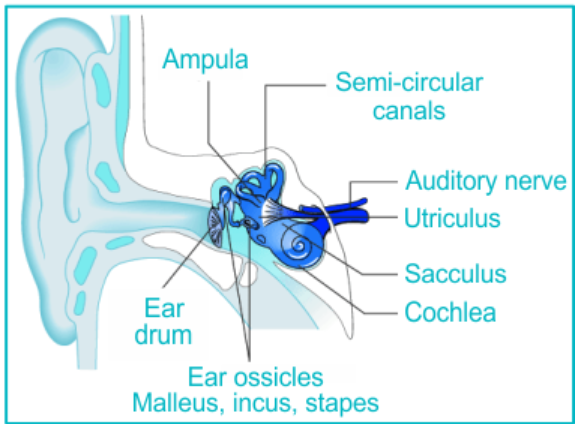
  • The eardrum of our body behaves like a stretched rubber sheet. Sound vibrations make the eardrum vibrate. The eardrum sends vibrations to the inner ear. From there, the signal goes to the brain.
  • The tympanic membrane is called the eardrum.
  • The tympanic membrane is a thin layer of tissue in the human ear that receives sound vibrations from the outer air and transmits them to the auditory ossicles, which are tiny bones in the tympanic (middle-ear) cavity.

Additional Information

  • An Ear consists of three major sections namely: Outer Ear, middle ear, and Inner Ear.


Part of earPartsFunction
Outer earPinnaIt directs the sound wave to travel through
the ear canal to reach
the eardrum.
Middle earHammer, anvil, and stirrupThese three bones
are utilized to amplify
the sound waves in
the middle ear.
Inner earCochleaIt transforms the
waves into an
electrical signal and
sends it to the brain.
5

Who was the leader of revolutionaries in Bihar during the Revolt of 1857?

  1. ((a))

    Namdar Khan

  2. ((b))

    Babu Kunwar Singh

  3. ((c))

    Birsa Munda

  4. ((d))

    Shankar Shah

Show Answer
Answer: ((b))

Babu Kunwar Singh

The correct answer is Babu Kunwar Singh.

Key Points

  • Babu Kunwar Singh was the leader of revolutionaries in Bihar during the Revolt of 1857.
  • Babu Kunwar Singh:
  • Kunwar Singh was a prominent leader during the Indian Rebellion of 1857.
  • He was associated with a family of the Ujjainiya clan of the Parmar Rajputs of Jagdispur, currently a part of Bhojpur district, Bihar, India.
  • At the age of 80, he led a handpicked band of armed soldiers against the troops under the command of the British East India Company.
  • He was the chief contriver of the fight against the British in Bihar.
  • He is popularly known everywhere as Veer Kunwar Singh.
  • He died on 26 April 1858.

Additional Information

  • Namdar Khan:
  • Namdar Khan was a part of the Pinadari group.
  • The Pindaris were irregular military plunderers and foragers in the 17th- through early 19th-century Indian subcontinent who accompanied initially the Mughal army, later the Maratha army, and finally on their own before being eliminated in 1817-18 Pindari War.
  • They were unpaid and their compensation was entirely the loot they plundered during the war.
  • They were horsemen, foot brigades and partially armed, creating chaos and delivering intelligence about the enemy positions to benefit the army they accompanied.
  • Birsa Munda:
  • Birsa Munda was a folk hero and a tribal freedom fighter hailing from the Munda tribe.
  • He was a spearhead behind the Millenarian movement that arose in the Bihar and Jharkhand belt in the early 19th century under British colonisation.
  • Munda rallied the tribals to fight against the forceful land grabbing carried out by the British government which would turn the tribals into bonded labourers and force upon them abject poverty.
  • Known as 'Dharti Abba' or the Earth Father, Birsa Munda stressed the need of the tribals to study their own religion and not forget their cultural roots.
  • He influenced his people to realise the importance of owning their land and asserting their right upon them.
  • Shankar Shah:
  • Shankar Shah was the king of the Garha Kingdom, which was situated in the Indian region of Gondwana.
  • He led an uprising against the British colonial occupiers of India and was put to death along with his son.
  • His son's name was Kunwar Raghunath Shah.
  • The flame of the Revolt of 1857 was burning all over India.
  • He called for war to make his motherland independent from the British.
  • In this struggle, Raghunath Shah greatly supported his father.
  • Raja Shankar Shah was the great-grandson of Nizam Shah and the only son of Sumer Shah.
  • His son's name was Raghunath Shah.
  • Raja Shankar Shah was very popular among the zamindars and the general public.
6

In which year was the Netaji Subhas National Institute of Sports Patiala established?

  1. ((a))

    1961

  2. ((b))

    1957

  3. ((c))

    1971

  4. ((d))

    1982

Show Answer
Answer: ((a))

1961

The correct answer is 1961.

Key Points

  • The Netaji Subhas National Institute of Sports (NSNIS) was established in 1961.
  • It is located in the city of Patiala, Punjab, India.
  • The institute was named after the Indian freedom fighter Netaji Subhas Chandra Bose.
  • It is often referred to as the "Mecca" of Indian sports due to its importance in the development of sports in India.
  • NSNIS Patiala is known for providing advanced training and facilities for various sports disciplines and has produced numerous prominent athletes.

Additional Information

  • Facilities and Training
  • NSNIS offers state-of-the-art facilities for training in various sports such as athletics, boxing, hockey, and wrestling.
  • The institute also provides specialized coaching courses and certifications.
  • Role in Indian Sports
  • NSNIS has played a crucial role in the development of sports in India, contributing to the training of many top athletes and coaches.
  • It has been instrumental in enhancing the performance standards of Indian athletes in national and international competitions.
  • Collaborations and Partnerships
  • The institute collaborates with various national and international sports organizations to improve training methodologies and facilities.
  • It also engages in research activities to advance sports science and sports medicine.
  • Notable Alumni
  • Many eminent sports personalities have trained at NSNIS, including athletes who have represented India at the Olympics and other international events.
  • Prominent alumni include Milkha Singh, PT Usha, and many others.
7

The term "First War of Independence" was first popularized in the context of the Indian Rebellion of 1857 by:

  1. ((a))

    Bhimrao Ramji Ambedkar

  2. ((b))

    Jawaharlal Nehru

  3. ((c))

    Vinayak Damodar Savarkar

  4. ((d))

    Karl Marx

Show Answer
Answer: ((c))

Vinayak Damodar Savarkar

The correct answer is Vinayak Damodar Savarkar.

Key Points

  • In India, the term First War of Independence was first popularized by Vinayak Damodar Savarkar in his 1909 book The History of the War of Indian Independence.
  • The immediate factor was the introduction of the ‘Enfield’ rifle.
  • It was said that the cartridge of this rifle was wrapped in the fat of cow and pig.
  • The cartridge had to be bitten off before loading it into the gun.
  • Thus the Hindu and Muslim soldiers were reluctant to use the ‘Enfield’ rifle.
  • There are many reasons that led to the revolt of 1857.
  • Major reasons for the revolt can be broadly classified into Political, Social, Economic, Religious, Military, etc

Therefore, we can conclude that The term "First War of Independence" was first popularized in the context of the Indian Rebellion of 1857 by Vinayak Damodar Savarkar.

8

Who among the following was the founder of Indian Space Research Organisation (ISRO)?

  1. ((a))

    Vikram Sarabhai 

  2. ((b))

    Satish Dhawan 

  3. ((c))

    Dr Homi J Bhabha

  4. ((d))

    Dr APJ Abdul Kalam

Show Answer
Answer: ((a))

Vikram Sarabhai 

The correct answer is Vikram Sarabhai.

Key Points

  • Vikram Sarabhai is regarded as the father of the Indian space program.
  • He established the Indian Space Research Organisation (ISRO) in 1969.
  • He was instrumental in setting up the Physical Research Laboratory (PRL) in Ahmedabad in 1947.
  • Vikram Sarabhai's vision led to the establishment of the Indian National Committee for Space Research (INCOSPAR) in 1962, which later evolved into ISRO.

Additional Information

  • Satish Dhawan
  • He was the third chairman of ISRO and played a significant role in advancing the Indian space program.
  • Under his leadership, India launched its first satellite, Aryabhata, in 1975.
  • ISRO's Space Centre in Sriharikota is named after him: Satish Dhawan Space Centre (SDSC).
  • Dr Homi J Bhabha
  • He is known as the father of the Indian nuclear program.
  • He founded the Tata Institute of Fundamental Research (TIFR) and the Bhabha Atomic Research Centre (BARC).
  • He played a key role in the development of atomic energy in India.
  • Dr APJ Abdul Kalam
  • He is known as the Missile Man of India for his work on the development of ballistic missile and launch vehicle technology.
  • He served as the 11th President of India from 2002 to 2007.
  • He played a pivotal role in India's Pokhran-II nuclear tests in 1998.
9

Which of the following instrument is used to measure the specific gravity of milk?

  1. ((a))

    Using an odometer

  2. ((b))

    Using a hydrometer

  3. ((c))

    Using a hygrometer

  4. ((d))

    Using a viscometer

Show Answer
Answer: ((b))

Using a hydrometer

The correct answer is Hydrometer.

Key Points 

  • Hydrometer:
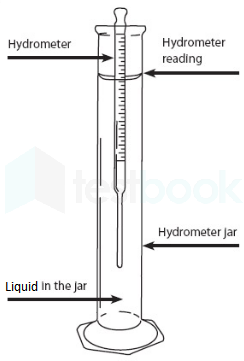
  • It is an instrument used to determine the specific gravity of a liquid.
  • Its operation is based on the Archimedes principle that a solid body displaces its weight within a liquid in which it floats.
  • It is made up of a thin glass or plastic tube sealed at both ends with a graduated or printed scale calibrated to specific gravity.
  • It can be divided into two general classes: liquids heavier than water and liquids lighter than water.

Additional Information 

  • Hygrometer
  • It is an instrument used in meteorological science to measure the humidity or amount of water vapour in the air.
  • It is a specially designed apparatus that calculates relative humidity in an open or enclosed area.
  • Viscometer
  • In capillary tube viscometer, the pressure needed to force the fluid to flow at a specified rate through a narrow tube is measured.
  • This type of viscometer is based on laminar flow through a circular pipe.
  • It has a circular tube attached horizontally to a vessel filled with a liquid whose viscosity has to be measured. Suitable head (hf ) is provided to the liquid so that it can flow freely through the capillary tube of certain length (L) into a collection tank as
  • ​Udometer
  • It is an instrument for measuring the amount of rainfall or snowfall.
  • It consists of a cylinder covered by a funnel-like lid.
10

Who was born in 1902 in Sitabadiyara (Bihar)?

  1. ((a))

    Jai Prakash Narayan

  2. ((b))

    Karpoori Thakur

  3. ((c))

    Ramdhari Singh Dinkar

  4. ((d))

    Dr. Rajendra Prasad

Show Answer
Answer: ((a))

Jai Prakash Narayan

The correct answer is Jai Prakash Narayan.

Key Points

  • Loknayak Jayaprakash Narayan was born on 11 October 1902 in Sitabadiyara, Bihar.
  • Jayaprakash Narayan is popularly known as JP or Lok Nayak.
  • He was an Indian independence activist, theorist, socialist and political leader.
  • He is also known as the "Hero of Quit India Movement".
  • JP Narayan is best known for opposing former Prime Minister Indira Gandhi.
  • It is said that Indira Gandhi's power was snatched away from her after the "JP movement" and gave the famous slogan "Sinhaasan khaali karo ki janta aati hai".
  • In 1948, he led the Socialist Party of the Congress and later formed the Samajwadi Socialist Party in association with the Gandhian Party.
11

Who organized Kisan Sabha at Munger in 1922-23?

  1. ((a))

    Swami Sahajanand Saraswati

  2. ((b))

    S D Patel

  3. ((c))

    Mohammed Jubair

  4. ((d))

    K.N.Singh

Show Answer
Answer: ((c))

Mohammed Jubair

The correct answer is None of the above.

Key Points

  • In 1922, Kisan Sabha was organized by Mohammad Zubair and Sri Krishna Singh in Munger.
  • Munger is a district in Bihar.
  • It was organized to discuss the grievances of peasants as they were under the zamindari rule and did not have complete authority over their land.
  • Kisan Sabhas were more confined to Uttar Pradesh from 1919 to 1922.
  • Many peasants groups had gone violent and indulged in looting and losing the integrity of the peasant movement.


Additional Information

  • In 1929, Sahajanand Saraswati formed Bihar Provincial Kisan Sabha.
  • It was done in order to mobilize peasant grievances against the zamindari attacks on their occupancy rights.
  • The other objective was to abolish landlordism and to distribute the land free of cost to agricultural and other rural labourers.
  • The Kisan Manifesto, which was released in August 1936, demanded the abolition of the zamindari system and the cancellation of rural debts.
12

Which of the following is NOT related to reticulate venation?

  1. ((a))

    China rose

  2. ((b))

    Tulsi

  3. ((c))

    Maize

  4. ((d))

    Coriander

Show Answer
Answer: ((c))

Maize

The correct answer is Maize.

Key Points

  • Maize exhibits parallel venation, which is typical of monocotyledonous plants.
  • In parallel venation, veins run parallel to each other, which is different from reticulate venation where veins form a network.
  • Examples of plants with parallel venation include grasses, lilies, and maize.
  • Reticulate venation is commonly found in dicotyledonous plants like China rose and Tulsi.

Additional Information

  • Venation
  • Venation refers to the arrangement of veins in the leaf blade.
  • It is important for the identification of plant species and helps in the distribution of nutrients and water throughout the leaf.
  • Reticulate Venation
  • Reticulate venation is characterized by a net-like pattern of veins.
  • It is commonly found in dicots such as China rose, Tulsi, and Coriander.
  • In this type of venation, the main vein (midrib) branches into secondary veins which further branch into tertiary veins forming a network.
  • Parallel Venation
  • Parallel venation is characterized by veins running parallel to each other.
  • It is typical of monocots such as Maize, wheat, and other grasses.
  • In this type of venation, veins do not form a network but run parallel from the base to the tip of the leaf.
  • Examples of Plants
  • China Rose (Hibiscus rosa-sinensis) - Exhibits reticulate venation.
  • Tulsi (Ocimum tenuiflorum) - Exhibits reticulate venation.
  • Maize (Zea mays) - Exhibits parallel venation.
  • Coriander (Coriandrum sativum) - Exhibits reticulate venation.
13

Where is the Central Sheep and Wool Research Institute situated?

  1. ((a))

    Tonk

  2. ((b))

    Malpura

  3. ((c))

    Avikanagar

  4. ((d))

    Jaipur

Show Answer
Answer: ((c))

Avikanagar

The correct answer is Avikanagar.

Key Points

  • The Central Sheep and Wool Research Institute (CSWRI) is located in Avikanagar, Rajasthan.
  • CSWRI was established in 1962 to promote sheep and wool research.
  • The institute operates under the Indian Council of Agricultural Research (ICAR).
  • It focuses on improving sheep breeds, wool technology, and developing innovative practices for enhancing sheep productivity.
  • CSWRI conducts extensive research in areas such as animal nutrition, genetics, and health management.

Additional Information

  • Indian Council of Agricultural Research (ICAR)
  • ICAR is an autonomous organization under the Department of Agricultural Research and Education (DARE), Ministry of Agriculture and Farmers Welfare, Government of India.
  • It was established on 16 July 1929 and is headquartered in New Delhi.
  • ICAR is responsible for coordinating agricultural education and research in India.
  • It has over 101 institutes and 71 agricultural universities spread across the country.
14

What is the name of the satellite to be launched by the SSLV under the commercial mission named Space MAITRI?

  1. ((a))

    Janus

  2. ((b))

    Artemis

  3. ((c))

    Sirius

  4. ((d))

    Optimus

Show Answer
Answer: ((d))

Optimus

The correct answer is Optimus.

Key Points

  • Optimus is the satellite scheduled for launch by SSLV (Small Satellite Launch Vehicle).
  • The launch is part of the first dedicated commercial mission of SSLV.
  • Optimus is designed and built by Australia-based Space Machines Company.
  • It weighs 450 kilograms, making it the largest Australian-designed and built spacecraft to date.
  • ISRO's commercial arm NSIL said that its newest rocket the SSLV will have its first dedicated commercial launch when it puts into orbit the Optimus

Important Points

  • This mission, named Space MAITRI, signifies a strategic partnership between Australia and India in the space domain.
  • The partnership aims to enhance space collaboration between commercial, institutional, and government space organizations of both nations.
  • Optimus's mission includes a focus on sustainability and debris management in space operations.

Additional Information

  • Janus: Was a 10-kilogramme nanosatellite on board the SSLV-D2 mission, not related to the first dedicated commercial launch.
  • Artemis: Names referencing other space missions but unrelated to this SSLV mission.
15

'Pusa Ruby' is the advanced variety of?

  1. ((a))

    brinjal

  2. ((b))

    Tomato

  3. ((c))

    Cauliflower

  4. ((d))

    Cabbage

Show Answer
Answer: ((b))

Tomato

The correct answer is Tomato.

Key Points

  • 'Pusa Ruby' is the advanced variety of Tomato.
  • It is an early and hardy variety that evolved at IARI.
  • The plants are medium and determinate.
  • The fruits are medium-sized, lobed, and uniformly red when ripe and yield 330 q/ha around Bangalore.
  • Some other varieties like 'Sel-120' and 'Sel-152' have been recently recommended by IARI.

Additional Information

  • Tomato (Lycopersicon esculentum) is an annual or short-lived perennial pubescent herb and greyish green curled uneven pinnate leaves.
  • The flowers are off-white bearing fruits that are red or yellow in color.
  • It is a self-pollinated crop.
  • The major tomato-producing states are Maharashtra, Bihar, Karnataka, Uttar Pradesh, Orissa, Andhra Pradesh, Madhya Pradesh, and Assam.
16

The Indian Space Research Organisation is the national space agency of India, headquartered in          .

  1. ((a))

    Chennai

  2. ((b))

    Pune

  3. ((c))

    Kolkata

  4. ((d))

    Bengaluru

Show Answer
Answer: ((d))

Bengaluru

The correct answer is Bengaluru.

Key Points

  • ISRO stands for Indian Space Research Organisation.
  • The headquarters of ISRO is in Bengaluru.
  • It operates under the Department of Space (DOS) which is directly overseen by the Prime Minister of India while the chairman of ISRO acts as the executive of DOS as well.
  • ISRO is the primary agency in India to perform tasks related to space-based applications, space exploration, and the development of related technologies.
  • It is one of six government space agencies in the world that possess full launch capabilities, deploy cryogenic engines, launch extraterrestrial missions and operate large fleets of artificial satellites.
17

Which of the following tribes belongs to the Nilgiri Mountains?

  1. ((a))

    Angamis

  2. ((b))

    Todas

  3. ((c))

    Jarawas

  4. ((d))

    Onges

Show Answer
Answer: ((b))

Todas

The correct answer is Todas.

Key Points

  • The Toda are a pastoral tribe in southern India's Nilgiri Hills.
  • Despite being the most atypical of that linguistic family, the Toda language is Dravidian.
  • The Toda people inhabit towns of three to seven modest thatched huts that are strewn across grassland hills.
  • The dwellings were constructed on timber frameworks, and the average home has an arched roof resembling a half barrel.
  • With the other Nilgiri peoples, the Toda have long traded dairy products as well as cane and bamboo goods, receiving in return Baaga grain and cloth as well as **Kota tools and pottery.**​

Additional Information

  • Angamis:
  • The state of Nagaland in North-East India is home to a sizable Naga ethnic minority known as the Angamis.
  • Jarawas:
  • Indigenous inhabitants of India's Andaman Islands are known as Jarawas.
  • Onges:
  • The Onge are an Andamanese ethnic group native to the Indian-governed Andaman Islands in Southeast Asia's Bay of Bengal.
18

A trader allows a 20% trade discount and a 30% cash discount. If the list price is Rs. 1,200, then the selling price (in Rs.) is: 

  1. ((a))

    627

  2. ((b))

    720

  3. ((c))

    762

  4. ((d))

    672

Show Answer
Answer: ((d))

672

Given:

Trade discount = 20%

Cash discount = 30% 

Concept used:

M.P. = S.P. × 100/(100 – discount %)

Calculation:

Trader provides 20% trade discount and 30% cash discount on the list price.

The list price = Rs. 1200

∴ The selling price =  Rs. 1200 × (80/100) × (70/100)

= Rs. 672

The selling price is Rs. 672.

19

A bag contains Rs. 2, Rs. 5 and Rs. 10 coins in the ratio 3 ∶ 5 ∶ 7, amounting to 1212. The number of Rs. 10 coins are: 

  1. ((a))

    60

  2. ((b))

    90

  3. ((c))

    36

  4. ((d))

    84

Show Answer
Answer: ((d))

84

Given:

A bag contains Rs. 2, Rs. 5 & Rs. 10 coins in the ratio 3 : 5 : 7

Total Value is 1212

Concept used:

Rupees × number of coins = Value(Amount) 

Calculation:

Let the number of coins be x,

Number of Rs. 2 coins be 3x, Rs. 5 coins be 5x and  Rs. 10 coins be 7x

Total amount = (2 × 3x) + (5 × 5x) + ( 10 × 7x) = 101x

But the given amount = 1212

So, 101x = 1212

⇒ x = 1212/101 = 12

Number of Rs.10 coins = 7x = 7 × 12 = 84

∴ The number of Rs. 10 coins are 84.

20

The average of 8 numbers is 18. If one of the numbers is excluded, the average becomes 20. Find the excluded number. 

  1. ((a))

    6

  2. ((b))

    10

  3. ((c))

    8

  4. ((d))

    4

Show Answer
Answer: ((d))

4

Given : 

Average of 8 numbers is 18.

One of the numbers is excluded, the average becomes 20.

Formula Used : 

Average =  Sum of all observations/Number of observations

Calculation : 

Sum of 8 numbers = 18 × 8 = 144

Sum of 7 numbers = 20 × 7 = 140

Excluded number = 144 - 140 = 4

∴ The correct answer is 4.

21

A dealer purchased a washing machine for Rs. 9,000. He allows a discount of 10% on its marked price and still gains 10%. Find the marked price of the machine.  

  1. ((a))

    Rs. 11,000

  2. ((b))

    Rs. 12,000

  3. ((c))

    Rs. 13,000

  4. ((d))

    Rs. 10,000

Show Answer
Answer: ((a))

Rs. 11,000

Given : 

CP = Rs.9000

Discount = 10%

Profit = 10%

Calculation : 

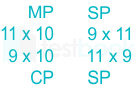
By going through ratio method,

Now by making SP same

CP = 90 unit = 9000

⇒ 1 unit = 100

MP = 110 unit × 100 = 11000

∴ The correct answer is 11000.

22

The average monthly income of the father and mother is Rs. 5,000. The average monthly income of the mother and her son is Rs. 6,000. The average monthly income of the father and his son is Rs. 10,000. Find the monthly income (in Rs.) of the father.

  1. ((a))

    9000

  2. ((b))

    8000

  3. ((c))

    12000

  4. ((d))

    10000

Show Answer
Answer: ((a))

9000

Given:

The average monthly income of the father and mother is Rs. 5,000

The average monthly income of the mother and her son is Rs. 6,000

The average monthly income of the father and his son is Rs. 10,000

Formula used:

Average = Sum of numbers/numbers of units

Calculation

The monthly income of the father and mother = 2 × 5,000

= 10000

The monthly income of the mother and her son = 2 × 6,000

= 12000

The monthly income of the father and his son = 2 × 10,000

= 20000

The monthly income of the family = (10000 + 12000 + 20000)/2

= 21000

The monthly income (in Rs.) of the father = 21000 - 12000

= 9000

The answer is 9000.

23

The monthly income of a person was Rs. 12,000 and his monthly expenditure was Rs. 8,000. Next year, his income increased by 10% and his expenditure by 8%. Find the percentage increase in his savings.

  1. ((a))

    10%

  2. ((b))

    14%

  3. ((c))

    12%

  4. ((d))

    15%

Show Answer
Answer: ((b))

14%

Given:

Monthly income = Rs 12,000

Monthly expenditure = Rs 8,000

Increase in income after a year = 10%

Increase in expenditure after a year = 8%

Concept Used:

New Amount = Original Amount + Percentage of Original Amount

Savings = Income – Expenditure

Calculation:

Savings before increase = 12000 – 8000 = Rs 4,000

Increase in income after a year = 12000 + 10% of 12000

Increase in income = 12000 + 120012100×1200012100×1200012100×1200012100×1200012100×12000

Code
   = 12000 + 1200 = Rs 13200

Increase in expenditure = 8000 + 8% of 8000

Increase in expenditure = 8000 + 640 = Rs 8640

Savings after increase = 13200 – 8640 = Rs 4560

Increase in savings = Rs 4560 – 4000 = Rs 560

Savings percentage increase = 560/4000 × 100 9402000×100=479402000×100=479402000×100=479402000×100=479402000×100=47

Code
  %

= 14%

Hence, the percentage increase in savings is 14%.

24

Ram has an average score of 65 runs in 19 innings in cricket matches. Find out how many runs are to be scored by him in the 20th innings to raise the average score to 67.

  1. ((a))

    135

  2. ((b))

    105

  3. ((c))

    115

  4. ((d))

    195

Show Answer
Answer: ((b))

105

Shortcut Trick

Increase in average score = 67 − 65 = 2 runs.

Runs required in 20th inning = New Average + (Previous Innings × Increase in Average)

Runs required = 67 + (19 × 2)

Runs required = 67 + 38 = 105.

∴ The correct answer is 105 runs.

Alternate Method

Given:

Average score of Ram in 19 innings = 65 runs.

Desired average score after 20 innings = 67 runs.

Formula Used:

Total Score = Average × Number of Innings

Calculations:

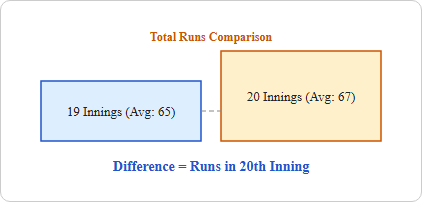
⇒ Total runs in 19 innings = 19 × 65 = 1235 runs.

⇒ Total runs in 20 innings = 20 × 67 = 1340 runs.

⇒ Runs to be scored in 20th innings = Total runs (20 innings) − Total runs (19 innings)

⇒ Runs to be scored = 1340 − 1235

⇒ Runs to be scored = 105.

∴ The correct answer is 105 runs.

Additional Information

Concept of New Inclusion

When a new value is added to a group, New Value = Old Average + (Total Number of Items × Increase in Average).

Average of Natural Numbers

The average of the first 'n' natural numbers is given by the formula (n + 1) ÷ 2.

Weighted Average

If two groups with averages A1 and A2 and number of items n1 and n2 are combined, the new average is (n1A1 + n2A2) ÷ (n1 + n2).

25

The simple interest on Rs. 800 for 6 years at 5.5% per annum is equal to the simple interest on Rs. 600 at 4% per annum for a certain period of time. The period of time is:

  1. ((a))

    11 years

  2. ((b))

    9 years

  3. ((c))

    12 years

  4. ((d))

    10 years

Show Answer
Answer: ((a))

11 years

Given 

A person invests on simple interest = Rs. 800

A person invests on simple interest = Rs. 600

Rate of Interest = 5.5%

Rate of Interest = 4%

Time = 6 year

Time = t year

Formula used.

Simple interest = Principal × Time × Rate/100

Amount = Principal(1 - Rate/100)2

Calculation 

The Rate of Interest for the first and second sum is 4% and 5% p.a. respectively.

(800 × 5.5 × 6) / 100 = ((600) × 4 × t) / 100

⇒ 24t = 264

⇒ t = 264/24

⇒ t = 11

The value of t (in percentage) is 11 years.

26

If Shravanthi had run at a speed of 17 km/hr instead of 5 km/hr, she would have covered 24 km more distance. Find the actual distance covered by her.

  1. ((a))

    14 km

  2. ((b))

    24 km

  3. ((c))

    18 km

  4. ((d))

    10 km

Show Answer
Answer: ((d))

10 km

Formula Used:

Distance = Speed × Time

Calculation:

Let the time for which Shravanthi runs be T hours

According to the question

⇒ (17)T - (5)T = 24

⇒ T = 2 hours

Actual distance = 2 × 5 = 10 km

∴ The actual distance covered by Shravanthi is 10 km.

27

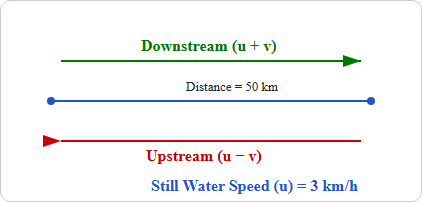
A diver rowing at the speed of 3 km/h in still water takes double the time going 50 km upstream compared to going 50 km downstream. The speed of the diver downstream is:

  1. ((a))

    9/2  km/h

  2. ((b))

    4 km/h

  3. ((c))

    7/2 km/h

  4. ((d))

    10/3 km/h

Show Answer
Answer: ((b))

4 km/h

Shortcut Trick

Ratio of Time (Upstream : Downstream) = 2 : 1

Since Distance is constant, the ratio of Speed (Upstream : Downstream) = 1 : 2

Still water speed of the diver = (Upstream speed + Downstream speed) ÷ 2 = (1 + 2) ÷ 2 = 1.5 units

Given, 1.5 units = 3 km/h ⇒ 1 unit = 2 km/h

Downstream speed = 2 units = 2 × 2 = 4 km/h

∴ The correct answer is 4 km/h.

Alternate Method

Given:

Speed of the diver in still water (u) = 3 km/h

Distance covered (d) = 50 km

Let the speed of the stream be 'v' km/h.

Formula Used:

Time = Distance ÷ Speed

Upstream speed (vu) = (u − v) = (3 − v) km/h

Downstream speed (vd) = (u + v) = (3 + v) km/h

Calculations:

⇒ Time taken upstream = 2 × Time taken downstream

⇒ 50 ÷ (3 − v) = 2 × [50 ÷ (3 + v)]

⇒ 1 ÷ (3 − v) = 2 ÷ (3 + v)

⇒ (3 + v) = 2 × (3 − v)

⇒ 3 + v = 6 − 2v

⇒ v + 2v = 6 − 3

⇒ 3v = 3

⇒ v = 1 km/h

Downstream speed = u + v = 3 + 1 = 4 km/h

∴ The correct answer is 4 km/h.

Additional Information

Speed in Still Water

The speed of a boat or person in still water is calculated as u = (Downstream Speed + Upstream Speed) ÷ 2.

Speed of the Current

The speed of the stream or current is calculated as v = (Downstream Speed − Upstream Speed) ÷ 2.

Distance-Speed Relation

When the distance is constant, the time taken is inversely proportional to the speed (Time ∝ 1 ÷ Speed).

28

Refer the below data table and answer the following Question.

India’s exports in 2015Value in million US$
Jewellery500
Software850
Cotton950
Steel1000
Electronics875


Electronics was what percent of total exports?

  1. ((a))

    23.46 percent

  2. ((b))

    25.96 percent

  3. ((c))

    18.46 percent

  4. ((d))

    20.96 percent

Show Answer
Answer: ((d))

20.96 percent

% of electronics of total exports = 875/(500 + 850 + 950 + 1000 + 875) × 100 = 875/4175 × 100 = 20.96%

29

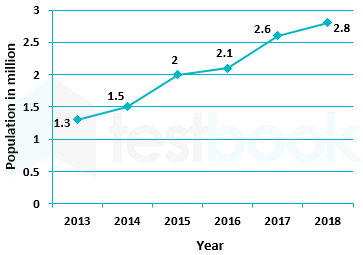
The given line graph represents the population (in millions) of 'Inhambane' in each year from 2013 to 2018.

What is the approximate percentage increase in the population of Inhambane from 2013 to 2016?

  1. ((a))

    100%

  2. ((b))

    61.5%

  3. ((c))

    86.6%

  4. ((d))

    90.5%

Show Answer
Answer: ((b))

61.5%

Calculation:

⇒ the population of Inhambane in 2013 = 1.3 millions

⇒ the population of Inhambane in 2016 = 2.1 millions

⇒ Difference = 2.1 - 1.3 = 0.8 millons 

∴ percentage increase in the population = (2.1 - 1.3) × 100/1.3 = 61.53% ≈ 61.5%

30

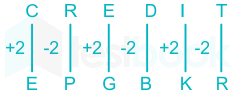
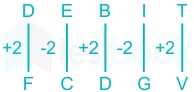
In a certain code "CREDIT" is written as "EPGBKR" and in the same code. "DEBIT" will be written as

  1. ((a))

    FDCGV

  2. ((b))

    FGCDV

  3. ((c))

    FCDGV

  4. ((d))

    FCDVG

Show Answer
Answer: ((c))

FCDGV

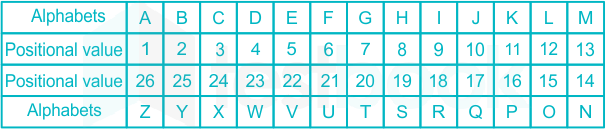
Pattern is as follows:

Similarly,

Hence, option 3) is the correct answer.

31

Select the option that is related to the third letter-cluster in the same way as the second letter-cluster is related to the first letter-cluster.

GKNR : SOLH :: MNGB : ?

  1. ((a))

    QPSX

  2. ((b))

    OMNX

  3. ((c))

    NMTX

  4. ((d))

    MLSX

Show Answer
Answer: ((d))

MLSX

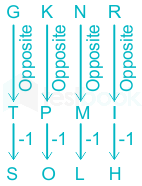
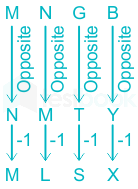
The logic followed here is :-

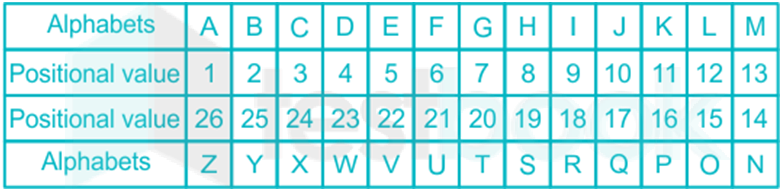
In the given word the letters alphabet positional value opposite -1.

GKNR : SOLH

Similarly,

MNGB : ? 

Hence, the correct answer is "MLSX".

32

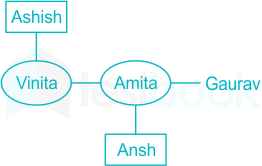
Vinita and Amita are the sisters of Gaurav. Ashish is the father of Vinita. Ansh is the son of Amita. How is Ashish related to Ansh?

  1. ((a))

    Maternal uncle

  2. ((b))

    Maternal grandfather

  3. ((c))

    Paternal grandfather

  4. ((d))

    Paternal uncle

Show Answer
Answer: ((b))

Maternal grandfather

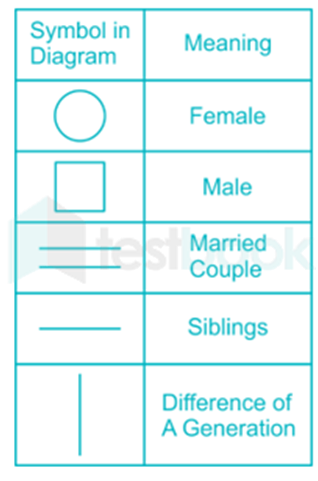
Preparing the family tree using the following symbols:

As per the given data, the blood relation diagram is:

1. Vinita and Amita are the sisters of Gaurav.

2. Ashish is the father of Vinita. Ansh is the son of Amita.

Clearly, Ashish is the Maternal grandfather of Ansh.

Hence, the correct answer is "Maternal Grandfather".

33

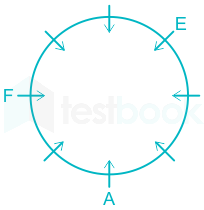
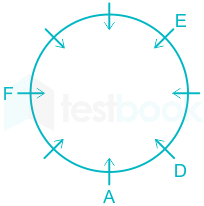
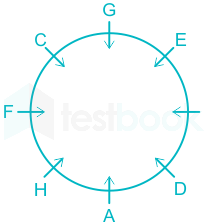
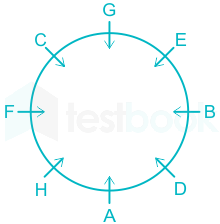
There are eight friends, namely A, B, C, D, E, F, G and H, sitting around a circular table facing the centre but not necessarily in the same order. F is third to right of E. H sits third to right of G. A is facing to the person who is sitting second to left of F. C sits to immediate right of G. The person who is facing F sits in between D and E. Who is facing towards A?

  1. ((a))

    B

  2. ((b))

    G

  3. ((c))

    C

  4. ((d))

    E

Show Answer
Answer: ((b))

G

There are eight friends, namely A, B, C, D, E, F, G and H, sitting around a circular table facing the centre but not necessarily in the same order.

1) F is third to right of E and A is facing to the person who is sitting second to left of F.

2) The person who is facing F sits in between D and E.

3) H sits third to right of G and C sits to immediate right of G.

4) A is facing to the person who is sitting second to left of F.

∴ Here, 'G' is facing towards 'A'.

Hence, the correct answer is "G".

34

Select the option that is related to the fifth letter-cluster in the same way as the second letter-cluster is related to the first letter-cluster and the fourth letter-cluster is related to the third letter-cluster.

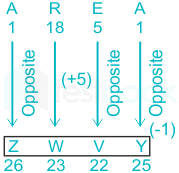
HALF ∶ SFOT ∶∶ DAMP ∶ WFNJ ∶∶ AREA ∶ ?

  1. ((a))

    ZIVZ

  2. ((b))

    YMJZ

  3. ((c))

    ZWVY

  4. ((d))

    FWJY

Show Answer
Answer: ((c))

ZWVY

Logic : 

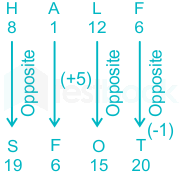
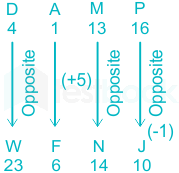
  1. First and third letters ⇒ Opposite letter according to the English alphabetic series is written.
  2. Second letter ⇒ (5) is added to the position value according to the English alphabetic series.
  3. Fourth letter ⇒ Opposite letter is written and (1) is subtracted from the position value according to the English alphabetic series.

So, 

  • HALF ∶ SFOT

​And,

  • DAMP ∶ WFNJ

​Similarly,

  • AREA ∶ ?

​​  

​Hence, "ZWVY" is the correct answer.

35

Select the option in which the words share the same relationship as that shared by the given set of words (in the same order).

Prose : Poetry : Literature

  1. ((a))

    Rain : Water : Drought

  2. ((b))

    House : Forest : Machine

  3. ((c))

    Karate : Tae Kwon Do : Martial Arts

  4. ((d))

    Tea : Coffee : Juices

Show Answer
Answer: ((c))

Karate : Tae Kwon Do : Martial Arts

Prose and Poetry are types of Literature.

Similarly, Karate and Tae Kwon Do are types of Martial Arts.

“Karate : Tae Kwon Do : Martial Arts“ share the same relationship as that shared by the given set of words.

Hence, “Karate : Tae Kwon Do : Martial Arts” is the correct answer.

36

Select the correct mirror image of the given combination when the mirror is placed at MN as shown below.

  1. ((a))

  2. ((b))

  3. ((c))

  4. ((d))

Show Answer
Answer: ((b))

The correct mirror image of the given combination when mirror is placed at MN is as shown below:

Detailed Explanation:

  • The line MN is the mirror
  • The word "TY6L452" the seventh digit is "2". So, the mirror image should be 

 ⇒ Option 1 is eliminated.

  • The word "TY6L452" the fourth letter is "L". So, the mirror image should be "

" ⇒ Option 3 is eliminated..

  • The word "TY6L452" the sixth letter is "5". So, the mirror image should be "

" ⇒ Option 4 is eliminated.

Hence, the correct answer is "Option - (2)".

37

The position(s) of how many letters will remain unchanged if each of the letters in the word ELECTRIC is arranged in reverse English alphabetical order?

  1. ((a))

    Four

  2. ((b))

    One

  3. ((c))

    Three

  4. ((d))

    Two

Show Answer
Answer: ((b))

One

The logic followed here is:

Given: ELECTRIC 

LettersELECTRIC
Reverse alphabetical orderTRLIEECC

Thus, the only one letter remains unchanged is "C".

Hence, the correct answer is "Option 2".

38

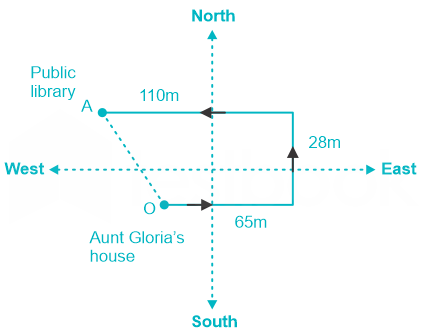
Aunt Gloria walked out of her house and walked 65 m towards the east. She took a left turn and walked 28 m. Again, she took a left turn and walked 110 m to reach a public library. How far (shortest distance) and in which direction is the library from Aunt Gloria’s house?

  1. ((a))

    48 m, North-East

  2. ((b))

    48 m, North-West

  3. ((c))

    53 m, North-East

  4. ((d))

    53 m, North-West

Show Answer
Answer: ((d))

53 m, North-West

Aunt Gloria walked out of her house and walked 65 m towards the east.

She took a left turn and walked 28 m.

Again, she took a left turn and walked 110 m to reach a public library. 

The shortest distance between Aunt Gloria's house and Public library is,

⇒ (28)2 + (110 - 65)2 = (OA)2

⇒ 784 + (45)2 = (OA)2

⇒ 784 + 2025 = (OA)2

⇒ 2809 = (OA)2

⇒ √2809 = OA

⇒ 53 = OA

Thus, the shortest distance is '53 m'. Also the library is in the North-West direction of Aunt Gloria's house.

Hence, the correct answer is "Option 4".

39

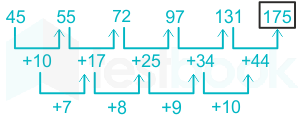
Which of the following numbers will replace the question mark(?) in the given series?

45, 55, 72, 97, 131, ?

  1. ((a))

    183

  2. ((b))

    189

  3. ((c))

    175

  4. ((d))

    179

Show Answer
Answer: ((c))

175

The pattern followed is as follows,

Hence, the correct answer is 175

40

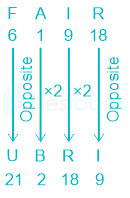
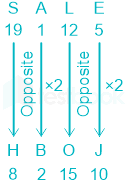
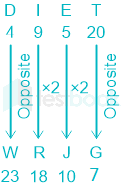
In a certain code language, ‘FAIR’ is written as ‘UBRI’ and 'SALE' is written as 'HBOJ’. How will ‘DIET’ be written as in that language?

  1. ((a))

    HRJG

  2. ((b))

    WEJG

  3. ((c))

    HRVG

  4. ((d))

    WRJG

Show Answer
Answer: ((d))

WRJG

The logic followed here is :-

  1. consonants - immediate opposite are written.
  2. Vowels - Position value is doubled.​

So,

  • ‘FAIR’ is written as ‘UBRI’.

And

  • 'SALE' is written as "HBOJ’.

Similarly,

  • ‘DIET’ will be written as :

Hence, the correct answer is "WRJG".

41

Web search engines stores information about many web pages by a __________.

  1. ((a))

    Web indexer

  2. ((b))

    Web router

  3. ((c))

    Web organizer

  4. ((d))

    Web Crawler

Show Answer
Answer: ((d))

Web Crawler

The correct answer is Web Crawler.

Key Points

  • Web search engines store information about many web pages through a process called web crawling or web indexing.
  • Web search engines employ automated software programs called web crawlers or spiders to systematically browse the internet and discover web pages.
  • These crawlers start with a set of seed URLs and follow links from one page to another, effectively traversing the interconnected web.
  • As the web crawlers visit web pages, they analyze the content and metadata of each page, including the text, images, URLs, and other relevant information.
42

Choose the smallest memory size unit.

  1. ((a))

    KB

  2. ((b))

    MB

  3. ((c))

    GB

  4. ((d))

    TB

Show Answer
Answer: ((a))

KB

The correct answer is KB.

Key Points

  • The kilobyte is the smallest unit of measurement greater than a byte.
  • It precedes the megabyte, which contains 1,000,000 bytes, while one kilobyte is technically 1,000 bytes.
  • Kilobytes are often used synonymously with kibibytes, which contain 1,024 bytes.
  • The memory unit is the amount of data that can be stored in the storage unit.
  • A group of 8 bits is called a byte. A byte is the smallest unit, which can represent a data item or a character.

Additional Information

  • Kilobyte (KB) = 1 KB = 1024 Bytes
  • Megabyte (MB) = 1 MB = 1024 KB
  • GigaByte (GB) = 1 GB = 1024 MB
  • TeraByte (TB) = 1 TB = 1024 GB
  • PetaByte (PB) = 1 PB = 1024 TB
43

______ is one of the most popular functions in MS-Excel 2010, and it allows you to make logical comparisons between a value and what you expect.

  1. ((a))

    IF

  2. ((b))

    COUNTIF

  3. ((c))

    FLOOR

  4. ((d))

    CEILING

Show Answer
Answer: ((a))

IF

The correct answer is IF.

Key Points

  • IF Function
  • The IF function in Excel is a logical function that performs a logical test and returns one value if the test is true, and another value if the test is false.
  • Syntax: =IF(logical_test, value_if_true, value_if_false)

Additional Information

  • COUNTIF Function
  • The COUNTIF function counts the number of cells within a range that meet a given criterion.
  • It's useful for counting specific values or conditions within a dataset.
  • Syntax: =COUNTIF(range, criteria)
  • FLOOR Function
  • The FLOOR function rounds a number down to the nearest multiple of a significance value.
  • It's useful for rounding numbers down to specific increments, such as rounding prices down to the nearest dollar or rounding time to the nearest hour.
  • Syntax: =FLOOR(number, significance)
  • CEILING Function
  • The CEILING function rounds a number up to the nearest multiple of a significance value.
  • It's the opposite of the FLOOR function, rounding numbers up to specific increments.
  • Syntax: =CEILING(number, significance)
44

Which among these is a hardware component?

  1. ((a))

    Operating System

  2. ((b))

    MS Office

  3. ((c))

    Internet

  4. ((d))

    Hard disk

Show Answer
Answer: ((d))

Hard disk

The correct answer is Hard disk.

Key Points

  • A hard disk is a hardware component.
  • It is a data storage device in computers.
  • It is kept inside the cabinet and through it, a large amount of data is collected and stored.
  • It is a secondary storage device.
  • The speed of a hard disk is measured in Revolutions Per Minute.
  • Hard disks are of different shapes and sizes which enables the user to select them appropriately.
  • It was first introduced by IBM in 1956.
  • In Hard disks, data is stored on their surfaces in concentric tracks.
  • Hard disks are 3.5-inch, for desktop computers, and 2.5-inch, primarily for laptops.

Additional Information

  • Operating System
  • It is a software that acts as an interface between computer hardware components and the user.
  • Every computer system must have at least one operating system to run other programs. Applications like Browsers, MS Office, Notepad Games, etc., need some environment to run and perform their tasks.
  • Microsoft Office
  • It is a set of computer applications mainly used for business or office purposes. First introduced in 1990, Office software is made by the Microsoft Corporation.
  • Internet
  • The Internet is a vast network that connects computers all over the world.
  • Through the Internet, people can share information and communicate from anywhere with an Internet connection.
45

State whether the following statements are true or false.

(i) WinZip does not do any compression.

(ii) Linux is a system software.

  1. ((a))

    (i) - True, (ii) - True

  2. ((b))

    (i) - True, (ii) - False

  3. ((c))

    (i) - False, (ii) - False

  4. ((d))

    (i) - False, (ii) - True

Show Answer
Answer: ((d))

(i) - False, (ii) - True

The correct answer is (i) - False, (ii) - True.

Key Points

  • WinZip: WinZip is known as an application software. The main application of WinZip files is to achieve and compress the file for the Windows operating system, macOS. IOS, Android.
  • Linux: Linux is an operating system that acts like Unix operating system or the system software. The code used to build Linux is free and available for the public to view, edit and use. Ubuntu is the popular version of Linux. Linux uses a command line interface as well as the graphical user interface.

Thus the correct answer is (i) - False, (ii) - True.

Additional Information

  • When a user interacts with the computer system through some software, then it is known as application software.
  • The system software is known as the base for the other software. System software uses a low-level programming language.
46

Which of the following is NOT an open-source operating system?

  1. ((a))

    Windows

  2. ((b))

    Ubuntu

  3. ((c))

    Android

  4. ((d))

    Linux

Show Answer
Answer: ((a))

Windows

Windows is correct.

Key Points

  • Among the options, only Windows is NOT an open-source operating system.
  • Windows is a closed source operating system marketed by Microsoft.
  • Microsoft first introduced the Windows operating system on 20 November 1985.
  • Closed Operating Systems are built with numerous codes and complex programming and that is called source code.
  • An Open-source Operating System is the Operating System in which source code is visible publically and editable.
  • The operating system is a collection of programs that controls the overall operations of the computer.
  • An operating system is a System software in computers.
  • It works as an interface between the user and computer hardware components.
  • Examples of operating systems are:
  • Linux.
  • Unix.
  • DOS.
  • Windows.
  • Ubuntu.
  • Embedded operating system.
  • OpenBSD.
  • Mac OS.

Mistake Points

Windows is an operating system, but it is NOT an open-source operating system.

47

Which of the following are true statements?

I: Primary storage units have faster access time and less storage capacity as compared to the secondary storage units.

II: Primary storage units have sequential access.

III: Secondary storage units are non-volatile storage.

  1. ((a))

    I and II only

  2. ((b))

    I and III only

  3. ((c))

    II and III only

  4. ((d))

    All I, II and III

Show Answer
Answer: ((b))

I and III only

The correct answer is I and III only.

Key Points

  • Primary storage units have faster access time and less storage capacity as compared to secondary storage units.
  • Primary storage is faster and more expensive than secondary storage.
  • It is small in size, lightweight, but at the same time quite expensive.
  • Secondary storage units have sequential access.
  • In computing, sequential access memory (SAM) is a class of data storage devices that read stored data in a sequence.
  • This is in contrast to random access memory (RAM) where data can be accessed in any order.
  • Sequential access devices are usually a form of magnetic storage or optical storage.
  • Secondary storage units are non-volatile storage.
  • Secondary storage is non-volatile, long-term storage.
  • Without secondary storage, all programs and data will be lost as soon as the computer is turned off.
  • There are three main types of secondary storage in computer systems: solid-state storage devices, such as USB memory sticks.
48

Which of the following components is NOT part of the CPU?

  1. ((a))

    Cache memory

  2. ((b))

    Control Unit (CU)

  3. ((c))

    Arithmetic Logic Unit (ALU)

  4. ((d))

    Hard Disk Drive (HDD)

Show Answer
Answer: ((d))

Hard Disk Drive (HDD)

The Correct answer is Hard Disk Drive (HDD).

Key Points

  • The Hard Disk Drive (HDD) is a storage device that is not part of the Central Processing Unit (CPU).
  • The CPU consists of components like the Control Unit (CU), Arithmetic Logic Unit (ALU), and Cache Memory, which work together to process data and execute instructions.
  • Unlike the CPU, the HDD is primarily used for long-term data storage and does not perform data processing or execution of instructions.
  • The HDD is considered an external storage device connected to the computer system to store files, programs, and operating systems.
  • HDDs are slower compared to RAM or Cache Memory when it comes to accessing data, as they are designed for mass storage rather than quick access.
  • Modern computers often use Solid State Drives (SSD) alongside or in place of HDDs due to their faster data access speeds.

Additional Information

  • Cache Memory
  • Cache Memory is a small-sized, high-speed memory located within the CPU or very close to it.
  • It stores frequently accessed data and instructions to improve the processing speed of the CPU.
  • Cache memory is faster than RAM and is used to reduce the time taken to access data from the main memory.
  • Control Unit (CU)
  • The Control Unit is one of the main components of the CPU and is responsible for directing the flow of data and instructions.
  • It interprets program instructions and controls the operation of the CPU's other components, such as the ALU and memory.
  • The CU is crucial for the execution of programs and ensures proper coordination between various parts of the computer.
  • Arithmetic Logic Unit (ALU)
  • The Arithmetic Logic Unit performs all the arithmetic (e.g., addition, subtraction) and logical operations (e.g., comparisons) required for processing data.
  • The ALU is integral to the CPU and works closely with the Control Unit to execute instructions.
  • It is a fundamental component for tasks that involve mathematical computations and decision-making processes.
49

IBM- 360 series belongs to which of the following generation of computers?

  1. ((a))

    First

  2. ((b))

    Fourth

  3. ((c))

    Second

  4. ((d))

    Third

Show Answer
Answer: ((d))

Third

The correct option is Third.

Key Points

  • PCs from the third generation. The IBM 360 family and other computers that debuted in the middle of the 1960s were referred to as "third-generation" computers.
  • The third generation, the first general-purpose computers, officially began in 1964 with the release of the IBM System/360TM (also known as S/360TM).
  • This book examines numerous alternative IBM computer system models, each with distinctive data representations and instruction sets that had a significant impact on the design of computer systems in the 1950s and the early 1960s.

Additional Information

  • Early in the 1960s, IBM began marketing the second-generation (transistor) mid-range business decimal computers known as the 1400 series.
  • ENIAC, EDVAC, UNIVAC, IBM-701, and IBM-650 are a few examples of first-generation computers. These big, unreliable computers were huge.
  • From 1971 and 1980, computers were in their fourth generation. The Very Large Scale Integrated (VLSI) circuits technology was used by these computers. As a result, they were also referred to as microprocessors. The first company to create a microprocessor was Intel.
50

What is the function of the F1 key in PowerPoint?

  1. ((a))

    Open recent slide

  2. ((b))

    Open New slide

  3. ((c))

    Open tab window

  4. ((d))

    Open help window

Show Answer
Answer: ((d))

Open help window

The correct answer is Open help window.

Key Points

  • Pressing the F1 key in PowerPoint displays the help menu.
  • When you’re in editing mode, pressing F1 displays the help menu.
  • When you’re in slideshow mode, pressing F1 reveals the slideshow’s controls so you can do things like moving forward or backward in your presentation.

Additional Information

  • Ctrl+F1 key Close and reopen the current task pane.
  • F5 is the short key to starting a presentation from the beginning.
  • Shift+F5 is the short key to starting a presentation from the current slide.
  • Esc is the short key to ending the presentation.
  • Ctrl+Shift+M is the short key to insert a new slide.
51

______ are obtained from biospheres which are living components such as human beings, flora and fauna, fisheries, livestock, etc.

  1. ((a))

    Capital Resources

  2. ((b))

    Human Resources

  3. ((c))

    Biotic resources

  4. ((d))

    Economic Resources

Show Answer
Answer: ((c))

Biotic resources

Correct Answers Biotic resources

Key Points

 Biotic Resources:


  • Biotic Resources includes living organisms comprising plants, animals, and microbes.
  • Biotic resources are resources or substances which are derived from the biosphere like living things
  • These are obtained from biosphere and have life such as human beings, flora and fauna, fisheries,  livestock, etc.
  • They are classified according to their functional attributes into producers and consumers.

Additional Information

Capital Resources

  • It include money to start a new business, tools, buildings, machinery, and any other goods people make to produce goods and provide services.
  • The items the people in Communityville produced are called capital resources.

Human Resources

  • These are the people needed to grow or make and sell a product or service.
  • The people who came to live in Community ville used their human resources (their labor) along with the natural resources, to build the roads, railroad, and buildings, etc...

Natural Resources

  • These are something from nature that people can use, such as trees, land, water, animals, and minerals, etc...

Economic Resources:

  • It means assets of every kind, whether tangible or intangible, movable or immovable, which are not funds but can be used to obtain funds, goods or services
52

The PM-MITRA scheme is focused on which of the following objectives?

  1. ((a))

    Expanding petroleum retail chains

  2. ((b))

    Enhancing textile exports and setting up large textile parks

  3. ((c))

    Creating rail-based infrastructure hubs

  4. ((d))

    Providing smart classrooms in rural schools

Show Answer
Answer: ((b))

Enhancing textile exports and setting up large textile parks

The correct answer is Enhancing textile exports and setting up large textile parks.

Key Points

  • PM-MITRA stands for Pradhan Mantri Mega Integrated Textile Region and Apparel scheme.
  • The scheme aims to boost India’s textile sector by establishing seven integrated textile parks across the country.
  • These parks will serve as hubs for textile manufacturing, export promotion, and job creation.
  • The scheme focuses on attracting domestic and foreign investments in the textile sector and enhancing global competitiveness.
  • It also emphasizes the creation of a world-class infrastructure ecosystem for the textile industry, integrating spinning, weaving, dyeing, and garmenting facilities.

Additional Information

  • Textile Sector in India:
  • India is the second-largest exporter of textiles and apparel globally.
  • The textile and apparel sector contributes approximately 2.3% to India’s GDP and 11% to total merchandise exports.
  • It provides employment to over 45 million people directly and 100 million indirectly.
  • Features of PM-MITRA Scheme:
  • The parks will be developed on the hub-and-spoke model, integrating textile value chains.
  • The scheme offers financial support of up to ₹500 crores per park from the central government.
  • It promotes sustainability by incorporating environmental and green manufacturing practices.
  • Global Competitiveness:
  • The scheme is aligned with the government’s goal to make India a global textile hub.
  • It supports the Make in India and Aatmanirbhar Bharat initiatives to boost domestic manufacturing and exports.
  • Other Government Initiatives:
  • Production Linked Incentive (PLI) Scheme for textiles to enhance investment and production.
  • Integrated Skill Development Scheme (ISDS) for training workers in the textile sector.
53

Until which year has the Union Cabinet extended the lending period of the restructured PM SVANidhi Scheme?

  1. ((a))

    2027

  2. ((b))

    2028

  3. ((c))

    2029

  4. ((d))

    2030

Show Answer
Answer: ((d))

2030

The correct answer is 2030.

In News

  • The Union Cabinet approved the restructuring of the PM SVANidhi Scheme and extended its lending period until 31st March 2030.

Key Points

  • The total outlay for the restructured PM SVANidhi Scheme is ₹7,332 crore.
  • First tranche loan raised to ₹15,000 (earlier ₹10,000); second tranche raised to ₹25,000 (earlier ₹20,000).
  • Third tranche continues at ₹50,000.
  • The scheme aims to benefit 1.15 crore beneficiaries, including 50 lakh new vendors.

Additional Information

  • Digital Push
  • UPI-linked RuPay Credit Card to give vendors easy credit access.
  • Cashback incentives up to ₹1,600 for retail/wholesale transactions.
  • Scheme Expansion
  • Coverage extended beyond statutory towns to census towns and peri-urban areas.
  • Launch & Progress
  • Launched on 1st June 2020 to support street vendors during COVID-19 hardships.
  • As of July 2025, over 96 lakh loans worth ₹13,797 crore disbursed to 68 lakh vendors.
54

In which Article of the Constitution, the words Zilla Panchayat, Gram Sabha, Intermediate Village etc. related to Panchayat State are defined?

  1. ((a))

    Article 243

  2. ((b))

    Article 244

  3. ((c))

    Article 245

  4. ((d))

     Article 242

Show Answer
Answer: ((a))

Article 243

The correct answer is Article 243.

Key Points

  • Article 243 of the Indian Constitution introduces the provisions related to Panchayati Raj Institutions.
  • It defines key terms like Zilla Panchayat, Gram Sabha, Intermediate Panchayat, and Village Panchayat.
  • The 73rd Constitutional Amendment Act (1992) brought these provisions into effect, aiming to strengthen local governance.
  • The article provides a framework for the establishment and functioning of Panchayats at different levels in rural areas.

Important Points

  • The 73rd Amendment added Part IX to the Indian Constitution, titled "The Panchayats," and it contains Articles 243 to 243O.
  • Gram Sabha: A body consisting of persons registered in the electoral rolls of a village within the Panchayat area.
  • Zilla Panchayat: The district-level Panchayat responsible for governance at the district level.
  • This amendment aimed to decentralize governance and promote local self-government in rural areas.

Additional Information

  • Article 244: Article 244 deals with the administration of Scheduled Areas and Tribal Areas under the Fifth and Sixth Schedules of the Constitution.
  • Article 245: Article 245 defines the extent of laws made by Parliament and state legislatures. It provides the authority to make laws for the whole or any part of the territory of India.
  • Article 242: Article 242 (repealed) was initially related to the provisions for the amendment of the Constitution but is no longer in effect.
55

"Samarth" (Capacity Building Scheme in Textile Sector) scheme of the Ministry of Textiles is operational till which of the following years?

  1. ((a))

    June 2027

  2. ((b))

    March 2028

  3. ((c))

    March 2024

  4. ((d))

    April 2025

Show Answer
Answer: ((c))

March 2024

The correct answer is March 2024.

Key Points

  • The "Samarth" (Scheme for Capacity Building in Textile Sector) was launched by the Ministry of Textiles to address the skill gap in the textile industry.
  • The scheme aims to train 10 lakh individuals in various segments of the textile industry, including apparel, garmenting, and handlooms.
  • Samarth is operational until March 1, 2024, as per the latest updates from the Ministry of Textiles.
  • The program focuses on the skill development of marginalized sections, including women, Scheduled Castes (SC), Scheduled Tribes (ST), and other disadvantaged groups.
  • Implementation partners include state governments, industry associations, and training institutions to ensure the proper execution of the scheme.

Additional Information

  • Textile Industry in India
  • India's textile sector is one of the largest globally, contributing significantly to exports, employment, and GDP.
  • The textile industry employs over 45 million people directly and 60 million people indirectly.
  • It is divided into organized (mill sector) and unorganized (power looms and handlooms) segments.
  • Skill Development Initiatives
  • Various government schemes like Skill India and PMKVY aim to provide skill training to youth across industries.
  • Samarth focuses specifically on the textile sector to enhance employability and productivity.
  • Training programs are aligned with NSQF (National Skill Qualification Framework) standards.
  • Handloom Sector
  • India is home to the largest number of handloom weavers globally, contributing significantly to rural employment.
  • Efforts under Samarth include reviving traditional handloom and handicraft practices.
  • Promotion of handlooms ensures sustainability and preservation of India's cultural heritage.
  • Government Partnerships
  • The scheme is implemented in partnership with state governments and industry stakeholders.
  • Periodic monitoring ensures alignment with objectives and targets.
  • Focus is given to industry-relevant skills to bridge the gap between demand and supply.
56

With reference to agricultural emissions in India arrange the following in decreasing order:

  1. Ruminant meat
  2. Pulses
  3. Rice
  4. Livestock Products

Select the correct answer using the code given below:

  1. ((a))

    4-3-1-2

  2. ((b))

    3-1-4-2

  3. ((c))

    1-4-3-2

  4. ((d))

    1-3-2-4

Show Answer
Answer: ((a))

4-3-1-2

The correct answer is ​4-3-1-2.

Key Points

Agricultural emissions in India

  • Agriculture is a major source of greenhouse gas (GHG) emissions globally.
  • The growing global population is putting pressure on agricultural production systems that aim to secure food production while minimizing GHG emissions.
  • In this study, the GHG emissions associated with the production of major food commodities in India are calculated using the Cool Farm Tool.
  • GHG emissions, based on farm management for major crops (including cereals like wheat and rice, pulses, potatoes, fruits, and vegetables) and livestock-based products (milk, eggs, chicken, and mutton meat), are quantified and compared.
  • In India, the agriculture and livestock sector account for 18% of gross national emissions, 3rd highest sector after energy and industry.
  • Most of the emissions from Indian agriculture are from states like Punjab, Haryana, UP, Bihar, West Bengal, etc.
  • The share of emissions from different sections of agriculture are:
  • Livestock Products-38.9% of emissions
  • Rice-36.9% of emissions
  • Ruminant Meat-12.5% of emissions
  • Others-4.8% of emissions
  • Cereals-3.2% of emissions
  • Pulses-2.1% of emissions
  • Fruits-1.1% of emissions
  • Potato-0.4% of emissions
  • Hence, Option 1 is correct.
57

Which scheme was launched to promote entrepreneurship among SC and ST communities?  

  1. ((a))

    Start-Up India

  2. ((b))

    Atmanirbhar Bharat Abhiyan

  3. ((c))

    Stand-Up India

  4. ((d))

    MUDRA Yojana

Show Answer
Answer: ((c))

Stand-Up India

The correct answer is Stand-Up India.

Key Points

  • Stand-Up India scheme was launched on 5 April 2016 by the Government of India.
  • The scheme aims to promote entrepreneurship among Scheduled Castes (SC), Scheduled Tribes (ST), and women entrepreneurs.
  • Under the scheme, loans ranging from ₹10 lakh to ₹1 crore are provided to eligible entrepreneurs for setting up greenfield enterprises.
  • It covers sectors like manufacturing, services, and trading, enabling inclusive growth and economic empowerment.
  • The scheme is implemented through Scheduled Commercial Banks across India, ensuring accessibility to credit.

Additional Information

  • Greenfield Enterprise
  • A greenfield enterprise refers to a business that is established from scratch and is completely new, without any existing infrastructure.
  • Under Stand-Up India, the focus is on creating such enterprises by SC, ST, and women entrepreneurs.
  • Eligibility Criteria for Stand-Up India
  • The applicant must be an SC/ST or a woman entrepreneur.
  • The age of the applicant should be between 18-65 years.
  • The enterprise must be a greenfield project in manufacturing, services, or trading sectors.
  • Loan Structure
  • Loans are provided for amounts between ₹10 lakh and ₹1 crore.
  • Margin money requirement is limited to 25% of the project cost.
  • Repayment tenure is up to 7 years, with a maximum moratorium period of 18 months.
  • Digital Platform for Stand-Up India
  • A dedicated online portal (www.standupmitra.in) has been created to facilitate the scheme.
  • The portal provides handholding support, including guidance for project preparation and connecting applicants with banks.
58

Who virtually launched the Bihar Rajya Jeevika Nidhi Saakh Sahkari Sangh Limited?

  1. ((a))

    Narendra Modi

  2. ((b))

    Nitish Kumar

  3. ((c))

    Nirmala Sitharaman

  4. ((d))

    Narendra Singh Tomar

Show Answer
Answer: ((a))

Narendra Modi

The correct answer is Prime Minister Narendra Modi.

In News

  • Prime Minister Narendra Modi virtually launched the Bihar Rajya Jeevika Nidhi Saakh Sahkari Sangh Limited.

Key Points

  • PM Narendra Modi launched the Bihar Rajya Jeevika Nidhi Saakh Sahkari Sangh Limited, which aims to provide affordable access to funds for Jeevika community members.
  • The institution will be supported by both the Government of Bihar and the Central Government, with funds contributed by both.
  • As part of the launch, PM Modi transferred 105 crore rupees into the bank account of the institution to facilitate its operations.
  • All registered cluster-level federations of Jeevika will become members of this society, enhancing financial inclusion for rural women.

Additional Information

  • Bihar Rajya Jeevika Nidhi
  • Jeevika Nidhi aims to provide easy access to affordable funds to members of Jeevika, a poverty alleviation initiative focused on rural women in Bihar.
  • Central and State Government Collaboration
  • The institution will be funded jointly by the Bihar state government and the central government, fostering local development and economic empowerment.
  • 105 Crore Rupees Transfer
  • The initial fund transfer of 105 crore rupees marks the commencement of the institution's operations, ensuring it has the necessary resources to support the community.
59

What was the objective of the Swachh Bharat Abhiyan?

  1. ((a))

    Achieving universal sanitation coverage

  2. ((b))

    Promoting digital payments

  3. ((c))

    Providing rural housing

  4. ((d))

    Creating jobs in the rural sector

Show Answer
Answer: ((a))

Achieving universal sanitation coverage

The correct answer is Achieving universal sanitation coverage.

Key Points

  • Swachh Bharat Abhiyan (Clean India Mission) was launched by PM Narendra Modi on 2nd October 2014, coinciding with Mahatma Gandhi's birth anniversary.
  • The primary objective of the mission was to achieve universal sanitation coverage and eliminate open defecation in India.
  • The campaign aimed to construct toilets in rural and urban areas to provide access to safe and hygienic sanitation facilities.
  • It encouraged behavioral changes among citizens to adopt proper sanitation practices and maintain cleanliness in their surroundings.
  • The Swachh Bharat Mission is divided into two sub-missions: Swachh Bharat Mission (Urban) and Swachh Bharat Mission (Gramin), targeting urban and rural areas respectively.

Additional Information

  • Open Defecation Free (ODF) Status:
  • Under the Swachh Bharat Mission, villages, towns, and cities were declared Open Defecation Free (ODF) upon achieving 100% toilet coverage.
  • ODF+ and ODF++ statuses were introduced to focus on sustained sanitation practices and cleanliness beyond toilet construction.
  • Behavioral Change Campaigns:
  • The mission emphasized mass awareness campaigns to promote hygiene and sanitation.
  • Programs like "Darwaza Band" and collaboration with celebrities were used to spread awareness regarding toilet usage.
  • Financial Support:
  • In rural areas, financial assistance was provided for the construction of individual household toilets under the Swachh Bharat Mission (Gramin).
  • Various state governments also supplemented central funds to ensure the success of the mission.
  • Impact:
  • According to government data, more than 10 crore toilets were constructed across India under the mission.
  • The initiative significantly contributed to reducing health issues caused by poor sanitation and unhygienic practices.
60

Which of the following is NOT found in every Gram Panchayat in India?

  1. ((a))

    Panchayat Secretary

  2. ((b))

    Elected President (Sarpanch) of the Panchayat

  3. ((c))

    Elected Treasurer of the Panchayat

  4. ((d))

    Vice President (Upsarpanch) of the Panchayat

Show Answer
Answer: ((c))

Elected Treasurer of the Panchayat

The correct answer is Elected Treasurer of the Panchayat.

Key Points

  • Every Gram Panchayat in India is mandated to have a Panchayat Secretary, who is responsible for administrative tasks and record-keeping.
  • Each Gram Panchayat is headed by an Elected President, also known as the Sarpanch, who represents the Panchayat.
  • The position of Elected Treasurer is not a statutory requirement in Gram Panchayats and may not exist in many Panchayats.
  • Many Gram Panchayats also have a Vice President (Upsarpanch), who assists the Sarpanch and acts as the deputy.
  • The structure of Gram Panchayats is defined by the 73rd Constitutional Amendment Act, which provides guidelines for their composition and functioning.

Additional Information

  • Gram Panchayat:
  • It is the basic unit of the Panchayati Raj system in India, established under the 73rd Constitutional Amendment Act, 1992.
  • Each Gram Panchayat governs a village or group of villages.
  • The Panchayat is responsible for local governance and development activities.
  • 73rd Constitutional Amendment:
  • Introduced in 1992, it institutionalized the Panchayati Raj system in India.
  • It provided a three-tier system of governance: Gram Panchayat, Panchayat Samiti, and Zilla Parishad.
  • It mandated the creation of Panchayats at the village, intermediate, and district levels.
  • Panchayat Secretary:
  • A government-appointed official responsible for maintaining records, accounts, and correspondence in the Panchayat.
  • Acts as a liaison between the government and the Panchayat.
  • Sarpanch:
  • The elected head of the Gram Panchayat.
  • Responsible for presiding over meetings and implementing decisions.
  • Acts as the representative of the Panchayat in external affairs.
61

Which of the following is NOT an elected position under the Panchayati Raj system in India?

  1. ((a))

    Panchayat Secreatary

  2. ((b))

    Zila Pramukh

  3. ((c))

    Sarpanch

  4. ((d))

    Pradhan

Show Answer
Answer: ((a))

Panchayat Secreatary

The correct answer is Panchayat Secretary.

Key Points

  • The Panchayat Secretary is not an elected position under the Panchayati Raj system; it is an appointed administrative role.
  • The Panchayat Secretary is usually appointed by the state government to assist in the functioning and administration of the Panchayat.
  • This role primarily involves record-keeping, maintaining accounts, and implementing government schemes at the Panchayat level.
  • In contrast, positions like Sarpanch, Zila Pramukh, and Pradhan are elected by the people under the democratic framework of the Panchayati Raj system.
  • The Panchayat Secretary acts as a link between the elected representatives and the state government for administrative purposes.

Additional Information

  • Panchayati Raj System
  • The Panchayati Raj is a three-tier system of local self-governance in India, consisting of Gram Panchayat (village level), Block Samiti (block level), and Zila Parishad (district level).
  • It was introduced through the 73rd Constitutional Amendment Act of 1992.
  • The system aims to empower rural areas with self-governance and decentralized administration.
  • Each tier has elected representatives, ensuring grassroots democracy.
  • Key Elected Positions in Panchayati Raj
  • Sarpanch: Head of the Gram Panchayat, elected by the villagers.
  • Pradhan: Chairperson of the Panchayat Samiti at the block level.
  • Zila Pramukh: Head of the Zila Parishad, elected by the members of the Parishad.
  • Roles of Panchayat Secretary
  • Maintains records of meetings, resolutions, and accounts.
  • Coordinates the implementation of government schemes and programs.
  • Acts as a liaison between the Panchayat and state or district administration.
  • Significance of Panchayati Raj
  • Promotes participatory governance and decision-making at the grassroots level.
  • Ensures the delivery of basic services like water supply, sanitation, and rural development schemes.
  • Empowers marginalized groups, including women and Scheduled Castes/Scheduled Tribes, through mandatory reservation of seats.
62

Which of the following statements about the "Self Help Groups (SHG)" in this context is true?

  1. ((a))

    "All-women SHG" make up more than two thirds of all SHG that operate in India today.

  2. ((b))

    The interest rates applied to loans made to SHG members are not determined by the SHG.

  3. ((c))

    SHG having ideal size of 40 to 50 members can only provide loans to their members in order to meet their working capital needs.

  4. ((d))

    By organizing SHG, the Swarn Jayanti Gram Swarozgar Yojana (SGSY),1989 seeks to empower them and promote self-employment in rural areas.

Show Answer
Answer: ((a))

"All-women SHG" make up more than two thirds of all SHG that operate in India today.

The correct answer is "All-women SHG" make up more than two thirds of all SHG that operate in India today.

Key Points

  • Self-Help Groups (SHG):
  • Self-help groups (SHG) are based on the ideas of self-reliance, community service, and empowerment. SHGs work to empower people by giving them the resources and information needed to take charge of their financial lives, especially women.
  • These are unofficial gathering places for individuals who want to work together to find solutions to better their living circumstances.
  • Of the 1.2 crore SHG's in India, 88% are made up exclusively of women. Kudumbashree in Kerala, Jeevika in Bihar, Mahila Arthik Vikas Mahila Mandal in Maharashtra, and most recently, Looms of Ladakh are examples of success stories.
  • The origin of SHG in India can be traced back to the establishment of the Self-Employed Women’s Association (SEWA) in 1972.
  • NABARD and the Reserve Bank of India permitted Self-Help Groups (SHG) to create savings bank accounts in banks starting in 1993.
  • Small loans are offered by SHG for uses other than working capital requirements. These loans can also be used for other purposes, such buying sewing machines or other capital assets, recovering mortgaged land, buying building supplies, handlooms, cattle, and so on.
  • The majority of important decisions pertaining to operations relating to loans and savings are decided collaboratively by the members of SHG. These choices cover things like the loan's intended use, its total amount, the interest rate that will be charged, and its payback plan.
  • The Swarn Jayanti Gram Swarozgar Yojana (SGSY), launched by the Indian government in 1999, aiming to skill up SHGs and encourage self-employment in rural regions by forming them. This evolved into the National Rural Livelihoods Mission (NRLM) in 2011.

Additional Information

  • Swarn Jayanti Gram Swarozgar Yojana (SGSY): 
  • The Government of India launched the Swarnajayanti Gram Swarozgar Yojana, a rural development program, with the goal of improving the lives of individuals living in rural areas and those living below the poverty line.
  • It was inaugurated on 1st April 1999 in rural areas of the country.
  • The primary goal of the program is to raise every impoverished family's standard of living above the poverty line by giving them a minimum monthly income of Rs. 2000.
  • Through loans that are approved and contribute to the target population's access to various programs, the system gives credit to the populace.
63

Which is the highest institution of Panchayati Raj in rural areas? 

  1. ((a))

    Gram Panchayat

  2. ((b))

    Zila Parishad

  3. ((c))

    Nyaya Panchayat

  4. ((d))

    Panchayat Samiti

Show Answer
Answer: ((b))

Zila Parishad

The correct answer is Zila Parishad.

Key Points

  • Zila Parishad is the apex institution of Panchayati Raj in rural areas, functioning at the district level.
  • It acts as a coordinating and supervisory body over the Gram Panchayats and Panchayat Samitis within its jurisdiction.
  • The Zila Parishad is responsible for planning, implementing, and monitoring developmental programs and schemes for the district.
  • The members of the Zila Parishad include elected representatives from Panchayat Samitis, Members of Legislative Assembly (MLAs), and Members of Parliament (MPs) from the district.
  • The chairperson of the Zila Parishad is elected by its members, and the administrative support is provided by the Chief Executive Officer (CEO), usually an officer from the Indian Administrative Service (IAS).

Additional Information

  • Gram Panchayat:
  • The Gram Panchayat is the lowest tier of the Panchayati Raj system, functioning at the village level.
  • It is responsible for local governance, including sanitation, water supply, and minor infrastructure development.
  • Members of the Gram Panchayat are elected by the residents of the village.
  • Panchayat Samiti:
  • Panchayat Samiti operates at the block level and coordinates activities between the Gram Panchayats and Zila Parishad.
  • It focuses on block-level development projects, such as agriculture, education, and health programs.
  • Nyaya Panchayat:
  • Nyaya Panchayat is a judicial body established in villages to settle minor disputes and ensure local justice.
  • It is not a part of the administrative structure of the Panchayati Raj system but plays a role in maintaining peace and harmony.
  • Panchayati Raj System:
  • The Panchayati Raj system was constitutionalized through the 73rd Amendment Act of 1992.
  • It consists of three tiers: Gram Panchayat (village level), Panchayat Samiti (block level), and Zila Parishad (district level).
  • The system aims to promote decentralized governance and empower local self-government institutions.
64

Maximum age for an eligible girl for opening an account in Sukanya Samriddhi Yojana is up to ____________. 

  1. ((a))

    5 years 

  2. ((b))

    10 years

  3. ((c))

    12 years

  4. ((d))

    16 years

Show Answer
Answer: ((b))

10 years

The correct answer is 10 years.

Key Points

  • The Sukanya Samriddhi Yojana (SSY) is a savings scheme launched by the Government of India under the Beti Bachao Beti Padhao initiative.
  • The account can be opened for a girl child from her birth until she attains the age of 10 years.
  • The scheme encourages parents to save for their daughter’s education and marriage expenses.
  • An account can be opened in the name of the girl child by her guardian with a minimum deposit of ₹250.
  • The scheme offers a competitive interest rate, which is revised quarterly by the government. As of the latest update, the interest rate is approximately 8.0% per annum (subject to change).

Additional Information

  • Eligibility Criteria for Sukanya Samriddhi Yojana:
  • The account can be opened for a girl child who is a resident of India.
  • A guardian can open only one account per girl child and a maximum of two accounts for two daughters.
  • Deposit and Maturity:
  • The minimum deposit is ₹250 per year, and the maximum deposit allowed is ₹1.5 lakh per year.
  • The account matures after 21 years from the date of opening or upon the marriage of the girl (provided she is 18 years or older).
  • Tax Benefits:
  • Deposits made under SSY qualify for tax benefits under Section 80C of the Income Tax Act.
  • The interest earned and the maturity amount are also tax-free, making it an Exempt-Exempt-Exempt (EEE) scheme.
  • Partial Withdrawal:
  • Partial withdrawal of up to 50% of the balance is allowed after the girl child attains the age of 18, primarily for higher education or marriage.
  • Beti Bachao Beti Padhao:
  • The Sukanya Samriddhi Yojana is part of the broader Beti Bachao Beti Padhao campaign launched by the Government of India in 2015.
  • The campaign focuses on addressing issues of gender inequality and promoting education for the girl child.
65

Select the true statement regarding the Drought Prone Area Programme.

  1. Drought Prone Areas Program started in 1973.
  2. It is a centrally sponsored programme.
  3. The program was concerned with the conservation of land, water, livestock and human resources.
  1. ((a))

    Only 1

  2. ((b))

    Only 2

  3. ((c))

    1, 2 and 3

  4. ((d))

    None of the above

Show Answer
Answer: ((c))

1, 2 and 3

The correct answer is 1, 2 and 3.

Key Points

  • Drought Prone Areas Program is a centrally sponsored program which was started in 1973.
  • The objective of this program is to restore ecological balance by conserving, developing and exploiting land, water, livestock and human resources.

Additional Information

  • Option 1 is not incorrect because the Drought Prone Areas Program was started in 1973.
  • Option 2 is not wrong because Drought Prone Areas Program is a centrally sponsored programme.
  • Option 4 is wrong as all three given statements are true.
66

Match the following with appropriate choices:

a. Least square methodi) Rafiullah
b. Maximum Positive Deviationii) Ayyar
c. Crop and livestock combinationiii) Weaver
d. Application of Lorenz curveiv) Coppock
  1. ((a))

    (a) (iii) (b) (i) (c) (iv) (d) (ii)

  2. ((b))

    (a) (ii) (b) (iii) (c) (iv) (d) (i)

  3. ((c))

    (a) (i) (b) (iv) (c) (ii) (d) (iii)

  4. ((d))

    (a) (iii) (b) (i) (c) (ii) (d) (iv)

Show Answer
Answer: ((a))

(a) (iii) (b) (i) (c) (iv) (d) (ii)

The correct answer is: (a) - (iii), (b) - (i), (c) - (iv), (d) - (ii).

Key Points

Method/Concept (List I)Researcher/Contributor (List II)
(a) Least square method(iii) Weaver
(b) Maximum Positive Deviation(i) Rafiullah
(c) Crop and livestock combination(iv) Coppock
(d) Application of Lorenz curve(ii) Ayyar


Additional Information 

  • Least Square Method:
  • Contributor: Weaver
  • Definition: The least square method is a statistical tool used to minimize the sum of the squares of the differences between observed and estimated values.
  • Applications: Used in regression analysis and for delineating agricultural regions.
  • Maximum Positive Deviation:
  • Contributor: Rafiullah
  • Definition: This method identifies the maximum deviation of data points from a baseline to determine variability.
  • Applications: Commonly used in geography and data analysis for agricultural studies.
  • Crop and Livestock Combination:
  • Contributor: Coppock
  • Definition: This method evaluates the integration of crop and livestock farming practices in a region.
  • Applications: Coppock's agriculture theory is a method for delineating agricultural land use regions that extends the Weaver method. Coppock's theory converts crop and livestock production into common units and differentiates between production intensities by weighting.
  • Application of Lorenz Curve:
  • Contributor: Ayyar
  • Definition: The Lorenz curve is a graphical representation used to study income or resource distribution.
  • Applications: Analyzing inequality in resource or income distribution across regions.
67

Which of the following option statements regarding the SHRESTH Initiative launched by the Union Health Ministry is incorrect?

  1. ((a))

    The index is pioneered by the National Health Authority (NHA).

  2. ((b))

    It aims to strengthen and benchmark state drug regulatory authorities.

  3. ((c))

    It evaluates areas like human resources, infrastructure, and responsiveness to public health concerns.

  4. ((d))

    The index categorizes states into Manufacturing States and Primarily Distribution States/UTs.

Show Answer
Answer: ((a))

The index is pioneered by the National Health Authority (NHA).

The incorrect answer is Option 1.

In News

  • The Union Health Ministry recently launched the SHRESTH Initiative to benchmark and improve state drug regulatory systems.

Key Points

  • Option 1 is incorrect: The SHRESTH Initiative is not pioneered by the National Health Authority (NHA); it is spearheaded by the Central Drugs Standard Control Organisation(CDSCO) under the Directorate General of Health Services, Ministry of Health & Family Welfare.
  • Objective: The initiative aims to strengthen and benchmark state drug regulatory authorities for ensuring quality and safety in pharmaceuticals.
  • Evaluation Areas: It assesses states across parameters like human resources, infrastructure, and responsiveness to public health concerns.
  • State Categorization: States are divided into Manufacturing States and Primarily Distribution States/UTs for better regulatory focus.
  • Focus: It seeks to build a robust regulatory framework to promote drug safety and compliance across India.

Additional Information

  • State Drug Regulatory Authorities: These are responsible for ensuring compliance with drug safety standards and licensing pharmaceutical manufacturing units.
  • National Health Authority (NHA): Primarily oversees the Ayushman Bharat - Pradhan Mantri Jan Arogya Yojana (AB-PMJAY) and digital health initiatives, not drug regulation.
  • Pharmaceutical Sector in India: India is the world's largest provider of generic medicines, which demands high-quality regulatory oversight.
  • Drug Safety Measures: Initiatives like SHRESTH aim to mitigate risks associated with substandard or counterfeit drugs.
  • Public Health Importance: Strengthening drug regulation directly contributes to improving healthcare outcomes and patient safety nationwide.
68

How many members in one self - help group (SHG)?

  1. ((a))

    15 - 20

  2. ((b))

    10 - 15

  3. ((c))

    10 - 20

  4. ((d))

    14 - 18

Show Answer
Answer: ((c))

10 - 20

A self-help group (SHG) is a village - based financial intermediary committee usually composed of 10 - 20 local women or men.

69

In which year was the Skill Acquisition and Knowledge Awareness for Livelihood Promotion (SANKALP) programme launched in India?

  1. ((a))

    2014

  2. ((b))

    2016

  3. ((c))

    2018

  4. ((d))

    2022

Show Answer
Answer: ((c))

2018

The correct answer is 2018.

Key Points

  • The Skill Acquisition and Knowledge Awareness for Livelihood Promotion (SANKALP) programme was launched in 2018 by the Ministry of Skill Development and Entrepreneurship.
  • SANKALP is focused on improving short-term skill development programmes by strengthening institutions, quality, and market relevance.
  • The programme is supported by a loan assistance from the World Bank and aims to improve skill training outcomes.
  • SANKALP focuses on inclusive skill development, benefiting marginalized communities including women and differently-abled individuals.
  • The initiative is aligned with the National Skill Development Mission to create a skilled workforce for India.

Additional Information

  • National Skill Development Mission:
  • Launched in 2015, the mission aims to create convergence across sectors and states in terms of skill development initiatives.
  • It focuses on training, accreditation, and certification to improve the employability of the workforce.
  • World Bank Collaboration:
  • SANKALP is supported by the World Bank with an emphasis on institutional reform and capacity building.
  • It seeks to improve the quality and market relevance of skill development initiatives in India.
  • Key Objectives of SANKALP:
  • Enhancing institutional mechanisms for skill development.
  • Providing access to quality training for underserved sections of society.
  • Strengthening the skill ecosystem through partnerships and improved governance.
  • Impact on Marginalized Groups:
  • SANKALP prioritizes inclusivity by targeting women, Scheduled Castes (SC), Scheduled Tribes (ST), and persons with disabilities.
  • This focus ensures equitable access to skill development opportunities.
70

In September 2021, the ‘SAATH’ initiative was launched in ________, for women associated with Self Help Groups (SHGs).

  1. ((a))

    Tamil Nadu

  2. ((b))

    Jammu and Kashmir

  3. ((c))

    Kerala

  4. ((d))

    Andaman and Nicobar Islands 

Show Answer
Answer: ((b))

Jammu and Kashmir

The Correct Answer is Jammu and Kashmir.

Key Points

  • Jammu and KashmirLieutenant Governor Manoj Sinha has launched a Rural Enterprises Acceleration Programme titled ‘Saath’ for Self Help Group (SHG) women.
  • The program aims to transform the lives of women and make them independent and strong in social and financial aspects.
  • By mentoring the women associated with SHGs and creating market linkages of products created by these women.
  • Saath is aimed at accelerating the livelihoods of rural women, associated with SHGs and which are doing small works.
  • There is not much profit in their work and there is a lack of knowledge about marketing, packaging, and branding. This initiative aims to teach women such skills and convert their businesses into higher-order enterprises.

Additional Information

  • The Jammu and Kashmir Reorganisation Bill, 2019 was introduced in the Rajya Sabha to convert Jammu and Kashmir's status of a state to two separate union territories.
  • The bill became an Act after it was signed by the President.
  • Article 370 remained in effect till 31 October 2019.
  • There are two Union Territories: Jammu and Kashmir and Ladakh.
  • Manoj Sinha is the Lieutenant Governor of Jammu and Kashmir.
  • Radha Krishna Mathur is the Lieutenant Governor of Ladakh.

Attempt this paper under real exam conditions

Timed interface, section switching, instant scoring, and question-by-question analytics — free.

Start Timed Attempt