Official Paper

Bihar Jeevika (Block Project Manager) : (22 Nov 2025, Morning Shift) MBT (Previous Year Paper)

70 questions · 80 minutes · with answers · free

Test (70 questions)

1

What new sport will debut at the 2026 Asian Games?

  1. ((a))

    Baseball

  2. ((b))

    Mixed Martial Arts (MMA)

  3. ((c))

    Surfing

  4. ((d))

    Skateboarding

Show Answer
Answer: ((b))

Mixed Martial Arts (MMA)

The Correct Answer is Mixed Martial Arts (MMA).

In News

  • Cricket retained, MMA to debut at Asian Games 2026.

Key Points

  • Cricket is retained for the Asian Games 2026.
  • Mixed Martial Arts (MMA) will debut at the 2026 Asian Games.
  • The 2026 Asian Games will be held in Aichi and Nagoya, Japan.
  • Dates: September 19 to October 4, 2026.
  • Cricket first appeared in the Asian Games in Guangzhou 2010.
  • It was also played in Incheon 2014, but those matches had no international status.
  • At the 2023 Asian Games in Hangzhou, cricket matches were given international status by the ICC.
  • 2026 will mark the fourth appearance of cricket in the Asian Games.

2

What is the title of the book released to honour V.V. Kumar’s 90th birthday?

  1. ((a))

    Spin King V.V. Kumar

  2. ((b))

    Celebrating V.V. Kumar @ 90

  3. ((c))

    The Legend of Indian Spin

  4. ((d))

    V.V. Kumar: Cricketing Years

Show Answer
Answer: ((b))

Celebrating V.V. Kumar @ 90

The Correct Answer is Celebrating V.V. Kumar @ 90.

In News

  • A trip down memory lane: Celebrating V.V. Kumar @ 90.

Key Points

  • Former Indian leg-spinner V.V. Kumar was honoured in Chennai on his 90th birthday.
  • A book titled “Celebrating V.V. Kumar @ 90” was released to mark the occasion.
  • The book includes articles by former cricketers and eminent personalities.
  • The book was released by C.D. Gopinath, the only surviving member of India’s first Test win (1952 vs England).
  • V.V. Kumar is known for taking 5 wickets on debut and had a short but impactful Test career.
3

In which year Bihar institute of technology was established in Sindri?

  1. ((a))

    1947

  2. ((b))

    1950

  3. ((c))

    1948

  4. ((d))

    1949

Show Answer
Answer: ((d))

1949

The correct answer is 1949.

  • Bihar Institute of Technology was established in Sindri in 1949.

Key Points

  • It was established as College of Mechanical and electrical engineering in 1949 at Patna but after 1 year it was shifted to Sindri on 17th November 1950.
  • After the partition of Bihar and Jharkhand, the Bihar Institute of Technology was renamed as Birsa Institute of Technology but soon decided to be referred to only as BIT Sindri.
  • The institute is managed administratively by the Department of Science and Technology, Govt. of Ranchi.
  • Some other technical institutes in Jharkhand are the Indian School of Mines established in 1926 recognized as IIT in 2016 and the National Institute of Technology (NIT) established In 1960.
  • There is not a single institute in India comparable to the University of Oxford (No 1 in 2016), California Institute of Technology (No 2 in 2016).
4

Which of the following Fundamental Duties was added by the 42nd Constitutional Amendment, 1976?

  1. ((a))

    To uphold and protect the harmony and the spirit of common brotherhood amongst all the people of India

  2. ((b))

    To work for the country

  3. ((c))

    Amend the Constitution and its ideals

  4. ((d))

    To safeguard private property

Show Answer
Answer: ((a))

To uphold and protect the harmony and the spirit of common brotherhood amongst all the people of India

The Correct answer is To uphold and protect the harmony and the spirit of common brotherhood amongst all the people of India.

Key Points

  • The 42nd Constitutional Amendment Act of 1976 added the Fundamental Duties to the Indian Constitution.
  • It aimed to emphasize the responsibilities of citizens in addition to their rights.
  • The Fundamental Duties are enshrined in Article 51A of the Indian Constitution.
  • The duty “To uphold and protect the harmony and the spirit of common brotherhood amongst all the people of India” is one of the duties included to promote unity and integrity among citizens.
  • This duty emphasizes the importance of fostering a sense of national integration and communal harmony.

 Additional Information

  • To work for the country
  • This option is not a specific Fundamental Duty listed in the Indian Constitution.
  • Amend the Constitution and its ideals
  • Amending the Constitution is a power vested in the Parliament, not a Fundamental Duty of citizens.
  • To safeguard private property
  • Protecting private property is not explicitly mentioned as a Fundamental Duty in the Constitution.
5

Which country has the Republic feature of the Indian Constitution been borrowed from?

  1. ((a))

    French Constitution

  2. ((b))

    Irish Constitution

  3. ((c))

    British Constitution

  4. ((d))

    Australian Constitution

Show Answer
Answer: ((a))

French Constitution

The correct answer is the French Constitution

Key Points

  • The Republic feature of the Indian Constitution was borrowed from the French Constitution:
  • The ideals of liberty, equality, and fraternity in the Indian Constitution's Preamble are from the French Constitution.
  • These ideals emerged during the French Revolution.
  • Democratic principles
  • The Indian Constitution's emphasis on democratic principles, republicanism, and the sovereignty of the people can be traced back to the French Constitution.

Additional Information

  • The Indian Constitution has also borrowed features from other countries, including:
  • South African Constitution:
  • The procedure for amending the Constitution and the election of members of Rajya Sabha
  • Japanese Constitution:
  • The procedure established by law
  • Australian Constitution:
  • The concurrent list, freedom of trade, commerce, and intercourse, and joint sitting of the two Houses of Parliament
  • Canadian Constitution:
  • Federation with a strong center, vesting of residuary powers in the center, the appointment of state governors by the center, and advisory jurisdiction of the Supreme Court
  • Irish Constitution:
  • The Directive Principles of State Policy, nomination of members to Rajya Sabha, and the method of election of the president
  • Weimar Constitution of Germany:
  • The suspension of fundamental rights during emergencies
6

Salkhan Fossils Park makes it to UNESCO’s tentative list of World Heritage Sites. Where is Salkhan Fossils Park located?

  1. ((a))

    Varanasi

  2. ((b))

    Sonbhadra

  3. ((c))

    Jhansi

  4. ((d))

    Ayodhya

Show Answer
Answer: ((b))

Sonbhadra

The Correct Answer is Sonbhadra.

In News

  • Salkhan Fossils Park makes it to UNESCO’s tentative list of World Heritage Sites.

Key Points

  • Salkhan Fossils Park, in Sonbhadra (Uttar Pradesh), is now on UNESCO’s tentative World Heritage list.
  • Location: Near Salkhan village, ~15 km from Robertsganj.
  • It’s one of the oldest fossil sites in the world.
  • A key step: Signing of MoU (June 26, 2024) between:
  • UP Eco-Tourism Development Board
  • Birbal Sahni Institute of Palaeosciences, Lucknow
  • The institute’s studies confirmed the presence of:
  • 1.4 billion-year-old stromatolites
  • Algae fossils — some of the earliest known evidence of life on Earth
  • These findings played a crucial role in the UNESCO nomination.
7

What was the name of the wind measuring instrument invented for the first time in 1450?

  1. ((a))

    Transmissometer

  2. ((b))

    Dropsonde

  3. ((c))

    Anemometer

  4. ((d))

    Ceiling Projector

Show Answer
Answer: ((c))

Anemometer

The correct answer is Anemometer.

Key Points

  • The anemometer was invented by Italian architect and author Leon Battista Alberti in the year 1450.
  • Anemometers are used to measure wind speed and direction.
  • The term "anemometer" is derived from the Greek word "anemos," which means wind.
  • Anemometers are essential tools in meteorology and are commonly used in weather stations, airports, and on ships.

Additional Information

  • Transmissometer
  • A transmissometer is an instrument used to measure the extinction coefficient (the loss of light intensity due to scattering and absorption) in the atmosphere.
  • It is commonly used to determine visibility in meteorology and oceanography.
  • Dropsonde
  • A dropsonde is a weather reconnaissance device that is dropped from an aircraft to measure atmospheric conditions as it falls to the ground.
  • It is equipped with sensors to measure temperature, humidity, pressure, and wind speed and direction.
  • Ceiling Projector
  • A ceiling projector is an optical device used in meteorology to measure the height of the cloud base above the ground.
  • It projects a beam of light onto the clouds, and the height is determined by measuring the angle of the beam reflection.
8

Which scheme was launched by the Union government to brand the Centre’s fertilizer subsidy programme as the Prime minister’s scheme?

  1. ((a))

    Pradhan Mantri Awas Yojana

  2. ((b))

    Pradhan Mantri Jan Dhan Yojana

  3. ((c))

    Pradhan Mantri Bhartiya Jan Urvak Pariyojana

  4. ((d))

    Pradhan Mantri Khanij Kshetra Kalyan Yojana

Show Answer
Answer: ((c))

Pradhan Mantri Bhartiya Jan Urvak Pariyojana

The correct answer is Pradhan Mantri Bhartiya Jan Urvak Pariyojana

In News 

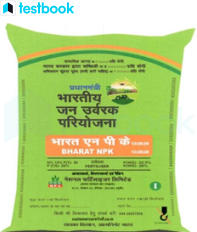
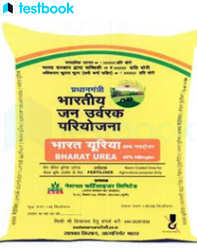
  • The Ministry of Chemicals and Fertilisers has announced that it has been decided to implement One Nation One Fertiliser by introducing a “Single Brand for Fertilisers and Logo” under the fertiliser subsidy scheme named “Pradhanmantri Bhartiya Jan Urvarak Pariyojna”.

Key Points

  • Under the One Nation One Fertiliser (ONOF) Scheme, companies are allowed to display their name, brand, logo and other relevant product information only on one-third space of their bags.
  • On the remaining two-thirds space, the “Bharat” brand and Pradhanmantri Bharatiya Jan Urvarak Pariyojana logo will have to be shown.
  • The single brand name for UREA, Di-Ammonium Phosphate (DAP), Muriate of potash (MOP) and Nitrogen Phosphorus Potassium(NPK) etc. would be BHARAT UREA, BHARAT DAP, BHARAT MOP and BHARAT NPK etc. respectively for all Fertiliser Companies, State Trading Entities (STEs) and Fertiliser Marketing Entities (FMEs).
  • This scheme applies to both public & private sector companies.
  • It will bring about uniformity in fertiliser brands across the country

9

'100 Smart Cities Mission' was launched by Indian Government in the year _______.

  1. ((a))

    2014

  2. ((b))

    2015

  3. ((c))

    2016

  4. ((d))

    2013

Show Answer
Answer: ((b))

2015

The correct answer is 2015.

Key Points100 Smart Cities Mission:

  • It was launched on 25 June 2015. Hence statement 2 is correct.
  • Smart Cities Mission envisions developing an area within 100 cities in the country as model areas based on an area development plan.
  • Each city is to create a Special Purpose Vehicle (SPV), headed by a full-time CEO, to implement the Smart Cities Mission.
  • The Centre and state governments will provide funding to the company, as equal contributions.
  • The company has to raise additional funds from the financial market as debt or equity.
  • The selection of cities is done in two stages.
  • In the first, 100 smart cities were distributed among the states and UTs on the basis of equitable criteria.
  • In the second stage, each potential city had prepared its Smart City Proposals, which contained the model chosen (retrofitting or redevelopment or greenfield development or a mix thereof) and additionally include a pan-city dimension.
10

Which of the following was a result of the Non-Cooperation and Khilafat movements?

  1. ((a))

    Lawyers attended courts.

  2. ((b))

    Students went to schools and colleges run by the government.

  3. ((c))

    The working class went on strike in many towns and cities.

  4. ((d))

    Peasants carried loads for colonial officers.

Show Answer
Answer: ((c))

The working class went on strike in many towns and cities.

The correct answer is The working class went on strike in many towns and cities.

  • Non-cooperation Movement was conducted from September 1920 to February 1922. It was initiated by Gandhi after the Jallianwala Bagh Massacre.
  • People started protesting with Non-Ahimsa and at the same time boycotted British goods.
  • After the Chauri-Chaura incident, Gandhi withdrew the movement.
  • The Khilafat Movement was essentially a movement to express Muslim support for the Caliph of Turkey against the allied powers particularly Britain.
  • The Muslims were especially upset about the future of the Islamic places of worship after the allied powers had partitioned the Turkish Empire.
  • Maulana Abul Kalam Azad, Dr. M.A. Ansari and the Ali brothers were the prominent leaders of the movement.
  • Gandhiji supported the Khilafat movement to unite Hindu and the Muslims.
  • By the mid-1920s, the Khilafat leaders joined hands with Gandhi's Non-Cooperation Movement.
  • In both the movements the working class went on strike in many towns and cities.
11

 Name the species of marine tardigrade discovered by CUSAT researchers, which pays homage to ISRO's Chandrayaan-3 mission?

  1. ((a))

    Batillipes keralensis

  2. ((b))

    Batillipes chandrayaani

  3. ((c))

     Stygarctus keralensis Isroei

  4. ((d))

    Isroneus kalami

Show Answer
Answer: ((b))

Batillipes chandrayaani

The correct answer is Batillipes chandrayaani

In News

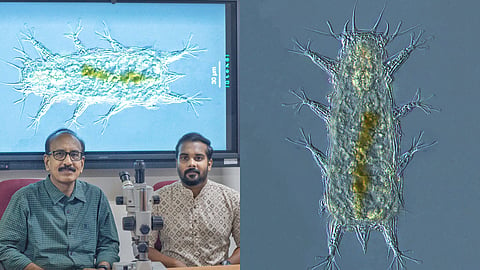
  • The newly discovered species of marine tardigrade by researchers from the Department of Marine Biology, Cochin University of Science and Technology (CUSAT) has been named Batillipes chandrayaani.

Key Points

  • This species was found in the intertidal beach sediments of Mandapam coast, Tamil Nadu, as part of a broader marine biodiversity survey.
  • Batillipes chandrayaani is named in honor of Chandrayaan-3, ISRO's successful lunar south pole landing mission in 2023, highlighting the significance of exploration and discovery both in space and marine environments.
  • The species measures about 0.15 millimeters in length and 0.04 millimeters in width, featuring four pairs of legs similar to other tardigrades.
  • This discovery marks the third marine tardigrade described from Indian waters and underscores the immense biodiversity within India's coastal ecosystems, reinforcing the importance of their conservation.
  • Tardigrades, including Batillipes chandrayaani, are known for their extraordinary resilience and survival abilities in extreme conditions, furthering our understanding of life's adaptability.

(L-R) Senior Prof Dr S Bijoy Nandan, Department of Marine Biology (left) and  Vishnudattan N.K, research scholar, Batillipes Chandrayaani.

12

Which of the following is not a financial inclusion scheme?

  1. ((a))

    Pradhan Mantri Jandhan Yojana

  2. ((b))

    Suraksha Bandhan Scheme

  3. ((c))

    Atal Pension Yojana

  4. ((d))

    HRIDAY

Show Answer
Answer: ((d))

HRIDAY

The correct answer is HRIDAY.

Key Points

  • HRIDAY
  • It is National Heritage City Development and Augmentation Yojana.
  • The aim was to bring together urban planning, economic growth and heritage conservation in an inclusive manner & with the objective of preserving the heritage character of the city.
  • The Scheme has supported the development of core heritage linked civic infrastructure projects which includes revitalization of urban infrastructure for areas around heritage, religious, cultural and tourism assets of the cities.

Additional Information

  • Pradhan Mantri Jandhan Yojana
  • It is a National Mission for Financial Inclusion to ensure access to financial services, namely, basic savings & deposit accounts, remittance, credit, insurance, pension in an affordable manner.
  • Under the scheme, a basic savings bank deposit (BSBD) account can be opened in any bank branch or Business Correspondent (Bank Mitra) outlet, by persons not having any other account.
  • Suraksha Bandhan Scheme
  • It is a drive that aims to take forward the Government’s objective of creating a universal social security system in the country, targeted especially at the poor and the underprivileged.
  • It facilitates enrolment under Pradhan Mantri Suraksha Bima Yojana (PMSBY) and Pradhan Mantri Jeevan Jyoti Bima Yojana (PMJJBY).
  • Atal Pension Yojana
  • It was launched on 09.05.2015 to create a universal social security system for all Indians, especially the poor, the underprivileged and the workers in the unorganised sector.
  • It is administered by Pension Fund Regulatory and Development Authority (PFRDA).
  • It aims at the unorganized sector such as maids, gardeners, delivery boys, etc.
13

In which of the following states did the 38th National Games take place from 28 January to 14 February 2025?

  1. ((a))

    Punjab

  2. ((b))

    Bihar 

  3. ((c))

    Goa

  4. ((d))

    Uttarakhand

Show Answer
Answer: ((d))

Uttarakhand

The correct answer is Uttarakhand.

Key Points

  • The 38th National Games are scheduled to take place in Uttarakhand from 28 January to 14 February 2025.
  • Uttarakhand has been selected as the host state for the National Games, marking a significant event in the region's sporting history.
  • This will be the first time Uttarakhand will host the National Games, showcasing its infrastructure and organizational capabilities.
  • The National Games will include a variety of sports disciplines, promoting sportsmanship and athletic excellence across the nation.
  • Preparations are underway to ensure the successful execution of the games, including the development of sports facilities and accommodation for athletes.

Additional Information

  • National Games of India
  • The National Games is a multi-sport event held in India, involving athletes from different states and union territories.
  • It is organized by the Indian Olympic Association and is considered a significant event for promoting sports in the country.
  • The games aim to identify and nurture sporting talent, providing a platform for athletes to compete at a high level.
  • The first edition of the National Games was held in 1924 in Lahore, then part of undivided India.
  • Uttarakhand
  • Uttarakhand is a state in northern India, known for its natural beauty and pilgrimage sites.
  • It was formed on 9 November 2000 as the 27th state of India, carved out from the state of Uttar Pradesh.
  • The state capital is Dehradun, which is also the largest city in the region.
  • Uttarakhand is often referred to as the "Land of the Gods" due to the numerous Hindu temples and pilgrimage centers found throughout the state.
  • Sports Infrastructure in India
  • India has been investing significantly in sports infrastructure to promote various sports at the grassroots and professional levels.
  • Sports complexes, stadiums, and training centers are being developed across the country to support athletes.
  • Government initiatives like the Khelo India program aim to strengthen the sports ecosystem in India.
  • Hosting major sports events like the National Games helps boost local economies and encourages youth participation in sports.
  • Indian Olympic Association (IOA)
  • The Indian Olympic Association is the body responsible for selecting athletes to represent India at the Olympic Games and other international athletic meets.
  • It also oversees the organization of the National Games and other multi-sport events within the country.
  • The IOA works to promote the Olympic movement and the values of sportsmanship and fair play in India.
  • Founded in 1927, the IOA is affiliated with the International Olympic Committee (IOC) and the Olympic Council of Asia (OCA).
14

Which ministry launched the Setubandha Scholar Scheme?

  1. ((a))

    Ministry of Culture

  2. ((b))

    Ministry of Education

  3. ((c))

    Ministry of Skill Development

  4. ((d))

    Ministry of Home Affairs

Show Answer
Answer: ((b))

Ministry of Education

The Correct Answer is Ministry of Education.

In News

  • Gurukul Students To Get Research Opportunities In IITs, Scholarships Up To Rs 2 Lakh.

Key Points

  • Ministry of Education and IKS division of Central Sanskrit University launched the Setubandha Scholar Scheme.
  • Aims to integrate Gurukul-trained students into mainstream academia.
  • Open to those trained in traditional Vidyās and Kalās under the Gurukula system.
  • Scholars can pursue Postgraduate and Ph.D. studies, even at top institutes like IITs.
  • Degrees will be awarded by the Central Sanskrit University.
  • Monthly fellowship: ₹40,000 to ₹65,000.
  • Annual contingency grant: ₹1 lakh for PG, ₹2 lakh for PhD.
  • Eligibility:
  • Max age: 32 years
  • Minimum 5 years of study under a Guru/Gurukul
  • No formal degree required
  • Must show excellence in traditional knowledge
  • Applications open until August 15.
  • Scheme serves as a bridge between ancient traditions and modern research.
  • Supports the revival and mainstreaming of Indian Knowledge Systems (IKS).
15

Which of the following kingdoms was not annexed by East India Company through Doctrine of Lapse? 

  1. ((a))

    Udaipur

  2. ((b))

    Nagpur

  3. ((c))

    Satara

  4. ((d))

    Kittur

Show Answer
Answer: ((d))

Kittur

The correct answer is Kittur.

Key Points

  • Queen Chennamma oversaw the princely state of Kittur.
  • In 1824, after the deaths of her husband and son, she adopted a new son and tried to designate him as heir to the throne, but the British refused to recognise it.
  • At that point, it was taken over by the East India Company.
  • Satara (1848) was the first state to be incorporated under the Doctrine of Lapse.
  • After that came Jaipur and Sambalpur (1849), Bhagat (1850), Udaipur (1852), Jhansi (1853), and Nagpur (1854).

Additional Information

  • Doctrine of Lapse:
  • Lord Dalhousie, the English East India Company's governor general from 1848 to 1856, introduced the Doctrine of Lapse.
  • The East India Company used the Doctrine of Lapse in India until 1859.
  • According to the doctrine, if a princely state that is under the company's vassalage does not have an heir, then its land will be annexed.
16

Which bacterial disease is specifically confirmed by a serological method?

  1. ((a))

     Plague

  2. ((b))

    Diphtheria

  3. ((c))

    Typhoid

  4. ((d))

    Pneumonia

Show Answer
Answer: ((c))

Typhoid

The correct answer is Typhoid.

Key Points

  • Typhoid is a bacterial infection caused by Salmonella typhi, which spreads through contaminated food and water.
  • The disease is commonly diagnosed using the Widal test, a serological test that detects antibodies against S. typhi antigens.
  • The Widal test evaluates the presence of O (somatic) and H (flagellar) antigens in the blood, which are specific to typhoid fever.
  • This method is preferred in areas with limited access to advanced diagnostic tools and is widely used for diagnosing typhoid in endemic regions.
  • While the Widal test is widely used, its results must be interpreted cautiously alongside the patient’s clinical history and other diagnostic findings.

Additional Information

  • Widal Test:
  • Developed in 1896 by Georges-Fernand Widal, it remains one of the most common methods to diagnose typhoid fever.
  • A fourfold increase in antibody titers in two consecutive samples taken 7–10 days apart confirms the diagnosis of typhoid.
  • False-positive results may occur due to previous infections or vaccination with S. typhi.
  • Other Diagnostic Methods for Typhoid:
  • Blood Culture: The most reliable method, especially in the early stages of the disease.
  • Bone Marrow Culture: Considered the most sensitive diagnostic method but is invasive and rarely used.
  • Typhidot Test: A rapid diagnostic test that detects IgM and IgG antibodies specific to typhoid.
  • Symptoms of Typhoid:
  • High fever, abdominal pain, weakness, headache, loss of appetite, and constipation or diarrhea.
  • In severe cases, it can lead to intestinal perforation and sepsis.
  • Prevention of Typhoid:
  • Vaccination: Typhoid conjugate vaccines and oral live-attenuated vaccines are available.
  • Ensure safe drinking water, proper sanitation, and hygiene to prevent transmission.
17

Where is the Mattala International Airport located?

  1. ((a))

    Nepal

  2. ((b))

    Sri Lanka

  3. ((c))

    Myanmar

  4. ((d))

    Bhutan

Show Answer
Answer: ((b))

Sri Lanka

The correct answer is Sri Lanka.

Key Points

  • Mattala Rajapaksa International Airport (MRIA) is located in Mattala, near Hambantota in the southern region of Sri Lanka.
  • The airport was officially inaugurated on March 18, 2013, and is the second international airport in Sri Lanka after Bandaranaike International Airport near Colombo.
  • It was named after the former Sri Lankan President Mahinda Rajapaksa, under whose tenure the airport was constructed.
  • The airport was envisioned to boost regional development and support tourism in the southern part of the country.
  • Despite its modern infrastructure, MRIA has often been referred to as the "world's emptiest airport" due to its low passenger and cargo traffic.

Additional Information

  • Tourism in Sri Lanka:
  • Sri Lanka is known for its beautiful beaches, historic sites, and wildlife reserves, making tourism a significant contributor to its economy.
  • The southern region, where Mattala is located, is famous for attractions like Yala National Park and Galle Fort.
  • Significance of Hambantota:
  • Hambantota is a strategic location for trade and logistics due to its proximity to international shipping routes.
  • The region also houses the Hambantota Port, developed with Chinese investments.
  • Challenges Faced by MRIA:
  • The airport has struggled with low operational activity since its opening.
  • Efforts have been made to attract more airlines and cargo services to improve its utilization.
  • Infrastructure:
  • MRIA is equipped with modern facilities, including a 3,500-meter runway capable of accommodating large aircraft like the Airbus A380.
  • The airport aims to function as a regional aviation hub in South Asia.
18

P's salary is 60% of Q's salary which is 50% of R's salary. What percentage of R's salary is P's salary?

  1. ((a))

    30%

  2. ((b))

    40%

  3. ((c))

    20%

  4. ((d))

    24%

Show Answer
Answer: ((a))

30%

Given:

P's salary is 60% of Q's salary which is 50% of R's salary.

Calculation

P's Salary = 60% of Q

= 60% of (50% of R)

= (60/100)[(50/100)*100] % of R

= 30% of R

∴ P's salary is 30% of R's salary.

Alternate Method 

Let Q salary be 100

P salary = 60

R salary = 200

P salary = 60/200 × 100 = 30% of R salary

19

In still water, the speed of a motorboat is 15 km/h. The boat travels 30 km downstream and returns in 4 hours and 30 minutes. The stream's speed (in km/h) is:

  1. ((a))

    4

  2. ((b))

    7

  3. ((c))

    5

  4. ((d))

    3

Show Answer
Answer: ((c))

5

GIVEN:

Speed of a motorboat is 15 km/h

distance of boat in downstream is 30 km

distance of boat in upstream is 30 km

Total time is 4hrs 30 minutes

FORMULA USED:

Distance = Speed  × Time 

Relative speed in downstream = (speed of motorboat + speed of stream)

Relative speed in upstream = (speed of motorboat – speed of stream )

CALCULATION :

As 1hour = 60 minutes

To convert minutes into hours divide it by 60, 

⇒ Time = (4 + 30/60) hours =  9/2 hours    

Now, let the stream's speed be x

⇒ Downstream speed = ( 15 + x) km/h

⇒ Upstream speed = ( 15 -x ) km/h

Now, Distance = speed × time

⇒ Hence, (Distance \over Speed ) = Time

⇒  (30\over( 15 + x ) ) + (30\over ( 15 -x )) = 9/2

⇒ ( (15 +x +15 - x)\over225- x^2) = 9/60 = (30 \over( 225 - x^2))= (9 \over 60) 

⇒ ( 200 = 225 - (x^2) ) = (x^2) = 25  

⇒ x = 5. 

Hence, the speed of the stream is 5 km/h.

Shortcut TrickBy hit and trial method

Let the speed of boat = u = 15km/h (given)

Let speed of the stream = v

Considering option(3), let v = 5km/h

So, Downstream speed (D) = 15 + 5 = 20km/h

Upstream speed (U) = 15 - 5 = 10km/h

Now, Total time taken = Distance/D + Distance/U

⇒ 30/20 + 30/10 = 3/2 + 3

⇒ 9/2 h = 4 h 30 mins

It satisfies the given condition. 

Hence, the speed of the stream is 5 km/h.

20

Profit earned by selling at Rs. 1540 is same as the loss incurred by selling the article for Rs. 1140. What is the selling price of the article if it sold at 25% profit?

  1. ((a))

    Rs. 1600

  2. ((b))

    Rs. 1680

  3. ((c))

    Rs. 1520

  4. ((d))

    Rs. 1675

Show Answer
Answer: ((d))

Rs. 1675

Given:

Profit earned by selling at Rs. 1540 is same as the loss incurred by selling the article for Rs. 1140

Formula:

Profit = SP – CP

Loss = CP – SP

Calculation:

Let cost price of the article be Rs. x, then

1540 – x = x – 1140

⇒ x + x = 1540 + 1140

⇒ 2x = 2680

⇒ x = 1340

Cost price of the article Rs. 1340.

∴ Selling price of the article if it is sold at 25% profit = 1340 × (125/100) = Rs. 1675.

21

A sum of ₹12,500 amounts to ₹15,500 in 4 years at the rate of simple interest. What is the rate of interest?

  1. ((a))

    3%

  2. ((b))

    4%

  3. ((c))

    5%

  4. ((d))

    6%

Show Answer
Answer: ((d))

6%

Given:

Principal (P) = 12,500

Amount (A): 15,500

Time (t) = 4 year

Formula used:

(S.I. = \frac{P \times R \times t}{100})

S.I = Amount - Principal

Calculation:

⇒ S.I. = 15,500 - 12,500

⇒ S.I. = 3,000

⇒ (3,000 = \frac{12,500 \times R \times 4}{100})

⇒ (R = \frac{3000 \times 100}{12,500 \times 4})

⇒ R = 6%

∴ correct answer is 6%

22

Y has to score 40% marks to pass the exam. He gets 20 marks and fails by 40 marks. The maximum mark of the exam is?

  1. ((a))

    100

  2. ((b))

    200

  3. ((c))

    150

  4. ((d))

    250

Show Answer
Answer: ((c))

150

Given:

Y has to score 40% marks to pass.

He gets 20 marks and fails by 40 marks

Calculation:

Let the maximum marks be x

According to the question,

⇒ 40 + 20 = 0.4 x 

⇒ 0.4 x = 60 = 150

∴  The maximum mark of the exam is 150,

23

The average of the first five natural numbers is 3. Find a new average after adding the number 2.

  1. ((a))

    2.83

  2. ((b))

    2.6

  3. ((c))

    2.5

  4. ((d))

    2

Show Answer
Answer: ((a))

2.83

Shortcut Trick

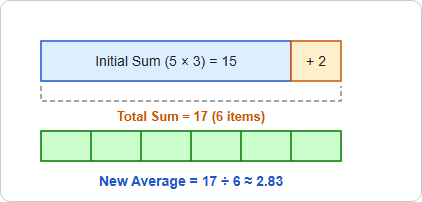
Sum of the first 5 natural numbers = 5 × 3 = 15

New sum after adding the number 2 = 15 + 2 = 17

New total number of observations = 5 + 1 = 6

New average = 17 ÷ 6 ≈ 2.83

∴ The correct answer is 2.83.

Alternate Method

Given:

Average of the first five natural numbers = 3

The new number to be added = 2

Formula Used:

Average = Sum of all observations ÷ Total number of observations

Calculations:

⇒ The first five natural numbers are 1, 2, 3, 4, and 5.

⇒ Initial Sum = 1 + 2 + 3 + 4 + 5 = 15

⇒ Total count of numbers initially = 5

⇒ New Sum after adding the number 2 = 15 + 2 = 17

⇒ New total count of numbers = 5 + 1 = 6

⇒ New Average = New Sum ÷ New Count

⇒ New Average = 17 ÷ 6 = 2.833...

⇒ New Average ≈ 2.83

∴ The correct answer is 2.83.

Additional Information

Average Formula

Average = Sum of all observations ÷ Total number of observations.

Sum of First 'n' Natural Numbers

The sum of the first 'n' natural numbers can be directly calculated using the formula: S = n × (n + 1) ÷ 2.

Combined Average

When combining multiple groups or adding new values, the new average is evaluated as (Total Old Sum + New Values Sum) ÷ (Total Old Count + New Count).

24

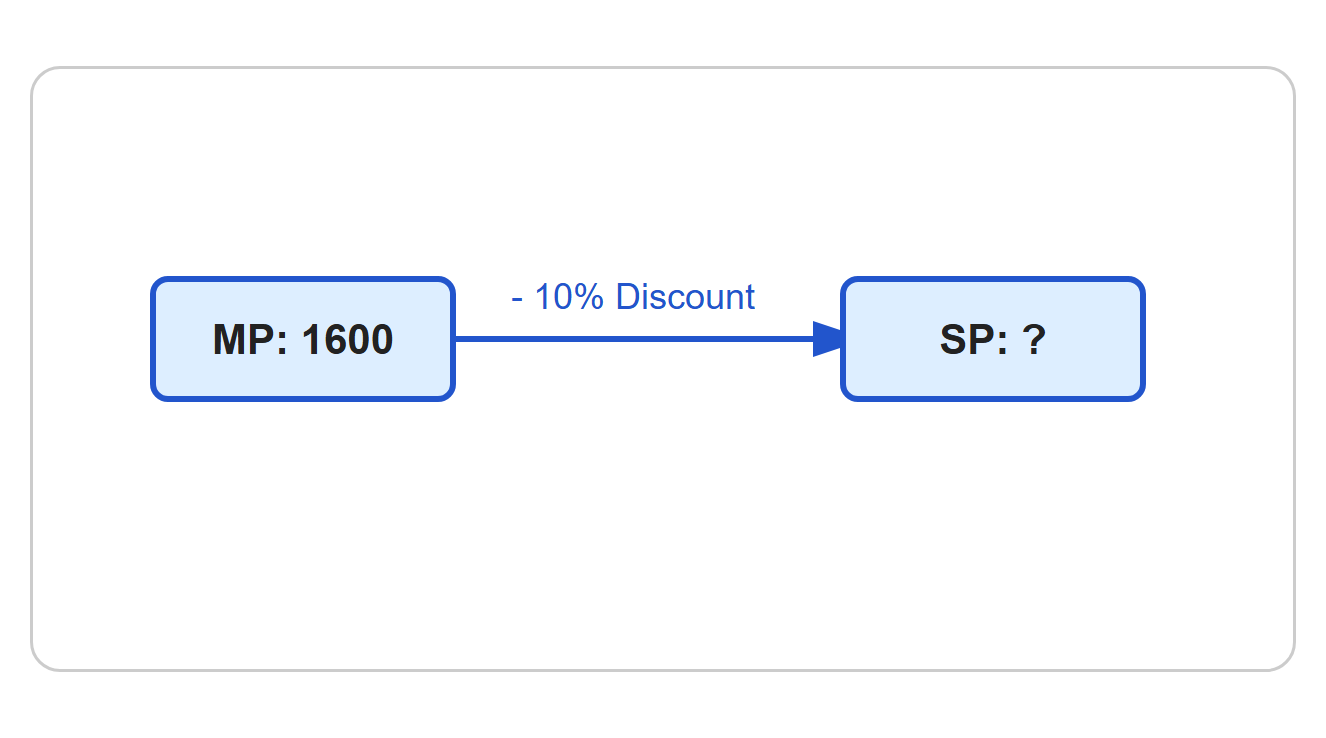
A shirt was marked at Rs. 1600. During a Diwali festival offer, 10% discount was allowed on it. What will be the selling price of the shirt?

  1. ((a))

    Rs. 1540

  2. ((b))

    Rs. 1400

  3. ((c))

    Rs. 1440

  4. ((d))

    Rs. 1240

Show Answer
Answer: ((c))

Rs. 1440

Shortcut Trick

Marked Price (MP) = Rs. 1600

Discount% = 10%

Multiplier for SP = (100 − 10) ÷ 100 = 0.9

Selling Price (SP) = 1600 × 0.9 = 1440

∴ The correct answer is Rs. 1440.

Alternate Method

Given: Marked Price = Rs. 1600, Discount Rate = 10%

Formulas: Discount = MP × (Discount% ÷ 100) | SP = MP − Discount

Discount = 1600 × (10 ÷ 100) = Rs. 160

Selling Price (SP) = 1600 − 160

Selling Price (SP) = Rs. 1440

∴ The correct answer is Rs. 1440.

Additional Information

Marked Price (MP)

The price printed on an item or the label price is called the Marked Price. Discounts are always calculated on this value.

Selling Price (SP)

The actual price at which the item is sold to the customer after deducting the discount from the MP.

25

The ages of four individuals are in the ratio 2 : 3 : 4 : 5, and the total of their ages is 140 years. Find the difference in age between the youngest and the oldest person.

  1. ((a))

    25 years

  2. ((b))

    30 years

  3. ((c))

    35 years

  4. ((d))

    40 years

Show Answer
Answer: ((b))

30 years

Given:

Ratio of ages = 2 : 3 : 4 : 5

Total age = 140 years

Formula Used:

Age of individual = (Ratio part of individual / Sum of ratio parts) × Total age

Calculations:

Sum of ratio parts = 2 + 3 + 4 + 5

⇒ Sum of ratio parts = 14

Age of youngest person (2 parts) = (\dfrac{2}{14}) × 140

⇒ Age of youngest person = 2 × 10

⇒ Age of youngest person = 20 years

Age of oldest person (5 parts) = (\dfrac{5}{14}) × 140

⇒ Age of oldest person = 5 × 10

⇒ Age of oldest person = 50 years

Difference in age = Age of oldest person - Age of youngest person

⇒ Difference in age = 50 - 20

⇒ Difference in age = 30 years

∴ The difference in age between the youngest and the oldest person is 30 years.

26

The ratio of weekly incomes of A and B is 9 : 7 and the ratio of their expenditures is 4 : 3. If each saves Rs. 200 per week, then the sum of their weekly incomes is

  1. ((a))

    Rs. 3,200

  2. ((b))

    Rs. 4,200

  3. ((c))

    Rs. 4,800

  4. ((d))

    Rs. 5,600

Show Answer
Answer: ((a))

Rs. 3,200

Shortcut Trick

Multiply the expenditure ratio by 2 to equalise the differences between the ratios.

Income ratio = 9 : 7

Expenditure ratio = (4 : 3) × 2 = 8 : 6

Savings in parts = Income − Expenditure = (9 − 8) = 1 part for A and (7 − 6) = 1 part for B.

Given 1 part = Rs. 200.

Sum of their incomes = (9 + 7) parts = 16 × 200 = Rs. 3200.

∴ The correct answer is Rs. 3200.

Alternate Method

Given:

Ratio of incomes of A and B = 9 : 7

Ratio of expenditures of A and B = 4 : 3

Savings of each per week = Rs. 200

Income = Expenditure + Savings

A:

Income: 9x

Exp: 9x − 200 200

B:

Income: 7x

Exp: 7x − 200 200

Exp Ratio → (9x − 200) : (7x − 200) = 4 : 3

Formula Used:

Income = Expenditure + Savings

Calculations:

⇒ Let the incomes of A and B be 9x and 7x respectively.

⇒ Expenditure of A = (9x − 200)

⇒ Expenditure of B = (7x − 200)

⇒ According to the given data, (9x − 200) / (7x − 200) = 4 / 3

⇒ 3 × (9x − 200) = 4 × (7x − 200)

⇒ 27x − 600 = 28x − 800

⇒ 28x − 27x = 800 − 600

⇒ x = 200

⇒ Sum of their weekly incomes = 9x + 7x = 16x

⇒ 16 × 200 = Rs. 3200

∴ The correct answer is Rs. 3200.

Additional Information

Ratio Balancing Method

When a constant value is added or subtracted from two terms of a ratio, the difference between the terms must remain constant. Equalise the difference between parts to solve directly without equations.

Cross-Multiplication Trick

For initial ratio a : b, changed to c : d by adding/subtracting x and y: the value of 1 part = (c × y − d × x) ÷ (a × d − b × c).

Income, Expenditure & Savings

The fundamental relation is always Income = Expenditure + Savings. This applies equivalently to monthly, weekly or annual data as long as units remain consistent.

27

A bag contains Rs. 1 and 50 paise coins and the ratio of their value is 30 : 11. The total number of coins are 520. Find the number of 50 paise coins?

  1. ((a))

    210

  2. ((b))

    220

  3. ((c))

    200

  4. ((d))

    400

Show Answer
Answer: ((b))

220

Given

Bag contains Rs. 1, 50 paise, coins

The ratio of value is 30 : 11

The total no. of coins are 520

Concept used

Ratio concept used

Calculation

Value of Rs. 1 and 50 paise coins = 30 : 11

Number of coins = 30 : 22

⇒ 52 part = 520

⇒ 1p = 10

⇒ 22p = 10 × 22

⇒ 220

Calculation:

Rs. 1 = 100 paise 

Let the total number of 100 paise coins be x

Then 50 paise coins are 520 – x

According to the question,

⇒ 100x/50(520 – x) = 30/11

⇒ 11 × 100x = 30 × 50(520 – x)

⇒ 1,100x = 7,80,000 – 1,500x

⇒ 2,600x = 7,80,000

⇒ x = 7,80,000/2,600

⇒ x = 300

50 paise coins,

⇒ 520 – 300 = 220

∴ 50 paise coins are 220.

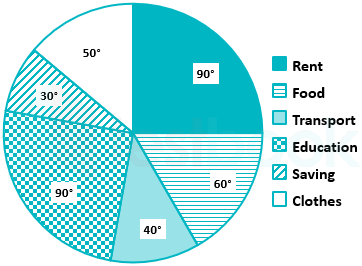
The following pie chart shows the distribution of expenses (in degrees) of a family during 2016. Total income of the family in 2016 = Rs. 1080000

28

How much they spend (in Rs.) on clothes?

  1. ((a))

    150000

  2. ((b))

    180000

  3. ((c))

    200000

  4. ((d))

    240000

Show Answer
Answer: ((a))

150000

Total expense = 360°

Expense on clothes = 50°

Let, expense on cloth = Rs. x

According to problem,

⇒ 50/360 = x/108000

⇒ x = 1080000 × 5/36

⇒ x = 150000

∴ They spent on cloths = Rs. 150000

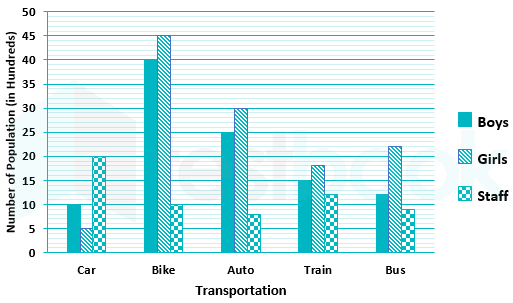
Direction: Read the following graph carefully and answer the questions that follow: The graph shows the number of Boys, Girls and Staff of a college who are using different types of transportations.

29

What is the average number of Cars used by three category of people?

  1. ((a))

    1123

  2. ((b))

    1266

  3. ((c))

    1234

  4. ((d))

    1167

Show Answer
Answer: ((d))

1167

Given:

BoysGirlsStaff
Car10520
Bike404510
Auto25308
Train151812
Bus12229

Formula used:

Average = Sum of observation/Total number of observation

Calculation:

Total cars used by three types of people's = 1000 + 500 + 2000 = 3500

∴ Required average = 3500/3 = 1166.66 ≈ 1167

30

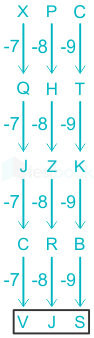
A series is given with one term missing. Select the correct alternative from the given ones that will complete the series.

XPC, QHT, JZK, CRB, ?

  1. ((a))

    YMV

  2. ((b))

    VJS

  3. ((c))

    WKT

  4. ((d))

    XLU

Show Answer
Answer: ((b))

VJS

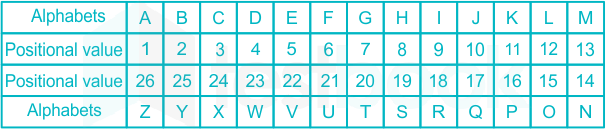
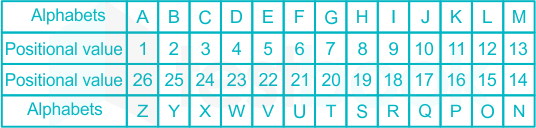
According to the English alphabets and their positional values: 

<br>

The pattern followed in the given series is:  

  • First alphabet is decreased to 7 positional values.
  • Second alphabet is decreased to 8 positional values.
  • Third alphabet is decreased to 9 positional values.

<br>

Hence the correct answer is option 2).

31

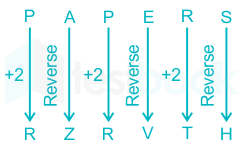
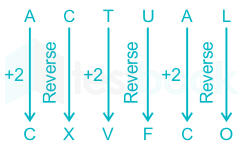
In a certain code language, ‘PAPERS’ is written as ‘RZRVTH’. What is the code for ‘ACTUAL’ in that code language?

  1. ((a))

    CYUFCO

  2. ((b))

    CYVFCO

  3. ((c))

    CXUFCO

  4. ((d))

    CXVFCO

Show Answer
Answer: ((d))

CXVFCO

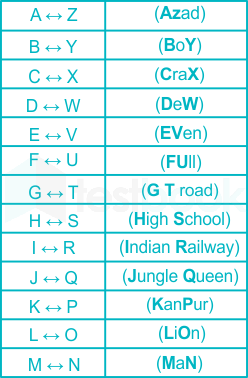
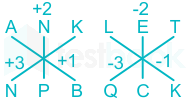
The positions of the letters according to the English alphabet series:

The pattern for this code is as follows;

1st, 3rd and 5th letter is replaced by +2 and 2nd, 4th and 6th letter is replaced by reverse letter.

Similarly;

Hence, "CXVFCO" is the correct answer.

Shortcut Trick

Shortcut to remember the reverse positional letters.

32

Read the given statement and conclusion carefully. Assuming that the information given in the statement is true, even if it appears to be at variance with commonly known facts, decide which of the given conclusion logically follow(s) from the statements.

Statements:

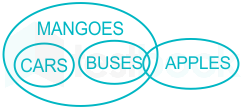
All cars are mangoes

All buses are mangoes

Some apples are buses.

Conclusions:

I. Some cars are buses.

II. Some mangoes are cars.

III. Some mangoes are apples.

  1. ((a))

    Only conclusion I and II follow.

  2. ((b))

    Only conclusions I and III follow.

  3. ((c))

    Only conclusion I follows.

  4. ((d))

    Only conclusion II and III follow.

Show Answer
Answer: ((d))

Only conclusion II and III follow.

The least possible venn diagram is:

I. Some cars are buses. → False (It can be possible but it is not definite)

II. Some mangoes are cars. → True (All cars are mangoes)

III. Some mangoes are apples. → True (as, all buses are mangoes and some apples are buses)

Hence, only conclusion II and III follow.

33

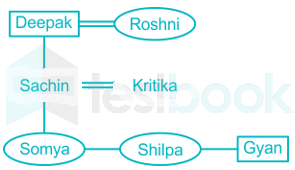
Somya is the daughter of Sachin. Gyan is the only brother of Shilpa who is the daughter of Kritika. Sachin and Kritika are married. Roshni is the wife of Deepak who is the father-in-law of Kritika. How is Gyan related to Roshni?

  1. ((a))

    Father

  2. ((b))

    Grandson

  3. ((c))

    Grand-father

  4. ((d))

    Grand-mother

Show Answer
Answer: ((b))

Grandson

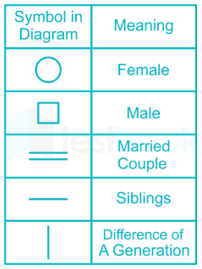
Family Chart

The family tree according to the question:

Thus, Gyan is the grandson of Roshni.

34

If ‘A’ denotes ‘+’, ‘B’ denotes ‘×’, ‘C’ denotes ‘–’ and ‘D’ denotes ‘÷’, then what will come in place of ‘?’ in the following equation?

71 A 3 B 2 C 6 B (65 D 13) C 7 B 4 = ?

  1. ((a))

    18

  2. ((b))

    19

  3. ((c))

    44

  4. ((d))

    14

Show Answer
Answer: ((b))

19

From the given information:

A denotes ‘+’

‘B’ denotes ‘×’

‘C’ denotes ‘–’

‘D’ denotes ‘÷’

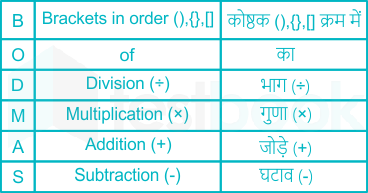
Now we substitute the values and solve the equation using BODMAS rule:

<br>

71 A 3 B 2 C 6 B (65 D 13) C 7 B 4 = ?

71 + 3 × 2 - 6 × (65 ÷ 13) - 7 × 4 = ?

71 + 3 × 2 - 6 × 5 - 7 × 4 =?

71 + 6 - 30 - 28 =?

77 - 30 - 28 = ?

19 = Answer

Hence the correct answer is option 2)

35

Choose the correct mirror image of the given problem figure when the mirror is placed to the right of the figure.

  1. ((a))

  2. ((b))

  3. ((c))

  4. ((d))

Show Answer
Answer: ((c))

The mirror image would be as follows;

Hence, the answer is option 3.

36

In a certain code language 'ANKLET' is written as 'NPBQCK'. In that code language how 'MEDIUM' will be written?   

  1. ((a))

    NGGHSJ 

  2. ((b))

    NGGFSL 

  3. ((c))

    GGNLSF 

  4. ((d))

    GGNJSH 

Show Answer
Answer: ((d))

GGNJSH 

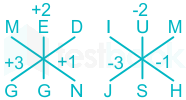
In a certain coding language,

Similarly,

Hence, 'GGNJSH' is the correct answer.

37

When the letters of the word 'CADMP' are re arranged in alphabetical series, then how many such letters as in the given word remain in the same position?

  1. ((a))

    Four

  2. ((b))

    One

  3. ((c))

    Three

  4. ((d))

    Two

Show Answer
Answer: ((c))

Three

The Logic here is as follows:

Given word is 'CADMP' and after rearranging it in alphabetical series we get:

Position1st2nd3rd4th5th
Given WordCADMP
After RearrangementACDMP


Therefore, the position of D, M, and P remains the same.

Hence, the correct answer is "Three".

38

Find the missing number in given series:

5, 11, 17, 23, 31, ?

  1. ((a))

    14

  2. ((b))

    26

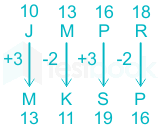
  3. ((c))

    41

  4. ((d))

    37

Show Answer
Answer: ((c))

41

The logic followed here is:

Logic: Series based on alternative prime number.

Prime numbers 5 to 50 =  5, 7, 11, 13, 17, 19, 23, 29, 31, 37, 41, 43, 47.

After Skipping the series is: 5, 11, 17, 23, 31, 41.

Hence, the correct answer is "Option 3".

39

Select the option that is related to the third term in the same way as the second term is related to the first term.

Circumference : Circle ∷ Perimeter : ?

  1. ((a))

    Breadth 

  2. ((b))

    Square

  3. ((c))

    3D

  4. ((d))

    Big

Show Answer
Answer: ((b))

Square

The logic given is:-

Circumference is formula for Circle

Similarly,

Perimeter is formula for Square.

Thus, the correct answer is “Square”.

40

Select the option that is related to the third term in the same way as the second term is related to the first term.

AEFG : DCIE :: JMPR : ?

  1. ((a))

    MJSP

  2. ((b))

    MSKP

  3. ((c))

    MKSP

  4. ((d))

    MSJP

Show Answer
Answer: ((c))

MKSP

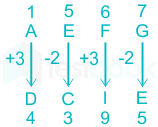
Here, we use the table given below;

The logic followed is;

In AEFG : DCIE →

Similarly;

In JMPR : ? →

Here, MKSP will be the next term.

Hence, Option (3) is the answer.

41

Which of the following is an essential role of ROM in a computer system?

  1. ((a))

    Storing files created by the user

  2. ((b))

    Storing data temporarily

  3. ((c))

    Storing data permanently for boot-up processes

  4. ((d))

    Performing calculations

Show Answer
Answer: ((c))

Storing data permanently for boot-up processes

The correct answer is Storing data permanently for boot-up processes.

Key Points

  • Read-Only Memory (ROM) is a type of non-volatile memory used in computers and other electronic devices.
  • Data stored in ROM is permanent and cannot be modified during normal operations, making it ideal for storing firmware.
  • It contains the bootstrap code, which is essential for initializing and booting up the computer system when it is powered on.
  • ROM ensures that the computer has the necessary instructions to start up and load the operating system.

Additional Information

  • Random Access Memory (RAM)
  • RAM is a type of volatile memory that is used to store data temporarily while the computer is in use.
  • It allows data to be read and written quickly, enabling efficient processing and multitasking.
  • When the computer is turned off, all data stored in RAM is lost, making it unsuitable for permanent storage.
  • Storage Devices
  • Storage devices such as hard drives, SSDs, and USB drives are used to store files created by the user and other data permanently.
  • Unlike ROM, these devices allow data to be modified and deleted as needed.
  • Central Processing Unit (CPU)
  • The CPU is the primary component of a computer that performs calculations and executes instructions.
  • It works in conjunction with RAM and ROM to process data and run programs.
42

​Which of the following is the Microsoft cloud service?

  1. ((a))

    DropBox

  2. ((b))

    OneDrive

  3. ((c))

    iCloud

  4. ((d))

    Talend

Show Answer
Answer: ((b))

OneDrive

The correct answer is OneDrive

Key Points

  • OneDrive is the cloud storage service provided by Microsoft.
  • It allows users to store files and data in the cloud, making them accessible from anywhere with an internet connection.
  • OneDrive integrates seamlessly with other Microsoft services like Office 365, providing a unified experience for users.
  • It offers features such as file sharing, real-time collaboration, and automatic backup of data.

Additional Information

  • DropBox is a cloud storage service but it is not provided by Microsoft; it is developed by Dropbox, Inc.
  • iCloud is Apple's cloud storage service, designed primarily for users of Apple's ecosystem.
  • Talend is a software company that provides data integration and data management solutions, not a cloud storage service.
  • Microsoft's OneDrive offers a variety of plans, including free storage options and premium plans with additional storage and features.
43

MS - In Excel, cells can contain text, numbers, and dates. What is the default alignment of numbers in a cell?

  1. ((a))

    Left

  2. ((b))

    Justify

  3. ((c))

    Center

  4. ((d))

    Right

Show Answer
Answer: ((d))

Right

The Correct Answer is Right.

Key Points

  • In Microsoft Excel, a range is a collection of cells.
  • A range can be 2 or more cells and those cells don't necessarily have to be adjacent to each other.
  • Excel allowed you to create a chart by selecting the data and pressing the F11 key.
  • In response, Excel created a default chart on a new sheet.
  • You can also use the Alt+F1 shortcut, which creates a default chart as a chart object embedded in the current worksheet.

Additional Information

  • Worksheet and workbook specifications and limits:
  • Total number of rows and columns on a worksheet - 1,048,576 rows by 16,384 columns
  • Column width - 255 characters
  • Page breaks - 1,026 horizontal and vertical
  • Row height - 409 points
44

________ keyboard shortcut is used to cut the selected data in MS-Word 2010.

  1. ((a))

    Ctrl + Z

  2. ((b))

    Ctrl + V

  3. ((c))

    Ctrl + O

  4. ((d))

    Ctrl + X

Show Answer
Answer: ((d))

Ctrl + X

The correct answer is Ctrl + X.

Key Points

  • The keyboard shortcut Ctrl + X is used to cut the selected data in MS-Word 2010.
  • When you press Ctrl + X, the selected text or object is removed from its original location and stored in the clipboard.
  • This shortcut is consistent across various versions of Microsoft Word and other Microsoft Office applications.
  • After cutting, you can use the Ctrl + V shortcut to paste the cut data at a different location.

Additional Information

  • Clipboard:
  • The clipboard is a temporary storage area for data that the user wants to copy from one place to another.
  • When data is cut or copied, it is stored in the clipboard until it is overwritten by new data.
  • Other Common Shortcuts:
  • Ctrl + C: Copy the selected data to the clipboard.
  • Ctrl + V: Paste the data from the clipboard to the desired location.
  • Ctrl + Z: Undo the last action.
  • Ctrl + O: Open a document.
  • Microsoft Office Suite:
  • Microsoft Word is a part of the Microsoft Office suite, which includes other applications like Excel, PowerPoint, and Outlook.
  • These applications share many common keyboard shortcuts to enhance productivity.
  • Functionality of Cut, Copy, and Paste:
  • Cutting removes the data from its original location, while copying leaves the original data intact.
  • Pasting allows the user to insert the cut or copied data into a new location.
45

Which of the following does not come under cyber-crime offence according to IT Act 2000 ?

  1. ((a))

    Distributing pirated software over internet

  2. ((b))

    Misusing personal information over internet

  3. ((c))

    Stealing a brand new iPad from a computer store

  4. ((d))

    Using fake email messages to get personal information

Show Answer
Answer: ((c))

Stealing a brand new iPad from a computer store

The correct answer is Stealing a brand new iPad from a computer store.

Key Points

  • Stealing a brand new iPad from a computer store is a physical theft and does not fall under cyber-crime offences as per the IT Act 2000.
  • Cyber-crime offences under the IT Act 2000 typically involve illegal activities conducted through digital means. 
  • Examples include distributing pirated software over the internet, misusing personal information online, and using fake email messages to obtain personal information.
  • Physical theft of hardware, such as an iPad, is covered under different laws and regulations related to physical theft and property crimes.

Additional Information

  • The IT Act 2000 was enacted to provide a legal framework for electronic governance by giving recognition to electronic records and digital signatures.
  • It also aims to prevent and address offences related to cyber-crimes and electronic commerce.
  • Some specific offences covered under the IT Act 2000 include hacking, identity theft, and cyber terrorism.
  • The act also provides the legal infrastructure for e-commerce in India.
46

Which of the following key combinations can be used to start a slideshow in MS PowerPoint 2016 from the current slide?

  1. ((a))

    Ctrl + F5 

  2. ((b))

    Shift + F4

  3. ((c))

    Ctrl + F4

  4. ((d))

    Shift + F5

Show Answer
Answer: ((d))

Shift + F5

The Correct Answer is Shift+F5.

Key Points

  • Click the Start From Beginning command on the Quick Access Toolbar, or press the F5 key at the top of your keyboard.
  • The presentation will appear in full-screen mode.
  • Select the Slide Show view command at the bottom of the PowerPoint window to begin a presentation from the current slide.
  • When all the slides of a PowerPoint presentation are set in series and then presented to a group of people, where each slide appears one after the other, is a set pattern, this is known as a PowerPoint slide show.
  • A slide show, or slideshow, is a presentation of a series of still images (slides) on a projection screen or electronic display device, typically in a prearranged sequence.
  • The changes may be automatic and at regular intervals or they may be manually controlled by a presenter or the viewer.

Additional Information

Six steps for creating a slide show

  1. Plan your slide show. Before getting too deep into your slide show project, it's a good idea to select and save the photos and videos you want to use.
  2. Import media.
  3. Launch your slide show app.
  4. Add text, music, and transitions.
  5. Choose your theme.
  6. Record, save, and share your slide show.

There are two main types of slides that people use as visual aids in different scenarios: structured and free-form. In this lesson, look at an overview of visual aids, structured slides, and free-formed slides.

47

______ is a small, portable flash memory card that plugs into a computer’s USB port and functions as a portable hard drive.

  1. ((a))

    CD-ROM

  2. ((b))

     Flash drive

  3. ((c))

    DVD-ROM

  4. ((d))

     CD-RW

Show Answer
Answer: ((b))

 Flash drive

The correct answer is Flash drive.

Important Points

  • Flash drive is a small, portable flash memory card that plugs into a computer’s USB port and functions as a portable hard drive.
  • A flash drive is a portable data storage device. Flash drives consist of a number of flash chips, they are the larger memory modules.
  • The chips that are used to read the contents of a single cell and to write the entire block of the cell are flash chips.
  • Flash memory was invented in the 1980s by a Japanese engineer Fujio Masuoka.

Additional Information

  • CD-ROM stands for "Compact Disc Read-Only Memory." CD-ROM contains data that can be read by a computer with an optical drive.
  • DVD-ROM stands for "Digital Versatile Disk-Read Only Memory". This device is used to store files permanently and that file cannot be changed or erased.
48

Which among the following is the largest unit of memory?

  1. ((a))

    Gigabyte

  2. ((b))

    Megabyte

  3. ((c))

    Terabyte

  4. ((d))

    Petabyte

Show Answer
Answer: ((d))

Petabyte

The correct answer is Petabyte

Key Points

  • The largest unit of memory is Petabyte.
  • Petabyte (PB) is the largest unit, representing massive amounts of data storage typically used in fields like data centers, cloud storage, and large-scale computing environments.
  • A petabyte is a measure of memory or data storage capacity that is equal to 2 to the 50th power of bytes.
  • A petabyte is 1,000 times larger than a terabyte

Additional Information

  • Byte: The basic unit of digital information storage.
  • Kilobyte (KB): 1 Kilobyte = 1,024 Bytes.
  • Megabyte (MB): 1 Megabyte = 1,024 Kilobytes.
  • Gigabyte (GB): 1 Gigabyte = 1,024 Megabytes.
  • Terabyte (TB): 1 Terabyte = 1,024 Gigabytes.
49

Which of the following is not a web browser? 

  1. ((a))

    Lynx

  2. ((b))

    Mozilla Firefox

  3. ((c))

    Fedora

  4. ((d))

    Opera

Show Answer
Answer: ((c))

Fedora

The correct answer is 'Fedora'

Key Points

  • Fedora:
  • Fedora is not a web browser; it is a Linux-based operating system that provides a secure and open-source platform for users. It is developed by the Fedora Project and sponsored by Red Hat.
  • It is designed to be user-friendly and supports a wide range of applications, making it popular among software developers and community members.

Additional Information

  • Lynx:
  • Lynx is a highly configurable text-based web browser for use on cursor-addressable character cell terminals. It is among the oldest web browsers still in use and development.
  • Mozilla Firefox:
  • Mozilla Firefox is a free and open-source web browser developed by the Mozilla Foundation. It is known for its speed, privacy, and customization features.
  • Opera:
  • Opera is a multi-platform web browser developed by Opera Software. It is known for its innovative features such as a built-in ad blocker, VPN, and battery saver mode.
50

Which of the following is an open source operating system to manage computer hardware and software?

  1. ((a))

    Linux

  2. ((b))

    Microsoft Windows

  3. ((c))

    Macintosh

  4. ((d))

    Apple

Show Answer
Answer: ((a))

Linux

The correct answer is Linux

Key PointsLinux:

  • One of the most successful open-source products is the Linux operating system, an open-source Unix-like operating system, and its derivative Android, an operating system for mobile devices.
  • In some industries, open-source software is the norm.

Additional Information

  • MS-DOS- DOS is a CUI type of Operating System. DOS is a single-tasking, single-user operating system with a command-line interface.
  • iOS- Apple iOS is the operating system for iPhone, iPad, and other Apple mobile devices. Apple iOS is designed for easy, seamless networking between a range of Apple products.
  • Windows- The Windows operating system (Windows OS) for desktop PCs is more formally called Microsoft Windows and is actually a family of operating systems for personal computers. Windows has traditionally dominated the personal computer world, running, by some estimates, more than 75 percent of all personal computers.

Hence, Linux is an open-source operating system.

51

While determining the poverty line in India, a minimum requirement of food was taken into consideration. What is the average requirement of calories per person per day in rural areas?

  1. ((a))

    2400 calories

  2. ((b))

    2300 calories

  3. ((c))

    2100 calories

  4. ((d))

    2200 calories

Show Answer
Answer: ((a))

2400 calories

  • It is also known as poverty threshold, poverty limit, poverty line or breadline.
  • It is the minimum level of income deemed adequate in a particular country.
  • The poverty line is usually calculated by finding the total cost of all the essential resources that an average human adult consumes in one year.
  • The poverty line is estimated periodically (normally every five years) by conducting sample surveys.

  • Indian Council of Medical Research (ICMR) recommends per-person per-day calorie norms of 2400 kcal for rural areas and 2100 kcal for urban areas.
  • While Food and Agriculture Organization (FAO) uses a common minimum required calorie norm of 1800 kcal per person per day for both rural and urban populations.
  • The calorie requirement of the people in rural areas is higher than that of the people living in urban areas.
  • This is because they do more physical work as compared to urban people.
  • On the basis of the monetary calculations revised from time to time, for the year 2011–12.
  • The poverty line for a person was fixed at Rs 816 per month for rural areas and Rs 1000 for urban areas
  • Despite less calorie requirement, the higher amount for urban areas has been fixed because of high prices of many essential products in urban centres.
  • In this way in the year 2011-12, a family of five members living in rural areas and earning less than about Rs 4,080 per month will be below the poverty line.
  • A similar family in the urban areas would need a minimum of Rs 5,000 per month to meet their basic requirements.

​Thus, the average requirement of calories per person per day in rural areas is 2400 calories.

52

According to the NITI Aayog report of 2021, what percentage of the population of rural India is living below the poverty line?

  1. ((a))

    7.65%

  2. ((b))

    32.75%

  3. ((c))

    12.4%

  4. ((d))

    23.4%

Show Answer
Answer: ((b))

32.75%

The correct answer is 32.75%.

Key Points

  • The poverty line in India is defined as the minimum level of income required to meet the basic needs of a person.
  • It is calculated based on the cost of a basket of essential goods and services.
  • Poverty in rural India is a major issue, with a large proportion of the population living in extreme poverty.
  • The lack of infrastructure, education, and job opportunities are some of the main reasons for this.
  • The NITI Aayog report highlights the need for targeted interventions to address poverty in rural India, such as providing access to basic services like healthcare, education, and sanitation, and promoting livelihood opportunities.

Additional InformationNational Institution for Transforming India (NITI Aayog):

  • The NITI Aayog has replaced the Planning Commission, which has a 65-year history.
  • Narendra Modi is the present chairman of NITI Aayog.
  • Suman Bery is the present vice chairman of NITI Aayog.
  • B.V.R. Subrahmanyam is the present NITI Aayog's CEO.
  • Chief Ministers from every State and Lieutenant Governors of India's Union Territories make up the Governing Council.
  • It’s creation has two hubs. They are:
  • Team India Hub: It leads to the central government and the Indian states cooperation.
  • Knowledge and Innovation Hub: It enhances the organization's capacity as a think tank.
  • The core components of the NITI Aayog is the seven pillars of effective governance. They are:
  • Pro-People.
  • Pro-Activity.
  • Participation.
  • Empowering.
  • Inclusion of all.
  • Equality.
  • Transparency.
53

What is the approximate livestock population in Bihar as per the 19th Livestock Census, as cited in the report?

  1. ((a))

    1.41 million

  2. ((b))

    8.82 million

  3. ((c))

    19.08 million

  4. ((d))

    32.93 million

Show Answer
Answer: ((d))

32.93 million

The correct answer is option 4.

Key Points

  • As cited from the 19th Livestock Census, Bihar has an approximate livestock population of 32.93 million, reflecting high rural dependence on animal husbandry.
54

Forages that are specially grown for feeding to livestock, are known as _________.

  1. ((a))

    Fodders

  2. ((b))

    Forages

  3. ((c))

    Silage

  4. ((d))

    Hay

Show Answer
Answer: ((a))

Fodders

The Correct Answer is Fodders

Additional Information

  • Fodders: Forages that are specially grown for feeding to livestock, such as Napier grass or fodder legumes, are usually referred to as fodders.
  • Forages can be fed to animals either fresh (grazed feeding to cattle. This makes it easier to mix with other feeds, such as concentrates, and also prevents wastage by making it more difficult for cattle to select only their favorite parts of the directly or cut-and-carried), dried (as hay), or preserved as silage.
  • Some forages, such as Napier grass, which have long stems, should be chopped into approximately 3 cm lengths before plant.
55

What is Livestock Insurance Scheme?

  1. ((a))

    Providing insurance for all types of animals.

  2. ((b))

    Getting all milch animals insured.

  3. ((c))

    Insuring all dairy and meat producing animals.

  4. ((d))

    All of the above.

Show Answer
Answer: ((d))

All of the above.

The correct answer is All of the above.

Key Points

  • The Livestock Insurance Scheme provides insurance coverage for all types of animals, including milch animals, dairy animals, and meat producing animals.
  • It aims to provide financial protection to livestock owners against the loss of their animals due to various reasons, thereby promoting better livestock management practices and ensuring the sustainability of the livestock sector.
  • Milch animals, such as cows and buffaloes, are an important source of income for many livestock owners. They provide milk, which is a valuable source of nutrition for both humans and animals.
  • Meat producing animals, such as sheep, goats, and pigs, are also an important source of income for livestock owners. They provide meat, which is a popular food source in many cultures.
56

The first livestock census in India was conducted during:

  1. ((a))

    2017-2018

  2. ((b))

    1950-1951

  3. ((c))

    1992-1993

  4. ((d))

    1919-1920

Show Answer
Answer: ((d))

1919-1920

The correct answer is 1919-1920.

Key PointsLivestock Census in India

  • The Livestock Census covers all domesticated animals and its headcounts.
  • 19 censuses have been conducted in participation with State Governments and UT Administrations.
  • The 20th Livestock Census was conducted in participation with all States and Union Territories.

Additional Information

  • Rajasthan has the highest number of Sheep in India.
  • Brazil has the largest cattle inventory in the world followed by India and China.
  • West Bengal had the highest cattle population across India, at about 19 million in 2019.
57

Main objective of IRDP is

  1. ((a))

    Export Promotion

  2. ((b))

    Sound Fiscal Management

  3. ((c))

    Banking Reforms

  4. ((d))

    Rural Development and Poverty Alleviation

Show Answer
Answer: ((d))

Rural Development and Poverty Alleviation

The correct answer is Rural Development and Poverty Alleviation.

Key PointsIntegrated Rural Development Programme (IRDP): 

  • IRDP is a major self-employment programmes for poverty alleviation.
  • The IRDP was introduced in selected areas of country in 1978.
  • It was subsequently extended to the whole of the rural India with effect from October 2,1980.
  • Basic objective of IRDP:
  • ​To enable identified rural poor families to augment their incomes; and
  • Cross the poverty line through acquisition of credit based productive assets.
  • Assistance is given in the form of subsidy by the government and term credit by the financial institutions for income generating activities.
  • This is a centrally sponsored scheme funded on 50:50 basis by the Centre and the states.
  • The target group of the IRDP consists of families of small and marginal farmers, agricultural labourers and rural artisans whose family income is below the pre-determined poverty line.
  • Normally, subsidy is provided at the rate of 25% of the project cost for small farmers.
  • 33.3% for agricultural labourers; marginal farmers and rural artisans.
  • It is stipulated that at least 50% of the assisted families should belong to Scheduled Caste and Scheduled Tribe and the physically handicapped.
  • It is also required that at least 40 per cent of those assisted should be women under this programme.

Additional InformationTraining of Rural Youth for Self Employment (TRYSEM):

  • TRYSEM is for providing technical assistance to rural youth in the age-group of 18 and 35 years from poor families to enable them to find self-employment.
  • TRYSEM is sub-scheme of the IRDP.
  • TRYSEM is a centrally sponsored scheme that was started on 15th August 1979.
  • It has been laid down that the coverage of youth from SC and ST communities should be at least 50% of the rural youth trained.
  • Out of the total beneficiaries, at least 40% should be women.
  • TRYSEM encourages youth in rural areas to pursue prospects for self-employment in more expansive domains of agriculture and numerous related industries.
  • However, during the 9th Five Year Plan (1997-2002), this scheme was merged in the mega initiative of Swarn Jayanti Gram Swarojgar Yojna.

Development of Women and Children in Rural Areas (DWCRA):

  • DWCRA aims to improve the socio-economic status of the poor women in the rural areas through creation of group of women for income generating activities on a self-sustaining basis.
  • DWCRA, a sub-scheme of the IRDP, was introduced by the Indian government in 1982-1983.
  • DWCRA is a centrally sponsored scheme of the Department of Rural Development under Ministry of Rural Development.
  • Initially the cost of the revolving fund was paid 20% by UNICEF, 40% by each state government and 40% by the Central Government.
  • UNICEF withdrew from the project in 1996-97.
  • The costs were equally (50:50) shared between the state and the central government.
  • Families which have an annual income of less than Rs. 4,800.
  • DWCRA differs from the other IRDP type of programmes in two important ways:  
  • First, the main unit of development in DWCRA is not an individual or household, but a group of women.
  • Groups usually consist of 10-20 women (this group approach is now also used in the SGSY programme).
  • Second, the emphasis is not only on economic activities, but also on social issues such as family welfare, child care and literacy.
  • Groups were provided with a maximum matching grant of Rs. 15,000 to be used as a revolving fund to undertake the group's economic activity, which was increased to Rs. 25,000 in 1994-95.
  • DWCRA SHGs received training and their products were also distributed to Bazaars, providing them an opportunity to access diverse markets.

Important PointsSwarnjayanti Gram Swarozgar Yojana (SGSY):

  • The Ministry of Rural Development, Government of India have launched a new programme known as "Swarnjayanti Gram Swarozgar Yojana"(SGSY) by restructuring the existing schemes:
  • Integrated Rural Development Programme (IRDP), Training of Rural Youth for Self Employment (TRYSEM), Development of Women & Children in Rural Areas (DWCRA), Supply of Improved Toolkits to Rural Artisans (SITRA), Ganga Kalyan Yojana (GKY), Million Wells Scheme (MWS).
  • The SGSY Scheme is operative from 1st April 1999 in rural areas of the country.
  • SGSY is a holistic Scheme covering all aspects of self employment such as organization of the poor into Self Help Groups, training, credit, technology, infrastructure and marketing.
  • The scheme will be funded by the Centre and the States in the ratio of 75:25 and will be implemented by Commercial Banks, Regional Rural Banks and Co-operative Banks.
  • Objective of SGSY:
  • To bring every assisted family above the poverty line within three years by providing them income generating assets through a mix of bank credit and Government subsidy.
  • The rural poor such as those with land, landless labour, educated unemployed, rural artisans and disabled are covered under the scheme.
  • The SC/ST will account for at least 50%, Women 40% and the disabled 3% of those assisted.
58

Which of the following is an important biosecurity measure for preventing the introduction of infectious diseases into a livestock or poultry operation?

  1. ((a))

    Testing all animals for infectious diseases

  2. ((b))

    Vaccinating all animals

  3. ((c))

    Restricting visitor access

  4. ((d))

    Using foot baths

Show Answer
Answer: ((c))

Restricting visitor access

The correct answer is Restricting visitor access

Key Points

  • While all of the options listed are important biosecurity measures, restricting visitor access is one of the most effective ways to prevent the introduction of infectious diseases into a livestock or poultry operation.
  • This is because visitors can inadvertently carry pathogens on their clothing, shoes, or equipment.
  • Some specific ways to restrict visitor access:
  • Require all visitors to sign in and out.
  • Provide visitors with clean boots and coveralls that they must wear while on the premises.
  • Do not allow visitors to enter areas where animals are housed.
  • Limit visitors to essential personnel only.
  • In addition to restricting visitor access, other important biosecurity measures include:
  • Testing all animals for infectious diseases: This is especially important for animals that are newly introduced to the operation.
  • Vaccinating all animals: Vaccination is an effective way to prevent some infectious diseases.
  • Using foot baths: Foot baths can help to prevent the spread of pathogens between different areas of the operation.
59

Based on the NITI Aayog estimate of poverty for the year 2011-12, the states with above 30 percent rural poverty are

A. Manipur

B. Bihar

C. Sikkim

D. Uttar Pradesh

E. Nagaland

Choose the correct answer from the option given below:

  1. ((a))

    A and B only

  2. ((b))

    B and D only

  3. ((c))

    B, C and D only

  4. ((d))

    A, B and D only

Show Answer
Answer: ((d))

A, B and D only

  • Statement A (Manipur) is correct: As per the NITI Aayog estimates of poverty for the year 2011-12, Manipur was one of the states with above 30 percent rural poverty. This indicates a significant portion of the rural population in Manipur lived below the poverty line during this period.
<br>
  • Statement B (Bihar) is correct: Bihar is well-documented for having a high rate of rural poverty. According to the NITI Aayog's estimates for 2011-12, Bihar indeed had a rural poverty rate of above 30 percent, making this statement accurate.
<br>
  • Statement C (Sikkim) is incorrect: Sikkim, known for its effective governance and various developmental measures, did not have a rural poverty rate above 30 percent according to the NITI Aayog's 2011-12 estimates. Therefore, this statement is incorrect.
<br>
  • Statement D (Uttar Pradesh) is correct: Uttar Pradesh, being one of the largest states in India, had a significant portion of its rural population living below the poverty line, with rates above 30 percent as per the NITI Aayog's estimates for 2011-12. Thus, this statement is correct.
<br>
  • Statement E (Nagaland) is not mentioned in the correct option: While Nagaland faces its own set of challenges, it was not listed among the states with above 30 percent rural poverty according to the NITI Aayog's 2011-12 estimates in the context provided, and hence it is not part of the correct answer.
<br>
  • Correct Option: The correct option is 4, which includes Statements A, B, and D only (Manipur, Bihar, and Uttar Pradesh) as the states with above 30 percent rural poverty according to the NITI Aayog estimates for the year 2011-12.
<br>
  • Solution Statement: Hence, the statements about Manipur (A), Bihar (B), and Uttar Pradesh (D) having above 30 percent rural poverty are correct as per the NITI Aayog's estimates for 2011-12, making option 4 the correct answer. Sikkim (C) and Nagaland (E) are not part of the correct option, indicating they were not estimated to have above 30 percent rural poverty for the year 2011-12 according to NITI Aayog's data.
60

Which among these is NOT a cause of female infanticide in India:

  1. ((a))

    Poverty

  2. ((b))

    Dowry

  3. ((c))

    Preference for male child

  4. ((d))

    Increasing child labour in rural/urban areas

Show Answer
Answer: ((d))

Increasing child labour in rural/urban areas

The correct answer is - Increasing child labour in rural/urban areas

Key Points

  • Increasing child labour in rural/urban areas
  • This factor is unrelated to the specific practice of female infanticide.
  • Child labour issues impact both male and female children, and are more about economic exploitation than gender preference.

Additional Information

  • Poverty
  • Economic hardship can lead families to resort to female infanticide, as they may perceive girls as financial burdens.
  • Dowry
  • The practice of dowry in India can make families view female children as a financial liability, leading to higher instances of female infanticide.
  • Preference for male child
  • Cultural and societal norms in many parts of India strongly favor male children, leading to discrimination against female infants.
61

Which scheme was launched in the rural areas of the country to bring every assisted family above the poverty line within three years?

  1. ((a))

    Rural Entrepreneur Scheme

  2. ((b))

    Prime Minister Employment Scheme

  3. ((c))

    Garib Kalyan Employment Scheme

  4. ((d))

    Swarnjayanti Gram Self-Employment Scheme

Show Answer
Answer: ((d))

Swarnjayanti Gram Self-Employment Scheme

The correct answer is Swarnajayanti Gram Swarozgar Yojana.

Key Points

  • Swarnajayanti Gram Swarozgar Yojana was launched in 1999 to provide self-employment opportunities to rural poor and bring assisted families above the poverty line within three years.
  • This Yojana is a program that is implemented by commercial banks, cooperative banks, and regional banks and is overseen by the federal government and state governments in a 75:25 ratio.
  • As the name implies, the Swarnajayanti Gram Swarozgar Yojana primarily targets low-income households or groups - referred to as "Swarrozgars" in the local vernacular.
  • It aims to generate revenue and jobs in order to assist people in rising beyond the poverty line.

Additional Information

  • Gramin Udyami Yojana is also known as Rural Entrepreneurship Development Programme.
  • It was launched in 1995 to provide self-employment opportunities to rural artisans and unemployed youth.
  • Pradhan Mantri Rozgar Yojana was launched in 1993.
  • It aimed to provide employment opportunities to the urban and rural unemployed youth.
  • Garib Kalyan Rozgar Yojana was launched in 2020.
  • It aimed to provide employment opportunities to migrant workers who returned to their home states during the COVID-19 pandemic.
62

Which of the following is NOT a feature of caste system?

  1. ((a))

    Occupational immobility

  2. ((b))

    Social cohesiveness

  3. ((c))

    Hierarchy

  4. ((d))

    Endogamy

Show Answer
Answer: ((b))

Social cohesiveness

The correct answer is Social cohesiveness.

Key Points

  • Caste is a hereditary endogamous group with a shared name, common traditional employment, common culture, generally restrictive mobility, the distinction of status, and creating a single homogeneous society.
  • In India, the caste system is primarily associated with Hinduism and has dominated Hindu society for thousands of years. The following are some of the characteristics of India's caste system:
  • Societal Segmentation: The society is divided into numerous tiny social groups known as castes. Each of these castes is a well-developed social group whose membership is defined by birth considerations.
  • Hierarchy: Castes teach us a fundamental social principle of hierarchy, according to Louis Dumont. The Brahmin caste is at the apex of this structure, and the untouchable caste is at the bottom. In the middle are the intermediate castes, whose relative standing is not always evident.
  • Endogamy: The main characteristic of caste is endogamy, which means that members of a caste or sub-caste should marry within their own caste or sub-caste. The breaking of the endogamy rule would result in ostracism and caste loss. However, hypergamy (women marrying someone of higher caste or social rank) and hypogamy (marriage with someone of lower social status) were both prevalent. Each caste also maintains gotra exogamy.
  • Hereditary status and occupation: Megasthenes, a Greek explorer to India around 300 B.C., describes hereditary occupation as one of two aspects of the caste system, the other being endogamy.
  • The Purity and Pollution Concepts: The higher castes claimed ritual, spiritual, and racial purity, which they upheld by keeping the lower castes at bay with the ruse of contamination. The concept of pollution implies that a touch from a lower caste man will pollute or dirty a guy from a higher caste. Even his shadow is thought to taint a higher caste man.
63

According to Census 2011, what is the estimated percentage of people below the poverty line in rural areas?

  1. ((a))

    27.09%

  2. ((b))

    13.04%

  3. ((c))

    18.90%

  4. ((d))

    25.70%

Show Answer
Answer: ((d))

25.70%

The correct answer is 25.70%.

Key Points

  • The definition of the poverty line include a combination of calorie intake and income/expenditure.
  • The Tendulkar Committee (2009) recommended for estimating the poverty line based on consumption expenditure.
  • The National Sample Survey Office (NSSO) conducts surveys.
  • These figures help in the allocation of schemes like MGNREGA, PDS, and other direct cash transfer schemes.

Additional Information

  • The Census of 2011, which was the 15th in this series and the 7th after independence.
  • The sex ratio was found to be 940 females for every 1000 males.
  • Major religious groups included Hindus (79.8%), Muslims (14.2%), Christians (2.3%), Sikhs (1.7%), Buddhists (0.7%), and others.
  • Scheduled Castes comprised about 16.6% of the population, while Scheduled Tribes made up about 8.6%.
64

When agrarian stratification is discussed we generally refer to __________.

  1. ((a))

    Dominant caste

  2. ((b))

    Control over land

  3. ((c))

    Land alienation

  4. ((d))

    Rural poverty

Show Answer
Answer: ((b))

Control over land

The correct answer is - Control over land

Key Points

  • Control over land
  • In discussions about agrarian stratification, the primary determinant is the control and ownership of land.
  • Land is the most critical resource in agrarian economies, dictating the social and economic hierarchy in rural areas.
  • Those with significant control over land often hold dominant positions in terms of power, wealth, and social influence.
  • The degree of land ownership determines access to resources, agricultural productivity, and the ability to generate wealth, making it a central factor in rural stratification.

Additional Information

  • Dominant caste
  • While caste plays a role in rural stratification, it is often intertwined with land ownership, as dominant castes typically control the majority of agricultural land.
  • However, caste alone does not fully explain agrarian stratification without considering economic factors like land ownership.
  • Land alienation
  • This refers to the process by which marginalized communities lose access to their land, often due to indebtedness or coercion.
  • Although it is a consequence of agrarian stratification, it is not a defining factor but rather an outcome of unequal land control.
  • Rural poverty
  • Poverty in rural areas is often a result of limited access to land and resources.
  • It is an effect of agrarian stratification rather than a primary indicator.
65

The objective of Deendayal Antyodaya Yojana- National Rural Livelihoods Mission (DAY-NRLM) is

  1. ((a))

    Alleviating rural poverty through development of sustainable community institutions of the poor

  2. ((b))

    To eradicate poverty among SC and ST classes.

  3. ((c))

    Providing employment to rural women.

  4. ((d))

    Providing food grains to rural women at subsidized rates.

Show Answer
Answer: ((a))

Alleviating rural poverty through development of sustainable community institutions of the poor

The correct answer is option 1

1) Alleviating rural poverty through development of sustainable community institutions of the poor

Key PointsThe Deendayal Antyodaya Yojana - National Rural Livelihoods Mission (DAY-NRLM) was launched by the Ministry of Rural Development, Government of India, to reduce rural poverty. Its objectives include:

  1. Main Objective (Correct Statement):
  • To alleviate rural poverty by promoting the development of sustainable and self-managed community institutions of the poor, such as Self-Help Groups (SHGs). These institutions work towards increasing the income and improving the quality of life of rural poor households.
  1. To eradicate poverty among SC and ST classes:
  • This is not the sole objective. While the program focuses on inclusive development, it covers all rural poor, not just SC and ST communities. Special emphasis is given to socially excluded groups, but the program is not exclusively for SCs and STs.
  1. Providing employment to rural women:
  • While DAY-NRLM promotes livelihoods for rural poor women through SHGs, skill development, and entrepreneurship, employment provision is not its specific objective.
  1. Providing food grains to rural women at subsidized rates:
  • This is incorrect. The scheme does not involve the distribution of food grains. Subsidized food grains fall under schemes like the National Food Security Act (NFSA) and Public Distribution System (PDS).
66

The caste system is a

  1. ((a))

    political institution

  2. ((b))

    religious institution

  3. ((c))

    economic institution

  4. ((d))

    social institution

Show Answer
Answer: ((d))

social institution

The correct answer is Option 4.

Key Points

  • The caste system is a distinct Indian social institution that legitimises and enforces practices of discrimination against people born into particular castes.
  • India's caste system is among the world's oldest forms of surviving social stratification. The caste system divides Hindus into four main categories - Brahmins, Kshatriyas, Vaishyas and the Shudras.
  • Historically, the caste system classified people by their occupation and status.
  • Every caste was associated with an occupation, which meant that persons born into a particular caste were also ‘born into’ the occupation associated with their caste – they had no choice.
  • Each caste also had a specific place in the hierarchy of social status. In strict scriptural terms, social and economic status were supposed to be sharply separated. However, in actual historical practice economic and social status tended to coincide. There was thus a fairly close correlation between social (i.e. caste) status and economic status – the ‘high’ castes were almost invariably of high economic status, while the ‘low’ castes were almost always of low economic status.

Additional Information The most commonly cited defining features of caste are the following:

  • Caste is determined by birth – a child is “born into” the caste of its parents. Caste is never a matter of choice. One can never change one’s caste, leave it, or choose not to join it, although there are instances where a person may be expelled from their caste.
  • Membership in a caste involves strict rules about marriage. Caste groups are “endogamous”, i.e. marriage is restricted to members of the group.
  • Caste membership also involves rules about food and food-sharing. What kinds of food may or may not be eaten is prescribed and who one may share food with is also specified.
  • Caste involves a system consisting of many castes arranged in a hierarchy of rank and status. In theory, every person has a caste, and every caste has a specified place in the hierarchy of all castes. While the hierarchical position of many castes, particularly in the middle ranks, may vary from region to region, there is always a hierarchy.
  • Castes also involve sub-divisions within themselves, i.e., castes almost always have sub-castes and sometimes sub-castes may also have subsub-castes. This is referred to as a segmental organisation.
  • Castes were traditionally linked to occupations. A person born into a caste could only practice the occupation associated with that caste, so that occupations were hereditary, i.e. passed on from generation to generation.
67

Which state is the first in India to give agricultural status to livestock farming?

  1. ((a))

    Punjab

  2. ((b))

    Uttar Pradesh

  3. ((c))

    Gujarat

  4. ((d))

    Maharashtra

Show Answer
Answer: ((d))

Maharashtra

The Correct Answer is Maharashtra.

In News

  • Maha cabinet grants agricultural status to livestock farming.

Key Points

  • Maharashtra is the first Indian state to grant agricultural status to livestock and poultry farming.
  • The policy brings animal husbandry farmers at par with crop cultivators.
  • It will benefit over 3.7 crore (37 million) farmers across the state.
  • Farmers in livestock will now get agricultural electricity tariffs, which are cheaper.
  • They will also be eligible for loans and subsidies meant for agriculture.
  • Institutional credit facilities like the Kisan Credit Card (KCC) will now apply to them.
  • The sectors covered include dairy, poultry, fisheries, and small ruminant farming.
68

What is a key goal for India's development by 2047 as per the Economic Survey 2024?

  1. ((a))

    Doubling per capita income

  2. ((b))

    Reaching zero poverty

  3. ((c))

    Complete rural electrification

  4. ((d))

     Achieving status as a developed nation (Viksit Bharat)

Show Answer
Answer: ((d))

 Achieving status as a developed nation (Viksit Bharat)

The Correct answer is Achieving status as a developed nation (Viksit Bharat).

Key Points

  • India's vision for 2047, as outlined in the Economic Survey 2024, revolves around achieving the status of a developed nation, also referred to as Viksit Bharat.
  • A developed nation is characterized by high levels of industrialization, infrastructure, per capita income, and a high Human Development Index (HDI).
  • This goal entails significant improvements in areas such as healthcare, education, infrastructure, sustainability, and inclusive economic growth.
  • India's aspirations align with the broader framework of the Sustainable Development Goals (SDGs), emphasizing poverty alleviation, quality education, gender equality, and climate action.
  • The government has implemented various policies and initiatives, such as Make in India, Digital India, and Gati Shakti, to accelerate progress toward this vision.
  • Achieving this status also requires fostering innovation, enhancing manufacturing capabilities, and boosting global competitiveness.
  • The year 2047 marks the centenary of India's independence, making this vision a symbolic and strategic milestone.

Additional Information

  • Doubling per capita income
  • Per capita income is a critical indicator of economic growth, representing the average income earned per person in a given region.
  • While doubling per capita income is an important economic target, it is a subset of the broader goal of achieving developed nation status.
  • Reaching zero poverty
  • Poverty eradication is a crucial component of development, directly impacting quality of life, education, and healthcare.
  • Though reaching zero poverty is a highly ambitious and essential goal, it forms part of the larger framework of becoming a developed nation.
  • Complete rural electrification
  • Rural electrification enhances the standard of living in villages by enabling access to education, healthcare, and economic activities.
  • India has made significant progress in this area, particularly through programs like the Saubhagya Scheme, but this is only one aspect of the larger developmental vision.
69

Swachh Bharat Mission was started on

  1. ((a))

    15th August, 2014

  2. ((b))

    2nd October, 2014

  3. ((c))

    27th June, 2015

  4. ((d))

    2nd October, 2015

Show Answer
Answer: ((b))

2nd October, 2014

The correct answer is option 2, i.e. 2nd October 2014.

Key Points

  • Swachh Bharat Mission was launched on October 2, 2014.
  • The scheme aimed to achieve a clean and open defecation free India.
  • It is implemented by the Ministry of Drinking Water and Sanitation.
  • It seeks to improve the level of cleanliness in rural areas by solid and liquid waste management activities.
  • It is working towards making gram panchayats open defecation free, clean, and sanitized.
  • More than 10 crore individual toilets have been constructed since the launch of the mission.
70

Self Help Group (SHG) Bank Linkage program was first launched by

  1. ((a))

    RRBs

  2. ((b))

    NABARD

  3. ((c))

    SBI

  4. ((d))

    RBI

Show Answer
Answer: ((b))

NABARD

Self-help Groups (SHGs)

  • A self-help group is a financial intermediary committee usually composed of 10 to 25 local women between the ages of 18 and 40. Most self-help groups are in India, though they can be found in other countries, especially in South Asia and Southeast Asia.
  • Self-help Groups (SHGs) are informal associations of people who come together to find ways to improve their living conditions.

  • NABARD is a Development Bank with a mandate for providing and regulating credit and other facilities for the promotion and development of agriculture, small-scale industries, cottage and village industries, handicrafts and other rural crafts, and other allied economic activities in rural areas with a view to promoting integrated rural development and securing prosperity of rural areas, and for matters connected therewith or incidental thereto.
  • A major effort to provide banking services to the weaker and unorganized sector was the Bank Self Help Group Linkage Programme that was launched in the early 1990s. The program was started at the initiative of NABARD in 1992 to link the unorganized sector with the formal banking sector.

  • State Bank of India is an Indian multinational, public sector banking and financial services statutory body headquartered in Mumbai, Maharashtra.
  • Regional Rural Banks (RRB's) were established under the provisions of an Ordinance promulgated on the 26th September 1975 and the RRB Act, 1976 with an objective to ensure sufficient institutional credit for agriculture and other rural sectors.
  • The Reserve Bank of India is India's central bank and regulatory body under the jurisdiction of the Ministry of Finance, Government of India. It is responsible for the issue and supply of the Indian rupee and the regulation of the Indian banking system.

Self Help Group (SHG) Bank Linkage program was first launched by NABARD. Therefore option 2 is the correct answer.

Attempt this paper under real exam conditions

Timed interface, section switching, instant scoring, and question-by-question analytics — free.

Start Timed Attempt