Official Paper

UP Homeguard: 25 April 2026, Practice Test (Previous Year Paper)

100 questions · 120 minutes · with answers · free

Test (100 questions)

1

Which one of the following is a function of the Constitution of India ?

  1. ((a))

    To ensure participation of good leaders in politics 

  2. ((b))

    Vesting power upon people to elect President and Vice President of India directly

  3. ((c))

    To define the power of the different organs of government

  4. ((d))

    To create conditions for an arbitrary and unjust society

Show Answer
Answer: ((c))

To define the power of the different organs of government

The correct answer is To define the power of the different organs of government.

Key Point 

  • The Constitution of India contains 395 articles in 22 parts. It also contains 12 schedules.
  • Since its adoption in 1949, it has been amended 105 times.
  • The Constitution is a set of laws and rules that sets up the machinery of the Government of a state and which defines and determines the relations between the different institutions and components of the government, the executive, the legislature, the judiciary, the central, and the local Government.

Important Points

​The functions of the Constitution:

  • It defines the powers of executive, legislative, and judiciary branches extensively to avoid conflicts between the organs of government. Hence Option 3 is correct.
  • Constitution also separates powers between Union and State governments by enacting 7th Schedule in the Constitution.
  • It specifies who has the power to make decisions in a society.
  • It decides how the government will be constituted.
  • The constitution enables the government to fulfill the aspirations of society and to implement the ideals of justice, liberty, and fraternity to create a just society. Hence Option 4 is incorrect.
  • It provides a method of election of President and Vice President via Proportional Representation by means of a single transferable vote system. Hence option 2 is incorrect.
  • But the constitution doesn’t ensure the participation of good people or leaders in politics.
  • There are no provisions or articles related to participation of good people in politics. Anyone who is qualified can participate in elections. Hence Option 1 is incorrect.

Additional InformationSome noteworthy points of the constitution 

  • The elephant was adopted as the symbol (seal) of the Constituent Assembly.
  • Sir B N Rau was appointed as the constitutional advisor (legal advisor) to the Constituent Assembly.
  • S N Mukherjee was the chief draftsman of the Constitution in the Constituent Assembly.
  • The original text of the Constitution was handwritten in two languages – English and Hindi.
  • A total of three reading sessions were held to discuss the draft constitution before it was finally passed on November 26, 1949.
2

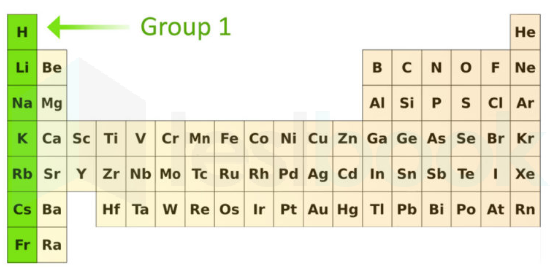
Alkali metals are assigned which group in the Modern Periodic Table?

  1. ((a))

    Second group

  2. ((b))

    Eighteenth group

  3. ((c))

    Third group

  4. ((d))

    First group

Show Answer
Answer: ((d))

First group

  • Group 1 elements in the Periodic table are known as Alkali metals
  • They have ns1 outermost configuration and belong to the S-block Elements.
  • They also have a strong tendency to donate their valence electrons in the outermost shell to form strong ionic bonds.
  • It contains elements from Lithium (Li) to Francium (Fr).

3

Which of the following has both direction and magnitude?

  1. ((a))

    Mass

  2. ((b))

    Distance

  3. ((c))

    Momentum

  4. ((d))

    Speed

Show Answer
Answer: ((c))

Momentum

Concept

Scalar Quantity: 

The physical quantities which require only magnitude to express are called scalar quantities.

  • Examples: Mass, Distance, time, speed, volume, temperature, density, volume of electric current, work, power, etc.

Vector Quantity: 

The physical quantities which require both magnitude and direction to express are called vector quantities.

  • Example: Displacement, Weight, velocity, acceleration, force, momentum, Impulse, electric field, magnetic field, etc.

Explanation:

  • Mass-Scalar Quantity
  • Distance - Scalar Quantity
  • Momentum - Vector Quantity
  • Speed - Scalar Quantity

Important Points How momentum is a vector quantity?

  • Momentum is defined as the product of mass and velocity, and we know that mass is a scalar quantity, as it only has magnitude, while velocity is a vector,  as it has both magnitude and direction.
  • ​And the product of scalar and vector is always a vector quality, hence the product of mass and velocity i.e. momentum is also a vector quantity
4

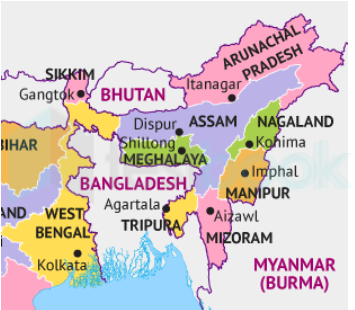
Ambubachi mela is a festival of which state?

  1. ((a))

    Assam

  2. ((b))

    Mizoram

  3. ((c))

    Sikkim

  4. ((d))

    Gujarat

Show Answer
Answer: ((a))

Assam

The correct answer is Assam.

  • Ambubachi Mela is a festival of Assam.

Key Points

  • Ambubachi Mela:
  • It is celebrated at Kamakhya Temple in the month of June.
  • It is one of the biggest congregations in eastern India.
  • It is the belief that Kamakhya embodies the mother cult, the Shakti.
  • The meaning of Ambubachi is spoken with water.
  • Other fairs and festival of Assam: Bihu Festival, Me-Dum-Me-Phi, Majuli Festival, Dehing Patkai Festival, Kaziranga Elephant Festival and Ali Ai Ligang Festival.


Additional Information

  • Festivals of Mizoram are Chapchar Kut Festival, Mim Kut Festival and Pawl Kut Festival.
  • Festivals of Sikkim are Saga Dawa, Pang Lhabsol, Losoong or the Sonam Losar.
  • Festivals and fairs of Gujarat are Modhera Dance Festival, Navratri, Madhavrai Fair, Ravechi Fair and Vautha Mela.
5

The state in which Rourkela Iron and Steel Plant is located is -

  1. ((a))

    West Bengal

  2. ((b))

    Jharkhand

  3. ((c))

    Odisha

  4. ((d))

    Bihar

Show Answer
Answer: ((c))

Odisha

The correct answer is Odisha.

  • Rourkela Steel Plant is located in the north-western tip of Odisha and at the heart of a rich mineral belt.
  • Rourkela is known for Rourkela Steel Plant (RSP) which is India's first fully integrated steel plant.
  • The steel plant was established in 1955 in partnership with the Government of Odisha and several German firms.

Additional Information

Some of the Steel Plants in India are:

CompanyLocationState
Steel Authority of India LimitedIISCO, BurnpurWest Bengal
Steel Authority of India LimitedBokaroJharkhand
Steel Authority of India LimitedBhilaiChhattisgarh
Steel Authority of India LimitedRourkelaOrissa
Steel Authority of India LimitedDurgapurWest Bengal
Rashtriya Ispat Nigam LimitedVisakhapatanamAndhra Aradesh
Tata Steel LimitedJamshedpurJharkhand
Essar Steel LimitedHaziraGujarat
JSW Steel LimitedVijayanagarKarnataka
Jindal Steel & Power LimitedRaigarhChhattisgarh
Ispat Industries LimitedDolviMaharastra
Bhushan Power & Steel LimitedJharsugdaOrissa
Bhushan Steel LimitedAngul-DhenkanalOrissa
6

The Prime Minister of India is appointed by:

  1. ((a))

    President of India 

  2. ((b))

    Vice President of India

  3. ((c))

    Chief Election Commissioner of India

  4. ((d))

    Speaker of Lok Sabha

Show Answer
Answer: ((a))

President of India 

The correct answer is President of India.

Key Points

  • The Prime Minister of India is appointed by the President of India under Article 75 of the Indian Constitution.
  • The President appoints the leader of the majority party or coalition in the Lok Sabha (lower house of Parliament) as the Prime Minister.
  • If no party has a clear majority, the President may invite a coalition or individual to prove their majority in the Lok Sabha.
  • The Prime Minister serves as the head of the Council of Ministers and advises the President on various matters, including the appointment of other ministers.
  • The Prime Minister is the chief executive of the government and plays a pivotal role in policy-making and governance.

Additional Information

  • President of India:
  • The President is the constitutional head of the state and holds the highest office in India.
  • Article 52 of the Indian Constitution establishes the office of the President.
  • The President acts on the advice of the Council of Ministers headed by the Prime Minister.
  • Key powers include appointing the Prime Minister, governors, judges of the Supreme Court and High Courts, and other dignitaries.
  • Lok Sabha:
  • The Lok Sabha is the lower house of Parliament and is composed of representatives directly elected by the people.
  • The Prime Minister must command the confidence of the majority in the Lok Sabha to hold office.
  • Council of Ministers:
  • Headed by the Prime Minister, the Council of Ministers assists in governance and decision-making.
  • It includes Cabinet Ministers, Ministers of State, and Deputy Ministers.
  • Constitutional Articles:
  • Article 75: Deals with the appointment of the Prime Minister and other ministers.
  • Article 74: States that there shall be a Council of Ministers with the Prime Minister at the head to aid and advise the President.
7

Which city is known as "Paris of the East"?

  1. ((a))

    Shillong

  2. ((b))

    Mussoorie 

  3. ((c))

    Pondicherry

  4. ((d))

    Kolkata

Show Answer
Answer: ((c))

Pondicherry

The correct answer is Pondicherry.

Key Points

  • There are 12 cities that are known as The Paris of the East 
  1. Saint Petersburg, Russia
  2. Budapest, Hungary
  3. Beirut, Lebanon
  4. Shanghai, China
  5. Manila, Philippines
  6. Bucharest, Romania
  7. Lahore, Pakistan
  8. Pondicherry, India
  9. Isfahan, Iran
  10. Istanbul, Turkey
  11. Prague, Czach Republic
  12. Hanoi, Vietnam
  • Puducherry, the original name Putucceri, is also spelled as Pondichéry, It is a union territory of India.
  • It was formed in 1962 out of the four former colonies of French India: Pondicherry (now Puducherry) and Karaikal along India’s southeastern Coromandel Coast, surrounded by Tamil Nadu state; Yanam, farther north along the eastern coast in the delta region of the Godavari River, surrounded by Andhra Pradesh state; and Mahe, lying on the western Malabar Coast, surrounded by Kerala state.

Additional Information

  • Important Sobriquets:
MussoorieQueen of the Mountains
ShillongScotland of the East
KolkataCity of Joy
JaipurParis of India
8

The atomic number of silicon is 14. It means that its atom contains

  1. ((a))

    14 Protons

  2. ((b))

    14 neutrons

  3. ((c))

    14 valence electrons

  4. ((d))

    14 protons plus neutrons together

Show Answer
Answer: ((a))

14 Protons

Concept:

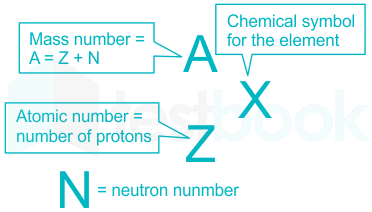
  • The total number of protons and neutrons in the nucleus of an atom is known as its Mass Number and is denoted by A.
  • Protons and neutrons are situated in the nucleus of an atom and contribute most to the mass of the elements as the mass of electrons is negligible.
  • The atomic number of an atom is the same as a number of proton.

Additional Information

Mass number(A) = Number of protons (Z) + Number of neutrons (N)

It is represented by:

Mistake PointsIt is conventional to count the number of protons as atomic numbers and not the number of the neutron.

The number of neutrons can be changed and as so nuclear bombs are made. so we count only the number of protons and not neutrons.

9

In ‘Andes Mountain’ of South America animal which is used for transportation is ______.

  1. ((a))

    Bullocks

  2. ((b))

    Camels

  3. ((c))

    Donkeys

  4. ((d))

    Llamas

Show Answer
Answer: ((d))

Llamas

The correct answer is Llamas.

Key Points

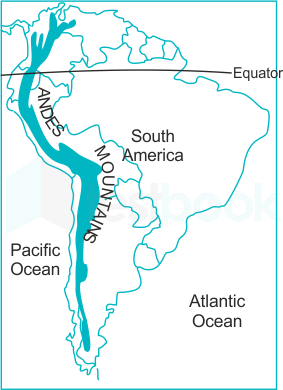
  • In the Andes mountains of South America, llamas are used for transportation.
  • Llamas live high up in the Andes mountains of South America.
  • Because, Llamas are well-suited to these conditions, with hooves that give a good grip to climb steep mountain paths and thick fur to keep them warm.
  • Therefore, Llamas are used for transportation.

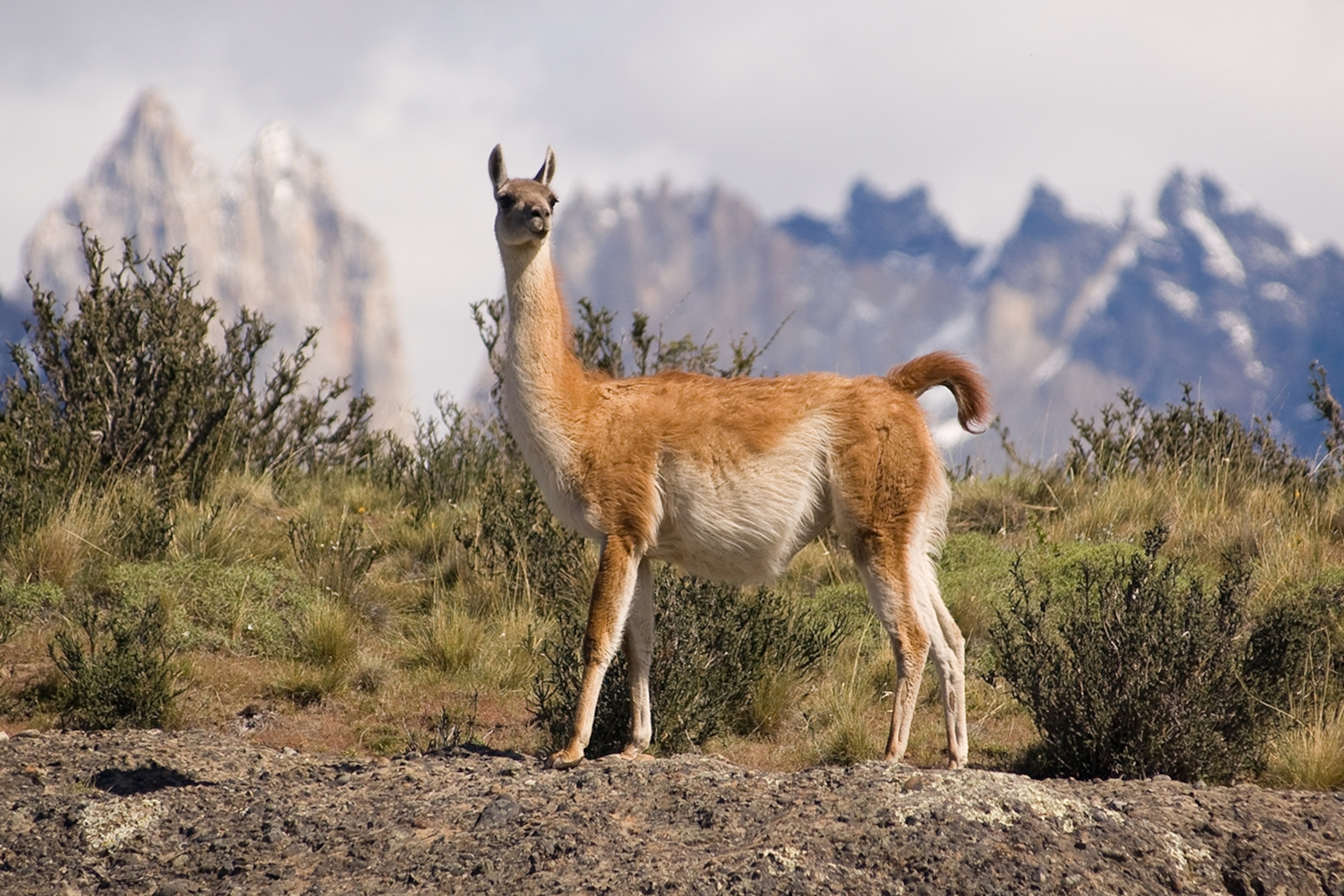
Guanaco

10

Which of the following is highest quality coal?

  1. ((a))

    Lignite

  2. ((b))

    Bituminous

  3. ((c))

    Peat

  4. ((d))

    Anthracite

Show Answer
Answer: ((d))

Anthracite

The correct answer is Anthracite.

Key Points

  • Anthracite is the highest quality of hard coal.
  • Anthracite is the most highly metamorphosed form of coal.
  • It contains around 86% fixed carbon and 14% volatile matter.
  • Anthracite considered the least plentiful form of coal.
  • Coal is considered the most abundantly available fossil fuel.
  • It provides a substantial part of the nation’s energy needs.
  • Coal is formed due to the compression of plant material over a long period of time.

Additional Information 

  • Lignite is low-grade brown coal.
  • Lignite is soft with high moisture content.
  • The principal lignite reserves are in Neyveli in Tamil Nadu.
  • Bituminous coal is the coal that has been buried deep and subjected to increased temperatures.
  • Bituminous coal is the most popular coal in commercial use.
  • Decaying plants in swamps produce peat coal.
  • Peat has low carbon and high moisture content and low heating capacity.
11

Under which Article of the Constitution the Governor of states has been empowered to promulgate ordinances?

  1. ((a))

    Article 123

  2. ((b))

    Article 211

  3. ((c))

    Article 213

  4. ((d))

    Article 212

Show Answer
Answer: ((c))

Article 213

The correct answer is Article 213.

Key Points

  • An ordinance can be retrospective in nature.
  • Under Article 213 of the Constitution, the governor of states has been empowered to promulgate an ordinance.
  • Governor is the head of the State.
  • The Governor can promulgate ordinance when the:
  • Legislative Assembly is not in session in case of Unicameral Legislature
  • Both the Legislative Assembly and council are not in session in the case of a Bicameral Legislature.
  • The Ordinance introduced by Governor can be withdrawn anytime.
  • The ordinance can be rolled out by Governor only on those matters on which the legislature can make laws.
  • Article 152 to 162 of the Constitution of India is related to the Governor.

Additional Information

ArticlesDefinition
Article 152- Defines "State".
Article 153- Governors of States - There shall be a Governor for each state. - The same person can be appointed as the Governor of two or more states (7th Constitutional Amendment Act of 1956).
Article 154- The executive power of the state - The executive power of the state shall be vested in the hands of the Governor.
Article 155- Appointment of Governor - The Governor of a state shall be appointed by the President of India.
Article 156- Term of office of Governor - The Governor shall hold the office till the pleasure of the President of India. - If he/she wants to resign he/she can write his resignation to the President of India.
Article 157- Qualification for appointment as Governor - He/she must be a citizen of India. - He/she must have completed 35 years of age. - Must possess the qualification for membership of State Legislature.
Article 158- Conditions of Governors office 1. He/she should not be a member of either house of Parliament or legislative assemblies and legislative council. if he/she is a member of any house of Parliament then he must vacate the seat in that house on the date on which he/she enters his office. 2. He/she should not hold any office of Profit 3. He/she shall be entitled to the official residence without payment of rent, emoluments, allowances, and privileges as determined by Parliament and the Second Schedule. 4. Any emoluments and allowances of the Governor shall not be decreased during his office term.
Article 159- Oath or Affirmation by the Governor - The oath and Affirmation to the Governor are given by the Chief Justice of the High Court and in his absence, the senior-most Judge of the high court.
Article 160- Discharge of the functions of the Governor in certain contingencies.
Article 161- Powers of the Governor to grant pardons etc. and to suspend, remit or commute sentences in certain cases. - It gives the Governor the power to reprive, pardon, respite, remit, and commute sentences at the state level.
Article 162- The extent of executive power of the State.
12

In which year Liberalization, Privatization and Globalization started in India?

  1. ((a))

    2005

  2. ((b))

    1996

  3. ((c))

    2000

  4. ((d))

    1991

Show Answer
Answer: ((d))

1991

The corrcet answer is Option 4.

Key Points

  • In 1991, the Indian government broke with industrial policy, which had failed. In a surprising 180-degree twist, the new policies encouraged business activity, stimulated growth in the private sector, and revived international trade.
  • LPG reforms of 1991 is a strategic shift in Indian economy which changed the very Nature of Indian reality today.  This topic forms the foundation for Indian Economy today. Having a fair idea about the change it brought in Indian economy and international events which lead to it is important for the Mains across disciplines.
13

Which of the following Railway Zone's headquarter is in Uttar Pradesh? 

  1. ((a))

    Northern Railway

  2. ((b))

    Central Railway 

  3. ((c))

    North Central Railway 

  4. ((d))

    North Western Railway 

Show Answer
Answer: ((c))

North Central Railway 

The correct answer is North Central Railway 

  • The North Central Railway Zone has its headquarter at Prayagraj in Uttar Pradesh.
  • The North Eastern Railway (NER) zone also has its headquarter in Uttar Pradesh at Gorakhpur.
  • Indian Railway has divided its working among 18 zones.
Sr. No.ZoneHeadquarter
1.Central Railway (CR)Mumbai
2.Eastern Railway (ER)Kolkata
3.East Central Railway (ECR)Hajipur
4.East Coast Railway (ECoR)Bhubaneshwar
5.Northern Railway (NR)Baroda House, New Delhi
6.North Central Railway (NCR)Prayagraj
7.North Eastern Railway (NER)Gorakhpur
8.North East Frontier Railway (NFR)Maligaon, Guwahati
9.North Western Railway (NWR)Jaipur
10.Southern Railway (SR)Chennai
11.South Central Railway (SCR)Secunderabad
12.South Eastern Railway (SER)Garden Reach, Kolkata
13.South East Central Railway (SECR)Bilaspur
14.South Western Railway (SWR)Hubli
15.Western Railway (WR)Churchgate, Mumbai
16.West Central Railway (WCR)Jabalpur
17.South CoastalVisakhapatnam
18.Kolkata MetroKolkata
14

The Gandhi Sagar Wildlife Sanctuary, known for its extensive forest cover and diverse wildlife species, is situated in which Indian state?

  1. ((a))

    Gujarat

  2. ((b))

    Maharashtra

  3. ((c))

    Rajasthan

  4. ((d))

    Madhya Pradesh

Show Answer
Answer: ((d))

Madhya Pradesh

The correct answer is Madhya Pradesh.

Key Points

  • Gandhi Sagar Sanctuary is a wildlife sanctuary situated on the northern boundary of the Mandsaur and Nimach districts in Madhya Pradesh.
  • The Chambal River passes through the sanctuary dividing it into two parts.
  • There are dry, mixed, deciduous forests and flat grasslands around the dam.

Additional Information

  • Gujarat has four National Parks and twenty-three wildlife sanctuaries.
  • Maharashtra has thirty-five wildlife sanctuaries.
  • Rajasthan has twenty-five wildlife sanctuaries.
15

Verdigao dance is the traditional dance form of which place in India?

  1. ((a))

    Puducherry

  2. ((b))

    Goa

  3. ((c))

    Daman and Diu

  4. ((d))

    Andaman

Show Answer
Answer: ((c))

Daman and Diu

Verdigao dance is the traditional dance form of Daman and Diu, India.

  • Daman and Diu are renowned for their Portuguese folk dances, such as Mando Dance, Verdigao Dance and Vira Dance, which are performed on special occasions.
  • Many of the dance themes are based on festivity, eating, singing and drinking.
  • People of Daman and Diu are also organizing a folk dance festival.
  • These folk dances are performed in slow motion, with the participation of both elders and youngsters in traditional dance.
  • Garba is another folk dance in the territory of this union. Garba dance has its origin in Gujarat state.
  • This dance is performed by women folks attired in multicolored costumes and beautiful ornaments.
16

Which one of the following is the other term used for 'Focus' in relation with an earthquake?

  1. ((a))

    Hypocentre

  2. ((b))

    Epicentre

  3. ((c))

    Isocentre

  4. ((d))

    Principal Point

Show Answer
Answer: ((a))

Hypocentre

The correct answer is Hypocentre.

Key Points

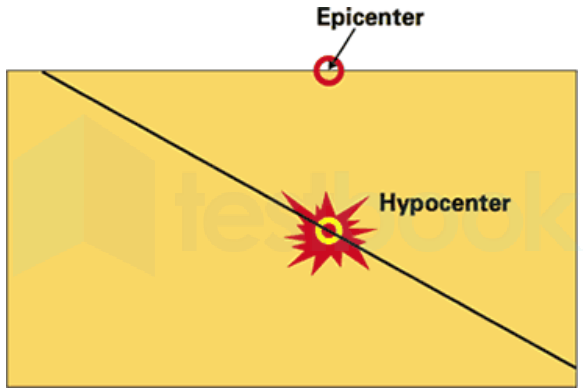
  • The focus is the point within the earth where an earthquake rupture starts.
  • It is also termed as the hypocenter.
  • The epicenter is the point on the earth's surface vertically above the hypocenter.
  • The epicenter can be located by computing arcs from each of three or more seismic observatories.
  • The point of intersection of the arcs marks the epicenter.

Important Points

Immediate Effects of Earthquake:

  • Ground Shaking
  • Differential ground settlement
  • Land and mud slides
  • Soil liquefaction
  • Ground lurching
  • Avalanches
  • Ground Displacement
  • Floods from dam and levee failures
  • Fires
  • Structural collapse
  • Falling objects
  • Tsunami
17

Who among the following is the author of the book "The Birth of New India"?

  1. ((a))

    Annie Besant

  2. ((b))

    John Milton

  3. ((c))

    Manik Bandopadhyay

  4. ((d))

    Jawaharlal Nehru

Show Answer
Answer: ((a))

Annie Besant

The correct answer is Annie Besant.

Key Points

  • Annie Besant is the author of the book "The Birth of New India".
  • Annie Besant, a prominent British socialist, women's rights activist, and supporter of Indian self-rule.
  • Annie Besant played a significant role in India's independence movement and was involved in various social and political causes.
  • The book probably covers India's journey towards independence, societal change, and the hopes of its people for a new era.
  • The book may explore themes such as nationalism, freedom struggle, social reform, and the vision for a modern and independent India.

Additional Information

  • John Milton:
  • Renowned English poet and intellectual.
  • Best known for his epic poem "Paradise Lost".
  • Manik Bandopadhyay:
  • Eminent Bengali novelist and short story writer.
  • Known for his realistic portrayal of rural life and social issues in Bengal.
  • Jawaharlal Nehru:
  • First Prime Minister of independent India.
  • Key figure in India's struggle for independence.
  • Authored several books, including "The Discovery of India" and "Glimpses of World History".
18

Where is the gold reserve in India?

  1. ((a))

    Khetri

  2. ((b))

    Kolar

  3. ((c))

    Ranchi

  4. ((d))

    Mumbai

Show Answer
Answer: ((b))

Kolar

The correct answer is Kolar. 

Key Points

  • The Kolar Gold fields are about 100 kilometers from Bangalore. Operated by Bharat Gold Mines Limited (BGML), a public sector undertaking.
  • After serving the nation for 121 years, Kolar Gold Fields (KGF) still has reserves that could yield 10 tonnes of gold per year for 15 years.
  • Nearly two decades after the gold mines shut down in Kolar, the Union government has decided to revive the mining operations

Additional Information

  • Khetri Nagar, well known for its Copper Project, was built by and is under the control of Hindustan Copper Limited, a public sector undertaking under the Government of India. Khetri Nagar is also known as 'Copper'.
  • Ranchi is the capital of the Indian state of Jharkhand. Ranchi was the center of the Jharkhand movement, which called for a separate state for the tribal regions of South Bihar, northern Odisha, western West Bengal, and the eastern area of what is present-day Chhattisgarh
  • Mumbai (formerly called Bombay) is a densely populated city on India’s west coast. A financial center, it's India's largest city. On the Mumbai Harbour waterfront stands the iconic Gateway of India

Thus, gold reserves in India are in Kolar.

19

What percentage of underground water is used for agriculture?

  1. ((a))

    72%

  2. ((b))

    82%

  3. ((c))

    85%

  4. ((d))

    90%

Show Answer
Answer: ((d))

90%

90% is correct answer.

Key Points

  • Agriculture absorbs roughly 90% of the country's water resources.
  • Approximately 90% of India's groundwater is used for agriculture.
  • According to a 2022 government assessment, the rate of groundwater extraction in the historic breadbasket states of Punjab, Haryana, and Rajasthan is more than 100 percent due to unsustainable use of water resources.
  • Indeed, in some places, so much water is removed that the ground above depleted aquifers sinks.

Additional Information

  • Currently, 70% of global groundwater withdrawals, and even more in arid and semi-arid regions, are used in agricultural production of food, fibers, cattle, and industrial crops, and this resource services an estimated 38% of the lands fitted for irrigation.
  • According to a 2017 analysis by the think tank Niti Aayog, groundwater accounts for 63% of all agricultural water and more than 80% of rural and urban home water supplies.
20

When was the first Election Commission of Uttar Pradesh State constituted?

  1. ((a))

    1994

  2. ((b))

    1993

  3. ((c))

    1990

  4. ((d))

    1981

Show Answer
Answer: ((a))

1994

The correct answer is 1994.

Key Points

  • After independence, the importance of establishing and developing Local self-government in rural areas was realized and the U.P. Panchayat Raj Act of 1947 was promulgated to fulfill this objective.
  • Different committees recommended that Constitutional status be accorded to Panchayat Raj and Urban Local Bodies Institutions and that the elections to these institutions be conducted by separate Election Commission.
  • As a consequence, the 73rd and 74th Amendment in the Constitution came into effect from 24th April, 1993.
  • Article 243K of the Constitution of India states that the superintendence, direction, and control of the preparation of electoral rolls for, and the conduct of, all elections to the Panchayats shall be vested in a State Election Commission consisting of a State Election Commissioner to be appointed by the Governor.
  • The Uttar Pradesh State Election Commission was constituted by the State Government for the first time on April, 23rd, 1994.
21

What was the former name of the Yamuna Expressway Project constructed in Uttar Pradesh, India?

  1. ((a))

    Purvanchal Expressway

  2. ((b))

    Taj Expressway

  3. ((c))

    Noida-Agra Expressway

  4. ((d))

    Kennedy Expressway

Show Answer
Answer: ((b))

Taj Expressway

The correct answer is Taj Expressway.

Key Points

  • Taj Expressway was the former name of the Yamuna Expressway Project constructed in Uttar Pradesh, India.
  • Yamuna Expressway connects Greater Noida- Agra.
  • Yamuna Expressway or Taj Expressway is a 6-lane (extendable to 8 lanes), 165 km long, access controlled expressway, connecting Greater Noida with Agra in the Indian state of Uttar Pradesh.
  • It is one of India's longest six-lane controlled-access expressway stretches.
  • The project was started to decongest the older Delhi-Agra national highway (NH-2) or Mathura Road which is already over-congested.
  • The expressway project was inaugurated on 9 August 2012 by the then Chief Minister of UP Akhilesh Yadav.
  • The Yamuna Expressway starts from Pari Chowk in Greater Noida and ends at Kuberpur, Agra on NH-2 towards Kanpur.

Additional Information

  • Purvanchal Expressway is a 340.8 km long, 6-lane wide access-controlled expressway in the state of Uttar Pradesh
  • The John F. Kennedy Expressway is a nearly 18-mile-long freeway in Chicago, Illinois, United States.
22

If a new state is to be created which of the following articles of the constitution must be amended

  1. ((a))

    Article 1 to Article 4 

  2. ((b))

    Article 32 to Article 35

  3. ((c))

    Article 72 to Article 35

  4. ((d))

    Article 50 to Article 35

Show Answer
Answer: ((a))

Article 1 to Article 4 

Key Points

  • If a new state of the Indian Union is to be created, the First Schedule of the Constitution must be amended.
  • The First Schedule of the Indian constitution deals with the lists of States and Union Territories of India and their changes.
  • Article 1 to Article 4 comes under the First Schedule.
  • Originally in 1950, there are 8 schedules.
  • But at present, there are 12 schedules in the Indian constitution.

Important Points

  • Article 1 : Name and Territory Of The Union
  • Article 2 : Admission or establishment of new states
  • Parliament may by law admit into the Union, or establish, new States on such terms and conditions as it thinks fit.
  • Article 2A : Sikkim to be associated with the union
  • Article 3 : Formation of new states and alteration of areas, boundaries or names of existing states
  • Article 4 : Laws made under articles 2 and 3 to provide for the amendment of the first and the fourth schedule and supplemental, incidental and consequential matters

Thus, if a new state is to be created Article 1 to Article 4 of the constitution must be amended.

Additional Information 

Schedules of Indian constitution:

SchedulesDescription
SecondAllowances of President, Vice President, Supreme and High Court Judges, etc
ThirdOath and Affirmation
FourthAllocation of Seats in Rajya Sabha to States and Union Territories
FifthProvision and Administration of Schedule Area
SixthProvision and Administration of Assam, Meghalaya, Tripura, Mizoram
SeventhDivision of Powers
EighthOfficial languages
NinthAct and Regulation
TenthAnti Defection Act
EleventhPanchayat
TwelfthMunicipality
23

Which Mauryan ruler abdicated the throne and embraced Jainism?

  1. ((a))

    Bindusara

  2. ((b))

    Ashoka

  3. ((c))

    Chandragupta Maurya

  4. ((d))

    Brihadratha

Show Answer
Answer: ((c))

Chandragupta Maurya

The correct answer is ​Chandragupta Maurya.

Key Points

  • Chandragupta Maurya defeated Dhana Nanda to establish Mauryan Empire.
  • He ruled from 322 to 298 BC.
  • For the first time whole of North India was united under Chandragupta Maurya.
  • Chandragupta Maurya abdicated the throne to his son and became a Jain Monk.
  • He went to Shravanbelgola with Bhadrabahu where he died by Sallekhana.
  • A memorial to Chandragupta Maurya exists on Chandragiri hill in Shravanabelagola, Karnataka.

Additional Information

  • Bindusara was the son of Chandragupta Maurya.
  • He ruled from 298 to 273 BC.
  • He patronized Ajivikas.
  • Ashoka was the son of Bindusara.
  • He ruled from 268to 232 BC.
  • According to Buddhist traditions, Ashoka usurped the throne after killing his 99 brothers and spared Tissa.
  • Ashoka fought the famous Kalinga War in 261 BC.
  • Brihadratha was the last ruler of the Mauryan Empire.
  • He ruled from 187 to 184 BC.
  • He was killed by his general, Pushyamitra Shunga, who went on to establish the Shunga Empire.
24

Amicus Curiae is appointed by which of the following institutions?

  1. ((a))

     Election Commission of Indi

  2. ((b))

    Judiciary of India

  3. ((c))

    Parliament 

  4. ((d))

    National Human Rights Commission

Show Answer
Answer: ((b))

Judiciary of India

The correct answer is the Judiciary of India.

  • Amicus Curiae is appointed by the Judiciary of India.

Key Points

  • Amicus Curiae:
  • An amicus curiae is someone who is not a party to a case and may or may not have been solicited by a party and who assists a court by offering information, expertise, or insight that has a bearing on the issues in the case.
  • It literally means "friend of the court".
  • Basically, they are the lawyers appointed by the courts to present diverse views and assist the court in specific cases.
  • They help to research the law in question and even offer a non-partisan opinion.
  • In many high-profile PILs, the courts appoint an amicus curiae,  to assist them in formulating a viewpoint and to make inquiries and reports.
25

Hastinapur, described as the ancient capital of the Kuru Kingdom in the Hindu Text Mahabharata is situated in which district of Uttar Pradesh?

  1. ((a))

    Muzaffarnagar

  2. ((b))

    Hapur

  3. ((c))

    Meerut

  4. ((d))

    Bijnor

Show Answer
Answer: ((c))

Meerut

  • Hastinapur is a city in the Meerut District of Uttar Pradesh.
  • As described in various ancient Hindu and Jain texts, it was the capital of the Kuru Kingdom.
  • It is located on the right bank of the river Ganga.
  • According to the information from Puranas, Hastinapur was the capital of Emperor Bharata.
26

Who was elected the president of the Indian National Congress of the Allahabad session 1888?

  1. ((a))

    Dadabhai Naoroji 

  2. ((b))

    Pherozeshah Mehta

  3. ((c))

    George Yule

  4. ((d))

    Badruddin Tyabji 

Show Answer
Answer: ((c))

George Yule

The correct answer is George Yule.

Important Points

  • George Yule was the first Non-Indian president of the Indian National Congress session.
  • George Yule was a Scottish merchant in England and India who served as the fourth President of the Indian National Congress in 1888 at Allahabad.
  • He was the first non-Indian to hold that office.
  • He was the founder of George Yule & Co. of London and headed Andrew Yule & Co., of Calcutta.
  • He served as Sheriff of Calcutta and as President of the Indian Chamber of Commerce.

Additional InformationImportant sessions:

Sessions of INC Held atYearPresident
Bombay1885Womesh Chandra Banerjee
Calcutta1896Rahimtullah Sayani
Lucknow1899Romesh Chandra Dutt
Benaras1905Gopal Krishna Gokhale
Calcutta1906Dadabhai Naoroji
Surat1907Rash Bihari Ghosh
Lucknow1916A. C. Majumdar
Calcutta (Special Session)1920Lala Lajpat Rai
Nagpur1920C. Vijayaraghavachariar
Madras1927Dr. M. A. Ansari
Bombay1934Rajendra Prasad
Tripuri1939S.C Bose
27

Jaita is the main dance form of which state?

  1. ((a))

    Karnataka

  2. ((b))

    Rajasthan

  3. ((c))

    Madhya Pradesh

  4. ((d))

    Uttar Pradesh

Show Answer
Answer: ((d))

Uttar Pradesh

The correct answer is Uttar Pradesh.

Key Points

  • Jaita is a folk dance of Uttar Pradesh, in the region of Benrkhand.
  • This dance is performed during marriage ceremonies and for the bravery and warriors of Jaat Community.
  • This dance is performed by a group of male dancers called Jatis, who form a circle and make noise with traditional songs and local stories
  • It is characterised by powerful movements of bows and arrows with coordination.

Additional Information

StatesSome important dances
Uttar PradeshRaslila, Kajri, Jhora, Chappeli, and Nautanki
KarnatakaYakshagana, Dollu Kunitha, Bhootha Aradhane, Kamsale, Karaga festival, Bolak-aat dance and Veeragase.
RajasthanGhoomar, Kathputli, Bhopa, Chang, Teratali, Grindr, Kachchhighori and Tejaji.
Madhya PradeshJawara, Matki, Aada, Khada Nach, Phulpati, Grida Dance, Selalarki, Selabhadoni and Maanch.
28

Who among the following elect(s) the presiding officer of the Vidhan Sabha in India?

  1. ((a))

    Members of Vidhan Parishad

  2. ((b))

    President

  3. ((c))

    Members of Vidhan Sabha

  4. ((d))

    Governor

Show Answer
Answer: ((c))

Members of Vidhan Sabha

The correct answer is Members of Vidhan Sabha.

Key Points

  • The presiding officer of the Vidhan Sabha, known as the Speaker, is elected by the members of the Vidhan Sabha from among themselves.
  • The election of the Speaker is conducted soon after the formation of the new Vidhan Sabha following general elections.
  • The Speaker's election is governed by the rules of procedure and conduct of business in the Vidhan Sabha.
  • The Speaker plays a critical role in maintaining order and decorum in the House and ensuring its smooth functioning.
  • The Deputy Speaker of the Vidhan Sabha is also elected by the members of the Vidhan Sabha through a similar process.

Additional Information

  • Vidhan Sabha is the legislative assembly in states and union territories of India with a unicameral legislature.
  • The Vidhan Sabha is composed of members elected directly by the people of the state through general elections.
  • Speaker of Vidhan Sabha: The Speaker is responsible for presiding over the sessions of the Vidhan Sabha and ensuring adherence to parliamentary norms and procedures.
  • Governor's Role: The Governor of the state summons and prorogues the Vidhan Sabha sessions and can dissolve it on the advice of the Chief Minister.
  • Vidhan Parishad: In states with bicameral legislatures, the Vidhan Parishad serves as the upper house, but it does not participate in electing the Speaker of the Vidhan Sabha.
29

Who was recognised as ‘Asthana Nartaki’ (resident  dancer) of the Tirumala Tirupati Devasthanam?

  1. ((a))

    Yamini Krishnamurthy

  2. ((b))

    Chinta Ravi Bala Krishna 

  3. ((c))

    Sunder Prasad 

  4. ((d))

    Mohanrao Kallianpurkar 

Show Answer
Answer: ((a))

Yamini Krishnamurthy

The correct answer is Yamini Krishnamurthy.

Key Points

  • Mungara Yamini Krishnamurthy is an Indian dancer of Bharatanatyam and Kuchipudi styles of dancing.
  • She was born on 20 December 1940, Madanapalle.
  • She was awarded Padma Vibhushan, Padma Bhushan, and Sangeet Natak Akademi Award for Dance - Bharatanatyam.
  • She has the honour of being Asthana Nartaki (resident dancer) of the Tirumala Tirupati Devasthanam.

Additional Information

  • Chinta Ravi Bala Krishna is a winner of the Sangeet Natak Akademi’s Ustad Bismillah Khan Yuva Puraskar for 2009, a recipient of the singular honor of Yuva Sutradhari at the Siddhendra Yogi Nrityotsav in 2007, a Gold Medallist M.A Kuchipudi, as well as being a winner of a host of other awards.
  • Pandit Sunder Prasad was a guru of - Jaipur Gharana of the Indian classical dance form, Kathak. He received his training from his father Pandit Chunnilal of Jaipur Gharana.
  • Mohanrao Shankarrao Kallianpurkar was a Kathak dancer and teacher from Karnataka, considered to be one of the greatest scholars and teachers of the Kathak dance form. He belongs to the Jaipur school of Kathak.
30

Which of the following elements is not included in the circular flow of Income in a simple economy?

  1. ((a))

    Factor payments

  2. ((b))

    Goods and services

  3. ((c))

    Depreciation

  4. ((d))

    Spending

Show Answer
Answer: ((c))

Depreciation

The correct answer is Depreciation.

Key Points

  • Depreciation​
  • “Depreciation” means a decline in the value of fixed assets due to use, the passage of time or obsolescence.
  • Depreciation is an accounting term used to determine the value of fixed assets.
  • If a business enterprise procures a machine and uses it in a production process then the value of the machine declines with its usage.
  • Even if the machine is not used in the production process, we can not expect it to realise the same sales price due to the passage of time or the arrival of a new model.
  • Fixed assets are subject to depreciation.
  • Depreciation has a significant effect in determining and presenting the financial position and results of operations of an enterprise.
  • Hence, Depreciation is NOT included in the circular flow of Income in a simple economy.

Important Points

  • The Net National Product of an economy is the GNP after deducting the loss due to depreciation.
  • NNP = GNP – Depreciation
  • NNP = GDP + income from abroad - Depreciation
  • Net Domestic Product (NDP) is GDP estimated after deducting the loss due to depreciation
  • This is essentially the net version of GDP, i.e, GDP minus the total value of the wear and tear (depreciation) that occurred in the assets while the products and services were created.
  • NDP = GDP - Depreciation.
31

Which forests are found in rainier areas of the Peninsula and the plains of Uttar Pradesh and Bihar?

  1. ((a))

    Semi Evergreen Forests

  2. ((b))

    Tropical Deciduous Forest

  3. ((c))

    Thorn Forest

  4. ((d))

    Montane Forest

Show Answer
Answer: ((b))

Tropical Deciduous Forest

The correct answer is Tropical Deciduous Forest.

Key Points

  • Dry deciduous forest covers vast areas of the country, where rainfall ranges between 70-100 cm.
  • On the wetter margins, it has a transition to the moist deciduous, while on the drier margins to thorn forests.
  • These forests are found in rainier areas of the Peninsula and the plains of Uttar Pradesh and Bihar.
  • As the dry season begins, the trees shed their leaves completely and the forest appears like a vast grassland with naked trees all around.
  • Tendu, palas, amaltas, bel, Khair, axlewood, etc. are the common trees of these forests.

Additional Information

  • Deciduous Forests are the most widespread forests in India.
  • They are also called the monsoon forests.
  • They spread over regions that receive rainfall between 70-200 cm.
  • Based on the availability of water, these forests are further divided into moist and dry deciduous.
  • The moist deciduous forests are more pronounced in the regions which record rainfall between 100-200 cm.
  • These forests are found in the northeastern states along the foothills of the Himalayas, eastern slopes of the Western Ghats, and Orissa.
  • Teak, sal, shisham, hurra, mahua, amla, semul, kusum, and sandalwood, etc. are the main species of these forests.
32

Which district was earlier known as Padrauna and thereafter was renamed on 19 June 1997?

  1. ((a))

    Kushinagar

  2. ((b))

    Ambedkar Nagar

  3. ((c))

    Deoria

  4. ((d))

    Lalitpur

Show Answer
Answer: ((a))

Kushinagar

The correct answer is Kushinagar.

  • Kushinagar district was earlier known as Padrauna and thereafter was renamed Kushinagar on 19 June 1997.

Key Points

  • Kushinagar is a district of the state of Uttar Pradesh in India situated in the easternmost part of the state.
  • It has the administrative headquarters at Ravindra Nagar Dhoos in Padrauna.
  • The district is named such after the town Kushinagar, a Buddhist pilgrimage site where Gautama Buddha attained parinirvana in the 5th century BCE.
  • Since the independence of India, the Kushinagar district was a part of Deoria District and came into existence on 13 May 1994 as a separate district division.
  • It was earlier known as Padrauna and thereafter was renamed Kushinagar on 19 June 1997.

Additional Information

  • Kushinagar District is bounded on the east by Bihar state, on the southwest by Deoria District, on the west by Gorakhpur District, and on the northwest by Maharajganj District.
  • It is part of Gorakhpur Division.
  • In 2006, the Ministry of Panchayati Raj named Kushinagar one of the country's 250 most backward districts (out of a total of 640).
  • It is one of the 34 districts in Uttar Pradesh currently receiving funds from the Backward Regions Grant Fund Programme (BRGF).
33

 Which forests are known as the monsoon forests? 

  1. ((a))

     Tropical Evergreen Forests 

  2. ((b))

    Montane Forests 

  3. ((c))

    Tropical Deciduous Forests 

  4. ((d))

    Mangrove Forests

Show Answer
Answer: ((c))

Tropical Deciduous Forests 

The correct answer is Tropical Deciduous Forests.

Important Points

  • Tropical deciduous forests are also called monsoon forests because the trees in these forests shed their leaves during the dry season and re-grow during the monsoon.

Key Points

  • Tropical Evergreen Forests:
  • These types of forests are found in the equatorial and tropical regions with more than 200 cms annual rainfall.
  • The leaves of trees in such forests are very wide.
  • Example: Mahogany, Redwood, Palm, etc.
  • Tropical Deciduous Forests:
  • These are popularly known as monsoon forests.
  • The trees in these types of forests shed their leaves during the dry season and re-grow during the monsoon.
  • These types of forests receive rainfall in the range of 70-200 cms.
  • These types of forests are further classified as Moist Deciduous Forests and Dry Deciduous Forests.
  • Montane Forests:
  • In these types of forests, vegetation varies according to altitude.
  • Mangrove forests:
  • These are formed along the banks of river estuaries.
  • These are also called Tidal Forests.
  • Mangrove forests of Sundarbans are the largest mangrove forests in the world.
34

Which of the following is a weak base?

  1. ((a))

    Ca(OH)2

  2. ((b))

    KOH

  3. ((c))

    NH4OH

  4. ((d))

    NaOH

Show Answer
Answer: ((c))

NH4OH

NH4OH is a type of weak base.

  • Weak base: A base which is partially ionized in water to produce a small amount of OH- ions is called a weak base.
  • Examples: NH4OH, Mg(OH)2
  • Strong Base: A base that is completely ionized in water to produce a large amount of OH- ions is called a Strong base.
  • Examples: NaOH, KOH.
Base NameType of BaseChemical FormulaUses
Ammonia HydroxideWeakNH4OHcleanser and in manufacturing plastics, rubber, fertilizer and textiles
Sodium HydroxideStrongNaOHManufacturing of soap, paper and rayon, oil refining and making dyes and bleaches.
Potassium HydroxideStrongKOHManufacturing of shampoo and shaving creams
Calcium HydroxideStrongCa(OH)2Manufacturing of bleaching powder
35

In the presence of oxygen, glucose does NOT break down into which among the following?

  1. ((a))

    Carbondioxide

  2. ((b))

    Alcohol

  3. ((c))

    Water

  4. ((d))

    Energy

Show Answer
Answer: ((b))

Alcohol

The correct answer is Alcohol.


  • The process of breakdown of food in the cell with the release of energy is called cellular respiration.
  • In the cell, the food (glucose) is broken down into carbon dioxide and water using oxygen.
  • When the breakdown of glucose occurs with the use of oxygen it is called aerobic respiration.
  • When the breakdown of glucose occurs without the use of oxygen it is called anaerobic respiration.
  • Breakdown of food releases energy.
  • In the absence of oxygen, glucose breaks down into alcohol, carbon dioxide, and energy.
  • In the presence of oxygen, glucose breaks down into the water, carbon dioxide, and energy.
36

Which goats' underfur is woven into fine shawls called Pashmina shawls?

  1. ((a))

    Jamnapari goat

  2. ((b))

    Alpine goat

  3. ((c))

    Kashmiri goat

  4. ((d))

    Boer goat

Show Answer
Answer: ((c))

Kashmiri goat

The correct answer is Kashmiri Goat.

Key Points

  • Pashmina comes from an animal fibre known as Cashmere wool.
  • It is derived from the Changthangi goat of the Kashmir and  Ladakh region.
  • In August 2013 Kashmiri Pashmina was given GI tag.
  • Pashmina has also been accredited by the Guinness Book of World Records for being the costliest cloth in the world.

Additional Information

  • The word Pashmina comes from the Persian word 'Pashm' which means 'soft gold'.
  • the Pashmina goat belongs to the Capra hircus species.
  • The herder tribes  who herd Changthangi goats (Pashmina Goats)are known as Changpa.
  • These goats are neither too large nor of small stature, and their height ranges from 60 to 80 cm.
37

Which of the following experiences a unique 'chillai-kalan' winter season?

  1. ((a))

    Kashmir

  2. ((b))

    Assam

  3. ((c))

    Tamil Nadu

  4. ((d))

    Kerala

Show Answer
Answer: ((a))

Kashmir

The Correct answer is Kashmir.

Key Points

  • Kashmir experiences a unique winter season known as 'Chillai-Kalan'.
  • 'Chillai-Kalan' is a period of severe cold that lasts for 40 days, starting from 21st December to 31st January.
  • During this period, the region experiences extremely cold temperatures and heavy snowfall.
  • The temperatures can drop to sub-zero levels, making it the coldest part of winter in Kashmir.
  • This period is crucial for the region's water supply as the snow accumulated during this time melts in the spring and replenishes the rivers and streams.
  • The traditional lifestyle and culture of the Kashmiri people are significantly influenced by 'Chillai-Kalan'.

 Additional Information

  • Assam
  • Assam is located in the northeastern part of India and is known for its tea gardens and Bihu festival.
  • The region experiences a humid subtropical climate with heavy rainfall during the monsoon season.
  • Tamil Nadu
  • Tamil Nadu is located in the southern part of India and is known for its temples and cultural heritage.
  • The state experiences a tropical climate with hot summers and mild winters.
  • Kerala
  • Kerala is located in the southwestern part of India and is known for its backwaters and Ayurvedic treatments.
  • The state experiences a tropical climate with heavy monsoon rains and high humidity.
38

Article _______ of the Constitution of India deals with 'Proclamation of Emergency'.

  1. ((a))

    235

  2. ((b))

    352

  3. ((c))

    325

  4. ((d))

    253

Show Answer
Answer: ((b))

352

The correct answer is  352.

Key Points

  • National Emergency:
  • Article 352 says that the President can impose an emergency if he agrees that a grave security threat exists whereby the security of India or any part of her territory is threatened whether by war, external aggression, or armed rebellion, he/she can declare an emergency rule in the whole of India or on any part of the Indian Territory.
  • This is also called a 'National Emergency'.
  • It can apply to the entire country or part.
  • It can be declared even before an actual occurrence if the president is satisfied with an imminent threat.
  • The president can declare this only after the written recommendation of the entire cabinet.
  • A proclamation can be subject to judicial review.
  • Emergency Provisions are contained in Part Eighteen of the Constitution of India.
  • The President of India has the power to impose emergency rule in any or all the Indian states if the security of part or all of India is threatened by "war or external aggression or armed rebellion".
  • The Constitution stipulates three types of emergencies:
  • National Emergency- Article 352.
  • Constitutional Emergency/ State Emergency/ President Rule- Article 356.
  • Financial Emergency- Article 360.

Additional Information

  • Article 235:
  • It gives provision for control of Subordinate Courts.
  • It states that: The control over District Courts and Courts subordinate thereto, including the posting and promotion of, and the grant of leave to, persons belonging to the judicial service of a State and holding any post inferior to the post of District Judge shall be vested in the High Court.
  • Article 325:
  • Article 325 of the Indian constitution includes provisions for Electoral Roll.
  • It states that there shall be one general electoral roll for every territorial constituency for election to either House of Parliament or to the House or either House of the Legislature of a State.
  • It says No person is ineligible for inclusion in, or to claim to be included in a special, electoral roll on grounds of religion, race, caste, or sex.
  • Part XV includes Articles 325.
  • Article 253:
  • Article 253 of the Indian Constitution empowers Parliament to make laws for implementing international agreements.
  • It empowers Parliament to make any law for the whole or any part of the territory of India for implementing treaties, international agreements, and conventions.
  • It enables the Government of India to implement all international obligations and commitments.
39

Due to which of the following reactions are household bleaching agents using phosphorous, sulphur and chlorine formed?

  1. ((a))

    Displacement reaction

  2. ((b))

    Disproportionation reaction

  3. ((c))

    Combination reaction

  4. ((d))

    Decomposition reaction

Show Answer
Answer: ((b))

Disproportionation reaction

The correct answer is the Disproportionation reaction.

Key Points

  • Disproportionation reactions are the reason behind household bleaching agents using phosphorous, sulfur, and chlorine formed.
  • Disproportionation reaction:
  • A disproportionation reaction is a specific type of redox reaction in which a species is simultaneously reduced and oxidized to form two different products.
  • Electronic configuration of Cl is 1s2,2s2,2p6,3s2,3p5
  • It can exhibit a maximum oxidation state of +7.
  • In the given question, all three species can exhibit a Disproportionation reaction which simultaneously oxidizes as well as reduce.
  • ClO - cannot undergo oxidation as +7 is the maximum oxidation state exhibited by Chlorine.

Additional Information

  • A displacement reaction:
  • It is a type of reaction in which part of one reactant is replaced by another reactant.
  • There are two types of displacement reactions.
  • Single displacement reactions: These are those reactions in which one reactant replaces part of the other. Eg: Fe + CuSO4 → FeSO4 + Cu.
  • Double displacement reactions: These are those reactions in which the cations and anions in the reactants switch partners to form products. Eg: AgNO3 + NaCl → AgCl + NaNO3.
  • A displacement reaction is also known as a replacement reaction or a metathesis reaction.
  • Combination reaction:
  • A combination reaction also termed a synthesis reaction is about two or more reactants or substances combining with each other to form a new product.
  • Rust, which is a result of a combination reaction of oxygen and iron could serve as one of the examples of a combination reaction.
  • Decomposition reaction:
  • Those reactions in which a compound splits up into two or simpler substances are known as decomposition reactions.
  • A decomposition reaction is the opposite of a combination reaction.
  • Thermal decomposition:
  • When a decomposition reaction is carried out by heating, it is called thermal decomposition. The decomposition reaction of calcium carbonate into calcium oxide and carbon dioxide is an example of thermal decomposition. Example: 2FeSO4 - Fe2O3 + SO2 + SO3.
40

The CRR is the abbreviation for- 

  1. ((a))

    Cash Reserve Report 

  2. ((b))

    Cash Reserve Ratio 

  3. ((c))

    Casual Reserve Ratio 

  4. ((d))

    Counter Reserve Ratio 

Show Answer
Answer: ((b))

Cash Reserve Ratio 

The correct answer is option 2 i.e., Cash Reserve Ratio.

Key Points

  • The CRR is the abbreviation for Cash Reserve Ratio which is an instrument to control money and credit in the market.
  • CRR is a part of the primary deposits of the bank that a commercial bank has to keep with RBI as per Section-42(1) of the RBI Act, 1934.
  • The Cash Reserve Ratio is maintained in the form of cash and it is calculated daily on Net demand and time liability(NDTL).
  • The present fixed percentage of the Cash Reserve Ratio is 3%.
41

Coal is the example of-

  1. ((a))

    Igneous rock

  2. ((b))

    Metamorphic rock

  3. ((c))

    Sedimentary rock

  4. ((d))

    All of the above

Show Answer
Answer: ((c))

Sedimentary rock

The correct answer is Sedimentary rock.

  • Coal is a combustible black or brownish-black sedimentary rock, formed as rock strata called coal seams.
  • Coal is mostly carbon with variable amounts of other elements; chiefly hydrogen, sulfur, oxygen, and nitrogen.
  • It is also called black gold.
  • Mostly used for power generation and metallurgy.
  • Coal reserves are six times greater than oil and petroleum reserves.

Key Points

  • Coal formed millions of years ago when the earth was covered with huge swampy forests where plants – giant ferns and mosses – grew.
  • As the plants grew, some died and fell into the swamp waters.
  • New plants grew up to take their places and when these died still more grew.
  • In time, there was a thick layer of dead plants rotting in the swamp.
  • The surface of the earth changed and water and dirt washed in, stopping the decaying process.
  • Heat and pressure produced chemical and physical changes in the plant layers which forced out oxygen and left rich carbon deposits.
  • In time, material that had been planted became coal.
  • Coals are classified into three main ranks or types:
  • ​Lignite
  • Bituminous Coal
  • Anthracite

Additional Information

  • China is the highest coal producer in the world.
  • India ranks second in coal production.
  • Five countries, namely China, the United States, Russia, India and Japan accounted for over 75% of worldwide coal consumption.
42

Chilka Lake which is the largest brackish water lake in India is located in which state?

  1. ((a))

    Andhra Pradesh

  2. ((b))

    West Bengal

  3. ((c))

    Odisha

  4. ((d))

    Chattisgarh

Show Answer
Answer: ((c))

Odisha

The correct answer Odisha.

Key Points

  • Chilka Lake is located in Odisha.
  • It is a brackish water lagoon.
  • It is the largest lake in India.
  • Largest brackish water lagoon in Asia
  • Chilka is at the mouth of the Daya river.
  • One of the tentative UNESCO World Heritage sites in India.
  • Designated the first Indian wetland of international importance under the Ramsar convention in 1981.
  • Only lake in India is included in ‘Destination Flyways’ by the United Nations World Tourism Organisation (UNWTO).

Additional Information Important Lakes:

LakesState/UT
Vembanad LakeKerala
Chilika LakeOdisha
Shivaji Sagar LakeMaharashtra
Indira Sagar lakeMadhya Pradesh
Pangong LakeLadakh
Pulicat LakeAndhra Pradesh
Sardar Sarovar LakeGujarat
Nagarjuna Sagar LakeTelangana
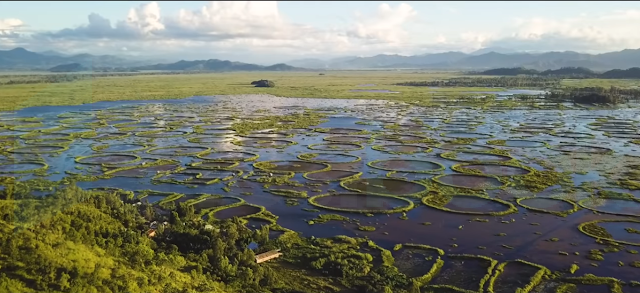
Loktak LakeManipur
Wular lakeJammu and Kashmir
43

When does the coast of Tamil Nadu receive the maximum rainfall?

  1. ((a))

    August - September

  2. ((b))

    October - November

  3. ((c))

    June - July

  4. ((d))

    January - February

Show Answer
Answer: ((b))

October - November

The correct answer is 'October - November'.

Key Points

  • Tamil Nadu coast receives heavy rainfall in October and November above normal.
  • While the lingering South West Monsoon brings a large part of the excess rainfall in the first half of October, the unusually active North East Monsoon with a continuous supply of moisture from the Bay of Bengal has been the main reason for the high rainfall since late October.

Thus, the correct answer is October - November

Additional Information

Monsoon of Tamil Nadu:

The state has three distinct periods of rainfall: advanced rainfall; rainfall from the tropical cyclones emerging in the neighbourhood of the Andaman Islands during the Retreat of Monsoons(October–November): and the North-East monsoon during the months of October–December, with dominant northeast monsoon winds from the western disturbances emerging over the Bay of Bengal.

44

Which of the following is a cold blooded animal?

  1. ((a))

    Whale

  2. ((b))

    Eagle

  3. ((c))

    Shark

  4. ((d))

    Kangaroo

Show Answer
Answer: ((c))

Shark

Concept: 

Cold-blooded animals:

  • Cold-blooded animals are animals that are not capable of regulating their body’s temperature according to the temperature of the surrounding.
  • They do not have a constant body temperature.
  • Cold-blooded animals include reptiles, amphibians, fishes, insects, and other invertebrates.
  • These animals are also called poikilothermic animals.

Warm-blooded animals:

  • Warm-blooded animals are the animals that are capable of maintaining a nearly constant body temperature irrespective of the temperature of the environment.
  • Their body temperature remains the same as they move from one surrounding to another.
  • The temperature control is mostly obtained by regulating their metabolic rates.
  • Warm-blooded animals include birds and mammals.
  • These animals are also called homeothermic animals.

Explanation:

Shark:

  • Sharks don’t fit the criteria for mammals in the most important respects.
  • They don’t produce milk, they don’t have hair, and most of them are cold-blooded.
  • The only characteristic they share with mammals is that some shark species give live birth.
  • They belong to the class Chondrichthyes and not Mammalia.

​Thus, the shark is a cold blooded animal.

Important PointsWhale:

  • Whale belongs to the class Mammalia.
  • The whale is a mammal, not a fish, hence it is warm-blooded.
  • It is classified under the Phylum Chordata.
  • Whales give birth to live offspring (whereas fish hatch their young from eggs), and feed their young (called calves) on milk produced by the female's own body.

Eagle: Is a bird, so warm-blooded.

**Kangaroo: Is a mammal so warm-blooded.**​

Additional Information

Mammalia:

  • The class Mammalia includes a huge number of animals.
  • All mammals are warm-blooded vertebrates whose offspring drink milk.

Characteristics:

  • They give live birth: 
  • Mammals are viviparous, which means they give birth to live young.
  • The exceptions to this rule are monotremes, which are mammals that lay eggs.
  • The platypus and echidna are monotremes.
  • They produce milk: 
  • Infant mammals require their mother’s milk in the first weeks or months of their lives.
  • All-female mammals have mammary glands that allow them to nurse their young.
  • Mammals breathe air through their lungs: 
  • Even underwater mammals use their lungs to breathe.
  • They have hair or fur: 
  • All mammals have fur or hair.
  • Some marine mammals are the exception to this rule.
  • They are vertebrates: 
  • All mammals have a backbone.
  • Amphibians, fish and reptiles also have backbones, but they lack the other characteristics of mammals.
  • Mammals are warm-blooded: 
  • Which means they maintain an even body temperature.
45

Nettle plants which grow in the wild protect themselves using:

  1. ((a))

    hair

  2. ((b))

    thorns

  3. ((c))

    smell

  4. ((d))

    Spray

Show Answer
Answer: ((a))

hair

The correct answer is hair.

  • Nettle plants contain stinging leaves that have a mixture of chemicals.
  • If an animal touches the leaves, stinging hairs inject chemicals into the skin.
  • The stinging hair of nettle leaves injects Methanoic acid.

6 Benefits of Stinging Nettle (Plus Side Effects)

46

The IFFCO urea plant is established in which of the following place of U.P.?

  1. ((a))

    Unchahar

  2. ((b))

    Allahabad

  3. ((c))

    Jamshedpur

  4. ((d))

    Jagdishpur

Show Answer
Answer: ((b))

Allahabad

The correct answer is Allahabad.

  • IFFCO stands for Indian Farmers Fertiliser Cooperative Limited.
  • Presently IFFCO Aonla produces 1980000 MTPA of Urea and 1138500 MTPA of Ammonia.
  • IFFCO Aonla has acquired ISO 9001, ISO 14001, OHSAS 18001, ISO 50001, and ISO 26000 Certifications.
  • This plant is supplied gas through the HBJ gas pipeline.

Additional Information

  • IFFCO is one of India's largest cooperative society which is wholly owned by Indian cooperatives.
  • IFFCO was registered as a multi-unit co-operative society under the Co-operative Societies Act on 3rd November 1967.
  • BS Nakai is its present chairman.
  • It is India's biggest fertilizer manufacturer with around 19% market share in Urea and around 29% market share in complex fertilizers.
  • Major Plants are-
  1. Kalon, Gujrat
  2. Kandla, Gurajat
  3. Pulpur, UP
  4. Aonla, UP
  5. Paradeep, Odisha
47

Which of the following monuments has an entrance door known as Alai Darwaza, added by Alaudin Khalji?

  1. ((a))

    Taj Mahal

  2. ((b))

    Qutab Minar

  3. ((c))

    Tughlaqabad Fort

  4. ((d))

    Red Fort

Show Answer
Answer: ((b))

Qutab Minar

The Alai Darwaza, an entrance door to the Qutab Minar, is a magnificent gateway built by Ala-Ud-Din Khilji of the Delhi Sultanate.

  • It is the only entrance remaining of four added to the Qutab Complex by Ala-Ud-Din Khalji.
  • It has exquisite inlaid marble decorations and latticed stone screens.
  • It highlights the remarkable artisanship of Turkish and local artisans who worked on it.
  • It was built in 1311.
48

Why is universal adult franchise important in a democracy?

  1. ((a))

    It ensures equal rights for all citizens

  2. ((b))

    It restricts political participation to a select group

  3. ((c))

    It promotes authoritarian rule

  4. ((d))

    It limits the power of the government

Show Answer
Answer: ((a))

It ensures equal rights for all citizens

The correct answer is 'It ensures equal rights for all citizens'

Key Points

  • Importance of Universal Adult Franchise:
  • Universal adult franchise is a cornerstone of democratic governance, allowing all adult citizens the right to vote, irrespective of caste, creed, religion, gender, or economic status.
  • It ensures that every citizen has an equal voice in the election of representatives, promoting equality and inclusiveness in the political process.
  • This principle helps to legitimize the government, as it reflects the will of the majority of the population.
  • By enabling broad participation, it helps to prevent the concentration of power in the hands of a few, thereby safeguarding democratic values.

Additional Information

  • Universal adult franchise fosters inclusivity and diversity in decision-making processes.
  • It acknowledges the inherent dignity and worth of every citizen and affirms their fundamental right to participate in governance.
  • This inclusive approach helps prevent the marginalization of certain groups within society and promotes social cohesion by bringing together individuals from diverse backgrounds to collectively determine the direction of their nation.
49

A car towing another car using a chain, in this case, the force exerted on a chain is an example of which of the following force?

  1. ((a))

    Applied force 

  2. ((b))

    Normal force 

  3. ((c))

    Frictional force 

  4. ((d))

    Tension force

Show Answer
Answer: ((d))

Tension force

The correct answer is ​Tension force.

Key Points

  • A car towing another car with a chain is an example of a Tension force.
  • The force of tension is defined as the force which is transmitted by rope, string, or wire when pulled by forces acting from opposite sides.
  • The force of stress is directed over the length of the wire and at the ends pulls energy evenly on the bodies.
  • Any physical object that is in contact with each other exerts some force.
  • Cables and ropes can be used to exert forces since they can easily move a force over a given distance (e.g. the length of the rope).

Additional Information

  • Frictional Force refers to the force produced by two surfaces that come in contact and slide against each other.
  • An applied force is a force that a human or some other object applies to an entity. If an individual moves a desk across the room, then an applied force acts on the object.
  • The Normal force is the force of support exerted on an object which is in contact with another stable object. It always occurs perpendicular to the surface.
50

Which of the following article defines "the name and territory of the union"?

  1. ((a))

    Article 1

  2. ((b))

    Article 2

  3. ((c))

    Article 3

  4. ((d))

    Article 4

Show Answer
Answer: ((a))

Article 1

ArticleWhat does it say
Article 1- Name and territory of the union. - Describes India that is Bharat is a "union of states" rather than a "federation of states". This provision deals with two things one, the name of the country, and two, types of the polity.
Article 2- admission or establishment of the new state. - empowers the parliament to admit into the union of India or establish new states on such terms and conditions as it thinks fit.
Article 3- Formation of new states and alteration of areas, boundaries, and names of existing states.
Article 4- Laws made under articles 2 and 3 to provide for the amendment of first and the fourth schedules and supplemental, incidental and consequential matter.
51

Which of the following is located on the Zuari River estuary?

  1. ((a))

    Cochin 

  2. ((b))

    Mormugao 

  3. ((c))

    New Mangalore

  4. ((d))

    Mumbai 

Show Answer
Answer: ((b))

Mormugao 

The correct answer is Mormugao.

Key Points

  • Mormugao Port is one of the oldest ports on the west coast of India, located in the state of Goa.
  • It is situated on the estuary of the Zuari River.
  • The port plays a significant role in handling iron ore exports from Goa to various countries.
  • Mormugao is well connected by road, rail, and sea, making it a crucial hub for maritime trade in the region.

Additional Information

  • Other Major Ports in India:
  • Cochin Port: Located in Kerala, it is a major port on the Arabian Sea and is known for its shipyard and oil refinery.
  • Mumbai Port: One of the largest ports in India, located on the west coast, handling a significant amount of cargo traffic.
  • New Mangalore Port: Situated in Karnataka, it is an important port for the export of coffee and cashew.
  • Significance of Estuaries:
  • Estuaries are vital for the environment as they act as nurseries for many marine species.
  • They help in filtering pollutants from rivers before they enter the open sea.
  • Estuaries support a diverse range of wildlife and plant species, contributing to biodiversity.
52

Which of the following countries is India's federal system related to?

  1. ((a))

    Canada

  2. ((b))

    United Kingdom

  3. ((c))

    United State of America

  4. ((d))

    Ireland

Show Answer
Answer: ((a))

Canada

The correct answer is Canada.

Important Points

  • The Federal System of India is governed in terms of the Constitution of India.
  • The country of India is also referred to as the Sovereign, Secular, Democratic Republic and has a Parliamentary form of government.
  • The nation is basically working according to the Indian Constitution, which was adopted on the 26th of November 1949.
  • The federal nature of the Indian constitution was adopted from the Constitution of Canada.

Key Points

  • The head of the Executive Union is the President of the country In the Federal System of India.
  • The real political, as well as social power, resides in the hands of the Prime Minister, who in turn heads the Council of Ministers.
  • According to the Federal System of India, the Prime Minister and his Council of Ministers will advise and help the President.
  • It is clearly stated in Article 74 (1) of the Indian Constitution, 
  • The Council of Members is answerable to the Lok Sabha or the House of People, as per the Federal System prevailing in India.
  • The Indian Constitution is subject to change, however, this change can only occur after the bill is passed with a majority of votes in the Parliament House.
  • Legislative powers are shared between the State Legislatures and the Parliament, while the rest of the powers are in the hands of the Parliament of India.
  • The Federal System in India conveys that the President, the Prime Minister, the Council of Ministers, and the Vice-President, together form the Union Executive
53

The feature of 'Impeachment of the President' in the Indian Constitution has been borrowed from the Constitution of _______.

  1. ((a))

    Australia

  2. ((b))

    United States of America

  3. ((c))

    Japan

  4. ((d))

    Germany

Show Answer
Answer: ((b))

United States of America

The correct answer is United States of America.

Key Points

  • Impeachment of President was taken from the USA Constitution.
  • Apart from this impeachment of the President, functions of President and Vice - President, removal of Supreme Court and High Court judges, Fundamental Rights, Judicial Review are certain features taken from USA Constitution.

Additional Information

SourceFeatures Borrowed
US ConstitutionFundamental rights, independence of the judiciary, judicial review, the impeachment of the president, removal of Supreme Court and high court judges, and post of vice-president
British ConstitutionParliamentary government, Rule of law, legislative procedure, single citizenship, Cabinet system, prerogative writs, parliamentary privileges, and bicameralism.
Australian ConstitutionConcurrent list, freedom of trade, commerce and intercourse, and a joint sitting of the two houses of Parliament.
Japanese ConstitutionThe procedure established by law
54

Which of the following lakes is separated from Bay of Bengal by Sriharikota Island?

  1. ((a))

    Chilika lake

  2. ((b))

    Vembanad lake 

  3. ((c))

    Pulicat lake

  4. ((d))

    Kaliveli lake

Show Answer
Answer: ((c))

Pulicat lake

The correct answer is Pulicat Lake.

Key Points

  • Pulicat Lake is the second largest brackish water lake in India, located on the border of Andhra Pradesh and Tamil Nadu.
  • The lake is separated from the Bay of Bengal by the Sriharikota Island, which is renowned for hosting the Satish Dhawan Space Centre, a major spaceport of India.
  • It spans an area of approximately 759 square kilometers, and its ecosystem supports rich biodiversity, including migratory birds such as flamingos.
  • Pulicat Lake serves as an important site for fishing and salt production, contributing to the livelihood of the local communities.
  • The lake's brackish waters are a mixture of fresh water brought by rivers and saline water from the sea, making it ideal for diverse aquatic life.

Additional Information

  • Chilika Lake:
  • Chilika Lake is the largest coastal lagoon in India and is located in Odisha.
  • It is designated as a Ramsar site due to its ecological importance and supports a rich variety of flora and fauna, including the endangered Irrawaddy dolphins.
  • The lake is not separated from the Bay of Bengal by an island but has a direct connection through a channel.
  • Vembanad Lake:
  • Vembanad Lake is the largest lake in Kerala and the longest in India.
  • It is famous for its backwaters and houseboat tourism and supports a diverse ecosystem of marine and freshwater species.
  • This lake is not located near the Bay of Bengal; rather, it is situated along the Arabian Sea.
  • Kaliveli Lake:
  • Kaliveli Lake is located in Tamil Nadu, near the Bay of Bengal.
  • It is a seasonal wetland and supports migratory bird species; however, it is smaller in size compared to Pulicat Lake.
  • This lake is not separated by an island and does not share the significant geographical features of Pulicat Lake.
  • Sriharikota Island:
  • Sriharikota Island is a barrier island located between Pulicat Lake and the Bay of Bengal.
  • It is home to the Satish Dhawan Space Centre, India's premier space launch facility operated by the Indian Space Research Organisation (ISRO).
  • The island plays a crucial role in separating the brackish waters of Pulicat Lake from the saline waters of the Bay of Bengal.

Important Points

  • Ecological Importance: Pulicat Lake is a crucial habitat for migratory birds and is part of the Pulicat Bird Sanctuary.
  • Geographical Feature: The lake's separation from the Bay of Bengal by Sriharikota Island makes it unique among Indian lakes.
  • Economic Role: The lake supports fisheries and salt production, which are vital for the local economy.
  • Historical Significance: Pulicat was a Dutch settlement in the 17th century, adding cultural heritage to its ecological and geographical significance.
55

Which of the following statements with regard to the Green Revolution is NOT true?

  1. ((a))

    It requires decreasing inputs over time.

  2. ((b))

    It increases crop yields.

  3. ((c))

    It uses high-yielding varieties of seeds.

  4. ((d))

    It needs fertilizers and pesticides.

Show Answer
Answer: ((a))

It requires decreasing inputs over time.

The correct answer is It requires decreasing inputs over time.

Key Points

  • The introduction of new, high-yielding varieties into emerging countries starting in the middle of the 20th century, led to a significant increase in the production of food grains (particularly wheat and rice).
  • Mexico and the Indian subcontinent saw their first stunning successes.
  • In order to achieve their high yields, the new types need to use significant quantities of chemical fertilisers and pesticides, which raises concerns about the expense and potential negative impacts on the environment.

Important Points

  • The collection of research and technology transfer programmes known as the "Green Revolution" took place between 1950 and the late 1960s and significantly enhanced agricultural production throughout much of the world.
  • High-yielding varieties (HYVs) of cereals, particularly dwarf wheat and rice, were adopted as a result of the initiatives.
  • It was connected to mechanised farming, artificial fertilisers, agrochemicals, controlled water supply (typically using irrigation), and innovative farming techniques.
  • These were all considered to be part of a "bundle of activities" that would replace "conventional" technology and be adopted as a whole.
56

With reference to the sultanate period in Uttar Pradesh, who built the Atala Masjid in Jaunpur?

  1. ((a))

    Iltutmish

  2. ((b))

    Ibrahim Shah Sharqi

  3. ((c))

    Firojshah Tughlaq

  4. ((d))

    Sikandar Lodi

Show Answer
Answer: ((b))

Ibrahim Shah Sharqi

The correct answer is ​Ibrahim Shah Sharqi.

Key Points

  • The Atala masjid in Jaunpur was built by Ibrahim Shah Sharqi.
  • The mosque was built in the 14th century.
  • Its height is more than 100 ft.
  • The other mosques in Jaunpur have followed the architecture of Atala masjid.
  • The beautiful galleries can be found in the mosque.
  • These gallaries are surrounded by artistic walls.
  • In the book of Willium Hodges, there is a mention of this mosque.
  • In the central courtyard of this mosque, madarsa din duniya is placed.
  • The sharqi style is followed in the construction of this mosque.
  • The Hindu temple architecture can be found in the inner walls and pillars of this mosque.
57

152° Fahrenheit is equal to ______ °Celsius.

  1. ((a))

    36.67

  2. ((b))

    56.67

  3. ((c))

    66.67

  4. ((d))

    86.67

Show Answer
Answer: ((c))

66.67

The correct answer is 66.67.

Key Points

The formula to convert Celsius to Fahrenheit is given:-

  • F = °C × (9/5) + 32
  • Hence
  • ((F-32) \div {9\over 5} ) = C°
  • F = [ C × (9/5) + 32 ]
  • Given that, F = 152°
  • C° = ((F-32) \div {9\over 5} )
  • C° = ((152-32) \times {5\over9})
  • C° = 66.67
58

World Environment Day is celebrated every year on ________.

  1. ((a))

    January 15

  2. ((b))

    June 5

  3. ((c))

    August 26

  4. ((d))

    July 10

Show Answer
Answer: ((b))

June 5

The correct answer is June 5.

Key Points

  • World Environment Day is celebrated every year on June 5. The concept of World Environment Day originated in 1972 from United Nations at Stockholm Conference on the Human Environment (5–16 June 1972).
  • World Environment Day is celebrated to create Awareness about Environmental issues and involve Public Participation to the fullest. The theme for World Environment Day 2022 is Only One Earth hosted by Sweden.

Additional Information

DateJune Important Days
1st JuneWorld Milk Day
2nd JuneTelangana Formation Day
7th JuneWorld Food Safety Day
8th JuneWorld Oceans Day
12th JuneWorld Day Against Child Labor
14th JuneWorld Blood Donor Day
16th JuneGuru Arjan Dev Martyrdom Day
21st JuneInternational Yoga Day
World Music Day
23rd JuneInternational Olympic Day
59

Which one of the following is the most important small scale industry in India?

  1. ((a))

    Handloom industry

  2. ((b))

    Computer chips industry

  3. ((c))

    Iron and steel industry

  4. ((d))

    Jute industry

Show Answer
Answer: ((a))

Handloom industry

  • Based on the size, industries can be classified into small-scale and large-scale industries. Small Scale Industries (SSI) are those industries in which the manufacturing, production and rendering of services are done on a small or micro scale. For example, silk weaving, handloom industry, food producing, etc.

Small Scale Industry:

  • The Indian handloom industry is one of the most ancient cottage industries and plays an important role in the country’s economy.
  • The handloom industry is the second largest sector after agriculture, providing livelillood to more than 65 lakh people.
  • This sector accounts for 19% of the total cloth produced in the country, and the uniqueness of this sector includes flexibility, innovation and creativity.
  • Micro and Small Scale Enterprises (MSEs) perform the bulk of the weaving and processing operations.

Large scale industries:

  • A large-scale industry employs a large number of persons and consumes a vast quantity of power.
  • Huge capital investment is needed.
  • Iron and steel industry, textile industry, manufacture of heavy machinery, etc.
60

What is the length of the borderline of India with Bhutan?

  1. ((a))

    799 km

  2. ((b))

    899 km

  3. ((c))

    599 km

  4. ((d))

    699 km

Show Answer
Answer: ((d))

699 km

The correct answer is 699 km

Key Points

  • Bhutan shares borders with the Indian states of
  • Arunachal Pradesh in its east,
  • Sikkim in the west and
  • Assam, West Bengal in the south.
  • The Himalayan kingdom also shares a border with China.
  • This Bhutan-India Border is the international boundary between the Kingdom of Bhutan and the Republic of India.
  • This border is 699 km long.

Additional Information

  • Bhutan is a landlocked country in Southeast Asia.
  • It is bordered by China in the north and India in the south.
  • In 2008, Bhutan changed its Absolute Monarchy form of government to Constitutional Monarchy by conducting its first general election for the National Assembly. Hence statement 2 is correct.
  • Thimphu is the capital of Bhutan.
  • Buddhism is the state religion of Bhutan.
  • Dzongkha is the official language of Bhutan. It is a Sino-Tibetian language.
  • Bhutan is a founding member of the South Asian Association for Regional Cooperation (SAARC). Hence statement 3 is correct.
  • Bhutan is also a member of the Climate Vulnerable Forum, the Non-Aligned Movement, BIMSTEC, the IMF, the World Bank, UNESCO, and the World Health Organization (WHO).
61

Which of the following desert is known as the white desert?

  1. ((a))

    Jaisalmer

  2. ((b))

    Barmer

  3. ((c))

    Kachchh

  4. ((d))

    Bikaner

Show Answer
Answer: ((c))

Kachchh

The correct answer is Kachchh.

Key Points

  • The Rann of Kachchh is famous for its white salty desert sand and is reputed to be the largest salt desert in the world.
  • The Rann of Kachchh is a salt marshy land in the Thar Desert in the Kachchh district of western Gujarat.
  • It lies between Gujarat in India and the Sindh province in Pakistan.
  • Rann is also a part of a few sanctuaries such as the Indian wild ass sanctuary, Kachchh desert wildlife sanctuary, etc.

Additional Information 

  • Jaisalmer: The city is located deep inside the famous Thar Desert.
  • Barmer: The district forms a part of the Thar desert and is situated in the western part of the State.
  • Bikaner: Bikaner is situated in the middle of the Thar desert and has a hot desert climate with very little rainfall and extreme temperatures.
62

Where is the headquarters of the International Court of Justice located?

  1. ((a))

    The Hague

  2. ((b))

    Paris

  3. ((c))

    Washington D. C.

  4. ((d))

    New York

Show Answer
Answer: ((a))

The Hague

The correct answer is The Hague.

Key Points

  • The International Court of Justice (ICJ) is the principal judicial organ of the United Nations.
  • The International Court of Justice was created with an aim to settle the disputes between states in accordance with international law and gives advisory opinions on international legal issues.
  • It was established in June 1945
  • It is the successor of the Permanent Court of International Justice (PCIJ).
  • As of 2024 August, Nawaf Salam is the current President of the International Court of Justice.

Additional Information

  • The headquarters of the United Nations Educational, Scientific and Cultural Organization(UNESCO) is located in Paris.
  • The headquarters of the International Monetary Fund(IMF) is located in Washington, D.C.
  • The headquarters of the United Nations is located in New York City.
63

With whom is the Vande Mataram scheme run by the Uttar Pradesh government-related?

  1. ((a))

    Free treatment for women

  2. ((b))

    School Education

  3. ((c))

    Self Employed

  4. ((d))

    Village Development

Show Answer
Answer: ((a))

Free treatment for women

The correct answer is Free treatment for women.

Key Points

  • Vande Mataram's scheme is associated with the free treatment for women.
  • It was launched on 9th February 2004.
  • The main objective of the scheme is to improve the access of safe motherhood services and to reduce maternal and neonatal deaths significantly.
  • To provide public and private facilities and NGOs are included.
  • It aims to reduce maternal deaths.
  • The scheme is a purely voluntary scheme.
64

What is the area-wise rank of Uttar Pradesh in India?

  1. ((a))

    2nd

  2. ((b))

    3rd

  3. ((c))

    4th

  4. ((d))

    5th

Show Answer
Answer: ((c))

4th

The correct answer is 4th.

  • Uttar Pradesh with an area of 240,928 sq. km ranks 4th in India.
  • Ranking of different states areawise are listed below:
RankStatesArea (km2)
1stRajasthan342,239
2ndMadhya Pradesh308,350
3rdMaharashtra307,713
4thUttar Pradesh240,928
5thGujarat196,024
  • Facts about Uttar Pradesh are:
  • Bicameral type of government.
  • Lok Sabha seats - 80
  • Rajya Sabha seats - 31
  • Anandiben Patel is the current governor.
  • Yogi Adityanath is the current Chief Minister.
65

The reaction between an acid and a base to give salt and water is called ______.

  1. ((a))

    neutralisation reaction 

  2. ((b))

    combination reaction 

  3. ((c))

    displacement reaction  

  4. ((d))

    decomposition reaction  

Show Answer
Answer: ((a))

neutralisation reaction 

The correct answer is neutralisation reaction.

Key Points

  • Neutralisation reaction 
  • A neutralization reaction is a chemical reaction in which an acid and base react together to form salt and water as products.
  • In a neutralization reaction, there is a combination of H+ ions and OH– ions which form water.
  • Neutralization reaction examples:
  • Formation of Sodium Chloride (Common Salt)

HCl + NaOH → NaCl + H2O

  • Titration methods using phenolphthalein
  • Applications of a neutralization reaction are:
  • Titration method
  • Wastewater treatment
  • Nanomaterial synthesis

Additional Information

  • Combination reaction
  • A combination reaction is a chemical reaction where substances synthesize to generate a new substance.
  • In combination reactions, two or more substances combine to form a new compound.
  • Combination reactions are also referred to as synthesis reactions.
  • The equation can be expressed:
  • A + B --> AB
  • Displacement reaction
  • A displacement reaction is the one wherein the atom or a set of atoms is displaced by another atom in a molecule.
  • The general equation is:
  • A + B-C → A-C + B
  • There are two types of displacement reactions:
  • Single displacement reaction
  • Double displacement reaction
  • Decomposition reaction
  • A decomposition reaction can be defined as a chemical reaction in which one reactant breaks down into two or more products.
  • The general equation is:
  • AB -> A + B
  • AB is the parent molecule (reactant) and A & B are the product molecules.
66

The art of Zar Buland was developed in which district in Uttar Pradesh?

  1. ((a))

    Meerut

  2. ((b))

    Aligarh

  3. ((c))

    Lucknow

  4. ((d))

    Mirzapur

Show Answer
Answer: ((c))

Lucknow

The correct answer is Lucknow.

Key Points

  • Zar Buland's work was developed in Lucknow district in Uttar Pradesh.
  • Zar Buland is a variation in the Bidri work of Karnataka.
  • It looks similar to the Tanjore metal works plates with minute differences
  • In this, the designs are raised above the surface.
  • The inlaying of silver is done after the pattern is carved on the silver sheet.

Additional Information

  • Bidriware is an art form that has its origination from Bidar in Karnataka.
  • This art form was introduced in India by Bahmani Sultans.
  • It has 4 variations:
  • Teh nashin
  • Aftabi
  • Tarkashi
  • Zar Buland or Zar Nashin
  • Bidri Metal Work Centers:
  • Hyderabad
  • Bidar

67

In which year in India air transport was launched between Allahabad and Naini?

  1. ((a))

    1911

  2. ((b))

    1890

  3. ((c))

    1903

  4. ((d))

    1885

Show Answer
Answer: ((a))

1911

The correct answer is 1911.

Key Points

  • On February 18, 1911, the first commercial civil aviation flight took place between Allahabad and Naini Junction, a distance of six miles, when Henri Piquet carried 6,500 pieces of mail on a Humber biplane.
  • It quickly grabbed the spot of a “world first” in the process, as it is considered to be the world's first airmail service.
  • The next year, in December, Indian State Air Services, along with Imperial Airways of the U.K., began a London-Karachi-Delhi flight, it becoming the first international flight to and from India.
  • Between 1915 and 1929, there was a flurry of activity Tata Sons Ltd. (1915), and the Royal Air Force (1920) started regular air mail services between Karachi and Madras and Karachi and Bombay, and airports were constructed (1924) at Calcutta, Allahabad and at Bombay.
  • Around this time the Department of Civil Aviation and the Aero Club of India also came into being (1927).
  • The Indian Aviation Act was finalized in 1937, and Hindustan Aeronautics Limited (HAL) was set up with the help of the then Mysore Government in 1940.

Additional Information 

 Air India

  • Air India will Become a Tata-owned company this week as the government has decided to hand over the company to the Tata Group on January 27, 2021.
  • The Disinvestment of Air India is now decided to be on the 27th of January 2022.
  • The airline was founded by J. R. D. Tata as Tata Airlines in 1932.
  • Tata Sons chief N Chandrasekaran was appointed as chairman of Air India (October 2022).

 Akasha Airline

  • India's newest airline is Akash Airlines.
  • It was founded by Vinay Dube The airline began commercial operation with its first flight service from Mumbai to Ahmedabad on 7 August 2022.
  • Akasha airline Headquarters is located in Mumbai (Maharashtra).
68

What is the name of the world's first wooden satellite being tested by Japan?

  1. ((a))

    TatoSat

  2. ((b))

    EcoSat

  3. ((c))

    HoJinSat

  4. ((d))

    LignoSat

Show Answer
Answer: ((d))

LignoSat

The correct answer is LignoSat.

In News

  • Japan is set to test the world's first wooden satellite named LignoSat.

Key Points

  • LignoSat was developed by Kyoto University and Sumitomo Forestry.
  • It will be launched next week on a SpaceX rocket to the International Space Station.
  • The satellite aims to test how wood withstands the extreme environment of space for six months.
  • Wood can burn harmlessly in the atmosphere, offering a sustainable alternative to traditional satellites.

Additional Information

  • LignoSat
  • The name comes from the Latin word for wood.
  • It is an innovative project that combines sustainability with space exploration.
  • Takao Doi
  • A former astronaut who advocates for using natural materials in space technology.
  • Involved in the development of LignoSat as part of a sustainable future initiative.
  • Magnolia tree (Japanese honoki)
  • The wood used for LignoSat comes from this type of tree.
  • It is known for its strength and resistance to shattering.
  • Sustainable materials in space
  • The concept aims to minimize pollution and use eco-friendly resources in future space missions.
  • Wood's natural properties allow it to serve as a potential building material for habitats on other planets.
69

Who among the following is the first female from India to win a Grammy award?

  1. ((a))

    Monali Thakur

  2. ((b))

    Neeti Mohan

  3. ((c))

    Tanvi Shah

  4. ((d))

    Palak Muchhal

Show Answer
Answer: ((c))

Tanvi Shah

The correct answer is Tanvi Shah.

  • Tanvi Shah is the first female from India to win a Grammy award.​

Important Points

  • Tanvi Shah, hailing from Tamil Nadu, was born on 1 December 1985.
  • She has sung in Telugu, Tamil, Hindi, Spanish, Portuguese, Arabic.
  • He shared the Grammy Award for Best Song Written for Visual Media with AR Rahman and Gulzar at the 52nd Grammy Awards for the song Jai Ho for writing Spanish lyrics for the song.
  • Other Awards: BMI Award in 2009, World Sound Track Award (2009).
  • The Grammy Award is an award presented by the US Recording Academy to recognize the "outstanding achievement in the music industry" of the United States.
  • The trophy shows a gilded gramophone.
  • The Grammys are the first big three network major music awards to be held annually.
70

The musician Sivamani is associated with which musical instrument?  

  1. ((a))

    Drums

  2. ((b))

    Violin

  3. ((c))

    Shehnai

  4. ((d))

    Sarod

Show Answer
Answer: ((a))

Drums

The correct answer is Drums.

Key Points

  • Sivamani, known by his stage name Drums Sivamani, is a renowned percussionist from India. He plays many instruments including drums, octoban, darbuka, udukai, ghatam, and kanjira.
  • Over his career, he has performed in various stages and for different types of events, including the IPL Championships in 2008 and 2010.
  • He has been associated with prominent musicians, like A.R. Rahman, and has performed for various compositions across film industries.

Additional Information

  • List of Famous Musicians with Instruments:
  • Santoor: Pt Shiv Kumar Sharma
  • Sarod: Allauddin Khan,Amjad Ali Khan.
  • Sitar: Pt Ravi Shankar, Budhaditya Mukherjee.
  • Surbahar: Annapurna Devi, Sajjad Hussain.
  • Rudra Veena: Asad Ali Khan, Zia Moin-ud-din Khan.
71

Bharat Ratna winner, Bhupen Hazarika is related to which of the following field?

  1. ((a))

    Art

  2. ((b))

    Sports

  3. ((c))

    Politics

  4. ((d))

    Economics

Show Answer
Answer: ((a))

Art

The correct answer is Art

Key Points

  • Bhupen Hazarika was an Indian playback singer, lyricist, musician, poet, actor, artist, editor, filmmaker, professor and politician from India.
  • He was widely known as “Sudhakantha”  and his songs were written and sung mainly in the Assamese language, are marked by humanity and universal brotherhood and has been translated and sung in many languages, most notably in Bengali and Hindi.
  • His songs, based on the themes of communal amity, universal justice and empathy, are especially popular among the people of Assam.
  • He was awarded the
  • National Film Award for Best Music Direction,
  • The Sangeet Natak Akademi Award,
  • The Dada Saheb Phalke Award (1992),
  • The highest award for cinema in India and
  • The Sangeet Natak Akademi Fellowship (2008),
  • The highest award of the Sangeet Natak Akademi.
  • He was posthumously awarded both the Padma Vibhushan, India’s second-highest civilian award, in 2012, and Bharat Ratna, India’s highest civilian award, in 2019.
  • He also held the position of the Chairman of the Sangeet Natak Akademi from December 1998 to December 2003.
72

What is the permissible limit for FDI in retail through unrestricted routes in India?

  1. ((a))

    49%

  2. ((b))

    74%

  3. ((c))

    25%

  4. ((d))

    100%

Show Answer
Answer: ((d))

100%

The Correct Answer is 100%.


Key Points

  • FDI in the retail industry means that foreign companies in certain categories can sell products through their own retail shop in the country.
  • The permissible limit for FDI in retail through unrestricted routes are 100%.


Important Points

In India, the FDI is allowed under two modes

  • Either through the automatic route, for which companies don't need government approval.
  • Through the government route, for which companies need a go-ahead from the center.
73

Which district of Uttar Pradesh state is completely surrounded by the state of Madhya Pradesh

  1. ((a))

    Lalitpur

  2. ((b))

    Moradabad

  3. ((c))

    Jhansi

  4. ((d))

    Jalaun

Show Answer
Answer: ((a))

Lalitpur

The correct answer is Lalitpur.

Important Points 

  • The Lalitpur District of Uttar Pradesh state is completely surrounded by the Madhya Pradesh.
  • It is completely surrounded by Madhya Pradesh state, to the east lays Tikamgarh district, to the south Sagar district, and to the west Ashoknagar and Shivpuri districts.
  • It is joined to Jhansi District of Uttar Pradesh by a narrow corridor to the northeast.
  • Lalitpur district was formerly part of the state of Chanderi, founded in the 17th century by a Bundela Rajput who was descended from Rudra Pratap of Orchha.
  • Chanderi, along with most of Bundelkhand, came under Maratha hegemony in the 18th century.
74

Padma Shri awardee (2023) Guru K Kalyanasundaram Pillai is an exponent of which of the following classical dance genres?

  1. ((a))

    Sattriya

  2. ((b))

    Kathak

  3. ((c))

    Kathakali

  4. ((d))

    Bharatnatyam

Show Answer
Answer: ((d))

Bharatnatyam

The Correct answer is Bharatnatyam.

Key Points

  • Guru K Kalyanasundaram Pillai is a renowned exponent of Bharatnatyam, one of the eight recognized Indian classical dance forms.
  • Bharatnatyam originated in Tamil Nadu and is considered one of the oldest classical dance forms in India.
  • This dance form is known for its graceful movements, intricate footwork, and expressive gestures, often used to narrate stories from Hindu mythology.
  • Guru K Kalyanasundaram Pillai belongs to a lineage of traditional Bharatnatyam practitioners and has dedicated his life to preserving and promoting this ancient art form.
  • The Padma Shri award, one of India's highest civilian honors, was conferred upon him in 2023 for his outstanding contributions to the field of Bharatnatyam.
  • Bharatnatyam is often performed in temples as a form of devotional offering and has evolved to become a prominent art form on global stages.
  • This dance form incorporates elements of Natya (dramatic art), Nritta (pure dance), and Nritya (expressive dance).

Additional Information

  • Sattriya
  • Sattriya is a classical dance form that originated in Assam.
  • It was introduced by the Vaishnavite saint Srimanta Sankardeva in the 15th century as a medium for religious expression.
  • This dance form is traditionally performed in sattras (Vaishnavite monasteries).
  • Sattriya is characterized by its spiritual themes and use of traditional Assamese instruments.
  • Kathak
  • Kathak is a classical dance form that originated in northern India.
  • It is known for its rapid footwork, spins, and expressive storytelling through gestures and facial expressions.
  • Kathak has both Hindu and Muslim cultural influences, often depicting stories from the Ramayana, Mahabharata, and Mughal courts.
  • Kathakali
  • Kathakali is a classical dance-drama form that originated in Kerala.
  • It is known for its elaborate costumes, vibrant makeup, and intricate facial expressions.
  • Kathakali performances often depict stories from Hindu epics such as the Ramayana and Mahabharata.
75

Which organization gives the report on "Gross Domestic Product for India"?

  1. ((a))

    Comptroller and Auditor General of India (CAG)

  2. ((b))

    National Sample Survey Office (NSSO)

  3. ((c))

    Department of Economic Affairs (DEA)

  4. ((d))

    Central Statistics Office (CSO)

Show Answer
Answer: ((d))

Central Statistics Office (CSO)

The correct answer is Central Statistics Office (CSO).

Key Points

**Gross Domestic Product(**GDP):

  • GDP refers to the gross domestic product and is a widely used measure to determine the size of the economy of a nation.
  • It represents the total amount of goods and services produced in a country within a financial year.
  • The GDP takes the purchases of newly produced goods and services for a particular period into account.
  • In calculating the GDP, the focus is on the total value of goods and services produced within the country's borders, irrespective of whether the value addition is due to the residents or non-residents of the country.
  • There are two methods of calculating GDP. They are:
  • Expenditure approach:
  • The expenditure approach takes into account adding up all the amount spent on goods and services during the period.

GDP = C + I + G + (X – M)

Where,

C = Consumption spending

I = Business investments (Capital equipment, inventories)

G = Government purchases

X = Exports

M = Imports

  • Income approach:
  • Under the income approach, the GDP is calculated by adding up three factors.
  • GDP = National income + Statistical discrepancy + Capital consumption allowance
  • The Central Statistics Office (CSO) creates the GDP report each year.

Additional Information

  • GNP is known as gross national product and represents the total value of goods and services produced by the residents of a country during a financial year.
  • It takes the income earned by the citizens of the country present within or outside the country into consideration. It excludes the income generated by the foreign nationals who are residing in the country.
  • It can be calculated as:

GNP = GDP + NR – NP

Where,

GDP = Gross domestic product

NR = Net income receipts

NP = Net outflow to foreign assets

76

Rudraprayag is situated at the confluence of which rivers?

  1. ((a))

    Bhagirathi and Alaknanda

  2. ((b))

    Mandakini and Alaknanda

  3. ((c))

    Nandakini and Alaknanda

  4. ((d))

    Dhuliganga and Alaknanda

Show Answer
Answer: ((b))

Mandakini and Alaknanda

The correct answer is Mandakini and Alaknanda.

Key Points

  • Rudraprayag is one of the Panch Prayag (five confluences) of the Alaknanda River, the point of confluence of the Alaknanda and Mandakini rivers.
  • Rudraprayag is situated at the confluence of the Alaknanda and Mandakini rivers.
  • Mandakini is also known as Kali Ganga.
  • The Sharda/Sarayu/Mandakini/Kali Ganga river originates in the Milam Glacier in the Nepal Himalayas where it is known as Goriganga.
  • Along the Indo-Nepal border, it is called Kali or Chowk, where it joins the Ghaghara.
  • The Ghaghra after collecting the waters of its tributaries cuts a deep valley at Sheeshpani, where the Sharda River (Kali or Kali Ganga) joins the plain.​

Additional Information 

  • Panch Prayag-
  • ​Vishnu Prayag- Alaknanda+Dhauliganga
  • Nand Prayag-Alaknanda+Nandakini
  • Karna Prayag-Alaknanda+Pindar
  • Rudra Prayag- Alaknanda+Mandakini
  • Dev Prayag-Alaknanda+Bhagirathi

77

Meghalaya, a mountainous belt in eastern India, was originally a part of ________.

  1. ((a))

    Manipur

  2. ((b))

    West Bengal

  3. ((c))

    Assam

  4. ((d))

    Sikkim

Show Answer
Answer: ((c))

Assam

The correct answer is Assam.

Key Points

  • Meghalaya, a mountainous belt in eastern India, was originally a part of Assam.
  • Meghalaya was given special protection in the Indian constitution in 1947, along with other tribal areas, and it preserved a large measure of autonomy while being part of the state of Assam.
  • When Assamese was made the official language of the state in 1960, demand for autonomy and self-rule grew.
  • Unlike many other hill regions in northeastern India, this was a mostly peaceful and constitutional movement.
  • In 1970, Meghalaya was established as an autonomous state inside Assam.
  • Meghalaya achieved full statehood on January 21, 1972.
  • Meghalaya is bounded by:
  • Assam to the north and northeast.
  • Bangladesh to the south and southwest.

Additional Information

  • Manipur became a part of India in October 1949.
  • In 1956, it was designated as a Union Territory.
  • The North-Eastern Areas (Reorganisation) Act of 1971 made Manipur a full-fledged state in 1972.
  • Bengal was partitioned along religious lines after India attained independence in 1947.
  • The western section of the country was given to the Dominion of India and given the name West Bengal.
  • The eastern section became part of Pakistan's Dominion as the province of East Bengal (later renamed East Pakistan in 1956),
  • In 1975, the Prime Minister of Sikkim petitioned the Indian Parliament to make Sikkim a state.
  • Sikkim became the 22nd state of the Indian Union on May 16, 1975, and the monarchy was abolished.
78

The district where the Ganga river enters the state of Uttar Pradesh is ________.

  1. ((a))

    Meerut

  2. ((b))

    Bulandshahr

  3. ((c))

    Mathura

  4. ((d))

    Bijnor

Show Answer
Answer: ((d))

Bijnor

Concept:

Drainage systems of India:

  • The Indian drainage system consists of a large number of small and big rivers.
  • The major two types of the Drainage system of India are :
  • The Himalayan Drainage System.
  • The Peninsular Drainage System.
  • The major rivers of the Himalayan river system are the Indus, the Ganga, and the Brahmaputra.

Explanation:

Ganga River System :

  • The Ganga is the most important river in India.
  • It rises in the Gangotri glacier near Gaumukh (3,900 m) in the Uttarkashi district of Uttarakhand.
  • Here, it is known as the Bhagirathi.
  • It cuts through the central and the lesser Himalayas in narrow gorges.
  • At Devprayag, the Bhagirathi meets the Alaknanda, hereafter, it is known as the Ganga.
  • The Ganga enters the plains at Haridwar.
  • The river has a length of 2,525 km.
  • It is shared by Uttarakhand (110 km) and Uttar Pradesh (1,450 km), Bihar (445 km), and West Bengal (520 km).
  • The important left bank tributaries are the Ramganga, the Gomati, the Ghaghara, the Gandak, the Kosi and the Mahananda.
  • The river finally discharges itself into the Bay of Bengal near Sagar Island.
  • The Yamuna, the westernmost and the longest tributary of the Ganga.
  • The Ganga river enters the state of Uttar Pradesh in the district of Bijnor.

Thus, the Ganga river enters the Bijnor District of Uttar Pradesh.

79

In which state is the Sahayadri Tiger reserve situated?

  1. ((a))

    Maharashtra

  2. ((b))

    Odisha

  3. ((c))

    Karnataka

  4. ((d))

    Tamil Nadu

Show Answer
Answer: ((a))

Maharashtra

The correct answer is Maharashtra.

Key Points

  • The Sahyadri Tiger Reserve (STR) is located in the Sahyadri ranges of the Western Ghats of Maharashtra.

Additional Information

  • It is in the news because the Maharashtra government is planning to relocate tigers from the Vidarbha region to the sanctuaries elsewhere where their population is smaller, including the Sahyadri Tiger Reserve (STR).
  • At present, STR has only seven tigers. For this, the state government has also set up a committee to examine this issue, and a decision will be taken based on its recommendations.
  • It will also consult experts from the Centre and submit its report in 2-3 months.
  • Tiger is India's national Animal and India is home to 80 percent of tigers in the world. Tiger Reserves are spread across 18 states in India.
  • A Tiger Reserve consists of a 'Core' or 'Critical Tiger Habitat', which is to be managed as an inviolate area, and a 'Buffer' or Peripheral area immediately abutting a Core area, which may be accorded a lesser degree of habitat protection. This is the typical zonation of a Tiger Reserve.
80

Unfinished is the autobiography of which actress?

  1. ((a))

    Parineeti Chopra

  2. ((b))

    Deepika Padukone

  3. ((c))

    Priyanka Chopra Jonas

  4. ((d))

    Alia Bhatt

Show Answer
Answer: ((c))

Priyanka Chopra Jonas

The correct answer is Priyanka Chopra Jonas.

Key Points

  • The memoir titled ‘Unfinished’ is written by Bollywood actress Priyanka Chopra Jonas.
  • With the release of her first novel, "Unfinished: A Memoir," which she described as "honest, raw and vulnerable," actor-producer Priyanka Chopra Jonas officially became an author.
  • The end result is a book published by the imprint of Michael Joseph that covers her 20-year dual-continental career as an actor and producer and her role as a Goodwill Ambassador for UNICEF.
  • The memoir promises to offer insights into the childhood of Priyanka Chopra Jonas in India, her formative adolescent years in the US.

81

The smallest district of Uttar Pradesh with respect to area is–

  1. ((a))

    Hapur

  2. ((b))

    Meerut

  3. ((c))

    Lakhimpur Khiri

  4. ((d))

    Sitapur

Show Answer
Answer: ((a))

Hapur

The correct answer is Hapur.

Key Points

  • In terms of area, Hapur is the smallest, and Lakhimpur Kheri is the largest district of Uttar Pradesh.
  • The district of Bhadohi is a district of Uttar Pradesh in northern India.

Additional Information 

DistrictTotal Area (sq. km)
Meerut2590
Lakhimpur Khiri7,680
Sitapur5743
82

A tax that takes away a large part of the income as the income increases is called

  1. ((a))

    progressive tax

  2. ((b))

    proportionate tax

  3. ((c))

    indirect tax

  4. ((d))

    regressive tax

Show Answer
Answer: ((a))

progressive tax

The correct answer is progressive tax.

Key Points

  • A tax system that raises rates as taxable income rises is known as a progressive tax. Taxes on investment income, interest income, rental income, estates, and tax credits are a few examples of progressive taxes.
  • Based on the taxpayer's capacity to pay, a progressive tax is imposed. Low-income earners pay a lower tax rate than those with higher incomes.
  • It reduces the income inequalities in the country by reducing the gap between rich and poor.

Hence, the correct answer is A tax that takes away a large part of the income as the income increases is called progressive tax.

83

Kawas Thermal Power Station is located in which of the following states?

  1. ((a))

    Gujarat

  2. ((b))

    Maharashtra

  3. ((c))

    West Bengal

  4. ((d))

    Rajasthan

Show Answer
Answer: ((a))

Gujarat

The correct answer is Gujarat.

Key Points

  • Kawas Thermal Power Station is located in Surat district, in the state of Gujarat, India.
  • It is managed and run by the National Thermal Power Corporation (NTPC).
  • The power plant consists of gas-based combined cycle power units. It was one of the early gas-based power plants in India.
  • The total installed capacity of Kawas Thermal Power Station is around 645 MW.
  • The power plant plays a crucial role in supplying electricity to the state of Gujarat, supporting various industries and households.

Additional Information

Power StationStateCapacity (MW)Type
Vindhyachal Super Thermal Power StationMadhya Pradesh4,760Coal
Mundra Thermal Power StationGujarat4,620Coal
Sasan Ultra Mega Power ProjectMadhya Pradesh3,960Coal
NTPC DadriUttar Pradesh2,637Coal and Gas
Talcher Super Thermal Power StationOdisha3,000Coal
Rihand Thermal Power StationUttar Pradesh3,000Coal
Korba Super Thermal Power PlantChhattisgarh2,600Coal
Ramagundam Super Thermal Power StationTelangana2,600Coal
84

Kalamandalam Kalyanikutty Amma was an Indian Classical Dancer of _________ dance form.

  1. ((a))

    Sattriya

  2. ((b))

    Mohiniyattam

  3. ((c))

    Odissi

  4. ((d))

    Kathak

Show Answer
Answer: ((b))

Mohiniyattam

The correct answer is Mohiniyattam.

Key Points

  • Kalamandalam Kallyanikutty Amma was an epoch-making Mohiniyattam danseuse from Kerala in southern India.
  • Mohiniyattam is a classical Indian dance, which by definition traces its repertoire to the foundational text Natya Shastra.
  • The Natya Shastra text is attributed to the ancient scholar Bharata Muni.
  • Its first complete compilation is dated to between 200 BCE and 200 CE, but estimates vary between 500 BCE and 500 CE.
  • Mohiniattam Dancers, Indian Classical Dances, Indian Dances

Additional Information

  • Sattriya or Sattriya Nritya is a major Indian classical dance.
  • Odissi also mention as Orissa in old literature is a major old Indian classical dance that originated in the Hindu temples of Odisha.
  • Kathak is one of the eight major forms of Indian classical dance. It is the classical dance form of Uttar Pradesh.
  • The origin of Kathak is traditionally assigned to the traveling bards in ancient northern India.
85

Which among the following Article in the Constitution of India give Discretion power to Governor?

  1. ((a))

    Article – 202

  2. ((b))

    Article – 167

  3. ((c))

    Article – 163

  4. ((d))

    Article – 174

Show Answer
Answer: ((c))

Article – 163

The correct answer is Article – 163.

Key Points

  • Under the Article – 163 of The Constitution of India Governor has the discretion power.
  • Under this Article – 163, If any question arises whether any matter is or is not a matter as respects which the Governor is by or under this Constitution required to act in his discretion, the decision of the Governor in his discretion shall be final.
  • As per the Article – 163, the validity of anything done by the Governor shall not be called in question on the ground that he ought or ought not to have acted in his discretion.

Additional Information

  • Article – 202 of The Constitution of India assure the budget session in state legislative assembly.
  • Article – 167 of The Constitution of India gives the Governor power to present any topic in front of the cabinet or to get any information from the chief minister of state.
  • Under Article – 174 of The Constitution of India Governor of the state to summon the house, prorogation and dissolution of the session of state legislative assembly.
86

Which was the first part of India to hold an election based on universal adult franchise?

  1. ((a))

    Assam

  2. ((b))

    Manipur

  3. ((c))

    Bihar

  4. ((d))

    Tripura

Show Answer
Answer: ((b))

Manipur

The correct answer is Manipur.

Key Points

  • Manipur was the first part of India to hold an election based on a universal adult franchise.

Additional Information

  • The first general election was held in 1951-52 for over four months. It is from 25 October 1951 to 21 February 1952.
  • The elections were based on universal adult franchise i.e twenty-one years of age or older having the right to vote.
  • There were over 173 million voters, most of them poor, illiterate, and rural, and have had no experience of elections.
  • The first general elections were marked by an active election campaign by Jawaharlal Nehru.
  • The parties contested 489 seats. INC won the elections with 364 seats, as the people voted for the party which was led by Jawaharlal Nehru.
  • The first Election Commissioner of India was Sukumar Sen.
  • Some Prominent winners were Jawahar Lal Nehru, Lal Bahadur Shastri, Sucheta Kripalani, Gulzari Lal Nanda, Kakasaheb Kalelkar, Shyama Prasad Mukherjee, etc.
87

When did the Chauri Chaura incident take place?

  1. ((a))

    1901

  2. ((b))

    1915

  3. ((c))

    1922

  4. ((d))

    1908

Show Answer
Answer: ((c))

1922

The correct answer is 1922.

Key Points

  • Chauri Chaura:-
  • The​ incident took place on February 4, 1922, in the Chauri Chaura village of Uttar Pradesh, India.
  • It was a violent clash between the Indian protesters and the British police, which resulted in the death of 22 policemen and three civilians.
  • The incident led to the suspension of the non-cooperation movement launched by Mahatma Gandhi, as he believed that the violence was against the principles of non-violent protest.
  • The Chauri Chaura incident is considered a turning point in the Indian freedom struggle as it shifted the focus from non-cooperation to civil disobedience movement.

Additional Information

  • 1901:-
  • Indian National Congress was first held in Calcutta.
  • 1915:-
  •  It is an important year in Indian history as it marks the beginning of the First World War, which had a significant impact on India's struggle for freedom.
  • 1908:-
  • In this year the Khudiram Bose, a Bengali revolutionary, attempted to assassinate a British judge, which further fueled the Indian freedom struggle.
88

Which of the following lakes is called only floating lake in the world?

  1. ((a))

    Wular lake

  2. ((b))

    Loktak lake

  3. ((c))

    Rajsamand lake

  4. ((d))

    Nainital lake

Show Answer
Answer: ((b))

Loktak lake

  • Loktak lake located near Mooring district of Manipur is called the only floating lake in the world due to Phumdis.
  • Phumdis are the heterogeneous mass of vegetation, soil, and organic matters at various stages of decomposition that has been thickened into a solid form
  • Phumdis are also known as floating biomass islands.

89

Example of progressive tax in India is

  1. ((a))

    corporate tax

  2. ((b))

    wealth tax

  3. ((c))

    sales tax

  4. ((d))

    income tax

Show Answer
Answer: ((d))

income tax

The correct answer is the income tax.

Key Points

  • Income tax
  • The term “income tax” refers to a type of tax that government imposes on income earned by businesses and individuals within their jurisdiction.
  • Income tax is a source of revenue for the government.
  • Income tax receipts are used by the government to fund public services and pay government obligations.
  • Progressive tax
  • A progressive tax involves a tax rate that increases as the amount of taxable income increases.
  • A progressive taxation system imposes a lower tax rate on low-income earners and a higher tax rate on those with higher incomes.
  • Under a progressive taxation system, taxpayers are segregated by creating tax brackets that group taxpayers on the basis of different income levels.
  • India also follows a progressive taxation system in which the tax rate keeps increasing with an increase in the income of the taxpayer.

Thus income tax is an example of a progressive tax in India.

Additional Information

  • Latest income tax brackets for individual taxpayers
Income Tax SlabIncome Tax Rate
Up to Rs.3 lakhNil
Rs.3 lakh - Rs.6 lakh5%
Rs.6 lakh - Rs.9 lakh10%
Rs.9 lakh - Rs.12 lakh15%
Rs.12 lakh - Rs.15 lakh20%
Above Rs.15 lakh30%
90

Which of the following does not provide agricultural credit directly ?

  1. ((a))

    Primary Agricultural co-operative Society

  2. ((b))

    State Co-operative Bank

  3. ((c))

    Reserve Bank of India

  4. ((d))

    Nationalized Bank

Show Answer
Answer: ((c))

Reserve Bank of India

The correct answer is Reserve Bank of India.

Key Points

  • Reserve Bank of India (RBI) is the Central Bank of India.
  • RBI was established on 1 April 1935 by the RBI Act 1934.
  • Major functions of the RBI are as follows:
  • Issue of Bank Notes
  • Banker to Government
  • Custodian of Cash Reserves of Commercial Banks
  • Custodian of Country's Foreign Currency Reserves
  • Lender of Last Resort
  • Central Clearance and Accounts Settlement
  • Controller of Credit.

Additional Information

  • Governor of RBI is Shaktikanta Das.
  • Deputy Governors of RBI are  Mahesh Kumar Jain, Michael Patra,  Rajeshwar Rao, T. Rabi Sankar.
  • The headquarters of RBI is in Mumbai.
  • There are four zonal offices of RBI in Mumbai, Kolkata, Delhi, and Chennai.
  • RBI has 27 regional offices and 04 Sub-offices.
91

What is the name of portal launched by RBI recently to check illegal money collection?

  1. ((a))

    Sahyog

  2. ((b))

    Sahayata

  3. ((c))

    Sampark

  4. ((d))

    Sachet

Show Answer
Answer: ((d))

Sachet

RB) has launched a portal to curb illegal collection of money by companies. This website will enable public to obtain information regarding entities who accept deposits, lodge complaints and also share information regarding illegal acceptance of deposits.

92

When was the Chief court of Oudh amalgamated with the high court of Allahabad?

  1. ((a))

    4th February 1947

  2. ((b))

    25th February 1948

  3. ((c))

    4th February 1948

  4. ((d))

    25th February 1947

Show Answer
Answer: ((b))

25th February 1948

The correct answer is 25th February 1948.

Key Points

  • The chief court of Oudh amalgamated with the high court of Allahabad on 25th February 1948.
  • The amalgamation took place by the order of the U.P high court Amalgamation order, 1948.
  • By the amalgamation the Jurisdiction of Chief court under the Oudh courts Act and Letters patent was preserved.
  • The Oudh chief court at Lucknow was established replacing the Oudh Judicial Commissioner’s Court on 2nd November 1925.
  • The Allahabad high court maintains a permanent circuit bench at Lucknow.
  • Bidhu Bhushan Malik was the Chief Justice of Allahabad High court at the time of amalgamation.

Additional Information

  • Allahabad high court was founded under the Indian High Courts Act, 1861.
  • The Indian High courts Act, of 1861 was passed by the British parliament.
  • Sir Walter Morgan was the first Chief Justice of Allahabad High Court.
  • The Allahabad high court was originally known as the High Court of Judicature for the Northwestern Provinces.
  • The Allahabad high court was built by Khan Saheb Nizammudin.
93

Which soil is found maximum in Uttar Pradesh?

  1. ((a))

    Laterite Soil

  2. ((b))

    Alluvial soil

  3. ((c))

    Black Soil

  4. ((d))

    None of the above

Show Answer
Answer: ((b))

Alluvial soil

The correct option is 2 i.e., Alluvial soil.

  • Alluvial soil is found maximum in Uttar Pradesh.

Key Points

  • Alluvial soil:
  • The alluvial soil occurs mainly in the Satluj- Ganga- Brahmaputra Plains.
  • They are also found in the valleys of the Narmada, Tapi and in the Eastern and Western coastal plains.
  • Alluvial soil has potash deficiency.
  • The colour of soil varies from light grey to ash.
  • Alluvial soil is suited for Rice, maize, wheat, sugarcane, etc.

Additional Information

  • Black soil:
  • Black soil is also known as cotton soil.
  • This is the third largest group in India.
  • Black soil is formed from rocks of cretaceous lava.
  • Black soil stretches over the parts of Gujarat, Maharashtra, Western parts of Madhya Pradesh, North-Western Andhra Pradesh, Karnataka, Tamil Nadu, Rajasthan, Chhattisgarh, Jharkhand up to Raj Mahal hills.
  • The soil is rich in iron, lime, calcium, potash, magnesium and aluminium.
  • Black soil has high water retaining capacity and is good for cotton cultivation, Tobacco, citrus fruits, castor, and linseed.
94

What is the causal agent of Chikungunya

  1. ((a))

    Non-chlorophyllous bacterium

  2. ((b))

    Nematode

  3. ((c))

    Virus

  4. ((d))

    Fungus

Show Answer
Answer: ((c))

Virus

The correct answer is Virus.

Key Points

  • Chikungunya is a mosquito-borne disease caused by the chikungunya virus.
  • Viruses are small intracellular parasites, which contain either an RNA or DNA genome surrounded by a protective, virus-coded protein coat.
  • A complete virus particle is called a virion.
  • Viruses are inert outside the host cell and can be crystallized.
  • The main purpose of a virus is to deliver its genome into the host cell to allow its transcription and translation by the host cell.
  • A bacteriophage is a virus that destroys bacteria.

Additional Information

  • Non-chlorophyllous bacterium - Bacteria are microscopic, single-celled organisms. They can be the cause of various diseases, but Chikungunya is not caused by any bacterial agent, whether it possesses chlorophyll or not. Chlorophyll is related to the ability of some bacteria (and plants) to perform photosynthesis, which is irrelevant to the conversation about the disease's causative agent.
  • Nematode - Nematodes, or roundworms, are a type of parasitic worm that can cause various diseases in humans, plants, and animals.
  • Fungus - Fungi are eukaryotic organisms that can be single-celled or multicellular. They can cause diseases in humans, known as mycoses, which can range from superficial, affecting the skin, to systemic, affecting multiple body systems.
95

The first Bio-tech Park in the Uttar Pradesh has been set up at?

  1. ((a))

    Kanpur

  2. ((b))

    Noida

  3. ((c))

    Lucknow

  4. ((d))

    Ghaziabad 

Show Answer
Answer: ((c))

Lucknow

The correct answer is Lucknow.

Key Points

  • The first Biotech Park in Uttar Pradesh has been set up at Lucknow.
  • This has been set up jointly as a partnership between Central and State governments.
  • It is the only functional Biotechnology Park in North India serving the State of Uttar Pradesh to bring biotechnology as the way of cultivating crops, living a healthy life, and enriching the skills for boosting the biotech industry.
  • It is under the Department of Biotechnology, Ministry of Science and Technology, and Government of Uttar Pradesh.
  • The Park provides incubator facilities to entrepreneurs to perfect their technologies.
  • The Park has several programs for Human Resource Development in Biotechnology to generate adequate and appropriate skilled manpower required for the Biotechnology sector in the country.
  • Biotech Park is an active partner with UP Skill Development Mission, Govt. of Uttar Pradesh
96

Which of the following is NOT a UNESCO World Heritage Site?

  1. ((a))

    Red Fort Complex

  2. ((b))

    Sundarbans National Park

  3. ((c))

    Gateway of India

  4. ((d))

    Ajanta Caves

Show Answer
Answer: ((c))

Gateway of India

The correct answer is Gateway of India.

United Nations Educational, Scientific, and Cultural Organisation is the full form of UNESCO.

  • UNESCO is a specialized agency of the united nations formed to promote world peace and security through international cooperation in education, science, and culture.
  • At present193 countries are members of UNESCO, Palestine was the last country to become a member of UNESCO. The United States of America and Israel left UNESCO on 31st December 2018.
  • The headquarters of UNESCO is in Paris, France.
  • UNESCO was formed on 16th November 1945.
  • The current head of UNESCO is Audrey Azoulay.
  • UNESCO gives Kalinga prize for achievement in the field of Science.

Image of UNESCO Logo

See the source image

Some important UNESCO world heritage sites and their locations:

UNESCO World Heritage SitesLocation
Leshan Giant BuddhaChina
Nubian MonumentEgypt
Great Barrier ReefAustralia
Cape Floral RegionSouth Africa
BrugesBelgium
Machu PicchuPeru
Yellowstone National ParkUnited States of America
Great Wall of ChinaChina
Taj MahalIndia
Kathmandu ValleyNepal
  • So referring to the above list we can say that Gateway of India is not the UNESCO world heritage site.
97

Dr B. R. Ambedkar was born at which of the following places?

  1. ((a))

    Bhopal

  2. ((b))

    Mhow

  3. ((c))

    Ujjain

  4. ((d))

    Satna

Show Answer
Answer: ((b))

Mhow

The correct answer is Mhow.

Key Points

  • Dr Bhimrao Ramji Ambedkar was born on 14 April 1891 in Mhow (now officially known as Dr Ambedkar Nagar) in Madhya Pradesh.
  • He worked for the promotion of education among the depressed classes.
  • He fought for the upliftment of Dalits & their rights in society along with equal rights for women.
  • He founded the Scheduled Castes Federation in July 1942 & The Indian Labour Party.
  • He stressed the reservations of Dalits in the civil services, and government jobs.
  • He was appointed as the chairman of the Drafting Committee.
  • He is referred to as the Father of the Indian Constitution.
  • Some of his famous works are Annihilation of Caste, Who Were the Shudras?, The Buddha and His Dhamma.
  • He was awarded the Bharat Ratna posthumously in 1990.
98

Who is the first non-Indian to receive the Bharat Ratna ?

  1. ((a))

    Martin Kuther King

  2. ((b))

    Mother Teresa

  3. ((c))

    Khan Abdul Gaffar khan

  4. ((d))

    Nelson Mandela

Show Answer
Answer: ((c))

Khan Abdul Gaffar khan

The correct answer is Khan Abdul Ghaffar Khan.

Key Points

  • Abdul Ghaffar Khan was awarded the Bharat Ratna in 1987.
  • Nelson Mandela was awarded the Bharat Ratna in 1990.
  • The award also has been awarded to a naturalized Indian citizen, Agnes Gonxha Bojaxhiu, better known as Mother Teresa (1980).

Additional Information

Abdul Ghaffar Khan

  • Abdul Ghaffar Khan is Widely known as "Frontier Gandhi".
  • He was an independent activist and Pashtun leader Khan was a follower of Mahatma Gandhi.
  • He joined Khilafat Movement in 1920 and founded Khudai Khidmatgar ("Red Shirt movement") in 1929.

Bharat Ratna

  • Bharat Ratna is the highest civilian honor, given for exceptional service towards the advancement of Art, Literature, and Science, and in recognition of Public Service of the highest order.
  • It is also not mandatory that Bharat Ratna be awarded every year.
  • The provision of Bharat Ratna was introduced in 1954.
  • The first-ever Indian to receive this award was the famous scientist, Chandrasekhara Venkata Raman.
99

What is the Tenth Plan Period?

  1. ((a))

    Year 2002 to 2007

  2. ((b))

    Year 2000 to 2005

  3. ((c))

    Year 1999 to 2003

  4. ((d))

    None of these

Show Answer
Answer: ((a))

Year 2002 to 2007

The correct answer is the year 2002 to 2007.

Key Points 10th five-year plan-

  • The tenth five-year plan period was from 2002-2007.
  • The objective of the 10th five-year plan-
  • To promote inclusive growth and equitable development.
  • The 10th five-year plan focused on improving the GDP rate to 8% per annum.
  • It aimed at reducing the poverty by half and creating employment for 80 million people. Further, it aimed to reduce regional inequalities.
  • The target growth rate was 8.1% while the actual growth was 7.6%.

Important PointsPlanning commission-

  • Planning Commis­sion was set up on 15 March 1950 and the plan era started from 1 April 1951 with the launch­ing of the First Five Year Plan (1951-56)
  • The dissolution of the Planning Commission was on 17 August 2014.
  • The Planning Commission was replaced by a think tank called NITI (National Institution for Transforming India) AAYOG in 2015.

Additional InformationList of Five-Year Plans in India [1951-2017]

Five Year PlansYearsHighlights
First Five year Plan1951- 1956- It was presented by the first Indian Prime Minister, Jawaharlal Nehru to the Parliament of India. - It mainly addressed the agrarian sector - It was based on the Harrod Domar Model and emphasized increasing savings. - The target growth rate was 2.1% and the achieved growth rate was 3.6%.
Second Five-year Plan1956-1961- The Second Five year Plan stressed rapid industrialization and the public sector. - It was drafted and planned under the leadership of P.C Mahalanobis. - The target growth rate was 4.5% and the actual growth rate was slightly less than expected, 4.27%.
Third Five-year Plan1961-1966- Panchayat elections were introduced to bring democracy to the grassroots level. - This indicated a miserable failure of the Third Plan, and the government had to declare "Plan Holidays" (1966-67, 1967-68, and 1968-69). The Sino-Indian War and the Indo-Pak War, which caused the Third Five-Year Plan to fail, were the primary causes of the plan holidays.
Fourth Five-year Plan1969-1974- It was introduced under the Prime Ministership of Indira Gandhi and attempted to correct the previous failures. - Based on the Gadgil Formula, a great deal of emphasis was laid on growth with stability and progress toward self-reliance. - The government nationalized 14 major Indian Banks and the Green Revolution boosted agriculture.
Fifth Five-year Plan1974-1979- It laid stress on increasing employment and poverty alleviation (garibi hatao). - The Minimum Needs Programme introduced in the first year of this plan, aimed to provide basic minimum needs. MNP was prepared by D.P. Dhar.
Sixth Five-year Plan1980-1985- On the recommendation of the Shivaraman Committee, the National Bank for Agriculture and Rural Development was established.
Seventh Five-Year Plan1985-1990- This plan was led by the Prime Ministership of Rajiv Gandhi. - It laid stress on improving Industrial productivity levels through the use of technology.
Eighth Five-year Plan1992-1997- The Eighth Plan promoted the modernization of Industries. - India became a member of the World Trade Organisation on 1 January 1995.
Ninth Five year Plan1997-2002- It marked India's fifty years since Independence and Atal Bihari Vajpayee led the prime ministership.
Tenth Five-Year Plan2002 -2007- To achieve an 8% GDP growth rate, Reduce poverty by 5 points, and increase the literacy rate in the country.
Eleventh Five-year Plan2007-2012- C. Rangarajan prepared the Eleventh Five Year Plan. - Its main theme was rapid and more inclusive growth.
Twelfth Five year Plan2012-2017- The last Five Year Plan had "Faster, More Inclusive and Sustainable Growth" as its theme. - The plan aimed at strengthening infrastructure projects, and providing electricity supply in all villages.
100

Which state is the largest producer of mangoes in India?

  1. ((a))

    Bihar

  2. ((b))

    Gujarat

  3. ((c))

    Maharashtra

  4. ((d))

    Uttar Pradesh

Show Answer
Answer: ((d))

Uttar Pradesh

The correct answer is Uttar Pradesh.

Key Points

  • Uttar Pradesh is the largest producer of mangoes in India. It produces around 12.75 million tonnes of mangoes, which is about 23.47% of the total mango production in India. The other major producers of mangoes in India are Andhra Pradesh, Karnataka, Bihar, Gujarat, and Tamil Nadu.
  • Uttar Pradesh is well-suited for mango cultivation due to its humid subtropical climate and fertile soil. The state has a long history of mango cultivation, and it is home to many different varieties of mangoes, including the famous Dasheri mango.
  • The mango industry in Uttar Pradesh is a major contributor to the state's economy. The industry provides employment to millions of people, and it generates billions of rupees in revenue each year. The mango industry is also a major source of foreign exchange for India.
  • India is the largest producer of mangoes in the world, with a production of over 25 million tonnes per year. The country accounts for around 50% of the total world production of mangoes.

Additional Information

Top 5 mango-producing states in India:

Uttar Pradesh > Andhra Pradesh > Karnataka > Bihar > Telangana

Attempt this paper under real exam conditions

Timed interface, section switching, instant scoring, and question-by-question analytics — free.

Start Timed Attempt