Official Paper

MP Excise Constable Official Paper (Held On: 26 Feb 2023 Shift 3) (Previous Year Paper)

100 questions · 120 minutes · with answers · free

Test (100 questions)

1

What is the minimum deposit period under Gold Monetization Scheme?

  1. ((a))

    3 years

  2. ((b))

    6 years

  3. ((c))

    1 year 

  4. ((d))

    2 years 

Show Answer
Answer: ((c))

1 year 

The correct answer is 1 year

Key Points

  • Gold Monetization Scheme was launched with the aim of turning this unused gold lying idle in India’s households into a productive asset.
  • I t was launched by the Government of India on 5th November 2015.
  • This scheme was also intended to help reduce India's dependence on gold imports
  • This scheme replaced the Gold Deposit Scheme, 1999.
  • The minimum deposit of raw gold in this scheme is 30 grams.
  • Minimum Deposit period under Gold Monetization Scheme is 1 Year

Additional Information

Gold Monetization Scheme​:​

  • Collection and Purity Testing Centers (CPTC) - The collection and assaying centers certified by the Bureau of Indian Standards (BIS) and notified by the Central Government for the purpose of handling gold deposited and redeemed under GMS.
  • Designated bank – All Scheduled Commercial Banks (excluding RRBs) that decide to implement the Scheme.
  • Gold Deposit Account – An account opened with a designated bank under the Scheme and denominated in grams of gold.
  • Medium and Long Term Government Deposit (MLTGD) - The deposit of gold made under the GMS with a designated bank in the account of the Central Government for a medium-term period of 5-7 years or a long term period of 12-15 years or for such period as may be decided from time to time by the Central Government.
  • Nominated bank – A Scheduled Commercial Bank authorized by RBI to import gold under the extant Foreign Trade Policy.
  • Refiners – The refineries accredited by the National Accreditation Board for Testing and Calibration Laboratories (NABL) and notified by the Central Government for the purpose of handling gold deposited and redeemed under GMS.
  • The scheme - Gold Monetization Scheme, 2015 which includes Revamped Gold Deposit Scheme (R-GDS) and Revamped Gold Metal Loan Scheme (R-GML).
  • Short Term Bank Deposit (STBD) - The deposit of gold made under the GMS with a designated bank for a short term period of 1-3 years.

2

Roger Federer announced his retirement from which sport in September, 2022?

  1. ((a))

    Badminton

  2. ((b))

    Football

  3. ((c))

    Tennis

  4. ((d))

    Boxing

Show Answer
Answer: ((c))

Tennis

The correct answer is Tennis.

Key Points 

  • Roger Federer is a tennis player who hails from Switzerland.
  • He has won 20 Grand Slam singles titles.
  • Federer has won 103 ATP singles titles in which he won the record 20 Grand Slam singles titles, 28 ATP Masters 1000 titles, and a record 6 ATP Finals.​

Additional Information

  • Federer became professional in 1998 and since October 2002 has been consistently ranked in the top 10.
3

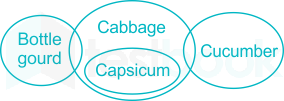
During the 12th century, which brahmana initiated the Vira Shaiva movement in Karnataka?

  1. ((a))

    Kaundiya

  2. ((b))

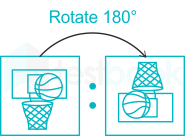
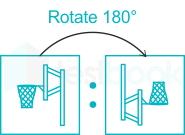
    Samarth Ramdas

  3. ((c))

    Basavanna

  4. ((d))

    Bhattadeva

Show Answer
Answer: ((c))

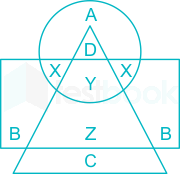
Basavanna

correct answer is Basavanna

Key Points

 Vira Shaiva movement 

  • The Tamil Bhakti movement and temple worship came together to create the Virashaiva movement.
  • The connection between the Tamil Bhakti movement and temple worship began in Karnataka in the mid-twelfth century.
  • This in turn led to a reaction that is best represented in the Virashaiva movement initiated by Basavanna and his companions like Allama Prabhu and Akkamahadevi.
  • The Virashaivas argued strongly for the equality of all human beings and against Brahmanical ideas about caste and the treatment of women.
  • Virashaiva tradition is derived from vachanas (literally, sayings) composed in Kannada by women and men who joined the movement.
  • They were also against all forms of ritual and idol worship.

Additional Information Samarth Ramdas 

  • Samarth Ramdas (c. 1608 - c. 1681), also popular as Sant (saint) Ramdas.
  • Ramdas Swami was an Indian Hindu saint, philosopher, poet, writer and spiritual master.
  • He was a devotee of the Hindu deities Rama and Hanuman.
  • His literary works include DasbodhKarunashtakasSunderkand, Yuddhakand, Poorvarambh, Antarbhav, Aatmaaram, Chaturthman, Panchman, Manpanchak, Janaswabhawgosavi, Panchsamasi, Saptsamasi, Sagundhyan, Nirgundhyan, Junatpurush, Shadripunirupan, Panchikaranyog, Manache Shlok and Shreemad Dasbodh.
4

Who can suspend fundamental rights?

  1. ((a))

    President

  2. ((b))

    Cabinet

  3. ((c))

    Parliament

  4. ((d))

    Judiciary

Show Answer
Answer: ((a))

President

The correct answer is the President.

Key Points 

  • The President of India can suspend the Fundamental Rights on the declaration of Emergency.
  • Under Article 359, the President can suspend Fundamental Rights during a time of Emergency(Internal and External Emergency).
  • The suspension of Fundamental Rights is carried out during the term of Emergency or a shorter period.
  • The Fundamental Rights are mentioned in Part III (Articles 12 to 35 ) of the Indian Constitution.
  • During the time of an emergency, Fundamental Rights mentioned in Article 19 are automatically suspended.
  • However, the Fundamental rights mentioned in Articles 20 and 21 cannot be suspended during the time of an Emergency.
  • Article 358 refers to the suspension of Fundamental Rights under Article 19 during a time of External Emergency.
  • The Emergency provisions are mentioned in articles 352- 360 ( Part-18) of the Indian Constitution. They are of three types: Internal Emergency, External Emergency, and Financial Emergency.
  • According to Article 33, the Parliament can restrict or abrogate the fundamental rights of the Members of the Armed Forces, paramilitary forces, police forces, intelligence agencies, etc.

Additional Information  Important Events and Emergency Provisions in Indian Constitution: 

  • Emergency in the Indian Constitution can be differentiated as National Emergencies, State Emergencies, and Financial Emergencies. Part XVIII of the Constitution contains the emergency provisions in India.
  • Article 352 demarcates the National Emergency:
  • According to Article 352, the President may declare an emergency when the region is under a state of attack, external intrusion, or internal rebellion.
  • The first emergency in the Nation was declared during the war with China, which lasted between 1962 and 1968. After that, the most contentious emergency was declared due to internal conflict by Smt. Indira Gandhi.
  • State Emergency has been included in Article 356:
  • Article 356 marks out that the President can declare a state emergency on receipt of briefs by the Governor of a particular state or by the President’s observation of degrading mechanisms of the state.
  • Financial Emergencies are in Article 360:
  • The President can declare financial emergencies if convincing evidence of an unstable economy and credibility is encountered. Executive and legislative factors play a central role in declaring a financial emergency.
5

Where did Britishers set up their first factory in India in 1612?

  1. ((a))

    Surat

  2. ((b))

    Bombay

  3. ((c))

    Goa

  4. ((d))

    Gujarat

Show Answer
Answer: ((a))

Surat

The correct answer is Surat.

Key Points 

  • Sir Thomas Roe's arrival in Jahangir's court was a significant event in modern Indian history as it was the first step towards establishing the British East India Company as a paramount power in the Indian subcontinent.
  • In 1608, the British East India Company decided to open a factory in Surat. The English ambassador Captain Hawkins arrived at Jahangir’s Court to seek permission for trade with India.
  • The East India Company was an English, and later British, joint-stock company founded in 1600.
  • It was formed to trade in the Indian Ocean region, initially with the East Indies, and later with East Asia.

Additional Information 

  • Bombay
  • Gerald Aungier (1669–1677 AD) founded Bombay city.
  • He was the second governor of Bombay.
  • He was made governor of Bombay in 1669.
  • He died in 1677 and till then he held the same post.
  • Goa
  • Goa is India's smallest state by area.
  • Goa remained under Portuguese administration even after India gained independence in 1947.
  • After a 36-hour battle, the Indian Army invaded and captured Goa in 1961.
  • Goa, Daman, and Diu merged to become the union territory of Goa, Daman, and Diu.
  • Goa was granted statehood in 1987.
  • From 19 December 1961 until 30 May 1987, the territory of Goa, Daman, and Diu was a union territory of India.
  • Every year on December 19, Goa commemorates its liberation.
  • The Indian government eventually recognised Konkani as Goa's official language in February 1987.
  • Pratapsingh Rane, the first Chief Minister of the newly established state, had previously served as Chief Minister of Goa, Daman, and Diu.
  • Gujarat
  • The official language of Gujarat is Gujarati.
  • Capital : Gandhinagar.
  • State animal : Asiatic lion.
  • State bird : Greater Flamingo.
  • State tree : Mango.
  • State flower : Marigold.
6

Which of the following country did India beat in Thomas Cup Final 2022?

  1. ((a))

    Indonesia

  2. ((b))

    Malaysia

  3. ((c))

    Vietnam

  4. ((d))

    China

Show Answer
Answer: ((a))

Indonesia

The correct answer is Indonesia.

Key Points 

  • India won its maiden Thomas Cup title on 15 May 2022, beating 14-time champion Indonesia 3-0 in the final in Bangkok.
  • World championships bronze medallist Lakshya Sen defeated Indonesia's Anthony Sinisuka Ginting 8-21, 21-17, 21-16 in the first men's singles to give India a 1-0 lead.
  • India had previously reached the semifinals of the Thomas Cup in 1952, 1955, and 1979.

Important Points 

  • ​The Thomas Cup, sometimes called the World Men's Team Championships, is an international badminton competition among teams representing member nations of the Badminton World Federation (BWF).
  • The championships have been conducted every two years since 1982.
  • The Uber Cup (first held in 1956–1957) is the world women's team championship.
7

Which of the following means citizenship of aliens?

  1. ((a))

    People who are stateless

  2. ((b))

    Which belongs to our country

  3. ((c))

    Escaped from one country and settled in our country

  4. ((d))

    Who is a foreigner (temporarily)

Show Answer
Answer: ((d))

Who is a foreigner (temporarily)

Correct answer is Who is a foreigner (temporarily).

Key Points

  • Citizenship of Aliens
  • Alien, in national and international law, a foreign-born resident who is not a citizen by virtue of parentage or naturalization and who is still a citizen or subject of another country.
  • The following are several types of aliens
  • Legal alien — any foreign national who is permitted under the law to be in the host country. This is a very broad category which includes travel visa holders or foreign tourists, registered refugees, temporary residents, permanent residents, and those who have relinquished their citizenship and/or nationality.
  • Temporary resident alien — any foreign national who has been lawfully granted permission by the government to drive**, fly, travel, lodge, reside, study or work for a specific number of years and then apply for an extension or leave the country before such permission expires.**
  • Permanent resident alien — any immigrant who has been lawfully admitted into a nation and granted the legal right to remain therein as a permanent resident in accord with the nation's immigration laws.
  • Nonresident alien — any foreign national who is lawfully within a nation but whose legal domicile is in another nation.
  • Alien enemy — any foreign national of any country that is at war with the host country.
  • Undocumented alien— any person who is liable to deportation because their presence in a nation is in violation of that nation's immigration laws.​
8

 Who was the first governor of the Portuguese in India ?

  1. ((a))

    Francisco de Almeida 

  2. ((b))

    Vasco da Gama

  3. ((c))

    Nino da Cunha

  4. ((d))

    Pedro Alvares Cabral 

Show Answer
Answer: ((a))

Francisco de Almeida 

The correct answer is Francisco de Almeida.

Key Points

  • Francisco de Almeida was the first governor and first viceroy of Portuguese India.
  • He served as the Portuguese governor in India from 1505 to 1509.
  • He was appointed by King Manuel I of Portugal.
  • He took part in the Battle of Toro in 1476.
  • He is known for the establishment of Portuguese naval hegemony in the Indian Ocean.
  • He was the first Portuguese to arrive by ship in Bombay.
  • He was killed in a skirmish with the Khoekhoe in 1510.
  • He was succeeded by Afonso de Albuquerque.

Additional Information

  • Vasco da Gama
  • He is the first European to reach India by sea.
  • Vasco da Gama came in India in Calicut on 20 May 1498.
  • Zamorin was the king who ruled Calicut. He cordially invited Vasco Da Gama to Calicut.
  • Vasco da Gama left Calicut on 29 August 1498.
  • Vasco Da Gama made a comeback to India in 1502.
  • He was appointed as the Governor of India, with the title of Viceroy in 1524.
  • Vasco da Gama died in Kochi in 1524.
  • Pedro Alvares Cabral
  • Pedro Alvarez Cabral was a Portuguese who arrived in India in 1500 established trading stations at Calicut, Cannanore, and Cochin.
9

Feature of Directive Principles of State Policy borrowed from which of the following country’s constitutions?

  1. ((a))

    Japan

  2. ((b))

    Canadian

  3. ((c))

    Soviet

  4. ((d))

    Irish

Show Answer
Answer: ((d))

Irish

The correct answer is Irish .

Key Points 

  • Article 36-51 under Part-IV of the India Constitution deal with Directive Principles of State Policy.
  • They are borrowed from the Constitution of Ireland.
  • Ireland had copied it from the Spanish Constitution.
  • DPSP are positive obligations on the state.
  • These principles emphasise that the state shall try to promote the welfare of people by providing them with basic facilities like shelter, food, etc.
  • They are non-binding in nature which means they are not enforceable by the courts.
  • However, the Constitution itself declares that 'these principles are fundamental in the governance of the country and it shall be the duty of the state to apply these principles in law making'.
  • Hence, they impose a moral obligation on the state.

Additional Information 

  • Features of DPSP
  1. It denotes the ideals that the state should keep in mind while making policies.
  2. It resembles the 'Instrument of Instructions enumerated in the Government of India Act of 1935.
  3. It constitutes a very comprehensive economic, social, and political programme for a democratic state.
10

The term ‘Green GNP’ emphasizes

  1. ((a))

    Increase in per capita income

  2. ((b))

    Economic development

  3. ((c))

    Rapid growth of GNP

  4. ((d))

    Sustainable development

Show Answer
Answer: ((d))

Sustainable development

correct answer is 

Key Points

  • The term ‘Green GNP’ emphasises on Sustainable Development.
  • Green GNP is an economic environmental accounting framework which measures the nation’s wealth by accounting for degradation of natural assets and investments in environment’s improvement.
11

Which institute has been awarded the National Intellectual Property Awards for 2021 and 2022 for intellectual property innovations? 

  1. ((a))

    IIT - Madras

  2. ((b))

    IIT - Bombay

  3. ((c))

    IIT - Roorkee

  4. ((d))

    IIT - Delhi

Show Answer
Answer: ((a))

IIT - Madras

Correct answer is IIT - Madras.

Key Points

  • National Intellectual Property Awards for 2021 and 2022 
  • IIT Madras has been conferred the ‘National Intellectual Property Awards 2021 and 2022’ by the Government of India for being the top Indian Academic Institution for patents filing, grants and commercialisation.
  • The award is given the Department for Promotion of Industry and Internal Trade, Ministry of Commerce and Industry, Government of India. The main criteria of evaluation for these awards are Patent Applications, Grants and Commercialization.
  • Shri. Piyush Goyal, Union Minister of Commerce and Industry, presented the award to Prof. V. Kamakoti, Director, IIT Madras, at a function held in New Delhi on 15th October 2022. The award included a trophy, citation and a cash prize of Rs. 1 lakh.
  • ​These awards are conferred annually to recognize and reward the top achievers comprising individuals, institutions, organizations and enterprises**, for their Intellectual Property (IP) creations and commercialisation,** which have contributed towards strengthening the IP ecosystem in the country and in encouraging creativity and innovation.
12

In which year was the Sarkaria Commission constituted?

  1. ((a))

    1987

  2. ((b))

    1990

  3. ((c))

    1983

  4. ((d))

    1979

Show Answer
Answer: ((c))

1983

The correct answer is 1983.

Key Points 

  • The sarkaria commission was set up in the year 1983 by the government of India.
  • The objective of the commission was to examine the center-state relation.
  • The chairman of the commission was Ranjit Singh Sarkaria.
  • He has earlier served as the judge of the Supreme court of India.
  • The other members of the commission were -
  1. Shri B.Sivaram ( Cabinet secretary )
  2. Dr. S.R Sen ( Former executive director of IBRD )
  3. Rama Subramaniam ( member secretary )
  • The final report of the commission consisted of 247 recommendations.
  • The recommendations were not accepted by the government.
13

Which one of the following was not an Indus Valley Civilization site?

  1. ((a))

    Suktagendor

  2. ((b))

    Vijaynagar

  3. ((c))

    Lothal

  4. ((d))

    Rangpur

Show Answer
Answer: ((b))

Vijaynagar

The correct answer is Vijaynagar

Key Points

  • The Vijayanagar Empire was founded in 1336 by Harihar I and his brother Bukka Raya I in Deccan in the wake of the rebellions against Tughluq rule.
  • The Vijayanagara Empire was ruled by 4 dynasties:
  • Sangama Dynasty
  • Saluva Dynasty
  • Tuluva Dynasty
  • Aravidu Dynasty
  • Bukka Raya defeated almost all the southern kingdoms and extended his empire till present day Rameshwaram.
  • The Vijayanagara Empire would rule till 1646 with Sriranga III as its final ruler.
  • The ruins of The Vijayanagar Empire which surround modern World Heritage site Hampi can be found in Karnataka, India.

Additional Information

  • The Indus Valley Civilization was spread from present-day North-East Afghanistan to Pakistan and North-West India.
  • The civilization flourished in the river basins of the Ghaggar-Hakra river and the Indus.
  • Indus valley civilization is one of the four oldest civilizations in the world.
  • It is also known as Harappan Civilization and is well-known for its organized planning based on the grid system.
  • There are eight important cities in the Indus valley civilization:
  • Mohanjodaro
  • Harappa
  • Kalibangan
  • Lothal
  • Chanhudaru
  • Dholavira
  • Banawali
  • Suktagendor
14

 Who among the following is also known as the founder of macroeconomics as a separate discipline?

  1. ((a))

    Robert Merton 

  2. ((b))

    Fischer Black 

  3. ((c))

    John Maynard Keynes

  4. ((d))

    Adam Smith 

Show Answer
Answer: ((c))

John Maynard Keynes

The correct answer is John Maynard Keynes.

Key Points

  • John Maynard Keynes is known as the founding father of Macroeconomics as a separate discipline.
  • He was born on June 5, 1883, in Cambridge.
  • He completed his degree in Mathematics and had also joined Civil Services in Britain.
  • He represented the British Treasury at the Conference of Versailles but resigned because he was against the heavy fine levied on Germany.
  • He expressed his concerns about the fine imposed on Germany in his book 'The Economic Consequences of Peace'.

Additional Information

  • Robert Merton
  • Robert K. Merton was an American sociologist who coined the term role set in 1957 .
  • He provided a role set definition in sociology as a person's way of acting out their social status in the world.
  • A role set describes various roles and relationships as a consequence of a person's societal status.
  • For Example: A male playing the role of father in family is a daily wage earner outside, thus playing multiple roles.
  • Adam Smith
  • He was a well-known philosopher and economist of Scotland.
  • Adam Smith is considered the father of Modern Economics.
  • In his book “The nature & causes of the wealth of the Nation’s 1776, he has described economics as the science of wealth.
  • According to him, the economy is the study of wealth only and it deals with its production and consumption.
  • Only material goods which are scarce and useful are wealth.
  • He gave his views in detail on the profitable trend of economics.
  • In 1759, his first book 'The Theory of Moral Sentiment' was published.
  • He is known as Father of Economics or Father of Capitalism. Hence, Option 3 is correct.
  • Classical free-market economic theory foundation was laid by him.
  • His two famous works are the theory of moral sentiments in 1759 and an inquiry into the nature and causes of the wealth of nations in 1776.
15

Who among the following is not included in the Electoral College for Presidential elections?

  1. ((a))

    Elected members of both houses of Parliament

  2. ((b))

    All members of the Legislative Councils of the States

  3. ((c))

    Elected Members of Legislative Assemblies of Delhi and Puducherry Regions

  4. ((d))

    Elected members of state legislatures

Show Answer
Answer: ((b))

All members of the Legislative Councils of the States

correct answer is All members of the Legislative Councils of the States

Key Points

  • The President of India is indirectly elected through an electoral college comprising of elected members of
  • The Lok Sabha(House of the People)
  • The Rajya Sabha(Council of States)
  • The Legislative Assemblies of the Indian states and union territories of Pondicherry and Delhi.
  • The number of votes is calculated based on the population in 1971 instead of the current population.
  • This rule was made by the 42nd amendment of the constitution and was further extended by the 84th amendment.
  • The intention to not change this number is to encourage family planning programs in the Indian states and to ensure that the states do not have to compromise as a result of lowering their population growth.
  • The electoral college for the election of President of India comprises the elected members of Lok Sabha and Rajya Sabha, elected members of each State's legislative assembly, and each union territory that has a Legislative Assembly like Delhi and Pondicherry.
16

Which age group youth will be provided employable skills under Hunar Se Rozgar Tak?

  1. ((a))

    15 to 25 years 

  2. ((b))

    18 to 25 years 

  3. ((c))

    18 to 20 years

  4. ((d))

    18 to 28 years

Show Answer
Answer: ((d))

18 to 28 years

Correct answer is 18 to 28 years.
Key Points

  • Hunar Se Rozgar Tak Scheme  
  • The Ministry of Tourism launched a special initiative called Hunar Se Rozgar Tak (HSRT) in the year 2009-10 for creation of employable skills amongst youth.
  • The initiative is fully funded by the Ministry of Tourism.
  • The features common to the training programmes under the HSRT are: the trainees should be in the age group of 18-28 years; each training programme is of short duration – 6 to 8 weeks; and no fees chargeable to the trainee
17

Who among the following is the highest paid athlete of 2022?

  1. ((a))

    Lionel Messi

  2. ((b))

    Kevin Durant 

  3. ((c))

    Roger Federer

  4. ((d))

    Neymar

Show Answer
Answer: ((a))

Lionel Messi

The correct answer is Lionel Messi.

Key Points 

  • According to the Forbes 2022 Highest-Paid Athletes List, Lionel Messi is the highest-paid athlete in 2022.
  • Lionel Messi is a football player from Argentina who plays for the French club Paris Saint-Germain.
  • His estimated earnings are $130 million.

Additional Information

  • Roger Federer
  • Roger Federer is a Swiss professional tennis player.
  • He is ranked No. 7 in the world by the Association of Tennis Professionals (ATP).
  • He has won 20 Grand Slam men's singles titles, record shared with Novak Djokovic.
  • Federer has been world No. 1 in the ATP rankings a total of 310 weeks – including a record 237 consecutive weeks – and has finished as the year-end No. 1 five times.
18

Who is responsible for regulating the financial sector in India?

  1. ((a))

    Finance Ministry

  2. ((b))

    Commercial Banks 

  3. ((c))

    RBI

  4. ((d))

    SEBI

Show Answer
Answer: ((c))

RBI

correct answer is RBI

Key Points

  • RBI is known as the 'Central Bank of India' whose primary function to regulate the issue of Banknotes and keeping of reserves with a view to securing monetary stability in India and generally to operate the currency and credit system of the country.
  • RBI is also known as 'Apex Bank of India'.
  • RBI is also known as 'Banker's Bank'.

Important Points 

  • RBI  was set up on the recommendation of the Hilton Young Commission also called the Royal Commission in 1926.
  • RBI Act was passed in the year - 1934
  • RBI was established on 1st April 1935.
  • RBI was nationalized on 1st January 1949.
  • RBI issues all currency notes except one rupee.
  • The signature of the RBI Governor on the notes is in English and Hindi.
  • The currency notes except one rupee hold the signature of the RBI Governor.
  • One rupee holds the signature of the Finance Secretary.

Additional Information 

  • The first Governor of RBI -  Sir Osborne Smith
  • The first Indian Governor of RBI - C. D. Deshmukh
  • The longest-serving RBI Governor - Benegal Rama Rao
  • The Indian Prime Minister who had served as RBI Governor - Dr. Manmohan Singh
  • Present and 26h Governor of RBI - Sanjay Malhotra
  • Deputy Governors of RBI - B. P. Kanungo, S. M. K Jain, M. D. Patra, and M. R. Rao.
  • Headquarter - Mumbai
19

What is called the twin deficits of 1990?

  1. ((a))

    Gold reserves and foreign exchanges

  2. ((b))

    Imports and exports

  3. ((c))

    Devaluation of rupee and inflation

  4. ((d))

    Deficit in trade balance and fiscal deficit

Show Answer
Answer: ((d))

Deficit in trade balance and fiscal deficit

The correct answer is Deficit in trade balance and fiscal deficit.

Key Points 

  • The twin deficit, or double deficit, occurs when a nation has both a  Deficit in trade balance and a fiscal deficit.
  • This means the country's economy is importing more than it is exporting, and the country's government is spending more money than it is generating.
  • Fiscal Deficit - 
  • ​The fiscal deficit is the difference between the government's total expenditure and its total receipts.
  • As per the technical definition - Fiscal deficit = Budgetary Deficit + Borrowings and other liabilities of the government.
  • Current Account Deficit -
  • The current account measures the flow of goods, services, and investment into and out of the country.
  • There is a deficit in the current account if the value of goods and services imported exceeds the value of those exported.
20

Which tax provides maximum revenue to the government?

  1. ((a))

    Corporate tax 

  2. ((b))

    Income tax

  3. ((c))

    Excise duty

  4. ((d))

    Customs duty

Show Answer
Answer: ((a))

Corporate tax 

The correct answer is Corporate Tax.

Key Points 

  • Corporate tax is the single largest source of income to the government of India.
  • According to the Budget for 2019-20 presented in Parliament by Finance Minister Nirmala Sitharaman, Goods and Services Tax collections will contribute 19 paise in every rupee revenue.
  • Corporation tax is the single largest source of income, contributing 21 paise to each rupee earned.

Important Points 

  • Taxes are generally an involuntary fee levied on individuals and corporations by the government to finance government activities.
  • There are two types of Taxes in India- Direct Tax and Indirect Tax.
  • Direct Tax
  • The tax that is levied by the government directly on the individuals or corporations is called Direct Taxes.
  • Income Tax, Corporation/Municipal Tax and Wealth Tax are some of the examples of Direct Tax.
  • They are progressive in nature.
  • Indirect Tax
  • The tax that is levied by the government on one entity (Manufacturer of goods), but is passed on to the final customer by the manufacturer.
  • VAT, Service tax, GST, Excise duty, entertainment tax and Customs Duty are some of the examples of Indirect Tax.
  • They are regressive in nature.
21

Who proved that burning candles and breathing in polluted air from animals could be cleaned up by green plants?

  1. ((a))

    Rudolf Virchow

  2. ((b))

    TW Engelmann

  3. ((c))

    Priestly

  4. ((d))

    Ingenhousz

Show Answer
Answer: ((c))

Priestly

Correct answer is Priestly

Key Points

  • The Bell Jar Experiment.
  • J. Priestley (1772) carried out very interesting experiment on Bell jar, rat, pudina or mint and candle. He came to conclude that plants purify air (burning of candles), and gaseous exchange occurs during photosynthesis.

Priestley observed that a candle burning in a closed space – a bell jar, soon gets extinguished.

  • Similarly, a mouse would soon suffocate in a closed space. He concluded that a burning candle or an animal that breathe the air, both somehow, damage the air. But when he placed a mint plant in the same bell jar, he found that the mouse stayed alive and the candle continued to burn.
  • Priestley hypothesized as follows: Plants restore the air which breathing animals and burning candles remove.
22

The metal complexes produced during the leaching process are reduced using which of the following methods? 

  1. ((a))

    Zinc

  2. ((b))

    Tellurium

  3. ((c))

    Antimony

  4. ((d))

    Selenium

Show Answer
Answer: ((a))

Zinc

correct answer is Zinc

Key Points

The metal complexes produced during the leaching process are reduced using Zinc methods

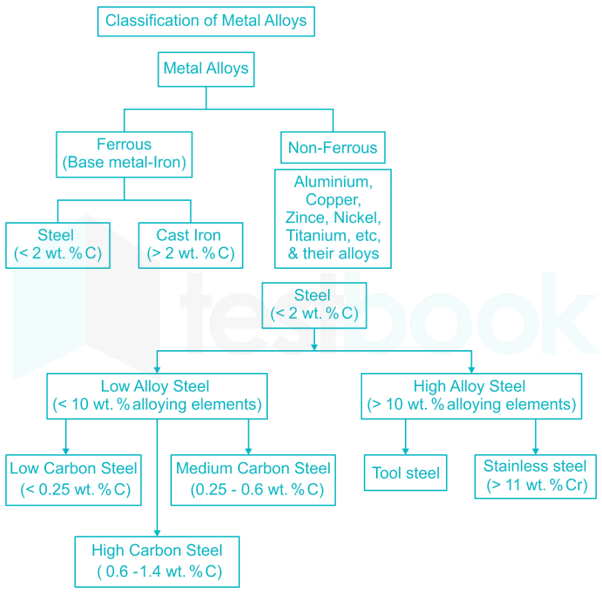
  • Ferrous material: Ferrous metals are those in which chief constituent is iron, although other constituents like carbon, manganese, phosphorus and sulphur etc. Example steel and cast iron
  • Non-ferrous metals are those which do not contain iron. Metals like copper, zinc, aluminum, lead, tin, etc, and their alloys.

23

How many hours people spend in a  year trekking to fetch water only in Africa?

  1. ((a))

    100 billion 

  2. ((b))

    50 million

  3. ((c))

    100 thousand

  4. ((d))

    40 billion 

Show Answer
Answer: ((d))

40 billion 

The correct answer is 40 billion 

Key Points

  • A United Nations 2014 report stated, “in Sub-Saharan Africa, people spent 40 billion hours a year collecting water, equivalent to a year’s worth of labour by the entire workforce of France.”
  • Women, children and most young girls are responsible for obtaining water for their families.
  • In Africa, when People's main responsibility is to gather water, the back-breaking hours and 4-6 mile walk, sometimes performed 2-3 times per day, prevents many from getting an education.
24

Which organism exhibits cellular level of organization? 

  1. ((a))

    Echinoderms

  2. ((b))

    Chordates

  3. ((c))

    Sponges

  4. ((d))

    Platyhelminthes

Show Answer
Answer: ((c))

Sponges

The correct answer is sponges.

Key Points

  • Sponges have cellular-level organization, meaning that, 
  • Their cells are specialized so different cells perform different functions.
  • Similar cells are not organized into tissues and bodies are a sort of loose aggregation of different kinds of cells.
  • Sponges
  • Sponges, the members of the phylum Porifera, are a basal animal clade as a sister of the diploblastic.
  • They are multicellular organisms that have bodies full of pores and channels allowing water to circulate through them, consisting of jelly-like mesohyl sandwiched between two thin layers of cells.

Additional Information

  • Annelids are segmented worms with a tubular body and a specialized digestive system with a terminal mouth and an anus.
  • The flatworms or Platyhelminthes are a phylum of relatively simple bilaterian, unsegmented, soft-bodied invertebrates.
  • Nematodes are parasites of animals and occur in almost all organs of the body, but the most common sites are in the alimentary, circulatory, and respiratory systems.
  • Chordates are animals that bear notochord.
  • It has a dorsal hollow nerve chord.
  • It has pharyngeal gill slits.
  • It has a ventral heart.
  • Phylum Chordata comprises Urochordata, Cephalochordata, and Vertebrata.
25

What are the canals which remain dry except in the rainy season in Arab's countries called?

  1. ((a))

    Wells

  2. ((b))

    Artesian

  3. ((c))

    Oasis

  4. ((d))

    Wadis

Show Answer
Answer: ((d))

Wadis

Correct answer is Wadis.

Key Points

  • Wadis 
  • Wadi Oued, is the Arabic term traditionally referring to a valley. In some instances, it may refer to a wet  riverbed that contains water only when heavy rain occurs.
  • Wadis, as drainage courses, are formed by water, but are distinguished from river valleys or gullies in that surface water is intermittent or ephemeral.
  • Wadis are generally dry year round, except after a rain. The desert environment is characterized by sudden but infrequent heavy rainfall, often resulting in flash floods.
  • Wadis tend to be associated with centers of human population because sub-surface water is sometimes available in them.
26

 The hypothalamus belongs to ________. 

  1. ((a))

    Forebrain

  2. ((b))

    Midbrain

  3. ((c))

    Hindbrain

  4. ((d))

    Cerebellum

Show Answer
Answer: ((a))

Forebrain

The correct answer is Forebrain.

Key Points 

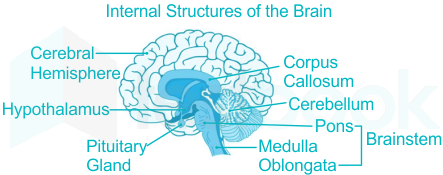
  • Structure of the Brain: For the convenience of study, the brain can be divided into three parts: Hindbrain, Midbrain, and Forebrain
  • Forebrain:
  • It is considered to be the most important part of the brain because it performs all cognitive, emotional, and motor activities.
  • Four major parts of the forebrain: are the hypothalamus, thalamus, limbic system, and cerebrum.
  • Hypothalamus is the master of master glands and controls the secretion released by the pituitary glands.
  • It releases releasing hormones that instruct the pituitary to secrete its hormone and also secretes inhibiting hormones that inhibit the release of hormones from the pituitary.

Additional Information 

  • Hindbrain
  • This part of the brain consists of the Medulla Oblongata,  and Cerebellum.
  • Midbrain:
  • The midbrain is relatively small in size and it connects the hindbrain with the forebrain.
  • A few neural centers related to some special reflexes and visual and auditory sensations are found here.
  • An important part of the midbrain, known as the Reticular Activating System (RAS), is responsible for our arousal.
  • It makes us alert and active by regulating sensory inputs. It also helps us in selecting information from the environment.
  • Cerebellum:
  • It is part of the hindbrain.
  • It helps in maintaining body posture.
  • It consists of white and grey matter.

27

Which qualities are found in consumers? 

  1. ((a))

    Carnivorous

  2. ((b))

    Self-feeding qualities

  3. ((c))

    Omnivore

  4. ((d))

    Host properties

Show Answer
Answer: ((d))

Host properties

Correct answer is Host properties

Key Points

  • Consumers 
  • From simple organic materials like carbon dioxide and water, animals are not able to make their own food and hence depend on other organisms for food.
  • This type of system is called host nutrition system.
  • Therefore, organisms that depend on other organisms for food are known as heterotrophs or 'heterotrophs'
  • Examples are humans, dogs, cats, etc., and some non-green plants such as yeast. Basically, heterotrophs depend on plants or other organisms for their food.

Additional Information

  • Carnivorous
  • These consumers are at the apex position of the food chain cycle.
  • They mostly eat meat. Thus, they are considered Carnivorous.
  • For example tiger, lion, shark, etc.
  • Herbivores 
  • The herbivores are animals that only eat plant and plant products.
  • For example: cow, deer, sheep, buffalo, grasshoppers, butterfly, etc. Thus, Buffalo is a Herbivorous animal.
  • Omnivore
  • These organisms obtain food by feeding on both plants as well as animals
  • Omnivorous plays an important role in maintaining a healthy ecosystem by recycling waste. Examples of omnivores include Humans, Bears, Birds,etc..
28

How many key components are there in every toilet?

  1. ((a))

    Three

  2. ((b))

    Five

  3. ((c))

    Four

  4. ((d))

    Two

Show Answer
Answer: ((d))

Two

The correct answer is option 4

Key PointsAs per the Technical Training Manual for the SBM

Components of Toilet: Every Toilet has two major component

  • Substructure: Substructure is technically important as it provides safe disposal or reuse of human waste. All technical options are meant for substructures only.
  • Superstructure: The superstructure basically provides privacy. There may be a wide range of types of superstructures for the same type of sub-structure, depending on the economic status of the beneficiaries.
29

In which system of water is transported by gravity through underground tunnels from alluvial aquifers to an agricultural settlement? 

  1. ((a))

    Aquifers

  2. ((b))

    Kariz

  3. ((c))

    Oasis

  4. ((d))

    Spring wells

Show Answer
Answer: ((b))

Kariz

correct answer is Kariz

Key Points

  • Kariz
  • A kareez is a combination below and above ground channel system used to bring water to a settlement or fields from a natural source, say an aquifer, mountain spring or lake.
  • Many of the kareez / qanats are ancient and their history is intertwined with the history of Aryan lands. Importantly, the system was sustainable and did not exhaust underground aquifers.
  • A jube is an above ground gutter (drain, ditch, or rain sewer). Frequently, communities that construct and use the kareez, also employ the jube as part of an urban water collection and management system.
  • Jubes collect rain water in those areas with a significant enough amount of precipitation to cause a run-off. Water collected in this manner, while probably not suitable as drinking water is useful as irrigation water. In Persian, a spring is called sarab meaning the head or start of water or stream or cheshmeh.
30

What procedure is utilized to extract the metal from the soluble complex that results after leaching?

  1. ((a))

    Reduction

  2. ((b))

    Crystallization

  3. ((c))

    Oxidation

  4. ((d))

    It cannot be obtained

Show Answer
Answer: ((a))

Reduction

correct answer is Reduction

Key Points

Reduction is the process which includes

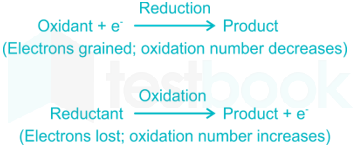
  • Gain/addition of electrons or
  • Removal of oxygen atom in a molecule or
  • Addition of hydrogen atom in a molecule.

Loss of electrons and increase in the oxidation state is the characteristics of an oxidation reaction.

For example

  • H2S + Cl2 → 2HCl + S
  • In this reaction, the chlorine is getting reduced to hydrochloric acid (HCl) on addition of hydrogen provided by Hydrogen sulphide (H2S).

Additional Information

  • Crystallization
  • Crystallisation is an example of physical change.
  • It involves separation of solid-liquid separation technique, which involves the transfer of solute to the pure solid crystalline phase from the liquid solution.
  • And it’s related to physical change as it doesn’t involve formation of any new substance.
  • Oxidation
  • Oxidation Reaction refers to a reaction in which either the addition of Oxygen takes place or the removal of Hydrogen takes place.
  • It can also be said as the process of loss of one or more electrons by atoms or ions.
  • Example is:

2Mg + O2 = 2MgO

31

How much force is required to extend the length of a thin steel wire with a cross sectional area of 0.1 cm2 by 0.1%?Ysteel = 2.0 ×10¹¹N/m2

  1. ((a))

    2000 N

  2. ((b))

    3000 N

  3. ((c))

    1500 N

  4. ((d))

    1200 N

Show Answer
Answer: ((a))

2000 N

Concept:

  • Elastic potential energy is the energy stored as a result of applying a force to deform an elastic object.
  • The energy is stored until the force is removed and the object regains its original shape, doing work in the process.
  • This deformation could involve compressing, stretching, or twisting the object.
  • Many objects are specifically designed  to store elastic potential energy inside them,
<br>

​For example:

  • The coil spring of a wind-up clock
  • An archer's stretched bow
  • A stretched slingshot ready to fire.


Calculation:

(F = \frac{Y\times A\times dl}{l} = \frac{2.0 \times 10^{11}\times10^{-5}\times 0.001}{1} = 2000~ N)

32

 Which of the following is considered as a missing link between reptiles and mammals? 

  1. ((a))

    Sea anemone 

  2. ((b))

    Archaeopteryx

  3. ((c))

    Pteranodon

  4. ((d))

    Duck-billed Platypus

Show Answer
Answer: ((d))

Duck-billed Platypus

The correct answer is Duck-billed Platypus

Key Points

  • The mammal that lays eggs is Duck-billed-platypus.
  • They are small and shy animals.
  • They have flattened heads and bodies to help them glide through the water.
  • Males are also venomous.
  • They are bottom feeders i.e. feed on  insects and larvae, shellfish, and worms
  • They can survive up to 20 years or more in captivity and up to 12 years in the wild.
  • They are believed to be the earliest relatives of modern mammals.

Important Points 

  • The egg-laying mammals are called monotremes.
  • There are only five living monotreme species:-
  • The duck-billed platypus and four species of echidna (also known as spiny anteaters).
  • They are all found only in Australia and New Guinea.
33

Which of the following is not a carbon characteristic?

  1. ((a))

    It is a metalloid.

  2. ((b))

    It forms multiple bonds.

  3. ((c))

    It exhibits catenation.

  4. ((d))

    Its melting points and boiling points are very high.

Show Answer
Answer: ((a))

It is a metalloid.

Correct answer is It is a metalloid

Key Points

  • Carbon characteristic
  • Carbon makes 4 electrons to form a covalent bond.
  • Carbon is not a metalloid, it is Non-Metal.
  • It has a number of allotropes and other forms of existence. These include diamond and graphite with distinctive properties.
  • It forms multiple bonds.
  • It exhibits catenation.
  • This chemical element is represented by the symbol C.
  • Its melting points and boiling points are very high.
  • Carbon is both nonmetallic and tetravalent.
  • It is available in various shapes.
  • The chemical element has the ability to bond with multiple elements.
34

Under which act the zoo is established? 

  1. ((a))

    Wild life protection act

  2. ((b))

    Water act 

  3. ((c))

    Biodiversity act 

  4. ((d))

    Environment act 

Show Answer
Answer: ((a))

Wild life protection act

Correct answer is Wild life protection act

Key Points

  • The Wild Life (Protection) Act, 1972 is an Act of the Parliament of India enacted for protection of plants and animal species. Before 1972, India had only five designated national parks. Among other reforms, the Act established scheduled protected plant and hunting certain animal species or harvesting these species was largely outlawed. The Act provides for the protection of wild animals, birds and plants

Important Points

Defination under the Wild Life Act

  • "animal" includes amphibians, birds, mammals, and reptiles, and their young ones, and also includes, in the cases of birds and reptiles, their eggs.
  • "animal article" means an article made from any captive or wild animal, other than vermin, and includes an article or object in which the whole or any part of such animal has been used and an article made therefrom.
  • "hunting" includes

(a) capturing, killing, poisoning, snaring, or trapping any wild animal, and every attempt to do so (b) driving any wild animal for any of the purposes specified in sub clause (c) injuring, destroying or taking any body part of any such animal, or in the case of wild birds or reptiles, disturbing or damaging the eggs or nests of such birds or reptiles.

  • "taxidermy" means the curing, preparation or preservation of trophies.
  • "trophy" means the whole or any part of any captive or wild animal (other than vermin) which has been kept or preserved by any means, whether artificial or natural. This includes:
  • rugs, skins, and specimens of such animals mounted in whole or in part through a process of taxidermy
  • antler, horn, rhinoceros horn, feather, nail, tooth, musk, eggs, and nests and shells.
  • "uncured trophy" means the whole or any part of any captive animal (other than vermin) which has not undergone a process of taxidermy. This includes a freshly killed wild animal, ambergris, musk and other animal products.
  • "vermin" means any wild animal specified in Schedule V.
  • "wildlife" includes any animal, bees, butterflies, crustacean, fish and moths; and aquatic or land vegetation which forms part of any habitat
  • Many non-endangered species, such as Papilio buddha are also protected.
35

What are the bond angle measurement units?

  1. ((a))

    Meters

  2. ((b))

    Mole

  3. ((c))

    Degree

  4. ((d))

    Kilograms

Show Answer
Answer: ((c))

Degree

The correct answer is Degree.

Key Points

  • The angle between two bonds in a molecule is called the bond angle and is measured in degrees.
  • It is the angle made by three consecutive nuclei in a molecule.
  • In a complex molecule or ion, the bond angle is determined as the angle between two bonding orbitals around the central atom.
  • It has a value ranging between 0° to 180° and can be calculated through spectroscopic methods.
  • The bond angle is affected by various factors;
  1. Hybridisation of the central atom
  2. Size of atoms involved
  3. Presence of lone pairs
  4. Multiple bonds
  5. Electronegativity of the central atom

Additional Information

QuantitiesSI Units
Lengthmeter
masskilogram
timesecond
ForceNewton  or
kg-m/sec2
electric currentampere
PressurePascal
temperaturekelvin
intensitycandela
Self InductanceHenry
amount of substancemole
36

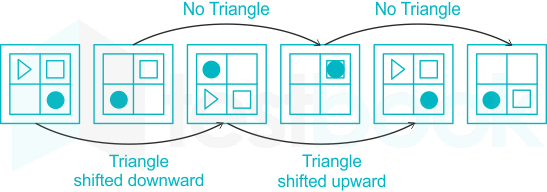
Which of the boxes comes next in the sequence?

  1. ((a))

  2. ((b))

  3. ((c))

  4. ((d))

Show Answer
Answer: ((a))

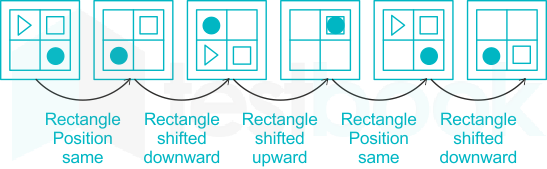
The logic follows here:

Rectangle angle:

Triangle:

Circle:

Hence, the correct answer is "option (1)".

37

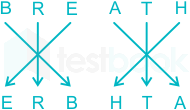
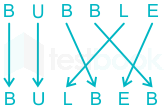
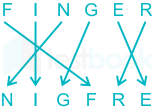
In each of the five pairs of letter-clusters, the letters in the second term are a rearranged/ transformed form of the letters in the first term in a particular pattern. In which two pairs, has the transformation been done in the same way?

A. BREATH : ERBHTA

B. BUBBLE : BULBEB

C. CANCEL : NACLEC

D. MARGIN : NIGRMA

E. FINGER : NIGFRE

  1. ((a))

    A and C

  2. ((b))

    B and C 

  3. ((c))

    C and D

  4. ((d))

    D and A

Show Answer
Answer: ((a))

A and C

The pattern follows here is:

A. BREATH : ERBHTA

B. BUBBLE : BULBEB

C. CANCEL : NACLEC

D. MARGIN : NIGRMA

E. FINGER: NIGFRE

As shown in the diagram, A and C follow the same pattern.

Hence, "A and C" is the correct answer.

38

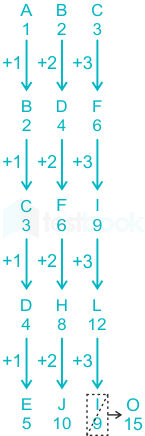
Find out the wrong term from the given alphabet series.

ABC, BDF, CFI, DHL, EJI

  1. ((a))

    CFI

  2. ((b))

    ABC

  3. ((c))

    DHL

  4. ((d))

    EJI

Show Answer
Answer: ((d))

EJI

The logic follows here:

So, "EJI" is the WRONG term in the following series.

Hence, the correct answer is "EJI".

39

In the following question, select the related number from the given alternatives.

47 ∶ 15 ∶∶ ? ∶ 19

  1. ((a))

    57

  2. ((b))

    40

  3. ((c))

    36

  4. ((d))

    59

Show Answer
Answer: ((d))

59

The logic follows here:

2nd number × 3 + 2 = 1st number.

Given:

47 ∶ 15

⇒ 15 × 3 + 2 = 45 + 2 = 47 = 1st number

Similarly,

? ∶ 19 

⇒ 19 × 3 + 2 = 57 + 2 = 59 = 1st number

Hence, the correct answer is "59".

40

Saurabh is taller than Sandeep. Amit is taller than Saurabh. Subhash is taller than Amit. Sattu is tallest of all. If they stand according to their height, who will be exactly in the middle?

  1. ((a))

    Amit

  2. ((b))

    Sandeep

  3. ((c))

    Subhash

  4. ((d))

    Saurabh

Show Answer
Answer: ((a))

Amit

Given:

  1. Saurabh is taller than Sandeep.

⇒ Saurabh > Sandeep

2) Amit is taller than Saurabh.

⇒ Amit > Saurabh

3) Subhash is taller than Amit.

⇒ Subhash > Amit

4) Sattu is tallest of all.

⇒ Sattu > Subhash > Amit > Saurabh > Sandeep

So, "Amit" will be exactly in the middle.

Hence, the correct answer is "Amit".

41

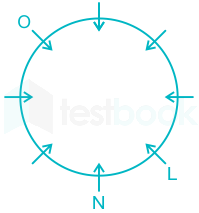
Directions: Read the following information carefully and answer the given question.

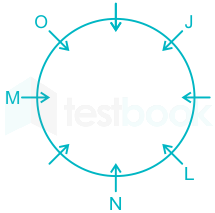
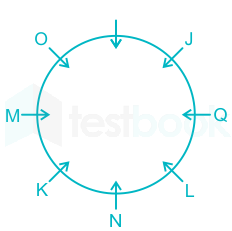
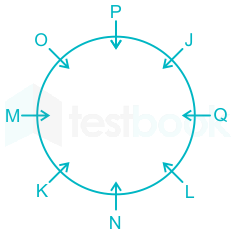
J, K, L, M, N, O, P, and Q are sitting in a circle facing the center. L is fourth to the left of O who is fifth to the right of N. M is third to the right of J who is not an immediate neighbor of N or O. K is third to the left of Q who is not an immediate neighbor of N.

Which of the following pair sits between J and M?

  1. ((a))

    LN

  2. ((b))

    OP

  3. ((c))

    QP

  4. ((d))

    LO

Show Answer
Answer: ((b))

OP

Given:

J, K, L, M, N, O, P, and Q are sitting in a circle facing the center.

  1. L is fourth to the left of O who is fifth to the right of N.

  1. M is third to the right of J who is not an immediate neighbor of N or O.

  1. K is third to the left of Q who is not an immediate neighbor of N.

<br>

only P is remaining.

So, the pair of "OP" sits between J and M

Hence, the correct answer is "OP".

42

Find the odd one out from the given alternatives. 

  1. ((a))

    8 – 19

  2. ((b))

    10 – 33 

  3. ((c))

    9 – 30

  4. ((d))

    7 – 24

Show Answer
Answer: ((a))

8 – 19

The logic followed here is,

First number × 3 + 3 = Second number

(1): 8 – 19 

8 × 3 + 3 = 27 ≠ Second number

(2): 10 – 33 

10 × 3 + 3 = 33 = Second number

(3): 9 – 30

9× 3 + 3 = 30 = Second number

(4): 7 – 24

7 × 3 + 3 = 24 = Second number

Hence, the odd one out is "8 - 19".

43

In each of the five pairs of letter-clusters, the letters in the second term are a rearranged/ transformed form of the letters in the first term in a particular pattern. In which two pairs, has the transformation been done in the same way?

A. CLOCK : BMNDJ

B. FLOAT : FOLZG

C. TRADE : SSZED

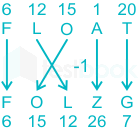
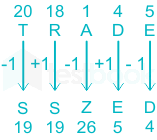
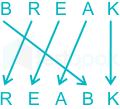
D. BREAK : REABK

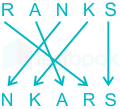
E. RANKS : NKARS

  1. ((a))

    B and C

  2. ((b))

    D and A

  3. ((c))

    C and D

  4. ((d))

    A and C

Show Answer
Answer: ((d))

A and C

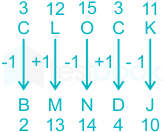
The pattern follows here is:

A. CLOCK : BMNDJ

B. FLOAT : FOLZG

C. TRADE : SSZED

D. BREAK : REABK

E. RANKS : NKARS

As shown in the diagram, A and C follow the same pattern.

Hence, "A and C" is the correct answer.

44

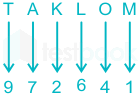
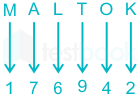
In a certain code, TAKLOM is coded as 972641, then how is MALTOK coded in the same way?

  1. ((a))

    176941

  2. ((b))

    176924

  3. ((c))

    176942

  4. ((d))

    176492

Show Answer
Answer: ((c))

176942

Given:

Similarly,

Hence, the correct answer is "176942".

45

Choose the odd one from the given alternatives.

  1. ((a))

    Bitter

  2. ((b))

    Sweet

  3. ((c))

    Sour

  4. ((d))

    Flavor

Show Answer
Answer: ((d))

Flavor

The logic followed here is:

Option (1) Bitter → Type of taste.

Option (2) Sweet → Type of taste.

Option (3) Sour → Type of taste.

Option (4) Flavor → Not type of taste.

Hence, “Flavor” is an odd one.

Key PointsThe seven most common flavors in food that are directly detected by the tongue are: sweet, bitter, sour, salty, meaty (umami), cool, and hot.

We have receptors for five kinds of tastes:

  • Sweet.
  • Sour.
  • Salty.
  • Bitter.
  • Savory.
46

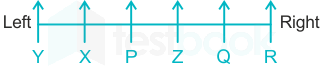
X, Y, Z, P, Q and R are sitting in a row facing north. X is the neighbour of Y and P. Q is the neighbour of Z and R, P is to the right of X and P and Z are immediate neighbours.

Then how many persons are between X and Q?

  1. ((a))

    One

  2. ((b))

    Three

  3. ((c))

    Four

  4. ((d))

    Two

Show Answer
Answer: ((d))

Two

Given:

X, Y, Z, P, Q and R are sitting in a row facing north.

  1. X is the neighbour of Y and P.

  2. Q is the neighbour of Z and R.

  3. P is to the right of X and P and Z are immediate neighbours.

Hence, the correct answer is "Two".

47

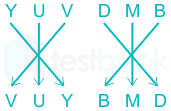
Select the related letters from the given alternatives.

YUVDMB : VUYBMD :: GREBDT : ?

  1. ((a))

    ERGTBD

  2. ((b))

    ERGTDB

  3. ((c))

    ERGBTD

  4. ((d))

    GRETDB

Show Answer
Answer: ((b))

ERGTDB

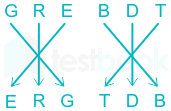
The logic follows here:

YUVDMB : VUYBMD

Similarly,

GREBDT : ?

Hence, the correct answer is "ERGTDB".

48

Choose the odd one from the given alternatives.

  1. ((a))

    Y + P = 22

  2. ((b))

    A + K = 12

  3. ((c))

    W + R = 41 

  4. ((d))

    T + J = 30

Show Answer
Answer: ((a))

Y + P = 22

The logic follows here:

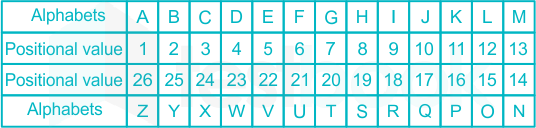
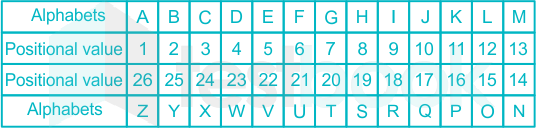
The sum of the place value of alphabets = number.

Now check all the options:

Option (1): Y + P = 25 + 16 = 41 ≠ 22

Option (2): A + K = 1 + 11 = 12

Option (3): W + R = 23 + 18 = 41 

Option (4): T + J = 20 + 10 = 30

Hence, the correct answer is "option (1)".

49

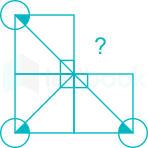
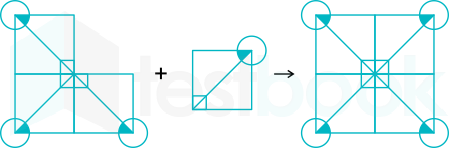
Which figure in the supplied question will finish the question figure's pattern?

  1. ((a))

  2. ((b))

  3. ((c))

  4. ((d))

Show Answer
Answer: ((c))

The pattern follows here:

Hence, the correct answer is "option (3)".

50

In a class, Alan's rank was 20 from the top and 58 from the bottom. If his rank became 57 from the top, then what will be his rank from the bottom? 

  1. ((a))

    78

  2. ((b))

    77

  3. ((c))

    20

  4. ((d))

    21

Show Answer
Answer: ((d))

21

Total persons in class = Alan's rank from the top + Alan's rank from the bottom - 1

= 20 + 58 - 1 = 78 - 1 = 77

If his rank became 57 from the top:

Alan's rank from the bottom = Total persons in class - Alan's rank from the top + 1

= 77 - 57 + 1 = 20 + 1 = 21

Hence, the correct answer is "21".

51

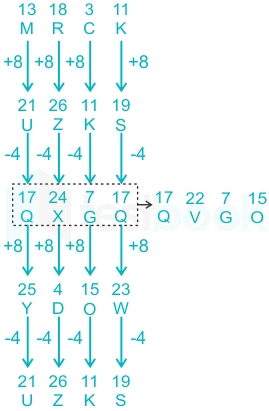
Which is the WRONG term in the following series?

MRCK, UZKS, QXGQ, YDOW, UZKS

  1. ((a))

    YDOW

  2. ((b))

    UZKS

  3. ((c))

    QXGQ

  4. ((d))

    MRCK

Show Answer
Answer: ((c))

QXGQ

The logic follows here:

So, "QXGQ" is the WRONG term in the following series.

Hence, the correct answer is "QXGQ".

52

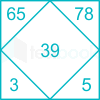
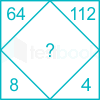
What comes in place of (?) in the figures given below. 


  1. ((a))

    42

  2. ((b))

    40

  3. ((c))

    32

  4. ((d))

    30

Show Answer
Answer: ((d))

30

The logic follows here:

The sum of the quotient of diagonally opposite numbers = Middle number

Given:

⇒ (65 ÷ 5) + (78 ÷ 3) = 13 + 26 = 39 = Middle number

Similarly,

⇒ (64 ÷ 4) + (112 ÷ 8) = 16 + 14 = 30 = Middle number

Hence, the correct answer is "30".

53

Directions: Read the following information carefully and answer the questions given below:

I. Shyam is older than Lalu.

II. Monu and Nilesh are of equal age.

III. Zaheer is the youngest.

IV. Yogesh is younger than Nilesh.

V. Yogesh is older than Shyam.

Which statement(s) is/are not required to prove that Lalu is younger than Monu?

  1. ((a))

    IV and V

  2. ((b))

    III and V

  3. ((c))

    III and IV

  4. ((d))

    III only

Show Answer
Answer: ((d))

III only

As per the given information:

I.  Shyam is older than Lalu.

Shyam > Lalu

II. Monu and Nilesh are of equal age.

Monu = Nilesh

III. Zaheer is the youngest.

Zaheer is the youngest of all.

IV. Yogesh is younger than Nilesh.

Nilesh > Yogesh 

V. Yogesh is older than Shyam.

Yogesh > Shyam

Conclusion:

Monu = Nilesh > Yogesh > Shyam > Lalu > Zaheer

Here, only statement (III) is not required to prove that Lalu is younger than Monu

Hence, the correct answer is "Option (4)".

54

In each of the four pairs of letter-clusters, the letters in the second term are a rearranged/ transformed form of the letters in the first term in a particular pattern. In which two pairs, has the transformation been done in the same way?

(A) BHLI -DPXR 

(B) HJAF-DFAC

(C) XPNL- LKAH

(D) LHGF-XPNL

  1. ((a))

    A and B 

  2. ((b))

    C and D

  3. ((c))

    B and C

  4. ((d))

    A and D 

Show Answer
Answer: ((d))

A and D 

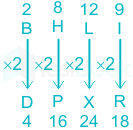
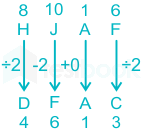
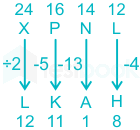
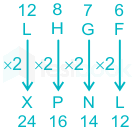
The pattern follows here is:

(A) BHLI -DPXR 

(B) HJAF-DFAC

(C) XPNL- LKAH

(D) LHGF-XPNL

As shown in the diagram, A and D follow the same pattern.

Hence, "A and D" is the correct answer.

55

In the following question a word is followed by five other words, one of which cannot be formed by using the letters of the given word. Find this word.

INTELLIGENCE

  1. ((a))

    ENGINE

  2. ((b))

    TELL

  3. ((c))

    GENES

  4. ((d))

    NICE

Show Answer
Answer: ((c))

GENES

Let’s check each option,

  1. ENGINE → can be formed as INTELLIGENCE

  2. TELL→ can be formed as INTELLIGENCE

  3. GENES → cannot be formed as INTELLIGENCE (S is not present)

  4. NICE → can be formed as INTELLIGENCE

Hence, “GENES” can’t be formed.

Hence, the correct answer is "option (3)".

56

In the question given below, there are three statements followed by two conclusions. You have to take the given statements to be true even if they seem to be at variance with commonly known facts and then decide which of the given conclusion logically follow(s) from the given statements.

Statements:

Some bottle-gourd are Cabbage

All Capsicum are Cabbage

Some Cabbage are Cucumber

Conclusions:

I. Some Bottle-gourd are Capsicum 

II. Some Cucumber are Cabbage

  1. ((a))

    Either conclusion I or II follows 

  2. ((b))

    Neither conclusion I nor II follows

  3. ((c))

    Only conclusion II follows

  4. ((d))

    Only conclusion I follow

Show Answer
Answer: ((c))

Only conclusion II follows

Least possible Venn diagram is,

Conclusion:

I. Some Bottle-gourd are Capsicum → Does not Follow (There is no direction relation between bottle-gourd and capsicum.)

II. Some Cucumber are Cabbage → Follow (Some Cabbage are Cucumber, so some cucumber are definitely cabbage.)

57

In the word ‘COMPLAINTS’, if all the letters in the word are arranged in ascending order as in the English alphabetical order from left to right. Then, how many letters in the word remains in the same position as in the original word?

  1. ((a))

    None

  2. ((b))

    One

  3. ((c))

    Two

  4. ((d))

    Three

Show Answer
Answer: ((a))

None

After the word are arranged in ascending order as in the English alphabetical order from left to right.

Given wordCOMPLAINTS
After arrangementACILMNOPST

As we can see, there is No letter is remains in the same position as in the original word.

Hence, the correct answer is "None".

58

What value will come in place of question mark (?) in the following questions?

7.5% of 2920 + 12.5% of ? = 40.5% of 1000

  1. ((a))

    1488

  2. ((b))

    1856

  3. ((c))

    1692

  4. ((d))

    1312

Show Answer
Answer: ((a))

1488

Calculation:

7.5% of 2920 + 12.5% of ? = 40.5% of 1000

⇒ 75/1000 × 2920 + 125/1000 × ? = 405/1000 × 1000

⇒ 219 + 125/1000 × x = 405

⇒ 125/1000 × x = 186

⇒ x = 186000/125 = 1488

∴ The correct answer is 1488.

59

When will the hour and minute hands meet between 11 and 12?

  1. ((a))

    11 hours 60 minute

  2. ((b))

    ​11 hours (21\frac{8}{11})minute

  3. ((c))

    11 hours 21 minute

  4. ((d))

    ​11 hours (21\frac{9}{11})minute

Show Answer
Answer: ((a))

11 hours 60 minute

When hour hand and minute hand meet the angle between them is 0°.

The formula of the hour hand and minutes hand = 30 H ~ 11 M/2

angle is 0⁰.

0 = 30 × 11 - 11M/2

330 = 11M/2

660 = 11M 

M =  660/11 = 60 m (here we take hour = 11)

The hour and minute hands meet at 11 hour and 60 minute between 11 and 12.

Hence, the correct answer is "11 hours 60 minute".

60

Select the option that is related to the figure in the same way that the second figure is related to the first figure.

  1. ((a))

  2. ((b))

  3. ((c))

  4. ((d))

Show Answer
Answer: ((d))

From 1st figure to 2nd figure,

When we rotate first figure 180°, we get second figure.

Similarly,

When we rotate 3rd figure 180°, we get fourth figure.


Hence, the correct answer is "Option (4)".

61

If 1st January, 1601 is Monday, What day is 1st  January of 1701?

  1. ((a))

    Thursday

  2. ((b))

    Wednesday

  3. ((c))

    Monday

  4. ((d))

    Saturday

Show Answer
Answer: ((d))

Saturday

Given: 1st January, 1601 is Monday

The 1701 year = 1601 + 100 

So, as we know that the number of odd days in 100 years is 5

So, in between 1601 to 1701 years the number of odd days is 5.

Now, 1st January 1701 is,

Monday + 5 = Saturday.

Hence, the correct answer is "Saturday".

62

Read the following data and answer the questions that follow it.

Details about companies listed in Stock Exchange in different years. 
YearNumber of CompaniesBSE  NSEPvt. Ltd  Ltd.% of companies out of Pvt. Ltd. having net worth less than 100 cr
200124,00011 ∶ 97 ∶ 546%
200230,00019 ∶ 1117 ∶ 862%
200344,0007 ∶ 43 ∶ 172%
200438,00012 ∶ 723 ∶ 1563%
200556,0005 ∶ 219 ∶ 952%
200640,0005 ∶ 34 ∶ 150%
<br>

How many Pvt. Ltd. companies are listed in 2003 and 2005 having net worth less than 100 cr?

  1. ((a))

    43520

  2. ((b))

    48950

  3. ((c))

    51260

  4. ((d))

    53340

Show Answer
Answer: ((a))

43520

Calculation:

In 2003 

4 unit = 44000

1 unit = 11000

3 unit = 33000

⇒ 33000 × 72/100 = 23760

In 2005

28 unit = 56000

1 unit = 2000

19 unit = 38000

⇒ 38000 × 52/100 = 19760

Companies having net worth less than 10 Cr = 23760 + 19760 = 43520

∴ The correct answer is 43520.

63

Which of the following words cannot be formed using the letters of the given word.

TRANSFORMER

  1. ((a))

    FORTS

  2. ((b))

    STORM

  3. ((c))

    SPORT

  4. ((d))

    REFORM

Show Answer
Answer: ((c))

SPORT

1) FORTS→ can be formed → TRANSFORMER

  1. STORM → can be formed → TRANSFORMER

3) SPORT → since there is no P in the word TRANSFORMER so it cannot be formed

4) REFORM → can be formed → TRANSFORMER

Hence, the correct answer is "SPORT".

64

What value will come in place of question mark (?) in the following question?

28% of 145 + 36% of 150 - 22% of 65 = ?

  1. ((a))

    60.3

  2. ((b))

    80.3

  3. ((c))

    70.3

  4. ((d))

    90.3 

Show Answer
Answer: ((b))

80.3

Calculation:

28% of 145 + 36% of 150 - 22% of 65 

⇒ 40.6 + 54 - 14.3

⇒ 80.3

∴ The correct answer is 80.3.

65

Solve the given expression and find the value of '∠A-

(\rm \frac{Sin \ A}{(Sec\ A +1)}+\frac{Sin \ A}{(Sec\ A -1)}=2\sqrt3 )

  1. ((a))

    45° 

  2. ((b))

    30°

  3. ((c))

    15°

  4. ((d))

    60°

Show Answer
Answer: ((b))

30°

Given:

(\rm \frac{Sin \ A}{(Sec\ A +1)}+\frac{Sin \ A}{(Sec\ A -1)}=2\sqrt2)

Calculation:

Checking option (1),

∠A = 30° 

R.H.S = (\rm \frac{Sin \ 45}{(Sec\ 45 +1)}+\frac{Sin \ 45}{(Sec\ 45 -1)})

⇒ (\dfrac{1}{\sqrt{2}}[\dfrac{1}{\sqrt{2}+1}+\dfrac{1}{\sqrt{2}-1}]) 

⇒ (\dfrac{1}{\sqrt{2}}[\dfrac{\sqrt{2}-1+\sqrt{2}+1}{2-1}]) = (2\sqrt{2})

⇒ R.H.S = (\sqrt{2})

R.H.S ≠ L.H.S

Checking option (2),

R.H.S = (\rm \frac{Sin \ 30}{(Sec\ 30 +1)}+\frac{Sin \ 30}{(Sec\ 30 -1)})

⇒ (\dfrac{1}{2}[\dfrac{1}{\dfrac{2}{\sqrt{3}}+1}+\dfrac{1}{\dfrac{2}{\sqrt{3}}-1}])

(\dfrac{\sqrt{3}}{2}[\dfrac{1}{2+{\sqrt{3}}}+\dfrac{1}{2-{\sqrt{3}}}])

(\dfrac{\sqrt{3}}{2}[\dfrac{2-\sqrt{3}+2+\sqrt{3}}{4-3}])

(\dfrac{\sqrt{3}}{2}\times4) = 2(\sqrt{3})

R.H.S = L.H.S 

∴ Option (2) is the correct answer.

66

The angle of elevation of a point P with respect to the top of a tower is 30°. If the distance between the foot of the tower and P is 75 m, what is the height of the tower?

  1. ((a))

    75√3 m

  2. ((b))

    150 m

  3. ((c))

    75 m

  4. ((d))

    25√3 m

Show Answer
Answer: ((d))

25√3 m

Calculation:

We know tanθ = P/B

tan30° = 1/√3

So,

⇒ 1/√3 = P/75

⇒ P = 75/√3

⇒ P = 75/3 × √3

⇒ P = 25√3

∴ The correct answer is 25√3.

67

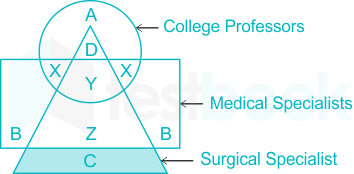
In the following diagram, the circle represents college Professors, the triangle stands for surgical Specialists, and medical Specialists are represented by the rectangle. Whom does C represents ?

  1. ((a))

    College Professors

  2. ((b))

    Medical Specialists

  3. ((c))

    Surgical Specialists

  4. ((d))

    Medical and surgical Specialists

Show Answer
Answer: ((c))

Surgical Specialists

From the given information,

As we can see that "C" represents the surgical Specialists.

Hence, the correct answer is "surgical Specialists".

68

X alone can do a piece of work in 15 days and Y can do the same work in 10 days. Rs. 4800 were allocated to finish the work. If with the help of Z they were able to finish the work in 5 days, how much amount will Z get?

  1. ((a))

    Rs. 800

  2. ((b))

    Rs. 1600 

  3. ((c))

    Rs. 1200

  4. ((d))

    Rs. 1800

Show Answer
Answer: ((a))

Rs. 800

Formula used:

Work done = time × Efficiency

Calculation:

Let total work is 30.

Efficiency of X = 30/15 = 2

Efficiency of Y = 30/10 = 3

Efficiency of (X + Y + Z) = 30/5 = 6 

Efficiency of Z = 6 - (3 + 2) = 1

Now the money will be divide in the ratio of their efficiency

⇒ 6 unit = 4800

⇒ 1 unit = 800

Amount Z will get is Rs.800

∴ The correct anwer is Rs.800.

69

At 3 ∶ 20 in a clock, the angle between the minute and hour hands is.

  1. ((a))

    20°

  2. ((b))

    10°

  3. ((c))

    40°

  4. ((d))

    30°

Show Answer
Answer: ((a))

20°

By applying the formula we can get the answer is:

Angle = |[11/2M ± 30H]|

Where M = 20 and H = 3

At 3: 20, the angle between the hour hand and the minute hand of a clock is

⇒  |[(11/2)× (20) ± 30 × (3)]|

⇒ |[110 ± 90]|

⇒ 20° or 200° 

Hence, the correct answer is "20°".

70

From the given alternatives, select the word which can be formed using the letters of the given word.

QUINTESSENCE

  1. ((a))

    SCOT

  2. ((b))

    ESTEEM

  3. ((c))

    QUITE

  4. ((d))

    QUOTE

Show Answer
Answer: ((c))

QUITE

Given word: QUINTESSENCE

Let’s check all the options:

(1) SCOT ⇒ It can’t be formed as it requires O.

(2) ESTEEM⇒ It can’t be formed as it requires M.

(3) QUITE ⇒  It can be formed.

(4) QUOTE ⇒ It can’t be formed as it requires O.

Hence, the correct answer is "QUITE"

71

The following table shows the sale of 2-wheeler and 4-wheeler in units during 2010 to 2014.

Year2-wheeler4-wheeler
201042001080
201153501200
201258001340
201352501550
201455001130
<br>

Find the difference between the average sales of 2-wheeler and 4-wheeler for the given periods.

  1. ((a))

    3600

  2. ((b))

    3960

  3. ((c))

    3440

  4. ((d))

    3820

Show Answer
Answer: ((b))

3960

Calculation:

Average of 2 wheeler = (4200 + 5350 + 5800 + 5250 + 5500)/5 = 5220

Average of 4 wheeler = (1080 + 1200 + 1340 + 1550 + 1130)/5 = 1260

Difference = 5220 - 1260 = 3960

∴ The correct answer is 3960.

72

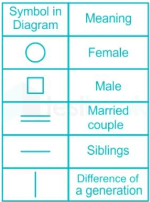
In a certain code, if:

(i) A - Z means A is the father of Z. 

(ii) A + Z means A is the brother of Z. 

(iii) A $ Z means A is the sister of Z.

(iv) A # Z means A is the mother of Z.

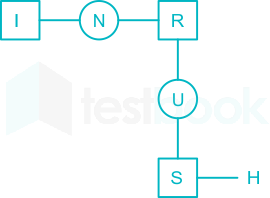
I + N $ R – U # S + H

How is R related to H in the given expression?

  1. ((a))

    Daughter

  2. ((b))

    Maternal grandfather

  3. ((c))

    Son

  4. ((d))

    Paternal grandfather

Show Answer
Answer: ((b))

Maternal grandfather

Making the family tree using following symbols:

On decoding the given information:

A is
Symbols-+$#
MeaningFatherBrotherSisterMother
To Z

Making the final family tree according to the given expression 'I + N $ R – U # S + H':

As we can see, R is maternal grandfather of H.

Hence, the correct answer is "Maternal Grandfather".

73

Which of the given options would be a logical sequence of the following places when arranged in a Horizontal manner starting from West going towards East on India’s Map?

  1. Jodhpur 
  2. Gwalior  
  3. Patna   
  4. Aizawl 
  5. Allahabad
  1. ((a))

    12354

  2. ((b))

    15234

  3. ((c))

    43521

  4. ((d))

    12534

Show Answer
Answer: ((d))

12534

The logical sequence of the following places when arranged in a Horizontal manner starting from West going towards East on India’s Map is as follow,

1. Jodhpur 

2. Gwalior  

5. Allahabad

3. Patna   

4. Aizawl 

Hence, the correct answer is "12534".

74

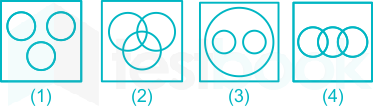
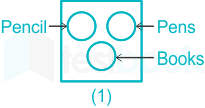
Which of the following figure represents the relationship among Pens, Pencil and Books?

  1. ((a))

    3

  2. ((b))

    4

  3. ((c))

    1

  4. ((d))

    2

Show Answer
Answer: ((c))

1

Pens, Pencil and Books are three individual things. 

The figure which  represents the relationship among them is given below,

Hence, the correct answer is "Figure (1)".

75

Out of 7 consonants and 4 vowels, how many words of 3 consonants and 2 vowels can be formed?

  1. ((a))

    20300

  2. ((b))

    2400

  3. ((c))

    24100

  4. ((d))

    25200

Show Answer
Answer: ((d))

25200

Given:

Number of consonants = 7

Number of vowels = 4

Number of consonants to be in each word = 3

Number of vowels to be in each word = 2

Concept used:

The number of ways to select items is given by the combinations formula: C(n, r) = (\dfrac{\text{n!}}{\text{r!(n-r)!}}) 

The number of ways to arrange items is given by the permutations formula: P(n) = n!

Calculation:

3 consonants can be selected from 7 in 7C3 ways = 35 ways.

2 vowels can be selected from 4 vowels in 4C2 ways = 6 ways.

Since we will have to make words from these 5 (3 consonants and 2 vowels)  letters.

So arrangements of these 5 letters = 5! = 120

Total number of ways = 35× 6 × 120 = 25200 ways.

∴ 25200 words of 3 consonants and 2 vowels can be formed.

76

Arrange the following words in a logical and meaningful order.

(1) Egypt

(2) Africa

(3) Great Pyramid

(4) World

(5) Giza

  1. ((a))

    3, 5, 2, 1, 4

  2. ((b))

    5, 3, 1, 4, 2

  3. ((c))

    5, 3, 1, 2, 4

  4. ((d))

    3, 5, 1, 2, 4 

Show Answer
Answer: ((d))

3, 5, 1, 2, 4 

"The Great Pyramid in Giza, Egypt, is one of the world's most famous landmarks in Africa."

So, the logical order is:

(3) Great Pyramid

(5) Giza 

(1) Egypt

(2) Africa

(4) World

Hence, the correct answer is "3, 5, 1, 2, 4".

77

In the following questions, select the figure from 4 option figures, which when replaced in the blank space will complete the pattern.

  1. ((a))

  2. ((b))

  3. ((c))

  4. ((d))

Show Answer
Answer: ((b))

The figure which complete the pattern is given below,


Hence, the correct answer is "option (2)".

78

If the setting of the numbers on the dial of the watch is disturbed by the letters of the English alphabet in such a way that the letter (C) comes in place of the number 1, similarly the letter (D) comes in place of the number 2, and so on. If the order of change continues from 6 : 15, find out at which letter the hour hand and the minute hand will be.

  1. ((a))

    K and L

  2. ((b))

    H and E

  3. ((c))

    F and G

  4. ((d))

    M and N 

Show Answer
Answer: ((b))

H and E

If the English alphabet in such a way that the letter (C) comes in place of the number 1, similarly the letter (D) comes in place of the number 2, and so on. the arrangement of English alphabets is as follow:

123456789101112
CDEFGHIJKLMN


Time given: 6 : 15

Which means Hour Hand is on 6 and Minute hand is on 3.

According to the given arrangement H comes in place of 6 and E comes in place of 3.

Hence, the letter the hour hand and the minute hand will be H and E.

79

The following table shows the percentage distribution of population of five cities on the basis of marital status. 

CityPercentage of population who are marriedRatio of Male of Female
Among marriedAmong unmarried
M  FM  F
P405 ∶ 47 ∶ 9
Q553 ∶ 11 ∶ 3
R354 ∶ 74 ∶ 1
S803 ∶ 55 ∶ 3
T421 ∶ 16 ∶ 5
<br>

If in city S, number of married male is 2436 and in city P it is 8130, then find the total population of city P and S together.

  1. ((a))

    39655

  2. ((b))

    44705

  3. ((c))

    37415

  4. ((d))

    41405

Show Answer
Answer: ((b))

44705

Calculation:

In city S, number of married male is 2436 and in city P it is 8130

Ratio of married people in P 5 : 4

Ratio of married people in S 3 : 5

In S , 3 unit = 2436 

1 unit = 812

In P , 5 unit = 8130

1 unit = 1626

Total married people in S = 812 × 8 = 6496

Total married people in P = 1626 × 9 = 14,634

In S, 80% = 6496

In P, 40% = 14634

So, S = 8120 and P = 36585

Total Population of S and P = 8120 + 36585 = 44705

∴ The correct answer is 44705.

80

Which of the given options would be a logical sequence of the following places when arranged in a vertical manner starting from north on India’s Map?

  1. Bangalore 
  2. Gwalior  
  3. Coimbatore 
  4. Aurangabad  
  5. Bhopal  
  6. Chandigarh
  1. ((a))

    625431

  2. ((b))

    652413

  3. ((c))

    652431

  4. ((d))

    625413

Show Answer
Answer: ((d))

625413

To arrange these places in a vertical sequence on India's map, starting from the north, we would typically go from north to south. Here is the logical sequence:

6. Chandigarh

2. Gwalior  

5. Bhopal  

4. Aurangabad  

1. Bangalore 

3. Coimbatore 

<br>

This sequence starts with Chandigarh in the north and goes down to Coimbatore in the south.

Hence, the correct sequence is "625413".

81

In the question below, there are two statements followed by two conclusions. You have to take the given statements to be true even if they seem to be at variance with commonly known facts and then decide which of the given conclusion logically follow(s) from the given statements.

Statements:

All rivers are mountain.

All forests are mountains.

Conclusion:

I. Some rivers are forests.

II. No forest in a river.

  1. ((a))

    Neither conclusion I nor II follows

  2. ((b))

    Only Conclusion I follows

  3. ((c))

    Only Conclusion II follows

  4. ((d))

    Either Conclusion I or II follows

Show Answer
Answer: ((d))

Either Conclusion I or II follows

Given statements:

All rivers are mountain.

All forests are mountains.

Least possible Venn diagram:

Conclusion:

I. Some rivers are forests → Does not follow (There is no direct relation given between rivers and forest, so we can not say anything definite.)

II. No forest in a river → Does not follow (There is no direct relation given between rivers and forest, so we can not say anything definite.)

Hence, Either conclusion I or II follow.

82

How many such pairs of letters are there in the word ‘REPRODUCE', each of which has as many letters between them in the word  as they have between them in the English alphabetical series?

  1. ((a))

    Two

  2. ((b))

    Three

  3. ((c))

    Four

  4. ((d))

    One

Show Answer
Answer: ((a))

Two

According to the given information:

Given Word: REPRODUCE

There is only 'two' pair in the word 'REPRODUCE'.

Forward Pair: RU

Backward Pair: PR

Hence, the correct answer is "Two".

83

How many English meaningful words can be formed with the letters R, A, L, E using each letter only once in each word?

  1. ((a))

    Three

  2. ((b))

    Two

  3. ((c))

    One

  4. ((d))

    None

Show Answer
Answer: ((b))

Two

Given letters: R, A, L, E

The meaningful word which can formed from the given letters are,

Real → Existing or occurring in the physical world.

Rale → an abnormal crackling or rattling sound heard upon auscultation of the chest, caused by disease or congestion of the lungs.

Hence, there are "Two" meaningful words can be formed with the letters using each letter only once in each word.

84

Choose the box that is similar to the box formed from folding the given sheet of paper. 

  1. ((a))

  2. ((b))

  3. ((c))

  4. ((d))

Show Answer
Answer: ((d))

Opposite surface of the open dice can be found by the below method:-

  • Alternate surfaces are opposite to each other.
  • No two opposite surface are touched by side or by corners.

So, by using the above rule we can find the opposite surface of open dice.

Below are the opposite surfaces:-

Number/LetterOpposite Number/Letter
13
2B
AC

Note:- Two opposite faces are never seen together or adjacent to each other.

Option (1): 

A and C are opposite faces but here they are seen together which is wrong. Thus this cube cannot be made.

Option (2): 

1 and 3 are opposite faces but here they are seen together which is wrong. Thus this cube cannot be made.

Option (3): 

1 and 3 are opposite faces but here they are seen together which is wrong. Thus this cube cannot be made.

Option (4): 

None of the opposite faces are seen together nor they are adjacent to each other. Thus this cube can be made.

Hence, **"**Option (4)" is the correct answer.

85

The following line graph represents the percent of milk in five different milk and water solutions. 

If the volume of milk in B is 11.16 ltr and the volume of water in D is 12.8 ltr, then find the ratio of milk and water in solution K which is prepared by mixing B and D.

  1. ((a))

    5 ∶ 3

  2. ((b))

    289 ∶ 156

  3. ((c))

    759 ∶ 491

  4. ((d))

    525 ∶ 311

Show Answer
Answer: ((c))

759 ∶ 491

Calculation:

Milk in %Water in %MilkWaterTotal
B62%38%11.1618 - 11.16 = 6.8411.16 × (\frac{100}{62}) = 18
D60%40%32 - 12.8 = 19.212.812.8 × (\frac{100}{40}) = 32
Total30.3619.64


Ratio of milk and water in solution K = 30.36 : 19.64

⇒ 759 ∶ 491

∴ Option (3) is the correct answer.

86

The average of four consecutive odd numbers is 42 less than the sum of these numbers. What number comes first on this list?

  1. ((a))

    11

  2. ((b))

    30

  3. ((c))

    20

  4. ((d))

    50

Show Answer
Answer: ((a))

11

Given:

The average of four consecutive odd numbers is 42 less than the sum.

Formula used:

Average = Sum of observations/Number of observations

Calculation: 

Let's use 'n' to denote the smallest (first) odd number.

So, the next three consecutive odd numbers will be n + 2, n + 4, and n + 6.

According to the question,

Average = Sum of four consecutive odd numbers - 42

⇒ (\dfrac{n+(n+2)+(n+4)+(n+6)}{4}) = n + n + 2 + n + 4 + n + 6 - 42

⇒  (\dfrac{4n + 12}{4})= 4n + 12 - 42

⇒ n + 3 = 4n - 30

⇒ 3n = 33

⇒ n = (\dfrac{33}{3}) = 11

∴ Number 11 comes first on this list.

87

Pradip received 48% of a particular amount of money from Sana. Pradip spent 30% of the money he received on gadgets and 55% on academics. Pradip has Rs. 3600 left after deducting the aforementioned charges. How much did Sana have at the beginning?

  1. ((a))

    45,000

  2. ((b))

    50,000 

  3. ((c))

    48,000

  4. ((d))

    55,000

Show Answer
Answer: ((b))

50,000 

Given:

Price received by pradip = 48%

Pradip spents 305 on gadgets and 55% on academics

Amount remains = Rs. 3600

Calculation:

Let the money Sana has was Rs.100

According to question he receives Rs. 48 from the pradip

Now,

30% of 48 = 14.4

55% of 48 = 26.4

Now the amount remaining = 14.4 + 26.4 = 40.8

⇒ 48 - 40.8 = 7.2

Now 7.2 Unit = Rs.3600

⇒ 1 unit = 500

So, amount that Sana had was 500 × 100 = Rs. 50000

∴ The correct answer is Rs. 50000.

88

If A worked alone, it would take him 4 extra days to finish the job than if A and B collaborated. B would require 16 extra days to finish the project if he worked alone rather than jointly with A. If they both worked on it, how many days would it take them to finish it?

  1. ((a))

    6 days

  2. ((b))

    2 days

  3. ((c))

    10 days

  4. ((d))

    8 days

Show Answer
Answer: ((d))

8 days

Shortcut Trick

If A takes a extra days and B takes b extra days than A and B together, then time taken by A and B together is √(a × b).

Here, extra days for A (a) = 4 days.

Extra days for B (b) = 16 days.

Time taken together = √(4 × 16) = √64 = 8 days.

∴ The correct answer is 8 days.

Alternate Method

Given:

Extra time for A = 4 days

Extra time for B = 16 days

Formula Used:

If (A+B) together take x days, then A alone takes (x + a) days and B alone takes (x + b) days. The relationship is 1/(x + a) + 1/(x + b) = 1/x, which simplifies to x = √(a × b).

Calculations:

Let the time taken by A and B working jointly be x days.

⇒ Time taken by A alone = (x + 4) days

⇒ Time taken by B alone = (x + 16) days

⇒ 1/(x + 4) + 1/(x + 16) = 1/x

⇒ [(x + 16) + (x + 4)] / [(x + 4)(x + 16)] = 1/x

⇒ (2x + 20) / (x2 + 20x + 64) = 1/x

⇒ x(2x + 20) = x2 + 20x + 64

⇒ 2x2 + 20x = x2 + 20x + 64

⇒ x2 = 64

⇒ x = 8 days

∴ The correct answer is 8 days.

Additional Information

Combined Efficiency Rule

If A can do a work in X days and B in Y days, then A+B together can do it in (X × Y) / (X + Y) days.

Geometric Mean Property

In time and work problems involving extra days relative to the joint time, the joint time is always the geometric mean of the extra days: x = √(a × b).

Work and Days Relation

Efficiency is inversely proportional to the number of days taken to complete the job. Efficiency = Total Work ÷ Time.

89

Hens and cows are owned by a guy. If there are 50 heads and 130 feet, then there will be the following number of hens:

  1. ((a))

    35

  2. ((b))

    22

  3. ((c))

    30

  4. ((d))

    15

Show Answer
Answer: ((a))

35

Given:

Number of heads = 50

Number of feet = 130

Calculation:

Let the number of hens be x and the number of cows is y. Therefore,

x + y = 50           ----(1)

According to the question,

2x + 4y = 130

⇒ x + 2y = 65    ----(2)

Subtracting (1) from (2), we get

y = 15

Put this value in equation (1)

⇒ x = 50 - 15 = 35

Hence, the number of hens is 35.

90

Which 3-d shape gives us frustrum ?

  1. ((a))

    Cone

  2. ((b))

    Sphere

  3. ((c))

    cube

  4. ((d))

    cuboid

Show Answer
Answer: ((a))

Cone

Calculation:

We know that if the cone is cut laterally from top the shape remaining will be the frustum with top and bottom surfaces to be spherical.

Key PointsA frustum is a 3-dimensional shape that is obtained when a smaller 3-dimensional shape is removed from the top of a larger 3-dimensional shape, keeping the top and bottom faces parallel. In other words, a frustum is a portion of a solid that remains after cutting off the top portion of the solid with a plane parallel to the base.

The most common example of a frustum is a frustum of a pyramid or cone. When the top portion of a pyramid or cone is cut off by a plane parallel to the base, the resulting shape is a frustum.

A frustum can also be formed from other 3-dimensional shapes like a frustum of a sphere (also known as a spherical frustum), but the frustum of a pyramid or cone is the most commonly encountered one.

91

The answer to the equations 2 (x + y) = 1 and x - y = 3 is:

  1. ((a))

    (-\frac{2}{3},\frac{5}{1})

  2. ((b))

    (\frac{1}{3},\frac{7}{4})

  3. ((c))

    (-\frac{7}{4},-\frac{5}{4})

  4. ((d))

    (\frac{7}{4},-\frac{5}{4})

Show Answer
Answer: ((d))

(\frac{7}{4},-\frac{5}{4})

Calculation:

2(x + y) = 1  -------(1)

x - y = 3       -----------(2)

On multiplying equation(2) with 2 we get :

⇒ 2x - 2y = 6

On adding equation (1) and (2) :

2x + 2y + 2x - 2y = 7

4x = 7

x = 7/4

Putting value of x in eq(2) : 

7/4 - y = 3

y = - 5/4

∴ The correct answer is 7/4 , -5/4.

92

The sum of the cubes of two numbers in the ratio 5 ∶ 6 is 2728, the sum of the number is-

  1. ((a))

    12

  2. ((b))

    23

  3. ((c))

    20

  4. ((d))

    22

Show Answer
Answer: ((d))

22

Given:

Sum of the cubes of two numbers in the ratio 5 ∶ 6 is 2728.

Calculation:

Let the number be 5x and 6x,

⇒ (5x)+ (6x)3 = 2728

⇒ 125x3 + 216x3  = 2728

⇒ 341x3 = 2728

⇒ x3 = 8

⇒ x = 2

The sum of numbers = 5x + 6x = 11x = 22

∴ The correct answer is 22.

93

Find the time it takes for 10 men and 15 women to plow a field if 5 men and 7 women can do it in 10 days and 20 men and 42 women can do it in 2.

  1. ((a))

    (\frac{100}{23})

  2. ((b))

    (\frac{140}{29})

  3. ((c))

    (\frac{111}{22})

  4. ((d))

    (\frac{140}{35})

Show Answer
Answer: ((b))

(\frac{140}{29})

Given:

5 men and 7 women can do it in 10 days .

20 men and 42 women can do it in 2 days.

Formula used:

M1H1D1/W1 = M2H2D2/W2

Calculation:

According to question,

⇒ (5M + 7W) × 10 = (20M + 42W) × 2

⇒ 50M + 70W = 40M + 84W

⇒ 10M = 14W

⇒ M/W = 7/5

Total Work = (35 + 35) × 10 = 700

⇒ (10M + 15W) × x = 700

⇒ (70 + 75) × x = 700

⇒ x = 700/145 = 140/29

∴ The correct answer is 140/29.

94

The average of a non-zero number and its square is eight times the number. The number is: 

  1. ((a))

    15

  2. ((b))

    17

  3. ((c))

    22

  4. ((d))

    13

Show Answer
Answer: ((a))

15

Given:

The average of a non-zero number and its square is 8 times the number.

Concept used:

Average = Total ÷ Number of entities

Calculation:

Let the number be Q.

According to the question,

(Q + Q2)/2 = 8 × Q

⇒ Q2 + Q = 16Q

⇒ Q2 = 15Q

⇒ Q = 15 (∵ Q ≠ 0)

∴ The number is 15.

95

Calculate the value of: (62% of 720) ÷ 0.4.

  1. ((a))

    1110

  2. ((b))

    1100

  3. ((c))

    1116

  4. ((d))

    920

Show Answer
Answer: ((c))

1116

Calculation:

⇒ (62% of 720)/0.4

⇒ (62/100 × 720)/0.4

⇒ (62 × 7.2 × 10)/4

⇒ 1116

∴ The correct answer is 1116.

96

Find y by solving the equation: 

(\frac{y}{2}+\frac{21}{2y}=5)

  1. ((a))

    (2,\frac{3}{2})

  2. ((b))

    3, 7

  3. ((c))

    9, 2

  4. ((d))

    (4,\frac{1}{2})

Show Answer
Answer: ((b))

3, 7

Calculation:

On simplifying further we get,

⇒ y2 + 21/2y = 5

⇒ y2 + 21 = 10y

⇒ y2 - 10y + 21

⇒ y2 - 3y - 7y + 21

⇒ y(y - 3) - 7(y - 3)

⇒ y = 3, 7

∴ The correct answer is 3 , 7.

97

Two numbers added together equal 100. If the larger number exceeds four times the smaller one by 5. The smaller number is then?

  1. ((a))

    55

  2. ((b))

    39

  3. ((c))

    21

  4. ((d))

    19

Show Answer
Answer: ((d))

19

Calculation:

Let two numbers be x & y, where x is larger.

x + y = 100                      ---(1)

According to the question -

⇒ x = 4y + 5                  ---(2)

Putting the value of (2) in (1)

⇒ 4y + 5 + y = 100

⇒ 5y + 5 = 100

⇒ y = 95/5 = 19

∴ The correct answer is 19.

98

What should come in place of the question mark (?) in the following question?

(\sqrt{361}=?-14^2-17\times 7 )

  1. ((a))

    334

  2. ((b))

    23

  3. ((c))

    20

  4. ((d))

    27

Show Answer
Answer: ((a))

334

Calculation:

(\sqrt{361}=?-14^2-17\times 7 )

19 = x - 196 - 119

x = 19 + 196 + 119

x = 334

∴ The correct answer is 334.

99

If the volume of cube is (\sum^\infty_0\frac{1}{2^n} ). Find the volume.

  1. ((a))

    1

  2. ((b))

    2

  3. ((c))

    2.5 

  4. ((d))

    4

Show Answer
Answer: ((b))

2

Calculation:

The expression ( \displaystyle\sum_{0}^{\infty} \dfrac{1}{2^n} ) represents an infinite series. To find the value of this series, we need to determine its formula and then evaluate it.

Note that the series starts at n=0 and each term is obtained by raising 1/2 to the power of n. Therefore, the formula for the series is:

( \displaystyle\sum_{0}^{\infty} \dfrac{1}{2^n} ) = 1 + (1/2)1 + (1/2)2 + (1/2)3 + ...

This is a geometric series with first term a = 1 and common ratio r = 1/2. The formula for the sum of a geometric series is:

S = (\dfrac{a}{(1 - r)})

Substituting the values of a and r, we get:

S = (\dfrac{1}{(1 - \dfrac{1}{2})}) = 2

∴ The volume of the cube is 2.

100

The average of five consecutive numbers is twenty. These numbers start with:

  1. ((a))

    33

  2. ((b))

    22

  3. ((c))

    18

  4. ((d))

    11

Show Answer
Answer: ((c))

18

Given:

The average of five consecutive numbers is twenty.

Concept used:

We know the function of average is to balance out the numbers given.

If 4 is the average of 3 consecutive numbers then,

Numbers will be 3, 4, 5

Calculation:

According to the question average of 5 consecutive numbers is 20.

So the numbers will be,

⇒ 18, 19, 20, 21, 22

∴ The number starts with 18.

∴ The correct answer is 18.

Attempt this paper under real exam conditions

Timed interface, section switching, instant scoring, and question-by-question analytics — free.

Start Timed Attempt