Official Paper

DSSSB Jail Warder : (4 Dec 2025) Memory-Based Paper (Previous Year Paper)

200 questions · 120 minutes · with answers · free

General intelligence and Reasoning Ability 1 (20 questions)

1

Three statements are given, followed by three conclusions numbered I, II and III. Assuming the statements to be true, even if they seem to be at variance with commonly known facts, decide which of the conclusions logically follow(s) from the statements.

Statements:

All Creta are Cruz

Some Cruz are Eon

All Eon are Black

Conclusions:

I. Some Cruz are Black.

II. No Black is Creta.

III. Some Creta are Eon.

  1. ((a))

    Only conclusion I follows.

  2. ((b))

    Either conclusion II or III follow.

  3. ((c))

    Only conclusions II and III follow.

  4. ((d))

    Either conclusion I or III follow

Show Answer
Answer: ((a))

Only conclusion I follows.

The least possible Venn diagram is as follows:

Conclusions:

I. Some Cruz are Black. → True (Some Cruz are Eon and All Eon are Black)

II. No Black is Creta.→ False (it is possible but not definite)

III. Some Creta are Eon.→ False (it is possible but not definite)

Hence, only conclusion I follows.

2

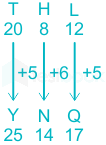
Which one set of letters when sequentially placed at the given letter series would complete it?

p__as__ic__la__ti__pl__st__c

  1. ((a))

    l t s p a c i

  2. ((b))

    l t p s c a i

  3. ((c))

    l p t s a c i

  4. ((d))

    l p t c s a i 

Show Answer
Answer: ((b))

l t p s c a i

Here, plastic is the repeating word.

plastic/ plastic/ plastic

Hence, the correct answer is ‘l t p s c a i’.

3

Directions: Select the correct answer from the options given below.

You see a blind elderly man sitting on a bench in the park with a leash in his hand. You are sitting on another bench, someone tells you about the man's dog having run away a few minutes ago and you see the man talking with the empty rope. What will be your immediate action?

  1. ((a))

    You will walk up to the man and inform him that the dog is missing and help him find it back.

  2. ((b))

    You will try and find the dog in the park.

  3. ((c))

    You will see if there is anyone else accompanying the elderly man and ask them to help him.

  4. ((d))

    you will continue minding your own business.

Show Answer
Answer: ((a))

You will walk up to the man and inform him that the dog is missing and help him find it back.

  • It is given in the question that the man is blind and elderly. It is therefore important that you help the man. So options 3 and 4 are eliminated.
  • You need to tell the man that the dog has run away so that he could tell you if the dog keeps doing so or can guide you on where to find it.
  • Hence the correct answer is option 1.
4

Seven persons A, Q, E, F, L, M and C live on 7 floor building numbered as 1 to 7th floor from bottom to top. Bottom floor numbered as floor 1 and its above floor numbered as floor 2 and so on. Topmost floor numbered as floor 7. A lives on the 4th floor. Two persons live between A and F. M lives just above E. F does not live on the top floor. Q lives on the 2nd floor. L is not an immediate neighbour of Q and does not live on the top floor. Who lives on the top floor?

  1. ((a))

    M

  2. ((b))

    C

  3. ((c))

    A

  4. ((d))

    Q

Show Answer
Answer: ((a))

M

According to the given information-

  1. A lives on 4th floor
FloorsPersons
7
6
5
4A
3
2
1
  1. Two persons live between A and F. F does not live on top floor.


FloorsPersons
7
6
5
4A
3
2
1F
  1. Q lives on 2nd floor.
FloorsPersons
7
6
5
4A
3
2Q
1F
  1. M lives just above E.

Case 1:

FloorsPersons
7
6M
5E
4A
3Q
2
1F

Case 2:-

FloorsPersons
7M
6E
5
4A
3
2Q
1F
  1. L is not an immediate neighbour of Q and does not live on the top floor. Therefore, case 1 is eliminated

The final arrangement is given below-

FloorsPersons
7M
6E
5L
4A
3C
2Q
1F

Hence, M lives on the top floor.

5

In an examination, 40% of students passed in Algebra and 30% of students passed in Geometry. If 20% of students passed in both and those who failed in both numbered 50. Then the total number of students who failed only in geometry is________.

  1. ((a))

    70

  2. ((b))

    60

  3. ((c))

    40

  4. ((d))

    80

Show Answer
Answer: ((c))

40

Let the number of students appeared for examination be x.

40% students passed in Algebra = 40% of x = 0.4x

30% students passed in Geometry = 30% of x = 0.3x

20% students passed in both Algebra and Geometry = 20% of x = 0.2x

Those who failed in both are 50.

Number of students passed only in Algebra = 0.4x – 0.2x = 0.2x

Number of students passed only in Geometry = 0.3x – 0.2x = 0.1x

Total number of students passed = 0.2x + 0.1x + 0.2 x = 0.5x

Number of students who failed both = x – 0.5x = 0.5x

According to given information,

0.5x = 50

x = 100

Number of students passed only in Geometry = 0.1x = 0.1 × 100 = 10

Number of students failed only in geometry = 100 – (50 + 10) = 40

Hence, 40 is the correct answer.

6

A series is given in the following question. Find the term that will replace the question mark.

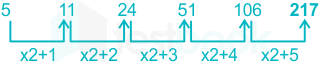
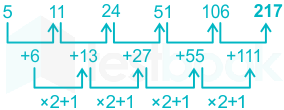
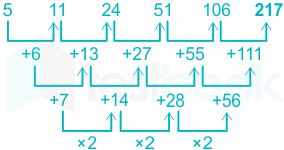
5, 11, 24, 51, 106, ?

  1. ((a))

    115

  2. ((b))

    122

  3. ((c))

    217

  4. ((d))

    221

Show Answer
Answer: ((c))

217

The pattern followed is:

Hence, the correct answer is "217".

  • There are multiple ways of solving the given question.
  • Two more methods are shown below:

1st Method:

Hence,  the correct answer is "217".

2nd Method:

Hence, the correct answer is "217".

7

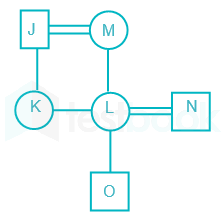
In a car showroom six cars J, K, L, M, N, and O are parked in a row facing north direction. Car M is at the immediate right of car O and the immediate left of car L. Neither car O nor car L is at any of the extreme ends. Car J is the third to the left of car L. Car N is between car L and car K. How many cars are parked between car O and car K?

  1. ((a))

    None

  2. ((b))

    Two

  3. ((c))

    Three

  4. ((d))

    Four

Show Answer
Answer: ((c))

Three

  1. Car M is at the immediate right of car O and the immediate left of car L.

  2. . Neither car O nor car L is at any of the extreme ends.

So, we have two cases.

  1. Car J is the third to the left of car L

  1. Car N is between car L and car K.

Therefore, case 2 is not possible.

The final arrangement is as follows.

Hence, three cars M, L, and N are parked between car O and car K.

8

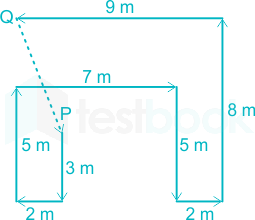
Vikram starts walking from point P in south direction. After walking 3m he turns right and walks for 2m and then turns right and walks for 5m. He then turns right and walks for 7m and then turns right and walks for 5m. He then turns left and walks for 2m and then turns left and walks for 8m. He then turns left and walks for 9m till point Q and stops. In which direction is point P with respect to point Q?

  1. ((a))

    North-East

  2. ((b))

    South-East

  3. ((c))

    East

  4. ((d))

    South-West

Show Answer
Answer: ((b))

South-East

According to the given information, we get the following figure,

Hence, point P is in the south-east of point Q.

9

Directions: In making decisions about important questions, it is desirable to be able to distinguish between strong arguments and weak arguments. Strong arguments are those, which are both important and directly related to the question. Weak arguments are those, which are of minor importance and also may not be directly related to the question or may be related to a trivial aspect of the question. The question below is followed by two arguments numbered I and II. You have to decide which of the arguments is a strong argument and which one is a weak argument.

Statement: Globalization has reduced patriotism of people and their love towards their motherland.

Arguments:

I. It leads to people leaving their nations and serve other countries.

II. It makes people abandon their countries and makes them strive for the better.

  1. ((a))

    Only argument I is strong.

  2. ((b))

    Only argument II is strong.

  3. ((c))

    Either argument I or II is strong.

  4. ((d))

    Neither argument I nor II is strong.

Show Answer
Answer: ((d))

Neither argument I nor II is strong.

Both the arguments are weak.

Globalization is the process of sharing and spreading of products, technology, information, and jobs across nations and cultures.

Hence, it need not lead to people leaving their countries and serving the other country, as one could be involved in the process of globalization without doing so.

Similarly, striving to improve one's life, need not lead people to abandon their countries.

10

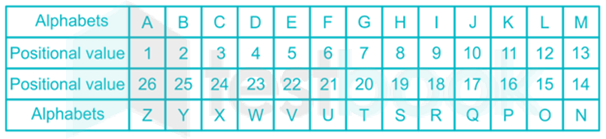
In a certain code language, ‘FINE’ is written as ‘OKGG’ and 'HATE' is written as 'UIGC’. How will ‘RISE’ be written as in that language?

  1. ((a))

    TSGK

  2. ((b))

    TSKG

  3. ((c))

    SKTG

  4. ((d))

    SKGT

Show Answer
Answer: ((b))

TSKG

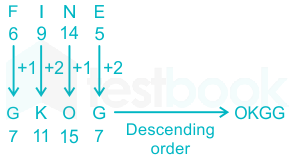
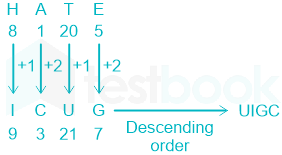
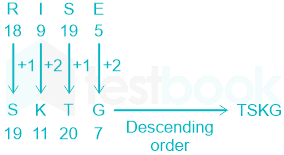
The logic followed here is :-

  1. Consonants - Immediate next alphabet is written.
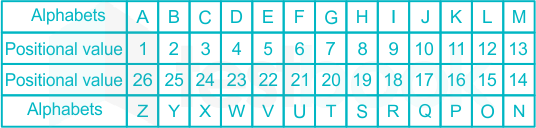
  2. Vowels - position value + 2
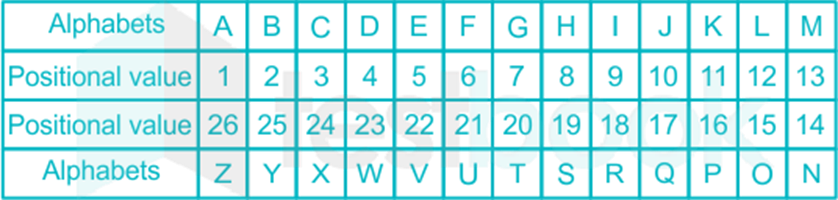
  3. After vowel and consonant arrangement all the alphabets are arranged is descending order according to the English alphabetic series.​

So,

  • ‘FINE’ is written as ‘OKGG’.

And

  • 'HATE' is written as 'UIGC’.

Similarly,

  • ‘RISE’ will be written as :

Hence, the correct answer is "TSKG".

11

In the question, two statements are given, followed by two conclusions, I and II. You have to consider the statements to be true even if it seems to be at variance from commonly known facts. You have to decide which of the given conclusions, if any, follows from the given statements.

Statement: Disha publications has published more than 10000 different and highly popular books to date.

Conclusions:

I: Disha publication is a renowned publishing company.

II: Disha publication has published a variety of books.

  1. ((a))

    Only conclusion I follows

  2. ((b))

    Only conclusion II follows

  3. ((c))

    Neither I or II follows

  4. ((d))

    Both I and II follow

Show Answer
Answer: ((d))

Both I and II follow

From the information above, we can easily conclude that Disha publication is a renowned publishing company because of the huge number and the popularity of the books mentioned in the statement.

Therefore, conclusion I follows.

Similarly, we can also conclude that Disha publication has published a variety of books as it is mentioned in the statement “10000 different books”.

Therefore, conclusion II also follows.

Hence, Both I and II follow.

12

Seven boxes P, Q, R, S, T, U, and V are kept in a stack from top to bottom but not necessarily in the same order. Box P is kept at the fifth position from the top. There are two boxes between box P and box S. Box Q is four boxes above box T. Box U is neither adjacent to box S nor box T. There are minimum two boxes between box Q and box V. How many boxes are kept above box V?

  1. ((a))

    One

  2. ((b))

    More than three

  3. ((c))

    Two

  4. ((d))

    Three

Show Answer
Answer: ((b))

More than three

Given :

  • Seven boxes - P, Q, R, S, T, U, and V
  • They are kept in a stack from top to bottom.

​Explanation :

1) Box P is kept at the fifth position from the top.

  1. There are two boxes between box P and box S.
PositionBox
7
6S
5
4
3P
2
1

2) Box Q is four boxes above box T. 

  • This means there are 3 boxes between Q and T.
PositionBox
7
6S
5Q
4
3P
2
1T

3) Box U is neither adjacent to box S nor box T.

PositionBox
7
6S
5Q
4U
3P
2
1T

4) There are minimum two boxes between box Q and box V.

After positioning box V only one position is left which will be occupied by the only box left i.e box R.

PositionBox
7R
6S
5Q
4U
3P
2V
1T

Thus, according to final arrangement there are five boxes kept above box V.

Hence, "More than three" is the correct answer.

13

Choose the odd one out of the given options.

  1. ((a))

    CDG

  2. ((b))

    AEH

  3. ((c))

    DJA

  4. ((d))

    HBD

Show Answer
Answer: ((c))

DJA

The pattern followed is, 

Logic: For all the other option sum of place value is 14 except “DJA”

CDG3 + 4 + 7 = 14
AEH1 + 5 + 8 = 14
DJA4 + 10 + 1 = 15
HBD8 + 2 + 4 = 14
<br>

Hence, “DJA” is the correct answer.

14

Study the following information carefully and answer the questions based on it.

Pritham, Quincy, Rasagna, Sanam, Teja, Uha, Vanitha and Warren are sitting round the circle and are facing the centre.

  1. Pritham is second to the right of Teja who is the neighbour of Rasagna and Vanitha.

  2. Vanitha is the neighbour of Uha.

  3. Sanam is not the neighbour of Pritham.

  4. Warren is not between Uha and Sanam.

  5. Quincy is not between Sanam and Warren.

Who is immediate right of Warren?

  1. ((a))

    Sanam

  2. ((b))

    Quincy

  3. ((c))

    Uha

  4. ((d))

    Pritham

Show Answer
Answer: ((a))

Sanam

Persons: Pritham, Quincy, Rasagna, Sanam, Teja, Uha, Vanitha and Warren.

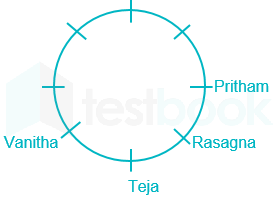
  1. Pritham is second to the right of Teja.

  1. Teja is the neighbour of Rasagna and Vanitha and Vanitha is the neighbour of Uha. So Vanitha is immediate left of Teja and Rasagna is immediate right of Teja.

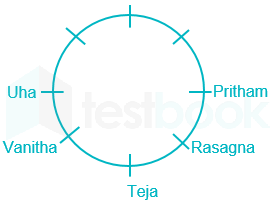
  1. Uha is neighbor of Vanitha. Sanam is not the neighbour of Pritham.

  1. Warren is not between Uha and Sanam. Quincy is not between Sanam and Warren. Sanam is not the neighbour of Pritham.

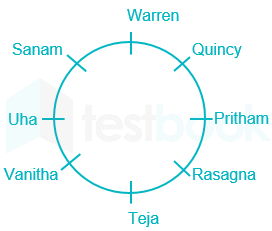
To satisfy the above conditions the positions should be as follows

Sanam is immediate left of Uha

Warren is immediate left of Sanam

Quincy is immediate left of Warren

The final arrangement will be as shown:

Hence, Sanam is immediate right of Warren.

15

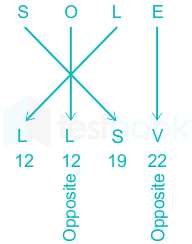
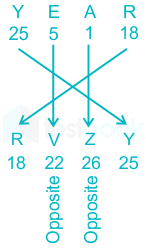
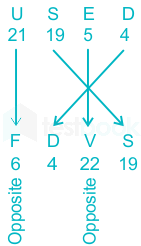
In a certain code language, ‘SOLE’ is written as ‘LLSV’ and 'YEAR' is written as 'RVZY’. How will ‘USED’ be written as in that language?

  1. ((a))

    SVDF

  2. ((b))

    FSVD

  3. ((c))

    FDVS

  4. ((d))

    DFSV

Show Answer
Answer: ((c))

FDVS

The logic followed here is :-

  1. Consonants - Written as it is diagonally with same consonant.
  2. Vowels - Opposite alphabet is written as code.​

So,

  • ‘SOLE’ is written as ‘LLSV’.

And

  • 'YEAR' is written as 'RVZY’.

Similarly,

  • ‘USED’ will be written as :

Hence, the correct answer is "FDVS".

16

Four number-pairs have been given, out of which three are alike in some manner, while one is different. Select the number-pair that is different..

  1. ((a))

    32 - 19

  2. ((b))

    42 - 56

  3. ((c))

    54 - 61

  4. ((d))

    74 - 33

Show Answer
Answer: ((d))

74 - 33

The logic is:

1) 32 - 19 → (33 - 23) = 19

2) 42 - 56 → (43 - 23) = 56

3) 54 - 61 → (53 - 43) = 61

4) 74 - 33 → (73 - 43) ≠ 33

Hence, '74 - 33' is the odd one.

17

X & Y means X is father of Y; X + Y means X is wife of Y; X # Y means X is son of Y then if

N + M & O & P and Q # O are true which of the following option is definitely correct?

  1. ((a))

    M is father of O’s daughter

  2. ((b))

    N is mother of P

  3. ((c))

    Q is grandson of N

  4. ((d))

    Q is son of N’s husband

Show Answer
Answer: ((c))

Q is grandson of N

X is
&+#
FatherWifeSon
to Y


N + M & O & P → N is the wife of M, who is the father of O, who is the father of P.

Q # O → Q is the son of O.

The family tree diagram is shown below:


Hence, Q is the grandson of N.

18

Select the set in which the numbers are related in the same way as are the numbers of the following set.

(19, 361, 37)

(13, 169, 25)

(NOTE : Operations should be performed on the whole numbers, without breaking down the numbers into its constituent digits. E.g. 13 – Operations on 13 such as adding /deleting /multiplying etc. to 13 can be performed. Breaking down 13 into 1 and 3 and then performing mathematical operations on 1 and 3 is NOT allowed)

  1. ((a))

    (15, 225, 27)

  2. ((b))

    (23, 529, 44)

  3. ((c))

    (26, 676, 45)

  4. ((d))

    (17, 289, 33)

Show Answer
Answer: ((d))

(17, 289, 33)

The logic followed here is :-

Second number = First number2 

Third number = First number2 - (First number - 1)2 

(19, 361, 37) → (19, 192, (192 - (19 - 1)2)) → (19, 361, (361 - 324)) → (19, 361, 37)

And

(13, 169, 25) → (13, 132, (132 - (13 - 1)2)) → (13, 169, (169 - 144)) → (13, 169, 25)

Similarly,

(17, 289, 33) → (17, 172, (172 - (17 - 1)2)) → (17, 289, (289 - 256)) → (17, 289, 33)

Hence, the correct answer is "(17, 289, 33)".

19

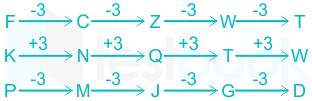
Select the option that will correctly replace the question mark (?) in the series.

FKP, CNM, ZQJ, WTG, ?

  1. ((a))

    SWD

  2. ((b))

    TWD

  3. ((c))

    TVD

  4. ((d))

    TWE

Show Answer
Answer: ((b))

TWD

The logic is:

Hence, 'TWD' is the correct answer.

20

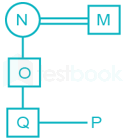
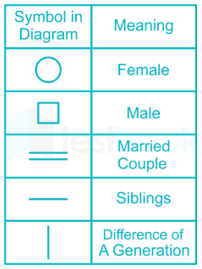
In a family of six members namely J, K, L, M, N, O. J who is grandfather of O is Father of L. M is mother of K who is sister in law of N. O is son of N who is husband of L. There are two couple in this family

How L is related to K?

  1. ((a))

    Brother

  2. ((b))

    Sister

  3. ((c))

    Cousin 

  4. ((d))

    Either Brother or Sister

Show Answer
Answer: ((b))

Sister

Hence sister is correct answer

General intelligence and Reasoning Ability 2 (20 questions)

21

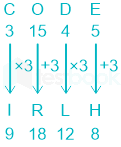
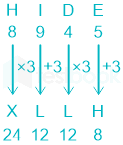
In a certain code language, ‘CODE’ is written as ‘IRLH’ and 'HIDE' is written as "XLLH’. How will ‘AGED’ be written as in that language?

  1. ((a))

    DLHU

  2. ((b))

    DULH

  3. ((c))

    DUHL

  4. ((d))

    DUUH

Show Answer
Answer: ((c))

DUHL

The logic followed here is :-

  1. In the given word consonant's position value is multiplied by 3 .
  2. In the given word vowel's position value are added by 3​

So,

  • ‘CODE’ is written as ‘IRLH’.

And

  • 'HIDE' is written as "XLLH’.

Similarly,

  • ‘AGED’ will be written as :

Hence, the correct answer is "DUHL".

22

If ‘+’ denotes ‘÷’, ‘-’ denotes ‘+’, ‘×’ denotes ‘-’ and ‘÷’ denotes ‘×’, then the value of

21 ÷ 2 – 12 + 4 × 3 ÷ 7 – 20

  1. ((a))

    44

  2. ((b))

    50

  3. ((c))

    27

  4. ((d))

    46

Show Answer
Answer: ((a))

44

Given,

Code+-×÷
Symbol÷+-×

Given expression: 21 ÷ 2 – 12 + 4 × 3 ÷ 7 – 20

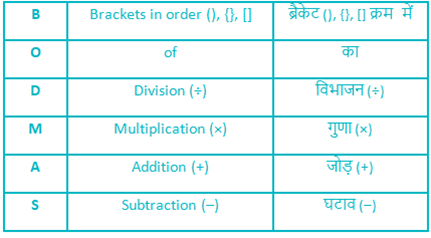
According to question:

= 21 × 2 + 12 ÷ 4 – 3 × 7 + 20

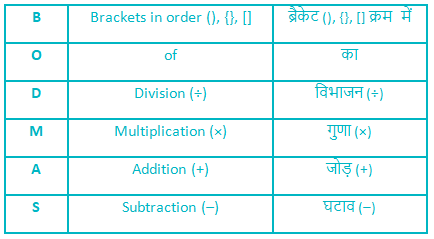
Using BODMAS rule,

= 21 × 2 + 3 – 3 × 7 + 20

= 42 + 3 – 21 + 20

= 65 – 21

= 44

Hence, the correct answer is 44.

23

A square paper is folded from the bottom side. And it is cut as per the given picture. What will a piece of paper look like after opening it?

  1. ((a))

  2. ((b))

  3. ((c))

  4. ((d))

Show Answer
Answer: ((b))

This paper would be unfolded as-


Hence, 'option 2' is the correct answer.

24

In a certain code language, ‘EAST’ is written as ‘DTUZ’ and 'DOSE' is written as 'DENT’. How will ‘FUEL’ be written as in that language?

  1. ((a))

    DGMT

  2. ((b))

    DMTG

  3. ((c))

    GTMD

  4. ((d))

    GTDM

Show Answer
Answer: ((a))

DGMT

The logic followed here is :-

  1. Consonants - Immediate next alphabet is written.
  2. Vowels - Immediate previous alphabet is written.
  3. After vowel and consonant arrangement all the alphabets are arranged is ascending order according to the English alphabetic series.​

So,

  • ‘EAST’ is written as ‘DTUZ’.

And

  • 'DOSE' is written as 'DENT’.

Similarly,

  • ‘FUEL’ will be written as :

Hence, the correct answer is "DGMT".

25

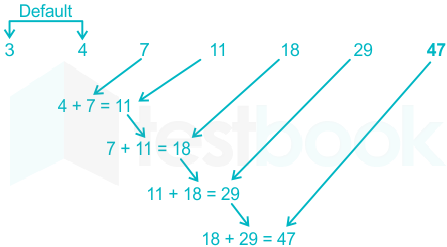
A series is given in the following question. Find the term that will replace the question mark.

3, 4, 7, 11, 18, 29, ?

  1. ((a))

    47

  2. ((b))

    43

  3. ((c))

    39

  4. ((d))

    31

Show Answer
Answer: ((a))

47

The pattern followed is:

The given series is an example of fibonacci series.

Hence, the correct answer is "47".

26

An Assertion (A) and a Reason (R) are given below.

Assertion (A): Ventilators are provided near the roof.

Reason (R): Conduction takes place  better near roof.

  1. ((a))

     A is correct but R is false.

  2. ((b))

    A is false but R is correct

  3. ((c))

    Both A and R are correct and R is the appropriate explanation of A

  4. ((d))

    Both A and R are correct but R is not an appropriate explanation of A

Show Answer
Answer: ((a))

 A is correct but R is false.

The logic followed is:

The Assertion is correct because hot air is light and remain upper than cool air. So, hot air can be easily flow out through the ventilators. Thus they are provided near the roof but the Reason is not the correct explanation of the Assertion.

Hence, the correct answer is "Option 1". 

Additional Information

When warm air rises up and cold air from the surrounding areas rushes in to fill its place then this sets up convection in air.

  • When warm air rises, the air pressure at that place gets lowered. The cold air from the surrounding areas rushes in to fill its place. This sets up convection currents in the air.
  • Wind currents are generated due to uneven heating on the earth.
  • Convection is the process by which the transmission of heat takes place through a substance from one point to another due to actual bodily movement of heated particles of the substance.
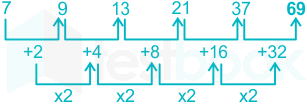
27

A series is given in the following question. Find the term that will replace the question mark.

7, 9, 13, 21, 37, ?

  1. ((a))

    58

  2. ((b))

    63

  3. ((c))

    69

  4. ((d))

    72

Show Answer
Answer: ((c))

69

The pattern followed is:

Hence, the correct answer is "69".

28

You are visiting a nearby village to investigate a suspect's background. You see that the kiosk owner where you are having tea is making his son, who is hardly a teenager, forcefully work at the kiosk. What will you do?

  1. ((a))

    Arrest the kiosk owner, charging him for child labor.

  2. ((b))

    Verify if the kiosk owner is paying his son right or not.

  3. ((c))

    Find out whether the kiosk is legally sound or not.

  4. ((d))

    Ask the son whether he is happy to work there or wants to get out of there.

Show Answer
Answer: ((d))

Ask the son whether he is happy to work there or wants to get out of there.

  • Option 1 is incorrect: Immediate arrest without an investigation is a misuse of authority. You are currently in the village on a specific investigative assignment, and you must gather preliminary facts before initiating formal penal charges.
  • Option 2 is incorrect: A father paying a salary to a "hardly a teenager" child does not make forced labor legal. Child labor protection laws focus on safety, wellbeing, and education, not wage distribution within a family.
  • Option 3 is incorrect: Checking the legal license of the commercial kiosk does not address the immediate, humanitarian issue of a child being forcefully overworked right in front of you.
  • Option 4 is correct: This is the most balanced and tactical first response. Speaking to the child allows you to assess the situation directly, determine if he is being denied an education, and gather necessary statements to report the issue to local child welfare authorities or the village council (Panchayat) properly.

Hence the correct answer is option 4.

29

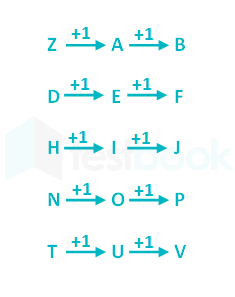
A series is given with one term missing. Select the correct alternative from the given ones that will complete the series.

ZAB, DEF, HIJ, NOP, ?

  1. ((a))

    TUV

  2. ((b))

    STU

  3. ((c))

    UVW

  4. ((d))

    XYZ

Show Answer
Answer: ((a))

TUV

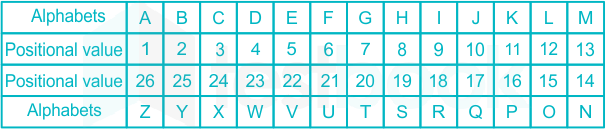
Table show alphabet serial number –

S. No.12345678910111213
AlphabetABCDEFGHIJKLM
S. No.14151617181920212223242526
AlphabetNOPQRSTUVWXYZ


The logic is shown below –

Here A, E, I, O and U are Vowels.

Hence, “TUV” is the missing term which completes the series.

30

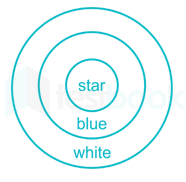
In the following question below are given some statements followed by some conclusions. Taking the given statements to be true even if they seem to be at variance from commonly known facts, read all the conclusions and then decide which of the given conclusion logically follows the given statements.

Statements:

I. All stars are blue.

II. All blue are white.

Conclusions:

I. All stars are white.

II. Some stars are not white.

  1. ((a))

    Only conclusion (I) follows.

  2. ((b))

    Only conclusion (II) follows.

  3. ((c))

    Both conclusion follow.

  4. ((d))

    Neither conclusion (I) nor conclusion (II) follows.

Show Answer
Answer: ((a))

Only conclusion (I) follows.

The least possible Venn diagram for the given statement is as follows,

Conclusions:

I. All stars are white → definitely true.

II. Some stars are not white → definitely false.

Hence, only conclusion I follows.

31

Select the correct mirror image of the given combination when the mirror is placed at PQ as shown.

  1. ((a))

  2. ((b))

  3. ((c))

  4. ((d))

Show Answer
Answer: ((d))

The correct mirror image of the given combination when the mirror is placed at MN is as shown below :-

Detailed Explanation :- 

  • The line PQ is the mirror.
  • The word "

" ends with "

". So, the mirror image will start with "

" → Options 1, 2 are eliminated.

  • The 5th letter in the given word is "

". So, the 5th last letter of the word in the mirror image will be "

"→ Options 3 is eliminated.

Hence, Option 4) is the correct answer.

Additional Information

  • In a mirror image Left changes to rightand theright changes to leftwheretop and bottom remains the same.
  • When placement of mirror not given, by default we will assume it in vertical direction.
  • The starting letter word will be at last after the mirror image drawn with left changes to right and right changes to left.
32

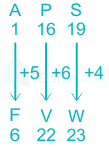
In the given letter-group pairs, the first letter group is related to the second letter group following a certain logic. Study the given pairs carefully, and select the pair which follows the same logic.

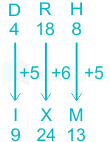
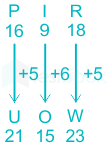
DRH : IXM ; PIR : UOW

  1. ((a))

    MSP : RXV

  2. ((b))

    GSM : MXS

  3. ((c))

    THL : YNQ

  4. ((d))

    APS : FVW

Show Answer
Answer: ((c))

THL : YNQ

Here, we use the table given below:

The logic followed in the given pairs:

In DRH : IXM →

In PIR : UOW →

Now, check all the options:

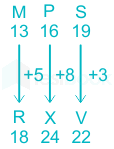
(1) MSP : RXV →

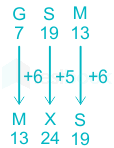
(2) GSM : MXS →

(3) THL : YNQ →

Similar logic followed.

(4) APS : FVW →

Here, in 'THL : YNQ' similar logic followed as given.

Hence, the correct answer is "THL : YNQ".

33

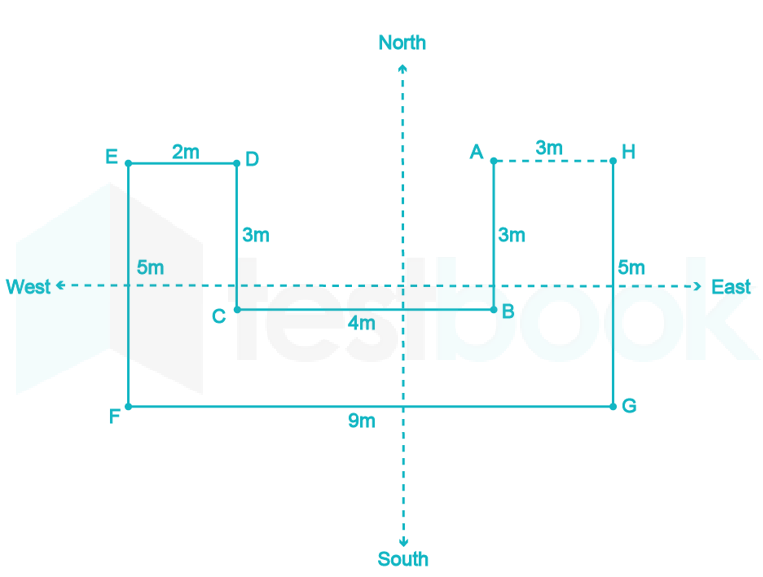
Point A is 3m in the north of point B. Point D is 2m in the east of point E. Point F is 9m in the west of point G. Point C is 4m in the west of point B. Point C is 3m in the south of point D. Point F is 5m in the south of point E. Point H is 5m in the north of point G. What is the shortest distance between point H and point A?

  1. ((a))

    5m

  2. ((b))

    4m

  3. ((c))

    3m

  4. ((d))

    6m

Show Answer
Answer: ((c))

3m

According to the given information, we get the following figure, 

Shortest distance between point A and point H = FG – (ED + CB) = 9m – (2m + 4m) = 3m

Hence, ‘3m’ is the correct answer.

34

Select the option that is related to the third term in the same way as the second term is related to the first term. 

Sphygmomanometer : Blood Pressure :: Barometer : ?

  1. ((a))

    Atmospheric Pressure 

  2. ((b))

    Density 

  3. ((c))

    Humidity 

  4. ((d))

    Speed

Show Answer
Answer: ((a))

Atmospheric Pressure 

The logic followed here is;

Sphygmomanometer →

An instrument for measuring blood pressure.

Similarly;

Barometer → 

An instrument for measuring Atmospheric Pressure.

Hence, the correct answer is " Atmospheric Pressure ".

35

Which two numbers should be interchanged to make the given equation correct?

72 ÷ 14 + 6 × 5 - 8 = 25

  1. ((a))

    8 and 5

  2. ((b))

    6 and 14

  3. ((c))

    14 and 5

  4. ((d))

    14 and 8

Show Answer
Answer: ((d))

14 and 8

1) 8 and 5

72 ÷ 14 + 6 × 5 - 8 = 25

Interchanging the numbers and using BODMAS rule:

72 ÷ 14 + 6 × 8 - 5 

= 5.14 + 6 × 8 - 5

= 5.14 + 48 - 5

= 53.14 - 5

= 48.14 ≠ 25

  1. 6 and 14

72 ÷ 14 + 6 × 5 - 8 = 25

Interchanging the numbers and using BODMAS rule:

72 ÷ 6 + 14 × 5 - 8 

= 12 + 14 × 5 - 8

= 12 + 90 - 8

= 102 - 8

= 194 ≠ 25

  1. 14 and 5

72 ÷ 14 + 6 × 5 - 8 = 25

Interchanging the numbers and using BODMAS rule:

72 ÷ 5 + 6 × 14 - 8

= 14.4 + 6 × 14 - 8

= 14.4 + 84 - 8

= 98.4 - 8

= 90.4 ≠ 25

4) 14 and 8

72 ÷ 14 + 6 × 5 - 8 = 25

Interchanging the numbers and using BODMAS rule:

72 ÷ 8 + 6 × 5 - 14

= 9 + 6 × 5 - 14

= 9 + 30 - 14

= 39 - 14

= 25 = 25

Hence, the correct answer is "14 and 8".

36

Select the odd word from the given alternatives.

  1. ((a))

    Monarchy

  2. ((b))

    Literature

  3. ((c))

    Music

  4. ((d))

    Cinema

Show Answer
Answer: ((a))

Monarchy

The logic followed here is:

All except 'Monarchy' are the different forms of art, while monarchy is a form of government in which a person, the monarch, is head of state for life or until abdication.

Hence, "Monarchy" is the correct answer.

Additional Information

Monarchy, political system based upon the undivided sovereignty or rule of a single person. The term applies to states in which supreme authority is vested in the monarch, an individual ruler who functions as the head of state and who achieves his or her position through heredity.

37

Directions: In the question below a statement followed by two conclusions numbered I and II are given. You have to assume everything in the statement to be true, then consider the two conclusions together and decide which of them logically follow beyond a reasonable doubt from the information given in the statement.

Statement: In the upcoming years, the population is going to increase which will lead to the depletion of resources, especially in the developing countries.

Conclusions:

I: The population of developing countries will not continue to increase in future.

II: It will be difficult for the Government of developing countries to provide its people with ample resources to utilize.

  1. ((a))

    Only conclusion I follows 

  2. ((b))

    Only conclusion II follows

  3. ((c))

    Both I and II follows

  4. ((d))

    Neither I nor II follows

Show Answer
Answer: ((b))

Only conclusion II follows

The first conclusion is completely contradicting the given statement, therefore it does not follow.

The second conclusion is the direct implication of the statement mentioned above. It is directly emphasizing the fact that due to the population increase, the resources will deplete and the Government will be unable to help its people.

Therefore, conclusion II follows.

Hence, only conclusion II follows.

38

In a mess Pasta, Pizza, Burger, Lasagne, Nachos, Tortilla and Falafel are made for snacks from Monday to Sunday with the week starting on Monday. Pasta is made on the last day. Nachos are made in middle of the week. Tortilla and Pizza are made between Thursday and Sunday. Lasagne is made on Tuesday. Tortilla is made just 2 days after Falafel. When is burger made?

  1. ((a))

    Saturday

  2. ((b))

    Tuesday

  3. ((c))

    Monday

  4. ((d))

    Friday

Show Answer
Answer: ((c))

Monday

Snacks: Pasta, Pizza, Burger, Lasagne, Nachos, Tortilla and Falafel.

Days: Monday to Sunday.

According to the question,

  1. Pasta is made on the last day.

  2. Nachos are made in middle of the week.

  3. Lasagne is made on Tuesday.

DayFood
Monday
TuesdayLasagne
Wednesday
ThursdayNachos
Friday
Saturday
SundayPasta


  1. Tortilla is made just 2 days after Falafel.

Important Points

  • This means that there is a gap of 1 day between Tortilla and Falafel.
  1. Tortilla and Pizza are made between Thursday and Sunday.

(This means that Falafel is made on Wednesday and Tortilla is made 2 days after Falafel i.e. Friday).

DayFood
Monday
TuesdayLasagne
WednesdayFalafel
ThursdayNachos
FridayTortilla
SaturdayPizza
SundayPasta


Only burger is left now, so it must be made on Monday.

DayFood
MondayBurger
TuesdayLasagne
WednesdayFalafel
ThursdayNachos
FridayTortilla
SaturdayPizza
SundayPasta


Hence, Burger is made on Monday.

39

Read the given statements and conclusions carefully. Assuming that the information given in the statements is true, even if it appears to be at variance with commonly known facts, decide which of the given conclusions logically follow(s) from the statements.

Statements:

I. Some animals are elephants.

II. Some elephants are tigers

Conclusions:

I. Some animals are tigers.

II. No tiger is elephants.

  1. ((a))

    Only conclusion I follows.
  2. ((b))

    Only conclusion II follows.
  3. ((c))

    Both conclusions I and II follow.

  4. ((d))

    Neither conclusion I nor II follows.

Show Answer
Answer: ((d))

Neither conclusion I nor II follows.

The least possible Venn diagram for the given statements is as follows,

Conclusions:

I. Some animals are tigers → It is possible but not definite, hence false.

II. No tiger is elephants → It is not possible as some elephants are tigers, hence false

Hence, neither conclusion I nor II follows.

40

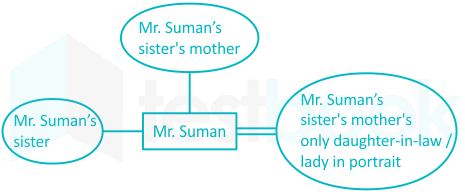
Pointing to a woman in a portrait, Mr. Suman said, ’She is my sister’s mother’s only daughter – in – law.’ How is the lady in portrait related to Mr. Suman?

  1. ((a))

    Mother

  2. ((b))

    Sister

  3. ((c))

    Daughter

  4. ((d))

    Wife

Show Answer
Answer: ((d))

Wife

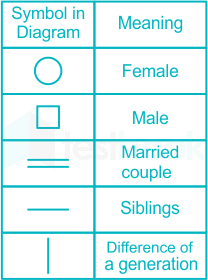
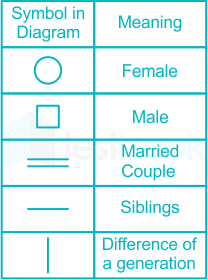
Preparing the family tree using the following symbols:


Hence, lady in portrait is the wife of Mr. Suman.

General Awareness 1 (20 questions)

41

The High Court of Kerala and Lakshadweep is situated at:

  1. ((a))

    Kannur

  2. ((b))

    Thrissur

  3. ((c))

    Kochi

  4. ((d))

    Thiruvananthapuram

Show Answer
Answer: ((c))

Kochi

The correct answer is Kochi.

Key Points

  • The High Court of Kerala and the Union Territory of Lakshadweep is located in Kochi, Ernakulam district.
  • Thiruvananthapuram is the capital of Kerala.
  • Pinarayi Vijayan is the Chief Minister of Kerala.
  • Kavaratti is the capital of Lakshadweep.
Union Territory(UT)High Court Jurisdiction
Dadra & Nagar HaveliBombay High Court
Daman DiuBombay High Court
PuducherryMadras High Court
Andaman & Nicobar islandsKolkata High Court
LakshadweepKerala High Court
DelhiDelhi High Court
ChandigarhPunjab & Haryana High Court
Jammu and KashmirJammu and Kashmir High Court
LadakhJammu and Kashmir High Court
42

What was the title of the pamphlet that Bhagat Singh wrote in the jail?

  1. ((a))

    Why india wants freedom

  2. ((b))

    India's struggle

  3. ((c))

    Jai Hind

  4. ((d))

    Why I am an Atheist

Show Answer
Answer: ((d))

Why I am an Atheist

The correct answer is Why I am an Atheist.

Key Points

  • When Bhagat Singh was in prison in 1930-1931 his inmate Randhir Singh tried to convince him of the existence of God and when he failed to do so, he said to Bhagat Singh you have developed an ego which is standing between you and God.
  • In his defense, he wrote an essay titled "Why I am an Atheist” to address whether his atheism was born out of vanity.
  • In his essay, he defended his own beliefs and said he was a firm believer of God but could not understand people’s beliefs and myths.
  • He said that religion made death easier, but also believed that unproven philosophy was a sign of weakness.

Additional Information

  • Bhagat Singh was born in September 1907 in Banga, Punjab.
  • In December 1928, he along with his Rajguru shot a British police officer John Saunders in Lahore who was on probation for British superintendent James Scott, who was responsible for the murder of Lala Lajpat Rai.
  • In April 1929, he and his other associate Batukeshwar Dutt exploded two bombs inside the Central Legislative Assembly in Delhi.
  • They threw leaflets, shouted slogans, and allowed the higher authorities to arrest them.
  • In prison, he started a hunger strike demanding better conditions for Indian prisoners he was convicted and hanged on 23rd March 1931 at the age of 23.
43

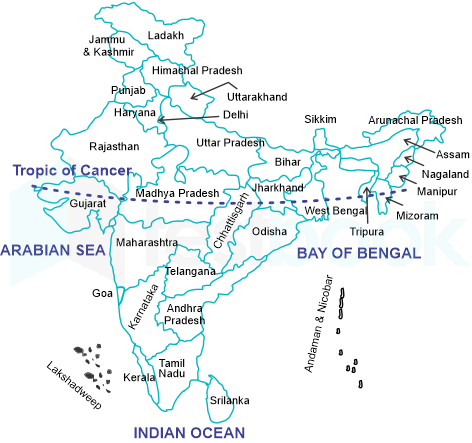
Which one of the following monuments are not situated in West Bengal state?

  1. ((a))

    Victoria Memorial

  2. ((b))

    Fort William

  3. ((c))

    Indian Museum

  4. ((d))

    Gateway of India

Show Answer
Answer: ((d))

Gateway of India

The correct answer is option 4 i.e. Gateway of India,

MonumentDetails
Victoria Memorial- The Victoria Memorial is built to the memory of Queen Victoria between 1906 and 1921AD. - It is located in Kolkata, West Bengal, India,
Fort William- Fort William is a fort in Calcutta (Kolkata) situated on banks of the Hooghly River. - It was constructed during the initial year of the Bengal Presidency of British India.
Indian Museum- The Indian Museum of Kolkata is the oldest and the largest museum in India.
Gateway of India- The Gateway of India is built in the early twentieth century located in South Mumbai. - It was devoted to emperor George V and Queen-Mary.
44

What does "Triratna" mean in Buddhism? 

  1. ((a))

    Tripitaka

  2. ((b))

    Buddha, Dhamma (dharma), Sangha

  3. ((c))

    Satya, Ahimsa, Karuna

  4. ((d))

    Sheel, Samadhi, Sangha 

Show Answer
Answer: ((b))

Buddha, Dhamma (dharma), Sangha

The correct answer is Buddha, dhamma(dharma), sangha.

Key Points

Triratna in Sanskrit means 'Three Jewels'

  • The Buddha
  • Dhamma(dharma): his teaching
  • Sangha: the community of all those who follow his teachings.

​Buddhism

  • It is faith that was founded by Siddhartha Gautama("the Buddha").
  • Siddhartha Gautam, the Lord Buddha was born in 563 B.C at Lumbini in Nepal.
  • Attained Nirvana under a Pipal tree at Bodh Gaya & henceforth known as Buddha(The enlightened one).
  • Delivered his first sermon at Sarnath (Banaras) know called the Dhammacakkappavattana.
  • Died at the age of 80 at Kushinagar (U.P).

Noble truth by Buddha

  • The world is full of sorrow.
  • People suffer on account of desires
  • If desires are conqueredNirvana can be achieved i.e., free from the cycle of birth and death can be achieved by following 8 fold path(ashtangika marga)
  • Right View
  • Right Resolve
  • Right Speech
  • Right Action
  • Right Livelihood
  • Right Effort
  • Right Mindfulness
  • Right Concentration

Teaching by Buddha

  • Buddha was a practical reformer and did not believe in the soul or God or the metaphysical world and concerned himself with worldly problems.
  • Suggested that a person should avoid an excess of both luxury & austerity and prescribed a middle path.
  • Laid great emphasis on Karma(Varna based on action not on birth) & Ahimsa.
  • Opposed the varna system and laid down the principle of social equality.
  • Buddhist Text
  • Tripitaka's: All written in Pali Language
  • Sutta-Pitaka
  • Vinaya-Pitaka
  • Abhidhamma-Pitaka
  • Buddhist Councils
CouncilsPlacewhenChairmanshipKingOutcome
1st councilRajgir at Saptaparni caveImmediately after the death of Buddha 483 B.CMahakashyapAjatashatruAnanda composed: suttapitaka (Buddha's Teaching) & Upali compose Vinaypitika(Monastic code for Buddhism)
2nd councilVaishali383 B.C, almost 100 after the death of BuddhaSabakamiKalashokaThis council settled down the disputes on the Vinaya Pitaka and code of discipline.
3rd councilPatliputra250 B.CMogliputra TissaAshokaCompilation of Abhidhamma pitaka took place(Philosophical exposition of Buddhism)
4th councilKashmir at Kundalvana72 ADVasumitraKanishkaResulted in the division of Buddhism into Hinayana & Mahayana
45

Ribosomes are sites for

  1. ((a))

    Protein synthesis

  2. ((b))

    Photosynthesis

  3. ((c))

    Fat synthesis

  4. ((d))

    Respiration

Show Answer
Answer: ((a))

Protein synthesis

The correct answer is Protein synthesis.

Key Points

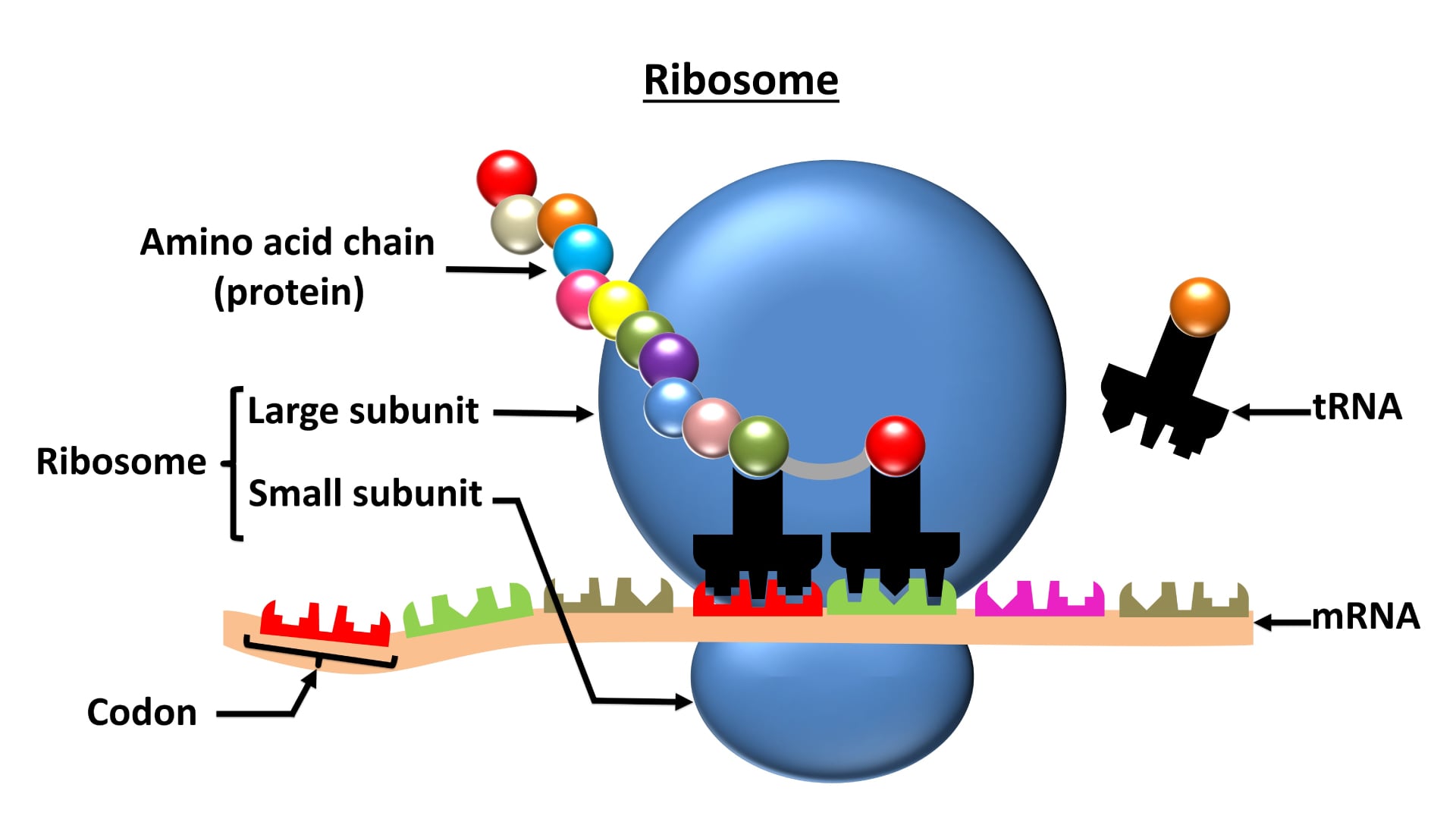
  • Ribosomes are non-membranous granular structures present in the cytoplasm.
  • They were first observed under an electron microscope as dense particles by George Palade in the year 1953.
  • Ribosomes are the site for ''protein synthesis'' so they are also called the ''protein factory'' of the cell.
  • There are two types of ribosomes
  1. Eukaryotic ribosomes - 80s - occurs in the cytoplasm of eukaryotic cell
  2. Prokaryotic ribosomes - 70s - occur in the cytoplasm as well as are associated with the cell membrane of prokaryotic cell.
  • The subunits of the ribosomes are:
  • 80s ribosomes - are made of 60s and 40s subunits.
  • 70s ribosomes - are made of 50s and 30s subunits.

Important Points

  • Composition of the structure of ribosome:
  • They are composed of ribonucleic acid (RNA) and proteins
TypeComposition
70s60% rRNA + 40% proteins
80s40% rRNA + 60% proteins


Ribosomes

<br>


Additional Information

  • Photosynthesis: It is the process by which green plants and some other organisms use sunlight to synthesize nutrients from carbon dioxide and water. In this process, plant the chlorophyll, carbon dioxide, water, sunlight, and release oxygen.
  • Synthesis of Fatty acids occurs in the cytoplasm.
46

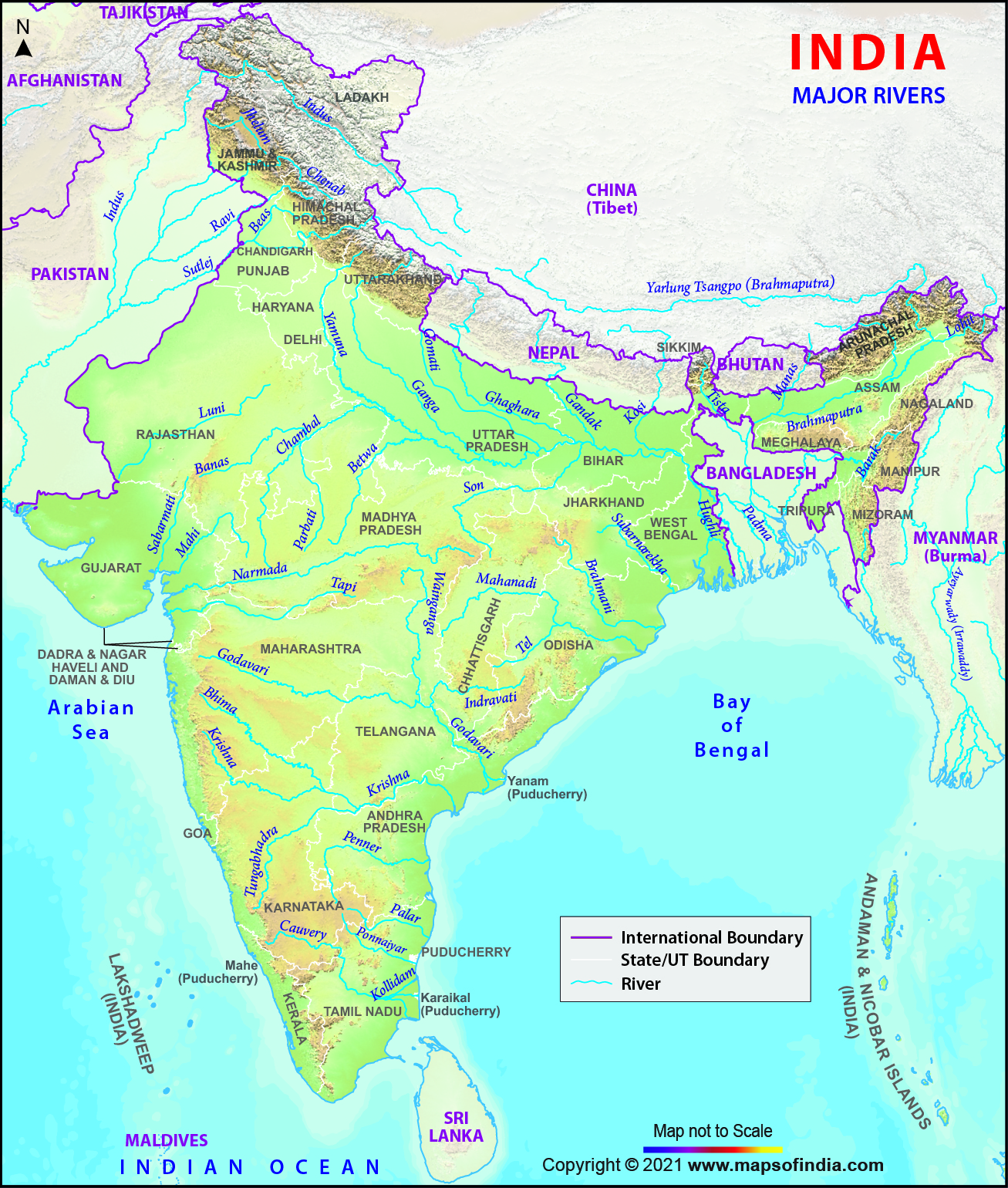
India is a peninsula because it is surrounded by water on ______ sides.

  1. ((a))

    Two

  2. ((b))

    Three

  3. ((c))

    Four

  4. ((d))

    One

Show Answer
Answer: ((b))

Three

The correct answer is Three.

Key Points 

  • India is a peninsula because it is surrounded by water on three sides.
  • The Indian Peninsula is surrounded by water in the Southwest, South, and Southeast.
  • The Indian Ocean on the south, the Arabian Sea on the west, and the Bay of Bengal on the east.
  • In the north, India is attached to the landmass.
  • A peninsula is a piece of land that is bordered by water on three sides but connected to the mainland.

Additional Information 

  • The length of the coastline in India is 7516.6 km Mainland.
  • Indian coastline touches nine states Gujarat, Maharashtra, Goa, Karnataka, Kerala, Tamil Nadu, Andhra Pradesh, Odisha, West Bengal, and two union territories Daman and Diu and Puducherry.

47

Under which Article of the Directive Principles of State Policy was the Panchayat System espoused?

  1. ((a))

    Article 40

  2. ((b))

    Article 48

  3. ((c))

    Article 43

  4. ((d))

    Article 46

Show Answer
Answer: ((a))

Article 40

The correct answer is Article 40.

Key Points

  • Article 40- It talks about the Organisation of village panchayats.
  • The State shall take steps to organise village panchayats and endow them with such powers and authority as may be necessary to enable them to function as units of self-government.​

Important Points 

  • The Directive Principles of State Policy are contained in Part IV from Article 36 to Article 51 of the Constitution.
  • DPSPs are borrowed from the Constitution of Ireland, which had copied from the Spanish Constitution.
  • Features of DPSP
  • It denotes the ideals that the State should keep in mind while formulating policies and enacting laws.
  • It resembles the ‘Instrument of Instructions’ enumerated in the Government of India Act of 1935.
  • It constitutes a very comprehensive economic, social and political programme for a modern democratic State.
  • They promote social and economic democracy.
  • They embody the concept of a ‘welfare state’ DPSP is non-justiciable.

Additional Information

  • Article 48- It deals with the Organisation of agriculture and animal husbandry.
  • Article 43- It deals with the topic of Living wage and employment generation for workers.
  • Article 46- It deals with Promotion of educational and economic interests of Scheduled Castes, Scheduled Tribes and other weaker sections.
48

The term 'dribble' is used in which of the following sports? 

  1. ((a))

    Basketball

  2. ((b))

    Baseball

  3. ((c))

    Badminton

  4. ((d))

    Tennis

Show Answer
Answer: ((a))

Basketball

The correct answer is Basketball.

Key Points

  • The term 'dribble' is used in Basketball.
  • In basketball, dribbling is bouncing the ball on the floor continuously with one hand at a time.
  • It is the only legal way that a player may maintain possession of the ball while walking or running.
  • The dribble allows for much faster advancement and thus more opportunities for scoring.
  • It also provides an opportunity for a crafty player on the opposing team to "steal" the ball in mid-bounce.
  • Dribbling should be done with finger pads and the fingers should be relaxed and spread.
  • The wrist should be pushing the basketball, and the forearm should be moving up and down.

Additional Information

  • Basketball is a team sport in which there are two teams of five players each.
  • Players advance the ball by bouncing it while walking or running (dribbling) or by passing it to a teammate.
  • On offense, players may use a variety of shots – the layup, the jump shot, or a dunk; on defense.
  • They may steal the ball from a dribbler, intercept passes, or block shots; either offense or defense may collect a rebound.
  • It is a violation to lift or drag one's pivot foot without dribbling the ball, to carry it, or to hold the ball with both hands and then resume dribbling.
49

The ability of identical atoms to build long chain compounds by self-linking is referred to as:

  1. ((a))

    Halogenation

  2. ((b))

    Isomerization 

  3. ((c))

    Catenation

  4. ((d))

    Superposition

Show Answer
Answer: ((c))

Catenation

The correct answer is Catenation.

Key Points

  • The property of self-linkage among identical atoms to form long-chain compounds is known as catenation.
  • Carbon is the most common element that exhibits catenation.
  • It can form long hydrocarbon chains and rings like benzene (C6H6).

Additional Information 

  • Isomerization is the process in which a molecule is transformed into an isomer with a different chemical structure.
  • Halogenation is a chemical reaction that involves the addition of one or more halogens to a compound or material.
  • Halogens - fluorine (F), chlorine (Cl), bromine (Br), iodine (I), and astatine (At).
50

Sangeet Natak Akademi Award winner Deepak Mazumdar is an exponent of ___________.

  1. ((a))

    Manipuri

  2. ((b))

    Sattriya

  3. ((c))

    Bharatanatyam

  4. ((d))

    Kuchipudi

Show Answer
Answer: ((c))

Bharatanatyam

The correct answer is Bharatanatyam

Key Points

  • Deepak Mazumdar is a renowned exponent of Bharatanatyam, one of the classical dance forms of India.
  • He has been honored with the Sangeet Natak Akademi Award for his contributions to this dance form.
  • Bharatanatyam is known for its fixed upper torso, bent legs, and intricate footwork, along with sophisticated hand and facial gestures.
  • It originated in the temples of Tamil Nadu and is one of the oldest classical dance traditions in India.

Additional Information

  • The Sangeet Natak Akademi is India's national academy for music, dance, and drama. It was established in 1952 by the Indian government.
  • The Akademi Awards are the highest national recognition given to practicing artists.
  • Bharatanatyam has its roots in the Natya Shastra, an ancient treatise on performing arts written by Bharata Muni.
  • This dance form is traditionally performed by women, but in contemporary times, it is also performed by men.
  • The themes of Bharatanatyam performances are usually derived from Hindu mythology and epics.
51

Who wrote Mudrarakshasa?

  1. ((a))

    Vatsayayana

  2. ((b))

    Vishakhadatta

  3. ((c))

    Vishnu Sharma

  4. ((d))

    Varahamihira

Show Answer
Answer: ((b))

Vishakhadatta

The correct answer is Vishakhadatta.

  • Mudrarakshasa is a historical play in Sanskrit by Vishakhadatta that narrates the ascent of the king Chandragupta Maurya to power in India.
  • The historical authenticity of the Mudrarakshasa is somewhat supported by the description of this period of history in Classical Hellenistic sources: the violent rule of the Nanda, the usurpation of Chandragupta, the formation of the Maurya Empire, and the various battles with the kingdoms of the Northwest resulting from the conquests of Alexander the Great.
52

Which of the following instruments is used to measure the distance traveled in an automobile?

  1. ((a))

    Speedometer

  2. ((b))

    Odometer

  3. ((c))

    Tachometer

  4. ((d))

    Pedometer

Show Answer
Answer: ((b))

Odometer

The correct answer is Odometer.

Key Points

  • An odometer is used to measure the distance travelled in an automobile.
  • An odometer or odograph is an instrument used for measuring the distance travelled by a vehicle, such as a bicycle or a car.
  • The device may be electronic, mechanical, or a combination of the two (electromechanical).

Additional Information

  • A speedometer or a speed meter is a gauge that measures and displays the instantaneous speed of a vehicle.
  • Now universally fitted to motor vehicles, they started to be available as options in the early 20th century, and as standard equipment from about 1910 onwards.
  • A tachometer refers to any device that produces a signal proportional to the speed of rotation of a joint.
  • There are many different types of tachometers, some based on measuring the frequency of, or the time between, pulses generated by the rotating shaft.
  • Pedometers are designed to detect vertical movement at the hip and so measure the number of steps and provide an estimate of the distance walked.
  • They cannot provide information on the temporal pattern of physical activity or the time spent in different activities at different intensities.
53

TH Vinayakram, a famous musician, is associated with which musical instrument?

  1. ((a))

    Ghatam

  2. ((b))

    Mridangam

  3. ((c))

    Sarod

  4. ((d))

    Tabla

Show Answer
Answer: ((a))

Ghatam

The correct answer is Ghatam.

Key Points

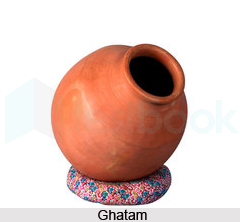
  • Ghatam
  • A Ghatam is a large, narrow-mouthed earthenware pot used as a percussion instrument.
  • The ghatam is a percussion instrument that is utilized in several Indian repertoires.
  • The ghatam is an Indian percussion instrument that dates back thousands of years. It's a narrow-mouthed clay pot.
  • A small amount of plasticine clay or water can be used to change the pitch significantly.

Additional Information

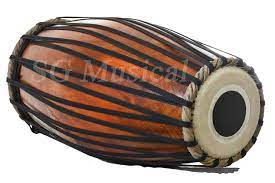
  • Mridangam​​​
  • The mridangam is a percussion instrument of ancient origin.
  • One of the most ancient drums of India, the mridangam, which literally means 'body of clay,' originated in South India.

SG Musical - Mridangam, Strap Tuned,Wooden, South Indian, Dholak, Drums,  Naal : Amazon.in: Musical Instruments

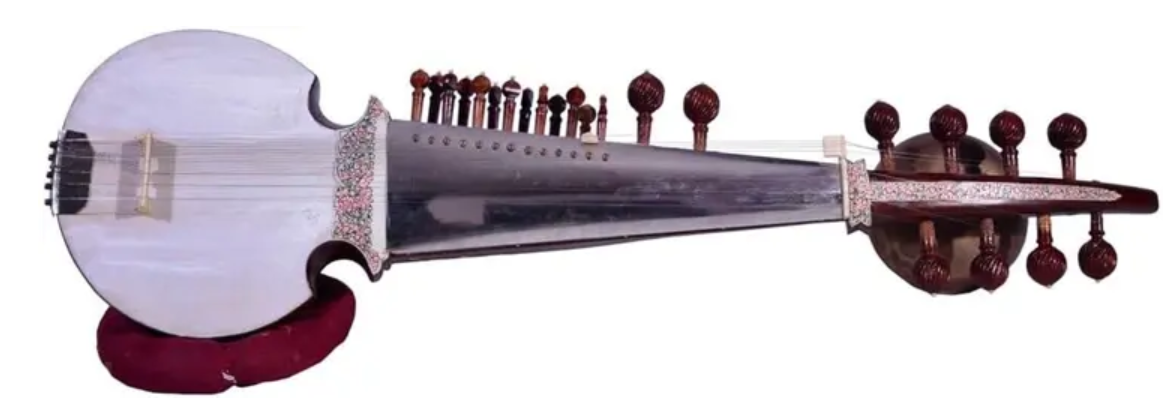
  • Sarod
  • Sarod is a stringed instrument made of coconut shell, tun wood, drone, shikri, and ivory.
  • This is a traditional instrument that is found in various parts of North India.
  • A popular plucked instrument, it is used in North Indian classical music for solo concerts.

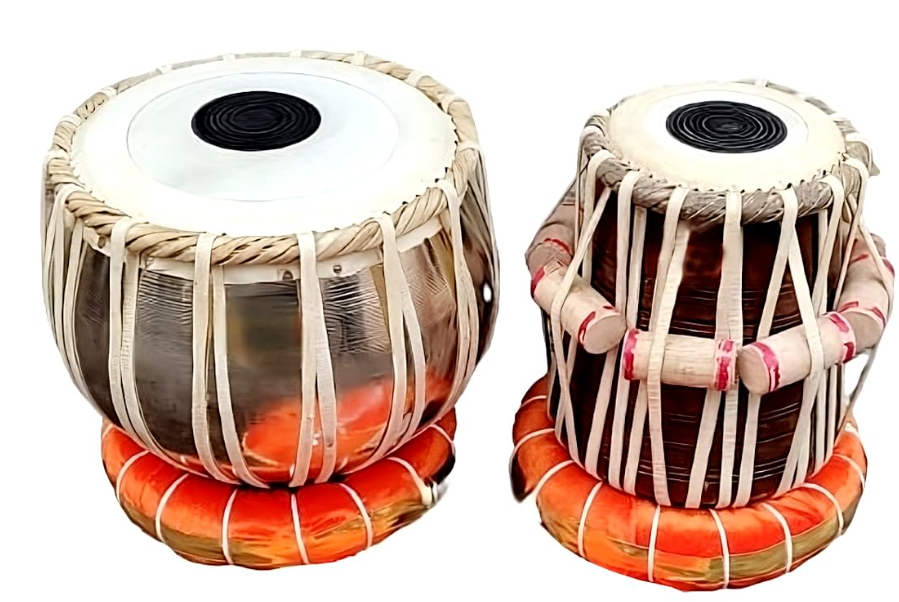
  • Tabla
  • Tabla is a small drum or  Pair of Drums tuned to different pitches playing with hands.
  • It was invented by Amir khusru in 1738.
  • The right side is called the Tabla and the left, the Bayan or Dagga.
  • It is a type of Avanaddha vadya or Membranophone.

54

The word Swaraj was first used by Dadabhai Naoroji in the congress session held in ________ at ________.

  1. ((a))

    1904, Bombay

  2. ((b))

    1906, Calcutta

  3. ((c))

    1907, Surat

  4. ((d))

    1916, Lucknow

Show Answer
Answer: ((b))

1906, Calcutta

The Correct answer is 1906, Calcutta.

  • The word swaraj was first used by Dadabhai Naoroji in the congress session held at Calcutta in 1906.

Key Points

  • Swarāj means self-governance or "self-rule".
  • Swaraj warrants a stateless society.
  • Word 'swaraj' was used synonymously with "home-rule" by Dayanand Saraswati.
  • Dadabhai Navroji said that he had learnt the word swaraj from the Satyarth Prakash of Dayanand Saraswati.

Additional Information

Important INC Sessions

YearPresidentVenue
1885W C BanerjeeBombay
1904Henry CottonBombay
1906Dadabhai NaorojiCalcutta
1907Rash Behari GhoshSurat
1909Madan Mohan MalaviyaLahore
1911Bishan Narayan DarCalcutta
1916Ambica Charan MazumdarLucknow
1917Annie BesantCalcutta
1924GandhijiBelgaum
1925Sarojini NaiduKanpur
1929Jawaharlal NehruLahore
1938Subhas Chandra BoseHaripura
55

As per the 2011 Census, which of the following is the least populated state in India? 

  1. ((a))

    Mizoram 

  2. ((b))

    Sikkim 

  3. ((c))

    Tripura 

  4. ((d))

    Uttarakhand

Show Answer
Answer: ((b))

Sikkim 

The correct answer is Sikkim.

Key Points

  • Sikkim has a population of 6.11 Lakhs.
  • The Sikkim census of 2011 says the population of Sikkim is the least in all of India.

Additional Information

  • According to a 2011 census, in that year Mizoram's population was 1,091,014.
  • It is the 2nd least populous state in the country.
  • As per details from Census 2011, Tripura has a population of 36.74 Lakhs.
  • According to the 2011 Census of India, Uttarakhand has a population of 10,086,292.

Important Points

The highest population as per the 2011 census is observed in UP.

StatePopulation (Census 2011)
UP199,812,341
Maharashtra112,372,972
Bihar103,804,637
West Bengal91,347,736
Madhya Pradesh72,597,565
56

Which of the following is NOT a cold-blooded animal?

  1. ((a))

    Rabbit

  2. ((b))

    Shark

  3. ((c))

    Crocodile

  4. ((d))

    Frog

Show Answer
Answer: ((a))

Rabbit

The correct answer is Rabbit.

Key Points

  • Cold-blooded Animals- are animals that cannot regulate their internal body temperature with the change in the environment.
  • Warm-blooded animal-A warm-blooded animal, for example, a bird or a mammal, has a fairly high body temperature which does not change much and is not affected by the surrounding temperature.
  • About Rabbit:
  • Oryctolagus cuniculus, scientfic name of rabbit.
  • A baby rabbit is called a kit, a female is called a doe and a male is called a buck.
  • A rabbit's teeth never stop growing.
  • It belongs to the class Mammalia, so they are warm-blooded animals.
  • Rabbits’ eyes are on the sides of their head, meaning they can see almost all the way around them.

Additional Information

  • Sharks.
  • Sharks don't have bones.
  • Scientists hypothesize sharks first appeared in the ocean around 455 million years ago.
  • Not all sharks have the same teeth.
  • There are more than 500 species of sharks and range in different sizes.
  • Sharks have six highly refined sensessmell, hearing, touch, taste, sight, and electromagnetism.
  • Crocodile.
  • Crocodiles are reptiles.
  • Crocodiles have the strongest bite of any animal in the world.​
  • Most crocodiles live in freshwater rivers and lakes but some live in salt water.
  • Crocodiles can hold their breath underwater for at least one hour.
  • The saltwater crocodile has an average lifespan of 70 years, The Nile crocodile can live up to 100 years.
  • The saltwater crocodile is the largest aquatic reptile on Earth.
  • ​Frog.
  • There are 6,000 species of frogs across the world.​
  • Frogs actually drink water through their skin by absorbing it.
  • Each frog species has its own special call.
  • In natural populations, this frog lives for a maximum of 5 years; the reproductive age ranges between 3–5 years.​
57

Seema wins gold in women’s discus at Indian Open Throws Competition 2025. Where was the Indian Open Throws Competition 2025 held?

  1. ((a))

    New Delhi

  2. ((b))

    Pune

  3. ((c))

    Bengaluru

  4. ((d))

    Navi Mumbai

Show Answer
Answer: ((d))

Navi Mumbai

The Correct Answer is Navi Mumbai.

In News

  • Seema wins gold in women’s discus at Indian Open Throws Competition 2025.

Key Points

  • Seema won the gold medal in the women’s discus throw event at the Indian Open Throws Competition 2025 in Navi Mumbai with a throw of 56.39 metres.
  • Neetika Verma secured the silver medal with a throw of 50.23 metres, and Priya won the bronze with a throw of 48.88 metres.
  • The opening day also featured qualifying rounds for the men’s javelin and discus throw events.
58

Where was the India Pavilion at Heimtextil 2025 inaugurated by the Minister of Textiles?

  1. ((a))

    Pragati Maidan, New Delhi

  2. ((b))

     Expo Center, Mumbai

  3. ((c))

    Messe Frankfurt

  4. ((d))

    None of the above

Show Answer
Answer: ((c))

Messe Frankfurt

The correct answer is Messe Frankfurt

In News

  • The Minister of Textiles inaugurated the India Pavilion at Heimtextil 2025.

Key Points

  • The event was held at Messe Frankfurt.
  • India showcased its growing strength in the textile industry at the event.
  • The Minister addressed global home textile exporters, importers, and manufacturers.
  • Highlighted India's growing competitiveness and the need for collaboration for sustainable growth.

Additional Information

  • Heimtextil
  • The largest international trade fair for home and contract textiles.
  • Held annually at Messe Frankfurt in Frankfurt, Germany.
  • Attracts exhibitors and visitors from all over the world.
  • India Pavilion
  • Showcases India's strength and innovation in the textile industry.
  • Provides a platform for Indian manufacturers and exporters to connect with global buyers.
59

Which of these forms of folk music are basically love songs that originated in Himachal Pradesh?

  1. ((a))

    Layman

  2. ((b))

    Koli

  3. ((c))

    bowl

  4. ((d))

    Lavani

Show Answer
Answer: ((a))

Layman

The correct answer is Layman.

Key Points

  • Layman  are basically love songs that originated in Himachal Pradesh.
  • Laman is the regional music of Himachal Pradesh.
  • It is famous in kullu valley.
  • This song form is highly romantic in nature and symbolizes the emotion of love.
  • This is the reason that band has been named laman which is synonymous of love.

Additional Information Himachal Pradesh

  • The capital of Himachal Pradesh is Shimla.
  • The Chief Minister of Himachal Pradesh is Sukhvinder Singh Sukhu and the Governor is Shiv Pratap Shukla.
  • Hindi is the official language in Himachal Pradesh.
  • The state flower of Himachal Pradesh is Pink Rhododendron; the state animal is snow leopards and the state tree is the Deodar cedar.
60

Who has been appointed as the new Chairman of the Union Public Service Commission (UPSC)? (May 2025)

  1. ((a))

    Rajiv Gauba

  2. ((b))

    Sanjay Mitra

  3. ((c))

    Dr. Ajay Kumar

  4. ((d))

    Vinay Kwatra

Show Answer
Answer: ((c))

Dr. Ajay Kumar

The Correct Answer is ​Dr. Ajay Kumar.

In News

  • Former Defence Secretary Ajay Kumar appointed as UPSC Chairman

Key Points

  • President Droupadi Murmu has appointed Dr. Ajay Kumar as the new Chairman of the Union Public Service Commission (UPSC).
  • The appointment was announced by the Department of Personnel and Training (DoPT).
  • Dr. Kumar’s tenure will begin from the day he assumes charge.
  • He is a retired IAS officer from the 1985 batch, Kerala cadre.
  • Dr. Ajay Kumar served as Defence Secretary from August 2019 to October 2022.

General Awareness 2 (20 questions)

61

Uttarakhand, Uttar Pradesh, Bihar, West Bengal and Sikkim have common frontiers with _________.

  1. ((a))

    Nepal

  2. ((b))

    Afghanistan

  3. ((c))

    China

  4. ((d))

    Pakistan

Show Answer
Answer: ((a))

Nepal

The correct answer is Nepal.

Key Points

  • Indian states that shares border with Nepal are - Uttrakhand, Uttar Pradesh, Sikkim, West Bengal, and Bihar.
  • The border was formed after the Sugauly Treaty of 1816 between Nepal and the British Raj.
  • The state-wise length of borders are given below :
  • ​ Uttrakhand: 251 km
  • Uttar Pradesh: 551 km
  • Sikkim: 99 km
  • West Bengal: 100 km
  • Bihar: 726 km

Additional Information

Some of the International borders with the Indian states are:

CountryBordering Indian states/UT
AfghanistanJammu and Kashmir (Pakistan-Occupied-Kashmir)
ChinaJammu and Kashmir, Arunachal Pradesh, Himachal Pradesh, Uttrakhand, Sikkim.
PakistanJammu and Kashmir, Rajasthan, Gujarat, Punjab.
62

In fireworks which metal is used for yellow colour?

  1. ((a))

    Copper

  2. ((b))

    Calcium

  3. ((c))

    Sodium

  4. ((d))

    Barium

Show Answer
Answer: ((c))

Sodium

Explanation:

  • Metal salts commonly used in firework displays include calcium chloride, sodium nitrate, barium chloride, copper chloride, etc.
  • The green flame produced in fireworks is due to the presence of Barium.
  • The blue flame is due to the presence of Copper.
  • The orange flame is due to the presence of Calcium.
  • A yellow flame is due to the presence of Sodium.
  • Lithium /Strontium are used to impart a red colour to fireworks.

So,  Sodium metal is used for yellow colour In fireworks.

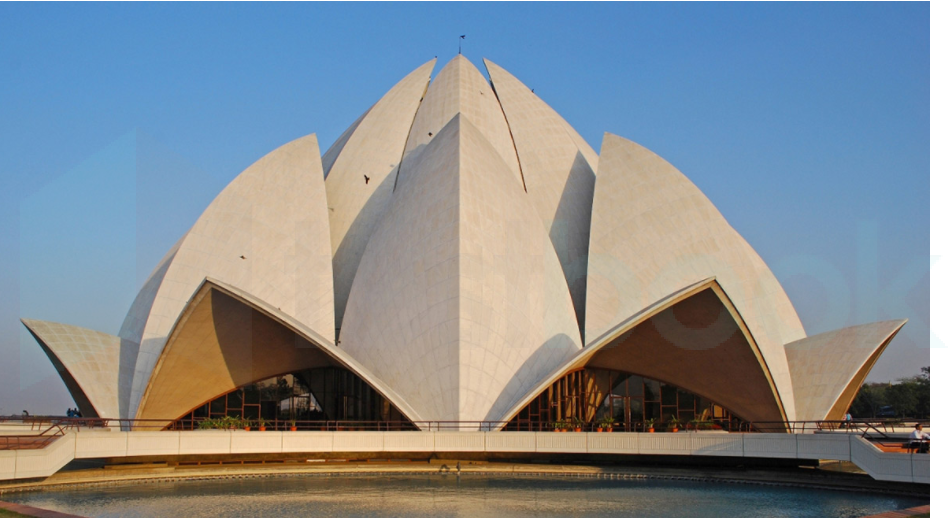
63

Where is Bahai Temple situated?

  1. ((a))

    Mumbai

  2. ((b))

    Chennai

  3. ((c))

    New Delhi

  4. ((d))

    Kolkata

Show Answer
Answer: ((c))

New Delhi

The correct answer is In New Delhi.

Key Points

  • The Bahai House of Worship, popularly known as the Lotus Temple is not only a symbol of excellence in modern Indian architecture but also one of the most visited religious buildings in the world.
  • The Temple located on a 9.7-hectare site near Nehru Place in South Delhi is a place of worship open to all races, religions, and castes.
  • The form of this House of Worship takes the shape of the lotus, a flower considered sacred by most Indians.
  • It is designed to reflect the simplicity, clarity, and freshness of the Baha'i Faith and to act as a symbol of the unity of mankind and religions.
  • The structure is composed of three ranks of nine petals each, springing from a podium that elevates the building above the surrounding plain.
  • The reinforced-concrete petals are clad by white marble panels, done to fit the surface profiles and to patterns related to the structure's geometry.

64

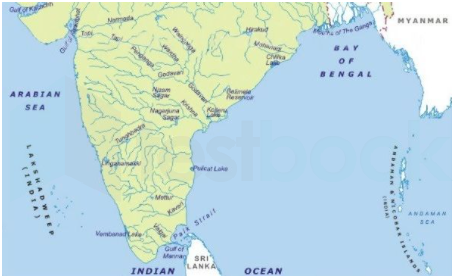
Which of the following river does not fall into the Arabian Sea?

  1. ((a))

    Tungabhadra

  2. ((b))

    Narmada

  3. ((c))

    Mandovi

  4. ((d))

    Sabarmati

Show Answer
Answer: ((a))

Tungabhadra

The correct answer is Tungabhadra.

Key PointsTungabhadra River:

  • The river Tungabhadra derives its name from the Tunga, and  the Bhadra, and confluence of the two streams at Koodli in Shimoga.
  • The Tungabhadra River does not flow into the Arabian Sea.
  • Tungabhadra River is a major tributary of Krishna River.
  • It's Major tributaries are the Bhadra, the Haridra, the Vedavati, the Tunga, the Varda and the Kumdavathi.

Additional InformationNarmada River:

  • The Narmada rises in the Amarkantak hills in Madhya Pradesh.
  • It flows towards the west in a rift valley formed due to faulting.
  • On its way to the sea, the Narmada creates many picturesque locations.
  • The ‘Marble rocks’, near Jabalpur, where the Narmada flows through a deep gorge, and the ‘Dhuadhar falls, where the river plunges over steep rocks, are some of the notable ones.
  • All tributaries of the Narmada are very short and most of these join the main stream at right angles.
  • The Narmada basin covers parts of Madhya Pradesh and Gujarat.
  • The Narmada river conservation mission has been undertaken by the government of Madhya Pradesh by a scheme named Namami Devi Narmade.

Mandovi River:

  • The Mandovi river is also known as the Mahadayi in Karnataka.
  • This river is Goa's lifeline.
  • Mahadayi river rises in the Western Ghats, from the Bhimgad Wildlife Sanctuary in Khanapur taluk of Karnataka’s Belagavi district.
  • Flowing westward, it enters Goa from Sattari taluk of North Goa districts.
  • A number of streams join the flow of the river to form the Mandovi which is one of two major rivers that flow through Goa.
  • It joins the Arabian Sea at Panaji.

​Sabarmati River:

  • Sabarmati river originates from Aravalli Hills, Rajasthan and meets in Bay of Khambhat in Arabian sea.
  • This is one of the major west flowing river in India
  • Its length is 371 km. and total catchment area is 21,674 sq. km.
  • Sei, Siri and Dhamni are the right bank’s tributaries.
  • **Wakal, Harnav, Hathmati, Khari, Watrak are left bank’s tributaries.**​


65

Kelucharan Mohapatra was an exponent of which of the following categories of dance?

  1. ((a))

    Kuchipudi

  2. ((b))

    Manipuri

  3. ((c))

    Bharatanatyam

  4. ((d))

    Odissi

Show Answer
Answer: ((d))

Odissi

The correct answer is Odissi.

Key Points

  • Odissi is one of the 8 classical dances of India recognized by the Sangeet Natak Academy.
  • Odissi is a major ancient classical dance that originated in the Indian state of Orissa.
  • The famous dancers of Odissi are -
  • Sujata Mohapatra, Kelucharan Mohapatra, Ratikant Mohapatra, Gangadhar Pradhan, etc.
  • Kelucharan Mohapatra is the first person to receive the Padma Vibhusan from Orissa.

Additional Information

DanceStateFamous Artists
BharatnatyamTamil NaduRukmini Devi Arundale, Balasaraswati, Padma Subramanyam, etc
KuchipudiAndhra PradeshSobha Naidu, Raja and Radha Reddy, Yamini Reddy, Arunima Kumar, etc
SattriyaAssamRanjumoni, Srimanta Sankardeva, etc
66

Who became the highest individual scorer in the history of the Women’s Under-19 One Day Trophy?

  1. ((a))

    Smriti Mandhana

  2. ((b))

    Shafali Verma

  3. ((c))

    Jemimah Rodrigues

  4. ((d))

    Ira Jadhav

Show Answer
Answer: ((d))

Ira Jadhav

The correct answer is Ira Jadhav.

In News

  • In the Women’s Under-19 One Day Trophy, Ira Jadhav scored an unbeaten 346 runs off 157 balls, including 42 fours and 16 sixes, against Meghalaya.
  • This record-breaking performance surpassed the previous record set by Smriti Mandhana, who scored 224 runs in 2013.

Key Points

  • Ira Jadhav, a 14-year-old cricketer from Mumbai, achieved this milestone at the Alur Cricket Stadium, Bengaluru.
  • Her innings helped Mumbai post a massive total of 563 for 3 in 50 overs.

Additional Information

  • About the Record:
  • The previous record of 224 runs was held by Smriti Mandhana in the Women’s Under-19 One Day Trophy in 2013.
  • About Ira Jadhav:
  • At just 14 years old, Ira’s innings demonstrates her exceptional talent and potential in Indian domestic cricket.
67

Who was the Chairman of the Provincial Constitution Committee of the Constituent Assembly?

  1. ((a))

    Jawaharlal Nehru

  2. ((b))

    Sardar Vallabhai Patel

  3. ((c))

    Dr Rajendra Prasad

  4. ((d))

    Dr Sachidananda Sinha

Show Answer
Answer: ((b))

Sardar Vallabhai Patel

The correct answer is Sardar Vallabhai Patel.

Key Points

  • The Constituent Assembly appointed a number of committees to deal with different tasks of constitution-making.
  • Out of these eight were major committees and the others were minor committees.
CommitteesHeads
Union Powers CommitteeJawaharlal Nehru
Union Constitution CommitteeJawaharlal Nehru
Provincial Constitution CommitteeSardar Vallabhai Patel
Drafting CommitteeDr Ambedkar
Advisory Committee on FRs, Minorities and
Tribal and Excluded Areas
Sardar Vallabhai Patel
Rules of Procedure CommitteeDr Rajendra Prasad
States CommitteeJawaharlal Nehru
Steering CommitteeDr Rajendra Prasad

Additional Information

  • The idea of a Constituent Assembly for India was for the first time put forward by M.N.Roy in 1934.
  • In 1935 the Indian National Congress (INC) officially demanded a Constituent Assembly to frame the Constitution of India.
  • The demand was finally accepted in principle by the British Government in what is known as the 'August Offer' of 1940.
  • The Constituent Assembly was constituted in November 1946 under the scheme formulated by the Cabinet Mission Plan (1946).
  • The Constituent Assembly held its first meeting on December 9, 1946.
  • Dr Sachidananda Sinha, the oldest member, was elected as the temporary President of the assembly, following the French practice.
  • Later, Dr Rajendra Prasad was elected as the President of the assembly
  • Similarly, both H.C. Mukherjee and V.T Krishnamachari were elected as the Vice Presidents of the Assembly. In other words, the assembly had two Vice Presidents.
68

Who is the first Indian to win Dada Saheb Phalke Award?

  1. ((a))

    Devika Rani

  2. ((b))

    Madhubala

  3. ((c))

    Nargis

  4. ((d))

    Durga Khote

Show Answer
Answer: ((a))

Devika Rani

The correct answer is Devika Rani.

  • Devika Rani was the first winner of the Dadasaheb Phalke Award which she won in the year 1969.
  • Devika Rani was an Indian film actress hailing from the city of Vishakhapatnam.
  • She had won one of the highest civilian awards Padma Shri and was the first recipient of the Dada Saheb Phalke Award for Lifetime Achievement.
  • She is also known as the 'First Lady of Indian Cinema'.

Key Points

  • Dadasaheb Phalke Award is given in remembrance of the man who made the first Indian Feature film Raja Harishchandra in 1913.
  • The Dadasaheb Phalke Award was introduced in 1969 by the government to recognise the contribution of film personalities towards the development of Indian Cinema.
  • The award comprises a Swarna Kamal, a Cash Prize of Rs. 10,00,000/- (Rupees Ten Lakhs) certificate, a silk scroll and a shawl.
  • The most recent awardee of the Dadasaheb Phalke award is Waheeda Rahman who won the award in 2023.
  • Durga Khote was awarded the Dadasaheb Phalke Award in the year 1983.
69

What was Albert Einstein awarded Nobel Prize for?

  1. ((a))

    Laws of relativity

  2. ((b))

    Laws of gravitation

  3. ((c))

    Laws of photo electric effect

  4. ((d))

    Theory of magnetism

Show Answer
Answer: ((c))

Laws of photo electric effect

The correct answer is Laws of Photoelectric Effect.

Key Points

  • Albert Einstein was awarded Nobel Prize for the Photoelectric effect in the field of theoretical physics on 9 November 1921.
  • He was a German Scientist known as one of the greatest physicists ever existed.
  • He is widely known for developing the iconic Theory of Relativity, but surprisingly not won the Noble prize for that.

Additional Information

  • Apart from Physics he also made a significant contribution to developing the theory of Quantum Mechanics.
  • His formula of mass-energy equivalence **E=mc**is titled the world's most famous equation.
Laws of GravitationGiven Isaac Newton in 1687 to observe the motion of planets and their moons
Theory of MagnetismGiven by Weber in 1832, also known as Weber's theory
Laws of RelativityGiven by Alber Einstein
70

Buddhadev Dasgupta is famous for playing which of the following musical instruments?

  1. ((a))

    Sarod

  2. ((b))

    Sarangi

  3. ((c))

    Bansuri

  4. ((d))

    Mridangam

Show Answer
Answer: ((a))

Sarod

The correct answer is Sarod.

Key Points

  • Buddhadev Dasgupta was a renowned Sarod player.
  • He was a disciple of the legendary Ustad Ali Akbar Khan and part of the Maihar gharana.
  • The Sarod is a prominent stringed instrument used in Hindustani classical music.
  • It is known for its deep, weighty, and introspective sound, typically played with a plectrum called the jaba.
  • Buddhadev Dasgupta received several prestigious awards including the Padma Bhushan and the Sangeet Natak Akademi Award.
  • His contribution to Indian classical music significantly enhanced the popularity and technique of the Sarod.

 Additional Information

  • Sarangi
  • The Sarangi is a bowed, short-necked string instrument used in Hindustani classical music.
  • It is known for its vocal quality and ability to imitate the human voice.
  • It has three main playing strings and a number of sympathetic strings.
  • Bansuri
  • The Bansuri is a transverse flute made from bamboo.
  • It is associated with the Hindustani classical music and is known for its soothing sound.
  • Lord Krishna is often depicted playing the Bansuri.
  • Mridangam
  • The Mridangam is a percussion instrument from South India.
  • It is an essential part of Carnatic music concerts.
  • It is a double-headed drum, traditionally made from jackfruit wood.
71

Defeating which country did India win the bronze medal in men’s hockey at the Paris 2024 Olympics?

  1. ((a))

    Spain

  2. ((b))

    Germany

  3. ((c))

    Argentina

  4. ((d))

    Belgium

Show Answer
Answer: ((a))

Spain

The correct answer is Spain.

Key Points

  • The Indian men’s hockey team defeated Spain 2-1 to win the bronze medal at the Paris 2024 Olympics.
  • This victory marked the first time since 1972 that India has won consecutive Olympic medals in men’s hockey.
  • India had previously won a bronze medal at the Tokyo 2020 Olympics by defeating Germany.
  • The match against Spain was held at the Yves de Manoir Stadium in Paris.

Important Points

  • The last time India won consecutive medals in men’s hockey was at the Mexico City 1968 and Munich 1972 Olympics, both bronze.
  • India's pursuit of a gold medal in Paris 2024 ended after a 2-3 loss to Germany in the semifinals.
  • This achievement highlights the consistency and resilience of the Indian men’s hockey team on the global stage.
  • Harmanpreet Singh was a key player in the victory against Spain, contributing to India’s success in the tournament.

Additional Information

  • Germany: India lost to Germany in the semifinals of the Paris 2024 Olympics men’s hockey event.
  • Belgium: India lost to Belgium in the semifinals of the Tokyo 2020 Olympics before winning bronze.
  • Argentina: Argentina did not face India in the bronze medal match at Paris 2024.
  • Spain: India defeated Spain to secure the bronze medal at the Paris 2024 Olympics.
72

What is the name of the highest national honor given to Prime Minister Modi by the Dominican Republic?

  1. ((a))

    Order of the Caribbean

  2. ((b))

    Dominica Award of Honour

  3. ((c))

    Medal of the Americas

  4. ((d))

    Dominican Excellence Medal

Show Answer
Answer: ((b))

Dominica Award of Honour

The correct answer is Dominica Award of Honour.

In News

  • PM Modi was awarded the 'Dominica Award of Honour' by the Dominican Republic for his support during the COVID-19 pandemic.
  • In 2021, PM Modi provided 70,000 doses of the AstraZeneca vaccine to Dominica.

Key Points

  • The 'Dominica Award of Honour' recognizes PM Modi's support during the COVID-19 pandemic, especially for providing vaccines to Dominica.
  • The Dominican Republic is a Caribbean nation, sharing the Hispaniola island with Haiti.
  • Dominica's capital is Santo Domingo, and its official language is Spanish.
  • The award reflects India’s strong diplomatic ties with the Caribbean nations, especially during the pandemic.

Additional Information

  • Dominican Republic
  • Located in the Caribbean, the Dominican Republic shares the Hispaniola island with Haiti to the west.
  • The capital city is Santo Domingo, and the official language is Spanish.
  • AstraZeneca Vaccine
  • AstraZeneca's COVID-19 vaccine was developed by AstraZeneca and Oxford University, widely used during the global pandemic for mass vaccination drives.
  • The vaccine was offered as part of global assistance programs, especially to countries with limited access to vaccines.
  • India's Foreign Relations
  • India has strengthened its diplomatic relations with several Caribbean nations through humanitarian efforts, such as vaccine distribution and disaster relief.
73

Which Mughal emperor is known by the name of 'Rangila'?

  1. ((a))

    Farrukhsiyar

  2. ((b))

    Rafi-Ud-darazat

  3. ((c))

    Muhammad Shah

  4. ((d))

    Rafi-Ud-daula

Show Answer
Answer: ((c))

Muhammad Shah

The correct answer is Muhammad Shah.

  • Muhammad Shah was an ineffective, pleasure-seeking Mughal emperor of India.
  • Due to his pleasure-loving attitude, he was also called Rangila.
  • His name was Roshan Akhtar.

Key Points

  • During his reign, Maratha under Baji Rao for the first in Mughal history raided Delhi.
  • Nadir Shah of Persia invaded Delhi with the help of Sadat Khan who defeated the Mughal army at the Battle of Karnal during his reign.

Additional Information

  • Rafi-Ud-Daula was popularly known as ‘Shah Jahn II’.
  • Rafi-Ud-Darajat was one of the Mughal rulers who ruled a very short period of merely a few months. During the course of the Revolt of Nikusiyyar, he captures the fort of Agra and declared himself as a ruler.
  • Farrukhsiyar was also known as ‘Sahid-i-Mazlum’ and son of Azim-us-Shah. He ascended himself to the throne with help of the Sayyid brothers- Abdullah Khan and Hussain Ali.
  • Farrukhsiyar assigned the duty of Deccan’s governor to Chin Quilch Khan who was better known as ‘Nizam-ul-Mulk’, later who laid the foundation of the independent state of Hyderabad.
74

The Tropic of Cancer passes through how many states of India?

  1. ((a))

    6

  2. ((b))

    7

  3. ((c))

    8

  4. ((d))

    9

Show Answer
Answer: ((c))

8

The correct answer is 8.

Key Points

  • The latitude approximately 23°27′ N of the terrestrial equator is called tropic of cancer.
  • There are 16 countries through which the tropic of cancer passes.
  • The tropic of cancer is the only latitude pass through India.
  • The tropic of cancer passes through 8 Indian states.
  • The 8 Indian states through which tropic of cancer passes through are:
  1. Gujarat.
  2. Rajasthan.
  3. Madhya Pradesh.
  4. Chhatisgarh.
  5. Jharkhand.
  6. West Bengal.
  7. Tripura.
  8. Mizoram.

Important Points

  • Mahi River is the only river in India that cuts the Tropic of Cancer twice.
  • "Bhopal (capital of Madhya Pradesh)” and “Gandhinagar (capital of Gujarat)” is also located fairly close to the “Tropic of Cancer”.
  • The only state capital in India situated on the Tropic of Cancer is Ranchi, the capital of Jharkhand.
  • Tropic of Cancer passes through 16 countries, 3 Continents, 6 water bodies.​

75

The headquarter of World Bank Group is situated at ________.

  1. ((a))

    Washington D.C.

  2. ((b))

    New York

  3. ((c))

    Hague

  4. ((d))

    Vienna

Show Answer
Answer: ((a))

Washington D.C.

The correct answer is Washington D.C.

  • The World Bank Group (WBG) is a specialized agency of the United Nations and its headquartered in Washington D.C.

Key PointsThe World Bank Group include five groups which are:

  • International Bank for Reconstruction and Development (IBRD)
  • International Development Association (IDA)
  • International Finance Corporation (IFC)
  • Multilateral Guarantee Agency (MIGA)
  • International Centre for the Settlement of Investment Disputes (ICSID)
  • To become members of the IDA, IFC, and MIGA, the countries must first become members of IBRD.

Additional Information

  • World Bank approved 1 billion US$ aid to India to accelerate 'India's Covid 19 special protection response programme'.
  • There are 2 goals for the world to achieve by 2030 –
  • End extreme poverty by decreasing the percentage of people living on less than $1.90 a day to no more than 3%.
  • Promote shared prosperity by fostering the income growth of the bottom 40% for every country.
76

Deficiency of which of the following vitamins causes excessive bleeding from wounds?

  1. ((a))

    Vitamin D

  2. ((b))

    Vitamin E

  3. ((c))

    Vitamin A

  4. ((d))

    Vitamin K

Show Answer
Answer: ((d))

Vitamin K

The correct answer is Vitamin K.

Key Points 

Vitamin K

  • Vitamin K is called antihemorrhagic.
  • It is found in the green leaves of plants, as well as in those parts of plants that contain chlorophyll, a lot of it in berries of mountain ash, as well as in the liver.
  • Vitamin K is needed for the posttranslational modification of proteins required for blood coagulation.
  • Vitamin K is involved in metabolism pathways, bone mineralization, cell growth, and metabolism of the blood vessel wall.

Vitamin K injection:

  • It is used to treat bleeding (hemorrhage or threatened hemorrhage) associated with a low blood level of prothrombin or factor VII.
  • It is recommended that vitamin K be given IV, and not IM until coagulation parameters normalize to minimize the risk of hematoma at the injection site.
  • 1 mg IM/subcutaneous is the FDA-approved dosage.
  • Neonate has low plasma concentrations and low levels of vitamin K-dependent clotting factors.
  • Therefore, immediately after the birth, Vitamin K will be administered to the newborn in order to prevent bleeding.

Additional Information

Vitamins :

  • Vitamins are organic substances that are required for the proper functioning of the body.
  • Vitamins are divided into two groups:
  • Fat-soluble (Vit. A, D, E, and K)
  • Water-soluble ( Vitamins of B group and Vit. C).
VitaminSourcesFunctionsDeficiency disease
Vit. B1 (Thiamine)milk, meat, cerealsgrowth and developmentBeri- Beri
Vit.B2 (Riboflavin)yeast, peasproduction of RBC, body growthSkin diseases, retarded growth
Vit.B3 (Niacin)tomatoes, potatoesfor maintaining healthy skin and nervous systemPellagra
Vit.B12liver, milkFormation of red blood cellsAnaemia
Vit Clemons, gooseberries, orangesMaintaining healthy ligaments, tendons, and blood vesselsScurvy
Vit. Dcheese, butter, sunlightFormation of strong teeth and bonesRickets
Vit. Kcabbage, spinach, green leafy vegetableshelps in clotting bloodExcessive bleeding of wounds
77

LTE technology is used in which of the following generation of wireless technologies?

  1. ((a))

    3G

  2. ((b))

    2G

  3. ((c))

    4G

  4. ((d))

    1G

Show Answer
Answer: ((c))

4G

The correct answer is 4G.

Key Points

  • In Telecommunications, LTE Technology stands for Long-Term Evolution.
  • LTE is a standard for wireless broadband communication and is the primary technology used in 4G networks.
  • It provides faster data transfer rates, lower latency, and improved spectral efficiency compared to previous generations.
  • It allows us to download many things such as music, videos, websites etc.
  • It is known for being developed by the 3GPP.
  • 4G has the more stability and faster speed when compares to the LTE.
  • It is because LTE is a half point between 3G and 4G.
  • Its capability is 3.95G which has been marketed as 4G LTE.

Additional Information3G (Third Generation):

  • 3G refers to the third generation of wireless technology.
  • Common 3G technologies include UMTS (Universal Mobile Telecommunications System) and CDMA2000 (Code Division Multiple Access 2000).
  • 3G networks provided faster data speeds compared to 2G but were slower than 4G.

2G (Second Generation):

  • 2G refers to the second generation of wireless technology.
  • Common 2G technologies include GSM (Global System for Mobile Communications) and CDMA (Code Division Multiple Access).
  • 2G networks primarily focused on voice calls and provided limited data capabilities.

1G (First Generation):

  • 1G refers to the first generation of wireless technology.
  • 1G networks were analog-based and primarily supported voice calls.
  • 1G networks had limited data capabilities and slower transmission speeds compared to subsequent generations.
78

Who among the following is known as 'Punjab Kesari'?

  1. ((a))

    Bhagat Singh

  2. ((b))

    Sukhdev

  3. ((c))

    Lala Lajpat Rai

  4. ((d))

    C. Azad

Show Answer
Answer: ((c))

Lala Lajpat Rai

Key PointsLala Lajpat Rai:

  • Lala Lajpat Rai is also known as Punjab Kesari.
  • He was a prominent Freedom fighter.
  • He was also one the founder member of Punjab National Bank.
  • He was one-third of the Lal Bal Pal triumvirate.
  • He was elected as the President of the Indin National Congress in 1920 in Calcutta Session.​

Important Points

Sobriquets of some Eminent Persons:

NicknamesPerson
Frontier Gandhi,
Badshah Khan
Khan Abdul Ghaffar
Khan
LoknayakJayaprakash Narayan
DeshbandhuChitta Ranjan Das
AjatshatruDr. Rajendra Prasad
Bismark of IndiaSardar Vallabhbhai Patel
Bihar KesariDr. Srikrishna Singh
Punjab KesariLala Lajpat Rai


Thus, Lala Lajpat Rai is known as 'Punjab Kesari'.

Additional Information

Bhagat Singh:

  • He was an Indian Socialist Revolutionary who was born in Banga, Pakistan in 1907.
  • In the year 1926, Bhagat Singh founded the Naujawan Bharat Sabha whose aim was to encourage revolution against British Rule by rallying the peasants and the workers.
  • He was hanged till death on 23rd March 1931 in the Lahore Jail. He was just 23 years old.

Sukhdev:

  • Bhagat Singh along with his associates Sukhdev Thapar and Shivaram Rajguru were charged for the assassination of 21-year-old British police officer John Saunders.
  • Bhagat Singh, Sukhdev, and Rajguru were sentenced to death on 7th October 1930, while they were hanged on 23rd March 1931.
  • The day Bhagat Singh, Sukhdev, and Rajguru lay down their lives for Freedom is called Martyrs' Day.

C. Azad:

  • Azad was born in a small Madhya Pradesh village of Bhavra in Jhabua district.
  • on July 23, 1906, Young Azad was terribly moved by the Britishers killing thousands of innocent Indians at Jhalianwala Baug in Punjab.
  • He wholeheartedly plunged into the freedom struggle. He was arrested for his protests against the British rulers.
79

What is the capital of India's neighbouring country Afghanistan?

  1. ((a))

    Kandahar

  2. ((b))

    Kabul

  3. ((c))

    Kathmandu

  4. ((d))

    Karachi

Show Answer
Answer: ((b))

Kabul

The correct answer is Kabul.

Key Points

  • Kabul:-
  • It is the capital and largest city of Afghanistan.
  • It is located in the eastern part of the country, at an altitude of 1,790 meters (5,873 ft), in a narrow valley surrounded by the Hindu Kush mountains along the Kabul River.
  • Kabul has been inhabited for over 3,500 years and has been the capital of many different empires and kingdoms throughout its history.

Additional Information

  • Kandahar:-
  • It is the second largest city in Afghanistan, located in the south of the country on the Arghandab River.
  • It is the capital of Kandahar Province and the center of the larger cultural region called Loy Kandahar.
  • Kathmandu:-
  • It is the capital and largest city of Nepal.
  • Kathmandu is a multicultural city with a population of over 4 million people.
  • The majority of the population is Newari, but there are also significant Nepali, Tamang, and Sherpa minorities.
  • The city is also home to a small number of Hindus, Sikhs, and Christians.
  • Karachi:-
  • It is the capital city of the Pakistani province of Sindh.
  • It is the largest city in Pakistan and 12th largest in the world, with a population of over 20 million.
  • It is situated at the southern tip of the country along the Arabian Sea coast.
80

In any tennis game, first point is ________.

  1. ((a))

    40

  2. ((b))

    30

  3. ((c))

    15

  4. ((d))

    60

Show Answer
Answer: ((c))

15

The correct answer is 15

Key Points

  • In tennis, the points in a game are counted as 15, 30, 40, and then game point.
  • The first point in a game is referred to as 15.
  • 0 points = Love
  • 1 point = 15
  • 2 points = 30
  • 3 points = 40
  • 4 points = Game point (if the player has a 2-point lead)
  • To win a game, a player must win four points by a margin of at least two points.
  • When both players have 40 points, it's called "deuce". T
  • o win the game, one player must win two consecutive points after the score reaches deuce.
  • Here are some other things to know about tennis:
  • The first point of a game is served from the server's right side.
  • The server alternates serving from the right and left sides of their court from point to point.
  • The winner of a set is the first player to win six games, but they must also win by at least two games.
  • The winner of the match is determined by the outcome of a series of sets, which can be best of three or five sets.
  • The term "break point" refers to when the receiver has a chance to win the game with the next point.

Arithmetical and Numerical Ability 1 (20 questions)

81

150% of 0.05% of x is 75. Find x.

  1. ((a))

    1,00,000

  2. ((b))

    75000

  3. ((c))

    1,25,000

  4. ((d))

    1,50,000

Show Answer
Answer: ((a))

1,00,000

Given:

150% of 0.05% of x = 75

Formula used:

a% of b = (\frac{a}{100} \times b)

Calculation:

(\frac{150}{100} \times \frac{0.05}{100} \times x = 75)

⇒ (1.5 \times 0.0005 \times x = 75)

⇒ (0.00075 \times x = 75)

⇒ (x = \frac{75}{0.00075})

⇒ x = 1,00,000

∴ The correct answer is option (1).

82

If x – 4y = 0 and x + 2y = 24, then what is the value of (2x + 3y) / (2x – 3y)?

  1. ((a))

    9/5

  2. ((b))

    11/5

  3. ((c))

    13/7

  4. ((d))

    9/7

Show Answer
Answer: ((b))

11/5

Shortcut Trick

From x − 4y = 0, we get x = 4y or x : y = 4 : 1.

Substitute x = 4 and y = 1 in the second equation: 4 + 2(1) = 6 units.

Given 6 units = 24 → 1 unit = 4. Thus x = 16 and y = 4.

Required Ratio = (2 × 16 + 3 × 4) ÷ (2 × 16 − 3 × 4) = 44 ÷ 20.

Simplifying 44/20 gives 11/5.

∴ The correct answer is 11/5.

Alternate Method

Given:

Equation 1: x − 4y = 0

Equation 2: x + 2y = 24

Formula Used:

Substitution method for linear equations in two variables.

Calculations:

⇒ From Equation 1: x = 4y

⇒ Substitute x = 4y in Equation 2:

⇒ 4y + 2y = 24

⇒ 6y = 24

⇒ y = 24 ÷ 6 = 4

⇒ Now, x = 4 × 4 = 16

⇒ Substitute values of x and y in (2x + 3y) ÷ (2x − 3y):

⇒ (2 × 16 + 3 × 4) ÷ (2 × 16 − 3 × 4)

⇒ (32 + 12) ÷ (32 − 12)

⇒ 44 ÷ 20

⇒ 11/5

∴ The correct answer is 11/5.

Additional Information

Substitution Method

It involves expressing one variable in terms of the other from one equation and substituting it into the second equation to solve for the variables.

Ratio Simplification

A ratio a/b is simplified by dividing both terms by their Highest Common Factor (HCF). In this case, HCF of 44 and 20 is 4, so 44/20 = 11/5.

Nature of Linear Equations

Two linear equations in two variables (x and y) represent two lines. Their intersection point gives the unique solution for x and y.

83

Simplify : [0.08 - {3.5 - 4.9 - (12.5 - 7.8 - 4.6)}]

  1. ((a))

    1.58

  2. ((b))

    0.08

  3. ((c))

    2.58

  4. ((d))

    12.58

Show Answer
Answer: ((a))

1.58

Concept used:

BODMAS rule 

quesImage3369

calculation:

[0.08 - {3.5 - 4.9 - (12.5 - 7.8 - 4.6)}]

⇒ [0.08 - {3.5 - 4.9 - (0.1)}]

⇒ [0.08 - {3.5 - 5}]

⇒ 0.08 + 1.5

⇒ 1.58

∴ The answer is 1.58.

84

P and Q completed a work together and were paid ₹1,080 and ₹1,440, respectively. If P can do the entire work in 20 days, how many days did they take to complete the work together?

  1. ((a))

    (6{3\over7})

  2. ((b))

    (8{4\over7})

  3. ((c))

    (8{3\over7})

  4. ((d))

    (6{4\over7})

Show Answer
Answer: ((b))

(8{4\over7})

Given:

P and Q completed a work together and were paid ₹1,080 and ₹1,440

P can complete the work in 20 days

Concept used:

Total work = Efficiency of the worker × time taken by them

Efficiency is directly proportional to the amount gets

Calculation:

Ratio of amount paid to P and Q = 1080 : 1440

⇒ 3 : 4

Now,

Total work = 20 × 3

⇒ 60 units

So, time taken by both of them to complete the work = 60/7

⇒ (8{4\over7}) days

∴ They take (8{4\over7}) days to complete the work together.

85

Find the area and circumference of a circle if the radius is 14 cm. (Take π = 22/7)

  1. ((a))

    Area = 616 cm2 ; Circumference = 88 cm

  2. ((b))

    Area = 88 cm2 ; Circumference = 616 cm

  3. ((c))

    Area = 44 cm2 ; Circumference = 308 cm

  4. ((d))

    Area = 308 cm2 ; Circumference = 44 cm

Show Answer
Answer: ((a))

Area = 616 cm2 ; Circumference = 88 cm

Radius of the circle r = 14 cm

Area of the circle = πr2 = (22/7) × 14 × 14 = 616 cm2

Circumference of the circle = 2 πr = 2 × (22/7) × 14 = 88 cm

86

ABCD is a cyclic quadrilateral in which AB = BC, O is the centre of circle and one of diagonal of cyclic quadrilateral passes through the centre of circle and ∠DCA = 40°. Find the ∠BAD.

  1. ((a))

    95° 

  2. ((b))

    85° 

  3. ((c))

    75° 

  4. ((d))

    65° 

Show Answer
Answer: ((a))

95° 

Given:

ABCD is a cyclic quadrilateral

AB = BC

'O' is the center of a circle

∠DCA = 40° 

Concept used:

In the cyclic quadrilateral, the sum of the opposite angle is 180° 

And angle made in a semi-circle through its diameter is 90° 

The sum of all angle inside a triangle = 180° 

In a triangle, if two sides are equal, it will be an isosceles triangle and also two angle opposite to the two equal sides are equal.

Calculation:

Let us assume AC be diagonal that passes through the center

From the above figure, we can see that AC is diagonal, and AC is also a diameter of circle then ∠ABC = ∠ADC = 90°  

In ΔADC,

∠CAD + ∠ADC + ∠DCA = 180°

⇒ ∠CAD + 90° + 40° = 180°

⇒ ∠CAD + 130° = 180° 

⇒ ∠CAD = 180° - 130° 

⇒ ∠CAD = 50° 

In ΔABC, it is isosceles triangle because AB is equal to BC, then ∠BAC = ∠ACB 

∠BAC + ∠ABC + ∠BCA = 180° 

⇒ 2∠BAC + 90° = 180° 

⇒ 2∠BAC = 180° - 90° 

⇒ 2∠BAC = 90° 

⇒ ∠BAC = 90°/2

⇒ ∠BAC = 45°

∠BAD = ∠BAC + ∠CAD

⇒ ∠BAD = 45° + 50° 

⇒ ∠BAD = 95° 

∴ The ∠BAD is 95°

87

What is the central angle corresponding to the sector indicating the expenses incurred on Health?

  1. ((a))

    72°

  2. ((b))

    54°

  3. ((c))

    110°

  4. ((d))

    108°

Show Answer
Answer: ((d))

108°

Calculation:

The central angle corresponding to the sector indicates the expenses incurred on Health:

⇒ 50000 → 360°

⇒ 15000 → (360°/50000) × 15000

⇒ 15000 → 36 × 3

⇒ 15000 → 108°

The central angle corresponding to the sector indicates the expenses incurred on Health is 108°.

88

A person first increases the price of a commodity by 8% and then he announces a discount of 18%. The actual discount (in%) on the original price is:

  1. ((a))

    11.44

  2. ((b))

    14.44

  3. ((c))

    9.44

  4. ((d))

    8.44

Show Answer
Answer: ((a))

11.44

Shortcut Trick

Apply the successive percentage change formula: Net Change = a + b + (a × b) ÷ 100

Here, a = +8 (increase) and b = −18 (discount).

Net Change = 8 − 18 + (8 × −18) ÷ 100

Net Change = −10 − 1.44 = −11.44%

The negative sign indicates an actual discount of 11.44% on the original price.

∴ The correct answer is 11.44%.

Alternate Method

Given:

Initial price markup = +8%

Discount announced = 18%

Calculations:

Let the original price of the commodity be 100.

⇒ Marked Price after 8% increase = 100 + 8% of 100

⇒ Marked Price = 100 + 8 = 108

⇒ Final Selling Price after 18% discount = Marked Price − 18% of Marked Price

⇒ Final Selling Price = 108 − (18 ÷ 100) × 108

⇒ Final Selling Price = 108 − 19.44 = 88.56

⇒ Total discount amount = Original Price − Final Selling Price

⇒ Total discount amount = 100 − 88.56 = 11.44

⇒ Since the assumed original price is 100, the overall discount percentage is strictly equal to the discount amount.

∴ The correct answer is 11.44%.

Additional Information

Successive Percentage Change

When a value is sequentially changed by a% and then by b%, the effective overall percentage change is a + b + (a × b) ÷ 100. Always use a positive sign for an increase and a negative sign for a decrease or discount.

Discount vs Markup

Markup is always calculated on the Cost Price to arrive at the Marked Price (MP). A discount is invariably provided on the Marked Price to arrive at the Final Selling Price.

Effective Discount of Two Successive Discounts

For two sequential discounts of x% and y%, the net single equivalent discount magnitude is given directly by x + y − (x × y) ÷ 100.

89

In a 1500 m race, Anil beats Bakul by 150 m and in the same race Bakul beats Charles by 75 m. By what distance does Anil beat Charles?

  1. ((a))

    217.50 m

  2. ((b))

    200.15 m

  3. ((c))

    293.50 m

  4. ((d))

    313.75 m

Show Answer
Answer: ((a))

217.50 m

Given:

In a 1500 m race, Anil beats Bakul by 150 m and in the same race Bakul beats Charles by 75 m.

Concept used:

Time × Speed = Distance

Calculation:

According to the question,

Anil goes 1500m while Bakul goes (1500 - 150) i.e. 1350m.

Ratio of speed of Anil and Bakul = 1500 : 1350 = 10 : 9 = 200 : 180

According to the question,

Bakul goes 1500m while Charlie goes (1500 - 75) i.e. 1425m.

Ratio of speed of Bakul and Charlie = 1500 : 1425 = 20 : 19 = 180 : 171

So, the ratio of the speeds of Anil, Bakul and Charlie = 200 : 180 : 171

Let the speeds of Anil, Bakul and Charlie be 200k, 180k and 171k m/s respectively.

Time taken by Anil to finish the race = 1500/200k = 7.5/k seconds

Now, Anil beats Charlie by = (200 - 171)k ×7.5/k = 217.5m

∴ Anil beat Charlie by 217.5m.

Shortcut Trick

In a 1500 m race, Anil beats Bakul by 150 m

When Anil completes the race, Bakul covered (1500 - 150) = 1350 m

In a 1500 m race Charles is 75 m behind Bakul

So, in 1350 m race Charles is 75/1500 × 1350 = 67.5 m behind Bakul

So, Charles is (67.5 + 150) = 217.5 m behind from Anil in 1500 m race

∴ Anil beat Charlie by 217.5m.

90

The LCM of (\frac{1}{3}, \frac{3}{5}, \frac{4}{7} ) and (\frac{9}{16}) is:

  1. ((a))

    36

  2. ((b))

    49

  3. ((c))

    38

  4. ((d))

    81

Show Answer
Answer: ((a))

36

Given:

Number are (\frac{1}{3}, \frac{3}{5}, \frac{4}{7} ) and (\frac{9}{16})

Formula used:

LCM of fraction = (\frac{LCM of numerator}{HCF of denominatior})

Calculation:

⇒ LCM of (\frac{1}{3}, \frac{3}{5}, \frac{4}{7} ) and (\frac{9}{16}) = (\frac{LCM of 1, 3, 4, 9}{HCF of 3, 5, 7, 16})

⇒ LCM of (\frac{1}{3}, \frac{3}{5}, \frac{4}{7} ) and (\frac{9}{16}) = (\frac{36}{1})

∴ LCM = 36. The correct answer is Option 1)

91

The volume of a solid hemisphere is 19,404 cm3. Its total surface area (in cm2) is:

(Take π = (\frac{{ {22} }}{7}))

  1. ((a))

    2772

  2. ((b))

    3465

  3. ((c))

    2079

  4. ((d))

    4158

Show Answer
Answer: ((d))

4158

Shortcut Trick

Volume = (2/3) × π × r3 = 19404

⇒ r3 = 19404 × (21/44) = 441 × 21 ⇒ r = 21 cm

TSA of solid hemisphere = 3 × π × r2

⇒ TSA = 3 × (22/7) × 21 × 21 = 66 × 63 = 4158 cm2

∴ The correct answer is 4158 cm2.

Alternate Method

Given:

Volume of solid hemisphere = 19,404 cm3

π = 22/7

Formula Used:

Volume of hemisphere = (2/3)πr3

Total surface area (TSA) of solid hemisphere = 3πr2

Calculations:

⇒ (2/3) × (22/7) × r3 = 19404

⇒ (44/21) × r3 = 19404

⇒ r3 = (19404 × 21) ÷ 44

⇒ r3 = 441 × 21

⇒ r3 = 21 × 21 × 21

⇒ r = 21 cm

Now, calculate Total Surface Area (TSA):

⇒ TSA = 3 × π × r2

⇒ TSA = 3 × (22/7) × 21 × 21

⇒ TSA = 3 × 22 × 3 × 21

⇒ TSA = 66 × 63

⇒ TSA = 4158 cm2

∴ The correct answer is 4158 cm2.

Additional Information

Curved Surface Area of Hemisphere

The curved surface area of a hemisphere (excluding the flat base) is given by 2πr2.

Volume and Surface Area of a Sphere

For a full sphere, Volume = (4/3)πr3 and Total Surface Area = 4πr2.

Relationship between Sphere and Hemisphere

A solid hemisphere has a flat circular base, which is why its TSA (3πr2) is more than half of a sphere's surface area (2πr2).

92

If the numerical value of twice the curved surface area of a right circular cylinder is equal to the numerical value of its volume, then what is the numerical value of the radius of the base of the cylinder?

  1. ((a))

    2

  2. ((b))

    3

  3. ((c))

    5

  4. ((d))

    4

Show Answer
Answer: ((d))

4

Given:

The numerical value of twice the curved surface area of a right circular cylinder is equal to the numerical value of its volume.

Concept used:

1. Curved surface of a cylinder = 2πrh 2. Volume of a cylinder = πr2h

where r = Radius of the base, h = height

Calculation:

Let the radius of the base and height be R and H respectively.

According to the question,

2πRH × 2 = πR2H

⇒ R = 4 (∵ R ≠ 0 and H ≠ 0)

∴ The numerical value of the radius of the base of the cylinder is 4.

93

A shopkeeper, on the eve of Diwali, allowed a series of discounts on television sets. Find the selling price of a television set, if the marked price of television is ₹1,200 and successive discounts are 15% and 10%.

  1. ((a))

    ₹945

  2. ((b))

    ₹918

  3. ((c))

    ₹975

  4. ((d))

    ₹965

Show Answer
Answer: ((b))

₹918

Shortcut Trick

Selling Price (SP) can be calculated directly by multiplying the Marked Price with successive discount factors.

SP = MP × (100 − D1)/100 × (100 − D2)/100

SP = 1200 × (85/100) × (90/100)

SP = 1200 × 0.85 × 0.9 = 918

∴ The correct answer is ₹918.

Alternate Method

Given:

Marked Price (MP) = ₹1200

Successive discounts = 15% and 10%

Formula Used:

Selling Price = MP × (1 − D1/100) × (1 − D2/100)

Calculations:

⇒ Price after 1st discount = 1200 − (15/100 × 1200)

⇒ Price = 1200 − 180 = ₹1020

⇒ SP after 2nd discount = 1020 − (10/100 × 1020)

⇒ SP = 1020 − 102 = ₹918

∴ The correct answer is ₹918.

Additional Information

Effective Discount Formula

When two successive discounts of A% and B% are given, the equivalent single discount can be directly determined using: D = (A + B − A×B/100)%.

Relation between MP, CP, Profit%, and Discount%

The exact ratio of Marked Price (MP) to Cost Price (CP) when a certain profit is made after giving a discount is: MP/CP = (100 + Profit%) / (100 − Discount%).

Buy X Get Y Free Discount

In scenarios involving free items, the net percentage discount is computed as: Discount % = [Y ÷ (X + Y)] × 100.

94

The amount received at 8% compounded per annum after 2 years is Rs. 72,900. What was the principal (in Rs.)?

  1. ((a))

    65000

  2. ((b))

    67500

  3. ((c))

    60000

  4. ((d))

    62500

Show Answer
Answer: ((d))

62500

Shortcut Trick

Rate 8% = 2/25. The ratio of Principal to Amount for 1 year is 25 : 27.

For 2 years, the ratio becomes (25)2 : (27)2 = 625 : 729.

729 units = ₹72,900 → 1 unit = ₹100.

Principal (625 units) = 625 × 100 = ₹62500.

∴ The correct answer is ₹62500.

Alternate Method

Given:

Amount (A) = ₹72,900

Rate (R) = 8% p.a.

Time (n) = 2 years

Formula Used:

A = P(1 + R/100)n

Calculations:

⇒ 72900 = P(1 + 8/100)2

⇒ 72900 = P(1 + 2/25)2

⇒ 72900 = P(27/25)2

⇒ 72900 = P × (729 / 625)

⇒ P = (72900 × 625) / 729

⇒ P = 100 × 625

⇒ P = 62500

∴ The correct answer is ₹62500.

Additional Information

Effective Rate for 2 Years

The effective compound interest rate for 2 years at R% is given by (2R + R2/100)%. For 8%, it is 16 + 0.64 = 16.64%.

Difference between CI and SI

For 2 years, the difference (D) between CI and SI is P(R/100)2.

Compounding Periods

If interest is compounded half-yearly, the rate becomes R/2 and the time becomes 2n periods.

95

The average of 9 consecutive numbers is 20. The smallest of these numbers is:

  1. ((a))

    10

  2. ((b))

    20

  3. ((c))

    16

  4. ((d))

    12

Show Answer
Answer: ((c))

16

Given:

The average of 9 consecutive numbers = 20

Formula used:

Average = Sum of the terms/Number of the terms

Calculation:

Let, the 9 consecutive numbers are x, (x + 1), (x + 2), (x + 3), (x + 4), (x + 5), (x + 6), (x + 7), (x + 8)

So, [x + (x + 1) + (x + 2) + (x + 3) + (x + 4) + (x + 5) + (x + 6) + (x + 7) + (x + 8)]/9 = 20

⇒ (9x + 36)/9 = 20

⇒ 9x + 36 = 180

⇒ 9x = 180 - 36 = 144

⇒ x = 144/9 = 16

∴ The smallest of these numbers is 16


Alternate Method 

Average of Consecutive Numbers = 1/2 × (First Term + Last Term)

Here, in the question let the First term be x and the last term will be x + 8

According to the question,

(1/2) × (x + x + 8) = 20

⇒ 2x + 8 = 40

⇒ 2x = 32

∴ x = 16

The smallest number is 16

96

Find the value of a given expression.

30 – [40 – {56 – (25 – 13 – 12)}]

  1. ((a))

    38

  2. ((b))

    22

  3. ((c))

    14

  4. ((d))

    46

Show Answer
Answer: ((d))

46

Given:

(30 - [40 - {56 - (25 - 13 - 12)}] = ?)

Formula used:

BODMAS Rule

Calculation:

(30 - [40 - {56 - (25 - 13 - 12)}])

⇒ (30 - [40 - {56 - (12 - 12)}])

⇒ (30 - [40 - {56 - 0}])

⇒ (30 - [40 - 56])

⇒ (30 - (-16))

⇒ (30 + 16)

⇒ 46

∴ The correct answer is option (4).

97

A number is increased by 16(\frac{2}{3})%, If the increased value of the number is 49, then find the value of the original number.

  1. ((a))

    42

  2. ((b))

    45

  3. ((c))

    56

  4. ((d))

    40

Show Answer
Answer: ((a))

42

Shortcut Trick

The given percentage by which the number changes =  16(\frac{2}{3})%

The respective fraction conversion form = (\frac{50}{3} \times \frac{1}{100} = \frac{1}{6})

For increasing case: 

⇒ (\frac{\text {Increased value}}{\text {Original value}} = \frac{6+1}{6})

⇒ (\frac{49}{\text {Original value}} = \frac{7}{6})

⇒ Original value = 42

Therefore, '42' is the required answer.

Alternate MethodGiven:

The number is increased by 16(\frac{2}{3})% = (\frac{50}{3} \times \frac{1}{100} = \frac{1}{6}),

The increased value of the number = 49

Calculation:

Let 'x' be the value of the original number.

The increased value = 49

According to the question,

⇒ x of (100% + 16(\frac{2}{3})%) = 49

⇒ x of (1 + (\frac{1}{6})) = 49

⇒ x of (\frac{7}{6}) = 49

⇒ x = 49 × (\frac{6}{7})

⇒ x = 42

Therefore, '42' is the required answer.

98

Study the given table and answer the question that follows.

The table shows the number of customers for different services in different cities.

City → Services ↓XYZ
A250175350
B220190240
C260200270
D245185330
<br>

In which service is the average number of customers per city the highest?

  1. ((a))

    C

  2. ((b))

    A

  3. ((c))

    D

  4. ((d))

    B

Show Answer
Answer: ((b))

A

Calculation:

Total of A in three cities = 250 + 175 + 350

⇒ 775

Average = 775/3

⇒ 258.33

Total of B in three cities = 220 + 190 + 240

⇒ 650

Average = 650/3

⇒ 216.67

Total of C in three cities = 260 + 200 + 270

⇒ 730

Average = 730/3

⇒ 243.33

Total of D in three cities = 245 + 185 + 330

⇒ 760

Average = 760/3

⇒ 253.33

So, an average of A is the highest

∴ The required answer is A.

99

The given graph represents the data on the ages of various children.

Study the given graph and answer the question that follows.

<br>

What is the difference between the mean and mode of the ages?

  1. ((a))

    2

  2. ((b))

    0.5

  3. ((c))

    1

  4. ((d))

    0

Show Answer
Answer: ((d))

0

Shortcut Trick

By observing the given bar graph, the data distribution is perfectly symmetrical around the central bar.

For any perfectly symmetrical distribution, the Mean, Median, and Mode are exactly equal.

∴ Mean = Mode

Difference between mean and mode = 0.

∴ The correct answer is 0.

Alternate Method

Given:

From the symmetrical bar graph, we can extract the representative frequencies for the ages:

Ages (x): 8, 9, 10, 11, 12

Number of children (f): 2, 4, 5, 4, 2

Formula Used:

Mean = Σ(fx) ÷ Σf

Mode = Observation with the maximum frequency

Calculations:

⇒ Total sum of ages Σ(fx) =(1 × 20) + (2 × 50) + (3 × 70) + (4 × 50) + (5 × 20)

⇒ Σ(fx) = 20 + 100 + 210 + 200 + 100 = 630

⇒ Total number of children Σf = 20 + 50 + 70 + 50 + 20 = 210

⇒ Mean = 630 ÷ 210 = 3

Since the maximum number of children is for age 3 (70 children), the mode is 3 years.

⇒ Mode = 3

⇒ Difference = Mean − Mode = 3 - 3 = 0

∴ The correct answer is 0.

Additional Information

Mean

The mean is the average of a dataset, calculated by dividing the sum of all observations by the total number of observations.

Mode

The mode is the value that appears most frequently in a data set. A set of data may have multiple modes or no mode at all.

Symmetrical Distribution

In a perfectly symmetrical distribution, the Mean, Median, and Mode are all equal and perfectly aligned at the center.

Empirical Relationship

For moderately skewed distributions, the empirical formula is: Mode ≈ 3 × Median − 2 × Mean.

100

A solid cube, whose each edge is of length 48 cm, is melted. Identical solid cubes, each of volume 64 cm3, are made out of this molten cube, without any wastage. How many such small cubes are obtained?

  1. ((a))

    1728

  2. ((b))

    1718

  3. ((c))

    1748

  4. ((d))

    1738

Show Answer
Answer: ((a))

1728

Shortcut Trick

Edge of small cube = 3√64 = 4 cm.

Number of cubes = (Large Edge ÷ Small Edge)3

Number of cubes = (48 ÷ 4)3 = 123 = 1728.

∴ The correct answer is 1728 cubes.

Alternate Method

Given:

Edge of large cube = 48 cm

Volume of each small cube = 64 cm3

Formula Used:

Volume of a cube = (Edge)3

Number of cubes = Total Volume ÷ Volume of each small cube

⇒ Volume of the large cube = 48 × 48 × 48

⇒ Volume of the large cube = 110592 cm3

⇒ Volume of one small cube = 64 cm3

⇒ Number of small cubes (n) = 110592 ÷ 64

⇒ n = 1728

∴ The correct answer is 1728 cubes.

Additional Information

Melting and Recasting Rule

When a solid is melted and recast into another shape (or multiple smaller shapes) without wastage, the total volume remains constant.

Properties of a Cube

For a cube of side 'a', Volume = a3, Total Surface Area = 6a2, and Diagonal = a√3.

Scaling Factor in Volume

If the dimensions of a 3D object are scaled by a factor 'k', its volume is scaled by a factor of k3.

Arithmetical and Numerical Ability 2 (20 questions)

101

A shopkeeper buys two books for 300. He sells the first book at a profit of 20% and the second book at a loss of 10% what is the selling price of the first book, if, in the whole transaction there is no profit no loss?

  1. ((a))

    Rs. 120

  2. ((b))

    Rs. 125

  3. ((c))

    Rs. 110

  4. ((d))

    Rs. 115

Show Answer
Answer: ((a))

Rs. 120

Using allegation method

20% - 10%

0%

10 : 20

Ratio of first book to second book = 10 : 20 = 1 : 2

1 + 2 = 3 unit

⇒ 3 unit = 300

⇒ 1 unit = 100

CP of the first book = Rs. 100

∴ SP of the first book = 100 × 120/100 = Rs. 120

Alternate Method 

Let CP of both books 100x and 100y respectively.

One is sells at 20% and other at 10% loss. There is no loss no profit means profit from one book is equal to loss from second book.

Profit from one book = 20% of 100x = 20x

Loss from other book = 10% of 100y = 10y

So

20x = 10y

⇒ x/y = 1/2

And we know total cost of both books is Rs. 300,

100x + 100y = 300

⇒ x + y = 3

So 

x = 1

y = 2

cost price of book which sells at profit = 100 * 1 = Rs. 100

SP of book which sells at profit = 120% of 100 = Rs. 120

102

The difference between the compound interest and simple interest on Rs. X at 12% per annum for 2 years is Rs. 18. What is the value of x?

  1. ((a))

    1,280

  2. ((b))

    1,250

  3. ((c))

    1,340

  4. ((d))

    1,300

Show Answer
Answer: ((b))

1,250

As we know,

Difference between the compound interest and simple interest for 2 years formula,

Given, r = 12%, time = 2 years and P = x

⇒ Pr2/(100)2 = difference

⇒ (P × 12 × 12)/100 × 100 = 18

⇒ P = 1250

103

Two trains leave at the same time from stations C and D for stations D and C respectively. The speeds of the trains coming from stations C and D are 30 km/hr and 40 km/hr respectively. When they meet, It is found that the train coming from D has covered 40 km more than the train coming from C. What is the distance between C and D?

  1. ((a))

    300 km

  2. ((b))

    320 km

  3. ((c))

    260 km

  4. ((d))

    280 km

Show Answer
Answer: ((d))

280 km

Shortcut Trick

Since both trains start at the same time, the time taken to meet is constant.

Distance ratio = Speed ratio = 30 : 40 = 3 : 4.

Difference in ratio parts = 4 − 3 = 1 unit.

Given, 1 unit = 40 km. Total distance = (3 + 4) units = 7 units.

Total distance = 7 × 40 = 280 km.

∴ The correct answer is 280 km.

Alternate Method

Given:

Speed of Train 1 (from C) = 30 km/hr

Speed of Train 2 (from D) = 40 km/hr

Difference in distance covered = 40 km

Calculations:

Let the time taken by both trains to meet be 't' hours.

⇒ Distance covered by Train 1 = Speed × Time = 30t

⇒ Distance covered by Train 2 = Speed × Time = 40t

⇒ Difference = 40t − 30t = 40 km

⇒ 10t = 40

⇒ t = 4 hours

⇒ Total Distance = Distance(Train 1) + Distance(Train 2)

⇒ Total Distance = (30 × 4) + (40 × 4)

⇒ Total Distance = 120 + 160 = 280 km

∴ The correct answer is 280 km.

Additional Information

Relative Speed in Opposite Direction

When two objects move towards each other, their relative speed is the sum of their individual speeds: SR = S1 + S2.

Direct Proportionality of Distance and Speed

When time is constant, the distance covered is directly proportional to the speed (D ∝ S), meaning D1/D2 = S1/S2.

Total Distance Formula

Total distance between two points when moving towards each other = (S1 + S2) × Time of meeting.

104

Two pipes A and B can fill a tank in 5 hours and 6 hours respectively, another pipe C can empty the tank in 15 hours. If all these pipes are working together, then find in how many hours the tank will be full?

  1. ((a))

    2 hours

  2. ((b))

    2 hours 30 minutes

  3. ((c))

    3 hours

  4. ((d))

    3 hours 20 minutes

Show Answer
Answer: ((d))

3 hours 20 minutes

Shortcut Trick

Combined efficiency of filling pipes A and B and emptying pipe C.

Total work (LCM of 5, 6, 15) = 30 units.

Efficiencies: A = +6, B = +5, C = −2.

Net efficiency = 6 + 5 − 2 = 9 units/hr.

Time taken = 30 ÷ 9 = 31/3 hours = 3 hours 20 minutes.

∴ The correct answer is 3 hr 20 min.

Alternate Method

Given: Pipe A fills in 5 hours, Pipe B fills in 6 hours, and Pipe C empties in 15 hours.

Formula Used: Total Work = LCM of individual times; Efficiency = Total Work ÷ Time.

PersonDaysTotal WorkEfficiency
Pipe A5306
Pipe B65
Pipe C15−2

⇒ Total efficiency when all work together = 6 + 5 + (−2)

⇒ Total efficiency = 11 − 2 = 9 units/hr

⇒ Time required to fill the tank = Total Work ÷ Total Efficiency

⇒ Time = 30 ÷ 9 = 10/3 hours

⇒ Time = 3 hours + (1/3 × 60) minutes

⇒ Time = 3 hours 20 minutes

∴ The correct answer is 3 hr 20 min.

Additional Information

Inlet and Outlet Pipes

Inlet pipes add water (positive work) while outlet pipes remove water (negative work).

Work done formula

If two pipes fill a tank in x and y hours, net work in 1 hour = (1/x + 1/y).

Time and Work Relation

Time taken is inversely proportional to efficiency: Time = Work / Efficiency.

105

4 men and 6 women can complete a work in 8 days, while 3 men and 7 women can complete it in 10 days. In how many days will 10 women complete it?

  1. ((a))

    44

  2. ((b))

    40

  3. ((c))

    15

  4. ((d))

    16

Show Answer
Answer: ((b))

40

Shortcut Trick

Equating total work: (4M + 6W) × 8 = (3M + 7W) × 10

⇒ 32M + 48W = 30M + 70W ⇒ 2M = 22W ⇒ 1M = 11W

Total Work in terms of women: (4 × 11W + 6W) × 8 = 50W × 8 = 400 units

Time for 10 women = 400 ÷ 10 = 40 days

∴ The correct answer is 40 days.

Alternate Method

Person GroupDaysTotal Work (M-W Units)Daily Output
4M + 6W8(4M + 6W) × 8
3M + 7W10(3M + 7W) × 10

Given: Work done by 4 men and 6 women in 8 days is equal to work done by 3 men and 7 women in 10 days.

Formula Used: Total Work = (Number of persons × Efficiency) × Time

⇒ 8(4M + 6W) = 10(3M + 7W)

⇒ 32M + 48W = 30M + 70W

⇒ 32M − 30M = 70W − 48W

⇒ 2M = 22W

⇒ 1M = 11W

⇒ Total Work = (4 × 11W + 6W) × 8 = 50W × 8 = 400W

⇒ Required Days = 400W ÷ 10W = 40 days

∴ The correct answer is 40 days.

Additional Information

Work-Efficiency Relationship

Total work is the product of the number of people, their individual efficiency, and the time taken (W = M × E × D).

Pipes and Cisterns

Similar logic applies where filling pipes have positive efficiency and leakage pipes have negative efficiency.

Man-Days Concept

M1D1H1/W1 = M2D2H2/W2 is used to compare work scenarios involving different variables.

106

The radius of the base of a solid cone is 9 cm and its height is 21 cm. It cut into 3 parts by two cuts, which are parallel to its base. The cuts are at height of 7 cm and 14 cm from the base respectively. What is the ratio of curved surface areas of top, middle and bottom parts respectively?

  1. ((a))

    1 ∶ 4 ∶ 8

  2. ((b))

     1 ∶ 3 ∶ 5

  3. ((c))

    1 ∶ 3 ∶ 9

  4. ((d))

    1 ∶ 6 ∶ 12

Show Answer
Answer: ((b))

 1 ∶ 3 ∶ 5

Shortcut Trick

Heights of the three cones from the vertex are h1 = 7 cm, h2 = 14 cm, and h3 = 21 cm.

Ratio of heights (h1 : h2 : h3) = 7 : 14 : 21 = 1 : 2 : 3.

Since CSA ∝ (height)2 for similar cones, ratio of CSAs of cones = 12 : 22 : 32 = 1 : 4 : 9.

Ratio of CSA of parts (top : middle : bottom) = 1 : (4 − 1) : (9 − 4) = 1 : 3 : 5.

∴ The correct answer is 1 : 3 : 5.

Alternate Method

Given:

Total Height (H) = 21 cm, Base Radius (R) = 9 cm.

Cuts are at 7 cm and 14 cm from the base.

Formula:

Curved Surface Area (CSA) of cone = πrl

For similar cones formed by parallel cuts, CSA1 : CSA2 : CSA3 = h12 : h22 : h32

Calculations:

⇒ Height of small cone (top) from vertex = 21 − 14 = 7 cm

⇒ Height of medium cone (top + middle) from vertex = 21 − 7 = 14 cm

⇒ Height of original cone (total) = 21 cm

⇒ Ratio of heights = 7 : 14 : 21 = 1 : 2 : 3

⇒ Ratio of CSA of three cones = 12 : 22 : 32 = 1 : 4 : 9

⇒ CSA of Top part = 1 unit

⇒ CSA of Middle part = CSA of medium cone − CSA of top cone = 4 − 1 = 3 units

⇒ CSA of Bottom part = CSA of total cone − CSA of medium cone = 9 − 4 = 5 units

⇒ Required Ratio = 1 : 3 : 5

∴ The correct answer is 1 : 3 : 5.

Additional Information

Volume Ratio of Similar Cones

If heights are in ratio a : b : c, then the volumes are in ratio a3 : b3 : c3.

CSA of Frustum

CSA of a frustum = π(r1 + r2)l, where r1, r2 are radii of bases and l is the slant height of the frustum.

Slant Height Relationship

For a cone, l = √(r2 + h2). In similar cones, the ratio of slant heights is equal to the ratio of their vertical heights.

107

If (\left(x-\frac{1}{x-2}\right)=7), then the value of (x - 2)3 - (\frac{1}{(x-2)^3}) is:

  1. ((a))

    130

  2. ((b))

    115

  3. ((c))

    140

  4. ((d))

    125

Show Answer
Answer: ((c))

140

Shortcut Trick

Given equation: x − 1/(x − 2) = 7

Subtract 2 from both sides: (x − 2) − 1/(x − 2) = 5

Let (x − 2) = k. Then k − 1/k = 5.

The required value is k3 − 1/k3 = k3 + 3k

Shortcut: 53 + 3 × 5 = 125 + 15 = 140

∴ The correct answer is 140.

Alternate Method

Given: x − 1/(x − 2) = 7

Formula Used: (a − b)3 = a3 − b3 − 3ab(a − b)

⇒ Let m = (x − 2)

⇒ x = m + 2

⇒ (m + 2) − 1/m = 7

⇒ m − 1/m = 7 − 2 = 5

⇒ Cubing both sides: (m − 1/m)3 = 53

⇒ m3 − 1/m3 − 3 × m × (1/m) × (m − 1/m) = 125

⇒ m3 − 1/m3 − 3(5) = 125

⇒ m3 − 1/m3 = 125 + 15

⇒ (x − 2)3 − 1/(x − 2)3 = 140

∴ The correct answer is 140.

Additional Information

Cubic Identity (Plus)

If x + 1/x = k, then x3 + 1/x3 = k3 − 3k.

Square Identity

If x − 1/x = k, then x2 + 1/x2 = k2 + 2. If x + 1/x = k, then x2 + 1/x2 = k2 − 2.

Power 4 Relation

If x + 1/x = k, then x4 + 1/x4 = (k2 − 2)2 − 2.

108

A person lent certain sum of money at 5% per annum simple interest and in 15 years the interest amounted to Rs. 250 less than the sum lent. What was the sum lent (in Rs)?

  1. ((a))

    1000

  2. ((b))

    1500

  3. ((c))

    2400

  4. ((d))

    3000

Show Answer
Answer: ((a))

1000

Let the sum lent be P

Simple interest after 15 years at 5% = P × 0.05 × 15 = 0.75 × P

This amount is less than P by Rs 250

Hence P - 0.75 × P = 0.25 × P = 250

∴ P = 1000

109

The total time taken by the boat to travel 210 km upstream and returns to the starting point is 10 hours. If the speed of the boat is 50 kmph then find the speed of the river (kmph).

  1. ((a))

    25 kmph

  2. ((b))

    30 kmph

  3. ((c))

    40 kmph

  4. ((d))

    20 kmph

Show Answer
Answer: ((d))

20 kmph

Given:

The upstream distance = 210 km

The downstream distance = 210 km

The total time is taken by the boat to travel 210 km upstream and returns to the starting point = 10 hours.

The speed of the boat = 50 kmph.

Formula used:

Upstream speed = u - v

Downstream speed = u + v

Where,

u, is the speed of the boat

v, is the speed of the stream

Time = (\frac{\text {Distance}}{\text {Speed}})

Calculation:

Let 't1' and 't2' is the time taken by the boat to cover upstream and downstream respectively.

Let 'v' is the speed of the river.

The time is taken by the boat to cover the upstream distance, t1 = (\frac{210}{50-v}) hours

The time is taken by the boat to cover the downstream distance, t2 = (\frac{210}{50+v}) hours

According to the question,

⇒ (\frac{210}{50-v}+\frac{210}{50+v}) = 10

⇒ 210 × ((\frac{1}{50-v}+\frac{1}{50+v})) = 10

⇒ 21 × ((\frac{1}{50-v}+\frac{1}{50+v})) = 1

⇒ 21 × (50 + v + 50 - v) = (50 - v)(50 + v)

⇒ 21 × 100 = (50 - v)(50 + v)

The above equation can be written as:

⇒ 7 × 3 × 100 = (50 - v)(50 + v)

⇒ 30 × 70 = (50 - v)(50 + v)

On comparing L.H.S and R.H.S, we get,

⇒ 50 - v = 30

⇒ v = 20 kmph

∴ The speed of the stream is 20 kmph.

110

Rishu saves x% of her income. If her income increases by 26% and the expenditure increases by 20%, then her savings increase by 50%. What is the value of x?

  1. ((a))

    30

  2. ((b))

    10

  3. ((c))

    20

  4. ((d))

    25

Show Answer
Answer: ((c))

20

Shortcut Trick

Apply Alligation between Expenditure and Savings percentage changes.

Expenditure change = 20%, Savings change = 50%, Mean (Income) change = 26%.

Ratio of Exp : Sav = (50 − 26) : (26 − 20) = 24 : 6 = 4 : 1.

Total Income = 4 + 1 = 5 units.

Savings percentage (x) = (Savings / Income) × 100 = (1 / 5) × 100 = 20%.

∴ The correct answer is 20%.

Alternate Method

Given:

Income increase = 26%

Expenditure increase = 20%

Savings increase = 50%

Initial Savings = x% of Income

Calculations:

Let original Income = 100

Original Savings = x, Original Expenditure = 100 − x

New Income = 100 + 26% of 100 = 126

New Expenditure = (100 − x) + 20% of (100 − x)

⇒ New Expenditure = 1.20 × (100 − x) = 120 − 1.2x

New Savings = x + 50% of x = 1.5x

Since Income = Expenditure + Savings:

⇒ 126 = (120 − 1.2x) + 1.5x

⇒ 126 = 120 + 0.3x

⇒ 6 = 0.3x

⇒ x = 6 ÷ 0.3

⇒ x = 20

∴ The correct answer is 20%.

Additional Information

Income-Expenditure Formula

Income = Expenditure + Savings. Any percentage change in income is the weighted average of percentage changes in expenditure and savings.

Alligation in Percentage Changes

If two components of a sum change by different percentages, the ratio of the components can be found using alligation: (Sav% change − Inc% change) : (Inc% change − Exp% change).

Base Value Concept

When solving percentage increase/decrease problems, assuming the initial total value (like income) as 100 simplifies the linear equations significantly.

111

A person sells an article at a profit of 12%. If he had purchased it for 12% less and sold it for Rs. 9 less, he would have gained 27%. What is the original cost price of the article?

  1. ((a))

    Rs. 4,500

  2. ((b))

    Rs. 4,000

  3. ((c))

    Rs. 4,250

  4. ((d))

    Rs. 3,750

Show Answer
Answer: ((d))

Rs. 3,750

Let the CP of the article be x.

If the person sells the article of 12% Profit, then SP of the article = x × (112/100)

If the person had purchased the article for 12% less, the new CP of the article = x × (88/100)

According to the question

⇒ [(112x/100) – 9] – (88x/100) = (27/100) × (88x/100)

⇒ 1.12x – 9 – 0.88x = 0.2376x

⇒ 1.12x – 1.1176x = 9

⇒ x = 9/0.0024 = 3750

Alternate solution∶

Let the cost price of the article be Rs. 100.

⇒ Selling price would be Rs. 112.

New cost price (12% less) = Rs  88

New selling price (27% profit) = 127% of 88 = Rs. 111.76

Now, the difference between both selling prices = 112 – 111.76 = Rs. 0.24

When the difference is 0.24, CP = Rs. 100

When the difference is 9, CP = 100 × 9/0.24 = Rs. 3750

Hence the cost price of the article is Rs. 3750.

112

The distance of station P and Q is 630 km. A train leaves station P for station Q at 48 km/hr and the other train leaves station Q for P at the same time at 60 km/hr. How much distance from station P will they meet?

  1. ((a))

    280 km

  2. ((b))

    300 km

  3. ((c))

    250 km

  4. ((d))

    220 km

Show Answer
Answer: ((a))

280 km

Given:

The distance of station P and Q = 630 km

The speed of station P to Q = 48 km/hr

The speed of station Q to P = 60 km/hr

Formula used:

Speed = Distance/Time

Calculation:

Let both the trains meet at x km from station P.

According to the question,

x/48 = (630 - x)/60 

⇒ 60x = 48(630 - x)

⇒ 5x = 4(630 - x)

⇒ 5x = 2520 - 4x

⇒ 9x = 2520

⇒ x = 2520/9 = 280 km

∴ Required distance is 280 km.

113

Ram has an average score of 65 runs in 19 innings in cricket matches. Find out how many runs are to be scored by him in the 20th innings to raise the average score to 67.

  1. ((a))

    135

  2. ((b))

    105

  3. ((c))

    115

  4. ((d))

    195

Show Answer
Answer: ((b))

105

Shortcut Trick

Increase in average score = 67 − 65 = 2 runs.

Runs required in 20th inning = New Average + (Previous Innings × Increase in Average)

Runs required = 67 + (19 × 2)

Runs required = 67 + 38 = 105.

∴ The correct answer is 105 runs.

Alternate Method

Given:

Average score of Ram in 19 innings = 65 runs.

Desired average score after 20 innings = 67 runs.

Formula Used:

Total Score = Average × Number of Innings

Calculations:

⇒ Total runs in 19 innings = 19 × 65 = 1235 runs.

⇒ Total runs in 20 innings = 20 × 67 = 1340 runs.

⇒ Runs to be scored in 20th innings = Total runs (20 innings) − Total runs (19 innings)

⇒ Runs to be scored = 1340 − 1235

⇒ Runs to be scored = 105.

∴ The correct answer is 105 runs.

Additional Information

Concept of New Inclusion

When a new value is added to a group, New Value = Old Average + (Total Number of Items × Increase in Average).

Average of Natural Numbers

The average of the first 'n' natural numbers is given by the formula (n + 1) ÷ 2.

Weighted Average

If two groups with averages A1 and A2 and number of items n1 and n2 are combined, the new average is (n1A1 + n2A2) ÷ (n1 + n2).

114

If the simple interest on a certain sum of money for 3 years at 8% p.a. is half the compound interest on Rs. 4,000 for 2 years at 10% p.a., then the sum placed on simple interest is:

  1. ((a))

    Rs. 1,550

  2. ((b))

    Rs. 1,750

  3. ((c))

    Rs. 1,650

  4. ((d))

    Rs. 2,000

Show Answer
Answer: ((b))

Rs. 1,750

Given:

Time = 3 years

Rate = 8%

Amount for CI = Rs. 4,000

Time for CI = 2 years

Rate for CI = 10%

Formula used:

CI = [P(1 + r/100)t – P]

SI = (P × R × T)/100

Where, P = Principal, R = Rate of interest and T = Time

Calculation:

According to the question:

CI = [P(1 + r/100)t – P]

⇒ 4,000(1 + 10/100)2 – 4,000]

⇒ 4,000(11/10)2 – 4,000]

⇒ [(4,000 × 121/100) – 4,000]

⇒ Rs. (4,840 – 4,000)

⇒ Rs. 840

So,

Simple interest is half of Compound interest,

⇒ Simple interest = 840/2 = 420

Now,

SI = (P × R × T)/100

⇒ 420 = (P × 8 × 3)/100

⇒ 420 = 24P/100

⇒ 24P = 42,000

⇒ P = Rs. 1,750

∴ The sum placed on simple interest is Rs. 1,750.

115

A, B and C invested capital in the ratio 5 : 7 : 4, the timing of their investments being in the ratio x : y : z. If their profits are distributed in the ratio 45 : 42 : 28, then x : y : z = ? 

  1. ((a))

    9 : 4 : 7

  2. ((b))

    7 : 9 : 4

  3. ((c))

    6 : 7 : 9

  4. ((d))

    9 : 6 : 7

Show Answer
Answer: ((d))

9 : 6 : 7

Shortcut Trick

Profit = Capital × Time ⇒ Time = Profit ÷ Capital

Ratio of Time (x : y : z) = (ProfitA ÷ CapitalA) : (ProfitB ÷ CapitalB) : (ProfitC ÷ CapitalC)

Ratio (x : y : z) = (45 ÷ 5) : (42 ÷ 7) : (28 ÷ 4)

Ratio (x : y : z) = 9 : 6 : 7

∴ The correct answer is 9 : 6 : 7.

Alternate Method

Given:

Ratio of Capitals (A : B : C) = 5 : 7 : 4

Ratio of Investment Times (A : B : C) = x : y : z

Ratio of Profits (A : B : C) = 45 : 42 : 28

Formula:

Profit = Capital × Time

According to the partnership principle:

⇒ Profit of A = CapitalA × TimeA ⇒ 45 = 5 × x ⇒ x = 45 ÷ 5 = 9

⇒ Profit of B = CapitalB × TimeB ⇒ 42 = 7 × y ⇒ y = 42 ÷ 7 = 6

⇒ Profit of C = CapitalC × TimeC ⇒ 28 = 4 × z ⇒ z = 28 ÷ 4 = 7

⇒ x : y : z = 9 : 6 : 7

∴ The correct answer is 9 : 6 : 7.

Additional Information

Partnership Profit Distribution

In a partnership, profits are shared in the ratio of the product of capital and the time period of investment: P1 : P2 = (C1 × T1) : (C2 × T2).

Calculation of Capital Ratio

If the profit ratio and time ratio are known, the capital ratio can be found using: C1 : C2 = (P1 ÷ T1) : (P2 ÷ T2).

Simple vs. Compound Partnership

Simple partnership involves capitals invested for the same time. Compound partnership involves capitals invested for different time periods.

116

Simplify: (\sqrt {36{x^2} - 108x + 81} ).

  1. ((a))

    6x - 9

  2. ((b))

    2x - 9

  3. ((c))

    5x - 9

  4. ((d))

    3x - 3

Show Answer
Answer: ((a))

6x - 9

Calculations:

√(36x² - 108x + 81)

=√[(6x)² - 2 × 6 × 9x + (9)²]

= √[6x - 9]²

= 6x - 9

Hence, The Required value is 6x - 9.

117

The mean proportion between 7 and 112 is:

  1. ((a))

    42

  2. ((b))

    28

  3. ((c))

    21

  4. ((d))

    14

Show Answer
Answer: ((b))

28

Given:

Mean proportional of 7 and 112

Formula used:

Mean proportional of p and q = √(pq)

Calculation:

Let the mean proportion of p and q be x.

⇒ x = √7 × 112

⇒ x  = √784

⇒ x  = 28

The mean proportion between 7 and 112 is 28.

118

What is the greatest number by which when 156, 181 and 331 are divided, the remainder is 6 in each case?

  1. ((a))

    26

  2. ((b))

    25

  3. ((c))

    13

  4. ((d))

    17

Show Answer
Answer: ((b))

25

Given:

The given numbers are 156, 181 and 331

After dividing by the greatest number, the remainder in each case = 6

Concept used:

The greatest number that will divide a, b, and c and leaving the same remainder in each case is given by the HCF of |a - b|, |b - c|, and |c - a|

Calculation:

Here, |156 - 181| = |- 25| = 25

|181 - 331| = |- 150| = 150

|331 - 156| = 175

Prime factors of 25 = 5 × 5

Prime factors of 150 = 2 × 3 × 5 × 5

Prime factors of 175 = 5 × 5 × 7

So, HCF of 25, 150, and 175 = 5 × 5 = 25

∴ The greatest number is 25

119

Find the sum of 6 + 8 + 10 + 12 + 14 + ............. + 40.

  1. ((a))

    424

  2. ((b))

    400

  3. ((c))

    1600

  4. ((d))

    414

Show Answer
Answer: ((d))

414

Shortcut Trick

Identify the series as an Arithmetic Progression (AP) where the first term is 6 and the last term is 40.

Average of an AP = (First term + Last term) ÷ 2 = (6 + 40) ÷ 2 = 23.

Number of terms (n) = [(Last − First) ÷ Common Difference] + 1 = [(40 − 6) ÷ 2] + 1 = 18.

Sum of the series = Average × n = 23 × 18 = 414.

∴ The correct answer is 414.

Alternate Method

Given series: 6, 8, 10, 12, 14, ............., 40

First term (a) = 6

Last term (l) = 40

Common difference (d) = 8 − 6 = 2

Formula for the nth term of an AP: l = a + (n − 1)d

⇒ 40 = 6 + (n − 1) × 2

⇒ 40 − 6 = (n − 1) × 2

⇒ 34 = (n − 1) × 2

⇒ n − 1 = 17

⇒ n = 18

Formula for the Sum (Sn) of an AP: Sn = (n/2) × (a + l)

⇒ S18 = (18 ÷ 2) × (6 + 40)

⇒ S18 = 9 × 46

⇒ S18 = 414

∴ The correct answer is 414.

Additional Information

Arithmetic Progression (AP)

A sequence where the difference between consecutive terms is constant. nth term Tn = a + (n − 1)d.

Sum of First n Natural Numbers

The sum of the first n positive integers is calculated as [n × (n + 1)] ÷ 2.

Sum of First n Even Numbers

The sum of the first n even natural numbers starting from 2 is given by n × (n + 1).

General Sum Formula

For any AP, the sum is also Sn = (n/2) × [2a + (n − 1)d].

120

If the volume of a sphere is 24,416.64 cm3, find its surface area (take π = 3.14) correct to two places of decimal.

  1. ((a))

    3069.55 cm2

  2. ((b))

    4069.44 cm2

  3. ((c))

    5069.66 cm2

  4. ((d))

    6069.67 cm2

Show Answer
Answer: ((b))

4069.44 cm2

Shortcut Trick

Relation between Volume (V) and Surface Area (S) of a sphere: V = (r ÷ 3) × S

First, find radius r: r3 = (3 × 24416.64) ÷ (4 × 3.14) = 5832 ⇒ r = 18 cm

Directly calculate S = (3 × V) ÷ r

S = (3 × 24416.64) ÷ 18 = 24416.64 ÷ 6 = 4069.44 cm2

∴ The correct answer is 4069.44 cm2.

Alternate Method

Given:

Volume of the Sphere (V) = 24,416.64 cm3

Value of π = 3.14

Formula used:

Volume (V) = (4 ÷ 3) × π × r3

Surface Area (A) = 4 × π × r2

Calculations:

⇒ 24416.64 = (4 ÷ 3) × 3.14 × r3

⇒ r3 = (24416.64 × 3) ÷ (4 × 3.14)

⇒ r3 = 73249.92 ÷ 12.56

⇒ r3 = 5832

⇒ r = ³√5832 = 18 cm

⇒ Surface Area = 4 × 3.14 × 182

⇒ Surface Area = 12.56 × 324

⇒ Surface Area = 4069.44 cm2

∴ The correct answer is 4069.44 cm2.

Additional Information

Sphere Properties

A sphere is a perfectly round 3D geometrical object. Its Volume is (4/3)πr3 and Surface Area is 4πr2.

Hemisphere Formulas

For a hemisphere of radius r: Volume = (2/3)πr3, Curved Surface Area = 2πr2, and Total Surface Area = 3πr2.

Volume and Surface Area Relationship

The ratio of the Volume of a sphere to its Surface Area is always r ÷ 3.

English Language 1 (20 questions)

121

Select the most appropriate synonym of the given word.

Inertia

  1. ((a))

    Progression

  2. ((b))

    Activeness

  3. ((c))

    Inactivity

  4. ((d))

    Energy

Show Answer
Answer: ((c))

Inactivity

The correct answer is: Option 3.

Key Points

  • The word "Inertia" means a tendency to do nothing or to remain unchanged; it refers to a lack of activity or movement. (जड़ता)
  • Example: His inertia prevented him from taking the necessary steps to improve his life.
  • "Inactivity" refers to the state of being inactive; it is the lack of action or movement. (निष्क्रियता)
  • Example: Prolonged inactivity can lead to various health issues.

Hence, we can infer that the synonym of 'Inertia' is 'Inactivity'.

Additional Information

Here are the other options explained along with their Hindi meanings and example sentences:

  • Progression (प्रगति): The process of developing or moving gradually towards a more advanced state.
  • Example: The progression of technology over the years has been astounding.
  • Activeness (सक्रियता): The quality of being active and energetic.
  • Example: Her activeness in community events is commendable.
  • Energy (ऊर्जा): The strength and vitality required for sustained physical or mental activity.
  • Example: Children are full of energy and love to play all day.
122

Select the most appropriate synonym of the underlined word.

I was astonished to know the truth.

  1. ((a))

    Stunned

  2. ((b))

    Awesome

  3. ((c))

    Blindsided

  4. ((d))

    Sickened

Show Answer
Answer: ((a))

Stunned

The correct answer is: Stunned.

Key Points

  • The word "astonished" means greatly surprised or impressed; amazed. (चकित)
  • Example: She was astonished to see the beautiful decorations at the party.
  • "Stunned" refers to being so shocked that one is temporarily unable to react; astonished. (अचम्भित)
  • Example: He was stunned by the sudden turn of events.

Hence, we can infer that the synonym of 'astonished' is 'stunned'.

Additional Information

Here are the other options explained along with their Hindi meanings and example sentences:

  • Awesome (अद्भुत): Extremely impressive or daunting; inspiring great admiration.
  • Example: The view from the top of the mountain was simply awesome.
  • Blindsided (अप्रत्याशित): To be caught unprepared by something; to be surprised in a negative way.
  • Example: He was blindsided by the sudden job termination.
  • Sickened (घिनौना): To feel disgusted or appalled.
  • Example: She was sickened by the sight of the accident.
123

Choose the word that means the same as the given word.

Oblate

  1. ((a))

    Mendicant

  2. ((b))

    Heathen

  3. ((c))

    Layperson

  4. ((d))

    Secular

Show Answer
Answer: ((a))

Mendicant

The correct answer is 'Option 1' i.e. 'Mendicant'.

Key Points

  • The word "Oblate" refers to a person who is dedicated to religious life or the monastic life, especially in the Roman Catholic Church.
  • An oblate is not a monk, but they follow a similar spiritual path. (समर्पित व्यक्ति).
  • Among the given options, the closest in meaning to "Oblate" is option 1: "Mendicant".
  • A "Mendicant" is a religious follower who lives by begging.
  • It represents a kind of religious life that involves renunciation of the world and living in poverty.(भिक्षुक)

Therefore, the correct answer is: 'Mendicant'.

Additional Information

  • Now, let's consider the other options:
  • "Heathen" means a person who does not belong to a widely held religion (especially one who is not a Christian, Jew, or Muslim) as regarded by those who do.(नास्तिक)
  • "Layperson" refers to a person who is not a member of the clergy or not a member of a particular profession or subject of study.(सामान्य व्यक्ति)
  • "Secular" means not connected with religious or spiritual matters.(धर्मनिरपेक्ष)
124

Select the most appropriate antonym of the given word.

Despair

  1. ((a))

    Decay 

  2. ((b))

    Hope

  3. ((c))

    Sneer

  4. ((d))

    Compliment

Show Answer
Answer: ((b))

Hope

The correct answer is 'Hope'.

Key Points

  • The word 'Despair' means 'the feeling that there is no hope and that you can do nothing to improve a difficult or worrying situation (यह महसूस करना कि कोई उम्मीद नहीं है और आप एक मुश्किल या चिंताजनक स्थिति को सुधारने के लिए कुछ नहीं कर सकते)'.
  • The antonyms of the word 'Despair' are "hope, hopefulness, etc.".
  • From the antonym of the given word, we can say that the word 'Hope' is the opposite in meaning.
  • The word 'Hope' means 'to want something to happen or to be true, and usually have a good reason to think that it might (कुछ होने या सच होने के लिए, और आमतौर पर यह सोचने का एक अच्छा कारण है कि यह हो सकता है)'.

Hence, the correct answer is option 2. Let's see the meaning of other given options:-

WordsMeaning
Decayto become gradually damaged, worse, or less; to cause something to do this (धीरे-धीरे क्षतिग्रस्त, बदतर, या कम हो जाना; ऐसा करने के लिए कुछ करने के लिए)
Sneerto talk about or look at someone or something in an unkind way that shows you do not respect or approve of him, her, or it (किसी के बारे में बात करना या किसी ऐसी चीज को देखना, जो आपको दिखाती है कि आप उसका सम्मान करते हैं या उसका अनुमोदन नहीं करते हैं)
Complimenta remark that expresses approval, admiration, or respect (एक टिप्पणी जो अनुमोदन, प्रशंसा, या सम्मान व्यक्त करती है)

Additional Information

  • The synonyms of the word 'Despair' are 'desperation, despond, despondence, despondency, forlornness, hopelessness'.
  • Example of 'Despair' in a sentence:
  • Their fourth year without rain drove many farmers to despair.
125

Select the option that can be used as a one-word substitute for the given group of words.

A lover of mankind

  1. ((a))

    Recluse

  2. ((b))

    Cynic

  3. ((c))

    Psychiatrist

  4. ((d))

    Philanthropist

Show Answer
Answer: ((d))

Philanthropist

The correct answer is Option 4)

Key Points

  • The word 'Philanthropist' is derived from the Greek words philos (loving) and anthropos (man), meaning someone who loves mankind and actively works to promote human welfare.
  • The term 'Philanthropy' involves charitable giving to human causes on a large scale, often involving the donation of money, resources, or time to improve the well-being of others.
  • Many well-known philanthropists, such as Bill Gates and Warren Buffet, have dedicated significant portions of their wealth to charitable causes.
  • Example: Bill Gates is a renowned philanthropist who has contributed billions of dollars to global health and education initiatives.​

Hence, the correct sentence is: A lover of mankind is known as a Philanthropist.

<br>

Additional Information

  • Recluse refers to someone who lives a solitary life and avoids people.
  • Cynic is a person who believes that people are motivated purely by self-interest.
  • Psychiatrist is a medical practitioner specializing in the diagnosis and treatment of mental illness.
126

Select the word which means the same as the group of words given.

A society or company provides these convenient features

  1. ((a))

    Equipment

  2. ((b))

    Facilitate

  3. ((c))

    System

  4. ((d))

    Amenities

Show Answer
Answer: ((d))

Amenities

The correct answer is Option 4)

Key Points

  • The word "Amenities" refers to useful or pleasant facilities or services provided by a society or company to enhance comfort or convenience. (सुविधाएं)
  • Example: The hotel offers various amenities like free Wi-Fi, a swimming pool, and a fitness center.
  • "Amenities" in English means features that provide comfort, convenience, or enjoyment. (सुविधाएं)
  • Example: Modern office buildings are equipped with amenities such as cafeterias and conference rooms.

Hence, the word that means the same as "A society or company provides these convenient features" is "Amenities".

Additional Information

Here are the other options explained along with their Hindi meanings and example sentences:

  • Equipment (उपकरण): The necessary items for a particular purpose.
  • Example: The laboratory is fully stocked with the latest scientific equipment.
  • Facilitate (सुविधाजनक बनाना): To make an action or process easy or easier.
  • Example: The new software will facilitate the management of our customer data.
  • System (प्रणाली): A set of connected things or parts forming a complex whole.
  • Example: The solar system consists of the sun and the objects that orbit it.
127

Select the option which means the same as the group of words given:

Incapable of making mistakes

  1. ((a))

    Invertible

  2. ((b))

    Gullible

  3. ((c))

    Inevitable

  4. ((d))

    Infallible

Show Answer
Answer: ((d))

Infallible

The correct answer is 'Infallible'.

Key Points

  • The most appropriate word for the given group of words is 'Infallible'.
  • It means '(used about a person) never making mistakes or being wrong'. [(व्‍यक्ति) जो कभी भूलें न करें या ग़लती पर न हो; अमोघ]
  • Example: Man cannot attain perfect and infallible science of bodies.

Correct Answer: Infallible.

Additional Information

  • Let's look at the meaning of other words:
  • Invertible: capable of being inverted or subjected to inversion of an invertible matrix. (उलटा होने में सक्षम)
  • Gullible: (used about a person) believing and trusting people too easily, and therefore easily tricked. [(व्‍यक्ति) दूसरों पर शीघ्र विश्‍वास करने और अतएव धोखा खाने वाला; भोला-भाला]
  • Inevitable: that cannot be avoided or prevented from happening. [जिसे घटित होने से रोका न जा सके, अवश्‍य होने वाला; अवश्‍यंभावी]
128

Select the option that can be used as a one-word substitute for the italicised segment in the given sentence.

Tin is easy to shape in any desired form.

  1. ((a))

    malleable

  2. ((b))

    rigid

  3. ((c))

    immutable

  4. ((d))

    gullible

Show Answer
Answer: ((a))

malleable

The correct answer is Option 1)

Key Points

  • The word "malleable" means capable of being shaped or bent or drawn out; easily influenced. (आकार देने योग्य)
  • Example: The artist found the metal to be highly malleable and perfect for sculpting.
  • "Rigid" refers to something that is stiff and does not bend easily. (कठोर)
  • Example: The rigid structure of the bridge made it very strong.

Hence, we can infer that the word "malleable" correctly describes something that is easy to shape in any desired form.

Additional Information

Here are the other options explained along with their Hindi meanings and example sentences:

  • Rigid (कठोर): Stiff and not flexible.
  • Example: The rigid rules of the institution were hard to follow.
  • Immutable (अपरिवर्तनीय): Unchanging over time or unable to be changed.
  • Example: The laws of physics are considered immutable.
  • Gullible (भोला): Easily persuaded to believe something; credulous.
  • Example: The gullible tourist believed every word the street vendor said.
129

Select the most appropriate meaning of the given idiom.

Bite off more than you can chew

  1. ((a))

    To be too greedy for food

  2. ((b))

    A heavy eater on occasions

  3. ((c))

    Take on a project that you cannot finish

  4. ((d))

    Accomplish targets on time

Show Answer
Answer: ((c))

Take on a project that you cannot finish

The correct answer is "Take on a project that you cannot finish"

Key Points

  • An idiom or a phrase is the meaning of a group of combined words that have individual meanings.
  • Take on a project that you cannot finish means taking a huge responsibility but now being unable to handle or control it.
  • Example: The boss ordered the novice batch don't bite off than you can chew.

Additional Information

  • To be too greedy means excessively gluttonous or ravening.
  • Example: His daughter turned into gold because of his greediness.
  • A heavy eater on occasion means eating large amounts of food in one go consuming an unusually large amount of food and being unable to stop it. 
  • Example: A heavy eater on occasion might be mentally depressed.
  • Accomplish targets on time means completing the task on time.
  • Example: The product launched in the market because the target was accomplished on time.
130

Select the most appropriate meaning of the given idiom.

When it rains, it pours

  1. ((a))

    Problems seem to happen together

  2. ((b))

    Extremely poor weather

  3. ((c))

    Problems are part of life

  4. ((d))

    Both good and bad news conveyed at the same time

Show Answer
Answer: ((a))

Problems seem to happen together

The correct answer is "Problems seem to happen together".

Key Points

  • The idiom "When it rains, it pours" means when something happens, whether good or unpleasant, it typically happens more than once and frequently within a short amount of time.
  • The idiom "When it rains, it pours" is frequently used in English to imply that related events occur one after the other.
  • It can be applied either positively or negatively in a variety of circumstances.

Additional Information

  • An idiom is a phrase that, when read as a whole, has a meaning that cannot be inferred from the individual word meanings.
  • In short, it's the verbal version of using the incorrect mathematical formula and still getting the right answer.
  • An example of an idiom is "kill two birds with one stone".
131

Select the most appropriate meaning of the given idiom.

At a low ebb

  1. ((a))
    1. In a depressed or weak state
  2. ((b))
    1. In a happy state
  3. ((c))
    1. In a critical moment
  4. ((d))
    1. In an unemployed mode
Show Answer
Answer: ((a))
  1. In a depressed or weak state

The correct answer is: Option 1.

Key Points

  • The idiom "At a low ebb" means:
  • In a depressed or weak state (कमज़ोर या उदास स्थिति में)
  • Example: After the company announced the layoffs, the employees' morale was at a low ebb.
  • Therefore, the correct answer is: Option 1 (In a depressed or weak state).

Additional Information

Here are the other options explained along with their Hindi meanings and example sentences:

  • In a happy state (खुश स्थिति में):
  • Example: She was in a happy state after receiving the good news.
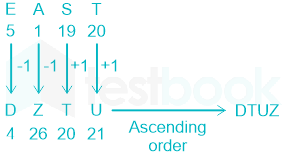
  • In a critical moment (महत्वपूर्ण क्षण में):
  • Example: The team remained calm during the critical moment of the game.
  • In an unemployed mode (बेरोज़गारी की स्थिति में):
  • Example: He has been in an unemployed mode since the company downsized.
132

The following sentence has been split into four segments. Identify the segment that contains a grammatical error.
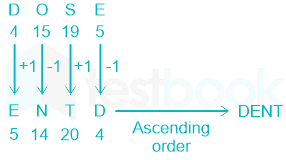
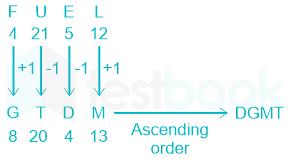
Observation should/ not be/ confuse with/ unconscious inference.

  1. ((a))

    Observation should

  2. ((b))

    not be

  3. ((c))

    confuse with

  4. ((d))

    unconscious inference

Show Answer
Answer: ((c))

confuse with

The correct answer is "confuse with"

Key Points

  • In the given sentence, the usage of "confuse" is incorrect instead of this we need to use "confused"
  • The given sentence is written in the passive voice as the structure is "be + V3" hence, we need to use the third form of the verb i.e. confused.

The correct sentence is: Observation should not be confused with unconscious inference.

Hence, the correct answer is option 3

133

The following sentence has been split into four segments. Identify the segment that contains a grammatical error.
God is the / most supreme judge / in this world, isn't he?/ No Error /

  1. ((a))

    God is the

  2. ((b))

    most supreme judge

  3. ((c))

    in this world, isn't he?

  4. ((d))

    No error

Show Answer
Answer: ((b))

most supreme judge

Option 2 is the correct answer.

Key Points

  • Rule: Superlative degrees are not formed/used with ‘superlative words’ like 
  • Unique, top, apex, supreme, excellent, perfect, ideal, chief, extreme, complete, universal, round, dead, ultimate, absolute, exemplary, circular etc
  • Examples:
  1. Sensual pleasure must not be the chiefest aim of life. (Incorrect)

Sensual pleasure must not be the chief aim of life (Correct) 2. Testbook provides a most ideal working atmosphere for its employees to work. (Incorrect)

Testbook provides an ideal working atmosphere for its employees to work. (Correct).

Correct Sentence: God is the supreme judge in this world, isn't he?

134

Go through the sentence below and mark the part that has an error in it. Mark 'D' as your answer if the sentence appears to be correct.

The quality of this fabric (A) is superior than (B) that of you bought online.(C) No error (D)

  1. ((a))

    A

  2. ((b))

    B

  3. ((c))

    C

  4. ((d))

    D

Show Answer
Answer: ((b))

B

Option no 2 is the correct answer.

Key Points

  • RULE: Usually “than” is used after comparative degrees but If the comparative degree is from ‘Latin language’, we use preposition ‘to’ after it.
  • Examples:
  • Narendra Modi is senior than Amit Shah. (Incorrect)
  • Narendra Modi is senior to Amit Shah. (Correct)

Correct Sentence: The quality of this fabric is superior to that of you bought online.

 Important Points

  • What are Latin  Comparative degrees?
  • ‘Prefer’ and Comparative degrees ending with “-ior” are identified as ‘Latin comparative degrees’ 
  • Examples:
  • superior, i nterior, junior, senior, inferior, exterior, posterior, prefer, preferable etc.
135

Identify the segment in the sentence which contains a grammatical error.

Mohan was very hungry so he had missed breakfast that morning.

  1. ((a))

    very hungry

  2. ((b))

    so he had missed

  3. ((c))

    Mohan was

  4. ((d))

    breakfast that morning

Show Answer
Answer: ((b))

so he had missed

The erroneous part is 'so he had missed'.

Key Points

  • The given sentence is grammatically incorrect.
  • Here, 'as he missed' should be used instead of 'so he had missed'.
  • The given sentence should be in the simple past tense as the point of time in the past i.e., that morning is given.
  • Hence, 'had missed' should be changed into 'missed'.
  • Also, the conjunction as is to be used instead of so.
  • Here, as is used with the sense of because (क्‍योंकि).
  • Example: I didn’t buy the dress, as I decided it was too expensive.
  • On the perusal of the above lines, we can say that the correct choice is option 2.

Correct Sentence: Mohan was very hungry as he missed breakfast that morning.

Direction: Read the passage given below and answer the questions that follow by selecting the most appropriate option:

Mount Vesuvius, a volcano located between the ancient Italian cities of Pompeii and Herculaneum, has received much attention because of its frequent and destructive eruptions. The most famous of these eruptions occurred in A. D. 79. The volcano had been inactive for centuries. There was little warning of the coming eruptions although one account unearthed by archaeologists says that a hard rain and a strong wind had disturbed the celestial calm during the preceding night. Early next morning, the volcano poured a huge river of molten rock down upon Herculaneum, completely burying the city and filling the harbour with coagulated lava. Meanwhile, on the other side of the mountain, cinders, stone and ash rained down on Pompeii. Sparks from the burning ash ignited the combustible rooftops quickly. Large portions of the city were destroyed in the conflagration. Fire, however, was not the only cause of destruction. Poisonous sulphuric gases saturated the air. These heavy gases were not buoyant in the atmosphere and therefore sank towards the earth and suffocated people.

136

What caused the rooftops to get ignited?

  1. ((a))

    Forest fire

  2. ((b))

    Volcanic eruption

  3. ((c))

    Air pollution

  4. ((d))

    Wildfires

Show Answer
Answer: ((b))

Volcanic eruption

The correct answer is 'Option 2'.


Key Points

  • The passage explains that sparks from burning ash caused the combustible rooftops of Pompeii to ignite.
  • These sparks were a direct result of the volcanic eruption of Mount Vesuvius in A.D. 79.
  • Other contributing factors to destruction included molten rock, cinders, ash, and poisonous gases, but the ignition of rooftops specifically came from the volcanic activity.

Therefore, the correct answer is Option 2

137

Which natural phenomenons were witnessed on the night preceding the disaster ?

  1. ((a))

    earthquakes

  2. ((b))

    hail and storm

  3. ((c))

    hard rain and strong wind

  4. ((d))

    tsunami

Show Answer
Answer: ((c))

hard rain and strong wind

The correct answer is 'Option 3'.


Key Points

  • The passage mentions that one account unearthed by archaeologists noted “a hard rain and a strong wind” disturbed the celestial calm during the preceding night.
  • This indicates the natural phenomena witnessed on the night preceding the eruption were hard rain and strong wind, not earthquakes, hail, tsunami, or other events.

Therefore, the correct answer is Option 3

138

What is the synonym of 'Conflagration'?

  1. ((a))

    Air

  2. ((b))

    Destruction

  3. ((c))

    Event

  4. ((d))

    Fire

Show Answer
Answer: ((d))

Fire

The correct answer is 'Option 4'.


Key Points

  • The word “conflagration” refers to a large destructive fire.
  • In the passage, it is mentioned that “Sparks from the burning ash ignited the combustible rooftops quickly. Large portions of the city were destroyed in the conflagration.”
  • This context clearly indicates that “conflagration” means fire rather than air, destruction in general, or event.

Therefore, the correct answer is Option 4.

139

What is the antonym of 'Celestial'?

  1. ((a))

    Blessed

  2. ((b))

    Earthly

  3. ((c))

    Supernal

  4. ((d))

    Heavenly

Show Answer
Answer: ((b))

Earthly

The correct answer is ''Option 2'.


Key Points

  • The word ‘celestial’ relates to the sky, heavens, or anything heavenly and divine.
  • The antonym of ‘celestial’ would be earthly, which pertains to the world, land, or terrestrial matters.
  • Other options like ‘blessed’, ‘supernal’, and ‘heavenly’ are similar in meaning to ‘celestial’ and therefore are not correct antonyms.

Therefore, the correct answer is Option 2

140

Which gas erupted from the volcano?

  1. ((a))

    Carbon Monoxide

  2. ((b))

    Hydrogen Cyanide

  3. ((c))

    Ozone

  4. ((d))

    Sulphuric Gas

Show Answer
Answer: ((d))

Sulphuric Gas

The correct answer is 'Option 4'.


Key Points

  • The passage mentions that "poisonous sulphuric gases saturated the air" during the eruption of Mount Vesuvius.
  • These gases were heavy, sank towards the earth, and suffocated people, causing significant destruction along with lava and fire.
  • Therefore, the gas released from the volcano was sulphuric gas.

Therefore, the correct answer is Option 4.

English Language 2 (20 questions)

141

Choose the correct Passive Voice transformation of the given sentence.

An old woman was helping the wounded soldier.

  1. ((a))

    An old woman was helped by the wounded soldier.

  2. ((b))

    The wounded soldier was being helped by an old woman.

  3. ((c))

    The wounded soldier was been helped by an old woman.

  4. ((d))

    The wounded soldier has helped by an old woman.

Show Answer
Answer: ((b))

The wounded soldier was being helped by an old woman.

The correct answer is 'The wounded soldier was being helped by an old woman.'

Key Points

  • The given sentence is in active voice. As per the question we have to change it to passive voice.
  • The given sentence is in past continuous tense and its structure is as follows:
  • Subject + was/were + V1 + ing + Object (Active voice)
  • The passive structure will be as follows - 
  • Subject (objective case) + was/were + being + past participle + by Object (subjective case) (Passive voice)
  • Example: 
  • She was cooking dinner. (Active voice)
  • Dinner was being cooked by her. (Passive voice)
  • The subject of the given sentence is ‘old woman’.
  • The object of the given subject is ‘wounded soldier’.
  • The subject will be put in place of the object and the object will be put in place of the subject.
  • 'was helping' will be changed to 'was being helped'.
  • Hence, option 2 is the correct answer.

Correct sentence - The wounded soldier was being helped by an old woman.

142

Select the option that expresses the given sentence in passive voice. 

I could not use his smartphone as it was password protected.

  1. ((a))

    His smartphone has not been used by me as it is password protected.

  2. ((b))

    His smartphone cannot be used by me as it is password protected.

  3. ((c))

    His smartphone could not been used by me as it was password protected.

  4. ((d))

    His smartphone could not be used by me as it was password protected.

Show Answer
Answer: ((d))

His smartphone could not be used by me as it was password protected.

The correct answer is "His smartphone could not be used by me as it was password protected."

Key Points

  • The given sentence is an example of Active Voice.
  • As per the given question we have to change it into Passive Voice.
  • The process of changing the sentence into passive voice is as follows:
  • The subject of the given sentence is 'I'.
  • The object of the given sentence is 'His smartphone'.
  • Moreover, the modal verb has been used in the active voice,
  • therefore, the passive voice will follow the given structure:
  • Active Voice - modal verb*(can)* + V1
  • Passive Voice - modal verb*(can)* + be + V3
  • Here, 'could not use' will be changed into 'could not be used' because in 'active to passive' change third form of the verb is used.

Thus, the sentence is: His smartphone could not be used by me as it was password protected.

143

Select the option that expresses the given sentence in passive voice. 

I like my new house.

  1. ((a))

    I am liking my new house.

  2. ((b))

    My new house was liked by me.

  3. ((c))

    My new house has been liked by me.

  4. ((d))

    My new house is liked by me.

Show Answer
Answer: ((d))

My new house is liked by me.

The correct answer is "My new house is liked by me."

Key Points

  • In Active Voice, a sentence emphasizes the subject, performing an action.
  • In Passive Voice, a sentence emphasizes the action or the object of the sentence.
  • The given sentence is in the active voice and 'I' is the subject and 'my new house' is the object.
  • When we convert this sentence into passive voice, the subject 'I' of the active voice becomes the object 'me', and the object 'my new house' becomes the subject.
  • The passive format "'is + V3 (liked)" should be used.
  • This is the active and passive voice rule for the present simple tense.

Thus, by following the above steps, we get:  My new house is liked by me.

144

Select the option that expresses the given sentence in passive voice.

Someone has eaten the chocolate.

  1. ((a))

    The chocolate has been eaten by someone.

  2. ((b))

    The chocolate is eaten by someone.

  3. ((c))

    The chocolate had been eaten by someone.

  4. ((d))

    The chocolate is being eaten by someone.

Show Answer
Answer: ((a))

The chocolate has been eaten by someone.

The correct answer is The chocolate has been eaten by someone.

Key Points

  • The given sentence is in the active voice, thus, we need to change it into the passive voice.
  • Follow the below steps to change the voice:
  • Find the subject (Someone) and object (The chocolate) of the sentence and exchange their places during transformation.
  • The given sentence is in the present perfect tense.
  • The passive verb form for the present perfect is: 
  • Has/have + been + past participle form of the verb.
  • So, 'has eaten' changes to 'has been eaten'.

By Following these steps, we get: The chocolate has been eaten by someone.

145

Select the option that expresses the given sentence in passive voice. 

Some girls were helping the boy.

  1. ((a))

    The boy is being helped by some girls

  2. ((b))

    The boy was being helped by some girls

  3. ((c))

    The wounded helped by some girls

  4. ((d))

    The boy was helped by some girls.

Show Answer
Answer: ((b))

The boy was being helped by some girls

The correct answer is "The boy was being helped by some girls"

 Key Points

  • Look at the basic rule for this type of conversion: ​

  • | Active | Passive | | --- | --- | | Subject + was/were + v1+ing+ object. | Object+ was/were +being+V3+ by + subject | | Some girls were helping the boy. | The boy was being helped by some girls |

  • Look at the following example

  • Active: The angels were pushing the handsome man.

  • Passive: The handsome man was being pushed by the angels.

  • Hence, the correct answer is: The boy was being helped by some girls.

146

Select the option that expresses the given sentence in indirect speech.

The gardener said, "These roses will bloom early."

  1. ((a))

    The gardener said that those roses will bloom early.

  2. ((b))

    The gardener said that these roses would bloom early.

  3. ((c))

    The gardener said that these roses will bloom early.

  4. ((d))

    The gardener said that those roses would bloom early.

Show Answer
Answer: ((d))

The gardener said that those roses would bloom early.

The correct answer is "The gardener said that those roses would bloom early."

Key Points

  • There are a few things to keep in mind when changing a sentence from direct to indirect speech.
  • In the given sentence, "these" in the direct speech will change to "those"  in indirect speech.
  • In the given sentence, the modal verb "will" in the direct speech changes to "would" in indirect speech.
  • Modal verbs express possibility, necessity, permission, and other emotions in an indirect speech.
  • Examples of modal verbs include would, should, could, might, etc.
  • Example: Rooney said, " I will visit your place today".
  • Rooney said that he would visit my place that day

Hence, the correct answer is option 4.

147

Select the most appropriate indirect form of the given sentence.

He said, "They will be arriving here by the next train."

  1. ((a))

    He said that they could be arriving there by the next train.

  2. ((b))

    He told that they would be arriving there by the next train.

  3. ((c))

    He said that they would be arriving there by the next train.

  4. ((d))

    He said that they would be arriving here by the next train.

Show Answer
Answer: ((c))

He said that they would be arriving there by the next train.

The correct answer is 'He said that they would be arriving there by the next train”.

Key Points

  • The given sentence is an example of an assertive sentence.
  • The given sentence is in the form of direct speech. As per the question we have to change it into indirect speech.
  • Basic rules for changing or converting direct speech into indirect speech:​
  • ‘Comma’ and 'inverted comma' are omitted in indirect speech and are often replaced by 'that' clauses to form 'that clauses'.
  • According to the reporting verb, changes are made in the direct sentence or the sentence in inverted commas.
  • 'Said' will not be changed in the indirect speech because no object is mentioned after it.
  • 'That' conjunction will be added to account for the comma and double-inverted commas (starting a direct speech)
  • 'they' will be no change in the indirect speech. Third-person (he/she/it/they) or any person's name no change.
  • 'will be arriving' will be changed into 'would be arriving' in the indirect speech. (will/shall + be + ing to would/should + be + ing)
  • 'here' will be changed into 'there' in indirect speech. (change of time/adverbs direct form to indirect form)​
  • This is the direct and indirect speech rule for the assertive sentence.
  • Example:
  • ​The fairy said, “Cinderella will be going to the party.” (direct speech)
  • The fairy said that Cinderella would be going to the party. (indirect speech)​
  • Therefore, as per the points mentioned above, we find that "He said that they would be arriving there by the next train" is the correct indirect form of the given sentence.
148

Select the correct indirect form of the given sentence.

Ramu said, "Lots of people in my village helped the migrant workers by giving them food."

  1. ((a))

    Ramu said that lots of people in his village helped the migrant workers by giving them food.

  2. ((b))

    Ramu said that lots of people in my village helped the migrant workers by giving them food.

  3. ((c))

    Ramu said that lots of people in my village are helping the migrant workers by giving them food.

  4. ((d))

    Ramu said that lots of people in his village had helped the migrant workers by giving them food.

Show Answer
Answer: ((d))

Ramu said that lots of people in his village had helped the migrant workers by giving them food.

The correct answer is: Ramu said that lots of people in his village had helped the migrant workers by giving them food.

Key Points 

  • The given sentence is a direct speech and we need to convert it into an indirect speech.
  • We follow these rules in Direct-Indirect speech:
  • The reporting verb 'said' remains same in the indirect speech.
  • The pronoun 'I' changes to 'me' and 'my' changes to 'her' in the indirect part.
  • The pronoun 'my' changes to 'his' in the indirect speech.
  • If the direct speech part is written in the simple past tense then it changes to past perfect tense in the indirect part. Therefore "helped" changes to "had helped" in the indirect speech.
  • The inverted commas ("...") is replaced with the conjunction 'that' to show the indirect speech part.
  • The comma (,) is omitted to show the indirect speech part.
  • The first word of the indirect speech is in capital letters.

Therefore, the correct answer is option 4.

The indirect sentence is: Ramu said that lots of people in his village had helped the migrant workers by giving them food.

149

Select the correct indirect narration of the given sentence.

The lecturer said to the class, “You should start preparing for the examination.”

  1. ((a))

    The lecturer advised the class you have to start preparing for your examination.

  2. ((b))

    The lecturer advises the class to start preparing for the examination.

  3. ((c))

    The lecturer advised the class to start preparing for the examination.

  4. ((d))

    The lecturer had advised the class to started preparing for the examination.

Show Answer
Answer: ((c))

The lecturer advised the class to start preparing for the examination.

The correct answer is: The lecturer advised the class to start preparing for the examination.

Key Points 

  • The given sentence is in direct speech and we need to convert it to indirect speech.
  • When we change an direct speech into indirect speech, we must follow these rules:
  • The given sentence is also an imperative sentence.
  • The sense of command, order, advise, request and suggest is implied in the reported clause of the sentence. We have to change the reporting verb in accordance with the mood of the sentence.
  • In the imperative sentence the reporting verb ‘said’, ‘said to’, ‘told’ changes to advised, command, requested, ordered, etc. depending on the mood of the sentence.
  • Imperative sentence changes to statement form [direct to indirect speech]
  • The modal 'should' in the indirect speech is omitted because we use 'to' in forming the direct speech part.
  • We use 'to' to connect the two clauses in the indirect speech part. when advising something to someone.
  • Example - Mother said to me, “Think before you act.” (Direct)

                            Mother advised me to think before I act. (Indirect)  

Therefore, the correct answer is option 3.

Correct Indirect speech: The lecturer advised the class to start preparing for the examination.

150

Select the correct indirect speech.

John said to Mary, “You were hunting the horrible ghost.”

  1. ((a))

    John told Mary that she had been hunted the horrible ghost.

  2. ((b))

    John told Mary that she have been hunting the horrible ghost.

  3. ((c))

    John told Mary that she has been hunting the horrible ghost.

  4. ((d))

    John told Mary that she had been hunting the horrible ghost.

Show Answer
Answer: ((d))

John told Mary that she had been hunting the horrible ghost.

The correct answer is "John told Mary that she had been hunting the horrible ghost."

Key Points 

  • Let’s look at the basic rules to convert this sentence.
  • We will remove inverted commas.
  • We will use “that” before the speech.
  • The verb in the Reporting verb is changed into “tell” or “told” with an object otherwise ‘say’ and ‘said’ are retained.
  • The given sentence is in the Past continuous tense.
  • "You" will change to "she" because of Mary
  • The reported verb is in the past, so we must change the Past continuous tense into the Past perfect continuous tense.
  • Look at the following examples:
  • She said to me, “I was waiting for you.”  Direct

She told me that she had been waiting for me    Indirect

  • Shyam said to Sita, “You were playing tennis.”   Direct

Shyam told Sita that she had been playing tennis   Indirect

Hence, the correct answer: John told Mary that she had been hunting the horrible ghost.

Additional Information 

  • Look at the basic rules of converting the tenses
  • | Direct | Indirect | | --- | --- | | Present indefinite | Past indefinite | | Present Continuous | Past Continuous | | Present Perfect | Past Perfect | | Present Perfect Continuous | Past Perfect continuous | | Past indefinite | Past Perfect | | Past Continuous | Past Perfect Continuous | | Past Perfect | No change in Tense | | Past Perfect Continous | No change inTense |
151

Identify the segment in the sentence which contains an error.

While cooking food in the kitchen, you should always wear inflammable clothes.

  1. ((a))

    While cooking

  2. ((b))

    you should

  3. ((c))

    food in the kitchen 

  4. ((d))

    always wear inflammable clothes.

Show Answer
Answer: ((d))

always wear inflammable clothes.

The erroneous part is "wear inflammable clothes"

Key Points

  • "Non-flammable" will replace "inflammable"
  • Look at the meaning of both words:
  • Inflammable: liable to catch fire easily
  • Non-flammable: not likely to burn easily
  • Look at the examples:
  • ​We should always use clothes that are non-flammable.
  • Oxygen is a highly inflammable gas.

Hence, the correct sentence is: While cooking food in the kitchen, you should always wear non-flammable clothes. 

 Hinglish

  • दोनों शब्दों के अंतर को समझें
  • Inflammable- जिसमें जल्दी आग लग जाती है
  • Non-flammable जिस में आग नहीं लगती
  • Examples:
  • We should always use clothes that are non-flammable.
  • Oxygen is a highly inflammable gas.
  • इसलिए Non-flammable यहां सही  है
152

Find the part of the given sentence that has an error in it. If there is no error, choose 'No error'.

The minister announced (a)/ compensation for (b)/ the victims from the accident. (c)/ No error (d)

  1. ((a))

    (b)

  2. ((b))

    (c)

  3. ((c))

    (d)

  4. ((d))

    (a)

Show Answer
Answer: ((b))

(c)

The correct answer is 'c'.

Key Points 

  • The error lies in the usage of 'from' instead of 'of'.
  • Preposition means a word governing, and usually preceding, a noun or pronoun and expressing a relation to another word or element in the clause, as in ‘the man on the platform’, ‘she arrived after dinner’, ‘what did you do it for ?’.
  • Here, in the given sentence the victims are not originating 'from' the accident but are rather the result of it.
  • So, 'of' should be used in place of 'from'.
  • For example: His blindness is the result of an accident.
  • Hence, the correct answer is option 2.
<br>

Correct Sentence: The minister announced compensation for the victims of the accident.

153

In the following question, find out which part of the sentence has an error and if the sentence is grammatically correct, mark your answer as no error.

Almost three-quarters of the world's population (A)/ has been living in just (B)/ two continents i.e. Asia and Africa. (C)/ no error (D)

  1. ((a))

    A

  2. ((b))

    B

  3. ((c))

    C

  4. ((d))

    D

Show Answer
Answer: ((b))

B

The correct answer is option 2 i.e. 'has been living in just'.

Key Points

  • Three-quarters are plural. But when we are talking about a portion of a single item, that item is singular.
  • Here it is talking about three-quarters of population so it will take a plural verb. Replace 'has been' with 'have been'.
  • Let's see some examples:

Three-quarters of the sample was sold. (part of one item)

Three-quarters of the samples were sold. (different items so it will take plural verb)

154

Identify the segment in the sentence which contains a grammatical error.

The old lady finds it difficult to climb the steep steps of the train and asked for help.

  1. ((a))

    finds it

  2. ((b))

    of the train

  3. ((c))

    the steep steps

  4. ((d))

    difficult to climb

Show Answer
Answer: ((a))

finds it

The erroneous segment in the sentence is finds it . 

Key Points

  • In the given sentence, the improper use of parallelism is there .
  • Parallelism is the practice of lining up all your verb tenses when you have a list of them in one sentence.
  • When two or more verbs have the same subject the verbs must be parallel.
  • In the above sentence , The old lady is the only subject for 2 verbs used in the sentence i.e. finds and asked. Both are indifferent tenses finds is in V1  and asked is in V2 form.
  • Therefore as per the rule of conjunction with parallelism, the above sentence should be in the simple past tense as in accordance with the verb asked.
  • The structure of simple past tenseSubject + V2.
  • Hence, instead of finds it , we will use found to make the sentence grammatically correct.
  • So, the correct answer is Option 1.
155

The given sentence contains a grammatical error. Identify the segment that contains the error.

My cousin is not like going for a walk very much.

  1. ((a))

    is not like

  2. ((b))

    very much

  3. ((c))

    My cousin

  4. ((d))

    going for a walk

Show Answer
Answer: ((a))

is not like

The erroneous segment is "is not like"

Key Points

  • In the given sentence, the use of the verb "is" is incorrect.
  • The verb "is" is a stative verb.
  • Stative verbs represent a state of being or a condition.
  • Example: He is unconscious due to the sedatives from the operation.
  • In the given sentence, we need to use an action verb since the sentence is describing an action.
  • Action verbs are those verbs that describe what a person, animal, thing, or process can do.
  • The appropriate action verb form will be 'does'.
  • In the given sentence, 'does' describes what the subject of the sentence is not fond of doing.
  • Hence, the correct answer is option 1.

The correct sentence is: My cousin does not like going for a walk very much.

Read the given passage and answer the questions that follow.

Technology has revolutionised education, transforming traditional classrooms and creating new opportunities for learning. The integration of digital tools and resources has enhanced the educational experience for both, students and teachers. Interactive whiteboards, tablets and educational software have replaced chalkboards and textbooks, making lessons more engaging and interactive. Students can access a wealth of information online, enabling them to conduct research and explore subjects in greater depth.

One of the most significant impacts of technology on education is the ability to personalise learning. Adaptive learning software can assess a student's strengths and weaknesses and provide customised lessons that cater to their individual needs. This personalised approach helps students learn at their own pace, ensuring they grasp fundamental concepts before moving on to more advanced topics. Additionally, online courses and educational platforms have made learning more accessible to people worldwide. Students can take classes from prestigious institutions, participate in webinars and earn certifications without leaving their homes.

Technology has also facilitated collaboration among students and teachers. Online discussion forums, video conferencing and collaborative tools like Google Docs allow students to work together on projects and assignments, regardless of their physical location. This fosters a sense of community and enhances communication skills. For teachers, technology offers tools for creating engaging lesson plans, tracking student progress and providing timely feedback. Data analytics can help identify areas where students struggle, allowing for targeted interventions.

However, the integration of technology in education also presents challenges. There is a digital divide between students who have access to technology and those who do not. Ensuring equitable access to devices and the internet is crucial for bridging this gap. Additionally, teachers need adequate training to effectively incorporate technology into their teaching practices.

In conclusion, technology has significantly impacted education, offering numerous benefits but also presenting challenges that need to be addressed. By leveraging technology effectively, we can create a more inclusive and dynamic learning environment.

156

What has technology replaced in traditional classrooms to make lessons more engaging? 

  1. ((a))

    School

  2. ((b))

     Playground 

  3. ((c))

    Textbooks 

  4. ((d))

    Teachers

Show Answer
Answer: ((c))

Textbooks 

The correct answer is 'Option 3'.


Key Points

  • Technology has replaced chalkboards and textbooks in traditional classrooms with interactive whiteboards, tablets, and educational software.
  • This can be inferred from the passage, which states: "Interactive whiteboards, tablets and educational software have replaced chalkboards and textbooks, making lessons more engaging and interactive."
  • Options like ‘school’, ‘playground’, and ‘teachers’ are not mentioned as being replaced in the passage.
  • The passage specifically refers to the replacement of traditional teaching tools and materials, not the broader school environment or teachers themselves.

Therefore, the correct answer is Option 3: Textbooks.


Additional Information

  • Option 1 (School): Incorrect, as the passage doesn’t mention schools being replaced.
  • Option 2 (Playground): Incorrect, as playgrounds are not discussed in the context of technology replacing them.
  • Option 4 (Teachers): Incorrect, as teachers are mentioned as benefiting from technology, not being replaced by it.
157

How does adaptive learning software benefit students?

  1. ((a))

    It eliminates homework.

  2. ((b))

     It reduces education cost. 

  3. ((c))

     It gives personalised training. 

  4. ((d))

    It replaces teachers.

Show Answer
Answer: ((c))

 It gives personalised training. 

The correct answer is 'Option 3'.


Key Points

  • Adaptive learning software provides customised lessons tailored to each student's strengths and weaknesses, offering personalised training.
  • According to the passage: "Adaptive learning software can assess a student's strengths and weaknesses and provide customised lessons that cater to their individual needs. This personalised approach helps students learn at their own pace..."
  • It does not mention eliminating homework, reducing education cost, or replacing teachers as direct benefits.

Therefore, the correct answer is Option 3: It gives personalised training.


Additional Information

  • Option 1 (It eliminates homework): Incorrect, as the passage does not mention homework elimination.
  • Option 2 (It reduces education cost): Incorrect, as cost reduction is not discussed as a benefit of adaptive learning software.
  • Option 4 (It replaces teachers): Incorrect, because the software is described as a tool for personalisation, not as a replacement for teachers.
158

Select the most appropriate title for the given passage. 

  1. ((a))

    Personalised Learning vs. Traditional Classrooms

  2. ((b))

    Modern Tools for Teachers

  3. ((c))

    The Digital Divide and Its Consequences

  4. ((d))

    The Role of Technology in Transforming Education

Show Answer
Answer: ((d))

The Role of Technology in Transforming Education

The correct answer is 'Option 4'.


Key Points

  • The passage discusses how technology has revolutionised and transformed education, impacting students, teachers, and the overall learning environment.
  • It covers various aspects such as digital tools, personalised learning, accessibility, collaboration, benefits, and challenges of technology in education.
  • Option 4, "The Role of Technology in Transforming Education," comprehensively encapsulates all the key themes of the passage.
  • Other options are too narrow or focus only on one aspect, whereas the passage provides a broader perspective.

Therefore, the correct answer is Option 4: The Role of Technology in Transforming Education.


Additional Information

  • Option 1: Incorrect, as the passage covers more than just personalised vs. traditional classrooms.
  • Option 2: Incorrect, since the focus is not only on tools for teachers but also on students and the entire learning process.
  • Option 3: Incorrect, as the digital divide is discussed but not the main theme of the passage.
159

What do you understand by inclusive and dynamic learning enviornment?

  1. ((a))

     Not considering diversity and maximum participation

  2. ((b))

    Considering diversity and minimum participation

  3. ((c))

    Considering diversity and maximum participation 

  4. ((d))

    Not considering diversity and minimum participation

Show Answer
Answer: ((c))

Considering diversity and maximum participation 

The correct answer is 'Option 3'.


Key Points

  • An inclusive learning environment considers the diversity of learners, accommodating different backgrounds, abilities, and learning needs.
  • A dynamic learning environment encourages maximum participation, engagement, and adaptability.
  • The passage mentions that leveraging technology can help create a more inclusive and dynamic environment, meaning that all students are considered and actively involved.

Therefore, the correct answer is Option 3: Considering diversity and maximum participation.


Additional Information

  • Option 1: Incorrect, as it excludes diversity and maximum participation.
  • Option 2: Incorrect, as minimum participation does not reflect a dynamic environment.
  • Option 4: Incorrect for the same reasons as Option 1.
160

Which of the following can be inferred from the passage? 

  1. ((a))

    The use of technology reduces the need for communication. 

  2. ((b))

    Adaptive software allows students to progress at their own pace.

  3. ((c))

    Technology has eliminated all educational inequalities.

  4. ((d))

    Students today prefer textbooks over online resources. 

Show Answer
Answer: ((b))

Adaptive software allows students to progress at their own pace.

The correct answer is 'Option 2'.


Key Points

  • The passage states: "This personalised approach helps students learn at their own pace, ensuring they grasp fundamental concepts before moving on to more advanced topics." This directly supports Option 2.
  • Option 1 is incorrect because the passage mentions that technology enhances communication and collaboration, not reduces it.
  • Option 3 is incorrect because the passage highlights the existence of a digital divide, indicating that educational inequalities still exist.
  • Option 4 is incorrect as the passage states that students can access a wealth of information online, making no claim that they prefer textbooks over online resources.

Therefore, the correct answer is Option 2: Adaptive software allows students to progress at their own pace.


Additional Information

  • Option 1: Incorrect, as technology fosters communication and community.
  • Option 3: Incorrect, since educational inequalities still exist due to the digital divide.
  • Option 4: Incorrect, as the passage indicates a shift towards online resources.

Hindi Language 1 (20 questions)

161

'ज्ञानी आदमी गंभीर होता है' अर्थ के लिए उपयुक्त लोकोक्ति कौन सी है?

  1. ((a))

    बड़े बोल का सिर नीचा

  2. ((b))

    भरी गगरिया चुपके जाय

  3. ((c))

    बड़ों के कान होते हैं, ऑंखे नहीं

  4. ((d))

    भैंस के आगे बीन बजाए, भैंस खड़ी पगुराय

Show Answer
Answer: ((b))

भरी गगरिया चुपके जाय

'ज्ञानी आदमी गंभीर होता है' अर्थ के लिए उपयुक्त लोकोक्ति भरी गगरिया चुपके जाय है।

Key Points

  • भरी गगरिया चुपके जाय का अर्थ - 'ज्ञानी आदमी गंभीर होता है।'
  • वाक्य प्रयोग :- महात्मा जी ज्ञानी और गंभीर हैं। वे अधजल गगरी छलकत जाए जैसे न होकर भरी गगरिया चुपके जाय जैसे हैं।

Additional Information

लोकोक्तिअर्थवाक्य प्रयोग
बड़े बोल का सिर नीचाघमंडी का सिर नीचाअनर्गल प्रलाप करने वाले पाकिस्तान को यह अच्छी तरह समझ लेना चाहिए कि बड़े बोल का सिर नीचा होता है।
बड़ों के कान होते हैं, ऑंखे नहींकान कच्चे होनामदन भइया में  सब अच्छाइयां हैं उनमें  सिर्फ एक कमी है, वह है– वे कान के कच्चे हैं, सुनी सुनाई बात पर विश्वास कर लेते हैं जिससे कई बार बेकसूर दण्डित हुए हैं। 'बड़ों के कान होते हैं, ऑंखे नहीं' कहावत बिल्कुल यथार्थ है।
भैंस के आगे बीन बजाए,  भैंस खड़ी पगुराय'बुद्धिहीन को उपदेश देना'आलसी मंजू दिनभर पड़ी -पड़ी  खटिया तोड़ती  रहती।उसकी सहेली रीना ने उसे काम करने की सलाह दी तो उसका कोई जवाब नहीं था तो उसने कहा भैंस के आगे बीन बजाए भैंस करे पगुराय तुम्हें समझाना अपना समय बर्बाद करना है।
शब्दपरिभाषा
लोकोक्तिलोकोक्ति’ शब्द ‘लोक + उक्ति’ शब्दों से मिलकर बना है जिसका अर्थ है- लोक में प्रचलित उक्ति या कथन’। साधारण शब्दों में जब कोई पूरा कथन किसी प्रसंग विशेष में उद्धत किया जाता है तो लोकोक्ति कहलाता है। इसी को कहावत कहते है। जैसे :-अकेला चना भाड़ नहीं फोड़ता’ जिसका अर्थ है ‘एक व्यक्ति के करने से कोई कठिन काम पूरा नहीं होता’
162

'घर में गंगा बहाना' मुहावरे का सही अर्थ है - 

  1. ((a))

    रोज गंगा स्नान करना

  2. ((b))

    धार्मिक प्रवृत्ति का होना

  3. ((c))

    निश्चल व्यक्ति होना

  4. ((d))

    घर में सभी सुविधाएँ होना

Show Answer
Answer: ((d))

घर में सभी सुविधाएँ होना

'घर में गंगा बहाना' मुहावरे का सही अर्थ "घर में सभी सुविधाएँ होना" है। अन्‍य व‍िकल्‍प असंगत हैं। 

Key Points

मुहावराअर्थवाक्‍य प्रयोग
घर में गंगा बहानाघर में सभी सुविधाएँ होनाराघव को लाटरी के रुपये मिल जाने से, उसके घर में गंगा बहने लगी।

Important Points कुछ अन्‍य महत्‍वपूर्ण मुहावरे- 

मुहावरेअर्थवाक्‍य प्रयोग
अंधा बननाकिसी बात पर ध्यान न देना।राम जानबूझकर अपने पिता जी की बातों पर ध्‍यान नहीं देता है।
स्वागत के लिए राह देखना।बेसब्री से इन्‍तजार करनासीता अपने मित्र के स्‍वागत के लिए सुबह से राह देख रही है।
अंधकार दूर करना।रोशनी का आस दिखानाराम ने सरकारी नौकरी प्राप्‍त करके अपने माता-पिता के अंधकार को दूर करने का काम किया है।

Additional Information 

मुहावराउदाहरण
मुहावरा का शाब्दिक अर्थ 'अभ्‍यास' है। मुहावरा शब्‍द अरबी भाषा का शब्‍द है। हिंदी में ऐसे वाक्‍यांशों को मुहावरा कहा जाता है। जो अपने साधारण अर्थ को छोड़कर विशेष अर्थ को व्‍यक्‍त करते हैं।अपनी खिचड़ी अलग पकाना-अर्थ- सबसे पृथक् काम करना।
वाक्य प्रयोग-वह अपनी खिचड़ी अलग पकाता है
163

निम्नलिखित मुहावरे का उचित अर्थ विकल्पों में से चुनिए।

नाक रगड़ना

  1. ((a))

    दीनता पूर्वक प्रार्थना करना

  2. ((b))

    परेशान करना

  3. ((c))

    क्रोधित होना

  4. ((d))

    तंग करना

Show Answer
Answer: ((a))

दीनता पूर्वक प्रार्थना करना

'नाक रगड़ना' मुहावरे का उचित अर्थ "दीनता पूर्वक प्रार्थना करना" है। अन्‍य व‍िकल्‍प असंगत हैं। 

Key Points

मुहावराअर्थवाक्‍य प्रयोग
नाक रगड़नादीनता पूर्वक प्रार्थना करनाजब श्याम चौरी करते हुए पकड़ा गया तो उसने लाख ‌‌‌बार नाक रगड़ी पर उसे माफी नहीं मिली।

Important Pointsअन्‍य व‍िकल्‍प- 

मुहावरेअर्थवाक्‍य प्रयोग
आग बबूला होनाक्रोधित होनाराधा जरा सी बात पर सीता पर आग बबूला हो गई।
नाक में दम करनापरेशान करनाआजकल शहर के गुंडों ने सबकी नाक मे दम कर रखा है।
164

निर्देश: निम्नलिखित वाक्यों में उनके प्रथम तथा अंतिम अंश जिन्हें मोटे अक्षरों में लिखा गया है वह A और F के अंतर्गत दिए गये हैं| बीचा वाले चार अंश (B), (C), (D) तथा (E) बिना क्रम के हैं| चारों अंशों को पहले और आखिरी वाक्य के सहयोग से उचित क्रमानुसार व्यवस्थित कर उचित विकल्प चुनें|

A) राज्यों को विभिन्न योजनाओं के लिए

B) जो संसाधन दिए जाते हैं

C) योजना आयोग के माध्यम से

D) देश के विभिन्न भागों का

E) उनका उद्देश्य

F) संतुलित क्षेत्रीय विकास करना है|

  1. ((a))

    BDEC

  2. ((b))

    DEBC

  3. ((c))

    EBDC

  4. ((d))

    CBED

Show Answer
Answer: ((d))

CBED

दिए गये विकल्पों का सही क्रम है राज्यों को विभिन्न योजनाओं के लिए योजना आयोग के माध्यम से जो संसाधन दिए जाते हैं उनका उद्देश्य देश के विभिन्न भागों का संतुलित क्षेत्रीय विकास करना है| अतः सही विकल्प CBED है|

165

निम्नलिखित वाकयों में से किसमें प्रेरणाथर्क क्रिया का प्रयोग नहीं है?

  1. ((a))

    पिता उसे पढ़ाते हैं 

  2. ((b))

    राम नहीं पढ़ता

  3. ((c))

    वे अध्यापक से पढ़वाते हैं 

  4. ((d))

    अध्यापक परिश्रम करते हैं 

Show Answer
Answer: ((b))

राम नहीं पढ़ता

दिए गए विकल्पों में से ‘राम नहीं पढ़ता’ वाक्य में प्रेरणार्थक क्रिया का प्रयोग नहीं है। अन्य सभी विकल्प प्रेरणार्थक क्रिया के उदाहरण हैं। अत: इसका सही उत्तर विकल्प 2 'राम नहीं पढ़ता' है।

Key Points

  • ‘राम नही पढता’ वाक्य में सामान्य क्रिया का प्रयोग है।
  • 'राम नही पढता’ वाक्य में प्रेरणार्थक क्रिया का प्रयोग नही है।
  • प्रेरणार्थक क्रिया में कर्ता स्वयं काम न करके किसी दुसरे से काम करवाता है।

Important Points

सामान्य क्रियाजब वाक्य में एक ही क्रिया का प्रयोग हो।सोहन ने गाना गाया।
संयुक्त क्रियाजब दो या दो से अधिक क्रिया मिलकर एक पूर्ण क्रिया बनाए।मैंने खाना खा लिया है।
नामधातु क्रियासंज्ञा, सर्वनाम और विशेषण शब्दों से बन्ने वाली क्रिया।हाथ – हथियाना, गर्म – गर्माना
प्रेरणार्थक क्रियाकर्ता स्वयं काम न करके किसी दुसरे से काम करवाता है।शिक्षक ने विद्यार्थी से पुस्तक पढवाई।
पूर्वकालिक क्रियाकर्ता एक क्रिया समाप्त करके तत्काल दूस्ररी क्रिया आरम्भ करता है।वह पढ़ कर सो गया।


Additional Information

शब्दपरिभाषाउदाहरण
क्रियाजिन शब्दों में किसी कार्य का करना या होना था, किसी घटना में घटित होने का संज्ञान होता है, उसे क्रिया कहते हैं। क्रिया के दो भेद माने गए हैं - अकर्मक और सकर्मक।मोर नाचता है = अकर्मक अनुराग ने फल खाए= सकर्मक
अकर्मक क्रिया - जिस क्रिया का फल कर्म पर नहीं करता पर पड़ता है उसे अकर्मक क्रिया कहते हैं।
सकर्मक क्रिया - जिस क्रिया का फल कर्म पर पड़ता है तथा जिसके प्रयोग में कर्म की अनिवार्यता बनी रहती है, उसे सकर्मक क्रिया कहते हैं।
166

किस क्रमांक में सभी शब्‍द तद्भव है

  1. ((a))

    घोटक, गृह

  2. ((b))

    सूखा, शक्‍कर

  3. ((c))

    सत्य, जिह्वा

  4. ((d))

    कृष्‍ण, अक्षि

Show Answer
Answer: ((b))

सूखा, शक्‍कर

सूखा, शक्‍कर यह युग्म तद्भव शब्दों का है।

  • अत: सभी शब्द तद्भव के लिए विकल्प 'सूखा, शक्‍कर' सही होगा।
  • सूखा, शक्‍कर --> शुष्क, शर्करा
<br>

Key Points

  • घोटक, गृह -- घोडा, घर
  • सत्य, जिह्वा - सच, जीभ
  • कृष्‍ण, अक्षि - काला, आँख
<br>

अन्य

  • कुम्हार, गधा -- कुम्भकार, गर्दभ
  • पलंग, पीला --  पर्यंक, पीत
  • डंडा, नाक --  दंड, नासिका
<br>

Additional Information

शब्दपरिभाषाउदाहरण
तत्समऐसे शब्द जो संस्कृत से ज्यों के त्यों लिए गए, तत्सम होते हैं।कूप, उष्ट्र, पंचम आदि
तद्भवसंस्कृत से हिंदी में आने पर जिन शब्दों का रूप बदल गया हो, तद्भव कहलाते हैं।आग, काम, पाँच आदि
देशज शब्दऐसे शब्द जो देश की अन्य या क्षेत्रीय भाषा से हिंदी में सम्मिलित हुए हैं।थैला, लोटा आदि।
विदेशज शब्दअन्य देश की भाषा से आए हुए शब्द जो हिंदी भाषा में सम्मिलित हुए। इन विदेशी भाषाओं में मुख्यतः अरबी, फारसी, तुर्की, उर्दू, अंग्रेजी व पुर्तगाली शामिल हैं।अदालत,   ऑफिस  आदि।
167

निम्न में से 'नौका' का पर्यायवाची शब्द है:

  1. ((a))

    तरिणी

  2. ((b))

    सफरी

  3. ((c))

    तटिनी

  4. ((d))

    तड़ित

Show Answer
Answer: ((a))

तरिणी

'नौका' का पर्यायवाची शब्द 'तरिणी' है। 

  • 'नौका' के अन्य पर्यायवाची शब्द - नाव, जलयान, जलपात्र, तरी, बेड़ा, डोंगी आदि।

Mistake Points

  • अमरूद -  पेरुक, सफरी, अमृतफल, बिही।
  • नदी - सरिता, तटिनी, तरंगिणी, निर्झरिणी, आपगा, निम्नगा, कूलंकषा।
  • बिजली- विद्युत, तड़ित, दामिनी, सौदामिनी, गाज।

Key Points

  • जिन शब्दों के अर्थ में समानता होती है, वे पर्यायवाची शब्द कहलाते है।

Additional Information कुछ अन्य महत्वपूर्ण पर्यायवाची शब्द-

  • पृथ्वी - धरा, धरती, वसुधा, भूमि, वसुंधरा, भू, इला, धरा, धरत्री, धरणी।
  • पर्वत - शैल, नग, भूधर, पहाड़, अंचल, महीधर, गिरि, भूमिधर, तुंग, अद्रि।
  • बिजली - चपला, चंचला, दामिनी, सौदामनी, विधुत्, तड़ित, बीजुरी, क्षणप्रभा।
  • मेघ - बादल, जलधर, पयोद, पयोधर, घन।
  • राजा - नृप, नृपति, भूपति, नरपति, भूप, महीप, महीपति, नरेश।
  • सागर - समुद्र, उदधि, जलधि, वारिधि, पारावार, सिंधु, नीरनिधि, नदीश।
  • जंगल - वन, कानन, बीहड़, विटप, विपिन।
  • घर - गृह, सदन, आवास, आलय, गेह, निवास, निलय, मंदिर।
168

दिये गए वाक्य को पूरा करे।

मेरे ________ ।

  1. ((a))

    मौसेरा भाई का नाम रामू है।

  2. ((b))

    मौसेरे भाई का नाम रामू है।

  3. ((c))

    मौसेरि भाई का नाम रामू है।

  4. ((d))

    मौसेरी भाई का नाम रामू है।

Show Answer
Answer: ((b))

मौसेरे भाई का नाम रामू है।

दिए गए विकल्पों में से विकल्प 2 'मौसेरे भाई का नाम रामू है।' सबसे उपयुक्त है।

Key Points

  • मेरे मौसेरे भाई का नाम रामू है
  • अन्य सभी विकल्पों में मात्रात्मक त्रुटि (मौसेरि, मौसेरा, मौसेरी) है।

Additional Information

  • शब्द शुद्धि के साथ वाक्य शुद्धि का भी भाषा में महत्त्वपूर्ण स्थान होता है। वाक्य में अनावश्यक शब्द प्रयोग से, अनुपयुक्त शब्द के प्रयुक्त होने से, सही क्रम या अन्विति न होने से, लिंग, वचन, कारक का सही प्रयोग नहीं होने से, सही सर्वनाम एवं क्रिया का प्रयोग न होने से वाक्य अशुद्ध हो जाता है। जो अर्थ के साथ भाषा सौन्दर्य को हानि पहुँचाता है।
169

निम्नलिखित में से रीतिवाचक क्रिया विशेषण है?

  1. ((a))

    थोड़ा सा

  2. ((b))

    भीतर बाहर

  3. ((c))

    धीरे-धीरे

  4. ((d))

    अभी-अभी

Show Answer
Answer: ((c))

धीरे-धीरे

उपर्युक्त विकल्पों में से विकल्प धीरे-धीरे सही है तथा अन्य विकल्प असंगत हैं।

Key Points

  • धीरे-धीरे रीतिवाचक क्रिया विशेषण का बोध कराता है।
  • रीतिवाचक क्रिया विशेषण 
  • ऐसे अविकारी शब्द जो हमें क्रिया के होने के तरीके या विधि के बारे में बताते हैं, वे शब्द रीतिवाचक क्रियाविशेषण कहलाते हैं।
  • जैसे: खरगोश तेज़ दौड़ता है।

Important Points

  • रीतिवाचक क्रिया विशेषण शब्द
  • अचानक, धीरे-धीरे, स्वयं, स्वतः, यथाशक्ति, ऐसे, वैसे, यथा, तथा, सहसा, अनायास, सहज, साक्षात, येन केन प्रकारेण इत्यादि।

Additional Information

  • थोड़ा-सा  :- परिमाण बोधक क्रिया विशेषण
  • अभी-अभी  :- काल बोधक क्रिया विशेषण
  • भीतर-बाहर :- स्थान बोधक क्रिया विशेषण
170

प्रश्न के लिए उचित शब्द का चयन कीजिये।

प्रेमचंद का स्वभाव बहुत ही विनम्र था, किंतु उनमें स्वाभिमान __________ भरा था।

  1. ((a))

    इतना

  2. ((b))

    कूट-कूटकर

  3. ((c))

    कम

  4. ((d))

    अधिक

Show Answer
Answer: ((b))

कूट-कूटकर

प्रश्न के लिए उचित शब्द होगा - कूट-कूटकर

Key Points

  • वाक्य - प्रेमचंद का स्वभाव बहुत ही विनम्र था, किंतु उनमें स्वाभिमान कूट-कूटकर भरा था।
  • 'कूट-कूट कर भरना' का अर्थ है - अधिक मात्रा में होना
  • विशेषण शब्द - इतना, कम, अधिक

अन्य विकल्प -

  • इतना (इस मात्रा में।) : जैसे - हम इतना काम कर नहीं सकते।
  • कम (थोड़ा, अल्प) : जैसे - काँच बहुत कम बचे थे।
  • अधिक (बहुत, बढ़ा हुआ।) : जैसे - चाय बहुत अधिक मीठी हो गई है I

Additional Informationविशेषण- 

  • जो शब्द गुण, दोष, भाव, संख्या, परिणाम आदि से संबंधित विशेषता का बोध कराते हैं, उसे विशेषण कहते हैं।
  • जैसे- बड़ा, काला, लम्बा, दयालु, भारी, सुंदर, कायर, टेढ़ा–मेढ़ा, एक, दो, सारा, वीर पुरुष, गोरा, अच्छा, बुरा, मीठा, खट्टा, आदि।
  • जैसे- राधा सुंदर है।
171

'उसने' शब्द कौन सा सर्वनाम है ?

  1. ((a))

    निश्चयवाचक

  2. ((b))

    निजवाचक

  3. ((c))

    प्रश्नवाचक

  4. ((d))

    व्यक्तिवाचक

Show Answer
Answer: ((d))

व्यक्तिवाचक

उपरोक्त विकल्पों में से विकल्प 4 सही है। अन्य विकल्प असंगत है।

Key Points

सर्वनाम - संज्ञा के स्थान पर प्रयुक्त होने वाले शब्दों को सर्वनाम कहते हैं। जैसे - मैं, वह, वे, उन्हें, अपने तुम, हम आदि। हिंदी में मूलतः सर्वनामों की संख्या 11 है – मैं, तू, आप, यह, वह, जो, सो, कौन, कोई, क्या और कुछ।
<br>

Additional Information

सर्वनाम के छः भेद हैं –
सर्वनामपरिभाषाउदाहरण
निश्चयवाचकजो सर्वनाम शब्द किसी व्यक्ति, वस्तु आदि का निश्चयपूर्वक बोध कराते हैं वे निश्चयवाचक सर्वनाम कहलाते हैं।वे, यह, वह
पुरुषवाचक (व्यक्तिवाचक)जिस सर्वनाम का प्रयोग वक्ता द्वारा स्वयं के लिए या अन्य व्यक्ति के लिए किया जाता है।मैं, हम, मुझे, तू, तुम, तुझे, तुम्हारा, वह, वे, उसने
निजवाचकजिन सर्वनाम शब्दों का प्रयोग कर्ता के साथ अपनेपन का ज्ञान कराने के लिए किया जाए, उन्हें निजवाचक सर्वनाम कहते है।अपने आप, स्वतः
प्रश्नवाचकप्रश्र करने के लिए जिन सर्वनामों का प्रयोग होता है, उन्हें 'प्रश्रवाचक सर्वनाम' कहते है।क्या, कौन, किसने
अनिश्चयवाचकजिन सर्वनाम शब्दों से वस्तु, व्यक्ति, स्थान आदि की निश्चितता का बोध नही होता वे अनिश्चयवाचक सर्वनाम कहलाते हैं।कुछ, कोई
सम्बन्धवाचकजिन सर्वनाम शब्दों का प्रयोग किसी वस्तु या व्यक्ति का सम्बन्ध बताने के लिए किया जाए वे शब्द सम्बन्धवाचक सर्वनाम कहलाते हैं।जो-सो, जैसा-वैसा
172

निर्देश: निम्नलिखित वाक्य में उनके प्रथम तथा अंतिम अंश जिन्हें मोटे अक्षरों में लिखा गया है वह A और F के अंतर्गत दिए गये हैं| बीच वाले चार अंश (B), (C), (D) तथा (E) बिना क्रम के हैं| चारों अंशों को पहले और आखिरी वाक्य के सहयोग से उचित क्रमानुसार व्यवस्थित कर उचित विकल्प चुनें|

A) वि��्यार्थी, महिला, दलित वर्ग, डॉक्टर, संपादक

B) विकास करने वाले ऐसे ही अन्य सामाजिक समूहों ने

C) ऐसे समूहों ने ऑल इंडिया विमेंस कॉन्फ्रेंस

D) खुद को राष्ट्रीय स्तर पर संगठित करने का प्रयास किया।

E) और अपने भीतर साझा हित की चेतना का

F) और अन्य संगठनों का गठन किया।

  1. ((a))

    B C E D

  2. ((b))

    E C D B 

  3. ((c))

    E B D C 

  4. ((d))

    C B E D

Show Answer
Answer: ((c))

E B D C 

विकल्प  3 " E B D C" सही उत्तर है |

Key Points

उपर्युक्त विकल्पों के सही क्रमानुसार सही वाक्य होगा - विद्यार्थी, महिला, दलित वर्ग, डॉक्टर, संपादक और अपने भीतर साझा हित की चेतना का विकास करने वाले ऐसे ही अन्य सामाजिक समूहों ने खुद को राष्ट्रीय स्तर पर संगठित करने का प्रयास किया। ऐसे समूहों ने ऑल इंडिया विमेंस कॉन्फ्रेंस और अन्य संगठनों का गठन किया।

Important Points

वाक्य व्यवस्था की सावधानियाँ-

  1. वाक्य रचना व्याकरण के नियमों के आधार पर होनी चाहिए
  2. उचित  पदक्रम होना चाहिए
  3. वाक्यों का सार्थक अनुच्छेद बनना चाहिए
  4. वाक्य व्यवस्था के लिए भाषा बोध अनिवार्य है
  5. उचित वाक्य संरचना होनी चाहिए
173

दिए गए वाक्य का वह भाग ज्ञात करें जिसमें कोई त्रुटि है। यदि कोई त्रुटि नहीं है, तो 'कोई त्रुटि नहीं है' चुनें।

प्रदर्शनी, प्रायः शहर के उस स्थान पर (1)/ लगाया जाता है, जहाँ (2)/ लोग आसानी से पहुँच सकें। (3)/ कोई त्रुटि नहीं है (4)

  1. ((a))

    2

  2. ((b))

    1

  3. ((c))

    3

  4. ((d))

    4

Show Answer
Answer: ((a))

2

सही उत्तर है - "2" l

Key Points

  • 'प्रदर्शनी, प्रायः शहर के उस स्थान पर लगाया जाता है, जहाँ लोग आसानी से पहुँच सकें।' - प्रस्तुत वाक्य में 'लगाया जाता है' वाक्यांश में त्रुटि है l
  • प्रदर्शनी शब्द 'स्त्रीलिंग' शब्द है, इसलिए यहां पर 'लगाई जाती है' वाक्यांश का प्रयोग उचित है l
  • सही वाक्य-
  • प्रदर्शनी, प्रायः शहर के उस स्थान पर लगाई जाती है, जहाँ लोग आसानी से पहुँच सकें।
  • प्रदर्शनी का अर्थ है -
  • नुमाइश (जैसे - गिरजाघर में प्रदर्शनी लगी है)।
  • अन्य विकल्प :-
  • गलत उत्तर है क्योंकि वाक्य के अन्य भागों में त्रुटि नहीं है l

Additional Information

  • जिन संज्ञा शब्दों से स्त्री जाति का बोध हो अथवा जो शब्द स्त्री जाति के अन्तर्गत माने जाते हैं, वे स्त्रीलिंग हैं।
  • जिस शब्द से किसी काम का करना या होना प्रकट होता हो, उसे क्रिया कहते हैं।
  • जैसे - पढ़ना, लिखना, खाना, आना इत्यादि। क्रिया विकारी शब्द है, जिसके रूप, लिंग,वचन और पुरुष के अनुसार बदल जाते हैं।
  • 'लगाई जाती' क्रिया शब्द है, जिनको वाक्य में वचन तथा लिंग के अनुसार ही प्रयोग किया जाएगा l
174

'जो वस्तु काम में आ जाए वही अच्छी' अर्थ के लिए उपयुक्त लोकोक्ति कौन सी है? .

  1. ((a))

    मजनू को लैला का कुत्ता भी प्यारा

  2. ((b))

    बिंध गया सो मोती, रह गया सो सीप

  3. ((c))

    बुड्ढी घोड़ी लाल लगाम

  4. ((d))

    बोए पेड़ बबूल के आम कहाँ से होय

Show Answer
Answer: ((b))

बिंध गया सो मोती, रह गया सो सीप

सही उत्तर है - “आँखे नीची होना”।

  • जो वस्तु काम में आ जाए वही अच्छी’ के अर्थ में ‘बिंध गया सो मोती, रह गया सो सीप’ लोकोक्ति का प्रयोग होगा।
  • वाक्य प्रयोग: 'जो मिला है उस में संतोष करना चाहिए जो नहीं मिला उसका ग़म नहीं।

Key Pointsअन्य विकल्पों का विश्लेषण:

  • मजनू को लैला का कुत्ता भी प्यारा लोकोक्ति का अर्थ - प्रेयसी की हर चीज प्रेमी को प्यारी लगती है।
  • बुड्ढी घोड़ी लाल लगाम लोकोक्ति का अर्थ - वय के हिसाब से ही काम करना चाहिए। या जो व्यक्ति बुढ़ापे में भी युवकों की तरह रहे
  • बोए पेड़ बबूल के आम कहाँ से होय लोकोक्ति का अर्थ - गलत काम का गलत नतीजा।

Additional Information अन्य उदाहरण:

  • लोकोक्ति : अच्छी मति जो चाहो बूढ़े पूछन जाओ।

अर्थ : बड़े बूढ़ों की सलाह से कार्य सिद्ध हो सकते हैं।

  • लोकोक्ति : अन्त भले का भला।

अर्थ : जो भले काम करता है अन्त में उसे सुख मिलता है।

175

अशुद्ध वाक्य की पहचान कीजिए-

  1. ((a))

    राम ने चार बात सुनाई

  2. ((b))

    कपड़े उतार कर रख दिए 

  3. ((c))

    राम चार घंटे से कार्य कर र��ा है। 

  4. ((d))

    मैनें गुरु के दर्शन किए 

Show Answer
Answer: ((a))

राम ने चार बात सुनाई

राम ने चार बात सुनाई, यह एक अशुद्ध वाक्य है। अन्य विकल्प असंगत है ,अत: विकल्प 1 "राम ने चार बात सुनाई" सही उत्तर है |

Key Points

  • उक्त वाक्य वर्तनी और उच्चारण की दृष्टि से शुद्ध है परन्तु इसमें वचन सम्बन्धित अशुद्धता है, अत: अशुद्ध वाक्य का विकल्प 1)राम ने चार बात सुनाई​ ही होगा।

Additional Information

  • अशुद्ध वाक्य - राम ने चार बात सुनाई।
  • शुद्ध वाक्य - राम ने चार बातें सुनाई।

Important Points

  • वचन सम्बन्धित अशुद्धता - यहाँ उक्त अशुद्ध वाक्य में वचन की अशुद्धता है, चूँकि चार के साथ बात शब्द के स्थान पर बातें बहुवचन शब्द का प्रयोग किया जाना उचित होगा।
  • अत: शुद्ध वाक्य - राम ने चार बातें सुनाई।
176

निम्नलिखित में असंगत युग्म है :

  1. ((a))

    जिसकी उपमा न दी जा सके – अनुपमेय

  2. ((b))

    जिसकी तुलना न की जा सके – असमान

  3. ((c))

    जिसको प्राप्त न किया जा सके – अप्राप्य

  4. ((d))

    वह स्थान जहाँ जाना है – गंतव्य

Show Answer
Answer: ((b))

जिसकी तुलना न की जा सके – असमान

जिसकी तुलना न की जा सके – असमान, असंगत युग्म है। 

Key Points

  • जिसकी तुलना न की जा सके - अतुलनीय
  • जो समान न हो - असमान

Important Points

जो सहनशील नहीं होअसहिष्णु
जो साधा नहीं जा सकेअसाध्य
किसी बात पर बार-बार जोर देनाआग्रह
वह स्त्री जिसका पति प्रदेश से लौटा होआगतपतिका
मृत्यु पर्यंतआमरण

Additional Informationअन्य विकल्प संगत है। 

वाक्यांश की परिभाषा – शब्द समूह का वह सार्थक रूप जिससे एक विचार की स्पष्ट एवं पूर्ण अभिव्यक्ति होती हो, उसे वाक्यांश कहते हैं। वाक्यांश का अर्थ वाक्य का अंश होता है।मूल कथा में आने वाला प्रसंग – अन्तर्कथा
177

सूची-I को सूची-II के साथ सुमेलित कीजिए:

सूची-Iसूची-II
A.ईश्वर के नाम का जापI.बेगार
B.बिना मजदूरी का कामII.पारिश्रमिक
C.मेहनत का मूल्यIII.सुमिरन
D.पहुँचने का स्थानIV.गंतव्य

निम्नलिखित विकल्पों में से समुचित उत्तर का चयन कीजिए:

  1. ((a))

    A - II, B - III, C - I, D - IV

  2. ((b))

    A - III, B - II, C - I, D - IV

  3. ((c))

    A - IV, B - II, C - III, D - I

  4. ((d))

    A - III, B - I, C - II, D - IV

Show Answer
Answer: ((d))

A - III, B - I, C - II, D - IV

सही उत्तर है - A - III, B - I, C - II, D - IV

Key Pointsसूची-I को सूची-II के साथ सुमेलित-

सूची-Iसूची-II
A.ईश्वर के नाम का जापI.सुमिरन
B.बिना मजदूरी का कामII.बेगार
C.मेहनत का मूल्यIII.पारिश्रमिक
D.पहुँचने का स्थानIV.गंतव्य

Important Pointsकुछ महत्वपूर्ण वाक्यांश के लिए एक शब्द:-

  • जो जल से उत्पन्न होता हो - जलज
  • जिसने इन्द्रियों को वश में कर लिया हो - जितेन्द्रिय
  • जो ग्रहण करने योग्य हो - ग्राह्म
  • जिसके सिर पर चन्द्रकला हो - चन्द्रचूड़
  • जहां सैनिक निवास करते हो - छावनी
  • जो किसी भी गुट में नहीं हो - तटस्थ
  • बाणों को रखने का पात्र - तुणीर
  • जिसे कठिनाई से लाँघा जा सके - दुर्लंघ्य
178

निम्न में 'मछली' का पर्यायवाची है:

  1. ((a))

    गाछ

  2. ((b))

    झख

  3. ((c))

    शर

  4. ((d))

    बीजुरी

Show Answer
Answer: ((b))

झख

'मछली' का पर्यायवाची **'**झख' है।

  • 'मछली' के अन्य पर्यायवाची शब्द- मीन, मत्स्य, झष, जलजीवन, शफरी, मकर आदि।

Mistake Points

  • पेड़- वृक्ष, पादप, तरु**, गाछ,** द्रुम, पुष्पद, पर्णी, शाखी आदि।
  • बाण- तीर, सायक, शर, विशिख, आशुग, इषु, शिलीमुख, नाराच, अनी आदि।
  • बिजली- चंचला, दामिनी, सौदामनी, विधुत्, तड़ित, बीजुरी, क्षणप्रभा आदि।

Key Points

  • जिन शब्दों के अर्थ में समानता होती है, उन्हें पर्यायवाची शब्द कहलाते है।

Additional Informationकुछ अन्य महत्वपूर्ण पर्यायवाची शब्द-

  • फल- पुष्पमांड, प्रभुभोज, फलाभार, सस्य, मीजान, उपज, बीजकोश।
  • पानी- जल, वारि, नीर, तोय, सलिल, अंबु, सर।
  • आकाश- व्योम, शून्य, गगन, अम्बर, आसमान, अंतरिक्ष, नभ, धौ, अनंत।
  • हवा- पवन, वायु, समीर, अनिल, वात, मारुत, पवमान, बयार, प्रकंपन, समी।
  • साँप- सर्प, नाग, विषधर, व्याल, भुजंग, उरग, अहि पन्नग।
  • जंगल- वन, कानन, बीहड़, विटप, विपिन।
  • घर- गृह, सदन, आवास, आलय, गेह, निवास, निलय, मंदिर।
  • अमृत- सुधा, सोम, पीयूष, अमिय, जीवनोदक।
179

इनमें से कौन-सा शब्द 'स्तुति' का विलोम है?

  1. ((a))

    समालोचना 

  2. ((b))

    आलोचना 

  3. ((c))

    निंदा 

  4. ((d))

    समीक्षा 

Show Answer
Answer: ((c))

निंदा 

'स्तुति' का विलोम है - 'निंदा'

Confusion Points

  • आलोचना किसी भी व्यक्ति या वस्तु की बिना किसी पूर्वाग्रह के निष्पक्ष भाव से की गई समीक्षा को कहते हैं। इसमें व्यक्ति विशेष या वस्तु विशेष के गुण और दोषों की समभाव से विवेचना की जाती है।
  • इसके विपरीत निंदा पूर्वाग्रह, दुर्भाव अथवा मतातंर से प्रेरित अवगुणों और केवल अवगुणों का बखान होता है।

Key Points

  • स्तुति - प्रार्थना, पूजा, आराधना, अर्चना।
  • निंदा - बुराई, भर्त्सना, प्रवाद, द्वेषपूर्ण, समीक्षा, समालोचना, आलोचना।
  • एक-दूसरे के विपरीत या उल्टा अर्थ देने वाले शब्दों को, विलोम शब्द कहते है।

Additional Informationकुछ महत्वपूर्ण विलोम शब्द:-

  • शब्द - विलोम
  • यश - अपयश
  • सगुण - निर्गुण
  • मूक - वाचाल
  • रुग्ण - स्वस्थ
  • रक्षक - भक्षक
  • वरदान - अभिशाप
  • शुष्क - आर्द्र
  • हर्ष - शोक
  • क्षणिक - शाश्वत
  • विधि - निषेध
  • विधवा - सधवा
  • शयन - जागरण
180

अनावश्यक शब्द प्रयोग की अशुद्धि निम्नलिखित में से किस वाक्य में है?

  1. ((a))

    ‘उत्साह’नामक शीर्षक निबंध अच्छा है।

  2. ((b))

    यह दस रुपये का नोट है। 

  3. ((c))

    प्रत्येक घोड़ा तेज गति वाला नहीं होता।

  4. ((d))

    माँ मेरे मामा के घर गयी हैं।

Show Answer
Answer: ((a))

‘उत्साह’नामक शीर्षक निबंध अच्छा है।

दिए गए विकल्पों में ‘​‘उत्साह’नामक शीर्षक निबंध अच्छा है।'’ एक अशुद्ध वाक्य है। अत: विकल्प 1 सही उत्तर है

Key Points

  • उपर्युक्त वाक्य में नामक शब्द अनावश्यक है जिससे वाक्य में त्रुटि हो रही है अतः सही वाक्य ‘‘उत्साह’शीर्षक निबंध अच्छा है।'’ है।

Additional Information

वाक्य में अनावश्यक शब्द प्रयोग से अनुपयुक्त शब्द के प्रयुक्त होने से, सही क्रम या अन्विति न होने से, लिंग, वचन, कारक का सही प्रयोग नहीं होने से, सही सर्वनाम एवं क्रिया का प्रयोग न होने से वाक्य अशुद्ध हो जाता है। जो अर्थ के साथ भाषा सौन्दर्य को हानि पहुंचाता है।

Hindi Language 2 (20 questions)

181

'अरुण' का अर्थ नहीं होता है-

  1. ((a))

    लाल

  2. ((b))

    प्रभात

  3. ((c))

    सूर्य

  4. ((d))

    सोना

Show Answer
Answer: ((d))

सोना

'अरुण' का अर्थ नहीं होता है- सोना

  • अरुण के अनेकार्थी शब्द: लाल रंग, सूर्य, सिन्दूर**,प्रभात का सूर्य**,।
  • प्रभात: प्रातः, सुप्रभात, प्रातकाल उदय: सूर्योदय, सवेरा, अल्पाहार।

Important Points

अन्य के अनेकार्थक शब्द-

  1. वेद- ज्ञान, विष्णु, व्याख्या।
  2. जलज- कमल, शंख, मोती आदि।
  3. जलधर- बादल, समुद्र, जलाशय आदि।
  4. गुरु- शिक्षक, ग्रहविशेष, श्रेष्ठ आदि
  5. भार- काम, बोझा, सहारा, रक्षा आदि।
  6. पानी- जल, चमक, लज्जा आदि।
  7. ईश्वर- परमात्मा,पारा, शिव,आदि।
  8. तार्क्ष्य- घोड़ा, गरुड़, स्वर्ण, आदि।

Important Pointsमहत्वपूर्ण अनेकार्थक शब्द-

शब्दअनेकार्थक
अहिपृथ्वी, सर्प, सूर्य, राहु आदि
आँखदृष्टि, छिद्र, परख, संतान आदि।
करसूँड़, किरण, हाथ, टैक्स आदि।
कपिबंदर, हाथी, सूर्य आदि।
उर्मिलहर, पीड़ा, शिकन आदि।
उरुश्रेष्ठ, विशाल, जाँघ आदि।
कैरवकुमुद, कमल, शत्रु, ठग आदि।
खरगधा, तिनका, दुष्ट आदि।
गतिचाल, मोक्ष, दशा (हालत) आदि।

Additional Information

शब्दपरिभाषाउदाहरण
अनेकार्थी शब्दहिन्दी भाषा में बहुत से ऐसे शब्द है जिसके एक से अधिक अर्थ होते है, ऐसे सभी शब्दों को अनेकार्थी शब्द कहते हैं। अनेकार्थी का अर्थ है– एक से अधिक अर्थ देने वाला।योग- नियम, उपाय।
182

इनमें से किस विकल्प में सभी 'तत्सम' शब्द हैं? 

  1. ((a))

    मुख, बाहु, चिबुक 

  2. ((b))

    सिर, कान, दंत 

  3. ((c))

    पग, आँख, बाहु 

  4. ((d))

    हस्त, मुख, जीभ 

Show Answer
Answer: ((a))

मुख, बाहु, चिबुक 

सही उत्तर 'मुख, बाहु, चिबुक' है।

  • ‘दिए गए शब्दों में 'मुख, बाहु, चिबुक' शब्द तत्सम है।
  • मुख का तद्भव रूप मुँह है।
  • बाहु का तद्भव रूप बाँह है।
  • चिबुक का तद्भव रूप ठुड्डी है।

Key Points

अन्य विकल्प:

तद्भव शब्दतत्सम शब्द
सिरशिर
कानकर्ण
दाँतदंत
पैरपग
आँखअक्षि
हाथहस्त
जीभजिह्वा

Additional Information 

  • ऐसे शब्द जो संस्कृत से हिंदी में आने पर उनका रूप बदल जाता है, तद्भव शब्द कहलाते है।
  • जैसे - आग, खीर, छत आदि।
  • ऐसे शब्द जो संस्कृत से ज्यों के त्यों लिए गए, तत्सम शब्द होते हैं।
  • जैसे- आम्र, उष्ट्र, ऐश्वर्य, षष्ठी आदि।
183

'स्त्री' के लिए सही पर्यायवाची वाले शब्दों की पंक्ति को चुनिए।

  1. ((a))

    त्रिया, वनिता, नारी

  2. ((b))

    त्रिया, धनिता, नारी

  3. ((c))

    त्रिया, पनिता, नारी

  4. ((d))

    प्रीया, वनिता, नारी

Show Answer
Answer: ((a))

त्रिया, वनिता, नारी

दिए गए विकल्पों में से विकल्प 1  ‘त्रिया, वनिता, नारी’ इसका सही उत्तर है। अन्य विकल्प असंगत हैं।

Key Points इसके अन्य पर्यायवाची शब्द हैं-अबला, नारी, महिला, रमणी, कामिनी, कान्ता, सुंदरी, औरत, वनिता।

शब्दपरिभाषाउदाहरण
पर्यायवाचीएक ही अर्थ में प्रयुक्त होने वाले शब्द जो बनावट में भले ही अलग हों, पर्यायवाची या समानार्थी शब्द कहलाते हैं।आग-अनल, पावक, दहन। हवा-समीर, अनिल, वायु।
184

‘'तू डाल डाल मैं पात पात" का अर्थ है

  1. ((a))

    दोनों विद्वान

  2. ((b))

    दोनों मूर्ख

  3. ((c))

    दोनों चालाक

  4. ((d))

    दोनों तत्त्वज्ञ

Show Answer
Answer: ((c))

दोनों चालाक

सही उत्तर है- दोनों चालाक 

तुम डाल – डाल तो मैं पात – पात -  हिन्दी की एक प्रसिद्ध लोकोक्ति है जिसका प्रयोग अक्सर हिन्दी के लेख, निबंध आदि में किया जाता 

Key Points

  • तुम डाल – डाल तो मैं पात –पात अर्थ है- अगर तूम श्रेष्ठ हो तो मैं अतिश्रेष्ठ हूं ।
  • लोकोक्ति का वाक्य प्रयोग – **रंजीत ने कहा की चलो तुम किधर चलते हो ; ‘तुम डाल – डाल तो मैं पात -**पात'

Additional Information

  • लोकोक्ति को कहावतें भी कहते हैं।
  • कहावतें कही हुई बातों के समर्थन में होती है।
  • महापुरुषों, कवियों व संतों के कहे हुए ऐसे कथन जो स्वतंत्र और आम बोलचाल की भाषा में कहे गए हैं  जिसमें उनका भाव निहित होता है तो ये  कहलाती है।
  • प्रत्येक लोकोक्ति (lokokti) के पीछे कोई न कोई घटना व कहानी होती है।

कुछ प्रमुख लोकोक्तियां इस प्रकार है-

  • अकेला चना भाड़ नहीं फोड़ सकता - अकेला आदमी बिना दूसरों के सहयोग के कोई बड़ा काम नहीं कर सकता।
  • वाक्य प्रयोग – मैं जानता हूँ कि ‘अकेला चना भाड़ नहीं फोड़ सकता’ फिर भी जो काम अपने करने का है, वह जरूर करूँगा।
  • अधजल गगरी छलकत जाए - जिसमें ज्ञान कम होता है वह दिखावा अधिक करता है।
  • वाक्य प्रयोग – अजय खुद तो आठवीं क्लास पास है लेकिन गुरु जी सामने बढ़ चढ़ के बात कर रहा था। इसे ही कहते हैं कि अधजल गगरी छलकत जाये |
  • अंधों में काना राजा - कम पढ़े लिखे लोगों के बीच में थोड़ा पढ़ा लिखा आदमी विद्वान माना जाता है.
  • वाक्य प्रयोग – गांव में पांचवी पास आदमी भी अंधों में काना राजा होता है क्योंकि उसकी थोड़ी सी योग्यता बड़ी मायने रखती है.
  • आंख का अंधा गांठ का पूरा -बेवकूफ लेकिन धनवान
  • वाक्य प्रयोग - उसे ठगना बहुत आसान है क्योंकि वह आँख का अन्धा गाँठ का पूरा है।
185

"किसी के सामने _______ मेरी आदत नहीं है रिक्त स्थान के लिए उचित मुहावरा क्या है ?

  1. ((a))

    नाकों चने चबाना

  2. ((b))

    अंगारों पर पैर रखना

  3. ((c))

    हाथ फैलाना

  4. ((d))

    पत्थर की लकीर खींचना

Show Answer
Answer: ((c))

हाथ फैलाना

रिक्त स्थान के लिए हाथ फैलाना उचित मुहावरा होगा।

अन्य सभी विकल्प असंगत है।

  • हाथ फैलाना का अर्थ होता है:-  भीख माँगना या कुछ मांगना
  • मुहावरे का वाक्य प्रयोग:- मानव को हाथ फैलाना बंद करके अपने निज कर्मों पर ध्यान देना चाहिए।

Key Points

  • मुहावरे की परिभाषा :- मुहावरा शब्द एक अरबी भाषा का शब्द है जिसका अर्थ होता है-बातचीत करना या उत्तर देना
  • जब कोई वाक्यांश अपने सामान्य अर्थ को छोड़कर किसी विशेष अर्थ में रूढ़ हो जाता है,तो मुहावरा कहलाता है।
  • अन्य विकल्प:-
मुहावरेअर्थवाक्य प्रयोग
नाकों चने चबानाकिसी को बहुत परेशान करनामोहित ने अपने शत्रुओं को नाकों चने चबाने पर मजबूर कर दिया।
अंगारों पर पैर रखनाखतरनाक कार्य करनाशायद रोहित ने जंगल में जाकर अंगारो पर पैर रख दिया।
पत्थर की लकीर खींचनाइरादे मज़बूत होना,पक्की बातमोहित की बात पत्थर की लकीर होती है।

Additional Information मुहावरों के अन्य उदाहरण:-

मुहावराअर्थ
आँख का ताराबहुत प्यारा
खून का प्यासाजानी दुश्मन होना
गधे को बाप बनानाकाम निकालने के लिए मूर्ख की खुशामद करना
घर घाट एक करनाकठिन परिश्रम करना
दिन गँवानासमय नष्ट करना
186

निम्नलिखित विकल्पों में से 'जो उचित समय पर न हो' वाक्यांश के लिए एक सार्थक शब्द क्या होगा ? 

  1. ((a))

    काल्पनिक

  2. ((b))

    सामयिक

  3. ((c))

    असामयिक

  4. ((d))

    कल्पनाजन्य

Show Answer
Answer: ((c))

असामयिक

'जो उचित समय पर न हो' ''असामय‍िक'' कहलाता है। अन्‍य व‍िकल्‍प असंगत हैं। 

Key Points

  • असामय‍िक- 'जो उचित समय पर न हो'।​

अन्‍य व‍िकल्‍प- 

शब्‍दवाक्‍यांश
काल्पनिककल्पना करनेवाला
सामयिकसमयानुसार होनेवाला
कल्पनाजन्यकल्पना से उत्पन्न
187

उचित शब्द चुनकर वाक्य पूरा करें।

आपकी _______ कब समाप्त होगी?

  1. ((a))

    परीशा

  2. ((b))

    परीक्षण

  3. ((c))

    परिक्षा 

  4. ((d))

    परीक्षा

Show Answer
Answer: ((d))

परीक्षा

र‍िक्‍त स्‍थान की पूर्ति के उच‍ित शब्‍द परीक्षा है। अन्‍य व‍िकल्‍प असंगत हैं। 

Key Points 

  • आपकी परीक्षा कब समाप्त होगी?
  • र‍िक्‍त स्‍थान की पूर्ति के ल‍िए परीक्षा शब्‍द का प्रयोग होगा।
  • परीक्षा का अर्थ- इम्तहान

Additional Information 

  • देश में बढ़ता भ्रष्‍टाचार घोर चिन्‍ता का विषय है।
  • हमने दर्शक दीर्घा में बैठकर संसद की कार्यवाही देखी।
  • ईश्‍वर तुम्‍हारा कल्‍याण करें।
  • मस्तिष्क हमें सोचने की अनुमति देता है।
188

दिए गए वाक्य का वह भाग ज्ञात करें, जिसमें कोई त्रुटि है।

मैं किसन और अशरफ दोनों उसके पीछे भागे परंतु गिर गए।

  1. ((a))

    गिर गए

  2. ((b))

    मैं किसन और

  3. ((c))

    अशरफ दोनों उसके

  4. ((d))

    पीछे भागे परंतु

Show Answer
Answer: ((b))

मैं किसन और

सही उत्तर - मैं किसन और।

Key Points

  • अशुद्ध वाक्य - मैं किसन और अशरफ दोनों उसके पीछे भागे परंतु गिर गए।
  • शुद्ध वाक्य - किसन और अशरफ दोनों उसके पीछे भागे परंतु गिर गए।
  • वाक्यगत अशुद्ध- वाक्य सम्प्रेषण की सबसे महत्वपूर्ण और सार्थक इकाई होती है।
  • अतः वाक्यगत अशुद्धियाँ को शुद्ध रूप में लिखना सम्प्रेषण को अधिक सरल बनाता है।
  • वाक्य में, संज्ञा, सर्वनाम, लिंग, वचन, क्रिया-विशेषण, क्रिया, विशेषण आदि संबंधी अशुद्धियाँ हो सकती हैं।

Additional Informationनिम्नलिखित वाक्यगत अशुद्धि होती हैं - 

  • संज्ञा संबंधित त्रुटि।
  • लिंग संबंधित अशुद्धियाँ।
  • वचन संबंधित अशुद्धियाँ।
  • कारक संबंधित अशुद्धियाँ।
  • शब्द चयन की अशुद्धियाँ।
  • सर्वनाम संबंधित अशुद्धियाँ।
  • विशेषण संबंधित अशुद्धियाँ।
  • क्रिया संबंधित अशुद्धियाँ।
  • अव्यय संबंधित अशुद्धियाँ।
  • पदक्रम संबंधित अशुद्धियाँ।
189

दिए गये वाक्य में रेखांकित खंड को प्रतिस्थापित करने के लिए सबसे उपयुक्त विकल्प का चयन करें, यदि इसे प्रतिस्थापित करने की आवश्यकता नही है तो विकल्प 'किसी बदलाव की आवश्यकता नही है' का चयन करें -

वह दृश्य देख मेरी आँख में आँसू आ गया।

  1. ((a))

    आँसू बह गया

  2. ((b))

    आंसू बह गए

  3. ((c))

    आँसू आ गए

  4. ((d))

    किसी बदलाव की आवश्यकता नहीं है

Show Answer
Answer: ((c))

आँसू आ गए

सही उत्तर है - आँसू आ गए।

Key Points

दिए गए वाक्य में वचन प्रयोग की त्रुटि है और इससे सही अर्थ प्रकट नही हो रहा।

  • 'आँसू' एक बहुवचन शब्द है, जिसके लिए "आ गए" क्रिया प्रयुक्त होगी।
  • सही प्रतिस्थापित वाक्य - "वह दृश्य देख मेरी आँख में आँसू आ गए।"

Additional Informationवचन सबंधी अशुद्धि - वाक्य में गलत वचन का प्रयोग।

उदाहरण -

  • अशुद्ध वाक्य - शहर प्रायः गन्दा होता है।
  • शुद्ध वाक्य - शहर प्रायः गंदे होते है।
190

'वह समान रखकर गया।’ इस वाक्य में कौन सी क्रिया है?

  1. ((a))

    यौगिक क्रिया

  2. ((b))

    पूर्णकालिकक्रिया

  3. ((c))

    प्रेरणार्थकक्रिया

  4. ((d))

    कृदंतक्रिया

Show Answer
Answer: ((a))

यौगिक क्रिया

वह समान रखकर गया। वाक्य में ​यौगिक क्रिया है। अतः विकल्प 1 इसका सही उत्तर है। अन्य विकल्प इसके असंगत है।

Key Points

  • वह समान रखकर गया। वाक्य यौगिक क्रिया का उदाहरण है।
यौगिक क्रियाजिन वाक्यों में दो क्रियाएँ एक साथ आती हैं और दोनों मिलकर मुख्य क्रिया का काम करती हैं उसे यौगिक क्रिया कहते हैं। इसमें पहली क्रिया पूर्णकालिक होती है।
<br>

Additional Information

क्रियापरिभाषा
प्रेरणार्थकक्रियाजब कर्ता स्वयं कार्य का संपादन ना कर किसी दूसरे को करने के लिए प्रेरित करें या करवाएं उसे प्रेरणार्थकक्रिया कहते हैं।  जैसे – अध्यापक बच्चे से पाठ पढवाता है।
पूर्वकालिक  क्रियाजो क्रिया एक क्रिया को समाप्त कर तत्काल किसी दूसरी क्रिया को आरम्भ करता है तब पहली क्रिया पूर्णकालिक क्रिया कहलाती है, जैसे- कृष्णा नहाकर स्कूल जाएगा।
कृदंतक्रियाक्रिया शब्दों में जुड़ने वाले प्रत्यय कृत प्रत्यय कहलाते हैं तथा प्रत्यय के योग से बने शब्द कृदंत कहलाते हैं। जैसे : चलता , भागता , दौड़ता , हँसता आदि।


शब्दपरिभाषा
क्रियाऐसे शब्द जो हमें किसी काम के करने या होने का बोध कराते हैं, वे शब्द क्रिया कहलाते हैं। जैसे: पढ़ना, लिखना, खाना, पीना, खेलना, सोना आदि।

दिए गए गद्यांश को ध्यानपूर्वक पढ़िए तथा पूछे गए प्रश्न के लिए सबसे उपयुक्त विकल्प का चयन करें।

कानून के व्याख्याकार मानते हैं कि हमारे कानूनों का मूल स्त्रोत परंपरा, समाज में प्रचलित प्रथाएँ, रीति-रिवाज, आचार-व्यवहार और रुढ़ियाँ हैं। जब कोई प्रथा लंबे अरसे से, जहाँ तक याद पड़े समाज में चलती आ रही हो, उसे कुछ मानदंडों पर खरा उतारने पर कानून का दर्जा मिल जाता है। विधि के लिखित और संहिता बद्ध होने से पूर्व एक लंबे समय तक रूढ़ियाँ ही समाज का आधार रहीं। हमारे सभी पर्सनल लॉ इसी प्रकार बने हैं। लिखित रूप में उन्हें कानूनी जामा पहनने के लिए कुछ महत्वपूर्ण तत्वों को अवश्य देखा जाता है। उनका तर्क संगत होना सबसे पहली शर्त है, क्योंकि कानून तर्कहीन नहीं हो सकते। प्रचलित लिखित कानूनों की विरोधी प्रथा कानून नहीं बन सकती। 'सती' जैसी तर्कहीन प्रथा लंबे अरसे से इधर-उधर प्रचलित होने पर भी कभी कानून नहीं बन सकी बल्कि उसके विरोध में अवश्य कानून की आवश्यकता पड़ गई। जनजीवन के अनुकूल होना उसकी पहली आवश्यकता होनी चाहिए क्योंकि कानून जनजीवन की सुविधा के लिए ही बनाए जाते हैं। जो प्रथाएँ कानून बनी उनका इतिहास हमारे सामने है। कौटिल्य के अर्थशास्त्र में ऐसे कई उल्लेख मिलते हैं जब समाज में प्रचलित प्रथाएँ कानून बन गईं।

191

कानून के संहिता - बद्ध होने से पूर्व समाज में कानून-व्यवस्था का आधार था :

  1. ((a))

    संविधान

  2. ((b))

    प्रतिष्ठित व्यक्ति की इच्छा

  3. ((c))

    पंचायत

  4. ((d))

    रूढ़ियाँ और प्रथाएँ

Show Answer
Answer: ((d))

रूढ़ियाँ और प्रथाएँ

कानून के संहिता - बद्ध होने से पूर्व समाज में कानून-व्यवस्था का आधार था- रूढ़ियाँ और प्रथाएँ 

  • गद्यांश के अनुसार-
  • जब कोई प्रथा लंबे अरसे से, जहाँ तक याद पड़े समाज में चलती आ रही हो।
  • उसे कुछ मानदंडों पर खरा उतारने पर कानून का दर्जा मिल जाता है।
  • विधि के लिखित और संहिता बद्ध होने से पूर्व एक लंबे समय तक रूढ़ियाँ ही समाज का आधार रहीं।

Key Points

  • रूढ़ि-
  • परंपरा, प्रथा, चाल, रीति।

Additional Information

संविधानक़ानून के रूप में बने हुए मौलिक नियम और सिद्धांत।
प्रतिष्ठितसम्मानित, आदर प्राप्त।
पंचायतपंचों की सभा जिसमें छोटे-मोटे झगड़े या विवाद आदि निपटाये जाते हैं।
192

किसी भी प्रथा को विधि का रूप देने के लिए उसमें कौन-सा महत्वपूर्ण तत्व होना आवश्यक है ?

  1. ((a))

    उस प्रथा के लिखित रूप की उपलब्धता

  2. ((b))

    उस प्रथा का समाज के प्रतिष्ठित लोगों में प्रचलन

  3. ((c))

    उस प्रथा का जनजीवन के लिए तर्कसंगत होना

  4. ((d))

    उस प्रथा का धार्मिक ग्रन्थों में उल्लेख

Show Answer
Answer: ((c))

उस प्रथा का जनजीवन के लिए तर्कसंगत होना

किसी भी प्रथा को विधि का रूप देने के लिए उसमें महत्वपूर्ण तत्व होना आवश्यक है - उस प्रथा का जनजीवन के लिए तर्कसंगत होना

  • गद्यांश के अनुसार-
  • 'सती' जैसी तर्कहीन प्रथा लंबे अरसे से इधर-उधर प्रचलित होने पर भी कभी कानून नहीं बन सकी।
  • बल्कि उसके विरोध में अवश्य कानून की आवश्यकता पड़ गई।
  • जनजीवन के अनुकूल होना उसकी पहली आवश्यकता होनी चाहिए।
  • क्योंकि कानून जनजीवन की सुविधा के लिए ही बनाए जाते हैं।​

Key Points

  • तर्कसंगत-
  • ​जो तर्क के आधार पर सिद्ध हो।
  • प्रथा-
  • रीति, दस्तूर, रिवाज, परंपरा, चलन।

Additional Information

उपलब्धताउपलब्ध होने की अवस्था या भाव।
प्रचलनउपयोग-व्यवहार आदि में आना।
समाजसमूह, संघ, गरोह, दल, सभा, गोष्ठी, समिति।
प्रतिष्ठितसम्मान प्राप्त, आदर प्राप्त।
उल्लेखवर्णन, चर्चा, ज़िक्र।
193

हमारे कानूनों का मूल स्रोत क्या हैं ? 

  1. ((a))

    ऐतिहासिक घटनाएँ

  2. ((b))

    समाज में प्रचलित परंपरा व प्रथाएँ

  3. ((c))

    धर्म गुरुओं के आख्यान 

  4. ((d))

    त्योहार एवं उत्सव

Show Answer
Answer: ((b))

समाज में प्रचलित परंपरा व प्रथाएँ

हमारे कानूनों का मूल स्रोत हैं - समाज में प्रचलित परंपरा व प्रथाएँ

  • गद्यांश के अनुसार-
  • ​कानून के व्याख्याकार मानते हैं कि हमारे कानूनों का मूल स्त्रोत परंपरा, समाज में प्रचलित प्रथाएँ, रीति-रिवाज, आचार-व्यवहार और रुढ़ियाँ हैं।
  • जब कोई प्रथा लंबे अरसे से, जहाँ तक याद पड़े समाज में चलती आ रही हो, उसे कुछ मानदंडों पर खरा उतारने पर कानून का दर्जा मिल जाता है।

Key Points

  • प्रथा-
  • रीति, दस्तूर, रिवाज, परंपरा, चलन।
  • प्रचलित-
  • जिसका चलन या व्यवहार न हो।

Additional Information

ऐतिहासिकइतिहास से संबंध रखनेवाला।
आख्यानवर्णन, वृत्तांत, बयान।
गुरुशिक्षक, आचार्य, उपाध्याय, विद्वान्।
194

भाषा की दृष्टि से भिन्न शब्द की पहचान करें :

  1. ((a))

    दर्जा

  2. ((b))

    इंसाफ

  3. ((c))

    परंपरा

  4. ((d))

    जामा

Show Answer
Answer: ((c))

परंपरा

भाषा की दृष्टि से भिन्न शब्द है - परंपरा

  • 'परंपरा' एक संस्कृत भाषा (तत्सम) का शब्द है। 
  • 'परंपरा' का अर्थ- चला आता हुआ क्रम, अटूट सिलसिला, प्रथा, प्रणाली।
  • संस्कृत भाषा के वे शब्द जो बिना किसी परिवर्तन के हिन्दी में प्रयोग किये जाते हैं, उन्हें तत्सम शब्द कहते हैं।
  • जैसे- आम्र, अग्नि, अमूल्य, क्षेत्र, अश्रु, चंद्र, ज्येष्ठ, उलूक, व्याघ्र, द्वादश आदि।

Key Points

  • 'दर्जा' एक अरबी भाषा का शब्द है। 
  • अर्थ- ​प्रतिष्ठा, महत्त्व या सम्मान का पद या स्थान।
  • 'इंसाफ' एक अरबी भाषा का शब्द है।
  • अर्थ- निष्पक्ष फ़ैसला, न्यायोचित फ़ैसला, न्याय, अदल।
  • 'जामा' एक फ़ारसी भाषा का शब्द है।
  • अर्थ- परिधान, पोशाक, पहनावा जो चलन में हो।

Additional Information

**अरबी भाषा के शब्द-**​ - कमल, ​जनाब, मामूली, हुक्म, वकील, कातिल, बाज, वहम, खराब, वारिस, शराब, लायक,हौसला, लिफाफा, मुहावरा, औरत, नतीजा, दुनिया, कसूर आदि। फ़ारसी भाषा के शब्द- - गिरह, कमीना, पैमाना, किशमिश, नामर्द, गिरफ्तार, चाबुक, गुलाब, दंगल, आतिशबाजी, गवाह, खरगोश, दिल, दीवार, सितार, जुर्माना, सरदार आदि।
195

'प्रचलित' शब्द में प्रत्यय है :

  1. ((a))

    ता

  2. ((b))

  3. ((c))

    लित

  4. ((d))

    इत

Show Answer
Answer: ((d))

इत

'प्रचलित' शब्द में प्रत्यय है - इत

  • प्रचल + इत = प्रचलित
  • 'प्रचल' मूल शब्द और 'इत' प्रत्यय
  • 'प्रचलित' का अर्थ- जिसका चलन या व्यवहार न हो।

Key Points

  • प्रत्यय शब्द के अंत में जुड़ता है।

Additional Information कुछ महत्वपूर्ण प्रत्यय शब्द:-

इतप्रमाणित, व्यथित, द्रवित, सुगन्धित।
ताप्रसन्नता, उदारता, उत्कृष्टता, कुशलता।
अकलेखक, पाठक, कारक, गायक।
अनीयमाननीय, रमणीय, दर्शनीय, पूजनीय।
आईलड़ाई, सिलाई, पढ़ाई, चढ़ाई।
इकलौकिक, वार्षिक, सैनिक, ऐतिहासिक।

Comprehension:

निम्नलिखित गद्यांश में से कुछ शब्द हटा दिए गए हैं। दिए गए विकल्पों की सहायता से रिक्त स्थानों की पूर्ति कीजिए। प्रत्येक संख्या के लिए उपयुक्त विकल्प का चयन कीजिए- 

मैं अवाक 1. ________ ओर देखता रहा। फिर मैंने देखा, पिताजी स्टूल पर से नीचे उतर 2. ________ हैं और घोसले के तिनकों में से लाठी निकालकर उन्होंने 3. ________ को एक ओर रख दिया है 4. ________ चुपचाप कुर्सी पर आकर बैठ 5. ________ हैं।

196

रिक्त स्थान 1 की पूर्ति के लिए सर्वाधिक उपयुक्त विकल्प का चयन कीजिए।

  1. ((a))

    उन तक

  2. ((b))

    उनका

  3. ((c))

    उनकी

  4. ((d))

    उनके

Show Answer
Answer: ((c))

उनकी

सही उत्तर है - उनकी

Key Points

  • मैं अवाक (1) उनकी और देखता रहा।
  • वाक्य में 'उनकी' शब्द के प्रयोग से सार्थक अर्थ प्रकट हो रहा है।
  • सर्वनाम शब्द - 'उनकी, उनका, उनके'

Additional Informationसर्वनाम-  

  • जिन शब्दों का इस्तेमाल संज्ञा के स्थान पर किया जाता है, उन्हें सर्वनाम कहते हैं।
  • हिंदी में मुख्यतः 11 मूल सर्वनाम होते हैं-
  • मैं, तू, यह, वह, आप, जो, सो, कौन, क्या, कोई, कुछ।
  • अन्य सर्वनाम शब्द भी इन्हीं शब्दों से बने हैं, जो लिंग, वचन, कारक की दृष्टि से अपना रूप बदलते हैं।
  • जैसे - मैं कक्षा दस में पढ़ता हूँ।

Comprehension:

निम्नलिखित गद्यांश में से कुछ शब्द हटा दिए गए हैं। दिए गए विकल्पों की सहायता से रिक्त स्थानों की पूर्ति कीजिए। प्रत्येक संख्या के लिए उपयुक्त विकल्प का चयन कीजिए- 

मैं अवाक 1. ________ और देखता रहा। फिर मैंने देखा, पिताजी स्टूल पर से नीचे उतर 2. ________ हैं और घोसले के तिनकों में से लाठी निकालकर उन्होंने 3. ________ को एक ओर रख दिया है 4. ________ चुपचाप कुर्सी पर आकर बैठ 5. ________ हैं।

197

 रिक्त स्थान 2 की पूर्ति के लिए सर्वाधिक उपयुक्त विकल्प का चयन कीजिए।

  1. ((a))

    आई

  2. ((b))

    सकी

  3. ((c))

    सके

  4. ((d))

    आए

Show Answer
Answer: ((d))

आए

सही उत्तर है - आए

Key Points 

  • फिर मैंने देखा, पिताजी स्टूल पर से नीचे उतर (2) आए हैं
  • वाक्य में 'आए' शब्द के प्रयोग से सार्थक अर्थ प्रकट हो रहा है।
  • **क्रिया शब्द - '**आए, सके'

Additional Informationक्रिया-

  • जिस शब्द से किसी काम का करना या **हो **ना समझा जाय, उसे क्रिया कहते है।
  • जैसे- पढ़ना, खाना, पीना, जाना, आना, बोलना, उठना इत्यादि।
  • आज रश्मि नाच सकती है।
198

रिक्त स्थान 3 की पूर्ति के लिए सर्वाधिक उपयुक्त विकल्प का चयन कीजिए।

  1. ((a))

    लाठी

  2. ((b))

    लोहे

  3. ((c))

    छड़

  4. ((d))

    डंडे

Show Answer
Answer: ((a))

लाठी

सही उत्तर है - लाठी

Key Points 


  • और घोसले के तिनकों में से लाठी निकालकर उन्होंने (3) लाठी को एक ओर रख दिया है
  • वाक्य में 'लाठी' शब्द के प्रयोग से सार्थक अर्थ प्रकट हो रहा है।
  • 'लाठी' का अर्थ - बड़ा और मोटा डंडा।
199

रिक्त स्थान 4 की पूर्ति के लिए सर्वाधिक उपयुक्त विकल्प का चयन कीजिए।

  1. ((a))

    और

  2. ((b))

    किंतु

  3. ((c))

    साथ

  4. ((d))

    ऊपर

Show Answer
Answer: ((a))

और

सही उत्तर है - और

Key Points 


  • (4) और चुपचाप कुर्सी पर आकर बैठ 5. ________ हैं।
  • वाक्य में 'और' शब्द के प्रयोग से सार्थक अर्थ प्रकट हो रहा है।

Additional Informationसंयोजक-

  • वे शब्द या वाक्यांश होते हैं जो शब्दों, वाक्यांशों या वाक्यों को आपस में जोड़ते हैं, जिससे वाक्य स्पष्ट और सुसंगत बनते हैं। 
  • जैसे - एवं, तथा, व, और, आदि। ​
  • मैं पार्क में गया, और मैंने एक किताब पढ़ी।
200

 रिक्त स्थान 5 की पूर्ति के लिए सर्वाधिक उपयुक्त विकल्प का चयन कीजिए।

  1. ((a))

     सके

  2. ((b))

    गई

  3. ((c))

    गए

  4. ((d))

    उठे

Show Answer
Answer: ((c))

गए

सही उत्तर है - गए

Key Points 


  • और चुपचाप कुर्सी पर आकर बैठ (5) गए हैं।
  • वाक्य में 'गए' शब्द के प्रयोग से सार्थक अर्थ प्रकट हो रहा है।
  • क्रिया शब्द - 'गए, सके, उठे'

Additional Information क्रिया-

  • जिस शब्द से किसी काम का करना या हो ना समझा जाय, उसे क्रिया कहते है।
  • जैसे- पढ़ना, खाना, पीना, जाना, आना, बोलना, उठना इत्यादि।
  • मोर नाचता है।

Attempt this paper under real exam conditions

Timed interface, section switching, instant scoring, and question-by-question analytics — free.

Start Timed Attempt