Official Paper

Bihar Police SI Memory Based Paper (Held on: 21th Jan 2026 Shift 2) (Previous Year Paper)

100 questions · 120 minutes · with answers · free

Test (100 questions)

1

Under the leadership of which of the following revolutionaries was Chittagong Armoury Raid conducted?

  1. ((a))

    Rash Behari Bose

  2. ((b))

    Badal Gupta

  3. ((c))

    Hemu Kalani

  4. ((d))

    Surya Sen

Show Answer
Answer: ((d))

Surya Sen

The correct answer is Surya Sen

Key Points

  • The Chittagong Armoury Raid (1930) was a significant revolutionary act against British rule in India, planned and led by Surya Sen, also known as Masterda Surya Sen.
  • He was a prominent leader of the Indian independence movement in Bengal.
  • The raid took place on 18 April 1930 in Chittagong, now in Bangladesh.
  • Surya Sen and his group of revolutionaries aimed to:
  • Seize weapons from the British armoury.
  • Cut off communication lines like telephone and telegraph.
  • Destroy the railway lines to disrupt British troop movements.
  • The plan was to inspire a large-scale uprising against British colonial rule.
  • Along with Surya Sen, other revolutionaries like Ananta Singh, Kalpana Dutta, Pritilata Waddedar, and Badal Gupta played crucial roles in the raid.

Additional Information

  • Rash Behari Bose:
  • A revolutionary involved in the Ghadar Conspiracy and later in the Indian National Army movement but not associated with the Chittagong Armoury Raid.
  • Badal Gupta:
  • A participant in the revolutionary activities under Surya Sen but not the leader. He is known for his role in the Writers' Building attack in Kolkata.
  • Hemu Kalani:
  • A Sindhi freedom fighter active during the Quit India Movement, much later than the Chittagong Raid.

2

Who was the ambassador sent by Seleucus Nicator to the Mauryan court?

  1. ((a))

     Megasthenes

  2. ((b))

    Chanakya

  3. ((c))

    Menander

  4. ((d))

    Fa-Hien

Show Answer
Answer: ((a))

 Megasthenes

The correct answer is - Megasthenes

Key Points

  • Megasthenes
  • Megasthenes was an ancient Greek historian and diplomat.
  • He was sent as an ambassador to the Mauryan court by Seleucus Nicator.
  • He served at the court of Chandragupta Maurya, the founder of the Mauryan Empire.
  • Megasthenes is best known for his work "Indica," which provides valuable insights into Indian society, culture, and politics during that period.

Additional Information

  • Chanakya
  • Chanakya, also known as Kautilya or Vishnugupta, was an ancient Indian teacher, philosopher, and royal advisor.
  • He authored the ancient Indian political treatise, the "Arthashastra."
  • Chanakya played a crucial role in the establishment of the Mauryan Empire by helping Chandragupta Maurya rise to power.
  • Menander
  • Menander I, also known as Milinda, was an Indo-Greek king who ruled in the northwestern regions of the Indian subcontinent.
  • He is famous for his dialogues with the Buddhist sage Nagasena, which are recorded in the text "Milinda Panha" (The Questions of Milinda).
  • Fa-Hien
  • Fa-Hien was a Chinese Buddhist monk and translator who traveled to India in the early 5th century CE.
  • His travel accounts provide valuable information on the Gupta Empire, Indian society, and Buddhism during that period.
3

Which soil, ideal for growing cotton, made up of lava flows, is also made up of extremely fine i.e., clayey material and it develops deep cracks during hot weather?

  1. ((a))

    Laterite soil

  2. ((b))

    Arid soil

  3. ((c))

    Black soil

  4. ((d))

    Alluvial soil

Show Answer
Answer: ((c))

Black soil

The correct answer is Black soil.

Key Points

  • Black soil ideal for growing cotton, made up of lava flows, is also made up of extremely fine i.e., clayey material and it develops deep cracks during hot weather.
  • Regur Soil or Black soil:
  • It is typical of the Deccan trap region spread over the northwest Deccan plateau and is made up of lava flows.
  • Regur soil or black soil is ideal for growing cotton and is known as black cotton soil.
  • The soil is rich in soil nutrients, such as magnesium, calcium carbonate, potash, and lime.
  • The black soils are generally poor in phosphoric contents.
  • The black or regur soils are made up of clayey soil, well-known for their capacity to hold moisture.
  • They swell and become sticky when wet and shrink when dried. So, during the dry season, this soil develops wide cracks. Thus, there occurs a kind of 'self ploughing'.
  • The colour of the soil ranges from deep black to grey.
  • Black soils are derivatives of trap lava and are spread mostly across interior Gujarat, Maharashtra, Karnataka, and Madhya Pradesh on the Deccan lava plateau and the Malwa plateau.

Additional Information

Type
of Soil
Characteristics
Alluvial
Soil
- It is rich in lime potash, poor inphosphorus, and humus. - Found in states of Punjab,Haryana, Uttar Pradesh, Madhya Pradesh, Bihar, and West Bengal.
Laterite
Soil
- It is rich in iron, poor in lime, phosphorus, calcium, and nitrogen. - It is formed by the leaching of laterite rocks. - It is found in the states of Andhra Pradesh, Tamil Nadu, West Bengal, and Odisha.
Arid
Soil
- They are the soils of desert or semi-desert regions and colour varies from red to brown. - It is found in the states of Rajasthan, Haryana, and Punjab.
4

In the following question, out of the four alternatives, select the alternative which will improve the underlined part of the sentence. In case no improvement is needed, select “No improvement”.

Umang ran towards the gate crazily in the evening.

  1. ((a))

    in the evening crazily towards the gate

  2. ((b))

    crazily towards the gate in the evening

  3. ((c))

    crazily in the evening towards the gate

  4. ((d))

    No improvement

Show Answer
Answer: ((b))

crazily towards the gate in the evening

The correct answer is crazily towards the gate in the evening.

Key Points​

  • ​Adverbs of manner/place/time are used to express how/where/when something is done respectively.
  • Example:
  • I drove to work hastily. (manner)
  • I regularly go there. (place)
  • We waited for hours, but she arrived eventually. (time)
  • ​If we use these adverbs in the same sentence, the adverbs will always be in this order:
  • Manner- Place -Time (MPT).
  • Example:
  • ​Lauv danced wildly here yesterday.
  • As per the rule given above, 'crazily towards the gate in the evening' will be the correct choice.

​Correct Sentence: Umang ran crazily towards the gate in the evening.

Important Points

  • The order of adverbs (also called the royal order of adverbs):

          1. Manner 2. Place 3. Frequency 4. Time 5. Purpose

​​​​

Additional Information

  • ​​Some negative adverbial expressions follow the inversion of the verb:
  • Hardly, scarcely, never, seldom, rarely, etc.
  • ​Example:
  • Rarely do we see gypsies these days.
5

Which of the following diseases has symptoms of swelling of the Salivary Glands?

  1. ((a))

    Cataract

  2. ((b))

    Coronary artery disease

  3. ((c))

    Pericarditis

  4. ((d))

    Mumps

Show Answer
Answer: ((d))

Mumps

The correct answer is Mumps.

Key Points

  • Mumps is a viral infection that primarily affects the salivary glands.
  • The hallmark symptom of mumps is the swelling of the parotid glands, which are one of the three pairs of major salivary glands, located below and in front of the ears.
  • Other symptoms may include fever, headache, muscle aches, tiredness, and loss of appetite.
  • Mumps is highly contagious and spreads through respiratory droplets from coughing and sneezing.
  • A vaccine called the MMR vaccine (measles, mumps, rubella) is available to prevent mumps.
  • The virus that causes mumps is a paramyxovirus.
  • Mumps can lead to complications such as meningitis, encephalitis, and orchitis (inflammation of the testicles) in males.

 Additional Information

  • Cataract
  • A cataract is the clouding of the lens in the eye, leading to a decrease in vision.
  • It is often related to aging but can also result from trauma, radiation exposure, or certain medications.
  • Cataracts are a common cause of blindness worldwide, especially among older adults.
  • Coronary artery disease
  • Coronary artery disease (CAD) is a condition where the coronary arteries that supply blood to the heart muscle become hardened and narrowed.
  • This is usually caused by the buildup of plaque on the artery walls, a process known as atherosclerosis.
  • Symptoms of CAD include chest pain (angina), shortness of breath, and in severe cases, heart attack.
  • Pericarditis
  • Pericarditis is the inflammation of the pericardium, the thin sac-like membrane surrounding the heart.
  • It can cause sharp chest pain that may spread to the shoulders and neck, and it often worsens with breathing or lying down.
  • Pericarditis can result from infections, systemic inflammatory disorders, or trauma to the chest.
6

Silappathikaram (the Jewelled Anklet), the earliest epic poem in Tamil was written in the 5th - 6th Century CE by _______.

  1. ((a))

    Tolkappiyar

  2. ((b))

    Ilango Adigal

  3. ((c))

    Sittalai Sattanar

  4. ((d))

    Tirumalisai Alvar

Show Answer
Answer: ((b))

Ilango Adigal

The correct answer is Ilango Adigal

Key Points

  • Some of the best–known epics were written during the Sangam period.
  • Epics are grand, long compositions, about heroic men and women, and include stories about gods.
  • A famous Tamil epic, the Silappadikaram, was composed by a poet named Ilango, around 1800 years ago.
  • It is the story of a merchant named Kovalan, who lived in Puhar and fell in love with a courtesan named Madhavi, neglecting his wife Kannagi.
  • Later, he and Kannagi left Puhar and went to Madurai, where he was wrongly accused of theft by the court jeweller of the Pandya king.
  • The king sentenced Kovalan to death.
  • Kannagi, who still loved him, was full of grief and anger at this injustice, and destroyed the entire city of Madurai.
  • Therefore, we can conclude that the Tamil epic, "Silappadikaram' was composed by Ilango.

Additional Information

  • Tolkappiyar:
  • Tolkappiyar is an ancient Tamil scholar and poet, known for writing the Tolkappiyam, one of the earliest works of Tamil literature.
  • The Tolkappiyam is a treatise on grammar, poetics, and rhetoric, and it lays the foundations for the study of the Tamil language.
  • It is believed to have been composed around 200 BCE to 300 BCE.
  • The text covers phonetics, morphology, syntax, and semantics, providing a detailed description of the Tamil language structure and its rules for poetry.
  • Tolkappiyar's work has been influential in shaping Tamil literary tradition.
  • Sittalai Sattanar:
  • Sittalai Sattanar was a Tamil poet and philosopher, credited with composing Patthupattu, a collection of ten poems.
  • He is believed to have lived during the Sangam period, around the 3rd century BCE.
  • Sattanar is noted for his philosophical insights, especially his focus on ethics, governance, and the responsibilities of rulers.
  • His work often touches upon the theme of justice, societal values, and the roles individuals play within society.
  • Sattalai Sattanar's contributions to Tamil literature and philosophy have had a lasting impact on Tamil culture.
  • Tirumalisai Alvar:
  • Tirumalisai Alvar was one of the twelve Alvars, a group of poet-saints in Tamil Vaishnavism, who composed devotional hymns dedicated to Lord Vishnu.
  • He is believed to have lived during the 8th century CE.
  • His works focus on expressing deep devotion to Vishnu, and he is known for his Prabandham (devotional hymns) which are a part of the Divya Prabandham anthology. Tirumalisai Alvar's hymns reflect the love and reverence for Lord Vishnu and advocate for the importance of surrendering to divine will.
  • He is also credited with making significant contributions to the Bhakti movement in Tamil Nadu.
7

Which company has created ‘Android’, a Linux based operating system used in mobiles?

  1. ((a))

    BlackBerry

  2. ((b))

    Apple

  3. ((c))

    Google

  4. ((d))

    None of these

Show Answer
Answer: ((c))

Google

The correct answer is Option 3, i.e Google.

Google

  • Android is a mobile operating system developed by Google, based on a modified version of the Linux kernel and other open-source software and designed primarily for touchscreen mobile devices such as smartphones and tablets.
  • It is free and open-source software.
  • Its source code is known as Android Open Source Project (AOSP) which is primarily licensed under the Apache License.
  • Most Android devices ship with additional proprietary software pre-installed, most notably Google Mobile Services (GMS) which includes core apps such as Google Chrome, the digital distribution platform Google Play and associated Google Play Services development platform.

BlackBerry

  • BlackBerry is a line of smartphones, tablets, and services originally designed and marketed by Canadian company BlackBerry Limited.
  • BlackBerry line traditionally uses a proprietary operating system developed by BlackBerry Limited known as BlackBerry OS.

Apple Inc.

  • Apple Inc. is an American multinational technology company headquartered in Cupertino, California, that designs, develops, and sells consumer electronics, computer software, and online services.
  • Apple's software includes macOS, iOS, iPad, watchOS, and tvOS operating systems.
8

Select the most appropriate option to substitute the underlined segment in the given sentence. If there is no need to substitute it, select No improvement.

Dancing around a totem pole was one of the favourite pastimes of the American Indians.

  1. ((a))

    was one of the favourite pastime

  2. ((b))

    are the favourite pastimes

  3. ((c))

    No improvement

  4. ((d))

    were one of the favourite pastimes

Show Answer
Answer: ((c))

No improvement

The correct answer is 'No Improvement'. 

Key Points

  • The given sentence is grammatically correct.
  • We know that: 
  • 'One of' is followed by 'Plural Noun'.
  • Correct Structure: One of+Plural Noun/Pronoun+Singular Verb.
  • In the given sentence 'Pastimes' is the Plural Noun.
  • Hence, the given sentence is contextually correct.


Correct Answer: Dancing around a totem pole was one of the favourite pastimes of the American Indians. 

Additional Information

  • The given structures are the same as that of 'One of'.
  • Neither of+Plural Noun/Pronoun+Singular Verb.
  • Example: Neither of his sons looks after him.
  • Either of+Plural Noun/Pronoun+Singular Verb.
  • Example: Either of them is at fault.
9

Which coin symbol is predominantly found in Visnukundi copper coinage, reflecting their economic activities

  1. ((a))

    Elephant

  2. ((b))

    Squatting Lion

  3. ((c))

     Lotus

  4. ((d))

    Peacock

Show Answer
Answer: ((b))

Squatting Lion

Correct answer is option 2

Key Points

  • The Vishnukundin dynasty was an important ruling dynasty in the Deccan region of India during the early medieval period,
  • Roughly between the 5th and 7th centuries CE.
  • Their coinage, especially the copper coins, feature significant and distinctive symbols that reflect their economic activities and religious affiliations.
  • The predominant symbol found on the Vishnukundin copper coinage is the "bull" (Nandi).
  • The bull is associated with Lord Shiva and reflects the dynasty’s Shaivite (devotees of Shiva) leaning, which was significant for their cultural and religious identity.
  • Apart from the bull, their coins often included other symbols such as:
  • Conch shells: Commonly associated with Lord Vishnu.
  • Srivatsa symbol: A mark often linked to Lakshmi and Vishnu.
  • The presence of such symbols on their coinage not only indicated the economic activities but also demonstrated their devotion to Hindu deities and underscored the region's religious and cultural environment during the Vishnukundin rule.

Additional Information The symbols and features on Vishnukundin copper coinage:

  • Sun Symbol (Surya): Represents energy and might, often signifying royal authority and divine blessing.
  • Lotus Flower: Symbolizes purity and divinity, frequently associated with both Shiva and Vishnu.
  • Chakra (Wheel): Represents dharma or moral order, often associated with Vishnu.
  • Elephant: Symbol of strength and royal power, sometimes linked to Lord Ganesha.
  • Tree-in-railing: Represents life and growth, also indicating religious architecture like stupas.
  • Swastika: An ancient symbol of auspiciousness and well-being.
  • Anthropomorphic Figures: Occasionally depicting deities or royals in a stylized manner.
  • Inscriptions: Typically in Brahmi or other local scripts, often mentioning rulers' names or titles.
  • Geometric Patterns: Decorative elements that may include circles, squares, and other designs.
  • Temple Emblems: Indicative of their architectural accomplishments and religious devotion.
10

Which Governor-General of British India helped Raja Ram Mohan Roy legally abolish the sati practice?

  1. ((a))

    Lord Ripon

  2. ((b))

    Lord Curzon

  3. ((c))

    Lord Cornwallis

  4. ((d))

    Lord William Bentinck

Show Answer
Answer: ((d))

Lord William Bentinck

The correct answer is Lord William Bentinck.

Key Points

  • William Bentinck was the first Governor-General of India.
  • Macaulay’s Minute is a historical document in Indian Education.
  • It was prepared under the guidance of Thomas Babington Macaulay in 1835.
  • Macaulay promotes English literature in India through his Minute on Indian Education.

Additional Information

  • Lord Ripon
  • Lord Ripon's Resolution on Local Self-Government, passed in 1882, was a landmark reform that marked the beginning of democratic decentralization in India.
  • This resolution aimed to promote local self-government by strengthening municipal institutions and providing a framework for involving Indians in the local administration.
  • Key Aspects of the Resolution:
  • Empowerment of Local Bodies: The resolution emphasized the need for establishing and nurturing local self-governing bodies such as municipalities and district boards, with significant Indian participation.
  • Decentralization of Authority: It advocated for the transfer of administrative functions from the central and provincial governments to local bodies, thus laying the foundation for a decentralized administrative structure.
  • Encouragement of Local Leadership: By involving locals in governance, it aimed to foster a sense of responsibility and leadership among Indian citizens, thereby paving the way for a more representative and participatory form of governance.​
  • Lord Curzon:-
  • Lord Curzon served as the Viceroy of India from 1899 to 1905 under Queen Victoria.
  • He was born on January 11, 1859, in Kedleston, Derbyshire, England.
  • Curzon was a British Conservative statesman who later served as the Foreign Secretary from 1919 to 1924.
  • He declared the partition of Bengal in 1905.
  • The partition, was implemented for administrative reasons according to the British.
  • It was a controversial action that led to widespread protests as it was seen by Indians as an attempt to "divide and rule," given that it separated the largely Muslim eastern areas from the Hindu western areas.
  • Lord Cornwallis:
  • Lord Cornwallis was the Governor-General of Fort William (Bengal) and the Commander-in-Chief of British India.
  • The Third Anglo-Mysore War took place in his tenure.
  • Cornwallis introduced the Permanent Settlement of land revenue in Bengal and other parts of India.
  • He established thanas to maintain law and order.
  • He founded a Sanskrit College at Benaras for Hindus and this is today the Government Sanskrit College in Benares.
  • He also established a mint at Calcutta.
11

Consider the following plants:

  1. Mango
  2. Jackfruit
  3. Papaya

How many of the above are classified as tropical fruit trees?

  1. ((a))

     Only one

  2. ((b))

    Only two

  3. ((c))

    All three

  4. ((d))

     None

Show Answer
Answer: ((c))

All three

The correct answer is Option 3.

Key Points

  • Mango (Mangifera indica): Mango is a well-known tropical fruit tree that thrives in warm climates and is native to South Asia. It is widely cultivated in tropical and subtropical regions around the world. Mangoes require hot summers and are sensitive to frost, which makes them a quintessential tropical crop​. Hence, Mango is a tropical fruit tree.
  • Jackfruit (Artocarpus heterophyllus): Jackfruit is another tropical fruit tree that is native to the tropical regions of South Asia. It is known for producing the largest tree-borne fruit, and it grows in hot, humid climates typical of the tropics. It is common in countries like India, Bangladesh, and Thailand​. Hence, Jackfruit is a tropical fruit tree.
  • Papaya (Carica papaya): Papaya is a fast-growing, tropical fruit tree that is native to Central America and southern Mexico. It is cultivated in tropical and subtropical regions worldwide. Papayas thrive in warm, frost-free environments, making them suitable for tropical climates​. Hence, Papaya is a tropical fruit tree.
12

Which of the following places is related to Gandhi's Satyagraha of the year 1917?

  1. ((a))

    Kheda

  2. ((b))

    Ahmedabad

  3. ((c))

    Champaran

  4. ((d))

    Bardoli

Show Answer
Answer: ((c))

Champaran

The correct answer is Champaran.

Key Points

  • Champaran Satyagraha of 1917 
  • It was the first civil disobedience movement in India.
  • Champaran district is a historic region in Bihar, India, that is now divided into the East Champaran district and the West Champaran district.
  • Farmers in this region revolted against the British in 1914 and 1916 over the conditions imposed on indigo cultivation.
  • Earlier, similar conditions existed in Bengal, but as a result of a major uprising in 1859-61, the peasants there won their freedom from the indigo planters.
  • Champaran is a district in the state of Bihar where tens of thousands of landless serfs, indentured labourers, and poor farmers were forced to grow indigo and other cash crops instead of food crops.
  • The European planters had forced the peasants to grow indigo on 3/20 of the total land area (called the tinkathia system).
  • When German synthetic dyes replaced indigo at the end of the nineteenth century, European planters demanded high rents and illegal dues from the peasants in order to maximize their profits before the peasants could switch to other crops.
  • The first Satyagraha movement, inspired by Mahatma Gandhi, took place in the Bihar district of Champaran in 1917.
  • The Champaran Satyagraha was the first to be launched, but the term Satyagraha was first used in the Anti-Rowlatt Act agitation.

 Additional Information

  • Kheda Satyagrah-
  • 1918 was a year of failed crops in the Kheda district of Gujarat due to droughts.
  • As per law, the farmers were entitled to remission if the produce was less than a quarter of the normal output.
  • But the government refused any remission from paying land revenue.
  • Sardar Vallabhbhai Patel, under Gandhi’s guidance, led the farmers in protest against the collection of taxes in the wake of the famine.
  • The protest was peaceful and people showed remarkable courage even in the face of adversities like confiscation of personal property and arrest.
  • Finally, the authorities gave in and gave some concessions to the farmers.
  • Kheda peasant struggle :
  • The Kheda Satyagraha of 22 march 1918, in the Kheda district of Gujarat.
  • India during the period of the British Raj, was a Satyagraha movement organized by Mohandas Gandhi.
  • It was a major revolt in the Indian independence movement.
  • It was the third Satyagraha movement after Champaran Satyagraha and Ahmedabad mill strike.
  • Bardoli Satyagraha:
  • The Bardoli satyagraha took place in Gujarat and was led by Sardar Vallabhbhai Patel.
  • It was a tax revolt that took place in 1928 in the taluka (sub-district) of Bardoli, located in the district of Surat in south Gujarat.
  • Patel had gathered all the Muslims and Hindus in Bardoli and performed non-violent satyagraha in a revolt against the British.
  • The protest achieved its principal objective, which included forcing the colonial state to withdraw a policy aimed at raising the rate of land revenue paid by peasants.
13

Chemical symbol of Sodium is _________.

  1. ((a))

    Si

  2. ((b))

    Na

  3. ((c))

    Hg

  4. ((d))

    Sn

Show Answer
Answer: ((b))

Na

The correct answer is Na.

Key Points

  • The chemical symbol for Sodium is Na.
  • Sodium's symbol, Na, is derived from its Latin name Natrium.
  • Sodium is a soft, silvery-white, highly reactive metal and is a member of the alkali metals within Group 1 of the periodic table.
  • Sodium has an atomic number of 11 and an atomic mass of approximately 23 u.

Additional Information

  • Properties of Sodium:
  • Sodium is highly reactive and must be stored under oil to prevent it from reacting with moisture in the air.
  • It has a melting point of 97.79°C and a boiling point of 883°C.
  • Occurrence:
  • Sodium is the sixth most abundant element in the Earth's crust and is found in many minerals, including halite (rock salt).
  • It is also present in the ocean, where it is a major component of seawater.
  • Uses of Sodium:
  • Sodium is used in the manufacture of various chemicals, including sodium hydroxide (caustic soda) and sodium carbonate (soda ash).
  • It is also used in street lighting (sodium vapor lamps) and as a heat exchanger in some nuclear reactors.
  • Biological Role:
  • Sodium ions play a crucial role in nerve impulse transmission and muscle contraction.
  • It helps in maintaining the proper balance of fluids in the body.
14

Which was the lengthiest amendment to the Constitution of India?

  1. ((a))

    24th Amendment

  2. ((b))

    30th Amendment

  3. ((c))

    42nd Amendment

  4. ((d))

    44th Amendment

Show Answer
Answer: ((c))

42nd Amendment

The correct answer is 42d Amendment.

Key Points

  • Constitution (42nd) Amendment Act, 1976 was the lengthiest amendment that brought the most widespread changes to the Constitution in its history.
  • It is also called the Mini-Constitution and Constitution of Indira Gandhi.
  • The 42nd Amendment is regarded as the most controversial constitutional amendment in history.
  • It attempted to reduce the power of the Supreme Court and High Courts to pronounce the constitutional validity of laws.
  • It laid down the Fundamental Duties of Indian citizens to the nation.

Additional Information 

  • Objective Resolution moved on - 13 December 1946.
  • Preamble passed on - 22 January 1947.
  • National Flag adopted on - 22 July 1947.
  • Constitution adopted on - 26 November 1949.
  • National Song adopted on - 24 January 1950.
  • Constitution came into force - 26 January 1950.
15

Which of the following statements is correct about Petrology ?

  1. ((a))

    It has been derived from a Latin word which means brick.

  2. ((b))

    It is the branch of science concerned with the origin, structure and composition of petroleum.

  3. ((c))

    It is the branch of science concerned with the origin, structure and composition of rocks.

  4. ((d))

    It is the sedimentary rock formed out of deposits of glaciers.

Show Answer
Answer: ((c))

It is the branch of science concerned with the origin, structure and composition of rocks.

The correct answer is It is the branch of science concerned with the origin, structure and composition of rocks.

Key Points

  • Petrology is the branch of science concerned with the origin, structure and composition of rocks.
  • Petrology is derived from the Greek word "petra" which means rock and "logos" which means study or discourse.
  • It is a sub-discipline of geology that focuses on the study of rocks, including their formation, mineralogy, and texture.
  • Petrologists use various techniques such as microscopy, X-ray diffraction, and chemical analysis to study rocks and understand their properties.
  • The study of petrology is important in understanding the geologic history of the Earth, as rocks provide clues about past geological events and processes.

Additional Information

  • The branch of science concerned with the origin, structure and composition of petroleum is called Petroleum Geology.
  • The sedimentary rock formed out of deposits of glaciers is called Glacial Till or Glacial Sediment.
  • Any naturally occurring solid mass or combination of minerals or mineraloid materials is referred to as rock in geology. 
  • Igneous rocks, sedimentary rocks, and metamorphic rocks are the three main categories into which rocks are typically divided.
  • Lava cooling on the surface or beneath the ocean creates igneous rocks.
  • Magma cooling in the Earth's crust also produces igneous rocks.
  • The weathering, movement, and deposition of pre-existing rocks result in the diagenesis and lithification of sediments, which in turn form sedimentary rocks.
  • When pre-existing rocks are exposed to extreme temperatures and pressures that cause them to change without significantly melting, new rocks known as metamorphic rocks are created.
16

Who was the President of the Indian National Congress at the Patna Session held in 1912?

  1. ((a))

    Saiyed Mohammad Bahadur

  2. ((b))

    Sir S. P. Sinha

  3. ((c))

    Saiyed Hassan Imam

  4. ((d))

    R. N. Madhulkar

Show Answer
Answer: ((d))

R. N. Madhulkar

The Correct answer is Option 4

Key Points

  • The President of the Indian National Congress at the Patna Session in 1912 was Rao Bahadur Raghunath Narasinha Mudholkar. Hence, option 4 is correct.
  • Session: The 27th session of the Indian National Congress.
  • Place: Held in Patna, Bihar.
  • Significance:
  • Mudholkar emphasized the importance of self-governance and constitutional methods for attaining India's political goals.
  • Discussions were held regarding social and political reforms and increasing participation in governance.
  • Background of Mudholkar:
  • A prominent lawyer and moderate leader.
  • Advocated for cooperation with British authorities while pushing for greater political autonomy for Indians.
17

The Buddha's teachings have been reconstructed from stories, found mainly in the

  1. ((a))

    Bhagvadgita

  2. ((b))

    Quran

  3. ((c))

    Boddhisattva

  4. ((d))

    Sutta Pitaka

Show Answer
Answer: ((d))

Sutta Pitaka

The correct answer is 'Sutta Pitaka'.

Key Points

  • The Buddha's teachings have been reconstructed from stories, found mainly in the Sutta Pitaka.
  • The stories were narrated in the common language understood by ordinary people.
  • Although some stories have described his miraculous powers, others have suggested that the Buddha tried to convince people through reason and persuasion and not by displaying his supernatural powers.

Additional Information

  • After the death of Buddha, his followers compiled his teachings.
  • These scriptures came to be known as the Tripitakas.
  • Vinay Pitaka has laid down rules for nuns and monks residing in monasteries, Sutta Pitaka contains Buddha's teachings and Abhidhamma Pitaka contains philosophical debates.

Important Points

Holy BookReligionTeachings of
BhagvadgitaHinduLord Krishna
QuranIslamProphet Muhammad
BoddhisattvaBuddhismBuddha Shakyamuni
18

The Kartik Naach Festival, one of South Asia’s oldest living performance traditions, was originally instituted by which monarch of Patan in the 17th century?

  1. ((a))

    Pratap Malla

  2. ((b))

    Bhupatindra Malla

  3. ((c))

    Siddhinarsingh Malla

  4. ((d))

    Mahendra Malla

Show Answer
Answer: ((c))

Siddhinarsingh Malla

The correct answer is Siddhinarsingh Malla.

In News

  • Nepal’s historic Kartik Naach Festival concluded on Kartik Purnima at Patan Durbar Square, celebrating its 300-year-old tradition of devotional dance, music, and drama.

Key Points

  • The Kartik Naach Festival was established in the 17th century by King Siddhinarsingh Malla of Patan as a devotional performance dedicated to Hindu deities.
  • It is held annually at the Patan Durbar Square in Lalitpur, a UNESCO World Heritage Site.
  • The festival features mythological narratives from the Ramayana and Lord Vishnu’s incarnations through traditional dance and music.
  • The performances preserve centuries-old choreography and musical traditions, passed down through local artist families.

Additional Information

  • Kartik Naach (Katti Pyakha)
  • Duration: 10 days
  • Occasion: Concludes on Kartik Purnima
  • Location: Patan Durbar Square, Lalitpur, Nepal
  • Patan Durbar Square
  • Listed as a UNESCO World Heritage Site.
  • Showcases Newar architecture and cultural heritage.
  • Musical Elements
  • Instruments used: Madal, Panchai Baja, and other traditional Nepali instruments.
  • Music accompanies classical dance performances depicting mythological tales.
  • Modern Additions
  • Included an international Painting Exhibition at the Patan Museum by artists from China, Japan, and Germany.
  • Proceeds supported children’s welfare initiatives, linking art with social responsibility.
  • Tourism and Cultural Impact
  • Boosts local tourism and preserves intangible heritage.
  • Encourages youth participation and global cultural exchange.
19

Which of the following statements about alkenes is not true?

  1. ((a))

    They are unsaturated hydrocarbons.

  2. ((b))

    They contain at least one double bond between carbon atoms.

  3. ((c))

    They are highly stable and inert.

  4. ((d))

    They can undergo addition reactions.

Show Answer
Answer: ((c))

They are highly stable and inert.

The correct answer is They are highly stable and inert..

Key Points

  • Alkenes are a class of hydrocarbons characterized by the presence of at least one carbon-carbon double bond.
  • They are unsaturated hydrocarbons, meaning they contain fewer hydrogen atoms than their alkane counterparts.
  • Alkenes can undergo addition reactions, where atoms or groups are added to the carbon atoms involved in the double bond.
  • They are not highly stable and inert; in fact, the double bond makes them quite reactive.

Additional Information

  • Hydrocarbons: Compounds composed entirely of hydrogen and carbon. Alkenes belong to this category and are specifically unsaturated hydrocarbons.
  • Double Bond: A chemical bond where two pairs of electrons are shared between two atoms. In alkenes, this occurs between carbon atoms.
  • Addition Reactions: Chemical reactions where atoms are added to a molecule. Alkenes commonly participate in these due to their double bonds.
  • Reactivity: Alkenes are more reactive than alkanes due to the presence of the double bond, which is a site for chemical reactions.
  • Examples of Alkenes: Ethene (C2H4), Propene (C3H6), and Butene (C4H8) are common examples of alkenes.
20

Which of the following materials is ferromagnetic ?

  1. ((a))

    Manganese

  2. ((b))

    Gold

  3. ((c))

    Wood

  4. ((d))

    Nickel

Show Answer
Answer: ((d))

Nickel

The correct answer is Nickel.

Key Points

  • Ferromagnetic materials exhibit strong magnetic properties due to the alignment of their magnetic domains in the presence of a magnetic field.
  • Nickel is one of the few elements that is naturally ferromagnetic at room temperature, along with iron and cobalt.
  • The magnetic properties of nickel are due to its electron configuration, where unpaired electrons contribute to its magnetism.
  • Materials like manganese, gold, and wood do not exhibit ferromagnetic properties. Manganese is antiferromagnetic, gold is diamagnetic, and wood is non-magnetic.
  • Nickel is widely used in applications requiring magnetic properties, such as in the production of magnets, batteries, and electronics.

Additional Information

  • Ferromagnetic Materials:
  • Ferromagnetic materials possess high magnetic permeability, meaning they can easily be magnetized.
  • Examples include iron, cobalt, nickel, and their alloys.
  • These materials are used in manufacturing permanent magnets, transformers, and magnetic storage devices.
  • Manganese:
  • Manganese exhibits antiferromagnetic properties, where adjacent magnetic moments align in opposite directions.
  • It is primarily used in steel production to improve hardness and strength.
  • Gold:
  • Gold is a diamagnetic material, meaning it creates a weak opposing magnetic field in the presence of an external magnetic field.
  • It is primarily used in electronics, jewelry, and as a financial asset.
  • Wood:
  • Wood is a non-magnetic material, meaning it does not exhibit any magnetic properties.
  • It is widely used for construction, furniture, and paper production.

Important Points

  • Magnetic Domains:
  • Ferromagnetic materials contain magnetic domains, which are regions where the magnetic moments of atoms are aligned.
  • When subjected to a magnetic field, these domains align to produce a strong magnetic effect.
  • Curie Temperature:
  • Ferromagnetic materials lose their magnetic properties above a certain temperature, known as the Curie temperature.
  • For nickel, the Curie temperature is approximately 358°C.
  • Applications of Nickel:
  • Nickel is used in electroplating, manufacturing magnetic alloys, and batteries.
  • It is also utilized in coins, stainless steel, and electronic components.
21

Where was the United Nations Charter signed by 51 original members of the United Nations?

  1. ((a))

    Hague Conference

  2. ((b))

    London Conference

  3. ((c))

    San Francisco Conference

  4. ((d))

    Berlin Conference

Show Answer
Answer: ((c))

San Francisco Conference

The correct answer is San Francisco Conference.

  • The United Nations Charter was signed by 51 original members of the United Nations in 1945 at the San Francis conference 850 delegates from 51 nations deliberated, discussed, and finalised the charter which initially led into 4 sections.
  • It was passed unanimously on 26th June 1945.

Important Points

  • The United Nations officially came into existence on 24 October 1945.
  • United Nations Day is celebrated on 24 October each year.
  • The main organs of the UN are:
  1. the General Assembly
  2. the Security Council
  3. the Economic and Social Council
  4. the Trusteeship Council
  5. the International Court of Justice
  6. and the UN Secretariat
  • All the 6 were established in 1945 when the UN was founded.
  • The General Assembly is the main deliberative, policymaking and representative organ of the UN.

Additional Information

  • London conference (officially named as Declaration of St James' palace) was signed on 12th June 1941.
  • This conference led to the idea of the formation of the United Nation,
  • The Hague Conference, 1954 is related to the protection of cultural property in the Event of Armed Conflict.
  • The Berlin Conference of 1884–1885, also known as the Congo Conference or West Africa Conference regulated European colonization and trade in Africa.
22

"Order of St. Andrew the Apostle" Award was recently seen in the news. It is the highest civilian honour award of which country?

  1. ((a))

    Germany

  2. ((b))

    Russia

  3. ((c))

    France

  4. ((d))

    Australia

Show Answer
Answer: ((b))

Russia

The correct answer is Russia.

Key Points

  • The Order of St. Andrew the Apostle is the highest civilian honor of Russia, awarded for extraordinary services to the state.
  • This prestigious award was established by Peter the Great in the year 1698 and was revived after the fall of the Soviet Union.
  • It is conferred for significant achievements in areas like public service, diplomacy, military service, science, arts, and culture.
  • The award includes a gold cross with a blue enameled X-shaped insignia and a sash worn over the shoulder.
  • Prominent figures, including heads of states and notable Russian citizens, have been recipients of this honor.

Additional Information

  • Historical Background:
  • The Order of St. Andrew the Apostle is named after St. Andrew, the patron saint of Russia.
  • It was the first and highest order of knighthood in the Russian Empire and symbolized loyalty and service to the Tsar.
  • The order was abolished during the Russian Revolution in 1917 but reinstated in 1998 by a decree of the Russian Federation.
  • Modern Usage:
  • Currently, it is awarded by the President of Russia.
  • The award is given sparingly to maintain its exclusivity and high prestige.
  • Recipients include individuals who have made exceptional contributions to the development of Russia and its global standing.
  • Design and Features:
  • The insignia consists of a blue cross with a gold eagle in the center and the motto "For Faith and Loyalty."
  • The sash is worn over the right shoulder, with the badge resting on the left hip.
  • The star of the order is a silver eight-pointed star worn on the left chest.
  • Notable Recipients:
  • Prominent recipients include Vladimir Putin, former President Dmitry Medvedev, and other eminent Russian and foreign dignitaries.
  • It has been awarded posthumously to notable historical figures for their contributions to Russian history and culture.

Important Points

  • Similar Awards in Other Countries:
  • Germany: The highest civilian honor is the Order of Merit of the Federal Republic of Germany.
  • France: The top civilian award is the Legion of Honour (Légion d'honneur), established by Napoleon Bonaparte in 1802.
  • Australia: The highest civilian award is the Companion of the Order of Australia (AC).
  • Russia’s Civilian Awards:
  • Other notable awards include the Order of Alexander Nevsky and the Order of Courage.
  • Each award recognizes specific achievements in areas like military valor, public service, and cultural contributions.
23

Which of the following site was famed in Sangam texts for gem and jewellery work?

  1. ((a))

    Vanji

  2. ((b))

    Kodumanal

  3. ((c))

    Kanchi

  4. ((d))

    Vraiyur

Show Answer
Answer: ((b))

Kodumanal

The correct answer is - Kodumanal

Key Points

  • Kodumanal
  • Kodumanal was a significant industrial and trading center during the Sangam period, particularly known for its gem and jewellery work.
  • Archaeological excavations have revealed evidence of extensive bead-making activities, including the presence of semi-precious stones like carnelian, quartz, jasper, and agate.
  • The site also yielded artifacts like stone tools, pottery, and other materials indicating a thriving craft industry.
  • Kodumanal's prominence in gem and jewellery work is well-documented in Sangam literature, highlighting its importance in ancient trade networks.

Additional Information

  • Vanji
  • Vanji, also known as Vanchi, was the capital city of the Chera dynasty.
  • It was a major political and cultural center but not specifically renowned for gem and jewellery work in Sangam texts.
  • Kanchi
  • Kanchi, or Kanchipuram, was a significant urban center known for its temples and educational institutions.
  • It was more famous for its religious and scholarly contributions rather than gem and jewellery work.
  • Vraiyur
  • Vraiyur (also known as Uraiyur) was a prominent city under the Chola dynasty.
  • It was known for its trade and administrative significance but not specifically for gem and jewellery work in Sangam literature.
24

Who among the following was entrusted the task to divide Punjab and Bengal between India and Pakistan?

  1. ((a))

    Sir Cyril Redcliffe

  2. ((b))

    Henry McMohan

  3. ((c))

    Sir Mortimer Durand

  4. ((d))

    Lord Patrick Lawrence

Show Answer
Answer: ((a))

Sir Cyril Redcliffe

Sir Cyril Redcliffe was entrusted the task to divide Punjab and Bengal between India and Pakistan.

Key Points

  • On 17 August 1947, the borderline that separated India from Pakistan, known as the Radcliffe Line was revealed.
  • It was named after the chairman of the Border Commission, Sir Cyril Radcliffe.
  • He was a lawyer from England who had no previous knowledge or experience with cartography.
  • This borderline is today the international boundary between India and Pakistan on the western side and between India and Bangladesh on the eastern side.
  • Before independence, it was decided to do partition of India into India and Pakistan for the Hindu and Muslim communities respectively.
  • Sir Cyril Radcliffe was made the Chairman of the two Border Commissions (one each for Bengal and Punjab) in June 1947.
  • Each commission had 5 members – Sir Cyril, 2 members nominated by the Muslim League, and 2 members nominated by the Congress Party.
  • Sir Cyril Redcliffe was asked to complete the demarcation by 15 August but the final result was published only on the 17th.

Therefore, we can conclude that Sir Cyril Redcliffe was entrusted the task to divide Punjab and Bengal between India and Pakistan.

25

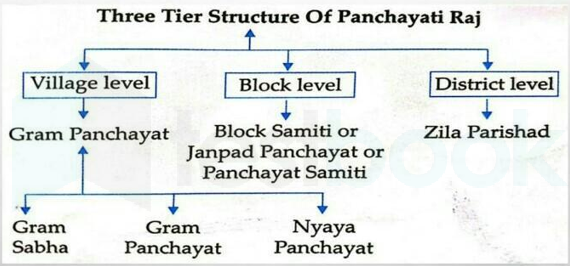
Which of the following correctly represents the three levels/tiers in the Panchayati Raj system in India?

  1. ((a))

    Gram Sabha, Municipal Council, Cantonment Board

  2. ((b))

    Gram Panchayat, Block Assemblies, State Assembly

  3. ((c))

    Village Panchayat, Municipal Corporation, Zilla Parishad

  4. ((d))

    Village Panchayat, Block Samiti, Zilla Parishad

Show Answer
Answer: ((d))

Village Panchayat, Block Samiti, Zilla Parishad

The correct answer is Village Panchayat, Block Samiti, Zilla Parishad.

Key Points

  • The Panchayati Raj system in India operates at three tiers: Village Panchayat (Gram Panchayat), Block Samiti (Intermediate Panchayat), and Zilla Parishad (District Panchayat).
  • Village Panchayat: The lowest level of the Panchayati Raj system, responsible for local governance at the village level.
  • Block Samiti: The intermediate level, governing a group of villages within a block or tehsil.
  • Zilla Parishad: The highest tier, responsible for governance at the district level, overseeing multiple blocks.
  • This structure was institutionalized under the 73rd Constitutional Amendment Act, 1992, which provided constitutional status to Panchayati Raj institutions.

Additional Information

  • Gram Sabha: It is the general assembly comprising all registered voters in a village. It serves as the foundation of the Panchayati Raj system, but it is not considered a tier.
  • 73rd Constitutional Amendment Act: Passed in 1992, it introduced Part IX in the Constitution, providing constitutional status to Panchayati Raj institutions and mandating their formation in every state.
  • State Election Commission: Responsible for conducting elections to Panchayati Raj institutions, ensuring free and fair electoral processes.
  • Functions of Panchayati Raj Institutions: Include rural development, sanitation, public health, maintenance of water resources, and agricultural development.
  • Article 243: Defines the provisions for Panchayati Raj, including Gram Sabha's role, composition, powers, and functions of Panchayati Raj institutions.
26

What does 101st Amendment Act, 2016 amend in Indian Constitution?

  1. ((a))

    Special provisions with respect to goods and services tax

  2. ((b))

    First schedule of the Constitution

  3. ((c))

    Insertion of Article 124A after consultation of Judges of Supreme Court

  4. ((d))

    Article 224

Show Answer
Answer: ((a))

Special provisions with respect to goods and services tax

The correct answer is 'Special provisions with respect to goods and services tax'.

Key Points

  • The 101st Amendment Act, 2016 amends Special provisions with respect to goods and services tax in Indian Constitution.
  • The amendment introduced a national Goods and Services Tax (GST) in India from 1 July 2017.
  • It was introduced as the 122nd Amendment Bill of the Constitution of India,
  • GST is a comprehensive indirect tax levy on the manufacture, sale, and consumption of goods as well as services at the national level.
  • It replaces all indirect taxes levied on goods and services by the Indian Central and state governments.

Important Points

First schedule of the ConstitutionContains the list of states and union territories and their extent and territorial jurisdictions.
Insertion of Article 124A after consultation of Judges of Supreme CourtConstitution (99th Amendment) Act, 2014
Article 224Deals with the appointment of additional and acting Judges
27

Match the following early Satyagraha campaigns of Gandhi with their problems he addressed :

List-I (Places)List-II (Problems)
a.Durbani.Tinkathia system in Indigo cultivation
b.Champaranii.Racial discrimination
c.Ahmedabadiii.Peasants oppression
d.Kheda (Kaira)iv.Mill workers strike

The correct answer is :

  1. ((a))

    a - iv, b - ii, c - iii, d - i

  2. ((b))

    a - i, b - iii, c - iv, d - ii

  3. ((c))

    a - ii, b - i, c - iii, d - iv

  4. ((d))

    a - ii, b - i, c - iv, d - iii

Show Answer
Answer: ((d))

a - ii, b - i, c - iv, d - iii

The correct answer is a - ii, b - i, c - iv, d - iii.

Key Points

Durban

  • The official name of the 2009 United Nations World Conference Against Racism (WCAR), also known as Durban II, is the Durban Review Conference.
  • The conference took place at the United Nations Office in Geneva, April 20, to Friday, April 24, 2009.
  • The Durban Declaration and Programme of Action from the 2001 World Conference against Racism, Racial Discrimination, Xenophobia, and Related Intolerance in Durban, South Africa

Champaran

  • At Champaran in Gujarat, European planters used illegitimate methods of indigo cultivation and coerced Indian villagers into dedicating a third of their landholding to the crop.
  • This was referred to as the Tinkathia system. With the aid of Gandhi and Rajendra Prasad.
  • The Champaran peasants organised Satyagraha, which resulted in the elimination of the Tinkathia system.

Ahmedabad Mill Strike

  • ​The Ahmedabad Mill Strike of 1918 was a strike by textile mill workers in Ahmedabad.
  • who fought for economic justice after the mill owners stopped paying plague bonuses.
  • The Ahmedabad Mill Strike is widely regarded as Mahatma Gandhi's first hunger strike.
  • Gandhi stepped in to mediate a dispute between Ahmedabad workers and mill owners.

Kheda Peasants oppression

  • The Kheda peasants' main demand was for a reduction in revenue payments.
  • They were unable to pay revenue due to excessive taxes, and an outbreak of the plague had rendered them physically incapacitate.
  • Preventing them from working during the harvest season and missing out on the time window to pay revenue.
  • To meet this demand, the Kheda Satyagraha was launched. Following the Chamaprarn Satyagraha.
  • The Kheda Satyagraha was the second satyagraha movement in 1918.
28

The idea of ‘Fundamental Rights’ was taken from the constitution of which of the following countries?

  1. ((a))

    Constitution of the Ireland

  2. ((b))

    Constitution of Switzerland

  3. ((c))

    Constitution of the United States

  4. ((d))

    Constitution of France

Show Answer
Answer: ((c))

Constitution of the United States

The correct answer is the Constitution of the United States.

Key Points

  • Fundamental Rights
  • The model for Fundamental Rights in India has been taken from the Constitution of the USA. Fundamental rights are basic rights provided to the people in order to live with dignity and integrity. They are enshrined in Part III of the Indian Constitution.
  • They are basic human freedoms that apply universally to all citizens of India, irrespective of their gender, religion, race, or place of birth.
  • These rights are defined as the cornerstone of democracy in India.
  • There are six fundamental rights recognized by the Indian constitution:
  1. Right to Equality (Article 14-18)
  2. Right to Freedom (Article 19-22)
  3. Right Against Exploitation (Article 23-24)
  4. Right to Freedom of Religion (Article 25-28)
  5. Cultural and Educational Rights (Article 29-30)
  6. Right to constitutional remedies (Article 32)

Additional Information

Canada- Federation with a strong Centre - Vesting of residuary powers in the Centre - Appointment of state governors by the Centre - Advisory jurisdiction of the Supreme Court
Ireland- Directive Principles of State Policy - The nomination of members to the Rajya Sabha - Method of election of the President
Japan- Procedure Established by law
Soviet Union (USSR) (now, Russia)- Fundamental Duties - The ideals of justice (social, economic and political) in the Preamble
UK- Parliamentary government - Rule of Law - Legislative procedure - Single Citizenship - Cabinet system - Prerogative writs - Parliamentary privileges - Bicameralism
US- Fundamental rights - Independence of judiciary - Judicial review - Impeachment of the President - Removal of Supreme Court and High Court judges - Post of Vice-President
29

The first Hindi daily newspaper to be published in Bihar was

  1. ((a))

    Kshatriya Samachar

  2. ((b))

    Udyoga

  3. ((c))

    Sarwa Hitaishi

  4. ((d))

    Chaitanya Chandrika

Show Answer
Answer: ((c))

Sarwa Hitaishi

The Correct answer is Option 3.

Key Points

  • The first Hindi daily newspaper to be published in Bihar was "Sarwa Hitaishi". Hence, option 3 is correct.
  • Founded by: Bhargava Press.
  • Year of Publication: 1874.
  • Significance:
  • "Sarwa Hitaishi" played a pivotal role in disseminating news and promoting Hindi as a language in journalism.
  • It focused on social, cultural, and political issues, aiming to address the concerns of the common people.
  • While "Bihar Bandhu" was the first Hindi newspaper in Bihar (published in 1872), "Sarwa Hitaishi" holds the distinction of being the first daily Hindi newspaper in the region.
30

Which among the following group of planets in our Solar system rotates from East to West?

  1. ((a))

    Mercury and Uranus

  2. ((b))

    Venus and Uranus

  3. ((c))

    Mercury and Venus

  4. ((d))

    Uranus and Neptune

Show Answer
Answer: ((b))

Venus and Uranus

The correct answer is Venus and Uranus.

Key Points

Our Solar System consists of the Sun and 8 planets:

  1. Mercury (nearest to the sun)
  2. Venus (Evening star, hottest planet)
  3. Earth (Only living planet, blue planet)
  4. Mars (the red planet)
  5. Jupiter (largest planet in the solar system)
  6. Saturn (a planet with rings)
  7. Uranus (coldest planet)
  8. Neptune (farthest to the sun)

Important Points

  • All Planets in our solar system rotates counterclockwise i.e. West to East except for Venus and Uranus.
  • Two planets Venus and Uranus are rotating from east to west in our solar system.
  • Venus and Uranus are rotating in the opposite direction (clockwise) to the Sun, this is also known as a retrograde rotation.
31

Which of the following services was NOT present in India for the common man at the time of Independence?

  1. ((a))

    Call centres

  2. ((b))

    Postal services

  3. ((c))

    Telegraph services

  4. ((d))

    Railways

Show Answer
Answer: ((a))

Call centres

The correct answer is Call centres.

Key Points

  • Call centres service was NOT present in India for the common man at the time of Independence.
  • India started to become a popular location for call centres that engage with consumers who are based in developed markets that speak English, like the US, the UK, and Australia, around 1999–2000.
  • Since then, the call centre work of the vast majority of consumer companies on the Fortune 500 list has been outsourced to India, and it has been a wonderful growth story. A multi-billion dollar industry has been developed in India around it.
  • In 1998, Mr Bhasin established the nation's first call centre with only 18 workers fielding calls in a space where booths were divided by saris suspended from the ceiling.

Important Points

  • India Post, a division of the Department of Post under the Ministry of Communications, is a postal service that is run by the government.
  • It is the most widely used postal system in the entire globe and is commonly referred to as the Post Office. In 1766, Warren Hastings undertook the initiative on behalf of the East India Company to launch the nation's first postal service. When it first started, it was known as "Company Mail."
  • From Calcutta to Diamond Harbour, the first experimental electric telegraph connection was established.
  • It was made available to the British East India Company in 1851.
  • For telegraph facilities, a separate department was established in 1854. The Indian Telegraph Act was first introduced in India in 1885.
  • The first passenger train travelled the 34 km route between Thane and Bori Bunder on April 16, 1853.
  • It had thirteen carriages and was driven by three engines with the names Sahib, Sultan, and Sindh.
32

Match List- with List-II and choose your answer from the code given below.

List – I (Governors)List - II (States)
a.Shri Arif Mohammad Khan1.Rajasthan
b.Shri La Ganesan2.Nagaland
c.Shri Jagdish Mukhi3.Bihar
d.Shri Kalraj Mishra4.Assam
  1. ((a))

    a - 1, b - 3, c - 4, d - 2

  2. ((b))

    a - 2, b - 1, c - 4, d - 3

  3. ((c))

    a - 3, b - 2, c - 4, d - 1

  4. ((d))

    a - 1, b - 2, c - 3, d - 4

Show Answer
Answer: ((c))

a - 3, b - 2, c - 4, d - 1

The correct answer is a - 3, b - 2, c - 4, d - 1

Key Points

  • Shri Arif Mohammad Khan → Bihar. Appointed as Governor of Bihar on 2 January 2025.
  • Shri La Ganesan → Nagaland. Assumed office as Governor of Nagaland on 20 February 2023. His passing in August 2025.
  • **Shri Jagdish Mukhi → Assam. Took charge as Governor of Assam on **10 October 2017 (served till 20 February 2023).
  • Shri Kalraj Mishra → Rajasthan. Assumed office as Governor of Rajasthan. Tenure 9 September 2019 to July 2024.
  • The appointment of governors is governed by Article 155 of the Indian Constitution, which states that the Governor of a state shall be appointed by the President of India.

Additional Information

  • Governor's Role and Responsibilities:
  • The Governor is the constitutional head of the state and acts as the representative of the President of India.
  • Under Article 163, the Governor exercises executive powers with the aid and advice of the Council of Ministers headed by the Chief Minister.
  • Governors also have discretionary powers in certain situations, such as recommending President's Rule under Article 356.
  • Key Facts about Governors:
  • The tenure of a Governor is typically 5 years, but they serve at the pleasure of the President.
  • Governors must meet eligibility criteria under Article 157, which includes being a citizen of India and being at least 35 years old.
  • Governors play a significant role in legislative matters, including giving assent to bills, reserving bills for the President's consideration, and addressing the state legislature.
  • Other Notable Governors:
  • Shri Banwarilal Purohit is the Governor of Punjab.
  • Shri R.N. Ravi served as the Governor of Tamil Nadu.
  • Important Articles in Context:
  • Article 154: Vests executive power of the state in the Governor.
  • Article 200: Grants the Governor the power to assent, withhold, or reserve bills passed by the state legislature.

Important Points

  • Governor's Appointment:
  • The President of India appoints Governors based on the recommendation of the Union government.
  • The Governor's role is largely ceremonial, but they have significant powers during times of constitutional crises.
  • Constitutional Provisions:
  • Article 158: Specifies conditions for the Governor's office, such as not holding any other office of profit.
  • Article 361: Provides immunity to the Governor from legal proceedings for actions taken in official capacity.
  • Recent Developments:
  • Governors have increasingly played a pivotal role in resolving political deadlocks in state legislatures.
  • In certain states, Governors have been involved in controversies surrounding their discretionary powers.
33

The 'State of the Climate 2024' report, which provides a comprehensive overview of the current global climate situation, is published by:

  1. ((a))

    United Nations Environment Programme (UNEP)

  2. ((b))

    Intergovernmental Panel on Climate Change (IPCC)

  3. ((c))

    World Meteorological Organization (WMO)

  4. ((d))

    International Union for Conservation of Nature (IUCN)

Show Answer
Answer: ((c))

World Meteorological Organization (WMO)

The correct answer is option 3.

Key Point

  • The World Meteorological Organization (WMO) is responsible for publishing the State of the Climate 2024 report, which provides data on greenhouse gas concentrations, global temperatures, and extreme weather events. Hence, option 3 is correct.
34

In hard water, soap reacts with the______(which is relatively high in hard water) to form "soap scum"

  1. ((a))

    Aluminium

  2. ((b))

    Zinc

  3. ((c))

    Hydrogen

  4. ((d))

    Calcium

Show Answer
Answer: ((d))

Calcium

Concept:

Hard water:

  • Rainwater is almost pure and a good solvent so it dissolves many salts.
  • The presence of calcium and magnesium salts in the form of hydrogen carbonate, chloride and sulphate in water makes water ‘hard’.
  • Hard water does not give a lather with soap.

Explanation:

Soap scum:

  • The precipitate is created when soap molecules interact with calcium and magnesium salts.
  • This precipitate starts to float on the water as an off-white layer.
  • We refer to this layer as scum.
  • Soap containing sodium stearate (C17H35COONa) reacts with hard water to precipitate out Ca/Mg-stearate.
  • Due to the scum buildup in hard water, soaps lose their cleansing ability.

Thus, in hard water, soap reacts with the Calcium (which is relatively high in hard water) to form "soap scum".

Additional InformationSoft water:

  • Water free from soluble salts of calcium and magnesium is called Soft water.
  • It gives lather with soap easily.

Heavy water:

  • Heavy water, D2O is another important compound which is manufactured by the electrolytic enrichment of normal water.
  • It is essentially used as a moderator in nuclear reactors.
35

The term 'Mahatalavara' used in Ikshvaku inscriptions refers to:

  1. ((a))

     Religious functionary

  2. ((b))

     Local tribal chief

  3. ((c))

    High military commander

  4. ((d))

    Tax collector

Show Answer
Answer: ((c))

High military commander

The correct answer is - High military commander

Key Points

  • Mahatalavara
  • In the Ikshvaku inscriptions, 'Mahatalavara' refers to a high military commander.
  • This term indicates a person with significant authority and command over military forces.
  • The Ikshvaku dynasty, which ruled parts of South India, used this term to denote their top military officials.

Additional Information

  • Religious functionary
  • Typically refers to individuals involved in religious duties and rituals.
  • In the context of Indian history, such roles were often filled by Brahmins or other priestly classes.
  • Local tribal chief
  • This would refer to leaders of local tribes who had authority over their communities.
  • Tribal chiefs played important roles in local governance and social organization.
  • Tax collector
  • Responsible for collecting taxes from the populace.
  • Tax collectors were crucial in the administration of ancient and medieval states, ensuring revenue for the kingdom.
36

Match the Following 

Type of CombustionExample
1.Rapid combustionA.Burning of magnesium ribbon
2.Spontaneous combustionB.Forest fires in dry weather
3.ExplosionC.Fireworks
4.Incomplete combustionD.Burning of coal in a confined space
  1. ((a))

    1-A, 2-B, 3-C, 4-D

  2. ((b))

    1-B, 2-A, 3-D, 4-C

  3. ((c))

    1-C, 2-D, 3-A, 4-B

  4. ((d))

    1-D, 2-A, 3-B, 4-C

Show Answer
Answer: ((a))

1-A, 2-B, 3-C, 4-D

The correct answer is 1) 1-A, 2-B, 3-C, 4-D.

Key Points

  • Rapid combustion refers to a type of combustion that occurs quickly with the release of heat and light. An example is burning of magnesium ribbon (1-A).
  • Spontaneous combustion happens without an external ignition source. An example is forest fires in dry weather (2-B).
  • Explosion is a sudden and violent release of energy, often accompanied by sound, heat, and light. An example is fireworks (3-C).
  • Incomplete combustion occurs when the oxygen supply is limited, leading to the production of harmful gases. An example is burning of coal in a confined space (4-D).
  • The correct matching is 1-A, 2-B, 3-C, 4-D, which corresponds to option 1.

Additional Information

  • Combustion is a chemical process in which a substance reacts with oxygen to release energy in the form of heat and light. It is essential for processes like energy generation and heating.
  • Types of combustion:
  • Rapid combustion: Requires an external ignition source and occurs quickly, e.g., burning of paper or wood.
  • Spontaneous combustion: Occurs without an external ignition source due to heat buildup, e.g., stored oily rags or dry grass.
  • Explosion: A sudden, violent release of energy caused by rapid combustion or chemical reactions, e.g., dynamite detonation.
  • Incomplete combustion: Leads to the production of carbon monoxide (CO) and soot due to insufficient oxygen, e.g., burning of fuels in poorly ventilated spaces.
  • Magnesium ribbon combustion: Burning magnesium reacts with oxygen to produce magnesium oxide, releasing intense light and heat.
  • Forest fires: These occur naturally or due to human activity, often fueled by dry vegetation, high temperatures, and winds.
  • Fireworks: These contain chemicals like potassium nitrate and sulfur, which combust rapidly to produce colorful light and sound.
  • Health hazards of incomplete combustion: Carbon monoxide poisoning and air pollution are major risks associated with incomplete combustion.
37

Match the objects or practices with their descriptions:

Objects/PracticesDescriptions
(a) Northern Black Polished Ware (NBPW)(i) Metallic pottery with a glossy black surface
(b) Arikamedu(ii) Coastal city known for Roman artifacts and trade
(c) Punch-marked coins(iii) Early currency stamped with symbols, not inscriptions
(d) Arthashastra’s textile regulations(iv) Rules about spinning and weaving for specific workers
  1. ((a))

    (a)-(i), (b)-(ii), (c)-(iii), (d)-(iv)

  2. ((b))

    (a)-(ii), (b)-(iv), (c)-(i), (d)-(iii)

  3. ((c))

    (a)-(iii), (b)-(i), (c)-(ii), (d)-(iv)

  4. ((d))

    (a)-(iv), (b)-(ii), (c)-(iii), (d)-(i)

Show Answer
Answer: ((a))

(a)-(i), (b)-(ii), (c)-(iii), (d)-(iv)

The correct answer is - (a)-(i), (b)-(ii), (c)-(iii), (d)-(iv)

Key Points

  • Northern Black Polished Ware (NBPW)
  • NBPW is a type of ancient Indian pottery characterized by its glossy, black surface.
  • It was used extensively during the Mauryan period and is considered an indicator of urbanization and trade.
  • Arikamedu
  • Arikamedu was a coastal city known for its trade relations with the Roman Empire.
  • Archaeological excavations have found Roman artifacts, indicating extensive trading activities.
  • Punch-marked coins
  • These coins were among the earliest forms of currency in India.
  • They were stamped with various symbols rather than inscriptions, making them unique.
  • Arthashastra's textile regulations
  • The Arthashastra, an ancient Indian treatise on statecraft, includes rules about spinning and weaving for specific workers.
  • These regulations aimed to ensure the quality and standardization of textile production.

Additional Information

  • Northern Black Polished Ware (NBPW)
  • NBPW is often considered a hallmark of the Mauryan period and is found extensively across Northern India.
  • It signifies advancements in pottery technology and trade networks during ancient times.
  • Arikamedu
  • Located near Pondicherry, India, Arikamedu was a significant port town during ancient times.
  • The site has yielded many Roman artifacts, including amphorae and beads, indicating thriving Indo-Roman trade.
  • Punch-marked coins
  • These coins date back to the 6th century BCE and were used until the early centuries CE.
  • They are typically made of silver and bear various symbols, possibly representing different kingdoms or economic entities.
  • Arthashastra
  • The Arthashastra was written by Kautilya (Chanakya) and is a comprehensive manual on governance, economy, and military strategy.
  • Its textile regulations aimed to ensure quality control and proper management of textile workshops.
38

Which of the following are the components of Information Technology?

  1. Hardware
  2. Software
  3. Network
  4. Database

Select the correct answer using the code given below:

  1. ((a))

    1, 2 and 3

  2. ((b))

    2 and 4

  3. ((c))

    1 and 3

  4. ((d))

    All of the above

Show Answer
Answer: ((d))

All of the above

  1. Computer Hardware:
  • Physical equipment used for input, output and processing.
  • The hardware structure depends upon the type and size of the organisation.
  • It consists of an input and an output device, operating system, processor, and media devices. This also includes computer peripheral devices.
  1. Computer Software:
  • The programs/ application program used to control and coordinate the hardware components. It is used for analysing and processing of the data.
  • These programs include a set of instructions used for processing information.
  • Software is further classified into 3 types:
  • System Software
  • Application Software
  • Procedures
  1. Databases:
  • Data are the raw facts and figures that are unorganised that are and later processed to generate information.
  • Softwares is used for organising and serving data to the user, managing physical storage of media and virtual resources.
  • As the hardware can’t work without software the same as software needs data for processing. Data is managed using a Database management system.
  • Database software is used for efficient access for required data, and to manage knowledge bases
39

As per the National Family Health Survey (NFHS-5), 2019-2021, what proportion of households in Bihar live in a pucca house?

  1. ((a))

    Two-thirds

  2. ((b))

    One-third

  3. ((c))

    One-half

  4. ((d))

    One-fourth

Show Answer
Answer: ((b))

One-third

The correct answer is One-third.

Key Points

  • As per the National Family Health Survey (NFHS-5), conducted between 2019-2021, it is reported that one-third of households in Bihar live in a pucca house.
  • A pucca house refers to a dwelling made with durable materials such as bricks, cement, concrete, or stone, offering better structural stability compared to temporary housing.
  • The survey highlights the disparities in housing conditions across states, with Bihar showing a relatively lower percentage compared to national averages.
  • The data from NFHS-5 serves as an important indicator for assessing the living standards and infrastructure development in Bihar, a state with significant rural population density.
  • Improving housing conditions has been a focus under government schemes like Pradhan Mantri Awas Yojana to ensure affordable housing for marginalized sections.

Additional Information

  • National Family Health Survey (NFHS):
  • The NFHS is conducted periodically by the Ministry of Health and Family Welfare in collaboration with International Institute for Population Sciences (IIPS), Mumbai.
  • NFHS-5, covering the years 2019-2021, provides data on population, health, and nutrition across India, including housing conditions.
  • The survey collects data from households to monitor development indicators, including access to pucca housing, sanitation, and drinking water.
  • Pradhan Mantri Awas Yojana (PMAY):
  • Launched in 2015, PMAY aims to provide affordable housing for all by 2022.
  • The scheme targets marginalized sections, including economically weaker sections (EWS) and low-income groups (LIG), with subsidies for constructing or upgrading houses.
  • Bihar, being an economically backward state, is one of the key beneficiaries of this housing initiative.
  • Housing in Bihar:
  • Bihar has a high rural population, and many residents live in kutcha houses made of mud, bamboo, or other temporary materials.
  • The state government, alongside central initiatives, has worked to improve housing infrastructure through schemes like Indira Awas Yojana.
  • Challenges remain, including funding gaps, implementation bottlenecks, and the need for better planning in rural areas.
  • Comparison with National Averages:
  • NFHS-5 indicates that the proportion of households in India living in pucca houses is higher compared to Bihar, reflecting regional disparities in development.
  • States with better socioeconomic indicators, such as Kerala and Maharashtra, report higher percentages of pucca houses.
  • Significance of Housing Data:
  • Housing data from NFHS helps policymakers design targeted interventions to improve living standards in states with infrastructural deficits.
  • It also highlights the progress made under various housing schemes and identifies areas needing focused attention.
40

The term ‘monsoon’ is derived from a/an:

  1. ((a))

    Italian word

  2. ((b))

    Latin word

  3. ((c))

    Greek word

  4. ((d))

    Arabic word

Show Answer
Answer: ((d))

Arabic word

The correct answer is Arabic word.

Key Points

  • The term ‘monsoon’ is derived from an Arabic word.
  • The word 'monsoon' is known to have been derived from the Arabic word 'mausim', meaning season.
  • The term was reportedly first used in English in British India and refers to the seasonal change in the direction of the prevailing winds of a region.
  • Basically, it describes a seasonal wind shift over a region that is usually accompanied by a dramatic increase in precipitation.
  • Many of us are familiar with the Indian-Asian monsoon that brings heavy rains during the summer months over widespread areas of India and SE Asia.

Additional Information

  • June 1 is regarded as the date of onset of the monsoon in India
  • as indicated by the arrival of the monsoon in the southernmost state of Kerala.
  • The monsoon accounts for nearly 80% of the rainfall in India.
  • The rainfall is a result of the convergence of wind flow from the Bay of Bengal and reverses winds from the South China Sea.
  • The onset of the monsoon occurs over the Bay of Bengal in May, arriving at the Indian Peninsula by June, and then the winds move towards the South China Sea.
  • Monsoon Formed :
  • The primary cause of monsoons is the difference between annual temperature trends over land and sea.
  • The apparent position of the Sun with reference to the Earth oscillates from the Tropic of Cancer to the Tropic of Capricorn.
  • Thus the low-pressure region created by solar heating also changes latitude.
41

In which of the following type of cells the gap junctions are absent?

  1. ((a))

    Sperm cells

  2. ((b))

    Reproductive cells

  3. ((c))

    Brain cells

  4. ((d))

    Cardiac cells

Show Answer
Answer: ((a))

Sperm cells

The correct answer is Sperm cells.

Key Points

  • Gap junctions are specialized intercellular connections that allow direct communication between adjacent cells by facilitating the passage of ions, small molecules, and signaling substances.
  • Sperm cells lack gap junctions because they are independent entities that travel through the female reproductive tract and do not form intercellular connections with other sperm cells. This is essential for their individual motility and function.
  • Reproductive cells, such as oocytes and follicular cells, possess gap junctions. These junctions are critical for nutrient and signaling molecule exchange during oocyte development. Hence, this option is incorrect.
  • Brain cells, specifically neurons and glial cells, utilize gap junctions for synchronized electrical activity and metabolic coupling, making them integral to brain function. Hence, this option is incorrect.
  • Cardiac cells (cardiomyocytes) are interconnected by gap junctions at their intercalated discs, allowing rapid transmission of electrical signals essential for synchronized contractions of the heart. Hence, this option is incorrect.
  • Therefore, the correct answer is "Sperm cells," as they do not require gap junctions for their function.

Additional Information

  • Gap Junctions:
  • Gap junctions are formed by transmembrane proteins called connexins, which create channels between adjacent cells.
  • These channels allow the exchange of ions, nutrients, and signaling molecules, playing a vital role in maintaining tissue homeostasis.
  • Gap junctions are abundant in tissues requiring coordinated activity, such as the heart, brain, and epithelial tissues.
  • Sperm Cell Characteristics:
  • Sperm cells are specialized for reproduction and are structured to deliver genetic material to the oocyte.
  • They are motile and independent, relying on their flagellum for propulsion rather than intercellular communication.
  • The absence of gap junctions ensures that each sperm operates independently, optimizing the chances of fertilization.
  • Role of Gap Junctions in Brain Cells:
  • Neurons utilize gap junctions for electrical coupling, enabling rapid transmission of signals across neural networks.
  • Glial cells use gap junctions for the distribution of ions and metabolites, supporting neuronal function and homeostasis.
  • Importance of Gap Junctions in Cardiac Cells:
  • Cardiomyocytes rely on gap junctions for the propagation of action potentials across the heart muscle.
  • This ensures synchronized contraction, which is crucial for effective pumping of blood.
  • Disruption of gap junctions in cardiac tissue can lead to arrhythmias and impaired heart function.

Important Points

  • Connexins: Connexins are the building blocks of gap junctions, with various isoforms that determine the properties of these intercellular channels.
  • Cell Communication: Gap junctions are crucial for maintaining coordinated cellular activities in tissues like the heart and brain.
  • Independent Cells: Cells that function independently, such as sperm cells, do not possess gap junctions, emphasizing their unique role in human biology.
  • Clinical Relevance: Disorders affecting gap junctions can lead to conditions such as cardiac arrhythmias, neuropathies, and developmental anomalies.
42

Why are Perm, Ufa and Kuibyshev mines popularly known places in the world?

  1. ((a))

    Hydroelectricity Sites

  2. ((b))

    Iron Ore Mines

  3. ((c))

    Petroleum Mines

  4. ((d))

    Coal Mines

Show Answer
Answer: ((c))

Petroleum Mines

The correct answer is Petroleum Mines.

Key Points

  • Perm, Ufa, and Kuibyshev are globally recognized for their significant petroleum production activities. These cities in Russia are key centers for oil exploration, extraction, and refining.
  • These locations are situated within the Volga-Ural region, which is one of the most important oil-producing areas in Russia, often referred to as the "Second Baku" due to its high oil reserves.
  • The petroleum extracted from these mines is crucial for Russia's economy, contributing significantly to global oil supply. Russia is one of the world's largest producers and exporters of crude oil.
  • Petroleum mining from these regions involves advanced drilling technologies and infrastructure to extract crude oil effectively from underground reserves.
  • The petroleum industry in these areas not only supports domestic energy needs but also plays a critical role in international trade, as Russia exports petroleum to numerous countries worldwide.

Additional Information

  • Petroleum:
  • Petroleum, also known as crude oil, is a fossil fuel formed from the remains of ancient marine organisms buried under layers of sediment and rock.
  • It is a complex mixture of hydrocarbons that can be refined into various products like gasoline, diesel, kerosene, and lubricants.
  • Petroleum is a major energy source globally and is used extensively in transportation, power generation, and as a raw material in the production of plastics, chemicals, and pharmaceuticals.
  • Volga-Ural Petroleum Region:
  • Located in Russia, this region is renowned for its rich oil reserves. It was developed significantly during the Soviet era and continues to be a major contributor to Russia's oil industry.
  • The area includes several cities like Perm, Ufa, and Kuibyshev, which host large refineries and oil-processing units.
  • The region is strategically important for Russia's energy exports, serving markets in Europe and Asia.
  • Global Importance of Petroleum:
  • Petroleum is essential for the functioning of modern economies due to its widespread use in transportation, manufacturing, and energy production.
  • Countries like Russia, Saudi Arabia, and the United States are among the largest producers, influencing global oil prices and energy policies.
  • Petroleum also plays a vital role in geopolitics, with oil-rich nations often having significant economic and strategic power.
  • Petroleum Extraction Process:
  • The process begins with exploration using geological surveys and seismic data to locate oil reserves.
  • Drilling rigs are then used to extract crude oil, which is transported to refineries for processing into usable products.
  • Modern technologies like horizontal drilling and hydraulic fracturing have enhanced oil recovery efficiency.

Important Points

  • Coal Mines:
  • Coal mines are primarily used for extracting coal, a fossil fuel used for power generation and industrial processes.
  • Russia is also a significant producer of coal, but it is distinct from petroleum mines.
  • Hydroelectric Sites:
  • Hydroelectric sites generate electricity by harnessing the energy of flowing water. These are not related to mining activities.
  • Russia has several hydroelectric power stations, but these are geographically distinct from Perm, Ufa, and Kuibyshev.
  • Iron Ore Mines:
  • Iron ore is mined for producing steel and other ferrous products.
  • Russia has significant iron ore reserves but they are not located in the regions discussed in the question.
43

The base year for GDP, CPI and IIP has been revised to the following

  1. ((a))

    2023-24, 2022-23, 2022-23 respectively

  2. ((b))

    2022-23, 2023-24, 2022-23 respectively

  3. ((c))

    2022-23, 2022-23, 2023-24 respectively

  4. ((d))

    2023-24, 2023-24, 2022-23 respectively

Show Answer
Answer: ((b))

2022-23, 2023-24, 2022-23 respectively

The correct answer is Option 2.

Key Points

  • The base year for calculating GDP has been revised to 2022-23. This is a standard procedure to ensure that economic data reflects the current structure of the economy and aligns with recent developments. Statement about GDP base year is correct.
  • The Consumer Price Index (CPI) base year has been updated to 2023-24. Changing the base year helps improve the accuracy of inflation measurement by considering newer consumption patterns. Statement about CPI base year is correct.
  • The base year for the Index of Industrial Production (IIP) has been revised to 2022-23. This ensures better representation of industrial output and reflects the current composition of industries. Statement about IIP base year is correct.
  • Revising base years in economic indicators is a regular exercise performed by statistical agencies such as the National Statistical Office (NSO) to make data more relevant. This process ensures that economic indices are aligned with recent trends in the economy.
  • The correct answer aligns with the recent updates made by the government/statistical organizations for improving the accuracy of economic analysis.

Additional Information

  • Gross Domestic Product (GDP):
  • GDP is the total value of all goods and services produced within a country during a specific period.
  • The base year for GDP calculation is periodically updated to reflect the latest economic activities and trends.
  • Revised GDP base years improve the comparability of data and incorporate changes in production patterns, technology, and consumption.
  • Consumer Price Index (CPI):
  • CPI measures changes in the price level of a basket of consumer goods and services purchased by households.
  • The base year for CPI is updated to account for changes in consumption patterns and inflation dynamics.
  • CPI is crucial for tracking inflation and guiding monetary policy decisions.
  • Index of Industrial Production (IIP):
  • IIP measures the growth of various sectors of the economy such as manufacturing, mining, and electricity.
  • Revising the base year ensures that the index reflects the current composition and importance of industries.
  • It is widely used by policymakers to assess industrial growth and formulate strategies.
  • Base Year Revision:
  • Base year revision is conducted by statistical agencies to ensure that indices are relevant and accurate.
  • It includes updating the weights assigned to various components to reflect their current importance.
  • Examples of recent revisions include the base year for GDP changing to 2011-12 previously, and CPI changing to 2012.

Important Points

  • National Statistical Office (NSO):
  • NSO is responsible for collecting, analyzing, and publishing statistical data in India.
  • It conducts revisions of base years for various economic indices to keep data updated and relevant.
  • Economic Indicators:
  • Indicators like GDP, CPI, and IIP are crucial for understanding the economic health of a nation.
  • They assist in decision-making by policymakers, businesses, and researchers.
  • Importance of Base Year Revision:
  • Reflects current economic trends, production patterns, and consumption habits.
  • Improves the accuracy and reliability of economic analysis and forecasts.
44

What is the meaning of El-Nino?

  1. ((a))

    Monsoon

  2. ((b))

    High pressure

  3. ((c))

    Child Christ

  4. ((d))

    Low pressure

Show Answer
Answer: ((c))

Child Christ

The correct answer is Child Christ.

 Key Points

  • In certain years, there is a reversal in the pressure conditions and the eastern Pacific has lower pressure in comparison to the eastern Indian Ocean. This periodic change in pressure conditions is known as the Southern Oscillation or SO. A feature connected with the SO is the El Nino phenomenon

Important Points

El Nino:

  • This is a name given to the periodic development of a warm ocean current along the coast of Peru as a temporary replacement of the cold Peruvian current.
  • ‘El Nino’ is a Spanish word meaning ‘the child’, and refers to the baby Christ, as this current starts flowing during Christmas.
  • The presence of the El Nino leads to an increase in sea-surface temperatures and weakening of the trade winds in the region
  • A warm ocean current that flows past the Peruvian Coast, in place of the cold Peruvian current, every 2 to 5 years.
  • The changes in pressure conditions are connected to the El Nino.
  • Hence, the phenomenon is referred to as ENSO (El Nino Southern Oscillations)

Additional Information

  1. Monsoon: 
  • The climate of India is described as the ‘monsoon’ type.
  • ‘Monsoon’ refers to the seasonal reversal in the wind direction during a year.
  1. Cloud burst: 
  • The duration of the monsoon is between 100- 120 days from early June to mid-September.
  • Around the time of its arrival, the normal rainfall increases suddenly and continues constantly for several days.
  • This is known as the ‘burst’ of the monsoon and can be distinguished from the pre-monsoon showers.
  1. Cyclone:
  • Cyclones are low-pressure centers surrounded by the rotating wind towards the center.
  • It can be tropical and temperate according to the area of origin.
45

Which of the following Harappan trading ports is found in Afghanistan?

  1. ((a))

    Shortugai

  2. ((b))

    Padri

  3. ((c))

    Alamgirpur

  4. ((d))

    Rangpur

Show Answer
Answer: ((a))

Shortugai

The correct answer is Shortugai.

Key Points

  • Shortugai is an ancient Harappan trading port located in present-day Afghanistan.
  • It served as a significant commercial center for the Indus Valley Civilization around 2000 BCE.
  • Shortugai was strategically situated near lapis lazuli mines, allowing the Harappans to trade precious stones.
  • The site has yielded artifacts typical of Harappan culture, including seals, beads, and pottery.

Additional Information

  • Harappan Civilization
  • Also known as the Indus Valley Civilization, it flourished around 3300 BCE to 1300 BCE.
  • It is renowned for its advanced urban planning, architecture, and social organization.
  • Key sites include Harappa, Mohenjo-Daro, and Dholavira.
  • The civilization is noted for its use of standardized weights and measures, and a script that remains undeciphered.
  • Harappan Trade
  • Harappans engaged in extensive trade within the Indian subcontinent and with Mesopotamia and Egypt.
  • Key exports included cotton, beads, pottery, and precious stones.
  • They imported goods such as copper, tin, and luxury items.
  • Archaeological Discoveries at Shortugai
  • Excavations have unearthed Harappan seals, pottery, and lapis lazuli.
  • The presence of these artifacts indicates a thriving trade network.
  • Shortugai provides evidence of the Harappan presence beyond the Indian subcontinent.
  • Indus Script
  • The script consists of symbols and has been found on seals, pottery, and other artifacts.
  • Despite numerous attempts, the script has not been deciphered yet.
  • Understanding the script could provide deeper insights into the Harappan society and culture.
46

Edible portion of the coconut is

  1. ((a))

    Fruit wall

  2. ((b))

    Endosperm

  3. ((c))

    Cotyledon

  4. ((d))

    Embryo

Show Answer
Answer: ((b))

Endosperm

The correct answer is Endosperm.

Key Points

  • Edible portion of the coconut: The edible part of the coconut is the white, fleshy substance found inside the fruit. This portion is scientifically known as the endosperm.
  • Role of the endosperm: In coconuts, the endosperm is rich in nutrients and provides nourishment to the developing embryo. It is a significant part of the coconut fruit and is consumed as food.
  • Structure of the coconut: The coconut has three primary layers: the outermost green layer called the exocarp, the fibrous middle layer called the mesocarp, and the hard shell called the endocarp. Inside the endocarp, the fleshy endosperm is found, which is the edible part.
  • Uses of the coconut endosperm: The edible endosperm is used in various culinary practices worldwide, including desserts, curries, and snacks. It is also a source of coconut milk and oil.
  • Scientific importance: The endosperm of the coconut is studied for its high content of essential nutrients, such as proteins, fats, and carbohydrates, making it a valuable food resource.

Additional Information

  • Fruit Wall: The fruit wall, also known as the pericarp, consists of three layers (exocarp, mesocarp, and endocarp). While it provides protection and structural support to the fruit, it is not edible in coconuts.
  • Cotyledon: In plants, the cotyledon is part of the embryo and serves as the first leaves of a seedling. In coconuts, the cotyledon is not edible.
  • Embryo: The embryo is the young developing plant inside the seed. In coconuts, the embryo is tiny and not consumed as food.
  • Nutritional Composition: Coconut endosperm contains water, dietary fiber, vitamins (B and C), and minerals such as potassium and magnesium. It is also a source of healthy fats, primarily medium-chain triglycerides (MCTs).
  • Applications: Coconut endosperm is used in industries for producing coconut oil, coconut milk, and cosmetics. It is also consumed fresh and dried in households.

Important Points

  • Classification: Coconut belongs to the Arecaceae family, and its scientific name is Cocos nucifera.
  • Geographical Distribution: Coconuts are cultivated extensively in tropical regions such as India, Indonesia, the Philippines, and Sri Lanka.
  • Economic Importance: Coconut is a highly versatile crop with applications in food, agriculture, cosmetics, and construction industries.
  • Cultural Significance: In many cultures, coconuts are regarded as auspicious and used in rituals and ceremonies.
47

Which institution launched India’s first-ever book on sports psychology?

  1. ((a))

    Indian Institute of Management (IIM)

  2. ((b))

    National Sports University 

  3. ((c))

    International Institute of Sports Management (IISM)

  4. ((d))

    Sports Authority of India (SAI)

Show Answer
Answer: ((c))

International Institute of Sports Management (IISM)

The correct answer is International Institute of Sports Management (IISM).

Key Points

  • The International Institute of Sports Management (IISM) is the first institution in India to launch a book on sports psychology.
  • The book aims to provide insights into the mental aspects of sports and athletic performance.
  • It covers various psychological techniques and strategies that athletes can use to enhance their performance.
  • The book is targeted at athletes, coaches, sports managers, and students pursuing sports management courses.

Additional Information

  • Sports Psychology:
  • Sports psychology is the study of how psychological factors affect performance and how participation in sports and exercise affect psychological and physical factors.
  • It involves the application of psychological principles to improve athletic performance and well-being.
  • Common topics include motivation, performance anxiety, and the psychological benefits of sports.
  • Importance of Mental Training in Sports:
  • Mental training helps athletes to stay focused, manage anxiety, and maintain a positive attitude.
  • Techniques such as visualization, goal setting, and self-talk are often used.
  • Mental resilience can be a determining factor in high-pressure situations and competitions.
  • Role of Sports Psychologists:
  • Sports psychologists work with athletes to enhance performance, cope with pressure, and recover from injuries.
  • They may provide individual counseling and mental skills training.
  • They also work with coaches and teams to improve communication and team dynamics.
  • Applications Beyond Sports:
  • The principles of sports psychology can be applied to other areas of life, such as business and education.
  • Skills like goal setting, focus, and resilience are valuable in many fields.
  • Sports psychology techniques can also be used to improve overall mental health and well-being.
48

Which Sufi Saint translated 'Amrit-Kunda' under the title 'Bahr-ul-Hayat' ? 

  1. ((a))

    Abdul Qadir

  2. ((b))

    Kalimullah Jahanabadi

  3. ((c))

    Sheikh Muhammad al Hussaini

  4. ((d))

    Sheikh Muhammad Ghaus

Show Answer
Answer: ((d))

Sheikh Muhammad Ghaus

The correct answer is - Sheikh Muhammad Ghaus

Key Points

  • Sheikh Muhammad Ghaus
  • He was a prominent Sufi saint of the Shattari order in India.
  • Sheikh Muhammad Ghaus translated the famous work 'Amrit-Kunda' into Persian under the title 'Bahr-ul-Hayat' (Ocean of Life).
  • The translation played a crucial role in the dissemination of yogic and spiritual knowledge among the Sufi community.

Additional Information

  • Abdul Qadir
  • He was another Sufi saint but not known for translating 'Amrit-Kunda'.
  • His contributions were mainly in the field of spiritual guidance and Sufi teachings.
  • Kalimullah Jahanabadi
  • He was a Sufi saint from the Chishti order.
  • Known for his spiritual teachings and practices, but not associated with the translation of 'Amrit-Kunda'.
  • Sheikh Muhammad al Hussaini
  • He was a Sufi saint but did not translate 'Amrit-Kunda'.
  • His works and contributions were different from those related to 'Bahr-ul-Hayat'.
49

What will be the revenue surplus for Bihar for the period 2024-2025?

  1. ((a))

    821 Crore

  2. ((b))

    921 Crore

  3. ((c))

    1021 Crore

  4. ((d))

    1121 Crore.

Show Answer
Answer: ((d))

1121 Crore.

The correct answer is 1121 Crore.

Key Points

  • The revenue surplus in 2024-25 is estimated to be Rs 1,121 crore (0.1% of GSDP).
  • In comparison, in 2023-24, the state is expected to observe a revenue deficit of Rs 35,530 crore (4.1% of GSDP).
  • Fiscal deficit for 2024-25 is targeted at 3% of GSDP (Rs 29,095 crore), which is within the limit of 3.5% of GSDP permitted by the central government (of which 0.5% of GSDP becomes available upon undertaking power sector reforms).
50

Which country has assumed the Chair of Asian Disaster Preparedness Centre (ADPC) for 2024-25?

  1. ((a))

    Russia

  2. ((b))

    Indonesia

  3. ((c))

    Thailand

  4. ((d))

    India

Show Answer
Answer: ((d))

India

The correct answer is India.

Key Points

  • Asian Disaster Preparedness Centre (ADPC) is a regional organization that works to reduce disaster risks and build resilience in Asia and the Pacific.
  • For the years 2024-25, India has assumed the chairmanship of the ADPC, showcasing its commitment to disaster preparedness and regional cooperation.
  • India has been actively involved in disaster risk reduction (DRR) initiatives, both domestically and internationally, as part of its policy to address climate change and reduce vulnerabilities.
  • The decision to appoint India as the chair reflects the country’s growing leadership in global forums addressing disasters and sustainable development goals.
  • India has also contributed significantly to disaster relief and management initiatives in South Asia and beyond, such as extending help to neighboring countries during natural calamities.

Additional Information

  • Asian Disaster Preparedness Centre (ADPC):
  • ADPC was established in 1986 with its headquarters in Bangkok, Thailand.
  • The organization collaborates with governments, international organizations, and the private sector to enhance disaster risk management and resilience in the region.
  • It focuses on areas such as early warning systems, climate resilience, capacity building, and disaster risk financing.
  • India’s Role in Disaster Management:
  • India has implemented various frameworks such as the National Disaster Management Authority (NDMA), which was established under the Disaster Management Act, 2005.
  • The country has made significant investments in early warning systems, satellite monitoring, and rapid response mechanisms for natural disasters like cyclones, floods, and earthquakes.
  • India’s success in managing cyclones such as Cyclone Fani in 2019 is globally acknowledged.
  • Other Countries’ Contributions:
  • Thailand, as the host nation of ADPC, plays a crucial role in its operations and supports regional collaborations.
  • Indonesia is another key member of ADPC, given its vulnerability to earthquakes and tsunamis, and has worked extensively on disaster preparedness.
  • Russia, although not a member of ADPC, is involved in global disaster preparedness through other initiatives such as the United Nations frameworks.

Important Points

  • Sendai Framework: The Sendai Framework for Disaster Risk Reduction 2015-2030 is a global initiative to reduce disaster risks, and India actively aligns its disaster management policies with this framework.
  • Climate Resilience: India has been focusing on climate-resilient infrastructure under initiatives like the Coalition for Disaster Resilient Infrastructure (CDRI), launched in 2019 during the UN Climate Action Summit.
  • Regional Cooperation: India collaborates with neighboring countries such as Nepal, Bangladesh, and Sri Lanka for disaster relief and capacity building under frameworks like SAARC Disaster Management Centre.
  • Technological Advancements: The use of advanced technologies, such as GIS mapping, satellite-based weather forecasting, and drone technology, enhances India’s disaster preparedness and response mechanisms.
51

In DNA, thymine always pairs with ______.

  1. ((a))

    Adenine

  2. ((b))

    Cytosine

  3. ((c))

    Guanine

  4. ((d))

    Thymine

Show Answer
Answer: ((a))

Adenine

The correct answer Adenine.

Key Points

  • There are four nitrogen bases in a DNA-
  • Adenine
  • Guanine
  • Thymine
  • Cytosine
  • Adenine pairs with up Thymine
  • Guanine pairs up with Cytosine.

Additional Information

  • DNA stands for Deoxyribo Nucleic Acid.
  • It contains genetic information.
  • It is made up of
  • sugar group - deoxyribose sugar
  • phosphate group
  • nitrogen base - (Adenine, Guanine, Thymine, Cytosine)
  • Genetic information in DNA is wrapped up around a protein called Histones.

Important Points

  • RNA (RiboNucleic Acid) also has 4 nitrogenous base.
  • Adenine
  • Guanine
  • Cytosine
  • Uracil (instead of Thymine which is present in DNA)
  • RNA is single-stranded biopolymer.
  • It is of 3 types-
  • mRNA (messenger)
  • tRNA (transfer)
  • rRNA (ribosomal)
52

Which party government announced the formation of a second backward classes commission in 1978?

  1. ((a))

    Indian National Congress Party

  2. ((b))

    Bharatiya Janata Party

  3. ((c))

    Janata Party

  4. ((d))

    United Democratic Party

Show Answer
Answer: ((c))

Janata Party

The correct answer is option 3, i.e. Janata Party

Key Points:

  • Janta party announced the formation of a second backward class commission in 1978.
  • Morarji Desai was an Indian independence activist and the Prime Minister of India from 1977 to 1979.
  • He was also the first Prime Minister to head India's first non-Congress Government.
  • He was the first PM to Demonetize India.
  • The commission made to see the formation of second backward classes in 1978 was Mandal Commission.
53

The first Indian Commercial Bank which was wholly owned and managed by Indians was

  1. ((a))

    Punjab National Bank

  2. ((b))

    Oudh Commercial Bank

  3. ((c))

    State Bank of India

  4. ((d))

    Central Bank of India

Show Answer
Answer: ((d))

Central Bank of India

The correct answer is Central Bank of India.

Key Points

  • The Central Bank of India, established in 1911, was the first Indian commercial bank that was wholly owned and managed by Indians.
  • The bank was founded by Sorabji Pochkhanawala, with the vision of creating a financial institution that would be completely managed by Indians.
  • The Central Bank of India was established in the pre-Independence era, during the British colonial period, when most banks in India were managed by British entities or foreign stakeholders.
  • This bank played a crucial role in the development of the Indian banking sector and served as an example of self-reliance for other Indian entrepreneurs.
  • It continues to be one of the oldest and most prominent public sector banks in India, with its headquarters in Mumbai.

Additional Information

  • Punjab National Bank (PNB):
  • PNB was established in 1894 in Lahore (now in Pakistan).
  • It was the first Indian bank to be owned and managed by Indians but was not entirely commercial in its operations during its early years.
  • Though significant, it was not the first wholly Indian-owned commercial bank.
  • Oudh Commercial Bank:
  • Founded in 1881 in Faizabad, it was one of the earliest banks established in India.
  • However, it ceased operations in 1958 and was not as commercially successful as the Central Bank of India.
  • State Bank of India (SBI):
  • SBI traces its origins to the establishment of the Bank of Calcutta in 1806, later renamed the Imperial Bank of India in 1921, and finally became SBI in 1955.
  • It was not initially owned or managed by Indians and became a public sector entity much later in independent India.
  • Significance of Indian Commercial Banks:
  • These banks played a vital role in promoting economic self-reliance and reducing dependency on British banking institutions during colonial rule.
  • They also supported Indian entrepreneurs and businesses, contributing to economic development.

Important Points

  • The Central Bank of India is known as the "first Indian bank" due to its wholly Indian ownership and management from inception.
  • It was among the pioneering banks to introduce credit cards in India and played a significant role in financial literacy and rural banking.
  • It is a public sector bank and continues to be a part of India's financial ecosystem, with a widespread network of branches across the country.
54

Match List-I to List-II and select the correct answer.

List - I (Grassland)List - II (Location)
(a)Campos(i)Australia
(b)Pampas(ii)Venezuela
(c)Down(iii)Argentina
(d)Llanos(iv)Brazil
  1. ((a))

    (a) - (iv), (b) - (iii), (c) - (i), (d) -  (ii)

  2. ((b))

    (a) - (iii), (b) - (ii), (c) - (iv), (d) - (i)

  3. ((c))

    (a) - (ii), (b) - (i), (c) - (iii), (d) - (iv)

  4. ((d))

    (a) - (i), (b) - (iv), (c) - (ii), (d) - (iii)

Show Answer
Answer: ((a))

(a) - (iv), (b) - (iii), (c) - (i), (d) -  (ii)

The correct answer is (a) - (iv), (b) - (iii), (c) - (i), (d) -  (ii).

Key Points

List - I (Grassland)List - II (Location)
(a)Campos(iv)Brazil
(b)Pampas(iii)Argentina
(c)Down(i)Australia
(d)Llanos(i)Venezuela

Additional Information

  • Campos is a type of Brazilian grassland that is characterized by low and sparse vegetation.
  • Pampas is a fertile South American grassland that is mostly used for grazing livestock.
  • Down is a type of Australian grassland that is characterized by tall and dense vegetation.
  • Llanos is a tropical grassland that is mostly found in Venezuela and Colombia. It is used for cattle ranching and farming.
55

Which is the correct sequence of following words mentioned in the preamble of Indian Constitution?

  1. ((a))

    Sovereign Secular Socialist Democratic Republic

  2. ((b))

    Socialist Secular Sovereign Democratic Republic

  3. ((c))

    Sovereign Socialist Secular Democratic Republic

  4. ((d))

    Secular Sovereign Socialist Democratic Republic

Show Answer
Answer: ((c))

Sovereign Socialist Secular Democratic Republic

The correct answer is Sovereign, Socialist, Secular, Democratic, and Republic.

Key Points

  • The order of the Preamble of India is Sovereign, Socialist, Secular, Democratic, and Republic.
  • The preamble is part of the Constitution.
  • The preamble indicates the basic structure of the Constitution. The preamble is neither enforceable nor justifiable in a court of law.
  • This implies that courts cannot pass orders against the government in India to implement the ideas in the Preamble.
  • The preamble can be amended and it has been amended only once through the 42nd Constitutional Amendment Act 1976.

Additional Information

  • A sovereign state or country is independent and not under the authority of any other country.
  • Socialism is an economic and political system where the workers or the government own the buildings and tools that make goods and services like farms and factories. This can be achieved through decentralized and direct worker ownership, or through centralized state ownership of the means of production.
  • the Preamble to the Constitution asserted that India is a “secular” nation. The meaning of a secular state is that it does not prioritize any one religion for the country and its people.
  • Republic is a form of government in which a state is ruled by representatives of the citizen body. Modern republics are founded on the idea that sovereignty rests with the people, though who is included and excluded from the category of the people has varied across history.

Thus, correct sequence of words mentioned in the preamble of the Indian Constitution is Sovereign, Socialist, Secular, Democratic, and Republic.

56

India shares its land boundaries with ___________ countries.

  1. ((a))

    Seven

  2. ((b))

    Eight

  3. ((c))

    Six

  4. ((d))

    Nine

Show Answer
Answer: ((a))

Seven

The Correct Answer is Seven.

Key Points

  • India shares its border with seven countries
  • Afghanistan and Pakistan to the North-West
  • China, Bhutan, and Nepal to the North
  • Myanmar to the far East and Bangladesh to the East.


Additional Information

  • India is located latitudinally in the Northern Hemisphere and longitudinally in the Eastern Hemisphere.
  • India has a land frontier of 15,200 km.
  • The total length of the coastline of the mainland, Lakshadweep Islands and Andaman and the Nicobar Islands is 7,516.6 km.
  • Sri Lanka (from the South-East) and Maldives (from the South-West) are two countries with water borders.

57

What is the correct number of the budgetary estimate of the capital expenditure and capital receipt as per the Annual Financial Statement 2025-2026?

  1. ((a))

    Capital Expenditure: ₹12.5 Lakh Crore, Capital Receipts: ₹17.1 Lakh Crore

  2. ((b))

    Capital Expenditure: ₹13.5 Lakh Crore, Capital Receipts: ₹16.3 Lakh Crore

  3. ((c))

    Capital Expenditure: ₹15.0 Lakh Crore, Capital Receipts: ₹16.9 Lakh Crore

  4. ((d))

    Capital Expenditure: ₹11.2 Lakh Crore, Capital Receipts: ₹16.4 Lakh Crore

Show Answer
Answer: ((d))

Capital Expenditure: ₹11.2 Lakh Crore, Capital Receipts: ₹16.4 Lakh Crore

The correct answer is Capital Expenditure: ₹11.2 Lakh Crore, Capital Receipts: ₹16.4 Lakh Crore.

In News

  • The Annual Financial Statement 2025-26 presents a budgetary estimate (BE) of ₹11.2 Lakh Crore for Capital Expenditure and ₹16.4 Lakh Crore for Capital Receipts.

Key Points

  • Capital Expenditure for 2025-26 (BE) is estimated at ₹11.2 Lakh Crore, primarily for infrastructure, defense, and public sector projects.
  • Capital Receipts for 2025-26 (BE) stand at ₹16.4 Lakh Crore, which includes borrowings and disinvestment proceeds.
  • For 2024-25, the Revised Estimate (RE) for Capital Expenditure was ₹13.5 Lakh Crore, while Capital Receipts stood at ₹16.3 Lakh Crore.
  • Capital Expenditure includes funds for asset creation, such as roads, railways, defense procurement, and major development projects.

Additional Information

  • Capital Expenditure
  • It includes spending on roads, highways, railways, defense equipment, and other infrastructure development.
  • It is aimed at asset creation and economic growth.
  • Capital Receipts
  • Capital receipts include borrowings, recovery of loans, and disinvestment proceeds.
  • They contribute to increasing liabilities or reducing assets.
  • Revenue vs. Capital Expenditure
  • Revenue Expenditure: Includes recurring expenses like salaries, pensions, and subsidies, which do not create assets.
  • Capital Expenditure: Includes spending on infrastructure and asset-building projects.
  • Budget Deficit and Borrowings
  • A major portion of capital receipts comes from borrowings, which contribute to the fiscal deficit.
  • Managing the fiscal deficit is crucial for macroeconomic stability and growth.

58

Which of the following is a medicinal plant used to treat certain type of cancers ?

  1. ((a))

    Chir-pine

  2. ((b))

    Himalayan Oak

  3. ((c))

    Himalayan Birch

  4. ((d))

    Himalayan Yew

Show Answer
Answer: ((d))

Himalayan Yew

The correct answer is Himalayan Yew.

Key Points

  • Himalayan Yew (Taxus wallichiana) is a medicinal plant found in the Himalayan region, known for its use in treating certain types of cancers.
  • The bark, leaves, and twigs of the Himalayan Yew produce a compound called Paclitaxel, commercially known as Taxol, which is an essential chemotherapy drug used to treat various cancer types, such as breast and ovarian cancer.
  • Paclitaxel works by inhibiting the growth of cancer cells, thereby slowing down the progression of the disease.
  • The Himalayan Yew is primarily found at altitudes ranging from 1,800 to 3,300 meters in the Himalayan region, including parts of India, Nepal, Bhutan, and Pakistan.
  • The species is currently listed as Endangered due to overexploitation for its medicinal properties and habitat destruction.

Additional Information

  • Chir-pine (Pinus roxburghii):
  • Native to the Himalayan region, Chir-pine is primarily used for its timber and resin.
  • Its resin is used in industries for making turpentine oil, varnishes, and adhesives.
  • It does not have any significant medicinal applications for treating cancer.
  • Himalayan Oak (Quercus spp.):
  • Himalayan Oak trees are known for their ecological importance, providing habitat and nutrients to the forest floor.
  • Their primary uses include timber production and serving as fodder for livestock.
  • They are not recognized for any medicinal properties in cancer treatment.
  • Himalayan Birch (Betula utilis):
  • Himalayan Birch is used traditionally for its bark, which serves as paper and has limited medicinal uses in Ayurveda.
  • Its medicinal applications are mainly for skin diseases and digestive issues, not cancer treatment.
  • Himalayan Yew (Taxus wallichiana):
  • As mentioned earlier, it is a highly valued medicinal plant due to its ability to produce Paclitaxel.
  • It has been overharvested due to its growing demand in the pharmaceutical industry, making conservation efforts essential.
  • The plant plays a vital role in cancer treatment, particularly for advanced-stage patients.

Important Points

  • Paclitaxel:
  • Paclitaxel is a naturally occurring compound used in chemotherapy to treat cancers like breast, ovarian, and lung cancers.
  • The discovery of Paclitaxel marked a significant advancement in the field of oncology.
  • It stabilizes microtubules in cells, preventing cancer cells from dividing and proliferating.
  • Conservation Status:
  • The Himalayan Yew is classified as Endangered by the IUCN Red List due to overexploitation.
  • Efforts are being made to cultivate and conserve the species for sustainable medicinal use.
  • Geographical Distribution:
  • The Himalayan Yew is found in specific high-altitude regions, making it a rare and specialized species.
  • Countries like India, Nepal, Bhutan, and Pakistan house this plant in their Himalayan ranges.
59

Glass is best described as

  1. ((a))

    A supercooled solution

  2. ((b))

    A gel

  3. ((c))

    An alloy

  4. ((d))

    An eutectic mixture

Show Answer
Answer: ((a))

A supercooled solution

The correct answer is A supercooled solution.

Key Points

  • Glass is an amorphous solid and lacks a regular crystalline structure. It is formed when certain substances cool down rapidly, preventing the formation of a crystalline lattice.
  • It is best described as a supercooled solution, which means it is a liquid that has been cooled below its normal freezing point without solidifying.
  • The molecular arrangement of glass is disordered, resembling a liquid rather than a solid. This makes it different from crystalline solids which have an ordered structure.
  • Glass is primarily composed of silicon dioxide (SiO2), which is melted at high temperatures and rapidly cooled to form the glass structure.
  • The ability of glass to be shaped at high temperatures and retain its form when cooled is due to its supercooled liquid nature.

Additional Information

  • Properties of Glass:
  • It is transparent, allowing light to pass through, which makes it ideal for windows, lenses, and optical applications.
  • Glass is non-crystalline in nature, meaning it lacks the repeating patterns found in crystals.
  • It is brittle, meaning it breaks easily under stress without deforming significantly.
  • It is chemically stable and resistant to reaction with most chemicals, making it suitable for laboratory equipment and containers.
  • Other Descriptions of Glass:
  • Glass is not a gel, as gels are semi-solid systems with a liquid phase trapped within a solid matrix. Hence, option 2 is incorrect.
  • Glass is not an alloy, as alloys are mixtures of two or more metals. Glass is composed mainly of non-metallic substances such as silica. Hence, option 3 is incorrect.
  • Glass is not a eutectic mixture, as eutectic mixtures are combinations of substances with a specific melting point. Hence, option 4 is incorrect.
  • Uses of Glass:
  • It is widely used in construction (windows, doors) due to its transparency and durability.
  • It is used in electronics (screens, optical fibers) due to its insulating properties.
  • It is employed in the automotive industry for windshields and mirrors.
  • Specialized glasses, such as borosilicate glass, are used in laboratory equipment due to their thermal resistance.
  • Formation Process:
  • Glass is produced by heating raw materials like silica, soda ash, and lime at high temperatures (around 1700°C).
  • Rapid cooling prevents the formation of a crystalline structure, resulting in an amorphous solid.
  • Modern techniques like float glass production ensure uniform thickness and smooth surfaces.

Important Points

  • Historical Development:
  • Glassmaking dates back to around 3500 BCE in Mesopotamia and Egypt.
  • Modern glass production techniques were developed in the 19th and 20th centuries, enabling mass production.
  • Scientific Classification: Glass is classified as an amorphous solid due to its lack of crystalline structure and supercooled liquid nature.
  • Innovations: Advances in glass technology have led to specialized types like tempered glass, laminated glass, and optical glass, which are used in various industries.
60

What new sport will debut at the 2026 Asian Games?

  1. ((a))

    Baseball

  2. ((b))

    Mixed Martial Arts (MMA)

  3. ((c))

    Surfing

  4. ((d))

    Skateboarding

Show Answer
Answer: ((b))

Mixed Martial Arts (MMA)

The Correct Answer is Mixed Martial Arts (MMA).

In News

  • Cricket retained, MMA to debut at Asian Games 2026.

Key Points

  • Cricket is retained for the Asian Games 2026.
  • Mixed Martial Arts (MMA) will debut at the 2026 Asian Games.
  • The 2026 Asian Games will be held in Aichi and Nagoya, Japan.
  • Dates: September 19 to October 4, 2026.
  • Cricket first appeared in the Asian Games in Guangzhou 2010.
  • It was also played in Incheon 2014, but those matches had no international status.
  • At the 2023 Asian Games in Hangzhou, cricket matches were given international status by the ICC.
  • 2026 will mark the fourth appearance of cricket in the Asian Games.
61

Which Chinese traveller in ancient India wrote the diary called 'Records of the Travels to Middle India'?

  1. ((a))

    Wang Xuance

  2. ((b))

    Xuanzang

  3. ((c))

    Yijing

  4. ((d))

    Li Yibiao

Show Answer
Answer: ((b))

Xuanzang

The correct answer is Xuanzang.

Key Points

  • Xuanzang also known as Hiuen Tsang, was a 7th-century Chinese Buddhist monk, scholar, traveler, and translator.
  • He visited India during the reign of Harsha Vardhana.
  • Si-yu-ki or ‘The Records of the Western World’ was written by him.
  • He spent 14 years traveling in India.
  • Xuan Zang, who took the land route back to China through the north-west, and Central Asia carried back with him statues of the Buddha made of gold, silver and sandalwood, and over 600 manuscripts loaded on the backs of 20 horses.
  • Over 50 manuscripts were lost when the boat on which he was crossing the Indus capsized.
  • He spent the rest of his life translating the remaining manuscripts from Sanskrit into Chinese.

Additional Information

  • | Traveller | During reign of | | --- | --- | | Abdur Razzak | Deva Raya ll | | Alberuni | Mahmud Ghazni | | Fa hien | Chandragupta II | | Huien Tsang | Harsha Vardhana | | Ibn Battuta | Mohammed Bin Tughlaq | | Marco Polo | Rudramma Devi |
62

Which part of the Constitution, has the provisions for Panchayati Raj System?

  1. ((a))

    Part IX

  2. ((b))

    Part VI

  3. ((c))

    Part III

  4. ((d))

    Part IV (a)

Show Answer
Answer: ((a))

Part IX

The correct answer is IX

Key Points

  • The provisions related to the Panchyati Raj System is mentioned in Part IX of the Indian constitution.
  • Part IX contains provisions relating to Panchayati Raj up to Articles 243-243O under the title 'Panchayats'.
  • This part is added by the 73rd Constitutional Amendment Act 1992.
  • The 11th Schedule and the list of 29 subjects were added to the Constitution by the 73rd Constitutional Amendment.
  • The purpose of the Act is to provide a three-tier system of Panchayati Raj, including:
  • Village-level - Gram Panchayat
  • Block-level - Janpad Panchayat
  • District-level - Zila Parishad

Important Points

  • India implemented the Community Development Program- CDP on October 2, 1952, on the eve of Gandhi Jayanti.
  • The National Extension Service was also started in the year 1953 to support the Community Development Program.
  • But both this program could not play an important role.
  • After independence, in 1957, the Balwant Rai Mehta Committee was formed by the Planning Commission to study the reasons for the failure of the Community Development Program and the National Extension Service Program.
  • In November 1957, the committee submitted its report, which suggested the implementation of the three-tier Panchayati Raj system - village level, intermediate level, and district level.
  • The National Development Council accepted the recommendations of the Balwant Rai Mehta Committee in the year 1958.
  • The first three-tier panchayat of the country was inaugurated by the then Prime Minister Jawaharlal Nehru in Nagaur, Rajasthan on October 2, 1959.
  • Committees related to Panchayati Raj System:
  • Balwant Rai Mehta Committee (1957)
  • Ashok Mehta Committee (1977)
  • G. V. K. Rao Committee (1985)
  • L M Singhvi Committee (1986)
  • Sarkaria Commission on Center-State Relations (1988)
  • PK Thungan Committee (1989)
  • Harlal Singh Kharra Committee (1990)
  • Ashok Mehta Committee recommended the two-tier system of Panchayati Raj.
  • Zila Parishad
  • Mandal Panchayat
  • LM Singhvi Committee recommended providing constitutional status to Panchyati Raj institutions.
63

The northern part of the Western Coastal Plain of India is also known as

  1. ((a))

    Karnataka Coast

  2. ((b))

    Malabar

  3. ((c))

    Konkan

  4. ((d))

    Coromandal

Show Answer
Answer: ((c))

Konkan

The correct answer is Konkan.

Key Points

  • The northern part of the Western Coastal Plain of India is known as the Konkan coast.
  • It extends from Daman to Goa.
  • Rice and cashew are mostly grown here.

Important Points

Western Coastal Plain:

  • It lies between the Western ghats and the Arabian Sea.
  • It extends from Rann of Kutch to Kanyakumari.
  • It is narrower than the Eastern coastal plains.
  • It is divided into 4 parts:
  • Kutch and Kathiawar coast - Extends from Rann of Kutch to Daman
  • Konkan Coast (northern part) - Extends from Daman to Goa.
  • Kanada Coast (central part) - Extends from Goa to Mangalore.
  • Malabar Coast (southern part) - Extends from Mangalore to Kanyakumari.

Eastern Coastal Plain:

  • It lies between the Eastern Ghats and the Bay of Bengal.
  • It extends from West Bengal to Tamil Nadu.
  • The deltas of Mahanadi, Krishna, Godaveri, Cauvery River are present here.
  • It is divided into 3 parts:
  • Utkal Coast - Extends between Chilka Lake and Kolleru Lake.
  • Andhra Coast/Northern Circars - Extends between Kolleru Lake and Pulicat Lake.
  • Coromandel Coast - Extends between Pulicat Lake and Kanyakumari.
  • Both, the western and eastern coastal plains join at **Kanyakumari.**​

64

The point at which the rate of photosynthesis is equal to the rate of respiration is called

  1. ((a))

    Photosynthetic quotient 

  2. ((b))

    Compensation point

  3. ((c))

    Respiratory quotient

  4. ((d))

    Equivalence point

Show Answer
Answer: ((b))

Compensation point

The correct answer is Compensation point.

Key Points

  • Compensation point is the stage at which the rate of photosynthesis equals the rate of respiration in plants.
  • At this point, the carbon dioxide produced during respiration is completely utilized in photosynthesis, and there is no net gas exchange between the plant and its environment.
  • This typically occurs in low light intensity conditions where the energy provided is just enough to sustain the plant's metabolic functions.
  • The concept of compensation point is crucial in understanding plant survival, especially in shaded environments or during early morning and late evening when light is minimal.
  • The compensation point varies among different plants. For example, shade-tolerant plants have a lower compensation point compared to sun-loving plants.

Additional Information

  • Photosynthetic quotient:
  • The photosynthetic quotient refers to the ratio of oxygen released to carbon dioxide absorbed during photosynthesis.
  • It is usually close to 1 for most plants but can vary depending on the type of photosynthetic pathway (C3, C4, or CAM).
  • Respiratory quotient:
  • The respiratory quotient (RQ) is the ratio of carbon dioxide produced to oxygen consumed during respiration.
  • RQ values differ based on the substrate being metabolized, e.g., carbohydrates (RQ = 1), fats (RQ = 0.7), or proteins (RQ = 0.8).
  • Equivalence point:
  • This term is primarily used in chemistry and refers to the point in a titration where the amount of titrant added is chemically equivalent to the substance being titrated.
  • It does not apply to photosynthesis or respiration processes.
  • Light intensity and plant growth:
  • Light intensity directly affects the rate of photosynthesis. Below the compensation point, plants rely on stored energy for survival.
  • Above this point, plants start producing excess energy, which is used for growth and reproduction.

Important Points

  • The compensation point is vital for understanding plant survival strategies, especially in low-light environments like dense forests or during cloudy conditions.
  • Plants with low compensation points, such as shade-loving plants, are better adapted to survive in shaded or dim light conditions compared to plants with high compensation points.
  • In agriculture, knowledge of the compensation point helps in optimizing plant growth by providing adequate light and understanding plant metabolic needs.
  • The interplay between photosynthesis and respiration is essential for maintaining the energy balance within plants.
65

What type of vessel is most commonly found as Painted Grey Ware?

  1. ((a))

    Jars​

  2. ((b))

    Plates and bowls

  3. ((c))

    Urns

  4. ((d))

    Cooking pots

Show Answer
Answer: ((b))

Plates and bowls

Correct answer is :Plates and bowls

Key Points Painted Grey Ware (PGW) :

  • Time Period: PGW is associated with the later Vedic period (circa 1200–600 BCE), primarily found in Northern India.
  • Material: Known for its fine grey surface with simple painted designs, typically in black or dark brown.
  • Common Vessel Types:
  • Plates and bowls: Most commonly found, used for eating and serving food.
  • Other types like jars, cooking pots, and urns are less frequent.
  • Production: Wheel-made with smooth surfaces, indicating advanced ceramic technology.
  • Cultural Significance: The prominence of plates and bowls suggests their importance in daily life and possibly communal eating practices.
66

Which typhoon, locally called Uwan, recently made landfall in the Philippines’ Aurora province, leading to the evacuation of over nine lakh people and causing widespread destruction with winds up to 185 km/h?

  1. ((a))

    Typhoon Haiyan

  2. ((b))

    Typhoon Kalmaegi

  3. ((c))

    Typhoon Fung-wong

  4. ((d))

    Typhoon Rai

Show Answer
Answer: ((c))

Typhoon Fung-wong

The correct answer is Typhoon Fung-wong.

In News

  • Typhoon Fung-wong, locally known as Uwan, has made landfall in the Philippines, prompting the evacuation of over 9 lakh people and claiming two lives as it battered Luzon with destructive winds and torrential rain.

Key Points

  • Typhoon Fung-wong struck the Aurora province in Luzon with sustained winds of 185 km/h and gusts reaching 230 km/h.
  • It weakened as it moved across La Union in western Luzon but continued to bring heavy rainfall, storm surges, and strong winds.
  • Nearly 9 lakh people were evacuated as a precaution, and extensive rescue and relief operations are underway.
  • Over 300 flights were cancelled, with multiple airports closed due to safety concerns.

Additional Information

  • About Typhoon Fung-wong
  • Local Name: Uwan
  • Region Affected: Luzon, Philippines
  • Wind Speed: 185 km/h (gusts up to 230 km/h)
  • Category: Typhoon-level tropical storm
  • Impact: Flooding, landslides, power outages, and transportation disruptions
  • Government Response
  • The Philippine meteorological service (PAGASA) issued severe weather warnings for northern and central Luzon.
  • Rescue and evacuation efforts were coordinated by the National Disaster Risk Reduction and Management Council (NDRRMC).
  • Authorities deployed military and police units for relief distribution and clearing operations.
  • Aftermath
  • Two fatalities have been confirmed, with reports of multiple injuries and missing persons.
  • Heavy rainfall triggered flash floods and landslides in mountainous areas.
  • Several airports and schools remain closed, and electricity supply was disrupted in many provinces.
  • Context
  • Typhoon Fung-wong follows Typhoon Kalmaegi, which caused over 200 deaths earlier in the year and led to a state of calamity across the Philippines.
  • It highlights the Philippines’ ongoing vulnerability to tropical cyclones and extreme weather events in the Pacific typhoon belt.
  • Static Facts
  • Country: Philippines
  • Local Name: Uwan
  • Typhoon Name: Fung-wong
  • Region of Landfall: Aurora province, Luzon
  • Wind Speed: 185 km/h (gusts up to 230 km/h)
  • Agency Monitoring: PAGASA (Philippine Atmospheric, Geophysical and Astronomical Services Administration)
  • Preceding Typhoon: Kalmaegi
67

The human eye forms the image of an object at its

  1. ((a))

    Cornea

  2. ((b))

    Iris

  3. ((c))

    Pupil

  4. ((d))

    Retina

Show Answer
Answer: ((d))

Retina

The correct answer is Retina.

Key Points

  • The retina is a light-sensitive layer of tissue located at the back of the inner eye.
  • It functions like the film in a camera, receiving the image formed by the lens.
  • The retina converts light into electrical signals, which are sent to the brain via the optic nerve.
  • Photoreceptor cells, namely rods and cones, are essential components of the retina, responsible for vision in low light and color vision, respectively.

Additional Information

  • Cornea
  • The cornea is the transparent, dome-shaped surface that covers the front of the eye.
  • It helps to focus incoming light onto the retina.
  • The cornea provides approximately 65-75% of the eye's total focusing power.
  • Iris
  • The iris is the colored part of the eye surrounding the pupil.
  • It controls the size of the pupil and thus the amount of light that enters the eye.
  • Pupil
  • The pupil is the black circular opening in the center of the iris.
  • It regulates the amount of light that enters the eye by expanding and contracting.
  • Photoreceptors
  • There are two main types of photoreceptors: rods and cones.
  • Rods are responsible for vision in low light conditions, while cones are responsible for color vision and detail in bright light.
68

Who shifted the capital of Magadha to Pataliputra?

  1. ((a))

    Bimbisara

  2. ((b))

    Ajatashatru

  3. ((c))

    Udayin

  4. ((d))

    Kalashoka

Show Answer
Answer: ((c))

Udayin

The correct answer is Udayin.

Name of the RulerDynastyImportant details
Bimbisara(544 - 492 BC )Haryanka1. He was the founder of this dynasty. 2. Also known as the Shrenika. 3. He was contemporary of Lord Buddha. 4. He had three wives; - Kosaladevi, daughter of the king of Koshala and sister of Prasenjit. - Chellana, daughter of Lichahavi ruler Chetaka and Mother of Ajatashatru. - Khema, daughter of Madra of Panjab. 5.When the ruler of Avanti, Pradyota suffered from Jaundice he sent royal physician Jivaka.
Ajatashatru (492 - 460 BC )Haryanka1. Killed his father and seized the throne. 2. He was also known as Kunika and Ashokachanda. 3. He defeated his maternal uncle Prasanjit and married to his daughter Vajira. 4. The famous weapons Mahasilakantaka and Rathamusala belonged to him. 5. He arranged the first Buddhist council at Rajgriha after the death of Buddha.
Udayin(460 - 444 BC)Haryanka1. He was the son of Ajatashatru. 2. He made Pataliputra the capital of Magadha. It is Situated at the confluence of the Ganges, Gandhaka, and Son rivers, Pataliputra formed as a "water fort or jaldurga".
Kalashoka(394 - 366 BC)Sishunaga1. Kalashoka was also known as the Kakavarna. 2. The second Buddist council was held at Vaishali during his reign.
69

The 'microliths' were used by early man during the ___________ Age.

  1. ((a))

    Palaeolithic

  2. ((b))

    Mesolithic 

  3. ((c))

    Neolithic

  4. ((d))

    Chalcolithic

Show Answer
Answer: ((b))

Mesolithic 

The 'microliths' were used by early man during the Mesolithic Age.

Key Points

The period when we find environmental changes, beginning about 12,000 years ago till about 10,000 years ago is called the Mesolithic Age or Middle Stone Age.

  • Stone tools found during this period are generally tiny and are called microliths.
  • Microliths were probably stuck onto handles of bone or wood to make tools such as saws and sickles.
  • At the same time, older varieties of tools continued to be in use during this period.

Hence, we can conclude that the 'microliths' were used by early man during the Mesolithic Age. 

Additional Information

  • The Mesolithic Age was a transitional period between the Palaeolithic and Neolithic Age.
  • People of this era subsisted on hunting, fishing, and gathering food and later on they domesticated animals also.
  • Mesolithic sites have been discovered in Rajasthan, south of the Krishna River, in central and eastern India and in southern Uttar Pradesh.
  • Mesolithic sites in India include Bagor in Rajasthan and Adamgarh in Madhya Pradesh.
70

What happens when copper reacts with air and moisture?

  1. ((a))

    It forms a blue layer. 

  2. ((b))

    It forms a greenish layer.

  3. ((c))

    It burns with a white flame. 

  4. ((d))

    It forms a black coating

Show Answer
Answer: ((b))

It forms a greenish layer.

The correct answer is It forms a greenish layer..

Key Points

  • When copper reacts with air and moisture over time, it undergoes oxidation, forming a greenish layer.
  • The greenish layer is primarily composed of copper carbonate (CuCO₃) and copper hydroxide (Cu(OH)₂), resulting from the reaction with carbon dioxide and water in the atmosphere.
  • This process is commonly referred to as patination, and the resulting green layer is called a "patina."
  • Patina acts as a protective coating, preventing further corrosion of the copper surface.
  • This phenomenon is commonly observed on copper statues, rooftops, and old coins exposed to air and moisture over extended periods.

Additional Information

  • Oxidation Reaction:
  • Copper reacts with oxygen, water, and carbon dioxide in the atmosphere to form copper carbonate and copper hydroxide.
  • The chemical equation for the formation of patina is:

2Cu + H₂O + CO₂ + O₂ → Cu(OH)₂ + CuCO₃.

  • Patination Process:
  • Patination is a natural chemical process where metals like copper and bronze develop a protective layer.
  • It is often desired in architecture and artwork for its aesthetic appeal.
  • Common Examples:
  • The Statue of Liberty is a famous example of patination, where the copper surface has turned green due to oxidation over time.
  • Patina is also observed on copper utensils, coins, and outdoor monuments.
  • Preventing Corrosion:
  • While patina protects copper from further corrosion, polishing or coating with clear lacquer can prevent patination.
  • In industrial settings, copper surfaces are often treated to control or enhance patination.
71

Who is known as the Watchdog of Public Finances in India?

  1. ((a))

    Finance Commission

  2. ((b))

    Attorney General

  3. ((c))

    Advocate General

  4. ((d))

    Comptroller & Auditor General

Show Answer
Answer: ((d))

Comptroller & Auditor General

The correct answer is Comptroller & Auditor General.

  • Comptroller & Auditor General is known as the watchdog of Public Finances in India.

Key Points

  • The CAG of India is the head of the Indian Audit and Accounts department.
  • The CAG of India is known as the Watch Dog of Public Finance or the Guardian of Public Purse.
  • Article 148 - The CAG of India.
  • The CAG of India holds office for a term of 6 years or until 65 years of age whichever is earlier.
  • The CAG of India gives his resignation letter to the President.
  • The first CAG of India - V. Narahari Rao.
  • The current CAG of India - Shri K. Sanjay Murthy
72

Name a folk dance with social themes. It has two main traditions- Hathras tradition and Kanpur tradition?

  1. ((a))

    Jatra

  2. ((b))

    Nautanki

  3. ((c))

    Faguna

  4. ((d))

    Bihu

Show Answer
Answer: ((b))

Nautanki

The correct answer is Nautanki.

Key Points

  • Nautanki is a dance form of Uttar Pradesh which is a combination of mythological plays and folklore.
  • It is an operatic form of theatre performance.
  • Nautanki has developed according to the changing needs of large masses of people who live in the villages of India.
  • Apart from these two places, the other places where Nautanki has its root and grew are Hathras and Kanpur.

Additional Information

  • Jatra:
  • It is a popular form of folk dance in the eastern region of India.
  • It is a multi-person theatrical act consisting of music, acting, singing, and dramatic debate.
  • Faguna:
  • It is a folk dance form associated with Bihar.
  • It is performed by both men and women during the festival of Holi.
  • Bihu:
  • The Bihu dance takes its name from the Bohag Bihu festival (also called Rangali Bihu), the National festival of Assam.
73

Who was the Prime Minister of India during Indo-Pak war in 1965?

  1. ((a))

    Jawaharlal Nehru

  2. ((b))

    Indira Gandhi

  3. ((c))

    Lal Bahadur Shastri

  4. ((d))

    Rajiv Gandhi 

Show Answer
Answer: ((c))

Lal Bahadur Shastri

The correct answer is Lal Bahadur Shastri.

Key Points

  • Lal Bahadur Shastri was the second Prime minister in India.
  • He served as the Prime minister of India from 1964 to 1966.
  • He was the Prime Minister of India during the Indo-Pak war in 1965.
  • His birthday also falls on 2nd October along with Mahatma Gandhi's birthday.
  • The famous slogan "Jai Jawan, Jai Kisan" was raised by Lal Bahadur Shastri.
  • He signed on Tashkent Declaration along with the then-President of Pakistan Muhammad Ayub Khan on 10th January 1966.
  • He is the first prime minister to die abroad.
  • He was honoured with the Bharat Ratna in 1966.
  • He was the first person to receive Bharat Ratna posthumously.
  • The resting place of Lal Bahadur Shastri is called Vijayghat.

Additional Information

  • Jawaharlal Nehru was the Prime Minister of India during the Indo-China war in 1962.
  • Indira Gandhi was the Prime Minister of India during the Indo-Pak war in 1971.
  • Rajiv Gandhi was the Prime Minister of India when the Bhopal gas tragedy took place in 1984.
74

Who was the President of Indian National Congress at the time of independence of India?

  1. ((a))

    C. Rajagopalachari

  2. ((b))

    J. B. Kripalani

  3. ((c))

    Jawahar Lal Nehru

  4. ((d))

    Moulana Abdul Kalam Azad

Show Answer
Answer: ((b))

J. B. Kripalani

The correct answer is J.B. Kripalani.

Key Points

  • J.B. Kripalani was the president of the Indian National Congress in 1947.
  • Before Kripalani, the President of INC was Jawaharlal Nehru in 1946.
  • After Kripalani, Pattabhi Sitaraimayya was the president of INC in 1948 & 1949.
  • In 1950, Purushottam Das Tandon was the president of INC and after that in 1951, Jawaharlal Nehru was the president of INC.

Important Points

  • The Indian National Congress was founded in Bombay in December 1885.
  • A.O. Hume was the founder of the Indian National Congress.
  • Wyomesh Chandra Banerjee was the first President of INC in 1885.​
  • Badruddin Tyabji was the First Muslim president of INC and overall third president of INC in 1887.
  • Annie Besant became the first female president of INC.
75

The headquarters of South Asian Association for Regional Co-operation (SAARC) is

  1. ((a))

    Kathmandu (Nepal)

  2. ((b))

    New Delhi (India)

  3. ((c))

    Vienna (Austria)

  4. ((d))

    Geneva (Switzerland)

Show Answer
Answer: ((a))

Kathmandu (Nepal)

The correct answer is Kathmandu (Nepal)

Key Points

  • SAARC is South Asian Association for Regional Cooperation, which is a regional intergovernmental organisation.
  • It was founded on 8 December 1985 in Dhaka.
  • It aims to promote the development of economic and regional integration.
  • It is headquartered in Kathmandu, Nepal.
  • The South Asian Free Trade Area was launched on 1st January 2006 to create a free trade zone between its members.
  • As of March 2020 Esala Ruwan Weerakoon is the Secretary-General. He assumed office on 1st March 2020.

Additional Information

  • Given below is the list of all members of SAARC:
  • Afghanistan
  • Bangladesh
  • Bhutan
  • India
  • Maldives
  • Nepal
  • Pakistan
  • Sri Lanka
76

Which of the following statements is correct about the ozone?

  1. ((a))

    Decrease in the amount of ozone in the atmosphere is due to chlorofluorocarbons (CFC).

  2. ((b))

    It is not poisonous.

  3. ((c))

    It is formed by combining only two atoms of oxygen.

  4. ((d))

    It causes blood cancer.

Show Answer
Answer: ((a))

Decrease in the amount of ozone in the atmosphere is due to chlorofluorocarbons (CFC).

The correct answer is Decrease in the amount of ozone in the atmosphere is due to chlorofluorocarbons (CFC)..

Key Points

  • Ozone is a molecule composed of three oxygen atoms (O3).
  • Ozone depletion refers to the thinning of the ozone layer in the Earth's stratosphere.
  • Chlorofluorocarbons (CFCs) are the primary cause of ozone layer depletion. CFCs are man-made chemical compounds used in air conditioning, refrigeration, and aerosol propellants.
  • When CFCs are released into the atmosphere, they eventually rise to the stratosphere, where they are broken down by UV radiation, releasing chlorine atoms.
  • The chlorine atoms react with ozone molecules, causing the ozone to break down into oxygen molecules, thus depleting the ozone layer.
  • The Montreal Protocol was established in 1987 to phase out the production and use of substances that deplete the ozone layer, including CFCs.

 Additional Information

  • It is not poisonous.
  • Ozone at ground level is harmful and can cause respiratory problems and other health issues. While in the stratosphere, it is essential for blocking harmful UV radiation.
  • It is formed by combining only two atoms of oxygen.
  • Ozone is actually formed by combining three oxygen atoms (O3), not two. The molecule of two oxygen atoms is regular oxygen (O2).
  • It causes blood cancer.
  • There is no direct evidence linking ozone to blood cancer. However, exposure to high levels of ground-level ozone can cause respiratory problems and other health issues.
77

Consider the following articles related to public health:

  1. Article 41 directs the state to ensure public assistance in cases of unemployment, old age, sickness, and disablement.
  2. Article 48A protects and improves the environment, which indirectly promotes public health.

Which of the above statements is/are correct?

  1. ((a))

    1 only

  2. ((b))

    2 only

  3. ((c))

    Both 1 and 2

  4. ((d))

    Neither 1 nor 2

Show Answer
Answer: ((c))

Both 1 and 2

The correct answer is Both 1 and 2.

Key Points

  • Both Article 41 (public assistance) and Article 48A (environment protection) indirectly contribute to public health.
  • Clean environments and state support for the sick promote a healthier society.These articles fall under the Directive Principles of State Policy (DPSP), which guide the state in policy making to promote the welfare of the people.

Article 41: Right to Public Assistance:

  • **Article 41: “**The State shall, within the limits of its economic capacity and development, make effective provision for securing the right to work, to education, and to public assistance in cases of unemployment, old age, sickness, and disablement, and in other cases of undeserved want.”

Article 48A: Protection and Improvement of Environment:

  • **Text of Article 48A: “**The State shall endeavor to protect and improve the environment and to safeguard the forests and wildlife of the country.”
78

Who is known as Bihar Kokila?

  1. ((a))

    Bindhyavasini Devi

  2. ((b))

    Sharda Sinha

  3. ((c))

    Bhaswati Chakravarti

  4. ((d))

    Indu Sonali

Show Answer
Answer: ((b))

Sharda Sinha

The correct answer is Sharda Sinha.

Key Points

  • Sharda Sinha is widely known as the "Bihar Kokila" for her melodious voice and contribution to Bhojpuri and Maithili music.
  • She is a renowned Indian folk singer primarily performing in the languages of Bhojpuri, Maithili, and Magahi, representing the cultural heritage of Bihar.
  • Sharda Sinha gained national recognition for singing songs in Bollywood movies such as "Madhushala" in Hum Aapke Hain Koun.
  • She was awarded the Padma Bhushan in 2018, India's third-highest civilian award, for her contribution to music.
  • Her songs are especially popular during Chhath Puja celebrations, making her a cultural icon in Bihar.

Additional Information

  • Folk Music of Bihar
  • Bihar is known for its rich tradition of folk music, including Bhojpuri, Maithili, and Magahi genres.
  • Music plays a significant role in festivals like Chhath Puja, Holi, and marriage ceremonies.
  • Artists like Sharda Sinha have brought regional music to mainstream platforms, preserving the cultural essence of Bihar.
  • Padma Bhushan Award
  • The Padma Bhushan is India's third-highest civilian award, given for distinguished service of high order.
  • It is awarded across various fields such as art, literature, science, and public service.
  • Sharda Sinha received this award in 2018, acknowledging her contribution to Indian folk music.
  • Chhath Puja Significance
  • Chhath Puja is a major festival in Bihar, dedicated to the Sun God and observed with great reverence.
  • Folk songs sung during Chhath Puja reflect the devotion and cultural richness of Bihar.
  • Sharda Sinha's songs are an integral part of the festival, enhancing its spiritual ambiance.
  • Languages of Bihar
  • Bihar's linguistic diversity includes Bhojpuri, Maithili, Magahi, and Hindi.
  • These languages serve as mediums for preserving and propagating folk traditions and music.
  • Sharda Sinha's performances in these languages have played a crucial role in promoting Bihar's cultural identity.
79

Special Economic Zones (SEZs) were established to promote export-oriented industrialisation. What is a primary incentive offered to firms operating in SEZs?

  1. ((a))

    Higher import duties

  2. ((b))

    Strict labour laws

  3. ((c))

    Tax holidays and infrastructure support 

  4. ((d))

    Ban on foreign investments

Show Answer
Answer: ((c))

Tax holidays and infrastructure support 

The correct answer is Tax holidays and infrastructure support.

Key Points

  • Special Economic Zones (SEZs):
  • SEZs are designated geographical regions within a country where business and trade laws differ from the rest of the nation to promote economic growth and exports.
  • These zones aim to attract foreign investment, enhance industrialization, and boost export-oriented growth. They are significant contributors to a country’s economic development.
  • Primary Incentives Offered:
  • Tax holidays: Firms operating in SEZs often enjoy exemptions from corporate taxes for a specific period, encouraging businesses to invest and operate within these zones. Hence, this is correct.
  • Infrastructure support: SEZs provide state-of-the-art infrastructure, including transportation, communication, power supply, and other utilities, ensuring optimal business operations. This helps companies reduce operational costs and enhances productivity. Hence, this is correct.
  • Incorrect Options:
  • Higher import duties: SEZs aim to reduce import duties to facilitate the import of raw materials and technology. Offering higher import duties contradicts the purpose of SEZs and is incorrect.
  • Strict labour laws: SEZs often have more flexible labour laws to attract investments and streamline operations. Strict labour laws are not a feature of SEZs and are incorrect.
  • Ban on foreign investments: SEZs are established to attract foreign direct investments (FDIs). A ban on foreign investments would defeat the purpose of SEZs, making this option incorrect.

Additional Information

  • Special Economic Zones in India:
  • India introduced SEZs in 2005 with the enactment of the Special Economic Zones Act. The primary goal was to enhance exports, attract foreign investment, and create employment.
  • Prominent SEZs in India include Noida SEZ, SEEPZ (Mumbai), and Chennai SEZ.
  • Global Examples of SEZs:
  • China established SEZs like Shenzhen in the late 20th century, which played a significant role in transforming the country into a global manufacturing hub.
  • Dubai's Jebel Ali Free Zone (JAFZA) is another successful example, contributing to the city’s position as a global trade and logistics hub.
  • Key Features of SEZs:
  • Duty-free imports for companies operating within the zone.
  • Tax exemptions for a specific period to attract investments.
  • Enhanced infrastructure and logistics support for seamless operations.
  • Simplified laws and regulations, including relaxed labour laws and streamlined customs processes.

Important Points

  • Economic Impact of SEZs:
  • SEZs contribute significantly to a country’s GDP growth by promoting export-oriented industries.
  • They create job opportunities and improve the standard of living in surrounding areas.
  • SEZs attract foreign direct investment (FDI), facilitating technology transfer and enhancing the global competitiveness of domestic industries.
  • Challenges Faced by SEZs:
  • Land acquisition and displacement issues often create social and political challenges.
  • Infrastructure development requires significant financial investment and time.
  • Compliance with environmental regulations and managing ecological concerns can be challenging for SEZs.
80

Which book of the Rig Veda contains hymns considered to have been composed later than others?

  1. ((a))

    Book 2

  2. ((b))

    Book 8

  3. ((c))

    Book 5

  4. ((d))

    Book 10

Show Answer
Answer: ((d))

Book 10

The correct answer is - Book 10

Key Points

  • Book 10
  • Book 10 of the Rig Veda is considered to have been composed later than the other books.
  • This book includes hymns that reflect more advanced philosophical ideas and societal developments.
  • It contains the famous Purusha Sukta, which discusses the cosmic being and the origin of the varnas (social classes).

Additional Information

  • Book 2
  • Book 2 is one of the earlier books of the Rig Veda.
  • It predominantly contains hymns dedicated to Agni and Indra.
  • Book 8
  • Book 8 contains a mixture of hymns, some of which are older and some relatively newer.
  • It is known for the hymns dedicated to the Asvins and Indra.
  • Book 5
  • Book 5 is considered to be relatively older.
  • It contains hymns dedicated to various deities, including Agni, Indra, and the Maruts.
81

World's first successful vaccine was created for which disease?

  1. ((a))

    Diphtheria

  2. ((b))

    Rabies

  3. ((c))

    Influenza

  4. ((d))

    Smallpox

Show Answer
Answer: ((d))

Smallpox

The correct answer is Smallpox.

Key Points

  • The world's first successful vaccine was developed by Edward Jenner in 1796 to combat smallpox.
  • Edward Jenner used material from cowpox pustules to create immunity against smallpox, leading to the term "vaccination".
  • Smallpox was a highly contagious and deadly disease, causing millions of deaths globally before the vaccine's discovery.
  • The vaccine's development marked the beginning of modern immunology and paved the way for the eradication of smallpox in 1980, as declared by the World Health Organization (WHO).
  • This historic breakthrough demonstrated the potential of vaccines in preventing infectious diseases and saving lives.

Additional Information

  • Smallpox Disease:
  • Smallpox is caused by the Variola virus, which belongs to the Poxviridae family.
  • It manifests as fever, fatigue, and a distinctive rash that progresses to pustules and scabs.
  • The disease had a high mortality rate and no specific treatment before the vaccine.
  • It was transmitted through respiratory droplets or contact with contaminated objects.
  • Edward Jenner’s Contribution:
  • Edward Jenner is known as the "Father of Immunology".
  • His pioneering work involved inoculating a young boy with cowpox material and later exposing him to smallpox, proving immunity.
  • Jenner's approach laid the foundation for the scientific method in vaccine development.
  • Global Eradication of Smallpox:
  • The smallpox eradication campaign led by WHO began in 1967 and achieved global eradication by 1980.
  • Vaccination programs worldwide played a critical role in eliminating the disease.
  • The eradication of smallpox remains one of the greatest public health achievements.
  • Modern Vaccines:
  • Modern vaccines are developed using advanced technologies such as recombinant DNA and mRNA platforms.
  • Vaccines continue to protect against numerous diseases, including polio, measles, influenza, and COVID-19.
  • The success of the smallpox vaccine highlights the importance of vaccination in global health initiatives.
82

What is Bihar's proposed revenue expenditure for 2024 25?

  1. ((a))

    1.25 Lakh Crore

  2. ((b))

    2.25 Lakh Crore

  3. ((c))

    3.25 Lakh Crore

  4. ((d))

    4.25 Lakh Crore

Show Answer
Answer: ((b))

2.25 Lakh Crore

The correct answer is 2.25 Lakh Crore.

Key Points

  • Revenue expenditure for 2024-25 is proposed at Rs 2,25,677 crore, a 10% decrease over the revised estimates for 2023-24.
  • This includes the expenditure on salaries, pensions, interest, grants, and subsidies. In 2023-24, revenue expenditure is estimated to be 20% higher than the budget estimates.

Additional Information

  • Bihar is one of the lowest-GDP states in India, contributing only about 3.1% to India’s overall GDP.
  • Maharashtra has the highest GDP among Indian states, contributing about 15.7% to India's overall GDP.
  • Bihar CM: Shri Nitish Kumar. (Feb, 2024)
  • Governor: As of April 2026, Lieutenant General (Retd) Syed Ata Hasnain is the 43rd and current Governor of Bihar, having assumed office on March 14, 2026.
83

Which amendments of the Constitution of India aimed at strengthening local governments and ensuring an element of uniformity in their structure and functioning across the country?

  1. ((a))

    63rd and 64th

  2. ((b))

    73rd and 74th

  3. ((c))

    53rd and 54th

  4. ((d))

    43rd and 44th

Show Answer
Answer: ((b))

73rd and 74th

The correct answer is 73rd and 74th.

Key Points

  • Amendments to the Constitution
  • There are three kinds of amendments to the Indian Constitution that are mentioned in Article 368. There are three types of amendments: those approved by a special majority of the Parliament (Lok Sabha and Rajya Sabha), and those approved by a special majority of the Parliament and ratified by half of the states.
  • The following is a list of the various kinds of amendments. The Constitution is able to be changed in three ways:
  1. Amendment by a simple majority of the Parliament: Outside of the scope of Article 368, a simple majority of the two houses of Parliament is required to amend a number of Constitutional provisions. Among these provisions are:
  • new states' admission or establishment
  • alterations to existing states' areas, borders, and names as well as the creation of new states.
  • state legislative councils being abolished or created.
  • Second Schedule: the president, governors, Speakers, judges, and other high-ranking officials' perks and allowances.
  • In Parliament, quorum.
  • allowances and salaries for Parliamentary members.
  1. Amendment by a special majority of the Parliament
  • A special majority of Parliament—that is, a majority of more than 50% of the total members of each House and a majority of two-thirds of the members of each House who are present and voting—is required to amend the majority of the Constitution's provisions. The term "total membership" refers to the total number of House members, regardless of whether there are vacancies or absentees.
  • The following are some of the provisions that can be altered in this manner: (i) Fundamental Rights; ii) State Policy Directive Principles; and (iii) any additional regulations that fall outside of the first and third categories.
  1. Amendment by a special majority of the Parliament and the ratification of at least half of the state legislatures: Amendments to the Constitution that pertain to the federal structure of the polity can be made by a special majority of Parliament and a simple majority of half of the state legislatures, respectively, with the consent of the other half. This modification is possible for the following provisions:
  • The manner of the President's election.
  • The extent of the states' and Union's executive authority.
  • High courts and the Supreme Court.
  • Legislative authority distribution between the Union and the states.
  • any of the Seventh Schedule's lists.

Additional Information

  • Constitutional Amendment Process
  • In order to initiate a constitutional amendment, a bill must be introduced in either House of Parliament (Lok Sabha or Rajya Sabha), not in the state legislatures.
  • The bill does not require the president's prior approval to be introduced by a minister or private member.
  • A special majority—that is, a majority of more than 50% of the House's total members and a majority of two-thirds of the House's present and voting members—is required for the bill to be approved in each House. The bill must be passed separately by each House.
  • There is no provision for holding a joint session of the two Houses for the purpose of deliberation and bill passage in the event of disagreement.
  • A simple majority, or a majority of the House members present and voting, is required for the bill to be ratified by the legislatures of half of the states if it aims to amend federal Constitutional provisions.
  • The bill is presented to the president for approval after being approved by both Houses of Parliament and ratified, if necessary, by state legislatures.
  • The bill needs the president's approval. After receiving the president's assent, the bill becomes an Act—also known as a constitutional amendment act—and the Constitution is amended in accordance with the terms of the Act. He cannot withhold his assent or return the bill to Parliament for reconsideration.
84

Who among the following was not a woman labour leader who organised workers in the strikes in the 1920s?

  1. ((a))

    Sarala Devi Chaudhurani

  2. ((b))

    Ushabai Dange

  3. ((c))

    Prabhabati Devi

  4. ((d))

    Anasuya Behn

Show Answer
Answer: ((a))

Sarala Devi Chaudhurani

The correct answer is Sarala Devi Chaudhurani.

Key Points

  • ​​Ushabai Dange:
  • She was one of the first women participants in the trade union movement and was also

arrested for her participation in the worker's struggle.

  • On 23 July 1931, Ushabai was the only female to participate in a huge gathering organised at the Jinnah Hall to condemn the arrest of the prominent Trade union leader M N Roy.
  • She did revolutionary work regarding the upliftment and working conditions of women workers.
  • Prabhavati Devi:
  • She was married to Jayprakash Narayan.
  • Prabhavati Dasgupta led the scavengers’ strike in 1928 and then the jute general strike of 1929.
  • She worked closely with socialists and communists in this period but pulled out abruptly from the union after the strike amidst considerable acrimony.
  • Anasuya Behn:
  • In 1914, Ahmedabad was hit by a plague epidemic.
  • Unable to bear the devastating burden of their extremely low wages, the workers came to Anasuya and requested her to take up their cause.
  • She accepted their request and addressed the first meeting of workers on the banks of the river Sabarmati.
  • Better wages and better working conditions for the workers were her demands, and she gave the mill owners forty-eight hours to fulfill them after which the workers would go on a strike.
  • She also played a major role in the Kheda satyagraha, and was also one of the first signatories of the ‘Satyagraha Pledge’ created by Gandhi to oppose the Rowlatt Bill.

Important Points

  • Sarala Devi Chaudhurani:
  • Sarala Devi Chaudhurani was a writer, educationalist, singer, and political activist.
  • She founded Bharat Stree Mahamandal, which was the very first women’s organization in India.
  • The organization was founded in 1910 in Allahabad to promote women's education in India.
  • She played an important role in the freedom struggle by promoting militant nationalism in Bengal.
85

Which of the following is the highest mountain peak of Peninsular India?

  1. ((a))

    Anaimudi

  2. ((b))

    Nilgiri

  3. ((c))

    Amarkantak

  4. ((d))

    Gomanpur

Show Answer
Answer: ((a))

Anaimudi

The correct answer is Anaimudi.

  • The Peninsular India comprises the diverse topological and climatic patterns of South India.
  • Peninsular India can be divided into four regions viz.
  • Central Highlands
  • Deccan Plateau
  • Western Ghats, or Sahayadri
  • Eastern Ghats

Key Points

  • Anai-Mudi is a mountain located in the Indian state of Kerala.
  • Anai-Mudi is the highest peak in the Western Ghats, South India, and also the tallest peak in peninsular India, at an elevation of 2,695 meters (8,842 ft) and a topographic prominence of 2,479 meters (8,133 ft).
  • It lies on the border of Devikulam Taluk, Idukki district and Kothamangalam Taluk, Ernakulam district.
  • The name Anamudi literally translates to 'elephant's head' a reference to the resemblance of the mountain to an elephant's head.
HillElevation
Mahendragiri1,645 m (5,397 ft)
Doddabetta2,637 m (8,652 ft)
Anai-Mudi2,695 m (8,842 ft)


NOTE: Kodaikanal is a city in the hills of the Dindigul district in the state of Tamil Nadu, India.

Hence, from the above-mentioned points, it becomes clear that Anai-Mudi is the highest peak of Peninsular India.

86

Who among the following addresses the first session after each General Election to the House of People? 

  1. ((a))

    Prime Minister

  2. ((b))

    Parliamentary Affairs Minister 

  3. ((c))

    President

  4. ((d))

    Speaker of the Lok Sabha

Show Answer
Answer: ((c))

President

The correct answer is President.

Key Points

  • Article 87 of the Indian Constitution mandates that the President shall address the first session after each General Election to the House of People (Lok Sabha) and the commencement of the first session every year.
  • This address is known as the President’s Address, and it is a constitutional requirement as per Article 87.
  • The President’s Address outlines the policies and programs of the government for the upcoming year and highlights its vision.
  • This speech serves as an introduction to the government’s agenda and is a crucial event in the parliamentary calendar, marking the beginning of the legislative process.
  • The address is debated in both houses of Parliament, and members have the opportunity to discuss and respond to it.

Additional Information

  • Role of the President:
  • The President is the constitutional head of the state and represents the unity and integrity of the nation.
  • Under Article 53, the President exercises executive powers, either directly or through subordinate officers.
  • The President’s address is delivered in the presence of members of both the Lok Sabha and the Rajya Sabha.
  • Process of the President’s Address:
  • Following the address, a motion of thanks is moved in both houses of Parliament.
  • During the debate on the motion of thanks, members discuss the policies and programs mentioned in the address.
  • Amendments to the motion of thanks can be proposed, and it is an opportunity for members to critique the government’s agenda.
  • Significance of the President’s Address:
  • The address is a ceremonial occasion and sets the tone for the legislative business of the year.
  • It provides an insight into the priorities and objectives of the government.
  • It is a platform for the government to communicate its achievements and future plans to the members of Parliament and the public.
  • Historical Context:
  • The tradition of the President’s Address has been followed since the adoption of the Indian Constitution.
  • It reflects the parliamentary practices of countries like the United Kingdom, where the monarch delivers a speech outlining the government’s agenda.

Important Points

  • Article 87:
  • It specifies that the President shall address both houses of Parliament at the commencement of the first session after a General Election and the first session every year.
  • The President’s Address is an integral part of the parliamentary proceedings and is a constitutional obligation.
  • Constitutional Framework:
  • The President’s Address is prepared by the government and reflects its policies and legislative agenda.
  • The speech is an important document that provides a roadmap for the government’s plans and initiatives.
  • Debate on Motion of Thanks:
  • The motion of thanks is a crucial discussion that allows members to express their views on the President’s Address.
  • It is an opportunity for the opposition to highlight shortcomings and for the government to defend its policies.
87

Which of the following is a primary treatment for water pollution?

  1. ((a))

    Removal of Nitrates

  2. ((b))

    Trickling Filter Method

  3. ((c))

    Sedimentation

  4. ((d))

    Sludge Method

Show Answer
Answer: ((c))

Sedimentation

The correct answer is Sedimentation.

Key Points

  • Sedimentation is one of the primary treatment methods used in water pollution control. It involves the removal of suspended particles by allowing them to settle at the bottom of a sedimentation tank due to gravity.
  • This process is typically the first step in water treatment and is essential for removing large solids or sediments before further purification methods are applied.
  • During sedimentation, flocculants (chemicals like alum) may be added to enhance the aggregation of fine particles, making them heavier and allowing faster settling.
  • Sedimentation is widely used in the treatment of both domestic wastewater and industrial effluents. It ensures the removal of debris, soil, and other pollutants from water systems.
  • The efficiency of sedimentation depends on factors like particle size, density, water flow rate, and tank design. It is a cost-effective method for initial water treatment.

Additional Information

  • Primary Treatment:
  • Primary treatment focuses on the removal of large physical pollutants like grit, grease, and solids from wastewater.
  • Methods used include sedimentation, screening, and grit removal. These processes prepare water for secondary and tertiary treatments.
  • Removal of Nitrates:
  • The removal of nitrates is typically a part of tertiary treatment, not primary treatment. It involves advanced methods like biological denitrification or chemical processes.
  • Nitrates in water can lead to eutrophication, which causes excessive growth of algae and depletion of oxygen in water bodies.
  • Trickling Filter Method:
  • The trickling filter method is part of secondary treatment. It uses a bed of porous media to biologically treat wastewater by passing it over a microbial surface.
  • This method is efficient for removing organic matter and reducing Biological Oxygen Demand (BOD).
  • Sludge Method:
  • Sludge treatment is primarily associated with secondary and tertiary processes, where organic matter is decomposed using anaerobic digestion or converted into fertilizers.
  • It helps in managing the by-products of wastewater treatment but is not part of primary treatment.

Important Points

  • Primary Treatment Overview:
  • Primary treatment is designed to remove physical contaminants such as grit, grease, and solids from wastewater.
  • It is followed by secondary treatment methods like biological processes to remove dissolved and suspended organic matter.
  • Applications of Sedimentation:
  • Used in municipal sewage treatment plants to remove suspended solids.
  • Applied in industrial wastewater treatment to separate large particulates.
  • Essential in drinking water facilities to ensure removal of turbidity and sediment before disinfection.
88

The HCF and LCM of 2 positive numbers are 4 and 80 respectively. If one of the numbers is 4 more than the other, find the smaller number. 

  1. ((a))

    16

  2. ((b))

    32

  3. ((c))

    12

  4. ((d))

    20

Show Answer
Answer: ((a))

16

Shortcut Trick

Product of the two numbers = HCF × LCM = 4 × 80 = 320.

We need two numbers with a difference of 4 and a product of 320.

Checking the given options for the smaller number:

If the smaller number is 16, the larger number is 16 + 4 = 20.

Product = 16 × 20 = 320 (Matches perfectly).

∴ The correct answer is 16.

Alternate Method

Given:

HCF = 4

LCM = 80

Difference between the numbers = 4

Formula Used:

Product of two numbers = HCF × LCM

Calculation:

⇒ Let the smaller number be x.

⇒ Then, the larger number is (x + 4).

⇒ Product of numbers = 4 × 80 = 320

⇒ x × (x + 4) = 320

⇒ x2 + 4x − 320 = 0

⇒ x2 + 20x − 16x − 320 = 0

⇒ x(x + 20) − 16(x + 20) = 0

⇒ (x − 16)(x + 20) = 0

⇒ Roots are x = 16 and x = −20.

⇒ Since the numbers are positive, we ignore −20.

⇒ So, the smaller number x = 16.

∴ The correct answer is 16.

Additional Information

Product Rule of HCF and LCM

For any two numbers a and b, the product of the numbers is equal to the product of their HCF and LCM (a × b = HCF × LCM). Note that this rule does not hold true for three or more numbers.

Co-prime Factors of Numbers

If H is the HCF of two numbers, the numbers can be represented as Hx and Hy, where x and y are co-prime to each other. The LCM of these numbers will be H × x × y.

HCF as a Factor

The HCF of two or more numbers is always a factor of their LCM. Also, the difference between any two numbers is always a multiple of their HCF.

89

What will be the annual payment of a loan of Rs 1,200 payable in 2 years at 8(\frac{1}{3})% compound interest rate?

  1. ((a))

    Rs.1,065

  2. ((b))

    Rs.676

  3. ((c))

    Rs.1,267

  4. ((d))

    Rs.829

Show Answer
Answer: ((b))

Rs.676

Shortcut Trick

Rate = 8(\frac{1}{3})% = 1/12. Ratio of Principal to Installment for Year 1 = 12 : 13.

For Year 2, the ratio is 122 : 132 = 144 : 169.

Equating installments (making them 169), Year 1 ratio becomes (12 × 13) : (13 × 13) = 156 : 169.

Total Principal = 156 + 144 = 300 parts.

Given 300 parts = Rs. 1200 ⇒ 1 part = 4.

Annual installment = 169 parts × 4 = Rs. 676.

∴ The correct answer is Rs. 676.

Alternate Method

Given:

Loan Amount (P) = Rs. 1200

Rate of Interest (R) = 8&frac{1}{3}% = 25/3% ⇒ Fractional value = 1/12

Time = 2 years

Let each equal annual payment be x.

Formula Used:

P = x / (1 + R/100) + x / (1 + R/100)2

Calculations:

⇒ 1200 = x / (1 + 1/12) + x / (1 + 1/12)2

⇒ 1200 = x / (13/12) + x / (13/12)2

⇒ 1200 = (12x / 13) + (144x / 169)

⇒ 1200 = (156x + 144x) / 169

⇒ 1200 = 300x / 169

⇒ x = (1200 × 169) / 300

⇒ x = 4 × 169

⇒ x = 676

∴ The correct answer is Rs. 676.

Additional Information

Compound Interest Installment

For a loan P paid in n equal annual installments x at rate R: P = x/(1+R/100) + x/(1+R/100)2 + ... + x/(1+R/100)n

Simple Interest Installment

The annual payment x that will discharge a debt A due in n years at simple interest rate R is: x = (100 × A) ÷ [100n + n(n−1)R/2]

Effective Compound Interest Rate for 2 Years

The net effective rate for 2 years at R% per annum is given by: (2R + R2/100)%

90

Simplify: 34 - [28 - {12 - (8 - 2 - 3)}].

  1. ((a))

    15

  2. ((b))

    28

  3. ((c))

    34

  4. ((d))

    19

Show Answer
Answer: ((a))

15

Given

34 - [28 - {12 - (8 - 2 - 3)}].

Concept used:

Calculation:

⇒ 34 - [28 - {12 - (8 - 2 - 3)}]

⇒ 34 - [28 - {12 - (3)}]

⇒ 34 - [28 - {9}]

⇒ 34 - [19]

⇒ 15

∴ Option 1 is the correct answer.

91

A student scored 30% marks and failed by 50 marks, while another student who scored 42% marks gets 58 marks more than the minimum required pass marks. What is the pass marks for the examination?

  1. ((a))

    320

  2. ((b))

    270

  3. ((c))

    750

  4. ((d))

    240

Show Answer
Answer: ((a))

320

Shortcut Trick

Difference in Percentage = 42% − 30% = 12%

Difference in Marks = 58 − (−50) = 108 marks

⇒ 12% = 108 marks

⇒ 1% = 9 marks

Pass Marks = 30% + 50 = (30 × 9) + 50 = 270 + 50 = 320

∴ The correct answer is 320 marks.

Alternate Method

Let the Maximum Marks be M.

Pass Marks = 30% of M + 50 = 42% of M − 58

⇒ 42% of M − 30% of M = 58 + 50

⇒ 12% of M = 108

⇒ M = (108 ÷ 12) × 100 = 900

Pass Marks = (30 ÷ 100) × 900 + 50

Pass Marks = 270 + 50 = 320

∴ The correct answer is 320 marks.

Additional Information

Pass Percentage Formula

Pass Percentage = (Pass Marks ÷ Maximum Marks) × 100. In this case, (320 ÷ 900) × 100 ≈ 35.55%.

Percentage Change

When comparing two scenarios, the difference in percentage points corresponds directly to the absolute difference in values if the base (Maximum Marks) remains constant.

92

The marked price on a fancy item is Rs. 250 but there is an 18% discount during festival season. The price of the fancy item after discount is:

  1. ((a))

    Rs. 204

  2. ((b))

    Rs. 205

  3. ((c))

    Rs. 202

  4. ((d))

    Rs. 208

Show Answer
Answer: ((b))

Rs. 205

Given:

The marked price of a fancy item = Rs. 250

Discount = 18%.

Formula:

S.P = M.P × (100 - D%)/100

Where,

S.P = Selling price

M.P = Marked price

D = Discount%

Calculation:

S.P = M.P × (100 - D%)/100

⇒ 250 × (100 - 18)/100

⇒ 250 × 0.82 = 205

∴ The selling price of a fancy item is Rs. 205.

93

What will be the simple interest on a principal of Rs. 2250 for 5 years at the rate of 6 percent per annum?

  1. ((a))

    Rs. 675

  2. ((b))

    Rs. 625

  3. ((c))

    Rs. 715

  4. ((d))

    Rs. 725

Show Answer
Answer: ((a))

Rs. 675

Given:

Principal (P) = Rs. 2250

Rate of interest (R) = 3%

Time period (T) = 2 years

Formula used:

Simple Interest (S.I) = (P × T × R) /100

Calculation:

Simple Interest (S.I) = (2250 × 5 × 6)/100 = Rs. 675

∴ The interest is 675.

94

Simplify: 

(\rm 24\div6\times \left(\frac{3}{4}\ of\ \frac{1}{3}+\frac{5}{3}\ of \ \frac{3}{4}\right)=?)

  1. ((a))

    9

  2. ((b))

    6

  3. ((c))

    3

  4. ((d))

    8

Show Answer
Answer: ((b))

6

Given:

The expression to simplify is 24÷6× ((3/4) of (1/3)+(5/3) of (3/4)).

Formula Used:

To simplify the expression, we apply the order of operations, also known as BODMAS (Brackets, Orders (i.e., powers and square roots, etc.), Division and Multiplication, and Addition and Subtraction).

Calculation:

First, we simplify the expression inside the brackets:

⇒ 24÷6× ((3/4)×(1/3)+(5/3)×(3/4))

⇒ 24÷6× (1/4+5/4)

Since (1/4 + 5/4) = 6/4 = 3/2,

⇒ 24÷6×(3/2)

Now, we perform the division and then the multiplication:

⇒ 4×(3/2)

⇒ 4×3/2

⇒ 12/2

⇒ 6

The simplified result of the expression is 6.

95

Find the whole surface area of a cuboid having a length of 19 cm, breadth of 9 cm and height of 4.5 cm.

  1. ((a))

    594 cm2

  2. ((b))

    497 cm2

  3. ((c))

    619 cm2

  4. ((d))

    917 cm2

Show Answer
Answer: ((a))

594 cm2

Given:

Length (l) = 19 cm

Breadth (b) = 9 cm

Height (h) = 4.5 cm

Formula used:

Whole Surface Area (WSA) of a cuboid = 2(lb + bh + hl)

Calculation:

WSA = 2(19 × 9 + 9 × 4.5 + 4.5 × 19)

⇒ WSA = 2(171 + 40.5 + 85.5)

⇒ WSA = 2(297)

⇒ WSA = 594 cm2

∴ The correct answer is option 1.

96

The perimeter of a square is 64 cm. The area of a rectangle is 16 cm2 less than the area of the square. If the length of the rectangle is 20 cm, what is the perimeter of the rectangle?

  1. ((a))

    12 cm

  2. ((b))

    15 cm

  3. ((c))

    18 cm

  4. ((d))

    64 cm

Show Answer
Answer: ((d))

64 cm

Shortcut Trick

Side of the square = 64 ÷ 4 = 16 cm.

Area of the rectangle = 162 − 16 = 256 − 16 = 240 cm2.

Breadth of the rectangle = 240 ÷ 20 = 12 cm.

Perimeter of the rectangle = 2 × (20 + 12) = 64 cm.

∴ The correct answer is 64 cm.

Alternate Method

Given:

Perimeter of the square = 64 cm

Length of the rectangle = 20 cm

Formula Used:

Perimeter of square = 4 × side

Area of square = side2

Area of rectangle = Length × Breadth

Perimeter of rectangle = 2 × (Length + Breadth)

Calculations:

⇒ 4 × side = 64

⇒ side = 64 ÷ 4 = 16 cm

⇒ Area of the square = 16 × 16 = 256 cm2

⇒ Area of the rectangle = 256 − 16 = 240 cm2

⇒ Length × Breadth = 240

⇒ 20 × Breadth = 240

⇒ Breadth = 240 ÷ 20 = 12 cm

⇒ Perimeter of the rectangle = 2 × (20 + 12)

⇒ Perimeter = 2 × 32 = 64 cm

∴ The correct answer is 64 cm.

Additional Information

Rectangle Properties

Area = L × B | Perimeter = 2 × (L + B) | Diagonal = √(L2 + B2)

Square Properties

Area = a2 | Perimeter = 4a | Diagonal = a√2 (where a is the side length)

Rhombus Properties

Area = (d1 × d2) ÷ 2 | Perimeter = 4a (where d1 and d2 are diagonals)

Parallelogram Properties

Area = Base × Height | Perimeter = 2 × (Sum of adjacent sides)

97

A metallic slab having dimensions 16 cm × 12 cm × 9 cm is melted and recast in the shape of a cube. What is the surface area (in cm²) of the cube?

  1. ((a))

    865

  2. ((b))

    860

  3. ((c))

    865

  4. ((d))

    864

Show Answer
Answer: ((d))

864

Given:

Dimesnions of Cuboid  = 16 cm × 12 cm × 9 cm

Formula used:

1. Volume of Cube = a3 

2. Surface Area of Cube = 6a2

Where, a = Side of Cube

3. Volume of Cuboid = length × breadth × height

Calculation:

According to the question,

Volume of Cube = Volume of Cuboid

⇒ a3 = 16 cm × 12 cm × 9 cm

⇒ a = 12 cm

Surface Area of Cube = 6 × (12)2

⇒ Surface Area of Cube = 864 cm2

∴ The surface area of the cube is 864 cm2.

98

'प्रति क्षण' शब्द में कौन-सा समास है? 

  1. ((a))

    बहुव्रीहि समास

  2. ((b))

    अव्ययीभाव समास

  3. ((c))

    कर्मधारय समास

  4. ((d))

    द्विगु समास

Show Answer
Answer: ((b))

अव्ययीभाव समास

'प्रति क्षण' शब्द में समास है- अव्ययीभाव समास

Key Points

  • 'प्रति क्षण' में अव्ययीभाव समास है। 'प्रति क्षण' शब्द का समास विग्रह - 'हर क्षण'
  • जहाँ प्रथम पद या पूर्व पद प्रधान हो तथा समस्त पद क्रिया विशेषण अव्यय हो, उसे अव्ययीभाव समास कहते हैं।
  • अव्ययीभाव समास के पहले पद में अनु, आ, प्रति, यथा, भर, हर आदि आते है।
  • जैसे - प्रतिदिन = हर दिन, यथासंभव = जितना संभव हो।

Important Pointsसमास के कुल भेद-

  1. तत्पुरुष समास
  2. कर्मधारय समास
  3. द्विगु समास
  4. द्वन्द्व समास
  5. बहुव्रीहि समास
  6. अव्ययीभाव समास​

Additional Information 


समासपरिभाषाउदाहरण
बहुव्रीहिजिस समास में प्रथम पद एवं द्वितीय पद दोनों की प्रधानता न हो बल्कि कोई तीसरा पद की प्रधानता हो, उसे बहुव्रीहि समास कहते हैं।नीलकंठ = नीला है कंठ जिसका (शिव)
लम्बोदर = लम्बा है उदर जिसका (गणेश)
कर्मधारयजिस समास के दोनों शब्दों के बीच विशेषण-विशेष्य अथवा उपमान-उपमेय का सम्बन्ध हो, उसे कर्मधारय समास कहलाता है। पहचान: विग्रह करने पर दोनों पद के मध्य में ‘रुपी’ , 'है जो', 'के समान' आदि आते हैं।नराधम = अधम है जो नर चरणारविन्द = चरण रूपी अरविन्द सिंहनाद = सिंह के समान नाद
द्विगुवह समास जिसका पहला पद संख्यावाचक विशेषण होता है तथा समस्तपद किसी समूह या फिर किसी समाहार का बोध करता है तो वह द्विगु समास कहलाता है।शताब्दी = सौ वर्षों का समूह दोपहर = दो पहरों का समाहार
99

सर्वनाम के कुल कितने भेद है?

  1. ((a))

    6

  2. ((b))

    4

  3. ((c))

    7

  4. ((d))

    5

Show Answer
Answer: ((a))

6

सही उत्तर है - ‘6’।

Key Points

  • सर्वनाम : संज्ञा के स्थान पर जिन शब्दों  का इस्तेमाल किया जाता है वह सर्वनाम कहलाते हैं।
  • आप, हम, इस, उस, मै, तू, यह, वह, जो, सो, कौन, क्या, कोई, कुछ इत्यादि सर्वनाम के कुछ उदाहरण है।
  • सर्वनाम के कुल 6 भेद होते हैं।
  • पुरुषवाचक, निश्चयवाचक, अनिश्चयवाचक, सम्बन्धवाचक, प्रश्नवाचक और निजवाचक सर्वनाम।

Additional Information

सर्वनाम के भेद:-

  • निश्चयवाचक सर्वनाम :
  • ​जो सर्वनाम शब्द किसी व्यक्ति, वस्तु आदि का निश्चयपूर्वक बोध कराते हैं वे निश्चयवाचक सर्वनाम कहलाते हैं।
  • जैसे : वे, यह, वह।
  • पुरुषवाचक सर्वनाम :
  • जिस सर्वनाम का प्रयोग वक्ता द्वारा स्वयं के लिए या अन्य व्यक्ति के लिए किया जाता है।
  • जैसे : मैं, हम, मुझे, तू, तुम, तुझे, तुम्हारा, वह, वे, उसने।
  • निजवाचक सर्वनाम :
  • ​जहाँ स्वयं के लिए 'आप, अपना, अपने आप' शब्दों का प्रयोग हो।
  • जैसे : अपने आप, स्वतः ।
  • प्रश्नवाचक सर्वनाम :
  • ​जो सर्वनाम शब्द संज्ञा के स्थान पर आकर वाक्य को प्रश्वाचक बनाते हैं।
  • जैसे : क्या, कौन।
  • अनिश्चयवाचक सर्वनाम :
  • जिन सर्वनाम शब्दों से वस्तु, व्यक्ति, स्थान आदि की निश्चितता का बोध नही होता वे अनिश्चयवाचक सर्वनाम कहलाते हैं।
  • जैसे : कुछ, कोई।
  • सम्बन्धवाचक सर्वनाम :
  • जिन सर्वनाम शब्दों का प्रयोग किसी वस्तु या व्यक्ति का सम्बन्ध बताने के लिए किया जाए वे शब्द सम्बन्धवाचक सर्वनाम कहलाते हैं।
  • जैसे : जो-सो, जैसा-वैसा।
100

'महोत्सव' का संधि-विच्छेद क्या है ? 

  1. ((a))

    महो + त्सव

  2. ((b))

    महान उत्सव

  3. ((c))

    महो + उत्सव

  4. ((d))

    महा + उत्सव

Show Answer
Answer: ((d))

महा + उत्सव

सही उत्तर है- महा + उत्सव

Key Points

  • 'महोत्सव' का संधि विच्छेद- 'महा+उत्सव' होगा।
  • 'महोत्सव' में गुण संधि होगी।
  • इसमें '+उ' वर्णों की संधि हुई है और ‘ओ’ वर्ण की उत्पत्ति हुई है।
  • इसलिए यहाँ पर गुण संधि होगी।
  • क्योंकि जब अ, आ के साथ इ, ई या ‘उ’, ‘ऊ’ तथा ‘ऋ’ हो तो क्रमश: ए, ओ और अर् हो जाता है, इसे गुण सन्धि कहते हैं।

Additional Information

संधि - दो शब्दों के मेल से जो विकार (परिवर्तन) होता है उसे संधि कहते हैं। संधि के तीन प्रकार हैं - 1. स्वर, 2. व्यंजन और 3. विसर्ग,
संधिपरिभाषाउदाहरण
स्वरस्वर वर्ण के साथ स्वर वर्ण के मेल से विकार उत्पन्न होता है।विद्या + अर्थी = विद्यार्थी महा + ईश = महेश
व्यंजनएक व्यंजन से दूसरे व्यंजन या स्वर के मेल से विकार उत्पन्न होता है।अहम् + कार = अहंकार उत् + लास = उल्लास
विसर्गविसर्ग के साथ स्वर या व्यंजन के मेल से विकार उत्पन्न होता है।दुः + आत्मा = दुरात्मा निः + कपट = निष्कपट

Attempt this paper under real exam conditions

Timed interface, section switching, instant scoring, and question-by-question analytics — free.

Start Timed Attempt