Official Paper

Bihar Police SI Memory Based Paper (Held on: 18th Jan 2026 Shift 2) (Previous Year Paper)

100 questions · 120 minutes · with answers · free

Test (100 questions)

1

Which the reforms movements with their leaders correctly:

List - 1List - 2
a)Matua Panthi)Jyotirao Phule
b)Satyashodhak Samajii)Raja Rammohun Roy
c)Arya Samajiii)HarichandThakur
d)Brahmo Samajiv)Swami Dayanand Saraswati
  1. ((a))

    (a) - (ii), (b) - (iii), (c) - (i), (d) - (iv)

  2. ((b))

    (a) - (iv), (b) - (i), (c) - (ii), (d) - (iii)

  3. ((c))

    (a) - (i), (b) - (iv), (c) - (iii), (d) - (ii)

  4. ((d))

    (a) - (iii), (b) - (i), (c) - (iv), (d) - (ii)

Show Answer
Answer: ((d))

(a) - (iii), (b) - (i), (c) - (iv), (d) - (ii)

The correct answer is (a) - (iii), (b) - (i), (c) - (iv), (d) - (ii).

Key Points

  • Matua Panth:
  • In eastern Bengal, Harichand Thakur’s Matua sect worked among Chandala cultivators.
  • aridas questioned Brahmanical texts that supported the caste system.
  • Satyashodhak Samaj:
  • The Satyashodhak Samaj, an association Jyotirao Phule founded, propagated caste equality.
  • The movement aimed to challenge social inequalities, particularly the caste system, and work towards the upliftment of marginalized communities.
  • Arya Samaj:
  • Swami Dayanand Saraswati, who founded the reform association called Arya Samaj, supported widow remarriage.
  • The movement aimed to revive and reform Hindu society by advocating for a return to the principles and teachings of the Vedas, the ancient Hindu scriptures.
  • Brahmo Samaj:
  • Brahmo Samaj was a social reform movement founded by Raja Ram Mohan Roy in Kolkata, India in 1828.
  • It emerged as a response to the social and religious practices prevalent in 19th-century Bengal.

Hence, the correct matching is (a) - (iii), (b) - (i), (c) - (iv), (d) - (ii).
2

Pitrapaksha mela is related to which of the following city of Bihar?

  1. ((a))

    Nalanda

  2. ((b))

    Gaya

  3. ((c))

    Patna

  4. ((d))

    Rajgir

Show Answer
Answer: ((b))

Gaya

The correct answer is Gaya.

  • This Pitrapaksha Mela is held in Gaya each year, in the month of September.

Key Points

  • In this fair, people from all parts of the country come to worship their ancestors as part of the Shraddha ritual.
  • The gayalis, descendants of the Magga Brahmans perform the Shraddha ceremony.
  • This is a mandatory Hindu ritual that is believed to bring salvation to the departed soul.
  • This tradition traces back to Buddha, who is believed to have performed the first pindan here.
3

Which is not a correct match?

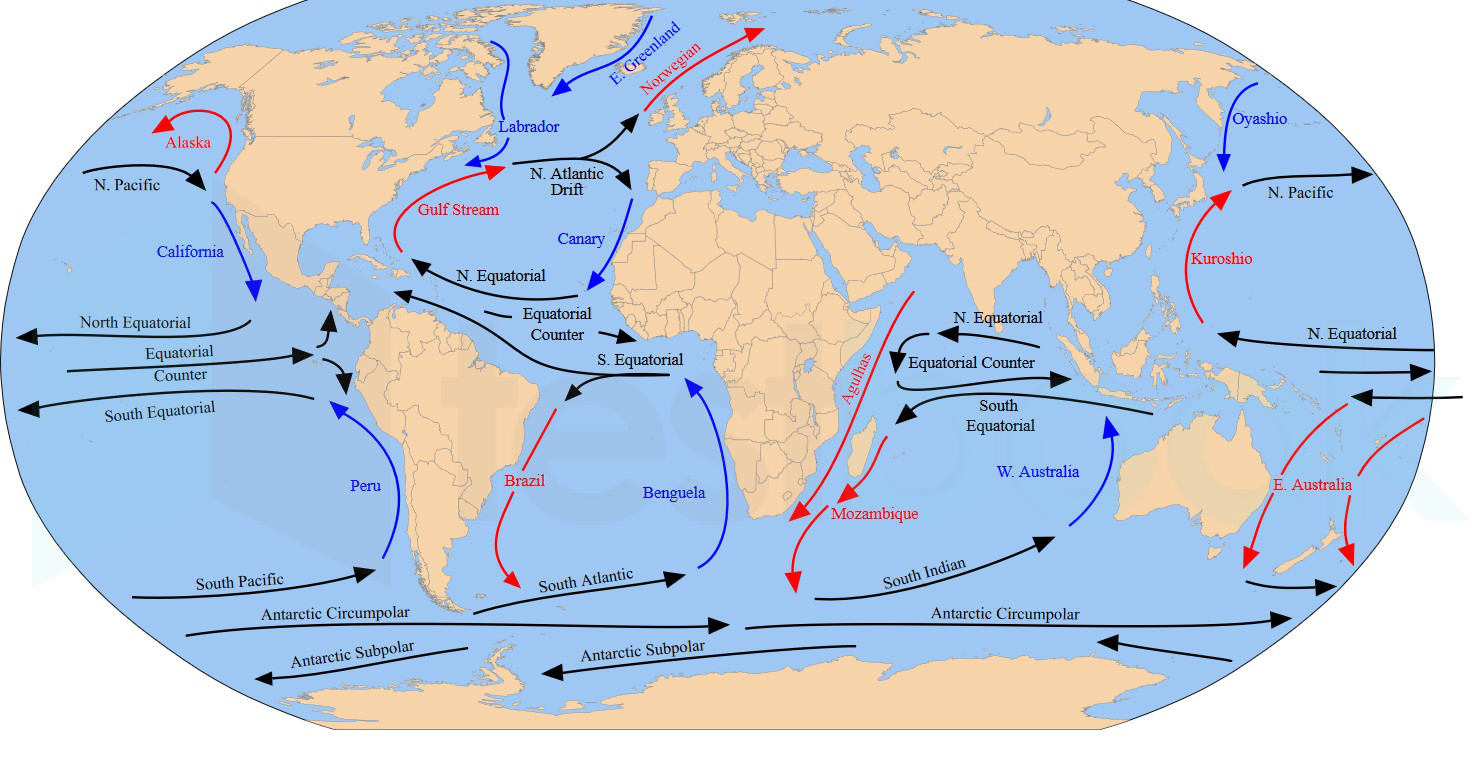
​Ocean CurrentsNature
A.BenguelaCold
B.CanariesWarm
C.AuglhasWarm
D.Humboldt (Peru)Cold
  1. ((a))

    A-Benguela- Cold

  2. ((b))

    B-Canaries- Warm

  3. ((c))

    C-Auglhas- Warm

  4. ((d))

    D-Humboldt (Peru)- Cold

Show Answer
Answer: ((b))

B-Canaries- Warm

The Correct Answer is B-Canaries- Warm.

Key Points

  • The Canary Current is a cold current that flows along the western coast of North Africa between Madeira and Cape Verde.
  • The Canary Current travels north to south along the African coast between 30°N and 10°N, and offshore to 20°W. (Fedoseev 1970). It is wide (1000 km) and slow (10-30 cm s-1) like other eastern boundary currents, and it runs year-round towards the equator.
  • As the current flows around the Canary Islands, it helps to lessen the heating effect of the Sahara to the east. The thermal mixing creates excellent fishing grounds in the region.

Additional Information

  • North Atlantic Drift and Brazil Current are warm currents.
  • The Ocean Currents are made up of vertical-horizontal Components of the circulation system of the ocean that is produced by wind friction, gravity, and water density variation in different parts of the ocean.
  • They are divided into three-part i.e.Current, Drift, and Stream based on the direction of speed, flow, and shape
  • The Ocean Currents in the Southern hemisphere deflect towards their left and in the Northern hemisphere deflect towards their right due to the Coriolis force. But in the Indian Ocean, where the direction of current flow changes with the change in the direction of monsoon wind flow.
  • Kuroshio is a warm current, and California is a cold current.
  • The Canaries is and Benguela is a cold current.
  • West Wind Drift and Falkland Current are Cold Currents.
4

Who was the President of the Indian National Congress at the Gaya Session of 1922?

  1. ((a))

    Mahatma Gandhi

  2. ((b))

    Hakim Ajmal Khan

  3. ((c))

    Chittaranjan Das

  4. ((d))

    None of the above

Show Answer
Answer: ((c))

Chittaranjan Das

The correct answer is option 3.

Key Points

The President of the Indian National Congress (INC) at the Gaya Session of 1922 was C.R. Das (Chittaranjan Das). Hence, option 3 is correct.

  • Background of the Gaya Session (1922):
  • The Gaya Session of the INC was held in December 1922.
  • It was a crucial session as it took place after the suspension of the Non-Cooperation Movement by Mahatma Gandhi in February 1922 (following the Chauri Chaura incident).
  • There was a growing division within the Congress regarding the future course of action after the suspension of the movement.
  • Chittaranjan Das as the INC President:
  • Chittaranjan Das, a prominent nationalist leader, was elected as the President of the INC at this session.
  • He was a well-known lawyer, freedom fighter, and the founder of the Swaraj Party.
  • His leadership at the session was marked by debates on the next phase of the freedom struggle.
  • Key Issues Discussed at the Session:
  • The main issue debated was whether to boycott legislative councils (as per Gandhi’s non-cooperation ideology) or to enter the councils and fight colonial policies from within.
  • Two factions emerged within the Congress:
  • Pro-Changers (Swarajists): Led by Chittaranjan Das and Motilal Nehru, they advocated entering the councils to obstruct British rule from within.
  • No-Changers: Led by leaders like Vallabhbhai Patel, Rajendra Prasad, and C. Rajagopalachari, they supported Gandhi’s original stance of complete non-cooperation.
  • Outcome of the Gaya Session:
  • A resolution was passed to continue the boycott of councils, which was supported by the No-Changers.
  • C.R. Das resigned from the Congress presidency after failing to convince the party to change its approach.
  • Following this, he and Motilal Nehru formed the Swaraj Party in 1923, which contested elections under the Government of India Act, 1919.
  • Significance of the Gaya Session:
  • The session marked a major ideological shift in Indian politics, leading to a split within Congress.
  • It paved the way for constitutional resistance against British rule through legislative bodies.
  • The formation of the Swaraj Party played a key role in opposing British policies within the councils.
5

Which government department is responsible for implementing the VAIBHAV Fellowship Scheme?

  1. ((a))

    Ministry of Education

  2. ((b))

    Ministry of Science and Technology

  3. ((c))

    Ministry of Home Affairs

  4. ((d))

    Ministry of Agriculture and Farmers Welfare

Show Answer
Answer: ((b))

Ministry of Science and Technology

The correct answer is Ministry of Science and Technology.

Key Points

VAIBHAV Fellowship Scheme:

  • The fellowship offers Non-Resident Indian (NRI) researchers an opportunity to work for a minimum of one month to a maximum of two months a year with a research institution or an academic institution in India.
  • Duration:
  • Three years with the government offering the researchers an amount of up to Rs 37 lakh for the entire period.
  • Aim:
  • Improving the research ecosystem of India’s Higher Educational Institutions by facilitating academic and research collaborations between Indian Institutions and the best institutions in the world.
  • This is done through the mobility of faculty/researchers from overseas institutions to India.
  • Eligibility:
  • ​Researchers from institutions featuring in the top 500 QS World University Rankings will be eligible for the fellowship.
  • The applicant should be a Non-Resident Indian (NRI), Person of Indian Origin (PIO), or Overseas Citizen of India (OCI) and she or he must have obtained Ph.D/M.D/M.S degree from a recognized University. Hence statement 2 is correct.
  • Significance:
  • The best Diaspora minds will collaborate with domestic Minds to deliver world-class projects and products.
6

kilowatt hour (kW.h) is a unit of:

  1. ((a))

    momentum

  2. ((b))

    energy

  3. ((c))

    force

  4. ((d))

    power

Show Answer
Answer: ((b))

energy

The correct answer is energy.

Key Points

  • A kilowatt hour (kW.h) is a unit of energy.
  • It is commonly used to measure electrical energy consumption.
  • One kilowatt hour is equivalent to the energy consumption of a 1000-watt appliance running for one hour.
  • The kilowatt hour is a derived unit of energy in the International System of Units (SI).

Additional Information

  • Energy: The capacity to do work, measured in joules (J) in the SI system, but kilowatt hours (kW.h) are used for practical electrical energy measurement.
  • Power: The rate at which energy is used or transferred, measured in watts (W). 1 watt = 1 joule per second.
  • Joule: The SI unit of energy, defined as the energy transferred when applying a force of one newton over a distance of one meter.
  • Electricity Billing: Household electricity bills typically use kilowatt hours to quantify energy consumption.
  • Conversion: 1 kilowatt hour = 3.6 million joules (3.6 x 10^6 J).
7

The Sati Pratha was abolished under the Governor - Generalship of ________.

  1. ((a))

    Lord Auckland

  2. ((b))

    Lord William Bentinck

  3. ((c))

    Lord Ellenborough

  4. ((d))

    Lord Metcalfe

Show Answer
Answer: ((b))

Lord William Bentinck

The correct answer is Lord William Bentinck.

Key Points

  • The Sati Pratha was abolished under the Governor Generalship of Lord William Bentinck.
  • The Sati Pratha was abolished in 1829.
  • Ram Mohan Roy was known as the 'Father of the Bengal Renaissance'
  • He had worked for the upliftment of women's position in society.
  • He had worked against polygamy, child marriage, Purdah, and Sati Pratha.
  • It is his work that led to the abolition of Sati Pratha in India.

Additional Information

NameTenureImportant Events
Lord William  Bentinck1828 -1833    & 1833 -1835- The last Governor-General of Bengal and First Governor-General of India(since 1833). - 1829 - Abolition of Sati Pratha. - 1830 - Elimination of Thugs. - Charter Act of 1833 was passed, he became the first Governor-General of India. - On Macaulay's recommendation, English was made as the medium of instruction in higher education. - Also known as the Father of Modern Western Education in India. - Worked against child sacrifices and female infanticide. - Known to be the most enlightened and liberal Governor-General of India.
Lord Metcalfe1835 -1836- Passed the Press Act of 1835, also known as Metcalfe Act. - Known as the Liberator of Press in India.
Lord Auckland1836 -1842- First Anglo-Afghan War was fought
Lord Ellenborough1842 -1844- Brought an end to Anglo-Afghan War - The annexation of Sindh(1843) - Gwalior Campaign(1843) - Abolished Slavery(1843)
8

Which three Indian women cricketers were named in the ICC Women’s Cricket World Cup 2025 Team of the Tournament?

  1. ((a))

    Harmanpreet Kaur, Shafali Verma, Amanjot Kaur

  2. ((b))

    Smriti Mandhana, Jemimah Rodrigues, Deepti Sharma

  3. ((c))

    Deepti Sharma, Shafali Verma, Harmanpreet Kaur

  4. ((d))

    Deepti Sharma, Smriti Mandhana, Amanjot Kaur

Show Answer
Answer: ((b))

Smriti Mandhana, Jemimah Rodrigues, Deepti Sharma

The correct answer is Smriti Mandhana, Jemimah Rodrigues, and Deepti Sharma.

In News

  • Three Indian players — Smriti Mandhana, Jemimah Rodrigues, and Deepti Sharma — have been included in the ICC Women’s Cricket World Cup 2025 Team of the Tournament.

Key Points

  • Smriti Mandhana scored 434 runs at an average of 54.25, including a century against New Zealand.
  • Jemimah Rodrigues’ match-winning 127 against Australia powered India into the final.*
  • All-rounder Deepti Sharma topped the bowling charts with 22 wickets, including key breakthroughs in the final.
  • The trio joined top performers like Laura Wolvaardt, Marizanne Kapp, and Ashleigh Gardner in the elite XI.

Additional Information

  • The selection panel included Ian Bishop, Mel Jones, Isa Guha, Gaurav Saxena, and Estelle Vasudevan.
  • South Africa’s Laura Wolvaardt captained the team after topping the run charts with 571 runs.
  • Australia, South Africa, England, and Pakistan also had players featured in the lineup.
  • Team includes 3 South Africans, 3 Australians, 2 English & 1 Pakistani player.
  • Rest of the Players: Laura Wolvaardt (captain), Marizanne Kapp, Ashleigh Gardner, Annabel Sutherland, Nadine de Klerk, Sidra Nawaz (wk), Alana King, Sophie Ecclestone, Nat Sciver-Brunt (12th player).
9

A sum of ₹4,500 is divided between A, B and C such that the ratio of the share of B to the combined the share of A and C is 2:7 and the ratio of the combined share of A and B to the share of C is 11: 4. What is the share of A?

  1. ((a))

    ₹2,150

  2. ((b))

    ₹2,200

  3. ((c))

    ₹ 2,250

  4. ((d))

    ₹2,300

Show Answer
Answer: ((d))

₹2,300

Given:

Total = ₹4,500

B : (A + C) = 2 : 7 ⇒ B = 2k, A + C = 7k

(A + B) : C = 11 : 4 ⇒ A + B = 11m, C = 4m

Formula used:

Use system of ratios and total: express A,B,C in terms of m (or k) and solve A + B + C = 4500

Calculations:

⇒ B = 2k, A + C = 7k

⇒ A = (A + B) − B = 11m − 2k

⇒ C = 4m

⇒ From A + C = 7k ⇒ (11m − 2k) + 4m = 7k

⇒ 15m − 2k = 7k ⇒ 15m = 9k ⇒ k = 5/3 m

⇒ B = 2k = 2 × 5/3 m = 10/3 m

⇒ A = 11m − B = 11m − 10/3 m = 23/3 m

⇒ Total = A + B + C = 23/3 m + 10/3 m + 4m = 33/3 m + 4m = 11m + 4m = 15m

⇒ 15m = 4500 ⇒ m = 300

⇒ A = 23/3 m = 23/3 × 300 = 23 × 100 = ₹2,300

∴ Share of A = ₹2,300.

10

Where was the convention of 35th General of Congress in the year 1920 under the Central Provinces held?

  1. ((a))

    Jabalpur 

  2. ((b))

    Wardha

  3. ((c))

    Nagpur

  4. ((d))

    Indore

Show Answer
Answer: ((c))

Nagpur

The correct answer is option 3.

Key Points

35th Congress Session (1920) in Nagpur:

  • Location and Presidency:
  • Held in Nagpur under the Central Provinces. Hence, option 3 is correct.
  • Presided over by Chakravarti Vijayraghavacharya.
  • Reception Committee:
  • The receptionist was Seth Jamnalal Bajaj.
  • Prominent Activists from Jabalpur:
  • Pt. Vishnudutt Shukla
  • Sunderlal Tapasvi
  • Makhanlal Chaturvedi
  • Beauhar Raguvir Singh
  • Thakur Laxman Singh Chauhan
  • Smt. Subhadra Kumari Chauhan
  • Seth Govind Das
  • Pt. Dwarka Prasad Mishra
  • Chaudhary Dalchand Rai
  • Kashi Prasad Pandey
  • Suraj Prasad Sharma
  • Babu Venkataraman
  • Seth Jaydayal
  • Kallulal Kandele.
  • These activists played significant roles in the freedom movement and contributed to the success of the Congress session in Nagpur.
11

Recently, the United States of America has designated which of the following country as its Major Non-NATO Ally, MNNA?

  1. ((a))

    Nigeria

  2. ((b))

    Namibia

  3. ((c))

    Kenya

  4. ((d))

    Botswana

Show Answer
Answer: ((c))

Kenya

The correct answer is Kenya.

Key Points

  • The United States of America recently designated Kenya as its Major Non-NATO Ally (MNNA) in July 2023.
  • This designation allows Kenya to access various benefits such as defense and security assistance programs and closer bilateral collaboration with the USA.
  • The designation reflects Kenya's strategic importance in East Africa, particularly in combating terrorism and ensuring regional stability.
  • Countries designated as MNNA receive privileges in defense cooperation, including priority delivery of military equipment, access to advanced technology, and participation in joint military exercises.
  • Kenya is recognized for its active participation in counterterrorism efforts, particularly against groups like Al-Shabaab in the region.

Additional Information

  • Major Non-NATO Ally (MNNA) Status:
  • This is a designation by the United States to countries that are not part of NATO but have a close strategic partnership with the USA.
  • Countries with MNNA status can access loan programs for military equipment, participate in joint research and development projects, and are eligible for priority delivery of defense supplies.
  • As of 2023, there are 20 countries globally that hold MNNA status, including nations like Israel, Japan, South Korea, and Australia.
  • Kenya's Role in Regional Stability:
  • Kenya is a key player in East Africa, actively involved in peacekeeping missions and combatting extremist groups such as Al-Shabaab.
  • Kenya has been a member of the African Union Mission in Somalia (AMISOM), which focuses on stabilizing Somalia.
  • Its strategic location and robust military cooperation make it an essential ally for counterterrorism and security in the region.
  • Benefits of MNNA Designation:
  • Countries with MNNA status receive priority access to defense technology and training programs.
  • They can participate in joint military exercises and access American loan guarantees for purchasing military equipment.
  • MNNA countries can also collaborate on space and defense-related projects with the USA.
  • Other MNNA Countries:
  • Some of the countries designated as MNNA include Thailand, New Zealand, Bahrain, Egypt, and Pakistan.
  • These countries are selected based on their strategic importance and partnership with the USA in areas such as defense, security, and economic cooperation.

Important Points

  • Kenya’s Counterterrorism Efforts:
  • Kenya has actively engaged in operations against Al-Shabaab to curb terrorism in East Africa.
  • It has partnered with the USA on intelligence sharing and joint military training.
  • Kenya hosts important regional headquarters for organizations like the UN and African Union, emphasizing its role in peacekeeping.
  • Significance of MNNA Status:
  • This designation strengthens bilateral ties between Kenya and the USA, fostering economic, political, and defense cooperation.
  • It also highlights the USA's commitment to supporting Kenya in addressing regional security challenges.
  • Strategic Importance of East Africa:
  • East Africa is a region of geopolitical interest due to its proximity to the Indian Ocean and vital trade routes.
  • Countries like Kenya play a critical role in stabilizing the region and ensuring security against extremist threats.
12

If the voltage across a conductor is doubled while keeping the resistance constant, what happens to the current through the conductor?

  1. ((a))

    It doubles 

  2. ((b))

    It remains constant

  3. ((c))

    It increases four times

  4. ((d))

    It halves 

Show Answer
Answer: ((a))

It doubles 

Explanation:

Current and Voltage Relationship in a Conductor

Definition: The relationship between current (I), voltage (V), and resistance (R) in a conductor is governed by Ohm's Law. Ohm's Law states that the current flowing through a conductor between two points is directly proportional to the voltage across the two points and inversely proportional to the resistance between them. Mathematically, it is expressed as:

V = IR

We can rearrange this formula to solve for the current (I):

I = V / R

Now, let's consider the initial situation: Let the initial voltage be V₁ and the initial current be I₁. The resistance is R. So, I₁ = V₁ / R

Next, the voltage across the conductor is doubled, so the new voltage V₂ = 2V₁. The resistance remains constant at R. Let the new current be I₂. Using Ohm's Law for the new situation: I₂ = V₂ / R

Substitute the value of V₂ into this equation: I₂ = (2V₁) / R

We can rewrite this as: I₂ = 2 x (V₁ / R)

Since we know that I₁ = V₁ / R, we can substitute I₁ into the equation for I₂: I₂ = 2 x I₁

This means that the new current (I₂) is twice the initial current (I₁). Therefore, when the voltage across a conductor is doubled while keeping the resistance constant, the current through the conductor also doubles.

13

What is the refractive index of diamonds?

  1. ((a))

    2.42

  2. ((b))

    2.87

  3. ((c))

    1.24

  4. ((d))

    3.42

Show Answer
Answer: ((a))

2.42

The correct answer is 2.42.

Key Points

  • The refractive index of a material is a measure of how much it bends light.
  • Diamonds have a high refractive index of 2.42, which contributes to their brilliant sparkle.
  • This high refractive index is due to the dense atomic structure of diamond.
  • The property of total internal reflection in diamonds, due to their refractive index, is what gives them their unique brilliance and fire.
  • The refractive index is a critical factor in determining the quality and value of a diamond.

Additional Information

  • Diamonds are formed under high-pressure, high-temperature conditions deep within the Earth's mantle.
  • The chemical composition of a diamond is carbon, with each carbon atom covalently bonded to four other carbon atoms in a tetrahedral structure.
  • Diamonds are the hardest known natural material on the Mohs scale of mineral hardness.
  • They are not only prized for their beauty in jewelry but also have various industrial applications due to their hardness and thermal conductivity.
  • The process of determining a diamond's quality is known as the Four Cs: Cut, Color, Clarity, and Carat Weight.
14

Which of the following statements regarding Article 270 are correct?

  1. Article 270 governs the sharing of taxes between the Union and States, including proceeds from GST.

  2. After the 101st Constitutional Amendment, Article 270 includes provisions for distributing revenue from Union taxes and GST.

  3. The GST Compensation Cess is also shared between the Union and States under Article 270.

  1. ((a))

    1 and 3 only

  2. ((b))

    1 Only

  3. ((c))

    1 & 2 only

  4. ((d))

    2 & 3 only

Show Answer
Answer: ((c))

1 & 2 only

The correct answer is 3) 1 & 2 only.

Key Points

  • Article 270 of the Indian Constitution governs the sharing of taxes between the Union and the States. After the 101st Constitutional Amendment Act, 2016, it was amended to include provisions for the sharing of revenue from Goods and Services Tax (GST). Hence, statement 1 is correct.
  • The 101st Constitutional Amendment added provisions in Article 270 to ensure that the revenue collected through GST is apportioned between the Union and the States based on the recommendations of the Finance Commission. Hence, statement 2 is correct.
  • The GST Compensation Cess, however, is not shared between the Union and the States under Article 270. It is governed by the GST (Compensation to States) Act, 2017, which ensures compensation to States for any revenue loss due to the implementation of GST. Hence, statement 3 is incorrect.
  • The Finance Commission plays a key role in determining the sharing formula for taxes, including GST, under Article 270.
  • It is important to note that the sharing mechanism under Article 270 does not include non-divisible taxes, such as surcharges and cesses, which remain with the Union Government.

Additional Information

  • 101st Constitutional Amendment Act, 2016:
  • This amendment introduced the Goods and Services Tax (GST) in India, effective from 1st July 2017.
  • It subsumed multiple indirect taxes levied by the Centre and the States, such as excise duty, VAT, and service tax, under a single tax regime.
  • It led to the addition of Article 246A, empowering both the Parliament and State Legislatures to make laws on GST.
  • It also introduced Article 269A, which deals with the apportionment of GST collected on inter-State trade.
  • GST Compensation Cess:
  • It is levied under the GST (Compensation to States) Act, 2017 to compensate States for revenue losses arising due to GST implementation.
  • The compensation cess is levied on specific luxury and sin goods, such as tobacco, aerated drinks, and automobiles.
  • The funds collected through the cess are not part of the divisible pool under Article 270 and are kept in a separate compensation fund.
  • Finance Commission:
  • It is constituted under Article 280 of the Constitution to recommend the distribution of tax revenues between the Centre and the States.
  • The Commission takes into account factors such as population, area, fiscal capacity, and governance when recommending the sharing formula.
  • The 15th Finance Commission, chaired by N.K. Singh, has been tasked with making recommendations for the period 2021-26.
  • Key Features of GST:
  • GST is a destination-based tax, meaning it is collected at the point of consumption.
  • It is levied at multiple rates, categorized into 5%, 18%, and 40%, depending on the goods or services.
  • It aims to create a unified tax structure, reducing cascading effects and improving tax compliance.

Important Points

  • Revenue Distribution: Taxes collected under GST are distributed between the Centre and the States in a 50:50 ratio. For inter-State supplies, the tax collected is divided between the Centre and the destination State.
  • GST Council: The GST Council, established under Article 279A, is responsible for making recommendations on GST rates, exemptions, and other related matters.
  • Impact of GST: GST has simplified the tax structure, enhanced transparency, and contributed to the formalization of the economy. However, challenges such as compliance costs and revenue shortfalls for States persist.
15

Who was awarded the 2025 Abel Prize?

  1. ((a))

     Niels Henrik Abel

  2. ((b))

    Masaki Kashiwara

  3. ((c))

    Hendrik Haugan

  4. ((d))

    John von Neumann

Show Answer
Answer: ((b))

Masaki Kashiwara

The Correct Answer is Masaki Kashiwara.

In News

  • Japanese mathematician Masaki Kashiwara awarded the Abel Prize 2025.

Key Points

  • Recipient of the 2025 Abel Prize: Masaki Kashiwara, a Japanese mathematician.
  • Field of Contribution:
  • Algebraic analysis
  • Representation theory
  • Development of D-modules
  • Discovery of crystal bases.
  • About the Abel Prize:
  • Named after Niels Henrik Abel, a legendary Norwegian mathematician.
  • Established by the Norwegian Parliament in 2002 to commemorate Abel's 200th birth anniversary.
  • First awarded in 2003.
  • Often regarded as the Nobel Prize equivalent in mathematics.
  • Awarded by a committee in consultation with the International Mathematical Union (IMU) and the European Mathematical Society (EMS).
  • Includes a cash award and a glass plaque designed by Norwegian artist Henrik Haugan.
16

In which article of the Indian Constitution are the functions and powers of the Chief Minister mentioned?

  1. ((a))

    Article 162

  2. ((b))

    Article 167

  3. ((c))

    Article 168

  4. ((d))

    Article 169

Show Answer
Answer: ((b))

Article 167

The correct answer is Article 167.

Key Points

  • Article 167 of the Indian Constitution defines the duties of the Chief Minister.
  • A chief minister is understood to be "first among equals".
  • A Chief Minister must be
  • Chief Minister must be a citizen of India.
  • Chief Minister should be a member of the state legislature.
  • If a person is elected chief minister who is not a member of the legislature, then he/she must take permission from the governor.
  • Chief Minister must be 25 years of age or more.

Additional Information

  • Article 162
  • Deals with the extent of executive power of the State.
  • It states that the executive power of a State extends to matters on which the State Legislature has the power to make laws. It does not specifically mention the Chief Minister.
  • Article 168
  • Relates to the constitution of the State Legislature.
  • It provides for a Legislative Assembly and, in some states, a Legislative Council. It has no connection with the powers or functions of the Chief Minister.
  • Article 169
  • Empowers Parliament to create or abolish the Legislative Council in a State on the recommendation of the State Legislative Assembly.
17

What is the main function of insulin in the human body?

  1. ((a))

    To maintain blood pressure

  2. ((b))

    To help in digestion of food

  3. ((c))

    To control the level of sugar in the body

  4. ((d))

    To check the level of iodine in the body

Show Answer
Answer: ((c))

To control the level of sugar in the body

Correct Answer: To control the level of sugar in the body

Rationale:

  • Insulin is a hormone produced by the pancreas that plays a crucial role in regulating blood glucose levels. It allows cells to take in glucose to be used for energy or stored for future use.
  • When you eat, carbohydrates are broken down into glucose, which enters the bloodstream. Insulin helps to lower blood glucose levels by facilitating the uptake of glucose into cells, particularly muscle and fat cells.
  • Insulin also inhibits the liver from producing more glucose, thereby preventing hyperglycemia (high blood sugar levels).
  • In the absence or deficiency of insulin, as seen in conditions like diabetes mellitus, blood glucose levels remain elevated, leading to various health complications.

Explanation of Other Options:

To maintain blood pressure

  • Rationale: Blood pressure is primarily regulated by hormones such as aldosterone and antidiuretic hormone (ADH), as well as the renin-angiotensin-aldosterone system. Insulin does not have a direct role in maintaining blood pressure.

To help in digestion of food

  • Rationale: The digestion of food involves enzymes and digestive juices produced by the stomach, pancreas, and intestines. Insulin is not involved in the breakdown of food; rather, it helps in the utilization of glucose derived from digested food.

To check the level of iodine in the body

  • Rationale: The regulation of iodine levels in the body is primarily managed by the thyroid gland and hormones such as thyroxine (T4) and triiodothyronine (T3). Insulin has no role in iodine regulation.

Conclusion:

  • Insulin is essential for controlling blood sugar levels by promoting the uptake of glucose into cells and inhibiting glucose production by the liver. It is not involved in maintaining blood pressure, aiding in digestion, or regulating iodine levels.
18

Height and base radius of one cylinder are respectively 30 cm and 6 cm and that of another cylinder are 15 cm and 12 cm respectively. The ratio of the volume of first cylinder to that of the second cylinder is

  1. ((a))

    2 : 3

  2. ((b))

    3 : 2

  3. ((c))

    1 : 2

  4. ((d))

    1 : 1

Show Answer
Answer: ((c))

1 : 2

Given:

Height of the first cylinder = 30 cm 

The radius of the first cylinder = 6 cm

Height of the second cylinder = 15 cm

The radius of the second cylinder = 12 cm

Formula used:

Volume of a cylinder = πr2h

Where, r = Radius of the cylinder

h = height of the cylinder

Calculation:

Volume of the cylinder : Volume of second cylinder

= π × 62 × 30 : π × 122 × 15

= 36 × 30 : 144 × 15

= 1080 : 2160

= 1 : 2

∴​ The ratio of the volume of the first cylinder to that of the second cylinder is 1 : 2

19

The average salary of all staff of a school is Rs.10,000. The average salary of 20 teaching staff is Rs.12,000 and that of non-teaching staff is Rs. 5000, the number of non - teaching staff is:

  1. ((a))

    7

  2. ((b))

    12

  3. ((c))

    10

  4. ((d))

    8

Show Answer
Answer: ((d))

8

Given:

Average salary of all staff = Rs. 10,000

Average salary of 20 teaching staff = Rs. 12,000

Average salary of non-teaching staff = Rs. 5,000

Formula used:

Sum of all observations = Average × Number of observations

Calculation:

Let the number of non-teaching staff be x

Total salary of non-teaching staff = Rs. 5000x

Total salary of teaching staff = Rs. 12000 × 20 = Rs. 240000

Total salary of all staff = Rs. 10000 × (x + 20) = Rs. (10000x + 200000)

⇒ 5000x + 240000 = 10000x + 200000

⇒ 40000 = 5000x

⇒ x = 8

∴ Total non-teaching staff is 8

20

Under Article "243J" which of the following can make provisions to the maintenance of accounts by Panchayats?

  1. ((a))

    Parliament

  2. ((b))

    State Legislature

  3. ((c))

    District Collector

  4. ((d))

    State Finance Commission

Show Answer
Answer: ((b))

State Legislature

The Correct answer is Option 2

Key Points

  • Under Article 243J of the Indian Constitution, the State Legislature is empowered to make provisions regarding the maintenance of accounts by Panchayats. Hence, option 2 is correct.
  • Key Details:
  • Article 243J falls under Part IX of the Constitution, which deals with the Panchayati Raj System.
  • It specifically allows the State Legislature to:
  • Prescribe the manner in which Panchayats maintain their accounts.
  • Ensure transparency and accountability in the financial management of Panchayats.
21

Who among the following eminent musicians was born in Bihar ?

  1. ((a))

    Ustad Bismillah Khan

  2. ((b))

    Pandit Ravi Shankar 

  3. ((c))

    Pandit Shivkumar Sharma

  4. ((d))

    Ustad Zakir Hussain 

Show Answer
Answer: ((a))

Ustad Bismillah Khan

The Correct answer is Ustad Bismillah Khan.

Key Points

  • Ustad Bismillah Khan was a legendary Indian musician known for his mastery of the shehnai, a traditional Indian wind instrument.
  • He was born on 21 March 1916 in Dumraon, Bihar, India.
  • Bismillah Khan is often referred to as the "Shehnai Maestro" and is credited with popularizing the shehnai as a classical instrument.
  • He was awarded the Bharat Ratna, India's highest civilian award, in 2001.
  • Bismillah Khan's performances were known for their emotional depth and technical brilliance.
  • He performed at the Red Fort on the eve of India's Independence in 1947, marking a significant moment in Indian history.

 Additional Information

  • Pandit Ravi Shankar
  • Pandit Ravi Shankar was a renowned sitar virtuoso and composer, who played a significant role in popularizing Indian classical music worldwide.
  • He was born in Varanasi, Uttar Pradesh, India.
  • He collaborated with several Western musicians, including George Harrison of The Beatles.
  • Pandit Shivkumar Sharma
  • Pandit Shivkumar Sharma is an Indian music composer and santoor player.
  • He was born in Jammu, Jammu and Kashmir, India.
  • He is credited with making the santoor a popular classical instrument.
  • Ustad Zakir Hussain
  • Ustad Zakir Hussain is a world-renowned tabla virtuoso.
  • He was born in Mumbai, Maharashtra, India.
  • He is known for his work in both Indian classical music and world music.
22

Consider the following Assertion and Reason :

Assertion: 15% discount on the marked price of an item is more than the discount of 10% on the marked price of the same item and a subsequent (successive) discount of 5%.

Reason: The subsequent (successive) discount is on the discounted amount.

Which one of the following is correct with regard to the above Assertion and Reason ?

  1. ((a))

    Both the assertion and the reason are individually true and the reason is a correct explanation of the assertion.

  2. ((b))

    Both the assertion and the reason are individually true, but the reason is not a correct explanation of the assertion.

  3. ((c))

    Assertion is true, but Reason is false.

  4. ((d))

    Assertion is false, but Reason is true.

Show Answer
Answer: ((a))

Both the assertion and the reason are individually true and the reason is a correct explanation of the assertion.

Given:

Marked Price (M) = ₹100 (Assumed)

Case 1: Single Discount = 15%

Case 2: Successive Discounts = 10% and 5%

Formula used:

Discounted Price after successive discounts = M × (1 - Discount1) × (1 - Discount2)

Calculations:

Case 1:

Discount = 15%

Discounted Price = M × (1 - 15/100)

⇒ Discounted Price = ₹100 × 0.85

⇒ Discounted Price = ₹85

Total Discount = M - Discounted Price

⇒ Total Discount = ₹100 - ₹85

⇒ Total Discount = ₹15

Case 2:

Successive Discounts = 10% and 5%

Discounted Price = M × (1 - 10/100) × (1 - 5/100)

⇒ Discounted Price = ₹100 × 0.9 × 0.95

⇒ Discounted Price = ₹85.5

Total Discount = M - Discounted Price

⇒ Total Discount = ₹100 - ₹85.5

⇒ Total Discount = ₹14.5

Comparison: Case 1 Discount = ₹15, Case 2 Discount = ₹14.5

∴ 15% discount is greater than successive discounts of 10% and 5%.

Reasoning:

The successive discount is applied on the already discounted amount, reducing the overall discount.

Both the assertion and the reason are individually true, and the reason is a correct explanation of the assertion.

∴ The correct answer is option 1.

23

A number is increased by 20% and then decreased by 15%. The number so obtained is 98 greater than the original number. What was the original number? 

  1. ((a))

    5000

  2. ((b))

    5100

  3. ((c))

    4900

  4. ((d))

    4200

Show Answer
Answer: ((c))

4900

Given:

Increase = 20%

Decrease = 15%

Final number - Original number = 98

Formula Used:

After increase: New = Original × (1 + %Increase/100)

After decrease: New = Previous × (1 - %Decrease/100)

Calculation:

⇒ Let the original number = x

⇒ After 20% increase: x × (1 + 20/100) = x × 1.2

⇒ After 15% decrease: 1.2x × (1 - 15/100) = 1.2x × 0.85

⇒ 1.2 × 0.85 × x = 1.02x

⇒ New number = 1.02x

⇒ New number - Original = 1.02x - x = 0.02x

⇒ 0.02x = 98

⇒ x = 98 ÷ 0.02

⇒ x = 4900

∴ The correct answer is 4900.

24

Identify the option that arranges the following events related to Mughal Empire in the correct chronological order. 

I. Battle of khanwa

II. Battle of Kanauj

III. First Battle of Panipat

IV. Battle of Chausa

  1. ((a))

    III - II - I - IV

  2. ((b))

    III - I - IV - II

  3. ((c))

    II - I - IV - III

  4. ((d))

    I - II - III - IV

Show Answer
Answer: ((b))

III - I - IV - II

The correct chronological order of the given events is III - I - IV - II

Key Points

  • First Battle of Panipat:
  • The First Battle of Panipat took place in 1526, near Panipat, which is now in the modern-day state of Haryana, India.
  • It was fought between the forces of the Mughal Emperor Babur and the army of the Delhi Sultanate, led by Sultan Ibrahim Lodi.
  • Babur defeated Ibrahim Lodi and his Afghan supporters in this battle.
  • Battle of Khanua:
  • The Battle of Khanua was fought in 1527, between the forces of the Mughal Emperor Babur and the Rajput king Rana Sanga of Mewar, near the town of Khanua in present-day Rajasthan, India.
  • Babur defeated Rana Sanga, Rajput rulers and allies at Khanua.
  • Battle of Chausa:
  • The Battle of Chausa was fought in 1539, between the forces of the Mughal Emperor Humayun and Sher Shah Suri, who was the governor of Bihar and a prominent Afghan noble of the Sur dynasty.
  • In the battle, Sher Shah's army, which included a large number of Afghan and Rajput soldiers, was able to defeat the Mughal army, which was much larger in number but lacked coordination and discipline.
  • Battle of Kanauj:
  • The Battle of Kanauj was fought between the forces of Sher Shah Suri, the ruler of the Sur Empire, and the army of the Mughal Emperor Humayun in 1540.
  • Humayun was defeated in this battle which forced him to flee to Iran.

Therefore the correct chronological order of the given events related to Mughal Empire is:

III. First Battle of Panipat

I. Battle of Khanwa

IV. Battle of Chausa

II. Battle of Kanauj

25

Which of the following energy resources is also known as Liquid Gold? 

  1. ((a))

    Petroleum 

  2. ((b))

    Natural Gas  

  3. ((c))

    Coal 

  4. ((d))

    Uranium 

Show Answer
Answer: ((a))

Petroleum 

The correct answer is Petroleum.

Key Points

  • Petroleum
  • Petroleum is commonly known as Liquid gold.
  • Due to the fact that crude oil turns black when it is removed from the ground, petroleum is also known as "black gold."
  • Petroleum is a liquid that naturally exists below the surface of the planet.

Additional Information

  • Natural Gas:
  • In terms of environmental impact and air pollution, natural gas is generally considered cleaner compared to diesel, petroleum, and coal.
  • Natural gas emits fewer pollutants, including sulfur dioxide (SO2), nitrogen oxides (NOx), particulate matter, and greenhouse gases such as carbon dioxide (CO2), compared to the other options listed.
  • Coal:
  • Coal is a black or brown flammable substance found in sedimentary rocks.
  • Coal is mainly composed of elements like carbon, hydrogen, sulfur, oxygen, and nitrogen.
  • Uranium:
  • ​It is a silvery-white metallic chemical element in the periodic table, with atomic number 92.
  • It is assigned the chemical symbolU’.
  • A uranium atom has 92 protons and 92 electrons, of which 6 are valence electrons.
  • Uranium has the highest atomic weight (19 kg m) of all naturally occurring elements.
26

Which of the following statement regarding the Sundarban Delta is correct?

I. The Sundarban Delta derived its name from the Sundari tree which grows well in Marshland.

II. It is the World's largest and fastest growing delta.

  1. ((a))

    Only II

  2. ((b))

    Both I and II

  3. ((c))

    Only I

  4. ((d))

    Neither I nor II

Show Answer
Answer: ((b))

Both I and II

The correct answer is Both I and II

Key Points

  • The Sundarban Delta is situated adjacent to the Bay of Bengal formed by a concourse of the Ganges, Padma, Hooghly, Brahmaputra, and Meghna rivers.
  • It is the world’s largest delta.
  • ‘Sundari’ is the most abundant tree in this region.
  • These trees can grow up to a height of 60 feet with a girth of six feet.
  • The timber obtained from this tree is used for boatbuilding and joinery, bridge-building, house construction, utility poles and tool handle.
  • In Bengali, the word ‘Sundari’ means beautiful and ‘ban’ means forest. Hence, the name ‘Sunderban’.
27

According to the Global Cities Index 2025 by Oxford Economics, which two cities topped the list?

  1. ((a))

    Tokyo and Beijing

  2. ((b))

    London and New York

  3. ((c))

    Paris and Rome

  4. ((d))

    Berlin and Moscow

Show Answer
Answer: ((b))

London and New York

The correct answer is London and New York.

Key Points

  • The Global Cities Index, published by Oxford Economics, ranks cities based on various parameters such as economic strength, innovation, infrastructure, culture, and quality of life.
  • London and New York frequently top such rankings due to their global influence, robust economies, and cultural significance.
  • London is renowned for being a leading financial hub, housing institutions like the London Stock Exchange and significant cultural landmarks, making it a prominent choice in global rankings.
  • New York City, similarly, is an economic powerhouse, hosting the New York Stock Exchange (NYSE) and being a center for media, arts, and innovation.
  • These cities consistently rank at the top due to their diverse populations, advanced infrastructure, and strategic global connectivity.
  • The Global Cities Index evaluates over 100 cities worldwide, measuring their impact on global affairs through contributions to economic activity, political engagement, and social development.
  • London and New York are viewed as benchmarks for urban development, offering insights into how cities can thrive in the 21st century.
  • Hence, the correct answer is London and New York.

Additional Information

  • Global Cities Index:
  • The Global Cities Index by Oxford Economics evaluates cities based on their ability to attract and retain talent, businesses, and investors.
  • Factors considered include economic output, innovation, cultural diversity, political engagement, and livability.
  • The index reflects how cities contribute to the global economy and their roles in shaping international trends.
  • Characteristics of Top Cities:
  • London: Known for its finance, arts, and historical heritage, London is home to globally renowned institutions and a diverse population.
  • New York City: Often called the "capital of the world", NYC is a leader in finance, entertainment, technology, and culture.
  • Tokyo: A key city in Asia, Tokyo is a hub for technology and innovation, but it has not surpassed London and New York in global rankings.
  • Paris: Known for its cultural influence, Paris ranks high in quality of life and tourism, but lacks the economic power of London and New York.
  • Beijing: A political and economic center in China, it is rising in global influence but has not yet matched London or New York's status.

Important Points

  • Key Features of London and New York:
  • London: Houses the headquarters of many multinational corporations and is a leader in banking, education, and tourism.
  • New York: Known for Wall Street, Broadway, and the United Nations headquarters, making it a center for finance, arts, and diplomacy.
  • Global Influence of Cities:
  • Cities like London and New York set trends in urban development and serve as models for other cities worldwide.
  • Their ability to attract global talent and investment ensures their continued dominance in global rankings.
28

What is the growth rate of the Index of Industrial Production (IIP) for the month of March 2025?

  1. ((a))

    2.9%

  2. ((b))

    3.0%

  3. ((c))

    4.3%

  4. ((d))

    8.2%

Show Answer
Answer: ((b))

3.0%

The correct answer is 3.0%.

In News

  • The growth rate of the Index of Industrial Production (IIP) for March 2025 is 3.0%.

Key Points

  • The IIP growth rate for March 2025 stands at 3.0%, which is slightly up from 2.9% in February 2025.
  • The growth rates for the sectors in March 2025 were: Mining 0.4%, Manufacturing 3.0%, and Electricity 6.3%.
  • The IIP for March 2025 stands at 164.8 compared to 160.0 in March 2024.
  • The top three contributors to growth within the manufacturing sector were basic metals, motor vehicles, and electrical equipment.

Additional Information

  • Use-Based Classification of IIP
  • Growth in Primary Goods: 3.1%, Capital Goods: 2.4%, Intermediate Goods: 2.3%, Infrastructure/Construction Goods: 8.8%.
  • Growth in Consumer Durables: 6.6%, while Consumer Non-Durables recorded a decrease of -4.7%.
  • Key Industry Group Contributors
  • Manufacture of Basic Metals: 6.9%, Manufacture of Motor Vehicles: 10.3%, Manufacture of Electrical Equipment: 15.7%.
  • Future Estimates
  • The indices for April 2025 will be released on 28th May 2025.
  • Further updates will include data revisions and detailed insights from different industrial sectors.
29

Which one of the following is not the regular taxes collected by the rulers of Mahajanapadas?

  1. ((a))

    Taxes on crops

  2. ((b))

    Taxes on craft persons

  3. ((c))

    Taxes on herders

  4. ((d))

    Taxes on family

Show Answer
Answer: ((d))

Taxes on family

Taxes on family is not the regular taxes collected by the rulers of Mahajanapadas.

Key Points

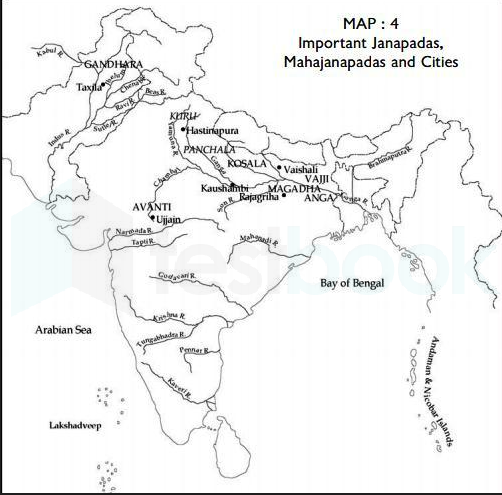
  • About 2500 years ago, some janapadas became more important than others, and were known as mahajanapadas.
  • As the rulers of the mahajanapadas were (a) building huge forts (b) maintaining big armies, they needed more resources.
  • Hence, they started collecting regular taxes. These include:
  • Taxes on crops - These taxes were very important because most people were farmers. Usually, the tax was fixed at 1/6th of what was produced. This was known as bhaga or a share.
  • Taxes on craft persons - The taxes on craft persons could have been in the form of labour. For example, a weaver or a smith may have had to work for a day every month for the king.
  • Taxes on herders - Herders were also expected to pay taxes in the form of animals and animal produce.
  • Taxes on goods - There were also taxes on goods that were bought and sold, through trade.
  • Taxes on hunters and gatherers - They also had to provide forest produce to the raja.

Based on the above points, we can conclude that taxes on family is not the regular taxes collected by the rulers of Mahajanapadas.

Additional Information

  • A map showing the important Janapadas, Mahajanapadas and Cities:

30

If the focal length of the objective lens is increases

  1. ((a))

    Magnifying power of microscope will decrease but that of telescope will increase

  2. ((b))

    Magnifying power of microscope and telescope both will increase

  3. ((c))

    Magnifying power of microscope and telescope both will decrease

  4. ((d))

    Magnifying power of the microscope will increase but that of telescope will decrease

Show Answer
Answer: ((a))

Magnifying power of microscope will decrease but that of telescope will increase

The correct answer is Magnifying power of microscope will decrease but that of telescope will increase.

Key Points

  • The magnifying power of a microscope is determined by the focal length of its objective lens and the eyepiece. If the focal length of the objective lens increases, the ability of the lens to magnify decreases. This is because a longer focal length results in a lower angular magnification.
  • The magnifying power of a telescope depends on the ratio of the focal length of the objective lens to the focal length of the eyepiece. As the focal length of the objective lens increases, the magnification of the telescope increases. This happens because a longer focal length allows the telescope to collect more light and provide a higher angular resolution.
  • Microscope: Decreasing the magnifying power affects its capability to observe smaller objects in greater detail. Hence, the statement about the microscope’s magnifying power decreasing is correct.
  • Telescope: Increasing the magnifying power enhances the ability to observe distant celestial objects. Hence, the statement about the telescope’s magnifying power increasing is correct.
  • Thus, the correct combination aligns with option 1, as the magnifying power of the microscope decreases, and that of the telescope increases.

Additional Information

  • Magnifying Power of Microscope:
  • The magnifying power of a microscope is the product of the magnifications of the objective lens and the eyepiece.
  • It is given by the formula: Magnification = (L / fₒ) * (D / fₑ), where L is the tube length, fₒ is the focal length of the objective lens, D is the least distance of distinct vision (usually 25 cm), and fₑ is the focal length of the eyepiece.
  • A shorter focal length of the objective lens results in higher magnification.
  • Magnifying Power of Telescope:
  • The magnifying power of a telescope is given by the formula: Magnification = fₒ / fₑ, where fₒ is the focal length of the objective lens and fₑ is the focal length of the eyepiece.
  • A longer focal length of the objective lens increases the magnifying power.
  • This makes telescopes ideal for observing distant objects, such as stars and planets.
  • Applications:
  • Microscopes: Used in biology, medicine, and research to observe microscopic organisms and structures.
  • Telescopes: Used in astronomy for observing celestial bodies like planets, stars, and galaxies.
  • Key Differences:
  • A microscope is designed for close-up observation, while a telescope is meant for long-distance observation.
  • The focal length of the objective lens plays a contrasting role in determining magnification in these two instruments.

Important Points

  • Microscope Magnification: A shorter focal length objective lens results in a smaller image distance, providing higher magnification for observing minute details.
  • Telescope Magnification: A longer focal length objective lens collects more light, providing better resolution and greater magnification for distant objects.
  • Practical Usage: Microscope magnification is limited by the resolution of light, while telescopes are used to view faint objects by collecting more light.
  • Optical Design: The design of the lenses differs to cater to their specific purposes, with microscopes focusing on short distances and telescopes on long distances.
31

Which of the following is an example of a non-tax revenue source for the government?

  1. ((a))

    Fees and fines

  2. ((b))

    Personal income tax

  3. ((c))

    Corporate income tax

  4. ((d))

    Value-added tax

Show Answer
Answer: ((a))

Fees and fines

The correct answer is Fees and fines.

Key Points

  • Non-tax revenue refers to the recurring income earned by the government from sources other than taxes.
  • Fees and fines are common examples of non-tax revenue. Fees are payments made to the government for specific services or activities (e.g., passport fees, court fees), while fines are penalties imposed for violating laws or regulations.
  • Non-tax revenue sources help the government fund its operations without increasing the tax burden on citizens.
  • Other examples of non-tax revenue include interest receipts on loans given by the government, dividends from public sector enterprises, and income from government property.

Additional Information

  • Personal income tax:
  • It is a direct tax levied on the income of individuals.
  • The rate of personal income tax varies based on income slabs and is progressive in nature, meaning higher income earners pay a higher percentage in taxes.
  • Corporate income tax:
  • This is a tax imposed on the net income or profit of corporations.
  • It is a significant source of revenue for the government and is also a direct tax.
  • Value-added tax (VAT):
  • VAT is an indirect tax levied on the value added to goods and services at each stage of production or distribution.
  • Consumers ultimately bear the cost of VAT as it is included in the purchase price of goods and services.
  • Non-tax revenue sources:
  • These include all government revenue sources that do not fall under the category of taxes.
  • Examples include fees for services, fines and penalties, dividends from public enterprises, interest receipts, and revenue from government properties.
32

Which country has imposed a comprehensive ban on the export of weapons and defence-related items to India ?

  1. ((a))

    Qatar

  2. ((b))

    Russia

  3. ((c))

    UAE

  4. ((d))

    Turkey

Show Answer
Answer: ((d))

Turkey

The correct answer is Turkey.

Key Points

  • Turkey has imposed a comprehensive ban on the export of weapons and defence-related items to India due to geopolitical and strategic reasons.
  • The decision aligns with Turkey's foreign policy interests, especially concerning its support for Pakistan and its stance on issues like Kashmir.
  • Turkey has been critical of India's policies in the region, particularly its actions in Jammu and Kashmir, often voicing concerns on international platforms such as the United Nations General Assembly.
  • This ban reflects the broader geopolitical tensions between India and Turkey, which have grown over the years due to differences in their regional and international stances.
  • The ban includes restrictions on arms, ammunition, and other defence-related equipment, impacting bilateral defence trade between the two nations.

Additional Information

  • Turkey's Foreign Policy:
  • Turkey maintains close ties with Pakistan, supporting it politically and diplomatically, especially in matters concerning Kashmir.
  • Its foreign policy prioritizes its strategic interests, often taking positions that challenge India's regional influence.
  • Turkey is also a member of organizations like the Organization of Islamic Cooperation (OIC), which has occasionally criticized India’s stance on Kashmir.
  • India-Turkey Relations:
  • India-Turkey relations have been strained in recent years, especially after Turkey's vocal criticisms of India's abrogation of Article 370 in Jammu and Kashmir in August 2019.
  • Despite tensions, both countries have bilateral trade relations, although defence cooperation has been severely impacted by the ban.
  • Impact of the Ban:
  • India has diversified its defence imports, relying on countries like Russia, the United States, Israel, and France for military equipment.
  • The ban from Turkey has limited implications for India’s defence sector, as Turkey has not been a major defence supplier to India.
  • Turkey’s Defence Industry:
  • Turkey has a growing defence industry, producing items like drones, tanks, and firearms, which are exported globally.
  • Its defence exports are focused on regions like the Middle East, Africa, and Central Asia.

Important Points

  • Geopolitical Tensions:
  • The ban by Turkey is influenced by broader geopolitical rivalries and regional politics involving India, Pakistan, and other countries.
  • Turkey's stance reflects its strategic alignment with Pakistan, impacting its relations with India.
  • India's Diversification in Defence Imports:
  • India has focused on reducing reliance on specific countries for defence imports by promoting its indigenous defence manufacturing under initiatives like Make in India.
  • India continues to strengthen its defence partnerships with nations such as the United States, France, and Israel to counter such bans.
  • Turkey’s International Relations:
  • Turkey’s foreign policy often reflects its aspirations to emerge as a regional power, balancing its relations with Western countries, Russia, and Islamic nations.
  • Its defence industry plays a crucial role in its international influence, providing weapons and technology to allied nations.
33

'पुनर्जन्म' शब्द में उपसर्ग बताइए।

  1. ((a))

    पुन 

  2. ((b))

    पु 

  3. ((c))

    पू 

  4. ((d))

    पुन:

Show Answer
Answer: ((d))

पुन:

'पुनर्जन्म' शब्द में पुन: उपसर्ग है । अन्य विकल्प असंगत है ।

अतः सही उत्तर विकल्प 4) पुन: होगा ।

Key Points

उपसर्गअर्थउदाहरण
पुन:फिरपुनर्जन्म, पुनर्लेखन, पुनर्जीवन, पुननिर्माण, पुनरागमन

Additional Information 

परिभाषाशब्दउपसर्गअन्य उदाहरण
·वह शब्दांश या अव्यय, जो किसी शब्द के आरंभ में जुड़कर मूल शब्द के अर्थ में विशेषता ला दे या उसका अर्थ ही बदल दे।निकायनि + कायजैसे – अ + छूता = अछूता, कु + चैला = कुचैला इत्यादि।
34

When current is passed through a conducting solution, bubbles of gas are formed on the electrodes. 

This shows

  1. ((a))

    The heating effect of electric current

  2. ((b))

    Magnetic effect of electric current

  3. ((c))

    Illuminating effect of electric current

  4. ((d))

    Chemical effect of electric current

Show Answer
Answer: ((d))

Chemical effect of electric current

The correct answer is the Chemical effect of electric current.

Key Points 

  • When current is passed through a conducting solution, bubbles of gas are formed on the electrodes. This shows the Chemical effect of electric current.
  • This experiment was shown by British Chemist William Nicholson in the year 1800.
  • The chemical reaction takes place when an electric current is passed through a conducting solution and this results in the formation of bubbles of gas on the electrodes.
  • Deposits of metal may be seen on electrodes and sometimes colour changes in solutions may occur.
  • This reaction totally depends upon what solution and electrodes are used and also some chemical effects of the electric current may occur.
35

Ashwini Ponnappa is associated with which game?

  1. ((a))

    Football

  2. ((b))

    Hockey

  3. ((c))

    Badminton

  4. ((d))

    Chess

Show Answer
Answer: ((c))

Badminton

The correct answer is Badminton.

Key Points

  • Ashwini Ponnappa Machimanda is an Indian badminton player who represents the country at the international badminton circuit in both the women's and mixed doubles disciplines.
  • She was born on 18 September 1989 in Bangalore.
  • She had a successful partnership with Jwala Gutta as the pair has won many medals in international events including a gold medal at the Commonwealth Games and bronze medals at the Uber Cup and the Asian Badminton Championships.
  • They were consistently ranked among the top 20 in the BWF World Ranking reaching as high as no. 10.
  • Ponnappa and Gutta also won the bronze medal at the BWF World Championships in 2011, becoming the first Indian pair and women and only the second overall to win a medal at the World Championships.

Image of Ashwini Ponappa:

36

Infra-red rays are

A. Longitudinal waves

B. Transverse waves

C. Mechanical waves

D. Electromagnetic waves

  1. ((a))

    A and B

  2. ((b))

    B and D

  3. ((c))

    A and C

  4. ((d))

    C and D

Show Answer
Answer: ((b))

B and D

The Correct Answer is B and D.

  • Infra-red rays are electromagnetic waves that have a wavelength between 700 nanometers and 1 mm.
  • Some other electromagnetic waves include gamma rays, x-rays, ultraviolet, visible light, microwaves, and radio.
  • The most common use of the infra-red waves in everyday life is the remote-controls, thermal imaging, Infra-red astronomy, etc.
WavesDefinitionExamples
Longitudinal WavesThey are waves in which the displacement of the medium is in the same direction as or the opposite direction to, the direction of propagation of the wave.Sound Waves, Ultrasonic Waves, Seismic P Waves, etc.
Transverse WavesIt is a moving wave whose oscillations are perpendicular to the direction of the wave.Electromagnetic waves, vibrations in guitar strings, etc.
Mechanical WavesIt is a wave that is an oscillation of matter and therefore transfers energy through a mediumWater wave, sound wave, seismic wave, etc.
37

How many Biosphere reserves of India have been recognised by the UNESCO on World Network of Biosphere?

  1. ((a))

    Five

  2. ((b))

    Thirteen

  3. ((c))

    Nine

  4. ((d))

    Eighteen

Show Answer
Answer: ((b))

Thirteen

A Biosphere Reserve is a unique and representative ecosystem of terrestrial and coastal areas which are internationally recognized within the framework of UNESCO's Man and Biosphere (MAB) Programme.

Important Points

Twelve Biosphere Reserves of India have been recognized by the UNESCO on World Network of Biosphere. These are as follows:

Name of the BiosphereYear of EstablishmentState
Nilgiri1986The Western Ghats: the parts of Tamilnadu, Kerala, and Karnataka.
Nanda Devi1988Uttrakhand
Nokrek1988Meghalaya
Sunderban1989West Bengal
Gulf of Mannar1989Tamil Nadu
Great Nicobar1989Andaman and Nicobar Island
Similipal1994Odisha
Pachmarhi1999Madhya Pradesh
Achanakmar-Amarkantak2005Madhya Pradesh, Chhattisgarh
Agasthyamala2016Kerala and Tamil Nadu
Kanchenjunga2018Part of North and West Sikkim districts
Panna2020Madhya Pradesh

From the above, it is clear that a total of 13 out of 18 Biospheres of India are recognized by the UNESCO on World Network of Biosphere.

Additional Information

 Panna Biosphere Reserve

  • UNESCO included Panna in 2020 in the Man and Biosphere Programme (MAB).
  • Panna Biosphere Reserve falls in bio-geographic zones of Deccan Peninsula and Biotic Province of Central highlands.
  • It comprises effectively protected and minimally disturbed areas.
  • The areas have different land uses, forests, agriculture, water bodies, settlements and wasteland which provide ample scope for research and management.
38

Read the below statements marked as Assertion (A) and Reason (R). Mark the correct options:

Assertion (A): Humayun's Tomb was the first major Mughal garden tomb and directly inspired the design of the Taj Mahal.

Reason (R): It introduced the charbagh garden layout and double-domed mausoleum style that became characteristic of later Mughal architecture.

  1. ((a))

    Both A and R are true, and R is the correct explanation of A.

  2. ((b))

    Both A and R are true, but R is not the correct explanation of A.

  3. ((c))

    A is true, but R is false.

  4. ((d))

    A is false, but R is true.

Show Answer
Answer: ((a))

Both A and R are true, and R is the correct explanation of A.

The correct answer is 1) Both A and R are true, and R is the correct explanation of A..

Key Points

  • Assertion (A): Humayun's Tomb was the first major Mughal garden tomb and directly inspired the design of the Taj Mahal.
  • Humayun's Tomb, built in 1565-1572, was commissioned by Empress Bega Begum, Humayun's widow.
  • It was the first garden tomb of the Mughal Empire in India and represents a significant milestone in Mughal architecture.
  • The tomb's design influenced later Mughal structures, including the Taj Mahal, particularly in its symmetry and grandeur. Hence, statement A is correct.
  • Reason (R): It introduced the charbagh garden layout and double-domed mausoleum style that became characteristic of later Mughal architecture.
  • The tomb's charbagh layout, a Persian-inspired quadrilateral garden divided by walkways, became a hallmark of Mughal architectural design. While the charbagh concept existed earlier in Persian traditions, Humayun's Tomb popularized this layout in India.
  • It also featured the innovative double-domed structure, ensuring proportionality between the interior and exterior. This style was emulated in subsequent Mughal buildings.
  • These features were pivotal in shaping Mughal architectural identity and were reflected prominently in the Taj Mahal. Hence, statement R is correct.
  • Since both A and R are true, and R explains A, the correct option is 1.

Additional Information

  • Humayun’s Tomb:
  • It is located in Delhi and was constructed by Persian and Indian artisans under the supervision of Mirak Mirza Ghiyas.
  • The tomb is made of red sandstone, with marble inlays, showcasing Indo-Islamic architectural fusion.
  • Its symmetrical design reflects the Persian influence on Mughal architecture.
  • Charbagh Layout:
  • The charbagh is a quadrilateral garden divided into four sections by pathways or water channels.
  • It symbolizes the Garden of Paradise described in Islamic texts.
  • This design was used in other Mughal monuments like the Taj Mahal and Shah Jahan’s Red Fort.
  • Double-Domed Architecture:
  • A double dome consists of two layers, with the outer dome creating the exterior grandeur and the inner dome maintaining proportionality inside.
  • It was first seen in Humayun’s Tomb and later became a defining feature of Mughal structures such as the Jama Masjid and Taj Mahal.
  • The Taj Mahal:
  • Constructed by Emperor Shah Jahan between 1632 and 1653, it was inspired by the design and features of Humayun’s Tomb.
  • The Taj Mahal also incorporates the charbagh, with water channels and lush greenery surrounding the mausoleum.
  • It is a UNESCO World Heritage Site and a globally recognized symbol of Mughal architectural excellence.

Important Points

  • Historical Significance: Humayun’s Tomb marked the beginning of the grand Mughal architectural tradition in India.
  • Architectural Innovations: Features like the charbagh garden and double dome influenced subsequent structures.
  • UNESCO Recognition: Humayun’s Tomb was designated a World Heritage Site in 1993.
  • Connection to the Taj Mahal: The tomb’s design served as the blueprint for the Taj Mahal, highlighting its cultural and architectural impact.
39

According to the census reports of the Indian Census 2011, India’s density of population is:

  1. ((a))

    362 persons/sq.km2

  2. ((b))

    372 persons/sq.km2

  3. ((c))

    392 persons/sq.km2

  4. ((d))

    382 persons/sq.km2

Show Answer
Answer: ((d))

382 persons/sq.km2

The correct answer is 382 persons/sq.km

Key Points

  • ​According to the census reports of the Indian Census 2011, India's density of population is 382 persons/sq.km.
  • The Population Density has increased from 325/sq km in 2001 to 382/sq km in 2011.
  • The population of India is 1,210,854,977 with 623, 724, 248 males and 586,469, 174 females.
  • The Indian Census survey is conducted to gather information from the grass root base which is essential to launch different welfare schemes like Annual Plans, 5 Year Plans, etc. in the country for the privilege of the common man here.
  • The House listing & Housing Census provides extensive information on the status of the human settlements, the housing deficits as well as the different housing necessities to be looked for in formulating the housing welfare policies.
  • The Population Enumeration offers needed Census data about land & its people in the present time.
  • The survey reveals the current population trends and their varied characteristics that are valuable inputs for planning sound programs and policies aimed toward the welfare of India & its people and also for effective public administration.

Important Points The density of Population (per square km) Census Of India 2011:-

States With Highest Density of PopulationBihar (1106 persons/sq km) West Bengal (1028 persons/sq km)
Union Territories With Highest Density of PopulationDelhi (11320 persons/sq km)
States With Lowest Density of PopulationArunachal Pradesh (17 persons/sq km)
Mizoram (52 persons/sq km)
Union Territories With Lowest Density of PopulationAndaman & Nicobar (46 persons/sq km)
40

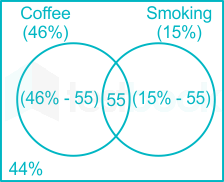
In the survey among girls at IIT Delhi, it was found that 46% preferred coffee and 15% preferred smoking. Also, 44% did not preferred coffee or smoking. If 55 girls like both coffee and smoking, then, find the total number of girls who participated in survey?

  1. ((a))

    1210

  2. ((b))

    550

  3. ((c))

    1200

  4. ((d))

    1100

Show Answer
Answer: ((d))

1100

Given:

Girls preferred coffee = 46%

Girls preferred smoking = 15%

Girls did not preferred coffee or smoking = 44%

Girls who preferred both coffee and smoking = 55

Concept:

Venn Diagram

Calculation:

Suppose x% girls preferred both coffee and smoking.

Girls preferred only coffee = (46 – x)%

Girls preferred only smoking = (15 – x)%

Girls preferred neither coffee nor smoking = 44%

⇒ (46 – x)% + (15 – x)% + 44% + x% = 100%

⇒ 105% - x% = 100%

⇒ x = 5

∴ 5% → 55

⇒ 1% → 11

⇒ 100% → 1100

∴ The total number of girls who participated in survey = 1100

41

A man invests Rs. 2000 at 5% compound interest. At the end of 3 years he will get a total amount of:

  1. ((a))

    Rs. 2305

  2. ((b))

    Rs. 2316.25

  3. ((c))

    Rs. 2315.25

  4. ((d))

    Rs. 2205

Show Answer
Answer: ((c))

Rs. 2315.25

Given:

Principal = Rs. 2000

Rate of interest = 5%

Time = 3 years

Formula used:

Amount = Principal{1 + (rate/100)}time

Calculation:

Amount = Principal{1 + (rate/100)}time

⇒ 2000{1 + (5/100)}3

⇒ 2000(21/20)3

⇒ 2000 × (9261/8000)

⇒ 9261/4

⇒ 2315.25

∴ The amount will get after 3 years is Rs. 2315.25.

42

Under Schedule VII of the Constitution, the subject 'Education' lies under which List ?

  1. ((a))

    State List

  2. ((b))

    Sub List

  3. ((c))

    Union List

  4. ((d))

    Concurrent List

Show Answer
Answer: ((d))

Concurrent List

The correct answer is the Concurrent List.

Key Points

  • Under Schedule VII of the Constitution, the subject 'Education' lies under the Concurrent List.
  • The 7th Schedule of the Indian Constitution deals with the division of powers between the Union government and the State government.
  • The Constitution provides for a three-fold distribution of legislative subjects between the Union and the states, i.e, List-I (the Union List), List-II (the State List) and List-III (the Concurrent List), described in this schedule:
  • Union List: This List contains matters of national importance and the matters which require uniformity of legislation nationwide. This list has at present 100 subjects like defence, naturalization & citizenship, banking, foreign affairs, atomic energy, communication, census, etc.
  • State List: This List contains matters of regional and local importance which require state-specific solutions and matters which permit diversity of interest. It presently contains 61 subjects like public order, police, public health and sanitation, agriculture, local government, gambling, etc.
  • Concurrent List: This List contains matters on which uniformity of legislation throughout the country is desirable but is not essential. This List at present has 52 subjects like criminal law and procedure, education, civil procedure, marriage and divorce, population control and family planning, electricity, economic and social planning, etc.
  • Originally there were
  • 97 subjects in the union list but now it is 100 subjects in the union list.
  • In the state list, there were 66 subjects but now it is 61 subjects.
  • In the concurrent list, there were 47 subjects but now it is 52 subjects in the concurrent list.
  • The 42nd Amendment Act of 1976 transferred five subjects to Concurrent List from State List, that is, (a) education, (b) forests, (c) weights and measures, (d) protection of wild animals and birds, and (e) administration of justice; constitution and organization of all courts except the Supreme Court and the high courts.
43

For which discovery was the 2025 Nobel Prize in Physics awarded?

  1. ((a))

    Observation of quantum tunneling in superconducting circuits and HVAC systems

  2. ((b))

    Experimental verification of quantum coherence in large-scale systems

  3. ((c))

    Demonstration of quantum state transitions in Josephson junction arrays

  4. ((d))

    Discovery of macroscopic quantum mechanical tunneling and energy quantization in electric circuits

Show Answer
Answer: ((d))

Discovery of macroscopic quantum mechanical tunneling and energy quantization in electric circuits

The correct answer is Discovery of macroscopic quantum mechanical tunneling and energy quantization in electric circuits.

In News

  • The 2025 Nobel Prize in Physics was awarded to John Clarke, Michel H. Devoret, and John M. Martinis for their discovery of macroscopic quantum mechanical tunneling and energy quantization in electric circuits.
  • The laureates proved that quantum phenomena could exist at a macroscopic scale using superconducting circuits with Josephson junctions.
  • Their experiments showed that these circuits absorb and emit energy in discrete amounts, validating the principle of energy quantization.
  • The discovery established that large-scale electrical systems can behave as unified quantum objects.
  • This foundational work became a cornerstone for modern quantum technologies such as quantum computers, quantum cryptography, and quantum sensors.

Key Points 

  • The 2025 Nobel Prizes were awarded across five categories, highlighting achievements in quantum physics, materials science, immunology, literature, and peace.
  • Chemistry Prize:
  • Awarded to Susumu Kitagawa, Richard Robson, and Omar M. Yaghi for their development of metal-organic frameworks (MOFs), materials with vast internal surface areas for various applications such as water harvesting, carbon capture, and toxic gas storage.
  • Medicine Prize:
  • Awarded to Mary E. Brunkow, Fred Ramsdell, and Shimon Sakaguchi for discovering regulatory T cells (Tregs) that prevent autoimmune diseases and play a role in cancer therapy.
  • Their work has revolutionized the understanding of autoimmune diseases and immunotherapy.
  • Literature Prize:
  • Awarded to László Krasznahorkai for his visionary works, including "Satantango", which explore themes of apocalyptic terror, chaos, and human isolation.
  • Known for long, complex sentences and dark, philosophical narratives.
  • Peace Prize:
  • Awarded to Maria Corina Machado, a Venezuelan leader and symbol of democratic resistance against authoritarianism in Venezuela, emphasizing "ballots over bullets" and leading the opposition.
  • Praised for her courage despite life-threatening risks and for unifying the opposition around democratic principles.

Additional Information

  • Geographical Distribution:
  • United States leads with six laureates.
  • Other countries: Japan (2 laureates), Australia, Hungary, and Venezuela (1 laureate each).
  • Ceremony: 
  • The award ceremony will take place on December 10, 2025, in Stockholm (Peace Prize in Oslo).
  • Each prize includes 11 million Swedish kronor, a gold medal, and a diploma.
44

Which of the following Articles of the Indian Constitution is related to Comptroller and Auditor General (CAG)?

  1. ((a))

    Article 135

  2. ((b))

    Article 140

  3. ((c))

    Article 148

  4. ((d))

    Article 130 

Show Answer
Answer: ((c))

Article 148

The correct answer is Article 148.

Key Points

  • Article 148 of the Indian Constitution deals with the Comptroller and Auditor General (CAG) of India.
  • The President of India appoints the CAG.
  • The CAG is responsible for auditing the accounts of the Union and State governments and public sector organizations.
  • The CAG ensures that the expenditure of the government is in accordance with the law and that public funds are used efficiently and for the intended purpose.

Additional Information

  • Comptroller and Auditor General (CAG)
  • The CAG is an independent authority under the Constitution of India.
  • The CAG reports to the Parliament and ensures the accountability of the executive to the Parliament in matters of financial propriety.
  • The CAG audits all receipts and expenditure of the Government of India and the state governments, including those of bodies and authorities substantially financed by the government.
  • The CAG is also responsible for auditing the accounts of government companies and other corporations as mandated by law.
  • The reports of the CAG are taken up for examination by the Public Accounts Committees (PACs) of the Parliament and the state legislatures.
  • Article 135
  • This article deals with the jurisdiction and powers of the Supreme Court with respect to any matter to which the provisions of Article 133 or Article 134 do not apply.
  • Article 140
  • This article provides for the Parliament to confer supplementary powers on the Supreme Court as may be necessary to enable it to exercise its jurisdiction effectively under the Constitution.
  • Article 130
  • This article states that the seat of the Supreme Court shall be in Delhi, but the Chief Justice of India may, with the approval of the President, appoint other places or places as the seat of the Supreme Court.
45

What is the role of the enzyme RuBisCO in photosynthesis?

  1. ((a))

    It catalyzes the splitting of water molecules to generate oxygen

  2. ((b))

    It is involved in the electron transport chain to generate ATP 

  3. ((c))

    It fixes carbon dioxide to produce carbohydrate

  4. ((d))

    It regulates stomatal opening and closing for gaseous exchange

Show Answer
Answer: ((c))

It fixes carbon dioxide to produce carbohydrate

The correct answer is It fixes carbon dioxide to produce carbohydrate.

Key Points

  • RuBisCO (Ribulose-1,5-bisphosphate carboxylase/oxygenase) is a crucial enzyme in the process of photosynthesis that is responsible for catalyzing the fixation of carbon dioxide (CO2) into organic compounds during the Calvin cycle.
  • RuBisCO facilitates the reaction between CO2 and ribulose-1,5-bisphosphate (RuBP), forming two molecules of 3-phosphoglycerate (3-PGA), which are precursors for carbohydrate synthesis.
  • This enzyme is considered the most abundant protein on Earth and plays a vital role in the global carbon cycle by converting inorganic carbon into an organic form.
  • RuBisCO is highly inefficient and slow in its catalytic activity, often fixing oxygen (O2) instead of CO2, leading to a process called photorespiration, which reduces the efficiency of photosynthesis.
  • The enzyme is found in the chloroplasts of plant cells and is crucial for the survival of autotrophic organisms as well as heterotrophs relying on plants as a food source.

Additional Information

  • Role in Photosynthesis:
  • Photosynthesis consists of two main stages: light-dependent reactions and the Calvin cycle.
  • RuBisCO operates during the Calvin cycle, where it facilitates the first step of carbon fixation.
  • This process helps convert atmospheric CO2 into organic molecules, enabling the synthesis of glucose and other carbohydrates.
  • Structure of RuBisCO:
  • RuBisCO is a large protein complex composed of eight large subunits and eight small subunits.
  • The large subunits are encoded by the chloroplast genome, while the small subunits are encoded by the nuclear genome.
  • Photorespiration:
  • Sometimes, RuBisCO binds oxygen (O2) instead of carbon dioxide, leading to a process called photorespiration.
  • Photorespiration reduces the overall efficiency of photosynthesis as it does not produce carbohydrates.
  • This is a major challenge for agricultural productivity, as it decreases the yield of crops.
  • Alternative Pathways:
  • In certain plants like C4 and CAM plants, alternative mechanisms have evolved to increase the efficiency of CO2 fixation and minimize photorespiration.
  • These pathways involve anatomical and biochemical modifications to optimize RuBisCO activity in high oxygen environments.
  • Importance of RuBisCO:
  • RuBisCO is critical for the sustenance of life on Earth as it supports the conversion of atmospheric carbon into energy-rich organic molecules.
  • Its activity directly impacts global carbon cycles, agriculture, and climate change mitigation efforts.

Important Points

  • Efficiency Challenges: RuBisCO’s slow catalytic rate and tendency for oxygen fixation are ongoing areas of research aimed at improving photosynthesis efficiency.
  • Global Significance: Understanding and optimizing RuBisCO’s activity is crucial for enhancing food production and addressing challenges posed by climate change.
  • Biotechnology Applications: Scientists are exploring genetic engineering to improve RuBisCO’s efficiency and reduce photorespiration in crops.
46

What is the theme of International Happiness Day (IHD) 2025?

  1. ((a))

    Caring and Sharing

  2. ((b))

    Global Happiness and Health

  3. ((c))

    Peace and Prosperity for All

  4. ((d))

    Happiness for All

Show Answer
Answer: ((a))

Caring and Sharing

The Correct Answer is ​Caring and Sharing.

In News

  • International Happiness Day being observed globally with theme ‘Caring & Sharing’.

Key Points

  • International Happiness Day (IHD) is observed globally to recognize the importance of happiness and well-being as universal goals in human lives.
  • The theme of IHD this year is Caring and Sharing, emphasizing the need for a more inclusive and balanced approach to economic growth and well-being.
  • The United Nations proclaimed 20 March as International Day of Happiness in its 2012 General Assembly resolution.
  • To mark the occasion, the United Nations released the World Happiness Report 2025, highlighting case studies and global analyses of happiness and kindness.
  • The report also discusses how sharing meals supports happiness and fosters social connections.
47

Which of the following ministries in India recently launched the scheme for Partial Reimbursement of Exploration Expenses for Holders of Exploration Licences (EL)?

  1. ((a))

    Ministry of Power

  2. ((b))

    Ministry of Finance

  3. ((c))

    Ministry of Mines

  4. ((d))

    Ministry of Earth Sciences

Show Answer
Answer: ((c))

Ministry of Mines

The correct answer is Ministry of Mines.

Key Points

  • The Ministry of Mines in India is responsible for the regulation and development of mines and minerals, which include metals and ores such as coal, iron, aluminum, and others.
  • The scheme for Partial Reimbursement of Exploration Expenses was launched to incentivize private sector participation in the exploration of mineral resources by reimbursing a part of their exploration costs.
  • This initiative aligns with the National Mineral Policy 2019, which emphasizes increasing private sector involvement and ensuring transparency and efficiency in mineral resource exploration.
  • The policy aims to encourage exploration activities by Exploration Licence (EL) holders, which is a key step toward enhancing India's mineral resource base and boosting economic growth.
  • The reimbursement scheme is expected to attract more private players into the mining sector, fostering innovation and investment in mineral exploration.
  • The Ministry's focus on exploration aligns with India’s goal of achieving self-reliance (Atmanirbhar Bharat) in strategic minerals and reducing dependency on imports.

Additional Information

  • National Mineral Policy 2019:
  • The National Mineral Policy 2019 replaced the earlier policy of 2008, aiming to promote sustainable and transparent mining practices.
  • The policy emphasizes the need for scientific exploration and optimal utilization of India's mineral resources while ensuring environmental conservation.
  • It encourages private sector participation, foreign direct investment (FDI), and the adoption of advanced technologies in mineral exploration.
  • Ministry of Mines Functions:
  • The Ministry formulates policies and legislation for the regulation of mines and minerals.
  • It manages the Geological Survey of India (GSI) and the Indian Bureau of Mines (IBM), which are key organizations for mineral exploration and regulation.
  • It also ensures the implementation of mining laws such as the Mines and Minerals (Development and Regulation) Act, 1957.
  • Exploration Licence (EL):
  • An Exploration Licence is issued to entities that intend to explore and identify potential mineral resources in a specific area.
  • It allows the holder to conduct surveys, drillings, and other exploration activities to assess the mineral potential.
  • This licence is a crucial step before obtaining a mining lease for actual extraction.
  • Importance of Private Sector in Mining:
  • The involvement of private players ensures technological advancements, increased investments, and better efficiency in the exploration and mining processes.
  • Private sector participation also helps in minimizing the financial burden on the government for exploration activities.
  • Strategic Minerals:
  • India is focusing on the exploration of strategic minerals such as lithium, cobalt, and rare earth elements, which are vital for clean energy technologies and other high-tech industries.
  • The reimbursement scheme supports exploration in these areas, aiming to reduce dependency on imports and strengthen domestic supply chains.

Important Points

  • Geological Survey of India (GSI):
  • Established in 1851, the GSI is a premier organization responsible for geological surveys and studies in India.
  • It plays a crucial role in conducting mineral exploration and mapping activities across the country.
  • Mines and Minerals (Development and Regulation) Act, 1957:
  • This Act governs the development and regulation of mines and minerals in India.
  • It provides guidelines for granting exploration licences, mining leases, and royalty payments.
  • Self-Reliance in Minerals:
  • India aims to reduce imports and achieve self-reliance in critical minerals such as coal, iron, and rare earths.
  • The exploration reimbursement scheme is a step toward achieving this goal by encouraging domestic exploration activities.
  • Economic Impact:
  • Increased exploration and mining activities contribute to employment generation, economic growth, and industrial development.
  • It also helps in ensuring the availability of essential raw materials for various industries.
48

Which international organization launched the World Social Report 2025?

  1. ((a))

    World Bank

  2. ((b))

    United Nations

  3. ((c))

    International Monetary Fund

  4. ((d))

    World Economic Forum

Show Answer
Answer: ((b))

United Nations

The correct answer is United Nations.

In News

  • The United Nations officially launched the World Social Report 2025 on April 24, 2025, coinciding with the International Day for Multilateralism and Diplomacy for Peace.

Key Points

  • The report was co-produced by UN DESA and UNU-WIDER, integrating new research on inequality and trust.
  • The report highlights growing economic insecurity, persistent inequality, and declining trust despite decades of progress in reducing extreme poverty.
  • Over 2.8 billion people remain vulnerable to shocks, job insecurity affects 60% globally, and inequality is rising in 65% of countries, eroding social cohesion.
  • The report calls for a new global policy consensus based on equity, economic security, and solidarity.
  • The findings will inform discussions at the Second World Summit for Social Development in Doha, Qatar, in November 2025.

Additional Information

  • UN DESA: United Nations Department of Economic and Social Affairs, responsible for promoting sustainable development globally.
  • UNU-WIDER: United Nations University World Institute for Development Economics Research, focusing on global development and economic challenges.
  • Sustainable Development Goals (SDGs): A set of 17 global goals set by the United Nations to achieve a better and more sustainable future by 2030.
  • Second World Summit for Social Development: Scheduled for November 4–6, 2025, in Doha, to assess global progress on social development issues.
49

Which of the following is NOT a part of western coastal plains?

  1. ((a))

    Konkan

  2. ((b))

    Coromandel Coast

  3. ((c))

    Kannada Plain

  4. ((d))

    Malabar coast

Show Answer
Answer: ((b))

Coromandel Coast

The correct answer is Coromandel Coast.

Key Points

  • The Coromandel Coast is located on the eastern coast of India.
  • It is the coastal plain in eastern Tamil Nadu state.
  • It is bounded by the Utkal Plains to the north, the Bay of Bengal to the east, the Kaveri Delta to the south, and the Eastern Ghats to the west.
  • Extending over an area of about 22,800 square kilometres.

 Important Points

  • Eastern Coastal Plains of India-
  • The eastern coastal plains stretch from West Bengal in the north to Tamil Nadu in the south and pass through Andhra Pradesh and Odisha.
  • The Eastern coast is again divided into three categories:
  • Utkal coast- Extending between the Chilika Lake and Kolleru Lake, they are much wider than the western coastal plains and undergo immense rainfall.
  • Andhra coast- Extending between the Kolleru Lake and Pulicat Lake, the Andra coast forms a basin area for the Krishna and the Godavari rivers.
  • Coromandel coast- The Coromandel coast extends between Pulicat Lake and Kanyakumari in Tamil Nadu.
  • This Indian coastline remains dry in summer and receives rainfall during the winters due to the northeast monsoons.
  • Western Coastal Plains of India-
  • Western Coastal Plains stretches from Kerala in the south to Gujarat in the north passing through Karnataka, Goa and Maharashtra.
  • The western coast is further divided into four categories:
  • Kachchh and Kathiawar coast- Kachchh, formerly a gulf is formed by the deposition of silt by the Indus. Kathiawar is situated to the south of Kachchh.
  • Konkan coast-  It extends between Daman in the north to Goa in the south.
  • Rice and cashew are the two important crops of this region.
  • Kannada coast- It extends between Marmagaon and Mangalore and is rich in iron deposits.
  • Malabar coast- Extending between Mangalore to Kanyakumari, the Malabar coast is relatively broad.
  • This region also consists of lagoons running parallel to the coast in southern Kerala.

50

What is the name of the AI-based pulse diagnostic tool developed for Ayurveda practitioners?

  1. ((a))

    Tridosha Analyzer

  2. ((b))

    Prakriti Pulse Checker

  3. ((c))

    Nadi Tarangini

  4. ((d))

    Ayur Pulse Monitor

Show Answer
Answer: ((c))

Nadi Tarangini

The correct answer is Nadi Tarangini.

In News

  • Pune-based startup Atreya Innovations developed 'Nadi Tarangini,' an AI-based pulse diagnostic tool for Ayurveda practitioners.

Key Points

  • Nadi Tarangini analyzes 22 health parameters, including Tridosha balance (Vata, Pitta, Kapha), stress, and digestive health.
  • The device uses ultra-sensitive sensors, cutting-edge algorithms, and provides reports in 10 Indian languages.
  • It is the first Ayurvedic medical device approved by the Central Drugs Standard Control Organisation (CDSCO).
  • Developed as part of a research project at IIT Bombay, it is patented in the US, Europe, and Indonesia.

Additional Information

  • Nadi Tarangini: Priced at ₹55,000, this device is used in over 1,250 Ayurvedic clinics and has a production capacity of 5,000 units per year.
  • Central Drugs Standard Control Organisation (CDSCO): India’s regulatory body for pharmaceuticals, cosmetics, and medical devices.
  • Tridosha: The Ayurvedic concept of balancing three bodily elements: Vata (air), Pitta (fire), and Kapha (earth/water).
  • Seed Funding: Atreya Innovations received ₹5 crore funding to expand research, distribution, and production.
51

Match List I with List II 

List – I (Books)List - II (Author)
A.School TimesI.Sudha Murthy
B.Three Thousand StitchesII.Ruskin Bond
C.Goodnight MoonIII.Shel Silverstein
D.The Giving TreeIV.Margaret Wise Brown
<br>

Choose the correct answer from the options given below:

  1. ((a))

    A - II, B - I, C - IV, D - III

  2. ((b))

    A - I, B - III, C - II, D - IV

  3. ((c))

    A - I, B - II, C - IV, D - III

  4. ((d))

    A - III, B - IV, C - I, D - II

Show Answer
Answer: ((a))

A - II, B - I, C - IV, D - III

The correct answer is - A - II, B - I, C - IV, D - III

Key Points

  • School Times
  • Written by Ruskin Bond, a renowned Indian author known for his children's books and stories set in the Indian subcontinent.
  • Three Thousand Stitches
  • Authored by Sudha Murthy, an Indian author and social worker, known for her prolific writing in the field of fiction and philanthropy.
  • Goodnight Moon
  • Authored by Margaret Wise Brown, a well-known American writer of children's books, celebrated for this classic bedtime story.
  • The Giving Tree
  • Written by Shel Silverstein, an American writer, poet, and cartoonist, famous for this poignant story about giving and selflessness.

Additional Information

  • Ruskin Bond
  • A prolific Indian author of British descent, known for his short stories, novels, and non-fiction works that often depict life in the Indian hill stations.
  • Recipient of numerous awards including the Sahitya Akademi Award and Padma Bhushan.
  • Sudha Murthy
  • Chairperson of the Infosys Foundation, a renowned author of children's books, fiction, and travelogues.
  • Recipient of the R.K. Narayan Award for Literature and Padma Shri.
  • Margaret Wise Brown
  • An American author of children's books, best known for works like "Goodnight Moon" and "The Runaway Bunny."
  • Her writing style is characterized by its simplicity and rhythmic prose.
  • Shel Silverstein
  • A versatile American writer, poet, and cartoonist known for his children's books, poems, and songs.
  • His works include "Where the Sidewalk Ends" and "A Light in the Attic."
52

 In which military exercise did India participate for the first time in 2025?

  1. ((a))

    Malabar

  2. ((b))

    RIMPAC

  3. ((c))

    Cobra Gold

  4. ((d))

    Talisman Sabre

Show Answer
Answer: ((d))

Talisman Sabre

The Correct Answer is ​Talisman Sabre.

In News

  • India joins bilateral military exercise in Australia.

Key Points

  • India has participated for the first time in Exercise Talisman Sabre, Australia’s largest bilateral military drill.
  • The exercise was launched in 2005 as a biennial joint military exercise between the United States and Australia.
  • In 2025, it involves over 35,000 personnel from 19 countries.
  • Participating nations include: United States, Australia, India, Canada, Fiji, France, Germany, Indonesia, Japan, Netherlands, New Zealand, Norway, Papua New Guinea, Philippines, South Korea, Singapore, Thailand, Tonga, and the United Kingdom.
  • Malaysia and Vietnam are attending as observers.
  • The exercise will be held over three weeks, covering joint operations across land, sea, and air domains.
  • India’s participation marks a step forward in strengthening Indo-Pacific defence ties and interoperability.
53

Who was awarded the Player of the Series in the ICC Women’s World Cup 2025?

  1. ((a))

    Laura Wolvaardt

  2. ((b))

    Smriti Mandhana

  3. ((c))

    Deepti Sharma

  4. ((d))

    Shafali Verma

Show Answer
Answer: ((c))

Deepti Sharma

The correct answer is Deepti Sharma.

In News

  • Deepti Sharma was named the Player of the Series in the ICC Women’s ODI World Cup 2025 for her all-round performance.

Key Points

  • Deepti took 5 wickets in the final against South Africa.
  • She scored a crucial 58 runs off 58 balls.
  • Her consistent all-round performance led India to victory.
  • She was instrumental in both the middle-order batting and spin attack.
  • This was her career-best World Cup performance.

Additional Information

  • Role: All-rounder (Left-hand bat, Right-arm off-spin)
  • ODI Debut: 2014 vs South Africa
  • Career Best Bowling: 6/20 vs Sri Lanka
  • Hails from: Agra, Uttar Pradesh
  • Ranked among top 5 ICC ODI all-rounders (as of Nov 2025).
54

The total membership of the Constituent Assembly was 389, of which ______ were representatives of princely states.

  1. ((a))

    109

  2. ((b))

    93

  3. ((c))

    84

  4. ((d))

    102

Show Answer
Answer: ((b))

93

The correct answer is 93.

  • The total membership of the Constituent Assembly was 389, of which 93 were representatives of princely states.

Key Points

  • The total membership of the Constituent Assembly was 389, out of which 292 were representatives of the provinces.
  • 93 represented the princely states and four were from Delhi, Ajmer-Merwara, Coorg and Chief Commissioner provinces of British Balochistan.
  • The Constituent Assembly of India was elected to frame the Constitution of India.
  • It was elected by the provincial assembly. After India's independence from the British government in 1947, its members served as the country's first parliament.
  • Constituent Assembly resolution in 1934 by M.N. Roy, a pioneer of the communist movement in India and an advocate of radical democracy.
  • This became an official demand of the Indian National Congress in 1935, the Indian National Congress held its session in Lucknow in April 1936 under the chairmanship of Pt. Jawahar Lal Nehru.

Additional Information

Committees of the Constituent assembly:

Name of the CommitteeChairman
Committee on the Rules of ProcedureRajendra Prasad
Ad hoc Committee on the National FlagRajendra Prasad
Committee on the Functions of the Constituent AssemblyG.V. Mavalankar
Advisory Committee on Fundamental Rights, Minorities and Tribal and Excluded AreasVallabhbhai Patel
Minorities Sub-CommitteeH.C. Mookherjee
Fundamental Rights Sub-CommitteeJ.B. Kripalani
Union Powers CommitteeJawaharlal Nehru
Union Constitution CommitteeJawaharlal Nehru
Drafting CommitteeB.R. Ambedkar
55

'Galpaguchchha’, written by Rabindranath Tagore is a collection of ______.

  1. ((a))

    devotional songs  

  2. ((b))

    English shayaris 

  3. ((c))

    short stories 

  4. ((d))

    poems  

Show Answer
Answer: ((c))

short stories 

The correct answer is short stories.

Key Points

  • Galpaguchchha is written by the Bengali poet and Brahmo philosopher, Rabindranath Tagore.
  • This is a compilation of Tagore's short stories with a total of 95 stories included

Additional Information

Rabindranath Tagore

  • Rabindranath Tagore was a mystic, artist and Bengali polymath (great poet, philosopher, music composer and a leader of Brahma Samaj).
  • He took Indian culture and tradition to the whole world and became a voice of Indian heritage.
  • He was the first Non-European to be awarded the Nobel Prize in literature in 1913 with his book Gitanjali: Song Offerings.
  • Gitanjali (Song Offerings), Gora (Fair-Faced) and Ghare-Baire (The Home and the World) are his best-known works.
56

Which ruler of Kanpur called himself 'Peshwa'?

  1. ((a))

    Nana Saheb

  2. ((b))

    Bajirao I

  3. ((c))

    Bajirao II

  4. ((d))

    Bahadur Shah Zafar

Show Answer
Answer: ((a))

Nana Saheb

Nana Saheb called himself 'Peshwa'.

Key Points

  • Nana Saheb, the adopted son of the last Peshwa, Baji Rao II, called himself Peshwa after the death of his father in 1852.
  • This was a controversial move, as the Peshwaship had been abolished by the British East India Company in 1818.
  • However, Nana Saheb argued that he was the rightful heir to the Peshwaship and that the British had no right to take it away from him.
  • Nana Saheb's use of the title Peshwa was a symbolic gesture, as it represented his claim to be the legitimate ruler of the Maratha Empire.
  • It also gave him a degree of legitimacy in the eyes of the Indian people, who still respected the Peshwaship as a symbol of Maratha's power.
  • Nana Saheb's use of the title Peshwa was also a political move.
  • He hoped that by calling himself Peshwa, he would be able to rally the Indian people to his cause and lead them in a rebellion against the British.
  • However, his plans were ultimately unsuccessful, and he was forced to flee India in 1859.
  • The title Peshwa is still used today by some people as a way to honour Nana Saheb and his legacy.
  • However, it is no longer a recognized political title.
57

The 'Objective Resolution' formed the basis of the Indian political system. It was introduced in the Constituent Assembly by

  1. ((a))

    Rajendra Prasad

  2. ((b))

    B. R. Ambedkar

  3. ((c))

    Lal Bahadur Shastri

  4. ((d))

    Jawaharlal Nehru

Show Answer
Answer: ((d))

Jawaharlal Nehru

The correct answer is Jawaharlal Nehru.

Key Points

  • The 'Objective Resolution' formed the basis of the Indian political system. It was introduced in the Constituent Assembly by Jawaharlal Nehru.

 Objective Resolution:

  • It contained the basic ideology and philosophy upon which our Constitution is based.
  • The Objective Resolution was moved by Jawaharlal Nehru on 13 December 1946.
  • It defines the aim of the Constituent Assembly.
  • The preamble of the Constitution is based on the Objective Resolution.
  • This resolution was adopted by the Assembly on 22nd January 1947.
  • Thus, we can conclude that on **January 22, 1947, the 'objective resolution' was accepted by the Constituent Assembly as presented by Pt. Jawaharlal Nehru.**​​

Additional Information

Lal Bahadur Shastri:

  • He was born on October 2, 1904, at Mughalsarai, a small railway town seven miles from Varanasi in Uttar Pradesh.
  • He held the Prime Minister's office from 9 June 1964 to 11 January 1966.
  • He supported and promoted the White Revolution and Green Revolution.
  • He was the key person in setting up the Food Corporation of India.
  • He led India in the India-Pakistan War in 1965.
  • He died in Tashkent, Uzbekistan (then the Soviet Union) on 11 January 1966, one day after signing a peace treaty (Tashkent Agreement) to end the 1965 Indo-Pakistan War.

​Dr. B. R. Ambedkar:

  • He was born on 14 April 1891 in Mhow (now officially known as Dr. Ambedkar Nagar) in the Central Provinces i.e present Madhya Pradesh.
  • Dr. Bhimrao Ramji Ambedkar was a great jurist, economist & social reformer.
  • He was the leader of the depressed class and worked for the promotion of education among the depressed classes.
  • He fought for the upliftment of Dalits & their rights in society along with equal rights for women.
  • He founded the Scheduled Castes Federation in July 1942 & The Indian Labour Party.
  • He stressed the reservations of Dalits in the civil services, and government jobs.
  • He was appointed as:
  • The chairman of the Drafting Committee.
  • India's first Law Minister in the Interim government in 1947.
  • Opposed Article 370 which proposed special status to Jammu & Kashmir.
  • He supported the uniform civil code.

Rajendra Prasad:

  • He was the longest-serving President of India (1950 to 1962).
  • Rajendra Prasad was elected as the first President of India on 24th January 1950.
  • He was one of the prominent leaders of the Indian independence movement and played a prominent role as the President of the Indian National Congress.
  • During his tenure, H.C. Mookerjee was the Vice-President.
  • He was a lawyer by profession, and also an influential leader during the Indian freedom struggle.
  • He served as the president of the Constituent Assembly that drafted the first constitution of the Republic of India, which lasted from 1948 to 1950.
  • He also became the first Minister of Food and Agriculture in 1946 in the Interim National Government.
58

The Chinese Pilgrim ‘Xuan Zang’ lived in the court of which King ? 

  1. ((a))

    Chandragupta

  2. ((b))

    Samudragupta

  3. ((c))

    Harsha

  4. ((d))

    Kanishka 

Show Answer
Answer: ((c))

Harsha

The correct answer is: 'C) Harsha.'

Key Points

  • Xuan Zang lived in the court of King Harsha.
  • Xuan Zang, also known as Hiuen Tsang, was a Chinese Buddhist pilgrim and scholar who visited India during the 7th century CE.
  • He resided at the court of Harsha, the ruler of the Vardhana dynasty, who ruled over northern India during this period.
  • Harsha was a great patron of Buddhism, and his court welcomed scholars and pilgrims, which provided Xuan Zang the opportunity to study and document Indian culture, religion, and society.
  • Xuan Zang’s detailed accounts are recorded in his work**, "Si-Yu-Ki" (Records of the Western World),** which provides valuable insights into 7th-century India.

Incorrect Statements

  • Chandragupta
  • Chandragupta Maurya was the founder of the Mauryan Empire in the 4th century BCE, much earlier than Xuan Zang’s time.
  • Samudragupta
  • Samudragupta, a ruler of the Gupta dynasty, reigned in the 4th century CE, earlier than Xuan Zang’s visit to India.
  • Kanishka
  • Kanishka, a ruler of the Kushan Empire, lived during the 1st–2nd century CE, long before Xuan Zang’s time.
  • Although Kanishka was a great patron of Buddhism, Xuan Zang did not visit his court.

Hence, the correct option is: C) Harsha.

Additional Information

  • Xuan Zang’s Contributions:
  • He studied at Nalanda University, one of the greatest centers of learning in ancient India, during his stay in India.
  • His accounts describe the prosperity, governance, and religious practices of Harsha’s kingdom.
  • Harsha’s Religious Policies:
  • Although initially a follower of Hinduism, Harsha became a patron of Buddhism later in his life.
  • He organized Buddhist assemblies and built stupas to promote the teachings of the Buddha.
59

Who among the following was not related to Champaran Satyagraha?

  1. ((a))

    Dr. Rajendra Prasad

  2. ((b))

    Anugrah Narayan Singh

  3. ((c))

    JB Kriplani 

  4. ((d))

    Jai Prakash Narayan

Show Answer
Answer: ((d))

Jai Prakash Narayan

The correct answer is Jai Prakash Narayan

Key Points

  • The Champaran Satyagraha of 1917 was Mahatma Gandhi’s first Satyagraha.
  • The peasants of the Champaran and other areas of North Bihar were growing the Indigo under the tinakathia system.
  • Under the tinakathia system, the peasants were bound to plant 3 out of 20 parts of their land with indigo for their landlord.
  • One local peasant leader Rajkumar Shukla had invited Mahatma Gandhi to visit Champaran.

Additional Information

  • Sardar Vallabhbhai Patel was a prominent figure in the Indian Freedom Struggle, who later became India’s first Deputy Prime Minister and first Home Minister.
  • He is known for his contribution in integrating 565 princely states into a newly independent India.
  • Sardar Patel who is popularly known as the Iron Man of India made many important contributions to the Indian freedom struggle and modern India.
60

Mary Kom's most recent international gold medal was won at which tournament?

  1. ((a))

    Asian Games, Hangzhou

  2. ((b))

    President's Cup, Indonesia

  3. ((c))

    Commonwealth Games, Birmingham

  4. ((d))

    Olympic Games, Tokyo

Show Answer
Answer: ((b))

President's Cup, Indonesia

The correct answer is President's Cup, Indonesia.

Key Points

  • Mary Kom, a six-time world boxing champion, won her most recent international gold medal at the President's Cup held in Indonesia.
  • The event took place in July 2019, and Mary Kom secured the gold medal in the 51 kg category.
  • This victory was significant as Mary Kom defeated her opponent with a 5-0 unanimous decision in the final, showcasing her exceptional skill and experience.
  • The President's Cup is an international boxing tournament that attracts elite boxers from various countries, providing a platform for showcasing their talent.
  • Mary Kom's victory at this tournament further cemented her reputation as one of the greatest boxers of all time.

Additional Information

  • Mary Kom's Achievements:
  • Mary Kom is a six-time world champion in women's boxing and has also won an Olympic bronze medal in the 2012 London Olympics.
  • She is the first Indian woman boxer to qualify for the Olympics and has inspired many young athletes in India.
  • Her achievements include winning a gold medal at the 2018 Commonwealth Games and a bronze medal at the 2010 Asian Games.
  • President's Cup, Indonesia:
  • This is an annual international boxing event organized in Indonesia, attracting top-tier athletes from across the globe.
  • The tournament offers a competitive platform for boxers to gain international exposure and improve their rankings.
  • Mary Kom's participation and success in this event highlight her dedication to the sport and her ability to perform at the highest level.
  • Other Options:
  • Asian Games, Hangzhou: Mary Kom did not participate in the 2022 Asian Games held in Hangzhou, as she had moved on to mentoring roles by this time.
  • Commonwealth Games, Birmingham: The 2022 Commonwealth Games in Birmingham did not feature Mary Kom, as she was not competing actively in international events during that period.
  • Olympic Games, Tokyo: Mary Kom participated in the 2020 Tokyo Olympics but did not win a medal. She narrowly lost in the pre-quarterfinals.
  • Impact of Mary Kom's Career:
  • Mary Kom has been instrumental in promoting women's boxing in India and has inspired generations of athletes.
  • She was awarded the Padma Bhushan (2013) and Padma Vibhushan (2020), among other honors, for her exceptional contributions to Indian sports.
61

Who among the following was the founder of the Kanva dynasty?

  1. ((a))

    Narayana

  2. ((b))

    Susharman

  3. ((c))

    Vasudeva

  4. ((d))

    Devabhuti

Show Answer
Answer: ((c))

Vasudeva

The correct answer is Vasudeva.

Key Points:

  • The Kanva dynasty had a Brahmanic origin.
  • The dynasty was named after the gotra of the ruler Kanva.
  • Vasudeva Kanva founded the Kanva dynasty.
  • It is believed that Vasudeva Kanva killed the Shunga ruler Devabhuti and established his own empire in 72 BCE.
  • He ruled for a short period and was succeeded by Bhumimitra.
  • The empire was extended into parts of eastern India and central India.
  • The Kanva dynasty had claimed Vidisa as their capital.

 The major rulers during that phase were:

  • Vasudeva Kanva
  • Bhumimitra
  • Narayana
  • Susarman
  • Bhumimitra ruled for a period of 14 years and his son Narayana ruled for 12 years.
  • The Satvahana dynasty defeated the Kanva dynasty and established their empire.
  • The last Kanva king Susarman was killed by the Satavahana (Andhra) king.

Additional Information: Bimbisara

  • Bimbisara, (born c. 543—died 491 BCE), was one of the early kings of the Indian kingdom of Magadha.
  • His expansion of the kingdom, especially his annexation of the kingdom of Anga to the east, is considered to have laid the foundations for the later expansion of the Mauryan empire.
  • He is also known for his cultural achievements and was a great friend and protector of the Buddha.
  • Bimbisara built the city of Rajagriha, famous in Buddhist writings.
  • He was succeeded on the throne by his son Ajatashatru, who murdered his father to obtain power.

Kalashoka

  • Kalashoka or Kakavarna was the son and successor of Shishunaga.
  • He divided his kingdom between his ten sons and crowned his ninth son, Nandivardhana as the king of Magadha.
  • Shishunaga had transferred the capital of Magadha to Vaishali.
  • Kalashoka succeeded his father Shishunaga.
  • Kalashoka again transferred the capital to Pataliputra.
  • According to Buddhist literature, the Second Buddhist Council was held 100 years after the Maha Parinirvana of Lord Buddha, in Vaishali, was patronized by King Kalashoka.

Ajatashatru 

  • Ajatasattu in the Buddhist tradition, or Kunika (Kūṇika) and Kuniya (Kūṇiya) in the Jain histories, (c. 492 to 460 BCE or early 5th century BCE) was one of the most important kings of the Haryanka dynasty of Magadha in East India.
  • He was the son of King Bimbisara and was a contemporary of both Mahavira and Gautama Buddha.
  • He forcefully took over the kingdom of Magadha from his father and imprisoned him.
  • He fought a war against the Vajjika League, led by the Licchavis, and conquered the republic of Vaishali.
62

Who among the following is known as the ‘Father of Computing’?

  1. ((a))

    Charles Babbage

  2. ((b))

    Tim Berners Lee

  3. ((c))

    Phillip Don Estridge

  4. ((d))

    James Gosling

Show Answer
Answer: ((a))

Charles Babbage

The correct answer is Charles Babbage.​

Key Points

  • Charles Babbage was an English polymath, Mathematician, Philosopher, Inventor, and Mechanical Engineer.
  • Charles Babbage is known as the ‘Father of Computing’.
  • Charles Babbage is the father of computers after his invention of the analytical engine.
  • The analytical engine contained an ALU (Arithmetical logic unit), basic flow control, integrated memory.

Additional Information

Tim Berners Lee

  • Sir Tim Berners-Lee is also known as TimBL is an English Computer Scientist.
  • Tim Berners-Lee invented the World Wide Web in 1989.
  • Sir Tim is the Director of the World Wide Web Consortium (W3C), a Web standards organization founded in 1994 which develops interoperable technologies (specifications, guidelines, software, and tools) to lead the Web to its full potential.
  • He is a Director of the World Wide Web Foundation which was launched in 2009.

Phillip Don Estridge

  • Phillip Don Estridge was an American Computer Engineer.
  • He is the Father of IBM PC.

James Gosling

  • James Arthur Gosling is a Canadian Computer Scientist.
  • He is the Father of the Java programming language and is also known as "Dr. Java".
  • Gosling was elected a member of the National Academy of Engineering in 2004 for the conception and development of the architecture for the Java programming language and for contributions to window systems.
  • Gosling was with Sun Microsystems between 1984 and 2010.
  • He got the idea for the Java VM.
63

The force acting on a charged particle in an external magnetic field does NOT depend on which of the following factors?

  1. ((a))

    Magnitude of the magnetic field

  2. ((b))

    Charge of the particle

  3. ((c))

    Velocity of the particle

  4. ((d))

    Mass of the particle

Show Answer
Answer: ((d))

Mass of the particle

The correct answer is Mass of the particle.

Key Points

  • The force acting on a charged particle in an external magnetic field is given by the Lorentz force equation: F = q(v × B), where F is the force, q is the charge, v is the velocity, and B is the magnetic field.
  • According to the Lorentz force equation, the force depends on the magnitude of the magnetic field, the charge of the particle, and the velocity of the particle.
  • The mass of the particle does not appear in the Lorentz force equation, indicating that the force is independent of the particle's mass.
  • The direction of the force is given by the right-hand rule, which is perpendicular to both the velocity of the particle and the magnetic field.

Additional Information

  • Lorentz Force
  • The Lorentz force is the combination of electric and magnetic force on a point charge due to electromagnetic fields.
  • It can be expressed as F = q(E + v × B), where E represents the electric field.
  • This force is fundamental in electromagnetism and explains the behavior of charged particles in electric and magnetic fields.
  • Right-Hand Rule
  • The right-hand rule is a mnemonic for understanding the direction of the magnetic force on a positive moving charge.
  • Point your thumb in the direction of the velocity (v), your fingers in the direction of the magnetic field (B), and your palm faces the direction of the force (F).
  • Magnetic Fields
  • Magnetic fields exert a force on moving charges, which is perpendicular to both the velocity of the charge and the direction of the magnetic field.
  • The SI unit of magnetic field strength is the Tesla (T).
  • Charged Particles
  • Charged particles, such as electrons or protons, experience forces when moving through magnetic fields, resulting in circular or spiral trajectories.
  • This behavior is utilized in devices like cyclotrons and synchrotrons for particle acceleration.
64

HUN is a cultural festival celebrated in which Indian State ? 

  1. ((a))

    Assam

  2. ((b))

    Tripura

  3. ((c))

    Meghalaya

  4. ((d))

    Manipur

Show Answer
Answer: ((d))

Manipur

The correct answer is Manipur

Key Points

  • Hun is a cultural festival celebrated by the Thadou community in the Indian state of Manipur.
  • It is considered the most important festival among all their celebrations and is celebrated for seven days.
  • The word “Hunsignifies time and season according to the Thadous, and it marks the arrival of the New Year for the Thadou tribe.
  • During the festival, the Thadou people come together to honour their customs, culture, and religious beliefs.
  • The festival serves as a platform for the leaders to assess the state of affairs in their chiefdom.
  • It is also a time to acknowledge the labour of women and appreciate their contributions to Thadou society.
  • The 5th edition of the festival was held at Thomas Ground in Kangpokpi district and was attended by dignitaries, including the Chief Minister of Manipur, state ministers, MLA, top civil and police officers.
65

In which district of Bihar, wheat crop production is maximum?

  1. ((a))

    Jahanabad

  2. ((b))

    Bhojpur

  3. ((c))

    Rohtas

  4. ((d))

    Patna

Show Answer
Answer: ((c))

Rohtas

The correct answer is option 3.

Key Points

  • Rohtas district in Bihar is known for its significant wheat production, and it is one of the top producers of wheat in the state. Hence, option 3 is correct.
  • The climate and soil conditions in Rohtas, along with irrigation facilities, contribute to its high wheat yield.
  • While other districts like Patna and Bhojpur also produce wheat, Rohtas stands out for its larger contribution to the state's wheat production.
66

If the radius of the right circular cone is increased by 20% and its height is decreased by 25%, then the volume of the right circular cone will be increased by:

  1. ((a))

    15%

  2. ((b))

    12%

  3. ((c))

    10%

  4. ((d))

    8%

Show Answer
Answer: ((d))

8%

Shortcut Trick

Volume of a cone depends on r2h.

Successive percentage change for r2 (20% increase twice): 20 + 20 + (20 × 20)/100 = 44% increase.

Now combine 44% increase with 25% decrease in height: 44 − 25 − (44 × 25)/100.

⇒ 19 − 11 = 8%.

∴ The correct answer is 8%.

Alternate Method

Given:

Initial Radius (r1) = r, New Radius (r2) = 1.2r (20% increase)

Initial Height (h1) = h, New Height (h2) = 0.75h (25% decrease)

Formula Used:

Volume of Cone (V) = (1/3) × π × r2 × h

Calculations:

⇒ Initial Volume (V1) = (1/3)πr2h

⇒ New Volume (V2) = (1/3)π(1.2r)2(0.75h)

⇒ V2 = (1/3)π × 1.44r2 × 0.75h

⇒ V2 = (1/3)πr2h × (1.44 × 0.75)

⇒ V2 = V1 × 1.08

⇒ Percentage Increase = (1.08 − 1) × 100 = 8%

∴ The correct answer is 8%.

Additional Information

Successive Percentage Formula

For two successive changes a% and b%, the net change is [a + b + (ab/100)]%.

Volume Proportionality

For a cone, Volume ∝ r2h. If radius changes by x and height by y, new volume factor is (1 + x/100)2 × (1 + y/100).

Curved Surface Area of Cone

CSA = πrl, where l is the slant height given by l = √(r2 + h2).

67

'पाठक' शब्द का स्त्रीलिंग रूप क्या है? 

  1. ((a))

    पाठ

  2. ((b))

    पाट्य

  3. ((c))

    पाठिका

  4. ((d))

    पाठकी

Show Answer
Answer: ((c))

पाठिका

सही उत्तर पाठिका है | 

Key Points

  • 'पाठक' का स्त्रीलिंग 'पाठिका' होगा। (पाठक + इका)
  • संस्कृत के कुछ संज्ञाओं में अन्तिम ‘अक’ को ‘इका’ करके स्त्रीलिंग बनाए जाते हैं।
  • संज्ञा के पुल्लिंग अथवा स्त्रीलिंग रूप में “गण”, “वर्ग”, “जन”, “लोग”, “वृंद” इत्यादि लगाकर एकवचन से बहुवचन बनाया जाता है।

अन्य विकल्प-

  • पाठ का अर्थ- पढ़नेवाला विषय।
  • पाठ्य का अर्थ- जो पढ़ाया जाने योग्य हो।
  • पाठिका का अर्थ- पाठ पढ़नेवाली।
  • पाठक का अर्थ- पाठ पढ़नेवाला।

Additional Information

लिंग - संज्ञा के जिस रूप से व्यक्ति या वस्तु की नर या मादा जाति का बोध हो, उसे व्याकरण में 'लिंग' कहते है। सरल शब्दों में- शब्द की जाति को 'लिंग' कहते है। हिन्दी में दो लिंग होते हैं—
वचनपरिभाषाउदाहरण
पुल्लिंगजिन संज्ञा के शब्दों से पुरुष जाति का पता चलता है, उसे पुल्लिंग कहते हैं।जैसे – पिता, राजा, कुत्ता, आदमी आदि।
स्त्रीलिंगजिन संज्ञा के शब्दों से स्त्री जाति का पता चलता है, उसे स्त्रीलिंग कहते हैं।जैसे - माता, रानी, कुतिया, औरत आदि।
68

An article is marked 40% above cost price and two successive discounts of 10% and 20% are given. If profit is 72, find selling price.

  1. ((a))

    7204

  2. ((b))

    9006

  3. ((c))

    9072

  4. ((d))

    8408

Show Answer
Answer: ((c))

9072

Shortcut Trick

Let Cost Price (CP) = 100 units

Marked Price (MP) = 140 units (40% markup)

Selling Price (SP) = 140 × 0.9 (10% disc.) × 0.8 (20% disc.) = 100.8 units

Profit = 100.8 − 100 = 0.8 units

Given 0.8 units = ₹72 ⇒ 1 unit = ₹90 ⇒ SP = 100.8 × 90 = ₹9072

∴ The correct answer is ₹9072.

Alternate Method

Given: Markup Percentage = 40%, Successive Discounts = 10% and 20%, Profit = ₹72.

Formula Used: Selling Price (SP) = MP × (100 − d1)/100 × (100 − d2)/100; Profit = SP − CP.

⇒ Let Cost Price (CP) = x

Marked Price (MP) = x + 40% of x = 1.4x

SP after first discount (10%) = 1.4x × 0.9 = 1.26x

SP after second discount (20%) = 1.26x × 0.8 = 1.008x

Profit = SP − CP = 1.008x − x = 0.008x

⇒ According to question, 0.008x = 72

⇒ x = 72 ÷ 0.008 = ₹9000

Selling Price = 1.008 × 9000 = ₹9072

∴ The correct answer is ₹9072.

Additional Information

Successive Discounts Formula

Effective single discount for two successive discounts a% and b% = (a + b − ab/100)%.

Relationship between CP and MP

MP/CP = (100 + Profit%)/(100 − Discount%). This is useful when single profit and single discount are given.

Profit and Loss Basics

Profit Percentage = (Profit/CP) × 100; Markup Percentage = (MP − CP)/CP × 100.

69

What is the total number of seats in Bihar Vidhan Sabha?

  1. ((a))

    330

  2. ((b))

    243

  3. ((c))

    231

  4. ((d))

    252

Show Answer
Answer: ((b))

243

  • Total number of seats in Bihar Vidhan Sabha is 243.
  • In 1952 during first election it was 330.
  • Total number of seats in Bihar Vidhan parishad is 75.
  • Total number of seats from Bihar in Lok Sabha is 40.
  • Total number of seats in Rajya Sabha from Bihar is 16.
70

With reference to the Vijayanagara Empire, consider the following statements.

  1. The Vijayanagara Empire was od founded by Harihara I and Bukka I.
  2. Krishnadevaraya, the greatest ruler of the Tuluva dynasty, authored 'Amuktamalyada' in Telugu.al
  3. The city of Hampi, the capital of Vijayanagara, was sacked after the Battle of Talikota.

How many of the statements given above are correct?

  1. ((a))

    Only one

  2. ((b))

    All three

  3. ((c))

    Only one and three

  4. ((d))

    None of the above

Show Answer
Answer: ((b))

All three

The correct answer is Option 2 - All three.

Key Points

  • The Vijayanagara Empire was founded by Harihara I and Bukka I in the year 1336 CE. They were brothers and served under the Kakatiya dynasty before establishing Vijayanagara. Hence, Statement 1 is correct.
  • Krishnadevaraya, the most celebrated ruler of the Tuluva dynasty in Vijayanagara, authored the literary masterpiece ‘Amuktamalyada’ in Telugu. This work is considered one of the finest examples of Telugu literature and provides insights into governance and dharma. Hence, Statement 2 is correct.
  • The city of Hampi, the capital of the Vijayanagara Empire, faced destruction after the Battle of Talikota in 1565 CE. The battle was fought between the Vijayanagara Empire and the combined forces of the Deccan Sultanates, resulting in the defeat of Vijayanagara and the subsequent sacking of Hampi. Hence, Statement 3 is correct.
  • All three statements provided in the question align with historical evidence and are correct.

Additional Information

  • Harihara I and Bukka I:
  • The Vijayanagara Empire was established in 1336 CE by Harihara I and Bukka I, who were originally feudatories under the Kakatiya and Kampili kingdoms.
  • They founded the empire to protect South India from the invasions of the Delhi Sultanate.
  • The empire served as a beacon of Hindu culture, art, and architecture during its time.
  • Krishnadevaraya:
  • He ruled Vijayanagara from 1509 to 1529 CE and is considered one of the greatest rulers of the empire.
  • Krishnadevaraya was a patron of literature, art, and architecture. His reign saw the construction of several iconic temples, including the Vitthala Temple at Hampi.
  • ‘Amuktamalyada’ is a treatise on statecraft, written in Telugu, focusing on governance principles and the welfare of citizens.
  • Battle of Talikota:
  • The Battle of Talikota occurred in 1565 CE between Vijayanagara and the combined forces of the Deccan Sultanates—Bijapur, Golconda, Ahmednagar, and Bidar.
  • The defeat of Vijayanagara marked the decline of the empire and led to the destruction of Hampi, which was looted and razed.
  • Hampi, now a UNESCO World Heritage Site, stands as a testament to the architectural and cultural achievements of the Vijayanagara Empire.
  • Key Contributions of the Vijayanagara Empire:
  • The empire played a significant role in the preservation of Hindu culture and traditions during its rule.
  • Architectural wonders like the Virupaksha Temple, Lotus Mahal, and the Stone Chariot at Hampi showcase the advancements in art and architecture.
  • The empire facilitated trade and commerce, connecting South India with international markets.

Important Points

  • Hampi:
  • Hampi was the capital city of Vijayanagara and a major center for religion, trade, and culture.
  • It features stunning examples of Dravidian architecture, mixed with Indo-Islamic influences.
  • Today, Hampi is a UNESCO World Heritage Site, attracting tourists and historians worldwide.
  • Literature and Art:
  • The Vijayanagara Empire was known for its patronage of literature in languages like Telugu, Kannada, Tamil, and Sanskrit.
  • Poets like Allasani Peddana and Tenali Ramakrishna flourished during Krishnadevaraya’s reign.
  • End of the Empire:
  • The destruction of Hampi after the Battle of Talikota marked the decline of Vijayanagara, but its cultural and architectural legacy continues to inspire.
71

Which of the following are present in higher amount in hard water?

  1. ((a))

    Sodium and Magnesium

  2. ((b))

    Calcium and Magnesium

  3. ((c))

    Sodium and Manganese

  4. ((d))

    Calcium and Sodium

Show Answer
Answer: ((b))

Calcium and Magnesium

The correct answer is Calcium and Magnesium.

Key Points

  • Hard water contains a high concentration of calcium (Ca2+) and magnesium (Mg2+) ions, which cause the water to be "hard."
  • These minerals are typically dissolved in water as it passes through rocks, particularly limestone, chalk, or gypsum, which are rich in calcium and magnesium carbonates and sulfates.
  • When hard water is heated or evaporates, the dissolved calcium and magnesium salts precipitate out, forming scale or limescale deposits.
  • Calcium and magnesium are the primary contributors to water hardness, and their concentrations are measured in terms of parts per million (ppm) or milligrams per liter (mg/L).
  • Sodium and manganese ions are not significant contributors to water hardness. Sodium is a soft water ion, while manganese is present in water in very minimal amounts compared to calcium and magnesium.

Additional Information

  • Types of Hardness:
  • Temporary Hardness: Caused by the presence of dissolved bicarbonate minerals such as calcium bicarbonate (Ca(HCO3)2) and magnesium bicarbonate (Mg(HCO3)2). It can be removed by boiling the water, which precipitates the bicarbonates as carbonates.
  • Permanent Hardness: Caused by the presence of sulfate or chloride compounds of calcium and magnesium. It cannot be removed by boiling and requires chemical treatment, such as using washing soda or ion-exchange resins.
  • Effects of Hard Water:
  • Hard water causes scaling in pipes, boilers, and household appliances, leading to reduced efficiency and increased maintenance costs.
  • It reduces the effectiveness of soap and detergent, forming scum instead of lather.
  • Hard water can sometimes cause skin dryness and hair damage due to the deposit of calcium and magnesium salts.
  • Softening Hard Water:
  • Temporary hardness can be removed by boiling, which breaks down bicarbonate ions into carbonates.
  • Permanent hardness is treated by methods such as ion-exchange resin, adding washing soda (sodium carbonate), or using commercial water softeners.
  • Measurement of Water Hardness:
  • Water hardness is usually expressed in terms of milligrams per liter (mg/L) as calcium carbonate (CaCO3).
  • Soft water contains less than 60 mg/L of CaCO3, while very hard water exceeds 180 mg/L.
  • Uses of Calcium and Magnesium:
  • Calcium: Used in the manufacturing of cement, glass, and steel and is essential for human bone and teeth development.
  • Magnesium: Used in the production of lightweight alloys, fireworks, and as a dietary supplement for maintaining muscle and nerve function.

Important Points

  • WHO Guidelines: The World Health Organization (WHO) does not set a mandatory limit for water hardness but suggests that water with hardness above 500 mg/L may not be suitable for drinking.
  • Health Impacts: While hard water is not generally harmful, excessive calcium and magnesium intake can lead to kidney stones in some individuals.
  • Industrial Impact: Hard water can cause scaling in machinery and industrial processes, leading to increased maintenance and operational costs.
  • Geographical Distribution: Hard water is commonly found in areas with high concentrations of limestone and gypsum, such as parts of the United States, India, and Europe.
72

After the fall of the Guptas, different kingdoms emerged in various parts of India. Among them, the Maukharis emerged in which of the following areas?

  1. ((a))

    Thanevar

  2. ((b))

    Kannur

  3. ((c))

    Vaishali

  4. ((d))

    Kannauj

Show Answer
Answer: ((d))

Kannauj

The Correct Answer is Kannauj.

Key Points

  • The Maukharis established their rule mainly in the region that comprises parts of present-day Uttar Pradesh and Bihar.
  • Their capital was at Kannauj, an ancient city located in Uttar Pradesh.
  • The Maukharis played a significant role in the political landscape of northern India during the post-Gupta period, often engaging in conflicts with other contemporary powers like the Later Guptas and the Pushyabhutis (the dynasty to which Harsha belonged).
  • They are known for contributing to the political stability and cultural developments in the region during their time.
73

Following table shows marks obtained by 40 students. What is the mode of this data ?

Marks obtained4236304550
No. of students7101382
  1. ((a))

    50

  2. ((b))

    30

  3. ((c))

    10

  4. ((d))

    36

Show Answer
Answer: ((b))

30

Concept used:

The number which has. the highest frequency is called the mode.

Calculation:

According to the given data set,

Marks 30 is obtained by 13 numbers of students which is the highest,

So, the mode of this data = 30

∴ The correct answer is 30

74

As per the Census of India 2011, the population density of India was _____ per square km.

  1. ((a))

    389

  2. ((b))

    382

  3. ((c))

    385

  4. ((d))

    395

Show Answer
Answer: ((b))

382

The correct answer is 382.

  • As per the Census of India 2011, the population density of India was 382 per square km.
  • The Indian Census is the most credible source of information on Demography (Population characteristics), Economic Activity, Literacy and Education, Housing Household Amenities, Urbanisation, Fertility and Mortality, etc.
  • Census 2011 was the 15th National Census of the Country.
  • Census was introduced in India during the era of Lord Mayo in the year 1872. It came into force in 1881.
  • This census was conducted under the guidance of Mr. C. Chandramouli.
  • The slogan of census 2011 was ‘Our Census, Our future’.
  • The population of the nation as per the provisional figures of Census 2011 was 1210.19 million of which 623.7 million (51.54%) were males and 586.46 million (48.46%) were females. Uttar Pradesh is the most populous state in India its population is more than the population of Brazil.

​ 

  • The next census will be conducted in 2021.
  • The census will be conducted in two phases.
  • The planned rounds for the Census 2021 are given below:
  • The first phase – House listing operations will be conducted in any two months chosen by the respective states between April and September 2020.
  • The second phase – Actual population enumeration will be done from February 9 to February 28, 2021.
  • Final phase – Revision round of the above two phases from March 1 to March 5, 2021.
75

Battle of Kovilakonda, which was fought between Vijayanagar and Bahmani kingdoms, occurred in the reign of :

  1. ((a))

    Krishnadeva Ray

  2. ((b))

    Saluva Narasimha

  3. ((c))

    Devaraya II

  4. ((d))

    Vijayaraya II

Show Answer
Answer: ((a))

Krishnadeva Ray

The correct answer is - Krishnadeva Raya

Key Points

  • Krishnadeva Raya
  • He was the ruler of the Vijayanagara Empire from 1509 to 1529.
  • The Battle of Kovilakonda occurred during his reign.
  • Krishnadeva Raya is known for his military prowess and administrative skills.
  • He strengthened the empire and successfully defended it against various adversaries, including the Bahmani Sultanate.

Additional Information

  • Saluva Narasimha
  • He was a ruler of the Vijayanagara Empire before Krishnadeva Raya, ruling from 1491 to 1505.
  • His reign was marked by internal instability and conflicts with the Bahmani Sultanate.
  • Devaraya II
  • He ruled the Vijayanagara Empire from 1424 to 1446.
  • Devaraya II was known for his efforts to expand the empire and his battles against the Bahmani Sultanate.
  • Vijayaraya II
  • He was a lesser-known ruler of the Vijayanagara Empire.
  • There are no significant records of major battles or achievements during his reign.
76

Directions: Select the most appropriate antonym of the given word.

HUMILITY

  1. ((a))

    Dignity

  2. ((b))

    Pride

  3. ((c))

    Modesty

  4. ((d))

    Cruelty

Show Answer
Answer: ((b))

Pride

The correct answer is 'Pride'.

Key Points

  • The word 'Humility (विनम्रता, विनयशीलता)' is a noun that is used to denote the quality of having a modest or low view of one's importance.
  • For eg.- He needs the humility to accept that their way may be better.
  • Of the given options, the only word that is opposite in meaning is '**Pride **(गर्व, अभिमान)' which is the quality of having an excessively high opinion of oneself or one's importance.
  • For eg.- The worst sin in a ruler was pride.
  • Therefore, from the above-given definition, we can say that both Humility and Pride are antonyms to each other.
  • Hence, option 2 is the correct answer.

Additional Information

Let's look at the remaining options.

WordMeaningExample Sentence
Dignity (गरिमा, मर्यादा)the state or quality of being worthy of honor or respect.She comported herself with dignity.
Modesty (शालीनता, विनम्रता)the quality or state of being unassuming in the estimation of one's abilities.With typical modesty, he insisted on sharing the credit with others.
Cruelty (निर्ममता, क्रूरता)cruel behaviour or attitudes.He has treated her with extreme cruelty.
77

In which of the following places the Indian National Congress passed the resolution of Purna Swaraj?

  1. ((a))

    Lahore

  2. ((b))

    Madras

  3. ((c))

    Bombay

  4. ((d))

    Karachi 

Show Answer
Answer: ((a))

Lahore

The correct answer is Lahore

Key Points

  • The resolution of Purna Swaraj or complete independence was passed by the Indian National Congress at the Lahore Session in December 1929.
  • This session was presided over by Jawaharlal Nehru, who was a prominent leader in the Indian freedom struggle.
  • The declaration of Purna Swaraj was a significant moment in India's struggle for independence from British rule.
  • Following this resolution, the Indian National Congress called for the celebration of Independence Day on January 26, 1930.
  • This date later became the day when the Constitution of India came into effect in 1950, marking the Republic Day of India.

Additional Information

  • The Lahore Session of 1929 was a turning point in the Indian independence movement, as it marked a clear break from the earlier demand for Dominion Status to a complete demand for independence.
  • The Indian National Congress, established in 1885, played a crucial role in the Indian freedom struggle, with leaders like Mahatma Gandhi, Jawaharlal Nehru, and Subhas Chandra Bose leading various movements and campaigns.
  • The Lahore Session also saw the adoption of the tricolor as the national flag of India.
  • After the declaration of Purna Swaraj, the civil disobedience movement gained momentum, further intensifying the struggle for freedom.
78

Where is the headquarter of the National Turmeric Board of India?

  1. ((a))

    Kolkata, West Bengal 

  2. ((b))

    New Delhi

  3. ((c))

    Nizamabad, Telangana

  4. ((d))

    Kochi, Kerala sys

Show Answer
Answer: ((c))

Nizamabad, Telangana

The correct answer is Nizamabad, Telangana.

Key Points

  • The National Turmeric Board of India headquarters is located in Nizamabad, Telangana, a region renowned for producing high-quality turmeric.
  • Nizamabad is often referred to as the "Turmeric City" due to its significant contribution to turmeric production in India.
  • The establishment of the board in Nizamabad aims to promote and support the cultivation, processing, and export of turmeric from this region.
  • The National Turmeric Board focuses on improving the quality, production techniques, and market access for farmers in turmeric-producing regions.
  • Telangana is one of the largest turmeric-producing states in India, making Nizamabad a strategic location for the board's headquarters.

Additional Information

  • Turmeric Production in India:
  • India is the world's largest producer, consumer, and exporter of turmeric.
  • Prominent turmeric-producing states include Telangana, Maharashtra, Tamil Nadu, Karnataka, and Andhra Pradesh.
  • Turmeric is widely used in cooking, medicinal applications, cosmetics, and as a dye.
  • Importance of Nizamabad:
  • Known as the "Turmeric City," Nizamabad contributes significantly to turmeric exports globally.
  • The region has favorable climatic conditions and soil for growing high-quality turmeric.
  • Nizamabad is home to Asia's largest turmeric market, catering to both domestic and international demands.
  • Functions of the National Turmeric Board:
  • Ensures better market access for farmers and exporters.
  • Promotes research and development to enhance turmeric quality and yield.
  • Supports farmers with subsidies, training, and access to modern agricultural techniques.
  • Encourages turmeric-based industries for value-added products such as turmeric powder, extracts, and oils.
  • Turmeric's Applications:
  • Used in traditional medicine for its anti-inflammatory, antioxidant, and antibacterial properties.
  • Employed in the food industry as a natural coloring and flavoring agent.
  • Increasingly popular in cosmetics due to its skin-enhancing properties.
  • Turmeric finds applications in the textile industry as a natural dye.

Important Points

  • Government Initiatives:
  • The Indian government supports turmeric farmers through schemes like the Mission for Integrated Development of Horticulture (MIDH).
  • Export promotion councils under the Ministry of Commerce assist turmeric exporters in accessing global markets.
  • Efforts are being made to obtain Geographical Indication (GI) tags for turmeric from specific regions to enhance its brand value.
  • Turmeric Exports:
  • India exports turmeric to countries like the United States, Germany, Japan, and the UAE.
  • The global demand for Indian turmeric is driven by its superior quality and medicinal properties.
  • Economic Significance:
  • Turmeric cultivation provides livelihood to thousands of farmers, especially in rural areas of India.
  • The spice contributes significantly to India's agricultural export revenue.
79

Jelep La pass is located in which state ? 

  1. ((a))

    Jammu & Kashmir

  2. ((b))

    Sikkim

  3. ((c))

    Uttarakhand

  4. ((d))

    Himachal Pradesh 

Show Answer
Answer: ((b))

Sikkim

Jelep La Pass is located in Sikkim state.

 Key Points

  • Jelep La Pass is located in the eastern Himalayas, on the border between the Indian state of Sikkim and the Tibet Autonomous Region of China.
  • It is at an elevation of 14,390 feet (4,386 meters).
  • The pass was a crucial link in the main trade route from India to Tibet until the border was closed in 1962.
  • The name Jelep La is of Tibetan origin and it means “the lovely level pass”.
  • It is the highest level among all the passes between Sikkim and Tibet.
  • The beautiful Menmecho Lake flows below the Jelep La Pass.
  • There are some small military settlements at the Jelep La Pass.
  • An all-weather road connects the pass via Gangtok in Sikkim (16 miles [26 km] southwest) to Darjiling and Shiliguri in West Bengal state, and a spur road leads north to Natu Pass (Natu La), another critical passage through the Himalayas.

Therefore the correct answer is Sikkim.

80

In which state of India is the Bhadla Solar Power Park established?

  1. ((a))

    Odisha

  2. ((b))

    Gujarat

  3. ((c))

    Rajasthan

  4. ((d))

    Madhya Pradesh

Show Answer
Answer: ((c))

Rajasthan

The correct answer is Rajasthan.

Key Points

  • Bhadla Solar Park is spread over a total area of 5,700 hectares (14,000 acres) in Bhadla, Phalodi tehsil, Jodhpur district, Rajasthan, India.
  • The first phase of the solar park has seven solar power plants with a combined capacity of 75MW, while phase two has ten solar power plants with a combined capacity of 680MW.
  • Phases three and four will have ten solar power plants each, with combined capacities of 1,000MW and 500MW respectively.
  • National Thermal Power Corporation (NTPC) and Solar Energy Corporation of India (SECI) are responsible for assigning developers for the solar power plants.
  • The solar power plants under the third phase are being developed by Hero Future Energies (300MW), Softbank Group (200MW), ACME Solar (200MW), and SB Energy (300MW).
  • Azure Power (200MW), ReNew Solar Power (50MW), Phelan Energy Group (50MW), Avaada Power (100MW), and SB Energy (100MW) are undertaking the development of the solar power plants under the fourth phase.​
81

With reference to ISRO's upcoming mission "Shukrayaan-I", consider the following statements:

<br>

Shukrayaan is India's first mission to Saturn to study the planet's surface and atmosphere.

The satellite is planned to be launched onboard the GSLV Mk III rocket.

Which of the statements given above is/are correct?

  1. ((a))

    I only

  2. ((b))

    II only

  3. ((c))

    Both I and II 

  4. ((d))

    None of the above

Show Answer
Answer: ((d))

None of the above

The correct answer is None of the above.

Key Points

  • Shukrayaan-I is not India's first mission to Saturn, but rather a mission to Venus.
  • The primary objective of Shukrayaan-I is to study the surface and atmosphere of Venus, not Saturn.
  • Shukrayaan-I is indeed planned to be launched onboard the GSLV Mk III rocket.
  • Given the incorrect information about the target planet, the correct option is "None of the above".

Additional Information

  • Indian Space Research Organisation (ISRO)
  • ISRO is the space agency of the Government of India headquartered in Bengaluru.
  • Its vision is to "harness space technology for national development while pursuing space science research & planetary exploration."
  • ISRO has launched numerous missions to explore outer space, including Chandrayaan and Mangalyaan missions.
  • Geosynchronous Satellite Launch Vehicle Mark III (GSLV Mk III)
  • GSLV Mk III, also known as LVM3, is a heavy-lift launch vehicle developed by ISRO.
  • It is designed to carry heavier payloads into geostationary orbit and is a crucial part of ISRO’s space exploration missions.
  • GSLV Mk III played a key role in launching India's second lunar exploration mission, Chandrayaan-2.
  • Planetary Missions by ISRO
  • ISRO has successfully undertaken several planetary missions including Chandrayaan-1 (Moon) and Mangalyaan (Mars Orbiter Mission).
  • Chandrayaan-2 aimed to study the lunar surface and its elements, while Mangalyaan aimed to explore Mars' surface and atmosphere.
  • Shukrayaan-I is part of ISRO’s future plan to explore Venus, aiming to study its surface and atmosphere in detail.
  • Venus Exploration
  • Venus, often referred to as Earth’s twin, has a thick atmosphere and surface temperatures hot enough to melt lead.
  • Studying Venus can provide significant insights into atmospheric chemistry, surface geology, and potentially help understand climate changes on Earth.
  • Several space agencies, including NASA and ESA, have launched missions to Venus, with ISRO's Shukrayaan-I set to join these exploratory missions.
82

Match List-I with List-II and select the correct answer using the code given below the Lists:

List I (Speaker of Lok Sabha)List II (Tenure)
A.Manohar Gajanan Joshi1.14th Lok Sabha
B.Somnath Chatterjee2.13th Lok Sabha
C.Meira Kumar3.16th Lok Sabha
D.Sumitra Mahajan4.15th Lok Sabha
  1. ((a))

    A - 2, B - 1, C - 4, D - 3

  2. ((b))

    A - 2, B - 4, C - 1, D - 3

  3. ((c))

    A - 3, B - 4, C - 1, D - 2

  4. ((d))

    A - 3, B - 1, C - 4, D - 2

Show Answer
Answer: ((a))

A - 2, B - 1, C - 4, D - 3

The correct answer is  A - 2, B - 1, C - 4, D - 3.

Key PointsSpeakers of Lok Sabha and their Tenures

  • Manohar Gajanan Joshi: He served as the Speaker of the 13th Lok Sabha. His tenure was marked by his efforts to maintain decorum in the house and address various parliamentary challenges.
  • Somnath Chatterjee: He was the Speaker of the 14th Lok Sabha. Chatterjee was known for his impartiality and efforts to strengthen parliamentary democracy.
  • Meira Kumar: She served as the Speaker of the 15th Lok Sabha. Meira Kumar was the first woman to hold the office of the Speaker in India, and her tenure focused on gender equality and social justice.
  • Sumitra Mahajan: She was the Speaker of the 16th Lok Sabha. Mahajan's tenure was noted for her emphasis on discipline and smooth functioning of the parliamentary proceedings.

Additional Information

  • Speaker of Lok Sabha: The Speaker is the presiding officer of the Lok Sabha, the lower house of the Parliament of India. The role of the Speaker is crucial in ensuring the orderly conduct of business in the house.
  • Responsibilities: The Speaker's responsibilities include maintaining discipline, deciding on points of order, and ensuring that parliamentary procedures are followed.
  • Election: The Speaker is elected by the members of the Lok Sabha from amongst themselves. The election is conducted by a secret ballot.
  • Tenure: The Speaker remains in office as long as they are a member of the Lok Sabha and until a new Speaker is elected. The term usually coincides with the life of the Lok Sabha, which is five years.
  • Historical Significance: The position of the Speaker holds historical significance in the parliamentary system of India, with notable figures having served in this role, contributing to the evolution of parliamentary democracy in the country.
83

Which of the following correctly differentiates between monetary and fiscal policy?

  1. ((a))

    Monetary policy is managed by the central bank, while fiscal policy is managed by the government.

  2. ((b))

    Fiscal policy involves controlling the supply of money, while monetary policy involves managing government spending and taxation.

  3. ((c))

    Monetary policy only affects short-term economic conditions, while fiscal policy affects long-term economic growth.

  4. ((d))

    Fiscal policy is used to control inflation, while monetary policy targets government debt.

Show Answer
Answer: ((a))

Monetary policy is managed by the central bank, while fiscal policy is managed by the government.

The correct answer is 'Monetary policy is managed by the central bank, while fiscal policy is managed by the government.'

Key Points

  • Difference Between Monetary and Fiscal Policy:
  • Monetary policy refers to the actions taken by a country’s central bank (such as the Federal Reserve in the U.S. or the Reserve Bank of India) to manage the money supply, interest rates, and inflation. Its goal is often to maintain price stability and control inflation.
  • Fiscal policy involves decisions made by the government regarding taxation and public spending. It is used to influence overall economic activity, particularly during recessions or periods of economic growth.
  • Monetary policy is typically focused on controlling the money supply and interest rates, while fiscal policy aims to manage public finances and stimulate or contract the economy through government spending and taxation.

Additional Information

  • Option 2: Fiscal policy involves controlling the supply of money, while monetary policy involves managing government spending and taxation.
  • This is incorrect. Monetary policy controls the supply of money, and fiscal policy deals with government spending and taxation.
  • Option 3: Monetary policy only affects short-term economic conditions, while fiscal policy affects long-term economic growth.
  • This is incorrect. Both monetary and fiscal policies can have short-term and long-term effects on the economy.
  • Option 4: Fiscal policy is used to control inflation, while monetary policy targets government debt.
  • This is incorrect. Monetary policy is primarily used to control inflation, while fiscal policy focuses on overall economic growth and can influence government debt but is not exclusively targeted at it.

Important Points

  • Both monetary and fiscal policies are crucial tools for economic management, but they are implemented by different authorities and have distinct mechanisms.
  • Monetary policy is mainly concerned with managing inflation and interest rates, while fiscal policy is focused on influencing economic growth and public finances through spending and taxation decisions.
84

The bacteria which require oxygen for their survival is known as

  1. ((a))

    Anaerobic bacteria

  2. ((b))

    Pathogenic bacteria

  3. ((c))

    Aerobic bacteria

  4. ((d))

    Non- pathogenic bacteria

Show Answer
Answer: ((c))

Aerobic bacteria

  • Bacteria are unicellular, prokaryotic organisms that help in decomposing organic materials and fix atmospheric nitrogen.
  • Bacteria are classified as aerobic and anaerobic based on the types of respiration.

Key Points

Aerobic bacteria:

  • The bacteria that grow in the presence of oxygen are called aerobic bacteria.
  • They have the ability to detoxify oxygen with the help of enzymes.
  • The final electron acceptor is molecular oxygen.
  • Water is produced from the final electron acceptor.
  • When in liquid medium they are seen on the surface of the medium.
  • Example: Nocardia, Bacillus.

Anaerobic bacteria:

  • The bacteria that grow in the absence of oxygen are called anaerobic bacteria.
  • It does not have the ability to detoxify oxygen.
  • The final electron acceptor is carbon dioxide, sulfur, fumarate or ferric.
  • Acetate like substances, methane, nitrate and sulfide are produced by these bacteria.
  • When in liquid medium they are seen at the bottom of the medium.
  • Example: Bacteroids, E.Coli.

Important Points

Following are the important difference between aerobic and anaerobic bacteria:

AerobicAnaerobic
Need oxygen to surviveDo not require oxygen to survive
Produce more energyProduce less energy
Molecular oxygen is the final electron acceptorCarbon dioxide, sulfur, fumarate or ferric is the final electron acceptor
Bacteria are seen on the surface of liquidBacteria are settled at the bottom of the liquid
Example: Mycobacterium tuberculosisExample: Clostridium

Thus, the bacteria which require oxygen for their survival is known as aerobic bacteria.

 Additional Information

  • Facultative bacteria: The bacteria that grow in both condition that is in presence of oxygen as well as in the absence of oxygen is called facultative bacteria.
  • Pathogenic bacteria: Pathogenic bacteria are bacteria that cause disease. Example: Vibrio cholerae
85

Match the following passages about President and his definition.

(A) Article 60(1) Swearing in
(B) Article 54(2) Veto power
(C) Article 56(3) Electoral College
(D) Article 111(4) Tenure
  1. ((a))

    (A)-(1) ,(B)-(3), (C)-(4), (D)-(2)

  2. ((b))

    (A)-(3), (B)-(1), (C)-(4), (D)-(2)

  3. ((c))

    (A)-(1), (B)-(4), (C)-(3), (D)-(2)

  4. ((d))

    (A)-(1), (B)-(2), (C)-(4), (D)-(3)

Show Answer
Answer: ((a))

(A)-(1) ,(B)-(3), (C)-(4), (D)-(2)

The correct answer is (A)-(1), (B)-(3), (C)-(4), (D)-(2).

Key Points

  • Article 56: Term of office of President.
  • The President is elected after every 5 years but in between if the President desires he can give his resignation to the Vice-President and till the new President is appointed the Vice-President will act as President.
  • The new President must be appointed within 6 months period.
  • The President can be removed from office by impeachment on the ground of violation of the Constitution of India.
  • The President can stay in his office until the new President is not elected or he/she is not removed by impeachment.
  • Article 54 :
  • The electoral college of India's President is governed by Article 54 of the Indian Constitution.
  • According to this article, the President is elected by the electoral college, which consists of the members listed below.
  • Members of Parliament who were elected to both Houses.
  • Members of every State Legislative Assemblies who have been elected.
  • Members of the Union Territories of Delhi and Puducherry's Legislative Assemblies The 70th Constitutional Amendment Act of 1992 included this provision.
  • Article 60: Oath or affirmation by the president.
  • The Oath or affirmation is given to the President by the Chief Justice of India and in his absence by the Senior-most judge of the Supreme Court.
  • Article 111: Assent to bills passed by the Parliament.
  • He may give his assent to the bill.
  • He may withhold his assent to the bill.
  • He may return the bill (If it is not a Money Bill) for the reconsideration of the Parliament.
86

ITCZ is a broad trough of low pressure in equatorial latitudes. The full form of ITCZ is:

  1. ((a))

    Inter Tropical Convergence Zone

  2. ((b))

    Inner Tropical Convergence Zone

  3. ((c))

    Inter Terrain Convergence Zone

  4. ((d))

    Inter Tropical Climate Zone

Show Answer
Answer: ((a))

Inter Tropical Convergence Zone

The correct answer is Inter Tropical Convergence Zone.

Key PointsInter Tropical Convergence Zone (ITCZ):

  • It is a broad trough of low pressure that generally exists close to the equator on Earth.
  • This is the meeting point of the northern and southern hemispheres' trade winds, which cause frequent thunderstorms and a lot of rain.
  • These thunderstorms have the ability to ascend to a height of up to 16 kilometers above the ground.
  • It moves all year long, usually with a 1-2 month delay, following the movement of the sun's overhead position.

Additional Information

  • The Equator is defined as 0 degrees latitude.
  • The Tropic of Cancer is roughly 23 degrees north.
  • The Tropic of Capricorn is roughly 23 degrees south.
  • The approximate locations of the Antarctic and Arctic circles are 66 degrees south and north, respectively.
87

The term 'ecology' is derived from the ______ word 'Oekologie'.

  1. ((a))

    Greek

  2. ((b))

    French

  3. ((c))

    Spanish

  4. ((d))

    Latin

Show Answer
Answer: ((a))

Greek

The correct answer is Greek.

Key Points

  • The term 'ecology' is derived from the Greek word 'Oekologie'.
  • The word “Ecology” was coined by “Ernst Haeckel”.
  • It is the branch of biology that studies organizations in their environment.
  • Ecology word is taken from the Greek word Oekologie, Oikos meaning “House” and logos meaning “Study”.
  • Ecology is the study of the household.

Additional Information

  • All organisms such as plants, animals, microorganisms and human beings as well as the physical surroundings interact with each other and maintain a balance in nature.
  • All the interacting organisms in an area together with the non-living constituents of the environment form an ecosystem.
  • The term ecosystem was coined by Tansley.
  • Components of an ecosystem:
  • Biotic Components: 
  • It includes producers, consumers and decomposers.
  • All living things have a direct or indirect influence on other organisms in an environment.
  • Example: plants, animals, microorganism etc.
  • Abiotic components: 
  • All the in-organic components of the ecosystem, non-living physical and chemical composition of nature are abiotic components.
  • Example: stones, water, humus (organic waste), air etc.
88

In which city of Bihar is the recently inaugurated National Dolphin Research Centre located?

  1. ((a))

    Darbhanga

  2. ((b))

    Patna

  3. ((c))

    Munger

  4. ((d))

    Gaya

Show Answer
Answer: ((b))

Patna

The Correct answer is Option 2

Key Points

National Dolphin Research Centre:

  • The National Dolphin Research Centre (NDRC), India's first dedicated facility for the conservation and research of the endangered Gangetic river dolphin, was inaugurated in Patna, Bihar, on March 4, 2024, by Chief Minister Nitish Kumar. Hence, option 2 is correct.
  • Strategically located near the Ganga River on the Patna University campus, the NDRC aims to serve as a hub for scientists and researchers focusing on various aspects of dolphin behavior, ecology, and conservation.
  • The establishment of this center marks a significant step forward in efforts to protect India's national aquatic animal and enhance understanding of river ecosystems.

Additional InformationGangetic River Dolphins:

  • Scientific Name: Platanista gangetica.
  • Habitat: Found in the Ganga-Brahmaputra-Meghna and Karnaphuli-Sangu river systems.
  • Features:
  • Blind and rely on echolocation to navigate and hunt.
  • Serve as an indicator species, reflecting the health of freshwater ecosystems.
  • Protected Areas:
  • Vikramshila Gangetic Dolphin Sanctuary in Bihar is a key protected area.
89

Which of the following books is written by Rajendra Prasad?

  1. ((a))

    An Autobiography: Towards Freedom

  2. ((b))

    Glimpses of World History

  3. ((c))

    The Discovery of India

  4. ((d))

    India Divided

Show Answer
Answer: ((d))

India Divided

The correct answer is India Divided.

Key Points

  • India Divided book is written by Rajendra Prasad.
  • Rajendra Prasad was an Indian independence activist, lawyer, scholar, and subsequently, the first president of India, in office from 1950 to 1962.
  • In the India divided book, the question of the partition of India into Muslim and Hindu zones assumed importance after the All-India Muslim League passed a resolution in its favour in March 1940 in Lahore.
  • Most of India Divided was written in prison and it was published in 1946, a year before India was divided.

Additional Information

  • 'An Autobiography: Toward Freedom' was written by Jawaharlal Nehru.
  • Glimpses of World History, a book published by Jawaharlal Nehru in 1934, is a panoramic sweep of the history of humankind. It is a collection of 196 letters on world history written from various prisons in British India between1930 – 1933.
  • Jawaharlal Nehru wrote the book 'The Discovery of India', during his imprisonment at Ahmednagar fort for participating in the Quit India Movement (1942 – 1946).
90

In the Olympic flag, the total number of rings are _______.

  1. ((a))

    3

  2. ((b))

    5

  3. ((c))

    7

  4. ((d))

    4

Show Answer
Answer: ((b))

5

The correct answer is 5.

Key Points

  • The total number of rings in the Olympic flag is five.
  • The five rings are interlaced and colored blue, yellow, black, green, and red.
  • These five rings symbolize the unity of the five continents: America (North and South considered as a single continent), Africa, Europe, Asia, and Oceania.
  • The interlacing of the five rings represents the unity of athletes from all nations.
  • The flag was adopted in 1914 and first flown in an Olympic games in 1920.

Additional Information

  • First Olympics: The Olympic Games originated in ancient Greece about 3,000 years ago. The first modern Olympics took place in 1896 in Athens, Greece, with 14 countries participating.
  • Symbol of Olympic Games: The symbol of the Olympic Games is composed of five interlocking rings, coloured blue, yellow, black, green, and red on a white field. This was designed by Pierre de Coubertin, the co-founder of the Modern Olympics. The rings represent the five continents that participate in the Olympics and the colours were chosen because at least one of them appears on every nation's flag.
  • Motto: The Olympic motto is "Citius, Altius, Fortius." This is Latin for "Faster, Higher, Braver," but is more commonly translated as "Faster, Higher, Stronger."
  • Olympic Torch: The tradition of the Olympic Torch or Olympic Flame originates from ancient Greece. The flame gets lit several months before the start of the Games at the site of the ancient Olympics in Olympia, Greece and carried in a relay by torch bearers to the host city.
  • Winter and Summer Games: The Olympics comprise both Summer and Winter Games. They occur every four years but, since 1994, they've been staggered so they occur every two years in alternation. The Winter Games include sports such as skiing, curling, ice hockey, and snowboarding.
  • Paralympics: Occurring immediately after the Summer or Winter Olympics, the Paralympics are designed for athletes with a range of disabilities. The Paralympics became an official event in 1960 in Rome, Italy.
  • Youth Olympics: For younger athletes, there's the Youth Olympic Games—a global event comprising both a Summer and Winter Games, held every four years, for athletes aged 14 to 18 years old. The first Youth Olympics was celebrated in 2010 in Singapore.
91

Item in this consists of a sentence with an underlined word followed by four words, (a), (b), (c), and (d). Select the option that is nearest in meaning to the underlined word and mark your response in your Answer Sheet accordingly.

His aversion is known to all.

  1. ((a))

    hospitality

  2. ((b))

    hostility

  3. ((c))

    humility

  4. ((d))

    humbleness

Show Answer
Answer: ((b))

hostility

The correct answer is- 'Hostility'

Key Points  

  • let's look at the meaning of the given word and the correct answer.
  • Aversion(noun): A feeling of strong dislike or of not wishing to do something. (मजबूत नापसंदगी या कुछ करने की इच्छा न रखने की भावना।)
  • ​Example: I felt an instant aversion to his parents.
  • Hostility(adjective): Unfriendly and not liking something. (अमित्र और कुछ पसंद नहीं करना।)
  • Example: The president had a hostile reception in Ohio this morning.

Hence, the word Hostility is the most appropriate word similar to Aversion.

Additional Information 

  • Let's explore the meaning of other options:
  • Hospitality(): The act of being friendly and welcoming to guests and visitors.(मेहमानों और आगंतुकों के अनुकूल और स्वागत करने का कार्य।)
  • Example: The local people showed me great hospitality.
  • Humility(noun): The quality of not being proud because you are aware of your bad qualities.(गर्व न करने का गुण क्योंकि आप अपने बुरे गुणों से अवगत हैं।)
  • Example: ​He doesn't have the humility to admit when he's wrong.
  • Humbleness(noun): The good quality of not being proud or not believing that you are important. (गर्व न करने का अच्छा गुण या यह विश्वास न करना कि आप महत्वपूर्ण हैं।)
  • Example: He did not want his picture to be displayed, which showed his humbleness.
92

Who is the author of a unique Buddhist text, a section of the Sutta Pitaka and a collection of verses that throws light on the social and spiritual experiences of women?

  1. ((a))

    Brahman

  2. ((b))

    Bhikkhunis

  3. ((c))

    Varundata

  4. ((d))

    Devta

Show Answer
Answer: ((b))

Bhikkhunis

The correct answer is Bhikkhunis.

Key Points

  • Therigatha is classified as part of the Khuddaka Nikaya, the collection of short books in the Sutta Pitaka.
  • Therigatha is the "earliest extant text depicting women's spiritual experiences." in Theravada Buddhism.
  • The Therigatha is a collection of 73 poems written by Buddhist nuns over a period of 300 years.
  • It is a collection of short poems in Pali attributed to members of the early Buddhist sangha.​
  • Sutta Pitaka
  • ​The Sutta Pitaka contains the Buddha's teachings recorded mainly as sermons delivered in historical settings.
  • It includes the Dhammapada.
  • The Dhammapada means 'the path or verses of truth' and is the best known of all the Buddhist scriptures in the West.
93

Who among the following is a Sarod player popularly known as 'Sarod Samrat'?

  1. ((a))

    Pandit Kishan Maharaj

  2. ((b))

    Pandit Ravi Shankar

  3. ((c))

    Ustad Amjad Ali Khan

  4. ((d))

    Pandit Shivkumar Sharma

Show Answer
Answer: ((c))

Ustad Amjad Ali Khan

The Correct Answer is Ustad Amjad Ali Khan.

Key Points

  • Ustad Amjad Ali Khan is one of the most distinguished and influential Sarod players in the world, often referred to as "Sarod Samrat" for his mastery over the instrument.
  • He belongs to the Bangash lineage, a family known for its rich tradition of Indian classical music, specifically the Sarod.
  • He has received numerous prestigious awards, including the Padma Vibhushan (2001), India's second-highest civilian award.
  • Other major honors include the Sangeet Natak Akademi Award (1989), the UNESCO Award, and the Fukuoka Asian Culture Prize.
  • Ustad Amjad Ali Khan has performed all over the world, including at prestigious venues such as the Carnegie Hall, the Royal Albert Hall, and the Sydney Opera House.
  • He has used his music for various social causes and has been a UNICEF Goodwill Ambassador in the past.
94

Which country became the first in Africa to eliminate onchocerciasis (river blindness) as a public health problem?

  1. ((a))

    Niger

  2. ((b))

    Kenya

  3. ((c))

    South Africa

  4. ((d))

    Democratic Republic of Congo

Show Answer
Answer: ((a))

Niger

The correct answer is Niger.

In News

  • The Republic of Niger has officially eliminated onchocerciasis (river blindness) as a public health problem, becoming the first African nation to do so.

Key Points

  • Onchocerciasis, also known as river blindness, is a parasitic disease transmitted by black flies.
  • Niger achieved control of the disease in 2021 and later received official validation from the World Health Organization (WHO).
  • The country used Mass Drug Administration (MDA) campaigns and community-based health interventions to achieve elimination.
  • Niger is now focusing on eliminating trachoma and lymphatic filariasis by 2030.

Additional Information

  • Kenya: Actively working on NTD control but has not yet eliminated onchocerciasis.
  • Nigeria: One of the most affected countries by onchocerciasis, still undergoing treatment programs.
  • South Africa: Does not have a high burden of onchocerciasis but focuses on other public health challenges.
95

Tropic of Cancer (23°30′ N) passes through ______ state of India.

  1. ((a))

    Punjab

  2. ((b))

    Maharashtra

  3. ((c))

    Chhattisgarh

  4. ((d))

    Kerala

Show Answer
Answer: ((c))

Chhattisgarh

The correct answer is Option 3. 

Key Points

  • The Tropic of Cancer (23°30′ N) passes through 8 states of India, namely Gujarat, Rajasthan, Madhya Pradesh, Chhattisgarh, Jharkhand, West Bengal, Tripura, and Mizoram.
  • The Tropic of Cancer is an imaginary line of latitude that circles the Earth at approximately 23.5 degrees north of the equator. It is one of the five major circles of latitude that mark maps of the Earth.
  • The Tropic of Cancer passes through or near several countries including Mexico, the Bahamas, Egypt, Saudi Arabia, India, and China. It is also an important point for understanding the Earth's climate, as it marks the northern boundary of the tropics and the point where the Sun appears directly overhead on the summer solstice in the northern hemisphere.

Additional Information

  • Punjab is a state located in the northern region of India.
  • It is bordered by the Indian states of Jammu and Kashmir to the north, Himachal Pradesh to the east, Haryana to the south and southeast, Rajasthan to the southwest, and the Pakistani province of Punjab to the west.
  • The capital city of Punjab is Chandigarh, which is a union territory and also serves as the capital of the neighboring state of Haryana.
  • Maharashtra is a state located in the western region of India.
  • It is the second-most populous state in India and has Mumbai as its capital city, which is also known as the financial capital of India. The state covers an area of 307,713 square kilometers and has a population of over 123 million people.
  • Maharashtra is bordered by the Arabian Sea to the west, Gujarat to the northwest, Madhya Pradesh to the northeast, Chhattisgarh to the east, Telangana to the southeast, Karnataka to the south, and Goa to the southwest.
  • The state is known for its rich history, diverse culture, and varied landscapes, including the Western Ghats mountain range, the Deccan Plateau, and the coastal region. Maharashtra is also home to several major industries, including the entertainment industry centered in Mumbai, the financial industry, and the manufacturing industry.
  • Kerala is a state located in the southwestern region of India.
  • It is bordered by the Arabian Sea to the west, Karnataka to the north, and Tamil Nadu to the east. Thiruvananthapuram is the capital city of Kerala.
  • Kerala is known for its natural beauty, including its palm-lined beaches, serene backwaters, lush green hills, and wildlife reserves. The state is also famous for its cuisine, which features a variety of vegetarian and non-vegetarian dishes that are rich in spices and flavors.
  • Kerala is a highly literate state with a strong focus on education, healthcare, and social welfare. The state has a diverse population and a rich cultural heritage that is reflected in its art, music, and dance forms.
96

Which Part of the Constitution of India deals with the Election and Election Commission?

  1. ((a))

    Part V

  2. ((b))

    Part X

  3. ((c))

    Part XV

  4. ((d))

    None of the above

Show Answer
Answer: ((c))

Part XV

The correct answer is Part XV.

Key Points

The Election Commission of India is an autonomous constitutional authority.

  • They are responsible for administering election processes in India at the national, state and district level.
  • The body administers elections to the Lok Sabha, Rajya Sabha, state Legislative Assemblies, state legislative councils, and the offices of the President and Vice President of the country.
  • The Election Commission operates under the authority of the Constitution per Article 324 and subsequently enacted the Representation of the People Act.

Important Points

Articles 324 to 329 in Part XV of the constitution make the provisions with regard to the electoral system in our country.

  • These articles of the constitution deals with powers, function, tenure, eligibility, etc of the commission and the member.
324Superintendence, direction and control of elections to be vested in an Election Commission.
325No person to be ineligible for inclusion in, or to claim to be included in a special, electoral roll on grounds of religion, race, caste or sex
326Elections to the House of the People and to the Legislative Assemblies of States to be on the basis of adult suffrage
327Power of Parliament to make provision with respect to elections to Legislatures
328Power of Legislature of a State to make provision with respect to elections to such Legislature
329Bar to interference by courts in electoral matters
97

Which of the following does NOT grow under the soil?

  1. ((a))

    Turnip

  2. ((b))

    Radish

  3. ((c))

    Tomato

  4. ((d))

    Potato

Show Answer
Answer: ((c))

Tomato

The correct option is Tomato.

Key Points

  • Tomato was originated in western South America, Mexico, and Central America.
  • The tomato is the edible berry of the plant Solanum Lycopersicum, commonly known as the tomato plant.
  • Tomatoes are a significant source of umami flavour.
  • Tomatoes are fruitsbotanically classified as berries—they are commonly used culinarily as a vegetable ingredient or side dish.
  • In India, Uttarakhand is one of the main producers.

Additional Information

  • Turnip
  • The turnip or white turnip is a root vegetable commonly grown in temperate climates worldwide.
  • Timpsila Turnip is also known as 'Indian Turnip'.
  • Boiled turnip is 94% water, 5% carbohydrates, and 1% protein, with negligible fat.
  • Radish
  • ​The radish is an edible root vegetable.
  • It is produced mainly by China, Japan, and South Korea.
  • West Bengal, Bihar, Uttar Pradesh, Karnataka, Punjab and Assam are major radish growing states in India.
  • Potato
  • The potato is a starchy tuber of the plant Solanum tuberosum and is a root vegetable native to the Americas.
  • India ranks as the world's third largest potato producing nation.
  • Uttar Pradesh produces almost 34 percent of total production in India.
98

In the following question, out of the four alternatives, select the alternative which best expresses the meaning of the Idiom/ Phrase.

Talk of the town

  1. ((a))

    Not known

  2. ((b))

    To be what everyone is talking about

  3. ((c))

    Conversation of the ministers

  4. ((d))

    Unpopular

Show Answer
Answer: ((b))

To be what everyone is talking about

Here the correct answer is To be what everyone is talking about.

Key Points:-

  • Let's look at the meaning of the given idiom:-
  • Talk of the town - to be what everyone is talking about. (वह होना जिसके बारे में सब बात कर रहे हैं)
  • For Example - The new statue in the park is the talk of the town.
  • Thus, the correct answer is option 2.

Therefore, the correct meaning of the given idiom is To be what everyone is talking about.

99

Where is the 'Lakshmibai National Institute of Physical Education! located?  

  1. ((a))

    Gwalior 

  2. ((b))

    Agra 

  3. ((c))

    Jaipur 

  4. ((d))

    Patiala 

Show Answer
Answer: ((a))

Gwalior 

The correct answer is - Gwalior

Key Points

  • Gwalior
  • The Lakshmibai National Institute of Physical Education (LNIPE) is situated in Gwalior, Madhya Pradesh.
  • It was established in the year 1957.
  • The institute is named after the legendary freedom fighter Rani Lakshmibai.
  • LNIPE is known for its comprehensive programs in physical education and sports.

Additional Information

  • Programs Offered
  • Undergraduate, postgraduate, and doctoral programs in Physical Education.
  • Specialized courses in sports sciences and sports management.
  • Facilities
  • State-of-the-art sports facilities including stadiums, gyms, and swimming pools.
  • A well-equipped library with resources on physical education and sports sciences.
  • Research and Development
  • Active research in the fields of sports psychology, exercise physiology, and sports nutrition.
  • Collaboration with international organizations for sports training and research projects.
100

According to the Global Cities Index 2025 by Oxford Economics, which two cities retained their top positions?

  1. ((a))

    Tokyo and Beijing

  2. ((b))

    London and New York

  3. ((c))

    Paris and Rome

  4. ((d))

    Berlin and Moscow

Show Answer
Answer: ((b))

London and New York

The correct answer is London and New York.

Key Points

  • The Global Cities Index, published by Oxford Economics, ranks cities based on their global influence, economic power, and connectivity. It evaluates cities across various metrics such as business activity, human capital, cultural experience, and political engagement.
  • In the 2025 Global Cities Index, London and New York retained their top positions due to their significant contributions to global finance, international trade, and cultural influence.
  • London is consistently ranked at the top due to its status as a leading financial center, housing major global corporations, and being a hub for international diplomacy and education.
  • New York, often referred to as the "capital of the world," remains a major player in areas such as finance, media, and culture, hosting institutions like Wall Street and the United Nations Headquarters.
  • The rankings reflect the resilience of these cities in maintaining their dominance despite challenges such as economic fluctuations, geopolitical tensions, and the COVID-19 pandemic.

Additional Information

  • London's Key Features:
  • London is home to institutions like the London Stock Exchange and the Bank of England, making it a critical global financial hub.
  • The city is also a center for education and innovation, hosting world-renowned universities such as University College London (UCL) and Imperial College London.
  • London’s cultural diversity and historical landmarks such as the British Museum and Tower of London further contribute to its global appeal.
  • New York's Key Features:
  • New York is a global leader in finance, with Wall Street serving as a symbol of economic power.
  • The city hosts the United Nations Headquarters, emphasizing its importance in global diplomacy and international relations.
  • As a cultural hub, New York is home to iconic institutions like the Metropolitan Museum of Art and Broadway.
  • Global Cities Index:
  • The index evaluates cities based on business activity, human capital, information exchange, cultural experience, and political engagement.
  • It provides insights into the economic and social dynamics shaping global urban centers.
  • Other cities frequently appearing in the top rankings include Tokyo, Singapore, and Paris.
  • Impact of Rankings:
  • High rankings attract foreign investment, talent migration, and tourism.
  • They also influence urban planning and policy decisions aimed at sustaining global competitiveness.

Attempt this paper under real exam conditions

Timed interface, section switching, instant scoring, and question-by-question analytics — free.

Start Timed Attempt