Official Paper

Bihar Police Prohibition Constable: (17 June 2026, Shift 2) Memory-Based Paper (Previous Year Paper)

100 questions · 120 minutes · with answers · free

Test (100 questions)

1

What is the theme for the 8th Jan Aushadhi Diwas, celebrated on March 7, 2026?

  1. ((a))

    Jan Aushadhi – Sehat Bhi, Suvidha Bhi

  2. ((b))

    Jan Aushadhi Sasti Bhi, Bharosemand Bhi

  3. ((c))

    Generic Medicine: Health for All

  4. ((d))

    Jan Aushadhi – Sasta Nahin, Sabse Accha

Show Answer
Answer: ((b))

Jan Aushadhi Sasti Bhi, Bharosemand Bhi

The correct answer is Jan Aushadhi Sasti Bhi, Bharosemand Bhi – Sehat ki Baat, Bachat ke Saath.

In News

  • The 8th Jan Aushadhi Diwas was observed on 7 March 2026, marking the culmination of a week-long awareness campaign.

Key Points

  • The theme for 2026 is “Jan Aushadhi Sasti Bhi, Bharosemand Bhi – Sehat ki Baat, Bachat ke Saath” (Jan Aushadhi is inexpensive and reliable; it protects health and helps with savings).
  • The day concludes the 'Janaushadhi Saptah' (1–7 March 2026), an outreach initiative to promote affordable and quality generic medicines.
  • Jan Aushadhi medicines are priced 50% to 90% lower than branded equivalents while maintaining the same quality standards.
  • The initiative is spearheaded by the Pharmaceuticals and Medical Devices Bureau of India (PMBI) under the Department of Pharmaceuticals.

Additional Information

  • PMBJP
  • Pradhan Mantri Bhartiya Janaushadhi Pariyojana, launched in 2008 to provide quality generic medicines at affordable prices.
  • Janaushadhi Kendra
  • Specialized outlets that sell generic medicines under the PMBJP scheme; the government aims to open 25,000 such kendras across India.
  • Generic Medicines
  • Medicines that are equivalent to brand-name drugs in dosage, safety, strength, quality, and performance but are sold under their chemical names.
  • Jan Aushadhi Sugam App
  • A mobile application that helps citizens locate the nearest Janaushadhi Kendra and check medicine availability/pricing.

2

निम्नलिखित विकल्पों में से शुद्ध वाक्य चुनिये।

  1. ((a))

    यदि तुम धीरे कार चलाते तो दुर्घटना नहीं होती।

  2. ((b))

    यदि तुम कार धीरे चलाते तो दुर्घटना नहीं होती।

  3. ((c))

    यदि धीरे तुम कार चलाते तो दुर्घटना नहीं होती।

  4. ((d))

    यदि कार धीरे तुम चलाते तो दुर्घटना नहीं होती।

Show Answer
Answer: ((b))

यदि तुम कार धीरे चलाते तो दुर्घटना नहीं होती।

वाक्य शुद्ध है - यदि तुम कार धीरे चलाते तो दुर्घटना नहीं होती।

Key Points

  • शुद्ध वाक्य - यदि तुम कार धीरे चलाते तो दुर्घटना नहीं होती।
  • वाक्य में लिंग, वचन, पुरुष, काल, कारक आदि का क्रिया के साथ ठीक ठीक मेल हो, उसे शुद्ध वाक्य कहते हैं।
  • हिन्दी में सामान्यत पदक्रम का पालन होता है। इस वाक्य में "तुम" (कर्ता), "कार" (कर्म), "धीर���" (क्रिया-विशेषण), और "चलाते" (क्रिया) का क्रम व्याकरणिक रूप से सही है।

अन्य विकल्प -

  • यदि तुम धीरे कार चलाते तो दुर्घटना नहीं होती। (क्रिया-विशेषण की स्थिति संबंधी अशुद्धि)
  • यदि धीरे तुम कार चलाते तो दुर्घटना नहीं होती। (शब्द-क्रम संबंधी अशुद्धि)
  • यदि कार धीरे तुम चलाते तो दुर्घटना नहीं होती। (शब्द-क्रम संबंधी अशुद्धि)

Additional Information शब्द-क्रम और क्रिया-विशेषण संबंधी अशुद्धियाँ - 

अशुद्ध वाक्यशुद्ध वाक्य
धीरे वह कार चलाता है।वह कार धीरे चलाता है।
तेज तुम दौड़ते हो।तुम तेज दौड़ते हो।
जल्दी खाना वह खाता है।वह खाना जल्दी खाता है।
3

Which tree species is listed as having the highest number of trees in Urban Areas of Bihar among the top 5 species identified in the NFI?

  1. ((a))

    Psidium guajava

  2. ((b))

    Litchi chinensis

  3. ((c))

    Dalbergia sissoo

  4. ((d))

    Mangifera indica

Show Answer
Answer: ((d))

Mangifera indica

The correct answer is option 4.

Key Points

  • Mangifera indica (Mango) has the highest number of trees in Bihar’s urban areas with 1,643 thousand trees, making it the most prominent urban tree species.
4

A sum of money doubles itself at a certain rate of compound interest in 12 years when the interest is compounded annually. In how many more years will it become eight times of itself? 

  1. ((a))

    36

  2. ((b))

    24

  3. ((c))

    12

  4. ((d))

    48

Show Answer
Answer: ((b))

24

Shortcut Trick

If a sum becomes x times in T years at compound interest, it becomes xn times in nT years.

The sum becomes 2 times (x = 2) in 12 years (T = 12).

To become 8 times, we need it to become 23 times (n = 3).

Total time to become 8 times = 12 × 3 = 36 years.

More years required = Total time − Time already elapsed = 36 − 12 = 24 years.

∴ The correct answer is 24 years.

Alternate Method

Given:

A sum doubles itself (becomes 2 times the principal) in 12 years at compound interest.

Formula Used:

A = P(1 + R/100)T

P 2P 4P 8P

0 yrs 12 yrs 24 yrs 36 yrs

×2

×2

×2

More years = 36 − 12 = 24 years

Calculations:

⇒ 2P = P(1 + R/100)12

⇒ 2 = (1 + R/100)12         (Equation 1)

We need to find the total time T for the sum to become 8 times (8P):

⇒ 8P = P(1 + R/100)T

⇒ 8 = (1 + R/100)T

⇒ 23 = (1 + R/100)T

Substituting the value of 2 from Equation 1 into the above expression:

⇒ ((1 + R/100)12)3 = (1 + R/100)T

⇒ (1 + R/100)36 = (1 + R/100)T

Comparing the powers on both sides:

⇒ T = 36 years

The total time required for the principal to become 8 times is 36 years.

The question asks for the additional years required after the sum has already doubled in the first 12 years.

⇒ More years = Total time − Initial time passed

⇒ More years = 36 − 12 = 24 years

∴ The correct answer is 24 years.

Additional Information

Continuous Multiplying Factor

In Compound Interest, a principal amount grows by a constant multiplying factor over equal time intervals. For example, if it triples in 5 years, it will become 9 times in 10 years, and 27 times in 15 years.

Difference between CI and SI

For 2 years, the difference between Compound Interest and Simple Interest on a certain sum is calculated using the formula: Difference = P(R/100)2.

Half-Yearly Compounding

When compound interest is compounded half-yearly, the annual rate of interest is halved (R/2) and the given time period is doubled (2T) for the calculation.

5

Select the most appropriate option to fill in the blank.

How long have you been ________ these contact lenses?

  1. ((a))

    swimming

  2. ((b))

    wearing

  3. ((c))

    prevailing

  4. ((d))

    seeing

Show Answer
Answer: ((b))

wearing

The correct answer is 'wearing'.


Key Points

  • The word "wearing" means to have something on your body as clothing, accessories, or in this case, contact lenses. (पहनना)
  • The sentence asks about the duration of time the person has been using contact lenses, which makes "wearing" the most appropriate choice.
  • Other options like "swimming," "prevailing," and "seeing" do not fit the context of the sentence.

​Therefore, the correct answer is 'Option 2'.

Complete Sentence: How long have you been wearing these contact lenses?

Additional Information

  • Swimming (तैराकी): refers to the activity of moving through water.
  • Prevailing (प्रचलित): means existing at a particular time or being widespread.
  • Seeing (देखना): refers to perceiving with the eyes.
6

Rickets is a disease associated with the deficiency of ________.

  1. ((a))

    Vitamin A

  2. ((b))

    Vitamin B

  3. ((c))

    Vitamin C

  4. ((d))

    Vitamin D

Show Answer
Answer: ((d))

Vitamin D

  • Rickets is a disease associated with the deficiency of Vitamin D.
  • | Diseases | Caused by a deficiency of | | --- | --- | | Night blindness | Vitamin A | | Anaemia | Vitamin B | | Scurvy | Vitamin C | | Rickets | Vitamin D |
7

Who has been appointed as the new Whole-Time Member (WTM) of SEBI in March 2026?

  1. ((a))

    Ananth Narayan G

  2. ((b))

    Kamlesh Chandra Varshney

  3. ((c))

    K. V. Ramana Murty

  4. ((d))

    Sandip Pradhan

Show Answer
Answer: ((c))

K. V. Ramana Murty

The correct answer is K. V. Ramana Murty.

In News

  • Kompella Venkata Ramana Murty (K. V. Ramana Murty) has been appointed as a Whole-Time Member of the Securities and Exchange Board of India (SEBI).

Key Points

  • Service Background: He is a retired 1991-batch IDAS officer who previously served as the Additional Controller General of Defence Accounts.
  • Tenure: His appointment is for a period of three years.
  • Vacancy: He succeeds Ananth Narayan G, whose term concluded in October 2025.
  • SEBI Board: The board now includes four WTMs: K. V. Ramana Murty, Amarjeet Singh, Kamlesh Chandra Varshney, and Sandip Pradhan.

Additional Information

  • SEBI Whole-Time Members
  • WTMs are functional heads of various departments within SEBI and play a critical role in decision-making and market regulation alongside the Chairperson.
  • Composition: The board is led by a Chairperson and includes 4 Whole-Time Members and 4 Part-Time Members.
8

Select the most appropriate synonym of the given word.

ICONIC

  1. ((a))

    General

  2. ((b))

    Unimportant

  3. ((c))

    Exemplary

  4. ((d))

    Manageable

Show Answer
Answer: ((c))

Exemplary

The correct answer is 'Iconic'.

Key Points

  • The most appropriate synonym of the given word 'Iconic' is 'Exemplary'.
  • Iconic: very famous or popular, especially being considered to represent particular opinions or a particular time. (बहुत प्रसिद्ध या लोकप्रिय; प्रतिष्ठित)
  • Example: John Lennon gained iconic status following his death.
  • Exemplary: very good; that can be an example to other people. (श्रेष्‍ठ, बहुत अच्‍छा; औरों के लिए आदर्श; उदाहरणात्मक)
  • Example: The support provided was exemplary in all areas.

Correct Answer: Iconic.

Additional Information

  • Let's look at the meaning of other words:
  • General: affecting all or most people, places, things, etc. (सभी या अधिकतम लोगों, स्‍थानों, वस्‍तुओं आदि से संबंधित; सामान्‍य, सर्वसामान्‍य)
  • Unimportant: not important. (महत्वहीन, तुच्‍छ)
  • Manageable: not too big or too difficult to deal with. (इतना बड़ा या कठिन नहीं कि सँभाला न जा सके, नियंत्रण या संचालन योग्‍य)
9

Why are alternating currents (AC) preferred over direct currents (DC) for long-distance power transmission?

  1. ((a))

    AC can be transmitted over long distances with less power loss.

  2. ((b))

    AC voltages can be easily transformed to higher or lower voltages.

  3. ((c))

    AC systems are simpler and more durable than DC systems.

  4. ((d))

    Both 1) and 2) are correct.

Show Answer
Answer: ((d))

Both 1) and 2) are correct.

The correct answer is Both 1) and 2) are correct.

Explanation:

  • Less Power Loss Over Long Distances: Alternating Current (AC) can indeed be transmitted over longer distances with significantly less power loss compared to Direct Current (DC). This is mainly because AC can be easily stepped up to high voltages using transformers, which decreases the current for the same power. Lower currents result in lower resistive losses over long distances in the transmission lines (S1).
  • Ease of Voltage Transformation: AC's ability to change voltages using transformers is a key advantage that DC does not offer as easily or efficiently. High voltages can be used for long-distance transmission to minimize power loss, and then the voltage can be reduced for safe use in residential and commercial settings. This flexibility of voltage control plays a crucial role in AC's preference for power distribution systems (S2).
  • System Simplicity and Durability: While AC systems are generally praised for their simplicity and durability, this factor alone is not a principal reason AC is preferred over DC for long-distance power transmission**. Modern advances have improved the durability and efficiency of both AC and DC systems.**

 Therefore, focusing solely on system simplicity and durability might not fully address the preference of AC over DC in this context.

 Key Concepts

  • The ability to transmit power over long distances with minimal loss is crucial for national and regional electrical grids, making AC an ideal choice.
  • Transformers, which work on the principle of electromagnetic induction, are utilized in AC power distribution to change voltages, contributing to efficient power transmission and distribution.
  • AC's dominance in electrical power systems can be attributed to these intrinsic advantages that facilitate efficient, reliable, and scalable power distribution networks.

Conclusion:

So, Both 1) and 2) are correct in respect of the (AC) preferred over direct currents (DC).

10

Who among the following was a freedom fighter, based on whose design the present Indian National Flag is designed?

  1. ((a))

    Pingali Venkaiah

  2. ((b))

    Badal Gupta

  3. ((c))

    Tanguturi Prakasam

  4. ((d))

    Tirot Sing

Show Answer
Answer: ((a))

Pingali Venkaiah

The correct answer is Pingali Venkaiah.

Key Points

  • Pingali Venkayya was a freedom fighter and the designer of the Indian National Tricolour who went on to become synonymous with the spirit of free and independent India.
  • Venkayya served as a soldier in the British Army in South Africa during the Anglo Boer war in Africa.
  • He met the Mahatma in Vijayawada and showed him his publication with the various designs of the flag.
  • Acknowledging the need for a national flag, Gandhi then asked Venkayya to design a fresh one at the national congress meeting in 1921.
  • The flag was officially adopted by the Indian National Congress in 1931.
  • In 2009, a stamp was also issued to commemorate him, and the Andhra Pradesh government recommended his name for the Bharat Ratna in 2014.
  • In 2015, the then Urban Development Minister M. Venkaiah Naidu renamed the AIR Vijaywada after Venkayya and unveiled his statue on its premises.

Additional Information

  • Badal Gupta:
  • The Secretariat Building, also known as the Writers' Building, was attacked by Benoy Basu, Dinesh Gupta, and Badal Gupta at Dalhousie Square in Calcutta during the Indian Revolutionary War against British control in India.
  • Tanguturi Prakasam:
  • He was the Madras Presidency's chief minister and an anti-colonialist, social reformer, and political figure from India.
  • After the division of Madras State along linguistic lines, Tanguturi was elected as the first chief minister of the former Andhra state.
  • Tanguturi was referred to as the "Lion of Andhra" or "Andhra Kesari."
  • Tirot Sing:
  • He was one of the Khasi people's chiefs in the early 19th century and was also known as U Tirot Sing Syiem.
  • He was descended from the Syiemlieh family.
  • He was the Syiem (chief) of the Khasi Hills' Nongkhlaw.
  • In an effort to seize control of the Khasi Hills, Tirot Sing declared war against the British and engaged in combat.
  • He passed away on July 17, 1835. Meghalaya observes U Tirot Sing Day in honour of his passing.
11

Which of the following enzymes are essential of DNA replication in an animal cell?

  1. ((a))

    Reverse transcriptase, DNA polymerase, Ligase

  2. ((b))

    Reverse transcriptase, RNA polymerase, Ligase

  3. ((c))

    Topoisomerase, DNA ligase, DNA polymerase, DNA primase

  4. ((d))

    Reverse transcriptase, DNA polymerase, DNA primase

Show Answer
Answer: ((c))

Topoisomerase, DNA ligase, DNA polymerase, DNA primase

The correct answer is Topoisomerase, DNA ligase, DNA polymerase, DNA primase

Key Points

  • Topoisomerase, DNA ligase, DNA polymerase, DNA primase are essential enzymes involved in the process of DNA replication in an animal cell.
  • Topoisomerase helps in relieving the tension generated during the unwinding of the DNA helix.
  • DNA ligase is responsible for joining Okazaki fragments on the lagging strand to create a continuous DNA strand.
  • DNA polymerase synthesizes new DNA strands by adding nucleotides to a pre-existing strand.
  • DNA primase synthesizes short RNA primers that provide a starting point for DNA polymerase to begin synthesis.

Additional Information

  • Reverse transcriptase is not involved in DNA replication but is used in the process of reverse transcription, primarily in retroviruses.
  • RNA polymerase is involved in the transcription process where RNA is synthesized from a DNA template.
  • The coordination of these enzymes ensures the accurate and efficient replication of the DNA, which is crucial for cell division and the maintenance of genetic information.
12

भुवन शब्द का समानार्थी चुनिये -

  1. ((a))

    विशालकाय

  2. ((b))

    महल

  3. ((c))

    लोक

  4. ((d))

    महान

Show Answer
Answer: ((c))

लोक

भुवन शब्द का समानार्थी है- लोक 

Key Points

  • भुवन शब्द के समानार्थी शब्द जगत, संसार, दुनिया, विश्व और लोक हैं।
  • यह शब्द मुख्य रूप से संस्कृत से आया है और इसका अर्थ दुनिया, पृथ्वी या निवास स्थान है।

Important Points

  • समानार्थी शब्द - ऐसे शब्द जिनके अर्थ समान हों, पर्यायवाची शब्द या समानार्थी शब्द  कहलाते हैं।

Additional Informationकुछ महत्वपूर्ण समानार्थी शब्द-

शब्दसमानार्थी शब्द
​ईर्ष्यास्पर्धा, मत्सर, डाह‌, जलन, कुढ़न।
​अनुपमअनोखा, अनूठा, अपूर्व, अद्भुत, अद्वितीय, अतुल।
​उत्कृष्टउत्तम, उन्नत, श्रेष्ठ, अच्छा, बढ़िया, उम्दा।
​ऐश्वर्यवैभव, संपन्नता, धन-संपत्ति, समृद्धि, दौलत।
​जगतविश्व, दुनिया, जगती, संसार, भव, जग, जहान्, लोक।
​दुर्दशाबुरी दशा, खराब हालत, अवस्था, दुर्गति।
​निर्धनधनहीन, दरिद्र, दीन, रंक, कंगाल, गरीब।
13

The first railway line in India was started from _______ to _______ in 1853.

  1. ((a))

    Bombay to Palghar

  2. ((b))

    Bombay to Poona

  3. ((c))

    Bombay to Karjat

  4. ((d))

    Bombay to Thane

Show Answer
Answer: ((d))

Bombay to Thane

The correct answer is Bombay to Thane.

Key Points

  • The first railway line in India was started from Bombay (now Mumbai) to Thane in 1853.
  • This railway line was constructed by the Great Indian Peninsular Railway (GIPR), which was later renamed as the Central Railway.
  • The distance between Bombay and Thane is around 34 km and the first train on this route was hauled by three steam locomotives named Sahib, Sindh and Sultan.
  • The inauguration of this railway line was done by Lord Dalhousie, who was the Governor-General of India at that time.
  • This railway line was an important milestone in the development of transportation infrastructure in India and it paved the way for the growth of railways in the country.

Additional Information

  • Palghar is a town located in the Palghar district of Maharashtra.​​
  • There was no railway line between Bombay and Palghar in 1853.
  • Poona (now Pune) is a city located in the state of Maharashtra.
  • There was no railway line between Bombay and Poona in 1853.
  • Karjat is a town located in the Raigad district of Maharashtra.
  • There was no railway line between Bombay and Karjat in 1853.
  • Hence, the correct answer is option 4.
14

Who has been appointed as the new Lieutenant Governor of Delhi following the gubernatorial reshuffle announced on March 6, 2026?

  1. ((a))

    Vinai Kumar Saxena

  2. ((b))

    Taranjit Singh Sandhu

  3. ((c))

    Kavinder Gupta

  4. ((d))

    RN Ravi

Show Answer
Answer: ((b))

Taranjit Singh Sandhu

The correct answer is Taranjit Singh Sandhu.

In News

  • President Droupadi Murmu approved a major reshuffle of Governors and Lieutenant Governors across several States and UTs on March 6, 2026.

Key Points

  • Taranjit Singh Sandhu, a former diplomat, has been appointed as the Lieutenant Governor of Delhi.
  • He succeeds Vinai Kumar Saxena, who has been reassigned as the Lieutenant Governor of Ladakh.
  • The appointment is part of a broader realignment of constitutional heads in various states and Union Territories.
  • The President of India makes these appointments under Article 155 (for Governors) and Article 239 (for LGs/Administrators).

Additional Information

  • Vinai Kumar Saxena
  • Former LG of Delhi; Now appointed as LG of Ladakh.
  • Kavinder Gupta
  • Former LG of Ladakh; Now appointed as Governor of Himachal Pradesh.
  • RN Ravi
  • Former Governor of Tamil Nadu; Now appointed as Governor of West Bengal.
  • Constitutional Role
  • Lieutenant Governors are the constitutional heads of Union Territories, appointed by the President.
15

Who has been appointed as the official Brand Ambassador for the BHIM (Bharat Interface for Money) App?

  1. ((a))

    Sachin Tendulkar

  2. ((b))

    Rohit Sharma

  3. ((c))

    Mahendra Singh Dhoni

  4. ((d))

    Virat Kohli

Show Answer
Answer: ((c))

Mahendra Singh Dhoni

The correct answer is Mahendra Singh Dhoni.

In News

  • NPCI BHIM Services Limited (NBSL) has officially named Mahendra Singh Dhoni as the Brand Ambassador for the BHIM payments app.

Key Points

  • Strategic Goal: The partnership aims to build user confidence and drive financial inclusion across India.
  • Brand Identity: Dhoni’s image of consistency and trust aligns with BHIM’s tagline, "Bharat Ka Apna Payments App."
  • Anniversary: The appointment comes as the BHIM app nears its tenth anniversary (launched in December 2016).
  • NPCI Body: The initiative is led by NPCI BHIM Services Limited (NBSL), a subsidiary of the National Payments Corporation of India.

About BHIM App

  • Digital Payments
  • BHIM (Bharat Interface for Money) is a mobile payment app developed by NPCI based on the Unified Payments Interface (UPI), allowing direct bank-to-bank transfers.
16

Identify the element that helps to trap light energy that is essential for photosynthesis.

  1. ((a))

    Cristae

  2. ((b))

    Amyloplasts

  3. ((c))

    Carotenoid

  4. ((d))

    Vacuoles

Show Answer
Answer: ((c))

Carotenoid

The correct answer is Carotenoid.

Key Points

  • Carotenoids are a class of more than 750 naturally occurring pigments synthesized by plants, algae, and photosynthetic bacteria.
  • These richly coloured molecules are the sources of the yellow, orange, and red colours of many plants.
  • Fruit and vegetables provide most of the 40 to 50 carotenoids found in the human diet.
  • Carotenoids are beneficial antioxidants that can protect you from disease and enhance your immune system.
  • Provitamin A carotenoids can be converted into vitamin A, which is essential for growth, immune system function, and eye health.

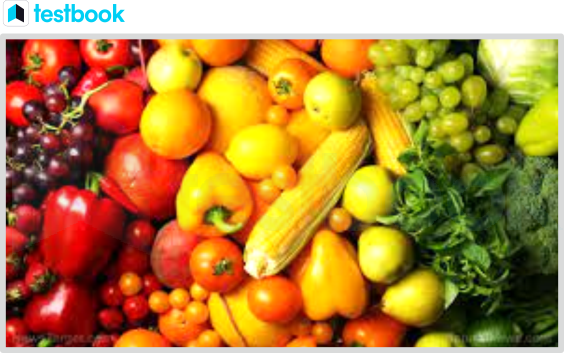
Carotenoids, carotenoids benefits and carotenoids foods

Additional Information

  • The folds in the inner membrane of a mitochondrion are called cristae.
  • An amyloplast is an organelle found in plant cells. Amyloplasts are plastids that produce and store starch within internal membrane compartments.
  • Vacuoles are membrane-bound organelles that can be appearing in both animals and plants. In a way, they're specialized lysosomes. That is to say that their function is really to handle waste products, and by the handle, they mean take in waste products and also get rid of waste products.
17

When is the World Heritage Day observed?

  1. ((a))

    September 8

  2. ((b))

    April 18

  3. ((c))

    June 21

  4. ((d))

    March 15

Show Answer
Answer: ((b))

April 18

The correct answer is April 18.

 Key Points

  • World Heritage Day
  • World Heritage Day is celebrated every year on 18 April.
  • Its aim is to preserve the human heritage and to recognize all the efforts of relevant organizations.
  • The International Council on Monuments and Sites (ICOMOS) in 1982 announced, 18 April as the World Heritage Day.
  • It was approved by the General Assembly of UNESCO in 1983, with an aim of enhancing awareness about the importance of cultural heritage, monuments and conserving them.
  • World Heritage Day 2021 theme is "Complex Pasts: Diverse Futures”.

Additional Information

DayDate
International Literacy DaySeptember 8
International Yoga DayJune 21
The World Consumer Rights DayMarch 15
18

Which component of the blood transports food, CO2 and nitrogenous waste?

  1. ((a))

    WBCs

  2. ((b))

    Blood platelets

  3. ((c))

    Plasma

  4. ((d))

    RBCs

Show Answer
Answer: ((c))

Plasma

  • Plasma: The liquid component of blood which performs the function of transportation of food, carbon dioxide, nitrogenous waste.
  • It transfers dissolved substances such as nutrients and electrolytes etc. It also carries blood components throughout the body.
WBCs(White blood cell)It protects the body against infection and disease.
Blood plateletsIt helps to stop bleeding by clumping and clotting blood vessel injuries.
RBCs(Red blood cells)It takes up oxygen from the lungs and circulates it around the body through the circulatory system.
19

What happens with the force of gravitation between two objects when the mass of one object is doubled?

  1. ((a))

    The force of gravitation is four times

  2. ((b))

    The force of gravitation is doubled

  3. ((c))

    The force of gravitation is tripled

  4. ((d))

    The force of gravitation is halved

Show Answer
Answer: ((b))

The force of gravitation is doubled

The force of gravitation between two objects Doubled when the mass of one object is doubled.

As we know the Gravitational force between two objects

F=GM1M2/R2

Where G= Gravitational constant

            F= force between two objects on r distance

            M1= mass of one object

            M2=mass of the second object

            R= distance between both objects

If the mass of one object is doubled then let mass becomes 2M1

So New Force= G2M1M2/R2

= 2(GM1M2/R2)

= 2 F

So the force of gravitation between two objects Doubled when the mass of one object is doubled.

20

'आंशिक ' शब्द में प्रत्यय क्या है ?

  1. ((a))

  2. ((b))

    इक

  3. ((c))

    शिक

  4. ((d))

Show Answer
Answer: ((b))

इक

'आंशिक ' शब्द में प्रत्यय है - इक

Key Points

  • अंश + इक = आंशिक
  • 'अंश' मूलशब्द और 'इक' प्रत्यय
  • 'आंशिक' का अर्थ - कुछ थोड़ा, अल्प।
  • प्रत्यय - जो शब्दांश, शब्दों के अंत में जुड़कर अर्थ में परिवर्तन लाये, प्रत्यय शब्द कहलाते है।

Additional Information कुछ महत्वपूर्ण प्रत्यय शब्द -

  • इक - धार्मिक, पौराणिक, ऐतिहासिक।
  • आस - मिठास, खटास, भड़ास, बिंदास।
  • उक - भिक्षुक, भावुक, कामुक, नाजुक।
  • अन - चिंतन, मनन, भवन, मरण, करण।
  • अक - पाठक, गायक, लेखक, नायक, धावक।
  • अक्कड़ - पियक्कड़, भुलक्कड़, घुमक्कड़।
  • आई - पढ़ाई, लिखाई, बुनाई, सिलाई।
21

Which vitamin is also known as anti-sterility vitamin?

  1. ((a))

    Vitamin - A

  2. ((b))

    Vitamin - D

  3. ((c))

    Vitamin - E

  4. ((d))

    Vitamin - K

Show Answer
Answer: ((c))

Vitamin - E

The correct answer is 3 i.e. Vitamin-E.

Key Points

Explanation: 

  • Vitamin: They are the compounds essential for the metabolic activities of our body but in very small quantities.
  • These do not provide energy but control energy-yielding reactions of our body.
  • The term 'vitamin' was coined by Casimir Flunk.
  • Based on solubility vitamins are of two types:
  • Fat-soluble vitamin: Vitamin A, D, E, and K.
  • Water-soluble vitamin: Vitamin B complex and C.
  • Our body can synthesize vitamin-D and K
VitaminsTheir importance
Vitamin-A- Steenbock (1919) discovered vitamin-A and Karrear (1931) determined the structure of vitamin-A. - It is also called as an anti-infective vitamin. - It is necessary for healthy eyesight (normal vision). - It is destroyed by strong light. - The main sources are yellow or green leafy vegetables, carrot, papaya, ripe, mango, milk, etc. - Deficiency causes night blindness (patient cannot see the object in dim light) and xerophthalmia or keratomalacia (dryness and wrinkles of the outer layer of the eyeball). - Its other name is Retinol.
Vitamin-D- It is called the poor man's vitamin and is a sterol derivative. - Its formation takes place under the skin in the presence of sunlight that's why also called sunshine vitamin or anti-racket vitamin. - It is needed for strong bones and teeth, helps in DNA synthesis, absorption of calcium and phosphorus. - Some main sources are egg, milk, fish liver oil, etc. - It affects the bones and causes rickets and osteomalacia in children and adults, respectively. - Its other name is Calciferol.
Vitamin-E- It is also known as beauty or anti-sterility vitamin. - It acts as an oxidant, helpful in making RBCs, and is necessary for the normal functioning of the reproductive system in both males and females both. - The most important sources are vegetable oils, wheat, cottonseed, and animal food. - It is also found in green vegetables like alfalfa lettuce i.e. salad etc. - Its deficiency destroys the muscles and causes abnormal functioning of the reproductive system in males as well as women. - Its other name is Tocopherol.
Vitamin-K- It was discovered by Henrik Dam (1935). - It is also called a naphthoquinone and is synthesized in the body by some bacteria. - It is a coagulation vitamin, which is why it helps in the clotting of blood. - The main sources are cauliflower, spinach, tomato, soybean, etc. - Its deficiency delays the clotting of blood and causes haemorrhage which is why also called an anti-hemorrhagic vitamin. - Its other name is Phylloquinone.
22

The fiscal deficit projected in the Bihar Budget 2026–27 is estimated at what percentage of the Gross State Domestic Product (GSDP)?

  1. ((a))

    3.49%

  2. ((b))

    2.49%

  3. ((c))

    4.29%

  4. ((d))

    2.99%

Show Answer
Answer: ((d))

2.99%

The correct answer is 2.99%.

Key Points

  • The fiscal deficit is a measure of the shortfall in a government's income compared to its expenditure over a financial year. It is expressed as a percentage of the Gross State Domestic Product (GSDP).
  • In the Bihar Budget for 2026–27, the fiscal deficit has been projected to be 2.99% of the GSDP, which aligns with the fiscal responsibility targets set by the Fiscal Responsibility and Budget Management (FRBM) Act.
  • The FRBM Act mandates states to maintain their fiscal deficit within prescribed limits to ensure financial stability and avoid excessive borrowing.
  • This projection of 2.99% ensures that Bihar remains within the permissible limits and fosters responsible financial management.
  • It also reflects an effort to balance developmental expenditure while keeping public debt under control.

Additional Information

  • Fiscal Deficit:
  • The fiscal deficit is calculated as the difference between the total revenue and total expenditure of the government, excluding borrowings.
  • A higher fiscal deficit indicates that the government relies heavily on borrowing to finance its expenditure, which can lead to an increased debt burden.
  • For states in India, fiscal deficit limits are prescribed under the FRBM Act to ensure financial discipline.
  • Gross State Domestic Product (GSDP):
  • GSDP is the monetary value of all the goods and services produced within a state's boundaries during a specific period.
  • It serves as an important indicator of a state's economic health and growth potential.
  • Fiscal deficit as a percentage of GSDP helps gauge the relative financial stability of the state.
  • FRBM Act:
  • The Fiscal Responsibility and Budget Management Act was enacted in 2003 by the Indian government to ensure responsible fiscal management.
  • It mandates states and the central government to maintain fiscal deficit and revenue deficit within permissible limits.
  • The Act promotes transparency, accountability, and sustainability in public finances.
  • Implications of Controlled Fiscal Deficit:
  • A fiscal deficit within permissible limits ensures that the government has enough resources for developmental projects without excessive borrowing.
  • It helps maintain the state's creditworthiness and avoids financial instability.
  • States with controlled fiscal deficits are better positioned to attract investments and foster economic growth.

Important Points

  • Key Highlights of the Budget:
  • ​Key Allocations:
  • Total Budget Size: ₹3,47,589.76 crore.
  • Education: Highest allocation at ₹60,204 crore.
  • Health: ₹21,270 crore.
  • Home Department: ₹20,132 crore.
  • Energy: ₹18,737 crore.
  • Economic Outlook:
  • The Gross State Domestic Product (GSDP) of Bihar for 2026-27 (at current prices) is projected to be Rs 13.1 lakh crore, amounting to growth of 15% over 2025-26.
  • Fiscal deficit: Targeted at 3% of GSDP (Rs 39,112 crore) for 2026-27.
  • Policy Highlights:
  • Saat Nishchay-3 roadmap between 2025 and 2030
  • Jannayak Karpoori Thakur Kisan Samman Nidhi to boost farmers' income.
  • Phase-2 of the Industrial Manufacturing Cluster (IMC) will be developed in Gaya.
  • Five new expressways will be built.
  • Public buses will be converted to CNG and electric buses.
  • More than 2,000 public charging stations will be established.
23

What is the primary function of the hormone insulin in human glucose metabolism?

  1. ((a))

    It breaks down glucose into energy.

  2. ((b))

    It facilitates the entry of glucose into cells by signaling the cells to absorb glucose.

  3. ((c))

    It converts excess glucose into glycogen for storage

  4. ((d))

    Both 2) and 3) are correct.

Show Answer
Answer: ((d))

Both 2) and 3) are correct.

The correct answer is Both 2) and 3) are correct.

Concept:-

  • Regulation of Blood Glucose Levels: Insulin is essential in preventing hyperglycemia (high blood sugar) by facilitating glucose uptake by cells and promoting glucose storage.
  • Energy Management: By regulating the flow of glucose into cells, insulin ensures that cells have access to the energy they need for metabolic activities.
  • Glucose Storage for Future Use: Through promoting glycogen synthesis, insulin helps the body prepare for future energy needs, ensuring an energy reserve is available during fasting states or increased energy demands.
  • Insulin Sensitivity and Resistance: The efficacy of insulin in performing its functions can be affected by factors such as obesity, diet, and physical activity levels. Reduced sensitivity to insulin, known as insulin resistance, can lead to metabolic disorders including type 2 diabetes.

Explanation:-

1. Insulin Facilitates Glucose Entry into Cells

Glucose, a primary energy source for the body's cells, circulates in the bloodstream. However, for glucose to be used by most cells, including muscle and fat cells, it must first enter them. Insulin is crucial for this process. When blood glucose levels rise (for example, after eating), the pancreas releases insulin into the bloodstream. Insulin then binds to insulin receptors on the surface of cells. This binding activates a series of events within the cell, one of which includes the movement of glucose transporter proteins to the cell's surface. These transporters act as gates, allowing glucose to enter the cell from the bloodstream. Inside the cell, glucose can be used immediately for energy, or it can be metabolized through various pathways for different uses.

2. Insulin and Glucose Storage

When the body has an ample supply of glucose (more than it needs for immediate energy requirements), insulin signals the liver and muscles to store the excess glucose. The process involves converting glucose into a form called glycogen. Glycogen serves as a readily accessible storage form of glucose, mainly stored in the liver and muscle tissues. This reserve can be quickly mobilized during fasting or between meals when insulin levels are low and glucagon levels are high, maintaining a steady level of glucose in the blood.

Conclusion:-

So, the primary function of the hormone insulin in human glucose metabolism is  Both 2) and 3) are correct.

24

What is the SI unit of speed limit on highways?

  1. ((a))

    Kilometer per hour (km/h)

  2. ((b))

    Meter per second (m/s)

  3. ((c))

    Miles per hour (mph)

  4. ((d))

    Foot per second (ft/s)

Show Answer
Answer: ((b))

Meter per second (m/s)

The correct answer is Meter per second (m/s).

Key Points

  • The SI unit for speed is meter per second (m/s), which is the standard unit used in scientific measurements.
  • Although speed limits on highways are commonly displayed in kilometers per hour (km/h) or miles per hour (mph) for practical reasons, the fundamental SI unit remains m/s.
  • Speed is a measure of the distance traveled per unit of time, and the use of m/s is consistent with the metric system used globally.
  • In everyday usage, different countries may prefer km/h or mph depending on regional standards, but m/s is universally accepted for scientific contexts.

Additional Information

  • Speed in Different Units:
  • 1 m/s = 3.6 km/h
  • 1 m/s ≈ 2.237 mph
25

निम्नलिखित में से "आँखों के सामने" शब्द समूह के अर्थ को कौन-सा शब्द दर्शाता है?

  1. ((a))

    सुलभ

  2. ((b))

    परमार्थी

  3. ((c))

    शत्रुघ्न

  4. ((d))

    प्रत्यक्ष

Show Answer
Answer: ((d))

प्रत्यक्ष

सही उत्तर है- प्रत्यक्ष

Key Points

  • जब किसी वाक्य को कम से कम शब्दों में प्रकट किया जाता है,और वह शब्द वाक्यांश के अर्थ को पूरी तरह सिद्ध करता हो तो उसे वाक्यांश के लिए एक शब्द कहते हैं।

Important Pointsअन्य वाक्यांश के लिए एक शब्द:-

वाक्यांशशब्द
जिस पुस्तक में आठ अध्याय होअष्टाध्यायी
जिसका भाषा द्वारा वर्णन असंभव होअनिर्वचनीय
अत्यधिक बढ़ा–चढ़ा कर कही गई बातअतिशयोक्ति
सबसे आगे रहने वालाअग्रणी
जो पहले जन्मा होअग्रज

Additional Informationअन्य विकल्प-

  1. सुलभ- जो आसानी से प्राप्त हो।
  2. परमार्थी- परम अर्थ की खोज करने वाला, मोक्ष चाहने वाला या दूसरों की भलाई करने वाला।
  3. शत्रुघ्न- शत्रु को मारनेवाला
26

What do parallels of latitudes help us measure

  1. ((a))

    Distance from the equator to the poles

  2. ((b))

    Distance from the North Pole to the South Pole

  3. ((c))

    Angular distance north or south from the equator

  4. ((d))

    Angular distance east or west from the Prime Meridian

Show Answer
Answer: ((c))

Angular distance north or south from the equator

The correct answer is Angular distance north or south from the equator.

Key Points

  • Latitudes are measured in degrees, with values ranging from 0 degrees at the equator to 90 degrees at the poles.
  • The North Pole is at 90 degrees north latitude, while the South Pole is at 90 degrees south latitude.
  • Since latitudes are parallel to the equator, they are often referred to as parallels of latitude.
  • Each parallel is a circle drawn around the Earth parallel to the equator, with each circle representing a different degree of latitude.
  • Latitudes help in determining the equatorial circumference of the Earth.
  • The circumference of the Earth at the equator is approximately 40,075 kilometers (24,901 miles), which provides a reference for measuring distances around the globe.
  • Latitudes are imaginary lines that run parallel to the equator, marking the angular distance of a location north or south of the equator.
  • They are measured in degrees, with the equator designated as 0 degrees latitude.
27

Which one of the following Sustainable Development Goals (SDGs) aims to ensure access to affordable, reliable, sustainable and modern energy for all?

  1. ((a))

    Goal 12

  2. ((b))

    Goal 5

  3. ((c))

    Goal 7

  4. ((d))

    Goal 10

Show Answer
Answer: ((c))

Goal 7

The correct answer is Goal 7.

Key Points

  • Goal 7 of the Sustainable Development Goals (SDGs) focuses on ensuring access to affordable, reliable, sustainable, and modern energy for all.
  • This goal aims to achieve universal access to affordable electricity, increase the share of renewable energy, and improve energy efficiency globally.
  • It specifically targets increasing the use of renewable energy such as solar, wind, and hydropower to reduce reliance on non-renewable and polluting energy sources like coal and oil.
  • Goal 7 emphasizes enhancing international cooperation to facilitate access to clean energy research, technology, and investment in energy infrastructure.
  • By ensuring sustainable energy access, the SDG aims to address critical issues such as poverty alleviation, climate change mitigation, and sustainable development.

Additional Information

  • Goal 12 (Responsible Consumption and Production):
  • Goal 12 focuses on ensuring sustainable consumption and production patterns to reduce the environmental impact of economic activities.
  • It includes targets such as reducing food waste, improving resource efficiency, and promoting sustainable practices by businesses.
  • The goal also emphasizes reducing waste generation through recycling and reuse to promote a circular economy.
  • Goal 5 (Gender Equality):
  • Goal 5 aims to achieve gender equality and empower all women and girls globally.
  • Its targets include eliminating gender-based violence, discrimination, and harmful practices such as child marriage and female genital mutilation.
  • It also focuses on ensuring women's equal participation in leadership, access to education, and economic opportunities.
  • Goal 10 (Reduced Inequalities):
  • Goal 10 focuses on reducing inequalities within and among countries.
  • It includes addressing income inequality, promoting social, economic, and political inclusion, and facilitating safe migration.
  • The goal also seeks to improve financial markets and institutions to provide equal opportunities for all.
28

Which of the following districts of Bihar does not share an international boundary with Nepal?

  1. ((a))

    West Champaran

  2. ((b))

    Madhubani

  3. ((c))

    Darbhanga

  4. ((d))

    Sitamarhi

Show Answer
Answer: ((c))

Darbhanga

The correct answer is Darbhanga.

Key Points

  • Bihar, a state in eastern India, shares its northern border with Nepal. Several districts of Bihar have international boundaries with Nepal.
  • West Champaran: This district lies in the northwestern part of Bihar and shares a significant international boundary with Nepal. Hence, it is not the correct answer.
  • Madhubani: Madhubani, located in the Mithilanchal region of Bihar, also shares a border with Nepal. Hence, it is not the correct answer.
  • Darbhanga: Although Darbhanga is geographically close to Nepal, it does not share a direct international boundary with Nepal. Hence, this is the correct answer.
  • Sitamarhi: This district is situated in northern Bihar and shares a border with Nepal. Hence, it is not the correct answer.

Additional Information

  • Geographical Significance of Bihar:
  • Bihar is a state in eastern India that shares its international border with Nepal to the north, and its state boundaries with Uttar Pradesh, Jharkhand, and West Bengal.
  • The international boundary of Bihar with Nepal is approximately 726 kilometers long.
  • Districts of Bihar sharing borders with Nepal:
  • West Champaran: Located at the northwestern corner of Bihar, it shares a substantial international border with Nepal.
  • Sitamarhi: Known for its historical and cultural significance, it is another district in northern Bihar sharing a boundary with Nepal.
  • Madhubani: This district, located in the Mithila region, also shares a border with Nepal, making it strategically important.
  • Araria and Kishanganj: These districts in northeastern Bihar also share borders with Nepal.
  • Darbhanga:
  • Darbhanga is part of the Mithila region in northern Bihar but does not share an international boundary with Nepal.
  • It is known for its cultural heritage, including Mithila painting and traditional music.
  • Importance of Bihar-Nepal Border:
  • The border areas play a crucial role in trade and people-to-people connectivity between India and Nepal.
  • There are several cross-border transit points in Bihar, facilitating seamless movement between the two nations.
  • The border also has cultural and historical importance, with shared traditions and festivals such as Chhath Puja celebrated on both sides.

Important Points

  • India-Nepal Relations:
  • India and Nepal share open borders, which allow citizens of both nations to travel and work freely across each other’s territories.
  • The border areas are vital for trade, tourism, and cultural exchange, strengthening bilateral relations.
  • However, these regions also face challenges such as smuggling and unauthorized activities, requiring effective border management.
  • Geopolitical Importance:
  • The India-Nepal border is part of the Himalayan region, which holds strategic importance for both countries in terms of defense and security.
  • Close coordination between the two governments ensures the smooth functioning of cross-border activities and resolution of disputes.
29

A Panchayat continues for _____ from the date appointed for its first meeting.

  1. ((a))

    11 years

  2. ((b))

    14 years

  3. ((c))

    5 years

  4. ((d))

    9 years

Show Answer
Answer: ((c))

5 years

The correct answer is 5 years.

Key Points

  • Panchayati Raj Institution (PRI)
  • It is a system of rural local self-government in India.
  • Local Self Government is the management of local affairs by such local bodies that have been elected by the local people.
  • PRI was constitutionalized through the 73rd Constitutional Amendment Act, 1992 to build democracy at the grassroots level and was entrusted with the task of rural development in the country.
  • In its present form and structure, PRI has completed 26 years of its existence. However, a lot remains to be done in order to further decentralize and strengthen democracy at the grass-root level.
  • According to article 243E, every panchayat can continue for 5 years from the date of its first meeting. Hence, Option 3 is correct.
  • It can be dissolved earlier in accordance with State law.
  • A Panchayat reconstituted after premature dissolution, continues only for the remainder of the period. But if the remainder of the period is less than 6 months, it is not necessary to hold elections.
  • The Panchayati Raj system is for only those states having a population of more than 20 lakhs.
  • The first gram panchayat of India was in the Nagaur district of Rajasthan.
30

Pawl Kut is the greatest of all the festivals celebrated in the state of _________.

  1. ((a))

    Kerala

  2. ((b))

    Mizoram

  3. ((c))

    Meghalaya

  4. ((d))

    Goa

Show Answer
Answer: ((b))

Mizoram

The correct answer is Mizoram.

Key Points

  • Pawl Kut in Mizoram:
  • Pawl Kut is a significant harvest festival celebrated in the state of Mizoram, India.
  • It's one of the most important festivals for the Mizo people, deeply rooted in their agricultural traditions and cultural heritage.
  • Pawl Kut is traditionally celebrated after the harvest is complete, usually between September and December, although the exact dates can vary from village to village.
  • The festival is associated with thanksgiving for a bountiful harvest and seeking blessings for future prosperity.
  • "Pawl" refers to straw or hay, and "Kut" means festival, so Pawl Kut literally translates to "straw festival," reflecting the importance of agriculture.
  • The celebrations involve various rituals, traditional dances, music, and feasts.
  • People dress in their colorful traditional attire, creating a vibrant and festive atmosphere.
  • Community participation is a key aspect, with everyone coming together to celebrate and share the joy.
  • Pawl Kut serves as a platform for showcasing Mizo culture, preserving traditions, and strengthening community bonds.
  • It's a time for families and friends to reunite, share meals, and celebrate their shared heritage.
  • The festival reflects the close relationship between the Mizo people and their land, highlighting their dependence on agriculture.
31

‘कंगाली में आटा गीला’ लोकोक्ति का सही अर्थ क्या है?

  1. ((a))

    थोड़ी वस्तु से आवश्यकता पूरी नहीं होती। 

  2. ((b))

    छोटी विपत्ति से छूटकर बड़ी विपत्ति में पड़ना।

  3. ((c))

    एक मुसीबत पर दूसरी मुसीबत आ पड़ना।

  4. ((d))

    सब दिन एक समान नहीं होते।

Show Answer
Answer: ((c))

एक मुसीबत पर दूसरी मुसीबत आ पड़ना।

‘कंगाली में आटा गीला’ लोकोक्ति का सही अर्थ है - एक मुसीबत पर दूसरी मुसीबत आ पड़ना। अन्य सभी विकल्प असंगत है। 

Key Points 

लोकोक्तिअर्थवाक्य प्रयोग
कंगाली में आटा गीलाएक मुसीबत पर दूसरी मुसीबत आ पड़ना।बेरोजगारी ने तो वैसे ही कमर तोड़ दी थी उस पर से टांग और टूट गई इसे कहते हैं - "कंगाली में आटा गीला"।

Important Points कुछ महत्वपूर्ण लोकोक्ति, अर्थ और उनके वाक्य प्रयोग:- 

लोकोक्तिअर्थ
ऊँट के मुँह मे ज़ीराआवश्यकता से बहुत कम प्राप्त होने वाली चीज
कड़ाही से गिरा चूल्हे में पड़ाछोटी विपत्ति से छूटकर बड़ी विपत्ति में पड़ जाना।
कभी के दिन बड़े कभी की रातसब दिन एक समान नहीं होते।

Additional Information 


लोकोक्तिउदाहरण
जब कोई पूरा कथन किसी प्रसंग विशेष में उद्धत किया जाता है तो लोकोक्ति कहलाता है। इसी को कहावत कहते है।गुड़ खाय गुलगुलों से परहेज - (कोई बड़ी बुराई करना और छोटी से बचना)
प्रयोग- वह मांस मछली तो नहीं खाता लेकिन अंडे को शाकाहारी समझता है।इसे कहते हैं - "गुड़ खाएं और गुलगुले से परहेज"।
32

Identify the basic salt from the following.

  1. ((a))

    Potassium Chloride

  2. ((b))

    Sodium carbonate

  3. ((c))

    Sodium Nitrate

  4. ((d))

    Ammonium Chloride

Show Answer
Answer: ((b))

Sodium carbonate

The correct answer is Sodium Carbonate.

Key Points Sodium carbonate -

  • Sodium carbonate is a basic salt because it is a salt of weak acid and strong base.
  • Sodium carbonate is a salt of carbonic acid with the chemical formula Na2CO3.
  • Sodium carbonate is also known as soda ash.
  • It is a white powder and an odorless compound in pure form.
  • Sodium carbonate is majorly produced by the Solvay process.
  • Its pH is 11.
  • It is commonly known as washing soda and is used in cleaning products, glass production as a food additive, and more.

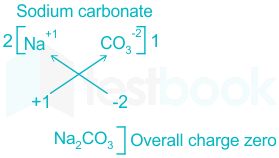
Explanation:

→ The valency of sodium (Na) is +1.

→ The valency or charge on carbonate ion (CO32-)is -2.

To make a chemical formula, the valency of both should be balanced, so, for every carbonate ion there should be two sodium cation.

This can be shown as -


33

In which State has India’s first integrated API Green Hydrogen and 2G Ethanol plant been established?

  1. ((a))

    Himachal Pradesh

  2. ((b))

    Uttarakhand

  3. ((c))

    Goa

  4. ((d))

    Andhra Pradesh

Show Answer
Answer: ((a))

Himachal Pradesh

The correct answer is Himachal Pradesh.

Key Points

  • India's first integrated API Green Hydrogen and 2G Ethanol Plant has been established in Himachal Pradesh. This makes Himachal Pradesh the pioneer state in green hydrogen production in India.
  • Green Hydrogen is produced using renewable energy sources such as solar and wind power, making it a cleaner and sustainable fuel alternative. The plant aligns with India's commitment to reduce carbon emissions and achieve net-zero targets by 2070.
  • 2G Ethanol refers to second-generation ethanol produced from non-food biomass like agricultural residues. It is a renewable biofuel and contributes to reducing dependency on fossil fuels. Hence, Himachal Pradesh becomes a significant contributor to India's biofuel industry.
  • The establishment of the plant supports India's National Hydrogen Mission, launched in 2021. This mission aims to make India a global hub for green hydrogen production and export. Hence, Himachal Pradesh plays a crucial role in achieving this vision.
  • The location in Himachal Pradesh was chosen due to its proximity to renewable energy sources, such as hydro and solar power, which are abundant in the region. Hence, the state is ideal for green hydrogen production.
  • The plant is expected to provide employment opportunities, boost the local economy, and encourage technological advancements in renewable energy production in Himachal Pradesh. Hence, the project has socio-economic benefits.
  • Hence, the correct answer is Himachal Pradesh.

Additional Information

  • Green Hydrogen:
  • Green Hydrogen is produced using electrolysis powered by renewable energy sources. It does not emit greenhouse gases, making it an environmentally friendly fuel source.
  • It is used in industries like steel production, refining, and transportation. It plays a crucial role in reducing dependency on fossil fuels and mitigating climate change.
  • 2G Ethanol:
  • Second-generation ethanol is derived from lignocellulosic biomass, such as agricultural waste, rather than food crops.
  • It is a sustainable fuel alternative that reduces greenhouse gas emissions and supports rural economies by utilizing agricultural residues.
  • National Hydrogen Mission:
  • Launched in 2021, the mission aims to make India a global leader in green hydrogen production and use.
  • It focuses on creating infrastructure, technological advancements, and policies to support green hydrogen development.
  • Himachal Pradesh and Renewable Energy:
  • Himachal Pradesh is rich in renewable energy sources like hydropower and solar energy, making it ideal for green hydrogen production.
  • The state has been a leader in adopting clean energy solutions, contributing to India's sustainability goals.

Important Points

  • Significance of Green Hydrogen:
  • Green hydrogen serves as a clean energy carrier and helps in decarbonizing industries and transport sectors.
  • It is essential for achieving India's climate goals, including the net-zero target by 2070.
  • Advantages of 2G Ethanol:
  • It reduces reliance on fossil fuels and minimizes greenhouse gas emissions.
  • Promotes the utilization of agricultural waste, creating additional income opportunities for farmers.
  • Economic and Environmental Impact:
  • The integrated plant in Himachal Pradesh boosts local employment and encourages technological innovations in renewable energy.
  • It contributes to India's economic growth while adhering to global environmental sustainability standards.
34

Most forests in Bihar fall under:

  1. ((a))

    Tropical evergreen

  2. ((b))

    Tropical moist deciduous

  3. ((c))

    Alpine

  4. ((d))

     Thorn forest

Show Answer
Answer: ((b))

Tropical moist deciduous

The correct answer is Tropical moist deciduous.

Key Points

  • Tropical moist deciduous forests are the most prominent type of forests in Bihar. These forests thrive in areas with moderate rainfall and distinct dry and wet seasons.
  • Bihar's climate, characterized by an average annual rainfall of around 1,000-1,500 mm, supports the growth of tropical moist deciduous vegetation.
  • The primary tree species found in these forests include Sal, Teak, Shisham (Indian Rosewood), Mahua, Bamboo, and Semal.
  • These forests are economically significant as they provide valuable timber, fruits, and other forest products used for local livelihoods and trade.
  • In addition to timber, tropical moist deciduous forests in Bihar also support biodiversity by providing habitats for various animals, birds, and insects.

Additional Information

  • Tropical Moist Deciduous Forest Characteristics:
  • These forests shed their leaves during the dry season to conserve water.
  • They are primarily found in regions that receive moderate rainfall, typically ranging from 100-200 cm annually.
  • The soils in these regions are fertile, which supports the growth of diverse plant species.
  • These forests are also called "monsoon forests" due to their dependence on seasonal rainfall.
  • Other Forest Types in the Options:
  • Tropical evergreen forests: Found in regions with high rainfall (more than 200 cm) and high humidity, such as the Western Ghats and northeastern states. These forests have dense canopies and include species like Mahogany, Ebony, and Rosewood.
  • Alpine forests: Found in high-altitude regions like the Himalayas, these forests consist of coniferous trees such as Pine, Fir, and Spruce. Bihar does not have the altitude required for such forests.
  • Thorn forests: These are found in arid and semi-arid regions, such as Rajasthan and parts of Gujarat, where rainfall is less than 50 cm. They consist of thorny trees like Acacia and Cactus.
  • Forests in Bihar:
  • Bihar has a forest cover of around 7% of its geographical area, which is lower than the national average.
  • The major forested regions in Bihar include areas in the districts of West Champaran, Jamui, and Kaimur.
  • Efforts are being made to increase forest cover through afforestation and reforestation programs.
  • Economic Importance:
  • The forests of Bihar provide raw materials for industries, such as timber, bamboo, and medicinal plants.
  • They also serve as a source of livelihood for local communities involved in activities like honey collection, lac cultivation, and small-scale timber extraction.
  • Forest-based eco-tourism is also being promoted in Bihar as a means of sustainable development.

Important Points

  • Conservation Efforts:
  • Bihar government has initiated several schemes under the National Afforestation Programme (NAP) to increase the forest cover.
  • Protected areas like Valmiki National Park and Sanjay Gandhi Biological Park play a vital role in preserving biodiversity and forest ecosystems in the state.
  • Challenges:
  • Deforestation due to agricultural expansion, urbanization, and illegal logging is a significant issue.
  • Lack of awareness and enforcement of forest conservation laws has led to degradation of forest resources.
35

Which crop was given special attention for climate-resilient promotion in the Fourth Agriculture Roadmap?

  1. ((a))

    Maize

  2. ((b))

    Pulses

  3. ((c))

    Millets

  4. ((d))

    Mustard

Show Answer
Answer: ((c))

Millets

The correct answer is option 3.

Key Points

  • The crop given special attention in Bihar’s Fourth Agriculture Roadmap for climate-resilient promotion, especially in dryland and marginal farming areas, was millets — highlighting them as drought-resistant, nutritious, and well-suited to changing climate conditions.
  • Why Millets Got Spotlight in the 2023–28 Roadmap:
  • Climate-resilient characteristics: Millets thrive in arid, drought-prone zones with minimal irrigation, making them ideal for Bihar’s semiarid regions facing erratic rainfall and rising temperatures.
  • Nutritional and economic benefits: Regarded as “nutri-cereals,” millets bring health advantages and open new market and income avenues for smallholder farmers.
  • Aligned with global initiatives: The roadmap coincided with 2023 being declared the International Year of Millets, reinforcing government and global focus on promoting millets.
36

Which of the following Metals is used for making boats because it does not corrode by sea water?

  1. ((a))

    Titanium

  2. ((b))

    Antimony

  3. ((c))

    Tungsten

  4. ((d))

    Nickel

Show Answer
Answer: ((a))

Titanium

The correct answer is Titanium. 

Key Points

  • The titanium metal is used for making boats.
  • It acts as a barrier between the surface of the boat, air and water.
  • As the air and water could not reach the surface of the boat due to titanium, the boat does not get corroded.
  • The method of protecting iron from corrosion by using a more reactive metal is known as sacrificial protection.
  • Since Titanium is less reactive than other metals given above, it saves the boat from corrosion.

Additional Information

  • Antimony :
  • It is stable in dry air.
  • It is used to increase the hardness of alloys.
  • It is used in automobile parts such as clutch and brakes.
  • Tungsten :
  • It has high melting point.
  • It has high tensile strength.
  • It is used in electrodes, heating elements and as filament in light bulbs.
  • Nickel :
  • It is a good conductor of heat and electricity.
  • It is a silvery white, hard and ductile material.
  • It is used to make coins, in gas turbines and rocket engines.
37

Which of the following passes connects Srinagar and Leh?

  1. ((a))

    Nathu La

  2. ((b))

    Bara-lacha-La 

  3. ((c))

    Jelep La

  4. ((d))

    Zoji La

Show Answer
Answer: ((d))

Zoji La

The correct answer is Zoji La.

Key Points

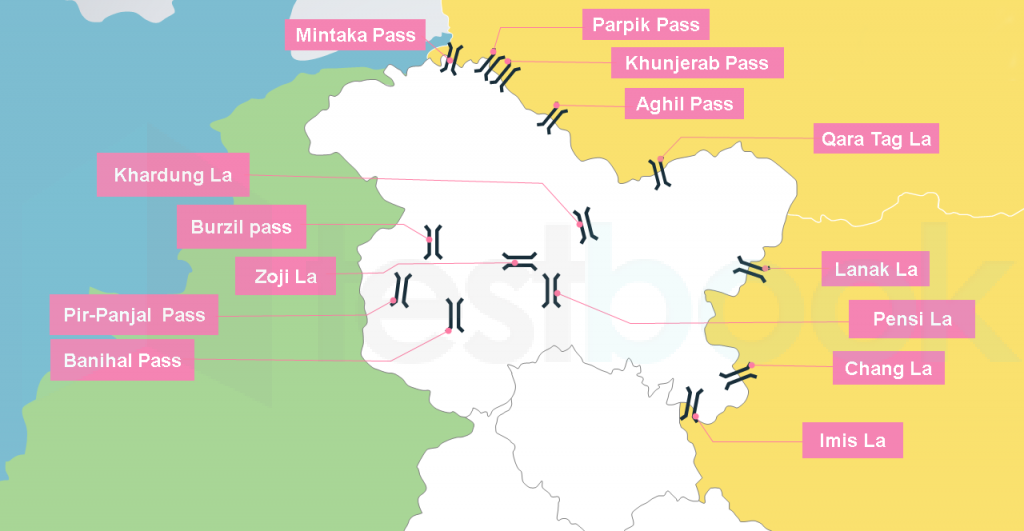
  • Zoji La is a mountain pass located in the Himalayas in Ladakh.
  • Zoji La connects Srinagar and Leh.
  • It connects the Kashmir Valley to its west with the Dras and Suru valleys to its northeast and the Indus valley further east.
  • Zoji La pass is the lifeline that keeps the people of Ladakh in touch with the rest of the world.
  • The elevation of Zoji La is 3,528m (11,575ft) above sea level.
  • It is one of the most treacherous passes in the world.
  • Zojila tunnel project was launched in 2018.

Additional Information

  • Bara-Lacha-La Pass connects Lahaul district in Himachal Pradesh with Leh district in Ladakh.
  • Jelep La Pass connects Sikkim with the autonomous region of Tibet, China.
  • Nathu La Pass connects Sikkim with the autonomous region of Tibet, China.
  • Rohtang Pass connects Kullu Valley with the Lahaul and Spiti Valleys of Himachal Pradesh.
  • Shipki La Pass connects the Kinnaur district of Himachal Pradesh with the autonomous region of Tibet, China.

38

Match the organs in column A with their primary functions in column B.

Column AColumn B
(a)Heart(i)Absorbs nutrients
(b)Lungs(ii)Pumps blood
(c)Stomach(iii)Filter waste from the blood
(d)Kidneys(iv)Purify blood
  1. ((a))

    a - iii, b - iv, c - ii, d - i

  2. ((b))

    a - iv, b - iii, c - ii, d - i

  3. ((c))

    a - i, b - ii, c - iii, d - iv

  4. ((d))

    a - ii, b - iv, c - i, d - iii

Show Answer
Answer: ((d))

a - ii, b - iv, c - i, d - iii

The correct answer is a - ii, b - iv, c - i, d - iii.

Key Points

  • Heart (ii): The heart's primary function is to pump blood throughout the body. By doing so, the heart ensures the delivery of oxygen and nutrients to tissues and the removal of carbon dioxide and waste products.
  • Lungs (iv): The lungs oxygenate blood by adding oxygen to it and removing carbon dioxide from it, which could be considered a form of "purification" in terms of gas exchange.
  • Stomach (i): The stomach's main role is to break down food and begin the digestion process. While the stomach itself does not absorb a significant amount of nutrients, it prepares food for continued digestion and nutrient absorption in the intestines.
  • Kidneys (iii): The kidneys' primary function is to filter waste from the blood and excrete these wastes in the form of urine. Additionally, kidneys regulate fluid and electrolyte balance, and blood pressure.

Additional Information

  • Organ Systems Interaction: These organs do not function in isolation but work in concert as part of larger organ systems. The cardiovascular, respiratory, digestive, and urinary systems, represented here by the heart, lungs, stomach, and kidneys respectively, all interact closely to maintain homeostasis within the body.
  • Homeostasis: Homeostasis is the process by which living organisms regulate their internal environment to maintain a stable, constant condition in response to changes in the external environment. The functions of these organs are critical in maintaining homeostasis.
  • Importance of a Balanced Diet and Hydration: Proper nutrition and hydration are vital in supporting the functions of these organs. For example, adequate hydration supports kidney function, while a balanced diet rich in fruits, vegetables, proteins, and healthy fats supports heart health.
  • Healthcare and Preventative Measures: Understanding the functions of these organs can help in the early detection and prevention of diseases. Regular health check-ups, proper diet, exercise, and avoiding harmful habits like smoking can contribute significantly to organ health.
39

Select the correctly spelt word.

  1. ((a))

    Acquirum

  2. ((b))

    Secquence

  3. ((c))

    Bouquet

  4. ((d))

    Frequensy

Show Answer
Answer: ((c))

Bouquet

The correct answer is Bouquet.

Key Points

  • The word that is correctly spelled is 'Bouquet'.
  • Bouquet: a group of flowers that have been fastened together and attractively arranged so that they can be given as a present or carried on formal occasions.
  • Example: Chris sent me a lovely bouquet when I was sick.


Correct Answer: Bouquet.

Additional Information 

  • The correct spelling of other words given in the option as follows: 
  • Aquarium: a glass container in which fish and other water creatures can be kept.
  • Example: Over the last decade or so, the demand for aquatic plants has strongly increased in order to supply private aquariums, garden tanks, or botanical gardens.
  • Sequence: a series of related things or events, or the order in which they follow each other. 
  • Example: The first chapter describes the strange sequence of events that led to his death.
  • Frequency: the number of times something happens within a particular period, or the fact of something happening often or a large number of times. 
  • Example: Complaints about the frequency of buses rose in the last year.
40

Which strait connects the Arctic Ocean with the Pacific Ocean?

  1. ((a))

    Gibraltar Strait

  2. ((b))

    Dover Strait

  3. ((c))

    Bering Strait

  4. ((d))

    Sunda Strait

Show Answer
Answer: ((c))

Bering Strait

The correct answer is Bering Strait.

Key Points

A Strait is a naturally formed, narrow, typically navigable waterway that connects two larger bodies of water.

StraitsConnections
Gibraltar StraitIt conn\ects the Atlantic Ocean to the Mediterranean sea.
Dover StraitIt connects the boundary between the English Channel and the North Sea
Bering StraitIt connects the Arctic Ocean with the Pacific Ocean
Sunda StraitIt connects the Java sea to the Indian Ocean
41

Considering that air is composed of multiple gases, discuss the implications of altering the percentage composition of oxygen in the atmosphere. What environmental and biological effects could potentially occur?

  1. ((a))

    Increased risk of fires and respiratory issues

  2. ((b))

    Decreased industrial capabilities

  3. ((c))

    Increased marine biodiversity

  4. ((d))

    Enhanced agricultural productivity

Show Answer
Answer: ((a))

Increased risk of fires and respiratory issues

The correct answer is Increased risk of fires and respiratory issues

Explanation:

  • Increased Risk of Fires: An increase in the oxygen concentration in the air would make the environment more prone to fires. Oxygen is a key reactant in combustion, so higher oxygen levels would mean that materials would ignite more easily and fires would burn more fiercely and spread faster. This could lead to more frequent and severe wildfires, with significant implications for ecosystems, human settlements, and air quality.
  • Respiratory Issues: Our respiratory systems and metabolism are adapted to the current level of oxygen. An increase could lead to oxygen toxicity, which can cause lung damage, respiratory distress, and even neurological problems due to the production of reactive oxygen species (ROS) that can damage cells. Conversely, a decrease in atmospheric oxygen concentrations could lead to hypoxia, making it harder for organisms to obtain the oxygen necessary for cellular respiration, potentially impacting health and stamina.

Other Options:

2) Decreased Industrial Capabilities: Industrial processes might adjust (for example, combustion processes could become more efficient with higher oxygen levels), the primary implications would be more related to environmental and biological effects rather than a straightforward decrease in industrial capabilities.

3) Increased Marine Biodiversity: Changes in atmospheric oxygen levels would primarily affect terrestrial and atmospheric environments directly. Marine biodiversity is more closely related to the levels of dissolved oxygen in water, which could be affected indirectly by changes in atmospheric oxygen through complex climate and ecosystem interactions, but the immediate and direct link to increased marine biodiversity is not clear-cut.

4) Enhanced Agricultural Productivity: While plants do require oxygen for respiration, their growth and productivity are more closely linked to other factors such as carbon dioxide levels (for photosynthesis), water availability, nutrients, and light. Changes in atmospheric oxygen levels would not directly result in enhanced agricultural productivity; in fact, the consequences of increased fire risks and potential impacts on climate and ecosystems could indirectly harm agricultural productivity.

42

In the process of cell division, the __________ divides first, followed by the __________.

  1. ((a))

    Cytoplasm, nucleus

  2. ((b))

    Nucleus, cytoplasm

  3. ((c))

    Cell membrane, cytoplasm

  4. ((d))

    Mitochondria, ribosome

Show Answer
Answer: ((b))

Nucleus, cytoplasm

The correct answer is Nucleus, cytoplasm

Explanation:

  • During cell division, the process starts with the division of the nucleus, known as mitosis or meiosis, depending on the type of cell division.
  • Mitosis involves the segregation of duplicated chromosomes into two identical sets, whereas meiosis results in four non-identical daughter cells, each with half the chromosome number of the original cell.
  • After the nuclear division is completed, the cell undergoes cytokinesis, which is the division of the cytoplasm. This results in the formation of two separate daughter cells.

 Key Points

  • Mitosis: A type of cell division resulting in two daughter cells each having the same number and kind of chromosomes as the parent nucleus, typical of ordinary tissue growth.
  • Meiosis: A type of cell division that reduces the chromosome number by half, creating four haploid cells. This process is essential for sexual reproduction and genetic diversity.
  • Cytokinesis: The process in which the cytoplasm of a single eukaryotic cell divides to form two daughter cells after the nuclear division has taken place.

In the process of cell division, the nucleus divides first, followed by the cytoplasm.

43

We slip while walking on a path having pond scum or green algae because: 

  1. ((a))

    The inertia of motion

  2. ((b))

    The friction is zero

  3. ((c))

    The friction between the feet and the path is increased.

  4. ((d))

    The friction between the feet and the path is reduced.

Show Answer
Answer: ((d))

The friction between the feet and the path is reduced.

The correct answer is The friction between the feet and the path is reduced.

Important Points

  • Friction is a force between two surfaces that are sliding, or trying to slide, across each other.
  • For example, when you try to push or pull luggage along the floor, friction makes this difficult.
  • Friction always works in the opposite of the direction in which the object is moving or trying to move.
  • There are four types of friction:
  • Static Friction: Static friction acts on objects when they are resting on a surface.
  • For example, hiking in the woods, there is static friction between shoes and the trail each time put down the foot.
  • Without this static friction, feet would slip out and making it difficult to walk.
  • Sliding Friction: Sliding friction is friction that acts on objects when they are sliding over a surface.
  • Sliding friction is weaker than static friction.
  • Rolling Friction: Rolling friction is friction that acts on objects when they are rolling over a surface.
  • Rolling friction is much weaker than sliding friction or static friction.
  • For example, ground transportation use wheels, including bicycles, cars, 4-wheelers, roller skates, scooters, skateboards, Ball bearings.
  • Fluid Friction: Fluid friction is friction that acts on objects that are moving through a fluid.
  • A fluid is a substance that can flow and take the shape of its container. Fluids include liquids and gases.
44

In the human body, the _______ carry oxygen-rich blood away from the heart, and the _______ bring oxygen-poor blood back to the heart. The smallest blood vessels called _______, connect these two types of vessels.

  1. ((a))

    capillaries, arteries, veins

  2. ((b))

    veins, arteries, capillaries

  3. ((c))

    arteries, veins, capillaries 

  4. ((d))

    veins, capillaries, arteries

Show Answer
Answer: ((c))

arteries, veins, capillaries 

The correct answer is arteries, veins, capillaries 

Explanation:

The circulatory system in humans is a complex network that serves to transport blood, nutrients, gases, and waste products throughout the body. It consists of the heart, blood, and blood vessels. The main types of blood vessels are arteries, veins, and capillaries, each playing a unique role in the circulation of blood.

Arteries:-

  • Arteries are blood vessels that carry blood away from the heart. This blood is typically rich in oxygen and nutrients, having just been oxygenated in the lungs and collected by the heart for distribution throughout the body.
  • Arteries are adapted for this high-pressure transport with thick, muscular walls that can withstand and respond to the pressure of blood being pumped by the heart.

Veins:-

  • Veins carry blood back toward the heart.
  • The blood in veins is usually depleted of oxygen and loaded with carbon dioxide and other waste products, ready to be expelled from the body or re-oxygenated.
  • Veins operate under lower pressure compared to arteries and thus have thinner walls. They possess valves that prevent the backflow of blood, ensuring it moves in one direction back to the heart. Smaller veins are referred to as venules.

Capillaries:-

  • Capillaries are the smallest blood vessels in the body and serve as the connection between arteries and veins.
  • Their walls are just one cell thick, which facilitates the exchange of oxygen, carbon dioxide, nutrients, and waste products between the blood and the tissues of the body. This exchange occurs through the process of diffusion. Oxygen and nutrients in the blood diffuse out of the capillaries and into the surrounding cells, while carbon dioxide and wastes move from the cells into the blood.
45

इनमें से कौन-सा शब्द 'अतिवृष्टि' का विलोम है?

  1. ((a))

    रेगिस्तान

  2. ((b))

    आर्द्र

  3. ((c))

    बाढ़

  4. ((d))

    अनावृष्टि

Show Answer
Answer: ((d))

अनावृष्टि

'अतिवृष्टि' का विलोम है- अनावृष्टि

Key Points

  • 'अतिवृष्टि**'** शब्द का विलोम शब्द 'अनावृष्टि' होगा।
  • 'अतिवृष्टि'​ का अर्थ- बहुत अधिक वर्षा या बाढ़ ।
  • 'अनावृष्टि' का अर्थ-​ वर्षा का अभाव या सूखा।
  • विलोम - जो शब्द किसी एक शब्द के विपरीत अर्थ को व्यक्त करते हैं, वे विलोम शब्द कहलाते हैं।

अन्य विकल्प-

शब्दविलोम
रेगिस्ताननखलिस्तान
आर्द्रशुष्क
बाढ़सूखा

Additional Information

   कुछ अन्य महत्वपूर्ण विलोम शब्द -

शब्दविलोम
गुलशनवीरान
खुशबूबदबू
​कृपालुनिर्दय
​औचित्यअनुचित्य
​चिरायुअल्पायु
​जटिलसरस
सुषुप्तिजागृति
​जघन्यस्तुत्य
46

Which of the following compounds is an Alicyclic compound? 

  1. ((a))

    Cyclopropane

  2. ((b))

    Isobutane

  3. ((c))

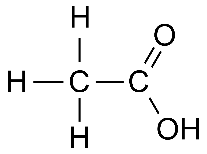
    Acetic acid

  4. ((d))

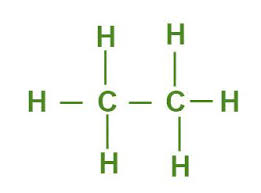
    Ethane

Show Answer
Answer: ((a))

Cyclopropane

The correct answer is Cyclopropane.

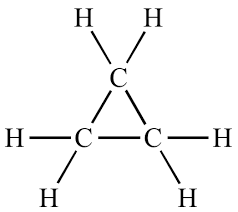
Key Points

  • Cyclopropane consists of three carbon atoms arranged in a triangular ring, with each carbon bonded to two hydrogen atoms.
  • The bond angles in cyclopropane are approximately 60°, which is much smaller than the ideal tetrahedral angle of 109.5°.
  • The carbon-carbon bonds in cyclopropane are single bonds (σ-bonds), but the strain causes them to be weaker and more reactive than typical single bonds in larger rings or chains.
  • cyclopropane is more reactive compared to other hydrocarbons, and it readily undergoes reactions such as ring-opening and addition reactions.

Illustrated Glossary of Organic Chemistry - Cyclopropane

Cyclopropane 

Additional Information

Isobutane:

  • Isobutane, also known as 2-methylpropane, is a branched-chain alkane with the formula C₄H₁₀.
  • Isobutane has a compact, branched structure where three carbon atoms form a chain, and the fourth carbon is attached as a branch.
  • Uses: Refrigerant, fuel for portable stoves, propellant in aerosols.
  • Properties: Colorless, odorless gas with a lower boiling point than n-butane.

Write the isomer of butane with ...

(Isobutane)

Acetic acid:

  • Acetic acid has the formula CH₃COOH.
  • It consists of a **carboxyl group (**COOH) attached to a methyl group (CH₃).
  • Acetic acid is widely used as a vinegar ingredient for culinary purposes, as well as in the production of chemicals like acetic anhydride and acetate esters.
  • It's also used in the textile industry and as a solvent.

Acetic acid Formula

(Acetic acid)

Ethane:

  • Ethane has the formula C₂H₆. It consists of a two-carbon chain with each carbon atom bonded to three hydrogen atoms.
  • Ethane is primarily used as a feedstock in the production of ethylene, which is a key raw material for manufacturing plastics and other chemicals.
  • It is also used as a fuel and in refrigeration.

Ethane Formula - Structure, Properties ...

(Ethane)

47

The ability of the eye to focus on both, near and distant objects, by adjusting its focal length, is called the _______ of the eye.

  1. ((a))

    refractiveness

  2. ((b))

    adjustment

  3. ((c))

    accommodation

  4. ((d))

    suitability

Show Answer
Answer: ((c))

accommodation

The correct answer is accommodation.

Key Points

  • The ability of the eye to focus on both, near and distant objects, by adjusting its focal length, is called the accommodation of the eye.
  • The muscles in our eye can adjust the focus of the lens present in our eye to focus on different objects at different times at different distances.
  • Due to this ability, our eye can focus on near as well as far away objects, and this ability is called the power of accommodation.
  • The maximum power of accommodation of the eye for a person having normal vision (d = 25 cm) is 4 Dioptre.

Additional Information

  • Myopia- The human eye can see a nearby object clearly but cannot see far away object clearly.
  • Hypermetropia- The human eye can see distant objects clearly but cannot see nearby objects clearly.
  • Presbyopia- In this defect, both near and far objects are not clearly visible. It is an old age disease and it is due to the losing power of accommodation.
  • Astigmatism- In this defect, the eye cannot see horizontal and vertical lines clearly, simultaneously. It is due to the imperfect spherical nature of the eye lens.
48

Animal cell membrane is essentially made of -

  1. ((a))

    Protein

  2. ((b))

    Carbohydrate

  3. ((c))

    Lipid bilayer

  4. ((d))

    Cellulose

Show Answer
Answer: ((c))

Lipid bilayer

The correct answer is Lipid bilayer.

Important Points

  • The lipid bilayer is a biological membrane consisting of two lipid molecules.
  • Each lipid molecule is made up of a hydrophilic head and a hydrophobic tail. It is a functional part of all cellular membranes.
  • A cell wall is a structural layer surrounding some types of cells, just outside the cell membrane.
  • The cell membrane is a lipid bilayer and is composed of lipoproteins and carbohydrates.

Key Points

  • The difference between the cell wall and the cell membrane is a follows -
Cell wallCell membrane
- Present only in plans and in some fungi, bacteria, algae- Present in all types of cells in humans, animals, etc.
- The outermost part of the plant cell- The outermost part of the animal cell
- thickness is .1 um to several ums- thickness is 7.5-10 um
- metabolically inactive- metabolically active
49

What is the term of Panchayat according to the 73rd Constitutional Amendment Act?

  1. ((a))

    5 Years

  2. ((b))

    6 Years

  3. ((c))

    4 Years

  4. ((d))

    3 Years

Show Answer
Answer: ((a))

5 Years

Panchayati Raj was introduced to the Indian Constitution by the 73rd Constitutional Amendment Act.

  • There are three tiers in the Panchayati Raj structure.
  • These 3 tiers are Gram Panchayat, Zila Parishad, and Panchayat Samiti.
  • The term of Panchayat is 5 years.
  • Gram Panchayat is at the village level, Panchayat Samiti at the block level and Zila Parishad at the district level.
S.NOArticlesExplanations
1243 HPowers to impose taxes by and funds of panchayats
2243 JAudit of accounts of panchayats
3243 FDisqualification of membership
4243 KElections to the panchayats
50

कीर्तिलता और कीर्तिपताका ये रचनाएँ किसकी हैं?

  1. ((a))

    विद्यापति

  2. ((b))

    गोरखनाथ

  3. ((c))

    अमीर खुसरो

  4. ((d))

    नामदेव

Show Answer
Answer: ((a))

विद्यापति

कीर्तिलता और कीर्तिपताका रचनाओं का सही उत्तर है- विद्यापति

Key Points

  • विद्यापति ने 'कीर्तिलता' और 'कीर्तिपताका' की रचना अवहट्ट (अपभ्रंश का परवर्ती रूप) भाषा में की है।
  • कीर्तिलता में राजा कीर्ति सिंह की वीरता और न्यायप्रियता का वर्णन किया गया है, जबकि कीर्तिपताका राजा शिव सिंह की विजयों पर आधारित है।
  • विद्यापति की अन्य महत्वपूर्ण रचनाएँ पदावली (मैथिली) और लिखनावली (संस्कृत) हैं।

अन्य विकल्प -

शब्द/विकल्पविग्रह/अर्थभेद/प्रकार
गोरखनाथहठयोग के प्रवर्तक कविनाथ साहित्य
अमीर खुसरोखड़ी बोली के आदि कविपहेलियाँ/मुकरियाँ
नामदेवभक्ति आंदोलन के प्रमुख संतनिर्गुण एवं सगुण

Important Points 

 विद्यापति की उपाधियाँ-

  1. मैथिल कोकिल
  2. अभिनव जयदेव
  3. कविशेखर

Additional Information

प्रकार/भेदपरिभाषाउदाहरण
अवहट्टयह अपभ्रंश का परवर्ती रूप है जिसे देसिल बयना भी कहा जाता है।कीर्तिलता = अवहट्ट कीर्तिपताका = अवहट्ट
51

The Panchayat Raj System was first adopted by the state of _______.

  1. ((a))

    Rajasthan

  2. ((b))

    Andhra Pradesh

  3. ((c))

    Tamil Nadu

  4. ((d))

    West Bengal

Show Answer
Answer: ((a))

Rajasthan

The correct answer is option 1, i.e. Rajasthan.

  • The Panchayati Raj System was first adopted by the state of Rajasthan.
  • Panchayati Raj - 
  • It is a system of local self-government in India.
  • It was put in force in 1992 through the 73rd amendment to the Indian Constitution.
  • The system has three levels:
  • Gram Panchayat (village level),
  • Mandal Parishad or Block Samiti or Panchayat Samiti (block level),
  • Zila Parishad (district level)
  • Currently, the system exists in all states except Nagaland, Meghalaya, and Mizoram, and in all Union Territories except Delhi.
  • The Panchayat Raj system was first adopted by the state of Rajasthan in Nagaur district on 2 Oct 1959.
  • List of committees constituted for recommendations regarding Panchayati Raj in India: -
  • Balwant Rai Mehta, 1957
  • V.T. Krishnammachari, 1960
  • Takhatmal Jain Study Group, 1966
  • Ashok Mehta Committee, 1978
  • G.V.K. Rao Committee, 1985
  • Dr. L.M. Singhvi Committee, 1986
  • P.K. Thungon Committee,1989
  • S. Mohinder Singh, 2013
52

The Gram Sabha is a meeting of all adults who live in the area covered by a __________ .

  1. ((a))

    district

  2. ((b))

    panchayat

  3. ((c))

    state

  4. ((d))

    city

Show Answer
Answer: ((b))

panchayat

The correct answer is panchayat.

Key Points

Panchayat:-

  • It refers to the system of local self-government in rural India.
  • It is a three-tier system consisting of gram panchayats at the village level, panchayat samitis at the block level, and zilla parishads at the district level.
  • Panchayats are elected bodies, with members directly elected by the people of the area. They have a wide range of functions, including:
  • Providing basic services such as drinking water, sanitation, and roads
  • Promoting economic development and employment
  • Protecting the environment and natural resources

Upholding social justice and equality

  • The Panchayati Raj system was enshrined in the Indian Constitution by the 73rd Amendment Act of 1992. This amendment gave panchayats constitutional status and guaranteed them certain powers and functions.
  • The Gram Sabha is a meeting of all adults who live in the area covered by a panchayat.
53

Who among the following is known for popularising Bharatanatyam on the global stage?

  1. ((a))

    Mallika Sarabhai

  2. ((b))

    Sonal Mansingh

  3. ((c))

    Hema Malini

  4. ((d))

    Rukmini Devi Arundale

Show Answer
Answer: ((d))

Rukmini Devi Arundale

The correct answer is Rukmini Devi Arundale.

Key Points

  • Rukmini Devi Arundale (1904–1986) is widely regarded as the person who revived and popularized Bharatanatyam, transforming it into a globally recognized classical dance form.
  • She was instrumental in removing the stigma associated with Bharatanatyam, which was earlier performed in temples as a form of religious offering and had declined during the colonial era.
  • Rukmini Devi introduced innovations such as incorporating themes from Indian epics like the Ramayana and Mahabharata, making Bharatanatyam accessible to a wider audience.
  • She established the Kalakshetra Foundation in 1936, a premier institution for the study and performance of classical arts, which continues to train Bharatanatyam dancers globally.
  • Her contributions led to the recognition of Bharatanatyam as one of India's classical dance forms, and she was awarded the Padma Bhushan in 1956 for her contributions to Indian art and culture.

Additional Information

  • Mallika Sarabhai:
  • Mallika Sarabhai is a renowned Indian classical dancer and activist known for her proficiency in Bharatanatyam and Kuchipudi.
  • She is the daughter of Mrinalini Sarabhai and Vikram Sarabhai, a prominent scientist, and contributed significantly to using dance and theatre for social change.
  • Although an acclaimed performer, Mallika Sarabhai is not credited with popularizing Bharatanatyam globally like Rukmini Devi Arundale.
  • Sonal Mansingh:
  • Sonal Mansingh is a celebrated Indian classical dancer known for her expertise in Odissi and Bharatanatyam.
  • She has been recognized for her thematic productions that blend traditional dance with contemporary issues.
  • While Sonal Mansingh has made significant contributions to Indian classical dance, her primary focus has not been on the global popularization of Bharatanatyam.
  • Hema Malini:
  • Hema Malini is a renowned Bollywood actress and trained classical dancer in Bharatanatyam, Kuchipudi, and Odissi.
  • She has performed extensively in India and abroad, showcasing Indian classical dance on global platforms.
  • However, her contributions are more related to promoting Indian culture rather than the revival or transformation of Bharatanatyam as seen in the work of Rukmini Devi Arundale.
54

Who among the following is the Chairman of Planning Commission and National Integration Council of India?

  1. ((a))

    The President

  2. ((b))

    The Prime Minister

  3. ((c))

    The Vice President

  4. ((d))

    The Attorney General

Show Answer
Answer: ((b))

The Prime Minister

The correct answer is The Prime Minister.

The Chairman of the Planning Commission and National Integration Council of India is the Prime Minister.

Additional Information 

  • National Integration Council was established in the year 1961.
  • Its first meeting took place in 1962.
  • The National Integration Council was established by the then Prime Minister Jawaharlal Nehru to address the problems of communalism and regionalism in India.
  • The Prime Minister is the chairman of the council.
  • The National Integration Council is an extra-constitutional body.
  • The function of the council is to examine the problem of national integration in every aspect and make necessary recommendations to deal with it
  • Information about the National Integration Council.
  • Planning Commission
  • It was an institution in the Government of India.
  • It formulated five-year plans.
  • It was formed on 15 March 1950.
  • It was dissolved on 17 August 2014 and replaced by the new institution NITI Aayog.
  • The Prime Minister of India was the ex-officio chairman of the Planning Commission.
55

Mayank Chakraborty has officially become India’s 94th Grandmaster and the first-ever Grandmaster from which Indian state?

  1. ((a))

    Manipur

  2. ((b))

    Assam

  3. ((c))

    Meghalaya

  4. ((d))

    Tripura

Show Answer
Answer: ((b))

Assam

The correct answer is Assam.

In News

  • 16-year-old Mayank Chakraborty has become India’s 94th Grandmaster (GM) and the first from the North East region.

Key Points

  • Historic Achievement: Mayank is the first-ever Grandmaster from the state of Assam and the entire North Eastern region of India.
  • Final Norm: He secured his final GM norm at the 8th Grandmaster Tournament held in Sweden.
  • Rating Milestone: To achieve the title, he crossed the mandatory 2500 FIDE rating barrier.
  • Tournament Performance: He finished first in the tournament with 7 points out of 9, maintaining an unbeaten streak in the final rounds.

Additional Information

  • Grandmaster (GM) Title
  • The Grandmaster title is awarded by FIDE (International Chess Federation). It is the highest title a chess player can attain, apart from World Champion. Once achieved, the title is held for life.
56

In the following question, out of the given four alternatives, select the alternative which best expresses the meaning of the Idiom / Phrase.

To make merry

  1. ((a))

    To find loopholes 

  2. ((b))

    To get married

  3. ((c))

    To enjoy oneself

  4. ((d))

    To make excuses

Show Answer
Answer: ((c))

To enjoy oneself

The correct answer is Option 3)

Key Points

  • The idiom "To make merry" means to have fun and enjoy oneself. (आनंद लेना)
  • Example: The villagers gathered to make merry at the annual festival.
  • "To enjoy oneself" refers to having a good time and experiencing pleasure and happiness. (मज़ा करना)
  • Example: We went to the beach to enjoy ourselves and relax.

Hence, we can infer that the meaning of 'To make merry' is 'To enjoy oneself'.

Additional Information

Here are the other options explained along with their Hindi meanings and example sentences:

  • To find loopholes (कमियाँ ढूँढना): To search for gaps or weaknesses in a system or argument.
  • Example: Lawyers often try to find loopholes in the law to benefit their clients.
  • To get married (शादी करना): To enter into a marital relationship.
  • Example: They decided to get married after dating for five years.
  • To make excuses (बहाने बनाना): To give reasons that are not true or that try to hide the real reason for something.
  • Example: He is always making excuses for being late to work.
57

'मनोहर' शब्द में संधि है - 

  1. ((a))

    स्वर संधि

  2. ((b))

    व्यंजन संधि

  3. ((c))

    विसर्ग संधि

  4. ((d))

    दीर्घ संधि

Show Answer
Answer: ((c))

विसर्ग संधि

इसका सही उत्तर "विसर्ग संधि" है ।

Key Points मनोहर:

  • 'मनोहर' का उचित संधि-विच्छेद ‘मन:+हर’ है।
  • यदि विसर्ग के पहले ‘’ हो और बाद में घोष व्यंजन या ‘’ हो तो विसर्ग ‘’ में बदल जाता है।   
संधिपरिभाषाउदाहरण
विसर्ग संधिजब संधि करते समय विसर्ग के बाद स्वर या व्यंजन वर्ण के आने से जो विकार उत्पन्न होता है, उसे विसर्ग संधि कहते हैं।नि: + संदेह = निस्संदेह

Additional Information

संधि - दो शब्दों के मेल से जो विकार (परिवर्तन) होता है उसे संधि कहते हैं। संधि के तीन प्रकार हैं - 1. स्वर, 2. व्यंजन और 3. विसर्ग
संधिपरिभाषाउदाहरण
स्वरस्वर वर्ण के साथ स्वर वर्ण के मेल से विकार उत्पन्न होता है।महा + ईश = महेश
व्यंजनएक व्यंजन से दूसरे व्यंजन या स्वर के मेल से विकार उत्पन्न होता है।उत् + लास = उल्लास
विसर्गविसर्ग के साथ स्वर या व्यंजन के मेल से विकार उत्पन्न होता है।दुः + आत्मा =दुरात्मा
58

Match the elements in column A with their groups or properties in column B.

Column AColumn B
(a) Fluorine(i) Alkali metal
(b) Sodium(ii) Halogen
(c) Iron(iii) Transition metal
(d) Helium(iv) Noble gas
(v) Alkaline earth metal
  1. ((a))

    a - ii, b - i, c - iii, d - iv

  2. ((b))

    a - iv, b - v, c - i, d - iii

  3. ((c))

    a - iii, b - v, c - ii, d - i

  4. ((d))

    a - ii, b - i, c - iv, d - iii

Show Answer
Answer: ((a))

a - ii, b - i, c - iii, d - iv

The correct answer is a - ii, b - i, c - iii, d - iv.

Key Points

  • Fluorine (ii) Halogen: Fluorine is a member of the halogen group and is known for being the most electronegative and reactive of all the elements. Halogens are located in group 17 of the periodic table and are characterized by their tendency to gain one electron, forming anions with a -1 charge.
  • Sodium (i) Alkali metal: Sodium is an alkali metal, positioned in group 1 of the periodic table. Alkali metals are known for their single valence electron, which they readily lose to form cations with a +1 charge, making them highly reactive, especially with water.
  • Iron (iii) Transition metal: Iron is a transition metal, found in the central block of the periodic table (groups 3-12). Transition metals are characterized by their ability to form compounds in multiple oxidation states and by their usage as catalysts in various chemical reactions.
  • Helium (iv) Noble gas: Helium is a noble gas, located in group 18 of the periodic table. Noble gases are known for their lack of chemical reactivity due to having full valence electron shells. This makes them very stable and unlikely to form compounds under normal conditions.

Additional Information

  • Periodicity: The periodic table is arranged in order of increasing atomic number. It exhibits periodicity of properties including atomic size, ionization energy, electron affinity, and electronegativity, which repeat at predictable intervals.
  • Ionization Energy: This is the energy required to remove an electron from a gaseous atom or ion. It generally increases across a period and decreases down a group in the periodic table.
  • Chemical Reactivity: Elements show varied chemical reactivity based on their position in the periodic table. For example, alkali metals are highly reactive, especially with halogens, while noble gases are inert.
  • Chemical Bonding: The elements’ properties significantly influence their bonding behavior. For instance, metals often participate in ionic bonding by losing electrons, while nonmetals tend to gain electrons in ionic bonds or share electrons in covalent bonds.
59

Involuntary actions in human beings such as blood pressure, salivation and vomiting are controlled by the:

  1. ((a))

    Pons

  2. ((b))

    Hypothalamus

  3. ((c))

    Medulla

  4. ((d))

    Spinal cord

Show Answer
Answer: ((c))

Medulla

  • The Involuntary actions like blood pressure, salivation and vomiting are controlled by the Medulla.
  • Medulla oblongata, also called the medulla, is the lowest part of the brain and the lowest portion of the brainstem.
  • The Medulla oblongata or simply medulla is a long stem-like structure which makes up part of the brain.
  • It is anterior and partially inferior to the cerebellum.
  • It is a cone-shaped neuronal mass responsible for autonomic (involuntary) functions ranging from vomiting to sneezing.

Key Points

  • Hypothalamus lies above the Pituitary gland and below the Thalmus in Human Brain

The brain is divided into three major parts:

(i) forebrain

(ii) midbrain

(iii) hindbrain

ForebrainIt consists of the cerebrum, hypothalamus, and thalamus
MidbrainIt is located between the hypothalamus/thalamus of the forebrain and pons of the hindbrain
HindbrainIt comprises pons, cerebellum and medulla (also called the medulla oblongata)

60

Reflecting on the concept of energy conservation, why is it crucial to design buildings with energy efficiency in mind in terms of environmental impact?

  1. ((a))

    Efficient buildings reduce the overall consumption of non-renewable resources.

  2. ((b))

    It minimizes the urban heat island effect significantly.

  3. ((c))

    Such designs ensure lower operational costs in the long term.

  4. ((d))

    All of the above.

Show Answer
Answer: ((d))

All of the above.

The correct answer is 4) All of the above.

Explanation:

Designing buildings with energy efficiency in mind is crucial for several reasons, all of which have significant impacts on the environment, economy, and society. Energy-efficient buildings contribute to reducing the overall energy demand, thereby minimizing the environmental footprint associated with energy production and use. The following are key concepts that underscore the importance of energy-efficient building design:

  • Reduction in Consumption of Non-renewable Resources: Energy-efficient buildings use less energy for heating, cooling, lighting, and other operational needs. This reduces the demand on non-renewable energy sources, such as coal, oil, and natural gas, thereby conserving these finite resources and reducing greenhouse gas emissions associated with their extraction and use.
  • Minimization of the Urban Heat Island Effect: Energy-efficient designs can include features that reduce heat absorption and retention, such as reflective roofs or green roofs. This can help mitigate the urban heat island effect, where urban areas become significantly warmer than their rural surroundings, contributing to higher energy demands, air pollution, and heat-related health issues.
  • Lower Operational Costs: Energy-efficient buildings are cost-effective over their lifecycle. By reducing energy consumption, these buildings offer substantial savings on utility bills for occupants or owners. The initial investment in energy-efficient technologies and designs often pays off in terms of lower operational and maintenance costs.

Concepts:

Several fundamental concepts are at play when considering the importance of energy-efficient building design:

  1. Sustainability: Energy-efficient buildings are a cornerstone of sustainable development. They help in achieving a balance between environmental conservation and economic development by reducing the ecological footprint of human activities.
  2. Energy Conservation: The principle of energy conservation underlies the rationale for energy-efficient buildings. By using resources more prudently, we can ensure that they are available for future generations.
  3. Climate Change Mitigation: Buildings are significant consumers of energy and, as such, major contributors to carbon emissions. Energy-efficient buildings play a critical role in mitigating climate change by reducing these emissions.

Conclusion:-

So, it crucial to design buildings with energy efficiency in mind in terms of environmental impact is All of the above options.

61

Among the following states, which state has the highest density of International Airports in India?

  1. ((a))

    Maharashtra

  2. ((b))

    Kerala

  3. ((c))

    West Bengal

  4. ((d))

    Karnataka

Show Answer
Answer: ((b))

Kerala

The correct answer is Kerala.

Key Points

  • Among the options . Kerala has the highest density of International airports.
  • List of International airports in Kerala:
  • Trivandrum International Airport in Thiruvananthapuram district.
  • Cochin International Airport in Nedumbassery in Ernakulam district.
  • Calicut International Airport in Karipur in Malappuram district.
  • Kannur International Airport in Mattanur in Kannur district.

Additional Information

  • List of International Airports in Maharashtra:
  • Chhatrapati Shivaji Maharaj International Airport Navi Mumbai International Airport
  • Nagpur Dr. Babasaheb Ambedkar International Airport
  • List of International Airports in West Bengal:
  • Netaji Subhas Chandra Bose International Airport
  • Bagdogra International Airport
  • Kaji Nazrul Islam Airport
  • List of International Airports in Karnataka
  • Kempegowda International Airport
  • Mangalore International Airport

Mistake Points

  • In the options Uttar Pradesh is not mentioned, hence the correct answer will be Kerala
62

In the context of DNA, which of the following principles governs the process of transcription?

  1. ((a))

    The principle of complementarity

  2. ((b))

    The transforming principle

  3. ((c))

    Semiconservative nature of DNA

  4. ((d))

    The principle of inheritance

Show Answer
Answer: ((a))

The principle of complementarity

The correct answer is The principle of complementarity

Key Points

  • The principle of complementarity governs the process of transcription in the context of DNA.
  • During transcription, the enzyme RNA polymerase reads the DNA strand and synthesizes a complementary RNA strand.
  • This principle ensures that adenine (A) pairs with uracil (U) in RNA (instead of thymine (T) in DNA), and cytosine (C) pairs with guanine (G).
  • Transcription is the first step in gene expression, where the DNA sequence of a gene is transcribed into RNA.

Additional Information

  • DNA (Deoxyribonucleic acid) is the molecule that carries the genetic instructions used in growth, development, functioning, and reproduction of all known living organisms.
  • The central dogma of molecular biology explains the flow of genetic information within a biological system, which is from DNA to RNA to protein.
  • Transcription is followed by translation, where the RNA is used to produce proteins.
  • Errors in the transcription process can lead to mutations, which may result in genetic disorders or diseases.
  • Understanding transcription is crucial for fields such as genetics, molecular biology, and biotechnology.
63

Which hill station is located in the Nilgiri Hills?

  1. ((a))

    Ooty

  2. ((b))

    Darjeeling

  3. ((c))

    Shimla

  4. ((d))

    Mussoorie

Show Answer
Answer: ((a))

Ooty

The correct answer is Ooty.

Key Points

  • Ooty, officially known as Udhagamandalam, is a popular hill station located in the Nilgiri Hills, Tamil Nadu.
  • It is widely known as the "Queen of Hill Stations" for its picturesque landscapes, pleasant climate, and rich flora and fauna.
  • Ooty serves as the headquarters of the Nilgiris District.
  • The hill station is situated at an altitude of approximately 2,240 meters above sea level.
  • It is famous for its tea plantations, and visitors often explore the Tea Museum to learn about the history and process of tea production.
  • Popular attractions in Ooty include the Ooty Lake, Botanical Garden, Doddabetta Peak, and Rose Garden.
  • The Nilgiri Mountain Railway, also known as the Toy Train, is a UNESCO World Heritage Site and a major tourist attraction in Ooty.
  • The hill station is surrounded by lush greenery and is home to a wide variety of flora and fauna, making it ideal for nature lovers.

 Additional Information

  • Darjeeling
  • Darjeeling is a hill station located in the state of West Bengal, renowned for its tea gardens and the scenic views of the Kangchenjunga mountains.
  • It is home to the Darjeeling Himalayan Railway, a UNESCO World Heritage Site.
  • Darjeeling is famous for its colonial architecture, vibrant culture, and the annual Darjeeling Carnival.
  • Shimla
  • Shimla, the capital of Himachal Pradesh, is located in the northwestern Himalayas.
  • It is known for its Victorian-era architecture, bustling markets, and landmarks like the Ridge, Mall Road, and Jakhoo Temple.
  • Shimla is also a popular destination for winter sports, including ice skating.
  • Mussoorie
  • Mussoorie is a hill station situated in Uttarakhand, often referred to as the "Queen of the Hills".
  • It is famous for its Gun Hill, Kempty Falls, Camel's Back Road, and Lal Tibba.
  • Mussoorie offers stunning views of the Himalayan ranges and the Doon Valley.
64

The first railway service in India started on 16 April 1853 and covered:

  1. ((a))

    30 km

  2. ((b))

    34 km

  3. ((c))

    26 km

  4. ((d))

    23 km

Show Answer
Answer: ((b))

34 km

The correct answer is 34 km.

Key Points

  • The first passenger train in India started from Mumbai (Bori Bunder) to Thane.
  • It operated on 16 April 1853.
  • It consisted of fourteen carriages and was operated by three steam locomotives.
  • The three steam locomotives were namely Sahib, Sultan, and Sindh.
  • The train ran for 34 km with 400 people.
  • India's first passenger train was operated by Great Indian Peninsula Railway.
  • The Great Indian Peninsula Railway was founded on 1st August 1849.
65

A fruit seller sells mangoes at the rate of Rs. 7 per kg and thereby loses 20%. At what price per kg he should have sold them to make a profit of 4%?

  1. ((a))

    Rs. 9.3

  2. ((b))

    Rs. 9.1

  3. ((c))

    Rs. 9.4

  4. ((d))

    Rs. 9.2

Show Answer
Answer: ((b))

Rs. 9.1

Shortcut Trick

Using the Direct Percentage Equivalence method:

At 20% loss, Selling Price = 80% of CP = Rs. 7

For 4% profit, required Selling Price = 104% of CP

New SP = 7 × (104 ÷ 80) = 7 × 1.3 = 9.1

∴ The correct answer is Rs. 9.1.

Alternate Method

Given:

Initial Selling Price (SP1) = Rs. 7

Loss Percentage (L%) = 20%

Desired Profit Percentage (P%) = 4%

Formula Used:

Cost Price (CP) = SP1 × [100 ÷ (100 − L%)]

New Selling Price (SP2) = CP × [(100 + P%) ÷ 100]

Calculations:

⇒ CP = 7 × [100 ÷ (100 − 20)]

⇒ CP = 7 × (100 ÷ 80)

⇒ CP = 7 × 1.25 = Rs. 8.75

⇒ To achieve a 4% profit, SP2 = 8.75 × [(100 + 4) ÷ 100]

⇒ SP2 = 8.75 × 1.04

⇒ SP2 = Rs. 9.1

∴ The correct answer is Rs. 9.1.

Additional Information

Equivalent Percentage Method

When selling items at different profit/loss percentages on the same cost base, the ratio of Selling Prices directly matches their percentage equivalents: SP1 ÷ SP2 = (100 − L%) ÷ (100 + P%).

Marked Price & Discount Relation

Selling Price is also found using Marked Price (MP) and Discount (D%): SP = MP × (100 − D%) ÷ 100. The relationship between MP and CP simplifies to: MP ÷ CP = (100 + P%) ÷ (100 − D%).

Dishonest Dealer Concept

When a dealer claims to sell at Cost Price but uses a lesser false weight, the actual Profit% = [Error ÷ (True Weight − Error)] × 100.

66

In which of the following years was the Rowlatt Act passed to suppress the political violence?

  1. ((a))

    1919

  2. ((b))

    1915

  3. ((c))

    1921

  4. ((d))

    1924

Show Answer
Answer: ((a))

1919

The correct answer is 1919.

Key Points

Rowlatt Act

  • The Rowlatt Act was passed by the government under the period of Lord Chelmsford.
  • It was passed in February 1919.
  • Every single Indian member of the Central Legislative Council opposed it.
  • The act authorised the government to imprison any suspect without trial and conviction in the court of law.
  • It enables the government to suppress the habeas corpus.
  • They wanted to replace the provision of repression during wartime Defence of India Act 1915 with a permanent law.
  • It was based on the report of Justice S.A.T. Rowlatt’s Committee of 1918.
  • The act was resented by the Indian public and opposed by all Indian members of the Council.
  • Gandhi organised a protest movement that led to the Massacre of Amritsar (April 1919).
  • The act was never actually implemented.

 Additional Information

  • This act was enacted on the recommendations of the Sedition committee under Sir Sydney Rawlaw.
  • Dr Satyapal and Saifuddin Kitchlew protested against this act in Punjab and got arrested and in response to this arrest mass gathered in Jalliawallah Bagh and Jalliawalah bagh massacre happened in April 1919.
67

Which of the following associations/organisations was founded by Jyotiba Phule?

  1. ((a))

    Arya Samaj

  2. ((b))

    Satyashodhak Samaj

  3. ((c))

    Prarthana Samaj

  4. ((d))

    Brahmo Samaj

Show Answer
Answer: ((b))

Satyashodhak Samaj

The correct answer is Satyashodhak Samaj.

Key Points

  • Satyashodhak Samaj (or the Truth-seekers' Society) was a social reform group founded by Jyotiba Phule in Pune, Maharashtra, on 24 September 1873.
  • Its mission was to educate and increase social rights and political access for the less
  • The Satyashodhak Samaj focused especially on women, Shudras, and Dalits, in Maharashtra.
  • Jyotiba's wife
  • The organization attracted individuals of all castes, including many groups like Brahmans, Muslims, lawyers, merchants, peasants, land-owners, agricultural laborers, Rajputs, untouchables, etc.
  • Phule thought that this Samaj could uplift disadvantaged communities through collective action and organized movement, and the first step to doing so was to achieve the education of low caste in the country.
  • The Samaj also published the "Deenbandhu" newspaper from 1877 to 1897.

Additional Information 

Name of the SamajFounder NameYear
Arya SamajSwami Dayanand Saraswati1875
Prarthana SamajAtmaram Pandurang1867
Brahmo SamajRaja Ram Mohan Roy1828
68

What is the exact length of the international boundary that Bihar shares with Nepal to the north?

  1. ((a))

    729 kilometers

  2. ((b))

    483 kilometers

  3. ((c))

    345 kilometers

  4. ((d))

    995 kilometers

Show Answer
Answer: ((a))

729 kilometers

The correct answer is 729 kilometers

Key Points

  • The state of Bihar shares a single international boundary, which is located to its north.
  • This international border is shared entirely with the country of Nepal.
  • The exact total length of the Bihar-Nepal international boundary is 729 kilometers.

Additional Information

  • A total of 7 districts in Bihar share this international boundary with Nepal.
  • These bordering districts are West Champaran, East Champaran, Sitamarhi, Madhubani, Supaul, Araria, and Kishanganj.
  • In addition to this international border, Bihar shares its state boundaries with three Indian states: Uttar Pradesh to the west, Jharkhand to the south, and West Bengal to the east.

Important Points

  • 483 kilometers: This represents the East-West geographical extent or breadth of Bihar.
  • 345 kilometers: This is the precise North-South geographical extent or length of the state.
  • 995 kilometers: This number acts as a distractor based on the state's normal annual rainfall, which is 995 mm per year.
69

'कान पर जूँ न रेंगना' मुहावरा का सही अर्थ क्या है ?

  1. ((a))

    कान के पास धीरे से कहना 

  2. ((b))

    कान के निकट नहीं सुनाई देना

  3. ((c))

    कान के जूँ बालों तक जाते हैं

  4. ((d))

    बिल्कुल ध्यान न देना

Show Answer
Answer: ((d))

बिल्कुल ध्यान न देना

कान पर जूँ न रेंगना’ मुहावरे का अर्थ है - बिल्कुल ध्यान न देना

Additional Information

मुहावरा परिभाषाउदाहरण
मुहावरा का शाब्दिक अर्थ ‘अभ्यास’ है। मुहावरा शब्द अरबी भाषा का शब्द है। हिन्दी में ऐसे वाक्यांशों को मुहावरा कहा जाता है, जो अपने साधारण अर्थ को छोड़कर  विशेष अर्थ को व्यक्त करते हैं।अंक भरना- स्नेह से लिपटा लेना वाक्य-माँ ने स्नेह से अपने पुत्र को अंक में भर लिया।

Important Points कुछ महत्त्वपूर्ण मुहावरे और उनके अर्थ -

  • गिन गिनकर पैर रखना - सुस्त  हद से ज्यादा सावधानी वरतना
  • सांप-छछूंदर की हालत होना - दुविधा में पड़ना
  • घड़ो पानी पड़ जाना - बहुत लज्जित होना
  • तुल जाना - जिद करना
  • बाँह गहना या पकड़ना - अपनाना
  • भाड़े का टट्टू - पैसे का गुलाम
  • दरवाजे की मिट्टी खोद डालना - बार बार तकाजा करना
  • पत्ता खड़कना - आशंका होना
  • घिग्घी बंध जाना डर के कारण आवाज तक न निकलने की स्थिति
  • अंडे सेना - घर में ही बैठे रहना
70

Match List - I with List - II and select the correct answer from the codes given below :

List - I (Kings)List - II (Dynasty)
a.Simhavishnui.Chera
b.Nediyonii.Pallava
c.Karikalaiii.Chola
d.Udayanjeraliv.Pandya
  1. ((a))

    a - iii, b - i, c - ii, d - iv

  2. ((b))

    a - ii, b - iv, c - iii, d - i

  3. ((c))

    a - i, b - ii, c - iv, d - iii

  4. ((d))

    a - iv, b - i, c - iii, d - ii

Show Answer
Answer: ((b))

a - ii, b - iv, c - iii, d - i

The correct matching of the kings with their dynasties is: a - ii, b - iv, c - iii, d - i

Key Points

  • Simhavishnu:
  • ​He ruled the Pallava Kingdom from 575 to 600 AD.
  • He is said to be the real founder of Pallava Dynasty.
  • The Kalabhras who are known as the evil rulers were defeated by Simhavishnu.
  • He supposedly defeated the Ikshvakus and laid a firm foundation for the Pallava Empire.
  • Nediyon:
  • He was the first important king of Pandya kingdom.
  • The Pandyan dynasty was one of three ancient Tamil dynasties, along with the Chola and Chera.
  • The Pandyas ruled over what is now southern Tamil Nadu and Madurai was their capital.
  • Karikala:
  • From ancient times, the Cholas were one of three major dynasties that ruled south India.
  • Karikala Chola (late 2nd century CE) was the most famous king during the dynasty's early years, gaining control over the Pandyas and Cheras.
  • Udayanjeral:
  • Uthiyan Cheralathan (Perum Chorru Udiyan Cheralathan, Athan I), also known as Udiyanjeral was the first Chera ruler of ancient South India during the Sangam period.
  • His ruling base was in Kuzhumur in Kuttanad, Kerala.

Based on the above discussion, the correct matching of the kings with their dynasties is: 

List - I (Kings)List - II (Dynasty)
a.Simhavishnui.Pallava
b.Nediyonii.Pandya
c.Karikalaiii.Chola
d.Udayanjeraliv.Chera
71

Some parts of the sentence have errors and some have none. Find out which part of the sentence has an error. The number of parts is your answer. If there is no error, your answer is D i.e. No error.

Rakesh is as better as, if not (A)/better than all the members of the club  (B)/ which is known as the Rotary club. (C)/No error (D)

  1. ((a))

    A

  2. ((b))

    B

  3. ((c))

    C

  4. ((d))

    D

Show Answer
Answer: ((a))

A

The correct answer is ‘Part A’.

Key Points

  • The above sentence is grammatically incorrect.
  • The error lies in part A of the given sentence.
  • The given above sentence is an example of a synthesis of positive degree and a comparative degree in a sentence.
  • As per the general rule, when in the same sentence two adjectives in different degrees of comparison are used, both should be complete in themselves.
  • Let’s have a look at the structural form of the given rule:
  • Subject + positive degree, + if not + comparative degree + than + object.
  • Example:
  • My father is as rich as, if not richer than your mother.  (correct)
  • My father is as richer as, if not richer than your mother. (incorrect)
  • According to the explanation and example that are given above, ‘as good as’ is the correct use in place of “as better as”.

Correct sentence: Rakesh is as good as, if not better than all the members of the club which is known as the Rotary club.

Additional Information

  • As per the general rule, for comparison of equality or similarity between two persons, things, or qualities we use a positive degree.
  • Example:
  • She is as beautiful as her sister. (correct)
  • She is as more beautiful as her sister. (incorrect)
72

Which one of the following is a water-soluble vitamin ?

  1. ((a))

    Vitamin A

  2. ((b))

    Vitamin B

  3. ((c))

    Vitamin E

  4. ((d))

    Vitamin K

Show Answer
Answer: ((b))

Vitamin B

The correct answer is Vitamin B

Key Points

  • Vitamin B is a group of water-soluble vitamins that play important roles in cell metabolism and energy production.
  • The B vitamins include thiamine (B1), riboflavin (B2), niacin (B3), pantothenic acid (B5), pyridoxine (B6), biotin (B7), folic acid (B9), and cobalamin (B12).
  • These vitamins are essential for maintaining good health and well-being, as they have a direct impact on energy levels, brain function, and cell metabolism.
  • Unlike fat-soluble vitamins (A, D, E, and K), water-soluble vitamins like the B-complex vitamins are not stored in the body and must be consumed regularly in the diet.

Additional Information

  • Vitamin A is a fat-soluble vitamin important for vision, immune function, and skin health.
  • Vitamin E is a fat-soluble antioxidant that helps protect cells from damage.
  • Vitamin K is a fat-soluble vitamin essential for blood clotting and bone health.
  • Since water-soluble vitamins are not stored in the body, it is important to consume them regularly to avoid deficiencies.
  • A balanced diet that includes a variety of foods can help ensure adequate intake of all essential vitamins.
73

In March 2026, Jose Antonio Kast was sworn in as the President of which country?

  1. ((a))

    Argentina

  2. ((b))

    Chile

  3. ((c))

    Peru

  4. ((d))

    Colombia

Show Answer
Answer: ((b))

Chile

The correct answer is Chile.

In News

  • Jose Antonio Kast was officially sworn in as the President of Chile at the National Congress in Valparaiso.

Key Points

  • Succession: He succeeds Gabriel Boric as the head of state.
  • Political Party: Kast is the founder of the Republican Party (established in 2019) and is known for his far-right political stance.
  • Election Victory: He won the presidency in a runoff election held in December 2025, defeating the left-wing candidate Jeannette Jara.
  • Policy Stance: His administration is expected to focus on tough security measures, strict immigration control, and conservative social policies.

Additional Information

  • Chilean Presidency
  • The President of Chile is both the head of state and head of government. The term of office is four years, and immediate re-election is not permitted under the current constitution.
74

The Megasthenes visited Pataliputra during the reign of:

  1. ((a))

    Ashoka

  2. ((b))

    Chandragupta Maurya

  3. ((c))

    Bindusara

  4. ((d))

    Harsha

Show Answer
Answer: ((b))

Chandragupta Maurya

The correct answer is Chandragupta Maurya.

Key Points

  • Megasthenes, an ancient Greek historian and diplomat, was the ambassador of the Seleucid king Seleucus I Nicator to the Mauryan court in India.
  • He visited the court of Chandragupta Maurya, the founder of the Mauryan Empire (reigned between approximately 321 BCE and 297 BCE), at Pataliputra, which was the capital of the Mauryan Empire.
  • The timeframe of Megasthenes' visit aligns with the reign of Chandragupta Maurya, making this historical context accurate.
  • Megasthenes is most notable for his work "Indica," where he documented his observations of Indian society, administration, geography, and culture during the Mauryan period.
  • The visit of Megasthenes highlights the diplomatic relations between the Mauryan Empire and the Hellenistic world, particularly with the Seleucid Empire.

Additional Information

  • Chandragupta Maurya:
  • He was the founder of the Mauryan Empire, which became one of the largest empires in Indian history.
  • Under his reign, the Mauryan Empire expanded significantly, covering most of the Indian subcontinent.
  • He abdicated the throne in favor of his son, Bindusara, and is said to have become a Jain monk in his later years.
  • His rule marked the beginning of centralized administration and a strong bureaucratic system in India.
  • Megasthenes' Indica:
  • This work provides a detailed account of life in India during the Mauryan period.
  • It describes the caste system, agriculture, military organization, and urban planning of the time.
  • Although the original text of Indica is lost, fragments of it survive in the writings of later authors like Arrian, Strabo, and Diodorus.
  • Other Options:
  • Ashoka: Chandragupta Maurya's grandson, known for spreading Buddhism and his policy of Dhamma, ruled later and did not interact with Megasthenes.
  • Bindusara: Chandragupta's son and successor, who ruled after him, also did not host Megasthenes.
  • Harsha: A ruler of the 7th century CE, far removed in time from the Mauryan period, and hence unrelated to Megasthenes' visit.
  • Significance of Pataliputra:
  • It was the capital of the Mauryan Empire and a major center of administration and culture.
  • Megasthenes described it as a large and well-organized city, surrounded by walls and fortified with towers.

Important Points

  • Chandragupta's Diplomacy:
  • He established diplomatic and marital alliances with the Seleucid Empire, as seen in his treaty with Seleucus I Nicator.
  • This treaty involved territorial exchanges and the marriage of Chandragupta to a Seleucid princess.
  • Such alliances facilitated cultural and intellectual exchanges, exemplified by Megasthenes' visit.
  • Historical Sources:
  • Megasthenes' writings serve as a valuable source for understanding ancient Indian history and the Mauryan administrative system.
  • The accounts provide insights into the social structure, economy, and political organization of the time.
  • Relevance of Mauryan Empire:
  • The Mauryan period is considered a golden era in Indian history for its advancements in governance, economy, and cultural integration.
  • The empire played a crucial role in shaping the political and cultural landscape of ancient India.
75

During the reign of which emperor was the Hawa Mahal built in Jaipur? 

  1. ((a))

    Sawai Pratap Singh 

  2. ((b))

    Ashoka 

  3. ((c))

    Rana Pratap Singh 

  4. ((d))

    Chandra Gupta Maurya

Show Answer
Answer: ((a))

Sawai Pratap Singh 

The correct answer is Sawai Pratap Singh.

Key Points

  • Hawa Mahal, also known as the “Palace of Winds,” was built in Jaipur, Rajasthan.
  • It was constructed during the reign of Sawai Pratap Singh, the ruler of Jaipur, in 1799.
  • The design of Hawa Mahal was inspired by the crown of Lord Krishna, showcasing its religious and cultural significance.
  • The architect of Hawa Mahal was Lal Chand Ustad, who created this magnificent structure using red and pink sandstone, reflecting the distinct Rajput architectural style.
  • The palace served as a place for royal women to observe street festivals and daily life while maintaining purdah (privacy), as it had 953 intricately designed windows.
  • Hawa Mahal is a five-story building with a unique pyramidal structure and no foundation, showcasing the engineering brilliance of its time.

Additional Information

  • Sawai Pratap Singh:
  • He was the king of Jaipur from 1778 to 1803, and his reign is marked by the construction of several iconic structures in Jaipur.
  • Sawai Pratap Singh was known for his patronage of art and architecture, and Hawa Mahal is considered one of his most notable contributions.
  • Architectural Features of Hawa Mahal:
  • The building is made of red and pink sandstone, blending Rajput and Mughal architectural styles.
  • The 953 windows, called jharokhas, are decorated with intricate latticework, allowing cool air to circulate and providing relief during Rajasthan's hot summers.
  • The palace does not have stairs to access its upper floors; ramps were built instead to facilitate movement.
  • Cultural Significance:
  • Hawa Mahal was designed to enable royal women to observe the activities of the city without being seen, adhering to the purdah system.
  • The structure is an iconic symbol of Jaipur’s heritage and attracts millions of tourists annually.
  • Other Contributions by Sawai Pratap Singh:
  • Under his reign, Jaipur flourished as a center of art, culture, and architecture.
  • He also contributed to the expansion of city planning and supported several religious and artistic endeavors.

Important Points

  • Location: Hawa Mahal is situated in the heart of Jaipur, near the City Palace and Jantar Mantar.
  • Historical Context: The construction of Hawa Mahal marked an important period in Jaipur’s urban development under Sawai Pratap Singh.
  • Tourism: Today, Hawa Mahal is a major tourist attraction and an architectural gem of India, showcasing the rich cultural heritage of Rajasthan.
  • Recognition: Hawa Mahal is often referred to as the “Icon of Jaipur” and is featured prominently in literature and media representing Rajasthan.
76

Who among the following recently achieved the historic feat of successfully scaling Mount Everest?

  1. ((a))

    Indian Army

  2. ((b))

    ITBP

  3. ((c))

    NCC 

  4. ((d))

    NDRF

Show Answer
Answer: ((c))

NCC 

The correct answer is NCC 

In News

  • National Cadet Corps (NCC) expedition team reached a historic milestone by successfully scaling Mount Everest.

Key Points

  • The NCC expedition team, comprising 10 cadets and supporting staff, scaled the world’s highest peak, Mount Everest.
  • The team included five boy cadets and five girl cadets, demonstrating gender inclusivity and youth empowerment.
  • It was supported by four Officers, two Junior Commissioned Officers, one Girl Cadet Instructor, and 10 Non-Commissioned Officers.
  • The expedition was flagged off by Defence Minister Rajnath Singh on April 3, 2025, from New Delhi.
  • This achievement showcases the adventure spirit and resilience fostered by the NCC training framework.

Additional Information

  • National Cadet Corps (NCC)
  • Established – 1948
  • Headquarters – New Delhi
  • DG NCC – Lt Gen Gurbirpal Singh
  • It is a tri-services organization comprising the Army, Navy, and Air Force wings.
  • Mount Everest
  • Height – 8,848.86 meters (29,031.7 feet)
  • Located in – Himalayas, on the Nepal–China border
  • First scaled in 1953 by Sir Edmund Hillary and Tenzing Norgay
  • Ministry of Defence
  • Minister – Rajnath Singh
  • Headquarters – New Delhi
  • Girl Cadet Instructor (GCI)
  • Plays a key role in training and mentoring girl cadets in NCC
  • Involved in planning and execution of activities including adventure training
77

Maad soil is found in which part of Uttar pradesh?

  1. ((a))

    Northern Uttar Pradesh

  2. ((b))

    Southern Uttar Pradesh

  3. ((c))

    Eastern Uttar Pradesh

  4. ((d))

    None of the above

Show Answer
Answer: ((b))

Southern Uttar Pradesh

Maad soil is usually found in the Southern part of Uttar Pradesh.

  • Maad soil contains silica(60%), Iron(15%), aluminum(25%).
  • In this type of soil, agriculture is difficult.
  • The Southern Plateau was made up in the Pre-Cambrian period also known as Bundelkhand and Baghelkhand regions.
78

Which Padma award has been conferred upon the Indian executive and former CEO of Kotak Mahindra Bank, Uday Kotak in the year 2026?

  1. ((a))

    Padma Vibhushan

  2. ((b))

    Padma Bhushan

  3. ((c))

    Padma Shri 

  4. ((d))

    Bharat Ratna

Show Answer
Answer: ((b))

Padma Bhushan

The correct answer is Padma Bhushan.

In News

  • Uday Kotak has been conferred with the Padma Bhushan award for 2026.

Key Points

  • Uday Kotak received the Padma Bhushan in the field of Trade & Industry.
  • He belongs to the state of Maharashtra.
  • The Padma Bhushan is the third-highest civilian award in India, given for distinguished service of high order.

Additional Information

🏅 Padma Awards 2026 – Complete List of Awardees:

  • The President of India has approved the conferment of 131 Padma awards for the year 2026.
  • Padma Vibhushan: 5
  • Padma Bhushan: 13
  • Padma Shri: 113
  • Women Awardees: 19
  • Posthumous Awards: 16
  • Foreigners/NRI/PIO/OCI: 6
  • These honours recognise exceptional service across diverse fields such as art, social work, public affairs, and medicine.

🟣 Padma Vibhushan (5)

  • Dharmendra Singh Deol (Posthumous) – Art – Maharashtra
  • K. T. Thomas – Public Affairs – Kerala
  • N. Rajam – Art – Uttar Pradesh
  • P. Narayanan – Literature & Education – Kerala
  • V. S. Achuthanandhan (Posthumous) – Public Affairs – Kerala

🔵 Padma Bhushan (13)

  • Alka Yagnik – Art – Maharashtra
  • Bhagat Singh Koshyari – Public Affairs – Uttarakhand
  • Kallipatti Ramasamy Palaniswamy – Medicine – Tamil Nadu
  • Mammootty – Art – Kerala
  • Nori Dattatreyudu – Medicine – USA
  • Piyush Pandey (Posthumous) – Art – Maharashtra
  • S. K. M. Maeilanandhan – Social Work – Tamil Nadu
  • Shatavadhani R. Ganesh – Art – KarnatakaShibu Soren (Posthumous) – Public Affairs – Jharkhand
  • Uday Kotak – Trade & Industry – Maharashtra
  • V. K. Malhotra (Posthumous) – Public Affairs – Delhi
  • Vellappally Natesan – Public Affairs – Kerala
  • Vijay Amritraj – Sports – USA

🟢 Padma Shri (113) in Art:

  • Anil Kumar Rastogi – Uttar Pradesh
  • Arvind Vaidya – Gujarat
  • Bharat Singh Bharti – Bihar
  • Bhiklya Ladakya Dhinda – Maharashtra
  • Bishwa Bandhu (Posthumous) – Bihar
  • Chiranji Lal Yadav – Uttar Pradesh
  • Deepika Reddy – Telangana
  • Dharmiklal Chunilal Pandya – Gujarat
  • Gadde Babu Rajendra Prasad – Andhra Pradesh
  • Gafruddin Mewati Jogi – Rajasthan
  • Garimella Balakrishna Prasad (Posthumous) – Andhra Pradesh
  • Gayatri Balasubramanian & Ranjani Balasubramanian (Duo) – Tamil Nadu
  • Hari Madhab Mukhopadhyay (Posthumous) – West Bengal
  • Haricharan Saikia – Assam
  • Jyotish Debnath – West Bengal
  • Kalamandalam Vimala Menon – Kerala
  • Khem Raj Sundriyal – Haryana
  • Kumar Bose – West Bengal
  • Lars-Christian Koch – Germany
  • Madhavan Ranganathan – Maharashtra
  • Maganti Murali Mohan – Andhra Pradesh
  • Mir Hajibhai Kasambhai – Gujarat
  • Nuruddin Ahmed – Assam
  • Othuvaar Thiruthani Swaminathan – Tamil Nadu
  • Pokhila Lekthepi – Assam
  • Prosenjit Chatterjee – West Bengal
  • R. Krishnan (Posthumous) – Tamil Nadu
  • Raghuveer Tukaram Khedkar – Maharashtra
  • Rajastapathi Kaliappa Goundar – Tamil Nadu
  • Sangyusang S. Pongener – Nagaland
  • Sarat Kumar Patra – Odisha
  • Satish Shah (Posthumous) – Maharashtra
  • Simanchal Patro – Odisha
  • Taga Ram Bheel – Rajasthan
  • Tarun Bhattacharya – West Bengal
  • Thiruvaarur Bakthavathsalam – Tamil Nadu
  • Tripti Mukherjee – West Bengal
  • Yumnam Jatra Singh (Posthumous) – Manipur

🟢 Padma Shri (113) in Literature & Education:

  • Asok Kumar Haldar – West Bengal
  • Charan Hembram – Odisha
  • Gambir Singh Yonzone – West Bengal
  • Kailash Chandra Pant – Madhya Pradesh
  • Mahendra Kumar Mishra – Odisha
  • Mahendra Nath Roy – West Bengal
  • Mamidala Jagadesh Kumar – Delhi
  • Mangala Kapoor – Uttar Pradesh
  • Naresh Chandra Dev Varma – Tripura
  • Prabhakar Basavprabhu Kore – Karnataka
  • Ratilal Borisagar – Gujarat
  • Rabilal Tudu – West Bengal
  • Shafi Shauq – Jammu & Kashmir
  • Shashi Shekhar Vempati – Karnataka
  • Sivasankari – Tamil Nadu
  • Vempaty Kutumba Sastry – Andhra Pradesh
  • Liudmila Viktorovna Khokhlova – Russia

🟢 Padma Shri (113) in Medicine:

  • Armida Fernandez – Maharashtra
  • Guduru Venkat Rao – Telangana
  • H. V. Hande – Tamil Nadu
  • Kewal Krishan Thakral – Uttar Pradesh
  • Padma Gurmet – Ladakh
  • Palkonda Vijay Anand Reddy – Telangana
  • Prateek Sharma – USA
  • Punniamurthy Natesan – Tamil Nadu
  • Rajendra Prasad – Uttar Pradesh
  • Ramchandra Godbole & Suneeta Godbole (Duo) – Chhattisgarh
  • Saroj Mandal – West Bengal
  • Shyam Sundar – Uttar Pradesh
  • Suresh Hanagavadi – Karnataka

🟢 Padma Shri (113) in Science & Engineering:

  • AE Muthunayagam – Kerala
  • Ashok Kumar Singh – Uttar Pradesh
  • Chandramouli Gaddamanugu – Telangana
  • Gopal Ji Trivedi – Bihar
  • Juzer Vasi – Maharashtra
  • K. Ramasamy – Tamil Nadu
  • Krishnamurty Balasubramanian – Telangana
  • Kumarasamy Thangaraj – Telangana
  • Prem Lal Gautam – Himachal Pradesh
  • Shubha Venkatesha Iyengar – Karnataka
  • Veezhinathan Kamakoti – Tamil Nadu

🟢 Padma Shri (113) in Social Work:

  • Anke Gowda M – Karnataka
  • Brij Lal Bhat – Jammu & Kashmir
  • Budhri Tati – Chhattisgarh
  • Hally War – Meghalaya
  • Inderjit Singh Sidhu – Chandigarh
  • Janardan Bapurao Bothe – Maharashtra
  • Kollakal Devaki Amma G – Kerala
  • Mohan Nagar – Madhya Pradesh
  • Nilesh Vinodchandra Mandlewala – Gujarat
  • S. G. Susheelamma – Karnataka
  • Swami Brahmdev – Rajasthan
  • Techi Gubin – Arunachal Pradesh

🟢 Padma Shri (113) in Sports:

  • Baldev Singh – Punjab
  • Bhagwandas Raikwar – Madhya Pradesh
  • Harmanpreet Kaur Bhullar – Punjab
  • K. Pajanivel – Puducherry
  • Praveen Kumar – Uttar Pradesh
  • Rohit Sharma – Maharashtra
  • Savita Punia – Haryana
  • Vladimer Mestvirishvili (Posthumous) – Georgia

🟢 Padma Shri (113) in Public Affairs and Trade & Industry:

  • Public Affairs / Civil Service:
  • Kabindra Purkayastha (Posthumous) – Assam
  • K. Vijay Kumar – Tamil Nadu (Civil Service)
  • R. V. S. Mani – Delhi (Civil Service)
  • Trade & Industry:
  • Ashok Khade – Maharashtra
  • Satyanarayan Nuwal – Maharashtra
  • T. T. Jagannathan (Posthumous) – Karnataka

🟢 Padma Shri: Others (Agriculture/Archaeology/Spiritualism/Broadcast)

  • Buddha Rashmi Mani – Archaeology – Uttar Pradesh
  • Jogesh Deuri – Agriculture – Assam
  • Narayan Vyas – Archaeology – Madhya Pradesh
  • Raghupat Singh (Posthumous) – Agriculture – Uttar Pradesh
  • Rama Reddy Mamidi (Posthumous) – Animal Husbandry – Telangana
  • Ramamurthy Sreedher – Radio Broadcasting – Delhi
  • Niranjan Dass – Spiritualism – Punjab
  • Shrirang Devaba Lad – Agriculture – Maharashtra
79

Match the following water-related issues with their probable causes:


Column AColumn B
A. Water Scarcity1. Poor management of water resources
B. Floods2. Excessive rainfall and poor drainage
C. Soil Erosion3. Industrial discharge into water bodies
D. Water Pollution4. Deforestation and improper land use
  1. ((a))

    A-1, B-2, C-4, D-3

  2. ((b))

    A-2, B-4, C-3, D-1

  3. ((c))

    A-4, B-1, C-2, D-3

  4. ((d))

    A-3, B-2, C-1, D-4

Show Answer
Answer: ((a))

A-1, B-2, C-4, D-3

The correct option is A-1, B-2, C-4, D-3.

Explanation:

  • A. Water Scarcity: Poor management of water resources is a primary cause of water scarcity. This includes overuse of water, inadequate water conservation practices, and failure to implement sustainable water management strategies. Water scarcity affects millions of people worldwide, limiting access to this vital resource for drinking, agriculture, and sanitation.
  • B. Floods: Excessive rainfall and poor drainage can lead to floods. Urban areas especially face elevated risks of flooding due to impermeable surfaces and inadequate stormwater management. Climate change is also increasing the frequency and severity of extreme weather events, including heavy rainfall events that contribute to flooding.
  • C. Soil Erosion: Deforestation and improper land use exacerbate soil erosion. Removing vegetation exposes soil to wind and water, which can then easily carry it away. Soil erosion reduces the land's fertility, hinders agricultural production, and can lead to sedimentation in waterways, affecting aquatic ecosystems.
  • D. Water Pollution: Industrial discharge into water bodies is a significant source of water pollution. These discharges can contain hazardous chemicals, heavy metals, and other pollutants that degrade water quality, harm aquatic life, and pose risks to human health.

Key concepts related to water-related issues:

  • Water Resource Management: Effective management of water resources is essential for addressing water scarcity, promoting water conservation, and ensuring a sustainable supply of water for various uses.
  • Flood Risk Management: Integrating green infrastructure, improving drainage systems, and adopting climate-resilient building practices are critical for reducing flood risks, especially in urban areas.
  • Land Management Practices: Sustainable land management practices, such as reforestation and conservation agriculture, can help prevent soil erosion and enhance water retention in the landscape.
  • Pollution Prevention: Regulations, technologies, and community efforts to prevent and control pollution are vital for protecting water quality and ensuring safe water for ecosystems and human use.

Conclusion:

So the correct match is A-1, B-2, C-4, D-3.

80

Who among the following were involved in organizing Azad Dasta to serve the country?

  1. ((a))

    Ram Manohar Lohiya

  2. ((b))

    Jayaprakash Narayan

  3. ((c))

    Suraj Narayan Singh

  4. ((d))

    More than one of the above

Show Answer
Answer: ((d))

More than one of the above

The Correct answer is More than one of the above.

Key Points

  • The Azad Dasta was an initiative formed during the Indian freedom struggle aimed at organizing revolutionary activities against the British rule.
  • Jayaprakash Narayan was a prominent leader of the Indian independence movement and actively involved in organizing and leading several revolutionary activities, including the Azad Dasta.
  • Ram Manohar Lohia was another key figure in the freedom struggle. He was known for his contributions to the Quit India Movement and his involvement in organizing groups like the Azad Dasta.
  • Suraj Narayan Singh also played an important role in revolutionary activities and contributed to the efforts of the Azad Dasta.
  • The inclusion of multiple leaders signifies the collective efforts and collaboration of freedom fighters in organizing the Azad Dasta.
  • The Azad Dasta was formed to carry out guerrilla warfare tactics against the British forces, particularly in rural areas.
  • This organization played a vital role in inspiring local communities to participate in the freedom struggle and resist British policies.

 Additional Information

  • Ram Manohar Lohia
  • Ram Manohar Lohia was born in 1910 and was a socialist leader who actively participated in the Indian freedom struggle.
  • He was known for his advocacy of non-violent resistance and his contributions to the Quit India Movement.
  • Lohia also emphasized the importance of social equality and economic justice in independent India.
  • Jayaprakash Narayan
  • Jayaprakash Narayan was a prominent freedom fighter and social reformer, referred to as the “Hero of the Quit India Movement.”
  • He was associated with the Indian National Congress and later became an advocate for socialism and total revolution.
  • His role in organizing revolutionary activities like the Azad Dasta strengthened the efforts against British rule.
  • Suraj Narayan Singh
  • Suraj Narayan Singh was a lesser-known yet significant revolutionary who contributed to grassroots-level organization during the freedom struggle.
  • He was actively involved in supporting resistance movements and helping coordinate guerrilla tactics.
81

When did Jalianwala Bagh massacre happen?

  1. ((a))

    1910

  2. ((b))

    1925

  3. ((c))

    1919

  4. ((d))

    1915

Show Answer
Answer: ((c))

1919

  • The Jallianwala Bagh massacre, also known as the Amritsar massacre, took place on April 13, 1919.
  • On this day, around 50 troops of the British Indian Army, under the command of Colonel Reginald Dyer, fired on a crowd of Baishakhi pilgrims, who had gathered in Jallianwala Bagh, Amritsar, Punjab.
82

Which of the following causes enlargement and extension growth of cells? 

  1. ((a))

    Turgor pressure

  2. ((b))

    Imbibition 

  3. ((c))

    Pressure potential

  4. ((d))

    Osmotic pressure

Show Answer
Answer: ((a))

Turgor pressure

The correct answer is Turgor pressure.

Key Points

  • Enlargement and extension growth of cells is primarily caused by cell turgor pressure and cell wall expansion.
  • In plants, this growth is driven by water uptake, which increases turgor pressure within the cells, leading to expansion.
  • Additionally, the synthesis of new cell wall materials allows for cell elongation.
  • Other factors, such as hormonal regulation (e.g., auxins), also play a role in promoting cell growth and elongation.

Additional Information

  • Imbibition
  • It is the process by which a substance (usually a solid, like seeds or plant tissues) absorbs water and swells.
  • This occurs due to the affinity of water molecules for the polar surfaces of the solid. In seeds, imbibition triggers metabolic activities, leading to germination.
  • Example: When dry seeds are placed in water, they absorb water, swell, and become turgid, preparing for germination.
  • Pressure Potential
  • Pressure potential is the physical pressure exerted by the fluid (usually water) within the cell against the cell wall.
  • In plant cells, when water enters the cell through osmosis, it creates turgor pressure that pushes the plasma membrane against the cell wall, contributing to the overall water potential.
  • Pressure potential is essential for maintaining cell structure and rigidity, allowing plants to stand upright and grow.
  • Osmotic Pressure
  • It is the pressure required to prevent the flow of water across a semipermeable membrane due to osmotic potential (the tendency of water to move into a solution).
  • It results from differences in solute concentration on either side of a membrane. Water moves from an area of lower solute concentration (higher water potential) to an area of higher solute concentration (lower water potential).
  • It is crucial for processes like nutrient uptake, cell hydration, and overall water balance in cells and organisms.
83

If a magnet is cut into two equal halves, what happens to the magnetic poles of each piece?

  1. ((a))

    Each piece will have one north and one south pole.

  2. ((b))

    One piece will have only a north pole, and the other will have only a south pole.

  3. ((c))

    Both pieces will have only a north pole.

  4. ((d))

    Both pieces will have only a south pole.

Show Answer
Answer: ((a))

Each piece will have one north and one south pole.

The correct answer is Each piece will have one north and one south pole.

Key Points

  • When a magnet is cut into two equal halves, each piece retains its magnetic properties.
  • Each new piece will have a north pole and a south pole, similar to the original magnet.
  • This phenomenon occurs because the magnetic domains within the magnet realign to maintain their north and south poles.
  • Magnets always have two poles; it is impossible to isolate a single magnetic pole.

Additional Information

  • Magnetic Domains
  • Magnetic domains are regions within a material where the magnetic moments are aligned in the same direction.
  • In a magnet, these domains collectively produce a magnetic field.
  • Magnetic Field
  • A magnetic field is the region around a magnet where magnetic forces can be observed.
  • It is represented by magnetic field lines that emerge from the north pole and enter the south pole.
  • Permanent Magnets
  • Permanent magnets maintain a consistent magnetic field without the need for an external power source.
  • They are commonly made from materials like iron, cobalt, and nickel.
  • Magnetic Poles
  • Every magnet has two poles: north and south.
  • Like poles repel each other, while opposite poles attract.
84

Which of the following reactions represents the combustion of methane?

  1. ((a))

    CH4 + 2O2 → CO2 + 2H2O

  2. ((b))

    CH4 + Cl2 → CH3Cl + HCl

  3. ((c))

    CH4 + O2 → CO + H2O

  4. ((d))

    CH4 + H2O → CO + H2

Show Answer
Answer: ((a))

CH4 + 2O2 → CO2 + 2H2O

The correct answer is CH4 + 2O2 → CO2 + 2H2O.

Key Points

  • The combustion of methane is a chemical reaction where methane (CH4) reacts with oxygen (O2) to produce carbon dioxide (CO2) and water (H2O).
  • The balanced chemical equation for the complete combustion of methane is CH4 + 2O2 → CO2 + 2H2O.
  • This reaction is exothermic, meaning it releases heat energy.
  • Combustion reactions are crucial in energy production, especially in the use of natural gas as a fuel.
  • In the context of environmental science, the products of methane combustion, particularly CO2, are significant contributors to greenhouse gas emissions.

Additional Information

  • Combustion Reaction
  • A combustion reaction is a high-temperature exothermic redox chemical reaction between a fuel and an oxidant, producing oxidized products and releasing heat.
  • Complete combustion occurs when there is a sufficient supply of oxygen, resulting in the formation of carbon dioxide and water.
  • Incomplete combustion, due to a lack of oxygen, can produce carbon monoxide and soot (carbon).
  • Methane (CH4)
  • Methane is a colorless, odorless, and highly flammable gas that is the simplest alkane and the main component of natural gas.
  • It is a potent greenhouse gas with a global warming potential much higher than that of carbon dioxide over a short period.
  • Greenhouse Gases
  • Greenhouse gases (GHGs) are gases in the Earth's atmosphere that trap heat. They include water vapor, carbon dioxide, methane, nitrous oxide, and ozone.
  • Methane is considered a significant greenhouse gas, contributing to global warming and climate change.
  • Natural Gas
  • Natural gas is a fossil fuel used as a source of energy for heating, cooking, and electricity generation. It is mainly composed of methane.
  • It is considered a cleaner alternative to other fossil fuels like coal and oil, as it produces less carbon dioxide per unit of energy released.
85

If a plant with green leaves is kept in a dark room with only green light ON, which one of the following would we observe?

  1. ((a))

    The plant appears brighter than the surroundings

  2. ((b))

    The plant appears darker than the surroundings

  3. ((c))

    We cannot distinguish the plant from the surroundings

  4. ((d))

    It will have above normal photosynthetic activity

Show Answer
Answer: ((a))

The plant appears brighter than the surroundings

Given:

If a plant with green leaves is kept in a dark room with only green light ON, which one of the following would we observe?

    1. The plant appears brighter than the surroundings
    1. The plant appears darker than the surroundings
    1. We cannot distinguish the plant from the surroundings
    1. It will have above normal photosynthetic activity

Correct Answer: The plant appears brighter than the surroundings

86

'पुष्प की अभिलाषा' किसकी कविता है?

  1. ((a))

    हितैषी

  2. ((b))

    नवीन

  3. ((c))

    माखनलाल चतुर्वेदी

  4. ((d))

    सनेही

Show Answer
Answer: ((c))

माखनलाल चतुर्वेदी

सही उत्तर है- "माखनलाल चतुर्वेदी"। अन्य विकल्प असंगत हैं। 

  • 'पुष्प की अभिलाषा' माखनलाल चतुर्वेदी की कविता है।
  • यह कविता युग चरण (1956 ईo) में संकलित है।

Key Points माखनलाल चतुर्वेदी-

  • जन्म- 1889 - 1968 ईo
  • राष्ट्रीय सांस्कृतिक धारा के कवि हैं।
  • काव्य संग्रह- 
  • हिमकिरीटिनी (1943 ईo)
  • हिमतरंगिनी (1949 ईo)
  • माता (1951 ईo)
  • युग चरण (1956 ईo)
  • समर्पण (1956 ईo)
  • वेणु लो गूँजे धरा (1960 ईo)
  • बीजुरी काजल आँज रही (1980 ईo)

Important Points जगदंबा प्रसाद मिश्र ‘हितैषी’- 

  • जन्म- 1895 - 1957 ईo
  • ये द्विवेदी युग के कवि हैं।
  • प्रमुख कृतियाँ- 
  • मातृगीता
  • कल्लोलिनी
  • वैकाली
  • दर्शना

बालकृष्ण शर्मा नवीन- 

  • जन्म- 1897 - 1960 ईo
  • राष्ट्रीय सांस्कृतिक धारा के कवि हैं।
  • प्रमुख कृतियाँ-
  • कुंकुम (1939 ईo)
  • रश्मि रेखा  (1951 ईo)
  • अपलक (1952 ईo)
  • विनोबा स्तवन (1955 ईo)

पं. गयाप्रसाद शुक्ल 'सनेही'- 

  • जन्म- 1883 - 1972 ईo
  • ये द्विवेदी युग के कवि हैं।
  • प्रमुख कृतियाँ- 
  • प्रेम पच्चीसी
  • कुसुमांजलि
  • कृषक क्रंदन
  • त्रिशूल तरंग
87

What is the pH range of a strongly acidic solution?

  1. ((a))

    12-14

  2. ((b))

    0-3

  3. ((c))

    7-8

  4. ((d))

    10-11

Show Answer
Answer: ((b))

0-3

The correct answer is 0-3.

Key Points

  • A strongly acidic solution typically has a pH range between 0 and 3.
  • The pH scale ranges from 0 to 14, with lower values indicating higher acidity.
  • Strong acids dissociate completely in water, leading to a higher concentration of hydrogen ions (H+).
  • Examples of strong acids include hydrochloric acid (HCl) and sulfuric acid (H2SO4).
  • Strongly acidic solutions have high reactivity and can be corrosive.

Additional Information

  • pH Scale:
  • The pH scale is a measure of the hydrogen ion concentration in a solution.
  • It ranges from 0 to 14, with 7 being neutral, below 7 acidic, and above 7 basic (alkaline).
  • Strong Acids:
  • Strong acids completely ionize in water, releasing a large number of H+ ions.
  • Common strong acids include hydrochloric acid (HCl), nitric acid (HNO3), and sulfuric acid (H2SO4).
  • Acid-Base Reactions:
  • Acid-base reactions typically involve the transfer of protons (H+) from acids to bases.
  • Neutralization reactions occur when an acid and a base react to form water and a salt.
  • Indicators:
  • pH indicators, such as litmus paper, phenolphthalein, and bromothymol blue, are used to determine the acidity or basicity of a solution.
  • Indicators change color based on the pH of the solution they are introduced into.
  • Safety Precautions:
  • Strong acids should be handled with care, using appropriate personal protective equipment (PPE) like gloves and goggles.
  • Proper storage and disposal methods should be followed to avoid accidents and environmental damage.
88

Which of the following reactions does NOT represent a neutralisation reaction?

  1. ((a))

    Na2CO2 + HCl → NaCl + CO2 + H2O

  2. ((b))

    CH3COOH + NaOH → CH3COONa + H2O

  3. ((c))

    H2SO4 + Ca(OH)2 → CaSO4 + 2H2O

  4. ((d))

    HCl + NaOH → NaCl + H2O

Show Answer
Answer: ((a))

Na2CO2 + HCl → NaCl + CO2 + H2O

The correct answer is Na2CO2 + HCl → NaCl + CO2 + H2O.

Key Points

  • The reaction between Na2CO2 and HCl involves the formation of NaCl, CO2, and H2O, which is not a simple acid-base neutralization reaction.
  • Neutralization reactions typically involve an acid reacting with a base to form a salt and water, without the evolution of gas.
  • In the given reaction, CO2 gas is evolved, indicating a decomposition of the carbonate compound rather than a straightforward neutralization.
  • Other listed reactions (options 2 to 4) are classic examples of neutralization reactions where an acid reacts with a base to produce salt and water only.

Additional Information

  • Neutralization Reaction:
  • A chemical reaction where an acid and a base react to form water and a salt.
  • General equation: Acid + Base → Salt + Water.
  • Example: HCl + NaOH → NaCl + H2O.
  • Carbonate Reactions:
  • Carbonates react with acids to produce carbon dioxide, water, and a salt.
  • Example: Na2CO3 + HCl → NaCl + CO2 + H2O.
  • Examples of Neutralization:
  • CH3COOH + NaOH → CH3COONa + H2O (Acetic acid and Sodium hydroxide).
  • H2SO4 + Ca(OH)2 → CaSO4 + 2H2O (Sulfuric acid and Calcium hydroxide).
  • Acids and Bases:
  • Acids are substances that donate protons (H+ ions) in a reaction.
  • Bases are substances that accept protons or donate hydroxide ions (OH-).
89

If 2cot3x = sin60° + (1/2) sin30°.sec30° then find the value of x?

  1. ((a))

    30°

  2. ((b))

    10°

  3. ((c))

    20°

  4. ((d))

    50°

Show Answer
Answer: ((c))

20°

Given:

The given expression is 2cot3x = sin60° + (1/2) sin30°.sec30°

Formula Used:

Basic concept of trigonometric ratio and identities

We know that

Sin60° = √3/2, Sin30° = ½, cot 60° = 1/√3 and sec30° = 2/√3

Calculation:

By putting the value of trigonometric angles in the expression

∴ 2cot3x = √3/2 + 1/2 × 1/2 × 2/√3

⇒ 2cot3x = √3/2 + 2/4√3

⇒ 2cot3x = 4/2√3

⇒ cot3x = 1/√3

We know that cot60° = 1/√3

∴ cot3x = cot 60°

⇒ 3x = 60°

⇒ x = 20°

Hence, option (3) is correct

90

Which pollutant may lead to 'Black Foot Disease?

  1. ((a))

    Cd

  2. ((b))

    Hg

  3. ((c))

    As

  4. ((d))

    Cu

Show Answer
Answer: ((c))

As

The correct answer is Arsenic (As).

Key Points

  • Blackfoot disease is a severe peripheral vascular disease that leads to gangrene in the lower limbs.
  • It is primarily caused by the chronic consumption of arsenic-contaminated water.
  • The disease is prevalent in areas with high levels of arsenic in groundwater, particularly in parts of Taiwan, China, and Bangladesh.
  • Arsenic exposure can occur through drinking water, food, air, and industrial processes.
  • Long-term exposure to arsenic can also lead to other health issues, including skin lesions, cancer, and cardiovascular diseases.

Additional Information

  • Arsenic is a naturally occurring element found in the Earth's crust.
  • Sources of arsenic exposure include contaminated water, certain foods, industrial processes, and mining activities.
  • The World Health Organization (WHO) has set guidelines for arsenic levels in drinking water to mitigate health risks.
  • Arsenic poisoning can be acute or chronic, with chronic exposure being more common in regions with contaminated groundwater.
  • Methods to reduce arsenic exposure include using alternative water sources, water treatment technologies, and regular monitoring of water quality.
91

In a series combination of resistors, how is the voltage distributed across each resistor?

  1. ((a))

    The same across all resistors 

  2. ((b))

    Unaffected by resistance values

  3. ((c))

    Inversely proportional to resistance

  4. ((d))

    Directly proportional to resistance 

Show Answer
Answer: ((d))

Directly proportional to resistance 

The correct answer is Directly proportional to resistance.

Key Points

  • In a series circuit, the total voltage across the circuit is the sum of the voltages across each resistor. This follows from Kirchhoff's Voltage Law (KVL).
  • The voltage drop (V) across each resistor in a series circuit is directly proportional to its resistance (R) according to Ohm's Law, V = IR.
  • As the current (I) is the same through all resistors in a series circuit, the voltage drop across each resistor depends directly on its resistance value.
  • The higher the resistance, the larger the voltage drop across that resistor, ensuring the sum of individual voltage drops equals the total voltage supplied.

Additional Information

  • Ohm's Law
  • Ohm's Law states that the current (I) passing through a conductor between two points is directly proportional to the voltage (V) across the two points and inversely proportional to the resistance (R) of the conductor. The formula is V = IR.
  • Kirchhoff's Voltage Law (KVL)
  • KVL states that the sum of all electrical potential differences around any closed network is zero, ensuring the conservation of energy within an electrical circuit.
  • Series Circuit Characteristics
  • In a series circuit, components are connected end-to-end in a single path, so the same current flows through each component.
  • The total resistance of the circuit is the sum of individual resistances: Rtotal = R1 + R2 + ... + Rn.
  • Voltage Divider Rule
  • The Voltage Divider Rule is used to determine the voltage drop across a particular resistor in a series circuit, which states Vn = (Rn / Rtotal) * Vtotal.
92

Which essential amino acid enhances calcium absorption and also plays an important role in the formation of collagen?

  1. ((a))

    Arginine

  2. ((b))

    Tyrosine

  3. ((c))

    Lysine

  4. ((d))

    Histidine

Show Answer
Answer: ((c))

Lysine

The correct answer is Lysine.

Key Points

  • Lysine is an essential amino acid that the body cannot synthesize and must be obtained from the diet.
  • Lysine plays a crucial role in enhancing calcium absorption in the body, which is vital for bone health.
  • This amino acid is also essential for the formation of collagen, a protein that provides structure to skin, bones, and connective tissues.
  • Additionally, lysine is involved in the production of carnitine, a nutrient responsible for converting fatty acids into energy and helping to lower cholesterol levels.

Additional Information

  • Essential Amino Acids:
  • These are amino acids that cannot be synthesized by the body and must be obtained from the diet.
  • There are nine essential amino acids: histidine, isoleucine, leucine, lysine, methionine, phenylalanine, threonine, tryptophan, and valine.
  • Calcium Absorption:
  • Calcium is a mineral essential for bone health, muscle function, nerve signaling, and blood clotting.
  • Vitamin D and certain amino acids, such as lysine, enhance the absorption of calcium in the gut.
  • Collagen Formation:
  • Collagen is the most abundant protein in the human body, providing structure to skin, bones, and connective tissues.
  • Lysine is vital for the synthesis of collagen, contributing to tissue repair and skin elasticity.
  • Protein Synthesis:
  • Proteins are made up of amino acids, which are the building blocks of the body.
  • Essential amino acids, including lysine, are crucial for the synthesis of proteins needed for growth, repair, and maintenance of tissues.
93

What is the centre of the reflecting surface of a spherical mirror known as?

  1. ((a))

    Centre of curvature 

  2. ((b))

    Principal axis 

  3. ((c))

    Pole

  4. ((d))

    Radius of curvature 

Show Answer
Answer: ((c))

Pole

The Correct answer is Pole.

Key Points

  • The pole of a spherical mirror is the geometric centre of the mirror's reflecting surface.
  • The pole is represented by the symbol P in ray diagrams.
  • It is the point on the mirror where the principal axis meets the mirror.
  • The principal axis is an imaginary line that passes through the pole and the centre of curvature of the mirror.
  • Spherical mirrors can be either concave or convex, and the pole is a critical reference point for constructing ray diagrams in both types of mirrors.
  • Understanding the pole is essential for determining the nature and position of the image formed by spherical mirrors.

 Additional Information

  • Centre of curvature
  • The centre of curvature of a spherical mirror is the centre of the sphere from which the mirror is a part.
  • It is represented by the symbol C and lies outside the mirror surface.
  • For a concave mirror, the centre of curvature lies in front of the mirror, while for a convex mirror, it lies behind the mirror.
  • Principal axis
  • The principal axis is an imaginary straight line that passes through the pole and the centre of curvature of the mirror.
  • It is used as a reference line in ray diagrams to determine the path of light rays reflecting off the mirror.
  • Radius of curvature
  • The radius of curvature is the distance between the pole and the centre of curvature of the mirror.
  • It is denoted by the symbol R and is twice the focal length (R = 2f) of the mirror.
94

Which of the following statements is not true about endocrine glands?

  1. ((a))

    Pituitary gland is attached to the brain.

  2. ((b))

    Endocrine glands secrete hormones. 

  3. ((c))

    Pancreas and adrenals are endocrine glands.

  4. ((d))

    Endocrine glands secrete hormones through ducts. 

Show Answer
Answer: ((d))

Endocrine glands secrete hormones through ducts. 

The correct answer is Endocrine glands secrete hormones through ducts.

Explanation:

Endocrine glands are ductless glands that secrete hormones directly into the bloodstream or surrounding tissues. These hormones regulate various physiological processes such as growth, metabolism, and reproduction.

  • Pituitary gland is attached to the brain: This statement is true. The pituitary gland is located at the base of the brain and is connected to the hypothalamus.
  • Endocrine glands secrete hormones: This statement is true. Endocrine glands produce and release hormones that have specific effects on target organs.
  • Pancreas and adrenals are endocrine glands: This statement is true. The pancreas and adrenal glands are part of the endocrine system. The pancreas secretes insulin and glucagon, and the adrenal glands produce corticosteroids and catecholamines.
  • Endocrine glands secrete hormones through ducts: This statement is not true. Endocrine glands are characterized by their lack of ducts and secrete hormones directly into the bloodstream.
95

The hypotenuse of a right - angled isosceles triangle is 25({ \sqrt{2}})cm long. what is the area of triangle?

  1. ((a))

    300 sq. cm

  2. ((b))

    312.5 sq. cm

  3. ((c))

     325 sq. cm 

  4. ((d))

    322.5 sq. cm

Show Answer
Answer: ((b))

312.5 sq. cm

Shortcut Trick

For an isosceles right-angled triangle, the area can be calculated directly using its hypotenuse.

⇒ Area = (Hypotenuse)2 ÷ 4

⇒ Area = (25√2)2 ÷ 4

⇒ Area = (625 × 2) ÷ 4

⇒ Area = 1250 ÷ 4 = 312.5

∴ The correct answer is 312.5 sq. cm.

Alternate Method

Given:

Hypotenuse of the isosceles right-angled triangle = 25√2 cm

Let the equal sides of the triangle (base and perpendicular) be 'a'.

a a 25√2 cm A B C

Formula Used:

Pythagoras Theorem: (Hypotenuse)2 = (Base)2 + (Perpendicular)2

Area of a triangle = 1/2 × Base × Height

Calculations:

⇒ (25√2)2 = a2 + a2

⇒ 625 × 2 = 2a2

⇒ 1250 = 2a2

⇒ a2 = 625

Now, substitute the value of a2 in the area formula:

⇒ Area = 1/2 × a × a

⇒ Area = 1/2 × a2

⇒ Area = 1/2 × 625

⇒ Area = 312.5 sq. cm.

∴ The correct answer is 312.5 sq. cm.

Additional Information

Right-Angled Isosceles Triangle Properties

It has one right angle (90°) and two equal acute angles of 45° each. The ratio of its sides is 1 : 1 : √2.

Area via Hypotenuse Formula

For an isosceles right triangle, Area = (Hypotenuse)2 ÷ 4.

Equilateral Triangle Area

For an equilateral triangle of side 'a', Area = (√3 ÷ 4) × a2.

96

Microorganisms can be both useful as well as harmful to us. Which of the following beneficial processes is not carried out by microorganisms?

  1. ((a))

    Preservation of food items in homes

  2. ((b))

    Preparation of medicines

  3. ((c))

    Breaking down of organic wastes

  4. ((d))

    Increasing soil fertility

Show Answer
Answer: ((a))

Preservation of food items in homes

The correct answer is Preservation of food items in homes

Explanation:

  • Microorganisms play a significant role in various beneficial processes, making them essential in multiple industries and natural ecosystems.
  • They contribute to soil fertility, the preparation of medicines, and the breakdown of organic wastes, among other functions.
  • Preservation of food items in homes: Microorganisms are not typically responsible for the preservation of food items in homes. While certain microorganisms are used in industrial food preservation (such as the use of bacteria in fermentation), preservation in homes is usually achieved through methods like refrigeration, freezing, and drying, which do not rely on microorganisms.
  • Preparation of medicines: Microorganisms are used extensively in the pharmaceutical industry. They are involved in the production of antibiotics (e.g., Penicillin produced by the mold Penicillium), vaccines, vitamins, and enzymes, which are essential for medical treatments and maintaining health.
  • Breaking down of organic wastes: Microorganisms such as bacteria and fungi decompose organic matter in the environment. This process is vital for recycling nutrients back into the ecosystem, thus maintaining soil health and fertility and reducing the accumulation of organic waste.
  • Increasing soil fertility: Microorganisms contribute to soil fertility through processes like nitrogen fixation (e.g., Rhizobium bacteria in leguminous plants' root nodules), decomposition of organic matter, and the formation of humus. These activities enhance the nutrient content and structure of the soil, supporting plant growth.
97

The Biodiversity Act was formed in India in which year?

  1. ((a))

    2000

  2. ((b))

    2001

  3. ((c))

    2002

  4. ((d))

    2004

Show Answer
Answer: ((c))

2002

The correct answer is 2002.

Key Points

  • The Biological Diversity Act, 2002 was enacted by the Parliament of India to conserve biological diversity, promote sustainable use of its components, and ensure fair and equitable sharing of benefits arising from the use of biological resources and knowledge.
  • The Act was assented to by the President of India on 5th February 2003 and came into force on 1st October 2003 and 1st July 2004, with different sections becoming operational on these dates.
  • It was introduced to fulfill India's obligations under the Convention on Biological Diversity, to which India is a signatory.
  • The Act established the National Biodiversity Authority (NBA) to regulate access to biological resources and associated knowledge, and to ensure benefit-sharing with local communities.

Additional Information

  • The Biological Diversity Act, 2002 was enacted to conserve India's rich biodiversity, which includes a vast array of plant, animal, and microbial species.
  • The Act provides a framework for the sustainable use of biological resources, ensuring that their exploitation does not lead to their depletion.
  • It emphasizes the fair and equitable sharing of benefits arising from the use of biological resources and traditional knowledge, particularly with local communities and indigenous peoples.
  • The Act mandates the establishment of State Biodiversity Boards (SBBs) and Biodiversity Management Committees (BMCs) at local levels to facilitate decentralized management and conservation efforts.
  • It also addresses issues related to the protection of traditional knowledge and the prevention of bio-piracy, ensuring that India retains control over its biological resources and associated knowledge.
  • Over the years, the Act has undergone amendments to address emerging challenges and to streamline processes related to access and benefit-sharing.
98

What is the average normal temperature of a human body that is measured by a clinical thermometer?

  1. ((a))

    32°C

  2. ((b))

    98°C

  3. ((c))

    40°C

  4. ((d))

    37°C

Show Answer
Answer: ((d))

37°C

The Correct answer is 37ºC.

Key Points

  • The average normal temperature of a human body is 37ºC (98.6ºF).
  • This temperature is generally measured using a clinical thermometer.
  • The normal body temperature can slightly vary from person to person and can range between 36.1ºC to 37.2ºC (97ºF to 99ºF).
  • Body temperature can be influenced by factors such as time of day, age, gender, physical activity, and health status.
  • Maintaining a normal body temperature is vital for homeostasis, which is the stable equilibrium in the body's internal environment.
  • A body temperature significantly higher or lower than the normal range can indicate a medical condition that may require attention.

 Additional Information

  • Clinical Thermometer
  • A clinical thermometer is designed to measure the human body temperature.
  • It typically has a range of 35ºC to 42ºC (95ºF to 108ºF).
  • Clinical thermometers can be used orally, rectally, or under the armpit.
  • They are commonly made of mercury-in-glass or digital technology.
99

Which of the following is a saturated hydrocarbon?

  1. ((a))

    C3H8

  2. ((b))

    C6H6

  3. ((c))

    C2H4

  4. ((d))

    C4H8

Show Answer
Answer: ((a))

C3H8

The correct answer is C3H8.

Key Points

  • C3H8 is the chemical formula for propane, which is a saturated hydrocarbon.
  • Saturated hydrocarbons contain only single bonds between carbon atoms.
  • Propane is an alkane, which is a type of saturated hydrocarbon.
  • Alkanes have the general formula CnH2n+2, and propane (C3H8) fits this formula.

Additional Information

  • Saturated Hydrocarbons:
  • Saturated hydrocarbons are hydrocarbons in which all the carbon atoms are connected by single bonds. They are also known as alkanes.
  • Alkanes have the general formula CnH2n+2, where n is the number of carbon atoms.
  • Examples include methane (CH4), ethane (C2H6), and propane (C3H8).
  • Unsaturated Hydrocarbons:
  • Unsaturated hydrocarbons contain at least one double or triple bond between carbon atoms.
  • Alkenes are hydrocarbons with one or more double bonds (general formula CnH2n), such as ethene (C2H4) and propene (C3H6).
  • Alkynes are hydrocarbons with one or more triple bonds (general formula CnH2n-2), such as ethyne (C2H2) and propyne (C3H4).
  • Benzene (C6H6):
  • Benzene is an aromatic hydrocarbon, characterized by a ring of six carbon atoms with alternating double bonds.
  • Aromatic hydrocarbons have unique stability and properties due to their conjugated pi-electron systems.
  • Hydrocarbon Classes:
  • Hydrocarbons can be classified into alkanes (saturated), alkenes (unsaturated), alkynes (unsaturated), and aromatic hydrocarbons.
  • Each class has distinct chemical properties and reactivities.
100

If Mode is 8 and mean – median = 12 then find the value of mean?

  1. ((a))

    48

  2. ((b))

    56

  3. ((c))

    72

  4. ((d))

    44

Show Answer
Answer: ((d))

44

Shortcut Trick

Use the direct relationship: MeanMode = 3 × (MeanMedian)

Given: Mode = 8 and MeanMedian = 12

Substitute values: Mean − 8 = 3 × 12

Mean − 8 = 36 ⇒ Mean = 44

∴ The correct answer is 44.

Alternate Method

Given:

Mode = 8

MeanMedian = 12

Formula Used:

Empirical Formula: Mode = 3 × Median − 2 × Mean

Calculations:

⇒ From the given condition: Median = Mean − 12

⇒ Substitute Median in the Empirical Formula:

⇒ 8 = 3 × (Mean − 12) − 2 × Mean

⇒ 8 = 3 × Mean − 36 − 2 × Mean

⇒ 8 = Mean − 36

Mean = 8 + 36

Mean = 44

∴ The correct answer is 44.

Additional Information

Empirical Relationship

Attempt this paper under real exam conditions

Timed interface, section switching, instant scoring, and question-by-question analytics — free.

Start Timed Attempt