Official Paper

Bihar Police Prohibition Constable: (17 June 2026, Shift 1) Memory-Based Paper (Previous Year Paper)

100 questions · 120 minutes · with answers · free

Test (100 questions)

1

Which of the following princely states was annexed by the British under the pretext of 'misgovernment of the Nawab'?

  1. ((a))

    Awadh

  2. ((b))

    Nagpur

  3. ((c))

    Satara

  4. ((d))

    Udaipur

Show Answer
Answer: ((a))

Awadh

The correct answer is Awadh.

Key Points

  • Awadh was annexed by the British under the pretext of 'misgovernment of the Nawab.
  • Awadh was annexed on the pretext of misgovernance by the existing Nawab, Wajid Ali Shah.
  • Awadh was the epicentre of the revolt of 1857.
  • The revolt led to widespread death and destruction in Awadh.

Additional Information

  • The British used the doctrine of a lapse to justify the annexation of the princely state of Nagpur.
  • In 1818, at the conclusion of the Third Anglo-Maratha War, the Bhonsle Maharaja submitted to a subsidiary alliance, and Nagpur became a princely state under the suzerainty of the British crown.
  • Satara state was a short-lived Princely state in India created by the British in 1818 after the Third Anglo-Maratha War and annexed by them in 1849 using the Doctrine of lapse.
  • Udaipur was annexed by the British under Lord Dalhousie's Doctrine of Lapse in 1852
2

Which among the following do not contribute to the green house effect?

  1. ((a))

    Nitrogen

  2. ((b))

    CFCs

  3. ((c))

    Water Vapours

  4. ((d))

    Ozone

Show Answer
Answer: ((a))

Nitrogen

Concept:

Greenhouse effect

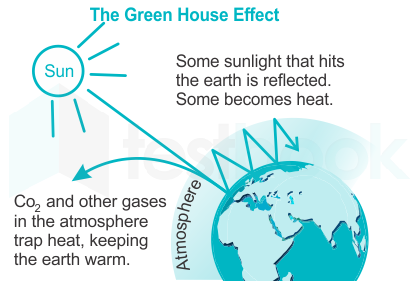
  • Solar energy is trapped by the earth's atmosphere and radiates slowly so as to cover our earth with a warm blanket.
  • This is the natural process of the greenhouse effect on earth to maintain its temperature and makes the earth perfect for life.
  • Carbon di Oxide is a major greenhouse gas.
  • Methane, nitrous oxide, and water vapor, Ozone and CFCs also contribute to the greenhouse effect.
  • The greenhouse effect is beneficial up to some extent because the required heat will not be present on earth in absence of such gases.
  • So, we need it, but the excess presence of greenhouse gases causes global warming.

Emission of Greenhouse Gases

  • Carbon dioxide is major greenhouse gas released due to the burning of fuels.
  • Large amounts of methane are released in paddy fields, coal mines, rotting garbage dumps, and by fossil fuels.
  • Chlorofluorocarbons (CFCs) are man-made industrial chemicals used in air conditioning etc

Conclusion:

Nitrogen is not greenhouse among the given option, hence the correct option.

3

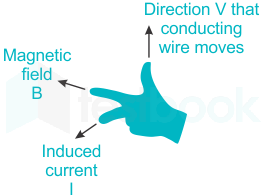
According to Fleming's right-hand rule, the forefinger is pointed in the direction of ________.

  1. ((a))

    Motion of the conductor relative to the magnetic field

  2. ((b))

    Magnetic Field

  3. ((c))

    Induced or Generated current

  4. ((d))

    Force of the conductor 

Show Answer
Answer: ((b))

Magnetic Field

CONCEPT:

  • Fleming's right-hand rule: if we extend the forefinger, middle finger, and the thumb of our right-hand perpendicular to each other as shown in the figure and the thumb pointing toward the conductor's motion and the forefinger pointing towards the magnetic field direction, the middle finger gives us the direction of the induced current flowing in the circuit.

So the correct answer is option 2.

4

According to the census reports of the Indian Census 2011, India’s density of population is:

  1. ((a))

    362 persons/sq.km2

  2. ((b))

    372 persons/sq.km2

  3. ((c))

    392 persons/sq.km2

  4. ((d))

    382 persons/sq.km2

Show Answer
Answer: ((d))

382 persons/sq.km2

The correct answer is 382 persons/sq.km

Key Points

  • ​According to the census reports of the Indian Census 2011, India's density of population is 382 persons/sq.km.
  • The Population Density has increased from 325/sq km in 2001 to 382/sq km in 2011.
  • The population of India is 1,210,854,977 with 623, 724, 248 males and 586,469, 174 females.
  • The Indian Census survey is conducted to gather information from the grass root base which is essential to launch different welfare schemes like Annual Plans, 5 Year Plans, etc. in the country for the privilege of the common man here.
  • The House listing & Housing Census provides extensive information on the status of the human settlements, the housing deficits as well as the different housing necessities to be looked for in formulating the housing welfare policies.
  • The Population Enumeration offers needed Census data about land & its people in the present time.
  • The survey reveals the current population trends and their varied characteristics that are valuable inputs for planning sound programs and policies aimed toward the welfare of India & its people and also for effective public administration.

Important Points The density of Population (per square km) Census Of India 2011:-

States With Highest Density of PopulationBihar (1106 persons/sq km) West Bengal (1028 persons/sq km)
Union Territories With Highest Density of PopulationDelhi (11320 persons/sq km)
States With Lowest Density of PopulationArunachal Pradesh (17 persons/sq km)
Mizoram (52 persons/sq km)
Union Territories With Lowest Density of PopulationAndaman & Nicobar (46 persons/sq km)
5

What is the theme of World Veterinary Day 2025?

  1. ((a))

    One Health, One World

  2. ((b))

    Caring for All Species

  3. ((c))

    Animal Health Takes a Team

  4. ((d))

    Veterinarians at the Frontline

Show Answer
Answer: ((c))

Animal Health Takes a Team

The Correct Answer is Animal Health Takes a Team.

In News

  • World Veterinary Day 2025: 26 April.

Key Points

  • World Veterinary Day is observed on the last Saturday of April every year.
  • In 2025, it falls on April 26.
  • The 2025 theme is “Animal Health Takes a Team.”
  • The first World Veterinary Congress was held in 1863, initiated by Professor John Gamgee.
  • The World Veterinary Association (WVA) was established in 1959.
  • World Veterinary Day was established in the year 2000 by the WVA.
  • The day honors veterinarians’ role in animal health, public well-being, and society.
6

Which of the following is the highest mountain peak of Peninsular India?

  1. ((a))

    Anaimudi

  2. ((b))

    Nilgiri

  3. ((c))

    Amarkantak

  4. ((d))

    Gomanpur

Show Answer
Answer: ((a))

Anaimudi

The correct answer is Anaimudi.

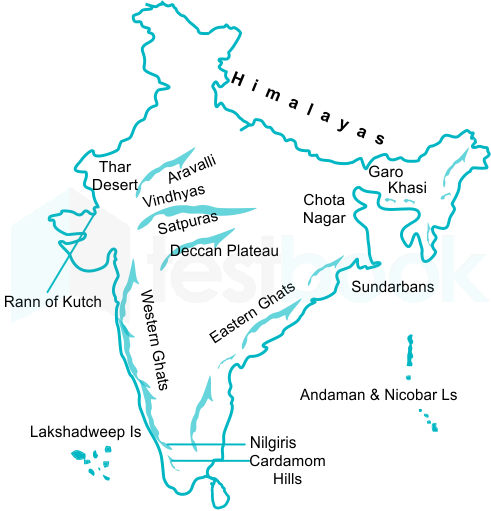
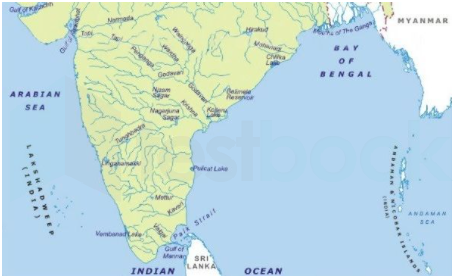
  • The Peninsular India comprises the diverse topological and climatic patterns of South India.
  • Peninsular India can be divided into four regions viz.
  • Central Highlands
  • Deccan Plateau
  • Western Ghats, or Sahayadri
  • Eastern Ghats

Key Points

  • Anai-Mudi is a mountain located in the Indian state of Kerala.
  • Anai-Mudi is the highest peak in the Western Ghats, South India, and also the tallest peak in peninsular India, at an elevation of 2,695 meters (8,842 ft) and a topographic prominence of 2,479 meters (8,133 ft).
  • It lies on the border of Devikulam Taluk, Idukki district and Kothamangalam Taluk, Ernakulam district.
  • The name Anamudi literally translates to 'elephant's head' a reference to the resemblance of the mountain to an elephant's head.
HillElevation
Mahendragiri1,645 m (5,397 ft)
Doddabetta2,637 m (8,652 ft)
Anai-Mudi2,695 m (8,842 ft)


NOTE: Kodaikanal is a city in the hills of the Dindigul district in the state of Tamil Nadu, India.

Hence, from the above-mentioned points, it becomes clear that Anai-Mudi is the highest peak of Peninsular India.

7

Which of the following tribes does NOT live in India?

  1. ((a))

    Gond

  2. ((b))

    Maasai

  3. ((c))

    Santhal

  4. ((d))

    Tharu

Show Answer
Answer: ((b))

Maasai

The correct answer is Maasai

Key Points

  • Maasai is a tribe that predominantly lives in Kenya and Tanzania.
  • They are known for their distinct culture, customs, and dress.
  • Unlike the other tribes listed in the question (Gond, Santhal, Tharu), the Maasai do not have a presence in India.
  • The Maasai people are semi-nomadic and are known for their traditional lifestyle and resistance to modern cultural influences.

Additional Information

  • Gond is one of the largest tribal groups in India, found mainly in Madhya Pradesh, Chhattisgarh, Maharashtra, Odisha, and Andhra Pradesh.
  • Santhal is a prominent tribe in India, primarily residing in Jharkhand, West Bengal, Bihar, and Odisha.
  • Tharu is a tribal community living in the Terai region of Uttarakhand, Uttar Pradesh, and Bihar in India.
  • These tribes (Gond, Santhal, Tharu) contribute to India's rich cultural and ethnic diversity.
8

What number of elements are provided in the modern periodic table?

  1. ((a))

    108

  2. ((b))

    100

  3. ((c))

    94

  4. ((d))

    118

Show Answer
Answer: ((d))

118

The correct answer is 118.

Key Points

  • Modern Periodic Table has 18 Groups and 7 Periods.
  • It has 118 Elements.
  • The periodic table generally displays only the symbol of the element and not its entire name.
  • Each of the tables has a vertical row is called groups.
  • Elements in groups have similar chemical and physical properties because they have the same number of outer electrons.
  • Each of the tables has horizontal rows is called periods. During a period, a gradual change in chemical properties occurs from one element to another.
  • It was given by Dmitri Mendeleev.
  • The Modern Periodic table is used to organize all the known elements.

9

The reign of the ________ dynasty has been described as the golden age of Indian civilization.

  1. ((a))

    Porus

  2. ((b))

    Harsha

  3. ((c))

    Buddha

  4. ((d))

    Gupta

Show Answer
Answer: ((d))

Gupta

The correct answer is Gupta.

  • The reign of the Gupta dynasty has been described as the golden age of Indian civilization.

Key Points

  • In Ancient India, the Gupta Dynasty ruled the middle of the 3rd century (approximately) to 543 AD.
  • The Gupta dynasty period is referred to as the 'Classical Age or Golden Age of Ancient India.
  • Sri Gupta was the founder Gupta dynasty
  • Sri Gupta was followed by his son Ghatokkacha and was followed by his son Chandragupta. Both assumed the title of Maharaja.


Additional Information

Chandragupta I (AD 319-335)

  • He was the first Gupta ruler to assume the title Maharajadhiraja.
  • He started the Gupta era in 319 - 320 AD.
  • He was successful in building a small principality into a great kingdom.
  • He established his authority over Magadha, Saketa, and Prayaga.
  • He issued gold coins.

Samudragupta (AD 335-380)

  • Samudragupta was the son of Chandragupta I and Kumaradevi.
  • The Allahabad inscription describes his bravery as composed by his court poet, Harisena.
  • He defeated nine kings of the Ganges Valley, twelve kings from the southern region, and eighteen forest tribes.
  • He was also called 'Indian Napoleon' by Vincent Smith.
  • He also performed Ashvamedha's sacrifice. Hence, one of his coins refers to him as 'the restorer of Ashvamedha'.
  • He was also called 'Kaviraja' since he composed verses.

Chandragupta II(AD 380-415)

  • Son of Samudragupta and his queen Dattadevi and younger brother of Ramagupta.
  • He was also known as ‘Vikramaditya’.
  • He issued silver coins**.**
  • He further annexed territories including Saurashtra which gave him the western coastline.
  • He also annexed three Satrapa kingdoms and assumed the title Sakari (destroyer of the Sakas).
  • He defeated the Saka king Rudrasimha III thus acquiring Saurashtra and Kathiawar.
  • After East and West India, Chandragupta II defeated northern rulers also like the Hunas, Kambojas, Kiratas, etc.
  • He was a brilliant conqueror and an able administrator as well.
  • His other names (as mentioned in coins) include Vikrama, Devagupta, Devaraja, Simhavikrama, Vikramaditya Sakari, etc.
  • His court had nine jewels or Navaratnas, nine people eminent in various fields of art, literature, and science. This included the great Sanskrit poet Kalidasa, Harisena, Amarasimha (lexicographer), and Dhanvantari (physician).
  • Fa-Hien, a Buddhist from China visited India during his reign.

Kumaragupta (AD 415-455)

  • He founded Nalanda University.
  • He was the worshipper of Lord Kartikeya.

Skandagupta (AD 455-467)

  • Skandagupta was the last great ruler of the Gupta dynasty
  • He repulsed the ferocious Hunas attacks twice.
  • The continuous attack by the Hunas weakened the Gupta economy and the decline of the empire began soon after the death of Skandagupta
10

‘Nuakhai’ is the greatest harvesting festival of Odisha, celebrated one day after of which of the following festivals?

  1. ((a))

    Ganesh Chaturthi

  2. ((b))

    Holi

  3. ((c))

    Dussehra

  4. ((d))

    Diwali

Show Answer
Answer: ((a))

Ganesh Chaturthi

The correct answer is Ganesh Chaturthi.

Key Points

  • Nuakhai is an agricultural festival celebrated by the people of Odisha.
  • It is the greatest harvesting festival of Odisha.
  • It is observed to welcome the new rice of the season.
  • Nua means new and Khai means food i.e. Nuakhai's Hindi meaning is 'new food'.
  • ‘Nuakhai’ festival is celebrated one day after the Ganesh Chaturthi festival.
  • The festival has a big significance for farmers and the agricultural community.
  • The festival is observed on Panchami tithi (the fifth day) of the lunar fortnight of the month of Bhadrapada (August–September) as per the Hindu calendar
  • ‘Nuakhai' is the most important social festival of Western Odisha.
  • It is also celebrated in Southern Chhattisgarh.

Important Points

  • Ganesh Chaturthi is a 10-day long festival marking the birth of the elephant-headed deity Ganesha.
  • It is also called Vinayaka Chaturthi.
  • The festival begins on the fourth day (Chaturthi) of the month of Bhadrapada(the sixth month of the Hindu calendar).
  • Idols of Ganesha are placed on raised platforms in homes or in elaborately decorated outdoor tents as a part of this festival.

Additional Information

  • Holi is a festival of Colors in India celebrating the victory of good over evil, the destruction of the demoness Holika.
  • Dussehra is a festival that celebrates Lord Rama's victory over asura king Ravana as well as the triumph of Goddess Durga over Mahishasur.
  • Diwali is the festival that celebrated India to mark the return of Hindu god Lord Rama to Ayodhya in northern India after he defeated Ravana.
11

Why are the soles of the shoes treaded?

  1. ((a))

    To give the shoes more protection

  2. ((b))

    To decrease friction

  3. ((c))

    To increase friction

  4. ((d))

    To increase life of the shoes

Show Answer
Answer: ((c))

To increase friction

The correct answer is To increase friction.

CONCEPT:

  • Friction: Friction is a contact force when two surfaces interact.
  • Friction, a force that resists the sliding or rolling of one solid object over another.

EXPLANATION:

  • Insoles of the shoes, they are treated to make their surface rough so that the frictional force is increased when they are used.
  • The tyres of the vehicle are also treaded to increase friction and prevent slipping.
  • For example, tires are treaded to reduce the risk of slipping and increase friction during the rainy or wet road, the same case is true for treaded shoes.

Important Points

  • Friction finds application during matchsticks are ignited.
  • The motion of pistons in a cylinder is an application of friction.
  • It is possible to write on books and board because there is friction between the pen and the board.
12

In the Indian Constitution the concept of 'equality before law' is borrowed from the ______ constitution.

  1. ((a))

    British

  2. ((b))

    Canadian

  3. ((c))

    US

  4. ((d))

    Irish

Show Answer
Answer: ((a))

British

The correct answer is British.

 Key Points

  • Equality before law:-
  • The concept of 'equality before law' in the Indian constitution is borrowed from the British constitution.
  • The principle of equality before law means that everyone, regardless of their status, wealth, religion, or caste, is equal before the law and subject to the same laws and penalties.

Additional Information

  • Canadian constitution:-
  • The Canadian constitution has its own unique provisions on equality, including the Charter of Rights and Freedoms, which guarantees equal protection and benefit of the law without discrimination based on race, national or ethnic origin, colour, religion, sex, age, or mental or physical disability.
  • US constitution:-
  • The US constitution also has provisions on equality, including the Fourteenth Amendment, which guarantees equal protection of the laws to all citizens and prohibits discrimination based on race, color, or national origin.
  • Irish constitution:-
  • The Irish constitution also has provisions on equality, including the principle of equal treatment under the law and the prohibition of discrimination based on age, disability, gender, race, or sexual orientation.
13

When do we celebrate National Press Day in India? 

  1. ((a))

    16 November 

  2. ((b))

    16 February 

  3. ((c))

    16 January 

  4. ((d))

    16 December 

Show Answer
Answer: ((a))

16 November 

The correct answer is 16 November. 

Key Points

  • National Press Day is observed on the 16th of November.
  • This was the day on which the Press Council of India started functioning as a moral watchdog.

Additional Information

  • PCI (Press Council of India)
  • It started functioning on 16 November 1966.
  • It is a statutory, self-regulatory and autonomous body formed to regulate the media in India.
  • It works under the Press Council Act 1978.
  • The structure of PCI consists of a chairman and a 28-member committee with a variety of representatives from journalists, News agencies, Media managers and Members of Parliament.
  • The committee is headed by a chairman who is usually a retired Supreme court judge selected by a 3-member committee(Speaker of LS, Chairman of RS, a member of PCI.)
  • The first chairman of PCI: Justice J R Mudholkar
  • Chairman PCI: Ranjana Prakash Desai (2022)
  • Union Minister of Information and Broadcasting: Anurag Thakur
14

The Nagi and Nakti Sanctuaries, recently designated as international wetlands, are located in which district of Bihar?

  1. ((a))

    Patna

  2. ((b))

    Bhagalpur

  3. ((c))

    Jamui

  4. ((d))

    Muzaffarpur

Show Answer
Answer: ((c))

Jamui

The correct answer is Jamui

In News

  • Nagi and Nakti Sanctuaries in Bihar became International Wetlands on World Environment Day.

Key Points

  • Geographical Location: Nagi and Nakti Sanctuaries are situated in Jamui district, within the Jhajha forest range of Bihar.
  • Significance of Location: This district location is essential as it situates the sanctuaries within a specific ecological and administrative region conducive to their preservation and international recognition.
  • Impact of the Designation: Being declared as sites under the Ramsar Convention, these sanctuaries gain international attention, which helps in their conservation efforts and attracts more environmental research and eco-tourism.
  • Ecological Importance: These sanctuaries are man-made reservoirs that play a critical role in biodiversity conservation, especially as a wintering haven for migratory birds like the red-crested pochard.
  • Conservation Efforts: The international designation will likely bring better management practices, funding, and global conservation guidelines, enhancing the ecological balance of the area.
  • Cultural and Environmental Impact: Recognizing the sanctuaries' international status elevates the local and national importance, promoting regional pride and increased environmental awareness.
  • Support for Biodiversity: The designation supports the broader goal of biodiversity conservation in the Indo-Gangetic plain, contributing to the sustainable management of natural resources.

Additional Information

  • Ramsar Sites in India are the wetland sites listed under the Ramsar Convention on Wetlands of International Importance.
  • The Ramsar Convention, signed in 1971 at Ramsar, Iran, includes India as one of its Contracting Parties. On February 1, 1982, India signed it.
  • Twenty-six sites were added to the list of Ramsar sites between 1982 and 2013; however, from 2014 to 2022, the nation added 49 more wetlands.
  • Twenty-eight sites have been designated Ramsar sites in 2022.
  • India added 11 more wetlands to the list of Ramsar sites in August 2022, covering an area of 13,26,677 ha in the country in the 75th year of Independence.
15

Which one of the following reactions is a combination reaction?

  1. ((a))

    Mg(s) + Cl2(g) → MgCl2(s)

  2. ((b))

    HCl(aq) + NaOH(aq) → NaCl(s) + H2O(aq)

  3. ((c))

    CusO4(aq) + Fe(s) → FeSO4(aq)+Cu(s)

  4. ((d))

    None of these

Show Answer
Answer: ((a))

Mg(s) + Cl2(g) → MgCl2(s)

The correct answer is Mg(s) + Cl2(g) → Mgcl2(s).

Key Points

  • Magnesium (Mg) combines with chlorine (Cl2) to form a new product as magnesium chloride (Mgcl2). Therefore its a combination reaction and the balanced equation can be written as:
  • Mg(s) + Cl2(g) → **Mgcl2(s)**​

Additional Information

  • A combination reaction is a reaction where two or more elements or compounds combine to form a single compound. Such reactions are represented by equations of the following form: X + Y → XY.
  • The combination of two or more elements to form one compound is called a combination reaction.
  • Other types of Chemical Reactions:
  • Decomposition reaction: The opposite of a combination reaction, a complex molecule breaks down to make simpler ones. Such reactions are represented by equations of the following form: AB → A + B.
  • Precipitation reaction: Two solutions of soluble salts are mixed resulting in an insoluble solid (precipitate) forming. Such reactions are represented by equations of the following form: A + Soluble salt B  → Precipitate + soluble salt C.
  • Neutralization reaction: An acid and a base react with each other. Generally, the product of this reaction is a salt and water. Such reactions are represented by equations of the following form: Acid + Base → Salt + Water.
  • Combustion reaction: Oxygen combines with a compound to form carbon dioxide and water. These reactions are exothermic, meaning they give off heat. Such reactions are represented by equations of the following form: A + O2 → H2O + CO2.
  • Displacement reaction: One element takes place with another element in the compound. Such reactions are represented by equations of the following form: A + BC → AC + B.
16

Chemical formula of plaster of paris:

  1. ((a))

    CaSO4

  2. ((b))

    CaSO4.2H2O

  3. ((c))

    CaSO4.1/2 H2O

  4. ((d))

    CaSO4.H2O

Show Answer
Answer: ((c))

CaSO4.1/2 H2O

The correct answer is CaSO4.1/2 H2O.

​EXPLANATION:

  • Plaster of Paris (POP) is a quick-setting gypsum plaster consisting of a fine white powder (calcium sulfate hemihydrate), which hardens when moistened and allowed to dry.
  • It is also known as the Plaster of Paris because for the preparation of POP, the abundant gypsum was first found near the capital city of France i.e. Paris.
  • The chemical formula of the Plaster of Paris is CaSO4.(\frac{1}{2}) H2O. Therefore option 3 is correct.
  • Application of Plaster of Paris is as follows
  1. It is used as a building material as a protective coating on walls and ceilings.
  2. It is used as a moulding and vesting agent for decorative elements.
  3. It is also used for aesthetic touch to the construction elements.
  4. It is also used as plaster in orthopaedics and as a filling material by dentists, etc.

Mistake Points

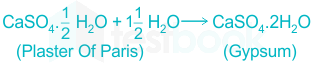
5. What happens when Plaster of paris came in contact with m ? | Scholr™

(\begin{array}{{20}{c}} {CaS{O_{4.}} + \frac{1}{2}{H_2}O + 1\frac{1}{2}{H_2}O}\ {\left( {Plaster,Of,Paris} \right)} \end{array} \to \begin{array}{{20}{c}} {CaS{O_4}.2{H_2}O}\ {\left( {Gypsum} \right)} \end{array})

  • Gypsum is an ore of Calcium (Ca). The chemical formula of Gypsum is CaSO4. 2H2O.
  • Gypsum is mainly used as a fertilizer, as the main constituent in plaster, chalk, etc.
  • The plaster of Paris on mixing with water produces gypsum.
  • Calcium Sulphate Hemihydrate (CaSO4·1/2 H2O) on hydration leads to the crystallization of gypsum calcium sulphate dihydrate (CaSO4·2H2O).
17

Five types of gold coins were issued by Skandagupta. Which among the following is not one of those type?

  1. ((a))

    Archer type

  2. ((b))

    Horseman type

  3. ((c))

    King and Queen type

  4. ((d))

    Bull type

Show Answer
Answer: ((d))

Bull type

The correct answer is Bull type.

Key Points

  • Five types of gold coins issued by Skandagupta are Archer type, Horseman type, King and queen type, Lion-slayer type and Chhatra type.
  • Also, Skandagupta issued 4 types of silver coins Altar type, Garuda type, Madhyadesha type and Bull type.

Bull type is a type of silver coin issued by Skandagupta.

It is not a type of Gold coin.

So bull type will be the correct answer.

Additional Information

  • Skandagupta
  • He was a ruler of the Gupta dynasty.
  • His period was from 455 AD to 467 AD.
  • He defeated Hunas.
  • He restored the Gupta empire from his enemies.
  • He composed the Bhitari Inscription which was written in 19 lines that describe the ancestors of Skandagupta, about himself and his achievements.
  • The Bhitakari Inscription also mentions the Skandagupta's conflict with Pushyamitra.
18

When was the order dividing the province of Bengal into two parts issued by Lord Curzon? 

  1. ((a))

    1903

  2. ((b))

    1905

  3. ((c))

    1907

  4. ((d))

    1900

Show Answer
Answer: ((b))

1905

The correct answer is 1905.

Key Points

  • On 20 July 1905, Lord Curzon issued an order dividing the province of Bengal into two parts-
  • Eastern Bengal
  • Assam
  • The Eastern part of Bengal has the majority of the Muslim population and the western part of Bengal has the majority of the Hindu population while the central region comprised of both religions.
  • ​At that time Bengal was the biggest province of British India and included Bihar and parts of Orissa.
  • The British argued for dividing Bengal for reasons of administrative convenience . However, it was closely tied to the interests of British officials and businessmen.
  • River Bhagirathi served as a physical partitioner between East Bengal and West Bengal.

Additional Information

  • All sections of the Congress – the Moderates and the Radicals opposed the partition.
  • Large public meetings and demonstrations were organised.
  • It also introduced the Swadeshi Movement in India.
  • The Swadeshi movement sought to oppose British rule and encourage the ideas of self-help, swadeshi enterprise, national education, and use of Indian languages. To fight for swaraj, the radicals advocated mass mobilisation and boycott of British institutions and goods.
  • During protesting and parading in the streets by people by Bengal against partition, Rabindranath Tagore's "Amar sonar Bangla" song was sung by them. Later this song was adopted as the National anthem by Bangladesh.
  • Owing to mass political protests, the Bengal partition was annulled in 1911.
19

Which of the following is an example of an ionic compound?

  1. ((a))

    Turmeric

  2. ((b))

    Table salt

  3. ((c))

    Sugar

  4. ((d))

    Glucose

Show Answer
Answer: ((b))

Table salt

The correct answer is Table salt.

Key Points

  • Table salt, also known as sodium chloride, is a classic example of an ionic compound.
  • Ionic compounds are formed by the transfer of electrons from one atom to another, resulting in the formation of positive and negative ions.
  • In the case of table salt, sodium (Na) loses one electron to become a positively charged sodium ion (Na+).
  • Chlorine (Cl) gains this electron to become a negatively charged chloride ion (Cl-).
  • The opposite charges of the ions create a strong electrostatic force of attraction, known as an ionic bond.
  • Table salt is highly soluble in water and has a characteristic crystalline structure.
  • Common uses of table salt include seasoning food and as a preservative.

 Additional Information

  • Turmeric
  • Turmeric is a spice derived from the rhizome of the plant Curcuma longa.
  • It contains a compound called curcumin, which has anti-inflammatory and antioxidant properties.
  • Turmeric is commonly used in cooking, particularly in Indian cuisine, and in traditional medicine.
  • Sugar
  • Sugar, specifically sucrose, is a disaccharide composed of glucose and fructose.
  • Sugar is a covalent compound, not an ionic compound.
  • It is widely used as a sweetener in food and beverages.
  • Glucose
  • Glucose is a simple sugar and an important energy source in living organisms.
  • It is a monosaccharide with the molecular formula C6H12O6.
  • Glucose is also a covalent compound, not ionic.
20

Which of the following human diseases is caused by bacteria?

  1. ((a))

    Hepatitis A

  2. ((b))

    Typhoid

  3. ((c))

    Measles

  4. ((d))

    Polio

Show Answer
Answer: ((b))

Typhoid

The correct answer is Typhoid.

Key Points

  • Typhoid is a bacterial infection that can lead to a high fever, diarrhea, and vomiting and can be fatal.
  • It is caused by the bacteria Salmonella typhi.
  • Typhoid fever is a type of enteric fever, along with paratyphoid fever
  • The infection is often passed on through contaminated food and drinking water.
  • It is more prevalent in places where handwashing is less frequent.
  • Typhoid fever is uncommon in the UK, with an estimated 500 cases occurring each year.
  • Two typhoid vaccines are licensed for use for the prevention of typhoid: 
  • Oral Ty21a vaccine  and the injectable typhoid polysaccharide vaccine

​ Additional Information

  • Bacteria are found even inside the human body, on our skin, in our hairs, and on all other surfaces.
  • Bacteria inside our gut or stomach are good bacteria and we must have them to lead a healthy life.

List of Bacterial Diseases in Humans

Human Bacterial DiseasesBacteria Responsible
Pulmonary TuberculosisMycobacterium tuberculosis
CholeraVibrio cholerae
PlagueYersinia pestis
LeprosyMycobacterium leprae


  • Hepatitis A : 
  • Hepatitis A is an inflammation of the liver caused by the hepatitis A virus (HAV).
  • The virus is primarily spread when an uninfected person ingests food or water that is contaminated with the feces of an infected person.
  • Measles :
  • Measles is caused by morbillivirus, which is mostly seen in the winter and spring.
  • It is a highly contagious illness caused by a virus that replicates in the nose and throat of an infected child or adult.
  • it is spread through airborne droplets from an infected child.
  • Polio :
  • Polio is a disease caused by the poliovirus.
  • ​The virus enters the body through the mouth or nose, getting into the digestive and respiratory systems.
  • It multiplies in the throat and intestines.
  • It can also attack the nervous system, the nerve network that helps the brain communicate with the rest of the body.
  • It happens mostly in children younger than 5.
  • The World Health Organization (WHO) continues to work to eliminate polio.
21

World's first successful vaccine was created for which disease?

  1. ((a))

    Diphtheria

  2. ((b))

    Rabies

  3. ((c))

    Influenza

  4. ((d))

    Smallpox

Show Answer
Answer: ((d))

Smallpox

The correct answer is Smallpox.

Key Points

  • The world's first successful vaccine was developed by Edward Jenner in 1796 to combat smallpox.
  • Edward Jenner used material from cowpox pustules to create immunity against smallpox, leading to the term "vaccination".
  • Smallpox was a highly contagious and deadly disease, causing millions of deaths globally before the vaccine's discovery.
  • The vaccine's development marked the beginning of modern immunology and paved the way for the eradication of smallpox in 1980, as declared by the World Health Organization (WHO).
  • This historic breakthrough demonstrated the potential of vaccines in preventing infectious diseases and saving lives.

Additional Information

  • Smallpox Disease:
  • Smallpox is caused by the Variola virus, which belongs to the Poxviridae family.
  • It manifests as fever, fatigue, and a distinctive rash that progresses to pustules and scabs.
  • The disease had a high mortality rate and no specific treatment before the vaccine.
  • It was transmitted through respiratory droplets or contact with contaminated objects.
  • Edward Jenner’s Contribution:
  • Edward Jenner is known as the "Father of Immunology".
  • His pioneering work involved inoculating a young boy with cowpox material and later exposing him to smallpox, proving immunity.
  • Jenner's approach laid the foundation for the scientific method in vaccine development.
  • Global Eradication of Smallpox:
  • The smallpox eradication campaign led by WHO began in 1967 and achieved global eradication by 1980.
  • Vaccination programs worldwide played a critical role in eliminating the disease.
  • The eradication of smallpox remains one of the greatest public health achievements.
  • Modern Vaccines:
  • Modern vaccines are developed using advanced technologies such as recombinant DNA and mRNA platforms.
  • Vaccines continue to protect against numerous diseases, including polio, measles, influenza, and COVID-19.
  • The success of the smallpox vaccine highlights the importance of vaccination in global health initiatives.
22

Which hormone regulates carbohydrate, protein and fat metabolism in the body and iodine is essential for the synthesis of it?

  1. ((a))

    Testosterone hormone

  2. ((b))

    Insulin hormone

  3. ((c))

    Adrenaline hormone

  4. ((d))

    Thyroxin hormone

Show Answer
Answer: ((d))

Thyroxin hormone

The correct answer is Thyroxin hormone.

Key Points

  • Thyroxin hormone is crucial for regulating the body’s metabolic processes, including carbohydrate, protein, and fat metabolism.
  • Iodine is essential for the synthesis of thyroxin, and its deficiency can lead to thyroid-related disorders.
  • The thyroid gland absorbs iodine from the bloodstream to produce thyroxin.
  • Thyroxin, also known as T4, plays a critical role in growth, development, and metabolic activities.
  • A balanced level of thyroxin is necessary for maintaining overall health and homeostasis.

Additional Information

  • Thyroid Gland
  • The thyroid gland is located in the neck and is responsible for producing hormones that regulate metabolism.
  • It produces two primary hormones: thyroxin (T4) and triiodothyronine (T3).
  • The secretion of thyroid hormones is regulated by the Thyroid Stimulating Hormone (TSH) produced by the pituitary gland.
  • Iodine
  • Iodine is a trace element that is crucial for the synthesis of thyroid hormones.
  • It is commonly obtained from dietary sources such as iodized salt, seafood, and dairy products.
  • Iodine deficiency can lead to goiter and hypothyroidism.
  • Metabolism
  • Metabolism refers to the chemical processes that occur within a living organism to maintain life.
  • It includes catabolic processes that break down molecules to produce energy and anabolic processes that build up molecules.
  • Thyroid hormones play a pivotal role in regulating basal metabolic rate (BMR).
  • Hypothyroidism and Hyperthyroidism
  • Hypothyroidism is a condition where the thyroid gland does not produce enough thyroid hormones, leading to symptoms such as fatigue, weight gain, and depression.
  • Hyperthyroidism is the overproduction of thyroid hormones, resulting in symptoms like weight loss, rapid heartbeat, and anxiety.
  • Both conditions require medical intervention to restore hormonal balance.
23

What new sport will debut at the 2026 Asian Games?

  1. ((a))

    Baseball

  2. ((b))

    Mixed Martial Arts (MMA)

  3. ((c))

    Surfing

  4. ((d))

    Skateboarding

Show Answer
Answer: ((b))

Mixed Martial Arts (MMA)

The Correct Answer is Mixed Martial Arts (MMA).

In News

  • Cricket retained, MMA to debut at Asian Games 2026.

Key Points

  • Cricket is retained for the Asian Games 2026.
  • Mixed Martial Arts (MMA) will debut at the 2026 Asian Games.
  • The 2026 Asian Games will be held in Aichi and Nagoya, Japan.
  • Dates: September 19 to October 4, 2026.
  • Cricket first appeared in the Asian Games in Guangzhou 2010.
  • It was also played in Incheon 2014, but those matches had no international status.
  • At the 2023 Asian Games in Hangzhou, cricket matches were given international status by the ICC.
  • 2026 will mark the fourth appearance of cricket in the Asian Games.
24

Which of the following properties of water can be used to explain the spherical shape of rain droplets?

  1. ((a))

    Surface tension

  2. ((b))

    Critical phenomenon

  3. ((c))

    Viscosity

  4. ((d))

    Pressure

Show Answer
Answer: ((a))

Surface tension

Explanation:

Surface tension: 

  • Surface tension is the property by virtue of which liquid tries to minimize its free surface area.
  • In a spherical shape, the surface area is minimum and for this reason, the raindrops are spherical.
  • Surface tension is measured as the force acting per unit length of an imaginary line drawn on the liquid surface.

(Surface;tension = \frac{{Force}}{{length}})

Two factors can affect the surface tension of a liquid. The factors are-


  • Temperature: If temperature increases then the surface tension of a liquid decreases.
  • Soluble Impurities: In the case of less soluble impurities, the surface tension decreases. But, for highly soluble impurities in the liquid the surface tension increases.

Additional Information

  • Surface tension is the result of the unbalanced cohesive forces among the liquid molecules, which always tries to make the surface area of the liquid droplet minimum.
  • Hence due to exertion of surface tension by the molecules, water droplets always take a round shape whenever they are allowed to move freely, and thus because of this we see a nearly spherical drop of rain.

Raindrops are spherical in shape because each drop tends to acquire minimum surface area due to surface tension, and for a given volume, the surface area of the sphere is minimum.

25

Electrochemical cell is a device which converts chemical energy into electrical energy in a/an _______.

  1. ((a))

    direct redox reaction

  2. ((b))

    indirect redox reaction

  3. ((c))

    oxidation reaction

  4. ((d))

    reduction reaction

Show Answer
Answer: ((b))

indirect redox reaction

The correct answer is indirect redox reaction

Key Points

  • An electrochemical cell is a device that converts chemical energy into electrical energy through an indirect redox reaction.
  • In an electrochemical cell, oxidation and reduction reactions occur in separate compartments, allowing the transfer of electrons through an external circuit.
  • This separation of reactions helps in generating a potential difference that drives the flow of electrons, thus producing electrical energy.
  • Examples of electrochemical cells include galvanic cells and batteries, which are widely used in various applications for power supply.

Additional Information

  • Redox reactions involve the transfer of electrons between two species; oxidation refers to the loss of electrons, while reduction refers to the gain of electrons.
  • In a galvanic cell, the anode is the site of oxidation, and the cathode is the site of reduction.
  • The electrolyte in the cell facilitates the flow of ions, maintaining the charge balance as electrons move through the external circuit.
  • Electrochemical cells are fundamental to the operation of batteries, fuel cells, and various types of sensors.
26

Which soil, ideal for growing cotton, made up of lava flows, is also made up of extremely fine i.e., clayey material and it develops deep cracks during hot weather?

  1. ((a))

    Laterite soil

  2. ((b))

    Arid soil

  3. ((c))

    Black soil

  4. ((d))

    Alluvial soil

Show Answer
Answer: ((c))

Black soil

The correct answer is Black soil.

Key Points

  • Black soil ideal for growing cotton, made up of lava flows, is also made up of extremely fine i.e., clayey material and it develops deep cracks during hot weather.
  • Regur Soil or Black soil:
  • It is typical of the Deccan trap region spread over the northwest Deccan plateau and is made up of lava flows.
  • Regur soil or black soil is ideal for growing cotton and is known as black cotton soil.
  • The soil is rich in soil nutrients, such as magnesium, calcium carbonate, potash, and lime.
  • The black soils are generally poor in phosphoric contents.
  • The black or regur soils are made up of clayey soil, well-known for their capacity to hold moisture.
  • They swell and become sticky when wet and shrink when dried. So, during the dry season, this soil develops wide cracks. Thus, there occurs a kind of 'self ploughing'.
  • The colour of the soil ranges from deep black to grey.
  • Black soils are derivatives of trap lava and are spread mostly across interior Gujarat, Maharashtra, Karnataka, and Madhya Pradesh on the Deccan lava plateau and the Malwa plateau.

Additional Information

Type
of Soil
Characteristics
Alluvial
Soil
- It is rich in lime potash, poor inphosphorus, and humus. - Found in states of Punjab,Haryana, Uttar Pradesh, Madhya Pradesh, Bihar, and West Bengal.
Laterite
Soil
- It is rich in iron, poor in lime, phosphorus, calcium, and nitrogen. - It is formed by the leaching of laterite rocks. - It is found in the states of Andhra Pradesh, Tamil Nadu, West Bengal, and Odisha.
Arid
Soil
- They are the soils of desert or semi-desert regions and colour varies from red to brown. - It is found in the states of Rajasthan, Haryana, and Punjab.
27

Doddabetta is the highest peak of Nilgiri hills. Where is the Nilgiri Hills situated?

  1. ((a))

    Maharashtra 

  2. ((b))

    Tamil Nadu

  3. ((c))

    Andhra Pradesh

  4. ((d))

    Goa

Show Answer
Answer: ((b))

Tamil Nadu

The correct answer is Tamil Nadu.

Key Points

  • Nilgiri Hills are situated in Tamil Nadu.
  • Doddabetta is the highest peak of the Nilgiri hills.
  • Nilgiri hills are a part of the Western Ghats.
  • The hills are located at the tri-junction of the states Karnataka, Kerela, and Tamil Nadu.
  • These mountains are named after the Neelakurunji flowers (purplish-blue flowers) found in the Shola forests of Nilgiri hills.
  • Nilgiri Hills are known as the Blue Mountains.

Additional Information

  • The vegetation ranges from the Evergreen forests to the Shola Grasslands and thorny bushes.
  • It is the habitat of the endangered species, the Nilgiri Tahr.
  • Todas, Kurumbas, Paniyas and Adiyans are the tribes living here.
  • The Mudumalai and Waynad wildlife sanctuaries, Bandipore National park, Nagarhole national park, Mukurthi national park, and Silent valley national park are a part of Nilgiri Biosphere Reserve.
  • Bhavani, Moyar, Kabini, Chaliyar, and Punampuzha rivers drain these mountains.
28

Which is one of the distinct features of the peninsular plateau?

  1. ((a))

    Black soil area

  2. ((b))

    Laterite soil area

  3. ((c))

    Red soil area

  4. ((d))

    Alluvial soil area

Show Answer
Answer: ((a))

Black soil area

The correct answer is Black soil area.

Important Points

  • The black soil area is one of the distinct features of the peninsular plateau.
  • Black soil is also called lava soil or regur soil.
  • Black soil (Black Cotton Soil) is rich in calcium, potassium, and magnesium but has poor nitrogen content.
  • Black soil is extremely fine and clayey and has the capacity to hold a lot of moisture.

Important Points

  • Laterite is soil rich in iron and aluminium.
  • Laterite soil is commonly considered to have formed in hot and wet tropical areas.
  • Red soil is the Second-largest soil group in India.
  • Alluvial soil (the most fertile) is widespread in the northern plains and river valleys.

Additional Information

  • Black soil is mainly concentrated over
  • Parts of Maharashtra
  • Madhya Pradesh
  • Gujarat
  • Andhra Pradesh
  • Karnataka
  • Rajasthan
  • Uttar Pradesh
  • Certain parts of Tamil Nadu.
29

Rainfall occurring in hot weather known as 'Mango Shower' in

  1. ((a))

    Rajasthan

  2. ((b))

    Kerala

  3. ((c))

    Assam

  4. ((d))

    West Bengal

Show Answer
Answer: ((b))

Kerala

The correct answer is Kerala.

Key Points

  • The monsoon type of climate is characterized by a distinct seasonal pattern over the country. By early June, the low-pressure condition over the northern plains intensified. There are three phases of monsoon showers over the continent, Pre-monsoon shower, Monsoon rainfall, and post-monsoonal rainfall.
  • Mango Shower is Pre Monsoon rainfall.
  • Rainfall occurring in hot weather known as 'Mango Shower' in Kerala.

Additional Information 

  • Pre-monsoon rainfall:
  • South India:
  • In the south, thunderstorms occur in Kerala and adjoining parts of Karnataka and Tamil Nadu, particularly in the evenings and nights.
  • These pre-monsoonal showers are called by various names:
  • Tea showers in Assam ( they are good for tea, jute, and rice)
  • Mango showers in Kerala and the coastal areas of Karnataka help in the early ripening of mangoes.
  • Cherry Blossoms/ Coffee showers in Kerala and nearby areas (good for coffee plantations)
  • Towards the close of the summer season, pre-monsoon showers are common especially, in Kerala and Karnataka.
  • They help in the early ripening of mangoes and are often referred to as ‘mango showers’

Important Points 

North India:

  • Occasionally, the moisture-laden winds are attracted towards the periphery of the trough.
  • A sudden contact between dry and moist air masses gives rise to local storms of great intensity.
  • These local storms are associated with violent winds, torrential rains, and even hailstorms.
  • The thunderstorms which originate over the Chotanagpur plateau are carried eastwards by westerly winds.
  • The areas with the highest incidence of thunderstorms are the north-eastern states, West Bengal, and the adjoining areas of Orissa and Jharkhand.
  • In West Bengal and the adjoining areas of Assam, Orissa, and Jharkhand, the direction of squalls is mainly from the northwest and they are called Norwesters (Squall – a sudden, violent gusty wind).
  • The rainfall brought by northwestern is called spring storm showers.
  • These are often very violent with squall speeds of 60-80km/hour.
  • Large-sized hailstones sometimes accompany these showers and harm the animals and standing crops.
  • The period of maximum occurrence of these storms is the month of Baisakh.
  • These are thus locally called ‘Kal Baisakh (a calamity of the month of Baisakh)’.
  • In Assam, these storms are known as “Bardoli Chheerha or Bordochila”.
30

Which part of the Constitution, has the provisions for Panchayati Raj System?

  1. ((a))

    Part IX

  2. ((b))

    Part VI

  3. ((c))

    Part III

  4. ((d))

    Part IV (a)

Show Answer
Answer: ((a))

Part IX

The correct answer is IX

Key Points

  • The provisions related to the Panchyati Raj System is mentioned in Part IX of the Indian constitution.
  • Part IX contains provisions relating to Panchayati Raj up to Articles 243-243O under the title 'Panchayats'.
  • This part is added by the 73rd Constitutional Amendment Act 1992.
  • The 11th Schedule and the list of 29 subjects were added to the Constitution by the 73rd Constitutional Amendment.
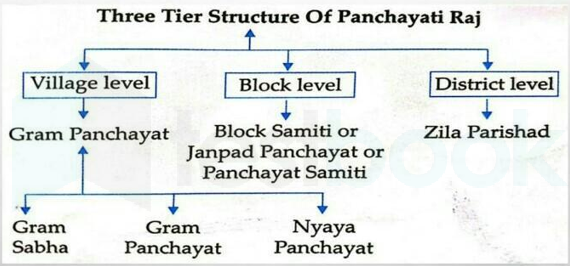
  • The purpose of the Act is to provide a three-tier system of Panchayati Raj, including:
  • Village-level - Gram Panchayat
  • Block-level - Janpad Panchayat
  • District-level - Zila Parishad

Important Points

  • India implemented the Community Development Program- CDP on October 2, 1952, on the eve of Gandhi Jayanti.
  • The National Extension Service was also started in the year 1953 to support the Community Development Program.
  • But both this program could not play an important role.
  • After independence, in 1957, the Balwant Rai Mehta Committee was formed by the Planning Commission to study the reasons for the failure of the Community Development Program and the National Extension Service Program.
  • In November 1957, the committee submitted its report, which suggested the implementation of the three-tier Panchayati Raj system - village level, intermediate level, and district level.
  • The National Development Council accepted the recommendations of the Balwant Rai Mehta Committee in the year 1958.
  • The first three-tier panchayat of the country was inaugurated by the then Prime Minister Jawaharlal Nehru in Nagaur, Rajasthan on October 2, 1959.
  • Committees related to Panchayati Raj System:
  • Balwant Rai Mehta Committee (1957)
  • Ashok Mehta Committee (1977)
  • G. V. K. Rao Committee (1985)
  • L M Singhvi Committee (1986)
  • Sarkaria Commission on Center-State Relations (1988)
  • PK Thungan Committee (1989)
  • Harlal Singh Kharra Committee (1990)
  • Ashok Mehta Committee recommended the two-tier system of Panchayati Raj.
  • Zila Parishad
  • Mandal Panchayat
  • LM Singhvi Committee recommended providing constitutional status to Panchyati Raj institutions.
31

What is a shape of energy of pyramid in an ecosystem?

  1. ((a))

    Always upside down

  2. ((b))

    Always straight

  3. ((c))

    First straight then reverse

  4. ((d))

    3 dimension

Show Answer
Answer: ((b))

Always straight

The correct answer is Always straight.

Key Points 

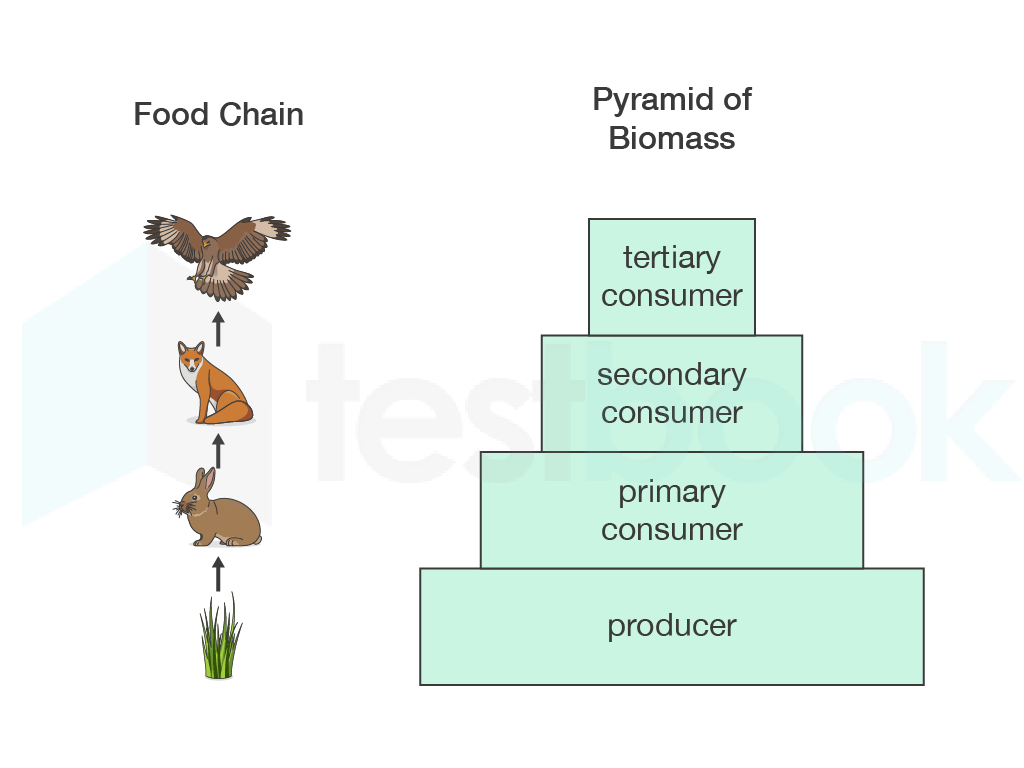
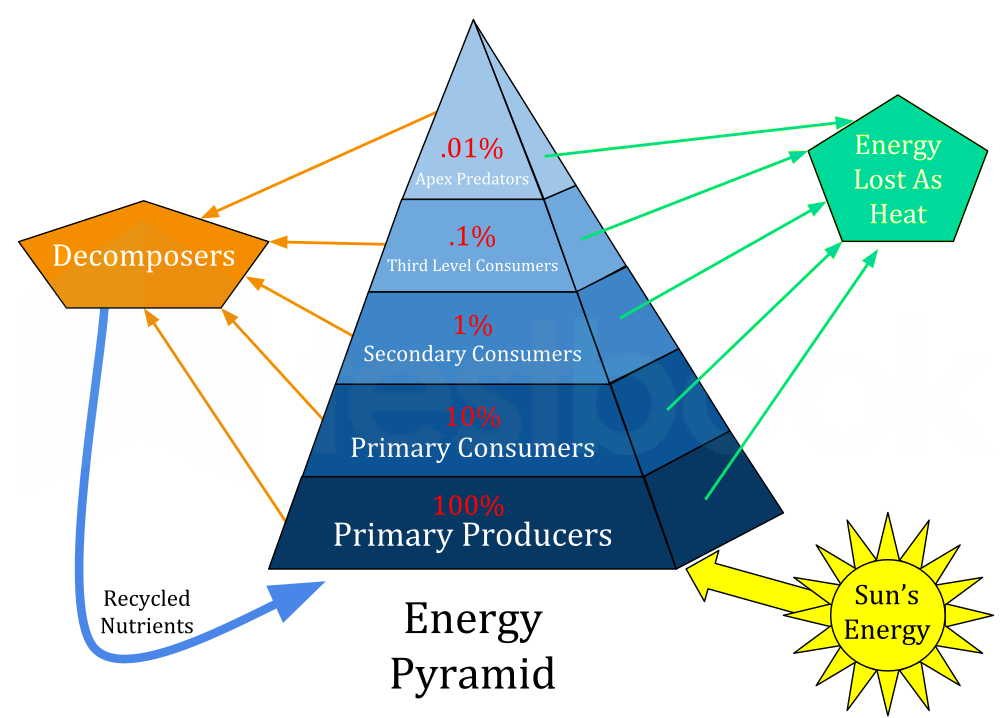
  • In most ecosystems, all the pyramids, of the number, energy, and biomass are upright or straight, i.e. producers are more in number and biomass than herbivores, and herbivores are more in number and biomass than carnivores.
  • Also, energy at a lower trophic level is always more than at a higher level.
  • However, there are exceptions to this generalization
  • The pyramid of biomass in the sea is generally inverted because the biomass of fish far exceeds that of phytoplankton.

  • A pyramid of energy is always upright, and can never be inverted, because when energy flows from a particular trophic level to the next trophic level, some energy is always lost as heat at each step.
  • Each bar in the energy pyramid indicates the amount of energy present at each trophic level at a given time or annually per unit area.

32

Pellagra is a deficiency disease that usually occurs due to lack of which of the following nutrients?

  1. ((a))

    Vitamin E

  2. ((b))

    Niacin

  3. ((c))

    Iodine

  4. ((d))

    Riboflavin

Show Answer
Answer: ((b))

Niacin

The correct answer is Niacin.

Key Points

  • Pellagra is a deficiency disease caused by a lack of Niacin (Vitamin B3) in the diet.
  • Niacin is essential for the body as it helps in the metabolism of carbohydrates, fats, and proteins.
  • Deficiency of Niacin can lead to the "three Ds" - Dermatitis, Diarrhea, and Dementia, and if left untreated, can be fatal.
  • Niacin can be obtained from foods such as meat, fish, poultry, and whole grains.
  • It plays a crucial role in the body's production of energy and in the maintenance of healthy skin and nerves.

 Additional Information

  • Vitamin E
  • Vitamin E is a powerful antioxidant that helps protect cells from damage.
  • It is essential for immune function, skin health, and eye health.
  • Rich sources include nuts, seeds, and green leafy vegetables.
  • Iodine
  • Iodine is crucial for the production of thyroid hormones which regulate metabolism.
  • A deficiency can lead to goiter and hypothyroidism.
  • Sources include iodized salt, seafood, and dairy products.
  • Riboflavin
  • Riboflavin (Vitamin B2) is important for energy production and the metabolism of fats, drugs, and steroids.
  • Deficiency can cause mouth sores, sore throat, and skin disorders.
  • Found in eggs, milk, green vegetables, and fortified cereals.
33

Gametes formation takes place through which process?

  1. ((a))

    Fission

  2. ((b))

    Meiosis

  3. ((c))

    Mitosis

  4. ((d))

    Amitosis

Show Answer
Answer: ((b))

Meiosis

The correct answer is Meiosis.

Key Points

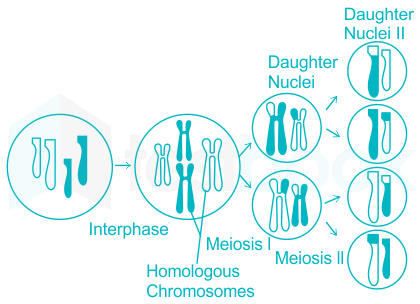
  • Meiosis is a type of cell division in which a single cell divides two times to produce 4 daughter cells.
  • Meiosis is also called reductional division as the number of chromosomes gets reduced to half after the process.
  • Meiosis occurs in sex cells and results in the formation of Haploid Gametes (cell that contains a single set of chromosomes).
  • 1 male sex cell divides meiotically to produce 4 male gametes, and all of them are functional.
  • Whereas 1 female sex cell divides meiotically to produce 4 female gametes (eggs).
  • ​In plants 3 of these gametes degenerate and only one remains functional.
  • Zygote is formed by the fusion of male and female gametes, this process is known as Syngamy.

34

Who is the author of the novel 'Coolie'?

  1. ((a))

    Mulk Raj Anand 

  2. ((b))

    Vikram Seth 

  3. ((c))

    R.K. Narayan

  4. ((d))

    Arundhati Roy

Show Answer
Answer: ((a))

Mulk Raj Anand 

The correct answer is Mulk Raj Anand.

Key Points

  • Mulk Raj Anand 
  • Mulk Raj Anand (1905-2004) was a prominent Indian writer in English, known for his pioneering works that depicted the lives of the marginalized and the oppressed in Indian society.
  • He is considered one of the founding fathers of the English novel in India, along with R.K. Narayan and Raja Rao.
  • Anand's writing was deeply influenced by his exposure to poverty and social injustice, and he used his literary platform to advocate for social reform and human dignity.
  • He was also a noted art critic and scholar.
  • Anand's novel 'Coolie', published in 1936, is a powerful and poignant portrayal of the life of Munoo, a young boy who is forced to leave his village and work as a coolie (unskilled laborer) in various parts of British India.
  • The novel vividly depicts the harsh realities of poverty, exploitation, and social stratification during the colonial era.
  • Through Munoo's experiences, Anand exposes the systemic injustices faced by the working class and the vulnerable sections of society.
  • 'Coolie' is considered a significant work of social realism in Indian English literature and brought Anand international recognition.

Additional Information

  • Vikram Seth
  • Vikram Seth (born in 1952) is an acclaimed Indian novelist and poet who writes in English.
  • He is known for his epic novel 'A Suitable Boy' (1993), one of the longest single-volume novels written in English, which intricately portrays the social and political landscape of post-independence India through the intertwined lives of four families.
  • Seth's other notable works include 'The Golden Gate' (1986), a novel in verse, and 'An Equal Music' (1999), a novel about musicians.
  • His writing is characterized by its lyrical prose, meticulous detail, and insightful exploration of human relationships and cultural nuances.
  • R.K. Narayan
  • R.K. Narayan (1906-2001) was another towering figure in early Indian English literature.
  • He is best known for his works set in the fictional South Indian town of Malgudi, which he brought to life with warmth, humor, and keen observation of human nature.
  • His notable novels include 'Swami and Friends' (1935), 'The Guide' (1958), 'The Man-Eater of Malgudi' (1961), and 'Malgudi Days' (a collection of short stories).
  • Narayan's writing is celebrated for its simplicity, authenticity, and its ability to capture the essence of everyday Indian life.
  • He was widely read and admired for his gentle satire and his enduring characters.
  • Arundhati Roy
  • Arundhati Roy (born in 1961) is an Indian author and political activist who writes in English.
  • She is best known for her debut novel 'The God of Small Things' (1997), which won the Booker Prize and garnered international acclaim for its lyrical prose, complex narrative structure, and exploration of themes such as caste, childhood, and forbidden love in the backdrop of Kerala.
  • Roy is also a vocal critic of social and political issues in India and has written several non-fiction works addressing topics such as environmentalism, globalization, and social justice.
  • Her writing is characterized by its passionate engagement with contemporary issues and its distinctive literary style.
35

When current is passed through a conducting solution, bubbles of gas are formed on the electrodes. 

This shows

  1. ((a))

    The heating effect of electric current

  2. ((b))

    Magnetic effect of electric current

  3. ((c))

    Illuminating effect of electric current

  4. ((d))

    Chemical effect of electric current

Show Answer
Answer: ((d))

Chemical effect of electric current

The correct answer is the Chemical effect of electric current.

Key Points 

  • When current is passed through a conducting solution, bubbles of gas are formed on the electrodes. This shows the Chemical effect of electric current.
  • This experiment was shown by British Chemist William Nicholson in the year 1800.
  • The chemical reaction takes place when an electric current is passed through a conducting solution and this results in the formation of bubbles of gas on the electrodes.
  • Deposits of metal may be seen on electrodes and sometimes colour changes in solutions may occur.
  • This reaction totally depends upon what solution and electrodes are used and also some chemical effects of the electric current may occur.
36

Match the Following 

Type of CombustionExample
1.Rapid combustionA.Burning of magnesium ribbon
2.Spontaneous combustionB.Forest fires in dry weather
3.ExplosionC.Fireworks
4.Incomplete combustionD.Burning of coal in a confined space
  1. ((a))

    1-A, 2-B, 3-C, 4-D

  2. ((b))

    1-B, 2-A, 3-D, 4-C

  3. ((c))

    1-C, 2-D, 3-A, 4-B

  4. ((d))

    1-D, 2-A, 3-B, 4-C

Show Answer
Answer: ((a))

1-A, 2-B, 3-C, 4-D

The correct answer is 1) 1-A, 2-B, 3-C, 4-D.

Key Points

  • Rapid combustion refers to a type of combustion that occurs quickly with the release of heat and light. An example is burning of magnesium ribbon (1-A).
  • Spontaneous combustion happens without an external ignition source. An example is forest fires in dry weather (2-B).
  • Explosion is a sudden and violent release of energy, often accompanied by sound, heat, and light. An example is fireworks (3-C).
  • Incomplete combustion occurs when the oxygen supply is limited, leading to the production of harmful gases. An example is burning of coal in a confined space (4-D).
  • The correct matching is 1-A, 2-B, 3-C, 4-D, which corresponds to option 1.

Additional Information

  • Combustion is a chemical process in which a substance reacts with oxygen to release energy in the form of heat and light. It is essential for processes like energy generation and heating.
  • Types of combustion:
  • Rapid combustion: Requires an external ignition source and occurs quickly, e.g., burning of paper or wood.
  • Spontaneous combustion: Occurs without an external ignition source due to heat buildup, e.g., stored oily rags or dry grass.
  • Explosion: A sudden, violent release of energy caused by rapid combustion or chemical reactions, e.g., dynamite detonation.
  • Incomplete combustion: Leads to the production of carbon monoxide (CO) and soot due to insufficient oxygen, e.g., burning of fuels in poorly ventilated spaces.
  • Magnesium ribbon combustion: Burning magnesium reacts with oxygen to produce magnesium oxide, releasing intense light and heat.
  • Forest fires: These occur naturally or due to human activity, often fueled by dry vegetation, high temperatures, and winds.
  • Fireworks: These contain chemicals like potassium nitrate and sulfur, which combust rapidly to produce colorful light and sound.
  • Health hazards of incomplete combustion: Carbon monoxide poisoning and air pollution are major risks associated with incomplete combustion.
37

When hydrochloric acid (HCI) reacts with sodium hydroxide (NaOH), which of the following products is formed? 

  1. ((a))

    Only salt 

  2. ((b))

    Water and salt 

  3. ((c))

    Carbon dioxide and water 

  4. ((d))

    Only water 

Show Answer
Answer: ((b))

Water and salt 

The correct answer is Water and salt.

Key Points

  • When hydrochloric acid (HCl) reacts with sodium hydroxide (NaOH), a neutralization reaction occurs, producing water (H2O) and sodium chloride (NaCl).
  • This reaction is a classic example of an acid-base reaction where HCl is the acid and NaOH is the base.
  • The balanced chemical equation for this reaction is: HCl + NaOH → NaCl + H2O.
  • In this process, the hydrogen ions (H+) from the acid combine with the hydroxide ions (OH-) from the base to form water.
  • The sodium ions (Na+) from the base and the chloride ions (Cl-) from the acid combine to form the salt, sodium chloride (NaCl).

Additional Information

  • Neutralization Reaction:
  • A chemical reaction in which an acid and a base react to form water and a salt.
  • Neutralization reactions are generally exothermic, meaning they release heat.
  • Acid-Base Chemistry:
  • Acids are substances that release hydrogen ions (H+) when dissolved in water.
  • Bases are substances that release hydroxide ions (OH-) when dissolved in water.
  • The pH scale measures the acidity or basicity of a solution, with 7 being neutral.
  • Sodium Chloride (NaCl):
  • Commonly known as table salt, it is used in cooking and food preservation.
  • Sodium chloride is essential for human health, maintaining fluid balance and nerve function.
  • Hydrochloric Acid (HCl):
  • A strong acid commonly used in industrial and laboratory settings.
  • It is also found in the stomach, aiding in digestion by breaking down food.
38

Divers wear special suits in order to protect them from:

  1. ((a))

    Low pressure

  2. ((b))

    Low temperature

  3. ((c))

    High temperature

  4. ((d))

    High pressure

Show Answer
Answer: ((d))

High pressure

The correct answer is High pressure.

  • Divers wear special suits in order to protect them from High pressure.
  • The pressure increases as the depth increase.
  • The pressure exerted in deep water under the sea is much greater than at the sea level.
  • So divers need a proper suit to bear that extra pressure.
39

Which archaeological site in Sharjah has been nominated for UNESCO World Heritage status for showcasing 210,000 years of human desert adaptation?

  1. ((a))

    Al-Balid Archaeological Site

  2. ((b))

    Madain Saleh

  3. ((c))

    Faya Palaeolandscape

  4. ((d))

    Qal'at al-Bahrain

Show Answer
Answer: ((c))

Faya Palaeolandscape

The correct answer is Faya Palaeolandscape.

In News

  • Sharjah’s Faya Palaeolandscape has been nominated for UNESCO World Heritage status, highlighting 210,000 years of human resilience in extreme desert conditions.

Key Points

  • Faya Palaeolandscape features a 20-km limestone ridge acting as a natural barrier between the Rub’ al-Khali desert and the Dhaid-Madam Plain.
  • It holds 18 phases of human occupation, with archaeological discoveries including stone tools, burial sites, and evidence of climate adaptation.
  • Geological formations in the area date back 93-66 million years and provided flint for tool-making and water sources during wet periods.
  • The site played a crucial role in ancient trade networks, linking Arabia with Mesopotamia and the Indus Valley civilization.

Additional Information

  • Al-Balid Archaeological Site
  • Located in Oman, known for maritime trade during the medieval period.
  • Madain Saleh
  • A UNESCO-listed Nabataean archaeological site in Saudi Arabia.
  • Qal'at al-Bahrain
  • A UNESCO World Heritage site in Bahrain, known as the capital of the Dilmun civilization.
40

Which of the following statements about alkenes is not true?

  1. ((a))

    They are unsaturated hydrocarbons.

  2. ((b))

    They contain at least one double bond between carbon atoms.

  3. ((c))

    They are highly stable and inert.

  4. ((d))

    They can undergo addition reactions.

Show Answer
Answer: ((c))

They are highly stable and inert.

The correct answer is They are highly stable and inert..

Key Points

  • Alkenes are a class of hydrocarbons characterized by the presence of at least one carbon-carbon double bond.
  • They are unsaturated hydrocarbons, meaning they contain fewer hydrogen atoms than their alkane counterparts.
  • Alkenes can undergo addition reactions, where atoms or groups are added to the carbon atoms involved in the double bond.
  • They are not highly stable and inert; in fact, the double bond makes them quite reactive.

Additional Information

  • Hydrocarbons: Compounds composed entirely of hydrogen and carbon. Alkenes belong to this category and are specifically unsaturated hydrocarbons.
  • Double Bond: A chemical bond where two pairs of electrons are shared between two atoms. In alkenes, this occurs between carbon atoms.
  • Addition Reactions: Chemical reactions where atoms are added to a molecule. Alkenes commonly participate in these due to their double bonds.
  • Reactivity: Alkenes are more reactive than alkanes due to the presence of the double bond, which is a site for chemical reactions.
  • Examples of Alkenes: Ethene (C2H4), Propene (C3H6), and Butene (C4H8) are common examples of alkenes.
41

Under which role is ISRO assuming leadership in disaster management starting April 2025?

  1. ((a))

    International Charter Space and Major Disasters

  2. ((b))

    Global Space Disaster Management Coalition

  3. ((c))

    ​Space and Earth Observation Disaster Initiative

  4. ((d))

    Earth Observation and Disaster Relief Forum

Show Answer
Answer: ((a))

International Charter Space and Major Disasters

The correct answer is International Charter Space and Major Disasters.

In News

  • ISRO has assumed the lead role of the International Charter Space and Major Disasters for six months starting April 2025.

Key Points

  • ISRO’s leadership in the Charter aims to coordinate global disaster response efforts using space-based assets.
  • The tenure began with the 53rd Charter meeting organized by NRSC/ISRO in Hyderabad, attended by global space agencies.
  • The Charter, celebrating its 25th anniversary in 2025, involves 17 member organizations providing Earth observation data for disaster management.
  • ISRO has been a founder member of the Charter and remains committed to leveraging space technology for disaster management support.

Additional Information

  • International Charter Space and Major Disasters
  • A collaborative framework involving space agencies and organizations that voluntarily provide Earth observation data to manage global disasters.
  • It aims to support countries in disaster response by utilizing space-based technologies for timely data and analysis.
  • ISRO’s Role in Space-based Disaster Management
  • ISRO is a pioneer in using space technology for disaster management, playing a key role in data sharing and coordinating global efforts during natural disasters.
  • National Remote Sensing Centre (NRSC)
  • NRSC is a unit of ISRO responsible for providing space-based data to support various applications, including disaster management.
  • Space-based Disaster Management
  • Utilizes Earth observation satellites to provide real-time data on disaster-affected areas, assisting in rescue and recovery operations.
42

Aihole Inscription is associated with which of the following rulers?

  1. ((a))

    Vikramaditya

  2. ((b))

    Pulakesin II

  3. ((c))

    Akbar

  4. ((d))

    Ashoka

Show Answer
Answer: ((b))

Pulakesin II

The correct answer is Pulakesin II

Key Points

  • Aihole inscription was written by Ravikirti who was a poet during the reign of Pulakeshin II (634-35 A.D)
  • Aihole is situated in Karnataka and is widely recognized as the Cradle of Indian Architecture.
  • It served as the capital of Chalukyas.
  • This inscription gives information about the conquests of Pulakesin, especially how he defeated Harshavardhana.

Additional Information

  • Pulakesin II: One of the greatest King of the Chalukya Dynasty.
  • During his period he defeated Kadambas who live in a region.
  • He also attacked the Kingdom of Pallavas and forced King Mahendra Varma to accept his superiority.
  • He enthroned in 620 A.D.
  • Vikramaditya: Also known as Chandragupta II.
  • Reigned 380 CE - 415 CE of northern India.
  • He was the son of Samudra Gupta and grandson of Chandragupta I.
  • During his reign, art, architecture, and sculpture flourished, and the cultural development of ancient India reached its climax.
  • Akbar: Akbar the Great, was the third Mughal Emperor.
  • Reigned from 1556 to 1605.
  • Built: Agra Fort, the fort-city of Fatehpur Sikri, and the Buland Darwaza.
  • Ashoka: Reign 268-232 BCE was the third king of the Mauryan Empire.
  • He was best known for his renunciation of war.
  • He promoted Buddhism.
43

Lion and tiger belongs to same Genus named ____________

  1. ((a))

    Felis

  2. ((b))

    Acinonyx

  3. ((c))

    Panthera

  4. ((d))

    Aquila

Show Answer
Answer: ((c))

Panthera

The correct answer is Panthera.

Explanation-

  • Genus comprises a group of related species which has more characters in common in comparison to species of other genera.
  • We can say that genera are aggregates of closely related species.
  • For example, potato and brinjal are two different species but both belong to the genus Solanum.
  • Lion (Panthera leo), leopard (P. pardus) and tiger (P. tigris) with several common features are all species of the genus Panthera.
  • This genus differs from another genus Felis which includes cats.

Therefore lion and tiger belong to the same Genus named Panthera.

Additional InformationSpecies

  • Taxonomic studies consider a group of individual organisms with fundamental similarities as a species.
  • One should be able to distinguish one species from the other closely related species based on distinct morphological differences.
  • Mangifera indica, Solanum tuberosum (potato), and Panthera leo (lion).
44

Who were 'Umanar' in the Sangam age?

  1. ((a))

    The retailers in salt

  2. ((b))

    Military commanders

  3. ((c))

    Shopkeepers

  4. ((d))

    Agriculturists

Show Answer
Answer: ((a))

The retailers in salt

The retailers in salt were 'Umanar' in the Sangam age.

Key Points

  • The Sangam literature finds mention of three important kingdoms, the Cholas, the Cheras and the Pandeyas.
  • Chera is the most mentioned of these.
  • In the Sangam age the commander was given the title of Enadi.
  • The agricultural laborer was called Kadasiyar.
  • The northern border of the Tamil region was inhabited by people called Malavars, whose occupation was plunder.
  • Aniyars were a caste of hunters.
  • There were salt merchants in the Sangam age and they were known as Umanars.
  • Salt merchants called umanar, travelled in bullock carts along with their families for trade activities.
  • In the Sangam age, if land routes were used to travel in Tamilagram, they used bullock carts.
  • Roads connect different towns and cities.

Hence we can conclude that the retailers in salt were 'Umanar' in the Sangam age.

45

The 'State of the Climate 2024' report, which provides a comprehensive overview of the current global climate situation, is published by:

  1. ((a))

    United Nations Environment Programme (UNEP)

  2. ((b))

    Intergovernmental Panel on Climate Change (IPCC)

  3. ((c))

    World Meteorological Organization (WMO)

  4. ((d))

    International Union for Conservation of Nature (IUCN)

Show Answer
Answer: ((c))

World Meteorological Organization (WMO)

The correct answer is option 3.

Key Point

  • The World Meteorological Organization (WMO) is responsible for publishing the State of the Climate 2024 report, which provides data on greenhouse gas concentrations, global temperatures, and extreme weather events. Hence, option 3 is correct.
46

A ball of mass 0.5 kg is moving with a uniform velocity of 6 m/s. The kinetic energy of the ball is: 

  1. ((a))

    9 J

  2. ((b))

    12 J

  3. ((c))

    6 J

  4. ((d))

    15 J

Show Answer
Answer: ((a))

9 J

The Correct answer is 9 J.

Key Points

  • The formula to calculate kinetic energy (KE) is KE = 1/2 * m * v², where m is the mass and v is the velocity.
  • Given, mass (m) = 0.5 kg and velocity (v) = 6 m/s.
  • Substituting the values in the formula: KE = 1/2 * 0.5 kg * (6 m/s)².
  • Calculating the velocity squared: (6 m/s)² = 36 m²/s².
  • Now, KE = 1/2 * 0.5 kg * 36 m²/s² = 0.25 kg * 36 m²/s².
  • Finally, KE = 9 J.
  • Therefore, the kinetic energy of the ball is 9 J.
47

Which of the following is correct?

  1. ((a))

    Statutory liquidity ratio is kept by commercial banks with theirself in cash form

  2. ((b))

    RBI is the custodian of Forex reserves

  3. ((c))

    Commercial bank handle all accounts of state government

  4. ((d))

    Money creation is also called credit rationing.

Show Answer
Answer: ((b))

RBI is the custodian of Forex reserves

The correct answer is RBI is the custodian of forex reserves

Key PointsReserve bank of India is the apex bank of India It has the following functions.

  • Banker to the banks
  • Banker to the government
  • Lender of last resort
  • Bank of issue
  • Custodian of forex reserves
  • Clearinghouse function
  • Controller of credit

Additional Information

  • The statutory Liquidity ratio is the ratio of total deposits that a commercial bank has to maintain in liquidity form.
  • The Reserve bank of India acts as a banker to all the state governments in India.
  • Money creation is the process in which commercial banks expand the money supply in the economy through the advancement of loans with initial deposits of commercial banks. It is also called credit creation.
48

Which river passes through Rajaji National Park?

  1. ((a))

    Ganga

  2. ((b))

    Yamuna

  3. ((c))

    Bhagirathi

  4. ((d))

    Mandakini

Show Answer
Answer: ((a))

Ganga

The correct answer is Ganga.

Key Points

  • Rajaji National Park is located in the Indian state of Uttarakhand.
  • The Ganga River flows through the park, providing a vital water source for its diverse ecosystems.
  • Rajaji National Park is renowned for its abundant wildlife, including elephants, tigers, leopards, and various bird species.
  • The park was named after C. Rajagopalachari, a prominent Indian freedom fighter and the last Governor-General of independent India.

Additional Information

  • Ganga River:
  • Also known as the Ganges, it is one of the most sacred rivers in India and holds significant cultural and religious importance.
  • The river originates from the Gangotri Glacier in the Himalayas and flows through northern India into the Bay of Bengal.
  • It supports a rich diversity of flora and fauna, including the endangered Ganges river dolphin.
  • The Ganga is crucial for agriculture, drinking water, and transportation in the regions it flows through.
  • Rajaji National Park:
  • Established in 1983, the park covers an area of approximately 820 square kilometers.
  • It is part of the larger Shivalik Elephant Reserve, which aims to protect elephant corridors and habitats.
  • The park is a popular destination for wildlife enthusiasts and offers opportunities for safaris, trekking, and bird watching.
  • Rajaji National Park is now a part of the Rajaji Tiger Reserve, which was notified in 2015 to enhance tiger conservation efforts.
  • Conservation Efforts:
  • Efforts are ongoing to protect and conserve the biodiversity of Rajaji National Park, including anti-poaching measures and habitat restoration.
  • The park is part of the Project Elephant initiative, which aims to ensure the long-term survival of elephant populations in their natural habitats.
  • Community engagement and eco-tourism initiatives are promoted to enhance local livelihoods and support conservation.
49

How many field players are in a football team?

  1. ((a))

    12

  2. ((b))

    13

  3. ((c))

    11

  4. ((d))

    14

Show Answer
Answer: ((c))

11

the correct answer is 11

Key Points

  • In a game of football (soccer), there are 11 field players on each team.
  • The Field:
  • The game is played on a rectangular field with a goal at each end.
  • The dimensions of the field can vary but are roughly 100 to 130 yards long and 50 to 100 yards wide.
  • Objective: The objective of the game is to score by moving the ball beyond the goal line into the opposing goal.

Additional Information

  • Game Duration:
  • The standard game duration is 90 minutes, divided into two halves of 45 minutes each, with a 15-minute halftime break.
  • Offside Rule:
  • A player is considered offside if they are closer to the opposing team's goal than both the ball and the second-last opponent when the ball is played to them.
  • Fouls and Misconduct:
  • Certain actions are considered fouls, such as hitting, tripping, pushing, or holding an opponent.
  • Unfair behavior can result in free kicks or penalty kicks for the opposing team.
  • If a player commits a serious foul, they may be given a yellow card (warning) or a red card (dismissal from the game).
  • Positioning:
  • The positions of the players can vary depending on the strategy employed by the coach.
  • However, basic positions include defenders, midfielders, forwards, and the goalkeeper.
  • Winning:
  • The team with the most goals at the end of the game wins.
  • If the game ends in a tie, it may go into extra time or penalty shootout, depending on the format of the competition.
50

Which range is located in the north-west direction of the Peninsular Plateau?

  1. ((a))

    Vindhyachal

  2. ((b))

    Satpura

  3. ((c))

    Aravalli

  4. ((d))

    Eastern Ghats

Show Answer
Answer: ((c))

Aravalli

The correct answer is Aravalli.

Key Points

The Peninsular Plateau is a large region of elevated landmass located in the southern part of India. It is bounded by several mountain ranges on all sides, and each of these ranges has its unique characteristics. 

  • The Aravalli Range is a range of mountains located in western India, running from the northern state of Haryana to the southern state of Gujarat. It is one of the oldest mountain ranges in the world and has a rich geological history.
  • The Vindhyachal Range is another mountain range located to the north of the Peninsular Plateau, stretching from the state of Gujarat to the state of Uttar Pradesh.
  • The Satpura Range is a range of hills located to the northeast of the Peninsular Plateau, extending from the state of Maharashtra to the state of Madhya Pradesh.
  • The Eastern Ghats are a range of mountains located to the east of the Peninsular Plateau, running along the eastern coast of India from the state of Odisha to the state of Tamil Nadu.

Each of these mountain ranges has a significant influence on the climate, vegetation, and culture of the regions they are located in.

Additional Information

51

The bacteria which require oxygen for their survival is known as

  1. ((a))

    Anaerobic bacteria

  2. ((b))

    Pathogenic bacteria

  3. ((c))

    Aerobic bacteria

  4. ((d))

    Non- pathogenic bacteria

Show Answer
Answer: ((c))

Aerobic bacteria

  • Bacteria are unicellular, prokaryotic organisms that help in decomposing organic materials and fix atmospheric nitrogen.
  • Bacteria are classified as aerobic and anaerobic based on the types of respiration.

Key Points

Aerobic bacteria:

  • The bacteria that grow in the presence of oxygen are called aerobic bacteria.
  • They have the ability to detoxify oxygen with the help of enzymes.
  • The final electron acceptor is molecular oxygen.
  • Water is produced from the final electron acceptor.
  • When in liquid medium they are seen on the surface of the medium.
  • Example: Nocardia, Bacillus.

Anaerobic bacteria:

  • The bacteria that grow in the absence of oxygen are called anaerobic bacteria.
  • It does not have the ability to detoxify oxygen.
  • The final electron acceptor is carbon dioxide, sulfur, fumarate or ferric.
  • Acetate like substances, methane, nitrate and sulfide are produced by these bacteria.
  • When in liquid medium they are seen at the bottom of the medium.
  • Example: Bacteroids, E.Coli.

Important Points

Following are the important difference between aerobic and anaerobic bacteria:

AerobicAnaerobic
Need oxygen to surviveDo not require oxygen to survive
Produce more energyProduce less energy
Molecular oxygen is the final electron acceptorCarbon dioxide, sulfur, fumarate or ferric is the final electron acceptor
Bacteria are seen on the surface of liquidBacteria are settled at the bottom of the liquid
Example: Mycobacterium tuberculosisExample: Clostridium

Thus, the bacteria which require oxygen for their survival is known as aerobic bacteria.

 Additional Information

  • Facultative bacteria: The bacteria that grow in both condition that is in presence of oxygen as well as in the absence of oxygen is called facultative bacteria.
  • Pathogenic bacteria: Pathogenic bacteria are bacteria that cause disease. Example: Vibrio cholerae
52

Which planet has the biggest and the strongest magnetic field in our solar system?

  1. ((a))

    Earth

  2. ((b))

    Mars

  3. ((c))

    Jupiter

  4. ((d))

    Saturn

Show Answer
Answer: ((c))

Jupiter

The correct answer is Jupiter

Key Points

  • Jupiter has a magnetic field far stronger than Earth’s and many more trapped electrons, whose synchrotron radiation is detectable from Earth.
  • Saturn has a magnetic field that is much weaker than Jupiter’s, but it too has a region of trapped particles.
  • Mercury has a weak magnetic field that is only about 1 per cent as strong as Earth’s and shows no evidence of trapped particles.
  • Uranus and Neptune have fields that are less than one-tenth the strength of Saturn’s and appear much more complex than that of Earth.
  • No field has been detected around Venus or Mars.
  • Venus has a hostile atmosphere containing clouds of sulfuric acid droplets.

Additional Information

  • Venus is the brightest planet.
  • Jupiter is a jovian planet.

53

The interest below which a bank is not expected to lend its customers is known as

  1. ((a))

    deposit rate

  2. ((b))

    base rate

  3. ((c))

    prime lending rate

  4. ((d))

    bank rate

Show Answer
Answer: ((b))

base rate

The correct answer is base rate

Key Points

  • The Base Rate is the minimum interest rate of a bank below which it cannot lend, except in some cases allowed by the RBI. It is the minimum interest rate of a bank below which it is not viable to lend.

Additional Information Prime Lending Rate:

  • It is the interest rate that commercial banks normally charge (or we can say they were expected to charge) their most credit-worthy customers.
  • The Base Rate is the minimum interest rate of a Bank below which it cannot lend, except in cases allowed by RBI. The base rate system has replaced the BPLR system with effect from July 1, 2010.

Deposit rate

  • The deposit interest rate is the percentage of profit you earn on your money in an interest-bearing account with a financial institution.
  • The interest rate offered by banks and other financial institutions on deposits can vary depending on the type of deposit account, the amount of deposit, and the tenure of the deposit

Bank rate

  • The bank rate is the rate of interest at which a central bank lends money to commercial banks, usually in the form of long-term loans.
  • The Reserve Bank of India (RBI) is the central bank of India and determines the bank rate in India.
  • The bank rate is used by the central bank to control the money supply in the economy and influence economic activity.
  • The bank rate is usually higher than the repo rate on account of its ability to regulate liquidity
54

Which of the following pairs will form the most stable ionic bond ?

  1. ((a))

    Na & Cl

  2. ((b))

    Mg & F

  3. ((c))

    Li & F

  4. ((d))

    Na & F

Show Answer
Answer: ((b))

Mg & F

Concept:

Ionic Bond:

  • The ionic bond is the electrostatic force of attraction that holds two oppositely charged ions together.
  • The complete transfer of one or more electrons from one atom to the other forms a chemical link between two atoms, causing the atoms to acquire their closest inert gas configuration.
  • Examples - KCl, AlCl3, NaCl
  • When we talk about the stability of ionic compounds we take into account no.of factors like charge and size of cation, size of an anion.

Explanation:

  • As discussed above, the strength of ionic bonding depends on charges and the size of the two ions.
  • Higher charges and smaller sizes produce stronger bonds.
  • Since Mg2+ has a small size and high charge for all the actions,
  • So its interactions with F -1 will be strongest.
  • Also, the electrostatic force of attraction is the maximum

Additional Information

Covalent Bond:

  • A covalent connection is created when the electrons from each participating atom are shared equally.
  • Shared pair or bonding pair refers to the pair of electrons involved in this sort of bonding.
  • Molecular bonds are another name for covalent bonding.
  • The atoms will gain stability in their outer shell through the sharing of bonding pairs, analogous to noble gas atoms.
  • Examples - CH4, H2O, NH3
55

Earth's magnetism is due to:

  1. ((a))

    Dynamo effect

  2. ((b))

    Doppler effect

  3. ((c))

    Solar effect

  4. ((d))

    Magnus effect

Show Answer
Answer: ((a))

Dynamo effect

The correct answer is the Dynamo effect.

Explanation:

The correct answer is the Dynamo effect.

The Dynamo effect:

  • It is a theory that explains the origin of the Earth's main magnetism in terms of a self-sustaining dynamo.
  • In this dynamo mechanism, fluid motion in the Earth's outer core moves conducting material (liquid iron) across an already existing, weak magnetic field and generates an electric current.
  • The electric current, in turn, produces a magnetic field that also interacts with the fluid motion to create a secondary magnetic field.
  • Together, the two fields are stronger than the original and lie essentially along the axis of the Earth's rotation.

The Doppler Effect:

  • The Doppler effect is the change in frequency of a wave with respect to an observer who is moving relative to the wave source.
  • The changing pitch of the train siren is the best example of the Doppler effect.

The Magnus effect:

  • The Magnus effect is related to the spinning bodies (either cylinder or sphere)
  • When a soccer player kicks a ball off-centre it causes the ball to spin due to the Magnus effect.
56

The Season of Retreating Monsoon occurs during which of the following months in India?

  1. ((a))

    March - May

  2. ((b))

    October - November

  3. ((c))

    June - September

  4. ((d))

    December - February

Show Answer
Answer: ((b))

October - November

The correct answer is October - November.

Key Points

  • The Season of Retreating Monsoon in India occurs during the months of October and November.
  • It marks the withdrawal of the southwest monsoon winds from most parts of India.
  • The retreating monsoon is characterized by clear skies and a gradual decrease in humidity and temperature.
  • During this period, the coastal regions of Tamil Nadu and Andhra Pradesh receive significant rainfall due to northeast monsoon winds.
  • This season is also marked by the formation of cyclones over the Bay of Bengal, which can cause heavy rainfall and storms in eastern and southeastern India.

Additional Information

  • Monsoon Seasons in India:
  • The Indian monsoon is divided into two main phases: the Southwest Monsoon (June to September) and the Retreating Monsoon (October to November).
  • Northeast Monsoon:
  • Active during the retreating monsoon season, it brings rainfall to parts of southeastern India, particularly Tamil Nadu and Puducherry.
  • Weather Patterns:
  • The season is associated with dry weather in northern and western India, while southern and eastern regions may experience cyclonic activity.
  • Cyclones:
  • The Bay of Bengal is a hotspot for cyclone formation during this period, often impacting eastern coastal states like Odisha, West Bengal, and Andhra Pradesh.
57

In hard water, soap reacts with the______(which is relatively high in hard water) to form "soap scum"

  1. ((a))

    Aluminium

  2. ((b))

    Zinc

  3. ((c))

    Hydrogen

  4. ((d))

    Calcium

Show Answer
Answer: ((d))

Calcium

Concept:

Hard water:

  • Rainwater is almost pure and a good solvent so it dissolves many salts.
  • The presence of calcium and magnesium salts in the form of hydrogen carbonate, chloride and sulphate in water makes water ‘hard’.
  • Hard water does not give a lather with soap.

Explanation:

Soap scum:

  • The precipitate is created when soap molecules interact with calcium and magnesium salts.
  • This precipitate starts to float on the water as an off-white layer.
  • We refer to this layer as scum.
  • Soap containing sodium stearate (C17H35COONa) reacts with hard water to precipitate out Ca/Mg-stearate.
  • Due to the scum buildup in hard water, soaps lose their cleansing ability.

Thus, in hard water, soap reacts with the Calcium (which is relatively high in hard water) to form "soap scum".

Additional InformationSoft water:

  • Water free from soluble salts of calcium and magnesium is called Soft water.
  • It gives lather with soap easily.

Heavy water:

  • Heavy water, D2O is another important compound which is manufactured by the electrolytic enrichment of normal water.
  • It is essentially used as a moderator in nuclear reactors.
58

The nitrogenous waste-uric acid is excreted out by

  1. ((a))

    Human 

  2. ((b))

    Birds

  3. ((c))

    Lizards 

  4. ((d))

    Birds and Lizards both

Show Answer
Answer: ((d))

Birds and Lizards both

The correct answer is Birds and Lizards both.

Key Points

  • Birds and lizards excrete nitrogenous waste primarily in the form of uric acid.
  • This method of excretion is known as uricotelism.
  • Uric acid is less toxic and conserves water, which is crucial for survival in arid environments.
  • Unlike humans, who excrete urea, uric acid is excreted as a paste or solid substance to minimize water loss.

Additional Information

  • Excretion
  • Excretion is the process by which metabolic waste products and toxic substances are removed from the body.
  • Different organisms have evolved various mechanisms for excretion depending on their habitat and physiology.
  • Uricotelism
  • Uricotelism is the process of excreting nitrogenous waste primarily in the form of uric acid.
  • It is advantageous for animals living in arid environments as it conserves water.
  • Uric acid is relatively non-toxic and can be excreted as a semi-solid paste, reducing the need for water to flush it out of the body.
  • Urea and Uric Acid
  • Urea is a nitrogenous waste product excreted by mammals, including humans. It is soluble in water and requires more water for excretion.
  • Uric acid, on the other hand, is less soluble in water and is excreted as a paste or solid substance, which helps in water conservation.
  • Adaptations in Birds and Lizards
  • Birds and lizards have adapted to their environments by developing uricotelic excretion, which is efficient in conserving water.
  • This adaptation is particularly important for their survival in habitats where water is scarce.
59

Which one of the following statements is correct about camphor and ammonium chloride?

  1. ((a))

    Both of them are inorganic compounds

  2. ((b))

    Both of them are organic compounds

  3. ((c))

    Both of them undergo sublimation

  4. ((d))

    Both 2 and 3

Show Answer
Answer: ((c))

Both of them undergo sublimation

The correct answer is Both of them undergo sublimation.

Important Points

  • Both camphor and ammonium chloride are solid at room temperature.
  • But they are vaporised (gas phase) when heat is applied.
  • This property is called Sublimation.

Key Points

  • Sublimation - Direct conversion of a solid into the vapour state is called sublimation.
  • The heat of sublimation - Heat required to change a unit mass of solid directly into vapour, at a given temperature, is called the heat of sublimation at that temperature.

Additional Information

  • Camphor:
  • Colourless or white crystalline powder, flammable, waxy with a strong mothball-like odour.
  • Molecular Formula: C10H16O.
  • Organic compound.
  • Ammonium chloride:
  • Molecular Formula: NH4Cl
  • Also, called sal ammoniac (White crystalline salt).
  • Inorganic compounds and highly soluble in water, alcohol, methanol, glycerol, etc.
  • Ammonium Chloride gives an acidic solution by dissolving in water.
  • Inorganic compound.
60

The outer whorl is called the ________, and consists of the sepals.

  1. ((a))

    Calyx

  2. ((b))

    Corolla

  3. ((c))

    Androecium

  4. ((d))

    Gynaecium

Show Answer
Answer: ((a))

Calyx

The correct answer is Calyx.

Key Points

  • Flowers contain the plant’s reproductive structures.
  • A typical flower has four main parts - or whorls - known as the calyx, corolla, androecium, and gynoecium.
  • The outermost whorl of the flower has green, leafy structures known as sepals.
  • The sepals, collectively called the calyx, help to protect the unopened bud.

Important Points

  • The second whorl is comprised of petals - usually, brightly coloured - collectively called the corolla.
  • The number of sepals and petals varies depending on whether the plant is a monocot or dicot. 
  • In monocots, petals usually number three or multiples of three; in dicots, the number of petals is four or five, or multiples of four and five.
  • Together, the calyx and corolla are known as the perianth.
  • The third whorl contains the male reproductive structures and is known as the androecium.
  • The androecium has stamens with anthers that contain the microsporangia.
  • The innermost group of structures in the flower is the gynoecium, or the female reproductive component(s).
  • The carpel is the individual unit of the gynoecium and has a stigma, style, and ovary.
  • A flower may have one or multiple carpels.

61

Which city of Bihar is mentioned as Anguttarapa in Buddhist text Majjhima Nikaya?

  1. ((a))

    Begusarai

  2. ((b))

    Darbhanga

  3. ((c))

    Sasaram

  4. ((d))

    Bodh Gaya

Show Answer
Answer: ((a))

Begusarai

The correct answer is Begusarai.

  • The Buddhist text Majjhima Nikaya mentions Begusarai as Anguttarapa.
  • ​The Majjhima Nikaya is a Buddhist scripture, the second of the five nikayas, or collections, in the Sutta Pitaka, which is one of the "three baskets" that compose the Theravadan.
  • Composed between 3rd century BCE - 2nd century CE.
  • This Nikaya consists of 152 discourses attributed to the Buddha and his chief disciples.
  • Begusarai was established in 1870 as part of the Munger District.
  • It came into independent existence on October 2, 1972.
  • It is under Munger division.
  • Barauni is the major industrial town in the district.
  • It has big industries like Barauni Refinery, Barauni Thermal Power Station, and Urvarak Nagar Barauni.
  • Naulagarh and Jaimangalgarh were an important centre of art, culture, and administration during the Mauryan and pala period.
Population2970541
Population Density1549 per sq.km
Population Growth26.4%
Sex ratio895 females per 1000 male
Literacy rate63.9%
Male Literacy71.6%
Female Literacy55.2%
Language spokenHindi and Maithili


  • Mahayana Buddhism:
  • After the death of Buddha, a group evolved who believed that compassion for all humanity was an important part of the path, and that teaching is fully available to all.
  • Those who followed the newly expanded ideals called themselves Mahayana meaning the big raft.
  • In Mahayana Buddhism, all practicing Buddhists are apprentice Bodhisattvas.
  • In Mahayana countries, images of the Buddha are set up in the temples and homes as an object of worship.
  • Hinayana Buddhism:
  • From about 100 years after the death of the Buddha, there had been a movement towards embracing the style of Buddhism.
  • The early monks concentrated on personal enlightenment, seeking spiritual answers for themselves, and teaching others the way of enlightenment.
  • But the information was severely limited to the lay community as it was assumed only minks could achieve Buddhahood.
  • This section came to be known as Hinayana or also known as Theravada.
  • Theravada means the way of elders.
  • Milindapanha:
  • The Milindapanha, or "Milinda's Questions," is an important early Buddhist text that usually is not included in the Pali Canon.
  • Even so, the Milindapanha is cherished because it addresses many of Buddhism's most difficult doctrines with wit and clarity.
  • The Milindapanha presents a dialogue between King Menander I (Milinda in Pali) and an enlightened Buddhist monk named Nagasena.
  • Menander- I was an Indo-Greek king thought to have ruled from about 160 to 130 BCE.
  • He was a king of Bactria, an ancient kingdom that took in what is now Turkmenistan, Afghanistan, Uzbekistan, and Tajikistan, plus a small part of Pakistan.
62

When sodium carbonate (Na2CO3) is dissolved in water, the resulting solution becomes:

  1. ((a))

    neutral

  2. ((b))

    basic

  3. ((c))

    acidic

  4. ((d))

    highly reactive with sodium chloride

Show Answer
Answer: ((b))

basic

The correct answer is basic.

Key Points

  • Sodium carbonate (Na2CO3) is a salt derived from a strong base (NaOH) and a weak acid (H2CO3).
  • When dissolved in water, sodium carbonate undergoes hydrolysis to form sodium hydroxide (NaOH) and carbonic acid (H2CO3).
  • Sodium hydroxide (NaOH) is a strong base, which makes the solution basic.
  • The resulting solution typically has a pH greater than 7.

Additional Information

  • Hydrolysis
  • It is a chemical reaction where a compound reacts with water to produce other compounds.
  • In the case of sodium carbonate, it hydrolyzes to form sodium hydroxide and carbonic acid.
  • pH Scale
  • The pH scale measures how acidic or basic a solution is, ranging from 0 to 14.
  • Solutions with a pH less than 7 are acidic, and those with a pH greater than 7 are basic.
  • Carbonic Acid (H2CO3)
  • It is a weak acid formed when carbon dioxide dissolves in water.
  • Carbonic acid partially dissociates in water, contributing to the weakly acidic nature of the solution.
  • Sodium Hydroxide (NaOH)
  • Also known as caustic soda, it is a strong base used in various industrial processes.
  • It dissociates completely in water to produce hydroxide ions (OH-), making the solution highly basic.
63

Which of the following rulers built a coalition against the ruler of Ghazni, Alp-Tegin?

  1. ((a))

    Bhimadeva

  2. ((b))

    Anandapala

  3. ((c))

    Kamaluka

  4. ((d))

    Jayapala

Show Answer
Answer: ((d))

Jayapala

The correct answer is Jayapala.

Key Points 

  • Alptigin, a commander of the Samanid rulers in Khurasan, marched towards Ghazni in south Zabulistan in 963 CE and proclaimed himself as an independent ruler.
  • The Hindu Shahi kings of Afghanistan Jayapala allied with the former Samanid governor of Ghazni, Bhatti emperors near Multan as well as the Muslim Amir of Multan to protect their borders and territories. Hence, option 4 is the correct answer.
  • They had helped the Hindu Shahi ruler named Jayapal since they were constantly pestered by slave raids of the invaders of Ghazni.
  • Sabuktagin/Sabuktigin/ Sebuktigin – Alp-tigin’s successor – had the same intention in Hindu Shahi areas since 977 CE.
  • Consequently, by the end of the 10th century, Zabulistan and Afghanistan were already conquered.
  • The conquest of these areas laid the foundation for the Turkish inroads in India.

Additional Information

  • Mahmud Ghazni fought a furious battle against Jayapal in 1001 CE.
  • It was a battle of cavalry and skillful military tactics.
  • Jayapal was severely routed by Mahmud’s forces and his capital of Waihind/Peshawar was devastated.
  • Nevertheless, perhaps the latter made peace with the former and only conquered the territory west of the Indus.
  • However, this defeat gave a severe jolt to Jayapal and he died sometime later.
64

Which the reforms movements with their leaders correctly:

List - 1List - 2
a)Matua Panthi)Jyotirao Phule
b)Satyashodhak Samajii)Raja Rammohun Roy
c)Arya Samajiii)HarichandThakur
d)Brahmo Samajiv)Swami Dayanand Saraswati
  1. ((a))

    (a) - (ii), (b) - (iii), (c) - (i), (d) - (iv)

  2. ((b))

    (a) - (iv), (b) - (i), (c) - (ii), (d) - (iii)

  3. ((c))

    (a) - (i), (b) - (iv), (c) - (iii), (d) - (ii)

  4. ((d))

    (a) - (iii), (b) - (i), (c) - (iv), (d) - (ii)

Show Answer
Answer: ((d))

(a) - (iii), (b) - (i), (c) - (iv), (d) - (ii)

The correct answer is (a) - (iii), (b) - (i), (c) - (iv), (d) - (ii).

Key Points

  • Matua Panth:
  • In eastern Bengal, Harichand Thakur’s Matua sect worked among Chandala cultivators.
  • aridas questioned Brahmanical texts that supported the caste system.
  • Satyashodhak Samaj:
  • The Satyashodhak Samaj, an association Jyotirao Phule founded, propagated caste equality.
  • The movement aimed to challenge social inequalities, particularly the caste system, and work towards the upliftment of marginalized communities.
  • Arya Samaj:
  • Swami Dayanand Saraswati, who founded the reform association called Arya Samaj, supported widow remarriage.
  • The movement aimed to revive and reform Hindu society by advocating for a return to the principles and teachings of the Vedas, the ancient Hindu scriptures.
  • Brahmo Samaj:
  • Brahmo Samaj was a social reform movement founded by Raja Ram Mohan Roy in Kolkata, India in 1828.
  • It emerged as a response to the social and religious practices prevalent in 19th-century Bengal.

Hence, the correct matching is (a) - (iii), (b) - (i), (c) - (iv), (d) - (ii).

65

What is the role of the Attorney General of India?

  1. ((a))

    Legal advisor to the Government of India

  2. ((b))

    Speaker of the Rajya Sabha

  3. ((c))

    Head of the Armed Force

  4. ((d))

    Head of the Judiciary

Show Answer
Answer: ((a))

Legal advisor to the Government of India

The correct answer is Legal advisor to the Government of India.

Key Points

  • The Attorney General of India is designated as the highest legal officer in the country and serves as the primary legal advisor to the Union Government.
  • According to Article 76 of the Constitution of India, the President of India appoints the Attorney General based on the advice of the Union Cabinet.
  • The primary responsibility of the AG is to advise the Government of India on legal matters and perform other duties of a legal character assigned by the President.
  • To be eligible for the post, a person must be qualified to be appointed as a Judge of the Supreme Court, which requires being an Indian citizen with at least five years of experience as a High Court Judge or ten years as an Advocate.
  • The Attorney General represents the government in all legal proceedings in the Supreme Court and various High Courts where the Government of India is a party.
  • The term of office is not fixed by the Constitution; the AG holds office during the pleasure of the President and receives remuneration as determined by the President.

 Additional Information

  • Parliamentary Rights:
  • The AG has the right to speak and participate in the proceedings of both the Lok Sabha and the Rajya Sabha, though without the right to vote.
  • He/She is entitled to all the privileges and immunities that are available to a Member of Parliament.
  • Clarification of Other Options:
  • The Vice-President of India serves as the Ex-officio Chairman (Speaker equivalent) of the Rajya Sabha.
  • The President of India is the Supreme Commander of the Indian Armed Forces.
  • The Chief Justice of India is the Head of the Judiciary and the administrative head of the Supreme Court.
66

Which of the following endocrine glands secretes growth hormone? 

  1. ((a))

    Pituitary 

  2. ((b))

    Thyroid 

  3. ((c))

    Pancreas 

  4. ((d))

    Adrenal 

Show Answer
Answer: ((a))

Pituitary 

The correct answer is Pituitary.

Key Points

  • The pituitary gland is a small, pea-shaped gland located at the base of the brain.
  • It is often referred to as the "master gland" because it controls several other hormone glands in the body, including the thyroid and adrenal glands.
  • The pituitary gland secretes growth hormone (GH), which is crucial for growth, cell repair, and metabolism.
  • Growth hormone stimulates growth in almost all tissues of the body, including bones and muscles.
  • The pituitary gland is divided into two parts: the anterior pituitary and the posterior pituitary. Growth hormone is produced in the anterior pituitary.

 Additional Information

  • Thyroid
  • The thyroid gland is located in the neck and produces hormones like thyroxine (T4) and triiodothyronine (T3) that regulate metabolism.
  • It plays a vital role in controlling the body's metabolic rate, heart and digestive functions, muscle control, brain development, and bone maintenance.
  • Pancreas
  • The pancreas is located behind the stomach and has both endocrine and exocrine functions.
  • It produces important hormones like insulin and glucagon which regulate blood sugar levels.
  • Adrenal
  • The adrenal glands are located on top of each kidney.
  • They produce a variety of hormones including adrenaline and cortisol which help regulate metabolism, immune response, blood pressure, and stress responses.
67

FDI stands for :

  1. ((a))

    Federal Department of Investment

  2. ((b))

    Forest Development Index

  3. ((c))

    Federal Department of Investigation

  4. ((d))

    Foreign Direct Investment

Show Answer
Answer: ((d))

Foreign Direct Investment

The correct answer is Foreign Direct Investment.

Key Points

  • FDI Stands for Foreign Direct Investment.
  • It is an investment made by a firm or individual in one country into business interests located in another country.
  • However, FID's are distinguished from portfolio investments in which an investor merely purchases equities of foreign-based companies.
  • It plays an important role in the economic development of a country.
  • There are 3 types of FDI:
  • Horizontal FDI
  • Vertical FDI
  • Conglomerate FDI
  • Horizontal FDI: 
  • It is where funds are invested abroad in the same industry.
  • In other words, a business invests in a foreign firm that produces similar goods.
  • For example, a US-based firm may purchase Puma, a Germany-based firm.
  • They are both in the industry of sportswear and therefore would be classified as a form of horizontal FDI.
  • Vertical FDI:-
  • Vertical FDI is where an investment is made within the supply chain, but not directly in the same industry.
  • In other words, a business invests in a foreign firm that it may supply or sell too. For example, Hershey's, a US Manufacturer may look to invest in cocoa products in Brazil.
  • This is known as backward vertical integration because the firm is purchasing a supplier, or potential supplier, in the supply chain.
  • Conglomerate FDI:
  • It is where an investment is made in a completely different industry. In other words, it is not linked in any direct way to the investor's business.
  • For Example, Walmart, a US retailer, may invest in BMW, a German automobile manufacturer.

Important Points

  • Advantages of FDI:
  • Boost to International Trade.
  • Reduced Regional and Global Tensions
  • Sharing of Technology, Knowledge, and Culture.
  • Diversification
  • Lower Costs and increased efficiencies
  • Tax Incentives
  • Employment and Economic Boost
  • Disadvantages of FDI:
  • Foreign Control
  • Loss of Domestic Jobs
  • Risk of Political or Economic Change
68

India is a peninsula because it is surrounded by water on ______ sides.

  1. ((a))

    Two

  2. ((b))

    Three

  3. ((c))

    Four

  4. ((d))

    One

Show Answer
Answer: ((b))

Three

The correct answer is Three.

Key Points 

  • India is a peninsula because it is surrounded by water on three sides.
  • The Indian Peninsula is surrounded by water in the Southwest, South, and Southeast.
  • The Indian Ocean on the south, the Arabian Sea on the west, and the Bay of Bengal on the east.
  • In the north, India is attached to the landmass.
  • A peninsula is a piece of land that is bordered by water on three sides but connected to the mainland.

Additional Information 

  • The length of the coastline in India is 7516.6 km Mainland.
  • Indian coastline touches nine states Gujarat, Maharashtra, Goa, Karnataka, Kerala, Tamil Nadu, Andhra Pradesh, Odisha, West Bengal, and two union territories Daman and Diu and Puducherry.

69

Which of the following statements is correct about the ozone?

  1. ((a))

    Decrease in the amount of ozone in the atmosphere is due to chlorofluorocarbons (CFC).

  2. ((b))

    It is not poisonous.

  3. ((c))

    It is formed by combining only two atoms of oxygen.

  4. ((d))

    It causes blood cancer.

Show Answer
Answer: ((a))

Decrease in the amount of ozone in the atmosphere is due to chlorofluorocarbons (CFC).

The correct answer is Decrease in the amount of ozone in the atmosphere is due to chlorofluorocarbons (CFC)..

Key Points

  • Ozone is a molecule composed of three oxygen atoms (O3).
  • Ozone depletion refers to the thinning of the ozone layer in the Earth's stratosphere.
  • Chlorofluorocarbons (CFCs) are the primary cause of ozone layer depletion. CFCs are man-made chemical compounds used in air conditioning, refrigeration, and aerosol propellants.
  • When CFCs are released into the atmosphere, they eventually rise to the stratosphere, where they are broken down by UV radiation, releasing chlorine atoms.
  • The chlorine atoms react with ozone molecules, causing the ozone to break down into oxygen molecules, thus depleting the ozone layer.
  • The Montreal Protocol was established in 1987 to phase out the production and use of substances that deplete the ozone layer, including CFCs.

 Additional Information

  • It is not poisonous.
  • Ozone at ground level is harmful and can cause respiratory problems and other health issues. While in the stratosphere, it is essential for blocking harmful UV radiation.
  • It is formed by combining only two atoms of oxygen.
  • Ozone is actually formed by combining three oxygen atoms (O3), not two. The molecule of two oxygen atoms is regular oxygen (O2).
  • It causes blood cancer.
  • There is no direct evidence linking ozone to blood cancer. However, exposure to high levels of ground-level ozone can cause respiratory problems and other health issues.
70

Who among the following is the longest serving Prime Minister of India? 

  1. ((a))

    Jawaharlal Nehru

  2. ((b))

    Indira Gandhi

  3. ((c))

    Morarji Desai 

  4. ((d))

    Dr. Manmohan Singh

Show Answer
Answer: ((a))

Jawaharlal Nehru

The correct answer is Jawaharlal Nehru

Key Points

  • Jawaharlal Nehru is the longest serving Prime Minister of India.
  • He served as the Prime Minister from 15th August 1947 to 27th May 1964.
  • His tenure lasted for over 16 years, making him the longest-serving Prime Minister in the history of independent India.
  • Nehru was a central figure in Indian politics both before and after independence.
  • He was a principal leader of the Indian independence movement and a prominent architect of the modern Indian state.

Additional Information

  • Indira Gandhi was the second longest-serving Prime Minister, serving from 1966 to 1977 and again from 1980 until her assassination in 1984.
  • Dr. Manmohan Singh served as Prime Minister from 2004 to 2014, making him the third longest-serving Prime Minister.
  • Morarji Desai served as Prime Minister from 1977 to 1979.
  • The role of the Prime Minister in India is crucial, as they are the head of the government and play a significant role in decision-making and policy formulation.
71

What happens when copper reacts with air and moisture?

  1. ((a))

    It forms a blue layer. 

  2. ((b))

    It forms a greenish layer.

  3. ((c))

    It burns with a white flame. 

  4. ((d))

    It forms a black coating

Show Answer
Answer: ((b))

It forms a greenish layer.

The correct answer is It forms a greenish layer..

Key Points

  • When copper reacts with air and moisture over time, it undergoes oxidation, forming a greenish layer.
  • The greenish layer is primarily composed of copper carbonate (CuCO₃) and copper hydroxide (Cu(OH)₂), resulting from the reaction with carbon dioxide and water in the atmosphere.
  • This process is commonly referred to as patination, and the resulting green layer is called a "patina."
  • Patina acts as a protective coating, preventing further corrosion of the copper surface.
  • This phenomenon is commonly observed on copper statues, rooftops, and old coins exposed to air and moisture over extended periods.

Additional Information

  • Oxidation Reaction:
  • Copper reacts with oxygen, water, and carbon dioxide in the atmosphere to form copper carbonate and copper hydroxide.
  • The chemical equation for the formation of patina is:

2Cu + H₂O + CO₂ + O₂ → Cu(OH)₂ + CuCO₃.

  • Patination Process:
  • Patination is a natural chemical process where metals like copper and bronze develop a protective layer.
  • It is often desired in architecture and artwork for its aesthetic appeal.
  • Common Examples:
  • The Statue of Liberty is a famous example of patination, where the copper surface has turned green due to oxidation over time.
  • Patina is also observed on copper utensils, coins, and outdoor monuments.
  • Preventing Corrosion:
  • While patina protects copper from further corrosion, polishing or coating with clear lacquer can prevent patination.
  • In industrial settings, copper surfaces are often treated to control or enhance patination.
72

Which Indian Naval Ship visited Mozambique as part of the Indian Ocean Ship (IOS) SAGAR mission in April 2025?

  1. ((a))

    INS Vikramaditya

  2. ((b))

    INS Sunayna

  3. ((c))

    INS Kolkata

  4. ((d))

    INS Vikrant

Show Answer
Answer: ((b))

INS Sunayna

The correct answer is INS Sunayna.

In News

  • INS Sunayna arrived at Nacala Port, Mozambique on April 17, 2025, as part of the Indian Ocean Ship (IOS) SAGAR mission.

Key Points

  • INS Sunayna is deployed under India's SAGAR mission aimed at enhancing maritime diplomacy and fostering deeper maritime cooperation.
  • The ship’s arrival in Mozambique marks a significant step in strengthening India’s maritime presence and partnerships in the Indian Ocean region.
  • SAGAR (Security and Growth for All in the Region) is India's initiative to promote peace, stability, and prosperity in the Indian Ocean region.
  • INS Sunayna's visit is part of India's continued engagement with Mozambique and the wider African region, aimed at building strong diplomatic ties.

Additional Information

  • SAGAR Mission
  • Launched by India to promote regional cooperation in the Indian Ocean, focusing on maritime security, trade, and connectivity.
  • Aims to address various challenges such as piracy, terrorism, and illegal fishing in the region.
  • INS Sunayna
  • An Indian Navy warship involved in multiple humanitarian and diplomatic missions in the Indian Ocean region.
  • Mozambique's Maritime Cooperation
  • India has been expanding its maritime ties with Mozambique, particularly in areas of maritime security, trade, and regional cooperation.
  • Indian Ocean Region
  • A strategically important maritime area for global trade and security, with countries in the region focusing on strengthening cooperation for peace and development.
73

Who of the following had first deciphered the edicts of Emperor Ashoka?

  1. ((a))

    Georg Buhler

  2. ((b))

    James Prinsep

  3. ((c))

    Max Muller

  4. ((d))

    William Jones

Show Answer
Answer: ((b))

James Prinsep

The correct answer is James Prinsep.

  • Ashoka (269 to 232 BC):
  • He was the son of Bindusara.
  • His other names were Devanampiya and Piyadasi.
  • He was crowned to the throne in 269 BC.
  • He was famous for the battle of Kalinga, fought in 261 BC.
  • James Prinsep was the first to decipher Ashoka's edicts inscription in 1837.
74

Which festival of Bihar marks the bond between brothers and sisters and it begins soon after the arrival of colourful migratory birds.

  1. ((a))

    Chhath Puja

  2. ((b))

    Bihula

  3. ((c))

    Sama-Chakeva

  4. ((d))

    Madhushravani

Show Answer
Answer: ((c))

Sama-Chakeva

The correct answer is ​Sama-Chakeva.

Key Points

  • It is celebrated in November, the ten-day festival Sama-Chakeva has a special significance in Mithila.
  • It marks the bond between brothers and sisters and it begins soon after the arrival of colourful migratory birds that are regionally named Sama and Chakeva.
  • It tells the story of Sama who is believed to be the daughter of Lord Krishna.
  • She has falsely accused and her father got furious, eventually punishing her by turning her into a bird.
  • It is believed that the love and sacrifice of her brother Chakeva helped her to get back to her human form.
  • The festival is celebrated in a unique style by representing the local art form of making idols.

Additional Information

  • Chhath Puja:
  • It is the famous and main festival of Bihar.
  • It is the only Vedic festival that is dedicated to the Sun God.
  • The festival is celebrated twice a year, in Chaitra Maas (March) and in Kartik Maas (November).
  • Bihula:
  • It is also known as Bishari Puja, Bihula is an extrusive festival that is celebrated in the Bhagalpur district and the eastern part of  Bihar.
  • Falling on the fifth day of Shravan Maas (August), Bihula is a festival that proclaims the regional Manjusha Art.
  • This festival is dedicated to the Goddess Mansa.
  • Madhushravani:
  • It is celebrated all over Mithilanchal in August (Sawan) by worshipping the snake God Vishahara and the family of Goddess Gosaun.
  • During the festival, married women in the Mithila region fast for the long life of their husbands, mango groves, and courtyards in Mithila are filled with beautiful brides.
75

Plastics which does not gets easily deformed on heating is known as:

  1. ((a))

    Thermoplastics

  2. ((b))

    Thermosetting plastic

  3. ((c))

    Thermowasting plastic

  4. ((d))

    Thermosolid plastic

Show Answer
Answer: ((b))

Thermosetting plastic

The correct answer is Thermosetting plastic.

Key Points

  • Thermosetting plastics are polymers that become irreversibly hardened upon being cured.
  • They do not get easily deformed upon heating once they have been set.
  • These plastics are resistant to high temperatures and can maintain their strength and shape.
  • Examples of thermosetting plastics include epoxy, phenolic, and melamine.
  • They are commonly used in applications that require materials to retain their shape under heat and pressure, such as in electronic components and kitchenware.

Additional Information

  • Thermoplastics
  • These are plastics that can be melted and re-shaped multiple times without undergoing any chemical change.
  • Examples include polyethylene, polypropylene, and PVC.
  • Applications of Thermosetting Plastics
  • Used in electrical insulation due to their non-conductive properties.
  • Ideal for manufacturing adhesives and coatings because of their strong bonding capabilities.
  • Comparative Properties
  • Thermosetting plastics are generally more brittle compared to thermoplastics, which are more flexible.
  • They offer higher thermal stability and chemical resistance than thermoplastics.
76

What does 101st Amendment Act, 2016 amend in Indian Constitution?

  1. ((a))

    Special provisions with respect to goods and services tax

  2. ((b))

    First schedule of the Constitution

  3. ((c))

    Insertion of Article 124A after consultation of Judges of Supreme Court

  4. ((d))

    Article 224

Show Answer
Answer: ((a))

Special provisions with respect to goods and services tax

The correct answer is 'Special provisions with respect to goods and services tax'.

Key Points

  • The 101st Amendment Act, 2016 amends Special provisions with respect to goods and services tax in Indian Constitution.
  • The amendment introduced a national Goods and Services Tax (GST) in India from 1 July 2017.
  • It was introduced as the 122nd Amendment Bill of the Constitution of India,
  • GST is a comprehensive indirect tax levy on the manufacture, sale, and consumption of goods as well as services at the national level.
  • It replaces all indirect taxes levied on goods and services by the Indian Central and state governments.

Important Points

First schedule of the ConstitutionContains the list of states and union territories and their extent and territorial jurisdictions.
Insertion of Article 124A after consultation of Judges of Supreme CourtConstitution (99th Amendment) Act, 2014
Article 224Deals with the appointment of additional and acting Judges
77

Which one of the following elements forms the highest number of compounds?

  1. ((a))

    Oxygen

  2. ((b))

    Hydrogen

  3. ((c))

    Chlorine

  4. ((d))

    Carbon

Show Answer
Answer: ((d))

Carbon

The correct answer is Option 4, i.e Carbon.

  • Carbon can form a large number of chemical compounds, at least 10 million in number.
  • It also has the highest sublimation point among all the elements.
  • It is the 15th most abundant element on Earth’s Crust.
  • Graphite, Diamond, Fullerenes are some of the allotropes of Carbon.
78

Under which of the following Articles of the Indian constitution "Equality of opportunities include its reasonable classification and provisions for backward class of citizens" is provided. 

  1. ((a))

    Article 16

  2. ((b))

    Article 18

  3. ((c))

    Article 17

  4. ((d))

    Article 19

Show Answer
Answer: ((a))

Article 16

The correct answer is Article 16.

Key Points

  • Article 16:- Equality of opportunity in matters of public employment.
  • This article guarantees equality of opportunity for all citizens in matters of public employment.
  • No citizen can be discriminated against on the grounds of religion, race, caste, sex, descent, place of birth, residence, or any of them.
  • However, the state can make special provisions for the backward classes, under-represented states, Scheduled Castes, and Scheduled Tribes for posts under the state.
  • Local candidates may also be given preference in certain posts. Reservation of posts for people of a certain religion or denomination in a religious or denominational institution is not illegal.

Additional Information

  • Article 17: Abolition of Untouchability
  • This article prohibits the practice of untouchability and makes it an offense punishable by law. Untouchability is considered a social stigma and a form of discrimination against people based on their caste.
  • Article 18: Abolition of titles: No title, not being a military or academic distinction, shall be conferred by the State.
  • Article 18 of the Indian Constitution prohibits the conferment and acceptance of titles by the State and its citizens, except in the cases of military or academic distinctions.
  • It bars Indian citizens from accepting titles from foreign states.
  • Article 19: Protection of certain rights regarding freedom of speech, etc.
  • This article guarantees certain fundamental rights to all citizens, including the right to freedom of speech and expression, assembly, association, movement, and residence. However, these rights are subject to reasonable restrictions in the interests of the general public.
79

In the Constitution of India, Fundamental duties are enshrined in

  1. ((a))

    Part IV, Article 51

  2. ((b))

    Part IV, Article 51 A

  3. ((c))

    Part IV A, Article 51

  4. ((d))

    Part IV A, Article 51 A

Show Answer
Answer: ((d))

Part IV A, Article 51 A

In the Constitution of India, Fundamental duties are enshrined in Part IV A, Article 51 A.

Important Points

  • Part IV of the Constitution includes the Directive Principles of State Policy and Part IV A includes the Fundamental Duties
  • Article 51-A Says that it shall be the duty of every citizen of India-
  • to accept the constitution and esteem its ideal and institutions;
  • to treasure and pursue the noble ideals which motivated our national struggle for freedom;
  • to defend and protect the sovereignty, unity, and integrity of India;
  • to defend the nation and induce national service when called upon to do so;
  • to foster harmony and the essence of common brotherhood amongst all the people of India surpassing religious, linguistic, and regional diversities,
  • to abandon practices degrading to the dignity of women;
  • to uphold the rich heritage of our diverse culture;
  • to protect and enhance the environment, including forests, lakes, rivers, and wildlife;
  • to practise compassion for all living things;
  • to foster a scientific mindset, humanism, and the spirit of reformation; to protect public property; and
  • to abstain from using violence.

Hence, The correct answer is Fundamental duties are enshrined in Part IV A, Article 51 A.

80

Match List-I with List-II and choose the correct answer using the codes given below the lists:

List - I (Biosphere Reserve)List - II (State)
A.Simlipal1.Kerala
B.Nokrek2.Odisha
C.Agasthyamalai3.Assam
D.Manas4.Meghalaya
  1. ((a))

    A - 3, B - 1, C - 4, D - 2

  2. ((b))

    A - 2, B - 4, C - 3, D - 1

  3. ((c))

    A - 1, B - 2, C - 4, D - 3

  4. ((d))

    A - 2, B - 4, C - 1, D - 3

Show Answer
Answer: ((d))

A - 2, B - 4, C - 1, D - 3

The correct answer is option 4.

Key Points

List - I (Biosphere Reserve)List - II (State)
A. Simlipal2. Odisha
B. Nokrek4. Meghalaya
C. Agasthyamalai1. Kerala
D. Manas3. Assam
  • Simlipal Biosphere Reserve – Located in Odisha, it is known for its tiger reserve and rich biodiversity.
  • Nokrek Biosphere Reserve – Situated in Meghalaya, it is famous for its rare citrus species and is a UNESCO-recognized biosphere reserve.
  • Agasthyamalai Biosphere Reserve – Spread across Kerala and Tamil Nadu, it is part of the Western Ghats and harbors unique flora and fauna.
  • Manas Biosphere Reserve – Found in Assam, it is a UNESCO World Heritage Site and known for its rich biodiversity, including the golden langur and pygmy hog.
81

'उच्चारण' शब्द का संधि विच्छेद होगा -  

  1. ((a))

    उत् + चारण 

  2. ((b))

    उच्च + अरण 

  3. ((c))

    उच + चारण

  4. ((d))

    उच्च + आरण 

Show Answer
Answer: ((a))

उत् + चारण 

‘उच्चारण’ का उचित संधि विच्‍छेद- उत् + चारण है। अन्‍य व‍िकल्‍प असंगत हैं।

Key Points

  • उच्‍चारण- उत् + चारण।
  • उच्‍चारण में  व्यंजन संधि है।
संधिपरिभाषाउदाहरण
व्यंजन सं‍ध‍िएक व्‍यंजन से दूसरे व्‍यंजन या स्‍वर के मेल से   विकार उत्‍पन्‍न होता है।उच्‍चारण- उत् + चारण।

Additional Information

संधि- दो शब्‍दों के मेल से जो विकार (परिवर्तन) होता है उसे संधि कहते है। संधि के तीन प्रकार हैं-
स्‍वर संधिस्‍वर वर्ण के साथ स्‍वर वर्ण के मेल से विकार   उत्‍पन्‍न होता है। जैसे- विद्या +अर्थी   = विद्यार्थी, महा + ईश = महेश।
व्‍यंजन संधिएक व्‍यंजन से दूसरे व्‍यंजन या स्‍वर के मेल से   विकार उत्‍पन्‍न होता है। जैसे- अहम् + कार =   अहंकार, उत् + लास = उल्‍लास।
विसर्ग संधिविसर्ग के साथ स्‍वर या व्‍यंजन के मेल से विकार   उत्‍पन्‍न होता है। जैसे - दु: + आत्‍मा = दुरात्‍मा,   नि: + कपट = निष्‍कपट।
82

सर्वोचित शब्द से दिया गया वाक्य पूर्ण करें-

हल्की सर्दी में पतले_____ से भी काम चल जाता है।

  1. ((a))

    कमल

  2. ((b))

    कम बल

  3. ((c))

    कमर

  4. ((d))

    कम्बल

Show Answer
Answer: ((d))

कम्बल

कम्बल शब्द अर्थ के अनुसार सही विकल्प है।

Key Points 

  • कम्बल का अर्थ: ऊनी लोई, ऊन से बुनी हुई एक प्रकार की बहुत मोटी चादर, जो प्रायः ओढ़ने-बिछाने के काम आती है।
  • सार्थक वाक्य: हल्की सर्दी में पतले कम्बल से भी काम चल जाता है।
  • अतः सर्वोचित शब्द कम्बल है।

Important Pointsअन्य विकल्पों का विश्लेषण-

  • कमल- जलाशय में उत्पन्न होनेवाला एक पौधा जिसमें सुंदर फूल लगते हैं।
  • कम बल- कम शक्ति।
  • कमर- शरीर का मध्य भाग जो पेट एवं नितंब के बीच होता है।
83

उपसर्ग शब्द का क्या अर्थ है?

  1. ((a))

    अपशगुन

  2. ((b))

    वह पदार्थ जो कोई पदार्थ बनाते समय संयोगवश बन जाता है

  3. ((c))

    शब्द के उस भाग को उपसर्ग कहते हैं जो शब्द के आरंभ में लगकर उसके अर्थ का विस्तार करता है

  4. ((d))

    ऊपर दिये तीनों अर्थ सही हैं

Show Answer
Answer: ((c))

शब्द के उस भाग को उपसर्ग कहते हैं जो शब्द के आरंभ में लगकर उसके अर्थ का विस्तार करता है

उपसर्ग शब्द का अर्थ है- शब्द के उस भाग को उपसर्ग कहते हैं जो शब्द के आरंभ में लगकर उसके अर्थ का विस्तार करता है

Key Pointsउपसर्ग -

  • उपसर्ग शब्द के शुरूआत में जुड़ते हैं और मूल शब्द का अर्थ बदल देते हैं।
  • उदाहरण- 
  • अप + यश = अपयश
  • अध + पका = अधपका
  • ना + लायक = नालायक
  • हाफ + टिकट = हाफटिकट आदि।

Important Pointsहिन्दी में मुख्यतः चार प्रकार के उपसर्ग होते है :-

  • संस्कृत के उपसर्ग (प्र, परा, अप, सम्, अनु, अव, निस्, निर्, दुस्, दुर्, वि, आङ्, नि, अधि, अपि, अति, सु, उत्, अभि, प्रति, परि तथा उप)
  • हिंदी के उपसर्ग (अन, अध, उन, औ, कु, चौ, पच, पर, बिन, भर, स, सह, चिर, न, बहु, आप, सम, दु)
  • उर्दू के उपसर्ग (ला, बद, बे, कम, ग़ैर, ना, खुश, हम, ऐन, सर, बेश, बा, अल)
  • अंग्रेजी के उपसर्ग (ब, हाफ, को, हैड, वाइस)
84

निम्नलिखित प्रश्न में, दिए गए चार विकल्पों में से, उस विकल्प का चयन करें जो दिए गए मुहावरे के अर्थ को सर्वश्रेष्ठ रूप से व्यक्त करता है।

खिल्लियाँ उड़ाना

  1. ((a))

    उपहास करना

  2. ((b))

    हर बात मजाक में लेना

  3. ((c))

    खूब हँसना

  4. ((d))

    कोई राज की बात खोलना

Show Answer
Answer: ((a))

उपहास करना

'खिल्लियाँ उड़ाना' मुहावरे के अर्थ को सर्वश्रेष्ठ रूप से व्यक्त करता है - उपहास करना

Key Points

  • 'खिल्लियाँ उड़ाना' का अर्थ - उपहास करना।
  • वाक्य प्रयोग - कभी किसी कमजोर व्यक्ति की "खिल्ली नहीं उड़ानी चाहिए"।
  • मुहावरा - ऐसे वाक्यांश, जो सामान्य अर्थ का बोध न कराकर किसी विलक्षण अर्थ को प्रकट करते है, उसे मुहावरा कहते है।
  • उदाहरण के लिए - '​घर का चिराग गुल होना' का अर्थ - पुत्र की मृत्यु होना।
  • वाक्य प्रयोग - यह सुनकर बड़ा दुःख हुआ कि मेरे मित्र के "घर का चिराग गुल हो गया"।

Additional Information 

मुहावराअर्थवाक्य प्रयोग
आपे से बाहर होनाअत्यधिक क्रोधित हो जाना​देवांग अक्सर छोटी-छोटी बात पर "आपे से बाहर हो जाता है"।
कोल्हू का बैलबहुत अधिक परिश्रम करने वाला।किसान खेत में "कोल्हू के बैल" के सामान काम करता है।
आस्तीन का साँप होनाकपटी मित्रमेरे दोस्त ने मुझे धोखा दिया वह तो "आस्तीन का सांप निकला"।
​अढ़ाई दिन की हुकूमतकुछ दिनों की शानो-शौकतजनाब, जरा होशियारी से काम लें। यह ​"अढ़ाई दिन की हुकूमत जाती रहेगी"।
कफ़न सिर से बाँधनालड़ने-मरने के लिए तैयार होनाहमारे सैनिक "सिर से कफ़न बाँधकर" ही देश की रक्षा करते हैं।
85

नीचे दिए गए शब्द का पर्यायवाची शब्द ज्ञात करें।

कर

  1. ((a))

    सोना

  2. ((b))

    कपड़ा

  3. ((c))

    हस्त

  4. ((d))

    कबूतर

Show Answer
Answer: ((c))

हस्त

'कर' शब्द का पर्यायवाची होगा - हस्त

Key Points

  • 'कर' के सभी पर्यायवाची शब्द - हाथ, हस्त, पाणि, भुजा।​​

Additional Information​अन्य विकल्प-

शब्दपर्यायवाची शब्द
सोनास्वर्ण, कंचन, कनक, सुवर्ण, हेम, हिरण्य, जातरूप, हाटक, कुंदन और महारजत
कपड़ावस्त्र, वसन, अंबर, पट, चीर, परिधान, आच्छादन और चैल
कबूतरकपोत, परेवा, पारावत, पारावल, हारिल, धूम्रलोचन, रक्तलोचन, विमल, कपोतक, पंडुकलोचा

Important Points

  • पर्यायवाची - जो शब्द समान अर्थ के कारण किसी दूसरे शब्द की जगह ले लेते हैं, उन्हें प���्यायवाची शब्द कहते हैं।

कुछ महत्वपूर्ण पर्यायवाची शब्द -

शब्दपर्यायवाची शब्द
आँखनेत्र, नयन, चक्षु, दृग, लोचन, अक्षि, नजर, अक्ष।
ऐश्वर्यवैभव, संपन्नता, धन-संपत्ति, समृद्धि, दौलत।
कर्णसूर्यपुत्र, राधेय, कौन्तेय, पार्थ, अंगराज, सूतपुत्र।
खड़गतलवार, कृपाण, चन्द्रहास, शमशीर, खंजर।
गधाखर, वैशाखनन्दन, गर्दभ, रासभ,  धूसर।
पर्वतभूधर, गिरी, महीधर, शैल, नग, मेरु।
नौकानाव, तरिणी, जलयान, जलपात्र, तरी, पतंग।
असुरदनुज, दैत्य, दानव, राक्षस, तमीचर, निशाचर।
86

कामायनी किसकी रचना है?

  1. ((a))

    भारतेन्दु हरिश्चंद 

  2. ((b))

    जयशंकर प्रसाद

  3. ((c))

    रामधारी सिंह दिनकर 

  4. ((d))

    रामचन्द्र शुक्ल 

Show Answer
Answer: ((b))

जयशंकर प्रसाद

  • उपर्युक्त विकल्पों में से सही विकल्प 2 'जयशंकर प्रसाद' है, अन्य विकल्प गलत हैं।

Key Points 

  • 'कामायनी' हिंदी भाषा का एक महाकाव्य है जो जयशंकर प्रसाद द्वारा लिखा गया है।
  • यह आधुनिक छायावादी युग का सर्वोत्तम और प्रतिनिधि हिंदी महाकाव्य माना जाता है।
  • 'प्रसाद' जी की यह अंतिम काव्य रचना 1936 ई. में प्रकाशित हुई थी।
  • इसमें 15 सर्ग हैं।

Additional Information

  • भारतेंदु हरिश्चन्द्र जी की प्रसिद्ध रचनाएँ:- अंधेर नगरी नाटक, वैदिकी हिंसा हिंसा न भवति (1873ई., प्रहसन), विषस्य विषमौषधम् 1976ई आदि।
  • रामधारी सिंह दिनकर जी की प्रसिद्ध रचनाएँ:- उर्वशी, रश्मिरथी, रेणुका, संस्कृति के चार अध्याय, हुंकार, सामधेनी आदि।
  • आचार्य रामचन्द्र शुक्ल की रचनाएँ:-  'हिन्दी साहित्य का इतिहास', 'चिंतामणि' निबन्ध संग्रह , 'हिन्दी शब्द सागर' आदि।
87

निम्नलिखित में अशुद्ध वाक्य है:

  1. ((a))

    लड़कियाँ गीत गा रही थीं।

  2. ((b))

    उसने अनेक पुस्तकें लिखीं।

  3. ((c))

    चार आदमी के लिए खाना बना है।

  4. ((d))

    प्रत्येक देश के प्रतिनिधि आए थे।

Show Answer
Answer: ((c))

चार आदमी के लिए खाना बना है।

अशुद्ध वाक्य है- चार आदमी के लिए खाना बना है।

Key Pointsसही वाक्य होगा-

  • चार आदमियों के लिए खाना बना है।

Important Points

  • वर्तनी - किसी शब्द में आये हुए अक्षरों को मात्राओं सहित कहने या लिखने की रीति को वर्तनी कहते हैं।

Additional Informationवर्तनी संबंधी अशुद्धियाँ - 

अशुद्ध वाक्यशुद्ध वाक्य
मेले में विद्यार्थियों की कई टोलीयाँ थीं।मेले में विद्यार्थियों की कई टोलियाँ थीं।
गुलाम की एक माला खरीद लेना।गुलाब की माला खरीद लेना।
सहित्य और संस्कृती का गहरा संबंध हैं।साहित्य और संस्कृति का गहरा संबंध हैं।
यह आपकी अनाधिकार चेष्टा हैं।यह आपकी अनधिकार चेष्टा हैं।
उसे पैत्रिक संपत्ति में हिस्सा नहीं मिला।उसे पैतृक संपत्ति में हिस्सा नहीं मिला।
88

मैला आँचल के लेखक हैं

  1. ((a))

    फणीश्वरनाथ रेणु'

  2. ((b))

    नागार्जुन

  3. ((c))

    रामेश्वर शुक्ल 'अंचल'

  4. ((d))

    मोहन राकेश

Show Answer
Answer: ((a))

फणीश्वरनाथ रेणु'

मैला आँचल के लेखक फणीश्वरनाथ रेणु' हैं। अन्य विकल्प असंगत है ।अतः सही उत्तर विकल्प 1 फणीश्वरनाथ रेणु होगा ।

Key Points

फणीश्वर नाथ 'रेणु ' की रचनाये:

उपन्यासमैला आंचल, परती परिकथा ,जूलूस, दीर्घतपा. कितने चौराहे , पलटू बाबू रोड
कथा-संग्रहएक आदिम रात्रि की महक, ठुमरी, अग्निखोर, अच्छे आदमी, रिपोर्ताज ,ऋणजल-धनजल
प्रसिद्ध कहानियांमारे गये गुलफाम (तीसरी कसम), एक आदिम रात्रि की महक, लाल पान की बेगम , पंचलाइट, तबे एकला चलो रे , ठेस

Additional Information

रचनाकाररचना
मोहन राकेशअंधेरे बंद कमरे, अन्तराल, न आने वाला कल
नागार्जुनयुगधारा , प्यासी पथराई आँखें, तुमने कहा था, नयी पौध
रामेश्वर शुक्ल 'अंचल'मधुलिका, 'अपराजिता, 'किरण बेला, 'वर्षांत के बादल
89

निम्नलिखित शब्द का विलोम शब्द ज्ञात करें।

तम

  1. ((a))

    अंधेरा

  2. ((b))

    धैर्य

  3. ((c))

    सुलभ

  4. ((d))

    प्रकाश

Show Answer
Answer: ((d))

प्रकाश

तम का विलोम शब्द है- प्रकाश

Key Pointsविलोम - 

  • जो शब्द किसी एक शब्द के विपरीत अर्थ को व्यक्त करते हैं, वे विलोम शब्द कहलाते हैं।

Important Pointsकुछ अन्य महत्वपूर्ण विलोम शब्द-

शब्दविलोम
उन्नतिअवनति
सफलताअसफलता
आरोहणअवरोहण
विकासविनाश
उदयअस्त
प्रगतिपतन
सृजनसंहार
आदरनिरादर
90

'घर का भेदी लंका ढाए' लोकोक्ति का अर्थ है

  1. ((a))

    दोषी की संगति में निर्दोष मारा जाता है ।

  2. ((b))

    आपसी फूट से सर्वनाश होता है ।

  3. ((c))

    बेईमान लोग एक दूसरे का पक्ष लेते हैं ।

  4. ((d))

    मूर्खों में कुछ पढ़ा लिखा व्यक्ति ।

Show Answer
Answer: ((b))

आपसी फूट से सर्वनाश होता है ।

'घर का भेदी लंका ढाए' लोकोक्ति का अर्थ आपसी फूट से सर्वनाश होता है, होगा।

अत: विकल्प 2 सही उत्तर है, अन्य सभी विकल्प असंगत है।

Key Points 

  • घर का भेदी लंका ढाए मुहावरे का अर्थ - आपसी फूट से सर्वनाश होता है।
  • वाक्य प्रयोग -
  • पैसो के लालच मे नोकर ने राम के बारे मे सब उसके दुश्मन को ‌‌‌बता दिया ।
  • जिसके कारण से राम की सारी धन दोलत नष्ट हो गई इसे कहते है घर का भेदी लंका ढाए।
  • लोकोक्ति को कहावतें भी कहते हैं। कहावतें कही हुई बातों के समर्थन में होती है।
  • महापुरुषों, कवियों व संतों के कहे हुए ऐसे कथन जो स्वतंत्र और आम बोलचाल की भाषा में कहे गए हैं,
  • जिसमें उनका भाव निहित होता है तो ये लोकोक्तियाँ कहलाती है। प्रत्येक लोकोक्ति के पीछे कोई न कोई घटना व कहानी होती है।
  • ​​​जैसे:- लोकोक्ति: अंधे के हाथ बटेर लगनाअर्थ अर्थ: परिश्रम के बिना ही सफलता मिलना।​

Additional Informationलोकोक्ति के अन्य उदाहरण:-

लोकोक्तिअर्थ
अपना रख पराया चखनिजी वस्तु की रक्षा एवं अन्य वस्तु का उपभोग।
ऐरा-गैरा नत्थूखैरा मामूली आदमी।
करे कोई, भरेकोई अपराध कोई करे, दण्ड किसी और को मिले।​
झोपड़ी में रह, महलों का ख्वाब देखेंअपनी सीमा से अधिक पाने की इच्छा करना
91

Rewrite the sentence in active voice.

He was taken to the hospital by his friends.

  1. ((a))

    His friends had taken him to the hospital

  2. ((b))

    His friends have taken him to the hospital

  3. ((c))

    His friends take him to the hospital

  4. ((d))

    His friends took him to the hospital

Show Answer
Answer: ((d))

His friends took him to the hospital

The correct answer is 'His friends took him to the hospital'.

Key Points

  • We need to follow these instructions while changing the voice of an assertive sentence-
  • The given sentence is in passive form.
  • Find the subject and object of the sentence and exchange their places; make changes in their cases as well if subject and object are pronouns.
  • If 'was/were + v3' is used in the passive form, then change the sentence to simple past tense (v2 - took) in the active form.
  • Remove the preposition 'by' in the active form.
  • At last line up the remaining part.

Following these steps, we finally get- His friends took him to the hospital

92

Select the correct direct form of the given sentence.

The young man exclaimed that it was a great feast.

  1. ((a))

    The young man said, “ What a great feast it is!”

  2. ((b))

    The young man says, “ It is a great feast.”

  3. ((c))

    The young man said, “ It has being a great feast!”

  4. ((d))

    The young man said, “ Is it a great feast?”

Show Answer
Answer: ((a))

The young man said, “ What a great feast it is!”

The correct answer is 'The young man said, "What a great feast it is!"'

Key Points

  • The given sentence is an indirect speech.
  • The basic rules for changing or converting indirect speech into direct speech:​
  • The commas, inverted commas and exclamatory mark are added.
  • In the "direct speech", the exclamatory phrase or word (interjection) replaces ‘exclaimed with joy, sorrow, regret, surprise, contempt etc’.
  • The full stop (.) in indirect speech, changes into the exclamation mark (!) in direct speech.
  • The conjunction 'that' is removed.
  • The past tense format 'Subject + was + Object' will be changed into the present tense format 'Subject + is + Object'.
  • Therefore the correct answer is option 1.

So the correct sentence will be: The young man said, "What a great feast it is!"

93

Select the meaning of the given idiom

bring to book

  1. ((a))

    support someone

  2. ((b))

    punish someone

  3. ((c))

    calm someone

  4. ((d))

    teach someone

Show Answer
Answer: ((b))

punish someone

The correct answer is Option 2)

Key Points

  • The idiom "bring to book" means to hold someone accountable for their actions or to punish them. (किसी को दंडित करना)
  • Example: The corrupt official was finally brought to book after years of investigation.
  • "Punish someone" refers to administering a penalty or sanction on someone for a wrongdoing. (किसी को सजा देना)
  • Example: The judge decided to punish the thief for his crimes.

Therefore, the correct answer for the given idiom is to punish someone.

Additional Information

Here are the other options explained along with their Hindi meanings and example sentences:

  • Support someone (किसी का समर्थन करना): To give assistance or backing to someone.
  • Example: She always supports her friends in times of need.
  • Calm someone (किसी को शांत करना): To make someone less agitated or anxious.
  • Example: The teacher tried to calm the students during the emergency.
  • Teach someone (किसी को सिखाना): To impart knowledge or skills to someone.
  • Example: He decided to teach his younger brother how to play the guitar.
94

A part of the sentence may or may not have error. Find out which part has an error and mark that part as your answer. If there are no errors, mark 'No error' as your answer. 

The hard work of today will give up  (A) / the door of a life full of (B) / comfort and pleasure. (C) / No error / (D)

  1. ((a))

    A

  2. ((b))

    B

  3. ((c))

    C

  4. ((d))

    D

Show Answer
Answer: ((a))

A

The correct answer is option 1) i.e. 'A'

The error lies in part (A) of the sentence

Replace the phrasal verb ‘GIVE UP’ with ‘GIVE ONTO’

GIVE ONTO means- OPEN INTO A PLACE, FOR A DOOR OR WINDOW

Ex- This tiled courtyard give onto a beautiful garden oh this house.

GIVE UP means- CEASE MAKING AN EFFORT; ADMIT DEFEAT.

Ex- She gave up her hobby of dancing after an accident.

Some of the other phrasal verbs which do not fit within the context and meaning of the sentence are-

GIVE IN- Reluctantly stop fighting or arguing

GIVE FORTH- Emit or release something

GIVE AWAY- Reveal hidden information about someone, Ruin a secret

GIVE OUT- Issue, to distribute

GIVE OVER- Abandon, Devote

GIVE OFF- Send of a smell, liquid or gas

GIVE BACK- Return a borrowed item

Correct sentence-‘The hard work of today will give onto  the door of a life full of comfort and pleasure.’

95

Direction: Choose the option that grammatically and meaningfully completes the given sentence.

The last train ______ at midnight every day.

  1. ((a))

    lefted

  2. ((b))

    had left

  3. ((c))

    leaves

  4. ((d))

    was left

Show Answer
Answer: ((c))

leaves

The correct answer is- 'leaves.'

Key Points

  • In English grammar, the habitual present is a verb in the present tense used to indicate an action that occurs regularly or repeatedly.
  • It's also known as the present habitual.
  • "Movement of trains" is an action that occurs regularly or repeatedly, so it must be in the Simple Present Tense.
  • Structure: Subject + V1(s/es) + Object
  • So, the correct answer is Option 3.

Correct sentence: The last train leaves at midnight every day.

96

The marked price of an article is ₹4,560. A shopkeeper gives a discount of 7% and still makes a profit of 14%. The cost price of the article is:

  1. ((a))

    ₹3,648

  2. ((b))

    ₹4,241

  3. ((c))

    ₹3,720

  4. ((d))

    ₹4,158

Show Answer
Answer: ((c))

₹3,720

Shortcut Trick Ratio between Cost Price (CP) and Marked Price (MP) is given by: CP : MP = (100 − D%) : (100 + P%) CP : 4560 = (100 − 7) : (100 + 14) ⇒ 93 : 114 CP = (93 ÷ 114) × 4560 CP = 93 × 40 = 3720 ∴ The correct answer is ₹3720. Alternate Method

Given: Marked Price (MP) = ₹4,560 Discount (D) = 7% Profit (P) = 14% Formula Used: Selling Price (SP) = MP × (100 − D%) ÷ 100 Cost Price (CP) = SP × 100 ÷ (100 + P%) Calculations: ⇒ SP = 4560 × (100 − 7) ÷ 100 ⇒ SP = 4560 × 0.93 = ₹4,240.8 ⇒ CP = 4240.8 × 100 ÷ (100 + 14) ⇒ CP = 4240.8 × 100 ÷ 114 ⇒ CP = 424080 ÷ 114 ⇒ CP = ₹3,720 ∴ The correct answer is ₹3720. Additional Information Mark-up Percentage It is the percentage by which the Marked Price is higher than the Cost Price. Mark-up % = [(MP − CP) ÷ CP] × 100. Successive Discounts If two discounts d1% and d2% are given, the Equivalent Discount = [d1 + d2 − (d1 × d2 ÷ 100)]%. Profit and Loss Relation If there is no discount, the Mark-up % becomes the Profit %. If SP < CP, it is a Loss where Loss % = [(CP − SP) ÷ CP] × 100.

97

A number when decreased by (31\frac{1}{2}%), gives 685. The number is:

  1. ((a))

    1000

  2. ((b))

    1600

  3. ((c))

    1200

  4. ((d))

    800

Show Answer
Answer: ((a))

1000

Shortcut Trick

Convert the percentage decrease to a multiplier: 100% − 31.5% = 68.5%.

Apply Unitary Method: 68.5% of the number = 685.

1% of the number = 685 ÷ 68.5 = 10.

Original Number (100%) = 10 × 100 = 1000.

∴ The correct answer is 1000.

Alternate Method

Given:

Percentage Decrease = 31(1/2)% = 31.5%

Final Value after decrease = 685

Formula Used:

Original Number = [Final Value × 100] ÷ [100 − % Decrease]

Calculations:

⇒ Let the Original Number be x.

⇒ x − (31.5% of x) = 685

⇒ x × (1 − 31.5/100) = 685

⇒ x × (68.5/100) = 685

⇒ x = (685 × 100) ÷ 68.5

⇒ x = (685 × 1000) ÷ 685

⇒ x = 1000

∴ The correct answer is 1000.

Additional Information

Percentage to Fraction Conversion

To simplify calculations, remember standard fractions: 31(1/2)% = 63/200. Remaining part = 1 − 63/200 = 137/200.

Percentage Increase/Decrease Formula

Final Value = Original Value × (100 ± Change%) ÷ 100. Use (+) for increase and (−) for decrease.

Successive Percentage Change

For two consecutive changes a% and b%, Net change = [a + b + (ab/100)]%.

98

Ajay observes a 10% increase in sales in the first year and a 25% increase in the second year. If the current sales are ₹228800, what were the sales (in ₹) two years ago?

  1. ((a))

    183040

  2. ((b))

    166400

  3. ((c))

    208000

  4. ((d))

    146400

Show Answer
Answer: ((b))

166400

Shortcut Trick

Use the Ratio Method for successive percentage increases.

Year 1 increase (10%) → Ratio = 10 : 11

Year 2 increase (25%) → Ratio = 4 : 5

Successive Ratio = (10 × 4) : (11 × 5) = 40 : 55 = 8 : 11

Current sales (11 units) = ₹228800 ⇒ 1 unit = ₹20800

Initial sales (8 units) = 8 × 20800 = ₹166400

∴ The correct answer is ₹166400.

Alternate Method

Given:

First year increase = 10%

Second year increase = 25%

Current sales = ₹228800

Formula Used:

Current Value = Initial Value × (1 + r1/100) × (1 + r2/100)

Calculations:

Let the sales two years ago be X.

⇒ X × (110/100) × (125/100) = 228800

⇒ X × (11/10) × (5/4) = 228800

⇒ X × (55/40) = 228800

⇒ X × (11/8) = 228800

⇒ X = (228800 × 8) ÷ 11

⇒ X = 20800 × 8

⇒ X = 166400

∴ The correct answer is ₹166400.

Additional Information

Successive Percentage Change

When a value changes by a% and then by b%, the effective percentage change is given by [a + b + (ab/100)]%.

Reverse Percentage Calculation

To find the original value after an increase of P%, use: Original = Final Value ÷ (1 + P/100).

Fraction Equivalents

10% = 1/10 (Multiplier = 11/10 for increase) and 25% = 1/4 (Multiplier = 5/4 for increase).

99

How many numbers between 200 and 500 are completely divisible by 3, 4, and 5?

  1. ((a))

    12

  2. ((b))

    10

  3. ((c))

    8

  4. ((d))

    5

Show Answer
Answer: ((d))

5

Shortcut Trick

Find the LCM of the given divisors 3, 4, and 5.

LCM(3, 4, 5) = 60.

Divide the range limits by 60: 500 ÷ 60 ≈ 8.33 and 200 ÷ 60 ≈ 3.33.

Number of multiples = 8 − 3 = 5.

∴ The correct answer is 5.

Alternate Method

Given: Range is between 200 and 500. Divisors are 3, 4, and 5.

A number completely divisible by 3, 4, and 5 must be a multiple of their Least Common Multiple (LCM).

LCM of 3, 4, and 5 = 60

⇒ First multiple of 60 after 200 is 60 × 4 = 240

⇒ Last multiple of 60 before 500 is 60 × 8 = 480

⇒ The multiples are 60 × 4, 60 × 5, 60 × 6, 60 × 7, and 60 × 8

⇒ Number of such values = 8 − 4 + 1 = 5

∴ The correct answer is 5.

Additional Information

Divisibility by Multiple Factors

If a number is divisible by several integers, it must be divisible by the Least Common Multiple (LCM) of those integers.

Arithmetic Progression (AP) Counting

To find the number of terms in an AP, use the formula: n = [(Last Term − First Term) ÷ Common Difference] + 1.

LCM of Co-prime Numbers

The LCM of a set of pairwise co-prime numbers (numbers with no common factor other than 1) is simply their product.

100

The base and other sides of an isosceles triangle are 12 cm and 10 cm respectively. Find its area.

  1. ((a))

    48 cm2

  2. ((b))

    58 cm2

  3. ((c))

    60 cm2

  4. ((d))

    64 cm2

Show Answer
Answer: ((a))

48 cm2

Given:

Base of the isosceles triangle = 12 cm

Length of each equal side of  isosceles triangle = 10 cm.

Formula: 

Area of isosceles triangle = 1/2 × b × √[a2 - b2/4]

Calculation: 

Area of isosceles triangle ⇒

⇒ 1/2 × 12 × √[10 × 10 - (12 × 12)/4]

⇒ 1/2 × 12 × √(100 - 36)

⇒ 1/2 × 12 × √64

⇒ 1/2 × 12 × 8

⇒ 48

Attempt this paper under real exam conditions

Timed interface, section switching, instant scoring, and question-by-question analytics — free.

Start Timed Attempt