Official Paper

Bihar Police Prohibition Constable: (14 June 2026, Shift 2) Memory-Based Paper (Previous Year Paper)

100 questions · 120 minutes · with answers · free

Test (100 questions)

1

Where was the 2025 G7 Outreach Summit held?

  1. ((a))

    Paris

  2. ((b))

    Berlin

  3. ((c))

    Kananaskis

  4. ((d))

    Tokyo

Show Answer
Answer: ((c))

Kananaskis

The Correct Answer is Kananaskis.

In News

  • Prime Minister addresses the G7 Outreach Session.

Key Points

  • PM Narendra Modi attended the G7 Outreach Summit in Kananaskis, Canada.
  • This marks his 6th consecutive participation in the G7 Summit.
  • The 2025 summit theme focused on:
  • Protecting communities worldwide
  • Building energy security & digital transition
  • Securing future partnerships
  • The G7 (Group of Seven) is an informal grouping of 7 major economies and the European Union (as observer).
  • Founded in 1975 in response to the oil crisis, initially as G6 (France, Germany, Italy, Japan, UK, USA).
  • Canada joined in 1976, forming the G7.
  • Russia joined in 1998, creating the G8, but was excluded in 2014, returning to G7 format.
  • In 2025, the G7 marks 50 years of cooperation.
2

Which of the following wildlife sanctuaries are not present in Bihar?

  1. ((a))

    Kaimur

  2. ((b))

    Udaypur

  3. ((c))

    Barela Jheel Salim Ali Bird Sanctuary

  4. ((d))

    Radhanagari

Show Answer
Answer: ((d))

Radhanagari

The correct answer is option 4,i.e. Radhanagari.

  • Radhanagari is a wildlife sanctuary located in Maharashtra.
  • Wildlife Sanctuaries of Bihar are:
  • Barela Jheel Salim Ali Bird Sanctuary
  • Bhimbandh WS
  • Gautam Budha WS
  • Kanwarjheel WS
  • Kaimur WS
  • Khsheshwar WS
  • Nagi Dam WS
  • Nakti Dam WS
  • Pant(Rajgir) WS
  • Udaypur WS
  • Valmiki WS
  • Vikramshila Gangetic Dolphin WS
3

Which of the following National Parks/Wildlife Sanctuaries are in Bihar?

  1. Valmiki National Park
  2. Dudhwa National Park
  3. Gajner Wildlife Sanctuary
  4. Bhimbandh Wildlife Sanctuary

Select the correct answer using the codes given below.

  1. ((a))

    1 and 4

  2. ((b))

    2 and 3

  3. ((c))

    1 and 3

  4. ((d))

    2 and 4

Show Answer
Answer: ((a))

1 and 4

The correct answer is 1 and 4.

Key PointsValmiki National Park:


  • Valmiki Tiger Reserve forms the eastern most limit of the Himalayan Terai forests in India, and is the only tiger reserve of Bihar.
  • Situated in the Gangetic Plains bio-geographic zone of the country, the forest has combination of bhabar and terai tracts.
  • Valmiki Tiger Reserve lies in the north-western most portion of West Champaran district of Bihar.
  • Valmiki Tiger Reserve covers 898.45 km2 (346.89 sq mi), which is 17.4% of the total geographical area of the district. As of 2022, there were 54 tigers in the Reserve.
  • Name of the district has been derived from two words Champa and Aranya meaning Forest of Champa trees.

Dudhwa National Park:

  • Dudhwa National Park is a protected area in the state of Uttar Pradesh, India, that was established in 1977.
  • The park covers an area of 490 square kilometers and is located in the district of Lakhimpur Kheri, along the Indo-Nepal border.
  • The history of Dudhwa National Park dates back to the early 20th century when the area was used as a hunting ground by the British rulers of India. In 1958, the area was declared a wildlife sanctuary by the government of Uttar Pradesh, with the aim of protecting the swamp deer population, which was facing the threat of extinction.
  • Dudhwa Tiger Reserve is a protected area in the Terai region of Uttar Pradesh, India.
  • It was established in 1988 and covers an area of 1,284 square kilometers, including the Dudhwa National Park and Kishanpur Wildlife Sanctuary.

Gajner Wildlife Sanctuary:

  • Gajner Wildlife Sanctuary is a protected area located in the Bikaner district of the northwestern Indian state of Rajasthan.
  • This sanctuary is situated near the historic Gajner Palace, which was once a royal hunting lodge for the Maharaja of Bikaner.
  • The sanctuary covers an area of about 6,000 acres and is characterized by a mix of desert and woodland ecosystems.
  • The sanctuary is home to a variety of wildlife species, including chinkara (Indian gazelle), blackbuck, neelgai (blue bull), wild boar, and numerous bird species.
  • It is also known for its large population of migratory birds, especially during the winter months when birds from various parts of the world flock to the sanctuary's water bodies.

Bhimbandh Wildlife Sanctuary:

  • Bhimbandh Wildlife Sanctuary is a protected area located in the Munger district of the state of Bihar in India.
  • This sanctuary covers an area of approximately 682 square kilometers (263 square miles) and is situated in the southeastern part of the state.
  • It was established in 1976 and is named after the Bhimbandh hills that are found within its boundaries.
  • The sanctuary is predominantly covered by deciduous forests. You can find a variety of plant species**, including sal, peepal, mahua, semal, and more.**
  • These forests provide essential habitats for the wildlife in the region.
4

The alloy of copper and zinc is _______.

  1. ((a))

    Brass

  2. ((b))

    Bronze

  3. ((c))

    Gun metal

  4. ((d))

    None of the above

Show Answer
Answer: ((a))

Brass

Explanation:

Alloy:

  • An alloy is a substance formed from the combination of two or more metals.
  • Alloys can also be formed from combinations of metals and other elements.
  • In simpler words, an alloy can be defined as a homogeneous mixture of two or more metals or a metal and a non-metal.
  • Brass is an alloy of copper and zinc. The percentage of copper (Cu) and zinc (Zn) is (Cu = 60-80% Zn = 40-20%).
  • German silver is a term for various Copper, Zinc, and Nickel alloys, often even containing Lead and Tin.
  • German silver is also known as Nickel silver and has the main component Copper with varying quantities of Nickel and Zinc.
  • German silver is widely used because of its hardness, toughness, and resistance to corrosion.
  • Bronze is an alloy of copper, zinc, and tin.
  • Solder is an alloy of lead and zinc.
  • Gunmetal is composed of 88 percent copper, 10 percent tin, and 2 percent zinc and is used for gears and bearings that are to be subjected to heavy loads and low speeds.
5

Who among the following was the first chief minister of Kerala?

  1. ((a))

    C Achutha Menon

  2. ((b))

    R Shankar

  3. ((c))

    E M S Namboodiripad

  4. ((d))

    Pattom A Thanu Pillai

Show Answer
Answer: ((c))

E M S Namboodiripad

  • On 1 November 1956, the States Reorganisation Act redrew India's map along linguistic lines state of Kerala was born, consisting solely of Malayalam-speaking districts.
  • The first was E. M. S. Namboodiripad of the Communist Party of India, whose tenure was cut short by the imposition of President's rule.
6

Where does the river Brahmaputra originate?

  1. ((a))

    Milam glacier in the Nepal Himalayas

  2. ((b))

    Chemayungdung glacier of the Kailash range

  3. ((c))

    Garhwal hills near Gairsain

  4. ((d))

    Glaciers of Mapchachungo

Show Answer
Answer: ((b))

Chemayungdung glacier of the Kailash range

The correct answer is Chemayungdung glacier of the Kailash range.

Key Points

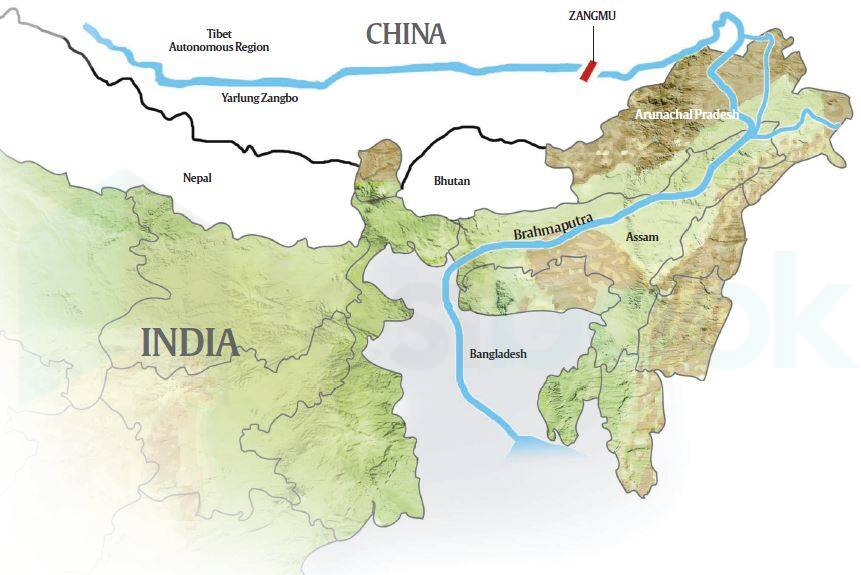
  • The Brahmaputra originates under the name of Siang or Dihang, from the Chemayungdung glacier of the Kailash range near the Mansarovar lake.
  • It enters India west of Sadiya town in Arunachal Pradesh.
  • Tributaries: Dibang, Lohit, Siang, Burhi Dihing, Tista, and Dhansari.
  • It is known as Tsangpo in Tibet and Yarlung Zangbo in China.
  • The river crosses Assam below Dhubri and enters Bangladesh where the river is known as Jamuna and it flows for 337 km.

Additional Information

RiverOriginMouth
The GangesGangotriBay of Bengal
The BrahmaputraChemayungdungBay of Bengal
The GodavariTrimbak (Nashik)Bay of Bengal
The KrishnaMahabaleshwarBay of Bengal
7

What is the estimated percentage of Bihar's geographical area that constitutes its Gross Cropped Area?

  1. ((a))

    73 to 75 percent

  2. ((b))

    52 to 54 percent

  3. ((c))

    75 to 77 percent

  4. ((d))

    20 to 21 percent

Show Answer
Answer: ((a))

73 to 75 percent

The correct answer is 73 to 75 percent

Key Points

  • Gross Cropped Area: In Bihar, the Gross Cropped Area covers approximately 73 to 75 percent of the state's total geographical area.
  • This significant proportion highlights the extensive utilization of the state's fertile lands for agricultural purposes across multiple cropping seasons.
  • The Net Sown Area is estimated at around 52 to 54 percent, which indicates the physical extent of land under cultivation.
  • The state demonstrates a high Cropping Intensity of 144%, reflecting the practice of growing more than one crop on the same piece of land during a single agricultural year.

Additional Information

  • Agricultural Employment: Over 75 to 77 percent of the workforce in Bihar is dependent on agriculture and allied activities.
  • Economic Contribution: Agriculture contributes approximately 20 to 21 percent to the state's Gross State Domestic Product (GSDP) as of the 2025-26 estimates.
  • Land Holdings: A vast majority of the agricultural land in Bihar is highly fragmented, with 91 percent of the total holdings belonging to small and marginal farmers.
  • Agricultural Roadmap: The Fourth Agricultural Roadmap (2023–2028) allocates a budget of ₹1.62 Lakh Crore to boost farmer income and build climate resilience.

Important Points

  • Options Analysis:
  • 52 to 54 percent: This figure represents the estimated Net Sown Area, not the Gross Cropped Area.
  • 75 to 77 percent: This indicates the percentage of the workforce dependent on agriculture.
  • 20 to 21 percent: This reflects the approximate contribution of agriculture to the state's GSDP.
8

Match the Mineral Resources with their Location in Bihar:

A.Bauxite1.Munger
B.Mica2.Nawada
C.Quartz3.Jamui
D.Granite4.Gaya
  1. ((a))

     A-4, B-1, C-2, D-3

  2. ((b))

     A-2, B-4, C-1, D-3

  3. ((c))

    A-1, B-2, C-3, D-4

  4. ((d))

    A-3, B-2, C-4, D-1

Show Answer
Answer: ((c))

A-1, B-2, C-3, D-4

The correct answer is option 3.

Key Points

MineralLocationExplanation
BauxiteMungerMunger district has significant bauxite deposits, used in aluminium production. Found in hilly and lateritic regions.
MicaNawadaBihar was once a major producer of mica, especially in Nawada and Koderma region (now in Jharkhand). Mica is used in electronics and insulation.
QuartzJamuiQuartz and silica are abundant in Jamui, used in glassmaking, ceramics, and construction.
GraniteGayaThe granite-rich regions of Gaya, especially Bodh Gaya, supply durable stone used for construction and sculpture.
9

The 91st Amendment of the Indian Constitution was enacted in which year?

  1. ((a))

    2000

  2. ((b))

    1989

  3. ((c))

    1978

  4. ((d))

    2003

Show Answer
Answer: ((d))

2003

The correct answer is 2003.

Key Points

  • The 91st Amendment to the Indian Constitution was enacted in the year 2003. This amendment holds significant importance in ensuring political stability and reducing defections in Indian politics.
  • It introduced changes to the Tenth Schedule of the Constitution, which deals with the anti-defection law. This amendment strengthened the provisions to discourage political defections.
  • The amendment made it mandatory that the size of the Council of Ministers, including the Prime Minister or Chief Minister, should not exceed 15% of the total strength of the Lok Sabha or the respective State Legislative Assembly.
  • The anti-defection law was also tightened by disallowing disqualification exemptions in case of splits involving less than one-third of the members of a political party.
  • The 91st Amendment Act was a response to growing concerns about political instability caused by defections and bloated cabinets, which often led to inefficiency and wastage of public resources.

Additional Information

  • Anti-Defection Law:
  • Introduced through the 52nd Amendment Act of 1985, the anti-defection law was included in the Tenth Schedule of the Constitution.
  • It aimed to curb political defections by disqualifying members who defected from their parties after elections.
  • The 91st Amendment further strengthened the provisions of the anti-defection law by removing the loophole that allowed splits involving one-third of a party's members.
  • Size of the Council of Ministers:
  • Before the 91st Amendment, there was no constitutional limit on the size of the Council of Ministers, which led to unwieldy and bloated cabinets.
  • The amendment introduced a cap, limiting the size of the Council of Ministers to 15% of the total strength of the Lok Sabha or the State Legislative Assembly.
  • Significance of the 91st Amendment:
  • It promoted political stability by discouraging defections and ensuring that elected representatives stayed loyal to their parties.
  • The limitation on the size of cabinets ensured efficiency and reduced the burden on public finances.
  • The amendment reinforced the principles of democracy and accountability by holding legislators accountable for their actions.
  • Other Constitutional Amendments Related to Political Reforms:
  • The 52nd Amendment (1985) introduced the anti-defection law in the Tenth Schedule.
  • The 73rd and 74th Amendments (1992) provided constitutional status to Panchayati Raj Institutions and Urban Local Bodies, respectively.
  • The 97th Amendment (2011) recognized the right to form cooperatives as a fundamental right under Article 19.

Important Points

  • Background of the 91st Amendment:
  • The amendment was introduced in response to the growing menace of political defections and the practice of forming oversized cabinets to accommodate defectors.
  • The political scenario in the late 20th century witnessed frequent instability due to defections, leading to the need for stricter laws.
  • Impact of the Amendment:
  • The amendment has been instrumental in ensuring political stability in both the central and state governments.
  • It has reduced the practice of offering ministerial positions to legislators as an incentive for defection.
10

Who is the writer of novel ‘The White Tiger’?

  1. ((a))

    Vikram Seth

  2. ((b))

    R.K. Narayan

  3. ((c))

    Aravind Adiga

  4. ((d))

    Shashi Tharoor

Show Answer
Answer: ((c))

Aravind Adiga

Option 3 is correct, i.e Aravind Adiga.

  • Aravind Adiga is the writer of the novel ‘The White Tiger’.
  • At the age of just 33 in 2008 Aravind Adiga won the Booker prize for his first novel, The White Tiger.
  • Aravind Adiga was born in 1974 in Madras (now called Chennai) and grew up in Mangalore in the south of India.
  • His second novel 'Last Man in Tower' was published in 2011.
  • His latest novel was Selection Day, 2016 sports fiction novel.
  • His novel "Amnesty" is going to be published and released in 2020.
11

Who drafted the Declaration of American Independence?

  1. ((a))

    George Washinton

  2. ((b))

    Abraham Lincoln

  3. ((c))

    Thomas Jefferson

  4. ((d))

    John F Kennedy

Show Answer
Answer: ((c))

Thomas Jefferson

The correct answer is option 3 i.e. Thomas Jefferson.

Key Points

Declaration of American Independence - 

  • On 11th June 1776, Congress appointed a "Committee of Five", consisting of John Adams of Massachusetts, Benjamin Franklin of Pennsylvania, Thomas Jefferson of Virginia, Robert R. Livingston of New York, and Roger Sherman of Connecticut, to draft a declaration. Hence option 3 is correct.
  • Declaration of Independence was a document that was approved by the Continental Congress on July 4, 1776, which announced the separation of 13 North American British colonies from Great Britain.
  • It explained why the Congress on July 2 “unanimously” by the votes of 12 colonies (with New York abstaining) had resolved that “these United Colonies are, and of right ought to be Free and Independent States.”
  • Accordingly, the day on which final separation was officially voted was July 2, although the 4th July, the day on which the Declaration of Independence was adopted, has always been celebrated in the United States as Independence Day.
12

According to the Census 2011, what is the population density of India?

  1. ((a))

    372 per sq. km

  2. ((b))

    382 per sq. km

  3. ((c))

    352 per sq. km

  4. ((d))

    362 per sq. km

Show Answer
Answer: ((b))

382 per sq. km

  • According to the 2011 census, 382 is the density of the Population of India.
  • As per the 2011 Census, Bihar has the highest population density of 1106 persons per sq. km. followed by West Bengal with a population density of 1028 persons per sq. km.
  • Uttar Pradesh’s is 829 persons per sq. km, Kerala’s is 860 persons per sq. km.
  • Census 2011 is the 15th census of India and 7th after the independence.
  • The motto of the 2011 Census is " Our Census, Our future".
  • The first census took place in 1872.
  • The next census will take place in the year 2021. The census takes place every 10 Years.
ParameterState
Most populous stateUttar Pradesh
Least populous state/UTLakshwadeep
Highest Population UTDelhi
Highest Sex RatioKerala
Highest LiteracyKerala
Highest DensityBihar
13

The National Consumer Disputes Redressal Commission (NCDRC) was established in the year ______, under the Consumer Protection Act of 1986.

  1. ((a))

    1988

  2. ((b))

    1995

  3. ((c))

    1987

  4. ((d))

    1991

Show Answer
Answer: ((a))

1988

The correct answer is 1988.

Key Points

  • In India, the National Consumer Disputes Redressal Commission (NCDRC) was established in 1988 in accordance with the Consumer Protection Act of 1986.
  • In New Delhi, it has its headquarters. A Supreme Court of India judge who is now sitting or has retired is in charge of the commission.
  • Justice R K Agrawal, a former Supreme Court of India judge, is currently in charge of the commission.
  • According to Section 21 of the Consumer Protection Act of 1986, the National Consumer must have the authority to hear complaints worth more than one crore as well as to appeal and review decisions made by State Commissions or District Fora, as the case may be.

Important Points

  • To safeguard the interests of Indian consumers, the Indian Parliament passed the Consumer Protection Act, 1986 (COPRA).
  • The Consumer Protection Act of 2019 took its place.
  • It was created to facilitate the creation of consumer councils and other institutions for the resolution of consumer complaints and issues related to them.
  • The law was passed by the Assembly in October 1986, and it became effective on December 24 of the same year.
  • The law to the right was created prior to the COPRA act.
14

Biodiversity means

  1. ((a))

    diverse kinds of plants and vegetation.

  2. ((b))

    diverse kinds of animals.

  3. ((c))

    diverse kinds of plants and animals in a particular area.

  4. ((d))

    diverse kinds of exotic plants and animals.

Show Answer
Answer: ((c))

diverse kinds of plants and animals in a particular area.

The correct answer is diverse kinds of plants and animals in a particular area.

Key Points

  • Biodiversity
  • Biodiversity is the variety of life found in a place on Earth or, often, the total variety of life on Earth.
  • A common measure of this variety, called species richness, is the count of species in an area.
  • Colombia and Kenya, for example, each have more than 1,000 breeding species of birds, whereas the forests of Great Britain and of eastern North America are home to fewer than 200.
  • A coral reef off northern Australia may have 500 species of fish, while the rocky shoreline of Japan may be home to only 100 species.
  • Such numbers capture some of the differences between places—the tropics, for example, have more biodiversity than temperate regions—but raw species count is not the only measure of diversity.
  • Furthermore, biodiversity encompasses the genetic variety within each species and the variety of ecosystems that species create.

Additional Information

  • Measuring biodiversity
  • Although examining counts of species is perhaps the most common method used to compare the biodiversity of various places.
  • Biodiversity is weighted differently for different species, the reason being that some species are deemed more valuable or more interesting than others.
  • One way this value or interest is assessed is by examining the diversity that exists above the species level, in the genera, families, orders, classes, and phyla to which species belong.
  • For example, the count of animal species that live on land is much higher than the count of those that live in the oceans because there are huge numbers of terrestrial insect species, insects comprise many orders and families, and they constitute the largest class of arthropods, which themselves constitute the largest animal phylum.
  • In contrast, there are fewer animal phyla in terrestrial environments than in the oceans.
  • No animal phylum is restricted to the land, but brachiopods, pogonophorans, and other animal phyla occur exclusively or predominantly in marine habitats.
15

Who was the founder of the Ramakrishna Mission?

  1. ((a))

    Debendranath Tagore

  2. ((b))

    Atmaram Pandurang

  3. ((c))

    Swami Vivekananda

  4. ((d))

    Swami Dayanand

Show Answer
Answer: ((c))

Swami Vivekananda

The correct answer is Swami Vivekananda.

Key Points

  • Ramakrishna Mission (RKM) is a Hindu religious and spiritual organization that forms the core of a worldwide spiritual movement known as the Ramakrishna Movement or the Vedanta Movement.
  • The mission is named after and inspired by the Indian saint Ramakrishna Paramahamsa and founded by Ramakrishna's chief disciple Swami Vivekananda on 1 May 1897.
  • The mission bases its work on the principles of karma yoga, the principle of selfless work done with a dedication to God.
  • The Ramakrishna Mission has centred around the world and publishes many important Hindu texts.

Additional Information

  • Atmaram Pandurang founded the Prarthana Samaj.
  • Debendranath Tagore was a Hindu philosopher and religious reformer, active in the Brahmo Samaj.
  • Brahmo Samaj was founded by Raja Ram Mohan Roy.
  • Hindu reform society founded by Dayananda Sarasvati in 1875.
16

In which year did the first Khelo India School Games start?  

  1. ((a))

    2015 

  2. ((b))

    2018 

  3. ((c))

    2016

  4. ((d))

    2017

Show Answer
Answer: ((b))

2018 

The correct answer is 2018 .

Key Points

  • The Khelo India program is a national initiative by the Indian government to promote sports at the grassroots level.
  • The program aims to revive the sports culture in India by engaging with children at the school level.
  • The first edition of the Khelo India School Games was held in New Delhi in 2018.
  • These games were designed to provide a platform for young athletes to showcase their talent.
  • The event featured a variety of sports, including both traditional and modern disciplines.
  • The Khelo India program is part of the government's efforts to develop a strong sporting ecosystem in the country.
  • The games are intended to identify and nurture potential sports champions.
  • The program also focuses on improving sports infrastructure and providing training facilities.
  • The Khelo India School Games have become an annual event, with subsequent editions held in different states.
  • The games promote a healthy lifestyle and encourage young people to participate in sports.
  • The program aims to create a culture of sports excellence in India.
  • The Khelo India initiative is a significant step towards making India a sporting powerhouse.
  • The games help to raise awareness about the importance of physical fitness and sports.
  • The program also supports the development of sports coaches and support staff.
  • The games provide opportunities for young athletes to gain exposure and experience.
  • The Khelo India program is a long-term initiative that aims to have a lasting impact on Indian sports.
  • The games have been instrumental in identifying and promoting talented young athletes from across the country.
  • The Khelo India program has helped to improve the standard of sports at the school level.
  • The games are a very important part of the Indian sporting calendar.
  • The initiative has also helped to improve the sporting infrastructure in many parts of India.
17

Match List-I (Events and Administrative Facts of Bihar) with List-II (Corresponding Dates/Numbers) correctly:

List-IList-II
P. Annual celebration date of Bihar Diwas (State Day)1. 38
Q. Annual celebration date of Sparrow Day2. 53
R. Total sanctioned strength of judges in Patna High Court3. 22 March
S. Total seats reserved for SC in the Legislative Assembly4. March 20
  1. ((a))

    P - 3, Q - 4, R - 2, S - 1

  2. ((b))

    P - 4, Q - 3, R - 1, S - 2

  3. ((c))

    P - 3, Q - 2, R - 4, S - 1

  4. ((d))

    P - 4, Q - 2, R - 1, S - 3

Show Answer
Answer: ((a))

P - 3, Q - 4, R - 2, S - 1

The correct answer is P - 3, Q - 4, R - 2, S - 1

Key Points

  • Bihar Diwas (State Day): Recognized as the State Day, Bihar Diwas is celebrated annually on the 22nd of March to mark the state's foundation.
  • Sparrow Day: The state celebrates March 20 as Sparrow Day every year, honoring the House Sparrow (Passer Domesticus), which is designated as the State Bird.
  • Sanctioned Strength of Patna High Court: The formally approved and sanctioned strength of judges for the Patna High Court is exactly 53.
  • Seats reserved for SC in Legislative Assembly: Out of the total legislative constituencies, exactly 38 seats are reserved specifically for the Scheduled Castes (SC) in the Bihar Legislative Assembly.

Additional Information

  • The current working strength of the Patna High Court as of 8th June 2024 is 34 judges, comprising 1 Chief Justice and 33 Judges. In contrast, its initial strength upon formation was 1 Chief Justice and 6 puisne judges.
  • The state is administratively divided into 38 distinct districts, with Arwal being designated as the 38th district.
  • While there are 38 seats reserved for SC, only 02 seats are reserved for Scheduled Tribes (ST) in the Legislative Assembly.

Important Points

  • Understanding exact dates and sanctioned administrative numbers provides an accurate insight into the governance structure and cultural observances of the state.
18

Which Fundamental Right of the Indian Constitution provides protection against arrest and detention?

  1. ((a))

    Article 22

  2. ((b))

    Article 32

  3. ((c))

    Article 25

  4. ((d))

    Article 19

Show Answer
Answer: ((a))

Article 22

The correct answer is Article 22.

Key Points

  • Article 22 of the Indian Constitution provides protection against arbitrary arrest and detention under certain conditions.
  • It guarantees rights to individuals in cases of preventive detention and ensures that no person can be detained beyond a specified period without judicial review.
  • Under this article, a person arrested must be informed of the reasons for arrest and has the right to consult a legal practitioner.
  • It also limits preventive detention to a maximum period of three months, beyond which approval from an advisory board (comprising judges of a High Court) is mandatory.
  • Special provisions are made for protecting citizens' rights while balancing the state's authority to ensure security. This includes safeguards against abuse of detention powers.

Additional Information

  • Fundamental Rights in India:
  • Fundamental Rights are enshrined in Part III of the Constitution of India, ensuring basic rights to all citizens.
  • These rights include Right to Equality, Right to Freedom, Right against Exploitation, Right to Freedom of Religion, Cultural and Educational Rights, and Right to Constitutional Remedies.
  • Fundamental Rights are enforceable in the courts of law, and any violation can be challenged under Article 32, which is known as the "Heart and Soul of the Constitution."
  • Preventive Detention:
  • Preventive detention refers to the detention of an individual without trial, to prevent them from committing a crime or acting against national security.
  • While preventive detention is criticized for curtailing personal liberty, Article 22 provides safeguards such as judicial oversight and limitations on detention duration.
  • The National Security Act (NSA) and similar laws allow preventive detention in India.
  • Features of Article 22:
  • Clause (1) and (2): Protect citizens against arrest and detention in ordinary circumstances, ensuring rights like being informed of the grounds for arrest and access to legal representation.
  • Clause (3) to (7): Deals with preventive detention, outlining exceptions and safeguards.
  • Empowers the state to legislate preventive detention laws under specific circumstances.
  • Comparison with Other Articles:
  • Article 32: Provides the right to constitutional remedies, allowing individuals to approach the Supreme Court for enforcement of Fundamental Rights.
  • Article 25: Relates to freedom of religion, ensuring individuals can freely profess, practice, and propagate their religion.
  • Article 19: Ensures freedom of speech and expression, assembly, association, movement, residence, and profession.
  • Historical Context:
  • Constitutional Assembly Debates: Article 22 was introduced to address concerns about balancing individual liberty and national security.
  • India's experience with British colonial laws, such as the Rowlatt Act, shaped the provisions of preventive detention.

Important Points

  • Judicial Oversight: An advisory board comprising High Court judges ensures that preventive detention is not misused.
  • International Context: Countries like the US and UK have stringent safeguards against detention, focusing more on trial-based detention.
  • Controversial Usage: Preventive detention laws, such as the NSA, have faced criticism for potential misuse and violation of human rights.
  • Government Guidelines: The Ministry of Home Affairs periodically revises detention guidelines to ensure compliance with constitutional provisions.
19

The 'Mukhyamantri Bagwani Mission' is currently promoting the cultivation of which exotic fruit in 21 Bihar districts?

  1. ((a))

     Kiwi

  2. ((b))

     Avocado

  3. ((c))

     Dragon Fruit

  4. ((d))

    Passion Fruit

Show Answer
Answer: ((c))

 Dragon Fruit

The correct answer is Dragon Fruit.

Key Points

  • The Mukhyamantri Bagwani Mission is an initiative by the Bihar government to promote horticulture in the state, specifically focusing on exotic fruits and vegetables in 21 districts.
  • Under this mission, the cultivation of Dragon Fruit is being emphasized due to its high market demand and nutritional value.
  • Dragon Fruit, also known as pitaya, is a tropical fruit known for its vibrant pink skin, white or red pulp, and black seeds. It is rich in vitamins, fiber, and antioxidants.
  • This initiative aims to provide farmers with alternative high-value crops, improving their economic condition by increasing their income potential.
  • Farmers are being trained and given financial support under this mission to adopt the cultivation of Dragon Fruit, which requires specific agro-climatic conditions available in Bihar.

Additional Information

  • Dragon Fruit Cultivation:
  • Dragon Fruit belongs to the cactus family (Hylocereus genus) and is native to Central America.
  • It thrives in areas with a tropical and subtropical climate, requiring temperatures between 20–30°C and well-drained soil.
  • The plant is drought-tolerant and requires minimal water, making it suitable for regions with water scarcity.
  • It is a perennial crop, with a single plantation yielding fruits for up to 20 years.
  • Nutritional Benefits of Dragon Fruit:
  • Rich in Vitamin C, which boosts immunity.
  • Contains dietary fiber, aiding in digestion and maintaining gut health.
  • Low in calories and high in water content, making it a healthy snack option.
  • Contains antioxidants like betacyanin, which reduce oxidative stress and prevent chronic diseases.
  • Economic Importance:
  • Dragon Fruit has a high market value due to its exotic nature and increasing consumer demand.
  • It is widely used in the food and beverage industry to make juices, smoothies, and desserts.
  • Farmers can earn significantly higher returns compared to traditional crops like wheat or rice.
  • Other Exotic Fruits Promoted Under Horticulture Schemes:
  • Kiwi: Grown in hilly areas due to its preference for cooler climates.
  • Avocado: Known as a superfood, it is promoted in regions with moderate temperatures.
  • Passion Fruit: Cultivated in tropical and subtropical climates for its unique flavor and juice production.

Important Points

  • The Mukhyamantri Bagwani Mission is aligned with the goal of the Indian government to double farmers' income by promoting high-value crops.
  • Dragon Fruit has been gaining popularity in domestic and export markets due to its health benefits and exotic appeal.
  • States like Gujarat, Maharashtra, and Karnataka have also started promoting Dragon Fruit cultivation due to its economic viability.
  • The introduction of exotic fruits like Dragon Fruit in Bihar is expected to boost the state's agriculture sector and ensure better livelihoods for farmers.
20

Who described Archimedes' method of finding the specific gravity of substances using a balance in the treatise ‘The Little Balance’? 

  1. ((a))

    Galileo Galilei 

  2. ((b))

    Michael Faraday

  3. ((c))

    Daniel Bernoulli

  4. ((d))

    Albert Einstein 

Show Answer
Answer: ((a))

Galileo Galilei 

The correct answer is Galileo Galilei.

Key Points

  • Galileo Galilei was an Italian astronomer, physicist, and engineer, sometimes described as a polymath from Pisa.
  • He is known for his contributions to modern physics and observational astronomy.
  • In his treatise 'The Little Balance' (La Bilancetta), Galileo described Archimedes' method of determining specific gravity using a balance.
  • This work was one of Galileo's earliest scientific writings, and it showcases his understanding of Archimedean principles and their practical applications.

Additional Information

  • Archimedes' Principle:
  • Archimedes' Principle states that the upward buoyant force exerted on a body immersed in a fluid, whether fully or partially submerged, is equal to the weight of the fluid that the body displaces.
  • This principle is fundamental in the field of fluid mechanics and is used to determine the volume and density of objects.
  • Specific Gravity:
  • Specific gravity is the ratio of the density of a substance to the density of a reference substance; typically, this reference substance is water for liquids or solids, and air for gases.
  • It is a dimensionless quantity that provides a way to compare the density of substances relative to water.
  • The Balance (Hydrostatic Balance):
  • A hydrostatic balance is a device used to measure the weight of an object in air and in water, enabling the determination of the object's specific gravity.
  • Galileo's treatise 'La Bilancetta' detailed the construction and use of such a balance based on Archimedes' principles.
  • Galileo's Contributions:
  • Besides his work on specific gravity, Galileo made significant contributions to various fields including kinematics, dynamics, and observational astronomy.
  • He is renowned for his improvements to the telescope and consequent astronomical observations, and for advocating the heliocentric model of the solar system.
21

Which Act expanded cooperative societies beyond credit activities in India by enabling non-credit services like consumer stores and weavers' cooperatives?

  1. ((a))

    Banking Regulation Act

  2. ((b))

    RBI Act, 1934

  3. ((c))

    Cooperative Societies Act, 1912

  4. ((d))

    Companies Act

Show Answer
Answer: ((c))

Cooperative Societies Act, 1912

The correct answer is the Cooperative Societies Act, 1912.

In News

  • Cooperative Societies Act, 1912 expanded cooperatives beyond credit activities in India.

Key Points

  • The Cooperative Societies Act, 1912 provided a legal framework for registering societies that promote thrift, self-help, and mutual assistance among agriculturists, artisans, and limited-means individuals.
  • It enabled non-credit initiatives such as the Triplicane society in Madras for consumer stores and weavers' credit cooperatives in Dharwar and Hubli providing yarn credit.
  • The Act retained simplicity and elasticity from the 1904 Act while recognizing the need for large societies to supervise credit and create central and non-credit societies.
  • It consisted of 29 sections and appointed a Registrar of Cooperative Societies by state governments, assisted by staff for oversight.
  • Previously registered as urban credit societies, non-credit cooperatives gained proper organization under this Act as their numbers grew beyond expectations.
  • The legislation fostered economic development and social welfare through collective action among members.
  • It paved the way for organized supervision and expansion of cooperatives nationwide.

Additional Information

  • Cooperative Societies Act, 1904 initiated the movement in 1904 to free rural farmers from moneylenders via short-term crop loans, serving as precursor to 1912 Act.
  • Objective - Thrift and mutual help
  • Limited to credit societies
  • Registrar of Cooperative Societies handles registration, management, rights, liabilities, and privileges of societies under the Act.
  • Principles of cooperation emphasize voluntary formation, democratic control, member economic participation, and autonomous functioning.
  • The Act marked evolution from credit-focused to diverse services, boosting India's cooperative movement.
  • State governments appoint registrars to ensure proper supervision and compliance.
22

Nagercoil is situated in which part of India​?

  1. ((a))

    Tamil Nadu

  2. ((b))

    Kerala

  3. ((c))

    Karnataka

  4. ((d))

    Andhra Pradesh

Show Answer
Answer: ((a))

Tamil Nadu

The Correct answer is TamilNadu.

23

In 2025, what does the abbreviation NGLV stand for in ISRO’s latest rocket programme? 

  1. ((a))

    New Generation Lunar Vehicle  

  2. ((b))

    Next Generation Launch Vehicle

  3. ((c))

    Nuclear Geo Launch Vehicle

  4. ((d))

    National Geo Lander Vehicle

Show Answer
Answer: ((b))

Next Generation Launch Vehicle

The correct answer is Next Generation Launch Vehicle.

Key Points

  • NGLV (Next Generation Launch Vehicle) is a part of the Indian Space Research Organisation (ISRO)'s initiative to develop advanced rocket technologies for future space missions.
  • The NGLV is designed to be a successor to ISRO’s existing launch vehicles, such as the Polar Satellite Launch Vehicle (PSLV) and Geosynchronous Satellite Launch Vehicle (GSLV).
  • This new launch vehicle aims to meet the demands for launching heavier payloads into various orbits, including geostationary, low Earth, and deep space missions.
  • NGLV incorporates cutting-edge technologies such as reusable components, advanced propulsion systems, and improved efficiency to reduce costs and enhance reliability.
  • It is expected to play a critical role in India’s future deep space exploration missions and in meeting the growing demands for satellite launches worldwide.
  • The development of NGLV reflects ISRO’s commitment to advancing India’s space capabilities and ensuring competitiveness in the global space launch market.

Additional Information

  • Indian Space Research Organisation (ISRO):
  • ISRO is India’s premier space agency, established in 1969 and headquartered in Bengaluru. It is responsible for advancing space technology and conducting space missions for civilian and military applications.
  • ISRO has developed several successful launch vehicles, including the PSLV, GSLV, and GSLV Mk III, which have placed satellites into orbit for communication, navigation, Earth observation, and interplanetary exploration.
  • Key achievements: ISRO's remarkable missions include Chandrayaan (India’s lunar exploration program), Mangalyaan (Mars Orbiter Mission), and the Gaganyaan human spaceflight program.
  • Importance of NGLV:
  • The NGLV is vital for India’s ambition to expand its presence in the space sector, especially in launching heavier payloads and undertaking interplanetary exploration missions.
  • The vehicle is expected to have advanced features such as reusable stages, modular design, and compatibility with various payloads.
  • It will help India compete globally in the space launch industry, offering cost-effective and reliable solutions for satellite deployments.
  • Existing Launch Vehicles:
  • PSLV: Known for its versatility, PSLV has launched satellites into various orbits, including polar and geostationary transfer orbits. It has been operational since 1993.
  • GSLV: Designed for heavier payloads and geostationary missions, it incorporates cryogenic engine technology. First launched in 2001.
  • GSLV Mk III: India’s most powerful rocket, used for heavy payloads and deep space exploration. It was first launched in 2014 and is integral to the Gaganyaan mission.

Important Points

  • Global Space Industry:
  • The global space industry is valued at around $400 billion, with satellite launches being a key contributor.
  • India has become a key player in offering cost-effective satellite launching services, with ISRO being renowned for its low-cost missions.
  • Key Features of NGLV:
  • Reusable components: This feature will reduce costs and make launches more sustainable.
  • Advanced propulsion systems: Allowing for greater efficiency and higher payload capabilities.
  • Modular design: Enabling flexibility to adapt to different mission profiles and payloads.
24

What is the full form of the BHAVYA scheme approved by the Union Cabinet for plug-and-play industrial development?

  1. ((a))

    Bharat Housing And Vikas Yojna

  2. ((b))

    Bharat Heavy Audyogik Vikas Yojna

  3. ((c))

    Bharat Audyogik Vikas Yojna

  4. ((d))

    Bharatiya Audyogik Vistar Yojna

Show Answer
Answer: ((c))

Bharat Audyogik Vikas Yojna

The correct answer is Bharat Audyogik Vikas Yojna.

In News

  • The Union Cabinet, chaired by Prime Minister Shri Narendra Modi, has approved the Bharat Audyogik Vikas Yojna, a landmark scheme designed to accelerate industrial growth through plug-and-play infrastructure.

Key Points

  • The Government has allocated a substantial expenditure of ₹33,660 Crores to develop 100 world-class industrial parks across India under the BHAVYA scheme.
  • Industrial parks ranging from 100 to 1,000 Acres will be developed to unlock India's manufacturing potential and provide ready-to-use integrated services.
  • Financial support of up to ₹1 Crore Per Acre will be provided for core infrastructure, including internal roads, underground utilities, drainage, and ICT systems.
  • Bharat Audyogik Vikas Yojna (BHAVYA)
  • Approved By - Union Cabinet
  • Total Outlay - ₹33,660 Crores
  • Target - 100 Industrial Parks

Additional Information

  • Plug-And-Play Ecosystem
  • Overview: The initiative enables industries to move from intent to production rapidly by providing pre-approved land, built-to-suit units, and testing laboratories to reduce entry barriers.
  • Selection Process
  • Overview: Project selection will be conducted through a Challenge Mode, ensuring that only high-quality, reform-oriented, and investment-ready proposals are executed by the states.
  • Implementation Partnership
  • Overview: The scheme will be implemented in collaboration with State Governments and Private Sector players, building on the existing National Industrial Corridor Development Programme framework.
25

Under whose chairmanship was the Kisan Sabha established in Munger in 1922-23?

  1. ((a))

    Siddheshwar Choudhary

  2. ((b))

    Nand Kumar Singh

  3. ((c))

    Shah Muhammad Zubber

  4. ((d))

    More than one of the above

Show Answer
Answer: ((c))

Shah Muhammad Zubber

The Correct answer is Shah Muhammad Zubber.

Key Points

  • Shah Muhammad Zubber was a prominent figure in the establishment of the Kisan Sabha in Munger during 1922-23.
  • The Kisan Sabha was formed to address the issues faced by the peasant community, including exploitation by landlords and colonial authorities.
  • The Sabha played an essential role in organizing the farmers and raising their voices against unfair practices.
  • The movement was part of the larger wave of social and political movements during the freedom struggle in India.
  • Munger, situated in the state of Bihar, was a significant center for peasant movements during the colonial period.
  • Shah Muhammad Zubber’s leadership symbolized the collective efforts of peasants in achieving social justice and economic rights.

 Additional Information

  • Siddheshwar Choudhary
  • There is limited information available about Siddheshwar Choudhary in the context of the establishment of Kisan Sabha.
  • He might have been a regional figure, but he did not play a pivotal role in the specific event mentioned.
  • Nand Kumar Singh
  • Nand Kumar Singh was not directly associated with the founding of the Kisan Sabha in Munger during the given timeline.
  • His contributions, if any, might have been in other fields or movements.
  • More than one of the above
  • This option is incorrect as the leadership of the establishment of Kisan Sabha in Munger during 1922-23 is specifically attributed to Shah Muhammad Zubber.
  • None of the other individuals mentioned played a significant role in this regard.
26

Virashaiva movement begun in ______ in the mid-twelfth century.

  1. ((a))

    Karnataka

  2. ((b))

    Assam

  3. ((c))

    Bengal

  4. ((d))

    Maharashtra

Show Answer
Answer: ((a))

Karnataka

The correct answer is Karnataka.

Key Points

  • The Virashaiva movement, also known as the Lingayat movement, originated in the state of Karnataka during the mid-twelfth century.
  • This movement was spearheaded by Basavanna, a philosopher, poet, and statesman, who served as the Prime Minister of the Kalachuri Kingdom.
  • The movement emphasized monotheism and rejected the caste system, idol worship, and ritualistic practices, advocating for social equality and spiritual devotion to Lord Shiva.
  • Virashaivism or Lingayatism gained significant traction among the common people, especially the lower castes, due to its focus on egalitarian principles.
  • The followers of this movement, called Lingayats, carry a small Shiva Linga encased in a pendant, symbolizing their devotion to Lord Shiva.

Additional Information

  • Basavanna and His Teachings:
  • Basavanna was the founder of the Virashaiva movement. He is celebrated for his Vachanas (verses), which propagate a direct connection with God without the need for intermediaries like priests.
  • He advocated for the formation of a society based on equality, rejecting the rigid caste-based hierarchy.
  • Basavanna’s teachings laid the foundation for social reform in medieval India.
  • Philosophy of Virashaivism:
  • Virashaivism is monotheistic, focusing on the worship of Lord Shiva.
  • It emphasizes simple living, ethical conduct, and devotion over ritualistic practices.
  • The movement rejects the authority of the Vedas, caste discrimination, and idol worship.
  • Spread of the Movement:
  • Initially concentrated in Karnataka, the movement later spread to other parts of South India, including Maharashtra and Telangana.
  • The Lingayat community became a significant socio-political force in southern India.
  • Legacy of the Virashaiva Movement:
  • The movement has had a lasting influence on the socio-religious structure of Karnataka and neighboring regions.
  • Modern-day Lingayats continue to be a major community in Karnataka, influencing its culture, politics, and economy.

Important Points

  • Other Movements of the Period:
  • The Bhakti Movement, which flourished during the same time, shared similarities with the Virashaiva movement, such as its rejection of caste and ritualism.
  • Other prominent leaders of the Bhakti Movement included Ramananda, Kabir, and Mirabai, though their philosophies varied from that of the Lingayats.
  • Modern Recognition:
  • In recent years, there has been a movement to recognize the Lingayats as a separate religion, distinct from mainstream Hinduism.
  • The Karnataka government, in 2018, recommended the Lingayat community be granted minority religion status.
27

Jayaprakash Narayan was fondly known as:

  1. ((a))

    Rajarishi

  2. ((b))

    Dinbandhu

  3. ((c))

    Loknayak

  4. ((d))

    Deshbandhu

Show Answer
Answer: ((c))

Loknayak

The correct answer is Loknayak.

Key Points

  • Jayaprakash Narayan, Indian freedom fighter, activist, and political leader popularly know as "J.P" or "Loknayak"
  • He is well known for his mid 1970 peaceful "Total revolution" against the government of India for the cause of high inflation, unemployment and lack of supplies and essential commodities. This movement finally culminated in the proclamation of Emergency.
  • Although Jayaprakash Narayan is known for his Gandhian Ideology, he actively worked underground for Indian Freedom Movement for fighting the tyranny of British rule, he organised an “Azaad Dasta” (freedom brigade) in Nepal.

Additional Information

PersonKnown as
Chittaranjan DasDeshbandhu
C. F. AndrewsDinbandhu
Purushottam Das TandonRajarishi
28

When was Patna High Court established?

  1. ((a))

    1916

  2. ((b))

    1917

  3. ((c))

    1918

  4. ((d))

    1921

Show Answer
Answer: ((a))

1916

The correct answer is 1916.

  • Patna High Court is the High Court of the state of Bihar.
  • Patna high court was established in 1916 and later affiliated under the Government of India Act 1915.
  • The court is headquartered in Patna, the administrative capital of the Bihar.

Key Points

  • Proclamation made by the Governor-General of India on 22 March 1912.
  • The foundation-stone of the High Court Building was laid on Monday, 1 December 1913 by His Excellency the late Viceroy and Governor-General of India, Sir Charles Hardinge of Penshurst.
  • The Patna High Court building on its completion was formally opened by the same Viceroy on 3 February 1916.
  • Hon. Sir Justice Edward Maynard Des Champs Chamier was the first Chief Justice of Patna High Court.
  • Patna High Court separate exercised jurisdiction over the territories of the Province of Bihar & Orissa till 26 July 1948, when a High Court was constituted for Orissa.
  • Circuit Bench of Patna High Court at Ranchi became Jharkhand High Court in November 2000, under the Bihar Reorganisation Act, 2000.

Additional Information

  • Hon. Pandit Lakshmi Kant Jha was the first Indian Chief justice of Patna high court after independence.
  • Ms. Rekha Doshit was the first woman chief justice of Patna High court.
  • Ms. Gyan Sudha Mishra was the first woman judge in the Supreme court from Bihar.
  • The Patna high court was given two chief justice of India Justice Bhuvneshwar Prasad Mishra and Justice Lalit Mohan Sharma.
29

The chemical formula of baking soda is

  1. ((a))

    CaCO3

  2. ((b))

    Ca(OH)2

  3. ((c))

    Na2CO3

  4. ((d))

    NaHCO3

Show Answer
Answer: ((d))

NaHCO3

The correct answer is NaHCO3.

Key Points

  • Chemically known as sodium bicarbonate, the formula of baking soda is NaHCO3.
  • Baking soda is a white and crystalline salt that is made up of bicarbonate anion and sodium cation.

Additional Information

FormulaChemical nameUses
Na2CO3.10H2OSodium carbonate decahydrateSodium Carbonate decahydrate, salt of carbonic acid is used as a detergent, strong base or powerful electrolyte.
Na2CO3Sodium CarbonateUsed in a wide range of industries, such as in cleaning and personal care products and as a fungicide, microbicide, herbicide, and pH adjuster.
NaHCO3Sodium hydrogen carbonateUsed in baking industries.
NaOHSodium HydroxideUsed to make soap and as the main ingredient in household products such as liquid drain cleaners
30

When was 'Declaration of Independence' adopted in America?

  1. ((a))

    1770

  2. ((b))

    1772

  3. ((c))

    1774

  4. ((d))

    1776

Show Answer
Answer: ((d))

1776

The 'Declaration of Independence' was adopted in America in 1776.

Key Points

  • Thomas Paine published a pamphlet titled 'Common Sense'.
  • It pointed out the obvious necessity of breaking ties with the British.
  • The American Continental Congress adopted the famous Declaration of Independence on 4 July 1776 at Philadelphia.
  • The declaration was prepared by Thomas Jefferson, and Benjamin Franklin and was inspired from Thomas Paine's 'Common Sense'.
  • It declared that all men are created equal and have certain rights which are endowed by the creator and cannot be taken away, including life, liberty and pursuit of happiness.
  • It also declared that the government derives its power from the people.

Hence, we can conclude that the 'Declaration of Independence' was adopted in America in 1776.

31

Kanwar Lake in Begusarai was designated as Bihar’s first Ramsar site in which year?

  1. ((a))

    2017

  2. ((b))

    2019

  3. ((c))

    2020

  4. ((d))

    2021

Show Answer
Answer: ((c))

2020

The cotrrect answer is option 3.

Key Points

  • 2020 is the correct year when Kanwar Lake in Begusarai was declared Bihar’s first Ramsar site.
  • The Ramsar Convention, an international treaty for conserving wetlands, was first implemented in India in 1982.
  • Kanwar Lake (also known as Kabartal or Kabar Taal) was officially listed as a Ramsar site in November 2020, making it the first-ever Ramsar wetland in the state of Bihar.

Additional Information

FeatureDetails
LocationManjhaul, Begusarai, Bihar
Area~67.5 sq km (varies seasonally)
Ecological SignificanceWetland for migratory birds, supports rich biodiversity
Protection StatusRamsar Site (designated in 2020)
ThreatsEncroachment, eutrophication, water diversion for agriculture
32

The headquarters of the World Trade Organization is located at:

  1. ((a))

    Bonn

  2. ((b))

    Geneva

  3. ((c))

    Dubai

  4. ((d))

    Paris

Show Answer
Answer: ((b))

Geneva

The correct answer is Geneva.

Key Points

  • World Trade Organization(WTO) is an intergovernmental organization that is concerned with the regulation of international trade between nations founded in 1995.
  • Its headquarter is in Geneva, Switzerland.
  • It has 164 member countries.
  • It assists its members on a daily basis to ensure, among other things, that negotiations progress smoothly, and that the rules of international trade are correctly applied and enforced.

Its main function is trade negotiations, implementation and monitoring trade policies, dispute settlement between member countries, and building trade capacity for its member countries.

Additional Information

  • Paris is the capital and most populous city of France.
  • United Nations Educational, Scientific and Cultural Organization (UNESCO) has its headquarter in Paris.
  • Dubai is the most populous city in the United Arab Emirates and the capital of the UAE is Abu Dhabi.
33

One of the goals of the Namami Gange Programme is to:

  1. ((a))

    perform religious rituals with water from the Ganga River

  2. ((b))

    start river cruises on the Ganga River to boost tourism

  3. ((c))

    increase the supply of the Ganga River water for drinking purposes

  4. ((d))

    revitalise the Ganga River

Show Answer
Answer: ((d))

revitalise the Ganga River

The correct answer is revitalise the Ganga River

Key Points

  • One of the primary objectives of the Namami Gange Programme is to revitalise the Ganga River.
  • The programme aims to achieve effective abatement of pollution, conservation, and rejuvenation of the Ganga River.
  • It encompasses various activities such as sewage treatment, river surface cleaning, rural sanitation, and afforestation.
  • The initiative is crucial for restoring the ecological balance and ensuring the sustainable management of the river.

Additional Information

  • The Namami Gange Programme was approved as a flagship programme by the Union Government in 2014.
  • It is implemented by the National Mission for Clean Ganga (NMCG) and its state counterparts, known as State Program Management Groups (SPMGs).
  • The programme also focuses on promoting public awareness and community participation in the efforts to clean and rejuvenate the Ganga River.
  • It is a comprehensive initiative that addresses both the short-term and long-term needs for the sustainable management of the river.
  • The programme has received significant funding and support from the government, international organizations, and various stakeholders.
34

Which of the following is listed as one of the major Non-Timber Forest Product (NTFP) species in Bihar?

  1. ((a))

    Lantana camara

  2. ((b))

    Shorea robusta

  3. ((c))

    Dalbergia sissoo

  4. ((d))

    Mangifera indica

Show Answer
Answer: ((b))

Shorea robusta

The correct answer is option 2.

Key Points

  • Shorea robusta is a major Non-Timber Forest Product (NTFP) species in Bihar, with an estimated 7,42,329 thousand plants. NTFPs like these are crucial for rural livelihoods.
35

Which planet is made up of thick white and yellowish clouds of sulfuric acid?

  1. ((a))

    Uranus

  2. ((b))

    Venus

  3. ((c))

    Neptune

  4. ((d))

    Mars

Show Answer
Answer: ((b))

Venus

The correct answer is Venus.

  • Venus is made up of thick white and yellowish clouds of sulfuric acid.

Key Points

  • Venus:
  • The planet is nearest to the Earth and is also the brightest planet.
  • Venus is known as the “Evening Star” as well as “Morning Star”.
  • Known as the “Veiled Planet”.
  • Also known as the “Earth’s twin”. It also rotates clockwise like Uranus.
  • Venus is the hottest planet (even hotter than Mercury).
  • Venus has no water on it. There is no sufficient oxygen on Venus.

Additional Information Mercury, Venus, Earth and Mars are called terrestrial planets.

  • Jupiter, Saturn, Uranus and Neptune are called gaseous planets.
  • Uranus is about four times the size of the Earth.
  • This planet appears Greenish in colour because of methane gas present in its atmosphere.
  • Neptune is surrounded by methane rings of sub-zero temperature.
36

Who has been appointed as the next Vice Chief of the Army Staff (VCOAS) of the Indian Army, effective from April 1, 2026?

  1. ((a))

    Lt Gen P.P. Singh

  2. ((b))

    Lt Gen Dhiraj Seth

  3. ((c))

    Lt Gen V.M.B. Krishnan

  4. ((d))

    Lt Gen Sandeep Jain

Show Answer
Answer: ((b))

Lt Gen Dhiraj Seth

The correct answer is Lt Gen Dhiraj Seth.

In News

  • Lt Gen Dhiraj Seth, currently the Southern Army Commander, has been appointed as the next Vice Chief of the Army Staff (VCOAS) effective April 1, 2026.

Key Points

  • Current Role: He is presently the General Officer Commanding-in-Chief (GOC-in-C) of the Southern Command based in Pune.
  • Succession: He will succeed Lt Gen P.P. Singh, who is moving to head the Western Command.
  • Experience: An Armoured Corps officer, he has previously commanded the XXI Strike Corps and the South Western Command.
  • Responsibilities: As VCOAS, he will be the second-highest ranking officer in the Army, overseeing operational preparedness and modernization at Army HQ, New Delhi.

Additional Information

  • Indian Army Command Structure
  • The Indian Army is divided into seven commands (6 operational and 1 training). The Southern Command is the largest in terms of geographical area.
  • VCOAS (Vice Chief of the Army Staff)
  • A three-star rank officer (Lieutenant General) who assists the Chief of the Army Staff (COAS) in strategic and administrative functions.
37

Consider the following statements regarding the "Biopharma SHAKTI" initiative announced in the Union Budget 2026-27:

  1. The initiative has been proposed with an outlay of ₹10,000 crore over the next five years to position India as a global biopharma manufacturing centre.
  2. The programme includes the setting up of seven new National Institutes of Pharmaceutical Education and Research (NIPERs) and upgrading three existing institutes.

Which of the statements given above is/are CORRECT?

  1. ((a))

    1 only 

  2. ((b))

    2 only 

  3. ((c))

    Both 1 and 2

  4. ((d))

    None of the above

Show Answer
Answer: ((a))

1 only 

The correct answer is 1 only.

In News

  • Union Budget 2026-27 proposes "Biopharma SHAKTI" to position India as a global hub for biopharmaceuticals.

Key Points

  • Statement 1 is correct: The Budget proposes Biopharma SHAKTI with an outlay of ₹10,000 crore over the next five years. The initiative aims to build a comprehensive ecosystem for domestic production of biologics and biosimilars to develop India as a global biopharma manufacturing centre.
  • Statement 2 is incorrect: The programme includes setting up three new National Institutes of Pharmaceutical Education and Research (NIPERs) and upgrading seven existing institutes (the statement swaps the numbers).

Additional Information

  • Other Key Features of Biopharma SHAKTI
  • Clinical Trials: It aims to create a network of more than 1,000 accredited clinical trial sites across the country.
  • Regulatory Strengthening: The Central Drugs Standard Control Organisation (CDSCO) will be strengthened with a dedicated scientific review cadre to meet global regulatory standards.
38

Guru Shikhar is the highest peak of which of the following mountain ranges?

  1. ((a))

    Aravalli mountain range

  2. ((b))

    Vindhyas mountain range

  3. ((c))

    Deccan plateau

  4. ((d))

    Satpura mountain range

Show Answer
Answer: ((a))

Aravalli mountain range

The correct answer is the Aravalli mountain range.

Key Points

  • Guru Shikhar is the highest peak of the Aravalli range.
  • Guru Shikhar is a peak in the Arbuda mountains of the Sirohi district of Rajasthan.
  • It rises to an elevation of 1,722 metres.
  • Aravalli range is a mountain range in North-western India, running 670 km in a southwest direction.
  • The Aravalli range is the oldest mountain range in India.

 Thus, we can say that Guru Shikhar is the highest peak of the Aravalli mountain range.

39

Who among the following was the pioneer of 'Bhoodan Movement'?

  1. ((a))

    Acharya Vinoba Bhave

  2. ((b))

    Vallabh bhai Patel

  3. ((c))

    Bhimrao Ambedkar

  4. ((d))

    Jawaharlal Nehru

Show Answer
Answer: ((a))

Acharya Vinoba Bhave

The correct answer is Acharya Vinoba Bhave.

Key Points

  • Acharya Vinoba Bhave was the pioneer of the Bhoodan Movement, which aimed at redistributing land to landless farmers.
  • The movement began in 1951 at Pochampally village in Telangana, where Vinoba Bhave persuaded wealthy landowners to donate land for the poor.
  • The term "Bhoodan" translates to "Land Donation" and was a non-violent initiative inspired by Gandhian philosophy.
  • Vinoba Bhave walked across villages, requesting landowners to donate a part of their land voluntarily to the landless, promoting social equality.
  • By 1954, the movement expanded into the Gramdan Movement, where entire villages donated land for community welfare.

Additional Information

  • Vinoba Bhave was a spiritual leader and a prominent disciple of Mahatma Gandhi, deeply committed to the principles of non-violence and selfless service.
  • The Bhoodan Movement was a part of larger Gandhian efforts to address rural poverty and land inequality in post-independence India.
  • The movement significantly influenced the concept of land reforms in India, although its success varied across regions.
  • The Gramdan Movement, derived from Bhoodan, aimed to promote collective ownership of land and community-driven development.
  • Vinoba Bhave received the Ramon Magsaysay Award for his social and leadership efforts in 1958.
40

Who among the following freedom fighters wrote the poem 'Vande Mataram' in 1875?

  1. ((a))

    Bankim Chandra Chatterjee

  2. ((b))

    Bipin Chandra Pal

  3. ((c))

    Rabindranath Tagore

  4. ((d))

    Bhagat Singh

Show Answer
Answer: ((a))

Bankim Chandra Chatterjee

The correct answer is Bankim Chandra Chatterjee.

Key Points

  • Vande Mataram is a Sanskrit poem written by Bankim Chandra Chatterjee.
  • It was taken from Anand Math published in 1882.
  • Vande Mataram was first sung by Rabindranath Tagore in 1896.
  • It was adopted by the constituent assembly on 24th January 1950.
  • Jadhunath Bhattacharya composed the music of Vande Mataram.

Additional Information

  • Bipin Chandra Pal was one of the influencers of the Swadeshi movement along with Sri Aurobindo. 
  • He vehemently opposed the partition of Bengal by the British colonial government in December 1903.
  • He was born in Habiganj on 7 Nov 1858 and completed his studies at the University of Calcutta.
  • Rabindranath Tagore was a Bengali poet, writer, and painter.
  • He was honoured with the Nobel Prize in Literature in 1913.
  • He is the first non-European to receive the Nobel Prize for Literature.
  • Rabindranath Tagore got the Nobel Prize for his work Gitanjali.
  • Bhagat Singh was an Indian communist revolutionary whose two acts of spectacular brutality against the British in India and execution at the age of 23 made him a famous hero of the Indian independence movement.
41

Who amongst the following was the leader of Kherwar movement?

  1. ((a))

    Siddho and Kanhu Murmu

  2. ((b))

    Bhagirath Manjhi

  3. ((c))

    Shaikh Bhikhari

  4. ((d))

    More than one of the above

Show Answer
Answer: ((b))

Bhagirath Manjhi

The correct answer is Bhagirath Manjhi.

Key Points

  • The Kherwar movement began in 1874 among the Santal tribe in the Chotanagpur region (present-day Jharkhand).
  • It was led by Bhagirath Manjhi, who worked to bring social and religious reforms among the Santals.
  • The movement opposed the exploitation of Santals by zamindars, moneylenders, and missionaries, and emphasized a return to traditional tribal values and unity.
  • It gave rise to a spirit of resistance and self-identity among the Santals and laid a foundation for later tribal uprisings and reform movements.

Additional Information

  • Santhal Rebellion: Initiated in 1855, it was one of the largest tribal uprisings against exploitation by zamindars, moneylenders, and British officials.
  • Kherwar Movement: A socio-religious and political movement aimed at tribal autonomy and cultural revival among the Santhal community.
  • Siddho and Kanhu Murmu: Santhal siblings who led the rebellion, inspiring tribal solidarity and resistance against colonial oppression.
  • Impact: The rebellion highlighted the plight of tribal communities, leading to administrative reforms and increased awareness of indigenous issues.
  • Legacy: The Kherwar movement and the Santhal Rebellion are remembered as symbols of tribal resilience and their fight for justice and rights.
42

What is the states' share in the divisible pool of central taxes as per the Sixteenth Finance Commission (FC-16), which was tabled in Parliament on February 1, 2026, regarding the fiscal recommendation for the five years between 2026-27 and 2030-31?

  1. ((a))

    40%

  2. ((b))

    41%

  3. ((c))

    42%

  4. ((d))

    45%

Show Answer
Answer: ((b))

41%

The correct answer is 41%.

In News

  • The Report of the 16th Finance Commission, chaired by Dr. Arvind Panagariya, was tabled in Parliament on February 1, 2026.

Key Points

  • The Commission recommended that the share of states in the divisible pool of central taxes remain at 41% for the period 2026-31.
  • This recommendation maintains consistency with the share previously recommended by the 15th Finance Commission.
  • The divisible pool refers to the portion of gross tax revenue distributed to states after excluding collection costs, cesses, and surcharges.
  • Sixteenth Finance Commission (FC-16)
  • Chairman - Dr. Arvind Panagariya
  • Recommendation Period - 2026-27 to 2030-31
  • Vertical Devolution - 41%

Additional Information

  • Divisible Pool
  • It comprises the net proceeds of all taxes and duties referred to in the Union List, except for certain specific exclusions like Surcharge and Cesses.
  • Devolution Criteria Changes
  • The FC-16 introduced "Contribution to GDP" as a new criterion with a 10% weightage.
  • The weightage for "Income Distance" was reduced from 45% (15th FC) to 42.5%.
  • "Tax and Fiscal Efforts" was removed as a parameter in the FC-16 formula.
  • Constitutional Basis
  • The Finance Commission is a constitutional body formed under Article 280 to define the financial relations between the central government and the individual state governments.
43

Which of the following statements regarding the ICC Under-19 Men's Cricket World Cup 2026 Super Sixes stage is/are correct?

<br>

Statement I: India defeated Pakistan by 58 runs in the Super Sixes stage.

Statement II: India scored 252 runs in that match.

  1. ((a))

    Statement I is true, Statement II is false

  2. ((b))

    Statement I is false, Statement II is true

  3. ((c))

    Both statements are true

  4. ((d))

    Both statements are false.

Show Answer
Answer: ((c))

Both statements are true

The correct answer is Both statements are true.

In News

  • India beat Pakistan by 58 runs in the Super Sixes stage, posting 252 and restricting Pakistan to 194.

Key Points

  • Statement I: True—winning margin was 58 runs over Pakistan.
  • Statement II: True—India’s total was 252 runs.
  • Stage: Super Sixes after group matches.
  • Match Scores: India 252/10, Pakistan 194 all out.

Additional Information

  • Super Sixes: Second round with top teams from each group.
  • Run Margin: Difference between first innings total and second innings score.
  • Group Stage: Opening phase where teams compete in mini-groups.
  • Match Format: 50-overs per side in U-19 World Cup.
44

Among the different hierarchies of classification, which group has the largest number of organisms with maximum similar characteristics?

  1. ((a))

    genus

  2. ((b))

    Order

  3. ((c))

    Family

  4. ((d))

    Kingdom

Show Answer
Answer: ((d))

Kingdom

The correct answer is Kingdom.

Key Points

  • Among the different hierarchies of classification, the Kingdom group has the largest number of organisms with maximum similar characteristics.
  • In the hierarchy of classification, a species will have the smallest number of organisms with a maximum of characteristics in common.
  • In contrast, the kingdom will have the largest number of organisms.

Additional Information

  • Hierarchical Classification
  • It is a system of grouping things according to a hierarchy, or levels, and orders.
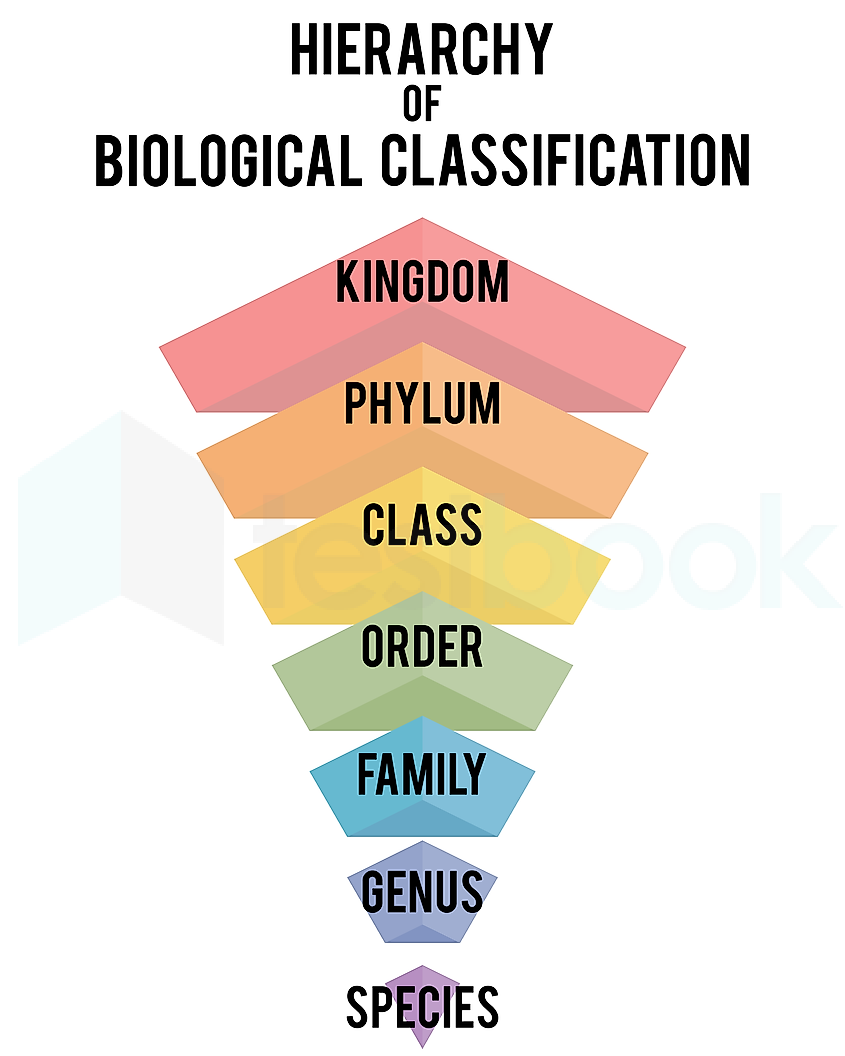
  • For humans, the classification would be Animalia (kingdom), Chordata (phylum), class (Mammalia), order (primates), family (Hominidae), genus (homo), and species (sapiens).
  • It goes from a vast category (all animals) all the way down to our unique species (sapiens).
  • This biological species concept is widely used in biology and related fields of study.
  • There are more than 20 other different species concepts. Species traits are defined as qualities of a species’ organisms, like body mass, length or height.
45

Which of the following element is known as 'wonder element'?

  1. ((a))

    Gold (Au) 

  2. ((b))

    Lithium (Li)

  3. ((c))

    Titanium (Ti)

  4. ((d))

    Mercury (Hg)

Show Answer
Answer: ((c))

Titanium (Ti)

The correct answer is Titanium.

Key Points

  • Titanium is known as a wonder element.
  • It is an element of transition series.
  • It is known as a wonder metal because of its low density and high tensile strength.
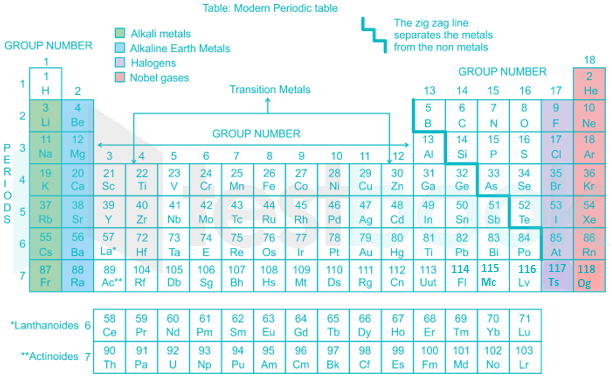
  • Also, titanium is resistant to corrosion in seawater, liquid chlorine, and even in Aqua Regia (HNO3+ 3HCl).
  • One of the most notable advantages of titanium is its strength.
  • It's among the strongest and most durable metals on the planet, which is why it's used in so many industrial applications.
  • In fact, titanium has the highest strength-to-density ratio of any metallic element on the periodic table, attesting to its benefits.
  • Titanium is a chemical element with the symbol Ti and atomic number 22.
  • Its atomic weight is 47.867 measured in daltons.
  • It is a lustrous transition metal with a silver colour, low density, and high strength, resistant to corrosion in seawater, aqua regia, and chlorine.

Additional Information

  • Mercury
  • Mercury (symbol Hg and atomic number 80) is a toxic shiny silvery metal, with a melting point of 234.32 K.
  • Bromine
  • Bromine (symbol Br and atomic number 35) is a reddish-brown liquid, with a melting point of 265.9 K.
  • Reducing agent:
  • A reducing agent is an element or compound that loses an electron to an electron recipient in a redox chemical reaction.
  • A reducing agent is thus oxidized when it loses electrons in the redox reaction.
  • Reducing agents "reduce" c.
  • Oxidizers "oxidize" reducers.
  • Oxidizing agent:
  • ​In chemistry, an oxidizing agent, or oxidizing agent is a substance that has the ability to oxidize other substances or in other words to accept their electrons.
  • Common oxidizing agents are oxygen, hydrogen peroxide, and halogens.
46

Through multiple fission _________ divides into many daughter cells simultaneously

  1. ((a))

    Planaria

  2. ((b))

    Yeast

  3. ((c))

    Hydra

  4. ((d))

    Plasmodium

Show Answer
Answer: ((d))

Plasmodium

The correct answer is Plasmodium.

Key Points

  • Through multiple fission, plasmodium divides into many daughter cells simultaneously.
  • Plasmodium after feeding on red blood cells in humans undergoes asexual reproduction which is called schizogony or multiple fission.
  • In multiple fission, Plasmodium divides into many cells.

Additional Information

  • MULTIPLE FISSION: In this type of fission parental body divides into many cells during unfavorable conditions.
  • In this, a protective-resistant cyst is formed.
  • Inside the cyst, the nucleus divides repeatedly to form several daughter nuclei.
  • Some algae, some protozoans, and the true slime molds (Myxomycetes) are regularly divided by multiple fission.
  • In such cases the nucleus undergoes several mitotic divisions, producing a number of nuclei.
  • After the nuclear divisions are complete, the cytoplasm separates, and each nucleus becomes encased in its own membrane to form an individual cell.

47

The leaves of angiosperm plants have ________ type of venation.

  1. ((a))

    Four

  2. ((b))

    Three

  3. ((c))

    Two

  4. ((d))

    Six

Show Answer
Answer: ((c))

Two

The correct answer is Two.

Key Points

  • The leaves of angiosperm plants have two types of venation.
  • The arrangement of veins and veinlets on the lamina of a leaf is called venation.
  • There are two types of venation, reticulate and parallel venation.
  • Reticulate venation: In some leaves, the veins and veinlets are irregularly distributed over the entire lamina, forming a network. Such leaves are said to have reticulated venation.
  • Parallel venation: In some leaves, the veins and veinlets run parallel to each other. Such leaves are said to have parallel venation.

Additional Information

  • Leaves initially arise from cell divisions in the shoot apical meristem.
  • A slight bulge (a leaf buttress) is produced, which in eudicots continues to grow and elongate to form a leaf primordium.
  • Marginal and submarginal meristems on opposite flanks of the primordium initiate leaf-blade formation.
  • Differences in the local activity of marginal meristems cause the lobed shapes of simple leaves and the leaflets in compound leaves.
  • An increase in width and in the number of cell layers is brought about by marginal meristems.
  • Subsequent expansion and increase in length are achieved by cell division and the general enlargement of cells throughout the blade.
48

Where are the elements of D block found?

  1. ((a))

    Only 18th group

  2. ((b))

    Only elements of group 8

  3. ((c))

    9th group elements

  4. ((d))

    Between ​second to 13(3-12)

Show Answer
Answer: ((d))

Between ​second to 13(3-12)

The correct answer is Between ​second to 13(3-12).

  • Between ​second to 13(3-12) are the elements of the D block found in the Periodic Table.

Key Points

  • The d-block elements are found in groups 3, 4, 5, 6, 7, 8, 9, 10, 11, and 12 of the periodic table, d-block elements are also known as the transition metals.
  • The d orbital is filled with the electronic shell n-1.
  • D block elements are the elements that can be found from the third group to the twelfth group of the modern periodic table.

Additional Information

  • There are four series in the d block corresponding to the filling up of 3d, 4d, 5d, or 6d orbitals. 
  • 3d- Sc, Ti, V, Cr, Mn, Fe, Co, Ni, Cu, Zn.
  • 4d- Y, Zr, Nb, Mo, Tc, Ru, Rh, Pd, Ag, Cd.
  • 5d- La, Hf, Ta, W, Re, Os, Ir, Pt, Au, Hg.
  • 6d- incomplete.

Important Points 

49

The ability of a medium to refract light is also expressed by its _______.

  1. ((a))

    Area density

  2. ((b))

    Light density

  3. ((c))

    Surface density

  4. ((d))

    Mass density

Show Answer
Answer: ((b))

Light density

The correct answer is Light Density.

Key Points

  • The ability of a medium to refract light is also expressed in terms of its optical or Light density.
  • Optical density is not the same as mass density.
  • Denser medium means Optically denser medium and Rarer medium means Optically rarer medium.

Additional Information

  • The phenomenon of bending of a ray of light towards normal while entering from rarer medium to denser medium and vice versa is called the Refraction of Light.
  • When light enters from a rare medium, say air to a denser medium say water, it bends towards normal and when enters from a denser medium to a rarer medium, say from water to air, it goes away from normal.
  • When light passes from a denser to a less dense substance, (for example passing from water into the air), the light is refracted (or bent) away from the normal.
  • The bending occurs because light travels more slowly in a denser medium
50

Which of the following can be generated by regeneration as well as budding?

  1. ((a))

    Amoeba

  2. ((b))

    Yeast

  3. ((c))

    Hydra

  4. ((d))

    Plasmodium

Show Answer
Answer: ((c))

Hydra

The correct answer is Hydra.

Key Points

  • Hydra can reproduce by the process of regeneration and budding.
  • ​Hydra is a small freshwater organism. They are native to temperate and tropical regions.
  • When the food is plentiful the asexual reproduction occurs in hydra.
  • The process is done by producing buds in the body wall. It grows as a mini form of adult and breaks apart when gets mature.
  • Hydra goes through tissue regeneration when injured. If the hydra is cut in half, each part will regenerate as a whole new hydra. This regeneration occurs without the cell division process.

Additional Information

  • Yeast:
  • While most yeasts reproduce by budding, some also reproduce by fission.
  • Plasmodium:
  • Plasmodium reproduces both by sexual and asexual methods.
  • Planaria:
  • Planaria reproduces by methods like fragmentation and spontaneous dropping tails.
  • Amoeba:
  • An amoeba often called an amoeboid, is a type of cell or unicellular organism which has the ability to alter its shape, primarily by extending and retracting pseudopods.

Important Points

Structure of Hydra:

51

In a concave mirror, where should the object be placed to obtain a real ​inverted and smaller image between C and F?

  1. ((a))

    On C

  2. ((b))

    Beyond C

  3. ((c))

    Between F and C

  4. ((d))

    Between F and P

Show Answer
Answer: ((b))

Beyond C

The correct answer is Beyond C​.

Key Points

  • A concave mirror is a type of spherical mirror in which, the reflecting surface is the inner curved surface of the sphere.
  • The incident light is reflected inwards because of its shape. Thus, such mirrors are also called converging mirrors.
  • A concave mirror forms different images which depend on the distance between the object and the mirror.
  • In a concave mirror, the object should be placed beyond C to obtain a real ​inverted and smaller image between C and F.

Additional Information

  • Ray diagram:

Physics Tutorial: Ray Diagrams - Concave Mirrors

52

In which of the following classes, animals lack scales and have mucous glands in the skin?

  1. ((a))

    Reptiles

  2. ((b))

    Fish

  3. ((c))

    Amphibian

  4. ((d))

    Aves

Show Answer
Answer: ((c))

Amphibian

The correct answer is Amphibian.

  • Amphibian classes, animals lack scales and have mucous glands in the skin.

Key Points

  • Amphibians are cold-blooded vertebrates (vertebrates have backbones) that don’t have scales. They live part of their lives in water and part on land.
  • These animals are born with gills, and while some outgrow them as they transform into adults, others retain them for their entire lives.
  • Amphibians are the most threatened class of animals in nature. They are extremely susceptible to environmental threats because of their porous eggs and semipermeable skin.

Additional Information

​ 

Important Points

NameDetails
Reptiles- Reptiles, as most commonly defined, are the animals in the class Reptilia, a paraphyletic grouping comprising all amniotes except synapsids and Aves. - Reptiles are air-breathing, cold-blooded vertebrates that have scaly bodies rather than hair or feathers.
Fish- Fishes are a group of animals that are completely aquatic vertebrates that have gills, scales, swim bladders to float, most produce eggs, and are ectothermic. - Sharks, stingrays, skates, eels, puffers, seahorses, clownfish are all examples of fishes.
Aves- Birds are a group of warm-blooded vertebrates constituting the class Aves. - Birds are vertebrates with feathers, modified for flight and for active metabolism. - Birds are a monophyletic lineage, evolved once from a common ancestor, and all birds are related through that common origin.
53

At what temperature can water exist in both liquid and solid state?

  1. ((a))

    100°C

  2. ((b))

    0°C

  3. ((c))

    –1°C

  4. ((d))

    –100°C

Show Answer
Answer: ((b))

0°C

The correct answer is 0°C.

Key Points

  • Water exists in both liquid and solid-state at 0 degrees Celcius.
  • Zero degree Celsius is also known as the triple point of water.
  • At this temperature, water is in the process of changing from a solid state into the liquid phase or vice versa.
  • Molecules in the liquid phase can lose a bit of energy and solidify whilst solid water (ice) can gain some energy and melt.
  • So both the liquid and solid-state exist at 0-degree Celsius.

Additional Information

  • Water is a liquid between 0 degrees Celsius and 100 degrees celsius.
  • The single combination of pressure and temperature at which liquid water, solid ice, and water vapor can coexist in a stable equilibrium occurs at exactly 273.1600 K (0.0100 °C; 32.0180 °F) and partial vapor pressure of 611.657 pascals.

54

Alkenes, unsaturated hydrocarbons containing a double bond between two carbon atoms, have a general formula, which is:

  1. ((a))

    CnH2n+2

  2. ((b))

    CnH2n-1

  3. ((c))

    CnH2n+1

  4. ((d))

    CnH2n

Show Answer
Answer: ((d))

CnH2n

The correct answer is CnH2n.

  • Alkenes, unsaturated hydrocarbons containing a double bond between two carbon atoms, have a general formula, is CnH2n.

Key Points

  • Alkenes contain carbon-carbon double bonds and are unsaturated hydrocarbons with the molecular formula is CnH2n.
  • This is also the same molecular formula as cycloalkanes.

Additional Information

  • General Properties of Alkenes:
  • Physical state: The members containing two or four carbon atoms are gases, five to seventeen, liquids, eighteen onwards, solids at room temperature and they burn in air with a luminous smoky flame.
  • Density: Alkenes are lighter than water.
  • Solubility: Alkenes are insoluble in water and soluble in organic solvents such as benzene etc.
  • Boiling point: The boiling points of alkenes show a gradual increase with an increase in the molecular mass or chain length.

Important Points

FormulaDetails
CnH2n+2- Hydrocarbons having a single bond between two carbon atoms are known as alkane.
CnH2n-2- Alkenyl (CnH2n-2) is the hydrocarbon group that derived an alkene by removal of one hydrogen atom.
55

In which of the following is the value of inertia maximum?

  1. ((a))

    Between a rubber ball and a stone of the same size

  2. ((b))

    Scooter and Buses

  3. ((c))

    Ten rupee coins and Five rupee coins

  4. ((d))

    Trains and Airplanes

Show Answer
Answer: ((d))

Trains and Airplanes

The correct answer is Trains and Airplanes.

Key Points

  • Inertia is the tendency of undisturbed objects to remain at rest or to continue moving at the same speed.
  • The quantity of mass in a body determines its inertia.
  • A body of larger mass has more inertia; hence Trains and Airplanes has more inertia than the other examples given.
  • The first law of motion(Newton's first law) is also known as the law of inertia.
  • When a motorcar makes a sharp turn at a high speed, we tend to get thrown to one side due to the effect ​of inertia.
  • The natural tendency of an object to resist a change in its state of motion or rest is known as inertia.
  • An object's mass is a measure of its inertia.
56

The basic unit of classification of living organisms is ________.

  1. ((a))

    World

  2. ((b))

    Species

  3. ((c))

    Genus

  4. ((d))

    Family

Show Answer
Answer: ((b))

Species

The correct answer is Species.

Key Points

  • The basic unit of classification of living organisms is species.
  • Species diversity:
  • The number of species of plants and animals that are present in a particular place or region constitutes its species diversity.
  • The same diversity is seen both in natural ecosystems and in agricultural ecosystems.
57

In which kingdom would you place all organisms, which are multicellular eucentric with a cell wall?

  1. ((a))

    protista

  2. ((b))

    plantea

  3. ((c))

    monera

  4. ((d))

    animalia

Show Answer
Answer: ((b))

plantea

The correct answer is Plantae.

  • In Plantae, all organisms, are multicellular eccentric with a cell wall.

Key Points

  • Plantae is a taxonomic group that includes land plants and green algae.
  • In the older classification of organisms, there are basically five kingdoms according to Robert Whittaker: Animalia, Plantae, Fungi, Protista, and Moner.
  • Kingdom Plantae includes multicellular, (mostly) autotrophic eukaryotes that (usually) conduct photosynthesis.

Additional Information

  • Protista:
  • ​A protist is any eukaryotic organism that is not an animal, plant, or fungus. While it is likely that protists share a common ancestor, the exclusion of other eukaryotes means that protists do not form a natural group or clade.
  • Monera:
  • ​Monera is a biological kingdom that is made up of prokaryotes. As such, it is composed of single-celled organisms that lack a true nucleus. The taxon Monera was first proposed as a phylum by Ernst Haeckel in 1866.
  • Animalia:
  • Animals are multicellular, eukaryotic organisms in the biological kingdom Animalia.
  • With few exceptions animals consume organic material breathe oxygen, are able to move can reproduce sexually and go through an ontogenetic stage in which their body consists of a hollow sphere of cells the blastula during embryonic development.
58

The atomic number of lanthanide is in the _______ range.

  1. ((a))

    90-103

  2. ((b))

    89-102

  3. ((c))

    57-71

  4. ((d))

    57-70

Show Answer
Answer: ((c))

57-71

The correct answer is 57-71.

  • The atomic number of lanthanide is in the 5-71 range.

Key Points

  • Lanthanide:
  • It is also called lanthanoid.
  • It is any of the series of 14 consecutive chemical elements in the periodic table from lanthanum to lutetium i.e. atomic numbers 57–71 with 57 (Lanthanum) and 71 (Lutetium).
  • Scandium and yttrium are rare-earth metals.

Additional Information

  • Modern Periodic Table:
  • It is a graphical representation of the Aufbau principle.
  • It is based on the electronic configuration of elements and contains 118 elements.
  • There are 7 periods and 18 groups.
  • Modern periodic table is classified as:

i. s-block;

ii. p-block;

iii. d-block;

iv. f-block.

59

Mammalian animals have _________.

  1. ((a))

    Single chambered heart

  2. ((b))

    Four chambered heart

  3. ((c))

    Two chambered heart

  4. ((d))

    Three chambered heart

Show Answer
Answer: ((b))

Four chambered heart

The correct answer is Four chambered hearts.

  • Mammalian animals have four-chambered hearts.

Key Points

  • Mammalia:
  • Main features
  • These are warm-blooded animals.
  • There is no nucleus in their red blood cells (except in camel and lama).
  • Mammalia is divided into three subclasses:
  • Prototheria: It lays eggs, e.g., Echidna.
  • Metatheria: It bears the immature child, e.g., Kangaroo.
  • Eutheria: It bears the well-developed child, e.g., humans.
  • They have a four-chambered heart.

Additional Information

  • A fish has only a two-chambered heart.
  • In amphibians, the heart is three-chambered.
  • Crocodiles and birds' heart is also divided into four chambers.
60

Which of the following materials has the highest resistivity?

  1. ((a))

    Ebonite

  2. ((b))

    Copper

  3. ((c))

    Nichrome

  4. ((d))

    Glass

Show Answer
Answer: ((a))

Ebonite

The correct answer is Ebonite.​

Concept:

  • Resistivity (ρ): The property of a conductor that opposes the flow of electric current through them and is independent of the shape and size of the materials but depends on the nature and temperature of the materials is called resistivity.
  • The unit for resistivity is the ohm-meter (Ω-m).
  • The resistivity of a material depends on its nature and the temperature of the conductor.
  • The resistivity of a material doesn't depend on its shape and size (length and area).
  • Materials that conduct electrical current easily are called conductors and have a low resistivity.
  • Materials that do not conduct electricity easily are called insulators and these materials have a high resistivity.
  • Resistivity is inversely proportional to the number of free electrons per unit volume of the conductor and to the average relaxation time of the free electrons in the conductor.

Resistivity is numerically equal to the resistance of a substance having a unit area of cross-section and unit length.

  • The formula of resistivity is (\rho = \frac{m}{{n{e^2}\tau }})
  • Where, m = mass of an electron, n = number of electrons per unit volume of the conductor, τ = relaxation time.

Explanation:

MaterialResistivity (Ω m)
ConductorsSilver1.60 × 10−8
Copper1.62 × 10−8
Aluminium2.63 × 10−8
Tungsten5.20 × 10−8
Nickel6.84 × 10−8
Iron10.0 × 10−8
Chromium12.9 × 10−8
Mercury94.0 × 10−8
Manganese1.84 × 10−6
Constantan (alloy of Cu and Ni)49 × 10−6
AlloysManganin (alloy of Cu, Mn and Ni)44 × 10−6
Nichrome (alloy of Ni, Cr, Mn and Fe)100 × 10−6
Glass1010 − 1014
InsulatorsHard rubber1013 − 1016
Ebonite1015 − 1017
Diamond1012 − 1013
Paper (dry)1012

Hence the correct answer is Ebonite.

61

Roots, stems and leaves of some plants develop into new plants through the process of _______.

  1. ((a))

    Fragmentation

  2. ((b))

    Multiple fragmentation

  3. ((c))

    Vegetative propagation

  4. ((d))

    Uplift

Show Answer
Answer: ((c))

Vegetative propagation

The correct answer is Vegetative propagation.

  • Roots, stems, and leaves of some plants develop into new plants through the process of  Vegetative propagation.

Key Points

  • Vegetative reproduction:
  • It is any form of asexual reproduction occurring in plants in which a new plant grows from a fragment or from the cuts off of the parent plant or a specialized reproductive structure.
  • The roots, stems, and leaves of some plants develop into new plants through the same process.

62

When iron is mixed with ________ and ________, we get stainless steel-

  1. ((a))

    Ni; Cr

  2. ((b))

    Ni; Co

  3. ((c))

    Ni; Ca

  4. ((d))

    Ni; Cu

Show Answer
Answer: ((a))

Ni; Cr

The correct answer is Ni; Cr.

  • When iron is mixed with Ni and Cr, we get stainless steel.
  • Stainless steel is steel containing at least 10.5% chromium, less than 1.2% carbon, and other alloying elements.

Key Points

  • Stainless steel is an alloy of Iron, Nickel, and chromium. This alloy makes the metal strong, durable, and corrosion-resistant.
  • Stainless steel is an alloy of iron, chromium, and nickel.
  • Because of the interactions between the atmosphere and its alloying components, stainless steel is known to remain stainless and avoid rusting.
  • Chromium plays an important role in the production of stainless steel. It gives hardness to the stainless steel and makes it tough. It improves corrosion resistance, particularly at high temperatures.

Additional Information

63

What is dentin (tooth enamel) made of?

  1. ((a))

    Potassium phosphate

  2. ((b))

    Calcium phosphate

  3. ((c))

    Ferrous sulfate

  4. ((d))

    Sodium phosphate

Show Answer
Answer: ((b))

Calcium phosphate

The correct answer is Calcium phosphate.

  • Dentin (tooth enamel) is made of Calcium and Phosphate.

Key Points

  • Dentin is a composite substance of organic and inorganic material found in the tooth’s interior.
  • Dentin is pale yellow and becomes darker with age.
  • It constitutes the bulk of the tooth, providing its structure and protecting the more sensitive pulp inside of it.
  • It is one of the major components of human teeth. When dentin is damaged or exposed, a variety of problems can occur, such as tooth sensitivity.

Additional Information

  • Dentin is one of four major components of a tooth.
  • The other layers of a tooth include: 
  • Enamel: Calcified tissue that acts as a protective barrier for the crown of the tooth. It is the hardest substance in the human body, composed of hydroxyapatite crystals (calcium and phosphate ions).
  • Dental pulp: This soft tissue forms the tooth’s inner core, containing the blood vessels and nerves.
  • Cementum: Forms a tough, protective covering of the root of the tooth, anchoring it in the jaw bone.
64

_________ compound has –OH as a functional group.

  1. ((a))

    Carboxylic  acid

  2. ((b))

    Ethanoic acid

  3. ((c))

    Acetic acid

  4. ((d))

    Alcohol

Show Answer
Answer: ((d))

Alcohol

The correct answer is Alcohol.

  • Alcohol compound has –OH as a functional group.

Key Points

  • Alcohols are important molecules in organic chemistry.
  • They can be prepared from and converted into many different types of compounds.
  • Alcohols contain the hydroxy functional group (-OH) which is bonded to a carbon atom of an alkyl or a substituted alkyl group.
  • The functional group of an alcohol is the hydroxyl group, –OH.

Additional Information

  • The functional group of the carboxylic acid is  –COOH.
65

_______ softens the bone surface at the joint.

  1. ((a))

    Cartilage

  2. ((b))

    Areolar

  3. ((c))

    Tendon

  4. ((d))

    Bondage

Show Answer
Answer: ((a))

Cartilage

The correct answer is cartnon-vascularilage.

  • Cartilage softens the bone surface at the joint.

Key Points

  • Cartilage is the tissue that softens the bone surface at joints.
  • It is a flexible connective tissue that differs from the bone.
  • It is a  type of supporting connective tissue and is found throughout the body.

Additional Information

  • The areolar tissue is found under the dermis layer.
  • A tendon is a fibrous connective tissue that attaches muscle to bone.
66

According to the kinetic theory of gasses, the absolute zero temperature is attained because of:

  1. ((a))

    Kinetic energy of molecules is zero

  2. ((b))

    Pressure of gas is zero

  3. ((c))

    Volume of gas is zero

  4. ((d))

    Specific heat of gas is zero

Show Answer
Answer: ((a))

Kinetic energy of molecules is zero

Concept:

Kinetic theory explains the behavior of gases based on the idea that the gas consists of rapidly moving atoms or molecules. This is possible as the inter-atomic forces, which are short-range forces that are important for solids and liquids, can be neglected for gases.

The following are the basic assumptions of the Kinetic Molecular Theory:

  • The volume occupied by the individual particles of a gas is negligible compared to the volume of the gas itself.
  • The particles of an ideal gas exert no attractive forces on each other or on their surroundings.
  • Gas particles are in a constant state of random motion and move in straight lines until they collide with another body.
  • The collisions exhibited by gas particles are completely elastic; when two molecules collide, total kinetic energy is conserved.
  • The average kinetic energy of gas molecules is directly proportional to absolute temperature only; this implies that all molecular motion ceases if the temperature is reduced to absolute zero.
67

The rise of a Liquid in a capillary tube is due to

  1. ((a))

    Viscosity

  2. ((b))

    Osmosis

  3. ((c))

    Diffusion

  4. ((d))

    Surface Tension

Show Answer
Answer: ((d))

Surface Tension

Concept:

  • Capillary action: If one end of a capillary tube is put into a liquid that wets glass, it is found that the liquid rises into the capillary tube to a certain height.
  • This rise is due to inward pull of surface tension acting on the surface which pushes the liquid into the capillary tube.

Water rises whereas mercury level falls in capillary tube

The height of the liquid rises or fall (h) is given by

({\rm{h}} = \frac{{4{\rm{;T}}\cos {\rm{\theta }}}}{{{\rm{d;\rho ;g}}}})

Where T = surface tension, θ = angle of contact, d = diameter of capillary tube, ρ = density of liquid, g = acceleration due gravity.

Explanation:

Hence the rise in capillary action is due to surface tension.

68

Which of the following is a stem?

  1. ((a))

    Turnip

  2. ((b))

    Ginger

  3. ((c))

    Carrot

  4. ((d))

    Sweet Potato

Show Answer
Answer: ((b))

Ginger

The correct answer is Ginger.

<br>

Key Points

  • Ginger
  • Ginger is a herbaceous perennial plant of the family Zingiberaceae, probably native to southeastern Asia, or its aromatic, pungent rhizome (underground stem).
  • It is used as a spice, flavoring, food, and medicine.
  • Its use in India and China has been known from ancient times, and by the 1st century, CE traders had taken ginger into the Mediterranean region.
  • By the 11th century, it was well known in England.
  • The Spaniards brought it to the West Indies and Mexico soon after the conquest, and by 1547 ginger was being exported from Santiago to Spain.
  • The leafy stems of ginger grow about a meter high.
  • The leaves are 6 to 12 inches (15 to 30 cm) long, elongate, alternate in two vertical rows, and arise from sheaths enwrapping the stem.
  • The flowers are in dense cone-like spikes about 1 inch thick and 2 to 3 inches long that is composed of overlapping green bracts, which may be edged with yellow.
  • Each bract encloses a single, small, yellow-green, and purple flower.
<br>

Additional Information

  • Turnip
  • Turnip is also known as a white turnip is a hardy biennial plant in the mustard family (Brassicaceae) and is cultivated for its fleshy roots and tender growing tops.
  • The turnip is thought to have originated in middle and eastern Asia and is grown throughout the temperate zone.
  • Young turnip roots are eaten raw in salads or pickled, and the young leaves may be cooked and served.
  • The roots are also cooked and served whole or mashed and are used in stews.
  • Though sometimes called yellow, or wax, turnips, rutabagas are different species.
  • Carrot
  • Carrot is a herbaceous is generally a biennial plant of the Apiaceae family that produces an edible taproot.
  • Among common varieties root shapes range from globular to long, with lower ends blunt to pointed.
  • Besides the orange-colored roots, white-, yellow-, and purple-fleshed varieties are known.
  • Wild carrot is native to Eurasia and is thought to have been domesticated in Central Asia around 1000 CE.
  • Sweet Potato
  • Sweet potato is a food plant of the morning glory family native to tropical America.
  • The sweet potato is widely cultivated in tropical and warm temperate climates and is an important food crop in the southern United States, tropical America and the Caribbean, the warmer islands of the Pacific, Japan, and parts of Russia.
  • The fleshy roots are served as a cooked vegetable, in whole or mashed form, and are used as pie filling.
  • In Japan, the crop has long been grown for drying and for the manufacture of starch and alcohol.
69

Sound waves will not be able to travel through which of the following?

  1. ((a))

    Wooden scale

  2. ((b))

    Metallic wire

  3. ((c))

    Cloth string

  4. ((d))

    Vacuum

Show Answer
Answer: ((d))

Vacuum

The correct answer is Vacuum.

Key Points

  • Sound is a mechanical wave, which means it requires a material medium such as solid, liquid, or gas to travel.
  • It is the movement of the medium that transmits the wave.
  • The sound waves travel through these mediums by vibrations of the molecules in the matter(solid, liquid, gas)
  • Sound needs a medium to travel.

Explanation :

  • The molecules in solids are packed very tightly
  • The molecules in the liquid are not tightly packed as in solids
  • The molecules are very loosely packed.
  • The spacing between the molecules enables sound to travel faster through a solid than a liquid and a gas.

 Solids> Liquids> Gases                                         

  • Sound travels about four times faster in water(liquid) than it does in the air(gas)
  • So sound waves are vibrations of particles that travel in air, water, and solid.

So sound cannot travel through empty space(vacuum) where there is no medium.

So the correct option is (4) Vacuum.

Additional Information

  • Frequency of sound: The number of rarefactions and compressions that occur per unit time is known as the frequency of a sound wave.

    (f=1/T)

 where f is the frequency of the sound wave and T is the time period.

  • Speed of sound: The formula used to calculate the speed of sound is given as :

  (c=d/t) 

where d is the distance traveled by sound and t is the time taken to cover the distance

MediumSpeed of sound
Water1481 m/s
Air343.2 m/s
Copper4600 m/s
Hydrogen1270 m/s
Glass4540 m/s
70

Naphthalene balls disappear with time because of _______. 

  1. ((a))

    Evaporation

  2. ((b))

    Distillation

  3. ((c))

    Sublimation

  4. ((d))

    Crystallisation

Show Answer
Answer: ((c))

Sublimation

The correct answer is ​Sublimation.

Sublimation is a change in a state of matter, just like melting, freezing, and evaporation. Through sublimation, a substance changes from a solid to a gas without ever passing through a liquid phase.

Example: Dry ice, solid CO2, Naphthalene.

EvaporationEvaporation is the process by which water changes from a liquid to a gas or vapor.
DistillationDistillation is the process of separating components of a mixture based on different boiling points. Examples of uses of distillation include - purification of alcohol desalination - crude oil refining, - making liquefied gases from the air.
Crystallizationcrystallization is the process by which solid forms, where the atoms or molecules are highly organized into a structure known as a crystal.
71

Which of the following is the name of a bone present in the human leg?

  1. ((a))

    Incus 

  2. ((b))

    Stapes 

  3. ((c))

    Patella 

  4. ((d))

    Malleus 

Show Answer
Answer: ((c))

Patella 

The correct answer is Patella.

Key Points

  • Patella, also known as kneecap is a flat, rounded triangular bone that articulates with the femur (thigh bone) and covers and safeguards the anterior articular surface of the knee joint.
  • It is found in many tetrapods such as mice, cats, birds, and dogs.

Additional Information

  • Incus is found in the middle ear.
  • Stapes is found in the auditory ossicles of the middle ear.
  • Malleus is found in the middle ear, attached to the tympanic membrane.
72

Who among the following discovered the neutrons?

  1. ((a))

    J. Chadwick

  2. ((b))

    E. Goldstein

  3. ((c))

    Neils Bohr

  4. ((d))

    Ernest Rutherford

Show Answer
Answer: ((a))

J. Chadwick

The correct answer is J. Chadwick.

Key Points

  • J. Chadwick discovered the presence of neutrons in the nucleus of an atom.
  • An atom is the smallest unit of any chemical element.
  • Atom is made up of electrons, protons, and neutrons.
  • The electron carries a negative charge, proton carries an equal to an electron but a positive charge and a neutron is neutral.
  • Proton and neutrons reside in the nucleus while the electron revolves around the nucleus.

Hence, we can conclude that J. Chadwick discovered neutrons.

Additional Information

DiscovererElement
J. ChadwickNeutrons
Ernest RutherfordProton
J. J. ThomsonElectron
Eugen Goldsteinpositively charged particles in the nucleus
73

Which of the following is the 'fifth state of matter'?

  1. ((a))

    Plasma

  2. ((b))

    Einstein condensate 

  3. ((c))

    ​Bose-Einstein condensate 

  4. ((d))

    ​Newton-Einstein condensate 

Show Answer
Answer: ((c))

​Bose-Einstein condensate 

The correct answer is ​Bose-Einstein condensate.

Key Points

  • Matters are generally categorized into 3 states:
  • Solid: Particles are held very close to each other and can't move.
  • Liquid: Particles are close to each other but they can move around.
  • Gas: Particles are far from each other as compared to those present in solid or liquid states and their movement is easy and fast.
  • Two more states are discovered under extreme circumstances:
  • Plasma:** A superheated matter, so hot that the electrons are ripped away from the atoms forming an ionized gas.**
  • Bose-Einstein Condensate: A group of atoms cooled to absolute zero temperature(-273.15 oC).

Additional Information

74

Which of the following plant hormones controls fruit ripening?

  1. ((a))

    Ethylene

  2. ((b))

    Zeatin

  3. ((c))

    Auxins

  4. ((d))

    Gibberellic acid

Show Answer
Answer: ((a))

Ethylene

The correct answer is Ethylene.

  • Ethylene hormones control fruit ripening.

Key Points

  • ​Ethylene is a plant hormone that affects ripening and rotting in plants.
  • Ethylene is produced in all parts of a plant and diffuses through the plant’s tissue, outside the plant, and travels through the air to affect a totally different plant.

Additional Information

  • Zeatin is a type of cytokinin derived from adenine.
  • It occurs in the form of a cis- and a trans-isomer and conjugates.
  • Auxin is a hormone involved in cell growth and cell expansion.
  • Gibberellic acids are naturally occurring plant hormones that are used as plant growth regulators to stimulate both cell division and elongation.
75

Which of the following part of a flower is not a reproductive organ?

  1. ((a))

    Stigma

  2. ((b))

    Style

  3. ((c))

    Anther

  4. ((d))

    Sepal

Show Answer
Answer: ((d))

Sepal

The correct answer is Sepal.

  • The sepal is not a reproductive organ of a flower.
  • The sepal is an accessory part of the flower.
  • The stamen is the male reproductive part.
  • The stamen consist of anther and filament.
  • The pistil is the female reproductive part.

76

The rearview mirrors of the vehicle should produce:

  1. ((a))

    Inverted and diminished image

  2. ((b))

    Enlarged and inverted image

  3. ((c))

    Enlarged and erect image

  4. ((d))

    Diminished, virtual and erect image

Show Answer
Answer: ((d))

Diminished, virtual and erect image

The correct option is 4 i.e. Diminished, virtual, and erect image.

Key Points

The rearview mirrors of the vehicle should produce diminished, virtual and erect image.

  • The mirror in the rearview is a convex mirror which provides.
  • Convex mirrors bulge outwards and provide a wide field of view.
  • Uses of Convex Mirror:
  • hallways of buildings stores, schools, hospitals.
  • used automated teller machines as a handy security feature that allows users to see what all is happening behind them.
  • A concave mirror reflects the light falling on it to one focal point thus creating a reflective image of the object.
  • It is used in the headlights of vehicles.
  • Some uses Of Concave Mirror:
  • Shaving mirrors.
  • Head mirrors.
  • Astronomical telescopes.
  • Headlights.
  • Solar furnaces.
77

Which of the following contains Citric acid?

  1. ((a))

    Tomato 

  2. ((b))

    Orange

  3. ((c))

    Tamarind

  4. ((d))

    Sour milk

Show Answer
Answer: ((b))

Orange

The correct answer is Orange.

Explanation:

  • The fruits containing citric acid are termed as citrus fruits. eg: lemon, orange, grapefruit, etc.
  • These are sour in taste and are a good source of Vitamin C, thus help in preventing the disease caused by the deficiency of Vitamin C, i.e., Scurvy.
  • Grapes contain a lesser amount of citric acid than lime.
  • Banana is a rich source of fiber, potassium, and Vitamin B6.
  • Mango is a food source of fiber and Vitamin A and C.

Few naturally occurring acids are -

Sl no.Name of the AcidGenerally Found in
1Tartaric acidGrapes, tamarind
2Lactic acidCurd
3Formic acidThe sting of bees and red ants
4Gastric Juice/ HCLHuman stomach
5Oxalic acidTomatoes
6Citric acid or Ascorbic AcidOrange or lemon, gooseberries (amla)
7Acetic AcidVinegar
78

Which one of the following is not a conductor of electricity?

  1. ((a))

    Vinegar

  2. ((b))

    Lime juice

  3. ((c))

    Salt water

  4. ((d))

    Distilled water

Show Answer
Answer: ((d))

Distilled water

CONCEPT:

  • Some liquids are good conductors of electricity and some are poor conductors.
  • Most liquids that conduct electricity are solutions of acids, bases and salts.
  • The passage of an electric current through a conducting liquid causes chemical reactions. The resulting effects are called chemical effects of currents.

EXPLANATION:

These conduct electricity in their aqueous medium (dissolve in water).

  • Vinegar is the common name of acetic acid and breaks into their ions in the aqueous medium.
  • Lime juice is made of citric acid and it breaks into their ions in the aqueous medium.
  • Saltwater is also broken into their ions in the aqueous medium.
  • Distilled water is free of salts and is a poor conductor of electricity.

Hence, it becomes clear that Distilled water is not a conductor of electricity.

79

During meiosis, a cell divides to create ______ new cells. 

  1. ((a))

    Eight

  2. ((b))

    Sixteen

  3. ((c))

    Twenty-four

  4. ((d))

    Four

Show Answer
Answer: ((d))

Four

The correct answer is Four.

Key Points

  • During meiosis, a single cell divides twice to produce four cells.
  • These four cells are called gametes, which are sperm in males and eggs in females.
  • Each of these gametes contains half the number of chromosomes of the original cell.
  • This reduction in chromosome number is crucial for maintaining the species' chromosome number across generations.

Additional Information

  • Phases of Meiosis:
  • Meiosis consists of two stages: Meiosis I and Meiosis II.
  • Meiosis I includes Prophase I, Metaphase I, Anaphase I, and Telophase I.
  • Meiosis II includes Prophase II, Metaphase II, Anaphase II, and Telophase II.
  • Genetic Diversity:
  • Meiosis increases genetic diversity through processes like crossing over and independent assortment.
  • Crossing over occurs during Prophase I, where homologous chromosomes exchange genetic material.
  • Chromosome Number:
  • Humans have 46 chromosomes, which are reduced to 23 chromosomes in gametes through meiosis.
  • When fertilization occurs, the chromosome number is restored to 46 in the zygote.
  • Errors in Meiosis:
  • Errors during meiosis can lead to genetic disorders such as Down syndrome, which is caused by an extra copy of chromosome 21.
  • These errors are often due to nondisjunction, where chromosomes fail to separate properly.
80

Which color of the white light suffers maximum bending when it passes through a glass prism?

  1. ((a))

    Red 

  2. ((b))

    Blue

  3. ((c))

    Violet

  4. ((d))

    Green

Show Answer
Answer: ((c))

Violet

The correct answer is Violet.

  • Dispersion of white light is defined as the phenomenon of splitting white light into seven constituent colours when passed through the prism.

When passing white light through a glass prism, which colour ray will  deviate the most? - Quora

Key Points

  • Visible light, also known as white light, is basically a collection of component colours.
  • When white light passes through a glass prism it splits into its spectrum of colours which are violet, indigo, blue, green, yellow, orange, and red, and this process is termed dispersion.
  • Violet bends or refracts the most because violet light in the visible light spectrum has a shorter wavelength of about 400 nanometers when compared to red at 650 nanometers.
81

"पीपर पात सरिस मन डोला'' में अलंकार है -

  1. ((a))

    सन्देह

  2. ((b))

    उत्‍प्रेक्षा

  3. ((c))

    भ्रान्तिमान

  4. ((d))

    उपमा

Show Answer
Answer: ((d))

उपमा

"पीपर पात सरिस मन डोला'' में उपमा अलंकार है|

  • उपर्युक्त पद में  मन उपमेय, पीपर पात उपमान, सरिस वाचक पद एवं डोला साधारण धर्म है। अतः यहां पूर्ण उपमा अलंकार है|

Key Pointsउपमा अलंकार-

  • उपमा अर्थालंकार का महत्त्वपूर्ण प्रकार है , जिसका शाब्दिक अर्थ 'सादृश्यता ,समानता या तुलना होता है|
  • जहां उपमेय तथा उपमान में गुण,रूप तथा सौन्दर्यमूलक  सादृश्य का प्रतिपादन किया जाता है, वहाँ उपमा अलंकार होता है |

उपमा अलंकार के चार आवश्यक अंग है:

  1. उपमेय: जिस वस्तु की समानता किसी दूसरी वस्तु से की जाये |
  2. उपमान: उपमेय की जिसके साथ समानता बताई जाये|
  3. वाचक शब्द: जब उपमेय और उपमान में समानता दिखाई जाती है, तब उस समय जिस शब्द का प्रयोग किया जाता है, उसे वाचक शब्द कहते हैं|
  4. साधारण धर्म: दो वस्तुओं के बीच समानता दिखाने के लिए जब किसी ऐसे गुण या धर्म की सहायता ली जाती है जो दोनों में वर्तमान स्थिति में हो, उसी गुण या धर्म को साधारण धर्म कहते हैं।

Confusion Point 

  • उत्प्रेक्षा अलंकार के अंतर्गत उपमेय में उपमान कि संभावना व्यक्त कि जाती है, जैसे -
82

निम्न में से कौन सा वाक्य अशुद्ध है ? 

  1. ((a))

    भारत के इतिहास में पंद्रह अगस्त का बहुत महत्त्व है ।

  2. ((b))

    रात उसका प्राण - पखेरू उड़ गया ।

  3. ((c))

    आज भी लाल बहादुर शास्त्री जी को याद किया जाता है ।

  4. ((d))

    क्या आप मेरे साथ चलेंगे ?

Show Answer
Answer: ((b))

रात उसका प्राण - पखेरू उड़ गया ।

"रात उसका प्राण - पखेरू उड़ गया।" यह वाक्‍य अशुद्ध है। 

Key Points

  • अशुद्ध वाक्‍य- रात उसका प्राण - पखेरू उड़ गया।
  • यहाँ, प्राण - पखेर शब्द का प्रयोग अशुद्ध है। प्राण और पखेरू दोनों ही शब्दों का अर्थ "जीवन" है। इसलिए, "प्राण - पखेरू" शब्द का प्रयोग अनावश्यक है।
  • शुद्ध वाक्‍य- रात उसका प्राण न‍िकल गया।
  • ​अन्‍य व‍िकल्‍पों में द‍िए गए सभी वाक्‍य शुद्ध हैं।

Important Points

अशुद्ध वाक्‍यशुद्ध वाक्‍य
रमेश आगरे गया था।रमेश आगरा गया था।
राघव अपने मामे के साथ घूमने गया है।राघव अपने मामा के साथ घूमने गया है।
सीता पटने से आयी है।सीता पटना से आयी है।
83

निम्न में वायु का पर्यायवाची शब्द है:

  1. ((a))

    समीर

  2. ((b))

    अनल

  3. ((c))

    अम्बर

  4. ((d))

    बादल

Show Answer
Answer: ((a))

समीर

दिये गए विकल्प में सही विकल्प समीर हैं।

Key Points

  • वायु के पर्यायवाची:-  पवन, समीर, अनिल, हवा, वात, मारुत
  • अग्नि के पर्यायवाची- अनल, पावक, आग, दहन, ज्वलन, कृशानु।
  • अम्बर के पर्यायवाची:- व्योम, शून्य, गगन, अम्बर, आसमान, अंतरिक्ष, नभ।

Additional Information

कुछ महत्वपूर्ण पर्यायवाची शब्द:-

शब्दपर्यायवाची शब्द
आकाशव्योम, शून्य, गगन, अम्बर, आसमान, अंतरिक्ष, नभ।
जंगलवन, कानन, बीहड़, विटप, विपिन।
पानीजल, वारि, नीर, तोय, सलिल, अंबु, सर।
अमृतसुधा, सोम, पीयूष, अमिय, जीवनोदक।
अश्वघोड़ा, हय, तुरंग, वाजी, घोटक, सैंधव।
आँखनेत्र, दृग, नयन, लोचन, चक्षु, अक्षि, अंबक, दृष्टि, विलोचन।
कमलजलज, पंकज, सरोज, राजीव, अरविन्द, नीरज।
पृथ्वीधरती, वसुधा, भूमि, वसुंधरा, भू, इला, धरा, धरत्री, धरणी।
हाथीकुंजर, गज, द्विप, करी, हस्ती।
कपड़ा-वस्त्र, पट, वसन, अंबर, चीर , परिधान
84

चिड़ीमार में कौन सा समास है?

  1. ((a))

    तत्पुरुष समास

  2. ((b))

    कर्मधारय समास

  3. ((c))

    द्वंद्व समास

  4. ((d))

    द्विगु समास 

Show Answer
Answer: ((a))

तत्पुरुष समास

चिड़ीमार में तत्पुरुष समास है। 

Key Points

  • तत्पुरुष समास – वह समास, जिसका उत्तरपद या अंतिम पद प्रधान हो।
  • उदाहरण -
  • पापमुक्त = पाप से मुक्त
  • राजसभा = राजा की सभा

Important Pointsकुछ अन्य उदाहरण - 

  • चिड़ीमार = चिड़ी को मारने वाला
  • कठफोड़ा = काठ को फ़ोड़नेवाला
  • रत्न जड़ित = रत्नों से जड़ित
  • रणभूमि = रण के लिए भूमि
  • धर्मशाला = धर्म के लिए शाला
  • आशातीत = आशा से अतीत

Additional Informationअन्य विकल्प -

समासपरिभाषाउदाहरण
कर्मधारय समासजिसका पहला पद विशेषण और दूसरा पद विशेष्य अथवा एक पद उपमान तथा दूसरा पद उपमेय हो तो, वह 'कर्मधारय समास' कहलाता है।विशेषण–विशेष्य : नीलकमल – नीला है जो कमल
द्वंद्व समाससमास का वह रूप जिसमें प्रथम और द्वितीय दोनों पद प्रधान होते हैं उसे द्वन्द्व समास कहते हैं।आजकल (आज और कल),
द्विगु समासयदि किसी सामासिक पद में प्रथम पद संख्यावाचक शब्द हो एवं द्वितीय पद संज्ञा शब्द हो तथा समस्त पद समूह का बोध करवाए तो उसे द्विगु समास कहते हैं।पंचामृत = पाँच अमृतों का समाहार
पंचवटी = पाँच वटों का समाहार
85

निम्नलिखित प्रश्न में दिए गए चार विकल्पों में से, उस विकल्प का चयन करें जो दिए गए मुहावरे के अर्थ को सर्वश्रेष्ठ रूप से व्यक्त करता है।

अपने मुँह मियाँ मिडू बनना

  1. ((a))

    अपनी प्रशंसा से खुश होना

  2. ((b))

    घमंडी होना

  3. ((c))

    झूठ बोलना

  4. ((d))

    अपनी प्रशंसा स्वंय करना

Show Answer
Answer: ((d))

अपनी प्रशंसा स्वंय करना

अपने मुँह मियाँ मिडू बनना मुहावरे का सही अर्थ - अपनी प्रशंसा स्वंय करना।

Key Points

  • मुहावरा - ऐसे वाक्यांश, जो सामान्य अर्थ का बोध न कराकर किसी विलक्षण अर्थ को प्रकट करते है, उसे मुहावरा कहते है।
  • उदाहरण के लिए - कुत्ते की मौत मरना  - बुरी तरह मरना।
  • मुहावरे के अन्य उदाहरण -
मुहावराअर्थवाक्य प्रयोग
आँखों पर चर्बी चढ़नाअहंकार से ध्यान तक न देनापैसे वाले हो गए हो, अब क्यों पहचानोगे, "आँखों पर चर्बी चढ़ गई है ना"।
​इधर की उधर करनाचुगली करके भड़कानामनोज की "इधर की उधर करने" की आदत है, इसलिए उस ���र विश्वास मत करना।
एक ही थैली के चट्टे–बट्टे होनासभी का एक जैसा होनाआजकल के सभी नेता "एक ही थैली के चट्टे–बट्टे हैं"।
कलेजे पर साँप लोटनाईर्ष्या से कुढ़नाभारतवर्ष की उन्नति देखकर चीन के "कलेजे पर साँप लोटता है"।
86

'चक्रव्यूह' किसकी रचना है ?

  1. ((a))

    श्री लाल शुक्ल

  2. ((b))

    कुँवर नारायण

  3. ((c))

    अनामिका

  4. ((d))

    वीरेन डंगवाल

Show Answer
Answer: ((b))

कुँवर नारायण

'चक्रव्यूह' 'कुँवर नारायण' की रचना है।

Key Points

  • रचनाएँ - कुंवर नारायण ‘तीसरे सप्तक' के प्रमुख कवि हैं। इनकी प्रमुख रचनाएँ निम्नलिखित हैं-
  • काव्य-संग्रह-चक्रव्यूह (1956), परिवेश : हम तुम, अपने सामने, कोई दूसरा नहीं, इन दिनों।
  • प्रबंध -काव्य-आत्मजयी ।
  • कहानी -संग्रह-आकारों के आस-पास।
  • समीक्षा- आज और आज से पहले।
  • सामान्य - मेरे साक्षात्कार ।

Additional Information

जीवन परिचय-

  • जन्म 19 सितंबर, सन 1927 को फैजाबाद ) उत्तर प्रदेश (में हुआ था।
  • कुंवर नारायण ने सन 1950 के आस-पास काव्य-लेखन की शुरुआत की ।
  • कुंवर नारायण आधुनिक हिंदी कविता के सशक्त हस्ताक्षर हैं।
  • इन्होंने चिंतनपरक लेख, कहानियाँ सिनेमा और अन्य कलाओं पर समीक्षाएँ भी लिखी हैं।
  • कुंवर नारायण को अनेक पुरस्कारों से नवाजा गया है; जैसे-कबीर सम्मान, व्यास सम्मान, लोहिया सम्मान, साहित्य अकादमी पुरस्कार, ज्ञानपीठ पुरस्कार तथा केरल का कुमारन आशान पुरस्कार आदि।
87

इनमें से महादेवी वर्मा की रचना है-

  1. ((a))

    सांध्य काकली

  2. ((b))

    सांध्य तारक

  3. ((c))

    एकतारा

  4. ((d))

    सांध्यगीत

Show Answer
Answer: ((d))

सांध्यगीत

महादेवी वर्मा की रचना है- सांध्यगीत

Key Points

  • सांध्यगीत महादेवी वर्मा का चौथा काव्य-संग्रह है, जिसका प्रकाशन 1936 में हुआ था।
  • इस संग्रह के गीतों में लेखिका ने परमात्मा से मिलन की उत्कंठा और जीवन की संध्या (अंत) के दार्शनिक भावों को अत्यंत मार्मिकता से व्यक्त किया है।

Important Pointsमहादेवी वर्मा - 

  • जन्म-1907-1987 ई.
  • छायावाद की प्रसिद्ध कवियित्री है।
  • 'यामा' काव्य कृति के लिए ज्ञानपीठ पुरस्कार प्राप्त है।
  • उत्तर प्रदेश हिन्दी संस्थान का भारत भारती पुरस्कार भी इन्हें मिला है।
  • कविता संग्रह -
  • ​निहार (1930 ई.)
  • रश्मि (1932 ई.)
  • सांध्यगीत (1936 ई.)
  • दीपशिखा (1942 ई.)
  • प्रथम आयाम (1974 ई.)
  • अग्निरेखा (1990 ई.)

Additional Information

  • सांध्य काकली- यह सूर्यकांत त्रिपाठी 'निराला' का अंतिम काव्य-संग्रह है, जो उनकी मृत्यु के बाद 1969 में प्रकाशित हुआ था।
  • एकतारा- यह प्रसिद्ध कवि सोहन लाल द्विवेदी की रचना है।
88

'परावलंबी' का विलोम शब्द है-

  1. ((a))

    स्वावलंबी

  2. ((b))

    आत्मनिर्भर

  3. ((c))

    परतंत्र

  4. ((d))

    स्वतंत्र

Show Answer
Answer: ((a))

स्वावलंबी

'परावलंबी' का विलोम शब्द है- स्वावलंबी

Key Points

  • 'परावलंबी' शब्द का विलोम शब्द 'स्वावलंबी' होगा।
  • 'परावलंबी' शब्द का अर्थ - दूसरों पर अवलंबित या आश्रित।
  • 'स्वावलंबी' शब्द का अर्थ - आत्मनिर्भर, स्वाश्रित।
  • विलोम - जो शब्द किसी एक शब्द के विपरीत अर्थ को व्यक्त करते हैं, वे विलोम शब्द कहलाते हैं।

अन्य विकल्प-

शब्दविलोम
परतंत्रस्वतंत्र

Additional Information  कुछ अन्य महत्वपूर्ण विलोम शब्द -

शब्दविलोम
गतिरोधनिर्विरोध
चालाकबेवकूफ
जातीयविजातीय
जीवात्मापरमात्मा
तारीफशिकायत
दयालुनिर्दयी
दुर्भाग्यसौभाग्य
निरर्थकसार्थक
89

मंझन की किस रचना के बारे में जानकारी मिली है?

  1. ((a))

    मधुराक्षी

  2. ((b))

    मधुमालती

  3. ((c))

    मधुभारती

  4. ((d))

    मधुरज्ञान

Show Answer
Answer: ((b))

मधुमालती

सही उत्तर- मधुमालती

 Key Points

  • ​​​मंझन हिंदी के एक प्रसिद्ध सूफी कवि थे ।
  • इनके जीवन के संबंध में बहुत ही कम जानकारी प्राप्त है ।
  • अभी तक इनकी एकमात्र रचना 'मधुमालती' का ही पता चला है ।
  • 'मधुमालती' की रचना सन् 1545 में हुई ।
90

'अमृत' का पर्यायवाची शब्द हैः

  1. ((a))

    माधुर्य

  2. ((b))

    हलाहल

  3. ((c))

    पावन

  4. ((d))

    पीयूष

Show Answer
Answer: ((d))

पीयूष

  • अमृत शब्द का पर्यायवाची  शब्द 'पीयूष' होता है। अतः विकल्प 4 सही उत्तर है।
  • अमृत : सुरभोग, सुधा, सोम, पीयूष, अमिय, जीवनोदक।

Key Points

  • एक ही शब्द के एक से ज्यादा अर्थ निकले उसे पर्यायवाची शब्द कहते है।
शब्दउसके पर्यायवाची शब्द
माधुर्यमधुरता, मिठास।
हलाहलकालकूट, जहर, गरल, विष।
पावनपवित्र, शुचि, शुद्ध, स्वच्छ, निर्मल, निर्दोष, पाक।
91

Choose the appropriate conjunction for the given sentence:

The weather was fine ______ we decided to go out for a long walk.

  1. ((a))

    and

  2. ((b))

    as

  3. ((c))

    but

  4. ((d))

    because

Show Answer
Answer: ((a))

and

The correct answer is "and".

Key Points

  • The conjunction "and" will be applied in this sentence.
  • There are multiple alternative meanings for the conjunction and." "And" is used to connect two words, phrases, or clauses in a sentence. It shows that the elements joined by "and" are equal and additional.
  • Example: I like pizza and pasta.
  • Example: I went to the store, and I bought some bread.
  • As we can see, the sentence is connecting two related clauses thus, the conjunction "and" is appropriate for this sentence.
  • Therefore, the complete sentence is: The weather was fine and we decided to go out for a long walk.

Additional Information

  • Conjunctions are the linking words that are employed to link or join other words in a sentence or group of words together to create a complete and suitable sentence.
  • The primary purpose of a conjunction is to connect words or unite words so that an intriguing sentence is formed.
  • Example: and, or, but, because, for, if, and when.
  • In rare circumstances, conjunctions can also be phrases.
  • Example: neither ... nor, as well as, provided that, and so on.
92

In this question, the sentence is broken into four parts. Find out the error part in the sentence from the given options and mark your answer.

His perspicacious (a)/ observations would have revealed (b)/ insights that had (c)/previously went unnoticed (d).

  1. ((a))

    His perspicacious

  2. ((b))

    Observations would have revealed

  3. ((c))

     Insights that had

  4. ((d))

    Previously went unnoticed

Show Answer
Answer: ((d))

Previously went unnoticed

The correct answer is '4' i.e. previously went unnoticed .

Key Points

  • The error lies in part '4' of the sentence: "previously went unnoticed".
  • In this context, the auxiliary verb "had" is used, which requires the past participle form of the verb that follows it.
  • The correct past participle of "go" is "gone", not "went".

Correct sentence: His perspicacious observations would have revealed insights that had previously gone unnoticed.

Additional Information

  • Past Perfect Tense:
  • Structure: Subject + had + past participle.
  • Example: She had completed her homework before the teacher arrived.
  • Usage: Refers to an action completed before another action in the past.
  • Common Errors:
  • Using the simple past instead of the past participle after "had".
  • Example of incorrect usage: He had went to the market.
  • Correct usage: He had gone to the market.
93

Select the most appropriate synonym of the given word.

Exterminate

  1. ((a))

    Destroy

  2. ((b))

    Establish

  3. ((c))

    continue

  4. ((d))

    Introduce

Show Answer
Answer: ((a))

Destroy

The correct answer is "Destroy"

Key Points

  • Let's see the meanings of the given words-
  • Exterminate- destroy completely. (पूरी तरह से नष्ट कर दें।)
  • Establish - set up on a firm or permanent basis. (एक फर्म या स्थायी आधार पर स्थापित।)
  • Continue - persist in an activity or process. (किसी गतिविधि या प्रक्रिया में बने रहना)
  • Introduce - bring (something, especially a product, measure, or concept) into use or operation for the first time. (पहली बार उपयोग या संचालन में (कुछ, विशेष रूप से एक उत्पाद, माप, या अवधारणा) लाना।)
  • Destroy- end the existence of (something) by damaging or attacking it (कुछ) के अस्तित्व को नुकसान पहुंचाकर या उस पर हमला करके समाप्त करना
  • Hence, according to the meanings of the given words, the correct answer is Option 1 i.e. Destroy.
94

Select the option that expresses the given sentence in indirect voice.

<br>

He said to the candidate, "If you pass the test, you will receive a call from us."

  1. ((a))

    He told the candidate that if he passed the test, he would receive a call from them.

  2. ((b))

    He told the candidate that if he passes the test, he will receive a call from them.

  3. ((c))

    He told the candidate that if he passed the test, he will receive a call from them.

  4. ((d))

    He told the candidate that if he passes the test, he would receive a call from them.

Show Answer
Answer: ((a))

He told the candidate that if he passed the test, he would receive a call from them.

The correct answer is Option 1.


Key Points

  • Indirect Speech: He told the candidate that if he passed the test, he would receive a call from them.
  • Key Conversions:
  • "If you pass the test" becomes "if he passed the test"
  • The pronoun "you" changes to "he" to match the subject of the indirect speech.
  • The verb "pass" changes to "passed" to follow the rules of backshifting in reported speech.
  • "you will receive" becomes "he would receive"
  • The pronoun "you" changes to "he" to match the subject in the indirect speech.
  • The modal verb "will" changes to "would" to maintain the past tense in reported speech.
  • "from us" becomes "from them"
  • The pronoun "us" changes to "them" to reflect the perspective of the reporter.
  • Punctuation and Format:
  • Quotation marks are removed in indirect speech.
  • The verb "said to" changes to "told" to make the sentence grammatically correct.
  • The sentence structure is adjusted to remove direct speech format and follow the rules of indirect speech.

Therefore, the correct answer is Option 1.


Correct Sentence: He told the candidate that if he passed the test, he would receive a call from them.


Additional Information

  • Option 2: "He told the candidate that if he passes the test, he will receive a call from them."
  • The verbs "passes" and "will receive" are not in the past tense, which violates the rules of backshifting in indirect speech.
  • Option 3: "He told the candidate that if he passed the test, he will receive a call from them."
  • The verb "will" does not change to "would," which is incorrect in indirect speech.
  • Option 4: "He told the candidate that if he passes the test, he would receive a call from them."
  • The verb "passes" is in the present tense, which does not follow the backshifting rule for indirect speech.
95

Choose the option that shows the correct change in voice for the given sentence:

She has written the essay.

  1. ((a))

    Has she written the essay?

  2. ((b))

    She writes the essay.

  3. ((c))

    The essay has been written by her.

  4. ((d))

    Soon she will write the essay.

Show Answer
Answer: ((c))

The essay has been written by her.

The correct answer is 'The essay has been written by her'.

Key Points

  • The given sentence is in present perfect active voice.
  • Following rules should be kept in mind while converting active voice into passive voice:
  • Identify the (S+V+O) Subject (she), Verb (written) and object (essay) in the active sentence to convert to passive voice.
  • Interchange the object (essay) and subject (she) with each other, i.e. object (essay) of the active sentence become the subject of the passive sentence.
  • While conversion of Active voice sentence to Passive voice sentence, the pronoun used in the sentence also changes in the following manner: she becomes her, he becomes him, they become them, etc.
  • Only the third form of the Verb (Past Participle) is used as the main form of Verb in a Passive voice sentence.
  • Use the suitable helping or auxiliary verb (is/am/are/was, etc.). In the given sentence 'has' will be replaced by 'has been' in passive voice.
  • Active Voice Structure: Subject + has/have +Past Participle of the Verb+ Object.
  • Passive Voice Structure: Object of the active Voice sentence+ has/have+ been+past participle of the Verb +by+ Subject of the Active Voice sentence.
  • Therefore, option 3 is the correct answer.


The correct sentence is: The essay has been written by her.

Additional Information

TensesActivePassive
Simple PresentSubject+V1+ObjectObject+is/am/are+V3+by+Subject
Simple PastSubject+V2+ObjectObject+was/were+V3+by+Subject
Simple FutureSubject+will/shall+V1+ObjectObject+shall/will+be+V3+by+Subject
Present ContinuousSubject+is/am/are+V1+ing+ObjectObject+is/am/are+being+V3+by+Subject
Past ContinuousSubject+was/were+V1+ing+ObjectObject+was/were+being+V3+by+Subject
Future ContinuousSubject+shall/will+be+V1+ing+ObjectNot Possible
Present PerfectSubject+has/have+V3+ObjectObject+has/have+been+V3+by+Subject
Past PerfectSubject+had+V3+ObjectObject+had+been+V3+by+Subject
Future PerfectSubject+shall/will+have+V3+ObjectObject+shall/will+have+been+V3+by+Subject
Infinitiveto+base form of verbto+be+V3

Hinglish

  • दिया गया वाक्य present perfect active voice में है।
  • Active voice को passive voice में परिवर्तित करते समय निम्नलिखित नियमों को ध्यान में रखा जाना चाहिए:
  • Passive voice में बदलने के लिए active sentence में subject (she), verb (written) और object (eassy) की पहचान करें।
  • Object (eassy) और subject (she) को आपस में बदल दें, यानी active sentence की object (eassy) passive sentence का subject बन जाती है।
  • Active voice sentence को passive voice senetence में परिवर्तित करते समय, वाक्य में प्रयुक्त सर्वनाम भी निम्नलिखित तरीके से बदलता है: she her बन जाती है, he him बन जाती है, they them बन जाते हैं, आदि।
  • एक passive voice sentence में verb के केवल third form (past participle) का उपयोग verb के main form के रूप में किया जाता है।
  • उपयुक्त सहायक या helping verb (is/am/are/was, आदि) का प्रयोग करें। दिए गए वाक्य में passive voice में 'has' को 'has been' से बदल दिया जाएगा।
  • Active Voice Structure: Subject + has/have +Past Participle of the Verb+ Object.
  • Passive Voice Structure: Object of the active Voice sentence+ has/have+ been+past participle of the Verb +by+ Subject of the Active Voice sentence.
  • अतः विकल्प 3 सही उत्तर है।


सही वाक्य है: The essay has been written by her.

96

By selling an article for Rs. 2250, a person loses 1/10 of its cost price. At what price he should sell it to gain 16%?

  1. ((a))

    Rs. 2850

  2. ((b))

    Rs. 3000

  3. ((c))

    Rs. 2900

  4. ((d))

    Rs. 2800

Show Answer
Answer: ((c))

Rs. 2900

Given:

Selling Price(SP) = Rs. 2250

Loss = 1/10 of Cost Price(CP)

Formula used:

SP = CP × (100 ± Profit/Loss)/100

Concept used:

If loss is 1/5 of CP

Then SP = (5 -1)/5 = 4/5 of CP

Calculation:

According to the question

Loss = 1/10

SP = 9/10 of CP

⇒ CP = 2250 × 10/9 = Rs. 2500

SP if profit is 16%

SP = 2500 × (116/100) = Rs. 2900

∴ The selling price with profit 16% if Rs. 2900.

97

Radha takes a loan of Rs. 4,00,000 at 14% per annum compound interest, compounded half - yearly. What is the interest that she repays after 2 years?

  1. ((a))

    Rs. 1,24,375.40

  2. ((b))

    Rs. 1,24,318.40

  3. ((c))

    Rs. 1,24,398.40

  4. ((d))

    Rs. 1,24,324.40

Show Answer
Answer: ((b))

Rs. 1,24,318.40

Given:

Principal (P) = Rs. 4,00,000

Annual interest rate (r) = 14%

Compounded half-yearly

Time (t) = 2 years

Concept:

Compound interest formula: A = P ×  (1 + r/n)(nt), where n is the number of compounding periods per year, and A is the total amount after t years.

Solution:

⇒ A = P ×  (1 + r/(2n))(2nt) = 400000 ×  (1 + 0.14/2)(2 × 2) = Rs. 5,24,318.40

⇒ Interest = A - P = 5,24,318.40 - 4,00,000 = Rs.  1,24,318.40

Hence, the interest that Radha repays after 2 years is Rs. 1,24,318.40

98

The average of nine numbers is 60, that of the first five numbers is 55 and the next three is 65. The ninth number is 10 less than the tenth number. Then, tenth number is –

  1. ((a))

    80

  2. ((b))

    70

  3. ((c))

    75

  4. ((d))

    85

Show Answer
Answer: ((a))

80

Given:

Average of nine numbers = 60

Average of first five numbers = 55 and average of next three numbers = 65

Tenth number = Ninth number + 10

Concept used:

Average = Total sum of all numbers / (Count of the numbers)

Calculation:

The sum of nine numbers = 60 × 9 = 540

The sum of the first five numbers = 55 × 5 = 275

The sum of the next three numbers = 65 × 3 = 195

Ninth number = (540 – 275 – 195) = (540 – 470) = 70

∴ Tenth number = 70 + 10 = 80

Mistake PointsWe have details about 10 numbers but the average is given only of 9 

numbers. To calculate the 10th number, we have a relationship that is

the ninth number is 10 less than the tenth number. So after calculating

the 9th number, use this relation to find the next number. Don't take

the average of 10th number.

99

If the mode of a data exceeds its mean by 33.6, then the mode exceeds the median by _____. (Use empirical formula to find the answer.) 

  1. ((a))

    19.5

  2. ((b))

    20.6

  3. ((c))

    23.8

  4. ((d))

    22.4

Show Answer
Answer: ((d))

22.4

Shortcut Trick

Empirical relation: Mode = 3Median − 2Mean

⇒ Mode − Mean = 3(Median − Mean)

Given Mode − Mean = 33.6

⇒ Median − Mean = 33.6 ÷ 3 = 11.2

⇒ Mode − Median = 33.6 − 11.2 = 22.4

∴ Answer = 22.4

Alternate Method

Given:

Mode − Mean = 33.6

Formula used:

Mode = 3Median − 2Mean

Calculation:

⇒ Mode − Mean = (3Median − 2Mean) − Mean

⇒ Mode − Mean = 3Median − 3Mean

⇒ Mode − Mean = 3(Median − Mean)

⇒ 33.6 = 3(Median − Mean)

⇒ Median − Mean = 11.2

⇒ Mode − Median = (Mode − Mean) − (Median − Mean)

⇒ = 33.6 − 11.2 = 22.4

∴ The correct answer is 22.4.

Additional Information

Empirical Formula

Mode = 3Median − 2Mean. Used for moderately skewed distributions.

Relation Derived

Mode − Mean = 3(Median − Mean)

Difference Relation

Mode − Median = (Mode − Mean) − (Median − Mean)

Use Case

Applicable when exact data is not given but mean, median, and mode are related.

100

What is the simplified value of 

Sin219° + (cos319°/sin 71°) + sin260 + sin71° -  (1/cosec 71°) + sin4 45° is:

  1. ((a))

    4

  2. ((b))

    3

  3. ((c))

    2

  4. ((d))

    1

Show Answer
Answer: ((c))

2

Sin219° + (cos319°/sin 71°) + sin260 + sin71° -  (1/cosec 71°) + sin4 45°  

⇒ Sin219° + (cos319°/cos 19°) + sin260 + sin71° -  sin 71°+ sin4 45°

⇒ Sin219° + cos219°+ sin260 + sin4 45°

⇒ 1 + 3/4 + 1/4

⇒ 8/4 = 2

∴ required answer is 2.

Attempt this paper under real exam conditions

Timed interface, section switching, instant scoring, and question-by-question analytics — free.

Start Timed Attempt