Official Paper

Bihar Police Prohibition Constable: (14 June 2026, Shift 1) Memory-Based Paper (Previous Year Paper)

100 questions · 120 minutes · with answers · free

Test (100 questions)

1

The Forward Bloc was founded by

  1. ((a))

    M.N. Roy

  2. ((b))

    Anandibai Joshi

  3. ((c))

    J.B. Kripalani

  4. ((d))

    Subash Chandra Bose

Show Answer
Answer: ((d))

Subash Chandra Bose

The correct answer is Subash Chandra Bose.

Key Points

  • Subash Chandra Bose
  • Subash Chandra Bose founded the Forward Bloc political party.
  • He was an Indian nationalist, popularly known as 'Netaji'.
  • In 1921, he joined the nationalist movement led by Mahatma Gandhi and the Indian National Congress.
  • Bose has written a book named the 'Indian Struggle'.

Important Points

  • Forward Bloc
  • The All India Forward Bloc is a left-wing nationalist political party.
  • It was a faction within the Indian National Congress led by Subhash Chandra Bose.
  • The party was formed in the year 1939.
  • The current Secretary-General of the party is Debabrata Biswas.
  • The aim of the party was to develop an alternative leadership inside Congress.
  • The first conference of the party was held in Nagpur.

Additional Information

M.N. Roy- His full name is Manabendra Nath Roy. - He was an Indian Communist revolutionary, activist and political theorist. - He was a founder of the Mexican Communist Party and the Communist Party of India. - He was one of the delegates of the Communist International Congress.
Joshi- Her full name is Anandibai Gopalrao Joshi. - She was one of the first Indian female doctors of western medicine. - She was the first woman from the Bombay presidency to graduate with a two-year degree in western medicine in the United States.
J.B. Kripalani- His full name is Jivatram Bhagwandas Kripalani, popularly known as Acharya Kripalani. - He was an Indian politician, an environmentalist and an independence activist. - He was one of Gandhi's most ardent disciples. - He also served as the General Secretary of the Indian National Congress (INC). - He was prominently involved in the organisation of the Salt Satyagraha and the Quit India Movement.
2

The Konkan region’s vulnerability to heavy rainfall is mainly due to:

  1. ((a))

    Rain shadow effect

  2. ((b))

    Western Ghats orographic effect

  3. ((c))

    Desertification

  4. ((d))

    Lack of river system

Show Answer
Answer: ((b))

Western Ghats orographic effect

The Correct answer is Western Ghats Orographic effect.

3

The primary hereditary material present in the cells of our body is ___________.

  1. ((a))

    sulphuric acid

  2. ((b))

    deoxyribonucleic acid

  3. ((c))

    ribonucleic acid

  4. ((d))

    oxalic acid

Show Answer
Answer: ((b))

deoxyribonucleic acid

The correct answer is deoxyribonucleic acid.

Key Points

  • Deoxyribonucleic acid (DNA) is the primary hereditary material in the cells of our body.
  • DNA carries the genetic instructions used in the growth, development, functioning, and reproduction of all known living organisms and many viruses.
  • DNA is made up of molecules called nucleotides. Each nucleotide contains a phosphate group, a sugar group, and a nitrogen base.
  • The four types of nitrogen bases are adenine (A), thymine (T), guanine (G), and cytosine (C). The order of these bases is what determines DNA's instructions, or genetic code.
  • DNA is found in the cell nucleus (nuclear DNA) and in the mitochondria (mitochondrial DNA).
  • Every person's DNA is unique, which is why it is often used in forensic science to identify individuals.

 Additional Information

  • Sulphuric Acid
  • Sulphuric acid is a highly corrosive strong mineral acid with the molecular formula H2SO4.
  • It is widely used in chemical synthesis and industrial processes.
  • Ribonucleic Acid
  • Ribonucleic acid (RNA) is a polymeric molecule essential in various biological roles in coding, decoding, regulation, and expression of genes.
  • RNA is structurally similar to DNA, but it contains the sugar ribose instead of deoxyribose and has the base uracil instead of thymine.
  • Oxalic Acid
  • Oxalic acid is an organic compound with the formula C2H2O4.
  • It is found in many plants and vegetables like spinach and rhubarb.
4

Chemical formula of marble is

  1. ((a))

    CaO

  2. ((b))

    Ca(OH)2

  3. ((c))

    Ca(HCO3)2

  4. ((d))

    CaCO3

Show Answer
Answer: ((d))

CaCO3

The correct answer is CaCO3.

Explanation:

  • The chemical name of marble is calcium carbonate.
  • It has the chemical formula CaCO3 and is an inorganic chemical compound.

Ca(OH)2 (aq) + CO2 (g) → CaCO(s) + H2O (l)

  • Calcium hydroxide slowly reacts with the carbon dioxide (CO2) in the air to form a thin layer of calcium carbonate on the walls.
  • Calcium carbonate is formed after two to three days of whitewashing and gives a shiny finish to the walls.
  • Calcium carbonate is a non-toxic, odourless chemical compound that occurs naturally as a white mineral in marbles, limestones, and chalks.
  • It is one of the most abundant minerals found in the crust of the earth.

Thus, chemical formula of marble is CaCO3.

5

An optical instrument used in a system of prisms, lenses or mirrors to reflect images through a tube is called:

  1. ((a))

    telescope

  2. ((b))

    binocular

  3. ((c))

    kaleidoscope

  4. ((d))

    periscope 

Show Answer
Answer: ((d))

periscope 

The correct answer is Periscope

Key Points

  • Periscope:
  • It is an optical instrument present in submarines generally to view objects that are above the level of direct sight or present in a place where vision is obstructed.
  • It consists of a tube with many prisms, lenses, and mirrors arranged in a specific manner.
  • A periscope is used in submarines to view the surroundings outside the water while being inside the water.
  • The mirrors are arranged inside a periscope in such a way that it allows the observer to see his surrounding while remaining submerged.

Additional Information

  • Kaleidoscope: A kaleidoscope is used to form symmetrical patterns by exploiting the concept of multiple reflections.
  • Telescope​
  • A telescope is an optical device designed to observe distant objects, primarily in space (e.g., stars, planets, and galaxies).
  • It uses lenses or mirrors to collect and focus light.
  • Telescopes are great for stargazing and require a steady setup, often with a tripod.
  • They have high magnification but a narrow field of view.
  • Binoculars
  • Binoculars are a pair of optical lenses used for viewing objects at a distance.
  • They are portable, lightweight, and easy to use.
  • Ideal for birdwatching, wildlife observation, and even some basic stargazing.
  • They offer a wider field of view compared to telescopes but lower magnification.
6

What is the chemical formula of Alum commonly used to stop bleeding?

  1. ((a))

    Na2CO3, H2O

  2. ((b))

    NaCl

  3. ((c))

    KAl(SO4)2, 12 H2O

  4. ((d))

    Na2CO3

Show Answer
Answer: ((c))

KAl(SO4)2, 12 H2O

CONCEPT:

Alum and Its Chemical Formula

  • Alum is a chemical compound that is commonly used as an astringent to stop bleeding from minor cuts or abrasions.
  • It is a double sulfate of potassium and aluminum, and its chemical formula is KAl(SO4)2 · 12H2O.
  • The term "alum" typically refers to potassium alum, which is the most commonly used form of alum.

EXPLANATION:

  • The chemical formula of potassium alum is:

KAl(SO4)2 · 12H2O

  • This formula indicates that potassium alum consists of:
  • One potassium (K) ion
  • One aluminum (Al) ion
  • Two sulfate (SO4) ions
  • 12 molecules of water of crystallization (12H2O)
  • Potassium alum is used in first aid because of its ability to constrict blood vessels and coagulate proteins, which helps in stopping bleeding.

Therefore, the chemical formula of alum commonly used to stop bleeding is KAl(SO4)2 · 12H2O.

7

Which of the following is a pivotal joint in the human body?

  1. ((a))

    Joint where our neck joins the head

  2. ((b))

    Elbow joint

  3. ((c))

    Shoulder joint

  4. ((d))

    Joint between the upper jaw and the rest of the head

Show Answer
Answer: ((a))

Joint where our neck joins the head

The correct answer is Joint where our neck joins the head.

 Key Points

  • A joint is the part of the body where two or more bones meet in order to allow movement.
  • In general, the more the range of movement, the higher the risk of injury because the strength of the joint is reduced due to more range of movement.
  • There are a total of three broad classes of joints which are-
  1. Immovable Joints – in which the two or more bones are in close contact, but no movement can occur – for example, the bones of the skull.
  2. Slightly movable – in this joint two or more bones are held together so tightly that only limited movement is permitted – for example, the vertebrae of the spine
  3. Freely movable – most joints of the human body are of this type. The purpose of this joint to allow movement of the bones.

 Additional Information

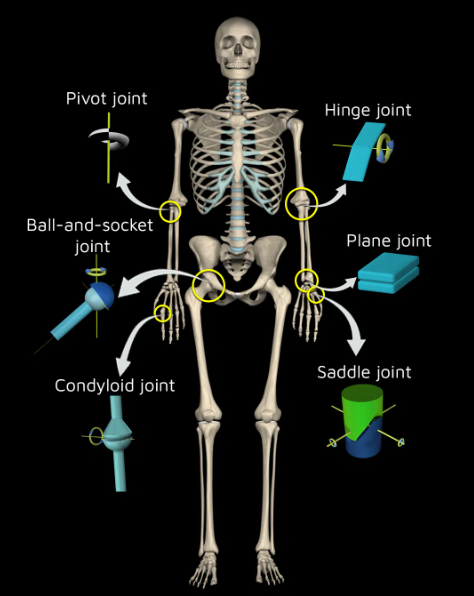
  • The six types of a freely movable joint include
  1. Ball and Socket- example-  such as the hip joint or shoulder joint.
  2. Saddle- example- joint at the base of the thumb.
  3. Hinge-  example- the knee and elbow joints.
  4. Condyloid- for example- the jaw or finger joints.
  5. Pivot- example- the joint between the first and second vertebrae in the neck.
  6. Gliding/Plane- example- wrist joints.

       The Below Image shows the type of joints and their position in the body.

8

When was the Goods and Services Tax (GST) introduced in India?

  1. ((a))

    1st June 2017

  2. ((b))

    1st August 2017

  3. ((c))

    1st July 2017

  4. ((d))

    1st September 2017

Show Answer
Answer: ((c))

1st July 2017

The correct answer is 1st July 2017.

Important Points

  • The GST was passed on 1st July 2017.
  • State Legislatures of different States have passed respective State Goods and Services Tax Bills. After the enactment of various GST laws, GST was launched with effect from 1st July 2017 by our Prime Minister Narendra Modi, in the presence of Sh. Pranab Mukherjee, the then President of India in a midnight function at the Central Hall of Parliament of India.

Additional Information 

  • On 19th December 2014, The Constitution (122nd Amendment) Bill 2014 was introduced in the Lok Sabha and was passed by Lok Sabha in May 2015.
  • The Bill was passed by the Rajya Sabha on 3rd August 2016 and by the Lok Sabha on 8th August 2016. After ratification by the required number of State legislatures and assent of the President, the Constitutional amendment was notified as Constitution (101st Amendment) Act 2016 on 8th September 2016. The Constitutional amendment paved the way for the introduction of Goods and Services Tax in India.
9

Which among the following is not a statutory body?

  1. ((a))

    Central Information Commission

  2. ((b))

    Union Public Service Commission

  3. ((c))

    Central Board of Film Certification

  4. ((d))

    Central Vigilance Commission

Show Answer
Answer: ((b))

Union Public Service Commission

The correct answer is Union Public Service Commission.

Key Points

  • Union Public Service Commission is not a statutory body it is a Constitutional Body.
  • Statutory body:
  • Such bodies as are established under a statute or an Act of Parliament
  • e.g. Central Vigilance Commission, Central Information Commission, Central Board of Film Certification, etc.

Additional Information

  • Public Sector Undertakings:
  • Public Sector Undertakings have been set up by Government in the form of companies or corporations in which the majority shares are held by the President of India or his nominees.
  • PSU's are managed by the Board of Directors, which includes officials and non-officials
  • E.g. BHEL, NTPC, ONGC, etc.
  • Constitutional Bodies:
  • Such bodies are established under the provisions of the Constitution of India.
  • E.g. Union Public Service Commission, Election Commission, Comptroller and Auditor General of India etc.

Important Points

  • Union Public Service Commission: (As of April 2023)
  • Founded: 1 October 1926
  • Chairperson: Dr. Ajay Kumar
  • Headquarters: Dholpur House, New Delhi
  • Minister responsible:  Ministry of Personnel, Public Grievances, and Pensions
  • Articles: 315 to 323.
10

The number of chromosomes in the human body is _______.

  1. ((a))

    42

  2. ((b))

    44

  3. ((c))

    46

  4. ((d))

    48

Show Answer
Answer: ((c))

46

The correct answer is 46.

Key Points

  • Every cell in the human body contains 23 pairs of such chromosomes; our diploid number is therefore 46, our 'haploid' number 23.
  • Of the 23 pairs, 22 are known as autosomes.
  • The chromosome is the fibrous nodules found in the cells of all flora and fauna, which determine and transmit all the genetic properties.
  • The number of chromosomes in each species remains fixed.
  • The main function of the chromosome is to carry genes.
  • Chromosomes are like long strands of DNA, consisting of many genes.
  • Females have two 'X' chromosomes, while males have one 'X' and one 'Y' chromosome each.
11

In which railway station of South Africa was Mahatma Gandhi evicted from the first class compartment of the train in 1893 due to racial discrimination?

  1. ((a))

    Johannesburg

  2. ((b))

    Pietermaritzburg

  3. ((c))

    Rustenburg

  4. ((d))

    Polokwane

Show Answer
Answer: ((b))

Pietermaritzburg

The correct answer is Pietermarizburg.

Key Points

  • Mahatma Gandhi was evicted from the first class compartment of the train in 1893 due to racial discrimination at Pietermaritzburg railway station in South Africa.
  • On 7 June 1893, Mahatama Gandhi was thrown out of the for not giving up his seat after the objection of a European man, as the colored people were not allowed to travel in first class apartments with white people.
  • Gandhi in response to this discrimination formed the Natal India congress in 1894 and fought peacefully against racial discrimination by white people, following the philosophy of Satyagraha.
  • He also established Phoenix farm in Durban, South Africa in 1904  to explore and spread the philosophy of non-violence and Satyagraha.

Additional Information

  • Gandhi returned to India in 1915 and joined the Indian freedom struggle.
  • His first Satyagraha was done in Champaran in 1917 against the  British for forceful Indigo Cultivation by Indian peasants.
  • WIth the philosophy of non-violence and satyagraha, he played a significant role in the Indian freedom struggle.
  • His major movements which led to the strengthening of the Indian freedom struggle were the Khilafat Movement Non-cooperation Movement. ...

Salt March, Quit India Movement.

  • He was titled Father Of Nation by Netaji Subhash Chandra Bose.
12

A root hair does not contain

  1. ((a))

    Vacuole

  2. ((b))

    Chloroplast

  3. ((c))

    Cell wall

  4. ((d))

    Nucleus

Show Answer
Answer: ((b))

Chloroplast

Concept:

  • Root hairs are elongation of the epidermis of roots in plants.
  • They serve to increase the surface area of absorption by roots.

Explanation:

  • Root hairs are fine and delicate, thread-like structures.
  • They possess vacuoles as they absorb lots of water and minerals
  • Cell wall and nucleus are also present.
  • However, they lack chloroplast.
  • Chloroplast contains the pigment chlorophyll which is a green-coloured pigment responsible for photosynthesis.
  • Since root hairs are non-green tissue with no photosynthesis hence chloroplast is absent.

∴ Root hair does not contain chloroplast.

Additional Information

Chloroplast: 

  • The chloroplast is an organelle that contains the photosynthetic pigment chlorophyll that captures sunlight and converts it into useful energy, thereby, releasing oxygen from water.
  • Chloroplasts are found in all green parts of plants and algae.
  • They are the food producers of plants.
  • These are found in the guard cells located in the leaves of the plants.
  • They contain a high concentration of chlorophyll that traps sunlight.
  • This cell organelle is not present in the roots of plants and animal cells.
13

Manjusha painting is related to which of the following state?

  1. ((a))

    Bihar

  2. ((b))

    Rajasthan

  3. ((c))

    Gujarat

  4. ((d))

    Punjab

Show Answer
Answer: ((a))

Bihar

The correct answer is Bihar.

Key Points

  • Manjusha art is folk art from Bhagalpur, Bihar, and dates back to the 7th century. It is also called scroll painting.
  • The name Manjusha is also associated with an elaborate story, a goddess and a festival celebrated in Bhagalpur.
  • The Sanskrit word "Manjusha" means a box and manjus are temple-shaped boxes, made of bamboo, jute-straw and paper, inside which devotees keep their ceremonial contents. However, these boxes are illustrated with pictures that tell a story.
  • The story is of Bihula who saved her husband from the wrath of the deity and snakebite and also of Bishehari or Manasa, the serpent goddess who is known for her anger when she is angry, but also has fierce protection when she is pleased. Is.
  • The festival of Bishahri is celebrated every year on 17 and 18 August. During this puja, two things are made during this puja. One is "Kalash" and the other is Manjusha.​

Additional Information

StateFolk Paintings
RajasthanBani thani painting, ragini, Phad painting, Gudna Motif, etc.
GujaratRathwa painting, Pithora painting etc.
PunjabMural paintings, Shri Darbar Sahib painting, etc.
14

A nutrient which acts as a cushion to the vital organs and protects them from shocks and external injuries is:

  1. ((a))

    fat

  2. ((b))

    carbohydrate

  3. ((c))

    vitamin

  4. ((d))

    protein

Show Answer
Answer: ((a))

fat

The correct answer is Fat

Key Points

  • The nutrient that acts as a cushion to the vital organs and protects them from shocks and external injuries is fat (specifically, adipose tissue).
  • Fat provides insulation and serves as a protective cushion around organs such as the kidneys and heart,
  • It helps to absorb shocks and reduce the risk of injury.
  • In addition to fat, protein also plays a role in protecting vital organs.
  • For example, muscle tissue provides structural support and can help protect organs from physical impact.

Additional InformationOther roles of fat in the body include:

  1. Energy storage: Fat acts as a major source of energy.
  2. Thermal insulation: Fat helps maintain body temperature by acting as an insulator.
  3. Absorption of fat-soluble vitamins: Fat is essential for the absorption of vitamins A, D, E, and K.

Moreover, the connective tissue, which contains collagen and elastin proteins, provides structural support to organs and tissues, although it's not classified as a nutrient per se. The combination of these structures, along with fat, ensures that organs are both protected and properly supported within the body.

15

Normally the ‘Adolescence' falls under which age :

  1. ((a))

    6 - 12 years

  2. ((b))

    13 - 21 years

  3. ((c))

    18 - 25 years

  4. ((d))

    21 years and above

Show Answer
Answer: ((b))

13 - 21 years

The age range of 13 to 21 years is most commonly associated with adolescence in developmental psychology.

Key Points

  • Adolescence is typically defined as the period of life between childhood and adulthood.
  • It begins around the age of 13 and generally ends around 21 years of age, marking the transition from childhood to adulthood.
  • During this phase, individuals undergo significant physical, emotional, cognitive, and social changes, such as puberty, identity development, and increasing independence.

Thus, it is concluded that Normally the ‘Adolescence' falls under 13- 21 years.

16

Who discovered the antibiotic penicillin?

  1. ((a))

    Archimedes

  2. ((b))

    Alexander Fleming

  3. ((c))

    Alexander Grahman Bell

  4. ((d))

    Louis Pasteur

Show Answer
Answer: ((b))

Alexander Fleming

The correct answer is Alexander Fleming.

  • Penicillin fungi are the source of penicillin.
  • People take this antibiotic either orally or through injection.
  • Alexander Fleming was the one who discovered Penicillin.
  • It is not humans who are attaining resistance against the antibiotic, rather the bacteria.
  • It is not because the bacteria is absorbing the antibiotic that they are becoming resistant to it.
17

The 68th annual Grammy Awards conducted on 1 February 2026, in Los Angeles, honoured which of the following performers as Best New Artist?

  1. ((a))

    Olivia Dean

  2. ((b))

    Leon Thomas

  3. ((c))

    Addison Rae

  4. ((d))

    Lola Young

Show Answer
Answer: ((a))

Olivia Dean

The correct answer is Olivia Dean.

Key Points

  • The 68th annual Grammy Awards were held on February 1, 2026, at the Crypto.com Arena in Los Angeles, California, honoring the best musical achievements released during the 2025 eligibility year.
  • Olivia Dean emerged as the winner in the Best New Artist category, a major feat in the General Field of the awards. She was recognized for her soulful vocals and the significant commercial and critical breakthrough of her music during the 2025 period. Hence, the option Olivia Dean is the correct answer.
  • The Best New Artist category is designed for a performer who releases, during the Eligibility Year, the first recording which establishes their public identity. It is one of the most prestigious "Big Four" categories alongside Album of the Year, Record of the Year, and Song of the Year.
  • In the 68th edition, the eligibility rules required that an artist must have released a minimum of five singles/tracks or one album and must not have been entered in this category more than three times previously.
  • Other nominees like Leon Thomas, Addison Rae, and Lola Young were also strong contenders who demonstrated exceptional growth in their respective genres, but Olivia Dean's overall impact and artistic breakthrough were deemed the most significant by the Recording Academy voters.

Additional Information

  • The Recording Academy:
  • Founded in 1957, it is a United States-based organization of music professionals, including performers, songwriters, producers, and engineers. It is the body responsible for organizing the Grammy Awards.
  • The Recording Academy aims to improve the cultural condition and quality of life for music and its makers. Its headquarters are located in Santa Monica, California.
  • Grammy Award History:
  • The first Grammy Awards ceremony was held on May 4, 1959, simultaneously in Los Angeles and New York City. It was originally called the Gramophone Awards.
  • The trophy is a gilded gramophone, handcrafted by Billings Artworks in Colorado. It represents excellence in the recording arts and sciences.
  • Nomination and Voting Process:
  • Entries are submitted by members and record companies. They are then screened for eligibility and genre placement by experts.
  • The voting is conducted by Voting Members of the Recording Academy, ensuring a peer-reviewed selection process that emphasizes technical proficiency and artistic integrity over chart positions or sales figures.
  • Geographical Significance:
  • Los Angeles serves as the primary hub for the ceremony, reflecting its status as a global center for the entertainment and music industry. The 68th Grammys continued this tradition, drawing thousands of international industry leaders to the city.

Important Points

  • Best New Artist Evolution: Over the years, the Recording Academy has updated the rules for this category to reflect the changing nature of the music industry, such as removing the strict limit on the number of albums released to accommodate the rise of streaming and EPs.
  • Cultural Impact: Winning a Grammy often results in a significant "Grammy Bump," where an artist's sales, streaming numbers, and touring opportunities increase substantially due to the global visibility of the event.
  • The "Big Four": The Best New Artist award is unique because it can only be won once in a performer's career, unlike the other three General Field categories which can be won multiple times.
18

The element used almost exclusively for filaments of incandescent lamps is made up of :

  1. ((a))

    Copper

  2. ((b))

    Gold

  3. ((c))

    Silver

  4. ((d))

    Tungsten

Show Answer
Answer: ((d))

Tungsten

The correct answer is Tungsten.

Key Points

  • Tungsten, also known as Wolfram (chemical symbol W and atomic number 74), is used almost exclusively for the filaments of incandescent lamps because it has the highest melting point of all metals, measured at approximately 3422°C (6192°F).
  • This extremely high melting point allows the filament to be heated to incandescence (the emission of light caused by heat) without the metal melting or losing its structural shape.
  • It possesses very low vapor pressure at high temperatures, which is a critical feature. This property prevents the filament from evaporating rapidly, which would otherwise lead to the thinning of the wire and the blackening of the inner glass surface of the bulb.
  • Tungsten has high electrical resistance. When an electric current passes through the thin filament, the resistance generates significant heat energy, which then produces visible light through thermal radiation.
  • The metal is highly ductile, meaning it can be drawn into extremely fine wires. In most bulbs, this wire is coiled (or double-coiled) to increase the length of the filament within a small space, thereby increasing the light output and efficiency.

Additional Information

  • Copper (Option A): Copper is a reddish-brown metal known for its excellent electrical conductivity. It is the standard material for electrical wiring and electronics worldwide. However, with a melting point of only 1085°C, it would melt long before it could reach the temperatures necessary to emit bright light.
  • Gold (Option B): Gold is a noble metal that is highly malleable and resistant to oxidation and corrosion. It is used in high-end connectors and aerospace components. Its melting point is 1064°C, making it unsuitable for lamp filaments despite its good conductivity.
  • Silver (Option C): Silver has the highest electrical and thermal conductivity of all elements. It is used in jewelry, high-grade mirrors, and specialized electronics. Because its melting point is relatively low at 961.8°C, it cannot be used as a filament material.
  • Inert Gas Filling: To protect the Tungsten filament from oxidation (burning), incandescent bulbs are either vacuum-sealed or filled with inert gases like Argon, Nitrogen, or Krypton. These gases help slow down the evaporation of Tungsten atoms, extending the lifespan of the bulb.
  • Tungsten Ores: Tungsten is primarily found in minerals such as Wolframite and Scheelite. China is currently the world’s leading producer of this metal, accounting for over 80% of the global supply.

Important Points

  • Historical Context: Early incandescent lamps used carbonized filaments (invented by Joseph Swan and Thomas Edison in 1879). Tungsten filaments were introduced around 1904 by Sándor Just and Ferenc Hanaman, which revolutionized the industry by being more efficient and durable.
  • Energy Efficiency: Conventional incandescent bulbs are considered energy-inefficient as they convert only about 5% to 10% of electricity into visible light, while the rest is wasted as heat.
  • Modern Transition: Due to high energy consumption, many countries have implemented government regulations to phase out incandescent bulbs in favor of Light Emitting Diodes (LEDs) and Compact Fluorescent Lamps (CFLs), which provide similar lumens at a fraction of the wattage.
  • Other Applications: Besides bulbs, Tungsten’s high density and hardness make it useful in military projectiles, X-ray tubes, TIG welding electrodes, and cutting tools (as Tungsten Carbide).
19

On which of the following scientific principles does a steam engine work? 

  1. ((a))

    Superconductivity

  2. ((b))

    Photoelectric effect

  3. ((c))

    Laws of thermodynamics

  4. ((d))

    Newton’s laws of motion

Show Answer
Answer: ((c))

Laws of thermodynamics

The correct answer  is Laws of thermodynamics

Key Points

  • A steam engine operates based on the "Laws of thermodynamics" principle.
  • A steam engine converts heat energy from steam into mechanical work,
  • It aligns with the fundamental concept of thermodynamics regarding energy transfer and conversion.
  • The steam engine is based on the zeroth,first and second laws of thermodynamics.

Additional Information

  • The laws of thermodynamics govern the behavior of energy and matter in a system.
  • They are fundamental principles that apply to various physical processes. Here are the four laws:
  • Zeroth Law of Thermodynamics:
  • If two systems are each in thermal equilibrium with a third system, they are in thermal equilibrium with each other.
  • This law allows the definition of temperature. It forms the basis for temperature measurement and establishes that temperature is a transitive property.
  • First Law of Thermodynamics (Law of Energy Conservation):
  • Energy cannot be created or destroyed, only transformed from one form to another.
  • Second Law of Thermodynamics:
  • The entropy of an isolated system always increases over time.
  • This law suggests that natural processes tend to move towards a state of greater disorder or randomness.
  • It also implies that heat flows from hot objects to cold objects and that no process can be 100% efficient.
  • Third Law of Thermodynamics:
  • As the temperature of a system approaches absolute zero (0 K), the entropy of the system approaches a minimum constant.
  • This law implies that it is impossible to reach absolute zero in a finite number of steps, and at absolute zero, a perfect crystal would have zero entropy
20

The Purva Mimansa school of philosophy was founded by __________ in ancient India.

  1. ((a))

    Vyasa

  2. ((b))

    Kapila

  3. ((c))

    Patanjali

  4. ((d))

    Jaimini 

Show Answer
Answer: ((d))

Jaimini 

The correct answer is Jaimini.

Key Points

  • The Purva Mimansa school of philosophy traces its origins back to Jaimini, who founded it in ancient India around 400 B.C..
  • Jaimini is renowned as the author of the Mimansa Sutra, a seminal text in Hindu philosophy.
  • This school of thought, Purva Mimansa, places significant emphasis on the importance of yajnas (ritual sacrifices) and mantras (sacred utterances) in upholding the cosmic order.
  • It asserts that human salvation can only be achieved by adhering to the principles laid down in the Vedas. Mimamsa is classified as one of the six orthodox schools of Indian philosophy, alongside Nyaya-vaisheshika systems.
  • It underscores the significance of valid knowledge and holds that the Vedas are timeless repositories of all knowledge. According to Mimamsa philosophy, religion entails fulfilling the duties prescribed by the Vedas.

Important Points

  • Krishna Dvaipayana, commonly known as Vyasa or Vedavyasa, is a revered sage in various Hindu traditions, prominently recognized as the author of the epic Mahābhārata.
  • Kapila, also known as Cakradhanus, is another esteemed sage in Hindu lore. According to the Bhagavata Purana, he is the son of the sage Kardama and Devahuti, who was the daughter of Svayambhuva Manu and the sister of Mahasati Ansuya.
  • Patanjali, alternatively referred to as Gonardiya or Gonikaputra, is renowned as a Hindu author, mystic, and philosopher. Although the exact timeframe of his life remains uncertain, estimates based on the analysis of his works suggest that he may have lived between the 2nd century BCE and the 4th century CE.
21

Which of the following pH values indicates neutrality in a solution?

  1. ((a))

    7

  2. ((b))

    -14

  3. ((c))

    14

  4. ((d))

    0

Show Answer
Answer: ((a))

7

The correct answer is 7.

Key Points

  • pH stands for the power of hydrogen.
  • It is a measurement of the hydrogen ion concentration in the body.
  • The pH scale measures how acidic or basic a substance is.
  • The total pH scale ranges from 1 to 14, with 7 considered to be neutral.
  • A pH less than 7 is said to be acidic and solutions with a pH greater than 7 are basic or alkaline.

Additional Information

  • | pH VALUE | H+ CONCENTRATION | EXAMPLES | | --- | --- | --- | | 0 | 10000000 | battery acid | | 1 | 1000000 | gastric acid | | 2 | 100000 | lemon juice, vinegar | | 3 | 10000 | orange juice, soda | | 4 | 1000 | tomato juice, acid rain | | 5 | 100 | black coffee, bananas | | 6 | 10 | urine, milk | | 7 | 1 | pure water, neutral solution | | 8 | 0.1 | seawater, eggs | | 9 | 0.01 | baking soda | | 10 | 0.001 | milk of magnesia | | 11 | 0.0001 | ammonia solution | | 12 | 0.00001 | soapy water | | 13 | 0.000001 | bleach, oven cleaner | | 14 | 0.0000001 | liquid drain cleaner |

  • Water with a pH of five is ten times more acidic than water having a pH of six.

22

Who is the author of the book “Kashmir : Travels in Paradise on Earth” ?

  1. ((a))

    Romesh Bhattacharji

  2. ((b))

    Vikram Seth

  3. ((c))

    Jhumpa Lahiri

  4. ((d))

    Shamas Faqir

Show Answer
Answer: ((a))

Romesh Bhattacharji

The Correct answer is Romesh Bhattacharji.

Key Points

  • Romesh Bhattacharji is the author of the book "Kashmir: Travels in Paradise on Earth".
  • The book provides a detailed account of the author's travels and experiences in Kashmir.
  • It offers insights into the culture, landscapes, and people of the region.
  • The book is well-regarded for its vivid descriptions and the author's deep understanding of Kashmir.
  • Romesh Bhattacharji is known for his expertise in travel writing and has authored several other notable travel books.

 Additional Information

  • Vikram Seth
  • Vikram Seth is an Indian author and poet, best known for his novel "A Suitable Boy".
  • He has also written other notable works such as "An Equal Music" and "The Golden Gate".
  • Jhumpa Lahiri
  • Jhumpa Lahiri is an acclaimed author known for her works on the Indian diaspora.
  • She is the author of the Pulitzer Prize-winning collection "Interpreter of Maladies".
  • Other notable works include "The Namesake" and "The Lowland".
  • Shamas Faqir
  • Shamas Faqir was a Kashmiri Sufi poet known for his mystical poetry.
  • His works are significant in the context of Kashmiri literature and Sufi traditions.
23

Which of the following animals is NOT a mammal?

  1. ((a))

    Dolphin

  2. ((b))

    Lizard

  3. ((c))

    Bat

  4. ((d))

    Elephant

Show Answer
Answer: ((b))

Lizard

The correct answer is 2) Lizard

Key Points

  • Lizard is not a mammal; it is a reptile.
  • Mammals are warm-blooded vertebrates that have hair or fur and whose females have mammary glands for feeding milk to their young.
  • Examples of mammals include dolphins, bats, and elephants, all of which give birth to live young and have body hair at some stage of their life.
  • Reptiles, like lizards, are cold-blooded and lay eggs. They have scales and do not possess mammary glands.

Additional Information

  • Dolphins are aquatic mammals known for their intelligence and social behavior.
  • Bats are the only mammals capable of sustained flight and are found in almost every part of the world.
  • Elephants are the largest land mammals, known for their intelligence, social structure, and long trunks.
  • Lizards belong to the order Squamata and are commonly found in various habitats around the world.
  • Mammals and reptiles are both classes of vertebrates but differ significantly in their physiology and reproductive methods.
24

The concept of 'Directive Principles of State Policy' (DPSP) in the Indian Constitution was borrowed from the constitution of which country?

  1. ((a))

    USA

  2. ((b))

    Ireland

  3. ((c))

    Australia

  4. ((d))

    USSR

Show Answer
Answer: ((b))

Ireland

The correct answer is option 4 i.e Ireland.

  • Indian Constitution borrowed the idea of directive principles of state policy from Ireland.
  • The makers of the Constitution of India were influenced by the Irish Home Rule Movement and other national movements of Ireland.
  • Part IV of the Indian constitution deals with the directive principles of state policy.
  • Directive principles of state policy(DPSP) deal with economic and cultural rights.
  • Directive Principles of state policy(DPSP) are non-justiciable.
  • Directive principles of state policy aims at the establishment of the welfare state.
  • Important features in the Indian constitution borrowed from Ireland are:
  • The nomination of members to Rajya Sabha
  • Presidetnial election.
  • Directive principles of state policy
  • Important features in the Indian constitution borrow from Germany is:
  • Suspension of Fundamental Rights during the emergency.
  • Important features in the Indian constitution borrow from South Africa are:
  • Amendment to the Constitution.
  • Election of members of Rajya Sabha.
  • Important features in the Indian constitution borrow from Britain are:
  • Parliamentary form of government.
  • Office of Comptroller and Auditor General.
  • Rule of Law.
  • Legislative procedure.
  • Single Citizenship.
  • Cabinet system.
  • Writs.
25

In which year was the Kaziranga National Park declared as a Reserved Forest?

  1. ((a))

    1908

  2. ((b))

    1925

  3. ((c))

    1900

  4. ((d))

    1940

Show Answer
Answer: ((a))

1908

The correct answer is 1908.

  • Kaziranga National Park is located in the Golaghat and Nagaon districts of Assam.
  • The popular national park is also a UNESCO World Heritage Site.
  • Two-thirds of the world's Great One-horned Rhinoceroses live in the park.
  • The national park is also recognized as an Important Bird Area (IBA) making it not only an ideal wildlife sighting destination in India.
  • In 1908, Kaziranga was designated a "Reserve Forest".


National Park

  • There are 106 National parks in India.
  • First national park in IndiaJim Corbett National Park (previously known as Hailey National Park).
  • No human activity/rights allowed except for the ones permitted by the Chief Wildlife Warden of the State.
  • It covered a 1.23 percent geographical area of India.
  • Recently in July Assam government decided to upgrade the Dehing Patkai Wildlife Sanctuary into National Park.
26

“Tinkathia System” in Champaran meant

  1. ((a))

    Cultivation of Indigo on the 3/20 area of land

  2. ((b))

    Cultivation of Indigo on 3/19 area of land.

  3. ((c))

    Cultivation of Indigo on 3/18 area of land.

  4. ((d))

    None of these

Show Answer
Answer: ((a))

Cultivation of Indigo on the 3/20 area of land

The correct answer is Cultivation of Indigo on the 3/20 area of land.

Key Points

  • Tinkathia System:
  • The European planters had been forcing the peasants to grow indigo on 3/20 part of the total land (called the tinkathia system).
  • As the name suggests Tinkathia means teen kattha.
  • When the British introduced the Indigo plantation in Bengal( Bihar was part of it ) in the 1820s.
  • Under this system, those farmers who had 1 bigha land(1bigha=20 kattha) had to plant Indigo over 3 kattha.
  • If you have 2 bigha land you must have to plant Indigo over 6 kattha land.
  • The price of Indigo initially was high in the market but planters who were European usually paid very low prices to farmers.
  • Moreover, the seed and initial cost used to provided by European only.
  • It means farmers had to pay more in return they get less.
  • They were all finally debt-ridden with less fertile land.
  • This gave birth to several revolts and movements.
  • Indigo revolt(1859) and Champaran Satyagraha(1917) are the famous ones.

Additional Information

  • Significance of Champaran movement:
  • The Champaran Satyagraha of 1917 was the first Satyagraha movement led by Gandhi in India and is considered a historically important revolt in the Indian Independence Movement.
  • Gandhi traveled across the district to different villages, meeting farmers and taking note of their sufferings and complaints against the forced indigo cultivation.
  • He was given an ultimatum by the British government to leave Champaran.
  • Gandhi refused to leave and responded that he was ready to bear "the penalty of civil disobedience".
  • During the 31st session of the Congress in Lucknow in 1916, Gandhiji met Raj Kumar Shukla, a representative of farmers from Champaran, who requested him to come and see for himself the miseries of the indigo ryots (tenant farmers) there.
  • Gandhi Ji arrived in Champaran on 10 April 1917 with a team of eminent lawyers i.e.Brajkishore Prasad, Rajendra Prasad, Anugrah Narayan Sinha, and  Acharya Kripalani.
  • As Gandhi was arrested scores of Champaran tenants turned up in protest outside the jail, police stations, and courts.
  • Troubled by this unusual form of resistance that spilled no violence, the government was forced to let go of Gandhi.
  • Gandhiji here remarked, "The country, thus, had its first direct object-lesson in Civil Disobedience,".
  • Indigo Revolt:
  • The indigo farmers revolted in the Nadia district of Bengal by refusing to grow indigo during 1859.
  • In response to this, the planters increased the rents and evicted the farmers, which led to more agitations.
  • In April 1860, all the farmers in the Barasat division of the districts Nadia and Pabna went on a strike and refused to grow indigo.
  • The revolt was backed by the Bengali intelligentsia, Muslims, and missionaries.
  • The whole of the rural population supported the revolt.
  • The press also supported the revolt and played its part in portraying the plight of the farmers and fighting for their cause.
  • The play Nil Darpan (The Mirror of Indigo) by Dinabandhu Mitra written in 1858 - 59 portrayed the farmers’ situation accurately.
  • It showed how farmers were coerced into planting indigo without adequate payment.
  • The play became a talking point and it urged the Bengali intelligentsia to lend support to the indigo revolt.
  • Reverend James Long translated the play into English on the authority of the Secretary to the Governor of Bengal, W S Seton-Karr.
  • The planters who were treated as villains in the play sued Rev. Long for libel. Rev. Long was pronounced guilty and had to pay Rs.1000 as compensation and serve a month in prison.
27

Match List-I with List-II and select the correct answer using the code given below-

LIST - I (Oil Refineries)LIST - II (States)
A.Barauni1.Assam
B.Bongaigaon2.Bihar
C.Bina3.Gujarat
D.Koyali4.Madhya Pradesh
  1. ((a))

    A - 2, B - 4, C - 3, D - 1

  2. ((b))

    A - 3, B - 1, C - 4, D - 2

  3. ((c))

    A - 1, B - 2, C - 3, D - 4

  4. ((d))

    A - 2, B - 1, C - 4, D - 3

Show Answer
Answer: ((d))

A - 2, B - 1, C - 4, D - 3

The correct answer is Option 4.

Key Points

  • Barauni Refinery
  • Location: Barauni, Bihar
  • Details: Established in 1966, the Barauni Refinery is operated by the Indian Oil Corporation Limited (IOCL). It plays a significant role in the oil refining industry in eastern India.
  • Bongaigaon Refinery
  • Location: Bongaigaon, Assam
  • Details: This refinery, also operated by Indian Oil Corporation Limited (IOCL), began operations in 1974. It is an important refinery in the northeastern region of India, contributing to the region’s economic development.
  • Bina Refinery
  • Location: Bina, Madhya Pradesh
  • Details: The Bina Refinery, which began operations in 2011, is a joint venture between Bharat Petroleum Corporation Limited (BPCL) and Mittal Energy Limited. It is a major refinery in central India and plays a key role in refining and distributing petroleum products in the region.
  • Koyali Refinery
  • Location: Koyali, Gujarat
  • Details: The Koyali Refinery is operated by Indian Oil Corporation Limited (IOCL) and was established in 1965. It is one of the largest refineries in western India, crucial for the production and distribution of petroleum products in the region.
  • So, the correct answer is Option 4: A - 2, B - 1, C - 4, D - 3.
28

When did Bihar Public Service Commission come into existence?

  1. ((a))

    1 April 1949

  2. ((b))

    26 January 1950

  3. ((c))

    1 March 1951

  4. ((d))

    1 April 1950

Show Answer
Answer: ((a))

1 April 1949

The correct answer is 1 April 1949.

  • The Bihar Public Service Commission (BPSC) came into existence from April 1, 1949, after its separation from the commission for the state of Orissa and Madhya Pradesh in accordance with the sub-section (1) of 261 of the Government of India Act 1935.
  • its constitutional status was pronounced with the promulgation of the constitution of India on January 26, 1950.
  • It is a Constitutional body under Article 315 of the Constitution of India.
  • Initially, the headquarters of BPSC was at Ranchi, but it shifted to Patna on March 1, 1951, at the instance of the State Government.
  • The first Chairman of the BPSC was Sri Rajandhari Sinha.
  • Sri Radha Krishna Choudhary was the first secretary to the commission.

Important Points

  • The Bihar Public service Commission (Condition of Service) Regulations, 1960 was framed by the Bihar Government in the exercise of the powers conferred by Article 318 of the Constitution of India.
  • Under Rule 3 of the Regulations, 1960, the commission was constituted with a chairman and 10 other members.
  • But the strength of members was reduced to 6 after the bifurcation of the state of Bihar.
  • The current Chairman of BPSC is Sri R.K. Mahajan.
29

What is the sex-ratio in India as per 2011 Census?

  1. ((a))

    940 female per 1000 male

  2. ((b))

    950 female per 1000 male

  3. ((c))

    960 female per 1000 male

  4. ((d))

    None of the above

Show Answer
Answer: ((d))

None of the above

The correct answer is None of the above.

Key Points

  • Sex Ratio:
  • In the Population Census of 2011, it was revealed that the population ratio in India in 2011 is 943 females per 1000 males.
  • The sex ratio is used to describe the number of females per 1000 males.
  • Sex ratio is a valuable source for finding the population of women in India and what is the ratio of women to that of men in India.
  • The Sex Ratio 2011 shows an upward trend from the census 2001 data.
  • Census 2001 revealed that there were 933 females to that of 1000 males.
  • For decades India has seen a decrease in the sex ratio, but since the last two decades, there has been a slight increase in the sex ratio.
  • Over the last five decades, the sex ratio has been moving from around 930 females to that of 1000 males.

Additional Information

  • Sex Ratio of Different Indian States:
  • Kerala - 1084
  • Puducherry - 1037
  • Tamil Nadu - 996
  • Andhra Pradesh - 993
  • Chhattisgarh - 991
  • Andaman and Nicobar Island - 876
  • Delhi - 868
  • Chandigarh - 818
  • Dadra and Nagar Haveli - 774
  • Daman and Diu - 618
30

For which discovery did William Bradford Shockley, John Bardeen and Walter Houser Brattain jointly receive the Nobel Prize in Physics in 1956? 

  1. ((a))

    Discovery of transistor effect 

  2. ((b))

    Discovery of thermionic emission 

  3. ((c))

    Discovery of electromagnetic induction 

  4. ((d))

    Discovery of receptors for temperature and touch

Show Answer
Answer: ((a))

Discovery of transistor effect 

The correct answer is Discovery of transistor effect.

Key Points

  • In 1956, William Bradford Shockley, John Bardeen, and Walter Houser Brattain jointly received the Nobel Prize in Physics for their research on semiconductors and their discovery of the transistor effect.
  • The transistor effect they discovered is a fundamental principle that forms the basis for the functioning of transistors, pivotal components in virtually all modern electronic devices.
  • The development of the transistor, a semiconductor device capable of amplifying electrical signals, was instrumental in paving the path for the electronic age.
  • Their work has had profound impacts on technology, including the development of computers, smartphones, audio and video devices, medical equipment, and much more.

Additional Information

Noble Prize:

  • The Nobel Prize was established in the will of Alfred Nobel, a Swedish inventor, engineer, and industrialist. He signed his last will and testament on 27 November 1895, giving the largest share of his fortune to a series of prizes in physics, chemistry, physiology or medicine, literature, and peace - the Nobel Prizes.
  • The prizes were first awarded in 1901. Each prize consists of a medal, a diploma, and a cash award, which varies each year.
  • The Nobel Prizes are internationally recognized as the most prestigious awards available in their respective fields.
  • They are awarded yearly by various committees and organizations. The Royal Swedish Academy of Sciences selects the Physics and Chemistry laureates, the Nobel Assembly at the Karolinska Institute selects Medicine laureates, the Swedish Academy chooses Literature, and the Nobel Peace Prize is awarded by the Norwegian Nobel Committee.
  • In 1968, Sveriges Riksbank (Sweden's central bank) established The Sveriges Riksbank Prize in Economic Sciences in Memory of Alfred Nobel. Although not one of the prizes established in Alfred Nobel's will, it is widely considered to be a "Nobel Prize" in Economics.
  • A Nobel Prize can be shared by up to three persons. They can either divide it equally or two together can receive a one-half share.
31

Which of the following is NOT an animal of Phylum Chordate?

  1. ((a))

    Earthworm

  2. ((b))

    Snake

  3. ((c))

    Frog

  4. ((d))

    Rabbit

Show Answer
Answer: ((a))

Earthworm

The correct answer is Earthworm.

Key Points

  • Earthworm is not an animal of Phylum Chordate.
  • Phylum Chordate includes animals that have a notochord, a dorsal nerve cord, pharyngeal slits, an endostyle, and a post-anal tail at some point in their life cycle.
  • Examples of Chordates include Snake, Frog, and Rabbit.
  • Earthworms belong to the Phylum Annelida, which is characterized by segmented bodies.

Additional Information

  • Phylum Annelida includes segmented worms like earthworms, leeches, and polychaetes.
  • The main features of annelids are their segmented bodies and the presence of setae or bristles.
  • Chordates are more complex and have a higher level of organization compared to annelids.
32

That Gautam Buddha was born in Lumbini is confirmed by whose inscription?

  1. ((a))

    Samudragupta

  2. ((b))

    Harsh

  3. ((c))

    Ashoka

  4. ((d))

    Pulkeshin II

Show Answer
Answer: ((c))

Ashoka

The correct answer is Ashoka.

Important Points The inscription on the pillar erected by the Mauryan Emperor Asoka in 249 BC testifies that the Lord Buddha was born in 623 BC in the sacred area of Lumbini located in the Terai plains of southern Nepal.

  • Lumbini contains important evidence about the nature of Buddhist pilgrimage centres from as early as the 3rd century BC.
  • Lumbini is located in the Kapilavastu district of Nepal. Buddha was born in Lumbini.

Additional Information

  • Ashoka renounced war and converted to Buddhism. He promoted the concept of dhamma (pious social conduct).
  • Bodhgaya in Bihar is known for the place of enlightenment of Buddha.
  • Buddha delivered his first sermon in Sarnath.
  • Buddha achieved nirvana in Kushinagar of Uttar Pradesh
  • Mahayana Buddhism:
  • After the death of Buddha, a group evolved who believed that compassion for all humanity was an important part of the path, and that teaching is fully available to all.
  • Those who followed the newly expanded ideals called themselves Mahayana meaning the big raft.
  • In Mahayana Buddhism, all practicing Buddhists are apprentice Bodhisattvas.
  • In Mahayana countries, images of the Buddha are set up in the temples and homes as an object of worship.
  • Hinayana Buddhism:
  • From about 100 years after the death of the Buddha, there had been a movement towards embracing the style of Buddhism.
  • The early monks concentrated on personal enlightenment, seeking spiritual answers for themselves, and teaching others the way of enlightenment.
  • But the information was severely limited to the lay community as it was assumed only minks could achieve Buddhahood.
  • This section came to be known as Hinayana or also known as Theravada.
  • Theravada means the way of elders.
  • Milindapanha:
  • The Milindapanha, or "Milinda's Questions," is an important early Buddhist text that usually is not included in the Pali Canon.
  • Even so, the Milindapanha is cherished because it addresses many of Buddhism's most difficult doctrines with wit and clarity.
  • The Milindapanha presents a dialogue between King Menander I (Milinda in Pali) and an enlightened Buddhist monk named Nagasena.
  • Menander- I was an Indo-Greek king thought to have ruled from about 160 to 130 BCE.
  • He was a king of Bactria, an ancient kingdom that took in what is now Turkmenistan, Afghanistan, Uzbekistan, and Tajikistan, plus a small part of Pakistan.
33

The cooking gas is mainly a mixture of the following two gases

  1. ((a))

    Methane and Ethane

  2. ((b))

    Ethane and Propane

  3. ((c))

    Propane and Butane

  4. ((d))

    Butane and Pentane

Show Answer
Answer: ((c))

Propane and Butane

Explanation:

  • Liquefied petroleum gas (LPG) mainly consists of propane and butane.
  • It is odorless that's why Ethyl Mercaptan is added to it so there may be a smell if LPG leaks from its storage container.


Fuel GasesMajor componentUses
Compressed natural gas (CNG)Methane

Ethane
Can be used in place of gasoline, diesel fuel, and liquefied petroleum gas (LPG)
Liquefied petroleum gas (LPG)Butane
Propane
LPG is used for cooking.

An alternative to electric heating, heating oil, or kerosene.

As it is odourless so Ethyl Mercaptan is added to it so there may be smell if LPG leak from its storage container.
34

Which edition of the Patna Book Fair was inaugurated by Bihar CM Nitish Kumar in December 2024?

  1. ((a))

    35th

  2. ((b))

    40th

  3. ((c))

    45th

  4. ((d))

    50th

Show Answer
Answer: ((b))

40th

The correct answer is 40th.

In News

  • The 40th edition of the Patna Book Fair was inaugurated by Bihar Chief Minister Nitish Kumar and Deputy CM Vijay Kumar Sinha on December 6, 2024, at Gandhi Maidan, Patna.

Key Points

  • The Patna Book Fair is a prominent annual event organized to promote literacy, culture, and public awareness.
  • The 40th edition features the theme "Tree, Water, Life and Protection of Environment."
  • The central attraction is the Bihar Land and Revenue Department's section, which showcased printed maps and figures in Kaithi Lipi to help citizens understand the ongoing land survey process.
  • The book fair also highlighted various government initiatives, including Ayushman Bharat and the provision of state land maps.

Additional Information

  • Significance of the Book Fair:
  • The Patna Book Fair serves as a platform to promote literacy and raise awareness about critical socio-economic and environmental issues.
  • It attracts thousands of visitors annually and showcases the work of various government departments and publishers.
  • Theme of the 40th Edition:
  • "Tree, Water, Life and Protection of Environment" emphasizes the urgent need for sustainable environmental practices.
  • The theme reflects global concerns such as rising temperatures and climate change.
  • Land and Revenue Department’s Contribution:
  • The department highlighted its ongoing comprehensive land survey, aimed at modernizing records, resolving disputes, and ensuring effective land management.
  • Citizens could obtain printed land maps and receive assistance with land-related queries at the fair.
35

The first living cell was discovered by

  1. ((a))

    Robert Hooke

  2. ((b))

    Leeuwenhoek

  3. ((c))

    R Altman

  4. ((d))

    K R Porter

Show Answer
Answer: ((b))

Leeuwenhoek

Anton van Leeuwenhoek discovered the first living cell in 1674. Algae Spirogyra was the first living cell observed under a microscope by him. Robert Hooke observed cells of cork under the microscope which are dead cells.

36

In plant cells, which organelle is responsible for photosynthesis? 

  1. ((a))

    Chloroplast 

  2. ((b))

    Mitochondrion

  3. ((c))

    Lysosome 

  4. ((d))

    Peroxisome

Show Answer
Answer: ((a))

Chloroplast 

The correct answer is Chloroplast

Key Points

  • Chloroplasts are responsible for photosynthesis in plant cells.
  • They contain the pigment chlorophyll, which captures light energy to convert carbon dioxide and water into glucose and oxygen.
  • Photosynthesis occurs in the thylakoid membranes within the chloroplasts.
  • Chloroplasts are unique to plant cells and some algae, distinguishing them from animal cells.

Additional Information

  • Mitochondria are the powerhouses of the cell, responsible for producing ATP through cellular respiration.
  • Lysosomes contain digestive enzymes to break down waste materials and cellular debris.
  • Peroxisomes play a role in lipid metabolism and the detoxification of harmful substances.
  • Plant cells also have a cell wall and a large central vacuole, which are not found in animal cells.
37

Cytoplasm is made up of an aqueous ground substance called:

  1. ((a))

    chromoplasm

  2. ((b))

    lysosomal fluid

  3. ((c))

    nucleoplasm

  4. ((d))

    cytosol

Show Answer
Answer: ((d))

cytosol

The correct answer is cytosol.

Key Points

  • Cytoplasm is the jelly-like substance that fills the interior of a cell and is surrounded by the plasma membrane. It consists of the cytosol, organelles, and various inclusions.
  • The cytosol is specifically the aqueous ground substance or the liquid component of the cytoplasm in which the organelles are suspended. Hence, the correct answer is cytosol.
  • It is a complex mixture of substances dissolved in water, which typically makes up about 70% to 90% of its total volume.
  • The cytosol contains dissolved ions (like potassium, sodium, and magnesium), small molecules (such as glucose, amino acids, and nucleotides), and large water-soluble molecules like proteins and enzymes.
  • It serves as the site for several vital metabolic pathways, including glycolysis, protein synthesis (translation), and cell division (cytokinesis).
  • The cytosol also plays a crucial role in providing structural support to the cell by housing the cytoskeleton, which maintains cell shape and enables intracellular transport.

Additional Information

  • Nucleoplasm:
  • This is the type of protoplasm found specifically within the nucleus of a eukaryotic cell.
  • It is enclosed by the nuclear envelope and contains the nucleolus and chromatin (DNA and proteins).
  • Its primary function is to serve as a suspension medium for the genetic material and to maintain the nuclear shape.
  • Chromoplasm:
  • Chromoplasm refers to the peripheral, pigmented portion of the cytoplasm found in certain prokaryotic cells, particularly cyanobacteria (blue-green algae).
  • It contains photosynthetic pigments like chlorophyll a, phycocyanin, and phycoerythrin organized into thylakoids.
  • It is distinct from the centroplasm, which is the colorless inner region containing the DNA.
  • Lysosomal Fluid:
  • This is the specialized fluid contained within lysosomes, which are membrane-bound vesicles used for cellular digestion.
  • The fluid is highly acidic, typically maintaining a pH of 4.5 to 5.0, which is optimal for the activity of hydrolytic enzymes (acid hydrolases).
  • These enzymes break down macromolecules, damaged organelles, and foreign particles like bacteria.
  • Protoplasm:
  • The term protoplasm is a general term used to describe the entire living matter of a cell, comprising both the cytoplasm and the nucleus.
  • It was first coined by J.E. Purkinje in 1839 to denote the substance of the animal embryo.
38

Which Italian pair won the French Open 2024 women’s doubles title?

  1. ((a))

    Sara Errani and Jasmine Paolini

  2. ((b))

    Anna Danilina and Aleksandra Krunic

  3. ((c))

    Jasmine Paolini and Iga Swiatek

  4. ((d))

    Sara Errani and Roberta Vinci

Show Answer
Answer: ((a))

Sara Errani and Jasmine Paolini

The Correct Answer is Sara Errani and Jasmine Paolini.

In News

  • Italian duo Errani and Paolini win French Open women's doubles final.

Key Points

  • Sara Errani and Jasmine Paolini, both from Italy, won the 2024 French Open women’s doubles title.
  • They defeated Anna Danilina and Aleksandra Krunic with a score of 6-4, 2-6, 6-1.
  • This is their first doubles title together at Roland-Garros.
  • Errani now has two French Open doubles titles and six Grand Slam doubles titles overall.
  • Errani also won the mixed doubles title with Andrea Vavassori.
  • Paolini is a strong singles player and was runner-up in 2024 French Open singles final, where she lost to Iga Swiatek.
39

Vitamin B12 is also known as:

  1. ((a))

    biotin

  2. ((b))

    cyanocobalamin

  3. ((c))

    pyridoxine

  4. ((d))

    pantothenic acid

Show Answer
Answer: ((b))

cyanocobalamin

The correct answer is cyanocobalamin

Key Points

  • Vitamin B12 is also known as cyanocobalamin.
  • It is a water-soluble vitamin that is essential for the production of red blood cells and the maintenance of the nervous system.
  • Vitamin B12 is naturally found in animal products such as meat, fish, poultry, eggs, and dairy.
  • A deficiency in Vitamin B12 can lead to anemia and neurological issues.

Additional Information

  • Biotin is also known as Vitamin B7 and is important for skin, hair, and metabolic health.
  • Pyridoxine, or Vitamin B6, is crucial for amino acid metabolism and neurotransmitter synthesis.
  • Pantothenic acid is also known as Vitamin B5 and is essential for fatty acid synthesis and energy production.
  • Vitamin B12 supplements are often recommended for vegetarians and older adults who may have difficulty absorbing the vitamin from food.
40

Which of the following terms describes the solution present inside the central vacuole in a plant cell?

  1. ((a))

    Cell sap

  2. ((b))

    Stroma

  3. ((c))

    Granum

  4. ((d))

    Tonoplast

Show Answer
Answer: ((a))

Cell sap

The correct answer is option 1, i.e. Cell sap.

  • Mature plant cells contain a large central vacuole which is formed by fusion of many small vacuoles.
  • The solution inside the large central vacuole is called cell sap.
  • Cell sap is the plant cell's repository of inorganic ions.
  • Stroma is the fluid present outside the thylakoids in plant cells.
  • Grana are stacks of thlakoids.
  • Tonoplast is the membrane surrounding the large central vacuole of a plant cell.
41

Which of the following is the structural and functional unit of an organism?

  1. ((a))

    ATP

  2. ((b))

    Mitochondria

  3. ((c))

    Nucleus

  4. ((d))

    Cell

Show Answer
Answer: ((d))

Cell

The correct answer is Cell

Key Points

  • The cell is the basic structural and functional unit of all living organisms.
  • Cells are the smallest units of life that can replicate independently, and they are often called the "building blocks of life".
  • There are two main types of cells: prokaryotic cells, which lack a nucleus, and eukaryotic cells, which have a nucleus.
  • Cells carry out essential functions such as energy production, nutrient processing, and waste elimination.

Additional Information

  • ATP (Adenosine Triphosphate) is a molecule that carries energy within cells.
  • The mitochondria are organelles within the cell that produce ATP through cellular respiration.
  • The nucleus is an organelle in eukaryotic cells that contains most of the cell's genetic material.
  • Cells can be specialized to perform specific functions, such as muscle cells, nerve cells, and blood cells.
42

What is the outer layer of the kidney known as?

  1. ((a))

     Cortex

  2. ((b))

    Medulla

  3. ((c))

    Pelvis

  4. ((d))

    Glomula

Show Answer
Answer: ((a))

 Cortex

  • The outer layer of the kidney is known as the renal cortex.
  • It contains the renal tubules and renal corpuscles except for the parts of the loop of Henle which descend into the renal medulla. It also contains cortical collecting ducts and blood vessels. It is that part of the kidney where ultrafiltration occurs.
  • The innermost part of the kidney is known as the renal medulla.
  • The renal pelvis is a funnel-shaped dilated part of the ureter in the kidney.
  • The glomerulus is a network of capillaries.
43

Crushed pottery can be used to manufacture

  1. ((a))

    Fire bricks

  2. ((b))

    Clay tiles

  3. ((c))

    Stone bricks

  4. ((d))

    Terracotta

Show Answer
Answer: ((d))

Terracotta

Explanation :

  • Pottery is the art of making ceramics and other pottery items using clay.
  • The items are burned at a high temperature in a kiln to make them impregnable.
  • Crushed pottery is also used to make bonfire-fired ceramics, as they give open body texture.
  • Crushed pottery is used in the manufacture of  terracotta
  • Terra-cotta is a Latin word that means 'baked earth'. It is glazed or unglazed fired clay that is used to make earthenware articles such as pots, bricks, statuettes and for architectural purposes like roofing etc.
  • The articles prepared from refractory clays which, as mixed with stone and crushed pottery, are called stoneware.
  • The articles prepared from fine earthenware which is white, thin and semi-transparent, are called porcelain
  • In Bali, terracotta bricks are used to build temples and traditional houses. With the advancement of building and construction technology, nowadays, terracotta bricks are mostly used for decoration on walls or landscape elements
44

What is u in the equation s = ut + 1/2 at2, which represents the position-time relation?

  1. ((a))

    Uniform acceleration

  2. ((b))

    Speed of the object

  3. ((c))

    Change in momentum

  4. ((d))

    Initial velocity

Show Answer
Answer: ((d))

Initial velocity

The Correct answer is Initial velocity.

Key Points

  • In the equation s = ut + 1/2 at², u stands for the initial velocity of the object.
  • This equation is one of the fundamental equations of motion in classical mechanics, often referred to as the second equation of motion.
  • The term s represents the displacement or position change of the object.
  • The term t represents the time duration over which the motion occurs.
  • The term a stands for the acceleration of the object.
  • The equation combines initial velocity (u), acceleration (a), and time (t) to determine the displacement (s).
  • This equation is derived from the basic principles of Newtonian mechanics.

 Additional Information

  • Uniform acceleration
  • Uniform acceleration refers to a constant rate of change in velocity.
  • In equations of motion, acceleration (a) is often assumed to be uniform.
  • Speed of the object
  • Speed is a scalar quantity representing how fast an object is moving.
  • Speed does not include direction, unlike velocity, which is a vector quantity.
  • Change in momentum
  • Momentum is the product of the mass and velocity of an object.
  • The change in momentum is often described by the impulse-momentum theorem.
45

Where is the Headquarters of SAARC ?

  1. ((a))

    Jakarta

  2. ((b))

    Manila

  3. ((c))

    Kathmandu

  4. ((d))

    Shanghai

Show Answer
Answer: ((c))

Kathmandu

The correct answer is Kathmandu.

Key Points

  • The South Asian Association for Regional Cooperation (SAARC)
  • It was established with the signing of the SAARC Charter in Dhaka on 8 December 1985.
  • The idea of regional cooperation in South Asia was first raised in November 1980.
  • After consultations, the foreign secretaries of the seven founding countries—Bangladesh, Bhutan, India, Maldives, Nepal, Pakistan, and Sri Lanka—met for the first time in Colombo in April 1981.
  • Afghanistan became the newest member of SAARC at the 13th annual summit in 2005.
  • The Headquarters and Secretariat of the Association are in Kathmandu, Nepal. Hence, Option 3 is correct.
  • SAARC comprises of eight-member States
  • Afghanistan, Bangladesh, Bhutan, India, Maldives, Nepal, Pakistan, and Sri Lanka.
  • There are currently nine Observers to SAARC, namely: (i) Australia; (ii) China; (iii) the European Union; (iv) Iran; (v) Japan; (vi) the Republic of Korea; (vii) Mauritius; (viii) Myanmar; and (ix) the United States of America.

Additional Information

  • | Organization | Headquarters | | --- | --- | | United Nations Organisation | New York, USA | | Organization for Economic Cooperation and Development (OECD) | Paris, France | | United Nations Industrial Development Organization (UNIDO) | Vienna, Austria | | International Atomic Energy Agency | Vienna, Austria | | Organization of Petroleum Exporting Countries (OPEC) | Vienna, Austria | | International Monetary Fund (IMF) | Washington DC, USA | | World Bank | Washington DC, USA | | Amnesty International | London | | International Maritime Organisation | London | | International Court Of Justice | The Hague, The Netherlands | | Food and Agricultural Organisation (FAO) | Rome | | North Atlantic Treaty Organisation (NATO) | Brussels, Belgium | | International Renewable Energy Agency | Abu Dhabi (UAE) | | South Asian Association for Regional Cooperation | Kathmandu, Nepal | | Asian Development Bank | Manila | | Association of Southeast Asian Nations (ASEAN) | Jakarta, Indonesia | | Asia Pacific Economic Cooperation (APEC) | Singapore | | Organization of Islamic Cooperation | Jeddah, Saudi Arabia | | Indian Ocean Rim Association for Regional Cooperation | Ebene, Mauritius | | Organization for the Prohibition of Chemical Weapons | The Hague, The Netherlands | | International Hydrographic Organization | Monaco | | International Chamber of Commerce | Paris, France | | Internet Corporation for Assigned Names and Numbers (ICANN) | Los Angeles, USA | | International Council on Monuments and Sites (ICOMOS) | Paris, France | | Biotechnology Innovation Organization (BIO) | Washington D.C., USA |
46

The instrument that is always connected in series in a circuit through which the current would be measured in that circuit is called _________. 

  1. ((a))

    Anemometer

  2. ((b))

    Distortion meter

  3. ((c))

    Microwave power meter

  4. ((d))

    Ammeter

Show Answer
Answer: ((d))

Ammeter

The correct answer is Ammeter.

Key Points

  • Ammeter
  • ​It is an instrument that is always connected in series in a circuit through which the current would be measured in that circuit.
  • The working principle of an ammeter mainly depends on resistance as well as inductive reactance.
  • It includes less impedance because it must include less amount of voltage drop across it.
  • It is connected in series because the flow of current within the series circuit is the same.
  • An Ammeter is analog. It uses an analog to digital converter (ADC) to measure the voltage across the shunt resistor.
  • An ideal ammeter has zero resistance so that the the circuit in which it has been placed is not disturbed.

Additional Information

  • Anemometer
  • ​It is a device that measures wind speed and direction.
  • It measures wind speed by the amount of wind pressure against a surface, such as a cup or a propeller, or by using sonic pulses.
  • Anemometers are used at almost all weather stations. Wind speed helps indicate a change in weather patterns, such as an approaching storm, which is important for pilots, engineers, and climatologists.
  • Distortion meter
  • ​It is a type of electronic test equipment used to determine specific frequencies that cause distortion in electronic devices.
  • It allows for the user to alter or eliminate any source of distortion within the sound.
  • Microwave power meter
  • It is an instrument which measures the electrical power at microwave frequencies typically in the range 100 MHz to 40 GHz.​
  • Microwave power meters have a wide bandwidth. They are not frequency-selective.
47

Which of the following products are formed during light reaction of photosynthesis?

  1. ((a))

    ATP and sugar

  2. ((b))

    Hydrogen, O2 and sugar

  3. ((c))

    ATP, hydrogen donor and O2

  4. ((d))

    ATP, hydrogen and O2 donor

Show Answer
Answer: ((c))

ATP, hydrogen donor and O2

Concept:

  • Plants prepare their food by the process called photosynthesis.
  • During photosynthesis, plants trap solar energy or light energy with the help of chloroplast present in the green leaves and convert it into Chemical energy
  • A pigment called chlorophyll is present in the chloroplasts which are required in trapping sunlight
  • Plants utilize Carbon dioxide and Water for the synthesis of carbohydrates during photosynthesis, oxygen is liberated as a side product
  • This gaseous exchange occurs through the stomata present on the leaf surface

These events can be demonstrated by the following equation:

(\rm \underset{(Carbon\ dioxide)}{6CO_2} + \underset{(Water)}{6H_2 O} \xrightarrow[Chlorophyll]{Sunlight} \underset{(Carbohydrates)}{C_6H_{12}O_6} + \underset{(Oxygen)}{6O_2})

Explanation:

  • Photosynthesis is a two-stage process.
  • The first stage is the Light Dependent Process (Light Reaction), which requires direct light to build energy carrier molecules which are later used in the second process.
  • The Light Independent Process (Dark Reaction or Calvin Cycle) occurs when the energy of the Light Reaction is used to form carbohydrates.
  • In the Light Dependent Processes, light hit chlorophyll in such a way as to excite electrons to a higher energy state.
  • In a series of reactions, the energy is converted into ATP and NADPH.
  • Water is split in the process, releasing oxygen and hydrogen as a by-product of the reaction.
  • Thereby ATP, hydrogen donor and O2  products are formed during the light reaction of photosynthesis.

Additional Information

  • The Dark Reactions mostly occur in the dark.
  • The major enzyme of the Dark Reaction is indirectly stimulated by light, therefore the term Dark Reaction is somewhat of a pseudonym.
48

Who among the following was the first Indian Chairman of the Union Public Service Commission?

  1. ((a))

    H K Kripalini

  2. ((b))

    R N Banerjee

  3. ((c))

    N Govindrajan

  4. ((d))

    Hemlata Singh

Show Answer
Answer: ((a))

H K Kripalini

The correct answer is option 1 i.e. H K Kripalini.

  • H K Kripalini is the first Indian Chairman of the Union Public Service Commission.
  • He assumed charge in April 1947 and continued in the office till January 1949.
  • The Current Chairman of Union Public Service Commission is Manoj Soni.
49

At which of the following places in Bihar did Prime Minister Narendra Modi lay the foundation stone of AIIMS to boost health infrastructure on 13 November 2024?

  1. ((a))

    Muzaffarpur

  2. ((b))

    Nalanda

  3. ((c))

    Darbhanga

  4. ((d))

    Patna

Show Answer
Answer: ((c))

Darbhanga

The correct answer is Darbhanga.

Key Points

  • Prime Minister Narendra Modi laid the foundation stone for the AIIMS in Darbhanga, Bihar on 13 November 2024.
  • This initiative aims to significantly boost the health infrastructure in the region.
  • AIIMS Darbhanga is part of the government's efforts to expand medical education and healthcare facilities in underserved areas.
  • The establishment of AIIMS Darbhanga is expected to provide high-quality medical education, research, and healthcare services to the residents of Bihar and neighboring regions.

Additional Information

  • All India Institute of Medical Sciences (AIIMS)
  • AIIMS is a group of autonomous public medical colleges of higher education.
  • These institutes are established by the Ministry of Health and Family Welfare, Government of India.
  • AIIMS institutions are known for providing excellent medical education, research, and patient care facilities.
  • Healthcare in Bihar
  • Bihar has been working to improve its healthcare infrastructure, with the establishment of multiple AIIMS being a key component.
  • The state aims to provide better healthcare facilities and medical education to its population.
  • National Health Mission (NHM)
  • The NHM aims to strengthen public health systems, particularly in underserved areas like Bihar.
  • It includes the National Rural Health Mission (NRHM) and the National Urban Health Mission (NUHM).
  • The mission focuses on improving maternal and child health, infectious disease control, and healthcare infrastructure.
  • Pradhan Mantri Swasthya Suraksha Yojana (PMSSY)
  • Launched to address regional imbalances in the availability of affordable and reliable tertiary healthcare services.
  • It includes setting up AIIMS-like institutions and upgrading existing government medical colleges.
  • PMSSY aims to provide quality medical education and enhance the standard of healthcare in the country.
50

Vajrayana School belongs to which religion?

  1. ((a))

    Jainism

  2. ((b))

    Buddhism

  3. ((c))

    Hinduism

  4. ((d))

    None of the above

Show Answer
Answer: ((b))

Buddhism

The correct answer is Buddhism.

Key Points

  • Vajrayana School belongs to Buddhism.
  • Vajrayana means “The Vehicle of the Thunderbolt”. This Buddhist school developed in India between the 7th to 8th centuries CE.
  • Also known as Tantric Buddhism, It first emerged in various parts of India and Sri Lanka.
  • It is based on the principles of the Mahayana tradition.
51

__________ turns the blue litmus paper into red.

  1. ((a))

    Acid

  2. ((b))

    Neutral Acid

  3. ((c))

    Alkali

  4. ((d))

    Salts

Show Answer
Answer: ((a))

Acid

  • In the presence of an acid, a blue litmus paper turns into red.
  • Litmus is made up of weak organic acid molecule.
  • Litmus acts as an indicator and it reacts with an acid (H+) and shows a different colour when it is deprotonated or protonated under acidic conditions
52

In which language and script most of the Ashoka’s records were written?

  1. ((a))

    Prakrit and Brahmi

  2. ((b))

    Sanskrit and Brahmi

  3. ((c))

    Pali and Brahmi

  4. ((d))

    No option correct

Show Answer
Answer: ((a))

Prakrit and Brahmi

  • Most of the scripts of Asoka are written in three languages – Prakrit, Greek and Aramaic.
  • Prakrit inscriptions are mainly written in the Kharosthi and Brahmi scripts.
53

“The Champaran Satyagraha” took place in the year ________.

  1. ((a))

    1917

  2. ((b))

    1919

  3. ((c))

    1907

  4. ((d))

    1911

Show Answer
Answer: ((a))

1917

  • The Champaran satyagraha took place on 19 April 1917. Champaran is a district in the state of Bihar.
  • Champaran satyagraha came into force because farmers were forced to grow indigo in a part of their land. This created much anger among farmers.
  • In February 1919, the Rowlatt Act was passed which allowed the British government to jail anyone suspected of plotting or overthrowing the government, without a trial. It is also known as the Black Act.
  • In 1907, the Indian National Congress split into extremists and moderates in the Surat session.
  • In 1911, King George V along with Queen Mary announced the shifting of capital from Calcutta to Delhi.
54

Which of the following countries will host the 2025 G20 Summit for the first time on the African continent?

  1. ((a))

    Egypt

  2. ((b))

    South Africa

  3. ((c))

    Nigeria

  4. ((d))

    Kenya

Show Answer
Answer: ((b))

South Africa

The Correct answer is South Africa.

Key Points

  • South Africa will host the 2025 G20 Summit, marking the first time the summit will be held on the African continent.
  • This decision aligns with the G20’s aim to promote global inclusivity and expand representation of regions like Africa in global decision-making forums.
  • South Africa, being a member of the G20, is one of the most influential nations in Africa, known for its strong economy and significant political role in the region.
  • The summit will provide an opportunity to highlight Africa’s developmental challenges and potential, including topics like poverty alleviation, climate change, infrastructure development, and economic growth.
  • This event will also serve to strengthen South Africa’s diplomatic ties with other G20 nations and showcase its leadership on the global stage.
  • The hosting of the summit reflects the G20’s recognition of the importance of Africa in the global economy and geopolitics.

Additional Information

  • Egypt
  • Egypt is located in North Africa and is known for its ancient civilization and landmarks such as the Pyramids of Giza.
  • Though Egypt has played a significant role in African diplomacy, it is not hosting the 2025 G20 Summit.
  • Egypt is a member of the African Union but is not a permanent G20 member.
  • Nigeria
  • Nigeria, located in West Africa, is the most populous country in Africa and has one of the continent’s largest economies.
  • It is a leading oil-producing nation but is not part of the G20 group.
  • Although Nigeria is influential in African affairs, it is not hosting the 2025 G20 Summit.
  • Kenya
  • Kenya is situated in East Africa and is renowned for its wildlife tourism and contributions to regional diplomacy.
  • It has a growing economy and is a member of the African Union, but like Nigeria, it is not part of the G20 group.
  • Kenya is not hosting the 2025 G20 Summit.
55

In which year the Meiji Restoration or Meiji Revolution took place in Japan?

  1. ((a))

    1868

  2. ((b))

    1871

  3. ((c))

    1854

  4. ((d))

    1862

Show Answer
Answer: ((a))

1868

The correct answer is - 1868

Key Points

  • Meiji Restoration occurred in 1868.
  • It marked the end of the Tokugawa Shogunate and the beginning of the Meiji Era.
  • This revolution led to the modernization and westernization of Japan.
  • The emperor was restored to central political power, replacing the feudal shogunate system.
  • Key reforms during the Meiji Restoration included:
  • Abolishment of feudal domains and establishment of prefectures.
  • Introduction of a modern military and industrial infrastructure.
  • Adoption of Western-style education and governance systems.

Additional Information

  • Historical Context:
  • Prior to the Meiji Restoration, Japan was ruled by the Tokugawa Shogunate for over 250 years.
  • Japan had adopted a policy of isolationism, limiting foreign influence and trade.
  • Pressure from Western powers, including the arrival of Commodore Perry in 1853, contributed to the collapse of the shogunate.
  • Significance of the Restoration:
  • The Meiji Restoration is considered the beginning of Japan's transformation into a modern world power.
  • It laid the groundwork for the country's industrial revolution and emergence as an imperial power.
  • It fostered the adoption of constitutional monarchy with the establishment of the Meiji Constitution in 1889.
56

Which article of Indian Constitution is about Term of office of President?

  1. ((a))

    Article 52

  2. ((b))

    Article 54

  3. ((c))

    Article 56

  4. ((d))

    Article 58

Show Answer
Answer: ((c))

Article 56

The correct answer is Article 56.

Key Points

  • Article 56 of the Indian Constitution deals specifically with the Term of office of the President of India.
  • The term of the President is five years from the date he/she assumes office, according to Article 56.
  • However, the President can continue to hold office beyond the five-year term until a successor is elected and takes charge.
  • Article 56 also mentions that the President can resign from office by submitting a resignation letter addressed to the Vice President of India.
  • It further provides provisions for removal of the President through the process of impeachment, as prescribed in Article 61 of the Constitution.
  • The term can be curtailed if the President is impeached for violation of the Constitution, as outlined in related articles.

Additional Information

  • Article 52:
  • Deals with the establishment of the office of the President of India.
  • States that there shall be a President of India who is the head of state and represents the unity and integrity of the nation.
  • It sets the framework for the position but does not specify the term of office.
  • Article 54:
  • Relates to the election of the President.
  • It specifies the composition of the Electoral College that elects the President, which includes elected members of both Houses of Parliament and the Legislative Assemblies of States.
  • Article 58:
  • Defines the eligibility criteria for the President.
  • The candidate must be a citizen of India, at least 35 years of age, and qualified to be elected as a member of the Lok Sabha.
  • The candidate must not hold any office of profit under the Government of India or any state government.
  • Impeachment Process:
  • The President can be removed through an impeachment process for violation of the Constitution as per Article 61.
  • This requires a detailed procedure involving both Houses of Parliament and a two-thirds majority.
  • Historical Insight:
  • The first President of India, Dr. Rajendra Prasad, served two terms in office, making him the longest-serving President.
  • He assumed office on 26 January 1950 and held the position for over a decade.

Important Points

  • President's Oath: The President takes an oath to preserve, protect, and defend the Constitution of India, as per Article 60.
  • Vacancy in the Office: In case of a vacancy due to resignation, removal, or death, the Vice President acts as the President until a new President is elected.
  • Election Timeline: The election for the next President must be held before the expiration of the current President's term to avoid a gap in leadership.
  • Role of the President: The President serves as the ceremonial head of the state, while the real executive powers are vested in the Prime Minister and the Council of Ministers.
  • Constitutional Safeguard: The President enjoys immunity from legal proceedings for actions taken in the official capacity during the term of office.
57

National Voter’s Day is celebrated on which day?

  1. ((a))

    24th January

  2. ((b))

    5th June

  3. ((c))

    25th January

  4. ((d))

    1st December

Show Answer
Answer: ((c))

25th January

The correct answer is 25th January.

  • National Voters Day is celebrated on 25th January.

Key Points

  • National Voters Day is celebrated in India on January 25.
  • It was celebrated the first time in 2011, across the country, to mark the foundation day of the Election Commission of India in 1950.
  • The main purpose of the day is to encourage, facilitate and make sure all Indians eligible for voting are enrolled.
  • Special attention is given to the new voters.
  • National Voters Day: Theme for 2021
  • ​The theme for this year's National Voters' Day is ''Making Our Voters Empowered, Vigilant, Safe and Informed".
  • Encouraging the active participation of the voters of India during elections and helping them be responsible citizens are key to National Voters' Day activities.
  • This year amid the pandemic, it will also focus on the ECI's commitment towards conducting the polls safely.
58

Which of the following is the method of flow of foreign capital into India?

  1. ((a))

    FDI

  2. ((b))

    FIT

  3. ((c))

    NRI Accounts

  4. ((d))

    none of these

Show Answer
Answer: ((a))

FDI

The correct answer is FDI

Key Points

  • Foreign Direct Investment (FDI) is the officially recognized method of foreign capital inflow into India — it is an investment by a person or firm abroad directly into Indian business equity, plants, or assets.
  • FDI comes via the automatic route (no prior approval needed) or the government route (requiring approval).
  • In India’s Balance of Payments classification, major capital inflows are FDI, Portfolio Investment (FPI), External Commercial Borrowings (ECBs), and NRI Deposits. Each is recorded separately; FDI is distinct.
  • NRI accounts are banking channels that NRIs may use to invest, but they are not defined as a category of foreign capital inflow — they’re just one possible banking route, mainly for deposits.

Important Points

  • FDI:
  • Investment through equity instruments by a person resident outside India into an Indian company.
  • Purpose: to obtain lasting interest and influence management or control.
  • Routes: Automatic and Government approval.
  • NRI Accounts (NRE/NRO/FCNR):
  • NRE: Non-Resident External Account — rupee denominated; funds fully repatriable; can be used by NRIs to invest but is not the definition of FDI.
  • NRO: Non-Resident Ordinary Account — rupee denominated; used for income earned in India; limited repatriability.
  • FCNR(B): Foreign Currency Non-Resident account — foreign currency deposits by NRIs/PIOs.
59

Which of the following banks was the first to launch internet banking in India?

  1. ((a))

    SBI

  2. ((b))

    PNB

  3. ((c))

    ICICI Bank

  4. ((d))

    Axis Bank

Show Answer
Answer: ((c))

ICICI Bank

The correct answer is ICICI Bank.     

  • ICICI was established in June 1994.
  • The Chief executive officer of ICICI is Sandeep Bakhshi
  • Its headquarters are situated in Mumbai.
  • It was the first Indian bank that provided an internet banking facility.
  • It is included as one of the four largest Banks in India.
  • ICICI bank introduced first-time internet banking to its customers in the year of 1998.
  • ICICI bank has 5,275 branches and 15,589 ATMs in tall over India and it has a banking network in the 17 countries also.
  • The first bank to introduce ATM in India was HSBC in 1987, Mumbai.
60

The civil disobedience movement was started in

  1. ((a))

    1942

  2. ((b))

    1914

  3. ((c))

    1928

  4. ((d))

    1930

Show Answer
Answer: ((d))

1930

The correct answer is 1930.

Important Points

  • The civil disobedience movement was started in 1930 (12th March 1930 – 6th April 1930).
  • The Civil Disobedience Movement was launched by Mahatma Gandhi.
  • It was another important movement that began as a protest against the Simon commission.
  • The Civil Disobedience Movement was a form of non-cooperation to pressure the British government to accept the demands of the Indian people.
  • It began with the famous Dandi March of Gandhi, on 12th March 1930.
  • Gandhi left the Sabarmati Ashram at Ahmadabad along with his 78 delegates.
  • The act of making salt was a symbol of the Indian people's refusal to live under British-made laws or under British rule.
61

Which of the following is NOT based on the heating effect of current?

  1. ((a))

    Electric heater

  2. ((b))

    Electric bulb (with filament)

  3. ((c))

    Electric iron 

  4. ((d))

    Microwave

Show Answer
Answer: ((d))

Microwave

The correct answer is the Microwave.

Key Points

  • A microwave oven uses microwaves to heat food.
  • In the case of microwave ovens, the commonly used radio wave frequency is roughly 2,500 megahertz (2.5 gigahertz).
  • Radio waves in this frequency range absorbed by water, fats, and sugars. When they are absorbed they are converted directly into atomic motion or vibration.
  • Therefore heavy motion or vibration is converted into heat.

Important Points

  • Microwaves are not absorbed by most plastics, glass, or ceramics.
  • The frequency of the Microwave equals the resonance frequency of water. Therefore foods could be heated up by the oscillation of water molecules.

Additional Information

  • An Electric heater, Electric blub (with filament), Electric iron is the electrical device that converts an electric current into heat.
  • They working on the principle of the Joule heating effect.
  • An electric current passing through a resistor will convert that electrical energy into heat energy.
62

Article 35A was incorporated into the Constitution of India in ________ by an order of then president Rajendra Prasad on the advice of the Jawaharlal Nehru Cabinet.

  1. ((a))

    1956

  2. ((b))

    1959

  3. ((c))

    1954

  4. ((d))

    1950

Show Answer
Answer: ((c))

1954

  • Article 35A was introduced on 14 May 1954 under Article 370 of the Indian Constitution through The Constitution Order, 1954.
  • It was issued by the then President, Dr. Rajendra Prasad on the advice of Jawaharlal Nehru.
  • The order was passed as a subsequent to the '1952 Delhi Agreement' which dealt with the extension of Indian citizenship to the subjects of Jammu and Kashmir.
  • Article 35A gave power to Jammu and Kashmir state's Legislature to define parameters on who can be permanent residents of the state and what privileges will be provided to them.
63

National Space Day is celebrated on: 

  1. ((a))

    23rd May

  2. ((b))

    23rd September

  3. ((c))

    23rd August

  4. ((d))

    23rd November

Show Answer
Answer: ((c))

23rd August

The correct answer is option 3.

Key Points

  • National Space Day in India is celebrated on 23rd August each year. Hence, option 3 is correct.
  • Significance:
  • The day commemorates the successful landing of India's Chandrayaan-3 mission on the Moon's southern pole on 23rd August 2023.
  • This made India the fourth country to land on the Moon and the first to land near the Moon's south pole.
  • First Celebration:
  • The inaugural National Space Day was celebrated on 23rd August 2024.
  • Theme for 2024:
  • "Touching Lives while Touching the Moon: India's Space Saga", highlighting the impact of India's space missions on society and technology.
  • Events and Activities:
  • Various seminars, exhibitions, and mobile exhibitions (called "Space on Wheels") were held to educate the public about India's space achievements.
64

What is the GDP growth forecast for India in FY 2025-26, according to the International Monetary Fund (IMF)?

  1. ((a))

    6.8%

  2. ((b))

    6.3%

  3. ((c))

    6.6%

  4. ((d))

    6.0%

Show Answer
Answer: ((c))

6.6%

The correct answer is Option 3.

Key Points

  • GDP Growth Rate for India: The International Monetary Fund (IMF) has forecasted India's GDP growth rate for FY 2025-26 at 6.6%.
  • This projection reflects India's robust economic recovery post-pandemic, driven by domestic consumption and investment.
  • The 6.5% GDP growth estimate aligns with India’s position as one of the fastest-growing economies globally, supported by structural reforms and strong macroeconomic fundamentals.
  • IMF’s projection takes into account global challenges such as inflation, geopolitical tensions, and supply chain disruptions, alongside India’s resilience to such factors.
  • This forecast is slightly higher than the global average, indicating India’s strong economic trajectory in comparison to other major economies.

Additional Information

  • What is GDP?
  • GDP stands for Gross Domestic Product, which is the total monetary value of all goods and services produced within a country's borders over a specific period.
  • It is an essential indicator of a nation’s economic health and growth trajectory.
  • Factors Driving India's GDP Growth:
  • Key contributors include domestic demand, infrastructure development, export performance, and foreign direct investment (FDI).
  • Government initiatives such as Make in India, Digital India, and Production-Linked Incentive (PLI) schemes have boosted industrial and manufacturing sectors.
  • IMF’s Role in Economic Forecasting:
  • The International Monetary Fund (IMF) provides economic outlooks and policy recommendations for member nations.
  • Its forecasts are based on extensive research, data analysis, and global economic trends.
  • Challenges to Economic Growth:
  • Global issues like inflation, rising energy prices, and geopolitical conflicts may pose risks to India’s growth trajectory.
  • Domestic challenges such as unemployment, fiscal deficits, and rural distress also need to be addressed to sustain long-term growth.
65

Who was the last Mughal emperor of India?

  1. ((a))

    Bahadur Shah Zafar

  2. ((b))

    Humayun

  3. ((c))

    Akbar

  4. ((d))

    Shah Jahan

Show Answer
Answer: ((a))

Bahadur Shah Zafar

The correct answer is Bahadur Shah Zafar.

Key Points

  • The last Mughal emperor was, Bahadur Shah II or Bahadur Shah Zafar.
  • Bahadur Shah Zafar was born on 24 October 1775 and was the twentieth and last Mughal Emperor of India and Urdu poet.
  • He was the second son and the successor to his father, Akbar II, who died on 28 September 1837.
  • He was a titular Emperor, as the Mughal Empire existed in name only, and his authority was limited only to the walled city of Old Delhi (Shahjahanabad).
  • After the Indian Rebellion of 1857, the British exiled him from Delhi.
  • Zafar died on Friday, 7 November 1862 during his exile in Rangoon, Burma.
66

What is the acceleration due to gravity on the surface of the Earth?

  1. ((a))

    3.0 m/s2

  2. ((b))

    9.8 m/s2

  3. ((c))

    12.5 m/s2

  4. ((d))

    6.2 m/s2

Show Answer
Answer: ((b))

9.8 m/s2

The Correct answer is 9.8 m/s².

Key Points

  • The acceleration due to gravity on the surface of the Earth is 9.8 m/s².
  • This value represents the acceleration that objects experience when falling freely towards the Earth.
  • The value of 9.8 m/s² is derived from the gravitational constant (G) and the mass and radius of the Earth.
  • Gravity is a force that attracts two bodies towards each other, and it is crucial for maintaining the orbits of planets and satellites.
  • The standard value of 9.8 m/s² is used in various calculations in physics and engineering, such as projectile motion and free-fall equations.
  • The unit of acceleration due to gravity is meters per second squared (m/s²).
67

Which one of the following virus is used as the vector to transfer the gene of interest in genetic engineering?

  1. ((a))

    Rhabdovirus 

  2. ((b))

    Morbilivirus 

  3. ((c))

    Rotavirus 

  4. ((d))

    Retrovirus 

Show Answer
Answer: ((d))

Retrovirus 

The correct answer is Retrovirus.

Key Points

  • Retroviruses are widely used as vectors in genetic engineering due to their ability to integrate their genetic material into the host genome.
  • These viruses have RNA as their genetic material, which is reverse-transcribed into DNA by the enzyme reverse transcriptase.
  • In genetic engineering, retroviral vectors are modified to remove their pathogenic genes while retaining the ability to deliver the gene of interest into host cells.
  • Retroviral vectors are commonly used in gene therapy applications, particularly for treating genetic disorders and cancer.
  • They are useful for stable, long-term expression of the transgene in dividing cells, making them ideal for research and therapeutic purposes.

Additional Information

  • Rhabdovirus
  • Rhabdoviruses are a family of viruses that include the rabies virus, which primarily affects mammals.
  • These viruses are characterized by their bullet-shaped structure and single-stranded RNA genome.
  • Rhabdoviruses are not used in genetic engineering due to their pathogenic nature and limited ability to integrate genetic material into the host genome.
  • Morbillivirus
  • Morbillivirus is a genus of viruses that includes measles virus and canine distemper virus.
  • These viruses are highly contagious and primarily affect humans and animals, causing severe illnesses.
  • They are not commonly used as vectors in genetic engineering due to their pathogenic effects and inability to deliver foreign genes effectively.
  • Rotavirus
  • Rotavirus is a double-stranded RNA virus that causes severe diarrhea, primarily in infants and young children.
  • It is not used as a vector in genetic engineering because it lacks the ability to integrate genetic material into host cells.
  • Rotavirus research mainly focuses on vaccine development rather than genetic engineering applications.
68

The process in which heat is transferred from the hotter end of an iron rod to the colder end is called.

  1. ((a))

    Convection

  2. ((b))

    Radiation

  3. ((c))

    Conduction

  4. ((d))

    Evaporation

Show Answer
Answer: ((c))

Conduction

The correct answer is Conduction.

Key Points

Conduction: 

  • The heat transfer through direct physical contact is known as conduction.
  • Heat transferred from one end to other end is called conduction.
  • Heat transfer through conduction can only happen in conductors of heat like iron, copper etc.
  • Heat transfer do not take place across insulators like wood, plastic etc.

Radiation: 

  • When electromagnetic radiation is emitted or absorbed to transfer the heat or When heat is transferred in the form of electromagnetic waves is known as radiation.
  • Electromagnetic radiation includes microwaves, radio waves, infrared radiation, visible light, ultraviolet radiation, gamma rays, and X-rays.
  • The method does not require any medium so heat from the sun reaches us by this method.

Convection

  • It is heat transfer by the movement of its molecules.
  • It occurs only in fluids (liquid and gas) not in solids because solid particles can not move from one place to another.
  • For example, in a pot boiling water on the stove, or in thunderstorms, where hot air rises up to the base of the clouds.

Conclusion

The process by which heat is transferred from the hotter end to the colder end of an object is known as conduction. 

In convection, the heat transfer take place through transfer of molecules while radiation takes place through electromagnetic waves.

69

The Sepoy Revolt of 1857 started on which date?

  1. ((a))

    10 May

  2. ((b))

    1 May

  3. ((c))

    15 August

  4. ((d))

    10 July

Show Answer
Answer: ((a))

10 May

The correct answer is 10 May.

Key Points

  • The Sepoy Revolt of 1857, also known as the First War of Indian Independence, started on May 10, 1857.
  • The introduction of the Enfield rifle with cartridges rumored to be greased with cow and pig fat offended both Hindu and Muslim sepoys.
  • The Governor-General of India in 1857 was Lord Canning.
  • The first notable person to die in the Sepoy Revolt of 1857 was Mangal Pandey.

Additional Information 

CentreBeginningEndLeaderSuppressor
Delhi11 May 185720 Dec 1857Bahadur shah ZafarJohn Nicholson
Kanpur4 June, 18576 Dec 1857Nana SahebColin Campbell
Lucknow4 June, 185721 Mar 1858Begum Hazrat MahalColin Campbell
Jhansi4 June, 185718 June 1858Rani Laxmi BaiHugh Rose
Allahabad5 June, 1857March 1858Liyaqat AliColonel Neil
Jagdishpur(Bihar)Aug 1857Dec 1858Kunwar Singh and Amar SinghWilliam Taylor and Vincent Eyre
70

What is the new height of Mount Everest? 

  1. ((a))

    8,848.86 metres 

  2. ((b))

    8,840.25 metres

  3. ((c))

    8456.12 metres

  4. ((d))

    8756.23 metres

Show Answer
Answer: ((a))

8,848.86 metres 

The correct answer is 8,848.86 metres.

Key Points

  • The new officially recognized height of Mount Everest is 8,848.86 metres, as jointly announced by Nepal and China in December 2020.
  • Previously, the globally accepted height was 8,848 metres, as determined by the Survey of India in 1954.
  • The updated figure includes the snow cap on the summit, whereas earlier measurements focused on the rock base.
  • The measurement was a collaborative effort between Nepalese and Chinese surveyors, marking the first time Nepal conducted its own survey of the peak.
  • The announcement of the new height resolved longstanding disagreements between Nepal and China regarding the summit’s measurement.

Additional Information

  • Mount Everest:
  • Mount Everest is the highest peak in the world, located in the Himalayan range on the border between Nepal and China (Tibet).
  • It is known as Sagarmatha in Nepal and Chomolungma in Tibet.
  • Survey Methods:
  • Modern technology like GPS and radar was used in the recent surveys to ensure accuracy.
  • China used Beidou Satellite System, while Nepal employed traditional and modern surveying techniques.
  • Environmental Factors:
  • Mount Everest’s height can be affected by tectonic activity, including earthquakes and the movement of the Indian Plate.
  • The 2015 Nepal earthquake may have caused slight changes in the peak’s elevation.
  • Historical Expeditions:
  • Mount Everest was first summited by Sir Edmund Hillary and Tenzing Norgay on May 29, 1953.
  • It remains one of the most sought-after peaks for mountaineers worldwide.
71

What is the unit of electric current?

  1. ((a))

    Watt 

  2. ((b))

    Ohm

  3. ((c))

    Ampere

  4. ((d))

    Volt

Show Answer
Answer: ((c))

Ampere

The correct answer is 3) Ampere

Key Points

  • The unit of electric current is Ampere.
  • An ampere (A) is defined as one coulomb of charge passing through a point in a circuit per second.
  • It is one of the seven base units in the International System of Units (SI).
  • The ampere is named after André-Marie Ampère, a French physicist and mathematician.

Additional Information

  • The measurement of electric current can be done using an instrument called an ammeter.
  • Electric current is a fundamental concept in the field of electricity and electronics, influencing the design and functioning of various electrical devices and systems.
  • Other important electrical units include the volt (unit of electric potential), the ohm (unit of electrical resistance), and the watt (unit of power).
72

'Coperative Week' in India is celebrated every year during which month?

  1. ((a))

    January

  2. ((b))

    August

  3. ((c))

    November

  4. ((d))

    December

Show Answer
Answer: ((c))

November

The correct answer is November.

Key Points

  • The All India Cooperative Week is celebrated every year across the country from November 14 to November 20.
  • The week-long celebrations commence on November 14, which marks the birth anniversary of India's first Prime Minister, Pandit Jawaharlal Nehru. He was a visionary who believed that the cooperative movement was essential for the socio-economic development of rural India.
  • The event is organized by the National Cooperative Union of India (NCUI), which is the apex organization representing the entire cooperative movement in the country.
  • The main objective of celebrating this week is to highlight the achievements of the cooperative sector, share success stories, and create a roadmap for future growth. It provides a platform to discuss various challenges faced by cooperative societies.
  • Each year, the NCUI decides on a specific theme for the week. For instance, the theme for the 70th All India Cooperative Week in 2023 was "Role of Cooperatives in Resurgence of Bharat."

Additional Information

  • Ministry of Cooperation: In a historic move to strengthen the cooperative movement, the Government of India created the Ministry of Cooperation in July 2021. The ministry is headed by Union Minister Shri Amit Shah and works towards the vision of "Sahakar-se-Samriddhi" (Prosperity through Cooperation).
  • Constitutional Status: The 97th Constitutional Amendment Act, 2011 provided constitutional status and protection to cooperative societies. It introduced Part IXB into the Constitution, dealing specifically with the "The Co-operative Societies."
  • Fundamental Right: Under Article 19(1)(c) of the Constitution of India, the right to form cooperative societies is recognized as a Fundamental Right for all citizens.
  • Directive Principles of State Policy (DPSP): Article 43B was inserted into the Constitution to enjoin the State to promote voluntary formation, autonomous functioning, democratic control, and professional management of cooperative societies.
  • Historical Context: The formal cooperative movement in India began with the enactment of the Cooperative Credit Societies Act, 1904. Later, the Cooperative Societies Act, 1912 expanded the scope to include non-credit societies and federal cooperative organizations.

Important Points

  • Structure of Cooperatives: India has one of the world's largest cooperative networks, spanning sectors like agriculture, banking, dairy, and housing. Notable examples include AMUL (Gujarat Co-operative Milk Marketing Federation), IFFCO (Indian Farmers Fertiliser Cooperative), and KRIBHCO.
  • Economic Impact: Cooperatives play a vital role in providing institutional credit to farmers and ensuring the supply of essential inputs like seeds and fertilizers. They are instrumental in achieving financial inclusion in rural areas.
  • Multi-State Cooperative Societies: These are societies that have objects and operations serving the interests of members in more than one state. They are regulated by the Multi-State Cooperative Societies Act, 2002.
  • International Significance: The International Cooperative Alliance (ICA) represents cooperatives worldwide. India's cooperative movement is a major constituent of this global body, contributing significantly to the global cooperative economy.
73

Non-Metals are generally more electronegative due to their ________.

  1. ((a))

    A large number of electrons.

  2. ((b))

    Smaller atomic radii.

  3. ((c))

    Smaller atomic number.

  4. ((d))

    Smaller ionization energy.

Show Answer
Answer: ((b))

Smaller atomic radii.

  • Non-Metals are generally more electronegative due to their Smaller atomic radii.
  • Non-metals having high pull forces on their electron because they are closer to having a full valance shell, which makes them stable.
  • The much number of valance electrons have more electronegative.
74

What was the theme for International Chess Day 2025?

  1. ((a))

    Checkmate Inequality

  2. ((b))

    One Game, One World

  3. ((c))

    Every Move Counts

  4. ((d))

    Think Forward

Show Answer
Answer: ((c))

Every Move Counts

The Correct Answer is Every Move Counts.

In News

  • International Chess Day: 20 July.

Key Points

  • International Chess Day is celebrated every July 20 to mark the founding of FIDE in 1924.
  • 2024 was the centenary year of FIDE, celebrating 100 years of global chess.
  • FIDE reaffirmed long-term goals like global expansion, accessibility, and social impact.
  • 2025 is observed as the Year of Social Chess, using chess for:
  • Inclusion
  • Education
  • Empowerment
  • Mental well-being
  • The theme for 2025 is: “Every Move Counts” – stressing how decisions matter both in chess and life.
  • In 2024, FIDE set a Guinness World Record:
  • 7.28 million chess games played in 24 hours,
  • Across 350+ global events.
  • The 2025 celebrations focus on inclusive activities, community storytelling, and global outreach.
75

Who was the last ruler before the beginning of the French Revolution?

  1. ((a))

    Louis XIV

  2. ((b))

    Louis XVII

  3. ((c))

    Louis XV

  4. ((d))

    Louis XVI

Show Answer
Answer: ((d))

Louis XVI

Louis XVI was the last King of France before the fall of the monarchy during the French Revolution.

Important Points

  • He was the son of Louis, Dauphin of France, son and heir-apparent of King Louis XV.
  • When his father died in 1765, he became the new Dauphin. On the death of his grandfather Louis XV, Louis succeeded to the French throne on May 10, 1774,he was 20 years old.
  • when he came into the throne he did not have self confidence, personal charisma or political acumen to enforce reforms necessary to shore up the finances of the country.
  • Lacking in power and strength of character, he was unable to give the necessary support to his ministers, including Anne-Robert-Jacques Turgot and Jacques Necker, in their efforts to stabilize France’s tottering finances.
  • Under Louis XVI, France helped the thirteen American colonies to gain their independence from the common enemy, Britain.
  • In 1774 he boosted the aristocracy by restoring the powers of the parliaments.
76

Hansen’s disease is also known as ________.

  1. ((a))

    Alzheimer

  2. ((b))

    Malaria

  3. ((c))

    Kala Azar

  4. ((d))

    Leprosy

Show Answer
Answer: ((d))

Leprosy

Key Points

  • Hansen’s disease (also known as leprosy) is an infection caused by slow-growing bacteria called Mycobacterium leprae. It can affect the nerves, skin, eyes, and lining of the nose (nasal mucosa).

Additional Information

  • Alzheimer's: Alzheimer's disease is an irreversible, progressive brain disorder that gradually destroys memory and thinking skills and, ultimately, the ability to complete the simplest tasks.
  • Malaria: Disease caused by Plasmodium parasites spread by the bite of infected mosquitoes. The severity of malaria varies depending on the species of Plasmodium.
  • Kala Azar: Disease caused by the infection of Leishmania parasites. Visceral leishmaniasis is spread by sandpit bites. Such leishmaniasis affects the internal organs, usually the spleen, liver, and bone marrow. Some people do not have any symptoms.
77

Which city in India is associated with the tea industry?

  1. ((a))

    Panipat, Haryana

  2. ((b))

    Ahmedabad, Gujarat

  3. ((c))

    Darjeeling, West Bengal

  4. ((d))

    Madurai, Tamil Nadu

Show Answer
Answer: ((c))

Darjeeling, West Bengal

The correct answer is Darjeeling, West Bengal.

Key Points

  • Darjeeling in West Bengal is associated with the tea industry in India.
  • It is known for producing high-quality tea, particularly the Darjeeling tea.
  • The tea industry is an important contributor to the economy of Darjeeling and provides employment to a large number of people.
  • The tea gardens in Darjeeling are situated at an altitude of 600 to 2000 meters, which provide the ideal climate for tea cultivation.
  • Tea tourism is also popular in Darjeeling, where tourists can visit the tea gardens, learn about the tea-making process, and taste different varieties of tea.

Additional Information

  • Panipat in Haryana is known for its textile industry.
  • Ahmedabad in Gujarat is known for its textile and pharmaceutical industries.
  • Madurai in Tamil Nadu is known for its temples and tourism.
78

In which amendment of the Constitution was the voting age reduced from 21 to 18 years?

  1. ((a))

    56th

  2. ((b))

    70th

  3. ((c))

    65th

  4. ((d))

    61st

Show Answer
Answer: ((d))

61st

The correct answer is 61st.

Key Points 

  • The 61st amendment of the Constitution reduced the voting age from 21 to 18 years.
  • It concerns elections to the Lok Sabha and the Assemblies.
  • The voting age was reduced from 21 to 18 by the 61st constitutional amendment act of 1988.
  • Rajiv Gandhi was the prime minister who reduced the voting age from 21 to 18 years.
  • The voting age was reduced by amending Article 326 of the Constitution.
  • Article 326 of the Constitution provides that the elections to the House of the People and to the Legislative Assembly of every State shall be on the basis of adult suffrage.
  • The right to vote is a legal right.

Additional Information 

  • 56th amendment of the Indian constitution deals with the transition provision to enable the formation of the state of Goa.
  • The 65th amendment of the Indian constitution deals with the formation of the National Commission for Scheduled Castes and Scheduled Tribes and its statutory powers.
  • 70th amendment of the Indian constitution Includes National Capital Territory of Delhi and Union Territory of Pondicherry in Electoral College for Presidential election.
79

Molecular mass of CH4 is _______ u.

  1. ((a))

    12.011

  2. ((b))

    16.00

  3. ((c))

    18

  4. ((d))

    36.2

Show Answer
Answer: ((b))

16.00

The correct answer is 16 u.

Key Points

  • The molecular mass of a compound is calculated by summing the atomic masses of all atoms in its molecular formula.
  • CH4 (methane) consists of one carbon (C) atom and four hydrogen (H) atoms.
  • The atomic mass of carbon (C) is approximately 12 u.
  • The atomic mass of hydrogen (H) is approximately 1 u.
  • Therefore, the molecular mass of CH4 is calculated as 12 + (4 x 1) = 16 u.

Additional Information

  • Atomic Mass Unit (u)
  • An atomic mass unit (u) is defined as one-twelfth of the mass of a carbon-12 atom.
  • It is used to express atomic and molecular masses in a relative scale.
  • Molecular Mass vs. Molar Mass
  • Molecular mass is the mass of a single molecule of a substance, measured in atomic mass units (u).
  • Molar mass is the mass of one mole of a substance, typically measured in grams per mole (g/mol).
  • Common Molecules and Their Masses
  • Water (H2O) has a molecular mass of approximately 18 u.
  • Carbon dioxide (CO2) has a molecular mass of approximately 44 u.
80

Which of the following is the SI unit for measuring the amount of a substance?

  1. ((a))

    kelvin (K)

  2. ((b))

    candela (cd)

  3. ((c))

    mole (mol)

  4. ((d))

    metre (m)

Show Answer
Answer: ((c))

mole (mol)

The correct answer is mole (mol).

Key Points

  • The amount of substance in a given sample of matter is the 'number of discrete atomic-scale particles in it' divided by the 'Avogadro constant NA.
  • Mole is an SI unit used for measuring the amount of a substance.
  • The amount of substance is the number of particles that constitute the substance.
  • One mole (mol) contains exactly 6.02214076 × 10²³ elementary entities.

Additional Information

Fundamental Quantities
QuantitiesS.I unit
MassKilogram(kg)
Lengthmeter(m)
Timesecond(s)
Amount of SubstanceMole(mol)
TemperatureKelvin(K)
Electric CurrentAmpere(A)
Luminous intensityCandela(cd)
Supplementary Quantities
Plane angleradian(rad)
Solid anglesteradian(Sr)
Derived Quantities
ForceNewton(N)
Plank's constantJs
FrequencyHz
Densitykg/m3
81

निम्नलिखित में से कौन 'हरिऔध' की रचना नहीं है?

  1. ((a))

    प्रिय प्रवास

  2. ((b))

    वैदेही वनवास

  3. ((c))

    भारत-भारती

  4. ((d))

    चुभते चौपदे

Show Answer
Answer: ((c))

भारत-भारती

निम्नलिखित में से भारत - भारती 'हरिऔध' की रचना नही है।

Key Points

  • भारत भारती, मैथिलीशरण गुप्तजी की प्रसिद्ध काव्यकृति है जो 1912-13 में लिखी गई थी।
  • यह स्वदेश-प्रेम को दर्शाते हुए वर्तमान और भावी दुर्दशा से उबरने के लिए समाधान खोजने का एक सफल प्रयोग है।
  • भारतवर्ष के संक्षिप्त दर्शन की काव्यात्मक प्रस्तुति "भारत-भारती" निश्चित रूप से किसी शोध कार्य से कम नहीं है।
  • गुप्तजी की सृजनता की दक्षता का परिचय देनेवाली यह पुस्तक कई सामाजिक आयामों पर विचार करने को विवश करती है।
  • भारतीय साहित्य में भारत-भारती सांस्कृतिक नवजागरण का ऐतिहासिक दस्तावेज है।

Additional Information

प्रिय प्रवास, हरिऔध जी का सबसे प्रसिद्ध और महत्वपूर्ण ग्रंथ है। यह हिंदी खड़ी बोली का प्रथम महाकाव्य है। इसे मंगलाप्रसाद पुरस्कार प्राप्त हो चुका है।

उन्होंने ने ठेठ हिंदी का ठाठ, अधखिला फूल, 'हिंदी भाषा और साहित्य का विकास' आदि ग्रंथ-ग्रंथों की भी रचना की, किन्तु मूलतः वे कवि ही थे उनके उल्लेखनीय ग्रंथों में शामिल हैं: -

  • प्रिय प्रवास (1914 ई .)
  • कवि सम्राट
  • वैदेही वनवास (1940 ई .)
  • पारिजात (1937 ई .)
  • रस-कलश (1940 ई .)
  • चुभते चौपदे (1932 ई.)
  • चोखे चौपदे (1924 ई .)
  • ठेठ हिंदी का ठाठ
  • अधखिला फूल
  • रुक्मिणी परिणय
  • हिंदी भाषा और साहित्य का विकास
82

निम्नलिखित में से शुद्ध वाक्य है

  1. ((a))

    तुलसी की कविता में  माधुर्यता है

  2. ((b))

    तुलसी की कविता माधुर्यगुण प्रधान है

  3. ((c))

    तुलसी की कविता में मधुरपातन है

  4. ((d))

    तुलसी की कविता मधुराई से पूर्ण है

Show Answer
Answer: ((b))

तुलसी की कविता माधुर्यगुण प्रधान है

सही उत्तर है - तुलसी की कविता माधुर्यगुण प्रधान है। 

Key Points

  • तुलसी की कविता माधुर्यगुण प्रधान है।  शुद्ध वाक्य है।
  • वाक्य विन्यास और वर्तनी सभी दृष्टियों से यह त्रुटि रहित है।

 Additional Information

  • अन्य विकल्पों में शब्दों के अनुचित प्रयोग हैं।
  • माधुर्यता का शुध्ह रूप माधुर्य या मधुरता होगा।
  • मधुरपातन और मधुराई शब्द गलत हैं।
83

निम्न में से कौन सा समास द्वंद्व का उदाहरण है?

  1. ((a))

    चौराहा

  2. ((b))

    पापपुण्य

  3. ((c))

    यथाशक्ति

  4. ((d))

    लम्बोदर

Show Answer
Answer: ((b))

पापपुण्य

द्वंद्व का उदाहरण है: पापपुण्य

  • समास विग्रह: पाप और पुण्य

Key Points

अन्य विकल्प :

  • चौराहा में द्विगु समास है।

समास विग्रह = चार राहों का समाहार।

  • यथाशक्ति में अव्ययीभाव समास है।

समास विग्रह = शक्ति के अनुसार।

  • लम्बोदर में बहुव्रीहि समास है।

समास विग्रह = लम्बा है उदर जिसका अर्थात् गणेश।

Important Pointsबहुब्रीहि समास :

  • इस में सामासिक पद में प्रयुक्त प्रथम एवं द्वितीय दोनों पद अपना मूल अर्थ खोकर अन्य अर्थ प्रकट करने लगते हैं।

उदाहरण : तिरंगा = तीन है रंग जिसमें वह (राष्ट्रध्वज)।

द्विगु समास :

  • यदि किसी सामासिक पद में प्रथम पद संख्यावाचक शब्द हो एवं द्वितीय पद संज्ञा शब्द हो तथा समस्त पद समूह का बोध करवाए तो

उसे द्विगु समास कहते हैं।

उदाहरण :

दोराहा = दो राहों का समाहार।

अव्ययीभाव समास :

  • इस समास में पहला या पूर्वपद अव्यय होता है और उसका अर्थ प्रधान होता है।

अव्यय के संयोग से समस्तपद भी अव्यय बन जाता है। इसमें पूर्वपद प्रधान होता है।

उदाहरण :

आजन्म : जन्म से लेकर।

Additional Informationसमास:- 

  • समास उस प्रक्रिया को कहते हैं, जिसमें दो शब्द मिलाकर उनके बीच के संबंधसूचक आदि का लोप करके नया शब्द बनाया जाता है।
  • समास के माध्यम से कम शब्दों में अधिक अर्थ प्रकट किया जाता है।
  • जैसे - प्रेमसागर = प्रेम का सागर।

समास के छः प्रकार हैं -

  • अव्ययीभाव समास
  • तत्पुरुष समास
  • कर्मधारय समास
  • द्विगु समास
  • द्वंद्व समास
  • बहुव्रीहि समास
84

निम्नलिखित में से ‘कृपण’ शब्द के विलोम-युग्म की पहचान कीजिए

  1. ((a))

    कंजूस

  2. ((b))

    विनम्र

  3. ((c))

    सूम

  4. ((d))

    दाता

Show Answer
Answer: ((d))

दाता

‘कृपण’ शब्द के विलोम-युग्म है- दाता 

Key Points

शब्दपरिभाषाउदाहरण
विलोम/विपरीतार्थकविपरीत (उल्टा) अर्थ बताने वाले शब्दों को विलोम शब्द कहते हैं।1. रात - दिन 2. सुख - दुःख

Additional Information

  • कंजूस का विलोम है- उदार
  • विनम्र का विलोम है- उद्दंड
  • सूम का अर्थ है- कंजूस, कृपण।
85

'चिराग गुल होना' मुहावरे का अर्थ है- 

  1. ((a))

    परास्त हो जाना

  2. ((b))

    उत्तम वस्तु में भी दोष लगना

  3. ((c))

    वंश नष्ट हो जाना 

  4. ((d))

    अँधेरा छा जाना

Show Answer
Answer: ((c))

वंश नष्ट हो जाना 

'चिराग गुल होना' मुहावरे का अर्थ है- वंश नष्ट हो जाना 

Key Points

  • 'चिराग गुल होना' का अर्थ - वंश नष्ट हो जाना।
  • वाक्य प्रयोग - बेटे की मृत्यु हो जाने के कारण उसका तो "चिराग ही गुल हो गया"।
  • मुहावरा - ऐसे वाक्यांश, जो सामान्य अर्थ का बोध न कराकर किसी विलक्षण अर्थ को प्रकट करते है, उसे मुहावरा कहते है।
  • उदाहरण के लिए - 'उल्टी गंगा बहाना' का अर्थ - परंपरा के विपरीत काम करना।
  • वाक्य प्रयोग - शर्मा जी को घर की सफाई करते देख, उनकी पत्नी बोल उठी की ये तो "उल्टी गंगा बह रही है"।

अन्य विकल्प-


मुहावराअर्थ
दांत खट्टे करनापरास्त करना।
ठीकरा फोड़नादोष लगाना' या 'कलंक लगाना।
आँखों के सामने अँधेरा छा जानाकुछ दिखाई ने देना।

Additional Information 

मुहावराअर्थवाक्य प्रयोग
अंधे को दिया दिखानाना समझ को उपदेश देना।​पंकज ने "अंधे को दिया दिखाना" जैसे ही शुरू किया, वो समझ गया कि उसके प्रयास विफल हो रहे हैं।
तिल का ताड़ बनानाछोटी सी बात को बड़ा बनाना।​अरे रमेश, तुम क्यों "तिल का ताड़ बनाकर" लोगों से झगड़ते रहते हो?
जमीन पर पाँव न प��़नाअत्यधिक खुश होनासीता दसवीं में उत्तीर्ण हो गई है तो आज उसके "जमीन पर पाँव नहीं पड़ रहे हैं"।
दाई से पेट छिपानाजानकार से भेद छिपाना।मैं पंकज की हरकत जानता हूँ, फिर भी वह "दाई से पेट छिपा रहा था"।
86

निम्नलिखित विकल्पों में से कौनसा विकल्प 'अंतरंग' शब्द का विलोम शब्द है?

  1. ((a))

    बदरंग

  2. ((b))

    सतरंगी

  3. ((c))

    बहिरंग

  4. ((d))

    नारंगी

Show Answer
Answer: ((c))

बहिरंग

'अंतरंग' शब्द का विलोम शब्द है- बहिरंग।

Key Points

  • 'अंतरंग' का अर्थ - पूरी तरह व्यक्तिगत, अत्यंत समीपी, निकटस्थ। 'बहिरंग' का अर्थ - जो गुट या मंडली के भीतर न हो, बाहरी।
  • विलोम शब्द की परिभाषा: जब कोई एक शब्द किसी दूसरे शब्द का उल्टा या विपरीत अर्थ व्यक्त करे, तो उसे विलोम शब्द कहा जाता है।
  • साधारण शब्दों में कहें तो जिन शब्दों से किसी दूसरे शब्द का उल्टा शब्द बनता है, उन्हें विरुद्धार्थी शब्द या विपरीतार्थक शब्द कहते हैं।
  • संज्ञा का विलोम संज्ञा, सर्वनाम का विलोम सर्वनाम, और क्रिया का विलोम क्रिया से बनता है।
  • उदाहरण: इष्ट - अनिष्ट, ईश्वर - अनीश्वर, उग्र - सौम्य आदि।
  • अन्य विकल्प-
शब्दअर्थ
बदरंगबुरे रंगवाला।
सतरंगीसात रंगों वाला।
नारंगीएक रंग।

Additional Information विलोम शब्द के अन्य उदाहरण:

शब्दविलोम
अनागतआगत
अनिवार्यवैकल्पिक
अनुरक्तविरक्त
अपनापराया
अभिज्ञअनभिज्ञ
87

निम्नलिखित में से वाक्य के शुद्ध रूप का चयन कीजिए :

  1. ((a))

    भारत में अनेक जाति हैं ।

  2. ((b))

    भारत में अनेकों जाति हैं ।

  3. ((c))

    भारत में अनेक जातियाँ हैं ।

  4. ((d))

    भारत में अनेकों जातियाँ हैं ।

Show Answer
Answer: ((c))

भारत में अनेक जातियाँ हैं ।

भारत में अनेक जातियाँ हैं, शुद्ध रूप है।

अत: विकल्प 3 सही उत्तर है, अन्य सभी विकल्प असंगत है।

Key Points

  • भारत में अनेक जातियाँ हैं, शुद्ध रूप है।
  • विकल्प 2,4 अनेक अपने आप में बहुवचन है, अनेकों शब्द का प्रयोग गलत है।
  • विकल्प 1 अनेक के बाद जो संज्ञा है, वह बहुवचन में होनी चाहिए इसलिए विकल्प 1 भी गलत है।
  • वाक्य:- शब्दों का वह व्यवस्थित रूप जिसमें विचारों का आदान - प्रदान होता है। एक सामान्य वाक्य में कर्ता, कर्म, क्रिया होते हैं।
  • कर्ता और क्रिया के आधार पर वाक्य के भेद–​
  • **उद्देश्य -**जिसके बारे में बात की जाये उसे उद्देश्य कहते हैं।
  • **विधेय -**जो बात की जाये उसे विधेय कहते हैं।
  • अन्य उदाहरण:-
अशुद्ध वाक्यशुद्ध वाक्य
हमें यह सावधानी लेनी चाहिए।हमें यह सावधानी बरतनी चाहिए।
एकमात्र दो उपाय है।केवल दो उपाय है।

Additional Information

  • वाक्य रचना में संज्ञा,सर्वनाम,विशेषण,क्रिया,अव्यय, वर्तनी से सम्बंधित या अन्य प्रकार की अशुद्धियाँ हो सकती हैं -

संज्ञा संबंधित वाक्य शुद्धि

  • अशुद्ध - मैं रविवार के दिन तुम्हारे घर आऊँगा।
  • शुद्ध - मैं रविवार को तुम्हारे घर आऊँगा।

लिंग संबंधित अशुद्धियाँ

  • अशुद्ध - सविता ने जोर से हँस दिया।
  • शुद्ध - सविता जोर से हँस दी।

वचन संबंधित अशुद्धियाँ

  • अशुद्ध -मेरे आँसू से रूमाल भींग गया।
  • शुद्ध - मेरे आँसुओं से रूमाल भींग गया।

कारक संबंधित अशुद्धियाँ

  • अशुद्ध - सब से नमस्ते।
  • शुद्ध - सब को नमस्ते।

सर्वनाम संबंधित अशुद्धियाँ

  • अशुद्ध - आप आपका काम करो।
  • शुद्ध - आप अपना काम करो।

अनुपयुक्त संज्ञा पदों का प्रयोग

  • अशुद्ध - दंगे में गोलियों की बाढ़ आ गई।
  • शुद्ध - दंगे में गोलियों की बौछार आ गई।

विशेषण संबंधित अशुद्धियाँ

  • अशुद्ध - मुझे बड़ी भूख लगी है।
  • शुद्ध - मुझे बहुत भूख लगी है।

क्रिया संबंधित अशुद्धियाँ

  • अशुद्ध - मैं दर्शन देने आया था।
  • शुद्ध - मैं दर्शन करने आया था।

अव्यय संबंधित अशुद्धियाँ

  • अशुद्ध - एकमात्र दो उपाय है।
  • शुद्ध - केवल दो उपाय है।
88

निम्नलिखित में से 'गरल' का विलोम शब्द है-

  1. ((a))

    जल

  2. ((b))

    सुधा

  3. ((c))

    विष

  4. ((d))

    ठण्डा

Show Answer
Answer: ((b))

सुधा

'गरल' का विलोम शब्द है- सुधा।

Key Points

  • गरल का अर्थ होता है- विष।
  • सुधा का अर्थ होता है- अमृत, पियूष।
  • विकल्प 3 विष गरल का समानार्थी शब्द है।
  • विलोम शब्द: वे शब्द जो अपने सामने वाले शब्द के सर्वदा विपरीत अर्थ प्रकट करता हो उसे विलोम शब्द कहा जाता है।
  • उदाहरण: 1) आरोह - अवरोह, 2) आविर्भाव - तिरोभाव आदि।
  • अन्य विकल्प-
शब्दविलोम
जलथल
ठण्डागरम

Additional Informationविलोम शब्द के अन्य उदाहरण:

शब्दविलोम
ऊसरउर्वरा
आस्तिकनास्तिक
गणतंत्रराजतंत्र
कर्कशमधुर
नवीनप्राचीन
89

इनमें से कौन भक्तिकालीन कवि नहीं हैं ? 

  1. ((a))

    बिहारी

  2. ((b))

    सूरदास

  3. ((c))

    कबीरदास

  4. ((d))

    तुलसीदास

Show Answer
Answer: ((a))

बिहारी

दिए गए विकल्पों में से "बिहारी" भक्तिकालीन कवि नहीं हैं। 

Key Points

  • सूरदास, कबीरदास, तुलसीदास भक्तिकालीन कवि है।
  • बिहारी लाल जयपुर नरेश जयसिंह के दरबार में रहकर काव्य रचना करने वाले रीति काल के कवि थे।
  • बिहारीलाल की एकमात्र रचना 'बिहारी सतसई' है।
  • यह मुक्तक काव्य है। इसमें 719 दोहे संकलित हैं।
  • 'बिहारी सतसई' श्रृंगार रस की अत्यंत प्रसिद्ध और अनूठी कृति है।

Important Points

आदिकाल के प्रमुख कवि- - अब्दुर्रहमान, नरपति नाल्ह, चंदबरदायी , दलपति विजय, जगनिक , जल्ह कवि, शालिभद्रसूरि , अमीर खुसरो, विद्यापति , स्वयंभू , लक्ष्मीधर, जोइन्दु, केदार  आदि
भक्तिकाल के प्रमुख कवि- कबीर, रैदास, नानक, दादूदयाल, सुंदर दास, मलूकदास, कुतबन, मंझन, जायसी, उसमान, सूरदास, परमानंददास, कुंभनदास, नंददास, हितहरिवंश, हरिदास, रसखान, ध्रुवदास, मीराबाई, तुलसीदास, अग्रदास, नाभादास आदि ने अपनी भक्तिपूर्ण रचनाओं से हिन्दी साहित्य की श्रीवृद्धि की।
रीतिकाल के प्रमुख कवि-   केशवदास, बिहारीलाल, चिन्तामणि त्रिपाठी, भूषण, मतिराम, देव, भिखारीदास, पद्माकर,घनानन्द आदि
आधुनिक काल के प्रमुख कवि -  मैथिलीशरण गुप्त, रामचरित उपाध्याय, नाथूराम शर्मा शंकर, ला. भगवान दीन, रामनरेश त्रिपाठी, जयशंकर प्रसाद, गोपाल शरण सिंह, माखन लाल चतुर्वेदी, अनूप शर्मा, रामकुमार वर्मा, श्याम नारायण पांडेय, दिनकर, सुभद्रा कुमारी चौहान, महादेवी वर्मा आदि का नाम विशेष रूप से उल्लेखनीय है।

Additional Information

  • व्यवस्थित और वैज्ञानिक दृष्टि से आचार्य रामचंद्र शुक्ल ने सन 1929 में “हिंदी साहित्य का इतिहास लिखा”।
  • इसमें साहित्यिक प्रवृत्तियों के आधार पर काल विभाजन कालों का नामकरण तथा विभिन्न कवियों,
  • और उनकी साहित्यिक प्रवृत्तियों का विस्तृत विवेचन किया गया है।
  • आचार्य रामचन्द्र शुक्ल ने ’काल-विभाजन’ को चार भागों में बांटा है-
  • (1)आदिकाल (संवत 1050 से 1375 तक)-
  • (2) पूर्व मध्यकाल (भक्तिकाल संवत 1375 से 1700 तक)-
  • ज्ञानमार्गी शाखा, प्रेममार्गी शाखा (निर्गुण साहित्य),रामभक्ति शाखा, कृष्णभक्ति शाखा (सगुण साहित्य)
  • (3) उत्तर मध्यकाल (रीतिकाल-संवत 1700-1900)-
  • रीतिबद्ध ( केशव, देव, चिंतामणि, मतिराम आदि कवि हैं।)
  • रीतिमुक्त (घनानंद, ठाकुर, बोधा तथा आलम आदि कवि हैं।)
  • रीतिसिद्ध (महाकवि बिहारी)
  • (4) आधुनिक काल (गद्यकाल संवत 1900 से अब तक)-
  • (1)भारतेंदु युग , (2)द्विवेदी युग (3)छायावादी युग,(4)प्रगतिवादी युग, (5)प्रयोगवादी युग
90

'श्वान' का पर्यायवाची है - 

  1. ((a))

    कुत्ता 

  2. ((b))

    कोयल 

  3. ((c))

    बगुला 

  4. ((d))

    हंस

Show Answer
Answer: ((a))

कुत्ता 

'श्वान' का उचित पर्यायवाची शब्‍द "कुत्ता" है। अन्‍य व‍िकल्‍प असंगत हैं। 

Key Points

  • श्वान शब्‍द के अन्‍य पर्यायवाची- गंडक, कुक्कुर, कुकर, कुत्ता, शुनक, शुनि, भाषक आदि।

अन्‍य व‍िकल्‍प- ​

शब्‍दपर्यायवाची
कोयलकोकिला, पिक, बसंतदूत, सारिका, कुहुकिनी, वनप्रिया आदि।
बगुलाबगला, बक, बलाका आदि।
हंसमराल, कलकंठ, सिपपक्ष, मानसौक आदि।

Important Points कुछ महत्‍वपूर्ण पर्यायवाची शब्‍द- 

शब्‍दपर्यायवाची
अतिथिमेहमान, अभ्यागत, आगन्तुक, पाहुना
अलंकारआभूषण, भूषण, विभूषण, गहना, जेवर
अश्वहय, तुरंग, वाजि, घोडा, घोटक
अरण्यजंगल, वन, कानन, अटवी, कान्तार
अंतरिक्षखगोल, नभमंडल, गगनमंडल, आकाशमंडल
अंबुजकमल, पंकज, नीरज, वारिज, जलज

Additional Information 

शब्‍दपरिभाषाउदाहरण
पर्यायवाची या समानार्थीजिन शब्‍दों से समान अथवा आंशिक समान अर्थ का बोध होता है, उसे पर्यायवाची शब्‍द कहते है। 'पर्यायवाची' शब्‍द को 'समानार्थी' शब्‍द भी कहा जाता है।यमुना-अर्कजा, रविजा, सूर्यजा दूध- अमृत, क्षीर, गोरस
91

Select the most appropriate ANTONYM of the given word.

RIGIDITY

  1. ((a))

    Inflexibility 

  2. ((b))

    Resilience 

  3. ((c))

    Pliability 

  4. ((d))

    Tenacity

Show Answer
Answer: ((c))

Pliability 

The correct answer is: Option 3 i.e. Pliability.

Key Points

  • The word "Rigidity" refers to the quality of being stiff, inflexible, or not easily bent or changed. (कठोरता)
  • Example: The rigidity of the rules made it difficult for employees to adapt to the new system.
  • "Pliability" means the quality of being flexible, adaptable, or easily bent without breaking. (लचीलापन)
  • Example: The pliability of the rubber material made it suitable for various industrial applications.
  • Hence, the antonym of "rigidity" is "pliability", as it represents the opposite concept.

Therefore, the correct answer is: Option 3 i.e. Pliability.

Additional Information

Here are the other options explained along with their Hindi meanings and example sentences:

  • Inflexibility (अलचीलापन): The inability to bend or adapt to new situations or changes.
  • Example: The inflexibility of the metal made it unsuitable for crafting intricate designs.
  • Resilience (लचीलापन): The ability to recover quickly from difficulties or to bounce back into shape.
  • Example: The resilience of the human spirit is remarkable in the face of adversity.
  • Tenacity (दृढ़ता): The quality of being determined or persistent.
  • Example: Her tenacity in achieving her goals inspired everyone around her.
92

In the following question, a sentence has been given in Direct/Indirect speech. Out of the four alternatives suggested, select the one which best expresses the same sentence in Indirect/Direct speech.

My teacher said, "I want to talk more about this issue."

  1. ((a))

    My teacher said that she has wanted to talk more about that issue.

  2. ((b))

    My teacher said she wants to talk more about that issue.

  3. ((c))

    My teacher told to me that she wanted to talk more about this issue.

  4. ((d))

    My teacher said that she wanted to talk more about that issue.

Show Answer
Answer: ((d))

My teacher said that she wanted to talk more about that issue.

The correct answer is 'My teacher said that she wanted to talk more about that issue.'

 Key Points

  • In reported speech, present tense verbs usually shift back to past tense. Here, 'want' changes to 'wanted' in reported speech.
  • Pronouns may also have to change according to the subject of the sentence. In this case, the pronoun "I" changes to "she" to agree with "My teacher".
  • The demonstrative adjective 'this' also changes to 'that' in reported speech to indicate a greater distance in time or space.
  • The conjunction 'that' is used in indirect speech to connect the reporting verb with the reported clause.

Therefore, the correct answer is Option 4.

93

Choose the best option in which the given sentence has been changed from Active Voice to Passive Voice.

I lost my watch in the rural fair.

  1. ((a))

    In the rural fair, I lost my watch.

  2. ((b))

    My watch was lost in the rural fair.

  3. ((c))

    My watch is lost in the rural fair.

  4. ((d))

    My watch has been lost in the rural fair.

Show Answer
Answer: ((b))

My watch was lost in the rural fair.

The correct answer is Option(2). i.e. My watch was lost in the rural fair.

Key Points

  • The sentence "I lost my watch in the rural fair." is in the Active Voice.
  • The type of the sentence is declarative, and the tense is simple past.
  • Subject of the given sentence is "I" and the object is "my watch."
  • Active Format: Subject + V2 (Past form of verb) + Object.
  • Passive Format: Subject (Objective case) + was/were + V3 (Past Participle) + (by + Object (Subjective case).
  • Example:
  • "He wrote a letter." (Active)
  • "A letter was written by him." (Passive).

Therefore, the correct answer is- “My watch was lost in the rural fair."

94

Choose the appropriate conjunction for the given sentence.

She will not remember about her guitar class ______ you remind her.

  1. ((a))

    when

  2. ((b))

    so

  3. ((c))

    unless

  4. ((d))

    if

Show Answer
Answer: ((c))

unless

The correct answer is "unless".

Key Points

  • The conjunction "unless" will be applied in this sentence.
  • The word "unless" is used to convey a need that must be accomplished before another event can take place.
  • It is applied to depict "except if".
  • Example:
  • Unless the weather improves, I won't go to the beach today.
  • You won't pass the test unless you study hard.
  • As we can see, the sentence is stating a condition thus, the conjunction "unless" is appropriate for this sentence.
  • Therefore, the complete sentence is: She will not remember about her guitar class unless you remind her.

Additional Information

  • Conjunctions are the linking words that are employed to link or join other words in a sentence or group of words together to create a complete and suitable sentence.
  • The primary purpose of a conjunction is to connect words or unite words so that an intriguing sentence is formed.
  • Example: and, or, but, because, for, if, and when.
  • In rare circumstances, conjunctions can also be phrases.
  • Example: neither ... nor, as well as, provided that, and so on.
95

Identify the segment in the sentence which contains the grammatical error from the given options.

The clownfish can live for at least 30 years, it will be important to understand if the fish can adapt on light.

  1. ((a))

    The clownfish can live

  2. ((b))

    at least 30 years,

  3. ((c))

    it will be important

  4. ((d))

    the fish can adapt on light.

Show Answer
Answer: ((d))

the fish can adapt on light.

The correct answer is '4' i.e. the fish can adapt on light. .

Key Points

  • The error lies in the segment "the fish can adapt on light."
  • The correct preposition to use with "adapt" is "to," not "on."
  • The sentence should read as: "The fish can adapt to light."

Correct sentence: The clownfish can live for at least 30 years, it will be important to understand if the fish can adapt to light.

Additional Information

  • Common preposition usage:
  • "Adapt to": Used to indicate adjustment to a new situation or environment. Example: "He adapted to the new climate."
  • "Adapt for": Used to indicate modification for a specific purpose. Example: "The book was adapted for children."
96

A sum of money invested at compound interest amounts to Rs. 1,000 in 3 years and 1,200 in 4 years. Find the rate of interest. 

  1. ((a))

    20%

  2. ((b))

    30%

  3. ((c))

    35%

  4. ((d))

    42%

Show Answer
Answer: ((a))

20%

Given:

Amount in 3 years = 1000

Amount in 4 years = 1200

Formula Used:

Amount = Principal × (1 + r/100)n

Next year amount = Previous amount × (1 + r/100)

Calculation:

⇒ 1200 = 1000 × (1 + r/100)

⇒ 1200 ÷ 1000 = 1 + r/100

⇒ 1.2 = 1 + r/100

⇒ r/100 = 0.2

⇒ r = 20

∴ The correct answer is 20%.

97

A borrower paid ( ₹180 ) as simple interest on a loan of ( ₹1200 ) over 3 years. What was the annual rate of interest?

  1. ((a))

    ( 4% )

  2. ((b))

    ( 5% )

  3. ((c))

    ( 6% )

  4. ((d))

    ( 7% )

Show Answer
Answer: ((b))

( 5% )

Shortcut Trick

Calculate the Interest for one year: 180 ÷ 3 = ₹60.

Rate % = (Interest per year ÷ Principal) × 100

Rate % = (60 ÷ 1200) × 100

Rate % = 60 ÷ 12 = 5%

∴ The correct answer is 5%.

Alternate Method

Given:

Principal (P) = ₹1200

Simple Interest (SI) = ₹180

Time (T) = 3 years

Formula Used:

Simple Interest (SI) = (P × R × T) ÷ 100

Calculations:

⇒ 180 = (1200 × R × 3) ÷ 100

⇒ 180 = 12 × R × 3

⇒ 180 = 36 × R

⇒ R = 180 ÷ 36

⇒ R = 5

∴ The correct answer is 5%.

Additional Information

Simple Interest Concept

Simple Interest remains constant for every year if the Principal and Rate remain unchanged. The interest is only calculated on the original sum borrowed.

Total Amount Formula

The Amount (A) is the sum of the Principal and the Interest: A = P + SI. It represents the total money returned to the lender.

Rate of Interest

The Rate (R) is the percentage of the principal charged as interest per unit of time (usually per annum). It can be found using R = (SI × 100) ÷ (P × T).

98

If 2k sin 30° cos 30° cot 60° = (\frac{{{{\cot }^2}30^\circ \sec 60^\circ \tan 45^\circ }}{{{\rm{cose}}{{\rm{c}}^{\rm{2}}}{\rm{45^\circ cosec 30}}^\circ }}), then find the value of k.

  1. ((a))

    (\frac{3}{2})

  2. ((b))

    3

  3. ((c))

    1

  4. ((d))

    6

Show Answer
Answer: ((b))

3

Given:

2k sin 30° cos 30° cot 60° = (\frac{{{{\cot }^2}30^\circ \sec 60^\circ \tan 45^\circ }}{{{\rm{cose}}{{\rm{c}}^{\rm{2}}}{\rm{45^\circ cosec 30}}^\circ }})

Calculation:

2k sin 30° cos 30° cot 60° = (\frac{{{{\cot }^2}30^\circ \sec 60^\circ \tan 45^\circ }}{{{\rm{cose}}{{\rm{c}}^{\rm{2}}}{\rm{45^\circ cosec 30}}^\circ }})

⇒ 2k × (1/2) × (√3/2) × (1/√3) = (\frac{(\sqrt3)^2×2×1}{(\sqrt2)^2×2})

⇒ 2k × (1/4) = (\frac{3×2}{2×2})

⇒ k/2 = 6/4

⇒ k = (6 × 2)/4 = 12/4 = 3

∴ The value of k is 3

99

The observations 29, 32, 48, 50, x, x + 2, 72, 78, 84, 95 are arranged in ascending order. If the median of the data set is 63, then what is the value of x?

  1. ((a))

    -61

  2. ((b))

    62

  3. ((c))

    62.5

  4. ((d))

    63

Show Answer
Answer: ((b))

62

Given:

The observations are 29, 32, 48, 50, x, x + 2, 72, 78, 84, 95.

The median of the dataset is 63.

Formula Used:

For an even number of observations, the median is the average of the n/2 and (n/2 + 1)th observations when arranged in ascending order.

Calculation:

Since there are 10 observations (an even number), the median is the average of the 5th and 6th observations.

5th observation = x

6th observation = x + 2

Given median = 63

(x+(x+2))/2=63(x+(x+2))/2=63(x+(x+2))/2=63

⇒ (2x + 2) / 2 = 63

⇒ 2x + 2 = 126

⇒ 2x = 124

⇒ x = 62

The value of x is 62.

The correct answer is option 2.

100

A person sells 320 mangoes at the cost price of 400 mangoes. What is his profit percentage?

  1. ((a))

    10%

  2. ((b))

    25%

  3. ((c))

    15%

  4. ((d))

    20%

Show Answer
Answer: ((b))

25%

Given

A person sells 320 mangoes at the cost price of 400 mangoes

Concept used

Profit = SP - CP

Profit % = (Profit / cp) × 100

Calculation

Let the cost price of one mango be Rs.1

Cost Pice of 320 mangoes = Rs.320

Selling price of 320 mangoes = Cost price of 400 mangoes 

Selling price of 320 mangoes =  Rs.400

Selling price = Rs.400

Gain = 400 - 320

Gain = Rs.80

Profit% = (80/320) × 100

Profit% = (1/4) × 100

Profit% = 25%

∴ The profit percentage is 25%.

Attempt this paper under real exam conditions

Timed interface, section switching, instant scoring, and question-by-question analytics — free.

Start Timed Attempt