Official Paper

Bihar Police Constable Memory Based Paper (Held On: 30 July 2025) (Previous Year Paper)

100 questions · 120 minutes · with answers · free

Test (100 questions)

1

What is the primary aim of Rashmi Rekha's new venture, HUFT, in Patna?

  1. ((a))

    To provide veterinary services to animals

  2. ((b))

    To offer high-quality products for the care of pets

  3. ((c))

    To establish a rescue center for abandoned animals

  4. ((d))

    To promote animal rights through legislation

Show Answer
Answer: ((b))

To offer high-quality products for the care of pets

The correct answer is To offer high-quality products for the care and daily needs of pets.

In News

  • HUFT aims to provide the best care and excellent products for pets in Patna.

Key Points

  • HUFT will be the first pet care store in Bihar, opening soon in Patna.
  • The store will offer designer items, daily food, treats, and organic grooming products for pets.
  • Rashmi Rekha has a lifelong passion for animal welfare and aims to improve the care of pets in Bihar.
  • There is a significant demand for quality pet products, which HUFT intends to fulfill.

Additional Information

  • Heads Up For Tails (HUFT)
  • HUFT is a well-known global brand dedicated to pet care with over 90 stores in India.
  • The brand offers a wide range of products for pets, focusing on quality and care.
  • Rashmi Rekha
  • Rashmi Rekha is an advocate for animal welfare, working to raise awareness about their needs.
  • Her initiative aims to meet the gap in quality pet products in her home state of Bihar.
  • Animal Welfare
  • Animal welfare involves the well-being of animals and the provision of proper care and protection.
  • It encompasses various aspects, including nutrition, healthcare, and emotional support for pets.

2

With which of the following the Article 165 of Indian Constitution relates to?

  1. ((a))

    The Governor

  2. ((b))

    Council of Ministers

  3. ((c))

    Advocate General for the State

  4. ((d))

    Term of office of Governor

Show Answer
Answer: ((c))

Advocate General for the State

The correct answer is Advocate General for the State.

  • The Article 165 of Indian Constitution states that the Governor of each state shall appoint a person who is  qualified to be appointed a Judge of a High Court to be Advocate General for the State.

Additional Information

The duties of Advocate General for the State includes:

  • to give advice to the government of the state upon legal matters.
  • to perform duties of other legal charter assigned to him by the governor.
  • discharge the functions conferred to him under constitution.
3

The All India Muslim League was founded in 1906 at:

  1. ((a))

    Lahore

  2. ((b))

    Bombay

  3. ((c))

    Lucknow

  4. ((d))

    Dacca

Show Answer
Answer: ((d))

Dacca

The correct answer is Dacca.

Key Points

  • All India Muslim League was established On 30 December 1906, a conference took place under the control of Nawab Salimullah Khan of Dhaka.
  • It is founded at  Dacca, British India (now Dhaka, Bangladesh).
  • The constitution of this league was made in 1906 in Karachi Pakistan.
  • Its first session was held in 1907 in Karachi.

Additional Information

  • In 1906 All India Muslim Lague took Birth. Aga Khan was the First President.
  • A resolution to form the All India Muslim League was passed by Nawab Salimullah Khan and was seconded by Hakim Ajmal Khan, Maulana Muhammad Ali, and Moulana Zafar Ali.
  • The resolution was passed by the All India Educational Conference on 30th December 1906.
  • The first session of the All India Muslim League was held at Karachi on 29th December 1907 and was presided over by Adamji Peer Bhai.
  • Muslim League opposed the Swadeshi Movement of 1905.
  • It supported the Partition of Bengal as the league thought Muslims to be a separate entity and Hindus and Muslims have different interests.
4

Which day is celebrated as International Anti Corruption Day?

  1. ((a))

    1st December

  2. ((b))

    9th December

  3. ((c))

    5th December

  4. ((d))

    2nd December

Show Answer
Answer: ((b))

9th December

The correct answer is 9th December.

Key Points

  • International Anti-Corruption Day is observed on December 9 annually to raise awareness on staying away from corruption.
  • On 31 October 2003, the UN General Assembly adopted the United Nations Convention against Corruption.
  • The Convention entered into force in December 2005.
  • The theme for 2021 is “Your right, your role: Say no to corruption”.

Additional Information

  • World AIDS Day is observed on 1st December every year to raise awareness and knowledge about HIV.
  • This event was first celebrated in 1988.
  • To raise awareness about understanding and accepting people with disabilities, the International Day of People with Disabilities is observed on 3rd December every year.
  • International Volunteer Day is celebrated on 5th December every year.
  • 5th December is also observed as World Soil Day to raise awareness about the importance of soil, healthy ecosystems and human well-being.
  • International Mountain Day is observed on 11th December.
5

Which of the following is the busiest airport in the world by passenger traffic?

  1. ((a))

    Heathrow Airport

  2. ((b))

    Dubai International Airport

  3. ((c))

    Beijing Capital International Airport

  4. ((d))

    Hartsfield-Jackson Atlanta International Airport

Show Answer
Answer: ((d))

Hartsfield-Jackson Atlanta International Airport

The correct answer is 'Hartsfield-Jackson Atlanta International Airport'

Key Points

  • Hartsfield-Jackson Atlanta International Airport:
  • Hartsfield-Jackson Atlanta International Airport, located in Atlanta, Georgia, is the busiest airport in the world by passenger traffic.
  • This airport has held the title for several consecutive years due to its strategic location as a major connecting hub for both domestic and international flights.
  • It serves as the primary hub for Delta Air Lines, which contributes significantly to its high passenger volume.
  • The airport is known for its efficiency and extensive flight network, facilitating the movement of millions of passengers each year.

Additional Information

  • Heathrow Airport:
  • Located in London, United Kingdom, Heathrow Airport is one of the busiest airports in Europe.
  • It is a major hub for international travel but does not surpass Hartsfield-Jackson Atlanta International Airport in terms of passenger traffic.
  • Heathrow is known for its extensive network of international destinations and serves as a primary hub for British Airways.
  • Dubai International Airport:
  • Dubai International Airport, located in Dubai, United Arab Emirates, is one of the busiest airports in the world for international passenger traffic.
  • It serves as a major hub for Emirates Airline and is known for its modern facilities and strategic location connecting Europe, Asia, and Africa.
  • Despite its high international traffic, it does not surpass Hartsfield-Jackson Atlanta International Airport in total passenger volume.
  • Beijing Capital International Airport:
  • Beijing Capital International Airport, located in Beijing, China, is one of the busiest airports in Asia.
  • It serves as a major hub for Air China and facilitates a significant amount of domestic and international flights.
  • While it ranks high in passenger traffic, it does not exceed the volume handled by Hartsfield-Jackson Atlanta International Airport.

Important Points

  • Hartsfield-Jackson Atlanta International Airport's dominance in passenger traffic is attributed to its strategic location, extensive domestic and international connections, and being a major hub for Delta Air Lines.
  • Passenger traffic data is typically measured by the number of enplaned and deplaned passengers, including connecting flights.
  • The airport's efficiency, infrastructure, and services play a crucial role in maintaining its status as the busiest airport in the world.
6

Chemical formula for Lime water is _______

  1. ((a))

    Ca(OH)2

  2. ((b))

    CaCl2

  3. ((c))

    CaCO3

  4. ((d))

    CaOH

Show Answer
Answer: ((a))

Ca(OH)2

The correct answer is Ca(OH)2.

Key Points

  • The chemical formula for Lime water is Ca(OH)2.
  • The chemical name for lime water is calcium hydroxide.
  • It is a colourless crystal or white powder and is obtained when calcium oxide (called lime or quicklime) is mixed, or "slaked" with water.

Important Points 

  • Some important chemical names and common names:
Common NameChemical Name
Washing Sodasodium carbonate decahydrate
Baking SodaSodium hydrogen carbonate
Bleaching PowderCalcium hypochlorite
7

The Capital of Argentina is _________.

  1. ((a))

    Havana

  2. ((b))

    Canberra

  3. ((c))

    Buenos Aires

  4. ((d))

    Ottawa

Show Answer
Answer: ((c))

Buenos Aires

Buenos Aires is the capital of Argentina.

CountryArgentina
CapitalBuenos Aires
PresidentMauricio Macri
CurrencyArgentine peso
8

What is the fullform of "CISF", a Central Armed Police Forces (CAPF)? 

  1. ((a))

    Central Industrial Security Force

  2. ((b))

    Central Infrastructure Security Force

  3. ((c))

     Central Industrial Striking Force

  4. ((d))

    Central Intelligence & Safeguarding Force

Show Answer
Answer: ((a))

Central Industrial Security Force

The correct answer is Central Industrial Security Force.

Key Points

  • The Central Industrial Security Force (CISF) is a Central Armed Police Force of India, established in 1969.
  • CISF is primarily responsible for providing security to industrial units, government infrastructure projects, and facilities across the country.
  • The force also provides protection to critical infrastructure, including nuclear installations, space establishments, seaports, power plants, and sensitive government buildings.
  • It is the only force with a dedicated mandate for industrial security in India, making it unique among CAPFs.
  • CISF also plays a key role in ensuring security at airports across India, and it offers consultancy services to private organizations for security management.

Additional Information

  • Formation and Act:
  • The CISF was established under the Central Industrial Security Force Act, 1968, and came into effect on March 10, 1969.
  • Initially, it was created to provide security to Public Sector Undertakings (PSUs).
  • Structure and Personnel:
  • The CISF is under the administrative control of the Ministry of Home Affairs.
  • As of 2023, it is one of the largest industrial security forces globally, with over 1.7 lakh personnel.
  • Role in Disaster Management:
  • CISF is an integral part of disaster response and often assists the National Disaster Response Force (NDRF) during natural or man-made disasters.
  • Protection to Airports:
  • The CISF is responsible for aviation security at over 60 airports in India, providing comprehensive security to passengers and airport facilities.
  • Consultancy Services:
  • CISF has a dedicated wing for security consultancy, offering services to private sector organizations to enhance their security frameworks.
9

The first armed tribal rebellion against the British is considered to have taken place in:

  1. ((a))

    1795

  2. ((b))

    1800

  3. ((c))

    1768

  4. ((d))

    1784

Show Answer
Answer: ((d))

1784

The correct answer is 1784.

Key Points

  • The first armed tribal rebellion against British rule in India is considered to be the Tamar Rebellion of 1784.
  • This rebellion was led by the Tamar tribe in the Chotanagpur region (present-day Jharkhand).
  • The Tamar tribes revolted against the exploitative policies of the British, especially related to land revenue and forced labor.
  • It marked the beginning of resistance movements by tribal communities, which continued with uprisings like the Kol Rebellion (1831) and the Santhal Rebellion (1855).
  • Tribal resistance was fueled by the disruption of traditional lifestyles, exploitation by landlords, and the introduction of new laws and systems by the British administration.

Additional Information

  • Tamar Rebellion:
  • It was one of the earliest tribal revolts in India, occurring in 1784.
  • The rebellion was triggered by the British policies of heavy taxation and forced labor (begar).
  • The leaders of the rebellion used traditional tribal warfare tactics against the British forces.
  • Kol Rebellion (1831-1832):
  • Led by the Kol tribes in the Chotanagpur region.
  • It was an uprising against the British and moneylenders who exploited tribal land and resources.
  • Santhal Rebellion (1855-1856):
  • Also known as the Santhal Hul, this revolt was led by Sidhu and Kanhu Murmu.
  • The Santhals revolted against the oppressive policies of the British and the zamindars.
  • Impact of Tribal Revolts:
  • These uprisings highlighted the plight of tribal communities under British rule.
  • They are significant for understanding the early resistance movements in India.
10

What is the total number of seats in Bihar Vidhan Sabha?

  1. ((a))

    330

  2. ((b))

    243

  3. ((c))

    231

  4. ((d))

    252

Show Answer
Answer: ((b))

243

  • Total number of seats in Bihar Vidhan Sabha is 243.
  • In 1952 during first election it was 330.
  • Total number of seats in Bihar Vidhan parishad is 75.
  • Total number of seats from Bihar in Lok Sabha is 40.
  • Total number of seats in Rajya Sabha from Bihar is 16.
11

"Janjatiya Gaurav Diwas" is observed on the birth anniversary of ______.

  1. ((a))

    Mahatma Gandhi

  2. ((b))

    Sardar Vallabhbhai Patel

  3. ((c))

    Birsa Munda

  4. ((d))

    B. R. Ambedkar

Show Answer
Answer: ((c))

Birsa Munda

The correct answer is Birsa Munda.

Key Points

  • Janjatiya Gaurav Diwas is observed on the birth anniversary of Birsa Munda, who was a tribal leader and freedom fighter from Jharkhand.
  • The day is celebrated to honor the contributions of tribal communities in India and to promote their cultural heritage and identity.
  • Birsa Munda is known for his role in the Munda Rebellion against British colonial rule in the late 19th century.
  • The day is celebrated with various cultural programs, exhibitions, and workshops to showcase the rich cultural diversity of tribal communities.

Additional Information

  • Mahatma Gandhi, also known as the Father of the Nation, is celebrated on his birth anniversary on 2nd October as Gandhi Jayanti, a national holiday in India.
  • Sardar Vallabhbhai Patel, also known as the Iron Man of India, is celebrated on his birth anniversary on 31st October as National Unity Day, to commemorate his efforts in uniting India after independence.
  • B.R. Ambedkar, also known as the Architect of the Indian Constitution, is celebrated on his birth anniversary on 14th April as Ambedkar Jayanti, to honor his contributions towards social justice and equality in India.
12

Pradhan Mantri Awaas Yojana-Gramin (PMAY-G), launched on 20 November 2016, envisages 'Housing for All’ by the year ________. 

  1. ((a))

    2024

  2. ((b))

    2025

  3. ((c))

    2023

  4. ((d))

    2022

Show Answer
Answer: ((d))

2022

The correct answer is '2022'.

Key Points

  • To achieve the objective of providing “Housing to All” by the year 2022, the Government of India rolled out the revamped rural housing scheme,
  • Pradhan Mantri Awaas Yojana-Gramin (PMAY-G) was launched on 20th November, 2016 with effect from 1 April 2016.
  • Ministry of Rural Development along with States and UTs have undertaken various activities like Bhoomi Pujan, Gruh Pravesh, visit of beneficiaries to demonstration houses, and sensitization of beneficiaries about PMAY-G to celebrate Awaas Diwas.

Additional Information

  • Pradhan Mantri Awas Yojana (PMAY):
  • The Pradhan Mantri Awas Yojana (PMAY) scheme is a government initiative that aims to provide affordable houses to the urban poor keeping a target of building 2 crore (20 million) houses by 31 March 2022.
  • The two basic components of the scheme are Pradhan Mantri Awas Yojana (Urban) (PMAY-U) for the urban poor and Pradhan Mantri Awaas Yojana (Gramin) (PMAY-G or PMAY-R ) for the rural poor.PMAY has been collated with other schemes to ensure that houses have a toilet or sanitation rooms.
  • It also encompasses the Saubhagya Yojana electricity connection scheme, Ujjwala Yojana LPG connection scheme, acquiring clean drinking water, and Jan Dhan Yojana, a renowned banking facility scheme for the poor.
13

Which of the following is the major food crop of India?

  1. ((a))

    wheat and millet

  2. ((b))

    rice and wheat

  3. ((c))

    millet and sorghum

  4. ((d))

    chickpeas and millet

Show Answer
Answer: ((b))

rice and wheat

The correct answer is rice and wheat.

Key Points

Rice and wheat are the major food crops of India

  • Rice is the main food grain of India. The country ranks second in the world in terms of rice production.
  • Wheat is the second most important food grain cultivated in India. It also ranks second in the whole world in the production of wheat.
  • In India, rice is grown in the eastern and western coastline regions, northeastern India and in the drainage basin of the Ganges River.
  • Wheat in India is grown in areas where the average rainfall is 75 cm. The area should also have productive soil.
  • Rice is grown in about 34% of the total cropped area of ​​the country. Rice production accounts for 42% of the total food crop production in the country.

Additional Information

  • Rice is predominantly a Kharif or crop
  • It covers one-third of the total cultivated area of India.
  • It provides food to more than half of the Indian population. Rice is produced in almost all states
  • The top three rice producer states are West Bengal, Punjab, and Uttar Pradesh.
  • The Rabi season is the ideal time to grow wheat
  • It is the staple food in north and northwestern India.
  • It’s a winter crop and needs low temperature.
  • The top three states producing Wheat are Uttar Pradesh, Punjab, and Haryana.
14

What is the title of biography of Nelson Mandela?

  1. ((a))

    My lone walk to freedom

  2. ((b))

    Long walk to freedom

  3. ((c))

    Mandela

  4. ((d))

    Madiba

Show Answer
Answer: ((b))

Long walk to freedom

The correct answer is a Long walk to freedom.

  • Nelson Mandela was a South African politician and activist.
  • He was the first black President of South Africa who was appointed on April 27, 1994.

Key Points

  • During his rule, he focused on ending racism, poverty, inequality, and improving racial understanding in South Africa.
  • Long Walk to Freedom is an autobiography written by him.
  • It was published in 1994 by Little Brown & Co.
  • This book gives a glimpse of his early life, education, and 27 years in prison.

Additional Information

  • In the second part of the book, Mandela introduced the political and social aspects of apartheid in South Africa.
15

Antyodaya anna yojana was launched to help the__________

  1. ((a))

    Children under 6 years of age

  2. ((b))

    Women in rural area

  3. ((c))

    Poorest of the poor

  4. ((d))

    Self help groups

Show Answer
Answer: ((c))

Poorest of the poor

The correct answer is Poorest of the poor.

  • Antyodaya anna yojana was launched to help the poorest of the poor.
  • It is implemented for providing rice and wheat at a low rate through the public distribution system.
  • Antyodaya anna yojana launched on 25th December 2000.
  • Launched by the former Indian prime minister A. B Vajpayee.
  • Introduced during the 9th five-year planning in India.
  • It was implemented by union food and civil supplies ministry.
  • This scheme was first implemented in the Rajasthan.
  • The food grains allocated through this scheme are 35 kilograms of rice and wheat at ₹3 per kilogram of rice and ₹2 per kilogram of wheat.
  • Initially, it provided only 25 kilograms of food grains and it was increased to 35 kilograms in 2002.
  • Antyodaya ration card is the identification card issued to the beneficiaries of this scheme.
16

What is the full form of LOC?

  1. ((a))

    Line of Actual Control

  2. ((b))

    Line of Control

  3. ((c))

    Location of Control

  4. ((d))

    Line of Command

Show Answer
Answer: ((b))

Line of Control

The correct answer is Line of Control.

  • The Line of Control (LoC) is a military control line between India and Pakistan.
  • For both India and Pakistan, the Line of Control is not legally recognized.

Additional Information

International Boundaries of India: 

  • After China and Russia, India has the third-largest international border in the whole world.
  • India is also called the 'most sensitive border' globally because it varies from infiltration to extreme climatic conditions.
  • Its border in the Western part with Pakistan extends up to 3,323 km, dividing the Punjab region.
  • After dividing the Punjab region, It running the boundaries up to the Rann of Kutch & Thar Desert in Rajasthan.
  • Basically, India claims the entire state of Jammu and Kashmir, which includes China-administered Aksai Chin & Part of Kashmir(Pakistan Administrated).
  • According to India, both are illegally occupied areas.
17

The Money Bill is defined in which article of the Constitution of India?

  1. ((a))

    Article 109

  2. ((b))

    Article 110

  3. ((c))

    Article 111

  4. ((d))

    Article 112

Show Answer
Answer: ((b))

Article 110

The correct answer is Article 110.

  • Money Bill is defined in Article 110 of the Indian Constitution.
  • Money bills are concerned with financial matters like taxation, public expenditure, etc.
  • The bill is significant for Indian Polity and governance as many important issues like Aadhar Bill, Insolvency, and Bankruptcy Bill are also related to it.

Key Points

  • In the Indian Constitution, Article 110 deals with Money Bill in India.
  • There are few provisions for a bill to be deemed as a money bill.
  • The provisions that make a bill a money bill in India are given below: 
  • The imposition, abolition, remission, alteration, or regulation of any tax.
  • The regulation of the borrowing of money by the Union government.
  • The custody of the Consolidated Fund of India or the contingency fund of India, the payment of money into or the withdrawal of money from any such fund
  • The appropriation of money out of the Consolidated Fund of India
  • Declaration of any expenditure charged on the Consolidated Fund of India or increasing the amount of any such expenditure
  • The receipt of money on account of the Consolidated Fund of India or the public account of India or the custody or issue of such money, or the audit of the accounts of the Union or of a state
  • Any matter incidental to any of the matters specified above

Important Points

  • Financial Bills are dealt with under Articles 117 (1) and Article 117 (3) Though Money Bill is a species of the financial bill however, not all financial bills are money bill.
18

Who won the Cannes International Open Chess Tournament in 2025?

  1. ((a))

    V Pranesh

  2. ((b))

    Pa Iniyan

  3. ((c))

    Aradhya Garg

  4. ((d))

    Kazybek Noderbek

Show Answer
Answer: ((b))

Pa Iniyan

The correct answer is Pa Iniyan.

In News

  • Indian Grandmaster Pa Iniyan won the Cannes International Open Chess Tournament in 2025.

Key Points

  • Pa Iniyan defeated compatriot V Pranesh in the ninth and final round to secure victory.
  • He finished with a total of 7.5 points, half a point ahead of second-placed Aradhya Garg.
  • Kazybek Noderbek, the reigning World Junior Champion from Kazakhstan, finished third based on tiebreak.
  • The tournament took place in Cannes, France.

Additional Information

  • V Pranesh
  • He was defeated by Pa Iniyan in the final round of the Cannes Open 2025.
  • An emerging Indian chess player.
  • Aradhya Garg
  • He secured the second position in the Cannes Open with 7 points.
  • An International Master from Delhi, India.
  • Kazybek Noderbek
  • He is the reigning World Junior Chess Champion from Kazakhstan.
  • Finished third in the tournament with 7 points, losing on tiebreak to Aradhya Garg.
19

Tehri Dam is situated at the confluence of rivers :

  1. ((a))

    Bhagirathi and Bhilangna

  2. ((b))

    Bhagirathi and Alaknanda

  3. ((c))

    Alaknanda and Vanganga

  4. ((d))

    Banas and Khari

Show Answer
Answer: ((a))

Bhagirathi and Bhilangna

The correct answer is Bhagirathi and Bhilangna.

Key Points

  • On the banks of the Bhagirathi and Bhilangna rivers, Tehri Dam is located.
  • Tehri Dam-
  • The Tehri Dam is the fourth-highest dam in the world and the highest dam in India.
  • It is situated in Uttarakhand's Tehri district.
  • The Bhagirathi, the major stream, has its beginnings in the Garhwal Himalaya.
  • The river travels 205 kilometres from Gaumukh through the Uttarakhand state, passing through the districts of Uttarkashi and Tehri, until arriving at Devprayag, where it joins with another headstream, the Alaknanda, to form the Holy Ganga.
  • Bhilangna-
  • Bhilangna River is in the Garhwal region.
  • The length of the river is 80 Km.
  • Khatling glacier is located in district Tehri Garhwal of Uttarakhand.
  • Bhilangana is a tributary of river Bhagirathi.
  • At Ghansali, it joins one of its principal tributaries, the Bal Ganga.

Additional Information

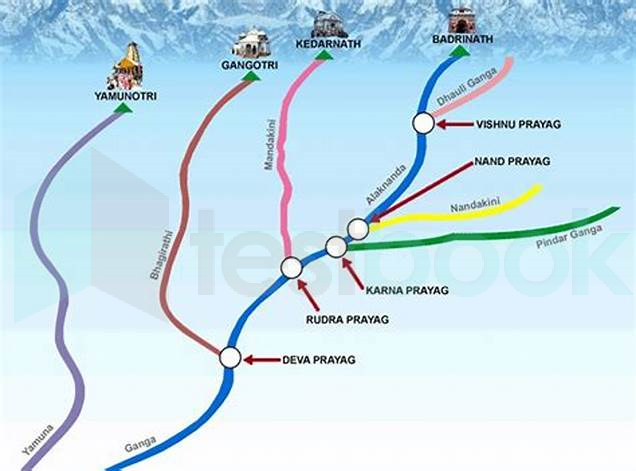
  • Panch Prayag-
  • ​Vishnu Prayag- Alaknanda+Dhauliganga
  • **Nand Prayag-**Alaknanda+Nandakini
  • **Karna Prayag-**Alaknanda+Pindar
  • Rudra Prayag- Alaknanda+Mandakini
  • **Dev Prayag-**Alaknanda+Bhagirathi

20

"Kaal Baisakhi' blows in -

  1. ((a))

    Rajasthan

  2. ((b))

    Maharashtra 

  3. ((c))

    Madhya Pradesh

  4. ((d))

    West Bengal 

Show Answer
Answer: ((d))

West Bengal 

The correct answer is Option 4.

Key Points

  • In West Bengal, the localised thunderstorms associated with violent gust and heavy rain is known as ‘Kaal Baisakhi’.
  • Kaal Baisakhi
  • ​It is a local rainfall and thunderstorm occur in Assam and West Bengal and in India or Bangladesh.
  • It occurs in the summer season.
  • It harms life and money and generally occurs in the month of Baisakh (April-May), hence it is known as 'Kaal Baisakhi'.
  • It originated from Chota Nagpur Plateau.
  • Since It is caused by winds coming from the north-west direction, they are also called 'norwesters'.​​

Additional Information

  • During the summer season, strong humid winds start blowing in many places in India, which are known by different names in different places of the country:
  • Norwesters in East India
  • Cherry Blossoms/Coffee Showers
  • It is the local humid wind of Karnataka that is helpful for the coffee plantation and flows in the hot weather season.
  • Mango- shower
  • It is pre-monsoon rainfall and occurs especially in parts of Kerala, Karnataka and Tamil Nadu.
  • It helps in the early ripening of mangoes and hence it is called 'Mango rain' or Mango-shower.
21

World Ozone Day is celebrated on :

  1. ((a))

    18 October

  2. ((b))

    16 September

  3. ((c))

    17 November

  4. ((d))

    16 August

Show Answer
Answer: ((b))

16 September

Key Points

World Ozone Day:

  • World Ozone Day is observed on 16 September every year, since 1995.
  • This day reminds the signing of the Montreal Protocol on substances that depletes the Ozone Layer.
  • The ozone layer is a fragile shield of gas that protects the Earth from the harmful portion of the rays of the sun and thus help in preserving life on the planet.
  • The Theme of the day for 2021: Montreal Protocol: Keeping us, our food and vaccines cool.

​​Thus, World Ozone Day is celebrated on 16 September.

Additional Information 

  • The Montreal Protocol was aimed at protecting the Earth’s ozone layer by eliminating the use of ozone-depleting substances.
  • Chlorofluorocarbons (CFCs) is the main substance that depletes the ozone layer.
  • Ozone layer thickness is measured in Dobson units.
  • The ozone layer is present mostly in the Stratosphere.
22

The capital of Lakshadweep is:

  1. ((a))

    Aizawl

  2. ((b))

    Kavaratti

  3. ((c))

    Port Blair

  4. ((d))

    Silvassa

Show Answer
Answer: ((b))

Kavaratti

The correct answer is Kavaratti.

Key Points

  • Lakshadweep is a Union territory and Kavaratti is the capital of Lakshadweep.
  • The Islands were also known as the Laccadive Islands.
  • Kavaratti is well known for its pristine white sand beaches and calm lagoons.
  • Kavaratti is located 404 km west of the city of Kochi.
  • The Kavaratti city is one of the hundred Indian cities competing in a national level competition to get the funds under Narendra Modi's flagship Smart Cities Mission.

Important Points

  • Lakshadweep is a group of islands, 200 to 440 km off the southwestern coast of India in the Lakshadweep Sea.
  • The city will be competing for one of the last 10 spots against 20 cities from across India.
23

As per census 2011,  what percentage of population of Bihar lives in urban area?

  1. ((a))

    9%

  2. ((b))

    11.3%

  3. ((c))

    12%

  4. ((d))

    8.3%

Show Answer
Answer: ((b))

11.3%

The correct answer is 11.3%.

  • Only 11.3 percent of the population of Bihar lives in urban areas, which is the lowest after Himachal Pradesh.

Key Points

  • As per the 2011 Census, Bihar is the third most populous state of India with a population of 104,099,452 (54,278,157 male and 49,821,295 female).
  • Mostly, the population of Bihar is classified according to religion, social caste and lineage, and language, rather than by specific ethnic affiliation.
  • According to the 2011 census, 82.7 percent of Bihar's population practiced Hinduism, while 16.9 percent followed Islam.
  • The sex ratio of Bihar was 918 females per 1000 males.
  • The literacy rate of Bihar 61.8 percent (71.2 percent for males and 51.5 percent for females).
  • More than 58 percent of the people from Bihar are below the age of 25 reasons behind the high population.
24

What facility did Union Health Minister JP Nadda inaugurate at the Indira Gandhi Institute of Medical Science (IGIMS) in Bihar in September 2024?

  1. ((a))

    An eye building

  2. ((b))

    A new surgical ward

  3. ((c))

    A pediatric unit

  4. ((d))

    A maternity wing

Show Answer
Answer: ((a))

An eye building

The correct answer is The eye building.

In News

  • JP Nadda inaugurated the eye building of IGIMS hospital along with other medical facilities in Bihar.

Key Points

  • JP Nadda emphasized the growth of AIIMS institutions from 6 to 22 under the Modi government.
  • He thanked Bihar CM Nitish Kumar for providing land for the new AIIMS in Darbhanga.
  • Nadda highlighted the importance of IGIMS in serving not just Bihar but also neighboring regions.
  • The IGIMS hospital's bed capacity was increased from 770 to 2500, with ongoing construction of super-specialty facilities.

Additional Information

  • Indira Gandhi Institute of Medical Science (IGIMS)
  • IGIMS is a premier medical institute in Bihar, providing healthcare services and education in medical sciences.
  • The hospital serves a large population, including patients from nearby states and regions.
  • Ayushman Bharat Scheme
  • The Ayushman Bharat scheme is the world's largest health coverage program, providing financial protection to millions of underprivileged individuals in India.
  • The program supports medical expenses up to ₹5 lakh for eligible families, enhancing access to healthcare services.
  • AIIMS (All India Institute of Medical Sciences)
  • AIIMS institutions are prestigious medical colleges and hospitals established across India to provide quality medical education and healthcare.
  • They play a crucial role in medical research, training, and providing specialized health services.
25

Which State clinched the silver medal in the fencing event at the 38th National Games in Uttarakhand?

  1. ((a))

    Bihar

  2. ((b))

    Uttarakhand

  3. ((c))

    U.P

  4. ((d))

    Rajasthan

Show Answer
Answer: ((a))

Bihar

The correct answer is Bihar.

Key Points

  • Akash clinched the silver medal in the fencing event at the 38th National Games held in Uttarakhand.
  • This is Bihar's first medal in fencing in 26 years at the National Games.
  • This achievement highlights the emergence of sporting talents in Bihar, enhancing its image on national platforms.

Additional Information

  • The 38th National Games are currently being held in Uttarakhand, where athletes from all over India compete in various sporting events.
  • Other Bihar athletes, including Baby KumariKanak Tiwari, and Pratibha Bharti, also secured bronze in the modern triathlete pentathlon.
26

The temples of Khajuraho were built by the rulers of which of the following dynasties?

  1. ((a))

    Vaghela

  2. ((b))

    Parmar

  3. ((c))

    Chandel

  4. ((d))

    Bundela

Show Answer
Answer: ((c))

Chandel

The correct answer is Chandel.

Key Points

  • Khajuraho Temple:
  • It was built between 950-1050 AD by the Chandela Dynasty.
  • The monuments include Hindu and Jain temples.
  • The temple site is situated within the Vindhya Mountain range.
  • These Temples got the status of UNESCO’s World Heritage Sites in 1986.
  • The temples are famous for their Nagara-style architectural symbolism.
  • The Khajuraho group of monuments was built during the rule of the Chandela dynasty.

Additional Information

  • Vaghela Dynasty:
  • The Vaghela Dynasty in Gujarat is one of the most ancient dynasties in the history of Gujarat.
  • The Vaghela Dynasty was concentrated in the town of Dholka.
  • The Vaghela came into existence under the umbrella of the Solanki Dynasty.
  • The Solankis ruled Gujarat in the early phase of medieval history that is the 10th to 13th Century.
  • Vaghela was a Kshatriya name is one of the four Varnas in Hinduism.
  • It comprises the military and noble order of the traditional Vedic-Hindu social system as outlined by the Vedas and the Laws of Manu.
  • Parmar Dynasty:
  • The Paramara dynasty was an Indian dynasty that ruled Malwa and surrounding areas in west-central India between the 9th and 14th centuries.
  • The medieval bardic literature classifies them among the Agnivanshi Rajput dynasties.
  • The dynasty was established in either 9th or 10th century.
  • The earliest extant Paramara inscriptions, issued by the 10th-century ruler Siyaka, have been found in Gujarat and suggest that he was a vassal of the Rashtrakutas of Manyakheta.
  • Bundela Dynasty:
  • The Bundelas are a Rajput clan of central India, the families belonging to this clan ruled several small states in the Bundelkhand region from the 16th century.
  • Bundelkhand is a hilly region of central India divided between the states of Uttar Pradesh and Madhya Pradesh, with the larger portion lying in the MP.
  • Jhansi is the largest city in Bundelkhand and is a major cultural, educational, transport, and economic hub.
  • The Bundela architecture has Mughal influence since the two dynasties were very close.
  • The famous King of the Bundela dynasty Veer Singh Dev was a close friend of Mughal emperor Jahangir and fought wars as Akbar’s aid.
27

Which of the following is an allotrope of carbon?

  1. ((a))

    Diamond

  2. ((b))

    Graphite

  3. ((c))

    Fullerenes

  4. ((d))

    All of the above

Show Answer
Answer: ((d))

All of the above

The correct answer is All of the above.

Key Points

  • The property of an element that exists in more than one physical form is called allotropy and the forms are termed allotropes
  • Carbon shows allotropy due to catenation, which is the linking of atoms of the same element with one another to form long chains.
  • There are various allotropes of carbon that exist in nature including diamond, graphene, fullerenes, C60, C70, amorphous carbon, Q carbon, lonsdaleite, and carbon nanotubes.

Additional Information

  • Diamond
  • ​Diamond has a tetrahedral structure.
  • Each carbon atom is connected to four other carbon atoms by a covalent bond to form a giant crystal lattice.
  • Because of its tetrahedral structure, diamond is one of the hardest known materials.
  • It has a high refractive index, light is reflected internally and hence it sparkles.
  • ​​Graphene:
  • ​It is a single-layer compound extracted from graphite.
  • In its hexagonal lattice, each carbon is bonded with three others, leaving a spare electron.
  • Because of its spare electrons graphene is an excellent conductor of electricity and heat
  • It’s the thinnest, lightest, strongest, and most stretchy material that has ever been created
  • Fullerene:
  • ​Buckminsterfullerene is a spherical structure that comprises 60 carbon atoms arranged as 20 hexagons and 12 pentagons.
  • It resembles the same shape as a football and hence C60 is also sometimes called a ‘buckyball’.
  • Its intermolecular forces are weak, which in turn lowers the melting point.
28

Which state in India has the lowest population? 

  1. ((a))

    Mizoram

  2. ((b))

    Sikkim

  3. ((c))

    Meghalaya

  4. ((d))

    Tripura

Show Answer
Answer: ((b))

Sikkim

The correct answer is Sikkim.

  • According to the Census 2011, Sikkim is the state with the lowest population in India.
  • Uttar Pradesh is the most populous state in India its population is more than the population of Brazil.

Key Points

  • Based on the Census 2011, the key points are:
  • State with the highest population density: Bihar.
  • State with the lowest population density: Arunachal Pradesh.
  • State with the highest population: Uttar Pradesh.
  • State with the lowest population: Sikkim.
  • State with the highest sex ratio: Kerala.
  • State with the lowest sex ratio: Haryana.
  • State with the highest literacy rate: Kerala.
  • State with the lowest literacy rate: Bihar.
29

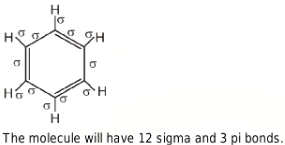
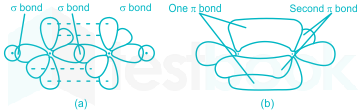
Number of σ and π bonds in benzene, respectively, is:

  1. ((a))

    12 and 3

  2. ((b))

    3 and 3

  3. ((c))

    6 and 3

  4. ((d))

    9 and 3

Show Answer
Answer: ((a))

12 and 3

  • Benzene was isolated by Michael Faraday in the year 1825.
  • The molecular formula of benzene is C6H6, indicates a high degree of unsaturation.
  • Benzene has 12 σ and 3 π bonds.
30

According to the Census of 2011, which of the following states has the highest density of population per km2?

  1. ((a))

    Jharkhand

  2. ((b))

    Goa

  3. ((c))

    Gujarat

  4. ((d))

    Maharashtra

Show Answer
Answer: ((a))

Jharkhand

The correct answer is Jharkhand.

Mistake Points

  • You have to choose the correct answer from the given following options.
  • If Bihar is in the options then it will be the correct answer.
  • But as per the given options, Jharkhand will be the correct answer.
  • Population Density 2011 of India State:
  • Jharkhand: 414 people per square kilometer
  • Goa: 394 people per square kilometer
  • Maharashtra: 365 people per square kilometer
  • Gujrat: 308 people per square kilometer

Key Points

  • The density of the population is expressed as the number of persons per unit area.
  • It helps in getting a better understanding of the spatial distribution of population concerning land.
  • The density of population in India (2011) is 382 persons per sq km.
  • There has been a steady increase of more than 200 persons per sq km over the last 50 years as the density of the population increased from 117 persons/ sq km in 1951 to 382 persons/sq km in 2011.
  • The state of Arunachal Pradesh has a total population of roughly 1.4 million as per the census of 2011.
  • On an area of 84,000 km2, approximating a population density of about 17 pop./km2.
  • Delhi's population Density is 11,320 persons per sq km.
  • Among the northern Indian States, Bihar (1106), West Bengal (1028), and Uttar Pradesh (829) have higher densities, while Kerala (860) and Tamil Nadu (555) have higher densities among the peninsular Indian states.
  • States like Assam, Gujarat, Andhra Pradesh, Haryana, Jharkhand, and Odisha have moderate densities.

Additional Information Census 2011

  • The Indian Census is the most credible source of information on Demography (Population characteristics), Economic Activity, Literacy and Education, Housing Household Amenities, Urbanisation, Fertility and Mortality, etc.
  • Census 2011 was the 15th National Census of the Country.
  • Census was introduced in India during the era of Lord Mayo in the year 1872. It came into force in 1881.
  • This census was conducted under the guidance of Mr. C. Chandramouli.
  • The slogan of census 2011 was ‘Our Census, Our future’.
  • The population of the nation as per the provisional figures of Census 2011 was 1210.19 million of which 623.7 million (51.54%) were males and 586.46 million (48.46%) were females. Uttar Pradesh is the most populous state in India its population is more than the population of Brazil.
31

The Pradhan Mantri Rojgar Yojana was started during the _________.

  1. ((a))

    Ninth Five Year Plan  

  2. ((b))

    Eighth Five Year Plan 

  3. ((c))

    Seventh Five Year Plan  

  4. ((d))

    Tenth Five Year Plan 

Show Answer
Answer: ((b))

Eighth Five Year Plan 

The correct answer is Eighth Five Year Plan.

Key Points

  • The Pradhan Mantri Rojgar Yojana was started during the Eighth Five Year Plan, which was from 1992-1997.
  • The aim of the scheme was to provide employment opportunities to the unemployed youth of the country by promoting self-employment and entrepreneurship.
  • The scheme was later replaced by the Prime Minister's Employment Generation Programme (PMEGP) in 2008, which continues to provide financial assistance to start-ups and micro-enterprises.
  • The Seventh Five Year Plan was from 1985-1990, Ninth Five Year Plan was from 1997-2002, and Tenth Five Year Plan was from 2002-2007.
  • Hence, options 1, 3, and 4 are incorrect.

Additional Information

  • The Pradhan Mantri Rojgar Yojana was launched by the Ministry of Micro, Small and Medium Enterprises (MSMEs) and was implemented through the District Industries Centres (DICs).
  • The scheme provided subsidy up to 15% of the project cost, subject to a maximum of Rs. 7,500 per entrepreneur for setting up of new projects.
  • The Seventh Five Year Plan focused on accelerating economic growth and modernizing the industry, while the Ninth Five Year Plan emphasized on poverty reduction and human development.
  • The Tenth Five Year Plan aimed at achieving a GDP growth rate of 8% and reducing poverty by half.
  • The Eighth Five Year Plan, under which the Pradhan Mantri Rojgar Yojana was launched, aimed at increasing agricultural and industrial production, improving infrastructure, and promoting social sector development.
32

Which Film maker was honoured with Satyajit Ray Lifetime Achievement Award at 55th International Film Festival of India 2024 ?

  1. ((a))

    Wong Kar-Wai

  2. ((b))

    Krzysztof Zanussi

  3. ((c))

    Phillip Noyce

  4. ((d))

    Martin Scorsese

Show Answer
Answer: ((c))

Phillip Noyce

The correct answer is Phillip Noyce.

Key Points

  • Australian filmmaker Phillip Noyce was honored with the prestigious Satyajit Ray Lifetime Achievement Award at the 55th International Film Festival of India (IFFI) held in 2024.
  • Phillip Noyce is renowned for directing acclaimed films such as "Dead Calm," "Patriot Games," and "The Quiet American."
  • The award recognizes Noyce's remarkable contribution to global cinema across various genres, including thrillers, dramas, and literary adaptations.
  • The Satyajit Ray Lifetime Achievement Award is named after the legendary Indian filmmaker Satyajit Ray and is presented annually at IFFI to honor exceptional contributions to the art of cinema.
  • The 55th edition of IFFI took place in Goa, India, continuing its legacy as one of Asia's most prominent film festivals.

Additional Information

  • International Film Festival of India (IFFI):
  • Established in 1952, IFFI is one of Asia's oldest and most prestigious film festivals.
  • The festival aims to celebrate the diversity of global cinema and promote India's cinematic heritage.
  • Held annually in Goa since 2004, the event showcases films from across the world, including feature films, documentaries, and short films.
  • Satyajit Ray Lifetime Achievement Award:
  • Named after the iconic Indian filmmaker Satyajit Ray, the award honors individuals who have made outstanding contributions to the world of cinema.
  • It has been a part of IFFI's legacy, recognizing luminaries from both Indian and international cinema.
  • Phillip Noyce:
  • An acclaimed Australian filmmaker known for his expertise in crafting suspenseful and emotionally resonant films.
  • His notable works include "Rabbit-Proof Fence," which highlights social and historical issues, and "Salt," an action thriller starring Angelina Jolie.
  • He has received numerous accolades throughout his career, further solidifying his status as a visionary in global cinema.
  • Global Recognition of Indian Cinema:
  • Indian cinema has gained international acclaim for its diverse storytelling and unique cultural narratives.
  • Platforms like IFFI have played a pivotal role in showcasing Indian films to global audiences.
33

The 10th Guru of Sikhs, Guru Gobind Singh was born in

  1. ((a))

    Amritsar

  2. ((b))

    Delhi

  3. ((c))

    Patna

  4. ((d))

    Kolkata

Show Answer
Answer: ((c))

Patna

The correct answer is Patna.

Key Points 

  • Guru Gobind Singh was the tenth and the last Guru of Sikhism.
  • Guru Gobind Singh played an important role in molding Sikhism to its present shape.
  • He founded Khalsa, the Sikh warrior community in 1699.
  • He also wrote important texts and introduced the five Ks of Sikhism.

Additional Information

  • Guru Nanak Dev was the First of the ten human form Gurus (divine messengers) of the Sikh faith.
  • Sikh Gurus:
  • ​Guru Nanak Dev (1469-1539)
  • Guru Angad Dev (1539-1552)
  • Guru Amar Das Sahib (1552 -1574)
  • Guru Ram Das Sahib (1574- 1581)
  • Guru Arjan Dev (1581- 1606)
  • Guru Har Gobind Sahib (1606- 1644)
  • Guru Har Rai Sahib (1644-1661)
  • Guru Har Krishan Sahib (1661 - 1664)
  • Guru Tegh Bahadur Sahib (1665-1675)
  • Guru Gobind Singh Sahib (1675-1708)
34

Which state has a common practice of 'Jhum cultivation'. 

  1. ((a))

    Odisha

  2. ((b))

    Mizoram

  3. ((c))

    Bihar

  4. ((d))

    Uttarakhand

Show Answer
Answer: ((b))

Mizoram

Concept:

  • Every region follows different agricultural practices.
  • Depending on the type of crop and scale of farming various agricultural practices are adopted.

Explanation:

About Shifting Cultivation:

  • It is a type of subsistence farming in which the farmer cultivates on a plot of land temporarily, and when he finds the land infertile to grow due to soil exhaustion, they move on to another plot.
  • It is largely practised in the north-eastern region of India, including Assam, Manipur, Mizoram, Nagaland, etc.
  • This way of farming is also known as "Jhum Kheti".
  • It is also called Slash and burn agriculture.
  • It is a shifting cultivation practice.
  • It is also known as fire-fallow cultivation.
  • Forest land is cleaned and ashes are added to the soil.
  • Cultivated spots/ areas are usually small.
  • Short periods of crop occupation alternate with long fallow periods.
  • Field rotation is practised instead of crop rotation.
  • The farmer cultivates on a plot of land temporarily.
  • When finding the land infertile to grow due to soil exhaustion, they move on to another plot.

Thus, 'Jhoom Cultivation' is practised in Mizoram.

Additional Information 

Shifting cultivation in India: ​​

JhoomNorth-eastern India
Vevar and DahiyaarMadhya Pradesh
DeepaMadhya Pradesh
Zara and ErkaSouthern States
BatraSouth-eastern Rajasthan
PoduAndhra Pradesh
KumariWestern Ghats of Kerala
KamanOdisha

Shifting cultivation in the world:

  • Lading in South-east Asia.
  • Milpa in Central America.
  • Chitemene or Tavy in Africa.
  • Chena in Sri Lanka.
35

Where did the Chipko movement first started in India?

  1. ((a))

    Tamil Nadu

  2. ((b))

    Maharashtra

  3. ((c))

    Karnataka

  4. ((d))

    Uttar Pradesh

Show Answer
Answer: ((d))

Uttar Pradesh

The correct answer is Uttar Pradesh.

Chipko movement first starts in the state of Uttar Pradesh in India.

Key Points

  • Chipko movement was a forest conservation movement in India.
  • Chipko movement is also called 'Chipko Andolan'.
  • The movement started in 1973 at Reni village in the Chamoli district of the Garhwal region in Uttarakhand, then a part of Uttar Pradesh
  • The Chipko Movement was launched by Chandi Prasad Bhatt and Sunder Lal Bahuguna against large-scale cutting of trees by timber contractors in the Uttarakhand hills.
  • Sunder Lal Bahuguna has spent a large portion of his life fighting for the preservation of forests in the Himalayas.
  • Local hill women from villages were organized and made aware of the ecological threats in the hills. They actively participated in the campaign.
  • They embraced or hugged the trees when the timber contractors reached and forced them to leave.
  • Due to the participation of local people, it led to the efficient management of forests.
  • This novel campaign for saving hill forests and greenery spread all along the hill region and to Karnataka in the South also in 1983.
36

What is the purpose of the committee formed by the Union Ministry of Health and Family Welfare to probe corruption related to AIIMS Patna?

  1. ((a))

    To investigate irregularities in the admissions process at AIIMS Patna

  2. ((b))

    To assess the performance of Dr. Gopal Krushna Pal and his departmental staffs

  3. ((c))

    To evaluate the fault behind the death of 16 new-born within a week

  4. ((d))

    To probe allegations of irregularities in the issuance of a non-creamy layer certificate

Show Answer
Answer: ((d))

To probe allegations of irregularities in the issuance of a non-creamy layer certificate

The correct answer is To probe allegations of irregularities in the issuance of a non-creamy layer certificate.

In News

  • The committee investigates allegations regarding the OBC-Non-Creamy Layer certificate issued to Dr. Auroprakash Pal.

Key Points

  • The committee is formed to look into irregularities related to the issuance of the certificate for admission to an MD course.
  • The probe includes complaints about violations of extant rules and guidelines.
  • The committee consists of three members, including Dr. Manashvi Kumar and Priyadarshika Srivastava.
  • The report from the committee is expected within one week from the date of the order.

Additional Information

  • Non-Creamy Layer
  • The Non-Creamy Layer classification is used to identify individuals from Other Backward Classes (OBCs) who are not eligible for certain government benefits due to their family's income or social status.
  • This classification is crucial for determining eligibility for reservations in education and employment.
  • AIIMS (All India Institute of Medical Sciences)
  • AIIMS are premier medical colleges in India that provide high-quality medical education and healthcare services.
  • They are known for their rigorous admission process and high standards of medical training.
  • OBC Reservation
  • Reservations for Other Backward Classes (OBCs) are intended to enhance the representation of historically disadvantaged groups in educational institutions and government jobs.
  • The reservation policy aims to promote social equality and improve opportunities for these groups.
37

Bhimbandh Wildlife Sanctuary is in which state?

  1. ((a))

    Bihar

  2. ((b))

    Jharkhand

  3. ((c))

    Uttar Pradesh

  4. ((d))

    None of the above

Show Answer
Answer: ((a))

Bihar

The correct answer is Bihar.

  • Bhimbandh Wildlife Sanctuary is in Bihar.
  • Bhimbandh Wildlife Sanctuary is a wildlife sanctuary in the Munger district.
  • Bhimbandh is situated near the Ganges River and is at the northern edge of Chota Nagpur Plateau.
  • The Sanctuary is spread across an area of 682 sq. Km.
38

First cotton mill in India was set up in which city?

  1. ((a))

    Ahmedabad

  2. ((b))

    Nashik

  3. ((c))

    Madras

  4. ((d))

    Bombay

Show Answer
Answer: ((d))

Bombay

Option 4 is correct:

  • The first Indian cotton mill, "The Bombay Spinning Mill", was opened in 1854 in Bombay by Cowasji Nanabhai Davar.
  • India has rich resources of raw materials in the textile industry.
  • It was also the second-largest employment generator after agriculture in India.
  • In India, the cotton and man-made fiber industry are concentrated mainly in Maharastra, Tamil Nadu, and Gujarat.
39

Ashok Mehta Committee in 1977 recommended for the establishment of

  1. ((a))

    Panchayat Samiti

  2. ((b))

    Mandal Panchayat

  3. ((c))

    Maha Panchayat

  4. ((d))

    Nagar Panchayat

Show Answer
Answer: ((b))

Mandal Panchayat

The correct answer is Mandal Panchayat.

  • Ashok Mehta Committee in 1977 recommended the establishment of Mandal Panchayat.

Key Points

  • Ashok Mehta Committee
  • It recommended that the three-tier system of Panchayati Raj should be replaced by the two-tier system.
  • Zila Parishad at the district level, and below it, the Mandal Panchayat consisting of a group of villages with a total population of 15000 to 20000.

Additional Information

  • Gram Panchayat is a basic village governing institute in Indian villages.
  • The Gram Sabha work as the general body of the Gram Panchayat.
40

The prize considered equivalent to Nobel Prize for Mathematics is

  1. ((a))

    Fields Medal

  2. ((b))

    Newton Medal

  3. ((c))

    Ramanujan Medal

  4. ((d))

    Pythagoras Medal

Show Answer
Answer: ((a))

Fields Medal

The correct answer is Fields Medal. 

  • The prize considered equivalent to Nobel Prize for Mathematics is Fields Medal.
  • The Fields Medal is awarded every four years on the occasion of the International Congress of Mathematicians to recognize outstanding mathematical achievement for existing work and for the promise of future achievement.
  • The Fields Medal Committee is chosen by the Executive Committee of the International Mathematical Union and is normally chaired by the IMU President.
  • The medals and cash prizes are funded by a trust established by J.C.Fields at the University of Toronto.

Additional Information 

Some important awards:

Award
PhysicsNobel Prize in Physics, Wolf Prize, Boltzmann Medal, Panofsky Prize, Max Planck Medal, and Albert Einstein Award.
ArchitecturePritzker Architecture Prize, Architecture MasterPrize, The Aga Khan Award for Architecture, AIA Gold Medal, RIBA.
Peace missionNobel Peace Prize, International Children's Peace Prize, UN Award For Peacekeeping.
41

Who is the current speaker of the Lok Sabha?

  1. ((a))

    Meira Kumar

  2. ((b))

    Om Birla

  3. ((c))

    Somnath Chatterjee

  4. ((d))

    Manohar Joshi

Show Answer
Answer: ((b))

Om Birla

  • The current speaker is Om Birla of the Bharatiya Janata Party, who is presiding over the 17th Lok Sabha.
  • Om Birla is an Indian politician, an agriculturist and social worker who is serving as the 17th and current Speaker of the Lok Sabha since 2019.
  • He serves as a Member of Parliament, Lok Sabha from Kota-Bundi constituency in Rajasthan since 2014
42

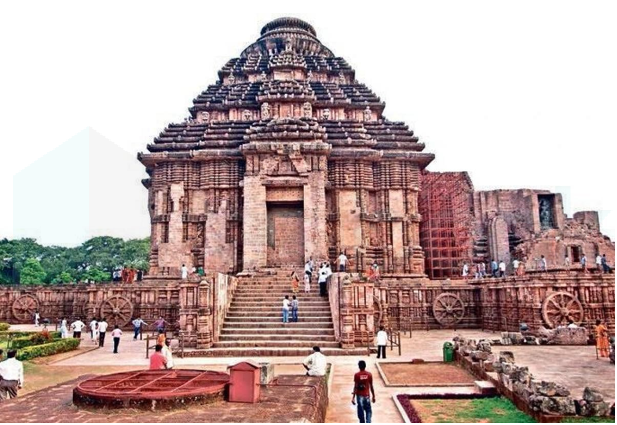
The Sun temple at Konark, is popularly known as the __________.

  1. ((a))

    White Pagoda

  2. ((b))

    Black Pagoda

  3. ((c))

    Golden Pagoda

  4. ((d))

    Bronze Pagoda

Show Answer
Answer: ((b))

Black Pagoda

The correct answer is Black Pagoda.

Key Points

  • Konark:
  • The famous Konark Sun temple is situated in the town of Konark in Odisha.
  • This is one of the very few and famous Sun temples in India.
  • It is also known as the ‘Black Pagoda’ because it is built out of black granite.
  • It was made on the orders of King Narasimhadeva.
  • It reached the pinnacle of fame when UNESCO made it a world heritage site in 1984.
  • One of the highlights at the Konark Sun temple is the annual Konark Dance festival that is held every year in December and is devoted to Odissi, the classical dance of Odisha.
  • The temple is the centre of all celebrations and the gigantic chariot of Surya (Sun God) forms the backdrop to all the festivities.
  • This chariot has 12 pairs of ornamental wheels, which were supposed to be pulled by seven horses.​

43

The statue of Ramanujacharya "Statue of Equality" is located in which of the following state?

  1. ((a))

    Gujarat

  2. ((b))

    Delhi

  3. ((c))

    Telangana

  4. ((d))

    Punjab

Show Answer
Answer: ((c))

Telangana

The correct answer is Hyderabad.

Key Points

  • The statue of Ramanujacharya "Statue of Equality"  is located in Hyderabad, Telangana.
  • Ramanujacharya was born in 1017 at Sriperumbudur in Tamil Nadu.
  • He liberated millions from social, cultural, gender, educational, and economic discrimination with the foundational conviction that every human is equal regardless of nationality, gender, race, caste, or creed.
  • He opened the doors of temples to all people, including those subjected to extreme discrimination.
  • The foundation stone for the project was laid in 2014.

In News 

  • Prime Minister Narendra Modi unveil a 216-foot statue of Ramanujacharya, described as the 'Statue of Equality in Hyderabad in February 2022.
  • The 216-feet statue of the 11th-century saint and social reformer will be located in a 45-acre complex at Shamshabad.
  • The statue is made of 'panchaloha', a mix of five metals - gold, silver, copper, brass, and zinc.

Important Points

  • The ₹1,000-crore project was funded entirely by donations from devotees globally.
  • The inner sanctorum deity of Ramanujacharya is made of 120 kg of gold to commemorate the 120 years the saint walked this earth.
  • The outdoor 216-foot statue would be one of the tallest statues in a sitting posture.
  • The complex has identical recreations of 108 Divya Desams, the 108 ornately carved Vishnu temples mentioned in the works of the Alwars, mystic Tamil saints.
44

French Revolution began in the year  ______________.

  1. ((a))

    1789

  2. ((b))

    1879

  3. ((c))

    1987

  4. ((d))

    1798

Show Answer
Answer: ((a))

1789

The correct answer is 1789.

Key Points

  • French Revolution began in the year 1789.
  • The French Revolution was a watershed event in modern European history that began in 1789 and ended in late 1820.
  • It culminated with the ascent of Napoleon Bonaparte.
  • During the revolution, French citizens redesigned their country’s political landscape, uprooting centuries-old institutions such as the absolute monarchy and the feudal system.
  • The upheaval was caused by widespread discontent with the French monarchy and the poor economic policies of King Louis XVI.
  • The French Revolution played a critical role in shaping modern nations by showing the world the power of the will of the people.
45

By which of the following amendment, Fundamental duties were added in the constitution?

  1. ((a))

    42nd amendment 

  2. ((b))

    44th amendment 

  3. ((c))

    46th amendment 

  4. ((d))

    51st amendment 

Show Answer
Answer: ((a))

42nd amendment 

The correct answer is Option 1 i.e. 42nd amendment.

Explanation:

  • The feature of fundamental duties was borrowed from the constitution of the USSR (Now Russia).
  • Fundamental duties are incorporated in the constitution by the 42nd amendment 1976. F.D was added in Part IV-A, article 51A of the constitution.
  • Fundamental duties were added to the recommendation of the Swaran Singh committee in 1976.
  • There were originally ten fundamental duties in the constitution, later 11th fundamental duty was added by the 86th constitutional amendment 2002.
  • The 11th fundamental duty was related to free elementary education to children
  • List of 11 fundamental duties:
  • To abide by the constitution and respect its ideals and institutions, the National flag and the National anthem.
  • To cherish and follow noble ideas that inspired the national struggle.
  • To protect the sovereignty, unity, and Integrity of India.
  • To defend the country and render national service when called upon to do so.
  • To promote harmony and the spirit of common brotherhood amongst all the people of India transcending religious, linguistic, and regional or sectional diversities; to renounce practices derogatory to the dignity of women.
  • To value and preserve the rich heritage of our composite culture.
  • To protect and improve the natural environment including forests, lakes, rivers, wildlife and to have compassion for living creatures.
  • To develop the scientific temper, humanism, and the spirit of inquiry and reform.
  • To safeguard public property and to abjure violence.
  • To strive towards excellence in all spheres of individual and collective activity so that the nation constantly rises to higher levels of endeavor and achievement.
  • Who is a parent or guardian, to provide opportunities for education to his child, or as the case may be, ward between the age of six to fourteen years.
46

Speed of sound is maximum in-

  1. ((a))

    Vaccum

  2. ((b))

    Gases

  3. ((c))

    Liquids

  4. ((d))

    Solids

Show Answer
Answer: ((d))

Solids

The correct answer is Solids.

Key Points

  • Concept:
  • The speed of the sound depends on the density of the medium through which it is travelling.
  • The particles in the solid medium are closely packed. Hence, the density is high. Information from one molecule to another molecule travels faster in the solid medium.
  • In liquid, the molecules are farther apart than in solids. Hence, the density is low for liquids.
  • In gas, the molecules are very loosely dispersed. The speed of the sound wave will be maximum in steel.
  • Explanation:
  • Sound is a mechanical wave that needs a medium to travel.
  • The speed of sound is maximum in solid, then it is in liquid and it is the slowest in gases.
  • The speed of sound remains almost the same for all frequencies in a given medium under the same physical conditions.
  • Notes:
  • The velocity of sound waves in air is 330 m/s.
  • The velocity of sound waves in steel is 5920 m/s.
  • The velocity of sound waves in a vacuum is zero.
  • The velocity of sound waves in water is 1480 m/s.
47

Leeuwenhoek discovered the free living cells for the first time in _________.

  1. ((a))

    Pond water

  2. ((b))

    Sea water

  3. ((c))

    Soil

  4. ((d))

    Human body

Show Answer
Answer: ((a))

Pond water

The correct answer is Leeuwenhoek.

Key Points 

  • Antonie van Leeuwenhoek
  • He is also known for the discovery of bacteria.
  • He is regarded as the father of microbiology.
  • Anton van Leeuwenhoek laid the foundation of plant anatomy and studied animal reproduction in detail.
  • He was a Dutch microscopist and biologist born in Delft, Netherlands.
  • He experimented with and observed microscopic organisms in the year 1676.
  • He is probably best known for his refinement of the microscope.
  • He increased the magnifying power of the microscope from 20x to 270x.
  • He was the first to observe bacteria and protozoa with his single-lensed microscope.
  • In 1674, he observed small single-celled organisms and named them 'Animalcules'.
  • In 1677, he discovered sperm in mammals.
  • He was also the first person to study blood vessels and discovered blood cells and nematodes living in blood.
48

What is the chemical name of quick lime?

  1. ((a))

    Calcium carbonate

  2. ((b))

    Hydrogen sulphide

  3. ((c))

    Calcium oxide

  4. ((d))

    Sodium carbonate

Show Answer
Answer: ((c))

Calcium oxide

Option 3 is the correct answer: The chemical name of quick lime is Calcium oxide.

Key Points

  • Calcium oxide is an ionic compound with the formula CaO.
  • Also known as burnt lime it exists as white crystalline solid at room temperature.
  • It is obtained by thermal decomposition of Calcium Carbonate (CaCO3).
  • It is widely used in the manufacturing of cement, paper, and steel.
  • it is also used in the water treatment plant as an acidity control agent.
Chemical compoundFormula/common nameuses
Calcium carbonateCaCO3/ Limestone- Dietary supplement. - Construction. - Neutralizing the acidic soil.
Hydrogen sulphideH2S/ Sulfane- Production of elemental sulfur and sulfuric acid. - preparation of heavy water in nuclear power plants.
Sodium carbonateNa2CO3/ Washing soda or Soda- Used in swimming pools. - Manufacturing of soaps and detergents.
49

Which of the following is an example of Newton's 3rd Law of Motion?

  1. ((a))

    Walking

  2. ((b))

    Gun Firing

  3. ((c))

    Rocket Launching

  4. ((d))

    All the above are examples of Newton's 3rd Law of Motion

Show Answer
Answer: ((d))

All the above are examples of Newton's 3rd Law of Motion

Concept:

  • Newton's Third Law of Motion states that 'To every action, there is an equal and opposite reaction'.
  • When the rocket is ignited, it releases gases from its thrusters thereby creating a force that will push rocket upwards which provides a necessary force that helps it in moving ahead.
  • Newton's Second Law of motion states that the rate of change of momentum of an object is proportional to the applied force in the direction of the force. i.e. F=ma. Where F is the force applied, m is the mass of the body, and a is the acceleration produced.
  • A fielder pulling his hand back while catching a ball is an application of Newton's second law of motion.
  • Newton First law states that Every object remains in uniform motion in a straight line unless compelled to change its state by the action of an external force.
  • When a bus starts suddenly, the passengers receive a backward jerk an application of Newton's first law of motion.

Explanation:

According to the above explanation,  

  • All the above are examples of Newton's 3rd Law of Motion.
  • The Newton's 3rd Law of Motion states that to every action there is equal and opposite reaction.
  • During Walking, we apply force on the ground and the reaction force makes us move forward.
  • In Gun firing, When someone fires a gun a reaction force pushes him backward.
  • During Rocket Launching, The Rocket pushes the ground and the opposite force pushes it upward.
50

The variety of plant and animal life on Earth is called ________.

  1. ((a))

    biodiversity

  2. ((b))

    biome

  3. ((c))

    biosphere reserve

  4. ((d))

    ecology

Show Answer
Answer: ((a))

biodiversity

The correct answer is biodiversity

Key Points

  • Biodiversity refers to the variety and richness of flora and fauna found on Earth.
  • A biome is a region or area on the earth that is characterized by the flora and fauna found in it. There are 5 types of biomes- tundra, forest, desert, aquatic, and grassland.
  • Ecology is the study of how organisms interact with each other and their surrounding environment.
  • With the aim of sustainable development and conservation of biodiversity, the flora and fauna of certain terrestrial and coastal regions of the earth are protected in their natural form.
  • These regions are called biosphere reserves.

Additional Information

  • Biomes are very large ecological areas on the earth’s surface.
  • They have fauna and flora (animals and plants) adapting and sharing common characteristics with the surrounding environment.
  • Plants or animals in a biome have special adaptations that make it possible for them to exist in that area.
  • A biome is not an ecosystem, although in a way it can look like a massive ecosystem.
  • You may find many units of ecosystems within one biome.
51

Which cell organelles have their own DNA and Ribosomes ? ​

  1. ((a))

    Golgi body and Endoplasmic Reticulum

  2. ((b))

     Mitochondria and Plastids

  3. ((c))

     Lysosome and Golgi body

  4. ((d))

    Vacuole and Plastids

Show Answer
Answer: ((b))

 Mitochondria and Plastids

The correct answer is Mitochondria and Plastids.

Key Points

  • Both mitochondria and chloroplasts contain their own DNA and ribosomes.
  • Both plant cells and animal cells possess mitochondria. It has its own DNA and plays a met role in the synthesis of enzymes and the production of energy.
  • Mitochondria are membrane-bound cell organelles (mitochondrion, singular) that generate most of the chemical energy needed to power the cell's biochemical reactions.
  • Chemical energy produced by the mitochondria is stored in a small molecule called adenosine triphosphate (ATP).
  • Chloroplasts are plant cell organelles that convert light energy into relatively stable chemical energy via the photosynthetic process.
  • By doing so, they sustain life on Earth. Chloroplasts are plant cell organelles that convert light energy into relatively stable chemical energy via the photosynthetic process.
52

Which of the following is Kilowatt-hour a unit of?

  1. ((a))

    power

  2. ((b))

    force

  3. ((c))

    energy

  4. ((d))

    momentum

Show Answer
Answer: ((c))

energy

The correct answer is Energy

  • A kilowatt-hour (kWh) is a unit of energy. It represents the amount of energy consumed or produced when a device with a power rating of one kilowatt (1,000 watts) operates continuously for one hour. In SI units, one kilowatt-hour equals 3.6 million joules (3.6 megajoules) of energy.

Concept:

Power: The rate of work done by the electric energy is called power. It is denoted by P.

  • The SI unit of power is the watt (W).
  • Watt is a small unit that's why a kilowatt-hour is used as the unit for electrical energy.

1 unit of electric energy: When a one-kilowatt load works for 1 hour then the energy consumed is called 1 unit of electricity.

  • 1 Unit of electricity = 1 kWh = 1000 Watt-hour = 3.6 × 106 J
  • 1 Kilo-watt = 1000 Watt

1 Watt: The energy consumption rate of 1 joule per second is called 1 watt.

  • The capacity to do work or power consumed in a given time is called energy.
  • Power is the rate of doing work or the rate at which energy is spent.
  • Kilowatt-hour is the unit of energy.

Key Points

  • One thousand-watt makes one kilowatt.
  • 1 kw hour is equal to 3600 kilojoules.
  • For billing units of energy delivered to consumers by electric appliances, this unit is used.
  • It is a non-SI metric unit system.
  • The one kilowatt of hour sustained for one hour is the composite unit of energy.
  • In kilowatt-hours, the electrical energy is typically sold to consumers.
  • In terawatt hours, the major energy production or consumption is expressed.
  • How much energy is used by us is measured by Kilowatt-hour.

Mistake Points

Energy is the total amount of work done, and power is how fast you can do it. In other words, power is energy per unit of time. Power is watts. Energy is watt-hours.

53

What is the chemical symbol of Gold?

  1. ((a))

    Fe

  2. ((b))

    Au

  3. ((c))

    Gd

  4. ((d))

    Ag

Show Answer
Answer: ((b))

Au

The correct answer is Au.

Concept:

  • Chemical symbols are representations of elements that are mentioned in the periodic table.
  • These symbols are a single letter or a combination of two letters derived from the English or Latin names of the elements.
  • These chemical symbols make it easier to organize and understand the periodic table.


Explanation:

  • ​The Latin name of gold is Aurum.
  • The chemical symbol of gold is Au. It is derived from the first two letters of the word aurum. The atomic number of gold is 79.
  • Fe is the chemical symbol of Iron. Fe stands for Ferrum that is the Latin name for iron. The atomic number of iron is 26.
  • Gd is the chemical symbol of Gadolinium. The atomic number of gadolinium is 64.
  • Ag is the chemical symbol of Silver. Ag stands for Agrentum that is the Latin name for silver. The atomic number of iron is 47.


Additional Information

  • John Dalton, an English chemist was the first person to represent the chemical elements by using certain symbols.
  • Thomas Thomson, a Scottish chemist was the first to propose the usage of letters as symbols for chemical elements.
54

Kharif crop is

  1. ((a))

    Wheat

  2. ((b))

    Paddy

  3. ((c))

    Potato

  4. ((d))

    Gram

Show Answer
Answer: ((b))

Paddy

There are three cropping seasons in India, Rabi, Kharif, and Zaid.

Key PointsKharif Crop:

  • The crops which are sown in the rainy season are called Kharif crops.
  • The Kharif crops are harvested in the month of September-October
  • Important crops grown during this season are paddy, maize, jowar, bajra, tur (arhar), moong, urad, cotton, jute, groundnut and soybean.
  • Kharif crop requires high temperature and high humidity.
Rabi cropsKharif crops
WheatRice
BarleyMaize
Oats (Cereals)Pearliment
LinseedBajara
MustardPulses (Arhar)
PeasCotton
Makai

Hence, Paddy is a Kharif crop.

Additional Information

  • Rabi crops are sown in the winter season from October to December and harvested in the summer season from April to June.
  • Wheat, Barley, Peas, Gram, and Mustard-produced during Rabi.
  • Zaid season is a short season In between the Rabi and the Kharif seasons.
  • Cucumber and watermelon are produced during Zaid.
55

Which color absorbs most heat under identical conditions?

  1. ((a))

    Blue

  2. ((b))

    White

  3. ((c))

    Yellow

  4. ((d))

    Black

Show Answer
Answer: ((d))

Black

The correct answer is Black.

Key Points

  • Colors absorb light energy which is then converted into heat energy. Since black absorbs all the wavelengths of light, it absorbs more heat.
  • White, on the other hand, reflects most of the light which is why it absorbs the least amount of heat.

Additional Information

CONCEPT:

  • A black body is an object that absorbs all the radiant energy reaching its surface.
  • No actual body is perfectly black; the concept of a black body is an idealization with which the radiation characteristics of real bodies can be compared.

Properties of the black body:

  • It absorbs the incident radiation of all wavelength falling on it and does not transmit or reflect regardless of wavelength and direction
  • It emits the maximum amount of thermal radiation at all wavelengths at any specified temperature
  • It is a diffuser emitter (i.e. the radiation emitted by a black body is independent of direction)

EXPLANATION:

  • A black body is an idealized physical body that absorbs all incident electromagnetic radiation of any wavelengths, regardless of frequency or angle of incidence. So option 4 is correct.
56

Which of the following animals has gills to breathe in water-

  1. ((a))

    Octopus

  2. ((b))

    Dolphins

  3. ((c))

    Whales

  4. ((d))

    All of these

Show Answer
Answer: ((a))

Octopus

The correct answer is Octopus.

Concept:

  • Respiration is the act or process of breathing which includes inhaling oxygen and releasing carbon dioxide.
  • Animals that live in water breathe through gills with very few exceptions.
  • Gills are respiratory organs richly supplied with blood vessels.
  • With the help of the gills, the aquatic animals can inhale oxygen dissolved in water
  • The gills are required for underwater breathing because they are uniquely designed to separate dissolved oxygen from the water.
  • Aquatic animals with gills include amphibians, fish, prawns, arthropods, etc.

Explanation:

  • Octopus has gills that allow them to use the oxygen dissolved in water.
  • The gills allow an octopus to breathe in oxygen and exhaust it through a tube known as a syphon.
  • Octopus gills contain a broad porous surface that transports oxygen into their blood, nourishing all of their organs.
  • However, this enormous surface is only maintained underwater and collapses once the octopus is taken onto land.
  • Some aquatic sea animals, such as dolphins and whales, do not have gills.
  • Dolphins and whales are mammals.
  • They breathe in air through nostrils or blowholes that are located on the upper parts of their heads. This allows them to breathe in the air when they swim near the surface of the water.
  • They can stay inside the water for a long time without breathing.
  • They come out to the surface from time to time, to breathe in air.
  • They have lungs that other aquatic species do not have.

Additional InformationRespiratory organs of different animals:

AnimalRespiratory organ
Whale, DolphinLungs
EarthwormSkin
FrogSkin, lung, buccal cavity
Spider, ScorpionBooklungs
OctopusGills
CockroachTrachea
57

Organisms which prepare food for themselves using simple naturally available raw materials are referred to as

  1. ((a))

    heterotrophs

  2. ((b))

    autotrophs

  3. ((c))

    parasites

  4. ((d))

    saprophytes

Show Answer
Answer: ((b))

autotrophs

The correct answer is autotrophs.

Concept:

Nutrition:

  • Nutrition is the process of obtaining food and utilizing it to develop, maintain health, and repair any damaged body parts.
  • There are two modes of nutrition:
  • Autotrophic: Autotrophs are those organisms that prepare food for themselves.
  • Heterotrophic: Heterotrophs are those animals and humans who rely on plants for food.
  • Types of Heterotrophic nutrition
  • Parasitic
  • Insectivorous
  • Saprophytic
  • Symbiotic

Explanation:

  • Autotrophs:
  • Organisms that prepare food for themselves using simple naturally available raw materials are referred to as autotrophs.
  • In other words, an autotroph, or main producer, is a living organism in which organisms make food themselves from simple natural substances is called autotroph (auto = self; trophs = nourishment) nutrition.
  • Autotrophs include algae, plants, and some bacteria and fungi.
  • Heterotrophs:​
  • Heterotrophs  (heteros = other) are organisms that cannot prepare their own food from natural sources and must therefore rely on food produced by other organisms (autotrophs).
  • Examples of heterotrophs are Dogs, fish, birds, and humans.
  • Parasites:
  • A parasite is a plant or animal that lives on, with, or within a larger species in order to obtain nutrients.
  • In some cases, the parasite can cause harm to the host, while in others, it is completely harmless.
  • Examples of parasites are flukes, tapeworms, lice, ticks, etc.
  • Saprophytes:
  • Saprophytes are living organisms that feed on dead and decaying organisms.
  • They degrade complex organic matter into simpler substances that plants can use for a variety of metabolic activities.
  • Examples of saprophytes are mushrooms and molds, and mycorrhizal fungi.
58

Asteroids are found between the orbits of

  1. ((a))

    Saturn and Jupiter

  2. ((b))

    Mars and Jupiter

  3. ((c))

    The Earth and Mars

  4. ((d))

    Saturn and Uranus

Show Answer
Answer: ((b))

Mars and Jupiter

The correct answer is ​Mars and Jupiter.

Key Points

  • Asteroids
  • Apart from the  planets, and satellites, numerous tiny bodies also move around the sun. These bodies are called asteroids.
  • They are found between the orbits of Mars and Jupiter.
  • Scientists are of the view that asteroids are parts of a planet that exploded many years back.
  • Asteroid Belt is a circumstellar disc in the Solar System.
  • Asteroid Belt is occupied by numerous irregularly shaped bodies called asteroids or minor planets.
  • Four largest asteroids
  • Ceres
  • Vesta
  • Pallas
  • Hygiea
  • Ceres, the asteroid belt's only dwarf planet.
  • Asteroids orbit the Sun and are small bodies on the solar system.
  • They are made up of metals and rocks and also consist of organic compounds.
  • They are similar to comets but don’t have a coma-like comet.
  • Asteroids tend to have shorter and elliptical orbits.
  • Astronomers have discovered millions of asteroids some that measure hundreds of kilometers across and some as small as dust particles.
  • Asteroids have an elliptical orbit.
  • It is made of metals and rocks.
  • Do not produce a coma or tail atmosphere.
  • The orbital period is 1 to 100 years.

Our Solar System - Sun, 8 Planets & Asteroids - wbpscupsc

59

Who coined the word ‘atom’?

  1. ((a))

    Democritus

  2. ((b))

    Thomson

  3. ((c))

    E Rutherford

  4. ((d))

    John Dalton

Show Answer
Answer: ((a))

Democritus

  • The word ‘atom’ is coined by Democritus.
  • He suggested that if we go on dividing matter at a certain point the atom becomes indivisible or cannot be divided further.
  • He called these particles as atoms (Indivisible).


ScientistDiscovered
ThomsonElectron
E RutherfordDiscovered alpha and beta particles
John DaltonFather of Atomic Theory
60

The process by which a chemical change takes place in a substance when electric current is passed through it is called-

  1. ((a))

    Electrolysis

  2. ((b))

    Thermionic conduction

  3. ((c))

    Electroplating

  4. ((d))

    Electrodes

Show Answer
Answer: ((a))

Electrolysis

The correct answer is Electrolysis.

Key Points 

  • The process by which a chemical change takes place in a substance when an electric current is passed through it is called electrolysis.
  • Electrolysis is used extensively in metallurgical processes like extraction or purification of metals from ores or compounds.
  • It is also used in the deposition of metals from solution (electroplating).
  • The term “electrolysis” was introduced by Michael Faraday.
  • He was the first scientist who described the quantitative aspects of electrolysis.
  • Electrolysis is used for coating one metal on another.

Additional Information 

  • Metals like sodium and magnesium are produced by the electrolysis of their fused chlorides.
  • Aluminum metal is produced by electrolysis of aluminum oxide in presence of cryolite.
  • Hydrogen and oxygen are produced by the electrolysis of water.
  • The process of applying a metal coating on another piece of metal through an electrodeposition process is called electroplating.
  • An electrode is a conductor through which electrical currents can travel.
61

_______ is essential for the synthesis of chlorophyll in plants.

  1. ((a))

    Boron

  2. ((b))

    Iodine

  3. ((c))

    Magnesium

  4. ((d))

    Sodium

Show Answer
Answer: ((c))

Magnesium

The correct answer is Magnesium.

Key Points

  • Magnesium is essential for the synthesis of chlorophyll in plants.
  • Forms an integral part of chlorophyll.
  • Central component of chlorophyll, surrounded by a nitrogen-containing porphyrin ring.
  • Magnesium is an important part of the structure and is therefore urgently required for the synthesis of chlorophyll.

Additional Information 

  • Boron: Boron is a non-metallic element and the only non-metal in group 13 of the periodic table.
  • Iodine: Iodine is an essential element for humans, requiring a daily consumption of approximately 0.1 milligrams of iodide.
  • Sodium: Sodium is an essential nutrient, required in relatively small amounts (unless you sweat excessively) to maintain fluid balance and muscle and nerve function.
62

The branches of tall trees cover the other plants of the forest like a rooftop. This is called

  1. ((a))

    Crown

  2. ((b))

    Canopy

  3. ((c))

    Trunk

  4. ((d))

    Stem

Show Answer
Answer: ((b))

Canopy

The correct answer is Canopy.

Key Points

  • The branches of tall trees cover the other plants of the forest like a rooftop. This is called a canopy.
  • Shade trees have a dense canopy that restricts light from reaching low-growing plants.
  • The canopy of a rainforest is about 10 meters thick and absorbs about 95% of the sunlight.
  • The highest terrestrial biodiversity resides in the canopy of tropical rainforests.
  • The photosynthesis process of canopy trees is relatively quick due to abundant light.

Additional Information

  • The crown of a plant refers to the aboveground part of a plant, including the stems, leaves, and reproductive structures.
  • In botany, the trunk is the main woody axis of a tree, which is an important feature in tree identification, and which is often markedly different from the bottom to the top of the trunk depending on the species.
  • A stem is one of the two main structural axes of a vascular plant, the other being the root.
  • It supports leaves, flowers, and fruits, transports water and solutes in the xylem and phloem between roots and shoots**, stores nutrients,** and builds new living tissue.
63

Match the following

Food ItemRequirement
(a) Carrot(i) Energy giving food
(b) Lemon(ii) For healthy eyes
(c) Soya bean(iii) Immunity
(d) Ground Nuts(iv) Rich source of protein
  1. ((a))

    (a) - (ii), (b) - (iv), (c) - (iii), (d) - (i)

  2. ((b))

    (a) - (iii), (b) - (ii), (c) - (i), (d) - (iv)

  3. ((c))

    (a) - (ii), (b) - (iii), (c) - (iv), (d) - (i)

  4. ((d))

    (a) - (ii), (b) - (iii), (c) - (i), (d) - (iv)

Show Answer
Answer: ((c))

(a) - (ii), (b) - (iii), (c) - (iv), (d) - (i)

Concept:

We consume food to get nutrients which are essential for our body to get energy and other requirements. 

NutrientsFunctionsPresent in
CarbohydrateIt provides energy.Potato, Maize, Sugarcane
FatIt provides energy more than Carbohydrates.Oils, Meet, Butter, milk, Fish, Groundnuts
ProteinRequired for growth and repair of bodySoybean, Fish, eggs, pulses
Vitamin AIt keeps eyes healthy.Carrot, apple, Mango
Vitamin CIt enhances immunity.Lemmon, green chili, oranges
<br>

Explanation:

  • From the above table, we can say that the correct sequences are
  • Soybean is the source of protein.
  • Groundnut is the source of fat which is energy-giving food.
  • Carrot keeps the eyes healthy as it is the source of Vitamin A.
  • Lemmon is good for immunity as it is the source of Vitamin C.

The correct sequences are

(a) - (ii), (b) - (iii), (c) - (iv), (d) - (i)

Additional Information

A balanced diet

  • It is not a component of food​
  • It ​is a diet which contains different kinds of food in certain quantities and proportion so that the requirements of a person shall meet.
  • Requirements like calories, proteins, minerals, vitamins and alternative nutrients are adequate and a small provision is reserved for additional nutrients to endure the short length of leanness.
64

Identify a molecule which does not exist.

  1. ((a))

    C2

  2. ((b))

    O2

  3. ((c))

    He2

  4. ((d))

    Li2

Show Answer
Answer: ((c))

He2

Concept:

  • Bond order is calculated as half of the number of bonding electrons minus the number of anti-bonding electrons.
  • Hence, the mathematical formula is written as,
  • (B.O. = \frac{1}{2}[{N_b} - {N_a}] )
  • The value of bond order determines the nature of the bond.

Explanation:

For C2 molecule

The electronic configuration is (σ1s)21s)2(σ2s)22s)2(π2px)2(π2py)

So, bond order ( = \frac{1}{2}[{N_b} - {N_a}] )

( = \frac{1}{2}[8 - 4] )

= 2

Since bond order is 2, so C2 molecule exist.

For O2 molecule

The electronic configuration is (σ1s)2(σ1s)2(σ2s)2(σ2s)2(π2px)2(π2py)2 (σ2pz)2px)1 (π2py)1 

So, bond order ( = \frac{1}{2}[{N_b} - {N_a}] )

( = \frac{1}{2}[10 - 6] )

= 2

Since bond order is 2, so O2 molecule exist.

For He2 molecule

The electronic configuration is σ1s2, σ*1s2

So, bond order ( = \frac{1}{2}[{N_b} - {N_a}] )

( = \frac{1}{2}[2 - 2] )

= 0

Since bond order is zero, so He2 molecule does not exist.

For Li2 molecule

The electronic configuration is (σ1s)2(σ*1s)2(σ2s)2

So, bond order ( = \frac{1}{2}[{N_b} - {N_a}] )

( = \frac{1}{2}[4 - 2] )

= 1

Since bond order is 2, so Li2 molecule exist.

Hence, the correct option for the given question is - 3) He2

65

Which of the following is a set of substances that are acidic in nature?

  1. ((a))

    Vinegar, lemon juice, gastric juice, curd

  2. ((b))

    Baking soda, gastric juice, shampoo, toothpaste

  3. ((c))

    Calamine lotion, lemon juice, vinegar, toothpaste

  4. ((d))

    Curd, baking soda, gastric juice, shampoo

Show Answer
Answer: ((a))

Vinegar, lemon juice, gastric juice, curd

The Correct answer is Vinegar, lemon juice, gastric juice, curd.

Concept:

  • Acids are substances that release hydrogen ions (H+) in solution. This makes the solution more acidic, with a lower pH. The pH scale ranges from 0 to 14, with 7 being neutral. A pH below 7 is acidic, and a pH above 7 is basic.

Explanation:

  • Vinegar, lemon juice, gastric juice, and curd are all acidic substances. Vinegar is a solution of acetic acid in water. Lemon juice is a solution of citric acid in water. Gastric juice is a solution of hydrochloric acid in water. Curd is a dairy product that is high in lactic acid.
  • Baking soda, shampoo, and toothpaste are all basic substances. Baking soda is a solution of sodium bicarbonate in water. Shampoo is a solution of various alkaline substances in water. Toothpaste is a paste that contains abrasives, fluoride, and flavoring agents.
  • Calamine lotion is a mixture of zinc oxide and water. It is used to treat skin irritations. Calamine lotion is not acidic or basic.

Therefore, the only set of substances that are acidic in nature are vinegar, lemon juice, gastric juice, and curd.

66

What is the principle behind the ball bearing? 

  1. ((a))

    Sliding friction is greater than the static friction.

  2. ((b))

    Rolling friction is greater than the sliding friction.

  3. ((c))

    Rolling friction is less than the sliding friction.

  4. ((d))

    Friction increases the speed of rotation.

Show Answer
Answer: ((c))

Rolling friction is less than the sliding friction.

Concept:

  • The frictional force is the force created when two surfaces come into touch with each other and slide against each other.
  • Friction force always opposes motion.
  • Kinetic friction force - When two solid bodies slip over each other, the force of friction is called kinetic friction.
  • Writing works on the principle of kinetic friction.
  • The kinetic coefficient of friction is always less than the static coefficient.
  • Static friction force - when two bodies do not slip on each other, the force of friction is called static friction.
  • Static friction includes things like walking, rock climbing, and other activities.
  • Rolling frictional force – Rolling friction is defined as the resistance created when one body is forced to roll across the surface of another.
  • The rolling friction is negligible in comparison to the static or kinetic friction.

Explanation

  • To reduce wear and tear and energy loss against friction, small steel balls are kept between the rotating parts of machines which are known as ball bearings.
  • As one part moves with the respect to the other, the balls roll on the two parts.
  • No kinetic friction is involved and rolling friction being very small cause much less energy loss

67

What type of joint is found in elbow and knee?

  1. ((a))

    Gliding Joint

  2. ((b))

    Pivot joint

  3. ((c))

    Hinge joint

  4. ((d))

     Ball and socket joint

Show Answer
Answer: ((c))

Hinge joint

Concept:

  • The skeletal system consists of a framework of bones and a few cartilages.
  • This system has a significant role in the movement shown by the body.

Explanation:

Joints:

  • Joints are essential for all types of movements involving the bony parts of the body.
  • Joints are points of contact between bones, or between bones and cartilages.
  • Joints have been classified into three major structural forms:
  1. Fibrous:
  • They do not allow any movement.
  • This type of joint is shown by the flat skull bones which fuse end-to-end with the help of dense fibrous connective tissues in the form of sutures, to form the cranium
  1. Cartilaginous:
  • The bones involved are joined together with

the help of cartilages.

  • The joint between the adjacent vertebrae in the

vertebral column is of this pattern.

  • It permits limited movements.
  1. Synovial:
  • These are characterised by the presence of a fluid-filled synovial cavity between the articulating surfaces of the two bones.
  • Such an arrangement allows considerable movement.
  • These joints help in locomotion and many

other movements.

  • There are different types of synovial joints:
  • The ball and socket joints are present between the humerus and pectoral girdle.
  • A hinge joint is present between in elbow and knee.
  • The pivot joint is present between the atlas and axis.
  • A gliding joint is present between the carpals.
  • The saddle joint is present between the carpal and metacarpal of the thumb.
  • Hinge joint:
  • It allows movement in one direction.
  • It is present on the knees and elbows.
  • The elbow has a hinge joint that allows only a back and forth movement.

Thus, the hinge joint is found in the elbow and knee.

68

Fish is an important source of which of the following nutrients?

  1. ((a))

    Carbohydrates

  2. ((b))

    Calcium

  3. ((c))

    Protein

  4. ((d))

    None of the above

Show Answer
Answer: ((c))

Protein

The correct answer is Protein.

Key Points

  • Fish is an important source of protein and healthy fats, and a unique source of essential nutrients, including long-chain omega-3 fatty acids, iodine, vitamin D, calcium, and phosphorous.

Additional Information

  • Sources of Carbohydrates- Vegetables, fruits, whole grains, milk, and milk products, etc.
  • Sources of Calcium- dairy products, including milk, yogurt, cheese, dark-green leafy vegetables, dried peas and beans, fish with bone, etc.
  • Sources of Protein- lean meat and poultry, fish, eggs, tofu, nuts and seeds, and legumes/beans, etc.
69

Which among the following commonly called the windpipe, is the main airway to the lungs?

  1. ((a))

    Larynx

  2. ((b))

    Trachea

  3. ((c))

    Pharynx

  4. ((d))

    Both 1 and 3

Show Answer
Answer: ((b))

Trachea

The correct answer is Trachea

  • The trachea, commonly called the windpipe, is the main airway to the lungs.

Key Points

  • It is the large tube-like structure that delivers air from the upper respiratory tract to the bronchi.
  • It is connected to the larynx through a ring of cartilage known as the cricoid cartilage.
  • It serves as the main passageway through which air passes from the upper respiratory tract to the lungs.
  • When a person inhales, air travels through the nose or mouth, down the trachea, and into the lungs.
  • When the lungs expel the air, the air travels back up the trachea and flows out through the mouth or nose.
70

The mode of hybridization of carbon in CO is

  1. ((a))

    sp

  2. ((b))

    sp2

  3. ((c))

    sp3

  4. ((d))

    None of these

Show Answer
Answer: ((a))

sp

Concept:

The geometry of a molecule:

  • The geometry of a molecule depends on the arrangement of bonds about its centre in space.
  • The arrangement further depends on the type of hybridization the centre atom is undergoing.
  • The orientation of the hybrid orbitals is different in different cases.
  • As bonds are formed via overlap of these orbitals, the bonds have directional nature.
  • Therefore, hybridization is directly linked to the geometry of the molecule.

Hybridization and bond angles:

  • According to VSEPR theory, the electron groups arrange themselves around each other so as to minimize repulsion.
  • The electron group includes the bond pairs as well as lone pairs of electrons.
  • If repulsion is more, the energy of the system is raised and the molecule becomes unstable.
  • So, the arrangement in which there is minimum repulsion and maximum attraction is the most stable structure.
  • The arrangement in space gives some angles between the central atom and the bonded atoms which are known as the bond angles.

Few types of hybridizationtheir modes of mixing, and geometry of molecules are-

H numberAtomic orbitalsHybridizationGeometry
2S, psplinear
3S, p, pSp2trigonal planar
4S, px, pz, pySp3tetrahedral
5S, p, p, p, dSp3dtrigonal bipyramidal
6S p, p, p,d, dSp3d2octahedral
7S p, p, p, d, d, dSp3d3pentagonal bipyramidal
<br>

Explanation:

  • In CO, the structure is:

: C ≡ O :

  • There exist three bonds between carbon and oxygen out of which one is sigma and two are pi.
  • So, two pi bond corresponds to 'sp' hybridization.
  • The sigma bond between the two atoms is made by the head-on overlap of 2p - 2p orbitals of Carbon and Oxygen.
  • The pi bonds are formed by the lateral overlap between p orbitals of carbon and oxygen.
<br>

Multiple Bonds | Chemistry for Majors

Hence, the mode of hybridization of carbon in CO is 'sp'.

Additional Informationsp Hybridisation of carbon:

  • The bond between two C atoms includes two pi and one sigma.
  • A pi bond is formed by pure p-p overlap.
  • One sigma bond exists between each carbon and hydrogen.
  • A total of two sigma bonds means sp hybridization and linear geometry.

sp2 Hybridisation of carbon:

  • The bond between two C atoms includes one pi and one sigma.
  • A pi bond is formed by pure p-p overlap.
  • This type of hybridization is seen in alkenes.
  • The geometry is trigonal planar.

sp3 Hybridisation of carbon:

  • Only sigma bonds are formed by the carbon atoms.
  • The geometry is tetrahedral.
71

The purity of an organic compound is determined by ______?

  1. ((a))

    Size

  2. ((b))

    Molecular Weight

  3. ((c))

    Density 

  4. ((d))

    Melting Point

Show Answer
Answer: ((d))

Melting Point

The correct answer is Melting Point

Key Points

  • The purity of an organic compound is determined by Melting point.
  • The purification of organic compounds is a complex process after it's extraction from a natural source. The purification depends mainly on the nature of the compound and the impurities present in it.
  • One easy method to check the purity of organic compounds is to either melt or boil them as they tend to have sharp boiling and melting points.
  • So, purity of an organic compound can be determined by Melting or boiling point.
  • Purification means removing the impurities present in it. Some methods of purification are as follows :
  • Sublimation
  • Crystallization
  • Distillation
  • Differential extraction
  • Chromatography

Important Points

  • Sublimation -
  • It is a process of conversion of a solid into vapour without passing through liquid state.
  • This method is used for substances which are sublime in their separation from non-sublimate materials.
  • Examples - Naphthalene, Iodine, Ammonium Chloride, Camphor etc.
  • Crystallization -
  • This method is mostly used for separation and purification of solid materials.
  • The impure solid or mixture is heated with a suitable solvent to it's boiling point and then the hot solution is filtered. For more complex mixture, fractional crystallization is used.
  • Examples of solvent are alcohol, water, acetone etc.
  • Distillation -
  • The process of converting a liquid into it's vapour by heating and then condensing the vapour again into the same liquid by cooling.
  • It involves vaporization and condensation both. It is used to separate liquids which have different boiling points or a liquid from a non-volatile solid.
  • Examples - Mixture of copper sulphate and water.
  • Chromatography -
  • It is based on the difference in the rates at which the components of a mixture are absorbed in the suitable absorbent.

Confusion Points

  • The process of direct conversion of vapour into solid is called Hoar frost and process of conversion of solid into vapour is called sublimation.
72

Chlorofluorocarbons (CFCs) are also known as ________.  

  1. ((a))

    Chlorocarbon

  2. ((b))

    Fluoromethane

  3. ((c))

    Anisol

  4. ((d))

    Freon

Show Answer
Answer: ((d))

Freon

The correct answer is Freon.

**Key Points:**Freon

  • Freon is a simple fluorinated aliphatic organic compound that is used in commerce and industry.
  • In addition to fluorine and carbon, Freons often contain hydrogen, chlorine, or bromine.
  • Thus, Freons are types of chlorofluorocarbons (CFCs), hydrochlorofluorocarbons (HCFCs), and related compounds.
  • The name Freon is a trademark registered by E.I. du Pont de Nemours & Company.
  • The Freons are colorless, odorless, nonflammable, noncorrosive gases or liquids of low toxicity that were introduced as refrigerants in the 1930s.
  • They also proved useful as propellants for aerosols and in numerous technical applications.
  • Their low boiling points, low surface tension, and low viscosity make them especially useful refrigerants.
  • They are extremely stable, inert compounds.
73

The value of ‘G’, the Universal Gravitational Constant, was measured experimentally by:

  1. ((a))

    Newton

  2. ((b))

    Cavendish

  3. ((c))

    Copernicus

  4. ((d))

    Kepler

Show Answer
Answer: ((b))

Cavendish

The correct answer is Cavendish.

Key Points

  • Cavendish experiment.
  • The Cavendish experiment, performed in 1797–1798 by British scientist Henry Cavendish.
  • It was the first experiment to measure the force of gravity between masses in the laboratory and the first to yield an accurate value for the gravitational constant.

  • Cavendish was the first to establish the value of the universal gravitational constant G through his experiment.
  • The apparatus used by him included two small spheres made of lead attached to the ends of a bar of length L.
  • The bar is suspended from rigid support by a fine wire.
  • He noticed that, when two spheres were brought simultaneously on the opposite sides of the small spheres, the big spheres attract the nearby small ones by an equal and opposite gravitational force (F). This produced torque of magnitude FL.
  • Due to this torque, the suspended wire gets twisted until the restoring torque of the wire equals the gravitational torque.
  • If θ was the angle of twist of the wire, the restoring torque = τθ (Where τ is the restoring couple per unit angle of twist)
  • On equating the equations,
  • FL = τθ 

(⇒\frac{GMm}{d^2} L= \tau θ)

Where m is the mass of the small sphere, and M is the mass of the big sphere.

Observation of θ thus enables one to calculate G from this equation.

Additional Information 

  • The Cavendish experiment determines the magnitude of gravitational attraction between two bodies.
  • It is based on the principle that a suspended wire resists torsion with a force that is due to gravity.
  • Hence, it is based on force-torque equilibrium.
74

Which of the following fibres is considered as the strongest natural fibre?

  1. ((a))

    Cotton

  2. ((b))

    Jute

  3. ((c))

    Wool

  4. ((d))

    Silk

Show Answer
Answer: ((d))

Silk

Concept:

  • Fibers are the threads that are used to make fabric (cloth)
  • Fibers are of two types - natural and synthetic.

Explanation:

  • Silk is one of the toughest natural fibers known in nature.
  • The light, flexible fiber is five times stronger by weight than high-grade steel and extremely stretchy, enlarging to snag incoming insects and other prey.

Additional Information

  • Jute fibers are obtained from the bark of the white jute plant called Corchorus capsularis
  • Cotton fibers are obtained from the fruit of a cotton plant called, the cotton boll.
  • Woolen fibers are obtained from the fleece of sheep, rabbits, and goats.
75

The food that gives more calories per unit mass of food is

  1. ((a))

    Protein

  2. ((b))

    Carbohydrates

  3. ((c))

    Fat

  4. ((d))

    Water

Show Answer
Answer: ((c))

Fat

The correct answer is Fat.

  • Fat is the food that gives more calories per unit mass of food.
  • Fats are a major source of energy and help the body absorb vitamins.
  • They are also known as triglycerides.

Important Points

Energy SourceCalories per gram
Fats9
Proteins4
Carbohydrates4

Additional Information

  • Fats are generally insoluble in water and mainly of two types-

Saturated Fat:

  • They are responsible for bad cholesterol and are found in cheese, milk etc.
  • They are fatty acids of single bonds

Unsaturated Fat:

  • They are fats with at least one double bond within fatty acid.
  • They are also called good cholesterol fats.

Trans Fats:

  • These fats are largely produced artificially but a small amount also occurs naturally.
  • They raise total cholesterol levels and also reduce good cholesterol.
  • The major sources of artificial TFAs are partially hydrogenated vegetable oils.
76

The force of friction

  1. ((a))

    Always acts in the direction of motion

  2. ((b))

    Always acts against the direction of motion

  3. ((c))

    Has no particular direction

  4. ((d))

    Has a direction depending on the size of the body

Show Answer
Answer: ((b))

Always acts against the direction of motion

Concept:

Friction: 

  • The property of a surface that opposes the relative motion between two surfaces is called friction.
  • The force that opposes the motion of an object is called frictional force.

⇒ Friction ( f ) = μN

  • Where μ is the coefficient of friction and N is the normal force.
  • Friction is caused by the irregularities on the two surfaces in contact.
  • Friction depends on the nature of surfaces in contact.
  • The force of friction is greater if a rough surface is involved.
  • The force of friction always opposes or acts against the applied force.
77

The boiling and freezing points of water are exactly ______ degrees apart on the Fahrenheit scale.

  1. ((a))

    180

  2. ((b))

    90

  3. ((c))

    360

  4. ((d))

    270

Show Answer
Answer: ((a))

180

The Correct Answer is 180.

Key Points 

  • The boiling and freezing points of water are exactly 180 degrees apart on the Fahrenheit scale.
  • The freezing point of water is 32°F on the Fahrenheit scale and the boiling point is 212°F (at standard atmospheric pressure).
  • This puts 180 degrees apart from the boiling and freezing points of water.
  • Thus, a degree on the scale of Fahrenheit is 1⁄180 of the distance between the freezing point and the boiling point.
  • The freezing and boiling points of water on the Celsius scale are 100 degrees apart.
  • 1°F temperature interval is equal to a 5⁄9 degrees Celsius interval.
  • At -40 ° (i.e. −40 °F = −40 °C), the Fahrenheit and Celsius scales converge.
  • Absolute zero is -273.15 °C(-459.67 °F).

Additional Information

  • Boiling Point: 
  • The boiling point is the temperature at which the vapour pressure of a liquid becomes equal to atmospheric pressure and it converts from liquid to a gaseous state.
  • It is different at different altitudes.
  • The boiling point of water under normal conditions is 100° C.
  • The boiling point usually decreases at high altitudes. So at high altitudes, the boiling point of water is less than 100° C.
78

If (\left( x-\frac{1}{x}\right)^{2} ) = 12, what is the value of (\left( x^{2}-\frac{1}{x^2}\right)), given that x > 0?

  1. ((a))

    (6\sqrt{2})

  2. ((b))

    (8\sqrt{3})

  3. ((c))

    (6\sqrt{3})

  4. ((d))

    (8\sqrt{2})

Show Answer
Answer: ((b))

(8\sqrt{3})

Given:

(\left( x-\frac{1}{x}\right)^{2} ) = 12

Concept used:

  1. (a - b)2 = a2 - 2ab + b2
  2. (a + b)2 = (a - b)2 + 4ab

Calculation:

(( x-\frac{1}{x})^{2} ) = 12

⇒ (\left( x^2 - 2 + \frac{1}{x^2}\right) = 12)

⇒ (\left( x^2 + \frac{1}{x^2}\right) = 12 + 2)

⇒ ({x^2 + \frac {1}{x^2}} = 14)

⇒ (({x^2 + \frac {1}{x^2}})^2 = 14^2) (Squaring both sides)

⇒ (({x^2 - \frac {1}{x^2}})^2 + 4 = 14^2)

⇒ (({x^2 - \frac {1}{x^2}})^2 = 196 - 4)

⇒ (({x^2 - \frac {1}{x^2}})^2 = 192)

⇒ (({x^2 - \frac {1}{x^2}}) = 8\sqrt{3})

∴ The value of (({x^2 - \frac {1}{x^2}})) is ( 8\sqrt{3}).

79

If 18 mechanics can repair 90 cars in 10 days, how many mechanics will be required to repair 150 cars in 12 days? 

  1. ((a))

    25

  2. ((b))

    30

  3. ((c))

    20

  4. ((d))

    27

Show Answer
Answer: ((a))

25

Given :

M1 = 18 mechanics, M2 = ?

D1 = 10 days, D2 = 12?

work1  = 90 cars , work2 = 150 cars

Formula used :

M× D1 × H/ work1   = M2 × D2 × H 2 / work2

Calculation : 

Let the number of mechanics required be a.

Substituting the values in the formula

18 x 10/90  = a ×  12 ×/150

⇒ a = 150/6 = 25 mechanics 

 ∴ 25 mechanics will complete the given work.

80

At what rate of compound interest p.a. will Rs. 1250 amount to Rs. 1800 in two years ?

  1. ((a))

    15%

  2. ((b))

    18%

  3. ((c))

    20%

  4. ((d))

    22%

Show Answer
Answer: ((c))

20%

Given :

Principal(P) = Rs.1250

Amount after two yrs.(A) = Rs.1800

Time = 2 yrs.

Formula used :

(A = P\bigg(1+\dfrac{R}{100}\bigg)^2)

Calculation :

Let the rate of interest be R % .

(1800 = 1250\bigg(1+\dfrac{R}{100}\bigg)^2) , (\dfrac{1800}{1250} = \bigg(1+\dfrac{R}{100} \bigg)^2) or (\dfrac{6}{5} = \bigg(1+\dfrac{R}{100}\bigg)) 

So, R = 20%

∴ The answer is 20 % .

Shortcut Trick ⇒ Ratio of Principle and Amount = 1250/1800 = 25/36

⇒ In 2 yrs Principle has changed from, 25x to 36x

To find Rate of change per year we've to take square root on both the sides as it has change in 2 yrs.

⇒ Principle → Amount

⇒ √{25} → √{36} 

⇒ 5 → 6

∴ % Rate of change per year = {(6 - 5)/5} × 100 = 20%

81

If 200% of k - (k + 2)% of 50 = k, then what is the value of k?

  1. ((a))

    (\frac{2}{3})

  2. ((b))

    (\frac{100}{149})

  3. ((c))

    2

  4. ((d))

    1

Show Answer
Answer: ((c))

2

Given:

200% of k - (k + 2)% of 50 = k

Formula used:

A% of B = (A/100) × B

Calculation:

⇒ 200% of k - (k + 2)% of 50 = k

⇒ (200/100) × k - (k + 2)/100 × 50 = k

⇒ 2k - 0.5(k + 2) = k

⇒ 2k - 0.5k - 1 = k

⇒ 1.5k - 1 = k

⇒ 1.5k - k = 1

⇒ 0.5k = 1

⇒ k = 1/0.5 = 2

82

15 persons can fill 35 boxes in 7 days. How many persons can fill 65 boxes of same kind in 5 days?

  1. ((a))

    26

  2. ((b))

    39

  3. ((c))

    45

  4. ((d))

    52

Show Answer
Answer: ((b))

39

Concept used:

(\dfrac{M_1D_1H_1}{W_1}) = (\dfrac{M_2D_2H_2}{W_2})

Calculation:

Let the number of persons be x.

(\dfrac{15 × 7}{35}) = (\dfrac{x × 5}{65})

⇒ x = 3 × 13 = 39

∴ 39 many persons can fill 65 boxes of the same kind in 5 days.

83

If tan2x + cot2x = 23, then find secx.cosecx = ?

  1. ((a))

    -1

  2. ((b))

    16

  3. ((c))

    15

  4. ((d))

    5

Show Answer
Answer: ((d))

5

Given:

tan2x + cot2x = 23

Calculation:

tan2x + cot2x = 23

⇒ cosec2x - 1 + sec2x - 1 = 23

⇒ cosec2x + sec2x = 25

⇒ (\dfrac{\text{sin}^2x+\text{cos}^2x}{\text{sin}^2x.\text{cos}^2x}) = 25

⇒ (\dfrac{1}{\text{sin}^2x.\text{cos}^2x}) = 25

⇒ cosec2x.sec2x = 25

⇒ cosecx.secx = √25 = 5

∴ cosecx.secx = 5

Alternate Method

tan2x + cot2x = 23

⇒ (\dfrac{\text{sin}^2x}{\text{cos}^2x}) + (\dfrac{\text{cos}^2x}{\text{sin}^2x}) = 23

⇒ (\dfrac{\text{sin}^4x + \text{cos}^4x}{\text{sin}^2x.\text{cos}^2x}) = 23

⇒ (\dfrac{(\text{sin}^2x + \text{cos}^2x)^2-2\text{sin}^2x.\text{cos}^2x}{\text{sin}^2x.\text{cos}^2x}) = 23

⇒ (\dfrac{1-2\text{sin}^2x.\text{cos}^2x}{\text{sin}^2x.\text{cos}^2x}) = 23

⇒ (\dfrac{1}{\text{sin}^2x.\text{cos}^2x}) - (\dfrac{2\text{sin}^2x.\text{cos}^2x}{\text{sin}^2x.\text{cos}^2x}) = 23

⇒ cosec2x.sec2x - 2 = 23

⇒ cosec2x.sec2x = 23 + 2 = 25

⇒ cosecx.secx = √25 = 5

∴ cosecx.secx = 5

84

A lady spends 20 percent of her total income on house rent, and 75 percent of the rest on household items. If she saves Rs. 600, then what is her income?

  1. ((a))

    Rs. 2,000

  2. ((b))

    Rs. 1,500

  3. ((c))

    Rs. 4,000

  4. ((d))

    Rs. 3,000

Show Answer
Answer: ((d))

Rs. 3,000

Shortcut Trick

Let Total Income be 100%.

After 20% House Rent, Remaining = 80%.

Household Items = 75% of 80% = 60%.

Final Savings = 80% − 60% = 20%.

Given 20% = ₹600 ⇒ 100% = ₹600 × 5 = ₹3,000.

∴ The correct answer is ₹3,000.

Alternate Method

Given:

House Rent = 20% of Total Income

Household Items = 75% of Remaining Income

Savings = ₹600

Formula Used:

Remaining Value = Initial Value × (100 − r1)/100 × (100 − r2)/100

Calculations:

⇒ Let the Total Income be x.

⇒ x × (100 − 20)/100 × (100 − 75)/100 = 600

⇒ x × (80/100) × (25/100) = 600

⇒ x × (4/5) × (1/4) = 600

⇒ x/5 = 600

⇒ x = 600 × 5

⇒ x = 3,000

∴ The correct answer is ₹3,000.

Additional Information

Successive Percentage Change

When changes are applied to the remaining balance, use the multiplying factor method: Final = Initial × f1 × f2.

Base Change Rule

Always identify the base for each percentage. 75% of the rest means the base is (Total − Rent), not the original Total Income.

85

What is the 21st term of the sequence 100, 95, 90, 85.....?

  1. ((a))

    10

  2. ((b))

    20

  3. ((c))

    0

  4. ((d))

    5

Show Answer
Answer: ((c))

0

Given:

The given sequence: 100, 95, 90, 85.....

Formula used:

In an Arithmetic progression, an = a + (n - 1) × d

Where, a = First term

d = Common difference

n = number of terms

an = nth term

Calculation:

The sequence: 100, 95, 90, 85.....

Here, the common difference (d) = 95 - 100 = 90 - 95 = 85 - 90 = -5

First number of the sequence = 100

According to the question, we have to find the 21st number of the sequence.

The 21st number = 100 + (21 - 1) × (-5)

= 100 + (-100)

= 100 - 100

= 0

∴​ The 21st number of the sequence is 0

86

उच्चारण का सही संधि विच्छेद है ?

  1. ((a))

    उत् + चारण

  2. ((b))

    उत + चारण

  3. ((c))

    उच् + चारण

  4. ((d))

    उच्च + चारण

Show Answer
Answer: ((a))

उत् + चारण

Solution : 1

<br>

दिए गए विकल्पों में ‘उच्चारण ’ की सही संधि विच्छेद 'उत् + चारण' होगा तथा इसमें व्यंजन संधि है । अतः सही विकल्प ‘व्यंजन संधि‘ है।

Key Points

व्यंजन संधि - व्यंजन और व्यंजन या स्वर के मेल से जो परिवर्तन या विकार उत्पन्न होता हे उसे व्यंजन संधि कहा जाता है  अर्थात जब संधि की जाती है तो उनमे पहला वर्ण यदि व्यंजन होता है तथा दूसरा वर्ण यदि व्यंजन या स्वर होता है तो उस प्रकार की संधि को व्यंजन संधि कहा जाता है | 

उदाहरण :

उत् + चारण = उच्चारण

सत् + जन = सज्जन

स्व + छंद = स्वच्छंद

आ + छादन = आच्छादन

Additional Information

नियम 1 :

म के बाद य, र, ल, व, श, ष, स, ह में से कोई एक व्यंजन हो तो म् अनुस्वार में बदल जाता है।

उदाहरण:

सम् + योग : संयोग

सम् + हार : संहार

सम् + वाद : संवाद

सम् + शय : संशय

नियम 2 :

ऋ, रू या थ्रू के बाद न तथा इनके बीच में चाहे स्वर, क वर्ग, प वर्ग , अनुश्वार , य व या ह आये तो न् का ण हो जाता है।

उदाहरण :

भुष + अन : भूषण

प्र + मान : प्रमाण

राम + अयन : रामायण

87

"वह तख्त पर सोता है" में कौन-सा वाच्य है?

  1. ((a))

    कर्म वाच्य

  2. ((b))

    भाव वाच्य

  3. ((c))

    कर्तृ वाच्य

  4. ((d))

    इनमें से कोई नहीं

Show Answer
Answer: ((c))

कर्तृ वाच्य

दिये गए विकल्पों में से विकल्प 3 'कर्तृ वाच्य' सही उत्तर है। अन्य विकल्प सही उत्तर नहीं हैं।

Key Points

  • 'वह तख्त पर सोता है' कर्तृ वाच्य है।
  • 'वह तख्त पर सोता है' वाक्य में 'वह' शब्द कर्ता है, जिसकी प्रमुखता है।
  • जिस वाक्य में कर्ता की प्रमुखता होती है अर्थात क्रिया का प्रयोग कर्ता के लिंग, वचन, कारक के अनुसार होता है और इसका सीधा संबंध कर्ता से होता है तब कर्तृवाच्य होता है।

Additional Information

वाच्य- - वाच्य का अर्थ है ‘बोलने का विषय।’ - क्रिया के जिस रूप से यह ज्ञात हो कि उसके द्वारा किए गए विधान का विषय कर्ता है, कर्म है या भाव है, उसे वाच्य कहते हैं। - इसके तीन भेद होते हैं -
वाच्य प्रकारपरिभाषाउदाहरण
कर्तृवाच्यजिस वाक्य में कर्ता की प्रमुखता होती है अर्थात क्रिया का प्रयोग कर्ता के लिंग, वचन, कारक के अनुसार होता है और इसका सीधा संबंध कर्ता से होता है तब कर्तृवाच्य होता है।मोहन फल खाता है।
कर्मवाच्यजिस वाक्य में कर्म की प्रधानता होती है तथा क्रिया का प्रयोग कर्म के लिंग, वचन और पुरुष के अनुसार होता है और कर्ता की स्थिति में स्वयं कर्म होता है, वहाँ कर्मवाच्य होता है।मोहन के द्वारा फल खाया जाता है।
भाववाच्यइस वाच्य में कर्ता अथवा कर्म की नहीं बल्कि भाव अर्थात् क्रिया के अर्थ की प्रधानता होती है।मोहन से फल नहीं खाया जाता।
88

नमस्ते का संधि विच्छेद है :

  1. ((a))

    नम् + अस्ते

  2. ((b))

    नमः + ते

  3. ((c))

    नम + स्ते

  4. ((d))

    नमस् + ते

Show Answer
Answer: ((b))

नमः + ते

नमस्ते का संधि विच्छेद 'नमः+ते' होगा।अतः 'नमः+ते' सही विकल्प है।

Key Points

  • दो समीपवर्ती वर्णों के मेल से जो परिवर्तन होता है।वह 'संधि' कहलाता है।
  • संधि में पहले वर्ण के अंतिम वर्ण एवं दूसरे शब्द के आदि वर्ण का मेल होता है।
  • ​ देव+आलय=देवालय।
  • मनः+योग=मनोयोग।

                               संधि के तीन भेद 

स्वर संधिदो स्वरों के बीच होने वाली संधि।
व्यंजन संधिव्यंजन के बाद स्वर या व्यंजन के मध्य होने वाली संधि।
विसर्ग
संधि
विसर्ग के बाद स्वर या व्यंजन आने पर
विसर्ग में होने वाला संधि कार्य।

Additional Information

  • विसर्ग के बाद स्वर या व्यंजन आने पर विसर्ग में जो विकार आता है।उसे विसर्ग संधि कहते है।
  • जैसे: नि:+आहार=निराहार
  • दु;+आशा=दुराशा
  • विसर्ग का 'स' हो जाने का नियम:
विसर्ग के बाद यदि 'त' या 'थ' हो तो विसर्ग का 'स' हो जाता है।नमः+ते=नमस्ते। 
दु:+तर=दुस्तर। 
नि:+संताप=निस्संताप।
89

निम्नलिखित में से कौन सा विकल्प सुमेलित नहीं है?

  1. ((a))

    माता-पिता- द्वंद्व समास

  2. ((b))

    भारतरत्न- द्विगु समास

  3. ((c))

    नवरत्न- द्विगु समास

  4. ((d))

    सद्गुण- कर्मधारय समास

Show Answer
Answer: ((b))

भारतरत्न- द्विगु समास

दिये गए विकल्पों में 'भारतरत्न-द्विगु समास' सही सुमेलित विकल्प नहीं है।

  • अतः इसका सही उत्तर विकल्प 2 'भारतरत्न-द्विगु समास' होगा।
  • अन्य विकल्प सही उत्तर नहीं हैं।

Key Points

स्पष्टीकरण:

द्विगु समासजिस समास में पूर्व पद संख्या वाचक हो, द्विगु समास होता है।सप्तदीप- सात दीपों का समूह आदि

Additional Information

भारत रत्न में ‘तत्पुरुष समास’ होगा। अन्य विकल्प सही हैं।

विशेष:

समास - समास से तात्पर्य 'संक्षिप्तीकरण' से है। जब दो या दो से अधिक शब्दों के योग से जो छोटा शब्द बने उसे समास कहते हैं। समास के माध्यम से कम शब्दों में अधिक अर्थ प्रकट किया जाता है। जैसे - राजा का पुत्र – राजपुत्र, समास के छःप्रकार हैं - अव्ययीभाव, तत्पुरुष, कर्मधारय, द्विगु, बहुब्रीहि, द्वंद्व।
90

निम्नलिखित में से किसके नाम प्रायः पुल्लिंग होते हैं ?

  1. ((a))

    समुद्रों के नाम

  2. ((b))

    नदियों के नाम

  3. ((c))

    भाषाओं के नाम 

  4. ((d))

    तिथियों के नाम

Show Answer
Answer: ((a))

समुद्रों के नाम

प्रायः पुल्लिंग होते हैं - समुद्रों के नाम अन्य सभी विकल्प असंगत है। 

Key Points

  • समुद्रों के नाम प्रायः पुल्लिंग होते हैं।
  • कुछ संज्ञाएँ हमेशा पुल्लिंग रहती है- 
  • समुद्रों के नाम- हिंद महासागर, प्रशांत महासागर, अरब सागर आदि।
  • पर्वतों के नाम - हिमालय, विंध्याचल, सतपुड़ा, आल्प्स, यूराल, कंचनजंगा, एवरेस्ट, फूजीयामा आदि।
  • महीनो के नाम- फरवरी, मार्च, चैत, वैशाख आदि। (अपवाद- जनवरी, मई, जुलाई-स्त्रीलिंग)
  • वृक्षों, फलो के नाम- अमरुद, केला, शीशम, पीपल, देवदार, चिनार, बरगद, अशोक, पलाश, आम आदि।

Important Points

  • कुछ संज्ञाएँ हमेशा स्त्रीलिंग रहती है- 
  • नदियों के नाम - रावी, कावेरी, कृष्णा, यमुना, सतलुज, रावी, व्यास, गोदावरी, झेलम, गंगा आदि।
  • भाषाओं व लिपियों के नाम - देवनागरी, अंग्रेजी, हिंदी, फ्रांसीसी, अरबी, फारसी, जर्मन, बंगाली आदि।
  • तिथियों के नाम - पूर्णिमा, अमावस्था, एकादशी, चतुर्थी, प्रथमा आदि।

Additional Information

लिंगपरिभाषाउदाहरण
स्त्रीलिंगजिन संज्ञा या सर्वनाम शब्दों से स्त्री जाति का बोध होता है, उन्हें स्त्रीलिंग कहा जाता है।चिड़िया, बकरी, बच्ची, नानी, दादी, मासी, माता आदि।
पुल्लिंगजिन संज्ञा या सर्वनाम शब्दों से पुरुष जाति का बोध होता है, उन्हें पुल्लिंग कहा जाता है।पिता, दादा, नाना, मामा, चाचा, बच्चा, बन्दर आदि।
91

'बहुत दिनों बाद दिखना' अर्थ के लिए मुहावरा है -

  1. ((a))

    कोसो दूर होना I

  2. ((b))

    गुदली का लाल होना I

  3. ((c))

    ईद का चाँद होना I

  4. ((d))

    अब-तब होना I

Show Answer
Answer: ((c))

ईद का चाँद होना I

'बहुत दिनों बाद दिखना' अर्थ के लिए मुहावरा है - "ईद का चाँद होना I"

Key Points

  • मुहावरा- 'बहुत दिनों बाद दिखना'
  • अर्थ - "ईद का चाँद होना I"
  • वाक्य प्रयोग- तुम तो कभी दिखाई ही नहीं देते, तुम्हे देखने को तरस गया, ऐसा लगता है कि तुम "ईद के चाँद" हो गए हो।

अन्य विकल्पानुसार-

मुहावराअर्थ
कोसो दूर होना Iबहुत दूर होना।
गुदली का लाल होना Iगरीब परिवार में पैदा हुआ प्रतिभाशाली व्यक्ति।
अब-तब होना Iटालमटोल करना।

Additional Information

प्रकारपरिभाषाउदाहरण
मुहावरासामान्य अर्थ का बोध न कराकर विशेष अथवा विलक्षण अर्थ का बोध कराने वाले पदबन्ध को मुहावरा कहते हैं।मुहावरा – नजरबंद करना अर्थ – जेल में रखना।
92

'हथेली पर सरसों जमाना' इस मुहावरे का अर्थ निम्न विकल्पों में से कौन सा है?

  1. ((a))

    असंभव काम न कर दिखाना

  2. ((b))

    असंभव काम कर दिखाना

  3. ((c))

    संभव काम न कर दिखाना

  4. ((d))

    संभव काम कर दिखाना

Show Answer
Answer: ((b))

असंभव काम कर दिखाना

सही उत्तर है - “असंभव काम कर दिखाना”।

  • हथेली पर सरसों जमाना’ मुहावरे का अर्थ है - असंभव काम कर दिखाना
  • वाक्य प्रयोग - बंजर जमीन को उपजाऊ बनाना हथेली पर सरसों जमाने के समान है।

Key Points

  • जब कोई वाक्यांश अपने सामान्य अर्थ को छोड़कर किसी विशेष अर्थ में रूढ़ हो जाता है तो उसे मुहावरा कहते हैं।

मुहावरा अरबी भाषा का शब्द है, जिसका शाब्दिक अर्थ है- 'अभ्यास'।

Additional Informationअन्य उदाहरण:

  • बुढ़ापे की लाठी मुहावरे का अर्थ - बुढ़ापे का सहारा।

वाक्य प्रयोग - रामदीन का बेटा उसके बुढ़ापे की लाठी था, वह भी विदेश चला गया।

  • लोट-पोट कर देना मुहावरे का अर्थ - बहुत हँसाना।

वाक्य प्रयोग - दादा कोंडके की फिल्में हमें लोट-पोट कर देती हैं।

93

अकर्मक क्रिया के सही विकल्प की पहचान कीजिए। 

  1. ((a))

    बाई ने मेज की सफाई की। 

  2. ((b))

    उसने खाना खा लिया। 

  3. ((c))

    जी घबराता है। 

  4. ((d))

    बच्चा पैदल स्कूल जाता है। 

Show Answer
Answer: ((c))

जी घबराता है। 

उपर्युक्त विकल्पों में से सही उत्तर विकल्प 3 'जी घबराता है।' होगा। अन्य विकल्प इसके त्रुटिपूर्ण उत्तर होंगे।

Key Points

  • 'जी घबराता है।' यह वाक्य अकर्मक क्रिया का है।
  • अकर्मक क्रिया वहां पर होती है जहां कर्ता द्वारा किया गया कार्य किसी अन्य चीज को प्रभावित नहीं करता है।

अन्य विकल्प:

  1. बाई ने मेज की सफाई की। - सकर्मक क्रिया
  2. उसने खाना खा लिया। - सकर्मक क्रिया
  3. बच्चा पैदल स्कूल जाता है। - सकर्मक क्रिया

Additional Information

  • जिन शब्दों में किसी कार्य का करना या होना था, किसी घटना में घटित होने का संज्ञान होता है, उसे क्रिया कहते हैं।
  • क्रिया के दो भेद माने गए हैं - अकर्मक और सकर्मक।
  • अकर्मक क्रिया - जिस क्रिया का फल कर्म पर नहीं करता पर पड़ता है उसे अकर्मक क्रिया कहते हैं।
  • सकर्मक क्रिया - जिस क्रिया का फल कर्म पर पड़ता है तथा जिसके प्रयोग में कर्म की अनिवार्यता बनी रहती है, उसे सकर्मक क्रिया कहते हैं।
94

The following sentence has been split into four segments. Identify the segment which contains a grammatical error.

He will be leaving / home at 8 a.m. / to beating / the office rush hour.

  1. ((a))

    to beating

  2. ((b))

    He will be leaving

  3. ((c))

    home at 8 a.m.

  4. ((d))

    the office rush hour

Show Answer
Answer: ((a))

to beating

The erroneous part is 'to beating'

Key Points

  • Instead of using 'to beating' we need to use 'to beat'
  • In the given sentence, we need to use an infinitive phrase instead of prepositional phrase.
  • We use the infinitive phrase when the action of the sentence has yet not happened or it is going to be happened soon. In the given sentence, it is clearly given that he will be leaving office as it is future prospect of the sentence. Hence, we need to use an infinitive phrase.

So the correct sentence is- He will be leaving home at 8 a.m. to beat the office rush hour.

95

Choose the most suitable determiner for the given sentence:

The couple doesn't have ______ money but they are extremely happy with each other.

  1. ((a))

    little

  2. ((b))

    many

  3. ((c))

    plenty

  4. ((d))

    much

Show Answer
Answer: ((d))

much

The correct answer is 'much'.

Key Points        

  • Much means a great amount or quantity of.
  • For example:- I've got as much money as he has.
  • Little means a small amount of.
  • Many means a large number of.
  • Plenty means a large or sufficient amount or quantity; more than enough.
  • By referring to the above explanation, it can be concluded that much should be the appropriate option to be chosen for filling the blank.

Hence, the correct answer is option 4.

96

In the following question, a sentence is given in Direct/Indirect speech. Out of the four alternatives choose the one which best expresses the sentence in Indirect/Direct Speech

"Soni, why haven't you had your bath till now?" said her mother angrily.

  1. ((a))

    Soni's mother angrily asked her why she did not have her bath till then.

  2. ((b))

    Soni's mother angrily asked her that why she did not had her bath till then.

  3. ((c))

    Soni's mother angrily asked her why she hadn't had her bath till then.

  4. ((d))

    Soni's mother angrily asked her why didn't she have her bath till then

Show Answer
Answer: ((c))

Soni's mother angrily asked her why she hadn't had her bath till then.

The correct answer is option 3) i.e. Soni's mother angrily asked her why she hadn't had her bath till then.


  • The given sentence is a direct speech.
  • The basic rules for changing or converting direct speech into indirect speech:
  • ​Remove comma and inverted commas and include 'that' in place of comma and inverted commas.
  • The present perfect tense "Subject + has/have + not + V3 + Object" of direct speech should be converted into the past perfect tense "Subject + had + not + V3 + Object" in indirect speech.
  • From the following rules, we get the correct sentence as- Soni's mother angrily asked her why she hadn't had her bath till then.


  • The following table will enable us to know how tense changes into Indirect speech:


Direct SpeechIndirect Speech
Present simple (Subject +V1st + Object)Past simple (Subject +V2 + Object)
Present continuous (Subject +is/am/are+V1 +ing+ Object)Past Continuous (Subject +was/were+V1 +ing+ Object)
Present perfect (Subject + has/have+V3+Object)Past perfect (Subject+had+V3+Object)
Past simple (Subject+V2+Object)Past perfect (Subject+had+V3+Object)
Past Continuous (Subject +was/were+V1 +ing+ Object)Past perfect continuous (Subject +had been+V1 +ing+ Object)
Future simple (Subject+ will/shall+V1+object)Present Conditional (Subject+ would+V1+object)
Future Continuous (Subject +will/shall+be+V1 +ing+ Object)Conditional Continuous (Subject +would+be+V1 +ing+ Object)
97

Directions - A sentence is given in Active/Passive voice. Out of the four alternatives suggested, select the one which best expresses the same sentence in Active/Passive voice.

The captain will have passed the message before the coach tells him.

  1. ((a))

    The captain will pass the message before he is told by the coach.

  2. ((b))

    The message will be passed by the captain before it is told by the coach.

  3. ((c))

    The message will have been passed by the captain before he is told by the coach.

  4. ((d))

    The message will have been passed by the captain before it is being told by the coach.

Show Answer
Answer: ((c))

The message will have been passed by the captain before he is told by the coach.

Here the correct answer is 'The message will have been passed by the captain before he is told by the coach'..

Key Points:-

  • Whenever a sentence is future perfect tense is changed to its passive voice, then we follow the given structure:-
  • 'Will/shall + have + V3' gets converted to 'Will/shall + have + been + V3'.
  • For Example:-
  • Active - The manager will have passed the order before you tell him.
  • Passive - The orders will have been passed by the manager before he is told by you.
  • In the above given sentence, both the clauses/sentences will be changed according to their given rules.
  • The first clause/sentence changes according to the rules of future perfect tense.
  • The second clause/sentence changes according to the rules of present indefinite tense.
  • Structure - 'Do/does + V1 or V1 s/es' changes to 'Is/am/are + V3'.
  • For Example:-
  • Active - She cooks food.
  • Passive - The food is cooked by her.

Therefore, the correct passive voice of the sentence is 'The message will have been passed by the captain before he is told by the coach'.

98

Select the most appropriate option to improve the underlined segment in the given sentence. If there is no need to improve it, select ‘No improvement’.

Only one of these books belong to the school library.

  1. ((a))

    No improvement

  2. ((b))

    this book belong

  3. ((c))

    these books belongs

  4. ((d))

    these book belongs

Show Answer
Answer: ((c))

these books belongs

The correct answer is- these books belongs.

Key Points

  • ​​'One of/only one of' is always followed by a noun/pronoun in the plural form and verb in the singular form.
  • For example:
  • One of my friends are a dancer.

  • One of my friends is a dancer.

  • As per the rule and example given above, 'these books belongs' will be used in the underlined part of the sentence.

Correct Sentence: Only one of these books belongs to the school library. 


  • ​If a subject and a verb are joined by a relative pronoun, the verb will agree with the antecedent to the relative pronoun.
  • Example:
  • He is one of those men who trust everybody whom he socializes with.
99

Direction: Select the option that is similar in meaning to the given word and mark your response accordingly.

Dally

  1. ((a))

    Hasten

  2. ((b))

    Whisk

  3. ((c))

    Dash

  4. ((d))

    Crawl

Show Answer
Answer: ((d))

Crawl

The correct answer is- 'Crawl'

Key Points  

  • let's look at the meaning of the given word and the correct answer.
  • Dally(verb): To waste time or do something slowly. (समय बर्बाद करना या धीरे-धीरे कुछ करना।)
  • ​Example: She dallied over her morning coffee.​
  • Crawl(verb):  To move or progress slowly or with difficulty. (धीरे-धीरे या कठिनाई से आगे बढ़ना या बढ़ना।)
  • Example: The lorry crawled noisily up the hill.​ 

Hence, the word Crawl is the most appropriate word similar to Dally.

Additional Information 

  • Let's explore the meaning of other options:
  • Hasten(verb): To make something happen sooner or more quickly.(किसी चीज को जल्दी या अधिक शीघ्रता से करने के लिए।)
  • Example: There is little doubt that poor medical treatment hastened her death.​​
  • Whisk(verb): To take something or someone somewhere else suddenly and quickly. (अचानक और जल्दी से कुछ या किसी और को कहीं और ले जाना।)
  • Example: *Our coffees were whisked away before we'd even finished them.*
  • Dash(verb): To go somewhere quickly. (कहीं जल्दी जाना।)
  • Example: The dog ran off, and she dashed after him.
100

Select the antonym of the given word.

Guileless

  1. ((a))

    Impatient

  2. ((b))

    Productive

  3. ((c))

    Trusting

  4. ((d))

    Wily

Show Answer
Answer: ((d))

Wily

The correct answer is Wily

Key Points

  • ​The word Guileless means- "devoid of guile; innocent and without deception". (दोष रहित; निर्दोष और धोखे के बिना)   
  • E.g: a straightforward man with a guileless smile.
  • The antonyms of the given word Guileless are- artful, clever, crafty, cunning, deceitful, dishonest, guileful, tricky, etc.
  • From the antonyms of the given word, we can say that the word 'Wily' is the opposite in meaning.
  • The word Wily means- "skilled at gaining an advantage, especially deceitfully". (एक लाभ प्राप्त करने में कुशल, विशेष रूप से धोखे से)
  • E.g: She turned out to be a wily negotiator.
  • ​Hence, the correct option is Option 4).
  • Let's have a look at the meaning of other given options:
  • Impatient- "restless or short of temper especially under irritation, delay, or opposition". (बेचैन या गुस्सा, विशेष रूप से जलन, देरी या विरोध के तहत)
  • Productive- "having the quality or power of producing especially in abundance". (विशेष रूप से बहुतायत में उत्पादन करने की गुणवत्ता या शक्ति होना)
  • Trusting- "assured reliance on the character, ability, strength, or truth of someone or something". (किसी या किसी चीज़ के चरित्र, क्षमता, शक्ति या सच्चाई पर सुनिश्चित निर्भरता)

Attempt this paper under real exam conditions

Timed interface, section switching, instant scoring, and question-by-question analytics — free.

Start Timed Attempt