Official Paper

Bihar Police Constable Memory Based Paper (Held On: 27 July 2025) (Previous Year Paper)

100 questions · 120 minutes · with answers · free

Test (100 questions)

1

WHO headquarters is situated at?

  1. ((a))

    Geneva

  2. ((b))

    Rome

  3. ((c))

    Washington

  4. ((d))

    Paris

Show Answer
Answer: ((a))

Geneva

The correct answer is Geneva.

Key Points

  • The World Health Organization was established on April 7, 1948.
  • The headquarters of the World Health Organisation (WHO) is located in Geneva, Switzerland.
  • Tedros Adhanon is the Director-General of the World Health Organization.
  • Therefore April 7 is observed as World Health Day every year.
  • The World Health Assembly and the Executive Board are the governing bodies of WHO.
  • WHO gets funding from its member nations which can be either compulsory or Voluntary.
  • The countries which are members of UNO are the members of WHO also.

Additional Information

  • WHO is a specialized UN agency which aims to promote health and provide universal health coverage worldwide.
  • It conducts research regarding various diseases and health care systems so that preventive measures can be taken worldwide.
  • In the case of health emergencies, WHO's statements and reports are very crucial according to which the countries take policy initiatives to curb the diseases (For eg. declaring a disease as a global pandemic).
  • It also runs various campaigns to eradicate the disease from the globe for eg. Smallpox and polio eradication programs.
  • WHO also prepares and publishes the World Health Statistics Report every year.

World Health Organization

2

Who was the founder of Nalanda University?

  1. ((a))

    Chandragupta Vikramaditya

  2. ((b))

    Kumargupta

  3. ((c))

    Dharmapala

  4. ((d))

    Pushyagupta

Show Answer
Answer: ((b))

Kumargupta

The correct answer is Kumargupta.

Key Points

  • Kumargupta founded Nalanda University in the 5th century A.D.
  • He was also called Shakraditya.
  • Nalanda University:
  • Constructed during the rule of Kumargupta of the Gupta dynasty.
  • Mahayana monks Asnaga and Vasubandhu said to have found Nalanda in 400-500AD.
  • Chinese pilgrim Hiuen Tsang came during Harsha’s reign, gave a detailed account of Nalanda University.
  • Nalanda was a huge monastic-educational establishment.
  • Primary teaching focus: Mahayana Buddhism, yet included other ‘secular’ subjects as well- Like, Grammar, logic, epistemology, and sciences.

Additional Information

  • Dharmapala revived Nalanda University.
  • He founded Vikarmshila University.
  • He was a great patron of Buddhism.
  • He founded the Vikaramasila monastery in Bhagalpur district in Bihar, and a monastery at Odantapuri in Bihar.
3

According to which Article of the Indian Constitution, the President can be impeached?

  1. ((a))

    Article 62

  2. ((b))

    Article 60

  3. ((c))

    Article 57

  4. ((d))

    Article 61

Show Answer
Answer: ((d))

Article 61

The correct answer is Article 61.

  • Article 61:- Procedure for Impeachment of the President Of India
  • When a President is to be impeached for violation of the Constitution, the charge shall be preferred by either House of Parliament.
  • No such charge shall be preferred unless -
  • The proposal to prefer such charge is contained in a resolution which has been moved after at least fourteen days’ notice in writing signed by not less than one-fourth of the total number of members of the House has been given of their intention to move the resolution, and such resolution has been passed by a majority of not less than two-thirds of the total membership of the House.
  • When a charge has been so preferred by either House of Parliament, the other House shall investigate the charge or cause the charge to be investigated and the President shall have the right to appear and to be represented at such investigation.
  • If as a result of the investigation a resolution is passed by a majority of not less than two-thirds of the total membership of the House by which the charge was investigated or caused to be investigated, declaring that the charge preferred against the President has been sustained, such resolution shall have the effect of removing the President from his office as from the date on which the resolution is so passed.

Additional Information

  • ​Article 62 (Time of holding an election to fill a vacancy in the office of President and the term of office of person elected to fill a casual vacancy):
  • An election to fill a vacancy caused by the expiration of the term of office of President shall be completed before the expiration of the term.
  • An election to fill a vacancy in the office of President occurring by reason of his death, resignation or removal, or otherwise shall be held as soon as possible after, and in no case later than six months from, the date of occurrence of the vacancy; and the person elected to fill the vacancy shall, subject to the provisions of article 56, be entitled to hold office for the full term of five years from the date on which he enters upon his office
  • Article 60 (Oath or Affirmation by the President):
  • ​Every President and every person acting as President or discharging the functions of the President shall, before entering upon his office, make and subscribe in the presence of the Chief Justice of India or, in his absence, the senior-most Judge of the Supreme Court available, an oath or affirmation in the following form, that is to say -
  • “I, A.B., do swear in the name of God / solemnly affirm that I will faithfully execute the office of President (or discharge the function of the President) of India and will to the best of my ability preserve, protect and defend the Constitution and the law and that I will devote myself to the service and well-being of the people of India.”
  • Article 57 (Eligibility for Re-Election):
  • ​A person who holds, or who has held, office as President shall, subject to the other provisions of this Constitution be eligible for re-election to that office.
4

Where is Valmiki Tiger Reserve located?

  1. ((a))

    Chandrapur, Maharashtra

  2. ((b))

    Ranthambore, Rajasthan

  3. ((c))

    Lakhimpur Kheri, Uttar Pradesh

  4. ((d))

    West Champaran, Bihar

Show Answer
Answer: ((d))

West Champaran, Bihar

The correct answer is West Champaran, Bihar.

Important Points

  • Valmiki Tiger Reserve is located at West Champaran, Bihar.
  • Valmiki Tiger Reserve forms the easternmost limit of the Himalayan Terai forests in India and is the only tiger reserve of Bihar.
  • Valmiki Tiger Reserve lies in the north-western (mostly in the West Champaran) district of Bihar. The name of the district has been derived from two words Champa and Aranya meaning Forest of Champa trees.
  • Situated in the Gangetic Plains bio-geographic zone of the country, the forest has a combination of bhabar and terai tracts.

Additional Information 

  • Project Tiger was launched by the Government of India in the year 1973 to save the endangered species of tiger in the country.  Starting from nine (9) reserves in 1973-2016 the number is grown up to fifty (50).
  • Madhya Pradesh is also known as the 'Tiger State' has 6 Tiger reserves within the state.
5

Who was the founder of 'Maurya Dynasty'?

  1. ((a))

    Ashoka

  2. ((b))

    Bindusara

  3. ((c))

    Chandra Gupta Maurya

  4. ((d))

    Harish Chandra

Show Answer
Answer: ((c))

Chandra Gupta Maurya

The correct answer is Chandra Gupta Maurya.

Key Points

  • Chandra Gupta Maurya:
  • Chandragupta Maurya founded the Maurya Empire in 322 BCE when he conquered the kingdom of Magadha and the northwestern Macedonian satrapies.
  • Maurya Empire was founded in 322 BCE by Chandragupta Maurya, who had overthrown the Nanda Dynasty and rapidly expanded his power westward across central and western India in order to take advantage of the disruptions of local powers in the wake of the withdrawal by Alexander the Great‘s armies.
  • According to legend, the teacher Chanakya convinced his disciple, Chandragupta Maurya, to conquer the kingdom of Magadha (the Nanda Empire) when he was insulted by its king Dhana Nanda.
  • Chandragupta Maurya expanded the Maurya Empire north and west as he conquered the Macedonian Satrapies and won the Seleucid-Mauryan war.

Additional Information

  • According to several legends, Chanakya travelled to Magadha, a kingdom that was large and militarily powerful and feared by its neighbours but was insulted by its king Dhana Nanda, of the Nanda Dynasty.
  • Chanakya swore revenge and vowed to destroy the Nanda Empire.
  • Maurya devised a strategy to invade Pataliputra, the capital of the Nanda Empire.
  • A battle was announced and the Magadhan army was drawn from the city to a distant battlefield in order to engage Maurya’s forces.
6

The famous book ‘Anand Math’ was the authored by

  1. ((a))

    Sarojini Naidu

  2. ((b))

    Bankim Chandra Chaottapadhya

  3. ((c))

    Sri Aurobindo

  4. ((d))

    Rabindranath Tagore

Show Answer
Answer: ((b))

Bankim Chandra Chaottapadhya

The famous book ‘Anand Math’ was the authored by Bankim Chandra Chaottapadhya.

Key Points

  • The book was originally written in 1882.
  • Anandamath takes the reader back to Bengal in the clutches of the famine, the backdrop of the pre-independence struggle and the turmoil of human lives caught in this frame of time.
  • It is considered one of the most remarkable works of Bangla languageand Indian literature.
  • Through the book, Bankim also gave us the song **‘VandeMataram’**which became the rallying call for rebels.
  • The first two stanzas eventually became the National song of India.
  • One of the gems of Indian Literature, ‘Anandmath’ carries a deep sentiment of nationalism which was the essence of the freedom struggle.
7

When did the Indian Constituent assembly adopt the constitution?

  1. ((a))

    26 November 1949

  2. ((b))

    26 January 1950

  3. ((c))

    26 November 1950

  4. ((d))

    26 January 1949

Show Answer
Answer: ((a))

26 November 1949

The correct answer is 26 November 1949.

Important Points

  • The Constituent Assembly adopted the Indian Constitution on November 26, 1949.
  • The Indian National Congress made the demand for a constituent assembly in 1934.
  • The Constitution of India was officially framed by the Constituent Assembly.

Key Points

  • The constituent assembly was set up on December 6, 1946.
  • It was constituted under the provisions of the Cabinet Mission Plan of 1946.
  • The first official meeting of the constituent assembly was held on December 9, 1946.
  • Sachidananda Sinha was appointed as the temporary chairman during its first meeting.
  • Dr. Rajendra Prasad was elected as the permanent president of the constituent assembly on December 11, 1946.
  • The Constituent Assembly also appointed H.C. Mukherjee as its vice president.
  • The constitutional advisor to the constituent assembly was B. N. Rao.

Mistake Points

  • The Constitution of India came into being on January 26, 1950.

Additional Information

  • The constituent assembly adopted the national flag on July 22, 1947.
  • The constituent assembly adopted the national anthem on January 24, 1950.
  • The constituent assembly adopted the national song on January 24, 1950.
8

What is the full form of CRR in Economics?

  1. ((a))

    Current repo rate

  2. ((b))

    Cost reserve ratio

  3. ((c))

    Cash reserve ratio

  4. ((d))

    Change request ratio

Show Answer
Answer: ((c))

Cash reserve ratio

The correct answer is Cash reserve ratio.

Key Points

Cash Reserve Ratio (CRR)- It is the amount of money that the banks are required to deposit with the RBI, in the form of cash. - The amount of money should not be less than the specified percentage of Net Demand & Time Liabilities.
UseThrough CRR, the RBI controls excess money flow in the economy.
It helps in regulating liquidity or monetary stability in the country.
The banks are not allowed to use the money, kept with RBI, for economic and commercial purposes.
FormCash & cash equivalents
ReturnBanks don't earn any interest as a return on the money kept as CRR.
Maintained byIt is maintained by the Reserve Bank of India.
RBI reduces the CRR to increase the money supply in the market.
RBI increases the CRR to decrease the money supply in the market.
9

When is 'World Earth Day' celebrated?

  1. ((a))

    28 February

  2. ((b))

    22 April

  3. ((c))

    21 March

  4. ((d))

    3 April

Show Answer
Answer: ((b))

22 April

The correct answer is 22nd April.

Key Points

World Earth Day:

  • World earth day is celebrated every year on 22nd April.
  • The day aims to demonstrate support for environmental protection.
  • World earth day was first celebrated in 1970.
  • Earth Day was first proposed by the UNESCO Conference in San Francisco.
  • The famous Paris agreement was signed by the United States, China, and some 120 other countries during earth day 2016.
  • The theme of earth day 2019 was "Protect Our Species".
  • The year 2021 marks the 51st anniversary of the annual celebration of World Earth Day.
  • This year’s theme for Earth Day is ‘Restore Our Earth’.

Additional Information 

World Water Day22 March
Ozone Day16 September
World Environment Day5 June
International Day of Biological Diversity22 May
World Forest Day21 March
10

The Preamble to the Constitution of India is based on the Objective Resolution moved by Jawaharlal Nehru in the Constituent Assembly on ________.

  1. ((a))

    4 November 1946

  2. ((b))

    13 December 1946 

  3. ((c))

    29 August 1947

  4. ((d))

    14 February 1945

Show Answer
Answer: ((b))

13 December 1946 

The correct answer is 13 December 1946.

Key Points

  • The Preamble to the Constitution of India is based on the Objective Resolution moved by Jawaharlal Nehru in the Constituent Assembly on 13 December 1946.
  • The preamble was accepted by the Constituent Assembly on January 22, 1947.
  • The Preamble to the Indian Constitution lays out the Constitution's ideas and identifies the sources of its power.

Additional Information

  • The Constituent Assembly passed it on November 26, 1949, and it went into effect on January 26, 1950, India's Republic Day.
  • The 42nd Amendment changed the description of India from a "sovereign democratic republic" to a "sovereign, socialist secular democratic republic", and also changed the words "unity of the nation" to "unity and integrity of the nation".
  • 42nd Amendment Act, 1976: After the judgment of the Kesavanand Bharati case, it was accepted that the preamble is part of the Constitution. As a part of the Constitution, the preamble can be amended under Article 368 of the Constitution, but the basic structure of the preamble cannot be amended. Hence the preamble is considered by the constitution as the basic structure of the constitution.
  • By itself, the Preamble is not enforceable in a court of law.
  • The Supreme Court has held that the Preamble can be considered as an aid to the legal interpretation of the Constitution, where the language is ambiguous.
11

The currency of USA is US _____.

  1. ((a))

    Ren

  2. ((b))

    Dollar

  3. ((c))

    Rupees

  4. ((d))

    Taka

Show Answer
Answer: ((b))

Dollar

The correct answer is Dollar.

Key Points

  • The United States dollar (symbol: ; code: USD;alsoabbreviated US; code: USD; also abbreviated US or U.S. Dollar, to distinguish it from other dollar-denominated currencies; referred to as the dollar, U.S. dollar, American dollar, or colloquial buck) is the official currency of the United States and its territories per the Coinage Act of 1792.
  • One dollar is divided into 100 cents (symbol: ¢), or into 1000 mills for accounting and taxation purposes (symbol: ₥).
  • The Coinage Act of 1792 created a decimal currency by creating the dime, nickel, and penny coins, as well as the dollar, half dollar, and quarter-dollar coins, all of which are still minted in 2021.

Additional Information

  • The rupee is the official currency of India.
  • Taka is the official currency of Bangladesh.
12

Match List I with List Il 

List – I (Event under Aurangzeb)List – II (Year)
(A)Mughal-Sikh conflict(I)1669
(B)Jat uprising(II)1672
(C)Mughal-Rajput conflict(III)1675
(D)Satnami uprising(IV)1679
<br>

Choose the correct answer from the options given below:

  1. ((a))

    A - III, B - I, C - IV, D - II

  2. ((b))

    A - III, B - IV, C - II, D - I

  3. ((c))

    A - I, B - II, C - IV, D - III

  4. ((d))

    A - II, B - III, C - I, D - IV

Show Answer
Answer: ((a))

A - III, B - I, C - IV, D - II

The correct answer is  A - III, B - I, C - IV, D - II

Key Points

Following are some of the major rebellions of Aurangzeb's time:

  • Mughal-Sikh conflict
  • This was the only rebellion of his time, which took place for religious reasons.
  • The Sikh rebellion mainly started after the execution of Guru Teg Bahadur in 1675 AD.
  • After the death of Guru Teg Bahadur, Guru Gobind Singh always opposed Aurangzeb’s bigoted policies.
  • He made his headquarters at Anandapur.
  • Guru Gobind Singh had abolished the throne of Guru even before his death and played his role in making Sikhs a fanatic sect.
  • After Aurangzeb’s death, his successor Bahadur Shah made a treaty with Guru Gobind Singh and the Guru supported him in the wars in South India.
  • Jat uprising
  • During the reign of Aurangzeb, the Jats revolted in 1669 under the leadership of Gokul Jat, the Zamindar of Tilpat.
  • The Mughal army defeated Gokul and sentenced him to death.
  • The second Jat rebellion was led by Rajaram Jat.
  • Rajaram killed the Mughal general and plundered Akbar’s tomb at Sikandra.
  • According to historian Manuchi, “Rajaram dug up Akbar’s bones and burnt them.”
  • But in 1688, Rajaram was defeated and killed in a battle.
  • The third Jat rebellion was led by Churaman, nephew of Rajaram, which could not be suppressed because Aurangzeb was engaged in southern expansion at this time. Eventually, the Jats, under the leadership of Suraj Mal established a state called Bharatpur.
  • Mughal-Rajput conflict
  • Marwar
  • The ruler of Marwar was Jaswant Singh.
  • Jaswant Singh died in 1678 AD. With no official successor to Marwar being declared, Aurangzeb temporarily placed Marwar under central administration, which led to further rebellion.
  • Jaswant Singh’s minor son was Ajit Singh, whom Durgadas wanted to make the ruler of Marwar.
  • So Durgadas, Ajit Singh and his mother went to Jodhpur and went there and rebelled.
  • In 1679 AD, a Mughal army was sent to suppress the rebellion in Marwar.
  • Ultimately, the control of the Mughals was re-established over Marwar.
  • During this campaign itself, in 1679 AD, Aurangzeb started imposing a ‘Jizya tax’ on Hindus.
  • Mewar
  • Raj Singh, the ruler of Mewar, rebelled against the Mughals to help Ajit Singh.
  • At the same time, Aurangzeb’s son Akbar also started a rebellion and, along with the Rajputs, tried to remove Aurangzeb from power.
  • Aurangzeb himself led to the suppression of this rebellion.
  • Through a letter, he created a rift between Akbar and the Rajputs and made a treaty with Jai Singh, the ruler of Mewar.
  • Later, after the death of Aurangzeb, Ajit Singh became the ruler of Marwad.
  • Satnami rebellion
  • Satnami were people of an agricultural community.
  • His residence area was Narnaul.
  • The reason for their rebellion was a fight between a soldier and a farmer in 1672 AD and a rebellion started in the region, but the Mughal Empire soon suppressed this rebellion.

Hence the correct match is : ​

List – I (Event under Aurangzeb)List – II (Year)
(A)Mughal-Sikh conflict(III)1675
(B)Jat uprising(I)1669
(C)Mughal-Rajput conflict(IV)1679
(D)Satnami uprising(II)1672

Additional Information

  • Bundela Rebellion
  • ​​Champatrai Bundela revolted in 1661 AD.
  • However, this rebellion was soon suppressed.
  • Later, Chhatrasal, the son of Champatrai, revolted again.
  • In 1705 AD, Aurangzeb made a treaty with him.
  • After Aurangzeb’s death in 1707, he became the independent ruler of Bundelkhand.
13

What is the Inflation?

  1. ((a))

    Reduces the prices of goods and services

  2. ((b))

    Reduces the cost of living

  3. ((c))

    Reduces the price of products

  4. ((d))

    Reduces the purchases power of a currency

Show Answer
Answer: ((d))

Reduces the purchases power of a currency

The correct answer is option 4.

Key Points

  • Inflation is a term used to indicate the rise in prices.
  • Whenever there is rise in prices for goods and services, there is inflation in economy. The opposite of this is deflation which is reduction in prices.
  • Increase in prices reduces the purchasing power of currency, it increases the cost of purchasing it.
  • Rise in prices or inflation leads to the fall in demand for a good,
  • Prices and demand are negatively or inversely related to each other.
  • Inflation increases the money supply in economy. Due to Fisher's theory or equation of exchange, prices and money supply in economy is positively related to each other.
  • Hence, it can be concluded that inflation is the reduction in purchasing power of a currency.
14

When did the Munda Revolt start?

  1. ((a))

    1855 - 1856

  2. ((b))

    1887 - 1888

  3. ((c))

    1899 - 1900

  4. ((d))

    None of the above

Show Answer
Answer: ((c))

1899 - 1900

Munda Rebellion is one of the prominent 19th century tribal rebellions in the subcontinent. Birsa Munda led this movement in the region south of Ranchi in 1899-1900.

Key Points

  • The Ulgulan, meaning 'Great Tumult', sought to establish Munda Raj and independence.
  • Birsa Munda (1874-1900), the son of a sharecropper who had received some education from the missionaries came under Vaishnava influence and in 1893-94 participated in a movement to prevent village wastelands from being taken over by the Forest Department.
  • In 1895 Birsa, claiming to have seen a vision of God, proclaimed himself a prophet with miraculous healing powers. Thousands flocked to hear the 'new word' of Birsa with its prophecy of an imminent deluge. The new prophet became a critic of the traditional tribal customs, religious beliefs, and practices.
  • He called upon the Mundas to fight against superstition, give up animal sacrifice, stop taking intoxicants, wear the sacred thread, and retain the tribal tradition of worship in the sarna or the sacred grove.
  • It was essentially a revivalist movement, which sought to purge Munda society of all foreign elements and restore its pristine character. Christianity influenced the movement as well and it used both Hindu and Christian idioms to create the Munda ideology and worldview.
  • The impact of the Munda rebellion was that the Chhotanagpur Tenancy Act of 1908 got the Mundas some recognition to the tribe's khuntkatti rights and beth begari was banned.

Hence, the correct answer is 1899 - 1900.

15

When did the Santhal rebellion break out?

  1. ((a))

    1855

  2. ((b))

    1912

  3. ((c))

    1895

  4. ((d))

    1821

Show Answer
Answer: ((a))

1855

The correct answer is 1855.

Key Points 

  • Santhal uprising was a rebellion of Santhal tribes settled in Rajmahal Hills in Bihar (Now in Jharkhand)against British and zamindars
  • Santhal uprising was led by Siddhu and Kanhu.
  • Santhal uprising took place during 1855-56.
  • The tyrannical British revenue system, usury practices, and the zamindari system in India made Santhal peoples annoyed, and two Santhal brothers Sidhu and Kanhu Murmu organized 10,000 Santhals and proclaimed a rebellion against the British.
  • The Santhals are the largest tribal group in India found in Jharkhand, West Bengal, and Odisha.

Additional Information 

  • Britishers invited the Santhals to come and settle in Jharkhand promising land and economic amenities.
  • Thus Santhals from different states came to settle in today's Jharkhand.
  • Later zamindars dominated these areas as they collected taxes and lent money at very high rates which the people could not generally pay and their lands were forcibly taken.
  • This became the roots of the Santhal rebellion.
  • In a fierce encounter, Santhals were defeated as they were fighting with bows and arrows while Britishers had modern weapons.
  • Sidhu was caught in August 1855 and was hanged on a banyan tree at a place called Panchkathia.
16

______ from Bihar is a GI tagged food item.

  1. ((a))

    Moa

  2. ((b))

    Petha

  3. ((c))

    Silao Khaja

  4. ((d))

    Sita Bhog

Show Answer
Answer: ((c))

Silao Khaja

The famous food items from different states which got the GI tags are:

Name of Food ItemName of the State
Tirupati LadduAndhra Pradesh
Bikaneri BhujiaRajasthan
Hyderabad HaleemTelangana
Chettinad ChickenTamil Nadu
Bandar LadduAndhra Pradesh
Ratlami SevMadhya Pradesh
Odisha rasagolaOdisha
17

Champaran Satyagraha was led by _______

  1. ((a))

    Amaresh Chakravar

  2. ((b))

    Pulinbehari Sarkar

  3. ((c))

    Gandhi

  4. ((d))

    Patel

Show Answer
Answer: ((c))

Gandhi

The correct answer is Gandhi.

Key Points

  • The Champaran Satyagraha of 1917 was Mahatma Gandhi’s first Satyagraha.
  • The peasants of the Champaran and other areas of North Bihar were growing the Indigo under the tinakathia system.
  • Under the tinakathia system, the peasants were bound to plant 3 out of 20 parts of their land with indigo for their landlord.
  • One local peasant leader Rajkumar Shukla had invited Mahatma Gandhi to visit Champaran.

Additional Information

  • Sardar Vallabhbhai Patel was a prominent figure in the Indian Freedom Struggle, who later became India’s first Deputy Prime Minister and first Home Minister.
  • He is known for his contribution in integrating 565 princely states into a newly independent India.
  • Sardar Patel who is popularly known as the Iron Man of India made many important contributions to the Indian freedom struggle and modern India.
18

In which states area the Garo, Khasi and Jaintia Hills located?

  1. ((a))

    Meghalaya

  2. ((b))

    Mizoram

  3. ((c))

    Tripura

  4. ((d))

    Manipur

Show Answer
Answer: ((a))

Meghalaya

The correct answer is Meghalaya.

  • The Garo, Khasi and Jaintia Hills are located in Meghalaya.

Key Points

  • The Garo, Khasi and Jaintia Hills are located in the Meghalaya at Meghalaya plateau.
  • Meghalaya plateau:
  • ​The peninsular plateau extends further east beyond the Rajmahal hills to Meghalaya or the Shillong plateau.
  • Garo-Rajmahal Gap separates this plateau from the main block.
  • The plateau was formed by Archaean quartzites, shales, and schists.
  • The plateau slopes down to Brahmaputra valley in the north and the Surma and Meghna valleys in the south.
  • The western, central, and eastern parts of the plateau are known as the Garo Hills (900 m), the Khasi-Jaintia Hills (1,500 m), and the Mikir Hills (700 m).
  • Shillong (1,961 m) is the highest point of the plateau.
  • Meghalaya plateau does not receive maximum rainfall from the northeast monsoon.
  • From northeast monsoon, the southern states of India like Tamil Nadu, Andhra Pradesh, Kerala, Puducherry benefit the most.
  • The Northeast monsoon occurs from October to December and is a comparatively small-scale monsoon confined to the Southern peninsula.
  • The northeast monsoon is also known as the Winter monsoon.

Important Points

  • Mawsynram is a town in the East Khasi Hills district of Meghalaya state that receives the maximum rainfall in the world.
  • Garo Hills, Khasi Hills, Jaintia Hills receive heavy rainfall (the world's largest) because of the funnel shape hills.

Additional Information

  • About Meghalaya:
  • Chief Minister - Conrad Sangma
  • Governor - Satya Pal Malik
  • State bird - Common hill myna
  • State tree - Gmelina Arborea
  • Literacy rate - 62.56%
19

Lala Lajpat Rai was the founder of which of the following bank?

  1. ((a))

    State Bank of India

  2. ((b))

    Union Bank of India

  3. ((c))

    Punjab National Bank

  4. ((d))

    Bank of Baroda

Show Answer
Answer: ((c))

Punjab National Bank

Option 3 is correct, i.e. Punjab National Bank.

  • Punjab National Bank is an Indian Public sector bank which was first fully Indian Bank, established on 19th May 1894 by Lala Lajpat Rai.
  • Punjab National Bank is presently headquartered in New Delhi.

Note:

  • Lala Lajpat Rai is popularly known as 'Punjab Kesari'.
  • He was an Indian freedom fighter and founder of the Home Rule League in British India.
  • He played a pivotal role in India's Freedom struggle and he succumbed to death while protesting against Simon Commission.
20

Which of the following is not a Kharif crop?

  1. ((a))

    Mustard 

  2. ((b))

    Jowar

  3. ((c))

    Paddy

  4. ((d))

    Soyabean

Show Answer
Answer: ((a))

Mustard 

The correct answer is Mustard.

Important Points

  • The agricultural crop year in India is from July to June.
  • The Indian cropping season is classified into two main seasons-(i) Kharif and (ii) Rabi based on the monsoon.
  • The kharif cropping season is from July – October during the south-west monsoon and the Rabi cropping season is from October-March (winter).
  • The crops grown between March and June are summer crops.
  • Pakistan and Bangladesh are two other countries that are using the term ‘kharif’ and ‘rabi’ to describe their cropping patterns.
  • The terms ‘kharif’ and ‘rabi’ originate from the Arabic language where Kharif means autumn and Rabi means spring.

Key Points

Cropping SeasonsCrops
Kharifrice/paddy, maize, sorghum, pearl millet/bajra, finger millet/ragi (cereals), arhar (pulses), soyabean, groundnut, cotton, soyabean, jowar etc
Rabiwheat, barley, oats (cereals), chickpea/gram (pulses), linseed, mustard  etc
21

Match the following :

Fundamental RightsArticles
A.Right to freedom1.29-30
B.Right against Explotation2.25-28
C.Right to Freedom of Religion3.19-22
D.Cultural and Educational Rights4.23-24
  1. ((a))

    A - 1, B - 4, C - 3, D - 2

  2. ((b))

    A - 2, B - 3, C - 1, D - 4

  3. ((c))

    A - 4, B - 2, C - 1, D - 3

  4. ((d))

    A - 3, B - 4, C - 2, D - 1

Show Answer
Answer: ((d))

A - 3, B - 4, C - 2, D - 1

The correct answer is A- 3, B- 4, C- 2, D- 1

Key Points

  • There are six fundamental rights in our constitution:
  1. Right to equality (Articles 14-18)
  2. Right to freedom (Articles 19-22)
  3. Right against Exploitation (Articles 23-24)
  4. Right to Freedom of Religion (Articles 25-28)
  5. Cultural and Educational Rights (Articles 29-30)
  6. Right to Constitutional Remedies (Article 32)
  • Fundamental Rights are given in Part III of the Indian Constitution.


Additional Information

  • Part III of the Indian Constitution is known as the 'Magna Carta' of India.
  • Right to Constitutional Remedies is called the 'heart and soul' of the Indian Constitution.
22

What is the full form of GST?

  1. ((a))

    Grand Sales Tax

  2. ((b))

    Goods Sales Tax

  3. ((c))

    General Sales Tax

  4. ((d))

    Goods and Services Tax

Show Answer
Answer: ((d))

Goods and Services Tax

  • The full form of GST is Goods and Services Tax.
  • GST was introduced by Finance Minister Arun Jaitley on 1st July 2017 under Prime Minister Narendra Modi's Government.
  • It is the destination-based tax, paid by the consumers of goods and services and collected and forwarded to the Government by the business entities.
23

Which of the following book is the autobiography of Dalai Lama? 

  1. ((a))

    Touch Play

  2. ((b))

    Freedom in Exile

  3. ((c))

    Playing It My Way

  4. ((d))

    Red Sari

Show Answer
Answer: ((b))

Freedom in Exile

The correct answer is Freedom in Exile.

Key Points

  • Freedom in Exile is the autobiography of Dalai Lama.
  • Tenzin Gyatso, the 14th Dalai Lama, identifies as a straightforward Buddhist monk.
  • He is Tibet's spiritual head. He was born in Taktser, Amdo, northern Tibet, on July 6, 1935, into a farming family in a tiny village.
  • The infant, then known as Lhamo Dhondup, was acknowledged as the 13th Dalai Lama Thubten Gyatso's reincarnation when he was two years old.
  • The Dalai Lamas are thought to be embodiments of Tibet's patron saint, Avalokiteshvara, also known as Chenrezig, the Bodhisattva of Compassion.
  • Aspired to become Buddhas for the good of all sentient beings, bodhisattvas are realized beings who have promised to reincarnate in the world to aid humanity.

Additional Information

  • Touch Play is the autobiography of Prakash Padukone
  • This is the first book on and is possibly only the second biography of any badminton player.
  • The second edition has a foreword by Morten Frost, the four-time All England winner and close friend of Padukone.
  • Playing It My Way is the autobiography of former Indian cricketer Sachin Tendulkar.
  • It was launched on 5 November 2014 in Mumbai.
  • The Red Sari (El sari rojo), which is a dramatized biography of the life of Sonia Gandhi, originally written in Spanish by Javier Moro and published in October 2008 in Spain.
24

What is a Regressive tax?

  1. ((a))

    Tax rate decreases as the taxable amount increases.

  2. ((b))

    Tax rate increases as the taxable amount decreases.

  3. ((c))

    Tax rate increases as the taxable amount increases.

  4. ((d))

    The tax rate is uniform irrespective of income.

Show Answer
Answer: ((a))

Tax rate decreases as the taxable amount increases.

A Regressive tax is the tax rate which decreases as the taxable amount increases.

  • Tax rate progresses from high to low i.e. high tax on lower-income and low tax on higher income.
  • Because low income and high-income people pay the same amount of tax for the same product.
  • Indirect taxes such as sale tax and service tax (now GST) and other taxes like toll tax are the example of Regressive tax.

Progressive tax - tax rate increases with an increase in individual or entity income.

Proportional Tax – a uniform flat tax imposed regardless of income.

25

When was Satyagraha Sabha founded by Gandhi?

  1. ((a))

    1922

  2. ((b))

    1925

  3. ((c))

    1912

  4. ((d))

    1919

Show Answer
Answer: ((d))

1919

  • Satyagraha Sabha founded by Mahatma Gandhi in 1919.
  • Satyagraha Sabha was founded in the protest against the Rowlatt Act.
  • Rowlatt is also known as the Anarchical and Revolutionary Crimes Act of 1919.
  • The Rowlatt Act empowered the British Government to suspend the right of Habeas Corpus.
26

What is the key theme of the 'Khelo India Youth Games 2025' held in Bihar?

  1. ((a))

    Environmental conservation

  2. ((b))

    Social welfare

  3. ((c))

    Educational reform

  4. ((d))

    Promoting sports and youth development

Show Answer
Answer: ((d))

Promoting sports and youth development

The correct answer is Promoting sports and youth development.

Key Points

  • The 'Khelo India Youth Games 2025' aims to promote sports culture and youth development across India.
  • The initiative is part of the Khelo India program, launched by the Ministry of Youth Affairs and Sports to encourage grassroots participation in sports.
  • It provides a platform for young athletes to showcase their talent and gain exposure at national and international levels.
  • The games foster health, fitness, and leadership skills among the youth, contributing to their holistic growth.
  • Hosting the event in Bihar aims to encourage sports infrastructure development and increase participation in underrepresented regions.

Additional Information

  • Khelo India Program:
  • Launched in 2018 by the Ministry of Youth Affairs and Sports to revive sports culture in India.
  • Focuses on identifying and nurturing young talent in sports through scholarships and training facilities.
  • Includes components like infrastructure development, athlete support, and community sports promotion.
  • Importance of Sports Development:
  • Sports contribute to physical fitness, mental well-being, and social inclusion.
  • It plays a key role in nation-building and fostering unity.
  • Encouraging sports at the grassroots level helps identify future champions.
  • Bihar's Sports Infrastructure:
  • Bihar has been focusing on improving sports facilities and participation in recent years.
  • Hosting the 'Khelo India Youth Games' is expected to bring national attention to its efforts and potential.
  • Impact of Khelo India Games:
  • It has led to the discovery of talented athletes who represent India in international competitions.
  • The games promote gender equality and inclusivity by encouraging participation from all sections of society.
27

What is the length of the river Ganga?

  1. ((a))

    2,500 Km

  2. ((b))

    250 Km

  3. ((c))

    Less than 2,500 Km

  4. ((d))

    Over 2,500 Km

Show Answer
Answer: ((d))

Over 2,500 Km

The correct answer is option 4, i.e. over 2,500 Km.

The length of the river Ganga is 2,525km.

  • Ganga is a trans-boundary river of South Asia. It flows through India and Bangladesh.
  • The river originates from Gangotri glacier which is situated in the western Himalayas in Uttarakhand.
  • The river flows south and east through Gangetic plain of India and Bangladesh and finally emptied into the Bay of Bengal.
  • The left bank tributaries are Gomti, Gandak, Ghaghra, Kosi, Ramganga and Mahananda and right-bank tributaries include Yamuna, Son and Damodar, Tamsa and Punpun rivers.
28

The Constitution under Article ______ mandates the Election Commission, to conduct elections to the Parliament and the State Legislatures.

  1. ((a))

    324

  2. ((b))

    312

  3. ((c))

    330

  4. ((d))

    298

Show Answer
Answer: ((a))

324

The correct answer is 324.

Key Points

  • The election commission is a permanent and independent body established by the constitution of India.
  • Article 324 of the Indian constitution mandates the election Commission, to conduct elections to the Parliament and the State Legislatures.
  • It is common to both the central government and the state government.


  • The Election Commission of India is not concerned with the elections to panchayats and municipalities in the state.

Important Points

  • The Election Commission of India came into force on 25th January 1950.
  • The headquarters of the Election Commission is Nirvachan Sadan, located in New Delhi.
  • The election commission consists of a chief election commissioner and two election commissioners.
  • The election commissioners are appointed by the president.
  • The tenure of election commissioners is 6 years or 65 years of age, whichever is earlier.
  • Sukumar Sen served as the first chief election commissioner of India.

Additional Information

  • Article 312 of the Constitution deals with the creation of one or more All India Services common to the Union and State.
  • Article 330 of the Constitution deals with the reservation of seats in the Lok Sabha for Scheduled Castes and Scheduled Tribes.
  • Article 298 of the Constitution deals with the power to carry on trade.
29

What is the full form of GPT in ChatGPT?

  1. ((a))

    Glutamic Pyruvic Transaminase

  2. ((b))

    GUID Partition Table

  3. ((c))

    Grooved Pegboard Test

  4. ((d))

    Generative Pre-Trained Transformer

Show Answer
Answer: ((d))

Generative Pre-Trained Transformer

The correct answer is Generative Pre-Trained Transformer.

Key Points

  • The term "GPT" in "ChatGPT" stands for "Generative Pre-trained Transformer."
  • This is a type of artificial intelligence model used for various natural language processing tasks, including text generation and understanding.
  • GPT models are designed to generate human-like text based on the input provided to them and have been the basis for a variety of AI-powered chatbots and language-understanding systems.
  • These models are pre-trained on vast amounts of text data and then fine-tuned for specific applications.
  • ChatGPT is essentially a chatbot but is far more advanced than any of its peers.
  • A chatbot is just a piece of software that simulates human-like conversations with users via text messages.
  • ChatGPT can, among other things, respond to questions, solve math equations, compose text (anything from basic academic articles to literary texts and even movie scripts), write and debug code, translate between languages, summarise or rephrase a block of text, and give recommendations.
  • Also, the chatbot has an in-built self-censoring feature that allows it to reply with responses to questions that are factually incorrect.
30

In which of the following years did the Mughal emperor Akbar die?

  1. ((a))

    1540

  2. ((b))

    1666

  3. ((c))

    1789

  4. ((d))

    1605

Show Answer
Answer: ((d))

1605

The correct answer is 1605.

Key Points

  • Mughal emperor Akbar die in1605.
  • He was only thirteen years old at the time of Humayun’s death.
  • When his father died, Akbar was at Kalanaur in Punjab and therefore his coronation took place in Kalanaur itself in 1556.
  • It was his tutor and Humayun’s favourite and confidant Bairam Khan, who served as the regent of the Mughal emperor from 1556 to 1560.
  • As a conqueror, Akbar triumphed all over North India.
  • The first four years of Akbar’s rule saw the expansion of the Mughal empire from Kabul to Jaunpur, including Gwalior and Ajmer, under his regent Bairam Khan.
  • One of the major achievements of his regency period was the defeat of Hemu and the Afghan forces in the second battle of Panipat in 1556, who were posing a serious threat to the Mughal Empire.

Additional Information

Babur- He is the founder of the Mughal Empire. - He fought the first Battle of Panipat in 1526 with Ibrahim Lodhi and laid the foundation of the Mughal Empire. - His autobiography Tuzuk-i-Babri was written in the Turkish Language. - In 1527 his general Mir Baki built Babri Maszid. - He died in 1530.
Humayun- He was the son of Babur. - He was a mathematician and astronomer. - His autobiography Humayunama was written by his sister Gulbadan Begum.
Jahangir- His childhood name was Salim. - He executed the fifth guru of Sikh Arjun Dev. - His period was the golden age of painting.
Shah Jahan- His period was the golden age of architecture. - He built the Taj Mahal in memory of his wife Mumtaz Mahal.
Aurangzeb- He was an accomplished Veena Player. - He executed the 9th Sikh Guru Tej Bahadur. - He adopted the name Alamgir. - He abolished the Persian Festival "Navroj".
Bahadur Shah- He was the last ruler of the Mughal Empire. - He led Delhi in the 1857 revolt.​
31

Which was the first Hydel Power Project in India?

  1. ((a))

    Palli Vasal in Kerala

  2. ((b))

    Paikara in Tamil Nadu

  3. ((c))

    Nizamnagar in Andhra Pradesh

  4. ((d))

    Shivana Samudram in Karnataka

Show Answer
Answer: ((d))

Shivana Samudram in Karnataka

The correct answer is Shivana Samudram in Karnataka.

Key Points

  • Asia’s first hydroelectric project was set up here in 1905.
  • Power was evacuated from this power project to Kolar Gold Fields near Bangalore for running the Gold mines.
  • Shivanasamudra Hydro Power Project is commissioned in 1902.
  • It has a total installed capacity of 42 Megawatt.
  • The type of project is Major as it has a capacity of greater than 25 Megawatt.
  • The Status of the power plant is operational.
  • The source of water is Cauvery and its basin is also Cauvery.
  • The hydroelectric basin of the Shivanasamudra Hydro Power Project is East Flowing Rivers.
  • The power project is constructed in the Southern Hydroelectric Region and it was **completed in 1938.**​

Additional Information

Palli Vasal- Pallivasal is a village in the Idukki district in the Indian state of Kerala. - The first hydroelectric project in Kerala was established at Pallivasal during the reign of Maharajah Sree Chithira Thirunal Balarama Varma.
Pykara Dam- Pykara Dam built on the Pykara River amidst dense forest is a beautiful destination offering breathtaking scenery. - Pykara is the largest river in the Nilgiris district in Tamilnadu
Nizamnagar- Nizam Sagar Dam is an Indian dam named after the Nizam of Hyderabad. - It is a reservoir constructed across the Manjira River, a tributary of the Godavari River, between Achampet and BanjePally villages of the Kamareddy district in Telangana
32

When was Bihar State Hydroelectric Corporation established?

  1. ((a))

    1975

  2. ((b))

    1980

  3. ((c))

    1982

  4. ((d))

    1990

Show Answer
Answer: ((c))

1982

The correct answer is 1982.

Key Points 

  • Bihar State Hydro-electric Power Corporation Limited is a State Government company which was established on 31 Mar, 1982.
  • BHPC has been established to harness the hydroelectric potential in the State.
  • It is registered under Companies Act 1956.
  • The Company is responsible for exploring all possibilities of hydroelectric potential and its development in the State.

<br>

Important Points

  • One of the main project under BHPC is Sone canal.
  • Sone Canal System is one of the oldest canal system in the country.
  • It is in operation since 1874.
  • Originally anicut was constructed near Dehri on river Sone with canal off taking from either side of it.
  • Another important project is Kataiya Hydroelectric project, which envisages to utilize the existing fall on Kosi Eastern Canal system for generation of hydroelectric project.

Additional Information

  • First Hydro power Project in India 
  • In West Bengal's Darjeeling India's first hydroelectric power was built in 1897.
  • It was  A 130 kW project .
  • Additionally, this hydroelectric power station was Asia's first of its kind.
33

When did the Second World War come to an end?

  1. ((a))

    April 30, 1945

  2. ((b))

    May 7, 1945

  3. ((c))

    August 9, 1945

  4. ((d))

    August 14, 1945

Show Answer
Answer: ((b))

May 7, 1945

The Second World War came to an end on May 7, 1945.

Key Points

  • World War II was a devastating global conflict that began in 1939 and ended in 1945.
  • It involved 100 million people from over 30 countries.
  • World War II was the deadliest conflict in human history, marked by 70 to 85 million fatalities.
  • Tens of millions of people died due to genocides (including the Holocaust), premeditated death from starvation, massacres, and disease.
  • The Second World War came to an end on May 7, 1945.
  • Realizing that the war was lost, Hitler committed suicide in his bunker on April 30, 1945.
  • On May 2nd Soviet Troops captured Berlin.
  • On May 7th, 1945 World War II came to an end with the surrender of Nazi Germany at Reims in France.
  • This became official when the surrender documents were signed on May 9th in Berlin.
  • Japan's surrender came after the events of 6 and 9 August 1945 when the United States detonated two atomic bombs over the Japanese cities of Hiroshima and Nagasaki.

Hence, we can conclude that the Second World War came to an end on May 7, 1945.

34

Air transport was launched in India in the year 1911 between which two places?

  1. ((a))

    Allahabad and Naini

  2. ((b))

    Allahabad and Jaipur

  3. ((c))

    Allahabad and Kanpur

  4. ((d))

    Allahabad and Delhi

Show Answer
Answer: ((a))

Allahabad and Naini

The correct answer is Allahabad and Naini.

Key Points

  • On February 18, 1911, the first commercial civil aviation flight took place between Allahabad and Naini Junction, a distance of six miles, when Henri Piquet carried 6,500 pieces of mail on a Humber biplane.
  • It quickly grabbed the spot of a “world first” in the process, as it is considered to be the world's first airmail service.
  • The next year, in December, Indian State Air Services, along with Imperial Airways of the U.K., began a London-Karachi-Delhi flight, it becoming the first international flight to and from India.
  • Between 1915 and 1929, there was a flurry of activity Tata Sons Ltd. (1915), and the Royal Air Force (1920) started regular air mail services between Karachi and Madras and Karachi and Bombay, and airports were constructed (1924) at Calcutta, Allahabad and at Bombay.
  • Around this time the Department of Civil Aviation and the Aero Club of India also came into being (1927).
  • The Indian Aviation Act was finalized in 1937, and Hindustan Aeronautics Limited (HAL) was set up with the help of the then Mysore Government in 1940.​

Additional Information

  • Air India
  • Air India was established in the year 1932 by Tata Sons and was named Tata Air Services.
  • Tata Air Services became a public sector company in the year 1946 and the name was changed to Air India.
  • In 1953 under the Air Corporations Act, the government of India took control of Air India
35

How many medals did Bihar win in the 38th National Games?

  1. ((a))

    8

  2. ((b))

    10

  3. ((c))

    12

  4. ((d))

    15

Show Answer
Answer: ((c))

12

The correct answer is 12.

Key Points

  • Bihar won a total of 12 medals in the 38th National Games.
  • The medal tally includes 1 Gold, 6 Silver, and 5 Bronze medals.
  • This marks Bihar’s best-ever performance in its sports history at the national level.
  • The success was driven by the Bihar Sports Department, Bihar State Sports Authority (BSSA), and the Indian Olympic Association (IOA).

Additional Information

  • The Ad-hoc Committee formed by the Indian Olympic Association (IOA) played a crucial role in ensuring fair trials, transparent selection, and intensive training camps.
  • The Bihar State Sports Authority (BSSA) provided structured coaching programs, logistical support, and sports science expertise to improve athlete performance.
  • Coaches focused on mental conditioning, strategy development, and strength training to enhance athletes' competitive edge.
  • Bihar’s sports department had initially set a goal of winning 10-12 medals, which the athletes successfully achieved.
  • Women athletes played a significant role in Bihar’s medal tally, excelling in sports like Lawn Bowls, further solidifying Bihar’s emergence in national sports.
36

Avani Lekhara is associated with which one of the following sports?

  1. ((a))

    Badminton

  2. ((b))

    Tennis

  3. ((c))

    Shooting

  4. ((d))

    Archery

Show Answer
Answer: ((c))

Shooting

The correct answer Shooting.

Key Points 

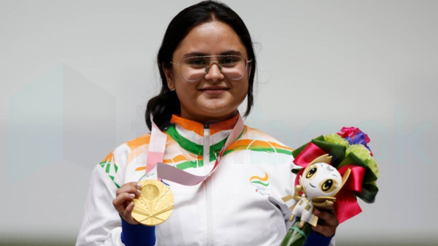
  • Avani Lekhara is from Jaipur, Rajasthan.
  • As 19-year-old Avani Lekhara won the gold medal in women’s 10 m air rifle Standing event in the SH 1 category at the Tokyo Paralympics.
  • She became the first Indian woman to win a gold medal at the Paralympics.
  • Avani shot 249.6 points in the R2 women’s 10m air rifle SH1 category for a Paralympic Record and equal the World Record.
  • In the final, she led from the start and edged out China’s Zhang C and Ukraine’s I Shchetnik in the medal series to win the gold.
  • Avani has won many World Cup medals since 2017 including a Silver with a Junior World Record in R2 at the WSPS World Cup 2017, bronze at the WSPS World Cup Bangkok 2017, silver in the WSPS World Cup in Osijek, Croatia 2019 and silver in the WSPS World Cup Al-Ain 2021. She won the Tokyo Paralympics quota in February 2019 in the UAE.
  • In 2012, the whole Lekhara family met with an accident on their way to Dholpur from Jaipur.
  • The then 11-year-old Avani suffered a spinal cord injury and was paralysed below the waist.

37

What is the length of a hockey field?

  1. ((a))

    90 m

  2. ((b))

    91.4 m

  3. ((c))

    100 m

  4. ((d))

    85 m

Show Answer
Answer: ((b))

91.4 m

The correct answer is 91.4 m.

Key Points

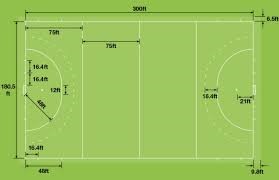
  • The place on which field hockey is challenged is 91.4m long and 55m wide.
  • This border is marked on the turf and the shorter lines are known as backlines.
  • Field Hockey is an eleven-aside game played on a pitch 100 yards by 60 yards with a ball that has a 23cm circumference.
  • Every player has a stick with a rounded top to play the ball with and the target is to score goals by putting the ball in the rival team's goal.
  • Field Hockey Pitch has a general length of 100 yards (91.44 m) and a width of 60 yards (54.86 m), for a whole area of 54,000 ft² (5017 m²).

Hockey Field & Goal Dimensions | Harrod Sport

Additional Information

  • Field hockey is a team sport organized in standard hockey format, in which every team plays with ten outfield players and a goalkeeper.
  • Teams must need a round hockey ball hitting it with a hockey stick toward the opposing team's shooting circle and then into the goal.
  • The match is won by the team that achieves the majority of goals.
  • The game is played in the middle of two teams of eleven, 10 field players and one goalkeeper, who are allowed to be on the pitch at any one time. ​
38

In which state does the Tapi river originate?

  1. ((a))

    Maharashtra

  2. ((b))

    Andhra Pradesh

  3. ((c))

    Madhya Pradesh

  4. ((d))

    Karnataka

Show Answer
Answer: ((c))

Madhya Pradesh

The correct answer is Madhya Pradesh.

Key Points

  • Tapi River
  • Apart from the Narmada river, Tapi is the only river that flows in the westward direction and flows through a rift valley.
  • Total length: around 724 km.
  • Originates in Betul district, Madhya Pradesh in the Satpura range.
  • It merges into the Arabian Sea.
  • The states through which the Tapi river flows include Maharashtra, Gujrat and Madhya Pradesh.
  • The main tributaries of the Tapi river are Purna, The Girna, The Panjhra, The Vaghur, the Bori and the Aner.

Additional Information

RiverOrigin
GodavariTrimbakeshwar, Nashik
KrishnaMahabaleshwar, Satara
TapiMultai, Betul district, Madhya Pradesh
GodavariNasik Hills, Maharashtra
KrishnaMahabaleshwar, Maharashtra
PennaNandi Hills, Chikballapur district, Karnataka
NarmadaAmarkantak, Anuppur district
BetwaVindhya Range, near Bhopal
ChambalJanapav, Mhow district
KaveriTalakaveri, Kodagu district
KrishnaMahabaleshwar, Maharashtra
TungabhadraKoodli, Shimoga district
39

The first oil refinery setup in India was ________.

  1. ((a))

    Digboi Refinery

  2. ((b))

    Kochi Refinery

  3. ((c))

    Aishwarya Refinery

  4. ((d))

    Jamnagar Refinery

Show Answer
Answer: ((a))

Digboi Refinery

The correct answer is Digboi Refinery.

Key Points

  • The Digboi Oil Refinery is located in Assam, a northeast state of India.
  • Digboi is the first oil refinery in India and Asia.
  • It was obtained in the year 1901.

Additional Information

  • List of oil refineries in India:
OIL REFINERYLOCATION
Jamnagar Refinery (Reliance Industries Limited)Jamnagar, Gujarat.
Nayara Energy RefineryVadinar, Gujarat.
Guru Gobind Singh RefineryBathinda, Panjab.
Manali Refinery (Chennai Petroleum Corporation Limited)Chennai, Tamil Nadu.
Numaligarh RefineryNumaligarh, Assam.
Barmer RefineryBarmer, Rajasthan.
Mathura Refinery (Indian Oil Corporation Limited)Mathura, Uttar Pradesh.
Barauni Refinery (Indian Oil Corporation Limited)Barauni, Bihar.
  • The Jamnagar Refinery (RIL) is the biggest oil refinery in India.
  • It is currently the largest refinery in the world.
40

Headquarters of DRDO is in ________.

  1. ((a))

    New Delhi

  2. ((b))

    Lucknow

  3. ((c))

    Dhanbad

  4. ((d))

    Dehradun

Show Answer
Answer: ((a))

New Delhi

The correct answer is New Delhi.

Key Points

  • DRDO is a military research and development wing of the Ministry of Defence, headquarters in New Delhi, India.
  • It was founded in 1958.
  • It has the vision to empower India with cutting-edge defence technologies and a mission to achieve self-reliance in critical defence technologies and systems.
  • DRDO has developed an antibody detection-based kit called DIPCOVAN.
  • Current Chief: Dr Samir V Kamat (from 2022)

Additional Information

CityHeadquarters of
LucknowCentral Drug research institute
DhanbadCentral Mining Research Institute
DehradunCentral Forest Research Institute
41

A ray of light passing from air to water will:

  1. ((a))

    Continue straight

  2. ((b))

    Bend away from the normal

  3. ((c))

    Bend towards the normal

  4. ((d))

    Be completely absorbed

Show Answer
Answer: ((c))

Bend towards the normal

The correct answer is Bend towards the normal.

Key Points

  • When light passes from a medium with a lower refractive index (air) to a medium with a higher refractive index (water), it bends towards the normal.
  • This phenomenon occurs due to the change in the speed of light; light travels slower in water compared to air.
  • The bending of light at the interface of two different media is described by Snell's Law.
  • Snell's Law states that n1 * sin(θ1) = n2 * sin(θ2), where n1 and n2 are the refractive indices of air and water, respectively.

Additional Information

  • Refraction of Light
  • Refraction is the bending of light as it passes from one transparent medium to another.
  • It occurs due to a change in the speed of light in different media.
  • The refractive index is a measure of how much the speed of light is reduced inside a medium.
  • Snell's Law
  • Snell's Law relates the angle of incidence and the angle of refraction to the refractive indices of the two media.
  • It is mathematically expressed as n1 * sin(θ1) = n2 * sin(θ2).
  • This law helps in determining the direction of the refracted ray.
  • Refractive Index
  • The refractive index (n) of a medium is the ratio of the speed of light in vacuum to its speed in that medium.
  • Higher refractive index indicates that light travels slower in the medium.
  • For air, the refractive index is approximately 1, and for water, it is about 1.33.
  • Applications of Refraction
  • Refraction is utilized in lenses for focusing light in devices such as cameras, glasses, and microscopes.
  • It is also crucial in the formation of optical instruments like telescopes and binoculars.
  • Understanding refraction is essential for fiber optic communications.
42

'Aao Bihar Yojna' scheme related to

  1. ((a))

    Bihar Tourism

  2. ((b))

    New Start up

  3. ((c))

    Establishment of new industrial unit

  4. ((d))

    Industrial development

Show Answer
Answer: ((c))

Establishment of new industrial unit

The correct answer is the establishment of a new industrial unit.

  • Aao Bihar Yojana scheme which aims to encourage investment and for the establishment of the new industrial unit and technical institutions in Bihar.
  • Under this scheme, any person who owns 2 acres or more land and wants to sell their land for the establishment of industries or institutions can enlist their land with respective Collector/District Magistrate.
  • The details are then published by BIADA on the website.
43

The first law of motion provides the relation between _______ and time.

  1. ((a))

    Velocity

  2. ((b))

    Phase

  3. ((c))

    Displacement

  4. ((d))

    Acceleration

Show Answer
Answer: ((a))

Velocity

The correct answer is Velocity.

Key Points

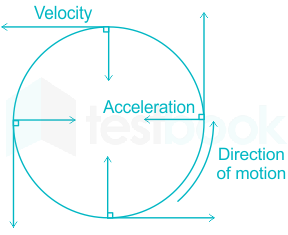
Newton's First Law of Motion- The first law states that an object at rest will stay at rest, and an object in motion will stay in motion unless acted on by a net external force. - This law is also known as the Law of Inertia.

Newton's Second Law of Motion
- The second law states that the rate of change of momentum of a body over time is directly proportional to the force applied, and occurs in the same direction as the applied force. - This law is also known as the balance of linear momentum.

Newton's Third Law of Motion
- The third law states that all forces between two objects exist in equal magnitude and opposite direction. - The third law is also known as the law of action and reaction.

Additional Information

  • All laws of motion given by Newton was published in 1687.
  • Newton's first and second laws are valid only in an inertial reference frame.
  • Force = mass * Acceleration
44

What is the pH value of pure water?

  1. ((a))

    8

  2. ((b))

    7.4

  3. ((c))

    7

  4. ((d))

    6.6

Show Answer
Answer: ((c))

7

The correct answer is 7.

CONCEPT:

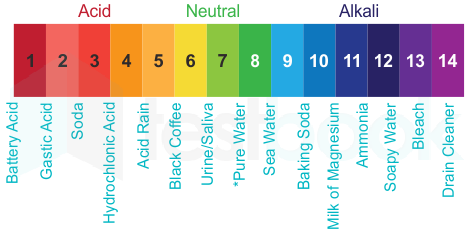
  • pH value is a measure of the acidity or basicity of a solution.
  • pH is defined as the negative logarithm of Hydrogen ion concentration.
  • The range of pH extends from 0 to 14.

pH value
Acid<7
Neutral7
Base>7

EXPLANATION:

  • The pH value of pure water is 7.
  • Pure water is neutral.
  • It is neither acidic nor basic.
  • For neutral solution pH = 7.
45

How many maximum electrons can M shell have?

  1. ((a))

    18

  2. ((b))

    8

  3. ((c))

    1

  4. ((d))

    2

Show Answer
Answer: ((a))

18

The correct answer is 18.

Key Points

  • Concept:
  • The distribution of electrons into different orbits of an atom was suggested by Bohr and Bury.
  • The orbits or shells are represented by the letters K, L, M, N,… or the numbers, n = 1, 2, 3, 4.
  • The following rules are followed for writing the number of electrons in different energy levels or shells:
  • The maximum number of electrons present in a shell is given by the formula 2n2, where ‘n’ is the orbit number or energy level index.
  • Calculation:
  • Given:
  • Shell given = M, orbit number = 3.
  • The maximum number of electrons present in a shell is given by the formula 2n2.
  • Therefore, 2 × 32 = 18
46

Which of the following helps in removing tooth decay by neutralizing acids?

  1. ((a))

    Fluoride toothpaste

  2. ((b))

    Lemon juice

  3. ((c))

    Vinegar

  4. ((d))

    Carbonated water

Show Answer
Answer: ((a))

Fluoride toothpaste

The correct answer is Fluoride toothpaste.

Key Points

  • Fluoride toothpaste is essential for preventing and controlling tooth decay.
  • Fluoride works by remineralizing tooth enamel, which helps to repair early stages of tooth decay.
  • It helps in neutralizing acids produced by bacteria in the mouth, thus preventing further decay.
  • Regular use of fluoride toothpaste can reduce the risk of cavities and strengthen teeth.
  • Many dental associations worldwide recommend the use of fluoride toothpaste for maintaining oral health.

Additional Information

  • Tooth Decay:
  • Tooth decay is caused by acids produced by bacteria in the mouth.
  • These acids dissolve the minerals in the tooth enamel, leading to cavities.
  • Fluoride:
  • Fluoride is a natural mineral found in many foods and water.
  • It is used in dental products to prevent tooth decay by making the enamel more resistant to acid attacks.
  • Enamel Remineralization:
  • This is the process by which minerals are redeposited in tooth enamel after being removed by acids.
  • Fluoride aids in this process, helping to repair the enamel and prevent further decay.
  • Dental Recommendations:
  • Most dental health organizations recommend brushing twice daily with fluoride toothpaste.
  • Regular dental check-ups and cleanings are also essential for maintaining oral health.
47

The instrument to measure Blood Pressure is called ________.

  1. ((a))

    Sphygmomanometer

  2. ((b))

    Thermometer

  3. ((c))

    Anemometer

  4. ((d))

    Barometer

Show Answer
Answer: ((a))

Sphygmomanometer

SphygmomanometerBlood pressure
ThermometerTemperature
AnemometerSpeed of Wind
BarometerAtmospheric pressure
48

Who discovered cell in 1665?

  1. ((a))

    Robert Hooke

  2. ((b))

    Robert Crook

  3. ((c))

    David Thomson

  4. ((d))

    Marie Francois

Show Answer
Answer: ((a))

Robert Hooke

The cell was discovered by Robert Hooke in 1665. Since it looked strangely similar to Cellula or small rooms which monks inhabited, thus deriving the name.

However, what Hooke actually saw was the dead cell walls of plant cells (cork) under Simple Microscope.

49

Match the following: 

A.Concave mirrori.used for rear view in vehicle
B.Concave lensii.used in microscope
C.Convex mirroriii.used for near sightedness
D.Convex lensiv.used in torch lights
  1. ((a))

    (A) - (ii), (B) - (iii), (C) - (iv), (D) - (i)

  2. ((b))

    (A) - (i), (B) - (iv), (C) - (ii), (D) - (iii)

  3. ((c))

    (A) - (iv), (B) - (iii), (C) - (i), (D) - (ii)

  4. ((d))

    (A) - (iii), (B) - (iv), (C) - (ii), (D) - (i)

Show Answer
Answer: ((c))

(A) - (iv), (B) - (iii), (C) - (i), (D) - (ii)

The Correct answer is (A) - (iv), (B) - (iii), (C) - (i), (D) - (ii).

CONCEPT:

Convex mirror:

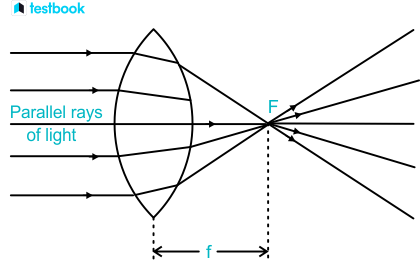
  • If the outer surface of the spherical mirror is the reflecting surface then it is called a convex mirror. It is also called the diverging mirror.
  • The nature of the image formed by a convex mirror does not depend on the distance of the object from the; mirror. These images are always virtual, smaller than the object, and situated behind the mirror.

Concave mirror:

 If the inner surface of the spherical mirror is the reflecting surface, then it is called a concave mirror. It is also called a focusing mirror/converging mirror.

  • The size of the image produced by these mirrors can be larger or smaller than the object, depending upon the distance of the object from the mirror.
  • The concave mirror can form both real as well as virtual images of any object.

Explanation:

  • Convex mirror -used for rear view in vehicles: A concave mirror is a mirror with a reflecting surface that curves inward like the inside of a bowl.
  • When used as a rear-view mirror in vehicles, it allows the driver to see a wider field of view. The mirror's curved shape converges the light rays, making objects appear smaller but also allowing a larger area to be visible in the reflection.
  • Concave lens - used for near-sightedness: A concave lens is thinner at the center and thicker at the edges. It is used to correct near-sightedness or myopia. Near-sightedness occurs when light entering the eye is focused in front of the retina, causing distant objects to appear blurry.
  • A concave lens diverges light rays, allowing them to focus properly on the retina, thus improving distant vision**.**
  • Concave mirror - used in torch lights: A convex mirror is a mirror with a reflecting surface that curves outward.
  • Convex mirrors have a wider field of view compared to flat mirrors and are often used in torch lights or flashlights to provide a broader spread of light. They scatter light rays, allowing a larger area to be illuminated.
  • Convex lens -used in microscopes: A convex lens is thicker at the center and thinner at the edges. It converges light rays and is commonly used in microscopes to magnify small objects. When light passes through a convex lens, it converges and forms a real, enlarged, and inverted image of the object being observed, which allows for detailed examination in microscopes.
50

Potash Alum otherwise known as "Fitkari" or "Phitkari" is a_____

  1. ((a))

    Acid

  2. ((b))

    Base

  3. ((c))

    Salt

  4. ((d))

    Mixture

Show Answer
Answer: ((c))

Salt

The correct answer is Salt.

Key Points

  • Potash alum or potassium aluminum sulfate is a double salt of Potassium and Aluminium.
  • It is also known as fitkari.
  • FormulaK2SO4.Al2(SO4)3.24H2O ( sometimes also written as KAl(SO4)2·12H2O)
<br>

Additional Information

  • Potash alum
  • It is a coagulant widely used in water treatment.
  • Used as a Fire Retardant.
  • An aqueous solution of potash alum is acidic.
  • Highly soluble in water.
  • Double Salt -
  • A crystalline salt in which there are two different anions and/or cations.
  • Double salts only exist in the solid.
  • When dissolved they act as a **mixture of the two separate salts.**​
51

Who was awarded the 2025 Abel Prize?

  1. ((a))

     Niels Henrik Abel

  2. ((b))

    Masaki Kashiwara

  3. ((c))

    Hendrik Haugan

  4. ((d))

    John von Neumann

Show Answer
Answer: ((b))

Masaki Kashiwara

The Correct Answer is Masaki Kashiwara.

In News

  • Japanese mathematician Masaki Kashiwara awarded the Abel Prize 2025.

Key Points

  • Recipient of the 2025 Abel Prize: Masaki Kashiwara, a Japanese mathematician.
  • Field of Contribution:
  • Algebraic analysis
  • Representation theory
  • Development of D-modules
  • Discovery of crystal bases.
  • About the Abel Prize:
  • Named after Niels Henrik Abel, a legendary Norwegian mathematician.
  • Established by the Norwegian Parliament in 2002 to commemorate Abel's 200th birth anniversary.
  • First awarded in 2003.
  • Often regarded as the Nobel Prize equivalent in mathematics.
  • Awarded by a committee in consultation with the International Mathematical Union (IMU) and the European Mathematical Society (EMS).
  • Includes a cash award and a glass plaque designed by Norwegian artist Henrik Haugan.
52

Which ministry organized the Rashtriya Karmayogi Jan Seva Programme?

  1. ((a))

    Ministry of Health

  2. ((b))

    Ministry of Ayush

  3. ((c))

    Ministry of Education

  4. ((d))

    Ministry of Personnel, Public Services and Pensions

Show Answer
Answer: ((b))

Ministry of Ayush

The correct answer is Ministry of Ayush.

In News

  • The Ministry of Ayush conducted the Rashtriya Karmayogi Jan Seva Programme to enhance the professional skills of its employees.

Key Points

  • The Ministry of Ayush organized the Rashtriya Karmayogi Jan Seva Programme to improve service orientation and professional skills.
  • The programme was organized in collaboration with the Capacity Building Commission under the Mission Karmayogi framework.
  • The programme was held in phases, focusing on self-awareness, motivation, leadership, and practical application of the training.
  • Dr. Subodh Kumar and Ms. Shipra Singh led the second phase with an interactive, hands-on approach.
  • Case studies from Ayurveda and Yoga were shared to provide practical context to the participants.

Additional Information

  • Mission Karmayogi
  • Launched by the Indian government to improve the performance of civil servants.
  • Focuses on enhancing professional skills, leadership, and efficiency in government employees.
  • Ayush Ministry
  • The Ministry of Ayush is responsible for promoting traditional systems of medicine in India, including Ayurveda, Yoga, Naturopathy, Unani, Siddha, and Homeopathy.
53

Who discovered Penicillin?

  1. ((a))

    Charles Darwin

  2. ((b))

    Alexander Fleming

  3. ((c))

    Gregor Mendel

  4. ((d))

    Louis Pasteur

Show Answer
Answer: ((b))

Alexander Fleming

The correct answer is Alexander Fleming.

  • Alexander Fleming discovered penicillin.
  • This discovery led to the introduction of antibiotics that greatly reduced the number of deaths from infection.
  • Penicillin prevents the bacteria from synthesizing peptidoglycan, a molecule in the cell wall that provides the wall with the strength it needs to survive in the human body.

Additional Information

  • Charles Darwin is regarded as the "Father of Evolution."
  • Louis Pasteur developed the Rabies Vaccine.
  • Gregor Mendel is called the father of genetics.
54

Bee-keeping is also called as

  1. ((a))

    sericulture

  2. ((b))

    pisciculture

  3. ((c))

    apiculture

  4. ((d))

    aquaculture

Show Answer
Answer: ((c))

apiculture

The correct answer is Apiculture.

Explanation:

CultureDescription
Sericulture- Cultivation of silkworms. - The method of raising silkworms and harvesting silk from them is known as sericulture. Domestic silkmoth caterpillars (also known as ‘Bombyx mori') are the most widely used silkworm species in sericulture.
Pisciculture- Cultivation of fishes. - Pisciculture is the artificial reproduction, rearing, and transplantation of fish. It's also known as fish farming. - This involves the agricultural production of fish for food in tanks or enclosures. Cabbage, tilapia catfish, and salmon are examples of farm-raised fish.
Apiculture- Bee-keeping - Apiculture, also known as beekeeping, is the practice of caring for and managing honey bees in order to produce honey and wax. - Bees are commercially raised in apiaries, which are areas where a large number of beehives can be put. - Apiaries are typically established in areas with ample bee pastures, such as areas with flowering plants.
Aquaculture- Aquafarming. - Aquatic species are cultivated in a regulated environment, primarily for human use. - Fish, crustaceans, mollusks, aquatic plants, algae, and other species are all cultivated.

Concept:

  • Apiculture is also known as beekeeping where honey bees are reared in order to produce honey and wax.
  • Hence the correct answer for this question is - Apiculture.

Important Points

Aquaculture v/s Pisciculture: 

  • Aquaculture is the method of raising, rearing, and harvesting commercially valuable aquatic flora and fauna in salt or freshwater, while pisciculture is the process of culturing fish (fish farming) to obtain fish and fish products for human consumption.
  • Aquaculture involves the overall cultivation of different aquatic forms and not only fishes whereas pisciculture's basic aim is to cultivate only fishes.
55

Which of these does not belong to the group?

  1. ((a))

    Mercury

  2. ((b))

    Iron

  3. ((c))

    Copper

  4. ((d))

    Aluminium

Show Answer
Answer: ((a))

Mercury

The correct answer is Mercury.

Key Points

  • Mercury is a chemical element with the symbol Hg and atomic number 80.
  • It is the only metallic element that is liquid at standard conditions for temperature and pressure.
  • Mercury is a poor conductor of heat but a fair conductor of electricity.
  • The other elements listed (Iron, Copper, Aluminium) are all solid metals at room temperature.

Additional Information

  • Iron (Fe)
  • Iron is a chemical element with the symbol Fe and atomic number 26.
  • It is the most common element on Earth by mass and forms much of Earth's outer and inner core.
  • Iron is a key component in the production of steel and is used extensively in construction and manufacturing.
  • Copper (Cu)
  • Copper is a chemical element with the symbol Cu and atomic number 29.
  • It is known for its high thermal and electrical conductivity.
  • Copper is widely used in electrical wiring, plumbing, and the manufacturing of electronics.
  • Aluminium (Al)
  • Aluminium is a chemical element with the symbol Al and atomic number 13.
  • It is noted for its low density and ability to resist corrosion.
  • Aluminium is used in a variety of industries including aerospace, construction, and consumer goods due to its lightweight and durability.
56

Which of the following is measured in its SI-derived unit called Tesla?

  1. ((a))

    Illuminance

  2. ((b))

    Magnetic flux density

  3. ((c))

    Luminous flux

  4. ((d))

    Capacitance

Show Answer
Answer: ((b))

Magnetic flux density

The correct Answer is Magnetic Flux Density.

Key Points

  • Magnetic flux density is measured in its SI-derived unit Called Tesla.
  • One tesla represents one weber per square meter.
  • Formula is : T = N × A-1 × m-1 = kg × s-2 × A-1.
  • One Tesla is equal to a Newton per meter and ampere.

Additional Information

  • Some Important units of Mass:
  • ​Kilograms: Unit of Mass.
  • Meters: Unit of Length.
  • Second: Unit of Time.
  • Ampere: Unit of Electric Current.
  • Kelvin: Unit of Thermodynamic Temperature.
  • Mole: Unit of Amount of Substance.
57

Which of the following changes when a body performs uniform circular motion?

  1. ((a))

    Speed

  2. ((b))

    Mass

  3. ((c))

    Direction

  4. ((d))

    Kinetic energy

Show Answer
Answer: ((c))

Direction

CONCEPT:

  • Circular Motion: Circular motion is a movement of an object along the circumference of a circle or rotation along a circular path.
  • The force acts continuously at right angles to the velocity of the particle.
  • Uniform circular motion: The circular motion in which the speed of the particle remains constant is called uniform circular motion. In a uniform circular motion, force supplies the centripetal acceleration.
  • In a uniform circular motion, a body is experiencing a force in the inward direction.

Acceleration of the body is non-zero and has magnitude is given as:

(ma = \frac{{m{v^2}}}{r} \Rightarrow a = \frac{{{v^2}}}{r})

Where m is mass of the body, a is centripetal acceleration, v is speed and r is the radius.

EXPLANATION:

  • Here the direction of centripetal acceleration changes each and every moment. So the acceleration will also change.
  • Similarly, the velocity keeps on changing because the direction of velocity is changing.
  • In a uniform circular motion, the magnitude of the velocity is always the same and, the direction always changes. So option 3 is correct.
  • Since the magnitude of velocity is same so kinetic energy and speed will remain the same always in a uniform circular motion.
58

The rise of a Liquid in a capillary tube is due to

  1. ((a))

    Viscosity

  2. ((b))

    Osmosis

  3. ((c))

    Diffusion

  4. ((d))

    Surface Tension

Show Answer
Answer: ((d))

Surface Tension

Concept:

  • Capillary action: If one end of a capillary tube is put into a liquid that wets glass, it is found that the liquid rises into the capillary tube to a certain height.
  • This rise is due to inward pull of surface tension acting on the surface which pushes the liquid into the capillary tube.

Water rises whereas mercury level falls in capillary tube

The height of the liquid rises or fall (h) is given by

({\rm{h}} = \frac{{4{\rm{;T}}\cos {\rm{\theta }}}}{{{\rm{d;\rho ;g}}}})

Where T = surface tension, θ = angle of contact, d = diameter of capillary tube, ρ = density of liquid, g = acceleration due gravity.

Explanation:

Hence the rise in capillary action is due to surface tension.

59

Which one of the following affects the efficiency of oil transportation through pipeline?  

  1. ((a))

    Surface Tension

  2. ((b))

    Stress

  3. ((c))

    Viscosity

  4. ((d))

    Strain

Show Answer
Answer: ((c))

Viscosity

The correct answer is Viscosity.

Key Points

  • Viscosity is a measure of resistance to flow which arises due to the internal friction between layers of fluid.
  • Most of the fluids offer some resistance to motion.
  • This resistance to fluid motion is like internal friction analogous to friction when a solid moves on a surface.
  • Strong intermolecular forces between molecules hold them together and resist the movement of layers past one another.
  • Hence, to deliver a large volume of oil in lesser time, viscosity must be as low as possible.
  • The SI unit of viscosity is poiseiulle (Pl).
  • Its other units are N s m-2 or Pa s.
  • 1 poise = 1 g cm–1s–1 = 10–1kg m–1s–1.

Additional Information 

  • Surface Tension
  • The property of the surface of a liquid that allows it to resist an external force, due to the cohesive nature of its molecules is called surface tension.
  • SI unit of surface tension is newton per meter.
  • Stress
  • Stress is the restoring force per unit area.
  • Both pressure and stress are given by the same formula i.e. ({F \over A} ).
  • The SI unit of stress is N m–2 or pascal (Pa) and its dimensional formula is [ML–1T–2 ].
  • Strain
  • The change in the dimension of an object with respect to the original dimension is called strain.
  • It is given by (ΔL \over L).
  • It is a dimensionless quantity.
60

Cobalt - 60 is commonly used in radiation therapy because it emits

  1. ((a))

    Alpha - rays

  2. ((b))

    Beta rays

  3. ((c))

    Gamma rays

  4. ((d))

    X - rays

Show Answer
Answer: ((c))

Gamma rays

The correct answer is Gamma rays

Key Points

  • Cobalt-60 is used in radiation therapy because it emits gamma rays.
  • As cobalt-60 decays into a stable nickel-60 isotope, two wavelengths of high-energy gamma rays are emitted.
  • Cobalt-60 has been used in the treatment of cancer for over 60 years with an instrument known as the Gamma Knife.
  • The Gamma Knife was invented in 1967 and is used to treatbrain tumors and vascular malformations.
  • The gamma rays emitted by cobalt-60 are harnessed by the radiotherapy instrument which is highly effective in precisely delivering a high dose of radiation to the tumor area and therefore preserving surrounding healthy tissue.
61

Name the acid present in nettle sting.

  1. ((a))

    Oxalic acid

  2. ((b))

    Acetic acid

  3. ((c))

    Citric acid

  4. ((d))

    Methanoic acid

Show Answer
Answer: ((d))

Methanoic acid

The correct answer is Methanoic acid

Key Points

  • Methanoic acid:-
  • Methanoic acid is present in Nettle sting.
  • Nettle sting has methanoic acid commonly called formic acid (HCOOH).
  • The leaves and young stems of this herbaceous plant are fitted with stinging hairs tipped with formic acid and other irritants.
  • If touched, these needle-like hairs inject the stinging acid into the skin, triggering a burning, tingling sensation and an itchy rash.

Additional Information 

  • Oxalic acid:-
  • It is an organic compound with the formula H2C2O4.
  • It is a colorless crystalline solid that forms a colorless solution in water.
  • Acetic acid:-
  • The main constituent of vinegar is Acetic acid (CH3COOH), after adding 5-8% of acetic acid in water it becomes vinegar.
  • Vinegar is acidic in nature having a pH of around 2.5.
  • Citric Acid:-
  • Citric Acid is present in free form in Lemon which has a distinctive sour taste as well as it also contains ascorbic acid known generally as Vitamin C.
  • The acid that is present in tamarind is tartaric acid, which is a white crystalline organic acid, which is formed naturally and can be found in several other plants too.
62

Which of the following salts is used in black and white photography?

  1. ((a))

    NaBr

  2. ((b))

    AgBr

  3. ((c))

    AgNO₃

  4. ((d))

    KBr

Show Answer
Answer: ((b))

AgBr

The correct answer is AgBr.

Key Points

  • AgBr (Silver Bromide) is a crucial compound used in the field of black and white photography.
  • It is sensitive to light, which is fundamental in capturing photographic images.
  • When exposed to light, AgBr decomposes to silver and bromine, creating a latent image that can be developed into a visible photograph.
  • AgBr crystals are used in photographic films and papers, playing a significant role in the traditional photographic process.

Additional Information

  • Photographic Process
  • The photographic process involves capturing images by exposing a light-sensitive material to light.
  • In black and white photography, silver halides like AgBr are commonly used due to their sensitivity to light.
  • After exposure, the film is developed using chemical solutions that reduce the silver halide to metallic silver, creating a visible image.
  • The developed film is then fixed to remove any unexposed silver halide, ensuring the image is permanent and not sensitive to light anymore.
  • Silver Halides
  • Silver halides are compounds of silver with halogens (chlorine, bromine, iodine).
  • They are used in photographic materials due to their light-sensitive properties.
  • Common silver halides used in photography include silver bromide (AgBr), silver chloride (AgCl), and silver iodide (AgI).
  • These compounds form the basis of traditional photographic films and papers.
  • Latent Image
  • A latent image is an invisible image created on a photographic film or paper after exposure to light.
  • It is formed by the reaction of light with silver halide crystals, creating a small amount of metallic silver.
  • The latent image is later developed into a visible image through chemical processing.
  • This process involves amplifying the small amount of metallic silver into a visible, larger amount that forms the photograph.
  • Photographic Development
  • Development is a chemical process that converts the latent image into a visible image.
  • The developer solution reduces the exposed silver halide crystals to metallic silver, forming the image.
  • After development, the film or paper is fixed to remove unexposed silver halide, stabilizing the image.
  • Finally, the material is washed to remove any remaining chemicals, making the photograph permanent and light-stable.
63

Which of the following elements has valency 1?

  1. ((a))

    Helium

  2. ((b))

    Boron

  3. ((c))

    Fluorine

  4. ((d))

    Neon

Show Answer
Answer: ((c))

Fluorine

The correct answer is Fluorine.

Key Points

  • The combining capacity of an atom by gaining or losing the valence electron to gain an octate state is called the valency of that element.
  • The atomic number of Fluorine(F) is 9.
  • The Electronic configuration of Fluorine is 2,7. Therefore, it has 7 valence electrons.
  • To gain an Octate state it needs one more electron so its valency is 1.
  • Fluorine is belonging to group 17 and p-block.

Additional Information

  • Helium (He)
  • It is a light gas with no visible colour.
  • The atomic number of Helium is 2.
  • atomic mass value of 4.002 amu.
  • It belongs to group 18 and s-block.
  • Its valency is 0.
  • Boron (B)
  • The atomic number of Boron is 5.
  • Atomic mass value of 10.81 amu
  • It is a metalloid belonging to group 13 and p-block.
  • Its valency is 3.
  • Neon (Ne)
  • The atomic number of neon is 10.
  • Atomic mass value of 20.179 amu.
  • It belongs to group 18 and p-block.
  • Its valency is 0.
64

Acceleration due to gravity is highest at ____.

  1. ((a))

    the poles

  2. ((b))

    at an infinite distance from the earth

  3. ((c))

    the equator

  4. ((d))

    the center of the earth

Show Answer
Answer: ((a))

the poles

The correct answer is the poles.

Key Points

  • Acceleration due to gravity is highest at the poles.
  • The acceleration that an object acquires due to the gravitational force is known as acceleration due to gravity.
  • It is a vector quantity and is denoted by the symbol 'g'.
  • The SI unit of 'g' is m/s2 and the dimensional formula is [M0LT-2].
  • The value of 'g' at the sea level on the surface of the earth is 9.8 m/s2.
  • The formula of 'g' is: g = GM/r2 (where 'G' is the gravitational constant, 'M' is the mass of the earth, 'r' is the radius of the earth).
  • Since the value of 'r' is lowest at the poles, therefore the value of acceleration due to gravity is highest at the poles.
  • The value of 'r' is greatest at the equator, therefore the value of acceleration due to gravity is lowest at the equator.
65

-------- lens present in the human eye.  

  1. ((a))

    Concave lens

  2. ((b))

    Convex lens

  3. ((c))

    A mirror

  4. ((d))

    Planar lens

Show Answer
Answer: ((b))

Convex lens

The correct  answer is Convex lens

Concept:

A convex lens is a lens that bulges outward in the middle and is thinner at the edges. It is thicker in the center than at the edges. Convex lenses are thicker in the middle than at the edges and can converge parallel rays of light passing through them to a focal point, forming a real image. They are commonly used in various optical devices and systems for magnification, focusing, and image formation.

Uses of Convex Lens: Definition, Uses in daily life, Types- Plano

Explanation:

In the human eye, there are two main lenses:

  • Cornea: The cornea is the transparent, dome-shaped structure covering the front of the eye. It acts as the outermost lens of the eye and is primarily responsible for focusing incoming light rays onto the retina. The cornea contributes significantly to the eye's ability to refract light and plays a crucial role in determining the eye's overall focusing power.
  • Crystalline Lens: The crystalline lens, often referred to simply as "the lens," is a flexible, transparent, biconvex structure located behind the iris and pupil. It is suspended in place by the suspensory ligaments attached to the ciliary body. The crystalline lens fine-tunes the focusing of light onto the retina by changing its shape through a process called accommodation. This allows the eye to focus on objects at different distances, enabling clear vision at varying distances.
  • Both the cornea and the crystalline lens work together to refract light and focus it onto the retina, where images are formed and transmitted to the brain for visual processing. Together, these lenses play a crucial role in the eye's ability to perceive the surrounding environment and maintain clear vision.

Thus it implies that Convex lens is present in the human eye.

66

What is the unit of radioactivity according to the international system of units?

  1. ((a))

    Baquerel

  2. ((b))

    Curie

  3. ((c))

    Weber

  4. ((d))

    Gauss

Show Answer
Answer: ((a))

Baquerel

The Correct Answer is Baquerel.

Key Points

  • The SI unit of radioactivity is becquerel (Bq) and this term is named after Henri Becquerel.
  • A unit of radioactivity is defined as the activity of a quantity of radioactive material where one decay takes place per second.
  • 1 becquerel = 1 radioactive decay per second = 2.703×10⁻¹¹ Ci

Additional Information

  • Other Radioactivity Units:
  • There are usually three radioactivity units.
  • An older radioactivity unit is the curie (Ci) and the name has been taken from Pierre and Marie Curie.
  • It is defined as that quantity of any radioactive substance which gives 3.7 X 10¹⁰s-1 disintegration per second (dps).
  • Sometimes millicurie (mc) and microcurie (mc) are also used.
  • Another unit is Rutherford (rd) and it is defined as the amount of radioactive substance which gives 106 disintegrations per second (dps).
  • 1 curie = 3.7×10¹⁰ radioactive decays per second.
  • 1 becquerel = 1 radioactive decay per second = 2.703×10⁻¹¹ Ci.
  • 1 rutherford = 1.106 radionuclide decays per second
67

Brass is an alloy of :

  1. ((a))

    copper and tin

  2. ((b))

    copper and nickel

  3. ((c))

    copper and iron

  4. ((d))

    copper and zinc

Show Answer
Answer: ((d))

copper and zinc

Concept:

Alloy:

  • ​A metallic substance is composed of two or more elements, such as either a compound or a solution.
  • The components of alloys are ordinarily themselves metals, though carbon, a nonmetal, is an essential constituent of steel.
  • For example, brass, an alloy of copper and zinc,

Explanation:

Brass, an alloy of copper and zinc, of historical and enduring importance because of its hardness and workability.

68

Carbon, in all its allotropic forms, burns in oxygen to give __________.

  1. ((a))

    carbon monoxide

  2. ((b))

    carbon dioxide

  3. ((c))

    carbonic acid

  4. ((d))

    methane

Show Answer
Answer: ((b))

carbon dioxide

The correct answer is carbon dioxide.

Key Points

  • Carbon burns in oxygen to form carbon dioxide, which is a common chemical reaction.
  • Carbon dioxide is a colorless and odorless gas at room temperature.
  • This reaction is exothermic, meaning it releases heat.
  • Carbon dioxide is a greenhouse gas and plays a significant role in global warming.
  • The chemical equation for the combustion of carbon in oxygen is C + O2 → CO2.

Additional Information

  • Carbon Monoxide
  • Carbon monoxide (CO) is a colorless, odorless gas that can be produced by the incomplete combustion of carbon.
  • It is highly toxic and can cause harmful health effects when inhaled.
  • Carbonic Acid
  • Carbonic acid (H2CO3) forms when carbon dioxide dissolves in water.
  • It is a weak acid and plays a role in the carbon cycle and acid-base balance in the environment.
  • Methane
  • Methane (CH4) is a simple hydrocarbon and the main component of natural gas.
  • It is a potent greenhouse gas and contributes to global warming.
69

Symbol of element was introduced by ________.

  1. ((a))

    John Dalton

  2. ((b))

    Antoine Lavoisier

  3. ((c))

    Jöns Jacob Berzelius

  4. ((d))

    Robert Boyle

Show Answer
Answer: ((c))

Jöns Jacob Berzelius

The correct answer is Jöns Jacob Berzelius.

  • In 1813, J.J. Berzelius proposed that chemical symbols should be based on the Latin names of the elements.

Key Points

  • This proposal was adopted by the mid-19th century.
  • He is among the founders of modern Chemistry and is known for his work on atomic weight which led to several developments in chemistry.
  • Chemical symbols are the abbreviations used for chemical elements.
  • It usually consists of one or two letters from the Latin alphabet.
  • For example, the chemical symbol of lead is Pb which is derived from plumbum in Latin.

Additional Information

  • John Dalton
  • He was an English physicist and chemist.
  • He is known for introducing atomic theory into chemistry.
  • He is a pioneer in research in colour blindness and his theory is also known as Daltonism after his name.
  • Antoine Lavoisier was a French chemist who is known for finding the role oxygen plays during combustion.
  • Robert Boyle was an Irish chemist who was known as the first modern scientist and was among the founders of modern Chemistry.
  • He is known for Boyle's law.
70

What is the percentage of Nitrogen in the atmosphere of the Air ?

  1. ((a))

    0.1

  2. ((b))

    0.2

  3. ((c))

    0.3

  4. ((d))

    0.7808

Show Answer
Answer: ((d))

0.7808

The correct answer is 0.7808.

Key Points

  • The Earth's atmosphere is composed of a mixture of gases.
  • Nitrogen (N2) is the most abundant gas in the Earth's atmosphere.
  • The percentage of nitrogen in the atmosphere is approximately 78.08%.
  • This high percentage of nitrogen plays a crucial role in maintaining the Earth's life-supporting environment.
  • Nitrogen is relatively inert and does not readily react with other elements, making it stable in the atmosphere.

Additional Information

  • Oxygen
  • Oxygen (O2) is the second most abundant gas in the atmosphere, making up about 21%.
  • It is essential for the respiration of most living organisms and for combustion processes.
  • Carbon Dioxide
  • Carbon dioxide (CO2) is present in the atmosphere at about 0.04%.
  • It is a crucial greenhouse gas and is used by plants during photosynthesis to produce oxygen.
  • Argon
  • Argon (Ar) is a noble gas and the third most abundant gas in the atmosphere, constituting about 0.93%.
  • It is used in various industrial processes due to its inert properties.
71

Which material is used for the production of thermal energy?

  1. ((a))

    Water

  2. ((b))

    Coal

  3. ((c))

    Petroleum

  4. ((d))

    None of these

Show Answer
Answer: ((b))

Coal

The correct answer is Coal.

Key Points

  • Coal is a fossil fuel that is primarily used for the generation of thermal energy.
  • It is burned in power plants to produce steam, which drives turbines to generate electricity.
  • Coal is composed mainly of carbon, along with various other elements such as hydrogen, sulfur, oxygen, and nitrogen.
  • It is extracted from the earth through mining, either underground or in open pits.
  • Despite its widespread use, coal combustion releases significant amounts of pollutants, including carbon dioxide, sulfur dioxide, and nitrogen oxides, contributing to environmental concerns such as air pollution and climate change.

Additional Information

  • Renewable Energy Sources
  • These include solar, wind, hydro, and geothermal energy, which are sustainable and have a lower environmental impact compared to fossil fuels.
  • They are increasingly being adopted to reduce dependence on non-renewable energy sources like coal, oil, and natural gas.
  • Natural Gas
  • It is another fossil fuel used for the production of thermal energy, often considered a cleaner alternative to coal due to lower emissions.
  • Natural gas is used in combined cycle power plants, which are more efficient than traditional coal-fired power plants.
  • Nuclear Energy
  • Nuclear power plants use the heat generated from nuclear fission reactions to produce steam, which drives turbines to generate electricity.
  • While it produces minimal greenhouse gas emissions, nuclear energy poses challenges related to radioactive waste disposal and safety concerns.
72

What is the commercial unit of electric energy?

  1. ((a))

    Watt

  2. ((b))

    Watt/hour

  3. ((c))

    Unit

  4. ((d))

    None of these

Show Answer
Answer: ((c))

Unit

The correct answer is Unit.

Key Points

  • The commercial unit of electric energy is commonly referred to as a "Unit".
  • One Unit of electricity is equivalent to one kilowatt-hour (kWh).
  • Electricity meters in households measure energy consumption in Units.
  • This unit allows for easy billing and calculation of electricity usage.
  • Electricity bills typically show the number of Units consumed over a billing period.

Additional Information

  • Watt
  • A Watt (W) is the unit of power in the International System of Units (SI).
  • It measures the rate of energy transfer or conversion.
  • Watt-hour
  • A Watt-hour (Wh) is a unit of energy representing one watt of power expended for one hour.
  • It is used to quantify the amount of energy used over a period of time.
  • Kilowatt-hour (kWh)
  • A kilowatt-hour is equal to 1,000 watt-hours and is the standard unit used for measuring electrical energy consumption.
  • It is often used by electric utility companies to bill customers.
73

Which of the following in a method of male sterlization?

  1. ((a))

    Vasectomy

  2. ((b))

    Oral pills

  3. ((c))

    Copper T

  4. ((d))

    None of these

Show Answer
Answer: ((a))

Vasectomy

The correct answer is Vasectomy.

Key Points

  • Vasectomy is a surgical procedure for male sterilization or permanent contraception.
  • During the procedure, the vas deferens from each testicle is clamped, cut, or otherwise sealed to prevent sperm from entering the urethra.
  • The procedure is typically performed under local anesthesia and is relatively quick, often taking less than 30 minutes.
  • Vasectomy is considered a highly effective method of birth control, with a success rate of over 99% in preventing pregnancy.
  • Unlike female sterilization, vasectomy is less invasive, has fewer complications, and usually allows for a faster recovery.

Additional Information

  • Oral Pills
  • Oral contraceptive pills are a method of birth control taken by women to prevent pregnancy.
  • They contain hormones that inhibit ovulation and alter the cervical mucus and endometrial lining.
  • Copper T
  • Copper T is a type of intrauterine device (IUD) used by women for long-term contraception.
  • It is a small, T-shaped device placed inside the uterus to prevent sperm from fertilizing an egg.
  • Tubal Ligation
  • Tubal ligation is a surgical procedure for female sterilization, where the fallopian tubes are cut, tied, or sealed.
  • This prevents eggs from traveling from the ovaries to the uterus, thereby preventing pregnancy.
74

Which of the following is the combined vaccine given to children for protecion against Diptheria, whooping cough and tetanus?

  1. ((a))

    DPT vaccine

  2. ((b))

    BCG vaccine

  3. ((c))

    TAB vaccine

  4. ((d))

    HIB vaccine

Show Answer
Answer: ((a))

DPT vaccine

The correct answer is DPT vaccine.

Key Points

  • The DPT vaccine is a combined immunization shot that protects children against three serious infectious diseases: diphtheria, pertussis (whooping cough), and tetanus.
  • Diphtheria is a bacterial infection affecting the mucous membranes of the throat and nose.
  • Pertussis, commonly known as whooping cough, is a highly contagious respiratory disease.
  • Tetanus, also known as lockjaw, is a bacterial infection characterized by muscle spasms.
  • The vaccine is typically administered in a series of injections starting from infancy.

Additional Information

  • BCG vaccine
  • BCG stands for Bacillus Calmette–Guérin.
  • It is primarily used against tuberculosis (TB).
  • TAB vaccine
  • The TAB vaccine is used to immunize against typhoid and paratyphoid fevers (also known as enteric fevers).
  • It contains killed bacteria of Salmonella typhi and Salmonella paratyphi A and B.
  • HIB vaccine
  • HIB stands for Haemophilus influenzae type b.
  • This vaccine prevents infections caused by the H. influenzae type b bacteria, including meningitis, pneumonia, and epiglottitis.
75

Which one of the following is used for ripening of fruits ?

  1. ((a))

    C5H10

  2. ((b))

    C2H4

  3. ((c))

    C3H8

  4. ((d))

    C2H6

Show Answer
Answer: ((b))

C2H4

The correct answer is C2H4.

Key Points

  • C2H4 (Ethylene) is a hydrocarbon gas commonly used for the ripening of fruits.
  • Ethylene acts as a plant hormone that accelerates the ripening process in fruits such as bananas, tomatoes, and apples.
  • This gas is naturally produced by fruits, which triggers the conversion of starches to sugars, softening, and color changes.
  • Commercially, ethylene is used to ensure uniform ripening of fruits during transport and storage.
  • Ethylene's effectiveness in fruit ripening makes it an essential tool in the agricultural and food industries.

Additional Information

  • Other Ripening Agents
  • Calcium carbide is another chemical sometimes used to ripen fruits artificially, but it is not recommended due to health hazards.
  • 1-Methylcyclopropene (1-MCP) is a synthetic compound used to slow down the ripening process by blocking ethylene receptors in fruits.
  • Ethylene Production in Plants
  • Plants produce ethylene in response to stress, injury, or environmental factors, which can also influence the ripening process.
  • Ethylene is involved in various physiological processes including leaf abscission, flower wilting, and seed germination.
  • Storage Conditions
  • Controlled atmosphere storage, which involves regulating oxygen, carbon dioxide, and ethylene levels, is used to extend the shelf life of fruits.
  • Temperature and humidity control are crucial in maintaining fruit quality during storage and transportation.
76

Syphillis' a sexually transmitted disease is caused by:-

  1. ((a))

    Entamoeba Ristolytica

  2. ((b))

    Plasmodium

  3. ((c))

    Treponema pollidum

  4. ((d))

    Virus

Show Answer
Answer: ((c))

Treponema pollidum

The correct answer is Treponema pallidum.

Key Points

  • Syphilis is a sexually transmitted disease caused by the bacterium Treponema pallidum.
  • It is primarily spread through sexual contact, including vaginal, anal, and oral sex.
  • The disease progresses through several stages, including primary, secondary, latent, and tertiary syphilis.
  • Symptoms in the early stages include sores, rashes, and flu-like symptoms, while later stages can cause severe damage to organs.
  • Syphilis can be effectively treated with antibiotics, especially if diagnosed early.

Additional Information

  • Gonorrhea
  • Another common sexually transmitted infection caused by the bacterium Neisseria gonorrhoeae.
  • It can infect the genitals, rectum, and throat, and is spread through sexual contact.
  • Chlamydia
  • A sexually transmitted infection caused by the bacterium Chlamydia trachomatis.
  • It often presents with mild or no symptoms but can lead to serious reproductive complications if untreated.
  • Human Immunodeficiency Virus (HIV)
  • HIV is a virus that attacks the body’s immune system, making it difficult to fight infections and certain diseases.
  • It is transmitted through contact with certain body fluids of an infected person, such as blood, semen, vaginal fluids, and breast milk.
  • If untreated, HIV can lead to Acquired Immunodeficiency Syndrome (AIDS).
77

5 men working 8 hours a day can pack 15 boxes in 8 days. If 15 men work 10 hours a day then in how many days can they pack 20 boxes?

  1. ((a))

    1.5 days

  2. ((b))

    4.5 days

  3. ((c))

    3.5 days

  4. ((d))

    2.8 days

Show Answer
Answer: ((d))

2.8 days

Given: 

5 men working 8 hours a day pack 15 boxes in 8 days.

Formula used:

(M1 × H1 × D1)/W1 = (M2 × H2 × D2)/W2

M = Number of men, H = Working hours, D = days, W = Work

Calculation:

Let 15 men take D days to pack 20 boxes

⇒ (5 × 8 × 8)/15 = (15 × 10 × D)/20

⇒ D = (64 × 2)/45 = 128/45 = 2.8

Hence, they will pack 20 boxes in 2.8 days.

78

If tan θ = (\frac{3}{4}) and θ is acute, then what is the value of sin θ

  1. ((a))

    (-\frac{3}{5})

  2. ((b))

    (\frac{3}{5})

  3. ((c))

    (\frac{4}{5})

  4. ((d))

    (-\frac{4}{5})

Show Answer
Answer: ((b))

(\frac{3}{5})

Given:

tanθ = (\frac{3}{4})

Formula used:

tanθ = Perpendicular/Base

sinθ = Perpendicular/Hypotenuse

By Pythagoras' theorem,

H2 = P2 + B2

Calculation:

tan θ = Perpendicular/Base = (\frac{3}{4})

So, by Pythagoras' theorem,

H2 = P2 + B2

⇒ H2 = 32 + 42

⇒ H2 = (9 + 16)

⇒ H2 = 25

⇒ H = 5 cm

⇒ sin θ = Perpendicular/Hypotenuse = (\frac{3}{5})

∴ The required value is (\frac{3}{5}).

79

Find the HCF of 2800 and 756. 

  1. ((a))

    56

  2. ((b))

    42

  3. ((c))

    14

  4. ((d))

    28

Show Answer
Answer: ((d))

28

Shortcut Trick

Check options for the largest number that divides both 2800 and 756.

2800 is divisible by 28 (2800 ÷ 28 = 100).

756 is divisible by 28 (756 ÷ 28 = 27).

Since 28 is the highest common divisor among the options, it is the HCF.

∴ The correct answer is 28.

Alternate Method

Given: Numbers are 2800 and 756.

Method: Prime Factorization

⇒ Prime factors of 2800 = 2 × 2 × 2 × 2 × 5 × 5 × 7 = 24 × 52 × 71

⇒ Prime factors of 756 = 2 × 2 × 3 × 3 × 3 × 7 = 22 × 33 × 71

HCF = Product of the lowest powers of common prime factors

HCF = 22 × 71

HCF = 4 × 7 = 28

∴ The correct answer is 28.

Additional Information

Highest Common Factor (HCF)

Also known as Greatest Common Divisor (GCD), it is the largest positive integer that divides each of the integers without a remainder.

Relationship between HCF and LCM

For any two numbers a and b: HCF(a, b) × LCM(a, b) = a × b.

Division Method for HCF

Divide the larger number by the smaller one, then divide the previous divisor by the remainder until the remainder is 0. The last divisor is the HCF.

80

Selling price of a chair is Rs. 7790. If loss percentage is 18 percent, then what is the cost price of chair?

  1. ((a))

    Rs. 8800

  2. ((b))

    Rs. 9000

  3. ((c))

    Rs. 9500

  4. ((d))

    Rs. 9200

Show Answer
Answer: ((c))

Rs. 9500

Given:

Selling price of a chair = Rs. 7790.

Loss percentage = 18%

Formula Used:

Cost Price = Selling Price / (1 - Loss Percentage/100)

Calculation:

Loss Percentage = 18%

1 - Loss Percentage/100 = 1 - 18/100 = 1 - 0.18 = 0.82

Cost Price = 7790 / 0.82

⇒ Cost Price = 7790 / 0.82

⇒ Cost Price = 9500

The cost price of the chair is Rs. 9500.

81

Asha bought a saree for Rs. 4000 and sold it for Rs. 4400. Her profit percent is: 

  1. ((a))

    5%

  2. ((b))

    80%

  3. ((c))

    10%

  4. ((d))

    40%

Show Answer
Answer: ((c))

10%

Given:

CP = Rs. 4000

SP = Rs. 4400

Find profit percent

Concept: Profit percent = [(SP - CP)/CP] × 100%

Solution:

Profit = SP - CP = 4400 - 4000 = Rs. 400

Profit percent = (Profit/CP) × 100% = (400/4000) × 100% = 10%

Hence, her profit percent is 10%.

82

If (a + \frac{1}{a} = 5 ) , then what is the value of ({a^3} + \frac{1}{{{a^3}}})?

  1. ((a))

    110

  2. ((b))

    15

  3. ((c))

    105

  4. ((d))

    –10

Show Answer
Answer: ((a))

110

Given:

(a + \frac{1}{a} = 5 )

Concept used:

(a + b)3 = a3 + 3ab(a + b) + b3

Calculation: 

(a + \frac{1}{a} = 5 )

⇒ ((a + \frac{1}{a})^3 = 5^3 )

⇒ (a^3 + \frac{1}{a^{3}} + 3(a + \frac {1}{a}) = 5^3)

⇒ (a^3 + \frac{1}{a^{3}} + 3 \times 5 = 125)

⇒ (a^3 + \frac{1}{a^{3}} = 125 - 15)

⇒ (a^3 + \frac{1}{a^{3}} = 110 )

∴ The value of ({a^3} + \frac{1}{{{a^3}}}) is 110.

83

Find the Total surface area of the hemisphere (in cm2 ) whose radius is 42 cm and π = 3.14.

  1. ((a))

    16616.88

  2. ((b))

    17616.88 

  3. ((c))

    18616.88

  4. ((d))

    19616.88 

Show Answer
Answer: ((a))

16616.88

Given:

Radius of hemisphere = 42 cm

π = 3.14

Formula Used:

The total surface area of the hemisphere = 3πr2

Calculations:

⇒ Total surface area of the hemisphere = 3πr2 = 3x 3.14 x 42 x42 = 16616.88

⇒ Hence, The Total surface area of the hemisphere is 16616.88 cm2

84

A man spends 65% of his income. His income increases by 20% and his expenditure also increases by 10%. The percentage of increase in his savings is ________.

  1. ((a))

    38.5%

  2. ((b))

    35.8%

  3. ((c))

    10%

  4. ((d))

    20%

Show Answer
Answer: ((a))

38.5%

Given:

Man spends 65% of his income.

Increase in income = 20%

Increase in expenditure = 10%

Calculation:

⇒ Let the man's income be Rs 100.

⇒ Expenditure by man = 65% of 100 = Rs 65

⇒ Savings = 100 – 65 = Rs 35

⇒ Increase in income = 100 + 20% of 100 = 100 + (\frac{20}{100}) × 100 = Rs 120

⇒ Increase in expenditure = 65 + 10% of 65 = 65 + (\frac{10}{100}) × 65 = 65 + 6.5 = Rs 71.5

⇒ Savings = 120 – 71.5 = Rs 48.5

⇒ Increase in savings = 48.5 – 35 = 13.5

⇒ Percentage increase in savings = (\frac{13.5}{35}) × 100 = 38.5%

Therefore, the percentage increase in the savings is 38.5%.

Shortcut TrickLet Income = 100 units

Income = Expenditure + Saving

100      =     65          +        35

120      =     71.5       +        48.5

∴ Percentage increase in saving = (\left(\frac{48.5-35}{35}\space \times 100\right)~%) 

⇒   (\frac{13.5}{35}) × 100 % = 38.5 %

85

'दादी जी से चला नहीं जाता है' वाक्य में कौन-सा वाच्य है?

  1. ((a))

    कर्म 

  2. ((b))

    कर्तृ 

  3. ((c))

    भाव

  4. ((d))

    कर्ता 

Show Answer
Answer: ((c))

भाव

'दादी जी से चला नहीं जाता है' वाक्य में 'भाव' वाच्य है। इस वाक्य में 'चला नहीं जाता' एक भाव दिखाई देता है। अन्य विकल्प अनुपयुक्त हैं। अतः सही विकल्प 'भाव' है।

भाववाच्य - जहाँ कर्ता और कर्म की नहीं बल्कि भाव की प्रधानता हो, उस वाक्य को भाव वाच्य कहते हैं। जैसे - उससे पेन से लिखा नहीं जाता।

वाच्य - क्रिया के जिस रूप से यह ज्ञात हो कि वाक्य में क्रिया द्वारा बताए गए विषय में कर्ता, कर्म, अथवा भाव में से कौन प्रमुख है, उसे वाच्य कहते हैं। किसी वाक्य में कर्ता, कर्म या भाव की प्रधानता होगी।
वाक्यवाच्य
1. रोहित क्रिकेट खेलता है।कर्तृ वाच्य
2. रोहित द्वारा क्रिकेट खेला जाता है।कर्म वाच्य
3. रोहित से क्रिकेट खेला जाता है।भाव वाच्य
86

'पाठशाला' में कौन-सा समास है?

  1. ((a))

    तत्पुरूष

  2. ((b))

    द्वन्द्व

  3. ((c))

    द्विगु

  4. ((d))

    कर्मधारय

Show Answer
Answer: ((a))

तत्पुरूष

'पाठशाला' में समास है- तत्पुरूष

Key Points

  • 'पाठशाला' में तत्पुरुष समास है
  • 'पाठशाला' का समास विग्रह - 'पाठ के लिए शाला' होता है।
  • इस समास में पूर्व पद गौण तथा उत्तर पद प्रधान होता है, उसे तत्पुरुष समास कहते हैं।
  • इस समास में आने वाले कारक चिन्हों को, से, के लिए, से, का/के/की, में, पर आदि का लोप होता है।
  • उदाहरण - कठफोड़ा = काठ को फोड़ने वाला, भाग्यहीन = भाग्य से हीन, विधानसभा = विधान के लिए सभा आदि।

Important Points समास के भेद-

  1. तत्पुरुष समास
  2. कर्मधारय समास
  3. द्विगु समास
  4. द्वन्द्व समास
  5. बहुव्रीहि समास
  6. अव्ययीभाव समास​

Additional Information

समासपरिभाषाउदाहरण
द्वंद्वजिस समास में समस्तपद के दोनों पद प्रधान हों या दोनों पद सामान हों एवं दोंनों पदों को मिलाते समय ‘और’, ‘अथवा’, ‘या’, ‘एवं’ आदि योजक लुप्त हो जाएँ, वह समास द्वंद्व समास कहलाता है।​ऊंच–नीच = ऊंचे या नीचे राजा–प्रजा = राजा और प्रजा
द्विगुवह समास जिसका पहला पद संख्यावाचक विशेषण होता है तथा समस्तपद किसी समूह या फिर किसी समाहार का बोध करता है तो वह द्विगु समास कहलाता है।त्रिलोक = तीनों लोकों का समाहार सप्तसिंधु = सात सिंधुयों का समूह
कर्मधारयजिस समास के दोनों शब्दों के बीच विशेषण-विशेष्य अथवा उपमान-उपमेय का सम्बन्ध हो, उसे कर्मधारय समास कहलाता है। पहचान: विग्रह करने पर दोनों पद के मध्य में ‘रुपी’ , 'है जो', 'के समान' आदि आते हैं।
महादेव = महान है जो देव देहलता = लता रूपी देह चंद्रमुख = चंद्र के समान मुख
87

'नयन' में संधि है:

  1. ((a))

    अयादि स्वर संधि

  2. ((b))

    वृद्धि स्वर संधि

  3. ((c))

    व्यंजन संधि

  4. ((d))

    विसर्ग संधि

Show Answer
Answer: ((a))

अयादि स्वर संधि

सही उत्तर है - ‘अयादि स्वर संधि’।

  • नयन’ में अयादि स्वर संधि है।
  • ने + अन = नयन (ए + अ = अय् + अ), यहाँ ‘ए’ और ‘अ’ के मेल से ‘अय’ बना है।

Key Points

जब संधि करते समय ए , ऐ , ओ , औ के साथ कोई अन्य स्वर हो तो (ए का अय), (ऐ का आय), (ओ का अव), (औ – आव) बन जाता है।

यह अयादि संधि कहलाती है।

उदाहरण :

  • नौ + इक = नाविक (औ + इ = आवि)
  • भो + अन = भवन (ओ + अ = अव)

अन्य विकल्प :

वृद्धि संधि : जब संधि करते समय जब अ , आ के साथ ए , ऐ हो तो ‘ ऐ ‘ बनता है और जब अ , आ के साथ ओ , औ हो तो ‘ औ ‘ बनता है। उसे वृधि संधि कहते हैं।

उदाहरण :

  • सदा + एव : सदैव
  • ​एक + एक : एकैक

व्यंजन संधि : किसी व्यंजन का व्यंजन से अथवा किसी स्वर से मेल होने पर जो परिवर्तन होता है उसे व्यंजन संधि कहते हैं।

  • ​उदाहरण :
  • दिक् + अम्बर = दिगम्बर
  • सत् + आचारः = सदाचारः

विसर्ग संधि : विसर्ग तथा व्यंजन या स्वर के परस्पर मेल से जो विकार उत्पन्न होता है उसे विसर्ग संधि कहते हैं।

  • ​उदाहरण :
  • निः + चय = निश्चय
  • दुः + चरित्र = दुश्चरित्र

Additional Informationसन्धि :

  • दो या अधिक वर्णों के पास-पास आने के परिणामस्वरूप जो विकार उत्पन्न होता है उसे सन्धि कहते हैं।
  • मुख्य रूप से संधि के तीन प्रकार होते है:- 
  • स्वर संधि
  • व्यंजन संधि
  • विसर्ग संधि
88

निम्न शब्द के विलोम के लिए दिए गए चार विकल्पों में से उचित विकल्प चुनिए ।

चेतन

  1. ((a))

    तना

  2. ((b))

    पत्ती

  3. ((c))

    जड़

  4. ((d))

    शाखा

Show Answer
Answer: ((c))

जड़

चेतन का विलोम शब्द जड़ होगा। अन्य सभी विकल्प असंगत हैं।

अत: विकल्प 3 सही उत्तर है।

Key Points

  • चेतन का अर्थ- जागरूक, सजग, सजीव आदि होता है।
  • जड़ का अर्थ- निर्जीव, असंवेदनशील, मृतप्राय आदि होता है।
  • सजीव, जीवित, जागरूक सभी चेतन के समानार्थी शब्द हैं।
  • विलोम शब्द- जो शब्द किसी दूसरे शब्द का उल्टा अर्थ बताते हैं, उन्हें विलोम शब्द या विपरीतार्थक शब्द कहते हैं।
  • जैसे: आय-व्यय, आजादी-गुलामी, नवीन-प्राचीन शब्द एक दूसरे के उलटे अर्थ वाले शब्द हैं।

Additional Informationविलोम शब्द के अन्य उदाहरण-

शब्दविलोम
धनवानगरीब
प्रकाशअंधकार
शांतउत्तेजित
स्वास्थ्यरुग्ण
प्रेमघृणा
आशानिराशा
जीवनमृत्यु
सत्यअसत्य
सुंदरकुरूप
89

कुबेर शब्द का पर्यायवाची नहीं है

  1. ((a))

    किन्नरेश

  2. ((b))

    यक्षराज

  3. ((c))

    मरीचि

  4. ((d))

    राजराज

Show Answer
Answer: ((c))

मरीचि

कुबेर शब्द का पर्यायवाची नहीं है : मरीचि

  • मरीचि : किरण, रश्मि, मयूख आदि।
  • कुबेर : किन्नरपति, किन्नर नरेश, यक्षराज, धनाधिप, धनराज, धनेश आदि।

Additional Informationपर्यायवाची शब्द- 

शब्दपर्यायवाची
अनुपमअपूर्व, अतुल, अनोखा, अनूठा
ईप्साइच्छा, ख्वाहिश, कामना, अभिलाषा
उग्रप्रचण्ड, उत्कट, तेज, महादेव
उदाहरणमिसाल, नजीर, दृष्टान्त, नमूना
ऐक्यएकत्व, एका, एकता, मेल
असत्यकृत्रिम, कृतक खोटा, असत
ओसनीहार, तुषार, तुहिन, निशाजल
एकांतनिर्जन, सूना, शांत, शून्य
अकुँरअँखुआ, आँख, कोंपल, कलिका
कमलउत्पल, अम्भोज, वनज, कंज
खरगर्दभ, खोता, रासभ, वैशाखनंदन
गीलाअशुष्क, सिक्त, तर, नम
चूहामूसा, मूषक, मुसटा, उंदुर
कुबेरकित्ररेश, यक्षराज, धनद, धनाधि

Mistake Points

  • 'शशि' चन्द्रमा का पर्यायवाची शब्द है 'अमृत' का नहीं।
  • अमृत के पर्यायवाची शब्द होगे- सोम, सुधा, अमिय, पीयूष, मधु आदि
90

'दैनिक' में किस प्रत्यय का प्रयोग हुआ है?

  1. ((a))

    अक

  2. ((b))

  3. ((c))

    निक

  4. ((d))

    इक

Show Answer
Answer: ((d))

इक

'दैनिक' में 'इक' प्रत्यय का प्रयोग हुआ है।

  • दिन + इक = दैनिक
  • 'दिन' मूल शब्द और 'इक' प्रत्यय
  • अर्थ: जो एक दिन में हो, एक दिन में होनेवाला।

Key Points

  • प्रत्यय शब्द के अंत में जुड़ता है।

Additional Informationकुछ महत्वपूर्ण प्रत्यय शब्द:-

  • इक - लौकिक, धार्मिक, वार्षिक, ऐतिहासिक।
  • अक - लेखक, पाठक, कारक, गायक।
  • इया - छलिया, जड़िया, बढ़िया, घटिया।
  • अन -  पालन, सहन, नयन, चरण।
  • आई - लड़ाई, सिलाई, पढ़ाई, चढ़ाई।
  • इत - पठित, व्यथित, फलित, पुष्पित।
91

'तनय' किसका पर्यायवाची है ?

  1. ((a))

    पुष्‍प

  2. ((b))

    पुत्र

  3. ((c))

    देवता

  4. ((d))

    पर्वत

Show Answer
Answer: ((b))

पुत्र

'तनय' 'पुत्र' का पर्यायवाची है। अन्य विकल्प असंगत है।

  • 'तनय के पर्यायवाची शब्द - नंदन, सुत, पुत्र, बेटा, आत्मज, वत्स, तनुज

Key Pointsअन्य विकल्पों का विश्लेषण:

पुष्‍पफूल, सुमन, कुसुम, मंजरी, प्रसून
देवतासुर, देव, अमर, वसु, आदित्य, लेख
पर्वतपहाड़, गिरी, अचल, नग, भूधर, महीधर, शैल, नगपति

<br>

Additional Information

परिभाषाशब्दअर्थपर्यायवाची
समान अर्थवाले शब्दों को 'पर्यायवाची शब्द' या समानार्थक भी कहते है।'तनयबेटानंदन, सुत, पुत्र, बेटा, आत्मज, वत्स, तनुज
92

निम्नलिखित में से कौन-सी रचना, रचनाकार कालिदास द्वारा लिखी गई है ?

  1. ((a))

    आखरी कलम

  2. ((b))

    अजातशत्रु

  3. ((c))

    कागज के फूल

  4. ((d))

    मेघदूत

Show Answer
Answer: ((d))

मेघदूत

मेघदूत रचना, रचनाकार कालिदास द्वारा लिखी गई है।

Key Points

  • 'मेघदूत' को महान संस्कृत कवि कालिदास ने लिखा है।
  • इसमें मेघ ने दूत का कार्य किया है। यह एक प्रेम कहानी है।
  • इसमें एक यक्ष की कथा है जिसे कुबेर अलकापुरी से निष्कासित कर देता है।
  • कालिदास संस्कृत भाषा के सबसे महान कवि और नाटककार थे।
  • कालिदास की प्रमुख रचनाएं -
  • तीन नाटक(रूपक) - अभिज्ञान शाकुन्तलम्, विक्रमोर्वशीयम् और मालविकाग्निमित्रम्।
  • दो महाकाव्य - रघुवंशम् और कुमारसंभवम्।
  • दो खण्डकाव्य - मेघदूतम् और ऋतुसंहार।

Additional Informationअन्य विकल्प -

रचनाविधारचनाकार
आखरी कलमकवितामलिक मुहम्मद जायसी
अजातशत्रु (1922 ई.)नाटकजयशंकर प्रसाद
कागज के फूलकविताभारत भूषण अग्रवाल
93

Direction: Select the option that is similar in meaning to the given word and mark your response accordingly.

Instigate

  1. ((a))

    Subdue

  2. ((b))

    Provoke

  3. ((c))

    Quiet

  4. ((d))

    Curb

Show Answer
Answer: ((b))

Provoke

The correct answer is- 'Provoke'

Key Points 


  • let's look at the meaning of the given word and the correct answer.
  • Instigate(verb): Incite someone to do something, especially something bad. (किसी को कुछ करने के लिए उकसाना, खासकर कुछ बुरा।)
  • ​Example: The government will instigate new measures to combat terrorism.
  • Provoke(verb): To try to make a person or an animal angry or annoyed. (एक प्रतिक्रिया पैदा करने के लिए, विशेष रूप से एक नकारात्मक एक।)
  • Example: It was a vicious-looking dog and I didn't want to provoke it.

Hence, the word Provoke is the most appropriate word similar to Instigate.

Additional Information 

  • Let's explore the meaning of other options:
  • Subdue(verb): To reduce the force of something, or to prevent something from existing or developing.(किसी चीज के बल को कम करना, या किसी चीज को मौजूदा या विकसित होने से रोकना।)
  • Example: The fire burned for eight hours before the fire crews could subdue it.
  • Quiet(adjective): Making very little noise. (बहुत कम शोर करना।)
  • Example: She spoke in a quiet voice so as not to wake him.
  • Curb(verb): To control or limit something that is not wanted. (किसी ऐसी चीज को नियंत्रित या सीमित करना जो वांछित नहीं है।)
  • Example: The government should act to curb tax evasion.
94

Directions: What is the Antonym of "Terrible"?

  1. ((a))

    Tranquilizing

  2. ((b))

    Dreadful

  3. ((c))

    Fearsome

  4. ((d))

    Awful

Show Answer
Answer: ((a))

Tranquilizing

The correct answer is 'Tranquilizing'.

Key Points

  • The word 'Terrible' means extremely or distressingly bad or serious. (अत्यंत या चिंताजनक रूप से बुरा या गंभीर)
  • ​Let's see the meaning of other given options:-
  • 'Tranquilizing' means tending to calm the emotions and relieve stress. (भावनाओं को शांत करने और तनाव दूर करने की प्रवृत्ति)
  • 'Dreadful' means causing or involving great suffering, fear, or unhappiness. (बड़ी पीड़ा, भय, या नाखुशी पैदा करना या शामिल करना)
  • 'Fearsome' means frightening, especially in appearance. (भयावह, विशेष रूप से दिखने में)
  • 'Awful' means extremely shocking; horrific. (बेहद चौंकाने वाला; भीषण)

Hence, the correct answer is option 1.

<br>

Additional Information

  • The antonyms of the word 'Terrible' are "tranquilizing, calming, comforting".
  • The synonyms of the word 'Terrible' are "fearful, shocking, frightening".
  • Example of 'Terrible' in a sentence:
  • Her husband had been injured in a terrible accident.
95

Choose the most appropriate meaning of the given idiom-

zip your lip

  1. ((a))

    talkative person

  2. ((b))

    less talkative person

  3. ((c))

    to stop talking 

  4. ((d))

    none of these

Show Answer
Answer: ((c))

to stop talking 

The correct answer is- 'to stop talking'.

Key Points

  • Let's understand the meaning of 'zip your lip.'
  • Zip your lip means to stop talking.
  • Example: I don't want to hear another sound out of you. Now do as you're told and zip your lip.
  • From the above information, we can say the most appropriate meaning of the idiom is 'to stop talking.'

Hence, the correct answer option 3.

<br>

Additional Information

  • Let's know the origin of the idiom 'zip your lip.'
  • This idiom was used in 1868 as 'button your lips' because during that period of time buttons were used to close things. After Zippers started being used this idiom was modified to 'zip your lip' by the people. The use of this idiom can be traced back to 1943.

  • आइए समझते हैं 'zip your lip' का अर्थ।
  • zip your lip का मतलब है बात करना बंद कर देना।
  • Example: I don't want to hear another sound out of you. Now do as you're told and zip your lip.
  • उपरोक्त जानकारी से हम कह सकते हैं कि मुहावरे का सबसे उपयुक्त अर्थ 'to stop talking' है।
  • आइए जानते हैं मुहावरे की उत्पत्ति 'zip your lip'।
  • इस मुहावरे का इस्तेमाल 1868 में 'button your lip' के रूप में किया गया था क्योंकि उस दौर में चीजों को बंद करने के लिए बटन का इस्तेमाल किया जाता था। ज़िपर का उपयोग शुरू होने के बाद लोगों द्वारा इस मुहावरे को 'zip your lip' करने के लिए संशोधित किया गया था। इस मुहावरे के उपयोग का पता 1943 से लगाया जा सकता है।
96

Directions: Choose the one word closest to the meaning for the following sentences from the alternatives given below each sentences :

Habitually silent or talking little

  1. ((a))

    servile

  2. ((b))

    unequivocal

  3. ((c))

    taciturn

  4. ((d))

    synoptic

Show Answer
Answer: ((c))

taciturn

The correct answer is Taciturn.

Key Points

  • Let's look at the meaning of the marked option:
  • Taciturn- habitually reserved and uncommunicative
  • Let's look at the meanings of the other given options: 
  • Servile- submissive or fawning in attitude or behavior
  • Unequivocal- clearly defined or formulated
  • Synoptic- presenting a summary or general view of a whole
  • Hence, from the given meanings, we find that taciturn is the correct one-word substitute.
97

Select the INCORRECTLY spelt word.

  1. ((a))

    Expanse

  2. ((b))

    Resultant

  3. ((c))

    Constraint

  4. ((d))

    Conscentious

Show Answer
Answer: ((d))

Conscentious

The correct answer is 'Conscentious'. 

Key Points

  • The correct spelling is 'Conscientious' which means 'taking care to do things carefully and correctly'.
  • Let's know the meanings of other words-
  • Expanse- a wide and open area of something, especially land or water.
  • Resultant- caused by the thing that has just been mentioned.
  • Constraint- a thing that limits something, or limits your freedom to do something.

Additional Information

  • Words similar to Conscientious:
  • Conscience- the part of your mind that tells you whether your actions are right or wrong.
  • Conscious- aware of something; noticing something.
98

Choose the correct form of modal auxiliary verb for the given sentence:

Why did you stay at a hotel in Mumbai? You ______ with your friend, Manish.

  1. ((a))

    could not have been staying  

  2. ((b))

    could not stay 

  3. ((c))

    can not be stayed 

  4. ((d))

    could have stayed 

Show Answer
Answer: ((d))

could have stayed 

The correct answer is 'could have stayed'.

Key Points  

  • Here, the question asked is in past tense form, thus the answer of it should also be in the same form.
  • As the question asked is in affirmative form, the answer is also in the same form as the speaker who is asking the question, giving the answer of it by his/her own.
  • Hence, the correct answer is option 4.
99

Direction: Choose the correct Direct speech of the following sentence from the options given below :

She said that honesty is the best policy.

  1. ((a))

    She said, "Honesty was the best policy."

  2. ((b))

    She said, "Honesty is the best policy."

  3. ((c))

    She said that "Honesty is the best policy."

  4. ((d))

    She says, "Honesty is the best policy."

Show Answer
Answer: ((b))

She said, "Honesty is the best policy."

The correct answer is- She said, "Honesty is the best policy."

Key Points

  • Let's look at the steps to change the sentence from indirect to direct speech:
  • When the direct speech is in an assertive form, we follow the steps given below:
  • The reporting verb said that will be changed into 'said' as no object is mentioned after it.
  • Connectors 'that' is replaced by a comma and inverted commas.
  • In the case of a general truth or universal fact, there will be no change in the tense of reported speech.
  • Hence the clause in the reported speech will remain the same.
  • At last line up the remaining part.
  • Following these steps, we finally get- She said, "Honesty is the best policy."

Additional Information  ​​​​

  • In the case of a permanent state or condition, there will be no change in the tense of reported speech.
100

A sentence has been given in Active/Passive Voice. Out of the four alternatives suggested, select the one which best expresses the same sentence in Passive/Active Voice.

Are we visiting the museum in the evening?

  1. ((a))

    Was the museum being visited by us in the evening?

  2. ((b))

    Is the museum being visited by us in the evening?

  3. ((c))

    Is the museum been visited by us in the evening?

  4. ((d))

    Is the museum being visit by us in the evening?

Show Answer
Answer: ((b))

Is the museum being visited by us in the evening?

The correct answer is Is the museum being visited by us in the evening?

Key Points

  • The structures for both the active and passive forms for present continuous tense are given below:
  • Active form- Is/am/are + Subject + V1 + ing + Object?
  • Passive form- Is/am/are + Object + being + V3 + by + subject?
  • Example:
  • Is she currently working on her task? (active)
  • Is her task currently being worked on by her? (passive)
  • Following this structure, we get the 2nd option as the correct answer.
  • Following these steps, we finally get- Is the museum being visited by us in the evening?

Additional Information  ​​​​

  • The passive voice is not possible for the following tenses as the auxiliary verb 'be' can't be used together twice:
  • ​Modal continuous tense
  • Example: I should be helping others more often.
  • Future continuous tense
  • Example: I will be visiting Agra soon.

Attempt this paper under real exam conditions

Timed interface, section switching, instant scoring, and question-by-question analytics — free.

Start Timed Attempt