Official Paper

Bihar Police Constable Memory Based Paper (Held On: 20 July 2025) (Previous Year Paper)

100 questions · 120 minutes · with answers · free

Test (100 questions)

1

What is the full form of BRICS?

  1. ((a))

    Brazil, Russia, India, China, South Africa

  2. ((b))

    Brazil, Russia, India, China, Sudan

  3. ((c))

    UK, Russia, India, China, South Africa

  4. ((d))

    None of these.

Show Answer
Answer: ((a))

Brazil, Russia, India, China, South Africa

The correct answer is Brazil, Russia, India, China, South Africa.

Key Points

BRICS:

  • The full form of  BRICS is Brazil, Russia, India, China, and South Africa.
  • Initially, in 2009 there were only four countries.
  • South Africa joined in 2010.
  • It is associated with five emerging economies of the world that have a significant influence on regional affairs.
  • It was formed in 2009 and since then the governments of these 5 countries met annually at formal summits.
  • For the year 2020, Russia hosted the 12th BRICS summit.
  • In 2021, India hosted the 13th BRICS summit.
  • The headquarters of the BRICS is in Shanghai.
  • On the evening of June 23, Chinese President Xi Jinping chaired the
  • 14th BRICS Summit 2022 in Beijing via video link.
  • BRICS Summit 2022 theme was “Foster High-Quality BRICS Partnership, Usher in a New Era for Global Development.”

2

Who was the winner of Pro Kabaddi League season 10? 

  1. ((a))

    Bengaluru Bulls 

  2. ((b))

    Jaipur Pink Panthers

  3. ((c))

    Puneri Paltan

  4. ((d))

    Haryana Steelers

Show Answer
Answer: ((c))

Puneri Paltan

The correct answer is Puneri Paltan

Key Points

  • Puneri Paltan clinched their first Pro Kabaddi League title in Season 10, defeating Haryana Steelers 28-25 in the final held on March 1, 2024, at the GMC Balayogi Sports Complex in Hyderabad
  • The team is known for its strong defensive and offensive strategies, leading them to victory in the league.

Additional Information

  • Pro Kabaddi League (PKL)
  • The Pro Kabaddi League is a professional-level Kabaddi league in India, launched in 2014.
  • It follows a franchise-based model, similar to the Indian Premier League (IPL) in cricket.
  • The league has gained immense popularity, bringing the traditional sport of Kabaddi into the limelight.
  • Each season features teams from various cities competing against each other for the championship title.
  • The league has significantly contributed to the development and recognition of Kabaddi as a major sport in India.
3

In which Round Table Conference did Mahatma Gandhi ji participate?

  1. ((a))

    First

  2. ((b))

    Second

  3. ((c))

    Third

  4. ((d))

    Fourth

Show Answer
Answer: ((b))

Second

In Second Round Table Conference, Mahatma Gandhi Ji participated.

Key Points

Second Round Table:

  • In 1931, Mahatma Gandhi attended the Second Round Table Conference in London to discuss constitutional reform in India.
  • ​Mahatma Gandhi represented the Indian National Congress and Sarojini Naidu represented Indian women in the second round table conferences.
  • Some important participants of the Second Round table conference:
  • Indian National Congress (INC) – Mahatma Gandhi, Rangaswami Iyengar, Madan Mohan Malaviya
  • Muslims League – Md. Ali Jinnah, Aga Khan III, Muhammad Iqbal
  • Hindus – M R Jayakar
  • Depressed classes – Dr. B R Ambedkar
  • The Second Round Table Conference was one of the results of the Gandhi-Irwin Pact.
  • The British decided to grant a communal award for representing minorities in India by providing separate electorates for minority communities and Gandhiji was against this.

Important Points

  • The First Round Table Conference was conducted from 12 November 1930 to 19 January 1931 in London.
  • The Third Round Table Conference took place between 17 November 1932 and 24 December 1932 in London.
4

Which is the first Ramsar Site in Bihar?

  1. ((a))

    Kaimur Range

  2. ((b))

    Kharagpur Lake

  3. ((c))

    Kanwar Lake

  4. ((d))

    Rajgir Hill

Show Answer
Answer: ((c))

Kanwar Lake

The correct answer is Kanwar Lake.

Key Points

  • Kanwar lake or Kabartal Lake is situated in the Begusarai district of Bihar.
  • It is Asia’s largest oxbow lake.
  • It is a residual oxbow lake, formed due to the curving of the Burhi Gandak river
  • It has been declared as a Ramsar site in November 2020 and become the first Ramsar site in Bihar.
  • Kanwar Lake Bird sanctuary is home to 60 migratory birds that come from Central Asia in winter and recorded around 106 species of resident birds.

Important Points 

  • The Ramsar Convention is an international treaty for the conservation and wise use of wetlands.
  • The treaty was signed on 2 Feb 1971 in the city of Ramsar in Iran on the Caspian Sea, hence got the name Ramsar Convention.
  • India now has 91 Ramsar sites.
5

Who was appointed as the New Chief Executive Officer of NITI Aayog in 2023?

  1. ((a))

    BVR Subrahmanyam

  2. ((b))

    Rajiv Kumar

  3. ((c))

    Amitabh Kant

  4. ((d))

    Parameswaran Iyer

Show Answer
Answer: ((a))

BVR Subrahmanyam

The correct answer is BVR Subrahmanyam.

Key Points

  • BVR Subrahmanyam:-
  • He is a senior civil servant who has held various important positions in the Indian government. He was appointed as the Chief Executive Officer of NITI Aayog in 2023, succeeding Amitabh Kant.
  • As the CEO of NITI Aayog, BVR Subrahmanyam is responsible for overseeing the organization's activities and ensuring that its policies and initiatives align with the government's vision for the country's development.
  • Before his appointment as CEO of NITI Aayog, BVR Subrahmanyam served as the Chief Secretary of Jammu and Kashmir, where he played a key role in the administration's efforts to restore normalcy in the region after the revocation of Article 370.
  • NITI Aayog:-
  • It is a policy think tank of the Indian government that replaced the Planning Commission in 2015. It is responsible for formulating and implementing strategies for economic and social development in the country.

Additional Information

  • Rajiv Kumar:
  • He is an economist who served as the Vice Chairman of NITI Aayog from 2017 to 2022.
  • Amitabh Kant:-
  • He is a senior civil servant who served as the CEO of NITI Aayog from 2016 to 2023. He was succeeded by BVR Subrahmanyam in 2023.
  • Parameswaran Iyer:-
  • He is a retired civil servant who served as the Secretary of the Ministry of Drinking Water and Sanitation from 2017 to 2019.
6

The poet Laureate of Krishnadevaraya of Vijayanagar was:

  1. ((a))

    Nandi Timmanna

  2. ((b))

    Dhurjati

  3. ((c))

    Allasani Peddanna

  4. ((d))

    Bhattu Murti

Show Answer
Answer: ((c))

Allasani Peddanna

The correct answer is Allasani Peddanna.

Key Points

  • Allasani Peddanna was the poet laureate of Krishnadevaraya, the famous ruler of the Vijayanagar Empire during the 16th century.
  • He was one of the Ashtadiggajas (Eight Court Poets) in Krishnadevaraya's royal court.
  • Allasani Peddanna is often referred to as the "Andhra Kavita Pitamaha" (Grandfather of Telugu Poetry).
  • He is best known for his work “Manucharitram”, which is considered one of the earliest Telugu poetic epics.
  • His literary contributions played a significant role in enriching Telugu literature and culture during the Vijayanagar period.

Additional Information

  • Krishnadevaraya:
  • Krishnadevaraya (1509–1529) was one of the greatest rulers of the Vijayanagar Empire.
  • His reign is often called the "Golden Age of Telugu Literature" due to the flourishing of literary activity.
  • He himself was a scholar and patron of art and literature, and authored the Telugu work “Amuktamalyada.”
  • Ashtadiggajas:
  • The Ashtadiggajas were eight eminent poets in the court of Krishnadevaraya.
  • They include poets like Nandi Timmanna, Dhurjati, Tenali Ramakrishna, and Allasani Peddanna, among others.
  • Their works significantly contributed to the development of Telugu literature during the Vijayanagar period.
  • Manucharitram:
  • It is a classical Telugu epic written by Allasani Peddanna.
  • The work narrates the story of a prince named Manucharitra and explores themes of dharma, love, and virtue.
  • Vijayanagar Empire:
  • The Vijayanagar Empire (1336–1646) was a South Indian empire known for its contributions to art, architecture, and culture.
  • Hampi, the capital of the Vijayanagar Empire, is a UNESCO World Heritage Site today.
7

Tehri Dam built on the river Bhagirathi is situated in which of the following states?

  1. ((a))

    Himachal Pradesh

  2. ((b))

    Uttarakhand

  3. ((c))

    Uttar Pradesh

  4. ((d))

    Sikkim

Show Answer
Answer: ((b))

Uttarakhand

The correct answer is Uttarakhand.

Key Points

  • Tehri Dam
  • The tallest dam in India is the Tehri dam built across the Bhagirathi River.
  • The Tehri Dam is the highest dam in India and one of the highest in the world.
  • It is a multi-purpose rock and earth-fill embankment dam in Uttarakhand, India

Additional Information

  • Major Dams and their location
Dam nameRiverLocation
Baglihar DamChenabJammu and Kashmir
Tehri DamBhagirathiUttarakhand
Bhakra NangalSutlejHimachal Pradesh
Sardar SarovarNarmadaGujarat
Hirakud DamMahanadiOdisha
Nagarjuna SagarKrishnaBetween the Nalgonda district of Telangana and Guntur district of Andhra Pradesh.
8

What is the capital of Bihar ?

  1. ((a))

    Ranchi

  2. ((b))

    Bhagalpur

  3. ((c))

    Patna

  4. ((d))

    Gaya

Show Answer
Answer: ((c))

Patna

The correct answer is Patna.

  • The capital of Bihar is Patna.

Important Points

  • Bihar:
  • Founded: 22 March 1912
  • Statehood: 26 January 1950
  • Capital: Patna
  • Governor: Shri Arif Mohammed Khan
  • Chief Minister: Nitish Kumar
  • Protected areas: Valmiki National Park and Vikramshila Gangetic Dolphin Sanctuary
  • Paintings: Mithila painting, Tikuli Painting, Patna Qualam, and Manjusha Painting
  • UNESCO World Heritage Site: Mahabodhi Temple, Bodh Gaya and Nalanda Mahavihara, Nalanda

Additional Information

  • Ranchi:
  • Ranchi is the capital of Jharkhand.
  • Bhagalpur:
  • City in Bihar
  • Protected Area: Vikramshila Gangetic Dolphin Sanctuary
  • Festival: Bishari Puja
  • Gaya:
  • City in Bihar
  • Temple: The Mahabodhi Temple
9

In which state of India "Rihand Dam" is located?

  1. ((a))

    Gujarat

  2. ((b))

    Uttar Pradesh

  3. ((c))

    Madhya Pradesh

  4. ((d))

    West Bengal

Show Answer
Answer: ((b))

Uttar Pradesh

The correct answer is Uttar Pradesh.

Key Points

  • Rihand Dam is located in Uttar Pradesh.
  • It also known as Govind Ballabh Pant Sagar, is the largest dam of India by volume.
  • The reservoir of Rihand Dam is called Govind Ballabh Pant Sagar and is India's largest artificial lake.
  • It is located on the Rihand River, a tributary of the Son River.

Additional Information

List Of Major Dams in IndiaStateRiver
Bhavani Sagar damTamil NaduBhavani
Tungabhadra DamKarnatakaTungabhadra
Rihand DamUttar PradeshRihand
Maithon DamJharkhandBarakar
Koyna DamMaharashtraKoyna
Bisalpur DamRajasthanBanas
Mettur DamTamil NaduKaveri
Krishnarajasagar DamKarnatakaKaveri
Indira Sagar DamMadhya PradeshNarmada
Cheruthoni DamKeralaCheruthoni
Sardar Sarovar DamGujaratNarmada
Nagarjuna Sagar DamTelanganaKrishna
Hirakud damOdishaMahanadi
Bhakra Nangal DamPunjab-Himachal Pradesh BorderSutlej
Tehri DamUttarakhandBhagirathi
10

Which of the following days is marked as Shaheed Diwas or Martyrs’ Day?

  1. ((a))

    21 March

  2. ((b))

    22 March

  3. ((c))

    23 March

  4. ((d))

    24 March

Show Answer
Answer: ((c))

23 March

The correct answer is 23 March.

Key Points

  • March 23 is marked as Shaheed Diwas or Martyrs’ Day to remember the day when three brave freedom fighters were hanged by the British.
  • Bhagat Singh, Shivaram Rajguru, and Sukhdev Thapar were inspirational youngsters, and their sacrifice remained etched in the Indian conscience.
  • Amongst them, Bhagat Singh stood out for his bravery, clarity of thought, and exceptional patriotism.

Confusion Points

  • Apart from this day, there are many days that are observed as Martyrs’ Day.
  • 30th January is also declared as the martyrs day or Sarvodaya Day or Shaheed Diwas in India to mark the assassination of Mohandas Karamchand Gandhi.
  • November 17 is also observed as Martyrs Day in Orissa to observe the death anniversary of Lala Lajpat Rai.
  • And November 19 is also observed as Shaheed Diwas in Jhansi to commemorate the birth anniversary of Rani Laxmibai.
11

Which constitutional amendment Act added four languages: Bodo, Dogri, Maithali and Santhali in the 8th schedule of the Indian constitution?

  1. ((a))

    89th

  2. ((b))

    92nd

  3. ((c))

    90th

  4. ((d))

    95th

Show Answer
Answer: ((b))

92nd

92nd Constitutional Amendment Act of 2003 added four more languages in the 8th Schedule. They are Bodo, Dogri (Dongri), Mathilli (Maithili) and Santhali.

Constitutional Amendment ActAmended Provisions of the Constitution
95thExtension to the reservation of seats for the SCs and STs
89thEstablished two separate bodies viz. National Commission for Scheduled Castes (Article 338) and National Commission for Scheduled Tribes (Article 338-A).
90thProvided for maintaining the former representation of the STs and non- STs in the Assam legislative assembly from the Bodoland Territorial Areas District.
12

One horned rhinoceros is found in the following states _______ . 

  1. ((a))

    Arunachal Pradesh and Tripura

  2. ((b))

    West Bengal and Assam

  3. ((c))

    Arunachal Pradesh and Assam

  4. ((d))

    West Bengal and Tripura

Show Answer
Answer: ((b))

West Bengal and Assam

The correct answer is West Bengal and Assam.

Key Points

  • One horned Rhinoceros:
  • They are found in the Indian subcontinent.
  • The one-horned rhinoceros (Indian rhinoceros) are the largest of the rhino species.
  • They are mainly found in Assam, West Bengal, and Uttar Pradesh.
  • There are 2,640 rhinoceros in four protected areas in Assam.  
  • Pabitora Wildlife Reserve
  • Rajiv Gandhi Orang National Park
  • Kaziranga National Park
  • Manas National Park.
  • 90% are found in Kaziranga National Park.
  • It is listed as Vulnerable on the IUCN Red List.
  • The National Rhino Conservation Strategy was launched in the year 2019 for the conservation of big-horned rhinos.
  • Indian Rhino Vision 2020 was launched in 2005, it is an ambitious effort to attain a wild population of at least 3,000 greater one-horned rhinos spread over seven protected areas in the Indian state of Assam by the year 2020.
<br>

Additional Information

StatesNational Parks
Arunachal Pradesh- Namdapha National Park - Mouling National Park
West Bengal- Sunderban National Park - Buxa National Park - Gorumara National Park - Neora Valley National Park - Singalila National Park - Jaldapara National Park
Tripura- Clouded Leopard National Park - Rajbari National Park
13

Who is known as Bihar Kokila?

  1. ((a))

    Bindhyavasini Devi

  2. ((b))

    Sharda Sinha

  3. ((c))

    Bhaswati Chakravarti

  4. ((d))

    Indu Sonali

Show Answer
Answer: ((b))

Sharda Sinha

The correct answer is Sharda Sinha.

Key Points

  • Sharda Sinha is widely known as the "Bihar Kokila" for her melodious voice and contribution to Bhojpuri and Maithili music.
  • She is a renowned Indian folk singer primarily performing in the languages of Bhojpuri, Maithili, and Magahi, representing the cultural heritage of Bihar.
  • Sharda Sinha gained national recognition for singing songs in Bollywood movies such as "Madhushala" in Hum Aapke Hain Koun.
  • She was awarded the Padma Bhushan in 2018, India's third-highest civilian award, for her contribution to music.
  • Her songs are especially popular during Chhath Puja celebrations, making her a cultural icon in Bihar.

Additional Information

  • Folk Music of Bihar
  • Bihar is known for its rich tradition of folk music, including Bhojpuri, Maithili, and Magahi genres.
  • Music plays a significant role in festivals like Chhath Puja, Holi, and marriage ceremonies.
  • Artists like Sharda Sinha have brought regional music to mainstream platforms, preserving the cultural essence of Bihar.
  • Padma Bhushan Award
  • The Padma Bhushan is India's third-highest civilian award, given for distinguished service of high order.
  • It is awarded across various fields such as art, literature, science, and public service.
  • Sharda Sinha received this award in 2018, acknowledging her contribution to Indian folk music.
  • Chhath Puja Significance
  • Chhath Puja is a major festival in Bihar, dedicated to the Sun God and observed with great reverence.
  • Folk songs sung during Chhath Puja reflect the devotion and cultural richness of Bihar.
  • Sharda Sinha's songs are an integral part of the festival, enhancing its spiritual ambiance.
  • Languages of Bihar
  • Bihar's linguistic diversity includes Bhojpuri, Maithili, Magahi, and Hindi.
  • These languages serve as mediums for preserving and propagating folk traditions and music.
  • Sharda Sinha's performances in these languages have played a crucial role in promoting Bihar's cultural identity.
14

In which year was the Champaran Satyagraha movement started?

  1. ((a))

    1921

  2. ((b))

    1906

  3. ((c))

    1915

  4. ((d))

    1917

Show Answer
Answer: ((d))

1917

The correct answer is 1917.

Key Points

  • The Champaran Satyagraha of 1917 was the first Satyagraha movement led by Gandhi.
  • The Satyagraha made as the farmers were forced to grow indigo without any payment for it.
  • The Kheda Satyagraha of 1918 was the third Satyagraha movement led by Gandhi.
  • This movement to support workers of the Kheda district who were unable to pay the high taxes imposed by the British due to crop failure.
  • Mahatma Gandhi organized the satyagraha movement amongst cotton mill workers at Ahmedabad in the year 1918.
  • The cotton mill workers demanded a 50% wage hike but the Mill Owners were willing to give only a 20% wage hike, to support the Cotton mill workers Gandhiji made a hunger strike.
  • The result of the Satyagraha was that the strike was successful and the workers got a 35% wage increase.

Additional Information

  • Mahatma Gandhi died January 30, 1948, in Delhi, and the day is celebrated as Shaheed Diwas or Martyrs' Day.
  • His autobiography is titled My Experiments with Truth.
  • Important movements led by Mahatma Gandhi:
  • ​Champaran Movement (1917)
  • Kheda Movement (1918)
  • Khilafat Movement (1919)
  • Non-Cooperation Movement (1920)
  • Civil Disobedience Movement: Dandi March (1930)
  • Quit India Movement (1942)
15

When was Bihar separated from Odisha?

  1. ((a))

    1934

  2. ((b))

    1935

  3. ((c))

    1936

  4. ((d))

    1938

Show Answer
Answer: ((c))

1936

The correct answer is 1936.

Key Points

  • The annulment of Bengal's partition led to the separation of  Bihar and Orissa from Bengal and Assam was reconstituted as a separate province.
  • Both Bihar and Orissa became independent provinces on March 22, 1912, when they split from Bengal.
  • Bihar and Orissa were separated into their own provinces on April 1, 1936.
  • The Government of India Act stipulated that a responsible government and a province legislative assembly must be elected.
  • The first governor of Bihar during British India was Sir James David Sifton.
  • He served as governor of two British Indian provinces, governor of United Provinces, and governor of Bihar Province.
  • He became the Governor of Bihar after the division of Bihar province from Orissa.

Additional Information

  • The Government of India Act stipulated that a responsible government and a province legislative assembly must be elected.
  • The Indian National Congress won most of the seats in the 1937 elections but chose not to form a government.
  • Muhammad Yunus established a provisional administration for the minority.
  • In 1939 the newly formed government is dissolved.
  • Again in 1946 second time election was done in Bihar province.
  • In 1947, Bihar Province was became a full fledged Indian State.
16

Kamagata Maru was-

  1. ((a))

    A political based in Taiwan

  2. ((b))

    A peasant communist leader in china

  3. ((c))

    A ship on the voyage to Canada

  4. ((d))

    The village in china from where Mao Tse Tung began 'Long March'

Show Answer
Answer: ((c))

A ship on the voyage to Canada

The correct answer is A ship on the voyage to Canada.

  • The Komagata Maru was a Japanese steamship that sailed from Hong Kong to Vancouver, Canada via Japan in May, 1914.
  • It was carrying 376 passengers who were immigrants from Punjab, India. Of these, only 24 were granted admittance in Canada when the ship docked in Vancouver.
  • At that time, Canada had laws restricting entry of migrants of Asian origin.
  • Following a two month stalemate, the ship and its 352 passengers were escorted out of the dock by the Canadian military and forced to sail back to India.
  • The ship returned to Calcutta on 27 September and was stopped by the British.
  • The passengers were put under guard and the ship was allowed to dock in Budge Budge, Calcutta.
  • The British believed that the passengers were law breakers and political agitators.
  • When the police sought to arrest the persons it viewed as leaders of the group, there was resistance and a riot ensued.
  • The police fired shots and 19 passengers were killed. Baba Gurdit Singh, who was one of the persons the British wanted to arrest, escaped with some other persons.
  • Most of the remaining passengers were either arrested or sent back to Punjab. Baba Gurdit Singh later surrendered to the police.

Important Points

  • The ‘Komagata Maru’ incident was quoted largely at that time by various Indian groups to underscore inconsistencies in Canadian immigration laws.
  • The emotions ignited after this incident was taken advantage of by the Indian revolutionaries, particularly, the Ghadar Party members to gather support from the people for their cause.Many meetings were held in California in 1914 by Ghadarites to the Indian community there where the Ghadar leaders used this incident to appeal to the community for their engagement with their cause.
  • People were also recruited to the movement in the wake of this unfortunate incident. Prominent Ghadar leaders included Tarak Nath Das, Barkatullah and Sohan Singh.
17

The full form of SIM is

  1. ((a))

    Subscriber's Identity Module

  2. ((b))

    Subscriber's Identity Machine

  3. ((c))

    Self Identity Machine

  4. ((d))

    Identity Module

Show Answer
Answer: ((a))

Subscriber's Identity Module

The correct answer is Subscriber's Identity Module.

Important Points

  • A Subscriber Identity Module or Subscriber Identification Module is known as a SIM card.
  • SIM is a removable smart card for mobile phones that stores network-specific information used to authenticate and identify subscribers on the network.
  • SIM is the smart card used in GSM (Global System for Mobile Communications) and UMTS (Universal Mobile Telecommunications System as USIM) networks to identify the subscribers. It has integrated secure storage and cryptographic functions.
  • SIM cards securely store the service-subscriber key (IMSI) used to identify a GSM subscriber.
  • The SIM card allows users to change phones by simply removing the SIM card from one mobile phone and inserting it into another mobile phone or broadband telephony device.
  • A SIM card contains its unique serial number (ICCID), international mobile subscriber identity (IMSI) number, security authentication and ciphering information, temporary information related to the local network, a list of the services the user has access to, and two passwords.
  1. A Personal Identification Number (PIN) for ordinary use.
  2. A Personal Unblocking Code (PUC) for PIN unlocking.
  • These days, SIM cards come in three sizes.
  1. Standard SIM 2FF (15 x 25mm)
  2. Micro SIM 3FF (12 x 15mm)
  3. Nano SIM 4FF (8.8 x 12.3mm)

Additional Information

  • ICCID stands for Integrated Circuit Card Identification Number.
  • It's a unique 18-22 digit code that includes a SIM card's country, home network, and identification number.
  • It usually finds an ICCID printed on the back of a SIM card, but sometimes it's included in the packaging materials instead.
18

How many districts of Bihar shares border with Nepal?

  1. ((a))

    8

  2. ((b))

    9

  3. ((c))

    7

  4. ((d))

    6

Show Answer
Answer: ((c))

7

The correct answer is 7.

Key Points

  • Bihar is one of the eastern states in India.
  • It is surrounded by three states and shares only one international border.
  • The three states are Uttar Pradesh in the west, Jharkhand in the South and West Bengal in the east.
  • It has only one boundary with Nepal in the north.
  • There are only seven districts in Bihar that shares the boundary with Nepal. The districts are:
  • West Champaran
  • East Champaran
  • Sithamarhi
  • Madhubani
  • Supaul
  • Araria
  • Kishanganj
19

Gold is found in which of the following districts of Bihar?

  1. ((a))

    Munger

  2. ((b))

    Saran

  3. ((c))

    Siwan

  4. ((d))

    Jamui

Show Answer
Answer: ((d))

Jamui

The correct answer is Jamui.

Key Points

  • A report by the Indian Bureau of Mines states that the Jamui district possesses around 222.88 million tonnes of gold reserves, including 37.6 tonnes of ore rich in minerals.
  • The State Mines and Geology Department is in consultation with agencies engaged in the exploration, including GSI and the National Mineral Development Corporation (NMDC), for the exploration of gold reserves in Jamui.
  • The top official added that the consultation process had started after analysing the survey findings which indicated the presence of gold in areas such as Karmatia, Jhajha and Sono in the Jamui district.
  • The Bihar government is likely to sign a memorandum of understanding with a central agency or agencies for G3 (preliminary) stage exploration within a month’s time, adding that in certain areas G2 (general) exploration can also be carried out.

Additional InformationBihar Capital: Patna;

Bihar Governor: Arif Mohammad Khan

Bihar Chief Minister: Nitish Kumar.

20

The securities and Exchange Board of India (SEBI) was established as a statutory body in _______.

  1. ((a))

    2006

  2. ((b))

    1974

  3. ((c))

    1948

  4. ((d))

    1992

Show Answer
Answer: ((d))

1992

The Securities and Exchange Board of India (SEBI) was established as a  statutory body in 1992.

  • SEBI is the regulator for the securities market in India.
  • SEBI has its headquarters at the business district of Bandra Kurla Complex in Mumbai.
  • Ms. Madhabi Puri Buch​ current Chairman of SEBI.
  • The first chairman of SEBI was Dr S. A. Dave.
  • SEBI regulates the Indian financial market through its 20 departments.
21

The Indian National Congress was established when 72 delegates from all over the country met at Bombay in December in the year ______.

  1. ((a))

    1911

  2. ((b))

    1885

  3. ((c))

    1896

  4. ((d))

    1901

Show Answer
Answer: ((b))

1885

The correct answer is 1885.

  • On 28 December 1885, the Indian National Congress was founded at Gokuldas Tejpal Sanskrit College in Bombay, with 72 delegates in attendance.
  • The founder of the INC was Allan Octavian Hume. It was founded in Mumbai.
  • It was formed when 72 delegates from all the presidencies and provinces of India met at Bombay from 28 to 30 December 1885.
  • Allan Octavian Hume played a leading role in the formation of the Congress and acted as its General Secretary.
  • It was set up to bring together a group of educated individuals on a common platform to influence policymaking.
  • Some of the important leaders, who attended this first session of the congress which was held at the Gokuldas Tejpal Sanskrit College:
  • Dadabhai Naoroji, Kashinath Trimbak Telang, Pherozeshah Mehta, S.Subramania Iyer, P. Ananda Charlu, Dinshaw Edalji Wacha.
  • Gopal Ganesh Agarkar, G. Subramania Iyer, M. Veeraraghavarchariar, N.G. Chandavarkar, Rahmatullah M. Sayani and Womesh Chandra Bonnerjee.
  • An important leader who was absent was Surendranath Banerjee. He had convened a national conference around the same time at Calcutta.
  • The first president of the congress was Womesh Chandra Banerjee.
  • Congress passed nine resolutions that demanded changes in British policy and reforms in administration.

Additional Information

  • Aim and Objectives of the Congress :
  • Promotion of friendship among the countrymen.
  • Development and consolidation of a feeling of national unity irrespective of race, caste, religion, and provinces.
  • Formation of popular demands and presentation before the Government through petitions.
  • Training and organization of public opinion.
  • Consolidation of sentiments of national unity.
  • Recording of the opinions of educated classes on pressing problems.
  • Laying down lines for the future course of action in the public interest.
22

Who was the first to set foot on the moon?

  1. ((a))

    Yuri Gagarin

  2. ((b))

    Kalpana Chawla

  3. ((c))

    Neil Armstrong

  4. ((d))

    Sunita Williams

Show Answer
Answer: ((c))

Neil Armstrong

The correct answer is Neil Armstrong.

Key Points

  • Neil Armstrong became the first man to walk on the moon.
  • Neil Alden Armstrong was the first person to step on the lunar surface. He took the first step to the lunar surface on 20 July 1969.
  • Buzz Aldrin became the second person to land on the moon.
  • Neil Armstrong and Buzz Aldrin went to the lunar surface in an expedition called Apollo 11.

Additional Information

  • On 20 July 1969 Neil Armstrong and Edwin Aldrin landed on the moon.
  • Neil Armstrong was Commander of Apollo 11.
  • The Mission was called Apollo 11.
  • Yuri Gagarin was the first person to go to space in the world.
  • Rakesh Sharma was the first Indian to go into space.
23

The battle of Buxar took place in

  1. ((a))

    1674

  2. ((b))

    1746

  3. ((c))

    1774

  4. ((d))

    1764

Show Answer
Answer: ((d))

1764

The correct answer is 1764.

Key Points

  • The battle of Buxar was fought on 22nd October 1764. This battle was crucial for Britishers since it provided them full control of Bengal and Bihar.
  • It was fought between Hector Munro and the combined forces of Mir Qasim which included Shuja-ud-daula, Shah Alam II, etc.
  • In this battle, the combined force of Mir Qasim was defeated.
  • The Treaty of Allahabad was signed on 12 August 1765 between Robert Clive and Shah Alam II (Mughal emperor).
  • Shah Alam II was forced to pay a fine of five million rupees.

Additional Information 

  • The battle of Buxar was the outcome of the misuse of Farman and Dastak, and also the trade expansionist aspiration of English.
  • The seeds of the Battle of Buxar were sown after the Battle of Plassey when Mir Qasim became the Nawab of Bengal.
  • In the Mughal force, there were 40,000 men in the battle of Buxar, while the English East India Company's Hector Munro's forces included 10,000 men.
  • With the defeat of Mir Qasim, the rule of Nawabs came to an end.
24

In which year was Golghar constructed in Patna?

  1. ((a))

    1786

  2. ((b))

    1787

  3. ((c))

    1788

  4. ((d))

    1789

Show Answer
Answer: ((a))

1786

1786 is correct answer.

Key Points

  • Captain John Garstin erected Golghar, an enormous granary, for the British army in 1786, following the devastation of the 1770 famine. The winding stairway encircling this monument provides a spectacular perspective over the city and the neighboring Ganga.
  • It was constructed in 1786. It was constructed at the request of the then-owner, Warren Hastings.
  • In 1770, Bihar had severe draught, resulting in a serious food shortage.  Concerned about the people's situation, the British soldiers built this large granary.
  • The structure is 29 meters tall and built in the Stupa style. It has no pillars and a 3.6 m thick wall at the base.
  • The 145-step spiral stairway leads to the top of the Golghar. The spiral staircase was built to help the workers who loaded and unloaded grain in the granary, who had to carry grain-bags up one flight and deliver their load through a door.

Additional Information

  • During the famine, India, which was under British rule at the time, faced a lot of trouble when the then-governor general of the country, Warren Hastings, ordered the construction of a building to store grains and other food items only for the British people and not for the suffering Indians.
  • The building, which has a spherical appearance from the exterior, has no pillars and is unique in that it can store around 1,40,000 tons of grains.
  • The building's interior features a spiral staircase that leads all the way to the top.
  • The whole apparatus was created such that the persons obtaining the grains from the top could simply throw it out the top hole, and the substance would securely drop downstairs.
25

Which of the following is not a neighbouring district of Arwal ?

  1. ((a))

    Patna

  2. ((b))

    Buxar

  3. ((c))

    Gaya

  4. ((d))

    Rohtas

Show Answer
Answer: ((b))

Buxar

The correct answer is option 2, i.e. Buxar.

  • The neighbouring districts of Arwal are
  • Bhojpur
  • Patna
  • Jehanabad
  • Gaya
  • Aurangabad
  • Rohtas
26

Which of the following ruler was the founder of the Pallava Dynasty?

  1. ((a))

    Simhavishnu

  2. ((b))

    Mahendravarman I

  3. ((c))

    Narasimhavarman I

  4. ((d))

    Narsimhavarman II

Show Answer
Answer: ((a))

Simhavishnu

The correct answer is Simhavishnu.

Key Points

  • Simhavishnu was the founder of the Pallava Dynasty.
  • Pallava Dynasty: 
  • Kalabhara rule for 250 years after Sangam Age in Tamil country.
  • The Pallava dynasty situated in Tondaimandalam and capital at Kanchipuram.
  • Source of Pallava was disputed while many consider them to natives.
  • They Issued earlier inscriptions in Sanskrit & Prakrit & patronized Brahmanism.
  • Samundragupta defeated to Vishnugopa in his Southern expedition.
  • The following tables show the List of Pallava rulers with respective contributions.
Name of Pallava rulers (Kings)Period of RuleContributions
Simhavishnu575 to 590 A.D- He was the founder of the Pallava dynasty. - He defeated Kalabhras, Cholas to extend territory till Kaveri.
Mahendravarman I600-630 A.D- The Conflict between Chalukya-Pallava began at his time. - He is a builder of cave temples for Brahma, Vishnu and Shiva. - In spite of a Jain follow, he converted to Saivism after being the influence of Saiva saint at Tirunavukkarasar.
Narasimhavarman I
(known as Mamalla which means ‘great wrestler’)
630-668 A.D- Near Kanchi, he defeated Pulakesin II of western Chalukyas in Battle of Manimangalam. - He captured the capital city of Vatapi & then assumed the title ‘Vatapikonda’. - During his reign, Hiuen Tsang visited Kanchipuram.
Narsimhavarman II(known as Rajasimha)695-722 A.D- Build Kailasanatha at Kanchipuram & Shore temple at Mamallapuram. - Dandin was the court poet of him. - He sent embassies to China. - Maritime trade flourished.
27

Who has taken oath as Bihar Chief Minister for 8th time?

  1. ((a))

    Tejaswi Prasad Yadav

  2. ((b))

    Pramod Sawant

  3. ((c))

    Anugrah Narayan

  4. ((d))

    Nitish Kumar

Show Answer
Answer: ((d))

Nitish Kumar

The correct answer is Nitish Kumar.

Key Points

  • Nitish Kumar on 10 August 2022 took oath as the Bihar chief minister for the eighth time.
  • Nitish Kumar has earlier served as the Union Minister under PM Atal Bihari Vajpayee.
  • Tejashwi Yadav was also administered the oath of office as deputy CM in a ceremony at Raj Bhawan.​

Additional Information

  • Bihar:
  • Capital: Patna
  • Governor: Rajendra Vishwanath Arlekar
  • Lok Sabha seats - 40.
  • Rajya Sabha seats - 16.
  • State Animal - Gaur.
  • State Bird - House sparrow.
  • National Park - Valmiki National Park.
28

UNESCO stands for _______. 

  1. ((a))

    United Nations Educational Scientific and Cultural Organisation

  2. ((b))

    United National Educational Scientific and Cultural Organisation

  3. ((c))

    United Nations Educational Scientific and Commercial Organisation

  4. ((d))

    United Nations Economic Scientific and Cultural Organisation

Show Answer
Answer: ((a))

United Nations Educational Scientific and Cultural Organisation

The correct answer is United Nations Educational Scientific and Cultural Organisation.

Key Points

  • UNESCO -
  • The full name of UNESCO is 'United Nations Educational Scientific and Cultural Organization'.
  • It is a United Nations educational, scientific, and cultural organization. It is headquartered in Paris, France.
  • It seeks to build peace through international cooperation in education, science, and culture.
  • The constitution of this special body was signed on November 16, 1945, on the UNESCO Constitution, but it came into force on November 4, 1946.
  • Its aim is to establish peace and security with international cooperation of education and culture.

Additional Information

  • UNESCO has relationships with 332 international voluntary organizations around the world.
  • The director general of UNESCO is André Anzolle.
  • India is a member country of UNESCO since 1946.
29

Who was the winner of the Orange Cap in the IPL 2025 season, having scored the highest runs?

  1. ((a))

    Virat Kohli

  2. ((b))

    Suryakumar Yadav

  3. ((c))

    Sai Sudharsan

  4. ((d))

    Shubman Gill

Show Answer
Answer: ((c))

Sai Sudharsan

The correct answer is Sai Sudharsan.

In News

  • Gujarat Titans’ Sai Sudharsan was the leading run-scorer in IPL 2025, securing the Orange Cap with 759 runs in 15 matches.

Key Points

  • Runs Scored: Sai Sudharsan scored 759 runs in 15 matches with an average of 54.21 and a strike rate of 156.17.
  • Orange Cap Leaderboard: He is followed by Suryakumar Yadav and Virat Kohli.
  • Consistency: Sudharsan hit 1 century and 6 half-centuries, showcasing consistent performance throughout the season.
  • Team Representation: Sai Sudharsan represents Gujarat Titans in IPL 2025.

Additional Information

  • Orange Cap: Awarded to the highest run-scorer in an IPL season.
  • IPL 2025: The 18th edition of IPL featured 10 teams and multiple top-performing players.
  • Impact: Sudharsan’s performance played a crucial role in Gujarat Titans’ campaign during IPL 2025.

Important Points of IPL 2025

  • Winner: Royal Challengers Bengaluru
  • Runner Up: Punjab Kings
  • Most Valuable Player: Suryakumar Yadav (MI) – 717 runs, avg 65, SR 168
  • Purple Cap: Prasidh Krishna (GT) – 25 wickets
  • Emerging Player: Sai Sudharsan (GT) – 759 runs
  • Super Striker: Vaibhav Suryavanshi (RR) – 206.6 SR
  • Most Sixes: Nicholas Pooran (LSG) – 40 sixes
  • Most Fours: Sai Sudharsan (GT) – 88 fours
  • Most Dot Balls: Mohammed Siraj (GT) – 151 dot balls
  • Catch of the Season: Kamindu Mendis (SRH) vs Dewald Brevis
  • Fairplay Award: Chennai Super Kings
  • Fantasy King: Sai Sudharsan (GT) – 1495 points
30

Which hormone stimulates the thyroid gland to secrete thyroxine?

  1. ((a))

    TSH

  2. ((b))

    FSH

  3. ((c))

    LTH

  4. ((d))

    ACTH

Show Answer
Answer: ((a))

TSH

The correct answer is TSH.

Key Points

  • Hormones are chemicals that are formed and produced by specific glands in the human body for controlling and regulating the activity of different cells and organs. These glands are known as endocrine glands.
  • Examples of endocrine glands are thyroid glands, parathyroid glands, pituitary glands and adrenal glands.
  • The thyroid gland is present in the neck while the pituitary gland is located in a bony cavity called Sella tursica and is attached to the hypothalamus by a stalk.
  • The pars distalis region of the pituitary, commonly called the anterior pituitary, produces several hormones like growth hormone (GH), prolactin (PRL), thyroid-stimulating hormone (TSH), adrenocorticotrophic hormone (ACTH), luteinizing hormone (LH), and follicle-stimulating hormone (FSH)
  • TSH regulates the production of thyroid hormones, secreted by the thyroid gland which ultimately affects the metabolism of the body.
  • High levels of TSH is known as hypothyroidism in which the thyroid gland enlarges leading to goitre.
  • Low levels of TSH is known as Hyperthyroidism in which a person lose weight, experience anxiety and feel very hot.
31

The Vikramshila Gangetic Dolphin Sanctuary is located in:

  1. ((a))

    Visakhapatnam

  2. ((b))

    Bhagalpur

  3. ((c))

    Haridwar

  4. ((d))

    Allahabad

Show Answer
Answer: ((b))

Bhagalpur

Option 2 is correct, i.e Bhagalpur.

  • The Vikramshila Gangetic Dolphin Sanctuary (VGDS), Bhagalpur in Bihar is the only dolphin sanctuary in the country.
  • Experts have pegged the population of the Ganges dolphin in VGDS from 150 to 200.
  • National Waterway-1 connecting Haldia to Varanasi passes through the Vikramshila Gangetic Dolphin Sanctuary (VGDS).
  • Gangetic Dolphin
  • The Gangetic river dolphins can only live in freshwater, are blind and catch their prey in a unique manner, using ultrasonic sound waves.
  • They are distributed across seven states in India: Assam, Uttar Pradesh, Madhya Pradesh, Rajasthan, Bihar, Jharkhand and West Bengal.
  • Categorized as ‘Endangered’ on the International Union for the Conservation of Nature’s (IUCN) Red List.
32

Who is the current Governor of RBI in 2025?

  1. ((a))

    Dr. Raghuram G. Rajan

  2. ((b))

    Dr. Urjit R. Patel 

  3. ((c))

    Sanjay Malhotra

  4. ((d))

    Shaktikanta Das

Show Answer
Answer: ((c))

Sanjay Malhotra

The correct answer is Sanjay Malhotra**.**

Key Points

  • Revenue Secretary Sanjay Malhotra has been appointed as the new RBI Governor on December 12, 2024.

Additional Information

List of all the Governors of the Reserve Bank of India (RBI) since its establishment in 1935:

  1. Osborne Smith (1935–1937)
  2. James Braid Taylor (1937–1943)
  3. C. D. Deshmukh (1943–1949)
  4. Benegal Rama Rau (1949–1957)
  5. K. G. Ambegaonkar (1957–1957)
  6. H. V. R. Iyengar (1957–1962)
  7. P. C. Bhattacharya (1962–1967)
  8. L. K. Jha (1967–1970)
  9. B. N. Adarkar (1970–1970)
  10. S. Jagannathan (1970–1975)
  11. N. C. Sen Gupta (1975–1975)
  12. K. R. Puri (1975–1977)
  13. M. Narasimham (1977–1977)
  14. I. G. Patel (1977–1982)
  15. Manmohan Singh (1982–1985)
  16. Amitav Ghosh (1985–1985)
  17. R. N. Malhotra (1985–1990)
  18. S. Venkitaramanan (1990–1992)
  19. C. Rangarajan (1992–1997)
  20. Bimal Jalan (1997–2003)
  21. Y. V. Reddy (2003–2008)
  22. D. Subbarao (2008–2013)
  23. Raghuram Rajan (2013–2016)
  24. Urjit Patel (2016–2018)
  25. Shaktikanta Das (2018–2024)
  26. Sanjay Malhotra  (2024-Present)
33

What is the full form of NEET, and examination for admission into medical course in India?

  1. ((a))

     National Employment Emergency Test

  2. ((b))

    National Eligibility cum Entrance Test

  3. ((c))

    National Entrance and Eligibility Test

  4. ((d))

    National Energy Efficient Test

Show Answer
Answer: ((b))

National Eligibility cum Entrance Test

National Eligibility Cum Entrance Test (NEET):

  • NEET is conducted by National Testing Agency (NTA) for admission to MBBS/BDS Courses and other undergraduate medical courses in approved/recognized Medical/Dental & other Colleges/ Institutes in India.
  • The admission to MBBS course in AIIMS, New Delhi, JIPMER, and all AIIMS like Institutions is made through NEET.
  • The NEET (UG) - 2020 was conducted on Sunday, the 13th of September 2020.
34

Kalinga war took place in which year?

  1. ((a))

    261 BC

  2. ((b))

    263 BC

  3. ((c))

    232 BC

  4. ((d))

    240 BC

Show Answer
Answer: ((a))

261 BC

The correct answer is 261 BC.

  • Kalinga war took place in the year 261 BC.

Key Points

  • Ashoka fought the Kalinga War in 261 BC in the 8th year of his coronation.
  • The king was moved by the massacre in this war and therefore, abandoned the policy of physical occupation in favour of the policy of cultural conquest.
  • In other words, Bherighosa was replaced by Dhammaghosa.
  • The XIII rock edict of Ashoka elaborates the Kalinga war.

Additional Information

  • Ashoka (273 BC-232 BC):
  • He was the greatest Mauryan ruler. He was the governor of Taxila and Ujjain previously. His rule extended to the whole of the sub-continent except the extreme south. It also included Afghanistan, Baluchistan, Kashmir, and the valleys of Nepal.
  • According to Buddhist tradition, Ashoka usurped the throne after killing his 99 brothers and spared Tissa, the youngest one.
  • Ashoka had himself formally crowned in 269 BC.
  • Under Ashoka, the Mauryan Empire reached its climax. For the first time, the whole of the sub-continent, leaving out the extreme south, was under imperial control.
  • He embraced Buddhism under Upagupta*.*
  • He sent his son Mahendra and daughter Sanghamitra to Ceylon as Buddhist missionaries with a sapling of original peepal tree.
  • He inaugurated Dhamma Yatras from the 11th year of his reign by visiting Bodh Gaya; also appointed Dhamma Mahamatras.
35

Who among the following was the first Education Minister of the independent India?

  1. ((a))

    Rafi Ahmed Kidwai

  2. ((b))

    Maulana Abul Kalam Azad

  3. ((c))

    Kshitish Chandra Neogy

  4. ((d))

    Narhar Vishnu Gadgil

Show Answer
Answer: ((b))

Maulana Abul Kalam Azad

The correct answer is Maulana Abul Kalam Azad.

  • Maulana Abul Kalam Azad served as the first Minister of Education of independent India from 1947 to 1958.
  • Since 2008, we celebrate National Education Day on November 11, the birth anniversary of Maulana Abul Kalam Azad to honor his contributions to education in India.
  • Azad was awarded Bharat Ratna in 1992 for his contributions towards the field of education.
  • He was also a pioneer for the establishing of the Indian Institutes of Technology (IIT) and the foundation of the University Grants Commission (UGC).

Key Points

  • In 1912, Maulana Abul Kalam Azad started a weekly journal in Urdu called Al-Hilal which played an important role in forging Hindu-Muslim unity.
  • In 1923, he was elected as the president of the Indian National Congress. He again became the president of Congress in 1940.
  • Maulana Abul Kalam Azad supported the Non-Cooperation Movement started by Gandhiji and entered Indian National Congress in 1920.

Additional Information

PersonDescription
Rafi Ahmed KidwaiIndia's first Minister for Communications.
Kshitish Chandra NeogyFirst Chairman of Finance Commission of India.
Narhar Vishnu GadgilHe served as union minister of information and broadcasting during the Rajeev Gandhi era.
36

Which Article of the Indian Constitution deals with the impeachment of the President?

  1. ((a))

    Article 53

  2. ((b))

    Article 58

  3. ((c))

    Article 61

  4. ((d))

    Article 59

Show Answer
Answer: ((c))

Article 61

The correct answer is Article 61.

Key Points

  • Article 61 of the Constitution of India prescribes the procedure for the impeachment of the President.
  • When the President is to be impeached for violation of the Constitution, the charge shall be preferred by either House of Parliament.
  • The president may also be removed before the expiry of the term through impeachment for violating the Constitution of India by the Parliament of India.
  • The process may start in either of the two houses of the parliament.
  • The house initiates the process by leveling the charges against the president.

Additional Information 

  • Process of Impeachment:
  • ​After the House of Representatives sends its articles of impeachment to the Senate, the Senate sits as a High Court of Impeachment to consider evidence, hear witnesses, and vote to acquit or convict the impeached official. A committee of representatives, called “managers,” act as prosecutors before the Senate.
  • ​The President, Vice President, and all civil Officers of the United States shall be removed from Office on Impeachment for, and Conviction of, Treason, Bribery, or other high Crimes and Misdemeanors.
  • Meaning of Impeachment:
  • To charge with a crime or misconduct specifically: to charge (a public official) before a competent tribunal (as the U.S. Senate) with misconduct in office. Note: Impeachment is the first step in removing an officer from office.
37

Which river flows through Surat?

  1. ((a))

    Mahanadi

  2. ((b))

    Kim

  3. ((c))

    Tapi

  4. ((d))

    Rupen

Show Answer
Answer: ((c))

Tapi

  • Tapi river flows through Surat, Gujrat.
  • Tapi discharges its water into the Arabian Sea. It rises in the Gawilgarh Hills of the Deccan plateau in Madhya Pradesh and then flows westward.
  • Surat City is also called the Diamond City of India.
  • Ukai dam is located on Tapi River in Gujarat.
  • Mahanadi flows through Odisha and Chhattisgarh.
  • Kim is a river in Gujarat.
  • Rupen river flows through Mehsana district of Gujarat.
38

At which of the following places did Gautam Buddha die?

  1. ((a))

    Lumbini

  2. ((b))

    Sarnath

  3. ((c))

    Kushinagar

  4. ((d))

    Bodhgaya

Show Answer
Answer: ((c))

Kushinagar

The correct answer is option 3 i.e. Kushinagar

  • Buddha was born in Lumbini (Nepal), obtained his enlightenment in Bodh Gaya, gave his first sermon in Sarnath, and died in Kushinagar.
  • Kushinagar is a town in the Indian state of Uttar Pradesh.
  • Sarnath is the place where Gautama Buddha first taught the Dharma then Buddhist Sangha has originated.
  • Gautam Budhha  is the founder of the world religion of Buddhism. Siddhartha Gautama is the original name of Buddha.
  • He was married to Yashodhara and had a son, Rahula.

Additional Information

  • Mahayana Buddhism:
  • After the death of Buddha, a group evolved who believed that compassion for all humanity was an important part of the path, and that teaching is fully available to all.
  • Those who followed the newly expanded ideals called themselves Mahayana meaning the big raft.
  • In Mahayana Buddhism, all practicing Buddhists are apprentice Bodhisattvas.
  • In Mahayana countries, images of the Buddha are set up in the temples and homes as an object of worship.
  • Hinayana Buddhism:
  • From about 100 years after the death of the Buddha, there had been a movement towards embracing the style of Buddhism.
  • The early monks concentrated on personal enlightenment, seeking spiritual answers for themselves, and teaching others the way of enlightenment.
  • But the information was severely limited to the lay community as it was assumed only minks could achieve Buddhahood.
  • This section came to be known as Hinayana or also known as Theravada.
  • Theravada means the way of elders.
  • Milindapanha:
  • The Milindapanha, or "Milinda's Questions," is an important early Buddhist text that usually is not included in the Pali Canon.
  • Even so, the Milindapanha is cherished because it addresses many of Buddhism's most difficult doctrines with wit and clarity.
  • The Milindapanha presents a dialogue between King Menander I (Milinda in Pali) and an enlightened Buddhist monk named Nagasena.
  • Menander- I was an Indo-Greek king thought to have ruled from about 160 to 130 BCE.
  • He was a king of Bactria, an ancient kingdom that took in what is now Turkmenistan, Afghanistan, Uzbekistan, and Tajikistan, plus a small part of Pakistan.
39

Muzaffarpur Bomb Case (1908) is associated with

  1. ((a))

    Savarkar 

  2. ((b))

     Ajit Singh 

  3. ((c))

    Prafulla Chaki

  4. ((d))

    Bipin Chandra Pal

Show Answer
Answer: ((c))

Prafulla Chaki

The correct answer is Prafulla Chaki.

Key Points

  • Muzaffarpur Conspiracy Case in 1908 AD by the Khudiram Bose and Prafulla Chaki to kill the Chief Presidency Magistrate DH Kingsford of Muzaffarpur.
  • They threw bombs on a vehicle of DH Kingsford but he escaped the attack and unfortunately, two British women were killed.
  • Later on, Khudiram Bose was arrested by the Indian British police officer Nandalal Banerjee, who was later shot dead by Narendranath Banerjee. Prafulla Chaki committed suicide when he was about to be arrested by the Police.
  • Khudiram Bose was the youngest Indian who was hanged by the British.

Additional Information

  • Bipin Chandra Pal is also known as the ‘Father of Revolutionary Thoughts in India’.
  • VD Savarkar was the first to call the 1857 revolt the first war of independence in his book, The Indian War of Independence 1857.
40

Who among the following is the brand ambassador of Kho Kho world cup 2025?

  1. ((a))

    Salman Khan

  2. ((b))

    Shah Rukh Khan

  3. ((c))

    Amir Khan

  4. ((d))

    Amitabh Bachhan

Show Answer
Answer: ((a))

Salman Khan

The correct answer is Salman Khan.

Key Points

  • Bollywood actor Salman Khan was officially announced as the brand ambassador for the Kho Kho World Cup 2025.
  • Salman Khan has previously been associated with promoting traditional Indian sports, showcasing his commitment to preserving cultural heritage.
  • The Kho Kho World Cup 2025 is an international tournament aimed at promoting Kho Kho as a globally recognized sport.
  • The event is expected to feature teams from multiple countries, strengthening India's position as a leader in indigenous sports.
  • Salman Khan's involvement is anticipated to attract significant media attention and boost the popularity of Kho Kho among younger audiences.

Additional Information

  • Kho Kho:
  • Kho Kho is one of the oldest traditional sports in India, originating as a chase-and-touch game.
  • The game is played by two teams, with each team consisting of 12 players, but only 9 players actively participate in a match.
  • It emphasizes agility, speed, and teamwork, making it an engaging and physically demanding sport.
  • Kho Kho is governed internationally by the Kho Kho Federation of India and affiliated organizations.
  • Brand Ambassadors:
  • A brand ambassador is a celebrity or public figure who represents a company, organization, or event to promote its values and products.
  • They play a crucial role in enhancing visibility and public engagement for the entity they represent.
  • Salman Khan's extensive fan base and influence make him an ideal choice for promoting traditional sports like Kho Kho.
  • Sports Promotion in India:
  • India has been actively promoting indigenous sports like Kabaddi and Kho Kho through events and tournaments.
  • Government schemes such as Khelo India aim to nurture talent and support traditional sports at grassroots levels.
  • International events like the Kho Kho World Cup provide a platform for showcasing Indian sports globally.
  • Salman Khan's Contribution to Sports:
  • Salman Khan has previously supported various sports initiatives, including wrestling and cycling events.
  • His involvement in the Kho Kho World Cup aligns with his efforts to promote fitness and sportsmanship in India.
  • By associating with traditional sports, Salman Khan helps bridge the gap between modern audiences and India's cultural heritage.
41

Who presided the meeting, when the resolution of India's partition was passed on 14th June 1947?

  1. ((a))

    Sardar Vallabhbhai Patel

  2. ((b))

    Rajendra Prasad

  3. ((c))

    JB Kripalani

  4. ((d))

    Jawaharlal Nehru

Show Answer
Answer: ((c))

JB Kripalani

The correct answer is JB Kripalani.

Key Points

  • The All India Congress Committee (AICC) met in New Delhi on 14 June 1947.
  • The resolution of India's partition (the Mountbatten Plan) was passed during this meeting.
  • JB Kripalani was the President of the Indian National Congress (INC) at the time of partition.
  • He presided over the AICC meeting where the partition of the country was accepted.
  • JB Kripalani presided over the meeting when the resolution of India's partition was passed on 14th June 1947. Hence option 3 is correct.

Additional Information

  • JB Kripalani:
  • He was the 1st President of INC after Independence.
  • He was duly arrested and imprisoned upon the proclamation of Emergency on June 26, 1975.
  • Sardar Patel:
  • He was the 1st Home minister of India.
  • He was also remembered as the " Patron Saints of India's Civil Servants".
  • The Statue of Unity, the world's tallest statue, was dedicated to him on 31st October 2018.
  • Jawaharlal Nehru:
  • He was the 1st PM and also the longest-serving PM of India.
  • He was elected president of the Congress Party in 1929 at Lahore.
42

What were the two assemblies during the Early Vedic period?

  1. ((a))

    Samiti

  2. ((b))

    Sabha

  3. ((c))

    Samiti and Sabha

  4. ((d))

    Neither 1 nor 2

Show Answer
Answer: ((c))

Samiti and Sabha

The correct answer is Samiti and Sabha.

Key Points

  • Vedic Period:
  • The Vedic Age was between 1500 BC and 600 BC. This is the next major civilization that occurred in ancient India after the decline of the Indus Valley Civilization by 1400 BC.​
  • Monarchical form of government with a king known as Rajan.
  • Patriarchal families. Jana was the largest social unit in Rig Vedic times.
  • Social grouping: kula (family) – grama – visu – jana.
  • Tribal assemblies were called Sabhas and Samitis. Examples of tribal kingdoms: Bharatas, Matsyas, Yadus and Purus.
  • Sabha denotes both the assembly early Rig-Vedic period.
  • Women also attend this assembly and were called Sabhavati
  • Rig Veda speaks about the Sabha as a dancing and gambling assembly, along with judicial and administrative functions.
  • While Samiti was a folk assembly in which tribe people gathered for tribal business.
  • Here philosophical issues are discussed and issues related to religious ceremonies and prayers.
43

With reference to Indo-UN relations how many sustainable development goals are supposed to be achieved?

  1. ((a))

    17

  2. ((b))

    14

  3. ((c))

    10

  4. ((d))

    20

Show Answer
Answer: ((a))

17

Concept:

​Sustainable development:

  • Sustainable development is a development that meets the need of the present generation without compromising the ability of the future generation to meet their own needs.

Explanation:

UN (The United Nations):

  • The United Nations is an intergovernmental organisation whose stated goals are to maintain international peace and security, foster friendly relations among nations, and achieve international cooperation.
  • It was founded in 1945, in San Francisco, California, United States.

Important Points

UN sustainable development Goals:

  • ​No Poverty
  • Zero Hunger
  • Good Health and Well-being
  • Quality Education
  • Gender Equality
  • Clean Water and Sanitation
  • Affordable and Clean Energy
  • Decent Work and Economic Growth
  • Industry, Innovation and Infrastructure
  • Reduced Inequality
  • Sustainable Cities and Communities
  • Responsible Consumption and Production
  • Climate Action
  • Life Below Water
  • Life on Land
  • Peace and Justice Strong Institutions
  • Partnerships to achieve the Goal

Thus, with reference to Indo-UN relations 17 sustainable development goals are supposed to be achieved.

Additional InformationOther international organizations:

OrganizationPurpose
Amnesty InternationalNGO that campaigns for the protection of human rights all over the world.
IAEA(The International Atomic Energy Agency)It seeks to promote the peaceful use of nuclear energy and to prevent its use for military purposes.
(WTO)The World Trade OrganisationIt is an international organisation which sets the rules for global trade.
World BankIts activities are focused on developing countries.
44

In which state of India Nagi Dam Bird sanctuary is located?

  1. ((a))

    Andhra Pradesh

  2. ((b))

    Madhya Pradesh

  3. ((c))

    Kerala

  4. ((d))

    Bihar

Show Answer
Answer: ((d))

Bihar

The correct answer is Bihar.

  • It is located in the Jamui district of Bihar near the Jharkhand border.

Important Points

  • Since a large number of bar-headed geese are found here, Birdlife International declared the Nagi Dam bird sanctuary as an Important Bird Area in 2004.
  • The sanctuary is famous for both resident and migratory birds, white wagtails and black redstarts are important migratory birds of Nagi Dam bird sanctuary.

Additional Information

  • Vikramshila Gangetic Dolphin Sanctuary is a 60 km stretch of Ganges river from Munger to Kahalgaon in Bhagalpur district of Bihar.
  • The National Ganga River Basin Authority declared Gangetic dolphins as the national aquatic animal of India.
45

What is the full form of DNA?

  1. ((a))

    Deoxy Nucleic Acid

  2. ((b))

    Di Nucleic Acid

  3. ((c))

    Diribonucleic Acid

  4. ((d))

    Deoxyribonucleic Acid

Show Answer
Answer: ((d))

Deoxyribonucleic Acid

  • The full form of DNA is Deoxyribonucleic Acid.
  • It is a hereditary material located in cell nucleus that carries the genetic instructions used in the growth, development, functioning and reproduction of all living organisms.
46

The pH value of water is

  1. ((a))

    4

  2. ((b))

    7

  3. ((c))

    12

  4. ((d))

    18

Show Answer
Answer: ((b))

7

The Correct Answer is 7.

Key Points

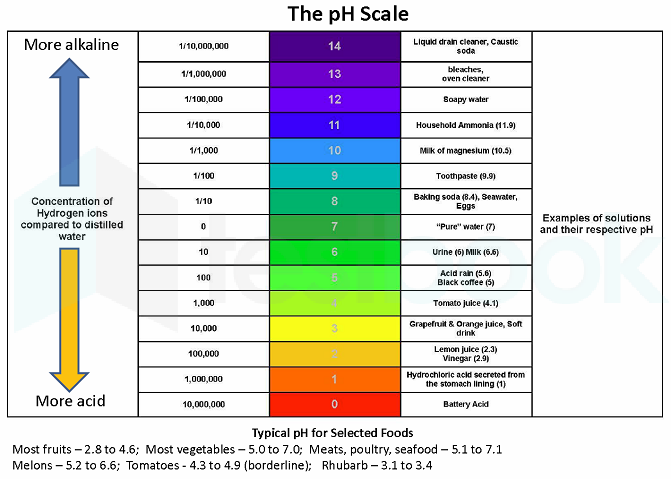
  • The pH is the degree of concentration of hydrogen ions in a substance or solution and is represented as the log of the hydrogen ion concentration in an aqueous solution.
  • The pH value of water is 7.
  • Therefore there are 10-7 moles per liter of hydrogen ions in water with a pH of 7; while a pH of 6 is 10-6 moles per liter. The scale of the pH varies between 0 and 14.
  • Water with a pH of < 7 is considered acidic, and water with a pH of > 7 is considered basic.
  • The standard range of pH is 6.5 to 8.5 for surface water systems and 6 to 8.5 for groundwater systems.
  • Alkalinity is a measure of the water's capacity to tolerate a pH change that appears to make the water more acidic.
  • To calculate the corrosivity of the water, the calculation of alkalinity and pH is required. The pH of pure water (H20) at 25oC is 7, but this combination results in a pH of about 5.2 when exposed to carbon dioxide in the atmosphere.

47

Concave lens are considered as __________ lens

  1. ((a))

    Converging 

  2. ((b))

    Diverging

  3. ((c))

    Both 1 and 2

  4. ((d))

    None of the above

Show Answer
Answer: ((b))

Diverging

Concept-

  • The transparent curved surface which is used to refract the light and make an image of any object placed in front of it is called a lens.
  • The lens whose refracting surface is upside is called a convex lens.
  • The convex lens is also called a converging lens.
  • The lens having refracting surface inward is called a concave lens.
  • The concave lens is also called a diverging lens.

Explanation-

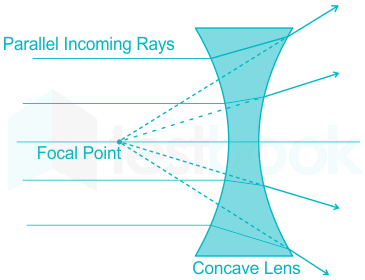
As we can see below, The concave lens is also called a diverging lens.

  • A concave lens is a diverging lens

  • Hence option 2 is correct among all
48

Pepsin is an enzyme that digests ________.

  1. ((a))

    Proteins

  2. ((b))

    Starch

  3. ((c))

    Carbohydrate

  4. ((d))

    Fats

Show Answer
Answer: ((a))

Proteins

The correct answer is Option 1 i.e. Proteins.

Pepsin:

  • Pepsin is the digestive enzyme that breaks down proteins.
  • The Gastric Glands secrete the enzyme Pepsin.
  • Gastric glands are found in the stomach.
  • They secrete enzymes like Pepsin, Rennin which act upon the Proteins.
  • Glands in the mucous-membrane which line the stomach make and store an inactive protein known as pepsinogen.
  • When pepsinogen is released into the stomach and mixed with gastric juice, it is converted into pepsin.
  • Pepsin partially degrades proteins into smaller units called peptides.
49

How many chambers are there in human heart?

  1. ((a))

    Two

  2. ((b))

    Four

  3. ((c))

    Six

  4. ((d))

    Eight

Show Answer
Answer: ((b))

Four

The correct answer is Option 2 i.e. Four

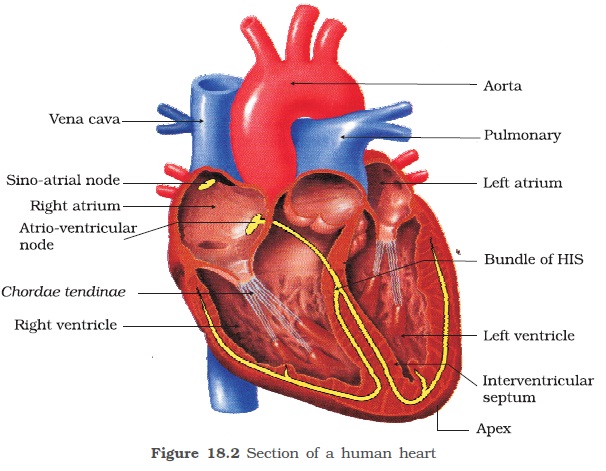
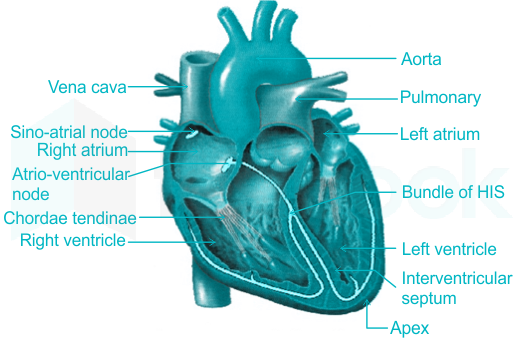
  • Human’s Heart has 4 chambers.
  • The heart has 2 upper smaller auricles and 2 lower larger ventricles.
  • The average human heart beats 72 times a minute.
  • The average weight of the human heart is 300 grams.
  • 2 chambered heart contains one ventricle and one atrium and such a heart can be found in fish.
  • 3 chambered heart contains one ventricle and 2 atria and such a heart can be found in reptiles and amphibians.

50

The leader of the Munda rebellion (Ulgulan) was

  1. ((a))

    Sidho

  2. ((b))

    Birsa

  3. ((c))

    Bapat

  4. ((d))

    Korra Malya

Show Answer
Answer: ((b))

Birsa

The correct answer is Birsa.

Key Points

  • Munda Rebellion is one of the prominent 19th century tribal rebellions in the subcontinent.
  • Birsa Munda led this movement in the region south of Ranchi in 1899-1900.
  • The ulgulan, meaning 'Great Tumult', sought to establish Munda Raj and independence.
  • Birsa Munda, referred to often by Jharkhand's tribal residents as “Birsa Bhagwan”.
  • In course of the 19th century, they had seen this khuntkatti land system being eroded by the jagirdars and thikadars coming as merchants and moneylenders. this was the main reason for revolt.

Additional Information

  • Santhal Pargana is the mainland of the famous Santhal rebellion.
  • On 30 June 1855, two Santal rebel leaders, Sidho and Kanhu Murmu with the help of Chand and Bhairav, mobilized ten thousand Santals and declared a rebellion against British colonists.
  • They fought against British rule and the corruption caused by the upper castes and zamindars.
  • In 1855, during British India, Santhal Parganas was created as a district and was a part of the Bengal Presidency.
  • Pandurang Mahadev Bapat, popularly known as ‘Senapati Bapat,’ remains a fascinating figure of the Indian Independence movement whose revolutionary zeal was not only informed by Hinduism, Bolshevism, and Gandhian philosophy but also a profoundly independent streak.
  • He was called ‘senapati’ or ‘commander’ for his leadership during the Mulshi Satyagraha in 1921 leading to what social scientist Ghanshyam Shah called the “first recorded organized struggle against the displacement” of farmers.
51

"Kalpakkam" in Tamil Nadu is famous for

  1. ((a))

    Oil refinery

  2. ((b))

    Atomic power station

  3. ((c))

    Rice production

  4. ((d))

    Hydel power station

Show Answer
Answer: ((b))

Atomic power station

The correct answer is Atomic power station.

Key Points

  • Kalpakkam in Tamil Nadu is famous for its Atomic power station.
  • Kalpakkam is home to the Madras Atomic Power Station (MAPS).
  • MAPS is a comprehensive nuclear power production, fuel reprocessing, and waste treatment facility.
  • It is located about 80 kilometers south of Chennai on the Coromandel Coast.
  • MAPS is India's first fully indigenously constructed nuclear power station.
  • It consists of two units, each generating 220 MW of electricity using Pressurized Heavy Water Reactors (PHWRs).
  • The first unit went critical in 1983, and the second in 1985.
  • Kalpakkam also houses the Indira Gandhi Centre for Atomic Research (IGCAR).
  • IGCAR is a premier nuclear research center in India, second only to the Bhabha Atomic Research Centre (BARC).
  • Established in 1971, IGCAR focuses on the development of fast breeder reactor technology.
  • Kalpakkam has India's only nuclear plant with a Fast Breeder Test Reactor (FBTR).
  • A Prototype Fast Breeder Reactor (PFBR) with a capacity of 500 MWe is also located in Kalpakkam.
  • The PFBR is designed to utilize a thorium fuel cycle.
  • The facility includes a Demonstration Fast Reactor Fuel Reprocessing Plant (DFRP).
  • This plant reprocesses spent fuel from the Fast Breeder Reactor.
  • Kalpakkam is considered a crucial site for India's nuclear power program and future developments in atomic energy.
  • The presence of these nuclear facilities has made Kalpakkam a significant center for nuclear science and technology in India.
  • The township supporting these facilities is well-planned with residential, educational, and recreational amenities for the employees and their families.
  • Safety and environmental considerations are paramount in the operation of these atomic facilities.
  • These installations contribute significantly to India's energy security and technological advancement in the nuclear sector.
  • Research and development activities in Kalpakkam are geared towards enhancing the efficiency and safety of nuclear power generation.
  • The facilities also play a role in the training of nuclear scientists and engineers in India.
52

According to the 2011 census, which district of Bihar has the highest male literacy rate?

  1. ((a))

    Buxar

  2. ((b))

    Rohtas

  3. ((c))

    Patna

  4. ((d))

    Bhojpur

Show Answer
Answer: ((b))

Rohtas

The correct answer is Rohtas.

  • As per the census 2011, the Highest male literacy rate in Bihar is in Rohtas District i.e 85.29%.

Mistake Points

  • Male Literacy is being asked in the question, not the overall literacy rate.

Key Points

  • As per the 2011 Census,
  • Bihar has a total population of 104,099,452; previously it was 82,998,509 in 2001.
  • Out of the total population of Bihar,
  • Male population is 54,278,157.
  • Female population is 49,821,295.
  • The total population growth was 25.42% since the last census and the population of the state forms 8.60% of the total population in India.
  • The total area of Bihar is 94,163 sq. km with a Density of 1,106 per sq km.
  • The Sex Ratio in Bihar is 918 for every 1000 males.
  • In the last census of 2001, the sex ratio was 919 per 1000 males in Bihar.
  • The child sex ratio is 935 per 1000 males and 942 in the 2001 census.
  • The Literacy rate in Bihar has risen and is 61.80 %, with male literacy at 71.20 % and female literacy at 51.50 %.
  • In actual figures, the total literates in Bihar are 52,504,553 out of which males are 31,608,023 and females 20,896,530.

Additional Information

  • As per the 2011 Census:
  • Population of Bihar- 10.41 Cr
  • Literacy Rate in Bihar- 61.8%%
  • Male- 71.2%
  • Female- 51.5%%
  • Highest Literacy Rate in Bihar- 73.37% in Rohtas.
  • Lowest Literacy rate in Bihar- 51.08% in Purnia.
  • Link-https://www.censusindia.co.in/states/bihar
53

Vitamin ‘C’ is?

  1. ((a))

    Lactic acid

  2. ((b))

    Citric acid

  3. ((c))

    Ascorbic acid

  4. ((d))

    Acetic acid

Show Answer
Answer: ((c))

Ascorbic acid

The correct answer is Ascorbic acid.

Key Points

  • Vitamin C (also known as ascorbic acid and ascorbate) is a vitamin found in various foods and sold as a dietary supplement.
  • It is used to prevent and treat scurvy.
  • Vitamin C is an essential nutrient involved in the repair of tissue and the enzymatic production of certain neurotransmitters.
  • It is required for the functioning of several enzymes and is important for immune system function.
  • It also functions as an antioxidant.

​​​​

Additional Information

S.noTypes of VitaminsDeficiency Diseases
1A (Retinol)Night blindness
2B1 (Thiamine)Beri-beri
3D (Calciferol)Rickets
54

What is the SI unit of Force?

  1. ((a))

    dioptre

  2. ((b))

    newton

  3. ((c))

    hertz

  4. ((d))

    decibel

Show Answer
Answer: ((b))

newton

The correct answer is Newton.

Explanation:

Force

  • A push or a pull on an object is called a force.
  • The SI unit of Force is Newton or kg ms-2.
  • It is represented by the symbol N.
  • The CGS unit of force is Dyne and is denoted by dyn.
  • A force of one newton produces an acceleration of 1 m s–2 on an object of mass 1 kg.

Additional InformationPower of a lens

  • The power of a lens is defined as the reciprocal of its focal length.
  • It is represented by the letter P.
  • The power P of a lens of focal length f is given by (P=\frac{1}{f})
  • The SI unit of power of a lens is ‘dioptre’. It is denoted by the letter D.

Frequency

  • The number of complete oscillations per unit time is called the frequency (f).
  • The SI unit of frequency is hertz.
  • Its symbol is Hz.

Loudness of sound

  • Loudness of sound is proportional to the square of the amplitude of the vibration producing the sound.
  • For example, if the amplitude becomes twice, the loudness increases by a factor of 4.
  • The loudness is expressed in a unit called decibel (dB).
55

Which among the following is the SI unit of illuminance?

  1. ((a))

    Watt

  2. ((b))

    Lux

  3. ((c))

    Lumen

  4. ((d))

    Joule

Show Answer
Answer: ((b))

Lux

Lux is the SI unit of illuminance.

  • Illuminance - It is the measurement of the amount of light falling on a defined surface area.
  • The formula is the luminous flux per unit area.
  • Luminous Flux - It is the measurement of the total amount of visible light emitted by a light source.
  • Lumen is the SI unit of luminous flux.
  • Watt is the unit of Power and Joule is the unit of work or energy.
56

Who discovered a principle that states that the buoyant force on an object is equal to the weight of the fluid displaced by the object?

  1. ((a))

    Niels Bohr

  2. ((b))

    Isaac Newton

  3. ((c))

    Galileo Galilei

  4. ((d))

    Archimedes

Show Answer
Answer: ((d))

Archimedes

The correct answer is Archimedes.

Key Points

  • The principle that states that the buoyant force on an object is equal to the weight of the fluid displaced by the object is known as Archimedes' Principle.
  • Archimedes' Principle is attributed to Archimedes of Syracuse, a Greek mathematician and inventor who lived from approximately 287 to 212 BCE.
  • The principle was described in his work "On Floating Bodies."
  • This principle is fundamental in fluid mechanics and explains why objects float or sink in fluids.
  • The formula for Archimedes' principle is FB = ρVg, where:
  • FB: is the buoyant force
  • ρ: is the density of the fluid
  • V: is the volume of the object that is submerged or the volume of fluid displaced
  • g: is the acceleration due to gravity

Additional Information

  • Isaac Newton:-
  • Newton's most famous work is "Philosophiæ Naturalis Principia Mathematica" (Mathematical Principles of Natural Philosophy), published in 1687.
  • Newton's three laws of motion describe the relationship between a body and the forces acting on it.
  • They are foundational to classical mechanics:
  • First Law (Inertia): An object remains at rest or in uniform motion unless acted upon by a force.
  • Second Law (F=ma): The force acting on an object is equal to the mass of the object times its acceleration.
  • Third Law (Action and Reaction): For every action, there is an equal and opposite reaction.
  • In his work "Opticks," published in 1704, Newton studied the nature of light and color.
  • Galileo Galilei:-
  • In 1610, Galileo discovered the four largest moons of Jupiter (Io, Europa, Ganymede, and Callisto), now known as the Galilean moons.
  • Galileo was a strong advocate of the heliocentric theory proposed by Copernicus, which posited that the Earth and other planets revolve around the Sun.
  • His Major Works include:
  • "Sidereus Nuncius" (Starry Messenger)
  • "Dialogue Concerning the Two Chief World Systems"
  • Niels Bohr:-
  • He was a key figure in the development of quantum mechanics and atomic theory.
  • He is best known for developing the Bohr model of the atom in 1913.
  • In 1922, Niels Bohr was awarded the Nobel Prize in Physics for his research into the structure of atoms and the radiation emanating from them.
  • Bohr established the Institute for Theoretical Physics at the University of Copenhagen in 1920.
57

Which of the following is considered a medicinal plant?

  1. ((a))

    Sal

  2. ((b))

    Teak-Plant

  3. ((c))

    Neem

  4. ((d))

    Deodar

Show Answer
Answer: ((c))

Neem

The correct answer is Neem.

Key Points

  • Neem is considered a medicinal plant due to its numerous health benefits and medicinal properties.
  • Neem has been used in Ayurvedic medicine for centuries to treat a wide range of ailments, including skin disorders, fever, and digestive issues.
  • The leaves, bark, and seeds of the neem tree are all used in traditional medicine to make remedies for various health conditions.
  • Neem contains active compounds like azadirachtin, nimbin, and nimbidin, which have anti-inflammatory, antifungal, antibacterial, and antiviral properties.

Additional Information

  • Sal is a hardwood tree that is commonly found in India and other parts of Asia.
  • It is used to make furniture, railway sleepers, and other products.
  • Teak is a tropical hardwood tree that is native to Southeast Asia.
  • It is highly valued for its durability and water resistance, and is commonly used in boat-building, furniture-making, and other applications.
  • Deodar is a species of cedar tree that is native to the Himalayas.
  • It is commonly used in construction and for making furniture.
58

The fluid present between joints, that makes the movement of joints easy, is called

  1. ((a))

    Tendon 

  2. ((b))

    Synovial

  3. ((c))

    Cartilage

  4. ((d))

    Bursae

Show Answer
Answer: ((b))

Synovial

The correct answer is Synovial.

Key Points

  • Synovial fluid helps in locomotion and many other movements.
  • It is characterized by the presence of a fluid-filled synovial cavity present between the articulating surface of the two bones.
  • In this type of joint two bones joint by facing each other. Synovial fluid helps in lubrication and reduces the friction between the two bones.
  • Examples of such joints are ball and socket joint, pivot joint, gliding joint, hinge joint, and saddle joint.

Additional Information

  • A tendon is a fibrous connective tissue that attaches muscle to bone.
  • Cartilage is a soft, elastic, and flexible connective tissue that protects the bone from rubbing against each other.
  • Bursae are small fluid-filled sacs that reduce friction between moving parts in your body's joints.
59

Which of the following cell organelles is INCORRECTLY matched?

  1. ((a))

    Lysosome - Suicidal bag

  2. ((b))

    Mitochondria - Power house

  3. ((c))

    Vacuole - Storage sac

  4. ((d))

    Plasma membrane - Soldier of cell

Show Answer
Answer: ((d))

Plasma membrane - Soldier of cell

The correct answer is Option 4.

Key Points

  • Lysosomes are called suicidal bags of the cell.
  • Lysosomes contain lytic enzymes capable of digesting cells and unwanted materials.
  • They burst open when the cell is damaged.
  • This causes the hydrolytic enzymes to be released.
  • The released enzymes then digest their own cell, causing the cell to die.
  • Mitochondria is the Power House of the cell.
  • Mitochondria are membrane-bound cell organelles (mitochondrion, singular) that generate most of the chemical energy needed to power the cell's biochemical reactions.
  • Chemical energy produced by the mitochondria is stored in a small molecule called adenosine triphosphate (ATP).
  • Mitochondria contain their own small chromosomes.
  • Vacuole is a storage sac.
  • Vacuoles are single membrane organelles that are involved in the storage of water and nutrients in a cell.
  • They enclose the cell sap that contains amino acids, ions, reserved food, waste materials etc.
  • ​Plasma membrane is also known as cell membrane. 
  • It is a selectively permeable membrane ​around the cell.
  • It regulates the entry and exit of materials from the cell.
  • It separates and protects the cell from the surrounding environment.
  • It is made up of phospholipid bilayer.
60

The respiratory system is made up of trachea, the lungs and the

  1. ((a))

    Diaphragm

  2. ((b))

    Pancreas

  3. ((c))

    Esophagus

  4. ((d))

    Liver

Show Answer
Answer: ((a))

Diaphragm

Concept:

  • The respiratory system is divided into two parts upper respiratory system and the lower respiratory system.
  • The respiratory system is involved in breathing when there is an exchange of oxygen and carbon dioxide.
  • On average the length of the trachea is 11.8 cm with a normal range of 10-13 cm in males.
  • The trachea tends to be shorter in females.
  • During inspiration the diaphragm and external intercostals muscle contract, causing the rib cage to expand and expand the thoracic cavity and lung volume.
  • During expiration, the diaphragm and intercostal muscles relax.

Additional Information

  • Acute Respiratory Distress Syndrome (ARDS): is also known as shock lung, wet lung, etc.
  • ARDS is a severe form of acute lung injury characterized by sudden and progressive pulmonary edema, hypoxemia unresponsive to oxygen supplementation, and absence of left arterial pressure.
  • The pancreas has both endocrines as well as exocrine functions in the body. the pancreas secretes some enzymes i.e. Trypsin, chymotrypsin, carboxypeptidase, and pancreatic amylase.
  • The esophagus a part of the gastrointestinal system is a collapsible tube of 25 cm in length, located in the mediastinum of the thoracic cavity. it passes through the diaphragm at an opening called the diaphragmatic hiatus.
61

Which is the largest artery in the body?

  1. ((a))

    Aorta

  2. ((b))

    Pulmonary Artery

  3. ((c))

    Coronary arteries

  4. ((d))

    Pulmonary veins

Show Answer
Answer: ((a))

Aorta

The correct answer is Aorta.

Key Points

  • The Aorta is the largest artery in the body.
  • The Aorta begins at the top of the left Ventricle which is the Heart's muscular pumping chamber.
  • The Heart pumps blood from the left ventricle into the Aorta through the Aortic valve.

Additional Information

  • Coronary arteries carry oxygenated blood to the muscles of the heart.
  • Any type of hindrance in Coronary arteries causes a heart attack.
  • The Pulmonary artery carries deoxygenated blood from the right ventricle to the lungs.
  • The pulmonary artery contains impure blood.
  • Pulmonary veins are responsible for carrying oxygenated blood from the lungs back to the left atrium of the heart.


  • The left ventricle pumps oxygenated blood into the aorta via the tricuspid aortic valve.
  • The right atrium receives deoxygenated blood from the vena cavae and coronary sinus and empties it into the right ventricle.
  • The right ventricle pumps deoxygenated blood into the pulmonary trunk via the pulmonary valve.
  • The left atrium receives oxygenated blood from pulmonary veins and empties it into the left ventricle.

62

In which of the following species does external fertilisation take place?

  1. ((a))

    Hen

  2. ((b))

    Cat

  3. ((c))

    Frog

  4. ((d))

    Snake

Show Answer
Answer: ((c))

Frog

The correct answer is Frog

Key Points 

  • External fertilization occurs when eggs are shed by the female and fertilized by the male outside of the body. This type of fertilization is common in aquatic organisms, such as fish and amphibians.
  • Among options (hen, cat, frog, and snake), the frog is an example of a species where external fertilization takes place. The other listed animals - hen (a species of bird), cat (a mammalian species), and snake (a species of reptiles) - practice internal fertilization.
63

Which of the following are primary air pollutants?

  1. ((a))

    Sulphur dioxide and Nitrogen oxides

  2. ((b))

    Ozone and carbon monoxide

  3. ((c))

    Sulphur dioxide and Ozone

  4. ((d))

    Nitrogen oxide and Ozone

Show Answer
Answer: ((a))

Sulphur dioxide and Nitrogen oxides

Primary pollutant: Pollutants which are emitted directly from the identifiable sources, either from the natural hazardous events like dust storms, volcanoes, etc or from human activities like burning of wood, coal, oil in homes or industries or automobiles, etc.

The important primary air pollutants are:

  1. Oxides of sulphur, particularly the sulphur dioxide (SO2);
  2. Oxides of carbon like carbon monoxide (CO) and carbon dioxide (CO2), particularly the carbon monoxide (CO);
  3. Oxides of nitrogen, like NO, NO2, NO3 (expressed as NOx);
  4. Volatile organic compounds, mostly hydrocarbons; and
  5. Suspended particulate matter (SPM).

These primary pollutants often react with one another or with water vapour, aided and abetted by the sunlight, to form entirely a new set of pollutants, called the secondary pollutants.

These are the chemical substances, which are produced from the chemical reactions of natural or anthropogenic pollutants or due to their oxidation, etc., caused by the energy of the sun.

The important secondary pollutants are:

(i) Sulphuric acid (H2SO4);

(ii) Ozone (O3);

(iii) Formaldehydes; and

(iv) Peroxy-acyl-nitrate (PAN); etc.

Primary Pollutants: Co, CO2, SOX, NOX, Aerosols, Bacteria, Pollens, Suspended particulates, Fly ash, Mist, Dew, Mist, Soot, Volcanoes, etc.

Secondary Pollutants: Chlorofluorocarbon, Ozone, Smog, Acid rain (H2SO4, HNO3, H2CO3), PAN (Peroxyacetyl Nitrate), PBN (Peroxybutyl Nitrate), PPN (Peroxypropyl Nitrate)

64

The law of conservation of mass holds good for all of the following except-

  1. ((a))

    All chemical reactions

  2. ((b))

    Exothermic reactions

  3. ((c))

    Nuclear reactions

  4. ((d))

    Endothermic reactions

Show Answer
Answer: ((c))

Nuclear reactions

The correct answer is Nuclear reactions.

Key Points

  • The mass can neither be created nor be destroyed but is transformed from one form to another, this law is known as the law of conservation of mass.
  • According to this law, the mass of products in the reaction is equal to the mass of the reactants.
  • The nuclear reaction does not follow the law of conservation of mass since a particle, with a definite mass, is thrown away from the reactants.
  • An example of a nuclear reaction is the splitting of the uranium-235 nucleus when it is bombarded with the nucleus.

Additional Information

  • The Law of conservation of energy states that energy can neither be created nor be destroyed, but is transformed from one form of energy into another form of energy.
  • The reaction in which heat is evolved is called an exothermic reaction.
  • The reaction in which heat is required to start the reaction is called an endothermic reaction.
65

Which of the following statements is NOT correct ?

  1. ((a))

    Generally, non-metals do not react with acids 

  2. ((b))

    Non-metallic oxides are basic in nature 

  3. ((c))

    Generally, non-metals do not react with water 

  4. ((d))

    Non-metals are neither malleable nor ductile 

Show Answer
Answer: ((b))

Non-metallic oxides are basic in nature 

The Correct answer is that Non-metallic oxides are basic in nature.

 Concept:

Metals: 

  • The elements readily form positive ions (cations) and are called Metals.Ex.→ Na, K, Mg, Fe, Cu, Ag, etc.
  • Metals are usually Solid, a good conductor of Heat & Electricity, Malleable, Ductile, and Sonorous, and Have good tensile strength.
  • Metals react with oxygen to form their respective Metal Oxides i.e. Metal + Oxides →  Metal Oxides

Non-Metals: 

  • Non-Metals form Negative ions by accepting or gaining electrons.
  • They are Insulators, Have Lower Tensile Strength, and Dull Appearance.

Explanation:

  • To test the acidity and basicity of these Metal Oxides, they are made with water & then react with water, and then tested with litmus paper.
  • A basic solution turns litmus to blue whereas an acidic solution turns blue litmus to red.
  • Metal Oxides + Water → Metal Hydroxides
  • Metal oxides are Basic in nature.
  • Some Metal Oxides, for example, Oxides of Aluminum and Zinc show both acidic and basic nature Such Oxides are called Amphoteric Oxides.
  • Non-metallic oxides are Acidic in nature. Ex.→ SO2 + H2O → H2SO4 + 2H .
  • The basic solution has more OH - ion concentration than the H+ ion.
66

The number of unpaired electrons in carbon atom is-

  1. ((a))

    3

  2. ((b))

    4

  3. ((c))

    2

  4. ((d))

    1

Show Answer
Answer: ((c))

2

The correct answer is 2.

Key Points

  • The carbon atom is tetravalent even though it has unpaired electrons.
  • It is determined that the floor kingdom of a neutral carbon atom does indeed contain two unpaired electrons.
  • The Co2+ ion in an aqueous answer is octahedrally coordinated and paramagnetic, with 3 unpaired electrons.

Additional Information

  • Carbon can shape 4 covalent bonds.
  • The helium atom incorporates 2 electrons.
  • A carbon atom can bond with four different atoms and is like the four-hollow wheel, even as an oxygen atom,
67

When one body rolls over the surface of another body, the resistance to its motion is called

  1. ((a))

    Rolling friction

  2. ((b))

    Electrostatic friction

  3. ((c))

    Sliding friction 

  4. ((d))

    Static friction

Show Answer
Answer: ((a))

Rolling friction

The correct answer is rolling friction.

Key Points

  • For a moving solid body, there are 2 principal types of friction are following
  • Rolling friction
  • Sliding friction
  • On a surface, The force resisting the motion of a rolling body is known as Rolling resistance or Rolling friction.
  • The Rolling of a wheel or ball on the ground is an example of Rolling friction.
  • In Sliding friction, there is a restriction on the movement of the body as only one side of the body is in contact with the surface.
  • An example of Sliding friction is Pushing a box across the table.
  • Rolling resistance is weaker than sliding friction.

Additional Information

  • When 2 surfaces are rubbed against each other, Sliding friction takes place.
  • When an object rolls on the surface, Rolling friction takes place.
  • Because of rolling friction, A basketball rolled on the court will eventually come to a halt.
  • A broad-tire bike will burn extra fuel because of the increased Rolling friction.
68

If we apply oil on door hinges, the friction will

  1. ((a))

    increase

  2. ((b))

    disappear altogether

  3. ((c))

    decrease

  4. ((d))

    will remain unchanged 

Show Answer
Answer: ((c))

decrease

The correct answer is decrease.

Concept:

Friction force:

  • Friction is the force that resists motion when the surface of one object comes into contact with the surface of another.
  • It is a force that opposes the relative motion of two bodies in contact.
  • The frictional force acts in a direction opposite to the direction of motion of the bodies in contact.
  • Frictional force prevents objects from gliding and ensures contact.
  • Friction forces also provide a significant amount of resistance to motion.

Lubricant:

  • It is a substance used for lubricating an engine or component, such as oil or grease.
  • ​There are 4 types of lubricants i.e., Oil, Grease, Penetrating Lubricants, and Dry Lubricants.
  • It aims at reducing friction between two moving objects.

Explanation:

  • Friction force acts according to Newton's third law of motion.
  • To perform a motion, the force used to initiate it must be greater than the frictional force.
  • If we apply oil to the door hinges, the friction will decrease because lubrication always decreases friction between two surfaces.
  • Oil can be any type of lubricant.
  • For example, molybdenum sulphide and graphite.

Thus, if we apply oil on door hinges, the friction will decrease.

69

Which of the following is the most widely used method for refining impure metals?

  1. ((a))

    Vapour-Phase Refining

  2. ((b))

    Poling Refining 

  3. ((c))

    Electrolytic Refining

  4. ((d))

    Liquidation Refining

Show Answer
Answer: ((c))

Electrolytic Refining

The correct answer is Electrolytic Refining.

Key Points

  • Electrolytic refining is a technique employed for the extraction and purification of impure metals through electrolysis.
  • In this process, the crude metal serves as the anode, while a strip of pure metal is utilized as the cathode, and a soluble salt of the same metal is employed as the electrolyte.
  • Upon passing an electric current, metal ions from the electrolyte are deposited as pure metal onto the cathode, while the impure metal from the anode dissolves into ions within the electrolyte.
  • Beneath the anode, the impurities of metals accumulate, forming what is known as anode mud.
  • This method facilitates the separation and removal of impurities, resulting in the production of refined and high-purity metals.

Important Points

  • Vapor-phase refining is a purification technique utilized to convert crude metals into volatile compounds.
  • Poling is a metallurgical method employed to purify metals containing oxidized impurities.
  • Liquation is a metallurgical method used for separating metals from an alloy or ore.
70

Due to Gravitational force _______:

  1. ((a))

    We are attracted towards earth

  2. ((b))

    Tide Occurs

  3. ((c))

    Earth revolves around the sun

  4. ((d))

    All of the above

Show Answer
Answer: ((d))

All of the above

The correct answer is All of the above.

Key Points

  • Due to gravitational force
  1. We are attracted towards the earth's centre
  2. Tide Occurs
  3. Earth revolves around the sun
  • The gravitational force of attraction between a satellite and the earth gives rise to centripetal force.
  • Earth satellites are objects which revolve around the earth.
  • Their motion is very similar to the motion of planets around the Sun and hence Kepler’s laws of planetary motion are equally applicable to them.
  • In particular, their orbits around the earth are circular or elliptic.
  • Gravity, or gravitation, is a natural phenomenon by which all things with mass or energy including planets, stars, galaxies, and even light are attracted to one another.
  • On Earth, gravity gives weight to physical objects, and the Moon's gravity causes the tides of the oceans.
  • The artificial satellites orbiting the Earth remain in their orbits and do not fall down due to the attraction of the Earth (gravity) which provides the necessary centripetal acceleration.

Additional Information 

  • Satellite is revolving around the earth
  • Fg = Gravitational force of satellite towards the earth
  • Fc = Centrifugal force on the satellite
  • Fg = Fc makes Fnet = zero.
  • Thus net force acting on the satellite is zero.
  • When the body is inside a satellite, which is orbiting around the earth, the gravitational pull on the body due to earth is balanced by the centrifugal force on the body, due to which the effective weight of the body becomes zero.
  • The force exerted by the satellite floor on the astronaut is equal to zero.
  • He is not attracted by gravitational force.
71

Match the following: 

A.Concave mirrori.used for rear view in vehicle
B.Concave lensii.used in microscope
C.Convex mirroriii.used for near sightedness
D.Convex lensiv.used in torch lights
  1. ((a))

    (A) - (ii), (B) - (iii), (C) - (iv), (D) - (i)

  2. ((b))

    (A) - (i), (B) - (iv), (C) - (ii), (D) - (iii)

  3. ((c))

    (A) - (iv), (B) - (iii), (C) - (i), (D) - (ii)

  4. ((d))

    (A) - (iii), (B) - (iv), (C) - (ii), (D) - (i)

Show Answer
Answer: ((c))

(A) - (iv), (B) - (iii), (C) - (i), (D) - (ii)

The Correct answer is (A) - (iv), (B) - (iii), (C) - (i), (D) - (ii).

CONCEPT:

Convex mirror:

  • If the outer surface of the spherical mirror is the reflecting surface then it is called a convex mirror. It is also called the diverging mirror.
  • The nature of the image formed by a convex mirror does not depend on the distance of the object from the; mirror. These images are always virtual, smaller than the object, and situated behind the mirror.

Concave mirror:

 If the inner surface of the spherical mirror is the reflecting surface, then it is called a concave mirror. It is also called a focusing mirror/converging mirror.

  • The size of the image produced by these mirrors can be larger or smaller than the object, depending upon the distance of the object from the mirror.
  • The concave mirror can form both real as well as virtual images of any object.

Explanation:

  • Convex mirror -used for rear view in vehicles: A concave mirror is a mirror with a reflecting surface that curves inward like the inside of a bowl.
  • When used as a rear-view mirror in vehicles, it allows the driver to see a wider field of view. The mirror's curved shape converges the light rays, making objects appear smaller but also allowing a larger area to be visible in the reflection.
  • Concave lens - used for near-sightedness: A concave lens is thinner at the center and thicker at the edges. It is used to correct near-sightedness or myopia. Near-sightedness occurs when light entering the eye is focused in front of the retina, causing distant objects to appear blurry.
  • A concave lens diverges light rays, allowing them to focus properly on the retina, thus improving distant vision**.**
  • Concave mirror - used in torch lights: A convex mirror is a mirror with a reflecting surface that curves outward.
  • Convex mirrors have a wider field of view compared to flat mirrors and are often used in torch lights or flashlights to provide a broader spread of light. They scatter light rays, allowing a larger area to be illuminated.
  • Convex lens -used in microscopes: A convex lens is thicker at the center and thinner at the edges. It converges light rays and is commonly used in microscopes to magnify small objects. When light passes through a convex lens, it converges and forms a real, enlarged, and inverted image of the object being observed, which allows for detailed examination in microscopes.
72

What is the mean value of 'g' on surface of the earth?

  1. ((a))

    0.98 m/s

  2. ((b))

    9.8 m/s

  3. ((c))

    9.8 m/s2

  4. ((d))

    0.98 m/s2

Show Answer
Answer: ((c))

9.8 m/s2

The correct answer is 9.8 m/s².

Key Points

  • The mean value of 'g' on the surface of the Earth is 9.8 m/s².
  • This value represents the average acceleration due to gravity experienced by objects in free fall near the Earth's surface.
  • The value of 9.8 m/s² is a standard approximation used in scientific calculations.
  • This gravitational acceleration is a result of the Earth's mass and radius and is vital for understanding motion and forces in physics.

Additional Information

  • Newton's Law of Universal Gravitation
  • This law states that every point mass attracts every other point mass by a force acting along the line intersecting both points.
  • The force is proportional to the product of the two masses and inversely proportional to the square of the distance between them.
  • Variation of 'g'
  • The value of gravitational acceleration 'g' varies slightly over the Earth's surface due to factors like altitude, latitude, and local geological structures.
  • Gravitational acceleration decreases with altitude and is slightly stronger at the poles compared to the equator.
  • Free Fall
  • Free fall is the motion of a body where gravity is the only force acting upon it.
  • In a vacuum, all objects fall at the same rate regardless of their masses.
  • Gravitational Constant (G)
  • The gravitational constant (G) is approximately 6.674 × 10⁻¹¹ N(m/kg)².
  • It is a key constant in the equation of Newton's Law of Universal Gravitation.
Code
73

Which of the following instruments is used to measure pressure?

  1. ((a))

    Barometer

  2. ((b))

    Anemometer

  3. ((c))

    Thermometer

  4. ((d))

    Hygrometer

Show Answer
Answer: ((a))

Barometer

The correct answer is Barometer.

Key Points

  • A barometer is an instrument used to measure atmospheric pressure.
  • It is essential in weather forecasting and determining altitude.
  • Barometers come in two main types: mercury barometers and aneroid barometers.
  • Mercury barometers use mercury in a glass tube, while aneroid barometers use a small, flexible metal box called an aneroid cell.

Additional Information

  • Atmospheric Pressure
  • It is the force exerted onto a surface by the weight of the air above that surface in the atmosphere of Earth (or that of another planet).
  • It is measured in units such as Pascals (Pa), millibars (mb), or inches of mercury (inHg).
  • Mercury Barometer
  • Invented by Evangelista Torricelli in 1643.
  • Consists of a long glass tube filled with mercury, with one end open to the atmosphere.
  • Aneroid Barometer
  • Does not use liquid; instead, it uses a small, flexible metal box (aneroid cell).
  • The cell expands or contracts with changes in atmospheric pressure, and this movement drives a mechanical pointer on a dial.
  • Uses of Barometers
  • Weather forecasting by measuring atmospheric pressure changes to predict short-term changes in the weather.
  • Altitude determination, as atmospheric pressure decreases with an increase in altitude.
74

What is the horizontal distance between two successive crests of waves ?

  1. ((a))

    Wavelength

  2. ((b))

    Wave period

  3. ((c))

    Wave frequency

  4. ((d))

    Wave amplitude

Show Answer
Answer: ((a))

Wavelength

The correct answer is Wavelength.

Key Points

  • The wavelength is the distance between two successive crests (or troughs) of a wave.
  • It is usually denoted by the Greek letter lambda (λ).
  • Wavelength is an important parameter in the study of wave phenomena, including sound waves, light waves, and water waves.
  • It determines the spatial period of the wave, which is the distance over which the wave's shape repeats.

Additional Information

  • Wave Period:
  • The wave period is the time it takes for two successive crests (or troughs) to pass a fixed point.
  • It is the reciprocal of the wave frequency.
  • Wave Frequency:
  • Wave frequency is the number of crests (or troughs) that pass a given point in one second.
  • It is measured in hertz (Hz).
  • Wave Amplitude:
  • Wave amplitude is the maximum displacement of points on a wave, measured from the equilibrium position.
  • It is a measure of the wave's energy.
75

________ is a quantitative process of change of scale and size, which can be measured and aided by ethics and norms. 

  1. ((a))

    Evolution

  2. ((b))

    Development

  3. ((c))

    Progress

  4. ((d))

    Growth

Show Answer
Answer: ((d))

Growth

The correct answer is Growth.

Key Points

  • Growth refers to a quantitative process of change in terms of size, scale, number, or output.
  • Since growth is quantitative, it can be measured using indicators such as population, income, production, or area.
  • Growth is generally value-neutral, but it can be guided or aided by ethics, norms, and policies to ensure balanced and sustainable outcomes.
  • Hence, the correct answer is Option 4 – Growth.

Additional Information

  • Development:
  • Refers to both quantitative and qualitative improvements in the quality of life.
  • Includes economic, social, educational, and environmental aspects.
  • Progress:
  • Indicates movement towards a better or more advanced state.
  • It is a qualitative concept and often involves value judgments.
  • Evolution:
  • Refers to a gradual process of change over time.
  • Commonly used in biological and social sciences.
76

Which one of the following oxides is a neutral oxide?

  1. ((a))

    CO

  2. ((b))

    CO₂

  3. ((c))

    Na₂O

  4. ((d))

     MgO

Show Answer
Answer: ((a))

CO

CONCEPT:

Neutral Oxides

  • Neutral oxides are oxides that do not show acidic or basic behavior when dissolved in water.
  • They do not react with acids or bases to form salts.
  • Common examples of neutral oxides include carbon monoxide (CO), nitrous oxide (N₂O), and water (H₂O).

EXPLANATION:

  • CO: Carbon monoxide is a neutral oxide. It does not react with acids or bases.
  • CO₂: Carbon dioxide is an acidic oxide because it reacts with bases to form salts.
  • Na₂O: Sodium oxide is a basic oxide because it reacts with acids to form salts.
  • MgO: Magnesium oxide is also a basic oxide because it reacts with acids to form salts.

Since CO does not show acidic or basic behavior, it is classified as a neutral oxide.

Therefore, the correct answer is CO.

77

During the decomposition reaction of lead nitrate, the observed brown colour fumes are of which gas?

  1. ((a))

    Nitrogen dioxide gas

  2. ((b))

    Nitrogen gas

  3. ((c))

    Ozone gas

  4. ((d))

    Hydrogen gas

Show Answer
Answer: ((a))

Nitrogen dioxide gas

The correct answer is Nitrogen dioxide gas.

Key Points

  • During the thermal decomposition of lead nitrate (Pb(NO3)2), brown fumes are observed due to the formation of nitrogen dioxide gas (NO2).
  • The reaction can be represented as: 2Pb(NO3)2 (s) → 2PbO (s) + 4NO2 (g) + O2 (g).
  • Nitrogen dioxide is a reddish-brown gas and is one of the several nitrogen oxides.
  • This gas is a significant air pollutant and has a sharp, biting odor.

Additional Information

  • Lead Nitrate Decomposition
  • Lead nitrate decomposes upon heating to produce lead oxide (PbO), nitrogen dioxide (NO2), and oxygen (O2).
  • This is an example of a thermal decomposition reaction, where a compound breaks down into simpler substances when heated.
  • Nitrogen Dioxide (NO2)
  • Nitrogen dioxide is a toxic gas and a prominent air pollutant.
  • It is primarily produced from combustion processes, including vehicle emissions and industrial activities.
  • Prolonged exposure to high levels of NO2 can cause respiratory problems and other health issues.
  • Thermal Decomposition
  • Thermal decomposition is a chemical reaction in which a compound breaks down into two or more products upon heating.
  • It is an endothermic process, meaning it requires the absorption of heat.
  • Air Pollution
  • Air pollution refers to the presence of harmful substances in the atmosphere, including gases like nitrogen dioxide, sulfur dioxide, and particulate matter.
  • It can have significant adverse effects on human health, the environment, and the climate.
78

Find the area of a triangle whose sides are 12 m, 14 m and 16 m.

  1. ((a))

    7(\sqrt{15}) m2

  2. ((b))

    21(\sqrt{15}) m2

  3. ((c))

    (\sqrt{15}) m2

  4. ((d))

    2(\sqrt{15}) m2

Show Answer
Answer: ((b))

21(\sqrt{15}) m2

Shortcut Trick

Calculate semi-perimeter s = (12 + 14 + 16) ÷ 2 = 21 m.

Use Heron's Formula: Area = √[s(s−a)(s−b)(s−c)]

Area = √[21 × (21−12) × (21−14) × (21−16)] = √[21 × 9 × 7 × 5]

Area = √[7 × 3 × 3 × 3 × 7 × 5] = 7 × 3 × √[3 × 5] = 21√15 m2.

∴ The correct answer is 21√15 m2.

Alternate Method

Given:

Sides of the triangle: a = 12 m, b = 14 m, c = 16 m

Formula Used:

Area of triangle = √[s(s−a)(s−b)(s−c)], where s is the semi-perimeter.

⇒ Semi-perimeter (s) = (a + b + c) ÷ 2

⇒ s = (12 + 14 + 16) ÷ 2 = 42 ÷ 2 = 21 m

⇒ Area = √[21 × (21 − 12) × (21 − 14) × (21 − 16)]

⇒ Area = √[21 × 9 × 7 × 5]

⇒ Area = √[3 × 7 × 3 × 3 × 7 × 5]

⇒ Area = 3 × 7 × √[3 × 5]

⇒ Area = 21√15 m2

∴ The correct answer is 21√15 m2.

Additional Information

Heron's Formula

It is used to find the area of any triangle when all three sides are known: Area = √[s(s−a)(s−b)(s−c)].

Right-Angled Triangle Area

Area = 1/2 × Base × Height. Applicable when the height is perpendicular to the base.

Equilateral Triangle Area

Area = (√3 / 4) × side2. All sides must be of equal length.

79

The population of a district is 360000, out of which 225000 are males. 35% of the population is literate. If 17% males are literate, then what percentage of females are literate?

  1. ((a))

    65%

  2. ((b))

    68%

  3. ((c))

    63%

  4. ((d))

    67%

Show Answer
Answer: ((a))

65%

Shortcut Trick

Ratio of males to females = 225000 : (360000 − 225000) = 225 : 135 = 5 : 3

Let the literate percentage of females be x%. Using weighted average:

(5 × 17) + (3 × x) = (5 + 3) × 35

85 + 3x = 280 ⇒ 3x = 195 ⇒ x = 65

∴ The correct answer is 65%.

Alternate Method

Given:

Total population = 360000

Total males = 225000

Total females = 360000 − 225000 = 135000

17% Males

x% Females

35% Overall

x − 35

18

Ratio = 5 Ratio = 3

3 parts = 18 → 5 parts = 30 ⇒ x − 35 = 30 ⇒ x = 65

Calculations:

⇒ Total literate population = 35% of 360000 = (35 ÷ 100) × 360000 = 126000

⇒ Total literate males = 17% of 225000 = (17 ÷ 100) × 225000 = 38250

⇒ Total literate females = Total literate population − Literate males

⇒ Total literate females = 126000 − 38250 = 87750

⇒ Percentage of literate females = (Literate females ÷ Total females) × 100

⇒ Percentage of literate females = (87750 ÷ 135000) × 100

⇒ Percentage of literate females = 65%

∴ The correct answer is 65%.

Additional Information

Alligation Rule

Used to find the ratio in which two components are mixed. Ratio = (Dearer − Mean) : (Mean − Cheaper).

Weighted Average Formula

When a group is divided into parts with varying averages, the combined average is: A = (n1A1 + n2A2) ÷ (n1 + n2).

Percentage Change and Base

The percentage of a part concerning a whole is calculated as (Part ÷ Whole) × 100.

80

If the principal amount is Rs 50000 and the rate is 2% for 4 years then calculate the simple interest.

  1. ((a))

    4000

  2. ((b))

    400

  3. ((c))

    40000

  4. ((d))

    40

Show Answer
Answer: ((a))

4000

GIVEN:

Time = 4 years

Interest rates = 2% p.a.

Principal = Rs. 50,000

FORMULA USED:

SI = (PTR)/100

Where, P = Principal Amount

             R = Interest rate

             T = Time for which interest is applied on the amount

CALCULATION:

SI = (50000 × 2 × 4)/100

⇒ SI = 4000

The answer is 4000.

81

If a - b = 3 and a2 + b2 = 29, find the value of ab.

  1. ((a))

    10

  2. ((b))

    12

  3. ((c))

    15

  4. ((d))

    18

Show Answer
Answer: ((a))

10

Given:

If a - b = 3 and a2 + b2 = 29

Formula used:

(a + b)2 = a2 + b2 + 2ab

(a - b)2 = a2 + b2 - 2ab

Calculation:

(a - b) = 3

(a - b)2 = a2 + b2 - 2ab

9 = 29 - 2ab

2ab = 29 - 9

ab = 20/2 = 10

∴ The correct answer is option 1.

82

In an arithmetic progression, first term is 23 and the common difference is 6. Find the sum of first 46 terms.

  1. ((a))

    7268

  2. ((b))

    7267

  3. ((c))

    7269

  4. ((d))

    7265

Show Answer
Answer: ((a))

7268

Given:

a = 23, d = 6, and n = 46

Formula used:

Sn = n/2[2a + (n - 1)d]

Where, Sn = Sum of n terms, a = first term, and d = difference between two terms of AP

Calculation:

Sn = (\dfrac{46}{2}) [2(23) + (46 - 1)6]

⇒ Sn = 23[46 + 270]

⇒ Sn = 23[316]

⇒ Sn = 7268

∴ The sum of first 46 terms is 7268.

83

Two numbers are in the ratio 3 : 4, and their HCF is 5. Find their LCM.

  1. ((a))

    62

  2. ((b))

    60

  3. ((c))

    48

  4. ((d))

    58

Show Answer
Answer: ((b))

60

Given:

The ratio of two numbers = 3:4

HCF = 5

Formula Used:

LCM × HCF = Product of the numbers

Calculation:

Let the two numbers be 3x and 4x.

HCF of 3x and 4x = x

Given that HCF is 5, so x = 5

⇒ Numbers are 3×5 and 4×5

⇒ Numbers are 15 and 20

LCM of 15 and 20 = (15 × 20) / HCF(15, 20)

HCF(15, 20) = 5

LCM = (15 × 20) / 5

LCM = 300 / 5

LCM = 60

The LCM of the two numbers is 60.

84

The difference between compound interest and simple interest is Rs. 100. The rate of interest on a sum of money for 2 years is 5% per annum. Find the sum.

  1. ((a))

    Rs. 40000

  2. ((b))

    Rs. 10000

  3. ((c))

    Rs. 40

  4. ((d))

    Rs. 45000

Show Answer
Answer: ((a))

Rs. 40000

Given:

CI - SI = Rs. 100

Rate of Interest (R) = 5%

Time Duration (N) = 2 years

Formula Use:

Compound Interest (CI) = (P{(1 + {R\over100})}^N - P)

Simple Interest (SI) = (PNR \over 100)

Where, 

P = Principal

N = Time Duration

R = Rate of Interest

Calculation:

We know,

(P{(1 + {R\over100})}^N - P) - (PNR \over 100) = 100

(P{(1 + {5\over100})}^2 - P) - (P×2×5 \over 100) = 100

(P{(1 + {1\over20})}^2 - P) - (10×P \over 100) = 100

(P[{441\over400} - 1]) - (P \over 10) = 100

({41P\over400} ) - (P \over 10) = 100

P = Rs. 40000

Therefore, the sum is Rs. 40000.

Hence, the correct answer is Rs. 40000.

85

A and B can complete a work in 18 days and 36 days respectively. They work together for 8 days and then A leaves. How many days will B take to complete the rest of the work?

  1. ((a))

    15

  2. ((b))

    12

  3. ((c))

    18

  4. ((d))

    10

Show Answer
Answer: ((b))

12

Shortcut Trick

Efficiency of A and B are in ratio 36 : 18 = 2 : 1.

Total work = 36 units (LCM of 18 and 36).

Combined work done in 8 days = (2 + 1) × 8 = 24 units.

Remaining work = 36 − 24 = 12 units.

Days taken by B to finish remaining work = 12 ÷ 1 = 12 days.

∴ The correct answer is 12 days.

Alternate Method

Given: A can do the work in 18 days and B in 36 days. They work together for 8 days.

PersonDaysTotal WorkEfficiency
A183636 ÷ 18 = 2
B3636 ÷ 36 = 1

⇒ Efficiency of (A + B) = 2 + 1 = 3 units/day

⇒ Work done by A and B in 8 days = 3 × 8 = 24 units

⇒ Remaining work after A leaves = Total Work − Work Done

⇒ Remaining work = 36 − 24 = 12 units

⇒ Time taken by B to complete remaining work = Remaining Work ÷ Efficiency of B

⇒ Time = 12 ÷ 1 = 12 days

∴ The correct answer is 12 days.

Additional Information

Fundamental Formula

Total Work = Efficiency × Time. This is the core principle for all Time and Work problems.

Efficiency Relation

Efficiency is inversely proportional to the time taken to complete a task. If the ratio of time is a : b, the ratio of efficiency is b : a.

Leaving/Joining Concept

When a person leaves, the remaining work is calculated and then divided by the efficiency of the person(s) still working to find the extra time required.

86

"सूर्य" का पर्यायवाची शब्द नहीं है:-

  1. ((a))

    करुणाकर

  2. ((b))

    प्रभाकर

  3. ((c))

    भास्कर

  4. ((d))

    दिवाकर

Show Answer
Answer: ((a))

करुणाकर

"सूर्य" का पर्यायवाची शब्द नहीं है:- करुणाकर

Key Pointsसूर्य के पर्यायवाची शब्द - 

  • दिनकर, दिवाकर, भानु, भास्कर, आक, आदित्य, दिनेश, मित्र, मार्तण्ड, मन्दार, पतंग, विहंगम, रवि, प्रभाकर, अरुण, अंशुमाली और सूरज भगत।

Additional Information

  • पर्यायवाची - एक ही अर्थ में प्रयुक्त होने वाले शब्द, जो बनावट में भले ही अलग हों। 'पर्यायवाची-शब्द' को 'समानार्थी-शब्द' भी कहा जाता है।
  • जैसे - आग - अनल, पावक, दहन, वह्नि, कृशानु, हुताशन आदि।
87

'प्रतिक्षण' में कौन सा समास है ? 

  1. ((a))

    कर्मधारय 

  2. ((b))

    तत्पुरुष 

  3. ((c))

    बहुब्रीहि 

  4. ((d))

    अव्ययीभाव

Show Answer
Answer: ((d))

अव्ययीभाव

'प्रतिक्षण' में अव्ययीभाव समास है। अन्‍य व‍िकल्‍प असंगत हैं। 

Key Points

  • 'प्रतिक्षण' का समास व‍िग्रह- हर क्षण
  • प्रतिक्षण शब्‍द में अव्ययीभाव समास है। ​
समासपरिभाषाउदाहरण
अव्ययीभावजहाँ प्रथम पद या पूर्व पद प्रधान हो तथा समस्त पद क्रिया विशेषण अव्यय हो उसे अव्ययीभाव समास कहते हैं।यथासमय- समय के अनुसार।

Important Points

समास- समास का अर्थ होता है- 'संक्षेप या संक्षेपीकरण' परिभाषा- समास शब्‍द अस् धातु में सम् उपसर्ग लगाकर बनाया गया है, जिसका अर्थ है- "संक्षेप" दो या दो से अधिक शब्‍दों से मिलकर बने हुए नए सार्थक शब्‍द को समास कहा जाता है। जैसे- राजा का पुत्र- राजपुत्र।

समास के मुख्‍यत: 4 भेद है। 

समासपरिभाषाउदाहरण
अव्‍ययीभावजहाँ प्रथम पद या पूर्व पद प्रधान हो तथा समस्त पद क्रिया विशेषण अव्यय हो उसे अव्ययीभाव समास कहते हैं।यथासमय- समय के अनुसार।
तत्‍पुरुषजिसमें उत्तरपद प्रधान होता है, अर्थात प्रथम पद गौण होता है एवं उत्तर पद की प्रधानता होती है व समास करते वक़्त बीच की विभक्ति का लोप हो जाता है।- देशभक्ति- देश के लिए भक्ति।
बहुव्रीहियदि किसी सामासिक पद में प्रयुक्त प्रथम एवं द्वितीय दोनों पद अपना मूल अर्थ खोकर अन्य अर्थ प्रकट करने लगे तो उसे बहुव्रीहि समास कहते हैं।दशानन- दश हैं आनन जिसके अर्थात् रावण।
द्वंद्व समासजहाँ दोनों पद प्रधान होते हैं व उनके बीच से "और" शब्द का लोप हो जाता है। वहां द्वंद्व समास होता है।माता - पिता = माता और पिता।

Hint तत्‍पुरुष समास के दो उपभेद हैं। 

  • कर्मधारय समास:-
  • जहाँ उत्तर पद प्रधान हो तथा ऐसे शब्दों का मेल हो, जिनमें से एक विशेष्य तथा दूसरा विशेषण होता है, या एक उपमेय तथा दूसरा उपमान होता है तो उसे कर्मधारय समास कहते हैं।
  • जैसे:- चरणकमल – कमल के समान चरण।
  • द्विगु समास:-
  • जिस समास में पहला पद संख्या का बोध कराता है व समस्त पद किसी समूह का बोध कराता है वहां द्विगु समास होता है।
  • जैसे:- अष्टाध्यायी - आठ अध्याय हैं जिसमें।
88

'पाठक' शब्द का स्त्रीलिंग रूप क्या है? 

  1. ((a))

    पाठ

  2. ((b))

    पाट्य

  3. ((c))

    पाठिका

  4. ((d))

    पाठकी

Show Answer
Answer: ((c))

पाठिका

सही उत्तर पाठिका है | 

Key Points

  • 'पाठक' का स्त्रीलिंग 'पाठिका' होगा। (पाठक + इका)
  • संस्कृत के कुछ संज्ञाओं में अन्तिम ‘अक’ को ‘इका’ करके स्त्रीलिंग बनाए जाते हैं।
  • संज्ञा के पुल्लिंग अथवा स्त्रीलिंग रूप में “गण”, “वर्ग”, “जन”, “लोग”, “वृंद” इत्यादि लगाकर एकवचन से बहुवचन बनाया जाता है।

अन्य विकल्प-

  • पाठ का अर्थ- पढ़नेवाला विषय।
  • पाठ्य का अर्थ- जो पढ़ाया जाने योग्य हो।
  • पाठिका का अर्थ- पाठ पढ़नेवाली।
  • पाठक का अर्थ- पाठ पढ़नेवाला।

Additional Information

लिंग - संज्ञा के जिस रूप से व्यक्ति या वस्तु की नर या मादा जाति का बोध हो, उसे व्याकरण में 'लिंग' कहते है। सरल शब्दों में- शब्द की जाति को 'लिंग' कहते है। हिन्दी में दो लिंग होते हैं—
वचनपरिभाषाउदाहरण
पुल्लिंगजिन संज्ञा के शब्दों से पुरुष जाति का पता चलता है, उसे पुल्लिंग कहते हैं।जैसे – पिता, राजा, कुत्ता, आदमी आदि।
स्त्रीलिंगजिन संज्ञा के शब्दों से स्त्री जाति का पता चलता है, उसे स्त्रीलिंग कहते हैं।जैसे - माता, रानी, कुतिया, औरत आदि।
89

'मैला आँचल' के उपन्यासकार है - 

  1. ((a))

    यशपाल 

  2. ((b))

    फणीश्वरनाथ रेणु 

  3. ((c))

    प्रेमचंद 

  4. ((d))

    अमरकांत 

Show Answer
Answer: ((b))

फणीश्वरनाथ रेणु 

'मैला आँचल' फणीश्वरनाथ रेणु द्वारा रचित उपन्यास है।

Key Points

  • रेणु को जितनी ख्याति हिंदी साहित्य में अपने उपन्यास मैला आँचल से मिली, उसकी मिसाल मिलना दुर्लभ है। इस उपन्यास के प्रकाशन ने उन्हें रातो-रात हिंदी के एक बड़े कथाकार के रूप में प्रसिद्ध कर दिया। कुछ आलोचकों ने इसे गोदान के बाद इसे हिंदी का दूसरा सर्वश्रेष्ठ उपन्यास घोषित करने में भी देर नहीं की।
  • नेपाल की सीमा से सटे उत्तर-पूर्वी बिहार के एक पिछड़े ग्रामीण अंचल को पृष्ठभूमि बनाकर रेणु ने इसमें वहाँ के जीवन का, जिससे वह स्वयं ही घनिष्ट रूप से जुड़े हुए थे, अत्यन्त जीवन्त और मुखर चित्रण किया है।
  • इस उपन्यास की कथावस्तु बिहार राज्य के पूर्णिया जिले के मेरीगंज की ग्रामीण जिंदगी से संबद्ध है।
  • यह स्वतंत्र होते और उसके तुरंत बाद के भारत के राजनीतिक, आर्थिक और सामाजिक परिदृश्य का ग्रामीण संस्करण है। रेणु के अनुसार इसमें फूल भी है, शूल भी है, धूल भी है, गुलाब भी है और कीचड़ भी है। मैं किसी से दामन बचाकर निकल नहीं पाया। इसमें गरीबी, रोग, भुखमरी, जहालत, धर्म की आड़ में हो रहे व्यभिचार, शोषण, बाह्याडंबरों, अंधविश्वासों आदि का चित्रण है। शिल्प की दृष्टि से इसमें फिल्म की तरह घटनाएं एक के बाद एक घटकर विलीन हो जाती है। और दूसरी प्रारंभ हो जाती है।
  • इसमें घटनाप्रधानता है किंतु कोई केन्द्रीय चरित्र या कथा नहीं है। इसमें नाटकीयता और किस्सागोई शैली का प्रयोग किया गया है। इसे हिन्दी में आँचलिक उपन्यासों के प्रवर्तन का श्रेय भी प्राप्त है।

अन्य विकल्प -​

रचनाकारपरिचयप्रमुख रचनाएँ
यशपालयशपाल  हिन्दी साहित्य के प्रेमचंदोत्तर युगीन कथाकार हैं। ये विद्यार्थी जीवन से ही क्रांतिकारी आन्दोलन से जुड़े थे। इन्हें साहित्य एवं शिक्षा के क्षेत्र में भारत सरकार द्वारा सन् 1970 में पद्म भूषण से सम्मानित किया गया था।दिव्या, देशद्रोही, झूठा सच, दादा कामरेड, अमिता, मनुष्य के रूप, मेरी तेरी उसकी बात (उपन्यास), पिंजड़े की उड़ाना, फूलो का कुर्ता, भस्मावृत चिंगारी, धर्मयुद्ध, सच बोलने की भूल (कहानी-संग्रह) तथा चक्कर क्लब (व्यंग्य-संग्रह) आदि।
प्रेमचंदधनपत राय श्रीवास्तव (31 जुलाई 1880 – 8 अक्टूबर 1936) जो नाम से जाने जाते हैं, वो हिन्दी और उर्दू के सर्वाधिक लोकप्रिय उपन्यासकार, कहानीकार एवं विचारक थे। उन्होंने सेवासदन, प्रेमाश्रम, रंगभूमि, निर्मला, गबन, कर्मभूमि, गोदान आदि लगभग डेढ़ दर्जन उपन्यास तथा कफन, पूस की रात, पंच परमेश्वर, बड़े घर की बेटी, बूढ़ी काकी, दो बैलों की कथा आदि तीन सौ से अधिक कहानियाँ लिखीं। उन्होंने हिंदी समाचार पत्र जागरण  तथा साहित्यिक पत्रिका हंस का संपादन और प्रकाशन भी किया। हिंदी कहानी तथा उपन्यास के क्षेत्र में 1918 से 1936 तक के कालखंड (कालखण्ड) को 'प्रेमचंद युग' या 'प्रेमचन्द युग' कहा जाता है।गोदान, कर्मभूमि, बूढी काकी, अनोखा बंटवारा आदि।
अमरकांतअमरकांत (1925 - 17 फ़रवरी 2014) हिंदी कथा साहित्य में प्रेमचंद के बाद यथार्थवादी धारा के प्रमुख कहानीकार थे।ज़िंदगी और जोक, देश के लोग, मौत का नगर, मित्र मिलन, कँटीली राह के फूल, ग्राम सेविका, सुखजीवी, बीच की दीवार आदि।

Additional Information

फणीश्वरनाथ रेणु​  का परिचय - 

  • फणीश्वर नाथ 'रेणु' एक हिन्दी भाषा के साहित्यकार थे। इनके पहले उपन्यास मैला आंचल को बहुत ख्याति मिली थी जिसके लिए उन्हें पद्मश्री पुरस्कार से सम्मानित किया गया था।
  • रेणु की कहानियों और उपन्यासों में उन्होंने आंचलिक जीवन के हर धुन, हर गंध, हर लय, हर ताल, हर सुर, हर सुंदरता और हर कुरूपता को शब्दों में बांधने की सफल कोशिश की है।
  • उनकी भाषा-शैली में एक जादुई सा असर है जो पाठकों को अपने साथ बांध कर रखता है।
  • रेणु एक अद्भुत किस्सागो थे और उनकी रचनाएँ पढते हुए लगता है मानों कोई कहानी सुना रहा हो। ग्राम्य जीवन के लोकगीतों का उन्होंने अपने कथा साहित्य में बड़ा ही सर्जनात्मक प्रयोग किया है।
90

'अनिल जी तन-मन से भूगोल पढ़ा रहे हैं।' वाक्य उदाहरण है- 

  1. ((a))

    संदिग्ध वर्तमान का  

  2. ((b))

    सम्भाव्य वर्तमान का 

  3. ((c))

    सामान्य वर्तमान का 

  4. ((d))

    तात्कालिक वर्तमान का 

Show Answer
Answer: ((d))

तात्कालिक वर्तमान का 

'अनिल जी तन-मन से भूगोल पढ़ा रहे हैं।' वाक्य उदाहरण है- "तात्कालिक वर्तमान का।"

तात्कालिक वर्तमान;- क्रिया के जिस रूप से यह पता चलता हो कि कार्य वर्तमान में हो रहा है, उसे तात्कालिक वर्तमान काल कहते हैं।

Key Pointsतात्कालिक वर्तमान के उदाहरण

  1. श्याम गेंद खेल रहा है।
  2. वह घर जा रहा है।
  3. अनीता गीत गा रही है।
  4. रमेश लिख रहा है।

अन्य विकल्प के अनुसार;- 

संदिग्ध वर्तमान-

  1. मां खाना बना रही होगी।
  2. पिता जी दफ्तर में काम कर रहे होंगे।
  3. राम पढ़ता होगा।

सम्भाव्य वर्तमान-

  1. शायद वह फल तोड़ता हो।
  2. क्या पता राम खाना खाता हो।
  3. गुंजन आज भी आपका इंतजार करती हो।

सामान्य वर्तमान-

  1. गरिमा कविता लिखती है।
  2. चिडि़या आसमान में उड़ती है।
  3. सीमा बाजार से सब्जियां लाती है।

Additional Informationवर्तमान काल;- 

  • क्रिया के जिस रूप से यह पता चले की काम अभी हो रहा है, उसे वर्तमान काल कहते हैं। अथार्त क्रिया के जिस रूप से समय का पता चले और क्रिया के होने का वर्तमान समय में पता चले, उसे वर्तमान काल कहते हैं।
  • उदाहरण: राम अभी-अभी आया है।
  • वर्षा हो रही है।

वर्तमान काल के भेद;- 

  • सामान्य वर्तमान काल
  • अपूर्ण वर्तमान काल
  • पूर्ण वर्तमान काल
  • संदिग्ध वर्तमान काल
  • तात्कालिक वर्तमान काल
  • संभाव्य वर्तमान काल
91

'पुनर्जन्म' शब्द में उपसर्ग बताइए।

  1. ((a))

    पुन 

  2. ((b))

    पु 

  3. ((c))

    पू 

  4. ((d))

    पुन:

Show Answer
Answer: ((d))

पुन:

'पुनर्जन्म' शब्द में पुन: उपसर्ग है । अन्य विकल्प असंगत है ।

अतः सही उत्तर विकल्प 4) पुन: होगा ।

Key Points

उपसर्गअर्थउदाहरण
पुन:फिरपुनर्जन्म, पुनर्लेखन, पुनर्जीवन, पुननिर्माण, पुनरागमन

Additional Information 

परिभाषाशब्दउपसर्गअन्य उदाहरण
·वह शब्दांश या अव्यय, जो किसी शब्द के आरंभ में जुड़कर मूल शब्द के अर्थ में विशेषता ला दे या उसका अर्थ ही बदल दे।निकायनि + कायजैसे – अ + छूता = अछूता, कु + चैला = कुचैला इत्यादि।
92

निम्नलिखित मुहावरे के लिय उपयुक्त सार्थक शब्द है-

बहती गंगा में हाथ धोना

  1. ((a))

    सम्मान देना 

  2. ((b))

    अवसर का फायदा उठाना  

  3. ((c))

    बहुत अधिक परिश्रम करना 

  4. ((d))

    अपमान सहन कर लेना

Show Answer
Answer: ((b))

अवसर का फायदा उठाना  

बहती गंगा में हाथ धोना मुहावरे का सही अर्थ "अवसर का फायदा उठाना" है। अन्‍य व‍िकल्‍प असंगत हैं। 

Key Points 

मुहावराअर्थवाक्‍य प्रयोग
बहती गंगा में हाथ धोनाअवसर का फायदा उठाना‌‌‌मेरे चाचा जी शिमला घूमने जा रहे थे तो मैंने कहा मुझे भी ले चलो, मैं भी बहती गंगा में हाथ धो लूंगा।

अन्‍य व‍िकल्‍प- 

मुहावरेंअर्थवाक्‍य प्रयोग
सिर आँखों पर बैठानासम्मान देनाशिरडी में साईं बाबा के आने पर शिरडी वासीय़ों ने बाबा को सर आँखों पर बिठा लिया था।
कोल्हू का बैलबहुत अधिक परिश्रम करनाधीरू चौबीस घण्टे काम करता है, वह तो कोल्हू का बैल है।
कड़वा घूँट पीनाअपमान सहन कर लेनापड़ोसी की जली-कटी सुनकर रामलाल कड़वा घूँट पीकर रह गए।

Additional Information 

मुहावराउदाहरण
मुहावरा का शाब्दिक अर्थ 'अभ्‍यास' है। मुहावरा शब्‍द अरबी भाषा का शब्‍द है। हिंदी में ऐसे वाक्‍यांशों को मुहावरा कहा जाता है। जो अपने साधारण अर्थ को छोड़कर विशेष अर्थ को व्‍यक्‍त करते हैं।अपनी खिचड़ी अलग पकाना-अर्थ- सबसे पृथक् काम करना।
वाक्य प्रयोग-वह अपनी खिचड़ी अलग पकाता है।
93

'मनोहर सो रहा है' वाक्य में क्रिया का भेद कौन-सा होगा? 

  1. ((a))

    अकर्मक

  2. ((b))

    प्रेरणार्थक

  3. ((c))

    द्विकर्मक

  4. ((d))

    सकर्मक

Show Answer
Answer: ((a))

अकर्मक

'मनोहर सो रहा है' वाक्य में क्रिया का भेद होगा- अकर्मक

Key Points

  • वाक्य में, "सो रहा है" क्रिय��� का प्रभाव केवल मनोहर (कर्ता) पर पड़ रहा है।
  • यहाँ कोई कर्म नहीं है जिस पर क्रिया का प्रभाव पड़े। इसलिए, यह क्रिया अकर्मक है।
  • जिस क्रिया में कार्य का फल कर्ता पर ही पड़े, उसे अकर्मक क्रिया कहते हैं। अकर्मक क्रिया में कर्म नहीं पाया जाता है। 
  • ​​उदाहरण- वह रो रही है।

Important Points

  क्रिया के भेद -

  • कर्म के आधार पर क्रिया के दो भेद होते हैं।
  1. सकर्मक क्रिया
  2. अकर्मक क्रिया

Additional Information 


क्रियापरिभाषाउदाहरण
सकर्मकजिन क्रियाओं के कार्य का फल कर्ता को छोड़कर कर्म पर पड़ता है उन्हे सकर्मक क्रिया कहते है।सकर्मक क्रिया कर्म के बिना अपना भाव पूर्ण रूप से प्रकट नहीं कर पाती।​बच्चा दूध पीता है।
प्रेरणार्थकजिस क्रिया से इस बात का ज्ञान हो कि कर्ता स्वयं कार्य न कर किसी अन्य को उसे करने के लिए प्रेरित करता है, उसे प्रेरणार्थक क्रिया कहते हैं। जैसे- भूलना, भुलाना, भुलवाना इत्यादि।​मैंने नौकर से काम करवाया।
द्विकर्मकजिस सकर्मक क्रिया का अर्थ स्पष्ट करने के लिए वाक्य में दो कर्म प्रयुक्त होते हैं, उसे द्विकर्मक क्रिया कहते हैं।शिक्षक ने विद्यार्थी को पुस्तक दी।
94

Choose the appropriate conjunction for the given sentence:

______ he got married to that rich woman, he gave up his job.

  1. ((a))

    On the other hand

  2. ((b))

    As soon as

  3. ((c))

    Though

  4. ((d))

    Moreover

Show Answer
Answer: ((b))

As soon as

The correct answer is 'As soon as'.

Key Points     

  • As soon as means at the moment (that); when
  • For example:- She said that she alerted the police as soon as she realised what was happening.
  • On the other hand is used to introduce a contrasting point of view, fact, or situation.
  • Though means despite the fact that; although.
  • Moreover means as a further matter; besides.
  • By referring to the above explanation, it can be concluded that as soon as should be the appropriate option to be chosen for filling the blank.

Hence, the correct answer is option 2.

95

Directions: Select the option that expresses the given sentence in direct speech.

Bharati told Rakesh to call her when he reached there.

  1. ((a))

    “Call her when you have reached here”, Bharati told Rakesh.

  2. ((b))

    “Call me when you reached there”, Bharati says to Rakesh.

  3. ((c))

    “Call me when you reach there”, Bharati told Rakesh.

  4. ((d))

    “Call him when you are reaching there”, Bharati told Rakesh.

Show Answer
Answer: ((c))

“Call me when you reach there”, Bharati told Rakesh.

The correct answer is “Call me when you reach there”, Bharati told Rakesh.

Key Points

  • The given sentence is an indirect speech.
  • The basic rules for changing or converting indirect speech into direct speech:​
  • The commas and inverted commas are added.
  • The third person 'he' will be changed into the second person 'you'.
  • The past simple tense format 'Subject + V2 (reached) + Object' will be changed into the present simple tense format 'Subject + V1 (reach) + Object'.
  • From the following rules, we get the correct sentence as- option 3*.*

Additional Information

  • The following table will enable us to know how tense changes into Indirect speech:


Direct SpeechIndirect Speech
Present simple (Subject +V1st + Object)Past simple (Subject +V2 + Object)
Present continuous (Subject +is/am/are+V1 +ing+ Object)Past Continuous (Subject +was/were+V1 +ing+ Object)
Present perfect (Subject + has/have+V3+Object)Past perfect (Subject+had+V3+Object)
Past simple (Subject+V2+Object)Past perfect (Subject+had+V3+Object)
Past Continuous (Subject +was/were+V1 +ing+ Object)Past perfect continuous (Subject +had been+V1 +ing+ Object)
Future simple (Subject+ will/shall+V1+object)Present Conditional (Subject+ would+V1+object)
Future Continuous (Subject +will/shall+be+V1 +ing+ Object)Conditional Continuous (Subject +would+be+V1 +ing+ Object)
96

Select the correct active form of the given sentence.

The news was published.

  1. ((a))

    The newspaper published the news.

  2. ((b))

    The people published the news.

  3. ((c))

    The Editor published the news.

  4. ((d))

    The Editor will have the news published.

Show Answer
Answer: ((c))

The Editor published the news.

The correct answer is option 3 i.e. The Editor published the news.

Explanation:      

Changing the above sentence from Active to Passive:

  • In Active Voice, a sentence emphasizes the subject doing an action.
  • In Passive Voice, a sentence emphasizes the action or object.
  • The given sentence is in the passive voice, and "the audience" is the subject, and "the seats" is the objec

     ​

 Point to note

          When changing the above sentence

  • The active format "Subject + Helping verb + Main verb + Object" is used.
  • This is the rule for changing passive to active for past indefinite tense.
  • Thus, "The Editor published the news" is the correct active voice.

  • In the above sentence, you will notice there is no doer in the passive voice. Read it like this- The news was published (by whom?)
  • In case of the absence of a doer, we assume a general doer to form an active voice.
  • The news is published by the Editor of a newspaper.
  • Hence, option 2 which says the people publish the news is incorrect.

Correct sentence - The Editor published the news.

97

Directions: Select the most appropriate option to substitute the underlined segment in the given sentence. If there is no need to substitute it, select ‘No substitution’.

He is not so a person that will betray a friend.

  1. ((a))

    as a person that

  2. ((b))

    No substitution

  3. ((c))

    such a person that

  4. ((d))

    so a person but

Show Answer
Answer: ((c))

such a person that

The correct answer is such a person that​.

Key Points

  • ​Some conjunctions given below are used in a pair known as correlative conjunctions:
  • Whether...or, either...or, lest...should, such...as/that, neither...nor, not only...but also, though...yet, etc.
  • For example:
  • He likes not only milk cake but other sweets.

  • He likes not only milk cake but also other sweets.

  • The conjunction 'such...that' is used to express an effect (result) of the remarkable situation mentioned in the main clause.
  • Since the sentence talks about the subject being some kind of a person and the effect it had on his friend, 'such a person that' will be used in the underlined part of the sentence.

Correct Sentence: He is not such a person that will betray a friend.

<br>

Additional Information

  • ​​​​​The conjunction 'so...that' can be used instead of 'too...to' as given below:
  • She is too clumsy to handle glassware carefully.
  • ​She is so clumsy that she can't handle glassware carefully.
98

Item in this consists of a sentence with an underlined word followed by four words, (a), (b), (c), and (d). Select the option that is nearest in meaning to the underlined word and mark your response in your Answer Sheet accordingly.

His aversion is known to all.

  1. ((a))

    hospitality

  2. ((b))

    hostility

  3. ((c))

    humility

  4. ((d))

    humbleness

Show Answer
Answer: ((b))

hostility

The correct answer is- 'Hostility'

Key Points  

  • let's look at the meaning of the given word and the correct answer.
  • Aversion(noun): A feeling of strong dislike or of not wishing to do something. (मजबूत नापसंदगी या कुछ करने की इच्छा न रखने की भावना।)
  • ​Example: I felt an instant aversion to his parents.
  • Hostility(adjective): Unfriendly and not liking something. (अमित्र और कुछ पसंद नहीं करना।)
  • Example: The president had a hostile reception in Ohio this morning.

Hence, the word Hostility is the most appropriate word similar to Aversion.

Additional Information 

  • Let's explore the meaning of other options:
  • Hospitality(): The act of being friendly and welcoming to guests and visitors.(मेहमानों और आगंतुकों के अनुकूल और स्वागत करने का कार्य।)
  • Example: The local people showed me great hospitality.
  • Humility(noun): The quality of not being proud because you are aware of your bad qualities.(गर्व न करने का गुण क्योंकि आप अपने बुरे गुणों से अवगत हैं।)
  • Example: ​He doesn't have the humility to admit when he's wrong.
  • Humbleness(noun): The good quality of not being proud or not believing that you are important. (गर्व न करने का अच्छा गुण या यह विश्वास न करना कि आप महत्वपूर्ण हैं।)
  • Example: He did not want his picture to be displayed, which showed his humbleness.
99

Directions: Select the most appropriate antonym of the given word.

HUMILITY

  1. ((a))

    Dignity

  2. ((b))

    Pride

  3. ((c))

    Modesty

  4. ((d))

    Cruelty

Show Answer
Answer: ((b))

Pride

The correct answer is 'Pride'.

Key Points

  • The word 'Humility (विनम्रता, विनयशीलता)' is a noun that is used to denote the quality of having a modest or low view of one's importance.
  • For eg.- He needs the humility to accept that their way may be better.
  • Of the given options, the only word that is opposite in meaning is '**Pride **(गर्व, अभिमान)' which is the quality of having an excessively high opinion of oneself or one's importance.
  • For eg.- The worst sin in a ruler was pride.
  • Therefore, from the above-given definition, we can say that both Humility and Pride are antonyms to each other.
  • Hence, option 2 is the correct answer.

Additional Information

Let's look at the remaining options.

WordMeaningExample Sentence
Dignity (गरिमा, मर्यादा)the state or quality of being worthy of honor or respect.She comported herself with dignity.
Modesty (शालीनता, विनम्रता)the quality or state of being unassuming in the estimation of one's abilities.With typical modesty, he insisted on sharing the credit with others.
Cruelty (निर्ममता, क्रूरता)cruel behaviour or attitudes.He has treated her with extreme cruelty.
100

In the following question, out of the four alternatives, select the alternative which best expresses the meaning of the Idiom/ Phrase.

Talk of the town

  1. ((a))

    Not known

  2. ((b))

    To be what everyone is talking about

  3. ((c))

    Conversation of the ministers

  4. ((d))

    Unpopular

Show Answer
Answer: ((b))

To be what everyone is talking about

Here the correct answer is To be what everyone is talking about.

Key Points:-

  • Let's look at the meaning of the given idiom:-
  • Talk of the town - to be what everyone is talking about. (वह होना जिसके बारे में सब बात कर रहे हैं)
  • For Example - The new statue in the park is the talk of the town.
  • Thus, the correct answer is option 2.

Therefore, the correct meaning of the given idiom is To be what everyone is talking about.

Attempt this paper under real exam conditions

Timed interface, section switching, instant scoring, and question-by-question analytics — free.

Start Timed Attempt