Official Paper

Bihar Police Constable Memory Based Paper (Held On: 03 August 2025) (Previous Year Paper)

100 questions · 120 minutes · with answers · free

Test (100 questions)

1

How many seats are reserved for Scheduled Castes in the Lok Sabha? 

  1. ((a))

    84

  2. ((b))

    37

  3. ((c))

    41

  4. ((d))

    51

Show Answer
Answer: ((a))

84

The correct answer is 84.

Key Points 

  • Lok Sabha considered as the lower house.
  • It has seats reserved for Scheduled Castes and Tribes.
  • As per the order issued by the Delimitation Commission in 2008, 412 are general, 84 seats are reserved for Scheduled Castes and 47 seats for the Scheduled Tribes .
  • The number of seats reserved for scheduled tribes was increased from 79 to 84 in the 15th Lok Sabha elections.
  • The maximum strength of the House envisaged by the Constitution is 552.

Additional Information

  • 131 seats out of the 543 Lok Sabha seats are reserved for Scheduled Castes and Scheduled Tribes.
  • This is approximately 24% of all the seats.
  • 84 seats are reserved for Scheduled Castes, and 47 seats are reserved for Scheduled Tribes.
  • These numbers are changed by the Delimitation Commission of India based on changes in the population.
  • By-election of up to 530 members to represent the States, up to 20 members to represent the Union Territories and two members of the Anglo-Indian Community to be nominated by the Hon'ble President. which was removed by 104th constitutional Amendment Act.

2

RTPCR term denotes

  1. ((a))

    Real Time Polymerase Chain Reaction

  2. ((b))

    Reverse Transcriptase Polymerase Chain Reaction

  3. ((c))

    Raised Time Polymerase Chain Reaction

  4. ((d))

    None of the above

Show Answer
Answer: ((b))

Reverse Transcriptase Polymerase Chain Reaction

Concept:-

  • RTPCR stands for a Reverse Transcriptase-Polymerase Chain Reaction. The concept of polymerase chain reaction (PCR) is used for the specific enzymatic amplification of DNA. In simple words, to replicate DNA. RTPCR is a varied concept of PCR.
  • RTPCR is used for pathogen detection.

Mistake Points RTPCR is confused between real-time PCR and reverse-transcriptase PCR.

Explanation:

  • Real-time polymerase reaction is a tool to investigate gene expression. It is also known as Q-PCR. It uses processes such as electrophoresis and densitometry.
  • Reverse-transcriptase-polymerase chain reaction uses RNA for amplification to detect pathogens.

Additional Information

  • RT-PCR is a frequently used term in COVID-19 testing that stands for real-time reverse Polymerase Reaction. The test is used to detect SARS-CoV. The specimen includes oropharyngeal and nasopharyngeal swabs.
3

It sin A = (3)/(4), then what is the value of cos A?

  1. ((a))

    ((3)/(\sqrt 7))

  2. ((b))

    ((\sqrt 7)/(4))

  3. ((c))

    (4)/(3)

  4. ((d))

    ((\sqrt 7)/(3))

Show Answer
Answer: ((b))

((\sqrt 7)/(4))

Given:

sin A = 3/4

Formula used:

sin2A + cos2A = 1

Calculations:

(3/4)2 + cos2A = 1

⇒ 9/16 + cos2A = 1

⇒ cos2A = 1 - 9/16

⇒ cos2A = 16/16 - 9/16

⇒ cos2A = 7/16

⇒ cos A = √7/4

∴ The value of cos A is √7/4.

4

निम्न में से प्रकाश शब्द का पर्यायवाची है –

  1. ((a))

    आलोक

  2. ((b))

    प्रसून

  3. ((c))

    मनुज़

  4. ((d))

    दल 

Show Answer
Answer: ((a))

आलोक

आलोक का अर्थ होता हैं प्रकाश। अत: विकल्प 1 सही है।

प्रकाश के अन्य पर्यायवाची -  उजाला, ज्योति, प्रभाव, विभा, आलोक।

अन्य विकल्प:

शब्दपर्यायवाची
प्रसूनपुष्प,सुमन,फूल,कुसुम
मनुजपुरुष, जन, नर, आदमी
पत्तापात,दल,पत्र,पल्लव
5

Select the meaning of the given idiom.

Haste makes waste

  1. ((a))

    To do things quickly results in mistakes

  2. ((b))

    To waste money

  3. ((c))

    To be irresponsible

  4. ((d))

    To be impatient

Show Answer
Answer: ((a))

To do things quickly results in mistakes

The correct answer is- To do things quickly results in mistakes.

Key Points

  • Let's look at the meaning of the given idiom:
  • Haste makes waste: used to say that doing something too quickly causes mistakes that result in time, effort, materials, etc., being wasted. (कहते थे कि किसी काम को बहुत जल्दी करने से गलतियाँ हो जाती हैं जिसके परिणामस्वरूप समय, प्रयास, सामग्री आदि बर्बाद हो जाती है)
  • Example: Do not try to finish them too quickly – remember, haste makes waste.
<br>

Hence, the correct meaning of the given idiom is- **To do things quickly results in mistakes.

Additional Information

  • Let's look at the origin of the idiom:
  • The first records of the phrase haste makes waste in that exact form come from the 1500s. It may originate from a part of a longer proverb: “Haste makes waste, and waste makes want, and want makes strife between the goodman and his wife.”
6

Kalbelia is a tribal dance form of which Indian state?

  1. ((a))

    Rajasthan

  2. ((b))

    Kerala

  3. ((c))

    Meghalaya

  4. ((d))

    Goa

Show Answer
Answer: ((a))

Rajasthan

Correct Answer Rajasthan

Key Points:

  • Kalbelia or kalbeliya dance form is associated with a Rajasthani tribe of the same name.
  • Kalbeliya dance was included in UNESCO’s list of the Cultural Heritage of Humanity in 2010.
  • It is performed by the women of the Kalbeliya community.
  • Kalbeliya dancer's clothes are flowing black skirts mixed in red and black hues and embroidered in unique patterns.
  • Kalbeliya dance has traditional musical instruments known as Poongi.

Additional Information The Indian States and Folk Dances

  • Andhra Pradesh- Kuchipudi, Bhamakalpam, Lambadi, Dhimsa, Kolattam, Butta Bommalu.
  • Assam- Bihu, Bichhua, Natpuja, Maharas, Kaligopal, Bagurumba, Naga dance, Khel Gopal, Tabal Chongli, Canoe, Jhumura Hobjanai
  • Bihar- Jata-Jatin, Bakho-Bakhain, Panwariya, Sama Chakwa, Bidesia.
  • Gujarat- Garba, Dandiya Ras, Tippani Juriun, Bhavai.
  • Haryana- Jhumar, Phag, Daph, Dhamal, Loor, Gugga, Khor, Gagor.
  • Himachal Pradesh- Jhora, Jhali, Chharhi, Dhaman, Chhapeli, Mahasu, Nati, Dangi.
  • Jammu and Kashmir- Rauf, Hikat, Mandjas, Kud Dandi Nach, Damali.
  • Karnataka- Yakshagan, Huttari, Suggi, Kunitha, Karga, Lambi.
  • Kerala- Kathakali (Classical), Ottamthullal, Mohiniattam, Kaikottikali.
  • Maharashtra- Lavani, Nakata, Koli, Lezim, Gafa, Dahikala Dasavtar or Bohada.
  • Odisha- Odissi (Classical), Savari, Ghumara, Painka, Munari, Chhau.
  • West Bengal- Kathi, Gambhira, Dhali, Jatra, Baul, Marasia, Mahal, Keertan.
  • Punjab- Bhangra, Giddha, Daff, Dhaman, Bhand, Naqual.
  • Rajasthan- Ghumar, Chakri, Ganagor, Jhulan Leela, Jhuma, Suisini, Ghapal, Kalbeliya.
  • Tamil Nadu- Bharatanatyam, Kumi, Kolattam, Kavadi.
  • Uttar Pradesh- Nautanki, Raslila, Kajri, Jhora, Chappeli, Jaita.
  • Uttarakhand- Garhwali, Kumayuni, Kajari, Jhora, Raslila, Chappeli.
  • Goa- Tarangamel, Koli, Dekhni, Fugdi, Shigmo, Ghode, Modni, Samayi nrutya, Jagar, Ranmale, Gonph, Tonnya mell.
  • Madhya Pradesh Jawara, Matki, Aada, Khada Nach, Phulpati, Grida Dance, Selalarki, Selabhadoni, Maanch.
  • Chhattisgarh Gaur Maria, Panthi, Raut Nacha, Pandwani, Vedamati, Kapalik, Bharthari Charit, Chandaini.
  • Jharkhand Alkap, Karma Munda, Agni, Jhumar, Janani Jhumar, Mardana Jhumar, Paika, Phagua,Hunta Dance, Mundari Dance, Sarhul, Barao, Jhitka, Danga, Domkach, Ghora Naach.
  • Arunachal Pradesh Buiya, Chalo, Wancho, Pasi Kongki, Ponung, Popir, Bardo Chham.
  • Manipur Dol Cholam, Thang Ta, Lai Haraoba, Pung Cholom, Khamba Thaibi, Nupa Dance, Raslila, Khubak Ishei, Lhou  Sha.
  • Meghalaya Ka Shad Suk Mynsiem, Nongkrem, Laho.
  • Mizoram Cheraw Dance, Khuallam, Chailam, Sawlakin, Chawnglaizawn, Zangtalam, Par Lam, Sarlamkai/Solakia, Tlanglam.
  • Nagaland Rangma, Bamboo Dance, Zeliang, Nsuirolians, Gethinglim, Temangnetin, Hetaleulee.
  • Tripura Hojagiri.
  • Sikkim Chu Faat Dance, Sikmari, Singhi Chaam or the Snow Lion Dance, Yak Chaam, Denzong Gnenha, Tashi Yangku Dance, Khukuri Naach, Chutkey Naach, Maruni Dance.
7

Which is the largest bone in the human body?

  1. ((a))

    Radius

  2. ((b))

    Tibia

  3. ((c))

    Femur

  4. ((d))

    Humerus

Show Answer
Answer: ((c))

Femur

The correct answer is Femur.

Key Points

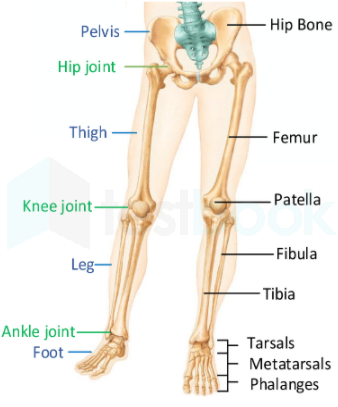
  • The largest bone in the human body is the femur, the thighbone.
  • It is the largest, longest, and strongest bone in the human body.
  • The femur runs from the keen to the hip.
<br>

Additional Information

  • Our body comprises 206 bones. Among them, the longest and shortest bone are mentioned here.
  • The longest bone:
  • The Femur or thigh bone is the largest and heaviest bone in the human body. At the proximal end of the Femur, there is a rounded prominence which is called the Head of the Femur.
  • It is the largest, longest, and strongest bone in the human body.
  • The femur runs from the keen to the hip. It carries all the upper body weight.
  • The other parts of the leg are the tibia, femur, fibula, and keep cap also known as patella.
  • The shortest bone:
  • The smallest bone in the human body is called stapes, located in the middle ear.
  • The size of the staples is 3mm × 2.5mm.
  • There are three bones in the middle ear – Malleus, stapes, and Incus.
  • The Stapes is the smallest of the three bones and it looks like a bell.
<br>

Hint

8

If 546 apples were distributed among Neeraj, Vidya, and Mohan in the ratio 1/6 : 1/2 : 1/3, how many apples did Mohan get?

  1. ((a))

    202

  2. ((b))

    182

  3. ((c))

    172

  4. ((d))

    192

Show Answer
Answer: ((b))

182

Given:

Total apples = 546

Ratio of distribution among Neeraj, Vidya, and Mohan = 1/6 : 1/2 : 1/3

Calculation:

To simplify the given ratio, multiply each term by the LCM of the denominators (6):

(1/6) × 6 : (1/2) × 6 : (1/3) × 6

= 1 : 3 : 2

Let the shares of Neeraj, Vidya, and Mohan be 1x, 3x, and 2x, respectively.

Total ratio sum = 1 + 3 + 2 = 6

x = Total apples / Sum of ratio

x = 546 / 6 = 91

Apples received by Mohan = 2x = 2 × 91 = 182

∴ Mohan received 182 apples.

9

महादेवी वर्मा की कृति है

  1. ((a))

    स्वर्णधूलि

  2. ((b))

    खंजन नयन

  3. ((c))

    गीतिका

  4. ((d))

    अतीत के चलचित्र

Show Answer
Answer: ((d))

अतीत के चलचित्र

सही विकल्प हैं- अतीत के चलचित्र

  • उपरोक्त में से अतीत के चलचित्र महादेवी वर्मा की रचना है।
  • यह एक रेखाचित्र है, प्रकाशन वर्ष - 1941
  • अतीत के चलचित्र में महादेवी वर्मा ने अपने वास्तविक जीवन के  विभिन्न घटनाओं, पात्रों का वर्णन किया है।

Key Points

  • महादेवी वर्मा की महत्वपूर्ण रचनाएँ-
  • महादेवी वर्मा के आठ कविता संग्रह हैं- नीहार (1930), रश्मि (1932), नीरजा (1934), सांध्यगीत (1936), दीपशिखा (1942), सप्तपर्णा (अनूदित 1959), प्रथम आयाम (1974), और अग्निरेखा (1990)

Additional Information

  • महादेवी वर्मा के अन्य रेखाचित्र- स्मृति की रेखाएं (1983)

अन्य विकल्प-

  • स्वर्णधूलि (1947)  - सुमित्रानंदन पंत (काव्य कृति)
  • खंजन नयन (1981) - अमृतलाल नागर (उपन्यास)
  • गीतिका (1936) - सूर्यकान्त त्रिपाठी 'निराला' (गीत संकलन)

Important Pointsसुमित्रानंदन पंत (1900 ई.), प्रमुख रचनाएँ -

  • ग्रंथि’(1920)
  • वीणा’ (1927)
  • पल्लव’ (1928)
  • गुंजन’ (1932)
  • ‘युगान्त’ (1936)
  • युगवाणी’ (1939)
  • ग्राम्या’ (1940)
  • स्वर्ण किरण’ (1947)
  • स्वर्णधूलि’ (1947)
  • उत्त्रा’ (1949)
  • युगपथ’ (1948)
  • अतिमा’ (1955)

अमृतलाल नागर के प्रमुख उपन्यास -

  • महाकाल (1947)
  • सेठ बांकेलाल (1955)
  • बूँद और समुद्र (1956)
  • शतरंज के मोहरे (1959)
  • सुहाग के नुपूर (1960)
  • अमृत और विष (1966)
  • सात घूँघट वाला मुखड़ा (1968)
  • एकदा नैमिषारण्ये (1972)
  • मानस का हंस (1973)
  • बिखरे तिनके (1982)
  • अग्निगर्भा (1983)
  • करवट (1985)
  • पीढ़ियाँ (1990)

सूर्यकान्त त्रिपाठी 'निराला' की अन्य कविताएँ -

  • परिमल
  • अनामिका
  • गीतिका
  • कुकुरमुत्ता
  • आदिमा
  • बेला
  • नये पत्त्ते
  • अर्चना
  • आराधना
  • तुलसीदास
  • जन्मभूमि।
10

Directions: Choose the word that can substitute the given sentence.

A thing that is fit to be eaten

  1. ((a))

    Edible

  2. ((b))

    Cuisine

  3. ((c))

    Indelible

  4. ((d))

    Inedible

Show Answer
Answer: ((a))

Edible

The correct answer is Edible.

Key Points

  • Let's look at the meaning of the marked option:
  • Edible- suitable for use as food
  • Let's look at the meanings of the other given options: 
  • Cuisine- the practice or manner of preparing food or the food so prepared
  • Indelible- cannot be removed or erased
  • Inedible- not suitable for food
  • Hence, from the given meanings, we find that Edible is the correct one-word substitute.
11

National Poet Ramdhari Singh 'Dinkar' was awarded Jnanpith Award for which of his following works?

  1. ((a))

    Sanskriti Ke Chaar Adhyay

  2. ((b))

    Urvashi

  3. ((c))

    Kurukshetra

  4. ((d))

    Rashmirathi

Show Answer
Answer: ((b))

Urvashi

The correct answer is Urvashi.

Key Points

  • Ramdhari Singh 'Dinkar' was awarded the Jnanpith Award in 1972 for his notable work titled "Urvashi."
  • This work is a significant contribution to Hindi literature and showcases his prowess in poetry.
  • The Jnanpith Award is one of the highest literary honors in India, established in 1961 by the Jnanpith Trust.
  • It recognizes outstanding contributions to Indian literature in various languages recognized in the Eighth Schedule of the Indian Constitution.

Additional Information

  • Sanskriti Ke Chaar Adhyay is a significant work by Ramdhari Singh 'Dinkar' that explores the four essential aspects of Indian culture: Dharma (righteousness), Artha (wealth), Kama (desire), and Moksha (liberation).
  • "Kurukshetra" is another notable poem by Dinkar that revolves around the epic Mahabharata and the battle of Kurukshetra, which symbolizes the eternal struggle between good and evil.
  • "Rashmirathi" is a celebrated epic poem by Dinkar that narrates the life of Karana, a central character in the Mahabharata, highlighting his struggles, loyalty, and valor.
12

_______ is used to make soap.

  1. ((a))

    Gram Flour

  2. ((b))

    Rice

  3. ((c))

    Sorghum

  4. ((d))

    Millet 

Show Answer
Answer: ((a))

Gram Flour

Concept:

Soap:

  • Soaps are sodium or potassium salts of long-chain fatty acids.
  • The formula of soap is C17H35COONa.
  • These help in the removal of fats which bind other materials to the fabric or skin.

Explanation:

Gram Flour soap:

  • Gram Flour or besan is a natural ingredient used in making soap.
  • It has microbial agents and good clenching properties.
  • It helps to remove the dead cell.

Thus, gram flour is used to make soap.

Additional InformationSaponification:

  • Soaps containing sodium salts are formed by heating fat (glyceryl ester of fatty acid) with an aqueous sodium hydroxide solution.
  • This reaction is known as saponification.
13

The roots of the quadratic equation 7x2− 10x + 3 = 0 are:

  1. ((a))

    -1 and (\frac{3}7)

  2. ((b))

    1 and (\frac{3}7)

  3. ((c))

    1 and - (\frac{3}7)

  4. ((d))

    -1 and - (\frac{3}7)

Show Answer
Answer: ((b))

1 and (\frac{3}7)

Shortcut Trick

For any quadratic equation ax2 + bx + c = 0, if the sum of coefficients (a + b + c) equals 0, then the roots are always 1 and c/a.

In the equation 7x2 − 10x + 3 = 0, coefficients are a = 7, b = −10, and c = 3.

Sum: 7 + (−10) + 3 = 0.

Therefore, the roots are 1 and 3/7.

∴ The correct answer is 1 and 3/7.

Alternate Method

Given:

Quadratic Equation: 7x2 − 10x + 3 = 0

Method: Factorization by splitting the middle term

To factorize, we need two numbers that multiply to (7 × 3 = 21) and add up to −10. These numbers are −7 and −3.

⇒ 7x2 − 7x − 3x + 3 = 0

⇒ 7x(x − 1) − 3(x − 1) = 0

⇒ (x − 1)(7x − 3) = 0

Now, set each factor to zero:

⇒ x − 1 = 0 → x = 1

⇒ 7x − 3 = 0 → 7x = 3 → x = 3/7

∴ The correct answer is 1 and 3/7.

Additional Information

Sum and Product of Roots

For a quadratic equation ax2 + bx + c = 0, the Sum of roots = −b/a and the Product of roots = c/a.

Discriminant and Nature of Roots

The value D = b2 − 4ac determines the nature: if D > 0, roots are real and distinct; if D = 0, roots are real and equal; if D < 0, roots are imaginary.

Quadratic Formula

Roots can also be calculated using x = [−b ± √(b2 − 4ac)] / 2a.

14

'जगदीश' का संधि-विच्छेद कीजिए।

  1. ((a))

    जगदी + श 

  2. ((b))

    जगद् + ईश 

  3. ((c))

    जग + दीश 

  4. ((d))

    जगत् + ईश 

Show Answer
Answer: ((d))

जगत् + ईश 

सही उत्तर है - "जगत् + ईश" l

Key Points

  • 'जगदीश' का संधि-विच्छेद = जगत् + ईश l
  • यहां व्यंजन संधि का उपयोग हुआ है l
  • एक व्यंजन का अन्य किसी व्यंजन अथवा स्वर से मेल होने पर जो विकार (परिवर्तन) होता है, उसे व्यंजन संधि कहते हैं।
  • उदाहरण: शरत् + चंद्र = शरच्चंद्र l
  • अन्य विकल्प :-
  • जगदी + श, जगद् + ईश, जग + दीश - गलत विकल्प है क्योंकि इनमें से किसी की भी संधि करने पर हमें 'जगदीश' शब्द प्राप्त नहीं होगा l

Additional Information

  • दो निकटवर्ती वर्णों के परस्पर मेल से जो विकार (परिवर्तन) होता है वह संधि कहलाता है।
  • जैसे -
  • सम् + तोष = संतोष,
  • देव + इंद्र = देवेंद्र,
  • संधि के तीन भेद हैं :-
  1. स्वर संधि,
  2. व्यंजन संधि,
  3. विसर्ग संधि l
  • व्यंजन संधि के कुछ उदाहरण :-
  • उत् + हरण = उद्धरण।
  • अनु + छेद = अनुच्छेद।
  • उत् + हार = उद्धार l
  • स्व + छंद = स्वच्छंद l
15

Select the misspelt word

  1. ((a))

    succint

  2. ((b))

    lustrous

  3. ((c))

    dilemma

  4. ((d))

    enigmatic

Show Answer
Answer: ((a))

succint

The correct answer is 'succint'.

Key Points

  • In the given question 'succint' is incorrectly spelt.

  • The correct spelling is 'succinct'.

  • Let's look at the meaning and examples of the given options: 

  • | Succinct | said in a clear and short way; expressing what needs to be said without unnecessary words | Keep your letter succinct and to the point. | | --- | --- | --- | | Lustrous | very shiny | Her fur was lustrous and her nose looked like black velvet. | | Dilemma | a situation in which a difficult choice has to be made between two different things you could do | The president is clearly in a dilemma about/over how to tackle the crisis. | | Enigmatic | mysterious and impossible to understand completely | He left an enigmatic message on my answering machine. |

  • Therefore, the correct answer is Option1.

16

Humayun-Nama was written by _____ 

  1. ((a))

    Gulbadan Begum

  2. ((b))

    Babur

  3. ((c))

    Noor Jahan

  4. ((d))

    Akbar

Show Answer
Answer: ((a))

Gulbadan Begum

The correct answer is Gulbadan Begum.

Key Points

  • Humayun-Nama was written by Gulbadan Begum.
  • It is officially a biography of Humayun, son of Babur and father of Akbar.
  • Gulbadan Begum was the daughter of Babur and sister of Humayun.
  • She was commissioned by Akbar (her nephew) to chronicle the story of Humayun.
  • She wrote in simple Persian language and wrote a factual account of what she remembered.
  • It is the only writing penned by a woman of Mughal royalty in the sixteenth century.
  • A battered copy of the manuscript is kept in the British museum. Annette S. Beveridge translated Gulabadan’s Persian work to English in 1902.
17

Foot and mouth disease occurs in?

  1. ((a))

    Cattle and sheep

  2. ((b))

    Cattle and pigs

  3. ((c))

    Cattle

  4. ((d))

    All of the above 

Show Answer
Answer: ((d))

All of the above 

The correct answer is All of the above.

Key Points

  • About Foot-and-mouth disease:
  • It is an infectious and sometimes fatal viral disease.
  • Affects cloven-hoofed animals, including cattle,sheep,pigs etc.
  • Symptoms: The virus causes a high fever for two or three days, followed by blisters inside the mouth and on the feet that may rupture and cause lameness.
  • The virus responsible for the disease is a picornavirus, the prototypic member of the genus Aphthovirus.

​​​

  • Spread of the disease and Concerns associated:
  • Foot-and-mouth disease (FMD) has severe implications for animal farming, since it is highly infectious and can be spread by infected animals through aerosols, through contact with contaminated farming equipment, vehicles, clothing, or feed, and by domestic and wild predators.
18

David owns a plot worth ₹10,000. He sells it to Rodney at 10% profit. Rodney sells the plot back to David at a loss of 10%. In the whole transaction, Rodney realises _______.

  1. ((a))

    loss of ₹1,100

  2. ((b))

    loss of ₹1,000

  3. ((c))

    profit of ₹2,000

  4. ((d))

    no profit no loss

Show Answer
Answer: ((a))

loss of ₹1,100

Given:

David's plot value = ₹10,000

Selling price to Rodney at 10% profit

Rodney sells the plot back to David at a loss of 10%

Formula Used:

Selling price = Cost price + (Profit % of Cost price)

Cost price = Selling price - (Loss % of Selling price)

Calculations:

Selling price to Rodney = ₹10,000 + 10% of ₹10,000

⇒ ₹10,000 + ₹1,000

⇒ ₹11,000

Rodney sells back to David at 10% loss

Cost price for David = ₹11,000 - 10% of ₹11,000

⇒ ₹11,000 - ₹1,100

⇒ ₹9,900

Rodney's loss = Initial cost price - Final selling price

⇒ ₹11,000 - ₹9,900

⇒ ₹1,100

∴ The correct answer is option (1).

19

“त्रिवेणी' शब्द में कौन सा समास है?

  1. ((a))

    तत्पुरुष

  2. ((b))

    अव्ययीभाव

  3. ((c))

    कर्मधारम

  4. ((d))

    द्विगु

Show Answer
Answer: ((d))

द्विगु

दिए गए विकल्पों में सही उत्तर विकल्प 4 ‘द्विगु​’ होगा। अन्य विकल्प इसके अनुचित उत्तर हैं।

Key Points

  • 'त्रिवेणी' द्विगु समास का उदाहरण है।
  • 'त्रिवेणी' का समास विग्रह होगा - 'तीन नदियों का समाहार'।
  • इसमें 'तीन' संख्यावाचक विशेषण का प्रयोग हुआ हैं।
द्विगु समासजिस समास में पूर्वपद (पहला पद) संख्यावाचक विशेषण हो।दो पहरों का समूह = दोपहर, तीनों लोकों का समाहार = त्रिलोक।

Additional Information

समास - समास उस प्रक्रिया को कहते हैं, जिसमें दो शब्द मिलाकर उनके बीच के संबंधसूचक आदि का लोप करके नया शब्द बनाया जाता है। समास से तात्पर्य 'संक्षिप्तीकरण' से है। समास के माध्यम से कम शब्दों में अधिक अर्थ प्रकट किया जाता है। जैसे - राजा का पुत्र – राजपुत्र, समास के छःप्रकार हैं -
समास का नामपरिभाषाउदाहरण
तत्पुरुष समासजिस समास में उत्तरपद प्रधान हो तथा समास करने के उपरांत विभक्ति (कारक चिन्ह) का लोप हो।धर्म का ग्रन्थ = धर्मग्रन्थ, तुलसीदास द्वारा कृत = तुलसीदासकृत।
बहुव्रीहि समासजिस समास में दोनों पद प्रधान नहीं होते हैं और दोनों पद मिलकर किसी अन्य विशेष अर्थ की ओर संकेत कर रहे होते हैं।जो महान वीर है = महावीर अर्थात हनुमान, तीन आँखों वाला = त्रिलोचन अर्थात शिव।
कर्मधारय समासजिस समास के दोनों शब्दों के बीच विशेषण-विशेष्य अथवा उपमान-उपमेय का सम्बन्ध हो, पहचान: विग्रह करने पर दोनों पद के मध्य में 'है जो', 'के समान' आदि आते हैं।��मल के समान नयन = कमलनयन, महान है जो देव = महादेव।
द्विगु समासजिस समास में पूर्वपद (पहला पद) संख्यावाचक विशेषण हो।दो पहरों का समूह = दोपहर, तीनों लोकों का समाहार = त्रिलोक।
अव्यययीभाव समासजिस समास में पहला पद प्रधान हो और समस्त शब्द अव्यय का काम करे।प्रति + दिन = प्रतिदिन, एक + एक = एकाएक
द्वंद्व समासद्वन्द्व समास में समस्तपद के दोनों पद प्रधान हों या दोनों पद सामान हों एवं दोंनों पदों को मिलाते समय "और, अथवा, या, एवं" आदि योजक लुप्त हो जाएँ, वह समास द्वंद्व समास कहलाता है।माता- पिता = माता और पिता, हाँ- न = हाँ या न
20

Choose the appropriate word to complete the given sentence. 

Tuberculosis _________ is one of the top priorities of the government.

  1. ((a))

    exclusion

  2. ((b))

    eradication

  3. ((c))

    dismissal

  4. ((d))

    abolition

Show Answer
Answer: ((b))

eradication

The correct answer is 'eradication'.

Key Points

  • The most appropriate word to fill in the given blank is 'eradication'.
  • Here, in the given fill-in-the-blank, the most appropriate word is 'eradication' because it means 'the complete destruction of something', and this word is generally associated with global problems and Tuberculosis is one of them. Hence, the correct answer is 'eradication'.
  • Let's look at the meaning and examples of the given options:
WordsMeaningExample
Eradicationthe process of getting rid of something completely or of destroying something badThe organization's goal is the eradication of poverty.
Exclusionthe act of not allowing someone or something to take part in an activity or to enter a placeThis court could award censures up to exclusion from the sacrament.
Dismissalthe situation in which an employer officially makes someone leave their jobAgency officials said the dismissals had been over performance, not politics, as critics have charged.
Abolitionthe act of ending activity or custom officiallyHe fought for the abolition of the death penalty in Britain.
  • Therefore, as per the points mentioned above, we find that the correct answer is Option 2.

Correct Sentence: Tuberculosis eradication is one of the top priorities of the government. 

  • आइए दिए गए शब्दों के अर्थ देखें:
WordsMeaning
Eradicationपूरी तरह से किसी चीज से छुटकारा पाने या किसी चीज को नष्ट करने की प्रक्रिया
Exclusionकिसी को या किसी चीज़ को किसी गतिविधि में भाग लेने या किसी जगह में प्रवेश करने की अनुमति नहीं देने का कार्य
Dismissalवह स्थिति जिसमें कोई नियोक्ता आधिकारिक तौर पर किसी को अपनी नौकरी छोड़ देता है
Abolitionआधिकारिक तौर पर गतिविधि या रिवाज को समाप्त करने का कार्य
21

Grameen Bank of Bangladesh was formed in the year _________ .

  1. ((a))

    1983

  2. ((b))

    1970

  3. ((c))

    1981

  4. ((d))

    1976

Show Answer
Answer: ((a))

1983

The correct answer is 1983.

Key Points

  • Grameen Bank of Bangladesh was formed in 1983 by Muhammad Yunus.
  • Muhammad Yunus sought to realise his vision of self-support for the very poorest people by means of loans on easy terms.
  • In 2006, the Grameen Bank received the Nobel Prize for Peace.
  • It is a microfinance organisation and community development bank in Bangladesh.
  • It became an independent bank in 1983.

 Thus, we can say that the Grameen Bank of Bangladesh was formed in the year 1983.

22

What is the nature of the magnetic field inside a current-carrying solenoid?

  1. ((a))

    Strong uniform magnetic field

  2. ((b))

    Strong non-uniform magnetic field

  3. ((c))

    Weak uniform magnetic field

  4. ((d))

    Weak non-uniform magnetic field

Show Answer
Answer: ((a))

Strong uniform magnetic field

The correct answer is Strong uniform magnetic field.

Key Points

  • A current-carrying solenoid generates a strong and uniform magnetic field inside it.
  • The magnetic field lines inside the solenoid are parallel and equidistant, indicating uniformity.
  • This uniform magnetic field is due to the additive effect of each loop of wire in the solenoid.
  • The strength of the magnetic field inside the solenoid can be increased by increasing the number of turns of the wire or the current.
  • Such a magnetic field is highly useful in applications requiring a consistent and controlled magnetic environment.

Additional Information

  • Solenoid
  • A solenoid is a coil of wire designed to create a magnetic field when an electric current passes through it.
  • It is often used in electromagnets, inductors, and many types of electronic devices.
  • Magnetic Field Lines
  • These lines represent the direction and strength of a magnetic field.
  • Inside a solenoid, the lines are parallel, indicating a uniform field.
  • Applications of Solenoids
  • Solenoids are used in various applications such as MRI machines, electric bells, and as actuators in different mechanical systems.
  • They are critical in devices that require controlled magnetic fields.
  • Factors Affecting Magnetic Field Strength
  • The number of turns in the solenoid and the current passing through it are key factors.
  • The core material inside the solenoid also significantly affects the magnetic field strength.
23

Find the square root of the number 1296.

  1. ((a))

    24

  2. ((b))

    36

  3. ((c))

    34

  4. ((d))

    26

Show Answer
Answer: ((b))

36

Concept:

A square root is a number that produces another particular number when it is multiplied by itself

Calculation:

The prime factorization of 1296 is given by:

1296 = 2 × 2 × 2 × 2 × 3 × 3 × 3 × 3

(⇒ √{1296}= \sqrt{2\times 2\times 2\times 2\times 3\times 3\times 3\times 3})

⇒ √1296 = 2 × 2 × 3 × 3 = 36

Hence, the square root of 1296 is 36.

24

उसे धीरे-धीरे लिखने की आदत है।

रेखांकित शब्द क्या है?

  1. ((a))

    क्रिया विशेषण

  2. ((b))

    क्रिया

  3. ((c))

    सर्वनाम

  4. ((d))

    संज्ञा

Show Answer
Answer: ((a))

क्रिया विशेषण

उसे धीरे-धीरे लिखने की आदत है। वाक्‍य में रेखांकित शब्‍द में  'क्रिया विशेषण' है। 

Key Points 

  • उसे धीरे-धीरे लिखने की आदत है। यहाँ धीरे-धीरे क्रिया विशेषण है, क्योंकि यह लिखने क्रिया की विशेषता बतलाता है।
  • इसमें धीरे क्रिया विशेषण शीर्ष पद है।

Important Points 

परिभाषाउदाहरण
क्रिया विशेषण:-वह शब्द जो हमें क्रिया की विशेषता के बारे में बताते हैं, वे शब्द क्रिया विशेषण कहलाते हैं।आज गाड़ी  बहुत जल्‍दी आ गयी।

Additional Information अन्‍य व‍िकल्‍प- 

प्रकारपरिभाषाउदाहरण
क्रियाजिस शब्द से किसी काम के करने या होने का बोध हो उसे क्रिया कहते हैं ।आना ,जाना ,खाना ,पीना आदि ।
सर्वनामसंज्ञा के बदले जिन‍ शब्‍दों का प्रयोग किया जाता है, उन्‍हें सर्वनाम कहते हैं।मैं, तुम, हम, वे, मेरा, उसने आदि।
संज्ञाकिसी व्‍यक्ति, वस्‍तु, स्‍थान, जाति या भाव के नाम को संज्ञा कहते हैं।कमला, पटना, अंगूर, चमेली, हिमालय, गंगा आदि।
25

The following sentence has been divided into four parts. Identify the part that contains an error.

(A) We are living / (B) here since / (C) the summer / (D) of last year.

  1. ((a))

    A

  2. ((b))

    C

  3. ((c))

    B

  4. ((d))

    D

Show Answer
Answer: ((a))

A

The correct answer is 'A'.

Key Points

  • In the second part of the given sentence, the use of the verb "are living" is incorrect when used with the preposition "since".
  • The present perfect continuous tense should be used with "since" to show an action that started in the past and is still continuing.
  • The correct form should be "have been living" instead of "are living".
  • The corrected sentence would be: "We have been living here since the summer of last year."

Therefore, the correct answer is option 3.

Correct sentence: We have been living here since the summer of last year.

<br>

Additional Information

  • Option 1 (A): "We are living" is grammatically correct but does not fit with the time duration indicated by "since".
  • Option 2 (C): "the summer" is correct and does not contain any error.
  • Option 4 (D): "of last year" is also correct and does not contain any error.
26

The place of origin of Son river is near _____. 

  1. ((a))

    Dindori

  2. ((b))

    Amarkantak

  3. ((c))

    Umaria

  4. ((d))

    Khajuraho

Show Answer
Answer: ((b))

Amarkantak

The correct answer is Amarkantak.

  • Son River is one of the major southern tributaries of the Ganges (Ganga) River.
  • The place of origin of the Son river is near Amarkantak in Madhya Pradesh.
  • It is the major tributary of the Ganga river which originates from the Peninsular plateau region.

Additional Information

  • Son River cuts through the Kaimur Range and joins the Ganges above Patna.
  • Son River is the largest southernmost tributary of the Ganga river.
  • The Rihand is the major tributary of the Son river.
  • Major dams built across the Son river are the Bansagar dam and Indrapuri barrage.
  • Khajuraho, Umaria, and Dindori are the cities in Madhya Pradesh.
27

Initial discovery of antibiotic penicillin was done by

  1. ((a))

    Francis Crick

  2. ((b))

    Maurice Wilkins

  3. ((c))

    Charles Darwin

  4. ((d))

    Alexander Fleming

Show Answer
Answer: ((d))

Alexander Fleming

The correct answer is Alexander Fleming

Concept:

  • Antibiotics are compounds that kill or inhibit the growth of bacteria, and they revolutionized medicine by providing effective treatment for bacterial infections.
  • The discovery of penicillin, the first widely used antibiotic, marked a significant breakthrough in medical science and has saved millions of lives.
  • Penicillin was discovered accidentally by Alexander Fleming in 1928 when he noticed that a mold called Penicillium notatum produced a substance that inhibited bacterial growth.

Explanation of Correct Answer:

  • Alexander Fleming: He was a Scottish bacteriologist who discovered penicillin, the first true antibiotic, in 1928.
  • Fleming observed that colonies of the bacterium Staphylococcus aureus were destroyed by a mold contaminant on a culture plate.
  • He identified the mold as Penicillium notatum and named the substance it produced "penicillin." This discovery earned him, along with Howard Florey and Ernst Boris Chain, the Nobel Prize in Physiology or Medicine in 1945.

Other Options:

  • Francis Crick: Crick was a British molecular biologist, biophysicist, and neuroscientist, best known for co-discovering the structure of DNA (deoxyribonucleic acid) in 1953 alongside James Watson.
  • Maurice Wilkins: Wilkins was a British physicist and molecular biologist who contributed to the discovery of DNA's double-helix structure. He worked closely with Rosalind Franklin and shared the 1962 Nobel Prize in Physiology or Medicine with Watson and Crick.
  • Charles Darwin: Darwin was a British naturalist best known for his theory of evolution by natural selection, published in his seminal work, On the Origin of Species in 1859.
28

पाठक के मन में उत्साह एवं उत्तेजना का संचार किस काव्य-गुण के माध्यम से होता है?

  1. ((a))

    माधुर्य गुण

  2. ((b))

    ओज गुण

  3. ((c))

    प्रसाद गुण

  4. ((d))

    इनमें से कोई नहीं।

Show Answer
Answer: ((b))

ओज गुण

पाठक के मन में उत्साह एवं उत्तेजना का संचार ओज काव्य-गुण के माध्यम से होता है।

Key Points

  • ओज का शाब्दिक अर्थ है- तेज, प्रताप या दीप्ति
  • जिस काव्य को पढने या सुनने से ह्रदय में ओज, उमंग और उत्साह का संचार होता है, उसे ओज गुण प्रधान काव्य कहा जाता हैं ।
  • यह गुण मुख्य रूप से वीर, वीभत्स, रौद्र और भयानक रस में पाया जाता है।
  • उदाहरण-
  • बुंदेले हर बोलों के मुँह हमने सुनी कहानी थी।
  • खूब लड़ी मर्दानी वह तो झांसी वाली रानी थी।

Important Pointsकाव्यगुण -

  • काव्य में आन्तरिक सौन्दर्य तथा रस के प्रभाव एवं उत्कर्ष के लिए स्थायी रूप से विद्यमान मानवोचित भाव और धर्म या तत्व को काव्य गुण या शब्द गुण कहते हैं।
  • यह काव्य में उसी प्रकार विद्यमान होता है, जैसे- फूल में सुगन्ध।
  • अर्थात काव्य की शोभा करने वाले  या रस को प्रकाशित करने वाले तत्व या विशेषता का नाम ही गुण है।
  • काव्य गुण मुख्य रूप से तीन प्रकार के होते हैं -
  1. माधुर्य
  2. ओज
  3. प्रसाद

Additional Informationप्रसाद गुण:-

  • प्रसाद का शाब्दिकार्थ है - निर्मलता, प्रसन्नता
  • जिस काव्य को पढ़ने या सुनने से हृदय या मन खिल जाए , हृदयगत शांति का बोध हो, उसे प्रसाद गुण कहते हैं।
  • इस गुण से युक्त काव्य सरल, सुबोध एवं सुग्राह्य होता है। जैसे- अग्नि सूखे ईंधन में तत्काल व्याप्त हो जाती है,
  • वैसे ही प्रसाद गुण युक्त रचना भी चित्त में तुरन्त समा जाती है।
  • यह सभी रसों में पाया जा सकता है।

उदाहरण-

  • जीवन भर आतप सह वसुधा पर छाया करता है।
  • तुच्छ पत्र की भी स्वकर्म में कैसी तत्परता है।।
29

Fill in the blanks with suitable forms of verbs given in brackets :

The old man ___________ (fall) yesterday as he ___________ (cross) the road.

  1. ((a))

    fell; crossed

  2. ((b))

    fell; was crossing

  3. ((c))

    falls; crosses

  4. ((d))

    fell; is crossing

Show Answer
Answer: ((b))

fell; was crossing

The correct answer is 'fell; was crossing'.

Key Points

  • In this sentence, the action of falling (fall) and the action of crossing (cross) the road both occurred in the past.
  • However, the crossing action was ongoing or in progress at the time of the fall.
  • Therefore, we use the past continuous tense (was crossing) to indicate that the action of crossing the road was happening when the old man fell.
  • Complete sentence- The old man fell yesterday as he was crossing the road.

Additional Information

  • Option 1 (fell; crossed) is incorrect because it does not show the ongoing nature of the crossing action at the time of the fall.
  • Option 3 (falls; crosses) is incorrect because it uses present tense verbs, which do not match the past tense context of the sentence.
  • Option 4 (fell; is crossing) is incorrect because it combines the past tense with the present continuous tense, which is grammatically incorrect in this context.
30

Which of the following is the issuing authority of coins in India?

  1. ((a))

    Reserve Bank of India

  2. ((b))

    commercial banks of India

  3. ((c))

    Government of India

  4. ((d))

    Corporate entities

Show Answer
Answer: ((c))

Government of India

Important Points

  • In India, coins are minted by the Government of India. They have the sole right over this.
  • Coins were distributed through the RBI distribution center.
  • The responsibility for coinage vests with the government of India through the Coinage Act, 1906.
  • Coins are minted at the four mints: Alipore (South Kolkata), Saifabad (Hyderabad), Cherlapally (Hyderabad), and Noida (Uttar Pradesh).

Confusion Points

  • The Reserve Bank of India (RBI) prints and manages only note currency in India.

Hence, the Government of India is the issuing authority of coins in India.

31

What will be the name of product that is formed when metals react with air?

  1. ((a))

    Metal hydride

  2. ((b))

    Metal chloride

  3. ((c))

    Metal oxide

  4. ((d))

    Metal nitrate

Show Answer
Answer: ((c))

Metal oxide

The correct answer is Metal oxide.

Key Points

  • When metals react with air, they typically form metal oxides.
  • This reaction involves the oxidation of the metal.
  • For example, when iron (Fe) reacts with oxygen (O₂) in the air, it forms iron oxide (Fe₂O₃).
  • Metal oxides are generally basic in nature and can react with acids to form salts and water.
  • Noble metals like gold (Au) and platinum (Pt) do not react with air under normal conditions.

Additional Information

  • Oxidation Reaction
  • Oxidation is a chemical reaction where a substance combines with oxygen.
  • It involves the loss of electrons by a molecule, atom, or ion.
  • Basic Nature of Metal Oxides
  • Most metal oxides are basic and react with acids to form salt and water.
  • For example, sodium oxide (Na₂O) reacts with hydrochloric acid (HCl) to form sodium chloride (NaCl) and water (H₂O).
  • Reactivity of Metals with Air
  • Metals like potassium (K) and sodium (Na) react vigorously with air, while others like copper (Cu) and mercury (Hg) react slowly.
  • The reactivity of metals with air varies significantly across the periodic table.
  • Formation of Protective Oxide Layer
  • Some metals, like aluminum (Al), form a thin oxide layer that protects them from further oxidation.
  • This protective oxide layer is known as a passivation layer.
32

'लड़की' शब्द का अन्य वचन रुप है

  1. ((a))

    लड़कीयाँ

  2. ((b))

    लड़का

  3. ((c))

    लड़कियाँ

  4. ((d))

    लड़के

Show Answer
Answer: ((c))

लड़कियाँ

'लडकी' शब्द का अन्य वचन रूप 'लडकियां' होता है।

लड़का शब्द का बहुवचन लड़के होता है।

Key Points

वचन के दो प्रकार होते हैं : एकवचन तथा बहुवचन

एकवचनसंज्ञा के जिस रूप से एक व्यक्ति या एक वस्तु होने का ज्ञान हो, उसे एकवचन कहते है। जैसे- स्त्री, घोड़ा, नदी, रुपया, लड़का, गाय, सिपाही, बच्चा, कपड़ा, माता, माला, पुस्तक, टोपी, बंदर, मोर आदि।
बहुवचनशब्द के जिस रूप से एक से अधिक व्यक्ति या वस्तु होने का ज्ञान हो, उसे बहुवचन कहते है। जैसे- स्त्रियाँ, घोड़े, नदियाँ, रूपये, लड़के, गायें, कपड़े, टोपियाँ, मालाएँ, माताएँ, पुस्तकें, वधुएँ, गुरुजन, रोटियाँ, लताएँ, बेटे आदि।

Additional Information

कुछ नियम

नियमएकवचनबहुवचन
आकारान्त पुल्लिंग शब्दों में 'आ' के स्थान पर 'ए' लगाकर बहुवचन बनाए जाते हैं।जूताजूते
तारातारे
लड़कालड़के
अकारांत स्त्रीलिंग शब्दों में 'अ' के स्थान पर 'ऐं' लगाकर बहुवचन बनाए जाते हैं।कलमकलमें
बातबातें
रातरातें
33

Convert the following sentence into passive voice:

Writers across the globe use this innovative software for checking plagiarism in their works.

  1. ((a))

    This innovative software is used for checking plagiarism in their works by writers across the globe.

  2. ((b))

    For checking plagiarism in their works, this innovative software is used by writers across the globe.

  3. ((c))

    Plagiarism in their works is checked by this innovative software used by writers across the globe.

  4. ((d))

    This innovative software is being used by writers across the globe for checking plagiarism in their works.

Show Answer
Answer: ((a))

This innovative software is used for checking plagiarism in their works by writers across the globe.

The correct answer is 'Option 1' i.e. 'This innovative software is used for checking plagiarism in their works by writers across the globe.'

 Key Points

  • The original sentence is in the active voice, present simple tense, where the writers (subject) use (verb) the innovative software (object).
  • In the passive voice, the structure becomes "Object + is/am/are + past participle (used) + by + subject".
  • 'Option 1' correctly follows the structure of the present simple passive voice by using "is used" and placing the subject at the end after the preposition “by”.

Therefore, the correct answer is- 'This innovative software is used for checking plagiarism in their works by writers across the globe.'

 Additional Information

  • 'Option 2' is grammatically correct but rearranges the order of the original sentence in a way that might change emphasis.
  • 'Option 3' alters the original meaning by suggesting that the software, on its own, checks for plagiarism.
  • 'Option 4' is incorrect because it uses the present continuous tense ("is being used") instead of the present simple tense.
34

Swami Vivekananda attended the conference of World Religions in 1893 at 

  1. ((a))

    London

  2. ((b))

    New York

  3. ((c))

    Tokyo

  4. ((d))

    Chicago

Show Answer
Answer: ((d))

Chicago

The correct answer is Chicago.

Important Points 

  • Swami Vivekananda participated at the Parliament of Religions held in Chicago (USA) on 11th September 1893 and raised the prestige of India and Hinduism very high.
  • He preached Vedantic Philosophy. He condemned the caste system and the current Hindu emphasis on rituals and ceremonies.

Key Points

  • Swami Vivekananda founded the Ramkrishna Mission at Belur in Howrah in 1897. It is a social service and charitable society.
  • The objectives of this Mission are providing humanitarian relief and social work through the establishment of schools, colleges, hospitals, and orphanages.
  • He asked the people to improve the lives of the poor and depressed classes. He believed that service to mankind is service to God.
  • The original name of Swami Vivekananda was Narendranath Dutta (1863-1902).
  • He became the most famous disciple of Shri Ramkrishna Paramahamsa.
  • In 1886, Narendranath took the vow of Sanyasa and was given the name, Vivekananda.
  • Swami Vivekananda emphasized Man making education.
  • Man-making means a harmonious development of a child in respect to their morality, humanity, honesty, character health, etc. Therefore, a supportive environment to fulfill these aims of education should be created in our school.
35

Which one of the following is also known as Dry ice in its solid form?

  1. ((a))

    SiO₂

  2. ((b))

    CO₂

  3. ((c))

    CaO

  4. ((d))

    MgO

Show Answer
Answer: ((b))

CO₂

CONCEPT:

Dry Ice

  • Dry ice is the solid form of carbon dioxide (CO2).
  • It is called "dry ice" because it does not melt into a liquid when heated but instead sublimates directly into carbon dioxide gas.
  • This property makes it useful for cooling purposes, especially where the presence of water is undesirable.
  • Dry ice is extremely cold, with a temperature of approximately -78.5°C (-109.3°F).

EXPLANATION:

  • The question asks which compound is known as "dry ice" in its solid form.
  • SiO2 (Option 1) is silicon dioxide, commonly known as sand or quartz.
  • CO2 (Option 2) is carbon dioxide, which is dry ice in its solid form.
  • CaO (Option 3) is calcium oxide, commonly known as quicklime.
  • MgO (Option 4) is magnesium oxide, a compound used in refractory applications.

Therefore, dry ice in its solid form is carbon dioxide (CO2).

36

'आँखों का पानी ढलना'

दिए गए मुहावरे का अर्थ निम्नलिखित में से है-

  1. ((a))

    प्रसन्न होना

  2. ((b))

    आँख की नस का खराब होना

  3. ((c))

    निर्लज्ज होना

  4. ((d))

    बहुत रोना

Show Answer
Answer: ((c))

निर्लज्ज होना

सही उत्तर है - निर्लज्ज होना

Key Points

  • 'आँखों का पानी ढलना' का अर्थ - 'निर्लज्ज होना'
  • वाक्य प्रयोग - सीता सच्ची बात सीधे तौर पर बोल देती है, चाहे किसी को बुरा लगे, उसकी "आँख का पानी ढल गया है"।
  • ऐसे वाक्यांश, जो सामान्य अर्थ का बोध न कराकर किसी विलक्षण अर्थ को प्रकट करते है, उसे मुहावरा कहते है।
  • अपना उल्लू सीधा करना - मतलब निकालना, वाक्य प्रयोग - आजकल के नेता "अपना उल्लू सीधा करने" के लिए ही लोगों को भड़काते है।

अन्य विकल्प -

मुहावराअर्थ
​फूला न समाना​अति प्रसन्न होना
फूट-फूटकर रोनाजोर-जोर से रोना।

Additional Information 

मुहावराअर्थवाक्य प्रयोग
​कफ़न सिर से बाँधनालड़ने-मरने के लिए तैयार होनाहमारे सैनिक "सिर से कफ़न बाँधकर" ही देश की रक्षा करते हैं।
​खून-पसीना एक करनाअधिक परिश्रम करना"खून पसीना एक करके" विद्यार्थी अपने जीवन में सफल होते है।
घर का चिराग गुल होनापुत्र की मृत्यु होनायह सुनकर बड़ा दुःख हुआ कि मेरे मित्र के "घर का चिराग गुल हो गया"।
​चैन की वंशी बजानासुख से समय बितानामेरा मित्र डॉक्टर बनकर "चैन की वंशी बजा रहा हैं"।
37

Who founded the Golconda Dynasty (sultanate)?

  1. ((a))

    Adil Shah

  2. ((b))

    Mohammad Govam

  3. ((c))

    Quli Qutb Shah

  4. ((d))

    Bahman Shah

Show Answer
Answer: ((c))

Quli Qutb Shah

The Correct Answer is Quli Qutb Shah.


Important Points

  • Quṭb Shah declared his independence from the Bahamani Kingdom in 1518 and moved his capital to Golconda.
  • The "Qutb Shahi" dynasty was established in 1518 AD by Quli Qutb Mulk who assumed the title of "Sultan".
  • The dynasty came to an end in 1687 when Mughal Emperor Aurangzeb seized Golconda fort and occupied the kingdom.


Additional Information

  • Adil Shah founded the Adil Shahi dynasty (1489–1686).
  • He ruled the Sultanate of Bijapur, which had declared independence from the Bahamani Kingdom.
  • Bahman Shah was the founder of the Bahmani sultanate.
38

What is the main reason for the formation of shadows?

  1. ((a))

    Light is absorbed by transparent objects. 

  2. ((b))

    Opaque objects block the light path.

  3. ((c))

    Light bends when passing through water.

  4. ((d))

    Light travels faster in dark areas.

Show Answer
Answer: ((b))

Opaque objects block the light path.

The Correct answer is Opaque objects block the light path.

Key Points

  • Shadows are formed when opaque objects obstruct the path of light.
  • An opaque object does not allow light to pass through it, creating a dark region behind the object where light is blocked.
  • The shadow appears because light travels in a straight line and cannot bend around the object.
  • The size and shape of the shadow depend on the position of the light source, the object, and the surface where the shadow falls.
  • The phenomenon of shadow formation is used in applications such as sundials for timekeeping and in visual arts for creating depth and dimension.
  • This principle is also important in optics and understanding light behavior.

Additional Information

  • Light is absorbed by transparent objects.
  • Transparent objects allow light to pass through them with minimal absorption or scattering.
  • For example, materials like glass and clear plastic transmit most of the light, resulting in no shadow formation.
  • Shadows are not formed because there is no obstruction to the light path.
  • Light bends when passing through water.
  • This phenomenon is called refraction, where light changes its direction when moving between mediums of different densities, such as air and water.
  • Refraction does not cause shadow formation; instead, it creates effects like bending of light rays, magnification, or distortion.
  • Light travels faster in dark areas.
  • This statement is incorrect because light travels at a constant speed of approximately 3 x 10⁸ m/s in a vacuum, irrespective of the presence of light or darkness.
  • The speed of light changes only when it passes through different mediums like air, water, or glass.
39

Which of the following article states the "restriction on rights conferred by this Part while martial law is in force in any area"?

  1. ((a))

    Article 32

  2. ((b))

    Article 33

  3. ((c))

    Article 34

  4. ((d))

    Article 35

Show Answer
Answer: ((c))

Article 34

  • Article 34-restriction on rights conferred by this Part while martial law is in force in any area.
ArticleWhat does it say
29- protection of interest of minorities. - provides that any section of the citizens residing in any part of India having a distinct language, script or culture of its own, shall have the right to conserve the same.
30- right of minorities to establish and administer educational institutions. - grants right to minorities to establish educational institutions and the government will provide fund and there may be no discrimination.
31A- saving of law providing for the acquisition of estate, etc. - saves five categories of law from being challenged or invalidated on the ground of contravention of fundamental rights of 14, 19.
31B- validation of certain acts and regulations. - saves the act and regulations included in the ninth schedule from being challenged and invalidated on the ground of contravention of any fundamental rights.
31C- saving of laws giving effect to the certain directive principle. - as inserted by the 25th amendment act of 1971.
32- remedies for enforcement of rights conferred by this part. - confers the right to remedies for the enforcement of the fundamental right of an aggrieved citizen.
33- power of the parliament to modify the rights conferred by this Part in their application to forces, etc. - empowers the Parliament to restrict or abrogate the fundamental right of a member of armed forces police etc to ensure proper discharge of their duties.
34- restriction on rights conferred by this Part while martial law is in force in any area. - provides the restriction of fundamental rights while martial law is in force in any area within the territory of India.
35- legislation to give effect to the provisions of this part. - lays down that the power to make laws, to give effect to certain specified fundamental rights shall vest only in the parliament and not in the state legislature.
40

Which tissue is responsible for the movement in our body? 

  1. ((a))

    Epithelial tissue 

  2. ((b))

    Cartilage 

  3. ((c))

    Muscular tissue  

  4. ((d))

    Areolar tissue  

Show Answer
Answer: ((c))

Muscular tissue  

The correct answer is Muscular tissue.

Key Points

  • Muscular tissue is responsible for the movement in our body.
  • There are three types of muscular tissue: skeletal, smooth, and cardiac muscles.
  • Skeletal muscles are attached to bones and are responsible for voluntary movements.
  • Smooth muscles are found in the walls of internal organs and help in involuntary movements such as digestion.
  • Cardiac muscles are found in the heart and are responsible for pumping blood throughout the body.
  • Muscular tissues can contract and relax, which allows them to produce movement.

 Additional Information

  • Epithelial tissue
  • Epithelial tissue covers the outer surfaces of organs and blood vessels throughout the body, as well as the inner surfaces of cavities in many internal organs.
  • It acts as a barrier to protect the body from outside invaders and helps in absorption, secretion, and sensation.
  • Cartilage
  • Cartilage is a flexible connective tissue found in various parts of the body including joints, ear, nose, and bronchial tubes.
  • It provides support and cushioning in the joints and reduces friction between bones.
  • Areolar tissue
  • Areolar tissue is a type of connective tissue that holds organs in place and attaches epithelial tissue to underlying tissues.
  • It also serves as a reservoir of water and salts for surrounding tissues.
41

Who authored the book titled "The New Icon: Savarkar and the Facts," published in February 2025?

  1. ((a))

    Shashi Tharoor

  2. ((b))

    Arun Shourie

  3. ((c))

    Vikram Seth

  4. ((d))

    Chetan Bhagat

Show Answer
Answer: ((b))

Arun Shourie

The correct answer is Arun Shourie.

In News

  • The book titled "The New Icon: Savarkar and the Facts" was authored by Arun Shourie, a prominent scholar, author, and former minister.
  • The book was published by Penguin Random House India (PRHI) and explores the myths surrounding Vinayak Damodar Savarkar, an important freedom fighter and political figure.

Key Points

  • The book analyzes various myths around Vinayak Damodar Savarkar, focusing on his life, activism, and role in India's freedom struggle.
  • Arun Shourie, who authored the book, has been a prominent intellectual figure in India, known for his writings on politics, history, and culture.

Additional Information

  • Vinayak Damodar Savarkar
  • Vinayak Damodar Savarkar was an Indian freedom fighter, activist, and writer, best known for his contributions to India's independence movement and his advocacy for Hindu nationalism.
  • Arun Shourie
  • Arun Shourie is an Indian author, journalist, and former minister who has written extensively on topics ranging from politics to economics and history.
42

Clotting of blood involves which one among the following clotting proteins?

  1. ((a))

    Pathogen

  2. ((b))

    Fibrinogen

  3. ((c))

    Macrophage

  4. ((d))

    Phagocytes

Show Answer
Answer: ((b))

Fibrinogen

The correct answer is Fibrinogen

Concept:

  • Blood clotting (also known as coagulation) is a critical process that prevents excessive bleeding when a blood vessel is injured.
  • It involves a series of steps where clotting proteins in blood plasma work together to form a clot that seals the injured site.
  • Fibrinogen is a key protein involved in this process. It is a soluble plasma protein that is converted into insoluble fibrin during the clotting cascade.

Key Points About Fibrinogen:

  • Fibrinogen is produced by the liver and circulates in the blood in an inactive form.
  • When an injury occurs, the enzyme thrombin is activated as part of the clotting cascade. Thrombin converts fibrinogen into fibrin.
  • Fibrin forms a mesh-like structure that traps red blood cells and platelets, creating a stable blood clot.
  • This clot acts as a temporary seal to prevent further blood loss and allows the vessel to heal.
  • A deficiency or dysfunction in fibrinogen can lead to bleeding disorders, while excessive clotting can result in thrombosis.

Other Options:

  • Pathogen: Pathogens are microorganisms such as bacteria, viruses, and fungi that cause diseases. They are not involved in the blood clotting process.
  • Macrophage: Macrophages are a type of white blood cell involved in the immune response. They help by engulfing and digesting pathogens and cellular debris but play no role in blood clotting.
  • Phagocytes: Phagocytes are immune cells that engulf and destroy pathogens and debris. While they are part of the immune system, they do not contribute to the clotting mechanism.
43

Bhagoria festival is a popular festival in the state of _______.

  1. ((a))

    Assam

  2. ((b))

    Maharashtra

  3. ((c))

    Nagaland

  4. ((d))

    Madhya Pradesh

Show Answer
Answer: ((d))

Madhya Pradesh

The correct answer is Madhya Pradesh.

Key Points

  • Bhagoria is an important tribal festival of Madhya Pradesh:
  • It is celebrated in the month of March before the Holi festival.
  • During this festival young boys and girls are allowed to elope after choosing their partners, they are accepted as husband-wife after they mutually agree.

Additional Information

  • About Madhya Pradesh: 
  • State Foundation Day: November 1, 1956
  • Capital: Bhopal
  • Chief Minister: Mohan Yadav
  • Governor: Mangubhai C. Patel
  • State Animal: Barasingha
  • State Bird: Indian Paradise Flycatcher
  • State Tree: Banyan Tree
  • National Parks: Kanha National Park, Bandhavgarh National Park, Panna National Park, Satpura National Park, Madhav National Park, Sanjay National Park, Pench National Park, Van Vihar National Park, Fossil National Park.
44

Vitamin B1 is also known as

  1. ((a))

    Riboflavin

  2. ((b))

    Thiamin

  3. ((c))

    Retinol

  4. ((d))

    Tocopherol

Show Answer
Answer: ((b))

Thiamin

The correct answer is Thiamin

Concept:

Vitamins are organic compounds required in the diet in small quantities to perform biological functions.

Classification of Vitamins:

  • Fat-soluble vitamins: These are absorbed in dietary fats and stored in adipose tissues and the liver. These include vitamins A, D, E, and K.
  • Water-soluble vitamins are dissolved in water and readily excreted by the kidneys, requiring regular supplements. These include vitamin C and B complex vitamins.

Explanation:

  • Vitamin B1, also known as Thiamin, is a water-soluble vitamin that plays a critical role in energy metabolism and the functioning of the nervous system.
  • It is involved in the conversion of carbohydrates into energy by acting as a coenzyme in the metabolism of glucose.
  • The body cannot store thiamin in large amounts, so it needs to be consumed regularly through diet or supplements.
  • Deficiency in thiamin can lead to conditions such as beriberi (affecting the cardiovascular and nervous systems) and Wernicke-Korsakoff syndrome (commonly seen in alcoholics).
  • Good sources of Vitamin B1 include whole grains, legumes, nuts, seeds, and meat (especially pork).

Explanation of Other Options:

  • Riboflavin: Riboflavin is Vitamin B2. It helps in energy production, maintains healthy skin and eyes, and supports the nervous system. It is also involved in the metabolism of fats, carbohydrates, and proteins.
  • Retinol: Retinol is Vitamin A, which is crucial for vision, immune function, and skin health.
  • Tocopherol: Tocopherol is Vitamin E. It acts as an antioxidant and helps protect cells from damage caused by free radicals. It also plays a role in immune function and skin health.

Additional Information 

VitaminMain functionDeficiencyPrincipal source
B1(Thiamine)Growth of body metabolismBeri-Beri Cardiomegaly, indigestionMeat, Milk,soyabean
B2(Riboflavin)Strength eye Growth of bodyOpacities in cornea, scars on the tongueMeat,soyabean,milk, green leafy vegetables
B3(Nicotinamide)Controls the Cholesterol level, metabolismPellagraMeat,groundnut,curd
B5(Pantothenic Acid)Proper function of various enzymes, metabolismBurning feet syndrome AchromotrichiaMeat, milk,eggs
B6(Pyridoxine)Amino acid metabolism, Helps in the formation of bloodSkin diseasesMeat,liver,grains
B7(biotin) or Vitamin HMetabolism protects skin and hairsAnemia, AlopeciaMeat,eggs,milk,fruits
B9(Folic acid)Required in red blood cell synthesisMicrocytic anaemiaChocolate, groundnut, Papaya, kiwi
B12(Cobalamin)It contains cobalt Metabolise nitrogen RBC formationMegaloblastic anaemiaMeat,liver,yeast,eggs
45

What provide Inspiration to Bolshevik Revolution ?

  1. ((a))

    Marxism

  2. ((b))

    Nihilism

  3. ((c))

    Liberalism

  4. ((d))

    Nationalism

Show Answer
Answer: ((a))

Marxism

The Russian Revolution is dated to November 1917 (October 1917 on the Russian calendar), when Bolshevik Party forces took over the government offices in Petrograd. However, the problems that led to the revolution had been developing for generations. ​

Important Points

In November 1917, the Bolsheviks and Vladimir Lenin led a revolution, inspired by Karl Marx’s theory of class struggle.

  • They want to implement a new economic system.
  • The main idea of Marx’s theory in the Communist Manifesto was the abolition of private property.
  • Therefore, Russia’s Communist Party began to replace private property with collective ownership and replacing markets and the price system with planning.
  • The Bolsheviks set out to cure Russia of all its injustices that arouse from social class differences.
  • They succeeded in some ways.
  • The revolution marked the end of a dynasty that had lasted 300 years and concluded with the seizure of power by a small revolutionary group.
  • The Tsar was replaced with a Council of People’s Commissars and private ownership was abolished.

Thus, we can conclude that the Inspiration for the Bolshevik Revolution is Marxism.

Additional Information

Causes of the Bolshevik revolution:

  • Widespread suffering under autocracy—a form of government in which one person, in this case, the czar, has absolute power
  • The weak leadership of Czar Nicholas II—clung to autocracy despite changing times
  • Poor working conditions, low wages, and hazards of industrialization
  • New revolutionary movements that believed a worker-run government should replace czarist rule
  • Russian defeat in the Russo-Japanese War (1905), which led to rising unrest
  • Bloody Sunday, the massacre of unarmed protestors outside the palace, in 1905
  • The devastation of World War I—high casualties, economic ruin, widespread hunger
  • The March Revolution in 1917, in which soldiers who were brought in for crowd control ultimately joined labour activists in calling “Down with the autocracy!”
46

In which of the following phenomena is solid state directly transformed into gaseous state without changing into liquid state? 

  1. ((a))

    Fusion 

  2. ((b))

    Deposition  

  3. ((c))

    Solidification  

  4. ((d))

    Sublimation 

Show Answer
Answer: ((d))

Sublimation 

The correct answer is Sublimation.

Key Points

  • Sublimation is the process where a substance changes directly from the solid phase to the gaseous phase without passing through the liquid phase.
  • This phenomenon occurs when the molecules of a solid gain enough energy to transition into the gas phase directly.
  • Common examples of sublimation include dry ice (solid carbon dioxide) and iodine crystals.
  • Sublimation is utilized in various industrial processes such as freeze-drying and purifying compounds.

Additional Information

  • Fusion: The process where a substance changes from the solid state to the liquid state, also known as melting.
  • Deposition: The reverse of sublimation, where a gas changes directly into a solid without passing through the liquid phase.
  • Solidification: The process of a liquid becoming solid, commonly known as freezing.
  • Evaporation: The process where a liquid changes to a gas at temperatures below its boiling point.
  • Phase Transition: The transformation of a substance from one state of matter to another, such as from solid to liquid, liquid to gas, etc.
47

With which of the following sports is the Santosh Trophy Associated?

  1. ((a))

    Hockey

  2. ((b))

    Basketball

  3. ((c))

    Cricket

  4. ((d))

    Football

Show Answer
Answer: ((d))

Football

  • Santosh Trophy is related to the sport of Football.
  • Santosh Trophy is an Indian football tournament in which the states of the country along with some government institutions participate.
  • The tournament is held every year with 31 teams who are divided into groups and who must qualify for the tournament proper through the preliminary round.
  • The tournament is held annually since 1941.
  • Bengal was the first winner of the competition held in 1941.
  • The trophy is named after the late Maharaja Sir Manmatha Nath Roy Chowdhary of Santosh (now in Bangladesh).
  • West Bengal has won the trophy a record number of 32 times.
  • Services won the trophy for the year 2018-19.
48

Which of the following carries egg from the ovary to the womb?

  1. ((a))

    Placenta  

  2. ((b))

    Fallopian tube 

  3. ((c))

    Vagina 

  4. ((d))

    Cervix 

Show Answer
Answer: ((b))

Fallopian tube 

The correct answer is Fallopian tube.

Key Points

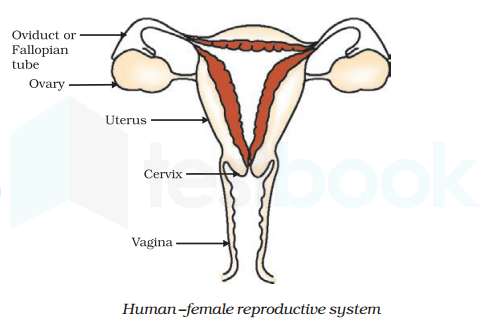
  • The fallopian tube is a pair of long, narrow ducts located in the female reproductive system.
  • It functions as the passageway for the egg, traveling from the ovary to the uterus.
  • Fertilization of the egg by a sperm typically occurs within the fallopian tubes.
  • Each fallopian tube is connected to an ovary on one end and the uterus on the other.

Additional Information

  • Ovulation: The release of an egg from an ovary, which then enters the fallopian tube.
  • Uterus (Womb): The organ in the female reproductive system where a fertilized egg implants and develops into a fetus.
  • Placenta: An organ that develops in the uterus during pregnancy to provide oxygen and nutrients to the growing baby.
  • Cervix: The lower part of the uterus that opens into the vagina, acting as a gateway between the uterus and the vagina.
  • Vagina: The muscular canal extending from the cervix to the exterior of the body, serving as the birth canal and the passageway for menstrual flow.
49

The International Rice Research Institute is based in?

  1. ((a))

    Nigeria

  2. ((b))

    Mexico

  3. ((c))

    Australia

  4. ((d))

    Philippines

Show Answer
Answer: ((d))

Philippines

The correct answer is the Philippines.

  • The International Rice Research Institute is based in the Philippines.

  • The International Rice Research Institute
  • IRRI is dedicated to abolishing poverty and hunger among people and populations that depend on rice-based agri-food systems.
  • IRRI is an independent, nonprofit, research, and educational institute.
  • It aims to-
  • Improve the health and welfare of rice farmers and consumers.
  • Promote environmental sustainability in a world challenged by climate change.
  • Support the empowerment of women and the youth in the rice industry.
  • Headquarters- Philippines.
  • Founded- 1960.
  • Chairperson, Board of Trustees- Jim Godfrey.
  • Director-General- Jean Balié.

CountryCapitalPresidentPrime MinisterCurrency
PhilippinesManilaRodrigo Duterte______Philippine peso
AustraliaCanberra______Anthony AlbaneseAustralian dollars
MexicoMexico CityAndrés Manuel López Obrador_____Mexican peso
NigeriaAbujaMuhammadu Buhari_____Nigerian naira
<br>

Source:-https://www.irri.org/home

50

The vector of malaria parasites is

  1. ((a))

    Male Anopheles mosquito

  2. ((b))

    Male Culex mosquito

  3. ((c))

    Female Anopheles mosquito

  4. ((d))

    Female Culex mosquito

Show Answer
Answer: ((c))

Female Anopheles mosquito

The correct answer is Female Anopheles mosquito

Explanation:

  • Malaria is a life-threatening disease caused by Plasmodium parasites. These parasites are transmitted to humans through the bites of infected mosquitoes.
  • The vector responsible for transmitting malaria is the Female Anopheles mosquito, which acts as the carrier of the Plasmodium parasites.
  • The Female Anopheles mosquito is the primary vector responsible for malaria transmission.
  • Female Anopheles mosquitoes feed on human blood to obtain nutrients needed for egg production, and during this process, they can transmit Plasmodium parasites if they are infected.
  • Plasmodium parasites have a complex life cycle that involves both humans and mosquitoes. When a Female Anopheles mosquito feeds on the blood of an infected person, it ingests Plasmodium gametocytes. These gametocytes develop into sporozoites in the mosquito's salivary glands. When the mosquito bites another person, the sporozoites enter the human bloodstream, initiating the infection.
  • The Female Anopheles mosquito is the only type of mosquito capable of transmitting malaria, as it provides the necessary environment for the Plasmodium parasite to complete its life cycle.

Other Options:

  • Male Anopheles mosquito: Male mosquitoes do not feed on blood; they primarily feed on nectar and other plant juices. Therefore, they cannot transmit malaria or any other blood-borne diseases.
  • Male Culex mosquito: Similar to Male Anopheles mosquitoes, Male Culex mosquitoes feed on nectar and are not involved in disease transmission.
  • Female Culex mosquito: While Female Culex mosquitoes do feed on blood, they are not vectors for malaria. Instead, they are known to transmit other diseases, such as West Nile virus, filariasis, and Japanese encephalitis.
51

Who was the President of Congress Session of 1924 held in Belgaum?

  1. ((a))

    Mohandas Gandhi

  2. ((b))

    Neelam Sanjiva Reddy

  3. ((c))

    Abul Kalam Azad

  4. ((d))

    Sarojini Naidu

Show Answer
Answer: ((a))

Mohandas Gandhi

The correct answer is Mohandas Gandhi.

Key Points

Mohandas Karamchand Gandhi:​

  • He initiated the Individual Satyagraha to affirm the right to free speech.
  • Gandhiji was the president of only the Indian National Congress session of 1924 at the Belgaum session.
  • In August 1942, Gandhiji started the Quit India Movement.
  • Civil Disobedience Movement was launched in March 1930 under the leadership of Gandhi.
  • Gandhi called Cripps Mission as 'A post-dated cheque drawn on a failing bank' due to the Cripps offer of Dominion Status after the war.


Indian National Congress:

  • ​Formed in: 1885
  • Established by: A.O Hume.

Motto:

  • To strengthen the feelings of national unity.
  • To develop & propagate the nationalist ideology.
  • To formulate guidelines for future plans of action in the public interest.
  • To eradicate all the prevailing cast, creed differences.
  • To increase brotherhood amongst the people of India.
  • To consider the opinion of educated classes on the issues related to society.
  • To establish a centre for the movement to gain Independence.

Additional Information

  • W. C. Banerjee is the first INC President (Bombay Session,1885).
  • Dadabhai Nairoji is the first Parsi President and non-Hindu President of INC (Calcutta Session, 1886).
  • Badruddin Tyabji is the first Muslim President of INC (Madras Session, 1887).
  • George Yule is the first foreign President of INC (Allahabad Session, 1888).
  • Annie Besant is the first woman President of INC (Calcutta Session, 1917).
  • Sarojini Naidu is the first Indian woman President of INC (Kanpur Session, 1925).
  • Subhash Chandra Bose is the first elected President of INC (Tripuri Session, 1939).
  • J. B. Kripalani was the President of INC at the time of independence.
  • Pattabhi Sita Ramayya is the first President of INC after independence.
52

Which of the following reactions is NOT an exothermic reaction? 

  1. ((a))

    Dilution of a strong acid 

  2. ((b))

    Photosynthesis 

  3. ((c))

    Respiration 

  4. ((d))

    Burning of natural gas 

Show Answer
Answer: ((b))

Photosynthesis 

The Correct answer is Photosynthesis.

Key Points

  • Photosynthesis is an endothermic reaction, meaning it absorbs energy.
  • In this process, plants use sunlight to convert carbon dioxide and water into glucose and oxygen.
  • It requires the input of light energy from the sun, which is absorbed by chlorophyll.
  • Since it absorbs energy rather than releasing it, photosynthesis is not exothermic.
  • This process is crucial for producing organic compounds and maintaining the oxygen levels in the atmosphere.

 Additional Information

  • Dilution of a strong acid
  • This is an exothermic reaction as it releases heat when the strong acid is diluted with water.
  • Respiration
  • Respiration is an exothermic process because it releases energy by breaking down glucose in the presence of oxygen.
  • Burning of natural gas
  • The burning of natural gas is a highly exothermic reaction, releasing a significant amount of heat and light energy.
  • Natural gas primarily consists of methane which combusts to produce carbon dioxide and water.
53

The Union cabinet in September 2024 approved Chandrayaan-4 and ___________.

  1. ((a))

    Neptune Orbiter Mission

  2. ((b))

    Venus Orbiter Mission

  3. ((c))

    Mars Orbiter Mission

  4. ((d))

    Jupiter Orbiter Mission

Show Answer
Answer: ((b))

Venus Orbiter Mission

The correct answer is Venus Orbiter Mission.

Key Points

  • The Venus Orbiter Mission is a space exploration mission approved by the Indian Union Cabinet in September 2024.
  • This mission is part of the Indian Space Research Organisation (ISRO)'s efforts to expand its planetary exploration program.
  • Venus, often referred to as Earth’s twin due to its similar size and composition, offers valuable insights into planetary evolution, atmospheric dynamics, and surface conditions.
  • The Venus Orbiter Mission aims to study the planet's atmosphere, surface, and geological features through advanced instruments.
  • The mission will focus on investigating the greenhouse effect on Venus, which causes surface temperatures to rise to nearly 475 degrees Celsius, making it the hottest planet in the solar system.
  • The mission will also study the planet's dense carbon dioxide atmosphere and the presence of sulfuric acid clouds.
  • By exploring Venus, scientists aim to gather data that could contribute to understanding climate change and its long-term effects on Earth.
  • ISRO has previously achieved significant milestones in planetary exploration through missions like Chandrayaan and the Mars Orbiter Mission (Mangalyaan), and the Venus Orbiter Mission will further enhance India's expertise in interplanetary missions.

 Additional Information

  • Neptune Orbiter Mission
  • The Neptune Orbiter Mission is a concept mission to study the eighth planet of the solar system, Neptune.
  • Neptune is known for its dynamic atmosphere and strong winds, which are the fastest in the solar system.
  • Neptune has only been visited once by NASA’s Voyager 2 in 1989, and further exploration is still in the planning stages.
  • As of now, no concrete plans for a Neptune Orbiter Mission exist from ISRO.
  • Mars Orbiter Mission
  • The Mars Orbiter Mission (MOM), also called Mangalyaan, is India’s first interplanetary mission launched by ISRO in 2013.
  • It was designed to explore Mars’s surface and atmosphere, and it made India the first Asian nation to reach the orbit of Mars.
  • As of now, MOM has completed its mission, and ISRO is focusing on other planetary missions like Chandrayaan-4 and the Venus Orbiter Mission.
  • Jupiter Orbiter Mission
  • The Jupiter Orbiter Mission is a proposed mission to study Jupiter, the largest planet in the solar system, known for its Great Red Spot and numerous moons.
  • Jupiter has been extensively studied by missions like NASA’s Juno and the earlier Galileo spacecraft.
  • India has not announced any official plans for a Jupiter Orbiter Mission yet.
54

Which organ of the human body pumps blood?

  1. ((a))

    Pancreas

  2. ((b))

    Heart

  3. ((c))

    Stomach

  4. ((d))

    Liver

Show Answer
Answer: ((b))

Heart

The correct answer is Heart.

Key Points

  • The heart is a muscular organ located in the chest cavity.
  • It is responsible for pumping blood throughout the body via the circulatory system.
  • The heart ensures the continuous supply of oxygen and nutrients to tissues and organs.
  • The heart operates through a series of rhythmic contractions, regulated by electrical impulses.
  • It consists of four chambers: the right atrium, right ventricle, left atrium, and left ventricle.
  • The heart's activity is vital for maintaining homeostasis and supporting life.

 Additional Information

  • Pancreas
  • The pancreas is a gland located behind the stomach.
  • It plays a crucial role in digestive and endocrine functions.
  • The pancreas produces digestive enzymes and hormones such as insulin.
  • Stomach
  • The stomach is a muscular organ involved in the digestion of food.
  • It secretes gastric juices that aid in breaking down food.
  • The stomach's environment is highly acidic, which helps in killing harmful bacteria.
  • Liver
  • The liver is a vital organ located in the upper right quadrant of the abdomen.
  • It performs various functions including detoxification, protein synthesis, and production of bile.
  • The liver also plays a role in metabolism and regulation of blood sugar levels.
55

Indian Satellite Series 'INSAT’ is an example of

  1. ((a))

    Military Satellite

  2. ((b))

    Polar orbiting Satellite

  3. ((c))

    Meteorological Satellite

  4. ((d))

    Resource Satellite

Show Answer
Answer: ((c))

Meteorological Satellite

The correct answer is Meteorological Satellite.

Key Points

  • Indian Satellite Series 'INSAT’ is an example of a Meteorological Satellite.
  • INSAT or the Indian National Satellite System is a series of multipurpose geostationary satellites launched by ISRO to satisfy the telecommunications, broadcasting, meteorology, and search and rescue needs of India.
  • It was commissioned in 1983.
  • It is the largest domestic communication system in the Asia Pacific Region.
  • It has nine operational communication satellites and 200 transponders placed in Geo-stationary orbit.
  • The satellite is monitored and controlled by Master Control Facilities that exist in Hassan and Bhopal.
  • INSAT-3D is a multipurpose geosynchronous spacecraft with main meteorological payloads (imager and sounder).
  • The main objectives for this mission are to provide an operational, environmental and storm warning system to protect life and property.
56

Which of the following materials is transparent?

  1. ((a))

    Wood

  2. ((b))

    Glass

  3. ((c))

    Metal

  4. ((d))

    Cardboard

Show Answer
Answer: ((b))

Glass

The Correct answer is Glass.

Key Points

  • Glass is a material that is transparent, meaning it allows light to pass through it without significant scattering, enabling clear visibility of objects on the other side.
  • Its transparency is due to its amorphous structure, which does not block or scatter light significantly.
  • Glass is widely used in various applications such as windows, spectacles, mirrors, and laboratory equipment, where transparency is essential.
  • It is made by heating a mixture of silica (sand), soda ash, and limestone to high temperatures, which results in its smooth and transparent properties.
  • Glass can also be made in different forms like colored, frosted, or tempered glass, but the base material remains transparent.
  • Besides being transparent, glass is also known for its chemical resistance, durability, and recyclability, making it an environmentally friendly material.

Additional Information

  • Wood
  • Wood is an opaque material, meaning it does not allow light to pass through, and objects cannot be seen through it.
  • It is a natural material obtained from trees, widely used in construction, furniture, and paper production.
  • Wood is known for its strength, durability, and aesthetic appeal, but it lacks the transparency required for applications like windows or lenses.
  • Metal
  • Metal is also opaque, meaning it does not let light pass through.
  • Metals like iron, aluminum, and copper are known for their strength, conductivity, and malleability.
  • They are primarily used in construction, machinery, electrical wiring, and transportation industries.
  • Cardboard
  • Cardboard is a thick, opaque material made from paper pulp.
  • It is commonly used in packaging, storage, and craft applications due to its lightweight and recyclable nature.
  • Being opaque, it does not allow light to pass through and is not suitable for applications requiring transparency.
57

The Khelo India Youth Games was previously called ______.

  1. ((a))

    Khel Khelo India

  2. ((b))

    Chalo India School Games

  3. ((c))

    Khelo Bharat School Games

  4. ((d))

    Khelo India School Games

Show Answer
Answer: ((d))

Khelo India School Games

The correct answer is option 4 i.e Khelo India School Games

Khelo India Youth Games:

  • Earlier they are known as Khelo India School Games
  • ​The second edition of Khelo India Youth Games was held in Pune.
  • Maharashtra topped the Medal tally with 228 medals, whereas Haryana and Delhi claimed the second and third spot.
  • Maharashtra bagged 'General Championship of Khelo India 2019' with 85 Gold Medals.
  • Students from colleges and universities competed in the games.
  • The 1st edition of Khelo India games was held in Delhi in January 2018.
  • The Khelo India games are organised by the Ministry of Youth Affairs & Sports.
  • 3rd edition of the Khelo India Youth Games will be held at Guwahati from January 18-30, 2020. The Games will see a participation of more than 10,000 athletes and officials. It will be conducted in partnership with IOA, SGFI, and Assam as a host state.
58

Which of the following are parts of the male reproductive system? 

  1. ((a))

    Uterus and Vagina 

  2. ((b))

    Vas deferens and scrotum 

  3. ((c))

    Vas deferens and oviduct 

  4. ((d))

    Fallopian tube and penis 

Show Answer
Answer: ((b))

Vas deferens and scrotum 

The correct answer is Vas deferens and scrotum.

Key Points

  • Vas deferens is a duct that transports sperm from the testicles to the urethra, facilitating ejaculation.
  • Scrotum is a sac that houses the testicles and regulates their temperature for optimal sperm production.
  • The male reproductive system includes the testes, epididymis, vas deferens, ejaculatory ducts, urethra, and penis.
  • The testes produce sperm and testosterone, the primary male sex hormone.
  • The penis serves as the conduit for urine and semen to exit the body.

Additional Information

  • Testosterone: This hormone is crucial for the development of male secondary sexual characteristics such as muscle mass, body hair, and voice deepening.
  • Spermatogenesis: The process of sperm production that occurs within the seminiferous tubules of the testes.
  • Prostate gland: Produces a fluid that nourishes and transports sperm during ejaculation.
  • Seminal vesicles: These glands secrete a significant portion of the fluid that becomes part of semen.
  • Erectile tissue: Tissue within the penis that becomes engorged with blood, leading to an erection necessary for sexual intercourse.
59

Durgawati waterfall is situated in _______ district of Bihar. 

  1. ((a))

    Aurangabad

  2. ((b))

    Kaimur

  3. ((c))

    Buxar

  4. ((d))

    Bhojpur

Show Answer
Answer: ((b))

Kaimur

The correct answer is Kaimur

Key Points

  • Durgavati Falls is a beautiful waterfall located in the Indian state of Bihar.
  • It is situated at the edge of the Rohtas Plateau and is 80 meters (260 feet) high.
  • The waterfall is on the Durgavati River, which is a tributary of the Karmanasa River.
  • The Durgavati River flows through Kaimur district in Bihar and has a rocky channel that is 6 to 9 meters (20 to 30 feet) wide in its upper reaches.
  • The source of the Durgavati is about 11 kilometers (7 miles) east of that of the Karmanasa.
  • The waterfall is surrounded by verdant greenery and mountains, making it a picturesque location to visit.

Additional InformationOther waterfalls in Bihar:

  • Kakolat Waterfall: This waterfall is located in the Nawada district of Bihar and is known for its scenic surroundings. It cascades down from a height of 150 to 160 feet and forms a reservoir at the base. According to Hindu mythology, an ancient king turned into a python by a saint’s curse and lived within the falls.
  • Karkat Waterfall: This picturesque waterfall is ensconced amidst basalt cliffs, occasional rainbows, and sprouting maple trees. It is located near the Kaimur hills and is famous for its scenic beauty.
  • Telhar Kund Waterfall: Also known as Telhar Waterfall, this is the most well-known waterfall in Bihar. It is located in the kaimur district and is surrounded by lush greenery. Visitors can indulge in activities such as boating, swimming, and fishing.
  • Tutla Bhawani Waterfall: This waterfall is located in the Kaimur district of Bihar and is one of the most breathtaking waterfalls in the state. It is surrounded by lush greenery and is renowned for its natural beauty.
  • Manjhar Kund Waterfall: This waterfall is located in the Sasaram district Rohtas of Bihar and is known for its turquoise blue water and brilliant backdrop. It is a popular picnic spot and attracts many visitors.
  • Dhua Kund Waterfall: This waterfall is located in the Rohtas district of Bihar and is surrounded by verdant greenery and mountains. It is a picturesque location to visit
60

Accumulation of which substance in our muscles during sudden activity causes cramps? 

  1. ((a))

    Sucrose

  2. ((b))

    Lactic acid

  3. ((c))

    Glucose

  4. ((d))

    Pyruvic acid

Show Answer
Answer: ((b))

Lactic acid

The correct answer is Lactic acid.

Key Points

  • Lactic acid accumulates in muscles during intense exercise or sudden activity.
  • This happens because of anaerobic respiration, where glucose is broken down without oxygen to produce energy.
  • The buildup of lactic acid leads to a condition known as muscle acidosis, causing cramps and fatigue.
  • This process is typically a temporary response to high-intensity exercise.
  • The body usually clears out lactic acid through the bloodstream once the activity level decreases and oxygen becomes available.

 Additional Information

  • Sucrose
  • Sucrose is a common sugar found in many plants and is used as a sweetener in foods and beverages.
  • It does not accumulate in muscles nor cause cramps during physical activity.
  • Glucose
  • Glucose is the primary source of energy for the body's cells.
  • During exercise, glucose is broken down to produce energy, but it does not directly cause cramps.
  • Pyruvic acid
  • Pyruvic acid is an intermediate product in the breakdown of glucose during cellular respiration.
  • It does not accumulate in muscles during exercise; instead, it is converted to lactic acid under anaerobic conditions.
61

Which of the following oil refineries is NOT in Assam?

  1. ((a))

    Digboi

  2. ((b))

    Numaligarh

  3. ((c))

    Barauni

  4. ((d))

    Noonmati

Show Answer
Answer: ((c))

Barauni

The correct answer is Barauni.

Key Points

  • Barauni oil refinery is not in Assam.
  • The hydrocarbons which are extracted from the sub-surface is in the form of a thick blackish-brown sticky like substance. It needs to be further distilled into usable products like petrol, diesel, kerosene, and LPG.
  • A petroleum refinery is a huge industrial complex that consists of multiple industrial facilities for the liquefaction, purification, and distillation of the heavier crude into its lighter components.
  • A refinery is generally located near the source of crude oil i.e. either a producing field, a pipeline, or a seaport.
  • The refinery manufacturers usable crude oil products like petrol, diesel, LPG, ATF, kerosene, and asphalts from the crude oil.
  • There are currently 23 refineries (18 Government, 2 Joint ventures, and 3 Private sectors) refineries in India.
  • Among the given options Barauni oil refinery is located in Bihar.
  • The Barauni refinery in Bihar, one of the oldest refineries of India, is being expanded to increase its crude processing capacity from six million tonnes per annum.
62

In chemical industries, bleaching powder is used as:

  1. ((a))

    a fire extinguisher

  2. ((b))

    an oxidising agent

  3. ((c))

    a reducing agent

  4. ((d))

    a dehydrating agent

Show Answer
Answer: ((b))

an oxidising agent

The correct answer is an oxidising agent.

Key Points

  • Bleaching powder (Calcium hypochlorite) is a strong oxidising agent, which means it can donate oxygen to other substances and oxidize them.
  • It is commonly used in chemical industries for bleaching paper pulp, textiles, and disinfecting drinking water due to its ability to kill bacteria and other pathogens.
  • Bleaching powder releases chlorine when exposed to air and moisture, which contributes to its oxidising properties.
  • It is widely used in the textile industry to bleach cotton and linen and in the paper industry to bleach wood pulp.

Additional Information

  • Oxidising Agents
  • Oxidising agents are substances that can accept electrons and bring about oxidation of other substances.
  • Common oxidising agents include substances like hydrogen peroxide, potassium permanganate, and chlorine.
  • They are used in various industrial processes including disinfection, bleaching, and water treatment.
  • Calcium Hypochlorite
  • Calcium hypochlorite, commonly known as bleaching powder, is a white solid, often used for water treatment and as a bleaching agent.
  • Its chemical formula is Ca(ClO)2.
  • It is more stable than sodium hypochlorite (liquid bleach) and has a longer shelf life.
  • Disinfection Process
  • Disinfection involves the elimination of most or all pathogenic microorganisms, except bacterial spores, from inanimate objects.
  • Bleaching powder is used to disinfect drinking water and swimming pools by killing harmful microorganisms.
  • Safety Measures
  • When handling bleaching powder, it is important to use protective gear, such as gloves and masks, to avoid irritation and inhalation of fumes.
  • It should be stored in a dry, cool place away from organic materials and acids to prevent hazardous reactions.
63

Sohrai is the biggest festival of which tribe?

  1. ((a))

     Birhor

  2. ((b))

    Santhal

  3. ((c))

    Munda

  4. ((d))

    Oraon

Show Answer
Answer: ((b))

Santhal

The correct answer is Santhal.

Key Points

  • The most important festival of the Santals is called Sohrai.
  • The name Sohrai is said to have derived from a paleolithic age word — 'soro', meaning to drive with a stick.
  • It is the Harvest Festival celebrated on Amavasya (new moon) in the Hindu month of Karthik (October–November).
  • The celebrations stretch over several days, the first day is Um hiloah.
  • Sohrai is traditionally a five-day festival, though in some areas it is shortened to three.
  • The date of the festival is usually decided by the Manjhi, the village headman in consultation with the elders of the village.
  • After the ritual performed by the Naike (the priest of the village), the menfolk eat khichuri and drink rice beer together.
  • Jharkhand’s Sohrai Khovar painting was given the Geographical Indication (GI) tag by the Geographical Indications Registry headquartered in Chennai.

Additional Information

  • The most important festival of the Oraons is the Sarhul festival, the Feast of the Sal Blossoms (the sal is a tree widely used in India for its timber).
  • The Birhors are nomads, who move from one jungle to the other, practicing shifting cultivation, when the food supply of a particular forest is exhausted, they move to another forest.
  • The Birhor settlement is known as a tanda, which comprises several huts.
64

What happens when the fat and oil containing food materials are left outside for a long time?

  1. ((a))

    Fats and oils in the food get oxidized

  2. ((b))

    Fats and oils in the food get reduced

  3. ((c))

    Fats and oils in the food get ice-covered

  4. ((d))

    No reaction takes place

Show Answer
Answer: ((a))

Fats and oils in the food get oxidized

CONCEPT:

Oxidation of Fats and Oils

  • When fats and oils are exposed to air, they undergo a chemical reaction known as oxidation.
  • Oxidation occurs due to the reaction of fats and oils with oxygen in the air, leading to the formation of compounds like aldehydes, ketones, and peroxides.
  • This oxidation process is responsible for the phenomenon of rancidity, which results in a bad smell and taste in the food.

EXPLANATION:

  • When fat and oil containing food materials are left outside for a long time:
  • The fats and oils react with oxygen present in the air.
  • This reaction causes the fats and oils to oxidize, forming new compounds that degrade the quality of the food.
  • Oxidation is the primary reason for rancidity, which makes the food unfit for consumption over time.

Hence, the correct answer is Option 1: Fats and oils in the food get oxidized.

Therefore, when fats and oils in food are left outside for a long time, they get oxidized, leading to rancidity.

65

'Mithila Folk Painting' is popularly known as ____________.

  1. ((a))

    Warli

  2. ((b))

    Mandana

  3. ((c))

    Madhubani

  4. ((d))

    Alpana

Show Answer
Answer: ((c))

Madhubani

The correct answer is Madhubani.

Key Points

  • Mithila Folk Painting is popularly known as the Madhubani paintings which are popular from the 7th century A.D.
  • Mithila is the birthplace of the Sita of Ramayana, which lies in the state Bihar.
  • Earlier Madhubani paintings appear as floor paintings and wall paintings, done by the women of the Brahmin and the Kayastha castes.
  • Madhubani paintings were made on the eve of certain rituals and ceremonies, such as pujas, vratas, or weddings.

66

Which of the following is/are NOT present in the plasma?

  1. ((a))

    Salts

  2. ((b))

    Proteins

  3. ((c))

    Undigested food

  4. ((d))

    Hormones

Show Answer
Answer: ((c))

Undigested food

The Correct answer is Undigested food.

Key Points

  • Plasma is the liquid component of blood that holds the blood cells in whole blood in suspension.
  • It is composed mainly of water (about 90-92%) and contains various substances including salts, proteins, hormones, and waste products.
  • Salts in plasma help in maintaining osmotic balance, pH, and various other functions crucial for homeostasis.
  • Proteins in plasma include albumins, globulins, and fibrinogen, which play essential roles in maintaining osmotic balance, immune response, and blood clotting.
  • Hormones are also found in plasma and are vital for regulating physiological activities and maintaining homeostasis.
  • However, undigested food is not present in the plasma as it is usually processed and absorbed in the digestive system, and only nutrients absorbed from the food enter the bloodstream.

 Additional Information

  • Salts
  • Salts such as sodium, potassium, calcium, and magnesium are crucial for various cellular functions including nerve transmission and muscle contraction.
  • They help to maintain the osmotic balance and pH levels in the blood.
  • Proteins
  • Proteins in plasma serve multiple functions including transport, immune defense, and blood clotting.
  • Albumins maintain osmotic pressure, globulins are involved in the immune response, and fibrinogen is essential for the clotting process.
  • Hormones
  • Hormones are chemical messengers that regulate physiological processes including growth, metabolism, and reproductive functions.
  • They are secreted by various endocrine glands and transported via plasma to target organs.
67

What is the motif of Rs 200 bank note?

  1. ((a))

    Sanchi Stupa

  2. ((b))

    Red Fort

  3. ((c))

    Parliament House

  4. ((d))

    Hampi with chariot

Show Answer
Answer: ((a))

Sanchi Stupa

The correct answer is Sanchi Stupa.

Key Points 

  • Rs 200 note
  • The motif of the new denomination Rs. 200 is Sanchi Stupa on the reverse and its colour is Bright Yellow.
  • The dimension of the banknote is 66 mm*146 mm.
  • It is released on 25 August 2017.
  • The obverse design is of Mahatma Gandhi.
  • The Reserve Bank of India has the sole authority to issue banknotes in India except for the one-rupee note which is released by the Ministry of Finance.
  • The Government of India is the issuing authority of coins and supplies coins to the Reserve Bank on demand.
  • Along with new 200 Rs. note Rs. 2000, 500, 200, 100, 50, 20,10 banknotes were also released.

Rs 200 Note Salient Features: Motif of Sanchi Stupa, Electrotype Watermarks  and More | India.com

Additional Information 

DenominationMotifs
Rs. 10Sun Temple of Konark
Rs. 20Ellora caves
Rs. 50Hampi with Chariot
Rs. 100Rani Ki Vav
Rs. 200Sanchi Stupa
Rs. 500Red Fort with Indian Flag
Rs. 2000Mangalayan
68

What is the full form of CNG? 

  1. ((a))

    Compressed Natural Gas

  2. ((b))

    Carbonated Natural Gas

  3. ((c))

    Combustible Nitrogen Gas

  4. ((d))

    Chemical Natural Gas

Show Answer
Answer: ((a))

Compressed Natural Gas

The correct answer is Compressed Natural Gas.

Key Points

  • Compressed Natural Gas (CNG) is a fuel that can be used in place of gasoline, diesel fuel, and liquefied petroleum gas (LPG).
  • CNG is made by compressing natural gas (which is mainly composed of methane, CH4), to less than 1% of the volume it occupies at standard atmospheric pressure.
  • It is stored and distributed in hard containers at a pressure of 20–25 MPa (2,900–3,600 psi), usually in cylindrical or spherical shapes.
  • CNG is considered an environmentally friendly alternative because it produces fewer undesirable gases compared to conventional fuels.
  • The use of CNG can lead to significant reductions in vehicle emissions such as CO2, NOx, and particulate matter.

Additional Information

  • Natural Gas Composition
  • Natural gas is primarily composed of methane (CH4), but it also contains smaller amounts of other hydrocarbons such as ethane, propane, and butane.
  • It may also include impurities like water vapor, carbon dioxide (CO2), nitrogen, and hydrogen sulfide (H2S).
  • Environmental Benefits
  • CNG vehicles produce less CO2 compared to gasoline and diesel vehicles.
  • They also emit significantly lower levels of NOx and particulate matter, which are major pollutants contributing to urban smog and health issues.
  • Applications of CNG
  • CNG is used in light-duty passenger vehicles, buses, trucks, and even some locomotives and ships.
  • It is also used in stationary engines for electricity generation and industrial applications.
  • Safety Considerations
  • CNG is lighter than air, so it disperses quickly when released, reducing the risk of fire and explosion compared to liquid fuels.
  • However, CNG storage tanks are built to withstand high pressures and undergo rigorous testing to ensure safety.
69

Who won the women’s and men's title at the Hockey Masters Cup 2025?

  1. ((a))

    Odisha and Tamil Nadu

  2. ((b))

    Punjab and Maharashtra

  3. ((c))

    Haryana and Chandigarh

  4. ((d))

    Tamil Nadu and Odisha

Show Answer
Answer: ((a))

Odisha and Tamil Nadu

The Correct Answer is Odisha and Tamil Nadu.

In News

  • Hockey Masters Cup 2025: Odisha Claim Women's Title, Tamil Nadu Bag Men's Honours.

Key Points

  • The inaugural Hockey Masters Cup 2025 concluded.
  • Hockey Association of Odisha won the women’s title, defeating Punjab in the final.
  • Hockey Unit of Tamil Nadu won the men’s title, beating Maharashtra in the summit clash.
  • Hockey Haryana won women’s bronze by defeating Tamil Nadu.
  • Hockey Chandigarh claimed men’s bronze, beating Odisha.
  • The event was held at Mayor Radhakrishnan Hockey Stadium, Chennai.
70

Match the following:

NutrientDeficiency Disease
1.Vitamin AA.Scurvy
2.Vitamin DB.Rickets
3.Vitamin CC.Night blindness
4.IodineD.Goitre
5.IronE.Anaemia
  1. ((a))

    1-C, 2-B, 3-A, 4-D, 5-E

  2. ((b))

    1-C, 2-A, 3-B, 4-D, 5-E

  3. ((c))

    1-C, 2-D, 3-A, 4-B, 5-E

  4. ((d))

    1-A, 2-B, 3-C, 4-E, 5-D

Show Answer
Answer: ((a))

1-C, 2-B, 3-A, 4-D, 5-E

The Correct answer is 1-C, 2-B, 3-A, 4-D, 5-E

Key Points

  • Vitamin A is associated with Night Blindness. Deficiency of Vitamin A affects the retina in the eye, leading to poor vision in dim light or darkness.
  • Vitamin D deficiency causes Rickets, a condition where bones become soft and weak, leading to deformities, especially in children.
  • Vitamin C deficiency leads to Scurvy, characterized by symptoms such as bleeding gums, bruising, fatigue, and impaired wound healing.
  • Iodine deficiency causes Goitre, which is the enlargement of the thyroid gland due to insufficient iodine intake, often seen in regions with iodine-deficient diets.
  • Iron deficiency results in Anaemia, a condition where the blood lacks enough healthy red blood cells, leading to fatigue, weakness, and pale skin.
  • The correct matching of nutrients with their respective deficiency diseases ensures clarity in understanding their roles and the impact of their absence on human health.

Additional Information

  • Vitamin A
  • Fat-soluble vitamin.
  • Important for vision, immune function, and skin health.
  • Vitamin D
  • Fat-soluble vitamin.
  • Essential for bone health and immune function.
  • Can be synthesized by the body when the skin is exposed to sunlight.
  • Vitamin E
  • Fat-soluble vitamin.
  • Acts as an antioxidant, helping to protect cells from damage.
  • Vitamin K
  • Fat-soluble vitamin.
  • Plays a crucial role in blood clotting and bone health.
  • Vitamin B Complex
  • Includes B1 (Thiamine), B2 (Riboflavin), B3 (Niacin), B5 (Pantothenic acid), B6 (Pyridoxine), B7 (Biotin), B9 (Folic acid), and B12 (Cobalamin).
  • Each B vitamin has a unique role in cellular metabolism.
  • Vitamin C
  • Also known as ascorbic acid.
  • Important for the synthesis of collagen, absorption of iron, and maintenance of the immune system.
  • Acts as an antioxidant.
  • Iodine
  • Iodine is an essential trace element required for the synthesis of thyroid hormones, which regulate metabolism.
  • It is commonly obtained through iodized salt, seafood, and dairy products.
  • Iron
  • Iron is a key component of hemoglobin, which carries oxygen in red blood cells.
  • Rich dietary sources of iron include red meat, lentils, beans, spinach, and fortified cereals.
71

In which five year plan was the Jawahar Rojgar Yojna launched?

  1. ((a))

    1st

  2. ((b))

    2nd

  3. ((c))

    3rd

  4. ((d))

    7th

Show Answer
Answer: ((d))

7th

The correct option is 4 i.e., 7th.

Key Points

  • In the 7th five-year plan Jawahar Rojgar Yojna was launched.
  • Jawahar Rozgar Yojana was launched in 1989 by the Rajiv Gandhi government.
  • It was implemented upon the merger of the National Rural Employment Programme (NREP) and Rural Landless Employment Guarantee Programme (RLEGP).
  • The Seventh Five Year Plan (1985-1990) also laid impetus on the development of small-scale and food processing industries
  • The Seventh Five Year Plan also encouraged 'Social Justice'.

All Five Year Plans:

First Five Year Plan1951 to 1956.
Second Five Year Plan1956 to 1961
Third Five Year Plan1961 to 1966
Plan Holiday1966 to 1969
Fourth Five Year Plan1969 to 1974
Fifth Five Year Plan1974 to 1978
Rolling Plan1978-79
Sixth Five Year Plan1980 to 1985
Seventh Five Year Plan1985 to 1990
Annual Plans1990-91& 1991-92.
Eighth Five Year Plan1992 to 1997
Ninth Five Year Plan1997 to 2002
Tenth Five Year Plan2002 to 2007
Eleventh Five Year Plan2007 to 2012
Twelfth Five Year Plan2012 to 2017
72

Which hormone signals fullness to the brain during mindful eating?

  1. ((a))

    Ghrelin

  2. ((b))

    Insulin

  3. ((c))

    Leptin

  4. ((d))

    Adrenaline

Show Answer
Answer: ((c))

Leptin

The Correct answer is Leptin.

Key Points

  • Leptin is a hormone produced by the body’s fat cells (adipocytes).
  • It plays a crucial role in regulating energy balance, appetite, and body weight by signaling the brain when the body has sufficient energy stores.
  • Leptin interacts with the hypothalamus, a part of the brain that controls hunger and satiety.
  • When fat stores increase, leptin levels rise, sending a signal to the brain to reduce food intake and increase energy expenditure.
  • In the context of mindful eating, leptin helps the brain recognize when the body is full, aiding in better portion control and preventing overeating.
  • An imbalance in leptin signaling, such as in leptin resistance, is often associated with conditions like obesity, where the brain does not properly respond to leptin’s signals.
  • Leptin is sometimes referred to as the "satiety hormone" or the "anti-hunger hormone" because of its crucial role in appetite regulation.

Additional Information

  • Ghrelin
  • Ghrelin is often referred to as the "hunger hormone" because it stimulates appetite.
  • This hormone is primarily secreted by the stomach and signals the brain to increase food intake.
  • Ghrelin levels are highest before meals and decrease after eating.
  • Unlike leptin, ghrelin promotes hunger rather than fullness.
  • Insulin
  • Insulin is a hormone produced by the pancreas that regulates blood sugar levels.
  • It helps cells absorb glucose from the bloodstream for energy or storage.
  • Although insulin indirectly impacts hunger and fullness, it is not primarily responsible for signaling satiety.
  • Adrenaline
  • Adrenaline, also known as epinephrine, is a hormone secreted by the adrenal glands.
  • It is primarily involved in the body’s "fight or flight" response, increasing heart rate, and blood flow to muscles.
  • Adrenaline is not involved in appetite regulation or signaling fullness to the brain.
73

Who was the last ruler of the Maurya Empire?

  1. ((a))

    Kunal

  2. ((b))

    Brihadratha

  3. ((c))

    Tiwara

  4. ((d))

    Ashoka

Show Answer
Answer: ((b))

Brihadratha

The Correct answer is Brihadratha.

Key Points

  • Brihadratha was the last ruler of the Maurya Empire, which was one of the largest empires in ancient India.
  • He ruled during the 2nd century BCE and his reign marked the decline of the Maurya dynasty.
  • Brihadratha was overthrown and killed by his commander-in-chief, Pushyamitra Shunga, who subsequently established the Shunga Dynasty.
  • This event marked the end of the Mauryan rule and the transition to the Shunga period in Indian history.
  • The Maurya Empire, founded by Chandragupta Maurya and significantly expanded by Ashoka the Great, declined due to weak successors, administrative inefficiencies, and internal conflicts.
  • The assassination of Brihadratha highlights the vulnerability of the Mauryan rulers during the later period of their reign.
  • The fall of the Maurya Empire is a significant event in Indian history as it led to the rise of regional powers and the fragmentation of centralized authority.

Additional Information

  • Kunal
  • Kunal was one of the sons of Ashoka the Great. He is known in history for his alleged disputes with his stepmother, but he was not the last ruler of the Maurya Empire.
  • He is associated with stories in Buddhist texts but did not play a major role in the empire's administration or decline.
  • Tiwara
  • Tiwara is not a historical figure associated with the Maurya Empire or its rulers. The name does not have any direct relevance to the Maurya dynasty.
  • Ashoka
  • Ashoka the Great was one of the most celebrated rulers of the Maurya Empire, known for his military conquests and promotion of Buddhism.
  • He reigned from 268 BCE to 232 BCE and was responsible for the empire's expansion and cultural development.
  • However, Ashoka was not the last ruler of the Maurya Empire; his successors could not maintain the vast empire he built.
74

Which of the following is the rod-shaped structure found in the nucleus only when the cell is about to divide?

  1. ((a))

    Mitochondria

  2. ((b))

    Lysosomes

  3. ((c))

    Chromosomes

  4. ((d))

    Chromatin

Show Answer
Answer: ((c))

Chromosomes

The correct answer is Chromosomes.

Key Points

  • Chromosomes are rod-shaped structures that become visible during cell division.
  • They are composed of DNA and proteins and carry genetic information.
  • Chromosomes ensure that DNA is accurately replicated and distributed during cell division.
  • Each species has a characteristic number of chromosomes; for humans, it's 46.

Additional Information

  • Chromatin:
  • Chromatin is a complex of DNA and protein found in the nucleus, which condenses to form chromosomes during cell division.
  • In its uncondensed form, chromatin is involved in gene expression and DNA replication.
  • Mitosis:
  • Mitosis is the process of cell division that results in two daughter cells with the same number of chromosomes as the parent cell.
  • It involves stages such as prophase, metaphase, anaphase, and telophase.
  • Meiosis:
  • Meiosis is a type of cell division that reduces the chromosome number by half, resulting in four daughter cells, each with half the number of chromosomes of the parent cell.
  • It is essential for sexual reproduction and genetic diversity.
  • Genome:
  • The genome is the complete set of genes or genetic material present in a cell or organism.
  • In humans, the genome is organized into 23 pairs of chromosomes.
75

Which district of Bihar is known as 'silk city'?

  1. ((a))

    Bhojpur

  2. ((b))

    Bhagalpur

  3. ((c))

    Banka

  4. ((d))

    Katihar

Show Answer
Answer: ((b))

Bhagalpur

The correct answer is Bhagalpur.

Key Points

Textile:

  • The total number of weavers in Bihar is more than 90,000. Bhagalpur is known as a leading silk city.
  • Gaya – another major weaving centre – around 8000.
  • There are strong traditional handloom clusters in the districts of Bhagalpur, Gaya, Nalanda, Darbhanga, Madhubani, Siwan, Patna.
  • Infrastructure Leasing and Financial Services is preparing Project Report for Textile Parks and also for Cluster Development Programmes. However, most of the textile centres in the state are on the decline, producing low-value goods.
  • Now Gaya is developing very fast in the textile sector, approx 10000 looms are running and several new projects are coming soon.
76

Which of the following is NOT a source of proteins?

  1. ((a))

    Pulses

  2. ((b))

    Fish

  3. ((c))

    Butter

  4. ((d))

    Paneer

Show Answer
Answer: ((c))

Butter

The Correct answer is Butter.

Key Points

  • Butter is not a significant source of proteins; it primarily consists of fats.
  • Butter is made from milk or cream through a churning process that separates fat from the liquid components.
  • While butter contains minimal amounts of protein, its nutritional composition is dominated by saturated fat and cholesterol.
  • Butter is widely used in cooking and baking for its flavor and texture enhancement properties.
  • It is a rich source of vitamins A, D, E, and K due to its fat content but lacks the protein concentration found in other dairy products like paneer or milk.

Additional Information

  • Pulses
  • Pulses are excellent sources of plant-based proteins and are commonly consumed in vegetarian diets.
  • Pulses include lentils, chickpeas, black beans, peas, and kidney beans, which are rich in essential amino acids.
  • They are also high in fiber, vitamins, and minerals, making them beneficial for overall health.
  • Fish
  • Fish is a rich source of high-quality animal protein.
  • It is also abundant in omega-3 fatty acids, which are essential for brain and heart health.
  • Examples of protein-rich fish include salmon, tuna, mackerel, and sardines.
  • Paneer
  • Paneer, a type of fresh cheese, is a significant source of protein, particularly in Indian diets.
  • It is made by curdling milk with an acid like lemon juice or vinegar and contains a high amount of casein protein.
  • Paneer is also rich in calcium, which is important for maintaining healthy bones and teeth.
77

Who was the winner of the Orange Cap in the IPL 2025 season, having scored the highest runs?

  1. ((a))

    Virat Kohli

  2. ((b))

    Suryakumar Yadav

  3. ((c))

    Sai Sudharsan

  4. ((d))

    Shubman Gill

Show Answer
Answer: ((c))

Sai Sudharsan

The correct answer is Sai Sudharsan.

In News

  • Gujarat Titans’ Sai Sudharsan was the leading run-scorer in IPL 2025, securing the Orange Cap with 759 runs in 15 matches.

Key Points

  • Runs Scored: Sai Sudharsan scored 759 runs in 15 matches with an average of 54.21 and a strike rate of 156.17.
  • Orange Cap Leaderboard: He is followed by Suryakumar Yadav and Virat Kohli.
  • Consistency: Sudharsan hit 1 century and 6 half-centuries, showcasing consistent performance throughout the season.
  • Team Representation: Sai Sudharsan represents Gujarat Titans in IPL 2025.

Additional Information

  • Orange Cap: Awarded to the highest run-scorer in an IPL season.
  • IPL 2025: The 18th edition of IPL featured 10 teams and multiple top-performing players.
  • Impact: Sudharsan’s performance played a crucial role in Gujarat Titans’ campaign during IPL 2025.

Important Points of IPL 2025

  • Winner: Royal Challengers Bengaluru
  • Runner Up: Punjab Kings
  • Most Valuable Player: Suryakumar Yadav (MI) – 717 runs, avg 65, SR 168
  • Purple Cap: Prasidh Krishna (GT) – 25 wickets
  • Emerging Player: Sai Sudharsan (GT) – 759 runs
  • Super Striker: Vaibhav Suryavanshi (RR) – 206.6 SR
  • Most Sixes: Nicholas Pooran (LSG) – 40 sixes
  • Most Fours: Sai Sudharsan (GT) – 88 fours
  • Most Dot Balls: Mohammed Siraj (GT) – 151 dot balls
  • Catch of the Season: Kamindu Mendis (SRH) vs Dewald Brevis
  • Fairplay Award: Chennai Super Kings
  • Fantasy King: Sai Sudharsan (GT) – 1495 points
78

Cambium is an example of

  1. ((a))

    Lateral meristem

  2. ((b))

    Apical meristem

  3. ((c))

    Intercalary meristem

  4. ((d))

    Permanent tissue

Show Answer
Answer: ((a))

Lateral meristem

The correct answer is Lateral meristem

Concept:

  • Meristematic tissues in plants are responsible for growth and are composed of cells that can divide actively.
  • Meristems can be classified into three types based on their location: apical meristem, intercalary meristem, and lateral meristem.
  • The cambium is a specific type of lateral meristem, primarily responsible for secondary growth, which increases the girth of roots and stems in plants.

Explanation:

Lateral Meristem:

  • The cambium is an example of a lateral meristem. It is located along the sides of stems and roots.
  • Its primary role is to facilitate secondary growth by producing new vascular tissues (xylem and phloem) and increasing the thickness (girth) of the plant.
  • Examples of lateral meristems include vascular cambium and cork cambium.
  • These meristems contribute to the formation of wood and bark in trees, making them vital for plant structural support and nutrient transport.

Other Options:

Apical Meristem:

  • Located at the tips of roots and shoots, the apical meristem is responsible for primary growth, which increases the length of the plant.
  • It helps in the formation of new leaves, flowers, and elongation of stems and roots.

Intercalary Meristem:

  • Found at the base of leaves or internodes, the intercalary meristem is responsible for elongation and regrowth of certain parts of the plant, such as grass after grazing.

Permanent Tissue:

  • Permanent tissues consist of cells that have lost the ability to divide and are specialized for specific functions like support, transport, or storage.
  • Cambium, being meristematic, is actively dividing and hence cannot be classified as permanent tissue.
79

What is the full form of BCCI?

  1. ((a))

    Board of Control for Cricket in India

  2. ((b))

    Board for Cricket Control in India

  3. ((c))

    Board of Contract for Cricket in India

  4. ((d))

    Board of Conference for Cricket in India

Show Answer
Answer: ((a))

Board of Control for Cricket in India

The correct answer is Board of Control for Cricket in India.

Key Points

  • The full form of BCCI is the Board of Control for Cricket in India.
  • The Board of Control for Cricket in India (BCCI) is the governing body for cricket in India and is under the jurisdiction of the Ministry of Youth Affairs and Sports, the Government of India.
  • It is an autonomous organization and does not come under the National sports federation of India.
  • The board was formed in December 1928 as a society, registered under the Tamil Nadu Societies Registration Act.
  • BCCI is an autonomous body and does not review any grants or fundings from the Sports Ministry of India.

Additional Information

  • BCCI has two International Cricket teams that represent India in international cricket, are India men's national cricket team and the India women's national cricket team.
  • The board organizes matches and does the scheduling for both teams.
  • BCCI is the richest cricket board in the world and is part of the 'big three' of international cricket along with Cricket Australia and England and Wales Cricket Board.
  • Its headquarters is located at Wankhede Stadium in Mumbai, Maharashtra.
  • Grant Govan was its first president and Anthony De Mello was the first secretary.
80

Which method of heat transfer does not require a medium?

  1. ((a))

    Convection

  2. ((b))

    Radiation

  3. ((c))

    Conduction

  4. ((d))

    Evaporation

Show Answer
Answer: ((b))

Radiation

The Correct answer is Radiation.

Key Points

  • Radiation is the method of heat transfer that does not require a medium.
  • It involves the transfer of heat through electromagnetic waves, such as infrared radiation.
  • Heat transfer through radiation can occur in a vacuum, such as the transfer of heat from the Sun to Earth.
  • Examples include the heat we feel from the Sun or a campfire, even though there is no direct contact or material medium.
  • Radiation is governed by the laws of electromagnetic theory, specifically Planck’s Law, Stefan-Boltzmann Law, and Kirchhoff’s Law.
  • Radiative heat transfer is used in applications such as solar panels, thermal imaging, and infrared heaters.

Additional Information

  • Convection
  • Convection is the transfer of heat through the movement of fluids (liquids or gases).
  • It requires a medium for heat transfer, as it depends on the physical movement of particles within the fluid.
  • Examples include the heating of water in a pot or the circulation of air in an air conditioning system.
  • Convection plays a major role in natural phenomena such as ocean currents, atmospheric circulation, and mantle convection within the Earth.
  • Conduction
  • Conduction involves the transfer of heat through direct contact between molecules.
  • It occurs in solids, liquids, and gases but is most effective in solids due to tightly packed molecules.
  • Examples include heat transfer through a metal rod or a cooking pan.
  • Conduction is governed by Fourier’s Law of heat conduction.
  • Evaporation
  • Evaporation is the process where liquid molecules gain enough energy to escape into the vapor phase.
  • While it is not a primary method of heat transfer, it involves the transfer of energy during the phase change of a substance.
  • Examples include the cooling effect felt when sweat evaporates from the skin or water drying from a wet surface.
  • It plays an important role in processes such as water cycle and refrigeration systems.
81

Where is the National Research Centre for Banana located ?  

  1. ((a))

    Guwahati

  2. ((b))

    Tiruchirappalli

  3. ((c))

    Lucknow

  4. ((d))

    Sikar

Show Answer
Answer: ((b))

Tiruchirappalli

The Correct answer is Tiruchirappalli.

Key Points

  • National Research Centre for Banana (NRCB) is located in Tiruchirappalli, Tamil Nadu, India.
  • The NRCB was established on 21st August 1993 by the Indian Council of Agricultural Research (ICAR).
  • The main objective of the NRCB is to increase the production and productivity of bananas and plantains.
  • The Centre is involved in developing new varieties, improving cultivation practices, and ensuring disease and pest management.
  • It focuses on both fundamental and applied research for sustainable banana production.
  • The NRCB works in collaboration with other research institutes, universities, and international organizations.

 Additional Information

  • Guwahati
  • Guwahati is the largest city in the Indian state of Assam and is known as the gateway to the North-East.
  • It is an important commercial, educational, and cultural hub in the region.
  • Lucknow
  • Lucknow is the capital city of the Indian state of Uttar Pradesh.
  • It is known for its rich history, culture, and cuisine, particularly the Awadhi cuisine.
  • Sikar
  • Sikar is a city located in the Indian state of Rajasthan.
  • It is part of the Shekhawati region, known for its grand havelis with fresco paintings.
82

Which of the following are parts of the peripheral nervous system?

  1. ((a))

    Both cranial and spinal nerves

  2. ((b))

    Only spinal nerves

  3. ((c))

    Only cranial nerves

  4. ((d))

    Neither cranial nor spinal nerves

Show Answer
Answer: ((a))

Both cranial and spinal nerves

The correct answer is Both cranial and spinal nerves.

Key Points

  • The peripheral nervous system (PNS) consists of all the nerves that lie outside the brain and spinal cord.
  • It includes 12 pairs of cranial nerves and 31 pairs of spinal nerves.
  • The cranial nerves originate from the brain and primarily serve the head and neck region.
  • The spinal nerves originate from the spinal cord and serve the rest of the body.
  • The PNS is responsible for transmitting sensory and motor information to and from the central nervous system (CNS).

Additional Information

  • Central Nervous System (CNS)
  • It consists of the brain and spinal cord.
  • The CNS is responsible for processing and interpreting sensory information and sending out instructions.
  • Autonomic Nervous System (ANS)
  • It is a part of the PNS that controls involuntary bodily functions.
  • The ANS is divided into the sympathetic and parasympathetic nervous systems.
  • Somatic Nervous System
  • It is another part of the PNS that controls voluntary movements.
  • The somatic nervous system transmits sensory and motor signals to and from the CNS.
  • Neurons
  • They are the basic building blocks of the nervous system.
  • Neurons transmit information through electrical and chemical signals.
83

Which aircraft was involved in the crash that killed former Gujarat CM Vijay Rupani?

  1. ((a))

    Airbus A320

  2. ((b))

    Boeing 747

  3. ((c))

    Boeing 787‑8 Dreamliner

  4. ((d))

    Airbus A380

Show Answer
Answer: ((c))

Boeing 787‑8 Dreamliner

The Correct Answer is ​Boeing 787‑8 Dreamliner.

In News

  • Vijay Rupani, former Gujarat Chief Minister, dies in Air India plane crash.

Key Points

  • Vijay Rupani, former Chief Minister of Gujarat, died in a plane crash.
  • The crash involved a London-bound Air India Dreamliner.
  • The plane crashed shortly after take-off from Ahmedabad.
  • Rupani served as Chief Minister from 2016 to 2021.
  • This marks the second instance of a former Gujarat CM dying in a plane crash.
  • The first was Balwantrai Mehta, who died in 1965 in a similar air accident.
  • A total of 247 victims of the horrific June 12 Ahmedabad plane crash have been identified through DNA tests so far, and 232 bodies have been handed over to their families.
84

Which of the following is NOT an example of oxidation reaction? 

  1. ((a))

    Rancidity of oils

  2. ((b))

    Formation of magnesium oxide from magnesium

  3. ((c))

    Formation of zinc from zinc oxide

  4. ((d))

    Corrosion

Show Answer
Answer: ((c))

Formation of zinc from zinc oxide

The correct answer is Formation of zinc from zinc oxide.

Key Points

  • Oxidation is a chemical reaction where a substance loses electrons and increases its oxidation state.
  • Formation of zinc from zinc oxide is a reduction reaction where zinc oxide loses oxygen to form zinc metal.
  • Reduction is the opposite of oxidation, involving the gain of electrons and a decrease in oxidation state.
  • Reactions like the formation of magnesium oxide, corrosion, and rancidity of oils are examples of oxidation reactions.

Additional Information

  • Oxidation Reaction:
  • Involves the loss of electrons from a substance.
  • Often results in the addition of oxygen to a substance.
  • Examples include rusting of iron and burning of fuels.
  • Reduction Reaction:
  • Involves the gain of electrons by a substance.
  • Often results in the removal of oxygen from a substance.
  • Examples include the extraction of metals from their ores.
  • Redox Reactions:
  • Short for reduction-oxidation reactions.
  • Simultaneous process where one substance gets oxidized and another gets reduced.
  • Common in both biological and industrial processes.
  • Corrosion:
  • A process where metals deteriorate due to oxidation.
  • Common example is the rusting of iron in the presence of moisture and air.
  • Preventive measures include coating, galvanizing, and using corrosion inhibitors.
85

The Tropic of Cancer passes through which one of the following countries?

  1. ((a))

    North Sudan

  2. ((b))

    Chad

  3. ((c))

    Mali

  4. ((d))

    Yemen

Show Answer
Answer: ((c))

Mali

The correct answer is option 3 i.e Mali

Tropic of Cancer:

  • It is 23°26′13.5″ (or 23.43708°) north of the Equator.
  • It is the most northerly circle of latitude on the Earth at which the Sun can be directly overhead
  • There are 16 countries, 3 continents and 6 water bodies lies on Tropic of Cancer
  • North America: Mexico, Bahamas(Archipelago)
  • Africa: Niger, Algeria, Mauritania, Egypt, Libya, Mali, Western Sahara
  • Asia: Myanmar, Omen, Bangladesh, India, Saudi Arabia, China, United Arab Emirates, Taiwan
  • Water Bodies: Indian Ocean, Atlantic Ocean, Pacific Ocean, Taiwan Strait, Red Sea, Gulf of Mexico

Tropic of Capricorn:

  • It is 23°26′13.5″ (or 23.43708°) south of the Equator.
  • It is the most southernmost latitude on the Earth at which the Sun can be directly overhead
  • There are 10 countries, 3 continents and 3 water bodies lies on Tropic of Capricorn
  • South America: Argentina, Brazil, Chile, Paraguay
  • Africa: Namibia, Botswana, South Africa, Mozambique, Madagascar
  • Australia: Australia
  • Water Bodies: Indian Ocean, Atlantic Ocean, Pacific Ocean

Equator:

  • It is an imaginary line on the Earth's surface equidistant from the North Pole and the South Pole
  • There are 13 countries, 3 continents and 3 water bodies lies on Equator
  • South America: Equador, Columbia, Brazil
  • Africa: Gabon, Congo, Democratic Republic of Congo, Uganda, Kenya, Sao Tome and Principe, Somalia
  • Asia: Maldives, Indonesia and Kiribati (Oceania)
  • Water Bodies: Indian Ocean, Atlantic Ocean
86

Among the following tennis players who was inducted into Tennis Hall of Fame under the player category in 2024 ?

  1. ((a))

    Leander Paes

  2. ((b))

    Mahesh Bhupathi

  3. ((c))

    Sania Mirza

  4. ((d))

    Ramanathan Krishnan

Show Answer
Answer: ((a))

Leander Paes

The correct answer is Leander Paes.

Key Points

  • Leander Paes, one of India's greatest tennis players, was inducted into the International Tennis Hall of Fame under the player category in 2024.
  • Paes has won 18 Grand Slam titles in doubles and mixed doubles, making him one of the most successful doubles players in tennis history.
  • He is renowned for his longevity in professional tennis, spanning over three decades, and for representing India in Davis Cup and Olympics.
  • Leander Paes has the distinction of being the first Indian tennis player to win an Olympic medal in singles, achieving a bronze at the 1996 Atlanta Olympics.
  • His induction into the Hall of Fame is a recognition of his contribution to tennis and his global impact as an ambassador of Indian sports.

Additional Information

  • International Tennis Hall of Fame
  • Founded in 1954, the Hall of Fame is located in Newport, Rhode Island, USA.
  • It honors players, contributors, and coaches who have significantly impacted the sport of tennis.
  • Induction is regarded as one of the highest honors in the sport.
  • Grand Slam Titles
  • Grand Slam tournaments include the Australian Open, French Open, Wimbledon, and US Open.
  • Leander Paes won 8 men's doubles and 10 mixed doubles Grand Slam titles during his career.
  • Davis Cup Contributions
  • Leander Paes holds the record for the most doubles wins in Davis Cup history.
  • He has represented India in Davis Cup matches for over 30 years.
  • Olympic Achievement
  • Leander Paes won the bronze medal in men's singles at the 1996 Atlanta Olympics.
  • He has participated in seven consecutive Olympic Games (1992–2016), a record for an Indian athlete.
87

In Pocket Veto, the President of India can keep a bill for what duration?

  1. ((a))

     1 month

  2. ((b))

    6 months

  3. ((c))

    12 months

  4. ((d))

    Indefinite period

Show Answer
Answer: ((d))

Indefinite period

The correct answer is the Indefinite period.

Key Points

  • In Pocket Veto, the President of India can keep a bill for an Indefinite period.
  • The President of India has 3 Veto powers, which are pocket, suspension, and absolute.

Additional Information

  • The veto power of the Indian President is provisioned under article 111

Type of Veto:

  • Absolute Veto 
  • The Power of the president to withhold the assent to the bill is termed as an absolute veto.
  • Suspension Veto
  • The power of the president to return the bill to the parliament with or without consideration is called suspension veto.
  • Pocket Veto
  • The power of the president to not act upon the bill is termed as a pocket veto.

Comparison between Discretionary power of President and Governor


PresidentGovernor
Exercise of Veto power over the ordinary billCan reserve bill for consideration of the president
When no party has a clear majority in LokSabhaRecommendation of president rule
The lower house has lost confidence in the governmentWhen no party has a clear majority in Vidhan sabha
Vidhan Sabha has lost confidence in the government
88

What is the currency of UAE ?

  1. ((a))

    Dirham

  2. ((b))

    Rupiah

  3. ((c))

    Dinar

  4. ((d))

    Rial

Show Answer
Answer: ((a))

Dirham

The correct answer is Dirham.

Key Points

  • United Arab Emirates:
  • The UAE is an elective monarchy formed from a federation of seven emirates, consisting of Abu Dhabi (which serves as the capital), Ajman, Dubai, Fujairah, Ras Al Khaimah, Sharjah, and Umm Al Quwain.
  • Capital - Abu Dhabi.
  • Currency - United Arab Emirates Dirham.
  • President - Khalifa bin Zayed Al Nahyan.
  • National Sport - Camel racing.
<br>

Additional Information

  • Riyal
  • It is the currency of Saudia Arabia and Oman

  • Euro
  • It is the currency of the European Union.​

  • Dollar
  • It is the currency of the USA, Australia.​

89

Which of the following is the highest waterfall in India?

  1. ((a))

    Jog fall

  2. ((b))

    Kunchikal fall

  3. ((c))

    Rakim Kund fall

  4. ((d))

    Kevti fall

Show Answer
Answer: ((b))

Kunchikal fall

The correct answer is Kunchikal Falls**.**

Key Points

  • Kunchikal Falls is India's highest waterfall in India.
  • It is created by the Varahi river in the Shimoga district of Karnataka.
  • It is about 455 m in height.
  • It is the tiered, highest waterfall in India.

Additional Information

  • Jog Fall
  • Created by Sharavathi river
  • In Shimoga district, Karnataka
  • 253 m in height
  • It is a cascade-type waterfall
  • Rakim Kund Fall
  • It is situated in Bihar.
  • Created by Gayghat river, a tributary of Ausane river.
  • It is 168 m high.
  • Kevti Fall  
  • It is in the Rewa district of Madhya Pradesh.
  • It is created by the Mahana river, a tributary of the Tons river.
  • It is 98 m tall.
  • It is also spelt as Keoti Fall.
90

Wular lake is located in which Indian State?

  1. ((a))

    Telangana

  2. ((b))

    Maharashtra

  3. ((c))

    Jammu & Kashmir

  4. ((d))

    Andhra Pradesh

Show Answer
Answer: ((c))

Jammu & Kashmir

Wular lake is located in Jammu & Kashmir.

Key Points

  • Wular Lake is the 2nd largest fresh-water lake of Asia, situated on the foothills of Haramuk Mountain.
  • It is spread in a total area of 200 square km covering almost 24 km in length while its breadth is 10 km.
  • The lake lies between the towns of Sopur and Bandippore in Sangrama near Baramula Road.
  • The main source of water for Wular Lake is River Jhelum.
  • This lake also has a small island in its centre called the ‘Zaina Lank’.
  • Lake Baikal is the first largest Fresh water lake in Asia.
91

For which Fair Sonepur is known over the world?

  1. ((a))

    Cattle Fair

  2. ((b))

    Craft Fair

  3. ((c))

    Handloom Fair

  4. ((d))

    Food Fair

Show Answer
Answer: ((a))

Cattle Fair

Explanation:

  • The Sonepur is known for Cattle fair over the world.
  • Many Farm animals such as Elephants, Horses, Buffaloes, Goats, Rabbits, Donkeys and Dogs are available here for purpose of trade.
  • The Fair also offers a good variety of Garment's, Pieces of jewellery, Weapons, Furniture and Handicraft materials.
  • The Fair takes place on the bank of Ganga river in the month of November.
  • Elephants are the major attraction of this Fair.
  • Sonepur Cattle Fair is held on Kartik Poornima in the month of November- December in Sonepur, Bihar, on the confluence of river Ganges and Gandak.

Key Points

  • It is also known as Harihar Kshetra Mela and it attracts visitors from all over Asia.
  • To date, it is the biggest cattle fair in Asia and stretches from fifteen days to one month.
  • It historically began when Chandragupta Maurya (340 - 297 BCE) bought elephants and horses across the river Ganges.
  • The Sonepur Cattle Fair used to attract traders from places as far away as Central Asia.
92

Who was the Prime Minister of England at the time of Indian independence?

  1. ((a))

    Harold Wilson

  2. ((b))

    Winston Churchill

  3. ((c))

    Clement Attlee

  4. ((d))

    Macmillan

Show Answer
Answer: ((c))

Clement Attlee

The Correct Answer is Clement Attlee.

Key Points

  • On February 20, 1947, Prime Minister Clement Attlee of the United Kingdom announced:
  • The British Government will grant absolute self-government to British India by June 30, 1948, at the latest.
  • After the date of final transition is determined, the future of the Princely States will be decided.
  • Lord Mountbatten discussed the issue of the princely states, of which there were over 565, at a press conference on June 4, 1947.
  • The treaty ties between Britain and the Indian States would come to an end, and the British Crown's suzerainty would expire on August 15, 1947.
  • The Indian leaders requested Lord Mountbatten of Burma, the last Viceroy, to continue as Governor-General of India.
  • India's Prime Minister was Jawaharlal Nehru, and the Home Minister was Sardar Vallabhbhai Patel.

Important Points

  • Clement Richard Attlee, 1st Earl Attlee, was a British politician who led the Labour Party from 1935 to 1955 and served as Prime Minister of the United Kingdom from 1945 to 1951.
  • He served as Deputy Prime Minister in Winston Churchill's wartime coalition government and as Leader of the Opposition twice, from 1935 to 1940 and 1951 to 1955.

Additional Information

England Prime MinistersPeriod
Harold Wilson4 March 1974 – 5 April 1976 16 October 1964 – 19 June 1970
Winston Churchill26 October 1951 – 5 April 1955 10 May 1940 – 26 July 1945
Macmillan10 January 1957 – 18 October 1963
93

Which of the following sanctuary is located in Bihar -

I. Gautam Buddha Sanctuary

II. Bhim Dam Sanctuary

III. Pant Sanctuary

IV. Parmar Dolphin Reserve

  1. ((a))

    Only I, II, and IV

  2. ((b))

    Only II, III, and IV

  3. ((c))

    Only I, II, and III

  4. ((d))

    All statement are true

Show Answer
Answer: ((d))

All statement are true

Option 4 is correct,

NameDistrict
Gautam Buddha SanctuaryGaya
Bhimbandh SanctuaryMunger
Vikramashila Ganga Dolphin SanctuaryBhagalpur
Kaimur ReserveRohtas
Pant SanctuaryNalanda
Parmar Dolphin ReserveAraria
Kaval Bird SanctuaryBegusarai
Kusheshwar bird sanctuaryDarbhanga
Gogabeel bird sanctuaryKatihar
Sanjay Gandhi Biological ParkPatna
Hari Bara Deer ParkAraria

Note-

  • Apart from this, there is also one National Park in Bihar - Balmikinagar National Park. It is located in West Champaran.
  • Kaimur Sanctuary is the largest sanctuary in Bihar.
94

Which states are emerging as leaders in the growth of the microfinance industry according to a report by HDFC Securities?

  1. ((a))

    Bihar, Kerala, and Gujarat

  2. ((b))

    Bihar, Uttar Pradesh, and Karnataka

  3. ((c))

    Bihar, Andhra Pradesh, and Rajasthan

  4. ((d))

    Bihar, Madhya Pradesh, and West Bengal

Show Answer
Answer: ((b))

Bihar, Uttar Pradesh, and Karnataka

The correct answer is Bihar, Uttar Pradesh, and Karnataka.

In News

  • Bihar, Uttar Pradesh, and Karnataka are emerging as leaders in the growth of India's microfinance industry, according to a report by HDFC Securities.

Key Points

  • Bihar, Uttar Pradesh, and Karnataka have shown significant growth in microfinance, outpacing the industry’s overall growth rate.
  • Bihar has around 80%+ microfinance penetration, Tamil Nadu around 53%, and Karnataka approximately 57%.
  • These states have reached high levels of microfinance penetration, which could potentially limit further growth in these regions.
  • Non-banking financial company microfinance institutions (NBFC-MFIs) have gained significant market share, growing from 31% in March 2021 to 40% in June 2024.

Additional Information

  • Microfinance Industry in India
  • The Indian microfinance industry is valued at Rs 4.2 trillion and has grown at a CAGR of 20% from FY21 to FY24.
  • The industry's growth is driven by an increase in borrower numbers and higher average exposure per borrower.
  • Non-banking financial companies (NBFC-MFIs) are playing an increasingly important role in the sector, particularly in underserved areas.
  • While the industry continues to grow, concerns about borrower over-leverage and adherence to RBI guidelines remain important considerations for sustainable growth.
  • Microfinance Penetration
  • Microfinance penetration across India stands at over 40%, a significant improvement from 80% in FY12.
  • States like Bihar, Tamil Nadu, and Karnataka have reached saturation in terms of microfinance coverage, presenting challenges for further expansion.
95

In India, poverty is estimated on the basis of

  1. ((a))

    household consumption expenditure

  2. ((b))

    per capital income

  3. ((c))

    per capita expenditure

  4. ((d))

    None of the above

Show Answer
Answer: ((a))

household consumption expenditure

According to the World Bank, Poverty is deprivation in well-being and comprises many dimensions. It includes low incomes and the inability to acquire the basic goods and services necessary for survival with dignity. 

A common method used to measure poverty is based on income or consumption levels.

  • A person is considered poor if his or her income or consumption level falls below a given "minimum level" necessary to fulfill basic needs.
  • While determining the poverty line in India, a minimum level of food requirement, clothing, footwear, fuel and light, educational and medical requirement, etc. are determined for subsistence.
  • These physical quantities are multiplied by their prices in rupees.
  • The recent formula for food requirements while estimating the poverty line is based on the desired calorie requirement.
  • As per 2000 figures, a family of five which is earning less than Rs. 1,640 per month is considered to be living below the poverty line.
  • This figure is Rs. 2,270 per month for the urban area.
  • The expected calorie intake has been fixed at 2400 calories per person in rural areas and 2100 calories in urban areas.
  • A person consuming less than this amount is considered to be living below the poverty line.

From the above, it is clear that in India, poverty is estimated on the basis of household consumption expenditure.

In India, more than a quarter of the population living in rural areas is below the poverty line.

  • Out of the total population living in the rural parts of India, 25.7% are living below the poverty line.
  • On the other hand, in the urban areas, the situation is a bit better with 13.7% of the population living below the poverty line.
96

Which state topped the medal tally at the Khelo India Para Games 2025?

  1. ((a))

    Haryana

  2. ((b))

    Tamil Nadu

  3. ((c))

    Uttar Pradesh

  4. ((d))

    Maharashtra

Show Answer
Answer: ((a))

Haryana

The Correct Answer is Haryana.

In News

  • Khelo India Para Games 2025 concludes, 18 national records broken.

Key Points

  • The Khelo India Para Games 2025 concluded at JLN Stadium, New Delhi.
  • 18 national records were broken during the event.
  • The second edition of the Khelo India Para Games saw more than 550 medals being secured by para-athletes.
  • Haryana topped the medal tally with 34 gold, 39 silver, and 31 bronze medals.
  • Tamil Nadu secured second place with 28 gold, 19 silver, and 27 bronze medals.
  • Uttar Pradesh finished third with 23 gold, 21 silver, and 20 bronze medals.
  • More than 1,300 para-athletes participated in the event, competing across six sports: Para Archery, Para Athletics, Para Badminton, Para Powerlifting, Para Shooting, and Para Table Tennis.
97

The Bapu Tower was inaugurated in Patna as part of the Mahatma Gandhi memorial project. What is the correct location and date of the inauguration?

  1. ((a))

    Gandhi Maidan, Patna

  2. ((b))

    Gandhi Bhawan, Patna

  3. ((c))

    Manre, Patna

  4. ((d))

    Bapu Tower, Patna

Show Answer
Answer: ((d))

Bapu Tower, Patna

The correct answer is Bapu Tower, Patna.

In News

  • The Bapu Tower was inaugurated by Nitish Kumar as part of the Mahatma Gandhi Memorial project in Patna.

Key Points

  • The 150-foot tall Bapu Tower commemorates Mahatma Gandhi's legacy.
  • The inauguration took place on 4th October 2024, with Nitish Kumar as the chief guest.
  • The tower is located at Bapu Tower, Patna, as part of the Mahatma Gandhi Memorial project.

Additional Information

  • Bapu Tower
  • A 150-foot tall tower designed as part of the Mahatma Gandhi Memorial project in Patna.
  • Located at Bapu Tower, Patna, the structure is a tribute to Mahatma Gandhi's legacy and ideals.
  • Mahatma Gandhi Memorial Project
  • Initiative aimed at preserving and promoting the life and teachings of Mahatma Gandhi in Patna.
  • Includes monuments, educational installations, and projects to honor his contributions to India's freedom movement.
98

Who was the Speaker of the first Lok Sabha?

  1. ((a))

    M. M. Kaul

  2. ((b))

    G. V. Mavalankar

  3. ((c))

    M. A. Ayyangar

  4. ((d))

    Sardar Hukam Singh

Show Answer
Answer: ((b))

G. V. Mavalankar

The correct answer is G. V. Mavalankar.

Key Points

  • Ganesh Vasudev Mavalankar was the first speaker of the Lok Sabha.
  • He was born into a Marathi family in Baroda on 27th November 1888.
  • He was also appointed as the secretary of the Gujarat Sabha in 1916.
  • He was a member of the Indian National Congress.
  • He played a prominent role in the Kheda campaign.
  • He was the founder and as well as the President of the Ahmedabad Education Society.
  • He was also appointed as the President of the Gujarat Vernacular society.
  • He was made the speaker of the provincial Parliament formed on November 26th, 1949, and also became the first speaker of the Lok Sabha constituted in 1952.
  • He was also known as the father of the Lok Sabha by Jawaharlal Nehru.
99

Which schedule of the Indian constitution deals with the salaries of Governors?

  1. ((a))

    First

  2. ((b))

    Second

  3. ((c))

    Third

  4. ((d))

    Fourth

Show Answer
Answer: ((b))

Second

  • The Part A of the Second schedule of India constitution lists the details of salaries of the President and the Governors of the states.
  • The Union Budget 2018 proposed a revision on the salaries of the President and Governors, according to which the President will get emoluments upto Rs 5 lakh per month, and the governor will get Rs 3.5 lakh.
  • This schedule also elaborates on the following
  1. Part C - Salaries offered to the speaker and deputy speakers of Lok Sabha, Rajya Sabha, Legislative Assemblies, Chairman and deputy chairman of Legislative Councils
  2. Part D - Judges of the Supreme Court and High Court,
  3. Part E - Comptroller and Auditor General(CAG) of India.
100

Nur Sultan is the capital of which of the following country?

  1. ((a))

    Uzbekistan

  2. ((b))

    Turkmenistan

  3. ((c))

    Kazakhstan

  4. ((d))

    Kyrgyzstan

Show Answer
Answer: ((c))

Kazakhstan

The correct answer is Kazakhstan.

Key Points

  • Nur Sultan is the present capital of Kazakhstan named after former Kazakhstan President Nursultan Nazarbayev.
  • History of Kazakhstan capital 
  • In 1929, Alma-Ata became the capital city of the newly formed Kazakh SSR.
  • It saw great growth with the arrival of the Turkish Railway and during WWII many factories were relocated there.
  • The city was again the site of major unrest as the Soviet Union crumbled in the 1980s and, in 1991, hosted the delegation that created the CIS, effectively destroying the USSR.
  • In 1994 the city was renamed Almaty, which does follow Kazakh grammar.
  • In Present 
  • Although the city is no longer the political capital of Kazakhstan, it is still the economic capital.
  • An entirely new city called Astana is now renamed as Nur Sultan is the capital of Kazakhstan.
  • The population is mostly Russian and Ukrainian, with several thousand foreigners (from American to Chinese and Korean) seeking economic opportunity in the booming oil town.

Additional Information

CountryCapital
UzbekistanTashkent
TurkmenistanAshgabat
KazakhstanNur Sultan
KyrgyzstanBishkek

Attempt this paper under real exam conditions

Timed interface, section switching, instant scoring, and question-by-question analytics — free.

Start Timed Attempt