1
In a row, Kishore is at 11th place from the left and Pratik is at 13th place from the right. When they interchange the positions, Kishore becomes 15th from the left. How many were seated in the row?
- ((a))
25
- ((b))
23
- ((c))
27
- ((d))
29
Show Answer
Answer: ((c))
27
- In a row, Kishore is at 11th place from the left and Pratik is at 13th place from the right.

- They interchange their positions, Kishore becomes 15th from the left.
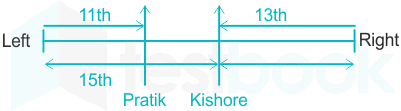
=> The total number of persons = Kishore position from left + Kishore position from right - 1
=> The total number of persons = 15 + 13 - 1 = 28 - 1 = 27
Hence, “27” person were seated in the row.