Official Paper

IBPS PO Prelims Memory Based Paper (Held On: 15 Oct, 2022 Shift 1) (Previous Year Paper)

100 questions · 60 minutes · with answers · free

English Language (30 questions)

Directions: Read the passage given below and answer the questions that follow by choosing the correct/most appropriate options: 

The “Phi Phi Island Resort” is located in Phi Phi Leh island in Thailand, between the large island of Phuket and the west Strait of Malacca coast of the mainland. Phi Phi consists of six small islands 46km south of Phuket. Fine sandy beaches give way to soaring limestone cliffs to form spectacular scenery. Add crystal clear water, a refreshing lack of roads, plus a laid-back lifestyle, and it's easy to see why Phi Phi is one of southern Thailand's most popular destinations. The islands are administratively part of Krabi province. Ko Phi Phi is the largest island of the group, and is the most populated island of the group, although the beaches of the second largest island, Ko Phi Phi Leh are visited by many people as well. The rest of the islands in the group, including Bida Nok, Bida Noi, and Bamboo Island are not much more than large limestone rocks jutting out of the sea. The Islands are reachable by speedboats or Long-tail boats most often from Krabi Town or from various piers in Phuket Province. Unlike its larger brother Ko Phi Phi, Phi Phi Leh is a virgin island - it is almost untouched by human civilization. Surrounded by sheer limestone walls dotted with caves and passages the island's shallow blue-green lagoons and coral gardens are a snorkeler’s paradise. The island also has two magnificent beaches, Loh Samah and Maya Bay. The “Phi Phi Island Resort” is an eco-friendly hotel that aims at providing excellent service without hurting the local environment. This dreamy lodging in Thailand is as environmentally friendly as it gets. The building itself is built with natural materials, such as local stone and wood. Moreover, all utilities (such as cutlery, hygiene items, towels, and kitchen utensils) are made of bio-degradable materials.

The pool is created in the local stone quarry, so that the harmony of the local landscape was not infringed upon. Since the water in the pool is replete with natural salts and minerals, there is no need for further disinfection __________ Chlorinated compounds and the pool is absolutely chemical-free. The hotel provides soaps, gels and creams, which are all natural and organic. Waste is recycled to the garden via a bio-cycle septic system, and “Phi Phi Island Resort” uses hydro-electricity from a Pelton wheel and solar power. The restaurant values locally sourced products. That’s why only locally grown vegetables and fruits along with natural sea products are served. The resort ensures that fishing and cropping don’t contravene the local equilibrium of the island. Diving and snorkelling at Phi Phi Leh Island are excellent. Many dive companies offer all-inclusive trips only in this location. And other little secluded islands are accessible from “Phi Phi Island Resort” by long-tail boats. Visitors can take advantage of the free bike rentals, free shuttle service in an electric vehicle and even a green spa, with all organic products. On the other hand, this beautiful resort combines the seclusion much sought after in Thailand with the refinement of a 4.5-star resort. Privacy is certain on 70 tranquil acres of swaying coconut palms, fragrant gardens, and a half-mile of sparkling shore overlooking the crystal Andaman Sea. Spacious and secluded bungalows conform comfortably to the natural surroundings, welcoming stunning coastal vistas and cool sea breezes. Stylish furnishings, gracious hospitality and a private 800 metres stretch of pristine white sand beach lapped by the turquoise waters of the Andaman Sea create an idyllic setting for a green and calm holiday.

1

What are the steps the resort has taken to stay eco-friendly and preserve the environment?

  1. ((a))

    They constructed the building with natural materials, such as local stone and wood and created the pool in the local stone quarry..

  2. ((b))

    The hotel provides natural and organic soaps, gels and creams to the guests.

  3. ((c))

    The resort uses hydro-electricity and solar power as energy source.

  4. ((d))

    They recycle the waste to the garden via a bio-cycle septic system.

  5. ((e))

    All of these

Show Answer
Answer: ((e))

All of these

The correct answer is 'All of these.'

Key Points

  • Let's take a look at the following sentences:
  • 'The “Phi Phi Island Resort” is an eco-friendly hotel that aims at providing excellent service without hurting the local environment. This dreamy lodging in Thailand is as environmentally friendly as it gets. The building itself is built with natural materials, such as local stone and wood.'
  • 'The pool is created in the local stone quarry, so that the harmony of local landscape was not infringed.'
  • 'The hotel provides soaps, gels and creams, which are all natural and organic.'
  • 'Waste is recycled to the garden via a bio-cycle septic system, and “Phi Phi Island Resort” uses hydro-electricity from a Pelton wheel and solar power.'
  • So, it is clear that all of the mentioned points are correct.

Hence, the correct answer is Option 5.

2

Which of the following geographical region has NOT been mentioned as a tourist spot, according to the passage?

  1. ((a))

    Blue green lagoons

  2. ((b))

    Coral gardens

  3. ((c))

    Loh Samah Beach

  4. ((d))

    Maya Bay

  5. ((e))

    Bamboo island

Show Answer
Answer: ((e))

Bamboo island

The correct answer is 'Bamboo island.'

Key Points

  • The given passage is about 'an island group near Phuket and focuses on a hotel called Phi Phi Island Resort.'
  • Let's take a look at the following lines from the passage:
  • 'Surrounded by sheer limestone walls dotted with caves and passages the island's shallow blue-green lagoons and coral gardens are a snorkeler’s paradise. The island also has two magnificent beaches, Loh Samah and Maya Bay.'
  • 'The rest of the islands in the group, including Bida Nok, Bida Noi, and Bamboo Island are not much more than large limestone rocks jutting out of the sea.'
  • From the above part of the text, we can see that Bamboo Island has been mentioned as a place not much more than large limestone rocks jutting out of the sea. Besides, there has been no further discussion about these places in the passage as places as tourist attractions.

Hence, the correct answer is Option 5.

3

What will fit in the blank taken from the passage:

"Since the water in the pool is replete with natural salts and minerals, there is no need for further disinfection _______ chlorinated compounds and the pool is absolutely chemical-free."

  1. ((a))

    for

  2. ((b))

    in

  3. ((c))

    with

  4. ((d))

    of

  5. ((e))

    against

Show Answer
Answer: ((c))

with

The correct answer is 'with'.

Key Points

  • The given passage is about 'an island group near Phuket and focuses on a hotel called Phi Phi Island Resort.'
  • By reading the paragraph so far and the sentence, we can see that the blank needs to be filled with a preposition — one that indicates the material used for a purpose.
  • For example, 'Kindly fill the bowl with water.'
  • The correct preposition in the options that can best serve the purpose is 'with.'
  • Correct sentence: "Since the water in the pool is replete with natural salts and minerals, there is no need for further disinfection with chlorinated compounds and the pool is absolutely chemical-free."

Hence, the correct answer is Option 3.

4

As per the passage, which of the following is NOT true?

  1. ((a))

    Bida Nok, Bida Noi, and Bamboo Island are not much more than large limestone rocks jutting out of the sea.

  2. ((b))

    Phuket is located 46km south of Phi Phi islands.

  3. ((c))

    The Islands can be reached by speedboats or Long-tail boats from Krabi Town or other parts in Phuket Province.

  4. ((d))

    All the conveniences in the hotel like cutlery, hygiene items, towels, and kitchen utensils are made of bio-degradable materials.

  5. ((e))

    The resort created the pool in the local stone quarry in order to avoid infringing the harmony of the local landscape.

Show Answer
Answer: ((b))

Phuket is located 46km south of Phi Phi islands.

The correct answer is 'Phuket is located 46km south of Phi Phi islands.'

Key Points

  • The given passage is about 'an island group near Phuket and focuses on a hotel called Phi Phi Island Resort.'
  • Let's take a look at the following sentences:
  • 'The rest of the islands in the group, including Bida Nok, Bida Noi, and Bamboo Island are not much more than large limestone rocks jutting out of the sea.'
  • From the above line, we can say that the following statement is correct according to the given passage:

'Bida Nok, Bida Noi, and Bamboo Island are not much more than large limestone rocks jutting out of the sea..'

  • 'Phi Phi consists of six small islands 46km south of Phuket.'
  • From the above line, we can say that the following statement is not correct according to the given passage:

'Phuket is located 46km south of Phi Phi islands.'

  • 'The Islands are reachable by speedboats or Long-tail boats most often from Krabi Town or from various piers in Phuket Province.'
  • From the above sentence, we can say that the following statement is correct according to the given passage:

'The Islands can be reached by speedboats or Long-tail boats from Krabi Town or other parts in Phuket Province.'

  • 'Moreover, all utilities (such as cutlery, hygiene items, towels, kitchen utensils) are made of bio-degradable materials.'
  • From the above sentence, we can say that the following statement is correct according to the given passage:

'All the conveniences in the hotel like cutlery, hygiene items, towels, and kitchen utensils are made of bio-degradable materials.'

  • 'The pool is created in the local stone quarry so that the harmony of the local landscape was not infringed upon.'
  • From the above sentence, we can say that the following statement is correct according to the given passage:

'The resort created the pool in the local stone quarry in order to avoid infringing the harmony of the local landscape.'

  • From the above references, we can see that except the marked option, other statements are incorrect, according to the passage.

Hence, the correct answer is Option 2.

5

Which island is the second biggest in the archipelago?

  1. ((a))

    Ko Phi Phi Leh

  2. ((b))

    Ko Phi Phi

  3. ((c))

    Bida Nok

  4. ((d))

    Bida Noi

  5. ((e))

    Bamboo Island

Show Answer
Answer: ((a))

Ko Phi Phi Leh

The correct answer is 'Ko Phi Phi Leh'.

Key Points

  • The given passage is about 'an island group near Phuket and focuses on a hotel called Phi Phi Island Resort.'
  • Let's take a look at the following lines of the passage:
  • 'Ko Phi Phi is the largest island of the group, and is the most populated island of the group, although the beaches of the second largest island, Ko Phi Phi Leh are visited by many people as well.'
  • From the above part of the text, we can see that Ko Phi Phi Leh is the second biggest island in the archipelago.

Hence, the correct answer is Option 1.

Additional Information

  • Archipelago ⇒ a group of many islands in a large body of water.
  • For example, 'They peered out of the helicopter window and found the Andaman archipelago at distance.'

Mistake Points

  • Take time to read the question carefully: it has asked the name of the second largest island and not the largest island (Ko Phi Phi).
6

Choose the synonym of the word 'idyllic.'

  1. ((a))

    desirous

  2. ((b))

    urban

  3. ((c))

    bailiwick

  4. ((d))

    bucolic

  5. ((e))

    piazza

Show Answer
Answer: ((d))

bucolic

The correct answer is 'bucolic'.

Key Points

  • The word 'idyllic' refers to an idealized place and experience that is e extremely happy, peaceful, pleasant or picturesque. It is generally used for pastoral and country life.
  • For example, 'Ronak grew up in an idyllic village in Himachal Pradesh.'
  • Let us see the word meaning and usage of the words given in the options:
  • desirous ⇒ having or characterized by desire.
  • For example, 'The Pope is desirous of peace in Europe.'
  • urban ⇒ of or in a city or town.
  • For example, 'The council headed by the PM is committed to a programme of urban regeneration.'
  • bailiwick ⇒ one's sphere of operations or area of interest.
  • For example, 'He had been commenting on matters that were, strictly speaking, outside his bailiwick.'
  • bucolic ⇒ relating to the pleasant aspects of the countryside and country life.
  • For example, 'The painting shows a typically bucolic scene with peasants.'
  • piazza ⇒ a public square or marketplace in a town.
  • For example, 'I walked through the piazza of Vatican, turning around and around in a circle, trying to take it all in.'
  • From the above discussion, we can see that the word 'bucolic' can function as a synonym for 'idyllic.'

Hence, the correct answer is Option 4.

7

Choose the synonym of the word 'contravene.'

  1. ((a))

    function

  2. ((b))

    oversee

  3. ((c))

    salvage

  4. ((d))

    breach

  5. ((e))

    trade

Show Answer
Answer: ((d))

breach

The correct answer is 'breach'.

Key Points

  • The word 'contravene' means to offend against the prohibition or order of (a law, treaty, or code of conduct).
  • For example, 'The company knew its actions contravened international law and still did it.'
  • Let us see the word meaning and usage of the words given in the options:
  • function ⇒ work or operate in a proper or particular way.
  • For example, 'You'll soon learn how the office functions.'
  • oversee ⇒ to watch or organize a job or an activity to make certain that it is being done correctly.
  • For example, 'As marketing manager, my job is to oversee all the company's advertising.'
  • salvage ⇒ rescue (a wrecked or disabled ship or its cargo) from loss at sea.
  • For example, 'After the fire, there wasn't much furniture left worth salvaging.'
  • breach ⇒ an act of breaking a law, promise, agreement, or relationship.
  • For example, 'They felt that our discussions with other companies constituted a breach in our agreement.'
  • trade ⇒ the activity of buying and selling, or exchanging, goods and services between people or countries.
  • For example, 'The company has been trading in oil for many years.'
  • From the above discussion, we can see that the word 'breach' can function as a synonym for 'contravene.'

Hence, the correct answer is Option 4.

8

Choose the antonym of the word 'conform.'

  1. ((a))

    comply

  2. ((b))

    observe

  3. ((c))

    flout

  4. ((d))

    tumble

  5. ((e))

    forebode

Show Answer
Answer: ((c))

flout

The correct answer is 'flout'.

Key Points

  • The word 'conform' means to comply with rules, standards, or laws.
  • For example, 'The hotel has been fined because their kitchen does not conform to hygiene regulations.'
  • Let us see the word meanings and usage of the words given in the options:
  • comply ⇒ in one connotation it means to fulfil or comply with.
  • For example, 'We are currently unable to comply with your request.'
  • observe ⇒ that has been stated to be true or to have happened, although this may not be the case.
  • For example, 'A tribunal must observe the principles of natural justice.'
  • flout ⇒ openly and intentionally disregard (a rule, law, or convention).
  • For example, 'Many motorcyclists flout the law by not wearing helmets.'
  • tumble ⇒ to fall quickly and without control.
  • For example, 'I lost my footing and tumbled down the stairs. That's how I turned up in the bed with a broken leg.'
  • forebode ⇒ have a presentiment of (something bad).
  • For example, 'Rishi Sunak's predictions foreboded about the unpleasant future of Britain's economy and they just proved justified.'
  • From the above discussion, we can see that the word 'flout' can function as an antonym for 'conform.'

Hence, the correct answer is Option 3.

9

Directions: Select the most appropriate word to fill in the blank.

Home Minister Shah has repeatedly promised the _______ of statehood.

  1. ((a))

    Separation

  2. ((b))

    Filtration

  3. ((c))

    Abrasion

  4. ((d))

    Restoration

  5. ((e))

    Admiration

Show Answer
Answer: ((d))

Restoration

The correct answer is 'Restoration.'

Key Points

  • The given sentence is talking about the Home Minister's promise of returning the statehood.
  • Therefore, the most appropriate word to be filled in the blank is 'Restoration'.
  • Also, the use of the word ''statehood'' in the sentence indicates the use of the word 'restoration' in the blank.
  • The word 'Restoration' means The return of something to its original condition.
  • Example: They demanded the restoration of all their lost lands.

Hence, the correct answer is option 4.

Complete Sentence: Home Minister Shah has repeatedly promised the restoration of statehood.

<br>

Additional Information

  • Let us explore  the other options:
  • Separation means The action or state of moving or being moved apart.
  • Filtration means The action or process of filtering something.
  • Abrasion means The process of scraping or wearing something away.
  • Admiration means Respect and warm approval.
10

Directions: Select the most appropriate word to fill in the blank.

To be clear, Europe still has some distance to cover to _______ these proposed rules.

  1. ((a))

    Implement

  2. ((b))

    Resentment

  3. ((c))

    Agreement

  4. ((d))

    Improvement

  5. ((e))

    Contentment

Show Answer
Answer: ((a))

Implement

The correct answer is 'Implement.'

Key Points

  • The given sentence is saying that it will take time for Europe to put the proposed rules into effect.
  • Therefore, the most appropriate word to be filled in the blank is 'Implement'.
  • Also, the use of the word ''rules'' in the sentence indicates the use of the word 'implement' in the blank.
  • The word 'Implement' means To put a decision, plan, agreement, etc. into effect.
  • Example: The government failed to implement the plan.

Hence, the correct answer is option 1.

Complete Sentence: To be clear, Europe still has some distance to cover to implement these proposed rules.

<br>

Additional Information

  • Let us explore  the other options:
  • Resentment means Bitter indignation at having been treated unfairly.
  • Agreement means Harmony or accordance in opinion or feeling.
  • Improvement means A change that makes the quality or condition of somebody or something better.
  • Contentment means A feeling of happy satisfaction.
11

Directions: Select the most appropriate word to fill in the blank.

The past year has showcased why the need for comprehensive surveillance reform is so _______.

  1. ((a))

    Urgent

  2. ((b))

    Diligent

  3. ((c))

    Cognizant

  4. ((d))

    Intelligent

  5. ((e))

    Convergent

Show Answer
Answer: ((a))

Urgent

The correct answer is 'Urgent.'

Key Points

  • The given sentence is saying that the past year has showcased the need for immediate requirements for comprehensive surveillance reform.
  • Therefore, the most appropriate word to be filled in the blank is 'Urgent'.
  • Also, the use of the word ''need'' in the sentence indicates the use of the word 'urgent' in the blank.
  • The word 'Urgent' means Requiring immediate action or attention.
  • Example: He tried desperately to convey how urgent the situation was.

Hence, the correct answer is option 1.

Complete Sentence: The past year has showcased why the need for comprehensive surveillance reform is so urgent.

<br>

Additional Information

  • Let us explore  the other options:
  • Diligent means Having or showing care and conscientiousness in one's work or duties.
  • Cognizant means Having knowledge or awareness.
  • Intelligent means Having or showing intelligence, especially of a high level.
  • Convergent means Coming closer together; converging.
12

Directions: Select the most appropriate word to fill in the blank.

It was clear that a _______ change was coming, starting in late 2016, with the passing of former AIADMK chief Jayalalithaa.

  1. ((a))

    Found

  2. ((b))

    Wound

  3. ((c))

    Bound

  4. ((d))

    Hound

  5. ((e))

    Profound

Show Answer
Answer: ((e))

Profound

The correct answer is 'Profound.'

Key Points

  • The given sentence is saying that it was clear that a very great change was coming with the passing of former AIADMK chief Jayalalithaa.
  • Therefore, the most appropriate word to be filled in the blank is 'Profound'.
  • Also, the use of the word ''change'' in the sentence indicates the use of the word 'profound' in the blank.
  • The word 'Profound' means Very great or intense.
  • Example: To achieve profound change, women must necessarily work within the existing structure.

Hence, the correct answer is option 5.
Complete Sentence: It was clear that a profound change was coming, starting in late 2016, with the passing of former AIADMK chief Jayalalithaa.

<br>

Additional Information

  • Let us explore  the other options:
  • Found means To base something on a particular principle, idea, or feeling.
  • Wound means An injury to a person's feelings or reputation.
  • Bound means A limitation or restriction on feeling or action.
  • Hound means To harass, persecute, or pursue relentlessly.
13

Fill in the blank with the correct answer from the options given below: 

It was a strange fact, however, that talent and skill, if ________ for too long, cease to dazzle.

  1. ((a))

    suspended 

  2. ((b))

    spent

  3. ((c))

    displayed 

  4. ((d))

    surrounded 

  5. ((e))

    commanded 

Show Answer
Answer: ((c))

displayed 

The correct answer is displayed

Key Points

  • In the given sentence, we need a word close to the meaning of 'exhibited' to fill in the blank.
  • Let us see the meanings of the given words:
  • Suspended: to stop something from being active, either temporarily or permanently
  • Spent: having been used and unable to be used again
  • Displayed: to show something or a collection of things in an organized way for people to see
  • Surrounded: to be everywhere around something
  • Commanded: control over someone or something and responsibility for him, her, or it
  • From the meanings of the words, we can say that 'displayed' is the most appropriate answer.
  • Therefore, the correct answer is 'displayed.'

​The complete sentence: It was a strange fact, however, that talent and skill, if displayed for too long, cease to dazzle.

14

In the following sentence, a part of the sentence is underlined. Below are given alternatives to the underlined part, which may improve the sentence. Choose the correct alternative. In case no improvement is needed, choose the alternative that indicates 'No improvement'.

Rohit and his girlfriend were able to put off their differences because they loved each other.

  1. ((a))

    Put away their differences

  2. ((b))

    Put aside their differences

  3. ((c))

    Put across their differences

  4. ((d))

    Put across there differences

  5. ((e))

    No improvement

Show Answer
Answer: ((b))

Put aside their differences

The correct answer is Option (2) i.e. Put aside their differences

Key Points

  • First, let's look at the meaning of the above phrasal verbs:
  • Put aside:  To ignore or not deal with something. 
  • Ex: Let's put aside our differences and focus on the task at hand.
  • Put off:  Delay, postpone
  • Ex: When are you going to learn to drive? You can’t keep putting it off forever!
  • Put away: Return something to its usual place
  • Ex: Arthur put away his car keys and his wallet.
  • Put across: Give opinion clearly, explain an idea well, describe articulately
  • Ex: I thought Emily put her views across on politics really well during the discussion.
  • Here, Rohit and his girlfriend were able to ignore their differences because they loved each other. Hence, Put aside is the right word to be used here.

Correct sentence: Rohit and his girlfriend were able to put aside their differences because they loved each other.

Additional Information

There vs Their

  • There: There can be used in a couple of ways. As an adverb, there is the exact opposite of the word here and means “at that place”:
  • Ex: He asked me to go there and check on his fish while he’s away.
  • Their: 'Their' is the third-person plural possessive pronoun:
  • Ex: All of those kids with their contagious laughter really made my day.
15

In the following sentence, a part of the sentence is underlined. Below are given alternatives to the underlined part, which may improve the sentence. Choose the correct alternative. In case no improvement is needed, choose the alternative that indicates 'No improvement'.

You couldn't fit a piece of paper in the storage room now—all those boxes are stacked in there cheek with jowl.

  1. ((a))

    their cheek by jowl.

  2. ((b))

    there cheek with jowling.

  3. ((c))

    there cheek by jowl.

  4. ((d))

    their cheek with jowl.

  5. ((e))

    No improvement

Show Answer
Answer: ((c))

there cheek by jowl.

The correct answer is Option (3) i.e. there cheek by jowl.

Key Points

  • The correct idiomatic expression is 'cheek by jowl’ and not ‘cheek with jowl’.
  • Cheek by jowl (Idiom): Positioned very close together. (The cheek and the jowl—the lower part of the jaw—are in close proximity to each other on the face.)
  • E.g.: They lived cheek by jowl in a one-room flat.
  • Also, There means the opposite of here; “at that place.” Their means “belongs to them.” Thus, there is to be used here.
  • Hence ‘there cheek by jowl’ should be used in place of ‘there cheek with jowl/jowling’ to make the sentence grammatically correct.

Correct sentence*: You couldn't fit a piece of paper in the storage room now—all those boxes are stacked in there cheek by jowl.*

16

Direction: A sentence/part of the sentence is emboldened. Five alternatives are given to the embolden part which will improve the sentence. Choose the correct alternative and choose the option corresponding to it. In case no improvement is needed, click the option corresponding to ‘No improvement required’.

Having understood consumer behaviour is a crucial aspect of today’s market, especially for effective marketing and branding of the products.

  1. ((a))

    Consumer understood 

  2. ((b))

    Understanding consumer 

  3. ((c))

    To understanding consumer 

  4. ((d))

    Being undertood consumer 

  5. ((e))

    No improvement required

Show Answer
Answer: ((b))

Understanding consumer 

The correct answer is Understanding consumer.

Key Points

  • In the given sentence, the emboldened part Having understood consumer is grammatically incorrect.
  • In the given sentence, the participle Having understood has been used as a subject**, which is incorrect.** Also, the given sentence is in the simple present tense.
  • The verb understand must be written as a  gerund, in its -ing form because it is a verb that is functioning as a noun in this sentence.
  • So, Understanding consumer is the correct answer. 

So, the correct sentence is, Understanding consumer behaviour is a crucial aspect of today’s market, especially for effective marketing and branding of the products.

Additional Information

  • gerund is the -ing form of a verb that functions the same as a noun.
  • For example, Running is fun. In this sentence, running is the gerund. It acts just like a noun.
  • understood is the past tense of the verb 'understand'.
17

Directions: In the following question, a sentence is given with four words marked as (A), (B), (C) and (D). These words may or may not be placed in their correct order. Four options with different arrangements of these words have been provided. Mark the option with the correct arrangement as the answer. If no rearrangement is required, mark option (5) as your answer.

Our encounter(A) with the shark was the first great befallen(B) that had danger(C) us since landing(D) on this island

  1. ((a))

    B-C

  2. ((b))

    B-D

  3. ((c))

    A-D

  4. ((d))

    A-C

  5. ((e))

    No rearrangement

Show Answer
Answer: ((a))

B-C

The correct answer is 1 i.e. B-C

Key Points

  • befallen: past participle of verb befall which means something bad happened to someone
  • great is an adjective therefore it cannot be followed by a verb
  • Because adjectives do not modify verbs
  • danger: the possibility of something unwelcome or unpleasant happening which can cause harm or injury
  • Therefore, B and C should be interchanged to make the sentence grammatically and contextually correct
  • encounter: an unexpected or casual meeting with someone or something.
  • landing: an instance of coming or bringing something to land, either from the air or from water.

Therefore, the correct sentence is,

Our encounter with the shark was the first great danger that had befallen us since landing on this island

18

Directions: In the following question, a sentence is given with four words marked as (A), (B), (C) and (D). These words may or may not be placed in their correct order. Four options with different arrangements of these words have been provided. Mark the option with the correct arrangement as the answer. If no rearrangement is required, mark option (5) as your answer.

The king palace(A) his men to catch(B) the demon, and to bring(C) it to the ordered(D)

  1. ((a))

    B-C

  2. ((b))

    A-C

  3. ((c))

    A-D

  4. ((d))

    C-D

  5. ((e))

    No rearrangement

Show Answer
Answer: ((c))

A-D

The correct option is 3 i.e. A-D

Key Points

We can look at the sentence in the following way:

The king ________ (A) his men to ________ (B) the demon, and to________ (C) it to the ________ (D)

  • palace:  a grand residence, especially a royal residence
  • 'palace' is a noun that is incorrectly used after the subject of the sentence 'king'
  • The phrase 'king palace his men' does not make any sense contextually
  • Instead, 'The king ordered his men' is a correct phrase
  • Therefore A and D should be interchanged
  • ordered

give authoritative instruction to do something.

  • catch: capture a person or animal that tries or would try to escape

.

  • bring: take or go with someone or something to a place.


Therefore, the correct sentence will be,

The king ordered his men to catch the demon and to bring it to the palace

Important Points

When solving such a question always read it first and try to understand the contextual meaning. In this sentence, we know that the King is someone who gives orders. From this, we can immediately understand that after king ordered will be the verb that should be used.

19

Directions: In the following question, a sentence is given with four words marked as (A), (B), (C) and (D). These words may or may not be placed in their correct order. Four options with different arrangements of these words have been provided. Mark the option with the correct arrangement as the answer. If no rearrangement is required, mark option (5) as your answer.

Mark spent (A) a whole day of shopping (B) with his friends and just wanted (C) to go to sleep. (D)

  1. ((a))

    D-A

  2. ((b))

    B-C

  3. ((c))

    D-C

  4. ((d))

    A-B

  5. ((e))

    No Rearrangement

Show Answer
Answer: ((e))

No Rearrangement

The correct answer is option 5 i.e. No Rearrangement.

Explanation

Let us find the meanings of some of the given words:

  • spent(adjective): having no power or energy left.
  • Shopping(noun): the action or activity of buying goods from shops.
  • Wanted(verb): had the desire to possess or do (something); wished for.
  • Sleep(noun): doze; rest.

The sentence has no errors and thus requires no rearrangement as all words have been used appropriately.

20

Directions: In the following question, a sentence is given with four words marked as (A), (B), (C) and (D). These words may or may not be placed in their correct order. Four options with different arrangements of these words have been provided. Mark the option with the correct arrangement as the answer. If no rearrangement is required, mark option (5) as your answer.

The man who exchange (A) his soul to the devil in sold (B) for immortality (C) and unending youth ended up spending (D) a very lonely life.

  1. ((a))

    C-B

  2. ((b))

    A-B

  3. ((c))

    C-D

  4. ((d))

    D-A

  5. ((e))

    No Rearrangement

Show Answer
Answer: ((b))

A-B

The correct answer is option 2 i.e. A-B

We can look at the sentence in the following way:

The man who _______(A) his soul to the devil in ________(B) for ________(C) and unending youth ended up _________(D) a very lonely life. 

Explanation:

  • Exchange: The act of giving someone something and receiving something in return. One cannot 'exchange to' somebody, one has to 'exchange with' somebody as it is 2-way system and involved more that one person's participation. We have to replace 'exchange' with a verb in the past tense.
  • Sold: Past tense of 'sell' which means 'to give or hand over something to someone in exchange of money(or something materialistic)'. The phrase "in sold for immortality" is grammatically incorrect.
  • Immortality: An ability to live forever; eternal life.
  • Spending: Present participle of 'spend' which means 'to pay for goods and services'. 

Thus, we need to interchange A and B in order to make the sentence contextually correct. 

Correct Sentence: The man who sold (A) his soul to the devil in exchange (B) for immortality (C) and unending youth ended up spending (D) a very lonely life.

21

Directions: In the following question, a sentence is given with four words marked as (A), (B), (C) and (D). These words may or may not be placed in their correct order. Four options with different arrangements of these words have been provided. Mark the option with the correct arrangement as the answer. If no rearrangement is required, mark option (5) as your answer.

A case was proven (A) in the high court after it was filed (B) that the zoo was hitting (C) and underfeeding (D) the animals.

  1. ((a))

    A-C

  2. ((b))

    B-A

  3. ((c))

    C-D

  4. ((d))

    D-A

  5. ((e))

    No Rearrangement

Show Answer
Answer: ((b))

B-A

The correct answer is option 2 i.e. B-A

We can look at the sentence in the following way:

A case was ________(A) in the high court after it was ________(B) that the zoo was ________(C) and ________(D) the animals. 

Key Points

  • Proven: Past participle of 'prove' which means 'to demonstrate the truth of something through argument'. In a normal court case, the documents and legal papers need to be filed first in order for the case to reach the court and then be proven right or wrong. Thus it cannot be 'proven' before it is 'filed'.
  • Filed: Past tense of 'file' which means 'to submit a document on record with the appropriate authority'. The papers in a court cased need to be 'filed' before they are presented before a judge/jury and 'proven' as correct or incorrect.
  • Hitting: Present participle of 'hit' which means to bring one's tool or hand into contact with someone forcefully with an intention to hurt them.
  • Underfeeding: The practice of not feeding a person or an animal enough. 

Thus, we need to interchange B and A in order to make it contextually correct. 

Logic and basic general knowledge will help the reader understand the chronological order of how things happen and so even if the sentence is grammatically and semantically correct, they can identify the errors. 

Correct Sentence: A case was filed (A) in the high court after it was proven (B) that the zoo was hitting (C) and underfeeding (D) the animals.

22

Directions: In each of the questions below, four sentences are given which may or may not contain an error. Choose the one that is grammatically as well as contextually correct and meaningful. If all the sentences are correct, mark 'All are correct' as your answer.

  1. ((a))

    In the past three decades 500 millions people have moved from the countryside into towns, the biggest such migration in human history.

  2. ((b))

    The last of three prisoners who absconded from an open jail have been arrested.

  3. ((c))

    Economic globalization provides one powerful example that will concern us throughout this book.

  4. ((d))

    The disintegration of the Soviet Union deprived western intelligence agencies of there main enemies.

  5. ((e))

    All correct

Show Answer
Answer: ((c))

Economic globalization provides one powerful example that will concern us throughout this book.

The correct answer is '3' i.e. sentence given is grammatically and contextually correct.

Key Points

  • Let's see the sentences grammatically-
  • In Option 1, the usage of 'millions' is incorrect Instead, use 'million'
  • According to grammar, whenever a noun modifier is written with the noun it modifies then don't write a noun modifier in a plural form.
  • In the given sentence, the noun modifier is '500 million' and the noun it modifies is 'people' hence 'million' should be in the singular form.
  • So the correct sentence is- In the past three decades 500 million people have moved from the countryside into towns, the biggest such migration in human history.
  • In Option 2, the usage of 'have' is incorrect Instead, use 'has'
  • According to grammar, whenever the subject is singular use a singular verb for it.
  • In the given sentence, the subject is 'last' here last is not an adjective it is a noun because it is written with the definite article also, it is in a singular state hence use a singular verb which is 'has'
  • So the correct sentence is- The last of three prisoners who absconded from an open jail has been arrested.
  • In Option 4, the usage of 'there' is incorrect Instead, use 'their'
  • According to grammar, 'their' is a possessive adjective, and 'there' is an adverb of place.
  • In the given sentence, we need a possessive adjective for the noun 'agencies' Hence use 'their'
  • So the correct sentence is- The disintegration of the Soviet Union deprived western intelligence agencies of their main enemies.
  • The sentence given in the option 3 is grammatically and contextually correct there is no error.
  • So the correct answer is 'Option 3' 

23

Directions: In each of the questions below, four sentences are given which may or may not contain an error. Choose the one that is grammatically as well as contextually correct and meaningful. If all the sentences are correct, mark 'All are correct' as your answer.

  1. ((a))

    The government has already offered to give a undertaking that MSP would not be withdrawn.

  2. ((b))

    The latest Reserve Bank of India (RBI) monthly bulletin contain a timely paper calling for heightened fiscal support for broad-based economic recovery. 

  3. ((c))

    Brexit is bad for globalization, beside being corrosive for the UK’s unity. 

  4. ((d))

    There are various websites promoting stamp duty mitigation schemes.

  5. ((e))

    All are Correct.

Show Answer
Answer: ((d))

There are various websites promoting stamp duty mitigation schemes.

The correct answer is '4' i.e. sentence in option 4 is grammatically and meaningfully correct.

Key Points

  • Let's see the grammatical errors in the sentences-
  • In Option 1, the usage of 'a' is incorrect Instead, use 'an'
  • The article 'a' is used with the words that have consonant sounds whereas, the article 'an' is used with the words that have vowel sounds.
  • Hence, in the sentence, the word 'undertaking' has a vowel sound so use the indefinite article 'an'
  • So the correct sentence is- The government has already offered to give an undertaking that MSP would not be withdrawn.
  • In Option 2, the usage of 'contain' is incorrect Instead, use 'contains'
  • According to the rule of subject-verb agreement, Whenever the subject is singular we have to use a singular verb for it.
  • In the given sentence, the subject is 'bulletin' which is singular hence use a singular verb i.e. 'contains'
  • So the correct sentence is- The latest Reserve Bank of India (RBI) monthly bulletin contains a timely paper calling for heightened fiscal support for broad-based economic recovery.
  • In Option 3, the usage of 'beside' is incorrect Instead, use 'besides'
  • 'Beside' is a preposition that means 'at the side of or next to' and 'Besides' is a preposition that means 'in addition to and apart from'
  • So the correct sentence is- Brexit is bad for globalization, besides being corrosive for the UK’s unity.
  • Hence, according to this, the correct answer is 'Option 4' because in this sentence there is no grammatical error.
24

Directions: In each of the questions below, four sentences are given which may or may not contain an error. Choose the one that is grammatically as well as contextually correct and meaningful. If all the sentences are correct, mark 'All are correct' as your answer.

  1. ((a))

    The deadliest cyclone in the history of the southern Africa hit Mozambique, before surging inland to Zimbabwe and Malawi. 

  2. ((b))

    More than a third of local authorities in the UK has areas where the level of particulate matter 2.5 exceeds World Health Organization limits

  3. ((c))

    If the government were to bring forward plans for a green recovery, Labor would support them

  4. ((d))

    In recent months, the UK public has demonstrated its capacity to respond positively and responsible when they understand the risks posed to them by an invisible threat that demands collective action.

  5. ((e))

    All are correct

Show Answer
Answer: ((c))

If the government were to bring forward plans for a green recovery, Labor would support them

The correct answer is '3' i.e. the sentence given is grammatically and contextually correct.

Key Points

  • Let's see the sentences grammatically-
  • In Option 1, the usage of 'the' is incorrect Omit 'the' before 'southern'
  • According to grammar, 'southern' is an adjective and 'Africa' is a noun which is a proper noun hence according to the structure of attributive adjective 'A/An/The + Adjective + Noun' In this structure, we use the article for the nouns hence in the given sentence the noun is a proper hence don't use an article with it.
  • So the correct sentence is- The deadliest cyclone in the history of southern Africa hit Mozambique, before surging inland to Zimbabwe and Malawi.
  • In Option 2, the usage of 'has' is incorrect Instead, use 'have'
  • ​According to grammar, whenever we use 'a third of + noun' we use a verb according to the noun because, in this 'a third of' acts as a quantifier hence, the verb should be according to the noun which is quantified. Here the noun is 'authorities' which is in a plural form hence use a plural verb.
  • So the correct sentence is- More than a third of local authorities in the UK have areas where the level of particulate matter 2.5 exceeds World Health Organization limits
  • In Option 4, the usage of 'responsible' is incorrect Instead, use 'responsibly'
  • According to grammar, whenever two same types of nouns/adjectives/verbs/adverbs are joined with the conjunction 'and' use them in the same degree.
  • Here, In the sentence, 'positively' is an adverb hence an adverb after the conjunction which is 'responsibly'. We can't change 'positively' into 'positive' because we need to write an adverb and the reply to how? The UK public respond 'how?' 'positively and responsibly'
  • So the correct sentence is- In recent months, the UK public has demonstrated its capacity to respond positively and responsibly when they understand the risks posed to them by an invisible threat that demands collective action.
  • The sentence in Option 3 is grammatically and contextually correct and it is the correct answer.
25

Select the most appropriate sentence with respect to grammar and usage.

  1. ((a))

    A third of global food production will at risk by the end of the century if greenhouse gas emissions continue to rise.

  2. ((b))

    Corals are tiny animals that have mouths surrounded by tentacles for capturing food. 

  3. ((c))

    Green recovery bonds would offered good quality jobs for younger generations.

  4. ((d))

    Sunflower sea stars can grows as big as a bicycle wheel and have about 20 legs.

  5. ((e))

    None of these

Show Answer
Answer: ((b))

Corals are tiny animals that have mouths surrounded by tentacles for capturing food. 

The correct answer is Corals are tiny animals that have mouths surrounded by tentacles for capturing food

<br>

Key Points       

The sentence 'Corals are tiny animals that have mouths surrounded by tentacles for capturing food.' is grammatically correct.

  • 'Corals' is a plural noun and that is why the plural verbs 'are' and 'have' are used here.
  • The prepositions 'by' and 'for' are also appropriate for the sentence.
  • The past participle form 'surrounded' is used here because 'passive voice' is used in this sentence.
  • Hence, the sentence is grammatically correct.
  • The corrected form of the other sentences are:
  • | Option | Grammatical 
    mistake | Corrected
    sentence | | --- | --- | --- | | 1 | 'be' should be added after the word 'will'. | A third of global food production will be at risk by the end of the century if greenhouse gas emissions continue to rise. | | 3 | The word 'offered' should be replaced with 'offer'. | Green recovery bonds would offer good quality jobs for younger generations. | | 4 | The word 'grows' should be replaced with 'grow'. | Sunflower sea stars can grow as big as a bicycle wheel and have about 20 legs. |


  • Hence, option 2) is the answer.
<br>

Additional Information  

  • Emissions: discharge or release

Directions: Rearrange the following five sentences (A), (B), (C), (D), and (E) in the proper sequence to form a meaningful paragraph, then answer the questions below them.

A. The Government of India announced plans to implement it for the rest of the country in 2021, but it has not yet been implemented.

B. Its purpose is to document all the legal citizens of India so that the illegal immigrants can be identified and deported.

C. It appears that the ruling BJP doesn't want to implement the final NRC as the numbers don't suit its political orientation.

D. The National Register of Citizens (NRC) is a register of all Indian citizens whose creation is mandated by the 2003 amendment of the Citizenship Act, 1955.

E. It has been implemented for the state of Assam starting in 2013–2014.

26

Which of these should be the SECOND sentence after rearrangement?

  1. ((a))

    E

  2. ((b))

    A

  3. ((c))

    C

  4. ((d))

    D

  5. ((e))

    B

Show Answer
Answer: ((e))

B

The correct answer is 'B.'

Key Points

  • The correct sequence of the segments after rearrangement is DBEAC.
  • The sentence 'D' is independent of any other sentence as it is giving general information or explaining "The National Register of Citizens (NRC)". Hence, 'D' is the first part.
  • Sentence B will come after D as it explains the purpose of the NRC i.e. to document all the legal citizens of India.
  • Sentence E will come after B as it informs us where the NRC has been implemented in India yet.
  • Sentence A will come after E as it is giving information on the plan of the government to implement the NRC all over India.
  • The sentence 'C' is the concluding or final part as it explains the reason behind the government not implementing the final NRC yet.
<br>

Hence, the correct answer is option 5.
Paragraph after rearranging the sentences: The National Register of Citizens (NRC) is a register of all Indian citizens whose creation is mandated by the 2003 amendment of the Citizenship Act, 1955. Its purpose is to document all the legal citizens of India so that the illegal immigrants can be identified and deported. It has been implemented for the state of Assam starting in 2013–2014. The Government of India announced plans to implement it for the rest of the country in 2021, but it has not yet been implemented. It appears that the ruling BJP doesn't want to implement the final NRC as the numbers don't suit its political orientation.

Hint

  • Important Rules to Solve the Para Jumbles:
  • Read the sentences attentively and try to comprehend the idea or theme of the sentence and eliminate the irrelevant options.
  • Try to identify the opening (independent sentence) and closing sentences (concluding sentence).
  • Try to identify the mandatory pairs. Two sentences can be connected through various connectors and other determinants.
27

Which of these should be the FIFTH sentence after rearrangement?

  1. ((a))

    D

  2. ((b))

    C

  3. ((c))

    A

  4. ((d))

    B

  5. ((e))

    E

Show Answer
Answer: ((b))

C

The correct answer is 'C.'

Key Points

  • The correct sequence of the segments after rearrangement is DBEAC.
  • The sentence 'D' is independent of any other sentence as it is giving general information or explaining "The National Register of Citizens (NRC)". Hence, 'D' is the first part.
  • Sentence B will come after D as it explains the purpose of the NRC i.e. to document all the legal citizens of India.
  • Sentence E will come after B as it informs us where the NRC has been implemented in India yet.
  • Sentence A will come after E as it is giving information on the plan of the government to implement the NRC all over India.
  • The sentence 'C' is the concluding or final part as it explains the reason behind the government not implementing the final NRC yet.
<br>

Hence, the correct answer is option 2.

Paragraph after rearranging the sentences: The National Register of Citizens (NRC) is a register of all Indian citizens whose creation is mandated by the 2003 amendment of the Citizenship Act, 1955. Its purpose is to document all the legal citizens of India so that the illegal immigrants can be identified and deported. It has been implemented for the state of Assam starting in 2013–2014. The Government of India announced plans to implement it for the rest of the country in 2021, but it has not yet been implemented. It appears that the ruling BJP doesn't want to implement the final NRC as the numbers don't suit its political orientation.

28

Which of these should be the FOURTH sentence after rearrangement?

  1. ((a))

    A

  2. ((b))

    B

  3. ((c))

    E

  4. ((d))

    C

  5. ((e))

    D

Show Answer
Answer: ((a))

A

The correct answer is 'A.'

Key Points

  • The correct sequence of the segments after rearrangement is DBEAC.
  • The sentence 'D' is independent of any other sentence as it is giving general information or explaining "The National Register of Citizens (NRC)". Hence, 'D' is the first part.
  • Sentence B will come after D as it explains the purpose of the NRC i.e. to document all the legal citizens of India.
  • Sentence E will come after B as it informs us where the NRC has been implemented in India yet.
  • Sentence A will come after E as it is giving information on the plan of the government to implement the NRC all over India.
  • The sentence 'C' is the concluding or final part as it explains the reason behind the government not implementing the final NRC yet.
<br>

Hence, the correct answer is option 1.

Paragraph after rearranging the sentences: The National Register of Citizens (NRC) is a register of all Indian citizens whose creation is mandated by the 2003 amendment of the Citizenship Act, 1955. Its purpose is to document all the legal citizens of India so that the illegal immigrants can be identified and deported. It has been implemented for the state of Assam starting in 2013–2014. The Government of India announced plans to implement it for the rest of the country in 2021, but it has not yet been implemented. It appears that the ruling BJP doesn't want to implement the final NRC as the numbers don't suit its political orientation.

29

Which of these should be the THIRD sentence after rearrangement?

  1. ((a))

    B

  2. ((b))

    D

  3. ((c))

    C

  4. ((d))

    E

  5. ((e))

    A

Show Answer
Answer: ((d))

E

The correct answer is 'E.'

Key Points

  • The correct sequence of the segments after rearrangement is DBEAC.
  • The sentence 'D' is independent of any other sentence as it is giving general information or explaining "The National Register of Citizens (NRC)". Hence, 'D' is the first part.
  • Sentence B will come after D as it explains the purpose of the NRC i.e. to document all the legal citizens of India.
  • Sentence E will come after B as it informs us where the NRC has been implemented in India yet.
  • Sentence A will come after E as it is giving information on the plan of the government to implement the NRC all over India.
  • The sentence 'C' is the concluding or final part as it explains the reason behind the government not implementing the final NRC yet.
<br>

Hence, the correct answer is option 4.

Paragraph after rearranging the sentences: The National Register of Citizens (NRC) is a register of all Indian citizens whose creation is mandated by the 2003 amendment of the Citizenship Act, 1955. Its purpose is to document all the legal citizens of India so that the illegal immigrants can be identified and deported. It has been implemented for the state of Assam starting in 2013–2014. The Government of India announced plans to implement it for the rest of the country in 2021, but it has not yet been implemented. It appears that the ruling BJP doesn't want to implement the final NRC as the numbers don't suit its political orientation.

30

Which of these should be the FIRST sentence after rearrangement?

  1. ((a))

    E

  2. ((b))

    B

  3. ((c))

    D

  4. ((d))

    C

  5. ((e))

    A

Show Answer
Answer: ((c))

D

The correct answer is 'D.'

Key Points

  • The correct sequence of the segments after rearrangement is DBEAC.
  • The sentence 'D' is independent of any other sentence as it is giving general information or explaining "The National Register of Citizens (NRC)". Hence, 'D' is the first part.
  • Sentence B will come after D as it explains the purpose of the NRC i.e. to document all the legal citizens of India.
  • Sentence E will come after B as it informs us where the NRC has been implemented in India yet.
  • Sentence A will come after E as it is giving information on the plan of the government to implement the NRC all over India.
  • The sentence 'C' is the concluding or final part as it explains the reason behind the government not implementing the final NRC yet.
<br>

Hence, the correct answer is option 3.

Paragraph after rearranging the sentences: The National Register of Citizens (NRC) is a register of all Indian citizens whose creation is mandated by the 2003 amendment of the Citizenship Act, 1955. Its purpose is to document all the legal citizens of India so that the illegal immigrants can be identified and deported. It has been implemented for the state of Assam starting in 2013–2014. The Government of India announced plans to implement it for the rest of the country in 2021, but it has not yet been implemented. It appears that the ruling BJP doesn't want to implement the final NRC as the numbers don't suit its political orientation.

Numerical Ability (35 questions)

Directions: Read the table carefully and answer the questions given below,

The table given below shows the number of Registered votes and invalid votes in two different blocks A and B

AB
Registered VotesValid VotesRegistered VotesValid Votes
20151400120018001500
2016100080022001800
2017120095024002200
31

Find the average number of invalid votes in Block B. 

  1. ((a))

    250

  2. ((b))

    350

  3. ((c))

    400

  4. ((d))

    300

  5. ((e))

    450

Show Answer
Answer: ((d))

300

Invalid vote in block B are 

⇒ 300+400+200

⇒ 900

⇒ 900/3

⇒ 300

Hence 300 is the correct answer.

32

What will be the ratio of total number of invalid votes in Block A in 2015 to the total number of Invalid votes in Block B in 2016?

  1. ((a))

    1 : 3

  2. ((b))

    3 : 2

  3. ((c))

    1 : 1

  4. ((d))

    1 : 5

  5. ((e))

    1 : 2

Show Answer
Answer: ((e))

1 : 2

Invalid vote in Block A in 2015 is 1400 - 1200 = 200

Invalid vote in Block B in 2016 is 2200 - 1800 = 400

Ratio of these invalid votes in respective years = 200 : 400

⇒ 1 : 2

Hence 1 : 2 is the correct answer.

33

Total number of invalid votes in Block B in 2015 is how much percent more than the total number of invalid votes in Block A in 2017?

  1. ((a))

    33.33%

  2. ((b))

    20%

  3. ((c))

    10%

  4. ((d))

    25%

  5. ((e))

    12.5%

Show Answer
Answer: ((b))

20%

B invalid in 2015 is 1800 - 1500 = 300

A invalid in 2017 is 1200 - 950 = 250

⇒ (300 - 250 ) = 50

⇒ (50 / 250 )× 100

⇒ 20%

Hence 20% is the correct answer

34

Which of the following statement is true according to the given table?

  1. Average number of valid votes in block A is 210.
  2. Total number of Invalid votes in Block A in 2016 is equal to the total number of invalid votes in Block B in 2017.
  3. Total number of Registered votes in Block A is 56.25% of the total number of registered votes in Block B.
  1. ((a))

    Only 2

  2. ((b))

    Both 1 and 2

  3. ((c))

    Both 2 and 3

  4. ((d))

    1, 2 and 3

  5. ((e))

    Only 3

Show Answer
Answer: ((c))

Both 2 and 3

  1. Valid vote in block A is 

   ⇒ 1200+ 800 + 950

   ⇒ 2950/3 = 983.33

   Hence statement 1 is wrong 

  1. invalid vote in Block A 2016 is 1000-800 =200

    Invalid vote in Block B 2017 is 2400- 2200 = 200

    hence this statement is correct 

  1. Registered vote in A block = 3600

    Registered vote in B block = 6400

     ⇒ (3600 / 6400 )× 100

     ⇒ 56.25% 

     Hence statement 3 is also correct.

35

What is the difference between total number of valid votes in Block A in 2015 and 2017 together to the total number of registered votes in Block B in the same year? 

  1. ((a))

    1950

  2. ((b))

    2150

  3. ((c))

    2050

  4. ((d))

    2250

  5. ((e))

    2300

Show Answer
Answer: ((c))

2050

Valid vote block A in 2015 and 2017 is 

⇒ 1200 + 950 = 2150

Total registered vote in block B in 2015 and 2017 is 

⇒ 1800 + 2400 = 4200

Difference = 4200 - 2150

⇒ 2050

Hence 2050 is the correct answer.

36

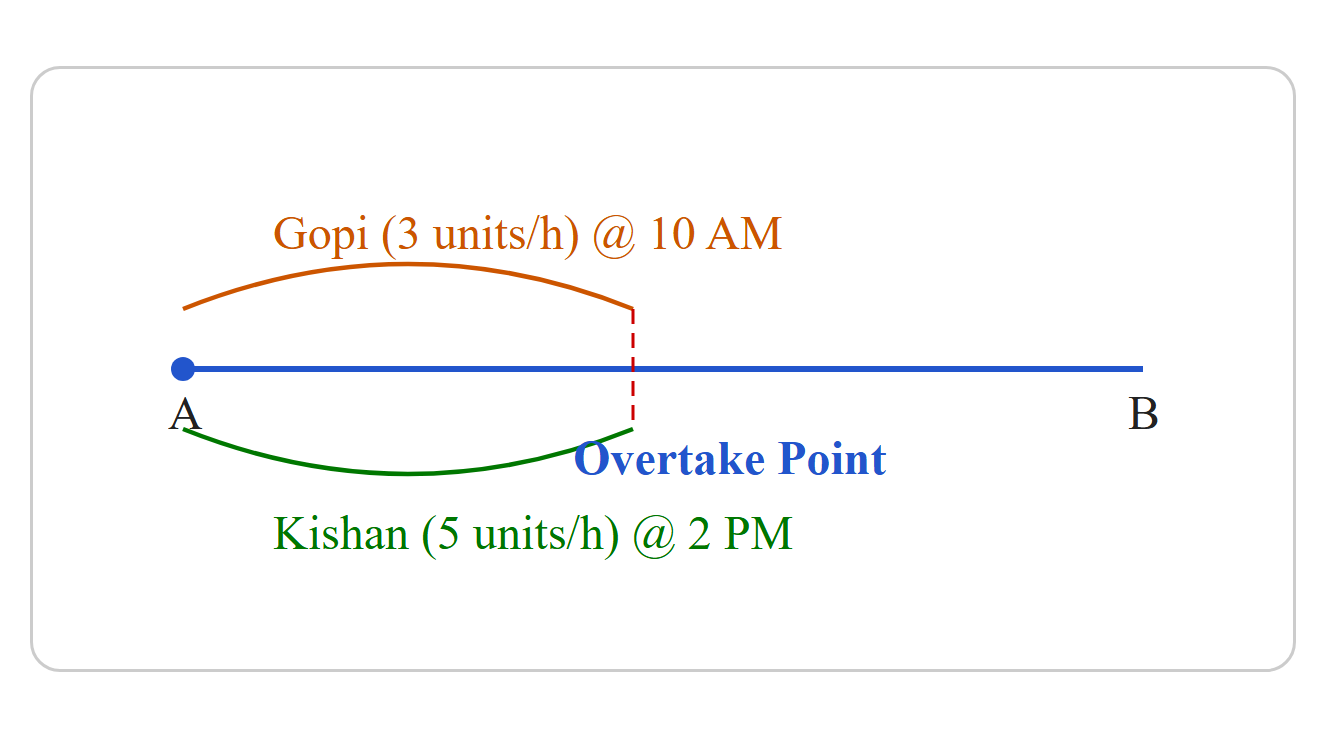
Gopi and Kishan travel from A to B and the ratio of their speed is 3 ∶ 5. Gopi starts at 10:00 A.M. and Kishan starts at 2:00 P.M. then, find at what time Kishan will overtake Gopi.

  1. ((a))

    7:00 P.M.

  2. ((b))

    7:00 A.M.

  3. ((c))

    8:00 P.M.

  4. ((d))

    8:00 A.M.

  5. ((e))

    None of these

Show Answer
Answer: ((c))

8:00 P.M.

Shortcut Trick

Gopi starts 4 hours before Kishan (10:00 A.M. to 2:00 P.M.).

Initial distance gap = Speed of Gopi × Time lead = 3 × 4 = 12 units.

Relative speed (same direction) = 5 − 3 = 2 units/hr.

Time to overtake = Distance gap ÷ Relative speed = 12 ÷ 2 = 6 hours.

Overtaking time = 2:00 P.M. + 6 hours = 8:00 P.M.

∴ The correct answer is 8:00 P.M.

Alternate Method

Given:

Speed of Gopi (SG) = 3x, Speed of Kishan (SK) = 5x.

Time difference = 2:00 P.M. − 10:00 A.M. = 4 hours.

Formula Used:

Distance = Speed × Time | Relative Speed = S2 − S1 (Same direction)

Calculations:

⇒ Distance covered by Gopi in 4 hours = 3x × 4 = 12x.

⇒ Relative speed = 5x − 3x = 2x.

⇒ Time required to cover the gap = 12x ÷ 2x = 6 hours.

⇒ Meeting time = Kishan's starting time + 6 hours.

⇒ Meeting time = 2:00 P.M. + 6 hours = 8:00 P.M.

∴ The correct answer is 8:00 P.M.

Additional Information

Relative Speed Concept

When two objects move in the same direction, relative speed is the difference of their speeds (S1 − S2). When they move in opposite directions, it is the sum (S1 + S2).

Meeting Time Formula

Meeting Time = [Initial Distance Gap] ÷ [Relative Speed]. This is applied from the moment the second person starts moving.

Proportionality of Speed and Time

For a constant distance, Speed is inversely proportional to Time (S1/S2 = T2/T1).

37

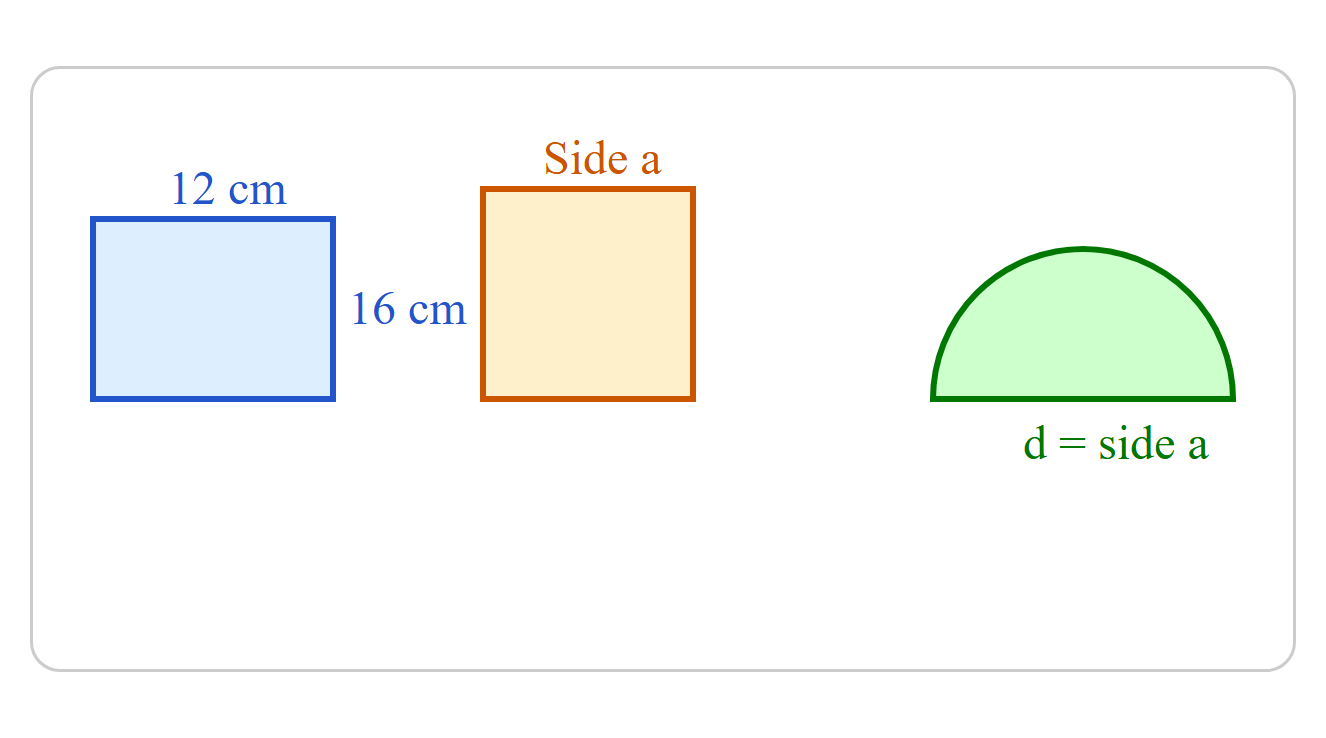
The perimeter of a rectangle of length 12 cm and breadth 16 cm is equal to the perimeter of a square and the diameter of a semi-circle is equal to the side of the square, then find the perimeter of the semi-circle.

  1. ((a))

    20 cm

  2. ((b))

    25 cm

  3. ((c))

    38 cm

  4. ((d))

    36 cm

  5. ((e))

    None of these

Show Answer
Answer: ((d))

36 cm

Shortcut Trick

Perimeter of Rectangle = 2 × (12 + 16) = 56 cm.

Side of Square = 56 ÷ 4 = 14 cm.

Radius of Semi-circle (r) = Side ÷ 2 = 14 ÷ 2 = 7 cm.

Perimeter of Semi-circle = (π + 2)r = (22/7 + 2) × 7 = 36 cm.

∴ The correct answer is 36 cm.

Alternate Method

Given: Length (L) = 12 cm, Breadth (B) = 16 cm.

Formulas: Perimeter of Rectangle = 2(L + B); Perimeter of Square = 4 × Side; Perimeter of Semi-circle = πr + 2r.

Perimeter of Rectangle = 2(12 + 16) = 2(28) = 56 cm.

Perimeter of Square = 4 × Side = 56 cm.

Side of Square = 56 ÷ 4 = 14 cm.

Diameter of Semi-circle (d) = Side of Square = 14 cm.

Radius of Semi-circle (r) = 14 ÷ 2 = 7 cm.

Perimeter of Semi-circle = (π × 7) + (2 × 7) = (22/7 × 7) + 14 = 22 + 14 = 36 cm.

∴ The correct answer is 36 cm.

Additional Information

Perimeter of Semi-circle

The boundary of a semi-circle consists of the curved arc (πr) and the straight diameter (2r). Perimeter = πr + 2r = r(π + 2).

Area of Semi-circle

The area of a semi-circle is exactly half the area of a full circle: Area = (1/2)πr2.

Properties of Square and Rectangle

For a given perimeter, a square encloses a larger area than a rectangle of any other dimensions.

38

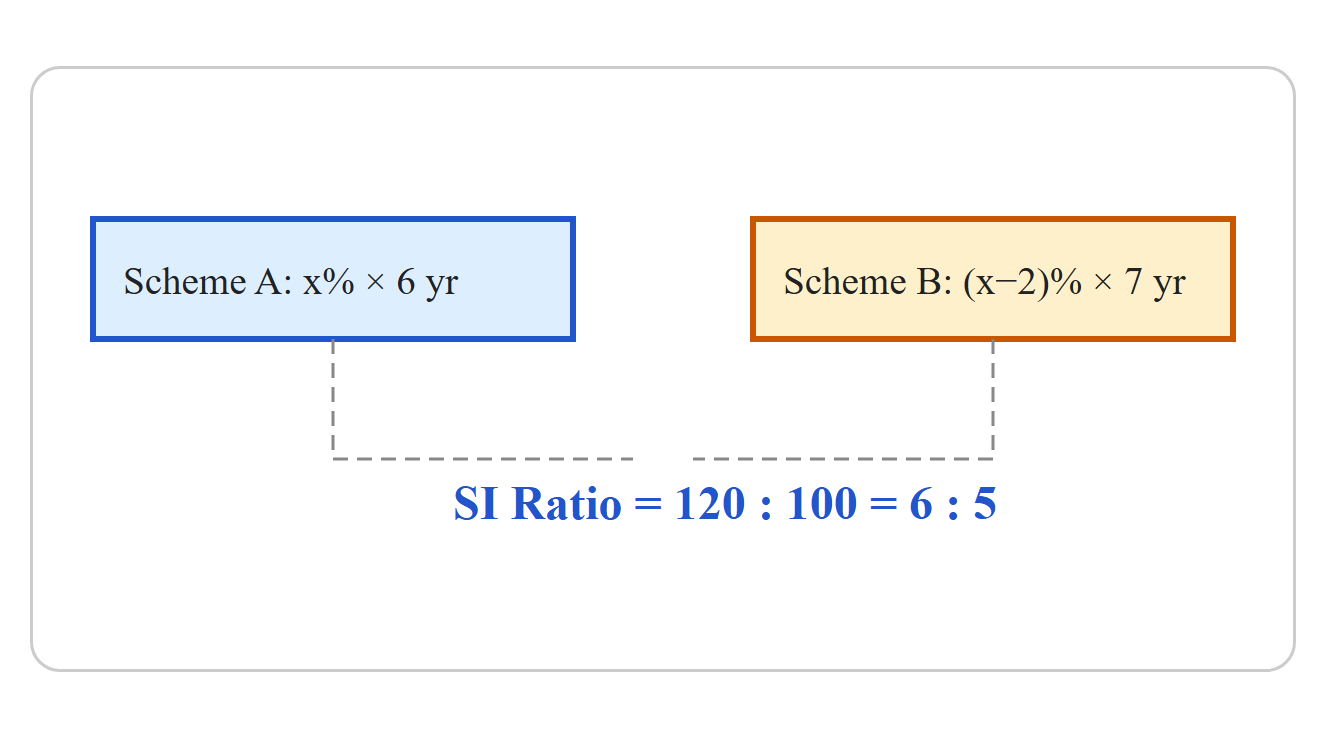
Arun invested in Rs 20,000 in scheme A which offers simple interest at x% per annum for 6 years and Bhavesh invested same amount in scheme B at (x - 2)% per annum for 7 years. If the simple interest received in scheme A is 20% more then in scheme B, then find the value of ‘x’.

  1. ((a))

    14%

  2. ((b))

    7%

  3. ((c))

    15%

  4. ((d))

    12%

  5. ((e))

    20%

Show Answer
Answer: ((b))

7%

Shortcut Trick

Since the Principal is same, SI is directly proportional to Rate × Time.

SIA : SIB = 120 : 100 = 6 : 5

(x × 6) / ((x − 2) × 7) = 6 / 5

5x = 7x − 14 ⇒ 2x = 14 ⇒ x = 7

∴ The correct answer is 7%.

Alternate Method

Given: Principal (P) = ₹20,000 for both. Scheme A: Rate = x%, Time = 6 years. Scheme B: Rate = (x − 2)%, Time = 7 years. SIA = 1.2 × SIB.

Formula Used: Simple Interest (SI) = (P × R × T) / 100

⇒ SIA = (20000 × x × 6) / 100 = 1200x

⇒ SIB = (20000 × (x − 2) × 7) / 100 = 1400(x − 2)

⇒ According to question: 1200x = 1.2 × 1400(x − 2)

⇒ 1200x = 1680(x − 2)

⇒ 120x = 168x − 336

⇒ 48x = 336

⇒ x = 336 / 48 = 7

∴ The correct answer is 7%.

Additional Information

Simple Interest Relationship

When the Principal is constant, the ratio of Simple Interest for two cases is equal to the ratio of the product of their respective Rates and Time periods (R1T1 : R2T2).

Effective Rate of Interest

The total interest percentage earned over T years at R% per annum is calculated as (R × T)%. This is often called the Net Effective SI percentage.

39

A invested Rs. x in scheme earning compound interest at 20% per annum for 2 years while B invested Rs. 2x in the same scheme earning simple interest at 10% per annum for 3 years. The difference between the interests earned in the scheme is Rs. 2400. Find the value of ‘x’. 

  1. ((a))

    Rs. 15,000

  2. ((b))

    Rs. 20,000

  3. ((c))

    Rs. 25,000

  4. ((d))

    Rs. 40,000

  5. ((e))

    Rs. 30,000

Show Answer
Answer: ((a))

Rs. 15,000

Let the scheme have x rupees invested in CI for 2 years at 20% per annum 

Overall rate of interest is = 20 + 20 + 20× 20/100

⇒ 20+20+4 = 44% 

Interest is 44X %

Scheme B is invested at 2x in SI for 3 years at 10% per annum 

overall rate of interest is 3×10= 30%

⇒ 30X × 2 = 60x% 

Then required difference is = 60X% - 44X% = 16X% 

⇒ 16X % =Rs 2400

⇒ X = Rs 15000

Hence Rs 15000 is the correct answer

40

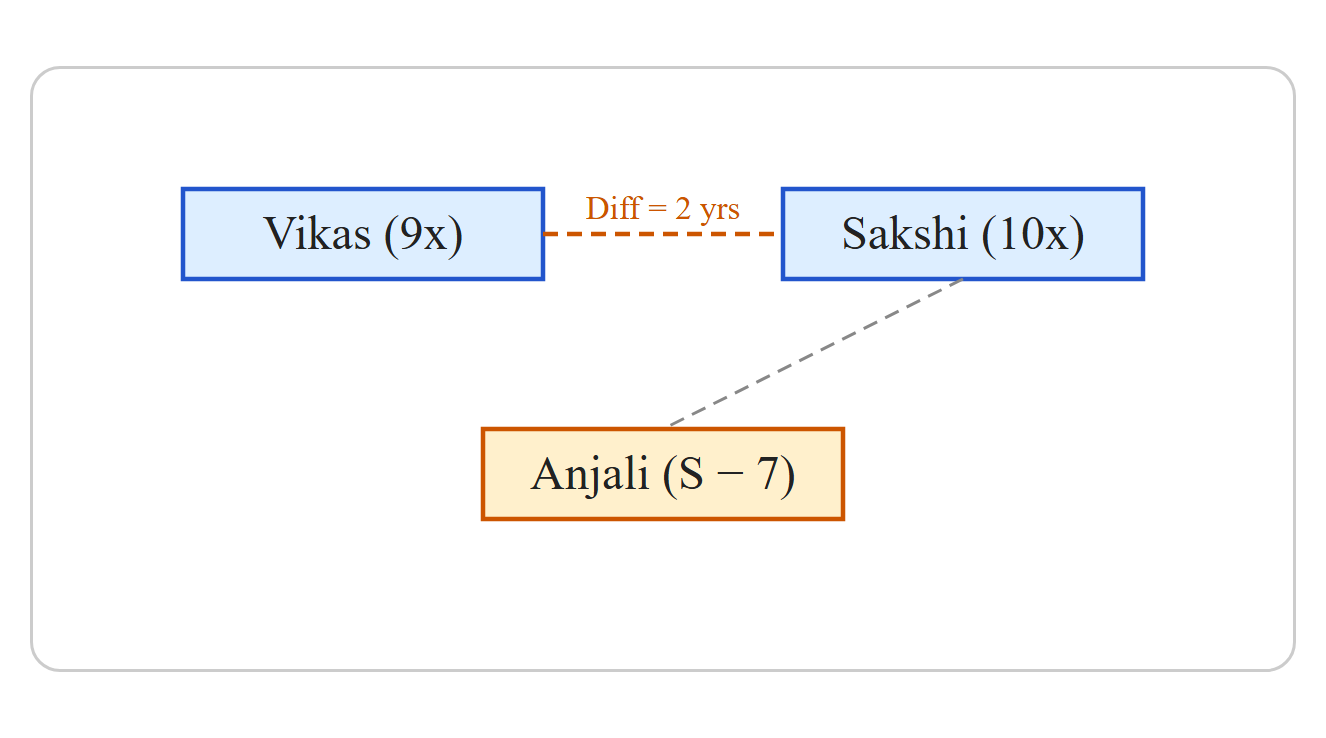
The age of vikas is 5 years more than that of Anjali. Anjali is 7 years younger than Sakshi. If the ratio of Ages of Vikas and Sakshi is 9: 10, find the age of Anjali.

  1. ((a))

    11 years

  2. ((b))

    15 years

  3. ((c))

    13 years

  4. ((d))

    18 years

  5. ((e))

    9 years

Show Answer
Answer: ((c))

13 years

Shortcut Trick

Let Sakshi age be S. Then Anjali = S − 7 and Vikas = (S − 7) + 5 = S − 2.

Ratio Vikas : Sakshi = (S − 2) : S = 9 : 10.

Difference in ratio parts = 10 − 9 = 1 unit. Difference in actual age = S − (S − 2) = 2 years.

1 unit = 2 years ⇒ Sakshi = 10 × 2 = 20 years.

Anjali age = 20 − 7 = 13 years.

∴ The correct answer is 13 years.

Alternate Method

Given:

Vikas = Anjali + 5

Anjali = Sakshi − 7

Vikas : Sakshi = 9 : 10

Calculations:

⇒ Let Sakshi = 10x and Vikas = 9x.

Anjali = Sakshi − 7 = 10x − 7.

Vikas = Anjali + 5 = (10x − 7) + 5 = 10x − 2.

⇒ Equating Vikas: 9x = 10x − 2

⇒ x = 2.

Sakshi age = 10 × 2 = 20 years.

Anjali age = 20 − 7 = 13 years.

∴ The correct answer is 13 years.

Additional Information

Ratio and Proportions in Ages

If the ratio of ages is a:b and the numerical difference is D, then the ages are [a × D/(b−a)] and [b × D/(b−a)].

Age Gap Consistency

The difference between the ages of two persons remains constant regardless of the number of years passed or preceding.

41

In the given question, two equations numbered l and II are given. Solve both the equations and mark the appropriate answer.

I. x2 + 15x + 56 = 0

II. y2 + 7y + 12 = 0

  1. ((a))

    x > y

  2. ((b))

    x < y

  3. ((c))

    x ≥ y

  4. ((d))

    x ≤ y

  5. ((e))

    x = y or relationship between x and y cannot be established.

Show Answer
Answer: ((b))

x < y

I. x2 + 15x + 56 = 0

⇒ x2 + 7x + 8x + 56 = 0

⇒ x(x + 7) +  8(x + 7) = 0

⇒ (x + 7) (x + 8) = 0

⇒ x = - 7, - 8

II. y2 + 7y + 12 = 0

⇒ y2 + 3y + 4y + 12 = 0

⇒ y (y + 3) + 4 (y + 3) = 0

⇒ (y + 3) (y + 4) = 0

⇒ y = -4, -3  


Value of xValue of yRelation
-7-4x < y
-7-3x < y
-8-4x < y
-8-3x < y


Hence, x < y

42

In the given question, two equations numbered l and II are given. Solve both the equations and mark the appropriate answer

I. x2 – 9x + 18 = 0

II. y2 – 11y + 18 = 0

  1. ((a))

    x > y

  2. ((b))

    x ≤ y

  3. ((c))

    x ≥ y

  4. ((d))

    x < y

  5. ((e))

    x = y or relationship between x and y can't be established

Show Answer
Answer: ((e))

x = y or relationship between x and y can't be established

I. x2 - 9x + 18 = 0

⇒ x2 - 6x - 3x + 18 = 0

⇒ (x - 6)(x - 3) = 0

⇒ 6, 3

II. y2 - 11y + 18 = 0

 y2 - 9y - 2y + 18 = 0

⇒ (y - 9)(y - 2) = 0

⇒ y = 2, 9

Value of xValue of yRelation
62x > y
69x < y
32x > y
39x < y

While comparing the values of x and y, both root values of y lies between the root values of x

∴ The correct answer is option 5

43

In the given question, two equations numbered l and II are given. Solve both the equations and mark the appropriate answer.

I. x2 - 37x + 330 = 0

II. y2 - 28y + 195 = 0

  1. ((a))

    x > y

  2. ((b))

    x < y

  3. ((c))

    x ≥ y

  4. ((d))

    x ≤ y

  5. ((e))

    x = y or relationship between x and y cannot be established.

Show Answer
Answer: ((c))

x ≥ y

Calculation∶

I. x2 - 37x + 330 = 0

⇒ x2 - 15x - 22x + 330 = 0

⇒ x (x - 15) - 22 (x - 15) = 0

⇒ (x - 15) (x - 22) = 0

⇒ x = 15, 22

II. y2 - 28y + 195 = 0

⇒ y2 - 13y - 15y + 195 = 0

⇒ y (y - 13) - 15 (y - 13) = 0

⇒ (y - 13) (y - 15) = 0

⇒ y = 13, 15

Value of xValue of yRelation
1513x > y
1515x = y
2213x > y
2215x > y


∴ x ≥ y

44

In the given question, two equations numbered l and II are given. Solve both the equations and mark the appropriate answer.

I. x2 + 19x + 90 = 0

II. y2 + 13y + 36 = 0

  1. ((a))

    x > y

  2. ((b))

    x < y

  3. ((c))

    x ≥ y

  4. ((d))

    x ≤ y

  5. ((e))

    x = y or relationship between x and y cannot be established.

Show Answer
Answer: ((d))

x ≤ y

Calculation∶

I. x2 + 19x + 90 = 0

⇒ x2 + 9x + 10x + 90 = 0

⇒ x(x + 9) + 10(x + 9) = 0

⇒ (x + 9)(x + 10) = 0

⇒ x = -9, -10

II. y2 + 13y + 36 = 0

⇒ y2 + 4y + 9y + 36 = 0

⇒ y(y + 4) + 9(y + 4) = 0

⇒ (y + 4)(y + 9) = 0

⇒ y = -4, -9 

Value of xValue of yRelation
-9-4x < y
-9-9x = y
-10-4x < y
-10-9x < y


∴ x ≤ y

45

In the given question, two equations numbered l and II are given. Solve both the equations and mark the appropriate answer.

I. x2 - 35x + 306 = 0

II. y2 - 25y + 144 = 0

  1. ((a))

    x > y

  2. ((b))

    x < y

  3. ((c))

    x ≥ y

  4. ((d))

    x ≤ y

  5. ((e))

    x = y or relationship between x and y cannot be established.

Show Answer
Answer: ((a))

x > y

Calculation∶

I. x2 - 35x + 306 = 0

⇒ x2 - 17x - 18x + 306 = 0

⇒ x (x - 17) - 18 (x - 17) = 0

⇒ (x - 17) (x - 18) = 0

⇒ x = 17, 18

II. y2 - 25y + 144 = 0

⇒ y2 - 9y - 16y + 144 = 0

⇒ y (y - 9) - 16(y - 9) = 0

⇒ (y - 9) (y - 16) = 0

⇒ y = 9, 16

Value of XValue of YRelation
179x > y
1716x > y
189x > y
1816x > y


∴ x > y

Directions: Study the bar graph carefully and answer the following questions.

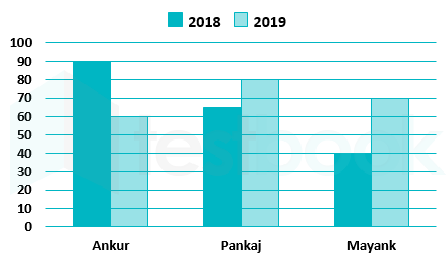
The bar graph given below represents the amount of tax paid (in thousands) by the three tax payers Ankur, Pankaj and Mayank during the year 2018 and 2019. Study this graph carefully and answer the questions given below.


46

What is the average of the total amount of tax paid by all three tax payers in the year 2018 and 2019 together?

  1. ((a))

    Rs. 140,000

  2. ((b))

    Rs. 120,000

  3. ((c))

    Rs. 135,000

  4. ((d))

    Rs. 160,000

  5. ((e))

    Rs. 150,000

Show Answer
Answer: ((c))

Rs. 135,000

Total amount to be paid by all three in 2018 year is Rs 195000

Total amount to be paid by all three in 2019 year is Rs 210000

Total in both years is Rs 195000+Rs 210000

⇒ Rs 405000

Then average of both years is 

⇒ 405000 / 3

⇒ 135000

Hence Rs 135000 is the correct answer.

47

What is the total amount of tax paid by all three tax payers in the year 2019?

  1. ((a))

    Rs. 210000

  2. ((b))

    Rs. 250000

  3. ((c))

    Rs. 290000

  4. ((d))

    Rs. 350000

  5. ((e))

    Rs. 400000

Show Answer
Answer: ((a))

Rs. 210000

Total tax paid by all three in the year 2019

⇒ 60000+80000+70000

⇒ Rs 210000

Hence Rs 210000 is the correct answer.

48

In the year 2020 the amount of tax paid by Mayank is 30% more than the amount of tax paid by Ankur in the year 2019. What is the amount of tax paid by the Mayank in the year 2020?

  1. ((a))

    Rs. 52,000

  2. ((b))

    Rs. 70,000

  3. ((c))

    Rs. 50,000

  4. ((d))

    Rs. 58,000

  5. ((e))

    Rs. 78,000

Show Answer
Answer: ((e))

Rs. 78,000

Tax paid by Ankur in the year 2019 is Rs 60000

Then tax paid by Mayank in 2020 is 30% more than Ankur in 2019

⇒ 60000× (100+30)% 

⇒ 60000×13/10

⇒ 78000

Hence Rs 78000 is the correct answer.

49

What is the ratio of the amount of tax paid by Mayank and Ankur in the year 2018 to the amount of tax paid by Pankaj in the year 2018 and 2019 together?

  1. ((a))

    28:29

  2. ((b))

    30:31

  3. ((c))

    16:19

  4. ((d))

    26:29

  5. ((e))

    25:27

Show Answer
Answer: ((d))

26:29

Mayank and Ankur in the year 2018 is Rs 40000 and Rs 90000.

⇒ 40000+90000 

⇒ 130000

Pankaj in the both years is 

⇒ 65000+80000

⇒ 145000

Ratio of these = 130000 : 145000

⇒ 26 : 29

Hence 26 : 29 is the correct answer.

50

The amount of tax paid by Pankaj in the year 2019 is what percentage of the amount of tax paid by Mayank in the year 2018?

  1. ((a))

    180%

  2. ((b))

    200%

  3. ((c))

    150%

  4. ((d))

    130%

  5. ((e))

    155%

Show Answer
Answer: ((b))

200%

Tax paid by Pankaj in the year 2019 is Rs 80000

Tax paid by Mayank in the year 2018 is Rs 40000

⇒ 80000 = ? of 40000%

⇒ (80000 / 40000 ) × 100

⇒ 200%

Hence 200% is the correct answer.

51

What should come in place of question mark (?) in the following number series?

7, 20, 59, 176, ?

  1. ((a))

    523

  2. ((b))

    513

  3. ((c))

    579

  4. ((d))

    557

  5. ((e))

    527

Show Answer
Answer: ((e))

527

The given series is 7, 20 , 59 , 176

This series follows the pattern 

⇒ 7×3-1 =20

⇒ 20×3-1=59

⇒ 59×3 -1 = 176

Then next term of this series is 

⇒ 176×3-1 = 527

Hence 527 is the correct answer.

52

What should come in place of question mark (?) in the following number series?

9, 64, 25, 216, ?

  1. ((a))

    343

  2. ((b))

    49

  3. ((c))

    64

  4. ((d))

    256

  5. ((e))

    80

Show Answer
Answer: ((b))

49

Series is 9,64,25,216 are 

⇒ 3×3 , 4×4×4 , 5×5 , 6×6×6

This follows pattern square of number then cube of next number alternately.

Then next number of this series,

⇒ 7×7 = 49

Hence 49 is the correct answer.

53

What will come in place of the question mark (?) in the following number series?

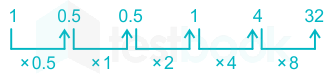
1, 0.5, 0.5, 1, 4, ?

  1. ((a))

    16

  2. ((b))

    10

  3. ((c))

    32

  4. ((d))

    72

  5. ((e))

    None of these

Show Answer
Answer: ((c))

32

Pattern of the given series can be explained as-

54

What will come in place of question mark (?) in the following number series?

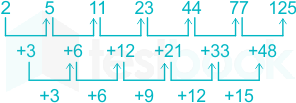
2, 5, 11, 23, 44, 77, ?

  1. ((a))

    48

  2. ((b))

    150

  3. ((c))

    125

  4. ((d))

    92

  5. ((e))

    None of these

Show Answer
Answer: ((c))

125

Pattern of the given series can be explained as,

55

What should come in place of the question mark (?) in the following number series?

5, 18, 57, 174, 525, ?

  1. ((a))

    1570

  2. ((b))

    1678

  3. ((c))

    1578

  4. ((d))

    1590

  5. ((e))

    None of the above

Show Answer
Answer: ((c))

1578

Calculation:

The pattern of the number series is-

⇒ 5 × 3 + 3 = 18

⇒ 18 × 3 + 3 = 57

⇒ 57 × 3 + 3 = 174

⇒ 174 × 3 + 3 = 525

⇒ 525 × 3 + 3 = ? = 1578

∴ The value of ? is 1578

56

In a town, two opposition leaders (Ram & Shyam) are contesting in an election. 80% of the registered voters cast their votes in the election and Ram wins the election by 600 votes. If Ram had received 12.5% less votes, Ram’s votes would have been equal to Shyam’s votes. How many registered voters are there in the town?

  1. ((a))

    5200

  2. ((b))

    5250

  3. ((c))

    4250

  4. ((d))

    5850

  5. ((e))

    4675

Show Answer
Answer: ((b))

5250

Shortcut Trick

Let Ram's votes be R and Shyam's votes be S.

Ram gets 12.5% less votes → R − 0.125R = 0.875R = (7/8)R.

Given: (7/8)R = S ⇒ Ratio of votes of Ram : Shyam = 8 : 7.

Difference in ratio parts = 1 unit = 600 votes.

Total cast votes = 8 + 7 = 15 units = 15 × 600 = 9000 votes.

Total registered voters = 9000 ÷ 80% = 11250.

Wait, let us re-evaluate the condition: 'If Ram had received 12.5% less votes, Ram's votes would have been equal to Shyam's votes.'

If Ram's votes decrease by 12.5%, these votes do not go to Shyam (they are just 'less' votes received, reducing the total cast votes). So R × (7/8) = S is correct.

Ratio R : S = 8 : 7. Difference R − S = 1 unit = 600 votes.

Therefore, Ram's votes = 8 × 600 = 4800, Shyam's votes = 7 × 600 = 4200.

Total cast votes = 4800 + 4200 = 9000 votes.

Registered voters = 9000 ÷ 0.80 = 11250.

Alternatively, if the 12.5% reduction in Ram's votes was transferred to Shyam:

R − 0.125R = S + 0.125R ⇒ 0.75R = S ⇒ S/R = 3/4. Difference R − S = 1 unit = 600 votes ⇒ R = 2400, S = 1800.

Total cast votes = 4200. Registered voters = 4200 ÷ 0.80 = 5250.

This matches Option (2). Thus, the 12.5% votes Ram lost were transferred to Shyam.

∴ The correct answer is 5250.

Alternate Method

Let the total number of registered voters be T.

Let the total cast votes be V = 0.80 × T.

Let the votes obtained by Ram be R and by Shyam be S.

Given: R − S = 600 ⇒ S = R − 600.

If Ram got 12.5% less votes, his votes would be R − 0.125R = 0.875R. These lost votes are transferred to Shyam, making Shyam's votes S + 0.125R.

According to the condition: 0.875R = S + 0.125R ⇒ 0.75R = S.

⇒ 0.75R = R − 600

⇒ 0.25R = 600

⇒ R = 2400

⇒ S = 2400 − 600 = 1800

⇒ Total cast votes (V) = R + S = 2400 + 1800 = 4200

⇒ Since 80% of registered voters cast their votes: 0.80 × T = 4200

⇒ T = 4200 ÷ 0.80 = 5250

∴ The correct answer is 5250.

Additional Information

Percentage Vote Transfer Rule

When votes are transferred from one candidate to another in a two-way contest, a loss of x% of votes for one candidate results in an equivalent gain of those votes for the opponent, keeping the total cast votes constant.

Registered Voters vs. Cast Votes

Registered voters represent 100% of the electorate. Cast votes are a subset of registered voters calculated as: Cast Votes = Registered Voters × Voting Turnout %.

57

The speed of a boat is 6 km/h in still water and the speed of the stream is 2 km/h, if the boat takes 6 hours to go to a place and comeback. Then find the distance of the place.

  1. ((a))

    16 km

  2. ((b))

    8 km

  3. ((c))

    24 km

  4. ((d))

    18 km

  5. ((e))

    30 km

Show Answer
Answer: ((a))

16 km

Shortcut Trick

Speed of Boat (u) = 6 km/h, Speed of Stream (v) = 2 km/h

Downstream Speed (u+v) = 8 km/h, Upstream Speed (u−v) = 4 km/h

Distance (D) = [Total Time × Downstream × Upstream] ÷ [Downstream + Upstream]

Distance = [6 × 8 × 4] ÷ [8 + 4] = 192 ÷ 12 = 16 km

∴ The correct answer is 16 km.

Alternate Method

Given:

Speed of boat in still water (x) = 6 km/h

Speed of the stream (y) = 2 km/h

Total time taken (T) = 6 hours

Formula Used:

Time = Distance ÷ Speed

Calculations:

⇒ Let the distance of the place be D km.

⇒ Downstream speed = x + y = 6 + 2 = 8 km/h

⇒ Upstream speed = x − y = 6 − 2 = 4 km/h

⇒ Total Time = (Distance / Downstream) + (Distance / Upstream)

⇒ 6 = D/8 + D/4

⇒ 6 = (D + 2D) / 8

⇒ 6 = 3D / 8

⇒ 3D = 48

⇒ D = 16 km

∴ The correct answer is 16 km.

Additional Information

Average Speed of Boat

When distance is same for both ways, Average Speed = (Downstream × Upstream) / Still Water Speed.

Relative Speed in Water

Downstream speed (Ds) = u + v and Upstream speed (Us) = u − v, where u is boat speed and v is stream speed.

Still Water Speed Calculation

Speed in still water (u) = (Ds + Us) / 2 and Speed of stream (v) = (Ds − Us) / 2.

58

A person sells two fans for Rs. 3200. The cost price of the first fan is equal to the selling price of the second fan. If the first is sold at 40% loss and the second at 100% gain, what is total profit or loss?

  1. ((a))

    Rs. 160

  2. ((b))

    Rs. 200

  3. ((c))

    Rs. 240

  4. ((d))

    Rs. 280

  5. ((e))

    None of these

Show Answer
Answer: ((b))

Rs. 200

Shortcut Trick

Let CP1 = 100x. Then SP2 = 100x (given).

First fan at 40% loss: SP1 = 100x × 0.6 = 60x.

Second fan at 100% gain: CP2 = 100x ÷ 2 = 50x.

Total SP = 60x + 100x = 160x. Given 160x = 3200 ⇒ x = 20.

Total CP = 100x + 50x = 150x. Total Profit = 160x − 150x = 10x.

Profit = 10 × 20 = 200.

∴ The correct answer is Rs. 200.

Alternate Method

Given: Total SP = Rs. 3200, CP1 = SP2, Loss%1 = 40%, Gain%2 = 100%. Formulas: SP = CP × (100 ± P/L)% | Total Profit = Total SP − Total CP.

⇒ Let CP1 = C. Then SP2 = C. ⇒ For Fan 1: SP1 = C × (100 − 40)/100 = 0.6C. ⇒ For Fan 2: SP2 = CP2 × (100 + 100)/100 ⇒ C = 2 × CP2 ⇒ CP2 = 0.5C. ⇒ Total SP = SP1 + SP2 = 0.6C + C = 1.6C. ⇒ 1.6C = 3200 ⇒ C = 2000. ⇒ Total CP = CP1 + CP2 = C + 0.5C = 1.5C = 1.5 × 2000 = 3000. ⇒ Total Profit = 3200 − 3000 = 200.

∴ The correct answer is Rs. 200.

Additional Information

Cost Price and Selling Price Relationship

When the Cost Price of one article equals the Selling Price of another, express all values in terms of a single variable to simplify comparison.

Profit and Loss Percentage

A 100% gain means the Selling Price is twice the Cost Price. A 40% loss means the Selling Price is 60% of the Cost Price.

59

A invested Rs. X and B invested Rs. (X + 900) in a business for 12 months and 8 months respectively. If the total profit earned at the end of the year is Rs. 5800 and the profit share of B is Rs. 1000 more than the profit share of A, then find the amount invested by B in the business.

  1. ((a))

    Rs. 1200

  2. ((b))

    Rs. 1700

  3. ((c))

    Rs. 1500

  4. ((d))

    Rs. 1800

  5. ((e))

    Rs. 2000

Show Answer
Answer: ((b))

Rs. 1700

Shortcut Trick

Total profit = 5800; Profit difference (B − A) = 1000.

Individual profits: B = (5800 + 1000) ÷ 2 = 3400; A = 5800 − 3400 = 2400.

Profit ratio A : B = 2400 : 3400 = 12 : 17.

Investment ratio × Time ratio = Profit ratio ⇒ (X × 12) : ((X + 900) × 8) = 12 : 17.

3X : 2(X + 900) = 12 : 17 ⇒ 51X = 24X + 21600 ⇒ 27X = 21600 ⇒ X = 800.

B investment = X + 900 = 800 + 900 = 1700.

∴ The correct answer is Rs. 1700.

Alternate Method

Given → Profit(A+B) = 5800, Profit(B−A) = 1000. Time A = 12, Time B = 8. Formulas: Profit Ratio = (Investment1 × Time1) : (Investment2 × Time2)

⇒ Let Profit of A be PA and Profit of B be PB. ⇒ PA + PB = 5800 and PB − PA = 1000. ⇒ Adding equations: 2PB = 6800 ⇒ PB = 3400. ⇒ Subtracting: PA = 5800 − 3400 = 2400. ⇒ Ratio of Profit A : B = 2400 : 3400 = 12 : 17. ⇒ (X × 12) / ((X + 900) × 8) = 12 / 17. ⇒ 12X / (8X + 7200) = 12 / 17. ⇒ X / (8X + 7200) = 1 / 17 ⇒ 17X = 8X + 7200. ⇒ 9X = 7200 ⇒ X = 800. ⇒ Amount invested by B = X + 900 = 800 + 900 = 1700.

∴ The correct answer is Rs. 1700.

Additional Information

Partnership Basics

When time periods are different, the profit is divided in the ratio of the product of Investment and Time.

Investment Calculation

If Profit Ratio and Time Ratio are known, Investment Ratio = (Profit / Time) Ratio.

60

Joy and marry can do a piece of work in 13 and 39 days respectively, If they started working together alternatively then in how many days work will complete? if Joy started work first.

  1. ((a))

    21 days 

  2. ((b))

    20 days 

  3. ((c))

    18 days 

  4. ((d))

    17 days

  5. ((e))

    19 days

Show Answer
Answer: ((e))

19 days

Shortcut Trick

Total Work = LCM(13, 39) = 39 units.

Efficiency of Joy = 3 and Marry = 1.

2-day work (Joy + Marry) = 3 + 1 = 4 units.

Work in 18 days (9 cycles) = 9 × 4 = 36 units.

Remaining 3 units done by Joy on 19th day (3 ÷ 3 = 1 day).

∴ The correct answer is 19 days.

Alternate Method

PersonDaysTotal WorkEfficiency
Joy13393
Marry391

Given: Time taken by Joy = 13 days, Time taken by Marry = 39 days.

Formula Used: Total Work = Time × Efficiency

⇒ Let Total Work = 39 units (LCM of 13 and 39).

⇒ Efficiency of Joy = 39 ÷ 13 = 3 units/day.

⇒ Efficiency of Marry = 39 ÷ 39 = 1 unit/day.

⇒ In first 2 days (Alternative), work done = 3 (Joy) + 1 (Marry) = 4 units.

⇒ Number of such 2-day cycles needed = 39 ÷ 4 = 9 cycles (36 units) with 3 units remaining.

⇒ Time for 9 cycles = 9 × 2 = 18 days.

⇒ On 19th day, Joy works and completes the remaining 3 units (3 ÷ 3 = 1 day).

⇒ Total time = 18 + 1 = 19 days.

∴ The correct answer is 19 days.

Additional Information

Alternate Day Work

In alternative work, always calculate the cycle of work based on the number of persons involved. If A starts first, he works on odd days (1st, 3rd, 5th...).

Efficiency and Time Relation

Efficiency is inversely proportional to the time taken to complete a task. Efficiency = Total Work ÷ Time.

Remaining Work Calculation

Remaining days = Remaining Work ÷ Efficiency of the person whose turn it is to work.

61

In mixture A of 200 ml, there is 40% of milk and the rest is water while in mixture B of 300 ml, the ratio of milk and water is 3 : 7. When both the mixture is poured into another vessel C, then find the ratio of milk and water in vessel C.

  1. ((a))

    20 : 27

  2. ((b))

    17 : 29

  3. ((c))

    17 : 33

  4. ((d))

    20 : 33

  5. ((e))

    29 : 33

Show Answer
Answer: ((c))

17 : 33

Shortcut Trick

Mixture A (200 ml): Milk = 40% of 200 = 80 ml, Water = 120 ml.

Mixture B (300 ml): Ratio 3 : 7 → Milk = (3/10) × 300 = 90 ml, Water = 210 ml.

Vessel C: Total Milk = 80 + 90 = 170 ml, Total Water = 120 + 210 = 330 ml.

Ratio in C = 170 : 330 = 17 : 33.

∴ The correct answer is 17 : 33.

Alternate Method

Given: Mixture A = 200 ml, Mixture B = 300 ml.

Step 1: Calculate components of Mixture A

Milk in A = 40% of 200 = (40/100) × 200 = 80 ml

Water in A = 200 − 80 = 120 ml

Step 2: Calculate components of Mixture B

⇒ Total Ratio = 3 + 7 = 10 units

⇒ 10 units = 300 ml ⇒ 1 unit = 30 ml

Milk in B = 3 × 30 = 90 ml

Water in B = 7 × 30 = 210 ml

Step 3: Combine in Vessel C

⇒ Total Milk = 80 + 90 = 170 ml

⇒ Total Water = 120 + 210 = 330 ml

⇒ Ratio M : W = 170 : 330 = 17 : 33

∴ The correct answer is 17 : 33.

Additional Information

Alligation Method

Used to find the ratio in which two mixtures of known concentrations should be mixed to get a final concentration, or vice versa.

Percentage to Ratio Conversion

A concentration of x% can be written as a ratio of x : (100 − x). For example, 40% milk means Milk : Water is 40 : 60 or 2 : 3.

Replacement Formula

Final Quantity = Initial Quantity × (1 − Removed/Total)n, where n is the number of operations.

Three games A, B and C were organised in a school for the girls. The total number of girls in the school is 750 and the ratio of number of girls participating in event A, B and C is 6 : 10 : 9 respectively. The total number of girls participating in all the three events is 80. The total number of girls only participating in B is 60. Total number of girls participating only in A is 30 more than total number of girls participating in C only. Number of girls participating in (A + C) only is 15 and is 50 less than the number of girls participating in A only. The difference between total number of girls participating in (B + C) only and total number of girls participating in (A +  C) only is 125.

62

Total number of girls participating in all the three events is what percent of the total number of girls participating only in one event?

  1. ((a))

    50%

  2. ((b))

    125%

  3. ((c))

    80%

  4. ((d))

    755

  5. ((e))

    66.67%

Show Answer
Answer: ((a))

50%

The total no of girls in school is 750

Girls participated in events A, B and C is 6 : 10 : 9

⇒ 25 unit = 750 

⇒ 1 unit = 30

The total no of girls who participated in event A  is 180 and In event B is 300, in event C is 270

Girls who participated in all three events are 80

Girls participated only A + C only is = 15

Girls participated only in A event 50 more than the girls participated only A + C only = 15 + 50 = 65

Girls participated only B is = 60 

Girls participated only C is 30 less than A = 65 - 30 = 35

Girls participated only B + C is 125 more than the total number of girls participating in (A +  C) = 125 +15 = 140

Girls participated only A + B is = 180 - 65 - 15 - 80 = 20

Girls participated in all three events is 80

Girls participated in only one event is = 65 + 60 + 35 = 160

⇒ (80 / 160 ) × 100

⇒ 1 / 2 × 100

⇒ 50% 

Hence 50% is the correct answer.

63

Total number of girls participaling only in C is how much percent less than the number of girls participating only in B?

  1. ((a))

    66.67%

  2. ((b))

    50%

  3. ((c))

    41.66%

  4. ((d))

    125%

  5. ((e))

    60%

Show Answer
Answer: ((c))

41.66%

The total no of girls in school is 750

Girls participated in events A, B and C is 6 : 10 : 9

⇒ 25 unit = 750 

⇒ 1 unit = 30

The total no of girls who participated in event A  is 180 and In event B is 300, in event C is 270

Girls who participated in all three events are 80

Girls participated only A + C only is = 15

Girls participated only in A event 50 more than the girls participated only A + C only = 15 + 50 = 65

Girls participated only B is = 60 

Girls participated only C is 30 less than A = 65 - 30 = 35

Girls participated only B + C is 125 more than the total number of girls participating in (A +  C) = 125 +15 = 140

Girls participated only A + B is = 180 - 65 - 15 - 80 = 20

Girls participating only C is 35

Girls participating only B is 60

⇒ 60 - 35

⇒ 25

⇒ ( 25 / 60 ) × 100

⇒ 41.66%

Hence 41.66% is the correct answer.

64

How many girls were there who were participating in two events only?

  1. ((a))

    175

  2. ((b))

    185

  3. ((c))

    205

  4. ((d))

    215

  5. ((e))

    195

Show Answer
Answer: ((a))

175

The total no of girls in school is 750

Girls participated in events A, B and C is 6 : 10 : 9

⇒ 25 unit = 750 

⇒ 1 unit = 30

The total no of girls who participated in event A  is 180 and In event B is 300, in event C is 270

Girls who participated in all three events are 80

Girls participated only A + C only is = 15

Girls participated only in A event 50 more than the girls participated only A + C only = 15 + 50 = 65

Girls participated only B is = 60 

Girls participated only C is 30 less than A = 65 - 30 = 35

Girls participated only B + C is 125 more than the total number of girls participating in (A +  C) = 125 +15 = 140

Girls participated only A + B is = 180 - 65 - 15 - 80 = 20

Girls participated in only two events is 

⇒ 15 + 20 + 140 

⇒ 175 girls 

Hence 175 is the correct answer.

65

Find the ratio of the total number of girls participating in only A and the total number of girls participating in (A + B) only

  1. ((a))

    14 : 5

  2. ((b))

    13 : 5

  3. ((c))

    15 : 7

  4. ((d))

    13 : 4

  5. ((e))

    12 : 13

Show Answer
Answer: ((d))

13 : 4

The total no of girls in school is 750

Girls participated in events A, B and C is 6 : 10 : 9

⇒ 25 unit = 750 

⇒ 1 unit = 30

The total no of girls who participated in event A  is 180 and In event B is 300, in event C is 270

Girls who participated in all three events are 80

Girls participated only A + C only is = 15

Girls participated only in A event 50 more than the girls participated only A + C only = 15 + 50 = 65

Girls participated only B is = 60 

Girls participated only C is 30 less than A = 65 - 30 = 35

Girls participated only B + C is 125 more than the total number of girls participating in (A +  C) = 125 +15 = 140

Girls participated only A + B is = 180 - 65 - 15 - 80 = 20

Now, 

The ratio of girls who participated in only A and the Total no of girls participating in A+B only

⇒ 65 : 20

⇒ 13 : 4

Hence 13 : 4 is the correct answer.

Reasoning Ability (35 questions)

Directions: Read the instructions carefully and answer the question below.

Nine person A, B, C, D, E, F, G, H and I are purchasing some items for different occasions but not necessarily in the same order. A purchase before E but after C. C is purchased immediately after B. C is the second person. I is the second last person. G purchases immediately before I and immediately after H. F purchases before H. The number of persons before E is two less than the number of persons purchasing items after E. E purchases before H but not immediately before H. One person purchases between A and F.

66

How many people purchase items between E and H?

  1. ((a))

    One

  2. ((b))

    Two

  3. ((c))

    Three

  4. ((d))

    Four

  5. ((e))

    None

Show Answer
Answer: ((a))

One

1- I is the second last person. 

2- G purchases immediately before I and immediately after H.

3- C is the second person.

4- C is purchased immediately after B.


Occasions123456789
PersonBCHGI


5- The number of persons before E is two less than the number of persons purchasing items after E.


Occasions123456789
PersonBCEHGI


6- E purchases before H but not immediately before H.

7- F purchases before H. One person purchases between A and F.

8- A purchase before E but after C.

Final arrangement.

Occasions123456789
PersonBCAEFHGID


Hence, One person purchases items between E and H.

67

Who among the following purchases just after C?

  1. ((a))

    E

  2. ((b))

    F

  3. ((c))

    A

  4. ((d))

    G

  5. ((e))

    D

Show Answer
Answer: ((c))

A

1- I is the second last person. 

2- G purchases immediately before I and immediately after H.

3- C is the second person.

4- C is purchased immediately after B.


Occasions123456789
PersonBCHGI


5- The number of persons before E is two less than the number of persons purchasing items after E.


Occasions123456789
PersonBCEHGI


6- E purchases before H but not immediately before H.

7- F purchases before H. One person purchases between A and F.

8- A purchase before E but after C.


Occasions123456789
PersonBCAEFHGID


Hence, A purchases just after C.

68

How many persons purchase after H?

  1. ((a))

    One

  2. ((b))

    Two

  3. ((c))

    Three

  4. ((d))

    None

  5. ((e))

    Four

Show Answer
Answer: ((c))

Three

1- I is the second last person. 

2- G purchases immediately before I and immediately after H.

3- C is the second person.

4- C is purchased immediately after B.


Occasions123456789
PersonBCHGI


5- The number of persons before E is two less than the number of persons purchasing items after E.


Occasions123456789
PersonBCEHGI


6- E purchases before H but not immediately before H.

7- F purchases before H. One person purchases between A and F.

8- A purchase before E but after C.


Occasions123456789
PersonBCAEFHGID


Final arrangement.

Hence**, Three people purchases after H.**

69

How many meaningful English words can be formed with the first, the third, the fifth, and the sixth letters of the word EMMULATE, using each letter only once in each word?

  1. ((a))

    One

  2. ((b))

    Three

  3. ((c))

    Four

  4. ((d))

    Two

  5. ((e))

    None

Show Answer
Answer: ((b))

Three

Word: EMMULATE

1st letter = E; 3rd letter = M; 5th letter = L; 6th letter = A

Letters given: EMLA

Words possible: MEAL, MALE and LAME.

Hence, 3 such word is possible.

70

How many such pairs of letters are there in the word ‘PRACTISING’, each of which has as many letters between them in the word (both forward and backward direction) as they have between them in the English Alphabet?

  1. ((a))

    Four

  2. ((b))

    Five

  3. ((c))

    Six

  4. ((d))

    Two

  5. ((e))

    Three

Show Answer
Answer: ((a))

Four

The following pair are : PI, PT, IG, PG 

Hence, four pairs are there in the word ‘PRACTISING’, each of which has as many letters between them in the word (both forward and backward direction) as they have between them in the English Alphabet.

Directions: Study the following information carefully and answer the given questions.

Eight Person A, B, C, D, E, F, G, and H are sitting in a line and an equal number of people are facing North and South direction. Not more than two consecutive adjacent persons are facing in the same direction. 

D does not sit at the extreme end. H faces the north direction. A sits third to the right of D who sits the immediate right of H. Two persons are sitting between A and E. 

A sits second to the left of B. B sits an immediate right of C and both are facing south direction. Not more than two consecutive adjacent persons are facing in the same direction. G doesn't sit adjacent to F. G does not face the south direction. F does not sit at the end of the row and faces the opposite direction of A.

71

Who sits second to the right of D?

  1. ((a))

    A

  2. ((b))

    C

  3. ((c))

    B

  4. ((d))

    F

  5. ((e))

    H

Show Answer
Answer: ((d))

F

Eight Person: A, B, C, D, E, F, G, and H

1) D does not sit at the extreme end.

2) H faces the north direction.

  1. A sits third to the right of D who sits the immediate right of H. 

4) Two persons are sitting between A and E.  

(Here, two possible cases: Case 1: D sits second to the left extreme end and faces the north. Case 2: D sits second to the right extreme end and faces the south)

5) A sits second to the left of B

6) B sits an immediate right of C and both are facing south direction.

  1. Not more than two consecutive adjacent persons are facing in the same direction.

(So, A is facing north direction in each case)

8) G doesn't sit adjacent to F. F does not sit at the end of the row and faces the opposite direction of A.

(here, Case 1 will be eliminated)

9) G does not face the south direction.

According to point 7, G faces the north direction and sits right extreme end. E faces north and F faces south direction.

This arrangement will be our final arrangement.

Hence, F sits second to the right of D.

72

Who sits third to the left of A?

  1. ((a))

    E

  2. ((b))

    B

  3. ((c))

    C

  4. ((d))

    A

  5. ((e))

    None of these

Show Answer
Answer: ((a))

E

Eight Person: A, B, C, D, E, F, G, and H

1) D does not sit at the extreme end.

2) H faces the north direction.

  1. A sits third to the right of D who sits the immediate right of H. 

4) Two persons are sitting between A and E.  

(Here, two possible cases: Case 1: D sits second to the left extreme end and faces the north. Case 2: D sits second to the right extreme end and faces the south)

5) A sits second to the left of B

6) B sits an immediate right of C and both are facing south direction.

  1. Not more than two consecutive adjacent persons are facing in the same direction.

(So, A is facing north direction in each case)

8) G doesn't sit adjacent to F. F does not sit at the end of the row and faces the opposite direction of A.

(here, Case 1 will be eliminated)

9) G does not face the south direction.

According to point 7, G faces the north direction and sits right extreme end. E faces north and F faces south direction.

This arrangement will be our final arrangement.

Hence, E sits third to the left of A.

73

How many person is/are sitting between B and D?

  1. ((a))

    One

  2. ((b))

    Two

  3. ((c))

    Three

  4. ((d))

    Four

  5. ((e))

    Five

Show Answer
Answer: ((d))

Four

Eight Person: A, B, C, D, E, F, G, and H

1) D does not sit at the extreme end.

2) H faces the north direction.

  1. A sits third to the right of D who sits the immediate right of H. 

4) Two persons are sitting between A and E.  

(Here, two possible cases: Case 1: D sits second to the left extreme end and faces the north. Case 2: D sits second to the right extreme end and faces the south)

5) A sits second to the left of B

6) B sits an immediate right of C and both are facing south direction.

  1. Not more than two consecutive adjacent persons are facing in the same direction.

(So, A is facing north direction in each case)

8) G doesn't sit adjacent to F. F does not sit at the end of the row and faces the opposite direction of A.

(here, Case 1 will be eliminated)

9) G does not face the south direction.

According to point 7, G faces the north direction and sits right extreme end. E faces north and F faces south direction.

This arrangement will be our final arrangement.

Hence, **Four-**persons are sitting between B and D.

74

Four of the following five are alike in a certain way and hence they form a group. Which one of the following does not belong that group?

  1. ((a))

    E

  2. ((b))

    A

  3. ((c))

    H

  4. ((d))

    G

  5. ((e))

    D

Show Answer
Answer: ((e))

D

Eight Person: A, B, C, D, E, F, G, and H

1) D does not sit at the extreme end.

2) H faces the north direction.

  1. A sits third to the right of D who sits the immediate right of H. 

4) Two persons are sitting between A and E.  

(Here, two possible cases: Case 1: D sits second to the left extreme end and faces the north. Case 2: D sits second to the right extreme end and faces the south)

5) A sits second to the left of B

6) B sits an immediate right of C and both are facing south direction.

  1. Not more than two consecutive adjacent persons are facing in the same direction.

(So, A is facing north direction in each case)

8) G doesn't sit adjacent to F. F does not sit at the end of the row and faces the opposite direction of A.

(here, Case 1 will be eliminated)

9) G does not face the south direction.

According to point 7, G faces the north direction and sits right extreme end. E faces north and F faces south direction.

This arrangement will be our final arrangement.

Hence, D is facing the south direction while E, A, H, and G are facing the north direction.

75

What is the position of C with respect to G?

  1. ((a))

    Second to the left

  2. ((b))

    Third to the left

  3. ((c))

    Fourth to the left

  4. ((d))

    Fifth to the left

  5. ((e))

    None of these

Show Answer
Answer: ((d))

Fifth to the left

Eight Person: A, B, C, D, E, F, G, and H

1) D does not sit at the extreme end.

2) H faces the north direction.

  1. A sits third to the right of D who sits the immediate right of H. 

4) Two persons are sitting between A and E.  

(Here, two possible cases: Case 1: D sits second to the left extreme end and faces the north. Case 2: D sits second to the right extreme end and faces the south)

5) A sits second to the left of B

6) B sits an immediate right of C and both are facing south direction.

  1. Not more than two consecutive adjacent persons are facing in the same direction.

(So, A is facing north direction in each case)

8) G doesn't sit adjacent to F. F does not sit at the end of the row and faces the opposite direction of A.

(here, Case 1 will be eliminated)

9) G does not face the south direction.

According to point 7, G faces the north direction and sits right extreme end. E faces north and F faces south direction.

This arrangement will be our final arrangement.

Hence, C's position fifth to the left with respect to G.

76

Four of the following four letter-clusters are alike in a certain way and one is different. Pick the odd one out.

  1. ((a))

    CDFI

  2. ((b))

    PQSV

  3. ((c))

    FGIL

  4. ((d))

    MNPS 

  5. ((e))

    EFGH

Show Answer
Answer: ((e))

EFGH

The positions of the letters according to the English alphabet series:

The pattern for this code is as follows;

CDFI → C + 1 = D, D + 2 = F, F + 3 = I.

PQSV → P + 1 = Q, Q + 2 = S, S + 3 = V.

FGIL → F + 1 = G, G + 2 = I, I + 3 = L.

MNPS → M + 1 = N, N + 2 = P, P + 3 = S.

EFGH → E + 1 = F, F + 1 = G, G + 1 = H.

Hence, EFGH is the odd one out.

77

Directions: In each of the following questions assuming the given statement to be true, find which of the conclusions among given conclusions is/are definitely true and then give your answers accordingly.

Statement:

A < M < X = T > V  ≤ S ≤ H = G < O 

Conclusions: 

I. T > A

II. S < O

  1. ((a))

    Only Conclusion I follows

  2. ((b))

    Only Conclusion II follows

  3. ((c))

    Either Conclusion I or II follows

  4. ((d))

    Neither Conclusion I nor II follows

  5. ((e))

    Both Conclusion I and II follows

Show Answer
Answer: ((e))

Both Conclusion I and II follows

Statement:

A < M < X = T > V  ≤ S ≤ H = G < O 

Conclusions: 

I. T > A → True (A < M < X = T → A < T → T > A)

II. S < O → True (S ≤ H = G < J ≤ O → S < O) 

Hence, Both Conclusion I and II follows

78

Directions: In the following question assuming the given statements to be true, find which of the conclusion among given conclusions is/are definitely true and then give your answers accordingly.

Statements: S < T = U; Q ≤ R < S; V < T ≤ W; X > W ≤ Y

Conclusions: 

I. T = Y

II.  Y > T

  1. ((a))

    Only I is True

  2. ((b))

    Only II is True

  3. ((c))

    Both I and II are True

  4. ((d))

    Either I or II is True

  5. ((e))

    Neither I nor II is True

Show Answer
Answer: ((d))

Either I or II is True

Given Statements: S < T = U; Q ≤ R < S; V < T ≤ W; X > W ≤ Y

On Combining: Q ≤ R < S < T = U ≤ W < X, W ≤ Y, V < T

Conclusions: 

I. T = Y →  Fasle (T = U ≤ W and W ≤ Y → T = U ≤ W ≤ Y → T ≤ Y)

II.  Y > T → False (T = U ≤ W and W ≤ Y → T = U ≤ W ≤ Y → T ≤ Y)

The common sign between T and Y is ≤  and given conclusions are T = Y and T < Y.

Hence, Either I or II is True is the correct answer.

79

Direction: In the following questions assuming the given statements to be true, find which of the conclusion(s) among the given conclusions is/ are definitely true and then give your answers accordingly.

Statements: K = I > A > C ≥ E < U; L ≤ K; E ≤ H

Conclusions:

I. K < U

II. K > C

  1. ((a))

    Either conclusion I or II is true

  2. ((b))

    Both conclusion I and II are true

  3. ((c))

    Only conclusion I is true

  4. ((d))

    Only conclusion II is true

  5. ((e))

    Neither conclusion I nor II is true

Show Answer
Answer: ((d))

Only conclusion II is true

Given statements: K = I > A > C ≥ E < U; L ≤ K; E ≤ H

On combining: L ≤ K = I > A > C ≥ E < U; H ≥ E

Conclusions:

I. K < U → False (as K = I > A > C ≥ E < U → relation between K and U is not clear)

II. K > C → True (as K = I > A > C → K > C)

Hence, only conclusion II is true.

80

Directions: In the following question assuming the given statements to be true, find which of the conclusion among given conclusions is/are definitely true and then give your answers accordingly.

Statement:

O = Q < L; Q ≥ K > J; C = V ≥ J; M ≤ R < J

Conclusion:

I. M < C

II. O > M

  1. ((a))

    Only conclusion I follow

  2. ((b))

    Only conclusion II follow

  3. ((c))

    Either conclusion I or II follow

  4. ((d))

    Both conclusion I and II follow

  5. ((e))

    Neither conclusion I nor II follow

Show Answer
Answer: ((d))

Both conclusion I and II follow

Given Statements: O = Q < L; Q ≥ K > J; C = V ≥ J; M ≤ R < J

On Combining: O = Q ≥ K > J > R ≥ M; C = V ≥ J; L > Q

Conclusion:

I. M < C → True (As C = V ≥ J > R ≥ M, clearly C > M).

II. O > M → True (As O = Q ≥ K > J > R ≥ M, clearly O > M).

Hence, Both conclusion I and II follow.

Direction: Study the following information and answer the given questions.

Six persons A, B, C, D, E and F are living in a building of six floors. Each of these persons likes different items Silk, Wool, Button, Cotton, Linen and Satin  but not necessarily in the same order. The bottom floor of the building as numbered as 1 and the floor above it was numbered as 2 and so on. There are 2 floors between one who likes Silk and one who likes Satin. There were three floor between A and the one who likes Linen. A lives above the one who likes Linen. D is just below the one who likes Satin. C lives just above one who likes Linen. F likes Wool and there were 3 floors between F and B. There were 2 floor between E and the one who likes Button. The one who likes Button lives on floor no 1.

81

Who likes Linen?

  1. ((a))

    A

  2. ((b))

    B

  3. ((c))

    C

  4. ((d))

    D

  5. ((e))

    E

Show Answer
Answer: ((d))

D

Six persons: A, B, C, D, E and F

Different items:  Silk, Wool, Button, Cotton, Linen and Satin

1- The one who likes Button lives on floor no 1.

2- There were three floor between A and the one who likes Linen. A lives above the one who likes Linen.

3- C lives just above one who likes Linen.

4- There were 2 floor between E and the one who likes Button.


No.PersonItems
6A
5
4E
3C
2Linen
1Button


5- There are 2 floors between one who likes Silk and one who likes Satin.

6- D is just below the one who likes Satin.


Case-1Case-2
No.PersonItemsPersonItems
6ASilkASatin
5D
4EE
3CSatinCSilk
2DLinenLinen
1ButtonButton


7- F likes Wool and there were 3 floors between F and B. So case 2 gets eliminated cause there is no space for F.


Case-1
No.PersonItems
6ASilk
5FWool
4ECotton
3CSatin
2DLinen
1BButton


Final arrangement.

D likes Linen.

82

Who among the following likes Cotton?

  1. ((a))

    F

  2. ((b))

    E

  3. ((c))

    A

  4. ((d))

    B

  5. ((e))

    C

Show Answer
Answer: ((b))

E

1- The one who likes Button lives on floor no 1.

2- There were three floor between A and the one who likes Linen. A lives above the one who likes Linen.

3- C lives just above one who likes Linen.

4- There were 2 floor between E and the one who likes Button.


No.PersonItems
6A
5
4E
3C
2Linen
1Button


5- There are 2 floors between one who likes Silk and one who likes Satin.

6- D is just below the one who likes Satin.


Case-1Case-2
No.PersonItemsPersonItems
6ASilkASatin
5D
4EE
3CSatinCSilk
2DLinenLinen
1ButtonButton


7- F likes Wool and there were 3 floors between F and B. So case 2 gets eliminated cause there is no space for F.


Case-1
No.PersonItems
6ASilk
5FWool
4ECotton
3CSatin
2DLinen
1BButton


Final arrangement.

 E likes Cotton.

83

How many persons live below one who likes Wool?

  1. ((a))

    One

  2. ((b))

    Two

  3. ((c))

    Three

  4. ((d))

    Four

  5. ((e))

    Five

Show Answer
Answer: ((d))

Four

1- The one who likes Button lives on floor no 1.

2- There were three floor between A and the one who likes Linen. A lives above the one who likes Linen.

3- C lives just above one who likes Linen.

4- There were 2 floor between E and the one who likes Button.


No.PersonItems
6A
5
4E
3C
2Linen
1Button

5- There are 2 floors between one who likes Silk and one who likes Satin.

6- D is just below the one who likes Satin.


Case-1Case-2
No.PersonItemsPersonItems
6ASilkASatin
5D
4EE
3CSatinCSilk
2DLinenLinen
1ButtonButton


7- F likes Wool and there were 3 floors between F and B. So case 2 gets eliminated cause there is no space for F.


Case-1
No.PersonItems
6ASilk
5FWool
4ECotton
3CSatin
2DLinen
1BButton


Final arrangement.

Four persons live below one who likes Wool.

84

Which of the following combinations is true?

  1. ((a))

    C - Satin

  2. ((b))

    E - Wool

  3. ((c))

    A - Cotton

  4. ((d))

    B - Linen

  5. ((e))
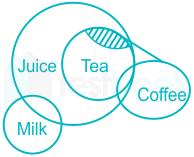
    D - Satin

Show Answer
Answer: ((a))

C - Satin

1- The one who likes Button lives on floor no 1.

2- There were three floor between A and the one who likes Linen. A lives above the one who likes Linen.

3- C lives just above one who likes Linen.

4- There were 2 floor between E and the one who likes Button.


No.PersonItems
6A
5
4E
3C
2Linen
1Button

5- There are 2 floors between one who likes Silk and one who likes Satin.

6- D is just below the one who likes Satin.


Case-1Case-2
No.PersonItemsPersonItems
6ASilkASatin
5D
4EE
3CSatinCSilk
2DLinenLinen
1ButtonButton


7- F likes Wool and there were 3 floors between F and B. So case 2 gets eliminated cause there is no space for F.


Case-1
No.PersonItems
6ASilk
5FWool
4ECotton
3CSatin
2DLinen
1BButton


Final arrangement.

C likes Satin.

85

Who lives on the topmost floor?

  1. ((a))

    B

  2. ((b))

    A

  3. ((c))

    C

  4. ((d))

    E

  5. ((e))
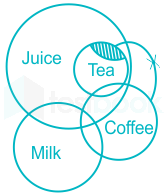
    F

Show Answer
Answer: ((b))

A

1- The one who likes Button lives on floor no 1.

2- There were three floor between A and the one who likes Linen. A lives above the one who likes Linen.

3- C lives just above one who likes Linen.

4- There were 2 floor between E and the one who likes Button.

likes Button.


No.PersonItems
6A
5
4E
3C
2Linen
1Button

5- There are 2 floors between one who likes Silk and one who likes Satin.

6- D is just below the one who likes Satin.


Case-1Case-2
No.PersonItemsPersonItems
6ASilkASatin
5D
4EE
3CSatinCSilk
2DLinenLinen
1ButtonButton


7- F likes Wool and there were 3 floors between F and B. So case 2 gets eliminated cause there is no space for F.


Case-1
No.PersonItems
6ASilk
5FWool
4ECotton
3CSatin
2DLinen
1BButton


Final arrangement.

A lives on the topmost floor.

Directions: Answer the following questions based on the given statements.

A person walks in the east direction from point B. After, walking for 4km in the same direction, he took a right turn and walks 3km to reach point C. From there, he took a left turn of 4km then a right turn of 4km and reaches point D. Then, he turns left and walks for 4km to reach point E. At last, he walks in the north direction and reaches Point P after walking 7km.

Another person walks in the west direction from point A for 5km. Then, she turns right and walks for 4km. Then, she turns right again for 5km and took a left turn. After walking for 3km in the same direction, she took a left turn again and walk for 5km to reach point Q. From there, she walks 7km in the west direction to reach Point P.

86

What is the position of Point B with respect to Point A

  1. ((a))

    Southwest

  2. ((b))

    Southeast

  3. ((c))

    Northwest

  4. ((d))

    Northeast

  5. ((e))
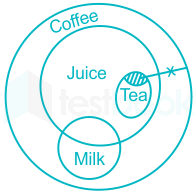
    West

Show Answer
Answer: ((c))

Northwest

The diagram according to the given conditions:

1. A person walks in the east direction from point B. 2. After, walking for 4km in the same direction, he took a right turn and walks 3km to reach point C. 3. From there, he took a left turn of 4km then a right turn of 4km and reaches point D. 4. Then, he turns left and walks for 4km to reach point E. 5. At last, he walks in the north direction and reaches Point P after walking 7km.

  1. Another person walks in the west direction from point A for 5km.
  2. Then, she turns right and walks for 4km.
  3. Then, she turns right again for 5km and took a left turn.
  4. After walking for 3km in the same direction, she took a left turn again and walk for 5km to reach point Q.
  5. From there, she walks 7km in the west direction to reach Point P.

The final diagram will be as follows:


Hence, B is in northwest direction with respect to A.

87

How far and in which direction is Point Q with respect to Point B?

  1. ((a))

    19km, West

  2. ((b))

    17km, West

  3. ((c))

    19km, East

  4. ((d))

    17km, East

  5. ((e))

    16km, East

Show Answer
Answer: ((c))

19km, East

The diagram according to the given conditions:

1. A person walks in the east direction from point B. 2. After, walking for 4km in the same direction, he took a right turn and walks 3km to reach point C. 3. From there, he took a left turn of 4km then a right turn of 4km and reaches point D. 4. Then, he turns left and walks for 4km to reach point E. 5. At last, he walks in the north direction and reaches Point P after walking 7km.

  1. Another person walks in the west direction from point A for 5km.
  2. Then, she turns right and walks for 4km.
  3. Then, she turns right again for 5km and took a left turn.
  4. After walking for 3km in the same direction, she took a left turn again and walk for 5km to reach point Q.
  5. From there, she walks 7km in the west direction to reach Point P.

The final diagram will be as follows:


Hence, the point Q is in 19km east of point B.

88

What is the direction of Point E with respect to Point Q?

  1. ((a))

    South

  2. ((b))

    South-East

  3. ((c))

    South-West

  4. ((d))

    North

  5. ((e))

    North-West

Show Answer
Answer: ((c))

South-West

The diagram according to the given conditions:

1. A person walks in the east direction from point B. 2. After, walking for 4km in the same direction, he took a right turn and walks 3km to reach point C. 3. From there, he took a left turn of 4km then a right turn of 4km and reaches point D. 4. Then, he turns left and walks for 4km to reach point E. 5. At last, he walks in the north direction and reaches Point P after walking 7km.

  1. Another person walks in the west direction from point A for 5km.
  2. Then, she turns right and walks for 4km.
  3. Then, she turns right again for 5km and took a left turn.
  4. After walking for 3km in the same direction, she took a left turn again and walk for 5km to reach point Q.
  5. From there, she walks 7km in the west direction to reach Point P.

The final diagram will be as follows:


Hence, Point E is in the south-west direction of point Q.

Direction: Read the following questions carefully and answer the questions that follow.

There are six persons namely, P, Q, R, S, T and U. They all are sitting around a circular table facing the centre. They all have different ages.

Q is second to the right of U. R sits opposite to Q  and is of 20 years of age. T is 56 years old and sits second to the left of R. The age of P is half the age of S. S does not sit near to T. The age of U is twice the age of R. The age of S is 28 years. The sum of ages of P and Q is 32.

89

What is the age of Q?

  1. ((a))

    22 years

  2. ((b))

    26 years

  3. ((c))

    18 years

  4. ((d))

    20 years

  5. ((e))

    27 years

Show Answer
Answer: ((c))

18 years

Six persons: P, Q, R, S, T and U. 

1- Q is second to the right of U.

2- R sits opposite to Q  and is 20 years of age.

3- T is 56 years old and sits second to the left of R.


4- S does not sit near to T.

5- The age of U is twice the age of R. So the age of U is 40.

6- The age of S is 28 years. The age of P is half the age of S. So P is 14 years old.

7- The sum of ages of P and Q is 32. The age of Q is 18.


Hence, Q is 18 years old.

90

Who is sitting immediate to the left of Q?

  1. ((a))

    P

  2. ((b))

    R

  3. ((c))

    S

  4. ((d))

    T

  5. ((e))

    U

Show Answer
Answer: ((c))

S

Six persons: P, Q, R, S, T and U. 

1- Q is second to the right of U.

2- R sits opposite to Q  and is 20 years of age.

3- T is 56 years old and sits second to the left of R.


4- S does not sit near to T.

5- The age of U is twice the age of R. So the age of U is 40.

6- The age of S is 28 years. The age of P is half the age of S. So P is 14 years old.

7- The sum of ages of P and Q is 32. The age of Q is 18.


Hence, S sits immediate left of Q.

91

How many persons are sitting between P and T, when counted from the left of T?

  1. ((a))

    One

  2. ((b))

    Two

  3. ((c))

    Three

  4. ((d))

    Four

  5. ((e))

    None

Show Answer
Answer: ((d))

Four

Six persons: P, Q, R, S, T and U. 

1- Q is second to the right of U.

2- R sits opposite to Q  and is 20 years of age.

3- T is 56 years old and sits second to the left of R.


4- S does not sit near to T.

5- The age of U is twice the age of R. So the age of U is 40.

6- The age of S is 28 years. The age of P is half the age of S. So P is 14 years old.

7- The sum of ages of P and Q is 32. The age of Q is 18.


Hence, Four people sit between P and T from the left of T.

92

What is the sum of ages of P and S?

  1. ((a))

    40

  2. ((b))

    42

  3. ((c))

    39

  4. ((d))

    38

  5. ((e))

    50

Show Answer
Answer: ((b))

42

Six persons: P, Q, R, S, T and U. 

1- Q is second to the right of U.

2- R sits opposite to Q  and is 20 years of age.

3- T is 56 years old and sits second to the left of R.


4- S does not sit near to T.

5- The age of U is twice the age of R. So the age of U is 40.

6- The age of S is 28 years. The age of P is half the age of S. So P is 14 years old.

7- The sum of ages of P and Q is 32. The age of Q is 18.


Hence, Sum of P and S is = P+S= 14=28= 42, is 42.

93

Which pair of name – age is correct?

  1. ((a))

    S, 54

  2. ((b))

    P, 18

  3. ((c))

    U, 40

  4. ((d))

    T, 20

  5. ((e))

    None of these is correct.

Show Answer
Answer: ((c))

U, 40

Six persons: P, Q, R, S, T and U. 

1- Q is second to the right of U.

2- R sits opposite to Q  and is 20 years of age.

3- T is 56 years old and sits second to the left of R.


4- S does not sit near to T.

5- The age of U is twice the age of R. So the age of U is 40.

6- The age of S is 28 years. The age of P is half the age of S. So P is 14 years old.

7- The sum of ages of P and Q is 32. The age of Q is 18.


Hence, U is 40 years old.

94

Directions: In the question below are given three statements followed by two conclusions numbered I, and II. You have to take the given statements to be true even if they seem to be at variance with commonly known facts. Read all the conclusions and then decide which of the given conclusions logically follows from the given statements disregarding commonly known facts.

Statements

Only a few tea is coffee

All tea are juice.

Some juice are milk

Conclusions

I. Some milk being coffee is a possibility.

II. All juice being coffee is a possibility.

  1. ((a))

    Only I follows

  2. ((b))

    Only II follows

  3. ((c))

    Either I or II follows

  4. ((d))

    Both I and II follows

  5. ((e))

    Neither I nor II follows

Show Answer
Answer: ((a))

Only I follows

The least possible diagram is as follows.

Conclusions:

I. Some milk being coffee is a possibility - True (The possibility is true, as no direct relationship between the two element is given).

II. All juice being coffee is a possibility - False (The possibility is false, as All Tea are part of Juice and Only a few Tea are Coffee is given, which means Some Tea are Coffee and Some Tea are not Coffee, so All Tea cannot be part of Coffee. So If All Juice become part of Coffee then, All Tea also become part of Coffee which violate the statement).

Hence, Only I Conclusion follow.

95

Direction: In the question below are given three statements followed by two conclusions I, and II. You have to take the given statements to be true even if they seem to be at variance from commonly known facts. Read all the conclusions and then decide which of the given conclusions logically follows from the given statements disregarding commonly known facts.

Statement:

Few Signs are Symbols 

Only Boards are Signals

Some Boards are Signs

Conclusion:

I. All Signals are Signs is a possibility 

II. Some Boards are not Signs

  1. ((a))

    Only I follows

  2. ((b))

    Only II follows

  3. ((c))

    Both I and II follow

  4. ((d))

    Either I or II follows

  5. ((e))

    Neither I nor II follows

Show Answer
Answer: ((b))

Only II follows

The least possible diagram is given

conclusion:

I. All Signals are Signs is a possibility → False (Signals will create positive relation only with Boards. So, it is false)

II. Some Boards are not Signs → True (As some the part of Boards which is Signals can never be Signs. So, it is true)

Hence, Only II follows.

96

Direction: In the question below are given three statements followed by two conclusions I, and II. You have to take the given statements to be true even if they seem to be at variance from commonly known facts. Read all the conclusions and then decide which of the given conclusions logically follows from the given statements disregarding commonly known facts.

Statement:

Only a few Rat is Mice

All Mice is Mouse

No Mouse is Cat

Conclusion:

I. All Mouse is Rat

II. Some Mouse is not Rat

  1. ((a))

    Either I or II follows

  2. ((b))

    Only I follows

  3. ((c))

    Both I and II follow

  4. ((d))

    Only II follows

  5. ((e))

    Neither I nor II follows

Show Answer
Answer: ((a))

Either I or II follows

The least possible diagram is given below:

Conclusion:

I. All Mouse is Rat → False (As some Rat are Mouse but we don't know about all but all rat may be Mouse. So, it is false)

II. Some Mouse is not Rat → False (As some Rat are Mouse but we don't know about the rest part. So, It is false)

Hence, Either I or II follows.

Points to remember:

There are only two complementary pairs for either - or case:

A. Some - No

B. All - Some not

Conditions for either - or:-

  1. Both the conclusions must be individually false but not definitely false.
  2. Conclusion should be Complementary Pair.
97

Direction: In the question below are given three statements followed by two conclusions I, and II. You have to take the given statements to be true even if they seem to be at variance from commonly known facts. Read all the conclusions and then decide which of the given conclusions logically follows from the given statements disregarding commonly known facts.

Statement:

Only X is Z

Only a few X is Y

Some Y is A

Conclusion:

I. All A is X

II. Some A is not X

  1. ((a))

    Neither I nor II follows

  2. ((b))

    Only I follows

  3. ((c))

    Either I or II follows

  4. ((d))

    Only II follows

  5. ((e))

    Bothe I and II follow

Show Answer
Answer: ((c))

Either I or II follows

The least possible Venn diagram for the given statements is as follows:

Conclusion:

I. All A is X → False (As there is no definite relation between A and X but it is possible. So, it is false)

II. Some A is not X → False (As there is no definite relation between A and X but it is possible. So, it is false)

Hence, Either I or II follows.

Points to remember:

There are only two complementary pairs for either - or case:

A. Some - No

B. All - Some not

Conditions for either - or:-

  1. Both the conclusions must be individually false but not definitely false.
  2. Conclusion should be Complementary Pair.

Direction: Study the following information carefully and answer the questions.

There are eight members in the family namely L, M, J, P, G, K, Q, and R of the three generation and each generation has one married couple.

G is the son-in-law of M. L is father of two children and both children are not same gender. P is wife of G. L married to M. R is sister of Q, who is married to K. Q is maternal grand daughter of L.

98

How J related to Q?

  1. ((a))

    Father

  2. ((b))

    Paternal Uncle

  3. ((c))

    Maternal Uncle

  4. ((d))

    Grand father

  5. ((e))

    None of these

Show Answer
Answer: ((c))

Maternal Uncle

Family Chart:

1. P is wife of G and G is son-in-law of M where L married to M. 2. Q is maternal grand daughter of L. (This means Q is daughter of P and G). 3. R is sister of Q and Q, who is married to K.

Drawing the family tree,

Hence, J is maternal Uncle of Q.

Thus, the correct answer is "Maternal Uncle".

99

How R related to K?

  1. ((a))

    Brother-in-law

  2. ((b))

    Son-in-law

  3. ((c))

    Sister-in-law

  4. ((d))

    Father-in-law

  5. ((e))

    None of these

Show Answer
Answer: ((c))

Sister-in-law

Family Chart:

1. P is wife of G and G is son-in-law of M where L married to M. 2. Q is maternal grand daughter of L. (This means Q is daughter of P and G). 3. R is sister of Q and Q, who is married to K.

Drawing the family tree,

Hence, R is sister-in-law of K.

Thus, the correct answer is "Sister-in-law".

100

Find the wrong statement.

  1. ((a))

    J is brother-in-law of G

  2. ((b))

    Q is the daughter of P

  3. ((c))

    M is mother of G

  4. ((d))

    R and Q are sisters

  5. ((e))

    All are wrong

Show Answer
Answer: ((c))

M is mother of G

Family Chart:

1. P is wife of G and G is son-in-law of M where L married to M. 2. Q is maternal grand daughter of L. (This means Q is daughter of P and G). 3. R is sister of Q and Q, who is married to K.

Drawing the family tree,

Here, M is mother-in-law of G.

Thus, M is the mother of G is the wrong statement.

Attempt this paper under real exam conditions

Timed interface, section switching, instant scoring, and question-by-question analytics — free.

Start Timed Attempt