Previous Year Paper

EMRS Accountant Official Paper (Held On - 24 Dec 2023) (Previous Year Paper)

130 questions · 150 minutes · with answers · free

Reasoning Ability (20 questions)

1

Given below is a question followed by two statements numbered (1) and (II), each containing some information. Decide which of the statement(s), is/are sufficient to answer the question.

• Who among M, N, O, P, Q and R, each having different weight, is the heaviest ?

<br>

(I) ‘N' is heavier than 'M' but lighter than 'Q'.

(II) Only two of them are lighter than 'O'.

  1. ((a))

    The statement (I) alone is sufficient to answer the question while statement (II) alone is not sufficient.

  2. ((b))

    The statement (II) alone is sufficient to answer the question while statement (I) alone is not sufficient.

  3. ((c))

    Both statements (I) and (II) together are necessary to answer the question.

  4. ((d))

    Both statements (I) and (II) together are not sufficient to answer the question.

Show Answer
Answer: ((d))

Both statements (I) and (II) together are not sufficient to answer the question.

From the given statements,

 (I) ‘N' is heavier than 'M' but lighter than 'Q'.

(II) Only two of them are lighter than 'O'.

Both statements (I) and (II) together are not sufficient to answer the question.

Hence, the correct answer is "Option 4"
2

Given below is a question followed by two statements numbered (I) and (II), each containing some information. Decide which of the statement(s), is/are sufficient to answer the question ?

How many students are sitting in the row?

(I) Amit who is seventh from the left end is ninth to the left of Rekha who is fifteenth from the right end.

(II) Naresh is seventh to the left of Shashi who is eleventh from the right end and twentieth from the left end.

  1. ((a))

    The statement (I) alone is sufficient to answer the question while statement (II) alone is not sufficient.

  2. ((b))

    The statement (II) alone is sufficient to answer the question while statement (I) alone is not sufficient.

  3. ((c))

    Both statements (I) and (II) together are necessary to answer the question.

  4. ((d))

    Either statement (I) alone or statement (II) alone is sufficient to answer the question.

Show Answer
Answer: ((d))

Either statement (I) alone or statement (II) alone is sufficient to answer the question.

Given: (I) Amit who is seventh from the left end is ninth to the left of Rekha who is fifteenth from the right end.

Let’s find the total number of students.

  • Rekha’s position from the right end = 15th.
  • Amit is 9th to the left of Rekha ⇒ Amit is 9 positions before Rekha.

So, Rekha’s position from the left end = Amit’s position from left + 9

Rekha from left=7+9=16

  • Now, total number of students = (Rekha’s position from left) + (Rekha’s position from right) - 1=16+15−1=30

Hence, from statement (I), we can find the total number of students = 30.

So, statement (I) alone is sufficient.


Naresh is 7th to the left of Shashi, who is 11th from the right end and 20th from the left end.

We can check total number of students directly from Shashi’s positions.

Total=20+11−1=30

So, from statement (II) also, we can find the total number of students = 30.

Thus, statement (II) alone is sufficient.

Both statements individually are sufficient to determine the total number of students.

Hence, the correct answer is "Option 4".

3

Two statements are given below and they are labelled as Assertion (A) and Reason (R).

Assertion (A):

River Narmada flows eastward.

Reason (R) :

Narmada river drains into the Arabian sea.

Select correct answer with the help of code.

  1. ((a))

    Both (A) and (R) are true and (R) is correct explanation of (A)

  2. ((b))

    Both (A) and (R) are true and (R) is not the correct explanation of (A)

  3. ((c))

    (A) is true but (R) is false

  4. ((d))

    (A) is false but (R) is true

Show Answer
Answer: ((d))

(A) is false but (R) is true

The logic follows here is:

The Assertion is false because Narmada is a west flowing river but the Reason is correct as Narmada falls into Arabian sea.

Hence, the correct answer is "Option 4"

4

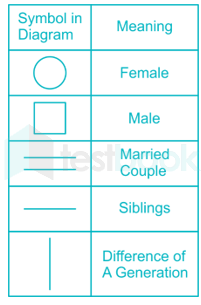
Pointing to a boy, Priyanka said, "He is my husband's only daughter's father's father-in- law's son's son". How the father of the boy related to Priyanka?

  1. ((a))

    Father

  2. ((b))

    Brother-in-law

  3. ((c))

    Brother 

  4. ((d))

    Cousin

Show Answer
Answer: ((c))

Brother 

The symbol table is as:

F4 A.M Deepak 26.12.2019 D2

The relational diagram is as:

Hence, father of boy in the picture is brother of priyanka.

Hence, the correct answer is "Option 3 "

5

Two statements are given below and these are labelled as Assertion (A) and Reason (R).

Assertion (A) :

The life span of population has increased in India since independence.

Reason (R):

The medical field has advanced and now have prevention and cure for diseases like Smallpox, Malaria that accounted for high percentage of deaths earlier.

Select correct answer with the help of code.

  1. ((a))

    Both (A) and (R) are true and (R) is correct explanation of (A)

  2. ((b))

    Both (A) and (R) are true but (R) is not the correct explanation of (A)

  3. ((c))

    (A) is true but (R) is false

  4. ((d))

    (A) is false but (R) is true

Show Answer
Answer: ((a))

Both (A) and (R) are true and (R) is correct explanation of (A)

  • Assertion (A): The life span of population has increased in India since independence.
  • This statement is factually correct. India's life expectancy at birth has increased significantly from around 32 years in 1947 to over 70 years in 2022.
  • Reason (R): The medical field has advanced and now have prevention and cure for diseases like Smallpox, Malaria that accounted for a high percentage of deaths earlier.
  • This statement is also correct. Major public health campaigns have led to the eradication of smallpox (1977) and polio (2014) and a significant reduction in malaria. Advances in medicine, including vaccines and better treatment protocols, have played a crucial role in lowering mortality rates from these infectious disease.

Hence, the correct answer is "Option 1"

6

Seven athletes reached final lap of a race, each at a different time. Ravi is immediately behind Pramod but immediately ahead of Suresh. Alok is immediately ahead of Naresh, who is immediately ahead of Pramod. Gaurav is immediately behind Lalit, who is second from the last. Lalit is immediately behind Suresh.

Who is at the third position from the front?

  1. ((a))

    Alok

  2. ((b))

    Pramod 

  3. ((c))

    Gaurav 

  4. ((d))

    Naresh

Show Answer
Answer: ((b))

Pramod 

Alok > Naresh > Pramod > Ravi > Suresh >Lalit > Gaurav. Pramod is third position form the front.

Hence, the correct answer is "Option 2"

7

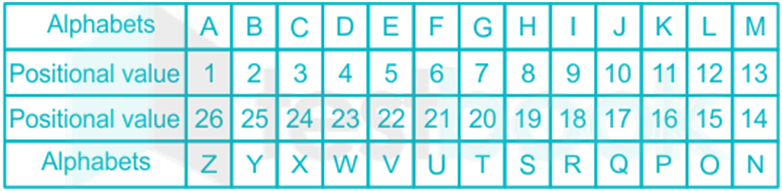
Select the letter cluster that can replace the question mark (?) in the following series.

ZBKI, XDHM, VFEQ, THBU, ?, PLVC

  1. ((a))

    JRYY

  2. ((b))

    RJXY

  3. ((c))

    RJYY

  4. ((d))

    RJYX

Show Answer
Answer: ((c))

RJYY

626a871a13e02eef2fcd3cd5 16564998081491

Logic :

Hence, the correct answer is "Option 3"

8

D, E, F, G, J, K and L are sitting around a round table facing towards the centre, but not necessarily in the same order. 'J' is the immediate neighbour of 'L' and 'F'. 'G' is neither an immediate neighbour of 'F' nor 'E'. ‘K’, who is second to the left of 'G' has ‘D’ and 'E' as immediate neighbours.

Who is sitting to the immediate right of 'G' ?

  1. ((a))

    J

  2. ((b))

    F

  3. ((c))

    D

  4. ((d))

    L

Show Answer
Answer: ((d))

L

Given: 

  • 'J' is the immediate neighbour of 'L' and 'F.'.
  • 'G' is neither an immediate neighbour of 'F' nor 'E'.
  • ‘K’, who is second to the left of 'G,' has 'D' and 'E' as immediate neighbors.

Final arrangement,

L sitting to the immediate right of 'G'

Hence, the correct answer is "Option 4"

9

Seven friends J, K, L, M, P, Q and R are sitting in a row facing East. 'K' is sitting between 'Q' and 'J'. 'R' is to the immediate left of 'M'. Two friends are sitting between 'J' and 'M'. ‘L’ is to the immediate right of 'J'. Two friends are sitting between 'K' and 'P'.

Who is sitting between 'M' and 'K' ?

  1. ((a))

    J

  2. ((b))

    L

  3. ((c))

    Q

  4. ((d))

    R

Show Answer
Answer: ((c))

Q

Given :

Seven friends J, K, L, M, P, Q and R are sitting in a row facing East. 'K' is sitting between 'Q' and 'J'.

  • 'R' is to the immediate left of 'M'.
  • Two friends are sitting between 'J' and 'M'.
  • ‘L’ is to the immediate right of 'J'.
  • Two friends are sitting between 'K' and 'P

Case 1 is eliminated, and case 2 follows all conditions.

  • Final Arrangement

Hence, the correct answer is "Option 3 " 

10

Savita starts walking from Mall and walks 10 m towards East and then turns right and walks 90 m. Then she turns left and walks 40 m. After that she again turns left and goes 70 m. She finally turns left and walks 50 m and reaches her home. How far and in which direction is her home from the Mall ?

  1. ((a))

    10 m, North

  2. ((b))

    20 m, North

  3. ((c))

    20 m, South

  4. ((d))

    30 m, West

Show Answer
Answer: ((c))

20 m, South

Hence, the correct answer is "Option 3"

11

Study the given diagram carefully and answer the question. The numbers in different sections indicate the number of persons.

How many male Doctors are Authors?

  1. ((a))

    16

  2. ((b))

    20

  3. ((c))

    8

  4. ((d))

    10

Show Answer
Answer: ((d))

10

The number of  male Doctors are Authors are in shaded portion in figure given below:

Hence, the correct answer is "Option 4 "

12

'J + K' means 'J is the brother of K',

'J - K' means 'J is the daughter of K',

'J × K' means 'J is the father of K'.

If, ‘V + K − H × W', how is 'V' related to 'W' ?

  1. ((a))

    Father

  2. ((b))

    Uncle

  3. ((c))

    Brother

  4. ((d))

    Sister

Show Answer
Answer: ((c))

Brother

<br>

6051ac0f28d0729c6635d26c 16457744944591

According to the question:

Symbol+-×
MeaningBrotherDaughterFather


Hence, the correct answer is "Option 3 "

13

Select the number that will replace the question mark (?) in the following series.

20, 21, 42, 45, 180, ?, 1110

  1. ((a))

    185

  2. ((b))

    186

  3. ((c))

    365

  4. ((d))

    900

Show Answer
Answer: ((a))

185

The logic follows here, 

Hence, the correct answer is "Option 1"

14

In an office, Kavita's seat is to the South of Chhaya's seat. Priya's seat is to the East of Chhaya's seat. Mrinal's seat is to the North of Priya's seat. If the distance of Mrinal's seat from Priya's seat is equal to the distance of Chhaya's seat from Kavita's seat, in which direction is Mrinal's seat with respect to Chhaya's seat?

  1. ((a))

    North-East

  2. ((b))

    South-East

  3. ((c))

    South-West

  4. ((d))

    West

Show Answer
Answer: ((a))

North-East

According to the given statement, 

Hence, the correct answer is "Option 1"

15

In the following question, a relationship between different elements is shown in the statement followed by two conclusions (I) and (II). Assuming the statement to be true, decide which of the conclusions is/are definitely true?

Statement :

K ≥ X < y ≤ Z = N ≤ P

Conclusions :

(I) N < X

(II) X < P

  1. ((a))

    Only conclusion (I) is true

  2. ((b))

    Only conclusion (II) is true

  3. ((c))

    Both conclusions (I) and (II) are true

  4. ((d))

    Neither conclusion (I) nor conclusion (II) is true

Show Answer
Answer: ((b))

Only conclusion (II) is true

Given Statement: K ≥ X < y ≤ Z = N ≤ P

Conclusions :

(I) N < X -  False (X < y ≤ Z = N, X is less then N)

(II) X < P - True (X < y ≤ Z = N ≤ P, X is less then y and Z is equal to less then N and P, X is less than P.)

Hence, the correct answer is "Option 2"

16

Three statements, showing relationship between different elements, are followed by three conclusions (I), (II) and (III). Assuming the statements to be true, decide which of the conclusions is/are definitely true ?

Statements : 

(1) P < G

(2) R > T

(3) G = R

Conclusions :

(I) T < G

(II) P > G

(III) R > P

  1. ((a))

    Only (I) and (II) are true

  2. ((b))

    Only (II) and (III) are true

  3. ((c))

    Only (I) and (III) are true

  4. ((d))

    All are true

Show Answer
Answer: ((c))

Only (I) and (III) are true

Given:

(1) P < G

(2) R > T

(3) G = R

Combining Statements:

P < G = R > T  

Conclusions :

(I) T < G - True (G = R > T, G > T)

(II) P > G - False ( P < G)

(III) R > P  - True ( P < G = R)

Only (I) and (III) are true

Hence, the correct answer is "Option 3"

17

Select the Venn diagram that best represents the relationship between the following set of classes.

Solar system, Jupiter, Universe

  1. ((a))

  2. ((b))

  3. ((c))

  4. ((d))

Show Answer
Answer: ((c))

Universe is the largest and it includes solar system and Solar System includes Jupiter.

Hence, the correct answer is "Option 3"

18

A statement is followed by two Assumptions numbered (I) and (II). Consider the statement and assumptions and decide which of the given assumptions is/are implicit in the

statement.

<br>

Statement :

<br>

The literacy rate in PQR town is abysmally low due to lack of schools and trained teachers.

<br>

Assumptions :

(I) No body in the town is educated.

(II) Due to lack of education, the citizens are poor in this town.

  1. ((a))

    Only Assumption (I) is implicit

  2. ((b))

    Only Assumption (II) is implicit

  3. ((c))

    Both Assumptions (I) and (II) are implicit

  4. ((d))

    Neither Assumption (I) nor (II) is implicit

Show Answer
Answer: ((d))

Neither Assumption (I) nor (II) is implicit

Assumption I: Nobody in the town is educated.

  • An "abysmally low" literacy rate means the rate is extremely low, but not necessarily zero.
  • The statement indicates that there are literate people, but the number is very small.

Assumption II: Due to lack of education, the citizens are poor in this town

  • The statement establishes a connection between the lack of schools/teachers and the low literacy rate, but it does not mention poverty.
  • While a low literacy rate is often correlated with poverty, this cause-and-effect relationship is not explicitly stated or implied by the provided information.

Neither Assumption (I) nor Assumption (II) is implicit in the statement. The first is an extreme, unsupportable claim, and the second introduces information not mentioned in the statement.

Hence, the correct answer is "Option 4"
19

\Two statements have been given followed by two conclusions (I) and (II). Assuming the statements to be true, even if they seem to be at variance from commonly known facts, decide which of the given conclusions logically follow(s) from the given statements.

Statements :

(1) Some books are pencils.

(2) Some pencils are erasers.

Conclusions :

(I) Some erasers are books.

(II) No book is eraser.

  1. ((a))

    Only conclusion (I) follows

  2. ((b))

    Only conclusion (II) follows

  3. ((c))

    Both conclusions (I) and (II) follow

  4. ((d))

    Either conclusion (I) or (II) follows

Show Answer
Answer: ((d))

Either conclusion (I) or (II) follows

The least possible Venn diagram is shown below according to the given information.

Conclusions :

(I) Some erasers are books. → False (Some books are pen and some Pen are erasers, but it is not definite that some eraser are books.)

(II) No book is eraser. → False (Some books are pen and some Pen are erasers, but it is not definite that some eraser are books.)

Here, Conclusion I and II forms complementary pair for either-or.

So, Either conclusion I or II follow.

Hence, the correct answer is "Option 4"

Additional InformationConditions of Either-or case:

  1. The elements should be the same in both the statements.
  2. Both the conclusions should be false individually.
  3. One conclusion should be positive and one conclusion should be negative (Complementary pair)
  • The two complementary pairs are:
  1. All + Some not

  2. No + Some

Note: Some + Some not is not  considered under Either -or case.

20

Each of six teachers M, N, P, Q, S and T have their classes on six different days of a week starting from Monday and ending on Saturday of the same week, but not necessarily in the same order. Only two teachers have classes before N's class. 'S' has the class on Tuesday and 'Q' has the class on Saturday. Only one teacher has the class after the class of 'M'. P's class is not between the classes of 'M' and 'N'. Who among the following has the class on Monday?

  1. ((a))

    M

  2. ((b))

    N

  3. ((c))

    P

  4. ((d))

    T

Show Answer
Answer: ((c))

P

Given:

Each of six teachers M, N, P, Q, S and T have their classes on six different days of a week starting from Monday and ending on Saturday.

  • Only two teachers have classes before N's class.
  • 'S' has the class on Tuesday and 'Q' has the class on Saturday.
  • Only one teacher has the class after the class of 'M'.
  • P's class is not between the classes of 'M' and 'N'.

Final Arrangement

P has the class on Monday.

Hence, the correct answer is "Option 3".

Quantitative Aptitude (30 questions)

21

​Abhinav bought some pencils in ₹ X. He sold 20% of pencils at 25% loss, one third at 20% profit and the remaining at 25% profit. If the total profit earned by him on selling all the pencils is ₹ 248, then find the value of X (in ₹).

  1. ((a))

    1450

  2. ((b))

    1680

  3. ((c))

    1750

  4. ((d))

    1860

Show Answer
Answer: ((d))

1860

Given:

Total profit earned = ₹248.

20% of pencils sold at 25% loss.

One-third of pencils sold at 20% profit.

Remaining pencils sold at 25% profit.

Formula Used:

Profit/Loss from each part = Selling Price - Cost Price.

Total profit = Profit from all parts.

Calculation:

Let the total number of pencils = N.

Cost Price of each pencil = X/N.

Cost Price of 20% pencils = (20/100) × N × (X/N) = 0.2X.

Loss on 20% pencils = 25% of 0.2X = (25/100) × 0.2X = 0.05X.

Profit on one-third pencils = 20% of (1/3 × N × (X/N)) = (20/100) × (1/3)X = (20/300)X = 0.0667X.

Profit on remaining pencils = 25% of ((N - 0.2N - N/3) × (X/N)) = 25% of ((1 - 0.2 - 1/3)X) = 25% of (0.4667X) = 0.1167X.

Total profit = -0.05X + 0.0667X + 0.1167X.

⇒ Total profit = 0.1334X.

Given total profit = ₹248.

⇒ 0.1334X = 248.

⇒ X = 248 / 0.1334.

⇒ X = 1860.

The value of X is ₹1860.

22

The following chart gives the expenditure incurred by a publisher to bring out a book. 

Find the percentage of the total expenditure incurred for printing.

  1. ((a))

    20%

  2. ((b))

    25%

  3. ((c))

    30%

  4. ((d))

    35%

Show Answer
Answer: ((c))

30%

Given:

Total expenditure incurred for bringing out the book = 108°

Calculation:

We know, 

360° = 100%

Since, Total expenditure incurred for bringing out the book = 108°

So, 108° = 100/360 × 108 = 5/18 × 108 = 5 × 6 = 30%

Hence, the percentage of total expenditure incurred for printing is 30%.

23

Study the table and answer the question.

Number of New admission and number of TC issued in four schools M, N, O and P in different years are given in the table.

Detail of New Admissions and TC issued
School2017201820192020
New AdmissionTC issuedNew AdmissionTC issuedNew AdmissionTC issuedNew AdmissionTC issued
M8055765988798273
N8568888482657972
O7549786978638171
P8267807183727967


During 2018 to 2020, which school has saw the maximum increase in the number of students?

  1. ((a))

    M

  2. ((b))

    N

  3. ((c))

    O

  4. ((d))

    P

Show Answer
Answer: ((a))

M

Given:

Details of new admissions and TC issued in four schools (M, N, O, P) for years 2018 to 2020 are provided in the table.

We need to calculate the net increase in the number of students for each school during 2018 to 2020.

Formula Used:

Net Increase = Total Admissions (2018-2020) - Total TC Issued (2018-2020)

Calculation:

For school M:

⇒ Total Admissions = 76 + 88 + 82 = 246

⇒ Total TC Issued = 59 + 79 + 73 = 211

⇒ Net Increase = 246 - 211 = 35

For school N:

⇒ Total Admissions = 88 + 82 + 79 = 249

⇒ Total TC Issued = 84 + 65 + 72 = 221

⇒ Net Increase = 249 - 221 = 28

For school O:

⇒ Total Admissions = 78 + 78 + 81 = 237

⇒ Total TC Issued = 69 + 63 + 71 = 203

⇒ Net Increase = 237 - 203 = 34

For school P:

⇒ Total Admissions = 80 + 83 + 79 = 242

⇒ Total TC Issued = 71 + 72 + 67 = 210

⇒ Net Increase = 242 - 210 = 32

Conclusion:

School M saw the maximum increase in the number of students during 2018-2020, with a net increase of 35 students.

The correct answer is option 1.

24

A fruit seller bought 186 bananas at the rate of ₹ 72 per dozen. He found that 35 bananas were rotten and could not be sold. He sold the remaining bananas at the rate of ₹ 8 per piece. What is his percentage gain in the whole transaction?

(Correct to two places of decimal)

  1. ((a))

    6.26%

  2. ((b))

    7.59%

  3. ((c))

    8.24%

  4. ((d))

    9.15%

Show Answer
Answer: ((c))

8.24%

Given:

Bananas bought = 186.

Cost price per dozen = ₹72.

Bananas rotten = 35.

Selling price per banana = ₹8.

Formula Used:

Percentage gain = [(Selling Price - Cost Price) / Cost Price] × 100.

Calculation:

⇒ Number of dozens = 186 / 12 = 15.5 dozen.

⇒ Total cost price = 15.5 × 72 = ₹1116.

⇒ Bananas sold = 186 - 35 = 151.

⇒ Total selling price = 151 × 8 = ₹1208.

⇒ Percentage gain = [(1208 - 1116) / 1116] × 100.

⇒ Percentage gain = (92 / 1116) × 100.

⇒ Percentage gain = 0.0824 × 100.

⇒ Percentage gain = 8.24%.

The percentage gain in the whole transaction is 8.24%.

25

The value of 3×0.030.9+0.36×0.02×0.40.2×0.30.001×0.80.08\frac{3 \times 0.03}{0.9}+\frac{0.36 \times 0.02 \times 0.4}{0.2 \times 0.3}-\frac{0.001 \times 0.8}{0.08} is :

  1. ((a))

    1.36

  2. ((b))

    0.138

  3. ((c))

    0.121

  4. ((d))

    0.57

Show Answer
Answer: ((b))

0.138

Given:

(3 × 0.03)/(0.9) + (0.36 × 0.02 × 0.4)/(0.2 × 0.3) - (0.001 × 0.8)/(0.08)

Formula Used:

Basic arithmetic operations: multiplication, division, and addition/subtraction.

Calculation:

⇒ (3 × 0.03)/(0.9) = 0.09/0.9 = 0.1

⇒ (0.36 × 0.02 × 0.4)/(0.2 × 0.3) = 0.00288/0.06 = 0.048

⇒ (0.001 × 0.8)/(0.08) = 0.0008/0.08 = 0.01

⇒ Total Value = 0.1 + 0.048 - 0.01 = 0.138

The value is 0.138.

26

A certain amount of money at simple interest amounts to ₹ 1,404 in 2 years and to ₹ 1,560 in 5 years. What is the rate of simple interest per annum?

  1. ((a))

    3%

  2. ((b))

    4%

  3. ((c))

    5%

  4. ((d))

    6%

Show Answer
Answer: ((b))

4%

Given:

Money after 2 years = ₹ 1,404

Money after 5 years = ₹ 1,560

Principal = ₹ 1,404 - Simple Interest for 2 years

Formula Used:

Simple Interest = Principal × Rate × Time / 100

Calculation:

Simple Interest for 3 years = ₹ 1,560 - ₹ 1,404 = ₹ 156

⇒ Simple Interest for 1 year = ₹ 156 / 3 = ₹ 52

⇒ Principal = ₹ 1,404 - ₹ (52 × 2) = ₹ 1,404 - ₹ 104 = ₹ 1,300

⇒ Rate = (Simple Interest × 100) / (Principal × Time)

⇒ Rate = (₹ 52 × 100) / (₹ 1,300 × 1)

⇒ Rate = 52/13 = 4%

The rate of simple interest per annum is 4%.

27

₹ 27,600 is distributed among Thomas David and Vijay in such a manner that 17\frac{1}{7}th of the share of Thomas, 13\frac{1}{3}rd of the share of David and 12\frac{1}{2} of the share of Vijay are equal. Find the sum of the share of Thomas and Vijay.

  1. ((a))

    18,720

  2. ((b))

    15,200

  3. ((c))

    16,700

  4. ((d))

    20,700

Show Answer
Answer: ((d))

20,700

Given:

₹ 27,600 is distributed among Thomas, David, and Vijay.

Condition: (1/7)th of Thomas's share = (1/3)rd of David's share = (1/2) of Vijay's share.

Formula Used:

Let Thomas's share = T, David's share = D, and Vijay's share = V.

⇒ (1/7)T = (1/3)D = (1/2)V

⇒ T / 7 = D / 3 = V / 2 = k (common ratio)

⇒ T = 7k, D = 3k, V = 2k

Total Share = T + D + V = ₹ 27,600

Calculation:

⇒ 7k + 3k + 2k = ₹ 27,600

⇒ 12k = ₹ 27,600

⇒ k = ₹ 2,300

⇒ T = 7k = 7 × ₹ 2,300 = ₹ 16,100

⇒ D = 3k = 3 × ₹ 2,300 = ₹ 6,900

⇒ V = 2k = 2 × ₹ 2,300 = ₹ 4,600

⇒ Sum of Thomas's and Vijay's share = T + V = ₹ 16,100 + ₹ 4,600 = ₹ 20,700

The sum of Thomas's and Vijay's share is ₹ 20,700.

28

The compound interest on a certain amount for 2 years at 4% per annum is ₹ 1,020, if interest is compounded annually. Find the simple interest on that amount for 2 years at 4% per annum?

  1. ((a))

    ₹ 800

  2. ((b))

    ₹ 850

  3. ((c))

    ₹ 950

  4. ((d))

    ₹ 1,000

Show Answer
Answer: ((d))

₹ 1,000

Given:

Compound interest (CI) for 2 years at 4% per annum = ₹ 1,020.

Rate of interest = 4% per annum.

Time = 2 years.

Formula Used:

Compound interest formula: CI = P × [(1 + r/100)t - 1]

Simple interest formula: SI = (P × r × t) / 100

Calculation:

⇒ CI = 1,020

⇒ 1,020 = P × [(1 + 4/100)2 - 1]

⇒ 1,020 = P × [(1 + 0.04)2 - 1]

⇒ 1,020 = P × [(1.04)2 - 1]

⇒ 1,020 = P × (1.0816 - 1)

⇒ 1,020 = P × 0.0816

⇒ P = 1,020 / 0.0816

⇒ P = ₹ 12,500

Now, calculate the simple interest:

⇒ SI = (P × r × t) / 100

⇒ SI = (12,500 × 4 × 2) / 100

⇒ SI = (1,00,000) / 100

⇒ SI = ₹ 1,000

The simple interest for 2 years at 4% per annum is ₹ 1,000.

29

Anju spends 16% of her monthly income on rent, 22% on groceries, 14% on her children's education, and 60% of the remaining on other items. If she has ₹22,848 left at the end of the month, what is her monthly income (in ₹)?

  1. ((a))

    90,450

  2. ((b))

    114,600

  3. ((c))

    98,500

  4. ((d))

    119,000

Show Answer
Answer: ((d))

119,000

Shortcut Trick

Total percentage spent on Rent, Groceries, and Education = 16% + 22% + 14% = 52%.

Remaining income = 100% − 52% = 48%.

Spending on Other items = 60% of 48% → Final savings = 40% of 48%.

40% × 48% of Income = ₹22,848 ⇒ 0.192 × Income = ₹22,848.

Income = 22,848 ÷ 0.192 = ₹119,000.

∴ The correct answer is ₹119,000.

Alternate Method

Given: Spending on Rent = 16%, Groceries = 22%, Education = 14%. Remaining spent on Other items = 60%. Final Savings = ₹22,848.

Let the Monthly Income be ₹X.

⇒ Total initial expenditure = (16 + 22 + 14)% of X = 52% of X.

⇒ Remaining amount = X − 0.52X = 0.48X.

⇒ Expenditure on other items = 60% of 0.48X = 0.288X.

⇒ Final Savings = 0.48X − 0.288X = 0.192X.

⇒ 0.192X = 22,848.

⇒ X = 22,848 ÷ 0.192.

⇒ X = 119,000.

∴ The correct answer is ₹119,000.

Additional Information

Percentage of Remaining

When a percentage is spent from the remaining balance, use the formula: Final = Initial × (1 − r1/100) × (1 − r2/100).

Successive Percentage Change

If a value changes by a% and then by b% of the new value, the net change is [a + b + (ab/100)]%.

Base Value Calculation

To find the original value when the final value and percentage decrease are known: Original = Final ÷ (1 − Decrease%).

30

A chemist prepared 50 grams of a medicine by mixing two ingredients 'P' and 'Q'. Rate of 'P' is ₹ 150 per 10 gm and that of 'Q' is ₹ 500 per 100 gm. ‘P' and 'Q' are mixed in such a way that the cost of the resulting medicine is ₹ 12 per gm. What is the quantity of 'P' (in grams) in the medicine ?

  1. ((a))

    15

  2. ((b))

    20

  3. ((c))

    25

  4. ((d))

    35

Show Answer
Answer: ((d))

35

Given:

Total weight of medicine = 50 gm.

Rate of 'P' = ₹150 per 10 gm = ₹15 per gm.

Rate of 'Q' = ₹500 per 100 gm = ₹5 per gm.

Cost of medicine = ₹12 per gm.

Formula Used:

Cost of medicine = (Cost of 'P' × Quantity of 'P' + Cost of 'Q' × Quantity of 'Q') / Total weight of medicine

Total weight of medicine = Quantity of 'P' + Quantity of 'Q'

Calculation:

Let the quantity of 'P' be x gm and the quantity of 'Q' be (50 - x) gm.

⇒ (15 × x + 5 × (50 - x)) / 50 = 12

⇒ (15x + 250 - 5x) / 50 = 12

⇒ (10x + 250) / 50 = 12

⇒ 10x + 250 = 600

⇒ 10x = 600 - 250

⇒ 10x = 350

⇒ x = 35

The quantity of 'P' in the medicine is 35 gm.

31

The value of 25×0.64+9×0.36+10×3×0.48(25×0.649×0.36)\frac{25 × 0.64+9 × 0.36+10 × 3 × 0.48}{(25 × 0.64-9 × 0.36)} × (5 × 0.8 - 3 × 0.6) is :

  1. ((a))

    4.6

  2. ((b))

    5.8

  3. ((c))

    6.2

  4. ((d))

    6.6

Show Answer
Answer: ((b))

5.8

Given:

Expression to solve: (25 × 0.64 + 9 × 0.36 + 10 × 3 × 0.48)/((25 × 0.64 - 9 × 0.36)) × (5 × 0.8 - 3 × 0.6)

Formula Used:

Basic arithmetic operations.

Calculation:

⇒ Numerator = 25 × 0.64 + 9 × 0.36 + 10 × 3 × 0.48

⇒ Numerator = 16 + 3.24 + 14.4

⇒ Numerator = 33.64

⇒ Denominator (Part 1) = (25 × 0.64 - 9 × 0.36)

⇒ Denominator (Part 1) = 16 - 3.24

⇒ Denominator (Part 1) = 12.76

⇒ Denominator (Part 2) = (5 × 0.8 - 3 × 0.6)

⇒ Denominator (Part 2) = 4 - 1.8

⇒ Denominator (Part 2) = 2.2

⇒ Final Expression = (33.64 / 12.76) × 2.2

⇒ Final Expression = 2.636 × 2.2

⇒ Final Value = 5.7992 ≈ 5.8

The correct answer is option 2: 5.8.

32

The ratio of number of girls to number of boys is 3 ∶ 2 in a class of 60 students. The average marks scored by the boys in Physics is 72 and the average marks scored by the whole class in Physics is 81. What is the average marks in Physics scored by girls?

  1. ((a))

    79

  2. ((b))

    83

  3. ((c))

    85

  4. ((d))

    87

Show Answer
Answer: ((d))

87

Given:

Total number of students in the class = 60

Ratio of girls to boys = 3 ∶ 2

Average marks scored by boys in Physics = 72

Average marks scored by the whole class in Physics = 81

Formula Used:

Average marks of the whole class = (Total marks scored by boys + Total marks scored by girls) / Total students

Total marks = Number of students × Average marks

Calculation:

Number of boys = (2 / (3 + 2)) × 60 = (2 / 5) × 60 = 24

Number of girls = (3 / (3 + 2)) × 60 = (3 / 5) × 60 = 36

Total marks scored by boys = Number of boys × Average marks = 24 × 72 = 1728

Total marks scored by the whole class = Total students × Average marks = 60 × 81 = 4860

Total marks scored by girls = Total marks scored by the whole class - Total marks scored by boys

⇒ Total marks scored by girls = 4860 - 1728 = 3132

Average marks scored by girls = Total marks scored by girls / Number of girls

⇒ Average marks scored by girls = 3132 / 36

⇒ Average marks scored by girls = 87

The average marks in Physics scored by girls is 87.

33

If 'N' is the greatest four digit number which when divided by 27, 6, 8 and 9 leaves in each case the same remainder of 5, then the sum of the digits of 'N' is _______.

  1. ((a))

    18

  2. ((b))

    20

  3. ((c))

    23

  4. ((d))

    26

Show Answer
Answer: ((c))

23

Given:

'N' is the greatest four-digit number which when divided by 27, 6, 8, and 9 leaves the same remainder of 5.

Formula Used:

  1. N = LCM of divisors × k + Remainder
  2. Sum of digits = Sum of all digits of the number.

Calculation:

LCM of 27, 6, 8, and 9:

⇒ LCM = 23 × 33 = 216

The greatest four-digit number is 9999.

⇒ N = LCM × k + Remainder

⇒ 9999 = 216 × k + 5

⇒ 9994 = 216 × k

⇒ k = 9994 / 216

⇒ k = 46 (integer value).

Substitute k = 46:

⇒ N = 216 × 46 + 5

⇒ N = 9936 + 5

⇒ N = 9941

Sum of the digits of N:

⇒ Sum = 9 + 9 + 4 + 1

⇒ Sum = 23

The sum of the digits of 'N' is 23.

34

Working 10 hours a day, Jagan can complete a work in 12 days while working 8 hours a day, Magan can complete the same work in 9 days. If Jagan and Magan work together 6 hours a day, then in how many days will they complete the original work?

  1. ((a))

    6126\frac{1}{2}

  2. ((b))

    7147\frac{1}{4}

  3. ((c))

    7127\frac{1}{2}

  4. ((d))

    8148\frac{1}{4}

Show Answer
Answer: ((c))

7127\frac{1}{2}

Given:

Jagan works 10 hours/day and completes the work in 12 days.

Magan works 8 hours/day and completes the same work in 9 days.

Jagan and Magan work together for 6 hours/day.

Formula Used:

  1. Work = Rate of work × Time
  2. Total Work = LCM of individual work capacities.
  3. Combined Rate of Work = Sum of individual rates of work.
  4. Time = Total Work / Combined Rate of Work.

Calculation:

Total work by Jagan = 10 hours/day × 12 days = 120 hours.

⇒ Jagan's rate of work = 1/120 work/hour.

Total work by Magan = 8 hours/day × 9 days = 72 hours.

⇒ Magan's rate of work = 1/72 work/hour.

LCM of 120 and 72 = 360 (Total Work).

Jagan's rate of work = 360/120 = 3 units/hour.

Magan's rate of work = 360/72 = 5 units/hour.

Combined rate of work (working 6 hours/day) = (3 + 5) = 8 units/hour × 6 hours/day = 48 units/day.

Time to complete the work = Total Work / Combined daily rate.

⇒ Time = 360 / 48.

⇒ Time = 7(1/2) days.

Jagan and Magan will complete the work in 7(1/2) days.

35

A boat can go 15 km upstream and 21 km downstream in 2 hours. If the speed of the stream is 3 km/h, then the time taken (in hours) by the boat to go 21 km upstream and 15 km downstream is:

  1. ((a))

    2122 \frac{1}{2}

  2. ((b))

    24352 \frac{4}{35}

  3. ((c))

    3

  4. ((d))

    3143\frac{1}{4}

Show Answer
Answer: ((b))

24352 \frac{4}{35}

Given:

Upstream distance = 15 km

Downstream distance = 21 km

Total time for upstream and downstream = 2 hours

Speed of stream = 3 km/h

Formula Used:

Speed of boat in still water = (Downstream speed + Upstream speed) / 2

Downstream speed = Speed of boat in still water + Speed of stream

Upstream speed = Speed of boat in still water - Speed of stream

Time = Distance / Speed

Calculation:

Let the speed of the boat in still water = x km/h

⇒ Downstream speed = x + 3

⇒ Upstream speed = x - 3

Total time = (15 / (x - 3)) + (21 / (x + 3))

Given total time = 2 hours

⇒ (15 / (x - 3)) + (21 / (x + 3)) = 2

⇒ Multiply through by (x - 3)(x + 3)

⇒ 15(x + 3) + 21(x - 3) = 2(x - 3)(x + 3)

⇒ 15x + 45 + 21x - 63 = 2(x2 - 9)

⇒ 36x - 18 = 2x2 - 18

⇒ 2x2 - 36x = 0

⇒ 2x(x - 18) = 0

⇒ x = 18 km/h (since x = 0 is not feasible)

Speed of boat in still water = 18 km/h

Downstream speed = 18 + 3 = 21 km/h

Upstream speed = 18 - 3 = 15 km/h

Time taken for 21 km upstream = 21 / 15

⇒ Time taken for 21 km upstream = 1 (6/15) = 1 (2/5) hours

Time taken for 15 km downstream = 15 / 21

⇒ Time taken for 15 km downstream = 5/7 hours

Total time = (1 (2/5)) + (5/7)

⇒ Total time = (7/5) + (5/7)

⇒ Total time = (49 + 25) / 35

⇒ Total time = 74 / 35 hours

⇒ Total time = 2 (4/35) hours

The time taken by the boat to go 21 km upstream and 15 km downstream is 2 (4/35) hours.

36

A five digit number 2A78B is divisible by 55. What is the difference between the maximum and minimum possible value of (A + B) ?

  1. ((a))

    0

  2. ((b))

    1

  3. ((c))

    5

  4. ((d))

    10

Show Answer
Answer: ((d))

10

Given:

A five-digit number: 2A78B

The number is divisible by 55.

55 = 5 × 11

Formula Used:

  1. A number is divisible by 5 if its last digit is 0 or 5.
  2. A number is divisible by 11 if the difference between the sum of its digits at odd positions and the sum of its digits at even positions is divisible by 11.

Calculation:

For divisibility by 5, B must be 0 or 5.

If B = 0:

Number = 2A780

For divisibility by 11:

Odd-position digits = 2 + 7 + 0 = 9

Even-position digits = A + 8

⇒ Difference = (9 - (A + 8))

⇒ Difference = 1 - A

For divisibility by 11:

1 - A must be divisible by 11.

Possible value of A = 1 (since A is a single digit).

If B = 5:

Number = 2A785

Odd-position digits = 2 + 7 + 5 = 14

Even-position digits = A + 8

⇒ Difference = (14 - (A + 8))

⇒ Difference = 6 - A

For divisibility by 11:

6 - A must be divisible by 11.

Possible value of A = 6.

Now, calculate A + B for the maximum and minimum cases:

Case 1 (minimum): A = 1, B = 0

⇒ A + B = 1 + 0 = 1

Case 2 (maximum): A = 6, B = 5

⇒ A + B = 6 + 5 = 11

Difference between maximum and minimum = 11 - 1

⇒ Difference = 10

The difference between the maximum and minimum possible values of (A + B) is 10.

37

7 liters of milk and 3 liters of water is mixed in an empty bucket 'P'. In other empty bucket ‘Q six liters of milk is mixed in 1 liter of water. 3 liters of mixture 'P' and 4 liters of mixture from bucket 'Q' are mixed in an empty bucket 'R'. What is the quantity of water (in liters) in bucket 'R' ?

  1. ((a))

    111701 \frac{11}{70} liter

  2. ((b))

    133701 \frac{33}{70} liter

  3. ((c))

    215702 \frac{15}{70} liter

  4. ((d))

    229702 \frac{29}{70} liter

Show Answer
Answer: ((b))

133701 \frac{33}{70} liter

Given:

Bucket P: 7 liters of milk and 3 liters of water.

Bucket Q: 6 liters of milk and 1 liter of water.

Mixture in Bucket R: 3 liters from bucket P and 4 liters from bucket Q.

Formula Used:

Proportion of water in a mixture = (Quantity of water in the mixture / Total quantity of the mixture).

Calculation:

Proportion of water in bucket P = 3 / (7 + 3) = 3 / 10.

Proportion of water in bucket Q = 1 / (6 + 1) = 1 / 7.

Quantity of water in 3 liters of bucket P = 3 × (3 / 10) = 9 / 10 liters.

Quantity of water in 4 liters of bucket Q = 4 × (1 / 7) = 4 / 7 liters.

Total quantity of water in bucket R = (9 / 10) + (4 / 7).

⇒ Total quantity of water = (63 / 70) + (40 / 70).

⇒ Total quantity of water = 103 / 70 liters.

Quantity of water in bucket R = 1 (33 / 70) liters.

The correct answer is option 2: 1 (33 / 70) liters.

38

Amit sold an electric iron for ₹ 2,656 after giving a discount of 17% on the marked price. Had he not given the discount, he would have earned a profit of 28%. What is the cost price (in ₹) of the electric iron ?

  1. ((a))

    1800

  2. ((b))

    2250

  3. ((c))

    2500

  4. ((d))

    2675

Show Answer
Answer: ((c))

2500

Given:

Marked price of electric iron = ₹ 2,656 / (1 - 17%) = ₹ 2,656 / 0.83

Discount = 17%

Profit without discount = 28%

Formula Used:

Cost price = Marked Price / (1 + Profit)

Marked Price = Selling Price / (1 - Discount)

Calculation:

⇒ Marked Price = ₹ 2,656 / 0.83

⇒ Marked Price = ₹ 3,200

⇒ Cost Price = ₹ 3,200 / (1 + 28%)

⇒ Cost Price = ₹ 3,200 / 1.28

⇒ Cost Price = ₹ 2,500

The cost price of the electric iron is ₹ 2,500.

39

Study the given graph carefully and answer the given question.

The graph shows the number of students appeared and passed in class XI final exams in a school in different years.

In which year the pass percentage is the highest ?

[Pass percentage = (No. of students passed / Number of students appeared in exam) × 100]

  1. ((a))

    2019

  2. ((b))

    2020

  3. ((c))

    2021

  4. ((d))

    2022

Show Answer
Answer: ((d))

2022

Given:

The graph provides the number of students appeared and passed in class XI exams for the years 2019, 2020, 2021, and 2022.

Formula Used:

Pass percentage = (Number of students passed / Number of students appeared in exam) × 100

Calculation:

Pass percentage :

In 2019: (74/80) × 100 = 7400/80 = 92.5%

In 2020: (64/70) × 100 = 6400/70 = 91.42%

In 2021: (79/85) × 100 = 7900/85 = 92.94%

In 2022: (70/75) × 100 = 7000/75 = 93.33%

Thus, in the year 2022, the pass percentage is highest, which is 93.33%.

Hence, the correct answer is option (4).

40

Jyoti, Kavya, Shivam and Manish start walking from the same point in the same direction around a rectangular track and each one of them completes one round in 180 seconds, 270 seconds, 360 seconds and 240 seconds respectively. After how much time will they all meet again at one point?

  1. ((a))

    30 minutes 20 seconds

  2. ((b))

    32 minutes

  3. ((c))

    34 minutes 15 seconds

  4. ((d))

    36 minutes

Show Answer
Answer: ((d))

36 minutes

Given:

Time taken by Jyoti to complete one round = 180 seconds.

Time taken by Kavya to complete one round = 270 seconds.

Time taken by Shivam to complete one round = 360 seconds.

Time taken by Manish to complete one round = 240 seconds.

Formula Used:

To find the time when they all meet again, calculate the Least Common Multiple (LCM) of their individual times.

Calculation:

LCM of 180, 270, 360, and 240:

Prime factorization:

180 = 22 × 32 × 5

270 = 2 × 33 × 5

360 = 23 × 32 × 5

240 = 24 × 3 × 5

Take the highest powers of all prime factors:

LCM = 24 × 33 × 5

⇒ LCM = 16 × 27 × 5

⇒ LCM = 2160 seconds

Convert seconds to minutes:

2160 ÷ 60 = 36 minutes

The time after which they all meet again is 36 minutes.

41

Rohan's present age is 37\frac{3}{7} times of the age of his mother. After five years, he will be one-half of the age of his mother. How old is his mother at present?

  1. ((a))

    31 years

  2. ((b))

    33 years

  3. ((c))

    35 years

  4. ((d))

    37 years

Show Answer
Answer: ((c))

35 years

Given:

Rohan's present age = (3/7) of his mother's age.

After 5 years, Rohan's age = (1/2) of his mother's age.

Formula Used:

Linear equations based on age relationships.

Calculation:

Let Rohan's mother's present age = M years.

⇒ Rohan's present age = (3/7)M.

After 5 years:

⇒ Rohan's age = (3/7)M + 5.

⇒ Mother's age = M + 5.

Given, after 5 years, Rohan's age will be half of his mother's age:

⇒ (3/7)M + 5 = (1/2)(M + 5).

⇒ 2 × ((3/7)M + 5) = M + 5.

⇒ (6/7)M + 10 = M + 5.

⇒ M - (6/7)M = 10 - 5.

⇒ (1/7)M = 5.

⇒ M = 5 × 7.

⇒ M = 35 years.

The mother's present age is 35 years.

42

Aman takes 36 minutes more than Sudhanshu to cover a distance of 130 km. If Aman doubles his speed, he takes 42 minutes less than Sudhanshu to cover the same distance. To cover the distance of 195 km, how much time (in hours) will Sudhanshu take with his same speed?

  1. ((a))

    2

  2. ((b))

    2142\frac{1}{4}

  3. ((c))

    2342\frac{3}{4}

  4. ((d))

    3

Show Answer
Answer: ((b))

2142\frac{1}{4}

Given:

Distance covered by Aman and Sudhanshu = 130 km

Aman takes 36 minutes more than Sudhanshu to cover 130 km.

If Aman doubles his speed, he takes 42 minutes less than Sudhanshu to cover 130 km.

Required: Time taken by Sudhanshu to cover 195 km.

Formula Used:

Time = Distance / Speed

Calculation:

Let Sudhanshu’s speed be S km/h and Aman’s speed be A km/h.

⇒ Time taken by Sudhanshu = 130 / S

⇒ Time taken by Aman = 130 / A

Given, Aman takes 36 minutes more than Sudhanshu:

⇒ 130 / A - 130 / S = 36 / 60

⇒ (130S - 130A) / (AS) = 3 / 5

⇒ 650S - 650A = 3AS

⇒ 3AS = 650(S - A) ........(1)

When Aman doubles his speed, his new speed = 2A.

Given, Aman takes 42 minutes less than Sudhanshu:

⇒ 130 / S - 130 / (2A) = 42 / 60

⇒ (260A - 130S) / (2AS) = 7 / 10

⇒ 1300A - 650S = 14AS ........(2)

From equation (1): 3AS = 650(S - A)

⇒ A = S / 4

Substitute A = S / 4 in equation (2):

⇒ 1300(S / 4) - 650S = 14S(S / 4)

⇒ 325S - 650S = 14S2 / 4

⇒ -325S = 3.5S2

⇒ S = 93 km/h

⇒ A = S / 4 = 93 / 4 = 23.25 km/h

Time taken by Sudhanshu to cover 195 km:

⇒ Time = Distance / Speed

⇒ Time = 195 / 93

⇒ Time = 2(1) / 4 hours

Sudhanshu will take 2(1) / 4 hours to cover 195 km.

43

(438 + 440 – 439 + 441) is divisible by which one of the following ?

  1. ((a))

    7

  2. ((b))

    13

  3. ((c))

    15

  4. ((d))

    17

Show Answer
Answer: ((a))

7

Divisibility Calculation

Expression: (438 + 440 – 439 + 441)

The expression is divisible by 7.

Calculation Steps:

1. Factor out 438:

438 (40 + 42 - 41 + 43)

2. Evaluate the terms:

438 (1 + 16 - 4 + 64)

3. Simplify the sum:

438 (77)

Since 77 = 7 × 11, the expression is a multiple of 7.

44

The value of 

612÷314 of 13[141314+13]×415+256 \frac{1}{2} \div 3 \frac{1}{4} \text { of } \frac{1}{3}-\left[\frac{\frac{1}{4}-\frac{1}{3}}{\frac{1}{4}+\frac{1}{3}}\right] \times 4 \frac{1}{5}+\frac{2}{5} is :

  1. ((a))

    7

  2. ((b))

    6

  3. ((c))

    1

  4. ((d))

    0

Show Answer
Answer: ((a))

7

Step 1: Convert Mixed Numbers

  • 6 1/2 = 13/2
  • 3 1/4 = 13/4
  • 4 1/5 = 21/5

The expression becomes: 13/2 ÷ 13/4 of 1/3 - [ (1/4 - 1/3) / (1/4 + 1/3) ] × 21/5 + 2/5

Step 2: Solve 'Of' and Brackets (BODMAS)

Part A: Solve 'of'

3 1/4 of 1/3 = 13/4 × 1/3 = 13/12

Part B: Solve Brackets [ ]

Numerator: 1/4 - 1/3 = 3/12 - 4/12 = -1/12

Denominator: 1/4 + 1/3 = 3/12 + 4/12 = 7/12

Fraction: (-1/12) / (7/12) = -1/7

The expression is now: 13/2 ÷ 13/12 - [-1/7] × 21/5 + 2/5

Step 3: Solve Division and Multiplication

A. Division

13/2 ÷ 13/12 = 13/2 × 12/13 = 12/2 = 6

B. Multiplication

  • [-1/7] × 21/5 = + 1/7 × 21/5 = 3/5

The expression is now: 6 + 3/5 + 2/5

Step 4: Solve Addition

6 + 3/5 + 2/5 = 6 + (3/5 + 2/5)

= 6 + (5/5)

= 6 + 1

Final Answer: 7

45

Seven years ago, the sum of the ages of a mother and her daughter was 46 years. The ratio of their present ages is 3 ∶ 1. What is the present age of the daughter?

  1. ((a))

    11 years

  2. ((b))

    13 years

  3. ((c))

    15 years

  4. ((d))

    17 years

Show Answer
Answer: ((c))

15 years

Given:

Seven years ago, the sum of the ages of a mother and her daughter = 46 years.

Present ratio of their ages = 3:1.

Formula Used:

Let the present ages of the mother and daughter be 3x and x respectively. Seven years ago, the sum of their ages was 46 years.

⇒ (3x - 7) + (x - 7) = 46

Calculation:

⇒ 3x - 7 + x - 7 = 46

⇒ 4x - 14 = 46

⇒ 4x = 46 + 14

⇒ 4x = 60

⇒ x = 60 ÷ 4

⇒ x = 15

The present age of the daughter = x = 15 years.

The correct answer is 15 years.

46

Ajay, Bablu and Chirag can complete a certain work in 21, 28 and 15 days respectively. Ajay and Chirag started the work while Bablu joined them after 5 days and worked with them till the completion of the work. For how many days Bablu worked ?

  1. ((a))

    2122\frac{1}{2} days

  2. ((b))

    2672\frac{6}{7} days

  3. ((c))

    3123\frac{1}{2} days

  4. ((d))

    4 days

Show Answer
Answer: ((b))

2672\frac{6}{7} days

Work and Time Problem Solution

The goal is to find the number of days Bablu worked.

  1. Find the Total Work (LCM)

The individual times to complete the work are: Ajay (21 days), Bablu (28 days), and Chirag (15 days).

Total Work = LCM(21, 28, 15) = 420 units.

  1. Calculate Individual Efficiencies (Units/Day)
  • Ajay: 420 / 21 = 20 units/day
  • Bablu: 420 / 28 = 15 units/day
  • Chirag: 420 / 15 = 28 units/day
  1. Work Done in the First 5 Days

Ajay and Chirag worked together for 5 days.

Combined Efficiency (Ajay + Chirag) = 20 + 28 = 48 units/day

Work Done = 48 units/day × 5 days = 240 units

  1. Remaining Work

Remaining Work = Total Work - Work Done

Remaining Work = 420 - 240 = 180 units

  1. Time to Finish Remaining Work

All three (Ajay, Bablu, and Chirag) work together for the remaining work.

Combined Efficiency (A + B + C) = 20 + 15 + 28 = 63 units/day

Time Taken (T) = Remaining Work / Combined Efficiency

T = 180 / 63 days

Simplify (divide by 9): T = 20/7 days

  1. Final Answer: Bablu's Working Days

Bablu joined when the remaining work started and worked until the end.

Days Bablu worked = Time to finish remaining work

Days Bablu worked = 20/7 days

In mixed number form: 2 and 6/7 days

47

If numerator of a fraction is decreased by 20% and the denominator of the same fraction is increased by 30%, then what fraction of the old is the new fraction?

  1. ((a))

    23\frac{2}{3}

  2. ((b))

    32\frac{3}{2}

  3. ((c))

    613\frac{6}{13}

  4. ((d))

    813\frac{8}{13}

Show Answer
Answer: ((d))

813\frac{8}{13}

Given:

Old fraction = numerator/denominator.

Numerator decreased by 20% and denominator increased by 30%.

Formula Used:

New fraction = (80% of numerator)/(130% of denominator).

Fraction of the old = New fraction/Old fraction.

Calculation:

Let the old numerator = n and old denominator = d.

⇒ Old fraction = n/d.

⇒ New fraction = (80/100 × n)/(130/100 × d).

⇒ New fraction = (80n)/(130d).

Fraction of the old = New fraction/Old fraction.

⇒ Fraction of the old = [(80n)/(130d)] / (n/d).

⇒ Fraction of the old = (80n × d)/(130d × n).

⇒ Fraction of the old = 80/130.

⇒ Fraction of the old = 8/13.

The fraction of the old is 8/13.

48

₹ 1,800 is divided among Nitin, Tushar and Gitanjali. The share of Gitanjali is 54\frac{5}{4} of the sum of the shares of Nitin and Tushar. What is the share of Gitanjali ?

  1. ((a))

    700

  2. ((b))

    750

  3. ((c))

    800

  4. ((d))

    1000

Show Answer
Answer: ((d))

1000

Given:

Total amount = ₹ 1,800

Share of Gitanjali = (5/4) × (Sum of shares of Nitin and Tushar)

Formula Used:

Let the share of Gitanjali be G, and the sum of the shares of Nitin and Tushar be S.

Total amount = G + S

G = (5/4) × S

Calculation:

⇒ Total amount = G + S

⇒ 1,800 = (5/4) × S + S

⇒ 1,800 = (5S/4) + S

⇒ 1,800 = (5S + 4S)/4

⇒ 1,800 = 9S/4

⇒ S = (1,800 × 4)/9

⇒ S = 800

Share of Gitanjali (G) = (5/4) × S

⇒ G = (5/4) × 800

⇒ G = 1,000

The share of Gitanjali is ₹1,000.

49

The average salary of 28 employees is recorded as ₹ 16,584. If the salary of an employee with value ₹ 14,526 was entered wrongly as ₹ 41,238, then the corrected average is :

  1. ((a))

    16238

  2. ((b))

    15630

  3. ((c))

    15532

  4. ((d))

    14480

Show Answer
Answer: ((b))

15630

Given:

Average salary of 28 employees = ₹ 16,584

Incorrect salary entered = ₹ 41,238

Actual salary of the employee = ₹ 14,526

Formula Used:

Corrected Average = (Total incorrect sum - Incorrect value + Correct value) / Total number of employees

Calculation:

Total incorrect sum = Average salary × Number of employees

⇒ Total incorrect sum = 16584 × 28 = ₹ 464,352

Correct sum = Total incorrect sum - Incorrect value + Correct value

⇒ Correct sum = 464352 - 41238 + 14526

⇒ Correct sum = 437640

Corrected Average = Correct sum / Number of employees

⇒ Corrected Average = 437640 / 28

⇒ Corrected Average = ₹ 15,630

The corrected average is ₹ 15,630.

50

The income of Anand is 30% more than the income of Mayank and the income of Radhika is 70% of the combined income of Anand and Mayank: By what percentage is the income of Radhika more than that of Anand ? (Correct to one decimal place)

  1. ((a))

    16.5

  2. ((b))

    19.6

  3. ((c))

    21.8

  4. ((d))

    23.8

Show Answer
Answer: ((d))

23.8

Given:

Anand's income = 30% more than Mayank's income.

Radhika's income = 70% of the combined income of Anand and Mayank.

Formula Used:

Percentage increase = [(Difference in income) / Anand's income] × 100

Calculation:

Let Mayank's income = 100.

⇒ Anand's income = 100 + 30% of 100 = 100 + 30 = 130.

⇒ Combined income of Anand and Mayank = 130 + 100 = 230.

⇒ Radhika's income = 70% of 230 = (70 / 100) × 230 = 161.

⇒ Difference in income = Radhika's income - Anand's income = 161 - 130 = 31.

⇒ Percentage increase = (31 / 130) × 100 = 23.8%.

The percentage by which Radhika's income is more than Anand's income is 23.8%.

Language Test (20 questions)

51

Choose the option in which the given sentence has been changed into passive voice.

I wrote this book.

  1. ((a))

    This book had been written by me.

  2. ((b))

    This book has been written by me.

  3. ((c))

    This book was written by me.

  4. ((d))

    This book is being written by me.

Show Answer
Answer: ((c))

This book was written by me.

The correct answer is Option 3.


Key Points

  • Passive voice structure: The object of the active voice sentence becomes the subject of the passive voice sentence.
  • In the active voice, the sentence is: "I wrote this book."

  • To convert to passive voice: Place the object "this book" at the beginning.
  • Change the active verb form "wrote" to "was written" (past simple passive).
  • Add the preposition "by" followed by the original subject "me."

Therefore, the correct answer is Option 3.


Correct Sentence: "This book was written by me."


Additional Information

  • Option 1: "This book had been written by me." – Incorrect tense (past perfect passive).
  • Option 2: "This book has been written by me." – Incorrect tense (present perfect passive).
  • Option 4: "This book is being written by me." – Incorrect tense (present continuous passive).
52

Fill in the blank in the following sentence with the help of the given options.

We had completed our paper when the bell _______.

  1. ((a))

    rang

  2. ((b))

    had rung

  3. ((c))

    had been rung

  4. ((d))

    was ringing

Show Answer
Answer: ((a))

rang

The correct answer is Option 1 i.e 'rang'.

Key Points

  • The action in the sentence describes a past event. "We had completed our paper" uses past perfect tense, indicating that the action was completed before another event happened.
  • The verb "rang" in Option 1 is in simple past tense and fits the context appropriately, as it refers to the bell ringing after the paper was completed.

Therefore, the correct answer is- Option 1.


Additional Information

  • Option 2 ("had rung") uses past perfect tense, which is unnecessary since the main clause is already in past perfect tense. Using this option would result in redundancy.
  • Option 3 ("had been rung") uses past perfect passive voice, which does not align with the sentence structure because the subject "bell" is performing the action.
  • Option 4 ("was ringing") uses past continuous tense, which implies an ongoing action. This is incorrect for the context, as the ringing of the bell marks the end of the action.
53

Fill in the blanks in the following sentence with the help of given options.

Shashi is ______ honest girl who helped me.

  1. ((a))

    a

  2. ((b))

    an

  3. ((c))

    the

  4. ((d))

    no article

Show Answer
Answer: ((b))

an

The correct answer is Option 2 i.e 'an'.

Key Points

  • The article "an" is used before words that begin with vowel sounds (a, e, i, o, u). Here, "honest" starts with a vowel sound, and hence "an" is the correct choice.
  • The article "a" is used before words that begin with consonant sounds. Since "honest" does not begin with a consonant sound, "a" is incorrect.
  • The article "the" is used to refer to specific or previously mentioned nouns. Here, "honest girl" is not specific, so "the" is incorrect.
  • No article is not applicable as articles are required before singular, countable nouns in this context.

Therefore, the correct answer is- Option 2.

Additional Information

  • Articles are used before nouns to define whether the noun is specific or unspecific.
  • "An" is used before words that start with vowel sounds, not just vowel letters. For example, "an hour" is correct because "hour" starts with a vowel sound.
  • Choosing the correct article depends on the sound of the word, not just its spelling.
54

Fill in the blanks in the following sentence with the help of given options.

Either you or Ram ______ to help me.

  1. ((a))

    have

  2. ((b))

    are

  3. ((c))

    were

  4. ((d))

    has

Show Answer
Answer: ((d))

has

The correct answer is Option 4 i.e 'has'.

Key Points

  • When two subjects are joined by "either...or", the verb agrees with the subject closest to it.
  • In the given sentence, the subject closest to the verb is "Ram", which is singular.
  • Hence, the verb "has" (singular form) is used to agree with the singular subject "Ram".

Therefore, the correct answer is- Option 4.

Additional Information

  • Subject-verb agreement: The verb must agree in number (singular/plural) with the subject.
  • Singular subjects: Singular subjects take singular verbs (e.g., "Ram has").
  • Plural subjects: Plural subjects take plural verbs (e.g., "We have").
  • Rule: In sentences with "either...or" or "neither...nor", the verb agrees with the subject closest to it.
55

Identify the part of the sentence which has an error in it.

He told (A) / me yesterday (B) / that he (C) / will help me (D).

  1. ((a))

    (D)

  2. ((b))

    (C)

  3. ((c))

    (B)

  4. ((d))

    (A)

Show Answer
Answer: ((a))

(D)

The correct answer is Option 1.


Key Points

  • The error lies in part (D) of the sentence.
  • The word "will" is incorrect in this context.
  • The sentence is in past tense, as indicated by "told" and "yesterday."
  • In reported speech, "will" changes to "would" when the reporting verb is in the past tense.
  • Therefore, "will help me" should be replaced with "would help me."

Therefore, the correct answer is (D).


Correct Sentence: "He told me yesterday that he would help me."


Additional Information

  • A: "He told" – This part of the sentence is grammatically correct and does not require any changes.
  • B: "me yesterday" – This part of the sentence is grammatically correct and does not require any changes.
  • C: "that he" – This part of the sentence is grammatically correct and does not require any changes.
  • No error – This would be the correct option if there were no mistakes in the sentence, but there is an error in part D.
56

Choose the option in which the following words / phrases can be rearranged to form a correct sentence.

(A) a piece of bread

(B) driven by

(C) stole a

(D) hunger he

  1. ((a))

    (A), (C), (B), (D)

  2. ((b))

    (B), (D), (A), (C)

  3. ((c))

    (C), (D), (A), (B)

  4. ((d))

    (B), (D), (C), (A)

Show Answer
Answer: ((d))

(B), (D), (C), (A)

The correct answer is Option (4): (B), (D), (C), (A).

Key Points

  • Chronology of arrangement (short explanation): 
  • (B) driven by – starts the sentence with a participle phrase.
  • (D) hunger he – completes the phrase → “driven by hunger, he…”
  • (C) stole a – gives the main action → “he stole a…”
  • (A) a piece of bread – completes the object → “stole a piece of bread.”


Final sentence: Driven by hunger, he stole a piece of bread.

57

Fill in the blanks in the following sentence with the help of given options.

After a gap of two years, he has decided to ______ to teaching.

  1. ((a))

    go on

  2. ((b))

    go back

  3. ((c))

    go off

  4. ((d))

    go along

Show Answer
Answer: ((b))

go back

The correct answer is Option 2 i.e 'go back'.

Key Points

  • The phrase "go back" is commonly used to indicate returning to a previous activity, state, or position.
  • In the given sentence, the subject is resuming teaching after a gap of two years, which means he is returning to it.
  • Option 1 "go on" implies continuation, which does not fit the context of returning to teaching.
  • Option 3 "go off" usually refers to moving away or losing interest, which is not the intended meaning here.
  • Option 4 "go along" implies agreement or accompanying, and does not fit the context of the sentence.

Therefore, the correct answer is- Option 2.

Additional Information

  • Go back: This phrase is used when someone resumes a previous activity, job, or state after a break.
  • Contextual meaning: The sentence indicates a gap in the subject's teaching career, and now he is returning to it.
  • Usage: "Go back" is often followed by "to" and a noun or activity to indicate what someone is returning to.
58

Fill in the blanks in the following sentence with the help of given options.

In the summer season, the mango tree ______ fresh fruit.

  1. ((a))

    brings on

  2. ((b))

    brings out

  3. ((c))

    brings forth

  4. ((d))

    brings in

Show Answer
Answer: ((c))

brings forth

The correct answer is Option 3 i.e 'brings forth'.

Key Points

  • The phrase "brings forth" means to produce or give rise to something, which is the most appropriate choice in the context of a mango tree producing fresh fruit in the summer season.
  • Option 1: Brings on is incorrect because it means to cause something to happen, especially something negative, which does not fit the context of the sentence.
  • Option 2: Brings out is incorrect as it means to reveal or highlight something, and does not align with the intended meaning of the sentence.
  • Option 4: Brings in refers to earning or collecting something, usually money, and is not suitable for describing a mango tree producing fruit.

Therefore, the correct answer is- Option 3.

Additional Information

  • Brings on: This phrase is often used in the context of causing something negative or undesirable to happen, such as "Stress brings on headaches."
  • Brings out: This phrase is often used to refer to highlighting or showcasing something, such as "This color brings out your eyes."
  • Brings forth: This phrase is appropriate when referring to producing or giving rise to something, such as "The tree brings forth fruit every summer."
  • Brings in: This phrase is commonly used when referring to earning or bringing income, for example, "She brings in a good salary."
59

I have heard rumours, but nothing definite.

Which of the following words can correctly replace the highlighted underlined one in the above sentence?

  1. ((a))

    small

  2. ((b))

    vague

  3. ((c))

    precise

  4. ((d))

    large

Show Answer
Answer: ((c))

precise

The correct answer is: Option 3) precise.

Key Points

  • The word "definite" means something that is clearly stated or decided; not vague or doubtful. (स्पष्ट, निश्चित)
  • Example: We need a definite answer by tomorrow.
  • "Precise" refers to something that is exact, accurate, and clearly expressed. (सटीक, निश्चित)
  • Example: Please give me the precise time of your arrival.
  • Therefore, using "precise" in place of "definite" maintains the intended meaning of the sentence.

Therefore, the correct answer is: precise.

Additional Information

Here are the other options explained along with their Hindi meanings and example sentences:

  • Small (छोटा): Of a size that is less than normal or usual.
  • Example: He lives in a small apartment in the city.
  • Vague (अस्पष्ट): Not clearly expressed, defined, or understood.
  • Example: His promises are always vague and unclear.
  • Large (बड़ा): Of considerable or relatively great size, extent, or capacity.
  • Example: They live in a large house near the beach.
60

Familiarity breeds contempt.

Which one of the following words is nearly opposite in meaning to the highlighted underlined one

  1. ((a))

    amity

  2. ((b))

    remoteness

  3. ((c))

    attachment

  4. ((d))

    passion

Show Answer
Answer: ((b))

remoteness

The correct answer is: Option 2) remoteness.

Key Points

  • The word "familiarity" means close acquaintance with or knowledge of something/someone; being well-known or intimate. (परिचय/घनिष्ठता)
  • Example: His familiarity with the subject helped him explain the concepts easily.
  • "Remoteness" refers to the state of being distant, far away, or lacking closeness or intimacy. (दूरता/अलगाव)
  • Example: The remoteness of the village made communication difficult.
  • Hence, we can infer that the opposite of 'familiarity' is 'remoteness'.

Therefore, the correct answer is- remoteness

Additional Information

Here are the other options explained along with their Hindi meanings and example sentences:

  • Amity (मैत्री): Friendly relationship or peaceful harmony.
  • Example: There is a long history of amity between the two neighbouring countries.
  • Attachment (लगाव): A strong bond or affection towards someone or something.
  • Example: She has a deep attachment to her childhood home.
  • Passion (जुनून): Strong emotion, enthusiasm, or intense feeling.
  • Example: His passion for music was evident in every performance.

निम्नलिखित गद्यांश को ध्यानपूर्वक पढ़कर उस पर आधारित प्रश्न के सटीक उत्तर दीजिए:

भारत कृषि प्रधान देश है। यहाँ का किसान कठिन परिश्रम करता है। इसीलिए हमारा देश अन्न उत्पादन में आत्मनिर्भर है। हरित क्रांति कृषकों के कठिन परिश्रम से ही संभव हुई है। वर्तमान समय में अनेक सरकारी घोषणाओं के कार्यान्वयन से किसानों को काफी लाभ पहुँचा है। भारतीय श्रमिक अपनी कड़ी मेहनत से विश्व के अनेक देशों में धनोपार्जन कर रहे हैं और भारत की छवि को सुंदर बना रहे हैं। संसार के बड़े-बड़े धन कुबेर निरंतर श्रम से ही असीम संपत्ति के स्वामी बने हैं। दुनिया का अरबपति हेनरी फोर्ड एक सामान्य मैकेनिक था पर अपनी कड़ी मेहनत और लगन से आज पूरे विश्व में प्रसिद्ध है। गरीबी की हालत में भी यदि श्रम जुड़ जाए तो सफलता निश्चित मिलती है।

61

अरबपति हेनरी फोर्ड था -

  1. ((a))

    गरीब

  2. ((b))

    कारीगर

  3. ((c))

    सामान्य मैकेनिक

  4. ((d))

    मिल मालिक

Show Answer
Answer: ((c))

सामान्य मैकेनिक

सही उत्तर- सामान्य मैकेनिक

Key Pointsगद्यांश के अनुसार-

  • गद्यांश में स्पष्ट रूप से कहा गया है कि "दुनिया का अरबपति हेनरी फोर्ड एक सामान्य मैकेनिक था पर अपनी कड़ी मेहनत और लगन से आज पूरे विश्व में प्रसिद्ध है।"
  • इससे यह पता चलता है कि हेनरी फोर्ड का शुरुआती पेशा सामान्य मैकेनिक का था।

अन्य विकल्प:

  • गरीब: यह विकल्प सही नहीं है क्योंकि गद्यांश में गरीबी की हालत का ज़िक्र सामान्य रूप से है, पर हेनरी फोर्ड का विशिष्ट पेशा सामान्य मैकेनिक बताया गया है।
  • कारीगर: यह एक सामान्य शब्द है, जबकि गद्यांश में अधिक सटीक शब्द सामान्य मैकेनिक दिया गया है।
  • मिल मालिक: यह विकल्प सही नहीं है। गद्यांश के अनुसार, वह अपनी मेहनत से अरबपति और विश्व प्रसिद्ध बने, लेकिन उनकी शुरुआत सामान्य मैकेनिक के रूप में हुई थी।
62

जीवन में सफलता का मिलना निश्चित है यदि : 

  1. ((a))

    गरीबी की हालत में भी यदि श्रम जुड़ जाए 

  2. ((b))

    कड़ी मेहनत की जाए

  3. ((c))

    ईमानदारी से काम हो 

  4. ((d))

    दूसरों की मदद मिले

Show Answer
Answer: ((a))

गरीबी की हालत में भी यदि श्रम जुड़ जाए 

सही उत्तर- गरीबी की हालत में भी यदि श्रम जुड़ जाए

Key Pointsगद्यांश के अनुसार-

  • गद्यांश के अंतिम वाक्य में स्पष्ट रूप से कहा गया है: गरीबी की हालत में भी यदि श्रम जुड़ जाए तो सफलता निश्चित मिलती है।"
  • यह कथन बताता है कि जीवन में सफलता की निश्चितता के लिए सबसे महत्वपूर्ण शर्त गरीबी की हालत में भी श्रम का होना है।

अन्य विकल्प:

  • कड़ी मेहनत की जाए: यह एक सामान्य कारक है, लेकिन गद्यांश विशेष रूप से गरीबी की हालत में श्रम को सफलता की निश्चितता का कारण बताता है।
  • ईमानदारी से काम हो: यह सफलता के लिए एक अच्छा गुण है, पर गद्यांश में इसका उल्लेख सफलता की निश्चित शर्त के रूप में नहीं है।
  • दूसरों की मदद मिले: गद्यांश में सफलता का श्रेय व्यक्ति के कठिन परिश्रम और लगन को दिया गया है, न कि दूसरों की मदद को।
63

संसार के बड़े-बड़े धन कुबेर असीम संपत्ति के स्वामी कैसे बने हैं?

  1. ((a))

    बैंकों से सस्ती ब्याज पर ऋण लेकर 

  2. ((b))

    कठिन श्रम करके

  3. ((c))

    अधिकाधिक उत्पादन करके

  4. ((d))

    अपने सामान को महँगे दामों पर बेचकर

Show Answer
Answer: ((b))

कठिन श्रम करके

सही उत्तर- कठिन श्रम करके

Key Pointsगद्यांश के अनुसार-

  • गद्यांश में स्पष्ट रूप से उल्लेख है:संसार के बड़े-बड़े धन कुबेर निरंतर श्रम से ही असीम संपत्ति के स्वामी बने हैं।"
  • यहाँ 'निरंतर श्रम' का अर्थ है कठिन श्रम या लगातार मेहनत। इसलिए, असीम संपत्ति के स्वामी बनने का कारण कठिन श्रम है।

अन्य विकल्प:

  • बैंकों से सस्ती ब्याज पर ऋण लेकर: गद्यांश में धन कुबेरों के संपत्ति अर्जित करने के साधन के रूप में ऋण का कोई उल्लेख नहीं है।
  • अधिकाधिक उत्पादन करके: उत्पादन एक तरीका हो सकता है, लेकिन गद्यांश सीधे श्रम (मेहनत) को उनकी सफलता का मुख्य कारण बताता है।
  • अपने सामान को महँगे दामों पर बेचकर: व्यावसायिक रणनीति का गद्यांश में कोई उल्लेख नहीं है, मुख्य कारण निरंतर श्रम बताया गया है।
64

वर्तनी की दृष्टि से निम्नलिखित में कौन-सा शब्द अशुद्ध है ?

  1. ((a))

    धोका

  2. ((b))

    कनिष्ठ

  3. ((c))

    दक्षिण

  4. ((d))

    अभीष्ट

Show Answer
Answer: ((a))

धोका

सही उत्तर - धोका।

Key Points

  • अशुद्ध वर्तनी - धोका।
  • शुद्ध वर्तनी - धोखा।
  • वर्तनी:- लिखने की रीति को वर्तनी कहते हैं।
  • वर्तनी’ शब्द का अर्थ उच्चारित होने वाले शब्द के लेखन  में प्रयोग होने वाले लिपि चिह्नों के व्यवस्थि��� रूप को वर्तनी कहा जाता है।
  • जैसे:- अशुद्ध:- उष्मा शुद्ध:- ऊष्मा आदि।

Additional Informationवर्तनी के अन्य उदाहरण:-

अशुद्धशुद्ध
पुष्ठीपुष्टि
परीवारपरिवार
नीतीनीति
किर्तिकीर्ति
वधुवधू
65

निम्नलिखित में कौन सा विकल्प सही नहीं है?

  1. ((a))

    जिसकी उपमा न हो - अनुपम

  2. ((b))

    जिसका कोई शत्रु न हो - अजातशत्रु

  3. ((c))

    जो गिना ना जा सके - नगण्य

  4. ((d))

    जो कहा ना जा सके - अकथनीय

Show Answer
Answer: ((c))

जो गिना ना जा सके - नगण्य

सही विकल्प 3) जो गिना ना जा सके - नगण्य है।

व्याख्या:

यह विकल्प सही नहीं है क्योंकि:

जो गिना ना जा सके के लिए सही शब्द अगणित या अनगिनत होता है।

नगण्य का अर्थ होता है - जिसे गिना तो जा सके, लेकिन जो बहुत कम या 'न' के बराबर हो (Insignificant)।

अन्य विकल्पों का विवरण:

जिसकी उपमा न हो - अनुपम: यह बिल्कुल सही है।

जिसका कोई शत्रु न हो - अजातशत्रु: यह भी सही है (जिसका शत्रु अभी तक पैदा ही न हुआ हो)।

जो कहा ना जा सके - अकथनीय: यह भी सही है।

66

निम्नलिखित विलोमार्थी शब्द-युग्मों में असंगत है :

  1. ((a))

    ध्वंस - विध्वंस

  2. ((b))

    निर्बल - सबल

  3. ((c))

    निंदा - स्तुति

  4. ((d))

    आविर्भाव - तिरोभाव

Show Answer
Answer: ((a))

ध्वंस - विध्वंस

सही उत्तर - ध्वंस - विध्वंस। 

Key Points

  • ध्वंस का विलोम शब्द - निर्माण।
  • ध्वंस का अर्थ - विनाश या तोड़-फोड़।
  • निर्माण का अर्थ - बनाना या रचना करना।
  • विपरीतार्थक शब्द:- जब कोई एक शब्द किसी दूसरे शब्द का उल्टा या विपरीत अर्थ व्यक्त करे तो उसे विलोम शब्द कहा जाता है।
  • जैसे- हार- जीत, आय- व्यय, आजादी- गुलामी, नवीन- प्राचीन आदि।

Additional Information विलोम शब्द के अन्य उदाहरण:-

शब्दविलोम
जाग्रतसुप्त
ज्योतिर्मयतमोमय
जातिविजाति
ज्वारभाटा
झोपड़ीमहल
तमज्योति
67

निम्नलिखित में 'भाैरा' का पर्यायवाची नहीं है :

  1. ((a))

    मधुप

  2. ((b))

    मधुकर

  3. ((c))

    भृंग

  4. ((d))

    विधु

Show Answer
Answer: ((d))

विधु

सही उत्तर - विधु।

Key Points

  • भौरा के पर्यायवाची - भ्रमर, मधुकर, मधुप, अलि, भृंग, मधुव्रत, मिलिंद, अलिंद, द्विरेप, षट्पद आदि।
  • पर्यायवाची - जो शब्द समान अर्थ के कारण किसी दूसरे शब्द की जगह ले लेते हैं, उन्हें पर्यायवाची शब्द कहते हैं।
  • विधु के पर्यायवाची - चाँद, शशि, इंदु, राकेश, हिमांशु, सुधांशु, सुधाकर, मयंक आदि।

Additional Informationकुछ महत्वपूर्ण पर्यायवाची शब्द -

शब्दपर्यायवाची शब्द
अटल​स्थिर, अचल, दृढ, अडिग, अविचलित, पक्का।
उत्कंठितअभिलषित, वांछित, इच्छित, उन्मन, अभीच्छित।
अनुपमअनोखा, अनूठा, अपूर्व, अद्भुत, अद्वितीय, अतुल।
कनककंचन, सुवर्ण, हिरण्य, हेम, हाटक, सोना, स्वर्ण।
उत्थानउत्कर्ष, प्रगति, उत्क्रमण, आरोह, ऊर्ध्वगमन।
68

'टोपी उछालना' मुहावरे का सटीक अर्थ है : -

  1. ((a))

    किसी का अपमान करना 

  2. ((b))

    खुशी मनाना

  3. ((c))

    उपाधि मिलने पर आनंद लेना

  4. ((d))

    बुरा-भला कहना

Show Answer
Answer: ((a))

किसी का अपमान करना 

सही उत्तर - किसी का अपमान करना।

Key Points

  • टोपी उछालना मुहावरे का अर्थ - किसी का अपमान करना।
  • मुहावरा- मुहावरा का शाब्दिक अर्थ ‘अभ्यास’ है। मुहावरा शब्द अरबी भाषा का शब्द है।
  • हिन्दी में ऐसे वाक्यांशों को मुहावरा कहा जाता है, जो अपने साधारण अर्थ को छोड़कर विशेष अर्थ को व्यक्त करते हैं।
  • उदाहरण के लिए- मुहावरा- अंक भरना अर्थ- स्नेह से गले लगना आदि।
  • अन्य विकल्प -
मुहावराअर्थ
घी के दीपक जलानाखुशी मनाना
उपाधि मिलने पर आनंद लेना / उपाधि मिलनापदवी या सम्मान प्राप्त करना
खरी - खरी कहनाबुरा-भला कहना

Additional Informationमुहावरे के अन्य उदाहरण- 

मुहावरेअर्थ
अपने मुँह मियाँ मिट्ठू बनना।स्वयं अपनी प्रशंसा करना।
अक्ल का चरने जाना।समझ का अभाव होना।
अपने पैरों पर खड़ा होना।स्वावलंबी होना।
अक्ल का दुश्मन।मूर्ख।
अपना उल्लू सीधा करना।मतलब निकालना।
69

जिस समास में पहला शब्द प्रधान होता है, उसे कहते हैं: 

  1. ((a))

    अव्ययीभाव समास

  2. ((b))

    तत्पुरुष समास

  3. ((c))

    कर्मधारय समास

  4. ((d))

    द्वन्द्व समास

Show Answer
Answer: ((a))

अव्ययीभाव समास

जिस समास में पहला पद प्रधान हो, उसे कहते हैं - अव्ययीभाव समास 

Key Points

  • अव्ययीभाव समास- 'जहाँ प्रथम पद या पूर्व पद प्रधान हो तथा समस्त पद क्रिया विशेषण अव्यय हो उसे अव्ययीभाव समास कहते हैं।
  • उदाहरण- आजन्म = जन्म से लेकर
  • पहचान- प्रथम पद अव्यय देखने के साथ-साथ अनु, आ, प्रति, यथा, भर, हर इत्यादि शब्दों को भी देखना चाहिए।
  • उदाहरण- आमरण= 'मरण तक'।
  • अन्य विकल्प -
समासपद प्रधान
तत्पुरुष समासउत्तर पद (दूसरा पद) प्रधान समास।
कर्मधारय समासउत्तर पद (दूसरा पद) प्रधान समास।
द्वन्द्व समासदोनों पद प्रधान समास।

Additional Information  

समास - समास उस प्रक्रिया को कहते हैं, जिसमें दो शब्द मिलाकर उनके बीच के संबंधसूचक आदि का लोप करके नया शब्द बनाया जाता है। समास से तात्पर्य 'संक्षिप्तीकरण' से है। समास के माध्यम से कम शब्दों में अधिक अर्थ प्रकट किया जाता है। जैसे - राजा का पुत्र – राजपुत्र, समास के छःप्रकार हैं -
समास का नामपरिभाषाउदाहरण
तत्पुरुष समासजिस समास में उत्तरपद प्रधान हो तथा समास करने के उपरांत विभक्ति (कारक चिह्न) का लोप हो।धर्म का ग्रन्थ = धर्मग्रन्थ, तुलसीदास द्वारा कृत = तुलसीदासकृत।
बहुव्रीहि समासजिस समास में दोनों पद प्रधान नहीं होते हैं और दोनों पद मिलकर किसी अन्य विशेष अर्थ की ओर संकेत कर रहे होते हैं।जो महान वीर है = महावीर अर्थात हनुमान, तीन आँखों वाला = त्रिलोचन अर्थात शिव।
कर्मधारय समासजिस समास के दोनों शब्दों के बीच विशेषण-विशेष्य अथवा उपमान-उपमेय का सम्बन्ध हो। पहचान: विग्रह करने पर दोनों पद के मध्य में 'है जो', 'के समान' आदि आते हैं।कमल के समान नयन = कमलनयन, महान है जो देव = महादेव।
द्विगु समासजिस समास में पूर्वपद (पहला पद) संख्यावाचक विशेषण हो।दो पहरों का समूह = दोपहर, तीनों लोकों का समाहार = त्रिलोक।
अव्यययीभाव समासजिस समास में पहला पद प्रधान हो और समस्त शब्द अव्यय का काम करे।प्रति + दिन = प्रतिदिन, एक + एक = एकाएक
द्वंद्व समासद्वन्द्व समास में समस्तपद के दोनों पद प्रधान हों या दोनों पद सामान हों एवं दोंनों पदों को मिलाते समय "और, अथवा, या, एवं" आदि योजक लुप्त हो जाएँ, वह समास द्वंद्व समास कहलाता है।माता- पिता = माता और पिता, हाँ- न = हाँ या न
70

निम्नलिखित में व्यंजन संधि वाला शब्द नहीं है :

  1. ((a))

    कल्पांत 

  2. ((b))

    सज्जन

  3. ((c))

    तल्लीन

  4. ((d))

    उच्चारण

Show Answer
Answer: ((a))

कल्पांत 

सही उत्तर - कल्पांत।

Key Points

  • कल्पांत में दीर्घ स्वर संधि है।
  • संधि विच्छेद - कल्पांत = कल्प + अंंत।
  • दीर्घ संधि -  जब एक ही स्वर के ह्रस्व और दीर्घ रूपों को संधि में मिलाया जाता हैं। तो दीर्घ स्वर बन जाता हैं। इस प्रकार की संधि को दीर्घ स्वर संधि कहा जाता हैं।
  • उदाहरण - युग + अंतर = युगांतर।
  • संधि की शाब्दिक अर्थ - मेल, योग होता है।
  • अन्य विकल्प -
शब्दसंधिसंधि विच्छेद
सज्जनव्यंजन संधिसत् + जन
तल्लीनव्यंजन संधितत् + लीन
उच्चारणव्यंजन संधिउत् + चारण

Additional Information

  • संधि की परिभाषा - दो निकटवर्ती वर्णों के परस्पर मेल से जो विकार (परिवर्तन) होता है वह संधि कहलाता है।
  • संधि के तीन प्रकार निम्न है -
  • स्वर संधि - स्वर का स्वर में मिलन ही स्वर संधि कहलाते है। उदाहरण - देवालय = देव + आलय ।
  • व्यंजन संधि - एक व्यंजन का मेल एक स्वर से या दो व्यंजन का मेल ही व्यंजन संधि कहलाता है। उदाहरण - जगन्नाथ = जगत् + नाथ।
  • विसर्ग संधि - विसर्ग का वर्ण में परिवर्तन हो या वर्ण का विसर्ग में परिवर्तन हो। उदाहरण - रजोगुण - रज: + गुण।
  • स्वर संधि के 5 भेद होते है।

Basics of Computer & GA (20 questions)

71

In computers, RAM stands for:

  1. ((a))

    Read Across Memory

  2. ((b))

    Read Access Memory

  3. ((c))

    Random Across Memory

  4. ((d))

    Random Access Memory

Show Answer
Answer: ((d))

Random Access Memory

The correct answer is Random Access Memory (RAM).

Key Points

  • RAM stands for Random Access Memory.
  • It is a type of computer memory that can be accessed randomly, meaning any byte of memory can be accessed without touching the preceding bytes.
  • RAM is volatile memory, which means it loses its data when the computer is turned off.
  • It is used by the computer to store data that is actively being used or processed, enabling faster access compared to storage devices like hard drives.
  • RAM is crucial for the computer's performance as it allows data to be read and written quickly.

Additional Information

  • Types of RAM: The main types of RAM include DRAM (Dynamic RAM) and SRAM (Static RAM). DRAM is more common and less expensive, while SRAM is faster and more expensive.
  • Role in Performance: The more RAM a computer has, the better it can handle multiple applications and tasks simultaneously.
  • Difference from Storage: RAM is temporary and much faster compared to storage devices like hard drives or SSDs, which are used for long-term data storage.
  • Upgradability: Most computers allow users to upgrade RAM to improve performance.
72

Which of the following is not a cloud storage service device?

  1. ((a))

    Floppy Drive

  2. ((b))

    One Drive

  3. ((c))

    iCloud

  4. ((d))

    Google Drive

Show Answer
Answer: ((a))

Floppy Drive

The correct answer is Floppy Drive.

Key Points

  • Cloud storage services allow users to store data on remote servers accessed via the internet.
  • Examples of cloud storage services include One Drive, iCloud, and Google Drive.
  • Floppy Drives are outdated physical storage devices used to store data locally and do not qualify as a cloud storage service.

Additional Information

  • One Drive: One Drive is a cloud storage service provided by Microsoft, allowing users to store and access files online.
  • iCloud: iCloud is Apple’s cloud storage service, enabling users to store photos, files, and backups on remote servers.
  • Google Drive: Google Drive is a widely-used cloud storage service offered by Google, providing storage for files and documents accessible via the internet.
  • Floppy Drive: A floppy drive is an old storage device used to read and write data on floppy disks, which are physical storage mediums and not related to cloud services.
73

Which of the following is not one of the standard file extensions of an image file?

  1. ((a))

    .wav

  2. ((b))

    .bmp

  3. ((c))

    .jpg

  4. ((d))

    .png

Show Answer
Answer: ((a))

.wav

The correct answer is wav.

Key Points

  • Common file extensions for image files include:
  • .bmp: Bitmap image file format used for storing digital images.
  • .jpg: JPEG image file format commonly used for photographs and graphics.
  • .png: Portable Network Graphics file format supports lossless compression and transparency.
  • .wav: This is not an image file extension. It is used for audio files and is a standard format for storing waveform audio.
  • Therefore, .wav is not a standard file extension for image files, making it the correct answer.

Additional Information

  • Other commonly used image file formats include:
  • .gif: Graphics Interchange Format used for animations and simple graphics.
  • .tiff: Tagged Image File Format used for high-quality image storage.
  • .webp: A modern image format that provides compression without losing quality.
  • Audio file formats like .wav: These are specifically designed for storing sound data and are not relevant for image files.
74

Which type of network mostly we build when two or more branches of an Organisation, situated in different countries, are connected together using internet?

  1. ((a))

    MAN

  2. ((b))

    WAN

  3. ((c))

    PAN

  4. ((d))

    LAN

Show Answer
Answer: ((b))

WAN

The correct answer is WAN

Key Points

  • WAN stands for Wide Area Network.
  • It is used to connect multiple branches of an organization that are located in different geographical locations, such as different cities or countries.
  • WANs use public infrastructure like the internet or leased lines to establish connectivity between the branches.
  • Examples of WAN technologies include MPLS, Frame Relay, and VPN.

Additional Information

  • LAN (Local Area Network): A LAN connects devices within a small geographical area, such as a single building or campus. It is not suitable for connecting branches in different countries.
  • MAN (Metropolitan Area Network): A MAN spans a larger area than a LAN, such as a city, but it cannot handle global connectivity like a WAN.
  • PAN (Personal Area Network): A PAN is used for connecting personal devices like smartphones, laptops, and wearable devices within a very small area, such as a single room or a person’s workspace.
75

Which of the following is an example of a popular web browser?

  1. ((a))

    Microsoft Office

  2. ((b))

    Microsoft Excel

  3. ((c))

    Microsoft Access

  4. ((d))

    Microsoft Edge

Show Answer
Answer: ((d))

Microsoft Edge

The correct answer is Microsoft Edge

Key Points

  • Microsoft Edge is a popular web browser developed by Microsoft.
  • It is designed to browse the internet and access web pages, web applications, and multimedia content.
  • Other examples of popular web browsers include Google Chrome, Mozilla Firefox, and Apple Safari.
  • Microsoft Edge provides features like tabbed browsing, extensions, and integration with Microsoft services.

Additional Information

  • Microsoft Office: It is a productivity suite that includes applications like Word, Excel, PowerPoint, and Outlook.
  • Microsoft Excel: It is a spreadsheet application used for data analysis and visualization.
  • Microsoft Access: It is a database management system for creating and managing databases.
  • Web browsers: These are applications specifically designed for accessing and interacting with content on the World Wide Web.
76

What characters should you prefer and use in a password to make it a stronger one?

  1. ((a))

    Only alphabets

  2. ((b))

    Combination of alphabets and digits

  3. ((c))

    Combination of alphabets and special characters

  4. ((d))

    Combination of alphabets, digits and special characters

Show Answer
Answer: ((d))

Combination of alphabets, digits and special characters

The correct answer is Option 4: Combination of alphabets, digits, and special characters.

Key Points

  • A strong password helps protect your account from unauthorized access.
  • Using a combination of alphabets, digits, and special characters increases the complexity of the password.
  • Passwords that contain only alphabets or digits are easier to guess or crack through brute force attacks.
  • Special characters and mixed-case letters add an extra layer of security by expanding the possible combinations.

Additional Information

  • Length of Password: Ensure the password is at least 12-16 characters long for added security.
  • Avoid Common Words: Avoid using dictionary words, names, or predictable sequences.
  • Use Password Managers: Password managers can help generate and store strong passwords securely.
  • Regular Updates: Change passwords periodically and avoid reusing old ones.
77

Which of the following is not an example of Operating System?

  1. ((a))

    MS Access

  2. ((b))

    Android

  3. ((c))

    Linux

  4. ((d))

    iOS

Show Answer
Answer: ((a))

MS Access

The correct answer is MS Access.

Key Points

  • An operating system (OS) is system software that manages computer hardware, software resources, and provides common services for computer programs.
  • Examples of operating systems include Android, Linux, and iOS.
  • MS Access, on the other hand, is not an operating system; it is a database management system (DBMS) that allows users to store, retrieve, and manipulate data.
  • Android, Linux, and iOS are examples of operating systems because they provide the platform for applications to run and manage the hardware resources of a device.

Additional Information

  • Android: Android is an open-source operating system developed by Google, widely used in smartphones and tablets.
  • Linux: Linux is an open-source operating system that is highly customizable and used in servers, desktops, and embedded systems.
  • iOS: iOS is a proprietary operating system developed by Apple for its iPhones and iPads.
  • MS Access: MS Access is a Microsoft database management system, part of the Microsoft Office suite, used for creating and managing databases.
78

A user communicates with a computer with the help of :

  1. ((a))

    RAM

  2. ((b))

    Input devices only

  3. ((c))

    Output devices only

  4. ((d))

    Input and Output devices

Show Answer
Answer: ((d))

Input and Output devices

The correct answer is Input and Output devices.

Key Points

  • Input devices: These are hardware components used by a user to send data and instructions to the computer, such as a keyboard, mouse, microphone, scanner, etc.
  • Output devices: These are hardware components used to display or convey the information processed by the computer to the user, such as a monitor, printer, speaker, etc.
  • Input and Output devices: Together, these devices facilitate user interaction with the computer system. They allow users to provide commands and receive feedback, enabling communication between the user and the machine.

Additional Information

  • RAM (Random Access Memory): RAM is a type of computer memory that stores data temporarily for quick access by the processor. While it is essential for running programs, it does not facilitate direct communication between the user and the computer.
  • Only Input or Only Output devices: Using only input or output devices does not establish complete communication, as the user needs both to provide instructions and receive feedback.
79

Which of the following is the largest memory unit compare to the other available options?

  1. ((a))

    Kilobyte

  2. ((b))

    Gigabyte

  3. ((c))

    Terabyte

  4. ((d))

    Megabyte

Show Answer
Answer: ((c))

Terabyte

The correct answer is Terabyte.

Key Points

  • Memory units are measured in bytes, and larger units are multiples of bytes.
  • Among the given options, the hierarchy of memory units is as follows:
  • Kilobyte (KB) = 1,024 bytes
  • Megabyte (MB) = 1,024 KB
  • Gigabyte (GB) = 1,024 MB
  • Terabyte (TB) = 1,024 GB
  • Hence, Terabyte (TB) is the largest unit compared to Kilobyte, Megabyte, and Gigabyte.

Additional Information

  • Memory units follow a binary system, where each unit is a power of 2.
  • For example, 1 Kilobyte = 210 bytes, 1 Megabyte = 220 bytes, and so on.
  • This hierarchical arrangement helps in understanding the size and storage capacity of devices.
80

Which software, generally preferred most, out of the following options, to write a formal leave application with basic text and paragraph formatting (bold, italics, underline, etc.)?

  1. ((a))

    MS Excel

  2. ((b))

    MS Word

  3. ((c))

    Adobe Premiere

  4. ((d))

    Tally

Show Answer
Answer: ((b))

MS Word

The correct answer is MS Word.

Key Points

  • MS Word is a word processing application primarily used for creating and editing text documents.
  • It provides essential text formatting features like bold, italics, underline, and paragraph alignment, which are commonly required for writing formal documents such as leave applications.
  • Unlike MS Excel, which is primarily for spreadsheet calculations, MS Word is more suited for creating professional and formatted text documents.
  • Other options such as Adobe Premiere (video editing software) and Tally (accounting software) are not suitable for this purpose.

Additional Information

  • MS Excel: This software is mainly used for data analysis, calculations, and creating spreadsheets. It is not suitable for writing formatted text documents.
  • Adobe Premiere: A software for video editing and is not related to text or document creation.
  • Tally: This is used for accounting purposes and does not provide any text or paragraph formatting options.
  • MS Word: The preferred software for creating formal letters, applications, and documents with text and paragraph formatting features.
81

2023 has been declared as the International year for which food grain which is known to be climate resilient and aligns with sustainable development goals of the UN?

  1. ((a))

    Wheat

  2. ((b))

    Jute

  3. ((c))

    Maize

  4. ((d))

    Millet

Show Answer
Answer: ((d))

Millet

The correct answer is Millet.

Key Points

  • 2023 has been declared as the International Year of Millets by the United Nations General Assembly (UNGA).
  • Millets are known for their climate-resilient properties. They can thrive in harsh environments with minimal inputs such as water and fertilizers. Hence, this statement is correct.
  • These grains align with the Sustainable Development Goals (SDGs) of the United Nations as they contribute to food security, nutrition, and sustainable agriculture practices. Hence, this statement is correct.
  • Millets are an ancient grain, widely grown in India and other countries, and they have been an integral part of traditional diets.
  • India played a significant role in proposing and advocating for the declaration of 2023 as the International Year of Millets. This statement is correct.
  • Millets are rich in nutrients, including protein, dietary fiber, vitamins, and minerals, making them a healthy food option. They are also gluten-free. Hence, this statement is correct.
  • Hence, the correct answer is Millet.

Additional Information

  • Millets Overview:
  • Millets are a group of small-seeded grasses that are grown as cereal crops. They include varieties such as pearl millet, finger millet, foxtail millet, and sorghum.
  • They have been cultivated for over 7,000 years and are highly valued for their nutritional benefits and ability to grow in arid and semi-arid regions.
  • They are widely consumed in countries such as India, Nigeria, and China and have been part of traditional diets.
  • Climate Resilience of Millets:
  • Millets require less water than other grains like rice and wheat, making them suitable for drought-prone areas.
  • They are resistant to pests and diseases, reducing the need for chemical fertilizers and pesticides.
  • Millets can be grown on marginal soils, which are not suitable for other crops, ensuring sustainable agricultural practices.
  • Health Benefits:
  • Millets are rich in dietary fiber, which aids digestion and helps control blood sugar levels.
  • They contain essential nutrients such as iron, calcium, magnesium, and phosphorus, promoting overall health.
  • Millets are a good source of protein, which makes them suitable for vegetarians and vegans.
  • India’s Role:
  • India is the largest producer of millets in the world, and its government has actively promoted the cultivation and consumption of millets.
  • The proposal to declare 2023 as the International Year of Millets was initiated by India and supported by 72 countries.

Important Points

  • Key Millets:
  • Pearl Millet: Known as Bajra in India, it is widely used in making flatbreads and porridge.
  • Finger Millet: Known as Ragi, it is rich in calcium and often used in making baby food.
  • Foxtail Millet: This millet is commonly used for making porridge and is rich in dietary fiber.
  • Global Recognition:
  • United Nations: Declared 2023 as the International Year of Millets to raise awareness of their importance.
  • FAO: The Food and Agriculture Organization has supported millet promotion for ensuring food security.
82

Who won the Best FIFA Men's player award for the year 2022 ?

  1. ((a))

    Kylian Mbappe

  2. ((b))

    Lionel Messi

  3. ((c))

    Karim Benzema

  4. ((d))

    Christiano Ronaldo

Show Answer
Answer: ((b))

Lionel Messi

The correct answer is Lionel Messi.

Key Points

  • Lionel Messi won the Best FIFA Men's Player Award for the year 2022.
  • This recognition was awarded to Messi following his exceptional performances during the year, including his contribution to the Argentina National Team's victory in the 2022 FIFA World Cup.
  • Messi played a pivotal role in the 2022 FIFA World Cup, held in Qatar, where Argentina lifted the trophy for the first time since 1986.
  • He was instrumental in scoring crucial goals and providing decisive assists throughout the tournament, including the World Cup final against France, where he scored twice and participated in the penalty shootout.
  • Messi's remarkable performances earned him the Golden Ball award for being the best player of the tournament.
  • The award was presented by the Fédération Internationale de Football Association (FIFA) as part of its annual recognition of outstanding performances in football.
  • Hence, the correct answer is Lionel Messi.

Additional Information

  • Lionel Messi's Achievements in 2022:
  • Lionel Messi, a footballer from Argentina, is widely considered one of the greatest players of all time.
  • Messi led the Argentina National Team to victory in the 2022 FIFA World Cup, scoring a total of 7 goals and providing 3 assists during the tournament.
  • He also won the Golden Ball, awarded to the best player of the tournament, becoming the first player to win this award twice (he previously won it in 2014).
  • Details About the Best FIFA Men's Player Award:
  • The award is presented annually by FIFA to the player who has delivered the most outstanding performance in football during the year.
  • Voting Process: The award's winner is determined through votes by captains and coaches of national teams, media representatives, and fans worldwide.
  • Lionel Messi received a majority of votes in 2022, highlighting his immense popularity and recognition for his performance.
  • Other Nominees:
  • Kylian Mbappe: Mbappe was a strong contender for the award due to his brilliant performances for France in the 2022 FIFA World Cup, including scoring a hat-trick in the final.
  • Karim Benzema: Benzema had an exceptional year, winning the Ballon d'Or in 2022 for his stellar performances with Real Madrid, particularly in the UEFA Champions League.
  • Cristiano Ronaldo: Although Ronaldo remains one of football's greatest players, his performances in 2022 were not as impactful as Messi's or Benzema's.

Important Points

  • Significance of the Award:
  • The Best FIFA Men's Player Award is one of the highest honors in football, celebrating individual excellence in the sport.
  • Lionel Messi's victory in 2022 solidifies his legacy as one of the greatest players in the history of football.
  • Historical Context:
  • FIFA Awards: The Best FIFA Men's Player Award was introduced in 2016, following the split between FIFA and the Ballon d'Or.
  • Previous Winners: Past winners include players like Cristiano Ronaldo, Luka Modric, and Robert Lewandowski, showcasing the award's prestige.
83

Which of the following elements atomicity is Diatomic ?

  1. ((a))

    Argon

  2. ((b))

    Helium

  3. ((c))

    Phosphorus

  4. ((d))

    Nitrogen

Show Answer
Answer: ((d))

Nitrogen

The correct answer is Nitrogen.

Key Points

  • The term atomicity refers to the number of atoms present in a molecule of an element.
  • Some elements naturally exist as single atoms (monatomic), while others exist in groups of two or more atoms bonded together (diatomic, triatomic, etc.).
  • Elements like Nitrogen are diatomic because they form molecules consisting of two atoms (N2).
  • Nitrogen atoms share three pairs of electrons, forming a strong triple bond that makes N2 molecules very stable. Hence, Nitrogen's atomicity is diatomic.
  • In contrast, elements like Argon and Helium are monatomic, as they exist as single atoms due to their inert nature. Therefore, statement "Argon and Helium are diatomic" is incorrect.
  • Phosphorus typically exists as a tetraatomic molecule (P4), so its atomicity is not diatomic either. Hence, "Phosphorus is diatomic" is incorrect.
  • Thus, the correct answer is Nitrogen.

Additional Information

  • Atomicity of Common Elements:
  • Monatomic Elements: These include noble gases like Argon (Ar) and Helium (He), which exist as single atoms due to their stable electronic configuration.
  • Diatomic Elements: These include elements like Nitrogen (N2), Oxygen (O2), and Hydrogen (H2), which naturally form molecules consisting of two atoms.
  • Tetraatomic Elements: Phosphorus (P4) is an example, where molecules are composed of four atoms in a tetrahedral structure.
  • Nitrogen Gas:
  • Composition: Nitrogen exists as a diatomic molecule (N2) in its natural state.
  • Properties: It is an inert gas, colorless, odorless, and tasteless under normal conditions. The triple bond in the N2 molecule makes it highly stable.
  • Applications: Nitrogen is widely used in industries for making fertilizers, explosives, and refrigerants and is an essential component of proteins in living organisms.

Important Points

  • Why are noble gases monatomic?
  • Noble gases like Argon and Helium have a completely filled outer electron shell, which makes them chemically inert. They do not form bonds with other atoms and exist as single atoms.
  • This property explains why noble gases are monatomic and have low reactivity.
  • Triple Bond in Nitrogen:
  • The strong triple bond in N2 requires a significant amount of energy to break, making it one of the strongest chemical bonds.
  • This stability explains why nitrogen gas is inert under normal conditions but can be used in high-energy reactions, such as the Haber process for ammonia synthesis.
84

Which of the following methods is used to separate the colloidal particles?

  1. ((a))

    Sedimentation

  2. ((b))

    Filtration

  3. ((c))

    Decantation

  4. ((d))

    Centrifugation

Show Answer
Answer: ((d))

Centrifugation

The correct answer is Centrifugation.

Key Points

  • Centrifugation is a method used to separate colloidal particles from a solution by utilizing centrifugal force.
  • Colloidal particles are extremely small and cannot be separated through ordinary filtration techniques due to their size. Centrifugation allows for the separation of these particles by spinning the solution at high speeds.
  • The process involves placing the solution in a centrifuge, where it is spun at high speeds to create a force that pushes heavier particles outward, causing them to settle at the bottom. Hence, centrifugation is the correct method for separating colloidal particles.
  • This technique is widely used in laboratories, industries, and medical applications for the separation of mixtures containing colloids.
  • Other methods mentioned, such as sedimentation, filtration, and decantation, are not suitable for separating colloidal particles due to their small size and stability in suspension. Hence, these options are incorrect.
  • Thus, the correct answer is Centrifugation.

Additional Information

  • Centrifugation:
  • Centrifugation is used to separate mixtures based on the density of particles. Heavier particles are forced outward, while lighter ones remain suspended in the liquid.
  • This method is particularly effective for separating colloids and is commonly used in biochemistry, microbiology, and chemical industries.
  • Applications: In laboratories, centrifugation is used to isolate biological materials such as cells, organelles, and proteins. It is also used in dairy industries to separate cream from milk.
  • Sedimentation:
  • Sedimentation involves the settling of particles under the influence of gravity. However, it is not effective for colloidal particles as they remain suspended.
  • This method is commonly used in wastewater treatment to separate heavier solids from liquids.
  • Filtration:
  • Filtration uses a filter medium to separate particles from a liquid. It is ineffective for colloidal particles as their size allows them to pass through the pores of the filter.
  • Examples include coffee brewing and air purification systems.
  • Decantation:
  • Decantation involves pouring off the liquid to separate it from settled solids. This method is not suitable for colloidal particles as they do not settle due to their small size.
  • Common applications include separating oil from water or removing clear liquid from a sediment.

Important Points

  • Why Centrifugation is Preferred:
  • Centrifugation can separate particles that are too small for filtration or sedimentation.
  • It is efficient and precise, making it ideal for laboratory and industrial applications.
  • Practical Insights:
  • Example: In blood analysis, centrifugation is used to separate plasma from blood cells.
  • Centrifuges vary in speed and size, ranging from small bench-top models for laboratories to large industrial machines.
85

The twelve (12) eVidya TV channels based on the line of One Class One Channel for class 1 to 12 to air educational content related to the respective classes is an initiative of which of the following ?

  1. ((a))

    SWAYAM

  2. ((b))

    M eVIDYA

  3. ((c))

    DIKSHA

  4. ((d))

    Amrut eVIDYA

Show Answer
Answer: ((b))

M eVIDYA

The correct answer is M eVIDYA.

Key Points

  • The twelve (12) eVidya TV channels initiative is part of the PM eVidya scheme, which was launched by the Government of India under the Atmanirbhar Bharat program during the pandemic in May 2020.
  • PM eVidya is a comprehensive initiative aimed at unifying all efforts related to digital/online/on-air education to enable multi-modal access to education.
  • The concept of One Class, One Channel ensures that students from Class 1 to 12 have dedicated channels to access content suited to their respective grade levels. Hence, the statement is correct.
  • Each eVidya channel focuses on providing curriculum-based content in a structured manner, catering to students who may not have access to digital devices or internet connectivity.
  • The initiative aims to bridge the digital divide by enabling equitable access to quality education through television, ensuring inclusivity. Hence, the statement is correct.
  • It complements other digital education platforms such as DIKSHA and SWAYAM, which offer interactive and online learning resources. However, the TV channel initiative is specifically under the PM eVidya. Hence, the statement is correct.
  • Hence, the correct answer is M eVIDYA.

Additional Information

  • PM eVidya Scheme:
  • Launched in 2020, this scheme is an umbrella program for digital education in India. It leverages technology-driven solutions to make education accessible to students across the nation.
  • It includes components like DIKSHA (a digital platform for teachers and students), SWAYAM (online courses), and the eVidya channels for TV-based learning.
  • DIKSHA Platform:
  • DIKSHA is a national platform for school education offering resources to teachers and students. It provides access to e-textbooks, videos, and other digital content aligned with the curriculum.
  • It is widely used across India and has been integrated into the PM eVidya scheme for seamless learning.
  • SWAYAM:
  • SWAYAM (Study Webs of Active Learning for Young Aspiring Minds) is an online learning platform launched by the Government of India in 2017.
  • It provides courses for students and professionals in areas like engineering, arts, and sciences, enabling self-paced learning.
  • One Class, One Channel:
  • The concept ensures that each grade from 1 to 12 has a dedicated channel broadcasting educational content aligned with the syllabus.
  • This initiative addresses the needs of students who do not have access to smartphones or the internet, ensuring inclusivity and wide coverage.

Important Points

  • Challenges Addressed:
  • The initiative tackles the issue of unequal access to education by offering TV-based solutions for students in remote areas.
  • It also supports inclusive learning by ensuring that students without devices or internet access can still continue their education.
  • Integration with Other Platforms:
  • PM eVidya integrates with other educational platforms like DIKSHA and SWAYAM to offer comprehensive learning solutions.
  • These platforms provide interactive learning resources, while the TV channels focus on broadcasting pre-recorded lessons for students.
86

Assertion (A):

The year 2020 saw a very high rate of inflation which went beyond the RBI's inflation upper tolerance limit of 6 percent.

Reason (R):

One of the reasons for the high inflation in 2020 was the Covid induced demand-chain disruptions when the supply chain for essential goods remained unaffected.

Choose the correct answer from the codes below :

  1. ((a))

    (A) is correct but (R) is wrong. 

  2. ((b))

    (A) is wrong but (R) is correct.

  3. ((c))

    Both (A) and (R) are correct.

  4. ((d))

    Neither (A) nor (R) is correct.

Show Answer
Answer: ((a))

(A) is correct but (R) is wrong. 

The correct answer is (A) is correct but (R) is wrong..

Key Points

  • Assertion (A): The year 2020 indeed witnessed a very high rate of inflation, which went beyond the Reserve Bank of India (RBI)’s upper tolerance limit of 6 percent. This statement is factually correct. Inflation in 2020 was driven by a combination of factors including disruptions caused by the COVID-19 pandemic, increased food prices, and other supply-side constraints.
  • Reason (R): The statement mentions that the high inflation in 2020 was caused by COVID-induced demand-chain disruptions while the supply chain for essential goods remained unaffected. This statement is incorrect. In reality, the pandemic caused widespread disruptions in the supply chains for both essential and non-essential goods. Lockdowns and restrictions led to production halts, transportation issues, and supply bottlenecks, which contributed to higher prices.
  • The assertion and reason are not logically connected because the reason (R) incorrectly claims that the supply chain for essential goods remained unaffected, which is not true. The supply chain disruptions for essential goods like food and medical supplies were well-documented during the pandemic.
  • Conclusion: Since the assertion is correct but the reason is incorrect, the correct answer is that (A) is correct but (R) is wrong.

Additional Information

  • Inflation in 2020:
  • Consumer Price Index (CPI): In 2020, India's inflation rates were consistently above the RBI’s tolerance band of 2-6 percent, with food inflation being a major contributor.
  • The average inflation rate for the year was approximately 6.2%, the highest in six years. This was driven by factors such as supply chain disruptions, increased demand for essential goods, and rising crude oil prices.
  • COVID-19 and Supply Chain Disruptions:
  • The COVID-19 pandemic caused significant disruptions in global and domestic supply chains due to lockdowns, mobility restrictions, and labor shortages.
  • Essential goods were not immune to these disruptions. For example, there were shortages of food items and medical supplies in many parts of the country during the initial phases of the lockdown.
  • RBI’s Inflation Targeting:
  • The Reserve Bank of India is mandated to maintain an inflation target of 4 percent, with a tolerance band of +/- 2 percent, as per the Monetary Policy Framework Agreement signed with the government in 2016.
  • If inflation exceeds this range for a prolonged period, the RBI is required to take corrective measures such as adjusting interest rates or implementing other monetary policies.

Important Points

  • Impact of Inflation:
  • High inflation reduces the purchasing power of money, making goods and services more expensive for consumers.
  • It can lead to increased interest rates and affect economic growth negatively.
  • Measures to Control Inflation:
  • The RBI uses tools such as the repo rate, reverse repo rate, and cash reserve ratio (CRR) to control inflation.
  • Government measures to control inflation include improving supply chain efficiency, reducing import duties on essential goods, and increasing subsidies for essential commodities.
87

What is the term used in National Education Policy 2020, to refer to the regulatory framework to ensure integrity, transparency and resource efficiency of the educational system through audit and public disclosure while encouraging innovation and out-of- the-box ideas through autonomy, good governance and empowerment ?

  1. ((a))

    'Weight and Tight' 

  2. ((b))

    'Straight and Light'

  3. ((c))

    'Light but Tight'

  4. ((d))

    'Straight but Tight'

Show Answer
Answer: ((c))

'Light but Tight'

The correct answer is Light but Tight.

Key Points

  • The term Light but Tight is used in the National Education Policy (NEP) 2020 to describe a regulatory framework aimed at ensuring the integrity, transparency, and efficiency of the Indian education system.
  • This framework strives to ensure accountability through audits and public disclosure while simultaneously fostering innovation and allowing for autonomy in education.
  • The approach emphasizes minimal but effective regulation, ensuring that institutions are held accountable without stifling their creativity and independence. Hence, the term 'Light but Tight' is the correct answer.
  • The regulatory framework under NEP 2020 aims to focus on self-disclosure by institutions, where they are encouraged to voluntarily report their compliance to guidelines, reducing bureaucratic interference.
  • This approach is designed to encourage good governance and empower educational institutions to innovate and bring in new ideas while maintaining resource efficiency.

Additional Information

  • National Education Policy (NEP) 2020:
  • The NEP 2020 was introduced by the Government of India in July 2020 to overhaul the Indian education system and make it more inclusive, holistic, and globally aligned.
  • The policy emphasizes universal access to education from preschool to secondary levels and aims to increase the Gross Enrollment Ratio (GER) to 50% by 2035 in higher education.
  • It focuses on multidisciplinary education, vocational training, and the integration of technology into teaching and learning.
  • Features of 'Light but Tight' Regulation:
  • Autonomy: Institutions are given the freedom to make academic and administrative decisions to foster creativity and improve outcomes.
  • Transparency: Institutions must disclose essential information in the public domain to maintain transparency and accountability.
  • Outcome-Oriented: The regulatory framework focuses on learning outcomes and the quality of education delivered.
  • Other Key Aspects of NEP 2020:
  • The policy promotes the establishment of a Higher Education Commission of India (HECI) as the overarching regulatory body for higher education.
  • It introduces a National Assessment Centre (PARAKH) to standardize student assessments across the country.
  • Emphasis is placed on early childhood care and education (ECCE), with the goal of universal provisioning for children aged 3-6 years by 2030.

Important Points

  • Key Objectives of NEP 2020:
  • To ensure inclusive and equitable education for all learners.
  • To promote critical thinking and foster a culture of innovation and research.
  • To focus on vocational education and skill development, making students job-ready.
  • Implementation of 'Light but Tight' Framework:
  • Institutions are encouraged to self-regulate and maintain high standards of education delivery.
  • Periodic reviews and feedback mechanisms are put in place to ensure compliance with the guidelines.
  • The approach fosters a balance between regulation and autonomy to promote excellence in education.
88

Which of the following doctrines evolved by the Indian judiciary acts as a specific limitation on the powers of the Parliament to amend the Constitution?

  1. ((a))

    Doctrine of Severability

  2. ((b))

    The Basic Structure Doctrine

  3. ((c))

    The Doctrine of Eclipse

  4. ((d))

    The Doctrine of Precedent

Show Answer
Answer: ((b))

The Basic Structure Doctrine

The correct answer is The Basic Structure Doctrine.

Key Points

  • The Basic Structure Doctrine was evolved by the Indian judiciary in the landmark case of Keshavananda Bharati v. State of Kerala in 1973.
  • The doctrine acts as a limitation on the Parliament's power to amend the Constitution. It ensures that certain fundamental aspects or principles of the Constitution cannot be altered, even by an amendment. Hence, this doctrine is a safeguard against arbitrary amendments.
  • The judiciary ruled that Article 368, which provides the procedure for amending the Constitution, does not give Parliament the authority to destroy or alter the "basic structure" of the Constitution. Hence, this doctrine is critical to preserving the essence of the Constitution.
  • Some of the elements identified as part of the basic structure include rule of law, separation of powers, judicial review, and the fundamental rights guaranteed under the Constitution.
  • The doctrine has been upheld and expanded in subsequent cases such as Indira Gandhi v. Raj Narain (1975) and Minerva Mills v. Union of India (1980). These cases reinforced the concept that Parliament cannot amend the Constitution in a way that destroys its core principles. Thus, this statement is correct.
  • This doctrine serves as a balance between the need for constitutional amendments to accommodate changing circumstances and the protection of fundamental constitutional values.
  • Hence, the correct answer is The Basic Structure Doctrine.

Additional Information

  • Doctrine of Severability:
  • This doctrine is applied in cases where a particular provision of a statute is found unconstitutional. It allows the valid parts of the statute to remain enforceable, while the unconstitutional parts are severed.
  • It is primarily used in judicial review of legislations and does not act as a limitation on Parliament’s power to amend the Constitution. Example: Application in cases involving fundamental rights violations.
  • Doctrine of Eclipse:
  • This doctrine states that laws inconsistent with fundamental rights are not void but are rendered inoperative or eclipsed. They can be revived if the inconsistency is removed.
  • This doctrine does not directly limit the power of Parliament to amend the Constitution but deals with the impact of constitutional changes on existing laws.
  • Doctrine of Precedent:
  • This refers to the principle that courts should follow decisions of higher courts or their own previous decisions to ensure consistency and stability in legal interpretations.
  • While crucial to judicial functioning, it does not limit Parliament’s power to amend the Constitution.

Important Points

  • Key Features of the Basic Structure Doctrine:
  • It was established to preserve the fundamental values of the Indian Constitution, such as democracy, secularism, and federalism.
  • The doctrine ensures that amendments do not undermine the Constitution's identity and character.
  • Impact of the Doctrine:
  • It acts as a check on the Parliament's power, ensuring amendments do not violate fundamental rights or core principles.
  • It empowers the judiciary to strike down amendments that threaten the Constitution's basic structure.
89

K.B. Nepali won the Sahitya Akademi Award 2022 in Nepali language for which of the following works?

  1. ((a))

    Saino

  2. ((b))

    Chhe Roopak

  3. ((c))

    Champak

  4. ((d))

    Khatmanu

Show Answer
Answer: ((a))

Saino

The correct answer is Saino.

Key Points

  • The Sahitya Akademi Award is a prestigious literary honor given annually by the Sahitya Akademi, India's National Academy of Letters, to recognize outstanding literary works in various Indian languages, including Nepali.
  • K.B. Nepali, a renowned Nepali author, was awarded the Sahitya Akademi Award in 2022 for his notable work titled Saino.
  • The book Saino reflects rich literary themes and showcases the cultural and linguistic heritage of the Nepali language. Hence, the correct option is Saino.
  • The Sahitya Akademi Award is presented annually to writers in recognition of their contribution to literature in one of the 24 recognized Indian languages, including Nepali, Hindi, Urdu, and English.
  • K.B. Nepali's literary work Saino was selected for its exceptional storytelling, vivid depiction of characters, and its focus on cultural and emotional themes relevant to the Nepali community.

Additional Information

  • Sahitya Akademi Award:
  • The award was established in 1954 by the Sahitya Akademi, which operates under the Ministry of Culture, Government of India.
  • It aims to promote and recognize literary works in Indian languages. It covers poetry, novels, short stories, essays, plays, and literary criticism.
  • The award consists of a cash prize, a citation, and a plaque, making it one of the most respected literary honors in India.
  • K.B. Nepali:
  • K.B. Nepali is an acclaimed writer in the Nepali language, known for his literary contributions that highlight cultural and social issues.
  • His work ""Saino"" has been appreciated for its ability to connect readers with the emotional and societal struggles of the Nepali-speaking community.
  • Other Works in Nepali:
  • Chhe Roopak: A noted literary work, but it did not receive the Sahitya Akademi Award in 2022.
  • Champak: Another known Nepali literary work, but not the recipient of the Sahitya Akademi Award in 2022.
  • Khatmanu: Although a recognized work, it was not awarded the Sahitya Akademi Award in 2022.
90

The writings of which of the following thinkers are believed to have inspired the revolutionaries during the French Revolution in the late 18th century ?

(a) Rousseau

(b) Voltaire

(c) Martin Heidegger

(d) John Stuart Mill

Choose the correct answer from the code below.

  1. ((a))

    Only (a)

  2. ((b))

    Only (a) and (d)

  3. ((c))

    Only (b) and (c)

  4. ((d))

    Only (a) and (b)

Show Answer
Answer: ((d))

Only (a) and (b)

The correct answer is Only (a) and (b).

Key Points

  • Jean-Jacques Rousseau: The writings of Rousseau, particularly his works "The Social Contract" and "Discourse on Inequality," were highly influential during the French Revolution. He advocated for ideas like popular sovereignty and the belief that authority comes from the consent of the governed.
  • Rousseau's concept of the "general will" and his emphasis on equality and direct democracy inspired revolutionaries to fight against the monarchy and feudal structures in France. Hence, option (a) is incorrect.
  • Voltaire: While Voltaire was also a prominent Enlightenment thinker who criticized the French monarchy and the Church, his writings focused more on freedom of speech and religion rather than revolutionary change. Hence, option (b) is incorrect.
  • Martin Heidegger: Heidegger was a 20th-century German philosopher whose works were not relevant or influential during the French Revolution. His ideas were focused on existentialism and phenomenology, which came much later. Hence, option (c) is incorrect.
  • John Stuart Mill: Mill was a 19th-century philosopher, and his works focused on liberty, utilitarianism, and individual rights. His writings were not influential during the French Revolution, which occurred in the late 18th century. Hence, option (d) is correct.
  • Hence, the correct answer is Only (a) and (b).

Additional Information

  • Jean-Jacques Rousseau:
  • Rousseau was a prominent Enlightenment philosopher whose ideas were influential in shaping the revolutionary spirit in France.
  • His book "The Social Contract" famously stated that "Man is born free, and everywhere he is in chains," emphasizing the importance of liberty and equality.
  • Rousseau's vision of a society governed by the general will inspired the revolutionaries to fight against the monarchy and aristocracy.
  • Voltaire:
  • Voltaire's writings emphasized freedom of speech and religion and criticized the Church and monarchy.
  • While Voltaire's ideas contributed to the Enlightenment, they were not directly linked to the revolutionary ideals of equality and popular sovereignty.
  • French Revolution:
  • The French Revolution took place between 1789 and 1799 and led to significant political and social changes in France.
  • It was inspired by the ideas of Enlightenment thinkers like Rousseau, who emphasized liberty, equality, and fraternity.
  • The Revolution resulted in the overthrow of the monarchy and the establishment of a republic in France.

Important Points

  • The Social Contract:
  • Rousseau argued that the government should derive its authority from the people and must act according to the general will.
  • This idea was revolutionary and challenged the existing monarchy and feudal system in France.
  • Key Enlightenment Figures:
  • Rousseau's ideas were complemented by other thinkers like John Locke and Montesquieu, who also contributed to the philosophical basis of the revolution.
  • However, Rousseau's emphasis on equality and direct democracy set him apart as a key influence during the French Revolution.

Subject Specific (40 questions)

91

Every supplier shall be liable to be registered under Central Goods & Services Act, 2017 in the State or Union Territory, other than special category State, from where he makes a taxable supply of goods or service or both, if his aggregate turnover in a financial year exceeds:

  1. ((a))

    Rs. 15,00,000

  2. ((b))

    Rs. 20,00,000

  3. ((c))

    Rs. 25,00,000

  4. ((d))

    Rs. 30,00,000

Show Answer
Answer: ((b))

Rs. 20,00,000

The correct answer is - Rs. 20,00,000

Key Points

  • Threshold Limit for Registration
  • Under the Central Goods and Services Act, 2017, every supplier is required to register in the state or union territory from where taxable supplies are made.
  • The registration requirement is applicable if the aggregate turnover exceeds Rs. 20,00,000 in a financial year for states other than special category states.
  • Special Category States
  • For special category states, the threshold limit for registration is Rs. 10,00,000.
  • Special category states include states like Arunachal Pradesh, Manipur, Mizoram, Nagaland, Tripura, etc.
  • Taxable Supplies
  • Taxable supply refers to the supply of goods or services or both, which are leviable to tax under GST.

Additional Information

  • Aggregate Turnover
  • Aggregate turnover is the total value of all taxable supplies, exempt supplies, exports, and inter-state supplies of persons having the same PAN.
  • It excludes the value of inward supplies on which tax is payable under reverse charge and taxes like GST.
  • Compulsory Registration
  • Some suppliers are required to register irrespective of their turnover, such as those involved in inter-state supply or e-commerce operators.
  • GST Registration Process
  • Registration can be done online through the GST portal.
  • Documents such as PAN, Aadhaar, business address proof, and bank account details are required.
92

Goods costing ₹ 60,000 sold to Manish at a profit of 25% on sales less Trade Discount @ 5%.

Calculate the amount to be shown in Sales Account :

  1. ((a))

    ₹ 77,000

  2. ((b))

    ₹ 76,000

  3. ((c))

    ₹ 71,250

  4. ((d))

    ₹ 75,000

Show Answer
Answer: ((b))

₹ 76,000

The correct answer is - ₹ 76,000

Key Points

  • Profit Calculation
  • The cost price of goods is ₹ 60,000.
  • The profit percentage is given as 25% on the sales price.
  • Let the selling price before trade discount be ₹ X.
  • Profit = Selling Price × 25%
  • Cost Price + Profit = Selling Price
  • ₹ 60,000 + (25% of ₹ X) = ₹ X
  • ₹ 60,000 = 75% of ₹ X → ₹ X = ₹ 60,000 ÷ 0.75 = ₹ 80,000 (Selling Price before Trade Discount)
  • Trade Discount Calculation
  • A trade discount of 5% is applied to the selling price.
  • Discount Amount = ₹ 80,000 × 5% = ₹ 4,000
  • The net selling price after discount = ₹ 80,000 - ₹ 4,000 = ₹ 76,000
  • Sales Account Amount
  • Since the profit is calculated as a percentage of the sales price (after discount), the amount shown in the Sales Account is the net selling price after discount.
  • Final answer: ₹ 76,000

Additional Information

  • Profit Margin Calculation
  • Profit margin can be based on either the cost price or the selling price.
  • Here, the profit is calculated as a percentage of the selling price, which changes the calculation method.
  • Trade Discount
  • A trade discount is a reduction in price given to customers, often used to incentivize bulk purchases.
  • It is calculated as a percentage of the selling price before the discount.
  • Sales Account Representation
  • The Sales Account reflects the final selling price after discounts, but before taxes or other adjustments.
  • Accurate calculation of discounts and profits is critical for maintaining the integrity of financial records.
93

Which of the following pair is wrongly matched ?

  1. ((a))

    Financial Statements : Final Accounts

  2. ((b))

    Trading and Profit & Loss Account : Income Statement

  3. ((c))

    Balance Sheet : Position Statement

  4. ((d))

    Funds Flow Statement : Cash Flow Statement

Show Answer
Answer: ((d))

Funds Flow Statement : Cash Flow Statement

The correct answer is - Funds Flow Statement : Cash Flow Statement

Key Points

  • Funds Flow Statement
  • The Funds Flow Statement is a financial statement that shows the movement of funds in and out of a business over a specific period.
  • It focuses on changes in financial position by analyzing working capital, sources of funds, and their application.
  • It is distinctly different from the Cash Flow Statement as it does not exclusively deal with cash transactions but all changes in financial resources.
  • Cash Flow Statement
  • The Cash Flow Statement specifically deals with cash inflows and outflows during a particular period.
  • It categorizes cash flows into three main activities: operating, investing, and financing activities.
  • The Cash Flow Statement helps assess a company’s liquidity and cash management efficiency.
  • Mismatch in the Pair
  • Funds Flow Statement and Cash Flow Statement are two separate financial statements that serve different purposes.
  • Matching them as equivalent is incorrect, making this pair wrongly matched.

Additional Information

  • Financial Statements
  • Financial Statements include various reports such as the Balance Sheet, Profit & Loss Account, and Cash Flow Statement.
  • They provide a comprehensive overview of an entity’s financial performance and position.
  • Trading and Profit & Loss Account
  • The Trading Account records the performance of goods sold and purchased by the business during the financial year.
  • The Profit & Loss Account reports the net profit or loss of the business after accounting for all expenses and incomes.
  • Together, they form the Income Statement, which provides an overview of the business’s profitability.
  • Balance Sheet
  • The Balance Sheet is also known as the Position Statement as it shows the financial position of a business at a specific point in time.
  • It consists of two main sections: assets and liabilities, which must balance each other.
94

Which of the following is considered as nominal account?

  1. ((a))

    Copyright

  2. ((b))

    Goodwill

  3. ((c))

    Trademark

  4. ((d))

    Rent

Show Answer
Answer: ((d))

Rent

The correct answer is - Rent

Key Points

  • Nominal Account
  • Nominal accounts deal with expenses, losses, income, and gains.
  • Examples include accounts like Rent, Salaries, Interest Earned, and Commission Received.
  • The main feature of a nominal account is that its balance is transferred to the profit and loss account at the end of the accounting period.
  • Rent
  • Rent is an expense incurred during the period and is categorized as a nominal account.
  • It does not represent an asset, liability, or equity but is recorded as part of the company’s operating expenses.
  • At the end of the accounting year, the rent account is closed and transferred to the profit and loss account.

Additional Information

  • Types of Accounts
  • Real Accounts
  • Deals with assets such as Goodwill, Copyright, and Trademark.
  • These accounts have balances that are carried forward to the next accounting period.
  • Personal Accounts
  • Deals with individuals, firms, and companies, e.g., Debtors and Creditors.
  • These accounts represent transactions with persons or entities.
  • Nominal Accounts
  • Deals with income, expenses, gains, and losses, e.g., Rent, Salaries, and Interest Received.
  • Balances in nominal accounts are closed to the profit and loss account at the end of the period.
  • Accounting Principles
  • The Golden Rules of accounting help classify transactions:
  • For nominal accounts: Debit all expenses and losses, Credit all incomes and gains.
  • For personal accounts: Debit the receiver, Credit the giver.
  • For real accounts: Debit what comes in, Credit what goes out.
  • Understanding these rules is critical for exam preparation and practical accounting scenarios.
95

The portion of the uncalled capital, which can be called only at the time of winding up of the company, is known as :

  1. ((a))

    Uncalled Capital

  2. ((b))

    Nominal Capital

  3. ((c))

    Reserve Capital

  4. ((d))

    Unsubscribed Capital

Show Answer
Answer: ((c))

Reserve Capital

The correct answer is - Reserve Capital

Key Points

  • Reserve Capital
  • The term Reserve Capital refers to the portion of the company's uncalled share capital that can be called up only during the winding up of the company.
  • It is not called up during the company’s normal course of business and is reserved exclusively for meeting liabilities during the company's liquidation.
  • Only a company with a share capital can create reserve capital, and it must be authorized by the company’s members through a special resolution.
  • Once Reserve Capital is created, it cannot be revoked, meaning the company cannot call it up before winding up.

Additional Information

  • Uncalled Capital
  • This refers to the part of the subscribed share capital that has not been called up for payment by the company.
  • Unlike Reserve Capital, the company can call up this amount at any time during its operation, as per the company’s requirements.
  • Nominal Capital
  • This represents the total authorized share capital of the company, as specified in its Memorandum of Association.
  • It is the maximum amount of capital the company can raise by issuing shares, but it is not necessarily the actual amount raised.
  • Unsubscribed Capital
  • This is the portion of the authorized capital that has not been subscribed by shareholders.
  • It represents the shares that the company is authorized to issue but have not yet been taken up by investors.
96

Anil and Baldev are partners sharing profit and losses in the ratio of 3 ∶ 2 Anil's capital is ₹ 60,000 and Baldev's capital is ₹ 30,000 before adjustment of Revaluation loss of ₹ 14,000 and General Reserve of ₹ 24,000. They admitted Chandramani as a new partner and agreed to give him 15\frac{1}{5} share of profits. Chandramani will bring proportionate capital Calculate the capital of Chandramani:

  1. ((a))

    ₹ 29,000

  2. ((b))

    ₹ 22,500

  3. ((c))

    ₹ 24,000

  4. ((d))

    ₹ 25,000

Show Answer
Answer: ((d))

₹ 25,000

The correct answer is - ₹ 25,000

Key Points

  • Step 1: Understanding the Capital Contribution
  • Anil and Baldev share profits and losses in the ratio of 3:2.
  • Chandramani is admitted as a new partner with a 1/5 share in profits.
  • Chandramani is required to bring in capital in proportion to his share.
  • Step 2: Adjustments for Revaluation Loss and General Reserve
  • Total revaluation loss = ₹ 14,000, which is shared in the ratio of 3:2.
  • Share of Anil = ₹ 14,000 × (3/5) = ₹ 8,400
  • Share of Baldev = ₹ 14,000 × (2/5) = ₹ 5,600
  • Total general reserve = ₹ 24,000, which is also shared in the ratio of 3:2.
  • Share of Anil = ₹ 24,000 × (3/5) = ₹ 14,400
  • Share of Baldev = ₹ 24,000 × (2/5) = ₹ 9,600
  • Step 3: Calculation of Adjusted Capitals
  • Adjusted capital of Anil = ₹ 60,000 - ₹ 8,400 + ₹ 14,400 = ₹ 66,000
  • Adjusted capital of Baldev = ₹ 30,000 - ₹ 5,600 + ₹ 9,600 = ₹ 34,000
  • Step 4: Total Adjusted Capital of the Firm
  • Total adjusted capital = ₹ 66,000 (Anil) + ₹ 34,000 (Baldev) = ₹ 1,00,000
  • Step 5: Calculating Chandramani's Capital
  • Chandramani is entitled to 1/5 share of profits. This means that the combined share of Anil and Baldev is 4/5 of the total capital.
  • Total capital of the firm = ₹ 1,00,000 × (5/4) = ₹ 1,25,000
  • Chandramani's capital = ₹ 1,25,000 × (1/5) = ₹ 25,000

Additional Information

  • Revaluation Loss/Gain:
  • Revaluation is done to adjust the value of assets and liabilities to their current market value before the admission of a new partner.
  • Any revaluation loss or gain is shared among the old partners in their profit-sharing ratio.
  • General Reserve:
  • General reserve is distributed among the old partners in their profit-sharing ratio before the admission of a new partner.
  • Calculation of New Partner's Capital:
  • The new partner’s capital contribution is based on their profit share in the firm.
  • It is calculated using the formula: New Partner's Capital = Total Capital × New Partner’s Share.
97

Which of the following is not an accounting equation?

  1. ((a))

    Liabilities = Assets - Capital

  2. ((b))

    Assets = Liabilities - Capital

  3. ((c))

    Assets – Liabilities = Capital

  4. ((d))

    Assets = Liabilities + Capital

Show Answer
Answer: ((b))

Assets = Liabilities - Capital

The correct answer is - Assets = Liabilities - Capital

Key Points

  • Assets = Liabilities - Capital is not a valid equation in accounting. Here’s why:
  • The fundamental accounting equation is Assets = Liabilities + Capital, which states that the total assets of a company are equal to the sum of its liabilities and owner's equity (capital).
  • Rearranging the fundamental accounting equation, we get:
  • Liabilities = Assets - Capital, which is valid.
  • Assets - Liabilities = Capital, which is also valid.
  • However, Assets = Liabilities - Capital contradicts the fundamental principle of accounting and is therefore incorrect.

Additional Information

  • Accounting Equation
  • The accounting equation serves as the foundation for the double-entry accounting system.
  • The equation ensures that every financial transaction maintains the balance between assets, liabilities, and equity.
  • Breakdown of Components
  • Assets - These are resources owned by a business (e.g., cash, inventory, equipment).
  • Liabilities - These are obligations or debts the business owes to external parties (e.g., loans, accounts payable).
  • Capital - This represents the owner’s equity or investment in the business.
  • Rearranging the Accounting Equation
  • By rearranging the equation Assets = Liabilities + Capital, we can derive:
  • Liabilities = Assets - Capital
  • Capital = Assets - Liabilities
  • These derived equations are valid and used for analyzing financial statements.
  • Importance in Exams
  • Understanding the accounting equation is critical for solving problems related to balance sheets, trial balances, and other financial statements.
  • Questions like this test your understanding of the foundational principles of accounting.
98

Journal entry is not made for which of the following ?

  1. ((a))

    Rebate

  2. ((b))

    Commission

  3. ((c))

    Trade Discount

  4. ((d))

    Cash Discount

Show Answer
Answer: ((c))

Trade Discount

The correct answer is - Trade Discount

Key Points

  • Trade Discount
  • A trade discount is a reduction in the listed price of goods provided by the seller to the buyer, often for bulk purchases or business purposes.
  • It is not recorded in the books of accounts because it directly reduces the selling price of the goods. The transaction is recorded at the net price after deducting the trade discount.
  • Unlike other transactions such as cash discounts or commission, trade discounts are not shown separately in accounting records or journal entries.
  • It is only noted on the invoice or bill as a deduction from the selling price.

Additional Information

  • Cash Discount
  • A cash discount is offered to buyers for early payment within a specified period.
  • Unlike a trade discount, a cash discount is recorded in the books of accounts as it impacts the payment terms and financial transactions.
  • Rebate
  • A rebate is a return of part of the payment made by the buyer, often used as a promotional tool or incentive.
  • Rebates are recorded in journal entries as they involve a reduction in revenue or expense.
  • Commission
  • Commission refers to a fee paid for services rendered, usually as a percentage of a sale or transaction.
  • It is always recorded in journal entries as an expense or income, depending on whether it is paid or received.
99

In the absence of Partnership Deed, partners are entitled to :

  1. ((a))

    Profit sharing in the ratio of capital

  2. ((b))

    Salary

  3. ((c))

    Commission

  4. ((d))

    Interest on loans and advances

Show Answer
Answer: ((a))

Profit sharing in the ratio of capital

The correct answer is - Profit sharing in the ratio of capital

Key Points

  • Absence of Partnership Deed
  • In case there is no partnership deed, the Partnership Act, 1932 governs the relationship between partners.
  • Under the Act, profits are to be shared equally unless otherwise agreed upon.
  • Partners are not entitled to any salary, commission, or interest on capital by default.
  • If a partner provides a loan to the firm, they are entitled to receive interest at a rate of 6% per annum.

Additional Information

  • Key provisions of the Indian Partnership Act, 1932
  • The Act defines a partnership as the relation between two or more persons who have agreed to share the profits of a business carried on by all or any one of them acting for all.
  • In the absence of a partnership deed, the following rules apply:
  • Profits and losses are shared equally.
  • No partner is entitled to a salary.
  • Interest on capital is not allowed unless agreed upon.
  • Interest on loans provided by partners is allowed at 6% per annum.
  • Partners must act in good faith and avoid conflicts of interest.
100

Who generates contract on GeM ?

  1. ((a))

    Buyer

  2. ((b))

    Consignee

  3. ((c))

    DDO

  4. ((d))

    PAO

Show Answer
Answer: ((a))

Buyer

The correct answer is - Buyer

Key Points

  • Buyer
  • The Buyer is responsible for generating the contract on the Government e-Marketplace (GeM).
  • The contract is created after the Buyer selects the supplier and finalizes the purchase on the GeM platform.
  • This process ensures that all transactions are documented digitally and remain transparent.
  • Buyers include government departments, ministries, PSUs, and other authorized entities.

Additional Information

  • Role of Consignee
  • The Consignee is responsible for receiving the goods or services procured through GeM.
  • They verify the quality and quantity of the items delivered by the supplier.
  • The Consignee does not generate contracts but plays a critical role in ensuring delivery compliance.
  • Role of DDO (Drawing and Disbursing Officer)
  • The DDO facilitates financial transactions and ensures payment processing for the procured items or services.
  • They ensure budgetary compliance but do not directly handle contract generation.
  • Role of PAO (Pay and Accounts Officer)
  • The PAO is responsible for auditing and processing payments for the transactions completed through GeM.
  • They ensure the correctness of financial transactions but do not generate contracts.
  • Purpose of GeM
  • GeM is an online platform created by the Government of India to facilitate procurement of goods and services by government organizations.
  • It aims at promoting transparency, efficiency, and ease in public procurement.
101

Advance amount received from customers is not considered as sale. It is based on which concept?

  1. ((a))

    Conservatism

  2. ((b))

    Consistency

  3. ((c))

    Accrual

  4. ((d))

    Money Measurement

Show Answer
Answer: ((c))

Accrual

The correct answer is - Accrual

Key Points

  • Accrual Concept
  • The Accrual Concept states that revenues and expenses should be recognized when they are incurred, not when cash is received or paid.
  • Advance payments received from customers are not recorded as sales because no goods or services have been provided yet. Instead, they are recorded as a liability until the performance obligation is satisfied.
  • This ensures that financial statements reflect the actual financial position and performance of a business, following the principle of matching revenues with related expenses.

Additional Information

  • Conservatism Concept
  • It is based on the principle of prudence, where potential expenses or losses are recognized immediately, but revenues are only recognized when they are certain.
  • While conservatism ensures that financial statements are not overly optimistic, it is not directly related to the treatment of advance payments.
  • Consistency Concept
  • This concept ensures that accounting policies and practices are applied consistently across reporting periods to ensure comparability.
  • It is important for maintaining uniformity but does not influence the treatment of advance payments.
  • Money Measurement Concept
  • Only transactions and events that can be expressed in monetary terms are recorded in financial statements.
  • This concept is related to the quantification of financial data but does not determine the timing of revenue recognition.
102

The written down value of Machinery is ₹ 12,00,000. The original cost of the Machinery is ₹ 20,00,000. It is sold for ₹ 24,00,000 during the year 2022-23. The result is :

  1. ((a))

    Capital Profit ₹ 12,00,000

  2. ((b))

    Capital Profit ₹ 24,00,000

  3. ((c))

    Revenue Profit ₹ 12,00,000

  4. ((d))

    Capital Profit ₹ 4,00,000 and Revenue Profit ₹ 8,00,000

Show Answer
Answer: ((d))

Capital Profit ₹ 4,00,000 and Revenue Profit ₹ 8,00,000

The correct answer is - Capital Profit ₹ 4,00,000 and Revenue Profit ₹ 8,00,000

Key Points

  • Revenue Profit
  • Revenue Profit is calculated as the excess of sale proceeds over the written down value (WDV) of the machinery.
  • WDV of the machinery = ₹ 12,00,000.
  • Sale Price = ₹ 24,00,000.
  • Revenue Profit = Sale Price - WDV = ₹ 24,00,000 - ₹ 12,00,000 = ₹ 12,00,000.
  • Capital Profit
  • Capital Profit is calculated as the excess of sale proceeds over the original cost of the machinery.
  • Original Cost = ₹ 20,00,000.
  • Capital Profit = Sale Price - Original Cost = ₹ 24,00,000 - ₹ 20,00,000 = ₹ 4,00,000.
  • Breakdown of Profits
  • Total Profit = Revenue Profit + Capital Profit = ₹ 12,00,000.
  • Revenue Profit = ₹ 8,00,000 (difference between WDV and Original Cost).
  • Capital Profit = ₹ 4,00,000 (difference between Sale Price and Original Cost).

Additional Information

  • Written Down Value (WDV)
  • WDV represents the value of the asset after accounting for accumulated depreciation.
  • It is a critical figure in determining the revenue profit during the sale of an asset.
  • Revenue Profit vs. Capital Profit
  • Revenue Profit arises due to the difference between the sale price and the WDV of the asset.
  • Capital Profit arises due to the difference between the sale price and the original cost of the asset.
  • These concepts are important for financial accounting and tax-related calculations.
  • Importance of Original Cost
  • The original cost of the asset helps in determining the capital profit and is used for long-term financial analysis.
  • It is also important for asset management and historical cost comparisons.
103

Which of the following formulae is correct for calculation of 'Cost of Goods Sold' ?

  1. ((a))

    Opening Stock + Purchases + Direct Expenses - Closing Stock

  2. ((b))

    Sales - Net Profit

  3. ((c))

    Opening Stock + Purchases + Direct Expenses + Closing Stock

  4. ((d))

    Purchases + Direct Expenses

Show Answer
Answer: ((a))

Opening Stock + Purchases + Direct Expenses - Closing Stock

The correct answer is - Opening Stock + Purchases + Direct Expenses - Closing Stock

Key Points

  • Cost of Goods Sold (COGS)

  • COGS represents the direct costs involved in producing goods sold by a business during a specific period.

  • It includes the cost of raw materials, labor, and other direct expenses incurred in production.

  • Correct Formula

  • The correct formula for calculating COGS is: COGS = Opening Stock + Purchases + Direct Expenses - Closing Stock.

  • Opening Stock: The value of inventory available at the beginning of the accounting period.

  • Purchases: The cost of acquiring raw materials or goods during the period.

  • Direct Expenses: Costs directly related to production, such as labor costs or manufacturing overhead.

  • Closing Stock: The value of inventory remaining unsold at the end of the accounting period. This is subtracted from the total cost.

Additional Information

  • Importance of COGS

  • COGS is a critical component in calculating Gross Profit, which is determined using the formula: Gross Profit = Sales - COGS.

  • A lower COGS indicates efficient production and cost management, which can lead to higher profitability.

  • Common Mistakes in COGS Calculation

  • Adding Closing Stock instead of subtracting it leads to an overestimation of costs.

  • Excluding Direct Expenses results in an incomplete and inaccurate calculation of production costs.

  • Other Formulas

  • Sales - Net Profit: This formula calculates total costs, including indirect expenses, and is not specific to COGS.

  • Purchases + Direct Expenses: This formula excludes inventory adjustments and is not suitable for COGS computation.

104

Section 28 to 44 D of the Income Tax Act, 1961 is related with :

  1. ((a))

    Income from Capital Gain.

  2. ((b))

    Income from House Property.

  3. ((c))

    Income from Salary.

  4. ((d))

    Profits & Gains from Business &​ Profession.

Show Answer
Answer: ((d))

Profits & Gains from Business &​ Profession.

The correct answer is - Profits & Gains from Business & Profession

Key Points

  • Sections 28 to 44D of the Income Tax Act, 1961 specifically deal with Profits & Gains from Business & Profession.
  • These sections outline the provisions related to the computation of taxable income under the head of business or professional activities.
  • Key provisions include:
  • Section 28: Specifies income chargeable under the head "Profits and Gains of Business or Profession".
  • Section 29: Provides the method for computing income under this head.
  • Section 30 to Section 37: Detail permissible deductions, such as rent, repairs, insurance, salaries, depreciation, and other expenses incurred wholly and exclusively for the purposes of business or profession.
  • Section 44AD to Section 44D: Include special provisions for presumptive taxation schemes and income calculation methods for certain types of businesses or professions.
  • Understanding these sections is crucial for accurate tax computation for individuals or entities engaged in business or professional activities.

Additional Information

  • Income Tax Heads: The Income Tax Act, 1961 categorizes income into five heads:
  • Income from Salary: Covers income from employment.
  • Income from House Property: Includes rental income from property.
  • Profits & Gains from Business or Profession: Covers income earned from business or professional activities.
  • Income from Capital Gains: Includes income earned from the sale of capital assets.
  • Income from Other Sources: Covers residual income, such as interest, dividends, etc.
  • Presumptive Taxation: Sections 44AD, 44ADA, and 44AE provide simplified tax computation methods for small businesses, professionals, and transport operators to reduce compliance burden.
  • Deductions under Section 30 to 37: Common deductions include:
  • Rent paid for business premises under Section 30.
  • Depreciation on assets used for business under Section 32.
  • Repairs and insurance premiums under Section 31.
  • General expenses incurred exclusively for business purposes under Section 37.
105

The depreciation of assets is computed on their:

  1. ((a))

    Book value.

  2. ((b))

    Market Value.

  3. ((c))

    Book Value or Market Value, whichever is less.

  4. ((d))

    Scrap value.

Show Answer
Answer: ((a))

Book value.

The correct answer is - Book value

Key Points

  • Depreciation computation
  • Depreciation is calculated based on the book value of an asset.
  • The book value refers to the value of the asset recorded in the accounting books, after accounting for accumulated depreciation.
  • This method ensures accurate representation of the asset's value for financial reporting and tax purposes.
  • Market value vs. book value
  • Market value is not used in depreciation calculation as it fluctuates based on external factors like supply, demand, and economic conditions.
  • Using book value ensures consistency and compliance with accounting standards such as IFRS and GAAP.
  • Scrap value exclusion
  • Scrap value, also known as residual value, is only used to determine the total depreciation over an asset's useful life.
  • It is not directly used for annual depreciation calculation but rather for estimating how much of the asset's cost will be depreciated.

Additional Information

  • Methods of depreciation
  • Straight-line method
  • Depreciation is calculated as a fixed amount over the asset's useful life.
  • Formula: Annual Depreciation = (Cost of Asset - Scrap Value) / Useful Life
  • Declining balance method
  • Depreciation is calculated as a percentage of the asset's book value each year.
  • This method results in higher depreciation in the earlier years of the asset's life.
  • Importance of accurate depreciation
  • Ensures compliance with accounting standards and regulations.
  • Provides a realistic valuation of assets for financial reporting.
  • Helps in determining taxable income accurately, as depreciation is a deductible expense.
  • Key differences between book value and market value
  • Book value
  • Represents the value of the asset according to accounting records.
  • Includes depreciation and other adjustments.
  • Market value
  • Represents the price at which the asset can be sold in the market.
  • Subject to fluctuations based on market conditions.
106

How many parties are involved in a Bill of Exchange?

  1. ((a))

    5

  2. ((b))

    4

  3. ((c))

    3

  4. ((d))

    2

Show Answer
Answer: ((c))

3

The correct answer is - 3

Key Points

  • Parties involved in a Bill of Exchange:
  • A Bill of Exchange is a financial instrument involving three key parties.
  • Drawer: The person who creates and signs the bill, ordering the payment.
  • Drawee: The person or entity to whom the bill is addressed and who is expected to make the payment.
  • Payee: The person or entity who will receive the payment.
  • These three parties ensure the functionality and legal execution of the Bill of Exchange.

Additional Information

  • Types of Bill of Exchange:
  • Demand Bill: Payable immediately upon presentation.
  • Usance Bill: Payable after a specified time period.
  • Important Features:
  • Written Document: A Bill of Exchange must be in written form.
  • Unconditional Order: It must contain an unconditional order to pay a certain sum of money.
  • Specific Payee: The payee must be clearly identified.
  • Acceptance: The drawee must accept the bill for it to be valid.
  • Legal Framework:
  • Governed under the Negotiable Instruments Act, 1881 in India.
  • International bills may follow guidelines set by the United Nations Convention on International Bills of Exchange.
107

Which of the following is a direct tax?

  1. ((a))

    VAT

  2. ((b))

    Excise Duty

  3. ((c))

    Goods & Service Tax

  4. ((d))

    Income Tax

Show Answer
Answer: ((d))

Income Tax

The correct answer is - Income Tax

Key Points

  • Direct Tax
  • A direct tax is levied directly on an individual's or organization's income, wealth, or property.
  • Income Tax is a classic example, as it is imposed directly on the earnings of individuals or businesses.
  • It is paid directly by the taxpayer to the government without intermediaries.
  • The burden of tax cannot be shifted to another party, making it distinct from indirect taxes.
  • Other options like VAT, Excise Duty, and GST are indirect taxes, where the burden of tax is shifted to end consumers.

Additional Information

  • Types of Taxes
  • Direct Taxes
  • Examples: Income Tax, Wealth Tax, Corporate Tax.
  • Paid directly by individuals or entities to the government.
  • Based on the principle of ability to pay, as it targets income and wealth.
  • Indirect Taxes
  • Examples: VAT, GST, Customs Duty, Excise Duty.
  • Collected by intermediaries (e.g., sellers) and passed on to the government.
  • Ultimately borne by consumers, as it is included in the price of goods/services.
  • Income Tax Structure
  • Imposed by the government on personal and corporate earnings.
  • Rates can vary based on income brackets and tax policies.
  • Usually governed by laws such as the Income Tax Act in India.
  • Key Differences Between Direct and Indirect Taxes
  • Direct taxes are non-transferable, while indirect taxes are passed on to consumers.
  • Direct taxes are progressive in nature, whereas indirect taxes are usually regressive.
108
Amount paid for stationery during 2022-2380,000
Creditors for Stationery on March, 31, 20237,200
Stationery spoiled during the year 2022-232,400
Stock of Stationery on March 31, 20238,000


How much amount of Stationery will be shown in the Income & Expenditure Account for the year ended on March 31, 2023 ?

  1. ((a))

    ₹ 72,000

  2. ((b))

    ₹ 79,400

  3. ((c))

    ₹ 76,800

  4. ((d))

    ₹ 87,200

Show Answer
Answer: ((c))

₹ 76,800

The correct answer is - ₹ 76,800

Key Points

  • Calculation of stationery consumed during the year:
  • Stationery purchased during 2022-23 = ₹ 80,000
  • Add: Opening Creditors for Stationery = ₹ 7,200
  • Less: Stationery spoiled during the year = ₹ 2,400
  • Less: Closing Stock of Stationery = ₹ 8,000
  • Total stationery consumed during the year:
  • ₹ 80,000 + ₹ 7,200 - ₹ 2,400 - ₹ 8,000 = ₹ 76,800
  • This is the amount to be shown in the Income & Expenditure Account.

Additional Information

  • Income & Expenditure Account:
  • This account reflects the revenue and expenses incurred during a financial year.
  • Stationery consumed is considered an expense and must be accounted for in the Income & Expenditure Account.
  • Stock of Stationery:
  • Closing stock is deducted from the total purchased stationery to calculate the actual consumption.
  • Stock represents unused stationery that will be carried forward to the next year.
  • Spoiled Stationery:
  • Stationery spoiled during the year is not considered as consumed because it cannot be used.
  • Hence, its value is subtracted from the total purchase to find the usable stationery consumed.
109

Opening Stock2,00,000
Closing Stock2,20,000
Purchases during the year14,00,000


Goods are sold at a profit of 30% on cost. Calculate 'Revenue from operations'.

  1. ((a))

    ₹ 24,20,000

  2. ((b))

    ₹ 18,20,000

  3. ((c))

    ₹ 17,94,000

  4. ((d))

    ₹ 20,84,000

Show Answer
Answer: ((b))

₹ 18,20,000

The correct answer is - ₹18,20,000

Key Points

  • Revenue from Operations Calculation
  • Revenue from operations is the total sales made during a specific period. To calculate it, we use the formula:
  • Cost of Goods Sold (COGS) = Opening Stock + Purchases - Closing Stock
  • Substitute the given values:
  • Opening Stock = ₹2,00,000
  • Purchases = ₹14,00,000
  • Closing Stock = ₹2,20,000
  • COGS = ₹2,00,000 + ₹14,00,000 - ₹2,20,000 = ₹13,80,000
  • Since goods are sold at a profit of 30% on cost, selling price can be calculated as:
  • Selling Price = COGS × (1 + Profit %) = ₹13,80,000 × 1.30 = ₹17,94,000
  • Hence, the revenue from operations is ₹17,94,000.

Additional Information

  • Understanding Revenue from Operations
  • Revenue from operations refers to the income generated from the core business activities of a company.
  • It excludes non-operating incomes like interest income, rent from properties, and gains on the sale of fixed assets.
  • Profit Percentage on Cost
  • When profit is calculated as a percentage of cost price, the formula for Selling Price is:
  • Selling Price = Cost Price × (1 + Profit Percentage)
  • In this question, the profit margin is 30% on cost, so the multiplier is 1.30.
  • Difference Between COGS and Revenue
  • COGS (Cost of Goods Sold) represents the direct costs incurred to produce goods sold by a company.
  • Revenue is the income earned from selling these goods, which includes the profit margin.
110

Which of the following account has a Credit Balance ?

  1. ((a))

    Return Inward

  2. ((b))

    Carriage Inward

  3. ((c))

    Carriage Outward

  4. ((d))

    Return Outward

Show Answer
Answer: ((d))

Return Outward

The correct answer is - Return Outward

Key Points

  • Return Outward
  • It represents goods returned by the business to its suppliers.
  • In accounting, it is recorded as a credit entry because it decreases the value of purchases.
  • Return Outward is a type of liability, as the business is reducing its obligation to pay the supplier.
  • It appears on the credit side of the trial balance.

Additional Information

  • Return Inward
  • It represents goods returned to the business by its customers.
  • Return Inward is recorded as a debit entry because it decreases the value of sales.
  • It is classified as an expense or a contra revenue account.
  • Carriage Inward
  • Carriage Inward refers to transportation costs incurred while bringing goods into the business.
  • It is recorded as a debit entry because it increases the cost of goods purchased.
  • It is classified as a part of the cost of goods sold.
  • Carriage Outward
  • Carriage Outward refers to transportation costs incurred while delivering goods to customers.
  • It is recorded as a debit entry because it is considered an expense.
  • It is classified as a selling and distribution expense.
111

The 'Goods and Service Tax Act' came into force on :

  1. ((a))

    April 1, 2017

  2. ((b))

    April 1, 2018

  3. ((c))

    July 1, 2017

  4. ((d))

    July 1, 2018

Show Answer
Answer: ((c))

July 1, 2017

The correct answer is - Jul 01 2017 

Key Points

  • Goods and Services Tax (GST)
  • GST is a comprehensive indirect tax introduced in India to unify multiple indirect taxes into a single system.
  • It subsumed taxes like VAT, Service Tax, Excise Duty, and more.
  • The Goods and Services Tax Act came into force on July 1, 2017, marking a significant reform in India’s taxation system.
  • The implementation date was chosen to coincide with the start of the financial quarter for better compliance.

Additional Information

  • Key Features of GST
  • GST is classified into three types:
  • CGST: Central Goods and Services Tax levied by the central government.
  • SGST: State Goods and Services Tax levied by state governments.
  • IGST: Integrated Goods and Services Tax for inter-state transactions.
  • GST is a destination-based tax, meaning it is collected at the point of consumption rather than production.
  • It aims to eliminate the cascading effect of taxation, where tax is levied on tax.
  • Benefits of GST
  • Promotes transparency in taxation and reduces tax evasion.
  • Enhances the ease of doing business by simplifying the tax structure.
  • Encourages seamless movement of goods across states by eliminating entry taxes and central sales tax.
  • Milestones in GST Implementation
  • The GST Council, chaired by the Finance Minister, was established to oversee the implementation and rates of GST.
  • The GST Network (GSTN) was created as a digital platform for tax administration and compliance.
112

Goods can be purchased through GeM without inviting quotations on the basis of a certificate to be recorded by the competent authority up to the value of ₹ :

  1. ((a))

    10,000

  2. ((b))

    15,000

  3. ((c))

    20,000

  4. ((d))

    25,000

Show Answer
Answer: ((d))

25,000

The correct answer is - ₹25,000

Key Points

  • Government e-Marketplace (GeM)
  • GeM is a platform for online procurement of goods and services by government organizations, departments, and PSUs.
  • The platform aims to enhance transparency, efficiency, and speed in public procurement.
  • Direct Purchase Limit
  • Goods can be purchased directly on the GeM portal without requiring quotations, up to a monetary limit.
  • As per the provisions, direct purchases can be made up to ₹25,000 based on a certificate by the competent authority.
  • Competent Authority’s Role
  • The competent authority must ensure that the purchase is justified and that the goods meet requirements.
  • The certification process is essential for maintaining accountability and preventing misuse of direct purchases.

Additional Information

  • Procurement Categories on GeM
  • GeM supports procurement in various categories, including stationery, IT equipment, vehicles, and services.
  • It is aligned with government policies such as Make in India, promoting procurement of domestic products.
  • Beyond ₹25,000
  • For purchases exceeding ₹25,000, the GeM portal mandates obtaining competitive quotations from multiple suppliers.
  • This ensures fairness, transparency, and cost-effectiveness in procurement decisions.
  • Benefits of GeM
  • GeM provides end-to-end integration for procurement, including payment systems and order tracking.
  • It reduces delays and ensures compliance with public procurement regulations.
113

The liability of a sole proprietor is :

  1. ((a))

    Decided by the sole proprietor

  2. ((b))

    Unlimited

  3. ((c))

    Limited

  4. ((d))

    Undecided

Show Answer
Answer: ((b))

Unlimited

The correct answer is - Unlimited

Key Points

  • Unlimited Liability
  • A sole proprietor is personally responsible for all the debts and obligations of the business.
  • If the business cannot repay its debts, creditors can claim the proprietor's personal assets to settle the liabilities.
  • This feature distinguishes a sole proprietorship from other business structures such as limited liability companies, where liability is restricted to the investment made in the business.
  • Unlimited liability applies irrespective of the financial health of the business, making the proprietor completely accountable for financial risks.

Additional Information

  • Key Features of Sole Proprietorship
  • Single ownership: The business is owned and managed by a single individual.
  • No legal distinction between the owner and the business entity.
  • Full control: The proprietor has complete control over all aspects of the business.
  • Simple formation and dissolution: Establishing and closing a sole proprietorship is easy and requires minimal formalities.
  • Advantages of Sole Proprietorship
  • Ease of operation: It is simple to set up and operate.
  • Flexibility: The proprietor can make decisions quickly without consulting others.
  • Tax benefits: Business income is taxed as personal income, avoiding corporate taxes.
  • Disadvantages of Sole Proprietorship
  • Unlimited liability: The proprietor bears all financial risks.
  • Limited resources: Raising capital is often challenging due to reliance on personal funds.
  • Lack of continuity: The business ceases to exist upon the proprietor's death or decision to close.
114

The form of Annual Financial Statement and Demand for Grants shall be laid down to Parliament by whom?

  1. ((a))

    C & AG of India

  2. ((b))

    Finance Minister

  3. ((c))

    Controller General of Accounts

  4. ((d))

    Chief Controller of Accounts

Show Answer
Answer: ((b))

Finance Minister

The correct answer is - Finance Minister

Key Points

  • Finance Minister
  • The Finance Minister is constitutionally responsible for presenting the Annual Financial Statement and Demand for Grants to Parliament.
  • These documents are crucial for parliamentary approval of government expenditures and revenue collection.
  • The Annual Financial Statement is presented as part of the Union Budget, as mandated under Article 112 of the Constitution.
  • The Finance Minister ensures that financial proposals align with government policies and objectives.

Additional Information

  • Annual Financial Statement:
  • It is a document presented to Parliament under Article 112 of the Constitution of India.
  • The statement provides an estimate of the revenue and expenditure of the government for the upcoming financial year.
  • This document includes the budget for Consolidated Fund, Contingency Fund, and Public Account.
  • Demand for Grants:
  • Demand for Grants refers to the proposals for expenditure presented to Parliament, detailing the amount required by each ministry or department.
  • Each demand includes provisions for planned and non-planned expenditures.
  • Parliament debates and approves these grants, allowing the government to utilize funds for various programs and initiatives.
  • Role of Comptroller and Auditor General (CAG):
  • The CAG audits government expenditures and ensures accountability but does not prepare or present the financial statement or demand for grants.
  • It is an independent authority responsible for auditing government accounts and ensuring transparency in financial management.
115

"Anticipate no profit and provide for all possible losses". It is based on the convention of:

  1. ((a))

    Consistency

  2. ((b))

    Full Disclosure

  3. ((c))

    Conservatism

  4. ((d))

    Materiality

Show Answer
Answer: ((c))

Conservatism

The correct answer is - Conservatism

Key Points

  • Conservatism
  • The conservatism principle, also known as the prudence principle, ensures that accountants adopt a cautious approach while recording financial transactions.
  • It directs accountants to anticipate losses but not profits, meaning that potential expenses and liabilities must be accounted for immediately, while potential revenues are only recorded when they are realized.
  • This principle helps in avoiding overstatement of the company's financial position or profits.
  • For example, if there is a possibility of loss due to bad debts, provisions for such losses should be created in the financial statements.

Additional Information

  • Consistency
  • This accounting convention ensures that the same accounting methods and principles are applied consistently over time.
  • It helps in maintaining comparability of financial statements across different periods.
  • Full Disclosure
  • This convention requires that all significant information and transactions are disclosed in financial statements.
  • It ensures transparency and helps stakeholders make informed decisions.
  • Materiality
  • This principle states that only those items or information that have a significant impact on the financial statements need to be disclosed.
  • Insignificant items can be ignored or grouped together for simplicity.
116
Opening Stock17,000
Purchases61,400
Direct Expenses9,600
Indirect Expenses10,400
Closing Stock18,000


Calculate the 'Cost of Goods sold'.

  1. ((a))

    ₹ 71,000

  2. ((b))

    ₹ 98,400

  3. ((c))

    ₹ 70,000

  4. ((d))

    ₹ 80,400

Show Answer
Answer: ((c))

₹ 70,000

The correct answer is - ₹ 70,000

Key Points

  • Cost of Goods Sold (COGS) Formula:
  • COGS is calculated using the formula: Opening Stock + Purchases + Direct Expenses - Closing Stock.
  • Indirect expenses are not included in the calculation of COGS.
  • Calculation:
  • Opening Stock: ₹ 17,000
  • Purchases: ₹ 61,400
  • Direct Expenses: ₹ 9,600
  • Closing Stock: ₹ 18,000
  • Using the formula:
  • COGS = ₹ 17,000 + ₹ 61,400 + ₹ 9,600 - ₹ 18,000
  • COGS = ₹ 70,000

Additional Information

  • Components of Cost of Goods Sold:
  • Opening Stock: Stock available at the beginning of the accounting period.
  • Purchases: Total goods bought during the accounting period for resale or manufacturing.
  • Direct Expenses: Expenses directly related to production or purchase of goods (e.g., freight charges, import duties).
  • Closing Stock: Stock remaining unsold at the end of the accounting period, deducted from the total cost.
  • Indirect Expenses:
  • Indirect expenses like administrative or selling costs are not included in the calculation of COGS.
  • Importance of COGS:
  • Helps in determining the gross profit of the business.
  • It is a key component in financial analysis and profitability assessment.
117

If the amount of any known liability cannot be determined accurately, then :

  1. ((a))

    Provision should be created.

  2. ((b))

    Provision should not be created.

  3. ((c))

    Reserve should be created.

  4. ((d))

    Reserve should not be created.

Show Answer
Answer: ((a))

Provision should be created.

The correct answer is - Provision should be created.

Key Points

  • Provision is created when a liability is recognized but the exact amount cannot be determined accurately.
  • This is necessary to ensure accurate financial reporting and compliance with accounting principles.
  • As per accounting standards like IAS 37 or equivalent, provisions are recorded to account for present obligations arising from past events.
  • The amount of provision is estimated based on best judgment or using reliable methods.
  • Reserves, on the other hand, are created for future uncertainties or to strengthen financial positions, and are not used for recognizing liabilities.

Additional Information

  • Provision vs Reserve
  • Provision: Created for known liabilities or expenses, even if the exact amount is uncertain.
  • Reserve: Created from profits to manage future uncertainties or to strengthen the financial position of the business.
  • Accounting Standards
  • IAS 37 (International Accounting Standard) or equivalent in local GAAP governs the recognition and measurement of provisions.
  • It requires that a provision be recognized only if:
  • There is a present obligation arising from a past event.
  • It is probable that the outflow of resources will occur.
  • The amount can be reliably estimated.
  • Examples of Provisions
  • Provision for doubtful debts.
  • Provision for warranties.
  • Provision for legal claims where the outcome is uncertain.
118

The profit is 50% on sales. What is its percentage on cost?

  1. ((a))

    100%

  2. ((b))

    75%

  3. ((c))

    50%

  4. ((d))

    25%

Show Answer
Answer: ((b))

75%

The correct answer is - 0.75

Key Points

  • Understanding the relationship between profit, cost, and sales
  • Profit percentage on sales is given as 50%.
  • The formula to relate profit percentage on cost and sales is: Profit % on Cost = (Profit % on Sales) / (1 - Profit % on Sales).
  • Substitute the given value:
  • Profit % on Sales = 50% = 0.5 (convert percentage to decimal).
  • Profit % on Cost = 0.5 / (1 - 0.5) = 0.5 / 0.5 = 1.
  • Therefore, the profit percentage on cost is 100%.

Additional Information

  • Key formulas related to profit calculation
  • Profit = Selling Price (SP) - Cost Price (CP).
  • Profit % on Sales = (Profit / SP) × 100.
  • Profit % on Cost = (Profit / CP) × 100.
  • The relationship between profit percentage on sales and cost:
  • Profit % on Cost = (Profit % on Sales) / (1 - Profit % on Sales).
  • This formula is derived by expressing profit in terms of both cost price and selling price and then solving for the ratio.
  • Concept of Profit and its application
  • Profit is the financial gain when the selling price exceeds the cost price.
  • Understanding profit percentages is crucial for businesses to evaluate their revenue and cost-effectiveness.
  • These calculations are useful for analyzing financial statements and pricing strategies.
119

An amount received from Seema, whose account was previously written off as Bad Debts, should be debited to :

  1. ((a))

    Bad Debts Recovered Account

  2. ((b))

    Seema's Account

  3. ((c))

    Cash Account

  4. ((d))

    Bad Debts Account

Show Answer
Answer: ((a))

Bad Debts Recovered Account

The correct answer is - Bad Debts Recovered Account

Key Points

  • Bad Debts Recovered Account is used to record amounts received from accounts that were previously written off as bad debts.
  • When an amount is recovered from a debtor whose account was earlier deemed uncollectible, it is treated as an income for the current accounting period.
  • Since the amount recovered does not represent the original debt (which was written off earlier), it is not credited back to the debtor's account but is instead recognized in the Bad Debts Recovered Account.
  • This ensures that the recovered amount is accounted for as a separate income and does not distort the previous accounting records of bad debt write-offs.

Additional Information

  • Bad Debts
  • Bad debts refer to the amounts owed by debtors that are considered irrecoverable due to various reasons such as insolvency.
  • These amounts are written off as an expense in the accounting period when it becomes clear that they cannot be collected.
  • Accounting Treatment of Bad Debts Recovery
  • When the written-off bad debt is recovered, it is treated as an income for the period in which it is recovered.
  • The journal entry for bad debts recovery is as follows:
  • Debit: Cash/Bank Account
  • Credit: Bad Debts Recovered Account
  • Importance of Separate Account
  • Using a separate Bad Debts Recovered Account ensures that the recovery is properly recognized as income and does not affect the original debtor account.
  • This is crucial for maintaining proper accounting records and ensuring compliance with accounting standards.
120

Which of the following is levied by State Government only ?

  1. ((a))

    Corporate Tax

  2. ((b))

    Wealth Tax

  3. ((c))

    Estate Duty

  4. ((d))

    Entertainment Tax

Show Answer
Answer: ((d))

Entertainment Tax

The correct answer is - Entertainment Tax

Key Points

  • Entertainment Tax
  • Entertainment Tax is a tax levied by the State Government on activities related to entertainment such as movie tickets, amusement parks, exhibitions, video games, events, and other forms of entertainment.
  • This tax is collected by the state authorities and varies from state to state in India.
  • It used to be a standalone tax but has been subsumed into the Goods and Services Tax (GST) in most cases, except for specific scenarios like local bodies imposing it in certain regions.
  • Incorrect Options:
  • Corporate Tax: Levied by the Central Government on the profits of companies operating in India.
  • Wealth Tax: This was a tax on an individual's net wealth, but it has been abolished in India since 2015.
  • Estate Duty: It was a tax imposed on the inheritance of property but was abolished in India in 1985.

Additional Information

  • Entertainment Tax and GST:
  • Before the implementation of GST in India, Entertainment Tax was a major source of revenue for state governments.
  • Post-GST implementation, Entertainment Tax was subsumed under GST, except for taxes levied by local bodies, such as municipal corporations.
  • For example, some states/municipalities still levy additional local charges on movie tickets.
  • State vs Central Taxes:
  • Taxes like Income Tax and Corporate Tax are levied by the Central Government.
  • Taxes like Property Tax and Entertainment Tax are levied by State or Local Governments.
  • Wealth Tax and Estate Duty:
  • Wealth Tax was abolished in 2015 due to its complex structure and low revenue generation.
  • Estate Duty, introduced in 1953, was abolished in 1985 as it was deemed counterproductive and led to tax evasion.
121

A sole proprietor withdrew ₹ 1,00,000 on January 31, 2023 for his personal use from his business. Calculate interest on Drawings @12% p.a. for the year 2022-23. 

  1. ((a))

    ₹ 1,000

  2. ((b))

    ₹ 2,000

  3. ((c))

    ₹ 3,000

  4. ((d))

    ₹ 4,000

Show Answer
Answer: ((b))

₹ 2,000

The correct answer is - ₹2,000

Key Points

  • Formula for Interest on Drawings:
  • Interest on Drawings = Amount Withdrawn × Rate of Interest × Time
  • Calculation:
  • Amount Withdrawn = ₹1,00,000
  • Rate of Interest = 12% p.a. = 12/100
  • Time period = From January 31, 2023 to March 31, 2023 = 2 months (2/12 year)
  • Interest on Drawings = ₹1,00,000 × (12/100) × (2/12) = ₹2,000
  • Correct Option: Option 2 (₹2,000)

Additional Information

  • Interest on Drawings:
  • Interest on drawings is charged by the business on the amount withdrawn by the proprietor for personal use.
  • It acts as an income for the business and an expense for the proprietor.
  • Time Factor:
  • Since the withdrawal occurred on the last day of January (January 31), January is excluded and interest is calculated only for February and March (2 months).
  • Calculating for 1 month gives ₹1,000 (which is incorrect), while 2 months yields the correct amount of ₹2,000.
  • Rate of Interest:
  • The rate of interest is given as 12% per annum, meaning the annual rate must be proportioned according to the months used.
122

The primary function of Audit is :

(i) to verify the accuracy and completeness of accounts.

(ii) to secure that all revenue and receipts collected are brought to accounts under proper head.

(iii) to ensure that all expenditure and disbursements are authorised, vouched and correctly classified.

Which of the above statements are correctly given in the codes below?

  1. ((a))

    (i) & (ii) only

  2. ((b))

    (ii) & (iii) only

  3. ((c))

    (i) & (iii) only

  4. ((d))

    (i), (ii) & (iii)

Show Answer
Answer: ((d))

(i), (ii) & (iii)

The correct answer is - (i), (ii) & (iii)

Key Points

  • Audit ensures accuracy
  • The primary purpose of an audit is to verify the accuracy and completeness of accounts.
  • It involves checking whether transactions have been recorded correctly and whether all necessary documentation is available.
  • Revenue and receipts classification
  • An audit ensures that all revenue and receipts collected are properly accounted for and classified under the correct head.
  • This helps prevent misallocation or mismanagement of funds.
  • Expenditure verification
  • Audits check if all expenditure and disbursements are authorized, properly vouched, and classified accurately.
  • This ensures compliance with financial regulations and prevents unauthorized spending.

Additional Information

  • Types of Audit
  • Internal Audit: Conducted by an organization's own staff to assess internal controls and financial practices.
  • External Audit: Performed by independent auditors to provide an unbiased review of financial statements.
  • Statutory Audit: Mandated by law to ensure compliance with regulatory requirements.
  • Objectives of Audit
  • To detect and prevent errors and fraud.
  • To verify the correctness of financial statements and ensure they comply with applicable accounting standards.
  • To ensure financial statements provide a true and fair view of the organization's financial position.
123

Which of the following is not considered as a Current Liability ?

  1. ((a))

    Interest outstanding on Debentures

  2. ((b))

    Contingent Liability

  3. ((c))

    Bills Payable

  4. ((d))

    Trade Creditors

Show Answer
Answer: ((b))

Contingent Liability

The correct answer is - Contingent Liability

Key Points

  • Contingent Liability
  • A contingent liability is a potential liability that may occur depending on the outcome of an uncertain future event.
  • It is not recorded in the financial statements unless the occurrence of the liability is probable and the amount can be reasonably estimated.
  • Examples include lawsuits, product warranties, and guarantees.
  • Contingent liabilities are disclosed in the notes to accounts but are not considered as current liabilities since they are not obligations that are due within a short period (usually one year).

Additional Information

  • Current Liabilities
  • Current liabilities are short-term financial obligations that a company is required to settle within a year.
  • Examples of current liabilities include:
  • Interest outstanding on debentures: Represents accrued interest that the company needs to pay within a year.
  • Bills payable: Denotes money owed to suppliers, which is typically due within a short period.
  • Trade creditors: Refers to amounts payable to vendors for goods or services purchased on credit.
  • Difference Between Current and Contingent Liabilities
  • Current liabilities are actual obligations that need to be settled within a short time frame.
  • Contingent liabilities, on the other hand, are uncertain and depend on future events. They are not included in the balance sheet but are disclosed in the notes to accounts.
124

The manager of a firm is entitled to a commission of 5% of Net profit after charging such commission. Net profit before charging commission is ₹ 42,000. Calculate the Commission of Manager. 

  1. ((a))

    ₹ 2,000

  2. ((b))

    ₹ 2,500

  3. ((c))

    ₹ 3,000

  4. ((d))

    ₹ 3,500

Show Answer
Answer: ((a))

₹ 2,000

The correct answer is - ₹ 2,000

Key Points

  • Manager's Commission Calculation
  • The manager is entitled to a commission of 5% of the net profit after charging the commission.
  • Net profit before charging commission = ₹42,000.
  • Let the commission amount be X.
  • Net profit after charging commission = ₹42,000 - X.
  • According to the question, commission = 5% of net profit after charging commission.
  • Equation: X = 5% × (₹42,000 - X).
  • Simplifying the equation:
  • X = 0.05 × (₹42,000 - X)
  • X = ₹2,100 - 0.05X
  • X + 0.05X = ₹2,100
  • 1.05X = ₹2,100
  • X = ₹2,100 ÷ 1.05
  • X = ₹2,000
  • Correct Answer: ₹ 2,000

Additional Information

  • Concept of Commission
  • Commission is a percentage of profit or revenue paid to an individual, typically as a reward for their contribution to the organization.
  • It is calculated either on gross profit, net profit, or profit after deducting certain charges.
  • Steps to Solve Commission-Based Questions
  • Identify the percentage of commission provided.
  • Understand whether the commission is calculated on gross profit, net profit, or profit after deducting charges.
  • Form an equation based on the given scenario and solve for the commission amount.
  • Related Formulas
  • Commission = Percentage × Profit
  • If commission is calculated after deducting its own value:
  • X = (Percentage × Profit) ÷ (1 + Percentage)
125

As per General Financial Rules, 2017 who has been given full powers to make their own arrangements for procurement of goods and services, that are not available on GeM ?

  1. ((a))

    Concerned Ministry/Department

  2. ((b))

    Finance Ministry

  3. ((c))

    Home Ministry

  4. ((d))

    Commerce Ministry

Show Answer
Answer: ((a))

Concerned Ministry/Department

The correct answer is - Concerned Ministry/Department

Key Points

  • General Financial Rules, 2017:
  • The General Financial Rules (GFR), 2017, are a set of rules issued by the Government of India to ensure effective financial management in government organizations.
  • They provide guidelines for procurement, budgeting, accounting, and financial management in ministries and departments.
  • Concerned Ministry/Department:
  • As per Rule 149 of the General Financial Rules, 2017, the Concerned Ministry/Department has been given full powers to make their own arrangements for procurement of goods and services.
  • This is applicable in cases where the required goods and services are not available on GeM (Government e-Marketplace).
  • It ensures flexibility and autonomy for ministries/departments to meet their specific operational needs.

Additional Information

  • Government e-Marketplace (GeM):
  • GeM is an online platform launched by the Government of India for procurement of goods and services by government organizations.
  • It promotes transparency, efficiency, and cost-effectiveness in procurement processes.
  • GeM is mandatory for procurement of goods and services available on the platform.
  • Delegation of Financial Powers:
  • Under GFR, specific financial powers are delegated to ministries, departments, and subordinate offices to ensure smooth functioning.
  • These powers include procurement, expenditure approval, and fund utilization within prescribed limits.
  • Such delegation minimizes delays in decision-making and enhances accountability.
  • Exceptions to GeM Procurement:
  • Procurement outside GeM is permitted only when the required goods or services are not available on the platform.
  • In such cases, the concerned ministry/department can use alternative procurement methods such as open tenders or limited tenders.
  • Proper documentation and adherence to GFR rules are mandatory for all such procurements.
126

If an accounting information is free from errors, then which qualitative characteristic is reflected ?

  1. ((a))

    Relevance

  2. ((b))

    Comparability

  3. ((c))

    Reliability

  4. ((d))

    Understandability

Show Answer
Answer: ((c))

Reliability

The correct answer is - Reliability

Key Points

  • Reliability is a qualitative characteristic of accounting information that ensures the data is free from errors and faithfully represents the actual financial situation of an entity.
  • Reliable accounting information is verifiable, meaning it can be checked and confirmed by independent sources.
  • Reliability assures that the information is free from bias and does not contain deliberate misstatements or distortions.
  • It is achieved when the accounting process follows accurate measurement and reporting standards.
  • Users of financial statements, such as investors and creditors, rely on reliable information to make informed decisions.

Additional Information

  • Other Qualitative Characteristics
  • Relevance
  • Refers to the ability of accounting information to influence decision-making.
  • Information is relevant if it is timely and capable of making a difference in decisions.
  • Comparability
  • Allows users to identify similarities and differences between two sets of financial information.
  • Comparability helps stakeholders evaluate financial performance across different periods or entities.
  • Understandability
  • Ensures that the information provided is presented clearly and concisely.
  • It helps users with reasonable knowledge interpret and comprehend the data effectively.
  • Importance of Reliable Information
  • Key for ensuring trust among stakeholders such as investors, creditors, and regulators.
  • Ensures compliance with accounting standards and legal requirements.
  • Minimizes the risk of financial fraud and misrepresentation.
127

Under Section 146 of the Companies Act 2013, an auditor has a right to attend any general meeting :

  1. ((a))

    by himself / herself or through his / her authorised representative.

  2. ((b))

    by himself / herself or through his/her authorised representative, who is not qualified to be an auditor.

  3. ((c))

    by himself/herself only.

  4. ((d))

    by himself/herself or through his/her authorised representative, who is qualified to be an auditor.

Show Answer
Answer: ((d))

by himself/herself or through his/her authorised representative, who is qualified to be an auditor.

The correct answer is - By himself/herself or through his/her authorised representative, who is qualified to be an auditor

Key Points

  • Rights of an Auditor under Section 146
  • Section 146 of the Companies Act, 2013 provides the auditor the right to attend general meetings.
  • The auditor can attend either in person or through an authorised representative.
  • The authorised representative must also be qualified to be an auditor, ensuring a competent professional is present to address any queries related to the audit report.
  • This provision ensures transparency and the auditor's ability to present their findings directly or through a qualified representative.
  • Ensuring Accountability
  • Auditors or their qualified representatives are expected to provide clarifications on the financial statements and audit reports during the meeting.
  • This right is designed to uphold corporate governance standards and ensure accountability.

Additional Information

  • Roles and Responsibilities of an Auditor
  • The auditor is responsible for preparing an independent audit report that reflects the financial health of the company.
  • They must ensure compliance with applicable accounting standards and regulations as prescribed under the Companies Act, 2013.
  • The auditor has the duty to express an opinion on whether the company’s financial statements provide a true and fair view.
  • General Meeting Attendance
  • Attending general meetings allows auditors to explain the basis for their audit opinions.
  • The auditor's presence or representation ensures that shareholders can ask questions related to the audit report directly.
  • This is a vital aspect of fostering trust and transparency between the company and its stakeholders.
  • Companies Act, 2013 Provisions
  • Section 145 mentions the rights of the auditor to inspect books of accounts.
  • Section 147 outlines penalties for non-compliance with auditor-related provisions.
  • Sections 139-148 comprehensively cover auditor appointments, qualifications, rights, and responsibilities.
128

Ajay draws a bill on Vinay for ₹ 60,000 Vinay accepts it. Ajay endorses it to Chintu in settlement of ₹ 70,000 at 2% discount and the balance in cash. The bill is dishonoured on due date. Calculate the amount by which Ajay is to be debited in the books of Chintu.

  1. ((a))

    ₹ 61,400

  2. ((b))

    ₹ 60,000

  3. ((c))

    ₹ 68,600

  4. ((d))

    ₹ 70,000

Show Answer
Answer: ((a))

₹ 61,400

The correct answer is - ₹ 61,400

Key Points

  • Calculation of Discount
  • Ajay endorses the bill of ₹ 60,000 to Chintu in settlement of ₹ 70,000.
  • A 2% discount is offered on the settlement amount of ₹ 70,000.
  • Discount = ₹ 70,000 × 2% = ₹ 1,400.
  • Cash Payment
  • After deducting the discount, the net settlement amount = ₹ 70,000 - ₹ 1,400 = ₹ 68,600.
  • Ajay pays the balance amount of ₹ 68,600 through the bill and cash.
  • Dishonoured Bill
  • The bill for ₹ 60,000 is dishonoured on the due date.
  • Chintu will debit Ajay for the bill amount of ₹ 60,000 and the discount of ₹ 1,400.
  • Total amount to be debited = ₹ 60,000 + ₹ 1,400 = ₹ 61,400.

Additional Information

  • Endorsement of Bills
  • Endorsement refers to transferring the rights of a bill to another party.
  • When a bill is endorsed, the endorsee becomes eligible to receive payment from the acceptor.
  • If the bill is dishonoured, the endorser is liable to the endorsee.
  • Discount on Settlement
  • Discount is a reduction in the payable amount, often offered for early payment or settlement.
  • In this case, the 2% discount is calculated based on the entire settlement amount.
  • Dishonoured Bill
  • A bill is considered dishonoured when the acceptor fails to make payment on the due date.
  • The party responsible for endorsing the bill becomes liable to compensate the endorsee.
129

Depreciation is appearing in the 'Trial Balance' of a firm. At the time of preparing 'Annual Accounts', it should be shown in :

  1. ((a))

    Profit & Loss Account

  2. ((b))

    Profit & Loss Account or Balance Sheet

  3. ((c))

    Balance Sheet

  4. ((d))

    Profit & Loss Account and Balance Sheet

Show Answer
Answer: ((a))

Profit & Loss Account

The correct answer is - Profit & Loss Account

Key Points

  • Depreciation in Trial Balance
  • When depreciation appears inside the Trial Balance, it is already recorded in the books.
  • It represents an expense for the current period.
  • Shown in Profit & Loss Account
  • Entered on the debit side of the Profit & Loss Account.
  • It reduces the net profit of the firm.
  • No Balance Sheet Effect
  • No separate adjustment is required in the Balance Sheet.
  • The asset value is already adjusted in the Trial Balance figures.

Additional Information

  • Depreciation as Adjustment (Outside Trial Balance)
  • When given as an adjustment:
  • Shown in Profit & Loss Account (Debit side)
  • Also deducted from fixed assets in Balance Sheet
  • Nature of Depreciation
  • It is a non-cash expense.
  • Represents wear and tear of fixed assets.
  • Summary Rule
  • Inside Trial Balance → Only P&L Account
  • Outside Trial BalanceP&L + Balance Sheet
130

Which of the following transaction will affect the current ratio ?

  1. ((a))

    Debentures issued in consideration of Machinery purchased

  2. ((b))

    Conversion of Debentures into Equity shares

  3. ((c))

    Purchased goods on credit

  4. ((d))

    Goods sold for cash

Show Answer
Answer: ((c))

Purchased goods on credit

The correct answer is - Purchased goods on credit

Key Points

  • Purchased goods on credit
  • This transaction increases current liabilities (as accounts payable increases) without affecting current assets.
  • Since the current ratio is calculated as Current Assets / Current Liabilities, an increase in current liabilities will reduce the current ratio.
  • It is the only transaction among the options given that directly affects the components of the current ratio.

Additional Information

  • Understanding the Current Ratio
  • The current ratio is a measure of a company’s ability to pay its short-term liabilities with its short-term assets. It is calculated as:

Current Ratio = Current Assets / Current Liabilities

  • A higher current ratio indicates better liquidity and financial health, while a lower ratio may indicate potential liquidity issues.
  • Impact of Other Transactions on the Current Ratio
  • Debentures issued in consideration of machinery purchased: This transaction increases fixed assets, not current assets or liabilities, so the current ratio remains unaffected.
  • Conversion of debentures into equity shares: This transaction affects the capital structure but does not change current assets or liabilities, leaving the current ratio unchanged.
  • Goods sold for cash: This transaction increases cash (current asset) and reduces inventory (also a current asset), leaving the total current assets unchanged. Hence, the current ratio remains unaffected.

Attempt this paper under real exam conditions

Timed interface, section switching, instant scoring, and question-by-question analytics — free.

Start Timed Attempt