Official Paper

Indian Army Nursing Assistant (Technical) 2023 Memory Based paper. (Previous Year Paper)

50 questions · 60 minutes · with answers · free

General Knowledge (10 questions)

1

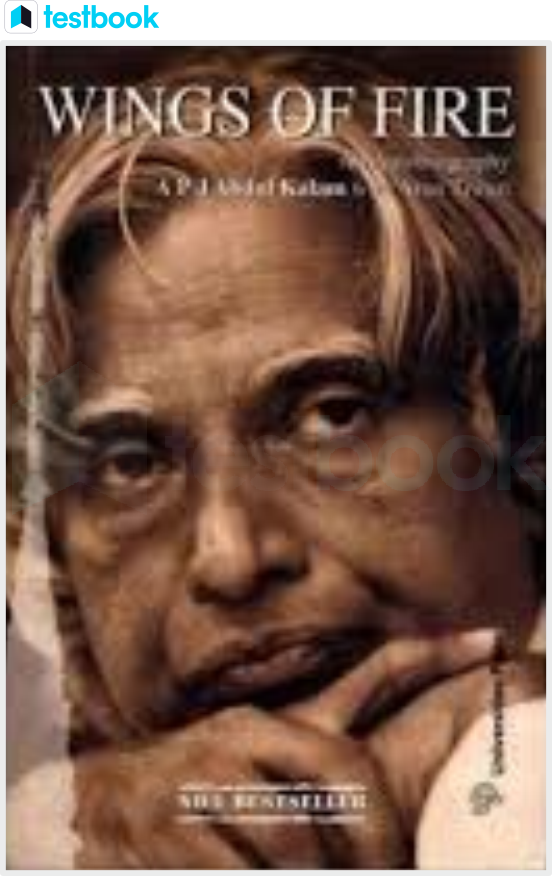
Who is the author of the book 'Wings of Fire'?

  1. ((a))

    Manmohan Singh

  2. ((b))

    Dr. P. C. Alexander

  3. ((c))

    Khushwant Singh

  4. ((d))

    Dr. A. P. J. Abdul Kalam

Show Answer
Answer: ((d))

Dr. A. P. J. Abdul Kalam

The correct answer is Dr. A P J Abdul Kalam.
Key Points

  • Wings of Fire: An Autobiography of A P J Abdul Kalam, former President of India.
  • It was written by Dr. Abdul Kalam and Arun Tiwari.
  • Dr. Kalam examines his early life, effort, hardship, fortitude, luck, and the chance that eventually led him to lead Indian space research, nuclear and missile programs.
  • It was originally published in 1999.

Additional Information

  • The complete name of A P J Abdul Kalam is Avul Pakir Jainulabdeen Abdul Kalam.
  • He was an Indian aerospace scientist and politician.
  • He served as the 11th President of India from 2002 to 2007.
  • He was also known as the Missile Man of India for his work on the development of ballistic missile and launch vehicle technology.
  • He was widely referred to as the "People's President".

2

The first woman to win the Dronacharya Award was weightlifting coach ______ in 2000.

  1. ((a))

    Sunita Sharma

  2. ((b))

    Renu Kohli

  3. ((c))

    Purnima Mahato

  4. ((d))

    Hansa Sharma

Show Answer
Answer: ((d))

Hansa Sharma

The correct answer is Hansa Sharma.

Key Points

  • Hansa Sharma is a prominent weightlifting coach from India.
  • She became the first woman to receive the Dronacharya Award in 2000.
  • The Dronacharya Award is a prestigious sports coaching honour in India, awarded for exceptional contributions to mentoring athletes.
  • Hansa Sharma's achievement marked a significant moment in Indian sports, opening doors for other women coaches.

Additional Information

OptionFieldImportant Information
Renu KohliAthleticsRenu Kohli is an athletics coach who won the Dronacharya Award in 2002, becoming the second woman to receive this honor​.
Sunita SharmaCricketSunita Sharma is reportedly India's first woman cricket coach. She has trained dozens of first-class and international cricketers and received the Dronacharya Award in 2005 for the year 2004.
Purnima MahatoArcheryPurnima Mahato is an Indian archer and archery coach. She has won the Indian national archery championships and a silver medal at the 1998 Commonwealth Games. She was a coach for the Indian national team at the 2008 and 2012 Summer Olympics. She received the Dronacharya Award in 2013​.
3

The river Ganga rises from

  1. ((a))

    Aravalli range

  2. ((b))

    Ladakh glacier

  3. ((c))

    Gangotri glacier

  4. ((d))

    Milap glacier

Show Answer
Answer: ((c))

Gangotri glacier

Ganga originates from the Gangotri glacier in the Western Himalayan Range in Uttarakhand.

  • ​Gangotri glacier
  • ​Gangotri Glacier is located in Uttarkashi District, Uttarakhand, India in a region bordering Tibet.
  • This glacier, one of the primary sources of the Ganges, is one of the largest in the Himalayas with an estimated volume of over 27 cubic kilometres.

Additional Information

  • Milam Glacier
  • Milam Glacier is a major glacier of the Kumaon Himalaya.
  • It is located in the tehsil of Munsiyari, part of the Pithoragarh district of Uttarakhand, India, about 15 kilometres northeast of Nanda Devi.
  • It ranges in elevation from about 5,500 meters to about 3,870 meters at its snout.
  • The river Gori Ganga has its source here.
4

When did "Chauri Chaura incident" took place?

  1. ((a))

    1922

  2. ((b))

    1919

  3. ((c))

    1926

  4. ((d))

    1947

Show Answer
Answer: ((a))

1922

The correct answer is 1922.

Key Points

  • The Chauri Chaura incident took place in 1922.
  • Chauri Chaura is a town in the Gorakhpur District of Uttar Pradesh.
  • On 4 February 1922, a mob of peasants participating in the Non-Cooperation Movement clashed with police and set on fire a police station that killed 22 policemen and 3 civilians.
  • Due to this incident, Mahatma Gandhi called off the Non-Cooperation Movement.

Additional Information

  • Non-Cooperation Movement was the first mass political movement under Gandhiji on 4 September 1920.
  • The main goal of the Non-Cooperation Movement is to attain 'Swaraj' or Self Government.
  • The 1901 Calcutta Session was the first time Mahatma Gandhi appeared on the Congress platform. Then a lawyer based in South Africa, Gandhi ji urged the Congress to support the struggle against racial discrimination and exploitation in the country.
  • In 1924, Gandhiji was the President of the Congress Session in Belgaum.
  • Subhash Chandra Bose addressed Gandhi as the 'Father of our Nation'.
  • The title 'Mahatma' gave to Gandhi Ji by Rabindra Nath Tagore.
5

In India election of Lok Sabha are held after every _____?

  1. ((a))

    6 Years

  2. ((b))

    5 Years

  3. ((c))

    4 Years

  4. ((d))

    3 Years

Show Answer
Answer: ((b))

5 Years

The correct answer is 5 Years.

Key Points

  • According to **Article 83:**The duration of Lok Sabha is 5 Years.
  • Lok Sabha is also known as Lower House.
  • By 42nd Amendment Act 1976, the duration of Lok Sabha is increased to 6 years but it was restored to 5 years by 44th Amendment Act 1978.

Additional Information

  • Lok Sabha:
  • Actual Strength: 552 (Elected:550,Nominated:2)
  • Current Strength: 545 (Elected:545,Nominated:2)
  • Speaker: Om Birla
  • First Speaker: G.V. Mavalankar
  • Rajya Sabha:
  • Actual Strength: 250(Elected:238,Nominated:12)
  • Current Strength: 245(Elected:233,Nominated:12)
  • Chairman: Jagdeep Dhankar
  • The Vice President Of India is the ex-officio chairman of Rajya Sabha
  • Vice-Chairman: Harivansh Narayan Singh
6

Who said ‘Swaraj is my birthright and I shall have it’?

  1. ((a))

    M. K. Gandhi

  2. ((b))

    B. G. Tilak

  3. ((c))

    G. K. Gokhale

  4. ((d))

    B. R. Ambedkar

Show Answer
Answer: ((b))

B. G. Tilak

The correct option is Bal Gangadhar Tilak.

Key Points 

  • He was a freedom fighter and a lawyer and his ideology was that without self-rule or swarajya, no progress was possible.
  • He was the founder of the Deccan Education Society.
  • He was one of the founders of the Fergusson College (1885) in Pune through the Deccan Education Society.
  • Bal Gangadhar Tilak  is also known as Lokmanya Tilak.
  • Tilak was called the ‘father of Indian unrest’ in the book “Indian Unrest” written by Valentine Chirol.

Additional Information 

  • He joined the Indian National Congress in 1890.
  • Gita Rhasya and Arctic Home of the Vedas are the important books written by Bal Gangadhar Tilak.
  • He was part of the Lal-Bal-Pal trio of leaders with Lala Lajpat Rai and Bipin Chandra.
  • He published two papers – Kesari in Marathi and Mahratta in English.
7

Which Article of the Constitution of India provides that there will be Governors of States?

  1. ((a))

    148

  2. ((b))

    153

  3. ((c))

    124

  4. ((d))

    136

Show Answer
Answer: ((b))

153

The correct answer is 153.

Key Points

  • Article 153:
  • This article of the Constitution of India provides that there will be Governors of States.
  • The executive power of the State shall be vested in the Governor and shall be exercised by him either directly or through officers subordinate to him in accordance with the Constitution of India (Article 154).

Additional Information

  • Article 148:
  • Article 148 deals with the Comptroller and Auditor General of India.
  • Article 124:
  • It is related to the establishment and Constitution of the Supreme Court.
  • The constitution and jurisdiction of the Supreme Court are stated in detail in articles 124-147.
  • There shall be a Supreme Court of India consisting of a Chief Justice of India and, until Parliament by law prescribes a larger number, of not more than seven other Judges.
  • Article 136:
  • Article 136 Constitution of India: Special leave to appeal by the Supreme Court.
  • Notwithstanding anything in this Chapter, the Supreme Court may, in its discretion, grant special leave to appeal from any judgment, decree, determination, sentence, or order in any cause or matter passed or made by any court or tribunal in the territory of India.
  • Nothing in clause (1) shall apply to any judgment, determination, sentence or order passed or made by any court or tribunal constituted by or under any law relating to the Armed Forces.
8

When was the First Round Table Conference started?

  1. ((a))

    August 1932

  2. ((b))

    October 1929

  3. ((c))

    September 1931

  4. ((d))

    November 1930

Show Answer
Answer: ((d))

November 1930

The correct answer is November 1930.

Key Points

  • The First Round Table Conference was started in November 1930.
  • The three Round Table Conferences of 1930–1932 were a series of peace conferences organized by the British Government and Indian political personalities to discuss constitutional reforms in India.

Additional Information

  • First Round Table Conference (November 1930-January 1931)
  • The First Round Table Conference was inaugurated by George V on November 12, 1930, in the Royal Gallery House of Lords in London.
  • It was chaired by the British Prime Minister, Ramsay MacDonald.
  • It was to discuss the Simon Commission but it was totally boycotted by the Indian National Congress.
  • Total 74 delegates attended the First Round Table Conference from India.
  • The Indian National Congress had decided not to participate in the conference because many Congress leaders were imprisoned at that time because of participation in Civil Disobedience Movements.
  • There were fifty-eight political leaders from British India and sixteen delegates from the princely states.
  • In the absence of the Indian National Congress, it was difficult for progress to be made but some advances were made.
  • The conference was adjourned to 2 January 1931.
9

Who is the current Chief of the Indian Army?(2023)

  1. ((a))

    General Bipin Rawat

  2. ((b))

    Manoj Mukund Naravane

  3. ((c))

    General Manoj Pande

  4. ((d))

    Rakesh Kumar Singh Bhadauria

Show Answer
Answer: ((c))

General Manoj Pande

The correct answer is  General Manoj Pande.

Key Points

  • General Manoj Pande is the current Chief of the Indian Army, serving since 30 April 2022.
  • He took charge as the 29th Chief of the Army Staff.

Confusion Points

  • Manoj Mukund Naravane wasthe 28th Chief of the Indian Army.
  • He took charge on December 31, 2019, replacing General Bipin Rawat.
  • In June 1980, he was commissioned into the Sikh Light Infantry.

Important Points

List of Chief of Armed Forces in India
Indian ArmyGeneral Manoj Pande
Indian NavyAdmiral R Hari Kumar PVSM, AVSM, ADC
Indian Air ForceAir Chief Marshal VR Chaudhari PVSM, AVSM, VM, ADC
<br>

Additional Information

  • India Army:
  • The basic aim of the army is to safeguard the territorial integrity of the nation against external aggression.
  • General Sam Manekshaw was appointed to the rank of Field Marshal in 1973. He was the only Field Marshal to have been appointed to this rank while still a serving officer.
  • General K.M. Cariappa was the first Indian Chief of Army Staff.
10

When was the first meeting of G-20 held?

  1. ((a))

    1998

  2. ((b))

    2000

  3. ((c))

    2008

  4. ((d))

    2010

Show Answer
Answer: ((c))

2008

The correct answer is 2008.

Key Points

  • The first meeting of the G-20 (Group of Twenty) was held in 2008.
  • This meeting took place in Washington D.C., United States, in response to the global financial crisis that emerged in 2007-2008.
  • The G-20 is an international forum for governments and central bank governors from 19 countries and the European Union and African Union.
  • It was established to discuss policy issues pertaining to the promotion of international financial stability.
  • Since its inception, the G-20 has become a key platform for addressing global economic challenges and coordinating policy responses among its member countries.
  • The G-20 summits are held annually, with leaders and representatives from member countries participating in discussions on various economic and financial matters.

Maths (5 questions)

11

The ratio of two numbers is 3 ∶ 4 and their LCM is 72. Find the numbers.

  1. ((a))

    18, 24

  2. ((b))

    15, 20

  3. ((c))

    27, 36

  4. ((d))

    24, 32

Show Answer
Answer: ((a))

18, 24

Given:

The ratio of two numbers is 3 ∶ 4

LCM is 72

Calculation:

Let the HCF of two numbers be x

So, Two numbers are 3x and 4x

⇒ The LCM of 3x and 4x = 12x

Now, According to the question

⇒ 12x = 72

⇒ x = 6

So, 

Two numbers = 6 × 3, 6 × 4 

∴ The two numbers are 18 and 24.

12

The length of a rectangle is 15 cm, and its breadth is 14 cm. What is the perimeter of the rectangle ?

  1. ((a))

    29 cm 

  2. ((b))

    58 cm

  3. ((c))

    56 cm

  4. ((d))

    44 cm

Show Answer
Answer: ((b))

58 cm

Given:

Length of the rectangle = 15 cm

Breadth of the rectangle = 14 cm

Formula Used:

Perimeter of a rectangle = 2 × (Length + Breadth)

Calculation: 


Perimeter = 2 × (15 cm + 14 cm)

Perimeter = 2 ×  29 cm

Perimeter = 58 cm

So, the correct answer is: B) 58 cm

13

If height of an equilateral triangle is 10√3 cm, then find the area of the triangle is:

  1. ((a))

    250√3

  2. ((b))

    160√3

  3. ((c))

    132√3

  4. ((d))

    100√3

Show Answer
Answer: ((d))

100√3

Given,

Height of the equilateral triangle = 10√3 cm

Formula:

Area of the equilateral triangle = (√3/4) × a2

Height of the equilateral triangle = (√3/2) × a

Calculation:

According to the question

(√3/2) × a = 10 √3

⇒ a = 10√3 × (2/√3)

⇒ a = 20 cm

∴ Area of equilateral triangle = (√3/4) × 20 × 20 = 100√3

14

The value of (\frac{1.15}{0.23}) (\div) (\frac{0.23}{1.15}) is:

  1. ((a))

    0.05

  2. ((b))

    0.5

  3. ((c))

    5

  4. ((d))

    25

Show Answer
Answer: ((d))

25

Given:

(\frac{1.15}{0.23}) (÷) (\frac{0.23}{1.15}) 

Concept used:

Calculation:

(\frac{1.15}{0.23}) ÷ (\frac{0.23}{1.15})

⇒ (\frac{1.15}{0.23}) × (\frac{1.15}{0.23})

⇒ 5 × 5

⇒ 25

∴ The value of (\frac{1.15}{0.23}) ÷ (\frac{0.23}{1.15}) is 25.

15

The cost of leveling a square field at the rate of ₹ 52/mis ₹ 1,30,000. What will be the cost of fencing its boundary at the rate of ₹35/m?

  1. ((a))

    ₹ 2,500

  2. ((b))

    ₹ 7,000

  3. ((c))

    ₹ 87,500

  4. ((d))

    ₹ 3,500

Show Answer
Answer: ((b))

₹ 7,000

Given:

The cost of leveling a square field at the rate of ₹ 52/m2 = Rs. 1,30,000

Formula used:

Area of square = (side)2

Perimeter of the square = 4 × side

Calculation:

Area of the square field leveled = (1,30,000/52)

⇒ 2500

(Side)2 = 2500 m2

⇒ side = 50 m

Now,

Perimeter of the square = (4 × 50) = 200 m

Now,

The cost of fencing its boundary at the rate of ₹35/m = Rs. (200 × 35)

⇒ Rs. 7,000

∴ The required cost is Rs. 7,000

Physics (5 questions)

16

Which type of mirror possesses a positive focal length?

  1. ((a))

    Concave Mirror

  2. ((b))

    Convex Mirror

  3. ((c))

    Plane Mirror

  4. ((d))

    Rectilinear Mirror

Show Answer
Answer: ((b))

Convex Mirror

The correct answer is Convex Mirror.

Key Points

  • Convex mirrors have a positive focal length and produce virtual, upright, and diminished images.
  • They are commonly used in applications where a wide field of view is needed, such as in automobile side mirrors and security mirrors.
  • The magnifying power of a convex mirror is positive, indicating that it forms diminished images compared to the actual object size.
  • Convex mirrors are also known as diverging mirrors because they diverge light rays that strike them.
17

A substance has a definite shape as well as definite volume. This substance is-

  1. ((a))

    Gas

  2. ((b))

    Liquid

  3. ((c))

    Soild

  4. ((d))

    Any of these

Show Answer
Answer: ((c))

Soild

Explanation:

States of matter

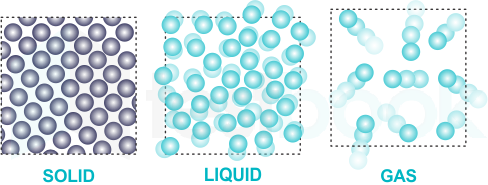
  • Matter exists in nature in different forms, the three basic states of matter are Solid, Liquid and Gas.
  • Apart from these three, there are two more states of matter exist which we do not see in our everyday life. They are Plasma & Bose-Einstein condensate.

​Properties of Solid -

  • In solids, the particles are closely packed and the gaps between the particles are tiny and hence it is tough to compress them.
  • Solid has a fixed shape and volume.

Properties of Liquid -

  • In a liquid, particles are less tightly packed as compared to solids and less difficult to compress as compare to solid because particles have less space between them to move but more than the that of solid.
  • Liquids take the shape of the container in which they are kept.

Properties of Gas -

  • In gases, particles are far apart from each other, the force of attraction between the particles is negligible and they can move freely.
  • The gaseous state has the highest compressibility as compared to solids and liquids.
  • Gases have neither a fixed volume nor a fixed shape.

So, A substance has a definite shape as well as definite volume. This substance is Solid.

18

The heat transfers in solids by the process of-

  1. ((a))

    Conduction

  2. ((b))

    Convection

  3. ((c))

    Radiation

  4. ((d))

    None

Show Answer
Answer: ((a))

Conduction

option (1)

CONCEPT:

  • Conduction is the mechanism of transfer of heat between two adjacent parts of a body because of their temperature difference.
  • Conduction is mostly seen in solids and liquids because the particles are very close within them than in gases where particles are further apart.
<br>

EXPLANATION:

  • Conduction is majorly takes place in solids.
  • Heat transfer is maximum in solids because their atoms and molecules are located very closely together as compared to liquid and gas.\
  • Hence option 1 is correct.
  • Solids are hard and have higher conductivity, which is also named good conductors.


Additional Information 

  • Convection: The process of heat transfer by the physical movement of molecules such as gases and liquids.
  • Radiation: The energy that comes from a source and travels through space at the rate of speed of light.
  • Radiation contains both an electric field and a magnetic field associated with it,
  • Radiation is also named EM Wave( Electromagnetic wave).
  • Radiation is mainly three types:
  • alpha rays
  • beta rays
  • gamma rays
19

The pitch of a sound depends on its ________.

  1. ((a))

    amplitude

  2. ((b))

    frequency

  3. ((c))

    timbre

  4. ((d))

    intensity

Show Answer
Answer: ((b))

frequency

The correct answer is frequency.

Key Points

  • The Pitch of a sound depends on its frequency.
  • Pitch can be defined as the quality of sound based on the rate of vibrations that produced it.
  • The faster the vibration of source, the higher is the frequency and hence higher the pitch.
  • If the frequency is lower, then pitch also decreases.
20

Which among the following is a unit of mass?

  1. ((a))

    gram

  2. ((b))

    kilogram

  3. ((c))

    tonne

  4. ((d))

    all of the above

Show Answer
Answer: ((d))

all of the above

The correct answer is option 4) i.e. all of the above

CONCEPT:

  • Mass is the measure of the amount of matter present in an object.
  • It is the basic property of matter around us.
  • The SI unit of mass is the kilogram (kg).
  • Not all mass can be represented in kilograms.
  • A few common units of mass and their conversions are given in the table:
1 gram1000 milligram
1 kilogram1000 gram
1 tonne1000 kilogram

EXPLANATION:

  • The gram, kilogram, and tonne are all different units of mass.

Biology (15 questions)

21

The mode of reproduction in spirogyra is ________.

  1. ((a))

    Fragmentation

  2. ((b))

    Budding

  3. ((c))

    Spore formation

  4. ((d))

    Sexual

Show Answer
Answer: ((a))

Fragmentation

The correct answer is Fragmentation.

Key Points

  • Spirogyra is a free-floating green algae.
  • Such algae can be observed on
  • It belongs to the Chlorophyta kingdom.
  • Spirogyras are filamentous algae that consist of thin unbranched chains of cylindrical cells.
  • The mode of reproduction in spirogyra is Fragmentation.
  • The body of the organism breaks into smaller pieces, called fragments and each segment grows into an adult individual. like Algae etc.

Additional Information

YeastYeast is single-cell organisms which are classified under fungus kingdom. They reproduce through Budding.
SpirogyraIt is a green algae which is also called White Silk.
HydraThey reproduce through Regeneration and budding.
PlanariaThey reproduce asexually through regeneration. it possesses the highest power of regeneration.
22

What nutrients are typically obtained from fast food items like Pizza and Burgers?

  1. ((a))

    Fiber and Vitamins

  2. ((b))

    Protein and Calcium

  3. ((c))

    Carbohydrates and Iron

  4. ((d))

    Fat and Sodium

Show Answer
Answer: ((d))

Fat and Sodium

The correct answer is Fat and Sodium.

Key Points

  • Fast food items like Pizza and Burgers primarily provide nutrients such as fat and sodium.
  • These foods are often high in calories and saturated fats, contributing to unhealthy dietary patterns.
  • The fat content in fast food items like cheese, meat, and processed oils can lead to weight gain and increase the risk of obesity-related health issues.
  • Additionally, the high sodium content in fast food contributes to high blood pressure and cardiovascular problems.
  • While fast food may provide some carbohydrates, protein, and small amounts of other nutrients, they are generally low in fibre, vitamins, and minerals that are essential for overall health.
  • Consuming fast food regularly without balancing the diet with nutritious foods can have negative impacts on long-term health and well-being.
23

Bean shaped excretory organ of human is-

  1. ((a))

    Ureter

  2. ((b))

    Urinary bladder

  3. ((c))

    Urethra

  4. ((d))

    Kidney

Show Answer
Answer: ((d))

Kidney

The correct answer is Kidney.

Key Points

  • Humans and animals have a pair of bean-shaped organs called the kidneys.
  • They get rid of waste items, keep electrolyte levels regulated, and keep blood pressure under control.
  • The location of the kidneys is right below the rib cage, and they are present as a pair of two.
  • There is one Kidney on each side of the spine.
  • Because there is less room between the liver and the right Kidney, the right Kidney is often positioned somewhat lower than the left Kidney.
  • The kidneys are responsible for regulating homeostasis as their primary function.
  • They ensure that the fluid levels, electrolyte balance, and other elements that maintain the body's internal environment are comfortable and stable.
  • Tubules in the kidneys can reabsorb nutrients from the blood and then transport them to where the body needs them the most.
  • They absorb nutrients like glucose, sodium, chlorine, potassium, water, etc.

Additional Information

  • Urinary Bladder
  • The urinary bladder is an organ that stores urine until it is expelled by urination.
  • Its primary function is to collect urine.
  • After the urine has been filtered via the kidneys, the Urinary bladder allows for reabsorption using a feedback mechanism if needed.
  • The transitional epithelium that lines the urine bladder is responsible for the absence of mucus production in this organ.
  • Ureter
  • Urine is transported from the Kidney to the urinary bladder through the ureter, a tube in the body.
  • There is one ureter connected to each Kidney, making a total of two.
  • The pelvis region is home to the lower portion of the ureter, whereas the abdominal cavity houses the higher portion of this organ.
  • The tube has strong walls capable of contracting and is made of a mucus coat, a muscle coat, and a coat of fibrous tissue.
  • Urethra
  • Urine is expelled from the body via a tube called the urethra, a small tube connected to the bladder.
  • The female urethra small about 1.5 inches long, whereas the length of the male urethra, ranges from 7 to 8 inches.
  • Three sections make up the male urethra. These sections include the prostatic urethra, the membranous urethra, and the spongy urethra.
  • The female urethra is somewhat less complicated than the male one since it needs to travel a shorter distance.
  • Its main function is to facilitate the passage of urine from the bladder and out of the body.
  • When an animal urinates, the brain signals to the bladder that it is time to squeeze. The bladder responds by relaxing the sphincter muscle, allowing urine to pass through the urethra.
24

Which of the following is a water soluble vitamin?

  1. ((a))

    Vitamin D

  2. ((b))

    Vitamin A

  3. ((c))

    Vitamin C

  4. ((d))

    Vitamin K

Show Answer
Answer: ((c))

Vitamin C

The correct answer is Vitamin C

Key Points

  • Vitamin C is a water-soluble vitamin.
  • it is necessary for normal growth and development.
  • Water-soluble vitamins dissolve readily in water.
  • Leftover vitamin quantities leave the body through the urine.

Additional Information

  • Vitamin C, also known as L-ascorbic acid, is a water-soluble vitamin that is naturally found in certain foods, added to others, and also available as a dietary supplement.
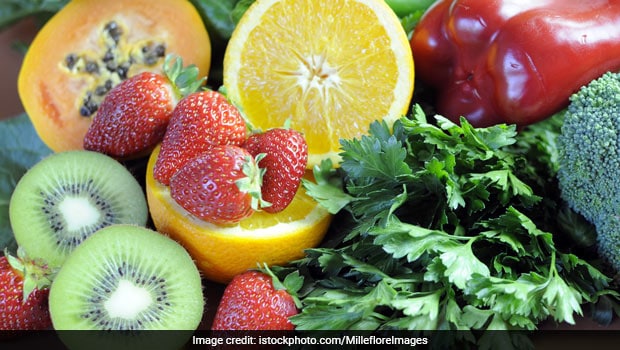
  • The best sources of vitamin C are fruits and vegetables.
  • The primary contributors to vitamin C are citrus fruits, tomato and tomato juice, and potatoes.
  • Since ascorbic acid is water-soluble and is damaged by heat, the vitamin C content of food may be decreased by prolonged storage and cooking.
  • Acute Vitamin C deficiency can lead to a disease called Scurvy.

Sources of Vitamin C

Image result for vitamin c rich foods

25

Which of the following flowers is unisexual?

  1. ((a))

    Papaya

  2. ((b))

    Sunflower

  3. ((c))

    Hibiscus

  4. ((d))

    Mustard

Show Answer
Answer: ((a))

Papaya

The correct answer is Papaya.

  • Papaya flowers are Unisexual Flowers.

Key Points

  • Flowers that contain either only pistil (Female reproductive organs) or stamen (male reproductive organ) are called Unisexual flowers.
  • Corn, papaya, Cucumber are some common examples.
  • A flower which contains both pistils (Female reproductive organs) and stamen (male reproductive organs) are called bisexual flowers.
  • Sunflower, Mustard, Hibiscus are some common examples.
26

Where is the bile juice produced?

  1. ((a))

    Gastric

  2. ((b))

    Liver

  3. ((c))

    Pancreas

  4. ((d))

    Intestine

Show Answer
Answer: ((b))

Liver

The correct answer is Liver.

Key Points

  • Bile Juice
  • The liver secretes the bile juice.
  • The bile juice is stored in the gall bladder.
  • About 500-1000 ml of bile is secreted by the liver in a day.
  • Liver
  • It is the largest gland of the body.
  • It lies in the upper right side of the abdominal cavity.
  • It secretes bile juice.


Additional Information

  • Gastric
  • Glands of the Stomach are called gastric glands.
  • The secretions from these cells form gastric juice( pH 1.5-2.5 very acidic).
  • In the human body, about 2000-3000 ml of gastric juice is secreted per day.
  • Pancreas
  • It is a soft, lobulated gland located posterior to the stomach in the abdominal cavity.
  • The exocrine gland portion of the pancreas secretes an alkaline pancreatic juice.
  • The endocrine gland portion of the pancreas secretes hormones.
  • Small intestine 
  • It is the longest part of the alimentary canal.
  • It completes the digestion of food.
  • The inner mucosa layer or small intestine has villi.
27

In which form glucose is present in our body?

  1. ((a))

    Fat

  2. ((b))

    Glycogen

  3. ((c))

    Insulin

  4. ((d))

    Amino acids

Show Answer
Answer: ((b))

Glycogen

The correct answer is Glycogen.

Key Points 

  • Glucose is the main source of fuel for our cells.
  • When the body no longer needs to use glucose for energy, it stores it in the liver and muscles
  • This stored form of glucose is made up of many linked glucose molecules and is called glycogen.
  • Glycogen is a polysaccharide of glucose that serves as energy storage in animals, fungi, and bacteria.

Additional InformationFat

  • Fats are substances that our body stores for future use.
  • Fat and its derivates are combinedly known as a lipid.
  • Animals store a maximum amount of food in the form of lipid.
  • Fat is a type of nutrient just like protein and carbohydrates.
  • Fats come mainly from vegetables, nuts, seeds, and fish, etc.

Insulin

  • ​Insulin is a peptide hormone secreted by beta cells of the pancreatic islets.
  • It is considered to be the primary anabolic hormone present inside our body.
  • It maintains the metabolism of carbohydrates, fats and protein by promoting the absorption of glucose from the blood into the liver, fat and skeletal muscle cells.
  • In these tissues, the absorbed glucose is changed into either glycogen via glycogenesis or fats (triglycerides) via lipogenesis, or, in the case of the liver, into both.

Amino acids

  • Amino acids are chemical molecules with an amino group and an acidic group on the same carbon atom.
  • Amino acids are often referred to as the building blocks of proteins.
  • They are organic compounds that combine to form proteins.
  • They also help in hormone and neurotransmitter synthesis.
28

Which one of the following is a natural polymer?

  1. ((a))

    Bakelite

  2. ((b))

    Silk

  3. ((c))

    Kevlar

  4. ((d))

    Lexan

Show Answer
Answer: ((b))

Silk

The correct answer is Silk.

Key Points

  • Silk is a natural polymer.
  • Natural polymers occur in nature and can be extracted.
  • Examples of naturally occurring polymers are silk, wool, DNA, cellulose and proteins, and rubber.
  • Natural polymers have been widely used in a variety of biomedical applications such as pharmaceuticals, tissue regeneration scaffolds, drug delivery agents, and imaging agents.
  • In wound care, they are used as dressings for acute or chronic wounds and as regeneration templates.
  • Hence, option 2 is correct.

Additional Information

  • Polymer :
  • A polymer is a large molecule or a macromolecule which essentially is a combination of many subunits.
  • Polymers may be naturally found in plants and animals (natural polymers) or maybe man-made (synthetic polymers).
  • Different polymers have a number of unique physical and chemical properties due to which they find usage in everyday life.
  • Polymers cannot be classified under one category because of their complex structures, different behaviours, and vast applications.
  • Classification of Polymers :
  • Natural Polymers:
  • They occur naturally and are found in plants and animals.
  • To add up, we also have biodegradable polymers which are called biopolymers.
  • Semi-synthetic Polymers:
  • They are derived from naturally occurring polymers and undergo further chemical modification.
  • For example - cellulose nitrate, cellulose acetate.
  • Synthetic Polymers:
  • These are man-made polymers.
  • Plastic is the most common and widely used synthetic polymer.
  • It is used in industries and various dairy products.
  • For example - nylon-6, 6, polyethers.
29

1 gm of carbohydrate gives approximately -

  1. ((a))

    2 Calories

  2. ((b))

    3 Calories

  3. ((c))

    4  kilo Calories

  4. ((d))

    5 Calories

Show Answer
Answer: ((c))

4  kilo Calories

The correct answer is 4  kilo Calories.

Key Points

Carbohydrates:

  • It is a biomolecule consisting of carbon, hydrogen, and oxygen atoms, usually with a hydrogen-oxygen atom ratio of 2:1 and thus with the empirical formula Cm(H2O)n (where m may or may not be different from n).
  • Carbohydrates, proteins, and fats in foods provide energy for the body's functions and physical activities.
  • They, however, do not have the same energy content. The following is the energy-content by respective nutrients:
  • 1 gram of carbohydrates- 4kcal
  • 1 gram of protein- 4 kcal
  • 1 gram of fats- 9 kcal
  • So, the correct answer is 4 kcal.

Additional Information

Three types of simple carbohydrates include:

  • Monosaccharides:  are the simplest sugars e.g. glucose. fructose and galactose.
  • Disaccharides: are formed by condensation where there is linking of two
  • Polysaccharides: is a large molecule made of many smaller monosaccharides.

Important Points

  • Carbohydrates provide energy to the body.
  • It breaks down into glucose and enters our bloodstream.
  • The body cells utilize glucose to produce ATP(adenosine triphosphate).
30

Which cell is the product of the union between a male sperm and a female egg?

  1. ((a))

    Zygote

  2. ((b))

    Gamete

  3. ((c))

    Ovum

  4. ((d))

    Embryo

Show Answer
Answer: ((a))

Zygote

A zygote is fertilized egg cell that results from the union of a female gamete (egg, or ovum) with a male gamete (sperm).

Key Points 

  • The first step in the process of reproduction is the fusion of a sperm and an ovum.
  • When sperms come in contact with an egg, one of the sperms may fuse with the egg. Such fusion of the egg and the sperm is called fertilization.
  • During fertilization, the nuclei of the sperm and the egg fuse to form a single nucleus.
  • This results in the formation of a fertilized egg or zygote.
  • The ovary produces female gametes called ova and the testes produce male gametes called sperms.
  • The fusion of the ovum and sperm is called fertilization.
  • The fertilized egg is called a zygote.
  • Fertilization that takes place inside the female body is called internal fertilization. This is observed in human beings and other animals such as hens, cows, and dogs.
  • Fertilization that takes place outside the female body is called external fertilization. This is observed in frogs, fish, starfish, etc
31

Which of the following human diseases is caused by bacteria?

  1. ((a))

    Hepatitis A

  2. ((b))

    Typhoid

  3. ((c))

    Measles

  4. ((d))

    Polio

Show Answer
Answer: ((b))

Typhoid

The correct answer is Typhoid.

Key Points

  • Typhoid is a bacterial infection that can lead to a high fever, diarrhea, and vomiting and can be fatal.
  • It is caused by the bacteria Salmonella typhi.
  • Typhoid fever is a type of enteric fever, along with paratyphoid fever
  • The infection is often passed on through contaminated food and drinking water.
  • It is more prevalent in places where handwashing is less frequent.
  • Typhoid fever is uncommon in the UK, with an estimated 500 cases occurring each year.
  • Two typhoid vaccines are licensed for use for the prevention of typhoid: 
  • Oral Ty21a vaccine  and the injectable typhoid polysaccharide vaccine

​ Additional Information

  • Bacteria are found even inside the human body, on our skin, in our hairs, and on all other surfaces.
  • Bacteria inside our gut or stomach are good bacteria and we must have them to lead a healthy life.

List of Bacterial Diseases in Humans

Human Bacterial DiseasesBacteria Responsible
Pulmonary TuberculosisMycobacterium tuberculosis
CholeraVibrio cholerae
PlagueYersinia pestis
LeprosyMycobacterium leprae


  • Hepatitis A : 
  • Hepatitis A is an inflammation of the liver caused by the hepatitis A virus (HAV).
  • The virus is primarily spread when an uninfected person ingests food or water that is contaminated with the feces of an infected person.
  • Measles :
  • Measles is caused by morbillivirus, which is mostly seen in the winter and spring.
  • It is a highly contagious illness caused by a virus that replicates in the nose and throat of an infected child or adult.
  • it is spread through airborne droplets from an infected child.
  • Polio :
  • Polio is a disease caused by the poliovirus.
  • ​The virus enters the body through the mouth or nose, getting into the digestive and respiratory systems.
  • It multiplies in the throat and intestines.
  • It can also attack the nervous system, the nerve network that helps the brain communicate with the rest of the body.
  • It happens mostly in children younger than 5.
  • The World Health Organization (WHO) continues to work to eliminate polio.
32

Which vitamin helps in blood clotting?

  1. ((a))

    Vitamin A

  2. ((b))

    Vitamin K

  3. ((c))

    Vitamin B1  

  4. ((d))

    Vitamin C

Show Answer
Answer: ((b))

Vitamin K

The correct answer is Vitamin K.

Key Points

  • Vitamin K is a fat-soluble vitamin.
  • Vitamin K is required for the liver to make factors that are necessary for blood clotting.
  • Hemorrhage is a deficiency disease of Vitamin K.

Additional Information

  • Vitamin C is essential for the healing of wounds, repair, and maintenance of cartilage, bone, and teeth.
  • Ascorbic acid is the chemical name of vitamin C.
  • Vitamin C is the first artificially synthesized vitamin.
  • Vitamin A is also called Retinol.
  • It helps for good vision and maintains healthy eyes.
  • Xerophthalmia and night blindness are deficiency diseases of Vitamin A.
  • Thiamine is the chemical name of VItamin B1.
  • Vitamin B1 helps the body cells to convert carbohydrates into energy.
33

How many canine teeth are there in adult human?

  1. ((a))

    2

  2. ((b))

    8

  3. ((c))

    6

  4. ((d))

    4

Show Answer
Answer: ((d))

4

The correct answer is Option 4.

A normal adult has 32 teeth: incisors (8), Canines (4), premolars (8) and molars (12). Normal adult's 32 teeth is an upgrade form of a 20 piece "milk teeth" version.

Types of teethFunctions
IncisorsUsed for cutting food into small chewable pieces
CaninesGrip and tear food
PremolarsTear and crush food
MolarsChew, crush and grind food
34

The cell wall in fungi is mainly made of _______

  1. ((a))

    Cellulose

  2. ((b))

    Chitin

  3. ((c))

    Mucin

  4. ((d))

    Glycogen

Show Answer
Answer: ((b))

Chitin

The correct answer is Chitin.

Key Points

  • The cell wall of fungi is made from a compound known as 'chitin'.
  • The cell wall of plant cells is made from 'cellulose'.
  • The cell wall is a tough, rigid layer that surrounds some types of cells.
  • The cell wall is the very basic component of the cell of a plant, bacteria, fungi, etc.
  • The cell wall is located just outside of the cell membrane.
  • Protozoans and animal cells do not have a cell wall.

Additional Information

  • Cellulose is a fibrous material of plant origin that can be obtained from the bark, wood, the leaves of plants, or other plant-based materials.
  • The principal constituent of mucus is a mucopolysaccharide called mucin.
  • Mucus is a protective substance that’s excreted from multiple areas of the body, such as the mouth, sinuses, throat, lungs, stomach, and intestines.
  • Glycogen is a multibranched polysaccharide of glucose that serves as a form of energy storage in animals, fungi, and bacteria.
35

Which fluid is primarily found in the brain?

  1. ((a))

    Blood

  2. ((b))

    Cerebrospinal Fluid

  3. ((c))

    Lymph

  4. ((d))

    Synovial Fluid

Show Answer
Answer: ((b))

Cerebrospinal Fluid

The correct answer is Cerebrospinal Fluid.

Key Points

Cerebrospinal fluid (CSF)

  • Cerebrospinal fluid (CSF), clear, colorless liquid that fills and surrounds the brain and the spinal cord and provides a mechanical barrier against shock.
  • Formed primarily in the ventricles of the brain, the cerebrospinal fluid supports the brain and provides lubrication between surrounding bones and the brain and spinal cord.
  • The Choroid Plexus of the Brain secretes  Cerebrospinal Fluid.

Additional Information 

Formation of CSF

  • Formed from the choroid plexus situated in the ventricles.
  • The choroid plexus is the tuft of capillary projections presents inside the ventricle.
  • The choroid plexus is covered by the pia matter and ependymal covering.
  • The active transport mechanism is involved in the secretion of CSF.

Properties of CSF

  • The volume is around 150 ml.
  • Rate of formation around 0.3ml/minute.
  • Specific gravity: 1.005
  • The reaction is alkaline.

Absorption of CSF

  • Mostly absorbed by the arachnoid villi into the dural sinus and spinal veins.
  • 500ml of CSF is formed every day and an equal amount is absorbed.

Chemistry (15 questions)

36

Burning a candle is:

  1. ((a))

    A Chemical change

  2. ((b))

    A Physical change

  3. ((c))

    Both chemical and physical change

  4. ((d))

    Neither chemical nor physical change

Show Answer
Answer: ((c))

Both chemical and physical change

The correct answer is Both chemical and physical change.

CONCEPT:

Chemical change- A change in which one or more new substance is formed is a chemical change. - It is a permanent change.
Physical change- A change in which the physical properties of a substance change is called a physical change. - It is a temporary change and no new substances are formed. - It is generally reversible
<br>

EXPLANATION:

  • Burning a candle is both physical and chemical change.
  • As the candle starts burning, the wax starts melting. This is a physical change.
  • The melted wax vaporizes in the flame and the wax vapours burns and gets converted into carbon dioxide, soot etc. This is a chemical change.
37

Which of the following is an endothermic reaction?

  1. ((a))

    Photosynthesis in plants

  2. ((b))

    Burning of magnesium ribbon in air.

  3. ((c))

    Conversion of vegetable matter into compost

  4. ((d))

    Burning of natural gas

Show Answer
Answer: ((a))

Photosynthesis in plants

The correct answer is Photosynthesis in plants.

Concept:

Chemical reaction:

  • A process in which one or more substances, the reactants, are converted to one or more different substances, the products.
  • Substances are either chemical elements or compounds.
  • A chemical reaction rearranges the constituent atoms of the reactants to create different substances as products.

Explanation:

Endothermic reaction:

  • A chemical reaction in which the reactants absorb energy and get converted into products.

Photosynthesis in plants: 

  • It occurs in green plants in the presence of sunlight and chlorophyll.
  • The reactants carbon dioxide and water are converted into glucose and oxygen.
  • CO2 + H2O + Sunlight(Heat) → C6H12O6 + O2
  • ****Solar energy is converted into chemical energy.
  • Since energy is being consumed in photosynthesis, it is termed an endothermic reaction.

Additional Information​ 

Exothermic reaction:

  • A chemical reaction in which heat energy is released.
  • Examples: 
  • Burning of natural gas
  • Conversion of vegetable matter into compost
  • ​Burning of magnesium ribbon in the air.
38

A gas can be converted into a liquid by -  

  1. ((a))

    By increasing the pressure

  2. ((b))

    decreasing the temperature 

  3. ((c))

    by both. 

  4. ((d))

    none

Show Answer
Answer: ((c))

by both. 

The answer is By Both.

Key Points Liquefaction of gases:

  • Liquefaction of gases is the process in which a gas is liquified to change its state from gas to liquid.
  • A gases can be liquified by increasing pressure and reducing the temperature.
  1. Effect of pressure: When we increase the pressure, the gaseous molecule come close together.
  2. Effect of Temperature: When we decrease the temperature, the kinetic energy of gaseous particles decreases and they become slower.

The pressure that has to be applied as well as the temperature depends on the molecular forces of the gas molecules. Hence, a gas can be liquified by cooling or by application of pressure, or by the combining effect of both.

Explanation:-

Both increasing the pressure and decreasing the temperature can convert a gas into a liquid, a process known as condensation. This is explained by the principles of the kinetic-molecular theory and phase transitions:

  • By increasing the pressure, you effectively force the gas particles closer together.
  • When they are close enough to establish attractive intermolecular forces, the gas condenses into a liquid. An everyday example of this principle are pressure cookers, which use high pressure to cook food quicker.
  • By decreasing the temperature, you reduce the kinetic energy of the gas particles, which means they move around less vigorously.
  • When their kinetic energy drops sufficiently, the forces of attraction between the particles overcome their kinetic energy, and they get closer together to form a liquid.
  • Cooling steam is an example of this process.

So, it's accurate to say that you can convert a gas into a liquid by both increasing the pressure and decreasing the temperature. However, the specifics can depend on the particular substance under consideration and the conditions it's in.

Conclusion:-

So, A gas can be converted into a liquid by both,  increasing the pressure and decreasing the temperature

39

Which of the following is a physical change?

  1. ((a))

    Melting of ice

  2. ((b))

    Milk is set into curd

  3. ((c))

    Ripening of frutis

  4. ((d))

    Grapes get fermented

Show Answer
Answer: ((a))

Melting of ice

The correct answer is Melting of ice.

 Key Points

  • The melting of ice is a physical change.
  • The change that does not lead to changes in the chemical composition of a substance is termed physical change.
  • Physical changes lead to changes in physical properties and are generally reversible in nature.
  • Examples of physical changes are the melting of ice, transition into gas, textural changes, changes in size, shape, color, etc.

Additional Information

  • In the case of the melting of ice, only a phase transition takes place, and the chemical composition of ice does not change.
  • Chemical changes lead to the transformation in the chemical composition of the substance. Either a new substance is synthesized or a substance is decomposed.
  • The setting of milk into curd, the ripening of fruits, and the fermentation of grapes all are examples of chemical changes since the chemical properties of each are changed.
40

Which metal remains liquid in room temperature?

  1. ((a))

    Sodium

  2. ((b))

    Magnesium

  3. ((c))

    Mercury

  4. ((d))

    Lithium

Show Answer
Answer: ((c))

Mercury

Concept:

Metal:

  • Some materials are hard, lustrous, malleable, ductile, sonorous and good conductors of heat and electricity.
  • The materials which generally possess these properties are called metals.
  • Examples of metals are iron, copper, aluminium, calcium, mercury, magnesium, etc.

Explanation:

Mercury:

  • A high melting point and hardness characterise the majority of metals.
  • This is due to the fact that they are happy to exchange valence electrons with nearby atoms.
  • The chemical element mercury has the atomic number 80 and the symbol Hg.
  • Mercury is the only metal which is found in a liquid state at room temperature.
  • The reason is that mercury does a terrible job of sharing its valence electrons.

Thus, mercury remains liquid at room temperature.

Additional Information

Some other metals with characteristic exceptions: 

Sodium

  • Metals like sodium and potassium are soft and can be cut with a knife.

Magnesium:

  • The chemical element magnesium has the atomic number 12 and the symbol Mg.
  • It is a solid that has a lustrous grey colour and many of the same physical and chemical characteristics as the other five alkaline earth metals.

Lithium:

  • The chemical element lithium has the symbol Li and atomic number 3.
  • Lithium is a soft, silvery-white alkali metal.
  • It is the least dense metal and the most solid element under normal circumstances.
41

Chemical name of washing soda is:

  1. ((a))

    Sodium chloride

  2. ((b))

    Sodium hydrogen carbonate

  3. ((c))

    Sodium carbonate

  4. ((d))

    Sodium hydroxide

Show Answer
Answer: ((c))

Sodium carbonate

The correct answer is Sodium carbonate.

Explanation:

  • Washing soda is a chemical compound with the formula Na2CO3, known as sodium carbonate, and it's a salt of carbonic acid.
  • Properties of a Washing soda:
  • It is a transparent crystalline solid.
  • It is one of the few metal carbonates which are soluble in water.
  • It is alkaline with a pH level of 11, it turns red litmus to blue.
  • It has detergent properties or cleansing properties because it can remove dirt and grease from dirty clothes, etc.
  • It attacks dirt and grease to form water-soluble products, which are then washed away on rinsing with water.

Important Points

Some common chemical compounds with their common names are:

Chemical CompoundsCommon NamesChemical Formulas
Sodium BicarbonateBaking SodaNaHCO3
Calcium ChlorohypoChloriteBleaching PowderCaOCl2
Sodium HydroxideCaustic SodaNaOH
Sodium CarbonateWashing SodaNa2CO3 .10 H2O
Carbon DioxideDry IceCO2
Copper SulphateBlue VitriolCuSO4
Ferrous SulphateGreen VitriolFeSO4
Sulphuric AcidOil of vitriolH2SO4
Calcium Sulphate HemihydratePlaster of Paris(CaSO4. 1/2H2O)
Calcium Sulphate DihydrateGypsumCaSO4.2H2O
Calcium HydroxideSlaked LimeCa(OH)2
Chile SaltpeterSodium nitrateNaNO3
SaltpetrePotassium nitrateKNO3
Muriatic acidHydrochloric acidHCl
42

The pH value of salts of strong acid and strong base is:

  1. ((a))

    0

  2. ((b))

    7

  3. ((c))

    Greater than 7

  4. ((d))

    Less than 7

Show Answer
Answer: ((b))

7

The correct answer is 7.

Key Points

  • The pH value of salts of strong acid and strong base is 7.
  • The salts are from a strong acid and strong base do not hydrolyze and the resulting salt pH will remain 7.
  • The anion in the salt form's strong base does not attract the H+ from the water.

Additional Information

  • Salt of a strong acid and a weak base is acidic with a pH value less than 7 because acid is strong which retains the pH value less than 7.
  • Salt of a weak acid and strong base is base with a pH value of more than 7 because the base is strong hence pH of the whole solution will be more than 7.
  • Salt of a strong acid and strong base is neutral because both are strong and cancels strong effects of each other, the pH will be 7.
43

Amphoteric oxide is:

  1. ((a))

    Na2O

  2. ((b))

    Al2O3

  3. ((c))

    CaO

  4. ((d))

    K2O

Show Answer
Answer: ((b))

Al2O3

An amphoteric compound is a molecule or ion that can react both as an acid and as a base.

  • Examples of Amphoteric oxides are aluminium oxide(Al2O3) and zinc oxide(ZnO).

Additional Information

AmphotericAl2O3
AmphotericGa2O3
  • Na2O, Sodium oxide is a simple strongly basic oxide.
  • K2O, Potassium oxide is a basic oxide.
  • CaO, Calcium oxide is a basic oxide because it dissolves in water to form calcium hydroxide.
44

Which gas is flushed in a bag of chips to prevent the chips from getting oxidized?

  1. ((a))

    Oxygen

  2. ((b))

    Nitrogen

  3. ((c))

    Hydrogen

  4. ((d))

    Helium

Show Answer
Answer: ((b))

Nitrogen

The Correct Answer is Nitrogen.


Key Points

  • Nitrogen is used during the packaging process to exclude and remove air and prevent oxidation.
  • Oxygen is highly-reactive and it combines with other molecules, which results in food spoiling or losing its' freshness.


Important Points

Rancidity

  • Rancidity, condition produced by aerial oxidation of unsaturated fat present in foods and other products which gives unpleasant odor or flavor.
  • When a fatty substance is exposed to air, its unsaturated components are converted into hydroperoxides, which break down into volatile aldehydes, esters, alcohols, ketones, and hydrocarbons.
  • This gives out bad smell.
45

Which one among the following is not a chemical change?

  1. ((a))

    Curdling of milk

  2. ((b))

    Ripening of fruit

  3. ((c))

    Evaporation of water

  4. ((d))

    Burning of coal

Show Answer
Answer: ((c))

Evaporation of water

Concept: -

Chemical change a change in which one or more new substances are formed is a chemical change.

  • A chemical change occurs when the substance's composition is changed.
  • When bonds are broken and new ones are formed a chemical change occurs.
  • Examples of Chemical change are the bursting of a firecracker, the germination of seeds, and coal formation from buried trees.

Physical changes only change the appearance of a substance.

  • Physical changes are limited to changes that result in a difference in the display without changing the composition.
  • The boiling of water is an example of Physical change.

Explanation: - 

Ripening of fruit. burning of coal, and curling of curd all are non-reversible changes that involve a change in the chemical composition of a substance and hence are Chemical Changes.

Whereas, evaporated water can be recovered back by condensation, and water's chemical composition in both the liquid phase and vapor phase are the same.

Hence, evaporation is a physical change and not a chemical change.

So, the correct option is (3).

46

Acid rain is caused by the pollution of environment by

  1. ((a))

    carbon dioxide and nitrogen

  2. ((b))

    carbon monoxide and carbon dioxide

  3. ((c))

    ozone and carbon dioxide

  4. ((d))

    nitrous oxide and sulphur dioxide

Show Answer
Answer: ((d))

nitrous oxide and sulphur dioxide

The correct answer is nitrous oxide and sulphur dioxide.

  • Definition of Acid Rain - Rain or any other form of precipitation that has a higher level of hydrogen ions (i.e. low pH < 5.6), is termed as Acid Rain.
  • Oxides of sulphur and nitrogen which are acidic in nature are responsible for causing Acid Rain.
  • Human activities like the burning of fossil fuels, volcanic activities, etc. result in the formation of sulphur dioxide and nitrogen oxides.
  • These oxides after oxidation and reaction with water are the major contributors to Acid Rain.
  • Following chemical reactions occur:
  1. 2SO2 (g) + O2 (g) + 2H2O (l) → 2H2SO4 (aq)
  2. 4NO2 (g) + O2 (g) + 2H2O (l) → 4HNO3 (aq)

Aftermaths of Acid Rain:

  1. Deteriorates plant and animal life in the aquatic ecosystem.
  2. It corrodes water pipes resulting in the leaching of heavy metals (iron, lead, copper) into drinking water.
  3. It damages buildings and other structures made of metal or stone (eg. Taj Mahal)
  4. Chemical reaction occurring at the surface of Taj Mahal: CaCO3 + H2SO4 → CaSO4 + H2O + CO2

Important Points

  • The term Acid Rain was first coined by Scottish chemist Robert Angus Smith in the year 1852.
  • Normal rainwater is weakly acidic due to the presence of carbonic acid, which is formed due to the absorption of carbon dioxide from the atmosphere.
47

Acids react with metals to liberate :

  1. ((a))

    Carbon monoxide

  2. ((b))

    Water

  3. ((c))

    Hydrogen

  4. ((d))

    Carbon dioxide

Show Answer
Answer: ((c))

Hydrogen

The correct answer is Hydrogen.

Key Points

  • When a metal is put in acid, it gets smaller and smaller as it gets used up in the chemical reaction.
  • At the same time, bubbles of gas can be seen. The bubbles produced in the reaction are hydrogen gas.
  • This can be proven using a burning splint because hydrogen is flammable.
  • Metal + acid → salt + hydrogen
  • Hydrochloric acid + magnesium → magnesium chloride + hydrogen.

Additional Information Characteristics of a base:

  • Bases are bitter in taste and have a slippery texture.
  • When a base reacts with an acid, a salt is formed.
  • A base turns the color of a red litmus paper into blue color.

 The reaction of a base with a metal:

  • When a base reacts with a metal, it involves the formation of salt along with the liberation of hydrogen gas.
  • Some metals react with a base to form salts and hydrogen gas.
  • When aluminum metal is heated with sodium hydroxide solution, the sodium aluminate and hydrogen gas is formed. Zinc metal also reacts with sodium hydroxide solution to form hydrogen gas.
  • All the metals do not react with bases to form salt and hydrogen.
48

Chemical formula of plaster of paris:

  1. ((a))

    CaSO4

  2. ((b))

    CaSO4.2H2O

  3. ((c))

    CaSO4.1/2 H2O

  4. ((d))

    CaSO4.H2O

Show Answer
Answer: ((c))

CaSO4.1/2 H2O

The correct answer is CaSO4.1/2 H2O.

​EXPLANATION:

  • Plaster of Paris (POP) is a quick-setting gypsum plaster consisting of a fine white powder (calcium sulfate hemihydrate), which hardens when moistened and allowed to dry.
  • It is also known as the Plaster of Paris because for the preparation of POP, the abundant gypsum was first found near the capital city of France i.e. Paris.
  • The chemical formula of the Plaster of Paris is CaSO4.(\frac{1}{2}) H2O. Therefore option 3 is correct.
  • Application of Plaster of Paris is as follows
  1. It is used as a building material as a protective coating on walls and ceilings.
  2. It is used as a moulding and vesting agent for decorative elements.
  3. It is also used for aesthetic touch to the construction elements.
  4. It is also used as plaster in orthopaedics and as a filling material by dentists, etc.

Mistake Points

5. What happens when Plaster of paris came in contact with m ? | Scholr™

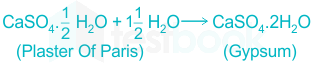
(\begin{array}{{20}{c}} {CaS{O_{4.}} + \frac{1}{2}{H_2}O + 1\frac{1}{2}{H_2}O}\ {\left( {Plaster,Of,Paris} \right)} \end{array} \to \begin{array}{{20}{c}} {CaS{O_4}.2{H_2}O}\ {\left( {Gypsum} \right)} \end{array})

  • Gypsum is an ore of Calcium (Ca). The chemical formula of Gypsum is CaSO4. 2H2O.
  • Gypsum is mainly used as a fertilizer, as the main constituent in plaster, chalk, etc.
  • The plaster of Paris on mixing with water produces gypsum.
  • Calcium Sulphate Hemihydrate (CaSO4·1/2 H2O) on hydration leads to the crystallization of gypsum calcium sulphate dihydrate (CaSO4·2H2O).
49

A reversible process _______.

  1. ((a))

    Must pass through a continuous series of equilibrium states

  2. ((b))

    Leaves no history of the events in surroundings

  3. ((c))

    Must pass through the same states on the reversed path as on the forward path

  4. ((d))

    All options are correct

Show Answer
Answer: ((d))

All options are correct

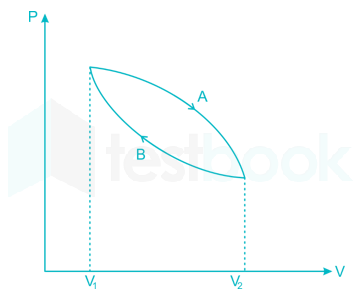
The process in which the system and surroundings can be restored to the initial state from the final state without producing any changes in the thermodynamic properties of the universe is called a reversible process.

If the system and its surroundings cannot return to their initial states at the end of the reversed process, this process is an irreversible process.

50

Acids react with bases to form salt and water. This reaction is known as

  1. ((a))

    Combination

  2. ((b))

    Neutralisation

  3. ((c))

    Reduction

  4. ((d))

    Decomposition

Show Answer
Answer: ((b))

Neutralisation

The correct answer is Neutralisation.

Key Points

 Neutralization:

  • Neutralization reactions can be defined as chemical reactions in which an acid reacts with a base to produce a salt along with water.
  • The reaction of an acid with a base is called a neutralization reaction.
  • For example, the reaction of hydrochloric acid(HCI) with sodium hydroxide (NaOH) produces a solution of sodium chloride(NaCl) (salt) and some additional water molecules.
  • The neutralization of a strong base and strong acid has a pH equal to 7.
  • The neutralization of a strong base and weak acid will be greater than 7.
  • The neutralization of a strong acid and weak base will be less than 7.

Additional Information

 Decomposition reactions:

  • It can be defined as a reactant compound, which breaks down into two or more products.
  • Many decomposition reactions happen all around us i.e. electrolysis of water to produce oxygen and hydrogen, and the decomposition of carbonic acid in soft drinks.
  • Decomposition reactions can be either endothermic or endothermic.

 Combination reactions:

  • It is the opposite reaction of decomposition reactions in which two reactant molecules react to give one product.

 Reduction:

  • It is the process of gaining or losing electrons or removing or adding hydrogen atoms to a molecule.
  • Product oxidant + e- The amount of oxidant has decreased.

Attempt this paper under real exam conditions

Timed interface, section switching, instant scoring, and question-by-question analytics — free.

Start Timed Attempt