Official Paper

AIIMS BSc NURSING 2023 Memory-Based Paper (Previous Year Paper)

100 questions · 120 minutes · with answers · free

General Knowledge (10 questions)

1

When is International Yoga Day observed every year?

  1. ((a))

    June 21

  2. ((b))

    March 21

  3. ((c))

    April 22

  4. ((d))

    May 31

Show Answer
Answer: ((a))

June 21

The correct answer is '21st June'

Key Points

  • International Yoga Day:
  • International Yoga Day is observed annually on 21st June.
  • This day was officially recognized by the United Nations General Assembly (UNGA) in December 2014, following a proposal by India.
  • It aims to raise awareness worldwide of the many benefits of practicing yoga.
  • The first International Yoga Day was celebrated on 21st June 2015.
  • Yoga is an ancient physical, mental, and spiritual practice that originated in India.

Additional Information

  • Significance of 21st June:
  • 21st June is the summer solstice, the longest day of the year in the Northern Hemisphere, which holds special significance in many parts of the world.
  • The date was chosen to align with this natural event, symbolizing the connection between nature and yoga.

2

_______ was the first Chief Election Commissioner of India?

  1. ((a))

    Sukumar Sen 

  2. ((b))

    TN Seshan

  3. ((c))

    Sunil Arora

  4. ((d))

    MS Gill

Show Answer
Answer: ((a))

Sukumar Sen 

The correct answer is Sukumar Sen. 

Key Points

  • Name: Sukumar Sen
  • Born: 2 January 1898, in a Bengali Baidya-Brahmin family
  • Role: 1st Chief Election Commissioner of India (21 March 1950 – 19 December 1958)
  • Notable Contributions:
  • Oversaw India's first two general elections (1951–52 and 1957)
  • First Chief Election Commissioner in Sudan (1953)
  • Education:
  • Presidency College, Kolkata
  • University of London (Gold medal in Mathematics)
  • Career:
  • Joined Indian Civil Service in 1921
  • Served as Chief Secretary of West Bengal in 1947
  • Appointed as Chief Election Commissioner in 1950
  • Awards: Padma Bhushan (first civilian honor)
  • Family:
  • Married Gouri, with two sons and two daughters
  • Brother: Ashoke Kumar Sen, Union Law Minister
  • Another brother: Amiya Kumar Sen, an eminent doctor and the last person to see Rabindranath Tagore alive
3

________ is the founder of Facebook?

  1. ((a))

    Mark Zuckerberg

  2. ((b))

    Brian Acton

  3. ((c))

    Jimmy Wales

  4. ((d))

    Larry Page

Show Answer
Answer: ((a))

Mark Zuckerberg

The correct answer is Mark Zuckerberg. 

Key Points

  • Owner: Meta (formerly Facebook Inc.)
  • Created: 2004 by Mark Zuckerberg and four other Harvard College students
  • Initial Membership: Started with Harvard students, gradually expanded to other North American universities
  • Active Users: 3.07 billion monthly active users as of December 2023
  • Website Rank: Third-most-visited website as of November 2024
  • Most Downloaded App: Facebook was the most downloaded mobile app of the 2010s
  • Access Devices: Can be accessed from personal computers, tablets, and smartphones
  • Features:
  • Create profiles with personal information
  • Post text, photos, and multimedia
  • Share posts with friends or publicly based on privacy settings
  • Communicate through Messenger
  • Edit messages within 15 minutes of sending
  • Join common-interest groups
  • Receive notifications of friends' activities and pages they follow
  • Criticism:
  • User privacy issues (e.g., Facebook-Cambridge Analytica scandal)
  • Political manipulation (e.g., 2016 U.S. elections)
  • Mass surveillance concerns
  • Psychological effects (addiction, low self-esteem)
  • Spread of fake news, conspiracy theories, and hate speech
  • Accusations of inflating user numbers to attract advertisers
4

The Hornbill Festival is celebrated in which state?

  1. ((a))

    Assam

  2. ((b))

    Meghalaya

  3. ((c))

    Nagaland

  4. ((d))

    Arunachal Pradesh

Show Answer
Answer: ((c))

Nagaland

The correct answer is Nagaland.

Key Points

  • Location: Naga Heritage Village in Kisama, Nagaland
  • Duration: 10 days, from December 1st to 10th
  • Purpose:
  • To celebrate Nagaland's cultural diversity
  • To promote inter-tribal interaction
  • To preserve Naga heritage
  • Activities:
  • Cultural performances
  • Music and dance
  • Handloom and handicraft exhibitions
  • Food stalls
  • Indigenous sports
  • Significance:
  • Major tourist event attracting both domestic and international visitors
  • Named after: The hornbill, a bird revered in Naga folklore for its boldness and grandeur
5

How many non-permanent members does UN Security Council have?

  1. ((a))

    10

  2. ((b))

    12

  3. ((c))

    7

  4. ((d))

    5

Show Answer
Answer: ((a))

10

The correct answer is 10 non-permanent members.

Key Points

  • UN Security Council
  • The Security Council has primary responsibility for the maintenance of international peace and security.
  • It is one of the six principal organs of the United Nations (UN).
  • It is consists of 15 members of which 5 are permanent while the other 10 are non-permanent members.
  • The permanent members are China, Russian Federation, France, the USA, and the United Kingdom.

Additional Information

  • The UNO was formed on 24 October 1945.
  • It was founded in San Francisco, USA.
  • The headquarters were shifted to New York in 1946.
6

In which year did Independent India win its first Olympic gold medal ?

  1. ((a))

    2008

  2. ((b))

    1948

  3. ((c))

    1972

  4. ((d))

    1960

Show Answer
Answer: ((b))

1948

The correct answer is 1948

Key Points

  • The Indian field hockey team defeated the British team to win the country's first gold medal at the 1948 Summer Olympics.
  • It was the country's first Olympic gold medal since India became independent.

Additional Information

  • India competed at the 1948 Summer Olympics in Wembley Park, London, England.
  • 79 competitors, all men, took part in 39 events in 10 sports.
  • It was the first time that India competed as an independent nation at the Olympic Games.
7

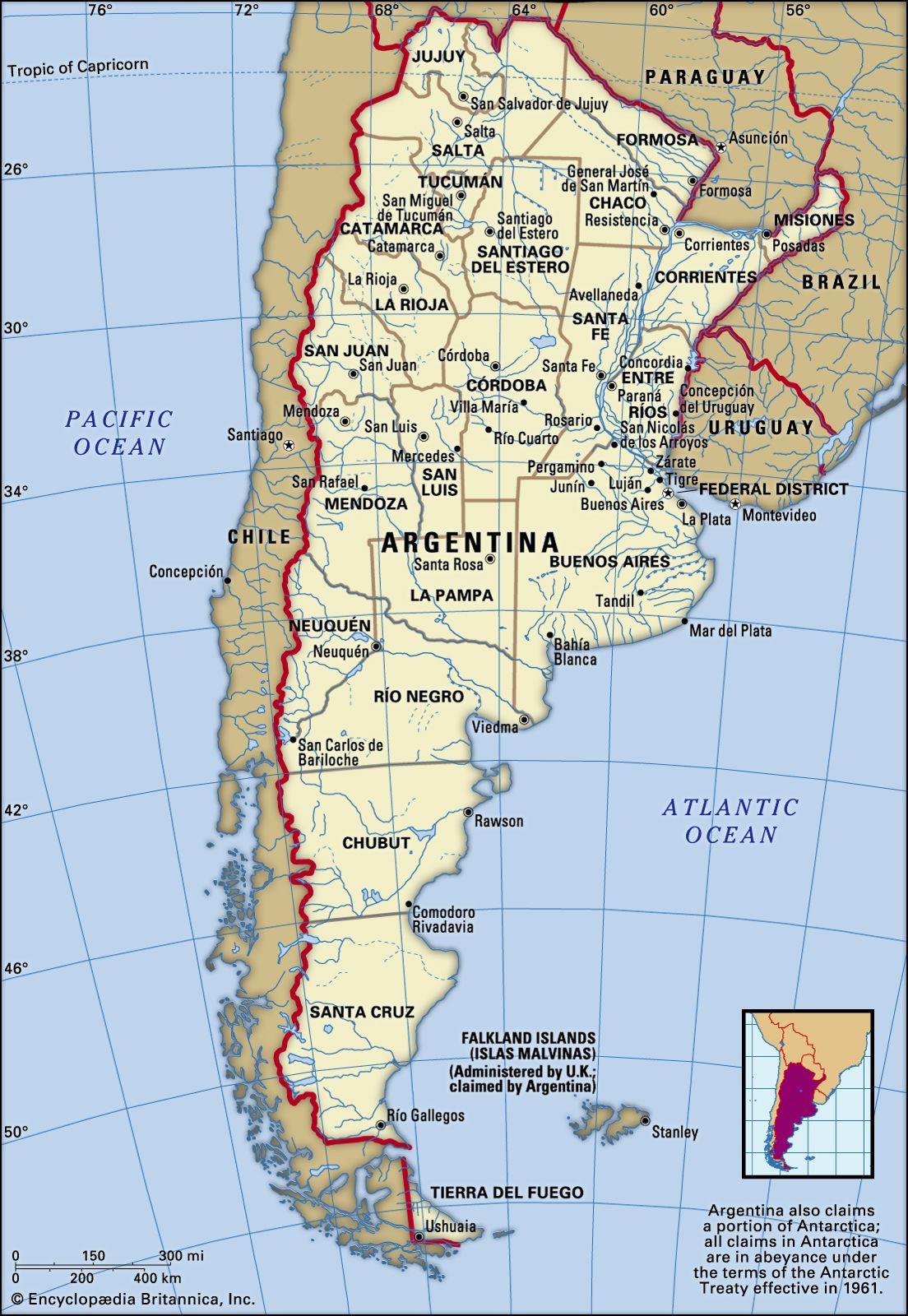
Which city is the capital of Argentina?

  1. ((a))

    Rio de Janeiro

  2. ((b))

    Santiago

  3. ((c))

    Lima

  4. ((d))

    Buenos Aires

Show Answer
Answer: ((d))

Buenos Aires

The correct answer is Buenos Aires​. 

Key Points

  • Argentina, officially the Argentine Republic, is a country in the southern half of South America.
  • It covers an area of 2,780,085 km², making it the second-largest country in South America after Brazil, the fourth-largest country in the Americas, and the eighth-largest country in the world.
  • Capital: Buenos Aires
  • Official language: Spanish
  • Currency: Argentine Peso
  • Government: Republic, Representative democracy, Presidential system, Constitutional republic, Federal republic

Argentina

  • Size & Borders: Argentina is bordered by Chile (to the west, along the Andes), Bolivia and Paraguay (north), Brazil (northeast), Uruguay and the South Atlantic Ocean (east). Its coastline stretches about 4,700km along the Atlantic.
  • Regions: The country's geography is divided into four main regions:
  • The Andes (western boundary, featuring Aconcagua at 6,959m — the highest peak in the Southern Hemisphere).
  • The North (Gran Chaco and Mesopotamia).
  • The Pampas (fertile central plains, Argentina's agricultural heartland).
  • Patagonia (cold, windswept southern plateau).
  • Major Rivers: Paraná, Uruguay, Paraguay, Salado, and Colorado—all vital to agriculture and hydroelectricity.
  • Population: Estimated at approximately 46.6 million, making Argentina one of the most populous countries in Latin America.
  • President: Javier Milei, an ultra-libertarian leader, continues to push for sweeping deregulation, austerity, and potential dollarization.

Argentina | History, Map, Flag, Population, Language ...

8

Marathon is to race as hibernation is to

  1. ((a))

    winter

  2. ((b))

    bear

  3. ((c))

    dream

  4. ((d))

    sleep

Show Answer
Answer: ((d))

sleep

The logic followed here is:

Marathon is a long race.

Similarly,

Hibernation is a lengthy period of sleep.

Hence, "Option 4" is the correct answer.

9

Which word does NOT belong with the others?

  1. ((a))

    branch

  2. ((b))

    dirt

  3. ((c))

    leaf

  4. ((d))

    root

Show Answer
Answer: ((b))

dirt

The logic followed here is:

Option 1) branch → Part of a tree

Option 2) dirt → Not related to/part of tree

Option 3) leaf → Part of a tree

Option 4) root → Part of a tree

Hence, "Option 2" is the correct answer.

10

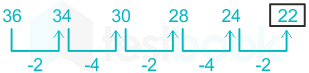
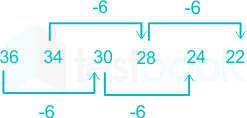
Look at this series: 36, 34, 30, 28, 24, ... What number should come next?

  1. ((a))

    20

  2. ((b))

    22

  3. ((c))

    23

  4. ((d))

    26

Show Answer
Answer: ((b))

22

The logic followed here is:


Hence, "Option 2" is the correct answer.

Alternate Method 

Physics (30 questions)

11

The dimensions of electrical conductivity is

  1. ((a))

    [M-2L-1T2A1]

  2. ((b))

    [M-3LT-2A-1]

  3. ((c))

    [M-1L-3T3A2]

  4. ((d))

    [ML-2A-3T2]

Show Answer
Answer: ((c))

[M-1L-3T3A2]

CALCULATION:

  1. The resistance may be written as

(⇒ R =\frac{V}{I} =\frac{W}{I^2t^{}})

Where W is the work done and I is the current and t is the time

The dimension of R will be given by

(⇒ \frac{W}{I^2t^{}}= \frac{ML^{2}T^{-2}}{A^{2}T} = ML^{2}T^{-3}A^{-2})

  1. The resistivity is given by

(⇒ \rho = \frac{RA}{l})

Where A =Area and l = length

The dimension of resistivity is 

(⇒ \rho = \frac{RA}{l} = \frac{ML^{2}T^{-3}A^{2}\times L^{2}}{L} = ML^{3}T^{-3}A^{-2} )

  1. As we know, the conductivity is the inverse of resistivity taking the inverse of the dimension of resistivity, then the dimension of electrical conductivity is 

⇒ σ = M-1L-3T3A2

12

A body starts to fall freely under gravity. The distances covered by it in first, second and third second are in ratio

  1. ((a))

    1 ∶ 3 ∶ 5

  2. ((b))

    1 ∶ 2 ∶ 3

  3. ((c))

    1 ∶ 4 ∶ 9

  4. ((d))

    1 ∶ 5 ∶ 6

Show Answer
Answer: ((a))

1 ∶ 3 ∶ 5

When a body falls freely under gravity, the distance covered in the nth second is given by the formula:

Distance covered in nth second = u + (2gs) (where u is the initial velocity, g is the acceleration due to gravity, and s is the time interval)

For a body falling from rest, u = 0. So, the distance covered in nth second is:

s = (1/2) × g × (2n - 1)

The distances covered in the first, second, and third seconds are in the ratio:

1st second: (1/2) × g × (2 × 1 - 1) = g/2

2nd second: (1/2) × g × (2 × 2 - 1) = 3g/2

3rd second: (1/2) × g × (2 × 3 - 1) = 5g/2

So, the ratio of distances covered in the first, second, and third seconds is:

1 : 3 : 5

Thus, the correct option is Option 1: 1 : 3 : 5

13

A projectile is projected at 30° from horizontal with initial velocity 40 ms-1. The velocity of the projectile at t = 2 s from the start will be: (Given g = 10 m/s2)

  1. ((a))

    20√3 ms-1

  2. ((b))

    40√3 ms-1

  3. ((c))

    20 ms-1

  4. ((d))

    Zero

Show Answer
Answer: ((a))

20√3 ms-1

Calculation:

Given: The projectile is projected at an angle of 30° with initial velocity 40 m/s.

We need to find the velocity of the projectile at t = 2 seconds, given g = 10 m/s².

We can resolve the initial velocity into horizontal and vertical components:

Initial horizontal velocity, vx0 = 40 × cos(30°) = 40 × √3/2 = 20√3 m/s

Initial vertical velocity, vy0 = 40 × sin(30°) = 40 × 1/2 = 20 m/s

The horizontal velocity remains constant throughout the motion as no horizontal acceleration exists. Thus, at t = 2 seconds, the horizontal component of velocity is:

vx = 20√3 m/s

The vertical velocity at any time t is given by:

vy = vy0 - g × t

vy = 20 - 10 × 2 = 20 - 20 = 0 m/s

Therefore, at t = 2 seconds, the vertical velocity is zero.

The total velocity of the projectile at t = 2 seconds is the horizontal velocity alone:

v = vx = 20√3 m/s ≈ 34.64 m/s

So, the velocity of the projectile at t = 2 seconds is approximately 34.64 m/s, which matches Option 1.

Thus, the correct option is Option 1: 20√3 m/s

14

A block A of mass 4 kg is placed on another block B of mass 5 kg, and the block B rests on a smooth horizontal table. If the minimum force that can be applied on A so that both the blocks move together is 12 N, the maximum force that can be applied to B for the blocks to move together will be

  1. ((a))

    30N

  2. ((b))

    25N 

  3. ((c))

    27N

  4. ((d))

    48 N

Show Answer
Answer: ((c))

27N

Calculation:

Given: Block A has a mass of 4 kg, and block B has a mass of 5 kg. Block B rests on a smooth horizontal table, and the minimum force required to move both blocks together is 12 N.

Let the coefficient of static friction between block A and block B be μ. For the blocks to move together, the frictional force between the two blocks must provide the necessary force to move both blocks as a single unit.

The frictional force, f, between block A and block B is given by:

f = μ × N, where N is the normal force between the two blocks. Since block A is placed on block B, the normal force is equal to the weight of block A, which is:

N = mA × g = 4 × 10 = 40 N

Therefore, the maximum frictional force is:

f = μ × 40 N

Now, the force required to move both blocks together is:

F = (mA + mB) × a, where a is the acceleration of the blocks.

We know that the minimum force required to move the blocks together is 12 N, and this force must overcome the friction between the blocks. Thus, the frictional force must be equal to the applied force for both blocks to move together:

12 N = μ × 40 N

Solving for μ:

μ = 12 / 40 = 0.3

Now, the maximum force that can be applied to block B without sliding is:

Fmax = (mA + mB) × g × μ = (4 + 5) × 10 × 0.3

Fmax = 9 × 10 × 0.3 = 27 N

Thus, the correct option is Option 3: 27 N

15

A bullet of mass 'a' and velocity 'b' is fired into a large block of wood of mass 'c'. The bullet gets embedded into the block of wood. The final velocity of the system is

  1. ((a))

    (\frac{b}{a+b} \times c)

  2. ((b))

    (\frac{a+b}{c} \times a)

  3. ((c))

    (\frac{a}{a+c} \times b)

  4. ((d))

    (\frac{a+c}{a} \times b)

Show Answer
Answer: ((c))

(\frac{a}{a+c} \times b)

Calculation:

Given that a bullet of mass 'a' and velocity 'b' is fired into a large block of wood of mass 'c'. The bullet gets embedded into the block of wood. To find the final velocity of the system, we will use the principle of conservation of momentum.

According to the law of conservation of momentum, the total momentum before the collision is equal to the total momentum after the collision, assuming no external forces act on the system.

The initial momentum of the system is:

Momentum before = mass of bullet × velocity of bullet = a × b

The final momentum of the system after the bullet gets embedded in the block is:

Momentum after = (mass of bullet + mass of block) × final velocity = (a + c) × v

By conservation of momentum, we equate the initial momentum to the final momentum:

a × b = (a + c) × v

Solving for the final velocity v:

v = (a × b) / (a + c)

16

The moment of inertia of a thin uniform rod of mass M and length L about an axis passing through its midpoint and perpendicular to its length is I0. Its moment of inertia about an axis passing through one of its ends and perpendicular to its length is

  1. ((a))

    I0 + ML2/2

  2. ((b))

    I0 + ML2/4

  3. ((c))

    ​I0 + 2ML2

  4. ((d))

    I0 + ML2

Show Answer
Answer: ((b))

I0 + ML2/4

Calculation:

The moment of inertia of a thin uniform rod of mass M and length L about an axis passing through its midpoint and perpendicular to its length is I0. The moment of inertia about an axis passing through one of its ends and perpendicular to its length is derived using the parallel axis theorem.

According to the parallel axis theorem, the moment of inertia about an axis through one end of the rod is:

I = I0 + M × (L/2)2

Substituting the value for I0 (the moment of inertia through the center), we get:

I = I0 + M × L2/4

Hence, the correct option is Option 2: I0 + M × L2/4

17

Geo-stationary satellite is one which

  1. ((a))

    remains stationary at a fixed height from the earth's surface

  2. ((b))

    revolves like other satellites but in the opposite direction of earth's rotation

  3. ((c))

    revolves round the earth at a suitable height with same angular velocity and in the same direction as earth does about its own axis

  4. ((d))

    None of these

Show Answer
Answer: ((c))

revolves round the earth at a suitable height with same angular velocity and in the same direction as earth does about its own axis

Calculation:

A geo-stationary satellite is one that revolves around the Earth at a suitable height, with the same angular velocity as the Earth. This allows it to remain above the same point on the Earth's surface at all times, making it appear stationary from the Earth's surface.

Hence, the correct option is Option 3: It revolves round the Earth at a suitable height with the same angular velocity and in the same direction as the Earth does about its own axis.

18

Work done in increasing the size of a soap bubble from a radius of 3 cm to 5 cm is nearly (Surface tension of soap solution = 0.03 Nm-1)

  1. ((a))

    0.2πmJ

  2. ((b))

    2πmJ

  3. ((c))

    0.4πmJ 

  4. ((d))

    4πmJ

Show Answer
Answer: ((c))

0.4πmJ 

Calculation:

Given,

R1 = 3 cm = 3 × 10⁻² m

R2 = 5 cm = 5 × 10⁻² m

T = 0.03 N/m (Surface tension)

Original surface area = 2 × 4πR1

For second bubble = 2 × 4πR2

Work done = Surface tension × extension in area

Work done = T × ΔA

Substitute the values:

Work done = 0.03 × 2[4πR2² - 4πR1²]

Work done = 0.03 × 8π[(5)² - (3)²] × 10⁻⁴

Work done = 0.03 × 8π × 16 × 10⁻⁴

Work done = 0.384π × 10⁻³ J

Hence, the work done is approximately 0.4π mJ.

19

Two spheres of same size are made of the same metal but one is hollow and the other is solid. They are heated to same temperature, then

  1. ((a))

    both spheres will expand equally

  2. ((b))

    hollow sphere will expand more than the solid one

  3. ((c))

    solid sphere will expand more than the hollow one

  4. ((d))

    None of these

Show Answer
Answer: ((a))

both spheres will expand equally

Calculation:

When two spheres made of the same metal are heated to the same temperature, the coefficient of linear expansion is the same for both spheres. 

The formula for volume expansion is given by:

ΔV = γ · V₀ · ΔT

For the solid sphere:

ΔVsolid = γ · Vsolid · ΔT

For the hollow sphere:

ΔVhollow = γ · Vhollow · ΔT

ΔVsolid = ΔVhollow

Hence, the correct answer is Option 1: both spheres will expand equally

20

The change in internal energy of a thermodynamical system which has absorbed 2 kcal of heat and done 400 J of work is (1 cal = 4.2 J)

  1. ((a))

    2 kJ

  2. ((b))

    8 kJ

  3. ((c))

    3.5 kJ 

  4. ((d))

    5.5 kJ

Show Answer
Answer: ((b))

8 kJ

Calculation:

The change in internal energy (ΔU) of a thermodynamical system can be calculated using the first law of thermodynamics:

ΔU = Q - W

Where:

ΔU is the change in internal energy

Q is the heat absorbed by the system

W is the work done by the system

Given:

Heat absorbed, Q = 2 kcal = 2 × 4.2 × 103 J = 8400 J

Work done, W = 400 J

Now, applying the values in the equation:

ΔU = 8400 J - 400 J = 8000 J = 8 kJ

Thus, the change in internal energy is 8 kJ.

21

In an isothermal process, the amount of heat given to a ideal gas system is equal to

  1. ((a))

    net increase in internal energy

  2. ((b))

    net work done by the system

  3. ((c))

    net decrease in internal energy 

  4. ((d))

    net change in volume

Show Answer
Answer: ((b))

net work done by the system

Calculation:

In an isothermal process, the temperature of the system remains constant. According to the first law of thermodynamics:

ΔU = Q - W

Where:

ΔU is the change in internal energy

Q is the heat absorbed by the system

W is the work done by the system

For an isothermal process, the change in internal energy (ΔU) is zero because the temperature does not change. Thus:

ΔU = 0

Therefore, the heat given to the system (Q) is entirely converted into work done by the system (W). Hence, in an isothermal process:

Q = W

Thus, the correct answer is Option 2: net work done by the system.

22

If E is the translational kinetic energy, then which of the following relation holds good

  1. ((a))

    PV = E

  2. ((b))

    (P V=\frac{3}{2} E )

  3. ((c))

    PV = 3E

  4. ((d))

    (P V=\frac{2}{3} E)

Show Answer
Answer: ((d))

(P V=\frac{2}{3} E)

Calculation:

If E is the translational kinetic energy, then the correct relation can be derived using the ideal gas law and the kinetic theory of gases.

From the kinetic theory of gases, the translational kinetic energy (E) is related to the pressure (P), volume (V), and temperature (T) by the equation:

For an ideal gas, the internal energy E is given by:

E = (3/2)RT = (3/2) PV

Thus, the correct relation that holds good is:

PV = (2/3) E

Correct Answer: Option 4 - PV = (2/3) E

23

If one mole of monoatomic gas (\left(\gamma=\frac{5}{3}\right)) is mixed with one mole of diatomic gas (\left(\gamma=\frac{7}{5}\right)), the value of y for the mixture is

  1. ((a))

    1.40 

  2. ((b))

    1.50 

  3. ((c))

    1.53 

  4. ((d))

    3.07

Show Answer
Answer: ((b))

1.50 

Given:

For monoatomic gas: γ = 5/3

For diatomic gas: γ = 7/5

One mole of each gas is mixed.

For monoatomic gas:

Cv = 3R/2

Cp = 5R/2

For diatomic gas:

Cv = 5R/2, Cp = 7R/2

Total heat capacities of mixture:

Cv(total) = 3R/2 + 5R/2

⇒ Cv(total) = 8R/2 = 4R

Cp(total) = 5R/2 + 7R/2

⇒ Cp(total) = 12R/2 = 6R

Now,

γ(mixture) = Cp(total) / Cv(total)

⇒ γ = 6R / 4R = 3/2 = 1.50

Hence, the correct answer is 1.50.

24

The displacement of a particle in SHM is x = 10sin(\left(2 t-\frac{\pi}{6}\right)) metre. When its displacement is 6 m, the velocity of the particle (in m s-1) is

  1. ((a))

    8

  2. ((b))

    24

  3. ((c))

    16

  4. ((d))

    10

Show Answer
Answer: ((c))

16

Calculation:

The displacement of a particle in Simple Harmonic Motion (SHM) is given by the equation:

x = 10sin(2t - π/6) metres

To find the velocity, we differentiate the displacement equation with respect to time.

The velocity (v) is given by:

v = dx/dt = d/dt [10sin(2t - π/6)]

Using the chain rule:

v = 10 × 2cos(2t - π/6)

v = 20cos(2t - π/6)

When the displacement is 6 m, we substitute this into the displacement equation:

6 = 10sin(2t - π/6)

sin(2t - π/6) = 6/10 = 0.6

2t - π/6 = sin⁻¹(0.6)

2t - π/6 = 0.6435 rad

2t = 0.6435 + π/6

2t = 0.6435 + 0.5236 = 1.1671 rad

t = 1.1671 / 2 = 0.5836 s

Now, substitute t = 0.5836 s into the velocity equation:

v = 20cos(2 × 0.5836 - π/6)

v = 20cos(1.1671 - 0.5236)

v = 20cos(0.6435) = 20 × 0.8 = 16 m/s

The velocity of the particle when its displacement is 6 m is 16 m/s.

25

The total energy of a particle executing S.H.M. is proportional to

  1. ((a))

    displacement from equilibrium position 

  2. ((b))

    frequency of oscillation

  3. ((c))

    velocity in equilibrium position 

  4. ((d))

    square of amplitude of motion

Show Answer
Answer: ((d))

square of amplitude of motion

Calculatipon:

The total energy of a particle executing Simple Harmonic Motion (S.H.M.) is given by the equation:

E = K + U

Where E is the total energy, K is the kinetic energy, and U is the potential energy.

For a particle in SHM, the kinetic energy is:

K = (1/2)mv2

And the potential energy is:

U = (1/2)kx2

The total energy (E) remains constant throughout the motion, and it is the sum of the kinetic and potential energies:

E = (1/2)kA2

Where A is the amplitude of the motion, and k is the spring constant.

Thus, the total energy is directly proportional to the square of the amplitude of the motion.

Correct Answer: Option 4 - square of amplitude of motion

26

A pipe open at both ends has a fundamental frequency fin air. The pipe is dipped vertically in water so that half of it is in water. The fundamental frequency of the air column is now:

  1. ((a))

    2f

  2. ((b))

    f

  3. ((c))

    (\frac{f}{2})

  4. ((d))

    (\frac{3f}{4})

Show Answer
Answer: ((b))

f

Calculation:

For a pipe of length L open at both ends, the fundamental frequency (f) in air is given by the equation:

f = v/λ = (v / 2L)

⇒ λ =2L

Now, when the pipe is dipped vertically in water and half of it is submerged, the length of the air column is halved. 

⇒ L' = L/2 

⇒ λ' =4L' = 2L 

Hence, f' = v / λ' = v / 2L = f 

Correct Answer: Option 2 - f

27

Two parallel plate capacitors X and Y, have the same area of plates and same separation between plates. X has air and Y with dielectric of constant 2 between its plates. They are connected in series to a battery of 12 V. The ratio of electrostatic energy stored in X and Y is

  1. ((a))

    4 ∶ 1 

  2. ((b))

    1 ∶ 4

  3. ((c))

    2 ∶ 1

  4. ((d))

    1 ∶ 2

Show Answer
Answer: ((c))

2 ∶ 1

Calculation:

For two capacitors in series, the total potential difference across both capacitors is equal to the battery voltage. The formula for the electrostatic energy stored in a capacitor is given by:

U = (1/2) × C × V2

Where:

  • U is the energy stored in the capacitor,
  • C is the capacitance,
  • V is the voltage across the capacitor.

The capacitance of a parallel plate capacitor is given by:

C = (ε₀ × A) / d

Where:

  • ε₀ is the permittivity of free space (for air, it is 1),
  • A is the area of the plates,
  • d is the separation between the plates.

For capacitor X, the dielectric constant is 1 (for air), and for capacitor Y, the dielectric constant is 2. The capacitance of Y will therefore be twice the capacitance of X. Since the capacitors are in series, the total capacitance is reduced, and the voltage across each capacitor is inversely proportional to their capacitance.

The energy stored in each capacitor depends on its capacitance, and since Y has twice the capacitance of X, the energy stored in X will be half of that stored in Y.

Correct Answer: Option 3 - 2 : 1

28

A hollow metal sphere of radius 5 cm is charged such that the potential on its surface is 10 V. The potential at a distance of 2 cm from the centre of the sphere is

  1. ((a))

    zero

  2. ((b))

    10V

  3. ((c))

    4V

  4. ((d))

    10/3 V

Show Answer
Answer: ((b))

10V

Calculation:

The potential at a point outside a charged spherical shell is given by the formula:

V = k × Q / r

Where:

  • V is the potential at a distance r from the center of the sphere,
  • k is the electrostatic constant (8.99 × 10⁹ N·m²/C²),
  • Q is the charge on the sphere,
  • r is the distance from the center of the sphere.

For a hollow sphere, the potential outside the sphere is the same as if all the charge were concentrated at the center. Since the potential at the surface of the sphere (at r = 5 cm) is 10 V, the potential inside the sphere and at any point inside (such as 2 cm from the center) remains the same.

Correct Answer: Option 2 - 10V

29

Suppose the charge of a proton and an electron differ slightly. One of them is -e, the other is (e + Δe). If the net of electrostatic force and gravitational force between two hydrogen atoms placed at a distance d (much greater than atomic size) apart is zero, then Ae is of the order of [Given mass of hydrogen m = 1.67 × 10⁻²⁷ kg]

  1. ((a))

    10-23 C

  2. ((b))

    10-37 C

  3. ((c))

    10-47 C

  4. ((d))

    10-20 C

Show Answer
Answer: ((d))

10-20 C

Calculation:

The electrostatic force between two charges is given by Coulomb’s law:

Fe = (k × |q1 × q2|) / r²

Where:

  • k is Coulomb’s constant (9 × 10⁹ N·m²/C²),
  • q1 and q2 are the charges on the particles,
  • r is the distance between the particles.

The gravitational force between two masses is given by Newton's law of gravitation:

Fg = (G × m1 × m2) / r²

Where:

  • G is the gravitational constant (6.67 × 10⁻¹¹ N·m²/kg²),
  • m1 and m2 are the masses of the particles,
  • r is the distance between the particles.

The forces cancel when:

Fe = Fg

Solving the equation, we find that the charge difference Δe (the difference between the proton and electron charge) is of the order of 10-20 C.

Correct Answer: Option 4 - 10-20 C

30

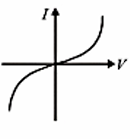
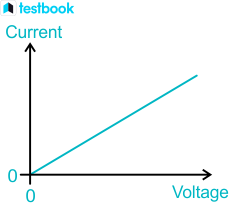
The I-V characteristics shown in figure represents

  1. ((a))

    ohmic conductors

  2. ((b))

    non-ohmic conductors

  3. ((c))

    insulators

  4. ((d))

    superconductors

Show Answer
Answer: ((b))

non-ohmic conductors

Calcultion:

The I-V characteristics shown in the figure represent a non-linear relationship between current (I) and voltage (V). This type of graph is typical of non-ohmic conductors, where the resistance varies with the applied voltage.

In contrast to ohmic conductors, where the I-V graph is a straight line (indicating constant resistance), non-ohmic conductors exhibit a curve, meaning their resistance changes with voltage.

Ohm’s Law

Correct Answer: Option 2 - Non-ohmic conductors

31

A beam of electrons is moving with constant velocity in a region having simultaneous perpendicular electric and magnetic fields of strength 20 Vm-1 and 0.5 T respectively at right angles to the direction of motion of the electrons. Then the velocity of electrons must be

  1. ((a))

    8 m/s 

  2. ((b))

    20 m/s

  3. ((c))

    40 m/s

  4. ((d))

    (\frac{1}{40}) m/s

Show Answer
Answer: ((c))

40 m/s

Calculation:

The motion of the electron is in a region where both electric and magnetic fields are acting on it. For the electron to move with constant velocity, the net force acting on it must be zero. The force due to the electric field (Fe) and the magnetic field (Fm) must balance each other.

The force due to the electric field is given by:

Fe = eE

Where 'e' is the charge of the electron and 'E' is the electric field strength.

The force due to the magnetic field is given by:

Fm = evB

Where 'v' is the velocity of the electron and 'B' is the magnetic field strength.

Since the forces must cancel each other out for constant velocity, we set Fe = Fm:

eE = evB

Simplifying, we get:

v = E / B

Substitute the given values:

v = 20 V/m / 0.5 T

v = 40 m/s

The velocity of the electrons must be 40 m/s.

32

A solenoid of length 1.5 m and 4 cm diameter possesses 10 turns per cm. A current of 5A is flowing through it, the magnetic induction at axis inside the solenoid is

(μ0 = 4π × 10-7 weber amp-1 m-1)

  1. ((a))

    4π × 10-7 gauss

  2. ((b))

    2π × 10-7 gauss

  3. ((c))

    4π × 10-5 tesla

  4. ((d))

    2π × 10-5 tesla

Show Answer
Answer: ((d))

2π × 10-5 tesla

Calculation:

The magnetic field inside a solenoid is given by the formula:

B = μ₀ × n × I

Where:

  • μ₀ = 4π × 10-7 weber amp-1 m-1 (permeability of free space)
  • n = number of turns per unit length = 10 turns per cm = 10 × 102 turns/m
  • I = current passing through the solenoid = 5A

Now, substituting the values into the equation:

B = (4π × 10-7) × (10 × 102) × 5

B = 2π × 10-5 tesla

The magnetic induction at the axis inside the solenoid is 2π × 10-5 tesla.

33

When the current in a coil changes from 2 amp. to 4 amp. in 0.05 sec., an e.m.f. of 8 volt is induced in the coil. The coefficient of self inductance of the coil is

  1. ((a))

    0.1 henry

  2. ((b))

    0.2 henry

  3. ((c))

    0.4 henry

  4. ((d))

    0.8 henry

Show Answer
Answer: ((b))

0.2 henry

Calcultion:

The formula for the induced e.m.f. in a coil is given by:

e = -L × (ΔI / Δt)

Where:

  • e = induced e.m.f. = 8 V
  • L = self-inductance of the coil (the quantity we need to find)
  • ΔI = change in current = 4 A - 2 A = 2 A
  • Δt = time taken for the change in current = 0.05 s

Now, substituting the known values into the equation:

8 = L × (2 / 0.05)

8 = L × 40

L = 8 / 40 = 0.2 henry

The coefficient of self-inductance of the coil is 0.2 henry.

34

An AC circuit has R = 100 Ω, C = 2 μF and L = 80 mH, connected in series. The quality factor of the circuit is

  1. ((a))

    2

  2. ((b))

    0.5

  3. ((c))

    20

  4. ((d))

    400

Show Answer
Answer: ((a))

2

Calculation:

The formula for the quality factor (Q) of an LC circuit is given by:

Q = (1 / R) × √(L / C)

Where:

  • R = resistance = 100 Ω
  • L = inductance = 80 mH = 80 × 10-3 H
  • C = capacitance = 2 μF = 2 × 10⁻⁶ F

Substituting the values into the formula:

Q = (1 / 100) × √((80 × 10-3) / (2 × 10⁻⁶))

Q = (1 / 100) × √(40 × 103)

Q = (1 / 100) × 200

Q = 2

The quality factor of the circuit is 2.

35

A plane electromagnetic wave is incident on a plane surface of area A, normally and is perfectly reflected. If energy E strikes the surface in time t then average pressure exerted on the surface is (c = speed of light)

  1. ((a))

    zero

  2. ((b))

    E/Ac

  3. ((c))

    2E/Ac

  4. ((d))

    E/c

Show Answer
Answer: ((c))

2E/Ac

Calculation:

The pressure exerted by an electromagnetic wave on a surface can be calculated by the formula:

Pressure (P) = Energy / (Area × Time)

We are given:

  • Energy = E
  • Area = A
  • Time = t
  • Speed of light = c

Since the wave is perfectly reflected, the pressure is twice that of a non-reflected wave.

Therefore, the formula for the average pressure exerted on the surface is:

P = 2E / (A × c)

The correct answer is: 2E / (A × c)

36

In a Young's double slit experiment two slits are separated by 2 mm and the screen is placed one meter away. When a light of wavelength 500 nm is used, the fringe separation will be:

  1. ((a))

    0.25 mm

  2. ((b))

    0.75 mm

  3. ((c))

    0.50 mm

  4. ((d))

    1 mm

Show Answer
Answer: ((a))

0.25 mm

Calculation:

The fringe separation in a Young's double slit experiment is given by the formula:

y = (λ × D) / d

Where:

  • λ is the wavelength of light
  • D is the distance between the slits and the screen
  • d is the distance between the slits

Substitute the given values:

  • λ = 500 nm = 500 × 10-9 m
  • D = 1 m
  • d = 2 mm = 2 × 10⁻³ m

The fringe separation (y) is:

y = (500 × 10-9 × 1) / (2 × 10⁻³) = 0.25 mm

The correct answer is: 0.25 mm

37

A glass slab of thickness 4 cm contains the same number of waves as 5 cm of water when both are traversed by the same monochromatic light. If the refractive index of water is 4/3, what is that of glass?

  1. ((a))

    5/3

  2. ((b))

    5/4

  3. ((c))

    16/15

  4. ((d))

    1.5

Show Answer
Answer: ((a))

5/3

Calculation:

The number of waves in a medium is given by:

n = (thickness of medium) / (wavelength in that medium)

For the same number of waves to exist in both the water and the glass slab, the relationship between the number of waves in water and in glass can be expressed as:

Number of waves in water = Number of waves in glass

This can be written as:

(thickness of water) / (wavelength in water) = (thickness of glass) / (wavelength in glass)

Now, using the refractive index (n) to relate the wavelengths:

wavelength in medium = (wavelength in vacuum) / refractive index of medium

Let the refractive index of glass be "ng" and the refractive index of water is given as 4/3. Substituting the values:

(5 cm) / (wavelength in water) = (4 cm) / (wavelength in glass)

Using the refractive index formula:

(5 cm) / (wavelength in vacuum / (4/3)) = (4 cm) / (wavelength in vacuum / ng)

Solving for ng:

ng = (5/4) × (4/3) = 5/3

The correct answer is: 5/3

38

A steel ball of mass mis moving with a kinetic energy K. The de Broglie wavelength associated with the ball is

  1. ((a))

    (\frac{\mathbf{h}}{2 \mathrm{mK}})

  2. ((b))

    (\sqrt{\frac{\mathrm{h}}{2 \mathrm{mK}}})

  3. ((c))

    (\frac{\mathrm{h}}{\sqrt{2 \mathrm{mK}}})

  4. ((d))

    meaningless

Show Answer
Answer: ((c))

(\frac{\mathrm{h}}{\sqrt{2 \mathrm{mK}}})

Calculation:

The de Broglie wavelength λ is given by the formula:

λ = h / p

where:

  • h = Planck's constant
  • p = momentum of the particle

Since the steel ball is moving with kinetic energy K, the momentum p is related to K by the equation:

p = √(2mK)

Substitute this expression for p into the de Broglie wavelength equation:

λ = h / √(2mK)

The correct answer is: h / √(2mK)

39

When the wavelength of radiation falling on a metal is changed from 500 nm to 200 nm, the maximum kinetic energy of the photoelectrons becomes three times larger. The work function of the metal is close to :

  1. ((a))

    0.81 eV

  2. ((b))

    1.02 eV

  3. ((c))

    0.52 eV

  4. ((d))

    0.61 eV

Show Answer
Answer: ((d))

0.61 eV

Calculation:

Let the work function of the metal be φ, and let the initial wavelength be λ1 = 500 nm and the final wavelength be λ2 = 200 nm. The energy of the photon is given by:

E = h× c / λ

where:

  • h = Planck's constant
  • c = speed of light
  • λ = wavelength

Initially, the kinetic energy of the photoelectron is:

K.E. = E1 - φ = h × c / λ1 - φ

Finally, the kinetic energy becomes three times larger:

3 × K.E. = E2 - φ = h × c / λ2 - φ

From the ratio of the kinetic energies:

3 × (h × c / λ1 - φ) = h × c / λ2 - φ

Solve for φ (work function of the metal):

φ ≈ 0.61 eV

The correct answer is: 0.61 eV

40

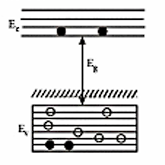
In the energy band diagram of a material shown below, the open circles and filled circles denote holes and electrons respectively. The material is

  1. ((a))

    an insulator

  2. ((b))

    a metal

  3. ((c))

    an n-type semiconductor

  4. ((d))

    a p-type semiconductor

Show Answer
Answer: ((d))

a p-type semiconductor

Calculation:

The given figure represents a p-type semiconductor:

When one of the silicon atoms (with valence = 4) is replaced by an atom of aluminium (with valence = 3), the aluminium atom can bond covalently with only three silicon atoms. This creates a "missing" electron (a hole) in one of the aluminium-silicon bonds.

With a small expenditure of energy, an electron can be torn from a neighboring silicon-silicon bond to fill this hole, thereby creating a hole in that bond as well. This process continues as the hole migrates through the lattice.

The aluminium atom is known as an acceptor atom because it readily accepts an electron from a neighboring bond in the valence band of silicon.

As the figure suggests, this electron occupies a localized acceptor state that lies within the energy gap, at an average energy interval Ea above the top of the valence band.

By adding acceptor atoms, it is possible to significantly increase the number of holes in the valence band, thereby making the material a p-type semiconductor.

The material shown in the figure is a p-type semiconductor.

Chemistry (30 questions)

41

Find molarity of 10 g NaOH in 200 ml of water.

  1. ((a))

    2.50 M

  2. ((b))

    1.25 M

  3. ((c))

    1 M

  4. ((d))

    3 M

Show Answer
Answer: ((b))

1.25 M

CONCEPT:

Molarity (M)

  • Molarity is a measure of the concentration of a solute in a solution, or of any chemical species in terms of amount of substance in a given volume. It is defined as the number of moles of solute divided by the volume of the solution in liters.
  • The formula for molarity is:

M = moles of soluteliters of solutionmoles of soluteliters of solutionmoles of soluteliters of solution

EXPLANATION:

  • First, calculate the moles of NaOH:
  • Molecular weight of NaOH = 23 (Na) + 16 (O) + 1 (H) = 40 g/mol
  • Moles of NaOH = massmolecular weightmassmolecular weightmassmolecular weight
  • = 10 g40 g/mol10 g40 g/mol10 g40 g/mol
  • = 0.25 mol
  • Next, convert the volume of the solution from milliliters to liters:
  • Volume = 200 ml = 200/1000 = 0.2 L
  • Finally, calculate the molarity:
  • M = moles of soluteliters of solutionmoles of soluteliters of solutionmoles of soluteliters of solution
  • = 0.25 mol0.2 L0.25 mol0.2 L0.25 mol0.2 L
  • = 1.25 M

Therefore, the molarity of 10 g NaOH in 200 ml of water is 1.25 M.

42

What is the order of melting point of group 18 elements?

  1. ((a))

    He < Ne < Ar < Kr < Xe

  2. ((b))

    He < Ar < Ne < Kr < Xe

  3. ((c))

    Xe < Kr < Ar < Ne < He

  4. ((d))

    ​Xe < Ar < Ne < Kr < He

Show Answer
Answer: ((a))

He < Ne < Ar < Kr < Xe

CONCEPT:

Melting Points of Group 18 Elements

  • Group 18 elements, also known as noble gases, have weak van der Waals forces between their atoms.
  • The melting points of these elements generally increase with an increase in atomic number.
  • This trend is due to the increase in the size of the atoms and the corresponding increase in the strength of van der Waals forces.

EXPLANATION:

  • Considering the noble gases in Group 18:

He, Ne, Ar, Kr, Xe

  • As we move down the group from helium (He) to xenon (Xe):
  • The atomic size increases.
  • The van der Waals forces between the atoms become stronger.
  • As a result, the melting points increase.
  • The order of melting points from lowest to highest is:
  • He < Ne < Ar < Kr < Xe

Therefore, the correct order of melting points of Group 18 elements is: He < Ne < Ar < Kr < Xe.

43

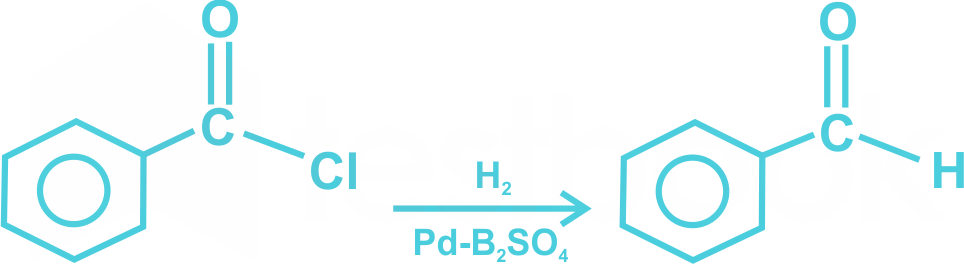
Identify the name of the reaction

  1. ((a))

    Rosenmund reduction

  2. ((b))

    Cannizzaro reaction 

  3. ((c))

    Kolbe electrolysis 

  4. ((d))

    Stephen reaction

Show Answer
Answer: ((a))

Rosenmund reduction

CONCEPT:

Identification of Organic Reactions

  • In organic chemistry, specific reactions are named after their discoverers or developers. These named reactions often describe a particular type of transformation or chemical process.
  • Understanding the type of reaction allows chemists to predict the products and conditions needed for the reaction.

EXPLANATION:

  • Rosenmund reduction: This reaction involves the reduction of acyl chlorides to aldehydes using hydrogen gas over a palladium-on-barium sulfate (Pd/BaSO4) catalyst.
  • ![Solved] Hydrogenation of benzoyl chloride in the presence of Pd on B](https://storage.googleapis.com/tb-img/production/21/04/F1_Puja_Madhuri_12.04.2021_D5.png)
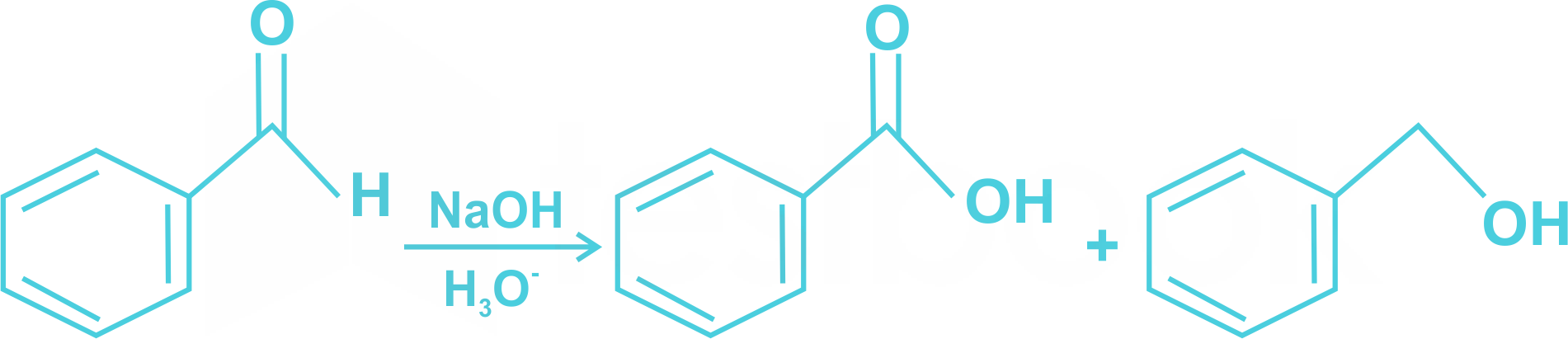
  • Cannizzaro reaction: This reaction involves the base-induced disproportionation of a non-enolizable aldehyde to yield a primary alcohol and a carboxylic acid.

Cannizzaro Reaction Mechanism: Learn Definition, Mechanism, Uses

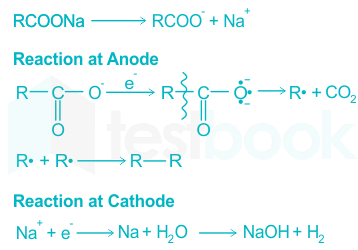
  • Kolbe electrolysis: This reaction involves the electrochemical decarboxylation of carboxylic acids to form alkanes.

![Solved] Electrolysis of cold concentrated aqueous solution of potass](https://storage.googleapis.com/tb-img/production/20/12/F1_Utkarsha_24.12.20_Pallavi_D1.1.png)

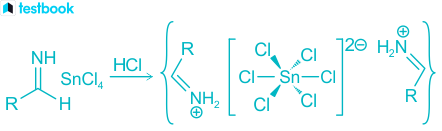
  • Stephen reaction: This reaction involves the reduction of nitriles to imines, which are then hydrolyzed to aldehydes using stannous chloride (SnCl2) and hydrochloric acid (HCl).

Stephen's reaction mechanism: Learn about its steps, examples and mechanism

Therefore, depending on the context of the reaction being identified, one can refer to the descriptions above to determine the correct name of the reaction.

44

Which is the first artificial sweetening agent?

  1. ((a))

    Aspartame 

  2. ((b))

    Sucralose

  3. ((c))

    Saccharin

  4. ((d))

    Alitame

Show Answer
Answer: ((c))

Saccharin

CONCEPT:

Artificial Sweetening Agents

  • Artificial sweeteners are sugar substitutes that provide a sweet taste like that of sugar while containing significantly less food energy.
  • These sweeteners are used in various food and beverage products to reduce calorie content.
  • Some common artificial sweeteners include Aspartame, Sucralose, Saccharin, and Alitame.

EXPLANATION:

  • The first artificial sweetening agent discovered was Saccharin.
  • Saccharin was discovered in 1879 by Constantin Fahlberg, a chemist working on coal tar derivatives at Johns Hopkins University.
  • Its discovery was accidental when Fahlberg noticed a sweet taste on his hands after a day in the laboratory and traced it back to the compound he was working on.

Therefore, the first artificial sweetening agent is Saccharin.

45

What is the hybridisation of Br in BrF5 and BrF3 respectively?

  1. ((a))

    sp2 and sp3d2

  2. ((b))

    sp3d2 and sp3d

  3. ((c))

    sp3 and d2sp3

  4. ((d))

    sp3d2 and d2 sp3

Show Answer
Answer: ((b))

sp3d2 and sp3d

CONCEPT:

Hybridization

  • Hybridization is the concept of mixing atomic orbitals to form new hybrid orbitals suitable for the pairing of electrons to form chemical bonds in valence bond theory.
  • The type of hybridization can be determined by the steric number, which is the sum of the number of atoms bonded to the central atom and the number of lone pairs on the central atom.

EXPLANATION:

  • For BrF5:
  • The central atom, Br, is bonded to 5 F atoms and has 1 lone pair of electrons.
  • The steric number = 5 (bonded atoms) + 1 (lone pair) = 6.
  • Hybridization with a steric number of 6 is sp3d2.

Hybridization of BrF5 (Bromine Pentafluoride) - Complete Study Guide

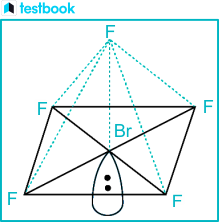
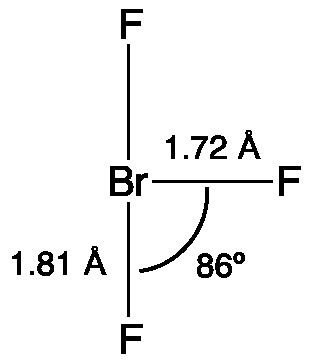
  • For BrF3:
  • The central atom, Br, is bonded to 3 F atoms and has 2 lone pairs of electrons.
  • The steric number = 3 (bonded atoms) + 2 (lone pairs) = 5.
  • Hybridization with a steric number of 5 is sp3d.

What is the Hybridization of Bromine Trifluoride

Therefore, the hybridization of Br in BrF5 and BrF3 is sp3d2 and sp3d respectively.

46

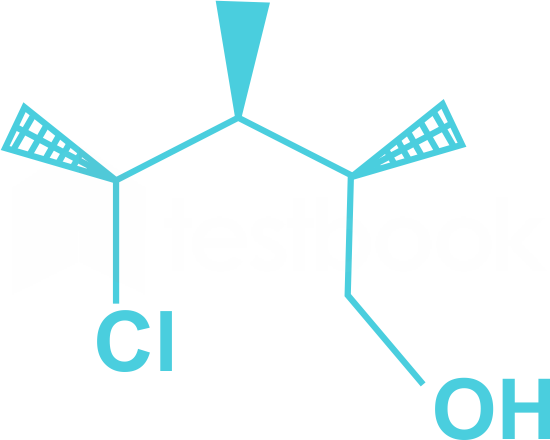
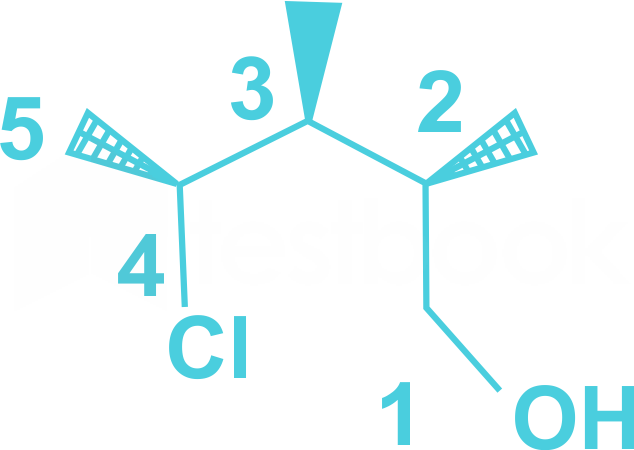
The IUPAC nomenclature of the following compound

  1. ((a))

    2-Chloro-3,4-dimethyl Penton-1-ol.

  2. ((b))

    4-Chloro-2,3-dimethyl Penton-1-ol

  3. ((c))

    4-Chloro-2,3,4-trimethylbutanol.

  4. ((d))

    None of these

Show Answer
Answer: ((b))

4-Chloro-2,3-dimethyl Penton-1-ol

CONCEPT:

IUPAC Nomenclature of Organic Compounds

  • The IUPAC nomenclature system is used to assign systematic names to organic compounds based on their structure, functional groups, and the number of carbon atoms in the longest chain.
  • The process involves identifying the longest continuous carbon chain that contains the functional group (in this case, the hydroxyl group, -OH), numbering the chain such that the functional group receives the lowest possible number, and then naming the substituents and their positions on the chain.
  • When multiple substituents are present, they are listed alphabetically in the name.

EXPLANATION:

  • The given compound contains a hydroxyl group (-OH) and a chlorine atom (Cl), as well as two methyl groups attached to a pentane chain.
  • The longest chain in the compound contains 5 carbon atoms, so it is based on pentane.
  • Starting from the left, we give the hydroxyl group the lowest possible number (position 1), and the chlorine atom is attached to carbon 2. The methyl groups are located at carbon 3 and carbon 4.
  • The correct IUPAC name for this compound is 4-Chloro-3,4-dimethylpentan-1-ol, based on the positions of the substituents and the functional group.

Thus, the correct answer is: 4-Chloro-3,4-dimethylpentan-1-ol.

47

(\mathrm{CH}{3} \mathrm{CH}{2} \mathrm{CH}_{2} \mathrm{COONa} \xrightarrow[\Delta]{\text { soda lime }})

  1. ((a))

    CH3 CH2 CH2 CH3

  2. ((b))

    CH3 CH2 CH3

  3. ((c))

    CH3-CH3

  4. ((d))

    CH3CH2CH2COOH

Show Answer
Answer: ((b))

CH3 CH2 CH3

CONCEPT:

Decarboxylation Reaction

  • Decarboxylation is a chemical reaction that removes a carboxyl group and releases carbon dioxide (CO2). Usually, decarboxylation refers to a reaction of carboxylic acids, removing a carbon atom from a carbon chain.
  • When a carboxylic acid is heated in the presence of soda lime (a mixture of sodium hydroxide (NaOH) and calcium oxide (CaO)), the carboxyl group (-COOH) is removed as carbon dioxide (CO2), and the remaining alkyl chain forms a hydrocarbon.

EXPLANATION:

  • In the given reaction:

CH3CH2CH2COONa → CH3CH2CH3 + CO2 (in the presence of soda lime and heat)

  • The compound CH3CH2CH2COONa (sodium butanoate) undergoes decarboxylation.
  • During the decarboxylation reaction, the -COONa group is removed and replaced by a hydrogen atom.
  • The product formed is propane (CH3CH2CH3).

Therefore, the correct answer is CH3CH2CH3.

48

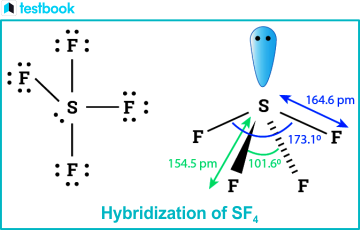
The number of lone pair on central atom in BrF5 and SF4 are:

  1. ((a))

    1 and 1

  2. ((b))

    1 and 2

  3. ((c))

    2 and 1 

  4. ((d))

    2 and 2

Show Answer
Answer: ((a))

1 and 1

CONCEPT:

Lone Pairs on Central Atom

  • The number of lone pairs on the central atom in a molecule can be determined using the valence shell electron pair repulsion (VSEPR) theory.
  • Lone pairs are non-bonding pairs of electrons that are found on the central atom.
  • To determine the number of lone pairs, we need to know the total number of valence electrons around the central atom and how many of these are used for bonding with other atoms.

EXPLANATION:

  • For BrF5:
  • Bromine (Br) has 7 valence electrons.
  • Fluorine (F) has 7 valence electrons and there are 5 fluorine atoms.
  • In BrF5, bromine forms 5 single bonds with 5 fluorine atoms.
  • Each single bond uses 1 pair of electrons, so 5 bonds use 5 pairs (10 electrons).
  • Therefore, bromine has 7 - 5 = 2 electrons (or 1 pair) left as lone pairs.

Hybridization of BrF5 (Bromine Pentafluoride) - Complete Study Guide

  • For SF4:
  • Sulfur (S) has 6 valence electrons.
  • Fluorine (F) has 7 valence electrons and there are 4 fluorine atoms.
  • In SF4, sulfur forms 4 single bonds with 4 fluorine atoms.
  • Each single bond uses 1 pair of electrons, so 4 bonds use 4 pairs (8 electrons).
  • Therefore, sulfur has 6 - 4 = 2 electrons (or 1 pair) left as lone pairs.

Hybridization of SF4 (Sulfur Tetrafluoride) - Detailed Explanation

Therefore, the number of lone pairs on the central atom in BrF5 and SF4 are 1 and 1, respectively.

49

Which of the following is not a property of chemisorption? 

  1. ((a))

    Highly specific

  2. ((b))

    High enthalpy of adsorption

  3. ((c))

    Irreversible

  4. ((d))

    Lack of specificity

Show Answer
Answer: ((d))

Lack of specificity

CONCEPT:

Chemisorption

  • Chemisorption, or chemical adsorption, involves the formation of a chemical bond between the adsorbate and the surface of the adsorbent.
  • This type of adsorption is typically highly specific to the adsorbate and adsorbent involved.
  • Chemisorption usually has a high enthalpy of adsorption due to the chemical bond formation.
  • It is generally irreversible because the process involves breaking and forming of chemical bonds.

EXPLANATION:

  • We know that chemisorption involves specific interactions between the adsorbate and the surface, which means it is highly specific.
  • It also has a high enthalpy of adsorption due to the formation of strong chemical bonds.
  • Additionally, chemisorption is generally irreversible because breaking these bonds requires significant energy.
  • Therefore, the statement "Lack of specificity" does not describe chemisorption.

Therefore, the correct answer is Lack of specificity.

50

Which of the following is not an isotope of hydrogen? 

  1. ((a))

    Protium 

  2. ((b))

    Dubnium 

  3. ((c))

    Deutrium 

  4. ((d))

    Tritium

Show Answer
Answer: ((b))

Dubnium 

EXPLANATION:

Isotopes of Hydrogen

  • Isotopes are variants of a particular chemical element which differ in neutron number, and consequently in nucleon number.
  • Hydrogen has three main isotopes:
  • Protium (1H): It has 1 proton and 0 neutrons.
  • Deuterium (2H or D): It has 1 proton and 1 neutron.
  • Tritium (3H or T): It has 1 proton and 2 neutrons.
  • Among these, the correct answer is:
  • Dubnium (2): It is not an isotope of hydrogen.
  • Dubnium is a chemical element with the symbol Db and atomic number 105, which is entirely different from hydrogen.

Therefore, Dubnium is not an isotope of hydrogen.

51

Which of the following is a chemical property?

  1. ((a))

    Melting point

  2. ((b))

    Boiling point

  3. ((c))

    Density

  4. ((d))

    Combustibility

Show Answer
Answer: ((d))

Combustibility

CONCEPT:

Chemical vs Physical Properties

  • Chemical properties are characteristics of a substance that become evident during a chemical reaction; they include reactivity, combustibility, and acidity.
  • Physical properties can be observed or measured without changing the composition of matter; they include melting point, boiling point, and density.

EXPLANATION:

  • Among the given options:
  • Melting point, boiling point, and density are physical properties because they can be observed without altering the chemical structure of the substance.
  • Combustibility is a chemical property because it describes how a substance reacts with oxygen to produce heat and light during combustion.
  • Therefore, the correct answer is:
  • Option 1, 2, and 3 are physical properties.
  • Option 4 (Combustibility) is a chemical property.

Therefore, the option that is a chemical property is Combustibility.

52

The IUPAC name of the following compound is

  1. ((a))

    5-oxo Hexanoic acid

  2. ((b))

    methyl Butanoic ketone

  3. ((c))

    4-oxo Pentanoic acid

  4. ((d))

    None of the above

Show Answer
Answer: ((a))

5-oxo Hexanoic acid

CONCEPT:

Priority Order of Functional Groups

  • In IUPAC nomenclature, functional groups are ranked by priority to determine their naming order when multiple groups are present in a compound.
  • The priority of functional groups is determined by their reactivity and their importance in the structure of organic compounds.
  • The priority order of functional groups, from highest to lowest, is as follows:
  • COOH (Carboxyl group) > SO3H (Sulfonic acid) > COOR (Ester) > COCl (Acyl chloride) > CONH2 (Amide) > CN (Nitrile) > HC=O (Aldehyde) > C=O (Ketone) > OH (Hydroxyl group) > NH2 (Amino group) > C=C (Alkene) > C-C (Alkane)

EXPLANATION:

  • For a compound with a carboxylic acid group and a keto group:
  • The main chain should include the carboxylic acid, and the keto group should be indicated by its position.
  • The correct IUPAC name for a compound with a carboxylic acid on the first carbon and a keto group on the fourth carbon is 4-oxo Pentanoic acid.

Therefore, the correct IUPAC name of the compound is 5-oxo Pentanoic acid, which corresponds to option 1.

53

The correct order of metallic character is

  1. ((a))

    B > Al > Mg > K 

  2. ((b))

    Al > Mg > B > K

  3. ((c))

    Mg > Al > K > B

  4. ((d))

    K > Mg > Al > B

Show Answer
Answer: ((d))

K > Mg > Al > B

CONCEPT:

Metallic Character

  • Metallic character refers to the ability of an element to lose electrons and form positive ions (cations).
  • Elements with higher metallic character are generally found on the left side of the periodic table and towards the bottom.
  • Metallic character increases down a group and decreases across a period from left to right.

EXPLANATION:

  • Potassium (K) is in Group 1, which has the highest metallic character.
  • Magnesium (Mg) is in Group 2, which also has high metallic character but less than Group 1.
  • Aluminum (Al) is in Group 13, which has moderate metallic character.
  • Boron (B) is in Group 13, but it is a metalloid with much lower metallic character compared to Al.
  • Considering the position in the periodic table and the trend of metallic character:
  • K has the highest metallic character.
  • Mg has less metallic character than K but more than Al.
  • Al has less metallic character than Mg but more than B.
  • B has the lowest metallic character among the given elements.

Therefore, the correct order of metallic character is: K > Mg > Al > B.

54

Which of the following is the most stable carbocation?

  1. ((a))

    CH3CH2CH2+

  2. ((b))

    CH3CH+CH3

  3. ((c))

    (CH3)3C+

  4. ((d))

    CH3 CH2+

Show Answer
Answer: ((c))

(CH3)3C+

CONCEPT:

Carbocation Stability

  • Carbocations are positively charged carbon species which are intermediates in many organic reactions.
  • The stability of carbocations depends on the number of alkyl groups attached to the positively charged carbon atom and the ability of adjacent atoms or groups to donate electron density to the positively charged carbon.
  • Alkyl groups stabilize carbocations through hyperconjugation and inductive effects, while resonance and other stabilizing interactions can also play significant roles.

EXPLANATION:

  • CH3CH2CH2+ is a primary carbocation.
  • CH3CH+CH3 is a secondary carbocation.
  • (CH3)3C+ is a tertiary carbocation.
  • CH3CH2+ is an ethyl carbocation, which is also a primary carbocation.
  • The stability order of carbocations is typically: tertiary > secondary > primary > methyl.
  • This is because tertiary carbocations have three alkyl groups that can donate electron density through hyperconjugation and inductive effects, making them more stable.

Therefore, the most stable carbocation among the given options is (CH3)3C+ (tertiary carbocation).

55

The correct order of electronegativity among the following options is:

  1. ((a))

    N > P ≃ As > Sb

  2. ((b))

    N > P > As > Sb

  3. ((c))

    N = P > As > Sb

  4. ((d))

    Sb > As > P > N

Show Answer
Answer: ((b))

N > P > As > Sb

CONCEPT:

Electronegativity

  • Electronegativity is a measure of the tendency of an atom to attract a bonding pair of electrons.
  • The electronegativity of an element is influenced by its atomic number and the distance at which its valence electrons reside from the charged nucleus.
  • In the periodic table, electronegativity generally increases across a period from left to right and decreases down a group.

EXPLANATION:

  • The given elements are nitrogen (N), phosphorus (P), arsenic (As), and antimony (Sb).
  • As we move down Group 15 in the periodic table, the electronegativity decreases due to the increasing atomic radius and shielding effect.
  • Therefore, the correct order of electronegativity from highest to lowest is:
  • Nitrogen (N) has the highest electronegativity among the given elements.
  • Phosphorus (P) comes next.
  • Arsenic (As) follows phosphorus.
  • Antimony (Sb) has the lowest electronegativity among the given elements.

Therefore, the correct order of electronegativity among the given options is N > P > As > Sb

56

How many moles of CH4 are required to produce 110 gram of CO2 by combustion?

  1. ((a))

    1.5

  2. ((b))

    3.5

  3. ((c))

    5.5

  4. ((d))

    2.5

Show Answer
Answer: ((d))

2.5

CONCEPT:

Combustion of Methane (CH4)

  • The combustion of methane (CH4) in the presence of oxygen (O2) produces carbon dioxide (CO2) and water (H2O).
  • The balanced chemical equation for the combustion of methane is:

CH4 + 2O2 → CO2 + 2H2O

EXPLANATION:

  • First, determine the molar mass of CO2:
  • Carbon (C) = 12.01 g/mol
  • Oxygen (O) = 16.00 g/mol
  • Molar mass of CO2 = 12.01 + (2 x 16.00) = 44.01 g/mol
  • Next, calculate the number of moles of CO2 produced from 110 grams of CO2:
  • Moles of CO2 = Mass / Molar mass
  • = 110 g / 44.01 g/mol
  • = 2.5 moles of CO2
  • According to the balanced chemical equation, 1 mole of CH4 produces 1 mole of CO2.
  • Therefore, to produce 2.5 moles of CO2, we need 2.5 moles of CH4.

Therefore, 2.5 moles of CH4 are required to produce 110 grams of CO2 by combustion.

57

Identify the non reducing sugar among the given options.

  1. ((a))

    Glucose

  2. ((b))

    Sucrose 

  3. ((c))

    Fructose 

  4. ((d))

    Lactose

Show Answer
Answer: ((b))

Sucrose 

CONCEPT:

Reducing and Non-Reducing Sugars

  • Sugars are classified as reducing or non-reducing based on their ability to donate electrons to other molecules and become oxidized.
  • Reducing sugars have a free aldehyde or ketone group that can be oxidized, while non-reducing sugars do not.

EXPLANATION:

  • Glucose is a reducing sugar because it has a free aldehyde group.
  • Fructose is a reducing sugar because it has a free ketone group.
  • Lactose is a reducing sugar because it contains glucose and galactose units, both of which have free aldehyde groups.
  • Sucrose is a non-reducing sugar because it does not have a free aldehyde or ketone group. The glycosidic bond between glucose and fructose in sucrose prevents the free aldehyde or ketone groups from being exposed.

Therefore, among the given options, sucrose is the non-reducing sugar.

58

Select the correct pair of bond oder.

  1. ((a))

    (\mathrm{NO}^{+}: 1, \mathrm{CO}: 3, \mathrm{O}_{2}{ }^{2-}: 3)

  2. ((b))

    (\mathrm{NO}^{+}: 3, \mathrm{CO}: 3, \mathrm{O}_{2}{ }^{2-}: 1)

  3. ((c))

    (\mathrm{O}{3}: 2, \mathrm{NO}^{+}: 2, \mathrm{O}{2}^{2-}: 2)

  4. ((d))

    (\mathrm{CO}: 2, \mathrm{NO}^{+}: 3, \mathrm{O}_{2}^{2-}: 4)

Show Answer
Answer: ((b))

(\mathrm{NO}^{+}: 3, \mathrm{CO}: 3, \mathrm{O}_{2}{ }^{2-}: 1)

CONCEPT:

Bond Order in Molecules

B.O. = (Number of bonding electrons - Number of anti-bonding electrons) / 2

  • Bond order is defined as the number of chemical bonds between a pair of atoms. In molecular orbital theory, bond order (B.O.) can be calculated using the formula:
  • For molecules with multiple bonds or resonance structures, bond order is often fractional, representing an average of bond strengths.
  • Let’s consider the molecules provided and calculate their bond orders:

EXPLANATION:​

  • NO+ (Nitrosonium ion):
  • NO has 11 electrons, but NO+ has one less electron due to the positive charge.
  • The bond order of NO+ is 3, as it has a triple bond with 10 bonding electrons and 4 anti-bonding electrons.
  • CO (Carbon Monoxide):
  • CO has 10 electrons in the bonding molecular orbitals and 4 electrons in the anti-bonding molecular orbitals.
  • The bond order of CO is 3, indicating a triple bond between C and O.
  • O22− (Peroxide ion):
  • O22− has 12 electrons in bonding orbitals and 6 electrons in anti-bonding orbitals.
  • The bond order for O22− is 1, indicating a single bond between the oxygen atoms.
  • The correct pair of bond orders is option 2: NO+: 3, CO: 3, O22−: 1.
59

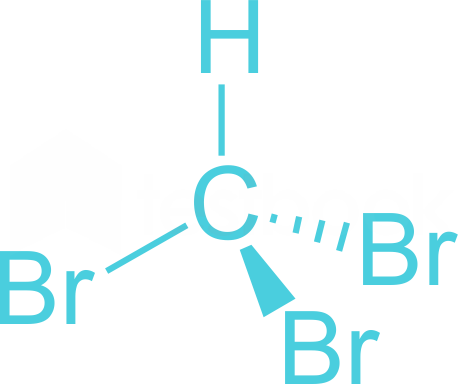
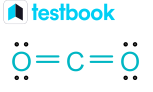
Which of the following option is correct according to its geometry?

  1. ((a))

    CH Br3-Trigonal planar

  2. ((b))

    CO2-V shape

  3. ((c))

    BF3-Trigonal planar

  4. ((d))

    H2S-Linear

Show Answer
Answer: ((c))

BF3-Trigonal planar

CONCEPT:

Molecular Geometry

  • Molecular geometry refers to the three-dimensional arrangement of the atoms that constitute a molecule.
  • The geometry of a molecule can be determined using the VSEPR (Valence Shell Electron Pair Repulsion) theory, which states that electron pairs around a central atom will arrange themselves to minimize repulsion.

EXPLANATION:

    1. CHBr3: The central atom is carbon, which forms four bonds with one hydrogen and three bromine atoms. The molecular geometry is tetrahedral, not trigonal planar.

    1. CO2: The central atom is carbon, which forms two double bonds with two oxygen atoms. The molecular geometry is linear, not V shape.

carbon-dioxide

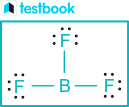
    1. BF3: The central atom is boron, which forms three single bonds with three fluorine atoms. The molecular geometry is trigonal planar. This is the correct option.

Hybridization of BF3 (Boron Trifluoride) - Testbook.com

    1. H2S: The central atom is sulfur, which forms two single bonds with two hydrogen atoms and has two lone pairs of electrons. The molecular geometry is bent or V-shaped, not linear.

![Solved] The geometry of H2S and its dipole moment are:](https://encrypted-tbn0.gstatic.com/images?q=tbn:ANd9GcQIbwiC2ex6G4PswQ9QgyQPolH0eBmdvZcaxw&s)

Therefore, the correct option according to its geometry is: 3) BF3 - Trigonal planar.

60

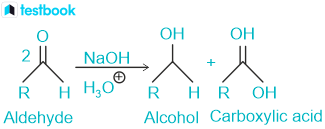
Identify the following reaction

  1. ((a))

    Wurtz reaction

  2. ((b))

    Stephen reaction

  3. ((c))

    Cannizzaro reaction

  4. ((d))

    Sandmeyer's reaction

Show Answer
Answer: ((c))

Cannizzaro reaction

CONCEPT:

Cannizzaro Reaction

  • The Cannizzaro reaction is a chemical reaction that involves the base-induced disproportionation of an aldehyde lacking an alpha hydrogen atom.
  • In this reaction, one molecule of the aldehyde is reduced to the corresponding alcohol, while another molecule is oxidized to the corresponding carboxylic acid.

EXPLANATION:

  • In the given reaction:

2 R-CHO + NaOH → R-CH2OH + R-COONa

Cannizzaro Reaction Mechanism: Learn Definition, Mechanism, Uses

    • In the presence of a strong base like NaOH, two molecules of the aldehyde react.
  • One aldehyde molecule is reduced to the corresponding alcohol (R-CH2OH).
  • The other aldehyde molecule is oxidized to the corresponding carboxylate ion (R-COONa).

Therefore, the given reaction is an example of the Cannizzaro reaction.

61

Galvanic cell is also known as

  1. ((a))

    mercury cell

  2. ((b))

    voltaic cell 

  3. ((c))

    leclanche cell

  4. ((d))

    secondary cell

Show Answer
Answer: ((b))

voltaic cell 

CONCEPT:

Galvanic Cell

  • A galvanic cell, also known as a voltaic cell, is an electrochemical cell that derives electrical energy from spontaneous redox reactions taking place within the cell.
  • In a galvanic cell, chemical energy is converted into electrical energy.

EXPLANATION:​

  • The correct name for a galvanic cell is a voltaic cell.
  • Mercury cell is a type of primary cell that uses mercury oxide as the cathode.
  • Leclanche cell is a type of primary cell commonly used in batteries.
  • Secondary cell refers to rechargeable batteries.

Therefore, the correct answer is Option 2: Voltaic cell.

62

Write the type of reaction involved in the following chemical equation.

TiCl4 + Mg → Ti + MgCl4

  1. ((a))

    Combination reaction

  2. ((b))

    Displacement reaction 

  3. ((c))

    Decomposition reaction

  4. ((d))

    Disproportionation reaction

Show Answer
Answer: ((b))

Displacement reaction 

CONCEPT:

Displacement Reaction

  • A displacement reaction occurs when an element reacts with a compound and takes the place of another element in that compound.
  • In a displacement reaction, a more reactive element displaces a less reactive element from its compound.

EXPLANATION:

  • In the given reaction:

TiCl4 + Mg → Ti + MgCl2

  • Magnesium (Mg) is more reactive than titanium (Ti).
  • Magnesium displaces titanium from titanium tetrachloride (TiCl4).
  • This means that magnesium takes the place of titanium in the compound, forming magnesium chloride (MgCl2) and releasing titanium.

Therefore, the type of reaction involved in the given chemical equation is a displacement reaction.

63

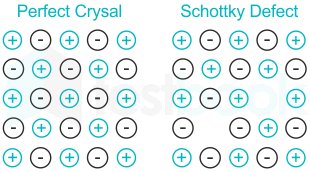
In which defect equal number of cations and anions are missing from their lattice position?

  1. ((a))

    Schottky defect

  2. ((b))

    Vacancy defect

  3. ((c))

    Impurity defect

  4. ((d))

    Frenkel defect

Show Answer
Answer: ((a))

Schottky defect

CONCEPT:

Schottky defect:

  • Schottky defect is a type of point defect or imperfection in solids which is caused by a vacant position that is generated in a crystal lattice due to the atoms or ions moving out from the interior to the surface of the crystal.
  • Schottky defect in crystals is observed when equal numbers of cations and anions are missing from the lattice.
  • It is important that an equal number of cations and anions are missing, otherwise, the electrical neutrality of the crystal will get affected.

Additional Information

Defects/ ImperfectionsTypes of Defects / Imperfection
Point defects (Zero-dimensional)Vacancy Defect: It appears due to the missing of an atom from the lattice. Frenkel defect: Atom occupies interstitial void in the lattice. Schottky defect: It appears if, in a combination of cation and anion there is a vacancy. Interstitial defect: It appears when a foreign atom occupies the interstitial site Substitutional defect: It appears if a regular atom is replaced by another foreign atom.
Line defect or dislocations (One-Dimensional)Edge dislocation: If force is applied on 50% area and exceeds beyond a certain limit slipping of plane happens and an extra half-plane appears at dislocation line. Screw dislocation: Formed by the shear stress that is applied to produce the distortion.
Surface defects (Two-Dimensional)Grain boundary defect: Due to the orientation mismatch at the grain boundary the bond length is more and can be easily broken. Tilt boundary defect: When the orientation mismatch at the grain boundary is 0.5° - 1° then grain boundaries are called tilt boundaries.

Therefore, in Schottky defect, equal numbers of cations and anions are missing from their lattice positions.

64

Write the chemical formula for Iron (III) hexacyanoferrate (II) is

  1. ((a))

    Fe4(Fe(CN)6]3

  2. ((b))

    Fe[Fe(CN)6]

  3. ((c))

    Fe3[Fe(CN)6]

  4. ((d))

    Fe[Fe(CN)6]5

Show Answer
Answer: ((a))

Fe4(Fe(CN)6]3

CONCEPT:

Coordination Compounds and Complex Ions

  • Coordination compounds consist of a central metal atom or ion bonded to surrounding ligands (molecules or ions).
  • The formula of a coordination compound is written as [Metal(Ligand)n].
  • The oxidation state of the metal ion is indicated in Roman numerals in parentheses.

EXPLANATION:

  • In the given complex, Iron (III) hexacyanoferrate (II):
  • Iron (III) indicates that the central iron ion has an oxidation state of +3.
  • Hexacyanoferrate (II) indicates that the hexacyanoferrate ion has an iron ion with an oxidation state of +2 and is coordinated with six cyanide (CN-) ligands.
  • The hexacyanoferrate (II) ion is [Fe(CN)6]4-, because each CN has a -1 charge and there are 6 of them, making the total charge of the ion -4.
  • To balance the charges, three Fe3+ ions are needed to neutralize the charge of four [Fe(CN)6]4- ions.

Therefore, the chemical formula for Iron (III) hexacyanoferrate (II) is Fe4[Fe(CN)6]3.

65

What is the similarity between diamond and graphite. 

  1. ((a))

    Both are soft

  2. ((b))

    Both are conductors

  3. ((c))

    Both are insulators

  4. ((d))

    Both are covalent or network solids

Show Answer
Answer: ((d))

Both are covalent or network solids

CONCEPT:

Diamond and Graphite

  • Diamond and graphite are both allotropes of carbon, meaning they are different structural forms of the same element, carbon.
  • Both diamond and graphite consist of carbon atoms, but they have different arrangements and bonding structures.
  • Diamond has a tetrahedral structure where each carbon atom is bonded to four other carbon atoms in a three-dimensional network.
  • Graphite has a planar hexagonal structure where each carbon atom is bonded to three other carbon atoms, forming layers that can slide over each other.

EXPLANATION:

  • The similarity between diamond and graphite:
  • Both diamond and graphite are covalent or network solids.
  • This means that they are composed of a continuous network of covalent bonds extending throughout the material.
  • While their physical properties differ significantly (diamond is hard and an insulator, whereas graphite is soft and a conductor), the fundamental similarity lies in their bonding and structure as covalent network solids.

Therefore, the correct option is 4) Both are covalent or network solids.

66

The correct order of configuration of O2 molecule according to MOT is

  1. ((a))

    (\begin{array}{l} \sigma \mathrm{s}^{2}<\sigma^{} 1 \mathrm{~s}^{2}<\sigma 2 \mathrm{~s}^{2}<\sigma^{} 2 \mathrm{~s}^{2}<\left(\pi 2 \mathrm{p}{\mathrm{x}}^{2}=\pi 2 \mathrm{p}{\mathrm{y}}^{2}\right) <\sigma 2 \mathrm{p}{\mathrm{z}}^{2}<\left(\pi^{*} 2 \mathrm{p}{\mathrm{x}}^{1}=\pi^{*} 2 \mathrm{p}_{\mathrm{y}}^{1}\right) \end{array})

  2. ((b))

    (\begin{array}{l} \sigma 1 s^{2}<\sigma^{} 1 s^{2}<\sigma 2 s^{2}<\sigma * 2 s^{2}<\sigma 2 p_{z}^{2}< \left(\pi 2 p_{x}^{2}=\pi 2 \mathrm{p}_{\mathrm{y}}^{2}\right)<\left(\pi^{} 2 \mathrm{p}{\mathrm{x}}^{1}=\pi^{*} 2 \mathrm{p}{\mathrm{y}}^{1}\right) \end{array})

  3. ((c))

    (\begin{array}{l} \sigma 1 s^{2}<\sigma^{} 1 s^{2}<\sigma 2 s^{2}<\left(\pi 2 p^{2}=\pi 2 p_{y}^{2}\right) <\left(\pi^{} 2 p_{x}^{2}=\pi^{} 2 p_{y}^{2}\right)<\sigma^{} 2 s^{2} \end{array})

  4. ((d))

    (\begin{array}{l} \sigma 1 s^{2}<\sigma * 1 s^{2}<\sigma 2 s^{2}<\sigma * 2 s^{2}<\left(\pi 2 p_{x}^{2}=\pi 2 p_{y}^{2}\right) <\left(\pi^{} 2 p_{x}^{2}=\pi^{} 2 p_{y}^{2}\right) \end{array})

Show Answer
Answer: ((b))

(\begin{array}{l} \sigma 1 s^{2}<\sigma^{} 1 s^{2}<\sigma 2 s^{2}<\sigma * 2 s^{2}<\sigma 2 p_{z}^{2}< \left(\pi 2 p_{x}^{2}=\pi 2 \mathrm{p}_{\mathrm{y}}^{2}\right)<\left(\pi^{} 2 \mathrm{p}{\mathrm{x}}^{1}=\pi^{*} 2 \mathrm{p}{\mathrm{y}}^{1}\right) \end{array})

CONCEPT:

Molecular Orbital Theory (MOT) for O2 Molecule

  • Molecular Orbital Theory (MOT) explains the bonding in molecules by combining atomic orbitals to form molecular orbitals, which are spread over the entire molecule.
  • In O2, the molecular orbitals are formed by the combination of atomic orbitals from two oxygen atoms.
  • The molecular orbitals are filled according to the Aufbau principle, Pauli exclusion principle, and Hund's rule.

EXPLANATION:

  • The correct order of filling molecular orbitals for O2 molecule is as follows:
  • σ 1s2: The bonding molecular orbital formed by the combination of 1s orbitals from both oxygen atoms.
  • *σ 1s2**: The antibonding molecular orbital formed by the combination of 1s orbitals from both oxygen atoms.
  • σ 2s2: The bonding molecular orbital formed by the combination of 2s orbitals from both oxygen atoms.
  • *σ 2s2**: The antibonding molecular orbital formed by the combination of 2s orbitals from both oxygen atoms.
  • σ 2pz2: The bonding molecular orbital formed by the combination of 2pz orbitals from both oxygen atoms.
  • π 2px2 = π 2py2: The degenerate bonding molecular orbitals formed by the combination of 2px and 2py orbitals from both oxygen atoms.
  • π 2px1 = π 2py1**: The degenerate antibonding molecular orbitals formed by the combination of 2px and 2py orbitals from both oxygen atoms.
  • Based on this order, the correct configuration of the O2 molecule is:

σ 1s2 < σ* 1s2 < σ 2s2 < σ* 2s2 < σ 2pz2 < (π 2px2 = π 2py2) < (π* 2px1 = π* 2py1)

Therefore, the correct order of configuration of O2 molecule according to MOT is Option 2.

67

In which type of system, exchange of energy is possible but not exchange of matter?

  1. ((a))

    Open system

  2. ((b))

    Isolated system

  3. ((c))

    Closed system

  4. ((d))

    Adiabatic system

Show Answer
Answer: ((c))

Closed system

CONCEPT:

Types of Systems in Thermodynamics

  • In thermodynamics, systems are classified based on the exchange of energy and matter with their surroundings.
  • There are three main types of systems:
  • Open System: Both energy and matter can be exchanged with the surroundings.
  • Isolated System: Neither energy nor matter can be exchanged with the surroundings.
  • Closed System: Only energy can be exchanged with the surroundings, but not matter.
  • Adiabatic System: No heat exchange occurs with the surroundings, but work and matter can be exchanged in some contexts.

EXPLANATION:

  • Based on the definitions of the different types of systems:
  • An Open System allows both energy and matter to be exchanged.
  • An Isolated System does not allow either energy or matter to be exchanged.
  • A Closed System allows the exchange of energy but not matter.
  • An Adiabatic System does not allow heat exchange but may allow other forms of energy and matter to be exchanged.
  • The correct answer is a Closed System.

Therefore, the correct answer is Option 3: Closed system.

68

Arrange the following elements in decreasing order of their atomic size.

W, Re, Ir, Os

  1. ((a))

    W > Re > Ir > Os

  2. ((b))

    W > Re > Os > Ir 

  3. ((c))

    W > Ir > Os > Re

  4. ((d))

    Re > W > Os > Ir

Show Answer
Answer: ((b))

W > Re > Os > Ir 

CONCEPT:

Atomic Size

  • The atomic size of an element is determined by the distance from the nucleus to the outermost electron cloud.
  • Within a group in the periodic table, atomic size increases as you move down because additional electron shells are added.
  • Within a period, atomic size decreases from left to right due to the increasing nuclear charge, which pulls electrons closer to the nucleus.

EXPLANATION:

  • As we move across the period from left to right, the atomic size generally decreases.
  • Thus, the order of atomic size from largest to smallest among these elements is as follows:
  • Tungsten (W) is the largest because it is the furthest to the left.
  • Rhenium (Re) follows W.
  • Osmium (Os) comes after Re.
  • Iridium (Ir) is the smallest as it is the furthest to the right.

Therefore, the correct order of decreasing atomic size is: W > Re > Os > Ir.

69

Which of the following is isoelectronic?

  1. ((a))

    CO2, NO2

  2. ((b))

    (\mathrm{NO}{2}^{-}, \mathrm{CO}{2})

  3. ((c))

    CN-, CO

  4. ((d))

    SO2, CO2

Show Answer
Answer: ((c))

CN-, CO

CONCEPT:

Isoelectronic Species

  • Isoelectronic species are atoms, ions, or molecules that have the same number of electrons.
  • To determine if species are isoelectronic, count the total number of electrons in each species and compare them.

EXPLANATION:

  • Calculate the number of electrons in each species:
  • CO2: C (6 electrons) + 2 * O (8 electrons each) = 6 + 16 = 22 electrons
  • NO2: N (7 electrons) + 2 * O (8 electrons each) = 7 + 16 = 23 electrons
  • NO2-: N (7 electrons) + 2 * O (8 electrons each) + 1 extra electron = 7 + 16 + 1 = 24 electrons
  • CN-: C (6 electrons) + N (7 electrons) + 1 extra electron = 6 + 7 + 1 = 14 electrons
  • CO: C (6 electrons) + O (8 electrons) = 6 + 8 = 14 electrons
  • SO2: S (16 electrons) + 2 * O (8 electrons each) = 16 + 16 = 32 electrons
  • Identify the isoelectronic pairs:
  • CN- (14 electrons) and CO (14 electrons) are isoelectronic.

Therefore, the correct answer is Option 3: CN- and CO.

70

Bakelite is prepared by the reaction between 

  1. ((a))

    urea and formaldehyde

  2. ((b))

    ethylene glycol

  3. ((c))

    phenol and formaldehyde

  4. ((d))

    tetramethylene glycol

Show Answer
Answer: ((c))

phenol and formaldehyde

CONCEPT:

Bakelite Preparation

  • Bakelite is a type of plastic, specifically a phenolic resin, that is created by the reaction of phenol with formaldehyde.
  • The reaction involves the formation of a complex network polymer through a condensation reaction.
  • This polymer is known for its high resistance to heat and chemicals, making it useful in electrical insulators and various other applications.

EXPLANATION:

  • In the given reaction for the preparation of Bakelite:

Phenol + Formaldehyde → Bakelite

Therefore, Bakelite is prepared by the reaction between phenol and formaldehyde.

Biology (30 questions)

71

Which of the following vitamin is soluble in water?

  1. ((a))

    Vitamin-E

  2. ((b))

    Vitamin-B

  3. ((c))

    Vitamin-D

  4. ((d))

    Vitamin-A

Show Answer
Answer: ((b))

Vitamin-B

The correct answer is Vitamin B

Concept:

  • Vitamins are the essential nutrients that the body needs to function, grow and develop.
  • The term vitamin was coined by Casimir Funk.
  • Vitamin is the nutrient which is also known as co-enzyme.
  • As the body does not produce vitamins itself, it must be acquired through the food we eat or in some cases through supplements.
  • There are 13 vitamins - A, C, D, E, K, and B vitamins (thiamine, riboflavin, niacin, pantothenic acid, biotin, B6, B12, and folate), each of them have a different job.

Explanation:

  • Vitamin A, D, E, K are fat-soluble vitamins and are stored in fat cells.
  • Vitamin B and C are water-soluble vitamins that are not stored in your body.

Additional Information 

Common NameScientific      NameFood Sources
Vitamin A        (Fat-soluble)RetinolGreen leafy vegetables, nuts, tomatoes, oranges, ripe yellow fruits, guava, milk, liver, carrots, broccoli, and watermelon.
Vitamin B1      (Water-soluble)ThiamineFresh fruits, corn, cashew nuts, potatoes, sweet potatoes, peas, wheat, milk, dates, black beans, etc.
Vitamin B2      (Water-soluble)RiboflavinBananas, grapes, mangoes, peas, pumpkin, dates, yogurt, milk, mushrooms, popcorn, beef liver, etc.
Vitamin B3       (Water-soluble)NiacinMeat, eggs, fish, milk products, guava, mushroom, peanuts, cereals, green peas, etc.
Vitamin B5         (Water-soluble)Pantothenic AcidMeat, kidney, egg yolk, broccoli, peanuts, fish, chicken, milk, yogurt, legumes, mushrooms, avocado, etc.
Vitamin B6        (Water-soluble)PyridoxinePork, chicken, fish, bread, wholegrain cereals, eggs, vegetables, soya beans, etc.
Vitamin B7        (Water-soluble)BiotinWalnuts, peanuts, cereals, milk, egg yolks, salmon, pork, mushroom, cauliflower, avocados, bananas, raspberries, etc.
Vitamin B9 (Water-soluble)Folic AcidCitrus fruits, green leafy vegetables, whole grains, legumes, beets, etc.
Vitamin B12      (Water-soluble)CobalaminFish, meat, poultry, eggs, milk, etc.
Vitamin C (Water-soluble)Ascorbic acidFresh citrus fruits such as orange and grapefruit, broccoli, goat milk, black currant, and chestnuts.
Vitamin D (Fat-soluble)CalciferolFish, beef, cod liver oil, egg yolk, liver, chicken breast, and cereals.
Vitamin E (Fat-soluble)TocopherolPotatoes, pumpkin, guava, mango, milk, nuts, and seeds.
Vitamin K (Fat-soluble)PhytonadioneTomatoes, broccoli, mangoes, grapes, chestnuts, cashew nuts, beef, and lamb.
72

Full form of MOET is

  1. ((a))

    Multiple ovulation embryo transfer technology 

  2. ((b))

    Mutated ovulation embryo transfer technology

  3. ((c))

    Multiple ovum embryo transfer technology 

  4. ((d))

    Mutated ovum embryo transfer technology

Show Answer
Answer: ((a))

Multiple ovulation embryo transfer technology 

The correct answer is Multiple ovulation embryo transfer technology 

Explanation:

  • MOET stands for multiple ovulation embryo transfer.
  • It is a technology in which multiple eggs are fertilized in an animal after artificial insemination.
  • This method is used in cattle breeding procedures to obtain desirable characteristics.
  • In MOET, cows are injected with FSH (follicle stimulating hormone) like activity to induce maturation of follicles and superovulation.
  • Superovulation helps in the formation of about 6 to 8 cells in a single cycle.
  • After artificial insemination, embryos are collected at the 8 to 32 cells stage.
  • These embryos are then transferred to the surrogate mother.
  • These progenies obtained will now have the desirable trait.
73

Oestrus cycle is present in

  1. ((a))

    Monkey

  2. ((b))

    Human

  3. ((c))

    Apes

  4. ((d))

    Dog

Show Answer
Answer: ((d))

Dog

The correct answer is Dog

Explanation:

  • Several cyclical changes in the activities of ovaries, accessory ducts, hormones occur during the reproductive phase in the females of placental mammals.
  • Such changes in the non-primates like cows, sheep, dogs etc., is called the Oestrus cycle.
  • In primates like monkeys, humans, apes, it is called the Menstrual cycle.
  • In the Oestrus cycle, the endometrium is reabsorbed into the body whereas in the Menstrual cycle the endometrium is shed off in each cycle.
74

Sequence of communities that successively change in an area is called:

  1. ((a))

    Sere

  2. ((b))

    Pioneer species

  3. ((c))

    Climax species

  4. ((d))

    Ecological succession

Show Answer
Answer: ((d))

Ecological succession

The correct answer is Ecological succession

Explanation:

The sequence of communities that successively change in an area is referred to as ecological succession. Ecological succession is the process by which the structure of a biological community evolves over time. There are two main types: primary and secondary succession.

Primary Succession:

  • Occurs in an area where there were previously no living organisms and the soil had not yet formed, such as after a lava flow or on a new island created by volcanic activity.
  • The initial species that colonize such areas are called pioneer species. These species are typically hardy and capable of withstanding harsh conditions. An example of pioneer species are lichens and certain types of algae.
  • Over time, these pioneer species alter the environment (e.g., by breaking down rock into soil), making it more habitable for other species to move in and establish themselves.

Secondary Succession:

  • Occurs in areas where a community previously existed but has been disturbed or removed by events like fires, floods, or human activities, leaving the soil intact.
  • Because the soil is already present, secondary succession usually proceeds faster than primary succession.
  • The first plants to grow back might be fast-growing grasses and weeds which are then followed by more complex plants like shrubs and young trees.

​A sere refers to a series of stages or communities that follow one another in a specific sequence during ecological succession, from the initial colonization to the climax community. Each stage within this progression is known as a seral stage. For example, in the succession of a forest, the sere might include the stages from pioneer species to intermediate species to a mature forest community.

  • The community that is in near equilibrium with the environment is called a climax community.
  • The species that invade a bare area are called pioneer species. 
  • Lichens are the pioneer species on a bare area or Xerarch condition.
  • Phytoplanktons are the pioneer species in Hydrarch succession.
75

Which of the following order is correct about the wall layers of microsporangium?

  1. ((a))

    Epidermis → Endothecium → Middle layers → Tapetum

  2. ((b))

    Tapetum → Epidermis → Middle layers → Endothecium

  3. ((c))

    Endothecium → Tapetum → Epidermis → Middle layers

  4. ((d))

    Epidermis → Endothecium → Tapetum → Middle layers.

Show Answer
Answer: ((a))

Epidermis → Endothecium → Middle layers → Tapetum

The correct answer is Epidermis → Endothecium → Middle layers → Tapetum

Concept:

  • A typical angiosperm anther is bilobed with each lobe having two theca, i.e., they are dithecous
  • Often a longitudinal groove runs lengthwise separating the theca
  • The bilobed nature of an anther is very distinct in the transverse section of the anther.
  • The anther is a four-sided (tetragonal) structure consisting of four microsporangia located at the corners, two in each lobe

Explanation:

Structure of microsporangium:

  • In a transverse section, a typical microsporangium appears near circular in outline.
  • It is generally surrounded by four wall layers the epidermis, endothecium, middle layers and the tapetum.
  • The outer three wall layers perform the function of protection and help in dehiscence of anther to release the pollen.
  • The innermost wall layer is the tapetum. It nourishes the developing pollen grains.
  • Cells of the tapetum possess dense cytoplasm and generally have more than one nucleus.

76

Which of the following disease is related to the deficiency of thyroxine hormone?

  1. ((a))

    Goiter

  2. ((b))

    Arthritis

  3. ((c))

    Tuberculosis

  4. ((d))

    Acromegaly

Show Answer
Answer: ((a))

Goiter

The correct answer is Goiter

Explanation:

  • The thyroid gland is a vital hormone gland that plays a major role in the metabolism, growth, and development of the human body. It helps to regulate many body functions by releasing a steady amount of thyroid hormones into the bloodstream.

  • Thyroxine (T4) is one of the hormones produced by the thyroid gland. It is responsible for regulating metabolism, heart and digestive functions, muscle control, brain development, and bone maintenance.

  • Iodine is an essential nutrient that is crucial for the production of thyroxine. A deficiency in iodine can lead to thyroid gland problems, including goiter and hypothyroidism.

77

Semen collected from male and artificially injected into female vagina. This process is called:

  1. ((a))

    IUT

  2. ((b))

    ICSI

  3. ((c))

    GIFT

  4. ((d))

    AI

Show Answer
Answer: ((d))

AI

The correct answer is AI

Explanation:

  • Artificial Insemination (AI) is a method of assisted reproduction that involves the direct insertion of sperm into a woman's reproductive tract.
  • In this technique, the semen collected either from the husband or a healthy donor is artificially introduced either into the vagina or into the uterus (IUI – intra-uterine insemination) of the female.
  • The purpose of AI is to facilitate fertilization when natural conception is not possible or has proven difficult.

Other Options:

  • IUT (Intrauterine Transfer): The zygote or early embryos (with upto 8 blastomeres) could then be transferred into the fallopian tube (ZIFT–zygote intra-fallopian transfer) and embryos with more than 8 blastomeres, into the uterus (IUT – intra-uterine transfer),
  • ICSI (Intracytoplasmic Sperm Injection): This is a technique used in conjunction with IVF (In Vitro Fertilization) where a single sperm is injected directly into an egg to facilitate fertilization. This method is commonly used for severe male infertility issues.
  • GIFT (Gamete Intrafallopian Transfer): This procedure involves placing eggs and sperm directly into the fallopian tubes so that fertilization occurs naturally within the woman's body.
78

DNA fingerprinting is discovered by

  1. ((a))

    Thomas Morgan

  2. ((b))

    Alec Jeffreys

  3. ((c))

    Sutton

  4. ((d))

    Meselson

Show Answer
Answer: ((b))

Alec Jeffreys

The correct answer is Alec Jeffreys

Explanation:

  • DNA fingerprinting was developed by Alec Jeffreys in 1984.
  • It is based on DNA polymorphism.
  • Humans are almost 99.9% identical and the rest 0.1% constitutes about 3 million differences in our genome.
  • DNA polymorphism - These are inheritable mutations that occur at a high frequency in a population.
  • Such variations occur frequently in non-coding DNA sequences and keep accumulating over generations.
  • These mutations are the basis of variability or polymorphism in a population.
  • Satellite DNA shows high degree of polymorphism and hence, was used by Jeffreys for DNA fingerprinting.
  • The DNA probes used were VNTRs.
  • VNTR- Variable Number of Tandem Repeats or VNTRs are composed of 8-80 bp sequences which are tandemly repeated to form 1-30kb length of DNA.

Procedure:

  1. Isolation of DNA
  2. Digestion of DNA by restriction endonuclease
  3. Separation of DNA fragments by gel electrophoresis
  4. Transferring of separated DNA fragments to synthetic membranes like nylon and nitrocellulose - Southern Blotting technique
  5. Hybridization by using radio-labelled VNTR probes.
  6. Detection of hybridized DNA fragments by autoradiography.

Other Options:

  • Thomas Morgan: Thomas Hunt Morgan was an American geneticist and evolutionary biologist who is best known for his work on the role chromosomes play in heredity. He discovered the white-eyed mutation in fruit flies which led to the establishment of the chromosome theory of inheritance.
  • Sutton: Walter Sutton was an American geneticist who independently proposed the chromosome theory of inheritance, which states that chromosomes carry the cell's units of inheritance.
  • Meselson: Matthew Meselson, along with Franklin Stahl, is known for the Meselson-Stahl experiment which provided evidence for the semi-conservative replication of DNA.
79

Negatively charged DNA is wrapped around histone octamer to form:

  1. ((a))

    Chromosomes

  2. ((b))

    Nucleosome

  3. ((c))

    Chromatin

  4. ((d))

    Nucleoid

Show Answer
Answer: ((b))

Nucleosome

The correct answer is Nucleosome 

Explanation:

  • The nucleosome, a section of DNA wrapped around a core of proteins, is the fundamental subunit of chromatin.
  • Each nucleosome is comprised of a little less than two turns of DNA wrapped around a set of eight proteins called histones, which are known as a histone octamer.
  • The negatively charged DNA is wrapped around the positively charged histone octamer (protein) to form a structure called a nucleosome.
  • Each nucleosome is comprised of a little less than two turns of DNA wrapped around a set of eight proteins called histones, which are known as histone octamer.
  • Each histone octamer is composed of two copies of each of the histone proteins H2A, H2B, H3, and H4.
  • A typical nucleosome contains 200 bp of DNA helix.
  • Nucleosomes constitute the repeating unit of a structure in the nucleus called chromatin, threadlike stained (coloured) bodies seen in the nucleus.
  • The nucleosomes in chromatin are seen as ‘beads-on-string’ structures when viewed under an electron microscope (EM).

The number of cytosine bases in a DNA molecule is equal to the number of  .......... bases.

80

Which of the following is the functional residual volume (FRV) ?

  1. ((a))

    TV + RV + IRV

  2. ((b))

    ERV + RV

  3. ((c))

    TV + ERV

  4. ((d))

    TV + RV + ERV

Show Answer
Answer: ((b))

ERV + RV

The correct answer is ERV + RV

Concept:

  • The respiratory system includes various lung volumes and capacities, which are essential for understanding lung function and diagnosing respiratory conditions.
  • Key lung volumes include Tidal Volume (TV), Expiratory Reserve Volume (ERV), Inspiratory Reserve Volume (IRV), and Residual Volume (RV).
  • These volumes can be combined to form lung capacities, such as Expiratory Capacity (EC), Total Lung Capacity (TLC), and Functional Residual Capacity (FRC).

Explanation:

  • Functional Residual Capacity (FRC): Volume of air that will remain in the lungs after a normal expiration. This includes ERV+RV.
  • Inspiratory capacity (IC)  - Total volume of air a person can inspire after a normal expiration. This includes tidal volume and inspiratory reserve volume (TV+IRV).
  • Expiratory Capacity (EC): Total volume of air a person can expire after a normal inspiration. This includes tidal volume and expiratory reserve volume (TV+ERV).
  • Vital Capacity (VC) - The maximum volume of air a person can breathe in after a forced expiration. This includes ERV, TV and IRV
  • Residual Volume (RV) - Volume of air remaining in the lungs even after a forcible expiration. This averages 1100 mL to 1200 mL.
  • Tidal Volume (TV) - Volume of air inspired or expired during normal respiration. It is approx. 500 mL., i.e., a healthy man can inspire or expire approximately 6000 to 8000 mL of air per minute.
81

Which of the following is the variety of cauliflower?

  1. ((a))

    Pusa Sadabahar

  2. ((b))

    Pusa Shubhra

  3. ((c))

    Himgiri

  4. ((d))

    Pusa Komal

Show Answer
Answer: ((b))

Pusa Shubhra

The correct answer is Pusa Shubhra

Explanation:

  • Plant breeding is the purposeful manipulation of plant species in order to create desired plant types that are better suited for cultivation, give better yields, and are disease-resistant.
  • Conventional plant breeding has been practised for thousands of years, since the beginning of human civilization, recorded evidence of plant breeding dates back to 9,000-11,000 years ago.
  • Many present-day crops are the result of domestication in ancient times.
  • Today, all our major food crops are derived from domesticated varieties.
  • Classical plant breeding involves crossing or hybridization of pure lines, followed by artificial selection to produce plants with desirable traits of higher yield, nutrition, and resistance to diseases.
  • Resistance to leaf and stripe rust, hill bunt in wheat was transferred and resulted in a new variety called Himgiri.
  • Resistance to Chilly mosaic virus, Tobacco mosaic virus, and Leaf curl in chilli was transferred and resulted in a new variety called Pusa Sadabahar.
  • Resistance to Black rot and Curl blight black rot in cauliflower was transferred and resulted in a new variety called Pusa Shubhra.
  • Better-yielding semidwarf rice varieties Jaya and Ratna were developed in India.
Crop plantHybrid Variety
(i) CauliflowerPusa Shubhra
(ii) WheatHimgiri
(iii) RiceJaya & Ratna
(iv) ChilliPusa Sadabahar
82

Which of the following organism produces statins?

  1. ((a))

    Monascus purpureus

  2. ((b))

    Trichoderma polysporum

  3. ((c))

    Aspergillus niger

  4. ((d))

    Clostridium butylicum

Show Answer
Answer: ((a))

Monascus purpureus

The correct answer is Monascus purpureus

Explanation:

  • Statins produced by the yeast Monascus purpureus have been commercialised as blood-cholesterol lowering agents. It acts by competitively inhibiting the enzyme responsible for synthesis of cholesterol.
  • Cyclosporin A, that is used as an immunosuppressive agent in organ-transplant patients, is produced by the fungus Trichoderma polysporum.
  • Aspergillus niger is known for producing Citric acid.
  • Clostridium butylicum is known for producing Butyric acid.
83

Cellulose is polymer of: 

  1. ((a))

    Maltose

  2. ((b))

    Sucrose

  3. ((c))

    Glucose

  4. ((d))

    Fructose

Show Answer
Answer: ((c))

Glucose

The aorrect answer is Glucose

Explanation:

  • Cellulose is a polymer of β-D-glucose monomers. Each monomer is linked to the next by β(1→4) glycosidic bonds.
  • This polysaccharide is a major component of the cell walls in plants
  • It consists of linear chains of glucose units.

Other Options:

  • Maltose: Maltose is a disaccharide composed of two glucose molecules linked by an α(1→4) glycosidic bond. It is produced from the enzymatic breakdown of starch.
  • Sucrose: Sucrose is a disaccharide composed of one glucose molecule and one fructose molecule linked by an α(1→2) glycosidic bond. It is commonly known as table sugar.
  • Fructose: Fructose is a monosaccharide, also known as fruit sugar. It is found in many plants and is one of the components of sucrose. Its chemical structure is different from glucose, and it is often used in combination with glucose in sweeteners.
84

Which type of bond is present in polysaccharides? 

  1. ((a))

    Sulphonic bond

  2. ((b))

    Hydrogen bond

  3. ((c))

    Phosphodiester bond

  4. ((d))

    Glycosidic bond

Show Answer
Answer: ((d))

Glycosidic bond

The correct answer is Glycosidic bond

Explanation:

  • Polysaccharides are carbohydrates consisting of long chains of monosaccharide units bonded together by glycosidic bonds.
  • A glycosidic bond is formed between the hydroxyl groups of two monosaccharides through a dehydration reaction, which releases a molecule of water.
  • There are two main types of glycosidic bonds: α (alpha) and β (beta), depending on the orientation of the linking oxygen atom in relation to the carbon atoms in the monosaccharides.
  • Example: In maltose, two glucose molecules are linked by an α(1→4) glycosidic bond. In cellulose, glucose molecules are linked by β(1→4) glycosidic bonds, contributing to its structural rigidity

Other Options:

  • Sulphonic bond: Sulphonic bonds are associated with sulfonic acids and sulfonates.
  • Hydrogen bond: While hydrogen bonds can occur between polysaccharide chains and can contribute to the overall structure and stability (e.g., in cellulose), they are not the primary covalent bonds holding the monosaccharides together within the polysaccharide.
  • Phosphodiester bond: Phosphodiester bonds are found in nucleic acids (DNA and RNA) and connect the phosphate group of one nucleotide to the hydroxyl group on the sugar of another nucleotide.
85

A vascular bundle having both xylem and phloem are arranged in an alternate manner with different radii is known as:

  1. ((a))

    Radial

  2. ((b))

    Spiral

  3. ((c))

    Conjoint

  4. ((d))

    Concentric

Show Answer
Answer: ((a))

Radial

The correct answer is Radial

Explanation:

Radial Vascular Bundles: In this arrangement, the xylem and phloem are separated from each other and are arranged alternately along different radii.

  • A common example of plants with radial vascular bundles could be seen in roots where the xylem and phloem are arranged in different sectors.
  • In the cross-section of a root with a radial arrangement, you might see several "arms" of the xylem alternating with "arms" of the phloem, making a star-shaped pattern in some species.

Conjoint Vascular Bundles: In this arrangement, the phloem and xylem are situated next to each other on the same radius, typically with the phloem located on the exterior (toward the stem surface) and the xylem on the interior. This is the most common type of structural organization in stems and leaves of angiosperms (flowering plants).

When the xylem is surrounded by phloem or phloem is surrounded by xylem, such vascular bundles are known as "Concentric" vascular bundles. 

86

Which of the following step does not occur in Calvin cycle?

  1. ((a))

    Regeneration

  2. ((b))

    Carboxylation

  3. ((c))

    Oxidation

  4. ((d))

    Reduction

Show Answer
Answer: ((c))

Oxidation

The correct answer is Oxidation

Concept:

  • The Calvin Cycle, also known as the C3 cycle, is a series of biochemical redox reactions that take place in the stroma of chloroplasts in photosynthetic organisms.
  • This cycle is responsible for the fixation of carbon dioxide and its conversion into glucose, which is a primary source of energy for the plant. For e.g., rice, wheat, oats, barley, cotton, peanuts, etc. are C3 plants.
  • The Calvin Cycle consists of three main stages: Carboxylation, Reduction, and Regeneration.

**Explanation:**​

  • Carboxylation: This is the first stage of the Calvin Cycle where CO2 is fixed from the atmosphere. It involves the enzyme RuBisCO catalyzing the reaction between CO2 and ribulose-1,5-bisphosphate (RuBP) to form 3-phosphoglycerate. This step does not utilize ATP.
  • Reduction: This is the second stage of the Calvin Cycle. In this stage, ATP and NADPH produced during the light reactions are used to convert 3-phosphoglycerate into glyceraldehyde-3-phosphate (G3P). Specifically, ATP provides the energy for the phosphorylation of 3-phosphoglycerate to 1,3-bisphosphoglycerate.
  • Regeneration: This is the third stage of the Calvin Cycle. During this stage, ATP is utilized to regenerate ribulose-1,5-bisphosphate (RuBP) from glyceraldehyde-3-phosphate (G3P). This regeneration is essential for the cycle to continue and to ensure that carbon fixation can proceed uninterrupted.

87

Which of the following is an example of ciliary movement?

  1. ((a))

    Movement of food in

  2. ((b))

    Cytoskeletal movement

  3. ((c))

    Removal of dust particle from trachea

  4. ((d))

    None of them

Show Answer
Answer: ((c))

Removal of dust particle from trachea

The correct answer is Removal of dust particle from trachea

Explanation: 

  • Ciliary movement is characterized by the coordinated, wave-like motions of cilia, which are hair-like structures on the surface of certain cells.
  • In the respiratory tract, ciliary movement helps to remove dust and other particles from the trachea by moving mucus up towards the throat where it can be swallowed or expelled. This is an important mechanism for keeping the airways clear.
88

Which of the following sequence is correct about the five phases of Prophase I?

  1. ((a))

    Zygotene, Diplotene, Leptotene, Pachytene, Diakinesis

  2. ((b))

    Leptotene, Zygotene, Pachytene, Diplotene, Diakinesis

  3. ((c))

    Leptotene, Zygotene, Pachytene, Diakinesis, Diplotene

  4. ((d))

    Diplotene, Diakinesis, Zygotene, Pachytene, Leptotene

Show Answer
Answer: ((b))

Leptotene, Zygotene, Pachytene, Diplotene, Diakinesis

The correct answer is Leptotene, Zygotene, Pachytene, Diplotene, Diakinesis

Explanation:

Meiosis I is divided into prophase I, metaphase I, anaphase I, and telophase I.

Prophase I of Meiosis I is further divided into - Leptotene, Zygotene, Pachytene, Diplotene, and Diakinesis.

  • Leptotene: The chromosomes become gradually visible under the light microscope. The chromosomes start to condense and achieve a compact shape.
  • Zygotene: The pairing of homologous chromosomes in zygotene initiates a process called chromosomal synapsis, which is followed by the development of a complex structure known as the synaptonemal complex. The bivalent or tetrad complex is made up of two homologous chromosomes that have synaptically joined.
  • Pachytene: During this stage, the four chromatids of each bivalent chromosome become distinct and clearly appear as tetrads. This stage is characterised by the appearance of recombination nodules, the sites at which crossing over occurs between non-sister chromatids of the homologous chromosomes.
  • Diplotene: The beginning of diplotene is recognised by the dissolution of the synaptonemal complex and the tendency of the recombined homologous chromosomes of the bivalents to separate from each other except at the sites of crossovers. Chiasmata are the X-shaped structures that occur during separation.
  • Diakinesis: Diakinesis is marked by the termination of chiasmata and assembly of the meiotic spindle to separate the homologous chromosomes. The nucleolus disappears and the nuclear envelope breaks down
89

In C4 plants, the primary CO2 acceptor is:

  1. ((a))

    Phosphoenol pyruvate

  2. ((b))

    3-phosphoglyceric acid

  3. ((c))

    RUBICO

  4. ((d))

    Oxaloacetic acid

Show Answer
Answer: ((a))

Phosphoenol pyruvate

The correct answer is Phosphoenol pyruvate

Concept:

Different Plants use different photosynthetic processes for atmospheric carbon fixation.

The three main processes are:

C3 cycle - 

  • ​In the C3 pathway or Calvin cycle, the primary CO2 acceptor molecule is ribulose bisphosphate (RuBP).
  • This reaction is catalysed by the enzyme RuBP carboxylase which results in the formation of two molecules of 3-PGA.

C4 cycle - 

  • The primary CO2 acceptor is 3-carbon molecule phosphoenolpyruvate (PEP) and is present in the mesophyll cells.
  • The enzyme responsible for this fixation is PEP carboxylase or PEPcase

CAM pathway - 

  • The primary CO2 acceptor is PEP at night, RuBP in the day.
  • The enzyme responsible for this fixation is PEPcase at night, Rubisco at daytime.
PointsC3 PathwayC4 PathwayCAM Pathway
Initial CO2 acceptorRibulose-1, 5-bisphosphate (RuBP)Phosphoenolpyruvate (PEP)PEP at night, RuBP in the day
CO2-fixing enzymeRibulose-1, 5-bisphosphate  carboxylase/oxygenase(RuBisCo)Phosphoenolpyruvate carboxylase (PEPcase) then RubiscoPEPcase at night, Rubisco at daytime
First stable product of CO2 fixation3-phosphoglycerate (3-PGA)Oxaloacetate (OAA) in C4 cycleOAA at night, 3-PGA at daytime

Explanation:

Phosphoenolpyruvate (PEP):

  • PEP is the primary CO2 acceptor in C4 plants, occurring in the mesophyll cells.
  • The enzyme PEP carboxylase catalyzes the fixation of CO₂ to PEP, forming oxaloacetate, which is then converted to malate or aspartate.
  • This initial fixation step is highly efficient, even at low CO₂ concentrations, contributing to the high photosynthetic efficiency of C4 plants.
90

97% of O2 transport occurs by:

  1. ((a))

    Dissolved state through plasma

  2. ((b))

    RBCs

  3. ((c))

    Platelets

  4. ((d))

    WBCs

Show Answer
Answer: ((b))

RBCs

The correct answer is RBCs

Concept:

  • Carbon dioxide (CO₂) and oxygen (O₂) are both gases that are transported in the blood, but their solubility in blood plasma differs significantly.
  • The solubility of a gas in a liquid is influenced by factors such as temperature, pressure, and the nature of the gas itself.
  • CO₂ is more soluble in blood plasma than O₂, which facilitates its transport from tissues to the lungs for exhalation.

Explanation:

  • About 97 percent of O2 is transported by RBCs in the blood. The remaining 3 percent of O2 is carried in a dissolved state through the plasma.
  • Nearly 20-25 percent of CO2 is transported by RBCs whereas 70 percent of it is carried as bicarbonate. About 7 percent of CO2 is carried in a dissolved state through plasma.
91

Which of the following is the characteristic of Kingdom Animalia ?

  1. ((a))

    Autotrophic nutrition

  2. ((b))

    Absence of nuclear membrane

  3. ((c))

    Presence of cell wall

  4. ((d))

    Absence of cell wall

Show Answer
Answer: ((d))

Absence of cell wall

The correct answer is Absence of cell wall

Explanation:

  • Kingdom Animalia is characterized by organisms that have cells without cell walls.
  • Unlike plants, fungi, and some protists, animal cells do not have a rigid cell wall; instead, they have a flexible cell membrane.
  • This allows for a greater range of motion and diverse forms of movement, which are characteristic of animals.
  • Additionally, animals are typically heterotrophic, meaning they obtain their nutrition by consuming other organisms.
92

Which is not a feature of non-chordates?

  1. ((a))

    Central nervous system is ventral 

  2. ((b))

    Gill slits are absent

  3. ((c))

    Heart is dorsal

  4. ((d))

    Central nervous system is dorsal

Show Answer
Answer: ((d))

Central nervous system is dorsal

The correct answer is the Central nervous system is dorsal

Explanation:

The features of non-chordates among the given statements are:

  • The central nervous system is ventral.
  • Gill slits are absent.
  • Heart is dorsal

Comparison of Chordates and Non-chordates:- 

ChordatesNon- chordates
Notochord is presentNotochord absent
Central nervous system is dorsal,
hollow and single.
Central nervous system is ventral, solid
and double.
Pharynx perforated by gill slits.Gill slits are absent.
Heart is ventral.Heart is dorsal (if present).
A post-anal part (tail) is present.A post-anal part (tail) is absent
93

Mango belongs to which family?

  1. ((a))

    Poaceae

  2. ((b))

    Anacardiacea

  3. ((c))

    Homonidae

  4. ((d))

    Muscidae

Show Answer
Answer: ((b))

Anacardiacea

The correct answer is Anacardiacea

Explanation:

  • Mango (Anacardiaceae): Mango belongs to the family Anacardiaceae, which is a family of flowering plants that includes numerous edible and inedible fruits.
  • Wheat (Poaceae): Wheat belongs to the family Poaceae, which is a large and nearly ubiquitous family of monocotyledonous flowering plants commonly known as grasses.
  • Housefly (Muscidae): The housefly belongs to the family Muscidae, which comprises a large group of flies known for their significance in medical and veterinary fields.
  • Man (Hominidae): Humans belong to the family Hominidae, commonly known as great apes, which include orangutans, gorillas, chimpanzees, and humans.
94

In unfavourable condition amoeba secrete 3 layered hard covering around it. This phenomenon is known as:

  1. ((a))

    Budding 

  2. ((b))

    Sporulation

  3. ((c))

    Encystation

  4. ((d))

    Fission

Show Answer
Answer: ((c))

Encystation

The correct answer is Encystation

Explanation:

  • In unfavorable conditions, an amoeba forms a three-layered hard covering around itself through a process known as encystation.
  • This protective cyst allows the amoeba to survive harsh environmental conditions such as extreme temperatures, desiccation, or lack of food.
  • When conditions become favorable again, the amoeba can exit the cyst and resume its normal activities.
95

Plants growing in swampy areas, come out of the ground and grows vertically. Such roots are known as:

  1. ((a))

    Stilt root

  2. ((b))

    Fibrous root

  3. ((c))

    Tap root

  4. ((d))

    Pneumatophores

Show Answer
Answer: ((d))

Pneumatophores

The correct answer is Pneumatophores

Explanation:

  • Pneumatophores are specialized roots that grow vertically out of the ground in swampy or waterlogged areas.
  • These roots help in gas exchange by allowing oxygen to reach the submerged root systems.
  • Plants that commonly have pneumatophores include mangroves and other species adapted to grow in marshy environments.
  • Pneumatophores are found in Rhizophora. Pneumatophores are the respiratory roots found in plants growing in salty marshes.

Other Options:

  • Taproot is a dominant root from which other roots sprout laterally and grows faster than the branch roots. Example: Carrot, Radishes and Beetroot.
  • Fibrous roots have very fine branches of approximately the same length. Example: onions, tomatoes, corn, rice and wheat.
  • Stilt roots: In Maize and Sugarcane, roots arise from the first few nodes of the stem and penetrate obliquely down into the soil and giving support to the plant. They are called Stilt roots. Stilt roots are the adventitious roots that help in supporting the plant body. It is also known as the support roots. They develop from the basal nodes of the main stem and grow obliquely
96

The figure given below is a diagrammatic representation of response of organisms to abiotic factors. What do A, B and C represent respectively?

  1. ((a))

    (A) - conformer (B) - regulator (C) - partial regulator

  2. ((b))

    (A) - regulator (B) - partial regulator (C) - conformer

  3. ((c))

    (A) - partial regulator (B) - regulator (C) - conformer

  4. ((d))

    (A) - regulator (B) - conformer  (C) - partial regulator

Show Answer
Answer: ((d))

(A) - regulator (B) - conformer  (C) - partial regulator

The correct answer is (A) - regulator (B) - conformer  (C) - partial regulator

Explanation: 

  • Regulate:  Some organisms are able to maintain homeostasis by physiological (sometimes behavioural also) means which ensures constant body temperature, constant osmotic concentration, etc.
  • All birds and mammals, and a very few lower vertebrate and invertebrate species are capable of such regulation (thermoregulation and osmoregulation)..
  • Evolutionary biologists believe that the 'success' of mammals is largely due to their ability to maintain a constant body temperature and thrive whether they live in Antarctica or in the Sahara desert.
  • Plants, on the other hand, do not have such mechanisms to maintain internal temperatures.
  • Conform: 99 percent of animals and nearly all plants cannot maintain a constant internal environment. Their body temperature changes with the ambient temperature. In aquatic animals/the osmotic concentration of the body fluids changes with that of the ambient air, water osmotic concentration. These animals and plants are simply conformers.


Fig: Diagrammatic representation of organism response

97

________ rule states that mammals from colder climates generally have shorter ears and limbs to minimise heat loss.

  1. ((a))

    Mendel's law

  2. ((b))

    Allen's rule

  3. ((c))

    Mayer's law

  4. ((d))

    Burger's law

Show Answer
Answer: ((b))

Allen's rule

The correct answer is Allen's rule

Explanation:

  • Allen's Rule is a biological principle that states that endothermic (warm-blooded) animals adapted to cold climates have shorter appendages (such as limbs, ears, and tails) compared to those adapted to warmer climates. This is an adaptation to minimize heat loss.
  • The rule is named after the American zoologist Joel Asaph Allen, who first formulated it in 1877.
  • According to Allen's Rule, animals in colder climates will have shorter extremities to reduce surface area and thereby conserve body heat. Conversely, animals in warmer climates will have longer extremities to help dissipate body heat.
98

Bacterial and fungal enzymes degrade detritus into simple inorganic substances. This process is known as:

  1. ((a))

    Fragmentation

  2. ((b))

    Catabolism

  3. ((c))

    Leaching

  4. ((d))

    Humification

Show Answer
Answer: ((b))

Catabolism

The correct answer is Catabolism

Explanation:

  • Dead plant remains such as leaves, bark, flowers and dead remains of animals, including fecal matter, constitute detritus, which is the raw material for decomposition.
  • The important steps in the process of decomposition are fragmentation, leaching, catabolism, humification and mineralisation.
  • Fragmentation: This is the initial stage where organic waste and dead matter are broken down by detritivores.
  • Leaching: By the process of leaching, water-soluble inorganic nutrients go down into the soil horizon and get precipitated as unavailable salts
  • Catabolism: Bacterial and fungal enzymes degrade detritus into simpler inorganic substances. This process is called as catabolism.
  • Humification: Humification leads to the accumulation of a dark coloured amorphous substance called humus that is highly resistant to microbial action and undergoes decomposition at an extremely slow rate. Being colloidal in nature it serves as a reservoir of nutrients
  • Mineralisation: The humus is further degraded by some microbes and release of inorganic nutrients occur by the process known as mineralisation
99

In which step of citric acid cycle, a molecule of GTP is synthesised ?

  1. ((a))

    Succinic acid to malic acid

  2. ((b))

    Acetyl-CoA to citric acid

  3. ((c))

    Citric acid to a-ketoglutaric acid 

  4. ((d))

    Succinyl-CoA to succinic acid

Show Answer
Answer: ((d))

Succinyl-CoA to succinic acid

The correct answer is succinyl-CoA to succinic acid

Concept:

  • The Krebs cycle, also known as the citric acid cycle or TCA (tricarboxylic acid) cycle, is a series of enzymatic reactions in the mitochondria that generates ATP through the oxidation of acetyl-CoA derived from carbohydrates, fats, and proteins.
  • One molecule of GTP (or ATP in certain cells) is produced directly in the Krebs cycle.
  • GTP synthesis involves substrate-level phosphorylation, a process where a phosphate group is directly transferred from a substrate to ADP or GDP.
  • Succinyl-CoA to succinic acid: This step involves the conversion of succinyl-CoA to succinate. The enzyme succinyl-CoA synthetase catalyzes a substrate-level phosphorylation reaction, resulting in the formation of GTP (or ATP) from GDP and Pi. This is the only step in the Krebs cycle where GTP is directly synthesized.

100

Identify A,B and C in the above diagram:

  1. ((a))

    (A): Troponin (B): F-actin (C): Tropomyosin

  2. ((b))

    (A): F-actin (B): Tropomyosin (C): Troponin

  3. ((c))

    (A): Tropomyosin (B): F-actin (C): Troponin

  4. ((d))

    (A): Troponin (B): Tropomyosin (C): F-actin

Show Answer
Answer: ((a))

(A): Troponin (B): F-actin (C): Tropomyosin

The correct answer is A: Troponin, B: F - actin,  C: Tropomyosin

Explanation:

  • Each actin (thin) filament is made of two ‘F’ (filamentous) actions helically wound to each other.
  • Each ‘F’ actin is a polymer of monomeric ‘G’ (Globular) actins.
  • Two filaments of another protein, tropomyosin also run close to the ‘F’ actins throughout its length.
  • A complex protein Troponin is distributed at regular intervals on the tropomyosin.
  • In the resting state a subunit of troponin masks the active binding sites for myosin on the actin filaments

Attempt this paper under real exam conditions

Timed interface, section switching, instant scoring, and question-by-question analytics — free.

Start Timed Attempt