Official Paper

Army Soldier GD (Katihar) 23 Feb 2020 Official Paper. (Previous Year Paper)

50 questions · 60 minutes · with answers · free

General Knowledge (15 questions)

1

Famous 'Kamakhya Devi Temple' is located in which state?

  1. ((a))

    Assam

  2. ((b))

    Madhya Pradesh

  3. ((c))

    Himachal Pradesh

  4. ((d))

    Karnataka

Show Answer
Answer: ((a))

Assam

  • The Kamakhya Devi Temple is located at Guhawati, Assam.
  • The famous Ambubachi Mela is held here every year.
  • The Temple is Situated in Nilachal Hills in Guwahati, Assam.
  • It is one of the 52 Shakti Peeths.
  • Kamakhya Devi is also Known as the Goddess of Fertility.

2

The Highest gallantry award/medal is ______?

  1. ((a))

    Param Vir Chakra

  2. ((b))

    Shaurya Chakra

  3. ((c))

    Kirti Chakra

  4. ((d))

    Ashok Chakra

Show Answer
Answer: ((a))

Param Vir Chakra

The correct answer is Param Vir Chakra.

Key Points

  • The Highest gallantry award/medal is Param Vir Chakra.
  • Param Vir Chakra:
  • It is the highest gallantry award for officers and other enlisted personnel of all military branches of India for the highest degree of valor in the presence of the enemy.

Additional Information

  • Ashok Chakra is the Peacetime award and it is the equivalent to Paramvir Chakra.
  • It is awarded for the most conspicuous bravery or some daring or preeminent valor of sacrifice other than in the face of the enemy.
  • The decoration may be awarded either to military or civilian personnel and may be awarded posthumously.
  • Recommendations for awards are received in respect of civilians from the State Governments/Union Territory Administrations and Ministries/Departments of the Central Government are processed by the Ministry of Defence for the consideration of the Central Honour and Awards Committee chaired by the Defence Minister.
  • These awards are biannual and are given on Republic Day and Independence Day.
  • Param Veer Chakra is the highest gallantry award for officers and other enlisted personnel of all military branches of India for the highest degree of valor in the presence of the enemy.
  • It was introduced on 26th January 1950.
  • This award may be given posthumously.
  • In Sanskrit, ‘Param' means Ultimate, ‘Vir (pronounced veer) means Brave and Chakra' means wheel.
  • Kirti Chakra is an Indian military decoration awarded for valor, courageous action, or self-sacrifice away from the battlefield.
  • It is second in order of precedence of peacetime gallantry awards: it comes after Ashoka Chakra and before Shaurya Chakra.
  • Shaurya Chakra is an Indian military decoration awarded for valor, courageous action, or self-sacrifice while not engaged in direct action with the enemy.
  • It may be awarded to civilians as well as military personnel, sometimes posthumously.
  • It is the peacetime equivalent of the Vir Chakra.
  • It is third in order of precedence of peacetime gallantry awards and comes after Ashoka Chakra and Kirti Chakra.
3

Who is considered the main promoter of 'Marxism'?

  1. ((a))

    Karl Marx

  2. ((b))

    Lui Block

  3. ((c))

    M.N. Roy

  4. ((d))

    Foreior

Show Answer
Answer: ((a))

Karl Marx

The correct answer is Karl Marx.

Key Points

  • On May 5 1818, Karl Marx was born in Trier City of Modern-day Germany that time is known as the Kingdom of Prussia.
  • He was a famous Philosopher, Economist and Political theorist.
  • He was very vocal for the working class and he argued that the industrial society was capitalist and the profit of capitalists was produced by workers.
  • He believed that to overthrow capitalism, workers had to construct a Socialist society where all property was commonly controlled.
  • He was the founder of the theory of 'Marxism'.
4

Who said 'Swaraj is my birth right'?

  1. ((a))

    Bal Gangadhar Tilak

  2. ((b))

    Dadabhai Nairoji

  3. ((c))

    Bhagat Singh

  4. ((d))

    Netaji Subhash Chandra Bose

Show Answer
Answer: ((a))

Bal Gangadhar Tilak

Option 1 is correct, i.e Bal Gangadhar Tilak.

Bal Gangadhar Tilak:

  • Bal Gangadhar Tilak (or Lokmanya Tilak), born as Keshav Gangadhar Tilak, was an Indian nationalist, teacher, social reformer, lawyer, and independence activist.
  • He was the first leader of the Indian Independence Movement.
  • The British colonial authorities called him "The father of the Indian unrest."
  • He also advocated, “Swaraj is my Birth Right and I shall have it".
5

Who wrote 'Ramayana' grantha?

  1. ((a))

    Surdaas

  2. ((b))

    Kalidas

  3. ((c))

    Ved Byas

  4. ((d))

    Valmiki

Show Answer
Answer: ((d))

Valmiki

The correct answer is Valmiki.

  • The Ramayana Grantha was written by Valmiki.

Key Points

  • Ramayana is the most important Sanskrit epics of ancient India.
  • The epic, traditionally ascribed to the Maharishi Valmiki, narrates the life of Rama, a legendary prince of Ayodhya city in the kingdom of Kosala.
  • It consists of nearly 24,000 verses, divided into five kaṇḍas: the ayodhyakaṇḍa, the araṇyakaṇḍa, the Kiskindhakand, the Sundarkanda, and the laṅkākāṇḍa, and about 500 Sargas (chapters).
  • The Ramayana Grantha depicts the duties of relationships, portraying ideal characters like the ideal father, the ideal servant, the ideal brother, the ideal husband, and the ideal king.

Additional Information

  • Surdas was a 16th-century blind Hindu devotional poet and singer, who was known for his lyrics written in praise of Krishna.
  • He wrote the famous Sur Sagar.
  • Kalidas was a Classical Sanskrit author who is often considered ancient India's greatest playwright and dramatist.
  • His famous play was Abhigyan Shakuntalam.
  • Ved Vyasa was famous as the author of Mahabharata.
  • He is also credited as a compiler of Vedas and Puranas.
  • He was known as Krishna Dvaipayana.
6

The Indian Institute of Science is located at ____?

  1. ((a))

    Mumbai 

  2. ((b))

    Bangluru

  3. ((c))

    Chennai

  4. ((d))

    Kolkata

Show Answer
Answer: ((b))

Bangluru

The correct answer is option 2 i.e Bengaluru.

Key Points

  • Indian Institute of Science, Bangalore was established in 1909.
  • Founders: Jamsedji Tata and Krishnaraja Wadiyar IV.
  • The first Indian Director of the Indian Institute of Science, Bangalore was Sir C.V. Raman.
  • The current Director is Anurag Kumar.
  • Awarded the Institute of Eminence status in 2018.
7

In the third battle of Panipat Marathas were defeated by?

  1. ((a))

    Aurangzeb

  2. ((b))

    Ahmad Shah Abdali

  3. ((c))

    Jahangir

  4. ((d))

    Sher Shah Suri

Show Answer
Answer: ((b))

Ahmad Shah Abdali

Correct Answer: Ahmad Shah Abdali (also known as Ahmad Shah Durrani)

Key Points

About The Battle of Panipat:

  • The Third Battle of Panipat was fought between The Maratha Empire and The Afghan Army took place on 14 January 1761 at Panipat.
  • The Battle was fought between Sadashiv Rao Bhau(The Maratha Empire) and Ahmad Shah Durrani (The Afghan Army).
  • In this Battle, Three Indian allies were supported by The Afgan Army, The Rohilla of (Najib-Ud-Daulah), Afghans of (Doab Region), and Shuja-Ud-Daula (The Nawab of Awadh).
  • The main Maratha Army was deployed in the Deccan side with the Peshwa(The Maratha Prime Minister).
  • It is considered one of the largest and most fiercely fought battles in the 18th century.
  • This Battle has reported the largest number of fatalities in a single day formation battle between Two Armies.
  • The extent of the losses in this battle on both sides is heavily puzzled by many historians, but it is believed that the number of losses is between (60,000–70,000) were killed in the battle.
  • It was considered as not less than the 100,000 Marathas (soldiers and non-combatants) vanished during and after the battle.
  • At last,  the battle was won by the Afghan Army which was led by Ahmad Shah Durrani. This war was the result of declining of The Maratha Empire.

Notes:

  • The last ruler of The Maratha Empire was Peshwa Bajirao 2.
8

What is the capital of Himachal Pradesh?

  1. ((a))

    Dehradun

  2. ((b))

    Shimla

  3. ((c))

    Mandi

  4. ((d))

    Hamirpur

Show Answer
Answer: ((b))

Shimla

The correct answer is Shimla.

  • Shimla is the capital of Himachal Pradesh.

Key Points

  • Himachal Pradesh was formed on 25th January 1971.
  • Himachal Pradesh became the 18th state of the Indian Union.
  • The first chief minister of Himachal Pradesh was Dr. Yashwant Singh Parmar.
  • Shimla is the Summer capital of Himachal Pradesh.
  • It is the largest city of Himachal Pradesh.
  • Shimla city gets its name from Shyamala Mata, a fearless incarnation of the goddess Kali.
  • The Kalka–Shimla Railway line built by the British, a UNESCO World Heritage Site, is also a major tourist attraction.

Additional Information

  • Dehradun is the capital of Uttarakhand.
  • Dehradun is a notable academic and research hub and is home to Indian Military Academy, Rashtriya Indian Military College, Uttarakhand Ayurveda University, Forest Research Institute, Wadia Institute of Himalayan Geology, and Indira Gandhi National Forest Academy.
  • Mandi is a district in Himachal Pradesh.
  • The city was established by Ajbar Sen in 1527.
  • The present District of Mandi was formed with the merger of two princely states, Mandi State and Suket State, on 15 April 1948, when the State of Himachal Pradesh was established.
  • Hamirpur is a district in Himachal Pradesh.
9

Where is the Headquarters of international Cricket Council located?

  1. ((a))

    Melboume

  2. ((b))

    Dubai

  3. ((c))

    New Delhi

  4. ((d))

    London

Show Answer
Answer: ((b))

Dubai

  • The International Cricket Council (ICC) is headquartered in Dubai, United Arab Emirates.
  • It is the international governing body of cricket. It was founded as the Imperial Cricket Conference in 1909 by representatives from England, Australia and South Africa, renamed the International Cricket Conference in 1965 and took up its current name in 1989.
  • The ICC has 106 members: 10 Full Members that play Test matches, 38 Associate Members, and 57 Affiliate Members.
10

Where is the 'Sun Temple' located?

  1. ((a))

    Chennai

  2. ((b))

    Konark

  3. ((c))

    Goa

  4. ((d))

    Madurai

Show Answer
Answer: ((b))

Konark

The correct answer is Konark.

Key Points

  • Konark Sun Temple is a 13th-century CE Sun Temple at Konark in Orissa, India.
  • It is believed that the temple was built by king Narasimhadeva I of the Eastern Ganga Dynasty in 1255 CE.
RulersFamous Works
Narasimhadeva I (Ganga Dynasty)Konark Sun temple, Odisha
Narasimhavarman I ( Pallava Dynasty)Build City of Mahabalipuram
RajaRaja I ( Chola Dynasty)Brihadeswar Temple, Tanjore
Dharmapala ( Pala Dynasty)Vikramshila University
11

Who appoints the Governors of the India State?

  1. ((a))

    Vice President

  2. ((b))

    President

  3. ((c))

    Prime Ministr

  4. ((d))

    Union Cabinet

Show Answer
Answer: ((b))

President

The correct answer is option 2 i.e. The President of India.

Appointment of Governor

  • The Governor in India is neither directly elected by the people nor indirectly elected by an electoral college as in case of the President of India.
  • He is appointed by the President by warrant under President's hand and seal.
  • Thus Governor is considered a nominee of the Central government.
  • But, in 1979 Supreme Court held that the office of Governor of a state is not an employment under the Central government but an independent constitutional office, hence is not under the control of or subordinate to the Central government.
12

Who wrote the holy grantha 'Geeta'?

  1. ((a))

    Krishna

  2. ((b))

    Valmiki

  3. ((c))

    Kalidas

  4. ((d))

    Ved Vyas

Show Answer
Answer: ((d))

Ved Vyas

The correct answer is Ved Vyas.

Key Points

  • The Bhagavad Geeta is a 700 verse Hindu scripture.
  • It is a part of the epic Mahabharata.
  • It is dated to the 2nd Century.
  • The Gita is set in a narrative framework of a dialogue between Pandava prince Arjuna and his guide and charioteer Krishna, an avatar of Lord Vishnu.
  • Ved Vyasa was famous as the author of Mahabharata.
  • He is also credited as a compiler of Vedas and Puranas.
  • He was known as Krishna Dvaipayana.

Additional Information

  • The Ramayana was originally written by Valmiki.
  • The epic Ramayana's origin dates range from 5th century BCE to the first century BCE.
  • Kalidas was a Classical Sanskrit author who is often considered as one of ancient India's greatest playwright and dramatist.
  • His famous play was Abhigyan Shakuntalam.
  • Krishna is a major deity in Hinduism.
  • He is worshipped as the eighth avatar of Vishnu.
  • Krishna's birthday is celebrated every year by Hindus on Krishna Janmashtami.
13

Besides India, Pakistan and Sri Lanka which other Asian country has the rupee as its currency?

  1. ((a))

    Indonesia

  2. ((b))

    Myanmar

  3. ((c))

    Nepal

  4. ((d))

    Bhutan

Show Answer
Answer: ((c))

Nepal

The correct answer is Nepal.

  • The currency of Nepal is the Nepalese rupee.

Key Points

  • The Nepalese rupee is the official currency of the Federal Democratic Republic of Nepal.
  • The Nepalese rupee was introduced in 1932.
  • At first, the rupee was called the Mohru in Nepali.
  • Nepal National Bank was founded on 26th April 1956.

Additional Information

  • The Currency of Indonesia is Rupiah.
  • It is issued and controlled by Bank Indonesia.
  • The rupiah was first introduced on 3rd October 1946.
  • The currency of Bhutan is Ngultrum.
  • The Royal Monetary Authority of Bhutan is the minting authority of the ngultrum banknotes and coins.
  • The Kyat is the currency of Myanmar (Burma).
  • The current kyat was introduced on 1st July 1952.
14

Who composed the famous song 'Sare Jahan se Achha'?

  1. ((a))

    Bankim Chandra Chatterjee

  2. ((b))

    Mohammad iqbal

  3. ((c))

    Jaidev

  4. ((d))

    Rabindranath Tagor

Show Answer
Answer: ((b))

Mohammad iqbal

The correct answer is Mohammad Iqbal.

  • Mohd. Iqbal composed the famous song Sare Jahan Se Achha.

Key Points

  • The poem was published in the weekly journal Ittehad on 16 August 1904.
  • The song was originally titled ‘Tarana-e-Hind’.
  • In this song, the poet expresses his feelings for his country and he represents his country India as Hind and Hindustan.

Additional Information

  • Mohd. Iqbal was a poet, philosopher, barrister, and academic scholar, who had been conferred the title ‘Allama’, an honorific given to learned, knowledgeable men.
  • He is regarded as the spiritual father of Pakistan because it was on the basis of his speech that the two-nation theory was formulated.
15

Who founded Mughal Dynasty in India?

  1. ((a))

    Babur

  2. ((b))

    Aurangzeb

  3. ((c))

    Akbar

  4. ((d))

    Humayun

Show Answer
Answer: ((a))

Babur

The correct answer is Babur.

Key Points

  • The Mughal dynasty was founded by Babur.
  • He established the Mughal dynasty in 1526 by defeating Ibrahim Lodi.
  • Name of Babur was Zahir ud-Din Muhammad.
  • Babur was born in Andijan in the Fergana Valley the eldest son of Umar Sheikh Mirza governor of Fergana and a great-great-grandson of Timur.

Additional Information

  • Aurangzeb was also known as Muhi-ud-Din Muhammad.
  • He was the sixth Mughal emperor, who ruled over almost the entire Indian subcontinent for a period of 49 years.
  • He was born in Dahod, Gujrat.
  • He was the third son and sixth child of Shah Jahan and Mumtaz Mahal.
  • Full name of Akbar was Abu'l-Fath Jalal-ud-din Muhammad Akbar.
  • He was the third Mughal emperor, who reigned from 1556 to 1605.
  • His father was Humayun.
  • Humayun was the second emperor of the Mughal Empire/dynasty.
  • Nasir-ud-Din Muḥammad was his full name.
  • He was the son of Babur.

General Science (15 questions)

16

Chemical formula for Laughing Gas is ____?

  1. ((a))

    N2O

  2. ((b))

    NO

  3. ((c))

    NO2

  4. ((d))

    N2O3

Show Answer
Answer: ((a))

N2O

Laughing gas or nitrous, is a chemical compound with the formula N2O. It is an oxide of nitrogen. At room temperature, it is a colorless, odorless non-flammable gas, with a slightly sweet taste. It is used in surgery and dentistry for its anesthetic and analgesic effects.

17

BCG vaccination is used for the prevention of ____?

  1. ((a))

    Tuberculosis

  2. ((b))

    Plague

  3. ((c))

    Dengue

  4. ((d))

    Typhoid

Show Answer
Answer: ((a))

Tuberculosis

The correct answer is Tuberculosis.

  • The full form of BCG is Bacillus Calmette-Guerin.
  • Bacillus Calmette-Guerin (BCG) vaccine is mainly used against tuberculosis (TB).
  • This vaccine is given to newborns within 48 hours of birth for protection against tuberculosis.
  • BCG is also used against Buruli ulcer infection and other nontuberculous mycobacteria infections.
18

Which vitamin gives strength to bones?

  1. ((a))

    D

  2. ((b))

    C

  3. ((c))

    A

  4. ((d))

    B

Show Answer
Answer: ((a))

D

The Correct Answer is D.

  • Vitamin D:
  • It promotes the absorption of calcium in the body.
  • Calcium provides strength to bones.
  • Vitamin D deficiency causes Rickets(Bone abnormalities).
  • Vitamin C:
  • contributes to collagen production, wound healing, and bone formation.
  • It also strengthens blood vessels, supports the immune system.
  • It helps the body to absorb iron and act as an antioxidant.
  • Vitamin A:
  • Vitamin A is also known as retinol.
  • Vitamins A deficiency causes night blindness.
  • Vitamin B:
  • B vitamins are water-soluble vitamins.
  • Major eight B vitamins collectively called B complex vitamins.
  • They are thiamine (B1), riboflavin (B2), niacin (B3), pantothenic acid (B5), pyridoxine (B6), biotin (B7), folate (B9) and cobalamin (B12).
19

Which of the following gases is not a noble gas?

  1. ((a))

    O

  2. ((b))

    Ne

  3. ((c))

    He

  4. ((d))

    Ar

Show Answer
Answer: ((a))

O

The correct answer is O.

Key Points

  • Oxygen (O) is not a noble gas. Neon (Ne), Helium (He), Argon (Ar) are all noble gases.

Additional Information

  • Oxygen is a diatomic gas that can easily react with different elements to form compounds. Some compounds of Oxygen are water, Copper oxide, Rust, etc.
  • The noble gases are a group of chemical elements with similar properties.
  • The noble gases make up Group 18 (VIII-A) of the periodic table.
  • The noble gases have completely filled outermost electronic shell with 2 electrons in the case of Helium and 8 in all others.
  • Under standard conditions, they are all odorless, colorless, monatomic gases with very low chemical reactivity.
  • The six naturally occurring noble gases are Helium, Neon, Argon, Krypton, Xenon, and Radon which is radioactive.
20

Haemoglobin in the blood is a complex protein rich in ______?

  1. ((a))

    Copper

  2. ((b))

    Gold

  3. ((c))

    Silver

  4. ((d))

    Iron

Show Answer
Answer: ((d))

Iron

The correct answer is Iron.

  • Blood is red in colour due to the presence of Haemoglobin.
  • Haemoglobin is the iron-containing oxygen-transport metalloprotein in the red blood cells of all vertebrates (with the exception of the fish family Channichthyidae) as well as the tissues of some invertebrates.

Extra information:

  • Haemoglobin present in RBC carries or transports oxygen from the lungs to the tissues. whereas it also carries forward carbon dioxide from the tissues to the lungs.
  • The transportation of CO2 from the tissues to the lungs takes place in a very small amount nearly (10-20 per cent) by the protein globin of haemoglobin.
  • The transportation of CO2 in the form of bicarbonate takes place which is formed by the reaction of the carbonic anhydrase enzyme and RBC.
  • Haemoglobin is a fused protein in which a protein called globin and an iron ion are found.
21

Orange is a rich source of Vitamin ____?

  1. ((a))

    A

  2. ((b))

    B

  3. ((c))

    D

  4. ((d))

    C

Show Answer
Answer: ((d))

C

The correct answer is C.

Key Points

  • Oranges are a good source of several vitamins and minerals, especially vitamin C, thiamine, folate, and potassium.
  • Vitamin C: Oranges are an excellent source of vitamin C. One large orange provides over 100% of the RDI.
  • Thiamine: One of the B vitamins, also called vitamin B1, thiamine is found in a wide variety of foods.
  • Folate: Also known as vitamin B9 or folic acid, folate has many essential functions and is found in many plant foods.
  • Potassium: Oranges are a good source of potassium. A high intake of potassium can lower blood pressure in people who already have high levels and may reduce your risk of heart disease.
22

Melting point of ice is _____?

  1. ((a))

    40°C

  2. ((b))

    50°C

  3. ((c))

    1000°C

  4. ((d))

    0°C

Show Answer
Answer: ((d))

0°C

The correct answer is 0°C.

Key Points

  • Melting Point of Ice
  • The temperature of the reverse change from liquid to solid is called the freezing point or crystallization point.
  • For most substances the melting point and freezing points are equal.
  • For ice, the melting point is 0°C or 273.15 K. The melting point is the temperature at which a solid turns into a liquid. Hence, Option 3 is correct.
  • The melting point at which ice a solid turns to water a liquid is 32*°F (0°*C).
  • The melting point of a solid is defined as the temperature at which solid changes into a liquid.
  • The melting point of a solid indicates the strength of the force of attraction between the particles of the solid.
  • On heating a solid, its molecules absorb energy in the form of heat, and their kinetic energy increases.

Mistake Points To change from °C to K we have to add 273.15, not 273. 

Additional Information

Melting points of some common substances

SubstanceMelting point (°C)
Ice0
Mercury-39
Hydrogen-259
Oxygen-219
Helium-272
Glucose146
Iron1535
Silver961
Gold1063
23

Brass contains ____?

  1. ((a))

    Copper and Tin

  2. ((b))

    Copper an Silver

  3. ((c))

    Copper and Nickel

  4. ((d))

    Copper and Zinc

Show Answer
Answer: ((d))

Copper and Zinc

An alloy is a homogeneous mixture of two or more metals or nonmetals.

Alloys are metal mixtures with other elements and the combination of both is governed by the properties required.

The following table shows some metals with their alloys.

Name of the alloyMade up of
BrassCopper (Cu) and Zinc (Zn)
BronzeCopper and Tin
German SilverCopper, Zinc, and Nickle
Nickel SteelIron and Nickel
24

Mendeleev's periodic table is based on ____?

  1. ((a))

    Atomic Radius

  2. ((b))

    Atomic Mass

  3. ((c))

    Atomic Volume

  4. ((d))

    Atomic Number

Show Answer
Answer: ((b))

Atomic Mass

  • The periodic table was discovered by Dimitri Ivanovich Mendeleev.
  • The periodic table of Mendeleev was based on the increasing order of atomic mass.
  • Dmitri Mendeleev is also known as the father of the periodic table.
  • The modern periodic table was discovered by Henry Mosely.
  • Moseley is known as the father of the modern periodic table.
  • The periodic table of Mosley was based on increasing order of atomic number.
25

Which of the following is a major component of Bio-Gas?

  1. ((a))

    Oxygen

  2. ((b))

    Nitrogen

  3. ((c))

    Methane

  4. ((d))

    Helium

Show Answer
Answer: ((c))

Methane

CONCEPT:

  • Biogas: It is the mixture of gases that are produced by the breakdown of organic matter in the absence of oxygen (anaerobically), primarily consisting of methane and carbon dioxide. 
  • Biogas can be produced from raw materials such as agricultural waste, manure, municipal waste, plant material, sewage, green waste, or food waste.

Components of biogas:

Sr.NoComponentsPercentage
1.Methane (CH4)45-75 %
2.Carbon dioxide (CO2)25-50 %
3.water vapor (H2O)GAS1-5 %
4.Nitrogen (N)0-5 %
5.Ammonium sulfide (NH4) 2Strace amount
6.Hydrogen sulfide (H2S)trace amount
7.carbon monoxide (CO) and hydrogen (H)trace amount

EXPLANATION:

  • As per the above discussion in biogas dominant gas is methane that is around 45% - 75%.

The correct option is up to 75%

26

Which material is used in the manufacture of lead pencil?

  1. ((a))

    Graphite

  2. ((b))

    Coal

  3. ((c))

    Mica

  4. ((d))

    Carbon

Show Answer
Answer: ((a))

Graphite

  • The tip of the lead pencil is made of graphite.
  • The lead of the pencil is a mix of finely ground graphite and clay powders.
27

The Blood is filtered in ___________.

  1. ((a))

    Kidney

  2. ((b))

    Lungs

  3. ((c))

    Heart

  4. ((d))

    Intestine

Show Answer
Answer: ((a))

Kidney

The correct answer is Kidney.

  • The kidneys play a crucial role in maintaining the body's internal environment by filtering waste products, excess ions, and water from the bloodstream to form urine.
  • The kidneys are two bean-shaped organs, each about the size of a fist.
  • Kidneys are located just below the rib cage, one on each side of your spine.
  • Healthy kidneys filter about a half cup of blood every minute.
  • The kidney also removes waste material, extra fluid and removes it from the body in form of Urine.
  • kidneys also remove acid that is produced by the cells of the body and maintain a healthy balance of water, salts, and minerals—such as sodium, calcium, phosphorus, and potassium—in the blood.
  • The kidney also helps in developing hormones that control blood pressure, make red blood cells, keeps bones stronger.

Additional Information

  • The heart is responsible to provide oxygenated blood to every part of the body.
  • Gall Blader stores the Urine and transfers the Urine to Ureters through two thin pipes.
  • The gallbladder also stores bile produced by the liver.
  • Bile juice is alkaline in nature which is used to digest food.
28

Which of the following is an important metal used with iron to produce stainless Steel?

  1. ((a))

    Aluminium

  2. ((b))

    Copper

  3. ((c))

    Chromium

  4. ((d))

    Tin

Show Answer
Answer: ((c))

Chromium

The Correct answer is Chromium.

Important Points

Stainless steel- 

  • Stainless steel is a group of iron-based alloys.
  • It contains approximately 11% chromium in a composition.
  • Chromium prevents the iron from rusting and also provides heat-resistant properties.
  • Different types of stainless steel include the elements
  • Carbon (from 0.03% to greater than 1.00%).
  • Nitrogen,
  • Aluminum
  • Silicon
  • Sulfur
  • Titanium
  • Nickel
  • Copper
  • Selenium
  • Niobium
  • Molybdenum.

Additional Information

  • Corrosion resistance can be increased further, by increasing the chromium content to levels above 11%; addition of 8% or higher amounts of nickel; and addition of molybdenum (which also improves resistance to "pitting corrosion").
  • The addition of nitrogen also improves resistance to pitting corrosion and increases mechanical strength.
  • Stainless steel can be rolled into sheets, plates, bars, wire, and tubing.
  • These can be used in cookware, cutlery, surgical instruments, major appliances, construction material in large buildings, industrial equipment (e.g., in paper mills, chemical plants, water treatment), and storage tanks and tankers for chemicals and food products.
  • The material's corrosion resistance, the ease with which it can be steam-cleaned and sterilized, and the absence of the need for surface coatings have prompted the use of stainless steel in kitchens and food processing plants.
29

Which instrument is used to see heavenly bodies?

  1. ((a))

    Telescope

  2. ((b))

    Bioscope

  3. ((c))

    Periscope

  4. ((d))

    Microscope

Show Answer
Answer: ((a))

Telescope

The correct answer is Telescope.

Key Points

  • A telescope is an optical instrument designed to make distant objects like stars, planets, appear nearer, containing an arrangement of lenses, or of curved mirrors and lenses, by which rays of light are collected and focused and the resulting image magnified.

Additional Information

  • Bioscope: Bioscope is a portable (often as part of a wheeled cart) viewing device. By looking through the viewing holes, several people can view sequences of images at once. Many came with a gramophone attached, and later record or cassette players, providing the pictures with musical accompaniment.
  • Periscope: A periscope is an optical instrument that uses a system of prisms, lenses or mirrors to reflect images through a tube.
  • Microscope: A microscope is an instrument that can be used to observe small objects, even cells. The image of an object is magnified through at least one lens in the microscope.
30

Most penetrating radiation of radioactive element is

  1. ((a))

    α rays

  2. ((b))

    γ rays

  3. ((c))

    β rays

  4. ((d))

    X rays

Show Answer
Answer: ((b))

γ rays

CONCEPT:

  • Radioactivity: Radioactive decay is the process by which an unstable atomic nucleus loses energy by radiation. A material containing unstable nuclei is considered radioactive.
  • A radioactive nucleus consists of an unstable assembly of protons and neutrons which becomes more stable by emitting an alpha, a beta particle, or a gamma photon.

Explanation:

As explained above,

  • Atoms are radioactive if their nuclei are unstable and spontaneously (and random) emit various particles α, β, and/or γ radiations.
  • Whereas X-ray is emitted when cathode ray is bombarded on a metal surface
  • And alpha particle is the heaviest among all hence it has the least penetration
  • Whereas X-ray and gamma-ray have almost same penetration but since the frequency of gamma is more than X-ray, because of this it will have more energy and hence its penetration is slightly greater then x-ray

Thus we can conclude that γ rays having a high frequency and less wavelength so these are most penetrating radioactive elements.

Mathematics (15 questions)

31

One side of an equilateral triangle measures 12 cm. What is the area of the triangle?

  1. ((a))

    72 cm2

  2. ((b))

    36 cm2

  3. ((c))

    36√3 cm2

  4. ((d))

    36√2 cm2

Show Answer
Answer: ((c))

36√3 cm2

Given:

One side of an equilateral triangle = 12 cm

Formula used:

Area of equilateral triangle = (√3 × a2)/4

Calculation:

Area of equilateral triangle = (√3 × 122)/4

⇒ 36 √3 cm2

∴ The area of triangle is 36√3 cm2

32

Find the largest number of five digits which is divisible by 17?

  1. ((a))

    99994

  2. ((b))

    99999

  3. ((c))

    99960

  4. ((d))

    10013

Show Answer
Answer: ((a))

99994

Concept used:

To find the largest 5 digit number divided by 17, we will have to divide the smallest 6 digit number by 17

Calculation:

100000 = 17 × 5882 + 6

Which means, the largest 5 digit number divided by 17 = (17 × 5882)

⇒ 99994

∴ The largest number of 5 digits divisible by 17 is 99994

33

One pipe fills a water tank three times faster than other pipe. If two pipes together can fill the empty tank in 30 minute how much time will the slower pipe alone take to fill the tank?

  1. ((a))

    4 hours

  2. ((b))

    2 horus

  3. ((c))

    5 hours

  4. ((d))

    3 hours

Show Answer
Answer: ((b))

2 horus

Shortcut Trick

Ratio of efficiency of faster pipe to slower pipe = 3 : 1.

Combined efficiency of both pipes = 3 + 1 = 4 units/min.

Total capacity of the tank = Combined efficiency × Time = 4 × 30 = 120 units.

Time taken by slower pipe = Total capacity ÷ Efficiency of slower pipe = 120 ÷ 1 = 120 minutes.

Convert minutes to hours: 120 ÷ 60 = 2 hours.

∴ The correct answer is 2 hours.

Alternate Method

PipeEfficiency (units/min)Total Time (min)Total Work (units)
Faster Pipe330 (together)120
Slower Pipe1

Given: Filling rate of faster pipe is 3 times the slower pipe. Together they take 30 minutes.

Formula Used: Total Work = Efficiency × Time; Time = Total Work ÷ Efficiency.

⇒ Let efficiency of slower pipe = 1 unit/min.

⇒ Efficiency of faster pipe = 3 units/min.

⇒ Total efficiency = 1 + 3 = 4 units/min.

⇒ Total capacity of tank = 4 × 30 = 120 units.

⇒ Time for slower pipe = 120 ÷ 1 = 120 minutes.

⇒ Time in hours = 120 ÷ 60 = 2 hours.

∴ The correct answer is 2 hours.

Additional Information

Pipes and Cisterns Efficiency

Efficiency is inversely proportional to the time taken to complete the work. If Pipe A is n times faster than Pipe B, it takes 1/n of the time taken by B.

Work and Time Relation

Total Work = (Efficiency1 + Efficiency2) × Combined Time. This is the fundamental principle used for simultaneous pipe problems.

Unit Conversion

Always ensure the final answer matches the units in the options. 60 minutes = 1 hour.

34

Find the LCM of 8, 10, 15, 16 and 20?

  1. ((a))

    240

  2. ((b))

    260

  3. ((c))

    220

  4. ((d))

    250

Show Answer
Answer: ((a))

240

Calculation:

8 = 2 × 2 × 2

10 = 2 × 5

15 = 3 × 5

16 = 2 × 2 × 2 × 2

20 = 2 × 2 × 5

L.C.M = 2 × 2 × 2 × 2 × 3 × 5

⇒ 240

∴ The required LCM is 240

35

Successive discounts of 10%, 20% and 30% is equivalent to a single discount of _____?

  1. ((a))

    40.5%

  2. ((b))

    60%

  3. ((c))

    36%

  4. ((d))

    49.6%

Show Answer
Answer: ((d))

49.6%

Calculation:

Successive discounts of 10%, 20% and 30% = 100 – [100 × 90% × 80% × 70%]

⇒ 100 – 50.4

⇒ 49.6%

∴ The successive discount of 10%, 20% and 30% is 49.6%

36

The ratio of males and females of a village is 5 : 3. If there are 800 males in the village then find the number of females?

  1. ((a))

    840

  2. ((b))

    240

  3. ((c))

    488

  4. ((d))

    480

Show Answer
Answer: ((d))

480

Given:

Ratio of males and females of a village = 5 : 3

Number of males in village = 800

Calculation:

Let the number of males and females be 5x and 3x respectively

⇒ 5x = 800

⇒ x = 160

Number of females = 3x

⇒ 3 × 160

⇒ 480

∴ The number of females is 480

37

Ram does a work in 10 days and Mohan in 15 days. How many days will be taken when they do the work together?

  1. ((a))

    8 days 

  2. ((b))

    4 days

  3. ((c))

    10 days

  4. ((d))

    6 days

Show Answer
Answer: ((d))

6 days

Given:

Time taken by Ram to complete the work = 10 days

Time taken by Mohan to complete the work = 15 days

Formula used:

Efficiency = Total work/Time taken

Calculation:

L.C.M of 10 and 15 = 30 = Total work

Efficiency of Ram = 30/10 = 3 units/day

Efficiency of Mohan = 30/15 = 2 units/day

Total efficiency of ram and Mohan = (3 + 2) units/day

⇒ 5 units/day

Time taken to complete the work together = 30/5 days

⇒ 6 days

∴ The number of days taken to complete the work together is 6 days

38

Sum of two numbers is 25 and the difference is 13. what are the numbers?

  1. ((a))

    12, 13

  2. ((b))

    21, 4

  3. ((c))

    19, 6

  4. ((d))

    14, 11

Show Answer
Answer: ((c))

19, 6

Given:

Sum of two numbers = 25

Difference of two numbers = 13

Calculation:

let the number be x and y

⇒ x + y = 25      ----(i)

⇒ x – y = 13      ----(ii)

⇒ Adding equation (i) and (ii)

⇒ x + y + x – y = 25 + 13

⇒ 2x = 38

⇒ x = 19

⇒ y = 25 – 19

⇒ 6

∴ The numbers are 19 and 6

39

If radius of a sphere is 7 cm then find its Surface Area?

  1. ((a))

    616 cm2

  2. ((b))

    161 cm2

  3. ((c))

    116 cm2

  4. ((d))

    636 cm2

Show Answer
Answer: ((a))

616 cm2

Given:

Radius of sphere = 7 cm

Formula used:

Surface area of sphere = 4πr2

Calculation:

Surface area of sphere = 4 × (22/7) × 7 × 7 cm2

⇒ 616 cm2

∴ The surface area is 616 cm2

40

The average age of 12 boys is 10 years. Out of these the average age of 11 boys is 9 years. Find the age of the 12th boy?

  1. ((a))

    25 years

  2. ((b))

    33 years

  3. ((c))

    21 years

  4. ((d))

    24 years

Show Answer
Answer: ((c))

21 years

Given:

Average age of 12 boys = 10 years

Average age of 11 boys = 9 years

Formula used:

Sum of ages = Average age × Number of persons

Calculation:

Total age of 12 boys = 10 × 12

⇒ 120 years

Total age of 11 boys = 9 × 11

⇒ 99 years

Age of 12th boy = (120 – 99) years

⇒ 21 years

∴ The age of 12th boy is 21 years

41

What would be the simple interest in 4 yrs on a principal amount of Rs. 18,440 at the rate of 15% per annum?

  1. ((a))

    Rs. 11500

  2. ((b))

    Rs. 11064

  3. ((c))

    Rs. 12250

  4. ((d))

    Rs. 11075

Show Answer
Answer: ((b))

Rs. 11064

Given:

Principal = Rs. 18,440

Rate of interest = 15% per annum

Time taken = 4 years

Concept Used:

SI = (P × N × R)/100,

Where,

P is principle,

SI is simple interest,

N is total number of years,

R is rate

Calculation:

S.I = (18,440 × 15 × 4)/100

⇒ Rs. 11,064

∴ The simple interest is Rs. 11,064

42

Find the perimeter of a 30 m long and 20 m wide rectangular region?

  1. ((a))

    80 m

  2. ((b))

    90 m

  3. ((c))

    50 m

  4. ((d))

    100 m

Show Answer
Answer: ((d))

100 m

Given:

Length of rectangular region = 30 m

Width of rectangular region = 20 m

Formula used:

Perimeter = 2 × (Length + Breadth)

Calculation:

Perimeter = 2 × (30 + 20) m

⇒ 2 × 50 m

⇒ 100 m

∴ The perimeter of rectangular region is 100 m

43

A canteen requires 28 dozen bananas for a week. How many bananas will it require for 47 days?

  1. ((a))

    2256

  2. ((b))

    196

  3. ((c))

    2652

  4. ((d))

    322

Show Answer
Answer: ((a))

2256

Given:

Requirement of canteen for a week = 28 dozen

Concept used:

1 week = 7 days

1 dozen = 12 bananas

Calculation:

Bananas required in 7 days = 28 dozens

⇒ Bananas required in 1 day = 28/7

⇒ 4 dozens

Now, bananas required in 47 days = 4 × 47 dozens

⇒ 188 dozens

⇒ 188 × 12

⇒ 2256

∴ The number of bananas required for 47 days is 2256

44

Find the cube root of 2197?

  1. ((a))

    11

  2. ((b))

    7

  3. ((c))

    13

  4. ((d))

    19

Show Answer
Answer: ((c))

13

Calculation:

2197 = 13 × 13 × 13

⇒ 133

∴ The cube root of 2197 is 13

45

Find HCF of 12, 15, 18 and 21?

  1. ((a))

    3

  2. ((b))

    8

  3. ((c))

    6

  4. ((d))

    12

Show Answer
Answer: ((a))

3

Concept used:

HCF can be found by prime factorization method

Calculation:

12 = 2 × 2 × 3

15 = 3 × 5

18 = 2 × 3 × 3

21 = 3 × 7

The common factor is 3

∴ The HCF of 12, 15, 18 and 21 is 3

Logical Reasoning (5 questions)

46

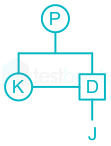
P is the mother of K; K is the sister of D : D is the father of J. How is P related to J?

  1. ((a))

    Grandmother

  2. ((b))

    Aunt

  3. ((c))

    Mother

  4. ((d))

    Data inadequate

Show Answer
Answer: ((a))

Grandmother

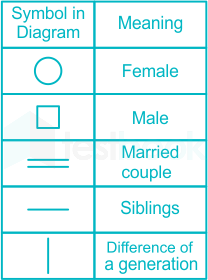
Preparing the family tree using the following symbols,

According to the given condition:

So, P is grandmother of J.

Hence, ‘Grandmother’ is the correct answer.

47

If day before yesterday was Tuesday, what will the day after tomorrow?

  1. ((a))

    Wednesday

  2. ((b))

    Friday

  3. ((c))

    Saturday

  4. ((d))

    Monday

Show Answer
Answer: ((c))

Saturday

If day before yesterday was Tuesday.

Day before yesterdayTuesday
YesterdayWednesday
TodayThursday
TomorrowFriday
Day after tomorrowSaturday


So, Saturday will be the day of the week on day after tomorrow.

Hence, ‘Saturday’ is the correct answer.

48

From the given options fill in the blank space: CMM, EOO, GQQ, (____), KUU 

  1. ((a))

    GSS

  2. ((b))

    ITT

  3. ((c))

    ISS

  4. ((d))

    GRR

Show Answer
Answer: ((c))

ISS

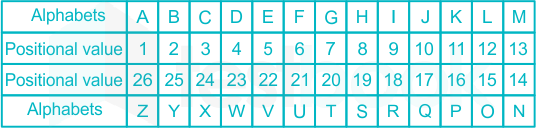
According to the alphabetical positions of the letters,

The pattern followed here is:

Hence, ‘ISS’ is the correct answer.

49

From the given options fill the missing number in the sequence : 1, 9, 25, 49, (____), 121

  1. ((a))

    64

  2. ((b))

    100

  3. ((c))

    81

  4. ((d))

    91

Show Answer
Answer: ((c))

81

The Pattern Followed here is,

1 × 1 = 1

3 × 3 = 9

5 × 5 = 25

7 × 7 = 49

9 × 9 = 81

11 × 11 = 121

Hence, 81 is the correct answer.

50

If M is 5m to the East of D, F is 5m to the South of D and K is 5m to the East of F then M is in which direction with respect to K?

  1. ((a))

    North - West 

  2. ((b))

    North

  3. ((c))

    South

  4. ((d))

    South - West

Show Answer
Answer: ((b))

North

According to given conditions,

So, M is to the north of K.

Hence, ‘North’ is the correct answer.

Attempt this paper under real exam conditions

Timed interface, section switching, instant scoring, and question-by-question analytics — free.

Start Timed Attempt