Previous Year Paper

UP TGT Home Science 2021 Official Paper (Previous Year Paper)

125 questions · 120 minutes · with answers · free

Test (125 questions)

1

Hepatitis caused through

  1. ((a))

    Virus

  2. ((b))

    Bacteria

  3. ((c))

    Fungus

  4. ((d))

    Algae

Show Answer
Answer: ((a))

Virus

Concept:

Infectious diseases:

  • The disorders or diseases caused by organisms such as bacteria, viruses, fungi, or parasites are called infectious diseases.
  • Sometimes they are harmless but under certain conditions, some of these diseases can be proved harmful as well.

Viral diseases:

  • Diseases caused by the different types of viruses are known as viral diseases.
  • Some common types of viral diseases are HIV, Ebola, Covid-19, etc.

Explanation:

Hepatitis:

  • It is a condition when the human liver is infected by the hepatitis virus.
  • It disturbs the functions of the liver.
  • Such as the production of bile, excretion, fat and protein metabolism, activation of enzymes, and synthesis of protein.
  • Can be diagnosed through a common blood test.
  • There are some more kinds of hepatitis like hepatitis A, hepatitis B, hepatitis C, hepatitis D, and hepatitis E.

Hepatitis B:

  • It is an infectious disease caused by the hepatitis  B virus.
  • This can be spread if a person gets in contact with blood, saliva, or fluid of an infectious body.
  • Sharing the personal belongings of an infected person such as a toothbrush or razor can also cause hepatitis B.

Symptoms:

  • Jaundice
  • Feeling of tiredness
  • Abdominal pain

Thus, hepatitis is caused by a virus.

Additional Information

CharacteristicMicroorganismCaused bySymptoms
SmallpoxVirusVariola virusRash that appears first on the face, hands and forearms and then later appears on the torso.
TetanusBacteriaClostridium tetaniCauses painful muscle contractions, particularly in the jaw and neck.
TyphoidBacteriaSalmonella typhiHigh fever, headache, stomach pain, weakness, vomiting and loose stools.
Common coldVirusVarious types of virusesRunny nose, sneezing and congestion.
MalariaParasitePlasmodiumChills, fever and sweating.
MeaslesVirusRubeola virusCough, runny nose, inflamed eyes, sore throat, fever and a red, blotchy skin rash.
LeprosyBacteriaMycobacterium lepraeLight-coloured or red skin patches with reduced sensation, numbness and weakness in hands and feet.
2

Which plan helps to increase the rate of literacy in rural women?

  1. ((a))

    Kasturba Gandhi Education Scheme

  2. ((b))

    Safety Plan for Mothers

  3. ((c))

    Rajeev Gandhi Kishoree Yojana

  4. ((d))

    Kasturba Gandhi Balika Vidyalaya Scheme

Show Answer
Answer: ((d))

Kasturba Gandhi Balika Vidyalaya Scheme

Concept:

Literacy rate:

  • A particular age group who can read and write is defined as the literacy rate of that particular population.
  • There are many schemes that are introduced by the government so that the literacy rate can be improved for the women who are deprived or unprivileged.

Explanation:

Kasturba Gandhi Balika Vidyalay scheme:

  • This scheme was introduced by the government of India in August 2004.
  • Later it was integrated into the Sarva Shiksha Abhiyan program.
  • The objective of this scheme was to provide educational strength to the girls and women of unprivileged and disadvantaged classes of society.
  • These schools are the residential primary school for girls from SC, ST, OBC, minority, and BPL girls in the educationally backward blocks.
  • Free boarding, lodging, books, stationery, and uniforms are being provided to the children in these schools.

Thus, the Kasturba Gandhi Balika Vidyalaya scheme is a plan to increase the rate of literacy in rural women.

3

In which mode of communication are photos shown directly in front?

  1. ((a))

    Flash card

  2. ((b))

    Film strip

  3. ((c))

    Television

  4. ((d))

    Black board

Show Answer
Answer: ((b))

Film strip

Concept:

Communication:

  • It is the dissemination of information through speech, writing, or another medium.
  • Verbal communication (using words)
  • Non-verbal communication (using photos, gestures etc.)

Explanation: 

Film Strip:

  • A film strip is a group of slides on a piece of film that are shown in order and cover a sizeable chunk of a lesson.
  • It is a 35 mm positive film roll that has been spooled.
  • It contains 30 to 50 sequential images.
  • The film strip is a type of multimedia education with still images.
  • Film strip projectors are optical devices used to project film strips onto screens.
  • They are convenient to handle, easy to prepare and easy to store.

Thus, in film strips photos are shown directly in front.

Additional Information

Communication MethodDescription
Flash Cards- Small note cards called flashcards are used to practice information retrieval in order to test and strengthen memory. - The prompt and information regarding the prompt are often printed on opposite sides of a flashcard. - Names, words, concepts, or techniques may be included.
Television- Television is a communication method for sending moving pictures and sound. - Television is a popular medium for sports, news, advertising and entertainment.
Black Board- It is a smooth,  dark and hard surface that is used specifically in classrooms for chalk writing and sketching.
4

Mass per unit length or length per unit mass of yarn indicates

  1. ((a))

    Yarn number

  2. ((b))

    Yarn strength

  3. ((c))

    Yarn twist

  4. ((d))

    Eveness of yarn

Show Answer
Answer: ((a))

Yarn number

Explanation: 

Yarn Number:

  • A yarn's size or fineness can be determined by its yarn number, which can be expressed as either length per unit or mass per unit of yarn.
  • Yarn Number is the same as yarn size and yarn count.
  • The yarn number in a direct yarn counting system is equal to the weight of a unit length of yarn.
  • Jute or silk yarn are typically utilised with this method.
  • The yarn number or count in an indirect yarn counting technique is the ratio of yarn length to weight.
  • This implies that the yarn is finer or thinner the higher the yarn count number.
  • The most common yarn types that use this technique are woollen, cotton, linen and worsted.
  • There are two ways to indicate yarn count or yarn number.
  • System of direct yarn digits (mass/unit length)
  • System for indirectly identifying yarns (length/unit mass)

Thus, mass per unit length or length per unit mass of yarn indicates Yarn Number. 

Additional InformationYarn Strength: 

  • The resistance of the yarn to the applied load is known as yarn strength.
  • High strength values result in fewer thread breaks, which reduces machine stopping when in contact and promotes efficiency.
  • The source material has a direct impact on yarn strength.
  • Yarn strength is directly influenced by the type of raw material, fibre length, fineness, fibre strength and fibre length distribution.
  • The only way to somewhat increase strength in yarn production is to increase the twist.

Yarn Twist: 

  • The spiral configuration of fibres around the yarn's axis is known as the twist.
  • The strands are joined by twisting to produce a stronger yarn.
  • Turns per inch or turns per metre are terms used to describe how many twists are there.

Yarn Evenness: 

  • Yarn evenness is generally described as the variation in the yarn's linear density or thickness.
  • It is a fundamental but crucial attribute because it can have an impact on all the other characteristics of the yarn and the fabric made from it.
  • During the spinning, winding, knitting, and weaving processes, the irregularity of the yarn may cause breaks.
5

Beauty is an

  1. ((a))

    Instrumental value

  2. ((b))

    Intrinsic value

  3. ((c))

    Both (A) and (B)

  4. ((d))

    None of these

Show Answer
Answer: ((b))

Intrinsic value

Concept: 

Beauty:

  • A combination of elements that appeals to the aesthetic senses, particularly sight.
  • A characteristic of objects that makes them enjoyable to view is generally referred to as their beauty.

Explanation: 

Intrinsic value:

  • Intrinsic values are valuable not because of their effects but rather because they are good in and of themselves.
  • It accomplishes its own purpose.
  • It is also referred to as absolute values.
  • Beauty, truth, courage, goodness and other such qualities are regarded as intrinsic values.

Thus, beauty is an intrinsic value. 

 Additional InformationInstrumental Value or Extrinsic Value: 

  • It is the value or worth of things that meet some human needs and goals or act as a means to an outcome that is desired.
  • For example, money.
  • Money is only appreciated as a tool for achieving a goal.
  • It offers protection and enables you to buy the things you want.
  • It is nothing more than a stack of printed paper or metal products when separated from its purchasing power.
6

Which of the following disease is prevented by BCG vaccine ?

  1. ((a))

    Chickenpox

  2. ((b))

    Diphtheria

  3. ((c))

    Tuberculosis

  4. ((d))

    Typhoid

Show Answer
Answer: ((c))

Tuberculosis

Concept :

Vaccine:

  • A vaccine stimulates a person's immune system to produce immunity to a specific disease, protecting the person from that disease.
  • Vaccines are introduced to build passively acquired immunity against various diseases.
  • Vaccines are usually administered through needle injections, but can also be administered by mouth or sprayed into the nose.

Explanation:

Tuberculosis:

  • Tuberculosis is a bacterial disease caused by the bacteria Mycobacterium tuberculosis.
  • Symptoms of tuberculosis include blood-stained cough, fever, loss of appetite, sweating, fatigue or weakness, severe loss of weight, chest pain, shortness of breath, etc.
  • Usually, this bacterium infects the upper respiratory tract.
  • The infection can spread to any organ like the kidney, spine & even in severe cases the brain also.
  • Tuberculosis is a communicable disease.
  • To protect people from getting infected by tuberculosis, BCG (Bacillus Calmette Guerin) vaccine was developed.
  • BCG vaccine is administered to infants and children.
  • The vaccine was developed by French bacteriologists Albert Calmette and Camille Guerin in 1921.

Signs and symptoms:

  • Cough that lasts more than three weeks.
  • Chest pain.
  • Coughing up blood.
  • Fatigue, weight loss.
  • Fever and chills.

Thus, BCG is the vaccine for tuberculosis.

Additional Information

Chickenpox:

  • Herpes Zoster Virus is also known as Varicella Zoster Virus causes Chickenpox.
  • In adults, it is mainly known as Herpes Zoster Virus.
  • The vaccine given for chickenpox is the Varicella vaccine.
  • It is characterized by itchy red blisters that appear all over the body.

Diphtheria:

  • Causative Agent: Corynebacterium diphtheriae
  • Mode of Acquiring: Through direct contact with an infected person or by inhaling respiratory droplets from an infected person.
  • Affects: Mucous membranes of nose and throat.
  • Symptoms:
  • A thick grey coating on the tonsils and throat
  • Fever, chills, sore throat
  • Swollen glands on the neck
  • Barking cough
  • Bluish skin
  • Vaccine: DTaP vaccine

Typhoid:

  • Caused by: Salmonella typhi.
  • Symptoms: High fever, headache, stomach pain, weakness, vomiting and loose stools.
  • Vaccine: Ty21a and ViCPS
7

Sharda Act is associated with

  1. ((a))

    Widow marriage

  2. ((b))

    Sati Pratha

  3. ((c))

    Child marriage

  4. ((d))

    All of the above

Show Answer
Answer: ((c))

Child marriage

The correct answer is Child Marriage.

Key Points

  • The Child Marriage Restraint Act, of 1929 was also known as Sharda Act.
  • The act was passed on 28 September 1929.
  • As per the act, the age of marriage for girls was fixed at 14 years and for boys, it was 18 years.
  • Later through an amendment, it was changed to 18 for girls and 21 for boys.
  • The name Sarda was derived from its sponsor Harbilas Sarda.

Important Points  

  • The Child Marriage Restraint Act was the first social reform issue taken up by an organized women’s group in India.
  • This group pressured many politicians into supporting the act by picketing their delegations, holding placards, and shouting slogans.
  • They believed that the passing of this act would show the world that India is serious about social reforms.

Additional Information

Abolition of Sati: 

  • The Bengal Sati Regulation (Regulation XVII) was passed by the then Governor-General of India, Lord William Bentinck making the practice of Sati illegal in all of British India. The act was made illegal and punishable by the courts.
  • Sati Regulation XVII A. D. 1829.
  • After this law was enacted, similar laws prohibiting this custom were passed in princely states in India. In 1861, after the control of India went on the British Crown directly, Queen Victoria issued a general ban on Sati throughout India.

Passing of Widow Remarriage Act: 

  • The Hindu Widows' Remarriage Act 1856, also Act XV, 1856, passed on 16 July 1856, legalised the remarriage of widows in all jurisdictions of India under East India Company rule.
  • The act was enacted on 26 July 1856. It was drafted by Lord Dalhousie and passed by Lord Canning before the Indian Rebellion of 1857.
8

At what age child learn by trial and error?

  1. ((a))

    0 - 2 yrs

  2. ((b))

    2 - 6 yrs

  3. ((c))

    6 - 9 yrs

  4. ((d))

    9 - 12 yrs

Show Answer
Answer: ((a))

0 - 2 yrs

The trial and Error Method is a fundamental method to solve the problem. Edward Lee Thorndike gave a famous theory of the Trial and Error Method.

Key Points There are some important points related to the Trial and Error Method given below.

  • This method is based on the Law of Exercise.
  • In the field of teaching, for learning any concept from the students, this method is very useful.
  • Freshers can also learn anything by this method, to be experienced is not necessary.
  • At the age of 0 to 2 years, any child can start learning by this method.
  • This method is very useful for difficult concepts to learn.
  • When no. of trials increases, the no. of errors decreases.

Hence we can say that At the age of 0 to 2 years, children can learn by the trial and error method.

Additional Information

  • This theory came from a famous experiment based on a cat.
  • Thorndike gave this experiment in 1898.
  • Thorndike is also the father of Modern Educational Psychology.
9

Secondary colors are

  1. ((a))

    Colours made by combination of three primary colours

  2. ((b))

    Mixing red, yellow colours only

  3. ((c))

    Mixing blue, black, white colours

  4. ((d))

    All of the above

Show Answer
Answer: ((a))

Colours made by combination of three primary colours

Concept:

  • We have many different types of colours.
  • But all these colours are not naturally found in nature.
  • There are some colours which occur naturally or originally.
  • And some colours are obtained by mixing basic colours proportionally.

Explanation:

  • There are three categories in which colours are divided:

Primary colour:

  • These colours are the basic colours which can't be recreated by colour mixing.
  • There are three primary colours red, yellow, and blue.
  • Rest all the colours are the result of mixing these primary colours.

Secondary colour:

  • The combination of colours which is obtained by mixing two primary colours are secondary colours.
  • On the colour wheel secondary colours are located between primary colours.

Thus, secondary colours are the colours made by a combination of three primary colours.

Pin on Kunstiõpetus nooremale kooliastmele

 Additional InformationTertiary colour:

  • The combination of primary and secondary colors is known as tertiary or intermediate colours.
  • Colour wheel tertiary colors are between primary and secondary.
10

A long bandage for head is required

  1. ((a))

    One bandage

  2. ((b))

    Two bandage

  3. ((c))

    Three bandage

  4. ((d))

    Four bandage

Show Answer
Answer: ((b))

Two bandage

Concept: 

Bandage: 

  • A bandage is a piece of fabric that can be used by itself to support or restrict motion in a body part or to support a medical device like a dressing or splint.
  • After the dressing has been applied directly to the wound, it is used in conjunction with a bandage to maintain it in place.
  • The three most popular types of bandages are triangular bandages, roller bandages, and tailed bandages.

Explanation:

Two bandage:

  • It is basically 2 piece of cloth that is used for dressing in the head injury, shoulder injury etc.

One bandage:

  • It is basically 1 piece of bandages that are used for dressing the area are hand injury, thumb injury etc.

Three bandage:

  • It is basically  3 piece bandages that is used for dressing the wound area are ankle injury, elbow injury, and knee injury.

Four bandage:

  • There are 4 pieces of bandages that are used in chest injury, thighs injury and to cover the large area of the wound.

Thus, a long bandage for the head requires 2 bandages.

11

As per the RDA table ICMR-NIN 2020, the daily requirement of dietary fiber per 2000 kcal is considered

  1. ((a))

    30 gms

  2. ((b))

    25 gms

  3. ((c))

    35 gms

  4. ((d))

    40 gms

Show Answer
Answer: ((a))

30 gms

Concept:

  • Recommended Dietary Allowances (RDAs) are the levels of intake of essential nutrients.
  • Indian Council for Medical Research (ICMR) and the National Institute for Nutrition (NIN) have published the updated Recommended Dietary Allowance (RDA).
  • The main objective of this is to provide a good recommendation for the diet to the people of India.

**Explanation:**​

  • Dietary fibre, also known as roughage or bulk, includes the parts of plant foods that the body can't digest or absorb.
  • The amount of fibre is recommended based on energy intake.
  • Fibre intake of 30 g/2000 kcal is considered to be safe.

Thus, as per the RDA table ICMR-NIN 2020, the daily requirement of dietary fibre per 2000 Kcal is considered 30 gm.

Additional Information

Estimated average daily nutritional requirement for Indians (Ref: RDA for Indian 2020):

GroupParticularsBody weight (kg)Net energy (kcal/d)Protein(g/d)Carbohydrate (g/d)
ManSecondary work65242554130
Moderate work2875
Heavy work3800
WomanSecondary work55187545.7130
Moderate work2225
Heavy work2925
12

Type of family resources

  1. ((a))

    Human and non-human

  2. ((b))

    Traditional and non-traditional

  3. ((c))

    Flexible and non-flexible

  4. ((d))

    Complete and incomplete

Show Answer
Answer: ((a))

Human and non-human

Concept: 

Family resource:

  • Family resources are anything we employ to accomplish our aims (our goals).
  • They are the things made of and possessed by people that satiate our desires.
  • Based on where they came from, family resources are often categorized as human and non-human resources.

Explanation: 

Human Resource:​

  • Internally generated, personal traits and qualities of people make up human resources.
  • They are more elusive and harder to pin down.
  • Human resources are likewise finite, just as other resources.
  • Human resources include skill, knowledge, interest, attitude, time, and human energy.

​Non-Human Resource:

  • Non-Resources are not components of people rather, they are developed and acquired by humans.
  • They can be touched and recognized, hence are tangible.
  • Non-human resources are likewise scarce.
  • Non-human resources include: money, space, energy, and material goods.

Thus, types of family resources are human and non-human. 

Additional Information

Traditional and non-traditional resources: 

  • There is no natural process that can renew the traditional energy sources.
  • Unconventional energy sources can be replenished.
  • These resources have limited stock.

Unconventional energy sources are advantageous for the environment.

Flexible and non-flexible resources: 

  • Flexible resources are versatile and have various uses and can be employed in a variety of resource categories.
13

When floats are made of wrap yarns it is

  1. ((a))

    Satin weave

  2. ((b))

    Sateen weave

  3. ((c))

    Rib weave

  4. ((d))

    Both (A) and (B)

Show Answer
Answer: ((a))

Satin weave

Concept: 

Floats:

  • Floats are lengths of yarn on the surface of a woven fabric that is positioned between two subsequent yarn intersections with strands interlaced at right angles to it.
  • The quantity of threads that the floating yarn runs over or under defines a float.

Wrap yarn:

  • Warp yarn is the yarn that is positioned longitudinally in a woven fabric.
  • The cloth is referred to as satin if the warp yams shape the floats.

Explanation:

Satin Weave:

  • The yarns in one direction are allowed to float over multiple yams in the other direction before going under one yarn to create a satin weave.
  • There may be between 4 and 11 yams floated over or crossed.
  • The yams that are crossing don't flow under the single yam in a predictable pattern.
  • The majority of satin textiles are glossy and constructed of continuous filament yarn.
  • Although smooth and stain-resistant, satin weave textiles snag quickly and are not abrasion-resistant.

Thus, when floats are made of warp yams it is called satin weave. 

Additional Information

Sateen weave: 

  • The fabric is known as sateen when the filled yams float.
  • Typically, spun yarns are used to make sateen fabrics.

Rib weave: 

  • The Plain weave has a variation called Rib.
  • Its construction closely resembles that of a plain weave.
  • The fundamental design is the same, but it is altered by expanding the warp or weft direction, or both.
  • A simple weave called rib weave results in ribs on the fabric.
  • The final fabric is resistant to abrasion and tearing.
14

Infant mortality rate is calculated

  1. ((a))

    Based on every 100 babies born

  2. ((b))

    Based on every 1000 babies born

  3. ((c))

    Depending on the infection of various diseases

  4. ((d))

    Depending on the difference in birth and death numbers

Show Answer
Answer: ((b))

Based on every 1000 babies born

Concept:

Mortality rate:

  • The ratio of the number of deaths in the year to the average total population of the year is known as mortality rate.

Explanation:

IMR (Infant mortality rate):

  • The infant mortality rate is the number of infant deaths for every 1,000 live births.
  • The Formula for calculating infant mortality rate is:

IMR = the number of infant mortality/the number of infants in mid-year × 100

Thus, infant mortality rate is calculated based on every 1000 baby born.

Additional Information

Cause of infant mortality (1st four weeks):

  • The major cause of infant mortality is infection and short breathing.
  • Malnutrition in mothers during pregnancy can also cause infant mortality.
  • Congenital malformation is a physical defect related to baby birth that causes defects in different body parts like the brain, heart, lungs, liver, bones, and intestinal tract.
  • Other causes include preterm birth, low birth weight, and sudden infant death syndromes.
15

The Rural Health Mission was started in the year

  1. ((a))

    1970

  2. ((b))

    1980

  3. ((c))

    1977

  4. ((d))

    2005

Show Answer
Answer: ((d))

2005

Explanation:

Rural Health Mission:

  • National Rural Health Mission (NRHM) is the scheme launched by the Ministry of Health and Family Welfare in 2005 by the central government of India.
  • This mission was launched to provide accessible, affordable, and quality health care to the rural population.
  • The period for the national rural health mission was 2005-2012.
  • In 2013 the Union Cabinet decided to continue NRHM as a Sub-mission of the National Health Mission (NHM) for the period 2012-2017.
  • Under the NRHM Scheme, a village-level health worker is employed.
  • This health worker commonly known as ASHA is selected from the village itself.
  • ASHA is a trained female health activist who works as an interface between the public health system and the community.

Thus, the rural health mission was started in the year 2005.

16

When did Ujjawala Scheme start ?

  1. ((a))

    1st May 2016

  2. ((b))

    4th December 2015

  3. ((c))

    12th December 2018

  4. ((d))

    12th December 2016

Show Answer
Answer: ((a))

1st May 2016

Concept:

Government schemes:

  • Government schemes are the plan, design, or program of activities involving many people.
  • They are launched to improve the livelihood of the people.
  • These schemes provide security for leading a better life.
  • Each scheme is launched to provide benefits to the individual in certain areas of their life.

Explanation:

Pradhanmantri Ujjawala Yojana:

  • It was launched by the prime minister of India Narendra Modi.
  • It was launched on 1st May 2016.
  • Its goal is to distribute 50 million LPG connections to women of BPL families.
  • It is a scheme introduced to safeguard the health of women and children by providing them with a clean cooking fuel LPG.
  • With the use of LPG, women don't have to compromise their health in smoking kitchens.
  • It also provided a safeguard against wandering in unsafe areas to collect firewood.

Thus, the Ujjawala Yojana started on 1st May 2016.

PMUY : New Ujjwala 2.0 Connection

17

Situational analysis is a technique of _________ method.

  1. ((a))

    Biographical method

  2. ((b))

    Informal and controlled observation method

  3. ((c))

    Autobiographical method

  4. ((d))

    None of the above

Show Answer
Answer: ((b))

Informal and controlled observation method

Situation Analysis is a method of collecting information related to the internal and external environment of any firm or institution Which makes the better performance.

Key Points There are some characteristics related to Situation analysis.

  • In the context of teaching, the situation factor can be such as length, time, delivery mode, etc.
  • It focuses on the performance of the school.
  • This analysis is very useful for curriculum selection, and formulation.
  • Length, time, and delivery mode of course can be examined and measured by this situation analysis.
  • This analysis gives the progress after giving continued reports of strengths and weaknesses.
  • Situation Analysis is a technique of informal and controlled observation method.
  • It can be used urgently when any problematic situation occurs.

Hence we can say that Situation Analysis is a technique of informal and controlled observation method.

Additional Information

  • The main factors of situation analysis are competitors, customers, environment, etc.
  • The Situation Analysis is given by Albert Humphrey.
  • This Situation analysis came in the 1960s.
18

Alpana is from.......

  1. ((a))

    Bengal

  2. ((b))

    Uttar Pradesh

  3. ((c))

    Rajasthan

  4. ((d))

    Bihar

Show Answer
Answer: ((a))

Bengal

Concept:

  • Traditional art refers to a particular art that reflects the culture or tradition of a particular area or a community of people.
  • Unlike more sophisticated art, folk art tends to make use of natural substances.
  • Substances like straw, wood, clay, and sand.
  • Tools are lesser in number but are multipurpose.

Explanation:

Alpana:

  • Alpana is a form of Rangoli that is practiced in Bengal.
  • This art form represents an amalgamation of experiences as well as contemporary designs.
  • It is usually practiced by women.
  • Alpana art form has been used for ages for religious and ceremonial purposes.
  • Material that used in alpana is rice powder, diluted rice paste, powder colors, charcoal, burnt earth, etc.

Thus, alpana is from Bengal.

Easy And Beautiful Alpona Design For Laxmi Puja Simple Diwali Rangoli  Design Border Alpona Design – Otosection

19

Which of the following is not a part of female genital organ ?

  1. ((a))

    Vas deferens

  2. ((b))

    Ovaries

  3. ((c))

    Uterus

  4. ((d))

    Fallopian tube

Show Answer
Answer: ((a))

Vas deferens

Concept:

Female reproductive system:

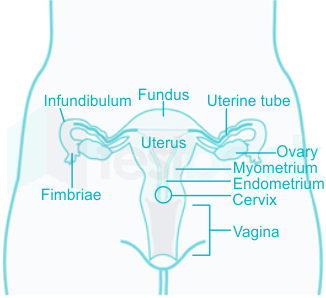
  • Female reproductive system consists of the primary as well as accessory sex organs.
  • Primary sex organ is a pair of ovaries.
  • The accessory sex organs include the uterus, fallopian tube, cervix, and vagina.

Explanation:

Vagina:

  • It is a birth canal.
  • The vaginal is a canal that joins the lower part of the uterus to the outside of the body.

Uterus:

  • Uterus is a hollow pear-shaped organ.
  • It is the home to a developing fetus.
  • The uterus is divided into two parts the cervix and the main body of the uterus called the corpus.
  • Cervix is the lower part that opens in the vagina.

Ovaries:

  • The ovaries are small oval-shaped glands.
  • Located on either side of the uterus.
  • The ovaries produce hormones and eggs.

Fallopian tube:

  • These are narrow tubes that are attached to the upper part of the uterus.
  • It also serves as a pathway for the over to travel from the ovaries to the uterus.
  • Fertilization of an egg by a sperm normally occurs in the fallopian tube.
  • The fertilized egg then moves to the uterus where it implants in the uterine lining.

Thus, vas deferens are not part of the female genital organ.

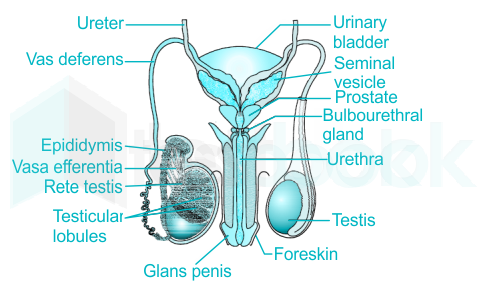
 Additional InformationMale reproductive system:

  • Male reproductive system is a set of organs.
  • Forms of these organs are external organs and some are internal organs.
  • The external organs include the penis, scrotum, and testicles.
  • The internal organs include the vas deferens, prostate, and urethra.

20

Which of the following is not a type of investment?

  1. ((a))

    Life Insurance

  2. ((b))

    Short term investment

  3. ((c))

    Wallet

  4. ((d))

    Long term investment

Show Answer
Answer: ((c))

Wallet

Concept:

Investment: 

  • An investment is a purchase undertaken with the hope of earning money or increasing capital.
  • Appreciation is the term for an asset's value rising over time.
  • When a person invests in a good, they do not intend to utilise it as a source of immediate consumption, but rather as a tool for future wealth creation.

Explanation:

Wallet:

  • Wallets are used to keep money, it is a kind of purse.
  • Users can store their money in e-wallets, which are essentially pre-paid accounts.
  • On gadgets like phones and tablets, digital wallets are financial software that let you save money, carry out transactions, and keep track of previous purchases.
  • A digital wallet can be used to store all of your financial data; some even allow you to keep identification cards and driver's licences.
  • A bank's mobile app or payment apps like GPay or PayPal may contain digital wallets.

Thus, a wallet is not a type of investment.

Additional Information 

Short-term Investment:

  • Financial investments that can be swiftly converted to cash, often within five years, are referred to as short-term investments.
  • Many short-term assets are sold or converted into cash after only three to twelve months.

Life Insurance: 

  • A contract for life insurance is made between the policyholder and the insurer.
  • In exchange for the premiums paid by the policyholder throughout their lifetime, the insurer will pay a certain amount to designated beneficiaries when the insured passes away.
  • Life insurance is the amount the policyholder gets after his/her death from the insurer at the end of the policy period.

Long-term Investment: 

  • Holding various assets, such as shares, mutual funds, stocks, and securities for longer than a year is referred to as long-term investing.
  • The majority of long-term investments have a lifespan of three, five, or ten years.
21

Which chemical is used in mercerizing finish ?

  1. ((a))

    Ammonia

  2. ((b))

    Boric acid

  3. ((c))

    Caustic soda

  4. ((d))

    None of these

Show Answer
Answer: ((c))

Caustic soda

Concept:

Mercerization:

  • Mercerization is a chemical process used to permanently give cotton fibres and fabrics a higher affinity for dyes and other chemical finishes.
  • The majority of higher-quality cotton products are mercerized, these fabrics take less dye and provide brighter, more durable colours.
  • Depending on the process, mercerizing also increases the tensile strength, absorptive capacity, and, typically, the degree of the shine of the cotton fabric.

Explanation: 

Caustic Soda:

  • The common term for sodium hydroxide (NaOH), an alkali salt, is caustic soda.
  • The procedure of mercerization is briefly submerging the yarn or fibre in a sodium hydroxide solution (caustic soda), typically for less than four minutes.
  • The sodium hydroxide is subsequently neutralized by treating the substance with either acid or water.
  • The material may shrink by up to one-fourth if no strain is applied; however, if tension is applied, the material is prevented from shrinking noticeably.

Thus, in the mercerization finish, caustic soda is used. 

<br>

Additional Information

Ammonia:  

  • Nitrogen and hydrogen combine to form the colourless, smelly gas known as ammonia (NH3).
  • It is the most basic stable compound of these elements and is used as a raw material to create a variety of nitrogen compounds with significant industrial applications.
  • Ammonia is used in the textile industry to create synthetic fibres like nylon and rayon.
  • Recently, cotton fabrics have been finished using liquid ammonia.
  • Liquid ammonia treatment of cotton increases its sheen, tensile strength, abrasion, dyeability and resistance.

Boric Acid:   

  • A moderately acidic hydrate of boric oxide with minor antiviral, antifungal and antiseptic effects is called boric acid.
  • Boric acid is a preservative and a fireproofing agent for wood.
  • It is used to make porcelain, carpets, leather, hats, enamels, soaps, glazes, glass, ceramics, cement, and cosmetics.
  • It is also used in printing, tanning, dyeing, photography and painting.
22

Compulsory saving is example of

  1. ((a))

    GPF

  2. ((b))

    Bank deposits

  3. ((c))

    LIC

  4. ((d))

    PPF

Show Answer
Answer: ((a))

GPF

Concept: 

Compulsory Saving: 

  • Savings are of two types: compulsory and voluntary.
  • Savings that are mandated by law to be made by people or institutions are known as compulsory savings.
  • Examples of compulsory savings include pension and some provident fund programmes.
  • Whereas, those savings that can be made voluntarily in accordance with a family's needs and requirements are voluntary savings.

Explanation: 

General Provident Fund (GPF): 

  • This is a government-created mandatory deposit or deduction programme.
  • The employee has the option to contribute at least 10% of his base pay or more to his G.P.F. account each month.
  • Each employee is granted a unique G.P.F. account number by the government.
  • An annual interest rate of 8% is paid on this deposit.
  • The depositor may also be granted a loan if he needs it for a certain kind of expense, such as a wedding or other ceremony, home construction or maintenance, etc.
  • Both refundable and non-refundable loans are available.

Thus, GPF is an example of compulsory saving. 

Additional Information

Bank Deposits: 

  • Money deposited in banks for storage is referred to as a bank deposit.
  • These deposits are made to various deposit accounts, such as savings and current accounts.

LIC: 

  • A statutory insurance and investment company with its headquarters in Mumbai is known as the Life Insurance Corporation of India.
  • The Indian government is the owner of it.
  • The goal of LIC is to make life insurance much more widely available, especially in rural regions.
  • It aims to reach all eligible citizens and offer them substantial financial protection at a fair price.

Public Provident Fund (PPF): 

  • The PPF is a long-term, guaranteed income savings programme provided by the government.
  • It provides set and assured returns in addition to tax advantages.
  • The PPF account has a 15-year duration and cannot be prematurely terminated without specific justification.
  • The depositor may receive some of their money back after five years.
  • Any Indian resident may open a PPF account.
23

World Health Organization was established in the year

  1. ((a))

    1940

  2. ((b))

    1948

  3. ((c))

    1942

  4. ((d))

    1954

Show Answer
Answer: ((b))

1948

The correct answer is 1948.

Key Points

  • The World Health Organization (WHO) was established on:
  • 7 April 194
  • WHO is a specialized agency of the:
  • United Nations (UN)

responsible for international public health.

  • The headquarters of WHO is located in:
  • Geneva, Switzerland
  • The main objectives of WHO are:
  • Promoting global health
  • Controlling diseases
  • Improving healthcare systems
  • Coordinating international health responses
  • 7 April is celebrated every year as:
  • World Health Day

to mark the establishment of WHO.

  • Hence, the correct answer is 1948.

Additional Information

Coronavirus

  • WHO works in areas such as:
  • Vaccination programs
  • Pandemic preparedness
  • Mental health
  • Nutrition and sanitation
  • WHO played a major role in:
  • Eradication of smallpox
  • Global COVID-19 response
  • Polio eradication initiatives
  • The current Director-General of WHO is:
  • Dr. Tedros Adhanom Ghebreyesus
  • WHO publishes important reports related to:
  • Global health statistics
  • Disease outbreaks
  • Public health policies

Important Points

  • The constitution of WHO came into force on 7 April 1948.
  • Questions related to international organizations, United Nations agencies, and global health institutions are frequently asked in competitive examinations.
24

According to Nickell and Dorsey human resources are

  1. ((a))

    Time, energy, money

  2. ((b))

    Skills, knowledge, energy

  3. ((c))

    Energy, time, community services

  4. ((d))

    None of the above

Show Answer
Answer: ((b))

Skills, knowledge, energy

Explanation:

Human Resources (According to Nickel and Dorsey): 

  • Resources are of two types: human and non-human.
  • Human resources were defined by Nickell and Dorsey as the qualities that people possess, including their abilities, knowledge, energy and attitudes.

Thus, according to Nickell and Dorsey human resources are skills, knowledge, and energy.

Additional InformationNon-Human Resources: 

  • They defined non-human resources as things like money, time, products, property, and communal facilities that are available to persons outside the family yet are controlled, used, or owned by them.
25

_________ develops the physical, mental, social and moral qualities of a child.

  1. ((a))

    Play

  2. ((b))

    Eating

  3. ((c))

    Screaming

  4. ((d))

    Taking supplements

Show Answer
Answer: ((a))

Play

The great psychologist Froebel has been an advocate of the Play Way Method. For the teaching of children, this was the best method.

Key PointsThere is some important benefits of the play-way method in teaching given below:

  • This method is very useful for children to develop mentally.
  • By playing children also develop their bodies means physical development.
  • By playing with friends, children also learn communication, and mutual interaction, and also learn to help each other means social Development.
  • There are many games that teach moral values to children means moral development.
  • When any child is physical activity, at that time if he learns something, the knowledge will be permanent.
  • According to the age of children, this method is very useful for teaching otherwise it is something difficult to teach any lesson.

Hence we can say that Play develops the physical, mental, social, and moral qualities of the child.

Additional Information

  • The word Play-way was first used by Caldwell Cook.
  • This method is not useful for Higher Education.
26

​Which method is extremely beneficial in terms of personal contact, mutual goodwill and friendship?

  1. ((a))

    Official calls

  2. ((b))

    Farm and home visits

  3. ((c))

    Method and result demonstration

  4. ((d))

    Group discussion

Show Answer
Answer: ((b))

Farm and home visits

Concept:

  • The use of extension teaching aids and methodologies is crucial in agricultural extension work.
  • They serve as the means of disseminating innovations to a diverse group of farmers.
  • They also serve as a channel for the clarification of concepts and new agricultural technologies.

Explanation: 

Farm and home visits: 

  • The most prevalent method of direct communication between the agent and the farmer is through farm visits.
  • Farm visits can help the extension agent get to know the farmer and his family in a better way.
  • It helps increase the agent's understanding of the region and the problems that farmers face.
  • It provides the farmers with specific advice or information.
  • It aids in keeping in touch and gradually establishing connections and friendships with farmers.

Thus, farm and home visits are extremely beneficial in terms of personal contact, mutual goodwill and friendship. 

Additional InformationOfficial Calls:

  • When the farmer visits the agent in the office.
  • The agent should make an effort to make the farmer feel comfortable by posing a few questions and encouraging him to describe his issues.
  • The representative should be cordial yet focused and make an effort to learn the visitor's goal as soon as they arrive.
  • The farmer's record card should also have a note regarding these office visits, and any necessary follow-up should be carried out.

Method and Result Demonstration: 

  • A strong, useful demonstration is a crucial tool in extension work.
  • It is a particularly effective teaching tool for farmers who find reading difficult.
  • Method demonstrations instruct farmers on how to carry out something.
  • A result demonstration's primary goal is to demonstrate to nearby farmers that a specific new suggestion is workable in their region.

Group Discussion: 

  • A useful instructional platform where the agent and farmers may interact is a group or community conversation where concepts can be openly analysed.
  • A new agricultural idea or practice, or new government legislation, will likely be covered by the agency.
27

'Reverse stitch' also known as

  1. ((a))

    Purl stitch

  2. ((b))

    Miss stitch

  3. ((c))

    Tuck stitch

  4. ((d))

    Jersey stitch

Show Answer
Answer: ((a))

Purl stitch

Explanation: 

Purl Stitch:

  • The reverse of stockinette is the purl stitch.
  • On the front, it has intertwined crescent shapes, while it has V shapes on the back.
  • When creating a stockinette stitch from the front of the fabric, the purl stitch is typically used exclusively from the back.

Thus, the purl stitch is another name for reverse stitch.

Additional Information 

Miss Stitch: 

  • A knit stitch is performed on purpose to get the desired result.
  • It develops when the needle is holding the previous loop and is not receiving fresh yarn.
  • It joins two identical course loops that are not in nearby wales.

Tuck Stitch: 

  • When a needle that is already holding a loop acquires another loop, a tuck stitch is created.
  • A held loop, one or more tuck loops, and knitted loops make up a tuck stitch.

Jersey Stitch:

  • The fundamental knitting stitch known as the plain stitch is also known as the Jersey Stitch.
  • It involves drawing each loop to the right side of the fabric through adjacent loops.
  • The loops create transverse rows, or courses, on the fabric's back and vertical rows, or wales, on the fabric's front that give it a sheen.
28

Wheat bran is found in layer of

  1. ((a))

    Epidermis

  2. ((b))

    Endosperm

  3. ((c))

    Embryo

  4. ((d))

    Pericarp

Show Answer
Answer: ((d))

Pericarp

Concept:

Wheat bran:

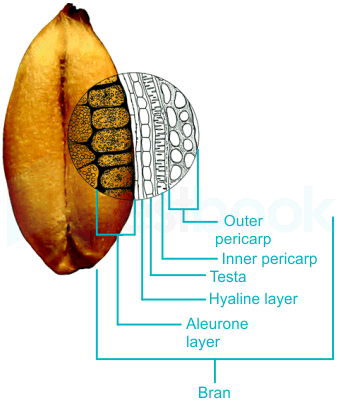
  • The bran is the wheat kernel's hard outer layer.
  • It is densely packed with nutrients and fibre.
  • The outer pericarp, inner pericarp, testa/seed coat, hyaline layer, and aleurone layer are the layers that make up wheat bran.

Explanation:

Pericarp:

  • In cereals, the pericarp is the remnants of the ovary wall that surround the embryo and endosperm.
  • The epicarp, mesocarp, and endocarp are the three layers that make up the pericarp, which is found in the caryopsis' outermost layers.
  • It protects the seed from harm.

Thus, wheat bran is found in the layer of the pericarp.

Optimizing the bioactive potential of wheat bran by processing - Food &  Function (RSC Publishing) DOI:10.1039/C2FO10241B

Additional InformationEpidermis:

  • The outermost layer of cells is called the epidermis.
  • The epidermis is usually made of a single layer of cells.
  • In some plants living in very dry habitats, the epidermis may be thicker to protect against water loss in critical conditions.
  • The entire surface of a plant has this outer covering of the epidermis.

Endosperm:

  • The endosperm is the tissue that surrounds and feeds the embryo in angiosperm seeds.
  • At maturity, the endosperm of some seeds is totally absorbed.
  • During seed development and germination, the endosperm plays a crucial role in promoting embryonic growth by delivering nutrients and protecting the embryo.

Embryo:

  • The zygote develops into an embryo.
  • After fertilising adult plant flowers, the embryo develops.
  • It is usually encapsulated within a seed or bud.
29

Formal techniques of work simplification is

  1. ((a))

    Process chart

  2. ((b))

    Cyclograph

  3. ((c))

    Operation chart

  4. ((d))

    Pathway chart

Show Answer
Answer: ((b))

Cyclograph

Concept: 

Work Simplification:

  • Motion and time analysis are the main foundations for work simplification.
  • Through observation, recording, and analysis of a worker's numerous working actions, one might improve their working ways.
  • There are many ways that may be used to examine motion and the amount of time needed to complete a task.
  • Formal techniques and informal techniques are the two basic categories into which these techniques are separated.
  • Formal techniques:
  • Specific tools and equipment are required for formal techniques.
  • These motion investigation techniques are more exact, effective, and scientific.
  • Informal techniques:
  • These simple work simplification techniques are known as paper-pencil techniques.

Explanation:

Cyclograph: 

  • It is an electronic camera.
  • A small electric bulb attached to a body component projects a path of light, which is registered using a cycle graph.
  • The device-generated task graph displays the type of movement, such as smooth, rhythmic or non-rhythmic motions.
  • For instance, a small electric bulb is attached to the hand when ironing in order to track the movement of the action.
  • This strategy is useful for researching ways to lessen movements and strategies to improve work.

Thus, formal techniques of work simplification are cyclograph. 

Additional Information

Process Chart:

  • It provides a detailed explanation of the worker's working process.
  • It is helpful in identifying superfluous motions and performs a thorough analysis of worker movements and activity in general.

Operation Chart: 

  • Only hand movements are studied when using an operation chart.
  • By using this chart, it is possible to learn right and left-hand procedures in greater detail.
  • This chart uses three symbols: a small circle for hand motions, a large circle for finger and hand movements, and a triangle for the idleness of both fingers and hands.

Pathway Chart: 

  • The pin and thread/string approach is another name for it.
  • Thread is wound around the designated pins to record the workers' movements or the route they took while working.
  • Following task completion, the utilised thread is removed from the floor layout, and the distance travelled by the worker is calculated.
30

Which of the following poisons is a narcotic ?

  1. ((a))

    Opium

  2. ((b))

    Liquor

  3. ((c))

    Hashish

  4. ((d))

    Cannabis

Show Answer
Answer: ((a))

Opium

Concept:

Narcotic:

  • The term narcotic was first used in medicine to describe any psychoactive substance with numbing or paralysing characteristics.
  • A drug or narcotic is a substance that alters mood or behaviour.
  • It is used for non-medical purposes, particularly one that is illegally supplied.

Explanation:

Opium:

  • It is a narcotic and highly addictive drug.
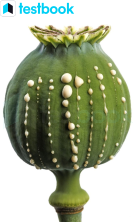
  • It is collected from dried latex from the opium poppy.
  • Heroin is manufactured from the alkaloids morphine, which is contained in opium.
  • Its alkaloid and byproducts, known as opiates, are widely known for causing respiratory and central nervous system depression, which can lead to death when taken in excess.
  • It mainly comes from Pakistan, Afghanistan, Mexico, Myanmar, India, Laos, Colombia, China, and Australia.

Thus, opium poisons are a narcotic.

Opium - Alcohol and Drug Foundation

Confusion Points

  • This is an official question asked in UP TGT Home Science 2021, and the correct answer as per the official answer key is opium.

Additional InformationLiquor:

  • Liquor is an alcoholic beverage made from grains, fruits, vegetables, or sugar.
  • It is done by fermentation.
  • The distillation process concentrates the liquid in order to increase the volume of alcohol in it.

Hashish:

  • Hashish is a narcotic created by compressing and processing components of the cannabis plant.
  • It usually concentrates on growing buds with the greatest trichomes.
  • Hashish contains a very high level of tetrahydrocannabinol.
  • Hashish is mainly found in the part of Central and South Asia.

Cannabis:

  • It is a psychoactive substance derived from the dried leaves and flowers of the cannabis plant.
  • The cannabis plant is native to Central and South Asia.
  • It has long been used as a recreational and entheogenic drug.
31

Mopping is which kind of work?

  1. ((a))

    Light work

  2. ((b))

    Moderate work

  3. ((c))

    Strenuous work

  4. ((d))

    Both (A) and (C)

Show Answer
Answer: ((b))

Moderate work

Concept: 

  • The work is divided into three categories: light, moderate and heavy.

Explanation: 

Moderate Work:

  • Activities requiring average energy levels are considered moderate work.
  • Moderate work includes tasks like grass mowing and house cleaning. car cleaning,  sweeping, and other daily activities.

Thus, mopping is a moderate kind of work. 

Additional Information

Light Work: 

  • Activities that involve little energy.
  • Examples: watching television, listening to music, reading, etc., are referred to as light work.

Heavy/Strenuous Work: 

  • The tasks that demand a lot of energy are considered heavy work.
  • Examples: trekking, bicycling fast, carrying heavy loads etc.
32

Which of the following affects cognitive development?

  1. ((a))

    Heredity

  2. ((b))

    Sense organs

  3. ((c))

    Brain disorder

  4. ((d))

    All of the above

Show Answer
Answer: ((d))

All of the above

Cognitive Development is the development of solving problems, increasing reasoning power, increasing abstract thinking, and developing adjustment skills.

Key PointsThere is some important points related to affecting factors of Cognitive Development.

  • Environment- According to the environment child develops their language and working style.
  • Heredity- The problem of parents affects the child's cognitive development.
  • Sense Organs- Our Cognitive Development is also based on learning and we learn by our sense organs. So sense organs affect Cognitive Development.
  • Brain Disorder-  all types of problems related to the brain affect our cognitive development.
  • Maturity- Partially mature person can not develop fully his mind.

Hence we can say that Heredity, sense organs, and Brain disorder affect cognitive development.

 Additional Information

A very important theory of Cognitive Development is provided by Jean Piaget. He gave 4 stages of Cognitive Development.

  • Sensory-motor stage- In this stage, all motor skills develop.
  • Pre Operational stage- Irreversibility, Symbolic Representation, and Conservation are the main points of this stage.
  • Concrete Operational Stage- Conservation, Reversibility, and classification are the main points of this stage.
  • Formal Operational Stage- abstract thinking is developed in children in this stage.
33

Which is the best method of extension education among the given options ?

  1. ((a))

    Shapes and graph

  2. ((b))

    Exhibition

  3. ((c))

    Picture and photograph

  4. ((d))

    Audio content

Show Answer
Answer: ((b))

Exhibition

Extention Education Methods are the techniques and tools to create situations in which communication can take place between rural people and the extension worker.

Key Points  There are some important points related to methods of Extention Education.

  • The methods of extension are divided on basis of use and form.
  • The Method which provides learning easily by watching and listening is considered the best method of extension Education just as Exhibitions.
  • Letters, News, Leaflets, and Bulletins are the written method of extension education.
  • Official Calls, Tele-Phone calls, and Farm and home visits are the spoken methods of extension education.
  • Exhibitions, Motion pictures, etc are audio-visual methods of extension.
  • Posters, Charts, and Results demonstrations are the visual methods of extension education.

Hence we can say that Exibitionis the best method of extension  Education.

Additional Information The main objective of extension education are given below-

  • The extension helps the students to study and solve the problem.
  • It emphasizes accepting innovation.
  • It focuses on the education of the former.
  • It helps to give the standard life of the former.
  • It teaches us the right use of natural resources.
34

Cause of infant mortality in first four weeks are

  1. ((a))

    Breathlessness

  2. ((b))

    Congenital malformation

  3. ((c))

    Infection

  4. ((d))

    All of the above

Show Answer
Answer: ((d))

All of the above

Concept:

Infant mortality:

  • The infant mortality rate is the number of deaths of babies before the age of one year per 1000 live births.
  • It calculates by the IMR (Infant mortality rate).

Explanation:

Cause of infant mortality (1st four weeks):

  • The major cause of infant mortality is infection and short breathing.
  • Malnutrition in mothers during pregnancy can also cause infant mortality.
  • Congenital malformation is a physical defect related to baby birth that causes defects in different body parts like the brain, heart, lungs, liver, bones, and intestinal tract.
  • Other causes include preterm birth, low birth weight, and sudden infant death syndromes.

Thus, the cause of infant mortality in the first four weeks is breathlessness, congenital malformation, and infection. The correct option is all of the above.

35

Aspects of child development includes

  1. ((a))

    Physical development

  2. ((b))

    Motor development

  3. ((c))

    Language development

  4. ((d))

    All of the above

Show Answer
Answer: ((d))

All of the above

Development is a broad process of life. All type of growth is a part of Development just as growth in length, growth in bones of the body, etc. Many psychologists thought about the Aspect of development deeply.

Key PointsThe main aspects of Development are given below:

  • Language Development: Infants start without language. Yet by four months of age, babies can read lips and discriminate speech sounds. The language that infants speak is called babbling.
  • Emotional Development: Infants start without emotions. yet by 2 to 3 months of age, they begin to show smiles and later express their feelings such as anger, fear, etc.
  • Social Development: Infants are born social learners. They form healthy attachments with their caregivers and enjoy being around other children of their age.
  • Physical Development: The first year of an infant is characterized by rapid physical growth. A normal baby doubles its birth weight in six months and triples it in a year.
  • Cognitive Development: In infancy, children develop many elements of abilities to think and understand the world around them. Infants have remarkably competent organisms, even on the first day of life.

Hence we can say that Aspects of child Development include Physical development, Motor Development, and Language Development.      

 Additional InformationThere are some psychologists who studied deeply for child development:

  • Jean Piaget- Gave the theory for cognitive Development of a Child.
  • Vygotsky- Gave the theory for Language Development of the child.
  • Kohlberg- He gave the theory for the Moral development of the child.
36

Torsal effort stands for

  1. ((a))

    Bending, sitting

  2. ((b))

    Carrying, pulling

  3. ((c))

    Movements of legs

  4. ((d))

    Holding

Show Answer
Answer: ((a))

Bending, sitting

Concept:

  • Whatever may be the activity or the job to be performed, it requires several types of effort like mental effort, visual effort, manual effort, tarsal effort and pedal effort.
  • Each effort demands a different quantity of energy expenditure.
  • Household activities require a combination of more than one type of effort.
  • In order to have a well-balanced energy expenditure pattern, the homemaker needs to know the energy cost of various activities and also which activity is the most tiring one.
  • The energy costs are calculated based on oxygen consumption per minute or on heart rate (beats per minute).

Explanation:

Torsal effort:

  • Torsal effort involves movement of the torsal and hence is termed as torsal effort.
  • These include bending, leaning, raising, turning etc.
  • These are needed in doing more strenuous activities and demand higher energy costs.

Thus, torsal effort refers to bending and sitting.

Additional Information 

Pedal effort:

  • Standing, climbing stairs, walking, and other actions involving the legs and feet take place inside the home.
  • These activities need a significant amount of energy because the entire body needs to be moved.
  • It's known as pedal efforts.

Mental effort:

  • Mental effort is required to do any task, even routine tasks like cooking cleaning, washing, etc.
  • Although these tasks are performed daily, still one has to think about the way in which it has to be performed and mentally organise the task in sequence.

Visual effort:

  • All the activities involve visual effort, although we are not aware of it.
  • Muscular movement of the eye and adjustment of vision to the object at different distances and lighting conditions continuously take place while performing any work.
  • This requires energy.

Manual effort:

  • Manual effort is required for all household activities to be performed.
  • Example cooking, cleaning, mapping, washing etc.
37

Development of the child is the result of

  1. ((a))

    Only learning

  2. ((b))

    Only maturation

  3. ((c))

    Only individual differences

  4. ((d))

    Learning and maturation

Show Answer
Answer: ((d))

Learning and maturation

Development refers to an increase in structure for better and enhanced functioning of organs. A child develops in an orderly sequence which is almost similar in all children.

Key Points

  • Learning and maturation- Maturation is related to the process of growth. It describes changes that are relatively independent of the environmental influence and are assumed to be closely related to the influence of heredity. Learning, on the other hand, is shaped primarily by an individual’s interaction with the immediate environment.
  • Maturity and learning both play their role simultaneously and therefore, it becomes difficult to determine which of the two is responsible for the behavior.
  • Maturation and learning are complementary processes.
  • Maturation and learning are two processes through which development occurs.

Hence we can say that the Development of a child is the result of Learning and Maturation.

Additional InformationSome important areas of child development are given below

  • Grass motor skills- just as running, jumping, etc.
  • Fine Motor skills- just as sketching, writing, etc.
  • Social and emotional skills- playing with friends, etc.
  • Speaking and language-   communication skills development.
  • Intellectual and Cognitive Development- just as recognizing the shapes and things, etc.
38

The method of measuring calorie is called

  1. ((a))

    Photometry

  2. ((b))

    Geometry

  3. ((c))

    Temperature

  4. ((d))

    Calorimetry

Show Answer
Answer: ((d))

Calorimetry

Concept:

Calories:

  • A unit of energy is called calories.
  • 1 calorie equals to means 4.2 Jules.
  • Calories are also defined as, raising the temperature of 1 gram of water by 1 degree celsius, the amount of heat needed.
  • In nutrition, calories mean the amount of energy we can get from food or drink and the amount of energy we used in physical activity.

Explanation:

Calorimetry:

  • Calorimetry means the measurement of heat.
  • A device in which heat measurement can be done is called a calorimeter.
  • Food calorimetry is used to determine the number of calories present per gram of food.
  • A calorimeter consists of a metallic vessel and a stirrer.
  • The vessel is kept inside a wooden jacket which contains heat-insulating materials.
  • The outer jacket act as a heat shield.

Thus, the method of measuring calories is called calorimetry.

Additional InformationPhotometry:

  • The measurement of light as perceived by the human eye is called photometry.
  • Photometry is a measurement of a physiological phenomenon, being the stimulus of light as received by the human eye.
  • In photometry the only parameter, which can be measured directly is illuminance.

Geometry:

  • It is one of the oldest branches of mathematics.
  • It is a kind of arithmetic, that is concerned with properties of space that are related to distance, size, space and relative position of a figure.
  • Geometry is used in the field of architecture, engineering, astronomy etc.

Temperature:

  • A relatable measure of the hotness of an object is its temperature.
  • Temperature is measured by a device called a thermometer.
39

Enzymes present in gastric juice

  1. ((a))

    Amylase

  2. ((b))

    Pepsin

  3. ((c))

    Lypase

  4. ((d))

    Tripsin

Show Answer
Answer: ((b))

Pepsin

Concept:

Enzyme:

  • Enzymes are biocatalysts and they catalyse the biochemical reactions both in vivo as well as in vitro.
  • They are highly specific to their substrate.
  • Enzymes have great catalytic power.
  • It enhances the rate of reaction tremendously without being changed.
  • All enzymes are proteins with exception of some small group of catalytic RNA molecules called ribozymes.

Explanation:

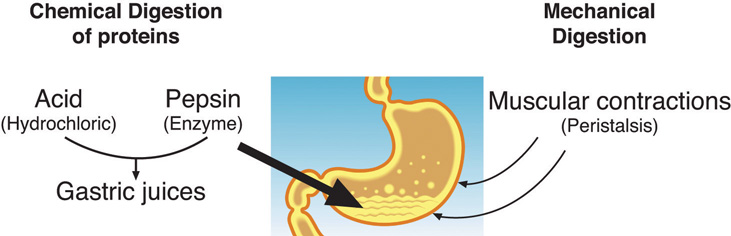
Pepsin:

  • It is an endopeptidase enzyme.
  • Pepsin converts proteins into proteases and peptones (peptides).
  • It is a monomer with two folding domains which are separated by a cleft.
  • It is a digestive enzyme for humans and many other animals.
  • It is found in the stomach, secreted from gastric chief cells as pepsinogen.
  • It activates at a low pH level (1.5-2).

Thus, the enzyme present in gastric juice is pepsin.

Protein Digestion and Absorption – Nutrition: Science and Everyday  Application

Additional InformationAmylase:

  • Saliva contains a starch digestive enzyme called salivary amylase.
  • Pancreatic amylase is secreted from the pancreas.
  • It helps to digest the starch and converts it into maltose (disaccharide).
  • It is divided into three groups α-amylase, β-amylase and γ-amylase.
  • It acts on glycoside bonds in carbohydrates.

Lipase:

  • This enzyme breaks down fat molecules into glycerol and fatty acids.
  • It is secreted from the pancreas, intestine, stomach, and adipose tissues.

Trypsin:

  • This enzyme helps to break protein into peptides.
  • It is a proteolytic enzyme, which is secreted from the pancreas as trypsinogen.
40

Mark on the canned jam or jelly is

  1. ((a))

    AGMARK

  2. ((b))

    ISl

  3. ((c))

    FPO

  4. ((d))

    None of these

Show Answer
Answer: ((c))

FPO

Concept: 

Certification marks in India:

  • India has a system of product certifications.
  • It is governed by different legislation passed by the Indian Parliament.
  • These certifications are maintained by various agencies and have different legal statuses .
  • There are different marks issued for different kinds of products, like FPO, AGROMARK, ISI etc.

Explanation:

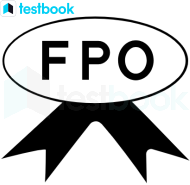
FPO:

  • FPO stands for Fruit Products Order.
  • FPO mark is issued by the Ministry of Food Processing
  • According to the Food Safety and Standards Act of 2006, the FPO mark is a certification mark required on all processed fruit goods sold in India.
  • It includes packaged fruit beverages, fruit jams, squashes, pickles, dehydrated fruit products, and fruit extracts.
  • It guarantees that the product is manufactured in a sanitary, 'food-safe' setting.
  • It also confirms that it is fit for human consumption.
  • Now FPO has been repealed by FSSAI.

​Thus, a mark on the canned jam or jelly is FPO.

Additional Information

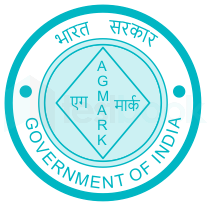
Agmark:

  • It is a certification mark employed on agricultural products in India.
  • It is the quality mark provided under The Agricultural Produce (Grading and Marking) Act, 1937.
  • The Act stipulates the conditions which govern the use of standards and lays down the procedure for grading, marking and packing of agricultural produce.
  • AGMARK is the acronym for Agricultural Marketing.
  • An Agmark symbol is usually found on the packets of rice, flour, pulses, biscuits, oil etc.​​

ISI:

  • It stands for the Indian Standards Institute.
  • Indian Standards Institute, a body set up when India gained Independence.
  • It creates standards needed for orderly commercial growth and maintaining quality in industrial production.
  • The Bureau of Indian Standards (BIS), which then took over ISI.
  • But the term “ISI mark" continues to be used to mean that a certain product conforms to the quality standards set up by the government.
  • The ISI mark is found on products like electrical appliances like switches, electric motors, wiring cables, heaters, kitchen appliances, etc.

41

First step of extension education is

  1. ((a))

    Attention

  2. ((b))

    Satisfaction

  3. ((c))

    Interest

  4. ((d))

    Desire

Show Answer
Answer: ((a))

Attention

To bring the desired changes in the behavior of people, Extension Education should organize activities so that there will be a repetition of the desired behavior, each successive repetition building on the one before it.

  • This conscious attention to the organization of teaching activities in a sequence greatly increases the efficiency of learning. This is the advantage of an educational program over incidental and occasional exposure to learning.

Key Points Steps of Extension Education:

  1. Attention: The first step in extension teaching is to make people aware of new ideas and practices. The people must first know that a new idea, practice, or object exists. This is the starting point for change.
  2. Interest: Once the people have come to know of the new idea, the next step is to stimulate their interest. This may be done by furnishing them with more information about the topic in a way they will be able to understand and use.
  3. Desire: It means un-freezing the existing behavior and motivating the people for change. At this stage, it is necessary to emphasize the advantages of the new idea or practice.
  4. Conviction: It is a stage of strong persuasion so as to convince the people about the applicability of the new idea or practice in their own situation and that it would e beneficial for them. The people are furnished with adequate information about the idea and how it works.
  5. Action: This is the stage of putting the idea or practice into operation. Small-scale demonstration with the supply of critical inputs may be set up in real-life situations of the individual who comes forward. This provides the opportunity for direct experience on the part of the learners. At this stage, it is necessary to collect evidence of change such as a change in yield, income, employment, behavior, etc.
  6. Satisfaction: To produce lasting change, the extension efforts should produce satisfying results. Satisfaction may come from high yield, more income, better health, etc., Satisfaction reinforces learning and develops confidence, which generates motivation for further change.

Hence we can say that the first step of extension education is Attention.

Additional Information The main objective of extension education are given below-

  • It teaches us the right use of natural resources.
  • The extension helps the students to study and solve the problem.
  • It focuses on the education of the child.
  • It helps to give the standard life of the child.
  • It emphasizes accepting innovation.
42

Scouring is used in

  1. ((a))

    Wool

  2. ((b))

    Silk

  3. ((c))

    Rayon

  4. ((d))

    Nylon

Show Answer
Answer: ((a))

Wool

Concept:

Scouring:

  • It is a preparation process for some textile materials.
  • Fats, oils, waxes, dirt, and other soluble and insoluble impurities found in textiles are all removed by scouring.
  • The removal of these impurities through scouring makes the fabrics ready for other procedures like bleaching and dyeing.
  • Following the shearing of a sheep's woolly fleece, the wool is next subjected to scouring.

Explanation:

Wool: 

  • Wool fibre is a type of natural animal fibre that comes from the hair of sheep.
  • Keratin, a type of protein, makes up the wool fibre.
  • Lanolin, a waxy substance released by the sebaceous glands of wool-bearing animals, makes up the majority of raw wool (5–25%).
  • Dry sweat, fatty materials and oil come together to make grease, also known as yolk.
  • Scouring might just include boiling wool in water, or it might involve an industrial procedure that involves treating wool with alkalis and detergents.
  • To dissolve wool grease, the bath temperature is kept constant at 65 degrees Celsius.
  • Lanolin melts between 38 and 44 °C.

Thus, scouring is used in wool. 

Additional Information Silk: 

  • The moth larvae make silk, a natural protein fibre.
  • It is the only natural filament material that can span 1,000 yards from a single cocoon.
  • Growing silkworms in order to produce silk is known as sericulture.
  • The species of moth used to make commercial silk is Bombyx mori.
  • Reeling is the term for the process of extracting silk fibre from the cocoon.
  • The silk fibre is extracted from the cocoons after the cocoons are cooked in boiling water.
  • Silk is elastic, strong and lustrous in appearance.

Rayon

  • Rayon is a cellulose-based fibre that is often manufactured from wood pulp.
  • Eucalyptus trees are typically used to make rayon, however, any plant can be utilised (such as soy, bamboo, cotton, etc).
  • Several types of rayon can resemble the appearance and feel of other natural fibres including silk, cotton and linen.

Nylon: 

  • A family of synthetic polymers comprised of polyamides is referred to as nylon.
  • Silk-like thermoplastic nylon can be made into fibres, films, and other products.
  • It is manufactured from petroleum.
  • Nylon fibres are particularly resilient and robust.
43

1 g fat is burns and produces energy of

  1. ((a))

    6 k. cal

  2. ((b))

    7 k. cal

  3. ((c))

    8 k. cal

  4. ((d))

    9 k. cal

Show Answer
Answer: ((d))

9 k. cal

Concept:

Calories:

  • A unit of energy is called calories.
  • 1 calorie equals to means 4.2 Jules.
  • In nutrition, calories mean the amount of energy we can get from food or drink and the amount of energy we used in physical activity.

Explanation:

Fat:

  • Fats and oils are concentrated sources of energy.
  • Fats are substances that our body stores for future use.
  • These are classified as simple lipids, compound lipids, and derived lipids.
  • Fats may be obtained from animal or vegetable sources.
  • When one gram of fat burns it gives us 9 k. cal of energy.

Thus, 1 g of fat is burned and produces 9 k.cal energy.

Additional InformationProtein:

  • Proteins are called building blocks of our body.
  • About 20 per cent of our body weight comes from proteins.
  • Proteins are essential for the growth and repair muscle and other body tissues.
  • 1 g of proteins gives us 4 k.cal.

Carbohydrate:

  • Carbohydrates are the main source of energy for our bodies.
  • There are three major categories of carbohydrates, starch, sugar and cellulose.
  • Our body breaks down sugar and starch into glucose to provide energy.
  • 1 g of carbohydrates gives us 4 k.cal.
44

During delivery buttocks appear first, followed by the legs and arms and finally the head. The position is

  1. ((a))

    Breech birth

  2. ((b))

    Instrumental birth

  3. ((c))

    Natural birth

  4. ((d))

    Spontaneous birth

Show Answer
Answer: ((a))

Breech birth

Concept:

Birth:

  • Birth is the act or process of bearing or bringing forth progeny, often known as parturition in technical terms.
  • In this process, hormones stimulate the muscular walls of the uterus to contract in mammals.
  • That causes the foetus to be expelled at a developmental stage.

Explanation:

Breech birth:

  • When a baby is born bottom first rather than head first, that is known as a breech birth.
  • Most of these breech babies turn head-first position in 36 weeks.
  • Between 3–5% of pregnant women have a breech baby.
  • Breech deliveries are considered a higher risk.
  • The majority of breech babies are delivered via caesarean section.

Thus, during delivery buttocks appear first, followed by the legs and arms and finally the head. The position is called a breech birth.

Additional InformationNatural birth:

  • Natural childbirth is defined as childbirth that occurs without the use of routine medical procedures, such as anaesthesia.
  • Natural birthing developed as an alternative to the techno-medical model of childbirth.
  • It is also called spontaneous birth.
45

Agriculture extension was recognized by United States of America in the year

  1. ((a))

    1920

  2. ((b))

    1914

  3. ((c))

    1900

  4. ((d))

    1950

Show Answer
Answer: ((b))

1914

Concept:

Agriculture Extension:

  • It is a service that helps farmers by educating them on how to improve their farming practices, and boost productivity and revenue.
  • It helps in raising social and educational standards, and generally improves their level of living.
  • The Smith-Lever Act of 1914 created Extension.
  • It was created to help spread useful and applicable information on topics relating to agriculture and home economics and to promote its application.

Thus, Agriculture extension was recognized by the United States of America in the year 1914.

46

World Health Organization work for

  1. ((a))

    Healthy persons

  2. ((b))

    Community

  3. ((c))

    Mother and child

  4. ((d))

    All of the above

Show Answer
Answer: ((c))

Mother and child

Concept:

WHO or World Health Organization:

  • The World Health Organization (WHO) is a United Nations specialised body that studies public health issues.
  • There are 194 countries, that are members of the WHO.
  • The World Health Organization's Constitution went into effect on April 7, 1948, which is now known as World Health Day.
  • The WHO's global headquarters are in Geneva, Switzerland.

Explanation:

Goals of  WHO:

  • ​WHO aims to promote health, keep the globe secure, and help the vulnerable worldwide.
  • WHO's goal is to give universal health coverage to a billion more people.
  • It protects people from health emergencies and improves their health and well-being.

Thus, World Health Organization work for mother and child.


Coronavirus

Mistake Points

  • WHO works for improving the health of unhealthy people and not for healthy people.
  • WHO works in providing better health care facilities and not in community development.
  • Hence the most correct option is mother and child.
47

Written and printed material are type of

  1. ((a))

    Audio aids

  2. ((b))

    Visual aids

  3. ((c))

    Audio-visual aid

  4. ((d))

    None of these

Show Answer
Answer: ((b))

Visual aids

Teaching aids are a very effective thing to create an effective educational environment for teachers. 

Key Points There are some important points related to teaching aids:

  • Teaching aids are classified into three categories.
  • The name of three types of teaching aids is audio aids, visual aids, and audio-visual aids.
  • All the teaching aids, that are used by listening in teaching are called  Audio Aids.
  • All the teaching aids, that are used by watching in teaching are called Visual Aids.
  • All the teaching aids, that are used by both listening and watching in teaching are called Audio- visual aids.
  • Recorded audio clip. Radio, Caset. The musical instrument is an example of Audio Aids.
  • All written and printed material, Chart. Models. Innovative teaching material, Blackboard, and maps are examples of visual aids.
  • Television, projector, etc are examples of audio-visual aids.

Hence we can say that  Written and printed material are types of Visual aids.

Additional Information

 Some characteristics of teaching aids are given below-

  • After using teaching aids, the knowledge which is given by the teacher will be permanent in mind.
  • The concept will be cleared easily by teaching aids to the students.
  • teaching aids are very useful for special children.
48

Multipurpose food is developed by

  1. ((a))

    NIN, Hyderabad

  2. ((b))

    CFRTRI, Mysore

  3. ((c))

    Both (A) and (B)

  4. ((d))

    None of these

Show Answer
Answer: ((b))

CFRTRI, Mysore

Concept:

  • ​Multi-purpose food is edible food that is created with a combination of ground nuts and gram flour.
  • Multi-purpose food consists of vitamins and minerals.
  • It is used as supplementary food for nursing mothers, and children and it is also used as a diet food supplement.​

Explanation:

Central Food Technological Research Institute (CFRTRI):

  • CFTRI is Central Food Technological Research Institute.
  • It is situated in Mysore, Karnataka and It was established on 21 October 1950.
  • It is a laboratory under the Council of Scientific and Industrial Research.
  • This CFTRI help to analyse food nutrition, food composition, addictivity, etc.
  • Multipurpose food process from CFTRI institute, Mysore India.

Thus, multipurpose food is developed by CFTRI, Mysore.

Additional Information 

National Institute of Nutrition (NIN):

  • It is a centre for Indian public health, nutrition and transitional research located in Hyderabad, India.
  • This institution mainly does research in the field of obesity, diabetes, food chemistry, dietetics, clinical toxicology, and micro-nutrients.
49

Which amino acid is required during growth of children?

  1. ((a))

    Lysine

  2. ((b))

    Threonine

  3. ((c))

    Histidine

  4. ((d))

    Valine

Show Answer
Answer: ((a))

Lysine

Concept:

  • Amino acids contain amino (–NH2) and carboxyl (–COOH) functional groups.
  • Amino acid is a kind of molecule that form proteins when it is combined.
  • Depending upon the relative position of the amino group with respect to a carboxyl group, the amino acids can be classified as a, β, γ, δ, and so on.
  • The human body needs amino acids to make protein, which breaks down food material.

Explanation:

Lysine

  • There is 9 essential amino acid that we can only get from food because our body can not make these amino acids, one of them is lysine.
  • Lysine is a building block of protein and it is soluble in water.
  • Its formula is C6H14N2O2**.**
  • Lysine is an individual amino acid that has linked with growth hormone release in young children's bodies through the somatotrophic axis.
  • In children's bodies, this amino acid plays an important role in normal growth and muscle turnover.

Thus, the amino acid Lysine is required during the growth of children.

Additional Information

Threonine:

  • It is an essential amino acid.
  • Its formula is C4H9NO3.
  • This amino acid mainly acts as a substrate for protein synthesis, particularly mucin.

Histidine:

  • It is an essential α-amino acid.
  • This amino acid works as biosynthesis of protein.
  • Its formula is C6H9N3O2.
  • It is work for growth, repair of damaged tissues, and making blood cells in the human body.

Valine:

  • It is a branched-chain essential amino acid.
  • Its formula is C5H11NO2, and it is soluble in water.
  • It helps in enhances energy, muscle tissue recovery, and repair, and increases endurance in the human body.
50

In garments ruffled collars are generally used in which shape of neck ?

  1. ((a))

    Rectangular

  2. ((b))

    V-shape

  3. ((c))

    U-shape

  4. ((d))

    Round

Show Answer
Answer: ((c))

U-shape

Concept:

Ruffled Collars: 

  • Ruffled collars are pleated, crimped or frills that are often large and full.
  • They were popular in Europe, particularly between the middle of the 16th and the beginning of the 17th century.
  • The upper edges of the garment may be folded back to create lapels and a U-shaped opening if it opens along the front; this changes the collar's cut.

Explanation:

U-shape neckline:

  • It has the letter "U" cutout on the front.
  • The round neckline has been modified.
  • The   neckline is deeper than a typical round neckline.

Thus, in garments, ruffled collars are generally used in U- the shape of the neck.  

Additional Information

NecklineDescription
Rectangular- These are characterized by three straight edges, with the bottom edge forming a right angle to the side edges. - The side edges cross the shoulders as the bottom edge cuts across the figure horizontally. - The slot neckline is a unique example of this, where the side margins are very close together and form a tiny gap that is roughly the width of the collarbone points.
V-shaped- V necklines are created by two diagonal lines that meet on the chest coming from the shoulder. Strong vertical necklines, such as a plunging V neckline, will make a short neck and face appear longer.
Round- The crew neck is another name for the round neck. - One of the most popular styles of necklines is a fundamental, straightforward neckline that complements a variety of body forms. - A crew neck gives the appearance of a shorter neck and a bigger chest area by minimizing the amount of chest that is visible.
51

Bolany wool is known as

  1. ((a))

    Merino wool

  2. ((b))

    Pashm wool

  3. ((c))

    Shahtush

  4. ((d))

    None of these

Show Answer
Answer: ((a))

Merino wool

Explanation:

Merino Wool:

  • Merino sheep provide the natural fibre known as merino wool.
  • Early names for merino wool produced include botany wool, or simply botany.
  • Since it is softer and thinner than conventional wool, it is comfortable to wear.
  • It is the most luxurious wool with the softest and finest sheep fleece.

Thus, botany wool is known as Merino wool.

Additional Information

Pashm Wool:

  • The Persian word Pashm, which means 'wool', was used in Kashmir to describe the raw, unspun fibres of domestic Changthangi goats.
  • A fine variety of spun cashmere is referred to as pashmina.
  • It is obtained from the undercoat of Changthangi goats, which reside at elevations more than 4000 metres.

Shahtush:

  • An exquisite variety of wool called shahtush is produced from the Tibetan Chiru antelope's hair.
  • Since this species is now almost extinct, several nations forbid the gathering and processing of shahtush.
  • Shahtush is considered to be the finest fibre in the world and is even more delicate than pashmina.
52

The power of body to fight with disease is called

  1. ((a))

    Disinfection

  2. ((b))

    Immunity

  3. ((c))

    Evasion period

  4. ((d))

    None of these

Show Answer
Answer: ((b))

Immunity

Concept:

  • A disease is a specific aberrant state that adversely affects an organism's structure or function on the whole or in part.
  • It is a medical problem with distinct indications and symptoms that are frequently known as diseases.

Explanation:

Immunity:

  • The body is able to defend itself from most of these foreign agents.
  • This overall ability of the host to fight the disease-causing organisms, conferred by the immune system is called immunity.
  • Immunity is of two types:
  • Innate immunity:
  • It is a non-specific type of defence present at the time of birth.
  • Acquired immunity: 
  • It is pathogen-specific.
  • It is characterized by memory.
  • This means that our body when it encounters a pathogen for the first time produces a response.

Thus, the power of the body to fight disease is called immunity.

Additional InformationDisinfection:

  • It is a process by which we can eliminate pathogenic microorganism but can not eliminates bacterial spores on inanimate objects.
  • A disinfectant is an antimicrobial agent that is used to destroy microorganisms after it is applied to the surface of some object.

Evasion Period:

  • The major group of immune evasion mechanisms implies active interference with the host's immune responses.
53

What is the sequence of proximo-distal development in child ?

  1. ((a))

    From head to toe

  2. ((b))

    From head to heart

  3. ((c))

    From centre to periphery

  4. ((d))

    From chest to legs

Show Answer
Answer: ((c))

From centre to periphery

Development refers to an increase in structure for better and enhanced functioning of organs. A child develops in an orderly sequence which is almost similar in all children.

  • The rate and speed of development may vary in individual cases but the sequence of development patterns is almost the same in all children. Thus human development is based on certain principles.

Key Points Child development takes place in two directions, one is from the head-to-foot direction and the second is from near to distant  (center of the body to the peripheral).

Sequential pattern of development can be seen in two directions:

  • Cephalo-caudal sequence: It means that development spreads over the body from head to foot, i.e. individual begins to grow from the head region downwards.
  • For example, The child first gains control of her head, then she can catch hold of objects, sit, crawl, and later she could stand and walk.
  • Proximodistal sequence: It means that the development proceeds from the central part of the body towards the peripheries. In this sequence, the spinal cord of the individual develops first, and then outward development takes place.
  • For example, babies cut their front teeth before cutting their side ones. Infants first learn to move their torso and then their arms and legs meaning that he follows the Proximodistal principle of development.

Hence we can say that the sequence of proximodistal Development in a child is from center to periphery.

54

Chickenpox are spread by which virus?

  1. ((a))

    Entamoeba histolytica

  2. ((b))

    Varicella Zoster virus

  3. ((c))

    Vibrio cholare

  4. ((d))

    Salmonella Typhi

Show Answer
Answer: ((b))

Varicella Zoster virus

Concept:

  • Viruses are non-cellular organisms.
  • A virus is a nucleoprotein and the genetic material is infectious.
  • Viruses reproduce only inside the cells of the host organism.
  • Viruses that infect plants have single-stranded RNA.
  • Viruses that infect animals have either single or double-stranded RNA or double-stranded DNA.
  • Chickenpox is a highly contagious disease caused by the varicella-zoster virus (VZV).
  • It can cause an itchy, blister-like rash.

Explanation:

Varicella Zoster virus:

  • Varicella-zoster virus is a kind of herpes virus that infects humans.
  • This virus causes chicken pox.
  • It is a contagious disease.
  • Its incubation period is between 10-21 days.
  • Symptoms of chickenpox are rash, fever, headache, sore throat, and stomachache.

Thus, chickenpox is spread by the Varicella Zoster virus.

Additional InformationEntamoeba histolytica:

  • Entamoeba histolytica is a parasitic amoebozoan.
  • It causes human amoebiasis.
  • Entamoeba histolytica causes diarrhea, stomach pain, and stomach cramping.
  • It is a contiguous disease.

Vibrio cholera: 

  • Vibrio cholerae is a gram-negative comma-shaped bacteria.
  • It causes cholera.
  • It is a highly contagious disease that spread through food and water.
  • Symptoms of cholera are diarrhoea, nausea and vomiting, and dehydration.

Salmonella Typhi:

  • It is gram-negative bacteria.
  • It causes typhoid.
  • These bacteria infect the intestinal tract and the blood through food and water.
  • Common symptoms of typhoid are high fever, headache, stomach pain, weakness, and vomiting.
55

The psychologist who has made significant contribution in the field of cognitive development is

  1. ((a))

    Jean Piaget

  2. ((b))

    Sigmund Freud

  3. ((c))

    Erikson

  4. ((d))

    Pavlov

Show Answer
Answer: ((a))

Jean Piaget

Swiss psychologist Jean Piaget, In the theory of cognitive development, Piaget discusses the four distinct, universal stages, each characterized by increasingly sophisticated and abstract levels of thoughts. These stages always occur in the same order, and each builds on what has been learned in the previous stage. 

  1. Sensorimotor stage (Birth- 2 years)
  2. Pre-operational stage (2-7 years)
  3. Concrete operational stage (7-11 years)
  4. Formal operational stage (11+ years)

Key Points  

StagesCharacteristics
Sensorimotor (0-2 years)- Infant explores the world by coordinating sensory experiences with physical actions.
Preoperational (2-7 years)- Symbolic thought develops; object permanence is established; the child cannot coordinate different physical attributes of an object, use words and pictures to represent an object - According to Jean Piaget, the quality of object stability in a child comes under a pre-operational state. ​
Concrete operational (7-12 years)- The child can reason logically about concrete events and classify objects into different sets. He can perform reversible mental operations on representations of objects.
Formal operational (12-15 years)- The adolescent can apply logic more abstractly; hypothetical thinking develops

Hence we can say that The Psychologist has made a significant contribution to the field of Cognitive development.

56

Cholera is spread by

  1. ((a))

    Air

  2. ((b))

    Water

  3. ((c))

    Food

  4. ((d))

    None of these

Show Answer
Answer: ((b))

Water

Concept:

  • Bacteria is a kind of unicellular prokaryotic organism.
  • Bacteria have a simple cell structure that does not include a nucleus.
  • They reproduce through binary fission.
  • Examples of some bacteria are Streptococcus, Bacillus, Actinobacteria, and Proteobacteria.
  • Cholera causes severe diarrhoea and dehydration.

Explanation:

Cholera:

  • Cholera is a bacterial disease usually spread through contaminated water.
  • Cholera is a highly contagious disease that is caused by Vibrio cholere.
  • Vibrio cholerae is **gram-**negative comma-shaped bacteria.
  • Cholera spread through water, where no proper sanitation facility is present.
  • Symptoms of cholera are diarrhoea, nausea and vomiting, and dehydration.
  • Precautions that we can take for protecting ourselves from cholera are drinking boiled water, washing food items, washing hands before eating, etc.

Thus, cholera is spread by water.

Additional Information

Some common communicable diseases are:

Name of DiseaseMode of Spread
CholeraFood and water
TyphoidFood and water
Hepatitis (Jaundice)Food and water
Influenza (Flu)Air to air
Tuberculosis (T.B)Air to air
MalariaMosquito
TetanusBite or wound exposed to dust or Iron
PolioFood and water
Swine FluAir to Air
ChickenpoxAir to air, or contact
57

In condition of fatigue which acid is accumulated in cells ?

  1. ((a))

    Lactic acid

  2. ((b))

    Mallic acid

  3. ((c))

    Acetic acid

  4. ((d))

    None of these

Show Answer
Answer: ((a))

Lactic acid

Concept:

  • Fatigue is a word used to define a general feeling of drowsiness or scarcity of energy.
  • Acid is a solution whose pH level is lower than 7.

Explanation:

Lactic acid:

  • Lactic acid is an organic acid.
  • Its formula is CH3CHCOOH.
  • This acid produces in muscle cells and red blood cells of our body.
  • In anaerobic metabolism, we get lactic acid as a byproduct.
  • Here, energy is produced without using oxygen.
  • This acid is responsible for muscle fatigue.
  • During intense workouts, lactic acid accumulates in the cells.

Thus, in conditions of fatigue lactic acid is accumulated in cells.

Additional InformationMalic acid:

  • It is an organic compound whose formula is C₄H₆O₅.
  • It's found in certain fruits and wine.
  • It's mainly used for dry mouth fibromyalgia, and skin conditions.

Acetic acid:

  • Acetic acid is a colourless organic compound whose formula is CH₃COOH.
  • It is a component of vinegar.
  • It is a byproduct of fermentation.
58

Socialization of a child starts from

  1. ((a))

    Social media

  2. ((b))

    School

  3. ((c))

    Family

  4. ((d))

    Playground

Show Answer
Answer: ((c))

Family

Socialization is the process in which a student gets started to interact with society and friends around his environment. 

Key Points

There are some important points that are related socialization of children given below.

  • The child starts playing with friends, and at that time he learns mutual exchange and communication.
  • When a teacher teaches any Student that there are many opportunities to become socially active throughout his life because the teacher teaches all the types and terms of psychology in which they know much information about to become social.
  • Socialization of a child starts from a family which comes under the Primary agent of socialization.
  • When a baby is born means from infancy age to death or we can say womb to tumb he continues acquired knowledge from their parent's friends and environment.
  • Family gives shelter to live life with social relationships.

Hence this proves that The Socialization of a child starts in the family.

Additional Information

  • Socialization is the process that starts from infancy we acquire knowledge, rights, habits, and attitude throughout life.
  • People learn all these experiences to become live their civilization and culture respectively.
59

Sulphur-di-oxide mixed in atmosphere gives more impact on

  1. ((a))

    Plant

  2. ((b))

    Human beings

  3. ((c))

    Physical resources

  4. ((d))

    All of the above

Show Answer
Answer: ((a))

Plant

Concept:

  • Sulphur-di-oxide is a water-soluble gas with a rotten egg odour.
  • Sulphur-di-oxide is a highly oxidizing reducing agent.
  • Its formula is SO2.
  • Sulphur dioxide is found in the earth's atmosphere at about 1ppm concentrations.

Explanation:

Sulphur-di-oxide effect on plants:

  • Plants get affected by sulphur dioxide directly and indirectly.
  • Directly it causes chronic effects.
  • Indirectly it disrupts photosynthesis because the opening of stomata is promoted by this gas which causes excessive water loss.

Mistake Points

  • The question asks for the most impact of sulphur dioxide.
  • Although sulphur dioxide has an impact on all of them it mostly impacts plants.

Additional Information

Sulphur-di-oxide effect on the human body:

  • Sulfur dioxide affects the human body by causing problems in the respiratory system mainly in lung function.
  • It also irritates the eyes and causes mucus secretion, asthma, and bronchitis.

Sulphur-di-oxide effect on the physical resources:

  • Sulphur dioxide formed sulphuric acid when it combines with water and air in the atmosphere.
  • It is the main component of acid rain.
  • This acid rain corrodes metal, and deteriorates stone, making the surface of buildings dirty.
  • So, SO2 left a harmful effect on physical resources.

Thus, sulphur-di-oxide mixed in the atmosphere has the most impact on plants.

60

Which of the following is not a step of extension teaching ?

  1. ((a))

    Attention

  2. ((b))

    Interest

  3. ((c))

    Distraction

  4. ((d))

    Satisfaction

Show Answer
Answer: ((c))

Distraction

Extension teaching methods are the devices used to create situations in which communication can take place between an instructor and that learner.” These are the methods of imparting new knowledge & skills to the learner by drawing their attention to such technologies, thereby arousing their interest and helping them to have a successful experience of the new practice. 

Key Points

  • Attention is a step and also a part of extension learning as maximum understanding and impact of teaching can be seen on students only if the methods can hold the attention of students. If the students are attentive and concentrated they can have the maximum advantage of extensive teaching.
  • Interest is also equally important as there is a saying interest is the main key and motivation to a person to keep doing and going on a particular task.
  • Satisfaction is the key to doing any task repeatedly. If the method and approach are satisfactory it will be easy and self-driving for the students to keep doing and progress following the teaching-learning process.
  • Distraction creates a negative impact where the concentration of students will be diverted towards any other thing which doesn't allow them to concentrate or pay attention to the teaching-learning process.

​Hence, we can conclude that distraction is not a part of extension teaching.

61

Upholstery is used

  1. ((a))

    Laying on the floor

  2. ((b))

    To cover furniture

  3. ((c))

    To lay on bed

  4. ((d))

    All of the above

Show Answer
Answer: ((b))

To cover furniture

Explanation:

Upholstery: 

  • The word "upholstery" derives from the Middle English word "upholder," which designated a craftsman who created cloth furnishings.
  • Upholstery, which consists of padding, fabric, webbing, and springs, provides soft covers for chairs, couches, and other pieces of furniture.
  • An upholsterer is a person who works with upholstery.
  • An outsider or trimmer are other names for an apprentice upholsterer.

Thus, upholstery is used to cover furniture.

62

The purpose of extension education is to

  1. ((a))

    Bring change in attitude

  2. ((b))

    Bring change in knowledge

  3. ((c))

    Bring change in skill

  4. ((d))

    All of the above

Show Answer
Answer: ((d))

All of the above

Extension-teaching methods are the tools and techniques used to create situations in which communication can take place between the extension workers and the beneficiaries of development. These methods extend new knowledge and skills to the beneficiaries of the development by drawing their attention towards them, arousing their interest, and helping them to have a successful new learning

experience and practice. 

Key Points

The purpose of extension education is to-

  • Provide communication so that learners may see, hear, and do the things to be learned
  • Provide stimulation that causes desired mental and physical activity on the

part of the learner.

  • Bring change in attitude, knowledge, and skill.
  • The learner through one, or more steps of the teaching-learning process, viz., attention, interest, desire, conviction, action, and satisfaction.

Hence, we can conclude that all of the above is the correct option.

63

Which hormone is produced by intestinal wall?

  1. ((a))

    Insulin

  2. ((b))

    Glucagon

  3. ((c))

    Cholecystokinin

  4. ((d))

    Somatostatin

Show Answer
Answer: ((c))

Cholecystokinin

Concept:

  • Hormones are non-nutrient chemicals that act as intercellular messengers and are produced in trace amounts.
  • Hormones are secreted by the organized endocrine glands.
  • Hormones produce their effects on target tissues by binding to specific proteins called hormone receptors located in the target tissues only.

Explanation:Cholecystokinin:

  • Cholecystokinin (CCK) is a kind of peptide hormone.
  • This hormone is secreted in the gastrointestinal tract by the enteroendocrine cells present in the small intestine.
  • This peptide hormone helps to promote fat.
  • It is also responsible for protein digestion in the gastrointestinal system.
  • This hormone helps to release reserved bile in the intestine.

Thus, the cholecystokinin hormone is produced by the intestinal wall.

Additional InformationInsulin:

  • Insulin is a peptide hormone.
  • Pancreas β-cells secrete insulin.
  • It plays a major role in the regulation of glucose homeostasis.
  • Insulin acts mainly on hepatocytes and adipocytes.
  • It also enhances cellular glucose uptake and utilization.

Glucagon: 

  • Glucagon is a peptide hormone.
  • Pancreas α-cells secrete glucagon.
  • It plays an important role in maintaining normal blood glucose levels.
  • Glucagon acts mainly on the liver cells (hepatocytes) and stimulates glycogenolysis resulting in hyperglycemia.

Somatostatin:

  • This hormone is produced by the delta cells of the islets of Langerhans in the pancreas.
  • It is a growth-inhibiting hormone.
  • This hormone prevents the production of other hormones in the endocrine system and the secretion of certain hormones in our exocrine system.
64

Balance Sheet is made in the stage of

  1. ((a))

    end of the year

  2. ((b))

    starting of the year

  3. ((c))

    mid of the year

  4. ((d))

    Both (A) and (B)

Show Answer
Answer: ((a))

end of the year

Concept:

Balance sheet: 

  • An organization's assets, liabilities, and shareholder equity are displayed on a balance sheet, which is a financial statement.
  • The analysis of a company's financial structure and investor return rates are based on its balance sheets.
  • A company's balance sheet indicates its:
  • Liabilities: These include debts and money owed to clients.
  • Assets: Resources obtained through previous deals.
  • Equity held by shareholders: It is the difference between assets and liabilities.
  • Monthly, quarterly, and yearly balance sheets are usually created.

Explanation: 

End of the year: 

  • Each organization's financial status at the end of an accounting period is disclosed on the balance sheet.
  • Assets and liabilities are often listed on an annual balance sheet statement, which provides details about a company's financial situation.

Thus, a balance sheet is made at the end of the year.

65

Accumulation of ketone bodies in blood and tissues occurs in

  1. ((a))

    Hypoglycemia

  2. ((b))

    Hyperglycemia

  3. ((c))

    Diabetic coma

  4. ((d))

    Celiac disease

Show Answer
Answer: ((c))

Diabetic coma

Concept:

  • Ketone bodies are contained by the ketone group.
  • This water-soluble compound is produced in the liver during caloric restrictions.
  • Ketone bodies act as an energy source in the absence of glucose.
  • Ketone body when present in the liver is called ketogenesis.

Explanation:

Diabetic coma:

  • Ketone is a strongly acidic compound that also makes the blood acidic.
  • When there is a scarcity of insulin circulating in our body then our body can not use glucose as a source of energy.
  • In dibatic ketoacidosis toxic acid ketone is formed.
  • In this disease, the body has a high amount of ketone and a high amount of blood sugar.
  • This disease turns into a diabetic coma when it is left untreated.
  • This coma is triggered by the ketone.

Thus, in a diabetic coma, the accumulation of ketone bodies in blood and tissues occurs.

Additional InformationHypoglycemia:

  • Hypoglycemia is a disease when our body contains a lower level of blood sugar or glucose than the standard range.

Hyperglycemia:

  • Glucagon acts mainly on the liver cells (hepatocytes) and stimulates glycogenolysis resulting in increased blood sugar or hyperglycemia.

Celiac disease:

  • It is a chronic digestive and immune disorder.
  • It harms the small intestine.
  • Eating food that contains gluten can trigger this disease.
66

Demand of resources increases during which stage of life cycle?

  1. ((a))

    Beginning stage

  2. ((b))

    Expanding stage

  3. ((c))

    Contracting stage

  4. ((d))

    Retirement stage

Show Answer
Answer: ((b))

Expanding stage

Concept:

Stages of a family life cycle: 

  • A family begins with two young people, evolves naturally into a bigger group of people of various ages, and then shrinks back down to the tiny group of two elderly people.
  • Although these stages can overlap with one another, each stage nevertheless has distinct conditions and issues.
  • The three main stages of a family's life cycle are the beginning family, the expanding family, and the contracting family.

Explanation:

Expanding Stage: 

  • It starts when the first child is born, progresses through numerous stages, and finally ends when the last child moves out to start a family.
  • Due to the entrance of the children, the family structure and the parents' lifestyles will alter at this stage.
  • The demands and resources change.
  • When children are extremely young, mothers' time will be in great demand, and when they begin attending school and college, financial resources may be even more in demand.
  • The varying age of the family members will exacerbate resource demands in addition to growing family size.

Thus, the demand for resources increases during expanding stage of the life cycle.

Additional Information

Stages of Life CycleDescription
Beginning Stage- The formation of the family is at this stage. - It starts with the union of two people, and it lasts until the birth of the first child. - Both spouses will get to know one another as well as their families, lifestyles, and other things. - The key issues at this stage are: - The establishment of a physical home - The division of household duties - The provision of other essentials for day-to-day family maintenance.
Contracting Stage- This stage consists of: - The launching period. - The financial recovery period, - The retirement period. - The launching phase begins when the first child completes their schooling and begins working. - The launching phase lasts until the last child achieves financial independence. - The phase of financial recovery for the parents begins when the kids are independent and self-sufficient. - The retirement phase is the last stage of the family life cycle.
67

Community Development Programme was started in

  1. ((a))

    9 May, 1958

  2. ((b))

    8 June, 1971

  3. ((c))

    2 October, 1952

  4. ((d))

    15 January, 1960

Show Answer
Answer: ((c))

2 October, 1952

Explanation:

Community Development Program (CDP):

  • Community development in India was initiated by the Government of India through Community Development Program (CDP) on 2 October 1952 on the birthday of Mahatma Gandhi.
  • The focus of CDP was on rural communities.
  • But, professionally trained social workers concentrated their practice in urban areas.
  • The CDP was recommended by the Fiscal Commission (1949) and the Grow More Food Enquiry Committee (1952).
  • The CDP was the first major rural development and readjustment scheme that was brought by the government of India after independence.
  • The CDP is a movement designed to promote better living for the whole community with the active participation and initiative of the community.

Thus, the Community Development Programme (CDP) was started on 2 October 1952.

68

Nitrogen percentage in protein

  1. ((a))

    16%

  2. ((b))

    15%

  3. ((c))

    14%

  4. ((d))

    17%

Show Answer
Answer: ((a))

16%

Concept:

  • Proteins are called building blocks of our body.
  • About 20 per cent of our body weight comes from proteins.
  • Proteins are essential for the growth and repair of muscle and other body tissues.
  • 1 g of proteins gives us 4 k.cal.

Explanation:Nitrogen:

  • It is a chemical element.
  • Its atomic number is 7 and the symbol is N.
  • Proteins consist of long chains of amino acids which are bonded together by polypeptides.
  • These amino acid atoms are consistent with carbon, hydrogen, oxygen, nitrogen, and sulfur.
  • Therefore proteins contained 16 per cent nitrogen.
  • It has an important use in the chemical industry for making nylon, fertilizer, and nitric acid.
  • In the atmosphere 78.08% nitrogen is present.

Thus, the nitrogen percentage in protein is 16%.

69

What is appropriate proportion for work, relaxation and sleep?

  1. ((a))

    8 ∶ 7 ∶ 4

  2. ((b))

    6 ∶ 5 ∶ 5

  3. ((c))

    8 ∶ 8 ∶ 8

  4. ((d))

    5 ∶ 6 ∶ 6

Show Answer
Answer: ((c))

8 ∶ 8 ∶ 8

Explanation:

Work:

  • It is recommended that no adult work more than 48 hours per week and no more than 9 hours per day.
  • Physical work can improve your ability to carry out daily tasks, maintain a healthy weight, grow stronger bones and muscles, and improve your cognitive health.
  • Adults who reduce their sitting time and exercise at any intensity can benefit from improved health.

Relaxation: 

  • When we are relaxed, our bodies receive more blood, which offers us greater energy.
  • It encourages mental serenity and clarity, which helps with attention, concentration, decision-making and memory.
  • Relaxation lowers our blood pressure, heart rate, and level of tension.

Sleep:

  • Sleep is necessary for healthy development and well-being.
  • Depending on the age and physical requirements, one should sleep anywhere from 7 to 11 hours every day.
  • A restful night's sleep should be of excellent quality, long enough, occur at the appropriate time, and be uninterrupted.
  • Sleep deprivation at night is frequently associated with extra health and safety concerns as well as fatigue, daytime drowsiness, poor performance, and depression.
  • A minimum of 6 hours of sleep is necessary for the human body to recover from the day's work.

Thus, 8:8:8 is an appropriate proportion for work, relaxation and sleep.

70

Which one is not the clear fluid diet?

  1. ((a))

    Fruit juice

  2. ((b))

    Lemon water

  3. ((c))

    Dal ka pani

  4. ((d))

    Tea

Show Answer
Answer: ((c))

Dal ka pani

Concept:

  • A clear fluid diet consists of clear liquids such as water, broth and plain gelatin that are easily digested.
  • It leaves no undigested residue in the intestinal tract.
  • Foods can be considered liquid if they partly or completely melt to liquid at room temperature.
  • Clear liquids and foods may be coloured so long as one can see through them.
  • It is not recommended to eat solid food while on a clear liquid diet.

**Explanation:**​

  • A clear liquid diet is often used before tests, procedures or surgeries that require no food in your stomach or intestines, such as before colonoscopy.
  • A clear liquid diet helps maintain adequate hydration and provides some important electrolytes, such as sodium and potassium.
  • The following foods are generally allowed in a clear liquid diet:
  • Water (plain, carbonated or flavoured)
  • Fruit juices without pulp, such as apple or white grape juice
  • Fruit-flavoured beverages, such as fruit punch or lemonade
  • Carbonated drinks, including dark sodas (cola and root beer)
  • Gelatin
  • Lemon water
  • Tea or coffee without milk or cream
  • Strained tomato or vegetable juice

Thus, dal ka pani is not a pure fluid diet.

71

The imbalance of the essential elements present in the environment is called

  1. ((a))

    Pollution

  2. ((b))

    Chemical pollution

  3. ((c))

    Cultural pollution

  4. ((d))

    Physical pollution

Show Answer
Answer: ((a))

Pollution

 Key Points

  • Pollution can be an undesirable change in physical, chemical or biological characteristics of air, land, water or soil.
  • Agents that bring about such an undesirable change are called pollutants.

Thus, the imbalance of the essential elements present in the environment is called pollution.

 Additional Information

Chemical Pollution:

  • The presence of unwanted chemicals in the air and water is called chemical pollution.
  • It can also be defined as the change in the natural composition of the environment.
  • Common man-made pollutants that reach the ocean include pesticides, herbicides, fertilizers, detergents, oil, industrial chemicals, and sewage.

Physical pollution:

  • Physical pollution is defined as the introduction of discarded materials into the environment.
  • Such as throwing the water bottle into the environment.

Cultural pollution:

  • Cultural pollution is defined as a response to violations of societal boundaries.
  • It results in the loss of vices and virtues in any society.

Cultural Pollution is defined as a

response to violations of societal

boundaries.

72

Biological value is used to measure the quality of

  1. ((a))

    Carbohydrates

  2. ((b))

    Proteins

  3. ((c))

    Fat

  4. ((d))

    Vitamins

Show Answer
Answer: ((b))

Proteins

Concept:

Biological value:

  • It is defined as the proportion of protein retained in the body for growth and maintenance and expressed in the per cent of nitrogen absorbed.
  • Biological value is the value that tells us how efficiently the body has absorbed the protein from the consumption through the diet.

Explanation:

​Protein:

  • Protein is a polymer of amino acids.
  • Dietary proteins are the source of essential amino acids.
  • Proteins carry out many functions in living organisms such as transporting nutrients across the cell membrane.
  • Protein also helps in fighting infectious organisms.

Thus, biological value is used to measure the quality of proteins.

 Additional Information

Carbohydrates:

  • Carbohydrates are the source of energy for the body of living beings.
  • Some common examples of carbohydrates are cane sugar, glucose, starch, etc.

Vitamins:

  • Vitamins are accessory food factors required in the diet.
  • They are classified as fat-soluble (A, D, E, and K) and water-soluble (Β group and C).

Fat:

  • Fat is an important macronutrient.
  • It is also an important part of the diet for all animals and humans.
  • Body stores fat for protection, warmth, and energy.
  • Different types of fats, which are saturated and unsaturated, keep our bodies healthy in different ways.
73

According to ICMR NIN - 2020, RDA table, the weight of reference for Indian men and women is fixed for normal BMI is

  1. ((a))

    60 kg for male and 50 kg for female

  2. ((b))

    65 kg for male and 55 kg for female

  3. ((c))

    49 kg for male and 45 kg for female

  4. ((d))

    62 kg for male and 52 kg for female

Show Answer
Answer: ((b))

65 kg for male and 55 kg for female

Concept:

  • Recommended Dietary Allowances (RDAs) are the levels of intake of essential nutrients.
  • They are judged by the Food and Nutrition Board to be adequate to meet the known nutrient needs of all healthy persons.

Explanation:

  • Indian Council for Medical Research (ICMR) and the National Institute for Nutrition (NIN) have published the updated Recommended Dietary Allowance (RDA).
  • The main objective of this is to provide a good recommendation for the diet to the people of India.
  • The weight of reference for Indian men and women of 20 to 39 years of age is fixed at 65 kg for males and 55 kg for females.

Thus, according to ICMR NIN - 2020, RDA table, the weight of reference for Indian men and women is fixed for normal BMI is 65 kg for males and 55 kg for females.

Important Points

Estimated average daily nutritional requirement for Indians (Ref: RDA Table for Indian 2020):

GroupParticularsBody weight (kg)Net energy (kcal/d)Protein(g/d)Carbohydrate (g/d)
ManSecondary work65242554130
Moderate work2875
Heavy work3800
WomanSecondary work55187545.7130
Moderate work2225
Heavy work2925

Additional Information

Body Mass Index (BMI):

  • It is calculated by measuring his/her height and weight using the formula that is body weight in kgs divided by height in metres squared.
74

Extension teaching is a ________ method.

  1. ((a))

    Non-behavioural teaching

  2. ((b))

    Group teaching

  3. ((c))

    Behavioural teaching

  4. ((d))

    Mass teaching

Show Answer
Answer: ((b))

Group teaching

Extension teaching methods are the tools & techniques used to create situations in which communication can take place between the rural people & the extension professionals.

  • These are the methods of imparting new knowledge & skills to the rural people by drawing their attention to such technologies, thereby arousing their interest and helping them to have a successful experience of the new practice.
  • A proper understanding of these methods and their selection for a particular type of work is necessary.

Key Points

Extension teaching is a group teaching method because

  • All the students cannot be contacted by extension professionals individually because of their large number.
  • It is convenient & feasible to contact them in groups. This method is commonly known as group discussion.
  • It is used to encourage & stimulate people to learn more about the problems that concern the community through discussion.
  • It is a good method of involving the students in developing local leadership & in deciding on a plan of action in a democratic way.

Hence, we can conclude that option 2 is the correct one.

Confusion PointsAs per the official answer key, the answer is 2. However, the extension teaching could be both Group teaching and Behavioural Teaching method as -

  • In this, tools and techniques are used to create situations for behavioral development in which communication can take place between the rural people and the extension workers.
  • This teaching method is done in groups so that each individual can learn from each others' experiences.
75

The first temporary teeth are

  1. ((a))

    Molar teeth

  2. ((b))

    Canine

  3. ((c))

    Central incisor

  4. ((d))

    Premolar teeth

Show Answer
Answer: ((c))

Central incisor

Concept:

  • The teeth are an important ectodermal organ of our body.
  • Teeth are the hardest substance found in our body.
  • Baby teeth (also called milk teeth or temporary teeth) start erupting around age 6 months, and a full set of 20 temporary teeth have grown in by ages 2 to 3.
  • Most children lose their baby teeth between ages 6 to 12, and a full set of 32.
  • Permanent adult teeth have grown in by ages 12 to 13.

Explanation:

Primary or temporary teeth:

  • First, when a child takes birth they will have primary teeth.
  • The primary teeth are grouped into four quadrants.
  • Each contains two incisors, a canine, and two molars.
  • The two incisors constituting the central and lateral incisors.
  • The primary teeth incisors are essentially smaller morphological versions of permanent teeth incisors.

Important Points

Central incisor:

  • It is a front tooth typically adapted for cutting.
  • It is located between the canines when canines are present.
  • Central incisors are usually the first baby teeth that emerge through the gums and the first to fall out.
  • Incisors have a sharp edge designed to cut food.

Thus, the first temporary teeth are the central incisor.

![Solved] The ratio of molars to pre-molars in adult humans is ______](https://storage.googleapis.com/tb-img/production/20/08/F1_Utkarsha_Madhu_13.08.20_D5.png)

Additional InformationCanine:

  • Canines are pointed-out teeth that are present on the side of incisors on both sides.
  • They are similar to canines of dogs that's why they get this name.

Premolar:

  • Premolars are present between the canines and molar teeth.
  • They are useful in guiding food back to the molar teeth of canines.

Molar:

  • Molar teeth are in the back side of our mouth and are used as the grinder of food.
76

The period of 30 minutes after birth is known as

  1. ((a))

    Infancy period

  2. ((b))

    Neonate period

  3. ((c))

    Partunate period

  4. ((d))

    Delivery time

Show Answer
Answer: ((c))

Partunate period

Concept: 

  • Infancy is the shortest period of all the development stages.
  • It starts after the birth of a child and ends in approximately two weeks.
  • The infancy period has two subtypes: the Partunate period and the Neonate period

Explanation:

Partunate period:

  • The period of 30 minutes after birth is called the partunate period.
  • During this period a child continues to be a parasite until its umbilical cord has been cut and tied.

Thus, the period of 30 minutes after birth is known as the partunate period.


Additional Information

Neonate period:

  • The period after the cutting of the umbilical cord to two weeks is called the neonate period.
  • In the neonate period, the child is independent not a parasite.
  • This is the period in which the child adjusts himself to the new environment.

Delivery time:

  • The process of giving birth to a child is called delivery.
  • It takes from 30 minutes to 1 hour to give birth to a child.
77

"Law of Consumption" for budget was developed by

  1. ((a))

    Adam Smith

  2. ((b))

    Dr. Engel

  3. ((c))

    M. Marshall

  4. ((d))

    Gross and Crandle

Show Answer
Answer: ((b))

Dr. Engel

Concept:

  • In economics, consumption is defined as the use of all services and goods by consumers.
  • A budget is generally the plan made by the state that how it will spend its revenue over a period of time.

Explanation:

Dr. Engel:

  • The Law of Consumption for the budget was developed by Dr. Engel in 1857.
  • Dr. Engel was a German economist and statistician.
  • The law of consumption states that when the household income increases, the percentage of income spent on food decreases.
  • And the income spent on other goods and services increases with the increase in household income.
  • Even though the law of consumption by Engel is more than 150 years old but it is still relevant in the field of economics.

Thus, the Law of consumption for the budget was developed by Dr. Engel.

Additional Information 

EconomistMajor contributions
Adam Smith- He is known as the Father of Economics. - He introduced the law of self-interest, the law of demand and supply.
Alfred MarshallHe introduced the concept of price elasticity of demand.
Karl MarxHe gave the theory of historical dialecticism.
78

Which one is appointed to provide health services in villages?

  1. ((a))

    Health guide

  2. ((b))

    Health worker

  3. ((c))

    Doctor

  4. ((d))

    All of the above

Show Answer
Answer: ((b))

Health worker

Explanation:

  • There are two types of health facilities in India: Private and Public.

Public health:

  • The public health service is a chain of health centres and hospitals run by the government.
  • They connect so that they can cover both rural and urban areas.
  • In the village, there are health centres where there is usually a nurse and a village health worker.
  • They are trained in dealing with common illnesses under the supervision of a doctor at the Primary Health Centre (PHC).
  • India started setting up PHCs in 1952.
  • The national rural health mission was launched by the Indian government in 2005.

Thus, the health workers are appointed to provide health services in the village.

79

Asbestos is a

  1. ((a))

    Natural fibre

  2. ((b))

    Manmade fibre

  3. ((c))

    Natural mineral fibre

  4. ((d))

    Manmade mineral fibre

Show Answer
Answer: ((c))

Natural mineral fibre

Explanation:

Asbestos:

  • It is a naturally found fibrous mineral.
  • Asbestos is a soft and flexible mineral which resists heat.
  • It's composed of a group of silicate minerals.
  • Its chamical formula is Mg3(Si2O5)(OH)4.
  • Its colours are mainly green, red, yellow, white, grey, and blue.
  • It is also a toxic material.
  • Its causes chronic lung disease, which is called asbestosis.

Thus, asbestos is a natural mineral fibre.

Additional InformationNatural fiber:

  • The natural fibre is composed of cellulose and sometimes lignin.
  • These fibres are classified by their source of origin.
  • Examples of fibre are cotton, wool, jute etc.

Man-made fibre:

  • Man-made fibre or artificial fibre is created through chemical synthesis by humans.
  • It can be organic or inorganic.
  • Examples of some manmade fibres are polyester, nyl,on, and viscose.

Man-made-mineral fibre:

  • A general word used to characterize fibrous inorganic materials predominantly formed by rock, clay, slag, or glass is "man-made mineral fibres."
80

Presence of oxalate and phytate in rajma interfere the availability of

  1. ((a))

    Carbohydrate

  2. ((b))

    Iron and Calcium

  3. ((c))

    Iron

  4. ((d))

    Calcium

Show Answer
Answer: ((b))

Iron and Calcium

Concept:

 Phytate: 

  • The primary phosphorus storage type in seeds is phytates.
  • They attach to minerals like iron and zinc and stop the body from absorbing them.
  • Whole grains, seeds, legumes, and some nuts contain phytates (phytic acid), which can reduce the absorption of iron, zinc, magnesium, and calcium.
  • Some might be good for your health.

Oxalates:

  • These substances create crystals when they bind to minerals, particularly calcium, and they may be a factor in joint pain, kidney stones, and inflammation.

Explanation: 

Iron:

  • The body just needs a very modest amount of iron.
  • It is a vital part of the protein haemoglobin, which is found in red blood cells and responsible for the characteristic red colour of blood.
  • Anaemia is a condition caused by a low iron level.
  • Due to the presence of oxalates and phytates, two naturally occurring components in food, the absorption and utilisation of iron is poor.
  • These phytates and oxalates are referred to be iron inhibitors.

Calcium: 

  • Calcium's primary function is to promote bone and enamel growth and development.
  • Calcium is also required for muscular contraction and blood clotting.
  • A body's lack of calcium affects bone health, particularly in young children, pregnant women, and the elderly.
  • Osteoporosis is the disease caused by a deficiency of calcium.
  • As a result, people become more prone to fractures and their bones grow brittle.
  • Green leafy vegetables, tea, beans, almonds, and beets all contain oxalates, which can bind to calcium and stop it from being absorbed.

Thus, presence of oxalate and phytate in rajma interfere the availability of iron and calcium. 

Additional InformationCarbohydrate:

  • ​Carbohydrates are composed of molecules of sugar.
  • Along with proteins and lipids, carbohydrates are one of the three main nutrients found in foods and beverages.
  • To make glucose, the body breaks down carbohydrates.
  • The majority of the body's cells, tissues, and organs get their energy from glucose.
81

Linen fiber is obtained from the stem of

  1. ((a))

    Jute plant

  2. ((b))

    Flax plant

  3. ((c))

    Cotton plant

  4. ((d))

    Hemp plant

Show Answer
Answer: ((b))

Flax plant

Concept:

  • Fibre is defined as a material or substance made up of natural or artificial thread.

Explanation:

Linen fibre:

  • It is one of the oldest fibres used by humans.
  • Linen is obtained from the flax plant.
  • Linen is a better fabric in comparison to cotton.
  • It is more strong than cotton and dried easily.
  • It is also less affected by exposure to sunlight.
  • To obtain linen from the flax plant it has to undergo a lot of processes such as beating, crushing, and retting.
  • The flax plant belongs to the family of Linaceae.
  • It is also used for fibre and oil.
  • The oil is extracted from its flax seed.

Thus, linen fiber is obtained from the stem of the flax plant.

Additional Information

Hemp fabric:

  • It is a sustainable textile made of fibers of a very high-yielding crop in the cannabis sativa plant family.
  • Historically used for industrial purposes, like rope and sails, hemp is known as one of the most versatile and durable natural fibers.

Jute fabric:

  • It comes from the jute plant.
  • The fibers are rough and textured, and they're extremely durable.
  • Typically, jute is found in everything from carpets and rugs, to ropes and yarns.

Cotton:

  • It is a natural fiber that grows on a plant.
  • It is both a food and fiber crop.
  • The plant is a leafy, green shrub related to the hibiscus species of plants.
82

Child Marriage Restraint Act was passed in the year

  1. ((a))

    1929

  2. ((b))

    1955

  3. ((c))

    1976

  4. ((d))

    2006

Show Answer
Answer: ((a))

1929

​Explanation:

Child Marriage Restraint Act:

  • The Child Marriage Restraint Act was a legislative act passed on 28 September 1929.
  • The act fixed the marriageable age for girls at 14 years and 18 years for boys.
  • It is popularly known as the Sharda Act after its sponsor, Harbilas Sarda.
  • Women become victims of child marriage because of the social and economic conditions of society parents marry their girls at a very low age.
  • This causes various problems to them like maternal mortality etc.

Thus, the child marriage restraint act was passed in the year 1929.

Additional Information

  • The special marriage act 1954 and the prohibition of child marriage act also provide the provision of minimum consent age of 18 years for women and 21 years for men.
  • Recently the government has proposed a bill to raise the legal marriage age of women from 18 to 21 years.
83

"Time Measurement Unit (TMU)" is a ________ part of a second.

  1. ((a))

    .0036

  2. ((b))

    .00036

  3. ((c))

    .0006

  4. ((d))

    .036

Show Answer
Answer: ((d))

.036

Concept:

  • A unit is a fixed amount or number which is used as a standard for measurement.

Explanation:

Time Measurement Unit (TMU):

  • A time measurement unit is used for measuring very tiny times.
  • In the method measurement system, the predetermined time is given to any motion.
  • So to calculate this time, the time measurement unit is widely used.
  • It is used for measuring motion time for a process.

Important Points

TMU Conversion chart:

BaseResult
1 TMU0.036 Second
1 TMU0.00060 Minute
1 TMU0.000010 Hour
1 Second27.78 TMU
1 Minute1667 TMU
1 Hour100000 TMU

Thus, Time Measurement Unit (TMU)" is a 0.036 part of a second.

84

The normal level of sugar in the blood is

  1. ((a))

    80 mg/100 ml blood

  2. ((b))

    80-120 mg/100 ml blood

  3. ((c))

    80-120 mg/1000 ml blood

  4. ((d))

    None of these

Show Answer
Answer: ((a))

80 mg/100 ml blood

Concept:

  • Blood sugar is the presence of glucose or sugar in the blood.

Explanation:

Blood sugar:

  • It comes from the food we eat and it is the source of energy for our body.
  • If the level of sugar is high in the blood, then the condition is called diabetes.

Important Points

Diabetes:

  • It is a disease that is directly related to high blood sugar levels.
  • Keeping diet in control and doing exercise daily keep a check on blood sugar level.
  • The condition in which the blood sugar level is too high is called hyperglycemia.
  • The normal level of sugar in the human body is 80mg per 100 ml.
  • However, the blood sugar level fluctuates throughout the day in the body.

Thus, the normal level of sugar in the blood is 80mg per 100 ml.

85

Kantha embroidery is from

  1. ((a))

    Punjab

  2. ((b))

    Uttar Pradesh

  3. ((c))

    Bengal

  4. ((d))

    Gujarat

Show Answer
Answer: ((c))

Bengal

Concept:

  • The art of making beautiful decorative designs on clothes by hand or machine needlework is called embroidery.

Explanation:

Kantha:

  • It is a type of embroidery design that is famous in the eastern region of India.
  • The saris made by Kantha design are traditionally worn by the women of Bengal.
  • It is generally a hand-stitched design.
  • It is also formed on Cushions, especially bed cushions.
  • It has gained popularity due to its aesthetic designs and handcrafting.
  • Even this embroidery is also famous in Bangladesh.
  • Kantha is a form of embroidery which is mostly practiced by rural women.
  • It has simple stitched designs by hand on the border and middle of the clothes.
  • It is also used as shawls and covers other than the saris and kurtas.

Thus, the Kantha embroidery is from Bengal.

86

The international unit of measuring energy

  1. ((a))

    Joule

  2. ((b))

    Kilo calorie

  3. ((c))

    Kilo joule

  4. ((d))

    Calorie

Show Answer
Answer: ((a))

Joule

Concept:

  • A unit is a fixed amount or number which is used as a standard for measurement.
  • Energy is defined as the ability to do work.

Explanation:

  • The international unit is an amount or number of a substance that is internationally accepted.
  • The international unit of measurement is also abbreviated as the SI unit.
  • SI also stands for System international or International system of units.
  • The joule is named after the great scientist James Prescott Joule.
  • He did experiments on the mechanical equivalent of heat.
  • 1 Joule is equal to 1 Newton meter.
  • The SI unit of work and energy is the same.
  • It is equal to the amount of heat energy required to raise the temperature of 1 ml or 1 gram substance to 1 degree Celcius.

Thus, the International unit of measuring energy is Joule.

Additional Information

  • The SI unit of work and energy is the same.
  • A calorie is the unit of heat energy.

The seven basic SI units are as follows:

NameSI unit
TemperatureKelvin
DistanceMeter
Electric CurrentAmpere
TimeSecond
Amount of substancemole
MassKilogram
Intensity of lightCandela
87

Dacca muslin is made by

  1. ((a))

    Cotton fiber

  2. ((b))

    Woolen fibre

  3. ((c))

    Artificial fiber

  4. ((d))

    Silk fiber

Show Answer
Answer: ((a))

Cotton fiber

Concept:

  • ​Fiber is a material or a substance that is made up of natural or artificial threads.
  • Cotton is a natural cloth or thread which is made from the white hairs extracted from a cotton plant.

Explanation:

Dacca Muslin:

  • It is a cotton fiber from the best quality of cotton.
  • It gets this name due to the port name which is also known as Maisols.
  • It is made from cotton produced in the Dacca region of India.
  • Dacca was famous for its cotton production around the world.
  • The variety of cotton used in the production of Dacca Muslin was Puti Karpas.
  • This cotton was grown in the 17th and 18th centuries.
  • It was famous for its characteristics such as transparency and thinness.
  • Various Muslim poets gave this cotton names like Baft Hawa and Shabnam, etc.
  • It is used in medicine and clothing basically.
  • The cloth made up of Dhaka muslin is very lightweight and comfortable to wear.
  • Recently in February 2016, a festival was also celebrated by the Indian government to revive the Dhaka muslin.

Thus, Dhaka muslin is made up of cotton fiber.

Additional Information

Silk fiber:

  • It is a natural protein fiber.
  • It could come from a moth or spider.
  • Most of the commercial silk fiber was made by Bombyx mori moth silk.

Artificial fiber:

  • It is a threadlike material invented by human researchers.
  • Such fibers do not exist naturally.
  • Some examples of artificial fibers include nylon, rayon.
88

Changing the attitude, outlook and behaviour of a man by educating him is the basic philosophy of

  1. ((a))

    Education

  2. ((b))

    Extension Education

  3. ((c))

    Teaching

  4. ((d))

    Non-formal Education

Show Answer
Answer: ((a))

Education

Concept: 

Philosophy:

  • Man is constantly interested in learning about his origins, destiny, goals, relationship with God, and other things.
  • This ongoing quest to comprehend reality may be referred to as philosophy.
  • It is an effort to solve the mysteries of life and discover their significance.

Explanation:

Education: 

  • A person can acquire knowledge, skills, experience and a sound attitude through education, which is a structured process.
  • An individual becomes civilised, refined, cultured, and educated as a result.
  • Education is the only way to achieve perfection for an individual in a civilised and social community.

Thus, changing the attitude, outlook and behaviour of a man by educating him is the basic philosophy of education.

Additional InformationExtension Education: 

  • Extension education refers to a type of education that extends beyond the walls of schools and colleges and into the villages and fields.
  • Extension education instructs farmers through democratic techniques.
  • It helps innovations be adopted.
  • It aids in researching and resolving rural issues.
  • It raises farm outputs and raises farmers' standards of living.
  • Extension improves and advances thriving communities.

Teaching:

  • Attending to people's needs, experiences, and feelings while intervening to help them learn specific information and go beyond the obvious is the act of teaching.
  • Teachers help pupils understand abstract ideas by simplifying the difficult.

Non-formal Education: ​

  • The non-formal education is organised and occurs outside of the formal education system.
  • The schedule and curriculum are flexible.
  • It is practical and vocational education, as opposed to theoretical formal education.
  • No age restriction applies to non-formal education.
89

Adulteration is

  1. ((a))

    Adding external things to food

  2. ((b))

    Extracting valuable things from food

  3. ((c))

    Selling low quality products at rate of high quality food

  4. ((d))

    All of the above

Show Answer
Answer: ((d))

All of the above

Concept:

  • Adulteration is defined as the adding of inferior quality things to high-quality things or extracting valuable things from food.

Explanation:

Adulteration:

  • Adulteration is generally done to get more profit after selling this food if done intentionally.
  • Adulteration is generally of two types: intentional adulteration and unintentional adulteration.

Intentional adulteration:

  • It is that type of adulteration in which a person adds the external material to the good quality material knowingly to earn more profit.

Unintentional adulteration:

  • It is that type in which due to carelessness or lack of proper facility two things get mixed together unknowingly.
  • Sometimes the microbes and lizards etc. get mixed in the food due to a lack of hygiene which causes health issues, this is also a type of unintentional adulteration.

Thus, all of the above options is correct.

 Additional Information

  • According to Section 272 and 273, food adulteration or sale of such food is a punishable offense with imprisonment which may extend to six months or fine, or both.
  • Prevention of Food Adulteration Act, 1954 also has the provision against the adulteration of food.
90

Present time 'health science' is known as

  1. ((a))

    Hygiene

  2. ((b))

    Health and public health

  3. ((c))

    Preventive medicine and public health

  4. ((d))

    Preventive and social medicine

Show Answer
Answer: ((b))

Health and public health

Concept:

Health Science:

  • The sciences whose primary focus is on health or health care are known as health sciences.
  • The health sciences are connected to many academic fields, such as developing patient safety fields and STEM fields.

Explanation: 

Health and Public Health: 

  • Health and public health is also known as health science.
  • It is the science and art of avoiding disease, extending life, and promoting health.
  • It functions through the coordinated efforts and conscious decisions of society, organisations, public and private groups, and individuals,
  • In order to accomplish this effort, healthy lifestyles are encouraged, disease and injury prevention research are conducted, and infectious disease detection, prevention, and response are studied.

Thus, present time 'health science' is known as health and public health.

Additional Information

Hygiene: 

  • Keeping oneself and one's surroundings clean is a key component of good hygiene.
  • By maintaining good hygiene, one can lower the risk of developing illnesses and diseases that are often carried by viruses and bacteria.

Preventive medicine and public health: 

  • Promoting preventive healthcare is a key component of the discipline of preventive medicine.
  • The ultimate goal is to prevent disease, impairment, and fatality.

Preventive and social medicine:

  • A subspecialty of medicine known as preventive and social medicine focuses on promoting health and treating disorders that require rehabilitation.
91

Prenatal period is

  1. ((a))

    Conception to 2 weeks

  2. ((b))

    Conception to birth

  3. ((c))

    Conception to 8 weeks

  4. ((d))

    Birth to 14 weeks

Show Answer
Answer: ((b))

Conception to birth

Concept: 

  • The total period from conception to birth is called the prenatal period.

Explanation: 

Prenatal period:

  • The prenatal period is the time duration that lasts 40 weeks or 9 months.
  • It is a very important period from the perspective of a pregnant woman as she needs good quality nutrients during this time period.

Stages of prenatal development:

  • There are three stages of prenatal development
  • The first two weeks after conception are known as the germinal stage.
  • The period from the third week to eight weeks is called an embryonic period.
  • The period from the ninth week until birth is known as the fetal period.

Thus, the prenatal period is the complete period from conception to birth.

Additional Information

Infancy Period:

  • It is the shortest period of all the development stages.
  • It starts after the birth of a child and ends in approximately two weeks.
  • The infancy period has two subtypes: The partunate period and the Neonate period.
92

The DWCRA implemented by

  1. ((a))

    Central Government

  2. ((b))

    State Government 

  3. ((c))

    Zila Parishad

  4. ((d))

    None of the above

Show Answer
Answer: ((c))

Zila Parishad

Concept:

DWCRA:

  • Development of Women and Children in Rural Areas is the full name of the DWCRA.
  • The DWCRA is a subsidiary scheme of IRDP (Integrated Rural Development Programme).
  • In 1982-1983, DWCRA was implemented in 50 districts.
  • It had grown to include every district in the country from 1994 to 1995.
  • The DWCRA programme assembles underprivileged rural women into groups so they could pursue self-sufficient sources of income in an effort to improve their socioeconomic standing.

Explanation:

Zila Parishad: 

  • It is a district-level local self-government unit.
  • The Gram Panchayats and the State government are connected by the Zila Parishad.
  • The District Rural Development Agencies implement DWCRA to aid in the execution of the scheme.

Thus, the DWCRA is implemented by Zila Parishad. 

Additional Information

Central Government: 

  • A nation's controlling government is known as the central government.
  • At a minimum, a central government must be able to accomplish the following four goals:
  • Establish and uphold a dependable national foreign policy.
  • Control business.
  • Manage and collect revenue and taxes
  • Uphold and run a national army.

State Government:

  • The level of government immediately below the central government is the state government.
  • The state government of each nation is in charge of administration.
  • The governor and the chief minister are in charge of each state.
  • The CM is also in charge of the ministerial council.
93

Synthetic dye was invented by

  1. ((a))

    William Henry Parkin

  2. ((b))

    Moureau

  3. ((c))

    J.T. Dickson

  4. ((d))

    George Audemars

Show Answer
Answer: ((a))

William Henry Parkin

Concept:

Dye: 

  • A coloured substance, known as a dye, forms a chemical bond with the surface it is applied to.
  • Unlike pigments, dyes chemically bond to the material they colour.
  • They are of two types: natural and synthetic.
  • Natural Dyes: 
  • Natural dyes are dyes that come from minerals, invertebrates, or plants.
  • Synthetic Dyes: 
  • Petrochemicals are used to create synthetic colours.
  • These dyes are created in industrial settings or laboratories.
  • Sometimes, synthetic dyes are referred to as 'coal tar dyes.'

Explanation: 

William Henry Parkin:

  • William Henry Perkin was an English chemist who made one of the earliest synthetic dyes by accident in 1856.
  • Perkin experimented with coal tar, a viscous, dark liquid byproduct of coal-gas extraction, in an effort to find a cure for malaria.
  • Although his experiment was a failure, an oily residue was left behind, staining silk a vivid purple.
  • He gave the colour the name mauveine.

Thus, the synthetic dye was invented by William Henry Parkin.

Additional Information

Moureau: 

  • Gustave Moreau (1826 - 1898), was a French artist who is renowned for his eerie and mysterious creations.
  • His works frequently depict themes from mythology or religion.

J.T. Dickson:

  • Polyethene terephthalate, or PET, was created in 1941 by British researchers J. T. Dickson and J.R. Whinfield.
  • The work of American scientist W. Carothers served as inspiration for their investigation.

George Audemars:

  • Around 1855, the Swiss scientist Georges Audemars created the first primitive artificial silk (rayon).
  • He created it by using a needle to form threads from liquid mulberry bark pulp and gooey rubber.
94

Which of the following is a vat dye ?

  1. ((a))

    Turmeric

  2. ((b))

    Salt

  3. ((c))

    Coltar

  4. ((d))

    Indigo

Show Answer
Answer: ((d))

Indigo

Concept:

Vat dyes:

  • They are a class of chemical dyes that are applied to cotton and other cellulosic fibres through a redox reaction.
  • The wooden container that was initially used for the reduction and application of vat dyes is where the word 'vat' originates.
  • Typically, a reducing agent is needed to solubilize vat dyes.
  • Sodium dithionite (Na2S2O4), the most used reducing agent, transforms the dye into its soluble 'leuco' form.
  • The leuco dye is oxidised to a strongly coloured, insoluble condition after becoming attached to the fabric.

Explanation: 

Indigo: 

  • An organic substance having a recognisable blue colour is called indigo dye.
  • Indigo, which was originally only made from plants but is now frequently made synthetically, is the original vat dye.
  • Adolf von Baeyer made the first synthetic vat dye (indigo) discovery in 1880.
  • It serves as the foundation for the many blue shades used in denim fabrics.

Thus, Indigo is a vat dye. 

Additional Information

Turmeric: 

  • It is an excellent natural dye.
  • On undyed natural cotton materials, silk, and wool, it produces a warm gold hue.
  • If rinsed frequently, the colour will quickly deteriorate.

Salt: 

  • When dying, salt is employed as an exhausting agent.
  • The depletion and attraction between the dye molecule and the textile substance are both heightened by salt.
  • Since dye (direct and reactive) molecules frequently carry charges, the substance's surface will likewise be negatively charged.
  • Salt lessens the repellency of negative-negative charges, which enhances exhaustion.

Coltar: 

  • A recognised carcinogen that results from burning coal is coal tar.
  • There are hundreds of different compounds in it, many of which are polycyclic aromatic hydrocarbons (PAHs).
  • By combining several aromatic hydrocarbons, such as toluene, xylene, and benzene, which are derived from the distillation of bituminous coal, coal tar dyes are obtained.
  • Petroleum distillates are also used to make coal tars.
95

Zygote is

  1. ((a))

    Sperm

  2. ((b))

    Ovum

  3. ((c))

    New cell

  4. ((d))

    Chromosomes

Show Answer
Answer: ((c))

New cell

Concept:

  • A zygote is a diploid cell formed by the fusion of female and male gametes.

Explanation:

Zygote:

  • It is a eukaryotic cell.
  • Once the zygote is formed embryo formation occur.
  • Zygote formation occurs in the first weeks of fertilization.
  • In each gamete, the genome of the zygote is a combination of DNA.
  • In an individual, it contains required genetic information.

Thus, the zygote is a new cell.

Additional InformationSperm:

  • It is a male reproductive cell or gametes.
  • The sperm is divided into a head middle piece and tail.
  • It creates from the testis.
  • When it's fertilised the ovum creates a zygote.

Ovum:

  • Ova is released from the ovaries (ovum plural form, ova singular form).
  • Ovum contains a central nucleus, cytoplasm, and first polar body covered with vitelline membrane, zona pellucida and corona radiate.
  • For an embryo, the ovum provides half of the genetic material.

Chromosome:

  • In animal and plant cells inside the nucleus, there is a thread-like structure present called a chromosome.
  • Chromosomes are made up of protein.
  • It contains the genetic material, DNA.
96

The changed name of "Environment Cleaning" is

  1. ((a))

    Mental health

  2. ((b))

    Environmental health

  3. ((c))

    Positive environment

  4. ((d))

    Pure environment

Show Answer
Answer: ((b))

Environmental health

Concept:

Environment Cleaning:

  • A health facility's organised cleaning, disinfecting, and monitoring procedures are collectively referred to as environmental cleaning.
  • The atmosphere around us is polluted with various pollutants and microorganisms and needs to be cleaned so that the air can be breathable.
  • Hence, environmental cleaning is necessary.

Explanation:

Environmental Health: 

  • In this, the environment is cleaned and tried to restore to its natural self.
  • All impurities and pollutants are removed from the environment by various cleaning methodologies.
  • It is also known as environmental cleaning.
  • It is the theory and method of gaining access to and managing environmental elements that might have a negative impact on health.

Thus, the changed name of environment cleaning is environmental health. 

Additional Information

Mental Health:

  • Mental health encompasses emotional, behavioural, and cognitive well-being.

It also has an impact on how we interact with others, handles stress, and make wise judgments.

Positive Environment:

  • Positive environments can be characterised as an environment that foster equity, cooperation, trust, and a safe atmosphere for everyone.

Pure Environment: 

  • Something that is pure is uncontaminated and devoid of dangerous elements.
97

A piece of muslin with a thread count of 64 × 60 is considered

  1. ((a))

    Poor balance

  2. ((b))

    Well balance

  3. ((c))

    Weak balance

  4. ((d))

    None of these

Show Answer
Answer: ((b))

Well balance

Concept:

Thread Count:

  • The number of threads woven into an inch square of cloth is known as the thread count.
  • It serves as an indicator of a fabric's weave strength.
  • It is determined by totalling all of the warp (lengthwise) and weft (widthwise) threads in a specific area.

Balance: 

  • The balance of a fabric refers to the proportion of warp to filler yarns.

Explanation:

Well balanced: 

  • When the number of warp and filler yarns in a fabric is almost equal, the fabric is said to be well balanced.
  • For example, a thread count of 64 × 60 or 78 × 78 is thought to be well balanced.

Thus, a piece of muslin with a thread count of 64 × 60 is considered well balanced. 

<br>

Additional Information

Poor/ Weak/ Unbalanced: 

  • When the number of warp and filler yarns in a fabric is unequal, the fabric is said to be unbalanced.
  • These fabrics are weaker than balanced fabrics.
98

Which of the following calcium deficiency disease occurs during old age?

  1. ((a))

    Osteomalasia

  2. ((b))

    Osteoporosis

  3. ((c))

    Pigeon chest

  4. ((d))

    Rickets

Show Answer
Answer: ((b))

Osteoporosis

Concept:

Deficiency disease:

  • When a disease occurs due to lack of essential dietary elements, then it is called deficiency syndrome.
  • It mainly happens because of a lack of vitamins and minerals.

Explanation:

Osteoporosis:

  • An age-related disorder characterised by decreased bone mass and increased chances of fractures is known as osteoporosis.
  • It commonly occurs in women aged 50 to 60 years and men 70 years of age.
  • It happens because of a lifelong lack of calcium.
  • Another cause of osteoporosis is decreased levels of estrogen.

Thus, the disease osteoporosis occurs during old age because of calcium deficiency.

Additional InformationOsteomalasia:

  • This disease occurs from deficiency of vitamin D, which helps in calcium absorption.
  • In children,calcium deficiency leads to rickets.
  • In this disease, the bones become soft.

Pigeon chest:

  • Pigeon chest is a disease that happens when a child's breast bone press outward.
  • It mainly occurs in the age of adolescence (10-11-year-old).
99

"Home management is a practical science" a statement by

  1. ((a))

    Gross and Crandall

  2. ((b))

    Kotzin

  3. ((c))

    Rajamal P. Devdas

  4. ((d))

    Irene Oppenheim

Show Answer
Answer: ((b))

Kotzin

Concept:

Home Management:

  • The administrative side of family life is home management.
  • The study of home management is closely related to the values, norms, and objectives that give significance to the family members' lives, feelings, ideas and experiences.
  • There are four fundamental steps in the management process: planning, organizing, controlling and evaluation.

Explanation:

Kotzin:

  • The definition, "home Management is a practical science," was given by Kotzin.
  • According to him, managing demonstrates some level of competency in house management.
  • A well-managed home may be one where objectives are being achieved with some satisfaction.

Thus, home management is a practical science" is a statement by Kotzin. 

Additional Information

Gross and Crandall: 

  • In the simplest terms, Gross and Crandall defined home management as "using what you have to get what you want."

Rajamal P. Devdas: 

  • According to him, “Home management is making the best use of what you have to get what you want."
  • What you have refers to the family's resources, while what you wish to get refers to the family's ambitions or objectives.
  • To accomplish the family's goals, all of the resources (both human and non-human) that are available must be used effectively.

Irene Oppenheim:

  • He asserted that home management is ingrained in the culture.
  • The way different cultures handle domestic responsibilities varies greatly.
  • There is a lot of variances, even within a culture.
100

In Glycolysis process

  1. ((a))

    Glucose convert into glycogen

  2. ((b))

    Disruption of glycogen

  3. ((c))

    Glucose convert into pyruvic acid

  4. ((d))

    Amino acid and fat formation

Show Answer
Answer: ((c))

Glucose convert into pyruvic acid

Concept:

  • Glycolysis is a cytoplasmic pathway.
  • It breaks down glucose into two three-carbon compounds and generates energy.

Explanation:

Glycolysis:

  • In anaerobic organisms, it is the only process in respiration.
  • Glycolysis occurs in the cytoplasm of the cell and occurs in all living organisms.
  • In this process, glucose undergoes partial oxidation to form two molecules of pyruvic acid.
  • In this process NADH, ATP and water are also produced.

Thus, in the Glycolysis process glucose convert into pyruvic acid.

Additional InformationGlycogenesis:

  • It is a process of glycogen synthesis where glucose molecules are converted into glycogen.
  • It happens in the cytosol of liver and muscle cells.

Glycogenolysis:

  • It is a biochemical process where glycogen converts into glucose-1-phosphate and glucose.
  • This process takes place in hepatocytes and myocytes.

Amino acid and fat formation:

  • Amino acids are molecules which create protein.
  • When glycogen reserves are depleted such as in starvation conditions the non-carbohydrate precursors such as lactic acid, amino acid and glycerol can synthesise glucose through the process of gluconeogenesis.
  • Fat molecules are created by the 3 molecules of fatty acid and one molecule of glycerol.
  • The fat formation procedure is called fatty acid synthesis.
101

Which one is called the axis of community development programme ?

  1. ((a))

    Extension management

  2. ((b))

    Extension worker

  3. ((c))

    Rural leader

  4. ((d))

    Extension expert

Show Answer
Answer: ((b))

Extension worker

Concept: 

Community Development Programme: 

  • Through the Community Development Programme (CDP), the Indian government launched community development in the country in 1952.
  • It boosts rural residents' self-confidence.
  • It fosters individual independence as well as community initiative in the village.
  • The community development programme alters the rural residents' psychological state.
  • It aims to develop new administrative systems that are appropriate for the diverse demands of the community.

Explanation:

Extension Worker:

  • For the community, an extension worker is similar to a teacher, philosopher, leader, mentor, and colleague.
  • Based on his unique abilities, he may successfully carry out developmental programmes.
  • Unquestionably, the abilities of extension workers determine whether development programmes succeed or fail.
  • The purpose of an extension worker is to modify the behaviour of the villagers by introducing them to new concepts.

Thus, the axis of community development programme is extension worker. 

Additional Information

Extension management: 

  • Any organization's ability to achieve its goals successfully depends on effective management.
  • It essentially entails the integration and coordination of both technical and human resources.

Rural leader:

  • Particular qualities are needed for leadership in rural communities.
  • It's an intriguing sociological trend.
  • The level of engagement between the leader and the inhabitants is high in villages.
  • The distribution of power among village groupings determines the pattern of village leadership.

Extension expert: 

  • Experts are in charge of the informal education of end users, intermediate users, and the broader public.
  • Experts oversee planning and coordination of statewide extension education and information transfer programmes related to areas of responsibility in addition to assisting work-group activities that are coordinated with pertinent internal and external entities.
102

Inherited income is

  1. ((a))

    Regular income

  2. ((b))

    Irregular income

  3. ((c))

    Direct income

  4. ((d))

    Indirect income

Show Answer
Answer: ((c))

Direct income

Concept: 

Income:

  • The phrase 'income' often refers to the sum of money, property, and other transfers of value that individuals or entities get over a predetermined period of time.
  • Income is received in exchange for goods or services, investment returns, pension payments, gifts, and a variety of other transfers of value.
  • Types of family income: 
  • Money Income
  • Psychic Income
  • Real Income
  • Direct
  • Indirect

Inherited Income: 

  • An individual can profit from the assets inherited from his or her ancestors, known as inherited income.

Explanation:

Direct Income:

  • Direct real income comprises the items and services that family members can access without spending money.
  • Example of direct income are:
  • It includes inherited property that is accessible to family members,
  • government-provided services for the local community like street lighting, public transportation, and parks, among other things.
  • The investment is little to nothing in this form of income.
  • Another example is skill of a family member that the family members can use in order to earn extra income.

Thus, inherited income is direct income. 

Additional Information

Regular Income: 

  • Regular income is defined as income that is received on a constant schedule.
  • The income is predetermined.
  • For example, salaries, stipends, pension benefits, etc.

Irregular Income:

  • Earnings that are occasional are known as irregular income.
  • Examples: bonuses, lottery wins, commisions, dividend payments etc.

Indirect Income: 

  • It refers to the goods and services that family members pay for and receive.
  • Example: services and assistance that are paid for are included in indirect real income.
  • For instance, paid cleaning services, paid education, paid healthcare services, etc.
103

Smallest unit of any textile material is

  1. ((a))

    Fabric

  2. ((b))

    Yarn

  3. ((c))

    Fiber

  4. ((d))

    Molecule

Show Answer
Answer: ((c))

Fiber

Concept: 

Textile Material: 

  • The term 'textile' refers to a wide range of fiber-based products, such as fibres, yarns, filaments, threads, etc.
  • It formerly only referred to woven cloths.
  • Other prevalent method of fabric manufacture is knitting and non-woven.

Explanation:

Fiber: 

  • The basic components or building blocks used to create textile yarns and fabrics are known as fibres.
  • The term 'fibre' refers to any material that may be woven or otherwise transformed into fabric.
  • A fibre is a flexible hair-like strand with a very small diameter compared to its length.
  • The source of the fibers are natural or synthetic and the length of the fibers can be staple or filament are used to categorise textile fibres.
  • It can be regarded of as the smallest visible unit of textile manufacture.

Thus, smallest unit of any textile material is fiber. 

Additional Information

Fabric: 

  • It is planar structure created by the interlacing or interloping of yarns is called fabric.
  • It can be woven or non-woven (knitted, tufted, knotted, or bonded together).
  • Threads, skeins, or other comparable materials, whether synthetic or natural, can be utilised to create the fabric.
  • The textile business uses a wide variety of fabrics to produce things with distinctive patterns and textures.

Yarn: 

  • Twisting or spinning the textile fibres results in producing yarns.
  • It is a strand made of filaments (individual fibres of extreme length) or fibres.
  • Yarns can be categorised as cord, including cable and hawser varieties, single, or one-ply; ply, plied, or folded.

Molecule: 

  • When two or more atoms come together and establish a chemical bond as a result of an attractive force, molecules are produced.
104

Spoon shape nails are the sign of a disease known as

  1. ((a))

    Kwashiorkor

  2. ((b))

    Anaemia

  3. ((c))

    Marasmus

  4. ((d))

    All of the above

Show Answer
Answer: ((b))

Anaemia

Concept:

  • Anaemia is a condition in which the number of red blood cells or the haemoglobin concentration within them is lower than normal.

Explanation:

Anaemia:

  • It is a blood-related disorder.
  • It occurs when blood RBC count is abnormally low.
  • It is also an iron deficiency disorder.
  • Iron helps to produce haemoglobin.
  • There are mainly 400 types of anaemia.
  • Symptoms of anaemia are-
  • One of the most common signs of anaemia is a spoon-shaped nail known as koilonychia.
  • In this condition, nails became soft and thin, and sometimes capable of holding drops of water.
  • Anaemia also causes insomnia, seizures, jaundice, vomiting, pale skin, leg cramps, constipation, and abdominal pain.

Thus, spoon-shaped nails are a sign of a disease known as anaemia.

Additional InformationKwashiorkor:

  • Kwashiorkor is produced by protein deficiency unaccompanied by calorie deficiency.
  • Kwashiorkor shows wasting of muscles, thinning of limbs, failure of growth and brain development.

Marasmus:

  • Marasmus is produced by a simultaneous deficiency of proteins and calories.
  • It is found in infants less than a year in age.
  • In Marasmus, protein deficiency impairs the growth and replacement of tissue proteins, as a result of thinning of limbs, and dryness of skin occurs.
105

"Extension education is a means of achieving the goals of community development". This statement belongs to

  1. ((a))

    A. Reddy

  2. ((b))

    B. Ramabhai

  3. ((c))

    Krishnachari

  4. ((d))

    Horenbhai

Show Answer
Answer: ((b))

B. Ramabhai

"Extension education is a means of achieving the goals of community development". This statement belongs to B. Ramabhai.

Key Points

  • In** India, the terms Community Development and Extension Education became more popular with the launching of the Community Development Program in 1952 & with the establishment of the National Extension Service in 1953.**
  • Since then, Community Development has been regarded as a program for the overall development of the rural people; whereas Extension Education happens to be the means to achieve this objective.
  • Extension Education is an applied behavioral science, the knowledge of which is applied to bring about desirable changes in the behavioral complex of human being usually through various strategies, programs of change, and by applying the latest scientific & technological innovations.

Hence, we can conclude that option 2 is the correct one.

106

Which weave is used in table linen?

  1. ((a))

    Plain weave

  2. ((b))

    Rib weave

  3. ((c))

    Twill weave

  4. ((d))

    Basket weave

Show Answer
Answer: ((d))

Basket weave

Concept: 

Weave:

  • Making cloth through weaving involves weaving two sets of threads at an angle.
  • For this, a loom that may be operated manually or with power is likewise employed.
  • Warp refers to the threads that run longitudinally.
  • The weft refers to the crossing strands.
  • There are many different types of weaves, depending on the ratio of warp to weft.
  • The three main weave varieties are plain, twill, and satin.

Explanation: 

Basket Weave: 

  • It is a different kind of plain weave in which the weft and warp yarns alternate to create the appearance of a checkerboard.
  • It can be recognised by the crisscross pattern that, when there are two or more threads in a group, creates a checkered pattern.
  • It is adaptable and incredibly breathable.
  • A basketweave fabric is breathable because the knits are loose.
  • It is also known as panama weave.
  • They are used in monk's clothing, table linens, draperies etc.

Thus, basket weave is used in table linen. 

Additional Information

Plain Weave: 

  • The warp and weft threads in plain weave fabric cross at right angles and are arranged in a straightforward criss-cross pattern.
  • Each weft thread crosses a different warp thread by travelling over, then under, and so on.
  • Used in clothing and furnishing fabrics.

Rib Weave: 

  • A sort of plain weave known as rib weave is created in a method that is quite similar to that of a plain weave fabric.
  • The weft threads cross the warp yarns in a series of one under, one over, and so forth, maintaining the same basic pattern.
  • In this weave, one heavyweight yarn is used, rib weave differs from plain weave in this regard.

Twill Weave:

  • The diagonal lines in the weave, which are caused by an offset in the warp threads, give it its distinctive appearance.
  • Twill is often used for jeans, chinos, furniture coverings, backpacks, and other items because it is highly durable and effectively conceals stains.
107

The temperature of simmering method of cooking is

  1. ((a))

    82° - 99°C

  2. ((b))

    72° - 85°C

  3. ((c))

    65° - 75°C

  4. ((d))

    80° - 85°C

Show Answer
Answer: ((a))

82° - 99°C

Concept: 

Simmering Method:

  • In this method, a liquid is heated to a boil, then its heat source is decreased to a lower, steady temperature to produce a continual simmer.

Explanation:

82° - 99°C:

  • The process of simmering involves cooking food in hot liquids that are held at a temperature that is slightly above poaching temperature (greater than 71-80 °C or 160-176 °F) but below the boiling point of water (less than 100 °C or 212 °F).
  • Food can be cooked slowly and gently by simmering.

Thus, the temperature of simmering method of cooking is 82° - 99°C. 

Important PointsMethods of cooking: 

There are three basic classification of cooking: 

Cooking by moist heat:

  • Boiling
  • Simmering/Stewing
  • Steaming
  • Pressure Cooking

Cooking by dry heat:

  • Baking
  • Roasting
  • Grilling

Cooking by frying:

  • Deep Frying
  • Shallow Fry
108

International Health Day is celebrated on

  1. ((a))

    7 April

  2. ((b))

    7 June

  3. ((c))

    5 June

  4. ((d))

    9 December

Show Answer
Answer: ((a))

7 April

The correct answer is 7 April.

Key Points

Explanation:

International Health Day:

  • World Health Organization (WHO) every year celebrates world or international heath day on April 7th.
  • This day is celebrated to increase awareness about human health and wellbeing.
  • International health day, the first formal activity of WHO was first commemorated on July 22, 1949.
  • It promotes different kinds of healthy habits and lifestyles, so human beings can reduce all forms of the disease.

Thus, Intemational Health Day is celebrated on 7th April.

Additional Information

World Environment Day:

  • Led by the United Nations Environment Programme (UNEP) world environment day is held annually on 5 June since 1973.
  • World Environment Day is the largest global platform for environmental public outreach and is celebrated by millions of people across the world.
109

Father of nutrition science

  1. ((a))

    Lavoiser

  2. ((b))

    Pettenkofer

  3. ((c))

    Atwater

  4. ((d))

    Voit

Show Answer
Answer: ((a))

Lavoiser

Concept:

Nutrition science:

  • The science that deals with the psychological process of nutrition are known as nutritional science.
  • To maintain growth, reproduction, health and disease in an organism this science interprets nutrients and other substances in a food material.

Explanation:

Antoine Lavoisier:

  • Antoine Lavoisier was a french chemist and nobleman in the 18th century.
  • He played a major role in the chemical revolution at that time.
  • Antoine Lavoisier is known as the father of nutrition.
  • In 1770 he first discovered the concept of metabolism.
  • Lavoisier is mainly known for his work in the discovery of oxygen and hydrogen and how oxygen plays a role in combustion.

Thus, the father of nutrition science is Lavoisier.

Additional InformationPettenkofer:

  • Max Joseph Pettenkofer was a Bavarian chemist and hygienist.
  • He was mainly recognised for his work in practical hygiene and proper sewage disposal.
  • He was the father of anti-contagionist, who does not believe in the concept, that the main cause of the disease was always bacteria.

Atwater:

  • Wilbur Olin Atwater was a chemist from America known for his study on human nutrition and metabolism.
  • He was considered the father of modern nutrition research and education.
110

Unconscious process of forgetting

  1. ((a))

    Regression

  2. ((b))

    Submission

  3. ((c))

    Repression

  4. ((d))

    Projection

Show Answer
Answer: ((c))

Repression

Repression is a psychological defense mechanism in which unpleasant thoughts or memories are pushed from the conscious mind. Repressed memory occurs when trauma is too severe to be kept in conscious memory and is removed by repression or dissociation or both. At some later time, it may be recalled, often under innocuous circumstances, and reappears in conscious memory. 

Key Points

  • This is the basic defense mechanism that banishes consciousness anxiety-arousing thoughts, feelings, and memories.
  • It is a defense mechanism whereby unpleasure-provoking mental processes, such as morally disagreeable impulses and painful memories, are actively prevented from entering conscious awareness.
  • When the brain creates memories in a certain mood or state, particularly of stress or trauma, those memories become inaccessible in a normal state of consciousness.
  • While the individual may have no conscious awareness of the repressed memory, that memory will still affect conscious behavior.

Hence, we can conclude that option 3 is correct, Repression is an unconscious process of forgetting.

111

Mandrain is a type of

  1. ((a))

    Collar

  2. ((b))

    Cuff

  3. ((c))

    Sleeve

  4. ((d))

    Yoke

Show Answer
Answer: ((a))

Collar

Explanation: 

Collar: 

  • The collar is the area of a dress, shirt, coat, or blouse that attaches around or frames the neck.
  • A stand-up collar with Asian influences known as a mandarin collar is frequently employed in the construction of shirts and dresses.
  • It is also known as a band collar or a choker collar.

Thus, mandrain is a type of collar. 

Additional InformationCuff: 

  • A cuff is a band of fabric that extends from the bottom border of a garment's sleeve to the wrist or the end of the trouser leg.
  • It is employed in shirts, coats, jackets, etc.

Sleeve: 

  • The portion of clothing that covers the arm is called a sleeve and can be found on dresses, blouses, jackets, sweaters, and more.
  • There are several lengths for sleeves, including short, mid-length, and long.

Yoke: 

  • A yoke is a structured pattern piece that goes around the neck, shoulders, or hips to support the looser elements of the garment, such a gathered skirt or the body of a shirt.
  • Yokes are typically used in clothing patterns.
112

The inner layer of the embryo is called

  1. ((a))

    Chorion

  2. ((b))

    Umbilical cord

  3. ((c))

    Placenta

  4. ((d))

    Amnion

Show Answer
Answer: ((d))

Amnion

Concept:

Embryo:

  • It is the first stage of development.
  • The embryo is a diploid cell.
  • It develops from the zygote.
  • In 4 weeks of development, it becomes pea-size.

Explanation:

Amnion:

  • An amnion is an amniotic sac in reptiles, birds, and mammals that encloses the embryo.
  • It is the innermost membrane of an embryo.
  • The amniotic fluid in amnion holds the embryo in suspension.
  • Amnion is made from mesoderm and ectoderm, the two germ layers.
  • It protects the developing embryo from injury.

Thus, the inner layer of the embryo is called the amnion.

Additional InformationChorion:

  • In birds, reptiles, and mammals the outermost layer that surrounded the embryo is called the chorion.
  • The outer fold on the surface of the yolk sac develops this layer.
  • This layer helps to form the placenta.

Umbilical cord:

  • This cord connects the mother's placenta to the baby.
  • This cord supplies nutrients to the baby during fetal development in the womb.

Placenta:

  • During pregnancy, this organ develops in the uterus.
  • In the growing baby, the placenta provides oxygen and nutrients and it removes the waste product from the baby's blood.
  • Babies' umbilical cord arrives from the placenta.
113

The scope of extension worker is

  1. ((a))

    Unlimited

  2. ((b))

    Multi-dimentional

  3. ((c))

    Prescribed

  4. ((d))

    Two-dimensional

Show Answer
Answer: ((b))

Multi-dimentional

Extension education is an applied science consisting of content derived from research, accumulated field experiences, and relevant principles drawn from behavioral science synthesized with useful technology into a body of philosophy, principles, content, and methods focused on the problems of out-of-school education for adults and youth. 

Key Points

The scope of the extension worker is Multi-dimensional because

  • ​Extension work is to assist people through educational and service approaches.
  • Through extension work, people are stimulated to make changes that result in more efficient production and marketing, conservation of natural resources, improved livelihood security, health, and more satisfying family and community life.
  • Extension work is at the lowest in the hierarchy, but extremely broad-based in usage.
  • Extension worker has a multidimensional scope as he is not restricted to work according to a specific dimension.
  • It is also extremely location specific and usually susceptible to outside criticism. Extension work is to help people to help themselves. ​

Hence, we can conclude that option 2 is the correct one.

114

The word extension education was first used by ________ in 1873.

  1. ((a))

    Harvard University

  2. ((b))

    Texas University

  3. ((c))

    Cambridge University

  4. ((d))

    Oxford University

Show Answer
Answer: ((c))

Cambridge University

The term Extension Education was first coined in the year 1873 by Cambridge University in England. The term ‘extension education’ was first used in 1873 by Cambridge University to describe this particular educational innovation. The objective of university extension was to take the educational advantages of universities to ordinary people. 

Key Points

  • Historically, the extension has meant education in agriculture and in-home economics for rural people. This education is practical and aimed at improving farms and homes.
  • In addition to practicing in the field, extension is formally taught in colleges and universities leading to the award of degrees.
  • Research is also carried out in extension. What is unique for extension is the application of the knowledge of this discipline in the socio­economic transformation of the rural communities.
  • Such learning is a continuous need of rural populations and should be provided on a continuing basis because the problems as well as the technologies of production and living are continuously changing.

Hence, we can conclude that The term Extension Education was first coined in the year 1873 by Cambridge University in England.

115

Kempner's diet is used for

  1. ((a))

    Ulcer

  2. ((b))

    Diabetes

  3. ((c))

    Hypertension

  4. ((d))

    Typhoid

Show Answer
Answer: ((c))

Hypertension

Concept:

Kempner's Diet:

  • Kempner diet consisting of rice, fruit, and sugar in addition to iron and vitamin supplements.
  • The diet has no more than 150 mg of sodium, 20 g or less of protein, and 5 g or less of fat per 2,000 calories.

Explanation:

Hypertension: 

  • Hypertension happens when the blood exerts too much pressure on the arterial walls..
  • Systolic pressure, is the blood pressure created when the heart contracts or beats.
  • The arterial pressure between heartbeats is diastolic pressure.
  • Blood pressure beyond 140/90 is typically regarded as hypertension.
  • Blood pressure above 180/120 is regarded as severe hypertension.
  • Consumption of foods with fewer calories, fat, and salt is advised.
  • Reduced use of butter, margarine, and oil is recommended.
  • Kemper diet is devised for the treatment of hypertension.

Additional Information 

Ulcer: 

  • On the lining of the stomach, small intestine, or oesophagus, a sore forms which is known as ulcer.

Diabetes:

  • A metabolic illness that causes a surge in blood sugar level is diabetes, often known as diabetes mellitus.
  • Blood sugar can either be stored in your cells or utilised as energy with the help of the hormone insulin.
  • Diabetes causes the body to produce either too little or insulin that cannot be used by the body.

Thyroid: 

  • The thyroid develops and generates hormones that are involved in numerous bodily systems.
  • Thyroid disease is characterised by the overproduction or underproduction of these critical hormones by your thyroid.
116

Pasteurization is a method of preservation of

  1. ((a))

    Paneer

  2. ((b))

    Beverage

  3. ((c))

    Vegetables

  4. ((d))

    Milk

Show Answer
Answer: ((d))

Milk

Concept:

Food preservation:

  • The food preservation method protects food from microbial growth.
  • This process helps to prevent spoilage of edible items.
  • By this method foods' nutritive value, colour and flavour remain intact.

Explanation:

Pasteurization:

  • This process was discovered by Louis Pasteur.
  • In this process, the milk is heated to about 70ºC  for 15 to 30 seconds and then suddenly chilled and stored.
  • By doing so, it prevents the growth of microbes in milk.
  • It is called pasteurisation.
  • Pasteurised milk can be consumed without boiling as it is free from harmful microbes.

Thus, pasteurization is a method of preservation of milk

117

First home science college was established in which state ?

  1. ((a))

    New Delhi

  2. ((b))

    Uttar Pradesh

  3. ((c))

    Punjab

  4. ((d))

    Chennai

Show Answer
Answer: ((a))

New Delhi

Concept: 

Home Science: 

  • A study of science that includes food and nutrition, extension education, clothing and textile, human development, resource management and other scientific fields is known as 'home science.'

Explanation: 

New Delhi:

  • Home science, sometimes known as domestic science, domestic craft, or domestic economy, was introduced into several schools and universities during the British era.
  • The first college to offer home science was Lady Irwin College in Delhi in 1932.

Thus, first home science college was established in Delhi.

Additional Information 

Uttar Pradesh:

  • The Agricultural Institute of Allahabad started offering a Home Science Diploma programme in 1935.
  • It was given university department rank in 1945.

Punjab:

  • In 1961, the Government Home Science College Chandigarh was founded.

Chennai: 

  • In 1938, Madras University began offering degrees in home science.
118

In general, terms, which of the lipo-protein is said to be "Bad Cholesterol"?

  1. ((a))

    LDL

  2. ((b))

    VLDL

  3. ((c))

    HDL

  4. ((d))

    Chylomicron

Show Answer
Answer: ((a))

LDL

Concept:

Cholesterol:

  • It is a class of organic molecules, called lipids.
  • It is a type of sterol that biosynthesise by all animal cells.
  • It is an important component of the animal cell membrane.
  • It is a yellowish-colour crystalline solid when it is chemically isolated.

Explanation:

LDL: 

  • **Low-density lipoprotein (LDL) sometime referred to **as bad cholesterol.
  • Thi cholesterol collects in the walls of our bodies' blood vessels.
  • LDL create some health problem like the chance of a heart attack or stroke.

Thus, LDL is the lipoprotein known as "Bad Cholesterol".

Additional InformationVLDL:

  • **Very-low-density lipoprotein (VLDL) contains **cholesterol, triglycerides, and proteins.
  • It helps to move cholesterol, triglycerides, and fats around the body.

HDL:

  • **High-density lipoprotein (HDL) is also known as **“good” cholesterol.
  • HDL  absorbs cholesterol and carries it to the liver.
  • Then the liver flushes the cholesterol of our body.
  • It lowers the risk of stroke and heart attack.

Chylomicron:

  • It is a lipoprotein rich in large triglycerides.
  • It produces from dietary lipid-like fatty acids and cholesterol.
  • Chylomicrons carry esterified cholesterol and phospholipids.
119

In Japanese flower arrangement 'soe' indicates

  1. ((a))

    Heaven

  2. ((b))

    Earth

  3. ((c))

    Human

  4. ((d))

    None of the above

Show Answer
Answer: ((c))

Human

Concept:

Japanese Flower Arrangement:

  • Ikebana is the name of the traditional Japanese flower arrangement method.
  • The word is derived from the Japanese words "ike" and "bana," both of which denote "alive" or "arrange" and "flower," respectively.
  • The moribana type known as "piling up of flowers" emphasises the asymmetry and unequal amounts of the floral arrangements.
  • Each of the three primary Moribana styles upright, slanting, and water-reflecting has a wide range of variations.

Explanation:

Human: 

  • Among the three main types of branch and flowers used, Soe, is the middle branch that stands for man.
  • These may also be accompanied by more flowers.

Additional Information

Heaven:

  • Shin is the longest branch that represents heaven.

Earth:

  • Tai is the shortest branch that represents earth.
120

The idea of "Classes of Change" was first given by

  1. ((a))

    Mundel

  2. ((b))

    Gilbearth

  3. ((c))

    Multiman

  4. ((d))

    Nickell and Dorsey

Show Answer
Answer: ((a))

Mundel

The concept of classes of change was stated by Dr. Marvin Mundel at Purdue University in 1940. Hence these changes are known as Mundel's Classes of Change. 

  • Dr. Marvin Mundel has classified motions into five levels and shown how without actual laboratory procedure, improvement can be made on the job through a careful analysis of what is being done. The classes or types are given names according to the place where we make the changes.

Key Points

Mundel has classified these changes into the following types :

  • Changes in body position and motion
  • Changes in work arrangement and equipment
  • Change in the production sequence.
  • Change in the finished product.
  • Change in raw material.

Hence, we can conclude that Mundel is the correct option.

 Additional Information

GilbearthFrank Bunker Gilbreth was an American engineer, consultant, and author known as an early advocate of scientific management and a pioneer of time and motion study, and is perhaps best known as the father and central figure of Cheaper by the Dozen.
Nickel and DorseyAccording to Nickel and Dorsey, “Home management is planning, controlling and evaluating the use of resources of the family for the purpose of attaining family goals.”
121

Growth indicates which types of changes in the body ?

  1. ((a))

    Qualitative

  2. ((b))

    Quantitative

  3. ((c))

    Both (A) and (B)

  4. ((d))

    None of these

Show Answer
Answer: ((b))

Quantitative

Growth is an active dynamic process involving quantitative changes. The present experience, which children have, determines the nature and course of subsequent experiences. 

Key Points

Growth is an important attribute of childhood. The process of growth starts from the conception of the fetus and continues till adolescence when the child matures into adulthood.

  • The terms growth and development are generally interpreted to include all of the processes which lead to an increase in size and maturation of functions of the various organs of the body.
  • Every child grows and develops in response to a predetermined plan. This plan is established at the time of his conception. However, environmental conditions and stimulations influence growth and developmental patterns.
  • Growth refers to an increase in the size of the body parts due to the multiplication of cells and an increase in the intercellular substance.
  • It can be measured in inches or centimeters and in kilograms or pounds. It causes quantitative changes in the body. Each child has a different genetic potential for growth.

Hence, we can conclude that Growth indicates quantitative changes in the body.

Additional Information Characteristics of growth:

  • An increase in size (height, weight, and length) which brings in quantitative changes is called growth.
  • Growth refers to physical changes.
  • A part of development is growth.
  • Growth stops with maturity.
  • Physical changes or growth is

observable and also measurable.

  • Growth may or may not bring in

development.

122

The word Hygiene is derived from Hygeia which means

  1. ((a))

    Name of a Greek Goddess

  2. ((b))

    Name of a person

  3. ((c))

    Name of a place

  4. ((d))

    None of the above

Show Answer
Answer: ((a))

Name of a Greek Goddess

Explanation:

Hygiene:

  • The word Hygiene is derived from the Greek word hygiene or techne.
  • Its means "living well" or healthy.
  • Hygiene represents the goddess Hygeia.
  • She is the goddess of health and cleanliness.
  • Hygiene is a practice in our day-to-day life which we follow to maintain good health.

Additional InformationCommunity hygiene and personal hygiene:

  • **Community hygiene:**​
  • It is a hygiene practice by which we keep our surrounding environment clean to live healthily.
  • Some of them are proper disposal of household wastes, Cleaning of roads, and streets, and keeping the house clean
  • Personal hygiene:
  • It is the principle by which we keep our body clean and groom to increase self-esteem.
  • Some of the practices of personal hygiene- are washing hands time eating, regular toilet habits, cleaning teeth, bathing, wearing clean cloth and drinking clean water

Thus, the word Hygiene is derived from Hygeia which means the name of a Greek Goddess.

123

UNICEF was established in the year

  1. ((a))

    1945

  2. ((b))

    1946

  3. ((c))

    1947

  4. ((d))

    1948

Show Answer
Answer: ((b))

1946

Explanation:

UNICEF:

  • The UNICEF stands for "United Nations Children's Fund."
  • UNICEF works with 190 nations.
  • Its headquarter is present in Newyork city, USA.
  • This organisation was formed by the UN Relief Rehabilitation Administration on 11 December 1946.
  • Aim of UNICEF:
  • This united nation-best agency help to provide humanitarian and development aid like safe food, shelter health care, and education for the children World wide.​
  • It also works for HIV prevention in babies and mothers.

Thus, UNICEF was established in the year 1946.

124

Long fibre is called

  1. ((a))

    Staple

  2. ((b))

    Spun yarn

  3. ((c))

    Filament

  4. ((d))

    None of these

Show Answer
Answer: ((c))

Filament

Concept:

Fiber: 

  • The basic components or building blocks used to create textile yarns and fabrics are known as fibres.
  • The term 'fibre' refers to any material that may be woven or otherwise transformed into fabric.
  • A fibre is a flexible hair-like strand with a very small diameter compared to its length.
  • Based on length of the fibers, fibres are catagoried as staple and filament.

Explanation: 

Filament: 

  • All fibres with seemingly limitless or infinite lengths are referred to as filaments.
  • Yards or metres are used to measure filament fibres.
  • From cocoons, silk is reeled in the form of filament.
  • Chemically created liquid man-made fibres are driven through spinnerets, where they are toughened and manufactured into continuous filament strands.

Thus, long fibre is called filament.

Additional Information

Staple: 

  • A non-continuous fibre with a comparatively short length is referred to as a staple.
  • Inches or centimetres are used to measure staple fibres.
  • Almost all natural fibres, with the exception of silk, are staple fibres.

Spun Yarn: 

  • For a long, uninterrupted strand of yarn to be created, staple fibres must be spun or twisted together called spun yarn.
125

Shearing is a step in obtaining ________ fibre.

  1. ((a))

    Cotton

  2. ((b))

    Wool

  3. ((c))

    Jute

  4. ((d))

    Linen

Show Answer
Answer: ((b))

Wool

Concept:

Plant Fibre:

  • Plant fibre is composed of cellulose and sometimes lignin.
  • These fibres are classified by their source in plants.
  • Examples of fibre are cotton, wool, jute etc.

Explanation:

Wool:

  • The wool comes from sheep, goats, yak and some other animals.
  • These wool-yielding animals bear hair on their body.

Processing fibres into wool:

  • Step I or shearing:
  • The fleece of the sheep along with a thin layer of skin is removed from its body.
  • This process is called shearing.
  • Hair is removed during hot weather.
  • The hair provides woollen fibres.
  • Woollen fibres are then processed to obtain woollen yarn.​​

Thus, shearing is a step in obtaining wool fibre.

Additional Information

  • ​Step II or scouring:
  • The sheared skin with hair is thoroughly washed in tanks to remove grease, dust and dirt.
  • This is called scouring.
  • Step III or sorting:
  • After scouring, sorting is done.
  • The hairy skin is sent to a factory where the hair of different textures is separated or sorted.
  • Step IV or drying:
  • The fibres are scoured again and dried.
  • This is the wool ready to be drawn into fibres.
  • Step V or dying:
  • The fibres can be dyed in various colours.
  • Step VI or spinning:
  • The fibres are straightened, combed and rolled into yarn.
  • The longer fibres are made into wool for sweaters and the shorter fibres are spun and woven into woollen cloth.

Attempt this paper under real exam conditions

Timed interface, section switching, instant scoring, and question-by-question analytics — free.

Start Timed Attempt